EP1597969A1 - Glycerol-modified silicone spreading agent and a composition comprising the same - Google Patents
Glycerol-modified silicone spreading agent and a composition comprising the same Download PDFInfo
- Publication number
- EP1597969A1 EP1597969A1 EP05076175A EP05076175A EP1597969A1 EP 1597969 A1 EP1597969 A1 EP 1597969A1 EP 05076175 A EP05076175 A EP 05076175A EP 05076175 A EP05076175 A EP 05076175A EP 1597969 A1 EP1597969 A1 EP 1597969A1
- Authority
- EP
- European Patent Office
- Prior art keywords
- glycerol
- oil
- modified silicone
- integer
- weight
- Prior art date
- Legal status (The legal status is an assumption and is not a legal conclusion. Google has not performed a legal analysis and makes no representation as to the accuracy of the status listed.)
- Granted
Links
Images


Classifications
-
- C—CHEMISTRY; METALLURGY
- C08—ORGANIC MACROMOLECULAR COMPOUNDS; THEIR PREPARATION OR CHEMICAL WORKING-UP; COMPOSITIONS BASED THEREON
- C08G—MACROMOLECULAR COMPOUNDS OBTAINED OTHERWISE THAN BY REACTIONS ONLY INVOLVING UNSATURATED CARBON-TO-CARBON BONDS
- C08G77/00—Macromolecular compounds obtained by reactions forming a linkage containing silicon with or without sulfur, nitrogen, oxygen or carbon in the main chain of the macromolecule
- C08G77/04—Polysiloxanes
- C08G77/38—Polysiloxanes modified by chemical after-treatment
-
- C—CHEMISTRY; METALLURGY
- C08—ORGANIC MACROMOLECULAR COMPOUNDS; THEIR PREPARATION OR CHEMICAL WORKING-UP; COMPOSITIONS BASED THEREON
- C08G—MACROMOLECULAR COMPOUNDS OBTAINED OTHERWISE THAN BY REACTIONS ONLY INVOLVING UNSATURATED CARBON-TO-CARBON BONDS
- C08G77/00—Macromolecular compounds obtained by reactions forming a linkage containing silicon with or without sulfur, nitrogen, oxygen or carbon in the main chain of the macromolecule
- C08G77/04—Polysiloxanes
- C08G77/045—Polysiloxanes containing less than 25 silicon atoms
Definitions
- the present invention relates to a glycerol-modified silicone spreading agent and an agricultural chemical composition comprising the same.
- the present invention relates also to a novel glycerol-modified silicone and an agricultural chemical composition comprising the same.
- the glycerol-modified silicones significantly reduce surface tension of agricultural oil agents to allow them to spread widely and uniformly on leaves, to thereby enhance efficacy of the oil agents such as pesticidal or insecticidal efficacy.
- an agricultural spreading agent comprising a surfactant
- surfactants include polyoxyethylene alkyl ether, polyoxyethylene alkyl phenyl ether, and polyoxyethylene higher fatty acid ester. Silicone surfactants have also been used on account of their low toxicity and high surface activity.
- Japanese Patent Publication No.6 - 55642 discloses a polyether-modified silicone having a trisiloxane backbone.
- the silicone has a high surface activity and is put to a practical use as a spreading agent for agricultural chemicals.
- the aforesaid silicone has a drawback that the surface activity thereof decreases in an acidic or an alkaline pH.
- Japanese Patent Application Laid-Open No.2000-327787 discloses a silicone having a modified trisiloxane backbone.
- EP 0648413A1 describes a method for reducing the surface tension of the oils by adding an alkyl-modified silicone.
- R. E. Gaskin etal. describe in "SPRAY OILS-BEYOND 2000", University of Western Sydney, that spreadability and accordingly a pesticidal effect of plant extract oils are significantly improved by using an alkylsilicone.
- WO01/087063 describes that polyhydric silicones having a group having at least three hydroxyl groups and silicones having two hydroxyl groups and a polyoxyethylene moiety are surface active.
- group having hydroxyl groups sugars are referred to.
- a purpose of the present invention is to provide a spreading agent having a higher surface activity than the aforesaid prior art silicones.
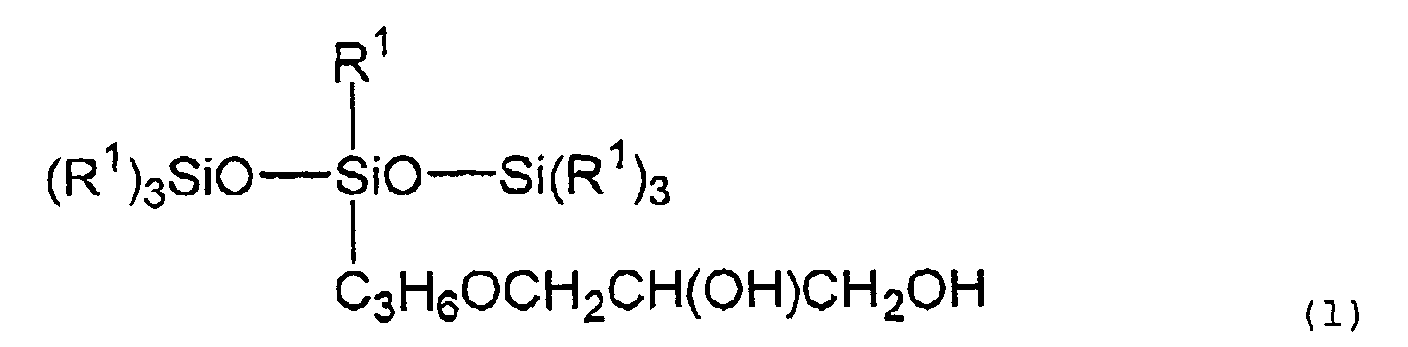
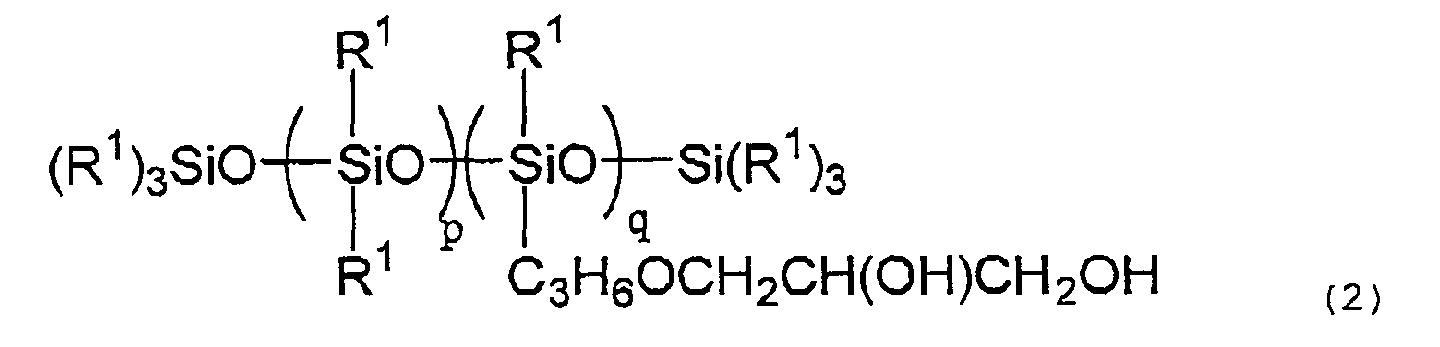
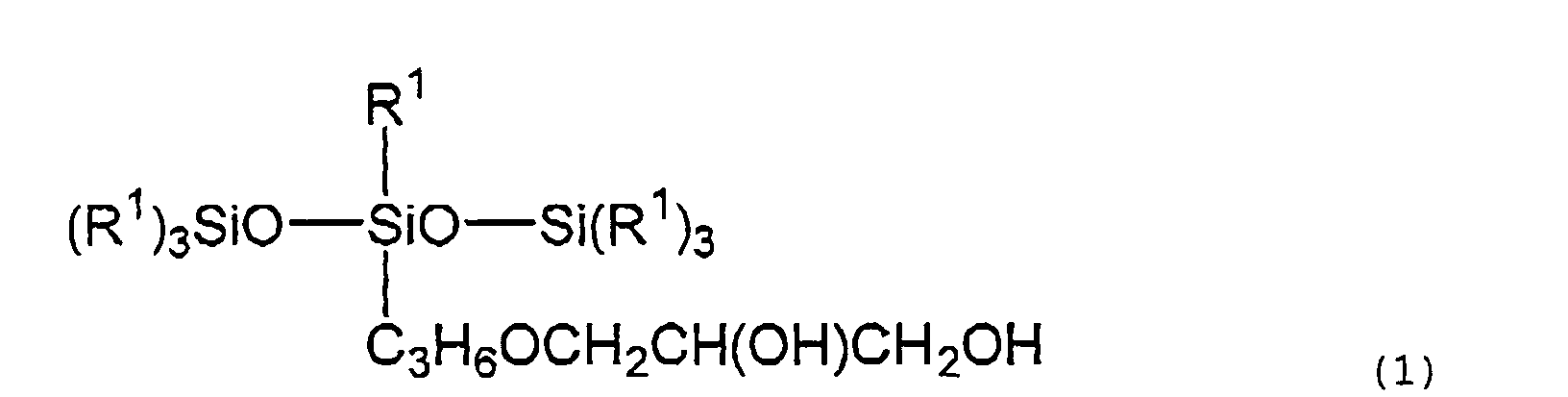
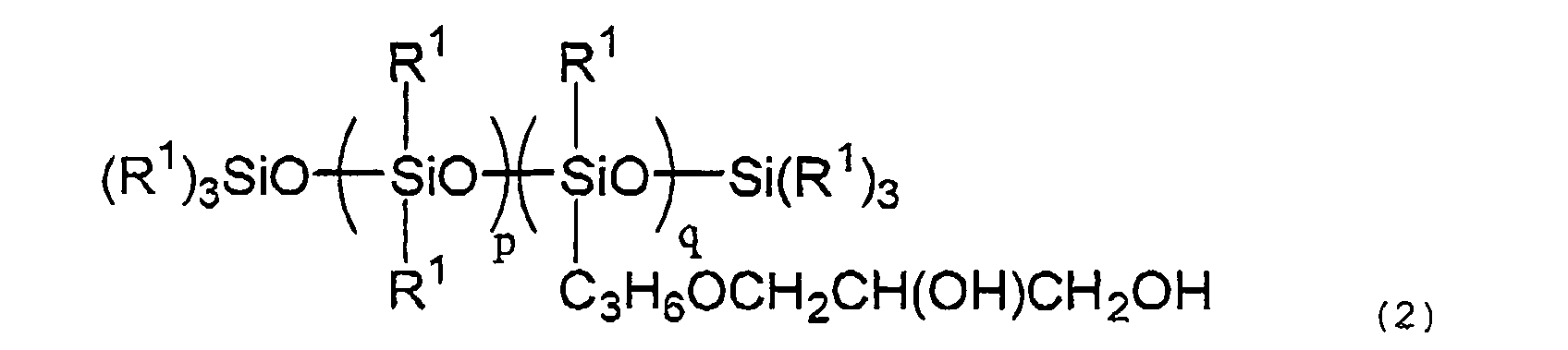
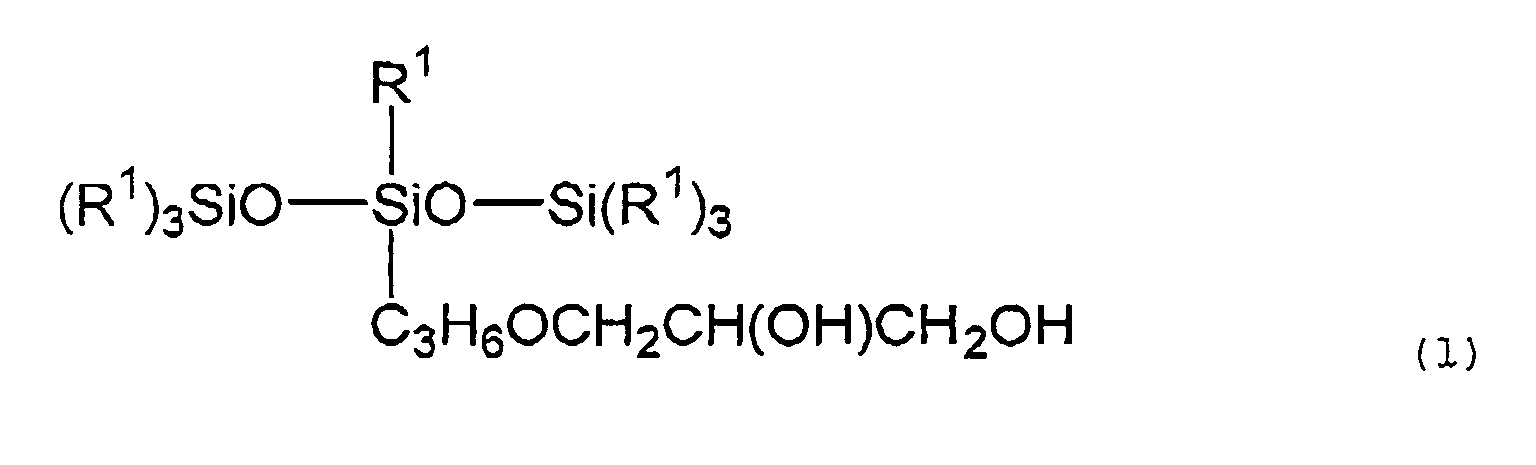
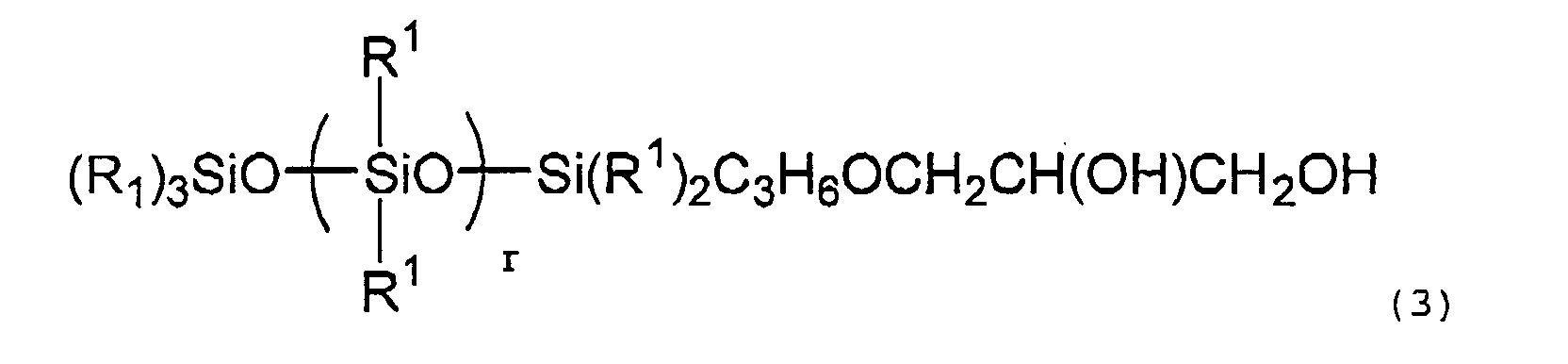
- the present invention is a spreading agent for agricultural chemicals, said spreading agent comprising at least one of the glycerol-modified silicones represented by the following formula (1) , (2) or (3), wherein R 1 can be the same with or different from each other and is selected from the group consisting of alkyl, aryl, aralkyl, and fluorinated alkyl groups each having 1 to 30 carbon atoms, p is an integer of from 1 to 3, q is an integer of 1 or 2, and r is an integer of from 0 to 6.
- R 1 can be the same with or different from each other and is selected from the group consisting of alkyl, aryl, aralkyl, and fluorinated alkyl groups each having 1 to 30 carbon atoms
- p is an integer of from 1 to 3
- q is an integer of 1 or 2
- r is an integer of from 0 to 6.
- Another aspect of the present invention is an agricultural chemical composition comprising the following components (I) to (IV):
- Still another aspect of the present invention is a glycerol-modified silicone having a structure A-B-A, wherein the structural unit A is an organosiloxane residue represented by the following formula (6), and the structural unit B is a glycerol derivative residue represented by the following formula (7), wherein R 2 can be the same with or different from each other and is selected from the group consisting of alkyl, alicyclic, aryl, aralkyl and halogenated groups thereof, each having 1 to 10 carbon atoms, x is an integer of from 0 to 100, ⁇ is an integer of 1 or 2, R 3 can be the same with or different from each other and is an alkylene group having 2 to 11 carbon atoms, and s is an integer of from 1 to 11.
- the spreading agent of the present invention significantly reduces surface tension of an oil agent or an agricultural chemical to allow them spread widely and uniformly on agricultural plants.
- the novel silicone of the present invention is surface active and, when added to agricultural chemicals or paints, enhances spreading of the agricultural chemicals on plants or the paints on substrates.
- the present spreading agent comprises at least one of the glycerol-modified silicones represented by the following formula (1), (2) or (3).
- R 1 can be the same with or different from each other and is selected from the group consisting of alkyl, aryl, aralkyl, and fluorinated alkyl groups each having 1 to 30, preferably 1 to 6, carbon atoms.
- R 1 examples include alkyl groups such as methyl, ethyl, propyl, butyl, pentyl, hexyl, heptyl, octyl, nonyl, and decyl groups; alicyclic groups such as cyclopentyl and cyclohexyl groups; aryl groups such as phenyl and tolyl groups; aralkyl groups such as benzyl and phenetyl groups; and fluorinated alkyl groups such as trifluoropropyl an heptadecafluorodecyl groups.
- R 1 is a methyl, ethyl, propyl, butyl or phenyl group and, more preferably, at least 80 % of R 1 is a methyl group.
- the glycerol-modified silicone may be prepared by subjecting an organohydrogentrisiloxane and a glycerol monoallyl ether, for example, 1-allyloxy-2,3-propanediol, to an addition reaction.
- a preferred example of the silicone represented by the formula (1) is the one represented by the following formula (4) which is an addition reaction product of 1,1,1,3,5,5,5-heptamethyltrisiloxane with 1-allyloxy-2,3-propanediol.
- Examples of the starting organohydrogenpolysiloxane for preparing the silicone represented by the formula (2) include M 2 DD H , M 2 D 2 D H , M 2 D 3 D H , M 2 DD H 2 , M 2 D 2 D H 2 , M 2 D 3 D H 2 and a mixture thereof.
- M represents (H 3 C) 3 SiO 1/2
- D represents (H 3 C) 2 SiO
- M H represents H(H 3 C) 2 SiO 1/2
- D H represents H(H 3 C) SiO
- M R represents R(H 3 C) 2 SiO 1/2
- D R represents R(H 3 C) SiO.
- M 2 DD H , M 2 D 2 D H , or M 2 D 3 D H each having one hydrogen atom, and more preferably, M 2 DD H or M 2 D 2 D H is used.
- the glycerol-modified silicone of the formula (2) can be obtained by the addition reaction of these organohydrogenpolysiloxane with a glycerol monoallyl ether, for example, 1-allyloxy-2,3-propanediol.
- r is an integer of from 0 to 6, preferably 0 to 3.
- Examples of a starting organohydrogenpolysiloxane include MM H , MDM H , MD 3 M H , and M n-Bu D 4.5 M H
- MDM H may be a mixture of equilibrium containing M 2 H , MM H , MDM H , M 2 H D, MD 3 M H , and M 2 H D 2 obtained by equilibrating 1 mole of M 2 , 1 mole of M 2 H and 1/4 mole of D 4 in the presence of an acidic catalyst.
- M n-Bu D 4.5 M H may be a mixture of M n-Bu D 3 M H and M n-Bu D 6 M H .
- MM H or MD 3 M H is used and, more preferably, MD 3 M H is used.
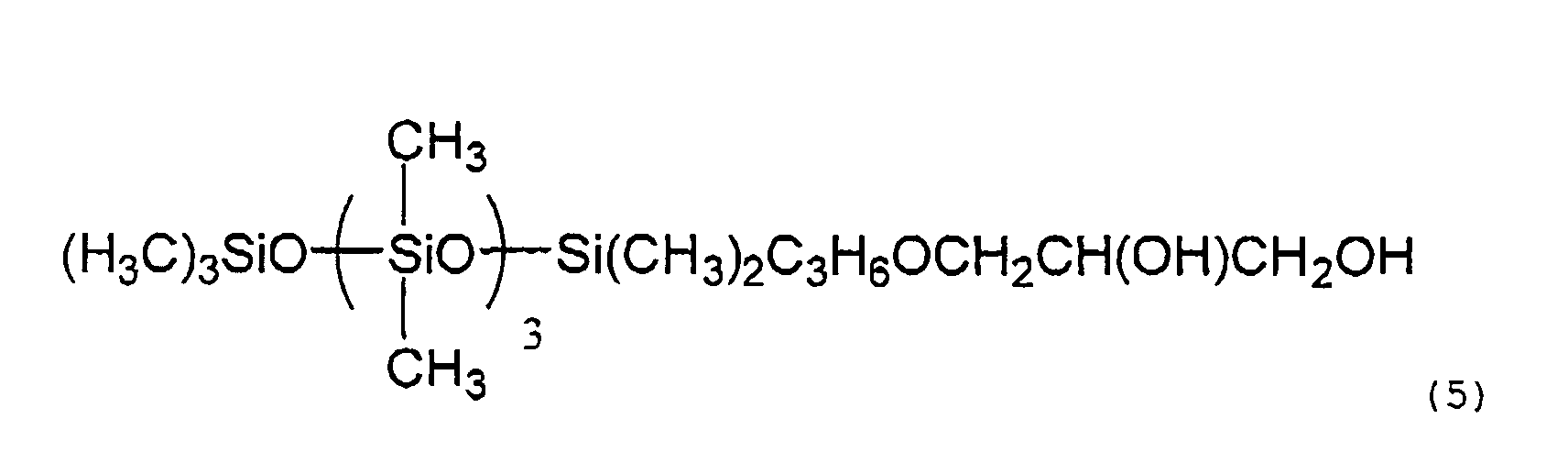
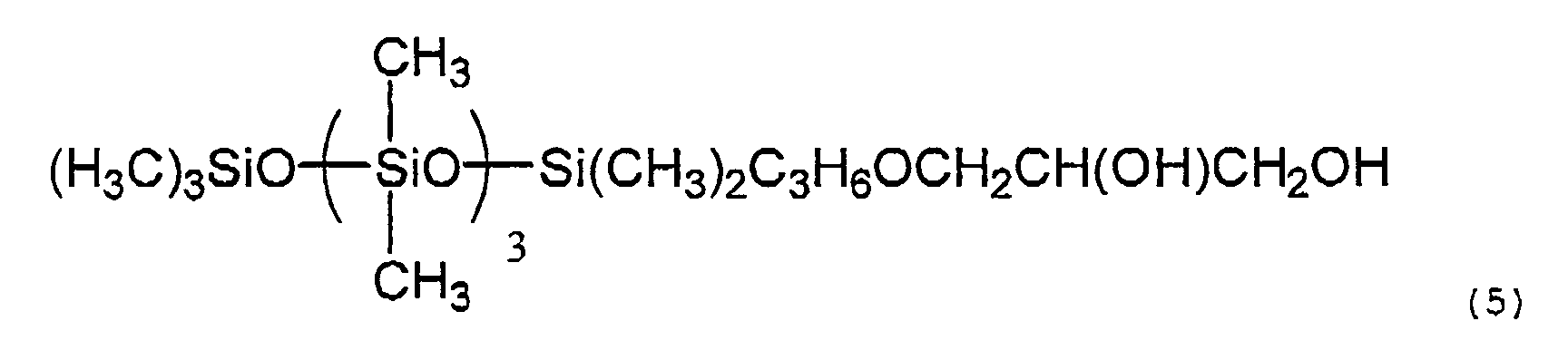
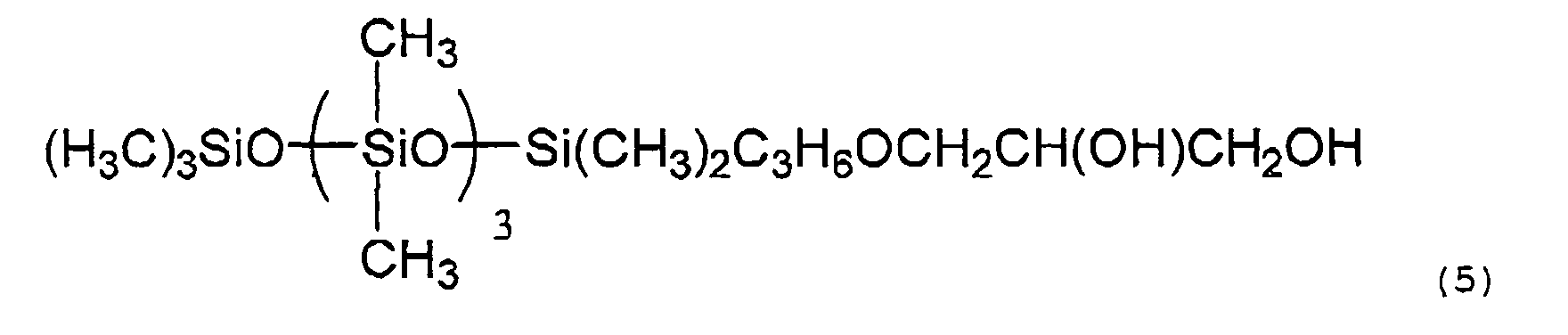
- a preferred example is an addition reaction product of MD 3 M H with 1-allyloxy-2, 3-propanediol represented by the following formula (5).
- the organohydrogenpolysiloxane and the glycerol monoallyl ether are subjected to an addition reaction in a molar ratio of unsaturated bonds, for example, allyl groups, to SiH bonds is in a range of from 0.8 to 1.5, preferably from 0.9 to 1.2.
- the aforesaid addition reaction is preferably carried out in the presence of platinum catalyst or rhodium catalyst.
- Preferred examples of the catalyst include chloroplatinic acid, alcohol-modified chloroplatinic acid, a chloroplatinic acid complex with vinylsiloxane.
- Sodium acetate or sodium citrate may also be used as a promoter.
- the catalyst may be used in a catalytically effective amount.
- the amount is no more than 50 ppm, particularly no more than 20 ppm calculated as platinum or rhodium.
- the aforesaid addition reaction maybe carried out in an organic solvent as necessary.
- organic solvent include aliphatic alcohols such as methanol, ethanol, 2-propanol, and butanol; aromatic hydrocarbons such as toluene and xylene; aliphatic or alicyclic hydrocarbons such as n-pentane, n-hexane, and cyclohexane; and halogenated hydrocarbons such as dichloromethane, chloroform, and carbon tetrachloride.
- Reaction conditions are not particularly limited.
- the reaction is performed in refluxing organic solvent for 1 to 10 hours.
- the aforesaid glycerol-modified silicone is used as an adjuvant for agricultural chemicals such as oil agents or agricultural formulations in a desired concentration.
- the glycerol-modified silicone may be formulated into a composition comprising an oil agent to be applied.
- the oil agent may be incorporated in an amount of from 0.1 to 100,000 parts by weight per 100 parts by weight of glycerol-modified silicone. If the amount exceeds the aforesaid upper limit, reduction of the surface tension by the glycerol-modified silicone may be unsatisfactory.
- the oil agent the same oil agent as the oil agent (I) described below can be used.
- the composition may also contain surfactant to be mixed with water.
- the second aspect of the present invention is an agricultural chemical composition containing the following components (I) to (IV) :
- any known oil agent (I) can be used as far as it has an effect as an agricultural chemical such as pesticide or can enhance penetration of an agricultural chemicals into leaves.
- the oil agent (I) include plant oils extracted from plant seeds, animal oils such as beef tallow, and hydrogenated or esterified products thereof.
- Mineral oils such as machine oil and spindle oil, collectively called as hydrocarbon oils, may also be used.
- animal or plant oils and semisynthetic oils which can be used as the oil agent are as follows: avocado oil, linseed oil, almond oil, Ibota wax, perilla oil, olive oil, cacao butter, kapok wax, kaya oil, carnauba wax, liver oil, candelilla wax, beef tallow, neat's-foot oil, beef bone fat, hydrogenated beef tallow, neat's-foot oil, apricot kernel oil, spermaceti wax, hydrogenated oil, wheat germ oil, sesame oil, rice germ oil, rice bran oil, sugar cane wax, sasanqua oil, safflower oil, shear butter, Chinese tung oil, cinnamon oil, jojoba wax, shellac wax, turtle oil, soybean oil, tea seed oil, camellia oil, evening primrose oil, corn oil, lard, rapeseed oil, Japanese tung oil, rice bran oil, germ oil, horse fat, persic oil, palm oil, palm kernel oil, castor oil,
- those which are liquid at room temperature with a low melting point are used, for example, avocado oil, almond oil, olive oil, sesame oil, rice bran oil, safflower oil, soybean oil, corn oil, rapeseed oil, persic oil, castor oil, sunflower oil, grape seed oil, cottonseed oil, among which safflower oil, soybean oil, corn oil, rapeseed oil, castor oil, sunflower oil, cottonseed oil are more preferred because of their lower prices.
- hydrocarbon oils examples include so-called machine oils and spindle oils produced frompetroleum.
- Other examples are ozokerite, ⁇ -olefin oligomer, squalane, squalene, ceresin, paraffin, paraffin wax, liquid paraffin, mineral oil, polybutene, liquid isoparaffin, microcrystalline wax, and Vaseline among which those which are liquid at room temperature like the animal or plant oils are preferred such as ⁇ -olefin oligomer, squalane, ceresin, liquid paraffin, and liquid isoparaffin. Liquid paraffin is more preferred.
- Fatty acids, higher alcohols, and ester oils may be used as the oil agent, among which those which are liquid at room temperature are preferably used.
- the oil agent may be used as a mixture of two or more of them.
- the glycerol-modified silicone (II) is contained in an amount of from 0.1 to 100 parts by weight, preferably 1 to 50 parts by weight, more preferably 1 to 15 parts by weight relative to 100 parts by weight of the oil agent. Within the aforesaid range, the glycerol-modified silicons dissolves thoroughly in the oil agent without separation, resulting in a composition easy to handle, and sufficiently lowers the surface tension of the oil agent.
- the nonionic surfactant (III) is to disperse the oil agent and the glycerol-modified silicone in water to form an emlusion.
- the nonionic surfactant include sorbitan fatty acid esters, glycerin fatty acid esters, polyglycerin fatty acid esters, propylene glycol fatty acid esters, polyethylene glycol fatty acid esters, sucrose fatty acid esters, polyoxyethylene alkylethers, polyoxypropylene alkylethers, polyoxyethylene polyoxypropylene alkyl ether, polyoxyethylene alkylphenylether, polyoxyethylene fatty acid esters, polyoxyethylene sorbitan fatty acid esters, polyoxyethylene sorbitol fatty acid esters, polyoxyethylene glycerin fatty acid esters, polyoxyethylene propylene glycol fatty acid esters, polyoxyethylene castor oil, polyoxyethylene hydrogenated castor oil, polyoxyethylene phytostanolether, polyoxyethylene phytostea
- the nonionic surfactant (III) is contained in an amount of from 1 to 50, preferably from 2 to 40, more preferably 5 to 30 parts by weight, relative to a total weight of the spreading agent composition. If the amount of the surfactant is less than the aforesaid lower limit, the emulsifying effect is insufficient. The surfactant in an amount exceeding the aforesaid upper limit may prevent the glycerol-modified silicone from dissolving in the oil agent and from reducing the surface tension of the oil agent.
- the present composition may be a self-emulsifying composition which does not contain water and, when added to water on site, is emulsified, or an emulsified composition containing water in a product form.
- the emulsified composition may be prepared by adding an appropriate amount of water(IV) to a mixture of the aforesaid oil agent (I) , the glycerol-modified silicone (II) , and the nonionic surfactant (III) and mixing them into an emulsion with a mixer such as a propeller mixer, an anchor mixer, a paddle mixer, a homo mixer, a line mixer, a colloid mill or a homogenizer.
- the amount of water to be added is not more than 1000 parts by weight, preferably not more than 800 parts by weight, relative to total 100 parts by weight of the components (I), (II),and (III). If the amount exceeds the aforesaid upper limit, a concentration of the oil agent is so low that the resulting composition should be sprayed many times to attain a desired effect, which is not desirable from the economical point of view.
- the present composition may further contain a small amount of preservative or disinfectant to prevent rotting.
- preservative or disinfectant examples include sodium hypochlorite, sorbinic acid,potassiumsorbinate,salicylic acid,sodiumsalicylate,benzoic acid, sodium benzoate, parabens, and isothiazoline compounds.
- the preservative or disinfectant may be added preferably in an amount of from 0.001 to 1.0 part by weight, more preferably from 0.005 to 0. 008 part by weight, relative to 100 parts by weight of the spreading agent composition of the present invention.
- the present composition may optionally contain a stabilizer such as polyvinyl alcohol, methyl cellulose, carboxymethyl cellulose, sodium salt of carboxymethyl cellulose, sodium polyacrylate, and xanthan gum.
- a stabilizer such as polyvinyl alcohol, methyl cellulose, carboxymethyl cellulose, sodium salt of carboxymethyl cellulose, sodium polyacrylate, and xanthan gum.
- a defoamer may be added such as a silicone defoamer comprising silicone oil and silica.
- the present composition is further diluted with water and mixed to form a homogeneous emulsion and then sprayed on plants with a sprayer or a sprinkler.
- the mixing may be performed with a commonly used mixer such as a propeller mixer, an anchor mixer, a paddle mixer, a homo mixer, and a line mixer.
- a stirring bar or spatula may be used.
- a defoamer may be used.
- the third aspect of the present invention is a novel glycerol-modified silicone having a A-B-A structure, hereinafter referred to as A-B-A type glycerol-modified silicone, wherein A is an organosiloxane residue represented by the following formula(6).
- R 2 can be the same with or different from each other and is selected from the group consisting of alkyl, alicyclic, aryl, aralkyl and halogenated groups thereof each having 1 to 10 carbon atoms.
- R 2 include alkyl groups such as methyl, ethyl, propyl, butyl, pentyl, hexyl, heptyl, octyl, nonyl, and decyl groups; alicyclic groups such as cyclopentyl and cyclohexyl groups; aryl groups such as phenyl and tolyl groups; aralkyl groups such as benzyl and phenetyl groups; and halogenated groups such as trifluoropropyl and nonafluoro groups among which methyl and butyl groups are preferred.
- x is an integer of from 0 to 100, preferably from 0 to 20, more preferably from 0 to 10, and ⁇ is an integer of 1 or 2.
- the organosiloxane residue may be derived from an ⁇ -organohydrogensiloxane having an SiH bond at a terminal thereof.
- B is a glycerol derivative residue expressed by the following formula (7).
- R 3 can be the same with or different from each other and is an alkylene group having 2 to 11 carbon atoms such as ethylene, propylene, butylene, pentylene, or undecene group.
- R 3 is an alkylene group having 2 to 5 carbon atoms, more preferably, 3 carbon atoms, i.e., a propylene group.
- s is an integer of from 1 to 11, preferably from 1 to 8, more preferably 2 to 4.
- x and s may be employed as far as each is within the aforesaid respective range.
- ⁇ is 1, x is 3 and s is 3 or 4 for use as an agricultural spreading agent, and, x ranges from 20 to 60 and s is 3 or 4 for use as a paint additive.
- the glycerol derivative residue may be derived from a glycerol derivative having an unsaturated bond, particularly an allyl group at an end.
- the polyglycerol backbone of the glycerol derivative residue may be linear, formed by polymerization at terminal OH groups of glycerol or branched, formed by polymerization at least one secondary OH group.
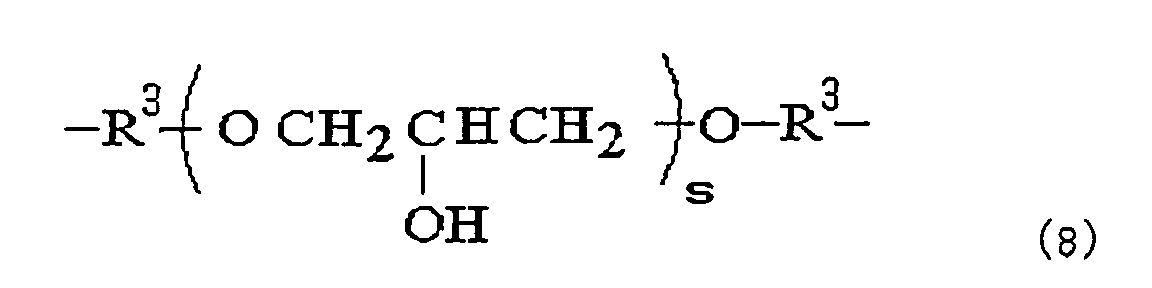
- B is a linear polyglycerol derivative residue represented by the following formula (8). wherein R 3 is a propylene group and s ranges from 1 to 8.
- the A-B-A type silicone of the present invention may be prepared by subjecting to an addition reaction an ⁇ -organohydrogensiloxane having an SiH bond at a terminal thereof and a glycerol or polyglycerol having two unsaturated aliphatic bonds in a molecule.
- the ⁇ -organohydrogensiloxane having an SiH bond at a terminal thereof include compounds having a structure of A-H, wherein A is the aforesaid organosiloxne residue and H is a hydrogen atom.
- MD H M, MM H , MD 3 M H , or MD 9 M H as shown below may be used, wherein M, M H , D and D H are as defied above. (CH 3 ) 3 Si ⁇ O ⁇ Si(CH 3 ) 2 H
- Examples of the glycerol or polyglycerol having two unsaturated aliphatic bonds in a molecule include compounds which have the structure B, but a part, preferably a free end of R 3 is encapped with an unsaturated bond.
- the triglycerol or tetraglycerol derivatives shown below are preferably used, wherein n is 2 or 3.
- the glycerol derivative having two unsaturated aliphatic bonds may be prepared by reacting glycerol or polyglycerol such as diglycerol or triglycerol with an allyl glycidyl ether in the presence of an alkaline catalyst such as potassium hydroxide.
- the reaction is preferably carried out at a temperature of 60 to 120 degrees C. After the reaction completes, the aimed product can be isolated by neutralizing the alkaline catalyst followed by distilling volatile substances off.
- addition reaction conditions for example, catalysts, solvents, temperature and time, are as described above.
- the allyl ether bond may be decomposed by a weak acid or alkylated by hydrogenation.
- Tocopherol or BHT may be added to a reaction mixture as an antioxidant.
- Figure 3 shows an exemplary Infrared spectrum of an A-B-A type glycerol-modified silicone obtained by the aforesaid method.
- the glycerol-modified silicone is surface active and well miscible with oil agents to reduce surface tension thereof. Therefore, the glycerol-modified silicone is suitable as an agricultural adjuvant such as a spreading agent and a wetting agent, a paint additive, or an additive for metalworking fluid.
- the A-B-A type glycerol-modified silicone may be used as an adjuvant for agricultural chemicals such as oil agents or formulations.
- the A-B-A type glycerol-modified silicone may be formulated into a composition comprising an oil agent.
- the oil agent may be incorporated in an amount of from 4 to 10,000 parts by weight per part by weight of glycerol-modified silicone. If the amount of the oil agent is lower than the aforesaid lower limit, the glycerol-modified silicone may not dissolve sufficiently. If the amount exceeds the aforesaid upper limit, reduction of the surface tension by the glycerol-modified silicone may be unsatisfactory.
- the oil agent examples include those described above.
- the composition may contain the agricultural chemicals and various additives as describedabove.
- the composition maybe a self-emulsifying composition which does not contain water and, when added to water on site, is emulsified, or an emulsified composition containing water in a product form.
- one or more surfactants may be used to disperse the oil agent and the A-B-A type glycerol-modified silicone in water or aqueous formulation.
- Any surfactant for example, anionic, cationic, nonionic or amphoteric surfactant, may be used.
- anonionic surfactant as described above is used because many agricultural chemicals are acidic.
- composition may further contain a preservative, a disinfectant, a stabilizer, an agricultural chemical and various additives as described above.
- composition of emulsified type or self-emulsifying type is further diluted with water and mixed to form a homogeneous emulsion and then sprayed on plants with a sprayer or a sprinkler.
- the mixing may be performed with a mixer described above.
- modified silicones were prepared in the following procedures.
- a reactor provided with a stirrer, a thermometer, and a reflux condenser, placed were a compound having unsaturated bonds in such an amount that a molar ratio of the unsaturated bonds to SiH bonds of an organohydrogensiloxane to be added was 1.05, a solvent, and a catalytically effective amount of a catalyst.
- the organohydrogensiloxane was added dropwise to cause a reaction. Then, the reaction mixture was distilled under a reduced pressure at 100 degrees C to remove the solvent.
- the glycerol-modified silicone in Example 1 was prepared as follows. In a reactor provided with a stirrer, a thermometer, and a reflux condenser, 100 g of glycerolmonoallyl ether, 100 g of isopropyl alcohol, and 0.05g of a 0.5 wt% chloroplatinic acid solution in isopropyl alcohol were placed. In the reactor, 107 g of pentamethyldisiloxane was added dropwise at 60 degrees C while stirring to cause a reaction. Then, the reaction mixture liquid was distilled under a reduced pressure at 100 degrees C to remove the solvent.
- Modifier ratio % means weight % of the glycerol monoallyl ether to a total weight of the glycerol monoallyl ether and the organohydrogensiloxane.
- the numerical values described just below the names of the oil agent are surface tension of the neat oil agents.
- the glycerol-modified silicones in the present invention significantly reduced the surface tension of the oil agents. Particularly, those in Examples 2 and 4 largely reduced the surface tension as well as showed excellent solubility in the oil agents. Although the glycerol-modified silicone showed lower solubility with the increasing molecular weight as seen in Examples 3 and 5 , its surface activity was not adversely affected.
- Glycerol-modified silicones were prepared by modifying organohydrogenpolysiloxane with more amount of glycerol than specified in the present invention.
- Silicones modified with compounds other than glycerol were prepared. Mixtures with the oil agents were prepared and surface tension thereof was measured as in Examples.
- the silicones in Comparative Examples were less surface active than the silicones in Examples 1-5.
- trimethyrolpropane monoallyl ether is similar to glycerol monoallyl ether in difunctionality and molecular weight
- the silicones modified with it in Comparative Examples 14 and 15 were inferior to the silicones of Examples 1-5 in reduction of surface tension.
- Table 5 shows changes in surface tension with amount of the silicones of some of the Comparative Examples. Over 15 wt% of the silicones were required to attain the surface tension that was attained by only 1wt% of the silicone in Example 2, of which surface tension data copied from Table 2 are shown for reference. This indicates superior performance of the silicones in the present invention. Comparative Example No. Surface tension, mN/m Amount added, wt% 1 5 10 15 6 27.4 25.3 25.5 24.4 10 26.6 25 25.4 22.7 11 27 24.4 23.7 23.7 12 25.8 24.6 23 23.7 Example 2 23.4 21.3 21.5 21
- compositions of Comparative Examples 16-19 have poorer spreading property than the compositions of Examples 6-10.
- Figures 1 & 2 are photographs each taken 5 minutes after one drop, i.e., 15 ⁇ l, of liquid paraffin containing 10 wt% of the silicone of Example 2 and Comparative Example 6, respectively, was placed on a leaf of Citrus Natsudaidai. While the drop remained as a small circle in Fig.2, the drop spread widely on the leave in Fig.1. Comparing the figures, the liquid paraffin containing the glycerol-modified silicone in Example 2 has better spreading property than the silicone modified with n-octene.
- a glycerol derivative having two unsaturated bonds in a molecule hereinafter referred to as a diallylated glycerol, was prepared according to the method described above. That is, a polyglycerol and allylglycidyl ether were subjected to a reaction in the presence of potassium hydroxide catalyst at a temperature of from 60 to 120 degrees C. Then, after neutralizing the catalyst, volatile substances were distilled off.
- Triglycerol diallyl ether thus obtained was light yellow liquid having a viscosity of 330 mm 2 /s, hydroxyl number of 523 KOH mg/g, and a degree of unsaturation of 6.13 meq/g.
- the hydroxyl number and the degree of unsaturation almost agreed with respective theoretical values of 525 and 6.24.
- tetraglycerol diallyl ether which was light yellow liquid having a viscosity of 1397 mm 2 /s, hydroxyl number of 533 KOH mg/g, and a degree of unsaturation of 5.05 meq/g.
- A-B-A type of glycerol-modified silicones of Examples 11 to 21 were prepared according to the following method.
- the polyglycerol diallylether in such an amount that a molar ratio of unsaturated bonds thereof to SiH bonds of an organohydrogensiloxane to be added was 1.0, solvent and catalytically effective amount of a catalyst.
- the organohydrogensiloxane was added dropwise in the reactor to cause reaction with the polyglycerol diallylether.
- the reaction mixture was distilledat 100 degrees C under a reduced pressure to remove the solvent.
- the glycerol-modified silicone of Example 13 was prepared as follows. In the reactor, 100 g of triglycerol diallyl ether, 300 g of isopropanol, and 0.05 g of 0.5 wt% solution of chloroplatinic acid in isopropanol were placed. Then, the reaction was carried out by adding 210g of MD 3 M H dropwise to the reactor. After the reaction, the solvent was removed by distillation at 100 degrees C under a reduced pressure. Similarly, other A-B-A type glycerol-modified silicones having different polymerization degrees of siloxane and glycerol were prepared.
- the A-B-A type silicone in Example 13 obtained was dissolved in deuterated chloroform and analyzed by 29 Si-NMR. It was confirmed that the silicone had a MD 3 M R moiety based on two peaks each associated with Me 3 SiO-, and, -CH 2 Me 2 SiO-, respectively, observed at chemical shifts of 7. 52ppm and 7.11ppm with a peak area ratio of 1:1, and two peaks at -21. 4ppm and -21. 6ppm with a peak area ratio of 2:1 associated wirh-OMe 2 SiO-.
- Glycerol in wt% means weight percentage of the diallylated glycerol in the starting reaction mixture.
- the viscosity was measured with a Cannon-Fenske viscometer, the specific gravity was measured by hydrometer method, and the refractive index was measured with an Abbe refractometer.
- compositions were prepared containing an oil agent and the glycerol-modified silicone in a weight ratio of 90/10 and surface tension thereof was measured. The results are as seen in Table below.
- Example No. A-B-A type glycerol-modified silicone Surface tension, mN/m, 25C glycerol-modified silicone/oil agent 10/90 Liquid paraffin 27.9 Rapeseed oil 31 Soybean oil 31.8 22 11 22.5 22.3 21.1 23 12 21.5 21 21 24 13 20 20.3(D) 19.6(D) 25 18 21.8 21.5 (D) 21.5(D) 26 19 20.8(D) 18.7(D) 19.0(D)
- the numerical values described just below the name of the oil agent are surface tension of the neat oil agents. Comparing with the surface tension of neat oil agents, surface tensions of the compositions of Examples were significantly lower. Particularly, the surface tension of the compositions in Examples 24 and 26 were so low as that of commonly used silicone oils.
- Example 19 One wt% of the silicone reduced the surface tension of the liquid paraffin significantly, and 5 wt% of the silicone reduced the surface tension of the rapeseed oil.
- the modified silicone in Example 19 was so effective that only 1 wt% thereof reduced the surface tension of the both oil agents.
- compositions having formulations shown in Table 12 were prepared. To each composition, water was added so as to make a total weight of the components other than water to be 10 wt% and a homogeneous emulsion was obtained by stirring. The emulsion thus obtained was sprayed on leaves of Citrus Natsudaidai. After sprayedwater evaporated, surface of the leaves were visually observed to determine how wide the oil agent contained in the composition spread. Based on the observation, the spreading property of compositions was rated according to the following criteria.
- the oil agent contained in the present emulsified compositions spread well on the leaves, indicating high efficacies thereof as spray agents.
Landscapes
- Chemical & Material Sciences (AREA)
- Health & Medical Sciences (AREA)
- Chemical Kinetics & Catalysis (AREA)
- Medicinal Chemistry (AREA)
- Polymers & Plastics (AREA)
- Organic Chemistry (AREA)
- General Chemical & Material Sciences (AREA)
- Agricultural Chemicals And Associated Chemicals (AREA)
- Compositions Of Macromolecular Compounds (AREA)
Abstract

Description
- This application claims the benefits of Japanese Patent application No.2004-149633 filed on May 19, 2004, Japanese Patent application No. 2004-149639 filed on May 19, 2004, and Japanese Patent application No. 2004-168405 filed on June 7, 2004, the contents of which are hereby incorporated by reference.
- The present invention relates to a glycerol-modified silicone spreading agent and an agricultural chemical composition comprising the same. The present invention relates also to a novel glycerol-modified silicone and an agricultural chemical composition comprising the same. The glycerol-modified silicones significantly reduce surface tension of agricultural oil agents to allow them to spread widely and uniformly on leaves, to thereby enhance efficacy of the oil agents such as pesticidal or insecticidal efficacy.
- To kill weeds or harmful insects, or to prevent diseases, agricultural chemicals are sprayed on agricultural plants. If the sprayed agricultural chemicals remain uneven on the plants unevenly, high efficacy may not be expected. To evenly spread the agricultural chemicals on the plants in a period of time as short as possible and to promote penetration of the active ingredient into the plant leaves before washed away by rain, an agricultural spreading agent comprising a surfactant has been used. Examples of such surfactants include polyoxyethylene alkyl ether, polyoxyethylene alkyl phenyl ether, and polyoxyethylene higher fatty acid ester. Silicone surfactants have also been used on account of their low toxicity and high surface activity.
- Japanese Patent Publication No.6 - 55642 discloses a polyether-modified silicone having a trisiloxane backbone. The silicone has a high surface activity and is put to a practical use as a spreading agent for agricultural chemicals.
- The aforesaid silicone has a drawback that the surface activity thereof decreases in an acidic or an alkaline pH. As a silicone to overcome the drawback, Japanese Patent Application Laid-Open No.2000-327787 discloses a silicone having a modified trisiloxane backbone.
- Meanwhile, it is known from J. Agric. Food Chem., 34(2), 235 that a spray agent on the basis of hydrocarbon oil or plant extract oil have an insecticidal effect by blocking spiracle openings of harmful insects and enhancing penetration of agricultural chemicals into leaves of agricultural plants. However, the hydrocarbon oils and, particularly, plant extract oils have high surface tension and, therefore, do not wet leaves well.
- EP 0648413A1 describes a method for reducing the surface tension of the oils by adding an alkyl-modified silicone. R. E. Gaskin etal. describe in "SPRAY OILS-BEYOND 2000", University of Western Sydney, that spreadability and accordingly a pesticidal effect of plant extract oils are significantly improved by using an alkylsilicone.
- WO01/087063 describes that polyhydric silicones having a group having at least three hydroxyl groups and silicones having two hydroxyl groups and a polyoxyethylene moiety are surface active. As the group having hydroxyl groups, sugars are referred to.
- However, the aforesaid silicones of the prior art need further improvement in their surface activity.
- A purpose of the present invention is to provide a spreading agent having a higher surface activity than the aforesaid prior art silicones.
- Thus, the present invention is a spreading agent for agricultural chemicals, said spreading agent comprising at least one of the glycerol-modified silicones represented by the following formula (1) , (2) or (3),

 wherein R1 can be the same with or different from each other and is selected from the group consisting of alkyl, aryl, aralkyl, and fluorinated alkyl groups each having 1 to 30 carbon atoms, p is an integer of from 1 to 3, q is an integer of 1 or 2, and r is an integer of from 0 to 6.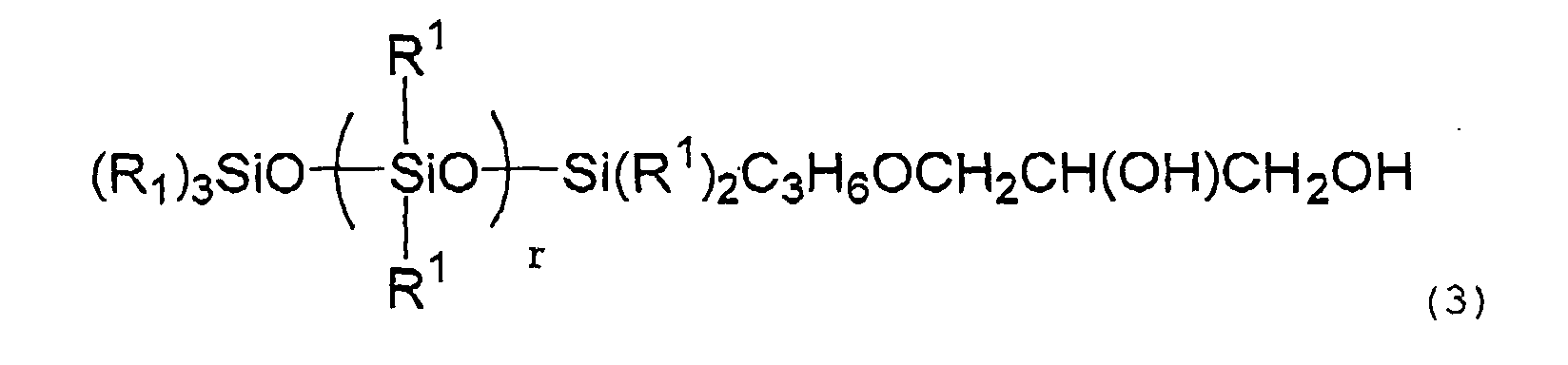
- Another aspect of the present invention is an agricultural chemical composition comprising the following components (I) to (IV):
- (I) 100 parts by weight of an oil agent,
- (II) 0.1 to 100 parts by weight of at least one glycerol-modified
silicones represented by the following formula (1), (2) or (3)
 wherein R1 can be the same with or different from each other and is selected from the group consisting of alkyl, aryl, aralkyl, and fluorinated alkyl groups each having 1 to 30 carbon atoms, p is an integer of from 1 to 3, q is an integer of 1 or 2, and r is an integer of from 0 to 6,
- (III) 1 to 50 parts by weight of a nonionic surfactant,
- (IV) water in an amount of 0 to 1000 parts by weight per 100 parts by weight of a total weight of the components (I), (II) and (III).
-
- Still another aspect of the present invention is a glycerol-modified silicone having a structure A-B-A, wherein the structural unit A is an organosiloxane residue represented by the following formula (6),and the structural unit B is a glycerol derivative residue represented by the following formula (7),
 wherein R2 can be the same with or different from each other and is selected from the group consisting of alkyl, alicyclic, aryl, aralkyl and halogenated groups thereof, each having 1 to 10 carbon atoms,
x is an integer of from 0 to 100,
α is an integer of 1 or 2,
R3 can be the same with or different from each other and is an alkylene group having 2 to 11 carbon atoms, and
s is an integer of from 1 to 11. - The spreading agent of the present invention significantly reduces surface tension of an oil agent or an agricultural chemical to allow them spread widely and uniformly on agricultural plants.
- The novel silicone of the present invention is surface active and, when added to agricultural chemicals or paints, enhances spreading of the agricultural chemicals on plants or the paints on substrates.
-
- Fig.1 is a photograph showing a drop of the composition containing the silicone of Example 2 placed on a leaf of Citrus Natsudaidai;
- Fig.2 is a photograph showing a drop of the composition containing the silicone of Comparative Example 6 placed on a leaf of Citrus Natsudaidai; and
- Fig. 3 is an IR spectrum of the silicone of Example 13.
-
- The present spreading agent comprises at least one of the glycerol-modified silicones represented by the following formula (1), (2) or (3).


- In the above formulae, R1 can be the same with or different from each other and is selected from the group consisting of alkyl, aryl, aralkyl, and fluorinated alkyl groups each having 1 to 30, preferably 1 to 6, carbon atoms. Examples of R1 include alkyl groups such as methyl, ethyl, propyl, butyl, pentyl, hexyl, heptyl, octyl, nonyl, and decyl groups; alicyclic groups such as cyclopentyl and cyclohexyl groups; aryl groups such as phenyl and tolyl groups; aralkyl groups such as benzyl and phenetyl groups; and fluorinated alkyl groups such as trifluoropropyl an heptadecafluorodecyl groups. Preferably, R1 is a methyl, ethyl, propyl, butyl or phenyl group and, more preferably, at least 80 % of R1 is a methyl group.
- The glycerol-modified silicone may be prepared by subjecting an organohydrogentrisiloxane and a glycerol monoallyl ether, for example, 1-allyloxy-2,3-propanediol, to an addition reaction. A preferred example of the silicone represented by the formula (1) is the one represented by the following formula (4) which is an addition reaction product of 1,1,1,3,5,5,5-heptamethyltrisiloxane with 1-allyloxy-2,3-propanediol.

- Examples of the starting organohydrogenpolysiloxane for preparing the silicone represented by the formula (2) include M2DDH, M2D2DH, M2D3DH, M2DDH 2, M2D2DH 2, M2D3DH 2 and a mixture thereof. A mixture of various cyclic or linear silicones obtained by an equilibrating reaction, hereinafter referred to as a mixture of equilibrium, may also be used. In this specification, M represents (H3C)3SiO1/2, D represents (H3C)2SiO, MH represents H(H3C)2SiO1/2, DH represents H(H3C) SiO, M R represents R(H3C)2SiO1/2, and DR represents R(H3C) SiO. Preferably, M2DDH, M2D2DH, or M2D3DH, each having one hydrogen atom, and more preferably, M2DDH or M2D2DH is used. The glycerol-modified silicone of the formula (2) can be obtained by the addition reaction of these organohydrogenpolysiloxane with a glycerol monoallyl ether, for example, 1-allyloxy-2,3-propanediol.
- In the formula (3), r is an integer of from 0 to 6, preferably 0 to 3. Examples of a starting organohydrogenpolysiloxane include MMH, MDMH, MD3MH, and Mn-BuD4.5MH, MDMH may be a mixture of equilibrium containing M 2 H, MMH, MDMH, M 2 HD, MD3MH, and M2 HD2 obtained by equilibrating 1 mole of M2, 1 mole of M2 H and 1/4 mole of D4 in the presence of an acidic catalyst. Mn-BuD4.5MH may be a mixture of Mn-BuD3MH and Mn-BuD6MH . Preferably, MMH or MD3MH is used and, more preferably, MD3MH is used. A preferred example is an addition reaction product of MD3MH with 1-allyloxy-2, 3-propanediol represented by the following formula (5).
- The organohydrogenpolysiloxane and the glycerol monoallyl ether are subjected to an addition reaction in a molar ratio of unsaturated bonds, for example, allyl groups, to SiH bonds is in a range of from 0.8 to 1.5, preferably from 0.9 to 1.2.
- The aforesaid addition reaction is preferably carried out in the presence of platinum catalyst or rhodium catalyst. Preferred examples of the catalyst include chloroplatinic acid, alcohol-modified chloroplatinic acid, a chloroplatinic acid complex with vinylsiloxane. Sodium acetate or sodium citrate may also be used as a promoter.
- The catalyst may be used in a catalytically effective amount. Preferably, the amount is no more than 50 ppm, particularly no more than 20 ppm calculated as platinum or rhodium. The aforesaid addition reactionmaybe carried out in an organic solvent as necessary. Examples of such solvent include aliphatic alcohols such as methanol, ethanol, 2-propanol, and butanol; aromatic hydrocarbons such as toluene and xylene; aliphatic or alicyclic hydrocarbons such as n-pentane, n-hexane, and cyclohexane; and halogenated hydrocarbons such as dichloromethane, chloroform, and carbon tetrachloride. Reaction conditions are not particularly limited. Preferably, the reaction is performed in refluxing organic solvent for 1 to 10 hours.
- The aforesaid glycerol-modified silicone is used as an adjuvant for agricultural chemicals such as oil agents or agricultural formulations in a desired concentration. Alternatively, the glycerol-modified silicone may be formulated into a composition comprising an oil agent to be applied. In such composition comprising the glycerol-modified silicone and the oil agent, the oil agent may be incorporated in an amount of from 0.1 to 100,000 parts by weight per 100 parts by weight of glycerol-modified silicone. If the amount exceeds the aforesaid upper limit, reduction of the surface tension by the glycerol-modified silicone may be unsatisfactory. As the oil agent, the same oil agent as the oil agent (I) described below can be used.
- The composition may also contain surfactant to be mixed with water. Thus, the second aspect of the present invention is an agricultural chemical composition containing the following components (I) to (IV) :
- (I) 100 parts by weight of an oil agent,
- (II) 0.1 to 100 parts by weight of at least one glycerol-modified silicone represented by the formula (1), (2) or (3) described above.
- (III) 1 to 50 parts by weight of a nonionic surfactant,
- (IV) water in an amount of 0 to 1000 parts by weight per total 100 parts by weight of the components (I), (II) and (III).
-
- In the aforesaid composition, any known oil agent (I) can be used as far as it has an effect as an agricultural chemical such as pesticide or can enhance penetration of an agricultural chemicals into leaves. Examples of the oil agent (I) include plant oils extracted from plant seeds, animal oils such as beef tallow, and hydrogenated or esterified products thereof. Mineral oils such as machine oil and spindle oil, collectively called as hydrocarbon oils, may also be used.
- Examples of the animal or plant oils and semisynthetic oils which can be used as the oil agent are as follows: avocado oil, linseed oil, almond oil, Ibota wax, perilla oil, olive oil, cacao butter, kapok wax, kaya oil, carnauba wax, liver oil, candelilla wax, beef tallow, neat's-foot oil, beef bone fat, hydrogenated beef tallow, neat's-foot oil, apricot kernel oil, spermaceti wax, hydrogenated oil, wheat germ oil, sesame oil, rice germ oil, rice bran oil, sugar cane wax, sasanqua oil, safflower oil, shear butter, Chinese tung oil, cinnamon oil, jojoba wax, shellac wax, turtle oil, soybean oil, tea seed oil, camellia oil, evening primrose oil, corn oil, lard, rapeseed oil, Japanese tung oil, rice bran oil, germ oil, horse fat, persic oil, palm oil, palm kernel oil, castor oil, castor oil fatty acid methyl ester, sunflower oil, grape oil, bayberry wax, jojoba oil, macadamia nut oil, beeswax, mink oil, cottonseed oil, cotton wax, Japanese wax, Japanese wax kernel oil, montan wax, coconut oil, hydrogenated coconut oil, tri-coconut oil fatty acid glyceride, mutton tallow, peanut oil, lanolin, liquid lanolin, hydrogenated lanolin, lanolin alcohol, hard lanolin, lanolin acetate, isopropyl lanolate, hexyl laurate, POE lanolin alcohol ether, POE lanolin alcohol acetate, polyethylene glycol lanolate, POE hydrogenated lanolin alcohol ether, and egg yolk oil.
- Preferably, those which are liquid at room temperature with a low melting point are used, for example, avocado oil, almond oil, olive oil, sesame oil, rice bran oil, safflower oil, soybean oil, corn oil, rapeseed oil, persic oil, castor oil, sunflower oil, grape seed oil, cottonseed oil, among which safflower oil, soybean oil, corn oil, rapeseed oil, castor oil, sunflower oil, cottonseed oil are more preferred because of their lower prices.
- Examples of the hydrocarbon oils include so-called machine oils and spindle oils produced frompetroleum. Other examples are ozokerite, α-olefin oligomer, squalane, squalene, ceresin, paraffin, paraffin wax, liquid paraffin, mineral oil, polybutene, liquid isoparaffin, microcrystalline wax, and Vaseline among which those which are liquid at room temperature like the animal or plant oils are preferred such as α-olefin oligomer, squalane, ceresin, liquid paraffin, and liquid isoparaffin. Liquid paraffin is more preferred.
- Fatty acids, higher alcohols, and ester oils may be used as the oil agent, among which those which are liquid at room temperature are preferably used. The oil agent may be used as a mixture of two or more of them.
- The glycerol-modified silicone (II) is contained in an amount of from 0.1 to 100 parts by weight, preferably 1 to 50 parts by weight, more preferably 1 to 15 parts by weight relative to 100 parts by weight of the oil agent. Within the aforesaid range, the glycerol-modified silicons dissolves thoroughly in the oil agent without separation, resulting in a composition easy to handle, and sufficiently lowers the surface tension of the oil agent.
- In the present composition, the nonionic surfactant (III) is to disperse the oil agent and the glycerol-modified silicone in water to form an emlusion. Examples of the nonionic surfactant include sorbitan fatty acid esters, glycerin fatty acid esters, polyglycerin fatty acid esters, propylene glycol fatty acid esters, polyethylene glycol fatty acid esters, sucrose fatty acid esters, polyoxyethylene alkylethers, polyoxypropylene alkylethers, polyoxyethylene polyoxypropylene alkyl ether, polyoxyethylene alkylphenylether, polyoxyethylene fatty acid esters, polyoxyethylene sorbitan fatty acid esters, polyoxyethylene sorbitol fatty acid esters, polyoxyethylene glycerin fatty acid esters, polyoxyethylene propylene glycol fatty acid esters, polyoxyethylene castor oil, polyoxyethylene hydrogenated castor oil, polyoxyethylene phytostanolether, polyoxyethylene phytosterolether, polyoxyethylene cholestanolether, polyoxyethylene cholesterylether, a linear or branched polyoxyalkylene-modified organopolysiloxane, a linear or branched polyoxyalkylene/alkyl-comodified organopolysiloxane, alkanolamide, sugar ethers, sugar amides; and combinations of tow or more of these.
- The nonionic surfactant (III) is contained in an amount of from 1 to 50, preferably from 2 to 40, more preferably 5 to 30 parts by weight, relative to a total weight of the spreading agent composition. If the amount of the surfactant is less than the aforesaid lower limit, the emulsifying effect is insufficient. The surfactant in an amount exceeding the aforesaid upper limit may prevent the glycerol-modified silicone from dissolving in the oil agent and from reducing the surface tension of the oil agent.
- The present composition may be a self-emulsifying composition which does not contain water and, when added to water on site, is emulsified, or an emulsified composition containing water in a product form.
- The emulsified composition may be prepared by adding an appropriate amount of water(IV) to a mixture of the aforesaid oil agent (I) , the glycerol-modified silicone (II) , and the nonionic surfactant (III) and mixing them into an emulsion with a mixer such as a propeller mixer, an anchor mixer, a paddle mixer, a homo mixer, a line mixer, a colloid mill or a homogenizer. The amount of water to be added is not more than 1000 parts by weight, preferably not more than 800 parts by weight, relative to total 100 parts by weight of the components (I), (II),and (III). If the amount exceeds the aforesaid upper limit, a concentration of the oil agent is so low that the resulting composition should be sprayed many times to attain a desired effect, which is not desirable from the economical point of view.
- The present composition may further contain a small amount of preservative or disinfectant to prevent rotting. Examples of the preservative or disinfectant include sodium hypochlorite, sorbinic acid,potassiumsorbinate,salicylic acid,sodiumsalicylate,benzoic acid, sodium benzoate, parabens, and isothiazoline compounds. The preservative or disinfectant may be added preferably in an amount of from 0.001 to 1.0 part by weight, more preferably from 0.005 to 0. 008 part by weight, relative to 100 parts by weight of the spreading agent composition of the present invention.
- In addition, the present composition may optionally contain a stabilizer such as polyvinyl alcohol, methyl cellulose, carboxymethyl cellulose, sodium salt of carboxymethyl cellulose, sodium polyacrylate, and xanthan gum.
- Further, other agricultural chemicals and various additives may be incorporated. Examples of the agricultural chemicals include herbicides, disinfectants, and pesticides. To suppress foaming in a process of admixing the agricultural chemicals, a defoamer may be added such as a silicone defoamer comprising silicone oil and silica.
- The present composition, either emulsified type or self-emulsifying type is further diluted with water and mixed to form a homogeneous emulsion and then sprayed on plants with a sprayer or a sprinkler. The mixing may be performed with a commonly used mixer such as a propeller mixer, an anchor mixer, a paddle mixer, a homo mixer, and a line mixer. For a small scale mixing, a stirring bar or spatula may be used. In the mixing, a defoamer may be used.
- The third aspect of the present invention is a novel glycerol-modified silicone having a A-B-A structure, hereinafter referred to as A-B-A type glycerol-modified silicone, wherein A is an organosiloxane residue represented by the following formula(6).

- In the above formula, R2 can be the same with or different from each other and is selected from the group consisting of alkyl, alicyclic, aryl, aralkyl and halogenated groups thereof each having 1 to 10 carbon atoms. Examples of R2 include alkyl groups such as methyl, ethyl, propyl, butyl, pentyl, hexyl, heptyl, octyl, nonyl, and decyl groups; alicyclic groups such as cyclopentyl and cyclohexyl groups; aryl groups such as phenyl and tolyl groups; aralkyl groups such as benzyl and phenetyl groups; and halogenated groups such as trifluoropropyl and nonafluoro groups among which methyl and butyl groups are preferred.
- In the formula (6), x is an integer of from 0 to 100, preferably from 0 to 20, more preferably from 0 to 10, and α is an integer of 1 or 2. The organosiloxane residue may be derived from an α-organohydrogensiloxane having an SiH bond at a terminal thereof.
- In the glycerol-modified silicone having A-B-A structure, B is a glycerol derivative residue expressed by the following formula (7).

- In the above formula, R3 can be the same with or different from each other and is an alkylene group having 2 to 11 carbon atoms such as ethylene, propylene, butylene, pentylene, or undecene group. Preferably, R3 is an alkylene group having 2 to 5 carbon atoms, more preferably, 3 carbon atoms, i.e., a propylene group. s is an integer of from 1 to 11, preferably from 1 to 8, more preferably 2 to 4.
- Any combination of x and s may be employed as far as each is within the aforesaid respective range. Preferably, if α is 1, x is 3 and s is 3 or 4 for use as an agricultural spreading agent, and, x ranges from 20 to 60 and s is 3 or 4 for use as a paint additive.
- The glycerol derivative residue may be derived from a glycerol derivative having an unsaturated bond, particularly an allyl group at an end. The polyglycerol backbone of the glycerol derivative residue may be linear, formed by polymerization at terminal OH groups of glycerol or branched, formed by polymerization at least one secondary OH group.
- Preferably, B is a linear polyglycerol derivative residue represented by the following formula (8).wherein R3 is a propylene group and s ranges from 1 to 8.
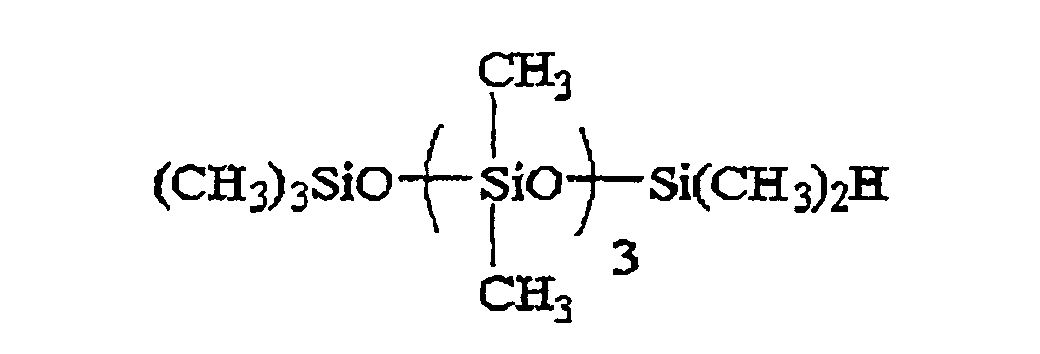
- The A-B-A type silicone of the present invention may be prepared by subjecting to an addition reaction an α-organohydrogensiloxane having an SiH bond at a terminal thereof and a glycerol or polyglycerol having two unsaturated aliphatic bonds in a molecule. Examples of the α-organohydrogensiloxane having an SiH bond at a terminal thereof include compounds having a structure of A-H, wherein A is the aforesaid organosiloxne residue and H is a hydrogen atom. For examples, MDHM, MM H, MD3MH, or MD9MH as shown below may be used, wherein M, M H, D and DH are as defied above.



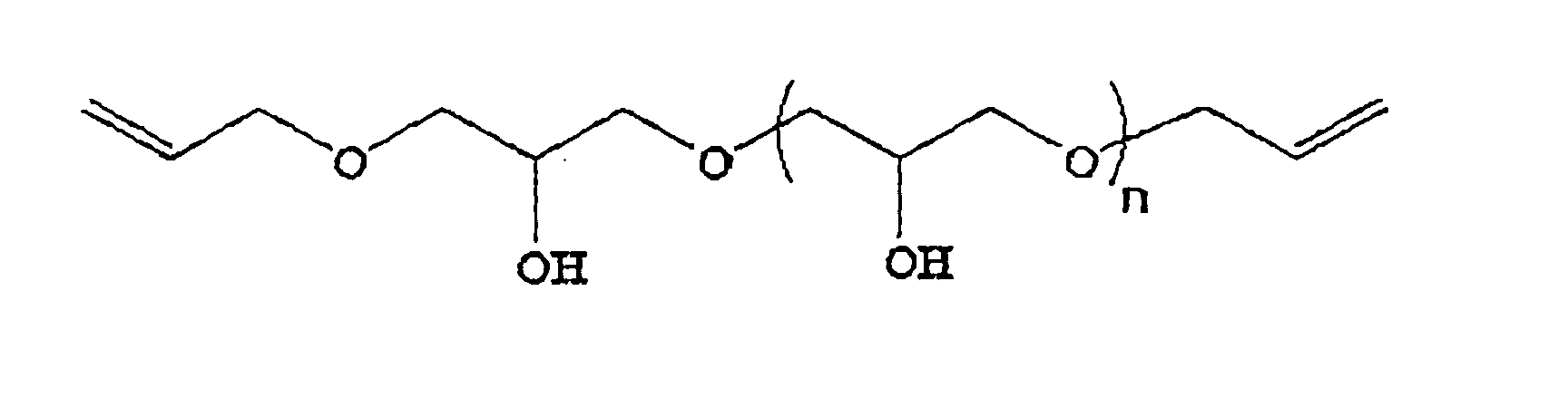
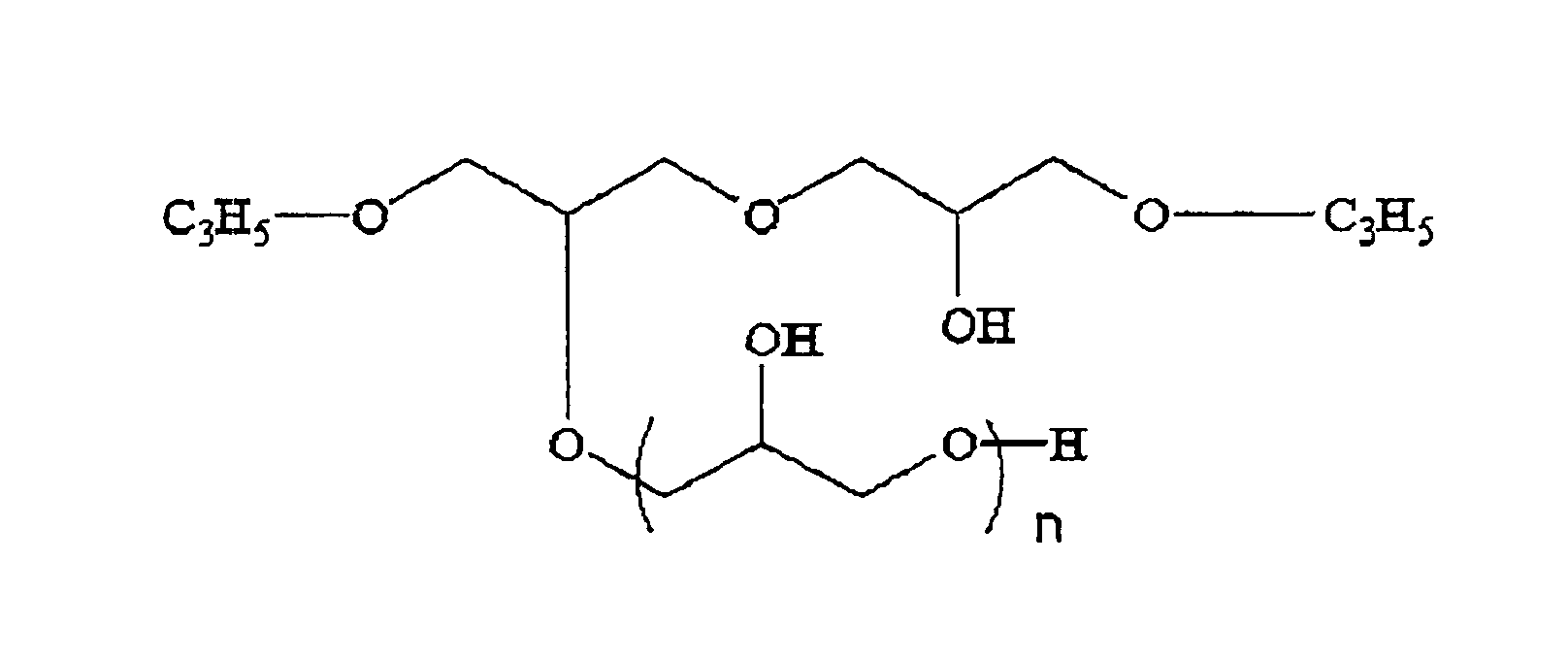
- Examples of the glycerol or polyglycerol having two unsaturated aliphatic bonds in a molecule include compounds which have the structure B, but a part, preferably a free end of R3 is encapped with an unsaturated bond. For example, the triglycerol or tetraglycerol derivatives shown below are preferably used, wherein n is 2 or 3.

- The glycerol derivative having two unsaturated aliphatic bonds may be prepared by reacting glycerol or polyglycerol such as diglycerol or triglycerol with an allyl glycidyl ether in the presence of an alkaline catalyst such as potassium hydroxide. The reaction is preferably carried out at a temperature of 60 to 120 degrees C. After the reaction completes, the aimed product can be isolated by neutralizing the alkaline catalyst followed by distilling volatile substances off.
- The aforesaid α-organohydrogensiloxane and the glycerol derivative having an unsaturated bond are subjected to an addition reaction in a molar ratio of SiH bond to CH=CH2 bond of from 0.5 to less than 1.5, preferably from 0.8 to less than 1.2.
- The addition reaction conditions, for example, catalysts, solvents, temperature and time, are as described above.
- After the addition reaction, the allyl ether bond may be decomposed by a weak acid or alkylated by hydrogenation. Tocopherol or BHT may be added to a reaction mixture as an antioxidant.
- Figure 3 shows an exemplary Infrared spectrum of an A-B-A type glycerol-modified silicone obtained by the aforesaid method. The glycerol-modified silicone is surface active and well miscible with oil agents to reduce surface tension thereof. Therefore, the glycerol-modified silicone is suitable as an agricultural adjuvant such as a spreading agent and a wetting agent, a paint additive, or an additive for metalworking fluid.
- As described above, the A-B-A type glycerol-modified silicone may be used as an adjuvant for agricultural chemicals such as oil agents or formulations. Alternatively, the A-B-A type glycerol-modified silicone may be formulated into a composition comprising an oil agent. In such composition, the oil agent may be incorporated in an amount of from 4 to 10,000 parts by weight per part by weight of glycerol-modified silicone. If the amount of the oil agent is lower than the aforesaid lower limit, the glycerol-modified silicone may not dissolve sufficiently. If the amount exceeds the aforesaid upper limit, reduction of the surface tension by the glycerol-modified silicone may be unsatisfactory.
- Examples of the oil agent include those described above. The composition may contain the agricultural chemicals and various additives as describedabove. The compositionmaybe a self-emulsifying composition which does not contain water and, when added to water on site, is emulsified, or an emulsified composition containing water in a product form. To make such an emulsified composition, one or more surfactants may be used to disperse the oil agent and the A-B-A type glycerol-modified silicone in water or aqueous formulation. Any surfactant, for example, anionic, cationic, nonionic or amphoteric surfactant, may be used. Preferably, anonionic surfactant as described above is used because many agricultural chemicals are acidic.
- The composition may further contain a preservative, a disinfectant, a stabilizer, an agricultural chemical and various additives as described above.
- The composition of emulsified type or self-emulsifying type is further diluted with water and mixed to form a homogeneous emulsion and then sprayed on plants with a sprayer or a sprinkler. The mixing may be performed with a mixer described above.
- The present invention will be explained in detail with reference to the following Examples, but not limited to them. In the Examples, surface tension was measured with a full automatic tensiometer, model PD-W, ex Kyowa Interface Science Co. Ltd., at 25 degrees C according to the water drop method in which a contact angle with the air is measured. A surface tension of dimethylpolysiloxane having a viscosity of 30mm2/s at 25 degrees C measured according to this method was 18.2 mN/m. In the tables shown below, "D" and "I" each represents a degree of solubility: "D" means "dispersed" and "I" means "insoluble." A silicone with no mark means that it dissolved to form a transparent solution.
- In Examples 1 to 5 and Comparative Examples 1 to 15, modified silicones were prepared in the following procedures. In a reactor provided with a stirrer, a thermometer, and a reflux condenser, placed were a compound having unsaturated bonds in such an amount that a molar ratio of the unsaturated bonds to SiH bonds of an organohydrogensiloxane to be added was 1.05, a solvent, and a catalytically effective amount of a catalyst. Into this reactor, the organohydrogensiloxane was added dropwise to cause a reaction. Then, the reaction mixture was distilled under a reduced pressure at 100 degrees C to remove the solvent.
- For example, the glycerol-modified silicone in Example 1 was prepared as follows. In a reactor provided with a stirrer, a thermometer, and a reflux condenser, 100 g of glycerolmonoallyl ether, 100 g of isopropyl alcohol, and 0.05g of a 0.5 wt% chloroplatinic acid solution in isopropyl alcohol were placed. In the reactor, 107 g of pentamethyldisiloxane was added dropwise at 60 degrees C while stirring to cause a reaction. Then, the reaction mixture liquid was distilled under a reduced pressure at 100 degrees C to remove the solvent.
- Some properties and solubility in oil agents were determined with each of the glycerol-modified silicone prepared in Examples 1 to 5. Surface tension of the mixtures of the silicone and the oil agent were measured, too.

- In Table 1, "Modifier ratio %" means weight % of the glycerol monoallyl ether to a total weight of the glycerol monoallyl ether and the organohydrogensiloxane. The numerical values described just below the names of the oil agent are surface tension of the neat oil agents.
- As seen from Table 1, the glycerol-modified silicones in the present invention significantly reduced the surface tension of the oil agents. Particularly, those in Examples 2 and 4 largely reduced the surface tension as well as showed excellent solubility in the oil agents. Although the glycerol-modified silicone showed lower solubility with the increasing molecular weight as seen in Examples 3 and 5 , its surface activity was not adversely affected.
- Change in surface tension with addition of the silicones of Example 2 and 4, respectively, was studied. As shown in the Table below, 1 wt% of addition significantly reduced a surface tension of the liquid paraffin, and 5 wt% of addition significantly reduced that of the plant oils, i.e., rapeseed oil and soybean oil.
Surface tension, mN/m, 25C Liquid paraffin Rapeseed oil Soybean oil Amount added, wt% 1 5 1.0 1 5 10 1 5 10 Example 2 23.4 21.3 21.5 31 22.6 21.2 27.8 22.6 20.8 Example 4 21.9 21.4 21.4 28.6 20.7 19.9 28.7 22 19.9 - Glycerol-modified silicones were prepared by modifying organohydrogenpolysiloxane with more amount of glycerol than specified in the present invention.

- All of these modified silicones had higher viscosities. They had poor solubility in the oil agents. They settled out while the mixtures were allowed to stand until foams formed by mixing disappeared, so that surface tension of the mixtures could not be determined.
- Silicones modified with compounds other than glycerol were prepared. Mixtures with the oil agents were prepared and surface tension thereof was measured as in Examples.

- Comparing the results shown in Table 1 with those in Table 4, the silicones in Comparative Examples were less surface active than the silicones in Examples 1-5. The silicones modified with isoprenol, ethylene glycol monoallyl ether and trimethyrolpropane monoallyl ether, respectively, reduced surface tension to an extent, but not as effective as the silicones in Examples, especially for the plant oils. Although trimethyrolpropane monoallyl ether is similar to glycerol monoallyl ether in difunctionality and molecular weight, the silicones modified with it in Comparative Examples 14 and 15 were inferior to the silicones of Examples 1-5 in reduction of surface tension.
- Table 5 shows changes in surface tension with amount of the silicones of some of the Comparative Examples. Over 15 wt% of the silicones were required to attain the surface tension that was attained by only 1wt% of the silicone in Example 2, of which surface tension data copied from Table 2 are shown for reference. This indicates superior performance of the silicones in the present invention.
Comparative Example No. Surface tension, mN/m Amount added, wt% 1 5 10 15 6 27.4 25.3 25.5 24.4 10 26.6 25 25.4 22.7 11 27 24.4 23.7 23.7 12 25.8 24.6 23 23.7 Example 2 23.4 21.3 21.5 21 - Using the silicones in Examples 1 and 2, respectively, the compositions shown in the following Table were prepared.

- In the Table 6, spreading property was determined according to the following method. To each composition, water was added so as to make a total weight of the components other than water to be 10 wt% relative to a total weight. The mixture thus obtained was made homogeneous by stirring and then sprayed on leaves of Citrus Natsudaidai. After the water evaporated, surface of the leaves were visually observed to determine how wide the oil agent contained in the composition spread. Based on the observation, the compositions were rated according to the following criteria.
- A: The oil agent covered more than 95% of a total surface area of leaves.
- B: The oil agent covered over 70% to 95% of a total surface area of leaves.
- C: The oil agent covered 70% or less of a total surface area of leaves.
-
- Using the silicones in Comparative Examples 3 and 9, respectively, the compositions shown in the Table below were prepared. In addition, a referential composition was prepared which contained the silicone in Example 2 in an amount outside the range specified in the present invention.
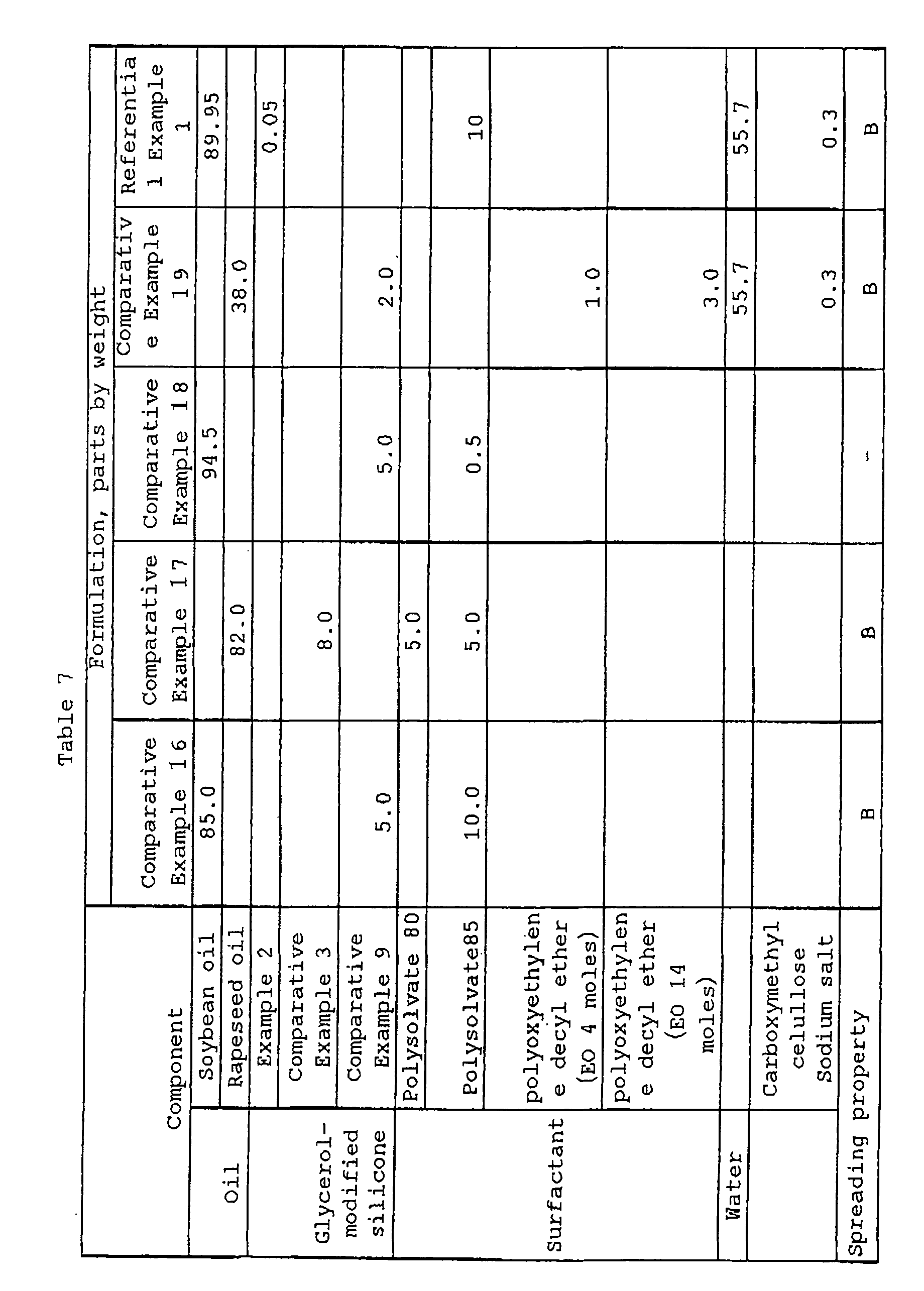
- In the Table 7, spreading property of the composition in Comparative Example 18 could not be determined because a homogenous mixture with water could not be prepared.
- As can be seen from the Table 7, the compositions of Comparative Examples 16-19 have poorer spreading property than the compositions of Examples 6-10.
- Figures 1 & 2 are photographs each taken 5 minutes after one drop, i.e., 15µl, of liquid paraffin containing 10 wt% of the silicone of Example 2 and Comparative Example 6, respectively, was placed on a leaf of Citrus Natsudaidai. While the drop remained as a small circle in Fig.2, the drop spread widely on the leave in Fig.1.
Comparing the figures, the liquid paraffin containing the glycerol-modified silicone in Example 2 has better spreading property than the silicone modified with n-octene. - A glycerol derivative having two unsaturated bonds in a molecule, hereinafter referred to as a diallylated glycerol, was prepared according to the method described above. That is, a polyglycerol and allylglycidyl ether were subjected to a reaction in the presence of potassium hydroxide catalyst at a temperature of from 60 to 120 degrees C. Then, after neutralizing the catalyst, volatile substances were distilled off.
- Triglycerol diallyl ether thus obtained was light yellow liquid having a viscosity of 330 mm2/s, hydroxyl number of 523 KOH mg/g, and a degree of unsaturation of 6.13 meq/g. The hydroxyl number and the degree of unsaturation almost agreed with respective theoretical values of 525 and 6.24.
- By the same method, prepared was tetraglycerol diallyl ether which was light yellow liquid having a viscosity of 1397 mm2/s, hydroxyl number of 533 KOH mg/g, and a degree of unsaturation of 5.05 meq/g.
- Using the diallylated glycerol obtained, A-B-A type of glycerol-modified silicones of Examples 11 to 21 were prepared according to the following method. In a reactor equipped with a stirrer, a thermometer, and a reflux condenser, placed were the polyglycerol diallylether in such an amount that a molar ratio of unsaturated bonds thereof to SiH bonds of an organohydrogensiloxane to be added was 1.0, solvent and catalytically effective amount of a catalyst. Then, the organohydrogensiloxane was added dropwise in the reactor to cause reaction with the polyglycerol diallylether. Subsequently, the reaction mixture was distilledat 100 degrees C under a reduced pressure to remove the solvent. For example, the glycerol-modified silicone of Example 13 was prepared as follows. In the reactor, 100 g of triglycerol diallyl ether, 300 g of isopropanol, and 0.05 g of 0.5 wt% solution of chloroplatinic acid in isopropanol were placed. Then, the reaction was carried out by adding 210g of MD3MH dropwise to the reactor. After the reaction, the solvent was removed by distillation at 100 degrees C under a reduced pressure. Similarly, other A-B-A type glycerol-modified silicones having different polymerization degrees of siloxane and glycerol were prepared.
- The A-B-A type silicone in Example 13 obtained was dissolved in deuterated chloroform and analyzed by 29Si-NMR. It was confirmed that the silicone had a MD3MR moiety based on two peaks each associated with Me3SiO-, and, -CH2Me2SiO-, respectively, observed at chemical shifts of 7. 52ppm and 7.11ppm with a peak area ratio of 1:1, and two peaks at -21. 4ppm and -21. 6ppm with a peak area ratio of 2:1 associated wirh-OMe2SiO-.
- It was also confirmed with 1H-NMR that one mole of MD3MH was bonded to one mole of an allyl group based on observation that a ratio of an integrated intensity of the signal at 0.5 ppm associated with -CH2Me2SiO- to that of the signal at 0.1ppm associated with Me3SiO -and -Me2SiO- was 2:33.
- Further, it was confirmed that 2 moles of the siloxane were bonded to one mole of the glycerol moiety based on the observation that a ratio of an integrated intensity of the signals ranging from 3.3 to 3.9 ppm associated with the hydrogen atoms of the glycerol to that of the signal at 0.5 ppm associated with -CH2Me2SiO- was 11:2.
- Infrared spectrum was also obtained in a KBr pellet. Around 3400cm-1, a strong absorption associated with OH stretching vibration was observed, confirming the presence of a glycerol moiety in the compound. Figure 3 shows an IR spectrum of the silicone in Example 13.
- Eleven species of A-B-A type glycerol-modified silicones were prepared and subjected to measurements of several properties as shown in the Table 8.
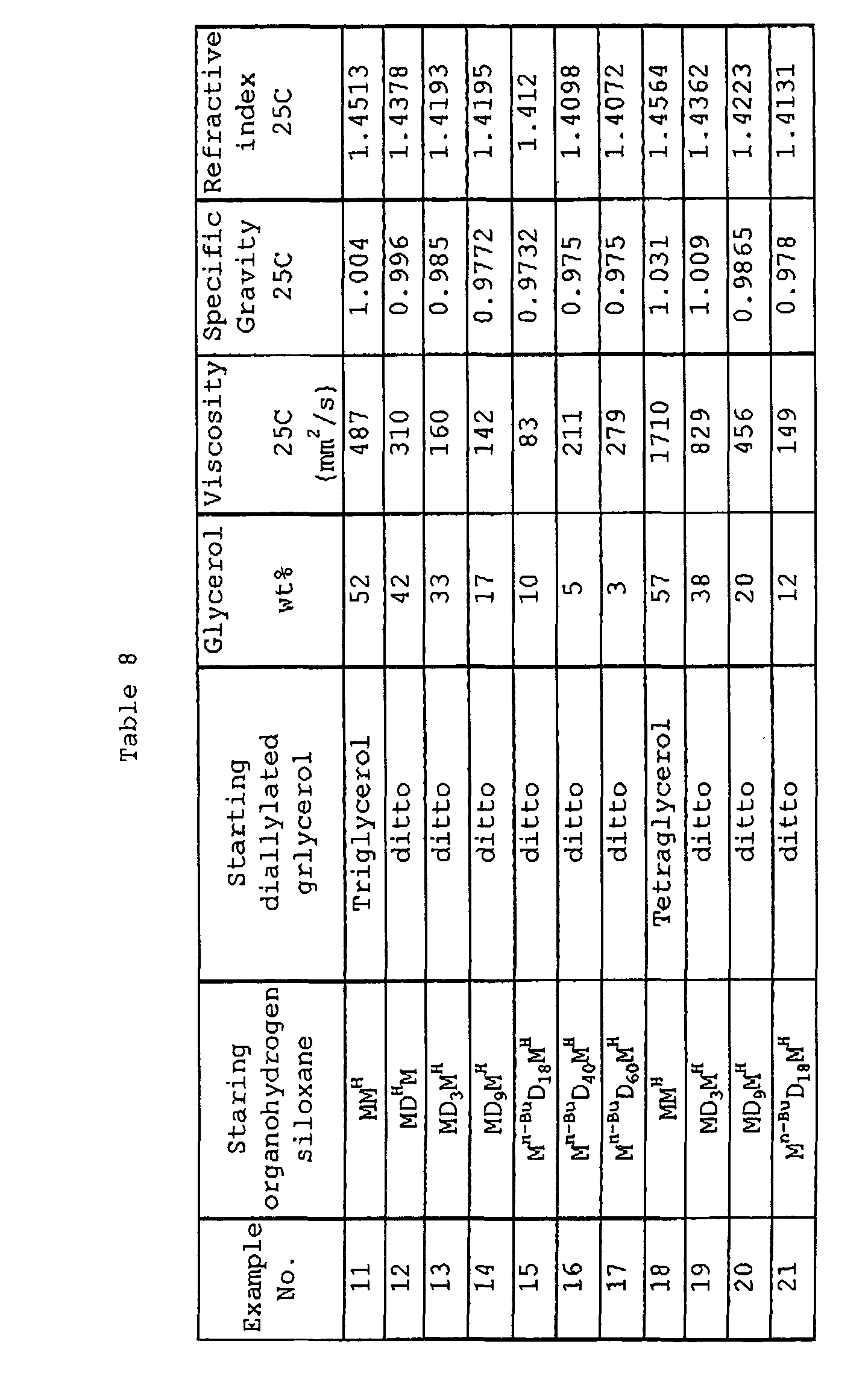
- In the Table above, "Glycerol" in wt% means weight percentage of the diallylated glycerol in the starting reaction mixture. The viscosity was measured with a Cannon-Fenske viscometer, the specific gravity was measured by hydrometer method, and the refractive index was measured with an Abbe refractometer.
- Compositions were prepared containing an oil agent and the glycerol-modified silicone in a weight ratio of 90/10 and surface tension thereof was measured. The results are as seen in Table below.
Example No. A-B-A type glycerol-modified silicone Surface tension, mN/m, 25C glycerol-modified silicone/oil agent=10/90 Liquid paraffin
27.9Rapeseed oil
31Soybean oil
31.822 11 22.5 22.3 21.1 23 12 21.5 21 21 24 13 20 20.3(D) 19.6(D) 25 18 21.8 21.5 (D) 21.5(D) 26 19 20.8(D) 18.7(D) 19.0(D) - In the Table above, the numerical values described just below the name of the oil agent are surface tension of the neat oil agents. Comparing with the surface tension of neat oil agents, surface tensions of the compositions of Examples were significantly lower. Particularly, the surface tension of the compositions in Examples 24 and 26 were so low as that of commonly used silicone oils. The compositions where the A-B-A type silicone was not dissolved completely but dispersed, as designated "D", showed no problem in determining surface tension with a good reproducibility.
- Change in surface tension with a concentration of the A-B-A type silicones of Examples 13 and 19, respectively, was studied. The results are as shown below.
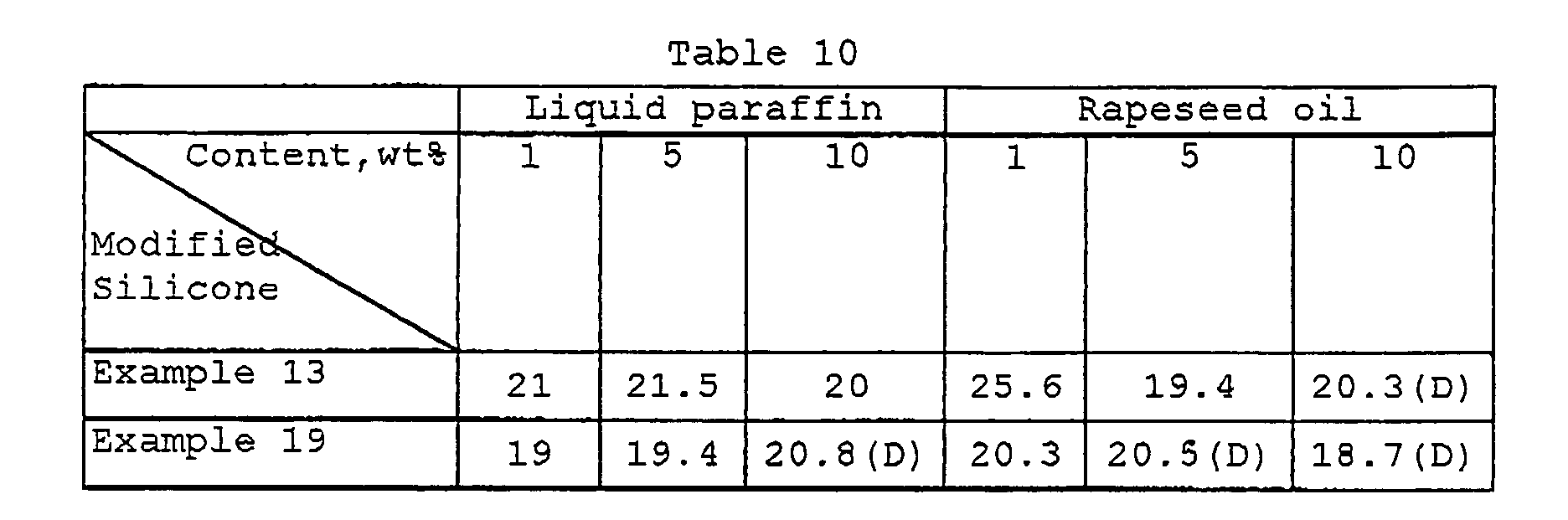
- One wt% of the silicone reduced the surface tension of the liquid paraffin significantly, and 5 wt% of the silicone reduced the surface tension of the rapeseed oil. The modified silicone in Example 19 was so effective that only 1 wt% thereof reduced the surface tension of the both oil agents.
- Silicones without having a glycerol residue and silicones having a structure other than, A-B-A, were prepared and subjected to the measurements as in Examples. Mixtures with the oil agents were prepared each of which surface tension was measured as in Examples. The results are as shown in the Table below.
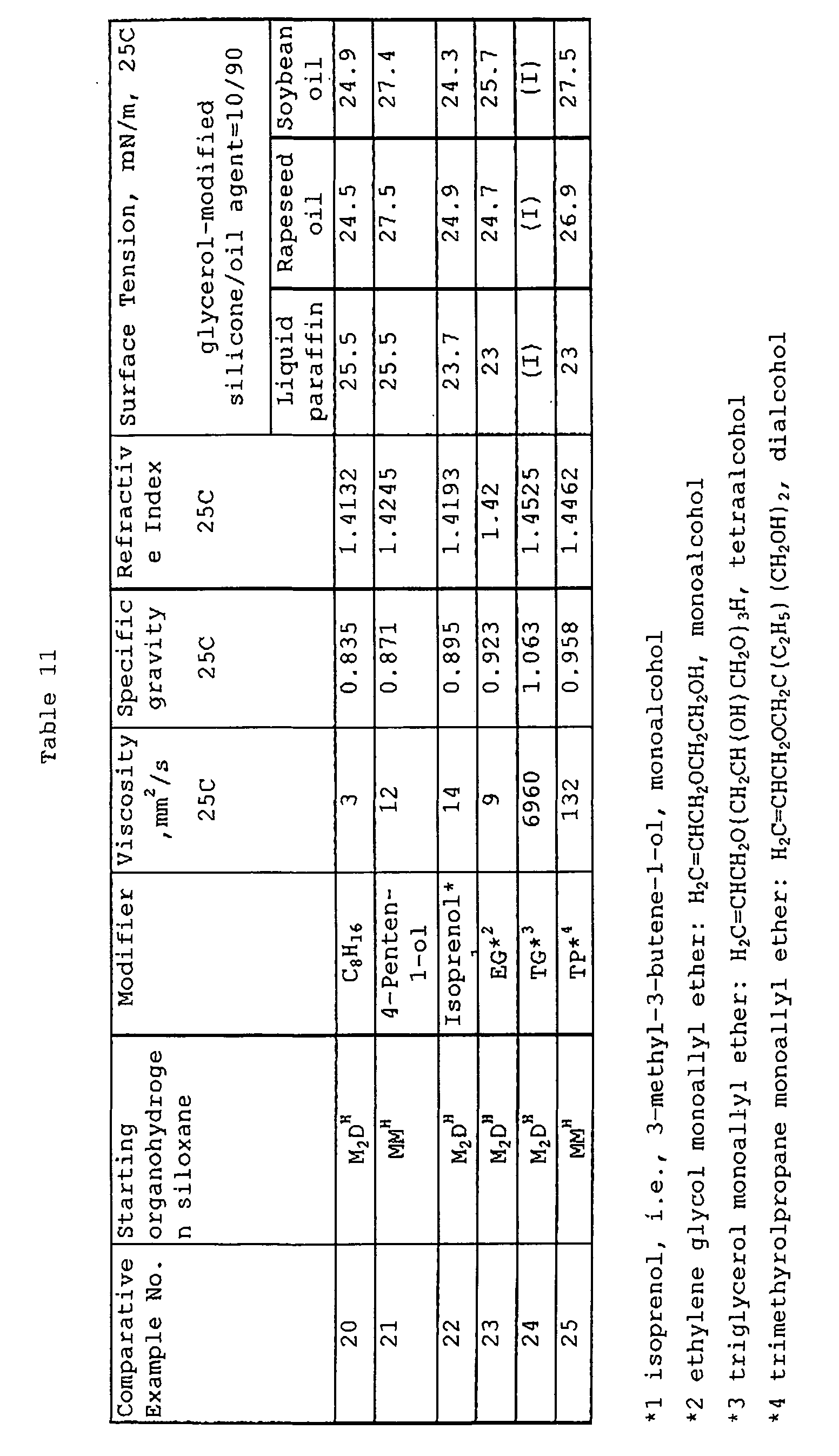
- As shown in Table 11, all of the silicones were less effective in reduction of surface tension than the present A-B-A type glycerol-modified silicone. Especially, the silicone in Comparative Example 24 modified with triglycerolmonoallyl ether having a structure of A-B had a poor miscibility with the oil agents to precipitate, so that surface tension of the mixtures with the oil agents could not be measured.
- The compositions having formulations shown in Table 12 were prepared. To each composition, water was added so as to make a total weight of the components other than water to be 10 wt% and a homogeneous emulsion was obtained by stirring. The emulsion thus obtained was sprayed on leaves of Citrus Natsudaidai. After sprayedwater evaporated, surface of the leaves were visually observed to determine how wide the oil agent contained in the composition spread. Based on the observation, the spreading property of compositions was rated according to the following criteria.
- A: The oil agent covered more than 95% of a total surface area of leaves.
- B: The oil agent covered over 70% to 95% of a total surface area of leaves.
- C: The oil agent covered 70% or less of a total surface area of leaves.
-
- As can be seen from the Table above, the oil agent contained in the present emulsified compositions spread well on the leaves, indicating high efficacies thereof as spray agents.
| Component | Formulation, parts by weight | ||||
| Example 27 | Example 28 | Example 29 | Example 30 | ||
| Oil agent | Rapeseed oil | 80.8 | 80.8 | 80.8 | 38 |
| Glycerol-modified silicone | Example 12 | 4.2 | |||
| Example 14 | 4.2 | 2 | |||
| Example 16 | 4.2 | ||||
| Emulsifier | Reodole TW-0320 | 10 | 10 | 10 | 3 |
| Noigen XL-80 | 5 | 5 | 5 | 1 | |
| Water | 55.7 | ||||
| Stabilizer | Carboxymethyl celullose Sodium salt | 0.3 | |||
| Spreading property | A | A | A | A | |
| Reodole TW-0320 : polyoxyethylene sorbitane trioleate, ex Kao Co. | |||||
| Noigen XL-80: polyoxyethylene propyldecylether, ex Daiichi Pharmaceutical Co.,Ltd. |
Claims (20)
- A spreading agent for agricultural chemicals, said spreading agent comprising at least one of the glycerol-modified silicone represented by the following formula (1), (2) or (3),

 wherein R1 can be the same with or different from each other and is selected from the group consisting of alkyl, aryl, aralkyl, and fluorinated alkyl groups each having 1 to 30 carbon atoms, p is an integer of from 1 to 3, q is an integer of 1 or 2, and r is an integer of from 0 to 6.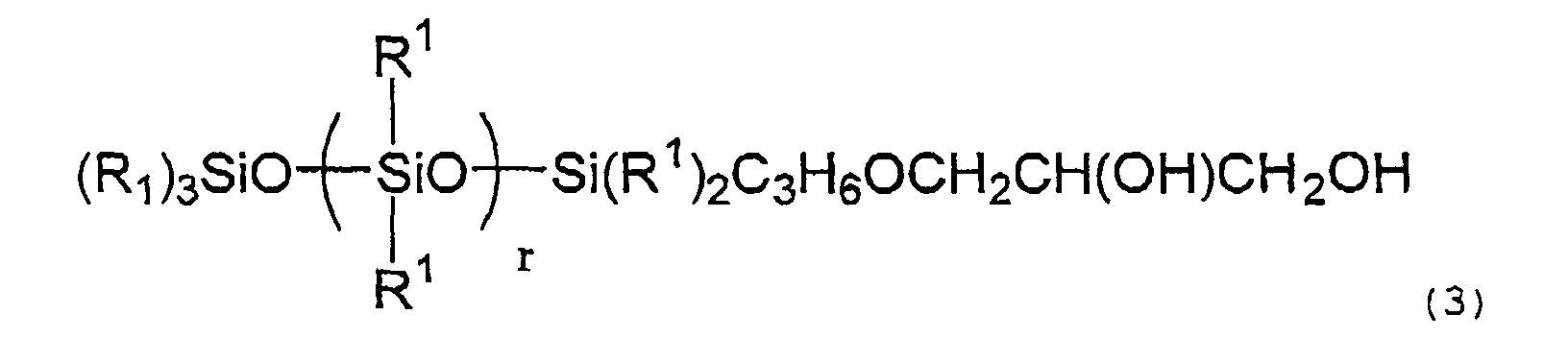
- The spreading agent according to claim 1, wherein at least 80% of R1 is a methyl group.
- The spreading agent according to claim 1, wherein the glycerol-modified silicone is represented by the following formula (4).

- The spreading agent according to claim 1, wherein the glycerol-modified silicone is represented by the following formula (5).
- An agricultural chemical composition comprising 100 parts by weight of the spreading agent according to any one of claims 1 to 4 and 0.1 to 100,000 parts by weight of at least one oil agent.
- The agricultural chemical composition according to claim 5, wherein the oil agent is at least one selected from the group consisting of paraffin oils, Rapeseed oil, and soybean oil.
- An agricultural chemical composition comprising the following components (I) to (IV):(I) 100 parts by weight of an oil agent,(II) 0.1 to 100 parts by weight of at least one glycerol-modified silicone represented by the following formula (1), (2) or (3)
 wherein R1 can be the same with or different from each other and is selected from the group consisting of alkyl, aryl, aralkyl, and fluorinated alkyl groups each having 1 to 30 carbon atoms, p is an integer of from 1 to 3, q is an integer of 1 or 2, and r is an integer of from 0 to 6,
 (III) 1 to 50 parts by weight of a nonionic surfactant,(IV) water in an amount of 0 to 1000 parts by weight per total 100 parts by weight of the components (I), (II) and (III).
 - The agricultural chemical composition according to claim 7, wherein the nonionic surfactant (III) is polyoxyethylene alkylether or polyoxyethylene sorbitane fatty acid ester.
- The agricultural chemical composition according to claim 7 or 8, wherein the oil agent (I) is at least one selected from the group consisting of paraffin oils, Rapeseed oil, and soybean oil.
- The agricultural chemical composition according to any one of claims 7 to 9, wherein the glycerol-modified silicone (II) is represented by the following formula (4).

- The agricultural chemical composition according to any one of claims 7 to 9, wherein the glycerol-modified silicone is represented by the following formula (5).
- The agricultural chemical composition according to any one of claims 7 to 11, wherein the composition further comprises an agricultural chemical.
- A glycerol-modified silicone having a structure A-B-A, wherein the structural unit A is an organosiloxane residue represented by the following formula (6),and the structural unit B is a glycerol derivative residue represented by the following formula (7),
 wherein R2 can be the same with or different from each other and is selected from the group consisting of alkyl, alicyclic, aryl, aralkyl and halogenated groups thereof each having 1 to 10 carbon atoms,
x is an integer of from 0 to 100,
α is an integer of 1 or 2,
R3 can be the same with or different from each other and is an alkylene group having 2 to 11 carbon atoms, and
s is an integer of from 1 to 11. - The glycerol-modified silicone according to claim 13, wherein the structural unit B is a glycerol derivative residue represented by the following formula (8),wherein R3 is a propylene group and s is an integer of from 1 to 8.

- A spreading agent for agricultural chemicals, said spreading agent comprising the glycerol-modified silicone according to claim 13 or 14.
- An agricultural chemical composition comprising one part by weight of the glycerol-modified silicone according to claim 13 or 14 and 4 to 10,000 parts by weight of at least one oil agent.
- The agricultural chemical composition according to claim 16, wherein the composition further comprises an emulsifier.
- The agricultural chemical composition according to claim 17, wherein the composition further comprises water to be in the form of an emulsion.
- The agricultural chemical composition according to any one of claim 16 to 18, wherein the oil agent is a plant extract oil.
- A method for preparing the glycerol-modified silicone according to claim 13 or 14, comprising a step of subjecting an α-organohydrogensiloxane and a glycerol derivative having an unsaturated aliphatic bond at each terminal to an addition reaction.
Applications Claiming Priority (6)
| Application Number | Priority Date | Filing Date | Title |
|---|---|---|---|
| JP2004149639A JP4570395B2 (en) | 2004-05-19 | 2004-05-19 | Agrochemical spreading agent composition |
| JP2004149633 | 2004-05-19 | ||
| JP2004149639 | 2004-05-19 | ||
| JP2004149633A JP4570394B2 (en) | 2004-05-19 | 2004-05-19 | Agrochemical spreading agent containing glycerin-modified silicone |
| JP2004168405A JP4429812B2 (en) | 2004-06-07 | 2004-06-07 | ABA type glycerin modified silicone |
| JP2004168405 | 2004-06-07 |
Publications (2)
| Publication Number | Publication Date |
|---|---|
| EP1597969A1 true EP1597969A1 (en) | 2005-11-23 |
| EP1597969B1 EP1597969B1 (en) | 2012-03-21 |
Family
ID=34938285
Family Applications (1)
| Application Number | Title | Priority Date | Filing Date |
|---|---|---|---|
| EP05076175A Ceased EP1597969B1 (en) | 2004-05-19 | 2005-05-19 | Glycerol-modified silicone spreading agent and a composition comprising the same |
Country Status (2)
| Country | Link |
|---|---|
| US (1) | US7998903B2 (en) |
| EP (1) | EP1597969B1 (en) |
Cited By (2)
| Publication number | Priority date | Publication date | Assignee | Title |
|---|---|---|---|---|
| EP1847262A4 (en) * | 2005-01-17 | 2012-10-03 | Shiseido Co Ltd | COSMETIC PRODUCT |
| WO2017012714A1 (en) * | 2015-07-20 | 2017-01-26 | Momentive Performance Materials Gmbh | Asymmetrically substituted polyorganosiloxane derivatives |
Families Citing this family (26)
| Publication number | Priority date | Publication date | Assignee | Title |
|---|---|---|---|---|
| EP2062563A1 (en) * | 2006-09-11 | 2009-05-27 | Shiseido Company, Limited | Silica composite capsules obtained with water-soluble silane derivative, composition containing the same, and transparent gel-form composition |
| DE102007046736A1 (en) * | 2007-09-28 | 2009-04-02 | Evonik Goldschmidt Gmbh | Use of linear siloxanes and process for their preparation |
| EP2306840A1 (en) * | 2008-06-23 | 2011-04-13 | Purfresh, Inc. | Methods to increase crop yield |
| DE102008032066A1 (en) * | 2008-07-08 | 2010-01-14 | Byk-Chemie Gmbh | Polyhydroxy-functional polysiloxanes as anti-adhesive and dirt-repellent additives in coatings, polymeric molding compounds and thermoplastics, process for their preparation and their use |
| DE102008032064A1 (en) | 2008-07-08 | 2010-01-14 | Byk-Chemie Gmbh | Polyhydroxy-functional polysiloxanes for increasing the surface energy of thermoplastics, processes for their preparation and their use |
| DE102009002415A1 (en) * | 2009-04-16 | 2010-10-21 | Evonik Goldschmidt Gmbh | Emulsifier containing glycerol-modified organopolysiloxanes |
| WO2011049247A1 (en) | 2009-10-23 | 2011-04-28 | 東レ・ダウコーニング株式会社 | Thickening or gelling agent for oily raw materials |
| US8784787B2 (en) | 2009-10-23 | 2014-07-22 | Dow Corning Toray Co., Ltd. | Co-modified organopolysiloxane |
| WO2011049246A1 (en) | 2009-10-23 | 2011-04-28 | 東レ・ダウコーニング株式会社 | Novel organopolysiloxane copolymer |
| US9340650B2 (en) | 2009-11-24 | 2016-05-17 | Momentive Performance Materials Gmbh | Hydrophilic/lipophilic modified polysiloxanes as emsulsifiers |
| WO2011108220A1 (en) | 2010-03-01 | 2011-09-09 | 日本化薬株式会社 | Pest controlling composition |
| JP5826554B2 (en) * | 2010-09-03 | 2015-12-02 | 花王株式会社 | Agricultural spreading agent composition |
| DE102011109541A1 (en) | 2011-08-03 | 2013-02-07 | Evonik Goldschmidt Gmbh | Use of polysiloxanes containing branched polyether radicals for the production of polyurethane foams |
| JP6369887B2 (en) * | 2011-12-27 | 2018-08-08 | 東レ・ダウコーニング株式会社 | Novel co-modified organopolysiloxane, treatment agent containing the same, and external preparation |
| JP6369888B2 (en) * | 2011-12-27 | 2018-08-08 | 東レ・ダウコーニング株式会社 | Novel liquid organopolysiloxane and use thereof |
| JP5841488B2 (en) | 2012-05-11 | 2016-01-13 | 信越化学工業株式会社 | Block-type modified organopolysiloxane, method for using the organopolysiloxane, cosmetics, and method for producing the organopolysiloxane |
| WO2014104258A1 (en) * | 2012-12-28 | 2014-07-03 | 東レ・ダウコーニング株式会社 | Method for producing transparent or semi-transparent liquid glycerin-derivative-modified silicone composition |
| EP3009466B1 (en) | 2013-06-13 | 2021-02-24 | Dow Toray Co., Ltd. | Silicone modified by long-chain hydrocarbon group-containing diglycerin derivative, and use thereof |
| US10947347B2 (en) | 2014-10-10 | 2021-03-16 | Momentive Performance Materials Gmbh | Hyrophilic ethylene oxide free emulsifier comprising dendrimeric polyhydroxylated ester moieties |
| JP6387885B2 (en) * | 2015-04-06 | 2018-09-12 | 信越化学工業株式会社 | Organopolysiloxane emulsion composition for release paper or release film, method for producing the same, release paper and release film |
| US9988404B2 (en) | 2016-04-07 | 2018-06-05 | Momentive Performance Materials Inc. | Ester-modified organosilicon-based surfactants, methods of making same and applications containing the same |
| WO2017189703A1 (en) * | 2016-04-27 | 2017-11-02 | Dow Corning Corporation | Detergent composition comprising a carbinol functional trisiloxane |
| KR102159534B1 (en) * | 2016-04-27 | 2020-09-25 | 다우 실리콘즈 코포레이션 | Carbinol functional trisiloxane and method of formation thereof |
| JP6546127B2 (en) | 2016-07-14 | 2019-07-17 | 信越化学工業株式会社 | Novel silicone compound and cosmetic containing the same |
| DE102019104311B4 (en) | 2019-02-20 | 2023-09-21 | Gesellschaft zur Förderung von Medizin-, Bio- und Umwelttechnologien e.V. | Wear protection layer and process for its production |
| CN113999688A (en) * | 2021-11-19 | 2022-02-01 | 西南石油大学 | Spreading agent for improving spreading performance of oil drop water surface |
Citations (11)
| Publication number | Priority date | Publication date | Assignee | Title |
|---|---|---|---|---|
| US4431789A (en) * | 1981-03-13 | 1984-02-14 | Shin-Etsu Chemical Co., Ltd. | Novel organopolysiloxane having alcoholic hydroxy groups and a method for the preparation thereof |
| EP0475130A2 (en) * | 1990-08-30 | 1992-03-18 | Kao Corporation | Siloxane derivatives, producing method thereof and agents including siloxane derivative |
| US5262155A (en) * | 1991-09-19 | 1993-11-16 | Dow Corning S.A. | Glycerol functional polysiloxanes |
| EP0586048A1 (en) * | 1992-07-16 | 1994-03-09 | Shin-Etsu Chemical Co., Ltd. | Paint additives and aqueous paint composition |
| JPH06157236A (en) | 1992-11-13 | 1994-06-03 | Kose Corp | Cosmetic |
| US5475127A (en) * | 1994-04-27 | 1995-12-12 | Th. Goldschmidt Ag | Organosilyl and organosiloxanyl derivatives of glycerin ethers and their use |
| US5558806A (en) | 1992-07-23 | 1996-09-24 | Osi Specialties, Inc. | Surfactant blend of a polyalkleneoxide polysiloxane and an organic compound having a short chain hydrophobic moiety |
| JPH09316085A (en) | 1996-05-23 | 1997-12-09 | Nippon Unicar Co Ltd | Reactive siloxane |
| WO2001087063A2 (en) * | 2000-05-17 | 2001-11-22 | Crompton Corporation | Agricultural compositions employing organosiloxanes containing polyhydric groups |
| EP1314356A1 (en) * | 2001-11-21 | 2003-05-28 | Goldschmidt AG | Use of non-spreading silicone surfactants in agrochemical compositions |
| EP1496080A1 (en) | 2003-07-07 | 2005-01-12 | Shin-Etsu Chemical Company, Ltd. | Alternating copolymer of organopolysiloxane with glycerol derivative and a cosmetic comprising the same |
Family Cites Families (7)
| Publication number | Priority date | Publication date | Assignee | Title |
|---|---|---|---|---|
| CA1337459C (en) | 1988-08-15 | 1995-10-31 | Lenin J. Petroff | Postemergent herbicide compositions containing silicone glycol adjuvants |
| NO901662L (en) * | 1989-04-17 | 1990-12-21 | Monsanto Co | DRY HERBICID PREPARATION WITH IMPROVED WATER SOLUBILITY. |
| US5561099A (en) | 1993-10-13 | 1996-10-01 | Osi Specialties, Inc. | Alkylsiloxanes as adjuvants for agriculture |
| US5821195A (en) * | 1996-08-16 | 1998-10-13 | Monsanto Company | Sequential application method for enhancing glyphosate herbicidal effectiveness with reduced antagonism |
| JP3559787B2 (en) | 1998-04-13 | 2004-09-02 | 大原パラヂウム化学株式会社 | Spreading composition for pesticides |
| JP3705954B2 (en) | 1999-05-19 | 2005-10-12 | 信越化学工業株式会社 | Agrochemical spreading agent |
| EP1992656B9 (en) * | 2002-09-12 | 2012-09-26 | Shin-Etsu Chemical Company, Ltd. | Novel Organopolysiloxanpolymer, Pasty Composition, and Cosmetic Preparation Containing the Composition |
-
2005
- 2005-05-18 US US11/131,268 patent/US7998903B2/en active Active
- 2005-05-19 EP EP05076175A patent/EP1597969B1/en not_active Ceased
Patent Citations (12)
| Publication number | Priority date | Publication date | Assignee | Title |
|---|---|---|---|---|
| US4431789A (en) * | 1981-03-13 | 1984-02-14 | Shin-Etsu Chemical Co., Ltd. | Novel organopolysiloxane having alcoholic hydroxy groups and a method for the preparation thereof |
| EP0475130A2 (en) * | 1990-08-30 | 1992-03-18 | Kao Corporation | Siloxane derivatives, producing method thereof and agents including siloxane derivative |
| US5144054A (en) | 1990-08-30 | 1992-09-01 | Kao Corporation | Siloxane derivatives, producing method thereof and agents including siloxane derivative |
| US5262155A (en) * | 1991-09-19 | 1993-11-16 | Dow Corning S.A. | Glycerol functional polysiloxanes |
| EP0586048A1 (en) * | 1992-07-16 | 1994-03-09 | Shin-Etsu Chemical Co., Ltd. | Paint additives and aqueous paint composition |
| US5558806A (en) | 1992-07-23 | 1996-09-24 | Osi Specialties, Inc. | Surfactant blend of a polyalkleneoxide polysiloxane and an organic compound having a short chain hydrophobic moiety |
| JPH06157236A (en) | 1992-11-13 | 1994-06-03 | Kose Corp | Cosmetic |
| US5475127A (en) * | 1994-04-27 | 1995-12-12 | Th. Goldschmidt Ag | Organosilyl and organosiloxanyl derivatives of glycerin ethers and their use |
| JPH09316085A (en) | 1996-05-23 | 1997-12-09 | Nippon Unicar Co Ltd | Reactive siloxane |
| WO2001087063A2 (en) * | 2000-05-17 | 2001-11-22 | Crompton Corporation | Agricultural compositions employing organosiloxanes containing polyhydric groups |
| EP1314356A1 (en) * | 2001-11-21 | 2003-05-28 | Goldschmidt AG | Use of non-spreading silicone surfactants in agrochemical compositions |
| EP1496080A1 (en) | 2003-07-07 | 2005-01-12 | Shin-Etsu Chemical Company, Ltd. | Alternating copolymer of organopolysiloxane with glycerol derivative and a cosmetic comprising the same |
Cited By (6)
| Publication number | Priority date | Publication date | Assignee | Title |
|---|---|---|---|---|
| EP1847262A4 (en) * | 2005-01-17 | 2012-10-03 | Shiseido Co Ltd | COSMETIC PRODUCT |
| WO2017012714A1 (en) * | 2015-07-20 | 2017-01-26 | Momentive Performance Materials Gmbh | Asymmetrically substituted polyorganosiloxane derivatives |
| KR20180041141A (en) * | 2015-07-20 | 2018-04-23 | 모멘티브 퍼포먼스 머티리얼즈 게엠베하 | Asymmetrically substituted polyorganosiloxane derivatives |
| EP3325540A1 (en) * | 2015-07-20 | 2018-05-30 | Momentive Performance Materials GmbH | Asymmetrically substituted polyorganosiloxane derivatives |
| US11535751B2 (en) | 2015-07-20 | 2022-12-27 | Momentive Performance Materials Gmbh | Asymmetrically substituted polyorganosiloxane derivatives |
| EP3325540B1 (en) * | 2015-07-20 | 2025-07-02 | Momentive Performance Materials GmbH | Asymmetrically substituted polyorganosiloxane derivatives |
Also Published As
| Publication number | Publication date |
|---|---|
| US7998903B2 (en) | 2011-08-16 |
| US20050261133A1 (en) | 2005-11-24 |
| EP1597969B1 (en) | 2012-03-21 |
Similar Documents
| Publication | Publication Date | Title |
|---|---|---|
| EP1597969B1 (en) | Glycerol-modified silicone spreading agent and a composition comprising the same | |
| JP4429812B2 (en) | ABA type glycerin modified silicone | |
| JP4335308B2 (en) | Compositions used for emulsification based on alkylpolyglycosides and their use | |
| JP6930912B2 (en) | Hydrophilic ethylene oxide-free emulsifier containing dendrimer-like polyhydroxyester moiety | |
| JP2013511567A (en) | Hydrophilic / lipophilic modified polysiloxane as emulsifier | |
| BRPI0619781A2 (en) | extreme environment surfactant compositions comprising hydrolysis-resistant organomodified disiloxane surfactants as well as aqueous and non-aqueous emulsions containing the same | |
| JP2012509376A (en) | Antifoam composition | |
| CA2057303C (en) | Phytosanitary suspo-emulsions | |
| FR2675014A1 (en) | AQUEOUS COMPOSITIONS OF ACTIVE PHYTOSANITARY MATERIALS COMPRISING SUCROGLYCERIDES. | |
| US20160311982A1 (en) | Defoaming agent composition | |
| US20120035275A1 (en) | Emulsion, Method For Producing The Same, And Cosmetic Raw Material Formed From The Same | |
| EP1210929B1 (en) | Cosmetic compositions comprising alkyl or alkenyl derivatives of succinic acid | |
| TWI567115B (en) | A water-absorbent polysiloxane-based rubber particle, and a method for producing the water-swellable product thereof | |
| WO2019215679A1 (en) | Foam sanitizer composition | |
| TW200534871A (en) | Oily cleansing composition | |
| EP2291436A1 (en) | Water-in-oil polymer emulsions | |
| US8835555B2 (en) | Method for producing emulsion | |
| EP1117727B1 (en) | Organosiloxane containing modified groups in pesticidal compostions | |
| NZ522382A (en) | Organosiloxane containing modified groups in agricultural compositions | |
| DE69718533T2 (en) | Foam control agent for agricultural silicone surfactants | |
| JP4570395B2 (en) | Agrochemical spreading agent composition | |
| JP4430458B2 (en) | Low foaming spreading agent composition | |
| JP4570394B2 (en) | Agrochemical spreading agent containing glycerin-modified silicone | |
| JP7671812B2 (en) | Oil-in-water sunscreen products and oil-in-water sunscreen emulsions | |
| WO2020127243A2 (en) | Novel ethoxylates from renewable sources |
Legal Events
| Date | Code | Title | Description |
|---|---|---|---|
| PUAI | Public reference made under article 153(3) epc to a published international application that has entered the european phase |
Free format text: ORIGINAL CODE: 0009012 |
|
| AK | Designated contracting states |
Kind code of ref document: A1 Designated state(s): AT BE BG CH CY CZ DE DK EE ES FI FR GB GR HU IE IS IT LI LT LU MC NL PL PT RO SE SI SK TR |
|
| AX | Request for extension of the european patent |
Extension state: AL BA HR LV MK YU |
|
| 17P | Request for examination filed |
Effective date: 20060209 |
|
| AKX | Designation fees paid |
Designated state(s): DE FR GB |
|
| 17Q | First examination report despatched |
Effective date: 20110331 |
|
| GRAP | Despatch of communication of intention to grant a patent |
Free format text: ORIGINAL CODE: EPIDOSNIGR1 |
|
| GRAJ | Information related to disapproval of communication of intention to grant by the applicant or resumption of examination proceedings by the epo deleted |
Free format text: ORIGINAL CODE: EPIDOSDIGR1 |
|
| GRAP | Despatch of communication of intention to grant a patent |
Free format text: ORIGINAL CODE: EPIDOSNIGR1 |
|
| RIN1 | Information on inventor provided before grant (corrected) |
Inventor name: NAKANISHI, TETSUO Inventor name: IKEDA, TERUKI Inventor name: YAMAMOTO, AKIRA |
|
| GRAS | Grant fee paid |
Free format text: ORIGINAL CODE: EPIDOSNIGR3 |
|
| GRAA | (expected) grant |
Free format text: ORIGINAL CODE: 0009210 |
|
| AK | Designated contracting states |
Kind code of ref document: B1 Designated state(s): DE FR GB |
|
| REG | Reference to a national code |
Ref country code: GB Ref legal event code: FG4D |
|
| REG | Reference to a national code |
Ref country code: DE Ref legal event code: R096 Ref document number: 602005033240 Country of ref document: DE Effective date: 20120516 |
|
| PLBE | No opposition filed within time limit |
Free format text: ORIGINAL CODE: 0009261 |
|
| STAA | Information on the status of an ep patent application or granted ep patent |
Free format text: STATUS: NO OPPOSITION FILED WITHIN TIME LIMIT |
|
| 26N | No opposition filed |
Effective date: 20130102 |
|
| REG | Reference to a national code |
Ref country code: DE Ref legal event code: R097 Ref document number: 602005033240 Country of ref document: DE Effective date: 20130102 |
|
| REG | Reference to a national code |
Ref country code: FR Ref legal event code: PLFP Year of fee payment: 12 |
|
| REG | Reference to a national code |
Ref country code: FR Ref legal event code: PLFP Year of fee payment: 13 |
|
| REG | Reference to a national code |
Ref country code: FR Ref legal event code: PLFP Year of fee payment: 14 |
|
| REG | Reference to a national code |
Ref country code: FR Ref legal event code: PLFP Year of fee payment: 19 |
|
| PGFP | Annual fee paid to national office [announced via postgrant information from national office to epo] |
Ref country code: GB Payment date: 20230330 Year of fee payment: 19 |
|
| PGFP | Annual fee paid to national office [announced via postgrant information from national office to epo] |
Ref country code: FR Payment date: 20230411 Year of fee payment: 19 Ref country code: DE Payment date: 20230331 Year of fee payment: 19 |
|
| REG | Reference to a national code |
Ref country code: DE Ref legal event code: R119 Ref document number: 602005033240 Country of ref document: DE |
|
| GBPC | Gb: european patent ceased through non-payment of renewal fee |
Effective date: 20240519 |
|
| PG25 | Lapsed in a contracting state [announced via postgrant information from national office to epo] |
Ref country code: DE Free format text: LAPSE BECAUSE OF NON-PAYMENT OF DUE FEES Effective date: 20241203 |
|
| PG25 | Lapsed in a contracting state [announced via postgrant information from national office to epo] |
Ref country code: FR Free format text: LAPSE BECAUSE OF NON-PAYMENT OF DUE FEES Effective date: 20240531 |
|
| PG25 | Lapsed in a contracting state [announced via postgrant information from national office to epo] |
Ref country code: GB Free format text: LAPSE BECAUSE OF NON-PAYMENT OF DUE FEES Effective date: 20240519 |