EP1594410B1 - Epidermal sampling apparatus - Google Patents
Epidermal sampling apparatus Download PDFInfo
- Publication number
- EP1594410B1 EP1594410B1 EP04705075A EP04705075A EP1594410B1 EP 1594410 B1 EP1594410 B1 EP 1594410B1 EP 04705075 A EP04705075 A EP 04705075A EP 04705075 A EP04705075 A EP 04705075A EP 1594410 B1 EP1594410 B1 EP 1594410B1
- Authority
- EP
- European Patent Office
- Prior art keywords
- abrasion
- distal end
- troughs
- peaks
- proximal end
- Prior art date
- Legal status (The legal status is an assumption and is not a legal conclusion. Google has not performed a legal analysis and makes no representation as to the accuracy of the status listed.)
- Expired - Lifetime
Links
- 238000005070 sampling Methods 0.000 title claims description 23
- 238000004458 analytical method Methods 0.000 claims abstract description 8
- 239000000523 sample Substances 0.000 claims description 34
- 238000005299 abrasion Methods 0.000 claims description 30
- 238000003306 harvesting Methods 0.000 claims description 8
- 210000001339 epidermal cell Anatomy 0.000 claims description 5
- 238000000034 method Methods 0.000 abstract description 17
- 210000001519 tissue Anatomy 0.000 abstract description 16
- 210000002615 epidermis Anatomy 0.000 abstract description 9
- 238000012545 processing Methods 0.000 abstract description 2
- 210000003491 skin Anatomy 0.000 description 29
- 238000001574 biopsy Methods 0.000 description 6
- 238000005516 engineering process Methods 0.000 description 5
- 238000007388 punch biopsy Methods 0.000 description 4
- 230000008901 benefit Effects 0.000 description 3
- 230000035515 penetration Effects 0.000 description 3
- 238000007389 shave biopsy Methods 0.000 description 3
- 230000015556 catabolic process Effects 0.000 description 2
- 239000002537 cosmetic Substances 0.000 description 2
- 238000006731 degradation reaction Methods 0.000 description 2
- 210000004207 dermis Anatomy 0.000 description 2
- 230000000694 effects Effects 0.000 description 2
- 229910052500 inorganic mineral Inorganic materials 0.000 description 2
- 239000002207 metabolite Substances 0.000 description 2
- 239000011707 mineral Substances 0.000 description 2
- 238000003825 pressing Methods 0.000 description 2
- 102000004169 proteins and genes Human genes 0.000 description 2
- 108090000623 proteins and genes Proteins 0.000 description 2
- 231100000241 scar Toxicity 0.000 description 2
- 206010002091 Anaesthesia Diseases 0.000 description 1
- 238000012356 Product development Methods 0.000 description 1
- 230000006978 adaptation Effects 0.000 description 1
- 230000037005 anaesthesia Effects 0.000 description 1
- 230000003712 anti-aging effect Effects 0.000 description 1
- 238000003556 assay Methods 0.000 description 1
- 238000012742 biochemical analysis Methods 0.000 description 1
- 239000000090 biomarker Substances 0.000 description 1
- 230000001419 dependent effect Effects 0.000 description 1
- 230000000881 depressing effect Effects 0.000 description 1
- 229910003460 diamond Inorganic materials 0.000 description 1
- 239000010432 diamond Substances 0.000 description 1
- 210000002919 epithelial cell Anatomy 0.000 description 1
- 238000011331 genomic analysis Methods 0.000 description 1
- 238000003780 insertion Methods 0.000 description 1
- 230000037431 insertion Effects 0.000 description 1
- 238000011835 investigation Methods 0.000 description 1
- 230000007774 longterm Effects 0.000 description 1
- 238000004519 manufacturing process Methods 0.000 description 1
- 239000000463 material Substances 0.000 description 1
- 210000005036 nerve Anatomy 0.000 description 1
- 230000008058 pain sensation Effects 0.000 description 1
- 230000003389 potentiating effect Effects 0.000 description 1
- 210000004761 scalp Anatomy 0.000 description 1
- 230000037390 scarring Effects 0.000 description 1
- 238000012216 screening Methods 0.000 description 1
- 210000004927 skin cell Anatomy 0.000 description 1
- 230000001954 sterilising effect Effects 0.000 description 1
- 238000003860 storage Methods 0.000 description 1
- 238000012360 testing method Methods 0.000 description 1
- 230000000007 visual effect Effects 0.000 description 1
Images


Classifications
-
- A—HUMAN NECESSITIES
- A61—MEDICAL OR VETERINARY SCIENCE; HYGIENE
- A61B—DIAGNOSIS; SURGERY; IDENTIFICATION
- A61B10/00—Instruments for taking body samples for diagnostic purposes; Other methods or instruments for diagnosis, e.g. for vaccination diagnosis, sex determination or ovulation-period determination; Throat striking implements
- A61B10/02—Instruments for taking cell samples or for biopsy
- A61B10/0233—Pointed or sharp biopsy instruments
-
- A—HUMAN NECESSITIES
- A61—MEDICAL OR VETERINARY SCIENCE; HYGIENE
- A61B—DIAGNOSIS; SURGERY; IDENTIFICATION
- A61B10/00—Instruments for taking body samples for diagnostic purposes; Other methods or instruments for diagnosis, e.g. for vaccination diagnosis, sex determination or ovulation-period determination; Throat striking implements
- A61B10/02—Instruments for taking cell samples or for biopsy
-
- A—HUMAN NECESSITIES
- A61—MEDICAL OR VETERINARY SCIENCE; HYGIENE
- A61B—DIAGNOSIS; SURGERY; IDENTIFICATION
- A61B17/00—Surgical instruments, devices or methods
- A61B17/32—Surgical cutting instruments
- A61B17/320016—Endoscopic cutting instruments, e.g. arthroscopes, resectoscopes
- A61B17/32002—Endoscopic cutting instruments, e.g. arthroscopes, resectoscopes with continuously rotating, oscillating or reciprocating cutting instruments
-
- A—HUMAN NECESSITIES
- A61—MEDICAL OR VETERINARY SCIENCE; HYGIENE
- A61B—DIAGNOSIS; SURGERY; IDENTIFICATION
- A61B17/00—Surgical instruments, devices or methods
- A61B17/54—Chiropodists' instruments, e.g. pedicure
-
- A—HUMAN NECESSITIES
- A61—MEDICAL OR VETERINARY SCIENCE; HYGIENE
- A61B—DIAGNOSIS; SURGERY; IDENTIFICATION
- A61B17/00—Surgical instruments, devices or methods
- A61B17/32—Surgical cutting instruments
- A61B2017/320004—Surgical cutting instruments abrasive
-
- A—HUMAN NECESSITIES
- A61—MEDICAL OR VETERINARY SCIENCE; HYGIENE
- A61B—DIAGNOSIS; SURGERY; IDENTIFICATION
- A61B17/00—Surgical instruments, devices or methods
- A61B17/32—Surgical cutting instruments
- A61B2017/320004—Surgical cutting instruments abrasive
- A61B2017/320008—Scrapers
Definitions
- the present invention relates to an epidermal sampling apparatus. More particularly, the present invention relates to an epidermal sampling device for painlessly and bloodlessly sampling skin for analysis.
- full thickness punch biopsies entail use of a razor-edged circular punch and a scalpel to remove a piece of tissue that can extend further than the dermis.
- "Nick" or small shave biopsies involve the use of a scalpel to remove a pinched up portion of the skin surface and the third requires the use of a vacuum applied to the skin surface to produce a blister, which is removed by scalpel.
- the full thickness punch biopsy and the small shave biopsy techniques present the subject with considerable discomfort, require anesthesia (administered by a physician), and pose potential harm.
- Methods of this type, involving gross removal of skin tissue in a procedure that is essentially surgical include: U.S. Patent No. 5,325,857 , U.S. Patent No. 5,394,886 , U.S. Patent No. 5,380,337 and U.S. Patent No. 5,570,700 .
- Blister biopsies require the use of a vacuum applied to the skin surface to produce a blister, which is removed by scalpel.
- Suction blister epidermal sampling provides the desired epidermal samples, however, this method requires a blistering period of about two hours, during which time changes can occur to the biochemistry of the epidermal skin cells, such as the degradation of RNA.
- Dermabrasion tools and techniques used in treating pitted and disfigured skin involve what are essentially power tools and involve no harvesting and processing of sampled tissue material.
- U.S. Patent No. 6,423,078 relates to surgical abrasion using diamond grit and U.S. Patent No. 5,800,446 relates to an abrasive tip, however, both of these devices remove considerably more tissue than they are able to harvest.
- US 6 423 078 B1 discloses a dermoabrasion instrument comprising an inner member totally disposed in an outer member with a rotary abrading member of the inner member exposed from the outer member. The dissemination of debris is avoided through provision of a shield covering a portion of the abrading member.
- the present invention provides an abrasion device assembly for sampling small amounts of epidermal cells from a skin surface of an individual, as in appended claim 1.
- Advantageous embodiments are further defined in the dependent claims.
- the term “comprising” means including, made up of, composed of, consisting and/or consisting essentially of.
- harvesting refers to the picking up of debris of abraded epidermal cells.
- skin as used herein includes the skin on or in the face mouth (epithelial cells), neck, chest, back, arms, hands, legs, and scalp.
- the apparatus of the present invention involve the removal of the upper skin layer with a manual/semi-automatic, mechanically driven, abrasive probe.
- the inventive apparatus uses the inventive apparatus, the epidermis, including the basal layer of the epidermis, is removed, thereby effectively sampling the whole epidermis.
- Various quantities of epidermis may be obtained by varying the diameter of the probe.
- the small quantities of epidermis obtained using the inventive apparatus and method have been found to have great utility in a variety of bio-analytical applications, such as determination of RNA, protein, genomic DNA, minerals and other metabolites.
- the data may be used in cosmetic product development. Therefore, the abrasion assembly may be used to develop cosmetic products.
- an apparatus for sampling small amounts of epidermal cells from a skin surface of an individual includes an abrasion device 10 connected to a semi-automatic actuator drive 13 by a rotatable cable 30.
- Actuator drive 13 includes rotary driver 17 and can be activated by a manual switch 52 which includes a cable portion connected to actuator drive 13.
- abrasion device 10 includes an actuator device 12, probe 14, appropriately sized to cooperate with and be centrally and releasably seatable within actuator device 12, and a sleeve 16 positioned over actuator device 12.
- Actuator device 12 includes a cylindrical central shaft 20 having a distal end 22 and a proximal end 24 having a spring 15 extending from a position adjacent distal end 22 of shaft 20 in the direction of probe 14.
- Central shaft 20 includes a handle 28 integral therewith and protruding therefrom at a selected position 50 between distal end 22 and proximal end 24, preferably closer to proximal end 24.
- Central shaft 20 has a central opening 32 situated therein, cylindrical for the most part and frusto-conical in shape past spring 15 toward distal end 22, forming a seat 37 for holding a collet 33 which is capable of receiving and holding probe 14.
- Collet 33 is connected to a cylindrical threaded driver rod 35 also disposed within central opening 32 .
- Sleeve 16 includes a frusto-conical portion 42 of a larger diameter than central shaft 20 having a distal end 44 and a proximal end 46 and a cylindrical cap portion 55 having one or more cavities therein removably positioned at distal end 44 and allowing a desired length 18 of probe 14 to extend therefrom. Sleeve 16 further terminates in cap 26 at proximal end 46 thereof.
- abrasion device 10 is further equipped with a rotatable cable 30, one end 31 of which may be seated within sleeve 16 of abrasion device 10, at proximal end 46, by insertion into opening 32 and cooperation with driver rod 35, while the other end 34 of which may be connected to a rotary driver 17 which in turn is connected to and powered by an automatic motor 13 equipped with a switch 52.
- probe 14 includes a cylindrical rod 34 having a proximal end 36 and terminating in an abrasive surface 38 at a cross-sectional distal end 40 thereof, which may be in the form of a disk, and appropriately textured for abrasion.
- abrasive surface 38 will not work it if is too fine; on the other hand, it will not work if it is too rough, as will be further discussed hereinbelow.
- Rod 34 is about 1 mm to about 10 mm in cross-sectional diameter for sampling epidermal tissue and appropriately sized to cooperate with collet 33.
- cylindrical rod 34, and in turn abrasive surface 38 preferably has a diameter of about 1.5 mm.
- abrasive surface 38 of probe 14 includes a flat surface area 56 having a plurality of peaks 58 and troughs 60 extending upward and downward, respectively, relative thereto and positioned along flat surface area 56 in any configuration, including random or patterned configuration.
- the configuration of peaks 58 and troughs 60 will be patterned, or symmetrical, due to ease of manufacture.
- Peaks 58 and troughs 60 may be of any three-dimensional shape, thereby having any cross-sectional shape.
- the cross-sectional shape of peaks 58 includes an angle relative to the plane of flat surface area 56, such as that of a triangle, rectangle, hemisphere, trapezoid, or another geometry including an angle.
- the cross-sectional geometrical shape includes a sharp angle that will form a sharp edge in the overall three-dimensional shape of peaks 58 or troughs 60.
- the cross-sectional geometry of troughs 60 is a hemisphere for maximum capacity.
- abrasive surface 38 may be comprised of only troughs 60. In another aspect, abrasive surface 38 may be comprised of only peaks 58.
- the number and size of peaks 58 and troughs 60 is determined by the criteria that the Harvesting Volume be greater than or equal to the Abrasion Volume.
- Harvesting Volume as referred to herein is intended to mean the volume capacity of the sum of the volumes of troughs 60 plus the interstitial volume between peaks 58 (if any), while Abrasion Volume as referred to herein is intended to mean the volume of skin sample collected. This criteria ensures that substantially all the tissue abraded shall be harvested.
- probe 14 rotation is achieved automatically and allows for storage and quick access to multiple probes for multiple sampling.
- probe 14 is inserted into collet 33 in central opening 32 of central shaft 20 of abrasion device 10.
- Cap 55 of sleeve 16 is slid over central shaft 20, allowing desired length 18 of probe 14 to protrude and extend beyond proximal end 44 of positioning sleeve 16.
- Desired length 18 is determined by the degree of pressure desired to be applied against the skin in such a way as to avoid excessive penetration of the skin layers below the epidermis.
- the depth of skin penetration is 100 micro m.
- probe 14 is released from abrasion device 10 by depressing handle 28 in the direction of distal end 22 of central shaft 20, thereby applying pressure to collet 33 by way of movement of shaft 20 which applies pressure to spring 15, in turn applying pressure to and causing collet 33 to be released from seat 37 and partially exit central opening 32, allowing it to expand and release probe 14. Subsequently, when handle 28 is released, collet 33 springs back in seat 37.
- motor 13 is activated with a manual switch 52, causing screw driver 17 to rotate and in turn causing cable 30 to rotate, thereby causing threaded driver rod 35 to rotate which, in turn, causes rotation of probe 14, wherein upon being pressed lightly against the skin surface with abrasive surface 38, probe 14 abrades a small sample of epidermal tissue by the rotating action against the skin.
- Desired length 18 of protrusion of probe 14 is adjusted by the length of cap 55, thereby allowing for control of pressure applied to the skin and preventing excessive penetration of the skin, as well as preventing contact with nerves and avoiding the sensation of pain.
- Flat surface area 56 of abrasive surface 38 of probe 14 also provides control of the depth of abrasion, as the probe will tend not to penetrate beyond the contact of skin with flat surface area 56.
- Rotation effectively removes epidermal tissue, which adheres to abrasive surface 38. Small amounts of epidermal tissue are removed, preferably 0.00001 cu cm to 0.001 cu cm, more preferably 0.0003 cu cm (300 micro g).
- probe 14 is released from central opening 32 (as described hereinabove with reference to dis-assembly), and the epidermal sample collected on or in abrasive surface 38 may be submitted for analysis. Suitable analyses include biochemical markers, RNA, protein, genomic DNA, minerals and other metabolites.
- the abrasion device 10 allows quick, substantially bloodless epidermal sample excission (unlike biopsies), and leaves minimal or no residual scar (unlike surgical biopsies). Compared to the suction blistering technique which takes about two hours and punch biopsy, which takes about two minutes, abrasion may be performed in 0.001 to 60 seconds, preferably 3 seconds. The speed of sampling offers the advantage of obtaining real time samples and limits sample degradation.
- the inventive device in use advantageously provides efficiency, minimal discomfort, avoidance of excess tissue removal and scarring, and the capability to efficiently harvest and collect epidermal samples for analysis.
- the small amount of epidermis which is sampled results in minimal discomfort to the subject and a substantial absence of scar.
- the device therefore lends itself to multiple sampling from one individual. Therefore, the device and method are useful in investigations of individual variation in skin biology and product efficacy, such as for example providing crucial tissue sampling to enable genomic analysis of skin to be assessed before and after product application.
- the device may also be useful in skin diagnostic activities.
- This technique could be widely employed in clinical testing as it is minimally invasive and much more acceptable to subjects than current sampling methods. It also may be capable of adaptation for home-use skin sampling/analysis kits, which may include abrasion device assembly 11 together with instructions for use and analysis and an analytical device.
Landscapes
- Health & Medical Sciences (AREA)
- Life Sciences & Earth Sciences (AREA)
- Surgery (AREA)
- Public Health (AREA)
- Biomedical Technology (AREA)
- Heart & Thoracic Surgery (AREA)
- Medical Informatics (AREA)
- Molecular Biology (AREA)
- Pathology (AREA)
- Animal Behavior & Ethology (AREA)
- General Health & Medical Sciences (AREA)
- Engineering & Computer Science (AREA)
- Veterinary Medicine (AREA)
- Sampling And Sample Adjustment (AREA)
- Surgical Instruments (AREA)
- Investigating Or Analysing Biological Materials (AREA)
- Analysing Materials By The Use Of Radiation (AREA)
- Measurement Of Radiation (AREA)
- Investigating Or Analysing Materials By Optical Means (AREA)
Abstract
Description
- The present invention relates to an epidermal sampling apparatus. More particularly, the present invention relates to an epidermal sampling device for painlessly and bloodlessly sampling skin for analysis.
- Demonstrating efficacy of technology on human subjects is an essential part of successful achievement of commercialization of such technology. Human trials aimed at identifying benefits of a technology, such as a skin benefit technology, often require three to six months duration to visualize measurable effect. For example, retinoids are a particularly potent anti-aging technology in skin care, however, even retinoids require this lengthy period to elicit a visual change. Shorter term, e.g. 1 week, human studies may be developed. These shorter term studies are especially useful for screening or ranking a number of potential actives. Short term human studies rely on the collection of skin tissue samples which are typically undertaken by physicians taking relatively invasive biopsies of the skin, either full thickness (dermis and epidermis) or shave biopsies. These invasive skin sampling methods generally provide more tissue than is actually required for many assays for biomarkers which may indicate long term clinical efficacy after short term treatment.
- Currently used sampling techniques include the following: full thickness punch biopsies, "nick" (small shave) biopsies and blister biopsies. Full thickness punch biopsies entail use of a razor-edged circular punch and a scalpel to remove a piece of tissue that can extend further than the dermis. "Nick" or small shave biopsies involve the use of a scalpel to remove a pinched up portion of the skin surface and the third requires the use of a vacuum applied to the skin surface to produce a blister, which is removed by scalpel. The full thickness punch biopsy and the small shave biopsy techniques present the subject with considerable discomfort, require anesthesia (administered by a physician), and pose potential harm. Methods of this type, involving gross removal of skin tissue in a procedure that is essentially surgical include:
U.S. Patent No. 5,325,857 ,U.S. Patent No. 5,394,886 ,U.S. Patent No. 5,380,337 andU.S. Patent No. 5,570,700 . Blister biopsies require the use of a vacuum applied to the skin surface to produce a blister, which is removed by scalpel. Suction blister epidermal sampling provides the desired epidermal samples, however, this method requires a blistering period of about two hours, during which time changes can occur to the biochemistry of the epidermal skin cells, such as the degradation of RNA. - Dermabrasion tools and techniques used in treating pitted and disfigured skin involve what are essentially power tools and involve no harvesting and processing of sampled tissue material.
U.S. Patent No. 6,423,078 relates to surgical abrasion using diamond grit andU.S. Patent No. 5,800,446 relates to an abrasive tip, however, both of these devices remove considerably more tissue than they are able to harvest. -
US 6 423 078 B1 (Medtronic xomed Inc) discloses a dermoabrasion instrument comprising an inner member totally disposed in an outer member with a rotary abrading member of the inner member exposed from the outer member. The dissemination of debris is avoided through provision of a shield covering a portion of the abrading member. - There is a need for a sampling apparatus and technique that does not require the presence of a physician, is minimally invasive, does not remove excess tissue, can be done with minimal discomfort and that provides a sample large enough for biochemical analysis.
- To attenuate the shortcomings of the prior devices and techniques, a novel epidermal sampling device, apparatus, and technique have been developed.
- The present invention provides an abrasion device assembly for sampling small amounts of epidermal cells from a skin surface of an individual, as in appended claim 1. Advantageous embodiments are further defined in the dependent claims.
- The invention will be better understood by way of the following detailed description of a preferred embodiment, with reference to the appended drawings in which:
-
FIG. 1 is a front elevational view of an epidermal sampling apparatus according to a preferred embodiment; -
FIG. 2 is a cross-sectional view taken along line 2-2 inFIG. 1 ; -
FIG. 3 is a perspective view of the probe of the epidermal sampling apparatus ofFIG. 2 ; -
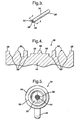
FIG. 4 is a cross-sectional view taken along line 3-3 inFIG. 3 ; -
FIG. 5 is an enlarged top view of the abrasive surface of a probe in the epidermal sampling apparatus ofFIG. 1 . - As used herein, the term "comprising" means including, made up of, composed of, consisting and/or consisting essentially of.
- The term "harvesting" as used herein refers to the picking up of debris of abraded epidermal cells.
- The term "skin" as used herein includes the skin on or in the face mouth (epithelial cells), neck, chest, back, arms, hands, legs, and scalp.
- The apparatus of the present invention involve the removal of the upper skin layer with a manual/semi-automatic, mechanically driven, abrasive probe. Using the inventive apparatus, the epidermis, including the basal layer of the epidermis, is removed, thereby effectively sampling the whole epidermis. Various quantities of epidermis may be obtained by varying the diameter of the probe. The small quantities of epidermis obtained using the inventive apparatus and method have been found to have great utility in a variety of bio-analytical applications, such as determination of RNA, protein, genomic DNA, minerals and other metabolites. The data may be used in cosmetic product development. Therefore, the abrasion assembly may be used to develop cosmetic products.
- With reference to
FIG. 1 , an apparatus, referred to herein asabrasion device assembly 11, for sampling small amounts of epidermal cells from a skin surface of an individual includes anabrasion device 10 connected to asemi-automatic actuator drive 13 by arotatable cable 30.Actuator drive 13 includesrotary driver 17 and can be activated by amanual switch 52 which includes a cable portion connected toactuator drive 13. - With reference to
FIG. 2 ,abrasion device 10 includes anactuator device 12,probe 14, appropriately sized to cooperate with and be centrally and releasably seatable withinactuator device 12, and asleeve 16 positioned overactuator device 12. -
Actuator device 12 includes a cylindricalcentral shaft 20 having adistal end 22 and aproximal end 24 having aspring 15 extending from a position adjacentdistal end 22 ofshaft 20 in the direction ofprobe 14.Central shaft 20 includes ahandle 28 integral therewith and protruding therefrom at a selectedposition 50 betweendistal end 22 andproximal end 24, preferably closer toproximal end 24.Central shaft 20 has acentral opening 32 situated therein, cylindrical for the most part and frusto-conical in shape pastspring 15 towarddistal end 22, forming aseat 37 for holding acollet 33 which is capable of receiving and holdingprobe 14.Collet 33 is connected to a cylindrical threadeddriver rod 35 also disposed withincentral opening 32. -
Sleeve 16 includes a frusto-conical portion 42 of a larger diameter thancentral shaft 20 having adistal end 44 and aproximal end 46 and acylindrical cap portion 55 having one or more cavities therein removably positioned atdistal end 44 and allowing a desiredlength 18 ofprobe 14 to extend therefrom.Sleeve 16 further terminates incap 26 atproximal end 46 thereof. - With reference to
FIGS. 1 and2 ,abrasion device 10 is further equipped with arotatable cable 30, oneend 31 of which may be seated withinsleeve 16 ofabrasion device 10, atproximal end 46, by insertion into opening 32 and cooperation withdriver rod 35, while theother end 34 of which may be connected to arotary driver 17 which in turn is connected to and powered by anautomatic motor 13 equipped with aswitch 52. - With reference to
FIG. 3 ,probe 14 includes acylindrical rod 34 having aproximal end 36 and terminating in anabrasive surface 38 at a cross-sectionaldistal end 40 thereof, which may be in the form of a disk, and appropriately textured for abrasion. To be appropriate, the texture ofabrasive surface 38 will not work it if is too fine; on the other hand, it will not work if it is too rough, as will be further discussed hereinbelow.Rod 34 is about 1 mm to about 10 mm in cross-sectional diameter for sampling epidermal tissue and appropriately sized to cooperate withcollet 33.cylindrical rod 34, and in turnabrasive surface 38, preferably has a diameter of about 1.5 mm. - With reference to
FIG. 3 ,abrasive surface 38 ofprobe 14 includes aflat surface area 56 having a plurality ofpeaks 58 andtroughs 60 extending upward and downward, respectively, relative thereto and positioned alongflat surface area 56 in any configuration, including random or patterned configuration. Preferably, the configuration ofpeaks 58 andtroughs 60 will be patterned, or symmetrical, due to ease of manufacture. -
Peaks 58 andtroughs 60 may be of any three-dimensional shape, thereby having any cross-sectional shape. Preferably, for better abrasion, the cross-sectional shape of peaks 58 (ortroughs 60 in the absence of peaks 58) includes an angle relative to the plane offlat surface area 56, such as that of a triangle, rectangle, hemisphere, trapezoid, or another geometry including an angle. More preferably, the cross-sectional geometrical shape includes a sharp angle that will form a sharp edge in the overall three-dimensional shape ofpeaks 58 ortroughs 60. - Most preferably, the cross-sectional geometry of
troughs 60 is a hemisphere for maximum capacity. - In one aspect of the invention,
abrasive surface 38 may be comprised ofonly troughs 60. In another aspect,abrasive surface 38 may be comprised of only peaks 58. - The number and size of
peaks 58 andtroughs 60 is determined by the criteria that the Harvesting Volume be greater than or equal to the Abrasion Volume. Harvesting Volume as referred to herein is intended to mean the volume capacity of the sum of the volumes oftroughs 60 plus the interstitial volume between peaks 58 (if any), while Abrasion Volume as referred to herein is intended to mean the volume of skin sample collected. This criteria ensures that substantially all the tissue abraded shall be harvested. - Preferably, probe 14 rotation is achieved automatically and allows for storage and quick access to multiple probes for multiple sampling.
- With reference to
FIGS. 1 and2 , to assemble, probe 14 is inserted intocollet 33 incentral opening 32 ofcentral shaft 20 ofabrasion device 10.Cap 55 ofsleeve 16 is slid overcentral shaft 20, allowing desiredlength 18 ofprobe 14 to protrude and extend beyondproximal end 44 of positioningsleeve 16. Desiredlength 18 is determined by the degree of pressure desired to be applied against the skin in such a way as to avoid excessive penetration of the skin layers below the epidermis. Preferably, the depth of skin penetration is 100 micro m. - To dis-assemble, probe 14 is released from
abrasion device 10 by depressinghandle 28 in the direction ofdistal end 22 ofcentral shaft 20, thereby applying pressure to collet 33 by way of movement ofshaft 20 which applies pressure tospring 15, in turn applying pressure to and causingcollet 33 to be released fromseat 37 and partially exitcentral opening 32, allowing it to expand and releaseprobe 14. Subsequently, whenhandle 28 is released,collet 33 springs back inseat 37. - In use, after sterilizing
probe 14 or a plurality ofprobes 14 and assemblingabrasion device 10,motor 13 is activated with amanual switch 52, causingscrew driver 17 to rotate and inturn causing cable 30 to rotate, thereby causing threadeddriver rod 35 to rotate which, in turn, causes rotation ofprobe 14, wherein upon being pressed lightly against the skin surface withabrasive surface 38,probe 14 abrades a small sample of epidermal tissue by the rotating action against the skin. - Desired
length 18 of protrusion ofprobe 14 is adjusted by the length ofcap 55, thereby allowing for control of pressure applied to the skin and preventing excessive penetration of the skin, as well as preventing contact with nerves and avoiding the sensation of pain.Flat surface area 56 ofabrasive surface 38 ofprobe 14 also provides control of the depth of abrasion, as the probe will tend not to penetrate beyond the contact of skin withflat surface area 56. Rotation effectively removes epidermal tissue, which adheres toabrasive surface 38. Small amounts of epidermal tissue are removed, preferably 0.00001 cu cm to 0.001 cu cm, more preferably 0.0003 cu cm (300 micro g). After the sample is taken,probe 14 is released from central opening 32 (as described hereinabove with reference to dis-assembly), and the epidermal sample collected on or inabrasive surface 38 may be submitted for analysis. Suitable analyses include biochemical markers, RNA, protein, genomic DNA, minerals and other metabolites. - The
abrasion device 10 allows quick, substantially bloodless epidermal sample excission (unlike biopsies), and leaves minimal or no residual scar (unlike surgical biopsies). Compared to the suction blistering technique which takes about two hours and punch biopsy, which takes about two minutes, abrasion may be performed in 0.001 to 60 seconds, preferably 3 seconds. The speed of sampling offers the advantage of obtaining real time samples and limits sample degradation. - The inventive device in use advantageously provides efficiency, minimal discomfort, avoidance of excess tissue removal and scarring, and the capability to efficiently harvest and collect epidermal samples for analysis. The small amount of epidermis which is sampled results in minimal discomfort to the subject and a substantial absence of scar. The device therefore lends itself to multiple sampling from one individual. Therefore, the device and method are useful in investigations of individual variation in skin biology and product efficacy, such as for example providing crucial tissue sampling to enable genomic analysis of skin to be assessed before and after product application. The device may also be useful in skin diagnostic activities.
- This technique could be widely employed in clinical testing as it is minimally invasive and much more acceptable to subjects than current sampling methods. It also may be capable of adaptation for home-use skin sampling/analysis kits, which may include
abrasion device assembly 11 together with instructions for use and analysis and an analytical device.
Claims (7)
- An abrasion device assembly (11) for sampling small amounts of epidermal cells from a skin surface of an individual includes an abrasion device (10) connected to a motor; said abrasion device (10) comprising:an actuator device (12) comprising a cylindrical central shaft (20) having a distal end (22) and a proximal end (24) and including a helical spring section (15) adjacent said distal end; said central shaft further (20) comprising a handle (28) integral therewith and protruding therefrom at a selected position (50) between said distal end (22) and said proximal end (24); said central shaft (20) having a central lumen (32) situated therein, extending from said distal end (22) to said proximal end (24) thereof, holding a collet (33) at said distal end (22) and a cylindrical threaded driver rod (35) extending from a connection with said collet (33) toward said proximal end (24);a probe (14) capable of being disposed centrally and releasably within said central opening (32) of said actuator device (12); said probe (14) comprising a cylindrical rod (34) having a proximal end (36) and terminating in an abrasive surface (38) at a cross-sectional distal end (40) thereof; said abrasive surface (38) being appropriately textured and having a cross-sectional diameter of about 1mm to about 10mm for abrasion and harvesting of said epidermal cells; anda positioning sleeve (16) positioned over said actuator device (12) so that a desired length of said probe extends therefrom, comprising a frustoconical portion (42) of a larger diameter than said central shaft (20), having a distal end (44) and a proximal end (46) and a cylindrical cap portion (55) removably positioned at said distal end (44);wherein said abrasive surface (38) includes a flat surface area (56) having a plurality of peaks (58) and troughs (60) extending therefrom and positioned along said flat surface area in a given configuration.
- An abrasion device assembly according to claim 1, wherein said configuration of peaks (58) and troughs (60) is random.
- An abrasion device assembly according to claim 1, wherein said configuration of peaks (58) and troughs (60) includes a patterned configuration.
- An abrasion device assembly according to claim 1 or claim 2 or claim 3, wherein said peaks (58) have a cross-sectional geometric shape that includes an angle, selected from the group consisting of a triangle, rectangle, hemisphere, trapezoid, or a combination thereof.
- An abrasion device assembly according to any one of claims 1 to 4, wherein said troughs (60) have a cross-sectional geometry of a hemisphere.
- An abrasion device assembly according to any one of claims 1 to 5, wherein the number and size of peaks (58) and troughs (60) is determined by the criteria that the Harvesting Volume be greater than or equal to the Abrasion Volume.
- A kit including the abrasion device assembly (11) of any one of claims 1 to 6, together with instructions for use and analysis, and an analytical device.
Applications Claiming Priority (3)
| Application Number | Priority Date | Filing Date | Title |
|---|---|---|---|
| US10/370,390 US7226457B2 (en) | 2003-02-19 | 2003-02-19 | Epidermal sampling apparatus and method |
| US370390 | 2003-02-19 | ||
| PCT/EP2004/000657 WO2004073530A1 (en) | 2003-02-19 | 2004-01-26 | Epidermal sampling apparatus and method |
Publications (2)
| Publication Number | Publication Date |
|---|---|
| EP1594410A1 EP1594410A1 (en) | 2005-11-16 |
| EP1594410B1 true EP1594410B1 (en) | 2010-03-10 |
Family
ID=32850429
Family Applications (1)
| Application Number | Title | Priority Date | Filing Date |
|---|---|---|---|
| EP04705075A Expired - Lifetime EP1594410B1 (en) | 2003-02-19 | 2004-01-26 | Epidermal sampling apparatus |
Country Status (6)
| Country | Link |
|---|---|
| US (1) | US7226457B2 (en) |
| EP (1) | EP1594410B1 (en) |
| JP (1) | JP4474408B2 (en) |
| AT (1) | ATE460119T1 (en) |
| DE (1) | DE602004025904D1 (en) |
| WO (1) | WO2004073530A1 (en) |
Families Citing this family (16)
| Publication number | Priority date | Publication date | Assignee | Title |
|---|---|---|---|---|
| WO2006045149A1 (en) * | 2004-10-28 | 2006-05-04 | Ronald Allan Greenberg | A method and apparatus for abrading the skin using a vibrating dermabrasion apparatus |
| US8323211B2 (en) | 2006-06-01 | 2012-12-04 | Daniel Larkin | Sexually transmitted infection sampling device |
| US8439847B2 (en) | 2006-06-01 | 2013-05-14 | Daniel Larkin | Method and apparatus for simultaneously collecting exocervical and endocervical samples |
| US7749173B2 (en) * | 2006-06-01 | 2010-07-06 | Daniel Larkin | Apparatus for simultaneously collecting exocervical and endocervical samples |
| US20100022914A1 (en) * | 2006-12-14 | 2010-01-28 | Mark Hart | Skin Biopsy Devices, Kits Containing Skin Biopsy Device, and Methods of Obtaining a Skin Biopsy |
| AU2012211118B2 (en) * | 2011-01-28 | 2016-05-12 | The General Hospital Corporation | Method and apparatus for discontinuous dermabrasion |
| CA2900505C (en) | 2013-02-20 | 2023-10-24 | Cytrellis Biosystems, Inc. | Methods and devices for skin tightening |
| US10555754B2 (en) | 2013-08-09 | 2020-02-11 | Cytrellis Biosystems, Inc. | Methods and apparatuses for skin treatment using non-thermal tissue ablation |
| EP3082897A4 (en) | 2013-12-19 | 2017-07-26 | Cytrellis Biosystems, Inc. | Methods and devices for manipulating subdermal fat |
| BR112017009805A2 (en) | 2014-11-14 | 2017-12-26 | Cytrellis Biosystems Inc | devices and methods for skin ablation |
| AU2017245174A1 (en) | 2016-03-29 | 2018-10-04 | Cytrellis Biosystems, Inc. | Devices and methods for cosmetic skin resurfacing |
| CN106388878A (en) * | 2016-08-30 | 2017-02-15 | 苏州品诺维新医疗科技有限公司 | Power control device and control method thereof and surgical operating system |
| CN106361403A (en) * | 2016-08-30 | 2017-02-01 | 苏州品诺维新医疗科技有限公司 | Minimally invasive surgical knife, surgical system and control method for minimally invasive surgical knife |
| US11464954B2 (en) | 2016-09-21 | 2022-10-11 | Cytrellis Biosystems, Inc. | Devices and methods for cosmetic skin resurfacing |
| MX2019006793A (en) | 2016-12-09 | 2019-11-18 | Zanetta Malanowska Stega | DEVICE, KIT AND BRUSH METHODS FOR BIOPSY. |
| GB2575031B (en) * | 2018-06-22 | 2021-10-20 | Reckitt Benckiser Health Ltd | Skin treatment apparatus |
Family Cites Families (37)
| Publication number | Priority date | Publication date | Assignee | Title |
|---|---|---|---|---|
| US2658538A (en) * | 1951-10-29 | 1953-11-10 | Donald M Kitterman | Screw-retaining clamp for power-driven screw drivers |
| US2712823A (en) | 1954-02-24 | 1955-07-12 | Kurtin Abuer | Brush for removing skin blemishes |
| US2867214A (en) | 1956-02-14 | 1959-01-06 | Ralph Luikart Ii | Skin treating apparatus |
| US3468079A (en) | 1966-09-21 | 1969-09-23 | Kaufman Jack W | Abrasive-like tool device |
| US4274419A (en) | 1979-10-19 | 1981-06-23 | Quinton Instrument Co. | Skin preparation device and method used in the application of medical electrodes |
| US4538612A (en) | 1983-08-29 | 1985-09-03 | Ndm Corporation | Skin preparation method and product |
| GB9308180D0 (en) * | 1993-04-21 | 1993-06-02 | Thomas Graham D | Rotary tool for medical use |
| US5325857A (en) | 1993-07-09 | 1994-07-05 | Hossein Nabai | Skin biopsy device and method |
| US5394886A (en) | 1993-09-20 | 1995-03-07 | Nabai; Hossein | Skin biopsy plug and method |
| US5380337A (en) | 1994-01-24 | 1995-01-10 | Romaine; Richard A. | Mesh-type skin biopsy appliance |
| US5570700A (en) | 1994-10-03 | 1996-11-05 | Vogeler; Douglas M. | Elliptical biopsy punch |
| WO1996037155A1 (en) | 1995-05-22 | 1996-11-28 | Silicon Microdevices, Inc. | Micromechanical device and method for enhancing delivery of compounds through the skin |
| JP2713255B2 (en) * | 1995-08-11 | 1998-02-16 | 日本電気株式会社 | Leachate suction device |
| JP2718408B2 (en) * | 1995-09-20 | 1998-02-25 | 日本電気株式会社 | Leachate suction device |
| US5707383A (en) | 1995-10-05 | 1998-01-13 | Xomed Surgical Products, Inc. | Method of removing soft tissue in the middle ear |
| US5800446A (en) | 1997-02-27 | 1998-09-01 | Banuchi; Isabel M. | Article and method for dermabrading |
| US6136008A (en) | 1998-03-19 | 2000-10-24 | 3M Innovative Properties Company | Skin abrader for biomedical electrode |
| ES2358783T3 (en) | 1998-07-23 | 2011-05-13 | Shared Medical Resources, Llc | DEVICE FOR OBTAINING TRANSEPITEL SPECIMENS OF A BODY SURFACE USING A NON-LACERANT TECHNIQUE. |
| US6299620B1 (en) | 1999-03-18 | 2001-10-09 | Aq Technologies, Inc. | Instruments and techniques for inducing neocollagenesis in skin treatments |
| FR2791433A1 (en) | 1999-03-24 | 2000-09-29 | Oreal | SAMPLING DEVICE AND ASSEMBLY CONSISTING OF SUCH A DEVICE AND A COLLECTION DEVICE |
| US6423078B1 (en) | 1999-04-23 | 2002-07-23 | Medtronic Xomed, Inc. | Dermabrasion instrument, instrument assembly and method |
| US6835184B1 (en) * | 1999-09-24 | 2004-12-28 | Becton, Dickinson And Company | Method and device for abrading skin |
| US7638144B2 (en) | 1999-10-04 | 2009-12-29 | Dermanew, Inc. | Composition, apparatus and method for skin rejuvenation |
| US6241739B1 (en) | 1999-11-12 | 2001-06-05 | Altair Instruments, Inc. | Microdermabrasion device and method of treating the skin surface |
| US6387103B2 (en) | 1999-12-30 | 2002-05-14 | Aq Technologies, Inc. | Instruments and techniques for inducing neocollagenesis in skin treatments |
| RU2184491C2 (en) | 2000-03-10 | 2002-07-10 | Озерская Ольга Сергеевна | Method for removing cosmetic defects of skin |
| US6283978B1 (en) | 2000-06-09 | 2001-09-04 | Peter J. Cheski | Method and apparatus for microdermabrasion |
| US6589202B1 (en) * | 2000-06-29 | 2003-07-08 | Becton Dickinson And Company | Method and apparatus for transdermally sampling or administering a substance to a patient |
| US6471712B2 (en) | 2000-10-05 | 2002-10-29 | Steven A. Burres | Dermabrasion and skin care apparatus |
| NZ525294A (en) | 2000-10-13 | 2005-02-25 | Alza Corp | Apparatus and method for piercing skin with microprotrusions |
| US7108681B2 (en) | 2000-10-16 | 2006-09-19 | Corium International, Inc. | Microstructures for delivering a composition cutaneously to skin |
| EP1219254A1 (en) | 2000-12-28 | 2002-07-03 | Gabriel Bernaz | Skin peeling device |
| US20020087167A1 (en) | 2000-12-29 | 2002-07-04 | Winitsky Kathleen M. | Skin exfoliator |
| US20020087168A1 (en) | 2000-12-29 | 2002-07-04 | Winitsky Kathleen M. | Skin exfoliator |
| EP1372499B1 (en) | 2001-03-28 | 2008-12-17 | Koninklijke Philips Electronics N.V. | Apparatus for skin peeling |
| US20050234477A1 (en) | 2002-05-22 | 2005-10-20 | Brown Eva M | Method and apparatus for treating skin |
| US7087063B2 (en) * | 2003-02-19 | 2006-08-08 | Unilever Home & Personal Care Usa, Division Of Conopco, Inc. | Abrasion device and method |
-
2003
- 2003-02-19 US US10/370,390 patent/US7226457B2/en not_active Expired - Fee Related
-
2004
- 2004-01-26 AT AT04705075T patent/ATE460119T1/en not_active IP Right Cessation
- 2004-01-26 DE DE602004025904T patent/DE602004025904D1/en not_active Expired - Lifetime
- 2004-01-26 EP EP04705075A patent/EP1594410B1/en not_active Expired - Lifetime
- 2004-01-26 JP JP2006501610A patent/JP4474408B2/en not_active Expired - Lifetime
- 2004-01-26 WO PCT/EP2004/000657 patent/WO2004073530A1/en not_active Ceased
Also Published As
| Publication number | Publication date |
|---|---|
| WO2004073530A1 (en) | 2004-09-02 |
| JP2006517814A (en) | 2006-08-03 |
| JP4474408B2 (en) | 2010-06-02 |
| US20040162566A1 (en) | 2004-08-19 |
| ATE460119T1 (en) | 2010-03-15 |
| DE602004025904D1 (en) | 2010-04-22 |
| EP1594410A1 (en) | 2005-11-16 |
| US7226457B2 (en) | 2007-06-05 |
Similar Documents
| Publication | Publication Date | Title |
|---|---|---|
| EP1596719B1 (en) | Abrasion device | |
| US7226457B2 (en) | Epidermal sampling apparatus and method | |
| US20220175352A1 (en) | Frictional tissue sampling and collection method and device | |
| US9895140B1 (en) | Frictional trans-epithelial tissue disruption collection apparatus and method of inducing an immune response | |
| US11213664B2 (en) | Frictional trans-epithelial tissue disruption collection apparatus and method of inducing an immune response | |
| US9005218B2 (en) | Follicular extraction method and device | |
| CN108697437B (en) | Minimally invasive tissue collection device | |
| EP1733522B1 (en) | Follicular extraction device | |
| JP4740510B2 (en) | Bone marrow biopsy needle | |
| US20200229802A1 (en) | Scrape and sweep frictional tissue sampling and collection method and device | |
| US10154855B2 (en) | Skin graft devices and methods | |
| US20230210505A1 (en) | Scrape and sweep frictional tissue sampling and collection method and device | |
| WO2025111656A1 (en) | Tissue sampling device | |
| US20040138679A1 (en) | Wart removal method and device | |
| CN201055408Y (en) | Skeleton elevator | |
| CN117838205A (en) | Skin sampling device | |
| EP1418846A2 (en) | Bone marrow biopsy needle |
Legal Events
| Date | Code | Title | Description |
|---|---|---|---|
| PUAI | Public reference made under article 153(3) epc to a published international application that has entered the european phase |
Free format text: ORIGINAL CODE: 0009012 |
|
| 17P | Request for examination filed |
Effective date: 20050801 |
|
| AK | Designated contracting states |
Kind code of ref document: A1 Designated state(s): AT BE BG CH CY CZ DE DK EE ES FI FR GB GR HU IE IT LI LU MC NL PT RO SE SI SK TR |
|
| AX | Request for extension of the european patent |
Extension state: AL LT LV MK |
|
| DAX | Request for extension of the european patent (deleted) | ||
| RIN1 | Information on inventor provided before grant (corrected) |
Inventor name: SAN PHILIP, SALVATORE E Inventor name: FEINBERG, CAROL,UNILEVER HOME & PERSONAL CARE Inventor name: CARSON, ROBERT GEORGE Inventor name: ARCE, CHRISTINA H.,UNILEVER HOME & PERSONAL CARE Inventor name: IOBST, SUSANNE TEKLITS |
|
| 17Q | First examination report despatched |
Effective date: 20051206 |
|
| RTI1 | Title (correction) |
Free format text: EPIDERMAL SAMPLING APPARATUS |
|
| RAP1 | Party data changed (applicant data changed or rights of an application transferred) |
Owner name: UNILEVER PLC Owner name: UNILEVER N.V. |
|
| GRAP | Despatch of communication of intention to grant a patent |
Free format text: ORIGINAL CODE: EPIDOSNIGR1 |
|
| GRAS | Grant fee paid |
Free format text: ORIGINAL CODE: EPIDOSNIGR3 |
|
| GRAA | (expected) grant |
Free format text: ORIGINAL CODE: 0009210 |
|
| AK | Designated contracting states |
Kind code of ref document: B1 Designated state(s): AT BE BG CH CY CZ DE DK EE ES FI FR GB GR HU IE IT LI LU MC NL PT RO SE SI SK TR |
|
| REG | Reference to a national code |
Ref country code: GB Ref legal event code: FG4D |
|
| REG | Reference to a national code |
Ref country code: CH Ref legal event code: EP |
|
| REG | Reference to a national code |
Ref country code: IE Ref legal event code: FG4D |
|
| REF | Corresponds to: |
Ref document number: 602004025904 Country of ref document: DE Date of ref document: 20100422 Kind code of ref document: P |
|
| REG | Reference to a national code |
Ref country code: NL Ref legal event code: VDEP Effective date: 20100310 |
|
| PG25 | Lapsed in a contracting state [announced via postgrant information from national office to epo] |
Ref country code: SI Free format text: LAPSE BECAUSE OF FAILURE TO SUBMIT A TRANSLATION OF THE DESCRIPTION OR TO PAY THE FEE WITHIN THE PRESCRIBED TIME-LIMIT Effective date: 20100310 Ref country code: FI Free format text: LAPSE BECAUSE OF FAILURE TO SUBMIT A TRANSLATION OF THE DESCRIPTION OR TO PAY THE FEE WITHIN THE PRESCRIBED TIME-LIMIT Effective date: 20100310 Ref country code: AT Free format text: LAPSE BECAUSE OF FAILURE TO SUBMIT A TRANSLATION OF THE DESCRIPTION OR TO PAY THE FEE WITHIN THE PRESCRIBED TIME-LIMIT Effective date: 20100310 |
|
| PG25 | Lapsed in a contracting state [announced via postgrant information from national office to epo] |
Ref country code: SE Free format text: LAPSE BECAUSE OF FAILURE TO SUBMIT A TRANSLATION OF THE DESCRIPTION OR TO PAY THE FEE WITHIN THE PRESCRIBED TIME-LIMIT Effective date: 20100310 Ref country code: RO Free format text: LAPSE BECAUSE OF FAILURE TO SUBMIT A TRANSLATION OF THE DESCRIPTION OR TO PAY THE FEE WITHIN THE PRESCRIBED TIME-LIMIT Effective date: 20100310 Ref country code: NL Free format text: LAPSE BECAUSE OF FAILURE TO SUBMIT A TRANSLATION OF THE DESCRIPTION OR TO PAY THE FEE WITHIN THE PRESCRIBED TIME-LIMIT Effective date: 20100310 Ref country code: ES Free format text: LAPSE BECAUSE OF FAILURE TO SUBMIT A TRANSLATION OF THE DESCRIPTION OR TO PAY THE FEE WITHIN THE PRESCRIBED TIME-LIMIT Effective date: 20100621 Ref country code: GR Free format text: LAPSE BECAUSE OF FAILURE TO SUBMIT A TRANSLATION OF THE DESCRIPTION OR TO PAY THE FEE WITHIN THE PRESCRIBED TIME-LIMIT Effective date: 20100611 Ref country code: EE Free format text: LAPSE BECAUSE OF FAILURE TO SUBMIT A TRANSLATION OF THE DESCRIPTION OR TO PAY THE FEE WITHIN THE PRESCRIBED TIME-LIMIT Effective date: 20100310 Ref country code: CY Free format text: LAPSE BECAUSE OF FAILURE TO SUBMIT A TRANSLATION OF THE DESCRIPTION OR TO PAY THE FEE WITHIN THE PRESCRIBED TIME-LIMIT Effective date: 20100310 Ref country code: BE Free format text: LAPSE BECAUSE OF FAILURE TO SUBMIT A TRANSLATION OF THE DESCRIPTION OR TO PAY THE FEE WITHIN THE PRESCRIBED TIME-LIMIT Effective date: 20100310 |
|
| PG25 | Lapsed in a contracting state [announced via postgrant information from national office to epo] |
Ref country code: BG Free format text: LAPSE BECAUSE OF FAILURE TO SUBMIT A TRANSLATION OF THE DESCRIPTION OR TO PAY THE FEE WITHIN THE PRESCRIBED TIME-LIMIT Effective date: 20100610 Ref country code: SK Free format text: LAPSE BECAUSE OF FAILURE TO SUBMIT A TRANSLATION OF THE DESCRIPTION OR TO PAY THE FEE WITHIN THE PRESCRIBED TIME-LIMIT Effective date: 20100310 Ref country code: CZ Free format text: LAPSE BECAUSE OF FAILURE TO SUBMIT A TRANSLATION OF THE DESCRIPTION OR TO PAY THE FEE WITHIN THE PRESCRIBED TIME-LIMIT Effective date: 20100310 |
|
| PLBE | No opposition filed within time limit |
Free format text: ORIGINAL CODE: 0009261 |
|
| STAA | Information on the status of an ep patent application or granted ep patent |
Free format text: STATUS: NO OPPOSITION FILED WITHIN TIME LIMIT |
|
| PG25 | Lapsed in a contracting state [announced via postgrant information from national office to epo] |
Ref country code: PT Free format text: LAPSE BECAUSE OF FAILURE TO SUBMIT A TRANSLATION OF THE DESCRIPTION OR TO PAY THE FEE WITHIN THE PRESCRIBED TIME-LIMIT Effective date: 20100712 Ref country code: DK Free format text: LAPSE BECAUSE OF FAILURE TO SUBMIT A TRANSLATION OF THE DESCRIPTION OR TO PAY THE FEE WITHIN THE PRESCRIBED TIME-LIMIT Effective date: 20100310 |
|
| 26N | No opposition filed |
Effective date: 20101213 |
|
| PG25 | Lapsed in a contracting state [announced via postgrant information from national office to epo] |
Ref country code: IT Free format text: LAPSE BECAUSE OF FAILURE TO SUBMIT A TRANSLATION OF THE DESCRIPTION OR TO PAY THE FEE WITHIN THE PRESCRIBED TIME-LIMIT Effective date: 20100310 |
|
| PGFP | Annual fee paid to national office [announced via postgrant information from national office to epo] |
Ref country code: DE Payment date: 20110127 Year of fee payment: 8 Ref country code: FR Payment date: 20110301 Year of fee payment: 8 |
|
| PGFP | Annual fee paid to national office [announced via postgrant information from national office to epo] |
Ref country code: GB Payment date: 20110125 Year of fee payment: 8 |
|
| PG25 | Lapsed in a contracting state [announced via postgrant information from national office to epo] |
Ref country code: MC Free format text: LAPSE BECAUSE OF NON-PAYMENT OF DUE FEES Effective date: 20110131 |
|
| REG | Reference to a national code |
Ref country code: CH Ref legal event code: PL |
|
| REG | Reference to a national code |
Ref country code: IE Ref legal event code: MM4A |
|
| PG25 | Lapsed in a contracting state [announced via postgrant information from national office to epo] |
Ref country code: LI Free format text: LAPSE BECAUSE OF NON-PAYMENT OF DUE FEES Effective date: 20110131 Ref country code: CH Free format text: LAPSE BECAUSE OF NON-PAYMENT OF DUE FEES Effective date: 20110131 |
|
| PG25 | Lapsed in a contracting state [announced via postgrant information from national office to epo] |
Ref country code: IE Free format text: LAPSE BECAUSE OF NON-PAYMENT OF DUE FEES Effective date: 20110126 |
|
| GBPC | Gb: european patent ceased through non-payment of renewal fee |
Effective date: 20120126 |
|
| REG | Reference to a national code |
Ref country code: FR Ref legal event code: ST Effective date: 20120928 |
|
| PG25 | Lapsed in a contracting state [announced via postgrant information from national office to epo] |
Ref country code: GB Free format text: LAPSE BECAUSE OF NON-PAYMENT OF DUE FEES Effective date: 20120126 Ref country code: DE Free format text: LAPSE BECAUSE OF NON-PAYMENT OF DUE FEES Effective date: 20120801 |
|
| REG | Reference to a national code |
Ref country code: DE Ref legal event code: R119 Ref document number: 602004025904 Country of ref document: DE Effective date: 20120801 |
|
| PG25 | Lapsed in a contracting state [announced via postgrant information from national office to epo] |
Ref country code: FR Free format text: LAPSE BECAUSE OF NON-PAYMENT OF DUE FEES Effective date: 20120131 |
|
| PG25 | Lapsed in a contracting state [announced via postgrant information from national office to epo] |
Ref country code: LU Free format text: LAPSE BECAUSE OF NON-PAYMENT OF DUE FEES Effective date: 20110126 |
|
| PG25 | Lapsed in a contracting state [announced via postgrant information from national office to epo] |
Ref country code: TR Free format text: LAPSE BECAUSE OF FAILURE TO SUBMIT A TRANSLATION OF THE DESCRIPTION OR TO PAY THE FEE WITHIN THE PRESCRIBED TIME-LIMIT Effective date: 20100310 |
|
| PG25 | Lapsed in a contracting state [announced via postgrant information from national office to epo] |
Ref country code: HU Free format text: LAPSE BECAUSE OF FAILURE TO SUBMIT A TRANSLATION OF THE DESCRIPTION OR TO PAY THE FEE WITHIN THE PRESCRIBED TIME-LIMIT Effective date: 20100310 |