EP1594027A2 - Apparatus and method for preventing data copy by cardbus devices - Google Patents
Apparatus and method for preventing data copy by cardbus devices Download PDFInfo
- Publication number
- EP1594027A2 EP1594027A2 EP04029832A EP04029832A EP1594027A2 EP 1594027 A2 EP1594027 A2 EP 1594027A2 EP 04029832 A EP04029832 A EP 04029832A EP 04029832 A EP04029832 A EP 04029832A EP 1594027 A2 EP1594027 A2 EP 1594027A2
- Authority
- EP
- European Patent Office
- Prior art keywords
- cardbus
- disable
- value
- controller
- updating
- Prior art date
- Legal status (The legal status is an assumption and is not a legal conclusion. Google has not performed a legal analysis and makes no representation as to the accuracy of the status listed.)
- Withdrawn
Links
Images






Classifications
-
- G—PHYSICS
- G06—COMPUTING OR CALCULATING; COUNTING
- G06F—ELECTRIC DIGITAL DATA PROCESSING
- G06F21/00—Security arrangements for protecting computers, components thereof, programs or data against unauthorised activity
- G06F21/50—Monitoring users, programs or devices to maintain the integrity of platforms, e.g. of processors, firmware or operating systems
-
- G—PHYSICS
- G06—COMPUTING OR CALCULATING; COUNTING
- G06F—ELECTRIC DIGITAL DATA PROCESSING
- G06F1/00—Details not covered by groups G06F3/00 - G06F13/00 and G06F21/00
-
- G—PHYSICS
- G06—COMPUTING OR CALCULATING; COUNTING
- G06F—ELECTRIC DIGITAL DATA PROCESSING
- G06F21/00—Security arrangements for protecting computers, components thereof, programs or data against unauthorised activity
- G06F21/70—Protecting specific internal or peripheral components, in which the protection of a component leads to protection of the entire computer
- G06F21/82—Protecting input, output or interconnection devices
- G06F21/85—Protecting input, output or interconnection devices interconnection devices, e.g. bus-connected or in-line devices
Definitions
- the present invention relates to an apparatus and a method for controlling data copy.
- cardbus devices are used for expanding additional functions to the functions respectively provided by the systems.
- a card expansion slot is provided to expand various functions in a docketing system, while maintaining a small-sized and lightly constituted body to satisfy the simplicity, portableness, and light weight of the portable systems.
- the cardbus is a card for expansion, for example, a PC card.
- the card devices include a cardbus, a card slot and a cardbus controller.
- Fig. 1 is a block diagram of a related art system configured to attach and remove an auxiliary memory including an IC memory card.
- a system 10 has an insertion side 11a and a port 12a formed at one side of the system, a FDD 11 is an external medium to be inserted in the insertion side 11a and an input port 12 to be inserted in the port 12a.
- the system 10 also has a Hot key or an additional key 10a.
- a data process is performed by inserting an IC card in the port 12a.
- Fig. 2 is a block diagram of a general notebook computer.
- the notebook computer includes a central processing unit 20 for controlling a system, a core chipset 22 for transmitting data to the peripheral and charging in a control function, a memory 21 for connecting with the CPU 20 and the core chipset 22, and a cardbus controller 24 for controlling the system and data input/output using a cardbus 25.
- a power supply/switch portion 23 performs a power supply/switching.
- the power supply/switch portion 23 is turned off by outputting a GPO (General Purpose Output) in the chipset 22 by a user's control.
- GPO General Purpose Output
- the conventional system generally always maintains the state of supplying the power to the cardbus controller 24, therefore, everyone can use or access a cardbus controlled by the cardbus controller.
- the cardbus controller 24 performs a data copy responsive to a third party user's control with respect to the cardbus, which is controllable by the cardbus controller 24.
- the conventional cardbus devices and portable computers have various disadvantages.
- An object of the invention is to solve at least the above problems and/or disadvantages or to provide at least the advantages described hereinafter.
- Another object of the present invention is to provide an apparatus and a method for preventing data in the system from unauthorized copying by using a cardbus.
- Another object of the present invention is to provide an apparatus and a method for preventing data from being illegally copied by a cardbus, by setting cardbus enable/disable in a system BIOS.
- Another object of the present invention is to provide an apparatus and a method for preventing a third person from flowing out data by cardbus devices supported in notebook computers, desktop computers, tablet computers and various portable systems, without the consent of a system user, at his/her option.
- a method for preventing data copy by cardbus devices that includes preparing an item for storing a setup value on whether to use a cardbus controller in a system setup menu, and controlling the setup value, updating the setup value on whether to use the cardbus controller during system runtime using a predetermined key and verifying a user when changing the setup value on whether to use the cardbus controller in the update step.
- a method for controlling data copy by cardbus devices in a computer system that includes receiving a predetermined input to select a cardbus device authorization operation during system operations, setting a selected item value corresponding to a selected enabled or disabled status of a cardbus controller device and updating the status of the cardbus controller device according to the item value.
- a method for controlling data copy by cardbus devices that includes designating an item configured to control whether to authorize use of a cardbus device and updating the item to selectively enable or disable use of the cardbus device during system runtime.
- an apparatus that includes unit for designating an item configured to control whether to authorize use of a cardbus device and unit for updating the item to selectively enable or disable use of the cardbus device during system runtime.
- Fig. 1 is a block diagram showing a conventional system configured to attach and remove an auxiliary memory including an IN memory card;
- Fig. 2 is a block diagram of a general notebook computer
- Fig. 3 is a block diagram showing cardbus devices and components configured in a portable system including a computer according to a preferred embodiment of the present invention
- Fig. 4 is a flow chart illustrating a preferred embodiment of a method of using cardbus devices according to the present invention
- Fig. 5 is a flow chart illustrating a preferred embodiment of a method of controlling cardbus devices performed by a system BIOS
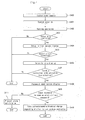
- Fig. 6 is a flow chart illustrating a preferred embodiment of a method of controlling cardbus devices setup from Enable to Disable in order to change whether to use the cardbus devices by inputting a hot key as a predetermined specific key during a system run-time;
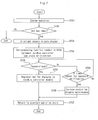
- Fig. 7 is a flow chart illustrating a preferred embodiment of a method of controlling cardbus devices setup from Disable to Enable in order to change whether to use the cardbus devices by inputting a hot key as a predetermined specific key during a system run-time;
- Fig. 8 is a flow chart illustrating a preferred embodiment of a method where the operation conditions of cardbus devices are changed to Disable/Enable, respectively, in case of Enable/Disable during a system run-time;
- Fig. 9 is a general flow chart illustrating a preferred embodiment of a method where cardbus devices are setup as Enable/Disable during a system run-time.
- Fig. 3 is a block diagram showing cardbus devices and main components in a portable system including a computer according to an embodiment of the present invention.
- a computer can include a control unit 30 including a CPU 30a and a microprocessor (micom) 30b; a core chipset 32 can include a PCI clock unit 32a for oscillating a PCI clock, outputting a signal (e.g., SCI or SMI) to control a system when a hot key 37 (e.g., a predetermined specific key) is input and in charge of transmitting and controlling functions of data to peripherals; and a memory 31 (e.g., RAM) can be coupled with the CPU 30a and the chipset 32 though a bus.
- a control unit 30 including a CPU 30a and a microprocessor (micom) 30b
- a core chipset 32 can include a PCI clock unit 32a for oscillating a PCI clock, outputting a signal (e.g., SCI or SMI
- a BIOS ROM 36 can include basic routines to set prevention of copy by a cardbus, and a cardbus device 39 can include a cardbus controller 34 with a RAM 34a in which values of a register can be modified and stored to change and setup a PC system and data input/output Enable/Disable using the cardbus 35.
- a power supply/switch unit 33 can perform the power supply and power switching of the cardbus device 39 according to the output of the chipset (e.g., GPO).
- the BIOS ROM 36 can store or perform a corresponding routine for setting the data copy enable/disable during a system booting or a setup; or 2) the data copy enable/disable can be determined as the BIOS routine is performed by a control signal of the chipset 32 by inputting a predetermined specific key, for example, hot key 37, during system runtime, and can be operated by an operating system (OS) by changing a RAM 34a register value.
- OS operating system
- the apparatus of Fig. 3 can reduce or prevent unauthorized cardbus use as described above.
- the BIOS ROM 36 can be a memory readable and writable that enables information to be kept even though the power is off, and a flash memory which stores a program and data required for a basic operation to be used, with various routines required whenever a computer is turned on.
- the flash memory can be coupled to and stores the BIOS (Basic Input/Output System) as a kind of program to administrate an information transmission among the peripheral systems such as memory, disk, monitor, each conditional state for a power management mode setup and accordingly an optimum power management mode and the like.
- BIOS Basic Input/Output System
- Fig. 4 is a flow chart illustrating an embodiment of a method for a setup including whether to use cardbus devices and an operation of using the cardbus devices according to the present invention.
- the embodiment of Fig. 4 will be described using and can be applied to the apparatus of Fig. 3.
- the present invention is not intended to be so limited.
- a user in order to perform data input/output by using a cardbus, it is first necessary for a user to set whether cardbus devices can be operated (e.g., enable/disable). For example, in a power-on state that a system is operable, the user can select whether to use the cardbus devices through a routine as set in a BIOS.
- the BIOS menu can be provided with a menu item to select whether to use the cardbus devices.
- the menu item to select whether to use the cardbus devices in the BIOS setup menu can be set by a system manufacture.
- the menu item is preferably included in the as-built system.
- security for example, to set a password
- security can be necessarily provided only for the cardbus device menu item.
- a setup menu selection operation can be performed by the routine as set in the BIOS or the user. (block S403)
- the setup menu operation can be recognized in the core chipset 32 through the control unit 30.
- the core chipset 32 can display a setup menu screen or the like as stored in the memory 36 in a display device (not shown).
- the user can select a security menu of the setup contents accessed through the setup menu selection as displayed in the display device (block S405), and the contents of the security menu as selected can be displayed on the display device. (block S406)
- the user can then select an item (e.g., Enable/Disable) for selecting whether to use the cardbus devices 39 in the security menu contents as displayed in the display device. (block S407) If the user selects the item for selecting whether to use the cardbus controller (block S407), the system BIOS can display a screen or the like for a password input. (block S408)
- an item e.g., Enable/Disable
- a password can be set in the item for selecting whether to use the cardbus devices.
- the present invention is not intended to be so limited.
- the state of using the cardbus devices can be kept as it was before. (block S411) For example, in a first use of the system, the use of the cardbus devices can be kept Disable.
- the password as set for security can be required to prevent use of an unauthorized third person and only if the password is identical, the change is performed.
- whether to use the cardbus devices is preferably set during system setup.
- the cardbus device access can be set in the process of booting or setting up an initial BIOS ROM, and whether to use the cardbus of the system can be controlled by the conditions as described above.
- Fig. 5 is a flow chart illustrating an embodiment of a method for controlling cardbus devices performed using a system BIOS. The embodiment of a method will be described using and can be applied to the apparatus of Fig. 3. However, the present invention is not intended to be so limited.
- an item for setting a cardbus as Enable/Disable in the system BIOS is preferably preset.
- a power can be applied and the system can be booted.
- the system can be operated not to use the cardbus devices.
- a power supply/switching unit 33 can turn off the power to be applied to the cardbus devices 39 according to the control of the control unit 30 and the signal as output in the chipset 32.
- the Enable/Disable value of the cardbus can be set in a register (RAM) 34a of the cardbus controller 34 that can be changed to the Disable/Enable value according to the control of the control unit 30 and the signal as output in the chipset 32.
- the present invention is not intended to be so limited.
- the cardbus devices can operate in the OS (Operating System) according to the set cardbus devices Enable/Disable status. (block S505) From blocks S505 and S507, the process can be completed.
- OS Operating System
- the system control unit for performing an operation in accordance with the BIOS setup contents can recognize that the cardbus device(s) is not used and can transmit the information to the core chipset 32 accordingly.
- the core chipset 32 can output a GPO signal to turn off the power of 3.3 voltage to be applied as the power source of the cardbus controller 34 by the power supply/switching unit 33.
- the register value 34a of the cardbus controller can be changed by the value of a PCI clock 32a as output in the chipset 32 to change the cardbus controller in the Disable state.
- the following exemplary control can be made in the system control unit for performing an operation according to the BIOS setup contents.
- the user can select the cardbus controller Disable state as set in the BIOS setup menu to be the Enable state.
- the user can perform a verification process. For example, verification of password can be performed, and then the contents can change.
- the system control unit for performing the operation according to the BIOS setup contents can recognize that the cardbus devices are used and can accordingly transmit the relevant information to the core chipset 32.
- the core chipset can output a GPO signal to apply the power of 3.3 voltage as the power source for use of the cardbus controller 34 by the power supply/switching unit 33.
- the register value 34a of the cardbus can be changed by the value of a PCI clock 32a as output in the chipset 32 to change the cardbus controller to the Enable state.
- one aspect can be characterized in that only the user can change the register value to indicate whether the power as supplied to the cardbus controller is closed or opened or whether the cardbus controller is operated.
- the BIOS setup menu item in one embodiment can be provided with the item for selecting whether to use the cardbus controller (e.g., Enable/Disable); and the item for selecting whether to use the cardbus controller can be controlled to be updated by a verification process such as verifying the password.
- the cardbus controller e.g., Enable/Disable
- Fig. 6 is a flow chart illustrating an embodiment of a method where use of cardbus devices is setup from Enable to Disable in order to change whether to use the cardbus devices by inputting a predetermined specific key (e.g., hot key) during system run-time.
- a predetermined specific key e.g., hot key
- the use state of the cardbus controller it is desirable or necessary to control the use state of the cardbus controller to be changed during the system use. For example, the use state of the cardbus controller by a key operation.
- the user can set a random hot key 37 as a button to set whether to use the cardbus controller. It is desirable to set the hot key by combining two or more keys.
- a timer function can be enabled.
- a routine is initiated by the system to change the use status of the cardbus device to disable.
- a control signal corresponding to the operated prescribed hot key can be recognized in the control unit 30 and then transferred to the chipset 32.
- the chipset 32 can generate a SCI (System Control Interrupt) or a SMI (System Management Interrupt) or the like for the use state conversion of the cardbus controller. (block S603)
- the system BIOS and BIOS driver or OS driver can be operated to read the value of the register 34a and to verify the operation state of the current cardbus controller. (block S604)
- the present invention is not intended to be so limited.
- the chipset 32 can change the value of the register defining the use state of the cardbus controller and set the Disable state. (block S605) In addition, a user verification or security password can be added to the process of block S605.
- One or more clock sources in the system are available in changing the value of the register 34a of the cardbus controller.
- a clock provided externally by a crystal generator, or a clock to set the cardbus devices as Disable when booting or setting up the system BIOS, or a clock by the hot key input, for example, a clock generated by the PCI clock and driven by the chipset.
- the Enable of the usability of the cardbus devices is designed as a first prescribed status (e.g., "0") when the system is operating, the register value of the clock driven by the chipset of Enable is set as "0" and the register value of PCI clock Disable is set as "1".
- the register value of the clock driven by the chipset of Enable is set as "1" and the register value PCI clock of Disable is set as "0".
- the present invention is not intended to be so limited.
- the interrupt for the use state conversion can be terminated and returned to the previous operation.
- the system is not re-booted.
- Fig. 7 is a flow chart illustrating an embodiment of a method where use of cardbus devices is setup from Disable to Enable in order to change whether to use the. cardbus devices by inputting a hot key as a predetermined specific key during system run-time.
- the embodiment of a method will be described using and can be applied to the apparatus of Fig. 3. However, the present invention is not intended to be so limited.
- a process for authenticating a system user is preferably added. For example, a process of verifying a password to identify whether a person who inputs a command (e.g., to enable cardbus devices) is a system user can be added.
- a control signal corresponding to the hot key as input can be recognized in the control unit 30 and then transferred to the chipset 32.
- the chipset 32 can generate a SCI or a SMI for the use state conversion of the cardbus controller. (block S703)
- the system BIOS can be operated to read the value of the register 34a and to verify the operation state of the current cardbus controller. (block S704)
- the hot key as input is a signal input to convert the operation state of the cardbus controller to Enable.
- the cardbus controller can be kept as Disable (block S709) and returned to the previous system operation state prior to the generation of the interrupt. (block S707)
- Fig. 8 is a flow chart illustrating an embodiment of a method where the operation conditions of cardbus devices are changed to Disable/Enable, respectively, in case of Enable/Disable during system run-time.
- the embodiment of a method will be described using and can be applied to the apparatus of Fig. 3.
- the present invention is not intended to be so limited.
- the operation system can control the cardbus devices to remain continuously used.
- the control unit 30 or the chipset 32 can generate the system control signal (e.g., SCI/SMI) (block S805), and the system BIOS can call the cardbus enable/disable setup function to set the function as Disable and change the register value of the cardbus controller as Disable. (block S806) Accordingly, the cardbus controller can be returned to the OS being in the disable state. (block S807)
- the system control signal e.g., SCI/SMI
- the operation system can control the cardbus devices to remain not used. (block S818)
- the control unit 30, the chipset 32 or the like can generate the system control signal (e.g., SCI/SMI) (block S812). Then, the system BIOS can call the cardbus enable/disable setup function. (block S813)
- the BIOS routine can require the password of the user and repeatedly verify whether the password is identical with a predetermined password up to a predetermined number of times. (blocks S814, S815, S819) However, there is no problem even if the number of times for requiring the password is not predetermined or not limited.
- Fig. 9 is a flow chart illustrating an embodiment of a method where cardbus devices are setup as Enable/Disable during system run-time. The embodiment of a method will be described using and can be applied to the apparatus of Fig. 3. However, the present invention is not intended to be so limited.
- a user can input a predetermined specific key or a pop-up window.
- the chipset can generate the system control signal, and the system BIOS can call the cardbus enable/disable setup routine accordingly. (blocks S903, S904).
- BIOS and register value can be set as Disable by the operation of the predetermined specific key. (block S906)
- the password is preferably required when the predetermined specific key is input by the user. (block S907) Accordingly, if the password is the same, the BIOS and register value are set as Enable. (block S908)
- a status or state of the cardbus device or cardbus use state is preferably updated.
- the enabled status' or state can be limited by a timer (e.g., 10 minutes) or time-out (e.g., idle) function.
- any reference in this specification to "one embodiment,” “an embodiment,” “example embodiment,” etc. means that a particular feature, structure, or characteristic described in connection with the embodiment is included in at least one embodiment of the invention.
- the appearances of such phrases in various places in the specification are not necessarily all referring to the same embodiment.
- certain method procedures may have been delineated as separate procedures; however, these separately delineated procedures should not be construed as necessarily order dependent in their performance. That is, some procedures may be able to be performed in an alternative ordering, simultaneously, etc.
- embodiments of the present invention have various advantages. For example, according to embodiments of the present invention, it is possible to change the state as set in the BIOS when booting or setting up the system, to reduce the likelihood or prevent data from being copied through the cardbus (e.g., PCMCIA) devices without the consent of the system user. Further, embodiments according to the present invention can relate to an apparatus and a method for reducing a likelihood or preventing data copy by the cardbus devices where it is possible to change the cardbus availability and the register value by calling the BIOS routine (e.g., predetermined specific key) during the system runtime.
- BIOS routine e.g., predetermined specific key
- the limitation of the cardbus device use and the release of the limitation of the cardbus device use can be performed after security procedures such as the verification of the password. Accordingly, it is possible to prevent the data from being flowed out through the cardbus devices, without the consent of the system user.
Landscapes
- Engineering & Computer Science (AREA)
- Theoretical Computer Science (AREA)
- Computer Security & Cryptography (AREA)
- Software Systems (AREA)
- Computer Hardware Design (AREA)
- Physics & Mathematics (AREA)
- General Engineering & Computer Science (AREA)
- General Physics & Mathematics (AREA)
- Storage Device Security (AREA)
Abstract
Description
Claims (19)
- A method for preventing data copy by cardbus devices, comprising:preparing an item for storing a setup value on whether to use a cardbus controller in a system setup menu, and controlling the setup value;updating the setup value on whether to use the cardbus controller during system runtime using a predetermined key; andverifying a user when changing the setup value on whether to use the cardbus controller in the update step.
- The method according to claim 1, wherein the update step is performed by inputting a hot key, a dialog window or a pop-up window during system runtime, and wherein the controlling the setup value is by a system BIOS.
- The method according to claim 1 or 2, wherein the verification step is performed when the setup value on whether to use the cardbus controller is converted from a disable state to an enable state or from the enable state to the disable state.
- A method for controlling data copy by cardbus devices in a computer system, comprising:receiving a predetermined input to select a cardbus device authorization operation during system operations;setting a selected item value corresponding to a selected enabled or disabled status of a cardbus controller device; andupdating the status of the cardbus controller device according to the item value.
- The method of claim 4, wherein the predetermined input is a hot key, a dialog window or a user pop-up menu.
- The method of claim 4 or 5, wherein the cardbus device authorization operation is one of a hardware operation or a software operation of the computer system.
- The method of claim 4 or 5, wherein the cardbus device authorization operation sets a register value for changing the cardbus controller device status.
- The method of claim 4 or 5, wherein the cardbus device authorization operation is a user pop-up window
- The method of claim 8, wherein the predetermined input is a user pop-up menu, and wherein the setting the selected item value is a toggle operation of the cardbus controller device status.
- The method of any of claims 4 to 9, wherein the updating the status of the cardbus controller device comprises updating a system BIOS value in system memory for the cardbus device.
- The method of any of claims 4 to 9, wherein the updating the status of the cardbus controller device comprises updating a register value for the cardbus controller.
- The method of claim 11, wherein the register is in volatile memory of the cardbus controller, and wherein the register value corresponds to an input port value for the cardbus controller.
- The method of any of claims 4 to 12, wherein setting the selected item value corresponding to the enabled status comprises satisfying an authorization requirement.
- The method of claim 13, wherein the authorization requirement is a security menu or a user password.
- The method according to any of claims 4 to 14, wherein the updating is performed during system runtime.
- The method according to claim 15, wherein the updating is performed by inputting a predetermined specific key during system runtime.
- A method for controlling data copy by cardbus devices, comprising:designating an item configured to control whether to authorize use of a cardbus device; andupdating the item to selectively enable or disable use of the cardbus device during system runtime.
- The method according to claim 17, wherein the updating is performed by inputting a hot key or pop-up menu during system runtime without re-booting.
- An apparatus, comprising:means for designating an item configured to control whether to authorize use of a cardbus device; andmeans for updating the item to selectively enable or disable use of the cardbus device during system runtime.
Applications Claiming Priority (2)
| Application Number | Priority Date | Filing Date | Title |
|---|---|---|---|
| KR2004031165 | 2004-05-03 | ||
| KR20040031165 | 2004-05-03 |
Publications (2)
| Publication Number | Publication Date |
|---|---|
| EP1594027A2 true EP1594027A2 (en) | 2005-11-09 |
| EP1594027A3 EP1594027A3 (en) | 2006-12-20 |
Family
ID=34927812
Family Applications (1)
| Application Number | Title | Priority Date | Filing Date |
|---|---|---|---|
| EP04029832A Withdrawn EP1594027A3 (en) | 2004-05-03 | 2004-12-16 | Apparatus and method for preventing data copy by cardbus devices |
Country Status (5)
| Country | Link |
|---|---|
| US (1) | US20050246467A1 (en) |
| EP (1) | EP1594027A3 (en) |
| KR (1) | KR20060047793A (en) |
| CN (1) | CN100419621C (en) |
| TW (1) | TWI298837B (en) |
Families Citing this family (1)
| Publication number | Priority date | Publication date | Assignee | Title |
|---|---|---|---|---|
| DE102005032473B4 (en) * | 2005-07-07 | 2007-05-10 | Atmel Germany Gmbh | Method for access control to a transponder |
Family Cites Families (11)
| Publication number | Priority date | Publication date | Assignee | Title |
|---|---|---|---|---|
| DE3914239A1 (en) * | 1988-07-07 | 1990-01-11 | Verweyen Gmbh | DATA PROTECTION DEVICE |
| US5963142A (en) * | 1995-03-03 | 1999-10-05 | Compaq Computer Corporation | Security control for personal computer |
| US6263387B1 (en) * | 1997-10-01 | 2001-07-17 | Micron Electronics, Inc. | System for automatically configuring a server after hot add of a device |
| US6065081A (en) * | 1998-04-29 | 2000-05-16 | Compact Computer Corp. | Administrator controlled architecture for disabling add-in card slots |
| US6282643B1 (en) * | 1998-11-20 | 2001-08-28 | International Business Machines Corporation | Computer system having flash memory BIOS which can be accessed remotely while protected mode operating system is running |
| US6338107B1 (en) * | 1998-12-16 | 2002-01-08 | International Business Machines Corporation | Method and system for providing hot plug of adapter cards in an expanded slot environment |
| US6581130B1 (en) * | 2000-04-04 | 2003-06-17 | Hewlett Packard Development Company, L.P. | Dynamic remapping of address registers for address translation between multiple busses |
| JP2001339383A (en) * | 2000-05-29 | 2001-12-07 | Hitachi Ltd | Semiconductor device for authentication communication |
| CN1139018C (en) * | 2000-12-05 | 2004-02-18 | 神达电脑股份有限公司 | Power supply device latch release method |
| US7447934B2 (en) * | 2005-06-27 | 2008-11-04 | International Business Machines Corporation | System and method for using hot plug configuration for PCI error recovery |
| US7610481B2 (en) * | 2006-04-19 | 2009-10-27 | Intel Corporation | Method and apparatus to support independent systems in partitions of a processing system |
-
2004
- 2004-12-13 TW TW093138657A patent/TWI298837B/en not_active IP Right Cessation
- 2004-12-16 EP EP04029832A patent/EP1594027A3/en not_active Withdrawn
- 2004-12-22 US US11/018,373 patent/US20050246467A1/en not_active Abandoned
-
2005
- 2005-04-01 CN CNB2005100649304A patent/CN100419621C/en not_active Expired - Fee Related
- 2005-05-03 KR KR1020050039609A patent/KR20060047793A/en not_active Ceased
Also Published As
| Publication number | Publication date |
|---|---|
| TWI298837B (en) | 2008-07-11 |
| KR20060047793A (en) | 2006-05-18 |
| CN1694033A (en) | 2005-11-09 |
| TW200537295A (en) | 2005-11-16 |
| US20050246467A1 (en) | 2005-11-03 |
| EP1594027A3 (en) | 2006-12-20 |
| CN100419621C (en) | 2008-09-17 |
Similar Documents
| Publication | Publication Date | Title |
|---|---|---|
| JP5519712B2 (en) | Method of booting a computer and computer | |
| KR100310093B1 (en) | Security method of personal computer using password | |
| EP2002333B1 (en) | Shared nonvolatile memory architecture | |
| US8060735B2 (en) | Portable device and method for externally generalized starting up of a computer system | |
| US6615356B1 (en) | System and method for controlling a system power supply using a password | |
| US20170185782A1 (en) | Electronic apparatus, method and storage medium | |
| WO2008087158A1 (en) | Enabling secure usage of computers using a mechanism lockdown | |
| US9400896B2 (en) | Portable computer and security operating method thereof | |
| JPH07104882A (en) | Portable computer system | |
| US20080235428A1 (en) | Method and system for dynamic switching between multiplexed interfaces | |
| KR19990074117A (en) | Security card check type computer security system and method | |
| EP1594027A2 (en) | Apparatus and method for preventing data copy by cardbus devices | |
| TWI503697B (en) | Portable computer and operating method thereof | |
| US20050055566A1 (en) | Computer system and method for controlling the same | |
| JP3270136B2 (en) | Portable computer | |
| KR940006812B1 (en) | Display control system to set grayscale level with popup menu | |
| JPH07319569A (en) | Computer system | |
| JPH1185407A (en) | Computer system and hard disk drive password control method in the system | |
| JPH0793241A (en) | Portable computer system | |
| CN101382974A (en) | Computer system and safe starting method thereof | |
| JP3075856B2 (en) | Computer | |
| JP2759384B2 (en) | Electronics | |
| KR100299718B1 (en) | Power switch control method of computer device and device | |
| JPH11237983A (en) | One-chip microcomputer and entry method for boot area access in this one-chip microcomputer | |
| JP2000039983A (en) | Computer system and display device switching control method |
Legal Events
| Date | Code | Title | Description |
|---|---|---|---|
| PUAI | Public reference made under article 153(3) epc to a published international application that has entered the european phase |
Free format text: ORIGINAL CODE: 0009012 |
|
| 17P | Request for examination filed |
Effective date: 20050114 |
|
| AK | Designated contracting states |
Kind code of ref document: A2 Designated state(s): AT BE BG CH CY CZ DE DK EE ES FI FR GB GR HU IE IS IT LI LT LU MC NL PL PT RO SE SI SK TR |
|
| AX | Request for extension of the european patent |
Extension state: AL BA HR LV MK YU |
|
| PUAL | Search report despatched |
Free format text: ORIGINAL CODE: 0009013 |
|
| AK | Designated contracting states |
Kind code of ref document: A3 Designated state(s): AT BE BG CH CY CZ DE DK EE ES FI FR GB GR HU IE IS IT LI LT LU MC NL PL PT RO SE SI SK TR |
|
| AX | Request for extension of the european patent |
Extension state: AL BA HR LV MK YU |
|
| AKX | Designation fees paid |
Designated state(s): DE FR GB NL |
|
| 17Q | First examination report despatched |
Effective date: 20071119 |
|
| STAA | Information on the status of an ep patent application or granted ep patent |
Free format text: STATUS: THE APPLICATION IS DEEMED TO BE WITHDRAWN |
|
| 18D | Application deemed to be withdrawn |
Effective date: 20150701 |