EP1593747A1 - Process for the enumeration and identification of microorganisms - Google Patents
Process for the enumeration and identification of microorganisms Download PDFInfo
- Publication number
- EP1593747A1 EP1593747A1 EP05252012A EP05252012A EP1593747A1 EP 1593747 A1 EP1593747 A1 EP 1593747A1 EP 05252012 A EP05252012 A EP 05252012A EP 05252012 A EP05252012 A EP 05252012A EP 1593747 A1 EP1593747 A1 EP 1593747A1
- Authority
- EP
- European Patent Office
- Prior art keywords
- amplification
- nucleic acid
- group
- membrane
- detection
- Prior art date
- Legal status (The legal status is an assumption and is not a legal conclusion. Google has not performed a legal analysis and makes no representation as to the accuracy of the status listed.)
- Granted
Links
Images
Classifications
-
- C—CHEMISTRY; METALLURGY
- C12—BIOCHEMISTRY; BEER; SPIRITS; WINE; VINEGAR; MICROBIOLOGY; ENZYMOLOGY; MUTATION OR GENETIC ENGINEERING
- C12Q—MEASURING OR TESTING PROCESSES INVOLVING ENZYMES, NUCLEIC ACIDS OR MICROORGANISMS; COMPOSITIONS OR TEST PAPERS THEREFOR; PROCESSES OF PREPARING SUCH COMPOSITIONS; CONDITION-RESPONSIVE CONTROL IN MICROBIOLOGICAL OR ENZYMOLOGICAL PROCESSES
- C12Q1/00—Measuring or testing processes involving enzymes, nucleic acids or microorganisms; Compositions therefor; Processes of preparing such compositions
- C12Q1/68—Measuring or testing processes involving enzymes, nucleic acids or microorganisms; Compositions therefor; Processes of preparing such compositions involving nucleic acids
- C12Q1/6844—Nucleic acid amplification reactions
- C12Q1/6846—Common amplification features
Definitions
- the present invention relates to a process for enumerating and identifying microorganisms. More particularly, it relates to a process for amplifying specific components of the microbes present and then enumerating them on a membrane device in a single step with minimal or no incubation time based on detection of the amplified component product. Additionally, the microbes present may be identified by this method.
- the traditional method of determining the presence or absence of microorganisms in liquids such as water, food products such as juices or pharmaceuticals has been to filter the fluid through a suitable membrane to trap any microorganisms present in the fluid on the surface of the membrane.
- the membrane is then placed on a growth media plate such as a Petri Dish filled with agar or other suitable media and then incubated for several days to allow colonies to develop from the captured organisms.
- the plates are then removed and examined visually so that the number of colonies present can be counted. If the number is high enough, further tests may be conducted to determine exactly what organisms are present. (Often the mere presence of organisms is not in and of itself an indication that the fluid is unsafe and further work to identify the specific organisms is required.).
- This process can typically span from two to fourteen days or more depending upon the organisms, their prescribed incubation time and growth rate and the additional identification tests that need to be run as well as when a sample was taken during the work day and when it will be ready on the next available work day.
- ATP bioluminescence is a biochemical reaction that produces light energy as a product; this method has been used to detect and enumerate microbes in 1/3 the time of growth needed for the visual detection on media.
- Other technologies utilize fluorescent molecules, or other stains to rapidly detect microorganisms from a variety of samples on membranes.
- Probe hybridization technology has also been used to detect and enumerate microorganisms on membranes in shorter time frames than growth to colonies; in these cases, microbes that had been grown on a membrane for a short time are hybridized with nucleic acid probes and treated with a detection reagent to detect any micro-colonies present on the membrane surface.
- US 2003-0003540-A1 improves upon the ATP tests. It captures microbe on a membrane and incubates the organisms on a media for several hours to a day. An enumeration test is first conducted (generally a bioluminescent ATP detection) and then PNA probes are used in a second test on the same sample to determine the identification of the microbes found.
- the present invention provides a single test that detects and enumerates the microorganism in a matter of a few hours on a membrane surface, and also allows the possible identification as well in the same procedure.
- the present invention relates to a process for the detection, enumeration and identification of microorganisms in a fluid using membrane filtration, targeted amplification and detection such as by fluorescent detection or colorimetric detection.
- a key attribute of the present process is that the amplification step allows for the rapid detection, enumeration and identification of organisms that are present.
- the amplification targets a select molecule in the organism such as its DNA or RNA and increases the presence of that molecule to a level that is detectable by any number of available detection technologies in order to confirm that the target molecule is present.
- the amplification reagent contains one or more detection agents to indicate the presence of a target molecule(s) and allow one to differentiate between selected targets on a species or genus or even phylum, kingdom level.
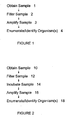
- Figure 1 shows a block diagram of a preferred embodiment of the present invention.
- Figure 2 shows a block diagram of a second preferred embodiment of the present invention.
- the present invention relates to a process for the rapid detection, enumeration and identification of microorganisms in fluids or soluble solids such as powders, salts, creams, tablets, etc.
- fluids include but are not limited to water, potable or otherwise, dairy such as milk, beer, wine, soft drinks, fruit juices, pharmaceuticals, parenterals, bacterial air counts, etc.
- the product visualized is a membrane-associated, targeted amplification reaction such as, but not inclusive of, the polymerase chain reaction (PCR) based method coupled to a membrane composed of hydrophilic domains bound by hydrophobic gridding such as is used in the MicroStar® system available from Millipore Corporation of Billerica, Massachusetts.
- PCR polymerase chain reaction
- a hydrophilic membrane covered with a hydrophobic gridding there are several components: a hydrophilic membrane covered with a hydrophobic gridding, reagents to carry out the targeted amplification consisting of nucleic acid, or peptide nucleic acid primers, enzymes, buffers and detergents, a fluorescent detection probe built into the amplification cocktail, and a mylar or plastic sleeve in which the reaction would be performed (chemoluminescent or chromogenic based detection systems may also be employed).
- the devices required are a temperature control system to maintain the temperature appropriate for targeted amplification reactions; for example, a temperature cycler would be needed for PCR reaction.
- a detection device to count hydrophilic wells on the gridded membrane exhibiting a positive signal is required.
- the detection device could be as simple as a handheld UV light, or as complex as a MicroStar device.
- the product can be used in the following manner.
- a sample containing microorganisms would be filtered through the gridded membrane and contaminant organisms captured.
- the amplification reagents would be sprayed onto the membrane surface, and the membrane would be placed into the Mylar® film sleeve and sealed.
- the sealed sleeve with the membrane and reagents would then be placed in device to control the environment of the amplification reaction. For example, for a PCR reaction, this would consist of a temperature cycler.
- the sample would be placed into the detection device. The device would detect those wells containing a positive signal produced by the fluorescent detection probe, or some like reagent.
- Tests could be specific for microorganisms at the species, genus or group level inclusive of bacteria, yeast and mold, viruses, and protozoa.
- the test could target the nucleic acid of the bacterial species Pseudomonas aeruginosa , all true pseudomonads, or broadly targeting all gram-negative bacteria, or all bacteria. This would allow one to obtain a measure of different types of organisms in the test sample, and determine the identity of any particular microbes of interest to the user.
- Figure 1 shows a first preferred process according to the present invention.
- a sample in fluid form is obtained from the product to be diagnosed.
- environmental sampling such as a water supply
- a sample of water from the river, well or reservoir is obtained.
- a sample is taken from the stock (typically this is the finished stock although it need not be so).
- liquid form it is simply used as is or may, if necessary, due to viscosity be diluted with deionized water.
- a suitable liquid typically water or an alcohol.
- step 2 It is then filtered through a membrane filter in the second step 2 and the filter is then treated in step 3 with an amplification agent that contains one or more selected detector agents.
- the filter is then placed into an amplification device, such a thermal cycler for PCR amplification, for a time sufficient to amplify the sample to a level that can be detected or enumerated in step 4 either through a mechanical or electrical device or visually.
- Figure 2 shows a second process that first obtains a sample 10 and filters the sample to retain the microbes on the filter surface 12 as in the embodiment of Figure 1. Unlike the embodiment of Figure 1, this embodiment adds an incubation step 14 before the amplification step 16 so as to allow a micro-colony to develop from the individual retained microbes thus increasing the number of organisms available for amplification. Following the amplification step, the organisms are enumerated and/or identified in step 18.
- a preferred device for holding the filter is a MILLIFLEXTM filter funnel having a 50 mm diameter and a 100 ml capacity, available from Millipore Corporation of Billerica, Massachusetts.
- Other devices such as the SteritestTM or Sterifil® filtration units available from Millipore Corporation of Billerica, Massachusetts that have hydrophobic grids formed on and through a hydrophilic membrane added may also be used, or membrane holders such as glass or stainless steel filter holders or funnels.
- Such devices are well known and available from a variety of sources including Millipore Corporation of Billerica, Massachusetts and Fisher Scientific, Inc, of Pittsburgh, Pennsylvania.
- a preferred membrane is a MicroStar TM filter, available from Millipore Corporation of Billerica, Massachusetts. This filter is a 0.45 nominal pore size PVDF filter having a series of hydrophilic compartments separated by hydrophobic partitions that extend through the entire depth of the filter. Other filters that may be useful in this invention would also be hydrophilic and contain some type of hydrophobic partitioning.
- the filtered sample may be subject to an incubation step 14.
- a growth media such as various agars or liquid media.
- the incubation is a short period of time, typically from about 1 to about 8 hours, preferably from about 1 to about 4 hours.
- the incubation allows the single microbes captured on the membrane to divide into a greater number of organisms for amplification making detection faster and easier, especially when the target in the organisms is difficult to amplify.
- the filter is subjected to the amplification step for a short period of time, typically from 1 to 5 hours.
- the length of time depends upon the accuracy needed by the test, the rate of amplification for the amplification technology selected, the detection agent(s) selected, the method for detecting the agent (mechanical or human eye), the type of organism to be detected, the desired speed of the test vs. the accuracy of the test results and other such factors.
- Suitable methods for amplification include nucleic acid based systems such as polymerase chain reaction (PCR) amplification in which a DNA or RNA sequence in the contaminating cell is amplified by an amplification agent.
- the PCR is typically conducted by placing the substrate (in this case a filter) containing the organism to be amplified, and having been treated with amplification agent during cycling to elevated temperatures for a period of time from about 30 minutes to 90 minutes in a thermal cycler.
- PCR polymerase chain reaction
- amplification technologies include but are not limited to nucleic acid sequence based amplification (NASBA) available from Biomerieux, strand displacement amplification (SDA) available from Becton Dickenson, or linked linear amplification (LLA) available from Biorad. Also see EP 1407050A2.
- NASBA nucleic acid sequence based amplification
- SDA strand displacement amplification
- LSA linked linear amplification
- the assays run herein with amplification step are on either single cells or micro-colonies of microorganisms that develop from the single cells captured on the membranes, especially if an incubation step is used, i.e. one is enumerating the numbers of single organisms in a test sample by detection of targeted molecules that have been amplified from those same single organisms rather than detecting the individual organisms directly.
- the filter After a suitable time period for the filter in the amplification step, the filter is removed and subjected to an enumeration step 4.
- a preferred enumeration test is by fluorescence detection of the amplified target.
- the target molecule is then detected through the detector agent incorporated into the amplification reagent such as a fluorescent tag, a radioactive tag, a colorimetric tag and the like.
- the agent is then read visually or digitally through an imagining device such as CCD camera with image processor.
- an imagining device such as CCD camera with image processor.
- One such system is sold as MicroStarTM system, available from Millipore Corporation of Billerica, Massachusetts.
- the sample can also subjected to an identification test for the target organisms. They may be designed so as to specifically hybridize only to a single species or to an entire genus.
- the detector agents contain a tag such as an enzyme, hapten, fluorophore or radioisotope to indicate their presence in the sample.
- Such agents are available from a variety of sources including Sigma Genosys, and may consist of molecular beacons, dual labeled fluorescent probes, or fluorescent labeled probes to describe fluorescent probes, though chemiluminescent, colorimetric, or radiological detection systems may be used as well.
- the target molecule such as the DNA or RNA of the organism
Landscapes
- Chemical & Material Sciences (AREA)
- Life Sciences & Earth Sciences (AREA)
- Organic Chemistry (AREA)
- Engineering & Computer Science (AREA)
- Zoology (AREA)
- Wood Science & Technology (AREA)
- Proteomics, Peptides & Aminoacids (AREA)
- Health & Medical Sciences (AREA)
- Biophysics (AREA)
- Chemical Kinetics & Catalysis (AREA)
- Immunology (AREA)
- Microbiology (AREA)
- Molecular Biology (AREA)
- Analytical Chemistry (AREA)
- Physics & Mathematics (AREA)
- Biotechnology (AREA)
- Biochemistry (AREA)
- Bioinformatics & Cheminformatics (AREA)
- General Engineering & Computer Science (AREA)
- General Health & Medical Sciences (AREA)
- Genetics & Genomics (AREA)
- Measuring Or Testing Involving Enzymes Or Micro-Organisms (AREA)
Abstract
Description
- The present invention relates to a process for enumerating and identifying microorganisms. More particularly, it relates to a process for amplifying specific components of the microbes present and then enumerating them on a membrane device in a single step with minimal or no incubation time based on detection of the amplified component product. Additionally, the microbes present may be identified by this method.
- The traditional method of determining the presence or absence of microorganisms in liquids such as water, food products such as juices or pharmaceuticals has been to filter the fluid through a suitable membrane to trap any microorganisms present in the fluid on the surface of the membrane. The membrane is then placed on a growth media plate such as a Petri Dish filled with agar or other suitable media and then incubated for several days to allow colonies to develop from the captured organisms.
- The plates are then removed and examined visually so that the number of colonies present can be counted. If the number is high enough, further tests may be conducted to determine exactly what organisms are present. (Often the mere presence of organisms is not in and of itself an indication that the fluid is unsafe and further work to identify the specific organisms is required.).
- This process can typically span from two to fourteen days or more depending upon the organisms, their prescribed incubation time and growth rate and the additional identification tests that need to be run as well as when a sample was taken during the work day and when it will be ready on the next available work day.
- Recently, new tests for the detection and enumeration of microbial contaminants have helped reduce the time required to conduct the tests to about 24 hours and even sometimes less. For example, ATP bioluminescence is a biochemical reaction that produces light energy as a product; this method has been used to detect and enumerate microbes in 1/3 the time of growth needed for the visual detection on media. Other technologies utilize fluorescent molecules, or other stains to rapidly detect microorganisms from a variety of samples on membranes. Probe hybridization technology has also been used to detect and enumerate microorganisms on membranes in shorter time frames than growth to colonies; in these cases, microbes that had been grown on a membrane for a short time are hybridized with nucleic acid probes and treated with a detection reagent to detect any micro-colonies present on the membrane surface.
- US 2003-0003540-A1 improves upon the ATP tests. It captures microbe on a membrane and incubates the organisms on a media for several hours to a day. An enumeration test is first conducted (generally a bioluminescent ATP detection) and then PNA probes are used in a second test on the same sample to determine the identification of the microbes found.
- None of these tests however allow one to have a test that detects, enumerates and identifies the microorganisms in real time (within a few hours) with the same accuracy and specificity of the classic multiday visual test. The present invention provides a single test that detects and enumerates the microorganism in a matter of a few hours on a membrane surface, and also allows the possible identification as well in the same procedure.
- The present invention relates to a process for the detection, enumeration and identification of microorganisms in a fluid using membrane filtration, targeted amplification and detection such as by fluorescent detection or colorimetric detection. A key attribute of the present process is that the amplification step allows for the rapid detection, enumeration and identification of organisms that are present. The amplification targets a select molecule in the organism such as its DNA or RNA and increases the presence of that molecule to a level that is detectable by any number of available detection technologies in order to confirm that the target molecule is present. The amplification reagent contains one or more detection agents to indicate the presence of a target molecule(s) and allow one to differentiate between selected targets on a species or genus or even phylum, kingdom level.
- It is an object of the present invention to provide a process for enumerating and identifying microorganisms comprising:
- a) filtering a liquid sample through a membrane suitable for the retention of microorganisms,
- b) subjecting the microorganisms on the membrane to an amplification step using one or more reagents containing one or more detection agents, and
- c) determining the presence/absence of one or more retained microorganisms, counting the number detected and identifying the type of microorganism present by the presence of the selected detector agents.
-
- Figure 1 shows a block diagram of a preferred embodiment of the present invention.
- Figure 2 shows a block diagram of a second preferred embodiment of the present invention.
- The present invention relates to a process for the rapid detection, enumeration and identification of microorganisms in fluids or soluble solids such as powders, salts, creams, tablets, etc. Such fluids include but are not limited to water, potable or otherwise, dairy such as milk, beer, wine, soft drinks, fruit juices, pharmaceuticals, parenterals, bacterial air counts, etc.
- Current rapid technology allows one to detect and enumerate microorganisms in far less time than the classic methods of growth to visible colonies on agar or membrane filters. However, those organisms detected remain unidentified. This idea addresses the need for an immediate detection and enumeration system, and allows the possible identification of the detected organisms with specific probes at species or genus grouping in the amplification reactions, or at higher levels with phyla, or class specific probes.
- The product visualized is a membrane-associated, targeted amplification reaction such as, but not inclusive of, the polymerase chain reaction (PCR) based method coupled to a membrane composed of hydrophilic domains bound by hydrophobic gridding such as is used in the MicroStar® system available from Millipore Corporation of Billerica, Massachusetts. There are several components: a hydrophilic membrane covered with a hydrophobic gridding, reagents to carry out the targeted amplification consisting of nucleic acid, or peptide nucleic acid primers, enzymes, buffers and detergents, a fluorescent detection probe built into the amplification cocktail, and a mylar or plastic sleeve in which the reaction would be performed (chemoluminescent or chromogenic based detection systems may also be employed). The devices required are a temperature control system to maintain the temperature appropriate for targeted amplification reactions; for example, a temperature cycler would be needed for PCR reaction. Also, a detection device to count hydrophilic wells on the gridded membrane exhibiting a positive signal is required. The detection device could be as simple as a handheld UV light, or as complex as a MicroStar device.
- The product can be used in the following manner. A sample containing microorganisms would be filtered through the gridded membrane and contaminant organisms captured. After rinsing, the amplification reagents would be sprayed onto the membrane surface, and the membrane would be placed into the Mylar® film sleeve and sealed. The sealed sleeve with the membrane and reagents would then be placed in device to control the environment of the amplification reaction. For example, for a PCR reaction, this would consist of a temperature cycler. After completion, the sample would be placed into the detection device. The device would detect those wells containing a positive signal produced by the fluorescent detection probe, or some like reagent. A positive signal would be consistent with the presence of a targeted microbial contaminant. Tests could be specific for microorganisms at the species, genus or group level inclusive of bacteria, yeast and mold, viruses, and protozoa. For example, the test could target the nucleic acid of the bacterial species Pseudomonas aeruginosa, all true pseudomonads, or broadly targeting all gram-negative bacteria, or all bacteria. This would allow one to obtain a measure of different types of organisms in the test sample, and determine the identity of any particular microbes of interest to the user.
- Figure 1 shows a first preferred process according to the present invention. In this process, as the
first step 1, a sample in fluid form is obtained from the product to be diagnosed. For example, in environmental sampling, such as a water supply, a sample of water from the river, well or reservoir is obtained. For a food or pharmaceutical product, a sample is taken from the stock (typically this is the finished stock although it need not be so). If in liquid form it is simply used as is or may, if necessary, due to viscosity be diluted with deionized water. If in solid form, it is dissolved or dispersed in a suitable liquid, typically water or an alcohol. - It is then filtered through a membrane filter in the
second step 2 and the filter is then treated instep 3 with an amplification agent that contains one or more selected detector agents. The filter is then placed into an amplification device, such a thermal cycler for PCR amplification, for a time sufficient to amplify the sample to a level that can be detected or enumerated instep 4 either through a mechanical or electrical device or visually. - Figure 2 shows a second process that first obtains a sample 10 and filters the sample to retain the microbes on the filter surface 12 as in the embodiment of Figure 1. Unlike the embodiment of Figure 1, this embodiment adds an incubation step 14 before the
amplification step 16 so as to allow a micro-colony to develop from the individual retained microbes thus increasing the number of organisms available for amplification. Following the amplification step, the organisms are enumerated and/or identified instep 18. - A preferred device for holding the filter is a MILLIFLEX™ filter funnel having a 50 mm diameter and a 100 ml capacity, available from Millipore Corporation of Billerica, Massachusetts. Other devices such as the Steritest™ or Sterifil® filtration units available from Millipore Corporation of Billerica, Massachusetts that have hydrophobic grids formed on and through a hydrophilic membrane added may also be used, or membrane holders such as glass or stainless steel filter holders or funnels. Such devices are well known and available from a variety of sources including Millipore Corporation of Billerica, Massachusetts and Fisher Scientific, Inc, of Pittsburgh, Pennsylvania.
- A preferred membrane is a MicroStar ™ filter, available from Millipore Corporation of Billerica, Massachusetts. This filter is a 0.45 nominal pore size PVDF filter having a series of hydrophilic compartments separated by hydrophobic partitions that extend through the entire depth of the filter. Other filters that may be useful in this invention would also be hydrophilic and contain some type of hydrophobic partitioning.
- As discussed in relation to the embodiment of Figure 2 above, the filtered sample may be subject to an incubation step 14. Preferably, it is accomplished by placing the filter in contact with a growth media such as various agars or liquid media. The incubation is a short period of time, typically from about 1 to about 8 hours, preferably from about 1 to about 4 hours. The incubation allows the single microbes captured on the membrane to divide into a greater number of organisms for amplification making detection faster and easier, especially when the target in the organisms is difficult to amplify.
- The filter is subjected to the amplification step for a short period of time, typically from 1 to 5 hours. The length of time depends upon the accuracy needed by the test, the rate of amplification for the amplification technology selected, the detection agent(s) selected, the method for detecting the agent (mechanical or human eye), the type of organism to be detected, the desired speed of the test vs. the accuracy of the test results and other such factors.
- Suitable methods for amplification include nucleic acid based systems such as polymerase chain reaction (PCR) amplification in which a DNA or RNA sequence in the contaminating cell is amplified by an amplification agent. The PCR is typically conducted by placing the substrate (in this case a filter) containing the organism to be amplified, and having been treated with amplification agent during cycling to elevated temperatures for a period of time from about 30 minutes to 90 minutes in a thermal cycler. Commercially available kits for conducting a PCR amplification step are available from Applied Biosystems, Inc. or Roche Diagnostics. Thermal cyclers are available from these same companies.
- Other possible amplification technologies include but are not limited to nucleic acid sequence based amplification (NASBA) available from Biomerieux, strand displacement amplification (SDA) available from Becton Dickenson, or linked linear amplification (LLA) available from Biorad. Also see EP 1407050A2.
- It should be understood that the assays run herein with amplification step are on either single cells or micro-colonies of microorganisms that develop from the single cells captured on the membranes, especially if an incubation step is used, i.e. one is enumerating the numbers of single organisms in a test sample by detection of targeted molecules that have been amplified from those same single organisms rather than detecting the individual organisms directly.
- After a suitable time period for the filter in the amplification step, the filter is removed and subjected to an
enumeration step 4. - A preferred enumeration test is by fluorescence detection of the amplified target. The target molecule is then detected through the detector agent incorporated into the amplification reagent such as a fluorescent tag, a radioactive tag, a colorimetric tag and the like. The agent is then read visually or digitally through an imagining device such as CCD camera with image processor. One such system is sold as MicroStar™ system, available from Millipore Corporation of Billerica, Massachusetts. By whatever means that is used, the count and location of the microbial colonies detected can be made.
- During the enumeration test, the sample can also subjected to an identification test for the target organisms. They may be designed so as to specifically hybridize only to a single species or to an entire genus. The detector agents contain a tag such as an enzyme, hapten, fluorophore or radioisotope to indicate their presence in the sample. Such agents are available from a variety of sources including Sigma Genosys, and may consist of molecular beacons, dual labeled fluorescent probes, or fluorescent labeled probes to describe fluorescent probes, though chemiluminescent, colorimetric, or radiological detection systems may be used as well.
- One may select one or more of such agents to detect one or more types of organisms. Some exist for individual organisms such as E. coli or Salmonella sp., L. brevis, etc, while others are more universal and simply detect the presence of the genus of the bacteria or whether the organism that has been captured is simply a bacteria, a yeast or fungi. Depending upon agent selected, one can use X-ray film, a fluorescent, or colorimetric detection or other such device to detect the presence of the tag of the agents which have been amplified with the target molecule such as the DNA or RNA of the organism and thereby identify the number and type of each target organism present.
Claims (11)
- A process for detecting, enumerating and identifying microorganisms comprising:(a) filtering a liquid sample through a membrane suitable for the retention of microorganisms,(b) subjecting the membrane to an amplification step wherein the amplification step contains one or more detection agents and(c) detecting the presence/absence of one or more microorganisms, the number detected and type.
- The process of claim 1 wherein the liquid sample is from 50 to 1000 milliliters.
- The process of claim 1 or 2, wherein the membrane is selected from the group consisting of PVDF membrane having hydrophilic areas separated by hydrophobic partitions.
- The process of any preceding claim, wherein the amplification step occurs form a period of time from about 30 to about 90 minutes.
- The process of any preceding claim, wherein the amplification is a nucleic acid-based amplification system.
- The process of claim 5, whereina) the detection agent is selected from the group consisting of a fluorescent-labelled nucleic acid, peptide nucleic acid probe and mixtures thereof and is read by digital imaging system, orb) the amplification is a nucleic acid-based amplification system in the form of polymerase chain reaction (PCR) and the detection agent is selected from the group consisting of a fluorescent-labelled nucleic acid, peptide nucleic acid probe and mixtures thereof and is read by digital imaging system, orc) the reagent is selected from the group consisting of a DNA target and a RNA target and the detection agent is selected from the group consisting of a fluorescent-labelled nucleic acid, peptide nucleic acid probe and mixtures thereof and is read by digital imaging system, ord) the amplification is a nucleic acid-based amplification system in the form of polymerase chain reaction (PCR), the reagent being selected from the group consisting of a DNA target and a RNA target and the detection agent is selected from the group consisting of a fluorescent-labelled nucleic acid, peptide nucleic acid probe and mixtures thereof and is read by digital imaging system.
- The process of any preceding claim wherein the detection agent is read by a process selected from the group consisting of X-ray film, visual detection of a colorimetric reaction on the membrane, visual detection of a fluorescent tag or by digital imaging.
- The process of claim 1, wherein the amplification step is selected from the group consisting of polymerase chain reaction (PCR), nucleic acid sequence based amplification (NASBA), strand displacement amplification (SDA) and linked linear amplification (LLA).
- The process of claim 8, wherein the membranes are incubated from about 30 minutes to about 90 minutes at a temperature of from about room 25°C to about 90°C in a thermal cycler or other temperature controlled device.
- The process of claim 1 wherein the membranes are incubated from 1 to about 4 hours before amplification.
- The process of claim 1 wherein the agent is selected from a fluorescent tag, a radioactive tag, a colorimetric tag and an enzyme tag.
Applications Claiming Priority (2)
| Application Number | Priority Date | Filing Date | Title |
|---|---|---|---|
| US56795304P | 2004-05-04 | 2004-05-04 | |
| US567953P | 2004-05-04 |
Publications (3)
| Publication Number | Publication Date |
|---|---|
| EP1593747A1 true EP1593747A1 (en) | 2005-11-09 |
| EP1593747B1 EP1593747B1 (en) | 2009-12-23 |
| EP1593747B2 EP1593747B2 (en) | 2013-05-15 |
Family
ID=34940670
Family Applications (1)
| Application Number | Title | Priority Date | Filing Date |
|---|---|---|---|
| EP05252012.9A Expired - Lifetime EP1593747B2 (en) | 2004-05-04 | 2005-03-31 | Process for the enumeration and identification of microorganisms |
Country Status (7)
| Country | Link |
|---|---|
| US (1) | US20050250138A1 (en) |
| EP (1) | EP1593747B2 (en) |
| JP (1) | JP4373947B2 (en) |
| CN (2) | CN1696305A (en) |
| AT (1) | ATE452990T1 (en) |
| DE (1) | DE602005018413D1 (en) |
| ES (1) | ES2337155T5 (en) |
Cited By (1)
| Publication number | Priority date | Publication date | Assignee | Title |
|---|---|---|---|---|
| WO2019030261A1 (en) * | 2017-08-08 | 2019-02-14 | Microgenetics Limited | Method for detecting a microorganism in a sample |
Families Citing this family (12)
| Publication number | Priority date | Publication date | Assignee | Title |
|---|---|---|---|---|
| RU2400746C2 (en) * | 2008-10-23 | 2010-09-27 | Государственное образовательное учреждение высшего профессионального образования "Московский государственный университет прикладной биотехнологии" | Method of determining quantity of mesophilic aerobic and optionally-anaerobic microorganisms in food products |
| EP2379697A2 (en) | 2008-12-31 | 2011-10-26 | 3M Innovative Properties Company | Sampling devices and methods for concentrating microorganisms |
| EP2379226B1 (en) | 2008-12-31 | 2016-04-20 | 3M Innovative Properties Company | Live bioload detection using microparticles |
| CN101701184B (en) * | 2009-11-12 | 2012-07-11 | 何宗彦 | Microbe rapid detection device and detection method thereof |
| BR112012016119B1 (en) | 2009-12-30 | 2020-04-28 | 3M Innovative Properties Co | cell detection method in a sample, unit sample preparation and detection device and kit |
| CN102580548B (en) * | 2011-12-20 | 2017-02-22 | 湖南省天骑医学新技术股份有限公司 | Detection method applied to membrane separation and membrane transparent liquid |
| CN103776807B (en) * | 2014-01-22 | 2016-01-13 | 中国食品发酵工业研究院 | A kind of method detecting remaining bacteria in CIP purging system wash-down water |
| CN105524974A (en) * | 2016-02-24 | 2016-04-27 | 北京世纪阿姆斯生物技术有限公司 | Detection method of bacterium content in high-concentration microbial preparation product |
| GB201703383D0 (en) | 2017-03-02 | 2017-04-19 | Gargle Tech Ltd | Testing for particulates |
| EP3846939B1 (en) | 2018-09-05 | 2023-05-03 | Hero Scientific Ltd | Testing for particulates |
| EP4118412A1 (en) | 2020-03-11 | 2023-01-18 | Hero Scientific Ltd | Testing devices |
| EP4165385B1 (en) | 2021-01-06 | 2024-04-17 | Hero Scientific Ltd | Filtration sampling devices |
Citations (6)
| Publication number | Priority date | Publication date | Assignee | Title |
|---|---|---|---|---|
| US5766868A (en) * | 1993-02-10 | 1998-06-16 | Millipore Corporation | Method of determining a viable count using a hydrophobic membrane |
| WO1999033559A1 (en) * | 1997-12-24 | 1999-07-08 | Cepheid | Integrated fluid manipulation cartridge |
| WO1999060005A1 (en) | 1998-05-15 | 1999-11-25 | Fsm Technologies Limited | Method and device for purifying nucleic acids |
| WO2000071675A1 (en) * | 1999-05-25 | 2000-11-30 | Millipore Corporation | Method for rapidly detecting and enumerating microorganisms in mammalian cell preparations using atp bioluminescence |
| WO2001059157A2 (en) | 2000-02-08 | 2001-08-16 | Millipore Corporation | Process for the enumeration and identification of microorganisms |
| WO2003085109A2 (en) | 2002-04-09 | 2003-10-16 | Genesystems | Method and apparatus for extracting nucleic acids from a complex mixture |
Family Cites Families (3)
| Publication number | Priority date | Publication date | Assignee | Title |
|---|---|---|---|---|
| US2904474A (en) * | 1954-10-04 | 1959-09-15 | Bacto Strip A G | Process and means for carrying out bacteriological operations |
| AU6104994A (en) † | 1993-03-18 | 1994-10-11 | Her Majesty The Queen In Right Of Canada As Represented By The Minister Of Agriculture | Apparatus for the quantitative determination of particulate analytes |
| US20060286557A1 (en) † | 2005-06-15 | 2006-12-21 | Basehore Lee S | Combined lysis and PCR buffer |
-
2005
- 2005-03-25 JP JP2005087729A patent/JP4373947B2/en not_active Expired - Lifetime
- 2005-03-25 US US11/090,119 patent/US20050250138A1/en not_active Abandoned
- 2005-03-31 ES ES05252012T patent/ES2337155T5/en not_active Expired - Lifetime
- 2005-03-31 EP EP05252012.9A patent/EP1593747B2/en not_active Expired - Lifetime
- 2005-03-31 DE DE602005018413T patent/DE602005018413D1/en not_active Expired - Lifetime
- 2005-03-31 AT AT05252012T patent/ATE452990T1/en not_active IP Right Cessation
- 2005-05-08 CN CNA2005100696771A patent/CN1696305A/en active Pending
- 2005-05-08 CN CN2010102884884A patent/CN101921879A/en active Pending
Patent Citations (6)
| Publication number | Priority date | Publication date | Assignee | Title |
|---|---|---|---|---|
| US5766868A (en) * | 1993-02-10 | 1998-06-16 | Millipore Corporation | Method of determining a viable count using a hydrophobic membrane |
| WO1999033559A1 (en) * | 1997-12-24 | 1999-07-08 | Cepheid | Integrated fluid manipulation cartridge |
| WO1999060005A1 (en) | 1998-05-15 | 1999-11-25 | Fsm Technologies Limited | Method and device for purifying nucleic acids |
| WO2000071675A1 (en) * | 1999-05-25 | 2000-11-30 | Millipore Corporation | Method for rapidly detecting and enumerating microorganisms in mammalian cell preparations using atp bioluminescence |
| WO2001059157A2 (en) | 2000-02-08 | 2001-08-16 | Millipore Corporation | Process for the enumeration and identification of microorganisms |
| WO2003085109A2 (en) | 2002-04-09 | 2003-10-16 | Genesystems | Method and apparatus for extracting nucleic acids from a complex mixture |
Non-Patent Citations (1)
| Title |
|---|
| REINEKE K F ET AL: "DIRECT ENUMERATION OF ENTERIC BACTERIA IN FOOD, BEVERAGES AND WATER BY IN SITU HYBRIDIZATION TO 16S RIBOSOMAL RNA", ABSTRACTS OF THE GENERAL MEETING OF THE AMERICAN SOCIETY FOR MICROBIOLOGY, THE SOCIETY, WASHINGTON, DC, US, vol. 99, no. 16, 30 May 1999 (1999-05-30), pages 516, XP008003668, ISSN: 1060-2011 * |
Cited By (2)
| Publication number | Priority date | Publication date | Assignee | Title |
|---|---|---|---|---|
| WO2019030261A1 (en) * | 2017-08-08 | 2019-02-14 | Microgenetics Limited | Method for detecting a microorganism in a sample |
| US11390925B2 (en) | 2017-08-08 | 2022-07-19 | Corsham Science Limited | Method for detecting a microorganism in a sample |
Also Published As
| Publication number | Publication date |
|---|---|
| EP1593747B1 (en) | 2009-12-23 |
| CN1696305A (en) | 2005-11-16 |
| CN101921879A (en) | 2010-12-22 |
| ES2337155T3 (en) | 2010-04-21 |
| JP4373947B2 (en) | 2009-11-25 |
| US20050250138A1 (en) | 2005-11-10 |
| ES2337155T5 (en) | 2013-08-27 |
| JP2005318890A (en) | 2005-11-17 |
| ATE452990T1 (en) | 2010-01-15 |
| EP1593747B2 (en) | 2013-05-15 |
| DE602005018413D1 (en) | 2010-02-04 |
Similar Documents
| Publication | Publication Date | Title |
|---|---|---|
| Köster et al. | Analytical methods for microbiological water quality testing | |
| EP1593747B2 (en) | Process for the enumeration and identification of microorganisms | |
| JP3808773B2 (en) | Method for counting and identifying microorganisms | |
| JP2011507524A (en) | Microbial system and fluid sample analysis method | |
| US20150118707A1 (en) | Method and device for detecting metabollically active cells | |
| KR20200062321A (en) | How to determine the concentration of intact microorganisms in a sample | |
| US20210180116A1 (en) | Assay using multi-layer membrane to detect microbiological target and method of manufacturing multi-layer membrane | |
| Vasavada et al. | Conventional and novel rapid methods for detection and enumeration of microorganisms | |
| EP1725676B1 (en) | Measuring contamination | |
| CN103476945A (en) | Improved methods for determining cell viability using molecular nucleic acid-based techniques | |
| GR1010186B (en) | Diagnostic chip for analyzing presence of bacteria in a sample | |
| EP1463829A1 (en) | A method and a kit for determination of a microbial count | |
| Skotarczak | Methods for parasitic protozoans detection in the environmental samples | |
| US7588886B2 (en) | Process for the enumeration and identification of microorganisms | |
| CN117004484A (en) | Blood flow infection detection method and kit | |
| Procop et al. | Laboratory diagnosis and susceptibility testing | |
| CN101054554B (en) | Composition for increasing microorganism wall permeability and method for detecting said microorganisms on a membrane | |
| WO2005042778A1 (en) | Using nucleic acids for clinical microbiology testing | |
| Chapman et al. | Detection methods for faecal contamination events: The gap for Australia | |
| Salehi et al. | Molecular identification of free-living amoebae isolated from hospital water systems in Southwest Iran | |
| Atieno et al. | Practical guide to use the field-deployable LAMP Assay for Ralstonia solanacearum diagnostics | |
| Bajinka et al. | The validity of singleplex and multiplex real time PCR detection and quantification of waterborne pathogens from domestic to industrial water | |
| Deak | Testing methods in food microbiology | |
| Danielson et al. | Detection of bacterial pathogens in wastewater and sludge | |
| Mostafa et al. | Detection of Mycobacterium tuberculosis from Clinical Samples using Different Real-Time PCR System |
Legal Events
| Date | Code | Title | Description |
|---|---|---|---|
| PUAI | Public reference made under article 153(3) epc to a published international application that has entered the european phase |
Free format text: ORIGINAL CODE: 0009012 |
|
| AK | Designated contracting states |
Kind code of ref document: A1 Designated state(s): AT BE BG CH CY CZ DE DK EE ES FI FR GB GR HU IE IS IT LI LT LU MC NL PL PT RO SE SI SK TR |
|
| AX | Request for extension of the european patent |
Extension state: AL BA HR LV MK YU |
|
| 17P | Request for examination filed |
Effective date: 20051028 |
|
| AKX | Designation fees paid |
Designated state(s): AT BE BG CH CY CZ DE DK EE ES FI FR GB GR HU IE IS IT LI LT LU MC NL PL PT RO SE SI SK TR |
|
| GRAP | Despatch of communication of intention to grant a patent |
Free format text: ORIGINAL CODE: EPIDOSNIGR1 |
|
| GRAS | Grant fee paid |
Free format text: ORIGINAL CODE: EPIDOSNIGR3 |
|
| GRAA | (expected) grant |
Free format text: ORIGINAL CODE: 0009210 |
|
| AK | Designated contracting states |
Kind code of ref document: B1 Designated state(s): AT BE BG CH CY CZ DE DK EE ES FI FR GB GR HU IE IS IT LI LT LU MC NL PL PT RO SE SI SK TR |
|
| REG | Reference to a national code |
Ref country code: GB Ref legal event code: FG4D |
|
| REG | Reference to a national code |
Ref country code: CH Ref legal event code: EP |
|
| REG | Reference to a national code |
Ref country code: IE Ref legal event code: FG4D |
|
| REF | Corresponds to: |
Ref document number: 602005018413 Country of ref document: DE Date of ref document: 20100204 Kind code of ref document: P |
|
| REG | Reference to a national code |
Ref country code: CH Ref legal event code: NV Representative=s name: PATENTANWAELTE SCHAAD, BALASS, MENZL & PARTNER AG |
|
| REG | Reference to a national code |
Ref country code: NL Ref legal event code: T3 |
|
| REG | Reference to a national code |
Ref country code: ES Ref legal event code: FG2A Ref document number: 2337155 Country of ref document: ES Kind code of ref document: T3 |
|
| PG25 | Lapsed in a contracting state [announced via postgrant information from national office to epo] |
Ref country code: LT Free format text: LAPSE BECAUSE OF FAILURE TO SUBMIT A TRANSLATION OF THE DESCRIPTION OR TO PAY THE FEE WITHIN THE PRESCRIBED TIME-LIMIT Effective date: 20091223 Ref country code: SE Free format text: LAPSE BECAUSE OF FAILURE TO SUBMIT A TRANSLATION OF THE DESCRIPTION OR TO PAY THE FEE WITHIN THE PRESCRIBED TIME-LIMIT Effective date: 20091223 Ref country code: FI Free format text: LAPSE BECAUSE OF FAILURE TO SUBMIT A TRANSLATION OF THE DESCRIPTION OR TO PAY THE FEE WITHIN THE PRESCRIBED TIME-LIMIT Effective date: 20091223 |
|
| LTIE | Lt: invalidation of european patent or patent extension |
Effective date: 20091223 |
|
| PG25 | Lapsed in a contracting state [announced via postgrant information from national office to epo] |
Ref country code: SI Free format text: LAPSE BECAUSE OF FAILURE TO SUBMIT A TRANSLATION OF THE DESCRIPTION OR TO PAY THE FEE WITHIN THE PRESCRIBED TIME-LIMIT Effective date: 20091223 Ref country code: PL Free format text: LAPSE BECAUSE OF FAILURE TO SUBMIT A TRANSLATION OF THE DESCRIPTION OR TO PAY THE FEE WITHIN THE PRESCRIBED TIME-LIMIT Effective date: 20091223 |
|
| PG25 | Lapsed in a contracting state [announced via postgrant information from national office to epo] |
Ref country code: AT Free format text: LAPSE BECAUSE OF FAILURE TO SUBMIT A TRANSLATION OF THE DESCRIPTION OR TO PAY THE FEE WITHIN THE PRESCRIBED TIME-LIMIT Effective date: 20091223 |
|
| PG25 | Lapsed in a contracting state [announced via postgrant information from national office to epo] |
Ref country code: IS Free format text: LAPSE BECAUSE OF FAILURE TO SUBMIT A TRANSLATION OF THE DESCRIPTION OR TO PAY THE FEE WITHIN THE PRESCRIBED TIME-LIMIT Effective date: 20100423 Ref country code: EE Free format text: LAPSE BECAUSE OF FAILURE TO SUBMIT A TRANSLATION OF THE DESCRIPTION OR TO PAY THE FEE WITHIN THE PRESCRIBED TIME-LIMIT Effective date: 20091223 Ref country code: PT Free format text: LAPSE BECAUSE OF FAILURE TO SUBMIT A TRANSLATION OF THE DESCRIPTION OR TO PAY THE FEE WITHIN THE PRESCRIBED TIME-LIMIT Effective date: 20100423 Ref country code: BG Free format text: LAPSE BECAUSE OF FAILURE TO SUBMIT A TRANSLATION OF THE DESCRIPTION OR TO PAY THE FEE WITHIN THE PRESCRIBED TIME-LIMIT Effective date: 20100323 Ref country code: RO Free format text: LAPSE BECAUSE OF FAILURE TO SUBMIT A TRANSLATION OF THE DESCRIPTION OR TO PAY THE FEE WITHIN THE PRESCRIBED TIME-LIMIT Effective date: 20091223 |
|
| PG25 | Lapsed in a contracting state [announced via postgrant information from national office to epo] |
Ref country code: SK Free format text: LAPSE BECAUSE OF FAILURE TO SUBMIT A TRANSLATION OF THE DESCRIPTION OR TO PAY THE FEE WITHIN THE PRESCRIBED TIME-LIMIT Effective date: 20091223 Ref country code: CZ Free format text: LAPSE BECAUSE OF FAILURE TO SUBMIT A TRANSLATION OF THE DESCRIPTION OR TO PAY THE FEE WITHIN THE PRESCRIBED TIME-LIMIT Effective date: 20091223 |
|
| PLBI | Opposition filed |
Free format text: ORIGINAL CODE: 0009260 |
|
| PG25 | Lapsed in a contracting state [announced via postgrant information from national office to epo] |
Ref country code: GR Free format text: LAPSE BECAUSE OF FAILURE TO SUBMIT A TRANSLATION OF THE DESCRIPTION OR TO PAY THE FEE WITHIN THE PRESCRIBED TIME-LIMIT Effective date: 20100324 Ref country code: CY Free format text: LAPSE BECAUSE OF FAILURE TO SUBMIT A TRANSLATION OF THE DESCRIPTION OR TO PAY THE FEE WITHIN THE PRESCRIBED TIME-LIMIT Effective date: 20091223 Ref country code: MC Free format text: LAPSE BECAUSE OF NON-PAYMENT OF DUE FEES Effective date: 20100331 |
|
| PLAX | Notice of opposition and request to file observation + time limit sent |
Free format text: ORIGINAL CODE: EPIDOSNOBS2 |
|
| 26 | Opposition filed |
Opponent name: SARTORIUS STEDIM BIOTECH GMBH Effective date: 20100922 |
|
| PG25 | Lapsed in a contracting state [announced via postgrant information from national office to epo] |
Ref country code: DK Free format text: LAPSE BECAUSE OF FAILURE TO SUBMIT A TRANSLATION OF THE DESCRIPTION OR TO PAY THE FEE WITHIN THE PRESCRIBED TIME-LIMIT Effective date: 20091223 Ref country code: IE Free format text: LAPSE BECAUSE OF NON-PAYMENT OF DUE FEES Effective date: 20100331 |
|
| PLAF | Information modified related to communication of a notice of opposition and request to file observations + time limit |
Free format text: ORIGINAL CODE: EPIDOSCOBS2 |
|
| PG25 | Lapsed in a contracting state [announced via postgrant information from national office to epo] |
Ref country code: IT Free format text: LAPSE BECAUSE OF FAILURE TO SUBMIT A TRANSLATION OF THE DESCRIPTION OR TO PAY THE FEE WITHIN THE PRESCRIBED TIME-LIMIT Effective date: 20091223 |
|
| PLBB | Reply of patent proprietor to notice(s) of opposition received |
Free format text: ORIGINAL CODE: EPIDOSNOBS3 |
|
| REG | Reference to a national code |
Ref country code: CH Ref legal event code: PFA Owner name: EMD MILLIPORE CORPORATION Free format text: MILLIPORE CORPORATION#290 CONCORD ROAD#BILLERICA MASSACHUSETTS 01821 (US) -TRANSFER TO- EMD MILLIPORE CORPORATION#290 CONCORD ROAD#BILLERICA, MA 01821 (US) |
|
| REG | Reference to a national code |
Ref country code: NL Ref legal event code: TD Effective date: 20120227 |
|
| RAP2 | Party data changed (patent owner data changed or rights of a patent transferred) |
Owner name: EMD MILLIPORE CORPORATION |
|
| REG | Reference to a national code |
Ref country code: ES Ref legal event code: PC2A Owner name: EMD MILLIPORE CORPORATION Effective date: 20120416 |
|
| REG | Reference to a national code |
Ref country code: FR Ref legal event code: CD Owner name: EMD MILLIPORE CORPORATION Effective date: 20120327 |
|
| REG | Reference to a national code |
Ref country code: DE Ref legal event code: R082 Ref document number: 602005018413 Country of ref document: DE Representative=s name: HENKEL, BREUER & PARTNER, DE |
|
| REG | Reference to a national code |
Ref country code: DE Ref legal event code: R081 Ref document number: 602005018413 Country of ref document: DE Owner name: EMD MILLIPORE CORPORATION, US Free format text: FORMER OWNER: MILLIPORE CORP., BILLERICA, US Effective date: 20120613 Ref country code: DE Ref legal event code: R082 Ref document number: 602005018413 Country of ref document: DE Representative=s name: PATENTANWAELTE HENKEL, BREUER & PARTNER, DE Effective date: 20120613 Ref country code: DE Ref legal event code: R081 Ref document number: 602005018413 Country of ref document: DE Owner name: EMD MILLIPORE CORPORATION, BILLERICA, US Free format text: FORMER OWNER: MILLIPORE CORP., BILLERICA, MASS., US Effective date: 20120613 Ref country code: DE Ref legal event code: R082 Ref document number: 602005018413 Country of ref document: DE Representative=s name: PATENTANWAELTE HENKEL, BREUER & PARTNER MBB, DE Effective date: 20120613 |
|
| PG25 | Lapsed in a contracting state [announced via postgrant information from national office to epo] |
Ref country code: LU Free format text: LAPSE BECAUSE OF NON-PAYMENT OF DUE FEES Effective date: 20100331 Ref country code: HU Free format text: LAPSE BECAUSE OF FAILURE TO SUBMIT A TRANSLATION OF THE DESCRIPTION OR TO PAY THE FEE WITHIN THE PRESCRIBED TIME-LIMIT Effective date: 20100624 |
|
| PG25 | Lapsed in a contracting state [announced via postgrant information from national office to epo] |
Ref country code: TR Free format text: LAPSE BECAUSE OF FAILURE TO SUBMIT A TRANSLATION OF THE DESCRIPTION OR TO PAY THE FEE WITHIN THE PRESCRIBED TIME-LIMIT Effective date: 20091223 |
|
| PUAH | Patent maintained in amended form |
Free format text: ORIGINAL CODE: 0009272 |
|
| STAA | Information on the status of an ep patent application or granted ep patent |
Free format text: STATUS: PATENT MAINTAINED AS AMENDED |
|
| 27A | Patent maintained in amended form |
Effective date: 20130515 |
|
| AK | Designated contracting states |
Kind code of ref document: B2 Designated state(s): AT BE BG CH CY CZ DE DK EE ES FI FR GB GR HU IE IS IT LI LT LU MC NL PL PT RO SE SI SK TR |
|
| REG | Reference to a national code |
Ref country code: CH Ref legal event code: AELC |
|
| REG | Reference to a national code |
Ref country code: DE Ref legal event code: R102 Ref document number: 602005018413 Country of ref document: DE Effective date: 20130515 |
|
| REG | Reference to a national code |
Ref country code: ES Ref legal event code: DC2A Ref document number: 2337155 Country of ref document: ES Kind code of ref document: T5 Effective date: 20130827 |
|
| REG | Reference to a national code |
Ref country code: NL Ref legal event code: T3 |
|
| REG | Reference to a national code |
Ref country code: FR Ref legal event code: PLFP Year of fee payment: 12 |
|
| REG | Reference to a national code |
Ref country code: FR Ref legal event code: PLFP Year of fee payment: 13 |
|
| REG | Reference to a national code |
Ref country code: FR Ref legal event code: PLFP Year of fee payment: 14 |
|
| P01 | Opt-out of the competence of the unified patent court (upc) registered |
Effective date: 20230602 |
|
| PGFP | Annual fee paid to national office [announced via postgrant information from national office to epo] |
Ref country code: NL Payment date: 20240214 Year of fee payment: 20 |
|
| PGFP | Annual fee paid to national office [announced via postgrant information from national office to epo] |
Ref country code: DE Payment date: 20240206 Year of fee payment: 20 Ref country code: GB Payment date: 20240108 Year of fee payment: 20 |
|
| PGFP | Annual fee paid to national office [announced via postgrant information from national office to epo] |
Ref country code: FR Payment date: 20240213 Year of fee payment: 20 Ref country code: BE Payment date: 20240216 Year of fee payment: 20 |
|
| PGFP | Annual fee paid to national office [announced via postgrant information from national office to epo] |
Ref country code: CH Payment date: 20240401 Year of fee payment: 20 |
|
| PGFP | Annual fee paid to national office [announced via postgrant information from national office to epo] |
Ref country code: ES Payment date: 20240401 Year of fee payment: 20 |
|
| REG | Reference to a national code |
Ref country code: DE Ref legal event code: R071 Ref document number: 602005018413 Country of ref document: DE Ref country code: CH Ref legal event code: PL |
|
| REG | Reference to a national code |
Ref country code: NL Ref legal event code: MK Effective date: 20250330 |
|
| REG | Reference to a national code |
Ref country code: GB Ref legal event code: PE20 Expiry date: 20250330 |
|
| REG | Reference to a national code |
Ref country code: ES Ref legal event code: FD2A Effective date: 20250425 |
|
| PG25 | Lapsed in a contracting state [announced via postgrant information from national office to epo] |
Ref country code: GB Free format text: LAPSE BECAUSE OF EXPIRATION OF PROTECTION Effective date: 20250330 |
|
| REG | Reference to a national code |
Ref country code: BE Ref legal event code: MK Effective date: 20250331 |
|
| PG25 | Lapsed in a contracting state [announced via postgrant information from national office to epo] |
Ref country code: ES Free format text: LAPSE BECAUSE OF EXPIRATION OF PROTECTION Effective date: 20250401 |