EP1592426B1 - 2-cyanopyrrolopyrimidines and pharmaceutical uses thereof - Google Patents
2-cyanopyrrolopyrimidines and pharmaceutical uses thereof Download PDFInfo
- Publication number
- EP1592426B1 EP1592426B1 EP04708332A EP04708332A EP1592426B1 EP 1592426 B1 EP1592426 B1 EP 1592426B1 EP 04708332 A EP04708332 A EP 04708332A EP 04708332 A EP04708332 A EP 04708332A EP 1592426 B1 EP1592426 B1 EP 1592426B1
- Authority
- EP
- European Patent Office
- Prior art keywords
- alkyl
- phenyl
- hydrogen
- carbonyl
- pyridyl
- Prior art date
- Legal status (The legal status is an assumption and is not a legal conclusion. Google has not performed a legal analysis and makes no representation as to the accuracy of the status listed.)
- Expired - Lifetime
Links
- 0 CC(C(C)=Cc1c(C)nc(C#N)nc1)=CC* Chemical compound CC(C(C)=Cc1c(C)nc(C#N)nc1)=CC* 0.000 description 7
- NGIDPXBDWZYHQI-UHFFFAOYSA-N CC(N(CC1)CCC1(c1ccccc1N1)C1=O)=O Chemical compound CC(N(CC1)CCC1(c1ccccc1N1)C1=O)=O NGIDPXBDWZYHQI-UHFFFAOYSA-N 0.000 description 1
- GSKIJOUSMMGPQZ-UHFFFAOYSA-N CC(N(CC1)CCC1c(cc1)ccc1OC)=O Chemical compound CC(N(CC1)CCC1c(cc1)ccc1OC)=O GSKIJOUSMMGPQZ-UHFFFAOYSA-N 0.000 description 1
- SZUGJPJJYZWXPX-UHFFFAOYSA-N CC(N(CC1)CCN1c(cc1F)ccc1OC)=O Chemical compound CC(N(CC1)CCN1c(cc1F)ccc1OC)=O SZUGJPJJYZWXPX-UHFFFAOYSA-N 0.000 description 1
- QPUGHYPURLVNKP-UHFFFAOYSA-N CC(N(CC1)CC[Br]1c(ccc(OC)c1)c1F)=O Chemical compound CC(N(CC1)CC[Br]1c(ccc(OC)c1)c1F)=O QPUGHYPURLVNKP-UHFFFAOYSA-N 0.000 description 1
- DRLFMBDRBRZALE-UHFFFAOYSA-N CC(NCCc1c[nH]c(cc2)c1cc2OC)=O Chemical compound CC(NCCc1c[nH]c(cc2)c1cc2OC)=O DRLFMBDRBRZALE-UHFFFAOYSA-N 0.000 description 1
- JDPBWSJODBUYKA-UHFFFAOYSA-N CCC(CC1)CCC1(F)F Chemical compound CCC(CC1)CCC1(F)F JDPBWSJODBUYKA-UHFFFAOYSA-N 0.000 description 1
- DMPYQBVSXKWOFK-UHFFFAOYSA-N CCCC(CC1)CCC1(F)F Chemical compound CCCC(CC1)CCC1(F)F DMPYQBVSXKWOFK-UHFFFAOYSA-N 0.000 description 1
- XOKXCBFLSDEEIB-UHFFFAOYSA-N CCCNC(c1cccc(OC)c1)=O Chemical compound CCCNC(c1cccc(OC)c1)=O XOKXCBFLSDEEIB-UHFFFAOYSA-N 0.000 description 1
- BOBANHTYJOZKTM-UHFFFAOYSA-N CN1CC(Cl)=CCC1 Chemical compound CN1CC(Cl)=CCC1 BOBANHTYJOZKTM-UHFFFAOYSA-N 0.000 description 1
- IDJCCRRYIMWLSQ-UHFFFAOYSA-N COc(cc1)ccc1N(CCC1)C1=O Chemical compound COc(cc1)ccc1N(CCC1)C1=O IDJCCRRYIMWLSQ-UHFFFAOYSA-N 0.000 description 1
- SNPUKRLJGLDWRT-UHFFFAOYSA-N COc(cc1)ccc1NC(C1CC1)=O Chemical compound COc(cc1)ccc1NC(C1CC1)=O SNPUKRLJGLDWRT-UHFFFAOYSA-N 0.000 description 1
- BOVMXWWXTCPJHO-UHFFFAOYSA-N COc1cc(C(F)F)ncc1 Chemical compound COc1cc(C(F)F)ncc1 BOVMXWWXTCPJHO-UHFFFAOYSA-N 0.000 description 1
- OLKQIWCQICCYQS-UHFFFAOYSA-N COc1ccc(CC(N)=O)cc1 Chemical compound COc1ccc(CC(N)=O)cc1 OLKQIWCQICCYQS-UHFFFAOYSA-N 0.000 description 1
- OFONUACLEOZFHL-UHFFFAOYSA-N C[n]1c2nc(C#N)ncc2cc1CBr Chemical compound C[n]1c2nc(C#N)ncc2cc1CBr OFONUACLEOZFHL-UHFFFAOYSA-N 0.000 description 1
- MWZDIEIXRBWPLG-UHFFFAOYSA-N C[n]1ncnc1 Chemical compound C[n]1ncnc1 MWZDIEIXRBWPLG-UHFFFAOYSA-N 0.000 description 1
- LPNBBFKOUUSUDB-UHFFFAOYSA-O Cc(cc1)ccc1C([OH2+])=O Chemical compound Cc(cc1)ccc1C([OH2+])=O LPNBBFKOUUSUDB-UHFFFAOYSA-O 0.000 description 1
- SAQMNBWVOKYKPZ-UHFFFAOYSA-N Cc1nc(cc(cc2)OC)c2[s]1 Chemical compound Cc1nc(cc(cc2)OC)c2[s]1 SAQMNBWVOKYKPZ-UHFFFAOYSA-N 0.000 description 1
- SHMNJCYTPGSBIM-UHFFFAOYSA-N FC1(CC[IH]CC1)F Chemical compound FC1(CC[IH]CC1)F SHMNJCYTPGSBIM-UHFFFAOYSA-N 0.000 description 1
Classifications
-
- C—CHEMISTRY; METALLURGY
- C07—ORGANIC CHEMISTRY
- C07D—HETEROCYCLIC COMPOUNDS
- C07D487/00—Heterocyclic compounds containing nitrogen atoms as the only ring hetero atoms in the condensed system, not provided for by groups C07D451/00 - C07D477/00
- C07D487/02—Heterocyclic compounds containing nitrogen atoms as the only ring hetero atoms in the condensed system, not provided for by groups C07D451/00 - C07D477/00 in which the condensed system contains two hetero rings
- C07D487/04—Ortho-condensed systems
-
- A—HUMAN NECESSITIES
- A61—MEDICAL OR VETERINARY SCIENCE; HYGIENE
- A61P—SPECIFIC THERAPEUTIC ACTIVITY OF CHEMICAL COMPOUNDS OR MEDICINAL PREPARATIONS
- A61P25/00—Drugs for disorders of the nervous system
- A61P25/02—Drugs for disorders of the nervous system for peripheral neuropathies
-
- A—HUMAN NECESSITIES
- A61—MEDICAL OR VETERINARY SCIENCE; HYGIENE
- A61P—SPECIFIC THERAPEUTIC ACTIVITY OF CHEMICAL COMPOUNDS OR MEDICINAL PREPARATIONS
- A61P25/00—Drugs for disorders of the nervous system
- A61P25/04—Centrally acting analgesics, e.g. opioids
-
- A—HUMAN NECESSITIES
- A61—MEDICAL OR VETERINARY SCIENCE; HYGIENE
- A61P—SPECIFIC THERAPEUTIC ACTIVITY OF CHEMICAL COMPOUNDS OR MEDICINAL PREPARATIONS
- A61P29/00—Non-central analgesic, antipyretic or antiinflammatory agents, e.g. antirheumatic agents; Non-steroidal antiinflammatory drugs [NSAID]
Definitions
- This invention relates to novel pyrrolopyrimidine-2-carbonitrile derivatives, their preparation, their use as pharmaceuticals, pharmaceutical compositions containing them, and to the use of such a compound for the manufacture of a pharmaceutical preparation for the treatment of neuropathic pain.
- Halogen or halo is especially fluorine, chlorine, bromine, or iodine, especially fluorine, chlorine, or bromine.
- salts for isolation or purification purposes it is also possible to use pharmaceutically unacceptable salts, for example picrates or perchlorates.
- pharmaceutically acceptable salts or free compounds are employed (where applicable in the form of pharmaceutical preparations), and these are therefore preferred.
- one or more other functional groups for example carboxy, hydroxy, amino, or mercapto, are or need to be protected in a compound of formulae II or III, because they should not take part in the reaction, these are such groups as are usually used in the synthesis of peptide compounds, and also of cephalosporins and penicillins, as well as nucleic acid derivatives and sugars.
- the protecting groups may already be present in precursors and should protect the functional groups concerned against unwanted secondary reactions, such as acylations, etherifications, esterifications, oxidations, solvolysis, and similar reactions. It is a characteristic of protecting groups that they lend themselves readily, i.e. without undesired secondary reactions, to removal, typically by solvolysis, reduction, photolysis or also by enzyme activity, for example under conditions analogous to physiological conditions, and that they are not present in the end-products.
- the specialist knows, or can easily establish, which protecting groups are suitable with the reactions mentioned hereinabove and hereinafter.
- Salts can usually be converted to free compounds, e.g. by treating with suitable basic agents, for example with alkali metal carbonates, alkali metal hydrogencarbonates, or alkali metal hydroxides, typically potassium carbonate or sodium hydroxide.
- suitable basic agents for example with alkali metal carbonates, alkali metal hydrogencarbonates, or alkali metal hydroxides, typically potassium carbonate or sodium hydroxide.
- All process steps described here can be carried out under known reaction conditions, preferably under those specifically mentioned, in the absence of or usually in the presence of solvents or diluents, preferably such as are inert to the reagents used and able to dissolve these, in the absence or presence of catalysts, condensing agents or neutralisiing agents, for example ion exchangers, typically cation exchangers, for example in the H + form, depending on the type of reaction and/or reactants at reduced, normal, or elevated temperature, for example in the range from -100°C to about 190°C, preferably from about -80°C to about 150°C, for example at -80 to -60°C, at room temperature, at - 20 to 40°C or at the boiling point of the solvent used, under atmospheric pressure or in a closed vessel, where appropriate under pressure, and/or in an inert atmosphere, for example under argon or nitrogen.
- solvents or diluents preferably such as are inert to the reagent
- the solvents from which those can be selected which are suitable for the reaction in question include for example water, esters, typically lower alkyl-lower alkanoates, e.g diethyl acetate, ethers, typically aliphatic ethers, e.g. diethylether, or cyclic ethers, e.g. tetrahydrofuran, liquid aromatic hydrocarbons, typically benzene or toluene, alcohols, typically methanol, ethanol or 1- or 2-propanol, nitriles, typically acetonitrile, halogenated hydrocarbons, typically dichloromethane, acid amides, typically dimethylformamide, bases, typically heterocyclic nitrogen bases, e.g.
- carboxylic acids typically lower alkanecarboxylic acids, e.g. acetic acid, carboxylic acid anhydrides, typically lower alkane acid anhydrides, e.g. acetic anhydride, cyclic, linear, or branched hydrocarbons; typically cyclohexane, hexane; or isopentane, or mixtures of these solvents, e.g. aqueous solutions, unless otherwise stated in the description of the process.
- solvent mixtures may also be used in processing, for example through chromatography or distribution.
- the dose of a compound of the formula I or a pharmaceutically acceptable salt thereof to be administered to warm-blooded animals is preferably from approximately 3 mg to approximately 5 g, more preferably from approximately 10 mg to approximately 1.5 g, most preferably from about 100 mg to about 1000 mg per person per day, divided preferably into 1 to 3 single doses which may, for example, be of the same size. Usually, children receive half of the adult dose.
- Tablets may also comprise binders, for example magnesium aluminum silicate, starches, such as corn, wheat or rice starch, gelatin, methylcellulose, sodium carboxymethylcellulose and/or polyvinylpyrrolidone, and, if desired, disintegrators, for example starches, agar, alginic acid or a salt thereof, such as sodium alginate, and/or effervescent mixtures, or adsorbents, dyes, flavorings and sweeteners. It is also possible to use the pharmacologically active compounds of the present invention in the form of parenterally administrable compositions or in the form of infusion solutions.
- binders for example magnesium aluminum silicate, starches, such as corn, wheat or rice starch, gelatin, methylcellulose, sodium carboxymethylcellulose and/or polyvinylpyrrolidone
- disintegrators for example starches, agar, alginic acid or a salt thereof, such as sodium alginate, and/or effervescent mixtures, or
- New starting materials and/or intermediates, as well as processes for the preparation thereof, are likewise the subject of this invention.
- such starting materiats are used and reaction conditions so selected as to enable the preferred compounds to be obtained.
- a pyrrolo pyrimidine of formula III wherein R 2 has the meaning as provided above for a compound of formula I and Hal denotes halo can be prepared by the following reaction sequence.
- a pyrimidine of formula IV is reacted with an amine of formula V, R 2 -CH 2 -NH 2 (V) wherein R 2 has the meaning as provided above for a compound of formula I, in a manner known as such, e.g. by adding at a temperature between about -10 °C and about + 10 °C, e.g. about 0 °C, the amine of formula V dropwise to a solution of the pyrimidine of formula IV in a suitable solvent, e.g. a C 1 -C 3 alcohol, and allowing the solution to react a temperature between about 15 °C and about 30 °C, e.g. about 20 °C, for a period of about 3 to 12 hours, providing a pyrimidine of formula VI wherein R 2 has the meaning as provided above for a compound of formula I.
- a suitable solvent e.g. a C 1 -C 3 alcohol
- the 2-cyano-pyrimidine derivative of formula VII wherein R 2 has the meaning as provided above for a compound of formula I
- PG denotes a suitable protecting group, which is stable under the conditions of the coupling reaction, in a suitable solent, e.g. dimethylformamide, e.g. in the presence of a palladium-(II) catalyst, cupper-(I) iodide and a suitable base, e.g. a trialkyl amine like triethylamine, furnishing the 2-cyano-pyrimidine derivative of formula IX, wherein R 2 has the meaning as provided above for a compound of formula I and PG denotes a protecting group.
- the 2-cyano-pyrimidine derivative of formula VII wherein R 2 has the meaning as provided above for a compound of formula I
- suitable conditions known per se e.g. those conditions for the preparation of a compound of formula IX mentioned above, with a compound of formula XII wherein R 1 , Y and p have the meanings as provided above for a compound of formula I, furnishing a compound of formula XIII, wherein R 1 , R 2 , Y and p have the meanings as provided above for a compound of formula I,
- Cyclisation of the 2-cyano-pyrimidine derivative of formula XIII, wherein R 1 , R 2 , Y and p have the meanings as provided above for a compound of formula I can be achieved, e.g., by adding 1,8-diazabicyclo[5.4.0]undec-7-ene at a temperature of between about 80°C and about 120 °C, e.g. about 100 °C, to a solution of the 2-cyano-pyrimidine derivative of formula XIII in a suitable solvent, such as dimethylformamide, and maintaining the mixture at about that temperature for a period of about 0.5 to 2 hours, e.g. 1 hour, furnishing directly a protected hydroxymethyl pyrrolo pyrimidine of formula I.
- a suitable solvent such as dimethylformamide
- Particularly preferred compounds of the invention are the compounds of the Examples.
- Step A.2 5-Bromo-4-(2-cyclohexyl-ethylamino)-pyrimidine-2-carbonitrile
- Step A.4 7-(2-cyclohexyl-ethyl)-6-hydroxymethyl-7H-pyrrolo[2,3-d]pyrimidin-2-ol
- Step A.5 7-(2-cyclohexyl-ethyl)-6-hydroxymethyl-7H-pyrrolo[2,3-d]pyrimidin-2-ol
- step A.4 a soln. of step A.4 (21.4 g, 58.08 mmol) in MeOH (200 ml) is treated with TsOH•H 2 O (1.1 g, 5.78 mmol), stirred for 11 h and evaporated. The residue is diluted with CH 2 Cl 2 and washed with water and sat. NaHCO 3 aq. The organic extract is dried (MgSO 4 ) and concentrated. The residue is chromatographed on a silica gel column to give the title compound.
- Example E.1 7-Methoxy-2,3,4,5-tetrahydro-benzo[c]azepin-1-one and 7-Methoxy-1,3,4,5-tetrahydro-benzo[b]azepin-2-one
- Example I 4-(4-Hydroxy-phenyl)-3,6-dihydro-2H-pyridine-1-carboxylic acid tert-butyl ester
- Step J.1 1-[4-(4-Benzyloxy-3-fluoro-phenyl)-piperazin-1-yl]-ethanone
- Example K 4-(3-Fluoro-4-hydroxy-phenyl)-piperazine-1-carboxylic acid tert-butyl ester
- Step K.1 4-(4-Benzyloxy-3-fluoro-phenyl)-piperazine-1-carboxylic acid tert-butyl ester
- 1-Fluoro-4-prop-2-ynyl-benzene is synthesized from p -fluorophenyl magnesium bromide and methoxyallen by the procedure as described under Example M.
- Example ZW 4-(2-Oxo-2,3-dihydro-benzoimidazol-1-yl)-piperidine-1-carboxylic acid tert-butyl ester
- Example ZX 4- ⁇ 3-[2-Cyano-7-(2-cyclohexyl-ethyl)-7H-pyrrolo[2,3-d]pyrimidin-6-ylmethyl]-2-oxo-2,3-dihydro-benzoimidazol-1-yl ⁇ -piperidine-1-carboxylic acid tert-butyl ester
- Example A 6-Bromomethyl-7-(2-cyclohexyl-ethyl)-7H-pyrrolo[2,3-d]pyrimidine-2-carbonitrile (Example A, 0.23mmol) is dissolved in 2ml of DMF. To the solution is added 1-(4-hydroxy-phenyl)-3,3-dimethyl-pyrrolidin-2-one (0.25mmol) and K2CO3 (0.27mmol) at rt. After 1.5 h the reaction mixture is diluted with H2O, extracted with AcOEt twice, and dried over Na2SO4. Flash chromatography on silica gel using AcOEt-Hexane (1:2) provides the product (for physical data see Table 6 below).
- Example 104 4-[2-Cyano-7-(2-cyclohexyl-ethyl)-7H-pyrrolo[2,3-d]pyrimidin-6-ylmethoxy]-N-(2,2,2-trifluoro-ethyl)-benzamide
- Example 107A ⁇ 4-[2-cyano-7-(2-cyclohexyl-ethyl)-7H-pyrrolo[2,3-d]pyrimidin-6-yl-methoxy]-phenyl ⁇ -carbamic acid tert-butyl ester
- Example 110 The compound of Example 110 is reduced by hydrogenation over 10% Pd-C under hydrogen atmosphere to the amine 7-[2-(4-chloro-phenyl)-ethyl]-6-(3-fluoro-4-amino-phenoxymethyl)-7H-pyrrolo[2,3-d] pyrimidine-2-carbonitrile.
- Example 148 6-[4-(4-Acetyl-piperazin-1-yl)-2-fluoro-phenoxymethyl]-7-[2-(4-chloro-phenyl)-ethyl]-7H-pyrrolo[2,3-d]pyrimidine-2-carbonitrile .
- Example 171 6-[4-(4-Acetyl-piperazin-1-yl)-benzyl]-7-(2-cyclohexyl-ethyl)-7H-pyrrolo[2,3-d]pyrimidine-2-carbonitrile
- Example 211 The product of Example 211 is dissolved in MeOH. The solution is degassed by evaporation and purging with nitrogen under stirring a few times. Pd/C (mmol) is added and the mixture is degassed by evaporation and purging with hydrogen under stirring a few times. The suspension is vigorously stirred under hydrogen. After 2 h, the mixture is filtered through celite and the filtrate is concentrated. Flash chromatography on silica gel using AcOEt-Hexane gives the title compound.
- Example 211 and 212 By repeating the procedures des,cribed in Example 211 and 212 using appropriate starting materials (including some of those prepared in Examples P to T) the following compounds of formula 2 are obtained as identified below in Table 21.
- Table 21 (R" represents 3,3-dimethyl-1-butyl) Ex. R' NMR(400MHz, ⁇ ) 213 (CDCl 3 ) 1.03 (s, 9H), 1.56 - 1.60 (m, 2H), 3.14 - 3.17 (m, 4H), 3.92 (s, 3H), 4.19 - 4.23 (m, 2H), 6.40 (s, 1H), 7.47 (d, 2H), 7.99 - 8.01 (m, 2H), 8.85 (s, 1H).
- Example 331 6-[3-(1-Acetyl-piperidin-4-yl)-2-oxo-2,3-dihydro-benzoimidazol-1-ylmethyl]-7-(2-cyclohexyl-ethyl)-7H-pyrrolo[2,3-d]pyrimidine-2-carbonitrile
- Example 332 7-(2-Cyclohexyl-ethyl)-6-[3-(1-methanesulfonyl-piperidin-4-yl)-2-oxo-2,3-dihydro-benzoimidazol-1-ylmethyl]-7H-pyrrolo[2,3-d]pyrimidine-2-carbonitrile
- Example 337 7-(2-Cyclohexyl-ethyl)-6-(6-fluoro-indol-1-ylmethyl)-7H-pyrrolo[2,3-d] pyrimidine-2-carbonitrile
- Example 340 1-[2-Cyano-7-(3-ethyl-heptyl)-7H-pyrrolo[2,3-d]pyrimidin-6-ylmethyl]-piperidine-4-carboxylic acid phenylamide
Landscapes
- Health & Medical Sciences (AREA)
- Chemical & Material Sciences (AREA)
- Organic Chemistry (AREA)
- General Health & Medical Sciences (AREA)
- Pharmacology & Pharmacy (AREA)
- Veterinary Medicine (AREA)
- Public Health (AREA)
- Chemical Kinetics & Catalysis (AREA)
- General Chemical & Material Sciences (AREA)
- Medicinal Chemistry (AREA)
- Nuclear Medicine, Radiotherapy & Molecular Imaging (AREA)
- Animal Behavior & Ethology (AREA)
- Life Sciences & Earth Sciences (AREA)
- Neurology (AREA)
- Bioinformatics & Cheminformatics (AREA)
- Engineering & Computer Science (AREA)
- Biomedical Technology (AREA)
- Neurosurgery (AREA)
- Pain & Pain Management (AREA)
- Rheumatology (AREA)
- Pharmaceuticals Containing Other Organic And Inorganic Compounds (AREA)
- Nitrogen Condensed Heterocyclic Rings (AREA)
- Plural Heterocyclic Compounds (AREA)
Abstract
Description
- This invention relates to novel pyrrolopyrimidine-2-carbonitrile derivatives, their preparation, their use as pharmaceuticals, pharmaceutical compositions containing them, and to the use of such a compound for the manufacture of a pharmaceutical preparation for the treatment of neuropathic pain.
- Cathepsin S is a member of the family of lysosomal cysteine cathepsin enzymes, e.g. cathepsins B, K, L and S, which are implicated in various disorders including inflammation, rheumatoid arthritis, osteoarthritis, osteoporosis, tumors (especially tumor invasion and tumor metastasis), coronary disease, atherosclerosis (including atherosclerotic plaque rupture and destabilization), autoimmune diseases, respiratory diseases, infectious diseases and immunologically mediated diseases (including transplant rejection).
-
WO-A-03020721, published on 13.03.2003 -
WO-A-03020287, published on 13.03.2003 - Surprisingly, it has now been found that the pyrrolopyrimidine-2-carbonitrile derivatives described herein have advantageous pharmacological properties and inhibit, for example, the activity of cathepsin S enzymes. The pyrrolopyrimidine-2-carbonitrile derivatives of formula I are hence suitable to be used in the treatment of diseases wherein the inhibition of cathepsin S activity causes a beneficial effect.
- The pyrrolopyrimidine-2-carbonitrile derivatives of formula I are suitable, in particular, to be used in the treatment and also in the prevention of neuropathic pain.
- Hence, the present invention provides a pyrrolo pyrimidine of formula I

Y represents -(CH2)t-O- or -(CH2)r-S-,
p is 1 or 2,
r is 1, 2 or 3,
t is 1, 2 or 3,
R1 represents - (a) phenyl which is unsubstituted or mono-, di- or trisubstituted by
- (α) halogen, carboxy, alkoxy, nitro, alkyl-C(O)-NH-, cycloalkyl-C(O)-NH-, alkyl-C(O)-N(alkyl)-, formyl, alkyl-C(O)-, alkyl-S(O)2-NH-, CF3-alkyl-S(O)2-NH-, pyrrolidinyl carbonyl, piperidinyl carbonyl, morpholinyl carbonyl, N-alkyl piperazinyl carbonyl, piperidinyl, 1-(alkyl carbonyl) piperidinyl, 1,2,3,6-tetrahydropyridyl, alkyl carbonyl 1,2,3,6-tetrahydropyridyl, piperazinyl, alkyl piperazinyl, alkyl carbonyl piperazinyl, cycloalkyl carbonyl piperazinyl, alkoxy carbonyl piperazinyl, alkyl-SO2-piperazinyl, diazacycloheptyl, alkyl carbonyl diazacycloheptyl, 2-oxo-1-pyrrolidinyl, 3,3-di-alkyl-2-oxo-1-pyrrolidinyl;
- (β) R3-alkyl, wherein R3 represents hydrogen, hydroxy, carboxy, alkyl-N(alkyl)-, alkyl-NH-, 1-pyrrolidinyl, 1-piperidyl, 4-alkyl-1-piperazinyl carbonyl, 2,4-dioxa-5,5-(di-alkyl)-oxazolidin-3-yl, R4R5N-C(O)-, wherein R4 and R5 independently of each other represent hydrogen or alkyl; or
- (γ) R6R7N-C(O)-, wherein R6 and R7 independently of each other represent hydrogen, alkyl, cycloalkyl alkyl, CF3-alkyl or pyridyl alkyl;
- (b) pyridyl, which is unsubstituted or mono-, di- or trisubstituted by halogen or alkyl which is mono-, di- or trisubstituted by halogen;
- (c) pyrimidyl;
- (d) indolyl, which is mono- or disubstituted by alkyl-C(O)-NH-alkyl;
- (e) 2-(alkyl)-benzothiazolyl;
- (f) a radical of subformula la

- (g) a radical of subformula Ib

- (a) thienyl, thiazolyl, 1-piperidinyl-carbonyl, or
- (b) phenyl which is unsubstituted or mono-, di- or trisubstituted by
- (i) alkoxy, H2N-C(O)-, 4-(alkyl carbonyl) 1-piperazinyl, 2-oxo-1-pyrrolidinyl, or halogen;
- (ii) R12-O-C(O)-, wherein R12 is hydrogen or alkyl, or
- (iii) R13NH-, wherein R13 represents hydrogen or a radical R14-alkyl-Z-, wherein Z is CO, SO or SO2 and R14 denotes hydrogen, trifluoromethyl or alkoxy,
- (iv) R15-alkyl, wherein R15 denotes hydrogen, hydroxy, alkoxy, 1-pyrrolidinyl, 2-oxo-1-pyrrolidinyl, imidazolidin-2,5-dion-1-yl, 5,5-di-alkyl-oxazolidin-2,4-dion-3-yl or alkyl-N(R16)-, wherein R16 represents hydrogen or alkyl; and
- (a) alkyl, which is unsubstituted or substituted by alkenyl, indanyl, cycloalkyl which is unsubstituted or mono- or disubstituted by halogen or alkyl, cycloalkenyl, phenyl, which is unsubstituted or mono- or disubstituted by halogen or by alkyl;
- (b) cycloalkyl; or
- (c) alkylcarbonyl;
- (a) 1,2,3,6-tetrahydropyrid-1-yl, alkyl-1,2,3,6-tetrahydropyrid-1-yl, di-alkyl-1,2,3,6-tetrahydropyrid-1-yl, halo-1,2,3,6-tetrahydropyrid-1-yl, phenyl-1,2,3,6-tetrahydropyrid-1-yl, imidazolyl, alkyl imidazolyl, di-halo imidazolyl, imidazolidin-2,5-dion-1-yl, 5,5-dialkyl-oxazolidin-2,4-dion-3-yl, alkyl imidazolidin-2,5,-dion-1-yl, trifluoromethyl-3,4-pyrrolin-1-yl, pyrrolidinyl, alkyl 1-pyrrolidinyl, di-alkyl pyrrolidinyl, alkoxy pyrrolidinyl, alkyl 2-oxo-1-pyrrolidinyl, di-alkyl 2-oxo-1-pyrrolidinyl, halo 1-pyrrolidinyl, di-halo 1-pyrrolidinyl, di-halo 1-piperidinyl, triazolyl, nitro triazolyl, phenyl imidazolyl, tetrazolyl, benzo[b]imidazolyl, (1-(alkyl-SO2)-4-piperidinyl)-2,3-dihydro-2-oxo-benzo[b]imidazolyl, 3-(alkyl carbonyl-4-piperidinyl)-2,3-dihydro-2-oxo-benzo[b]imidazolyl, indolyl, halo 1-indolyl, 1,3-dihydro-2-isoindolyl, 2,3-dihydro-1-indolyl, 2,3-dihydro-2-oxo-benzo[b]thiazolyl, di-alkoxy 1,2,3,4-tetrahydroquinnolin, alkoxy-1,2,3,4-tetrahydroisoquinnolin;
- (b) a radical of substructure Ic

X is -O-, -(CH2)s-CR17R18- or -NR18, wherein
s is 0, 1 or 2, R17 and R18 are independently selected from hydrogen, halogen, hydroxy, alkyl, phenyl alkyl carbonyl, carbamoyl, N-phenyl carbamoyl, cyano, pyridyl, piperidinyl and phenyl which is unsubstituted or mono- or disubstituted by halogen or alkoxy, or, if X is CR17R18, R17 and R18 and together form an oxo group or a group HO-C(O)-CH=, and R23, R24, R25 and R26 are independently selected from hydrogen and alkyl; - (c) a radical of substructure Id

k is 0, 1 or 2, A is CH2 or a bond, B is CH2 or carbonyl, D is CH2 or carbonyl, E is CH2 or NR22, G is CH2 or a bond, Q is CH2 or carbonyl, T is CH2 or NR29, R19 represents hydrogen, alkyl, phenyl alkyl, alkyl carbonyl or alkyl-SO2-, R22 is hydrogen or alkyl and R29 is phenyl; - (d) a radical of substructure le

- (e) NR20R21, wherein R20 and R21 are independently selected from hydrogen, alkyl, cycloalkyl which is unsubstituted or mono- or disubstituted by hydroxy; and phenyl which is unsubstituted or mono- or disubstituted by 1,2,3-thiadiazolyl, under the proviso that not both R20 and R21 can represent hydrogen at the same time; and
- (a) R1 is benzo[b]imidazol-1-yl, 1-imidazolyl, 4,5-dichloro-1-imidazolyl, 2-(C1-C4alkyl)-1-imidazolyl, imidazolidin-2,5-dion-1-yl, 5,5-dimethyl-oxazolidin-2,4-dion-3-yl, 1H-1,2,3-triazol-1-yl, 2H-1,2,3-triazol-2-yl, 3-nitro-1H-1,2,4-triazol-1-yl, 2H-tetrazol-2-yl or 1H-tetrazol-1-yl, or if R1 is a radical of substructure Ic, R23 to R26 are hydrogen, X is NR18 and R18 is hydrogen, methyl, ethyl, acetyl, 4-pyridyl, 1-piperidinyl, phenyl, methoxyphenyl, ethoxyphenyl, fluorophenyl or chlorophenyl;
- (b) R1 is a radical of substructure Ic, R23 to R26 are hydrogen, X is -(CH2)s-CR17R18-, s is 0, and R17 and R18 are selected from hydroxyl and phenyl which is monosubstituted by chloro or R17 and R18 are selected from hydrogen, methoxyphenyl and N-phenylcarbamoyl; or
- (c) R1 is a radical of substructure Id, k is 1, A is a bond, E is NR22, R22 is hydrogen, G, Q and T are CH2, B and D are carbonyl and R19 is methyl, n-propyl or iso-butyl;
- The general terms used hereinbefore and hereinafter preferably have within the context of this disclosure the following meanings, unless otherwise indicated:
- Where the plural form is used for compounds, salts, and the like, this is taken to mean also a single compound, salt, or the like.
- Halogen or halo is especially fluorine, chlorine, bromine, or iodine, especially fluorine, chlorine, or bromine.
- Alkoxy is especially methoxy, ethoxy, propoxy or n-pentyloxy, but also benzyloxy or halogen-lower alkoxy, such as trifluoromethyloxy or 1,1,2,2-tetrafluoroethoxy. Preferably, alkoxy is methox, ethoxy or propoxy.
- Alkyl is especially alkyl with from and including 1 up to and including 7, preferably from and including 1 to and including 4, C atoms and is linear or branched; preferably, alkyl is methyl, ethyl, propyl, such as n-propyl or isopropyl, butyl, such as n-butyl, sec-butyl, isobutyl or tert-butyl, 3-metyl-butyl or 2,2-dimethyl-butyl.
- Alkenyl is preferably alkenyl with from and including 2 up to and including 7, preferably from and including 2 to and including 4, C atoms and is linear or branched. Alkenyl is preferably allyl, butenyl, e.g. 2-butenyl, methyl-butenyl, e.g. 3-methyl-2-butenyl, or dimethyl-butenyl, e.g. 2,2-dimethyl-4-butenyl.
- Cycloalkyl is especially C3-C8cycloalkyl, e.g. cyclopropyl, cyclobutyl, cyclopentyl, cyclohexyl. Cycloheptyl or cyclooctyl.
- Cycloalkenyl is especially C5-C8cycloalkyl, e.g cyclopentenyl, cyclohexenyl. Cycloheptenyl or cyclooctenyl.
- In view of the close relationship between the novel compounds in free form and those in the form of their salts, including those salts that can be used as intermediates, for example in the purification or identification of the novel compounds, any reference to the free compounds hereinbefore and hereinafter is to be understood as referring also to the corresponding salts, as appropriate and expedient.
- Salts are formed, for example, as acid addition salts, preferably with organic or inorganic acids, from compounds of formula I with a basic nitrogen atom, especially the pharmaceutically acceptable salts. Suitable inorganic acids are, for example, halogen acids, such as hydrochloric acid, sulfuric acid, or phosphoric acid. Suitable organic acids are, for example, carboxylic, phosphonic, sulfonic or sulfamic acids, for example acetic acid, propionic acid, octanoic acid, decanoic acid, dodecanoic acid, glycolic acid, lactic acid, fumaric acid, succinic acid, adipic acid, pimelic acid, suberic acid, azelaic acid, malic acid, tartaric acid, citric acid, amino acids, such as glutamic acid or aspartic acid, maleic acid, hydroxymaleic acid, methylmaleic acid, cyclohexanecarboxylic acid, adamantanecarboxylic acid, benzoic acid, salicylic acid, 4-aminosalicylic acid, phthalic acid, phenylacetic acid, mandelic acid, cinnamic acid, methane- or ethane-sulfonic acid, 2-hydroxyethanesulfonic acid, ethane-1,2-disulfonic acid, benzenesulfonic acid, 2-naphthalenesulfonic acid, 1,5-naphthalene-disulfonic acid, 2-, 3- or 4-methylbenzenesulfonic acid, methylsulfuric acid, ethylsulfuric acid, dodecylsulfuric acid, N-cyclohexylsulfamic acid, N-methyl-, N-ethyl- or N-propyl-sulfamic acid, or other organic protonic acids, such as ascorbic acid.
- For isolation or purification purposes it is also possible to use pharmaceutically unacceptable salts, for example picrates or perchlorates. For therapeutic use, only pharmaceutically acceptable salts or free compounds are employed (where applicable in the form of pharmaceutical preparations), and these are therefore preferred.
- The compounds of the invention exhibit valuable pharmacological properties in mammals and are particularly useful as inhibitors of cathepsin S. The cathepsin S inhibitory effects of the compound of the invention can be demonstrated in vitro by measuring the inhibition of e.g. recombinant human cathepsin S (In vitro cathepsin S assay).
- The in vitro assay is carried out in clear, flat-bottomed, 96-well microtiter plates (Greiner GmbH, Germany) at ambient temperature using recombinant human cathepsin S. Inhibition of human cathepsin S is assayed at a constant enzyme and various substrate concentrations (substrate is Z-Leu-Leu-4-methylcoumaryl-7-amide (Bachem (Switzerland)) in 100 parts 0.2M sodium phosphate, pH 7:0, containing 2 mM EDTA, 2 parts 1% Triton X-100, 10 parts 20 mM dithiothreitol (DTT) and 58 parts distilled water. The assay is started by adding the enzyme solution (13 times higher concentration of final concentration of recombinant human Cathepsin S) to the reaction mixture containing various concentrations of the corresponding substrate and the compound. Substrate concentrations between 3.4 and 17 µM are used. The recombinant human Cathepsin S is used at a final concentration of 0.04 nM. Test compounds are used at concentrations between 0.4 and 2 times the determined IC50 of the compound at the enzyme. The relative fluorescence is continuously measured for 30 minutes and the initial velocity is obtained from each progress curve. The inhibition patterns and the Ki values are determined by Dixon plot analysis.
- Compounds of the Invention typically have IC50s for inhibition of human cathepsin S of less than about 100 nM down to about 1 nM or less, preferably of about 5 nM or less, e.g. about 0.5 nM.
- In view of their activity as inhibitors of cathepsin S, compounds of formula I are particularly useful in mammals as agents for the treatment and prophylaxis of diseases and medical conditions involving elevated levels of cathepsin S activity. Such diseases include chronic neuropathic pain, exemplified by conditions such as diabetic neuropathy, postherpetic neuralgia, trigeminal neuralgia, painful diabetic polyneuropathy, post-stroke pain (central pain), postamputation pain, myolopathic or radiculopathic pain (e.g. spinal stenosis, arachnoiditis, root sleeve fibrosis), atypical facial pain and causalgia-like syndromes (complex regional pain syndromes), autoimmune disorders, including, but not limited to juvenile onset diabetes and multiple sclerosis, allergic disorders, including, but not limited to, asthma, and allogeneic immune responses, including, but not limited to, organ transplant rejection.
- Beneficial effects are evaluated in in vitro and in vivo pharmacological tests generally known in the art, and as illustrated herein. The above cited properties are demonstrable in in vitro and in vivo tests, using advantageously mammals, e.g. rats, mice, dogs, rabbits, monkeys or isolated organs and tissues, as well as mammalian enzyme preparations, either natural or prepared by e.g. recombinant technology. Compounds of the Invention can be applied in vitro in the form of solutions, e.g. preferably aqueous solutions or suspensions, and in vivo either enterally or parenterally, advantageously orally, e.g. as a suspension or in aqueous solution, or as a solid capsule or tablet formulation. The dosage in vitro may range between about 10-5 molar and 10-9 molar concentrations. The dosage in vivo may range, depending on the route of administration, between about 0.1 and 100 mg/kg.
- The efficacy of the Compounds of the Invention for the treatment of chronic inflammatory or neuropathic pain can be determined using the following In vivo animal models:
- The Complete Freund's Adjuvant -induced mechanical hyperalgesia may be used as a model of chronic inflammatory pain (Stein, C. et al. Pharmacol. Biochem. Behav. (1988) 31 :445-451). In this model, typically a male Sprague-Dawley or Wistar rat (200-250 g) receives an intraplantar injection of 25 µl complete Freund's adjuvant into one hind paw. A marked inflammation occurs in this hind paw. Drugs are generally administered for evaluation of efficacy, 24 hours after the inflammatory insult, when mechanical hyperalgesia is considered fully established.
- Two animal models of chronic neuropathic pain may be used that involve some form of peripheral nerve damage. In the Seltzer model (Seltzer et al. (1990) Pain 43: 205-218) rats are anaesthetised and a small incision made mid-way up one thigh (usually the left) to expose the sciatic nerve. The nerve is carefully cleared of surrounding connective tissues at a site near the trochanter just distal to the point at which the posterior biceps semitendinosus nerve branches off the common sciatic nerve. A 7-0 silk suture is inserted into the nerve with a 3/8 curved, reversed-cutting mini-needle, and tightly ligated so that the dorsal 1/3 to 1/2 of the nerve thickness is held within the ligature. The muscle and skin are closed with sutures and clips and the wound dusted with antibiotic powder. In sham animals the sciatic nerve is exposed but not ligated and the wound closed as in nonsham animals.
- In the Chronic Constriction Injury (CCI) model (Bennett, G.J. and Xie, Y.K. Pain (1988) 33: 87-107) rats are anaesthetised and a small incision is made mid-way up one thigh (usually the left) to expose the sciatic nerve. The nerve is cleared of surrounding connective tissue and four ligatures of 4/0 chromic gut are tied loosely around the nerve with approximately 1mm between each, so that the ligatures just barely constrict the surface of the nerve. The wound is closed with sutures and clips as described above. In sham animals the sciatic nerve is exposed but not ligated and the wound closed as in nonsham animals.
- In contrast to the Seltzer and CCI models, the Chung model involves ligation of the spinal nerve. (Kim, S.O. and Chung, J.M. Pain (1992): 50:355-363). In this model, rats are anesthetized and placed into a prone position and an incision is made to the left of the spine at the L4-S2 level. A deep dissection through the paraspinal muscles and separation of the muscles from the spinal processes at the L4-S2 level will reveal part of the sciatic nerve as it branches to form the L4, L5 and L6 spinal nerves. The L6 transverse process is carefully removed with a small rongeur enabling visualisation of these spinal nerves. The L5 spinal nerve is isolated and tightly ligated with 7-0 silk suture. The wound is closed with a single muscle suture (6-0 silk) and one or two skin closure clips and dusted with antibiotic powder. In sham animals the L5 nerve is exposed as before but not ligated and the wound closed as before.
- In all chronic pain models (inflammatory and neuropathic) mechanical hyperalgesia is assessed by measuring paw withdrawal thresholds of both hindpaws to an increasing pressure stimulus using an Analgesymeter (Ugo-Basile, Milan). Mechanical allodynia is assessed by measuring withdrawal thresholds to non-noxious mechanical stimuli applied with von Frey hairs to the plantar surface of both hindpaws. Thermal hyperalgesia is assessed by measuring withdrawal latencies to a noxious thermal stimulus applied to the underside of each hindpaw. With all models, mechanical hyperalgesia and allodynia and thermal hyperalgesia develop within 1 - 3 days following surgery and persist for at least 50 days. For the assays described herein, drugs may be applied before and after surgery to assess their effect on the development of hyperalgesia, particularly approximately 14 days following surgery, to determine their ability to reverse established hyperalgesia.
- The percentage reversal of hyperalgesia is calculated as follows:

- In the experiments disclosed herein, Wistar rats (male) are employed in the pain models described above. Rats weigh approximately 120-140 grams at the time of surgery. All surgery is performed under enflurane/O2 inhalation anaesthesia. In all cases the wound is closed after the procedure and the animal allowed to recover. In all pain models employed, after a few days in all but the sham operated animals, a marked mechanical and thermal hyperalgesia and allodynia develops in which there is a lowering of pain threshold and an enhanced reflex withdrawal response of the hind-paw to touch, pressure or thermal stimuli. After surgery the animals also exhibit characteristic changes to the affected paw. In the majority of animals the toes of the affected hind paw are held together and the foot turned slightly to one side; in some rats the toes are also curled under. The gait of the ligated rats varies, but limping is uncommon. Some rats are seen to raise the affected hind paw from the cage floor and to demonstrate an unusual rigid extension of the hind limb when held. The rats tend to be very sensitive to touch and may vocalise. Otherwise the general health an condition of the rats is good.
- The efficacy of the compounds of the invention for the treatment of osteoarthritis can be determined using models such as or similar to the rabbit partial lateral meniscectomy model, as described previously (Colombo et al. Arth. Rheum. 1993 26, 875-886). The efficacy of the compounds in the model can be quantified using histological scoring methods, as described previously (O'Byrne et al. Inflamm Res 1995, 44, S117-S118).
- A compound of formula I can be administered alone or in combination with one or more other therapeutic agents, possible combination therapy taking the form of fixed combinations or the administration of a compound of the invention and one or more other therapeutic agents being staggered or given independently of one another, or the combined administration of fixed combinations and one or more other therapeutic agents.
- The invention relates in particular to a pyrrolo pyrimidine of formula I, wherein
Y represents -CH2-O- or -CH2-S-, p is 1,
R1 represents - (a) phenyl which is unsubstituted or mono- or disubstituted by
- (α) halogen, carboxy, C1-C4alkoxy, nitro, C1-C4alkyl-C(O)-NH-, C3-C4cycloalkyl-C(O)-NH-, C1-C4alkyl-C(O)-N(C1-C4alkyl)-, formyl, C1-C4alkyl-C(O)-, C1-C4alkyl-S(O)2-NH-, CF3-C1-C3alkyl-S(O)2-NH-, 1-pyrrolidinyl-carbonyl, 1-piperidinyl-carbonyl, 4-morpholinyl-carbonyl, 4-(C1-C4alkyl)-1-piperazinyl carbonyl, 4-piperidinyl, 1-piperidinyl, 1-(C1-C4alkyl-carbonyl)-4-piperidinyl, 1,2,3,6-tetrahydro-4-pyridyl, 1-(C1-C4alkyl-carbonyl)-1,2,3,6-tetrahydro-4-pyridyl, 1-piperazinyl, 4-(C1-C4alkyl)-1-piperazinyl, 4-(C1-C4alkyl-carbonyl)-1-piperazinyl, 4-(C3-C5cycloalkyl-carbonyl)-1-piperazinyl, 4-(C1-C4alkoxy-carbonyl)-1-piperazinyl, 4-(C1-C4alkyl-SO2)-1-piperazinyl, 1,4-diazacyclohept-1-yl, 4-(C1-C4alkyl-carbonyl)-1,4-diazacyclohept-1-yl, 2-oxo-1-pyrrolidinyl, 3,3-di-(C1-C4alkyl)-2-oxo-1-pyrrolidinyl;
- (β) R3-C1-C4alkyl, wherein R3 represents hydrogen, hydroxyl, carboxy, C1-C4alkyl-N(C1-C4alkyl)-, C1-C4alkyl-NH-, 1-pyrrolidinyl, 1-piperidyl, 4-(C1-C4alkyl)-1-piperazinyl carbonyl, 2,4-dioxa-5,5-(di-C1-C4alkyl)-oxazolidin-3-yl, R4R5N-C(O)-, wherein R4 and R5 independently of each other represent hydrogen or C1-C4alkyl; or
- (γ) R6R7N-C(O)- wherein R6 and R7 independently of each other represent hydrogen, C1-C4alkyl, C5-C7cycloalkyl-C1-C4alkyl, CF3-C1-C3alkyl or pyridyl-C1-C4alkyl;
- (b) pyridyl, which is unsubstituted or mono- or disubstituted by halogen or C1-C4alkyl which is di- or trisubstituted by halogen;
- (c) pyrimidyl;
- (d) indolyl, which is monosubstituted by C1-C4alkyl-C(O)-NH-C1-C4alkyl;
- (e) 2-(C1-C4alkyl)-benzothiazolyl;
- (f) a radical of subformula la
wherein R8 is hydrogen, R9 is hydrogen, and m is 2 or 3; or - (g) a radical of subformula Ib
wherein R10 is hydrogen, R11 is hydrogen, and n is 2 or 3; - Furthermore, the invention relates in particular to a pyrrolo pyrimidine of formula I, wherein Y is CH2 or -CH=CH-, p is 1 or 2,
R1 represents - (a) thienyl, thiazolyl, 1-piperidinyl-carbonyl, or
- (b) phenyl which is unsubstituted or mono- or disubstituted by
- (i) C1-C4alkoxy, H2N-C(O)-, 4-(C1-C4alkyl-carbonyl)-1-piperazinyl, 2-oxo-1-pyrrolidinyl, or halogen;
- (ii) R12-O-C(O)-, wherein R12 is hydrogen or C1-C4alkyl, or
- (iii) R13NH-, wherein R13 represents hydrogen or a radical R14-C1-C4alkyl-Z-, wherein Z is CO or SO2 and R14 denotes hydrogen, trifluoromethyl or C1-C4alkoxy,
- (iv) R15-C1-C4alkyl, wherein R15 denotes hydrogen, hydroxy, lower alkoxy, 1-pyrrolidinyl, 2-oxo-1-pyrrolidinyl, imidazolidin-2,5-dion-1-yl, 5,5-dimethyl-oxazolidin-2,4-dion-3-yl or C1-C4alkyl-N(R16)-, wherein R16 represents hydrogen or C1-C4alkyl; and
- (a) C1-C7alkyl, which is unsubstituted or substituted by C2-C3alkenyl, indanyl, C3-C7cycloalkyl which is unsubstituted or disubstituted by halogen or C1-C4alkyl, C3-C7cycloalkenyl, phenyl, which is unsubstituted or mono- or disubstituted by halogen or by C1-C4alkyl;
- (b) C3-C7cycloalkyl; or
- (c) C1-C4alkylcarbonyl;
- Additionally, the invention relates in particular to a pyrrolo pyrimidine of formula I, wherein Y is CH2, p is 1,
R1 represents - (a) 1,2,3,6-tetrahydropyrid-1-yl, 4-(C1-C4alkyl)-1,2,3,6-tetrahydropyrid-1-yl, 4,5-di(C1-C4alkyl)-1,2,3,6-tetrahydropyrid-1-yl, 5-chloro-1,2,3,6-tetrahydropyrid-1-yl; 4-phenyl-1,2,3,6-tetrahydropyrid-1-yl, 1-imidazolyl, 2-(C1-C4alkyl)-1-imidazolyl, 4,5-dihalo-1-imidazolyl, imidazolidin-2,5-dion-1-yl, 5,5-dimethyl-oxazolidin-2,4-dion-3-yl, 3-(C1-C4alkyl)-imidazolidin-2,5-dion-1-yl, 3-trifluoromethyl-3,4-pyrrolin-1-yl, 1-pyrrolidinyl, 3-C1-C4alkyl-1-pyrrolidinyl, 3,3-di-(C1-C4alkyl)-1-pyrrolidinyl, 3-C1-C4alkoxy-1-pyrrolidinyl, 3-C1-C4alkyl-2-oxo-1-pyrrolidinyl, 3,3-di-(C1-C4alkyl)-2-oxo-1-pyrrolidinyl, 3-halo-1-pyrrolidinyl, 3,3-di-halo-1-pyrrolidinyl, 3,3-di-halo-1-piperidinyl, 1H-1,2,3-triazol-1-yl, 2H-1,2,3-triazol-2-yl, 1H-1,2,4-triazol-1-yl, 3-nitro-1H-1,2,4-triazol-1-yl, 2-phenyl-1-imidazolyl, 2H-tetrazol-2-yl, 1 H-tetrazol-1-yl, benzo[b]imidazol-1-yl, 3-(1-(C1-C4alkyl-SO2)-4-piperidinyl)-2,3-dihydro-2-oxo-benzo[b]imidazol-1-yl, 3-(1-C1-C4alkylcarbonyl-4-piperidinyl)-2,3-dihydro-2-oxo-benzo[b]imidazol-1-yl, 1-indolyl, 6-halo-1-indolyl, 1,3-dihydro-2-isoindolyl, 2,3-dihydro-1-indolyl, 2]3-dihydro-2-oxo-benzo[b]thiazol-3yl, 6,7-di-(C1-C4alkoxy)-1,2,3,4-tetrahydroquinnolin, 6-C1-C4alkoxy-1,2,3,4-tetrahydroisoquinnolin, 7-C1-C4alkoxy-1,2,3,4-tetrahydroisoquinnolin;
- (b) a radical of substructure lc
which is bound to the molecule via the nitrogen atom, wherein
X is -O-, -(CH2)s-CR17R18- or -NR18, wherein
s is 0 or 1, R17 and R18 are independently selected from hydrogen, halogen, hydroxy, C1-C4alkyl, phenyl-C1-C4alkyl-carbonyl, carbamoyl, N-phenyl-carbamoyl, cyano, 4-pyridyl, 1-piperidinyl and phenyl which is unsubstituted or monosubstituted by halogen or C1-C4alkoxy, or, if X is CR17R18, R17 and R18 and together form an oxo group or a group HO-C(O)-CH=, and
R23, R24, R25 and R26 are independently selected from hydrogen and C1-C4alkyl; - (c) a radical of substructure Id
which is bound to the molecule via the nitrogen atom, wherein
k is 0 or 1, A is CH2 or a bond, B is CH2 or carbonyl, D is CH2 or carbonyl, E is CH2 or NR22, G is CH2 or a bond, Q is CH2 or carbonyl, T is CH2 or NR29, R19 represents hydrogen, C1-C4alkyl, phenyl-C1-C4alkyl, C1-C4alkylcarbonyl or C1-C4alkyl-SO2-, R22 is hydrogen and R29 is phenyl; - (d) a radical of substructure le
which is bound to the molecule via the nitrogen atom, wherein
R27 is C1-C4alkyl or C1-C4alkylcarbonyl and R28 is hydrogen, C1-C4alkoxy or halogen; or - (e) NR20R21, wherein R20 and R21 are independently selected from hydrogen, C1-C4alkyl, C3-C7cycloalkyl which is unsubstituted or monosubstituted by hydroxy; and phenyl which is unsubstituted or monosubstituted by 1,2,3-thiadiazol-4-yl, under the proviso that not both R20 and R21 can represent hydrogen at the same time; and
- (a) R1 is benzo[b]imidazol-1-yl, 1-imidazolyl, 4,5-dichloro-1-imidazolyl, 2-(C1-C4alkyl)-1-imidazolyl, imidazolidin-2,5-dion-1-yl, 5,5-dimethyl-oxazolidin-2,4-dion-3-yl, 1 H-1,2,3-triazol-1-yl, 2H-1,2,3-triazol-2-yl, 3-nitro-1H-1,2,4-triazol-1-yl, 2H-tetrazol-2-yl or 1H-tetrazol-1-yl, or if R1 is a radical of substructure lc, R23 to R26 are hydrogen, X is NR18 and R18 is hydrogen, methyl, ethyl, acetyl, 4-pyridyl, 1-piperidinyl, phenyl, methoxyphenyl, ethoxyphenyl, fluorophenyl or chlorophenyl;
- (b) R1 is a radical of substructure Ic, R23 to R26 are hydrogen, X is -(CH2)s-CR17R18-, s is 0, and R17 and R18 are selected from hydroxyl and phenyl which is monosubstituted by chloro or R17 and R18 are selected from hydrogen, methoxyphenyl and N-phenyl-carbamoyl; or
- (c) R1 is a radical of substructure Id, k is 1, A is a bond, E is NR22, R22 is hydrogen, G, Q and T are CH2, B and D are carbonyl and R19 is methyl, n-propyl or iso-butyl;
- Accordingly in further aspects the invention provides:
- a compound of formula I for use as a pharmaceutical;
- a pharmaceutical composition comprising a compound of formula I as an active ingredient; the use of a compound of formula I for the preparation of a medicament for therapeutic or prophylactic treatment of a disease or medical condition in which cathepsin S is implicated.
- A compounds of formula I wherein Y represents -(CH2)t-O- or (CH2)r-S- and t, r, R1, R2 and p have the meanings as provided above for a compound of formula I, can be prepared, e.g., by alkylating an alcohol or thiol of formula II,
R1-(Y)p-H (II)
wherein Y represents -(CH2)t-O- or (CH2)r-S- and t, r and R1 have the meanings as provided above for a compound of formula I, with a pyrrolo pyrimidine of formula III
wherein the starting compounds of formula II and III may also be present with functional groups in protected form, if necessary, and/or in the form of salts, provided a salt-forming group is present and the reaction in salt form is possible;
wherein any protecting groups in a protected derivative of a compound of the formula I are removed;
and, if so desired, an obtainable compound of formula I is converted into another compound of formula I or a N-oxide thereof, a free compound of formula I is converted into a salt, an obtainable salt of a compound of formula I is converted into the free compound or another salt, and/or a mixture of isomeric compounds of formula I is separated into the individual isomers. - In the more detailed description of the process below, t, r, R1 and R2 are as defined for compounds of formula I, unless otherwise indicated.
- The alkylation of an alcohol or thiol of formula II with an alkylhalide of formula III can be accomplished by standard procedures known in the art, e.g., by reacting both compounds in a suitable solvent, e.g. dimethylacetamide or dimethylformamide, by the addition of a suitable base, e.g. a carbonate such as potassium carbonate, at a temperature between 0 °C and reflux temperature of the solvent used, preferably a temperature about between 10 °C and about 35 °C, for a period of between about 15 minutes and 48 hours, preferably between 2 hours and 12 hours.
- If one or more other functional groups, for example carboxy, hydroxy, amino, or mercapto, are or need to be protected in a compound of formulae II or III, because they should not take part in the reaction, these are such groups as are usually used in the synthesis of peptide compounds, and also of cephalosporins and penicillins, as well as nucleic acid derivatives and sugars.
- The protecting groups may already be present in precursors and should protect the functional groups concerned against unwanted secondary reactions, such as acylations, etherifications, esterifications, oxidations, solvolysis, and similar reactions. It is a characteristic of protecting groups that they lend themselves readily, i.e. without undesired secondary reactions, to removal, typically by solvolysis, reduction, photolysis or also by enzyme activity, for example under conditions analogous to physiological conditions, and that they are not present in the end-products. The specialist knows, or can easily establish, which protecting groups are suitable with the reactions mentioned hereinabove and hereinafter.
- The protection of such functional groups by such protecting groups, the protecting groups themselves, and their removal reactions are described for example in standard reference works, such as J. F. W. McOmie, "Protective Groups in Organic Chemistry", Plenum Press, London and New York 1973, in T. W. Greene, "Protective Groups in Organic Synthesis", Wiley, New York 1981, in "The Peptides"; Volume 3 (editors: E. Gross and J. Meienhofer), Academic Press, London and New York 1981, in "Methoden der organischen Chemie" (Methods of organic chemistry), Houben Weyl, 4th edition, Volume 15/l, Georg Thieme Verlag, Stuttgart 1974, in H.-D. Jakubke and H. Jescheit, "Aminosäuren, Peptide, Proteine" (Amino acids, peptides, proteins), Verlag Chemie, Weinheim, Deerfield Beach, and Basel 1982, and in Jochen Lehmann, "Chemie der Kohlenhydrate: Monosaccharide und Derivate" (Chemistry of carbohydrates: monosaccharides and derivatives), Georg Thieme Verlag, Stuttgart 1974.
- Salts of a compound of formula I with a salt-forming group may be prepared in a manner known per se. Acid addition salts of compounds of formula I may thus be obtained by treatment with an acid or with a suitable anion exchange reagent. A salt with two acid molecules (for example a dihalogenide of a compound of formula I) may also be converted into a salt with one acid molecule per compound (for example a monohalogenide); this may be done by heating to a melt, or for example by heating as a solid under a high vacuum at elevated temperature, for example from 130 to 170°C, one molecule of the acid being expelled per molecule of a compound of formula I.
- Salts can usually be converted to free compounds, e.g. by treating with suitable basic agents, for example with alkali metal carbonates, alkali metal hydrogencarbonates, or alkali metal hydroxides, typically potassium carbonate or sodium hydroxide.
- All process steps described here can be carried out under known reaction conditions, preferably under those specifically mentioned, in the absence of or usually in the presence of solvents or diluents, preferably such as are inert to the reagents used and able to dissolve these, in the absence or presence of catalysts, condensing agents or neutralisiing agents, for example ion exchangers, typically cation exchangers, for example in the H+ form, depending on the type of reaction and/or reactants at reduced, normal, or elevated temperature, for example in the range from -100°C to about 190°C, preferably from about -80°C to about 150°C, for example at -80 to -60°C, at room temperature, at - 20 to 40°C or at the boiling point of the solvent used, under atmospheric pressure or in a closed vessel, where appropriate under pressure, and/or in an inert atmosphere, for example under argon or nitrogen.
- Salts may be present in all starting compounds and transients, if these contain salt-forming groups. Salts may also be present during the reaction of such compounds, provided the reaction is not thereby disturbed.
- The solvents from which those can be selected which are suitable for the reaction in question include for example water, esters, typically lower alkyl-lower alkanoates, e.g diethyl acetate, ethers, typically aliphatic ethers, e.g. diethylether, or cyclic ethers, e.g. tetrahydrofuran, liquid aromatic hydrocarbons, typically benzene or toluene, alcohols, typically methanol, ethanol or 1- or 2-propanol, nitriles, typically acetonitrile, halogenated hydrocarbons, typically dichloromethane, acid amides, typically dimethylformamide, bases, typically heterocyclic nitrogen bases, e.g. pyridine, carboxylic acids, typically lower alkanecarboxylic acids, e.g. acetic acid, carboxylic acid anhydrides, typically lower alkane acid anhydrides, e.g. acetic anhydride, cyclic, linear, or branched hydrocarbons; typically cyclohexane, hexane; or isopentane, or mixtures of these solvents, e.g. aqueous solutions, unless otherwise stated in the description of the process. Such solvent mixtures may also be used in processing, for example through chromatography or distribution.
- The compounds of formula I, including their salts, are also obtainable in the form of hydrates, or their crystals can include for example the solvent used for crystallization (present as solvates).
- In the preferred embodiment, a compound of formula I is prepared according to or in analogy to the processes and process steps defined in the Examples.
- The dosage of the active ingredient depends upon a variety of factors including type, species, age, weight, sex and medical condition of the patient; the severity of the condition to be treated; the route of administration; the renal and hepatic function of the patient; and the particular compound employed. A physician, clinician or veterinarian of ordinary skill can readily determine and prescribe the effective amount of the drug required to prevent, counter or arrest the progress of the condition. Optimal precision in achieving concentration of drug within the range that yields efficacy without toxicity requires a regimen based on the kinetics of the drug's availability to target sites. This involves a consideration of the distribution, equilibrium, and elimination of a drug.
- The dose of a compound of the formula I or a pharmaceutically acceptable salt thereof to be administered to warm-blooded animals, for example humans of approximately 70 kg body weight, is preferably from approximately 3 mg to approximately 5 g, more preferably from approximately 10 mg to approximately 1.5 g, most preferably from about 100 mg to about 1000 mg per person per day, divided preferably into 1 to 3 single doses which may, for example, be of the same size. Usually, children receive half of the adult dose.
- The invention relates also to pharmaceutical compositions comprising an effective amount, especially an amount effective in the treatment of one of the above-mentioned disorders, of compound of the formula I or an N-oxide or a tautomer thereof together with pharmaceutically acceptable carriers that are suitable for topical, enteral, for example oral or rectal, or parenteral administration and that may be inorganic or organic, solid or liquid. There are used for oral administration especially tablets or gelatin capsules that comprise the active ingredient together with diluents, for example lactose, dextrose, mannitol, and/or glycerol, and/or lubricants and/or polyethylene glycol. Tablets may also comprise binders, for example magnesium aluminum silicate, starches, such as corn, wheat or rice starch, gelatin, methylcellulose, sodium carboxymethylcellulose and/or polyvinylpyrrolidone, and, if desired, disintegrators, for example starches, agar, alginic acid or a salt thereof, such as sodium alginate, and/or effervescent mixtures, or adsorbents, dyes, flavorings and sweeteners. It is also possible to use the pharmacologically active compounds of the present invention in the form of parenterally administrable compositions or in the form of infusion solutions. The pharmaceutical compositions may be sterilized and/or may comprise excipients, for example preservatives, stabilisers, wetting agents and/or emulsifiers, solubilisers, salts for regulating the osmotic pressure and/or buffers. The present pharmaceutical compositions, which may, if desired, comprise other pharmacologically active substances are prepared in a manner known per se, for example by means of conventional mixing, granulating, confectioning, dissolving or lyophilising processes, and comprise approximately from 1% to 95%, especially from approximately 1 % to approximately 20%, active ingredient(s).
- New starting materials and/or intermediates, as well as processes for the preparation thereof, are likewise the subject of this invention. In the preferred embodiment, such starting materiats are used and reaction conditions so selected as to enable the preferred compounds to be obtained.
- Starting materials of the formula II and III are known, commercially available, or can be synthesized in analogy to or according to methods that are known in the art or described in the Examples.
- In particular, a pyrrolo pyrimidine of formula III

- In a first step, a pyrimidine of formula IV
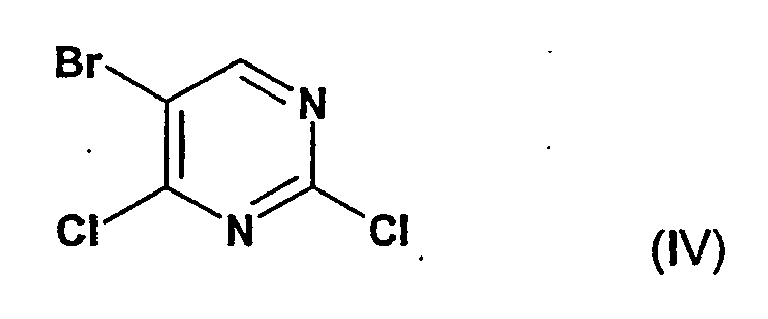
R2-CH2-NH2 (V)
wherein R2 has the meaning as provided above for a compound of formula I, in a manner known as such, e.g. by adding at a temperature between about -10 °C and about + 10 °C, e.g. about 0 °C, the amine of formula V dropwise to a solution of the pyrimidine of formula IV in a suitable solvent, e.g. a C1-C3alcohol, and allowing the solution to react a temperature between about 15 °C and about 30 °C, e.g. about 20 °C, for a period of about 3 to 12 hours, providing a pyrimidine of formula VI
- In a second step, the pyrimidine of formula VI, wherein R2 has the meaning as provided above for a compound of formula I, is reacted with a cyanide, e.g. potassium or sodium cyanide, in a suitable solvent in a manner known per se, providing the 2-cyano-pyrimidine derivative of formula VII,
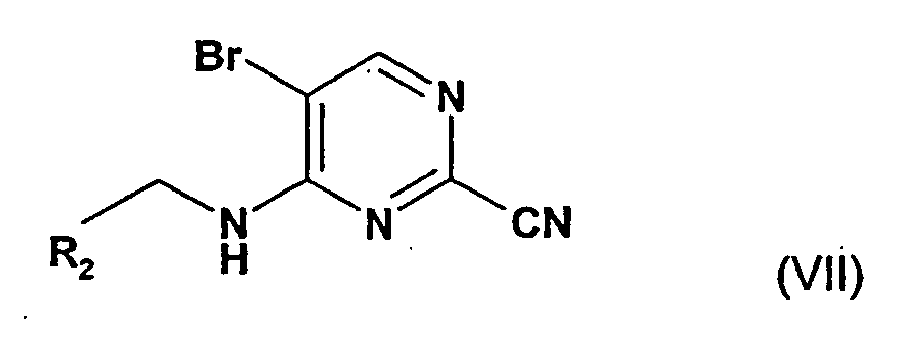
- In a second step, the 2-cyano-pyrimidine derivative of formula VII, wherein R2 has the meaning as provided above for a compound of formula I, is reacted with the compound of formula VIII
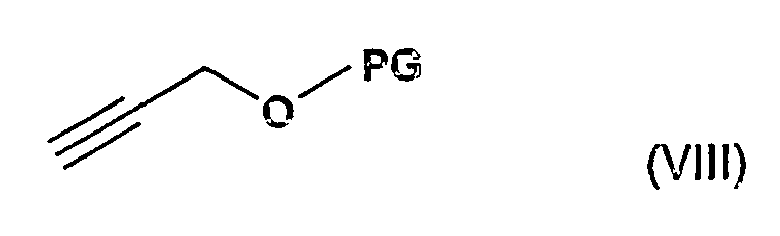

- Cyclisation of the 2-cyano-pyrimidine derivative of formula IX, wherein R2 has the meaning as provided above for a compound of formula I and PG denotes a protecting group, can be achieved, e.g., by adding 1,8-diazabicyclo[5.4.0]undec-7-ene at a temperature of between about 80 °C and about 120 °C, e.g. about 100 °C, to a solution of the 2-cyano-pyrimidine derivative of formula IX in a suitable solvent, such as dimethylformamide, and maintaining the mixture at about that temperature for a period of about 0.5 to 2 hours, e.g. 1 hour, furnishing a protected hydroxymethyl pyrrolo pyrimidine of formula X,

- The protection group PG can be detached under conditions known per se to furnish the unprotected hydroxymethyl pyrrolo pyrimidine of formula XI,

- Alternatively, the 2-cyano-pyrimidine derivative of formula VII,


- Cyclisation of the 2-cyano-pyrimidine derivative of formula XIII, wherein R1, R2, Y and p have the meanings as provided above for a compound of formula I, can be achieved, e.g., by adding 1,8-diazabicyclo[5.4.0]undec-7-ene at a temperature of between about 80°C and about 120 °C, e.g. about 100 °C, to a solution of the 2-cyano-pyrimidine derivative of formula XIII in a suitable solvent, such as dimethylformamide, and maintaining the mixture at about that temperature for a period of about 0.5 to 2 hours, e.g. 1 hour, furnishing directly a protected hydroxymethyl pyrrolo pyrimidine of formula I.
- Particularly preferred compounds of the invention are the compounds of the Examples.
- The present invention relates to methods of using compound of formula I and their pharmaceutically acceptable salts, or pharmaceutical compositions thereof, in mammals for inhibiting cathepsin S, and for the treatment of cathepsin S dependent conditions, such as the cathepsin S dependent conditions, described herein, e.g. chronic inflammatory or neuropathic pain.
- Particularly the present invention relates to a method of selectively inhibiting cathepsin S activity in a mammal which comprises administering to a mammal in need thereof an effective cathepsin S inhibiting amount of a compound of formula I.
- More specifically such relates to a method of treating chronic inflammatory or neuropathic pain. (and other diseases as identified above) in mammals comprises administering to a mammal in need thereof a correspondingly effective amount of a compound of formula I.
- The Examples which follow serve to illustrate the invention without limiting the scope thereof.
- Temperatures are measured in degrees Celsius. Unless indicated otherwise, reactions are carried out at room temperature. The structure of final products, intermediates and starting materials is confirmed by standard analytical methods, e.g. microanalysis and spectroscopic characteristics (e.g. MS, IR, NMR).
- Abbreviations used are those conventional in the art and, in particular, have the meanings provided below.
- Ac
- acetyl
- aq.
- Aqueous
- Boc
- tert-butoxycarbanyl
- conc.
- concentrated
- DABCO
- 1,4-diazabicyclo[2.2.2]octane
- DEAD
- diethyl azodicarboxylate
- DMF
- dimethylformamide
- DMSO
- dimethylsulfoxide
- Et
- ethyl
- FC
- flash chromatography
- Me
- methyl
- min
- minutes
- MS
- mass spectrometry
- NMR
- nuclear magnetic resonance
- Ph
- phenyl
- RP-HPLC
- reversed phase high pressure liquid chromatography
- rt
- room temperature
- sat.
- saturated
- soln.
- Solution
- TFA
- trifluoroacetic acid
- THF
- tetrahydrofurane
- TsOH
- toluene sulphonic acid
- At 0°C, a soln. of CBr4 (56.1 g, 0.17 mol) in dry CH2Cl2 (150 ml) is added dropwise over 15 min to a soln. of step A.5 (20.65 g, 84.5 mmol) and Ph3P (44.2 g, 0.17 mol) in dry CH2Cl2 (150 ml). After stirring for 30 min at 0°C, the mixture is warmed to rt, stirred for 3 h. The mixture is diluted with CH2Cl2 (300 ml), washed with sat. aq. NaHCO3 soln. (150 ml) and brine (150 ml), and dried (MgSO4). The org. layer is treated with SiO2 (70 g), evaporated, and the residue is loaded on a silica gel column. FC (800 g of silica gel; hexane/EtOAc 7:4) gives the title compound as a yellow solid; 1H-NMR (400 MHz, CDCl3) δ 0.98-1.11 (m, 2H), 1.18-1.45 (m, 5H), 1.64-1.89 (m, 6H), 4.40 (t, 2H), 4.68 (s, 2H), 6.70 (s, 1H), 8.95 (s, 1H).
- 2-Cyclohexyl-ethylamine (40.3g, 320 mmol) is added dropwise at 0°C over 20 min to a soln. of 5-bromo-2,4-dichloropyrimidine (51 g, 224 mmol) in MeOH (200 ml). After stirring for 20 min at 0°C, the mixture is warmed to rt, stirred for 11 h, and evaporated. The residue is suspended in 200 ml of CH2Cl2, washed with water and brine, dried (MgSO4), and evaporated. The residue is chromatographed on silica gel column (hexane/EtOAc 5:1) to give the title product; 1H-NMR (400 MHz, CDCl3) δ 0.90-1.01 (m, 2H), 1.10-1.41 (m, 5H), 1.55 (q, 2H), 1.61-1.80(m, 4H), 3.52 (q, 2H), 5.43 (brs, 1H), 8.09 (s, 1H).
- At rt, to an aqueous soln. (5 ml) of NaCN (1.27 g, 25.9 mmol) is added successively DMSO (50 ml), DABCO (0.24 g, 2.16 mmol), and the product of step A.1 (6.9 g, 21.6 mmol). The mixture is stirred for 11 h at 60°C, poured into ice water, extracted with EtOAc, dried (MgSO4), and evaporated. The residue is chromatographed on a silica gel column.
(hexane/EtOAc 4:1) to give the title product. - At rt, a soln. of the product of step A.2 (25.0 g, 89.9 mmol) and 2-prop-2-ynyloxy-tetrahydropyran (13.6 ml, 97.02 mmol) in dry DMF (420 ml) is treated with Et3N (56.5 ml, 40.5 mmol), Cul (0.78 mg, 4.05 mmol), and (Ph3P)2PdCl2 (1.4 g, 2.02 mmol). The mixture is stirred for 3 h at 70°C, poured into ice water, extracted with EtOAc, washed with brine, dried (MgSO4), and evaporated. The residue is chromatographed on a silica gel column (1800 g of silica gel; hexane/EtOAc 2:1) to give the title compound; 1H-NMR (400 MHz, CDCl3) δ 0.90-1.02 (m, 2H), 1.10-1.40 (m, 5H), 1.48-1.91 (m, 12H), 3.49 - 3.60 (m, 3H), 3.84 - 3.92 (m, 1H), 4.54 (s, 2H), 4.86 (t, 1H), 5.88 (brt, 1H), 8.19 (s, 1H).
- At rt, a soln. of the product of step A.3 (23.1 g, 62.69 mmol) in dry DMF (400 ml) is treated with DBU (11.3 ml, 75.23 mmol), stirred for 1 h at 100°C, poured into ice water, extracted with EtOAc, washed with H2O, dried (MgSO4), and evaporated. The residue is chromatographed on silica gel.column (hexane/EtOAc 5:1) to give the title compound; 1H-NMR (400 MHz, CDCl3) δ 0.93-1.08 (m, 2H), 1.12-1.40 (m, 5H), 1.48-1.91 (m, 12H), 3.54-3.62 (m, 1H), 3.82 - 3.91 (m, 1H), 4.38 (t, 2H), 4.70 (d, 1H), 4.73 (t, 1H), 4.94 (d, 1H), 6.61 (s, 1H), 8.91 (s, 1H).
- At rt, a soln. of step A.4 (21.4 g, 58.08 mmol) in MeOH (200 ml) is treated with TsOH•H2O (1.1 g, 5.78 mmol), stirred for 11 h and evaporated. The residue is diluted with CH2Cl2 and washed with water and sat. NaHCO3 aq. The organic extract is dried (MgSO4) and concentrated. The residue is chromatographed on a silica gel column to give the title compound.
- By repeating the procedures described under Example A using appropriate starting materials and conditions the following compounds of formula 1 are obtained as identified below in Table 1.

Table 1 Ex. R" Rf (solvent) NMR(400MHz, δ) B1 
0.20 CDCl3 (n-hexane: AcOEt=4:1) 1.09(s, 9H), 1.70-1.78(m, 2H), 4.35- 4.42 (m, 2H), 4.64(s, 2H), 6.70(s, 1H), 8.96(s, 1H) B2 
0.15 CDCl3 (n-hexane: AcOEt=4:1) 3.18(t, 2H), 4.25(s, 2H), 4.58(t, 2H), 6.64(s, 1H), 7.00 (d, 2H), 7.25(d, 2H), 8.97(s, 1H) - To the solution of 3-fluoro-4-hydroxybenzoic acid (5 g, 32 mmol) and propylamine (3.1 ml, 38 ml) in DMF (250 ml), HOAt (5.2 g, 38 mmol) and WSCl.HCl (7.2 g, 38 mmol) are added at 0°C. The reaction mixture is stirred at rt for 15 h and quenched with saturated ammonium chloride and extracted with ethyl acetate. The combined extracts are washed with H2O, brine and dried over magnesium sulfate. Chromatography on silica gel (eluent; dichloromethane and 3 % MeOH in dichloromethane) gives 4.8 g of desired product; Rf=0.76 (dichloromethane : MeOH = 8:2).
- To a solution of 3-hydroxy-benzoic acid (430 mg, 3.6 mmol) in THF (5 ml) are added SOCl2 (0.4 ml) and DMF (2 drops). The reaction mixture is stirred at rt overnight. The mixture is divided in half, and to this mixture are added Et3N (0.42 ml) and the corresponding amine. After the mixture is stirred at rt for overnight, it is diluted with water. The mixture is extracted with EtOAc, and the combined organic extracts are washed with brine, and dried over Na2SO4, filtered, and concentrated to give the product.
- To a solution of toluene (6mL) is added trimethylaluminium (1M in hexane, 3mL), piperidine (3mmol) at rt. The mixture is stirred for 0.3 h at rt. 4-Hydroxybenzoic acid ethyl ester is added and stirred for 1h at 100°C. The reaction mixture is diluted with water and 8N KOH aq. is added. Then the reaction mixture is acidified with conc. HCl aq. and extracted with dichloromethane (3 times). The combined organic layer is washed with water and brine, dried over MgSO4, and concentrated in vacuo to give the title compound.
- To a solution of DMF/H2O (20mL/7mL) is added 4-benzyloxy-benzoic acid (1g), 3-methyl-amino pyridine (710mg), HOAt (715mg), WSCD HCl (1g). The mixture is stirred for 3h at rt, diluted with ice water. The white precipitate is collected by filtration. To a solution of the above product in methanol is added Pd/C, and the mixture is stirred for 12 h under H2 atmospheres. The reaction mixture is filtrated through a pad of Celite and concentrated to give the title compound.
- To a heated solution of 6-methoxy-1-tetalone (1g) in trichloroacetic acid (10g) is added sodium azide (553mg) at 70°C, and the mixture is maintaining with stirring for 4h. The reaction mixture is diluted with ice water and neutralized with potassium carbonate, and extracted with ethyl acetate. The organic layer is successively washed with water and saturated NaCl aq, dried over MgSO4, concentrated in vacuo. The crude product is purified by silica gel column chromatography to give 7-methoxy-2,3,4,5-tetrahydro-benzo[c] azepin-1-one (later) in 49% yield and 7-methoxy-1,3,4,5-tetrahydro-benzo[b] azepin-2-one in 27% yield.
- To a solution of 7-methoxy-2,3,4,5-tetrahydro-benzo[c]azepin-1-one (520 mg) in dichloromethane (3mL) is added boron tribromide in dichloromethane (1M in dichloromethane) at 0°C and stirred for 2.5 h at rt. The reaction mixture is diluted with water and neutralized with aq. sodium hydrogen carbonate. White precipitate in the mixture is collected by filtration. The precipitate is dried in vacuo providing the title compound.
- A mixture of 4-amino-2-fluoro-phenol (3.4mmol) and γ-butyrolactone (3.57mmol) with 90 ml of conc. HCl is heated to 190°C and stirred for 1.5 h. After cooling down to rt the reaction mixture is diluted with THF and NaHCO3 aq, extracted with AcOEt, and dried over Na2SO4. Flush chromatography on silica gel using AcOEt-Hexane (3:1) gives 1-(3-fluoro-4-hydroxyphenyl)-pyrrolidin-2-one.
- 4-lodophenol (1.0mmol) is dissolved in 3ml of dioxane. To the solution is added 3,3-dimethyl-pyrrolidin-2-one (1.2mmol), K2CO3 (2.0mmol), and N,N'-dimethylethylene diamine at rt. The reaction mixture is heated and stirred for 14 h at 110°C under N2, and then filtered through celite. The resulting mixture is diluted with AcOEt and NaHCO3 aq, extracted with AcOEt, dried over Na2SO4. Flush chromatography on silica gel using AcOEt-Hexane (3:1) gives 1-(4-hydroxy-phenyl)-3,3-dimethyl-pyrrolidin-2-one as brown solid.
- A solution of the product of Step H.1 (2g) in 1M HCl in EtOAc is stirred for 0.5 h under reflux, and concentrated in vacuo. The residue is suspended in diethyl ether, and white powder is collected by filtration. To a solution of the powder in methanol (100mL) is added Pd/C (10%w/w, 200mg) and stirred for 18 h under H2 atmosphere. The reaction mixture is filtrated through celite pad, and the filtrate is concentrated in vacuo to give the crude product. To a solution of the crude product (300mg) in DMF is added Boc2O (305mg) and Et3N, and stirred for 5 h at rt. The reaction mixture is diluted with H2O and extracted with EtOAc (twice). The organic layer are combined, successively washed with H2O, aq. NaCl, dried over MgSO4, and concentrated in vacuo. The residue is purified by column chromatography to give the pure product; Rf= 0.56 (n-hexane; EtOAc= 1:1).
- To a solution of 1-Benzyloxy-4-bromo-benzene (5g) in tetrahydrofurane (100mL) is added n-butyllithium (1.6M in hexane, 13mL) at -78°C and stirred for 0.5 h at -78°C. To the mixture is added 1-benzyl-piperidin-4-one in tetrahydrofurane (3.6g in 20mL) at -78°C, and maintaining with stirring at -78°C for 1.5 h. The reaction mixture is diluted with aq. NH4Cl, then extracted with EtOAc. The organic layer is successively washed with H2O and aq. NaCl, dried over MgSO4, and concentrated in vacuo. The crude product is purified by column chromatography to give the pure product; Rf= 0.15 (n-hexane; EtOAc= 1:1).
- To a solution of the product of Example H (2g) in methanol (50ml) is added Pd/C (10%w/w, 200mg) and stirred for 9 h under H2 atmosphere. The reaction mixture is filtrated through a celite pad. To the filtrate is added HCl (1M in EtOH, 50ml) and stirred under reflux. The reaction mixture is concentrated in vacuo to give crude product. To a solution of the crude product in MeOH/THF/H2O (10ml/ 5ml/ 10ml) is added NaHCO3 (until pH=9), Boc2O at 0°C and maintaining with stirring for 1 h at 0°C. The reaction mixture is evaporated, neutralized with aq. citric acid, and extracted with EtOAc (3 times). The organic layers are combined, successively washed with H2O, aq. NaCl, dried over MgSO4, and concentrated. The residue is purified by column chromatograph to give the pure product; Rf = 0.60 (n-hexane; EtOAc = 1:1).
- To a solution of the product of Step J.1 (1g) in methanol (100mL) is added Pd/C (10% w/w on activated carbon, 0.1 g), and stirred for 11 h under H2 atmosphere. The reaction mixture is filtrated through a celite pad. The filtrate is concentrated to give the title compound; Rf = 0.23 (dichloromethane : methanol= 9:1).
- To a solution of 1-benzyloxy-4-bromo-2-fluoro-benzene (1g), 1-acetyl piperazine (0.55 g) and sodium tert-butoxide (0.51 g) in toluene (70mL) is added tri-o-tolyl-phosphane (0.05 g) and Pd2(dba)3 (0.16 g) under N2 atmosphere, stirred for 4 h under reflux. The reaction mixture is diluted with H2O, extracted with EtOAc. The organic layer is successively washed with H2O and aq. sodium chloride, dried over MgSO4, and concentrated in vacuo. The crude product is purified by silica gel column chromatography to give the pure product; Rf = 0.29 (dichloromethane:methanol= 9:1).
- To a solution of the product of Step K.1 (2.8g) in methanol (100mL) is added Pd/C (10% w/w on activated carbon), and stirred for 12 h under H2 atmosphere. The reaction mixture is filtrated through a pad of Celite. The filtrate is concentrated to give the title product; Rf=0.13 (n-hexane:EtOAc= 4:1).
- To a solution of 1-Benzyloxy-4-bromo-2-fluoro-benzene (3g), piperazine-1-carboxylic acid tert-butyl ester (2.36g) and sodium tert-butoxide (1.54g) in toluene (210ml) is added tri-o-tolyl-phosplane (0.163g) and Pd2(dba)3 (0.49g) under N2 atmosphere, stirred for 11 h at 80°C. The reaction mixture is diluted with H2O, extracted with EtOAc. The organic layer is successively washed with H2O and aq. sodium chloride, dried over MgSO4, and concentrated in vacuo. The crude product is purified by silica gel column chromatography to give the pure title product; Rf=0.19 (n-hexane:EtOAc = 4:1).
- To a suspension of Mg powder (19.3 mmol) and one piece of iodine in THF (10 mL) is added (4-bromo-benzyloxy)-trimethyl-silane (16.0 mmol) in THF (20 mL) at rt and the mixture is stirred at 85 °C for 0.5 h. Copper(I) bromide (1.60 mmol) is added at rt, then methoxyallene (16.0 mmol) in THF (10 mL) is added at 0 °C and the mixture is stirred at rt for 5 h. The mixture is poured into saturated ammonium chloride, extracted with AcOEt. The organic layer is washed with 1N HCl solution, H2O, and brine, dried over MgSO4 and concentrated. Chromatography on silica gel (n-hexane:AcOEt=1:9) gives the title compound; Rf=0.4 (CH2Cl2:AcOEt =3:2).
- A mixture of methyl propargylether (50.0 g, 714mmol) and t-BuOK (4.0 g, 36mmol) is refluxed under N2 for 1 h. The mixture is distilled to produce a colorless oil of methoxyallen (50 g, quant.). To a solution of said methoxyallen (42 mL, 50 mmol) and CuBr (720 mg, 5 mmol) in 200 mL of diethylether is added dropwise a 1M solution of p-chlorophenyl magnesium bromide in diethylether (50 mL, 50 mmol) at 0 °C under N2. After being stirred for 1 h at rt, 150 mL of sat.NH4Cl solution is added, and the mixture is extracted with ether and washed with sat.NaHCO3 solution. The organic layer is dried over Na2SO4 and concentrated. Purification of the residue by column chromatography eluting hexane only to give 1-chloro-4-prop-2-ynyl-benzene as a yellow oil.
- 1-Fluoro-4-prop-2-ynyl-benzene is synthesized from p-fluorophenyl magnesium bromide and methoxyallen by the procedure as described under Example M.
- 4-Prop-2-ynyl-phenylamine (2.0 mmol) and g-butyrolactone (2.0 mmol) in conc. HCl is heated to 190 °C and stirred for 1 h. After cooling down to rt the reaction mixture is diluted with NaHCO3 aq, extracted with AcOEt, and dried over Na2SO4. Flush chromatography on silica gel using AcOEt-Hexane (1:1) gives 1-(4-prop-2-ynyl-phenyl)-pyrrolidin-2-one.
- 5-Bromo-2,4-dichloropyrimidine is dissolved in NH3/MeOH and stirred at rt, and the solvent is removed under reduced pressure. The resulting solid is washed with H2O and dried in vacuo to give the white solid of 5-bromo-2-chloro-pyrimidin-4-ylamine in quantitative yield. The white solid is dissolved in DMSO/H2O. To the solution are added DABCO and NaCN, then the resulting mixture is heated to 60 °C. The reaction mixture is diluted with water, and extracted with AcOEt. The combined organic extracts are dried over Na2SO4. Flush chromatography on silica gel using AcOEt-Hexane gives 4-amino-5-bromo-pyrimidine-2-carbonitrile as white solid. To a solution of the above product in DMF are added 1-chloro-4-prop-2-ynyl-benzene, (PPh3)2PdCl2 and Cul under N2. The resulting solution is stirred at 80°C, and then sat NH4Cl aq is added into the mixture. After stirred for an additional 1 h, the mixture is extracted with AcOEt twice. The combined organic extracts are washed with NaHCO3 aq, and dried over Na2SO4. Flash chromatography on silica gel using AcOEt-Hexane gives the title compound.
- 3,3-Dimethyl-pent-4-en-1-ol (0.77 mmol) is dissolved in 10 ml of CH2Cl2, and then the solution is cooled down to 0 °C. To the cooled solution are added PPh3 (0.92 mmol), pyridine (0.85 mmol), and iodine (0.92 mmol) and then stirred at 0 °C to rt for 16 h. After addition of aq. Na2SO3 solution, the mixture is extracted with Et2O twice. The combined organic extracts are washed with H2O, and dried over Na2SO4. Flash chromatography on silica gel using n-hexane gives the iodide as a colorless oil.
- To a solution of 2-p-tolyl-ethanol (1 g, 7.30 mmol) in CH2Cl2 (20 mL) are added PPh3 (1.94 g, 7.40 mmol) and NBS (1.32 g, 7.40 mmol) at -15 °C. The reaction mixture is stirred at -15 °C to room temperature for overnight. The reaction is quenched by the addition of saturated aqueous NaHCO3, and the resulting mixture is extracted with CH2Cl2. The combined organic extracts are washed with brine, and dried over Na2SO4, filtered, and concentrated in vacuo. The residue is purified by silica gel column chromatography (n-hexane : AcOEt=1:1) to give the title compound.
- To a solution of 3-cyclopropyl-propan-1-ol (530 mg, 5.30 mmol) in CH2Cl2 (10 mL) are added PPh3 (1.42 g, 5.40 mmol) and NBS (960 mg, 5.40 mmol) at -20 °C. The reaction mixture is stirred at -20 °C to rt for overnight. The reaction is quenched by the addition of water, and the resulting mixture is extracted with CH2Cl2. The combined organic extracts are washed with brine, and dried over Na2SO4, filtered, and concentrated in vacuo. The residue is purified by silica gel column chromatography (Et2O) to give title compound.
- To a solution of indan-2-carboxylic acid (1 g, 6.20 mmol) in THF (10 mL) is added portionwise LiAlH4 (266 mg, 7 mmol) at 0 °C. The reaction mixture is stirred at 0 °C to room temperature for 3.5 h. The reaction is quenched by the addition of water, and the resulting mixture is extracted with Et2O. The combined organic extracts are washed with brine, and dried over Na2SO4, filtered, and concentrated in vac. to give the title compound.
- To a solution of 4-pentynoic acid (512 mg, 0.53 mmol) in benzene (10 mL) is added (COCl)2 (1 mL). After being stirred at rt for 5.5 h, the reaction mixture is concentrated in vacuo to give the corresponding acid chloride, which is used for the next reaction without further purification. To a solution of piperidine (890 mg, 10.5 mmol) in benzene (3 mL) is added a solution of said acid chloride in benzene (2 mL). The reaction mixture is stirred at rt for 2h, and the diluted with EtOAc. The mixture is washed with 1M aq. KHSO4, water, saturated aq. NaHCO3, water, and brine. The organic layer is dried over Na2SO4, filtered, and concentrated in vacuo to give the title compound.
- To a suspension of NaH (60%, 424 mg, 10.6 mmol) in THF (5 mL) is added a solution of (EtO)2P(O)CH2CO2Et (2.6 g, 11.6 mmol) in THF (8 mL) at 0 °C. After being stirred at 0 °C for 30 min, to this solution is added a solution of 2-formylthiazole (1 g, 8.84 mmol) in THF (8 mL). The reaction mixture is stirred at 0 °C to rt for 13 h. After the bulk of solvent is removed in vacuo, the residue is diluted with ether, washed with 1M aqueous KHSO4, water, and brine. The organic layer is dried over MgSO4, filtered, and concentrated in vacuo. The residue is purified by silica gel column chromatography (n-hexane:EtOAc=5:1) to give the unsaturated ester.
To a solution of said unsaturated ester (1.16 g, 6.33 mmol) in EtOH (15 mL) is added 10% Pd on carbon (100 mg). The black slurry is stirred at room temperature under 1 atm H2 for 22 h. The reaction mixture is filtered through a celite pad (EtOH rinse) and the filtrate is concentrated in vacuo to give the saturated ester.
To a solution of the above saturated ester (1.15 g, 6.21 mmol) in CH2Cl2 (10 mL) is added dropwise DIBAL (0.95 M in hexane, 6.6 mL, 6.27 mmol) at -78 °C. After being stirred at -78 °C for 20 min, the reaction is quenched by the addition of 1M aqueous KHSO4. The resulting mixture is extracted with CH2Cl2 (x3). The combined organic extracts are washed with saturated aqueous NaHCO3, water, and brine, and dried over Na2SO4, filtered, and concentrated in vacuo. The residue is purified by silica gel column chromatography (n-hexane:EtOAc=2:1) to give the corresponding alcohol. - To a solution of the above alcohol (211 mg, 1.47 mmol) in CH2Cl2 (5 mL) is added Dess-Martin periodinane (750 mg, 1.76 mmol). The reaction mixture is stirred at rt for 30 min, and the reaction is quenched by the addition of aqueous Na2S2O3. The mixture is extracted with ether, and the organic layer is washed with water and saturated aqueous NaHCO3, and dried over MgSO4, filtered, and concentrated in vacuo to give the corresponding aldehyde, which is used for the next step without further purification.
To a solution of TMSCHN2 (2.0 M in hexane, 0.6 mL, 1.20 mmol) in THF (3 mL) is added dropwise n-BuLi (1.58 M in hexane, 0.76 mL, 1.20 mmol) at -78 °C. After being stirred at -78 °C for 30 min, to this solution is added a solution of the above aldehyde (140 mg, 0.99 mmol) in THF (2 mL). The reaction mixture is stirred at -78 °C to rt for 2.5 h. After dilution with ether, the mixture is washed with saturated aqueous NH4Cl, water, and brine. The organic layer is dried over MgSO4, filtered, and concentrated in vacuo. The residue is purified by silica gel column chromatography (n-hexane:EtOAc=5:1) to give the title compound. - To a solution of pyrrolidin-2-one (1.03 g, 12.1 mmol) in DMF (30 mL) is added NaH (60 %, 540 mg, 13.5 mmol) at 0 °C. The reaction mixture is stirred at 0 °C for 20 min, and then warmed up to room temperature for 40 min. To this solution is added 1-bromo-3-bromomethyl-benzene (2.45 g, 9.8 mmol) at 0 °C. The reaction mixture is stirred at 0 °C for 15 min, and then warmed up to room temperature for 13 h. After dilution with ether, the mixture is washed with 1 M aqueous KHSO4, water, saturated aqueous NaHCO3, water, and brine. The organic layer is dried over MgSO4, filtered, and concentrated in vacuo. The residue is purified by silica gel column chromatography (n-hexane:EtOAc=1:1 to 1:2) to give the title compound.
- To a solution of (3-bromo-phenyl)-methanol (1 g, 5.35 mmol) in THF (10 mL) is added NaH (60 %, 257 mg, 6.43 mmol) at 0 °C. After 13 min, to this mixture is added Mel (1 mL, 16.1 mmol). The reaction mixture is stirred at 0 °C for 10 min, and then warmed up to room temperature for 50 min. The reaction is quenched by the addition of 1 M aqueous KHSO4, and the mixtute is diluted with ether. After the resulting two phase is separated, the organic layer is washed with brine. The organic layer is dried over MgSO4, filtered, and concentrated in vacuo. The residue is purified by silica gel column chromat.ography (n-hexane:EtOAc = 10:1) to give the title compound
- To a suspension of 1-Phenyl-1,3,8-triaza-spiro[4.5]decan-4-one(1.0 g, 4.32 mmol) in dichloromethane(10 ml), saturated sodium bicarbonate solution(10 ml) and di-t-butyldicarbonate(1.04 g, 4.76 mmol) in dichloromethane(5 ml) are added at ambient temperature. The reaction mixture is stirred for 1 h and quenched with H2O and extracted with ethyl acetate. The combined extracts are washed with H2O and brine, dried over sodium sulfate and evaporated down to the title compound; Rf=0.90(CH2Cl2:MeOH = 20:1) 1H-NMR(400MHz, CDCl3) δ: 1.51 (s, 9H), 1.63-1.71 (m, 2H), 2.50-2.65(m, 2H), 3.50-3.65(m, 2H), 3.97-4.10(m, 2H), 4.75(s, 2H), 6.74-6.76(m, 2H), 6.84-6.88(m, 1H), 7.01 (brs, 1H), 7.23-7.27(m, 2H).
- To a solution of 6-chloromethyl-7-(2-cyclohexyl-ethyl)-7H-pyrrolo[2,3-d]pyrimidine-2-carbonitrile(600 mg, 1.98 mmol) in DMF(7 ml), 4-Oxo-1-phenyl-1,3,8-triaza -spiro[4.5] decane-8-carboxylic acid tert-butyl ester(657 mg, 1.98 mmol) and sodium hydride (101 mg, 2.53 mmol) are added. The mixture is stirred at room temperature under nitrogen atomosphere for 14 h. The reaction mixture is diluted with water and extracted with AcOEt(twice). The combined organic layer is washed with water and brine, dried over MgSO4, and concentrated in vacuo. The residue is purified by silica gel column chromatography (n-hexane:AcOEt=1:1) to the title compound; Rf=0.25(n-hexane:AcOEt = 1:1). 1H-NMR(400MHz, CDCl3) δ : 0.97-1.49(m, 7H), 1.50(s, 9H), 1.56-1.82(m, 8H), 2.45-2.60(m, 2H), 3.50-3.65(m, 2H), 4.09-4.14(m, 2H), 4.33-4.36(m, 2H), 4.64(s, 2H), 4.87(s, 2H), 6.72-6.74(m, 2H), 6.86-6.90(m, 1H), 7.20-7.24(m, 2H), 8.94(s, 1H).
- To a solution of 3-[2-Cyano-7-(2-cyclohexyl-ethyl)-7H-pyrrolo[2,3-d]pyrimidin-6- ylmethyl]-4-oxo-1-phenyl-1,3,8-triaza-spiro[4.5]decane-8-carboxylic acid tert-butyl ester (340 mg, 0.56 mmol) in dichloromethane(5 ml), trifluoroacetic acid(5 ml) is added. After stirring for 1 h at room temperature, solvent is evaporated down to give the title compound; Rf=0.10 (CH2Cl2:MeOH = 20:1) 1H-NMR(400MHz, CDCl3) δ : 0.98-1.38(m, 5H),1.65-1.83(m, 8H), 1.98-2.09(m, 2H), 2.71-2.80(m, 2H), 3.53-3.56(m, 2H), 3.94-4.02(m, 2H), 4.38-4.42(m, 2H), 4.73(s, 2H), 4.91 (s, 2H), 6.71 (s, 1H), 6.88-6.90(m, 2H), 7.01-7.04(m, 1H), 7.28-7.32(m, 2H), 7.85(brs, 1H), 8.25(brs, 1H), 9.08(s, 1H).
- To a solution of 6-Bromomethyl-7-[2-(4-chloro-phenyl)-ethyl]-7H-pyrrolo[2,3-d] pyrimidirie-2-carbonitrile(1.0 g, 2.66 mmol) in DMF(10ml), Piperazine-1- carboxylic acid tert-butyl ester(545 mg, 2.93 mmol) and potassium carbonate(515 mg, 3.72 mmol) are added. The mixture is stirred at room temperature under nitrogen atomosphere for 14 h. The reaction mixture is diluted with water and extracted with AcOEt (twice). The combined organic layer is washed with water and brine, dried over MgSO4, and concentrated in vacuo. The residue is purified by silica gel column chromatography (n-hexane : AcOEt=1:1) to give the title compound; Rf=0.20(n-hexane:AcOEt = 2:1). 1H-NMR(400MHz, CDCl3) δ :1.45(s, 9H), 2.36-2.38(m, 4H), 3.12-3.15(m, 2H), 3.39-3.43(m, 6H), 4.58-4.62(m, 2H), 6.48(s, 1H), 7.01-7.03(m, 2H), 7.24-7.26(m, 2H), 8.90(s, 1H).
- At room temperature, a soln, of B (0.49 mmol) and C (0.73 mmol) in DMF(5 ml) is treated with Et3N(2.18 mmol), Cul(0.05 mmol), and(Ph3P)2PdCl2(0.03 mmol). The mixture is stirred for 2 h at 80°C, poured into an ice water, extracted with EtOAc, washed with brine, and dried(MgSO4). The residue is purified by silica gel column chromatography(AcOEt) to give the title compound as an orange solid; 1H-NMR(400 MHz, CDCl3) δ 0.91-1.04(m, 2H), 1.12-1.38(m, 3H), 1.49-1.79(m, 16H), 2.74(t, 4H), 3.54(t, 2H), 3.67(s, 1H), 5.77(brs. 1H), 8.18(s, 1H). Rf 0.12(hexane/EtOAc 1:3).
- To a solution of 1-benzyl-piperidin-4-one(75.1 g, 0.40 mol) in toluene(400 ml), cyano-acetic acid ethyl ester(50.6 ml, 0.48 mol) and acetic acid(18.2 ml, 0.32 mol) are added at ambient temperature. The reaction mixture is refluxed for 4h, quenched with ice-water and extracted with diethyl ether. The combined extracts are washed with H2O, brine and dried over sodium sulphate to give(1-benzyl-piperidin-4-ylidene) -cyano-acetic acid ethyl ester in quant yield. Rf=0.53(n-hexane:AcOEt = 1:1). 1H-NMR(400MHz, CDCl3) δ : 1.30-1.37(m, 3H), 2.58(dd, 2H), 2.64(dd, 2H), 2.79(dd, 2H), 3.15(dd, 2H), 3.55(s, 2H), 4.23-4.32(m, 2H), 7.21-7.36(m, 5H).
- To a solution of(1-benzyl-piperidin-4-ylidene)-cyano-acetic acid ethyl ester(112.9 g, 0.40 mol) in EtOH(500 ml) and H2O(100 ml), potassium cyanide(64.6 g, 0.99 mol) is added at ambient temperature. The reaction mixture is stirred at 65 C° for 24h. After removal of EtOH, H2O is added to the residue. The waster phase is extracted with diethyl ether. The combined extracts are washed with H2O and brine, dried over sodium sulfate and evaporated down to give 1-benzyl-4-cyanomethyl- piperidine -4-carbonitrile; Rf=0.38(n-hexane:AcOEt = 1:1).1H-NMR (400MHz, CDCl3) δ : 1.76-1.81 (m, 2H), 2.10-2.05(m, 2H), 2.23-2.39(m, 2H), 2.69(s, 2H), 2.90-2.94(m, 2H), 3.56(s, 2H), 7.21-7.38(m, 5H).
- Acetic acid(56.8 ml) and sulfuric acid(11.8 ml) are added to 1-benzyl-4-cyanomethyl-piperidine-4-carbonitrile (27.2 g, 0.114 mmol) at ambient temperature. The reaction mixture is stirred at 125 C° for 1 h, cooled down to the room temperature and added to saturated NaOH aq. to adjust to pH 6.0. The mixture is extracted with dichloromethane. The combined extracts are washed with H2O and brine, dried over sodium sulfate and evaporated down to provide the title compound; Rf=0.40(CH2C)2:MeOH = 10:1). 1H-NMR(400MHz, CDCl3) δ : 1.52-1.57(m, 2H), 2.02-2.17(m, 4H), 2.59(s, 2H), 2.86-2.90(m, 2H), 3.52(s, 2H), 7.21-7.28(m, 2H), 7.30-7.37(m, 3H), 7.92(brs, 1H).
- To a solution of lithium aluminium hydride(3.63g, 95.6 mmol) in THF(100 ml), a solution of the product of Example ZA (8.23 g, 31.8 mol) in THF (60 ml) are slowly added at ambient temperature. The reaction mixture is refluxed for 6h, quenched with Na2SO410H2O at 0°C.
- Inorganic materials are removed by filtration and THF is evaporated down to to provide the title compound; Rf=0.10(ethyl acetate only).
- To a solution of the product of Example ZA (1.04 g, 4.02 mol) and Pd(OH)2(8.5 g) in 200 ml of flusk, EtOH(80.5 ml) is added at ambient temperature. The reaction mixture was stirred under H2 at room temperature for 15 h. The catalysts were removed by filtration and EtOH was evaporated down to give 2,8-Diaza-spiro[4.5]decane-1,3-dione in the quant yield.
To a solution of 2,8-Diaza-spiro[4.5]decane-1,3-dione in EtOH(20 ml), a 1 M dioxane solution of HCl(10 ml). After stirring for 1h at room temperature, solvent is evaporated down to to provide the title compound; 1H-NMR(400MHz, DMSO-d6) δ : 1.76-1.79(m, 2H), 1.90-2.00(m, 2H), 2.68(s, 2H), 2.88-2.96(m, 2H), 3.20-3.28(m, 2H), 8.76(brs, 1H), 9.01 (brs, 1H), 11.25(brs, 1H). - To a suspension of the product of Example ZB (5.06g, 21.9 mmol) in dichloromethane(50 ml), 1 N NaOH(50 ml) and di-t-butyldicarbonate(6.14 g, 28.1 mmol) in dichloromethane(10 ml) are added at ambient temperature. The reaction mixture is stirred for 5h and quenched with H2O and extracted with ethyl acetate. The combined extracts are washed with H2O and brine, dried over sodium sulfate and evaporated down to provide the title compound; 1H-NMR(400MHz, CDCl3) δ : 1.49(s, 9H), 1.50-1.70(m, 6H), 2.25-2.40(m, 2H), 2.45-2.55(m, 2H), 3.10-3.40(m, 4H), 3.50(s, 2H), 7.24-7.31 (m, 5H).
- To a solution of 8the product of Example ZD (7.95 g, 24.0 mol) and Pd(OH)2(2.4 g) in 200 ml of flusk, EtOH(96 ml) and acetic acid(1.2 ml) are added at ambient temperature. The reaction mixture was stirred under H2 at room temperature for 15 h. The catalysts were removed by filtration and EtOH was evaporated down to to provide the title compound; Rf= 0.05 (ethyl acetate only).
- To a solution of the product of Example ZE (1.12 g, 4.66 mol) in dichloromethane(10 ml), triethylamine(3.88 ml) and methanesulfonylchloride (1.08 ml, 14 mmol) are added at 0°C. The reaction mixture is stirred for over night, quenched with ice-water and extracted with dichloromethane. The combined extracts are washed with H2O, brine and dried over sodium sulphate to crude 8-methanesulfonyl-2,8-diaza-spiro[4.5]decane-2-carboxylic acid tert-butyl ester; Rf=0.7(CH2Cl2:MeOH = 10:1).
- To a solution of said ester (1.32 g) in ethyl acetate(10 ml), a 1 M ethyl acetate solution of HCl(20 ml). After stirring for 2h at room temperature, solvent is evaporated down to provide the title compound; 1H-NMR(400MHz, DMSO-d6) δ : 1.62-1.68(m, 4H), 1.78-1.82(m, 2H), 2.87(s, 3H), 2.98-3.12(m, 6H), 3.20-3.23(m, 2H), 9.49(brs, 1H), 9.59(brs, 1H).
- To a solution of the product of Example ZE (1.12 g, 4.66 mol) in dichloromethane(10 ml), triethylamine(3.88 ml) and acetic anhydride (1.32 ml, 14 mmol) are added at 0°C. The reaction mixture is stirred for over night, quenched with ice-water and extracted with dichloromethane. The combined extracts are washed with H2O, brine and dried over sodium sulphate to crude 8-acetyl-2,8- diaza -spiro[4.5]decane-2-carboxylic acid tert-butyl ester; Rf=0.6(CH2Cl2:MeOH = 10:1).
- To a solution of said ester (1.34 g) in ethyl acetate(10 ml), a 1 M ethyl acetate solution of HCl(20 ml). After stirring for 2h at room temperature, solvent is evaporated down to to provide the title compound as a solid; 1H-NMR(400MHz, DMSO-d6) δ : 1.44-1.59(m, 4H), 1.76-1.83(m, 2H), 2.07(s, 3H), 2.96-3.06(m, 2H), 3.16-3.24(m, 4H), 3.38-3.56(m, 2H), 9.55(brs, 1H), 9.67(brs, 1H).
- To a solution of 2,4-difluoronitro-benzene(127 g, 0.79 mol) and dimethyl malonate (210.9 g, 1.59 mol) in DMF(800 ml), potassium carbonate(220.6 g, 1.59 mol) is added at ambient temperature. The reaction mixture is stirred at 70 C° for 12 h. The reaction mixture is added to toluene (639 ml) and 12 N HCl(1200 ml) and extracted with ethyl acetate. The combined extracts are washed with H2O and brine, dried over sodium sulfate and evaporated down to give 2-(5-fluoro-2-nitro-phenyl)-malonic acid dimethyl ester; Rf=0.5(n-hexane:AcOEt = 2:1).
- To the crude ester and 5 % Pd-C(10.8 g) in 2 1 of flask, MeOH(600 ml) is added at ambient temperature. The reaction mixture is stirred under H2 at room temperature for 15 h. The catalysts are removed by filtration and MeOH is evaporated down to give 5-fluoro-2-oxo-2,3-dihydro-1H- indole-3-carboxylic acid' methyl ester; Rf=0.10(n-hexane:ethyl acetate = 1:1).
- To a solution of said crude 5-fluoro-2-oxo-2,3-dihydro-1H-indole-3-carboxylic acid methyl ester in MeOH(800 ml), 6N HCl(415 ml, 1.92 mol) is added at ambient temperature. The reaction mixture is stirred at 80 C° for 5 h. After cooling down to room temperature, 8 N KOH(438 ml, 1.82 mol) is added to reaction mixture. The reaction mixture is stirred at 40 C° for 30 min. 12 N HCl(66.5 ml) is added to reaction mixture. MeOH is evaporated down and the white powder is filtrated; Rf=0.25(n-hexane:AcOEt = 1:1). 1H-NMR(400MHz, CDCl3) δ : 3.54(s, 2H), 6.78-6.81 (m, 1H), 6.90-6.98(m, 2H), 8.34(brs, 1H).
-
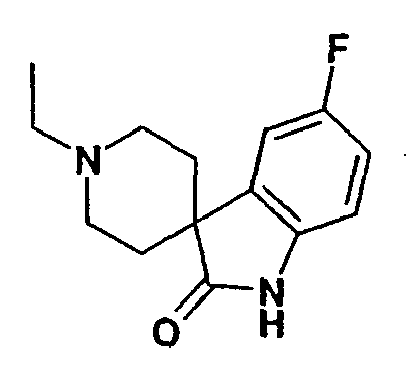
- To a solution of the product of Example ZH (1.5 g, 10 mmol) in THF(160 ml), a solution of NaHMDS(1 M THF solution)(50 ml, 50 mmol) is added at -78°C. After stirring for 30 min at -78°C, ethyl-bis-(2-chloro-ethyl)-amine(47.3 g, 0.18 mol) in THF(176 ml) is added and the reaction mixture is stirred for 15 h at room temperature, quenched with saturated ammonium chloride and ice-water and extracted with ethyl acetate. The combined extracts are washed with brine, dried over sodium sulphate and evaporated down. Ethyl ether is added to the residue to give the powder, which is filtrated; Rf=0.10(CH2Cl2:MeOH = 30:1.
- To a solution of 3-fluoro-4-nitro-phenol(25.3 g, 0.16 mol) in acetone(160 ml), potassium carbonate(41.7 g, 0.30 mol) and methyl iodide(20.0 ml, 0.32 mol) are added at ambient temperature. The reaction mixture is stirred at 40 C° for 3 h. After cooling down to room temperature, dichloromethane is added to the reaction mixture, which is filtrated and evaporated. Dichloromethane is added to the residue and the combined extracts are washed with H2O and brine, dried over sodium sulfate and evaporated down to provide the title compound; 1H-NMR(400MHz, CDCl3) δ : 3.90(s, 3H), 6.72-6.79(m, 2H), 8.06-8.13(m, 1H).
- To a solution of 2-fluoro-4-methoxy-1-nitro-benzene (84.1 g, 0.49 mol) and dimethyl malonate (129.9 g, 0.98 mol) in DMF(490 ml), potassium carbonate(135.9 g, 0.98 mol) is added at ambient temperature. The reaction mixture is stirred at 70 C° for 12 h. The reaction mixture is added to toluene (393 ml) and 12 N HCl(123 ml) and extracted with ethyl acetate. The combined extracts are washed with H2O and brine, dried over sodium sulfate and evaporated down to give 2-(5-methoxy-2-nitro-phenyl)- malonic acid dimethyl ester;
Rf=0.8(n-hexane:AcOEt = 1:1). - To said ester and 5 % Pd-C(7.0 g) in 1 l of flask, MeOH(490 ml) is added at ambient temperature. The reaction mixture is stirred under H2 at room temperature for 15 h. The catalysts are removed by filtration and MeOH is evaporated down to give 5-methoxy-2-oxo-2,3-dihydro-1H -indole-3-carboxylic acid methyl ester; Rf=0.10(n-hexane:ethyl acetate = 1:1).
- To a solution of crude 5-methoxy-2-oxo-2,3-dihydro-1 H-indole-3-carboxylic acid methyl ester in MeOH(320 ml), 6N HCI(255 ml, 1.92 mol) is added at ambient temperature. The reaction mixture is stirred at 70 C° for 3 h. After cooling down to room temperature, 8 N KOH(269 ml, 1.82 mol) is added to reaction mixture. The reaction mixture is stirred at 40 C° for 30 min. 12 N HCl(41 ml) is added to reaction mixture. MeOH is evaporated down and the white powder is filtrated to provide the title compound; Rf=0.25(n-hexane:AcOEt = 1:1); 1H-NMR(400MHz, CDCl3) δ : 3.51 (s, 2H), 3.78(s, 3H), 6.72-6.85(m, 3H), 7.60(brs, 1H).
-

- To a solution of the product of Example ZK (1.06 g, 6.49 mmol) in THF(13 ml), a solution of NaHMDS (1 M THF solution) (32.5 ml, 32.5 mmol) is added at -78°C. After stirring for 30 min at -78°C, methyl-bis-(2-chloro-ethyl)-amine hydrochloride (1.37g, 7.14 mol) is added and the reaction mixture is stirred for 13.5 h at room temperature, quenched with saturated ammonium chloride and ice-water and extracted with ethyl acetate. The combined extracts are washed with brine, dried over sodium sulphate and evaporated down. Ethyl ether is added to the residue to give the powder, which is filtrated; Rf=0.10(CH2Cl2:MeOH = 30:1) 1H-NMR(400MHz, DMSO-d6) δ : 1.66-1.78(m, 4H), 2.28(s, 3H), 2.44-2.47(m, 2H), 2.71-2.77(m, 2H), 3.70(s, 3H), 6.74(s, 2H), 7.01(s, 1H), 10.15(brs, 1H).
-

- To a solution of 1,3-Dihydro-indol-2-one(8.79 g, 66 mmol) in THF(50 ml), a solution of LiHMDS(1 M THF solution)(200 ml, 200 mmol) is added at -78°C. After stirring for 30 min at-78°C, Bis-(2-chloro-ethyl)-carbamic acid tert-butyl ester(17.5g, 72.6 mol) is added and the reaction mixture is stirred for 21 h at room temperature, quenched with saturated ammonium chloride and ice-water and extracted with ethyl acetate. The combined extracts are washed with brine, dried over sodium sulphate and evaporated down to give crude product. Rf=0.25(CH2Cl2:MeOH = 30:1) 1H-NMR(4.00MHz, DMSO-d6) δ : 1.43(s, 9H), 1.63-1.70(m, 4H), 3.57-3.71 (m, 4H), 6.84-6.86(m, 1H), 6.95-6.97(m, 1H), 7.17-7.19(m, 1H), 7.42-7.44(m, 1H), 10.40(brs, 1H).
- To a solution of the crude product in ethyl acetate(20 ml), a 1 M ethyl acetate solution of HCl(20 ml). After stirring for 2h at room temperature, solvent is evaporated down to. Ethyl ether is added to the residue to give the powder, which is filtrated; Rf=0.05 (ethyl acetate only); 1H-NMR(400MHz, DMSO-d6) δ :1.87-1.90(m, 2H), 2.04-2.11(m, 2H), 3.24-3.27(m, 2H), 3.45-3.49(m, 2H), 6.88-6.89(m, 1H), 7.00-7.04(m, 1H), 7.21-7.29(m, 2H), 9.04(brs, 1H), 10.57(brs, 1H).
-

- To a solution of the product of Example ZM (422 mg, 1.76 mol) in dichloromethane(5 ml), triethylamine(1.2 ml) and acetic anhydride(0.33 ml, 3.53 mmol) are added at 0°C. The reaction mixture is stirred for 2h, quenched with ice-water and extracted with dichloromethane. The combined organic layer is washed with water and brine, dried over MgSO4, and concentrated in vacuo. The residue is purified by silica gel column chromatography(n-hexane : AcOEt=5:1) to give the product; Rf=0.6(CH2Cl2:MeOH = 10:1); 1H-NMR(400MHz, CDCl3) δ :1.79-1.95(m, 4H), 2.20(s, 3H), 3.68-3.74(m, 1H), 3.80-3.87(m, 1H), 3.98-4.22(m, 2H), 6.90-6.92(m, 1H), 7.03-7.07(m, 1H), 7.22-7.26(m, 2H), 8.06(brs, 1H).
-

- To a solution of 1,3-dihydro-indol-2-one(2.66 g, 20 mmol) in THF(40 ml), a solution of NaHMDS (1 M THF solution)(100 ml, 100 mmol) is added at -78°C. After stirring for 30 min at -78°C, ethyl-bis-(2-chloro-ethyl)-amine hydrochloride(4.54 g, 22 mol) is added and the reaction mixture is stirred for 18 h at room temperature, quenched with saturated ammonium chloride and ice-water and extracted with ethyl acetate. The combined organic layer is washed with water and brine, dried over MgSO4, and concentrated in vacuo. The residue is purified by silica gel column chromatography (n-hexane : AcOEt=5:1) to give the product; Rf=0.25(CH2Cl2:MeOH = 30:1).
- To a solution of 4-oxo-piperidine-1-carboxylic acid tert-butyl ester(1g) in CH2Cl2 (10mL) is added [bis(2-methoxyethyl)amino]sulfer trifluoride(1.85mL) at 0°C, and stirred for 1.5hr at rt. The reaction mixture is poured in aqueous NaHCO3 and extracted with dichloromethane.
The organic layer is successively washed with H2O and aqueous NaCl, dried over MgSO4, and concentrated in vacuo. The residue is purified by column chromatography to give a colorless oil.
To a solution of the oil in Et2O(10mL) was added HCl in EtOAc(4N, 5mL) and stirred for 1hr at rt. White precipitate in the reaction mixture is collected by filtration to give the pure product; 1H NMR(DMSO-d6, δ(ppm)); 2.23-2.2.36(m, 4H), 3.17-3.28(m, 4H), 9.54(brs, 2H). - To a solution of 3-(R)-hydroxy-pyrrolidine-1-carboxylic acid tert-butyl ester(200mg) in CH2Cl2(10mL)is added [bis(2-methoxyethyl)amino]sulfer trifluoride(236uL) at 0°C, and stirred for 1 hr at room temperature. The reaction mixture is poured in aqueous NaHCO3 and extracted with Et2O. The organic layer is successively washed with H2O and aqueous NaCl, dried over MgSO4, and concentrated in vacuo. The residue is purified by column chromatography to give a colorless oil.
The oil is dissolved in 4N HCl in dioxane(5mL) and stirred for 1.5hr at rt. The reaction mixture is concentrated in vacuo to provide the title compound. - To a solution of 1-benzyl-piperidin-3-one(1g) in CH2Cl2(10mL)is added [bis(2-methoxyethyl)amino]sulfer trifluoride(1.84mL) at 0°C, and stirred for 1.5hr at room temperature. The reaction mixture is poured in aqueous NaHCO3 and extracted with ethyl acetate. The organic layer is successively washed with H2O and aqueous NaCl, dried over MgSO4, and concentrated in vacuo. The residue is purified by column chromatography to give a colorless oil. The oil and Pd/C (5% w/w on activated carbon, 100mg) in HCl in EtOH/MeOH (50mL) is stirred for 22hr under H2 atmosphere. The reaction mixture is filtrated through celite pad. The filtrate is added HCl in EtOAc, then concentrated in vacuo to provide the title compound.
- To a solution of 3-oxo-pyrrolidine-1-carboxylic acid tert-butyl ester(1g) in CH2Cl2(10mL)is added [bis(2-methoxyethyl)amino]sulfer trifluoride(2mL) at 0°C, and stirred for 11 hr at room temperature. The reaction mixture is poured in aqueous NaHCO3 and extracted with Et2O. The organic layer is successively washed with H2O and aqueous NaCl, dried over MgSO4, and concentrated in vacuo. The residue is purified by column chromatography to give a colorless oil. To a solution of the oil in Et20(10mL) was added HCl in EtOAc (4N, 5mL) and stirred for 3hr at room temperature. The reaction mixture is concentrated in vacuo, and the residue is suspended in Et2O. White precipitate in the Et2O is collected by filtration to to provide the title compound.
- To a solution of 3-(R)-hydroxy-pyrrolidine-1-carboxylic acid tert-butyl ester(200mg) in CH2Cl2(10mL)is added [bis(2-methoxyethyl)amino]sulfer trifluoride(236uL) at 0°C, and stirred for 1 hr at room temperature. The reaction mixture is poured in aqueous NaHCO3 and extracted with Et20. The organic layer is successively washed with H2O and aqueous NaCl, dried over MgSO4, and concentrated in vacuo. The residue is purified by column chromatography to give a colorless oil. The oil is dissolved in 4N HCl in dioxane (5mL) and stirred for 1.5hr at room temperature. The reaction mixture is concentrated in vacuoto provide the title compound.
- To a heated solution of 6-methoxy-indan-1-one (3g) in trichloroacetic acid (30g) is added sodium azide(1.8g) at 70°C and, and the mixture is maintaining with stirring for 12hr. The reaction mixture is diluted with ice water and neutrized with potassium carbonate, and extracted with ethyl acetate(twice). The organic layer is successively washed with water and saturated NaClaq, dried over MgSO4, concentrated in vacuo. The crude product is purified by column chromatography to provide the title compound; 1 H NMR(CDCl3, δ(ppm)); 2.86(dd, 2H), 3.45-3.50(m, 2H), 3.78(s, 3H), 6.36(brs, 1H), 6.92-6.95(m, 1H), 7.06(d, 1H), 7.52(d, 1H).
- To a solution of 7-Methoxy-3,4-dihydro-2H-isoquinolin-1-one(200mg) in THF(8mL) is added LiAIH4 (76mg) and stirred for 3hr under reflux, and diluted with THF. The reaction mixture is added sodium sulfate decahydrate and filtration through celite pad. The filtrate is concentrated in vacuo. The residue is dissolved in Et2O, then HCl in EtOAc is added the Et2O. White precipitate is collected by filtration to provide the title compound; 1H
NMR(CDCl3, δ(ppm)); 2.92(dd, 2H), 3.30-3.35(m, 2H), 3.72(s, 3H), 4.18-4.23(m, 2H), 6.81-6.86(m, 2H), 7.12(d, 1H), 9.45(brs, 2H). - To a suspension of 1-Piperidin-4-yl-1,3-dihydro-benzoimidazol-2-one(1.0 g, 4.6 mmol) in dichloromethane(10 ml), saturated sodium bicarbonate solution(10 ml) and di-t-butyldicarbonate(1.1 g, 5.06 mmol) in dichloromethane(5 ml) are added at ambient temperature. The reaction mixture is stirred for 1 h and quenched with H2O and extracted with ethyl acetate. The combined extracts are washed with H2O and brine, dried over sodium sulfate and evaporated down to give the title compound; Rf=0.90(CH2Cl2:MeOH = 20:1) 1H-NMR(400MHz, CDCl3) δ : 1.60(s, 9H), 1.82-1.85(m, 2H), 2.31-2.36(m, 2H), 2.84-2.90(m, 2H), 4.25-4.45(m, 2H), 4.47-4.51(m, 2H), 7.04-7.14(m, 4H), 9.43(brs, 1H).
- To a solution of 6-chloromethyl-7-(2-cyclohexyl-ethyl)-7H-pyrrolo[2,3-d]pyrimidine-2-carbonitrile(600 mg, 1.98 mmol) in DMF(7 ml), 4-(2-oxo-2,3-dihydro-benzoimidazol-1-yl)-piperidine-1-carboxylic acid tert-butyl ester(628 mg, 1.98 mmol) and sodium hydride(106 mg, 2.65 mmol) are added. The mixture is stirred at room temperature under nitrogen atomosphere for 14 h. The reaction mixture is diluted with water and extracted with AcOEt(twice). The combined organic layer is washed with water and brine, dried over MgSO4, and concentrated in vacuo. The residue is purified by silica gel column chromatography(n-hexane : AcOEt=1:1) to give the title compound; Rf=0.30 (n-hexane:AcOEt = 1:1); 1H-NMR(400MHz, CDCl3) δ : 0.92-0.97(m, 2H), 1.00-1.34(m, 3H), 1.50(s, 9H), 1.53-1.85(m, 10H), 2.30-2.41 (m, 2H), 2.85-2.91 (m, 2H), 4.31-4.54(m, 5H), 5.29(s, 2H), 6.54(s, 1H), 6.96-6.98(m, 1H), 7.02-7.12(m, 2H), 7.17-7.19(m, 1H), 8.88(s, 1H).
- To a solution of 4-{3-[2-cyano-7-(2-cyclohexyl-ethyl)-7H-pyrrolo[2,3-d]pyrimidin- 6-ylmethyl]-2-oxo-2,3-dihydro-benzoimidazol-1-yl}-piperidine-1-carboxylic acid tert-butyl ester(512 mg) in dichloromethane(5 ml), trifluoroacetic acid(5 ml) is added. After stirring for 1 h at room temperature, solvent is evaporated down to the title compound; Rf=0.10(CH2Cl2:MeOH = 20:1) 1H-NMR(400MHz, CDCl3) δ : 0.95-1.03(m, 2H), 1.17-1.35(m, 4H), 1.59-1.79(m, 7H), 2.14-2.17(m, 2H), 2.86-3.01 (m, 2H), 3.29-3.32(m, 2H), 3.77-3.80(m, 2H), 4.43-4.47(m, 2H), 4.79-4.85(m, 1H), 5.36(s, 2H), 6.55(s, 1H), 7.03-7.23(m, 3H), 7.46-7.47(m, 1H), 8.27(brs, 1H), 8.36(brs, 1H), 8.99(s, 1H).
- 6-Bromomethyl-7-[2-(4-chloro-phenyl)-ethyl]-7H-pyrrolo[2,3-d]pyrimidine-2-carbonitrile (Example A; 0.1 g, 0.27 mmol) and 2,4-difluorophenol (35 mg, 0.27 mmol) are dissolved in DMF (10 ml) and potassium carbonate (75 mg, 0.54 mmol) is added to the solution. The reaction mixture is stirred at rt for 15 h and quenched with saturated ammonium chloride and extracted with ethyl acetate. The combined extracts are washed with brine, dried over MgSO4 (or Na2SO4) and concentrated. Chromatography on silica gel gives the desired product; Rf=0.30 (n-hexane : ethyl acetate = 1:1).
1H-NMR (4.00MHz, CDCl3) δ: 3.18 (t, 2H), 4.63 (t, 2H), 4.93 (s, 2H), 6.63 (s, 1H), 6.67-6.95 (m, 3H), 7.02 (d, 2H), 7.22 (d, 2H), 8.97 (s, 1H). - By repeating the procedure described in Example 1 using appropriate starting materials (including those of Example A and B) and conditions the following compounds of formula 2 are obtained as identified below in Table 2.

Table 2 Ex. R' R" Rf (solvent) NMR (CDCl3, 400MHz, δ) 2 

0.50 0.97(s, 9H), 1.66-1.70(m, 2H), 4.34-4.38(m, 2H), 5.19(s, 2H), 6.61 (s, 1H), 6.72-6.77(m, 1H), 6.81-6.86(m, 1H), 6.91-6.97(m, 1H), 8.89(s, 1H) (n-hexane: AcOEt=1:1) 3 

0.10 0.97-1.06(m, 2H), 1.15-1.39(m, 4H), 1.66-1.83(m, 7H), 4.37(s, 2H), 4.38-4.41 (m, 2H), 6.60(s, 1H), 7.16 (dd, 2H), 8.47(d, 2H), 8.89(s, 1H) (n-hexane: AcOEt=1:1) 4 

0.31 0.96-1.02(m, 2H), 1.15-1.34(m, 4H), 1.66-1.79(m, 7H), 4.34-4.38(m, 2H), 5.30(s, 2H), 6.77(s, 1H), 6.85-6.87(m, 1H), 5.97(d, 1H), 8.29(d, 1H), 9.00(s, 1H) (n-hexane: AcOEt=1:1) 5 

0.24 1.28-1.45(m, 3H), 1.58-1.84(m, 6H), 2.02-2.05(m, 2H), 4.32-4.35(m, 2H), 5.23(s, 2H), 6.72(s, 1H), 7.27-7.28(m, 1H), 8.24(brs, 2H), 8.95(s, 1H) (n-hexane: AcOEt=1:1) 6 

0.29 1.17-1.43(m, 3H), 1.68-1.75(m, 4H), 1.81-1.84(m, 2H), 2.03-2.08(m, 2H), 4.29-4.32(m, 2H), 5.23(s, 2H), 6.73(s, 1H), 6.83(s, 2H), 8.97(s, 1H) (n-hexane: AcOEt=1:1) 7 

0.37 0.93-1.02(m, 2H), 1.17-1.38(m, 4H), 1.54-1.79(m, 7H), 4.33-4.37(m, 2H), 5.40(s, 2H), 6.55(s, 1H), 6.74(d, 1H), 7.51-7.54(m, 1H), 7.68(s, 1H), 8.96(s, 1H) (n-hexane: AcOEt=1:1) 8 

0.27 3.09(dd, 2H), 4.58(dd, 2H), 4.89 (s, 2H), 6.42(s, 1H), 6.70(d, 1H), 6.95-6.97(m, 2H), 7.23-7.27(m, 2H), 7.48-7.51 (m, 2H), 8.97(s, 1H) (n-hexane: AcOEt=1:1) 9 

0.05 0.92-1.01(m, 2H), 1.13-1.37(m, 4H), 1.65-1.79(m, 7H), 4.36-4.40(m, 2H), 5.29(s, 2H), 6.75(s, 1H), 7.30(d, 2H), 7.83(d, 2H), 8.98(s, 1H) (n-hexane: AcOEt=1:1) 10 

0.61 3.16(t, 2H), 4.57(dd, 2H), 4.91 (s, 2H), 6.69(s, 1H), 6.93-6.95 (m, 4H), 7.22(d, 2H), 7.82(d, 2H), 9.00(s, 1H) (CH2Cl2:MeO H=9:1) 11 
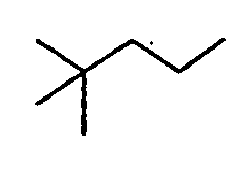
0.09 0.93(s, 9H), 1.65-1.69(m, 2H), 4.31 (m, 2H), 5.23(s, 2H), 6.68(s, 1H), 6.98(d, 2H), 7.77(d, 2H), 8.91(s, 1H) (n-hexane: AcOEt=1:1) 12 

0.20 0.93-1.02(m, 2H), 1.14-1.36(m, 4H), 1.65-1.79(m, 7H), 4.37(dd, 2H), 5.35(s, 2H), 6.63(t, 1H), 6.78(s, 1H), 7.01 (dd, 1H), 7.26-7.27(m, 1H), 8.55(d, 1H), 9.00 (s, 1H) (n-hexane: AcOEt=1:1) 13 

0.17 0.94(s, 9H), 1.64-1.69(m, 2H), 2.07(s, 3H), 3.01 (brs, 4H), 3.57 (brs, 2H), 3.72(brs, 2H), 4.32(m, 2H), 5.12(s, 2H), 6.62(s, 1H), 6.87(brs, 4H), 8.88(s, 1H) (n-hexane: AcOEt=1:1) 14 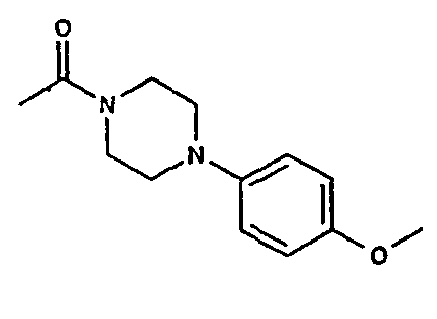
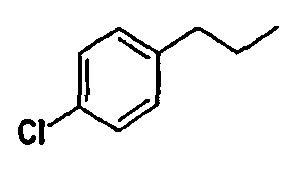
0.56 2.14(s, 3H), 3.07-3.18(m, 4H), 3.64(brs, 2H), 3.79(brs, 2H), 4.57(dd, 2H), 4.86(s, 2H), 6.64 (s, 1H), 6.85(d, 2H), 6.92-6.98 (m, 4H), 7.22(d, 2H), 8.97(s, 1H) (CH2CI2 :MeOH=9:1 15 

0.44 0.93-1.01(m, 2H), 1.10-1.37(m, 4H), 1.65-1.79(m, 7H), 2.58(s, 3H), 4.36-4.40(m, 2H), 5.31 (s, 2H), 6.75(s, 1H), 7.03-7.06(m, 2H), 7.98- 8.00(m, 2H), 8.98(s, 1H) (n-hexane: AcOEt=1:2) 16 

0.93- 1.01 (m, 2H), 1.10-1.38 (m, 4H), 1.64- 1.76(m, 7H), 2.62 (s, 3H), 4.37-4.41 (m, 2H), 5.30 (s, 2H), 6.76(s, 1H), 7.18- 7.21 (m, 1H), 7.44(t, 1H), 7.62- 7.63 (m, 2H), 8.97(s, 1H) 17 

0.3 (CDCl3) 1.00 (s, 9H), 1.72-1.77 (m, 2H), 4.37- 4.41 (m, 2H), 5.24 (s, 2H), 6.72 (s, 1H), 6.99 - 7.06 (m, 3H), 7.32 -7.36 (m, 2H), 8.96 (s, 1H) (n-hexane: AcOEt=2:1) 18 

0.01 1.21 (t, 3H), 1.25 -1.46 (m, 3H), 1.61-1.78 (m, 4H), 1.82-1.90 (m, 4H), 2.04-2.13 (m, 2H), 3.39-3.44 (m, 2H), 4.41-4.45 (m, 2H), 5.34 (s, 2H), 6.01 (br s, 1H), 6.75 (s, 1H), 7.10-7.14 (m, 1H), 7.54-7.58 (m, 2H), 8.99(s, 1H) (n-hexane: AcOEt=2:1) 19 

0.23 1.33-1.44 (m, 3H), 1.61-1.89 (m, 6H), 2.08- 2.10 (m, 2H), 4.38- 4.42 (m, 2H), 5.20 (s, 2H), 6.73 (s, 1H), 6.91- 6.94 (m, 2H), 7.02- 7.06 (m, 2H), 8.98 (s, 1H) (n-hexane: AcOEt=2:1) Ex. R' R" MS (M+) NMR(400MHz, δ, CDCl3) 20 

541 1.31-1.47(m, 3H), 1.66-1.78(m, 2H), 1.83-1.92(m, 4H), 2.04-2.15(m, 5H), 3.07-3.12 (m, 4H), 3.61(t, 2H), 3.75(t, 2H), 4.46 (t, 2H), 5.22(s, 2H), 6.60-6.73(m, 3H), 6.97(t, 1H), 8.96 (s, 1H) 21 

533.1 2.14(s, 3H), 3.07-3.10(m, 4H), 3.21 (t, 2H), 3.63(brs, 2H), 3.78(brs, 2H), 4.60(t, 2H), 4.98(s, 2H), 6.66(s, 1H), 6.86-7.04(m, 7H), 8.95(s, 1H) 22 

389.0 3.16(t, 2H), 4.57(t, 2H), 4.91 (s, 2H), 6.68(s, 1H), 6.91-6.93(m, 2H), 6.96(d, 2H), 7.03-7.06(m, 1H), 7.21(d, 2H), 7.32-7.36(m, 2H), 8.98(s, 1H) 23 

371.1 1.02(s, 9H), 4.43-4.39(m, 2H), 4.41 (t, 2H), 5.29(s, 2H), 6.67-6.73(m, 1H), 6.74(s, 1H), 6.81-6.85(m, 1H), 7.05-7.11 (m, 1H), 8.98(s, 1H) 24 

321.0 0.97(d, 6H), 1.62-1.71 (m, 1H), 1.72-1.78(m, 2H), 4.38(t, 2H), 5.25(s, 2H), 6.73(s, 1H), 6.99-7.01 (m, 2H), 7.02-7.06(m, 1H), 7.32-7.34(m, 2H), 8.96(s, 1H) 25 

417.1 0.93-1.02(m, 2H), 1.11-1.28(m, 3H), 1.28-1.37(m, 1H), 1.64-1.79(m, 7H), 2.19(s, 3H), 4.38(t, 2H), 5.21 (s, 2H), 6.72(s, 1H), 6.95(d, 2H), 7.16(br, 1H), : 7.45(d, 2H), 8.97(s, 1H), 26 

454.0 0.93-1.02(m, 2H), 1.14-1.27(m, 3H), 1.29-1.39(m, 1H), 1.65-1.80(m, 7H), 2.98(s, 3H), 4.39(t, 2H), 5.23(s, 2H), 6.30(s, 1H), 6.71 (s, 1H), 6.99(d, 2H), 7.24 (d, 2H), 8.98(s, 1H), 27 

418.1 0.93-1.02(m, 2H), 1.13-1.28(m, 3H), 1.29-1.37(m, 1H), 1.69-1.80(m, 7H), 3.58(s, 2H), 4.39(t, 2H), 5.24(s, 2H), 5.51 (br, 1H), 6.03(br, 1H), 6.73(s, 1H), 6.99 (d, 2H), 7.25(d, 2H), 8.97(s, 1H) 28 

361.1 0.93-1.01 (m,2H), 1.13-1.27(m, 3H), 1.29-1.37(m, 1H), 1.66-1.79(m, 7H), 4.39(t, 2H), 5.24(s, 2H), 6.72(s, 1H), 6.98-7.01 (m, 2H), 7.03-7.06(m, 1H), 7.32-7.36(m, 2H), 8.96(s, 1H) 29 

391.9 0.92-1.00(m, 2H), 1.14-1.26(m, 3H), 1.29-1.37(m, 1H), 1.48-1.54 (m, 2H), 1.65-1.78(m, 5H), 4.35 (s, 2H), 5.40(s, 2H), 6.26(t, 1H), 6.52(s, 1H), 6.69(d, 1H), 7.28(dd, 1H), 7.41 (m, 1H), 8.92(s, 1H) 30 

407.0 3.16(t, 2H), 4.57(t, 2H), 4.84(s, 2H), 6.65(s, 1H), 6.83-6.85(m, 2H), 6.95(d, 2H), 7.00-7.04(m, 2H), 7.21(d, 2H), 8.98(s, 1H) 31 

391.0 0.93-1.02(m, 2H), 1.11-1.24(m, 3H), 1.29-1.37(m, 1H), 1.69-1.79 (m, 7H), 4.39(t, 2H), 4.66(s, 2H), 5.24(s, 2H), 6.72(s, 1H), 6.98(d, 2H), 7.35(d, 2H), 8.96(s, 1H) 32 

406.9 3.16(t, 2H), 4.56(t, 2H), 4.87(s, 2H), 6.62-6.70(m, 3H), 6.73-6.79 (m, 1H), 6.95(d, 2H), 7.21(d, 2H), 7.26-7.31(m, 1H), 8.99(s, 1H) 33 

406.9 3.19(t, 2H), 4.62(t, 2H), 4.98(s, 2H), 6.67(s, 1H), 6.95-7.04(m, 4H), 7.07-7.16(m, 2H), 7.21(d, 2H), 8.98(s, 1H) 34 

433.0 1.30-1.46(m, 2H), 1.61-1.78(m, 2H), 1.82-1.90(m, 4H), 2.05-2.13(m, 2H), 4.43(t, 2H), 5.28(s, 2H), 6.68-6.74(m, 1H), 6.76(s, 1H), 6.81-6.86(m, 1H), 7.06-7.12(m, 1H), 9.00(s, 1H) 35 

424.9 3.18(t, H), 4.60(t, 2H), 4.94(s, 2H), 6.68-6.74(m, 3H), 7.00(d, 2H), 7.05-7.10(m, 1H), 7.22(d, 2H), 8.99(s, 1H) 36 

433.0 1.32-1.49(m, 2H), 1.62-1.79(m, 2H), 1.83-1.92(m, 4H), 2.06-2.13(m, 2H), 4.46(t, 2H), 5.25(s, 2H), 6.71(s, 1H), 6.80-6.86(m, 1H), 6.88-6.94(m, 1H), 7.00-7.06(m, 1H), 8.99(s, 1H) 37 

379.1 0.93-1.02(m, 2H), 1.13-1.26(m, 3H), 1.27-1.37(m, 1H), 1.64-1.79(m, 7H), 4.38(t, 2H), 5.23(s, 2H), 6.70-6.80(m, 4H), 7.28-7.32(m, 1H), 8.97(s, 1H), 38 

424.8 3.16(t, 2H), 4.56(t, 2H), 4.80(s, 2H), 6.57-6.61 (m, 1H), 6.66(s, 1H), 6.71-6.76(m, 1H), 6.94(d, 2H), 7.08-7.15(m, 1H), 7.22(d, 2H), 8.99(s, 1H), 39 

379.1 0.93-1.02(m, 2H), 1.13-1.26(m, 3H), 1.29-1.37(m, 1H), 1.67-1.79 (m, 7H), 4.39(t, 2H), 5.20(s, 2H), 6.71(s, 1H), 6.91-6.95(m, 2H), 7.01-7.05(m,2H), 8.96(s, 1H), 40 

397.0 0.94-1.04(m, 2H), 1.11-1.26(m, 3H), 1.28-1.40(m, 1H), 1.66-1.81 (m, 7H), 4.41 (t, 2H), 5.28(s, 2H), 6.67-6.73(m, 1H), 6.74(s, 1H), 6.80-6.85(m, 1H), 7.05-7.11 (m, 1H), 8.97(s, 1H), 41 

379.1 0.94-1.03(m, 2H), 1.11-1.29(m, 3H), 1.30-1.40(m, 1H), 1.63-1.81 (m, 7H), 4.44(t, 2H), 5.30(s, 2H), 6.73(s, 1H), 6.98-7.16(m, 4H), 8.98(s, 1H), 42 

362.9 0.93-1.02(m, 2H), 1.14-1.29(m, 3H), 1.30-1.39(m, 1H), 1.52-1.57(m, 2H), 1.65-1.79(m, 5H), 4.36(t, 2H), 5.40(s, 2H), 6.48(br, 1H), 6.61 (s, 1H), 7.70(d, 1H), 8.73(br, 1H), 8.97(s, 1H) 43 

425.0 3.15(t, 2H), 4.56(t, 2H), 4.82(s, 2H), 6.43-6.46(m, 2H), 6.49-6.54(m, 1H), 6.69(s, 1H), 6.94 (d, 2H), 7.22(d, 2H), 9.00(s, 1H), 44 

375.0 0.92-1.01 (m, 2H), 1.13-1.27(m, 3H), 1.28-1.38(m, 1H), 1.64-1.79(m, 7H), 2.24(s, 3H), 4.41 (t, 2H), 5.24(s, 2H), 6.73(s, 1H), 6.93-6.97(m,2H), 7.18-7.21(m, 2H), 8.96(s, 1H) 45 

395.0 0.93-1.02(m, 2H), 1.14-1.25(m, 3H), 1.30-1.38(m, 1H), 1.64-1.79(m, 7H), 4.37(t, 2H), 5.22(s, 2H), 6.73(s, 1H), 6.88(dd, 1H), 7.00-7.05(m, 2H), 7.24-7.28(m, 1H), 8.97(s, 1H) 46 

391.1 1.01-1.10(m, 2H), 1.18-1.35(m, 3H), 1.36-1.45(m, 1H), 1.72-1.87(m, 7H), 3.88(s, 3H), 4.46(t, 2H), 5.30(s, 2H), 6.62(t, 1H), 6.67(d, 2H), 6.81 (s, 1H), 7.31 (t, 1H), 7.33(s, 1H), 9.05(s, 1H) 47 

395.0 0.93-1.02(m, 2H), 1.13-1.25(m, 3H), 1.30-1.38(m, 1H), 1.63-1.80(m, 7H), 4.45(t, 2H), 5.30(s, 2H), 6.75(s,1H), 6.98-7.06(m, 2H), 7.24-7.28(m, 1H), 7.41 (dd, 1H), 8.97(s, 1H) 48 

391.0 0.93-0.99(m, 2H), 1.13-1.28(m, 3H), 1.29-1.38(m, 1H), 1.64-1.80(m, 7H), 3.79(s, 3H), 4.40(t, 2H), 5.19(s, 2H), 6.71(s, 1H), 6.85-6.93(m, 4H), 8.97(s, 1H) 49 

375.0 0.93-0.99(m, 2H), 1.13-1.27(m, 3H), 1.29-1.35(m, 1H), 1.64-1.77(m, 7H), 2.36(s, 3H), 4.38(t, 2H), 5.22(s, 2H), 6.71(s, 1H), 6.78-6.81(m, 2H), 6.85(d, 1H), 7.21(t, 1H), 8.96(s, 1H) - 6-Bromomethyl-7-[2-(4-chloro-phenyl)-ethyl]-7H-pyrrolo[2,3-d]pyrimidine-2-carbonitrile (Example A, 3.8 g, 10.1 mmol) and 3-fluoro-4-hydroxy-N-propyl-benzamide (2.0 g, 10.1 mmol) are dissolved in DMF (220 ml) and potassium carbonate (2.8 g, 20.2 mmol) is added to the solution. The reaction mixture is stirred at rt for 3 h and quenched with saturated ammonium chloride and extracted with ethyl acetate. The combined extracts are washed with brine, dried over magnesium sulfate and evaporated down. Chromatography on silica gel (eluent; n-hexane : ethyl acetate = 4 :1, 2 :1, 1 :1, 1 :2) gives yellow product, which is recrystallized from acetonitrile to afford a pale yellow powder; Rf=0.30 (n-hexane : ethyl acetate = 1:1); 1H-NMR (400MHz, CDCl3) δ : 0.99 (s, 3H), 1.65 (q, 2H), 3.18 (t, 2H), 3.41 (q, 2H), 4.60 (t, 2H), 4.97 (s, 2H), 5.94-6.05 (br, 1H), 6.77 (s, 1H), 6.97-6.99 (m, 3H), 7.26-7.31 (m, 2H), 7.50-7.58 (m, 2H), 8.97 (s, 1H).
- By repeating the procedures described in Example 50 using appropriate starting materials (including those prepared in Example C) and conditions the following compounds of formula 2 are obtained as identified below in Table 3

Table 3 Ex. R' R" Rf (solvent) NMR (400MHz, δ) 51 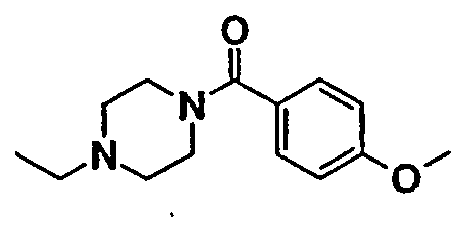

0.45 (CDCl3) (CH2Cl2: MeOH=9:1) 0.89-1.01 (m, 2H), 1.10 (t, 3H), 1.13-1.19 (m, 4H), 1.54 (brs, 3H), 1.67-1.93 (m, 6H), 2.43-2.47 (m, 6H), 3.4-3.9 (br, 4H), 4.36-4.40 (m, 2H), 5.20 (s, 2H), 6.73 (s, 1H), 6.95 (d, 2H), 7.43 (d, 2H), 8.97 (s, 1H) 52 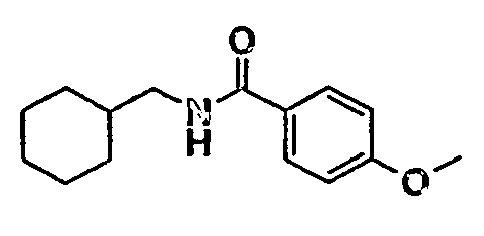

0.12 (CDCl3) (n-hexane: AcOEt=1:1) 0.93-1.10 (m, 4H), 1.13-1.40 (m, 4H), 1.56-1.79 (m, 14H), 2.25-2.45 (br, 6H), 3.29-3.32 (m, 2H), 4.36-4.41 (m, 2H), 5.28 (s, 2H), 6.10 (br, 1H), 6.79 (s, 1H), 7.00 (d, 2H), 7.76 (d, 2H), 8.98 (s, 1H) 53 

0.30 (CDCl3) (n-hexane: AcOEt=1:2) 0.94-0.99 (m, 5H), 1.11-1.43 (m, 4H), 1.61-1.80 (m, 9H), 3.40 (q, 2H), 4.39-4.43 (m, 2H), 5.34 (s, 2H), 5.94-6.05 (br, 1H), 6.73 (s, 1H), 7.10 (t, 1H), 7.53-7.68 (m, 2H), 8.97 (s, 1H) 54 

0.42 (CDCl3) (n-hexane: AcOEt=1:2) 0.94-0.99(m, 5H), 1.11-1.43 (m, 4H), 1.61-1.80(m, 9H), 3.41 (q, 2H), 4.41-4.45 (m, 2H), 5.34 (s, 2H), 5.94-6.05 (br, 1H), 6.73 (s, 1H), 7.09 (d, 1H), 7.70-7.77 (m, 1H), 7.81 (d, 1H), 8.98(s, 1H) 55 

0.52 (CDCl3) (CH2Cl2: MeOH=9:1) 0.94-1.05(m, 2H), 1.11-1.43(m, 4H), 1.61-1.80(m, 7H), 4.30-4.40 (m, 2H), 4.66 (d, 2H), 5.28 (s, 2H), 6.45-6.52 (br, 1H), 6.75 (s, 1H), 7.06 (d, 2H), 7.86 (d, 2H), 8.57 (d, 2H), 8.97 (s, 1H) 56 

0.42 (CDCl3) (n-hexane: AcOEt=1:1) 0.94-0.99(m, 5H), 1.11-1.43(m, 4H), 1.61-1.80(m, 9H), 3.41 (q, 2H), 3.91 (s, 3H), 4.30-4.44(m, 2H), 5.31 (s, 2H), 5.94-6.05(br, 1H), 6.70(s, 1H), 6.96(d, 1H), 7.20 (dd, 1H), 7.46(s, 1H), 8.97 (s, 1H) 57 

0.28 (CDCl3) (n-hexane: AcOEt=1:1) 0.94-0.99(m, 5H), 1.11-1.43(m, 4H), 1.61-1.80 (m, 9H), 2.31 (s, 3H), 3.41 (q, 2H), 4.31-4.42 (m, 2H), 5.28 (s, 2H), 5.94-6.05 (br, 1H), 6.78 (s, 1H), 6.98 (d, 1H), 7.60-7.66 (m, 2H), 8.97 (s, 1H) 58 

0.12 (CDCl3) (n-hexane: AcOEt=1:2) 1.67-1.88 (m, 6H), 3.18 (t, 2H), 3.39-3.63 (m, 4H), 4.61 (t, 2H), 4.96 (s, 2H), 6.68 (s, 1H), 6.90-7.01 (m, 3H), 7.15-7.36 (m, 4H), 8.96 (s, 1H) 59 

0.45 (CDCl3) (n-hexane: AcOEt=1:5) 0.86-0.97 (br, 3H), 1.64-1.73 (br, 2H), 3.01-3.47 (br, 7H), 4.61 (t, 2H), 4.95 (s, 2H), 6.67 (s, 1H), 6.90-7.01 (m, 3H), 7.15-7.26 (m, 4H), 8.96 (s, 1H) 60 

0.18 (CDCl3) (n-hexane: AcOEt=1:5) 2.96-3.06 (br, 6H), 3.18 (t, 2H), 4.61 (t, 2H), 4.95 (s, 2H), 6.67 (s, 1H), 6.94-7.01 (m, 3H), 7.19-7.26 (m, 4H), 8.96 (s, 1H) 61 

0.24 (DMSO-d6) (n-hexane: AcOEt=1:1) 0.89-0.95(m, 2H), 1.12-1.27(m, 4H), 1.59-1.67(m, 5H), 1.73(d, 2H), 4.40(t, 2H), 5.58(s, 2H), 7.02(s, 1H), 7.07(td, 1H), 7.35(d, 1H), 7.45-7.51(m, 3H), 7.70(d, 1H), 9.17(s, 1H) 62 

0.88 (DMSO-d6) (CH2Cl2: MeOH=9:1) 0.90-0.96(m, 2H), 1.12-1.19(m, 3H), 1.23-1.25(m, 1H), 1.61-1.66 (m, 5H), 1.74(d, 2H), 4.39(t, 2H), 5.59(s, 2H), 7.01 (s, 1H), 7.40(d, 1H), 7.53(dd, 1H), 7.61 (br, 2H), 7.63(d, 1H), 9.17(s, 1H) 63 

0.5 (DMSO-d6) (CH2Cl2: MeOH=9:1) 0.91-0.95(m, 2H), 1.10-1.20(m, 3H), 1.21-1.35(m, 1H), 1.65-1.80 (m, 7H), 4.37(t, 2H), 5.51 (s, 2H), 7.02(s, 1H), 7s.24(dd, 1H), 7.39-7.43(m, 2H), 7.52(d, 1H), 7.61(t, 1H), 7.97(s, 1H), 9.18(s, 1H) 64 

0.38 (CDCl3) (n-hexane: AcOEt=1:1) 0.95-1.05(m, 2H), 1.00(t, 3H), 1.15-1.30(m, 3H), 1.30-1.40(m, 1H), 1.63-1.79(m, 9H), 3.44(q, 2H), 4.36-4.41 (m, 2H), 5.30(s, 2H), 6.13(br, 1H), 6.76(s, 1H), 7.10(ddd, 1H), 7.32(dd, 1H), 7.38 (t, 1H), 7.54(dd, 1H), 8.97 (s, 1H) 65 
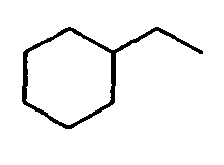
0.25 (CDCl3) (n-hexane: AcOEt=1:1) 0.93-0.99(m, 2H), 1.13-1.25(m, 3H), 1.28-1.38(m, 1H), 1.45-1.60(br, 2H), 1.69-1.80(m, 11H), 3.34(br, 2H), 3.71 (br, 2H), 4.36-4.40(m, 2H), 5.25(s, 1H), 6.73(s, 1H), 7.01-7.05(m, 3H), 7.36(t, 1H), 8.97(s, 1H) 66 

0.59 (DMSO-d6) (CH2Cl2: MeOH=9:1) 3.13(t, 2H), 4.60(t, 2H), 5.39(s, 2H), 6.97(s, 1H), 7.09(dd, 2H), 7.21-7.22(m, 1H), 7.24(dd, 2H), 7.41(t, 2H), 7.53(d, 1H), 7.60 (dd, 1H), 7.98(br, 1H), 9.15(s, 1H) 67 

0.22 (CDCl3) (n-hexane: AcOEt=1:1) 0.95-1.03(m, 2H), 1.15-1.25(m, 3H), 1.30-1.40(m, 1H), 1.66-1.79(m, 7H), 2.84(s, 3H), 4.39-4.43(m, 2H), 5.31 (s, 2H), 6.77(s, 1H), 7.05(dd, 1H), 7.56(d, 1H), 7.72(d, 1H), 8.96(s, 1H) 68 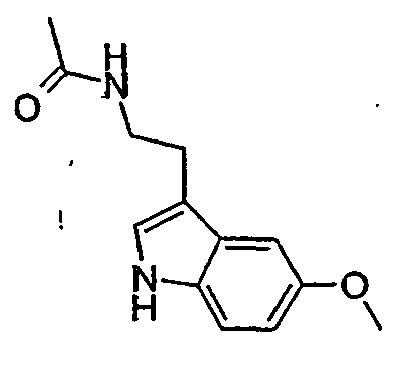

0.52 (CDCl3) (CH2Cl2: MeOH=9:1) 1.96(s, 3H), 2.95(t, 2H), 3.18(t, 2H), 3.58(dd, 2H), 4.62(t, 2H), 5.00(s, 2H), 5.56(br, 1H), 6.74 (s, 1H), 6.86(dd, 1H), 7.00(dd, 2H), 7.07(d, 1H), 7.15(d, 1H), 7.19(dd, 2H), 7.30(d, 1H), 8.02 (br, 1H), 8.97(s, 1H) - By repeating the procedures described in Example 50 using appropriate starting materials (including those prepared in Example D) and conditions the following compounds of formula 2 are obtained as identified below in Table 4

Table 4. Ex. R' R" I Rf(solvent) NMR (400MHz, δ) 69 

0.08 CDCl3 (n-hexane: AcOEt=1:1) 0.92-1.01 (m, 2H), 1.12-1.35 (m, 4H), 1.64-1.78(m, 7H), 3.02(d, 3H), 4.36-4.40(m, 2H), 5.28(s, 2H), 6.04(brs, 1H), 6.74(s, 1H), 7.02(d, 2H), 7.77 (d, 2H), 8.97(s, 1H) 70 

0.13 CDCl3 (n-hexane: AcOEt=1:1) 0.92-1.01(m, 2H), 1.13-1.25 (m, 3H), 1.30-1.36(m, 1H), 1.58-1.79(m, 13H), 3.54(brs, 4H), 4.36-4.40(m, 2H), 5.26 (s, 2H), 6.74(s, 1H), 7.00(d, 2H), 7.41 (d, 2H), 8.97(s, 1H) 71 
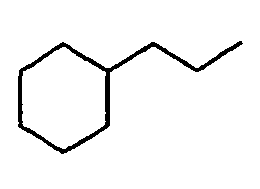
0.15 0.92-1.01 (m, 5H), 1.13-1.35 (m, 4H), 1.61-1.78(m, 9H), 3.42(m, 2H), 4.36-4.40(m, 2H), 5.28(s, 2H), 6.07(br, 1H), 6.74(s, 1H), 7.00-7.04 (m, 2H), 7.76-7.79(m, 2H), 8.97(s, 1H) (n-hexane: AcOEt=1:1) 72 

0.58 CDCl3 (CH2Cl2: MeOH=9:1) 0.92-1.01(m, 2H), 1.12-1.36(m, 4H), 1.62-1.79(m, 7H), 3.06(brs, 6H), 4.36-4.40(m, 2H), 5.26(s, 2H), 6.74(s, 1H), 7.01(d, 2H), 7.45(d, 2H), 8.97(s, 1H) 73 

0.54 CDCl3 (GH2Cl2: MeOH=9:1) 0.92-1.01(m, 2H), 1.10-1.36 (m, 4H), 1.63-1.79(m, 7H), 3.55-3.70(m, 8H), 4.36-4.4.0(m, 2H), 5.27(s, 2H), 6.74(s, 1H), 7.02(d, 2H), 7.44(d, 2H), 8.98 (s, 1H) 74 

0.20 CDCl3 (AcOEt) 3.16(dd, 2H), 3.51-3.83(m, 8H), 4.57(dd, 2H), 4.89(s, 2H), 6.68(s, 1H), 6.91-6.96(m, 4H), 7.21(dd, 2H), 7.43(dd, 2H), 8.99(s, 1H) 75 

0.37 CDCl3 (AcOEt) 0.93-1.01 (m, 2H), 1.13-1.36 (m, 10H), 1.64-1.78(m, 7H), 4.25-4.32(m, 1H), 4.36-4.40 (m, 2H), 5.28(s, 2H), 5.82(brd, 1H), 6.74(s, 1H), 7.02(d, 2H), 7.77(d, 2H), 8.97(s, 1H) 76 

0.53 CDCl3 (AcOEt) 1.27(d, 6H), 3.16(dd, 2H), 4.26-4.31 (m, 1H), 4.57(dd, 2H), 4.90(s, 2H), 5.80-5.83 (m, 1H), 6.68(s, 1H), 6.90-6.95(m, 4H), 7.19-7.23(m, 2H), 7.74-7.77(m, 2H), 8.99 (s, 1H) 77 

0.36 CDCl3 (AcOEt) 0.92-1.01(m, 2H), 1.12-1.36 (m, 4H), 1.64-1.79(m, 7H), 1.92(brs, 4H), 3.55(brs, 4H), 4.36-4.40(m, 2H), 5.26(s, 2H), 6.74(s, 1H), 6.99-7.01 (m, 2H), 7.56(d, 2H), 8.97(s, 1H) 78 

0.23 CDCl3 (AcOEt) 1.87-1.99(m, 4H), 3.16(dd, 2H), 3.46-3.49(m, 2H), 3.63-3.66(m, 2H), 4.57(dd, 2H), 4.90(s, 2H), 6.68(s, 1H), 6.90-6.97(m, 4H), 7.19-7.22(m, 2H), 7.54-7.57(m, 2H), 8.99(s, 1H) 79 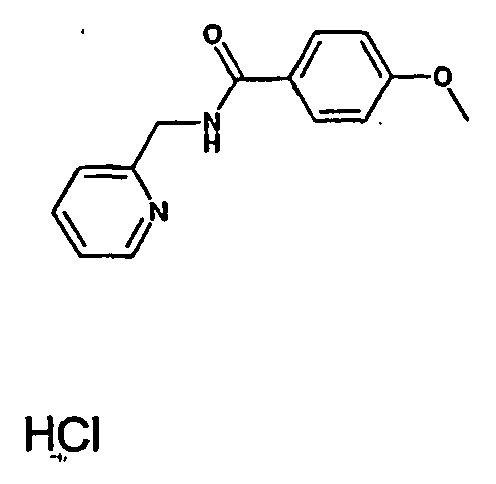

Free salt (DMSO-d6) 0.68 (CH2Cl2: MeOH = 9:1) 0.91-0.97(m, 2H), 1.09-1.30 (m, 4H), 1.60-1.76(m, 7H), 4.37 (dd, 2H), 4.76(d, 2H), 5.56(s, 2H), 7.04(s, 1H), 7.22 (d, 2H), 7.79-7.85(m, 2H), 7.96(d, 2H), 8.37(dd, 1H), 8.77(d, 1H), 9.19(s, 1H), 9.30 (dd, 1H) 80 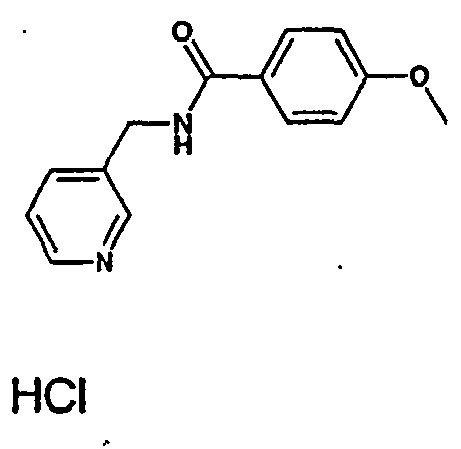

Free salt (DMSO-d6) 0.48 (CH2Cl2: MeOH = 9:1) 0.88-0.97(m, 2H), 1.09-1.30 (m, 4H), 1.59-1.76(m, 7H), 4.37(dd, 2H), 4.61 (d, 2H), 5.54(s, 2H), 7.04(s, 1H), 7.20 (d, 2H), 7.86-7.93(m, 3H), 8.32(d, 1H), 8.74(d, 1H), 8.80 (brs, 1H), 9.14-9.18(m, 2H) 81 

Free salt (DMSO-d6) 0.48 (CH2Cl2: MeOH = 9:1) 3.12(dd, 2H), 4.57-4.64(m, 4H), 5.42(s, 2H), 6.98(s, 1H), 7.07-7.10(m, 2H), 7.18 (d, 2H), 7.23-7.26(m, 2H), 7.93(d, 2H), 7.98-8.02(m, 1H), 8.48(d, 1H), 8:86-8.89(m, 1H), 9.15(s, 1H), 9.25 - By repeating the procedures described in Example 50 using appropriate starting materials (including those prepared in Example E) and conditions the following compounds of formula 2 are obtained as identified below in Table 5

Table 5 Ex. R' R" Rf (solvent) NMR (DMSO-d6, 400MHz, δ) 82 

0.10 0.90-0.96(m, 2H), 1.12-1.30 (m, 4H), 1.60-1.76(m, 7H), 1.83-1.92(m, 2H), 2.74(dd, 2H), 2.88-2.93(m, 2H), 4.36 (dd, 2H), 5.50(s, 2H), 6.99-9.07(m, 3H), 7.49(d, 1H), 7.91 (brt, 1H), 9.18(s, 1H) (n-hexane: AcOEt=1:1) 83 

0.46 0.89-0.95(m, 2H), 1.11-1.17 (m, 4H), 1.56-1.74(m, 7H), 2.06-2.09(m, 4H), 2.64-2.67 (m, 2H), 4.35(dd, 2H), 5.41 (s, 2H), 6.90-7.01 (m, 4H), 9.16(s, 1H), 9.32(s, 1H) (CH2Cl2: MeOH=9:1) 84 

0.09 0.90-0.95(m, 2H), 1.12-1.28 (m, 4H), 1.60-1.75(m, 7H), 1.83 -1.88(m, 2H), 2.69 (dd, 2H), 2.88-2.93(m, 2H), 4.36(dd, 2H), 5.47(s, 2H), 7.00(s, 1H), 7.12-7.15(m, 1H), 7.21-7.23 (m, 2H), 8.06(t, 1H), 9.17(s, 1H) (n-hexane: AcOEt=1:1) 85 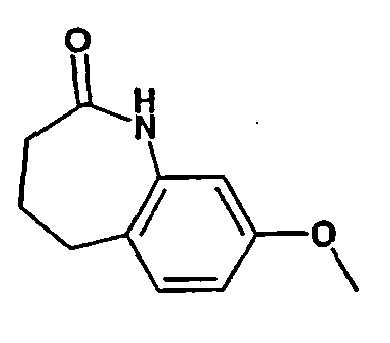

0.1 0.91-0.96(m, 2H), 1.12-1.27 (m, 4H), 1.61-1.76(m, 7H), 2.04 -2.16(m, 2H), 2.13-2.16(m, 2H), 2.62(dd, 2H), 4.35(m, 2H), 5.41(s, 2H), 6.67(d, 1H), 6.84-6.87(m, 1H), 7.00(s, 1H), 7.19 d, 1H), 9.17(s, 1H), 9.52(brs, 1H) (n-hexane: AcOEt=1:1) 86 
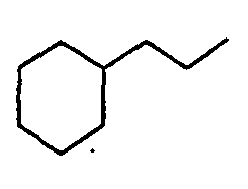
0.54 0.88-0.96(m, 2H), 1.09-1.29 (m, 4H), 1.60-1.91 (m, 7H), 2.89(dd, 2H), 3.34-3.38(m, 2H), 4.36(dd, 2H), 5.52(s, 2H), 7.03-7.06(m, 3H), 7.76-7.82(m, 2H), 9.18(s, 1H) (CH2Cl2: MeOH=9:1) 87 

0.54 0.88-0.97(m, 2H), 1.10-1.29(m, 4H), 1.60-1.76(m, 7H), 2.39-2.43(m, 2H), 2.85(dd, 2H), 4.35(dd, 2H), 5.38(s, 2H), 6.79(d, 1H), 6.87-6.90(m, 1H), 6.96-6.98(m, 2H), 9.16(s, 1H) (CH2CI2: MeOH=9:1) - To a solution of 6-bromomethyl-7-[2-(4-chloro-phenyl)-ethyl]-7H-pyrrolo[2,3-d]pyrimidine-2-carbonitrile (Example B2, 500mg) in DMF (5mL) is added 3-fluoro-4-hydroxybenzaldehyde (224mg), potassium carbonate (276mg), stirred for 2h. The reaction mixture is diluted with water and extracted with EtOAc. The organic layer is successively washed with water and aqueous sodium chloride, dried over magnesium sulfate, and concentrated in vacuo. The crude product is purified by silica gel column chromatography to give the title compound; Rf = 0.25 (n-hexane; EtOAc=1:1); 1H NMR(DMSO-d6, δ (ppm); 3.19(dd, 2H), 4.60(dd, 2H), 5.00(s, 2H), 6.72)s, 1H), 6.98(dd, 2H), 7.06(dd, 1H), 7.22(d, 2H), 7.65-7.69(m, 2H), 9.01 (s, 1H), 9.90(s, 1H)
- To a solution of 7-[2-(4-chloro-phenyl)-ethyl]-6-(2-fluoro-4-formyl-phenoxy methyl)-7H-pyrrolo[2,3-d]pyrimidine-2-carbonitrile (Example 88, 480mg), NaClO4 (298mg) in tetrahydrofurane (10mL) is added NH2SO3H (160mg) in H2O at 0°, stirred for 3h at rt. The reaction mixture is diluted with H2O and extracted with EtOAc. The organic layer is successively washed with H2O and aq. sodium chloride, dried over MgSO4, and concentrated in vacuo. The crude product is washed with Et2O to give the title compound; Rf = 0.08 (n-hexane; EtOAc=1:1); 1H NMR (DMSO-d6, δ (ppm): 3.13(dd, 2H), 4.61(dd, 2H), 5.54(s, 2H), 7.01(s, 1H), 7.08-7.10(m, 2H), 7.22-7.25(m, 2H), 7.45-7.49(m, 1H), 7.71-7.74(m, 1H), 7.80-7.82(m, 1H), 9.16(s, 1H), 13.00(brs, 1H).
- To a solution of 4-{7-[2-(4-chloro-phenyl)-ethyl]-2-cyano-7H-pyrrolo[2,3-d]pyrimidin-6-ylmethoxy}-3-fluoro-benzoic acid (60mg) in pyridine (1 mL) is added POCl3 (15uL) at 0°C and continuing with stirring at 0°C for 1 h. To the reaction mixture is added di-n-propylamine (17uL) and stirred for 1 hr at 0°C, diluted with H2O and extracted with EtOAc. The organic layer is successively washed with H2O and aqueous sodium chloride, dried over MgSO4, and concentrated in vacuo. The crude product is purified by silica gel column chromatography to give the title compound; Rf = 0.13(n-hexane; EtOAc=1:1); 1H NMR (CDCl3, δ (ppm)); 0.88-1.04(m, 6H), 1.65-1.85 (m, 4H), 3.18-3.61 (m, 6H), 4.70(dd, 2H), 5.05(s, 2H), 6.76(s, 1H), 7.02-7.10(m, 3H), 7.20-7.31 (m, 4H), 9.08(s, 1H).
- To a solution of 7-(3-ethyl-heptyl)-6-(4-formyl-phenoxymethyl)-7H-pyrrolo[2,3-d]pyrimidine-2-carbonitrile (720 mg, 1.90 mmol) in MeOH (30 ml) and THF (30 ml) is added portionwise NaBH4 (100 mg, 2.60 mmol). The reaction mixture is stirred at rt for 4 h, and the bulk of solvents are removed in vacuo. The residue is diluted with water, and extracted with CH2Cl2. The combined organic extracts are washed with brine, and dried over Na2SO4, filtered, and concentrated in vacuo. The residue is purified by silica gel column chromatography to give the alcohol 7-(3-ethyl-heptyl)-6-(4-hydroxy methyl-phenoxymethyl)-7H-pyrrolo[2,3-d]pyrimidine-2-carbonitrile. To a solution of said alcohol (140 mg, 0.36 mmol), 5,5-dimethyl-oxazolidinedione (46 mg, 360 mmol), and Ph3P (105 mg, 0.40 mmol) in THF (2 mL) is added DEAD (0.25 ml, 0.46 mmol). The reaction mixture is stirred at rt for overnight. After concentration, the residue is purified by RP-HPLC to give the title compound; Rf 0.38 (n-Hexane:EtOAc=1:1); 1H-HMR (400 MHz) δ 0.92-1.00(m, 2H), 1.18-1.25(m, 3H), 1.30-1.40(m, 1H), 1.58(s, 6H), 1.68-1.78(m, 7H), 4.35-4.39(m, 2H), 4.62(s, 2H), 5.22(s, 2H), 6.71 (s, 1H), 6.95(dd, 2H), 7.37(dd, 2H), 8.96(s, 1H).
- 6-Bromomethyl-7-(2-cyclohexyl-ethyl)-7H-pyrrolo[2,3-d]pyrimidine-2-carbonitrile (Example A, 0.23mmol) is dissolved in 2ml of DMF. To the solution is added 1-(4-hydroxy-phenyl)-3,3-dimethyl-pyrrolidin-2-one (0.25mmol) and K2CO3 (0.27mmol) at rt. After 1.5 h the reaction mixture is diluted with H2O, extracted with AcOEt twice, and dried over Na2SO4. Flash chromatography on silica gel using AcOEt-Hexane (1:2) provides the product (for physical data see Table 6 below).
- By repeating the procedures described in Example 92 using appropriate starting materials (including those prepared in Examples F and G) and conditions the following compounds of formula 2 are obtained as identified below in Table 6.
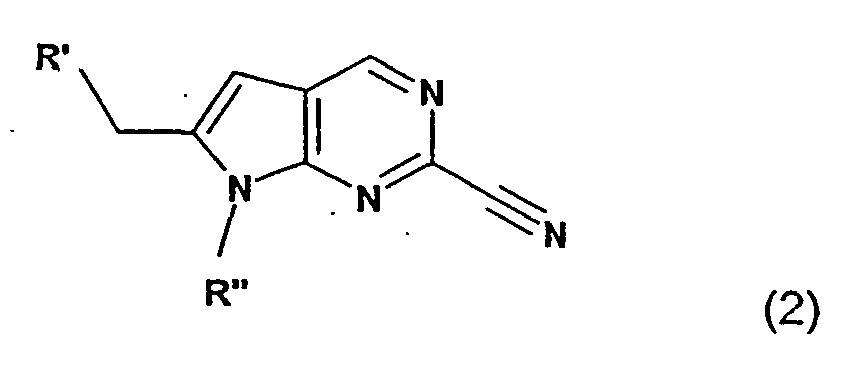
Table 6 Ex. R' R" Rf (solvent) NMR(CDCl3, 400MHz, δ) 92 

0.93-1.02(m, 2H), 1.13-1.38 (m, 10H), 1.64-1.80(m, 7H), 2.01 (t, 2H), 3.73(t, 2H), 4.37-4.40(m, 2H), 5.23(s, 2H), 6.71 (s, 1H), 6.98-7.00(m, 2H), 7.60-7.62(m, 2H), 8.95(s, 1H) 93 

MS m/z 0.93-1.02(m, 2H), 1.10-1.38 (m, 4H), 1.60-1.80(m, 7H), 1.14-2.21(m, 2H), 2.64(t, 2H), 3.86(t, 2H), 4.37-4.41 (m, 2H), 5.27(s, 2H), 6.75-6.78(m, 2H), 7.00-7.04(m, 1H), 7.32 (t, 1H), 7.75-7.76(m, 1H), 8.96 (s, 1H) 444 (M+H+) 94 

0.11 0.95-1.04(m, 2H), 1.14-1.29 (m, 3H), 1.31- 1.41(m, 1H), 1.65-1.82(m, 7H), 2.13- 2.21 (m, 2H), 2.61 (t, 2H), 3.81 (t, 2H), 4.42 - 4.46(m, 2H), 5.28 (s, 2H), 6.69(s, 1H), 7.03(t, 1H), 7.26- 7.29 (m, 2H), 7.57-7.61 (m, 1H), 8.95(s, 1H) (n-hexane: AcOEt = 2:1) 95 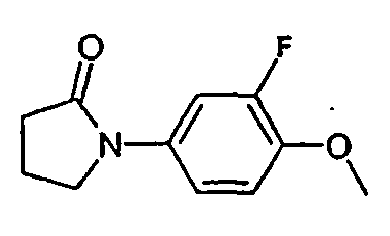

0.17 2.14-2.21 (m, 2H), 2.62(t, 2H), 3.19(t, 2H), 3.82(t, 2H), 4.62 (t, 2H), 4.94(s, 2H), 6.64(s, 1H), 6.93(t, 1H), 6.99-7.02 (m, 2H), 7.20-7.23(m, 2H), 7.58-7.62(m, 1H), 8.97(s, 1H) (n-hexane: AcOEt=2 :1) 96 

MS m/z 0.93-1.02 (m, 2H), 1.14-1.35 (m, 4H), 1.64 - 1.80 (m, 7H), 2.13 - 2.21 (m, 2H), 2.61 (t, 2H), 3.84 (t, 2H), 4.36-4.40 (m, 2H), 5.23 (s, 2H), 6.71 (s, 1H), 6.98-7.00 (m, 2H), 7.55 -7.58 (m, 2H), 8.96 (s, 1H) 444 (M+H+) - 6-(4-Amino-phenoxymethyl)-7-(2-cyclohexyl-ethyl)-7H-pyrrolo[2,3-d]pyrimidine-2-carbonitrile (0.21 mmol) is dissolved in 2ml of CH2Cl2. To the solution is added 2,2,2-trifluoroethanesulfonyl chloride (0.25mmol) and pyridine (0.25mmol) at rt. After 0.5 h the reaction mixture is diluted with H2O, extracted with Et2O twice, and dried over Na2SO4. Flash chromatography on silica gel using AcOEt-Hexane (1:1) gives the title product; Rf 0.18 (n-Hexane: AcOEt=2:1); 1H-HMR (400 MHz, CDCl3) δ : 0.93 -1.02 (m, 2H), 1.10 - 1.28 (m, 3H), 1.29 - 1.39 (m, 1H), 1.65 - 1.79 (m, 5H), 3.73 - 3.79 (q, 2H), 4.37 - 4.41 (m, 2H), 5.24 (s, 2H), 6.63 (br s, 1H), 6.74 (s, 1H), 7.01 - 7.03 (m, 2H), 7.27 (d, 2H), 8.98 (s, 1H).
- 5-Bromo-4-(2-cyclopentyl-ethylamino)-pyrimidine-2-carbonitrile (0.46mmol) and 1-[4-(4-prop-2-ynyloxy-phenyl)-piperazin-1-yl]-ethanone (0.41 mmol) are dissolved in 4ml of DMF. The mixture is degassed by evaporation and purging with nitrogen under stirring a few times. (Ph3P)2PdCl2 (0.021 mmol), Cul (0.041 mmol), and Et3N (0.82mmol) are added and the reaction is heated under nitrogen at 80°C for 9 h. After the mixture is cooled to rt, the mixture is extracted twice with AcOEt, and the combined organic layer are washed with brine several times, dried over Na2SO4, and concentrated under reduced pressure. Flush chromatography on silica gel provides a solid. The solid is dissolved in 3ml of DMF. To the solution is added DBU (60ml) and then heated at 100°C for 1.5h. After the mixture is cooled to rt., the mixture is concentrated under reduced pressure. Flush chromatography on silica gel using gives the title compound as a yellow solid; Rf 0.13 (AcOEt); 1H-HMR (400 MHz, CDCl3) δ : 1.14-1.16(m, 2H), 1.49-1.65 (m, 4H), 1.78-1.88(m, 5H), 2.14(s, 3H), 3.04-3.10 (m, 4H), 3.62(t, 2H), 3.77(t, 2H), 4.39 (t, 2H), 5.20(s, 2H), 6.70(s, 1H), 6.74(d, 2H), 7.03(d, 2H), 8.95(s, 1H).
- By repeating the procedures described in Example 98 using appropriate starting materials (including some of those prepared in Examples A to G) and conditions the following compounds of formula 2 are obtained as identified below in Table 7.

Table 7 Ex. R' R" Rf (solvent) NMR (400MHz, CDCl3, δ) 99 

0.16 0.97-1.09(m, 2H), 1.29-1.38 (m, 4H), 1.42-1.81 (m, 4H), 1.64-1.75(m, 3H), 1.80-1.90 (m, 2H), 2.14(s, 3H), 3.04-3.10(m, 4H), 3.62(t, 2H), 3.77 (t, 2H), 4.39(t, 2H), 5.20(s, 2H), 6.70(s, 1H), 6.70(d, 2H), 6.92(d, 2H), 8.97(s, 1H) (AcOEt) 100 
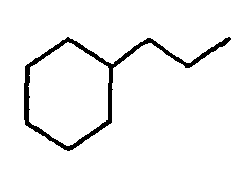
0.55 0.96-1.02(m, 2H), 1.14-1.36 (m, 4H), 1.65-1.79(m, 7H), 2.14(s, 3H), 3.04-3.10(m, 4H), 3.62(dd, 2H), 3.77(dd, 2H), 4.38(dd, 2H), 5.19(s, 2H), 6.69 (s, 1H), 6.92(s, 4H), 8.95(s, 1H) (CH2Cl2: MeOH=9 :1) 101 

0.13 1.32-1.44(m, 3H), 1.59-1.75 (m, 2H), 1.80-1.88(m, 4H), 2.06 -2.09(m, 2H), 2.14(s, 3H), 3.04-3.10(m, 4H), 3.62(t, 2H), 3.77(t, 2H), 4.38-4.42(m, 2H), 5.19(s, 2H), 6.71 (s, 1H), 6.92 (s, 4H), 8.97(s, 1H) (AcOEt) 102 

0.40 0.91-1.02 (m, 2H), 1.12-1.39 (m, 3H), 1.61-1.82 (m, 8H), 2.69 (t, 2H), 2.96 (t, 2H), 4.39(t, 2H), 5.23 (s, 2H), 6.72 (s, 1H), 6.84 (d, 1H), 6.89 (s, 1H), 6.90 (d, 1H), 7.26 (t, 1H), 8.96 (s, 1H) (AcOEt) 103 

0.10 (DMSO-d6); 0.90-0.96 (m, 2H), 1.12-1.26 (m, 4H), 1.61-1.75 (m, 7H), 4.34-4.38 (m, 2H), 5.55(s, 2H), 7.04(s, 1H), 7.19 (d, 2H), 7.93(d, 2H), 9.18 (s, 1H) (CH2Cl2: MeOH = 8:2) - To the solution of 4-[2-cyano-7-(2-cyclohexyl-ethyl)-7H-pyrrolo[2,3-d]pyrimidin -6-ylmethoxy]-benzoic acid (51 mg, 0.13 mmol) and 2,2,2-trifluoroethylamine (25 mg, 0.25 mmol) in DMF (3 ml), HOAt (26 mg, 0.19 mmol) and WSCl.HCl (36 mg, 0.19 mmol) are added at 0°C. The reaction mixture is stirred at rt for 15 h and quenched with saturated ammonium chloride and extracted with ethyl acetate. The combined extracts are washed with H2O, brine and dried over magnesium sulfate. The crude product is purified by reverse phase HPLC and fraction are collected and evaporated down. Saturated sodium bicarbonate is added and neutralized and the water phase is extracted with ethyl acetate. The combined extracts are washed with brine, dried over magnesium sulfate and evaporated down to give the desired product; Rf=0.76 (n-hexane : ethyl acetate = 1:2); 1H-NMR (400MHz, CDCl3) δ : 0.94-0.99 (m, 2H), 1.11-1.39 (m, 4H), 1.61-1.84 (m, 7H), 4.09-4.17 (m, 2H), 4.37-4.40 (m, 2H), 5.39 (s, 2H), 6.27-6.30 (br, 1H), 6.76 (s, 1H), 7.07 (d, 2H), 7.82 (d, 2H), 8.97 (s, 1H).
- By repeating the procedures described in Example 104 using appropriate starting materials (including some of those prepared in Examples A to G) and conditions the following compounds of formula 2 are obtained as identified below in Table 8.

Table 8 Ex. R' R" Rf (solvent) NMR (400MHz, CDCl3, δ) 105 

0.12 0.92-1.04(m, 2H), 1.10-1.39 (m, 4H), 1.52-1.71(m, 9H), 2.61 (t, 2H), 2.95(s, 6H), 2.97(t, 2H), 4.83(t, 2H), 5.23(s, 2H), 6.73(s, 1H), 6.83(dd, 1H), 6.89 (s, 1H), 6.90(dd, 1H), 7.26(t, 1H), 8.97(s, 1H) (AcOEt) 106 

0.04 0.91-1.02(m, 2H), 1.11-1.38 (m, 3H), 1.51-1.81 (m, 8H), 2.61 (t, 2H), 2.28(s, 3H), 2.30(t, 2H), 2.35(t, 2H), 2.62(t, 2H), 2.97(t, 2H), 3.41 (t, 2H), 3.63(t, 2H), 4.39(t, 2H), 5.22(s, 2H), 6.73(s, 1H), 6.83(dd, 1H), 6.87 (s, 1H), 6.90(dd, 1H), 7.26(t, 1H), 8.98(s, 1H) (AcOEt) - 6-Chloromethyl-7-(2-cyclohexyl-ethyl)-7H-pyrrolo[2,3-d]pyrimidine-2-carbonitrile and (4-hydroxy-phenyl)-carbamic acid tert-butyl ester are reacted by the procedure described in Example 104 in order to give the title compound; Rf = 0.16 (n-hexane:AcOEt = 3:1). NMR (400MHz, CDCl3, δ) 0.92-1.05 (m, 2H), 1.15-1.40 (m, 4H), 1.51 (s, 9H), 1.60-1.84 (m, 7H), 4.38 (t, 2H), 5.30 (s, 2H), 6.38 (br s, 2H), 6.70 (s, 2H), 6.92 (d, 2H), 7.31 (d, 2H), 8.95 (s, 1H).
- The compound of Example 107A is treated with TFA in methylene chloride providing the amine 6-(4-amino-phenoxymethyl)-7-(2-cyclohexyl-ethyl)-7H-pyrrolo[2,3-d]pyrimidine-2-carbonitrile. To a solution of said amine (0.18 mmol) in methylene chloride (10 ml) are added propionyl chloride (0.62 mmol) and triethylamine (0.97 mmol) dropwise at 0 °C. The mixture is stirred at rt for 4h. The reaction mixture is diluted with water and extracted with AcOEt. The organic layer is washed with water and brine, dried over MgSO4, and concentrated in vacuo. The residue is purified by HPLC with reverse phase column (0.1%TFA in H2O and 0.1%TFA in MeCN) to give the title compound; Rf (n-hexane: AcOEt=1:1): 0.15; 1H-HMR (400 MHz) δ: 0.92-1.04 (m, 2H), 1.11-1.40 (m, 7H), 1.62-1.81 (m, 7H), 2.38 (q, 2H), 4.38 (t, 2H), 5.21 (s, 2H), 6.71 (s, 2H), 6.94 (d, 2H), 7.05 (br s, 1H), 7.47 (d, 2H), 8.86 (s, 1H).
- By repeating the procedures described in Example 107A and 107B using appropriate starting materials (including some of those prepared in Examples A to G) and conditions the following compounds of formula 2 are obtained as identified below in Table 9.

Table 9 Ex. R' R" Rf (solvent) NMR (400MHz, CDCl3, δ) 108 

0.31 0.92-1.05 (m, 5H), 1.12-1.42 (m, 7H), 1.60-1.85 (m, 9H), 2.33 (t, 2H), 4.40 (t, 2H), 5.21 (s, 2H), 6.71 (s, 2H), 6.94 (d, 2H), 7.03 (br s, 1H), 7.47 (d, 2H), 8.95 (s, 1H) (n-hexane: AcOEt = 1:1) 109 

0.26 0.81-0.89 (m, 2H), 0.91-1.04 (m, 2H), 1.07-1.21 (m, 2H), 1.15-1.40 (m, 4H), 1.45-1.55 (m, 1H), 1.62-1.82 (m, 7H), 4.38 (t, 2H), 5.21 (s, 2H), 6.70 (s, 1H), 6.94 (d, 2H), 7.25 (br s, 1H), 7.47 (d, 2H), 8.95 (s, 1H) (n-hexane: AcOEt = 1:1) - 6-Bromomethyl-7-[2-(4-chloro-phenyl)-ethyl]-7H-pyrrolo[2,3-d]pyrimidine-2-carbonitrile and 3-fluoro-4-nitro-phenol are reacted by the same procedures described in Example 104 to give the title compound; Rf 0.43 (n-hexane: AcOEt=1:1); 1H-HMR (400 MHz) δ: 3.16 (t, 2H), 4.56 (t, 2H), 4.84 (s, 2H), 6.71 (s, 1H), 6.74 (s, 1H), 6.76 (s, 1H), 6.91 (d, 2H), 7.22 (d, 2H), 8.14 (t, 1H), 9.03 (s, 1H).
- The compound of Example 110 is reduced by hydrogenation over 10% Pd-C under hydrogen atmosphere to the amine 7-[2-(4-chloro-phenyl)-ethyl]-6-(3-fluoro-4-amino-phenoxymethyl)-7H-pyrrolo[2,3-d] pyrimidine-2-carbonitrile. Said amine is acylated with acetyl chloride by the same procedures described above to give the title compound; Rf 0.14 (n-hexane: AcOEt = 1:1); 1H-HMR (CDCl3, 400 MHz) δ: 2.22 (s, 3H), 3.15 (t, 2H), 4.56 (t, 2H), 4.83 (s, 2H), 6.65-6.71 (m, 3H), 6.95 (d, 2H), 7.18 (br s, 1H), 7.21 (d, 2H), 8.18 (t, 1H), 8.99 (s, 1H).
- By repeating the procedures described in Example 110 and 111 using appropriate starting materials (including some of those prepared in Examples A to G) and conditions the following compounds of formula 2 are obtained as identified below in Table 10.

Table 10 Ex. R' R" Rf (solvent) NMR(400MHz, CDCl3, δ) 112 

0.34 1.03 (t, 3H), 1.71-1.84 (m, 2H), 2.38 (t, 2H), 3.15 (t, 2H), 4.56 (t, 2H), 4.83 (s, 2H), 6.65-6.71 (m, 3H), 6.94 (d, 2H), 7.15 (br s, 1H), 7.21 (d, 2H), 8.23 (t, 1H), 8.99 (s, 1H) (n-hexane: AcOEt = 1:1) 113 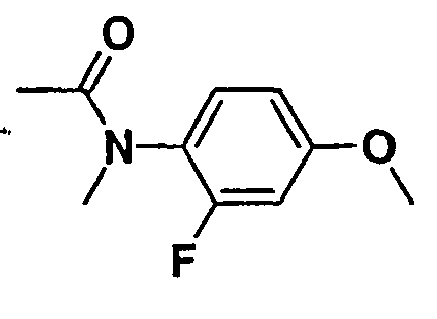

0.26 1.87 (s, 3H), 3.17 (t, 2H), 3.20 (s, 3H), 4.57 (t, 2H), 4.84 (s, 2H), 6.68-6.75 (m, 3H), 6.95 (d, 2H), 7.20 (t, 1H), 7.24 (d, 2H), 9.01 (s, 1H) (n-hexane: AcOEt = 1:2) 114 
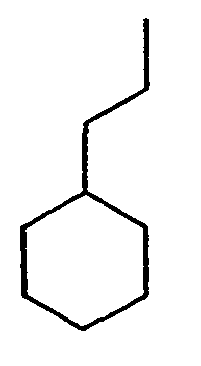
0.22 0.92-1.04 (m, 2H), 1.10-1.40 (m, 4H), 1.60-1.82 (m, 7H), 2.21 (s, 3H), 4.37 (t, 2H), 5.20 (s, 2H), 6.72 (s, 2H), 6.73-6.80 (m, 2H), 7.18 (br s, 1H), 8.18 (t, 1H), 8.97 (s, 1H) (n-hexane: AcOEt = 1:1) 115 

0.22 0.91-1.03 (m, 2H), 1.12-1.40 (m, 3H), 1.65-1.81 (m, 7H), 2.43 (q, 2H), 4.37 (q, 2H), 5.20 (s, 2H), 6.71 (s, 2H), 6.72-6.82 (m, 2H), 7.17 (br s, 1H), 8.23 (t, 1H), 8.97 (s, 1H) (n-hexane: AcOEt = 1:1) 116 

0.29 3.19 (t, 2H), 4.60 (t, 2H), 4.98 (s, 2H), 6.72 (s, 1H), 6.96 (d, 2H), 7.02 (t, 1H), 7.21 (d, 2H), 8.02-8.11 (m, 2H), 9.02 (s, 1H) (n-hexane: AcOEt = 1:1) 117 

0.20 2.17 (s, 3H), 3.18 (t, 2H), 4.62 (t, 2H), 4.92 (s, 2H), 6.63 (s, 1H), 6.89 (t, 1H), 7.00 (d, 2H), 7.05-7.12 (m, 2H), 7.22 (dd, 2H), 7.48-7.54 (m, 1H), 9.00 (s, 1H) (n-hexane: AcOEt = 1:2) 118 

0.11 0.93-1.05 (m, 2H), 1.15-1.43 (m, 4H), 1.61-1.85 (m, 7H), 2.17 (s, 3H), 4.43 (t, 2H), 5.26 (s, 2H), 6.68 (s, 2H), 6.98 (t, 1H), 7.08-7.12 (m, 2H), 7.51 (dd, 1H), 8.95 (s, 1H) (n-hexane: AcOEt = 1:1) 119 
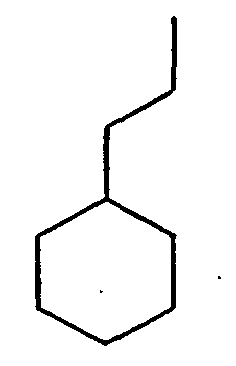
0.21 0.92-1.04 (m, 2H), 1.12-1.45 (m, 4H), 1.61-1.84 (m, 7H), 2.38 (q, 2H), 4.43 (t, 2H), 5.26 (s, 2H), 6.68 (s, 2H), 6.98 (t, 1H), 7.05-7.14 (m, 2H), 7.54 (dd, 1H), 8.95 (s, 1H) (n-hexane: AcOEt = 1:1) - 6-(4-Chloromethyl-2-fluoro-phenoxymethyl)-7-[2-(4-chloro-phenyl)-ethyl]-7H-pyrrolo[2,3-d]pyrimidine-2-carbonitrile and propylamine are treated with potassium carbonate in DMF to give 7-[2-(4-chloro-phenyl)-ethyl]-6-(2-fluoro-4-propylaminomethyl-phenoxymethyl)-7H-pyrrolo[2,3-d]pyrimidine-2-carbonitrile; Rf 0.10 (n-hexane: AcOEt = 1:2); 1H-HMR (CDCl3, 400 MHz) δ: 0.92 (t, 3H), 1.49-1.59 (m, 2H), 2.62 (t, 2H), 3.18 (t, 2H), 3.77 (s, 2H), 4.61 (t, 2H), 4.95 (s, 2H), 6.65 (s, 1H), 6.91 (t, 1H), 6.98-7.08 (m, 3H), 7.11-7.21 (m, 3H), 8.97 (s, 1H).
- By repeating the procedures described in Example 120 using appropriate starting materials (including some of those prepared in Examples A to G) and conditions the following compounds of formula 2 are obtained as identified below in Table 11.

Table 11 Ex. R' R" Rf (solvent) NMR(400MHz, CDCl3, δ) 121 

0.11 1.06 (br s, 6H), 2.55 (br s, 4H), 3.19 (t, 2H), 3.53 (br, 2H), 4.62 (t, 2H), 4.96 (s, 2H), 6.66 (s, 1H), 6.89 (t, 1H), 7.01 (d, 2H), 7.02-7.08 (br, 1H), 7.13-7.22 (m, 3H), 8.97 (s, 1H) (CH2Cl2: MeOH= 95:5) 122 

0.13 0.91 (t, 3H), 1.48-1.61 (br, 2H), 2.20 (br s, 3H), 2.35 (br s, 2H), 3.19 (t, 2H), 3.44 (br s, 2H), 4.61 (t, 2H), 4.96 (s, 2H), 6.66 (s, 1H), 6.90 (t, 1H), 7.03-7.08 (m, 3H), 7.12 (d, 1H), 7.21 (d, 2H), 8.97 (s, 1H) (n-hexane: AcOEt = 1:2) 123 

0.09 DMSO-d6; (n-hexane: AcOEt = 1:1) 1.22-1.41 (m, 2H), 1.60-1.83(m, 4H), 2.75-2.88(m, 2H), 3.13 (t, 2H), 3.22-3.37(m, 2H), 4.21 (s, 2H), 4.60(t, 2H), 5.48(s, 2H), 7.01(s, 1H), 7.08 (d, 2H), 7.24 (d, 2H), 7.37(d, 1H), 7.46(t, 1H), 7.53(d, 1H), 9.16(s, 1H), 9.96(s, 1H) 124 

0.08 0.91-1.97(m, 17H), 2.12-2.38(m, 2H), 2.51-2.65(m, 2H), 3.38-3.52(m, 2H), 4.04(s, 2H), 4.41 (t, 2H), 5.33(s, 2H), 6.75(s, 1H), 7.10-7.21 (m, 1H), 7.41 (d, 1H), 7.58-7.72(m, 1H), 8.99(s, 1H), 12.41 (s, 1H) (n-hexane: AcOEt = 1:1) 125 

0.06 0.91-1.07(m, 2H), 1.12-1.41(m, 4H), 1.57-1.85(m, 7H), 2.76(s, 6H), 4.08(s, 2H), 4.41 (t, 2H), 5.33(s, 2H), 6.75(s, 1H), 7.19(t, 1H), 7.38(d, 1H), 7.60(d, 1H), 8.89(s, 1H), 13.00(s, 1H) (n-hexane: AcOEt = 1:1) 126 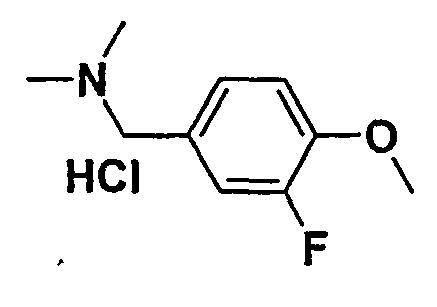

0.09 Salt 1.18-1.63(m, 9H), 2.01-2.16(m, 2H), 2.76(s, 6H), 4.09(s, 2H), 4.42(t, 2H), 5.33(s, 2H), 6.78(s, 1H), 7.21 (t, 1H), 7.38(d, 1H), 7.63(d, 1H), 9.00(s, 1H), 12.97 (s, 1H) free (n-hexane: AcOEt = 1:1 127 

MS DMSO-d6 (M+H) 2.74(s, 6H), 3.19(t, 2H), 4.27(s, 2H), 4.67(t, 2H), 5.54(s, 2H), 7.07(s, 1H), 7.15(d, 2H), 7.30(d, 2H), 7.42(d, 1H), 7.51 (d, 1H), 7.57(d, 1H), 9.22(s, 1H) 464.3 128 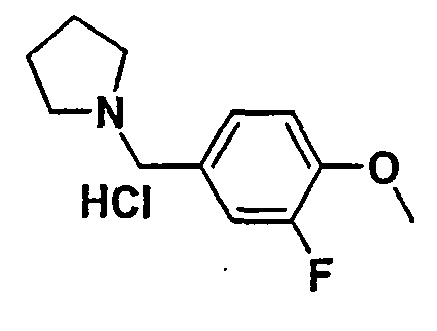

MS 1.22-1.55(m, 4H), 1.57-2.13(m, 9H), 2.18-2.32(m, 2H), 2.76-2.89(m, 2H), 3.59-3.75(m, 2H), 4.13(s, 2H), 4.43(t, 2H), 5.33(s, 2H), 6.78(s, 1H), 7.16-7.25(m, 1H), 7.39(d, 1H), 7.62-7.72(m, 1H), 9.01 (s, 1H), 12.74(s, 1H) (M+H) 498.3 129 

MS 0.91-1.06(m, 2H), 1.08-1.41 (m, 6H), 1.59-2.36(m, 9H), 2.77-2.89(m, 2H), 3.51-3.72(m, 2H), 4.15(s, 2H), 4.43(t, 2H), 5.58(s, 2H), 6.85(s, 1H), 7.07(d, 1H), 7.10(s, 1H), 8.34(d, 1H), 8.96(s, 1H), 12.71 (s, 1H) (M+H) 462.2 130 

0.04 Salt free (n-hexane: AcOEt = 1:1 0.92-1.42(m, 5H), 1.59-1.85(m, 8H), 2.79(m, 6H), 4.15(s, 2H), 4.43(t, 2H), 5.58(s, 2H), 6.85(s, 1H), 7.06-7.14(m, 2H), 8.29(d, 1H), 8.98(s, 1H), 12.76(s, 1H) - 6-Chloromethyl-7-(2-cyclohexyl-ethyl)-7H-pyrrolo[2,3-d]pyrimidine-2-carbonitrile and 4-(4-hydroxy-phenyl)-piperazine-1-carboxylic acid tert-butyl ester are reacted by the procedure described in Example 107A to give 4-{4-[2-cyano-7-(2-cyclohexyl-ethyl)-7H-pyrrolo[2,3-d]pyrimidin-6-ylmethoxy]-phenyl}-piperazine-1-carboxylic acid tert-butyl ester. Such ester is treated with TFA for deprotection of the Boc group and the deprotected piperazine derivative is acylated with propionyl chloride according to the same procedures described in Example 107B to furnish the title compound; 1H-HMR (CDCl3, 400 MHz) δ: 0.58 (CH2Cl2:MeOH=9:1); 0.93-1.03(m, 2H), 1.15-1.43(m, 7H), 1.59-1.81 (m, 7H), 2.39(q, 2H), 3.07(brs, 4H), 3.62(brt, 2H), 3.78(brt, 2H), 4.39(t, 2H), 5.19(s, 2H), 6.69(s, 1H), 6.92(s, 4H), 8.95(s, 1H).
- By repeating the procedures described in Example 131 using appropriate starting materials (including some of those prepared in Examples A to G) and conditions the following compounds of formula 2 are obtained as identified below in Table 12.

Table 12 (R" represents cyclohexylethyl) Ex. R' Rf (solvent) NMR(400MHz, CDCl3, δ) 132 
0.75 (CH2CI2: MeOH = 9:1) 0.93-1.05(m, 5H), 1.12-1.39(m, 7H), 1.61-1.82(m, 9H), 2.34(t, 2H), 3.07(brs, 4H), 3.63(brs, 2H), 3.78(brs, 2H), 4.39(t, 2H), 5.19(s, 2H), 6.69(s, 1H), 6.92 (s, 4H), 8.95(s, 1H) 133 
0.57 (CH2Cl2: MeOH = 9:1) 0.77-0.85(m, 2H), 0.92-1.05(m, 4H), 1.11-1.40(m, 4H), 1.65-1.82(m, 8H), 3.10(brd, 4H), 3.83 (brs, 4H), 4.39(t, 2H), 5.19(s, 2H), 6.69(s, 1H), 6.93(s, 4H), 8.95(s, 1H) 134 
0.50 (CH2Cl2: MeOH= 9:1) 0.89-1.02(m, 2H), 1.12-1.42(m, 10H), 1.60-1.85(m, 7H), 2.79-2.89(m, 1H), 3.07(brs, 4H), 3.68 (brs, 2H), 3.79(brs, 2H), 4.40 (t, 2H), 5.19(s, 2H), 6.69(s, 1H), 6.94(s, 4H), 8.95(s, 1H) 135 
0.16 (CH2Cl2: MeOH = 9:1) 0.92-1.05(m, 2H), 1.12-1.40(m, 4H), 1.60-1.84(m, 8H), 1.89-1.95 (m, 2H), 2.87(t, 2H), 3.05(t, 2H), 3.52-3.58(m, 4H), 4.40(t, 2H), 5.15(s, 2H), 6.65(d, 2H), 6.66(s, 1H), 6.87(d, 2H), 8.94(s, 1H) 136 
0.57 (CH2Cl2: MeOH = 9:1) 0.93-1.06(m, 2H), 1.11-1.41(m, 4H), 1.60-1.35(m, 7H), 1.95-2.05(m, 2H), 3.39(t, 1H), 3.45-3.62(m, 4H), 3.76(t, 1H), 4.40 (t, 2H), 5.16 (s, 2H), 6.65-6.69 (m, 3H), 6.96 (d, 2H), 8.94 (s, 1H) 137 
0.76 (CH2Cl2: MeOH = 9:1) 0.92-1.40(m, 9H), 1.60-1.83(m, 7H), 1.92-2.01(m, 2H), 2.23(q, 1H), 2.34(q, 1H), 3.38(t, 1H), 3.45 -3.63(m, 6H), 3.79(t, 1H), 4.40(t, 2H), 5.15(s, 2H), 6.63-6.70(m, 3H), 6.89(d, 2H), 8.94 (s, 1H) 138 
0.71 DMSO-d6: 0.70-2.28 (m, 22H), 3.45-3.65 (m, 8H), 4.35 (t, 2H), 5.32 (s, 2H), 6.68-7.01 (m, 6H), 9.16 (s, 1H) (n-hexane: AcOEt = 9:1) 139 
0.55 0.89-1.07 (m, 2H), 1.11-1.40 (m, 4H), 1.58-2.15 (m, 13H), 3.40-3.65 (m, 4H), 4.41 (t, 2H), 5.56 (br s, 2H), 7.08 (s, 1H), 7.30 (br s, 2H), 7.70-7.95 (br, 2H), 9.23 (s, 1H), 12.00-12.20 (br, 1H) (n-hexane: AcOEt = 1:1) - By repeating the procedures described in Example 131 and 107 B (for removal of the boc group) using appropriate starting materials (including some of those prepared in Examples H to K) the following compounds of formula 2 are obtained as identified below in Table 13.

Table 13 Ex. R' R" Rf (solvent) NMR(400MHz, δ) 140 

0.41 CDCl3 (n-hexane: AcOEt = 1:1) 1.01(s, 9H), 1.48(s, 9H), 1.71-1.76(m, 2H), 3.04(brs, 4H), 3.58(brs, 4H), 4.36-4.41 (m, 2H), 5.19(s, 2H), 6.69(s, 1H), 6.92(brs, 4H), 8.95(s, 1H) 141 
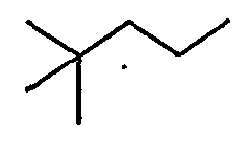
DMSO-d6 0.17 Salt Free (n-hexane: AcOEt = 1:1) 0.95(s, 9H), 1.65-1.70(m, 2H), 3.21-3.25(m, 8H), 4.32-4.36 (m, 2H), 5.38(s, 2H), 6.96-7.03(m, 4H), 9.08(brs, 2H), 9.15(s, 1H) 142 

0.17 Salt DMSO-d6 Free (n-hexane: AcOEt = 1:1) 0.86-0.95(m, 2H), 1.08-1.28 (m, 4H), 1.59-1.74(m, 7H), 3.18(brs, 4H), 3.36-3.39(m, 4H), 4.33-4.37(m, 2H), 5.42(s, 2H), 6.59-5.66(m, 3H), 6.99(s, 1H), 7.19(dd, 1H), 9.16(s, 1H), 9.24(brs, 2H) 143 

DMSO-d6 (CH2Cl2: MeOH = 9:1) 0.88-0.97(m, 2H), 1.08-1.29 (m, 4H), 1.63-1.76(m, 7H), 3.13-3.16(m, 4H), 3.22(brs, 4H), 4.33-4.37(m, 2H), 5.44(s, 2H), 6.88-6.91 (m, 1H), 7.01(s, 1H), 7.05-7.12(m, 2H), 9.12-9.18(m, 3H) 144 

DMSO-d6 (CH2Cl2: MeOH = 9:1) 0.87-0.95(m, 2H), 1.08-1.30 (m, 4H), 1.60-1.68(m, 7H), 2.64(brs, 2H), 3.28-3.29(m, 2H), 3.71(brs, 2H), 4.33-4.37 (m, 2H), 5.47(s, 2H), 6.10(brs, 1H), 7.00(s, 1H), 7.10(d, 2H), 7.45(d, 2H), 9.10-9.16(m, 3H) 145 

DMSO-d6 (CH2Cl2: MeOH = 9:1) 1.28-1.37(m, 1H), 1.68-1.79 (m, 5H), 4.46-4.72(m, 4H), 3.35-3.38(m, 2H), 4.46-4.47 (m, 2H), 4.70(dd, 2H), 7.03(d, 2H), 7.20(d, 2H), 7.28(s, 1H), 9.20(s, 1H), 10.96(brs, 1H) 146 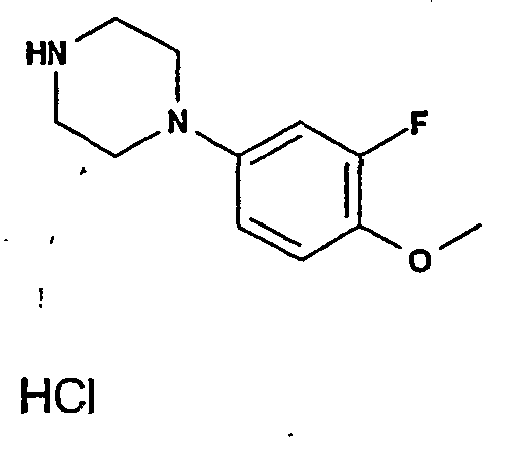

DMSO-d6 (CH2Cl2: MeOH = 9:1) 3.11-3.19(m, 6H), 3.29-3.32 (m, 4H), 4.60(dd, 2H), 5.31 (s, 2H), 6.74-6.77(m, 1H), 6.93-6.99(m, 2H), 7.09(d, 2H), 7.19 -7.26(m, 3H), 9.13-9.18(m, 3H) 147 

0.06 (n-hexane; EtOAc = 1:1) CDCl3 0.94-1.04(m, 2H), 1.14-1.40 (m, 4H), 1.62-1.83(m, 7H), 2.13 (s, 3H), 3.06-3.12(m, 4H), 3.61 (dd, 2H), 3.76(dd, 2H), 4.42-4.46(m, 2H), 5.22(s, 2H), 6.59-6.62(m, 1H), 6.66(s, 1H), 6.69-6.73(m, 1H), 6.95(dd, 1H), 8.94 (s, 1H) - To a solution of 7-[2-(4-Chloro-phenyl)-ethyl]-6-(2-fluoro-4-piperazin-1-yl-phenoxymethyl)-7H-pyrrolo[2,3-d]pyrimidine-2-carbonitrile (80mg) in CH2Cl2 is added Et3N (55uL), acetyl chloride (11.3uL) at 0°C, and stirred for 2 h at rt. The reaction mixture is concentrated in vacuo. The crude product is purified column chromatography to give the product; Rf= 0.27 (dichloromethane:methanol=10:1); 1H NMR(CDCl3, δ(ppm)): 2.14 (s, 3H), 3.06-3.12(m, 4H), 3.18(dd, 2H), 3.61 (dd, 2H), 3.76(dd, 2H), 4.63(dd, 2H), 4.90(s, 2H), 6.58-6.62(m, 2H), 6.70(dd, 1H), 6.87(t, 1H), 6.99-7.02(m, 2H), 7.19-7.22(m, 2H), 8.96(s, 1H).
- By repeating the procedures described in Example 148 using appropriate starting materials (including some of those prepared in Examples A to K) the following compounds of formula 2 are obtained as identified below in Table 14.

Table 14 Ex. R' R" Rf (solvent) NMR(400MHz, δ) 149 

DMSO-d6 0.74 Salt Free (CH2Cl2: MeOHI= 9:1) 0.83-0.91 (m, 2H), 1.02-1.23 (m, 4H), 1.56-1.70(m, 7H), 1.98(s, 3H), 3.06-3.09(m, 2H), 3.13-3.15(m, 2H), 3.53(brs, 4H), 4.28-4.32(m, 2H), 5.37(s, 2H), 6.54-6.63(m, 3H), 6.94(s, 1H), 7.13(dd, 1H), 9.11 (s, 1H) 150 

0.41 Salt DMSO-d6 Free (n-hexane: AcOEt= 1:1) 0.91-0.97(m, 2H), 1.13-1.28 (m, 4H), 1.61-1.76(m, 7H), 2.03(s, 3H), 2.85-2.88(m, 2H), 2.92-2.94(m, 2H), 3.56-3.59 (m, 4H), 4.33-4.37(m, 2H), 5.43(s, 2H), 6.87-6.89(m, 1H), 7.00(s, 1H), 7.02-7.07(m, 2H), 9.17(s, 1H) 151 

CDCl3 (CH2Cl2: MeOH = 9:1) 0.95-1.02(m, 2H), 1.17-1.35 (m, 4H), 1.64-1.79(m, 7H), 2.16(d, 3H), 2.52-2.57(m, 2H), 3.67(dd, 1H), 3.82(dd, 1H), 4.10-4.15(m, 1H), 4.22-4.25 (m, 1H), 4.37-4.41 (m, 2H), 5.24(s, 2H), 5.95-6.03(m, 1H), 6.72(s, 1H), 6.95-6.98(m, 2H), 7.33-7.37(m, 2H), 8.96(s, 1H) 152 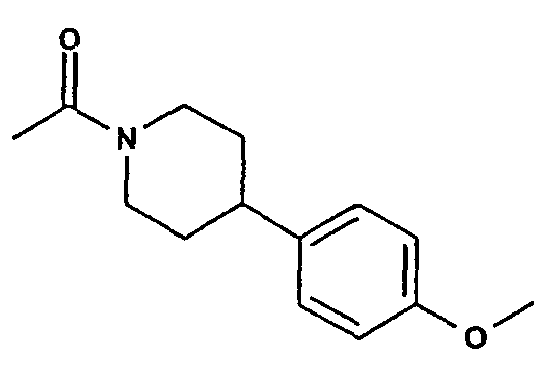

CDCl3 (OH2Cl2: MeOH = 9:1) 0.92-1.01(m, 2H), 1.13-1.35(m, 4H), 1.59-1.88(m, 11H), 2.13(s, 3H), 2.59-2.74(m, 2H), 3.13-3.20(m, 1H), 3.91-3.95(m, 1H), 4.36-4.40(m, 2H), 4.77-4.81 (m, 1H), 5.22(s, 2H), 6.71(s, 1H), 6.92-6.96(m, 2H), 7.16(dd, 2H), 8.95(s, 1H) 153 

0.08 CDCl3 (AcOEt) 2.81-2.85(m, 3H), 3.17-3.22 (m, 6H), 3.37-3.40(m, 4H), 4.63(dd, 2H), 4.90(s, 2H), 6.60-6.63(m, 2H), 6.74(dd, 1H), 6.87 (t, 1H), 7.00-7.03(m, 2H), 7.20-7.22(m, 2H), 8.96(s, 1H) 154 

0.10 CDCl3 (AcOEt) 1.31-1.35(m, 3H), 2.91-2.96 (m, 2H), 3.09-3.12(m, 6H), 3.37-3.39(m, 4H), 4.56 (dd, 2H), 4.83(s, 2H), 6.52-6.55(m, 2H), 6.62-6.67(m, 1H), 6.80(t, 1H), 6.94(dd, 2H), 7.13-7.15 (m, 2H), 8.89(s, 1H) 155 

0.33 CDCl3 (AcOEt) 1.15-1.20(m, 3H), 2.39(dt, 2H), 3.07-3.10(m, 4H), 3.18 (dd, 2H), 3.60-3.63(m, 2H), 3.76-3.78(m, 2H), 4.63(dd, 2H), 4.90(s, 2H), 6.56-6.61 (m, 2H), 6.70(dd, 1H), 6.87(t, 1H), 6.99-7.03(m, 2H), 7.19-7.23 (m, 2H), 8.96(s, 1H) 156 

0.4 CDCl3 (AcOEt) 0.71-0.76(m, 2H), 0.93-0.97(m, 2H), 1.66-1.72(m, 1H), 3.06-3.14(m, 6H), 3.73-3.82(m, 4H), 4.56(dd, 2H), 4.84(s, 2H), 6.55-6.59(m, 2H), 6.65-6.69(m, 1H), 6.81 (t, 1H), 6.94(d, 2H), 7.13-7.16(m, 2H), 8.89(s, 1H) - To a solution of 7-[2-(4-chloro-phenyl)-ethyl]-6-(2-fluoro-4-piperazin-1-yl-phenoxymethyl)-7H-pyrrolo[2,3-d]pyrimidine-2-carbonitrile (80mg) in DMF is added iodoethane (12.8uL), potassium carbonate (55mg), and stirred for 11 h at 60°C. A solid in the reaction mixture is removed by filtration. The filtrate is loaded on HPLC, and pure product is obtained; Rf= 0.15 (n-hexane:EtOAc=1:1) HCl salt; 1H NMR (DMSO-d6), δ (ppm): 1.28(t, 3H), 3.04-3.17(m, 8H), 3.50-3.53(m, 2H), 3.65-3.75(m, 2H), 4.60(dd, 2H), 5.31 (s, 2H), 6.75-6.78(m, 1H), 6.93(s, 1H), 6.99(dd, 1H), 7.09(d, 2H), 7.20-7.26(m, 3H), 9.14(s, 1H), 10.70(brs, 1H).
- By repeating the procedures described in Example 157 using appropriate starting materials (including some of those prepared in Examples A to K) the following compounds of formula 2 are obtained as identified below in Table 15.

Table 15 Ex. R' R" Rf (solvent) NMR (400MHz, δ) 158 

CDCl3 0.63 (CH2Cl2: MeOH = 9:1) 0.95(t, 3H), 1.01 (s, 9H), 1.55 (brs, 2H), 1.71-1.76(m, 2H), 2.43 (brs, 2H), 2.67(brs, 4H), 3.19(brs, 4H), 4.36-4.41 (m, 2H), 5.18(s, 2H), 6.69(s, 1H), 6.91 (s, 4H), 8.94(s, 1H) 159 

DMSO-d6 (CH2Cl2: MeOH = 9:1) 0.89-0.96(m, 5H), 1.08-1.27(m, 4H), 1.59-1.77(m, 9H), 3.01-3.18(m, 6H), 3.50-3.53(m, 2H), 3.80-3.83(m, 2H), 4.33-4.37(m, 2H), 5.42(s, 2H), 6.62(dd, 2H), 6.67(s, 1H), 6.99(s, 1H), 7.19 (dd, 1H), 9.16(s, 1H), 10.86 (brs, 1H) 160 

DMSO-d6 (CH2Cl2: MeOH = 9:1) 0.87-0.95(m, 5H), 1.08-1.27(m, 4H), 1.63-1.72(m, 9H), 3.06-3.18 (m, 6H), 3.33-3.50(4H, m), 4.32-4.36(m, 2H), 5.43(s, 2H), 6.89 (dd, 1H), 6.99(s, 1H), 7.05-7.11 (m, 2H), 9.16(s, 1H), 10.11 (brs, 1H) - To a solution of 6-bromomethyl-7-[2-(4-chloro-phenyl)-ethyl]-7H-pyrrolo[2,3-d]pyrimidine-2-carbonitrile (110 mg, 0.293 mmol) and p-methoxyphenyl boronic acid (98 mg, 0.645 mmol) in THF (1.5 mL) are added Cs2CO3 (143 mg, 0.439 mmol) and Pd(dppf)Cl2.CH2Cl2 (24 mg, 0.029 mmol). The reaction mixture is stirred at 60 °C under nitrogen atomosphere for 1 h. The mixture is filtered through celite pad, and the filtrate is concentrated in vacuo. The residue is purified by silica gel column chromatography (n-hexane:EtOAc = 4:1 to 3:1) to give the product; Rf 0.46 (n-hexane: AcOEt=1:1); 1H NMR (CDCl3), δ (ppm): 0.95(t, 2H), 3.75(s, 3H), 3.80(s, 3H), 4.36(t, 2H), 6.23(s, 1H), 6.87(d, 2H), 6.89(d, 2H), 6.98(d, 2H), 7.24(d, 2H), 8.85(s, 1H).
- By repeating the procedures described in Example 161 using appropriate starting materials (including some of those prepared in Examples A to K) the following compounds of formula 2 are obtained as identified below in Table 16.

Table 16 Ex. R' R" Rf (solvent) NMR (400MHz, δ) 162 

0.58 (CDCl3) (n-hexane: AcOEt=1:1) 2.35(s, 3H), 2.93(t, 2H), 3.78(s, 2H), 4.34(t, 2H), 6.25(s, 1H), 6.87(d, 2H), 6.95(d, 2H), 7.14(d, 2H), 7.23(d, 2H), 8.85(s, 1H) 162 

0.18 (CDCl3) (n-hexane: AcOEt=1:1) 1.69(t, 1H), 2.97(t, 2H), 3.79(s, 2H), 4.36(t, 2H), 4.70(d, 2H), 6.23(s, 1H), 6.88(d, 2H), 7.06(d, 2H), 7.23(d, 2H), 7.35(d, 2H), 8.86(s, 1H) 164 

0.15 (CDCl3) (n-hexane: AcOEt=1:1) 1.70(t, 1H), 2.95(t, 2H), 3.80(s, 2H), 4.36(t, 2H), 4.69(d, 2H), 6.24(s, 1H), 6.87(d, 2H), 7.00(d, 1H), 7.08(s, 1H), 7.23(d, 2H), 7.28-7.36(m, 2H), 8.86(s, 1H) 165 

0.47 (CDCl3) (n-hexane: AcOEt=1:1) 2.92(t, 2H), 3.78(s, 2H), 3.78(s, 3H), 4.35(t, 2H), 6.29(s, 1H), 6.61(d, 1H), 6.67(d, 1H), 6.83(dd, 1H), 6.88(d, 2H), 7.22-7.28(m, 3H), 8.87(s, 1H) 166 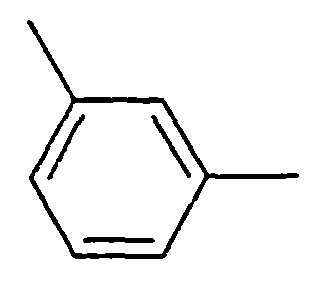

0.54 (CDCl3) (n-hexane: AcOEt=1:1) 2.33(s, 3H), 2.91(t, 2H), 3.78(s, 2H), 4.35(t, 2H), 6.26(s, 1H), 6.86-6.89(m, 4H), 7.10(d, 1H), 7.21-7.25(m, 3H), 8.86(s, 1H) 167 

0.47 (CDCl3) (n-hexane: AcOEt=1:1) 2.96(t, 2H), 3.75(s, 2H), 4.36(t, 2H), 6.25(s, 1H), 6.88(d, 2H), 6.93-6.96(m, 1H), 7.06(s, 1H), 7.23-7.29(m, 4H), 8.88(s, 1H) 168 

(CDCl3) 0.63 (n-hexane: AcOEt=1:1) 2.98(dd, 2H), 3.68(s, 2H), 4.36(dd, 2H), 6.09(s, 1H), 6.77-6.91(m, 5H), 7.156-7.19(m, 2H), 8.78(s, 1H) 169 

(CDCl3) (CH2Cl2:MeO H=9:1) 2.95(dd, 2H), 3.60(s, 2H), 4.30(dd, 2H), 6.12(s, 1H), 6.68-6.71 (m, 1H), 6.75-6.82(m, 3H), 7.03-7.10(m, 1H), 7.16-7.18(m, 2H), 8.81(s, 1H) 170 

0.28 (CDCl3) (n-hexane: AcOEt=2:1) 2.95 (t, 2H), 3.82 (s, 2H), 4.37 (t, 2H), 6.30(s, 1H), 6.82 - 6.84 (m, 1H), 6.89 - 6.91 (m, 2H), 6.94 - 6.95 (m, 1H), 7.23 - 7.25 (m, 2H), 7.33 - 7.35 (m, 1H), 8.87 (s, 1H) - To a solution of palladium acetate(6.7 mg), (di-t-butylphosphino)biphenyl (18mg), Cs2CO3 (120 mg) and Et3N (51.4 mL) in degassed dioxane (1.3 mL) are added 6-(4-chloro-benzyl)-7-(2-cyclohexyl-ethyl)-7H-pyrrolo[2,3-d]pyrimidine-2-carbonitrile (100 mg) and 1-acetyl piperazine (40,4 mg), and stirred for 18 hr under reflux. The reaction mixture is diluted with H2O, extracted with EtOAc. The organic layer is successively washed with H2O, aqueous NaCI, and concentrated in vacuo. The residue is purified by HPLC to give the pure product; Rf = 0.47 (dichloromethane : methanol= 9 : 1); 1H NMR (400 MHz, CDCl3) δ 0.88-0.98(m, 2H), 1.14-1.32(m, 4H), 1.49-1.73(m, 7H), 2.14(s, 3H), 3.14-3.20(m, 4H), 3.61-3.67(m, 2H), 3.77-3.82(m, 2H), 4.10(s, 2H), 4.17-4.21 (m, 2H), 6.30(s, 1H), 6.91-6.95(m, 2H), 7.11 (d, 2H), 8.83(s, 1H).
- 5-Bromo-4-(2-cyclohexyl-ethylamino)-pyrimidine-2-carbonitrile (1.03 mmol), (4-prop-2-ynyl-phenyl)-methanol (4.10 mmol), dichlorobis(triphenylphosphine) palladium(II) (0.05 mmol), copper (I) iodide (0.10 mmol) and triethylamine (5.15 mmol) in DMF (20 mL) is stirred at 75 °C for 3 h. After the reaction mixture is treated with saturated ammonium chloride, the mixture is extracted with AcOEt. The organic layer is washed with brine, dried over magnesium sulfate and evaporated down. The crude product is applied to a column chromatography on silica gel, which is eluted with following solvents: n-hexane:AcOEt=3:7 (v/v). The solvent of the latter effluent is removed by evaporation and dried in vacuo to afford the title compound, Rf = 0.22 (n-hexane: AcOEt=1:1); 1H NMR (PDCl3), δ (ppm): 0.89-1.32(m, 6H), 1.50-1.58(m, 3H), 1.64 (t, 1H), 1.62-1.78(m, 4H), 4.18(s, 2H), 4.19(t, 2H), 4.72(d, 2H), 6.31 (s, 1H), 7.20(d, 2H), 7.36(d, 2H), 8.84(s, 1H).
- 7-(2-Cyclohexyl-ethyl)-6-(4-hydroxymethyl-benzyl)-7H-pyrrolo[2,3-d]pyrimidine -2-carbonitrile (0.88 mmol), TMPO (0.088mmol), and sodium phosphate buffer (pH 6.8) (3 mL) are dissolved in MeCN (10 mL). To the solution, NaClO2 (3.52mmol) in water (3 ml) and 8.5 % NaOCl aq. (0.04 mmol) are added. The mixture is stirred at 35 °C temperature under nitrogen atomosphere for 2 days. The reaction mixture is diluted with CH2Cl2 and water and extracted with CH2Cl2 (twice). The combined organic layer is washed with water and brine, dried over MgSO4, and concentrated in vacuo. The residue is purified by silica gel column chromatography (AcOEt) to give the title compound; Rf = 0.17 (n-hexane: AcOEt=2:3); 1H NMR (CDCl3), δ (ppm): 0.87-1.32(m, 6H), 1.54-1.77(m, 7H), 4.20(t, 2H), 4.26(s, 2H), 6.34(s, 1H), 7.32(d, 2H), 8.09(d, 2H), 8.87(s, 1H).
- 4-[2-Cyano-7-(2-cyclohexyl-ethyl)-7H-pyrrolo[2,3-d]pyrimidin-6-ylmethyl]-benzoic acid (0.23 mmol) is dissolved in CH2Cl2 (15 mL). To the solution, (COCl)2 (2.27mmol) and DMF (1 drop) are added at 0 °C. The mixture is stirred at room temperature under nitrogen atomosphere for 30 min. The reaction mixture is evapolated and residue is dissolved in Et2O (2 mL) - AcOEt (5 mL). To the solution, NH4OH (5 mL) is added at 0 °C. The mixture is stirred at room temperature under nitrogen atomosphere for 11 h, and the reaction mixture is diluted with AcOEt and water and extracted with AcOEt (twice). The combined organic layer is washed with water and sat. NaHCO3 aq., then dried over MgSO4, and concentrated in vacuo. The residue is purified by silica gel column chromatography (AcOEt) to give the title compound; Rf = 0.16 (n-hexane: AcOEt=2:3); 1H NMR (CDCl3), δ (ppm): 0.87-1.33(m, 6H), 1.54-1.79(m, 7H), 4.19(t, 2H), 4.24(s, 2H), 5.71 (brs, 1H), 6.02(brs, 1H), 6.32(s, 1H), 7.30(d, 2H), 7.82(d, 2H), 8.86(s, 1H).
- By repeating the procedures described in Examples 172 to 174 using appropriate starting materials (including some of those prepared in Examples A to K) the following compounds of formula 2 are obtained as identified below in Table 17.

Table 17 Ex. R' R" Rf (solvent) NMR (400MHz, δ) 175 

(CDCl3) 0.17 (n-hexane: AcOEt=3:2) 0.99(s, 9H), 1.50-1.57(m, 2H), 1.69(t, 1H), 4.18(s, 2H), 4.18(t, 1H), 4.71 (d, 2H), 6.33(s, 1H), 7.19(d, 2H), 7.39(d, 2H), 8.84(s, 1H) 176 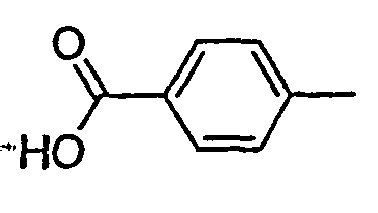
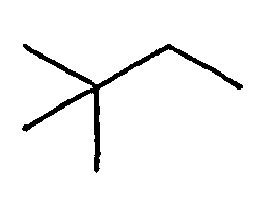
(DMSO-d6) 0.20 (n-hexane: AcOEt=1:1) 0.91 (s, 9H), 1.39(t, 2H), 4.19(t, 2H), 4.43(s, 2H), 6.53(s, 1H), 7.41 (d, 2H), 7.93(d, 2H), 9.05(s, 1H) 177 

(CDCl3) 0.29 (n-hexane: AcOEt=1:1) 1.00(s, 9H), 1.56(t, 1H), 1.61(t, 2H), 4.25(t, 2H), 4.31 (s, 2H), 4.69(d, 2H), 6.10(s, 1H), 7.10(dd, 1H), 7.28-7.38(m, 2H), 7.45(dd, 1H), 8.79(s, 1H) 178 

(CDCl3) 0.14 (n-hexane: AcOEt=1:1) 1.02(s, 9H), 1.65(t, 1H), 4.31 (t, 2H), 4.62(s, 2H), 5.94(s, 1H), 7.27(dd, 1H), 7.47(dt, 1H), 7.59(dt, 1H), 8.17(dd, 1H), 8.74(s, 1H) - 5-Bromo-4-(2-cyclohexyl-ethylamino)-pyrimidine-2-carbonitrile (0.3 mmol) and 1-(4-prop-2-ynyl-phenyl)-pyrrolidin-2-one (0.3 mmol) are dissolved in 3 mL of DMF. The mixture is degassed by evaporation and purging with nitrogen under stirring a few times. (Ph3P)PdCl2 (0.015 mmol), Cul (0.03 mmol), and Et3N (0.6 mmol) are added and the reaction is heated under nitrogen at 80 °C for 16 h. After the mixture is cooled to rt, the aqueous layer is extracted twice with AcOEt, and the combined organic extracts are washed with brine several times, dried over Na2SO4, and concentrated under reduced pressure. Flush chromatography on silica gel using AcOEt-Hexane (1:1) gives the title compound as a yellow solid; 1H NMR (CDCl3), δ (ppm): 0.91 - 1.01 (m, 2H), 1.14 - 1.28 (m, 4H), 1.66 - 1.76 (m, 7H), 2.14 - 2.22 (m, 2H), 2,63 (t, 2H), 3.86 (t, 2H), 4.15 (s, 2H), 4.17 - 4.21 (m, 2H), 6.30 (s, 1H), 7.20 (d, 2H), 7.61 - 7.63 (m, 2H), 8.84 (s, 1H).
- By repeating the procedures described in Example 179 using appropriate starting materials (including some of those prepared in Examples M to O) the following compounds of formula 2 are obtained as identified below in Table 18.

Table 18 Ex. R' R" NMR(400MHz, δ), (CDCl3) 180 

1.00 (s, 9H), 1.51 - 1.55 (m, 2H), 4.15 - 4.19 (m, 4H), 6.31 (s, 1H), 7.14 (d, 2H), 7.33-7.35 (m, 2H), 8.85 (s, 1H) 181 

3.03 (t, 2H), 3.62 (s, 2H), 4.40 (t, 2H), 6.13 (s, 1H), 6.92-6.97 (m, 4H), (m, 2H), 8.85 (s, 1H) 182 

1.17 - 1.39 (m, 4H), 1.47 - 1.70 (m, 10H), (m, 1H), 4.01 (d, 2H), 4.15 (s, 2H), 6.27 (s, 1H), 7.12 - 7.15 (m, 2H), 7.32 - 7.35 (m, 2H), 8.85 (s, 1H) 183 

1.09 (s, 9H), 1.66 - 1.71 (m, 2H), 4.42 - 4.46 (m, 2H), 6.87 (s, 1H), 7.11 (d, 1H), 7.37 - 7.46 (m, 4H), 7.54 - 7.56 (m, 2H), 8.90 (s, 1H) 184 

2.99 (t, 2H), 3.73 (s, 2H), 4.37 (t, 2H), 6.18 (s, 1H), 6.87 (d, 2H), 7.01 - 7.04 (m, 4H), 7.23 - 7.26 (m, 2H), 8.87 (s, 1H) 185 

1.23 - 1.33 (m, 1H), 1.56 - 1.81 (m, 5H), 2.04 - 2.10 (m, 3H), 4.16 (s, 2H), 4.21 - 4.25 (m, 2H), 5.61 - 5.70 (m, 2H), 6.32 (s, 1H), 7.13 - 7.16 (m, 2H), 7.32 - 7.35 (m, 2H), 8.86 (s, 1H) 186 

1.26-1.34 (m, 3H), 1.58 - 1.83 (m, 6H), 2.04 - 2.14 (m, 2H), 4.16 (s, 2H) 4.19 - 4.21 (m, 2H), 6.35 (s, 1H), 7.13 (d, 2H), 7.33 - 7.35 (m, 2H), 8.88 (s, 1H) 187 
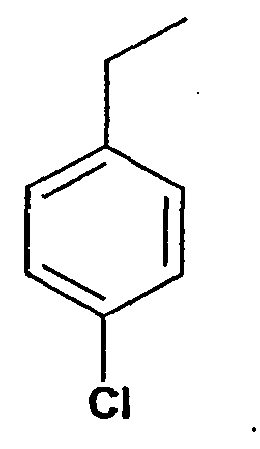
2.96 (t, 2H), 3.99 (s, 2H), 4.40 (t, 2H), 6.39 (s, 1H), 6.77 - 6.79 (m, 1H), 6.90 - 6.92 (m, 2H), 6.97-6.99 (m, 1H), 7.23 - 7.26 (m, 3H), 8.89 (s, 1H) 188 

1.05 (s, 3H), 1.40 - 1.43 (m, 4.H), 1.62 - 1.68 (m, 6H), 4.16 - 4.20 (m, 4H), 6.31 (s, 1H), 7.14 (d, 2H), 7.33 (d, 2H), 8.85 (s, 1H) 189 

0.80 - 0.96 (m, 2H), 1.00 (s, 3H), 1.30 - 1.61 (m, 10H), 4.14 - 4.18 (m, 4H), 6.31 (s, 1H), 7.14 (d, 2H), 7.33 (d, 2H), 8.86 (s, 1H) 190 

1.23-1.35 (m, 2H), 1.38-1.73(m, 15H), 4.16 (s, 2H), 4.18 (t, 2H), 6.31 (s, 1H), 7.17 (d, 2H), 7.34 (d, 2H), 8.85 (s, 1H) 191 

1.24 - 1.34 (m, 3H), 1.57 - 1.83 (m, 6H), 2.05 - 2.10 (m, 2H), 4.16 (s, 2H), 4.18 - 4.22 (m, 2H), 6.34 (s, 1H), 7.04 - 7.08 (m, 2H), 7.15 - 7.18 (m, 2H), 8.87 (s, 1H) Ex. R' R" NMR(400MHz, δ), 192 

(CDCl3) 0.93(d, 6H), 1.48-1.63(m, 3H), 4.17(m, 4H), 6.34(s, 1H), 7.20(d, 2H), 7.28-7.38(m, 3H), 8.85(s, 1H) 193 

(CDCl3) 0.96(d, 6H), 1.51-1.65(m, 3H), 4.23(t, 2H), 4.39(s, 2H), 6.47(s, 1H), 6.88(m, 1H), 6.98(dd, 1H), 7.24(dd, 1H), 8.89(s, 1H) - To a solution of 6-(4-chloro-benzyl)-7H-pyrrolo[2,3-d]pyrimidine-2-carbonitrile (68 mg, 250 mmol) in DMF (3 mL) are added K2CO3 (40 mg, 0.29 mmol) and 1-(2-bromo-ethyl)-4-methyl-benzene (100 mg, 0.50 mmol). The reaction mixture is stirred at rt for overnight. After water is poured, the resulting mixture is extracted with EtOAc. The combined organic extracts are washed with brine, and dried over Na2SO4, filtered, and concentrated in vacuo.
- The residue is purified by silica gel column chromatography (n-hexane : AcOEt=3:1) to give the title compound; 1H NMR (CDCl3), δ (ppm): 2.33(s, 3H), 2.99(t, 2H), 3.63(s, 2H), 4.37(t, 2H), 6.12(s, 1H), 6.81 (d, 2H), 6.95(d, 2H), 7.07(d, 2H), 7.30(d, 2H), 8.84(s, 1H).
- By repeating the procedures described in Example 194 using appropriate starting materials (including some of those prepared in Examples P to S) the following compounds of formula 2 are obtained as identified below in Table 19.

Table 19 Ex. R' R" NMR (400MHz, δ) 195 

(CDCl3) -0.02- -0.01 (m, 2H), 0.41-0.45(m, 2H), 1.18-1.24(m, 2H), 1.73-1.80(m, 2H), 4.17(s, 2H), 4.18-4.22(m, 2H), 6.32(s, 1H), 7.15(d, 2H), 7.33(d, 2H), 8.85(s, 1H) 196 

(CDCl3) 0.85 (d, 6H), 1.13 - 1.18 (m, 2H), (m, 3H), 4.13 - 4.16 (m, 4H), 6.32 (s, 1H), 7.14 (d, 2H), 7.33 (d, 2H), 8.86 (s, 1H) 197 

(CDCl3) 0.90 - 0.99 (m, 2H), 1.14 - 1.30 (m, 4H), 1.50 -1.56 (m, 2H), 1.66 -1.75 (m, 5H), 4.15 (s, 2H), 4.17 -4.20 (m, 2H), 6.30 (s, 1H), 7.12 - 7.16 (m, 2H), 7.32 - 7.34 (m, 2H), 8.85 (s, 1H) 198 

(CDCl3) 1.08 (s, 6H), 1.61 - 1.65 (m, 2H), 4.07 - 4.12 (m, 4H), 5.01 - 5.07 (m, 2H), 5.74 - 5.81 (dd, 1H), 6.31 (s, 1H), 7.13 (d, 2H), 7.32 - 7.34 (d, 2H), 8.85 (s, 1H) 199 

(CDCl3) 2.98(dd, 2H), 3.81 (s, 2H), 4.31 (dd, 2H), 6.16(s, 1H), 6.66-6.75(m, 2H), 6.79-6.85(m, 1H), 6.97(d, 2H), 7.24(dd, 2H), 8.78(s, 1H) 200 

(CDCl3) 1.28(s, 9H), 3.99(s, 2H), 5.14(s, 2H), 6.37(s, 1H), 7.10-7.12(m, 2H), 7.32-7.34(m, 2H), 8.88(s, 1H) - To a solution of 6-(4-chloro-benzyl)-7H-pyrrolo[2,3-d]pyrimidine-2-carbonitrile (270 mg, 1.00 mmol), 2-cyclopentylethanol (140 mg, 1.20 mmol), and Ph3P (310 mg, 1.20 mmol) in THF (3 mL) is added dropwise DEAD (190 mg, 1.10 mmol). The reaction mixture is stirred at room temperature under nitrogen atomosphere for overnight. After concentration, the residue is purified by silica gel column chromatography (n-hexane : AcOEt=3:1) followed by RP-HPLC purification to give the title compound; 1H NMR (CDCl3), δ (ppm): 1.09-1.12(m, 2H), 1.24-1.70(m, 7H), 1.74-1.80(m, 2H), 4.16(s, 2H), 4.17(t, 2H), 6.30(s, 1H), 7.14(d, 2H), 7.33(d, 2H), 8.85(s, 1H).
- By repeating the procedures described in Example 201 using appropriate starting materials (including some of those prepared in Examples P to T) the following compounds of formula 2 are obtained as identified below in Table 20.

Table 20 Ex. R' R" NMR(400MHz, δ) 202 

(CDCl3) 0.88(t, 3H), 0.94(s, 6H), 1.25-1.34(m, 2H), 1.49-1.53(m, 2H), 4.14(t, 2H), 4.15(s, 2H), 6.31 (s, 1H), 7.14(d, 1H), 7.33(d, 1H), 8.86(s, 1H) 203 

(CDCl3) 1.26-1.34(m, 2H), 1.53-1.65(m, 4H), 1.68-1.74(m, 2H), 2.36-2.42(m, 1H), 4.15(s, 2H), 4.18(s, 2H), 6.25(s, 1H), 7.13(d, 2H), 7.33(d, 2H), 8.84(s, 1H) 204 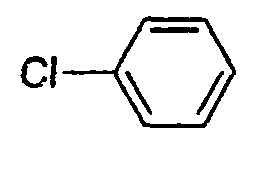

(CDCl3) 1.20-1.26(m, 2H), 1.4.0-1.73(m, 13H), 4.16(s, 2H), 4.17-4.20(m, 2H), 6.30(s, 1H), 7.14(d, 2H), 7.33(d, 2H), 8.85(s, 1H) 205 

(CDCl3) 2.99(t, 2H), 3.72(s, 2H), 4.36(t, 2H), 6.20(s, 1H), 6.88-7.00(m, 6H), 7.31 (d, 2H), 8.87(s, 1H) 206 

(CDCl3) -0.073-0.008(m, 2H), 0.38-0.42(m, 2H), 0.58-0.64(m, 1H), 1.62(q, 2H), 4.19(s, 2H), 4.28(t, 2H), 6.29(s, 1H), 7.13(d, 2H), 7.33(d, 2H), 8.85(s, 1H) 207 

(CDCl3) 0.98-1.02(m, 2H), 1.27-1.30(m, 2H), 1.48-1.60(m, 4H), 1.62-1.74(m, 5H), 4.16(t, 2H), 4.16(s, 2H), 6.31 (s, 1H), 7.14(d, 2H), 7.33(d, 2H), 8.86(s, 1H) 208 

(CDCl3) 2.68(dd, 2H), 2.95(dd, 2H), 3.14-3.18(m, 1H), 4.08(s, 2H), 4.19(d, 2H), 6.31 (s, 1H), 6.99(dd, 2H), 7.18-7.22(m, 4H), 7.28(dd, 2H), 8.88(s, 1H) 209 

(CDCl3) 3.00 (t, 2H), 3.72 (s, 2H), 4.36 (t, 2H), 6.19 (s, 1H), 6.85 - 6.87 (m, 2H), 6.98 (d, 2H), 7.23 - 7.25 (m, 2H), 7.31 - 7.33 (m, 2H), 8.87 (s, 1H) 210 

(CDCl3) 0.89 (s, 6H), 1.05 - 1.32 (m, 6H), 1.70 - 1.73 (m, 1H), 1.84. - 1.92 (m, 4H), 4.12 (s, 2H), 4.17 (s, 2H), 6.23 (s, 1H), 7.09 - 7.11 (m, 2H), 7.32 - 7.34 (m, 2H), 8.83 (s, 1H) - 7-(3,3-Dimethyl-butyl)-6-hydroxymethyl-7H-pyrrolo[2,3-d]pyrimidine-2-carbonitrile is dissolved in CH2Cl2. To the solution is added Dess-Martin periodinane at 0 °C, and resulting solution is stirred. After dilution with H2O, the mixture is extracted twice with AcOEt, and washed with brine. Flash chromatography on silica gel using AcOEt-Hexane gives 7-(3,3-dimethyl-butyl)-6-formyl-7H-pyrrolo[2,3-d]pyrimidine-2-carbonitrile. The aldehyde is dissolved in THF. To the solution are added benzyl-phosphonic acid diethyl ester and sodium hydride and the resulting solution is stirred. The reaction is quenched by the addition with H2O, and the mixture is extracted twice with AcOEt. The combined organic extracts are washed with brine and dried over Na2SO4, filtered, and concentrated in vacuo. Flash chromatography on silica gel using AcOEt-Hexane gives the title compound. 1H NMR (CDCl3), δ (ppm): 0.99 (s, 9H), (m, 2H), 3.80 (q, 2H), 4.16-4.21 (m, 4H), 6.34 (s, 1H), 7.24 - 7.26 (m, 4H), 8.87 (s, 1H).
- The product of Example 211 is dissolved in MeOH. The solution is degassed by evaporation and purging with nitrogen under stirring a few times. Pd/C (mmol) is added and the mixture is degassed by evaporation and purging with hydrogen under stirring a few times. The suspension is vigorously stirred under hydrogen. After 2 h, the mixture is filtered through celite and the filtrate is concentrated. Flash chromatography on silica gel using AcOEt-Hexane gives the title compound. 1H NMR (CDCl3), δ (ppm): 1.03 (s, 9H), 1.55 - 1.59 (m, 2H), 3.12 (s, 4H), 4.15 - 4.20 (m, 2H), 6.43 (s, 1H), 7.19 - 7.21 (m, 1H), (m, 2H), 8.85 (s, 1H).
- By repeating the procedures des,cribed in Example 211 and 212 using appropriate starting materials (including some of those prepared in Examples P to T) the following compounds of formula 2 are obtained as identified below in Table 21.

Table 21 (R" represents 3,3-dimethyl-1-butyl) Ex. R' NMR(400MHz, δ) 213 
(CDCl3) 1.03 (s, 9H), 1.56 - 1.60 (m, 2H), 3.14 - 3.17 (m, 4H), 3.92 (s, 3H), 4.19 - 4.23 (m, 2H), 6.40 (s, 1H), 7.47 (d, 2H), 7.99 - 8.01 (m, 2H), 8.85 (s, 1H). - 5-Bromo-4-(3,3-dimethyl-butylamino)-pyrimidine-2-carbonitrile and (4-prop-2-ynyl-phenyl)-carbamic acid tert-butyl ester are dissolved in DMF. The mixture is degassed by evaporation and purging with nitrogen under stirring a few times. (Ph3P)PdCl2, Cul, and Et3N are added and the reaction is heated under nitrogen at 80 °C. After the mixture is cooled to rt, the aqueous layer is extracted twice with AcOEt, and the combined organic extracts are washed with brine several times, dried over Na2SO4, and concentrated under reduced pressure.
The yellow solid is dissolved in CH2Cl2. To the solution is added dropwise TFA, and the resulting solution is stirred for some h. After dilution with H2O, the mixture is extracted twice with AcOEt, and the combined organic extracts are washed with brine. Flash chromatography on silica gel using AcOEt-Hexane gives the title compound as a yellow solid; 1H NMR (CDCl3), δ (ppm): 1.00 (s, 9H), 3.67 (s, 2H), 4.06 (s, 2H), 4.16 - 4.20 (m, 2H), 6.31 (s, 1H), 6.65-6.67 (m, 2H), 6.97 (d, 2H), 8.83 (s, 1H). - The amine of Example 214 is dissolved in CH2Cl2. To the solution are added 2-methoxy-ethanesulfonyl chloride and pyridine at rt. After stirred at rt for some h, the reaction mixture is diluted with H2O. The mixture is extracted with AcOEt twice, and the combined organic extracts are dried over Na2SO4. Flash chromatography on silica gel using AcOEt-Hexane gives the title compound; 1H NMR (CDCl3), δ (ppm): 0.99 (s, 9H), 3.22 (t, 2H), 3.43 (s, 3H), 3.84 (t, 2H), 4.16 - 4.21 (m, 4H), 6.33 (s, 1H), 6.44 (s, 1H), 7.17 (d, 2H), 7.23 - 7.26 (m, 2H), 8.86 (s, 1H).
- By repeating the procedures described in Example 214 and 215 using appropriate starting materials (including some of those prepared in Examples A to T) the following compounds of formula 3 are obtained as identified below in Table 22.
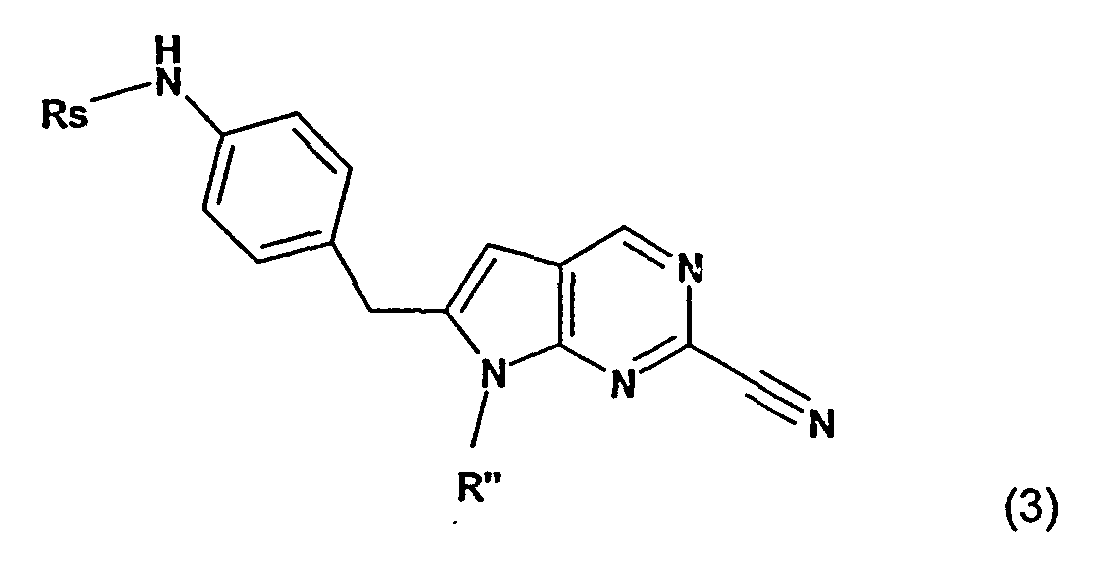
Table 22 Ex. Rs R" NMR(400MHz, δ) 216 

(CDCl3) 0.99 (s, 9H), 2.19 (s, 2H), 4.14 (s, 2H), 4.15 - 4.20 (m, 2H), 6.32 (s, 1H), 7.15 (d, 2H), 7.49 (d, 2H), 8.84 (s, 1H) 217 

(CDCl3) 0.99 (s, 9H), (m, 2H), 3.80 (q, 2H), 4.16 - 4.21 (m, 4H), 6.34 (s, 1H), 7.24 - 7.26 (m, 4H), 8.87 (s, 1H) 218 

(CDCl3) 0.89 - 0.99 (m, 2H), 1.11 - 1.31 (m, 4H), 1.51 - 1.76 (m, 7H), 3.80 (q, 2H), 4.18 - 4.22 (m, 4H), 6.32 (s, 1H), 7.22 - 7.27 (m, 4H), 8.87 (s, 1H) - 7-(3,3-Dimethyl-butyl)-6-(3-formyl-benzyl)-7H-pyrrolo[2,3-d]pyrimidine-2-carbonitrile is dissolved in THF/H2O. and reacted with NaClO2 and NH2SO3H in THF/H2O at a temperature of 0°C; 1H NMR (CDCl3), δ (ppm): 0.98 (s, 9H), 1.40- 1.45 (m, 2H), 4.26 - 4.30 (m, 2H), 4.50 (s, 2H), 6.65 (s, 1H), 7.57 - 7.64 (m, 2H), 7.95 - 7.96 (m, 2H), 9.13 (s, 1H).
- To a solution of 7-[2-(4-chloro-phenyl)-ethyl]-6-(3-hydroxymethyl-benzyl)-7H-pyrrolo[2,3-d]pyrimidine-2-carbonitrile (31 mg, 0.077 mmol) in CH2Cl2 (0.5 mL) are added Ph3P (24 mg, 0.092 mmol) and CBr4 (33 mg, 0.093 mmol). After being stirred at rt for 30 min, the additional Ph3P (29 mg, 0.11 mmol) and CBr4 (40 mg, 0.12 mmol) are added. The reaction mixture is stirred at rt for 20 min, and concentrated in vacuo. The residue is purified by silica gel column chromatography (n-hexane:EtOAc=5:1) to give the corresponding bromide.
To a solution of said bromide (14 mg, 0.030 mmol) in DMF (0.3 mL) are added hydantoin (4 mg, 0.040 mmol) and K2CO3 (5 mg, 0.036 mmol). The reaction mixture is stirred at rt for 16 h. After dilution with EtOAc, the mixture is washed with water and brine. The organic layer is dried over Na2SO4, filtered, and concentrated in vacuo. The residue is purified by silica gel column chromatography (n-hexane:EtOAc=2:3 to 1:2) to give the title compound; 1H NMR (CDCl3), δ (ppm): 2.95(t, 2H), 3.79(s, 2H), 3.96(s, 2H), 4.34(t, 2H), 4.65(s, 2H), 5.23(s, 1H), 6.24(s, 1H), 6.87(d, 2H), 6.97(d, 1H), 7.17(s, 1H), 7.18(d, 2H), 7.28-7.35(m, 2H), 8.87(s, 1H). - By repeating the procedures described in Example 220 using appropriate starting materials (including some of those prepared in Examples P to T) the following compounds of formula 2 are obtained as identified below in Table 23.

Table 23 Ex. R' R" NMR (400MHz, δ) 221 
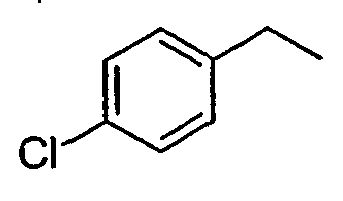
(CDCl3) 2.93(t, 2H), 3.76(s, 2H), 3.95(d, 2H), 4.33(t, 2H), 4.66(s, 2H), 5.29(br, 1H), 6.23(s, 1H), 6.85(s, 2H), 7.02(d, 2H), 7.24(d, 2H), 7.39(d, 2H), 8.86(s, 1H) 222 

(CDCl3) 1.53(s, 3H), 1.56(s, 3H), 2.93(t, 2H), 3.76(s, 2H), 4.34(t, 2H), 4.66(s, 2H), 6.22(s, 1H), 6.85(d, 2H), 7.04(d, 2H), 7.23(d, 2H), 7.35(d, 2H), 8.87(s, 1H) 223 

(CDCl3) 1.83(br, 4H), 2.55(br, 4H), 2.94(t, 2H), 3.66(s, 2H), 3.82(s, 2H), 4.36(t, 2H), 6.25(s, 1H), 6.88(d, 2H), 6.97(br, 1H), 7.16(br, 1H), 7.22(d, 2H), 7.29-7.30(m, 2H), 8.86(s, 1H) 224 

(CDCl3, HCl salt) 2.74(s, 6H), 3.05(t, 2H), 3.77(s, 2H), 4.10(s, 2H), 4.43(t, 2H), 6.20(s, 1H), 6.90(d, 2H), 7.13(d, 1H), 7.13(d, 2H), 7.39-7.56(m, 3H), 8.86(s, 1H), 13.0(br, 1H) 225 

(DMSO-d6, HCl salt) 1.07-1.17(m, 2H), 1.36(br, 1H), 1.44-1.50(m, 2H), 1.66-2.00(m, 10H), 3.00-3.06(m, 2H), 3.29-3.35(m, 2H), 4.26(t, 2H), 4.28(d, 2H), 4.37(s, 2H), 6.52(s, 1H), 7.39(d, 1H), 7.44-7.48(m, 2H), 7.52(d, 1H), 9.06(s, 1H), 10.58(br, 1H) - To a solution of (5-bromo-2-chloro-phenyl)-methanol (272 mg, 1.23 mmol) and bis-(pinacolate)diboron (343 mg, 1.35 mmol) in DMSO (7 mL) are added KOAc (362 mg, 3.69 mmol) and Pd(dppf)Cl2.CH2Cl2 (50 mg, 0.062 mmol). The reaction mixture is stirred at 80 °C under nitrogen atomosphere for 9 h. After dilution with ether, the mixture is washed with water (x2) and brine. The organic layer is dried over MgSO4, filtered, and concentrated in vacuo. The residue is purified by silica gel column chromatography (n-hexane:EtOAc=5:1) to give the corresponding boron ester. To a solution of 6-bromomethyl-7-[2-(4-chloro-phenyl)-ethyl]-7H-pyrrolo[2,3-d]pyrimidine-2-carbonitrile (88 mg, 0.234 mmol) and said boron ester (126 mg, 0.469 mmol) in THF (1.5 mL) are added Cs2CO3 (115 mg, 0.353 mmol) and Pd(dppf)Cl2.CH2Cl2 (19 mg, 0.023 mmol). The reaction mixture is stirred at 60°C under nitrogen atomosphere for 1 h. The mixture is filtered through celite pad, and the filtrate is concentrated in vacuo. The residue is purified by silica gel column chromatography (n-hexane:EtOAc=2:1) to give the title compound; Rf = 0.25 (n-hexane: AcOEt=1:1); 1H NMR (CDCl3), δ (ppm): 1.98(t, 1H), 3.00(t, 2H), 3.73(s, 2H), 4.38(t, 2H), 4.77(d, 2H), 6.19(s, 1H), 6.87(dd, 2H), 6.92(dd, 1H), 7.22-7.25(m, 3H), 7.32(d, 1H), 8.86(s, 1H).
- By repeating the procedures described in Example 226 using appropriate starting materials (including some of those prepared in Examples A to T) the following compounds of formula 2 are obtained as identified below in Table 24.

Table 24 Ex. R' R" Rf (solvent) NMR(400MHz, δ), (CDCl3) 227 

0.27 1.86(t, 1H), 3.00(t, 2H), 3.73(s, 2H), 4.38(t, 2H), 4.75(d, 2H), 6.18(s, 1H), 6.87(d, 2H), 6.94-6.97(m, 1H), 7.03(t, 1H), 7.14(dd, 1H), 7.24(d, 2H), 8.86(s, 1H) (n-hexane: AcOEt=1:1) 228 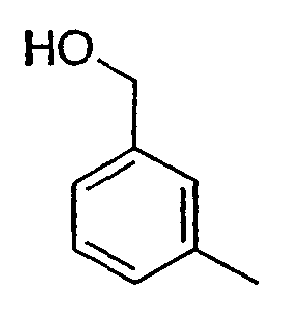
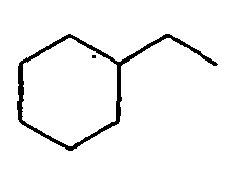
0.28 0.88-0.98(m, 2H), 1.13-1.30(m, 4H), 1.49-1.54(m, 2H), 1.67-1.74(m, 5H), 4.17-4.21 (m, 4H), 4.69(s, 2H), 6.33(s, 1H), 7.13(d, 1H), 7.23(s, 1H), 7.31-7.37(m, 2H), 8.84(s, 1H) (n-hexane: AcOEt=1:1) - To a solution of the alkyne (71 mg, 0.43 mmol) and the cyanopyrimidine (110 mg, 0.36 mmol) in DMF (2 mL) are added Et3N (0.15 mL, 1.08 mmol), Cul (6.8 mg, 0.036 mmol), and Pd(Ph3P)2Cl2 (13 mg, 0.019 mmol). The flask is evacuated and backfilled with nitrogen, and then stirred at 80 °C for 2 h. After dilution with EtOAc, the mixture is washed with water (x2) and brine. The organic layer is dried over Na2SO4, filtered, and concentrated in vacuo. The residue is purified by silica gel column chromatography (n-hexane:EtOAc=2:1) to give the coupling product.
- To a solution of the above product (133 mg) in DMF (1 mL) is added 2 drops of DMF. The reaction mixture is stirred at 100 °C for 2.5 h. After dilution with EtOAc, the mixture is washed with 1 M aqueous KHSO4 and brine. The organic layer is dried over Na2SO4, filtered, and concentrated in vacuo. The residue is purified by silica gel column chromatography (n-hexane:EtOAc=2:1 to 1:1) followed by RP-HPLC to give the title compound; 1H NMR (CDCl3), δ (ppm): 0.95-1.05(m, 2H), 1.14-1.26(m, 3H), 1.29-1.37(m, 1H), 1.54-1.75(m, 11H), 1.80-1.83(m, 2H), 2.81 (t, 2H), 3.19(t, 2H), 3.45(t, 2h), 3.59(t, 2H), 4.32(t, 2H), 6.37(s, 1H), 8.83(s, 1H).
- By repeating the procedures described in Example 229 using appropriate starting materials (including some of those prepared in Examples A to V) the following compounds of formula 2 are obtained as identified below in Table 24.

Table 24 Ex. R' R" Rf (solvent) NMR (400MHz, δ, CDCl3) 230 

0.18 0.95-1.04(m, 2H), 1.15-1.26(m, 3H), 1.29-1.37(m, 1H), 1.60-1.83(m, 5H), 3.37(t, 2H), 3.53(t, 2H), 4.28(t, 2H), 6.4.5(s, 1H), 7.24(d, 1H), 7.73(d, 1H), 8.85(s, 1H) (n-hexane: AcOEt=1:1) - To a solution of 1-bromo-3-methoxymethyl-benzene (286 mg, 1.42 mmol) and bis-(pinacolate)diboron (397 mg, 1.56 mmol) in DMSO (8 mL) are added KOAc (419 mg, 4.27 mmol) and Pd(dppf)Cl2.CH2Cl2 (58 mg, 0.071 mmol). The reaction mixture is stirred at 80 °C under nitrogen atomosphere for 1 h. After dilution with ether, the mixture is washed with water (x2) and brine. The organic layer is dried over MgSO4, filtered, and concentrated in vacuo. The residue is purified by silica gel column chromatography (n-hexane:EtOAc=10:1) to give the corresponding boron ester.
To a solution of 6-bromomethyl-7-[2-(4-chloro-phenyl)-ethyl]-7H-pyrrolo[2,3-d]pyrimidine-2-carbonitrile (83 mg, 0.221 mmol) and the above boron ester (110 mg, 0.443 mmol) in THF (1.6 mL) are added Cs2CO3 (108 mg, 0.331 mmol), benzyl alcohol (0.046 mmol, 0.445 mmol), and Pd(dppf)Cl2.CH2Cl2 (18 mg, 0.022 mmol). The reaction mixture is stirred at 60 °C under nitrogen atomosphere for 1 h. The mixture is filtered through celite pad, and the filtrate is concentrated in vacuo. The residue is purified by silica gel column chromatography (n-hexane:EtOAc=4:1) followed by RP-HPLC to give the title compound; 1H NMR (CDCl3), δ (ppm): 1.94-2.01 (m, 2H), 2.42(t, 2H), 2.96(t, 2H), 3.24(t, 2H), 3.77(s, 2H), 4.36(t, 2H), 4.42(s, 2H), 6.20(s, 1H), 6.88(d, 2H), 6.97-6.98(m, 2H), 7.17(d, 1H), 7.17(d, 2H), 7.31(t, 1H), 8.86(s, 1H). - By repeating the procedures described in Example 230 using appropriate starting materials (including some of those prepared in Examples A to X) the following compounds of formula 2 are obtained as identified below in Table 25.

Table 25 Ex. R' R" Rf (solvent) NMR (400MHz, δ) 232 

0.17 (CDCl3) (n-hexane: AcOEt=1:3) 1.94-2.01 (m, 2H), 2.42(t, 2H), 2.96(t, 2H), 3.24(t, 2H), 3.77(s, 2H), 4.36(t, 2H), 4.42(s, 2H), 6.20(s, 1H), 6.88(d, 2H), 6.97-6.98(m, 2H), 7.17(d, 1H), 7.17(d, 2H), 7.31 (t, 1H), 8.86(s, 1H) - 6-Bromomethyl-7-(2-cyclohexyl-ethyl)-7H-pyrrolo[2,3-d]pyrimidine-2-carbonitrile(80 mg, 0.23 mmol) and 4-phenyl-piperidin-4-ol (41.8 mg, 0.23 mmol) are dissolved in DMF (2 ml) and potassium carbonate (63.6 mg, 0.46 mmol) is added to the solution. The reaction mixture is stirred at rt for 3 h and quenched with saturated ammonium chlroride and extracted with ethyl acetate. The combined extracts are washed with brine, dried over magnesium sulfate and evaporated down. The crude product is purified by reverse phase HPLC and fraction are collected and evaporated down. Saturated sodium bicarbonate is added and neutralized and the water phase is extracted with ethyl acetate. The combined extracts are washed with brine, dried over magnesium sulfate and evaporated down to give the title compound; Rf=0.30(n-hexane : ethyl acetate = 1:1); 1H-NMR(400MHz, CDCl3) δ : 1.02-1.05(m, 2H), 1.23-1.40(m, 3H), 1.71-1.86(m, 9H), 2.10-2.19(m, 2H), 2.61(t, 2H), 2.77-2.79(m, 2H), 3.78(s, 2H), 4.43-4.47(m, 2H), 6.54(s, 1H), 7.28(t, 1H), 7.37(t, 2H), 7.49(d, 2H), 8.88(s, 1H).
- By repeating the procedures described in Example 233 using appropriate starting materials (including some of those prepared in Examples A to X) the following compounds of formula 2 are obtained as identified below in Table 26.

Table 26 Ex. R' R" Rf (solvent) NMR (400MHz, δ; CDCl3) 234 

0.15 1.39-1.51 (m, 2H), 1.69-1.82(m, 6H), 1.84-1.92(m, 1H), 2.04-2.14(m, 4H), 2.62(t, 2H), 2.75-2.78(m, 2H), 3.77(s, 2H), 4.45-4.49(m, 2H), 6.60(s, 1H), 7.28(t, 1H), 7.38(t, 2H), 7.49(d, 2H), 8.90(s, 1H). (n-hexane: AcOEt = 1:1) 235 

0.12 0.85-1.42(m, 7H), 1.60-1.97(m, 6H), 2.61-2.64(m, 4H), 3.34-3.36(m, 4H), 3.74 (s, 2H), 4.41-4.94(m, 2H), 6.55(s, 1H), 6.66(d, 2H), 8.28(d, 2H), 8.96(s, 1H) (dichlorom ethane: MeOH= 1:1) 236 

0.38 1.03(s, 9H), 1.69-1.73(m, 2H), 2.56-2.57(m, 2H), 2.77(t, 2H), 3.19-3.21(m, 2H), 3.82(s, 2H), 4.42-4.46(m, 2H), 6.04-6.05(s, 1H), 6.56(s, 1H), 7.25-7.38(m, 2H), 8.89(s, 1H) (n-hexane: AcOEt= 2:1) 237 

0.37 0.98-1.07(m, 2H), 1.14-1.31 (m, 3H), 1.33-1.42(m, 1H), 1.62-1.77(m, 5H), 1.84(m, 2H), 4.05(s, 2H), 4.47-4.51 (m, 2H), 4.90(s, 2H), 6.71 (s, 1H), 8.91 (s, 1H) (AcOEt) 238 

0.03 0.91-1.00(m, 2H), 1.44-1.35(m, 4H), 1.39-1.45(m, 2H), 1.61-1.77(m, 5H), 4.27-4.31 (m, 2H), 5.83(s, 2H), 6.68(s, 1H), 7.57(s, 1H), 7.78(s, 1H), 8.98(s, 1H (n-hexane: AcOEt= 2:1) 239 

0.13 0.93-1.02(m, 2H), 1.11-1.36(m, 4H), 1.43-1.49(m, 2H), 1.62-1.79(m, 5H), 4.33-4.37(m, 2H), 5.84(s, 2H), 6.72(s, 1H), 7.68(s, 2H), 8.95(s, 1H) (n-hexane: AcOEt= 2:1) 240 

0.09 0.94-1.02(m, 2H), 1.15-1.34(m, 4H), 1.47-1.53(m, 2H), 1.62-1.79(m, 5H), 4.33-4.37(m, 2H), 5.61(s, 2H), 6.62(s, 1H), 8.02(s, 1H), 8.16(s, 1H), 8.96(s, 1H) (n-hexane: AcOEt= 2:1) 241 

0.17 0.97-1.07(m, 2H), 1.16-1.31 (m, 3H), 1.33-1.40(m, 1H), 1.61-1.76(m, 5H), 1.82-1.86(m, 2H), 3.03(s, 3H), 3.94(s, 2H), 4.47-4.51 (m, 2H), 4.88(s, 2H), 6.71(s, 1H), 8.90(s,1H) (n-hexane: AcOEt= 2:1) 242 

0.32 2.90(t, 2H), 4.48(t, 2H), 5.36(s, 2H), 6.60(s, 1H), 6.97(d, 2H), 7.27(d, 2H), 7.44(s, 1H), 7.76(s, 1H), 9.01 (s, 1H) (AcOEt) 243 

0.43 2.93(t, 2H), 4.54(t, 2H), 5.46(s, 2H), 6.73(s, 1H), 6.99-7.01 (m, 2H), 7.25-7.27(m, 2H), 7.66(s, 2H), 8.87(s, 1H) (n-hexane: AcOEt= 1:2) 244 

0.28 0.97- 1.06(m, 2H), 1.13-1.43(m, 4H), 1.68- 1.77(m, 5H), 1.81-1.84(m, 2H), 2.49(t, 4H), 3.69-3.72(m, 6H), 4.40- 4.44(m, 2H), 6.52(s, 1H), 8.88(s, 1H) (n-hexane: AcOEt= 2:1) 245 

(MS) (DMSO-d6) 360.1 0.90-0.99(m, 2H), 1.11 - 1.19(m, 3H), 1.23-1.30(m, 1H), 1.62-1.79(m, 7H), 4.37(t, 2H), 4.60(s, 2H), 6.57(t, 1H), 6.67(d, 2H), 6.70(s, 1H), 7.08(dd, 2H), 9.05(s, 1H), 246 

(MS) 8.95(s, 1H), 6.90(s,1H), 4.35(t, 2H), 4.29(s, 2H), 2.99(br,1H), 1.96-1.93 (m,2H), 1.79-1.69(m,8H), 1.54(dd,2H), 1.30-1.14 (m,8H), 1.03-0.93(m,3H) 366.0 247 

(MS) 0.85(d, 6H), 1.37-1.46(m, 3H), 4.08(t, 2H), 5.73(s, 2H), 6.59(s, 1H), 7.20(d, 1H), 7.42(d, 1H), 7.56(t, 2H), 7.65(t, 1H), 7.79(d, 2H), 8.99(s, 1H) 371.0 248 

(MS) 0.90-0.98(m, 2H), 1.14-1.28(m, 4H), 1.53-1.58(m, 2H), 1.64-1.75(m, 5H), 3.17(s, 3H), 4.14(t, 2H), 4.73(s, 2H), 6.74(s, 1H), 7.09-7.12(m, 3H), 7.33-7.39(m, 2H), 8.92(s,1H) 374.1 249 

(MS) 0.96-1.04(m, 2H), 1.54(dd, 2H), 1.15-1.82(m, 15H), 2.10(dd, 2H), 2.58(br, 1H), 3.65(br, 1H), 4.02(s, 2H), 4.38(t, 2H), 6.56(s, 1H), 8.88(s, 1H), 382.1 250 

(MS) 0.99-1.05(m, 2H), 1.18-1.25(m, 3H), 1.31-1.37(m, 1H), 1.66-1.83(m, 7H), 4.37(t, 2H), 4.65(s, 2H), 6.64(s, 1H), 6.79(d, 2H), 7.92(d, 2H), 8.46(s, 1H), 8.90(s, 1H), 444.0 251 

(MS) 0.99-1.05(m, 2H), 1.15-1.25(m, 3H), 1.31-1.38(m, 1H), 1.68-1.82(m, 7H), 4.37(t, 2H), 4.62(s, 2H), 6.63(s, 1H), 6.75(d, 2H), 7.18(d, 2H), 7.48(s, 1H), 8.90(s, 1H) 494.0 252 

0.65 3.02(t, 2H), 4.61 (t, 2H), 5.56(s, 2H), 6.77(s, 1H), 6.97(d, 2H), 7.28(d, 2H), 8.54(s, 1H), 9.02(s, 1H) (n-hexane: AcOEt= 1:1) 253 

0.17 3.05(t, 2H), 4.54(t, 2H), 5.24(s, 2H), 6.55(s, 1H), 6.93(d, 2H), 7.29(d, 2H), 8.48(s, 1H), 9.04(s, 1H) (n-hexane: AcOEt= 1:1) 254 

0.16 0.92-1.05(m, 2H), 1.11-1.40(m, 4H), 1.52-1.82(m, 7H), 4.41 (t, 2H), 6.05(s, 2H), 6.81(s, 1H), 8.57(s, 1H), 9.00(s, 1H) (n-hexane: AcOEt= 1:1) 255 

0.15 0.85-0.90(m, 2H), 1.10-1.18(m, 4H), 1.38-1.44(m, 2H), 1.63-1.69(m, 5H), 4.08(dd, 2H), 5.42(s, 2H), 6.44(s, 1H), 7.00(d, 1H), 7.24(d, 1H), 7.43-7.46(m, 3H), 7.54-7.55(m, 2H), 8.92(s, 1H) (diethyl ether: AcOEt = 1:1) 256 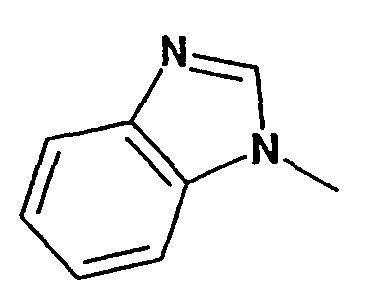

0.21 0.90-0.95(m, 2H), 1.15-1.25(m, 4H), 1.46-1.50(m, 2H), 1.65-1.71 (m, 5H), 4.26(dd, 2H), 5.59(s, 2H), 6.41 (s, 1H), 7.30-7.37(m, 3H), 7.88(dd, 1H), 7.95(s, 1H), 8.90(s, 1H) (dichlorom ethane: MeOH = 9:1) 257 

0.46 0.97-1.07(m, 2H), 1.17-1.29(m, 3H), 1.34-1.39(m, 1H), 1.43-1.47(m, 2H), 1.55-1.60(m, 4H), 1.68- 1.76(m, 5H), 1.80-1.84(m, 2H), 2.41 (brs, 4H), 3.62(s, 2H), 4.42(dd, 2H), 6.48(s, 1H), 8.86(s, 1H) (n-hexane: AcOEt= 1:1) 258 

0.59 1.08(s, 9H), 1.69-1.74(m, 2H), 2.07-2.17(m, 4H), 2.65(dt, 2H), 3.00(brd, 2H), 3.81 (s, 2H), 4.41- 4.45(m, 2H), 6.56(s, 1H), 7.35-7.37(m, 1H), 7.42(dd, 2H), 7.48(d, 2H), 8.90(s, 1H) (n-hexane: AcOEt= 1:1) 259 

0.10 1.06(s, 9H), 1.71-1.75(m, 2H), 2.65(dd, 4H), 3.09(dd, 4H), 3.75(s, 2H), 3.77(s, 3H), 4.43-4.47(m, 2H), 6.54(s, 1H), 6.83-6.90(m, 4H), 8.89(s, 1H) (n-hexane: diethyl-ether = 4:3) 260 

0.56 1.04(s, 9H), 1.66-1.70(m, 2H), 1.91 (s, 3H), 2.02-2.08(m, 2H),2.33-2.38(m, 2H), 2.45-2.48(m, 2H), 2.69-2.72(m, 2H), 3.65(s, 2H), 4.40-4.45(m, 2H), 6.48(s, 1H), 7.27-7.30(m, 3H), 7.35-7.38(m, 2H), 8.87(s, 1H) (n-hexane: AcOEt= 1:1) 261 

0.43 1.06(s, 9H), 1.70-1.75(m, 2H), 2.65-2.67(m, 4H), 3.11-3.13(m, 4H), 3.76(s, 2H), 4.43-4.47(m, 2H), 6.55(s, 1H), 6.85-6.88(m, 2H), 6.94-6.98(m, 2H), 8.89(s, 1H) (n-hexane: AcOEt= 1:1) 262 

0.29 1.08(s, 9H), 1.72-1.82(m, 4H), 2.08-2.16(m, 2H), 2.58-2.64(m, 2H), 2.76- 2.79(m, 2H), 3.77(s, 2H), 4.45-449(m, 2H), 6.54(s, 1H), 7.27-7.30(m, 1H), 7.37(ddd, 2H), 7.48- 7.51 (m, 2H), 8.87(s, 1H) (n-hexane: AcOEt= 1:1) 263 

Free salt DMSO-d6 0.58 0.89-0.98(m, 2H), 1.08-1.25(m, 4H), 1.54-1.66(m, 5H), 1.76-1.78(m, 2H), 4.46(dd, 2H), 4.67(brs, 2H), 4.80(brs, 2H), 5.02 (brs, 2H), 36-7.41 (m, 5H), 9.27(s, 1H), 12.49(brs, 1H) (n-hexane: AcOEt = 1:1) 264 

Free salt DMSO-d6 0.56 (n-hexane: AcOEt = 1:1) 1.28-1.37(m, 1H), 1.68-1.79(m, 5H), 4.46-4.72(m, 4H), 3.35-3.38(m, 2H), 4.46-4.47(m, 2H), 4.70(dd, 2H), 7.03(d, 2H), 7.20(d, 2H), 7.28(s, 1H), 9.20(s, 1H), 10.96(brs, 1H) 265 

0.09 0.98-1.07(m, 2H), 1.18-1.41 (m, 4H),1.68-1.84(m, 9H), 2.11-2.16(m, 2H), 2.27-2.32(m, 2H), 2.92- 2.99(m, 2H), 3.03(s, 3H), 3.73-3.78(m, 2H), 4.40- 4.44(m, 2H), 5.84(brs, 1H), 6.53(s, 1H), 8.89(s, 1H) (n-hexane: AcOEt= 1:1) 266 

0.60 0.93(d, 3H), 1.15-1.28(m, 2H), 1.34-1.46(m, 1H), 1.61-1.65(m, 2H), 1.99(brdd, 2H), 2.75-2.78 (m, 2H), 3.13(dd, 2H), 3.41(s, 2H), 4..59(dd, 2H), 6.45(s, 1H), 7.06-7.09(m, 2H), 7.25-7.27(m, 2H), 8.88 (s, 1H) (n-hexane: AcOEt= 1:1) 267 

0.55 0.95-1.05(m, 2H), 1.15-1.30(m, 3H), 1.32-1.42(m, 1H), 1.58-1.62(m, 2H), 1.75-1.82(m, 5H), 4.40-4.44(m, 2H), 5.37(d, 2H), 6.46(s, 1H), 7.01(dd, 1H), 7.19-7.30(m, 2H), 7.50(dd, 1H), 8.87(s, 1H) (n-hexane: AcOEt= 1:1) 268 

0.59 0.98-1.06(m, 2H), 1.20-1.28(m, 3H), 1.32-1.40(m, 1H), 1.61 (s, 6H), 1.63-1.69(m, 3H), 1.73-1.77(m, 2H), 1.84(d, 2H), 4.45-4.49(m, 2H), 4.91 (s, 2H), 6.69(s, 1H), 8.94(s, 1H) (n-hexane: AcOEt= 1:1) 269 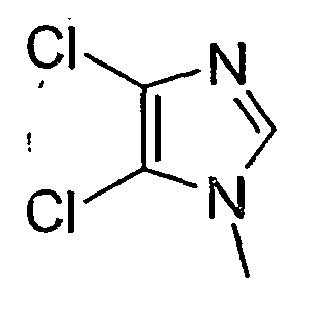

0.33 0.95-1.03(m, 2H), 1.18-1.26(m, 3H), 1.30-1.40(m, 1H), 1.51-1.55(m, 2H), 1.70-1.80(m, 5H), 4.26- 4.30(m, 2H), 5.32(s, 2H), 6.43(s, 1H), 7.42(s, 1H), 8.96(s, 1H) (n-hexane: AcOEt= 1:1) 270 

MS 335.1 0.91-1.01(m, 2H), 1.15-1.25(m, 3H), 1.27-1.34(m, 1H), 1.44-1.50(m, 2H), 1.66-1.77(m, 5H), 4.23(t, 2H), 5.42(s, 2H), 6.51(s, 1H), 6.96(s, 1H), 7.19(s, 1H), 7.83(s, 1H), 8.95(s, 1H) (M+H) 271 
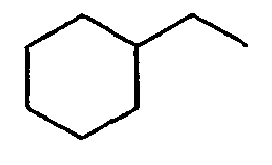
MS 349.1 (CDCl3) (M+H) 0.96-1.04(m, 2H), 1.16-1.26(m, 3H), 1.26-1.35(m, 1H), 1.54-1.60(m, 2H), 1.67-1.80(m, 5H), 2.44(s, 3H), 4.26(t, 2H), 5.27(s, 2H), 6.25(s, 1H), 6.85(s, 1H), 7.04(s, 1H), 8.91 (s, 1H) 272 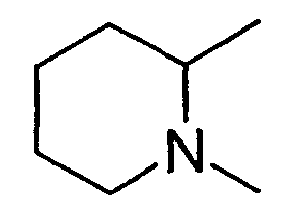

MS 366.1 0.97-1.06(m, 2H), 1.14-1.28(m, 6H), 1.32-1.45(m, 4H), 1.50-1.51 (m,2H),1.67-1.79(m, 6H), 1.82-1.85(m, 2H), 1.99-2.03(m, 1H), 2.38(br, 1H), 2.63(br, 1H), 3.31 (3.35)(s, 1H), 4.16(4.20)(s, 1H), 4.34-4.42(m, 1H), 4.46-4.53(m, 1H), 6.48(s, 1H), 8.85(s, 1H) (M+H) 273 

MS 402.1 (DMSO-d6) (M+H) 1.15(d, 3H), 1.25-1.34(m, 5H), 1.45-1.52(m, 2H), 1.59-1.65(m, 2H), 1.72-1.90(m, 6H), 2.01-2.06(m, 3H), 2.40(br, 1H), 2.55- 2.59(m, 1H), 3.41(3.44)(s, 1H), 4.22(4.25)(s, 1H), 4.31-4.39(m, 1H), 4.41- 4.48(m, 1H), 6.75(s, 1H), 9.06(s, 1H) 274 

0.45 (n-hexane: AcOEt= 1:1) 2.26-2.37(m, 2H), 2.79(t, 2H), 2.92(t, 2H), 3.17(t, 2H), 3.67(s, 2H), 4.60(t, 2H), 6.53(s, 1H), 7.01- 7.09(m, 3H), 8.92(s, 1H) 275 

0.56 (DMSO-d6) (n-hexane: AcOEt= 1:1) 1.21(d, 3H), 1.27-1.35(m, 2H), 1.33(d, 3H), 1.41 (br, 1H), 1.61-2.00(m, 14H), 3.58-3.66(m, 2H), 4.41 (4.47)(t, 2H), 4.57(4.83)(d, 2H), 7.55(7.68)(s, 1H), 9.21(9.22)(s, 1H), 10.41 (10.49)(br, 1H) 276 

0.56 1.19(d, 3H), 1.34-1.50(m, 7H), 1.65-1.84(m, 6H), 1.89-2.03(m, 3H), 2.08 -2.17(m, 2H), 2.38(br, 1H), 2.60-2.63(m, 1H), 3.33(d, 1H), 4.18(d, 1H), 4.35- 4.43(m, 1H), 4.49-4.56(m, 1H), 6.50(s, 1H), 8.86(s, 1H) (n-hexane: AcOEt= 1:1) 277 

0.62 (DMSO-d6) (n-hexane: AcOEt= 1:1) 1.15(1.28)(d, 6H), 1.61-1.78(m, 4H), 1.87-1.93(m, 2H), 3.07-3.14(m, 2H), 3.55-3.64(m, 2H), 4.42(d, 1H), 4.64-4.73(m, 3H), 7.03-7.15(m, 2H), 7.23 -7.27(m, 1H), 7.51 (7.68)(s, 1H), 9.15(9.16)(s, 1H), 10.49(br, 1H) 278 

0.42 0.98-1.02(m, 2H), 1.21-1.34 (m, 4H), 1.64-1.82(m, 11H), 2.54(br s, 4H), 3.80 (s, 2H), 4.38-4.42(m, 2H), 6.50(s, 1H), 8.87(s, 1H) (n-hexane: AcOEt= 1:1) 279 0.29 1.81 (br s, 4H), 2.50(br s, 4H), 3.12(t, 2H), 3.56(s, 2H), 4.58(t, 2H), 6.47(s, 1H), 7.05(d, 2H), 7.24(d, 2H), 8.89(s, 1H) 

(n-hexane: AcOEt= 1:1) 280 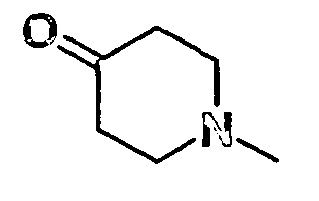

0.33 0.98-1.027(m, 2H), 1.12-1.45(m, 4H), 1.67-1.85(m, 7H), 2.47(t, 4H), 2.82(t, 4H), 3.82(s, 2H), 4.47(t, 2H), 6.55(s, 1H), 8.90(s, 1H) (n-hexane: AcOEt= 1:1) 281 
0.41 0.95-1.08(m, 2H), 1.05-1.41 (m, 4H), 1.64-1.91 (m, 11H), 2.08-2.25(m, 3H), 2.92(s, 2H), 3.68(s, 2H), 4.42(t, 2H), 5.30(br d, 2H), 6.49(s, 1H), 8.87(s, 1H) 
(Dichloromethane: MeOH= 9:1) 282 

0.60(n-hexane: AcOEt= 1:1) 2.10-2.25(m, 2H), 2.57(t, 2H), 2.94-2.98(m, 2H), 3.13(t, 2H), 3.51 (s, 2H), 4.58(t, 2H), 5.61-5.70(m, 1H), 5.75-5.82(m, 1H), 6.50(s, 1H), 7.07(d, 2H), 7.24(d, 2H), 8.90(s, 1H) 283 

0.63 (n-hexane: AcOEt= 1:2) 0.96-1.08(m, 2H), 1.12-1.40(m, 4H), 1.62-1.85(m, 7H), 2.12-2.20(m, 2H), 2.62(t, 2H), 2.99(t, 2H), 3.76(s, 2H), 4.39-4.44(m, 2H), 5.61-5.68(m, 1H), 5.74-5.82(m, 1H), 6.53(s, 1H), 8.88(s, 1H) 284 

0.57 (n-hexane: AcOEt= 1:1) 0.93-1.04(m, 2H), 1.17-1.41 (m, 4H), 1.63-1.84(m, 10H), 1.98-2.09(m, 2H), 2.61 (t, 2H), 2.94(br s, 2H), 3.74(s, 2H), 4.44(t, 2H), 5.33(br s, 1H), 6.52(s, 1H), 8.87(s, 1H) 285 

0.55(n-hexane: AcOEt= 1:1) 1.70(s, 3H), 2.05(br s, 2H), 2.55(t, 2H), 2.91 (br s, 2H), 3.11 (t, 2H), 3.49(s, 2H), 4.57(t, 2H), 5.36(br s, 1H), 6.49(s, 1H), 7.04(d, 2H), 7.25(d, 2H), 8.90(s, 1H) 286 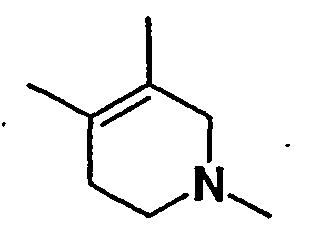

0.58 (n-hexane: AcOEt= 1:1) 1.58(s, 3H), 1.64(s, 3H), 2.06(br s, 4H), 2.52(t, 2H), 2.79(br s, 2H), 3.11 (t, 2H), 3.48(s, 2H), 4.56(t, 2H), 6.49(s, 1H), 7.04(d, 2H), 7.24(d, 2H), 8.90(s, 1H) 287 

0.62(n-hexane: AcOEt= 1:1) 0.95-1.04(m, 2H), 1.15-1.38 (m, 4H), 1.56(s, 3H), 1.60-1.82(m, 10H), 2.17(br s, 2H), 2.57(t, 2H), 2.83(br s, 2H), 3.73(s, 2H), 4.41 (t, 2H), 6.52(s, 1H), 8.87(s, 1H) 288 

0.51 (n-hexane: AcOEt= 1:1) 2.15-2.26(m, 2H), 2.58(t, 2H), 3.05-3.18(m, 4H), 3.51 (s, 2H), 4.57(t, 2H), 5.90(br s, 1H), 6.51(s, 1H), 7.01 (d, 2H), 7.25(d, 2H), 8.92(s, 1H) 289 

0.55(n-hexane: AcOEt= 1:1) 0.93-1.05(m, 2H), 1.14-1.40(m, 4H), 1.61-1.82(m, 17H), 2.20-2.28(m, 2H), 2.65(t, 2H), 3.13(br s, 2H), 3.81 (s, 2H), 4.40(t, 2H), 5.83-5.92(m, 1H), 6.54(s, 1H), 8.90(s, 1H) 290 
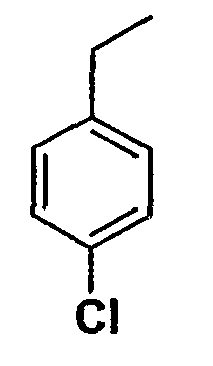
0.48 1.02(t, 3H), 1.90-1.99(m, 2H), 2.10-2.18(m, 2H), 2.52(t, 2H), 2.86(br s, 1H), 3.12(t, 2H), 3.53(s, 2H), 4.56(t, 2H), 5.48(br s, 1H), 6.50(s, 1H), 7.07(d, 2H), 7.25(d, 2H), 8.91 (s, 1H) (n-hexane: AcOEt= 1:1) 291 

0.70 0.93-1.08(m, 5H), 1.15-1.40 (m, 4H), 1.62-1.85(m, 11H), 1.92(br q, 2H), 2.10 -2.18 (m, 2H), 2.56(s, 2H), 2.88 (br s, 2H), 3.76(s, 2H), 4.42 (t, 2H), 5.45-5.59(m, 1H), 6.53(s, 1H), 8.88(s, 1H) (n-hexane: AcOEt= 1:1) 292 

0.69 0.90-1.00(m, 2H), 1.12-1.39 (m, 4H), 1.59-1.80(m, 7H), 3.00(t, 2H), 3.30(t, 2H), 4.39 (t, 2H), 4.42(s, 2H), 6.56(d, 1H), 6.60(s, 1H), 6.78(t, 1H), 7.11(t, 1H), 7.15(d, 1H), 8.90(s, 1H) (n-hexane: AcOEt= 1:1) 293 

0.35 2.73(t, 2H), 2.80(t, 4H), 3.10(t, 2H), 3.53(s, 2H), 3.58(s, 2H), 3.82(s, 3H), 3.85(s, 3H), 4.61(t, 2H), 6.48(s, 1H), 6.54(s, 1H), 6.61 (s, 1H), 6.93(d, 2H), 7.17(d, 2H), 8.93(s, 1H) (n-hexane: AcOEt= 1:1) 294 

0.44 0.89-0.99(m, 2H), 1.08-1.48(m, 4H), 1.56-1.77(m, 7H), 2.76-2.87(m, 4H), 3.58(s, 2H), 3.81 (s, 3H), 3.85(s, 3H), 3.87(s, 2H), 4.48(t, 2H), 6.47(s, 1H), 6.58(s, 1H), 6.61 (s, 1H), 8.91(s, 1H) (n-hexane: AcOEt= 1:1) 295 

0.25 0.90-1.08(m, 2H), 1.18-1.42(m, 4H), 1.51-1.82(m, 7H), 4.39(t, 2H), 5.73(s, 2H), 6.77(s, 1H), 8.24(s, 1H), 9.05(s, 1H) (n-hexane: AcOEt= 1:3) 296 

0.47 0.96-1.08(m, 2H), 1.12-1.42 (m, 4H), 1.68-1.89(m, 7H), 2.35-2.39(m, 2H), 2.57 -2.64 (m, 4H), 2.97- 3.04(m, 2H), 3.70(s, 2H), 4.41-4.46 (m, 2H), 5.72(s, 1H), 6.51 (s, 1H), 8.89(s, 1H) (n-hexane: AcOEt= 5:1) - 7-(2-Cyclohexyl-ethyl)-6-(4-oxo-piperidin-1-ylmethyl)-7H-pyrrolo[2,3-d]pyrimidine-2-carbonitrile is reduced in methanol by sodium borohydride to the corresponding alcohol; Rf=0.15(n-hexane:AcOEt=1:2). NMR (400MHz, CDCl3, δ) 0.94-1.09(m, 2H), 1.15-1.42(m, 4H), 1.52-1.78(m, 11H), 1.80-1.94(m, 4H), 2.21-2.29(m, 2H), 2.74-2.78(m, 2H), 3.67(s, 2H), 4.42(t, 2H), 6.49(s, 1H), 8.87(s, 1H).
- To a solution of 6-Bromomethyl-7-(3,3-dimethyl-butyl)-7H-pyrrolo[2,3-d]pyrimidine -2-carbonitrile(440 mg, 1.37 mmol) in DMF(5 ml), 1-(2,8-diaza-spiro[4.5]dec-8-yl)- ethanone hydrochloride (Example ZG, 300 mg, 1.37 mmol) and K2CO3(568 mg, 4.11 mmol) and triethylamine(5 ml) are added. The mixture is stirred at room temperature under nitrogen atomosphere for 11 h. The reaction mixture is diluted with water and extracted with AcOEt(twice). The combined organic layer is washed with water and brine, dried over MgSO4, and concentrated in vacuo. The residue is purified by silica gel column chromatography(n-hexane : AcOEt=1:1) to to provide the title compound; Rf=0.30(n-hexane:AcOEt = 1:1); 1H-NMR(400MHz, CDCl3) δ : 1.05(s, 9H), 1.53-1.72(m, 8H), 2.07(s, -3H), 2.40-2.48(m, 2H), 2.60-2.69(m, 2H), 3.35-3.45(m, 2H), 3.60-3.67(m, 1H), 3.74-3.82(m, 2H), 4.40-4.44(m, 2H), 6.49(s, 1H), 8.87(s, 1H).
- By repeating the procedures described in Example 298 using appropriate starting materials (including some of those prepared in Examples A to X and ZA to ZV) the following compounds of formula 2 are obtained as identified below in Table 27.

Table 27 Ex. R' R" NMR(400MHz, CDCl3, δ) 299 

1.50-1.71 (m, 6H), 2.06(s, 3H), 2.32-2.41 (m, 2H), 2.48-2.65 (m, 2H), 3.10-3.14(m, 2H), 3.29-3.52(m, 5H), 3.62-3.69 (m, 1H), 4.58-4.61 (m, 2H), 6.46(s, 1H), 6.99-7.01 (m, 2H), 7.23-7.26 (m, 2H), 8.89 (s, 1H). 300 

1.53-1.55(m, 2H), 1.63-1.70(m, 6H), 2.35(s, 2H), 2.56-2.60(m, 2H), 2.75(s, 3H), 3.05-3.13(m, 2H), 3.20-3.26(m, 2H), 3.46(s, 2H), 4.57-4.61 (m, 2H), 6.45(s, 1H), 6.97-6.99(m, 2H), 7.22- 7.25(m, 2H), 8.90(s, 1H). 301 

1.04(s, 9H), 1.66-1.70(m, 8H), 2.43(brs, 2H), 2.62-2.65(m, 2H), 2.75(s, 3H), 3.09-3.15(m, 2H), 3.20-3.25(m, 2H), 3.78(s, 2H), 4.39-4.43(m, 2H), 6.49(s, 1H), 8.88(s, 1H). 302 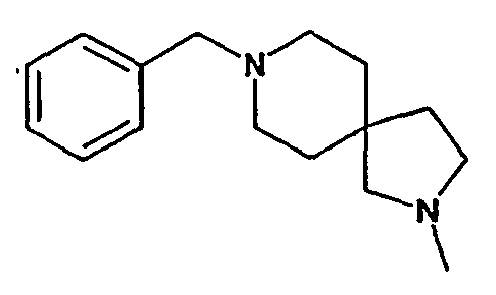

0.97-1.03(m, 2H), 1.15-1.34(m, 5H), 1.56-1.80(m, 12H), 2.35- 2.40(m, 6H), 2.55-2.58(m, 2H), 3.45(s, 2H), 3.75(s, 2H), 4.38-4.41 (m, 2H), 6.47(s, 1H), 7.29-7.30(m, 5H), 8.86(s, 1H). 303 

1.53-1.60(m, 4H), 2.09-2.16(m, 4H), 2.59(s, 2H), 2.80-2.83(m, 2H), 3.12-3.14(m, 2H), 3.37(s, 2H), 4.55-4.64(m, 2H), 6.47(s, 1H), 6.99-7.03(m, 2H), 7.23-7.26 (m, 2H), 7.75(brs, 1H), 8.90(s, 1H). 304 

0.96-1.87(m, 26H), 2.06-2.08 (m, 2H), 2.55-2.65(m, 4H), 2.92- 2.95(m, 2H), 3.65(s, 2H), 4.38- 4.42 (m, 2H), 6.48(s, 1H), 8.87 (s, 1H). 305 

0.98-1.39(m, 9H), 1.65-1.82(m, 7H), 1.99-2.03(m, 4H), 2.59-2.64 (m, 2H), 2.74-2.77(m, 2H), 2.92- 2.98(m, 2H), 4.36-4.39(m, 2H), 5.10(s, 2H), 6.40(s, 1H), 6.69 -6.72(m, 1H), 6.88-6.93(m, 1H), 7.16-7.18(m, 1H), 8.86(s, 1H). 306 

0.97-1.39(m, 6H), 1.60-1.82(m, 8H), 1.98-2.00(m, 3H), 2.46(s, 3H), 2.71-2.74(m, 2H), 2.92- 2.94(m, 2H), 3.77(s, 3H), 4.36- 4.40(m, 2H), 5.09(s, 2H), 6.40 (s, 1H), 6.66-6.73(m, 2H), 7.02 (d, 1H), 8.85(s, 1H). 307 

1.02-1.42(m, 6H), 1.68-1.95(m, 11H), 2.12(s, 3H), 3.75-3.85(m, 2H), 4.01-4.07(m, 1H), 4.24- 4.29(m, 1H), 4.40-4.44(m, 2H), 5.16(s, 2H), 6.44(s, 1H), 6.84- 6.86(m, 1H), 7.11-7.15(m, 1H), 7.24-7.33(m, 2H), 8.85(s, 1H). 308 

1.09(s, 9H), 1.70-1.74(m, 2H), 1.88-1.94(m, 4H), 2.19(s, 3H), 3.74-3.81 (m, 2H), 4.04-4.14(m, 1H), 4.26-4.29(m, 1H), 4.38- 4.42(m, 2H), 5.13(s, 2H), 6.38 (s, 1H), 6.80(d, 1H), 7.11-7.15 (m, 1H), 7.23-7.32(m, 2H), 8.85 (s, 1H). 309 

1.38-1.93(m, 13H), 2.08-2.17 (m, 2H), 2.19(s, 3H), 3.72-3.84 (m, 2H), 3.99-4.06(m, 1H), 4.23 -4.29(m, 1H), 4.41-4.45(m, 2H), 5.12(s, 2H), 6.48(s, 1H), 6.84-6.86(m, 1H), 7.11-7.15 (m, 1H), 7.24-7.32(m, 2H), 8.89 (s, 1H) 310 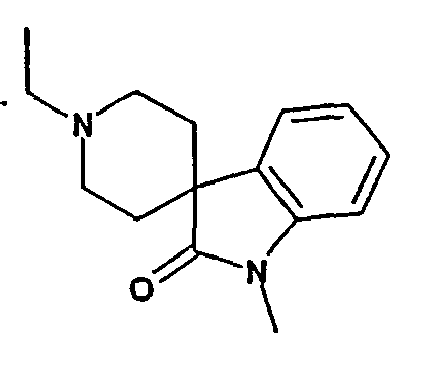

(DMSO-d6) 1.07(t, 3H), 1.24-1.46(m, 3H), 1.69-2.02(m, 12H), 2.60-2.75 (m, 2H), 2.80-2.90(m, 2H), 3.25 -3.36(m, 2H), 4.40-4.44(m, 2H), 5.26(s, 2H), 6.54(s, 1H), 7.04- 7.09(m, 2H), 7.22-7.25(m, 1H), 7.55-7.57(m, 1H), 9.02(s, 1H). 311 

(DMSO-d6) 1.03(s, 9H), 1.66-1.70(m, 2H), 1.92-2.00(m, 4H), 2.55-2.59(m, 4H), 3.87(s, 2H), 4.37-4.41 (m, 2H), 6.78(s, 1H), 9.09(s, 1H) 312 

(DMSO-d6) 1.92-1.99(m, 4H), 2.52-2.56(m, 4H), 3.1 1 (dd, 2H), 3.66(s, 2H), 4.60(dd, 2H), 6.74(s, 1H), 7.11 (d, 2H), 7.27-7.29(m, 2H), 9.07 (s, 1H) 313 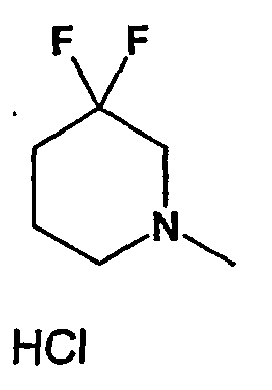

(DMSO-d6) (AA) 1.01 (s, 9H), 1.66-1.71 (m, 4H), 1.91-1.94(m, 2H), 2.50-2.55(m, 2H), 2.72-2.77(m, 2H), 3.93 (brs, 2H), 4.35-4.39(m, 2H), 6.82(s, 1H), 9.11 (s, 1H) 314 

1.68-1.74(m, 2H), 1.82-1.92(m, 2H), 2.37-2.40(m, 2H), 2.58(dd, 2H), 3.07(dd, 2H), 3.39(s, 2H), 4.53(dd, 2H), 6.45(s, 1H), 6.98 (dd, 2H), 7.17-7.20(m, 2H), 8.85 (s, 1H) 315 

DMSO-d6 0.96-1.02(m, 2H), 1.17-1.33(m, 4H), 1.61-1.71(m, 5H), 1.76- 1.80(m, 2H), 1.91-2.01 (m, 4H), 2.56-2.61 (m, 4H), 3.86(s, 2H), 4.35-4.39(m, 2H), 6.78(s, 1H), 9.08(s, 1H) 316 

0.92-1.02(m, 2H), 1.16-1.39(m, 4H), 1.60-1.82(m, 9H), 1.90-1.99 (m, 2H), 2.51-2.54(m, 2H), 2.72 (t, 2H), 3.80(s, 2H), 4.39- 4.43 (m, 2H), 6.56(s, 1H), 8.90 (s, 1H) 317 

1.32-1.46(m, 3H), 1.64-1.81 (m, 4H), 1.89-2.04(m, 6H), 2.09- 2.16(m, 2H), 2.61-2.65(m, 4H), 3.75(s, 2H), 4.41-4.45(m, 2H), 6.55(s, 1H), 8.91 (s, 1H) 318 

1.29-1.43(m, 4H), 1.69-1.75(m, 5H), 1.83-1.91 (m, 4H), 2.02- 2.08(m, 2H), 2.45-2.48(m, 2H), 2.65(t, 2H), 3.73(s, 2H), 4.34- 4.38(m, 2H), 6.50(s, 1H), 8.85 (s, 1H) 319 

2.26-2.37(m, 2H), 2.75(dd, 2H), 2.90(t, 2H), 3.13(dd, 2H), 3.53 (s, 2H), 4.57(dd, 2H), 6.51(s, 1H), 7.02(dd, 2H), 7.24(d, 2H), 8.93(s, 1H) 320 

0.96-1.05(m, 2H), 1.16-1.39(m, 4H), 1.65-1.82(m, 7H), 2.26- 2.37(m, 2H), 2.81 (dd, 2H), 2.96 (t, 2H), 3.85(s, 2H), 4.36-4.40 (m, 2H), 6.55(s, 1H), 8.90(s, 1H) 321 

DMSO 1.19-1.28(m, 2H), 1.43-1.52(m, 1H), 1.70-1.88(m, 6H), 1.98- 2.04(m, 2H), 2.21-2.32(m, 2H), 2.78(dd, 2H), 2.96(t, 2H), 3.97 (s, 2H), 4.33-4.37(m, 2H), 6.79 (s, 1H), 9.10(s, 1H) 322 

0.96-1.06(m, 2H), 1.08(s, 6H), 1.19-1.43(m, 4H), 1.58-1.83(m, 9H), 2.33(s, 2H), 2.63(dd, 2H), 3.77(s, 2H), 4.41-4.45(m, 2H), 6.48(s, 1H), 8.86(s, 1H) 323 

0.96-1.04(m, 5H), 1.13-1.41 (m, 5H), 1.66-1.76(m, 5H), 1.77- 1.83(m, 2H), 1.99-2.08(m, 1H), 2.11-2.15(m, 1H), 2.20-2.31 (m, 1H), 2.53-2.67(m, 2H), 2.76(dd, 1H), 3.79(brs, 2H), 4.38-4.42 (m, 2H), 6.50(s, 1H), 8.86(s, 1H) 324 

0.96-1.04(m, 2H), 1.18-1.39(m, 11H), 1.59-1.82(m, 6H), 1.89 (dd, 2H), 3.22(dd, 2H), 4.29- 4.33(m, 2H), 4.63(s, 2H), 6.52 (s, 1H), 8.91 (s, 1H) 325 

0.95-1.05(m, 2H), 1.15-1.42(m, 7H), 1.56-1.82(m, 8H), 2.24-2.32 (m, 1H), 2.49-2.59(m, 1H), 3.19- 3.27(m, 2H), 4.30-4.34(m, 2H), 4.60-4.64(m, 1H), 4.74-4.78 (m, 1H), 6.53(s, 1H), 8.91 (s, 1H) 326 

0.96-1.02(m, 2H), 1.04-1.37(m, 4H), 1.66-1.82(m, 6H), 2.04- 2.21 (m, 2H), 2.48-2.54(m, 1H), 2.72-2.95(m, 3H), 3.86(s, 2H), 4.38-4.42(m, 2H), 5.08-5.12(m, 1H), 5.23-5.28(m, 1H), 6.52(s, 1H), 8.88(s, 1H) 327 

0.94-1.04(m, 2H), 1.15-1.39(m, 4H), 1.65-1.82(m, 6H), 2.01- 2.23(m, 2H), 2.49-2.54(m, 1H), 2.80-2.95(m, 3H), 3.87(s, 2H), 4.38-4.42(m, 2H), 5.10-5.13(m, 1H), 5.24-5.28(m, 1H), 6.53(s, 1H), 8.88(s, 1H) 328 

1.08(s, 9H), 1.56-1.60(m, 2H), 2.68-2.74(m, 2H), 3.62-3.72(m, 4H), 4.49-4.53(m, 4H), 7.31 (s, 1H), 9.04(s, 1H) 329 

2.71-2.74(m, 2H), 2.84-2.89(m, 2H), 3.09(dd, 2H), 3.54-3.59(m, 4H), 3.78(s, 3H), 4.59(dd, 2H), 6.55(s, 1H), 6.55(d, 1H), 6.71 -6.74(m, 1H), 6.90-6.93(m, 3H), 7.14-7.18(m, 2H), 8.92(s, 1H) 330 

CDCl3 0.87-0.97(m, 2H), 1.09-1.34(m, 4H), 1.59-1.75(m, 7H), 2.76- 2.82(m, 2H), 2.86-2.90(m, 2H), 3.61 (s, 2H), 3.78(s, 3H), 3.86 (brs, 2H), 4.41-4.45(m, 2H), 6.58(s, 1H), 6.65(d, 1H), 6.68- 6.72(m, 1H), 6.88-6.91 (m, 1H), 8.90(s, 1H) - To a solution of 7-(2-Cyclohexyl-ethyl)-6-(2-oxo-3-piperidin-4-yl-2,3-dihydro- benzoimidazol-1 -ylmethyl)-7H-pyrrolo[2,3-d]pyrimidine-2-carbonitrile trifluoroacetic acid salt(141 mg, 0.29 mol) in dichloromethane(2 ml), triethylamine (395 µl) and acetic anhydride(60 µl, 0.63 mmol) are added at 0°C. The reaction mixture is stirred for over night at room temperature, quenched with ice-water and extracted with ethyl acetate. The combined extracts are washed with H2O, brine and dried over sodium sulphate. Chromatography on silica gel gives the title compound; Rf=0.30(n-hexane:AcOEt = 1:1); 1H-NMR(400MHz, CDCl3) δ : 0.95-1.33(m, 5H), 1.53-1.96(m, 8H), 2.20(s, 3H), 2.32-2.41 (m, 2H), 2.66-2.72(m, 1H), 3.22-3.29(m, 1H), 4.01-4.11 (m, 1H), 4.40-4.44(m, 2H), 4.54-4.60(m, 1H), 4.87-4.91 (m, 1H), 5.29(s, 2H), 6.54(s, 1H), 6.96-7.17(m, 4H), 8.88(s, 1H).
- To a solution of 7-(2-Cyclohexyl-ethyl)-6-(2-oxo-3-piperidin-4-yl-2,3-dihydro- benzoimidazol-1-ylmethyl)-7H-pyrrolo[2,3-d]pyrimidine-2-carbonitrile trifluoroacetic acid salt(141 mg, 0.29 mol) in dichloromethane(2 ml), triethylamine (395 µl) and acetic anhydride(60 µl, 0.77 mmol) are added at 0°C. The reaction mixture is stirred for over night at room temperature, quenched with ice-water and extracted with ethyl acetate. The combined extracts are washed with H2O, brine and dried over sodium sulphate. Chromatography on silica gel gives the title compound; Rf=0.30(n-hexane:AcOEt = 1:1). 1H-NMR(400MHz, CDCl3) δ : 0.93-1.01(m, 2H), 1.13-1.33(m, 3H), 1.54-1.78(m, 8H), 1.95-2.04(m, 2H), 2.52-2.63(m, 2H), 2.87-2.93(m, 5H), 4.03-4.06(m, 2H), 4.40-4.44(m, 2H), 4.50-4.56(m, 1H), 5.29(s, 2H), 6.53(s, 1H), 6.97-7.24(m, 4H), 8.88(s, 1H).
- To a solution of 7-(2-Cyclohexyl-ethyl)-6-(4-oxo-1-phenyl-1,3,8-triaza-spiro[4.5]dec-3-ylmethyl)-7H-pyrrolo[2,3-d]pyrimidine-2-carbonitrile trifluoroacetic acid salt(142 mg, 0.28 mol) in dichloromethane(2 ml), triethylamine(395 µl) and acetic anhydride (54 µl, 0.57 mmol) are added at 0°C. The reaction mixture is stirred for over night at room temperature, quenched with ice-water and extracted with ethyl acetate. The combined extracts are washed with H2O, brine and dried over sodium sulphate. Chromatography on silica gel gives the title compound; Rf=0.30(n-hexane:AcOEt = 1:1). 1H-NMR(400MHz, CDCl3) δ : 0.97-1.40(m, 6H), 1.64-1.82(m, 9H), 2.14(s, 3H), 2.37-2.44(m, 2H), 3.40-3.48(m, 1H), 3.74-3.79(m, 1H), 3.93-4.01(m, 1H), 4.34-4.38(m, 2H), 4.56-4.66(m, 3H), 4.87(s, 2H), 6.61 (s, 1H), 6.74-6.76(m, 2H), 6.91-6.95(m, 1H), 7.23-7.25(m, 2H), 8.94(s, 1H).
- To a solution of 4-{7-[2-(4-Chloro-phenyl)-ethyl]-2-cyano-7H-pyrrolo[2,3-d]pyrimidin -6-ylmethyl} -piperazine-1-carboxylic acid tert-butyl ester(125 mg, 0.26 mmol) in dichloromethane (1 ml), trifluoroacetic acid(1 ml) is added. After stirring for 30 min at room temperature, solvent is evaporated down to give7-[2-(4-chloro-phenyl)-ethyl]-6- piperazin-1-ylmethyl-7H-pyrrolo[2,3-d]pyrimidine-2-carbonitrile trifluoroacetic acid salt; Rf=0.10 (CH2CI2:MeOH = 10:1).
- To a solution of 7-[2-(4-chloro-phenyl)-ethyl]-6-piperazin-1-ylmethyl-7H-pyrrolo [2,3-d]pyrimidine-2-carbonitrile trifluoroacetic acid salt in pyridine(5 ml), phenylacetyl chloride (172 µl, 1.30 mmol) are added at 0°C. The reaction mixture is stirred for 6h at 80°C, quenched with ice-water and extracted with ethyl acetate. The combined extracts are washed with H2O, brine and dried over sodium sulphate. Chromatography on silica gel gives the title compound; Rf=0.30(n-hexane:AcOEt = 1:1). 1H-NMR(400MHz, CDCl3) δ : 2.18-2.21 (m, 2H), 2.37-2.39(m, 2H), 3.09-3.13(m, 2H), 3.32(s, 2H), 3.40-3.48(m, 2H), 3.63-3.65(m, 2H), 3.72(s, 2H), 4.55-4.59(m, 2H), 6.44(s, 1H), 6.96-6.98(m, 2H), 7.21-7.33(m, 7H), 8.89(s, 1H).
- To a solution of 6-bromomethyl-7-(2-cyclohexyl-ethyl)-7H-pyrrolo[2,3-d] pyrimidine-2-carbonitrile(290 mg, 0.84 mmol) in DMF(1.7 ml), 2,8-diaza-spiro[4.5]decane-2- carboxylic acid tert-butyl ester(201 mg, 0.84 mmol) and potassium carbonate(138 mg, 1.0 mmol) are added. The mixture is stirred at room temperature under nitrogen atomosphere for 14 h. The reaction mixture is diluted with water and extracted with AcOEt(twice). The combined organic layer is washed with water and brine, dried over MgSO4, and concentrated in vacuo. The residue is purified by silica gel column Chromatography (n-hexane : AcOEt=1:1) to give 8-[2-cyano-7-(2-cyclohexyl-ethyl)-7H-pyrrolo[2,3-d]pyrimidin-6-ylmethyl]-2,8-diaza-spiro[4.5]decane-2-carboxylic acid tert-butyl ester; Rf=0.45(n-hexane:AcOEt = 1:1).
- To a solution of 8-[2-cyano-7-(2-cyclohexyl-ethyl)-7H-pyrrolo[2,3-d]pyrimidin-6- ylmethyl]-2,8-diaza-spiro[4.5]decane-2-carboxylic acid tert-butyl ester (300 mg, 0.59 mmol) in dichloromethane (5 ml), trifluoroacetic acid(3 ml) is added. After stirring for 1.5h at room temperature, solvent is evaporated down to give 7-(2-cyclohexyl-ethyl)-6-(2,8-diaza-spiro[4.5]dec-8-ylmethyl)-7H-pyrrolo[2,3-d] pyrimidine -2-carbonitrile trifluoroacetic acid salt in quant yield; Rf=0.10(CH2Cl2:MeOH = 10:1).
- To a solution of 7-(2-cyclohexyl-ethyl)-6-(2,8-diaza-spiro[4.5]dec-8-ylmethyl)-7H -pyrrolo[2,3-d]pyrimidine-2-carbonitrile trifluoroacetic acid salt in pyridine(5 ml), acetic anhydride(0.28 ml, 2.90 mmol) are added at 0°C. The reaction mixture is stirred for over night at room temperature, quenched with ice-water and extracted with ethyl acetate. The combined extracts are washed with H2O, brine and dried over sodium sulphate. Chromatography on silica gel gives the title compound; Rf=0.30(n-hexane:AcOEt = 1:1). 1H-NMR(400MHz, CDCl3) δ : 1.00-1.84(m, 17H), 2.04(s, 3H), 2.33-2.56(m, 4H), 3.25-3.35(m, 2H), 3.47-3.53(m, 2H), 3.66-3.69(m, 2H), 4.38-4.43(m, 2H), 6.49(s, 1H), 8.87(s, 1H).
- To a solution of 7-(2-cyclohexyl-ethyl)-6-(2,3-dihydro-indol-1-ylmethyl)-7H- pyrrolo [2,3-d]pyrimidine-2-carbonitrile(NVP-TAC583, 167 mg, 0.481 mmol) in toluene (1.5 mL) is added MnO2 (487 mg). After 1 h, the additional MnO2(430 mg) is added, and the mixture is atirred at room temperature for 36 h. To this mixture is added the additional MnO2(430 mg), and the resulting mixture is heated to 50 oC for 2 h. The mixture is filtered through celite pad, and the filtrate is concentrated in vacuo. The residue is purified by silica gel column chromatography(n-hexane:EtOAc=5:1) to give the title compound; 1H NMR(400 MHz, DMSO-d6) □ 0.77-0.84(m, 2H), 1.06-1.14(m, 4H), 1.24-1.30(m, 2H), 1.60-1.63(m, 5H), 4.29(t, 2H), 5.84(s, 2H), 6.38(s, 1H), 6.56(d, 1H), 7.06(t, 1H), 7.14(t, 1H), 7.44(d, 1H), 7.55(d, 1H), 7.60(d, 1H), 9.05(s, 1H); Rf 0.47(n-hexane:EtOAc=1:1).
- -To a solution of 6-fluoro-1H-indole(147 mg, 1.09 mmol) in THF(3.7 mL) is added NaH (60 %, 48 mg, 1.20 mmol) at 0 oC. After being stirred at 0 oC for 20 min, to this mixture is added propargyl bromide(0.1 mL, 1.33 mmol), and the mixture is stirred at 0 oC rt for 11 h. The reaction is quenched by the addition of water, and the mixture is extracted with ether. The combined organic extracts are washed with water and brine. The organic layer is dried over MgSO4, filtered, and concentrated in vacuo. The residue is purified by silica gel column chromatography (n-hexane:EtOAc=10:1) to give the propargyl indole.
- To a solution of the above propargyl indole(82 mg, 0.473 mmol) and the 5-bromo-4-(2-cyclohexyl-ethylamino)-pyrimidine-2-carbonitrile (140 mg, 0.453 mmol) in DMF (1.7 mL) are added Et3N(0.19 mL, 1.37 mmol), Cul(9.0 mg, 0.047 mmol), and Pd(Ph3P)2Cl2(16 mg, 0.023 mmol). The flask is evacuated and backfilled with nitrogen, and then stirred at 80 oC for 70 min. After dilution with EtOAc, the mixture is washed with water(x2) and brine. The organic layer is dried over Na2SO4, filtered, and concentrated in vacuo. The residue is purified by silica gel column chromatography(n-hexane:EtOAc=4:1) to give the coupling product.
- To a solution of the said product (105 mg) in DMF (1 mL) is added 1 drop of DMF. The reaction mixture is stirred at 100 oC for 30 min. After dilution with EtOAc, the mixture is washed with 1 M aqueous KHSO4 and brine. The organic layer is dried over Na2SO4, filtered, and concentrated in vacuo. The residue is purified by silica gel column chromatography(n-hexane:EtOAc=4:1 to 1:1) followed by trituration with ether-n-hexane to give the the title compound; 1H NMR(400 MHz, DMSO-d6) δ 0.75-0.83(m, 2H), 1.04-1.14(m, 4H), 1.22-1.28(m, 2H), 1.59-1.61 (m, 5H), 4.27(t, 2H), 5.80(s, 2H), 6.39(s, 1H), 6.57(t, 1H), 6.91 (dt, 1H), 7.41 (d, 1H), 7.46(dd, 1H), 7.59(dd, 1H), 9.05(s, 1H); Rf 0.55(n-hexane:EtOAc=1:1).
- To a solution of 3-oxo-pyrrolidine-1-carboxylic acid tert-butyl ester(2.71 g, 14.7 mmol) in THF(50 mL) are successively added CF3TMS(2.4 mL, 16.2 mmol) and TBAF(1.0 M in THF, 0.8 mL, 0.8 mmol) at 0 oC. The reaction mixture is stirred at 0 oC for 20 min, and then at room temperature for 9 h. The reaction is quenched by the addition of saturated aqueous NH4Cl and TBAF. The mixture is extracted with ether, and the combined organic extracts are washed with 1 M aqueous KHSO4, water, and brine. The organic layer is dried over MgSO4, filtered, and concentrated in vacuo to give the product.
- To a solution of the above product in pyridine(50 mL) is added SOCl2(5 mL). The reaction mixture is stirred at 100 oC for 15 min, and then diluted with ether. The mixture is washed with 1 M aqueous KHSO4, water, saturated aqueous NaHCO3, water, and brine. The organic layer is dried over MgSO4, filtered, and concentrated in vacuo. The residue is purified by silica gel column chromatography (n-hexane:EtOAc=20:1) to give 3-trifluoromethyl-2,5-dihydro-pyrrole-1-carboxylic acid tert-butyl ester.
- The above ester (105 mg, 0.443 mmol) is treated with 4N HCl-EtOAc(1 mL), and then the mixture was concentrated in vacuo to give the hydrochloride.
- To a solution of 6-bromomethyl-7-(2-cyclohexyl-ethyl)-7H-pyrrolo[2,3-d] pyrimidine-2-carbonitrile (76 mg, 0.193 mmol) in DMF(1.0 mL) are added the above hydrochloride and K2CO3 (138 mg, 1.00 mmol). The reaction mixture is stirred at room temperature for 11 h. After dilution with EtOAc, the mixture is washed with water (x2) and brine. The organic layer is dried over Na2SO4, filtered, and concentrated in vacuo. The residue is purified by silica gel column chromatography (n-hexane:EtOAc=4:1 to 3:1) to give the title compound; Rf 0.47(n-hexane: AcOEt=1:1); 1 H NMR(400 MHz, CDCl3) □3.19(t, 2H), 3.60-3.64(m, 4H), 3.81 (s, 2H), 4.62(t, 2H), 6.31 (q, 1H), 6.52(s, 1H), 6.96-7.08(m, 3H), 8.91 (s, 1H).
- A mixture of 3-trifluoromethyl-2,5-dihydro-pyrrole-1-carboxylic acid tert-butyl ester(764 mg, 3.22 mmol) and 10 % Pd on carbon(460 mg) in EtOH(10 mL) is stirred under 1 atom H2 at room temperature for 19 h. The mixture is filtered through a celite pad, and the filtrate is concentrated in vacuo. The residue is purified by silica gel column chromatography(n-hexane:EtOAc=15:1) to give the product.
- The above product is treated with 4N HCl-EtOAc at room temperature for 1 h to give the hydrochloride.
- To a solution of 6-bromomethyl-7-(2-cyclohexyl-ethyl)-7H-pyrrolo[2,3-d]pyrimidine -2-carbonitrile(75 mg, 0.190 mmol) in DMF(1.0 mL) are added the above hydrochloride (62 mg, 0.353 mmol) and K2CO3(176 mg, 1.27 mmol). The reaction mixture is stirred at room temperature for 6.5 h. After dilution with EtOAc, the mixture is washed with water(x2) and brine. The organic layer is dried over Na2SO4, filtered, and concentrated in vacuo. The residue is purified by silica gel column chromatography (n-hexane:EtOAc=4:1 to 3:1) to give the title compound; Rf 0.36(n-hexane: AcOEt=1:1); 1H NMR(400 MHz, CDCl3) δ1.91-1.99(m, 1H), 2.02-2.11 (m, 1H), 2.55-2.67(m, 3H), 2.78(t, 1H), 2.82-2.92(m, 1H), 3.16(t, 2H), 3.63(d, 2H), 4.61(t, 2H), 6.49(s, 1H), 6.97-7.08(m, 3H), 8.90(s, 1H).
- To a solution of piperidine-4-carboxylic acid(1 g, 7.7 mmol) in 1,4-dioxane(10 mL), water(5 mL), and 1N aqueous NaOH(8 mL) is added a solution of Boc2O(1.86 g, 8.5 mmol) in 1,4-dioxane(5 mL). The reaction mixture is stirred at room temperature for overnight, and then acidified by the addition of 10 % aqueous citric acid. The mixture is extracted with EtOAc, and the combined organic extracts are washed with brine. The organic layer is dried over Na2SO4, filtered, and concentrated in vacuo to give the desired acid.
- To a solution of the above acid(1.64 g, 7.2 mmol), aniline(745 mg, 8 mmol), and HOBt(990 mg, 7.3 mmol) in DMF(10 mL) is added WSCD(1.13 g, 7.3 mmol). The reaction mixture is stirred at room temperature for overnight. After water is poured, the mixture is extracted with EtOAc. The combined organic extracts are washed with brine, and dried over Na2SO4, filtered, and concentrated in vacuo. The residue is purified by HPLC(n-Hexane-EtOAc) to give the desiredamide.
- To a solution of the above amide (1.63 g, 5.4 mmol) in 1,4-dioxane(5 mL) and THF(10 mL) is added 4N HCl-dioxane(5 mL). The reaction mixture is stirred at room temperature for overnight. The resulting white precipitate is collected by filtration, washed with ether, and dried to give the desired hydrochloride.
- To a solution of 6-chloromethyl-7-(2-cyclohexyl-ethyl)-7H-pyrrolo[2,3-d] pyrimidine -2-carbonitrile(85 mg, 0.28 mmol) in DMF(3 mL) are added the above hydrochloride (72 mg, 0.30 mmol) and K2CO3(83 mg, 0.60 mmol). The reaction mixture is stirred at room temperature for overnight. After water is poured, the mixture is extracted with EtOAc. The combined organic extracts are washed with brine, and dried over Na2SO4, filtered, and concentrated in vacuo. The residue is purified by RP-HPLC to give the the title compound; Rf 0.53(CH2Cl2:acetone=9:1); 1H-NMR(400 MHz, CDCl3) δ 0.98-1.08(m, 2H), 1.18-1.27(m, 3H), 1.30-1.42(m, 1H), 1.67-1.78(m, 4h), 1.82-1.97(m, 7H), 2.13-2.18(m, 2H), 2.25-2.31 (m, 1H), 2.96(d, 2H), 3.70(s, 2H), 4.42-4.46(m, 2H), 6.51 (s, 1H), 7.11 (br, 2H), 7.32(t, 2H), 7.50(d, 2H), 8.88(s, 1H).
- At room temperature, a soln. of 5-(3-azepan-1-yl-prop-1-ynyl)-4-(2-cyclohexyl- ethylamino)-pyrimidine-2-carbonitrile (0.27 mmol) in DMF(10 ml) is treated with DBU (0.40 mmol), stirred for 3 h at 100°C, poured into water extracted with EtOAc, washed with H2O, dried(MgSO4), and evaporated. The residue is purified by silica gel column chromatography (AcOEt) to give the title compound; 1H-NMR(400 MHz, CDCl3) δ 0.97-1.06(m, 2H), 1.15-1.42 (m, 4H), 1.68(brs, 8H), 1.58- 1.85(m, 7H), 2.64(brs, 4H), 3.79 (s, 2H), 4.46 (t, 2H), 6.48 (s, 1H), 8.86(s, 1H).
- By repeating the procedures described in Example 341 using appropriate starting materials (including some of those prepared in Examples A to ZZ) the following compounds of formula 2 are obtained as identified below in Table 28.

Table 28 Ex. R' R" Rf (solvent) NMR(400MHz, CDCl3, δ) 342 

0.32 1.68(brs, 8H), 2.58(brs, 4H), 3.13(t, 2H), 3.50(s, 2H), 4.66 (t, 2H), 6.42(s, 1H), 7.02(d, 2H), 7.24(d, 2H), 8.88(s, 1H) (AcOEt) - (R)-3-Methoxy-pyrrolidine.hydrochloride (Step 343.3, 46 mg, 0.34 mmol) and 6-bromomethyl-7- (2-cyclohexyl-ethyl)-7H-pyrrolo[2,3-d]pyrimidine-2-carbonitrile(117 mg, 0.34 mmol) are dissolved in DMF(2 ml) and potassium carbonate(130 mg, 1.02 mmol) is added to the solution. The reaction mixture is stirred at room temperature for 2 h and quenched with saturated ammonium chlroride and extracted with ethyl acetate. The combined extracts are washed with brine, dried over magnesium sulfate and evaporated down. Chromatography on silica gel (eluent; n-hexane : ethyl acetate = 4 : 1, 2 : 1, 1 : 1) gives the title compound; Rf=0.30 (n-hexane : ethyl acetate = 1:2); 1H-NMR(400MHz, CDCl3) δ : 0.95-1.04(m, 2H), 1.16-1.38(m, 5H), 1.52-1.53(m, 2H), 1.64-1.87(m, 9H), 2.02-2.11 (m, 1H), 2.52-2.60(m, 2H), 2.67-2.71 (m, 1H), 2.79-2.83(m, 1H), 3.81-3.82(d, 2H), 3.91-3.96(m, 1H), 4.37-4.41 (m; 2H), 6.51 (s, 1H), 8.87(s, 1H).
- To (R)-1-benzyl-pyrrolidin-3-ol (1.5 g, 8.24 mol), di-t-butyldicarbonate(2.2 g, 9.9 mmol) and 5 % Pd/C(0.2 g) in 100 ml of flask, MeOH : ethyl acetate(10 ml : 10 ml) is added at ambient temperature. The reaction mixture is stirred under H2 at room temperature for 15 h. The catalysts are removed by filtration and MeOH and ethyl acetate are evaporated down to give crude oily product. Chromatography on silica gel (eluent; dichloromethane and 2 % MeOH in dichloromethane) gives the title compound; Rf=0.45(dichloroethane : MeOH = 9 : 1).
- To a suspension of NaH (98 mg, 2.46 mmol) in DMF(10ml), (R)-3-hydroxy-pyrrolidine-1-carboxylic acid tert-butyl ester (460 mg, 2.46 mmol) is successively added at 0 °C. To the mixture, methyl iodine (0.19 ml, 3.0 mmol) is added at 0 °C and the mixture is stirred for 2 h at ambient temperature. The reaction mixture is quenched with ice-water and extracted with AcOEt. The combined extracts are washed with brine, dried over magnesium sulphate and evaporated down to give the title compound; Rf=0.45(n-hexane : ethyl acetate = 2 :1).
- (R)-3-Methoxy-pyrrolidine-1-carboxylic acid tert-butyl ester(0.2 g, 0.99 mmol) is dissolved in 4N HCl in dioxane(0.75 ml, 3.0 mmol) at 0°C. The mixture is stirred for overnight for 1 h at room temperature. After removal of the solvent, the oily residue is dried to give crude (R)-3-methoxy-pyrrolidine hydrochloride.
- By repeating the procedures described in Example 343 using appropriate starting materials (including some of those prepared in Examples A to ZZ) the following compounds of formula 2 are obtained as identified below in Table 29.

Table 29 Ex. R' R" Rf (solvent) NMR(400MHz, CDCl3, δ) 344 

0.20 0.95-1.04(m, 2H), 1.16-1.38(m, 5H), 1.52-1.56(m, 2H), 1.64-1.87(m, 9H), 2.02-2.11(m, 1H), 2.52-2.60(m, 2H), 2.67-2.73(m, 1H), 2.79-2.83(m, 1H), 3.81-3.82(m, 2H), 3.91- 3.96(m, 1H), 4.37-4.41 (m, 2H), 6.51 (s, 1H), 8.87(s, 1H). (n-hexane: ethyl acetate= 1:2) - 5000 soft gelatin capsules, each comprising as active ingredient 0.05 g of one of the compounds of formula I mentioned in the preceding Examples, are prepared as follows:
-
Active ingredient 250 g Lauroglycol 2 litres - Preparation process: The pulverized active ingredient is suspended in Lauroglykol® (propylene glycol laurate, Gattefossé S.A., Saint Priest, France) and ground in a wet pulverizer to produce a particle size of about 1 to 3 µm. 0.419 g portions of the mixture are then introduced into soft gelatin capsules using a capsule-filling machine.
- Some exemplary IC50s for the inhibition of human cathepsin S for compounds of formula I as determined in the in vitro cathepsin S assay described herein are provided below:
Table 30 Example IC50 (µmol/l) 54 0.032 169 0.030 175 0.0051 179 0.035 193 0.0041 278 0.033 335 0.048
under the proviso that R2 does not represent 1,1-dimethylethyl if Y is O and R1 is selected from 3-pyridyl, 4-pyridyl, 5-chloro-3-pyridyl, 6-chloro-3-pyridyl, 2-chloro-4-pyridyl, 2-trifluoromethyl-4-pyridyl, 2-difluoromethyl-4-pyridyl, 4-acetyl-1-piperazinyl-phenyl, 4-methyl-1-piperazinyl-methyl-phenyl, and
under the proviso that R2 does not represent 1,1-dimethylethyl, if Y is S and R1 is 4-pyridyl; or
Y is -(CH2)j-or -CH=CH-,
j is 1 or 2;
p is 1 or 2,
R1 represents
under the proviso that R2 does not represent 1,1-dimethylethyl, if p is 1, Y is CH2 and R1 represents thienyl, phenyl, methoxyphenyl, propoxyphenyl, 4-fluorophenyl, 4-methylphenyl, 4-ethylphenyl, 4-butylphenyl, hydroxymethylphenyl, 4-(5,5-dimethyl-oxazolipin-2,4-dion-3-yl-methyl)-phenyl, 4-(methylsulfonylamino)-phenyl, 4-(n-butylsulfonylamino)-phenyl, 4-(ethylsulfonylamino)-phenyl, 4-(n-propylsulfonylamino)-phenyl, 4-(iso-propylsulfonylamino)-phenyl, 4-aminophenyl, 4-(acetylamino)-phenyl, 4-(butanoylamino)-phenyl or 4-(diethylaminomethyl)-phenyl;
and under the proviso that that R2 does not represent 1-methylethyl, if p is 1, Y is CH2 and R1 represents phenyl which is unsubstituted or substituted by 4-acetyl-1-piperazinyl; or
Y is -(CH2)f-,
f is 1 or 2;
pis1,
R1 represents
and under the proviso that R2 does not represent 1-methylethyl, if R1 is a radical of substructure lc, R23 to R26 are hydrogen, X is NR18 and R18 is methoxyphenyl or ethoxyphenyl, or X is CR17R18 and R17 and R18 are selected from hydrogen and methoxyphenyl;
or an N-oxide or a tautomer thereof,
or a salt of such pyrrolo pyrimidine, its N-oxide or its tautomer.
under the proviso that R2 does not represent 1,1-dimethylethyl if Y is O and R1 is selected from 3-pyridyl, 4-pyridyl, 5-chloro-3-pyridyl, 6-chloro-3-pyridyl, 2-chloro-4-pyridyl, 2-trifluoromethyl-4-pyridyl, 2-difluoromethyl-4-pyridyl, 4-acetyl-1-piperazinyl-phenyl, 4-methyl-1-piperazinyl-methyl-phenyl, and
under the proviso that R2 does not represent 1,1-dimethylethyl, if Y is S and R1 is 4-pyridyl; and to a tautomer thereof, and to the salts of such a pyrrolo pyrimidine or its tautomer.
under the proviso that R2 does not represent 1,1-dimethylethyl, if p is 1, Y is CH2 and R1 represents thienyl, phenyl, methoxyphenyl, propoxyphenyl, 4-fluorophenyl, 4-methylphenyl, 4-ethylphenyl, 4-butylphenyl, hydroxymethylphenyl, 4-(5,5-dimethyl-oxazolidin-2,4-dion-3-yl-methyl)-phenyl, 4-(methylsulfonylamino)-phenyl, 4-(n-butylsulfonylamino)-phenyl, 4-(ethylsulfonylamino)-phenyl, 4-(n-propylsulfonylamino)-phenyl, 4-(iso-propylsulfonylamino)-phenyl, 4-aminophenyl, 4-(acetylamino)-phenyl, 4-(butanoylamino)-phenyl or 4-(diethylaminomethyl)-phenyl;
and under the proviso that that R2 does not represent 1-methylethyl, if p is 1, Y is CH2 and R1 represents phenyl which is unsubstituted or substituted by 4-acetyl-1-piperazinyl; or
under the proviso that R2 does not represent -1, 1 -dimethylethyl, if
and under the proviso that R2 does not represent 1-methylethyl, if R1 is a radical of substructure Ic, R23 to R26 are hydrogen, X is NR18 and R18 is methoxyphenyl or ethoxyphenyl, or X is CR17R18 and R17 and R18 are selected from hydrogen and methoxyphenyl;
or a tautomer thereof,
or a salt of such pyrrolo pyrimidine or its tautomer.
Claims (6)
- A pyrrolo pyrimidine of formula I,

Y represents -(CH2)t-O- or -(CH2)r-S-,
p is 1 or 2,
r is 1, 2 or 3,
t is 1, 2 or 3,
R1 represents(h) phenyl which is unsubstituted or mono-, di- or trisubstituted by(α) halogen, carboxy, alkoxy, nitro, alkyl-C(O)-NH-, cycloalkyl-C(O)-NH-, alkyl-C(O)-N(alkyl)-, formyl, alkyl-C(O)-, alkyl-S(O)2-NH-, CF3-alkyl-S(O)2-NH-, pyrrolidinyl carbonyl, piperidinyl carbonyl, morpholinyl carbonyl, N-alkyl piperazinyl carbonyl, piperidinyl, 1-(alkyl carbonyl) piperidinyl, 1,2,3,6-tetrahydropyridyl, alkyl carbonyl 1,2,3,6-tetrahydropyridyl, piperazinyl, alkyl piperazinyl, alkyl carbonyl piperazinyl, cycloalkyl carbonyl piperazinyl, alkoxy carbonyl piperazinyl, alkyl-SO2-piperazinyl, diazacycloheptyl, alkyl carbonyl diazacycloheptyl, 2-oxo-1-pyrrolidinyl, 3,3-di-alkyl-2-oxo-1-pyrrolidinyl;(β) R3-alkyl, wherein R3 represents hydrogen, hydroxy, carboxy, alkyl-N(alkyl)-, alkyl-NH-, 1-pyrrolidinyl, 1-piperidyl, 4-alkyl-1-piperazinyl carbonyl, 2,4-dioxa-5,5-(di-alkyl)-oxazolidin-3-yl, R4R5N-C(O)-, wherein R4 and R5 independently of each other represent hydrogen or alkyl; or(γ) R6R7N-C(O)-, wherein R6 and R7 independently of each other represent hydrogen, alkyl, cycloalkyl alkyl, CF3-alkyl or pyridyl alkyl;(i) pyridyl, which is unsubstituted or mono-, di- or trisubstituted by halogen or alkyl which is mono-, di- or trisubstituted by halogen;pyrimidyl;(k) indolyl, which is mono- or disubstituted by alkyl-C(O)-NH-alkyl;(I) 2-(alkyl)-benzothiazolyl;(m) a radical of subformula la (n) a radical of subformula IbR2 represents alkyl, which is unsubstituted or substituted by cycloalkyl, which is unsubstituted or mono- or disubstituted by halogen, or phenyl, which is mono- or disubstituted by halogen;
under the proviso that R2 does not represent 1,1-dimethylethyl if Y is O and R1 is selected from 3-pyridyl, 4-pyridyl, 5-chloro-3-pyridyl, 6-chloro-3-pyridyl, 2-chloro-4-pyridyl, 2-trifluoromethyl-4-pyridyl, 2-difluoromethyl-4-pyridyl, 4-acetyl-1-piperazinyl-phenyl, 4-methyl-1-piperazinyl-methyl-phenyl, and
under the proviso that R2 does not represent 1,1-dimethylethyl, if Y is S and R1 is 4-pyridyl; or
Y is -(CH2)j- or -CH=CH-,
j is 1 or 2;
p is 1 or 2,
R1 represents(c) thienyl, thiazolyl, 1-piperidinyl-carbonyl, or(d) phenyl which is unsubstituted or mono-, di- or trisubstituted byR2 represents(i) alkoxy, H2N-C(O)-, 4-(alkyl carbonyl) 1-piperazinyl, 2-oxo-1-pyrrolidinyl, or halogen;(ii) R12-O-C(O)-, wherein R12 is hydrogen or alkyl, or(iii) R13NH-, wherein R13 represents hydrogen or a radical R14-alkyl-Z-, wherein Z is CO, SO or SO2 and R14 denotes hydrogen, trifluoromethyl or alkoxy,(iv) R15-alkyl, wherein R15 denotes hydrogen, hydroxy, lalkoxy, 1-pyrrolidinyl, 2-oxo-1-pyrrolidinyl, imidazolidin-2,5-dion-1-yl, 5,5-di-alkyl-oxazolidin-2,4-dion-3-yl or alkyl-N(R16)-, wherein R16 represents hydrogen or alkyl; and(a) alkyl, which is unsubstituted or substituted by alkenyl, indanyl, cycloalkyl which is unsubstituted or mono- or disubstituted by halogen or alkyl, cycloalkenyl, phenyl, which is unsubstituted or mono- or disubstituted by halogen or by alkyl;(b) cycloalkyl; or(c) alkylcarbonyl;under the proviso that, if Y is CH2, R1 represents 4-chlorophenyl and p is 1, R2 does not denote 1,1-dimethylethyl, 1-methylethyl, cyclopropyl, cyclohexyl, 2-methyl-propyl or 2-ethyl-propyl;
under the proviso that R2 does not represent 1,1-dimethylethyl, if p is 1, Y is CH2 and R1 represents thienyl, phenyl, methoxyphenyl, propoxyphenyl, 4-fluorophenyl, 4-methylphenyl, 4-ethylphenyl, 4-butylphenyl, hydroxymethylphenyl, 4-(5,5-dimethyloxazolidin-2,4-dion-3-yl-methyl)-phenyl, 4-(methylsulfonylamino)-phenyl, 4-(n-butylsulfonylamino)-phenyl, 4-(ethylsulfonylamino)-phenyl, 4-(n-propylsulfonylamino)-phenyl, 4-(iso-propylsulfonylamino)-phenyl, 4-aminophenyl, 4-(acetylamino)-phenyl, 4-(butanoylamino)-phenyl or 4-(diethylaminomethyl)-phenyl;
and under the proviso that that R2 does not represent 1-methylethyl, if p is 1, Y is CH2 and R1 represents phenyl which is unsubstituted or substituted by 4-acetyl-1-piperazinyl; or
Y is -(CH2)f-,
f is 1 or 2;
p is 1,
R1 represents(a) 1,2,3,6-tetrahydropyrid-1-yl, alkyl-1,2,3,6-tetrahydropyrid-1-yl, di-alkyl-1,2,3,6-tetrahydropyrid-1-yl, halo-1,2,3,6-tetrahydropyrid-1-yl, phenyl-1,2,3,6-tetrahydropyrid-1-yl, imidazolyl, alkyl imidazolyl, di-halo imidazolyl, imidazolidin-2,5-dion-1-yl, 5,5-dilalkyloxazolidin-2,4-dion-3-yl, alkyl imidazolidin-2,5-dion-1-yl, trifluoromethyl-3,4-pyrrolin-1-yl, pyrrolidinyl, alkyl 1-pyrrolidinyl, di-alkyl) pyrrolidinyl, alkoxy pyrrolidinyl, alkyl 2-oxo-1-pyrrolidinyl, di-alkyl 2-oxo-1-pyrrolidinyl, halo 1-pyrrolidinyl, di-halo 1-pyrrolidinyl, di-halo 1-piperidinyl, triazolyl, nitro triazolyl, phenyl imidazolyl, tetrazolyl, benzo[b]imidazolyl, (1-(alkyl-SO2)-4-piperidinyl)-2,3-dihydro-2-oxo-benzo[b]imidazolyl, 3-(alkyl carbonyl-4-piperidinyl)-2,3-dihydro-2-oxo-benzo[b]imidazolyl, indolyl, halo 1-indolyl, 1,3-dihydro-2-isoindolyl, 2,3-dihydro-1-indolyl, 2,3-dihydro-2-oxo-benzo[b]thiazolyl, di-alkoxy 1,2,3,4-tetrahydroquinnolin, alkoxy-1,2,3,4-tetrahydroisoquinnolin;(b) a radical of substructure Ic
X is -O-, -(CH2)s-CR17R18- or -NR18, wherein
s is 0, 1 or 2, R17 and R18 are independently selected from hydrogen, halogen, hydroxy, alkyl, phenyl alkyl carbonyl, carbamoyl, N-phenyl carbamoyl, cyano, pyridyl, piperidinyl and phenyl which is unsubstituted or mono- or disubstituted by halogen or alkoxy, or, if X is CR17R18, R17 and R18 and together form an oxo group or a group HO-C(O)-CH=, and R23, R24, R25 and R26 are independently selected from hydrogen and alkyl;(c) a radical of substructure Id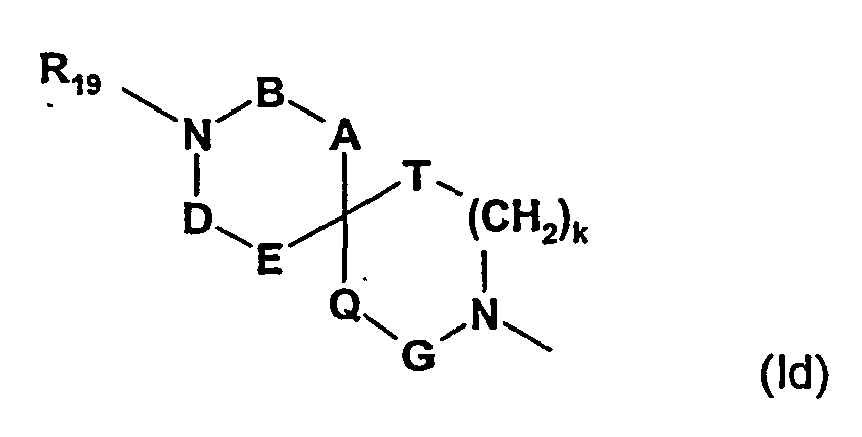
k is 0, 1 or 2, A is CH2 or a bond, B is CH2 or carbonyl, D is CH2 or carbonyl, E is CH2 or NR22, G is CH2 or a bond, Q is CH2 or carbonyl, T is CH2 or NR29, R19 represents hydrogen, alkyl, phenyl alkyl, alkyl carbonyl or alkyl-SO2-, R22 is hydrogen or alkyl and R29 is phenyl;(d) a radical of substructure le
R27 is alkyl or alkyl carbonyl and R28 is hydrogen, alkoxy or halogen; or(e) NR20R21, wherein R20 and R21 are independently selected from hydrogen, alkyl, cycloalkyl which is unsubstituted or mono- or disubstituted by hydroxy; and phenyl which is unsubstituted or mono- or disubstituted by 1,2,3-thiadiazolyl, under the proviso that not both R20 and R21 can represent hydrogen at the same time; andR2 denotes alkyl, which is unsubstituted or substituted by cycloalkyl which is unsubstituted or mono- or disubstituted by halogen; or phenyl, which is mono- or disubstituted by halogen;
under the proviso that R2 does not represent 1,1-dimethylethyl, if(a) R1 is benzo[b]imidazol-1-yl, 1-imidazolyl, 4,5-dichloro-1-imidazolyl, 2-(C1-C4alkyl)-1-imidazolyl, imidazolidin-2,5-dion-1-yl, 5,5-dimethyl-oxazolidin-2,4-dion-3-yl, 1H-1,2,3-triazol-1-yl, 2H-1,2,3-triazol-2-yl, 3-nitro-1H-1,2,4-triazol-1-yl, 2H-tetrazol-2-yl or 1 H-tetrazol-1-yl, or if R1 is a radical of substructure Ic, R23 to R26 are hydrogen, X is NR18 and R18 is hydrogen, methyl, ethyl, acetyl, 4-pyridyl, 1-piperidinyl, phenyl, methoxyphenyl, ethoxyphenyl, fluorophenyl or chlorophenyl;(b) R1 is a radical of substructure Ic, R23 to R26 are hydrogen, X is -(CH2)s-CR17R18-, s is 0, and R17 and R18 are selected from hydroxyl and phenyl which is monosubstituted by chloro or R17 and R18 are selected from hydrogen, methoxyphenyl and N-phenylcarbamoyl; or(c) R1 is a radical of substructure Id, k is 1, A is a bond, E is NR22, R22 is hydrogen, G, Q and T are CH2, B and D are carbonyl and R19 is methyl, n-propyl or iso-butyl;under the proviso that R2 does not represent 2-methylpropyl, if R1 is a radical of substructure Id, k is 1, A is a bond, E is NR22, R22 is hydrogen, G, Q and T are CH2, B and D are carbonyl and R19 is methyl, or if R1 is a radical of substructure Ic, R23 to R26 are hydrogen, X is -(CH2)s-CR17R18-, s is 0, and R17 and R18 are selected from hydrogen and phenyl which is monosubstituted by methoxy;
and under the proviso that R2 does not represent 1-methylethyl, if R1 is a radical of substructure Ic, R23 to R26 are hydrogen, X is NR18 and R18 is methoxyphenyl or ethoxyphenyl, or X is CR17R18 and R17 and R18 are selected from hydrogen and methoxyphenyl;
or an N-oxide or a tautomer thereof,
or a salt of such pyrrolo pyrimidine, its N-oxide or its tautomer. - A pyrrolo pyrimidine of formula I according to claim 1,
wherein
Y represents -CH2-O- or -CH2-S-,
p is 1,
R1 represents(o) phenyl which is unsubstituted or mono- or disubstituted by(α) halogen, carboxy, C1-C4alkoxy, nitro, C1-C4alkyl-C(O)-NH-, C3-C4cycloalkyl-C(O)-NH-, C1-C4alkyl-C(O)-N(C1-C4alkyl)-, formyl, C1-C4alkyl-C(O)-, C1-C4alkyl-S(O)2-NH-, CF3-C1-C3alkyl-S(O)2-NH-, 1-pyrrolidinyl-carbonyl, 1-piperidinyl-carbonyl, 4-morpholinyl-carbonyl, 4-(C1-C4alkyl)-1-piperazinyl carbonyl, 4-piperidinyl, 1-piperidinyl, 1-(C1-C4alkyl-carbonyl)-4-piperidinyl, 1,2,3,6-tetrahydro-4-pyridyl, 1-(C1-C4alkyl-carbonyl)-1,2,3,6-tetrahydro-4-pyridyl, 1-piperazinyl, 4-(C1-C4alkyl)-1-piperazinyl, 4-(C1-C4alkyl-carbonyl)-1-piperazinyl, 4-(C3-C5cycloalkyl-carbonyl)-1-piperazinyl, 4-(C1-C4alkoxy-carbonyl)-1-piperazinyl, 4-(C1-C4alkyl-SO2)-1-piperazinyl, 1,4-diazacyclohept-1-yl, 4-(C1-C4alkyl-carbonyl)-1,4-diazacyclohept-1-yl, 2-oxo-1-pyrrolidinyl, 3,3-di-(C1-C4alkyl)-2-oxo-1-pyrrolidinyl;(β) R3-C1-C4alkyl, wherein R3 represents hydrogen, hydroxyl, carboxy, C1-C4alkyl-N(C1-C4alkyl)-, C1-C4alkyl-NH-, 1-pyrrolidinyl, 1-piperidyl, 4-(C1-C4alkyl)-1-piperazinyl carbonyl, 2,4-dioxa-5,5-(di-C1-C4alkyl)-oxazolidin-3-yl, R4R5N-C(O)-, wherein R4 and R5 independently of each other represent hydrogen or C1-C4alkyl; or(γ) R6R7N-C(O)-, wherein R6 and R7 independently of each other represent hydrogen, C1-C4alkyl, C5-C7cycloalkyl-C1-C4alkyl, CF3-C1-C3alkyl or pyridyl-C1-C4alkyl;(p) pyridyl, which is unsubstituted or mono- or disubstituted by halogen or C1-C4alkyl which is di- or trisubstituted by halogen;(q) pyrimidyl;(r) indolyl, which is monosubstituted by C1-C4alkyl-C(O)-NH-C1-C4alkyl;(s) 2-(C1-C4alkyl)-benzothiazolyl;(t) a radical of subformula Ia
wherein R8 is hydrogen, R9 is hydrogen, and m is 2 or 3; or(u) a radical of subformula IbR2 represents C1-C5alkyl, which is unsubstituted or substituted by C5-C7cycloalkyl, which is unsubstituted or disubstituted by halogen, or phenyl, which is mono- or disubstituted by halogen;
wherein R10 is hydrogen, R11 is hydrogen, and n is 2 or 3;
under the proviso that R2 does not represent 1,1-dimethylethyl if Y is O and R1 is selected from 3-pyridyl, 4-pyridyl, 5-chloro-3-pyridyl, 6-chloro-3-pyridyl, 2-chloro-4-pyridyl, 2-trifluoromethyl-4-pyridyl, 2-difluoromethyl-4-pyridyl, 4-acetyl-1-piperazinyl-phenyl, 4-methyl-1-piperazinyl-methyl-phenyl, and
under the proviso that R2 does not represent 1,1-dimethylethyl, if Y is S and R1 is 4-pyridyl; or
Y is CH2 or -CH=CH-,
p is 1 or 2,
R1 represents(e) thienyl, thiazolyl, 1-piperidinyl-carbonyl, or(f) phenyl which is unsubstituted or mono- or disubstituted byR2 represents(i) C1-C4alkoxy, H2N-C(O)-, 4-(C1-C4alkyl-carbonyl)-1-piperazinyl, 2-oxo-1-pyrrolidinyl, or halogen;(ii) R12-O-C(O)-, wherein R12 is hydrogen or C1-C4alkyl, or(iii) R13NH-, wherein R13 represents hydrogen or a radical R14-C1-C4alkyl-Z-, wherein Z is CO or SO2 and R14 denotes hydrogen, trifluoromethyl or C1-C4alkoxy,(iv) R15-C1-C4alkyl, wherein R15 denotes hydrogen, hydroxy, lower alkoxy, 1-pyrrolidinyl, 2-oxo-1-pyrrolidinyl, imidazolidin-2,5-dion-1-yl, 5,5-dimethyl-oxazolidin-2,4-dion-3-yl or C1-C4alkyl-N(R16)-, wherein R16 represents hydrogen or C1-C4alkyl; and(a) C1-C7alkyl, which is unsubstituted or substituted by C2-C3alkenyl, indanyl, C3-C7cycloalkyl which is unsubstituted or disubstituted by halogen or C1-C4alkyl, C3-C7cycloalkenyl, phenyl, which is unsubstituted or mono- or disubstituted by halogen or by C1-C4alkyl;(b) C3-C7cycloalkyl; or(c) C1-C4alkylcarbonyl;under the proviso that, if Y is CH2, R1 represents 4-chlorophenyl and p is 1, R2 does not denote 1,1-dimethylethyl, 1-methylethyl, cyclopropyl, cyclohexyl, 2-methyl-propyl or 2-ethyl-propyl;
under the proviso that R2 does not represent 1,1-dimethylethyl, if p is 1, Y is CH2 and R1 represents thienyl, phenyl, methoxyphenyl, propoxyphenyl, 4-fluorophenyl, 4-methylphenyl, 4-ethylphenyl, 4-butylphenyl, hydroxymethylphenyl, 4-(5,5-dimethyloxazolidin-2,4-dion-3-yl-methyl)-phenyl, 4-(methylsulfonylamino)-phenyl, 4-(n-butylsulfonylamino)-phenyl, 4-(ethylsulfonylamino)-phenyl, 4-(n-propylsulfonylamino)-phenyl, 4-(iso-propylsulfonylamino)-phenyl, 4-aminophenyl, 4-(acetylamino)-phenyl, 4-(butanoylamino)-phenyl or 4-(diethylaminomethyl)-phenyl;
and under the proviso that that R2 does not represent 1-methylethyl, if p is 1, Y is CH2 and R1 represents phenyl which is unsubstituted or substituted by 4-acetyl-1-piperazinyl; or
Y is CH2,
p is 1,
R1 represents(a) 1,2,3,6-tetrahydropyrid-1-yl, 4-(C1-C4alkyl)-1,2,3,6-tetrahydropyrid-1-yl, 4,5-di(C1-C4alkyl)-1,2,3,6-tetrahydropyrid-1-yl, 5-chloro-1,2,3,6-tetrahydropyrid-1-yl, 4-phenyl-1,2,3,6-tetrahydropyrid-1-yl, 1-imidazolyl, 2-(C1-C4alkyl)-1-imidazolyl, 4,5-dihalo-1-imidazolyl, imidazolidin-2,5-dion-1-yl, 5,5-dimethyl-oxazolidin-2,4-dion-3-yl, 3-(C1-C4alkyl)-imidazolidin-2,5-dion-1-yl, 3-trifluoromethyl-3,4-pyrrolin-1-yl, 1-pyrrolidinyl, 3-C1-C4alkyl-1-pyrrolidinyl, 3,3-di-(C1-C4alkyl)-1-pyrrolidinyl, 3-C1-C4alkoxy-1-pyrrolidinyl, 3-C1-C4alkyl-2-oxo-1-pyrrolidinyl, 3,3-di-(C1-C4alkyl)-2-oxo-1-pyrrolidinyl, 3-halo-1-pyrrolidinyl, 3,3-di-halo-1-pyrrolidinyl, 3,3-di-halo-1-piperidinyl, 1H-1,2,3-triazol-1-yl, 2H-1,2,3-triazol-2-yl, 1H-1,2,4-triazof-1-yl, 3-nitro-1H-1,2,4-triazol-1-yl, 2-phenyl-1-imidazolyl, 2H-tetrazol-2-yl, 1H-tetrazol-1-yl, benzo[b]imidazol-1-yl, 3-(1-(C1-C4alkyl-SO2)-4-piperidinyl)-2,3-dihydro-2-oxo-benzo[b]imidazol-1-yl, 3-(1-C1-C4alkylcarbonyl-4-piperidinyl)-2,3-dihydro-2-oxo-benzo[b]imidazol-1-yl, 1-indolyl, 6-halo-1-indolyl, 1,3-dihydro-2-isoindolyl, 2,3-dihydro-1-indolyl, 2,3-dihydro-2-oxo-benzo[b]thiazol-3yl, 6,7-di-(C1-C4alkoxy)-1,2,3,4-tetrahydroquinnolin, 6-C1-C4alkoxy-1,2,3,4-tetrahydroisoquinnolin, 7-C1-C4alkoxy-1,2,3,4-tetrahydroisoquinnolin;(b) a radical of substructure Ic
which is bound to the molecule via the nitrogen atom, wherein
X is -O-, -(CH2)s-CR17R18- or -NR18, wherein
s is 0 or 1, R17 and R18 are independently selected from hydrogen, halogen, hydroxy, C1-C4alkyl, phenyl-C1-C4alkyl-carbonyl, carbamoyl, N-phenyl-carbamoyl, cyano, 4-pyridyl, 1-piperidinyl and phenyl which is unsubstituted or monosubstituted by halogen or C1-C4alkoxy, or, if X is CR17R18, R17 and R18 and together form an oxo group or a group HO-C(O)-CH=, and
R23, R24, R25 and R26 are independently selected from hydrogen and C1-C4alkyl;(c) a radical of substructure ld
which is bound to the molecule via the nitrogen atom, wherein
k is 0 or 1, A is CH2 or a bond, B is CH2 or carbonyl, D is CH2 or carbonyl, E is CH2 or NR22, G is CH2 or a bond, Q is CH2 or carbonyl, T is CH2 or NR29, R19 represents hydrogen, C1-C4alkyl, phenyl-C1-C4alkyl, C1-C4alkylcarbonyl or C1-C4alkyl-SO2-, R22 is hydrogen and R29 is phenyl;(d) a radical of substructure le
which is bound to the molecule via the nitrogen atom, wherein
R27 is C1-C4alkyl or C1-C4alkylcarbonyl and R28 is hydrogen, C1-C4alkoxy or halogen; or(e) NR20R21, wherein R20 and R21 are independently selected from hydrogen, C1-C4alkyl, C3-C7cycloalkyl which is unsubstituted or monosubstituted by hydroxy; and phenyl which is unsubstituted or monosubstituted by 1,2,3-thiadiazol-4-yl, under the proviso that not both R20 and R21 can represent hydrogen at the same time; andR2 denotes C1-C8alkyl, which is unsubstituted or substituted by C3-C7cycloalkyl which is unsubstituted or disubstituted by halogen; phenyl, which is mono- or disubstituted by halogen;
under the proviso that R2 does not represent 1,1-dimethylethyl, if(a) R1 is benzo[b]imidazol-1-yl, 1-imidazolyl, 4,5-dichloro-1-imidazolyl, 2-(C1-C4alkyl)-1-imidazolyl, imidazolidin-2,5-dion-1-yl, 5,5-dimethyl-oxazolidin-2,4-dion-3-yl, 1H-1,2,3-triazol-1-yl, 2H-1,2,3-triazol-2-yl, 3-nitro-1H-1,2,4-triazol-1-yl, 2H-tetrazol-2-yl or 1 H-tetrazol-1-yl, or if R1 is a radical of substructure Ic, R23 to R26 are hydrogen, X is NR18 and R18 is hydrogen, methyl, ethyl, acetyl, 4-pyridyl, 1-piperidinyl, phenyl, methoxyphenyl, ethoxyphenyl, fluorophenyl or chlorophenyl;(b) R1 is a radical of substructure Ic, R23 to R26 are hydrogen, X is -(CH2)s-CR17R18-, s is 0, and R17 and R18 are selected from hydroxyl and phenyl which is monosubstituted by chloro or R17 and R18 are selected from hydrogen, methoxyphenyl and N-phenylcarbamoyl; or(c) R1 is a radical of substructure Id, k is 1, A is a bond, E is NR22, R22 is hydrogen, G, Q and T are CH2, B and D are carbonyl and R19 is methyl, n-propyl or iso-butyl;under the proviso that R2 does not represent 2-methylpropyl, if R1 is a radical of substructure Id, k is 1, A is a bond, E is NR22, R22 is hydrogen, G, Q and T are CH2, B and D are carbonyl and R19 is methyl, or if R1 is a radical of substructure Ic, R23 to R26 are hydrogen, X is -(CH2)s-CR17R18-, s is 0, and R17 and R18 are selected from hydrogen and phenyl which is monosubstituted by methoxy;
and under the proviso that R2 does not represent 1-methylethyl, if R1 is a radical of substructure Ic, R23 to R26 are hydrogen, X is NR18 and R18 is methoxyphenyl or ethoxyphenyl, or X is CR17R18 and R17 and R18 are selected from hydrogen and methoxyphenyl;
or a tautomer thereof,
or a salt of such pyrrolo pyrimidine or its tautomer. - A pyrrolo pyrimidine of formula I according to claim 1 or 2, or an N-oxide or a tautomer thereof, or a pharmaceutically acceptable salt of such a compound, for use in a method for the treatment of the human or animal body.
- Use of a pyrrolo pyrimidine of formula I according to claim 1 or 2, or an N-oxide or a tautomer thereof, or a pharmaceutically acceptable salt of such a compound, for the preparation of medicament for the treatment of neuropathic pain.
- A pharmaceutical preparation, comprising a pyrrolo pyrimidine of formula I according to claim 1 or 2, or an N-oxide or a tautomer thereof, or a pharmaceutically acceptable salt of such a compound, or a hydrate or solvate thereof, and at least one pharmaceutically acceptable carrier.
- A process for the preparation of a pyrrolo pyrimidine of formula I

p is 1 or 2,
r is 1, 2 or 3,
t is 1, 2 or 3,
R1 represents(v) phenyl which is unsubstituted or mono-, di- or trisubstituted by(α) halogen, carboxy, alkoxy, nitro, alkyl-C(O)-NH-, cycloalkyl-C(O)-NH-, alkyl-C(O)-N(alkyl)-, formyl, alkyl-C(O)-, alkyl-S(O)2-NH-, CF3-alkyl-S(O)2-NH-, pyrrolidinyl carbonyl, piperidinyl carbonyl, morpholinyl carbonyl, N-alkyl piperazinyl carbonyl, piperidinyl, 1-(alkyl carbonyl) piperidinyl, 1,2,3,6-tetrahydropyridyl, alkyl carbonyl 1,2,3,6-tetrahydropyridyl, piperazinyl, alkyl piperazinyl, alkyl carbonyl piperazinyl, cycloalkyl carbonyl piperazinyl, alkoxy carbonyl piperazinyl, alkyl-SO2-piperazinyl, diazacycloheptyl, alkyl carbonyl diazacycloheptyl, 2-oxo-1-pyrrolidinyl, 3,3-di-alkyl-2-oxo-1-pyrrolidinyl;(β) R3-alkyl, wherein R3 represents hydrogen, hydroxy, carboxy, alkyl-N(alkyl)-, alkyl-NH-, 1-pyrrolidinyl, 1-piperidyl, 4-alkyl-1-piperazinyl carbonyl, 2,4-dioxa-5,5-(di-alkyl)-oxazolidin-3-yl, R4R5N-C(O)-, wherein R4 and R5 independently of each other represent hydrogen or alkyl; or(γ) R6R7N-C(O)-, wherein R6 and R7 independently of each other represent hydrogen, alkyl, cycloalkyl alkyl, CF3-alkyl or pyridyl alkyl;(w) pyridyl, which is unsubstituted or mono-, di- or trisubstituted by halogen or alkyl which is mono-, di- or trisubstituted by halogen;(x) pyrimidyl;(y) indolyl, which is mono- or disubstituted by alkyl-C(O)-NH-alkyl;(z) 2-(alkyl)-benzothiazolyl;R2 represents alkyl, which is unsubstituted or substituted by cycloalkyl, which is unsubstituted or mono- or disubstituted by halogen, or phenyl, which is mono- or disubstituted by halogen;(aa) a radical of subformula la (bb) a radical of subformula Ib
under the proviso that R2 does not represent 1,1-dimethylethyl if Y is O and R1 is selected from 3-pyridyl, 4-pyridyl, 5-chloro-3-pyridyl, 6-chloro-3-pyridyl, 2-chloro-4-pyridyl, 2-trifluoromethyl-4-pyridyl, 2-difluoromethyl-4-pyridyl, 4-acetyl-1-piperazinyl-phenyl, 4-methyl-1-piperazinyl-methyl-phenyl, and
under the proviso that R2 does not represent 1,1-dimethylethyl, if Y is S and R1 is 4-pyridyl; wherein an alcohol or a thiol of formula II,
R1-(Y)p-H (II)
wherein Y represents -(CH2)t-O- or (CH2)r-S- and t, r and R1 have the meanings as provided above for a compound of formula I, is alkylated with a pyrrolo pyrimidine of formula III
wherein the starting compounds of formula II and III may also be present with functional groups in protected form, if necessary, and/or in the form of salts, provided a salt-forming group is present and the reaction in salt form is possible;
wherein any protecting groups in a protected derivative of a compound of the formula I are removed;
and, if so desired, an obtainable compound of formula I is converted into another compound of formula I or a N-oxide thereof, a free compound of formula I is converted into a salt, an obtainable salt of a compound of formula I is converted into the free compound or another salt, and/or a mixture of isomeric compounds of formula I is separated into the individual isomers.
Applications Claiming Priority (7)
| Application Number | Priority Date | Filing Date | Title |
|---|---|---|---|
| GB0302748A GB0302748D0 (en) | 2003-02-06 | 2003-02-06 | Organic compounds |
| GB0302748 | 2003-02-06 | ||
| GB0304642A GB0304642D0 (en) | 2003-02-28 | 2003-02-28 | Organic compounds |
| GB0304642 | 2003-02-28 | ||
| GB0304641A GB0304641D0 (en) | 2003-02-28 | 2003-02-28 | Organic compounds |
| GB0304641 | 2003-02-28 | ||
| PCT/EP2004/001081 WO2004069256A1 (en) | 2003-02-06 | 2004-02-05 | 2-cyanopyrrolopyrimidines and pharmaceutical uses thereof |
Publications (2)
| Publication Number | Publication Date |
|---|---|
| EP1592426A1 EP1592426A1 (en) | 2005-11-09 |
| EP1592426B1 true EP1592426B1 (en) | 2007-12-19 |
Family
ID=32854008
Family Applications (1)
| Application Number | Title | Priority Date | Filing Date |
|---|---|---|---|
| EP04708332A Expired - Lifetime EP1592426B1 (en) | 2003-02-06 | 2004-02-05 | 2-cyanopyrrolopyrimidines and pharmaceutical uses thereof |
Country Status (16)
| Country | Link |
|---|---|
| US (1) | US20060247251A1 (en) |
| EP (1) | EP1592426B1 (en) |
| JP (1) | JP4499667B2 (en) |
| AR (1) | AR043692A1 (en) |
| AT (1) | ATE381335T1 (en) |
| AU (1) | AU2004210422B2 (en) |
| BR (1) | BRPI0407327A (en) |
| CA (1) | CA2514287A1 (en) |
| DE (1) | DE602004010785T2 (en) |
| ES (1) | ES2297378T3 (en) |
| MX (1) | MXPA05008348A (en) |
| PE (1) | PE20050068A1 (en) |
| PL (1) | PL378135A1 (en) |
| PT (1) | PT1592426E (en) |
| TW (1) | TW200420566A (en) |
| WO (1) | WO2004069256A1 (en) |
Families Citing this family (38)
| Publication number | Priority date | Publication date | Assignee | Title |
|---|---|---|---|---|
| SE0201980D0 (en) | 2002-06-24 | 2002-06-24 | Astrazeneca Ab | Novel compounds |
| GB0304640D0 (en) * | 2003-02-28 | 2003-04-02 | Novartis Ag | Organic compounds |
| EP1797883A3 (en) * | 2003-04-28 | 2007-08-01 | Novartis AG | Pharmaceutical composition comprising a cathepsin S inhibitor and an opioid |
| WO2005111042A1 (en) * | 2004-05-03 | 2005-11-24 | Janssen Pharmaceutica N.V. | Novel indole derivatives as selective androgen receptor modulators (sarms) |
| US9107864B2 (en) | 2004-06-07 | 2015-08-18 | Qu Biologics Inc. | Tissue targeted antigenic activation of the immune response to treat cancers |
| US8501198B2 (en) | 2004-06-07 | 2013-08-06 | Qu Biologics Inc. | Tissue targeted antigenic activation of the immune response to treat cancers |
| EP2845856A1 (en) | 2009-06-29 | 2015-03-11 | Incyte Corporation | Pyrimidinones as PI3K inhibitors |
| US8759359B2 (en) | 2009-12-18 | 2014-06-24 | Incyte Corporation | Substituted heteroaryl fused derivatives as PI3K inhibitors |
| UY33304A (en) * | 2010-04-02 | 2011-10-31 | Amgen Inc | HETEROCYCLIC COMPOUNDS AND THEIR USES |
| EP2558463A1 (en) | 2010-04-14 | 2013-02-20 | Incyte Corporation | Fused derivatives as i3 inhibitors |
| WO2011163195A1 (en) | 2010-06-21 | 2011-12-29 | Incyte Corporation | Fused pyrrole derivatives as pi3k inhibitors |
| RU2581922C2 (en) | 2010-07-26 | 2016-04-20 | Кью Байолоджикс Инк. | Immunogenic anti-inflammatory compositions |
| TWI501967B (en) * | 2010-12-16 | 2015-10-01 | Janssen R&D Ireland | Azaindoles as respiratory syncytial virus antiviral agents |
| TWI527814B (en) | 2010-12-16 | 2016-04-01 | 健生科學愛爾蘭無限公司 | Azabenzimidazoles as respiratory syncytial virus antiviral agents |
| TWI515187B (en) | 2010-12-16 | 2016-01-01 | 健生科學愛爾蘭無限公司 | Anthraquinone as an antiviral agent for respiratory fusion virus |
| TW201249844A (en) | 2010-12-20 | 2012-12-16 | Incyte Corp | N-(1-(substituted-phenyl)ethyl)-9H-purin-6-amines as PI3K inhibitors |
| WO2012125629A1 (en) | 2011-03-14 | 2012-09-20 | Incyte Corporation | Substituted diamino-pyrimidine and diamino-pyridine derivatives as pi3k inhibitors |
| US9126948B2 (en) | 2011-03-25 | 2015-09-08 | Incyte Holdings Corporation | Pyrimidine-4,6-diamine derivatives as PI3K inhibitors |
| UA121539C2 (en) | 2011-09-02 | 2020-06-25 | Інсайт Холдинґс Корпорейшн | HETEROCYCLYLAMINE AS RI3K INHIBITORS |
| CN103304525B (en) * | 2012-03-08 | 2015-08-05 | 深圳海王药业有限公司 | One prepares the method for darifenacin intermediate 5-(halogenated ethyl)-2,3-Dihydrobenzofuranes |
| AR090548A1 (en) | 2012-04-02 | 2014-11-19 | Incyte Corp | BICYCLIC AZAHETEROCICLOBENCILAMINS AS PI3K INHIBITORS |
| CN104284895B (en) * | 2012-04-17 | 2016-08-31 | 安斯泰来制药株式会社 | Nitrogen-containing bicyclic aromatic heterocyclic compounds |
| PL2864323T3 (en) * | 2012-06-15 | 2017-09-29 | Janssen Sciences Ireland Uc | 1,3-dihydro-2h-benzimidazol-2-one derivatives substituted with heterocycles as respiratory syncytial virus antiviral agents |
| NZ705759A (en) | 2012-10-16 | 2019-01-25 | Janssen Sciences Ireland Uc | Rsv antiviral compounds |
| CN105229003B (en) * | 2013-03-14 | 2017-03-15 | 诺华股份有限公司 | 2- (1H-indol-4-ylmethyl) -3H-imidazo [4,5-B ] pyridine-6-carbonitrile derivatives as complement factor B inhibitors for the treatment of ophthalmic diseases |
| CN105849090A (en) | 2013-10-30 | 2016-08-10 | 诺华股份有限公司 | 2-benzyl-benzimidazole complement factor b inhibitors and uses thereof |
| TWI671299B (en) | 2014-04-14 | 2019-09-11 | 愛爾蘭商健生科學愛爾蘭無限公司 | Spiro urea compounds as rsv antiviral compounds |
| EP3137108A4 (en) | 2014-05-02 | 2017-09-27 | Qu Biologics Inc | Anti-microbial immunomodulation |
| US10077277B2 (en) | 2014-06-11 | 2018-09-18 | Incyte Corporation | Bicyclic heteroarylaminoalkyl phenyl derivatives as PI3K inhibitors |
| UA122332C2 (en) | 2015-02-27 | 2020-10-26 | Інсайт Корпорейшн | Salts of pi3k inhibitor and processes for their preparation |
| US10537552B2 (en) | 2015-05-05 | 2020-01-21 | Carafe Drug Innovation, Llc | Substituted 5-hydroxyoxindoles and their use as analgesics and fever reducers |
| WO2016183063A1 (en) | 2015-05-11 | 2016-11-17 | Incyte Corporation | Crystalline forms of a pi3k inhibitor |
| WO2016183060A1 (en) | 2015-05-11 | 2016-11-17 | Incyte Corporation | Process for the synthesis of a phosphoinositide 3-kinase inhibitor |
| MX2020003575A (en) | 2017-10-27 | 2020-07-22 | Esteve Pharmaceuticals Sa | New alcoxyamino derivatives for treating pain and pain related conditions. |
| MX2020012826A (en) | 2018-06-01 | 2021-03-09 | Incyte Corp | DOSAGE REGIMEN FOR THE TREATMENT OF DISORDERS RELATED TO PHOSPHATIDYLINOSITOL 3-KINASES (PI3K). |
| WO2020048829A1 (en) | 2018-09-03 | 2020-03-12 | Bayer Aktiengesellschaft | 3,9-diazaspiro[5.5]undecane compounds |
| WO2021250180A1 (en) | 2020-06-11 | 2021-12-16 | Janssen Sciences Ireland Unlimited Company | Hemi (l)-tartrate forms of 3-({5-chloro-1-[3-(methylsulfonyl)propyl]-1h-indol-2 yl} methyl)-1-(2,2,2-trifluoroethyl)-1,3-dihydro-2h-imidazo[4,5-c]pyridin-2-one and pharmaceutical compositions comprising the same |
| CN116396202A (en) * | 2023-04-17 | 2023-07-07 | 南京优氟医药科技有限公司 | A kind of preparation method of (2S, 4S)-4-fluoropyrrolidine-2-carboxylic acid |
Family Cites Families (5)
| Publication number | Priority date | Publication date | Assignee | Title |
|---|---|---|---|---|
| US6051577A (en) * | 1996-03-15 | 2000-04-18 | Novartis Ag | N-7-heterocyclyl pyrrolo[2,3-D]pyrimidines and the use thereof |
| WO2000000201A1 (en) * | 1998-06-30 | 2000-01-06 | Eli Lilly And Company | BICYCLIC sPLA2 INHIBITORS |
| GB0100622D0 (en) * | 2001-01-10 | 2001-02-21 | Vernalis Res Ltd | Chemical compounds V111 |
| GB0121033D0 (en) * | 2001-08-30 | 2001-10-24 | Novartis Ag | Organic compounds |
| US20030144234A1 (en) * | 2001-08-30 | 2003-07-31 | Buxton Francis Paul | Methods for the treatment of chronic pain and compositions therefor |
-
2004
- 2004-02-04 AR ARP040100349A patent/AR043692A1/en unknown
- 2004-02-04 PE PE2004000127A patent/PE20050068A1/en not_active Application Discontinuation
- 2004-02-05 US US10/544,694 patent/US20060247251A1/en not_active Abandoned
- 2004-02-05 AT AT04708332T patent/ATE381335T1/en not_active IP Right Cessation
- 2004-02-05 MX MXPA05008348A patent/MXPA05008348A/en active IP Right Grant
- 2004-02-05 EP EP04708332A patent/EP1592426B1/en not_active Expired - Lifetime
- 2004-02-05 TW TW093102603A patent/TW200420566A/en unknown
- 2004-02-05 AU AU2004210422A patent/AU2004210422B2/en not_active Ceased
- 2004-02-05 CA CA002514287A patent/CA2514287A1/en not_active Abandoned
- 2004-02-05 WO PCT/EP2004/001081 patent/WO2004069256A1/en not_active Ceased
- 2004-02-05 PT PT04708332T patent/PT1592426E/en unknown
- 2004-02-05 JP JP2005518660A patent/JP4499667B2/en not_active Expired - Fee Related
- 2004-02-05 ES ES04708332T patent/ES2297378T3/en not_active Expired - Lifetime
- 2004-02-05 BR BR0407327-4A patent/BRPI0407327A/en not_active IP Right Cessation
- 2004-02-05 PL PL378135A patent/PL378135A1/en not_active Application Discontinuation
- 2004-02-05 DE DE602004010785T patent/DE602004010785T2/en not_active Expired - Fee Related
Also Published As
| Publication number | Publication date |
|---|---|
| JP2006516554A (en) | 2006-07-06 |
| PT1592426E (en) | 2008-03-13 |
| TW200420566A (en) | 2004-10-16 |
| ATE381335T1 (en) | 2008-01-15 |
| AU2004210422B2 (en) | 2008-01-17 |
| CA2514287A1 (en) | 2004-08-19 |
| DE602004010785T2 (en) | 2008-12-04 |
| AR043692A1 (en) | 2005-08-10 |
| BRPI0407327A (en) | 2006-01-10 |
| US20060247251A1 (en) | 2006-11-02 |
| DE602004010785D1 (en) | 2008-01-31 |
| WO2004069256A8 (en) | 2004-10-14 |
| PL378135A1 (en) | 2006-03-06 |
| JP4499667B2 (en) | 2010-07-07 |
| MXPA05008348A (en) | 2005-11-04 |
| EP1592426A1 (en) | 2005-11-09 |
| AU2004210422A1 (en) | 2004-08-19 |
| PE20050068A1 (en) | 2005-03-11 |
| ES2297378T3 (en) | 2008-05-01 |
| HK1084883A1 (en) | 2006-08-11 |
| WO2004069256A1 (en) | 2004-08-19 |
Similar Documents
| Publication | Publication Date | Title |
|---|---|---|
| JP4499667B2 (en) | 2-cyanopyrrolopyrimidine and its pharmaceutical use | |
| US12595265B2 (en) | Inhibitors of activin receptor-like kinase | |
| US12398141B2 (en) | JAK kinase inhibitor, preparation method for same, and applications thereof in field of medicine | |
| CA2957048C (en) | Optionally fused heterocyclyl-substituted derivatives of pyrimidine useful for the treatment of inflammatory, metabolic, oncologic and autoimmune diseases | |
| US9273058B2 (en) | Substituted pyrazolo-piperazines as casein kinase 1 δ/ε inhibitors | |
| AU2017315343A1 (en) | Amino-pyrrolopyrimidinone compounds and methods of use thereof | |
| US20100004252A1 (en) | Substituted tetrahydropyrrolopyrazine compounds and the use thereof in the treatment and/or inhibition of pain | |
| US10933063B2 (en) | Bruton's tyrosine kinase inhibitors | |
| CA2978170A1 (en) | Pyrazolo[1,5-a][1,3,5]triazine and pyrazolo[1,5-a]pyrimidine derivatives as cdk inhibitors | |
| US11236086B2 (en) | Substituted pyrrolopyridines as inhibitors of activin receptor-like kinase | |
| ES3040060T3 (en) | Compounds comprising n-methyl-2-pyridone, and pharmaceutically acceptable salts. | |
| CA3063934A1 (en) | Kinase inhibitors and uses thereof | |
| AU2024203782A1 (en) | Antiviral pyrazolopyridinone compounds | |
| US20230140430A1 (en) | 1H-PYRAZOLO[4,3-d]PYRIMIDINE COMPOUNDS AS TOLL-LIKE RECEPTOR 7 (TLR7) AGONISTS | |
| US20230144824A1 (en) | 1H-PYRAZOLO[4,3-d]PYRIMIDINE COMPOUNDS AS TOLL-LIKE RECEPTOR 7 (TLR7) AGONISTS | |
| US20230118688A1 (en) | 1H-PYRAZOLO[4,3-d]PYRIMIDINE COMPOUNDS AS TOLL-LIKE RECEPTOR 7 (TLR7) AGONISTS | |
| HK1084883B (en) | 2-cyanopyrrolopyrimidines and pharmaceutical uses thereof | |
| CN118922188A (en) | Pyrimidine and methods of use thereof | |
| CN100562319C (en) | 2-cyanopyrrolopyrimidines and their pharmaceutical uses | |
| CA2575826A1 (en) | Compounds and compositions useful as cathepsin s inhibitors | |
| WO2026006527A1 (en) | Covalent inhibitors of jak2 jh2 domain | |
| JP2026505836A (en) | Compounds and compositions useful as MK2 kinase degraders |
Legal Events
| Date | Code | Title | Description |
|---|---|---|---|
| PUAI | Public reference made under article 153(3) epc to a published international application that has entered the european phase |
Free format text: ORIGINAL CODE: 0009012 |
|
| 17P | Request for examination filed |
Effective date: 20050906 |
|
| AK | Designated contracting states |
Kind code of ref document: A1 Designated state(s): AT BE BG CH CY CZ DE DK EE ES FI FR GB GR HU IE IT LI LU MC NL PT RO SE SI SK TR |
|
| AX | Request for extension of the european patent |
Extension state: AL LT LV MK |
|
| DAX | Request for extension of the european patent (deleted) | ||
| RAP1 | Party data changed (applicant data changed or rights of an application transferred) |
Owner name: NOVARTIS AG Owner name: NOVARTIS PHARMA GMBH |
|
| REG | Reference to a national code |
Ref country code: HK Ref legal event code: DE Ref document number: 1084883 Country of ref document: HK |
|
| GRAP | Despatch of communication of intention to grant a patent |
Free format text: ORIGINAL CODE: EPIDOSNIGR1 |
|
| RIC1 | Information provided on ipc code assigned before grant |
Ipc: C07D 487/04 20060101ALI20070615BHEP Ipc: A61K 31/519 20060101AFI20070615BHEP Ipc: A61P 29/00 20060101ALI20070615BHEP |
|
| GRAS | Grant fee paid |
Free format text: ORIGINAL CODE: EPIDOSNIGR3 |
|
| GRAA | (expected) grant |
Free format text: ORIGINAL CODE: 0009210 |
|
| AK | Designated contracting states |
Kind code of ref document: B1 Designated state(s): AT BE BG CH CY CZ DE DK EE ES FI FR GB GR HU IE IT LI LU MC NL PT RO SE SI SK TR |
|
| REG | Reference to a national code |
Ref country code: GB Ref legal event code: FG4D |
|
| REG | Reference to a national code |
Ref country code: IE Ref legal event code: FG4D |
|
| REG | Reference to a national code |
Ref country code: CH Ref legal event code: EP |
|
| REF | Corresponds to: |
Ref document number: 602004010785 Country of ref document: DE Date of ref document: 20080131 Kind code of ref document: P |
|
| REG | Reference to a national code |
Ref country code: PT Ref legal event code: SC4A Free format text: AVAILABILITY OF NATIONAL TRANSLATION Effective date: 20080303 |
|
| REG | Reference to a national code |
Ref country code: GR Ref legal event code: EP Ref document number: 20080400666 Country of ref document: GR |
|
| PG25 | Lapsed in a contracting state [announced via postgrant information from national office to epo] |
Ref country code: SE Free format text: LAPSE BECAUSE OF FAILURE TO SUBMIT A TRANSLATION OF THE DESCRIPTION OR TO PAY THE FEE WITHIN THE PRESCRIBED TIME-LIMIT Effective date: 20080319 |
|
| REG | Reference to a national code |
Ref country code: ES Ref legal event code: FG2A Ref document number: 2297378 Country of ref document: ES Kind code of ref document: T3 |
|
| PG25 | Lapsed in a contracting state [announced via postgrant information from national office to epo] |
Ref country code: SI Free format text: LAPSE BECAUSE OF FAILURE TO SUBMIT A TRANSLATION OF THE DESCRIPTION OR TO PAY THE FEE WITHIN THE PRESCRIBED TIME-LIMIT Effective date: 20071219 Ref country code: FI Free format text: LAPSE BECAUSE OF FAILURE TO SUBMIT A TRANSLATION OF THE DESCRIPTION OR TO PAY THE FEE WITHIN THE PRESCRIBED TIME-LIMIT Effective date: 20071219 |
|
| PG25 | Lapsed in a contracting state [announced via postgrant information from national office to epo] |
Ref country code: CZ Free format text: LAPSE BECAUSE OF FAILURE TO SUBMIT A TRANSLATION OF THE DESCRIPTION OR TO PAY THE FEE WITHIN THE PRESCRIBED TIME-LIMIT Effective date: 20071219 |
|
| ET | Fr: translation filed | ||
| PG25 | Lapsed in a contracting state [announced via postgrant information from national office to epo] |
Ref country code: SK Free format text: LAPSE BECAUSE OF FAILURE TO SUBMIT A TRANSLATION OF THE DESCRIPTION OR TO PAY THE FEE WITHIN THE PRESCRIBED TIME-LIMIT Effective date: 20071219 Ref country code: RO Free format text: LAPSE BECAUSE OF FAILURE TO SUBMIT A TRANSLATION OF THE DESCRIPTION OR TO PAY THE FEE WITHIN THE PRESCRIBED TIME-LIMIT Effective date: 20071219 |
|
| PLBE | No opposition filed within time limit |
Free format text: ORIGINAL CODE: 0009261 |
|
| STAA | Information on the status of an ep patent application or granted ep patent |
Free format text: STATUS: NO OPPOSITION FILED WITHIN TIME LIMIT |
|
| PG25 | Lapsed in a contracting state [announced via postgrant information from national office to epo] |
Ref country code: MC Free format text: LAPSE BECAUSE OF NON-PAYMENT OF DUE FEES Effective date: 20080228 Ref country code: DK Free format text: LAPSE BECAUSE OF FAILURE TO SUBMIT A TRANSLATION OF THE DESCRIPTION OR TO PAY THE FEE WITHIN THE PRESCRIBED TIME-LIMIT Effective date: 20071219 |
|
| 26N | No opposition filed |
Effective date: 20080922 |
|
| PG25 | Lapsed in a contracting state [announced via postgrant information from national office to epo] |
Ref country code: EE Free format text: LAPSE BECAUSE OF FAILURE TO SUBMIT A TRANSLATION OF THE DESCRIPTION OR TO PAY THE FEE WITHIN THE PRESCRIBED TIME-LIMIT Effective date: 20071219 Ref country code: IE Free format text: LAPSE BECAUSE OF NON-PAYMENT OF DUE FEES Effective date: 20080205 |
|
| PG25 | Lapsed in a contracting state [announced via postgrant information from national office to epo] |
Ref country code: BG Free format text: LAPSE BECAUSE OF FAILURE TO SUBMIT A TRANSLATION OF THE DESCRIPTION OR TO PAY THE FEE WITHIN THE PRESCRIBED TIME-LIMIT Effective date: 20080319 |
|
| PG25 | Lapsed in a contracting state [announced via postgrant information from national office to epo] |
Ref country code: CY Free format text: LAPSE BECAUSE OF FAILURE TO SUBMIT A TRANSLATION OF THE DESCRIPTION OR TO PAY THE FEE WITHIN THE PRESCRIBED TIME-LIMIT Effective date: 20071219 |
|
| PGFP | Annual fee paid to national office [announced via postgrant information from national office to epo] |
Ref country code: CH Payment date: 20100215 Year of fee payment: 7 Ref country code: ES Payment date: 20100312 Year of fee payment: 7 Ref country code: PT Payment date: 20100121 Year of fee payment: 7 |
|
| PGFP | Annual fee paid to national office [announced via postgrant information from national office to epo] |
Ref country code: FR Payment date: 20100223 Year of fee payment: 7 Ref country code: IT Payment date: 20100213 Year of fee payment: 7 |
|
| PGFP | Annual fee paid to national office [announced via postgrant information from national office to epo] |
Ref country code: AT Payment date: 20100212 Year of fee payment: 7 Ref country code: BE Payment date: 20100215 Year of fee payment: 7 Ref country code: DE Payment date: 20100211 Year of fee payment: 7 Ref country code: GB Payment date: 20100202 Year of fee payment: 7 Ref country code: TR Payment date: 20100113 Year of fee payment: 7 |
|
| PG25 | Lapsed in a contracting state [announced via postgrant information from national office to epo] |
Ref country code: LU Free format text: LAPSE BECAUSE OF NON-PAYMENT OF DUE FEES Effective date: 20080205 Ref country code: HU Free format text: LAPSE BECAUSE OF FAILURE TO SUBMIT A TRANSLATION OF THE DESCRIPTION OR TO PAY THE FEE WITHIN THE PRESCRIBED TIME-LIMIT Effective date: 20080620 |
|
| PGFP | Annual fee paid to national office [announced via postgrant information from national office to epo] |
Ref country code: NL Payment date: 20100209 Year of fee payment: 7 |
|
| PGFP | Annual fee paid to national office [announced via postgrant information from national office to epo] |
Ref country code: GR Payment date: 20100115 Year of fee payment: 7 |
|
| BERE | Be: lapsed |
Owner name: NOVARTIS A.G. Effective date: 20110228 |
|
| REG | Reference to a national code |
Ref country code: NL Ref legal event code: V1 Effective date: 20110901 |
|
| REG | Reference to a national code |
Ref country code: CH Ref legal event code: PL |
|
| GBPC | Gb: european patent ceased through non-payment of renewal fee |
Effective date: 20110205 |
|
| PG25 | Lapsed in a contracting state [announced via postgrant information from national office to epo] |
Ref country code: LI Free format text: LAPSE BECAUSE OF NON-PAYMENT OF DUE FEES Effective date: 20110228 Ref country code: PT Free format text: LAPSE BECAUSE OF NON-PAYMENT OF DUE FEES Effective date: 20110805 Ref country code: CH Free format text: LAPSE BECAUSE OF NON-PAYMENT OF DUE FEES Effective date: 20110228 |
|
| REG | Reference to a national code |
Ref country code: FR Ref legal event code: ST Effective date: 20111102 |
|
| PG25 | Lapsed in a contracting state [announced via postgrant information from national office to epo] |
Ref country code: AT Free format text: LAPSE BECAUSE OF NON-PAYMENT OF DUE FEES Effective date: 20110205 Ref country code: GR Free format text: LAPSE BECAUSE OF NON-PAYMENT OF DUE FEES Effective date: 20110902 Ref country code: BE Free format text: LAPSE BECAUSE OF NON-PAYMENT OF DUE FEES Effective date: 20110228 |
|
| PG25 | Lapsed in a contracting state [announced via postgrant information from national office to epo] |
Ref country code: NL Free format text: LAPSE BECAUSE OF NON-PAYMENT OF DUE FEES Effective date: 20110901 Ref country code: IT Free format text: LAPSE BECAUSE OF NON-PAYMENT OF DUE FEES Effective date: 20110205 |
|
| REG | Reference to a national code |
Ref country code: DE Ref legal event code: R119 Ref document number: 602004010785 Country of ref document: DE Effective date: 20110901 |
|
| PG25 | Lapsed in a contracting state [announced via postgrant information from national office to epo] |
Ref country code: FR Free format text: LAPSE BECAUSE OF NON-PAYMENT OF DUE FEES Effective date: 20110228 |
|
| REG | Reference to a national code |
Ref country code: DE Ref legal event code: R082 Ref document number: 602004010785 Country of ref document: DE Representative=s name: DR. SCHOEN & PARTNER, DE Ref country code: DE Ref legal event code: R082 Ref document number: 602004010785 Country of ref document: DE Representative=s name: DR. SCHOEN, NEYMEYR & PARTNER MBB, DE |
|
| PG25 | Lapsed in a contracting state [announced via postgrant information from national office to epo] |
Ref country code: GB Free format text: LAPSE BECAUSE OF NON-PAYMENT OF DUE FEES Effective date: 20110205 |
|
| REG | Reference to a national code |
Ref country code: ES Ref legal event code: FD2A Effective date: 20120411 |
|
| PG25 | Lapsed in a contracting state [announced via postgrant information from national office to epo] |
Ref country code: ES Free format text: LAPSE BECAUSE OF NON-PAYMENT OF DUE FEES Effective date: 20110206 |
|
| PG25 | Lapsed in a contracting state [announced via postgrant information from national office to epo] |
Ref country code: DE Free format text: LAPSE BECAUSE OF NON-PAYMENT OF DUE FEES Effective date: 20110901 |
|
| PG25 | Lapsed in a contracting state [announced via postgrant information from national office to epo] |
Ref country code: TR Free format text: LAPSE BECAUSE OF NON-PAYMENT OF DUE FEES Effective date: 20110205 |