EP1592263A2 - Device for automatically detecting broadcasting signal and method of the same - Google Patents
Device for automatically detecting broadcasting signal and method of the same Download PDFInfo
- Publication number
- EP1592263A2 EP1592263A2 EP05251699A EP05251699A EP1592263A2 EP 1592263 A2 EP1592263 A2 EP 1592263A2 EP 05251699 A EP05251699 A EP 05251699A EP 05251699 A EP05251699 A EP 05251699A EP 1592263 A2 EP1592263 A2 EP 1592263A2
- Authority
- EP
- European Patent Office
- Prior art keywords
- broadcasting
- signal
- color sub
- carrier frequency
- broadcasting signals
- Prior art date
- Legal status (The legal status is an assumption and is not a legal conclusion. Google has not performed a legal analysis and makes no representation as to the accuracy of the status listed.)
- Withdrawn
Links
Images




Classifications
-
- H—ELECTRICITY
- H04—ELECTRIC COMMUNICATION TECHNIQUE
- H04N—PICTORIAL COMMUNICATION, e.g. TELEVISION
- H04N5/00—Details of television systems
- H04N5/44—Receiver circuitry for the reception of television signals according to analogue transmission standards
- H04N5/46—Receiver circuitry for the reception of television signals according to analogue transmission standards for receiving on more than one standard at will
-
- H—ELECTRICITY
- H04—ELECTRIC COMMUNICATION TECHNIQUE
- H04N—PICTORIAL COMMUNICATION, e.g. TELEVISION
- H04N9/00—Details of colour television systems
- H04N9/64—Circuits for processing colour signals
- H04N9/642—Multi-standard receivers
Definitions
- the present invention relates to a device for automatically detecting broadcasting signals and a method used by the device, and more particularly, to a device for automatically detecting broadcasting signals and a method used by the device for conveniently detecting the broadcasting system of broadcasting signals.
- broadcasting systems examples include the NTSC system, the PAL system, and the SECAM system.
- the Radio Corporation of America developed color television, which was compatible with black and white television, and required a standard.
- RCA national television system committee
- NTSC adopted the NTSC system as the standard used in the United States in December 1953.
- the PAL system was proposed by Walter Brach of Telefunken company and adopted as a standard in West Germany, Great Britain, The Netherlands, and Switzerland.
- the name of the PAL system originates from "Phase Alternation by Line.”
- SECAM system was proposed by Henri de France in 1957 and adopted as a standard in France, Russia, and East Germany.
- the name of the SECAM system originates from "sequential line's memorie,” which means sequentially memorizing color signals in each scan line.
- Such broadcasting systems can be classified based on the number of scan lines, field rate, color sub-carrier frequency, and phase, as shown in Table 1.
- Fob 4.2 5 Phase Fixed Shift Shift Shift Shift Shift Shift Shift Shift Shift Shift
- Broadcasting systems vary from region to region and country to country, and thus, a device for receiving broadcasting signals are set to receive broadcasting signals corresponding to the region/country in which they are used.
- FIG. 1A A conventional method of detecting a broadcasting system is shown in Figure 1A.
- operation S1 it is determined whether broadcasting signals received through a device for receiving broadcasting signals are in the SECAM system.
- a determination of whether other broadcasting systems are received can be made prior to checking for the SECAM system.
- the SECAM system may be determined using a register of the device for receiving broadcasting signals in which a predetermined value is set according to the broadcasting system.
- the received broadcasting signals are SECAM system signals
- the received broadcasting signals are determined to be SECAM system signals in operation S2.
- a color sub-carrier frequency of the received broadcasting signals is determined in operation S3.
- the color sub-carrier frequency is first used in multi-step modulation and denotes a color carrier frequency used in modulating color signals in the NTSC system.
- a final modulation is performed using a higher frequency.
- the carrier wave used in the final modulation is referred to as a main carrier wave.
- color sub-carrier frequency is 4.43 MHz, in operation S4, it is determined whether the color format of the received broadcasting signals is in the PAL system in operation S5.
- the color format of the received broadcasting signals is in the PAL system, it is determined that the received broadcasting signals are PAL system signals in operation S6. Otherwise, in operation S7 the received broadcasting signals are determined to be NTSC system signals. In this case, the order of determining the color format of the received broadcasting signals can be changed.
- the color sub-carrier frequency is a frequency other than 4.43 MHz, e.g., 3.58 MHz, it is determined whether the received broadcasting signals are PAL-N system signals in operation S8.
- the received broadcasting signals are PAL-N system signals, it is determined whether the color format of the received broadcasting signals is in the PAL system in operation S9.
- the received broadcasting signals are determined to be the PAL-N system signals in operation S10.
- broadcasting signals are determined to be signals other than PAL-N system signals in operation S8, it is determined whether the received broadcasting signals are in the PAL-M system in operation S14.
- the received broadcasting signals are in the PAL-M system, it is determined whether the color format of the received broadcasting signals is in the PAL system in operation S15.
- the color format of the received broadcasting signals is in the PAL system, it is determined that the received broadcasting signals are in the PAL-M system in operation S16.
- a first basic clock frequency for detecting the color format is incremented by a predetermined value to produce a first clock frequency in operation S17, then the color signal of the received broadcasting signals is detected in operation S18.
- the broadcasting signals are determined to be PAL-N system signals in operation S19. Otherwise, the broadcasting signals are determined to be NTSC system signals in operation S20.
- the first clock frequency is returned to the first basic clock frequency by decreasing the first clock by a predetermined value in operation S21.
- the broadcasting signals are not PAL-M system signals
- the color signal of the received broadcasting signals is detected in operation S22, then the broadcasting signals are determined to be PAL-N system signals in operation S23.
- a second basic clock for detecting the color signal is incremented by a predetermined value to produce a second clock frequency in operation S24.
- the received broadcasting signals are determined to be PAL-N system signals. Otherwise, the received broadcasting signals are determined to be NTSC system signals in operation S26.
- the second clock frequency is returned to the second basic clock frequency in operation S28.
- the conventional method of detecting broadcasting signals detects the broadcasting systems of various broadcasting signals using broadcasting types, color formats, and color signals that are determined based on a predetermined bit value of a register, which is set according to the received broadcasting signals.
- an apparatus for automatically detecting broadcasting signals and a method of the same may detect various broadcasting signals using a color sub-carrier frequency and a field frequency.
- an apparatus for automatically detecting broadcasting signals including a frequency detection unit detecting a color sub-carrier frequency of the broadcasting signals, a synchronous signal separation unit (400) separating a horizontal synchronous signal of the broadcasting signals, and a control unit (500) determining a broadcasting system of the broadcasting signals using the color sub-carrier frequency and the horizontal synchronous signal.
- a method of automatically detecting broadcasting signals including detecting color sub-carrier frequency data from the broadcasting signals, separating a horizontal synchronous signal of the broadcasting signals, and determining a broadcasting system of the broadcasting signals using the color sub-carrier frequency and the horizontal synchronous signal.
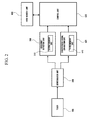
- Figure 2 is a block diagram of an apparatus for automatically detecting broadcasting signals according to an embodiment of the present invention.
- an apparatus for automatically detecting broadcasting signals includes a tuner 100 receiving a predetermined broadcasting signal, a demodulation unit 200 demodulating the received broadcasting signal, a frequency detection unit 300 detecting a sub-carrier wave frequency of the demodulated broadcasting signal, a synchronous signal separation unit (400) 400 separating a horizontal synchronous signal from the demodulated broadcasting signal, and a control unit 500 determining a broadcasting system of the broadcasting signal using the color sub-carrier frequency and the horizontal synchronous signal.
- the synchronous signal separation unit 400 generates the field frequency by counting the number of cycles of the horizontal synchronous signal during predetermined frames.
- the synchronous signal separation unit 400 determines the field frequency may be 60 Hz when the number of cycles of the horizontal synchronous signal is 525, and determines the field frequency may be 50 Hz when the number of cycles of the horizontal synchronous signal is 625.
- the apparatus for automatically detecting the broadcasting signals further includes a first memory unit 600 storing a color sub-carrier frequency data and the field frequency data for each broadcasting system.
- the frequency detection unit 300 includes a second memory unit 310 storing the detected color sub-carrier frequency data.
- the synchronous signal separation unit 400 includes a third memory unit 410 storing the image frequency data.
- the first, second, and third memory units 600, 310, and 410 may include cache memory, ROM, PROM, EPROM, EEPROM, flash, SRAM, and/or DRAM.
- first memory unit 610, the second memory unit 310, and the third memory unit 410 may be separated from one another. Otherwise, the first, second, third memory units 600, 310, and 410 may be separated from one another in a software manner, but integrally formed in a hardware manner.
- the control unit 500 compares at least one of the color sub-carrier frequency data stored in the second memory unit 310 and the image frequency data stored in the third memory unit 410 with the color sub-carrier frequency data and the image frequency data stored in the first memory unit 600 in order to determine the broadcasting system of the broadcasting signals received by the tuner 100.
- control unit 500 determines the broadcasting system of the received broadcasting signals using the color sub-carrier frequency data, or the color sub-carrier frequency data and the field frequency data.
- control unit 500 may change the setting of an apparatus for receiving the broadcasting signal based on the determined broadcasting system for the apparatus to receive the broadcasting signal.
- Such an apparatus for automatically detecting the broadcasting signals may be used separately from a receiving device receiving the broadcasting signals, such as a television, or a personal video recorder, a set-top box or a DVD player, or may be included in such a receiving device.
- a receiving device receiving the broadcasting signals such as a television, or a personal video recorder, a set-top box or a DVD player, or may be included in such a receiving device.
- FIG 3A is a flowchart of a method of automatically detecting a broadcasting signal according to an embodiment of the present invention.
- operation S111 it is determined whether the broadcasting system of broadcasting signals, which are received by the tuner 100 and demodulated in the demodulation unit 200, is a SECAM system signal.
- the broadcasting signals are in the SECAM system; however, the order of determining the broadcasting systems may be changed.
- control unit 500 sets a device to receive the broadcasting signals in the SECAM system in operation S112.
- the control unit 500 detects the color sub-carrier frequency of the broadcasting system in operation S113.
- control unit 500 detects the color sub-carrier frequency of the received broadcasting signals from the second memory unit 310, which stores the color sub-carrier frequency data detected by the frequency detection unit 300.
- the control unit 500 determines whether the color sub-carrier frequency is 4.43 MHz in operation S114, and if so, determines whether the color pattern of the received broadcasting signals is the color pattern of the PAL system in operation S115.
- control unit 500 compares the color sub-carrier frequency data from the second memory unit 310 with the color sub-carrier frequency data of each broadcasting system stored in the first memory unit 600.
- the color pattern data may be stored in a predetermined memory according to the data included in the broadcasting signals, which are demodulated in the demodulation unit 200.
- the color pattern data may be stored in the first memory unit 600, the second memory unit 310, and the third memory unit, or a separately arranged memory.
- Table 2 denotes the color pattern data and the color signal data stored in an 8-bit data frame.
- bit3 and bit2 store the color format and the color signal, respectively; however, other bits may store the color format and the color signal.
- control unit 500 determines whether the field frequency of the received broadcasting signals is 60 Hz in operation S116.
- control unit 500 may compare the field frequency data stored in the third memory unit 410 with the image frequency data for each broadcasting system stored in the first memory unit 600.
- the broadcasting system of the received broadcasting signals can be the PAL60 system in operation S117. Otherwise, the broadcasting system of the received broadcasting signals may be the PAL system in operation S118.
- the control unit 500 determines whether the field frequency of the broadcasting signals is NTSC 4.43 System signal in operation S119.
- the control unit 500 determines whether the field frequency of the broadcasting signals is 50 Hz in operation S124.
- control unit 500 determines the broadcasting system of the broadcasting signals to be the PAL-N system in operation S125.
- control unit 500 detects whether a phase signal data is detected from the broadcasting signals in operation S126.
- a color signal is detected through bit 2(phase signal) of Table 2 described above. Also in this embodiment, a phase signal may be detected from Table 1 described above. If a color signal is detected, the control unit 500 determines the broadcasting system of the broadcasting signals to be the NTSC system in operation S127. Otherwise, the control unit 500 determines the broadcasting system of the broadcasting signals to be the PAL-M system in operation S128.
- processes for determining a broadcasting system of various broadcasting signals are simplified to reduce a time for determining the broadcasting system.
Landscapes
- Engineering & Computer Science (AREA)
- Multimedia (AREA)
- Signal Processing (AREA)
- Color Television Systems (AREA)
- Testing, Inspecting, Measuring Of Stereoscopic Televisions And Televisions (AREA)
Abstract
Description
| NTSC | NTSC4.43 | PAL | PAL60 | PAL-N | PAL-M | SECAM | |
| Number of scan lines | 525 | 525 | 625 | 525 | 625 | 525 | 625 |
| Field rate | 60 | 60 | 50 | 60 | 50 | 60 | 50 |
| Color Sub-carrier frequency | 3.58 | 4.43 | 4.43 | 4.43 | 3.58 | 3.58 | For=4.40 Fob=4.2 5 |
| Phase | Fixed | Fixed | Shift | Shift | Shift | Shift | Shift |
| index | Mnemonic | bit7 | bit6 | bit5 | bit4 | bit3 | bit2 | bit1 | bit0 |
| 00h | STAT | CHIPID | VBIFLG | NOVID | reserved | color format | color signal | HLOCK | CLOCK |
Claims (17)
- An apparatus for automatically detecting broadcasting signals, the apparatus comprising:a color sub-carrier frequency detection unit (300) to detect a color sub-carrier frequency of the broadcasting signals;a synchronous signal separation unit (400) to separate a horizontal synchronous signal of the broadcasting signals; anda control unit (500) to determine a type of broadcasting system of the broadcasting signals using the color sub-carrier frequency and the horizontal synchronous signal.
- The apparatus of claim 1, wherein the synchronous signal separation unit (400) generates a field frequency, which counts the number of cycles of the horizontal synchronous signal for predetermined frames.
- The apparatus of claim 2, further comprising a first memory unit (600) for storing the color sub-carrier frequency data and field frequency data of each broadcasting system.
- The apparatus of claim 3, wherein the colour sub-carrier frequency detection unit (300) includes a second memory unit (310) storing the detected color sub-carrier frequency data.
- The apparatus of claim 4, wherein the synchronous signal separation unit (400) includes a third memory unit (410) storing the field frequency data.
- The apparatus of claim 5, wherein the control unit determines the type of broadcasting system by comparing at least one of the detected color sub-carrier frequency and the generated field frequency with the color sub-carrier frequency data and the field frequency data of each broadcasting system stored in the first memory unit (600).
- A method of automatically detecting broadcasting signals, the method comprising:detecting color sub-carrier frequency data from the broadcasting signals;separating a horizontal synchronous signal of the broadcasting signals; anddetermining a type of broadcasting system of the broadcasting signals using the color sub-carrier frequency and the horizontal synchronous signal.
- The method of claim 7, wherein detecting the color sub-carrier frequency data further includes storing the detected color sub-carrier frequency data.
- The method of claim 8, wherein separating the horizontal synchronous signal includes:generating an field frequency, which counts the number of cycles of the horizontal synchronous signal occurring in a frame of a predetermined size; andstoring the field frequency data.
- The method of claim 9, further comprising storing the color sub-carrier frequency data and the field frequency data of each broadcasting system, before detecting the color sub-carrier frequency data.
- The method of claim 10, wherein the determining of the type of broadcasting system of the broadcasting signals comprises comparing at least one of the color sub-carrier frequency and the field frequency with the color sub-carrier frequency data and the field frequency data of each broadcasting system.
- A method of detecting broadcasting signals, the method comprising:detecting a color sub-carrier frequency from the broadcasting signals;detecting a field frequency of the broadcasting signals;detecting a color format signal; anddetermining a type of broadcasting system of the broadcasting signals using the color sub-carrier frequency, the field frequency, the color format signal.
- The method of detecting broadcasting signals according to claim 12, further comprising:checking whether the broadcasting signal is SECAM system signal; andreceiving the broadcasting signal in the SECAM system signal, if the broadcasting signal is SECAM system signal.
- The method of detecting broadcasting signal according to claim 13, further comprising:checking whether the color sub-signal frequency is 4.43MHz;checking whether the color format signal is a PAL system color format signal, if the color sub-signal frequency is 4.43MHz; anddetermining the broadcasting signal is NTSC 4.43 system signal, when the color sub-signal frequency is not the PAL system color format signal.
- The method of detecting broadcasting signal according to claim 14, further comprising:checking whether the field frequency is 60Hz;determining the broadcasting signal is PAL60 system signal, if the field frequency is 60Hz; anddetermining the broadcasting signal is PAL system signal, if the field frequency is not 60Hz.
- The method of detecting broadcasting signal according to claim 14, further comprising:checking whether the field frequency is 50 Hz; if the color sub-carrier is not 4.43 MHz; anddetermining the broadcasting signal is PAL-N system signal, if the field frequency signal is 50 Hz.
- The method of detecting broadcasting signal according to claim 16, further comprising:detecting a color signal, if the field frequency is not 50 Hz; anddetermining the broadcasting signal is an NTSC system signal, if the color signal is detected, otherwise the broadcasting signal is a PAL-M system signal.
Applications Claiming Priority (2)
| Application Number | Priority Date | Filing Date | Title |
|---|---|---|---|
| KR2004019449 | 2004-03-22 | ||
| KR1020040019449A KR101017371B1 (en) | 2004-03-22 | 2004-03-22 | Broadcasting type automatic identification device and method |
Publications (2)
| Publication Number | Publication Date |
|---|---|
| EP1592263A2 true EP1592263A2 (en) | 2005-11-02 |
| EP1592263A3 EP1592263A3 (en) | 2006-08-23 |
Family
ID=34940605
Family Applications (1)
| Application Number | Title | Priority Date | Filing Date |
|---|---|---|---|
| EP05251699A Withdrawn EP1592263A3 (en) | 2004-03-22 | 2005-03-21 | Device for automatically detecting broadcasting signal and method of the same |
Country Status (4)
| Country | Link |
|---|---|
| US (1) | US7430017B2 (en) |
| EP (1) | EP1592263A3 (en) |
| KR (1) | KR101017371B1 (en) |
| CN (1) | CN1681328A (en) |
Families Citing this family (10)
| Publication number | Priority date | Publication date | Assignee | Title |
|---|---|---|---|---|
| KR100766077B1 (en) * | 2004-08-31 | 2007-10-11 | 삼성전자주식회사 | Function update device and method of digital broadcast signal receiver |
| JP4595709B2 (en) * | 2005-06-27 | 2010-12-08 | 船井電機株式会社 | Video processing device |
| KR100747499B1 (en) * | 2005-07-26 | 2007-08-08 | 삼성전자주식회사 | Image processing apparatus and image processing method |
| US7593063B1 (en) * | 2006-01-13 | 2009-09-22 | Mediatek Inc. | Method of detecting a format type of an incoming video signal and source format detector thereof |
| JP2008028943A (en) * | 2006-07-25 | 2008-02-07 | Sony Corp | Television signal receiving apparatus and receiving method |
| US20080266459A1 (en) * | 2007-04-26 | 2008-10-30 | Mark Butterworth | Multiple format video display |
| JP2009059033A (en) * | 2007-08-30 | 2009-03-19 | Hitachi Ltd | Storage controller |
| CN102387397B (en) * | 2010-08-30 | 2015-05-20 | 深圳艾科创新微电子有限公司 | Method and device for detecting color sub-carrier frequency in video signal |
| CN102457731B (en) * | 2010-10-27 | 2015-03-04 | 深圳艾科创新微电子有限公司 | Method and device for detecting SECAM (Sequential Colour and Memory) system |
| CN106961598B (en) * | 2017-03-17 | 2019-02-12 | 浙江大华技术股份有限公司 | A kind of signaling mode judgment method and device |
Family Cites Families (19)
| Publication number | Priority date | Publication date | Assignee | Title |
|---|---|---|---|---|
| DE3342181C2 (en) * | 1983-11-23 | 1986-03-06 | Deutsche Thomson-Brandt Gmbh, 7730 Villingen-Schwenningen | Integrated circuit for the color decoder of a television receiver |
| US4688082A (en) | 1984-05-23 | 1987-08-18 | Sharp Kabushiki Kaisha | Multi-system television receiver |
| FR2658023B1 (en) * | 1990-02-06 | 1992-05-29 | Sgs Thomson Microelectronics | METHOD FOR AUTOMATIC IDENTIFICATION OF A COLOR TELEVISION STANDARD. |
| DE4012580A1 (en) | 1990-04-20 | 1991-10-24 | Philips Patentverwaltung | CIRCUIT ARRANGEMENT FOR DETECTING THE TRANSMISSION NORM OF A COLOR TRANSMISSION SIGNAL |
| EP0482768B1 (en) * | 1990-09-26 | 1997-01-29 | Kabushiki Kaisha Toshiba | Multiple systems adaptive television receiver |
| JPH0556372A (en) | 1991-08-27 | 1993-03-05 | Toshiba Corp | TV receiver using DSP |
| US5311296A (en) * | 1991-11-12 | 1994-05-10 | Rohm Co., Ltd. | Video signal generator circuit and video image processing device using the same |
| KR0170246B1 (en) * | 1992-02-28 | 1999-03-20 | 강진구 | Automatic discriminating apparatus between three different broadcasting systems |
| KR0131199Y1 (en) * | 1993-11-19 | 1998-12-15 | 김광호 | Multi-system distinction circuit |
| KR0165289B1 (en) | 1994-06-09 | 1999-03-20 | 김광호 | Multi television broadcast signal receiver and control method thereof |
| JPH0818994A (en) * | 1994-06-30 | 1996-01-19 | Sony Corp | Multi-video signal demodulator |
| KR0129965B1 (en) * | 1994-07-26 | 1998-04-11 | 김광호 | Multi-language on-screen display device and its method |
| KR19980036764A (en) * | 1996-11-19 | 1998-08-05 | 배순훈 | Broadcasting method automatic switching control device and method of broadcasting receiving system |
| JP2000013713A (en) * | 1998-06-19 | 2000-01-14 | Sharp Corp | Video signal processing apparatus and television receiving apparatus using the same |
| JP2001359115A (en) * | 2000-06-09 | 2001-12-26 | Nec Corp | Television signal color system discrimination device |
| JP2002165150A (en) * | 2000-11-28 | 2002-06-07 | Mitsubishi Electric Corp | Receiver |
| TW476144B (en) * | 2001-02-02 | 2002-02-11 | Macronix Int Co Ltd | Non-volatile memory |
| JP2003009160A (en) | 2001-06-27 | 2003-01-10 | Pioneer Electronic Corp | Color format discriminating apparatus and color format discriminating method |
| KR20030002939A (en) * | 2001-07-03 | 2003-01-09 | 삼성전자 주식회사 | Method for discriminating a broadcasting format automatically |
-
2004
- 2004-03-22 KR KR1020040019449A patent/KR101017371B1/en not_active Expired - Fee Related
-
2005
- 2005-03-18 US US11/082,650 patent/US7430017B2/en not_active Expired - Fee Related
- 2005-03-21 EP EP05251699A patent/EP1592263A3/en not_active Withdrawn
- 2005-03-22 CN CNA2005100762557A patent/CN1681328A/en active Pending
Also Published As
| Publication number | Publication date |
|---|---|
| US20050206787A1 (en) | 2005-09-22 |
| KR101017371B1 (en) | 2011-02-28 |
| KR20050094274A (en) | 2005-09-27 |
| EP1592263A3 (en) | 2006-08-23 |
| US7430017B2 (en) | 2008-09-30 |
| CN1681328A (en) | 2005-10-12 |
Similar Documents
| Publication | Publication Date | Title |
|---|---|---|
| KR19980076495A (en) | HDTV / NTSC receiver and receiving signal selection method | |
| JP3383220B2 (en) | Received signal determination circuit and method | |
| CN102740086A (en) | Automatic identification method and device of composite video broadcast signal system | |
| CN102238384A (en) | Multi-channel video decoder | |
| EP1592263A2 (en) | Device for automatically detecting broadcasting signal and method of the same | |
| JP2005184764A (en) | Method of motion detection for 3d comb filter video decoder | |
| US7432987B2 (en) | Method of motion detection for 3D comb filter video decoder | |
| KR970007890B1 (en) | Method for tuning channel of cable broadcasting system | |
| JPH0818994A (en) | Multi-video signal demodulator | |
| JPH1198422A (en) | Video signal discrimination circuit | |
| CN1777257A (en) | Method for automatically identifying received signal standard for analogue television signal receiver | |
| US8203652B2 (en) | SECAM-L detector and video broadcast system having the same | |
| KR20010023496A (en) | Color transmission system discrimination circuit in television set | |
| KR100572074B1 (en) | Color correction method when non-standard color burst is applied | |
| KR100262649B1 (en) | Method and device of searching channel of digital tv | |
| KR20060112059A (en) | Vehicle TVs supporting the worldwide television transmission system and methods of receiving the television signals | |
| KR950006449B1 (en) | Automatic sub-adjustment method and device for TV | |
| US8405776B2 (en) | State detector of video device and state detection method thereof | |
| EP1585314A1 (en) | Method of motion detection for 3d comb filter video decoder | |
| JPH07298210A (en) | Television receiver | |
| JP2000217130A (en) | Video signal processing device | |
| KR20000003782A (en) | Method of tuning a different type of broadcasting signal | |
| KR20000031774A (en) | Television for vehicle containing diversity antenna | |
| JPH0846932A (en) | Television signal system detection circuit | |
| JPH1198471A (en) | Identification signal judgment circuit |
Legal Events
| Date | Code | Title | Description |
|---|---|---|---|
| PUAI | Public reference made under article 153(3) epc to a published international application that has entered the european phase |
Free format text: ORIGINAL CODE: 0009012 |
|
| 17P | Request for examination filed |
Effective date: 20050413 |
|
| AK | Designated contracting states |
Kind code of ref document: A2 Designated state(s): AT BE BG CH CY CZ DE DK EE ES FI FR GB GR HU IE IS IT LI LT LU MC NL PL PT RO SE SI SK TR |
|
| AX | Request for extension of the european patent |
Extension state: AL BA HR LV MK YU |
|
| PUAL | Search report despatched |
Free format text: ORIGINAL CODE: 0009013 |
|
| AK | Designated contracting states |
Kind code of ref document: A3 Designated state(s): AT BE BG CH CY CZ DE DK EE ES FI FR GB GR HU IE IS IT LI LT LU MC NL PL PT RO SE SI SK TR |
|
| AX | Request for extension of the european patent |
Extension state: AL BA HR LV MK YU |
|
| 17Q | First examination report despatched |
Effective date: 20070110 |
|
| AKX | Designation fees paid |
Designated state(s): DE GB NL |
|
| 17Q | First examination report despatched |
Effective date: 20070110 |
|
| RAP1 | Party data changed (applicant data changed or rights of an application transferred) |
Owner name: SAMSUNG ELECTRONICS CO., LTD. |
|
| STAA | Information on the status of an ep patent application or granted ep patent |
Free format text: STATUS: EXAMINATION IS IN PROGRESS |
|
| STAA | Information on the status of an ep patent application or granted ep patent |
Free format text: STATUS: THE APPLICATION IS DEEMED TO BE WITHDRAWN |
|
| 18D | Application deemed to be withdrawn |
Effective date: 20161007 |