EP1592206A1 - Computer system and method for providing a failure resistant data processing service - Google Patents
Computer system and method for providing a failure resistant data processing service Download PDFInfo
- Publication number
- EP1592206A1 EP1592206A1 EP04010067A EP04010067A EP1592206A1 EP 1592206 A1 EP1592206 A1 EP 1592206A1 EP 04010067 A EP04010067 A EP 04010067A EP 04010067 A EP04010067 A EP 04010067A EP 1592206 A1 EP1592206 A1 EP 1592206A1
- Authority
- EP
- European Patent Office
- Prior art keywords
- web service
- computer system
- data processing
- request
- web
- Prior art date
- Legal status (The legal status is an assumption and is not a legal conclusion. Google has not performed a legal analysis and makes no representation as to the accuracy of the status listed.)
- Granted
Links
Images



Classifications
-
- H—ELECTRICITY
- H04—ELECTRIC COMMUNICATION TECHNIQUE
- H04L—TRANSMISSION OF DIGITAL INFORMATION, e.g. TELEGRAPHIC COMMUNICATION
- H04L67/00—Network arrangements or protocols for supporting network services or applications
- H04L67/01—Protocols
- H04L67/02—Protocols based on web technology, e.g. hypertext transfer protocol [HTTP]
-
- H—ELECTRICITY
- H04—ELECTRIC COMMUNICATION TECHNIQUE
- H04L—TRANSMISSION OF DIGITAL INFORMATION, e.g. TELEGRAPHIC COMMUNICATION
- H04L61/00—Network arrangements, protocols or services for addressing or naming
- H04L61/45—Network directories; Name-to-address mapping
- H04L61/4552—Lookup mechanisms between a plurality of directories; Synchronisation of directories, e.g. metadirectories
-
- H—ELECTRICITY
- H04—ELECTRIC COMMUNICATION TECHNIQUE
- H04L—TRANSMISSION OF DIGITAL INFORMATION, e.g. TELEGRAPHIC COMMUNICATION
- H04L69/00—Network arrangements, protocols or services independent of the application payload and not provided for in the other groups of this subclass
- H04L69/30—Definitions, standards or architectural aspects of layered protocol stacks
- H04L69/32—Architecture of open systems interconnection [OSI] 7-layer type protocol stacks, e.g. the interfaces between the data link level and the physical level
- H04L69/322—Intralayer communication protocols among peer entities or protocol data unit [PDU] definitions
- H04L69/329—Intralayer communication protocols among peer entities or protocol data unit [PDU] definitions in the application layer [OSI layer 7]
-
- H—ELECTRICITY
- H04—ELECTRIC COMMUNICATION TECHNIQUE
- H04L—TRANSMISSION OF DIGITAL INFORMATION, e.g. TELEGRAPHIC COMMUNICATION
- H04L69/00—Network arrangements, protocols or services independent of the application payload and not provided for in the other groups of this subclass
- H04L69/40—Network arrangements, protocols or services independent of the application payload and not provided for in the other groups of this subclass for recovering from a failure of a protocol instance or entity, e.g. service redundancy protocols, protocol state redundancy or protocol service redirection
Definitions
- the present invention relates to the field of data processing, and more particularly without limitation to failure resistant data processing techniques.
- a central database has the advantage of providing a single point of access for data storage and quick and efficient searching.
- a single, centralised database also provides a single point of failure.
- the server hosting the centralised database may go down. Without a redundant system in place, such as mirroring, the loss of the server will generally enforce a network-wide work stoppage.
- Web services are an emerging technology that offers the dual promise of simplicity and pervasiveness. Web services represent the next level of function and efficiency in e-business.
- a Web service can be viewed as any mechanism by which an application or data processing service can be provided to other applications on the Internet.
- SOAP simple object access protocol
- WSDL Web Service Description Language
- a WSDL document can be stored in numerous ways such as in a file, in a DB2 XML registry / repository, or in a DB2 based UDDI registry, for example.
- UDDI Universal Description, Discovery, Integration
- Service providers may register their services in a UDDI, specifying technical information about how to invoke the service.
- a WSDL document is stored in a UDDI registry in order to define the messages a particular Web services accepts and generates.
- UDDI Uniform Resource Locator
- Web services present a single point of failure just like common central databases do. If a Web service fails the respective informational and / or transactional data processing service provided by the Web service becomes unavailable. For example, this can be caused by a failure of the web server that provides the Web service.
- the present invention provides for a server computer system that has means for receiving a request from a client computer system.
- the server computer system has means for accessing a data processing component for processing the request.
- the data processing component can be an integral part of the server computer system or an external component that is closely or loosely coupled to the server computer system.
- the data processing component is an internal or external database.
- the means for accessing the data processing component are adapted to send the client's request to a Web service, if the data processing component becomes unavailable.
- the Web service that receives the request from the server computer system performs substantially the same data processing service, such as informational and / or transactional data processing services, as the default data processing component.
- the Web service provides a backup for the data processing component which makes the server computer system more failure resistant with respect to data processing services provided in response to client requests.
- the requesting client may not even recognise that a failure of the default data processing component of the server computer system has occurred as the same or a substantially similar result is provided from the Web service.
- This approach has the advantage of providing a single point of access for receiving the client request while avoiding the single point of failure problem.
- the server computer system has storage means for storing a locator of the Web service.
- a locator of the Web service For example, a pre-defined URL of the Web service and a WSDL description of the Web service is stored in the storage means.
- the Web service is accessed using the URL and WSDL description stored in the storage means.
- a plurality of Web services is used as potential replacements for the default data processing component.
- This plurality of Web services can be pre-selected and stored in a static list or it can be dynamic.
- a dynamic list of potential replacement Web services for the failing data processing component can be provided by querying a UDDI in order to identify a plurality of Web services that match a given profile.
- the query returns a set of Web services that offer similar data processing services as the data processing component.
- a ranking value is calculated for each Web service of the plurality of Web services which are thus identified.
- the ranking value can be calculated using a pre-defined criterion, such as the cost of the Web service, its availability, the quality of the services provided etc.
- a Web service of a supplier provides information regarding availability and cost of a service, product or material required by a client. If the Web service does not deliver a desired result, i.e. an offer that meets the client's requirements in terms of cost and/or availability, the next Web service on the list is used, etc.
- the format of the request received from the client computer system is transformed to a format in compliance with the WSDL description of the replacement Web service.
- the format of the Web services response is transformed back into the domain of the client computer system.
- the WSDL description of the Web service can be used as an input parameter for performing the back transformation.
- the invention in another aspect relates to a client computer system.
- the client computer system is coupled to a server computer system that provides a data processing service to the client computer system.
- the server computer system becomes unavailable the client computer system resends its request for the data processing service to a replacement Web services.
- the client computer system can store a predefined URL and WSDL of a single Web service that can act as a replacement in case of failure of the server computer system or a static list of potential replacement Web services.
- a dynamic list of potential replacement Web services is generated in response to failure of the server computer system.
- the present invention relates to a data processing system that has a plurality of client computer systems and at least one server computer system that provides data processing services to the client computer systems.
- Both the client computer systems and the server computer system store one or more locators of potential replacement Web services in case of failure of the server computer system and / or failure of the default data processing component that is accessed by the server computer system for providing the data processing service.
- the first stage is constituted by the server computer system. If the default data processing component used by the server computer system for providing the data processing service fails, the server computer system forwards the client request for the data processing service to a replacement Web service.
- the second stage for the failure protection is constituted by each individual client computer system. If the server computer system itself goes down, it cannot provide access to one of the replacement Web services. In this case an afflicted client computer system autonomously determines a replacement Web service and re-sends its requests to the replacement Web service.
- the server computer system uses its static list of Web services in order to identify a replacement Web service. If the server computer system itself goes down, the afflicted client computer systems use their private static lists in order to autonomously identify respective replacement Web services.
- the static list of the server computer system is updated more frequently than the static lists in the client computer systems.
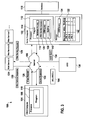
- Figure 1 shows data processing system 100 that has at least one server computer 102.
- a plurality of client computers is coupled to server computer 102 via a computer network such as Internet 106.
- client computer 104 is considered in the following.
- Client computer 104 has processor 108 for running program 110.
- Program 110 implements the HTTP protocol for communicating with server computer 102 via Internet 106.
- server computer 102 has processor 112 for running program 114.
- Program 114 implements the HTTP protocol for communicating with client computer 104.
- Program 114 has program module 116 for accessing database 118 that is coupled to server computer 102. Further, program 114 has program module 120 for accessing a Web service.
- Server computer 102 has storage 122 for storing the URL and the WSDL description of replacement Web service 124.
- client request 126 can be of an informational or transactional nature depending on the application. For example, client request 126 specifies a database query.
- program module 116 is invoked in order to execute the query as specified in client request 126.
- database 118 is unavailable program module 120 is invoked.
- Program module 120 reads the URL of the replacement Web service 124 from storage 122 as well as the WSDL description of the replacement Web service. Program module 120 reformats client request 126 in order to generate Web service request 128 that is in compliance with the WSDL description of replacement Web service 124. If client request 126 has a format that is acceptable to Web service 124 no such reformatting is necessary.
- Program module 120 sends Web service request 128 to Web service 124 via Internet 106.
- Web service 124 returns Web service response 130 to server computer 102.
- Web service response 130 is reformatted in order to transform it back into the client domain, if necessary.
- the resulting server response 132 is sent from server computer 102 to client computer 104 via Internet 106.
- application server computer 102 belongs to an operator of a wireless mobile telecommunication network. Subscriber information of the registered users of the telecommunication network is stored in database 118. This information includes the payment histories of the subscribers and a credit rating.
- Client computer 104 is located at a point of sales that offers subscription agreements for the telecommunication network. When an individual enters the point of sales and requests a subscription agreement, personal data that unequivocally identify the individual, such as the individual's name and birthday, are entered into client computer 104.
- Client request 126 contains the individual's name and birthday in order to specify a corresponding database query. If database 118 is available it is checked by querying database 118 whether the individual is already a subscriber. If this is the case credit rating information is returned from database 118 and sent to client computer 104 by means of server response 132. Based on the credit rating information the subscriber's request for entering an additional subscription agreement can be accepted or declined. This is especially important if the subscription agreement encompasses the sale of a subsidised cellular phone. Only if the subscriber is sufficiently credit worthy the operator has a reasonable chance of recovering the cost for the subsidised cellular phone that is given to the subscriber as a part of the additional subscription agreement.
- program module 120 If database 118 becomes unavailable due to a hardware or software failure or due to servicing, program module 120 is invoked.
- Program module 120 reads the URL of a replacement Web service that delivers credit rating information. Examples of such Web services include Dunn & Bradstreet, Credit Reform, etc.
- Program module 120 transforms client request 126 into Web service request 128 using the WSDL description of the replacement Web service.
- the Web service response 130 containing the requested credit rating information of the individual is received by server computer 102 and is transformed back by program module 120 into the format of the client domain.
- the resulting server response 132 containing the credit rating information is sent back to client computer 104.
- client computer 104 receives the same or substantially similar information as to the individual's credit rating. This has the advantage that an informed decision can be made regarding acceptance or refusal of the individual's request for entering a subscription agreement.
- server computer 102 can also use Web service 124 if the requested credit rating information is not stored in its database 118. This can be due to the fact that the individual is not a subscriber and / or due to corruption of database 118. In both instances the requested information is not available from the default resource, i.e. database 118, such that replacement Web service 124 is used instead.
- FIG. 2 shows a corresponding flowchart.
- the server computer receives the client request.
- the client request can be of an informational or transactional nature.
- the client request specifies a database query.
- the server computer sends the query that is specified in the client request to the database.
- the database can be closely or loosely coupled to the server computer.
- the database can be an integral part of the server computer or it can be an external database.
- the database is provided by a default Web service. In this case the server computer performs the database access via the Internet.
- step 204 the server computer determines whether a query result has been received. For example, if no result has been received within a predefined time window after the query has been sent in step 202, the server computer's determination is that the database is unavailable. In this case the control goes to step 206 where the URL and WSDL of a replacement Web service is read.
- step 208 the client request is transformed to a corresponding Web service request. Preferably the transformation is performed using the WSDL description of the replacement Web service in order to bring the client request into conformity with the format and structure of messages that are acceptable by the replacement Web service.
- step 210 the web service request is sent to the replacement Web service via the Internet using the URL read in step 206.
- step 212 a response is received from the replacement Web service containing the query result.
- the Web service response is transformed back to the client domain in step 214.
- the WSDL of the replacement Web service can be used for the back transformation for inversion of the transformation from the client domain to the Web service domain.
- step 216 the resulting response is returned to the client.
- step 204 If the database is available the control goes directly from step 204 to step 218 where the response provided by the database is returned to the client.
- FIG 3 shows an alternative embodiment of data processing system 100. Elements of figure 3 that correspond to elements of figure 4 are designated by the same reference numerals.
- the replacement Web service that is to be used in case of failure of database 118 is not predefined. Rather storage 122 stores a predefined UDDI query 134.
- Program 114 has an additional program module 136 for reading UDDI query 134 and sending it to UDDI 138 via Internet 106. Further, program 114 has program module 140 for calculating ranking values for the potential alternative Web services returned from UDDI 138. For example, a ranking value is calculated using a number of predefined criteria such as the cost, availability, coverage, last update etc., of a given Web service or a combination of such criteria.
- the results are stored as table 142 in storage 122.
- server computer 102 receives client request 146 as in the embodiment of figures 1 and 2.
- program module 136 is invoked.
- Program module 136 reads UDDI query 134 from storage 122 and sends UDDI query 134 to UDDI 138.
- UDDI 138 returns response 144 that contains the URLs and WSDLs of the Web services registered in UDDI 138 that match UDDI query 134.
- program module 140 is invoked in order to calculate a ranking value for each of the potential replacement Web services identified in response 144.
- the Web services are sorted by the ranking values which provides table 142 that is stored in storage 122.
- response 144 identifies a plurality of Web services A, B, C, ... together with the respective WSDL descriptors.
- Program module 140 calculates a ranking value for each of these Web services, such as ranking value X for Web service A, ranking value Y for Web service B, ranking value Z for Web service C, etc.
- program module 120 After table 142 has been generated and stored in storage 122 program module 120 is invoked. Program module 120 reads the URL of the highest ranking Web service identified in table 142. In the example considered here this is the URL A of Web service A 124. Program module 120 also reads the WSDL descriptor of Web service A from table 142 in order to transform client request 126 to Web service request 128.
- Program module 120 sends Web service request 128 to Web service A 124. Upon receipt of Web service response 130 it transforms the Web service response 130 back into the client domain to provide server response 132. However, if no Web service response 130 is received from Web service A 124 within a predefined time window program module 120 reads the URL and WSDL descriptor of the second highest ranking Web service B from table 142 in order to attempt usage of the Web service B as a replacement for database 118. If Web service B is also unavailable, an attempt is made to use the next highest ranking Web service C instead, etc.
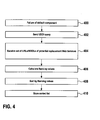
- Figure 4 illustrates the procedure for generating table 142 stored in storage 122 in the embodiment of figure 3.
- failure of a default component that usually provides a given informational and / or transactional data processing service is diagnosed by the server computer.
- the default component is database 118.
- step 402 the UDDI query is read from the storage of the server computer and sent to the UDDI via the Internet.
- step 404 a set of URLs and respective WSDLs is received.
- the set of URLs identifies potential replacement Web services that match the UDDI query.
- step 406 ranking values are calculated for the Web services identified in the set received in step 404.
- step 408 the Web services are sorted by their ranking values and the resultant sorted list is stored in step 410. In the example considered in figure 3 the sorted list provides table 142.
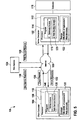
- Figure 5 shows a block diagram of a further preferred embodiment of data processing system 100. Elements in the embodiment of figure 5 that correspond to elements in the embodiments of figures 1 or 3 are designated by the same reference numerals.
- server computer 102 is substantially identical to server computers 102 of figures 1 or 3.
- program 110 of client computer 104 also has a program module 120 for accessing replacement Web service 124.
- program 110 has program module 146 for accessing server computer 102 via Internet 106 and storage 122 for storage of the URL(s) of one or more potential replacement Web services in a static or dynamic list.
- an application program runs on processor 108. By means of the application program a client request 126 can be specified and entered into the program 110.
- program module 146 sends client request 126 to server computer 102 via Internet 106.
- server computer 102 uses the replacement web service 124 in order to provide server response 132 to client computer 104. If server computer 102 is down client computer 102 does not receive server response 132 within a given time frame.
- program module 120 of program 110 is invoked in order to directly access replacement Web service 124 from client computer 104.
- program module 120 of program 110 internally transforms client request 126 to Web service request 128 in order to send Web service request 128 from client computer 104 to web service 124.
- Web service response 130 is received by program module 120 of program 110 of client computer 104 and is transformed back into the client computer's domain.
- the embodiment of figure 5 is particularly advantageous as it provides a protection against failure of server computer 102. If server computer 102 is down client computer 104 can directly access a replacement Web service in order to obtain the required informational and / or transactional data processing service.
- Figure 6 shows a flowchart illustrating a preferred mode of operation of the embodiment of data processing system 100 shown in figure 5.
- the client request is sent to the server computer.
- step 604 the URL and WSDL of a replacement Web service is read from the storage of the client computer.
- step 606 the client request is transformed into a Web service request in compliance with the WSDL descriptor of the replacement Web service.
- step 606 the Web service request is sent from the client computer to the replacement Web service.
- step 610 the client computer receives the Web services response which is transformed back into the client domain in step 612 by reformatting the Web service response into a format understandable by an application program of the client computer that requires the response.
- step 614 the response is processed by the application program.
- control directly goes from step 602 to step 614 instead.
Landscapes
- Engineering & Computer Science (AREA)
- Computer Networks & Wireless Communication (AREA)
- Signal Processing (AREA)
- Computer Security & Cryptography (AREA)
- Information Retrieval, Db Structures And Fs Structures Therefor (AREA)
- Hardware Redundancy (AREA)
- Computer And Data Communications (AREA)
Abstract
Description
- Figure 1
- is a block diagram of an embodiment of a failure resistant data processing system,
- Figure 2
- shows a flowchart illustrating a preferred mode of operation of the data processing system of figure 1.
- Figure 3
- shows an alternative embodiment of the data processing system of figure 1,
- Figure 4
- shows a flowchart illustrating a preferred embodiment of a method for generating assorted list of potential replacement Web services,
- Figure 5
- shows a block diagram of an alternative embodiment of the data processing systems of figures 1 and 3,
- Figure 6
- is a flowchart illustrating a preferred mode of operation of the data processing system of figure 5.
- 100
- data processing system
- 102
- server computer
- 104
- client computer
- 106
- Internet
- 108
- processor
- 110
- program
- 112
- processor
- 114
- program
- 116
- program module
- 118
- database
- 120
- program module
- 122
- storage
- 124
- web service
- 126
- client request
- 128
- web service request
- 130
- web service response
- 132
- server response
- 134
- UDDI query
- 136
- program module
- 138
- UDDI
- 140
- program module
- 142
- table
- 144
- response
- 146
- program module
Claims (22)
- A server computer system comprising:means (112) for receiving a request from a client computer system (104),means (114, 116, 120) for accessing a data processing component (118) for processing the request and for sending the request (128) to a Web service (124), if the data processing component is unavailable.
- The server computer system of claim 1, the data processing component being a database.
- A client computer system comprising:means (146) for sending a request (126) to a server computer system (102),means (120) for sending the request (128) to a Web service (124), if the server computer is unavailable.
- The computer system of any one of the preceding claims, further comprising storage means (122) for storing a locator of the Web service (124).
- The computer system of any one of the preceding claims, further comprising storage means (122) for storing a list (142) of Web services.
- The computer system of claim 5, the list of Web services being static.
- The computer system of claim 5, the list of Web services being dynamic, and further comprising:means (136) for accessing a directory (138) to identify a plurality of Web services,means (140) for ranking the plurality of Web services.
- The computer system of claim 7, further comprising means (120) for selecting one of the Web services from the list using the ranking as a selection criterion.
- The computer system of any one of the preceding claims, further comprising means (120) for transforming a first format of the request into a second format of the Web service.
- The computer system of claim 9, the means for transforming being adapted to receive a description of the Web service as an input for performing the transformation.
- The computer system of any one of the preceding claims, further comprising means (122) for transforming a first format of a response (130) of the Web service into a second client format.
- The computer system of claim 11, the means for transforming the first format of the response being adapted to receive a description of the Web service as an input for performing the transformation.
- A data processing system comprising a plurality of client computer systems (104), each client computer system comprisingmeans (146) for sending a request (126) to a server computer system (102),means (120) for sending the request (128) to a Web service (124), if the server computer is unavailable,storage means (122) for storing a locator of a Web service (124), and a server computer system (102) for coupling to the plurality of client computer systems, the server computer system comprisingmeans (112) for receiving a request from a client computer system (104),means (114, 116, 120) for accessing a data processing component (118) for processing the request and for sending the request (128) to a Web service (124), if the data processing component is unavailable.storage means (122) for storing a locator of a Web service (124).
- A computer program product comprising computer executable instructions for:providing a request to a data default data processing component,providing the request to a Web service as a replacement for the default data processing component, if the default data processing component becomes unavailable.
- The computer program product of claim 14, further comprising instructions for selecting the Web service from a plurality of Web services.
- The computer program product of claim 15, the instructions being adapted to use a predetermined selection criterion for selection of the Web service from the plurality of Web services.
- The computer program product of any one of the preceding claims 14 to 16, further comprising instructions for calculating a ranking value for each Web service of the plurality of Web services.
- The computer program product of any one of the preceding claims 14 to 17, further comprising instructions for querying a directory for providing the plurality of Web services.
- The computer program product of any one of the preceding claims 14 to 18, further comprising instructions for transforming a format of the request to a format of the Web service.
- The computer program product of claim 19, further comprising instructions for using a WSDL descriptor of the Web service for performing the transformation.
- A method of providing a failure resistant data processing service comprising:using a default data processing service,using a Web service to provide a substantially similar data processing service, if the default data processing service becomes unavailable.
- The method of claim 21, further comprising:determining a plurality of web services by querying a UDDI, andapplying a selection criterion for selection of one of the Web services from the plurality of Web services.
Priority Applications (6)
| Application Number | Priority Date | Filing Date | Title |
|---|---|---|---|
| EP04010067A EP1592206B1 (en) | 2004-04-28 | 2004-04-28 | Computer system and method for providing a failure resistant data processing service |
| DE602004001333T DE602004001333T2 (en) | 2004-04-28 | 2004-04-28 | A computer system and method for providing a fault-tolerant data processing service |
| AT04010067T ATE331379T1 (en) | 2004-04-28 | 2004-04-28 | COMPUTER SYSTEM AND METHOD FOR PROVIDING AN ERROR-RESISTANT DATA PROCESSING SERVICE |
| CA2494443A CA2494443C (en) | 2004-04-28 | 2005-01-26 | Computer systems and methods for providing failure protection |
| US11/109,725 US20060031413A1 (en) | 2004-04-28 | 2005-04-20 | Computer systems and methods for providing failure protection |
| AU2005201783A AU2005201783B2 (en) | 2004-04-28 | 2005-04-28 | Computer system and method for providing a failure resistant data processing service |
Applications Claiming Priority (1)
| Application Number | Priority Date | Filing Date | Title |
|---|---|---|---|
| EP04010067A EP1592206B1 (en) | 2004-04-28 | 2004-04-28 | Computer system and method for providing a failure resistant data processing service |
Publications (2)
| Publication Number | Publication Date |
|---|---|
| EP1592206A1 true EP1592206A1 (en) | 2005-11-02 |
| EP1592206B1 EP1592206B1 (en) | 2006-06-21 |
Family
ID=34924767
Family Applications (1)
| Application Number | Title | Priority Date | Filing Date |
|---|---|---|---|
| EP04010067A Expired - Lifetime EP1592206B1 (en) | 2004-04-28 | 2004-04-28 | Computer system and method for providing a failure resistant data processing service |
Country Status (6)
| Country | Link |
|---|---|
| US (1) | US20060031413A1 (en) |
| EP (1) | EP1592206B1 (en) |
| AT (1) | ATE331379T1 (en) |
| AU (1) | AU2005201783B2 (en) |
| CA (1) | CA2494443C (en) |
| DE (1) | DE602004001333T2 (en) |
Cited By (1)
| Publication number | Priority date | Publication date | Assignee | Title |
|---|---|---|---|---|
| CN101394314B (en) * | 2008-10-20 | 2011-03-23 | 北京邮电大学 | Fault positioning method for Web application system |
Families Citing this family (6)
| Publication number | Priority date | Publication date | Assignee | Title |
|---|---|---|---|---|
| US7532906B2 (en) * | 2005-07-29 | 2009-05-12 | Sap Ag | Mobile electronic device and methods for providing information to a mobile electronic device using a web service |
| US7908190B2 (en) * | 2005-08-30 | 2011-03-15 | Sap Ag | Systems and methods for applying tax legislation |
| US8311873B2 (en) * | 2009-11-19 | 2012-11-13 | Bank Of America Corporation | Application risk framework |
| US20110280247A1 (en) * | 2010-05-17 | 2011-11-17 | Google Inc. | System and method for reducing latency via multiple network connections |
| US20130151363A1 (en) * | 2011-12-12 | 2013-06-13 | Microsoft Corporation | Recognizing missing offerings in a marketplace |
| CN105426371A (en) * | 2014-09-17 | 2016-03-23 | 上海三明泰格信息技术有限公司 | Database system |
Citations (1)
| Publication number | Priority date | Publication date | Assignee | Title |
|---|---|---|---|---|
| WO2004010297A1 (en) * | 2002-07-22 | 2004-01-29 | Amberpoint Inc. | Apparatus and method for content and context processing of web service traffic |
Family Cites Families (21)
| Publication number | Priority date | Publication date | Assignee | Title |
|---|---|---|---|---|
| US6175869B1 (en) * | 1998-04-08 | 2001-01-16 | Lucent Technologies Inc. | Client-side techniques for web server allocation |
| US6279001B1 (en) * | 1998-05-29 | 2001-08-21 | Webspective Software, Inc. | Web service |
| TWI220821B (en) * | 2001-04-26 | 2004-09-01 | Accton Technology Corp | Zero-loss web service system and method |
| US20030018661A1 (en) * | 2001-07-19 | 2003-01-23 | Darugar Parand Tony | XML smart mapping system and method |
| US6985939B2 (en) * | 2001-09-19 | 2006-01-10 | International Business Machines Corporation | Building distributed software services as aggregations of other services |
| US7343428B2 (en) * | 2001-09-19 | 2008-03-11 | International Business Machines Corporation | Dynamic, real-time integration of software resources through services of a content framework |
| US8166006B2 (en) * | 2001-09-28 | 2012-04-24 | International Business Machines Corporation | Invocation of web services from a database |
| US7822860B2 (en) * | 2001-12-11 | 2010-10-26 | International Business Machines Corporation | Method and apparatus for dynamic reconfiguration of web services infrastructure |
| CA2369797A1 (en) * | 2002-01-31 | 2003-07-31 | Bridgewater Systems Corporation | System and method for web service management |
| US7693955B2 (en) * | 2002-02-22 | 2010-04-06 | Bea Systems, Inc. | System and method for deploying a web service |
| US7769825B2 (en) * | 2002-02-22 | 2010-08-03 | Bea Systems, Inc. | System and method for web services Java API-based invocation |
| US20030163513A1 (en) * | 2002-02-22 | 2003-08-28 | International Business Machines Corporation | Providing role-based views from business web portals |
| WO2003077156A1 (en) * | 2002-03-14 | 2003-09-18 | Koninklijke Philips Electronics N.V. | Automatic discovering of web services |
| US20030187841A1 (en) * | 2002-03-28 | 2003-10-02 | International Business Machines Corporation | Method and structure for federated web service discovery search over multiple registries with result aggregation |
| US20040111525A1 (en) * | 2002-12-09 | 2004-06-10 | International Business Machines Corporation | Dynamic web service implementation discovery and selection apparatus and method |
| US7188155B2 (en) * | 2002-12-17 | 2007-03-06 | International Business Machines Corporation | Apparatus and method for selecting a web service in response to a request from a client device |
| US7467206B2 (en) * | 2002-12-23 | 2008-12-16 | Microsoft Corporation | Reputation system for web services |
| US7287179B2 (en) * | 2003-05-15 | 2007-10-23 | International Business Machines Corporation | Autonomic failover of grid-based services |
| US7562254B2 (en) * | 2003-07-01 | 2009-07-14 | International Business Machines Corporation | Checkpointing and restarting long running web services |
| US20050038867A1 (en) * | 2003-08-14 | 2005-02-17 | International Business Machines Corporation | Method, system and program product for integrating web services on a client |
| US20050198206A1 (en) * | 2004-01-30 | 2005-09-08 | International Business Machines Corporation | Method and apparatus for dynamically selecting functionally equivalent Web services through a single autonomic proxy |
-
2004
- 2004-04-28 DE DE602004001333T patent/DE602004001333T2/en not_active Expired - Lifetime
- 2004-04-28 EP EP04010067A patent/EP1592206B1/en not_active Expired - Lifetime
- 2004-04-28 AT AT04010067T patent/ATE331379T1/en not_active IP Right Cessation
-
2005
- 2005-01-26 CA CA2494443A patent/CA2494443C/en not_active Expired - Lifetime
- 2005-04-20 US US11/109,725 patent/US20060031413A1/en not_active Abandoned
- 2005-04-28 AU AU2005201783A patent/AU2005201783B2/en not_active Expired
Patent Citations (1)
| Publication number | Priority date | Publication date | Assignee | Title |
|---|---|---|---|---|
| WO2004010297A1 (en) * | 2002-07-22 | 2004-01-29 | Amberpoint Inc. | Apparatus and method for content and context processing of web service traffic |
Non-Patent Citations (2)
| Title |
|---|
| DERON LIANG ET AL: "Fault tolerant web service", PROCEEDINGS OF THE IEEE, 10 December 2003 (2003-12-10), pages 310 - 319, XP010674568 * |
| JIA ZHANG ET AL: "Open framework supporting multimedia web services", PROCEEDINGS OF THE IEEE, 10 December 2003 (2003-12-10), pages 46 - 53, XP010674699 * |
Cited By (1)
| Publication number | Priority date | Publication date | Assignee | Title |
|---|---|---|---|---|
| CN101394314B (en) * | 2008-10-20 | 2011-03-23 | 北京邮电大学 | Fault positioning method for Web application system |
Also Published As
| Publication number | Publication date |
|---|---|
| US20060031413A1 (en) | 2006-02-09 |
| ATE331379T1 (en) | 2006-07-15 |
| AU2005201783B2 (en) | 2007-11-01 |
| AU2005201783A1 (en) | 2005-11-17 |
| CA2494443C (en) | 2012-03-27 |
| EP1592206B1 (en) | 2006-06-21 |
| DE602004001333D1 (en) | 2006-08-03 |
| CA2494443A1 (en) | 2005-10-28 |
| DE602004001333T2 (en) | 2007-06-06 |
Similar Documents
| Publication | Publication Date | Title |
|---|---|---|
| US10645149B2 (en) | Content delivery reconciliation | |
| EP1753195B1 (en) | Server computer, client device and web service implemented data processing method | |
| US7475058B2 (en) | Method and system for providing a distributed querying and filtering system | |
| US6983318B2 (en) | Cache management method and system for storing dynamic contents | |
| US7440953B2 (en) | Apparatus, method and system for directory quality assurance | |
| US20070011126A1 (en) | Service-oriented architecture | |
| US20030139934A1 (en) | Requesting and providing services via a registry | |
| US20040215672A1 (en) | Accessing data based on user identity | |
| US20040215826A1 (en) | Accessing data stored in multiple locations | |
| EP2053525A2 (en) | Method, apparatus and computer medium for effecting registration of a persistent document identifier | |
| JP2004523854A (en) | Method and computer system for selecting an edge server computer | |
| EP1623558B1 (en) | Accessing data in a computer network | |
| EP1388084A2 (en) | Counting and billing mechanism for web-services based on a soap-communication protocol | |
| WO2006056534A1 (en) | A method for ensuring the quality of a service in a distributed computing environment | |
| EP1748625B1 (en) | Mobile electronic device and method of providing information to a mobile electronic device using a web service | |
| US7580989B2 (en) | System and method for managing access points to distributed services | |
| EP1770960B1 (en) | A data processing system and method of mirroring the provision of identifiers | |
| Treiber et al. | Active web service registries | |
| AU2005201783B2 (en) | Computer system and method for providing a failure resistant data processing service | |
| US20090234858A1 (en) | Use Of A Single Service Application Instance For Multiple Data Center Subscribers | |
| US20080154861A1 (en) | System and method for retrieving data from different types of data sources | |
| US20030115243A1 (en) | Distributed process execution system and method | |
| JP4617309B2 (en) | Web service contract selection system | |
| US9967308B2 (en) | System and method for fault management in a service-oriented architecture | |
| US20060271570A1 (en) | System and method for simple object access protocol access to interface definition language based services |
Legal Events
| Date | Code | Title | Description |
|---|---|---|---|
| PUAI | Public reference made under article 153(3) epc to a published international application that has entered the european phase |
Free format text: ORIGINAL CODE: 0009012 |
|
| 17P | Request for examination filed |
Effective date: 20050120 |
|
| AK | Designated contracting states |
Kind code of ref document: A1 Designated state(s): AT BE BG CH CY CZ DE DK EE ES FI FR GB GR HU IE IT LI LU MC NL PL PT RO SE SI SK TR |
|
| AX | Request for extension of the european patent |
Extension state: AL HR LT LV MK |
|
| RAP1 | Party data changed (applicant data changed or rights of an application transferred) |
Owner name: SAP AG |
|
| GRAP | Despatch of communication of intention to grant a patent |
Free format text: ORIGINAL CODE: EPIDOSNIGR1 |
|
| GRAS | Grant fee paid |
Free format text: ORIGINAL CODE: EPIDOSNIGR3 |
|
| GRAA | (expected) grant |
Free format text: ORIGINAL CODE: 0009210 |
|
| AK | Designated contracting states |
Kind code of ref document: B1 Designated state(s): AT BE BG CH CY CZ DE DK EE ES FI FR GB GR HU IE IT LI LU MC NL PL PT RO SE SI SK TR |
|
| PG25 | Lapsed in a contracting state [announced via postgrant information from national office to epo] |
Ref country code: SI Free format text: LAPSE BECAUSE OF FAILURE TO SUBMIT A TRANSLATION OF THE DESCRIPTION OR TO PAY THE FEE WITHIN THE PRESCRIBED TIME-LIMIT Effective date: 20060621 Ref country code: IT Free format text: LAPSE BECAUSE OF FAILURE TO SUBMIT A TRANSLATION OF THE DESCRIPTION OR TO PAY THE FEE WITHIN THE PRESCRIBED TIME-LIMIT;WARNING: LAPSES OF ITALIAN PATENTS WITH EFFECTIVE DATE BEFORE 2007 MAY HAVE OCCURRED AT ANY TIME BEFORE 2007. THE CORRECT EFFECTIVE DATE MAY BE DIFFERENT FROM THE ONE RECORDED. Effective date: 20060621 Ref country code: CH Free format text: LAPSE BECAUSE OF FAILURE TO SUBMIT A TRANSLATION OF THE DESCRIPTION OR TO PAY THE FEE WITHIN THE PRESCRIBED TIME-LIMIT Effective date: 20060621 Ref country code: RO Free format text: LAPSE BECAUSE OF FAILURE TO SUBMIT A TRANSLATION OF THE DESCRIPTION OR TO PAY THE FEE WITHIN THE PRESCRIBED TIME-LIMIT Effective date: 20060621 Ref country code: BE Free format text: LAPSE BECAUSE OF FAILURE TO SUBMIT A TRANSLATION OF THE DESCRIPTION OR TO PAY THE FEE WITHIN THE PRESCRIBED TIME-LIMIT Effective date: 20060621 Ref country code: FI Free format text: LAPSE BECAUSE OF FAILURE TO SUBMIT A TRANSLATION OF THE DESCRIPTION OR TO PAY THE FEE WITHIN THE PRESCRIBED TIME-LIMIT Effective date: 20060621 Ref country code: SK Free format text: LAPSE BECAUSE OF FAILURE TO SUBMIT A TRANSLATION OF THE DESCRIPTION OR TO PAY THE FEE WITHIN THE PRESCRIBED TIME-LIMIT Effective date: 20060621 Ref country code: CZ Free format text: LAPSE BECAUSE OF FAILURE TO SUBMIT A TRANSLATION OF THE DESCRIPTION OR TO PAY THE FEE WITHIN THE PRESCRIBED TIME-LIMIT Effective date: 20060621 Ref country code: LI Free format text: LAPSE BECAUSE OF FAILURE TO SUBMIT A TRANSLATION OF THE DESCRIPTION OR TO PAY THE FEE WITHIN THE PRESCRIBED TIME-LIMIT Effective date: 20060621 Ref country code: PL Free format text: LAPSE BECAUSE OF FAILURE TO SUBMIT A TRANSLATION OF THE DESCRIPTION OR TO PAY THE FEE WITHIN THE PRESCRIBED TIME-LIMIT Effective date: 20060621 Ref country code: AT Free format text: LAPSE BECAUSE OF FAILURE TO SUBMIT A TRANSLATION OF THE DESCRIPTION OR TO PAY THE FEE WITHIN THE PRESCRIBED TIME-LIMIT Effective date: 20060621 Ref country code: NL Free format text: LAPSE BECAUSE OF FAILURE TO SUBMIT A TRANSLATION OF THE DESCRIPTION OR TO PAY THE FEE WITHIN THE PRESCRIBED TIME-LIMIT Effective date: 20060621 |
|
| REG | Reference to a national code |
Ref country code: GB Ref legal event code: FG4D |
|
| REG | Reference to a national code |
Ref country code: CH Ref legal event code: EP |
|
| AKX | Designation fees paid |
Designated state(s): AT BE BG CH CY CZ DE DK EE ES FI FR GB GR HU IE IT LI LU MC NL PL PT RO SE SI SK TR |
|
| REG | Reference to a national code |
Ref country code: IE Ref legal event code: FG4D |
|
| REF | Corresponds to: |
Ref document number: 602004001333 Country of ref document: DE Date of ref document: 20060803 Kind code of ref document: P |
|
| PG25 | Lapsed in a contracting state [announced via postgrant information from national office to epo] |
Ref country code: SE Free format text: LAPSE BECAUSE OF FAILURE TO SUBMIT A TRANSLATION OF THE DESCRIPTION OR TO PAY THE FEE WITHIN THE PRESCRIBED TIME-LIMIT Effective date: 20060921 Ref country code: DK Free format text: LAPSE BECAUSE OF FAILURE TO SUBMIT A TRANSLATION OF THE DESCRIPTION OR TO PAY THE FEE WITHIN THE PRESCRIBED TIME-LIMIT Effective date: 20060921 |
|
| PG25 | Lapsed in a contracting state [announced via postgrant information from national office to epo] |
Ref country code: ES Free format text: LAPSE BECAUSE OF FAILURE TO SUBMIT A TRANSLATION OF THE DESCRIPTION OR TO PAY THE FEE WITHIN THE PRESCRIBED TIME-LIMIT Effective date: 20061002 |
|
| PG25 | Lapsed in a contracting state [announced via postgrant information from national office to epo] |
Ref country code: PT Free format text: LAPSE BECAUSE OF FAILURE TO SUBMIT A TRANSLATION OF THE DESCRIPTION OR TO PAY THE FEE WITHIN THE PRESCRIBED TIME-LIMIT Effective date: 20061121 |
|
| NLV1 | Nl: lapsed or annulled due to failure to fulfill the requirements of art. 29p and 29m of the patents act | ||
| REG | Reference to a national code |
Ref country code: CH Ref legal event code: PL |
|
| ET | Fr: translation filed | ||
| PLBE | No opposition filed within time limit |
Free format text: ORIGINAL CODE: 0009261 |
|
| STAA | Information on the status of an ep patent application or granted ep patent |
Free format text: STATUS: NO OPPOSITION FILED WITHIN TIME LIMIT |
|
| 26N | No opposition filed |
Effective date: 20070322 |
|
| PG25 | Lapsed in a contracting state [announced via postgrant information from national office to epo] |
Ref country code: GR Free format text: LAPSE BECAUSE OF FAILURE TO SUBMIT A TRANSLATION OF THE DESCRIPTION OR TO PAY THE FEE WITHIN THE PRESCRIBED TIME-LIMIT Effective date: 20060922 |
|
| PG25 | Lapsed in a contracting state [announced via postgrant information from national office to epo] |
Ref country code: IE Free format text: LAPSE BECAUSE OF NON-PAYMENT OF DUE FEES Effective date: 20070430 |
|
| PG25 | Lapsed in a contracting state [announced via postgrant information from national office to epo] |
Ref country code: BG Free format text: LAPSE BECAUSE OF FAILURE TO SUBMIT A TRANSLATION OF THE DESCRIPTION OR TO PAY THE FEE WITHIN THE PRESCRIBED TIME-LIMIT Effective date: 20060921 |
|
| PG25 | Lapsed in a contracting state [announced via postgrant information from national office to epo] |
Ref country code: EE Free format text: LAPSE BECAUSE OF FAILURE TO SUBMIT A TRANSLATION OF THE DESCRIPTION OR TO PAY THE FEE WITHIN THE PRESCRIBED TIME-LIMIT Effective date: 20060621 |
|
| PG25 | Lapsed in a contracting state [announced via postgrant information from national office to epo] |
Ref country code: MC Free format text: LAPSE BECAUSE OF NON-PAYMENT OF DUE FEES Effective date: 20070430 |
|
| PG25 | Lapsed in a contracting state [announced via postgrant information from national office to epo] |
Ref country code: LU Free format text: LAPSE BECAUSE OF NON-PAYMENT OF DUE FEES Effective date: 20070428 Ref country code: CY Free format text: LAPSE BECAUSE OF FAILURE TO SUBMIT A TRANSLATION OF THE DESCRIPTION OR TO PAY THE FEE WITHIN THE PRESCRIBED TIME-LIMIT Effective date: 20060621 |
|
| PG25 | Lapsed in a contracting state [announced via postgrant information from national office to epo] |
Ref country code: HU Free format text: LAPSE BECAUSE OF FAILURE TO SUBMIT A TRANSLATION OF THE DESCRIPTION OR TO PAY THE FEE WITHIN THE PRESCRIBED TIME-LIMIT Effective date: 20061222 Ref country code: TR Free format text: LAPSE BECAUSE OF FAILURE TO SUBMIT A TRANSLATION OF THE DESCRIPTION OR TO PAY THE FEE WITHIN THE PRESCRIBED TIME-LIMIT Effective date: 20060621 |
|
| REG | Reference to a national code |
Ref country code: DE Ref legal event code: R082 Ref document number: 602004001333 Country of ref document: DE Representative=s name: RICHARDT PATENTANWAELTE PART GMBB, DE |
|
| REG | Reference to a national code |
Ref country code: DE Ref legal event code: R082 Ref document number: 602004001333 Country of ref document: DE Representative=s name: RICHARDT PATENTANWAELTE PART GMBB, DE Effective date: 20141210 Ref country code: DE Ref legal event code: R081 Ref document number: 602004001333 Country of ref document: DE Owner name: SAP SE, DE Free format text: FORMER OWNER: SAP AG, 69190 WALLDORF, DE Effective date: 20141210 Ref country code: DE Ref legal event code: R082 Ref document number: 602004001333 Country of ref document: DE Representative=s name: RICHARDT PATENTANWAELTE PARTG MBB, DE Effective date: 20141210 |
|
| REG | Reference to a national code |
Ref country code: FR Ref legal event code: PLFP Year of fee payment: 13 |
|
| REG | Reference to a national code |
Ref country code: FR Ref legal event code: PLFP Year of fee payment: 14 |
|
| REG | Reference to a national code |
Ref country code: FR Ref legal event code: PLFP Year of fee payment: 15 |
|
| REG | Reference to a national code |
Ref country code: DE Ref legal event code: R079 Ref document number: 602004001333 Country of ref document: DE Free format text: PREVIOUS MAIN CLASS: H04L0029080000 Ipc: H04L0065000000 |
|
| PGFP | Annual fee paid to national office [announced via postgrant information from national office to epo] |
Ref country code: FR Payment date: 20230420 Year of fee payment: 20 Ref country code: DE Payment date: 20220620 Year of fee payment: 20 |
|
| PGFP | Annual fee paid to national office [announced via postgrant information from national office to epo] |
Ref country code: GB Payment date: 20230419 Year of fee payment: 20 |
|
| REG | Reference to a national code |
Ref country code: DE Ref legal event code: R071 Ref document number: 602004001333 Country of ref document: DE |
|
| REG | Reference to a national code |
Ref country code: GB Ref legal event code: PE20 Expiry date: 20240427 |
|
| PG25 | Lapsed in a contracting state [announced via postgrant information from national office to epo] |
Ref country code: GB Free format text: LAPSE BECAUSE OF EXPIRATION OF PROTECTION Effective date: 20240427 |
|
| PG25 | Lapsed in a contracting state [announced via postgrant information from national office to epo] |
Ref country code: GB Free format text: LAPSE BECAUSE OF EXPIRATION OF PROTECTION Effective date: 20240427 |