EP1591886A2 - Register management in a simulation environment - Google Patents
Register management in a simulation environment Download PDFInfo
- Publication number
- EP1591886A2 EP1591886A2 EP05103221A EP05103221A EP1591886A2 EP 1591886 A2 EP1591886 A2 EP 1591886A2 EP 05103221 A EP05103221 A EP 05103221A EP 05103221 A EP05103221 A EP 05103221A EP 1591886 A2 EP1591886 A2 EP 1591886A2
- Authority
- EP
- European Patent Office
- Prior art keywords
- register
- instruction
- pool
- agi
- registers
- Prior art date
- Legal status (The legal status is an assumption and is not a legal conclusion. Google has not performed a legal analysis and makes no representation as to the accuracy of the status listed.)
- Withdrawn
Links
Images


Classifications
-
- G—PHYSICS
- G06—COMPUTING OR CALCULATING; COUNTING
- G06F—ELECTRIC DIGITAL DATA PROCESSING
- G06F30/00—Computer-aided design [CAD]
- G06F30/30—Circuit design
- G06F30/32—Circuit design at the digital level
- G06F30/33—Design verification, e.g. functional simulation or model checking
Definitions
- the invention relates to simulation environments and in particular to simulating an instruction unit in a random simulation environment to verify address generation interlock (AGI) and AGI early resolution functions.
- AGI address generation interlock
- AGI can occur when an instruction attempts to compute an address by which to reference storage. This address computation (also referred to as "address add") is typically the addition of some of the following: the contents of one or more registers, a constant value from the instruction, and the address of the branch instruction itself. If a register is used for address generation and that register is modified by a previous instruction (a dependency), then address computation cannot proceed until that register is available. The delay caused by waiting for the register value is known as AGI.
- AGI occurs in the instruction unit when an instruction which has previously been decoded, but has not yet executed, alters a register which an instruction currently being decoded requires for reference to its upcoming address generation. In certain instructions, the target register future contents are available to the instruction unit prior to execution. To reduce AGI latency, which may lead to improved performance, the instruction unit uses the known register future contents, when available, instead of waiting for the execution unit to update the register of interest. This is referred to as AGI early resolution.
- a method for register management in a simulation environment comprising: receiving an instruction from an instruction unit decode pipeline; when the instruction is an AGI instruction, executing an address generation interlock (AGI) function in the simulation environment responsive to the instruction and to a pool of registers controlled by a register manager; and when the instruction is an early AGI instruction, executing an early AGI function in the simulation environment responsive to the pool of registers and to the instruction.
- AGI address generation interlock
- a computer program product for register management in a simulation environment, the computer program product including a storage medium readable by a processing circuit and storing instructions for execution by the processing circuit to perform the method steps of any of the appended method claims.
- a system for register management in a simulation environment including a register manager including a pool of registers; an execution unit driver in communication with the register manager and an instruction unit decode pipeline.
- the execution unit driver includes instructions to implement a method according to the appended method claims.
- FIG. 1 is a block diagram of an instruction unit simulation environment that may be utilized by exemplary embodiments of the present invention
- FIG. 2 is a block diagram of a register management unit for architecture mode instruction pipeline simulations in accordance with exemplary embodiments of the present invention
- FIG. 3 is a block diagram of register pools during simulation in a non-architecture mode in accordance with exemplary embodiments of the present invention
- FIG. 4 is a block diagram of a random register update of a standard AGI resolution in the instruction unit decode pipeline in accordance with exemplary embodiments of the present invention
- FIG. 5 is a block diagram of a random register update of an early AGI resolution in the instruction unit decode pipeline in accordance with exemplary embodiments of the present invention.
- FIG. 6 depicts the relationship between the register manager and the address generation functions for both standard AGI resolution and early AGI resolution in accordance with exemplary embodiments of the present invention.
- Exemplary embodiments of the present invention provide a random simulation method for simulating the instruction unit of a mainframe.
- the simulation method includes a sequential and random register management technique to stimulate the address generation interlock (AGI) and early resolution AGI functions in instruction pipelines of a mainframe processor instruction units.
- This sequential and random register management technique has been uniquely designed to handle the pool of registers that the decoding instructions use for reading and writing. It is operated together with an execution unit driver and an address generation function to provide address generation for the decoding instructions in the instruction unit decode pipeline.
- Exemplary embodiments of the present invention include an execution unit driver which simulates the completion of the instructions in the processors.
- a register manager provides random and sequential values for the simulations of the instructions.
- the AGI and early AGI functions are exercised through the protocols of these components. By enabling the protocols of these components, an in order execution of the instruction pipeline and the high performance design of the processor can be simulated and verified. In this manner random updates to the AGI and early AGI functions can be simulated and verified during the test
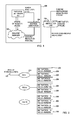
- FIG. 1 is a block diagram of an instruction unit simulation environment that may be utilized by exemplary embodiments of the present invention. It includes an execution unit driver 100, an instruction unit decode pipeline 102, address generation 104, and a register manager 106. As shown in FIG. 1, the AGI simulation components 108 include the execution unit driver 100, address generation 104 and register manager 106. The functions performed by the modules of the AGI simulation components 108 are executed within the instruction unit 102 during a simulation. Random instructions are entered into the instruction unit 102 for decoding. The instructions are executed in the instruction unit 102 (including executing the AGI simulation components 108) and when they are completed, the instructions are ended (e.g., endoped) and saved.
- the AGI simulation components 108 include the execution unit driver 100, address generation 104 and register manager 106.
- the functions performed by the modules of the AGI simulation components 108 are executed within the instruction unit 102 during a simulation. Random instructions are entered into the instruction unit 102 for decoding. The instructions are executed in the instruction unit 102 (including
- the registers that are read by instructions during decode time are included in the read pool of the register manager 106.
- random data is associated with a register write.
- the "correct" data is associated with the register write.
- the write register associated with the instruction is put into the active pool. Being put into the active pool allows the register to be updated when the execution unit driver 100 requests registers for update.
- the current decoding instructions 102 will then use the updated values to do address generation 104 (e.g., an address add such as adding a displacement value to the contents of the register).
- address generation 104 is performed as soon as the register contents are resolved regardless of whether or not the instructions which write to the register have completed execution.
- AGI early resolution instructions complete, the same register values which were stored earlier in the register manager 106 are updated from the execution unit driver 100.
- FIG. 2 is a block diagram of a register management unit for architecture mode instruction pipeline simulations in accordance with exemplary embodiments of the present invention.
- Architecture mode is a mode in the simulation pipeline that the registers have to correlate with the instructions.
- Non-architecture mode is a mode in the simulation pipeline where the register updates may be random. It includes a pool of active write registers 202 in the form of a list. When multiple instructions 206 are writing to the same register 204, the instructions 206 are attached to the register 204 as a sub-list 208 with an instruction sequence number and random register values associated with the instruction.
- the execution unit driver 100 requests one or two (or more) registers 202 for updating during a simulation cycle, the registration manager 106 will randomly select the registers 202 from the pool of active write registers 202.
- the registers 204 are not necessarily selected in architectural order even when the simulation pipeline is executing in architectural mode.
- the corresponding instruction or register will be removed from the pool of active write registers 202 when the instructions have completed execution if there are no other instructions 206 writing to the register 204. In this manner, currently executing instructions are tested in the simulation environment.
- FIG. 3 is a block diagram of register pools 302 during simulation in a non-architecture mode in accordance with exemplary embodiments of the present invention. It includes three pools of registers: the write register pool 304, the read register pool 306 and the active write register pool 202. Registers that are not in either the read register pool 306 or the write register pool 304 may be put into the active write register pool 202 for update. Registers in the active write register pool 202 may be randomly selected for update by the register manager 106 in response to a request by the execution unit driver 100. Registers 308 that are in both the read register pool 306 and the write register pool 304 are checked for sequence number.
- the register 308 is put into the active write pool 202 for selection by the execution unit driver 100. If the write of the register comes ahead of the read, the register can be updated right away.
- the execution unit driver 100 may update the registers by utilizing a variety of patterns including random patterns and sequential patterns. In addition, the execution unit driver 100 may update the registers with data to test particular portions of the processor or memory.
- FIG. 4 is a block diagram of a random register update of an AGI resolution in the instruction unit decode pipeline 102 in accordance with exemplary embodiments of the present invention.
- Instruction sequence one 414 includes a write to register one and instruction sequence two 416 includes a read from register one.
- Register one is added to the write register pool 304 with random values as soon as instruction sequence one 414 has been decoded at 402.
- instruction sequence one 414 completes the E-1 state 404 (which is past any address add states)
- register one becomes available in the active write pool 202.
- register one may be randomly selected from the active write pool 202 by the register manager 106 and if selected, the value contained in register one will be updated by the execution unit driver 100.
- instruction sequence two 416 which has been waiting for the availability of register one for its address generation 104 can then proceed to do the address add at 410.
- register one is randomly selected by the execution unit driver 100, the value in register one after instruction sequence one 414 has completed will be utilized by the address add at 410.
- FIG. 5 is a block diagram of a random register update of an early AGI resolution in the instruction unit decode pipeline 102 in accordance with exemplary embodiments of the present invention.
- Instruction sequence one 522 includes a write to register one.
- register one is added to the write pool 304 in the register manager 106.
- E-1 state 504 a state past the address add state
- register one is moved to the active register write pool 202.
- the contents of register one can now be selected by the execution unit driver 100 for updating.
- Instruction sequence two 524 is an AGI early resolution instruction. It reads register one and writes to register two.
- Register one is added to the read register pool 306 of the register manager 106 and register two is added to the write register pool 304 of the register manager 106. Since it is an AGI instruction, instruction sequence two 524 cannot reach its address add state 510 until the content of register one is resolved (when instruction sequence one 522 has completed execution 506). When instruction sequence two 524 has passed its address add state 510, the contents of register two are updated in the write list 304 for instruction sequence two 524 in the register manager 106. Also, the content of register two is marked available to be used in the address generation 104. At this time, if instruction sequence three 526 only requires register two for its address add 518, it will be moved down in the pipeline for address generation 104. The contents of register two of instruction sequence two 524 will be updated when there is a request from the execution unit driver 100. In this manner sequence three 526 proceeds with its address add without waiting for the completion of sequence two 524.
- FIG. 6 depicts the relationship between the register manager 106 and the address generation functions for both AGI resolution and early AGI resolution in accordance with exemplary embodiments of the present invention.
- Instructions are first checked to determine if they are AGI or AGI early instructions. If they are AGI, they will be grouped in an active AGI instruction pool 616. Instruction pool 616 includes instruction sequences 604, 606, and 608. The instructions that have AGI will be blocked in their address add state 602 until the instruction that holds the interlock register has completed execution and has been removed from the AGI list 616. If the instruction is an AGI early instruction, the contents of its registers are put into the early AGI stack 614 and its contents are sent to the register manager 106. Once active AGI instruction pool 616 is processed, subsequent instruction sequences 610 and 612 are executed.
- the register contents of some instructions take the cache data for their register content.
- the bus data from the data cache is stored into the early AGI stack 614 and its content is also updated in the register manager 106.
- this register can now be put on the active list for updating by the execution unit driver 100.
- Exemplary embodiments of the present invention provide a random and sequential register management simulation method to simulate the address interlock function and early resolution of the address interlock function in the instruction pipeline of a processor instruction unit.
- the simulation system is provided with sufficient data by randomizing the registers to simulate a real world application environment for the processor.
- the order execution results of the instruction pipeline are provided by applying the sequential data for the registers to simulate the high performance design of the processor.
- the capabilities of the present invention can be implemented in software, firmware, hardware or some combination thereof.
- one or more aspects of the present invention may be included in an article of manufacture (e.g., one or more computer program products) having, for instance, computer usable media.
- the media has embodied therein, for instance, computer readable program code means for providing and facilitating the capabilities of the present invention.
- the article of manufacture can be included as part of a computer system or sold separately.
- the embodiments of the invention may be embodied in the form of computer-implemented processes and apparatuses for practicing those processes.
- Embodiments of the invention may also be embodied in the form of computer program code containing instructions embodied in tangible media, such as floppy diskettes, CD-ROMs, hard drives, or any other computer-readable storage medium, wherein, when the computer program code is loaded into and executed by a computer, the computer becomes an apparatus for practicing the invention.
- An embodiment of the present invention can also be embodied in the form of computer program code, for example, whether stored in a storage medium, loaded into and/or executed by a computer, or transmitted over some transmission medium, such as over electrical wiring or cabling, through fiber optics, or via electromagnetic radiation, wherein, when the computer program code is loaded into and executed by a computer, the computer becomes an apparatus for practicing the invention.
- the computer program code segments configure the microprocessor to create specific logic circuits.
Landscapes
- Engineering & Computer Science (AREA)
- Computer Hardware Design (AREA)
- Physics & Mathematics (AREA)
- Theoretical Computer Science (AREA)
- Evolutionary Computation (AREA)
- Geometry (AREA)
- General Engineering & Computer Science (AREA)
- General Physics & Mathematics (AREA)
- Test And Diagnosis Of Digital Computers (AREA)
- Debugging And Monitoring (AREA)
Abstract
Description
- The invention relates to simulation environments and in particular to simulating an instruction unit in a random simulation environment to verify address generation interlock (AGI) and AGI early resolution functions.
- AGI can occur when an instruction attempts to compute an address by which to reference storage. This address computation (also referred to as "address add") is typically the addition of some of the following: the contents of one or more registers, a constant value from the instruction, and the address of the branch instruction itself. If a register is used for address generation and that register is modified by a previous instruction (a dependency), then address computation cannot proceed until that register is available. The delay caused by waiting for the register value is known as AGI. AGI occurs in the instruction unit when an instruction which has previously been decoded, but has not yet executed, alters a register which an instruction currently being decoded requires for reference to its upcoming address generation. In certain instructions, the target register future contents are available to the instruction unit prior to execution. To reduce AGI latency, which may lead to improved performance, the instruction unit uses the known register future contents, when available, instead of waiting for the execution unit to update the register of interest. This is referred to as AGI early resolution.
- One of the difficulties in verifying the instruction unit for advanced processor design for computers in a random simulation environment has to do with providing random updates to registers in the processor. Currently, it is not possible to provide random updates to the registers for the normal resolution of the AGI functions for the decoding instructions and also to provide early calculated register contents which are stored in the instruction unit for special instructions (known as AGI early resolution).
- According to one aspect of the invention there is provided a method for register management in a simulation environment, the method comprising: receiving an instruction from an instruction unit decode pipeline; when the instruction is an AGI instruction, executing an address generation interlock (AGI) function in the simulation environment responsive to the instruction and to a pool of registers controlled by a register manager; and when the instruction is an early AGI instruction, executing an early AGI function in the simulation environment responsive to the pool of registers and to the instruction.
- According to another aspect of the invention there is provided a computer program product for register management in a simulation environment, the computer program product including a storage medium readable by a processing circuit and storing instructions for execution by the processing circuit to perform the method steps of any of the appended method claims.
- According to a further aspect of the invention there is provided a system for register management in a simulation environment, the system including a register manager including a pool of registers; an execution unit driver in communication with the register manager and an instruction unit decode pipeline. The execution unit driver includes instructions to implement a method according to the appended method claims.
- Exemplary embodiments of the invention will now be described, by way of example only, with reference to the accompanying drawings in which:
- FIG. 1 is a block diagram of an instruction unit simulation environment that may be utilized by exemplary embodiments of the present invention;
- FIG. 2 is a block diagram of a register management unit for architecture mode instruction pipeline simulations in accordance with exemplary embodiments of the present invention;
- FIG. 3 is a block diagram of register pools during simulation in a non-architecture mode in accordance with exemplary embodiments of the present invention;
- FIG. 4 is a block diagram of a random register update of a standard AGI resolution in the instruction unit decode pipeline in accordance with exemplary embodiments of the present invention;
- FIG. 5 is a block diagram of a random register update of an early AGI resolution in the instruction unit decode pipeline in accordance with exemplary embodiments of the present invention; and
- FIG. 6 depicts the relationship between the register manager and the address generation functions for both standard AGI resolution and early AGI resolution in accordance with exemplary embodiments of the present invention.
- Exemplary embodiments of the present invention provide a random simulation method for simulating the instruction unit of a mainframe. The simulation method includes a sequential and random register management technique to stimulate the address generation interlock (AGI) and early resolution AGI functions in instruction pipelines of a mainframe processor instruction units. This sequential and random register management technique has been uniquely designed to handle the pool of registers that the decoding instructions use for reading and writing. It is operated together with an execution unit driver and an address generation function to provide address generation for the decoding instructions in the instruction unit decode pipeline. Exemplary embodiments of the present invention include an execution unit driver which simulates the completion of the instructions in the processors. A register manager provides random and sequential values for the simulations of the instructions. The AGI and early AGI functions are exercised through the protocols of these components. By enabling the protocols of these components, an in order execution of the instruction pipeline and the high performance design of the processor can be simulated and verified. In this manner random updates to the AGI and early AGI functions can be simulated and verified during the test process.
- FIG. 1 is a block diagram of an instruction unit simulation environment that may be utilized by exemplary embodiments of the present invention. It includes an
execution unit driver 100, an instructionunit decode pipeline 102,address generation 104, and aregister manager 106. As shown in FIG. 1, theAGI simulation components 108 include theexecution unit driver 100,address generation 104 andregister manager 106. The functions performed by the modules of theAGI simulation components 108 are executed within theinstruction unit 102 during a simulation. Random instructions are entered into theinstruction unit 102 for decoding. The instructions are executed in the instruction unit 102 (including executing the AGI simulation components 108) and when they are completed, the instructions are ended (e.g., endoped) and saved. The registers that are read by instructions during decode time are included in the read pool of theregister manager 106. In most cases (e.g., for standard AGI resolution), random data is associated with a register write. For the set of instructions that can take advantage of AGI early resolution, the "correct" data is associated with the register write. - When an instruction is in an "E-1" state of the instruction pipeline (a state indicating that the instruction has completed an address add state), the write register associated with the instruction is put into the active pool. Being put into the active pool allows the register to be updated when the
execution unit driver 100 requests registers for update. Thecurrent decoding instructions 102 will then use the updated values to do address generation 104 (e.g., an address add such as adding a displacement value to the contents of the register). For the AGI early resolution case, theaddress generation 104 is performed as soon as the register contents are resolved regardless of whether or not the instructions which write to the register have completed execution. When AGI early resolution instructions complete, the same register values which were stored earlier in theregister manager 106 are updated from theexecution unit driver 100. - FIG. 2 is a block diagram of a register management unit for architecture mode instruction pipeline simulations in accordance with exemplary embodiments of the present invention. Architecture mode is a mode in the simulation pipeline that the registers have to correlate with the instructions. Non-architecture mode is a mode in the simulation pipeline where the register updates may be random. It includes a pool of
active write registers 202 in the form of a list. Whenmultiple instructions 206 are writing to thesame register 204, theinstructions 206 are attached to theregister 204 as asub-list 208 with an instruction sequence number and random register values associated with the instruction. When theexecution unit driver 100 requests one or two (or more) registers 202 for updating during a simulation cycle, theregistration manager 106 will randomly select theregisters 202 from the pool ofactive write registers 202. Theregisters 204 are not necessarily selected in architectural order even when the simulation pipeline is executing in architectural mode. In addition, the corresponding instruction or register will be removed from the pool ofactive write registers 202 when the instructions have completed execution if there are noother instructions 206 writing to theregister 204. In this manner, currently executing instructions are tested in the simulation environment. - FIG. 3 is a block diagram of
register pools 302 during simulation in a non-architecture mode in accordance with exemplary embodiments of the present invention. It includes three pools of registers: thewrite register pool 304, theread register pool 306 and the activewrite register pool 202. Registers that are not in either the readregister pool 306 or thewrite register pool 304 may be put into the activewrite register pool 202 for update. Registers in the activewrite register pool 202 may be randomly selected for update by theregister manager 106 in response to a request by theexecution unit driver 100.Registers 308 that are in both theread register pool 306 and thewrite register pool 304 are checked for sequence number. If the instruction containing theregister 308 in thewrite register pool 304 is to be executed earlier than the instruction containing theregister 308 in theread register pool 306, theregister 308 is put into theactive write pool 202 for selection by theexecution unit driver 100. If the write of the register comes ahead of the read, the register can be updated right away. Theexecution unit driver 100 may update the registers by utilizing a variety of patterns including random patterns and sequential patterns. In addition, theexecution unit driver 100 may update the registers with data to test particular portions of the processor or memory. - FIG. 4 is a block diagram of a random register update of an AGI resolution in the instruction
unit decode pipeline 102 in accordance with exemplary embodiments of the present invention. Instruction sequence one 414 includes a write to register one and instruction sequence two 416 includes a read from register one. Register one is added to thewrite register pool 304 with random values as soon as instruction sequence one 414 has been decoded at 402. When instruction sequence one 414 completes the E-1 state 404 (which is past any address add states), register one becomes available in theactive write pool 202. Now, if theexecution unit driver 100 requests registers for update, register one may be randomly selected from theactive write pool 202 by theregister manager 106 and if selected, the value contained in register one will be updated by theexecution unit driver 100. In addition, instruction sequence two 416 which has been waiting for the availability of register one for itsaddress generation 104 can then proceed to do the address add at 410. When register one is randomly selected by theexecution unit driver 100, the value in register one after instruction sequence one 414 has completed will be utilized by the address add at 410. - FIG. 5 is a block diagram of a random register update of an early AGI resolution in the instruction
unit decode pipeline 102 in accordance with exemplary embodiments of the present invention. There are three instructions in the instructionunit decode pipeline 102. Instruction sequence one 522 includes a write to register one. During itsdecoding state 502, register one is added to thewrite pool 304 in theregister manager 106. When instruction sequence one 522 reaches an E-1 state 504 (a state past the address add state), register one is moved to the activeregister write pool 202. The contents of register one can now be selected by theexecution unit driver 100 for updating. Instruction sequence two 524 is an AGI early resolution instruction. It reads register one and writes to register two. Register one is added to the readregister pool 306 of theregister manager 106 and register two is added to thewrite register pool 304 of theregister manager 106. Since it is an AGI instruction, instruction sequence two 524 cannot reach its address addstate 510 until the content of register one is resolved (when instruction sequence one 522 has completed execution 506). When instruction sequence two 524 has passed its address addstate 510, the contents of register two are updated in thewrite list 304 for instruction sequence two 524 in theregister manager 106. Also, the content of register two is marked available to be used in theaddress generation 104. At this time, if instruction sequence three 526 only requires register two for its address add 518, it will be moved down in the pipeline foraddress generation 104. The contents of register two of instruction sequence two 524 will be updated when there is a request from theexecution unit driver 100. In this manner sequence three 526 proceeds with its address add without waiting for the completion of sequence two 524. - FIG. 6 depicts the relationship between the
register manager 106 and the address generation functions for both AGI resolution and early AGI resolution in accordance with exemplary embodiments of the present invention. Instructions are first checked to determine if they are AGI or AGI early instructions. If they are AGI, they will be grouped in an activeAGI instruction pool 616.Instruction pool 616 includesinstruction sequences state 602 until the instruction that holds the interlock register has completed execution and has been removed from theAGI list 616. If the instruction is an AGI early instruction, the contents of its registers are put into theearly AGI stack 614 and its contents are sent to theregister manager 106. Once activeAGI instruction pool 616 is processed,subsequent instruction sequences - In addition, there is a special case where the register contents of some instructions take the cache data for their register content. In this case, when the valid signal from the data cache is on, the bus data from the data cache is stored into the
early AGI stack 614 and its content is also updated in theregister manager 106. In addition, this register can now be put on the active list for updating by theexecution unit driver 100. - Exemplary embodiments of the present invention provide a random and sequential register management simulation method to simulate the address interlock function and early resolution of the address interlock function in the instruction pipeline of a processor instruction unit. The simulation system is provided with sufficient data by randomizing the registers to simulate a real world application environment for the processor. In addition, the order execution results of the instruction pipeline are provided by applying the sequential data for the registers to simulate the high performance design of the processor.
- The capabilities of the present invention can be implemented in software, firmware, hardware or some combination thereof. As one example, one or more aspects of the present invention may be included in an article of manufacture (e.g., one or more computer program products) having, for instance, computer usable media. The media has embodied therein, for instance, computer readable program code means for providing and facilitating the capabilities of the present invention. The article of manufacture can be included as part of a computer system or sold separately.
- The block diagrams presented herein are exemplary. There may be many variations to these diagrams or the steps (or operations) described herein without departing from the spirit of the invention. For instance, the steps may be performed in a differing order, or steps may be added, deleted, or modified. All of these variations are considered a part of the claimed invention.
- As described above, the embodiments of the invention may be embodied in the form of computer-implemented processes and apparatuses for practicing those processes. Embodiments of the invention may also be embodied in the form of computer program code containing instructions embodied in tangible media, such as floppy diskettes, CD-ROMs, hard drives, or any other computer-readable storage medium, wherein, when the computer program code is loaded into and executed by a computer, the computer becomes an apparatus for practicing the invention. An embodiment of the present invention can also be embodied in the form of computer program code, for example, whether stored in a storage medium, loaded into and/or executed by a computer, or transmitted over some transmission medium, such as over electrical wiring or cabling, through fiber optics, or via electromagnetic radiation, wherein, when the computer program code is loaded into and executed by a computer, the computer becomes an apparatus for practicing the invention. When implemented on a general-purpose microprocessor, the computer program code segments configure the microprocessor to create specific logic circuits.
- While the invention has been described with reference to exemplary embodiments, it will be understood by those skilled in the art that various changes may be made and equivalents may be substituted for elements thereof without departing from the scope of the invention. In addition, many modifications may be made to adapt a particular situation or material to the teachings of the invention without departing from the essential scope thereof. Therefore, it is intended that the invention not be limited to the particular embodiment disclosed as the best mode contemplated for carrying out this invention, but that the invention will include all embodiments falling within the scope of the appended claims. Moreover, the use of the terms first, second, etc. do not denote any order or importance, but rather the terms first, second, etc. are used to distinguish one element from another.
Claims (15)
- A method for register management in a simulation environment, the method comprising: receiving an instruction from an instruction unit decode pipeline; when the instruction is an AGI instruction, executing an address generation interlock (AGI) function in the simulation environment responsive to the instruction and to a pool of registers controlled by a register manager; and when the instruction is an early AGI instruction, executing an early AGI function in the simulation environment responsive to the pool of registers and to the instruction.
- The method of claim 1 further comprising: transmitting a request to the register manager to select a register randomly from the registers in the pool; receiving the contents of the selected register from the register manager; and transmitting a command to the register manager, the command including a new register value and the command directing the register manager to write the new register value into the selected register.
- The method of claim 2 wherein the pool of registers includes an active write pool and the randomly selected register is from the active write pool.
- The method of claim 2 wherein the new register value is a random value.
- The method of claim 2 wherein the new register value is a sequential value.
- The method of claim 1 wherein: the instruction includes one or more steps; the step of executing an early AGI function includes releasing a register utilized by the instruction to perform an address add step in response to completing the address add step; and allowing the released register to be utilized by other instructions.
- The method of claim 6 wherein the step of releasing a register includes adding the register utilized by the instruction to an active write pool within the pool of registers.
- The method of claim 1 wherein: the instruction includes one or more steps; the executing an early AGI function includes reserving a register utilized by the instruction to perform an address add step until the address add step is completed; and preventing the reserved register from being utilized by other instructions.
- The method of claim 8 wherein the step of reserving a register includes adding the instruction to a wait list for the register.
- The method of claim 8 wherein the step of reserving a register includes adding the register utilized by the instruction to at least one of a write pool and a read pool within the pool of registers.
- The method of claim 1 wherein the step of executing an AGI function includes releasing a register utilized by the instruction in response to the instruction being completed, and allowing the released register to be utilized by other instructions.
- The method of claim 1 wherein the step of executing an AGI function includes reserving a register utilized by the instruction until the instruction is completed, and preventing the reserved register from being utilized by other instructions.
- The method of claim 1 wherein the pool of registers includes an active write pool, a write pool and a read pool.
- A computer program product for register management in a simulation environment, the computer program product comprising: a storage medium readable by a processing circuit and storing instructions for execution by the processing circuit for performing a method as claimed in any of claims 1 to 13.
- A system for register management in a simulation environment, the system comprising: a register manager including a pool of registers; an execution unit driver in communication with the register manager and in communication with an instruction unit decode pipeline, the execution unit driver including instructions to implement a method according to any of claims 1 to 13.
Applications Claiming Priority (2)
| Application Number | Priority Date | Filing Date | Title |
|---|---|---|---|
| US10/835,324 US7502725B2 (en) | 2004-04-29 | 2004-04-29 | Method, system and computer program product for register management in a simulation environment |
| US835324 | 2004-04-29 |
Publications (2)
| Publication Number | Publication Date |
|---|---|
| EP1591886A2 true EP1591886A2 (en) | 2005-11-02 |
| EP1591886A3 EP1591886A3 (en) | 2006-01-18 |
Family
ID=34939423
Family Applications (1)
| Application Number | Title | Priority Date | Filing Date |
|---|---|---|---|
| EP05103221A Withdrawn EP1591886A3 (en) | 2004-04-29 | 2005-04-21 | Register management in a simulation environment |
Country Status (2)
| Country | Link |
|---|---|
| US (2) | US7502725B2 (en) |
| EP (1) | EP1591886A3 (en) |
Cited By (1)
| Publication number | Priority date | Publication date | Assignee | Title |
|---|---|---|---|---|
| US9619312B2 (en) | 2015-02-12 | 2017-04-11 | International Business Machines Corporation | Persistent command parameter table for pre-silicon device testing |
Families Citing this family (2)
| Publication number | Priority date | Publication date | Assignee | Title |
|---|---|---|---|---|
| US20080262821A1 (en) * | 2007-04-19 | 2008-10-23 | International Business Machines Corporation | Method, apparatus, and computer program product for dynamically managing simulated addresses |
| US8165864B2 (en) * | 2008-02-08 | 2012-04-24 | International Business Machines Corporation | Method, system and computer program product for verifying address generation, interlocks and bypasses |
Family Cites Families (24)
| Publication number | Priority date | Publication date | Assignee | Title |
|---|---|---|---|---|
| EP0163740B1 (en) | 1983-11-11 | 1989-05-10 | Fujitsu Limited | Pipeline control system |
| JPS60107141A (en) | 1983-11-16 | 1985-06-12 | Fujitsu Ltd | Branch control system |
| JPH0754461B2 (en) | 1985-02-08 | 1995-06-07 | 株式会社日立製作所 | Information processing equipment |
| US4991080A (en) * | 1986-03-13 | 1991-02-05 | International Business Machines Corporation | Pipeline processing apparatus for executing instructions in three streams, including branch stream pre-execution processor for pre-executing conditional branch instructions |
| JPS63298633A (en) | 1987-05-29 | 1988-12-06 | Fujitsu Ltd | Instruction fetching control system in pipeline processor |
| US4901260A (en) | 1987-10-28 | 1990-02-13 | American Telephone And Telegraph Company At&T Bell Laboratories | Bounded lag distributed discrete event simulation method and apparatus |
| CA1313275C (en) | 1987-11-30 | 1993-01-26 | International Business Machines Corporation | Parallel processor instruction dispatch apparatus with interrupt handler |
| IL94115A (en) * | 1990-04-18 | 1996-06-18 | Ibm Israel | Dynamic process for the generation of biased pseudo-random test patterns for the functional verification of hardware designs |
| US5459845A (en) | 1990-12-20 | 1995-10-17 | Intel Corporation | Instruction pipeline sequencer in which state information of an instruction travels through pipe stages until the instruction execution is completed |
| US5287467A (en) * | 1991-04-18 | 1994-02-15 | International Business Machines Corporation | Pipeline for removing and concurrently executing two or more branch instructions in synchronization with other instructions executing in the execution unit |
| US5459849A (en) | 1991-08-02 | 1995-10-17 | International Business Machines Corporation | Method and apparatus for compressing cacheable data |
| EP0638183B1 (en) | 1992-05-01 | 1997-03-05 | Seiko Epson Corporation | A system and method for retiring instructions in a superscalar microprocessor |
| GB2278213A (en) | 1993-05-18 | 1994-11-23 | Ibm | Test program generator. |
| US5546554A (en) | 1994-02-02 | 1996-08-13 | Sun Microsystems, Inc. | Apparatus for dynamic register management in a floating point unit |
| US5845106A (en) | 1996-01-26 | 1998-12-01 | Advanced Micro Devices, Inc. | Method for simulating cache operation |
| US5867725A (en) | 1996-03-21 | 1999-02-02 | International Business Machines Corporation | Concurrent multitasking in a uniprocessor |
| US5905883A (en) | 1996-04-15 | 1999-05-18 | Sun Microsystems, Inc. | Verification system for circuit simulator |
| US5729554A (en) * | 1996-10-01 | 1998-03-17 | Hewlett-Packard Co. | Speculative execution of test patterns in a random test generator |
| JP3291238B2 (en) | 1998-02-19 | 2002-06-10 | 富士通株式会社 | Processor simulator and simulation method |
| US6477683B1 (en) * | 1999-02-05 | 2002-11-05 | Tensilica, Inc. | Automated processor generation system for designing a configurable processor and method for the same |
| JP2001222442A (en) * | 2000-02-08 | 2001-08-17 | Fujitsu Ltd | Pipeline test method, pipeline test instruction generation method, and storage medium therefor |
| US6671794B1 (en) * | 2000-10-02 | 2003-12-30 | International Business Machines Corporation | Address generation interlock detection |
| US7096347B2 (en) * | 2001-10-25 | 2006-08-22 | Moore Charles R | Processor and method of testing a processor for hardware faults utilizing a pipeline interlocking test instruction |
| US6978216B2 (en) * | 2003-03-26 | 2005-12-20 | Broadcom Corporation | Testing of integrated circuits from design documentation |
-
2004
- 2004-04-29 US US10/835,324 patent/US7502725B2/en not_active Expired - Fee Related
-
2005
- 2005-04-21 EP EP05103221A patent/EP1591886A3/en not_active Withdrawn
-
2008
- 2008-06-30 US US12/164,164 patent/US7720669B2/en not_active Expired - Fee Related
Non-Patent Citations (1)
Cited By (1)
| Publication number | Priority date | Publication date | Assignee | Title |
|---|---|---|---|---|
| US9619312B2 (en) | 2015-02-12 | 2017-04-11 | International Business Machines Corporation | Persistent command parameter table for pre-silicon device testing |
Also Published As
| Publication number | Publication date |
|---|---|
| US20080270762A1 (en) | 2008-10-30 |
| US20050251379A1 (en) | 2005-11-10 |
| US7502725B2 (en) | 2009-03-10 |
| EP1591886A3 (en) | 2006-01-18 |
| US7720669B2 (en) | 2010-05-18 |
Similar Documents
| Publication | Publication Date | Title |
|---|---|---|
| US11302412B2 (en) | Systems and methods for simulated device testing using a memory-based communication protocol | |
| US6212493B1 (en) | Profile directed simulation used to target time-critical crossproducts during random vector testing | |
| US20190220279A1 (en) | Simulation of exclusive instructions | |
| KR20060132856A (en) | Establishing command order in an out of order dma command queue | |
| CN113779912B (en) | Chip verification system, method and device, electronic equipment and storage medium | |
| WO2017145300A1 (en) | Test case generating device and test case generating program | |
| CN114168200A (en) | System and method for verifying memory access consistency of multi-core processor | |
| JP5514211B2 (en) | Simulating processor execution with branch override | |
| CN109416632A (en) | Register restores branch instruction | |
| US20140156252A1 (en) | Hybrid platform-dependent simulation interface | |
| US7720669B2 (en) | Method, system and computer program product for register management in a simulation environment | |
| JP2003140919A (en) | Simulation method and debugging method for verifying routine execution order of processor, debugger program, and recording medium therefor | |
| US20110320784A1 (en) | Verification of processor architectures allowing for self modifying code | |
| CN107506623B (en) | Application program reinforcement method and device, computing device, and computer storage medium | |
| CN112540288B (en) | Method, system, device and storage medium for post-silicon chip verification | |
| CN114237705B (en) | Verification method, device, electronic device and computer-readable storage medium | |
| US9619312B2 (en) | Persistent command parameter table for pre-silicon device testing | |
| CN111209199B (en) | Method and device for verifying relevance of instruction, electronic equipment and storage medium | |
| CN115840593A (en) | Method and device for verifying execution component in processor, equipment and storage medium | |
| US9721048B1 (en) | Multiprocessing subsystem with FIFO/buffer modes for flexible input/output processing in an emulation system | |
| JPH07253909A (en) | Microprogram verification method | |
| US10073795B1 (en) | Data compression engine for I/O processing subsystem | |
| US20230110499A1 (en) | Address solving for instruction sequence generation | |
| KR101918051B1 (en) | Simulation method based on epoch | |
| JP2000250957A (en) | Logic simulation equipment |
Legal Events
| Date | Code | Title | Description |
|---|---|---|---|
| PUAI | Public reference made under article 153(3) epc to a published international application that has entered the european phase |
Free format text: ORIGINAL CODE: 0009012 |
|
| AK | Designated contracting states |
Kind code of ref document: A2 Designated state(s): AT BE BG CH CY CZ DE DK EE ES FI FR GB GR HU IE IS IT LI LT LU MC NL PL PT RO SE SI SK TR |
|
| AX | Request for extension of the european patent |
Extension state: AL BA HR LV MK YU |
|
| PUAL | Search report despatched |
Free format text: ORIGINAL CODE: 0009013 |
|
| AK | Designated contracting states |
Kind code of ref document: A3 Designated state(s): AT BE BG CH CY CZ DE DK EE ES FI FR GB GR HU IE IS IT LI LT LU MC NL PL PT RO SE SI SK TR |
|
| AX | Request for extension of the european patent |
Extension state: AL BA HR LV MK YU |
|
| 17P | Request for examination filed |
Effective date: 20060211 |
|
| AKX | Designation fees paid |
Designated state(s): AT BE BG CH CY CZ DE DK EE ES FI FR GB GR HU IE IS IT LI LT LU MC NL PL PT RO SE SI SK TR |
|
| STAA | Information on the status of an ep patent application or granted ep patent |
Free format text: STATUS: THE APPLICATION HAS BEEN WITHDRAWN |
|
| 18W | Application withdrawn |
Effective date: 20111215 |