EP1591520A2 - Microorganism producing L-threonine having inactivated tyR gene, method of producing the same and method of producing L-threonine using the microorganism - Google Patents
Microorganism producing L-threonine having inactivated tyR gene, method of producing the same and method of producing L-threonine using the microorganism Download PDFInfo
- Publication number
- EP1591520A2 EP1591520A2 EP05356023A EP05356023A EP1591520A2 EP 1591520 A2 EP1591520 A2 EP 1591520A2 EP 05356023 A EP05356023 A EP 05356023A EP 05356023 A EP05356023 A EP 05356023A EP 1591520 A2 EP1591520 A2 EP 1591520A2
- Authority
- EP
- European Patent Office
- Prior art keywords
- threonine
- microorganism
- producing
- gene
- inactivated
- Prior art date
- Legal status (The legal status is an assumption and is not a legal conclusion. Google has not performed a legal analysis and makes no representation as to the accuracy of the status listed.)
- Granted
Links
Images

Classifications
-
- C—CHEMISTRY; METALLURGY
- C12—BIOCHEMISTRY; BEER; SPIRITS; WINE; VINEGAR; MICROBIOLOGY; ENZYMOLOGY; MUTATION OR GENETIC ENGINEERING
- C12N—MICROORGANISMS OR ENZYMES; COMPOSITIONS THEREOF; PROPAGATING, PRESERVING, OR MAINTAINING MICROORGANISMS; MUTATION OR GENETIC ENGINEERING; CULTURE MEDIA
- C12N1/00—Microorganisms; Compositions thereof; Processes of propagating, maintaining or preserving microorganisms or compositions thereof; Processes of preparing or isolating a composition containing a microorganism; Culture media therefor
- C12N1/20—Bacteria; Culture media therefor
-
- C—CHEMISTRY; METALLURGY
- C12—BIOCHEMISTRY; BEER; SPIRITS; WINE; VINEGAR; MICROBIOLOGY; ENZYMOLOGY; MUTATION OR GENETIC ENGINEERING
- C12P—FERMENTATION OR ENZYME-USING PROCESSES TO SYNTHESISE A DESIRED CHEMICAL COMPOUND OR COMPOSITION OR TO SEPARATE OPTICAL ISOMERS FROM A RACEMIC MIXTURE
- C12P13/00—Preparation of nitrogen-containing organic compounds
- C12P13/04—Alpha- or beta- amino acids
- C12P13/08—Lysine; Diaminopimelic acid; Threonine; Valine
Definitions
- the present invention relates to a microorganism having an inactivated tyrR gene, a method of producing the same and a method of producing L-threonine using the microorganism.
- L-threonine is an essential amino acid and is widely used as a feed and food additive, and also as a pharmaceutical and raw material for synthesizing some drugs. It has been produced by fermentation with artificial mutants of the genus Escherichia, Coryneform bacteria, Seratia and Providencia.
- Japanese Patent Publication No. 10037/81 discloses a method of producing L-threonine using a strain belonging to the genus Escherichia which has a requirement for diaminopimelic acid and methionine, and has the resistance to the feedback inhibition by threonine of the biosynthetic system of threonine.
- 224684/83 discloses a method of producing L-threonine using a strain belonging to the genus Brevibacterium which is resistant to S-(2-aminoethyl)-L-cysteine and ⁇ -amino- ⁇ -hydroxy valeric acid and has a nutritional requirement for L-isoleucine and L-lysine.
- 8022/87 discloses a method of producing L-threonine using a diaminopimelic acid and methionine-requiring, ⁇ -amino- ⁇ -hydroxy valeric acid-resistant strain belonging to the genus Escherichia which has an additional resistance to at least one substance selected from the group consisting of rifampicin, lysine, methionine, aspartic acid, and homoserine, or has a reduced ability to decompose L-threonine.
- 219582/90 discloses a method for producing L-threonine using a strain belonging to the genus Providencia which is resistant to ⁇ -amino- ⁇ -hydroxy valeric acid, L-ethionine, thiaisoleucine, oxythiamine, and sulfaguanidine, and has a requirement for L-leucine and also a leaky requirement for L-isoleucine.
- the present inventors developed an L-threonine-producing strain of Escherichia coli which is resistant to L-methionine, L-threonine and L-lysine analogues and ⁇ -aminobutyric acid, and has a nutritional requirement for methionine and a leaky requirement for isoleucine. They successfully produced L-threonine by fermentation with the strain at higher yields than with prior strains.
- the strain and a method for producing L-threonine using said strain are disclosed in Korean Patent Publication No. 92-8365.
- Oxidative decomposition of tyrosine has two routes, i.e. decomposition to fumarate and acetoacetate and decomposition after conversion into 3,4-hydroxyphenylacetate by tyrosinase.
- L-tyrosine reacts with ⁇ -ketoglutarate to produce L-glutamate and 4-hydroxyphenylpyruvate (Neidhardt FC et al., (eds) Escherichia coli and Salmonella: cellular and molecular biology, 2 nd edn. ASM Press. Washington DC, 1996, pp. 2649-2660).
- the biosynthesis of tyrosine and phenylalanine includes transamination.
- tyrB AspC and ilvE genes (Ji Yang and James Pittard, Journal of Bateriology, 1987, 167, pp. 4710-4715). That is, the tyrB gene encodes a subunit of aromatic amino acid transaminase.
- a TyrB protein encoded by the tyrB gene is involved in the transamination by the aromatic amino acid transaminase in the third and final steps of tyrosine biosynthesis as the subunit (Neidhardt FC et al., (eds) Escherichia coli and Salmonella: cellular and molecular biology, 2 nd edn. ASM Press. Washington DC, 1996, pp.
- the tyr B gene also has a function similar to aspC gene to be involved in the synthesis of aspartate (ASP) from oxaloacetate (OAA) as well as the biosynthesis of tyrosine and phenylalanine.
- ASP is an intermediate for L-threonine biosynthesis (Neidhardt FC et al., (eds) Escherichia coli and Salmonella: cellular and molecular biology, 2 nd edn. ASM Press. Washington DC, 1996, pp. 358-403).
- the tyrB gene belongs to tyrR regulon and undergoes repression of expression during trasncription by a product encoded by tyrR gene (Ji Yang and James Pittard, Journal of Bateriology, 1987, 167, pp. 4710-4715).
- the present inventors have intensively studied to select strains having an improved ability to produce L-threonine on the basis of conventional technologies and now discovered that L-threonine biosynthesis can be facilitated by inactivation of the tyrR gene.
- the present invention provides a microorganism having an improved ability to biosynthesize L-threonine.
- the present invention also provides a method of producing the microorganism.
- the present invention also provides a method of efficiently producing L-threonine using the microorganism.
- a microorganism capable of producing L-threonine and having an inactivated tyrR gene.
- a method of producing a L-threonine-producing microorganisim including: preparing an inactivated tyrR gene or a DNA fragment thereof; introducing the inactivated tyrR gene or the DNA fragment thereof into a microorganism capable of producing L-threonine to cause recombination with a tyrR gene present on a chromosome of the microorganism; and selecting microorganisms having an inactivated tyrR gene.
- a method of producing L-threonine including: culturing the microorganism as describe above; and isolating L-threonine from the culture.
- the present invention provides a microorganism capable of producing L-threonine and having an inactivated tyrR gene.
- the microorganism can produce L-threonine and includes prokaryotic and eukaryotic microorganisms having an inactivated tyrR gene.
- prokaryotic and eukaryotic microorganisms having an inactivated tyrR gene For example, strains belonging to the genus Escherichia, Erwinia, Serratia, Providencia, Corynebacterium and Brevibacterium can be included.
- the microorganism belongs to the Enterobacteriaceae family and, more preferably, to the genus Escherichia.
- the microorganism is Echerichia coli FTR7624 (KCCM-10538).
- the microorganism may include L-threonine-producing mutants as well as natural microorganisms.
- the mutants include microorganisms belonging to L-threonine-producing Escherichia coli which are resistant to L-methionine, L-threonine and L-lysine analogues and ⁇ -aminobutyric acid, and have a nutritional requirement for methionine and a leaky requirement for isoleucine; and mutated microorganisms in which at least one copy of phosphoenol pyruvate carboxylase (ppc) gene and thrA, thrB, and thrC genes contained in a threonine operon is inserted in a chromosomal DNA, in addition to intrinsic ppc gene and genes in the threonine operon.
- ppc phosphoenol pyruvate carboxylase
- the L-methionine analogue may be at least one compound selected from the group consisting of D,L-ethionine, Norleucine, ⁇ -methylmethionine and L-methionine-D,L-sulfoxymine.
- the L-threonine analogue may be at least one compound selected from the group consisting of ⁇ -amino- ⁇ -hydroxy valeric acid and D,L-threonine hydroxamate.
- the L-lysine analogue may be at least one compound selected from the group consisting of S-(2-aminoethyl)-L-cysteine and ⁇ -methyl-L-lysine.
- the tyrR gene encodes a protein repressing the transcription by tyrB encoding TyrB (aromatic amino acid transminase) which acts in the third and final steps of the biosynthesis pathway of tyrosine.
- TyrB aromatic amino acid transminase
- the tyrR gene is known and can be obtained from genome sequence published by Blattner, et al. (Science 277: 1453-1462 (1997)) (Accession no: AAC74405). The genome sequence can also be obtained from National Center for Biotechnology Information (NCBI) in USA and DNA Data Bank of Japan (DDBJ).
- the tyrR gene also includes an allele generated by attenuation of genetic code or mutation.
- the "inactivation" as used herein refers to no-expression of an active tyrR protein. Thus, the inactivation of the tyrR gene leads to an increase in expression of the tyrB gene.
- the microorganism of the present invention can be produced by inactivating a tyrR gene present on a chromosome of a microorganism capable of producing L-threonine.
- the inactivation method may include causing mutation using light, such as UV-ray, or chemicals and isolating strains having an inactivated tyrR gene from the mutants.
- the inactivation method also includes a DNA recombination technology.
- the DNA recombination may be achieved, for example, by injecting a nucleotide sequence or vector including a nucleotide sequence with homology to the tyrR gene into the microorganism to cause homologous recombination.
- the nucleotide sequence and vector injected may include a dominant selectable marker.
- the present invention also provides a method of producing a L-threonine-producing microorganisim, including: preparing an inactivated tyrR gene or DNA fragment thereof; introducing the inactivated tyrR gene or the DNA fragment thereof into a microorganism capable of producing L-threonine to cause recombination with a tyrR gene present on a chromosome of the microorganism; and selecting the microorganism having an inactivated tyrR gene.
- the "inactivated tyrR gene or DNA fragment thereof" as used herein refers to a polynucleotide sequence having a sequence homology to the tyrR gene in a host but being unable to express an active tyrR protein due to loss, substitution, truncation and inversion.
- the introduction of the inactivated tyrR gene or DNA fragment thereof into a host cell can be achieved, for example, by transformation, conjugation, transduction or electroporation, but is not limited thereto.
- the inactivation procedure can be carried out by mixing the polynucleotide sequence with a culture of the strain. While the strain is naturally competent for DNA uptake to be transformed, it is preferred that the strain can be previously rendered competent for DNA uptake by any suitable method (See e.g. LeBlanc et al., Plasmid 28, 130-145, 1992; Pozzi et al., J. Bacteriol. 178, 6087-6090, 1996).
- the inactivated tyrR gene or DNA fragment thereof has a foreign DNA piece introduced in a genome DNA fragment and replaces the wild-type chromosomal copy of the sequence with an inactivated state.
- the inactivated polynucleotide sequence includes "tails" comprising a part of the target site DNA at the 5' and 3' ends thereof.
- the tails should be at least 50 base pairs and preferably greater than 200 to 500 base pairs for efficient recombination and/or gene conversion.
- the inactivated polynucleotide sequence can include a selectable marker, for example, an antibiotic resistance gene. Where the target DNA is disrupted with an antibiotic resistance gene, selection of transformants is carried out on agar plates containing suitable levels of an appropriate antibiotic.
- the inactivated polynucleotide sequence introduced into the host cell undergoes homologous recombination with the genomic DNA tails, resulting in inactivation of the wild-type genomic sequence.
- Inactivation recombination events are easily confirmed by, for example, Southern blotting, or more conveniently by polymerase chain reaction (PCR).
- a method of producing the L-threonine-producing microorganism of the present invention comprises the following procedures.
- genomic DNA is isolated from a strain that is capable of producing L-threonine and PCR is performed using it as a template by a conventional technology to amplify the tyrR gene.
- the obtained tyrR gene is cloned into a suitable plasmid or other vector.
- the recombinant vector is introduced by transduction into a host cell such as E. coli. After the transformant is grown and cells are isolated, the recombinant vector having tyrR genes is extracted. An antibiotic resistant gene fragment is then inserted into the tyrR gene of the extracted recombinant vector to form a recombinant vector having an inactivated tyrR gene.
- This recombinant vector is introduced by transformation into a host cell and the host cell is cultivated in a suitable culture medium.
- the propagated recombinant vector is isolated from the resultant transformant, and the polynucleotide sequence having an inactivated tyrR gene is obtained by suitable restriction enzyme digestion(s). Thereafter, this polynucleotide sequence is introduced into a host that is capable of producing L-threonine by a conventional technique such as electroporation. Microorganisms having an antibiotic resistance are selected to isolate microorganisms having an inactivated tyrR gene.
- the inactivated polynucleotide sequence of this invention can be generated by general cloning methods.
- PCR amplification methods using oligonucleotide primers targeted to the tyrR gene can be used.
- Methods for PCR amplification are widely known in the art (see e.g. PCR Protocols: A Guide to Method and Application, Ed. M. Innis et al., Academic Press (1990)).
- the PCR comprises genomic DNA, suitable enzymes, primers, and buffers, and is conveniently carried out in a DNA Thermal Cycler (Perkin Elmer Cetus, Norwalk, Conn. USA).
- a positive PCR result is determined by, for example, detecting an appropriately-sized DNA fragment following agarose gel electrophoresis.
- recombinant plasmids pT7blue/tyrR and pT7bluetyrR::loxpCAT were prepared and an inactivated polynucleotide sequence ⁇ tyrR::loxpCAT was obtained therefrom. Then, an Escherichia coli strain that is resistant to L-methionine, L-threonine and L-lysine analogues and ⁇ -aminobutyric acid and has a nutritional requirement for methionine and a leaky requirement for isoleucine, namely Escherichia coli Accession No.
- KCCM 10236 was transformed with the inactivated polynucleotide sequence ⁇ tyrR::loxpCAT by electroporation.
- the wild-type tyrR gene is inactivated to three types of novel strains capable of producing a higher concentration of L-threonine than the prototype strain.
- the novel strains were designated as Escherichia coli FTR7624 and were deposited under the Budapest Treaty to the Korean Culture Center of Microorganisms on Dec. 4, 2003 and assigned Accession No. KCCM-10538.
- Escherichia coli FTR7624 was derived from Escherichia coli Accession No. KCCM 10236 which was derived from Escherichia coli TF4076.
- the Escherichia coli TF4076 (KFCC10718) requires methionine and has resistance to threonine analogues (for example, ⁇ -amino- ⁇ -hydroxy valeric acid, AHV), lysine analogues (for example, S-(2-aminoethyl-L-cysteine, AEC), isoleucine analogues (for example, ⁇ -aminobutyric acid), methionine analogues (for example, ethionine) and the like.
- threonine analogues for example, ⁇ -amino- ⁇ -hydroxy valeric acid, AHV
- lysine analogues for example, S-(2-aminoethyl-L
- Escherichia coli Accession No. KCCM TF4076 is described in Korean Patent Publication No. 92-8365 to which the skilled artisan may refer.
- Phosphoenol pyruvate (PEP) is a precursor of oxaloacetate which is an intermediate of L-threonine biosynthesis pathway.
- the ppc gene and threonine operon originated from the chromosomes of Escherichia coli Accession No. KCCM TF4076 were amplified by the PCR and were additionally integrated into the chromosomes of Escherichia coli Accession No. KCCM TF4076 to generate Escherichia coli Accession No. KCCM 10236.
- Escherichia coli Accession No. KCCM 10236 possesses two ppc genes and two threonine operons.
- Escherichia coli Accession No. KCCM 10236 is, therefore, capable of expressing higher levels of the ppc genes catalyzing the formation oxaloacetate from PEP and the enzymes necessary for threonine biosynthesis from aspartate (thrA: aspartokinaze I-homoserine dehydrogenase, thrB: homoserine kinase, thrC: threonine synthase), thereby enabling an increase in L-threonine production.
- thrA aspartokinaze I-homoserine dehydrogenase
- thrB homoserine kinase
- thrC threonine synthase
- the present invention also provides a method of producing L-threonine, including: culturing the microorganism capable of producing L-threonine and having an inactivated tyrR gene; and isolating L-threonine from the culture.
- the culturing may be carried out in a suitable culture medium under suitable culturing conditions known in the art and may be readily adjusted according to the type of strain selected by those skilled in the art.
- the culturing may be carried out by batch operation, continuous operation, or fed-batch operation (see e.g. "Biochemical Engineering” by James M. Lee, Prentice-Hall International Editions, pp. 138-176).
- the culture medium should properly meet the requirements according to the strain selected.
- a variety of culture media are disclosed in literatures (see e.g. "Manual of Methods for General Bacteriology” by the American Society for Bacteriology, Washington D.C., USA, 1981).
- the culture medium contains carbon sources, nitrogen sources and trace amounts of ingredients.
- the carbon sources include carbohydrates such as glucose, sucrose, lactose, fructose, moltose, starch, cellulose; fats such as soybean oil, sunflower oil, castor oil, coconut oil; fatty acids such as palmitic acid, stearic acid, linoleic acid; alcohols such as glycerol and ethanol; and organic acids such as acetic acid. These carbon sources may be used alone or in combination.
- the nitrogen sources include organic substances such as peptone, yeast extract, meat extract, malt extract, corn steep liquor (CSL) and soybean; and inorganic substances such as urea, ammonium sulfate, ammonium chloride, ammonium phosphate, ammonium carbonate and ammonium nitrate. These nitrogen sources can be used alone or in combination.
- phosphate sources such as potassium dihydrogenphosphate, dipotassium hydrogenphosphate, and corresponding sodium-containing salts can be included.
- the culture medium can include metal salts such as magnesium sulfate or ferrous sulfate.
- amino acids, vitamins, and appropriate precursors can be included. The culture medium or precursor can be added to the culture in a batch or continuous way.
- Ammonium hydroxide, potassium hydroxide, ammonia, phosphate or sulfuric acid, etc. is appropriately added to the culture during culturing to adjust pH of the culture.
- an antifoaming agent such as fatty acid polyglycol ester is added to the culture to prevent the formation of foam.
- Culturing is carried out under aerobic conditions by injecting oxygen or oxygen-containing gas (e.g. air) to the culture.
- the culturing temperature is in the range of 20 to 45°C, preferably 25 to 40°C.
- the culturing can be continued until the desired amount of L-threonine is obtained, preferably for 10 to 160 hours.
- L-threonine can be isolated from the culture by ordinary methods known in the art.
- the isolation methods include centrifuging, filtration, ion exchange chromatography and crystallization, etc.
- the supernatant obtained by centrifuging the culture at a low speed to remove biomass can be isolated through ion exchange chromatography.
- Example 1 Construction of recombinant plasmid and knock-out of tyrR gene
- a tyrR gene in a chromosome of Escherichia coli was knocked-out by homologous recombination.
- a vector including a portion of the tyrR gene was prepared, and then was transformed into Escherichia coli host cell, followed by selecting strains having a knock-out tyrR gene.
- Genomic DNA was extracted from L-threonine-producing Escherichia coli strain Accession No. KCCM 10236 by using the QIAGEN Genomic-tip System.
- the DNA fragment (about 1.7 kb) including ORF (open reading frame) of tyrR gene was amplified by PCR using the extracted genomic DNA as a template.
- the primers used were a pair of oligonucleotides (SEQ ID NO: 1 and SEQ ID NO: 2). PCR was performed by 30 cycles, each consisting of denaturation for 30 seconds at 94°C, annealing for 30 seconds at 60°C and extension for 90 seconds at 72°C in order.
- the PCR product was loaded onto 1.0% agarose gel and subjected to electrophoresis.
- DNA was purified from the 1.7 kb tyrR gene band.
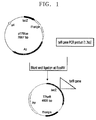
- the purified DNA was ligated to EcoRV site of cloning vector pT7Blue (Novagen Inc., USA) overnight at the temperature of 16°C to construct the recombinant plasmid pT7Blue/tyrR (see FIG. 1).
- the resulting plasmid construct was transformed into Escherichia coli NM522.
- the transformed strain was plated on solid media containing 50 mg/L of carbenicillin and was cultured overnight at a temperature of 37°C.
- the colonies formed were picked up with a platinum loop and inoculated into 3 ml of liquid LB media containing carbenicillin. After overnight culturing, plasmid DNAs were extracted from the culture using QIAGEN Mini Prep Kit. The plasmid DNA extract was digested with the restriction enzyme Xmn I and confirmed the cloning of tyrR gene. The confirmed plasmid pT7Blue/tyrR was cleaved with the restriction enzyme Xmn I and DNA was purified from a band of about 4.6 kb in 0.8% agarose gel.
- the purified DNA was blunt-end ligated with about 1.2 kb fragment of the gene for chloramphenicol resistance including loxp region, which was obtained by digesting plasmid ploxpCAT2 (U. Guldenre et al, Nucleic Acid Research 24 (13), 1996, pp 2519-2524) with Hinc II restriction enzyme, to construct about 5.8 kb recombinant plasmid pT7 ⁇ tyrR::loxpCAT (see FIG. 2).
- Escherichia coli NM522 was transformed with the recombinant plasmid pT7 ⁇ tyrR::loxpCAT. The resulting transformant was streaked out onto a solid LB medium plate containing 50 mg/L of carbenicillin and 50 mg/L of chloramphenicol and cultured overnight at 32°C. The colonies formed were picked up with a platinum loop and inoculated into 3 ml of liquid LB media containing carbenicillin and chloramphenicol. After overnight culturing, plasmid DNAs were extracted using QIAGEN Mini Prep Kit.
- the DNA fragment (about 2.9 kb) including ORF of tyrR gene and IoxpCAT site was amplified by PCR using the extracted plasmid DNA as a template.
- the primers used were a pair of oligonucleotides (SEQ ID NO: 1 and SEQ ID NO: 2).
- PCR was performed by 30 cycles, each consisting of denaturation for 30 seconds at 94°C, annealing for 30 seconds at 60°C and extension for 60 seconds at 72°C in order.
- the resulting DNA fragment ⁇ tyrR::loxpCAT was transformed into L-threonine-producing Escherichia coli strain Accession No. KCCM 10236 by electroporation and the resulting transformant was streaked out onto a solid LB medium containing chloramphenicol to select colonies having a knock-out tyrR gene. The selected colonies were tested for their production of L-threonine in flask cultures.
- Threonine titer medium Ingredients Concentration (per liter) Glucose 70 g Ammonium sulfate 28 g KH 2 PO 4 1.0 g MgSO 4 ⁇ 7H 2 O 0.5 g FeSO 4 ⁇ 7H 2 O 5 mg MnSO 4 ⁇ 8H 2 O 5 mg Calcium carbonate 30 g L-methionine 0.15 g Yeast extract 2 g pH 7.0
- Each colony was cultured overnight on LB solid medium in a incubator at 32°C. Then, one platinum loop of the culture was inoculated into 25 ml of the titer medium and cultured at 32°C and 250 rpm for 48 hours.
- the ability to biosynthesizing L-threonine of microorganisms is improved by knock-out of tyrR gene. This is probably because expression of the tyrB gene is increased by the knock-out of the tyrR gene, thereby increasing the supply rate of aspartate (APP) which is an intermediate for L-threonine biosynthesis.
- APP aspartate
- the microorganism having an inactivated tyrR gene of the present invention can produce L-threonine by fermentation in high yield.
Landscapes
- Chemical & Material Sciences (AREA)
- Organic Chemistry (AREA)
- Engineering & Computer Science (AREA)
- Life Sciences & Earth Sciences (AREA)
- Zoology (AREA)
- Wood Science & Technology (AREA)
- Health & Medical Sciences (AREA)
- Genetics & Genomics (AREA)
- Bioinformatics & Cheminformatics (AREA)
- Biotechnology (AREA)
- General Health & Medical Sciences (AREA)
- Biochemistry (AREA)
- General Engineering & Computer Science (AREA)
- Microbiology (AREA)
- Chemical Kinetics & Catalysis (AREA)
- General Chemical & Material Sciences (AREA)
- Medicinal Chemistry (AREA)
- Tropical Medicine & Parasitology (AREA)
- Virology (AREA)
- Biomedical Technology (AREA)
- Preparation Of Compounds By Using Micro-Organisms (AREA)
- Micro-Organisms Or Cultivation Processes Thereof (AREA)
Abstract
Description
- This application claims the benefit of Korean Patent Application No. 10-2004-0007528, filed on February 5, 2004, in the Korean Intellectual Property Office, the disclosure of which is incorporated herein in its entirety by reference.
- The present invention relates to a microorganism having an inactivated tyrR gene, a method of producing the same and a method of producing L-threonine using the microorganism.
- L-threonine is an essential amino acid and is widely used as a feed and food additive, and also as a pharmaceutical and raw material for synthesizing some drugs. It has been produced by fermentation with artificial mutants of the genus Escherichia, Coryneform bacteria, Seratia and Providencia. For example, Japanese Patent Publication No. 10037/81 discloses a method of producing L-threonine using a strain belonging to the genus Escherichia which has a requirement for diaminopimelic acid and methionine, and has the resistance to the feedback inhibition by threonine of the biosynthetic system of threonine. Japanese Patent Application Laid-open No. 224684/83 discloses a method of producing L-threonine using a strain belonging to the genus Brevibacterium which is resistant to S-(2-aminoethyl)-L-cysteine and α -amino-β -hydroxy valeric acid and has a nutritional requirement for L-isoleucine and L-lysine. Korean Patent Application Laid-open No. 8022/87 discloses a method of producing L-threonine using a diaminopimelic acid and methionine-requiring, α -amino-β -hydroxy valeric acid-resistant strain belonging to the genus Escherichia which has an additional resistance to at least one substance selected from the group consisting of rifampicin, lysine, methionine, aspartic acid, and homoserine, or has a reduced ability to decompose L-threonine. Japanese Patent Application Laid-open No. 219582/90 discloses a method for producing L-threonine using a strain belonging to the genus Providencia which is resistant to α -amino-β -hydroxy valeric acid, L-ethionine, thiaisoleucine, oxythiamine, and sulfaguanidine, and has a requirement for L-leucine and also a leaky requirement for L-isoleucine.
- However, the above known methods have the disadvantages that they fail to afford a high production of L-threonine or require costly requirements such as diaminopimelic acid and isoleucine. In other words, the use of diaminopimelic acid-requiring strains in the production of L-threonine includes an additional fermentation of diaminopimelic acid and thus may increase cost. Where a strain having a requirement for isoleucine is used for the production of L-threonine, costly isoleucine must be added to fermentation media, which increases cost.
- In an attempt to overcome these disadvantages, the present inventors developed an L-threonine-producing strain of Escherichia coli which is resistant to L-methionine, L-threonine and L-lysine analogues and α -aminobutyric acid, and has a nutritional requirement for methionine and a leaky requirement for isoleucine. They successfully produced L-threonine by fermentation with the strain at higher yields than with prior strains. The strain and a method for producing L-threonine using said strain are disclosed in Korean Patent Publication No. 92-8365.
- Oxidative decomposition of tyrosine has two routes, i.e. decomposition to fumarate and acetoacetate and decomposition after conversion into 3,4-hydroxyphenylacetate by tyrosinase. In the former case, L-tyrosine reacts with α -ketoglutarate to produce L-glutamate and 4-hydroxyphenylpyruvate (Neidhardt FC et al., (eds) Escherichia coli and Salmonella: cellular and molecular biology, 2nd edn. ASM Press. Washington DC, 1996, pp. 2649-2660). The biosynthesis of tyrosine and phenylalanine includes transamination. An important enzyme in the transamination is encoded by tyrB, aspC and ilvE genes (Ji Yang and James Pittard, Journal of Bateriology, 1987, 167, pp. 4710-4715). That is, the tyrB gene encodes a subunit of aromatic amino acid transaminase. A TyrB protein encoded by the tyrB gene is involved in the transamination by the aromatic amino acid transaminase in the third and final steps of tyrosine biosynthesis as the subunit (Neidhardt FC et al., (eds) Escherichia coli and Salmonella: cellular and molecular biology, 2nd edn. ASM Press. Washington DC, 1996, pp. 2649-2660). The tyr B gene also has a function similar to aspC gene to be involved in the synthesis of aspartate (ASP) from oxaloacetate (OAA) as well as the biosynthesis of tyrosine and phenylalanine. ASP is an intermediate for L-threonine biosynthesis (Neidhardt FC et al., (eds) Escherichia coli and Salmonella: cellular and molecular biology, 2nd edn. ASM Press. Washington DC, 1996, pp. 358-403).
- The tyrB gene belongs to tyrR regulon and undergoes repression of expression during trasncription by a product encoded by tyrR gene (Ji Yang and James Pittard, Journal of Bateriology, 1987, 167, pp. 4710-4715).
- The present inventors have intensively studied to select strains having an improved ability to produce L-threonine on the basis of conventional technologies and now discovered that L-threonine biosynthesis can be facilitated by inactivation of the tyrR gene.
- The present invention provides a microorganism having an improved ability to biosynthesize L-threonine.
- The present invention also provides a method of producing the microorganism.
- The present invention also provides a method of efficiently producing L-threonine using the microorganism.
- According to an aspect of the present invention, there is provided a microorganism capable of producing L-threonine and having an inactivated tyrR gene.
- According to another aspect of the present invention, there is provided a method of producing a L-threonine-producing microorganisim, the method including: preparing an inactivated tyrR gene or a DNA fragment thereof; introducing the inactivated tyrR gene or the DNA fragment thereof into a microorganism capable of producing L-threonine to cause recombination with a tyrR gene present on a chromosome of the microorganism; and selecting microorganisms having an inactivated tyrR gene.
- According to another aspect of the present invention, there is provided a method of producing L-threonine, the method including: culturing the microorganism as describe above; and isolating L-threonine from the culture.
- The above and other features and advantages of the present invention will become more apparent by describing in detail exemplary embodiments thereof with reference to the attached drawings in which:
- FIG. 1 depicts a construction of recombinant plasmid pTblue/tyrR including a tyrR gene; and
- FIG. 2 depicts a construction of DNA fragment Δ tyrR::loxpCAT from recombinant plasmid pT7bluetyrR::loxpCAT.
-
- The present invention provides a microorganism capable of producing L-threonine and having an inactivated tyrR gene.
- In the present invention, the microorganism can produce L-threonine and includes prokaryotic and eukaryotic microorganisms having an inactivated tyrR gene. For example, strains belonging to the genus Escherichia, Erwinia, Serratia, Providencia, Corynebacterium and Brevibacterium can be included. Preferably, the microorganism belongs to the Enterobacteriaceae family and, more preferably, to the genus Escherichia. Most preferably, the microorganism is Echerichia coli FTR7624 (KCCM-10538).
- Also, the microorganism may include L-threonine-producing mutants as well as natural microorganisms. Examples of the mutants include microorganisms belonging to L-threonine-producing Escherichia coli which are resistant to L-methionine, L-threonine and L-lysine analogues and α -aminobutyric acid, and have a nutritional requirement for methionine and a leaky requirement for isoleucine; and mutated microorganisms in which at least one copy of phosphoenol pyruvate carboxylase (ppc) gene and thrA, thrB, and thrC genes contained in a threonine operon is inserted in a chromosomal DNA, in addition to intrinsic ppc gene and genes in the threonine operon. The L-methionine analogue may be at least one compound selected from the group consisting of D,L-ethionine, Norleucine, α -methylmethionine and L-methionine-D,L-sulfoxymine. The L-threonine analogue may be at least one compound selected from the group consisting of α -amino-β -hydroxy valeric acid and D,L-threonine hydroxamate. The L-lysine analogue may be at least one compound selected from the group consisting of S-(2-aminoethyl)-L-cysteine and δ -methyl-L-lysine.
- In the present invention, the tyrR gene encodes a protein repressing the transcription by tyrB encoding TyrB (aromatic amino acid transminase) which acts in the third and final steps of the biosynthesis pathway of tyrosine. For the Escherichia coli, the tyrR gene is known and can be obtained from genome sequence published by Blattner, et al. (Science 277: 1453-1462 (1997)) (Accession no: AAC74405). The genome sequence can also be obtained from National Center for Biotechnology Information (NCBI) in USA and DNA Data Bank of Japan (DDBJ). The tyrR gene also includes an allele generated by attenuation of genetic code or mutation. The "inactivation" as used herein refers to no-expression of an active tyrR protein. Thus, the inactivation of the tyrR gene leads to an increase in expression of the tyrB gene.
- The microorganism of the present invention can be produced by inactivating a tyrR gene present on a chromosome of a microorganism capable of producing L-threonine. The inactivation method may include causing mutation using light, such as UV-ray, or chemicals and isolating strains having an inactivated tyrR gene from the mutants. The inactivation method also includes a DNA recombination technology. The DNA recombination may be achieved, for example, by injecting a nucleotide sequence or vector including a nucleotide sequence with homology to the tyrR gene into the microorganism to cause homologous recombination. The nucleotide sequence and vector injected may include a dominant selectable marker.
- The present invention also provides a method of producing a L-threonine-producing microorganisim, including: preparing an inactivated tyrR gene or DNA fragment thereof; introducing the inactivated tyrR gene or the DNA fragment thereof into a microorganism capable of producing L-threonine to cause recombination with a tyrR gene present on a chromosome of the microorganism; and selecting the microorganism having an inactivated tyrR gene.
- The "inactivated tyrR gene or DNA fragment thereof" as used herein refers to a polynucleotide sequence having a sequence homology to the tyrR gene in a host but being unable to express an active tyrR protein due to loss, substitution, truncation and inversion. The introduction of the inactivated tyrR gene or DNA fragment thereof into a host cell can be achieved, for example, by transformation, conjugation, transduction or electroporation, but is not limited thereto.
- When the inactivated tyrR gene or DNA fragment thereof is introduced into the host cell by transformation, the inactivation procedure can be carried out by mixing the polynucleotide sequence with a culture of the strain. While the strain is naturally competent for DNA uptake to be transformed, it is preferred that the strain can be previously rendered competent for DNA uptake by any suitable method (See e.g. LeBlanc et al., Plasmid 28, 130-145, 1992; Pozzi et al., J. Bacteriol. 178, 6087-6090, 1996). The inactivated tyrR gene or DNA fragment thereof has a foreign DNA piece introduced in a genome DNA fragment and replaces the wild-type chromosomal copy of the sequence with an inactivated state. In an embodiment of the present invention, the inactivated polynucleotide sequence includes "tails" comprising a part of the target site DNA at the 5' and 3' ends thereof. The tails should be at least 50 base pairs and preferably greater than 200 to 500 base pairs for efficient recombination and/or gene conversion. For convenience, the inactivated polynucleotide sequence can include a selectable marker, for example, an antibiotic resistance gene. Where the target DNA is disrupted with an antibiotic resistance gene, selection of transformants is carried out on agar plates containing suitable levels of an appropriate antibiotic. Following transformation, the inactivated polynucleotide sequence introduced into the host cell undergoes homologous recombination with the genomic DNA tails, resulting in inactivation of the wild-type genomic sequence. Inactivation recombination events are easily confirmed by, for example, Southern blotting, or more conveniently by polymerase chain reaction (PCR).
- In an embodiment of the present invention, a method of producing the L-threonine-producing microorganism of the present invention comprises the following procedures.
- First, genomic DNA is isolated from a strain that is capable of producing L-threonine and PCR is performed using it as a template by a conventional technology to amplify the tyrR gene.
- Next, the obtained tyrR gene is cloned into a suitable plasmid or other vector. The recombinant vector is introduced by transduction into a host cell such as E. coli. After the transformant is grown and cells are isolated, the recombinant vector having tyrR genes is extracted. An antibiotic resistant gene fragment is then inserted into the tyrR gene of the extracted recombinant vector to form a recombinant vector having an inactivated tyrR gene. This recombinant vector is introduced by transformation into a host cell and the host cell is cultivated in a suitable culture medium. Then, the propagated recombinant vector is isolated from the resultant transformant, and the polynucleotide sequence having an inactivated tyrR gene is obtained by suitable restriction enzyme digestion(s). Thereafter, this polynucleotide sequence is introduced into a host that is capable of producing L-threonine by a conventional technique such as electroporation. Microorganisms having an antibiotic resistance are selected to isolate microorganisms having an inactivated tyrR gene.
- Skilled artisans will recognize that the inactivated polynucleotide sequence of this invention can be generated by general cloning methods. For example, PCR amplification methods using oligonucleotide primers targeted to the tyrR gene can be used. Methods for PCR amplification are widely known in the art (see e.g. PCR Protocols: A Guide to Method and Application, Ed. M. Innis et al., Academic Press (1990)). The PCR comprises genomic DNA, suitable enzymes, primers, and buffers, and is conveniently carried out in a DNA Thermal Cycler (Perkin Elmer Cetus, Norwalk, Conn. USA). A positive PCR result is determined by, for example, detecting an appropriately-sized DNA fragment following agarose gel electrophoresis.
- In an embodiment of the present invention, recombinant plasmids pT7blue/tyrR and pT7bluetyrR::loxpCAT were prepared and an inactivated polynucleotide sequence Δ tyrR::loxpCAT was obtained therefrom. Then, an Escherichia coli strain that is resistant to L-methionine, L-threonine and L-lysine analogues and α -aminobutyric acid and has a nutritional requirement for methionine and a leaky requirement for isoleucine, namely Escherichia coli Accession No. KCCM 10236, was transformed with the inactivated polynucleotide sequence Δ tyrR::loxpCAT by electroporation. As a result, the wild-type tyrR gene is inactivated to three types of novel strains capable of producing a higher concentration of L-threonine than the prototype strain. The novel strains were designated as Escherichia coli FTR7624 and were deposited under the Budapest Treaty to the Korean Culture Center of Microorganisms on Dec. 4, 2003 and assigned Accession No. KCCM-10538.
- Escherichia coli FTR7624 was derived from Escherichia coli Accession No. KCCM 10236 which was derived from Escherichia coli TF4076. The Escherichia coli TF4076 (KFCC10718) requires methionine and has resistance to threonine analogues (for example, α -amino-β -hydroxy valeric acid, AHV), lysine analogues (for example, S-(2-aminoethyl-L-cysteine, AEC), isoleucine analogues (for example, α -aminobutyric acid), methionine analogues (for example, ethionine) and the like. Escherichia coli Accession No. KCCM TF4076 is described in Korean Patent Publication No. 92-8365 to which the skilled artisan may refer. Phosphoenol pyruvate (PEP) is a precursor of oxaloacetate which is an intermediate of L-threonine biosynthesis pathway. The ppc gene and threonine operon originated from the chromosomes of Escherichia coli Accession No. KCCM TF4076 were amplified by the PCR and were additionally integrated into the chromosomes of Escherichia coli Accession No. KCCM TF4076 to generate Escherichia coli Accession No. KCCM 10236. Thus, Escherichia coli Accession No. KCCM 10236 possesses two ppc genes and two threonine operons. Escherichia coli Accession No. KCCM 10236 is, therefore, capable of expressing higher levels of the ppc genes catalyzing the formation oxaloacetate from PEP and the enzymes necessary for threonine biosynthesis from aspartate (thrA: aspartokinaze I-homoserine dehydrogenase, thrB: homoserine kinase, thrC: threonine synthase), thereby enabling an increase in L-threonine production.
- The present invention also provides a method of producing L-threonine, including: culturing the microorganism capable of producing L-threonine and having an inactivated tyrR gene; and isolating L-threonine from the culture.
- In the production method of L-threonine, the culturing may be carried out in a suitable culture medium under suitable culturing conditions known in the art and may be readily adjusted according to the type of strain selected by those skilled in the art. The culturing may be carried out by batch operation, continuous operation, or fed-batch operation (see e.g. "Biochemical Engineering" by James M. Lee, Prentice-Hall International Editions, pp. 138-176).
- The culture medium should properly meet the requirements according to the strain selected. A variety of culture media are disclosed in literatures (see e.g. "Manual of Methods for General Bacteriology" by the American Society for Bacteriology, Washington D.C., USA, 1981). The culture medium contains carbon sources, nitrogen sources and trace amounts of ingredients. Examples of the carbon sources include carbohydrates such as glucose, sucrose, lactose, fructose, moltose, starch, cellulose; fats such as soybean oil, sunflower oil, castor oil, coconut oil; fatty acids such as palmitic acid, stearic acid, linoleic acid; alcohols such as glycerol and ethanol; and organic acids such as acetic acid. These carbon sources may be used alone or in combination. Examples of the nitrogen sources include organic substances such as peptone, yeast extract, meat extract, malt extract, corn steep liquor (CSL) and soybean; and inorganic substances such as urea, ammonium sulfate, ammonium chloride, ammonium phosphate, ammonium carbonate and ammonium nitrate. These nitrogen sources can be used alone or in combination. In the culture medium, phosphate sources such as potassium dihydrogenphosphate, dipotassium hydrogenphosphate, and corresponding sodium-containing salts can be included. Also, the culture medium can include metal salts such as magnesium sulfate or ferrous sulfate. In addition, amino acids, vitamins, and appropriate precursors can be included. The culture medium or precursor can be added to the culture in a batch or continuous way.
- Ammonium hydroxide, potassium hydroxide, ammonia, phosphate or sulfuric acid, etc. is appropriately added to the culture during culturing to adjust pH of the culture. Also, an antifoaming agent such as fatty acid polyglycol ester is added to the culture to prevent the formation of foam. Culturing is carried out under aerobic conditions by injecting oxygen or oxygen-containing gas (e.g. air) to the culture. The culturing temperature is in the range of 20 to 45°C, preferably 25 to 40°C. The culturing can be continued until the desired amount of L-threonine is obtained, preferably for 10 to 160 hours.
- L-threonine can be isolated from the culture by ordinary methods known in the art. The isolation methods include centrifuging, filtration, ion exchange chromatography and crystallization, etc. For example, the supernatant obtained by centrifuging the culture at a low speed to remove biomass can be isolated through ion exchange chromatography.
- Hereinafter, the present invention will be described more specifically by examples. However, the following examples are provided only for illustrations and thus the present invention is not limited to or by them.
- In the present Example, a tyrR gene in a chromosome of Escherichia coli was knocked-out by homologous recombination. For this, a vector including a portion of the tyrR gene was prepared, and then was transformed into Escherichia coli host cell, followed by selecting strains having a knock-out tyrR gene.
- Genomic DNA was extracted from L-threonine-producing Escherichia coli strain Accession No. KCCM 10236 by using the QIAGEN Genomic-tip System. The DNA fragment (about 1.7 kb) including ORF (open reading frame) of tyrR gene was amplified by PCR using the extracted genomic DNA as a template. The primers used were a pair of oligonucleotides (SEQ ID NO: 1 and SEQ ID NO: 2). PCR was performed by 30 cycles, each consisting of denaturation for 30 seconds at 94°C, annealing for 30 seconds at 60°C and extension for 90 seconds at 72°C in order.
- The PCR product was loaded onto 1.0% agarose gel and subjected to electrophoresis. DNA was purified from the 1.7 kb tyrR gene band. The purified DNA was ligated to EcoRV site of cloning vector pT7Blue (Novagen Inc., USA) overnight at the temperature of 16°C to construct the recombinant plasmid pT7Blue/tyrR (see FIG. 1). The resulting plasmid construct was transformed into Escherichia coli NM522. The transformed strain was plated on solid media containing 50 mg/L of carbenicillin and was cultured overnight at a temperature of 37°C.
- The colonies formed were picked up with a platinum loop and inoculated into 3 ml of liquid LB media containing carbenicillin. After overnight culturing, plasmid DNAs were extracted from the culture using QIAGEN Mini Prep Kit. The plasmid DNA extract was digested with the restriction enzyme Xmn I and confirmed the cloning of tyrR gene. The confirmed plasmid pT7Blue/tyrR was cleaved with the restriction enzyme Xmn I and DNA was purified from a band of about 4.6 kb in 0.8% agarose gel. The purified DNA was blunt-end ligated with about 1.2 kb fragment of the gene for chloramphenicol resistance including loxp region, which was obtained by digesting plasmid ploxpCAT2 (U. Guldenre et al, Nucleic Acid Research 24 (13), 1996, pp 2519-2524) with Hinc II restriction enzyme, to construct about 5.8 kb recombinant plasmid pT7ΔtyrR::loxpCAT (see FIG. 2).
- Escherichia coli NM522 was transformed with the recombinant plasmid pT7Δ tyrR::loxpCAT. The resulting transformant was streaked out onto a solid LB medium plate containing 50 mg/L of carbenicillin and 50 mg/L of chloramphenicol and cultured overnight at 32°C. The colonies formed were picked up with a platinum loop and inoculated into 3 ml of liquid LB media containing carbenicillin and chloramphenicol. After overnight culturing, plasmid DNAs were extracted using QIAGEN Mini Prep Kit. The DNA fragment (about 2.9 kb) including ORF of tyrR gene and IoxpCAT site was amplified by PCR using the extracted plasmid DNA as a template. The primers used were a pair of oligonucleotides (SEQ ID NO: 1 and SEQ ID NO: 2). PCR was performed by 30 cycles, each consisting of denaturation for 30 seconds at 94°C, annealing for 30 seconds at 60°C and extension for 60 seconds at 72°C in order.
- The resulting DNA fragment Δ tyrR::loxpCAT was transformed into L-threonine-producing Escherichia coli strain Accession No. KCCM 10236 by electroporation and the resulting transformant was streaked out onto a solid LB medium containing chloramphenicol to select colonies having a knock-out tyrR gene. The selected colonies were tested for their production of L-threonine in flask cultures.
- Thirty colonies selected in Example 1 were cultured in an Erlenmeyer flask containing the threonine titer medium given in Table 1 below, and L-threonine production was compared.
Threonine titer medium Ingredients Concentration (per liter) Glucose 70 g Ammonium sulfate 28 g KH2PO4 1.0 g MgSO4·7H2O 0.5 g FeSO4·7H2O 5 mg MnSO4·8H2O 5 mg Calcium carbonate 30 g L-methionine 0.15 g Yeast extract 2 g pH 7.0 - Each colony was cultured overnight on LB solid medium in a incubator at 32°C. Then, one platinum loop of the culture was inoculated into 25 ml of the titer medium and cultured at 32°C and 250 rpm for 48 hours.
- L-threonine from the culture was analyzed by high performance liquid chromatography (HPLC). The analysis results are given in Table 2 below. It can be seen from the results that the prototype strain Accession No. KCCM 10236 produces 23 g/L L-threonine and Escherichia coli FTR7624 of the present invention in which tyrR gene has been knocked out produces 26 g/L L-threonine. Therefore, it was observed that the present transformed microorganisms increase the output of L-threonine up to about 8% in comparison to the prototype strain. The selected Escherichia coli FTR7624 was deposited to the Korean Culture Center of Microorganisms on Dec. 4, 2003 and assigned Accession No. KCCM-10538.
Flask titration test results of strains Strain KCCM 10236 FTR7624 L-threonine (g/L) 23 26 - As demonstrated by Examples, the ability to biosynthesizing L-threonine of microorganisms is improved by knock-out of tyrR gene. This is probably because expression of the tyrB gene is increased by the knock-out of the tyrR gene, thereby increasing the supply rate of aspartate (APP) which is an intermediate for L-threonine biosynthesis. However, the improvement in productivity of the microorganism is not based on only this mechanism.
- As described above, the microorganism having an inactivated tyrR gene of the present invention can produce L-threonine by fermentation in high yield.
- Also, according to the method of producing L-threonine of the present invention, high yield of L-threonine can be produced.
- While the present invention has been particularly shown and described with reference to exemplary embodiments thereof, it will be understood by those of ordinary skill in the art that various changes in form and details may be made therein without departing from the spirit and scope of the present invention as defined by the following claims.


Claims (12)
- A microorganism capable of producing L-threonine and having an inactivated tyrR gene.
- The microorganism of claim 1, which belongs to the Enterobacteriaceae family.
- The microorganism of claim 2, which is Escherichia coli.
- The microorganism of claim 3, wherein the Escherichia coli is resistant to L-methionine, L-threonine and L-lysine analogues and α -aminobutyric acid, and has a nutritional requirement for methionine and a leaky requirement for isoleucine.
- The microorganism of claim 4, wherein the L-methionine analogue is D,L-ethionine, Norleucine, α -methylmethionine or L-methionine-D,L-sulfoxymine.
- The microorganism of claim 4, wherein the L-threonine analogue is α -amino-β -hydroxy valeric acid or D,L-threonine hydroxamate.
- The microorganism of claim 4, wherein the L-lysine analogue is S-(2-aminoethyl)-L-cysteine or δ -methyl-L-lysine.
- The microorganism of claim 1, wherein at least one copy of phosphoenol pyruvate carboxylase (ppc) gene and thrA, thrB, and thrC genes are inserted into a chromosomal DNA, in addition to intrinsic ppc gene and thrA, thrB and thrC genes.
- The microorganism of claim 1, which is Echerichia coli FTR7624 (KCCM-10538).
- A method of producing a L-threonine-producing microorganisim, the method comprising:preparing an inactivated tyrR gene or a DNA fragment thereof;introducing the inactivated tyrR gene or the DNA fragment thereof into a microorganism capable of producing L-threonine to cause recombination with a tyrR gene present on a chromosome of the microorganism; andselecting microorganisms having an inactivated tyrR gene.
- The method of claim 10, wherein the inactivated tyrR gene or the DNA fragment thereof is prepared by inserting a cassette containing an antibiotic marker (IoxpCAT) into a tyrR gene.
- A method for producing L-threonine comprising:culturing the microorganism according to any one of claims 1 to 9; andisolating L-threonine from the culture.
Applications Claiming Priority (2)
| Application Number | Priority Date | Filing Date | Title |
|---|---|---|---|
| KR1020040007528A KR100608085B1 (en) | 2004-02-05 | 2004-02-05 | L-threonine-producing microorganisms in which tyrR gene is inactivated, a method for producing the same, and a method for producing L-threonine using the microorganism |
| KR2004007528 | 2004-02-05 |
Publications (3)
| Publication Number | Publication Date |
|---|---|
| EP1591520A2 true EP1591520A2 (en) | 2005-11-02 |
| EP1591520A3 EP1591520A3 (en) | 2005-11-09 |
| EP1591520B1 EP1591520B1 (en) | 2017-11-29 |
Family
ID=34825073
Family Applications (1)
| Application Number | Title | Priority Date | Filing Date |
|---|---|---|---|
| EP05356023.1A Expired - Lifetime EP1591520B1 (en) | 2004-02-05 | 2005-02-04 | Microorganism producing L-threonine having inactivated tyR gene, method of producing the same and method of producing L-threonine using the microorganism |
Country Status (9)
| Country | Link |
|---|---|
| US (1) | US7256018B2 (en) |
| EP (1) | EP1591520B1 (en) |
| KR (1) | KR100608085B1 (en) |
| CN (1) | CN1296473C (en) |
| BR (1) | BRPI0507353B1 (en) |
| DK (1) | DK1591520T3 (en) |
| ES (1) | ES2659513T3 (en) |
| PT (1) | PT1591520T (en) |
| WO (1) | WO2005075626A1 (en) |
Families Citing this family (4)
| Publication number | Priority date | Publication date | Assignee | Title |
|---|---|---|---|---|
| KR101327093B1 (en) * | 2012-01-06 | 2013-11-07 | 씨제이제일제당 (주) | Microorganisms capable of producing L-amino acids and methods of producing L-amino acids using the same |
| KR101646310B1 (en) | 2013-06-24 | 2016-08-12 | 씨제이제일제당 (주) | Microorganisms for production of l-threonine and process for producing l-threonine using the same |
| WO2016036209A1 (en) | 2014-09-05 | 2016-03-10 | 씨제이제일제당 주식회사 | Microorganism with improved l-threonine productivity, and method for producing l-threonine by using same |
| PL3144385T3 (en) | 2014-09-05 | 2020-12-14 | Cj Cheiljedang Corporation | Microorganism with improved l-threonine productivity, and method for producing l-threonine by using same |
Citations (2)
| Publication number | Priority date | Publication date | Assignee | Title |
|---|---|---|---|---|
| WO2002064808A1 (en) | 2001-02-13 | 2002-08-22 | Cheil Jedang Corporation | Method for l-threonine production |
| EP1479775A1 (en) | 2002-02-27 | 2004-11-24 | Ajinomoto Co., Inc. | Process for producing l-threonine with the use of bacterium beloniging to the genus escherichia |
Family Cites Families (10)
| Publication number | Priority date | Publication date | Assignee | Title |
|---|---|---|---|---|
| JPS57170184A (en) * | 1980-07-18 | 1982-10-20 | Unisearch Ltd | Mutant of e. coli and production of phenylalanine |
| CN1005155B (en) * | 1985-09-25 | 1989-09-13 | 无锡轻工业学院 | Fermentative production method of L-threonine |
| JP2600750B2 (en) * | 1988-01-21 | 1997-04-16 | 味の素株式会社 | Method for producing L-threonine by fermentation |
| JPH0632626B2 (en) * | 1989-02-20 | 1994-05-02 | 東レ株式会社 | Fermentation method for producing L-threonine |
| KR920008365B1 (en) * | 1990-12-31 | 1992-09-26 | 제일제당 주식회사 | Method for producing l-threonine |
| JP3225597B2 (en) * | 1992-06-15 | 2001-11-05 | 味の素株式会社 | Method for producing L-phenylalanine by fermentation |
| RU2113484C1 (en) * | 1992-11-10 | 1998-06-20 | Адзиномото Ко., Инк. | Dna fragment encoding aspartokinase-iii, a method of l-threonine preparing |
| CN100529057C (en) * | 2001-02-13 | 2009-08-19 | 味之素株式会社 | Method for producing L-amino acid by Escherichia bacterium |
| KR100451299B1 (en) * | 2002-03-21 | 2004-10-06 | 씨제이 주식회사 | Process for producing L-threonine |
| CN1403672A (en) * | 2002-03-23 | 2003-03-19 | 胡文明 | Assembled wall and floor board |
-
2004
- 2004-02-05 KR KR1020040007528A patent/KR100608085B1/en not_active Expired - Lifetime
-
2005
- 2005-02-04 US US11/049,844 patent/US7256018B2/en not_active Expired - Lifetime
- 2005-02-04 WO PCT/KR2005/000347 patent/WO2005075626A1/en not_active Ceased
- 2005-02-04 ES ES05356023.1T patent/ES2659513T3/en not_active Expired - Lifetime
- 2005-02-04 BR BRPI0507353A patent/BRPI0507353B1/en not_active IP Right Cessation
- 2005-02-04 PT PT53560231T patent/PT1591520T/en unknown
- 2005-02-04 EP EP05356023.1A patent/EP1591520B1/en not_active Expired - Lifetime
- 2005-02-04 DK DK05356023.1T patent/DK1591520T3/en active
- 2005-02-05 CN CNB2005100079283A patent/CN1296473C/en not_active Expired - Lifetime
Patent Citations (2)
| Publication number | Priority date | Publication date | Assignee | Title |
|---|---|---|---|---|
| WO2002064808A1 (en) | 2001-02-13 | 2002-08-22 | Cheil Jedang Corporation | Method for l-threonine production |
| EP1479775A1 (en) | 2002-02-27 | 2004-11-24 | Ajinomoto Co., Inc. | Process for producing l-threonine with the use of bacterium beloniging to the genus escherichia |
Non-Patent Citations (4)
| Title |
|---|
| FORTHERINGHAM I.G. ET AL: "The cloning and sequence analysis of the aspC and tyrB genes of Escherichia coli K12", BIOCHEMICAL JOURNAL, vol. 3, no. 234, 1 January 1986 (1986-01-01), pages 593 - 604, XP002078391 |
| PITTARD A.J.: "Biosynthesis of the Aromatic Amino Acids.", ESCHERICHIA COLI AND SALMONELLA, vol. 1, 2005, pages 458 - 484, XP003030648 |
| REITZER L.J.: "Ammonia Assimilation and the Biosynthesis of Glutamine, Glutamate, Aspartate, Asparagine, L-Alanine, and D-Alanine.", ESCHERICHIA COLI AND SALMONELLA, vol. 1, 2005, pages 391-392 - 401-402, XP003030647 |
| YANG J. ET AL: "Molecular analysis of tyrosine- and phenylalanine-mediated repression of the tyrB promoter by the TyrR protein of Escherichia coli", MOLECULAR MICROBIOLOGY, vol. 45, no. 5, 2002, pages 1407 - 1419, XP003030644 |
Also Published As
| Publication number | Publication date |
|---|---|
| CN1296473C (en) | 2007-01-24 |
| KR20050079343A (en) | 2005-08-10 |
| EP1591520A3 (en) | 2005-11-09 |
| WO2005075626A1 (en) | 2005-08-18 |
| EP1591520B1 (en) | 2017-11-29 |
| ES2659513T3 (en) | 2018-03-16 |
| CN1654624A (en) | 2005-08-17 |
| US7256018B2 (en) | 2007-08-14 |
| US20050176113A1 (en) | 2005-08-11 |
| DK1591520T3 (en) | 2018-01-08 |
| BRPI0507353B1 (en) | 2015-10-20 |
| KR100608085B1 (en) | 2006-08-02 |
| BRPI0507353A (en) | 2007-07-03 |
| PT1591520T (en) | 2018-02-21 |
Similar Documents
| Publication | Publication Date | Title |
|---|---|---|
| EP1687408B1 (en) | Method for producing l-amino acid by fermentation | |
| KR101117012B1 (en) | Microorganism producing O-acetyl-homoserine and the method of producing O-Acetyl-homoserine using the microorganism | |
| KR100976072B1 (en) | Method for preparing L-threonine using Escherichia bacteria | |
| US8852898B2 (en) | L-threonine overproducing microorganism and method for preparing L-threonine using the same | |
| US7229794B2 (en) | Microorganism producing L-threonine having inactivated galR gene, method of producing the same and method of producing L-threonine using the microorganism | |
| US8455237B2 (en) | Escherichia coli strain with phosphoenolpyruvate carboxylase promoter replaced with cysteine synthase promoter and method of enhanced production of L-threonine using the same | |
| US7618803B2 (en) | Method for producing L-amino acid using bacteria belonging to the genus Escherichia | |
| EP1408123B1 (en) | A microorganism in which the fadR gene is knocked out and a process for producing L-threonine using the microorganism | |
| US7256018B2 (en) | Microorganism producing L-threonine having inactivated tyrR gene, method of producing the same and method of producing L-threonine using the microorganism | |
| KR100596372B1 (en) | L-Threonine-producing microorganisms in which the chromosome gene is inactivated on a chromosome, a method for preparing the same, and a method for producing L-Threonine using the microorganism | |
| KR100608084B1 (en) | Microorganisms for producing L-threonine, in which the iCcR gene is inactivated, a method for producing the same, and a method for producing L-threonine using the same |
Legal Events
| Date | Code | Title | Description |
|---|---|---|---|
| PUAI | Public reference made under article 153(3) epc to a published international application that has entered the european phase |
Free format text: ORIGINAL CODE: 0009012 |
|
| PUAL | Search report despatched |
Free format text: ORIGINAL CODE: 0009013 |
|
| AK | Designated contracting states |
Kind code of ref document: A2 Designated state(s): AT BE BG CH CY CZ DE DK EE ES FI FR GB GR HU IE IS IT LI LT LU MC NL PL PT RO SE SI SK TR |
|
| AX | Request for extension of the european patent |
Extension state: AL BA HR LV MK YU |
|
| AK | Designated contracting states |
Kind code of ref document: A3 Designated state(s): AT BE BG CH CY CZ DE DK EE ES FI FR GB GR HU IE IS IT LI LT LU MC NL PL PT RO SE SI SK TR |
|
| AX | Request for extension of the european patent |
Extension state: AL BA HR LV MK YU |
|
| 17P | Request for examination filed |
Effective date: 20060311 |
|
| AKX | Designation fees paid |
Designated state(s): AT BE BG CH CY CZ DE DK EE ES FI FR GB GR HU IE IS IT LI LT LU MC NL PL PT RO SE SI SK TR |
|
| RAP1 | Party data changed (applicant data changed or rights of an application transferred) |
Owner name: CJ CHEILJEDANG CORPORATION |
|
| 17Q | First examination report despatched |
Effective date: 20100304 |
|
| TPAC | Observations filed by third parties |
Free format text: ORIGINAL CODE: EPIDOSNTIPA |
|
| GRAP | Despatch of communication of intention to grant a patent |
Free format text: ORIGINAL CODE: EPIDOSNIGR1 |
|
| INTG | Intention to grant announced |
Effective date: 20170705 |
|
| GRAS | Grant fee paid |
Free format text: ORIGINAL CODE: EPIDOSNIGR3 |
|
| GRAA | (expected) grant |
Free format text: ORIGINAL CODE: 0009210 |
|
| AK | Designated contracting states |
Kind code of ref document: B1 Designated state(s): AT BE BG CH CY CZ DE DK EE ES FI FR GB GR HU IE IS IT LI LT LU MC NL PL PT RO SE SI SK TR |
|
| REG | Reference to a national code |
Ref country code: GB Ref legal event code: FG4D |
|
| REG | Reference to a national code |
Ref country code: CH Ref legal event code: EP |
|
| REG | Reference to a national code |
Ref country code: AT Ref legal event code: REF Ref document number: 950404 Country of ref document: AT Kind code of ref document: T Effective date: 20171215 |
|
| REG | Reference to a national code |
Ref country code: IE Ref legal event code: FG4D |
|
| REG | Reference to a national code |
Ref country code: DE Ref legal event code: R096 Ref document number: 602005053142 Country of ref document: DE |
|
| REG | Reference to a national code |
Ref country code: DK Ref legal event code: T3 Effective date: 20180105 |
|
| REG | Reference to a national code |
Ref country code: FR Ref legal event code: PLFP Year of fee payment: 14 |
|
| REG | Reference to a national code |
Ref country code: SE Ref legal event code: TRGR |
|
| REG | Reference to a national code |
Ref country code: PT Ref legal event code: SC4A Ref document number: 1591520 Country of ref document: PT Date of ref document: 20180221 Kind code of ref document: T Free format text: AVAILABILITY OF NATIONAL TRANSLATION Effective date: 20180214 |
|
| REG | Reference to a national code |
Ref country code: NL Ref legal event code: FP |
|
| REG | Reference to a national code |
Ref country code: ES Ref legal event code: FG2A Ref document number: 2659513 Country of ref document: ES Kind code of ref document: T3 Effective date: 20180316 |
|
| REG | Reference to a national code |
Ref country code: LT Ref legal event code: MG4D |
|
| REG | Reference to a national code |
Ref country code: AT Ref legal event code: MK05 Ref document number: 950404 Country of ref document: AT Kind code of ref document: T Effective date: 20171129 |
|
| PG25 | Lapsed in a contracting state [announced via postgrant information from national office to epo] |
Ref country code: LT Free format text: LAPSE BECAUSE OF FAILURE TO SUBMIT A TRANSLATION OF THE DESCRIPTION OR TO PAY THE FEE WITHIN THE PRESCRIBED TIME-LIMIT Effective date: 20171129 Ref country code: FI Free format text: LAPSE BECAUSE OF FAILURE TO SUBMIT A TRANSLATION OF THE DESCRIPTION OR TO PAY THE FEE WITHIN THE PRESCRIBED TIME-LIMIT Effective date: 20171129 |
|
| PG25 | Lapsed in a contracting state [announced via postgrant information from national office to epo] |
Ref country code: AT Free format text: LAPSE BECAUSE OF FAILURE TO SUBMIT A TRANSLATION OF THE DESCRIPTION OR TO PAY THE FEE WITHIN THE PRESCRIBED TIME-LIMIT Effective date: 20171129 Ref country code: GR Free format text: LAPSE BECAUSE OF FAILURE TO SUBMIT A TRANSLATION OF THE DESCRIPTION OR TO PAY THE FEE WITHIN THE PRESCRIBED TIME-LIMIT Effective date: 20180301 Ref country code: BG Free format text: LAPSE BECAUSE OF FAILURE TO SUBMIT A TRANSLATION OF THE DESCRIPTION OR TO PAY THE FEE WITHIN THE PRESCRIBED TIME-LIMIT Effective date: 20180228 |
|
| PG25 | Lapsed in a contracting state [announced via postgrant information from national office to epo] |
Ref country code: SK Free format text: LAPSE BECAUSE OF FAILURE TO SUBMIT A TRANSLATION OF THE DESCRIPTION OR TO PAY THE FEE WITHIN THE PRESCRIBED TIME-LIMIT Effective date: 20171129 Ref country code: CY Free format text: LAPSE BECAUSE OF FAILURE TO SUBMIT A TRANSLATION OF THE DESCRIPTION OR TO PAY THE FEE WITHIN THE PRESCRIBED TIME-LIMIT Effective date: 20171129 Ref country code: EE Free format text: LAPSE BECAUSE OF FAILURE TO SUBMIT A TRANSLATION OF THE DESCRIPTION OR TO PAY THE FEE WITHIN THE PRESCRIBED TIME-LIMIT Effective date: 20171129 Ref country code: CZ Free format text: LAPSE BECAUSE OF FAILURE TO SUBMIT A TRANSLATION OF THE DESCRIPTION OR TO PAY THE FEE WITHIN THE PRESCRIBED TIME-LIMIT Effective date: 20171129 |
|
| REG | Reference to a national code |
Ref country code: DE Ref legal event code: R097 Ref document number: 602005053142 Country of ref document: DE |
|
| PG25 | Lapsed in a contracting state [announced via postgrant information from national office to epo] |
Ref country code: RO Free format text: LAPSE BECAUSE OF FAILURE TO SUBMIT A TRANSLATION OF THE DESCRIPTION OR TO PAY THE FEE WITHIN THE PRESCRIBED TIME-LIMIT Effective date: 20171129 Ref country code: IT Free format text: LAPSE BECAUSE OF FAILURE TO SUBMIT A TRANSLATION OF THE DESCRIPTION OR TO PAY THE FEE WITHIN THE PRESCRIBED TIME-LIMIT Effective date: 20171129 Ref country code: PL Free format text: LAPSE BECAUSE OF FAILURE TO SUBMIT A TRANSLATION OF THE DESCRIPTION OR TO PAY THE FEE WITHIN THE PRESCRIBED TIME-LIMIT Effective date: 20171129 |
|
| REG | Reference to a national code |
Ref country code: CH Ref legal event code: PL |
|
| PG25 | Lapsed in a contracting state [announced via postgrant information from national office to epo] |
Ref country code: MC Free format text: LAPSE BECAUSE OF FAILURE TO SUBMIT A TRANSLATION OF THE DESCRIPTION OR TO PAY THE FEE WITHIN THE PRESCRIBED TIME-LIMIT Effective date: 20171129 |
|
| PLBE | No opposition filed within time limit |
Free format text: ORIGINAL CODE: 0009261 |
|
| STAA | Information on the status of an ep patent application or granted ep patent |
Free format text: STATUS: NO OPPOSITION FILED WITHIN TIME LIMIT |
|
| 26N | No opposition filed |
Effective date: 20180830 |
|
| REG | Reference to a national code |
Ref country code: IE Ref legal event code: MM4A |
|
| REG | Reference to a national code |
Ref country code: BE Ref legal event code: MM Effective date: 20180228 |
|
| PG25 | Lapsed in a contracting state [announced via postgrant information from national office to epo] |
Ref country code: LU Free format text: LAPSE BECAUSE OF NON-PAYMENT OF DUE FEES Effective date: 20180204 Ref country code: SI Free format text: LAPSE BECAUSE OF FAILURE TO SUBMIT A TRANSLATION OF THE DESCRIPTION OR TO PAY THE FEE WITHIN THE PRESCRIBED TIME-LIMIT Effective date: 20171129 Ref country code: CH Free format text: LAPSE BECAUSE OF NON-PAYMENT OF DUE FEES Effective date: 20180228 Ref country code: LI Free format text: LAPSE BECAUSE OF NON-PAYMENT OF DUE FEES Effective date: 20180228 |
|
| PG25 | Lapsed in a contracting state [announced via postgrant information from national office to epo] |
Ref country code: IE Free format text: LAPSE BECAUSE OF NON-PAYMENT OF DUE FEES Effective date: 20180204 |
|
| PG25 | Lapsed in a contracting state [announced via postgrant information from national office to epo] |
Ref country code: BE Free format text: LAPSE BECAUSE OF NON-PAYMENT OF DUE FEES Effective date: 20180228 |
|
| PG25 | Lapsed in a contracting state [announced via postgrant information from national office to epo] |
Ref country code: HU Free format text: LAPSE BECAUSE OF FAILURE TO SUBMIT A TRANSLATION OF THE DESCRIPTION OR TO PAY THE FEE WITHIN THE PRESCRIBED TIME-LIMIT; INVALID AB INITIO Effective date: 20050204 |
|
| PG25 | Lapsed in a contracting state [announced via postgrant information from national office to epo] |
Ref country code: IS Free format text: LAPSE BECAUSE OF FAILURE TO SUBMIT A TRANSLATION OF THE DESCRIPTION OR TO PAY THE FEE WITHIN THE PRESCRIBED TIME-LIMIT Effective date: 20180329 |
|
| P01 | Opt-out of the competence of the unified patent court (upc) registered |
Effective date: 20230606 |
|
| PGFP | Annual fee paid to national office [announced via postgrant information from national office to epo] |
Ref country code: NL Payment date: 20231121 Year of fee payment: 20 |
|
| PGFP | Annual fee paid to national office [announced via postgrant information from national office to epo] |
Ref country code: GB Payment date: 20231207 Year of fee payment: 20 |
|
| PGFP | Annual fee paid to national office [announced via postgrant information from national office to epo] |
Ref country code: SE Payment date: 20231121 Year of fee payment: 20 Ref country code: PT Payment date: 20231121 Year of fee payment: 20 Ref country code: FR Payment date: 20231121 Year of fee payment: 20 Ref country code: DK Payment date: 20231211 Year of fee payment: 20 |
|
| PGFP | Annual fee paid to national office [announced via postgrant information from national office to epo] |
Ref country code: ES Payment date: 20240319 Year of fee payment: 20 |
|
| PGFP | Annual fee paid to national office [announced via postgrant information from national office to epo] |
Ref country code: DE Payment date: 20231120 Year of fee payment: 20 |
|
| PGFP | Annual fee paid to national office [announced via postgrant information from national office to epo] |
Ref country code: TR Payment date: 20240111 Year of fee payment: 20 |
|
| REG | Reference to a national code |
Ref country code: DE Ref legal event code: R071 Ref document number: 602005053142 Country of ref document: DE |
|
| REG | Reference to a national code |
Ref country code: NL Ref legal event code: MK Effective date: 20250203 |
|
| REG | Reference to a national code |
Ref country code: DK Ref legal event code: EUP Expiry date: 20250204 |
|
| REG | Reference to a national code |
Ref country code: GB Ref legal event code: PE20 Expiry date: 20250203 Ref country code: ES Ref legal event code: FD2A Effective date: 20250226 |
|
| REG | Reference to a national code |
Ref country code: SE Ref legal event code: EUG |
|
| PG25 | Lapsed in a contracting state [announced via postgrant information from national office to epo] |
Ref country code: PT Free format text: LAPSE BECAUSE OF EXPIRATION OF PROTECTION Effective date: 20250213 |
|
| PG25 | Lapsed in a contracting state [announced via postgrant information from national office to epo] |
Ref country code: ES Free format text: LAPSE BECAUSE OF EXPIRATION OF PROTECTION Effective date: 20250205 |
|
| PG25 | Lapsed in a contracting state [announced via postgrant information from national office to epo] |
Ref country code: GB Free format text: LAPSE BECAUSE OF EXPIRATION OF PROTECTION Effective date: 20250203 |