EP1591451A1 - Peptide conjugate - Google Patents
Peptide conjugate Download PDFInfo
- Publication number
- EP1591451A1 EP1591451A1 EP04708905A EP04708905A EP1591451A1 EP 1591451 A1 EP1591451 A1 EP 1591451A1 EP 04708905 A EP04708905 A EP 04708905A EP 04708905 A EP04708905 A EP 04708905A EP 1591451 A1 EP1591451 A1 EP 1591451A1
- Authority
- EP
- European Patent Office
- Prior art keywords
- conjugate according
- agent
- group
- platelet
- peg
- Prior art date
- Legal status (The legal status is an assumption and is not a legal conclusion. Google has not performed a legal analysis and makes no representation as to the accuracy of the status listed.)
- Withdrawn
Links
Images



Classifications
-
- C—CHEMISTRY; METALLURGY
- C07—ORGANIC CHEMISTRY
- C07K—PEPTIDES
- C07K7/00—Peptides having 5 to 20 amino acids in a fully defined sequence; Derivatives thereof
- C07K7/04—Linear peptides containing only normal peptide links
- C07K7/08—Linear peptides containing only normal peptide links having 12 to 20 amino acids
-
- A—HUMAN NECESSITIES
- A61—MEDICAL OR VETERINARY SCIENCE; HYGIENE
- A61K—PREPARATIONS FOR MEDICAL, DENTAL OR TOILETRY PURPOSES
- A61K47/00—Medicinal preparations characterised by the non-active ingredients used, e.g. carriers or inert additives; Targeting or modifying agents chemically bound to the active ingredient
- A61K47/50—Medicinal preparations characterised by the non-active ingredients used, e.g. carriers or inert additives; Targeting or modifying agents chemically bound to the active ingredient the non-active ingredient being chemically bound to the active ingredient, e.g. polymer-drug conjugates
- A61K47/51—Medicinal preparations characterised by the non-active ingredients used, e.g. carriers or inert additives; Targeting or modifying agents chemically bound to the active ingredient the non-active ingredient being chemically bound to the active ingredient, e.g. polymer-drug conjugates the non-active ingredient being a modifying agent
- A61K47/62—Medicinal preparations characterised by the non-active ingredients used, e.g. carriers or inert additives; Targeting or modifying agents chemically bound to the active ingredient the non-active ingredient being chemically bound to the active ingredient, e.g. polymer-drug conjugates the non-active ingredient being a modifying agent the modifying agent being a protein, peptide or polyamino acid
- A61K47/64—Drug-peptide, drug-protein or drug-polyamino acid conjugates, i.e. the modifying agent being a peptide, protein or polyamino acid which is covalently bonded or complexed to a therapeutically active agent
- A61K47/6425—Drug-peptide, drug-protein or drug-polyamino acid conjugates, i.e. the modifying agent being a peptide, protein or polyamino acid which is covalently bonded or complexed to a therapeutically active agent the peptide or protein in the drug conjugate being a receptor, e.g. CD4, a cell surface antigen, i.e. not a peptide ligand targeting the antigen, or a cell surface determinant, i.e. a part of the surface of a cell
-
- A—HUMAN NECESSITIES
- A61—MEDICAL OR VETERINARY SCIENCE; HYGIENE
- A61K—PREPARATIONS FOR MEDICAL, DENTAL OR TOILETRY PURPOSES
- A61K31/00—Medicinal preparations containing organic active ingredients
- A61K31/74—Synthetic polymeric materials
- A61K31/80—Polymers containing hetero atoms not provided for in groups A61K31/755 - A61K31/795
-
- A—HUMAN NECESSITIES
- A61—MEDICAL OR VETERINARY SCIENCE; HYGIENE
- A61K—PREPARATIONS FOR MEDICAL, DENTAL OR TOILETRY PURPOSES
- A61K47/00—Medicinal preparations characterised by the non-active ingredients used, e.g. carriers or inert additives; Targeting or modifying agents chemically bound to the active ingredient
- A61K47/50—Medicinal preparations characterised by the non-active ingredients used, e.g. carriers or inert additives; Targeting or modifying agents chemically bound to the active ingredient the non-active ingredient being chemically bound to the active ingredient, e.g. polymer-drug conjugates
- A61K47/51—Medicinal preparations characterised by the non-active ingredients used, e.g. carriers or inert additives; Targeting or modifying agents chemically bound to the active ingredient the non-active ingredient being chemically bound to the active ingredient, e.g. polymer-drug conjugates the non-active ingredient being a modifying agent
- A61K47/62—Medicinal preparations characterised by the non-active ingredients used, e.g. carriers or inert additives; Targeting or modifying agents chemically bound to the active ingredient the non-active ingredient being chemically bound to the active ingredient, e.g. polymer-drug conjugates the non-active ingredient being a modifying agent the modifying agent being a protein, peptide or polyamino acid
- A61K47/64—Drug-peptide, drug-protein or drug-polyamino acid conjugates, i.e. the modifying agent being a peptide, protein or polyamino acid which is covalently bonded or complexed to a therapeutically active agent
-
- A—HUMAN NECESSITIES
- A61—MEDICAL OR VETERINARY SCIENCE; HYGIENE
- A61P—SPECIFIC THERAPEUTIC ACTIVITY OF CHEMICAL COMPOUNDS OR MEDICINAL PREPARATIONS
- A61P7/00—Drugs for disorders of the blood or the extracellular fluid
- A61P7/02—Antithrombotic agents; Anticoagulants; Platelet aggregation inhibitors
-
- A—HUMAN NECESSITIES
- A61—MEDICAL OR VETERINARY SCIENCE; HYGIENE
- A61P—SPECIFIC THERAPEUTIC ACTIVITY OF CHEMICAL COMPOUNDS OR MEDICINAL PREPARATIONS
- A61P7/00—Drugs for disorders of the blood or the extracellular fluid
- A61P7/04—Antihaemorrhagics; Procoagulants; Haemostatic agents; Antifibrinolytic agents
-
- A—HUMAN NECESSITIES
- A61—MEDICAL OR VETERINARY SCIENCE; HYGIENE
- A61P—SPECIFIC THERAPEUTIC ACTIVITY OF CHEMICAL COMPOUNDS OR MEDICINAL PREPARATIONS
- A61P7/00—Drugs for disorders of the blood or the extracellular fluid
- A61P7/08—Plasma substitutes; Perfusion solutions; Dialytics or haemodialytics; Drugs for electrolytic or acid-base disorders, e.g. hypovolemic shock
Definitions
- the present invention relates to a peptide conjugate having a platelet substitutive function.
- the present invention relates to a conjugate of a micro particle with an oligopeptide capable of specifically recognizing an activated platelet, a platelet substitute which comprises the conjugate, a method for controlling platelet aggregation by using the conjugate, a process for producing the conjugate, and a diagnostic agent which comprises the conjugate.
- Platelet preparations containing platelets collected from human are essential for the treatment of thrombocytopenia and the like, but since their preservation period is short, and also because of problems such as infectious risk, studies have been carried out on the platelet substitute which can be preserved for a long period of time.
- a product having GPIb is expected to act as a platelet substitute due to the possession of adhesive action based on the interaction between GPIb and von Willebrand factor (vW factor), and on the other hand, a product having GPIIb/IIIa is expected to act as a platelet substitute due to the possession of aggregation action based on the interaction between GPIIb/IIIa and fibrinogen and/or vW factor.
- vW factor von Willebrand factor
- lipid membrane such as vesicle (liposome), human albumin or a polymer thereof, human erythrocyte and the like are known.
- a product prepared by binding GPIb to vesicle (liposome) as a micro particle cf. Patent Reference 2
- a product prepared by binding GPIb to a human albumin polymer as a micro particle cf. Patent Reference 3
- a product prepared by binding GPIIb/IIIa to vesicle (liposome) as a micro particle cf. Non-patent Reference 1 and the like are known.
- Non-patent Reference 3 a product prepared by binding a peptide containing a dodecapeptide (His-His-Leu-Gly-Gly-Ala-Lys-Gln-Ala-Gly-Asp-Val), which is contained in the GPIIb/IIIa recognizing site of fibrinogen, to human albumin (cf. Patent Reference 5) and the like are known.
- One of the most important matters to take care in producing a platelet substitute is to control aggregation ability of the platelet substitute such that the produced platelet substitute does not generate serious side effects, such as vascular obstruction, by inducing formation of thrombi or intravascular coagulation of blood, caused by its aggregation in blood vessels in other than the necessary case.
- side effects such as vascular obstruction
- GPIIb/IIIa is resting under ordinary conditions and activated only by responding to a necessity.
- this control mechanism unnecessary formation of thrombi and coagulation of blood are inhibited in the living body.
- products equipped with such a control mechanism are not known, regarding immobilized platelets or the conventional platelet substitute in which GPIIb/IIIa is bound to a carrier.
- a platelet substitute which induces blood coagulation by assisting the activity of platelets remaining in the patient's blood, requires binding of fibrinogen making use of activated GPIIb/IIIa on platelets and aggregation of platelets.
- a platelet substitute in which a peptide having an RGD sequence is bound to a micro particle has an action to bind even to platelets in which GPIIb/IIIa is under an resting condition, via the resting GPIIb/IIIa. This fact indicates that even a platelet substitute which assists the activity of platelets has a possibility of having side effects such as formation of unnecessary thrombi and intravascular coagulation of blood.
- a product prepared by binding fibrinogen to a micro particle is also expected to have a specific binding action only with activated GPIIb/IIIa, but it is suggested that there is a problem regarding unstable nature of fibrinogen (cf. the above-described Non-patent Reference 3).
- the product prepared by binding a peptide containing a dodecapeptide moiety which is contained in the GPIIb/IIIa recognizing site of fibrinogen its specific embodiments are not fully revealed in the prior art, and nothing is revealed on properties such as its stability and illustrative actions and effects (cf. the above-described Patent Reference 5).
- the present inventors have conducted intensive studies on a platelet substitute having a specific aggregation action and found as a result that a peptide conjugate, in which a synthesized form of a dodecapeptide contained in the GPIIb/IIIa recognizing site of fibrinogen is bound to a micro particle, has a property to bind specifically to only substantially activated GPIIb/IIIa, which is preferable as a platelet substitute, thereby accomplishing the present invention.
- human-derived components are not used in the platelet substitute of the present invention, and synthesized forms and recombinant forms of these components are used instead, the risk of causing infection with viruses and the like can be avoided.
- the peptide conjugate of the present invention is a formula: or a formula: In the formula, n is an integer.
- the dodecapeptide "His-His-Leu-Gly-Gly-Ala-Lys-Gln-Ala-Gly-Asp-Val" is a conventionally known amino acid sequence (SEQ ID NO:1) contained in the GPIIb/IIIa recognizing site of fibrinogen. This sequence can be synthesized by a conventionally known synthetic means and is not particularly limited ( The Peptides Analysis, Synthesis, and Biology, Vol. 2, pp. 1-284, Academic Press (1980)).
- the terminal carboxyl group is an amino acid Val origin.
- the micro particle means a carrier for medical use which can be parenterally administered, and is not particularly limited so long as it has biocompatibility.
- suitable micro particle materials conventionally known so far, a vesicle, a micelle, a protein polymer, a synthetic polymer and the like are known, and specific examples thereof include a vesicle (liposome), a recombinant albumin polymer, a latex particle, a biodegradable polymer and the like.
- the vesicle is a particle constituted by an artificial lipid membrane, which is produced as a lipid bilayer from a phospholipid, a glyceroglycolipid, cholesterol and the like.
- a broad range of conventionally known methods such as a surfactant removing method, a hydration method, an ultrasonic wave method, a reverse phase distillation method, a freeze-thawing method, an ethanol injection method, an extrusion method and a high pressure emulsifying method, can be employed. Details of the preparation of the vesicle (liposome) are minutely described the above-described Patent Reference 2 and Non-patent Reference 2.
- the vesicle (liposome) was used in the inventive examples and test examples of the present invention, those which have biocompatibility can be optionally selected and used.
- recombinant albumin those which are produced by already known genetic engineering techniques can be used with no particular limitation.
- a recombinant albumin produced using yeast as a host at a materializing level is suitable.
- Micro particle formation (polymerization) of albumin is conventionally known, and the albumin polymer preparation method disclosed by the present inventors in JP-A-2001-151800 is suitable.
- the method for preparing recombinant albumin is minutely described in the following methods (each of JP-A-5-317079, JP-A-6-56883, JP-A-6-245789 and JP-A-8-116985), and the rHSA to be used in Example 1 was obtained by these methods.
- the latex particle was used in Examples of the present invention, and those which have biocompatibility are optionally selected and used.
- the biodegradable polymer is prepared, for example, by making a polymer obtained by polymerizing lactic acid and/or glycolic acid into micro particles. They are used by determining molecular weights, copolymer compositions and mixing ratio such that they have periodically degrading or dissolving property in the living body.
- the particle diameter of the micro particles prepared in this manner is preferably about 50 nm or more, and preferably about 10 ⁇ m or less, in view of the introducing amount of the surface recognizing region and its function exertion and intracorporeal kinetics. It is further preferably from about 50 nm to about 500 nm, and more preferably from about 100 nm to about 400 nm.
- the linker in the formula is not particularly limited, so long as it can be crosslinked between the micro particle and an SH group at the peptide terminal and is a conventionally known biologically acceptable compound, but is preferably a compound in which its one terminal reacts with an SH group, and the other terminal reacts with any one of an OH group, a COOH group and an NH 2 group.
- the linker include dicarboxylic acid, aminocarboxylic acid, a bismaleimide compound, a bishalocarbonyl compound, a halocarbonylmaleimide compound, dithiomaleimide, dithiocarboxylic acid, maleimidecarboxylic acid and the like. It is preferable that the carbon chain thereof is C2-10.
- the spacer in the formula is not particularly limited, so long as it is present between the micro particle and the linker, can adjust the length between the micro particle surface and the peptide and has biocompatibility.
- a substance selected from polyoxyethylene, a polypeptide, a polysaccharide, albumin and an antibody or a combination of two or more thereof can be used.
- n means an integer and represents the number of dodecapeptide molecules bound to the micro particle.
- n can be optionally changed and adjusted by those skilled in the art in response to the desired aggregation degree and aggregation rate.
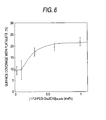
- the optimum value of the modification ratio by dodecapeptide e.g., from 0.3 mol % to 0.6 mol %) can be specified, and its optimization can be attained by changing the conditions in the same manner. The effect becomes insufficient at a certain value or less of the modification ratio, and a certain value or more of the modification ratio does not have influence upon the effect.
- a conjugate of the micro particle, a linker or spacer-linker and a dodecapeptide is prepared by making the micro particle surface into such a state that a chemical binding is carried out, through its activation if necessary, subsequently allowing a necessary linker or spacer-linker to bind thereto, and further allowing a dodecapeptide to react therewith.
- a reaction product of a linker or spacer-linker and a dodecapeptide may be prepared in advance, which is finally allowed to react with the activated micro particle.
- any conventionally known method suited for respective micro particle can be employed.
- the mixing ratio of the dodecapeptide and the micro particle is adjusted based on the desired value of the density of dodecapeptide in the final conjugate.
- the vesicle surface can be modified with a dodecapeptide by mixing an amphipathic molecule linked by the dodecapeptide which can become a constituting component of a lipid bilayer in advance with lipids which constitute the vesicle in an organic solvent, and then preparing the vesicle in the usual way.
- the conjugate of the present invention is washed with a physiologically acceptable aqueous solution, subjected to sterile filtration, dispensed and then prepared as liquid preparations, pellets and suspension preparations.
- Pharmaceutical preparations are prepared in accordance with the broadly and conventionally known methods in the production methods of medicaments.
- the pharmaceutical preparations can also be provided as freeze-dried preparations by freezing liquid preparations and then drying them under a reduced pressure.
- a monosaccharide e.g., glucose, etc.
- a disaccharide e.g., sucrose, etc.
- the pharmaceutical preparations of the present invention may be formulated with a macromolecular substance as a stabilizing agent selected from albumin, dextran, a vinyl polymer, gelatin and hydroxyethyl starch.
- a stabilizing agent selected from albumin, dextran, a vinyl polymer, gelatin and hydroxyethyl starch.
- the amount of the stabilizing agent to be added is from 0.5 to 10 parts by weight, preferably from 1 to 5 parts by weight, based on 1 part by weight of lipid.
- the thus prepared pharmaceutical preparations containing the conjugate of the present invention show selective binding with activated platelet GPIIb/IIIa, they do not cause aggregation with resting platelets in blood vessels, and their aggregation with platelets at a platelet-activated region such as a vascular wound region, so that a means for controlling platelet aggregation is provided.
- the conjugate of the present invention can by itself become a substitute for a synthetic platelet.
- the conjugate of the present invention has a property to accumulate into a platelet-activated region such as a vascular wound region, it can take an embodiment as a drug-containing composition (drug carrier).
- Such a drug is not particularly limited, so long as it is physiologically and pharmacologically effective when accumulated into a vascular wound region, and examples thereof include a hemostatic agent, a vasoconstrictor agent, an anti-inflammatory agent, an anti-blood coagulation agent, an anti-platelet agent and the like.
- the conjugate of the present invention can be administered at a dose of approximately from 0.001 to 1,000 mg as the dodecapeptide.
- the dose can be optionally increased or decreased in response to the sex, age, symptoms and the like of each patient. More desirably, the conjugate of the present invention is parenterally administered.
- Examples of the pharmaceutical composition containing the conjugate of the present invention include medicaments such as a platelet substitute, a preventive or therapeutic agent for vascular disorder, vascular wound and thrombosis, or a diagnostic agent for platelet dysfunction such as thrombasthenia, a biological or medical reagent, a reagent for screening a platelet aggregation inhibitor or anti-thrombus agent, and the like. It is also useful as a diagnostic agent for inspecting a vascular wound region and thrombus formation region or a therapeutic agent for the same.
- H12 dodecapeptide [hereinafter referred to as "H12” (SEQ ID NO:1)]-coupled latex beads (hereinafter referred to as "H12-LB”)
- rHSA human serum albumin
- LB latex beads
- PBS phosphate-buffered saline
- This PD-(HSA)LB (4.0 ⁇ 10 6 particles/ ⁇ l, 500 ⁇ l) was mixed with Cys-H12 (H12 in which Cys was added to its terminal) (10 mM, 8 ⁇ l), followed by shaking (20°C, 12 hr). After removing the supernatant by centrifugation (13000 g, 5 min, 4°C, 3 times), H12-LB (2.0 ⁇ 10 6 particles/ ⁇ l, 1 ml) was obtained.
- the coupled amount of H12 on the LB surface was determined from the absorbance at 343 nm of 2-thiopyridone (hereinafter referred to as "2TP") formed by the thiol-disulfide exchange reaction (HPLC, TSK-GEL G3000SWXL column, 7.8 mm o.d. ⁇ 300 mm h, 1 ml/min, PBS).
- 2TP 2-thiopyridone
- H12-PEG vesicle Method for synthesizing H12 (SEQ ID NO:1)-coupled vesicle (hereinafter referred to as "H12-PEG vesicle”):
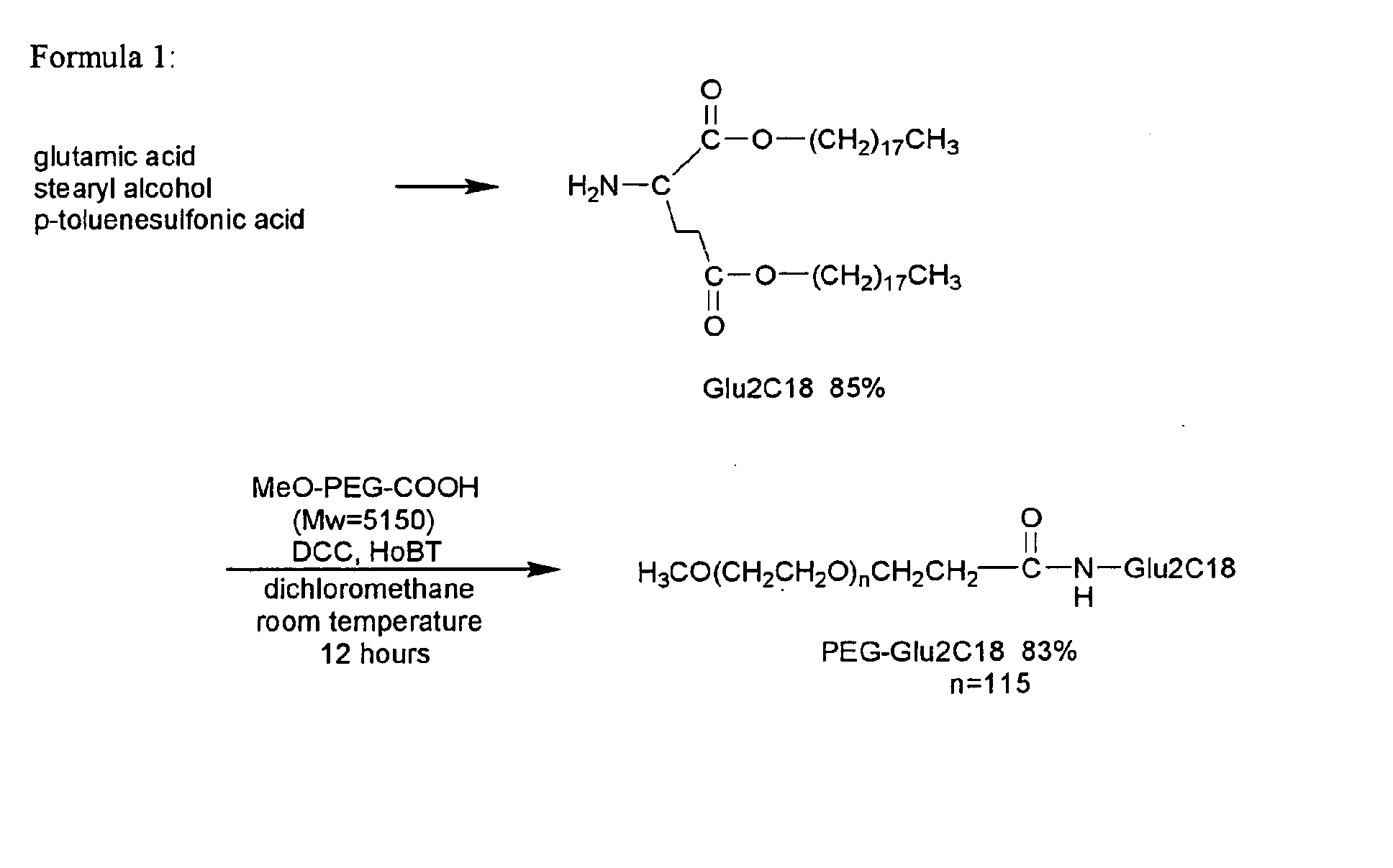
- PEG-Glu2C18 was synthesized as a control of H12-PEG-Glu2C18.
- Glutamic acid (2.96 g, 20 mmol) and p-toluenesulfonic acid monohydrate (4.56 g, 24 mmol) were dissolved in 150 ml of benzene, followed by refluxing at 105°C for 1 hour while removing the formed water using Dean-Stark apparatus.
- Stearyl alcohol (11.9 mg, 44 mmol) was added thereto, followed by refluxing at 105°C for 14 hours while removing the formed water.
- the solvent was evaporated under a reduced pressure, and then the residue was dissolved in 150 ml of chloroform and washed twice with 150 ml of a saturated aqueous sodium carbonate solution and twice with 150 ml of water.
- the chloroform layer was collected and dehydrated using 5 g of sodium sulfate, and then the solvent was removed under a reduced pressure.
- the residue was dissolved in 400 ml of methanol at 60°C, and after filtering insoluble matter when present, recrystallized at 4°C, filtered and then dried to obtain Glu2C18 (13.3 g, yield 85%) (cf. formula 1) as a white powder.
- MAL-PEG-NHS ⁇ -maleimidyl- ⁇ -N-hydroxysuccinimidyl polyethylene glycol
- MAL-PEG-Glu2C18 264.8 mg, yield 64%) (cf. formula 2) as a white powder.
- the reaction solution was added dropwise to 250 ml of diethyl ether, and the insoluble matter was collected. After adding water and removing the insoluble matter, the solvent was removed by a freeze dryer to obtain H12-PEG-Glu2C18 (62.8 mg, yield 47%) (cf. formula 2) as a pale yellow powder.
- An outline of the synthesis is shown in formula 2.
- H12 was introduced into vesicles using the PEG-Glu2C18 and H12-PEG-Glu2C18 prepared in the above.
- a mixed lipid prepared by adding PEG-Glu2C18 and/or H12-PEG-Glu2C18 at an optional ratio to DPPC (100 mg, 136 ⁇ mol) and cholesterol (52.7 mg, 136 ⁇ mol) was dissolved in 5 ml of benzene, followed by freeze drying for 3 hours. After the drying, 10 ml of purified water was added thereto, followed by stirring for 12 hours, and then particle diameter control was carried out by passing through filters having pores using a granulation device (extruder).
- the mixture was passed through filters in order of ⁇ 3000 nm ⁇ 800 nm ⁇ 650 nm ⁇ 450 nm ⁇ 300 nm ⁇ 220 nm (x 2) ⁇ .
- centrifugation 33000 rpm, 30 minutes
- the vesicles were dispersed in 5 ml of PBS to obtain a vesicle dispersion.
- a vesicle containing PEG-Glu2C18 alone (4.74 mg, 0.817 ⁇ mol) was defined as PEG-vesicle, and a vesicle containing H12-PEG-Glu2C18 alone (4.34 mg, 0.817 ⁇ mol) as H12-PEG-vesicle, and a vesicle containing PEG-Glu2C18 (4.74 mg, 0.817 ⁇ mol) and H12-PEG-Glu2C18 (14.34 - 0.34 mg, 2.72 - 0.0817 ⁇ mol) as H12-PEG(PEG) vesicle.
- the prepared phospholipid vesicles (H12-PEG vesicles, 1.8 wt %) were diluted 30 times with PBS and shaken at 37°C for 12 hours, and then the vesicles were precipitated by centrifugation (33000 rpm, 1 h) and dispersed, followed by freeze drying, and the resulting powder was subjected to 1 H-NMR measurement. Since the molar ratio of DPPC, cholesterol and H12-PEG-Glu2C18 did not change when the H12-PEG vesicles were shaken at 37°C for 12 hours, it was confirmed that the H12-PEG-Glu2C18 was not released from the phospholipid vesicles but stably maintained therein.
- a thrombocytopenia model blood was prepared by passing whole blood through a leukocyte removing filter for leukocyte depleted preparations (NEOIJ, Nihon Pall) by gravity, and adjusting the platelet concentration to 2.0 ⁇ 10 4 / ⁇ l by adding platelet rich plasma (PRP) (an automatic blood cell counter K-4500, Sysmex, Kobe).
- NEOIJ leukocyte depleted preparations
- PRP platelet rich plasma
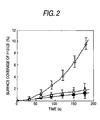
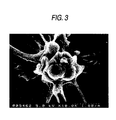
- H12-LB (1.0 ⁇ 10 5 particles/ ⁇ l) was added to 5 ml of the thrombocytopenia model blood, allowed to stand (37°C, 10 min), flowed on a collagen-immobilized surface using a pump (rate of shear 150 s -1 ), and then observed under a fluorescence microscope or through a CCD camera.
- An adhesion occupying ratio [surface coverage (hereinafter referred to as "SC")] of micro particles to each surface was measured using an image analyzer (Argus-50, Hamamatsu Photonics).
- the platelet adhesion was further amplified than the case of the LB addition, and was 5.1 ⁇ 0.3% after 180 seconds, or amplified about 1.7 times than the control (Fig. 1: o).
- Resting platelets (2.0 ⁇ 10 4 / ⁇ l) were mixed with 1.0 ⁇ 10 5 / ⁇ l of each of LB, H12-LB and CGGRGDF-LB [LB bound with a peptide having an RGD sequence (Arg-Gly-Asp)], followed by shaking (37°C, 30 min), and the aggregation ratio in each case was evaluated by flow cytometry.
- LB and H12-LB did not show increase of the aggregation ratio, but CGGRGDF-LB showed 2.9 + 1.3% (Fig. 4). Based on this, it was confirmed that H12-LB hardly agglutinate to resting platelets when compared with CGGRGDF-LB.
- Platelet rich plasma was obtained by adding 1/9 (v/v) of an aqueous sodium citrate solution (3.8%) to whole blood, followed by centrifugation (600 rpm, 15 min). Platelet poor plasma (PPP) was obtained by further centrifuging the precipitate (2500 rpm, 10 min).
- ADP adenosine 5'-phosphate
- H12-PEG vesicle H12-PEG-Glu2C18: 0.3 mol%
- the SC was increased in the H12-PEG vesicle-added system, in comparison with the PEG vesicle-added system (Table 1).
- the SC was increased because platelets firstly adhered to the collagen surface, the phospholipid vesicles were bound to the adhered platelets to increase binding sites to the flowing platelets, and platelets were further bound to the phospholipid vesicles.
- the SC was also increased in the H12-PEG(PEG) vesicle-added system in the same manner, in comparison with the PEG vesicle-added system (Table 1).
- the bound amount of the antibody was not changed from the system in which PBS or PEG vesicles were added to platelets.
- the H12-PEG(PEG) vesicles themselves hardly showed interaction with platelets, too.
- the H12-PEG(PEG) vesicles do not interact with normal platelets and therefore are not activated in the blood flow. Based on this, it was confirmed that the H12-PEG(PEG) vesicles hardly agglutinate to resting platelets.
- the conjugate prepared by coupling a synthetic dodecapeptide contained in the GPIIb/IIIa recognizing region of fibrinogen specifically binds only to substantially activated GPIIb/IIIa, it does not induce thrombus formation or intravascular coagulation of blood due to aggregation with resting platelets in blood vessels.
- human-derived components are not used in the peptide conjugate of the present invention, and synthetic forms and recombinant forms of these components are used therein, risk of infection is avoided. Accordingly, the peptide conjugate of the present invention is useful as a platelet substitute.
Landscapes
- Health & Medical Sciences (AREA)
- Life Sciences & Earth Sciences (AREA)
- Engineering & Computer Science (AREA)
- Bioinformatics & Cheminformatics (AREA)
- Chemical & Material Sciences (AREA)
- Proteomics, Peptides & Aminoacids (AREA)
- General Health & Medical Sciences (AREA)
- Medicinal Chemistry (AREA)
- Public Health (AREA)
- Veterinary Medicine (AREA)
- Animal Behavior & Ethology (AREA)
- Pharmacology & Pharmacy (AREA)
- Epidemiology (AREA)
- Organic Chemistry (AREA)
- Molecular Biology (AREA)
- General Chemical & Material Sciences (AREA)
- Nuclear Medicine, Radiotherapy & Molecular Imaging (AREA)
- Chemical Kinetics & Catalysis (AREA)
- Hematology (AREA)
- Diabetes (AREA)
- Cell Biology (AREA)
- Immunology (AREA)
- Biochemistry (AREA)
- Biophysics (AREA)
- Genetics & Genomics (AREA)
- Peptides Or Proteins (AREA)
- Medicinal Preparation (AREA)
- Medicines That Contain Protein Lipid Enzymes And Other Medicines (AREA)
Abstract
Description
- Patent Reference 1:
- U. S. Patent No. 4,287,087
- Patent Reference 2:
- JP-A-9-208599, U.S. Patent 6,177,059 and EP-A-0894807
- Patent Reference 3:
- JP-A-2001-151800
- Patent Reference 4:
- JP-A-2001-131078
- Patent Reference 5:
- U. S. Patent No. 4,661,471
- Non-patent Reference 1:
- M.E. Rybak, Thrombosis and Haemostasis, 55, 240-245 (1986)
- Non-patent Reference 2:
- T. Nishiya and S. Sloan, Biochim. Biophys. Res. Comun., 224 , 242-245 (1996)
- Non-patent Reference 3:
- S. Takeoka et al., Biomacromolecules, 2, 1192-1197 (2001)





| Acceleration of platelet aggregation in the presence of H12-PEG(PEG) vesicle or H12-PEG vesicle | |
| Samples | SC of platelets (%) |
| PEG vesicle | 9.6 ± 0.9 |
| H12-PEG vesicle | 15.0 ± 5.0 |
| H12-PEG(PEG) vesicle | 17.3 ± 1.9 |
| Binding of PAC-1 to platelets | ||
| Samples | PAC-1 binding (%) | vesicle binding (%) |
| PBS | 3.8 ± 0.9 | - |
| PEG vesicles | 3.4 ± 0.3 | 1.3 + 0.7 |
| H12-PEG(PEG) vesicles | 3.7 ± 0.4 | 1.4 + 0.6 |


Claims (21)
- A conjugate which is a formula:or a formula:
 wherein n is an integer.
- The conjugate according to claim 1, wherein the micro particle is selected from the group consisting of a vesicle, a micelle, a protein polymer and a synthetic polymer.
- The conjugate according to claim 1 or 2, wherein the micro particle is selected from the group consisting of a vesicle, a recombinant albumin polymer, a latex particle and a biodegradable polymer.
- The conjugate according to any one of claims 1 to 3, wherein the micro particle has a particle diameter of 50 nm or more.
- The conjugate according to any one of claims 1 to 4, wherein the micro particle has a particle diameter of 10 µm or less.
- The conjugate according to any one of claims 1 to 5, wherein the linker is a compound in which its one terminal reacts with an SH group, and another terminal reacts with any one of an OH group, a COOH group and an NH2 group.
- The conjugate according to any one of claims 1 to 6, wherein the linker is selected from the group consisting of dicarboxylic acid, aminocarboxylic acid, a bismaleimide compound, a bishalocarbonyl compound, a halocarbonylmaleimide compound, dithiomaleimide, dithiocarboxylic acid and maleimidecarboxylic acid.
- The conjugate according to any one of claims 1 to 7, wherein the linker is selected from the group consisting of dicarboxylic acid, aminocarboxylic acid, a bismaleimide compound, a bishalocarbonyl compound, a halocarbonylmaleimide compound, dithiomaleimide, dithiocarboxylic acid and maleimidecarboxylic acid, and has a carbon chain of C2-10.
- The conjugate according to any one of claims 1 to 8, wherein the spacer is one or at least two combination selected from the group consisting of polyoxyethylene, a polypeptide, a polysaccharide, albumin and an antibody.
- The conjugate according to any one of claims 1 to 9, wherein the micro particle is a latex particle, the spacer is albumin and the linker is dithiocarboxylic acid.
- The conjugate according to any one of claims 1 to 9, wherein the micro particle is a vesicle, the spacer is polyethylene glycol and the linker is maleimidecarboxylic acid.
- A platelet substitute which comprises the conjugate according to any one of claims 1 to 11.
- A method for controlling platelet aggregation, which comprises using the conjugate according to any one of claims 1 to 11.
- A process for producing the conjugate according to any one of claims 1 to 11.
- A diagnostic agent or reagent which comprises the conjugate according to any one of claims 1 to 11.
- The diagnostic agent or reagent according to claim 15, which is a diagnostic agent for platelet dysfunction, a biological or medical reagent, a platelet aggregation inhibitor, a reagent for screening an anti-thrombus agent, or a diagnostic or therapeutic agent for inspecting a vascular injury region and a thrombus formation region.
- A drug carrier which comprises the conjugate according to any one of claims 1 to 11.
- The drug carrier which comprises the conjugate according to claim 17, wherein the drug is selected from the group consisting of a hemostatic agent, a vasoconstrictor agent, an anti-inflammatory agent, an anti-blood coagulation agent and an anti-platelet agent.
- A pharmaceutical composition which comprises the conjugate according to any one of claims 1 to 11.
- The pharmaceutical composition which comprises the conjugate according to claim 19, which comprises a drug selected from the group consisting of a hemostatic agent, a vasoconstrictor agent, an anti-inflammatory agent, an anti-blood coagulation agent and an anti-platelet agent.
- The pharmaceutical composition according to claim 19 or 20, which is useful for preventing or treating vascular disorder, vascular injury and thrombosis.
Applications Claiming Priority (5)
| Application Number | Priority Date | Filing Date | Title |
|---|---|---|---|
| JP2003029847 | 2003-02-06 | ||
| JP2003029847 | 2003-02-06 | ||
| JP2004017046 | 2004-01-26 | ||
| JP2004017046 | 2004-01-26 | ||
| PCT/JP2004/001293 WO2004069862A1 (en) | 2003-02-06 | 2004-02-06 | Peptide conjugate |
Publications (2)
| Publication Number | Publication Date |
|---|---|
| EP1591451A1 true EP1591451A1 (en) | 2005-11-02 |
| EP1591451A4 EP1591451A4 (en) | 2009-09-02 |
Family
ID=32852681
Family Applications (1)
| Application Number | Title | Priority Date | Filing Date |
|---|---|---|---|
| EP04708905A Withdrawn EP1591451A4 (en) | 2003-02-06 | 2004-02-06 | PEPTIDE CONJUGATE |
Country Status (4)
| Country | Link |
|---|---|
| US (1) | US20070059376A1 (en) |
| EP (1) | EP1591451A4 (en) |
| KR (1) | KR20050111583A (en) |
| WO (1) | WO2004069862A1 (en) |
Cited By (1)
| Publication number | Priority date | Publication date | Assignee | Title |
|---|---|---|---|---|
| WO2007077990A1 (en) | 2006-01-06 | 2007-07-12 | Keio University | Drug delivery material |
Families Citing this family (6)
| Publication number | Priority date | Publication date | Assignee | Title |
|---|---|---|---|---|
| JP5216219B2 (en) * | 2006-01-06 | 2013-06-19 | 真司 武岡 | Drug carrier |
| WO2010148012A2 (en) * | 2009-06-15 | 2010-12-23 | Ceramatec, Inc | Hemostatic material and delivery device |
| EP2588129A4 (en) | 2010-06-30 | 2014-07-09 | Univ Brandeis | DEGRADATION OF PROTEIN TARGETED BY SMALL MOLECULES |
| US10434149B2 (en) | 2011-04-13 | 2019-10-08 | Case Western Reserve University | Synthetic platelets |
| US10426820B2 (en) | 2011-04-13 | 2019-10-01 | Case Western Reserve University | Synthetic platelets |
| US9107845B2 (en) | 2011-04-13 | 2015-08-18 | Case Western Reserve University | Synthetic platelets |
Family Cites Families (8)
| Publication number | Priority date | Publication date | Assignee | Title |
|---|---|---|---|---|
| US4661471A (en) * | 1984-04-10 | 1987-04-28 | New England Deaconess Hospital | Method of inhibiting and inducing human platelet aggregation |
| US4952562A (en) * | 1989-09-29 | 1990-08-28 | Rorer Pharmaceutical Corporation | Anti-thrombotic peptides and pseudopeptides |
| JP3735921B2 (en) * | 1996-02-07 | 2006-01-18 | 三菱ウェルファーマ株式会社 | GPIb / lipid complex and uses thereof |
| US6159443A (en) * | 1999-04-29 | 2000-12-12 | Vanderbilt University | X-ray guided drug delivery |
| JP2001151800A (en) * | 1999-09-09 | 2001-06-05 | Hidetoshi Tsuchida | Albumin polymer, method for producing the same and blood platelet substitute |
| DE60130741T2 (en) * | 2000-03-02 | 2008-07-03 | Mitsubishi Pharma Corp. | GPib-BOUND CONSTRUCT AND USES THEREOF |
| SI1724284T1 (en) * | 2000-12-07 | 2009-12-31 | Lilly Co Eli | GLP-1 fusion proteins |
| AU2002330139A1 (en) * | 2001-10-03 | 2003-04-14 | Vanderbilt University | In vivo panning for ligands to radiation-induced molecules |
-
2004
- 2004-02-06 US US10/544,628 patent/US20070059376A1/en not_active Abandoned
- 2004-02-06 EP EP04708905A patent/EP1591451A4/en not_active Withdrawn
- 2004-02-06 KR KR1020057014418A patent/KR20050111583A/en not_active Ceased
- 2004-02-06 WO PCT/JP2004/001293 patent/WO2004069862A1/en not_active Ceased
Cited By (3)
| Publication number | Priority date | Publication date | Assignee | Title |
|---|---|---|---|---|
| WO2007077990A1 (en) | 2006-01-06 | 2007-07-12 | Keio University | Drug delivery material |
| US7887837B2 (en) | 2006-01-06 | 2011-02-15 | Shinji Takeoka | Drug delivery material |
| EP1977766A4 (en) * | 2006-01-06 | 2011-05-25 | Univ Keio | DRUG DELIVERY MATERIAL |
Also Published As
| Publication number | Publication date |
|---|---|
| US20070059376A1 (en) | 2007-03-15 |
| EP1591451A4 (en) | 2009-09-02 |
| WO2004069862A1 (en) | 2004-08-19 |
| KR20050111583A (en) | 2005-11-25 |
Similar Documents
| Publication | Publication Date | Title |
|---|---|---|
| US4892733A (en) | Biodegradable synthesis polypeptide and its therapeutic use | |
| WO1999011703A1 (en) | Cross-linked particles | |
| RU2719562C2 (en) | Peptide dendrimers containing fibrinogen-binding peptides | |
| JP2010519182A (en) | Multimeric conjugate | |
| WO2017002979A1 (en) | Drug delivery carrier, and composition containing same | |
| CN102631679A (en) | pH-sensitive pullulan ramification nano-drug carrier, drug-carrying particle and preparation of pH-sensitive pullulan ramification nano-drug carrier and drug-carrying particle | |
| US20070059376A1 (en) | Peptide conjugate | |
| JP2019123773A (en) | Modified styrene-maleic anhydride copolymer and use thereof | |
| CN112876578A (en) | Amphiphilic glucan derivative carrier targeting tumor-associated fibroblasts, and preparation and application of pharmaceutical composition of amphiphilic glucan derivative carrier | |
| CN101766819A (en) | Heparin complex as well as preparation method and application thereof | |
| CN112675148B (en) | A multifunctional and efficient drug delivery system and its preparation method and application | |
| US20180236074A1 (en) | Thermoresponsive bioconjugates and their controlled delivery of cargo | |
| CN100360554C (en) | Peptide Conjugates | |
| US5753611A (en) | Pharmaceutical composition having site-specific delivery | |
| AU2020423624B2 (en) | PEG-lipid | |
| EP1977766A1 (en) | Drug delivery material | |
| JP4505556B2 (en) | Peptide conjugate | |
| US20200179280A1 (en) | Non-covalent, self-organzing hydrogel matrix for biotechnological applications | |
| JP5216219B2 (en) | Drug carrier | |
| JP2010526062A (en) | Methods for delivering proteins to cells | |
| CN116622005B (en) | Polymer prodrug compound and preparation method thereof, polymer prodrug micelle and preparation method thereof | |
| CN115232195B (en) | Oligopeptide two-dimensional nanomaterial and application thereof | |
| JP3341487B2 (en) | Reactive endoplasmic reticulum, endoplasmic reticulum modifier and production method | |
| Cremers et al. | Biodegradable ion-exchange microspheres based on modified polylysines | |
| Lamm | Engineering and Evaluating Fibrin-Targeted Biomaterials for Hemostasis |
Legal Events
| Date | Code | Title | Description |
|---|---|---|---|
| PUAI | Public reference made under article 153(3) epc to a published international application that has entered the european phase |
Free format text: ORIGINAL CODE: 0009012 |
|
| 17P | Request for examination filed |
Effective date: 20050810 |
|
| AK | Designated contracting states |
Kind code of ref document: A1 Designated state(s): AT BE BG CH CY CZ DE DK EE ES FI FR GB GR HU IE IT LI LU MC NL PT RO SE SI SK TR |
|
| AX | Request for extension of the european patent |
Extension state: AL LT LV MK |
|
| DAX | Request for extension of the european patent (deleted) | ||
| RAP1 | Party data changed (applicant data changed or rights of an application transferred) |
Owner name: MITSUBISHI TANABE PHARMA CORPORATION Owner name: KEIO UNIVERSITY |
|
| A4 | Supplementary search report drawn up and despatched |
Effective date: 20090805 |
|
| RIC1 | Information provided on ipc code assigned before grant |
Ipc: A61P 7/08 20060101ALN20090730BHEP Ipc: A61P 7/04 20060101ALN20090730BHEP Ipc: A61P 7/02 20060101ALN20090730BHEP Ipc: A61K 31/80 20060101ALN20090730BHEP Ipc: A61K 47/48 20060101AFI20090730BHEP |
|
| 17Q | First examination report despatched |
Effective date: 20100119 |
|
| RAP1 | Party data changed (applicant data changed or rights of an application transferred) |
Owner name: KEIO UNIVERSITY |
|
| STAA | Information on the status of an ep patent application or granted ep patent |
Free format text: STATUS: THE APPLICATION IS DEEMED TO BE WITHDRAWN |
|
| 18D | Application deemed to be withdrawn |
Effective date: 20110901 |