EP1587321A2 - Common scrambling - Google Patents
Common scrambling Download PDFInfo
- Publication number
- EP1587321A2 EP1587321A2 EP05102264A EP05102264A EP1587321A2 EP 1587321 A2 EP1587321 A2 EP 1587321A2 EP 05102264 A EP05102264 A EP 05102264A EP 05102264 A EP05102264 A EP 05102264A EP 1587321 A2 EP1587321 A2 EP 1587321A2
- Authority
- EP
- European Patent Office
- Prior art keywords
- transport stream
- unencrypted
- portions
- processing
- data
- Prior art date
- Legal status (The legal status is an assumption and is not a legal conclusion. Google has not performed a legal analysis and makes no representation as to the accuracy of the status listed.)
- Withdrawn
Links
- 238000004458 analytical method Methods 0.000 claims abstract description 15
- 238000000034 method Methods 0.000 claims description 114
- 238000012545 processing Methods 0.000 claims description 42
- 230000008569 process Effects 0.000 claims description 38
- 238000007619 statistical method Methods 0.000 claims 1
- 230000015654 memory Effects 0.000 description 14
- 230000009471 action Effects 0.000 description 10
- 230000003287 optical effect Effects 0.000 description 9
- 238000004891 communication Methods 0.000 description 7
- 230000006835 compression Effects 0.000 description 5
- 238000007906 compression Methods 0.000 description 5
- 238000012986 modification Methods 0.000 description 5
- 230000004048 modification Effects 0.000 description 5
- 238000013179 statistical model Methods 0.000 description 5
- 230000005540 biological transmission Effects 0.000 description 4
- 238000009877 rendering Methods 0.000 description 4
- 230000006855 networking Effects 0.000 description 3
- 230000002093 peripheral effect Effects 0.000 description 3
- 230000001010 compromised effect Effects 0.000 description 2
- 238000010586 diagram Methods 0.000 description 2
- 238000005516 engineering process Methods 0.000 description 2
- 238000000605 extraction Methods 0.000 description 2
- 239000000758 substrate Substances 0.000 description 2
- 230000007812 deficiency Effects 0.000 description 1
- 238000011161 development Methods 0.000 description 1
- 238000007726 management method Methods 0.000 description 1
- 239000000463 material Substances 0.000 description 1
- 230000007246 mechanism Effects 0.000 description 1
- 230000005055 memory storage Effects 0.000 description 1
- 238000012546 transfer Methods 0.000 description 1
- 230000007723 transport mechanism Effects 0.000 description 1
Images


Classifications
-
- G—PHYSICS
- G03—PHOTOGRAPHY; CINEMATOGRAPHY; ANALOGOUS TECHNIQUES USING WAVES OTHER THAN OPTICAL WAVES; ELECTROGRAPHY; HOLOGRAPHY
- G03B—APPARATUS OR ARRANGEMENTS FOR TAKING PHOTOGRAPHS OR FOR PROJECTING OR VIEWING THEM; APPARATUS OR ARRANGEMENTS EMPLOYING ANALOGOUS TECHNIQUES USING WAVES OTHER THAN OPTICAL WAVES; ACCESSORIES THEREFOR
- G03B21/00—Projectors or projection-type viewers; Accessories therefor
- G03B21/005—Projectors using an electronic spatial light modulator but not peculiar thereto
- G03B21/006—Projectors using an electronic spatial light modulator but not peculiar thereto using LCD's
-
- H—ELECTRICITY
- H04—ELECTRIC COMMUNICATION TECHNIQUE
- H04N—PICTORIAL COMMUNICATION, e.g. TELEVISION
- H04N21/00—Selective content distribution, e.g. interactive television or video on demand [VOD]
- H04N21/40—Client devices specifically adapted for the reception of or interaction with content, e.g. set-top-box [STB]; Operations thereof
- H04N21/43—Processing of content or additional data, e.g. demultiplexing additional data from a digital video stream; Elementary client operations, e.g. monitoring of home network or synchronising decoder's clock; Client middleware
- H04N21/44—Processing of video elementary streams, e.g. splicing a video clip retrieved from local storage with an incoming video stream or rendering scenes according to encoded video stream scene graphs
- H04N21/4405—Processing of video elementary streams, e.g. splicing a video clip retrieved from local storage with an incoming video stream or rendering scenes according to encoded video stream scene graphs involving video stream decryption
- H04N21/44055—Processing of video elementary streams, e.g. splicing a video clip retrieved from local storage with an incoming video stream or rendering scenes according to encoded video stream scene graphs involving video stream decryption by partially decrypting, e.g. decrypting a video stream that has been partially encrypted
-
- G—PHYSICS
- G03—PHOTOGRAPHY; CINEMATOGRAPHY; ANALOGOUS TECHNIQUES USING WAVES OTHER THAN OPTICAL WAVES; ELECTROGRAPHY; HOLOGRAPHY
- G03B—APPARATUS OR ARRANGEMENTS FOR TAKING PHOTOGRAPHS OR FOR PROJECTING OR VIEWING THEM; APPARATUS OR ARRANGEMENTS EMPLOYING ANALOGOUS TECHNIQUES USING WAVES OTHER THAN OPTICAL WAVES; ACCESSORIES THEREFOR
- G03B21/00—Projectors or projection-type viewers; Accessories therefor
- G03B21/14—Details
- G03B21/142—Adjusting of projection optics
-
- H—ELECTRICITY
- H04—ELECTRIC COMMUNICATION TECHNIQUE
- H04N—PICTORIAL COMMUNICATION, e.g. TELEVISION
- H04N21/00—Selective content distribution, e.g. interactive television or video on demand [VOD]
- H04N21/20—Servers specifically adapted for the distribution of content, e.g. VOD servers; Operations thereof
- H04N21/23—Processing of content or additional data; Elementary server operations; Server middleware
- H04N21/234—Processing of video elementary streams, e.g. splicing of video streams or manipulating encoded video stream scene graphs
- H04N21/2343—Processing of video elementary streams, e.g. splicing of video streams or manipulating encoded video stream scene graphs involving reformatting operations of video signals for distribution or compliance with end-user requests or end-user device requirements
- H04N21/234327—Processing of video elementary streams, e.g. splicing of video streams or manipulating encoded video stream scene graphs involving reformatting operations of video signals for distribution or compliance with end-user requests or end-user device requirements by decomposing into layers, e.g. base layer and one or more enhancement layers
-
- H—ELECTRICITY
- H04—ELECTRIC COMMUNICATION TECHNIQUE
- H04N—PICTORIAL COMMUNICATION, e.g. TELEVISION
- H04N21/00—Selective content distribution, e.g. interactive television or video on demand [VOD]
- H04N21/20—Servers specifically adapted for the distribution of content, e.g. VOD servers; Operations thereof
- H04N21/23—Processing of content or additional data; Elementary server operations; Server middleware
- H04N21/234—Processing of video elementary streams, e.g. splicing of video streams or manipulating encoded video stream scene graphs
- H04N21/2347—Processing of video elementary streams, e.g. splicing of video streams or manipulating encoded video stream scene graphs involving video stream encryption
- H04N21/23476—Processing of video elementary streams, e.g. splicing of video streams or manipulating encoded video stream scene graphs involving video stream encryption by partially encrypting, e.g. encrypting the ending portion of a movie
-
- H—ELECTRICITY
- H04—ELECTRIC COMMUNICATION TECHNIQUE
- H04N—PICTORIAL COMMUNICATION, e.g. TELEVISION
- H04N21/00—Selective content distribution, e.g. interactive television or video on demand [VOD]
- H04N21/80—Generation or processing of content or additional data by content creator independently of the distribution process; Content per se
- H04N21/83—Generation or processing of protective or descriptive data associated with content; Content structuring
- H04N21/835—Generation of protective data, e.g. certificates
-
- H—ELECTRICITY
- H04—ELECTRIC COMMUNICATION TECHNIQUE
- H04N—PICTORIAL COMMUNICATION, e.g. TELEVISION
- H04N7/00—Television systems
- H04N7/16—Analogue secrecy systems; Analogue subscription systems
- H04N7/167—Systems rendering the television signal unintelligible and subsequently intelligible
- H04N7/1675—Providing digital key or authorisation information for generation or regeneration of the scrambling sequence
Definitions
- the present invention is directed towards the common scrambling of transport streams.
- Media content as received from a content source, is typically protected.
- the protection In order to be processed at a client device, the protection must be removed from the media content. Although removing the protection is necessary for rendering the media content, removing the protection is not economical in terms of resource management or security for other processes to be performed on the media content.
- Protected media content includes encrypted audio/video data that is broadcasted via television signals, transmitted over a network connection, or downloaded from a storage medium.
- the encrypted media content may be received and processed at client devices such as a set-top box (STB) or a personal computer (PC).
- client devices such as a set-top box (STB) or a personal computer (PC).
- STB set-top box
- PC personal computer
- decrypting media content on the client device occupies substantial device resources and thus compromises robust device performance.
- decrypting media content on the client device renders the media content vulnerable to piracy and other security breaches.
- a transport stream is encrypted in such a manner that the stream may be processed ( e . g . demultiplexed, indexed) without requiring encrypted portions of the stream to be decrypted.
- an analysis is performed on the stream to determine at least one portion of the stream that is to pass unencrypted, thus enabling the stream to be processed in a manner that bypasses encrypted portions of the stream.
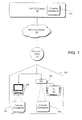
- FIG. 1 shows a broadcast environment in which example embodiments of common scrambling techniques may be implemented.
- FIG. 2 shows an example of processing incorporating common scrambling.
- FIG. 3 shows a block diagram corresponding to an apparatus that implements common scrambling according to an example embodiment.
- FIG. 4 shows a packetized transport stream in accordance with an example embodiment.
- FIG. 5 illustrates a general computer network environment which can be used to implement the techniques described herein.
- Described herein are common scrambling techniques that enable a transport stream to be processed without being descrambled. More particularly, the embodiments described herein relate to an analysis that is performed to enable the aforementioned processing.
- FIG. 1 shows a broadcast/transmission environment in which example embodiments of common scrambling techniques may be implemented. More particularly, content source 100 may apply common scrambling 105 to a transport stream that is distributed to subscribers via broadcast network 110 and/or broadcast center 115. Alternatively, whether or not content source 100 applies common scrambling 105 to a transport stream, PC 125 may also apply common scrambling 130 to a transport stream received at subscriber location 120; or STB 135 may also apply common scrambling 140 to a transport stream received at subscriber location 120.
- broadcast network 110 examples include cable television (CATV) networks and direct broadcast satellite (DBS) networks.
- Broadcast center 115 also referred to as a "head-end," is a centrally-located facility within a respective community in which various media programming is received from, e.g. , a CATV or DBS downlink, and packaged for transmission to subscriber location 120.
- Broadcast center 115 may be coupled to content source 100 and other such broadcast centers directly, via broadcast network 110, or by the Internet using TCP/IP (Transmission Control Protocol/Internet Protocol) or other standard communication protocols.
- TCP/IP Transmission Control Protocol/Internet Protocol
- PC 125 and STB 135 receive media signals from content source 100 via broadcast network 110, broadcast center 115, or the Internet.
- Media signals processed and rendered on PC 125 may be displayed on a monitor associated with PC 125; and media signals processed and rendered on STB 125 may be displayed on television (TV) 145 or similar display device.
- TV television
- TV 145 may have the capabilities of STB 135 integrated therein.
- current implementations include a one-to-one correspondence between STB 135 and TV 145, efforts are ongoing to have a single, comprehensive STB 135 provide media content for multiple units of TV 145 in receiver location 120.
- comprehensive STB 135 may also include all capabilities of a video gaming console. Similar development efforts are ongoing for a comprehensive PC 125.
- FIG. 2 shows an example flow of actions incorporating common scrambling that may be executed at one or any combination of content source 100, broadcast network 110, head-end 115, or subscriber location 120 (by at least one of PC 125 and STB 135).
- the example of FIG. 2 may be applicable to the common scrambling examples of FIG. 1, i.e., common scrambling 105 at content source 100, common scrambling 130 at PC 125, and common scrambling 140 at STB 135.
- media signals may be used interchangeably, and are broadly construed to include video and/or audio content, pictures, animations, text, etc. that may be included in the applications and software programs that are compiled, designed, and programmed at content source 100 and transmitted to at least one of PC 125 and STB 135 located at subscriber location 120.
- content source 100 may correspond to video game servers, websites, video servers, music servers, software archives, databases, television networks, etc.
- the example embodiments described herein relate to media content in transport streams being compressed in accordance with the MPEG-2 compression standard.
- MPEG-2 is a compression standard by which digital media content is compressed on storage mediums (e.g. , CDs and DVDs) and for broadcast by multiple systems operators (MSOs), such CATV and DBS systems.
- MSOs multiple systems operators
- applications relating to digital media content are increasing (e.g. , PVR and video-on-demand (VOD)) as is the corresponding need for transmission bandwidth. Therefore, the example embodiments described herein may also relate to media content in transport streams being compressed in accordance with advanced compression standards that are being developed to provide, within existing data transport infrastructures, sufficient bandwidth for digital media content corresponding to the increasing number of applications for digital media content.
- the example embodiments may also relate to media content on storage mediums compressed in accordance with existing and/or advanced compression standards including, but not limited to, MPEG-4 and H.264.
- MPEG-2 is a packetized compression standard
- the example embodiments described herein are described in terms of packetized transport streams, though the embodiments are by way of example only and are not intended (nor should they be construed) to be limiting.
- block 205 indicates an action to receive an unencrypted transport stream.
- a media content transport stream may take form as an unencrypted stream of media content before being transmitted therefrom.
- an encrypted transport stream has its encryption removed according to the example embodiments described herein.
- Block 210 indicates an action to analyze the unencrypted transport stream.
- the unencrypted transport stream is analyzed in view of data requirements for at least one process to which the transport stream may be subjected after being encrypted. If the determination is made based upon a statistical model corresponding to one or more of the processes, threshold data requirements may be determined for the particular process that has the most extensive (i.e. , threshold) data requirements.
- the analysis at block 210 is performed to determine which portions of the transport stream are to pass unencrypted.
- Examples of processes to which the transport stream may be subjected after being encrypted include, but are not limited to, storage, demultiplexing, and indexing.
- the encrypted transport stream may be stored on at least one of PC 125 and STB 135 at subscriber location 120, for subsequent processing or decrypting.
- Demultiplexing of the transport stream may be implemented to extract at least one of a video elementary stream and an audio elementary stream at a client device serving as media center ( i . e ., data repository and playback machine).
- Indexing payload data of the transport stream may be implemented to enable trick modes at a client device serving as a PVR.
- Trick modes refer to the ability for a PVR to playback recorded media content forward or backward at various speeds, pause data being recorded or displayed, display a still-frame image, and find a desired reference point in the recorded media content.
- indexing payload data of the transport stream may be implemented by a rendering analysis module to extract desired thumbnail images from the video elementary stream.
- the analysis at block 210 to determine which portions of the transport stream are to pass unencrypted may be performed dynamically. That is, the analysis may be performed based on a statistical model for one or more processes to determine how much data is needed to implement the one or more processes. Alternatively, the analysis may be performed on more of a case-by-case basis, and therefore the determination is made on the basis of a dynamic examination of the content of each packet within the transport stream.
- the analysis at block 210 is performed to find the packetized elementary stream (PES) header and to determine the maximum incursion past header data for a particular packet necessary for implementing a process. That is, the incursion into the PES payload data gleans a certain number of bytes of data for implementing a process on the entire transport stream. The bytes of data incurred upon may be referred to as the "extra header data.”
- the PES header and the "extra header data" are to pass encrypted, so the incursion is kept to a minimum so as not to diminish the effectiveness of encryption.
- Encryption is applied to a transport stream on a packet-by-packet basis. That is, the payload data of a packet is either entirely encrypted or entirely unencrypted. If the analysis at block 210 determines that any byte from the payload data of a packet is to pass unencrypted, then the entire payload data packet is to pass unencrypted. Otherwise, the entire payload data packet is encrypted.
- the identity, location, and corresponding process of the unencrypted packets may be contained in an encryption method packet to be revealed to a module for processing the transport stream. Encryption method packets are described further below.
- the analysis at block 210 may incorporate predetermined acknowledgements that any packet within the transport stream that contains any header information is to pass unencrypted. More particularly, a packet containing any portion of PES header information or any portion of the "extra header data" is to pass unencrypted. A description of such packets and header information is provided below with reference to FIG. 4.
- Block 215 indicates an action to apply common scrambling to the portions of the transport stream that are not to pass unencrypted based on results of the analysis performed at block 210. Therefore, the portions of the transport stream that are to pass unencrypted remain in the clear ( i.e. , unencrypted).
- such portions that are to pass unencrypted include any packet containing any portion of PES header information or any portion of the "extra header data."
- the packets that are to have common scrambling applied thereto are those packets wholly composed of PES payload data.
- any portion of the transport stream may pass unencrypted, further alternate embodiments may contemplate frame headers and PES headers having common scrambling applied thereto if the data contained therein is not required for processing the transport stream without descrambling.
- Examples of scrambling applied to the encrypted packets include an advanced encryption standard (AES) in a cipher-block chaining (CBC) mode or a counter (CTR) mode.
- AES advanced encryption standard
- CBC cipher-block chaining
- CTR counter
- CBC mode the example utilizes cipher-text stealing on the encrypted transport stream packets to avoid padding or leaving residual data unencrypted.
- ECB electronic codebook
- CFB output feedback
- Block 220 indicates an action to generate an encryption method packet.
- An encryption method packet may provide identification for the encryption algorithm utilized on the encrypted portion of the transport stream, provide data needed for an authorized decrypter to deduce a decryption key, and identify either those portions of the transport stream that pass unencrypted or identify those portions of the transport stream that are encrypted.
- An encryption method packet may include further data identifying which portions of the encrypted stream are required for respective processes (demultiplexing or indexing for trick modes or thumbnail extraction). Further still, an encryption method packet is inserted in compliance with the multiplexed transport stream.
- An encryption method packet may be generated in correspondence with all encrypted portions of a transport stream.
- encryption method packets may be generated in correspondence with individual packets or bytes of encrypted PES payload data.
- an encryption method packet may be generated in correspondence with each PES header in a transport stream, in correspondence with a predetermined number of PES headers in a transport stream, or in correspondence with a predetermined pattern of packets that pass unencrypted for other processes.
- an encryption method packet may be transmitted to a processor in-band or out-of-band (by a private table), so long as it is received by the processor by the point of decryption.
- an encryption method packet may be transmitted to a content usage license that is then transmitted in-band or out-of-band to a processor.
- Block 225 indicates an action to process the transport stream in a manner that bypasses encrypted portions of the transport stream. As indicated previously, any process that requires decryption of the transport stream is costly in terms of device resources and security. Common scrambling enables processing at block 225 in a manner that does not require decryption of the encrypted packets. Processing such as demultiplexing or indexing may be implemented on the partially encrypted transport stream based on the data found in the unencrypted portions of the transport stream.
- such unencrypted portions of the transport stream include any packet containing a portion of a PES header or a portion of the "extra header data.”
- such unencrypted portions of the transport stream include frame headers arbitrarily located throughout the encrypted PES payload data.
- Block 230 indicates an action to render the payload data contained in the transport stream. As indicated previously, rendering requires that transport stream data be decrypted, and therefore the identifying data contained in the encryption method packet is needed at this point. Upon decryption, the payload data contained in the transport stream may be experienced ( i.e. , viewed and/or heard) by a user of PC 125 or TV 145.
- FIG. 3 shows a block diagram corresponding to an apparatus that implements common scrambling according to an example embodiment.
- the example of FIG. 3 may be applicable to the common scrambling examples of FIG. 1, i.e. , common scrambling 105 at content source 100, common scrambling 130 at PC 125, and common scrambling 140 at STB 135.
- the example apparatus of FIG. 3 executes the actions of FIG. 2, the described and illustrated order of such actions is by way of example only and is not intended (nor should it be construed) to be limiting.
- FIG. 3 depicts a transport stream 305 being received by encrypting module 310.
- transport stream 305 is received by encrypting module 310 as an unencrypted stream of media content.
- transport stream 305 is received by encrypting module 310 as an encrypted transport stream, and subsequently has its encryption removed.
- Encrypting module 310 is described herein as including modules corresponding to analyzer 315, common scrambler 320, and encryption method packet generator 325. These modules may be disposed within a common substrate or in various combinations of substrates.
- Analyzer 315 receives unencrypted transport stream 305, and determines which portions of transport stream 305 are to pass unencrypted based upon the data requirements for at least one process to which the transport stream may be subjected after being encrypted.
- the determination of which portions of transport stream 305 are to pass unencrypted may be performed based on a statistical model for at least one process, with the statistical model indicating an amount of data that is needed to implement the process. Alternatively, the determination may be performed dynamically, based on a dynamic analysis of the content of each packet within transport stream 305.
- analyzer 315 determines the depth of an incursion into the payload data of the transport stream required to gather information necessary for implementing a process on the entire transport stream.
- the bytes of data incurred upon in the payload data comprise the "extra header data," and the "extra header data” are to pass unencrypted.
- analyzer 315 identifies the frame headers that contain information necessary for implementing a process on the entire transport stream.
- the frame headers may be disposed arbitrarily throughout the payload data of the transport stream, and are to pass unencrypted.
- the analyzer 315 pre-acknowledges that any packet within the transport stream that contains any header information is to pass unencrypted. More particularly, any packet containing any portion of PES header information or any portion of the "extra header data" is to pass unencrypted. In further alternative embodiments, the analyzer 315 pre-acknowledges that any data necessary for processing the transport stream arbitrarily disposed throughout the PES payload data is to pass unencrypted.
- Common scrambler 320 applies common scrambling to the portions of transport stream 305 that are not to pass unencrypted.
- packets containing only PES payload data other than the "extra header data” are common scrambled, while the packets left unencrypted include packets containing any portion of PES header information or any portion of the "extra header data” information.
- the common scrambling applied to the packets composed of PES payload data includes the aforementioned AES in a cipher block mode (i.e., CBC, CTR, ECB, CFB, and OFB).
- Encryption method packet generator 325 generates an encryption method packet in compliance with the protocol of transport stream 305.
- the generated encryption method packet may provide identification for the algorithm utilized by common scrambler 320, provide data needed for an authorized processor to deduce a decryption key, and identify either those portions of the transport stream that pass unencrypted or identify those portions of the transport stream that are encrypted.
- the encryption method packet identifies the unencrypted data, their location within the PES payload data, and the process associated with the data.
- the encryption method packet may include further data identifying which portions of the encrypted stream are required for respective processes (demultiplexing or indexing for trick modes or thumbnail extraction).
- the encryption method packet may be generated in correspondence with all encrypted portions of transport stream 305, in correspondence with individual packets of encrypted PES payload data, or in correspondence with a predetermined pattern of packets that pass unencrypted for other processes.
- encryption method packet generator 325 may generate an encryption method packet to correspond with each PES header in transport stream 305 with the occurrence of a predetermined number of PES headers in transport stream 305, or with the occurrence of a predetermined pattern of packets left unencrypted for other processes.
- Encrypting module 310 thus produces common scrambled transport stream 330.
- common scrambled transport stream 330 includes unencrypted and encrypted packets.
- the unencrypted packets include those containing any portion of a PES header and any portion of the "extra header data.”
- the encrypted packets include those containing PES payload data exclusively. It is to be appreciated that these examples of encrypted and unencrypted packets are not intended to be limiting, as modifications to the data required for implementing processes without decrypting unencrypted portions of common scrambled transport stream 330 may arise. Thus, no such constraints are implied, and none should be inferred.
- Common scrambled transport stream 330 may or may not include the encryption method packet generated by encryption method packet generator 325. That is, since an encryption method packet is not needed until a point of decryption, the encryption method packet may be transmitted to a decrypter in-band or out-of-band, so long as it is received by the decrypter by the point of decryption. In addition, an encryption method packet may be transmitted to a content usage license that is then transmitted in-band or out-of-band to a processor.
- Demultiplexer/Indexer 335 processes common scrambled transport stream 330 in a manner that bypasses the encrypted portions of common scrambled transport stream 330.
- the example processes of demultiplexing and indexing may be implemented on common scrambled transport stream 330 using the unencrypted portions of common scrambled transport stream 330.
- the unencrypted portions of common scrambled transport stream 330 include any packet containing a PES header or the "extra header data.” Accordingly, the resources of the demultiplexer/indexer 335 are preserved, thus providing more robust processing; and the security of the payload data of common scrambled transport stream 330 is preserved, as well.
- FIG. 4 shows packetized transport stream 400 in accordance with an example embodiment.
- the example transport stream 400 includes packets 405, 420, 445, and 460.
- transport stream 400 has its encryption removed, prior to the common scrambling according to the embodiments described herein, at any one of content source 100, broadcast network 110, head-end 115, or receiver location 120 (by PC 125 or STB 135).
- portions of transport stream 400 are to pass unencrypted.
- the determination of which portions of transport stream 400 are to pass unencrypted is based upon the data requirements for at least one process to which the transport stream may be subjected after being encrypted.
- the determination may be performed based on a statistical model for at least one process that is indicative of amount of data that is needed to implement at least one process, or the determination may be performed dynamically based on a dynamic analysis of the content of each packet within transport stream 400.
- any packet within the transport stream that contains any header information is to pass unencrypted. More particularly, any packet containing any portion of PES header information 430 or any portion of a frame header 435 is to pass unencrypted. What is left to be determined is the depth of the frame header's incursion into the payload data (440 and 455) of transport stream 400 to glean information for implementing a desired process on transport stream 400. Thus, to lessen the burden on the resources of the client device, it is determined that any packet with only payload data 455 is to be common scrambled. Thus, packets 405 and 420 are left in the clear, and packet 445 is common scrambled.
- the common scrambling applied to packet 445 includes an AES in a CBC or CTR mode.
- any byte of data within payload data (440 and 445) that is required for processing the transport stream is to pass unencrypted.
- the rest of the payload data then, is to be encrypted since it is not required to be in the clear for processing the transport stream.
- even further alternate embodiments may contemplate encrypting header data that is not required for processing the transport stream.
- Encryption method packet 460 is multiplex-compliant with packets 405, 420, and 445. Encryption method packet 460 may identify the algorithm utilized in common scrambling transport stream 400, provides decryption key 470, and further identifies either those portions of transport stream 400 that pass unencrypted or those that are encrypted.
- encryption method packet 460 may be inserted into transport stream 400 or may be transmitted to demultiplexer/indexer 335 separately in-band or out-of-band (via private table).
- the identification information in the encryption method packet may be delivered to a content usage license that is transmitted out-of-band to a processor.
- FIG. 5 illustrates a general computer environment 500, which can be used to implement the techniques described herein.
- the computer environment 500 is only one example of a computing environment and is not intended to suggest any limitation as to the scope of use or functionality of the computer and network architectures. Neither should the computer environment 500 be interpreted as having any dependency or requirement relating to any one or combination of components illustrated in the example computer environment 500.
- Computer environment 500 includes a general-purpose computing device in the form of a computer 502, which may correspond to PC 125 (see FIG. 1) or even STB 135.
- the components of computer 502 can include, but are not limited to, one or more processors or processing units 504, system memory 506, and system bus 508 that couples various system components including processor 504 to system memory 506.
- System bus 508 represents one or more of any of several types of bus structures, including a memory bus or memory controller, a peripheral bus, an accelerated graphics port, and a processor or local bus using any of a variety of bus architectures.
- bus architectures can include an Industry Standard Architecture (ISA) bus, a Micro Channel Architecture (MCA) bus, an Enhanced ISA (EISA) bus, a Video Electronics Standards Association (VESA) local bus, a Peripheral Component Interconnects (PCI) bus also known as a Mezzanine bus, a PCI Express bus, a Universal Serial Bus (USB), a Secure Digital (SD) bus, or an IEEE 1394, i.e., FireWire, bus.
- ISA Industry Standard Architecture
- MCA Micro Channel Architecture
- EISA Enhanced ISA
- VESA Video Electronics Standards Association
- PCI Peripheral Component Interconnects
- Mezzanine bus a PCI Express bus
- USB Universal Serial Bus
- SD Secure Digital
- IEEE 1394 i.
- Computer 502 may include a variety of computer readable media. Such media can be any available media that is accessible by computer 502 and includes both volatile and non-volatile media, removable and non-removable media.
- System memory 506 includes computer readable media in the form of volatile memory, such as random access memory (RAM) 510; and/or non-volatile memory, such as read only memory (ROM) 512 or flash RAM.
- RAM random access memory
- ROM read only memory
- BIOS Basic input/output system
- BIOS Basic input/output system
- RAM 510 typically contains data and/or program modules that are immediately accessible to and/or presently operated on by processing unit 504.
- Computer 502 may also include other removable/non-removable, volatile/non-volatile computer storage media.
- FIG. 5 illustrates hard disk drive 516 for reading from and writing to a non-removable, non-volatile magnetic media (not shown), magnetic disk drive 518 for reading from and writing to removable, non-volatile magnetic disk 520 ( e.g. , a "floppy disk"), and optical disk drive 522 for reading from and/or writing to a removable, non-volatile optical disk 524 such as a CD-ROM, DVD-ROM, or other optical media.
- Hard disk drive 516, magnetic disk drive 518, and optical disk drive 522 are each connected to system bus 508 by one or more data media interfaces 525.
- hard disk drive 516, magnetic disk drive 518, and optical disk drive 522 can be connected to the system bus 508 by one or more interfaces (not shown).
- the disk drives and their associated computer-readable media provide non-volatile storage of computer readable instructions, data structures, program modules, and other data for computer 502.
- computer readable media which can store data that is accessible by a computer, such as magnetic cassettes or other magnetic storage devices, flash memory cards, CD-ROM, digital versatile disks (DVD) or other optical storage, random access memories (RAM), read only memories (ROM), electrically erasable programmable read-only memory (EEPROM), and the like, can also be utilized to implement the example computing system and environment.
- Any number of program modules can be stored on hard disk 516, magnetic disk 520, optical disk 524, ROM 512, and/or RAM 510, including by way of example, operating system 526, one or more application programs 528, other program modules 530, and program data 532. Each of such operating system 526, one or more application programs 528, other program modules 530, and program data 532 (or some combination thereof) may implement all or part of the resident components that support the distributed file system.
- a user can enter commands and information into computer 502 via input devices such as keyboard 534 and a pointing device 536 (e.g . , a "mouse").
- Other input devices 538 may include a microphone, joystick, game pad, satellite dish, serial port, scanner, and/or the like.
- input/output interfaces 540 are coupled to system bus 508, but may be connected by other interface and bus structures, such as a parallel port, game port, or a universal serial bus (USB).
- Monitor 542 or other type of display device can also be connected to the system bus 508 via an interface, such as video adapter 544.
- other output peripheral devices can include components such as speakers (not shown) and printer 546 which can be connected to computer 502 via I/O interfaces 540.
- Computer 502 can operate in a networked environment using logical connections to one or more remote computers, such as remote computing device 548.
- remote computing device 548 can be a PC, portable computer, a server, a router, a network computer, a peer device or other common network node, and the like.
- Remote computing device 548 is illustrated as a portable computer that can include many or all of the elements and features described herein relative to computer 502.
- computer 502 can operate in a non-networked environment as well.
- Logical connections between computer 502 and remote computer 548 are depicted as a local area network (LAN) 550 and a general wide area network (WAN) 552.
- LAN local area network
- WAN wide area network
- Such networking environments are commonplace in offices, enterprise-wide computer networks, intranets, and the Internet.
- computer 502 When implemented in a LAN networking environment, computer 502 is connected to local network 550 via network interface or adapter 554. When implemented in a WAN networking environment, computer 502 typically includes modem 556 or other means for establishing communications over wide network 552. Modem 556, which can be internal or external to computer 502, can be connected to system bus 508 via I/O interfaces 540 or other appropriate mechanisms. It is to be appreciated that the illustrated network connections are examples and that other means of establishing at least one communication link between computers 502 and 548 can be employed.
- remote application programs 558 reside on a memory device of remote computer 548.
- applications or programs and other executable program components such as the operating system are illustrated herein as discrete blocks, although it is recognized that such programs and components reside at various times in different storage components of computing device 502, and are executed by at least one data processor of the computer.
- program modules include routines, programs, objects, components, data structures, etc. for performing particular tasks or implement particular abstract data types.
- functionality of the program modules may be combined or distributed as desired in various embodiments.
- Computer readable media can be any available media that can be accessed by a computer.
- Computer readable media may comprise "computer storage media” and "communications media.”
- Computer storage media includes volatile and non-volatile, removable and non-removable media implemented in any method or technology for storage of information such as computer readable instructions, data structures, program modules, or other data.
- Computer storage media includes, but is not limited to, RAM, ROM, EEPROM, flash memory or other memory technology, CD-ROM, digital versatile disks (DVD) or other optical storage, magnetic cassettes, magnetic tape, magnetic disk storage or other magnetic storage devices, or any other medium which can be used to store the desired information and which can be accessed by a computer.
- Communication media typically embodies computer readable instructions, data structures, program modules, or other data in a modulated data signal, such as carrier wave or other transport mechanism.
- Communication media also includes any information delivery media.
- modulated data signal means a signal that has one or more of its characteristics set or changed in such a manner as to encode information in the signal.
- communication media includes wired media such as a wired network or direct-wired connection, and wireless media such as acoustic, RF, infrared, and other wireless media. Combinations of any of the above are also included within the scope of computer readable media.
Landscapes
- Engineering & Computer Science (AREA)
- Multimedia (AREA)
- Signal Processing (AREA)
- Computer Security & Cryptography (AREA)
- Physics & Mathematics (AREA)
- General Physics & Mathematics (AREA)
- Optics & Photonics (AREA)
- Two-Way Televisions, Distribution Of Moving Picture Or The Like (AREA)
- Data Exchanges In Wide-Area Networks (AREA)
Abstract
A transport stream is encrypted in such a manner that the stream may be
processed without requiring encrypted portions of the stream to be decrypted. Thus, an
analysis is performed on the stream to determine at least one portion of the stream that is
to pass unencrypted, thus enabling the stream to be processed in a manner that bypasses
encrypted portions of the stream.
Description
The present invention is directed towards the common scrambling of
transport streams.
Media content, as received from a content source, is typically protected.
In order to be processed at a client device, the protection must be removed from the
media content. Although removing the protection is necessary for rendering the media
content, removing the protection is not economical in terms of resource management or
security for other processes to be performed on the media content.
Protected media content includes encrypted audio/video data that is
broadcasted via television signals, transmitted over a network connection, or downloaded
from a storage medium. The encrypted media content may be received and processed at
client devices such as a set-top box (STB) or a personal computer (PC). However, for
processes other than rendering, decrypting media content on the client device occupies
substantial device resources and thus compromises robust device performance. Further,
if the client device is connected to a network, as is increasingly the case for STBs and
almost always the case for PCs, decrypting media content on the client device renders the
media content vulnerable to piracy and other security breaches.
The aforementioned performance and security deficiencies have gone
unresolved, which is particularly distressing as STBs and PCs are emerging as
comprehensive media centers within homes and other subscriber locations. For example,
before a multiplexed transport stream is able to be demultiplexed into various elementary
streams (e.g., audio and video elementary streams) at a client device, any encryption
applied to the multiplexed transport stream must be removed. Thus, the client device's
functionality as a robust and secure repository for video files, audio files, or picture files
is compromised. Similarly, before the media content in a transport stream is able to be
indexed at a client device, any encryption applied to the transport stream must be
removed as well. Thus, the client device's functionality as a robust and secure personal
video recorder (PVR) and player is also compromised.
Accordingly, solutions are sought for enabling efficient and safe
processing of media content provided in transport streams.
Common scrambling of portions of transport streams is described herein.
More particularly, a transport stream is encrypted in such a manner that
the stream may be processed (e.g. demultiplexed, indexed) without requiring encrypted
portions of the stream to be decrypted. To do so, an analysis is performed on the stream
to determine at least one portion of the stream that is to pass unencrypted, thus enabling
the stream to be processed in a manner that bypasses encrypted portions of the stream.
The detailed description is described with reference to the accompanying
figures.
FIG. 1 shows a broadcast environment in which example embodiments of
common scrambling techniques may be implemented.
FIG. 2 shows an example of processing incorporating common
scrambling.
FIG. 3 shows a block diagram corresponding to an apparatus that
implements common scrambling according to an example embodiment.
FIG. 4 shows a packetized transport stream in accordance with an
example embodiment.
FIG. 5 illustrates a general computer network environment which can be
used to implement the techniques described herein.
Described herein are common scrambling techniques that enable a
transport stream to be processed without being descrambled. More particularly, the
embodiments described herein relate to an analysis that is performed to enable the
aforementioned processing.
FIG. 1 shows a broadcast/transmission environment in which example
embodiments of common scrambling techniques may be implemented. More
particularly, content source 100 may apply common scrambling 105 to a transport stream
that is distributed to subscribers via broadcast network 110 and/or broadcast center 115.
Alternatively, whether or not content source 100 applies common scrambling 105 to a
transport stream, PC 125 may also apply common scrambling 130 to a transport stream
received at subscriber location 120; or STB 135 may also apply common scrambling 140
to a transport stream received at subscriber location 120.
Examples of broadcast network 110 include cable television (CATV)
networks and direct broadcast satellite (DBS) networks. Broadcast center 115, also
referred to as a "head-end," is a centrally-located facility within a respective community
in which various media programming is received from, e.g., a CATV or DBS downlink,
and packaged for transmission to subscriber location 120. Broadcast center 115 may be
coupled to content source 100 and other such broadcast centers directly, via broadcast
network 110, or by the Internet using TCP/IP (Transmission Control Protocol/Internet
Protocol) or other standard communication protocols.
At subscriber location 120, PC 125 and STB 135 receive media signals
from content source 100 via broadcast network 110, broadcast center 115, or the Internet.
Media signals processed and rendered on PC 125 may be displayed on a monitor
associated with PC 125; and media signals processed and rendered on STB 125 may be
displayed on television (TV) 145 or similar display device.
Alternatively, TV 145 may have the capabilities of STB 135 integrated
therein. Also, although current implementations include a one-to-one correspondence
between STB 135 and TV 145, efforts are ongoing to have a single, comprehensive STB
135 provide media content for multiple units of TV 145 in receiver location 120. Such
comprehensive STB 135 may also include all capabilities of a video gaming console.
Similar development efforts are ongoing for a comprehensive PC 125.
FIG. 2 shows an example flow of actions incorporating common
scrambling that may be executed at one or any combination of content source 100,
broadcast network 110, head-end 115, or subscriber location 120 (by at least one of PC
125 and STB 135). Though various changes and modifications will become apparent to
those skilled in the art from the present description, including changes and modifications
to the order of actions, the example of FIG. 2 may be applicable to the common
scrambling examples of FIG. 1, i.e., common scrambling 105 at content source 100,
common scrambling 130 at PC 125, and common scrambling 140 at STB 135.
As used herein, the terms "media signals," "media content," and
"content" may be used interchangeably, and are broadly construed to include video
and/or audio content, pictures, animations, text, etc. that may be included in the
applications and software programs that are compiled, designed, and programmed at
content source 100 and transmitted to at least one of PC 125 and STB 135 located at
subscriber location 120. Accordingly, content source 100 may correspond to video game
servers, websites, video servers, music servers, software archives, databases, television
networks, etc.
Further, the example embodiments described herein relate to media
content in transport streams being compressed in accordance with the MPEG-2
compression standard. MPEG-2 is a compression standard by which digital media
content is compressed on storage mediums (e.g., CDs and DVDs) and for broadcast by
multiple systems operators (MSOs), such CATV and DBS systems. However, it is noted
that applications relating to digital media content are increasing (e.g., PVR and video-on-demand
(VOD)) as is the corresponding need for transmission bandwidth. Therefore, the
example embodiments described herein may also relate to media content in transport
streams being compressed in accordance with advanced compression standards that are
being developed to provide, within existing data transport infrastructures, sufficient
bandwidth for digital media content corresponding to the increasing number of
applications for digital media content. Alternatively, the example embodiments may also
relate to media content on storage mediums compressed in accordance with existing
and/or advanced compression standards including, but not limited to, MPEG-4 and
H.264. Since MPEG-2 is a packetized compression standard, the example embodiments
described herein are described in terms of packetized transport streams, though the
embodiments are by way of example only and are not intended (nor should they be
construed) to be limiting.
In FIG. 2, block 205 indicates an action to receive an unencrypted
transport stream. At content source 100, a media content transport stream may take form
as an unencrypted stream of media content before being transmitted therefrom. At any
subsequent location, whether at broadcast network 110, head-end 115, or subscriber
location 120 (utilizing at least one of PC 125 and STB 135), an encrypted transport
stream has its encryption removed according to the example embodiments described
herein.
Examples of processes to which the transport stream may be subjected
after being encrypted include, but are not limited to, storage, demultiplexing, and
indexing. The encrypted transport stream may be stored on at least one of PC 125 and
STB 135 at subscriber location 120, for subsequent processing or decrypting.
Demultiplexing of the transport stream may be implemented to extract at least one of a
video elementary stream and an audio elementary stream at a client device serving as
media center (i.e., data repository and playback machine). Indexing payload data of the
transport stream may be implemented to enable trick modes at a client device serving as a
PVR. Trick modes refer to the ability for a PVR to playback recorded media content
forward or backward at various speeds, pause data being recorded or displayed, display a
still-frame image, and find a desired reference point in the recorded media content. In
addition, indexing payload data of the transport stream may be implemented by a
rendering analysis module to extract desired thumbnail images from the video elementary
stream.
The analysis at block 210 to determine which portions of the transport
stream are to pass unencrypted may be performed dynamically. That is, the analysis may
be performed based on a statistical model for one or more processes to determine how
much data is needed to implement the one or more processes. Alternatively, the analysis
may be performed on more of a case-by-case basis, and therefore the determination is
made on the basis of a dynamic examination of the content of each packet within the
transport stream.
By one example embodiment, the analysis at block 210 is performed to
find the packetized elementary stream (PES) header and to determine the maximum
incursion past header data for a particular packet necessary for implementing a process.
That is, the incursion into the PES payload data gleans a certain number of bytes of data
for implementing a process on the entire transport stream. The bytes of data incurred
upon may be referred to as the "extra header data." The PES header and the "extra
header data" are to pass encrypted, so the incursion is kept to a minimum so as not to
diminish the effectiveness of encryption.
Encryption is applied to a transport stream on a packet-by-packet basis.
That is, the payload data of a packet is either entirely encrypted or entirely unencrypted.
If the analysis at block 210 determines that any byte from the payload data of a packet is
to pass unencrypted, then the entire payload data packet is to pass unencrypted.
Otherwise, the entire payload data packet is encrypted. The identity, location, and
corresponding process of the unencrypted packets may be contained in an encryption
method packet to be revealed to a module for processing the transport stream.
Encryption method packets are described further below.
Thus, the analysis at block 210 may incorporate predetermined
acknowledgements that any packet within the transport stream that contains any header
information is to pass unencrypted. More particularly, a packet containing any portion of
PES header information or any portion of the "extra header data" is to pass unencrypted.
A description of such packets and header information is provided below with reference to
FIG. 4.
According to one example embodiment of an MPEG-2 packetized
transport stream, such portions that are to pass unencrypted include any packet containing
any portion of PES header information or any portion of the "extra header data." Thus,
the packets that are to have common scrambling applied thereto are those packets wholly
composed of PES payload data.
Since any portion of the transport stream may pass unencrypted, further
alternate embodiments may contemplate frame headers and PES headers having common
scrambling applied thereto if the data contained therein is not required for processing the
transport stream without descrambling.
Examples of scrambling applied to the encrypted packets include an
advanced encryption standard (AES) in a cipher-block chaining (CBC) mode or a counter
(CTR) mode. Those skilled in the art should further understand that when using CBC
mode, the example utilizes cipher-text stealing on the encrypted transport stream packets
to avoid padding or leaving residual data unencrypted. It is to be appreciated that such
examples of common scrambling are by way of example only, and are not intended to be
(nor should they be construed to be) limiting in any manner. For instance, additional
block cipher modes that may be implemented include, but are not limited to, electronic
codebook (ECB) mode, cipher feedback (CFB) mode, and output feedback (OFB) mode.
An encryption method packet may be generated in correspondence with
all encrypted portions of a transport stream. Alternatively, encryption method packets
may be generated in correspondence with individual packets or bytes of encrypted PES
payload data. Thus, an encryption method packet may be generated in correspondence
with each PES header in a transport stream, in correspondence with a predetermined
number of PES headers in a transport stream, or in correspondence with a predetermined
pattern of packets that pass unencrypted for other processes.
Further, embodiments do not require that an encryption method packet be
inserted into the transport stream. Since an encryption method packet is not needed until
a point of decryption, an encryption method packet may be transmitted to a processor in-band
or out-of-band (by a private table), so long as it is received by the processor by the
point of decryption. In addition, an encryption method packet may be transmitted to a
content usage license that is then transmitted in-band or out-of-band to a processor.
FIG. 3 shows a block diagram corresponding to an apparatus that
implements common scrambling according to an example embodiment. Though various
changes and modifications will become apparent to those skilled in the art from the
present description, the example of FIG. 3 may be applicable to the common scrambling
examples of FIG. 1, i.e., common scrambling 105 at content source 100, common
scrambling 130 at PC 125, and common scrambling 140 at STB 135. Furthermore,
though the example apparatus of FIG. 3 executes the actions of FIG. 2, the described and
illustrated order of such actions is by way of example only and is not intended (nor
should it be construed) to be limiting.
FIG. 3 depicts a transport stream 305 being received by encrypting
module 310. At content source 100, transport stream 305 is received by encrypting
module 310 as an unencrypted stream of media content. At any subsequent location,
whether at broadcast network 110, head-end 115, or subscriber location 120 (utilizing at
least one of PC 125 and STB 135), transport stream 305 is received by encrypting module
310 as an encrypted transport stream, and subsequently has its encryption removed.
Encrypting module 310 is described herein as including modules
corresponding to analyzer 315, common scrambler 320, and encryption method packet
generator 325. These modules may be disposed within a common substrate or in various
combinations of substrates.
By one example embodiment, analyzer 315 determines the depth of an
incursion into the payload data of the transport stream required to gather information
necessary for implementing a process on the entire transport stream. The bytes of data
incurred upon in the payload data comprise the "extra header data," and the "extra header
data" are to pass unencrypted. By another example embodiment, analyzer 315 identifies
the frame headers that contain information necessary for implementing a process on the
entire transport stream. The frame headers may be disposed arbitrarily throughout the
payload data of the transport stream, and are to pass unencrypted.
By one example embodiment, the analyzer 315 pre-acknowledges that
any packet within the transport stream that contains any header information is to pass
unencrypted. More particularly, any packet containing any portion of PES header
information or any portion of the "extra header data" is to pass unencrypted. In further
alternative embodiments, the analyzer 315 pre-acknowledges that any data necessary for
processing the transport stream arbitrarily disposed throughout the PES payload data is to
pass unencrypted.
The common scrambling applied to the packets composed of PES payload
data includes the aforementioned AES in a cipher block mode (i.e., CBC, CTR, ECB,
CFB, and OFB).
Encryption method packet generator 325 generates an encryption method
packet in compliance with the protocol of transport stream 305. The generated
encryption method packet may provide identification for the algorithm utilized by
common scrambler 320, provide data needed for an authorized processor to deduce a
decryption key, and identify either those portions of the transport stream that pass
unencrypted or identify those portions of the transport stream that are encrypted. With
regard to the alternative embodiments in which the PES payload data contains
unencrypted, arbitrarily located data that are necessary for processing the corresponding
transport stream, the encryption method packet identifies the unencrypted data, their
location within the PES payload data, and the process associated with the data.
Furthermore, the encryption method packet may include further data identifying which
portions of the encrypted stream are required for respective processes (demultiplexing or
indexing for trick modes or thumbnail extraction).
The encryption method packet may be generated in correspondence with
all encrypted portions of transport stream 305, in correspondence with individual packets
of encrypted PES payload data, or in correspondence with a predetermined pattern of
packets that pass unencrypted for other processes. Thus, encryption method packet
generator 325 may generate an encryption method packet to correspond with each PES
header in transport stream 305 with the occurrence of a predetermined number of PES
headers in transport stream 305, or with the occurrence of a predetermined pattern of
packets left unencrypted for other processes.
Encrypting module 310 thus produces common scrambled transport
stream 330. By one MPEG-2 example embodiment, common scrambled transport stream
330 includes unencrypted and encrypted packets. The unencrypted packets include those
containing any portion of a PES header and any portion of the "extra header data." The
encrypted packets include those containing PES payload data exclusively. It is to be
appreciated that these examples of encrypted and unencrypted packets are not intended to
be limiting, as modifications to the data required for implementing processes without
decrypting unencrypted portions of common scrambled transport stream 330 may arise.
Thus, no such constraints are implied, and none should be inferred.
Common scrambled transport stream 330 may or may not include the
encryption method packet generated by encryption method packet generator 325. That is,
since an encryption method packet is not needed until a point of decryption, the
encryption method packet may be transmitted to a decrypter in-band or out-of-band, so
long as it is received by the decrypter by the point of decryption. In addition, an
encryption method packet may be transmitted to a content usage license that is then
transmitted in-band or out-of-band to a processor.
Demultiplexer/Indexer 335 processes common scrambled transport stream
330 in a manner that bypasses the encrypted portions of common scrambled transport
stream 330. The example processes of demultiplexing and indexing may be implemented
on common scrambled transport stream 330 using the unencrypted portions of common
scrambled transport stream 330. In one of the present MPEG-2 example embodiments,
the unencrypted portions of common scrambled transport stream 330 include any packet
containing a PES header or the "extra header data." Accordingly, the resources of the
demultiplexer/indexer 335 are preserved, thus providing more robust processing; and the
security of the payload data of common scrambled transport stream 330 is preserved, as
well.
FIG. 4 shows packetized transport stream 400 in accordance with an
example embodiment. The example transport stream 400 includes packets 405, 420, 445,
and 460.
With reference to the broadcast and processing environment of FIG. 1,
transport stream 400 has its encryption removed, prior to the common scrambling
according to the embodiments described herein, at any one of content source 100,
broadcast network 110, head-end 115, or receiver location 120 (by PC 125 or STB 135).
In order for processing such as demultiplexing and indexing to be performed on transport
stream 400 without requiring the entirety of transport stream 400 be decrypted, portions
of transport stream 400 are to pass unencrypted.
The determination of which portions of transport stream 400 are to pass
unencrypted is based upon the data requirements for at least one process to which the
transport stream may be subjected after being encrypted. The determination may be
performed based on a statistical model for at least one process that is indicative of
amount of data that is needed to implement at least one process, or the determination may
be performed dynamically based on a dynamic analysis of the content of each packet
within transport stream 400.
It is pre-acknowledged by any client device processing transport stream
400 that any packet within the transport stream that contains any header information is to
pass unencrypted. More particularly, any packet containing any portion of PES header
information 430 or any portion of a frame header 435 is to pass unencrypted. What is left
to be determined is the depth of the frame header's incursion into the payload data (440
and 455) of transport stream 400 to glean information for implementing a desired process
on transport stream 400. Thus, to lessen the burden on the resources of the client device,
it is determined that any packet with only payload data 455 is to be common scrambled.
Thus, packets 405 and 420 are left in the clear, and packet 445 is common scrambled.
The common scrambling applied to packet 445 includes an AES in a CBC or CTR mode.
By an alternate embodiment, any byte of data within payload data (440
and 445) that is required for processing the transport stream is to pass unencrypted. The
rest of the payload data, then, is to be encrypted since it is not required to be in the clear
for processing the transport stream. Thus, even further alternate embodiments may
contemplate encrypting header data that is not required for processing the transport
stream.
Further, encryption method packet 460 may be inserted into transport
stream 400 or may be transmitted to demultiplexer/indexer 335 separately in-band or out-of-band
(via private table). The identification information in the encryption method
packet may be delivered to a content usage license that is transmitted out-of-band to a
processor.
FIG. 5 illustrates a general computer environment 500, which can be used
to implement the techniques described herein. The computer environment 500 is only
one example of a computing environment and is not intended to suggest any limitation as
to the scope of use or functionality of the computer and network architectures. Neither
should the computer environment 500 be interpreted as having any dependency or
requirement relating to any one or combination of components illustrated in the example
computer environment 500.
The disk drives and their associated computer-readable media provide
non-volatile storage of computer readable instructions, data structures, program modules,
and other data for computer 502. Although the example illustrates a hard disk 516,
removable magnetic disk 520, and removable optical disk 524, it is appreciated that other
types of computer readable media which can store data that is accessible by a computer,
such as magnetic cassettes or other magnetic storage devices, flash memory cards, CD-ROM,
digital versatile disks (DVD) or other optical storage, random access memories
(RAM), read only memories (ROM), electrically erasable programmable read-only
memory (EEPROM), and the like, can also be utilized to implement the example
computing system and environment.
Any number of program modules can be stored on hard disk 516,
magnetic disk 520, optical disk 524, ROM 512, and/or RAM 510, including by way of
example, operating system 526, one or more application programs 528, other program
modules 530, and program data 532. Each of such operating system 526, one or more
application programs 528, other program modules 530, and program data 532 (or some
combination thereof) may implement all or part of the resident components that support
the distributed file system.
A user can enter commands and information into computer 502 via input
devices such as keyboard 534 and a pointing device 536 (e.g., a "mouse"). Other input
devices 538 (not shown specifically) may include a microphone, joystick, game pad,
satellite dish, serial port, scanner, and/or the like. These and other input devices are
connected to processing unit 504 via input/output interfaces 540 that are coupled to
system bus 508, but may be connected by other interface and bus structures, such as a
parallel port, game port, or a universal serial bus (USB).
Logical connections between computer 502 and remote computer 548 are
depicted as a local area network (LAN) 550 and a general wide area network (WAN)
552. Such networking environments are commonplace in offices, enterprise-wide
computer networks, intranets, and the Internet.
When implemented in a LAN networking environment, computer 502 is
connected to local network 550 via network interface or adapter 554. When implemented
in a WAN networking environment, computer 502 typically includes modem 556 or other
means for establishing communications over wide network 552. Modem 556, which can
be internal or external to computer 502, can be connected to system bus 508 via I/O
interfaces 540 or other appropriate mechanisms. It is to be appreciated that the illustrated
network connections are examples and that other means of establishing at least one
communication link between computers 502 and 548 can be employed.
In a networked environment, such as that illustrated with computing
environment 500, program modules depicted relative to computer 502, or portions
thereof, may be stored in a remote memory storage device. By way of example, remote
application programs 558 reside on a memory device of remote computer 548. For
purposes of illustration, applications or programs and other executable program
components such as the operating system are illustrated herein as discrete blocks,
although it is recognized that such programs and components reside at various times in
different storage components of computing device 502, and are executed by at least one
data processor of the computer.
Various modules and techniques may be described herein in the general
context of computer-executable instructions, such as program modules, executed by one
or more computers or other devices. Generally, program modules include routines,
programs, objects, components, data structures, etc. for performing particular tasks or
implement particular abstract data types. Typically, the functionality of the program
modules may be combined or distributed as desired in various embodiments.
An implementation of these modules and techniques may be stored on or
transmitted across some form of computer readable media. Computer readable media can
be any available media that can be accessed by a computer. By way of example, and not
limitation, computer readable media may comprise "computer storage media" and
"communications media."
"Computer storage media" includes volatile and non-volatile, removable
and non-removable media implemented in any method or technology for storage of
information such as computer readable instructions, data structures, program modules, or
other data. Computer storage media includes, but is not limited to, RAM, ROM,
EEPROM, flash memory or other memory technology, CD-ROM, digital versatile disks
(DVD) or other optical storage, magnetic cassettes, magnetic tape, magnetic disk storage
or other magnetic storage devices, or any other medium which can be used to store the
desired information and which can be accessed by a computer.
"Communication media" typically embodies computer readable
instructions, data structures, program modules, or other data in a modulated data signal,
such as carrier wave or other transport mechanism. Communication media also includes
any information delivery media. The term "modulated data signal" means a signal that
has one or more of its characteristics set or changed in such a manner as to encode
information in the signal. As a non-limiting example only, communication media
includes wired media such as a wired network or direct-wired connection, and wireless
media such as acoustic, RF, infrared, and other wireless media. Combinations of any of
the above are also included within the scope of computer readable media.
Reference has been made throughout this specification to "one
embodiment," "an embodiment," or "an example embodiment" meaning that a particular
described feature, structure, or characteristic is included in at least one embodiment of the
present invention. Thus, usage of such phrases may refer to more than just one
embodiment. Furthermore, the described features, structures, or characteristics may be
combined in any suitable manner in one or more embodiments.
One skilled in the relevant art may recognize, however, that the invention
may be practiced without one or more of the specific details, or with other methods,
resources, materials, etc. In other instances, well known structures, resources, or
operations have not been shown or described in detail merely to avoid obscuring aspects
of the invention.
While example embodiments and applications of the present invention
have been illustrated and described, it is to be understood that the invention is not limited
to the precise configuration and resources described above. Various modifications,
changes, and variations apparent to those skilled in the art may be made in the
arrangement, operation, and details of the methods and systems of the present invention
disclosed herein without departing from the scope of the claimed invention.
Claims (40)
- A method, comprising:analyzing a transport stream; andpreparing the transport stream for processing that bypasses encrypted portions of the transport stream.
- A method according to Claim 1, wherein analyzing the transport stream includes determining which portions of the transport stream are to pass unencrypted.
- A method according to Claim 2, wherein determining which portions of the transport stream are to pass unencrypted is executed based on a statistical analysis.
- A method according to Claim 2, wherein determining which portions of the transport stream are to pass unencrypted is executed dynamically.
- A method according to Claim 2, wherein determining which portions of the transport stream are to pass unencrypted includes determining a permissible incursion beyond a packet header to gather data for the processing.
- A method according to Claim 2, wherein determining which portions of the transport stream are to pass unencrypted includes detecting a data packet containing at least a portion of a packetized elementary stream (PES) header.
- A method according to Claim 2, wherein determining which portions of the transport stream are to pass unencrypted includes detecting bytes of data that are required for processing the transport stream.
- A method according to Claim 1, wherein preparing the transport stream for processing includes encrypting portions of the transport stream that are not to pass unencrypted.
- A method according to Claim 1, wherein preparing the transport stream for processing includes encrypting packets containing PES payload data.
- A method according to Claim 1, wherein preparing the transport stream for processing includes leaving a packet containing a portion of a frame header unencrypted.
- A method according to Claim 1, wherein preparing the transport stream for processing includes leaving bytes of data unencrypted that are required for processing the transport stream.
- A method according to Claim 1, wherein preparing the transport stream for processing includes common scrambling packets composed of PES payload data.
- A method according to Claim 1, wherein preparing the transport stream for processing includes:generating a multiplex-compliant encryption method packet; andinserting the multiplex-compliant encryption method packet into the transport stream.
- A method according to Claim 13, wherein the encryption method packet identifies an encryption algorithm used in preparing the transport stream for processing, identifies encrypted portions of the transport stream, and provides data for deriving a decryption key.
- A method according to Claim 13, wherein the encryption method packet identifies an unencrypted portion of the transport stream, a location of the encrypted portion of the unencrypted portion of the transport stream, and a process corresponding to the unencrypted portion of the transport stream.
- A method according to Claim 13, wherein the encryption method packet is delivered via a private table.
- A method, comprising:receiving a partially encrypted transport stream; andprocessing the transport stream in a manner that bypasses encrypted portions of the transport stream.
- A method according to Claim 17, further comprising:receiving a multiplex-compliant encryption method packet corresponding to the transport stream; anddecrypting encrypted portions of the transport stream using a decryption key.
- A method according to Claim 18, wherein the decryption key is included in the encryption method packet or is received in an out-of-band message.
- A method according to Claim 17, wherein processing the transport stream includes demultiplexing the transport stream based on unencrypted portions of the transport stream.
- A method according to Claim 17, wherein processing the transport stream includes indexing payload data contained in the transport stream based on unencrypted portions of the transport stream.
- A computer-readable medium having one or more instructions that are executable by one or more processors, the one or more instructions causing the one or more processors to:determine which portions of a transport stream are to pass unencrypted for processing that disregards encrypted portions of the transport stream; andprepare the transport stream for the processing.
- A computer-readable medium according to Claim 22, wherein the one or more instructions to determine which portions of the transport stream are to pass unencrypted cause the one or more processors to leave unencrypted data packets having at least a portion of a PES header.
- A computer-readable medium according to Claim 22, wherein the one or more instructions to determine which portion of the transport stream are to pass unencrypted cause the one or more processors to leave unencrypted bytes of data required for processing the transport stream.
- A computer-readable medium according to Claim 22, wherein the one or more instructions to determine which portions of the transport stream are to pass unencrypted cause the one or more processors to leave unencrypted a threshold amount of data beyond packet header data that is relevant for the processing.
- A computer-readable medium according to Claim 22, wherein the one or more instructions to prepare the transport stream for the processing cause the one or more processors to encrypt portions of the transport stream that are not to pass unencrypted.
- A computer-readable medium according to Claim 26, wherein the one or more instructions causing the one or more processors to encrypt portions of the transport stream applies an advanced encryption standard (AES)-counter (CTR) mode cipher.
- A computer-readable medium according to Claim 26, comprising one or more further instructions causing the one or more processors to:generate a multiplex-compliant encryption method packet; andinsert the multiplex-compliant encryption method packet into the transport stream.
- A computer-readable medium according to Claim 22, wherein the encryption method packet identifies an encryption algorithm used to prepare the transport stream for processing, identifies encrypted portions of the transport stream, and provides at least a basis for key to decrypt the encrypted portions of the transport stream.
- A computer-readable medium according to Claim 22, wherein the encryption method packet identifies an unencrypted portion of the transport stream, a location of the unencrypted portion of the transport stream, and a process associated with the unencrypted portion of the transport stream.
- A computer-readable medium having one or more instructions that are executable by one or more processors, the one or more instructions causing the one or more processors to:receive a partially encrypted transport stream; andprocess the transport stream based on unencrypted portions of the transport stream.
- A computer-readable medium according to Claim 31, comprising one or more further instructions causing the one or more processors to:receive a multiplex-compliant encryption method packet corresponding to the transport stream; anddecrypt encrypted portions of the transport stream using an encryption key based in the encryption method packet.
- A computer-readable medium according to Claim 31, wherein the one or more instructions to process the transport stream cause the one or more processors to demultiplex the transport stream based on unencrypted portions of the transport stream.
- A computer-readable medium according to Claim 31, wherein the one or more instructions to process the transport stream cause the one or more processors to index payload data contained in the transport stream based on unencrypted portions of the transport stream.
- An apparatus, comprising:an analyzer to determine which portions of a transport stream are to pass unencrypted for processing that does not incorporate encrypted portions of the transport stream; anda scrambler to encrypt other portions of the transport stream based on the determination.
- An apparatus according to Claim 35, wherein the analyzer is to dynamically determine that a threshold incursion into payload data is to pass unencrypted in order to process the transport stream without removing the encryption from other portions of the transport stream.
- An apparatus according to Claim 35, wherein the analyzer is to determine that a packet containing at least a portion of a PES header is to pass unencrypted.
- An apparatus according to Claim 35, wherein the analyzer is to determine that data arbitrarily disposed throughout PES payload data are to pass unencrypted.
- An apparatus, comprising:means for determining which portions of a transport stream are to pass unencrypted for processing that does not incorporate encrypted portions of the transport stream; andmeans for encrypting other portions of the transport stream in accordance with the analysis.
- An apparatus according to Claim 39, wherein the means for determining designates a dynamically determined amount of payload data to pass unencrypted in order to process the transport stream without removing the encryption from other portions of the transport stream.
Applications Claiming Priority (2)
| Application Number | Priority Date | Filing Date | Title |
|---|---|---|---|
| US10/811,030 US20050216752A1 (en) | 2004-03-26 | 2004-03-26 | Common scrambling |
| US811030 | 2004-03-26 |
Publications (1)
| Publication Number | Publication Date |
|---|---|
| EP1587321A2 true EP1587321A2 (en) | 2005-10-19 |
Family
ID=34939029
Family Applications (1)
| Application Number | Title | Priority Date | Filing Date |
|---|---|---|---|
| EP05102264A Withdrawn EP1587321A2 (en) | 2004-03-26 | 2005-03-22 | Common scrambling |
Country Status (5)
| Country | Link |
|---|---|
| US (1) | US20050216752A1 (en) |
| EP (1) | EP1587321A2 (en) |
| JP (1) | JP2005287039A (en) |
| KR (1) | KR20060044745A (en) |
| CN (1) | CN1681320A (en) |
Families Citing this family (31)
| Publication number | Priority date | Publication date | Assignee | Title |
|---|---|---|---|---|
| US8472792B2 (en) | 2003-12-08 | 2013-06-25 | Divx, Llc | Multimedia distribution system |
| US7519274B2 (en) | 2003-12-08 | 2009-04-14 | Divx, Inc. | File format for multiple track digital data |
| US7958369B2 (en) * | 2004-10-22 | 2011-06-07 | Hewlett-Packard Development Company, L.P. | Systems and methods for multiple level control of access of privileges to protected media content |
| US7515710B2 (en) | 2006-03-14 | 2009-04-07 | Divx, Inc. | Federated digital rights management scheme including trusted systems |
| WO2008055712A1 (en) * | 2006-11-10 | 2008-05-15 | Telefonaktiebolaget Lm Ericsson (Publ) | Providing iptv multicasts |
| CN103561278B (en) | 2007-01-05 | 2017-04-12 | 索尼克知识产权股份有限公司 | Video distribution system including progressive playback |
| CN101277251B (en) * | 2007-03-29 | 2011-09-07 | 上海贝尔阿尔卡特股份有限公司 | Method and apparatus for controlling data exchange in wireless network based on packet transmission |
| US20110093611A1 (en) * | 2007-06-29 | 2011-04-21 | Mikael Lind | Network unit, a central distribution control unit and a computer program product |
| WO2009036381A2 (en) | 2007-09-12 | 2009-03-19 | Sony Corporation | Open market content distribution |
| JP5513400B2 (en) | 2007-11-16 | 2014-06-04 | ソニック アイピー, インコーポレイテッド | Hierarchical and simple index structure for multimedia files |
| JP5408608B2 (en) * | 2009-03-02 | 2014-02-05 | 公立大学法人大阪市立大学 | Cryptographic traffic identification device and cryptographic traffic identification system including the same |
| CA2659016A1 (en) * | 2009-03-23 | 2010-09-23 | Doug P. Horsley | Polychromatic harmonica |
| US8849101B2 (en) * | 2009-03-26 | 2014-09-30 | Microsoft Corporation | Providing previews of seek locations in media content |
| IL199616A0 (en) * | 2009-06-28 | 2010-05-17 | Chaim Shen Orr | Pattern-free encryption |
| JP5723888B2 (en) | 2009-12-04 | 2015-05-27 | ソニック アイピー, インコーポレイテッド | Basic bitstream cryptographic material transmission system and method |
| US8848911B2 (en) * | 2009-12-14 | 2014-09-30 | Sumitomo Electric Networks, Inc. | Content receiving device, content reproducing device, content receiving and reproducing device, content receiving method, and program |
| US20100185868A1 (en) * | 2010-03-21 | 2010-07-22 | William Grecia | Personilized digital media access system |
| US8402555B2 (en) | 2010-03-21 | 2013-03-19 | William Grecia | Personalized digital media access system (PDMAS) |
| US8914534B2 (en) | 2011-01-05 | 2014-12-16 | Sonic Ip, Inc. | Systems and methods for adaptive bitrate streaming of media stored in matroska container files using hypertext transfer protocol |
| US9020039B2 (en) | 2011-01-06 | 2015-04-28 | Sonic Ip, Inc. | Systems and methods for encoding alternative streams of video for use in adaptive bitrate streaming |
| US9467708B2 (en) | 2011-08-30 | 2016-10-11 | Sonic Ip, Inc. | Selection of resolutions for seamless resolution switching of multimedia content |
| US8787570B2 (en) | 2011-08-31 | 2014-07-22 | Sonic Ip, Inc. | Systems and methods for automatically genenrating top level index files |
| US8909922B2 (en) | 2011-09-01 | 2014-12-09 | Sonic Ip, Inc. | Systems and methods for playing back alternative streams of protected content protected using common cryptographic information |
| US8792912B2 (en) | 2011-12-22 | 2014-07-29 | Cisco Technology, Inc. | System and method for providing proximity-based dynamic content in a network environment |
| US9313510B2 (en) | 2012-12-31 | 2016-04-12 | Sonic Ip, Inc. | Use of objective quality measures of streamed content to reduce streaming bandwidth |
| US9191457B2 (en) | 2012-12-31 | 2015-11-17 | Sonic Ip, Inc. | Systems, methods, and media for controlling delivery of content |
| US9094737B2 (en) | 2013-05-30 | 2015-07-28 | Sonic Ip, Inc. | Network video streaming with trick play based on separate trick play files |
| CN104320673B (en) * | 2014-10-30 | 2017-05-03 | 山东泰信电子股份有限公司 | Method for program content illegal tampering preventing |
| IL236440A0 (en) | 2014-12-24 | 2015-04-30 | Cisco Tech Inc | Shuffled media content |
| US10225298B2 (en) | 2015-01-06 | 2019-03-05 | Divx, Llc | Systems and methods for encoding and sharing content between devices |
| US10182387B2 (en) * | 2016-06-01 | 2019-01-15 | At&T Intellectual Property I, L.P. | Method and apparatus for distributing content via diverse networks |
Family Cites Families (12)
| Publication number | Priority date | Publication date | Assignee | Title |
|---|---|---|---|---|
| US6654389B1 (en) * | 1999-11-23 | 2003-11-25 | International Business Machines Corporation | System and method for searching patterns in real-time over a shared media |
| JP2002197794A (en) * | 2000-12-25 | 2002-07-12 | Toshiba Corp | Audio / video data synchronous playback method |
| US7127619B2 (en) * | 2001-06-06 | 2006-10-24 | Sony Corporation | Decoding and decryption of partially encrypted information |
| US7260215B2 (en) * | 2001-09-04 | 2007-08-21 | Portauthority Technologies Inc. | Method for encryption in an un-trusted environment |
| BR0207375A (en) * | 2001-12-19 | 2004-06-15 | Irdeto Access Bv | Digital Content Distribution System |
| US7233669B2 (en) * | 2002-01-02 | 2007-06-19 | Sony Corporation | Selective encryption to enable multiple decryption keys |
| US7231516B1 (en) * | 2002-04-11 | 2007-06-12 | General Instrument Corporation | Networked digital video recording system with copy protection and random access playback |
| JP3974443B2 (en) * | 2002-04-18 | 2007-09-12 | 株式会社ケンウッド | Recording / reproducing apparatus and recording / reproducing method |
| WO2004006559A2 (en) * | 2002-07-09 | 2004-01-15 | Kaleidescape, Inc. | Secure presentation of encrypted digital content |
| US8015584B2 (en) * | 2002-10-18 | 2011-09-06 | Seachange International, Inc. | Delivering interactive content to a remote subscriber |
| AU2003295519A1 (en) * | 2002-11-13 | 2004-06-03 | General Instrument Corporation | Efficient distribution of encrypted content for multiple content access systems |
| US7483532B2 (en) * | 2003-07-03 | 2009-01-27 | Microsoft Corporation | RTP payload format |
-
2004
- 2004-03-26 US US10/811,030 patent/US20050216752A1/en not_active Abandoned
-
2005
- 2005-03-22 EP EP05102264A patent/EP1587321A2/en not_active Withdrawn
- 2005-03-25 KR KR1020050024872A patent/KR20060044745A/en not_active Withdrawn
- 2005-03-25 CN CNA200510071607XA patent/CN1681320A/en active Pending
- 2005-03-28 JP JP2005091383A patent/JP2005287039A/en active Pending
Also Published As
| Publication number | Publication date |
|---|---|
| JP2005287039A (en) | 2005-10-13 |
| CN1681320A (en) | 2005-10-12 |
| KR20060044745A (en) | 2006-05-16 |
| US20050216752A1 (en) | 2005-09-29 |
Similar Documents
| Publication | Publication Date | Title |
|---|---|---|
| EP1587321A2 (en) | Common scrambling | |
| CN101040526B (en) | Digital rights management of a digital device and device | |
| KR101321971B1 (en) | Method, apparatus and system for secure distribution of content | |
| CN101529905B (en) | Method of transmitting a complementary datum to a receiving terminal | |
| US8086851B2 (en) | Methods for broadcasting and receiving a scrambled multimedia programme, network head, terminal, receiver and security processor for these methods | |
| EP2772062B1 (en) | Constructing a transport stream | |
| EP2192773A1 (en) | Content decryption device and encryption system using an additional key layer | |
| EP3473009B1 (en) | Methods, devices and system for generating a watermarked stream | |
| JP2010193449A (en) | Method of securely providing control word from smart card to conditional access module | |
| CN105247811A (en) | Methods, information providing system, and reception apparatus for protecting content | |
| WO2011120901A1 (en) | Secure descrambling of an audio / video data stream | |
| CN102075812B (en) | Data receiving method and system of digital television | |
| US8885816B2 (en) | Method for detecting an illicit use of a security processor | |
| US20080037782A1 (en) | Reduction of channel change time for digital media devices using key management and virtual smart cards | |
| KR101005844B1 (en) | Receiving Restriction System for Memory Card-based TS Packet Processing | |
| JP2004152014A (en) | Content transmission method, content transmission device, content transmission program and content reception method, content reception device, content reception program | |
| CN103988513B (en) | For method, encryption system and the security module of the content packet for descrambling digital transport stream | |
| US9160973B2 (en) | Broadcast receiving apparatus and broadcast receiving method | |
| CN1141560A (en) | decryptor device | |
| EP2458777A1 (en) | Deriving one or more cryptographic keys of a sequence of keys | |
| Ogawa et al. | Practically secure update of scrambling scheme | |
| EP1838101A1 (en) | Method and apparatus for transmitting packets and method and apparatus for combining packets in digital cable broadcasting | |
| JP2006129535A (en) | Scramble broadcasting system of stream media data |
Legal Events
| Date | Code | Title | Description |
|---|---|---|---|
| PUAI | Public reference made under article 153(3) epc to a published international application that has entered the european phase |
Free format text: ORIGINAL CODE: 0009012 |
|
| AK | Designated contracting states |
Kind code of ref document: A2 Designated state(s): AT BE BG CH CY CZ DE DK EE ES FI FR GB GR HU IE IS IT LI LT LU MC NL PL PT RO SE SI SK TR |
|
| AX | Request for extension of the european patent |
Extension state: AL BA HR LV MK YU |
|
| STAA | Information on the status of an ep patent application or granted ep patent |
Free format text: STATUS: THE APPLICATION IS DEEMED TO BE WITHDRAWN |
|
| 18D | Application deemed to be withdrawn |
Effective date: 20091001 |