EP1586976A2 - Distributed dynamic security for document collaboration - Google Patents
Distributed dynamic security for document collaboration Download PDFInfo
- Publication number
- EP1586976A2 EP1586976A2 EP05101068A EP05101068A EP1586976A2 EP 1586976 A2 EP1586976 A2 EP 1586976A2 EP 05101068 A EP05101068 A EP 05101068A EP 05101068 A EP05101068 A EP 05101068A EP 1586976 A2 EP1586976 A2 EP 1586976A2
- Authority
- EP
- European Patent Office
- Prior art keywords
- document
- collaborators
- collaborator
- key
- list
- Prior art date
- Legal status (The legal status is an assumption and is not a legal conclusion. Google has not performed a legal analysis and makes no representation as to the accuracy of the status listed.)
- Granted
Links
Images


Classifications
-
- G—PHYSICS
- G06—COMPUTING OR CALCULATING; COUNTING
- G06F—ELECTRIC DIGITAL DATA PROCESSING
- G06F21/00—Security arrangements for protecting computers, components thereof, programs or data against unauthorised activity
- G06F21/60—Protecting data
- G06F21/64—Protecting data integrity, e.g. using checksums, certificates or signatures
-
- G—PHYSICS
- G06—COMPUTING OR CALCULATING; COUNTING
- G06F—ELECTRIC DIGITAL DATA PROCESSING
- G06F21/00—Security arrangements for protecting computers, components thereof, programs or data against unauthorised activity
- G06F21/60—Protecting data
- G06F21/62—Protecting access to data via a platform, e.g. using keys or access control rules
- G06F21/6209—Protecting access to data via a platform, e.g. using keys or access control rules to a single file or object, e.g. in a secure envelope, encrypted and accessed using a key, or with access control rules appended to the object itself
Definitions
- the present invention is based on a Continuation- In- Part with our U. S. Application No. 10/ 734,935 filed on December 12, 2003, entitled: “ Distributed Dynamic Security Capabilities with Access Controls”. Additionally, the present invention is based on a Continuation- In- Part with our U. S. Application No. 10/770,677 filed on February 3, 2004, entitled: “ Techniques for Dynamically Establishing and Managing Authentication and Trust Relationships". Further, U. S. Application No. 10/ 770,677 is a Continuation- In- Part of U. S. Application No. 10/765,523 filed on January 27, 2004 entitled: “ Techniques for Dynamically Establishing and Managing Authentication and Trust Relationships". Moreover, U. S. Application No. 10/ 765,523 is a Continuation- In- Part of U. S. Application No. 10/676,231 filed on September 30, 2003 entitled: " Policy and Attribute Based Access to a Resource”.
- the invention relates generally to collaboration security, and more specifically to techniques for dynamically establishing and managing security with respect to document collaboration.
- Sharing permits organizations to more efficiently collaborate and maximize resource usage or allocation.
- One particular challenge is collaboration security.
- a collaboration environment may include a variety of participants or collaborators that are accessing resources, content, or services. Each particular participant may have different access rights or different authentication and identifying information. Thus, the resource, content, or service being accessed needs to manage these disparities for each collaborating participant or some other service needs to actively monitor and manage these disparities on behalf of the resource, content, or service.
- Recent beneficial advancements have provided techniques that streamline collaborative security management, such as " Distributed Dynamic Security Capabilities with Access Controls," U. S. Application No. 10/ 734,935, assigned to Novell, Inc. of Provo, Utah. These advancements are beneficial for static collaborative security.
- beneficial advancements have been provided for dynamically establishing and managing trust relationships, such as " Techniques for Dynamically Establishing and Managing Authentication and Trust Relationships," U. S. Application No. 10/ 770,677, assigned to Novell, Inc. of Provo, Utah. These advancements are useful in establishing and managing dynamic authentication and trust relationships.
- no present or convention technique adequately addresses dynamic security for document collaboration.
- a document includes a list of collaborators, a symmetric key for collaborators identified within the list of collaborators, and a separate encrypted version of the symmetric key for each of the collaborators.
- One special collaborator is an identity service.
- the identity service uses a trust specification associated with the document to permit or deny new collaborators to be dynamically added to or removed from the list of collaborators. If a new collaborator is added or removed, then the identity service generates a modified symmetric key and updates the encrypted versions of the modified symmetric key for each of the collaborators.
- the identity service also dynamically acquires public keys from a number of the collaborators and uses the dynamically acquired public key to generate an encrypted version of the symmetric key for the needing collaborators.
- a document can be a file (e. g., text, image, video, graphic, etc.), a resource (e. g., peripheral, processing device, logical group, object, an executable module, etc.), a directory, or a service.
- a device can include its associated logical structures or objects.
- the special directory "/ dev" contains descriptor files or objects for each device.
- a document is a service being shared and managed by multiple participants.
- a document is the subject of collaboration with multiple participants over one or more network connections. Participants are synonymous with collaborators. Furthermore, participants and collaborators are synonymous with principals.
- a collaborator can itself be a document.
- collaborators can be automatic processing entities or special types or documents, such as resources or services.
- collaborators are manual entities (e. g., users), which collaborate with a document using one or more interfaces (e. g., browsers, editors, Application Programming Interfaces (APIs), etc.).
- interfaces e. g., browsers, editors, Application Programming Interfaces (APIs), etc.
- a " community list" is a data structure associated with a particular document or collaborator.
- the entries of the community list include identifiers for other different documents of collaborators with whom the particular document or collaborator may interact.
- Each identifier is also associated with metadata, the metadata includes indications as to whether a document or collaborator identified by a particular identifier must be in a trusted relationship, should be in a trusted relationship, may be in a trusted relationship, should not be in a trusted relationship, or must not be in a trusted relationship with the collaborator or document that is associated with a particular instance of the community list.
- An identity service interacts with documents and collaborators and one or more identity stores housing trust specifications, contracts, identity information, and attribute information about the documents and collaborators.
- a trust specification defines policies, secure communications, and the like for a particular collaborator or document.
- a contract is a specific set of policies and authentication techniques for a particular collaborator or document relationship to another collaborator or document.
- Identity information includes authentication information and techniques used to authenticate a collaborator or document to the identity service or to another collaborator or document. Identity information can also include the techniques needed to properly perform authentication. Attribute informatio n is associated with confidential information (e. g., Social Security Number (SSN), email address, credit card number, etc.) of a collaborator or document.
- SSN Social Security Number
- Policies define operations that are permissible or not permissible against identity information or attribute information.
- an identity service is a particular collaborator associated with a document, which manages dynamic security on behalf of that document.
- Various embodiments of this invention can be implemented in existing network products and services.
- the techniques presented herein are implemented in whole or in part in the iChain ® , Border Manager ® , and Excelerator ® products distributed by Novell, Inc., of Provo, Utah.
- FIG. 1 is a flowchart representing one method 100 for dynamically managing security associated with document collaboration.
- the method 100 is implemented as one or more applications or services which reside in a computer accessible medium and is accessible over a network.
- the method 100 is implemented as a service that interfaces with a document that is the subject of collaboration with one or more collaborators.
- the method 100 is implemented within the document and forms a sub- service for the document that establishes and manages document security during collaboration.
- the method 100 (herein after "processing") also interacts with a special collaborator referred to as an identity service and defined above.
- a document is the subject of dynamic collaboration, that document maintains or is associated with a list of collaborators.
- the list includes, among other things, identities for each unique collaborator that can permissibly access the content or services of the document. In other embodiments, the list may also include identities of unique collaborators that may not permissibly access the content or services of the document.
- Collaborator identifications which can permissibly access the document are used to generate a symmetric key that includes all valid identifications which can access the document. If the symmetric key is provided to the document, then access to its services or content is provided to the entity presenting the valid symmetric key. Correspondingly, that symmetric key is closely guarded and controlled by the document or sub- services of the document.
- Each collaborator's identification which can access the document, may be associated with an encrypted version of symmetric key.
- Each encryp ted version is unique to a particular collaborator.
- One technique for achieving this is to encrypt each collaborator's version of the symmetric key with that particular collaborator's public key. In this way, only the proper collaborator having a corresponding private key can decrypt the encrypted symmetric key and thus access the document.
- collaborators may be used for purposes of generating the symmetric key, but these collaborators may not have public keys or may not have communicated the public keys to the processing. In these instances, these particular collaborator identifications will not have any encrypted symmetric key information and will dynamically establish their public keys in the manners discussed herein and below.
- the list of collaborators can also be associated with specific access control rights or edit rights associated with each particular document collaborator.
- the document is, in some embodiments, associated with a trust specification which is managed by the identity service.
- the trust specification includes global policies and identifies specific relationships between the document and other documents or collaborators; these specific relationships are each defined within a contract.
- the document is associated with a community list, which identifies collaborators with which the document may or may not enter into a trusted relationship with.
- the trust specification, contracts, and community list of the document are managed and controlled by the identity service, which is a special type of collaborator identified within the document's collaborator's list.
- the processing associates collaborators with different versions of the symmetric key, which permits access to the document.
- the different versions are encrypted for each particular collaborator.
- the encrypted versions need not reside within the list of collaborators, although in some instances it can reside within the list of collaborators.
- the encrypted version can be linked with the proper collaborator identifications included within the list of collaborators.
- particular collaborator identifications can be used to search another data structure of data store for the proper encrypted versions of the symmetric key.
- not all collaborators need to include information for acquiring the encrypted key. That is, some collaborators may not have communicated a public key to the processing when the symmetric key was generated. Alternatively, some encrypted versions may not be dynamically usable by a particular collaborator, such as when that particular collaborator dynamically changes or alters its public key.
- the collaborators e. g., list of collaborator identifications
- their associated encrypted versions of the symmetric key are linked or otherwise indexed to the document as metadata.
- the processing can access the metadata for purposes of dynamically managing the security of the document (as is discussed below).
- the list of collaborator identifications and their associated encrypted versions of the symmetric key are embedded within a portion of the document. Again, the processing is a subservice of the document and thus has access to this portion of the document for purposes of managing dynamic security.
- the processing includes or adds (at initialization) an identity service as a collaborator to the list of collaborator identifications.
- the identity service interacts with the document, the collaborators, the list of collaborators, and the processing for purposes of assisting the processing in dynamically managing security for the document. Additionally, the identity service interacts with one or more identity stores for purposes of acquiring, inspecting, and interpreting one or more trust specifications, contracts, and community lists associated with the document and the collaborators.
- the identity service is in a trusted and secure relationship with the document and the processing.
- the identity service After the identity service is added as a collaborator at 120, the identity service is notified by the processing of that status or alternatively the identity service is processed or initiated at 121.
- the identity service interacts with the processing to dynamically manage security for the document. This includes managing the collaborators, the symmetric key, and the encrypted versions of the symmetric key.
- the processing is actually an extens ion or a service of the identity service, such that the document is under the direct control and influence of the identity service.
- the identity service can dynamically add or remove collaborators from the list of collaborators associated with the document.
- the identity service will regenerate a new symmetric key for accessing the document, since the identities which can access the document will have changed. Additionally, each encrypted version of the newly generated symmetric key is reproduced by the identity service.
- the processing can be instructed by the identity service to add or remove a collaborator, which will force the processing to generate a new symmetric key and generate new versions of the encrypted symmetric key. Thus, either the identity service or the processing can add or remove collaborators from the list of collaborators.
- the identity service that makes the initial determination that a particular collaborator should be added or removed from the list.
- the identity service inspects a trust specification associated with the document and a particular collaborator. That specification may identify a contract that defines the relationship between the particular collaborator and the document. The contract defines policies and defines authentication requirements and identity information which may be required before the particular collaborator can be dynamically added to the list of document collaborators.
- a collaborator does not need to be added or removed from the list of document collaborators, but it may be that a particular collaborator either does not have a private key need to encrypt its public- key encrypted version of the symmetric key, that the particular collaborator has never communicated a public key and thus has no encrypted version of the symmetric key, or that the particular collaborator has dynamically changed its public- private key pairs and therefore needs a new encrypted version of the symmetric key.
- the identity service can be used to communicate that needed private key to the collaborator. This situation may occur with the collaborator is using a different computing device or connecting to a network through a different connection (e. g., collaborator uses a laptop and goes mobile connecting through a different Internet Service Provider (ISP)).
- ISP Internet Service Provider
- the identity service can be used as an intermediary for the collaborator to authenticate to and acquire from the keying service its strongly rooted private key.
- a keying service e. g., Verisign
- the identity service can generate a key pair and sign the public key certificate, locally. If the identity service's key is strongly rooted then this new key pair will be strongly rooted. If strongly rooted keys are not needed then either the collaborator's client or the identity service can produce key pairs and self sign them.
- the collaborator can authenticate to the identity service; the identity service validates the trust specification and proper contract and acquires the public key from the collaborator.
- the identity service encrypts the documents symmetric key with the newly provided public key or alternatively the identity service asks the processing to encrypt a version of the symmetric key for the collaborator to use.
- the identity service is used when the collaborator dynamically changes its public key, which requires a new encrypted version of the document's symmetric key.
- the identity service inspects and maintains a community list on behalf of the document and the collaborators.
- This community list may identify conditions and relationships which are permissibly allowed, not allowed, or extinguished based on a particular condition or event being detected.
- the document's community list permits the identity service to determine if a particular collaborator can enter into a trusted relationship with the document.
- the document can include added security such as when the document is digitally signed by a last modifying collaborator.
- added security such as when the document is digitally signed by a last modifying collaborator.
- a particular collaborator modifies the document that collaborator signs the document.
- a next collaborator accesses the document, it checks the signature to ensure that the document has not been compromised and was edited by a trusted partner (authorized collaborator).
- the identity service can be used to distribute (push) or provide upon request (pull) the needed public key, such that all authorized collaborators can acquire the needed public key of a trusted partner for purposes of validating a last signature of the document.
- the embodiments of method 100 demonstrate how security can be dynamically modified and altered for purposes of collaborating with a document.
- An identity service acts as a special authorized collaborator of the document, which interfaces with the method 100 to dynamically manage security and trusted relationships between collaborators.
- FIG. 2 is a flowchart of another method 200 for dynamically managing security associated with document collaboration.
- the method 200 is implemented in a computer readable medium and is accessible over any network or combination of networks interfaced together.
- the method 200 is implemented as a portion or subservice of an identity service.
- the processing of the method 200 is referred to herein as an " identity service.” It should be noted that only a subset of the functionality of the identity service is depicted in FIG. 2.
- the identity service can perform additional functionality, as described in U. S. Application No. 10/ 770,677, entitled: " Techniques for Dynamically Establishing and Managing Authentication and Trust Relationships," assigned to Novell, Inc. of Provo, Utah.
- a list of collaborators associated with a document is configured.
- One of those collaborators is the identity service, which is invoked or notified at initialization of the list of its role or status.
- the identity service manages dynamic security on behalf of the document during collaboration sessions.
- the identity service identifies a collaborator, at 210, associated with the document's list of authorized collaborators. That collaborator desires to access the document in some manner. However, the collaborator lacks an encrypted version of a symmetric key needed to access the document or lacks a proper key needed to decrypt that symmetric key.
- the identity service at 220, verifies that the collaborator is who it says it is, and verifies that the community list associated with the document, and optionally the collaborator, permits a dynamic trusted relationship with the document. If this is satisfied, processing continues but, if this is not satisfied, processing terminates at 220 (not shown in FIG. 2).
- the identity service acquires a dynamic public key associated with the collaborator. That dynamic public key can be acquired from a community list associated with the collaborator, can be acquired from identity stores associated with the collaborator, or can be directly communicated from the collaborator to the identity service.
- the identity service uses its own public key (identity service's public key) and its own private key to decrypt, at 240, the symmetric key. This can be done because the identity service is a collaborator identified in the document's collaborator list. Once the identity service has the decrypted symmetric key, it re-encrypts, at 250, the symmetric key with the collaborator's newly provided dynamic public key.
- the identity service notifies the collaborator that it is free to acquire the needed symmetric key from the document.
- the collaborator accesses the document, acquires the encrypted version of the symmetric key, uses its new dynamic public key to decrypt the encrypted version of the symmetric key, and uses the symmetric key to access the content or services of the document.
- the collaborator modifies the document and then signs the changed version of the document.
- the other collaborators of the document will not be able to verify the signature of the signing collaborator, since these other collaborators will not have the newly acquired dynamic public key of the signing collaborator.
- the identity service can provide that new public key in two fashions. First, the new public key can be dynamically pushed to each of the other collaborators as soon as it is received by the identity service. Second, the new public key can be delivered to a specific requesting collaborator (pull) when a requesting collaborator determines that it cannot verify an existing signature for the document.
- the identity service can also act as an intermediary on behalf of the collaborator with a key service (e. g., Verisign). Again, this is useful when the collaborator has a registered strongly rooted key- pair with the key service and is in an environment where its private key is not available.
- the identity service acts as a secure conduit for the collaborator to acquire its public-private key pair from the key service in a dynamic fashion.
- the identity service may receive, at 253, a request from a different collaborator, which desires to collaborate with the document.
- the identity service inspects the trust specification, at 254, of the document and any contracts associated with the relationship between the different collaborator and the document and determines if such a dynamic add is permissible. Assuming, that such an add operation is permissible and that the different collaborator is authenticated to the document and identity service, then a public key associated with the different collaborator is acquired by the identity service.
- the identity service has dynamically added a collaborator to the list of collaborators associated with the document and no notification or action was required by the collaborators. In fact, unless a collaborator needs to validate a signature of a newly added collaborator, the collaborator may never be aware or need to be made aware that a newly added collaborator was added to the list of collaborators.
- the identity service can proactively monitor and detect when a condition or event dictates that a particular authorized collaborator needs to be removed from the list of collaborators.
- the symmetric key is re- generated and re- encrypted to reflect the removal of a specific collaborator from the list of collaborators.
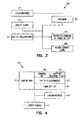
- FIG. 3 is a diagram of a dynamic collaborative document security system 300.
- the dynamic collaborative document security system 300 is implemented in a computer readable medium and is accessible over a network or any combinations of networks interfaced together.
- the dynamic collaborative document security system 300 implements methods 100 or methods 200 of FIGS. 1 and 2, respectively.
- the dynamic collaborative document security system 300 includes a document 301, a list of collaborators 302, and an identity service 303.
- the document 301 is content, a resource, a file, a directory, or a service. Access to the document 301 is granted to anyone having a valid symmetric key.
- the symmetric key includes the identities of all authorized collaborators 304 and is closely guarded and managed. The identities of the authorized collaborators are included within a list of collaborators 302.
- the list of collaborators 302 can be embedded within, linked to, or indexed to the document 301. Additionally, the list of collaborators 302 is associated with encrypted versions of the document's symmetric key 302A, and in some embodiments access control rights or edit rights 302B associated with each particular collaborator 304. Each identifier associated with a specific collaborator 302 is associated with a unique version of the symmetric key 302A within the list of collaborators 302. Each version of the symmetric key 302A is encrypted with a public key of a specific collaborator 304.
- not all collaborator identifiers included within the list of collaborators 302 include an encrypted version of the symmetric key 302A. This occurs when authorized collaborators 304 have not provided a valid public key. Moreover, not all the encrypted versions of the symmetric key 302A included encryption which can be successfully decrypted by authorized collaborators 304. This occurs when a particular collaborator 304 does not have its needed private key associated with the public key which was used to produce an encrypted version of the symmetric key 302A or occurs when a particular collaborator 304 has dynamically changed its public key.
- the identity service 303 is a special type of service included within the list of collaborators 302.
- the identity service 303 can dynamically validate trusted relationships via community lists and dynamically evaluate trust specifications and relationship contracts between the document 301 and the collaborators 304.
- the identity service 303 can thus dynamically add or remove collaborators 304 from the list of collaborators 302. When this occurs, the identity service 303 re-generates a newer version of the symmetric key to reflect the proper identities of authorized collaborators 304, and the identity service 303 generates newer encrypted versions of the symmetric key 302A.
- the identity service 303 can also act as an intermediary on behalf of a trusted and authenticated collaborator 304 for purposes of acquiring that collaborator's strongly rooted private- public key pair from a key service (e. g.,Verisign). Additionally, the identity service 303 can dynamically accept new public keys from authorized and trusted collaborators 304. In these instanc es, the identity service 303 uses its own public- private key pair to acquire a decrypted version of the symmetric key and then uses the newly acquired dynamic public key to produce a new encrypted version of the symmetric key for a collaborator 304.
- a key service e. g.,Verisign
- a particular collaborator 304 provides a dynamic change to its public key
- that new public key may need to be communicated to the remaining authorized collaborators 304. This may occur when the document 301 is signed when a collaborator 304 changes it.
- the identity service 303 can provide the new public key in a push (broadcasts to other collaborators 304 when new public key is received) or pull (selectively given to collaborators 304 when needed by them) fashion
- FIG. 4 is a diagram of a data structure representing a document 400 which is the being collaborated over a network.
- the document 400 is implemented in a computer readable medium and interfaces with a variety of services.
- the document 400 is consumed and accessed by services described above with respect to FIGS. 1- 3.
- the document 400 includes content data 401, a symmetric key 402, and a list of collaborators 403.
- the document 400 includes a plurality of encrypted versions of the symmetric key 404 and a community list 405.
- the document's content data 401 can be a file, directory, resource, or service.
- the symmetric key 402 and the list of collaborators 403 need not be contiguously stored with the content data 401. That is, the association between the content data 401, the symmetric key 402, and the list of collaborators 403 is logical and need not be physical, although in some instances it can be physical.
- the list of collaborators 403 includes the identity of an identity service 410 and a plurality of identities associated with other authorized collaborators 420.
- the identity service 410 dynamically manages the symmetric key 402, the list of collaborators 403, and the encrypted versions of the symmetric key 404.
- the identity service 410 uses the community list 405, trust specifications, and contracts for relationships to determine what actions can be dynamically performed with respect to requesting collaborators 420.
- the identity service 410 is capable of dynamically adding or removing select collaborators 420 from the list of collaborators 403. When this occurs, the identity service 410 generates a newer version of the symmetric key 402 and produces newer encrypted versions of the symmetric key 404. Further, the identity service 410 is capable of dynamically accepting a new, initial, or changed public key on behalf of an authorized collaborator 403. When this occurs, the identity service 410 uses its own private- public key pair to decrypt the symmetric key 402 and then uses the new public key to produce a usable encrypted version of the symmetric key 404 for the needing collaborator 420.
- the identity service 410 can be used by a requesting collaborator 420 for purposes of acquiring a strongly rooted private public key pair on behalf of collaborator that does not have access to its private key. This occurs by the identity service 410 acting as a conduit between the requesting collaborator 420 and a key service (e. g., Verisign).
- a key service e. g., Verisign
- the identity service 410 can be used to restrict or monitor access associated with a particular collaborator 420 based on access control rights or edit rights associated with a particular collaborator 420.
Landscapes
- Engineering & Computer Science (AREA)
- Theoretical Computer Science (AREA)
- Computer Security & Cryptography (AREA)
- Software Systems (AREA)
- Computer Hardware Design (AREA)
- General Health & Medical Sciences (AREA)
- Health & Medical Sciences (AREA)
- Physics & Mathematics (AREA)
- General Engineering & Computer Science (AREA)
- General Physics & Mathematics (AREA)
- Bioethics (AREA)
- Storage Device Security (AREA)
- Document Processing Apparatus (AREA)
Abstract
Description
Claims (33)
- A method for dynamically managing security associated with document collaboration, comprising:associating (110) collaborators with different encrypted versions of a key, wherein decrypted versions of the key permit access to a document; andadding (120) an identity service as one of the collaborators, wherein the identity service is capable of dynamically adjusting encryption formats for one or more of the collaborators' encrypted keys.
- The method of claim 1 further comprising, dynamically adding or removing (122) one or more of the collaborators.
- The method of claim 1 further comprising, linking (111) the collaborators and encrypted keys to the document as metadata defining document access and security.
- The method of claim 1 further comprising, embedding (112) the collaborators and encrypted keys within a portion of the document defining document access and security.
- The method of claim 1 wherein adding further includes recognizing (123) a select one of the collaborators as trusted to the identity service and permitting it to provide a dynamically generated public key which the identity service uses to encrypt a select one of the encrypted keys associated with the trusted collaborator.
- The method of claim 5 wherein recognizing (123) further includes inspecting (124) a community list associated with the document to determine if the select one of the collaborators is authorized to be the trusted.
- The method of claim 1 further comprising signing (130) the document by a select one of the collaborators which modifies the document, wherein the signature is associated with a public key of the select collaborator.
- The method of claim 1 further comprising:changing the key; andupdating the encrypted versions of the key with the changed key.
- A method for dynamically managing security associated with document collaboration, comprising:identifying (210) a collaborator associated with a document;verifying (220) a trust relationship between the collaborator and the document;acquiring (230) a dynamic public key from or on behalf of the collaborator;decrypting (240) a symmetric key which grants access to the document; andencrypting (250) the symmetric key with the dynamic public key.
- The method of claim 9 further comprising:recognizing (251) that the collaborator has altered the document and signed the document with the dynamic public key; andcommunicating (251) the dynamic public key to a plurality of other collaborators associated with the document.
- The method of claim 9 wherein acquiring (230) further includes acting as an intermediary between the collaborator and key service for purposes of acquiring a strongly rooted key pair for the collaborator, wherein a portion of that key pair is the public key and wherein another portion of that key pair is a private key which permits the collaborator to decrypt the encrypted symmetric key for purposes of accessing the document.
- The method of claim 9 wherein acquiring (230) further includes generating a non strongly rooted private- public key pair for the collaborator.
- The method of claim 9 further comprising:dynamically receiving (253) a request from a different collaborator to access the document;inspecting (254) a trust specification to ensure the access is permissible;receiving (254) a public key for the different collaborator;generating (255) a new symmetric key which includes the different collaborator, the collaborator, and other collaborators associated with the document; andre-encrypting (256) the symmetric key with the public key of the different collaborator and with the dynamic public key of the collaborator and with other public keys associated with the other collaborators.
- The method of claim 13 further comprising, communicating (256) the public key of the different collaborator to the collaborator and to the other collaborators associated with the document.
- The method of claim 13 wherein generating (255) further includes generating a random new symmetric key.
- The method of claim 13 wherein inspecting (254) further includes inspecting community lists associated with the different collaborator and the document to ensure that the different collaborator can be dynamically added as a new collaborator to the document.
- The method of claim 9 wherein verifying (220) further includes authenticating the collaborator to the document according to a contract.
- A dynamic collaborative document security system (300), comprising:a document (301);a list of collaborators (302) associated with the document; andan identity service (303), wherein the identity service is included within the list of collaborators, and wherein the identity service dynamically manages encryption of a symmetric key associated with the document and dynamically manages identities of the list of collaborators according to a trust specification, wherein access to a decrypted version of the symmetric key provides access to the document.
- The dynamic collaborative document security system of claim 18 wherein each entry within the list of collaborators includes a specific encrypted version (302A) of the symmetric key, each specific encrypted version is encrypted with a specific public key of a specific collaborator included within the list of collaborators.
- The dynamic collaborative document security system of claim 18 wherein the identity service (303) changes the symmetric key and re-performs encryption when a specific collaborator (304) is dynamically added to or dynamically removed from the list of collaborators (302).
- The dynamic collaborative document security system of claim 18 wherein the identity service (303) dynamically acquires a strongly rooted public-private key pair on behalf of a requesting collaborator (304) from a keying service.
- The dynamic collaborative document security system of claim 18 wherein the identity service (303) dynamically generates a non-strongly rooted public-private key pair on behalf of a requesting collaborator (304).
- The dynamic collaborative document security system of claim 18 wherein the identity service (303) determines if a dynamically generated public key associated with a specific collaborator of the list of collaborators has signed the document after altering the document, and wherein if this occurs the identity service communicates the dynamically generated public key to the remaining collaborators included within the list of collaborators (302).
- The dynamic collaborative document security system of claim 18 further comprising access control rights (302B) associated with each collaborator included within the list of collaborators (302).
- A data structure (400) residing in a computer readable medium, comprising:content data (401);a symmetric key (402); anda list (403) of document collaborators, each collaborator (420) within the list associated with a specific encrypted version (404) of the symmetric key, wherein an identity service (410) is included within the list of document collaborators, the identity service capable of dynamically adding and removing select ones of the collaborators and capable of dynamically re-encrypting the symmetric key for the select ones of the collaborators.
- The data structure of claim 25, being at least one of an executable program, a directory, a resource, a file, an image, and a video.
- The data structure of claim 25, wherein the symmetric key (402) and the list (403) of document collaborators are metadata linked with the content data (401).
- The data structure of claim 25 further comprising, a trust specification that defines relationships between document collaborators (420) and the document, and wherein the trust specification drives the actions of the identity service (410).
- The data structure of claim 25 further comprising, a community list (405) which is consumed by the identity service (410), the community list identifying document collaborators (420) which can be dynamically added to the list (403) of document collaborators.
- The data structure of claim 25 wherein members of the list (403) of document collaborators have been granted access control rights (302B) or edit rights to the document via the identity service (410) which determines the access control rights or edit rights based on a trust specification for the document.
- The data structure of claim 25 wherein the identity service (410) communicates a trust specification of the document dynamically to another service, and wherein that service uses the trust specification to dynamically manage access to the document.
- A computer program which when executing on a computer or computer network performs the method as claimed in any one of claims 1 to 8, or any one of claims 9 to 17.
- The computer program of claim 32, when stored on a machine-accessible medium.
Applications Claiming Priority (2)
| Application Number | Priority Date | Filing Date | Title |
|---|---|---|---|
| US813505 | 1997-03-07 | ||
| US10/813,505 US7467415B2 (en) | 2003-09-30 | 2004-03-30 | Distributed dynamic security for document collaboration |
Publications (3)
| Publication Number | Publication Date |
|---|---|
| EP1586976A2 true EP1586976A2 (en) | 2005-10-19 |
| EP1586976A3 EP1586976A3 (en) | 2006-09-20 |
| EP1586976B1 EP1586976B1 (en) | 2017-07-26 |
Family
ID=34938728
Family Applications (1)
| Application Number | Title | Priority Date | Filing Date |
|---|---|---|---|
| EP05101068.4A Expired - Lifetime EP1586976B1 (en) | 2004-03-30 | 2005-02-14 | Distributed dynamic security for document collaboration |
Country Status (2)
| Country | Link |
|---|---|
| US (1) | US7467415B2 (en) |
| EP (1) | EP1586976B1 (en) |
Cited By (3)
| Publication number | Priority date | Publication date | Assignee | Title |
|---|---|---|---|---|
| EP1865651A1 (en) * | 2006-06-08 | 2007-12-12 | Novell, Inc. | Cooperative encoding data by pluralities of parties |
| GB2507100A (en) * | 2012-10-19 | 2014-04-23 | Ibm | Secure sharing and collaborative editing of documents in cloud based applications |
| US9081953B2 (en) | 2012-07-17 | 2015-07-14 | Oracle International Corporation | Defense against search engine tracking |
Families Citing this family (72)
| Publication number | Priority date | Publication date | Assignee | Title |
|---|---|---|---|---|
| US7921288B1 (en) | 2001-12-12 | 2011-04-05 | Hildebrand Hal S | System and method for providing different levels of key security for controlling access to secured items |
| US8006280B1 (en) | 2001-12-12 | 2011-08-23 | Hildebrand Hal S | Security system for generating keys from access rules in a decentralized manner and methods therefor |
| US7380120B1 (en) | 2001-12-12 | 2008-05-27 | Guardian Data Storage, Llc | Secured data format for access control |
| US7930756B1 (en) | 2001-12-12 | 2011-04-19 | Crocker Steven Toye | Multi-level cryptographic transformations for securing digital assets |
| US10033700B2 (en) | 2001-12-12 | 2018-07-24 | Intellectual Ventures I Llc | Dynamic evaluation of access rights |
| US7565683B1 (en) | 2001-12-12 | 2009-07-21 | Weiqing Huang | Method and system for implementing changes to security policies in a distributed security system |
| US7921284B1 (en) | 2001-12-12 | 2011-04-05 | Gary Mark Kinghorn | Method and system for protecting electronic data in enterprise environment |
| US8065713B1 (en) | 2001-12-12 | 2011-11-22 | Klimenty Vainstein | System and method for providing multi-location access management to secured items |
| US7921450B1 (en) | 2001-12-12 | 2011-04-05 | Klimenty Vainstein | Security system using indirect key generation from access rules and methods therefor |
| US7783765B2 (en) | 2001-12-12 | 2010-08-24 | Hildebrand Hal S | System and method for providing distributed access control to secured documents |
| US7681034B1 (en) | 2001-12-12 | 2010-03-16 | Chang-Ping Lee | Method and apparatus for securing electronic data |
| US7562232B2 (en) | 2001-12-12 | 2009-07-14 | Patrick Zuili | System and method for providing manageability to security information for secured items |
| US7478418B2 (en) | 2001-12-12 | 2009-01-13 | Guardian Data Storage, Llc | Guaranteed delivery of changes to security policies in a distributed system |
| US10360545B2 (en) | 2001-12-12 | 2019-07-23 | Guardian Data Storage, Llc | Method and apparatus for accessing secured electronic data off-line |
| US7178033B1 (en) | 2001-12-12 | 2007-02-13 | Pss Systems, Inc. | Method and apparatus for securing digital assets |
| US7260555B2 (en) | 2001-12-12 | 2007-08-21 | Guardian Data Storage, Llc | Method and architecture for providing pervasive security to digital assets |
| US7631184B2 (en) | 2002-05-14 | 2009-12-08 | Nicholas Ryan | System and method for imposing security on copies of secured items |
| USRE41546E1 (en) | 2001-12-12 | 2010-08-17 | Klimenty Vainstein | Method and system for managing security tiers |
| US7950066B1 (en) | 2001-12-21 | 2011-05-24 | Guardian Data Storage, Llc | Method and system for restricting use of a clipboard application |
| US8176334B2 (en) | 2002-09-30 | 2012-05-08 | Guardian Data Storage, Llc | Document security system that permits external users to gain access to secured files |
| US8613102B2 (en) | 2004-03-30 | 2013-12-17 | Intellectual Ventures I Llc | Method and system for providing document retention using cryptography |
| US7512810B1 (en) | 2002-09-11 | 2009-03-31 | Guardian Data Storage Llc | Method and system for protecting encrypted files transmitted over a network |
| US7836310B1 (en) | 2002-11-01 | 2010-11-16 | Yevgeniy Gutnik | Security system that uses indirect password-based encryption |
| US7890990B1 (en) | 2002-12-20 | 2011-02-15 | Klimenty Vainstein | Security system with staging capabilities |
| US7577838B1 (en) | 2002-12-20 | 2009-08-18 | Alain Rossmann | Hybrid systems for securing digital assets |
| US8707034B1 (en) | 2003-05-30 | 2014-04-22 | Intellectual Ventures I Llc | Method and system for using remote headers to secure electronic files |
| US7555558B1 (en) | 2003-08-15 | 2009-06-30 | Michael Frederick Kenrich | Method and system for fault-tolerant transfer of files across a network |
| US7316027B2 (en) * | 2004-02-03 | 2008-01-01 | Novell, Inc. | Techniques for dynamically establishing and managing trust relationships |
| US8015301B2 (en) * | 2003-09-30 | 2011-09-06 | Novell, Inc. | Policy and attribute based access to a resource |
| US7703140B2 (en) | 2003-09-30 | 2010-04-20 | Guardian Data Storage, Llc | Method and system for securing digital assets using process-driven security policies |
| US7299493B1 (en) * | 2003-09-30 | 2007-11-20 | Novell, Inc. | Techniques for dynamically establishing and managing authentication and trust relationships |
| US8127366B2 (en) | 2003-09-30 | 2012-02-28 | Guardian Data Storage, Llc | Method and apparatus for transitioning between states of security policies used to secure electronic documents |
| US7519596B2 (en) | 2004-03-30 | 2009-04-14 | Microsoft Corporation | Globally trusted credentials leveraged for server access control |
| US7908663B2 (en) | 2004-04-20 | 2011-03-15 | Microsoft Corporation | Abstractions and automation for enhanced sharing and collaboration |
| US7707427B1 (en) | 2004-07-19 | 2010-04-27 | Michael Frederick Kenrich | Multi-level file digests |
| US7818810B2 (en) * | 2005-10-07 | 2010-10-19 | International Business Machines Corporation | Control of document content having extraction permissives |
| US8856310B2 (en) * | 2005-12-22 | 2014-10-07 | Alcatel Lucent | ACORN: providing network-level security in P2P overlay architectures |
| JP2008059063A (en) * | 2006-08-29 | 2008-03-13 | Fujitsu Ltd | Information management program |
| US8688992B2 (en) * | 2006-11-02 | 2014-04-01 | Recombo, Inc. | System and method for generating agreements |
| US9183524B2 (en) * | 2007-02-21 | 2015-11-10 | Novell, Inc. | Imaged-based method for transport and authentication of virtualized workflows |
| US20080201191A1 (en) * | 2007-02-21 | 2008-08-21 | Novell, Inc. | Dynamic workflow resource authentication and discovery |
| US20090217196A1 (en) | 2008-02-21 | 2009-08-27 | Globalenglish Corporation | Web-Based Tool for Collaborative, Social Learning |
| US8612469B2 (en) * | 2008-02-21 | 2013-12-17 | Globalenglish Corporation | Network-accessible collaborative annotation tool |
| US9166954B2 (en) * | 2008-02-29 | 2015-10-20 | Adobe Systems Incorporated | Document-authorized access to a shared workspace |
| US9288264B2 (en) * | 2008-08-25 | 2016-03-15 | Novell, Inc. | System and method for implementing a cloud workflow |
| US8364842B2 (en) * | 2009-03-13 | 2013-01-29 | Novell, Inc. | System and method for reduced cloud IP address utilization |
| US8429716B2 (en) * | 2009-11-05 | 2013-04-23 | Novell, Inc. | System and method for transparent access and management of user accessible cloud assets |
| US8286232B2 (en) * | 2009-03-13 | 2012-10-09 | Novell, Inc. | System and method for transparent cloud access |
| US9658891B2 (en) * | 2009-03-13 | 2017-05-23 | Micro Focus Software Inc. | System and method for providing key-encrypted storage in a cloud computing environment |
| US8065395B2 (en) * | 2009-03-13 | 2011-11-22 | Novell, Inc. | System and method for queuing to a cloud via a queuing proxy |
| US8516293B2 (en) * | 2009-11-05 | 2013-08-20 | Novell, Inc. | System and method for implementing a cloud computer |
| US9742864B2 (en) * | 2008-08-25 | 2017-08-22 | Novell, Inc. | System and method for implementing cloud mitigation and operations controllers |
| US9614855B2 (en) * | 2009-11-05 | 2017-04-04 | Micro Focus Software Inc. | System and method for implementing a secure web application entitlement service |
| JP5200807B2 (en) * | 2008-09-19 | 2013-06-05 | 富士通株式会社 | Mobile terminal, data management system and program |
| US8689352B2 (en) * | 2008-12-18 | 2014-04-01 | Sap Ag | Distributed access control for document centric collaborations |
| US8560846B2 (en) * | 2011-01-13 | 2013-10-15 | Hewlett-Packard Development Company, L.P. | Document security system and method |
| US9600448B2 (en) * | 2011-01-28 | 2017-03-21 | Hewlett-Packard Development Company, L.P. | Document management system and method |
| US8656181B2 (en) * | 2011-05-26 | 2014-02-18 | Hewlett-Packard Development Company, L.P. | Method and system for business workflow cycle of a composite document |
| WO2013050613A1 (en) * | 2011-10-06 | 2013-04-11 | The Provost, Fellows, Foundation Scholars, And The Other Members Of Board, Of The College Of The Holy And Undivided Trinity Of Queen Elizabeth, Near Dublin | System and apparatus for securely storing data |
| US10007405B2 (en) | 2011-12-29 | 2018-06-26 | Brandon E. D'Amore | Systems and methods of creative work collaborative systems |
| WO2013102141A1 (en) * | 2011-12-29 | 2013-07-04 | D Amore Brandon Evan | Systems and methods of creative work collaborative systems |
| US9373001B2 (en) | 2012-12-26 | 2016-06-21 | Barracuda Networks, Inc. | Distributed encryption and access control scheme in a cloud environment |
| US8892679B1 (en) | 2013-09-13 | 2014-11-18 | Box, Inc. | Mobile device, methods and user interfaces thereof in a mobile device platform featuring multifunctional access and engagement in a collaborative environment provided by a cloud-based platform |
| US9704137B2 (en) * | 2013-09-13 | 2017-07-11 | Box, Inc. | Simultaneous editing/accessing of content by collaborator invitation through a web-based or mobile application to a cloud-based collaboration platform |
| GB2518298A (en) | 2013-09-13 | 2015-03-18 | Box Inc | High-availability architecture for a cloud-based concurrent-access collaboration platform |
| US10866931B2 (en) | 2013-10-22 | 2020-12-15 | Box, Inc. | Desktop application for accessing a cloud collaboration platform |
| US9609032B2 (en) | 2014-06-26 | 2017-03-28 | Microsoft Technology Licensing, Llc | Joint ownership of protected information |
| US9130744B1 (en) * | 2014-09-22 | 2015-09-08 | Envelope, Llc | Sending an encrypted key pair and a secret shared by two devices to a trusted intermediary |
| US10542115B1 (en) * | 2015-10-01 | 2020-01-21 | Sprint Communications Company L.P. | Securing communications in a network function virtualization (NFV) core network |
| US10133716B2 (en) * | 2016-12-23 | 2018-11-20 | Documill Oy | Generation of notifications in a collaborative document editing environment |
| US12363140B2 (en) * | 2021-03-26 | 2025-07-15 | CyDeploy, Inc. | Security compatibility testing and configuration platform |
| CN114239057B (en) * | 2021-12-03 | 2025-04-11 | 北京达佳互联信息技术有限公司 | Document encryption method and device, document encryption equipment |
Family Cites Families (67)
| Publication number | Priority date | Publication date | Assignee | Title |
|---|---|---|---|---|
| US5560008A (en) | 1989-05-15 | 1996-09-24 | International Business Machines Corporation | Remote authentication and authorization in a distributed data processing system |
| US5544322A (en) | 1994-05-09 | 1996-08-06 | International Business Machines Corporation | System and method for policy-based inter-realm authentication within a distributed processing system |
| US5999711A (en) | 1994-07-18 | 1999-12-07 | Microsoft Corporation | Method and system for providing certificates holding authentication and authorization information for users/machines |
| JP3361661B2 (en) | 1995-09-08 | 2003-01-07 | 株式会社キャディックス | Authentication method on the network |
| JPH0981519A (en) | 1995-09-08 | 1997-03-28 | Kiyadeitsukusu:Kk | Authentication method on network |
| US5787175A (en) * | 1995-10-23 | 1998-07-28 | Novell, Inc. | Method and apparatus for collaborative document control |
| FR2743235B1 (en) | 1995-12-27 | 1998-01-23 | Alsthom Cge Alcatel | METHOD FOR SECURING COLLABORATIONS BETWEEN OBJECTS OF AN OBJECT-ORIENTED PROGRAM |
| US20060178997A1 (en) * | 1996-01-11 | 2006-08-10 | General Dynamics Advanced Information Systems, Inc. | Systems and methods for authoring and protecting digital property |
| AU1690597A (en) * | 1996-01-11 | 1997-08-01 | Mitre Corporation, The | System for controlling access and distribution of digital property |
| US5737523A (en) | 1996-03-04 | 1998-04-07 | Sun Microsystems, Inc. | Methods and apparatus for providing dynamic network file system client authentication |
| US5818936A (en) | 1996-03-15 | 1998-10-06 | Novell, Inc. | System and method for automically authenticating a user in a distributed network system |
| US6088451A (en) | 1996-06-28 | 2000-07-11 | Mci Communications Corporation | Security system and method for network element access |
| US5913025A (en) | 1996-11-14 | 1999-06-15 | Novell, Inc. | Method and apparatus for proxy authentication |
| DE69835924T2 (en) * | 1997-01-17 | 2007-09-20 | Ntt Data Corp. | METHOD AND SYSTEM FOR KEY CHECKS FOR ELECTRONIC SIGNATURE |
| US7062781B2 (en) | 1997-02-12 | 2006-06-13 | Verizon Laboratories Inc. | Method for providing simultaneous parallel secure command execution on multiple remote hosts |
| US6301661B1 (en) | 1997-02-12 | 2001-10-09 | Verizon Labortories Inc. | Enhanced security for applications employing downloadable executable content |
| US6014135A (en) | 1997-04-04 | 2000-01-11 | Netscape Communications Corp. | Collaboration centric document processing environment using an information centric visual user interface and information presentation method |
| US6092199A (en) | 1997-07-07 | 2000-07-18 | International Business Machines Corporation | Dynamic creation of a user account in a client following authentication from a non-native server domain |
| US6119230A (en) | 1997-10-01 | 2000-09-12 | Novell, Inc. | Distributed dynamic security capabilities |
| US6108788A (en) | 1997-12-08 | 2000-08-22 | Entrust Technologies Limited | Certificate management system and method for a communication security system |
| US6263446B1 (en) | 1997-12-23 | 2001-07-17 | Arcot Systems, Inc. | Method and apparatus for secure distribution of authentication credentials to roaming users |
| US6230271B1 (en) | 1998-01-20 | 2001-05-08 | Pilot Network Services, Inc. | Dynamic policy-based apparatus for wide-range configurable network service authentication and access control using a fixed-path hardware configuration |
| DE69833929T2 (en) | 1998-04-10 | 2007-03-15 | Sun Microsystems, Inc., Mountain View | Network access authentication system |
| US6718470B1 (en) | 1998-06-05 | 2004-04-06 | Entrust Technologies Limited | System and method for granting security privilege in a communication system |
| US6343361B1 (en) | 1998-11-13 | 2002-01-29 | Tsunami Security, Inc. | Dynamic challenge-response authentication and verification of identity of party sending or receiving electronic communication |
| US6609198B1 (en) | 1999-08-05 | 2003-08-19 | Sun Microsystems, Inc. | Log-on service providing credential level change without loss of session continuity |
| US6430575B1 (en) | 1999-09-10 | 2002-08-06 | Xerox Corporation | Collaborative document management system with customizable filing structures that are mutually intelligible |
| US6870842B1 (en) | 1999-12-10 | 2005-03-22 | Sun Microsystems, Inc. | Using multicasting to provide ethernet-like communication behavior to selected peers on a network |
| US7757271B2 (en) | 2000-04-19 | 2010-07-13 | Hewlett-Packard Development Company, L.P. | Computer system security service |
| US6981262B1 (en) * | 2000-06-27 | 2005-12-27 | Microsoft Corporation | System and method for client interaction in a multi-level rights-management architecture |
| US6891953B1 (en) * | 2000-06-27 | 2005-05-10 | Microsoft Corporation | Method and system for binding enhanced software features to a persona |
| US7017189B1 (en) * | 2000-06-27 | 2006-03-21 | Microsoft Corporation | System and method for activating a rendering device in a multi-level rights-management architecture |
| US6515316B1 (en) | 2000-07-14 | 2003-02-04 | Trw Inc. | Partially relaxed channel HEMT device |
| JP4595182B2 (en) * | 2000-09-07 | 2010-12-08 | ソニー株式会社 | Information recording apparatus, information reproducing apparatus, information recording method, information reproducing method, information recording medium, and program providing medium |
| JP4269501B2 (en) * | 2000-09-07 | 2009-05-27 | ソニー株式会社 | Information recording apparatus, information reproducing apparatus, information recording method, information reproducing method, information recording medium, and program providing medium |
| US7035828B2 (en) | 2000-10-25 | 2006-04-25 | Topmoxie, Inc. | Method and system for modifying and transmitting data between a portable computer and a network |
| JP2002140309A (en) | 2000-11-02 | 2002-05-17 | Hitachi Ltd | Service system |
| JP4622087B2 (en) * | 2000-11-09 | 2011-02-02 | ソニー株式会社 | Information processing apparatus, information processing method, and program storage medium |
| US7140044B2 (en) | 2000-11-13 | 2006-11-21 | Digital Doors, Inc. | Data security system and method for separation of user communities |
| JP4078802B2 (en) * | 2000-12-26 | 2008-04-23 | ソニー株式会社 | Information processing system, information processing method, information processing apparatus, information recording medium, and program recording medium |
| JP4710132B2 (en) * | 2000-12-26 | 2011-06-29 | ソニー株式会社 | Information processing system, information processing method, and program recording medium |
| JP4581246B2 (en) * | 2000-12-26 | 2010-11-17 | ソニー株式会社 | Information processing system, information processing method, and program recording medium |
| US7131000B2 (en) | 2001-01-18 | 2006-10-31 | Bradee Robert L | Computer security system |
| AU2002234258A1 (en) | 2001-01-22 | 2002-07-30 | Sun Microsystems, Inc. | Peer-to-peer network computing platform |
| US7088822B2 (en) * | 2001-02-13 | 2006-08-08 | Sony Corporation | Information playback device, information recording device, information playback method, information recording method, and information recording medium and program storage medium used therewith |
| US6959336B2 (en) | 2001-04-07 | 2005-10-25 | Secure Data In Motion, Inc. | Method and system of federated authentication service for interacting between agent and client and communicating with other components of the system to choose an appropriate mechanism for the subject from among the plurality of authentication mechanisms wherein the subject is selected from humans, client applications and applets |
| US20030014631A1 (en) | 2001-07-16 | 2003-01-16 | Steven Sprague | Method and system for user and group authentication with pseudo-anonymity over a public network |
| US6957261B2 (en) | 2001-07-17 | 2005-10-18 | Intel Corporation | Resource policy management using a centralized policy data structure |
| GB0117429D0 (en) | 2001-07-17 | 2001-09-12 | Trustis Ltd | Trust management |
| GB2378010A (en) | 2001-07-27 | 2003-01-29 | Hewlett Packard Co | Mulit-Domain authorisation and authentication |
| US7383433B2 (en) | 2001-07-31 | 2008-06-03 | Sun Microsystems, Inc. | Trust spectrum for certificate distribution in distributed peer-to-peer networks |
| US20030061144A1 (en) | 2001-09-27 | 2003-03-27 | Brickell Ernie F. | Controlled access to identification and status information |
| US7120667B2 (en) | 2001-10-30 | 2006-10-10 | Hewlett-Packard Development Company, L.P. | Method and system for ad hoc networking of computer users |
| US7996888B2 (en) | 2002-01-11 | 2011-08-09 | Nokia Corporation | Virtual identity apparatus and method for using same |
| US20030235309A1 (en) | 2002-03-08 | 2003-12-25 | Marinus Struik | Local area network |
| GB2389929A (en) * | 2002-06-21 | 2003-12-24 | Armoursoft Ltd | Computer Encryption Systems |
| US7797434B2 (en) | 2002-12-31 | 2010-09-14 | International Business Machines Corporation | Method and system for user-determind attribute storage in a federated environment |
| US7966368B2 (en) | 2003-05-02 | 2011-06-21 | Microsoft Corporation | Communicating messages over transient connections in a peer-to-peer network |
| US7237256B2 (en) | 2003-07-14 | 2007-06-26 | Sun Microsystems, Inc. | Method and system for providing an open and interoperable system |
| US7299493B1 (en) | 2003-09-30 | 2007-11-20 | Novell, Inc. | Techniques for dynamically establishing and managing authentication and trust relationships |
| US8015301B2 (en) | 2003-09-30 | 2011-09-06 | Novell, Inc. | Policy and attribute based access to a resource |
| US7316027B2 (en) | 2004-02-03 | 2008-01-01 | Novell, Inc. | Techniques for dynamically establishing and managing trust relationships |
| EP1612637A1 (en) * | 2004-06-29 | 2006-01-04 | Nagracard S.A. | Security module and method of personalisation of a security module |
| KR100694064B1 (en) * | 2004-10-08 | 2007-03-12 | 삼성전자주식회사 | DDR conversion method and apparatus |
| US7761591B2 (en) * | 2005-12-16 | 2010-07-20 | Jean A. Graham | Central work-product management system for coordinated collaboration with remote users |
| WO2007120360A2 (en) * | 2005-12-29 | 2007-10-25 | Blue Jungle | Information management system |
| US7716240B2 (en) * | 2005-12-29 | 2010-05-11 | Nextlabs, Inc. | Techniques and system to deploy policies intelligently |
-
2004
- 2004-03-30 US US10/813,505 patent/US7467415B2/en active Active
-
2005
- 2005-02-14 EP EP05101068.4A patent/EP1586976B1/en not_active Expired - Lifetime
Cited By (10)
| Publication number | Priority date | Publication date | Assignee | Title |
|---|---|---|---|---|
| EP1865651A1 (en) * | 2006-06-08 | 2007-12-12 | Novell, Inc. | Cooperative encoding data by pluralities of parties |
| US7940926B2 (en) | 2006-06-08 | 2011-05-10 | Novell, Inc. | Cooperative encoding of data by pluralities of parties |
| US8750496B2 (en) | 2006-06-08 | 2014-06-10 | Oracle International Corporation | Cooperative encoding of data by pluralities of parties |
| US9081953B2 (en) | 2012-07-17 | 2015-07-14 | Oracle International Corporation | Defense against search engine tracking |
| US9740881B2 (en) | 2012-07-17 | 2017-08-22 | Oracle International Corporation | Defense against search engine tracking |
| GB2507100A (en) * | 2012-10-19 | 2014-04-23 | Ibm | Secure sharing and collaborative editing of documents in cloud based applications |
| US9137220B2 (en) | 2012-10-19 | 2015-09-15 | International Business Machines Corporation | Secure sharing and collaborative editing of documents in cloud based applications |
| US9774574B2 (en) | 2012-10-19 | 2017-09-26 | International Business Machines Corporation | Secure sharing and collaborative editing of documents in cloud based applications |
| US10681019B2 (en) | 2012-10-19 | 2020-06-09 | International Business Machines Corporation | Secure sharing and collaborative editing of documents in cloud based applications |
| US11283780B2 (en) | 2012-10-19 | 2022-03-22 | International Business Machines Corporation | Secure sharing and collaborative editing of documents in cloud based applications |
Also Published As
| Publication number | Publication date |
|---|---|
| EP1586976A3 (en) | 2006-09-20 |
| EP1586976B1 (en) | 2017-07-26 |
| US7467415B2 (en) | 2008-12-16 |
| US20050120199A1 (en) | 2005-06-02 |
Similar Documents
| Publication | Publication Date | Title |
|---|---|---|
| US7467415B2 (en) | Distributed dynamic security for document collaboration | |
| US12095747B2 (en) | Cryptographic proxy service | |
| US20240305476A1 (en) | Systems and methods for providing authentication to a plurality of devices | |
| US7316027B2 (en) | Techniques for dynamically establishing and managing trust relationships | |
| US9942242B2 (en) | Content access for duration of calendar events | |
| US7552468B2 (en) | Techniques for dynamically establishing and managing authentication and trust relationships | |
| US7703128B2 (en) | Digital identity management | |
| US8788811B2 (en) | Server-side key generation for non-token clients | |
| US8549326B2 (en) | Method and system for extending encrypting file system | |
| US7797544B2 (en) | Attesting to establish trust between computer entities | |
| US9137017B2 (en) | Key recovery mechanism | |
| US9209972B2 (en) | Mediator device monitoring and controlling access to electronic content | |
| US20110296171A1 (en) | Key recovery mechanism | |
| JP2003233589A (en) | How to securely share personal devices between multiple users | |
| US20100218260A1 (en) | Provisions for Validating Content Using a Content Registration Authority | |
| EP1560394B1 (en) | Techniques for dynamically establishing and managing authentication and trust relationships | |
| Morosi | Study of authentication models and implementation of a prototype by using eID and Distributed Ledger Technologies | |
| Lampson | Practical principles for computer security | |
| Yeşiltepe et al. | Security type comparison in service oriented architecture security | |
| Zhang | Flexible Certificate Management for Secure HTTPS Client/Server Communication | |
| Letz et al. | An Analysis of the UNICORE Security Model | |
| Marchant et al. | Security Engineering Lessons Learned for Migrating Independent LANs to an Enterprise Environment. |
Legal Events
| Date | Code | Title | Description |
|---|---|---|---|
| PUAI | Public reference made under article 153(3) epc to a published international application that has entered the european phase |
Free format text: ORIGINAL CODE: 0009012 |
|
| AK | Designated contracting states |
Kind code of ref document: A2 Designated state(s): AT BE BG CH CY CZ DE DK EE ES FI FR GB GR HU IE IS IT LI LT LU MC NL PL PT RO SE SI SK TR |
|
| AX | Request for extension of the european patent |
Extension state: AL BA HR LV MK YU |
|
| PUAL | Search report despatched |
Free format text: ORIGINAL CODE: 0009013 |
|
| AK | Designated contracting states |
Kind code of ref document: A3 Designated state(s): AT BE BG CH CY CZ DE DK EE ES FI FR GB GR HU IE IS IT LI LT LU MC NL PL PT RO SE SI SK TR |
|
| AX | Request for extension of the european patent |
Extension state: AL BA HR LV MK YU |
|
| 17P | Request for examination filed |
Effective date: 20061114 |
|
| AKX | Designation fees paid |
Designated state(s): DE FR GB IE |
|
| 17Q | First examination report despatched |
Effective date: 20070518 |
|
| APBK | Appeal reference recorded |
Free format text: ORIGINAL CODE: EPIDOSNREFNE |
|
| APBN | Date of receipt of notice of appeal recorded |
Free format text: ORIGINAL CODE: EPIDOSNNOA2E |
|
| APBR | Date of receipt of statement of grounds of appeal recorded |
Free format text: ORIGINAL CODE: EPIDOSNNOA3E |
|
| APAF | Appeal reference modified |
Free format text: ORIGINAL CODE: EPIDOSCREFNE |
|
| RAP1 | Party data changed (applicant data changed or rights of an application transferred) |
Owner name: ORACLE INTERNATIONAL CORPORATION |
|
| APBT | Appeal procedure closed |
Free format text: ORIGINAL CODE: EPIDOSNNOA9E |
|
| REG | Reference to a national code |
Ref country code: DE Ref legal event code: R079 Ref document number: 602005052398 Country of ref document: DE Free format text: PREVIOUS MAIN CLASS: G06F0001000000 Ipc: G06F0021620000 |
|
| GRAP | Despatch of communication of intention to grant a patent |
Free format text: ORIGINAL CODE: EPIDOSNIGR1 |
|
| STAA | Information on the status of an ep patent application or granted ep patent |
Free format text: STATUS: GRANT OF PATENT IS INTENDED |
|
| RIC1 | Information provided on ipc code assigned before grant |
Ipc: G06F 21/62 20130101AFI20170113BHEP |
|
| INTG | Intention to grant announced |
Effective date: 20170213 |
|
| GRAS | Grant fee paid |
Free format text: ORIGINAL CODE: EPIDOSNIGR3 |
|
| GRAA | (expected) grant |
Free format text: ORIGINAL CODE: 0009210 |
|
| STAA | Information on the status of an ep patent application or granted ep patent |
Free format text: STATUS: THE PATENT HAS BEEN GRANTED |
|
| AK | Designated contracting states |
Kind code of ref document: B1 Designated state(s): DE FR GB IE |
|
| REG | Reference to a national code |
Ref country code: GB Ref legal event code: FG4D |
|
| REG | Reference to a national code |
Ref country code: IE Ref legal event code: FG4D |
|
| REG | Reference to a national code |
Ref country code: DE Ref legal event code: R096 Ref document number: 602005052398 Country of ref document: DE |
|
| REG | Reference to a national code |
Ref country code: DE Ref legal event code: R097 Ref document number: 602005052398 Country of ref document: DE |
|
| PLBE | No opposition filed within time limit |
Free format text: ORIGINAL CODE: 0009261 |
|
| STAA | Information on the status of an ep patent application or granted ep patent |
Free format text: STATUS: NO OPPOSITION FILED WITHIN TIME LIMIT |
|
| 26N | No opposition filed |
Effective date: 20180430 |
|
| REG | Reference to a national code |
Ref country code: IE Ref legal event code: MM4A |
|
| REG | Reference to a national code |
Ref country code: FR Ref legal event code: ST Effective date: 20181031 |
|
| PG25 | Lapsed in a contracting state [announced via postgrant information from national office to epo] |
Ref country code: IE Free format text: LAPSE BECAUSE OF NON-PAYMENT OF DUE FEES Effective date: 20180214 |
|
| PG25 | Lapsed in a contracting state [announced via postgrant information from national office to epo] |
Ref country code: FR Free format text: LAPSE BECAUSE OF NON-PAYMENT OF DUE FEES Effective date: 20180228 |
|
| P01 | Opt-out of the competence of the unified patent court (upc) registered |
Effective date: 20230522 |
|
| PGFP | Annual fee paid to national office [announced via postgrant information from national office to epo] |
Ref country code: DE Payment date: 20231229 Year of fee payment: 20 Ref country code: GB Payment date: 20240108 Year of fee payment: 20 |
|
| REG | Reference to a national code |
Ref country code: DE Ref legal event code: R071 Ref document number: 602005052398 Country of ref document: DE |
|
| REG | Reference to a national code |
Ref country code: GB Ref legal event code: PE20 Expiry date: 20250213 |
|
| PG25 | Lapsed in a contracting state [announced via postgrant information from national office to epo] |
Ref country code: GB Free format text: LAPSE BECAUSE OF EXPIRATION OF PROTECTION Effective date: 20250213 |