EP1586636A1 - Hydantoinase variants with improved properties and their use for the production of amino acids - Google Patents
Hydantoinase variants with improved properties and their use for the production of amino acids Download PDFInfo
- Publication number
- EP1586636A1 EP1586636A1 EP04026624A EP04026624A EP1586636A1 EP 1586636 A1 EP1586636 A1 EP 1586636A1 EP 04026624 A EP04026624 A EP 04026624A EP 04026624 A EP04026624 A EP 04026624A EP 1586636 A1 EP1586636 A1 EP 1586636A1
- Authority
- EP
- European Patent Office
- Prior art keywords
- hydantoinase
- modified
- amino acid
- unmodified
- whole cell
- Prior art date
- Legal status (The legal status is an assumption and is not a legal conclusion. Google has not performed a legal analysis and makes no representation as to the accuracy of the status listed.)
- Withdrawn
Links
- 108091022884 dihydropyrimidinase Proteins 0.000 title claims abstract description 123
- 102100036238 Dihydropyrimidinase Human genes 0.000 title claims abstract description 118
- 150000001413 amino acids Chemical class 0.000 title claims abstract description 49
- 238000004519 manufacturing process Methods 0.000 title claims abstract description 23
- 238000006467 substitution reaction Methods 0.000 claims abstract description 37
- 235000001014 amino acid Nutrition 0.000 claims description 73
- 229940024606 amino acid Drugs 0.000 claims description 33
- 238000000034 method Methods 0.000 claims description 33
- 239000003054 catalyst Substances 0.000 claims description 28
- 241000588724 Escherichia coli Species 0.000 claims description 20
- 230000008569 process Effects 0.000 claims description 20
- FFEARJCKVFRZRR-BYPYZUCNSA-N L-methionine Chemical compound CSCC[C@H](N)C(O)=O FFEARJCKVFRZRR-BYPYZUCNSA-N 0.000 claims description 15
- 230000002255 enzymatic effect Effects 0.000 claims description 15
- 108090000623 proteins and genes Proteins 0.000 claims description 12
- 102220043361 rs73866065 Human genes 0.000 claims description 10
- 108020004707 nucleic acids Proteins 0.000 claims description 9
- 102000039446 nucleic acids Human genes 0.000 claims description 9
- 150000007523 nucleic acids Chemical class 0.000 claims description 9
- KZSNJWFQEVHDMF-UHFFFAOYSA-N Valine Natural products CC(C)C(N)C(O)=O KZSNJWFQEVHDMF-UHFFFAOYSA-N 0.000 claims description 8
- 239000013604 expression vector Substances 0.000 claims description 8
- 230000014509 gene expression Effects 0.000 claims description 8
- 229930182817 methionine Natural products 0.000 claims description 8
- 102220034830 rs62508682 Human genes 0.000 claims description 6
- AGPKZVBTJJNPAG-WHFBIAKZSA-N L-isoleucine Chemical compound CC[C@H](C)[C@H](N)C(O)=O AGPKZVBTJJNPAG-WHFBIAKZSA-N 0.000 claims description 5
- DHMQDGOQFOQNFH-UHFFFAOYSA-N Glycine Natural products NCC(O)=O DHMQDGOQFOQNFH-UHFFFAOYSA-N 0.000 claims description 4
- ROHFNLRQFUQHCH-YFKPBYRVSA-N L-leucine Chemical compound CC(C)C[C@H](N)C(O)=O ROHFNLRQFUQHCH-YFKPBYRVSA-N 0.000 claims description 4
- KZSNJWFQEVHDMF-BYPYZUCNSA-N L-valine Chemical compound CC(C)[C@H](N)C(O)=O KZSNJWFQEVHDMF-BYPYZUCNSA-N 0.000 claims description 4
- 108090001066 Racemases and epimerases Proteins 0.000 claims description 4
- 108010088443 hydantoin racemase Proteins 0.000 claims description 4
- AGPKZVBTJJNPAG-UHFFFAOYSA-N isoleucine Natural products CCC(C)C(N)C(O)=O AGPKZVBTJJNPAG-UHFFFAOYSA-N 0.000 claims description 4
- 229960000310 isoleucine Drugs 0.000 claims description 4
- -1 neopentyl glycine Chemical compound 0.000 claims description 4
- 239000004474 valine Substances 0.000 claims description 4
- 241000894006 Bacteria Species 0.000 claims description 3
- KDXKERNSBIXSRK-YFKPBYRVSA-N L-lysine Chemical compound NCCCC[C@H](N)C(O)=O KDXKERNSBIXSRK-YFKPBYRVSA-N 0.000 claims description 3
- KDXKERNSBIXSRK-UHFFFAOYSA-N Lysine Natural products NCCCCC(N)C(O)=O KDXKERNSBIXSRK-UHFFFAOYSA-N 0.000 claims description 3
- 102000004879 Racemases and epimerases Human genes 0.000 claims description 3
- WJRBRSLFGCUECM-UHFFFAOYSA-N hydantoin Chemical compound O=C1CNC(=O)N1 WJRBRSLFGCUECM-UHFFFAOYSA-N 0.000 claims description 3
- 229940091173 hydantoin Drugs 0.000 claims description 3
- 239000004471 Glycine Substances 0.000 claims description 2
- QNAYBMKLOCPYGJ-REOHCLBHSA-N L-alanine Chemical compound C[C@H](N)C(O)=O QNAYBMKLOCPYGJ-REOHCLBHSA-N 0.000 claims description 2
- AYFVYJQAPQTCCC-GBXIJSLDSA-N L-threonine Chemical compound C[C@@H](O)[C@H](N)C(O)=O AYFVYJQAPQTCCC-GBXIJSLDSA-N 0.000 claims description 2
- ROHFNLRQFUQHCH-UHFFFAOYSA-N Leucine Natural products CC(C)CC(N)C(O)=O ROHFNLRQFUQHCH-UHFFFAOYSA-N 0.000 claims description 2
- 239000004472 Lysine Substances 0.000 claims description 2
- AYFVYJQAPQTCCC-UHFFFAOYSA-N Threonine Natural products CC(O)C(N)C(O)=O AYFVYJQAPQTCCC-UHFFFAOYSA-N 0.000 claims description 2
- 239000004473 Threonine Substances 0.000 claims description 2
- 235000004279 alanine Nutrition 0.000 claims description 2
- 230000006340 racemization Effects 0.000 claims description 2
- 150000001371 alpha-amino acids Chemical class 0.000 claims 1
- 235000008206 alpha-amino acids Nutrition 0.000 claims 1
- 125000003275 alpha amino acid group Chemical group 0.000 description 39
- 102000004190 Enzymes Human genes 0.000 description 32
- 108090000790 Enzymes Proteins 0.000 description 32
- 230000000694 effects Effects 0.000 description 30
- 238000006243 chemical reaction Methods 0.000 description 15
- 239000002773 nucleotide Substances 0.000 description 11
- 125000003729 nucleotide group Chemical group 0.000 description 11
- 229960004452 methionine Drugs 0.000 description 10
- 238000002708 random mutagenesis Methods 0.000 description 10
- 238000012216 screening Methods 0.000 description 10
- SHZGCJCMOBCMKK-UHFFFAOYSA-N D-mannomethylose Natural products CC1OC(O)C(O)C(O)C1O SHZGCJCMOBCMKK-UHFFFAOYSA-N 0.000 description 8
- SHZGCJCMOBCMKK-JFNONXLTSA-N L-rhamnopyranose Chemical compound C[C@@H]1OC(O)[C@H](O)[C@H](O)[C@H]1O SHZGCJCMOBCMKK-JFNONXLTSA-N 0.000 description 8
- PNNNRSAQSRJVSB-UHFFFAOYSA-N L-rhamnose Natural products CC(O)C(O)C(O)C(O)C=O PNNNRSAQSRJVSB-UHFFFAOYSA-N 0.000 description 8
- 230000006870 function Effects 0.000 description 8
- 238000002703 mutagenesis Methods 0.000 description 8
- 231100000350 mutagenesis Toxicity 0.000 description 8
- 239000000758 substrate Substances 0.000 description 8
- 241000186073 Arthrobacter sp. Species 0.000 description 7
- 125000000539 amino acid group Chemical group 0.000 description 7
- 239000013598 vector Substances 0.000 description 7
- ZMXDDKWLCZADIW-UHFFFAOYSA-N N,N-Dimethylformamide Chemical compound CN(C)C=O ZMXDDKWLCZADIW-UHFFFAOYSA-N 0.000 description 6
- 239000011541 reaction mixture Substances 0.000 description 6
- 229910021380 Manganese Chloride Inorganic materials 0.000 description 5
- GLFNIEUTAYBVOC-UHFFFAOYSA-L Manganese chloride Chemical compound Cl[Mn]Cl GLFNIEUTAYBVOC-UHFFFAOYSA-L 0.000 description 5
- 239000007983 Tris buffer Substances 0.000 description 5
- 150000001469 hydantoins Chemical class 0.000 description 5
- 230000006872 improvement Effects 0.000 description 5
- 239000011565 manganese chloride Substances 0.000 description 5
- 239000002609 medium Substances 0.000 description 5
- 230000037361 pathway Effects 0.000 description 5
- 239000013612 plasmid Substances 0.000 description 5
- 238000003752 polymerase chain reaction Methods 0.000 description 5
- 108091008146 restriction endonucleases Proteins 0.000 description 5
- 239000000243 solution Substances 0.000 description 5
- LENZDBCJOHFCAS-UHFFFAOYSA-N tris Chemical compound OCC(N)(CO)CO LENZDBCJOHFCAS-UHFFFAOYSA-N 0.000 description 5
- 150000008575 L-amino acids Chemical class 0.000 description 4
- 238000002835 absorbance Methods 0.000 description 4
- 239000012634 fragment Substances 0.000 description 4
- 238000004128 high performance liquid chromatography Methods 0.000 description 4
- 230000007062 hydrolysis Effects 0.000 description 4
- 238000006460 hydrolysis reaction Methods 0.000 description 4
- 238000011534 incubation Methods 0.000 description 4
- 230000035772 mutation Effects 0.000 description 4
- 235000018102 proteins Nutrition 0.000 description 4
- 102000004169 proteins and genes Human genes 0.000 description 4
- 230000009466 transformation Effects 0.000 description 4
- HBAQYPYDRFILMT-UHFFFAOYSA-N 8-[3-(1-cyclopropylpyrazol-4-yl)-1H-pyrazolo[4,3-d]pyrimidin-5-yl]-3-methyl-3,8-diazabicyclo[3.2.1]octan-2-one Chemical class C1(CC1)N1N=CC(=C1)C1=NNC2=C1N=C(N=C2)N1C2C(N(CC1CC2)C)=O HBAQYPYDRFILMT-UHFFFAOYSA-N 0.000 description 3
- 108090000531 Amidohydrolases Proteins 0.000 description 3
- 102000004092 Amidohydrolases Human genes 0.000 description 3
- 241000186063 Arthrobacter Species 0.000 description 3
- FFEARJCKVFRZRR-UHFFFAOYSA-N L-Methionine Natural products CSCCC(N)C(O)=O FFEARJCKVFRZRR-UHFFFAOYSA-N 0.000 description 3
- 229930195722 L-methionine Natural products 0.000 description 3
- COLNVLDHVKWLRT-QMMMGPOBSA-N L-phenylalanine Chemical compound OC(=O)[C@@H](N)CC1=CC=CC=C1 COLNVLDHVKWLRT-QMMMGPOBSA-N 0.000 description 3
- 108010011945 N-carbamoyl-L-amino-acid hydrolase Proteins 0.000 description 3
- DEWDMTSMCKXBNP-BYPYZUCNSA-N N-carbamoyl-L-methionine Chemical compound CSCC[C@@H](C(O)=O)NC(N)=O DEWDMTSMCKXBNP-BYPYZUCNSA-N 0.000 description 3
- 108091028043 Nucleic acid sequence Proteins 0.000 description 3
- FAPWRFPIFSIZLT-UHFFFAOYSA-M Sodium chloride Chemical compound [Na+].[Cl-] FAPWRFPIFSIZLT-UHFFFAOYSA-M 0.000 description 3
- 108010056079 Subtilisins Proteins 0.000 description 3
- 102000005158 Subtilisins Human genes 0.000 description 3
- 238000003556 assay Methods 0.000 description 3
- 238000004296 chiral HPLC Methods 0.000 description 3
- 244000005700 microbiome Species 0.000 description 3
- 238000003199 nucleic acid amplification method Methods 0.000 description 3
- 239000007793 ph indicator Substances 0.000 description 3
- 239000000047 product Substances 0.000 description 3
- DEWDMTSMCKXBNP-UHFFFAOYSA-N 2-(carbamoylamino)-4-methylsulfanylbutanoic acid Chemical compound CSCCC(C(O)=O)NC(N)=O DEWDMTSMCKXBNP-UHFFFAOYSA-N 0.000 description 2
- KDCGOANMDULRCW-UHFFFAOYSA-N 7H-purine Chemical compound N1=CNC2=NC=NC2=C1 KDCGOANMDULRCW-UHFFFAOYSA-N 0.000 description 2
- 108010007828 Allantoinase Proteins 0.000 description 2
- IJGRMHOSHXDMSA-UHFFFAOYSA-N Atomic nitrogen Chemical compound N#N IJGRMHOSHXDMSA-UHFFFAOYSA-N 0.000 description 2
- 108020004705 Codon Proteins 0.000 description 2
- 108010017826 DNA Polymerase I Proteins 0.000 description 2
- 102000004594 DNA Polymerase I Human genes 0.000 description 2
- TWRXJAOTZQYOKJ-UHFFFAOYSA-L Magnesium chloride Chemical compound [Mg+2].[Cl-].[Cl-] TWRXJAOTZQYOKJ-UHFFFAOYSA-L 0.000 description 2
- 238000012408 PCR amplification Methods 0.000 description 2
- 241000157908 Paenarthrobacter aurescens Species 0.000 description 2
- 108010046334 Urease Proteins 0.000 description 2
- 238000010923 batch production Methods 0.000 description 2
- 230000015572 biosynthetic process Effects 0.000 description 2
- 125000004432 carbon atom Chemical group C* 0.000 description 2
- 230000003197 catalytic effect Effects 0.000 description 2
- 238000006555 catalytic reaction Methods 0.000 description 2
- 238000004113 cell culture Methods 0.000 description 2
- 230000008859 change Effects 0.000 description 2
- 229960005091 chloramphenicol Drugs 0.000 description 2
- WIIZWVCIJKGZOK-RKDXNWHRSA-N chloramphenicol Chemical compound ClC(Cl)C(=O)N[C@H](CO)[C@H](O)C1=CC=C([N+]([O-])=O)C=C1 WIIZWVCIJKGZOK-RKDXNWHRSA-N 0.000 description 2
- 230000004186 co-expression Effects 0.000 description 2
- OBRMNDMBJQTZHV-UHFFFAOYSA-N cresol red Chemical compound C1=C(O)C(C)=CC(C2(C3=CC=CC=C3S(=O)(=O)O2)C=2C=C(C)C(O)=CC=2)=C1 OBRMNDMBJQTZHV-UHFFFAOYSA-N 0.000 description 2
- 238000007172 homogeneous catalysis Methods 0.000 description 2
- 239000000543 intermediate Substances 0.000 description 2
- 125000001360 methionine group Chemical group N[C@@H](CCSC)C(=O)* 0.000 description 2
- 150000002902 organometallic compounds Chemical class 0.000 description 2
- 102000004196 processed proteins & peptides Human genes 0.000 description 2
- 108090000765 processed proteins & peptides Proteins 0.000 description 2
- 238000004445 quantitative analysis Methods 0.000 description 2
- 230000035484 reaction time Effects 0.000 description 2
- 230000002829 reductive effect Effects 0.000 description 2
- 238000011218 seed culture Methods 0.000 description 2
- 238000002864 sequence alignment Methods 0.000 description 2
- 239000006228 supernatant Substances 0.000 description 2
- 238000003786 synthesis reaction Methods 0.000 description 2
- 102000002260 Alkaline Phosphatase Human genes 0.000 description 1
- 108020004774 Alkaline Phosphatase Proteins 0.000 description 1
- 244000063299 Bacillus subtilis Species 0.000 description 1
- 235000014469 Bacillus subtilis Nutrition 0.000 description 1
- 108020004414 DNA Proteins 0.000 description 1
- 230000004544 DNA amplification Effects 0.000 description 1
- 241001524679 Escherichia virus M13 Species 0.000 description 1
- 150000007649 L alpha amino acids Chemical class 0.000 description 1
- 125000000998 L-alanino group Chemical group [H]N([*])[C@](C([H])([H])[H])([H])C(=O)O[H] 0.000 description 1
- 125000000510 L-tryptophano group Chemical group [H]C1=C([H])C([H])=C2N([H])C([H])=C(C([H])([H])[C@@]([H])(C(O[H])=O)N([H])[*])C2=C1[H] 0.000 description 1
- OUYCCCASQSFEME-QMMMGPOBSA-N L-tyrosine Chemical compound OC(=O)[C@@H](N)CC1=CC=C(O)C=C1 OUYCCCASQSFEME-QMMMGPOBSA-N 0.000 description 1
- 241001625930 Luria Species 0.000 description 1
- 239000006142 Luria-Bertani Agar Substances 0.000 description 1
- PWHULOQIROXLJO-UHFFFAOYSA-N Manganese Chemical compound [Mn] PWHULOQIROXLJO-UHFFFAOYSA-N 0.000 description 1
- 108091034117 Oligonucleotide Proteins 0.000 description 1
- CZPWVGJYEJSRLH-UHFFFAOYSA-N Pyrimidine Chemical compound C1=CN=CN=C1 CZPWVGJYEJSRLH-UHFFFAOYSA-N 0.000 description 1
- 241000607764 Shigella dysenteriae Species 0.000 description 1
- 108091081024 Start codon Proteins 0.000 description 1
- 241000892502 Streptomyces lividans 1326 Species 0.000 description 1
- 108010006785 Taq Polymerase Proteins 0.000 description 1
- JLCPHMBAVCMARE-UHFFFAOYSA-N [3-[[3-[[3-[[3-[[3-[[3-[[3-[[3-[[3-[[3-[[3-[[5-(2-amino-6-oxo-1H-purin-9-yl)-3-[[3-[[3-[[3-[[3-[[3-[[5-(2-amino-6-oxo-1H-purin-9-yl)-3-[[5-(2-amino-6-oxo-1H-purin-9-yl)-3-hydroxyoxolan-2-yl]methoxy-hydroxyphosphoryl]oxyoxolan-2-yl]methoxy-hydroxyphosphoryl]oxy-5-(5-methyl-2,4-dioxopyrimidin-1-yl)oxolan-2-yl]methoxy-hydroxyphosphoryl]oxy-5-(6-aminopurin-9-yl)oxolan-2-yl]methoxy-hydroxyphosphoryl]oxy-5-(6-aminopurin-9-yl)oxolan-2-yl]methoxy-hydroxyphosphoryl]oxy-5-(6-aminopurin-9-yl)oxolan-2-yl]methoxy-hydroxyphosphoryl]oxy-5-(6-aminopurin-9-yl)oxolan-2-yl]methoxy-hydroxyphosphoryl]oxyoxolan-2-yl]methoxy-hydroxyphosphoryl]oxy-5-(5-methyl-2,4-dioxopyrimidin-1-yl)oxolan-2-yl]methoxy-hydroxyphosphoryl]oxy-5-(4-amino-2-oxopyrimidin-1-yl)oxolan-2-yl]methoxy-hydroxyphosphoryl]oxy-5-(5-methyl-2,4-dioxopyrimidin-1-yl)oxolan-2-yl]methoxy-hydroxyphosphoryl]oxy-5-(5-methyl-2,4-dioxopyrimidin-1-yl)oxolan-2-yl]methoxy-hydroxyphosphoryl]oxy-5-(6-aminopurin-9-yl)oxolan-2-yl]methoxy-hydroxyphosphoryl]oxy-5-(6-aminopurin-9-yl)oxolan-2-yl]methoxy-hydroxyphosphoryl]oxy-5-(4-amino-2-oxopyrimidin-1-yl)oxolan-2-yl]methoxy-hydroxyphosphoryl]oxy-5-(4-amino-2-oxopyrimidin-1-yl)oxolan-2-yl]methoxy-hydroxyphosphoryl]oxy-5-(4-amino-2-oxopyrimidin-1-yl)oxolan-2-yl]methoxy-hydroxyphosphoryl]oxy-5-(6-aminopurin-9-yl)oxolan-2-yl]methoxy-hydroxyphosphoryl]oxy-5-(4-amino-2-oxopyrimidin-1-yl)oxolan-2-yl]methyl [5-(6-aminopurin-9-yl)-2-(hydroxymethyl)oxolan-3-yl] hydrogen phosphate Polymers Cc1cn(C2CC(OP(O)(=O)OCC3OC(CC3OP(O)(=O)OCC3OC(CC3O)n3cnc4c3nc(N)[nH]c4=O)n3cnc4c3nc(N)[nH]c4=O)C(COP(O)(=O)OC3CC(OC3COP(O)(=O)OC3CC(OC3COP(O)(=O)OC3CC(OC3COP(O)(=O)OC3CC(OC3COP(O)(=O)OC3CC(OC3COP(O)(=O)OC3CC(OC3COP(O)(=O)OC3CC(OC3COP(O)(=O)OC3CC(OC3COP(O)(=O)OC3CC(OC3COP(O)(=O)OC3CC(OC3COP(O)(=O)OC3CC(OC3COP(O)(=O)OC3CC(OC3COP(O)(=O)OC3CC(OC3COP(O)(=O)OC3CC(OC3COP(O)(=O)OC3CC(OC3COP(O)(=O)OC3CC(OC3COP(O)(=O)OC3CC(OC3CO)n3cnc4c(N)ncnc34)n3ccc(N)nc3=O)n3cnc4c(N)ncnc34)n3ccc(N)nc3=O)n3ccc(N)nc3=O)n3ccc(N)nc3=O)n3cnc4c(N)ncnc34)n3cnc4c(N)ncnc34)n3cc(C)c(=O)[nH]c3=O)n3cc(C)c(=O)[nH]c3=O)n3ccc(N)nc3=O)n3cc(C)c(=O)[nH]c3=O)n3cnc4c3nc(N)[nH]c4=O)n3cnc4c(N)ncnc34)n3cnc4c(N)ncnc34)n3cnc4c(N)ncnc34)n3cnc4c(N)ncnc34)O2)c(=O)[nH]c1=O JLCPHMBAVCMARE-UHFFFAOYSA-N 0.000 description 1
- 238000009825 accumulation Methods 0.000 description 1
- 230000006978 adaptation Effects 0.000 description 1
- 229960003767 alanine Drugs 0.000 description 1
- 229940093740 amino acid and derivative Drugs 0.000 description 1
- AVKUERGKIZMTKX-NJBDSQKTSA-N ampicillin Chemical compound C1([C@@H](N)C(=O)N[C@H]2[C@H]3SC([C@@H](N3C2=O)C(O)=O)(C)C)=CC=CC=C1 AVKUERGKIZMTKX-NJBDSQKTSA-N 0.000 description 1
- 229960000723 ampicillin Drugs 0.000 description 1
- 230000003321 amplification Effects 0.000 description 1
- 125000004429 atom Chemical group 0.000 description 1
- 238000002869 basic local alignment search tool Methods 0.000 description 1
- 238000007630 basic procedure Methods 0.000 description 1
- 230000002210 biocatalytic effect Effects 0.000 description 1
- 230000008827 biological function Effects 0.000 description 1
- 230000001851 biosynthetic effect Effects 0.000 description 1
- 239000000872 buffer Substances 0.000 description 1
- 125000002843 carboxylic acid group Chemical group 0.000 description 1
- 230000006652 catabolic pathway Effects 0.000 description 1
- 230000015556 catabolic process Effects 0.000 description 1
- 238000012512 characterization method Methods 0.000 description 1
- 238000010367 cloning Methods 0.000 description 1
- 150000001875 compounds Chemical class 0.000 description 1
- 150000003950 cyclic amides Chemical group 0.000 description 1
- SUYVUBYJARFZHO-RRKCRQDMSA-N dATP Chemical compound C1=NC=2C(N)=NC=NC=2N1[C@H]1C[C@H](O)[C@@H](COP(O)(=O)OP(O)(=O)OP(O)(O)=O)O1 SUYVUBYJARFZHO-RRKCRQDMSA-N 0.000 description 1
- SUYVUBYJARFZHO-UHFFFAOYSA-N dATP Natural products C1=NC=2C(N)=NC=NC=2N1C1CC(O)C(COP(O)(=O)OP(O)(=O)OP(O)(O)=O)O1 SUYVUBYJARFZHO-UHFFFAOYSA-N 0.000 description 1
- RGWHQCVHVJXOKC-SHYZEUOFSA-J dCTP(4-) Chemical compound O=C1N=C(N)C=CN1[C@@H]1O[C@H](COP([O-])(=O)OP([O-])(=O)OP([O-])([O-])=O)[C@@H](O)C1 RGWHQCVHVJXOKC-SHYZEUOFSA-J 0.000 description 1
- HAAZLUGHYHWQIW-KVQBGUIXSA-N dGTP Chemical compound C1=NC=2C(=O)NC(N)=NC=2N1[C@H]1C[C@H](O)[C@@H](COP(O)(=O)OP(O)(=O)OP(O)(O)=O)O1 HAAZLUGHYHWQIW-KVQBGUIXSA-N 0.000 description 1
- NHVNXKFIZYSCEB-XLPZGREQSA-N dTTP Chemical compound O=C1NC(=O)C(C)=CN1[C@@H]1O[C@H](COP(O)(=O)OP(O)(=O)OP(O)(O)=O)[C@@H](O)C1 NHVNXKFIZYSCEB-XLPZGREQSA-N 0.000 description 1
- 230000003247 decreasing effect Effects 0.000 description 1
- 238000006731 degradation reaction Methods 0.000 description 1
- 238000012217 deletion Methods 0.000 description 1
- 230000037430 deletion Effects 0.000 description 1
- 238000005516 engineering process Methods 0.000 description 1
- 230000009088 enzymatic function Effects 0.000 description 1
- 238000002474 experimental method Methods 0.000 description 1
- 239000013613 expression plasmid Substances 0.000 description 1
- 238000000605 extraction Methods 0.000 description 1
- 239000000499 gel Substances 0.000 description 1
- ZDXPYRJPNDTMRX-UHFFFAOYSA-N glutamine Natural products OC(=O)C(N)CCC(N)=O ZDXPYRJPNDTMRX-UHFFFAOYSA-N 0.000 description 1
- 239000001963 growth medium Substances 0.000 description 1
- 230000003301 hydrolyzing effect Effects 0.000 description 1
- 101150079987 hyuC gene Proteins 0.000 description 1
- 238000010348 incorporation Methods 0.000 description 1
- 230000001939 inductive effect Effects 0.000 description 1
- 238000003780 insertion Methods 0.000 description 1
- 230000037431 insertion Effects 0.000 description 1
- 238000002955 isolation Methods 0.000 description 1
- 125000000741 isoleucyl group Chemical group [H]N([H])C(C(C([H])([H])[H])C([H])([H])C([H])([H])[H])C(=O)O* 0.000 description 1
- 229960003136 leucine Drugs 0.000 description 1
- 239000007788 liquid Substances 0.000 description 1
- 229910001629 magnesium chloride Inorganic materials 0.000 description 1
- 229910052748 manganese Inorganic materials 0.000 description 1
- 239000011572 manganese Substances 0.000 description 1
- 239000003550 marker Substances 0.000 description 1
- 230000007246 mechanism Effects 0.000 description 1
- 230000004048 modification Effects 0.000 description 1
- 238000012986 modification Methods 0.000 description 1
- 229910052757 nitrogen Inorganic materials 0.000 description 1
- 230000003287 optical effect Effects 0.000 description 1
- 239000002245 particle Substances 0.000 description 1
- COLNVLDHVKWLRT-UHFFFAOYSA-N phenylalanine Natural products OC(=O)C(N)CC1=CC=CC=C1 COLNVLDHVKWLRT-UHFFFAOYSA-N 0.000 description 1
- 229920001184 polypeptide Polymers 0.000 description 1
- 238000002360 preparation method Methods 0.000 description 1
- 150000003141 primary amines Chemical group 0.000 description 1
- 230000004853 protein function Effects 0.000 description 1
- 230000009331 reductive pathway Effects 0.000 description 1
- 230000000284 resting effect Effects 0.000 description 1
- 238000000926 separation method Methods 0.000 description 1
- 238000012163 sequencing technique Methods 0.000 description 1
- 229940007046 shigella dysenteriae Drugs 0.000 description 1
- 239000011780 sodium chloride Substances 0.000 description 1
- 239000000126 substance Substances 0.000 description 1
- 238000012360 testing method Methods 0.000 description 1
- 230000026683 transduction Effects 0.000 description 1
- 238000010361 transduction Methods 0.000 description 1
- 229960004295 valine Drugs 0.000 description 1
- XLYOFNOQVPJJNP-UHFFFAOYSA-N water Substances O XLYOFNOQVPJJNP-UHFFFAOYSA-N 0.000 description 1
Classifications
-
- C—CHEMISTRY; METALLURGY
- C12—BIOCHEMISTRY; BEER; SPIRITS; WINE; VINEGAR; MICROBIOLOGY; ENZYMOLOGY; MUTATION OR GENETIC ENGINEERING
- C12P—FERMENTATION OR ENZYME-USING PROCESSES TO SYNTHESISE A DESIRED CHEMICAL COMPOUND OR COMPOSITION OR TO SEPARATE OPTICAL ISOMERS FROM A RACEMIC MIXTURE
- C12P13/00—Preparation of nitrogen-containing organic compounds
- C12P13/04—Alpha- or beta- amino acids
- C12P13/12—Methionine; Cysteine; Cystine
-
- C—CHEMISTRY; METALLURGY
- C07—ORGANIC CHEMISTRY
- C07H—SUGARS; DERIVATIVES THEREOF; NUCLEOSIDES; NUCLEOTIDES; NUCLEIC ACIDS
- C07H21/00—Compounds containing two or more mononucleotide units having separate phosphate or polyphosphate groups linked by saccharide radicals of nucleoside groups, e.g. nucleic acids
- C07H21/04—Compounds containing two or more mononucleotide units having separate phosphate or polyphosphate groups linked by saccharide radicals of nucleoside groups, e.g. nucleic acids with deoxyribosyl as saccharide radical
-
- C—CHEMISTRY; METALLURGY
- C12—BIOCHEMISTRY; BEER; SPIRITS; WINE; VINEGAR; MICROBIOLOGY; ENZYMOLOGY; MUTATION OR GENETIC ENGINEERING
- C12N—MICROORGANISMS OR ENZYMES; COMPOSITIONS THEREOF; PROPAGATING, PRESERVING, OR MAINTAINING MICROORGANISMS; MUTATION OR GENETIC ENGINEERING; CULTURE MEDIA
- C12N9/00—Enzymes; Proenzymes; Compositions thereof; Processes for preparing, activating, inhibiting, separating or purifying enzymes
- C12N9/14—Hydrolases (3)
- C12N9/78—Hydrolases (3) acting on carbon to nitrogen bonds other than peptide bonds (3.5)
- C12N9/86—Hydrolases (3) acting on carbon to nitrogen bonds other than peptide bonds (3.5) acting on amide bonds in cyclic amides, e.g. penicillinase (3.5.2)
-
- C—CHEMISTRY; METALLURGY
- C12—BIOCHEMISTRY; BEER; SPIRITS; WINE; VINEGAR; MICROBIOLOGY; ENZYMOLOGY; MUTATION OR GENETIC ENGINEERING
- C12P—FERMENTATION OR ENZYME-USING PROCESSES TO SYNTHESISE A DESIRED CHEMICAL COMPOUND OR COMPOSITION OR TO SEPARATE OPTICAL ISOMERS FROM A RACEMIC MIXTURE
- C12P13/00—Preparation of nitrogen-containing organic compounds
- C12P13/04—Alpha- or beta- amino acids
-
- C—CHEMISTRY; METALLURGY
- C12—BIOCHEMISTRY; BEER; SPIRITS; WINE; VINEGAR; MICROBIOLOGY; ENZYMOLOGY; MUTATION OR GENETIC ENGINEERING
- C12P—FERMENTATION OR ENZYME-USING PROCESSES TO SYNTHESISE A DESIRED CHEMICAL COMPOUND OR COMPOSITION OR TO SEPARATE OPTICAL ISOMERS FROM A RACEMIC MIXTURE
- C12P13/00—Preparation of nitrogen-containing organic compounds
- C12P13/04—Alpha- or beta- amino acids
- C12P13/06—Alanine; Leucine; Isoleucine; Serine; Homoserine
-
- C—CHEMISTRY; METALLURGY
- C12—BIOCHEMISTRY; BEER; SPIRITS; WINE; VINEGAR; MICROBIOLOGY; ENZYMOLOGY; MUTATION OR GENETIC ENGINEERING
- C12P—FERMENTATION OR ENZYME-USING PROCESSES TO SYNTHESISE A DESIRED CHEMICAL COMPOUND OR COMPOSITION OR TO SEPARATE OPTICAL ISOMERS FROM A RACEMIC MIXTURE
- C12P13/00—Preparation of nitrogen-containing organic compounds
- C12P13/04—Alpha- or beta- amino acids
- C12P13/08—Lysine; Diaminopimelic acid; Threonine; Valine
-
- C—CHEMISTRY; METALLURGY
- C12—BIOCHEMISTRY; BEER; SPIRITS; WINE; VINEGAR; MICROBIOLOGY; ENZYMOLOGY; MUTATION OR GENETIC ENGINEERING
- C12P—FERMENTATION OR ENZYME-USING PROCESSES TO SYNTHESISE A DESIRED CHEMICAL COMPOUND OR COMPOSITION OR TO SEPARATE OPTICAL ISOMERS FROM A RACEMIC MIXTURE
- C12P41/00—Processes using enzymes or microorganisms to separate optical isomers from a racemic mixture
- C12P41/006—Processes using enzymes or microorganisms to separate optical isomers from a racemic mixture by reactions involving C-N bonds, e.g. nitriles, amides, hydantoins, carbamates, lactames, transamination reactions, or keto group formation from racemic mixtures
- C12P41/009—Processes using enzymes or microorganisms to separate optical isomers from a racemic mixture by reactions involving C-N bonds, e.g. nitriles, amides, hydantoins, carbamates, lactames, transamination reactions, or keto group formation from racemic mixtures by reactions involving hydantoins or carbamoylamino compounds
Definitions
- the present invention relates generally to hydantoinases. More particularly, the present invention involves the discovery of a number of modified hydantoinases which exhibit improved enzymatic properties relative to previously isolated hydantoinases and their use in whole-cell catalysts to manufacture amino acids.
- Hydantoin hydrolyzing enzymes which will be referred here as 'hydantoinases', comprise a diverse class of enzymes having a wide range of specificities and biological functions.
- Some hydantoinases for example play an essential role in the reductive pathway of pyrimidine degradation (dihydropyrimidinases, EC 3.5.2.2) whereas others catalyze reactions in the purine degradation pathway (allantoinases, EC 3.5.2.5).
- hydantoinases show significant sequence similarities and belong to a superfamily of amidohydrolases related to ureases as described by Holm, L., and Sander, C.
- hydantoinases An important property of hydantoinases is their enantioselectivity which makes them valuable for the production of optically pure D- or L-amino acids.
- a detailed background of hydantoinases is provided in the published doctoral thesis of Oliver May entitled "The Hydantoinase from Arthrobacter aurescens DSM 3745 and its Relation to other Hydantoinases" (Institut fuer Biotechnischstechnik, Lehrstuhl Physio strige Mikrobiologie, Universitaet Stuttgart- 1998).
- DSM 7330 microorganism a mutant of the DSM 7330 microorganism which has greater enzymatic activity than the parent organism by a factor of up to 2.7.
- the mutant (DSM 9771) was obtained by cultivating the parent DSM 7330 organism under selective pressure using L-carbamoylmethionine (L-CAM) as the sole source of nitrogen.
- L-CAM L-carbamoylmethionine
- modified hydantoinases which have enhanced enzymatic properties (better whole-cell catalysts) with respect to the hydantoinase produced by the microorganism DSM 9771 which is identified in U.S. Pat. No. 5,714,355.
- the DSM 9771 hydantoinase has an amino acid sequence which includes numbered positions ranging sequentially from 1 to 458 (SEQ. ID. NO. 2).
- the specific amino acid position numbers at which substitutions are made to achieve the modified hydantoinase enzymes in accordance with the present invention are positions Nos. 95, 154, 180, 251 and 255.
- specific amino acid substitutions at the various positions are identified to provide specific types of modified hydantoinases.
- the specific amino acid substitutions include I95F, I95L, V154A, V180A, Q251R and V255A.
- modified hydantoinases which have one or more of the above amino acid substitutions.
- the amino acid sequences for these modified hydantoinases are set forth in SEQ. ID. NOS. 4, 6, 8, 10, 12 and 14. These modified hydantoinases are also identified throughout the specification as 1CG7, 11DH7, 1BF7, 19AG11, 22CG2 and Q2H4, respectively.
- hydantoinases evolved for activity and/or enantioselectivity can dramatically improve the production of amino acids (i.e., L-methionine) using a whole cell catalyst comprising an evolved hydantoinase in addition to at least a carbamoylase.
- the modified hydantoinases in accordance with the present invention were produced, identified and isolated using random mutagenesis procedures of the type described in U.S. Pat. Nos. 5,316935 and 5,906,930. Random mutagenesis protocols, which are also known as directed evolution procedures, are also described in Kuchner, O., Arnold, F.H. (1997) Directed Evolution of Enzyme Catalysts, TIBTECH 15 :523-530; Chen, K. and Arnold F. (1991). Enzyme engineering for nonaqueous solvents-random mutagenesis to enhance activity of subtilisin E in polar organic media, Bio / Technology 9 :1073-1077; Chen, K. and Arnold, F.
- the random mutagenesis procedure used to identify and isolate the modified hydantoinases followed the same basic procedures as identified above. First, a large number of random mutations in the wild type nucleotide sequence (SEQ. ID. NO. 1) were generated. This library of nucleotide sequences where then used to express a large number of mutated enzymes. The library of mutated hydantoinases was then screened to identify those mutants with enhanced enzymatic activity and changed enantioselectivity.
- the step of screening the first library of expressed amino acid sequences to identify desirable variants could have been accomplished using any number of suitable screening techniques which measure desirable enzyme properties.
- the screening method actually used was a pH-indicator assay which will be described in more detail below.
- the first round mutant enzymes are 1CG7, 11DH7, 1BF7 and 19AG11.
- the nucleotide sequences for these first round mutants are set forth in SEQ. ID. NOS. 3, 5, 7 and 9, respectively.
- the corresponding amino acid sequences are set forth in SEQ. ID. NOS. 4, 6, 8 and 10, respectively.
- a second round of random mutagenesis was conducted in which the 11DH7 nucleotide sequence was randomly mutated to form a second library of mutants.
- a single mutant (22CG2) was identified which expressed a modified hydantoinase that exhibited desirable enzymatic properties.
- the 22CG2 enzyme is the same as the 11DH7 enzyme except that the 22CG2 mutant has an amino acid substitution at position 180.
- the 22CG2 mutant was subjected to saturation mutagenesis in order to introduce all 20 different amino acids into amino acid position 95. 400 clones were screened and a mutant enzyme with enhanced enzymatic activity and higher (L)-selectivity was identified as Q2H4.
- the Q2H4 mutant is the same as the 22CG2 mutant except that phenylalanine is substituted for isoleucine at position 95.
- Amino acid substitutions other than those set forth in Table 1 are possible provided that the resulting hydantoinase exhibits desirable enzymatic properties.
- suitable amino acid substitutions for isoleucine at position 95 include Gly, Ala, Val, Leu, Phe, Tyr and Trp.
- suitable alternative amino acid substitutions for valine include Ala and Gly.
- suitable alternative amino acid substitutions at position 251 for glutamine include Arg, Lys and Asn.
- the amino acid substitutions may be made by saturation mutagenesis followed by screening of clones.
- the substitutions may also be made by chemical manipulation of the DSM 9711 enzyme or by conventional synthesis of peptides having the desired amino acid substitutions at the desired locations.
- hydantoinases refers to enzymes that catalyze the hydrolysis of any 5'-mono- or disubstituted hydantoin derivative to yield the derived N-carbamoyl-amino acid and might have between 20 and 100% amino acid sequence identity to the hydantoinase from Arthrobacter sp.
- DSM 9771 which can be determined by sequence alignment algorithm such as BLAST (Altschul, S.F., Gish, W., Miller, W., Myers, E.W. & Lipman, D.J. (1990) "Basic local alignment search tool.” J. Mol. Biol. 215 :403-410).
- Amino acid positions are numbered in a linear order (starting at the start codon) and not according to their functional and structural context. Therefore amino acid residues that contribute in the same way to an enzyme function of different hydantoinases do not necessarily have the same amino acid position number due to deletion or insertion events in the homologous enzyme. "Equivalent positions" of hydantoinases therefore refers to amino acid positions that contribute in the same way to a function (activity or enantioselectivity) as the amino acids identified in our evolution experiment.
- amino acid sequence identity of different hydantoinases is high, for example higher than 60%, and the amino acid position is located in a conserved region without sequence gaps
- equivalent positions can be determined by sequence alignment using for example the BLAST algorithm. If the amino acid sequence identity is low, for example lower than 60%, and the amino acid position is located in a non-conserved region, or near gaps without being surrounded by regions of conserved amino acids, other methods such as structure alignments can be used if x-ray structures are available (Mizuguchi, K., Go, N., Seeking significance in 3-dimensional protein-structure comparisons. Cur. Opin. Struc. Biol. 5 :377-382 (1995)).
- backbone atoms are structurally aligned and equivalent positions can be found based on the relative locations of the amino acid residues of the structures.
- amino acid position that is identified for example by directed evolution to contribute to a specific function can often be occupied by different amino acid residues, not just the one that was identified by random point mutagenesis. Some substitutions will destroy the function, some of them will not change the function, and yet others will improve the function. With known methods, such as site saturation mutagenesis, one can easily identify amino acids that contribute in the same way to a function or even improve it by replacing the found amino acid residue with all possible amino acid residues (Miyazaki, K., Arnold, F., Exploring nonnatural evolutionary pathways by saturation mutagenesis: rapid improvement of protein function. J. Mol. Evol. 49 :1716-1720).
- non-natural amino acids can be introduced at the identified site using a stop codon and a suppresser tRNA linked to a non-natural amino acid (Bain, J.D., Glabe, C.G., Dix, T.A., Chamberlain, A.R., Diala, E.S., Biosynthetic Site-Specific Incorporation Of A Non-Natural AminoAcid Into A Polypeptide. JACS 111 :8013-8014 (1989)).
- Table 2 Six modified hydantoinases in accordance with the present invention are listed in Table 2. Table 2 also lists the amino acid substitutions with respect to the DSM 9771 sequence (SEQ. ID. NO. 2) for each modified enzyme which is identified.
- Hydantoinase Variant Amino Acid Substitution 1CG7 SEQ. ID. NO. 4
- V154A 11DH7 SEQ. ID. NO. 6
- I95L + Q251R 1BF7 SEQ. ID. NO. 8
- V255A 19AG11 SEQ. ID. NO. 10
- I95L 22CG2 SEQ. ID. NO. 12
- I95L + V180A + Q251R Q2H4 SEQ. ID. NO. 14) I95F + V180A + Q251R
- the modified hydantoinases of the present invention may be used in the same manner as other hydantoinases to produce optically pure D- and L-amino acids.
- hydantoinases see Biocatalytic Production of Amino Acids and Derivatives (Rozzell, J.D. and Wagner, F. eds.) (1992) Hanser Publisher, NY, at pages 75-176, for a description of the use of hydantoinases in the production of optically pure amino acids from DL-5-monosubstituted hydantoins.
- the general use of hydantoinases is also described in Enzyme catalysis in organic synthesis (Dranz, K. and Waldmann, H.
- Amino acids referred to in the present invention are all natural or unnatural amino acids, wherein the amino acids are deemed to be a primary amine connected to carboxylic acid group via one intermediate C-atom ( ⁇ -C-atom). This C-atom bears only one further residue.
- Preferred unnatural amino acids are disclosed in DE 19903268.8.
- Preferred natural amino acids are those mentioned in Beyer-Walter, Lehrbuch der Organischen Chemie, 22. Auflage, S. Hirzel Verlag Stuttgart, S.822-827.
- alanine leucine, isoleucine, methionine, valine, tert.-leucine or neopentyl glycine are not preferably transformed in a process utilizing the modified hydantoinase.
- hydantoins directly to the amino acids by enzymes it is preferred to use a whole-cell catalyst which includes the hydantoinase of the invention accompanied with a carbamoylase.
- a hydantoin racemase can also be used in addition to the hydantoinase and carbamoylase.
- the hydantoinase can be used within this process either in their free or immobilized form. Also the carbamoylase and hydantoin racemase may be immobilized, too. Techniques to immobilize enzymes are well known to the skilled worker. Preferred methods are mentioned in Bhavender P. Sharma, Lorraine F. Bailey and Ralph A. Messing, Immobilinstrumente Biomaterialien -techniken und füren, Angew. Chem. 1992, 94, 836-852; Dordick et al., J. Am. Chem. Soc. 194, 116, 5009-5010; Okahata et al., Tetrahedron Lett.
- the transformation discussed can be conducted in a batch process or continuous manner.
- an enzyme-membrane-reactor is used as the reaction vessel (Wandrey et al. in Gonzbuch 1998, Maschinenstechnik und Chemieingenieuroire, VDI S. 151ff.; Wandrey et al. in Applied Homogeneous Catalysis with Organometallic Compounds, Vol. 2, VCH 1996, S.832 ff.; Kragl et al., Angew. Chem. 1996, 6, 684f.).
- a further embodiment of the present invention is directed to a whole cell catalyst comprising a gene encoding for a carbamoylase, an optional racemase and a hydantoinase wherein the hydantoinase is considered to be according to the modified hydantoinase of the invention.
- a bacteria is used as a cell, because of high reproduction rates and easy growing conditions to be applied.
- bacteria There are several bacteria known to the skilled worker which can be utilized in this respect.
- E. coli can be used as the cell and expression system in this regard (Yanisch-Perron et al., Gene (1985), 33, 103-109).
- Another aspect of the invention is a process for the production of enantiomerically enriched amino acids, which utilizes a whole cell catalyst according to the invention.
- amino acids like methionine, threonine, lysine or tert.-leucine are produced by the aid of the whole cell catalyst.
- the transformation discussed in this instance can be conducted in a batch process or continuous manner.
- an enzyme-membrane-ractor is used as the reaction vessel (Wandrey et al. in Gonzbuch 1998, Maschinenstechnik und Chemieingenieuroire, VDI S. 151ff.; Wandrey et al. in Applied Homogeneous Catalysis with Organometallic Compounds, Vol. 2, VCH 1996, S832 ff.; Kragl et al., Angew. Chem. 1996, 6, 684f; DE 19910691.6).
- a further aspect of the invention which is directed to a process for the production of a whole cell catalyst of the invention.
- the process is preferably conducted by using expression vectors pOM17, pOM18, pOM20, pOM22 and/or pOM21.
- primers of SEQ. NO. 17, SEQ. NO. 18, SEQ. NO. 15 and/or SEQ. NO. 16 are used with regard to the production of the whole cell catalyst.
- the hydantoinase from Arthrobacter sp. DSM 9771 was cloned by polymerase chain reaction (PCR). The nucleotide sequence was determined and compared to other hydantoinases from closely related Arthrobacter strains. The nucleotide and amino acid sequences for the hydantoinase are set forth in SEQ. ID. NOS. 1 and 2, respectively.
- the cloned enzymes from Arthrobacter sp. DSM 9771 share about 97.5% identity based on their nucleotide sequence (corresponding to 7 amino acid changes) with the enzymes from Arthrobacter aurescens DSM 3747 and DSM 3745.
- the enzymes were expressed in E.coli JM109 using a rhamnose inducible vector construct which was provided by the Institute of Industrial Genetics, (2015) Stuttgart (Germany).
- the restriction map is set forth in FIG. 1.
- the hydantoinase was subjected to random mutagenesis using error-prone PCR. Approximately 10,000 clones were screened using a pH-indicator assay as described below:
- the identified mutants were confirmed by chiral HPLC using the racemic substrate as follows. 2ml overnight cultures were added to 2ml 80 mM DL-MTEH in 0.1M Tris pH8.5 and incubated at 37°C. After 1h and 2h respectively, the reaction mixture was centrifuged for 2 minutes, 14000 rpm. 20 ⁇ l of the supernatant was applied onto the HPLC column and the various fractions eluted.
- Table 3 shows the results of the tested mutants. Mutant 1CG7 shows a dramatic increase of (D-) selectivity. Compared to wild-type, the enantiomeric excess of the product is 4 times increased. The enantioselectivity of clone 11DH7 and 19AG11 was changed into the opposite direction since both mutants are absolutely non-selective. The activity mutant 1BF7 possesses the same enantioselectivity as wild-type.
- Sequencing of the first generation mutants 11DH7 and 19AG11 revealed a single mutation (I95L) is responsible for their decreased D-selectivity.
- the results of HPLC analysis for enantioselectivity are shown in FIG. 2.
- the nucleotide and amino acid sequences for 22CG2 are set forth in SEQ. ID. NOS. 11 and 12, respectively.
- the nucleotide and amino acid sequences for Q2H4 are set forth in SEQ. ID. NOS. 13 and 14, respectively.
- the activity of the whole cell catalyst could be increased by a factor of 10 by addition of 1 mM manganese to the growth medium and to the substrate solution.
- the activity of mutant 22CG2 was determined to be about 380 U/gCDW which is a 50-fold increase in activity compared to the activity described for Arthrobacter sp. DSM 9771.
- a comparison of the activity of mutant Q2H4 with other strains is given in FIG. 4.
- FIG. 3 A summary of the enzymatic activities of the various modified enzymes with respect to the parent DSM 9771 is set forth in FIG. 3. As can be seen from FIG. 3, all of the modified enzymes identified in accordance with the present invention have activities and/or enantioselectivity which are better than the unmodified DSM 9771 hydantoinase.
- the Q2H4 mutant When tested under standard conditions by HPLC, the Q2H4 mutant showed inverted enantioselectivity for the hydrolysis of D,L-MTEH. Q2H4 produced N-carbamoyl-L-methionine with an enantiomeric excess (ee) of 20% at about 30% conversion. In addition, the Q2H4 mutant was approximately 1.5-fold more active than its parent 22CG2.
- L-methionine was produced with a recombinant whole cell catalyst.
- Recombinant whole cell catalysts were prepared by co-expressing the evolved or wild-type hydantoinase with a hydantoin racemase and a L-carbamoylase in E.coli as follows.
- the L-carbamoylase and hydantoinase expression vector pOM17 and pOM18 were constructed by PCR amplification of the hyuC and hyu H gene, respectively, from Arthrobacter sp. DSM 9771 using the following primer: for hyuC -amplification: 5'-AGGCGACATA-TGACCCTGCAGAAAGCGCAA-3' (SEQ. ID. NO. 17), 5'-ATGGGATCCCCGGT-CAAGTGCCTTCATTAC-3' (SEQ. ID. NO. 18); for hyuH-amplification: 5'-AGAACATATGTTTGACGTAATAGTTAAGAA-3' (SEQ. ID. NO.
- the co-expression plasmid pOM20 comprising the L-carbamoylase and hydantoinase gene, both separately under the control of a rhamnose promotor, was derived from Plasmid pOM17 and pOM18.
- pOM17 was digested by SaII and treated with the Klenow fragment to form blunt ends.
- pOM 18 was digested by BamHI and also treated with the Klenow fragment to form blunt ends. Both fragments were subsequently digested from HindII.
- the 1521 kb-fragment comprising the carbamoylase gene and rhamnose promotor derived from pOM17 was ligated with the 5650kb-fragment of the digested pOM18 to yield pOM20.
- the racemase expression vector pOM21 was derived from pACYC184 (Rose, R.E. The nucleotide sequence of pACYC184. Nucleic Acids Res. 16 , 355 (1988)) and carries a chloramphenicol selection marker and the racemase gene hyuR from Arthrobacter sp. DSM3747 under the control of the rhamnose promotor. All plasmids were routinely transformed into E.coli JM109 (Yanisch-Perron, C., Viera, J.
- M13 phage cloning vectors and host strains nucleotide sequences of the M13 mp18 and pUC vectors. Gene 33 , 103-109).
- the hydantoin converting pathway was installed in E.coli JM109 by transformation of pOM20 and pOM22, respectively into E.coli JM109 (pOM21).
- Cells were either grown in LB liquid medium or on LB-agar plates (Luria. S.E., Adams, J.N. & Ting, R.C. (1960) Transduction of lactose-utilizing ability among strains of Escherichia coli and Shigella dysenteriae and properties of phage particles.
- Virology 12 , 348-390 both supplemented with the respective antiobiotics for the growth and expression medium (100 ⁇ g/ml ampicillin, 50 ⁇ g/ml chloramphenicol) and addition of 2 mg/ml rhamnose for the expression medium.
- the respective antiobiotics for the growth and expression medium 100 ⁇ g/ml ampicillin, 50 ⁇ g/ml chloramphenicol
- 2 mg/ml rhamnose for the expression medium.
- Random mutagenesis of the hydantoinase gene was performed in a 100 ⁇ l reaction mix containing 0.25 ng of plasmid DNA as template, Boehringer PCR buffer (10 mM Tris, 1.5 mM MgCl 2 , 50 mM KCI, pH 8.3), 200 ⁇ M dATP, 200 ⁇ M dTTP, 200 ⁇ M dGTP, 200 ⁇ M dCTP, 50 pmol of each primer, and 2.5U Taq polymerase (Boehringer).
- the 1667 amplification product was extracted from gel using the QiaexII gel-extraction kit (Qiagen, Valencia, CA) and subcloned into vector pJOE2702 using the EcoRI and HindIII restriction sites. Religation frequency of alkaline phosphatase treated vector was below 1%.
- the QuickChange TM protocol (Stratagene, La Jolla, CA) was used. About 10 ng plasmid from clone 22CG2 were aplified by PCR using two complimentary oligonucleotides (5'-CATCGAGATGCCGNNNACCTTCCCG-CCCAC-3', 5-GTGGGCGGGAAGGTNNNCGGCATCTCGATG-3'). After PCR amplification the reaction mixture was treated for 2 hours with 20 U of the restriction enzyme Dpnl. Transformation of 10 ⁇ l Dpnl digested reaction mixture into competent cells yielded a library of more than 2000 mutants of which about 400 were screened.
- Plasmid of mutant found to be positive in the screen was sequenced and retransformed into E.coli.
- a culture of retransformed E.coli was grown for 16-18 hours (until OD10) in inductor medium supplemented with 1mM MnCl 2 .
- 2 ml substrate solution consisting of 80 mM D,L-MTEH, 0.1M Tris pH 8.5, 1 mM MnCl 2 (pre-incubated at 37°C) were added to 2 ml cell culture (OD600 ⁇ 7). The reaction mixture was immediately incubated at 37°C in a water bath. After different time periods (as specified in the text) 1 ml samples were taken and centrifuged for 5 minutes at 14,000 rpm.
- Enantioselectivity of the hydantoinase and its mutants were compared by calculating the percentage of ee D ((D-L)/(D+L)) and ee L ((L-D)/(L+D) respectively for the product at various extents of conversion.
- E enantiomeric ratio
- E.coli JM109 pOM20 & pOM21
- E.coli JM109 pOM 22 & pOM21
- the reaction mixture was incubated at 37°C.
- Samples were analyzed after indicated periods of time and analyzed by HPLC for MTEH, D,L-C met, and D,L-met as described in Völkel, D. & Wagner, F. Reaction (1995) mechanism for the conversion of 5-monosubstituted hydantoins to enantiomerically pure L-amino acids.
- the optical purity of the compounds was analyzed by chiral HPLC as described above.
- the conversion of D,L-MTEH into L-met is significantly improved for the catalyst with the evolved hydantoinase.
- approximately 60 mM L-met was produced from 100 mM D,L-MTEH, whereas the whole cell catalyst with the wild-type pathway produced only 10 mM of the amino acid.
- the concentration of the D-C met intermediate was reduced by a factor of 4 and the productivity for the production of L-amino acid was 8-fold increased during the first hour of the reaction.
- FIG. 6 shows the production of methionine (Met) and N-carbamoyl-methionine (C-Met) from D,L-MTEH for both catalysts.
- the whole cell catalyst with the improved hydantoinase from clone 22CG2 produced about 65 mM methionine within one hour whereas whole cell catalyst with the wild-type hydantoinase produced only 8 mM during the same reaction time. This demonstrates that an evolved hydantoinase without significant enantioselectivity but improved activity leads to a significant improvement for the production of methionine.
Landscapes
- Chemical & Material Sciences (AREA)
- Organic Chemistry (AREA)
- Life Sciences & Earth Sciences (AREA)
- Engineering & Computer Science (AREA)
- Zoology (AREA)
- Wood Science & Technology (AREA)
- Health & Medical Sciences (AREA)
- Genetics & Genomics (AREA)
- Biochemistry (AREA)
- General Health & Medical Sciences (AREA)
- Bioinformatics & Cheminformatics (AREA)
- Biotechnology (AREA)
- General Engineering & Computer Science (AREA)
- Microbiology (AREA)
- General Chemical & Material Sciences (AREA)
- Chemical Kinetics & Catalysis (AREA)
- Molecular Biology (AREA)
- Analytical Chemistry (AREA)
- Medicinal Chemistry (AREA)
- Biomedical Technology (AREA)
- Preparation Of Compounds By Using Micro-Organisms (AREA)
- Enzymes And Modification Thereof (AREA)
- Micro-Organisms Or Cultivation Processes Thereof (AREA)
Abstract
Description
- The present invention relates generally to hydantoinases. More particularly, the present invention involves the discovery of a number of modified hydantoinases which exhibit improved enzymatic properties relative to previously isolated hydantoinases and their use in whole-cell catalysts to manufacture amino acids.
- Hydantoin hydrolyzing enzymes, which will be referred here as 'hydantoinases', comprise a diverse class of enzymes having a wide range of specificities and biological functions. Some hydantoinases for example play an essential role in the reductive pathway of pyrimidine degradation (dihydropyrimidinases, EC 3.5.2.2) whereas others catalyze reactions in the purine degradation pathway (allantoinases, EC 3.5.2.5). Despite their functional diversity hydantoinases show significant sequence similarities and belong to a superfamily of amidohydrolases related to ureases as described by Holm, L., and Sander, C. (1997) An evolutionary treasure: Unification of a broad set of amidohydrolases related to ureases, Proteins 28:72-82; The alignment of sequences from the different hydantoinases was used to identify conserved residues that are important for catalytic function as described by May, O., Habenicht, A., Mattes, R., Syldatk, C. and Siemann, M. (1998) Molecular Evolution of Hydantoinases, Biol. Chem. 379:743-747; and Kim, G.J. and Kim, H.S. (1998) Identification of the structural similarity in the functionally related amidohydrolases acting on the cyclic amide ring. Biochem. J. 330:295-302. Despite this knowledge that allows to identify equivalent amino acid residues of the different hydantoinases, knowledge about the function of other amino acid residues is limited. So far, no X-ray structure of hydantoinases was reported.
- An important property of hydantoinases is their enantioselectivity which makes them valuable for the production of optically pure D- or L-amino acids. A detailed background of hydantoinases is provided in the published doctoral thesis of Oliver May entitled "The Hydantoinase from Arthrobacter aurescens DSM 3745 and its Relation to other Hydantoinases" (Institut fuer Bioverfahrenstechnik, Lehrstuhl Physiologische Mikrobiologie, Universitaet Stuttgart- 1998).
- In view of the importance of hydantoinases to the production of optically pure amino acids, there has been a concentrated effort to develop modified enzymes which have improved properties with respect to amino acid production. As a result of this effort, a number of microorganisms have been isolated and identified which produce hydantoinases with desirable enzymatic properties. U.S. Pat. No. 5,516,660 discloses microoganisms identified as DSM7329 and DSM 7330 which produce hydantoinases that are capable of producing L-alpha-amino acids from D-, L- and/or D,L-5-monosubstituted hydantoins. In U.S. Pat. No. 5,714,355, a mutant of the DSM 7330 microorganism is disclosed which has greater enzymatic activity than the parent organism by a factor of up to 2.7. The mutant (DSM 9771) was obtained by cultivating the parent DSM 7330 organism under selective pressure using L-carbamoylmethionine (L-CAM) as the sole source of nitrogen. Although the hydantoinases produced by the above-mentioned microoganisms are well-suited for at least some of their intended purposes, there still is a continuing need to develop new enzymes which exhibit even more desirable hydantoinase activity. In particular, there is a need to improve enantioselectivity as well as catalytic activity.
- In accordance with the present invention, modified hydantoinases are provided which have enhanced enzymatic properties (better whole-cell catalysts) with respect to the hydantoinase produced by the microorganism DSM 9771 which is identified in U.S. Pat. No. 5,714,355. The DSM 9771 hydantoinase has an amino acid sequence which includes numbered positions ranging sequentially from 1 to 458 (SEQ. ID. NO. 2).
- It was discovered that substitution of amino acids at one or more specific amino acid positions within the DSM 9771 enzyme resulted in the formation of enzymes having enhanced properties with respect to activity and enantioselectivity. The specific amino acid position numbers at which substitutions are made to achieve the modified hydantoinase enzymes in accordance with the present invention are positions Nos. 95, 154, 180, 251 and 255. As a further feature of the invention, specific amino acid substitutions at the various positions are identified to provide specific types of modified hydantoinases. The specific amino acid substitutions include I95F, I95L, V154A, V180A, Q251R and V255A. One or more of these specific substitutions were found to enhance the enzymatic activity and change the enantioselectivity of the "wild type" DSM 9771 hydantoinase. These changed enzyme properties were found to contribute to a significantly improved hydantoinase process by reducing the accumulation of the wrong enantiomer of the N-carbamoyl-amino acid.
- Six specific modified hydantoinases are disclosed which have one or more of the above amino acid substitutions. The amino acid sequences for these modified hydantoinases are set forth in SEQ. ID. NOS. 4, 6, 8, 10, 12 and 14. These modified hydantoinases are also identified throughout the specification as 1CG7, 11DH7, 1BF7, 19AG11, 22CG2 and Q2H4, respectively.
- It was further discovered that hydantoinases evolved for activity and/or enantioselectivity can dramatically improve the production of amino acids (i.e., L-methionine) using a whole cell catalyst comprising an evolved hydantoinase in addition to at least a carbamoylase.
- The above discussed and many other features and attendant advantages of the present invention will become better understood by reference to the following detailed description when taken in conjunction with the accompanying drawings.
-
- FIG. 1 is the restriction map of the vector used for expression of the hydantoinase gene (hyuH) from Arthrobacter sp. DSM9771.
- FIG. 2 is a chromatogram showing the results of the separation of N-carbomoyl-methionine enantiomers produced by mutants Q2H4, 11DH7 and 1CG7 as compared to the DSM 9771 hydantoinase.
- FIG. 3 is a chart which depicts the relative improvements in enzymatic activity and enantioselectivity which is provided by the mutant enzymes of the present invention with respect to the DSM 9771 hydantoinase (W).
- FIG. 4 is a chart which shows enzymatic activity of different Arthrobacter strains and mutant Q2H4 of the present invention.
- FIG. 5 is two charts showing the time course of the hydrolysis of 100 mM D,L-MTEH in 0.1M Tris pH 7.8, 37°C with 8mg cell dry mass of A) E.coli JM109 (pOM20/pOM21) (wildtype pathway) and B) E.coli JM109 (pOM22/pOM21) (pathway with evolved hydantoinase from Q2H4).
- FIG. 6 is a chart showing a comparison of the hydrolysis of 100 mM D,L-MTEH in 0.9% (w/v) NaCl, 1mM MnCl2, pH 7.8 with 25g/l E.coli JM109 (pOM20, pOM21) and E.coli JM109 (pOM21, pOM23) after 1 hour reaction time.
-
- The modified hydantoinases in accordance with the present invention were produced, identified and isolated using random mutagenesis procedures of the type described in U.S. Pat. Nos. 5,316935 and 5,906,930. Random mutagenesis protocols, which are also known as directed evolution procedures, are also described in Kuchner, O., Arnold, F.H. (1997) Directed Evolution of Enzyme Catalysts, TIBTECH 15:523-530; Chen, K. and Arnold F. (1991). Enzyme engineering for nonaqueous solvents-random mutagenesis to enhance activity of subtilisin E in polar organic media, Bio/Technology 9:1073-1077; Chen, K. and Arnold, F. (1993) Tuning the activity of an enzyme for unusual environments: sequential random mutagenesis of subtilisin E for catalysis in dimethylformamide, Proc. Natl. Acad. Sci. USA 90:5618-5622; and You, L. and Arnold, F.H. (1996). Directed Evolution of Subtilisin E in Bacillus Subtilis to Enhance Total Activity in Aqueous Dimethylformamide, Protein Engineering, 9, 77-83.
- The random mutagenesis procedure used to identify and isolate the modified hydantoinases followed the same basic procedures as identified above. First, a large number of random mutations in the wild type nucleotide sequence (SEQ. ID. NO. 1) were generated. This library of nucleotide sequences where then used to express a large number of mutated enzymes. The library of mutated hydantoinases was then screened to identify those mutants with enhanced enzymatic activity and changed enantioselectivity.
- The step of screening the first library of expressed amino acid sequences to identify desirable variants could have been accomplished using any number of suitable screening techniques which measure desirable enzyme properties. The screening method actually used was a pH-indicator assay which will be described in more detail below.
- In accordance with the present invention, four enzymes having enhanced hydantoinase properties were identified as the result of the first round of random mutagenesis of the DSM 9711 nucleotide sequence (SEQ. ID. NO. 1). The first round mutant enzymes are 1CG7, 11DH7, 1BF7 and 19AG11. The nucleotide sequences for these first round mutants are set forth in SEQ. ID. NOS. 3, 5, 7 and 9, respectively. The corresponding amino acid sequences are set forth in SEQ. ID. NOS. 4, 6, 8 and 10, respectively.
- A second round of random mutagenesis was conducted in which the 11DH7 nucleotide sequence was randomly mutated to form a second library of mutants. A single mutant (22CG2) was identified which expressed a modified hydantoinase that exhibited desirable enzymatic properties. The 22CG2 enzyme is the same as the 11DH7 enzyme except that the 22CG2 mutant has an amino acid substitution at position 180.
- The 22CG2 mutant was subjected to saturation mutagenesis in order to introduce all 20 different amino acids into amino acid position 95. 400 clones were screened and a mutant enzyme with enhanced enzymatic activity and higher (L)-selectivity was identified as Q2H4. The Q2H4 mutant is the same as the 22CG2 mutant except that phenylalanine is substituted for isoleucine at position 95.
- As a result of the isolation and identification of the above identified mutants, it was established that improved hydantoinases may be obtained by modifying the DSM 9771 enzyme by substituting amino acids at positions 95, 124, 154, 180, 251 and 255. The substitutions may be made at one or more of the positions. Table 1 sets forth preferred amino acid substitutions.
Amino Acid Position Substitution Abbreviation 95 Ile → Phe I95F 95 Ile → Leu I95L 154 Val → Ala V154A 180 Val → Ala V180A 251 Gln → Arg Q251R 255 Val → Ala V255A - Amino acid substitutions other than those set forth in Table 1 are possible provided that the resulting hydantoinase exhibits desirable enzymatic properties. For example, other suitable amino acid substitutions for isoleucine at position 95 include Gly, Ala, Val, Leu, Phe, Tyr and Trp. For positions 154, 180 and 255, suitable alternative amino acid substitutions for valine include Ala and Gly. Suitable alternative amino acid substitutions at position 251 for glutamine include Arg, Lys and Asn. The amino acid substitutions may be made by saturation mutagenesis followed by screening of clones. The substitutions may also be made by chemical manipulation of the DSM 9711 enzyme or by conventional synthesis of peptides having the desired amino acid substitutions at the desired locations. It should be noted that the above listed amino acid substitutions are intended to be exemplary of preferred alternative substitutions at the various substitution sites. Substitutions of other amino acids are possible provided that the enzymatic activity of the resulting protein is not destroyed. The usefulness of a particular amino acid substitution at positions 95, 154, 180, 251 and 255 can be determined by routine pH screening as described below.
- The amino acid substitutions described above may be made at equivalent positions in other hydantoinases. "Other hydantoinases" refers to enzymes that catalyze the hydrolysis of any 5'-mono- or disubstituted hydantoin derivative to yield the derived N-carbamoyl-amino acid and might have between 20 and 100% amino acid sequence identity to the hydantoinase from Arthrobacter sp. DSM 9771 which can be determined by sequence alignment algorithm such as BLAST (Altschul, S.F., Gish, W., Miller, W., Myers, E.W. & Lipman, D.J. (1990) "Basic local alignment search tool." J. Mol. Biol. 215:403-410).
- Amino acid positions are numbered in a linear order (starting at the start codon) and not according to their functional and structural context. Therefore amino acid residues that contribute in the same way to an enzyme function of different hydantoinases do not necessarily have the same amino acid position number due to deletion or insertion events in the homologous enzyme. "Equivalent positions" of hydantoinases therefore refers to amino acid positions that contribute in the same way to a function (activity or enantioselectivity) as the amino acids identified in our evolution experiment. If the amino acid sequence identity of different hydantoinases is high, for example higher than 60%, and the amino acid position is located in a conserved region without sequence gaps, equivalent positions can be determined by sequence alignment using for example the BLAST algorithm. If the amino acid sequence identity is low, for example lower than 60%, and the amino acid position is located in a non-conserved region, or near gaps without being surrounded by regions of conserved amino acids, other methods such as structure alignments can be used if x-ray structures are available (Mizuguchi, K., Go, N., Seeking significance in 3-dimensional protein-structure comparisons. Cur. Opin. Struc. Biol. 5:377-382 (1995)). Here, backbone atoms are structurally aligned and equivalent positions can be found based on the relative locations of the amino acid residues of the structures.
- An amino acid position that is identified for example by directed evolution to contribute to a specific function can often be occupied by different amino acid residues, not just the one that was identified by random point mutagenesis. Some substitutions will destroy the function, some of them will not change the function, and yet others will improve the function. With known methods, such as site saturation mutagenesis, one can easily identify amino acids that contribute in the same way to a function or even improve it by replacing the found amino acid residue with all possible amino acid residues (Miyazaki, K., Arnold, F., Exploring nonnatural evolutionary pathways by saturation mutagenesis: rapid improvement of protein function. J. Mol. Evol. 49:1716-1720). Even non-natural amino acids can be introduced at the identified site using a stop codon and a suppresser tRNA linked to a non-natural amino acid (Bain, J.D., Glabe, C.G., Dix, T.A., Chamberlain, A.R., Diala, E.S., Biosynthetic Site-Specific Incorporation Of A Non-Natural AminoAcid Into A Polypeptide. JACS 111:8013-8014 (1989)).
- Six modified hydantoinases in accordance with the present invention are listed in Table 2. Table 2 also lists the amino acid substitutions with respect to the DSM 9771 sequence (SEQ. ID. NO. 2) for each modified enzyme which is identified.
Hydantoinase Variant Amino Acid Substitution 1CG7 (SEQ. ID. NO. 4) V154A 11DH7 (SEQ. ID. NO. 6) I95L + Q251R 1BF7 (SEQ. ID. NO. 8) V255A 19AG11 (SEQ. ID. NO. 10) I95L 22CG2 (SEQ. ID. NO. 12) I95L + V180A + Q251R Q2H4 (SEQ. ID. NO. 14) I95F + V180A + Q251R - The modified hydantoinases of the present invention may be used in the same manner as other hydantoinases to produce optically pure D- and L-amino acids. For example, see Biocatalytic Production of Amino Acids and Derivatives (Rozzell, J.D. and Wagner, F. eds.) (1992) Hanser Publisher, NY, at pages 75-176, for a description of the use of hydantoinases in the production of optically pure amino acids from DL-5-monosubstituted hydantoins. The general use of hydantoinases is also described in Enzyme catalysis in organic synthesis (Dranz, K. and Waldmann, H. eds.) 1995, VCH-Verlag, Weinheim, at pages 409-431; and Wagner, T. et al. (1996) Production of 1-methionine from d,1-5-(2-methylthioethyl) hydantoin by resting cells of a new mutant strain of Arthrobacter species DSM 7330, Journal of Biotechnology 46:63-68.
- Amino acids referred to in the present invention are all natural or unnatural amino acids, wherein the amino acids are deemed to be a primary amine connected to carboxylic acid group via one intermediate C-atom (α-C-atom). This C-atom bears only one further residue. Preferred unnatural amino acids are disclosed in DE 19903268.8. Preferred natural amino acids are those mentioned in Beyer-Walter, Lehrbuch der Organischen Chemie, 22. Auflage, S. Hirzel Verlag Stuttgart, S.822-827. Among those amino acids presented above alanine, leucine, isoleucine, methionine, valine, tert.-leucine or neopentyl glycine are not preferably transformed in a process utilizing the modified hydantoinase.
- To transform hydantoins directly to the amino acids by enzymes it is preferred to use a whole-cell catalyst which includes the hydantoinase of the invention accompanied with a carbamoylase. A hydantoin racemase can also be used in addition to the hydantoinase and carbamoylase.
- The hydantoinase can be used within this process either in their free or immobilized form. Also the carbamoylase and hydantoin racemase may be immobilized, too. Techniques to immobilize enzymes are well known to the skilled worker. Preferred methods are mentioned in Bhavender P. Sharma, Lorraine F. Bailey and Ralph A. Messing, Immobilisierte Biomaterialien - Techniken und Anwendungen, Angew. Chem. 1992, 94, 836-852; Dordick et al., J. Am. Chem. Soc. 194, 116, 5009-5010; Okahata et al., Tetrahedron Lett. 1997, 38, 1971-1974; Adlercreutz et al., Biocatalysis 1992, 6, 291-305; Goto et al., Biotechnol. Prog. 1994, 10, 263-268; Kamiya et al., Biotechnol. Prog. 1995, 11, 270-275; Okahata et al., Tibtech, February 1997, 15, 50-54; Fishman et al., Biotechnol. Lett. 1998, 20, 535-538).
- The transformation discussed can be conducted in a batch process or continuous manner. Advantageously, an enzyme-membrane-reactor is used as the reaction vessel (Wandrey et al. in Jahrbuch 1998, Verfahrenstechnik und Chemieingenieurwesen, VDI S. 151ff.; Wandrey et al. in Applied Homogeneous Catalysis with Organometallic Compounds, Vol. 2, VCH 1996, S.832 ff.; Kragl et al., Angew. Chem. 1996, 6, 684f.).
- A further embodiment of the present invention is directed to a whole cell catalyst comprising a gene encoding for a carbamoylase, an optional racemase and a hydantoinase wherein the hydantoinase is considered to be according to the modified hydantoinase of the invention.
- Advantageously, a bacteria is used as a cell, because of high reproduction rates and easy growing conditions to be applied. There are several bacteria known to the skilled worker which can be utilized in this respect. Preferably E. coli can be used as the cell and expression system in this regard (Yanisch-Perron et al., Gene (1985), 33, 103-109). Another aspect of the invention is a process for the production of enantiomerically enriched amino acids, which utilizes a whole cell catalyst according to the invention.
- It is further preferred in this respect that amino acids like methionine, threonine, lysine or tert.-leucine are produced by the aid of the whole cell catalyst.
- The transformation discussed in this instance can be conducted in a batch process or continuous manner. Advantageously, an enzyme-membrane-ractor is used as the reaction vessel (Wandrey et al. in Jahrbuch 1998, Verfahrenstechnik und Chemieingenieurwesen, VDI S. 151ff.; Wandrey et al. in Applied Homogeneous Catalysis with Organometallic Compounds, Vol. 2, VCH 1996, S832 ff.; Kragl et al., Angew. Chem. 1996, 6, 684f; DE 19910691.6).
- There is a further aspect of the invention, which is directed to a process for the production of a whole cell catalyst of the invention. The process is preferably conducted by using expression vectors pOM17, pOM18, pOM20, pOM22 and/or pOM21. In addition primers of SEQ. NO. 17, SEQ. NO. 18, SEQ. NO. 15 and/or SEQ. NO. 16 are used with regard to the production of the whole cell catalyst.
- Examples of Practice are as follows:
- The following example provides additional details regarding the procedures used to identify and isolate the modified hydantoinases in accordance with the present invention.
- The hydantoinase from Arthrobacter sp. DSM 9771 (U.S. Pat. No. 5,714,355) was cloned by polymerase chain reaction (PCR). The nucleotide sequence was determined and compared to other hydantoinases from closely related Arthrobacter strains. The nucleotide and amino acid sequences for the hydantoinase are set forth in SEQ. ID. NOS. 1 and 2, respectively. The cloned enzymes from Arthrobacter sp. DSM 9771 share about 97.5% identity based on their nucleotide sequence (corresponding to 7 amino acid changes) with the enzymes from Arthrobacter aurescens DSM 3747 and DSM 3745. The enzymes were expressed in E.coli JM109 using a rhamnose inducible vector construct which was provided by the Institute of Industrial Genetics, Universität Stuttgart (Germany). The restriction map is set forth in FIG. 1.
- The hydantoinase was subjected to random mutagenesis using error-prone PCR. Approximately 10,000 clones were screened using a pH-indicator assay as described below:
- 1. Seed culture plates: plates containing 100 µl/well LBamp were inoculated with single colonies/well and incubated for 24 hours at 30°C, 250 rpm.
- 2. Main culture plates: cells from seed culture plates were transferred with a 96-pin replicator into plates containing 200 µl LBamp + 0.2% rhamnose. Plates were incubated for 24 hours at 30°C, 250 rpm.
- 3. Assay: using a pipetting robot, the culture of each well was mixed by
pipetting up and down (3x) and transferred (75µl each) into two fresh
plates. The two plates are filled with 100 µl/well freshly prepared
substrate solution (80 mM D-MTEH and L-MTEH respectively, in 0.05
g/l cresol red pH 8.6). The absorbance at 580 nm is measured
immediately after the substrate was added to the plate and after 3
hours incubation at room temperature. The activity was calculated as
follows:
Activity = (A580(0h)-A580(3h))/((A580(0h)-0.8)) (Rem:0.8 is the absorbance without cells)
For screening purposes, the ratio of activities for the D- and L-enantiomers is
taken as an indicator for changed enantioselectivity. -
- Since the ratio of activities for different enantiomers in the screening tests is only a first hint of enantioselectivity, the identified mutants were confirmed by chiral HPLC using the racemic substrate as follows. 2ml overnight cultures were added to 2ml 80 mM DL-MTEH in 0.1M Tris pH8.5 and incubated at 37°C. After 1h and 2h respectively, the reaction mixture was centrifuged for 2 minutes, 14000 rpm. 20 µl of the supernatant was applied onto the HPLC column and the various fractions eluted.
- About 2% of the population showed a significantly higher (>50%) activity compared to wild-type DSM 9771. Although a considerable number of those clones might be false positives due to common variation of expression level in a population, about 50% of rescreened clones were indeed higher activity mutants. The high number indicates that hydantoinase has a large evolutionary potential (its activity and enantioselectivity can be therefor improved). This can be rationalized since a high Km value (about 15mM), a rather low specific activity (about 12U/mg) and a low expression level (<10% of total protein) leaves room for improvements of this enzyme.
- Table 3 shows the results of the tested mutants. Mutant 1CG7 shows a dramatic increase of (D-) selectivity. Compared to wild-type, the enantiomeric excess of the product is 4 times increased. The enantioselectivity of clone 11DH7 and 19AG11 was changed into the opposite direction since both mutants are absolutely non-selective. The activity mutant 1BF7 possesses the same enantioselectivity as wild-type.
Clone Conversion enantiomeric excess[%] wild-type 42% after 2 hours 19 1CG7 42% after 2 hours 90 11DH7 42% after 2 hours 0 19AG11 37% after 2 hours 0 1BF7 45% after 1 hour 19 A second round of random mutagenesis was conducted using the first generation mutant 11 DH7 as the parent.
- Two different libraries with different error rates (20% and 50% inactive clones) were produced and 10,000 clones of each libarry were screened using the above-described pH-indicator method. None of the screened clones showed significantly higher L-selectivity but mutants with improved activity and higher D-selectivity were found. One mutant (22CG2) differing in only one amino acid (V180A) from the parent was found to be 4-fold more active compared to parent 11DH7.
- Sequencing of the first generation mutants 11DH7 and 19AG11 revealed a single mutation (I95L) is responsible for their decreased D-selectivity. Introducing all 20 different amino acids into amino acid position 95 of mutant 22CG2 by saturation mutagenesis and screening of about 400 clones revealed a new mutant (Q2H4) with significantly improved L-selectivity (eeL=20%) and 1.5-fold improved activity compared to its parent 22CG2. The results of HPLC analysis for enantioselectivity are shown in FIG. 2. The nucleotide and amino acid sequences for 22CG2 are set forth in SEQ. ID. NOS. 11 and 12, respectively. The nucleotide and amino acid sequences for Q2H4 are set forth in SEQ. ID. NOS. 13 and 14, respectively.
- In addition to the improvements provided by the mutants described above, the activity of the whole cell catalyst could be increased by a factor of 10 by addition of 1 mM manganese to the growth medium and to the substrate solution. Under those conditions the activity of mutant 22CG2 was determined to be about 380 U/gCDW which is a 50-fold increase in activity compared to the activity described for Arthrobacter sp. DSM 9771. A comparison of the activity of mutant Q2H4 with other strains is given in FIG. 4.
- A summary of the enzymatic activities of the various modified enzymes with respect to the parent DSM 9771 is set forth in FIG. 3. As can be seen from FIG. 3, all of the modified enzymes identified in accordance with the present invention have activities and/or enantioselectivity which are better than the unmodified DSM 9771 hydantoinase. When tested under standard conditions by HPLC, the Q2H4 mutant showed inverted enantioselectivity for the hydrolysis of D,L-MTEH. Q2H4 produced N-carbamoyl-L-methionine with an enantiomeric excess (ee) of 20% at about 30% conversion. In addition, the Q2H4 mutant was approximately 1.5-fold more active than its parent 22CG2.
- In a further example, L-methionine was produced with a recombinant whole cell catalyst. Recombinant whole cell catalysts were prepared by co-expressing the evolved or wild-type hydantoinase with a hydantoin racemase and a L-carbamoylase in E.coli as follows.
- The L-carbamoylase and hydantoinase expression vector pOM17 and pOM18 were constructed by PCR amplification of the hyuC and hyuH gene, respectively, from Arthrobacter sp. DSM 9771 using the following primer: for hyuC-amplification: 5'-AGGCGACATA-TGACCCTGCAGAAAGCGCAA-3' (SEQ. ID. NO. 17), 5'-ATGGGATCCCCGGT-CAAGTGCCTTCATTAC-3' (SEQ. ID. NO. 18); for hyuH-amplification: 5'-AGAACATATGTTTGACGTAATAGTTAAGAA-3' (SEQ. ID. NO. 15), 5'-AAAAGGAT-CCTCACTTCGACGCCTCGTA-3' (SEQ. ID. NO. 16). The amplified fragments were cleaved with the restriction enzymes Ndel and BamHI and inserted using the same restriction enzymes downstream the rha BAD promotor (rhamnose promotor) into the vector pJOE2702 (Volff, J.-N., Eichenseer, C., Viell, P., Piendl, W. & Altenbuchner, J. (1996) Nucleotide sequence and role in DNA amplification of the direct repeats composing the amplificable element AUDI of Streptomyces lividans 66. Mol. Microbiol. 21, 1037-1047). The co-expression plasmid pOM20 comprising the L-carbamoylase and hydantoinase gene, both separately under the control of a rhamnose promotor, was derived from Plasmid pOM17 and pOM18. pOM17 was digested by SaII and treated with the Klenow fragment to form blunt ends. pOM 18 was digested by BamHI and also treated with the Klenow fragment to form blunt ends. Both fragments were subsequently digested from HindII. The 1521 kb-fragment comprising the carbamoylase gene and rhamnose promotor derived from pOM17 was ligated with the 5650kb-fragment of the digested pOM18 to yield pOM20. Mutations of the L-selective hydantoinase were introduced into pOM20 using the restriction enzymes RsrII and KasI which yielded pOM22. The racemase expression vector pOM21 was derived from pACYC184 (Rose, R.E. The nucleotide sequence of pACYC184. Nucleic Acids Res. 16, 355 (1988)) and carries a chloramphenicol selection marker and the racemase gene hyuR from Arthrobacter sp. DSM3747 under the control of the rhamnose promotor. All plasmids were routinely transformed into E.coli JM109 (Yanisch-Perron, C., Viera, J. & Messing, J. (1984) Improved M13 phage cloning vectors and host strains: nucleotide sequences of the M13 mp18 and pUC vectors. Gene 33, 103-109). The hydantoin converting pathway was installed in E.coli JM109 by transformation of pOM20 and pOM22, respectively into E.coli JM109 (pOM21). Cells were either grown in LB liquid medium or on LB-agar plates (Luria. S.E., Adams, J.N. & Ting, R.C. (1960) Transduction of lactose-utilizing ability among strains of Escherichia coli and Shigella dysenteriae and properties of phage particles. Virology 12, 348-390), both supplemented with the respective antiobiotics for the growth and expression medium (100 µg/ml ampicillin, 50 µg/ml chloramphenicol) and addition of 2 mg/ml rhamnose for the expression medium.
- Random mutagenesis of the hydantoinase gene was performed in a 100 µl reaction mix containing 0.25 ng of plasmid DNA as template, Boehringer PCR buffer (10 mM Tris, 1.5 mM MgCl2, 50 mM KCI, pH 8.3), 200 µM dATP, 200 µM dTTP, 200 µM dGTP, 200 µM dCTP, 50 pmol of each primer, and 2.5U Taq polymerase (Boehringer). After 30 cycles, the 1667 amplification product was extracted from gel using the QiaexII gel-extraction kit (Qiagen, Valencia, CA) and subcloned into vector pJOE2702 using the EcoRI and HindIII restriction sites. Religation frequency of alkaline phosphatase treated vector was below 1%.
- For randomization of the codon for amino acid position 95, the QuickChangeTM protocol (Stratagene, La Jolla, CA) was used. About 10 ng plasmid from clone 22CG2 were aplified by PCR using two complimentary oligonucleotides (5'-CATCGAGATGCCGNNNACCTTCCCG-CCCAC-3', 5-GTGGGCGGGAAGGTNNNCGGCATCTCGATG-3'). After PCR amplification the reaction mixture was treated for 2 hours with 20 U of the restriction enzyme Dpnl. Transformation of 10 µl Dpnl digested reaction mixture into competent cells yielded a library of more than 2000 mutants of which about 400 were screened.
- Single colonies of transformed E.coli were transferred into 384-well plates (master plates) using the robot system Qbot (Genetix, Dorset, UK). After 20 hour growth at 37°C plates were stored at -80°C. For subsequent screening, plates were thawed and replicated into 96-well plates containing 200 µl per well inductor medium. A Biomek 1000 pipetting workstation (Beckman, Fullerton, CA) was used to divide the 24 hours at 30°C incubated plate into two fresh 96-well plates one containing 100 µl 80 mM L-MTEH the other 100 µl 80mM D-MTEH in 50 mg/l cresol red solution adjusted to pH 8.5. Initial absorbance at 580 nm and after 3 hours incubation at room temperature were measured using a THERMOmax plate reader (Molecular Devices, Sunnyvale, CA). Activity was calculated from the difference of initial and absorbance after 3 hours incubation divided by the cell density of each well. For the saturation mutagenesis library incubation time was reduced to 1.5 hours. The ratio of activity towards the L- and D-enantiomer was taken as a first indicator for enantioselectivity. Identified clones were then tested using the racemic substrate under conditions described below.
- Plasmid of mutant found to be positive in the screen was sequenced and retransformed into E.coli. A culture of retransformed E.coli was grown for 16-18 hours (until OD10) in inductor medium supplemented with 1mM MnCl2. 2 ml substrate solution consisting of 80 mM D,L-MTEH, 0.1M Tris pH 8.5, 1 mM MnCl2 (pre-incubated at 37°C) were added to 2 ml cell culture (OD600~7). The reaction mixture was immediately incubated at 37°C in a water bath. After different time periods (as specified in the text) 1 ml samples were taken and centrifuged for 5 minutes at 14,000 rpm. 20 µl of supernatant were analyzed by chiral HPLC using a column manufactured by Degussa-Huels AG. Activity was calculated from the amount of produced N-carbamoyl-D,L-methionine and expressed as U/ml cell culture of U/mg cell dry weight (CDW) were 1U is the amount of whole-cell catalyst to produce 1 µmol N-carbamoyl-D,L-methionine in one minute under stated reaction conditions. Enantioselectivity of the hydantoinase and its mutants were compared by calculating the percentage of eeD ((D-L)/(D+L)) and eeL ((L-D)/(L+D) respectively for the product at various extents of conversion. A conventional determination of E (enantiomeric ratio) from ee-values and the extent of conversion as described by Chen et al. (Chen, C.S., Fujimoto, Y., Girdaukas, G. & Sih, C.J. (1982) Quantitative analysis of biochemical kinetic resolutions of enantiomers. J. Am. Chem. Soc. 104, 7294-7299) is not possible because of the fast racemization of the substrate.
- 8 mg cell dry mass of E.coli JM109 (pOM20 & pOM21) and E.coli JM109 (pOM 22 & pOM21) were added to 4 ml 100 mM D,L-MTEH in 0.1 M Tris pH 7.8 supplemented with 1mM MnCl2. The reaction mixture was incubated at 37°C. Samples were analyzed after indicated periods of time and analyzed by HPLC for MTEH, D,L-C met, and D,L-met as described in Völkel, D. & Wagner, F. Reaction (1995) mechanism for the conversion of 5-monosubstituted hydantoins to enantiomerically pure L-amino acids. Ann. NY Acad. Sci. 750, 1-9. The optical purity of the compounds was analyzed by chiral HPLC as described above.
- As shown in FIG. 5, the conversion of D,L-MTEH into L-met is significantly improved for the catalyst with the evolved hydantoinase. After three hours, approximately 60 mM L-met was produced from 100 mM D,L-MTEH, whereas the whole cell catalyst with the wild-type pathway produced only 10 mM of the amino acid. The concentration of the D-C met intermediate was reduced by a factor of 4 and the productivity for the production of L-amino acid was 8-fold increased during the first hour of the reaction.
- The following example shows that production of L-methionine was significantly improved with an evolved hydantoinase of mutant 22CG2 which has improved activity and is not enantioselective (0% enantiomeric excess at 42% conversion, see Table 3). Mutations of the evolved hydantoinase from mutant 22CG2 were introduced into pOM20 as previously described using the restriction enzymes Rsrll and Kasl, which yielded pOM23. This co-expression vector was transformed into E.coli JM109 (pOM21). The resulting whole cell catalyst E.coli JM109 (pOM21/pOM23) and E.coli JM109 (pOM21/pOM20) were used for conversion of D,L-MTEH into methionine. 125 mg cell dry mass of the respective cells were added to 5 ml substrate solution (100 mM D,L-MTEH in 0.9% NaCl, 1mM MnCl2, pH 7.8) and incubated for 1 hour at 37°C. FIG. 6 shows the production of methionine (Met) and N-carbamoyl-methionine (C-Met) from D,L-MTEH for both catalysts. The whole cell catalyst with the improved hydantoinase from clone 22CG2 produced about 65 mM methionine within one hour whereas whole cell catalyst with the wild-type hydantoinase produced only 8 mM during the same reaction time. This demonstrates that an evolved hydantoinase without significant enantioselectivity but improved activity leads to a significant improvement for the production of methionine.
- Having thus described exemplary embodiments of the present invention, it should be noted by those skilled in the art that the within disclosures are exemplary only and that various other alternatives, adaptations, and modifications may be made within the scope of the present invention. Accordingly, the present invention is not limited to the specific embodiments as illustrated herein, but is only limited by the following claims.
-
- 1. Stinson, S.C. Counting on chiral drugs. Chem. Eng. News 76, 83-104.
- 2. Syldatk, C., Müller, R., Siemann, M. and Wagner, F. Microbial and enzymatic production of D-amino aicds from DL-5-monosubstituted hydantoins. Hydrolysis and formation of hydantoins in Biocatalytic Production of Amino Acids and Derivatives (eds. Rozzell, J.D. and Wagner, F.) 75-127 (Hanser Publisher, New York, 1992).
- 3. Syldatk, C., Müller, R., Pietzsch, M. and Wagner, F. Microbial and enzymatic production of L-amino acids from DL-5-monosubstituted hydantoins. Hydrolysis and formation of hydantoins in Biocatalytic Production of Amino Acids and Derivatives (eds. Rozzell, J.D. and Wagner, F.) 131-1176 (Hanser Publisher, New York, 1992).
- 4. Drauz, K. (1997) Chiral amino acids: a versatile tool in the synthesis of pharmaceuticals and fine chemicals. Chimia 51, 310-314.
- 5. Wagner, F., Hantke, B., Wagner, T., Drauz & K., Bommarius, A. (1998) Microorganism, use thereof and process for production of L-.alpha.-amino acids. US patent 5714355.
- 6. May, O., Siemann, M., Pietzsch, M., Kiess, M., Mattes, R. & Syldatk, C. (1998) Substrate-dependent enntioselectivity of a novel hydantoinase from Arthrobacter aurescens DSM 3745: purification and characterization as a new member of cyclic amidases. J. Biotechnol. 61, 1-13.
- 7. Wagner, T., Hantke, B. & Wagner, F. (1996) Production of L-methionine from D,L-5-(2-methylthioethyl)hdantoin by resting cells of a mutant strain of Arthrobacter species DSM 7330. J. Biotechnol. 46, 63-69.
- 8. Völkel, D. & Wagner, F. (1995) Reaction mechanism for the conversion of 5-monosubstituted hydantoins to enantiomerically pure L-amino acids. Ann. NY Acad. Sci. 750, 1-9.
- 9. Arnold, F.H. and Moore, J.C. (1997) Optimizing industrial enzymes by directed evolution. Adv. Biochem. Eng. Biotech. 58, 1-14.
- 10. Arnold, F.H. & Wintrode, P.L. Enzymes, directed evolution in Encyclopedia of Bioprocess Technology: Fermentation, Biocatalysis, and Bioseparation. (eds. Flickinger, M.C. & Drew, S.W.) 971-987 (John Wiley & Sons, Inc., New York, 1999).
- 11. Matcham, G.W. & Bowen, A.R.S. (1996) Biocatalysis for chiral intermediates: Meeting commercial and technical challenges. CHIM. OGGI 14, 20-24.
- 12. Reetz, M.T., Zonta, A., Schimossek, K., Liebeton, K. & Jaeger, K.-E. (1998) Creation of enantioselective biocatalysts for organic chemistry by in vitro evolution. Angew. Chem. Int Ed. 36, 2830-2832.
- 13. Reetz, M.T. & Jaeger, K.-E. (1999) Superior biocatalysts by directed evolution. Top. Curr. Chem. 200, 31-57.
- 14. Miyazaki, K. and Arnold, F.H. Exploring Nonnatural Evolutionary Pathways by Saturation Mutagenesis: Rapid Improvement of Protein Function. J. Molecular Evolution, in press.
- 15. Handelsman, J., Rondon, M.R., Brady, S.F., Clardy, J. & Goodman, R.M. (1998) Molecular biological access to the chemistry of unknown soil microbes: A new frontier for natural products. Chem. Biol. 5, R245-R249.
- 16. Fersht, A. (ed.) in Enzyme structure and mechanism. p. 350 (W.H. Freeman and Company, New York, 1985).
- 17. Bailey, J.E. (1999) Lessons from metabolic engineering for functional genomics and drug discovery. Nat. Biotechnol. 17, 616-618.
- 18. Volff, J.-N., Eichenseer, C., Viell, P., Piendl, W. & Altenbuchner, J. (1996) Nucleotide sequence and role in DNA amplification of the direct repeats composing the amplificable element AUDI of Streptomyces lividans. 66 Mol. Microbiol. 21, 1037-1047.
- 19. Rose, R.E. (1988) The nucleotide sequence of pACYC184. Nucleic Acids Res. 16, 355.
- 20. Yanisch-Perron, C., Viera, J. & Messing, J. (1984) Improved M13 phage cloning vectors and host strains: nucleotide sequences of the M13 mp18 and pUC vectors. Gene 33, 103-109.
- 21. Luria. S.E., Adams, J.N. & Ting, R.C. (1960) Transduction of lactose-utilizing ability among strains of Escherichia coli and Shigella dysenteriae and properties of phage particles. Virology 12, 348-390.
- 22. Chen, C.S., Fujimoto, Y., Girdaukas, G. & Sih, C.J. (1982) Quantitative analysis of
biochemical kinetic resolutions of enantiomers. J. Am. Chem. Soc. 104, 7294-7299.


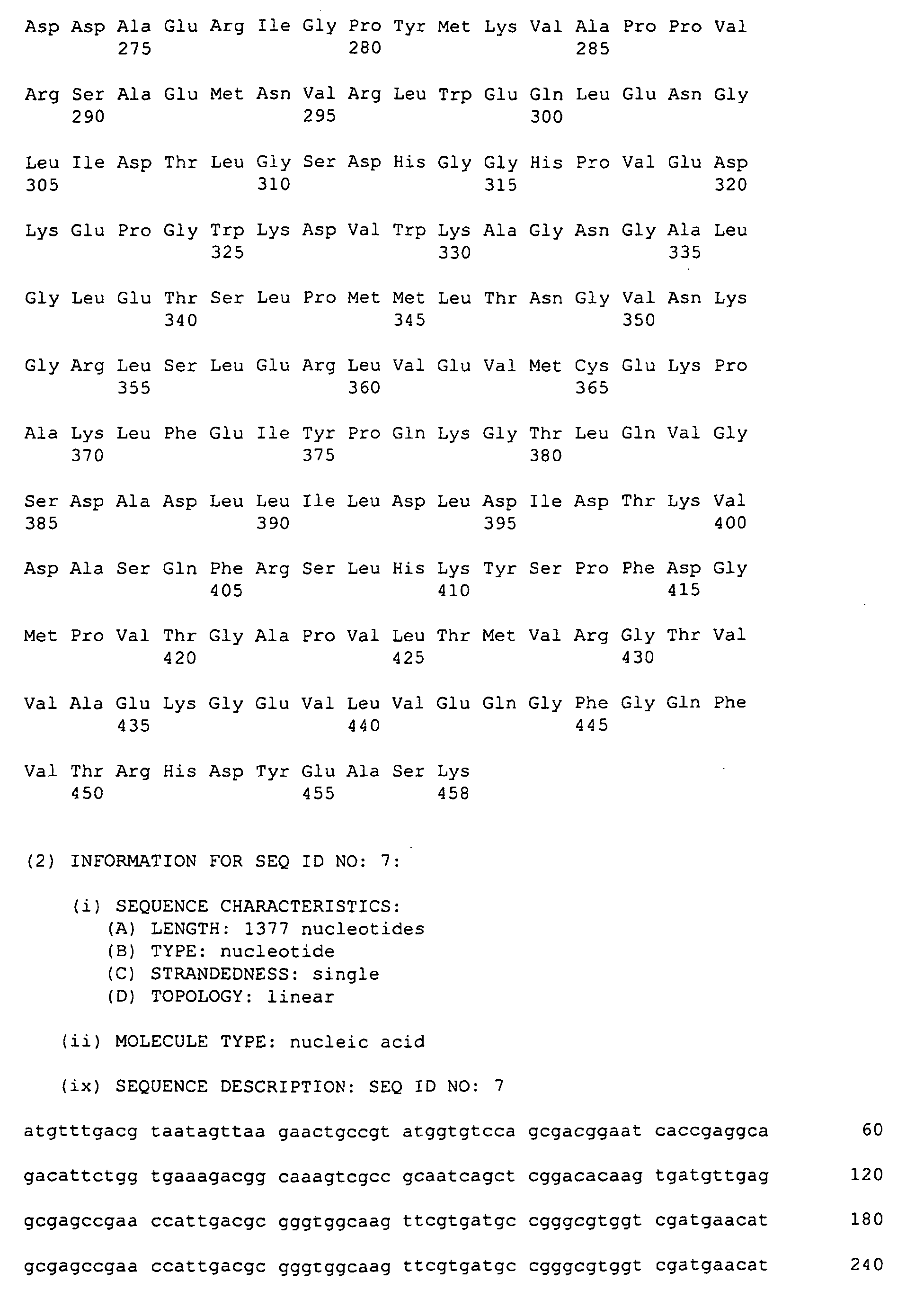


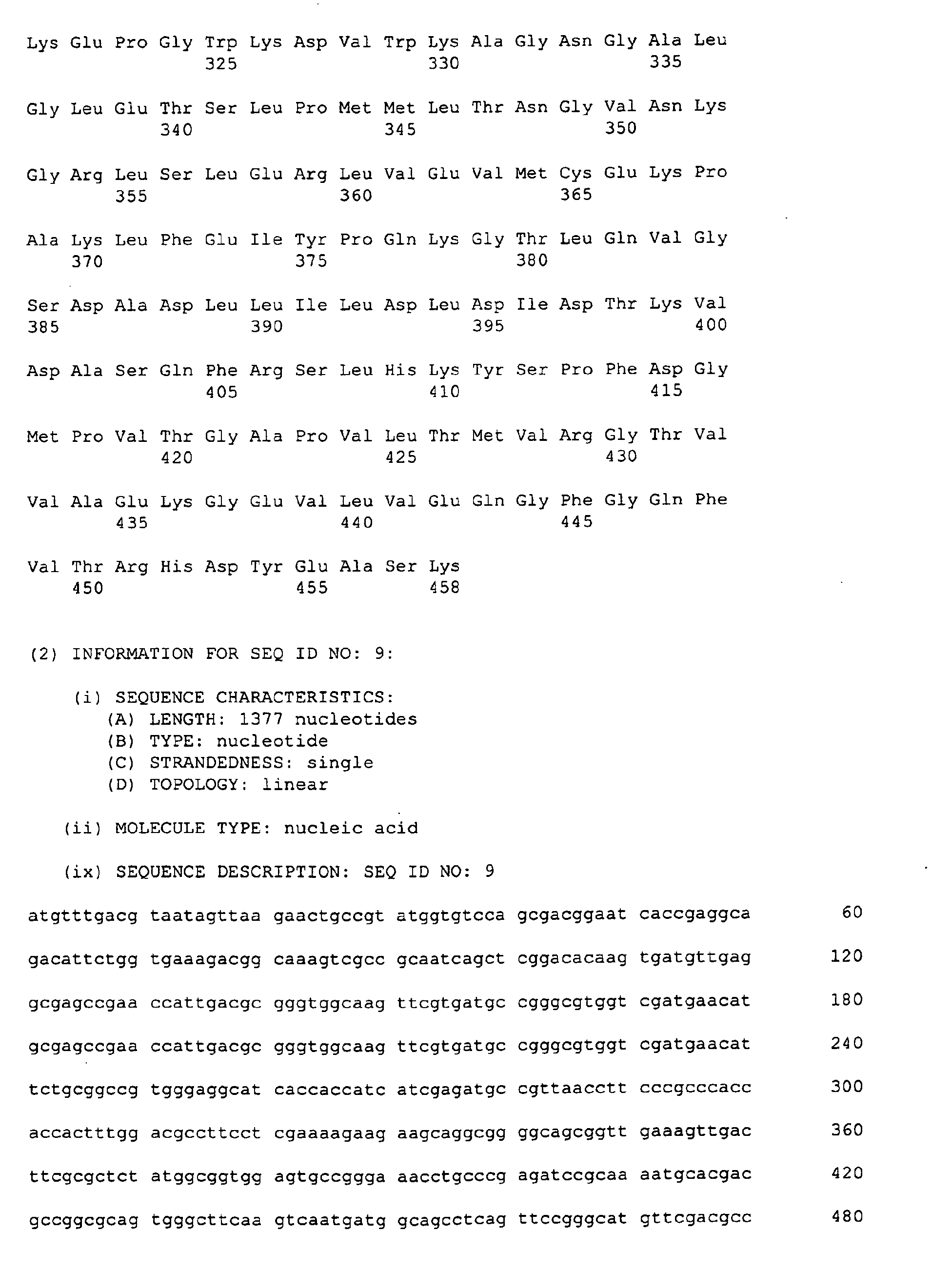
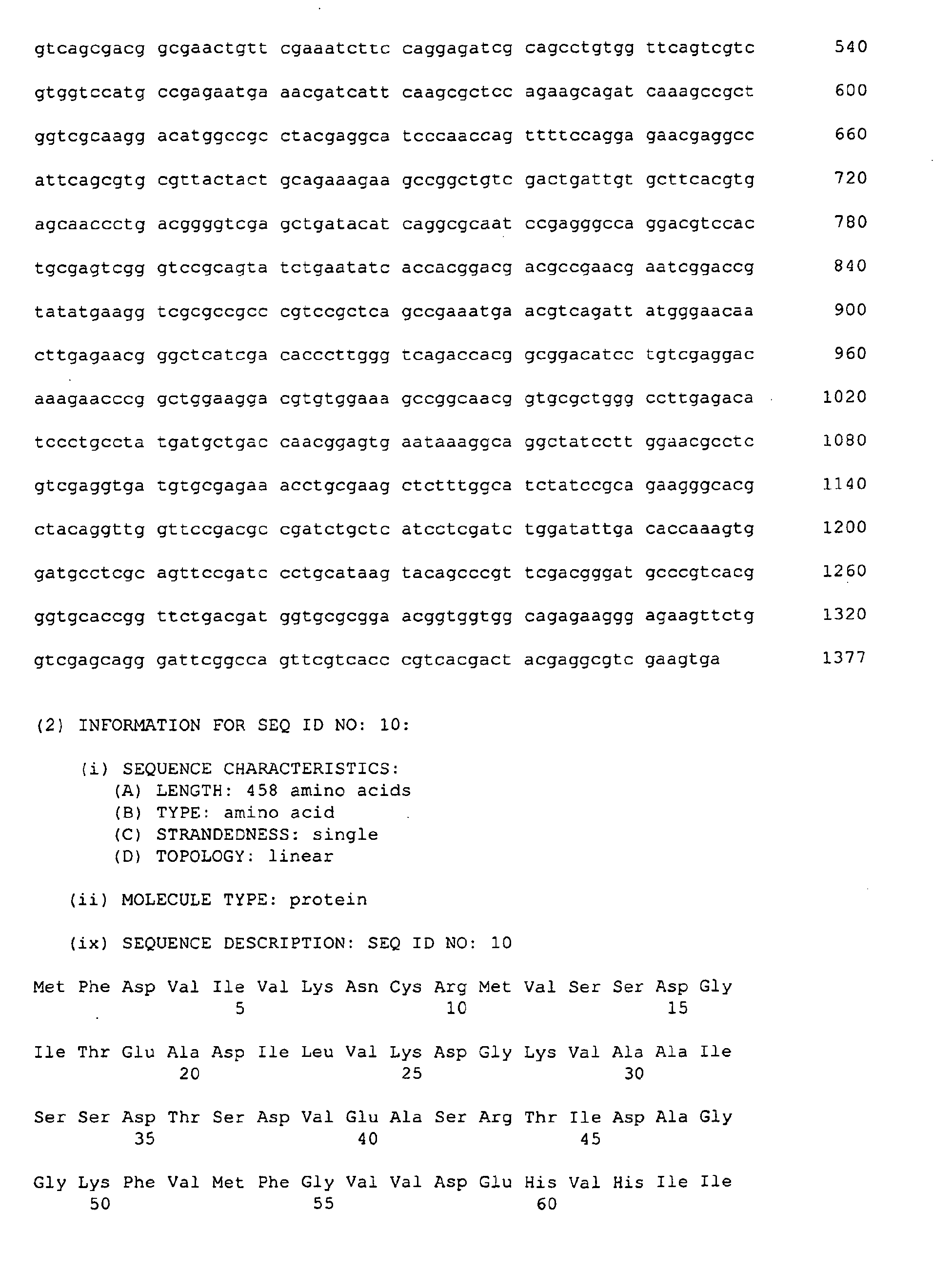
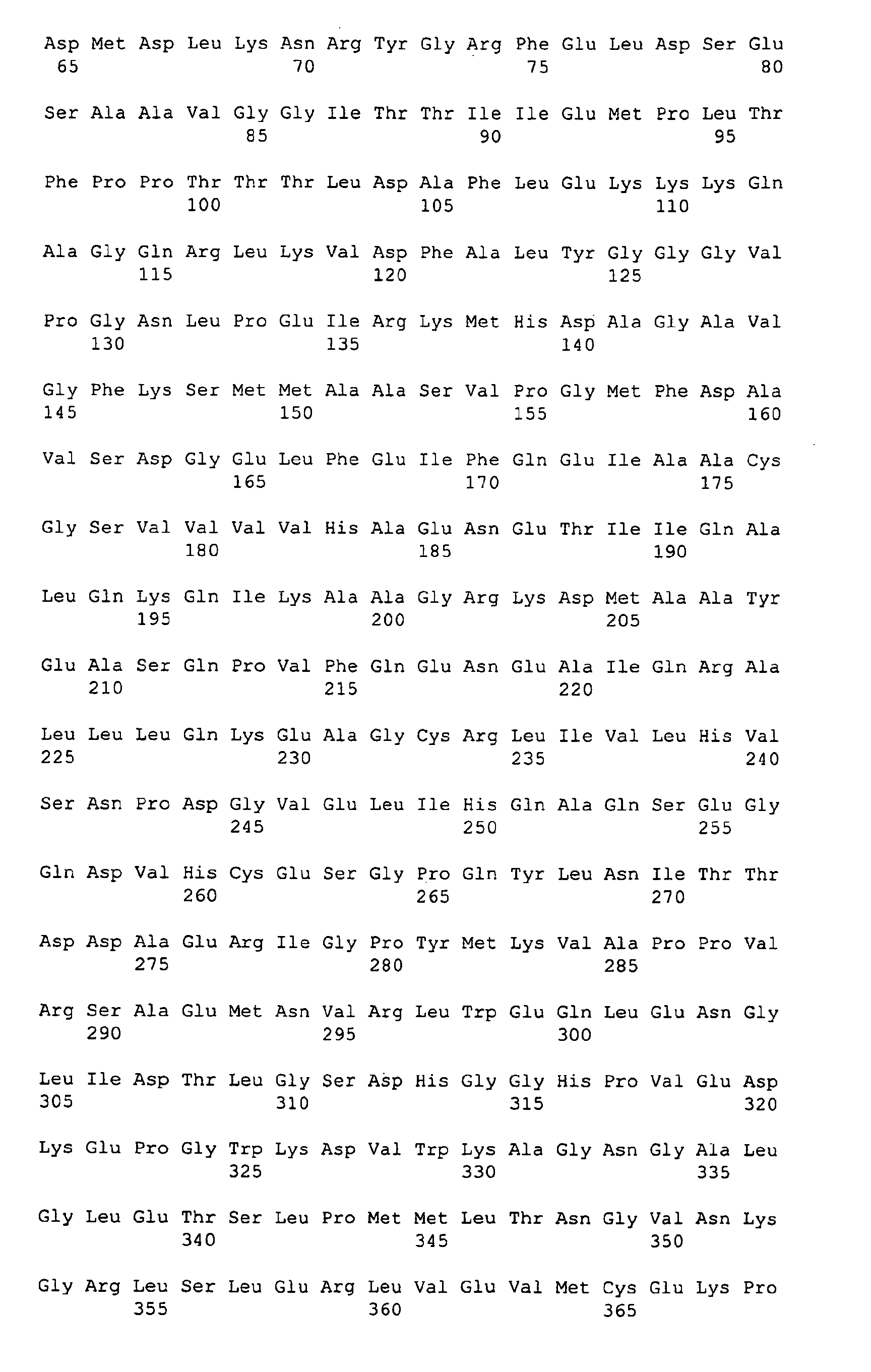
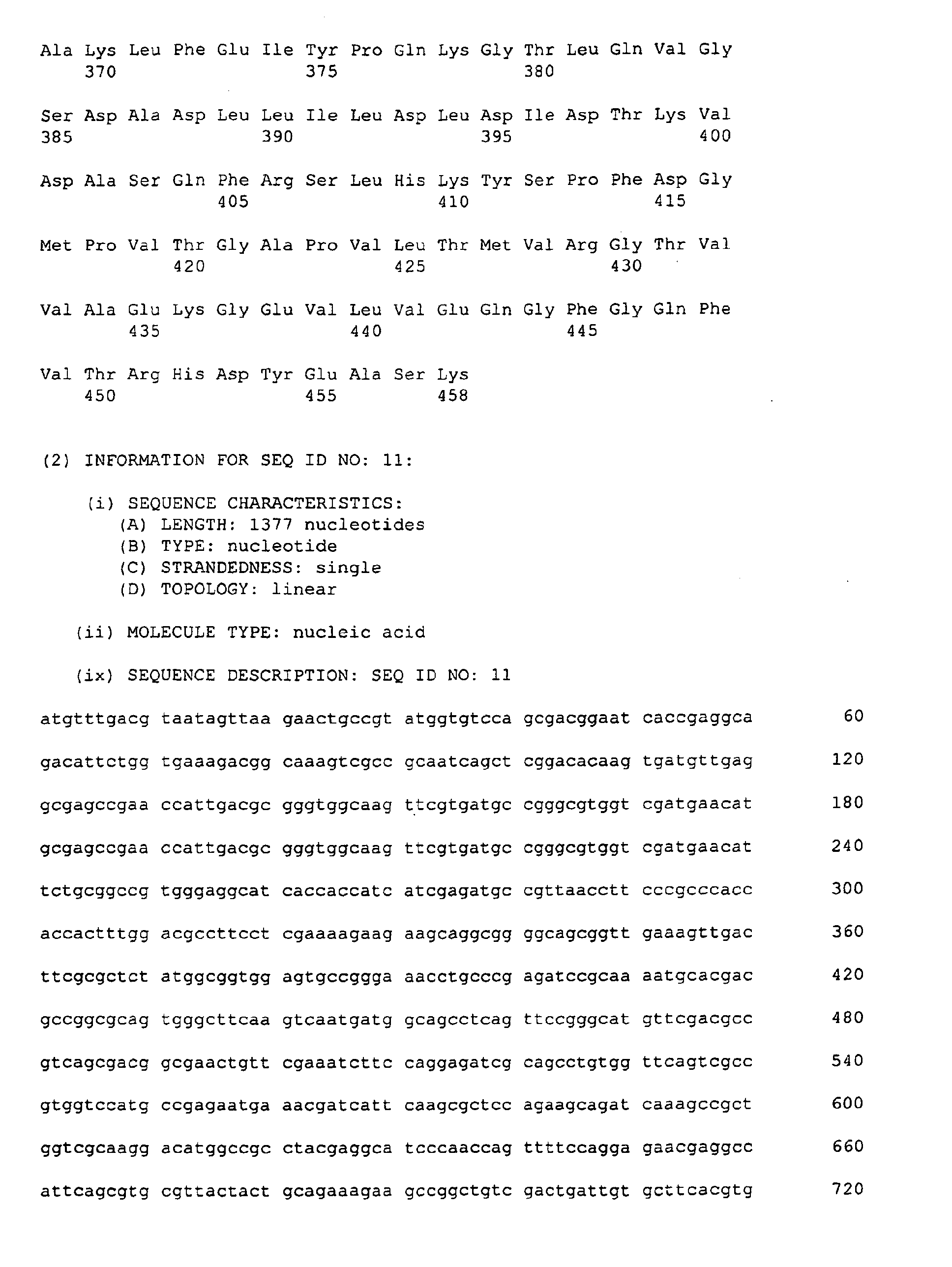

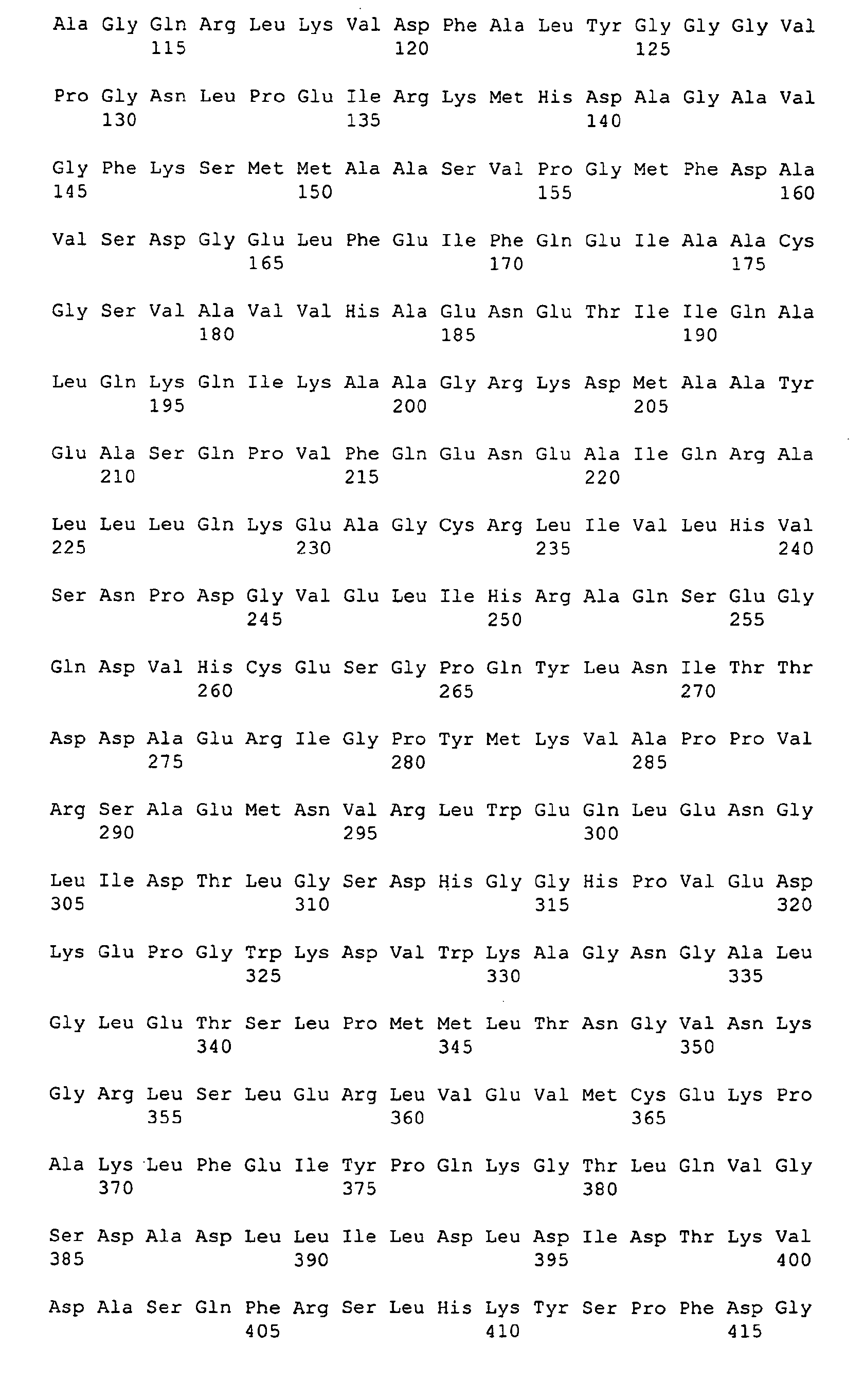
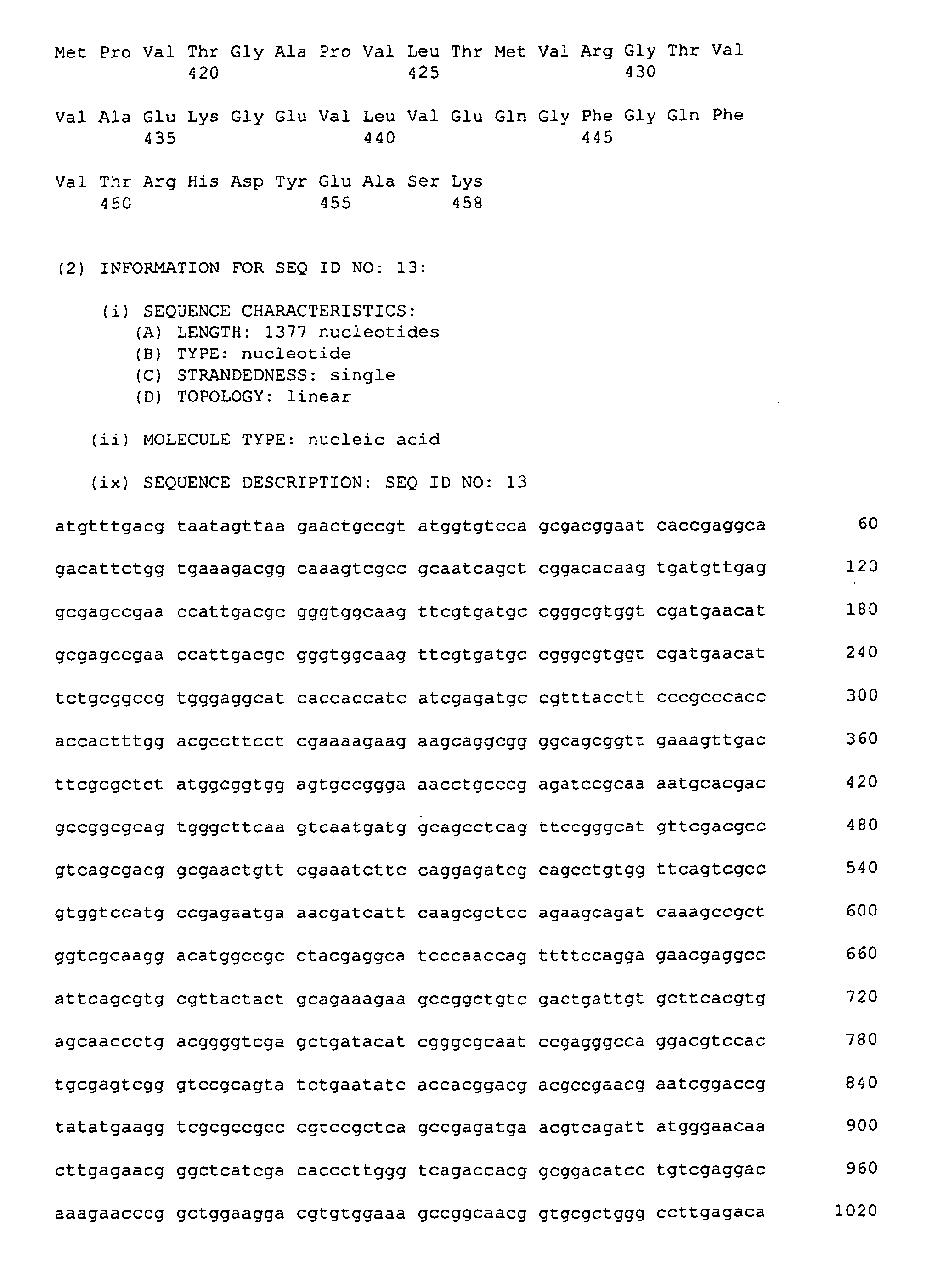


-

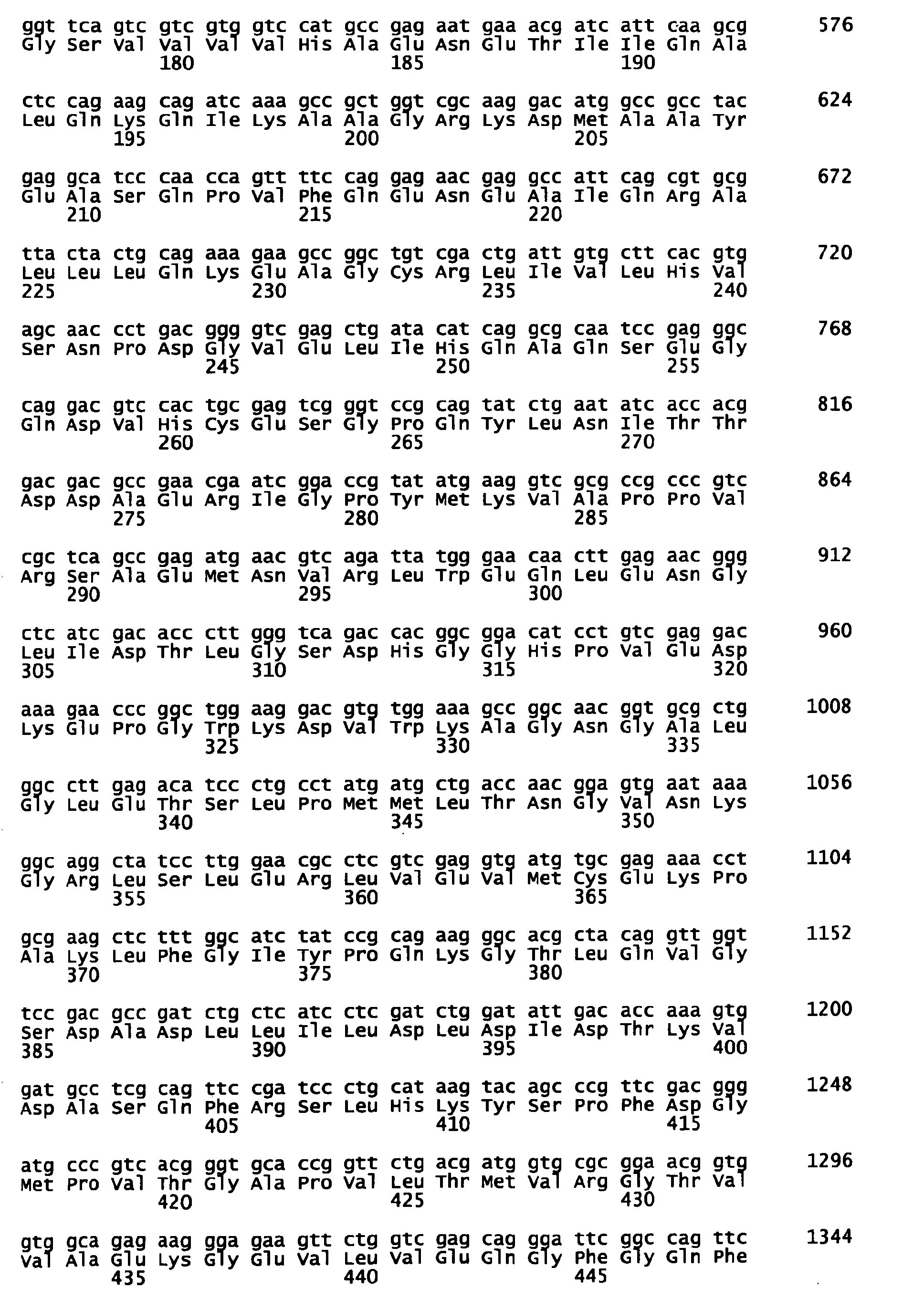
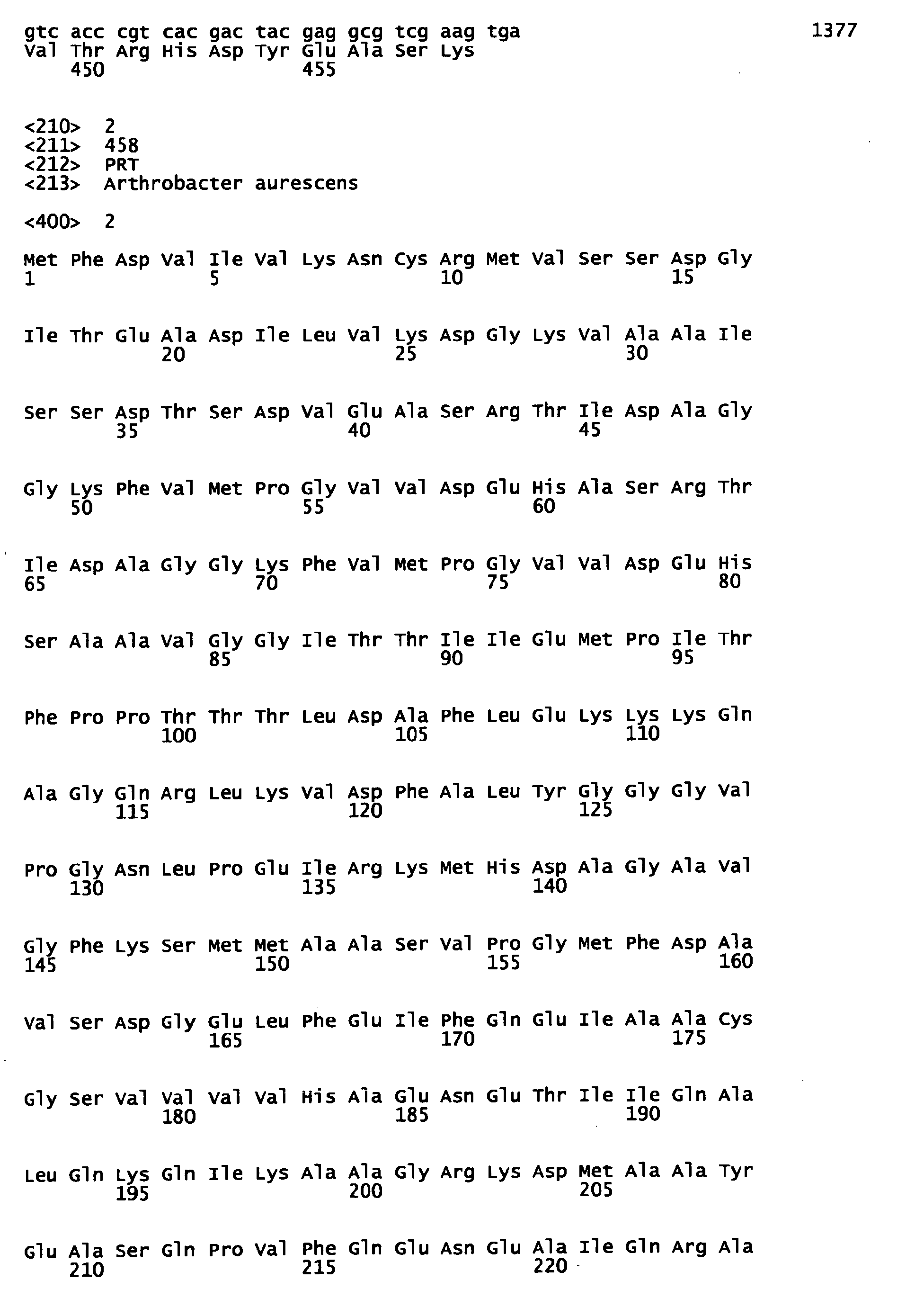


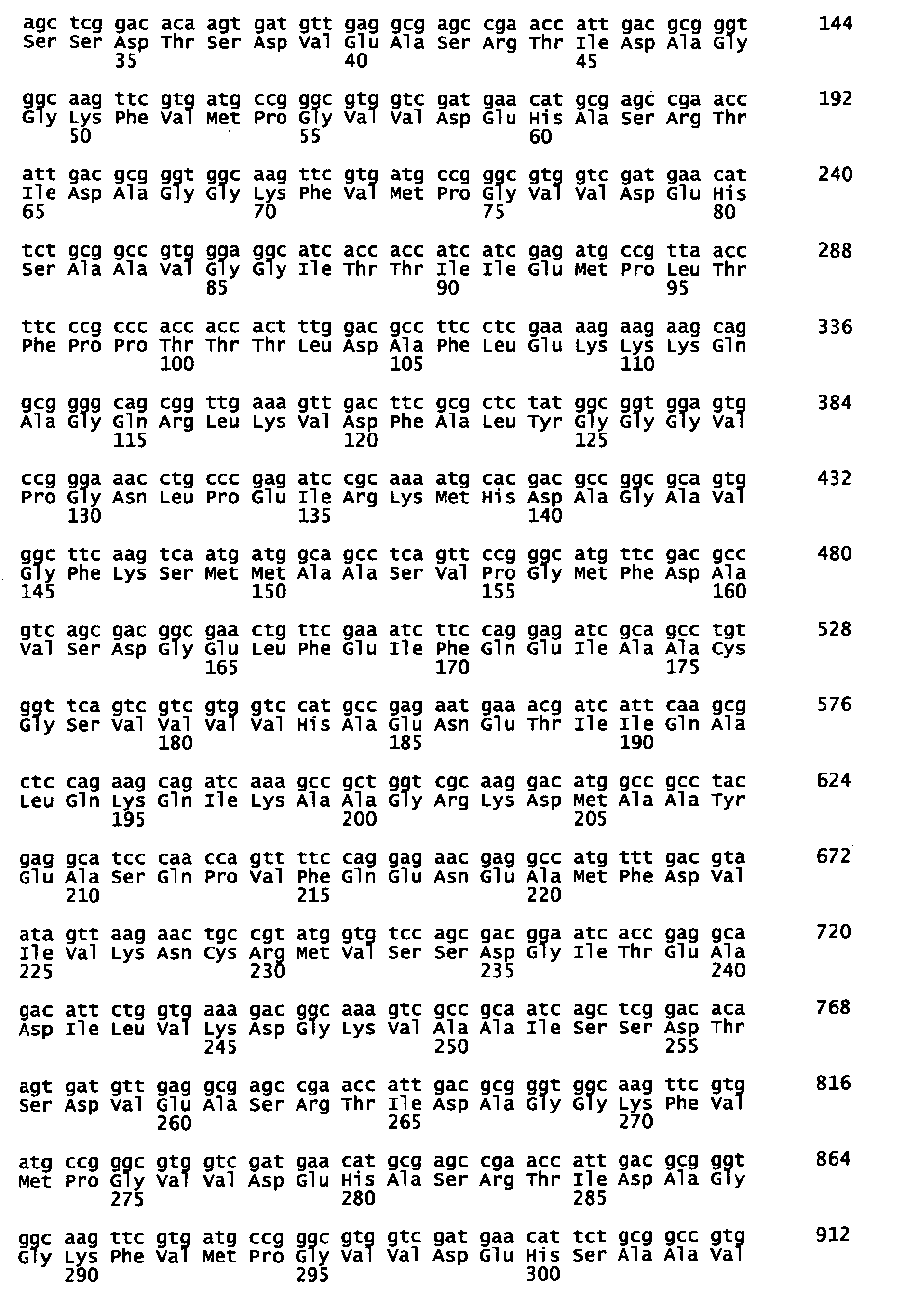
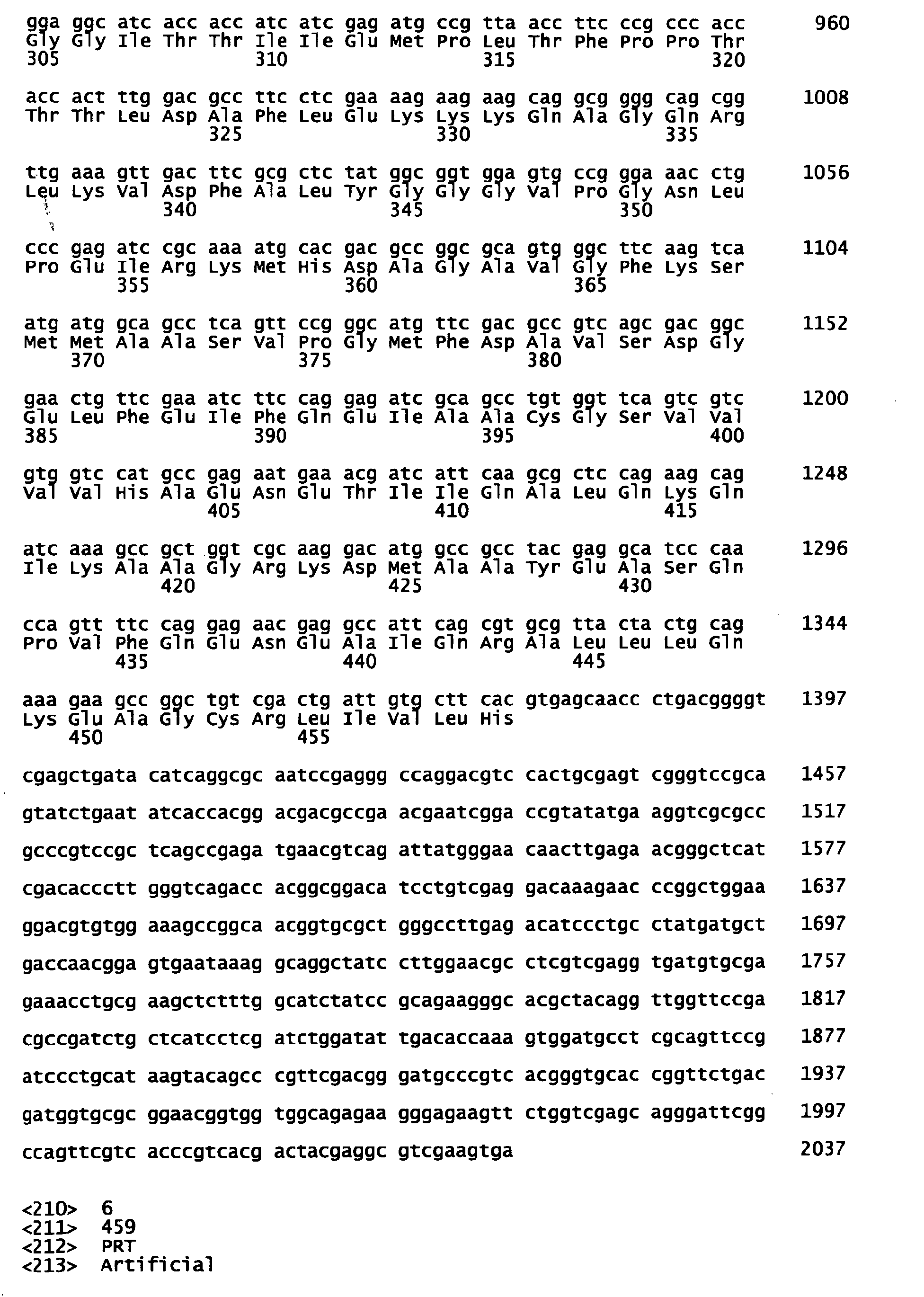


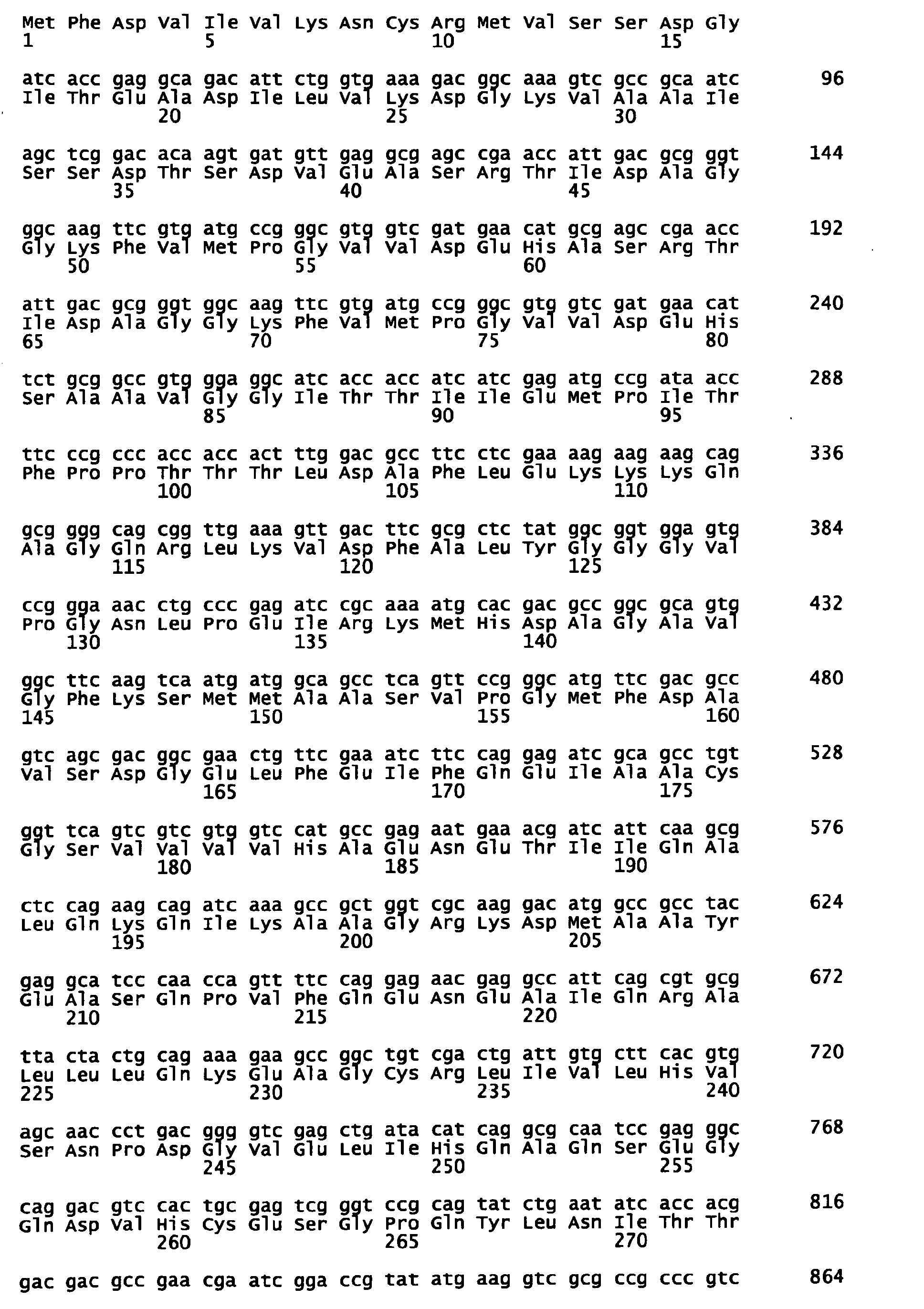
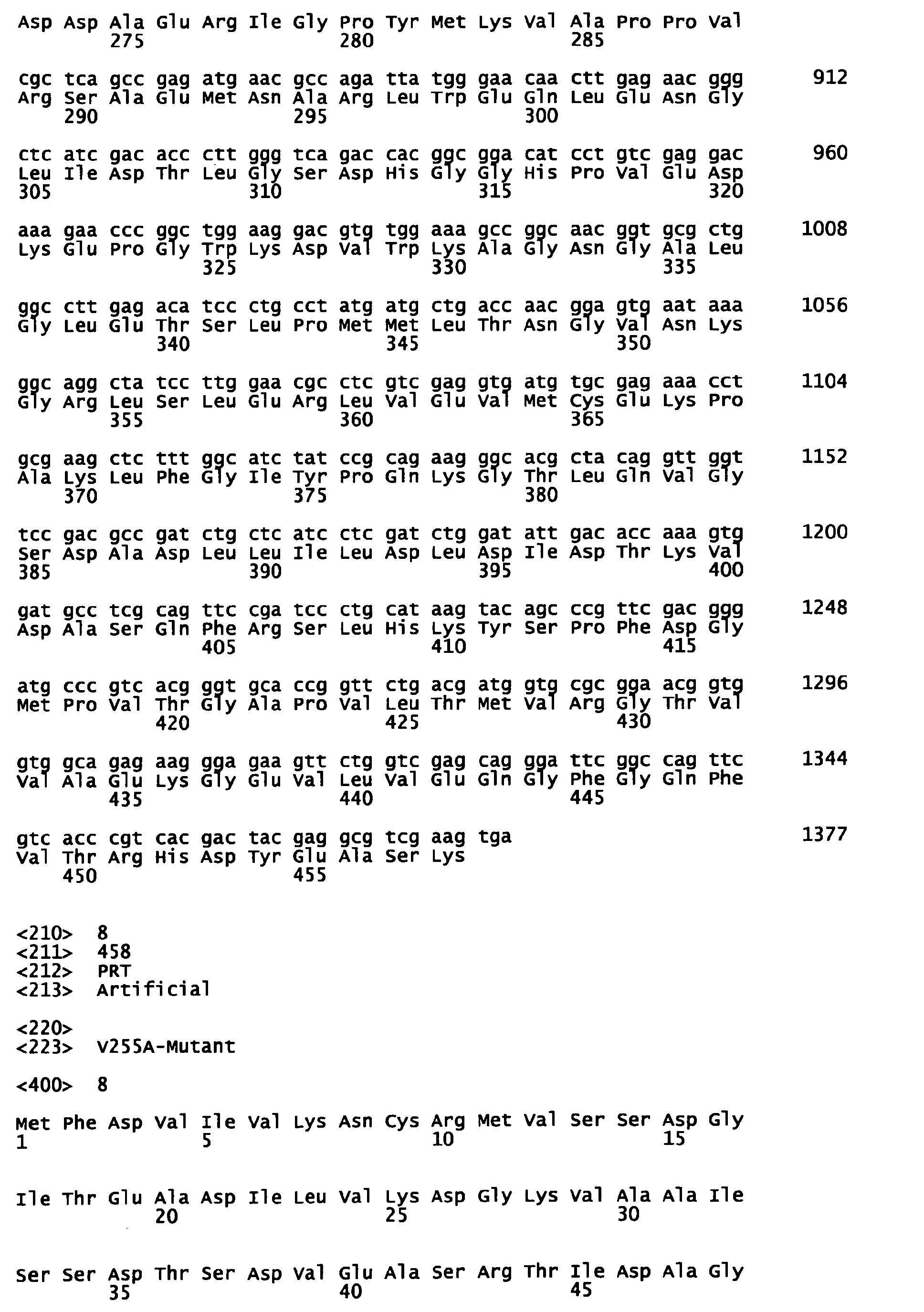


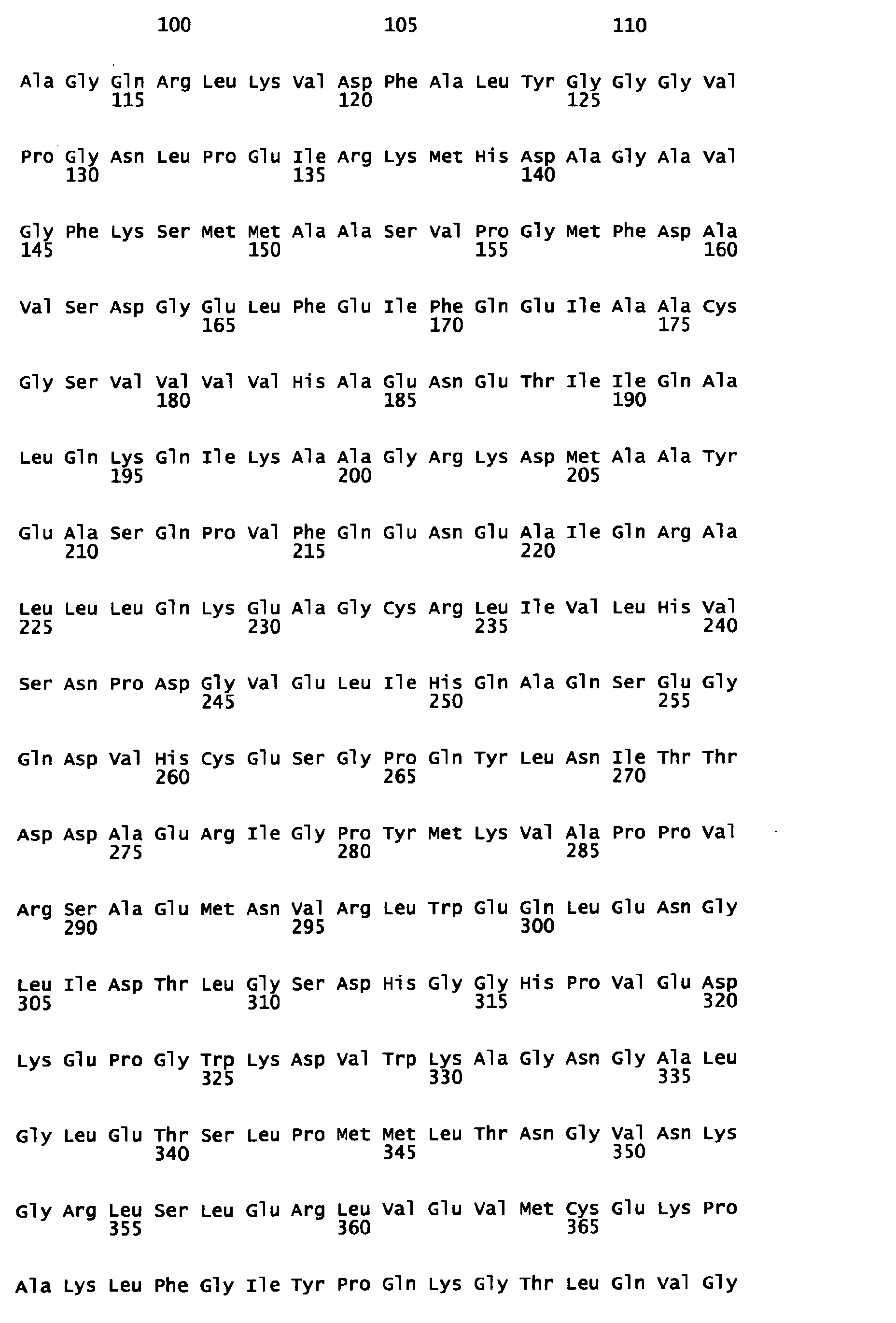
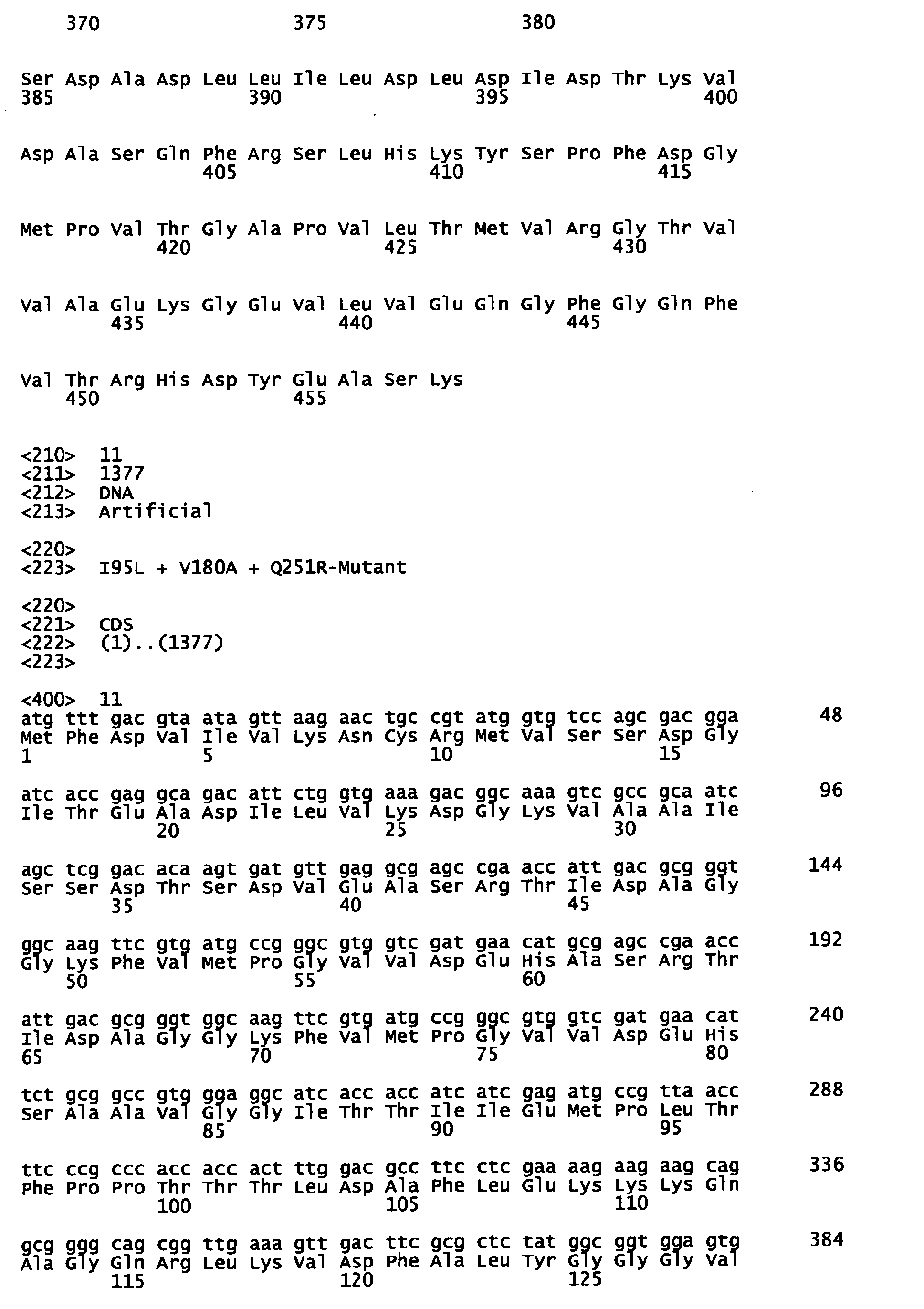

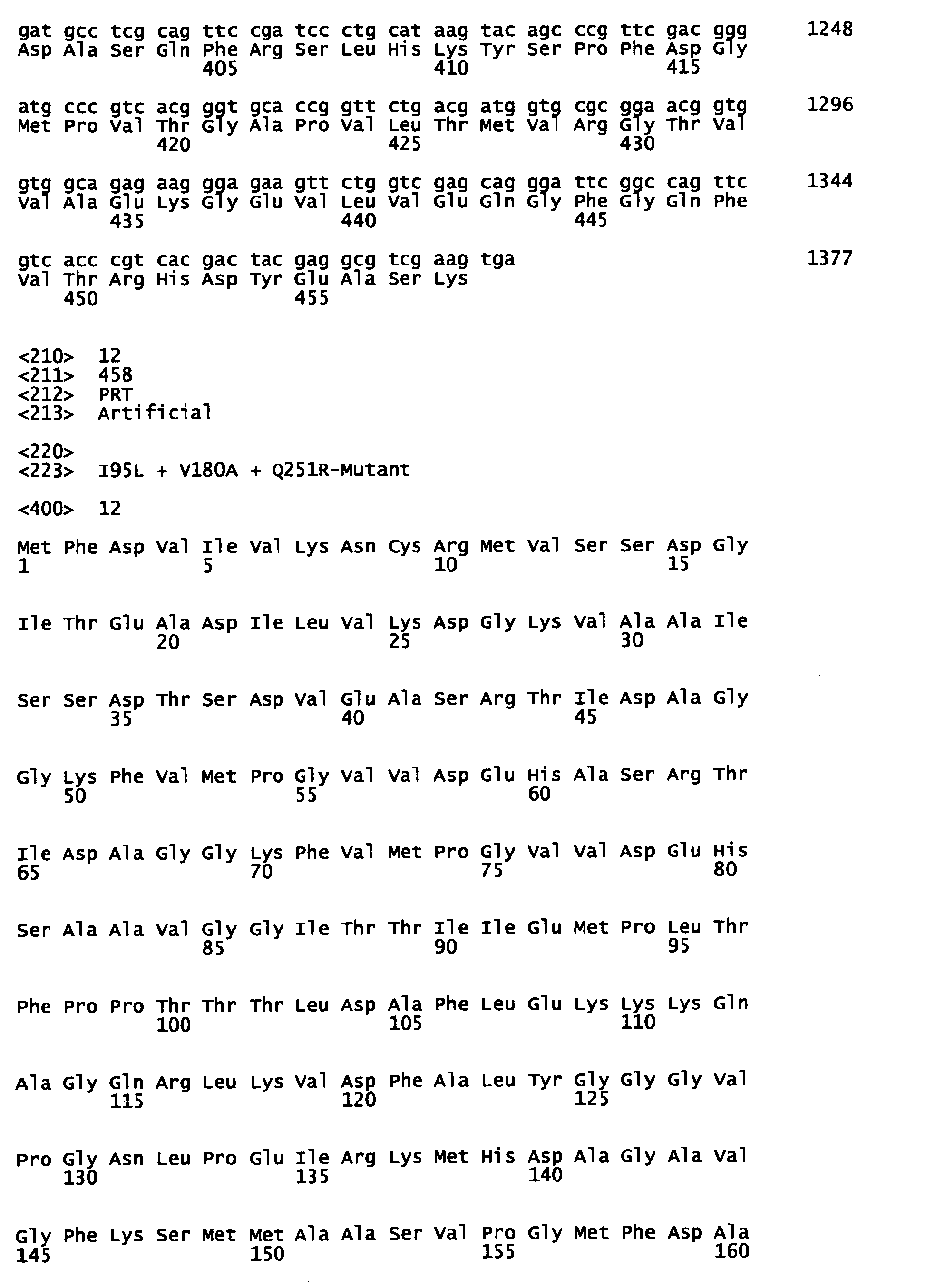


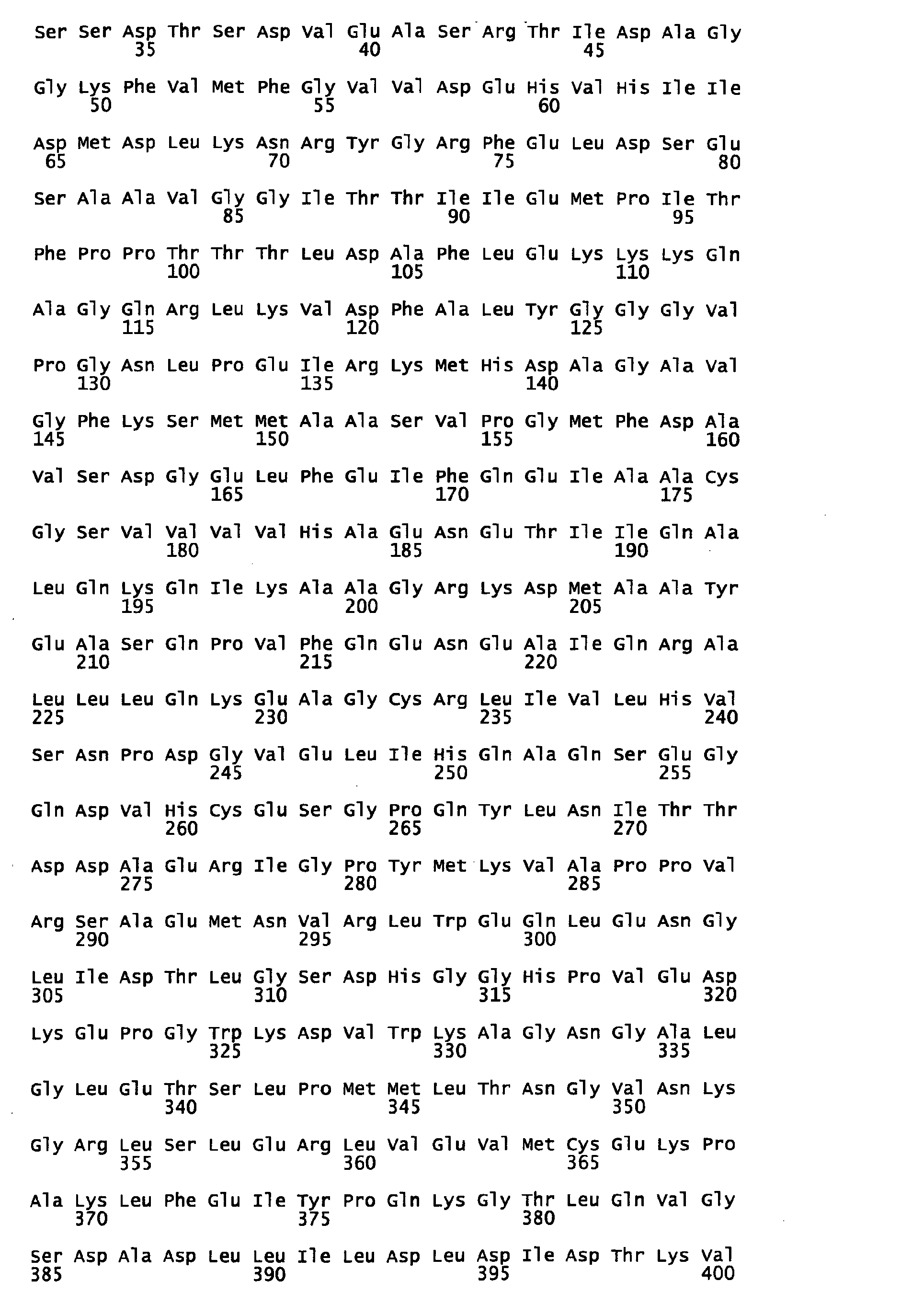
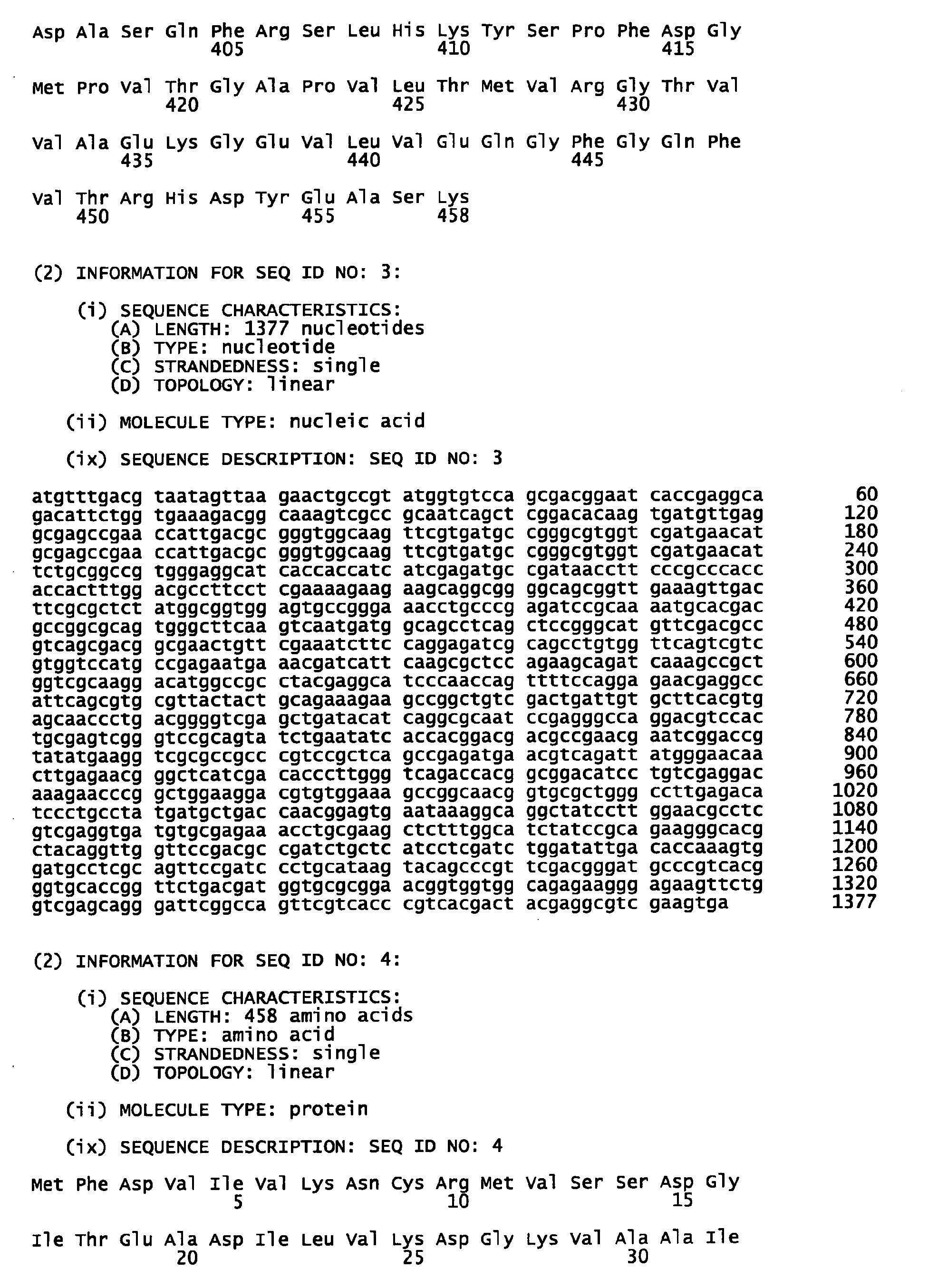
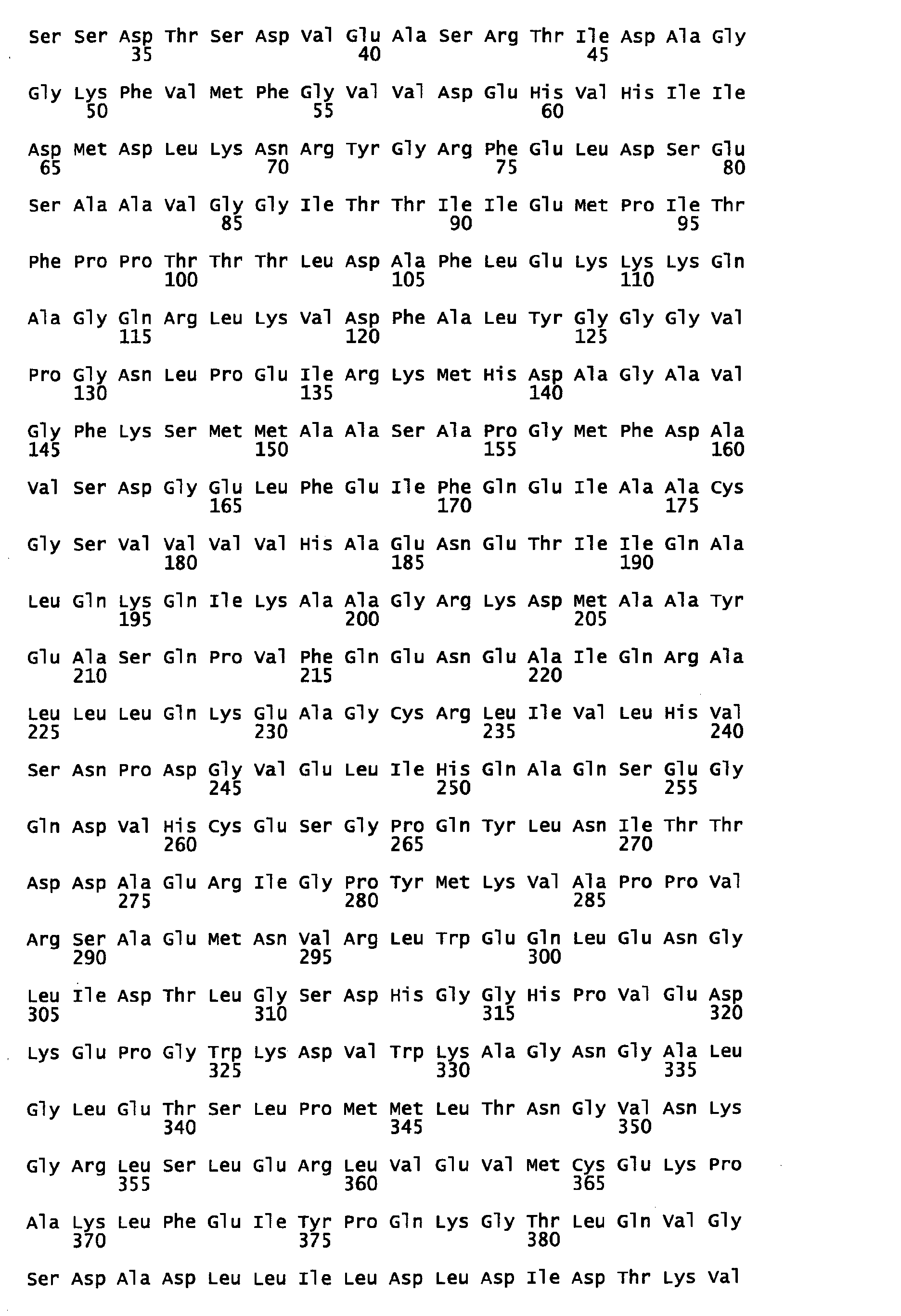


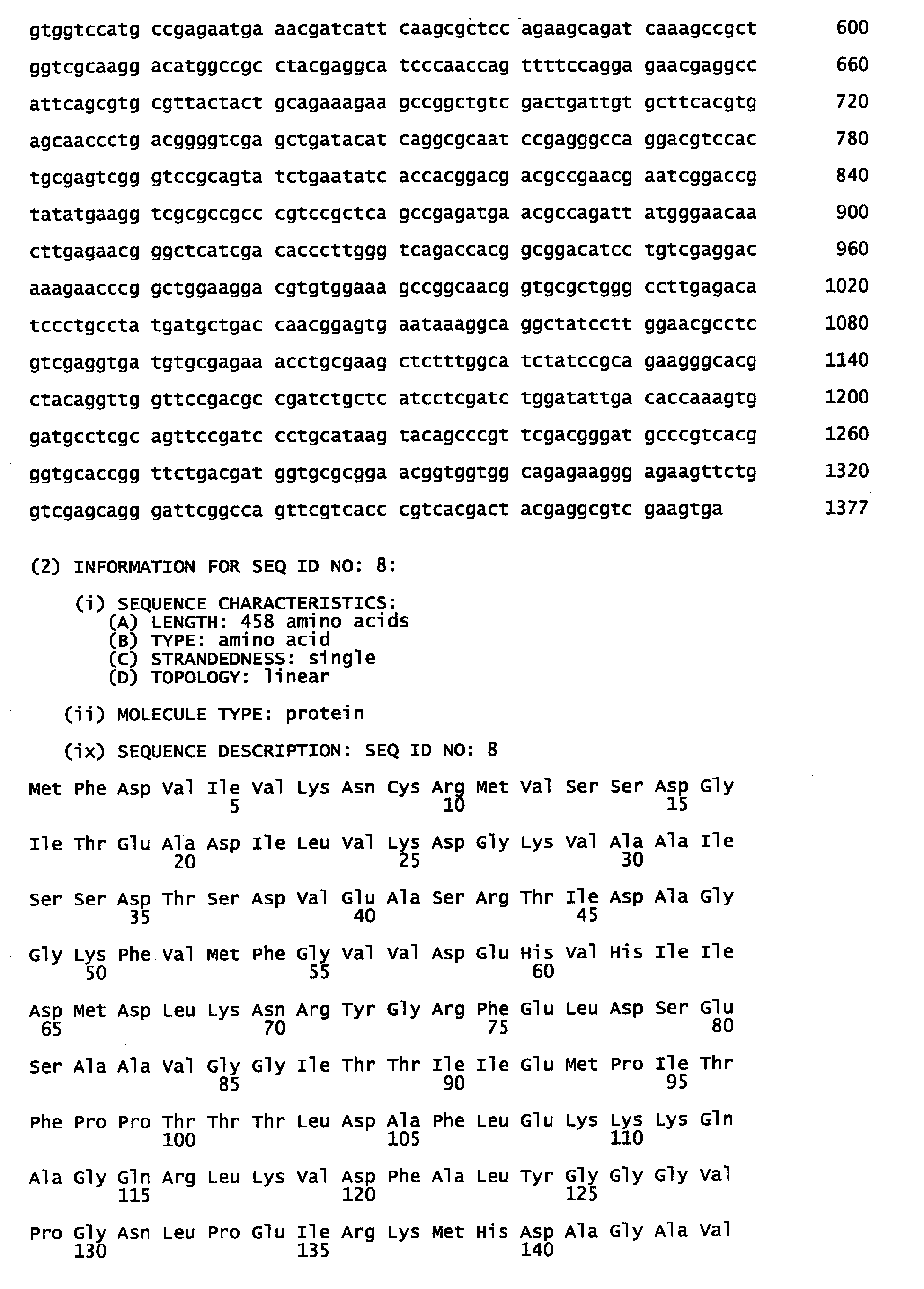


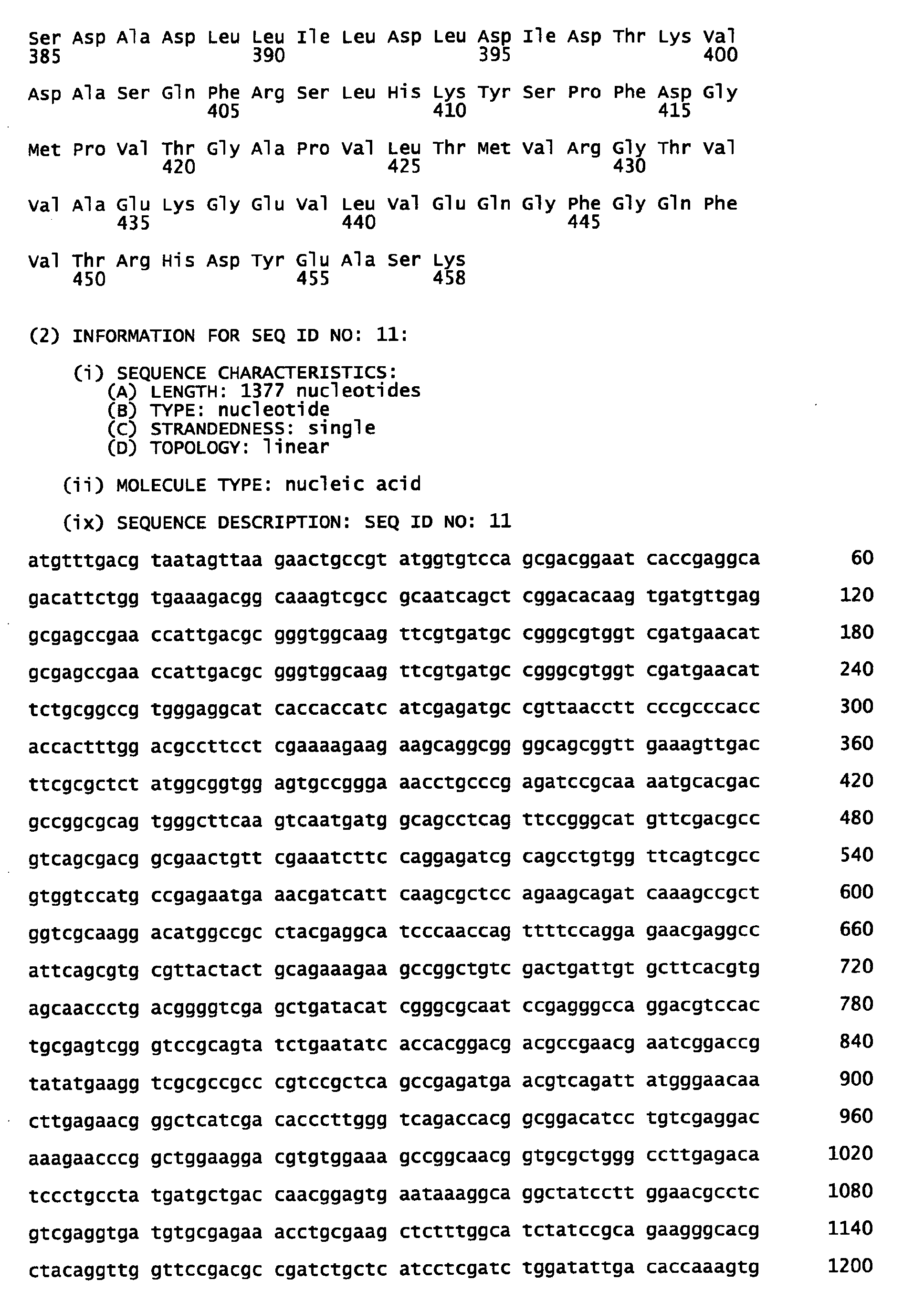
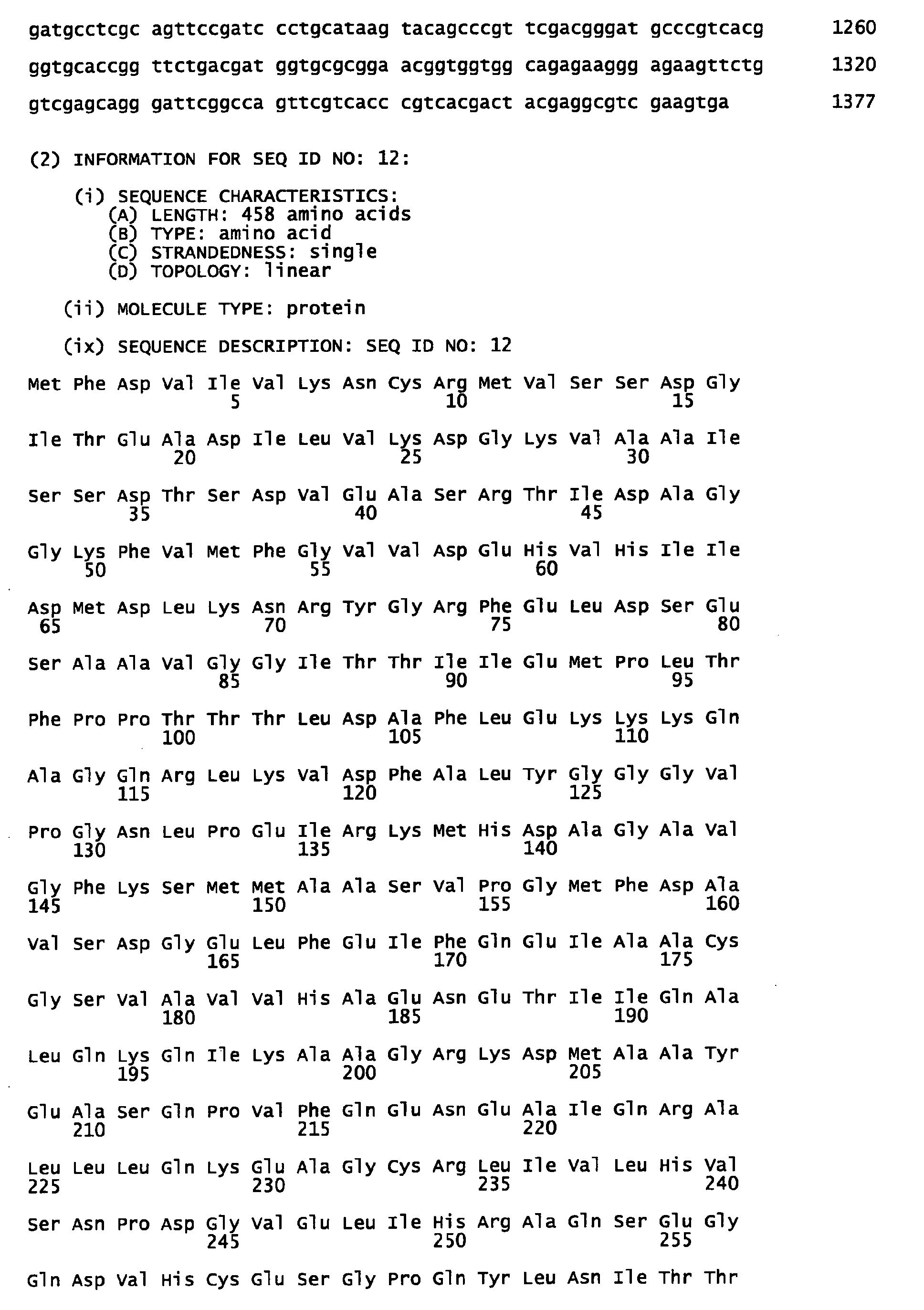


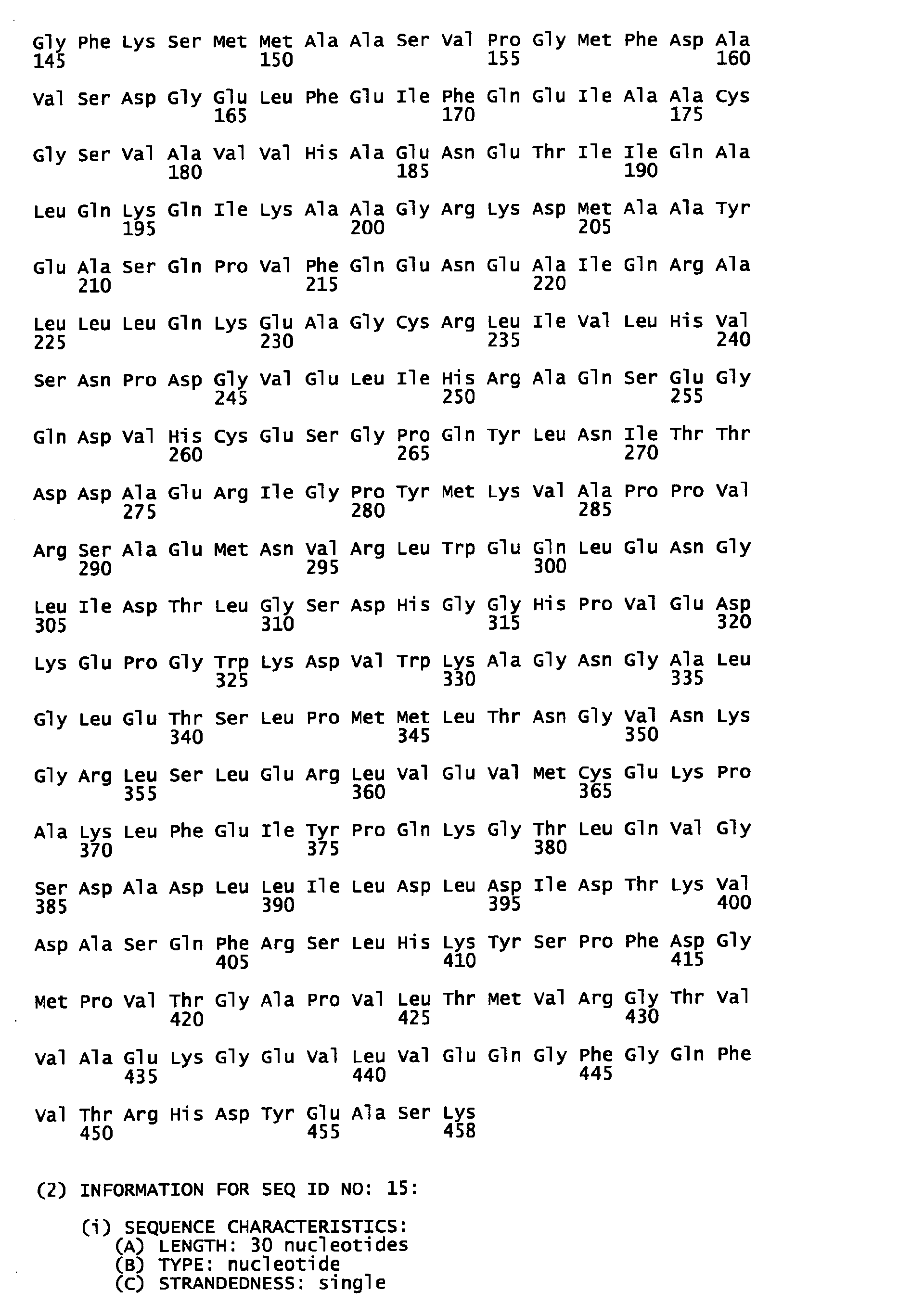

Claims (33)
Applications Claiming Priority (7)
| Application Number | Priority Date | Filing Date | Title |
|---|---|---|---|
| US12692399P | 1999-03-29 | 1999-03-29 | |
| US126923P | 1999-03-29 | ||
| US15742799P | 1999-10-04 | 1999-10-04 | |
| US157427P | 1999-10-04 | ||
| US09/497,585 US6524837B1 (en) | 1999-03-29 | 2000-02-03 | Hydantoinase variants with improved properties and their use for the production of amino acids |
| US497585 | 2000-02-03 | ||
| EP00921477A EP1165763B1 (en) | 1999-03-29 | 2000-03-28 | Hydantoinase variants with improved properties and their use for the production of amino acids |
Related Parent Applications (1)
| Application Number | Title | Priority Date | Filing Date |
|---|---|---|---|
| EP00921477A Division EP1165763B1 (en) | 1999-03-29 | 2000-03-28 | Hydantoinase variants with improved properties and their use for the production of amino acids |
Publications (1)
| Publication Number | Publication Date |
|---|---|
| EP1586636A1 true EP1586636A1 (en) | 2005-10-19 |
Family
ID=27383501
Family Applications (2)
| Application Number | Title | Priority Date | Filing Date |
|---|---|---|---|
| EP00921477A Expired - Lifetime EP1165763B1 (en) | 1999-03-29 | 2000-03-28 | Hydantoinase variants with improved properties and their use for the production of amino acids |
| EP04026624A Withdrawn EP1586636A1 (en) | 1999-03-29 | 2000-03-28 | Hydantoinase variants with improved properties and their use for the production of amino acids |
Family Applications Before (1)
| Application Number | Title | Priority Date | Filing Date |
|---|---|---|---|
| EP00921477A Expired - Lifetime EP1165763B1 (en) | 1999-03-29 | 2000-03-28 | Hydantoinase variants with improved properties and their use for the production of amino acids |
Country Status (10)
| Country | Link |
|---|---|
| US (1) | US6524837B1 (en) |
| EP (2) | EP1165763B1 (en) |
| JP (1) | JP4641100B2 (en) |
| AT (1) | ATE298365T1 (en) |
| AU (1) | AU4178800A (en) |
| DE (1) | DE60020943T2 (en) |
| DK (1) | DK1165763T3 (en) |
| ES (1) | ES2244430T3 (en) |
| PT (1) | PT1165763E (en) |
| WO (1) | WO2000058449A1 (en) |
Families Citing this family (29)
| Publication number | Priority date | Publication date | Assignee | Title |
|---|---|---|---|---|
| AU7513400A (en) * | 1999-09-27 | 2001-04-30 | Degussa A.G. | Hydantoin-racemase |
| DE10037115A1 (en) | 2000-07-28 | 2002-02-07 | Degussa | Process for the fermentative production of L-allysine acetal |
| JP4529338B2 (en) * | 2001-03-08 | 2010-08-25 | 味の素株式会社 | DNA encoding hydantoinase, DNA encoding N-carbamyl-L-amino acid hydrolase, recombinant DNA, transformed cell, protein production method and optically active amino acid production method |
| DE10115000C2 (en) * | 2001-03-26 | 2003-02-20 | Degussa | Process for the preparation of enantiomerically enriched alpha-substituted carboxylic acids |
| EP1383886B1 (en) | 2001-04-03 | 2008-07-30 | Bristol-Myers Squibb Company | D-hydantoinase from ochrobactrum anthropi |
| AU2002307340A1 (en) * | 2001-04-16 | 2002-10-28 | California Institute Of Technology | Peroxide-driven cytochrome p450 oxygenase variants |
| DE10130169A1 (en) * | 2001-06-22 | 2003-01-09 | Degussa | Activated rec-D hydantoinases |
| WO2003085108A1 (en) * | 2002-04-10 | 2003-10-16 | Ajinomoto Co., Inc. | Recombinant dna having hydantoinase gene and carbamylase gene and process for producing amino acid |
| US8603949B2 (en) * | 2003-06-17 | 2013-12-10 | California Institute Of Technology | Libraries of optimized cytochrome P450 enzymes and the optimized P450 enzymes |
| US7524664B2 (en) | 2003-06-17 | 2009-04-28 | California Institute Of Technology | Regio- and enantioselective alkane hydroxylation with modified cytochrome P450 |
| EP1660646B1 (en) * | 2003-08-11 | 2014-12-31 | California Institute Of Technology | Thermostable peroxide-driven cytochrome p450 oxygenase variants and methods of use |
| US20050202542A1 (en) * | 2004-03-12 | 2005-09-15 | Ajinomoto Co., Inc. | Production method of D-alloisoleucine |
| KR100575058B1 (en) * | 2004-05-06 | 2006-05-04 | 한국과학기술원 | Hydantoinase variants with enhanced enzymatic activity for aromatic substrates |
| US8715988B2 (en) * | 2005-03-28 | 2014-05-06 | California Institute Of Technology | Alkane oxidation by modified hydroxylases |
| US8252559B2 (en) * | 2006-08-04 | 2012-08-28 | The California Institute Of Technology | Methods and systems for selective fluorination of organic molecules |
| US8026085B2 (en) * | 2006-08-04 | 2011-09-27 | California Institute Of Technology | Methods and systems for selective fluorination of organic molecules |
| WO2008121435A2 (en) * | 2007-02-02 | 2008-10-09 | The California Institute Of Technology | Methods for generating novel stabilized proteins |
| US20080268517A1 (en) * | 2007-02-08 | 2008-10-30 | The California Institute Of Technology | Stable, functional chimeric cytochrome p450 holoenzymes |
| US8802401B2 (en) * | 2007-06-18 | 2014-08-12 | The California Institute Of Technology | Methods and compositions for preparation of selectively protected carbohydrates |
| WO2013016207A2 (en) | 2011-07-22 | 2013-01-31 | California Institute Of Technology | Stable fungal cel6 enzyme variants |
| KR102027201B1 (en) * | 2011-11-16 | 2019-10-01 | 에보닉 테크노케미 게엠베하 | Mutants of hydantoinase |
| EP2639308A1 (en) * | 2012-03-12 | 2013-09-18 | Evonik Industries AG | Enzymatic omega-oxidation and -amination of fatty acids |
| CN103420882B (en) * | 2013-08-28 | 2016-03-30 | 重庆紫光化工股份有限公司 | A kind of preparation method of L-Methionine |
| EP4105335A1 (en) | 2021-06-16 | 2022-12-21 | Evonik Operations GmbH | Enzymatic method for the production of l-glufosinate p-alkyl esters |
| CN114686465B (en) * | 2021-11-21 | 2024-03-22 | 宁波酶赛生物工程有限公司 | Synthesis method of hydrolase and (R) - (-) -3- (carbamoylmethyl) -5-methylhexanoic acid |
| EP4493709A1 (en) | 2022-03-14 | 2025-01-22 | Evonik Operations GmbH | Enzymatic method for the production of l-glufosinate p-esters |
| WO2023222226A1 (en) | 2022-05-19 | 2023-11-23 | Evonik Operations Gmbh | Enzymatic method for producing l-glufosinate |
| WO2023222227A1 (en) | 2022-05-19 | 2023-11-23 | Evonik Operations Gmbh | Enzymatic method for producing l-glufosinate |
| WO2023232225A1 (en) | 2022-05-31 | 2023-12-07 | Evonik Operations Gmbh | Enzymatic method for the diastereoselective production of l-glufosinate p-esters |
Citations (2)
| Publication number | Priority date | Publication date | Assignee | Title |
|---|---|---|---|---|
| EP0643133A2 (en) * | 1993-08-27 | 1995-03-15 | Roche Diagnostics GmbH | Recombinant D-hydantoinase, process for its preparation and its use |
| EP0801131A1 (en) * | 1994-12-28 | 1997-10-15 | Kanegafuchi Chemical Industry Co., Ltd. | PROCESS FOR PRODUCING D-N-CARBAMOYL-$g(a)-AMINO ACID |
Family Cites Families (11)
| Publication number | Priority date | Publication date | Assignee | Title |
|---|---|---|---|---|
| IT987278B (en) | 1973-05-11 | 1975-02-20 | Snam Progetti | PROCEDURE FOR THE PREPARATION OF L CARBAMIL AMINO ACIDS AND THE CORRESPONDING L AMINO ACIDS |
| US4065353A (en) | 1975-05-12 | 1977-12-27 | Snamprogetti, S.P.A. | Method for the preparation of D-carbamyl aminoacids and the corresponding D-aminoacids |
| IT1039757B (en) | 1975-07-10 | 1979-12-10 | Snam Progetti | ENZYMATIC COMPLEXES FOR TRANSFORMING IDANTOIN RACEME INTO OPTICALLY ACTIVE AMINO ACIDS AND THEIR APPLICATION |
| US4094741A (en) | 1976-02-04 | 1978-06-13 | Kanegafuchi Kagaku Kogyo Kabushiki Kaisha | Process for preparing D-(-)-N-carbamoyl-2-(phenyl or substituted phenyl)glycines |
| DE3406770A1 (en) | 1984-02-24 | 1985-08-29 | Boehringer Mannheim Gmbh, 6800 Mannheim | NUCLEOSIDE TRIPHOSPHATE-DEPENDENT 1-METHYL HYDANTOINASE AND THEIR USE |
| DE4234867A1 (en) | 1992-10-16 | 1994-04-21 | Degussa | Process for the preparation of aminoalkylhydantoin and aminoalkyl-alpha-amino acids |
| DE4316928C2 (en) | 1993-05-19 | 1995-03-16 | Degussa | New microorganisms, their use and process for the production of L-alpha-amino acids |
| IT1269321B (en) | 1994-04-15 | 1997-03-26 | Eniricerche Spa | STABLE MUTANTS OF THE D-N- -CARBAMYLASE |
| DE19519717C1 (en) | 1995-05-30 | 1996-08-22 | Degussa | New microorganism DSM 9771 for prepn of L-alpha-amino acids |
| IT1276163B1 (en) | 1995-11-23 | 1997-10-27 | Eniricerche Spa | IMPROVED PROCEDURE FOR THE PREPARATION OF D-ALPHA-AMINO ACIDS |
| IT1277125B1 (en) | 1995-12-21 | 1997-11-04 | Eniricerche Spa | THERMOSTABLE MUTANTS OF D-N-ALPHA-CARBAMYLASE |
-
2000
- 2000-02-03 US US09/497,585 patent/US6524837B1/en not_active Expired - Lifetime
- 2000-03-28 DK DK00921477T patent/DK1165763T3/en active
- 2000-03-28 AU AU41788/00A patent/AU4178800A/en not_active Abandoned
- 2000-03-28 DE DE60020943T patent/DE60020943T2/en not_active Expired - Lifetime
- 2000-03-28 ES ES00921477T patent/ES2244430T3/en not_active Expired - Lifetime
- 2000-03-28 WO PCT/US2000/008159 patent/WO2000058449A1/en not_active Ceased
- 2000-03-28 AT AT00921477T patent/ATE298365T1/en active
- 2000-03-28 EP EP00921477A patent/EP1165763B1/en not_active Expired - Lifetime
- 2000-03-28 JP JP2000608730A patent/JP4641100B2/en not_active Expired - Fee Related
- 2000-03-28 PT PT00921477T patent/PT1165763E/en unknown
- 2000-03-28 EP EP04026624A patent/EP1586636A1/en not_active Withdrawn
Patent Citations (2)
| Publication number | Priority date | Publication date | Assignee | Title |
|---|---|---|---|---|
| EP0643133A2 (en) * | 1993-08-27 | 1995-03-15 | Roche Diagnostics GmbH | Recombinant D-hydantoinase, process for its preparation and its use |
| EP0801131A1 (en) * | 1994-12-28 | 1997-10-15 | Kanegafuchi Chemical Industry Co., Ltd. | PROCESS FOR PRODUCING D-N-CARBAMOYL-$g(a)-AMINO ACID |
Non-Patent Citations (6)
| Title |
|---|
| BLATTNER F R ET AL: "THE COMPLETE GENOME SEQUENCE OF ESCHERICHIA COLI K-12", SCIENCE, AMERICAN ASSOCIATION FOR THE ADVANCEMENT OF SCIENCE,, US, vol. 277, 5 September 1997 (1997-09-05), pages 1453 - 1462, XP002069950, ISSN: 0036-8075 * |
| DATABASE EMBL 1 November 1997 (1997-11-01), XP002236631, Database accession no. P77671 * |
| DATABASE EMBL 15 July 1998 (1998-07-15), XP002236630, Database accession no. O32137 * |
| KUNST F ET AL: "THE COMPLETE GENOME SEQUENCE OF THE GRAM-POSITIVE BACTERIUM BACILLUS SUBTILIS", NATURE, MACMILLAN JOURNALS LTD. LONDON, GB, vol. 390, 1997, pages 249 - 256, XP000919353, ISSN: 0028-0836 * |
| MAY OLIVER ET AL: "Inverting enantioselectivity by directed evolution of hydantoinase for improved production of L-methionine", NATURE BIOTECHNOLOGY, NATURE PUBLISHING, US, vol. 18, no. 3, March 2000 (2000-03-01), pages 317 - 320, XP002154849, ISSN: 1087-0156 * |
| WAGNER THOMAS; HANTKE BRITTA; WAGNER FRITZ: "Production of L-methionine from D,L-5-(2-methylthioethyl)hydantoin by resting cells of a new mutant strain of Arthrobacter species DSM 7330", JOURNAL OF BIOTECHNOLOGY, vol. 46, no. 1, 1996, pages 63 - 68 * |
Also Published As
| Publication number | Publication date |
|---|---|
| AU4178800A (en) | 2000-10-16 |
| JP2003521235A (en) | 2003-07-15 |
| DE60020943D1 (en) | 2005-07-28 |
| DK1165763T3 (en) | 2005-10-17 |
| JP4641100B2 (en) | 2011-03-02 |
| DE60020943T2 (en) | 2006-05-24 |
| EP1165763A1 (en) | 2002-01-02 |
| PT1165763E (en) | 2005-10-31 |
| WO2000058449A1 (en) | 2000-10-05 |
| US6524837B1 (en) | 2003-02-25 |
| EP1165763B1 (en) | 2005-06-22 |
| ATE298365T1 (en) | 2005-07-15 |
| ES2244430T3 (en) | 2005-12-16 |
| EP1165763A4 (en) | 2003-05-28 |
Similar Documents
| Publication | Publication Date | Title |
|---|---|---|
| US6524837B1 (en) | Hydantoinase variants with improved properties and their use for the production of amino acids | |
| KR100266920B1 (en) | DNA encoding decarbamylase with improved heat resistance and use thereof | |
| DK2327765T3 (en) | nitrilases | |
| EP1473368A1 (en) | Alpha-substituted-alpha, beta-unsaturated carbonyl compound reductase gene | |
| US20030113880A1 (en) | DNA for encoding D-hydantoin hydrolases, DNA for encoding N-carbamyl-D-amino acid hydrolases, recombinant DNA containing the genes, cells transformed with the recombinant DNA, methods for producing proteins utilizing the transformed cells and methods for producing D-amino acids | |
| JP2020534848A (en) | Method for producing R-3-aminobutyric acid by enzymatic method | |
| EP4230723A1 (en) | Polypeptide with aspartate kinase activity and use thereof in production of amino acid | |
| EP0307023A1 (en) | Process for preparation of organic chemicals | |
| US20030109013A1 (en) | DNA encoding hydantoinase, DNA encoding N-carbamyl-L-amino acid hydrolase, recombinant DNA, transformed cell, method of producing protein, and method of producing optically active amino acid | |
| KR100244066B1 (en) | Process for producing d-n-carbamoyl-alpha-amino acid | |
| JP2002325598A (en) | Method for producing enantiomer-concentrated amino acid and racemization method and method for creaving protecting group of n-protected amino acid, and use of obtained amino acid | |
| US6617139B1 (en) | Amidase gene | |
| Tokuyama | Discovery and application of a new enzyme N-acylamino acid racemase | |
| US20040115691A1 (en) | Mutants of enzymes and methods for their use | |
| US6825014B2 (en) | Process for the preparation of allysine acetal | |
| US6800464B2 (en) | Arthrobacter D-carbamoylase and methods of preparing enantiomerically enriched D-amino acids | |
| US20110059503A1 (en) | Compositions of variant biocatalysts for preparing enantiopure amino acids | |
| US6352848B1 (en) | Recombinant L-N-carbamoylase from Arthrobacter aurescens and method of producing L-amino acids therewith | |
| US20030143677A1 (en) | Activated rec-D-hydantoinases | |
| JP2005509439A6 (en) | Process for producing enantiomerically rich α-amino acids | |
| JP2005509439A (en) | Process for producing enantiomerically rich α-amino acids | |
| Hartley | Elucidation and manipulation of the hydantoin-hydrolysing enzyme system of Agrobacterium tumefaciens RU-OR for the biocatalytic production of D-amino acids | |
| KR19990039948A (en) | 2 Gene encoding the heat-resistant D-amino acid aminotransferase derived from the strain of the genus Bacillus sp., And a method for producing D-amino acid aminotransferase using the same | |
| Ratnayake | Toward the development of a biocatalytic process for the production of β-aryl-β-amino acids | |
| JP2003116552A (en) | Foreign gene expression vector |
Legal Events
| Date | Code | Title | Description |
|---|---|---|---|
| PUAI | Public reference made under article 153(3) epc to a published international application that has entered the european phase |
Free format text: ORIGINAL CODE: 0009012 |
|
| 17P | Request for examination filed |
Effective date: 20041127 |
|
| AC | Divisional application: reference to earlier application |
Ref document number: 1165763 Country of ref document: EP Kind code of ref document: P |
|
| AK | Designated contracting states |
Kind code of ref document: A1 Designated state(s): AT BE CH CY DE DK ES FI FR GB GR IE IT LI LU MC NL PT SE |
|
| AKX | Designation fees paid |
Designated state(s): AT BE CH CY DE DK ES FI FR GB GR IE IT LI LU MC NL PT SE |
|
| RAP1 | Party data changed (applicant data changed or rights of an application transferred) |
Owner name: DEGUSSA GMBH Owner name: CALIFORNIA INSTITUTE OF TECHNOLOGY |
|
| RAP1 | Party data changed (applicant data changed or rights of an application transferred) |
Owner name: CALIFORNIA INSTITUTE OF TECHNOLOGY Owner name: EVONIK DEGUSSA GMBH |
|
| RAP1 | Party data changed (applicant data changed or rights of an application transferred) |
Owner name: CALIFORNIA INSTITUTE OF TECHNOLOGY Owner name: EVONIK DEGUSSA GMBH |
|
| 17Q | First examination report despatched |
Effective date: 20080908 |
|
| R17C | First examination report despatched (corrected) |
Effective date: 20090120 |
|
| STAA | Information on the status of an ep patent application or granted ep patent |
Free format text: STATUS: THE APPLICATION IS DEEMED TO BE WITHDRAWN |
|
| 18D | Application deemed to be withdrawn |
Effective date: 20090331 |