EP1586564A1 - 8-azaprostaglandin derivatives and medicinal uses thereof - Google Patents
8-azaprostaglandin derivatives and medicinal uses thereof Download PDFInfo
- Publication number
- EP1586564A1 EP1586564A1 EP04703518A EP04703518A EP1586564A1 EP 1586564 A1 EP1586564 A1 EP 1586564A1 EP 04703518 A EP04703518 A EP 04703518A EP 04703518 A EP04703518 A EP 04703518A EP 1586564 A1 EP1586564 A1 EP 1586564A1
- Authority
- EP
- European Patent Office
- Prior art keywords
- oxo
- hydroxy
- thia
- azaprost
- octanol
- Prior art date
- Legal status (The legal status is an assumption and is not a legal conclusion. Google has not performed a legal analysis and makes no representation as to the accuracy of the status listed.)
- Granted
Links
- LJERAYDMKQPWND-IVSVBQDYSA-N C#[O][C@@H](Cc(cc1)ccc1F)/C=C/C(CC1)N(CCc(cc2)ccc2C(O)=O)C1=[U] Chemical compound C#[O][C@@H](Cc(cc1)ccc1F)/C=C/C(CC1)N(CCc(cc2)ccc2C(O)=O)C1=[U] LJERAYDMKQPWND-IVSVBQDYSA-N 0.000 description 1
- 0 Cc(cc1)cc2c1nc(-c1cc(C[C@@](C=C[C@@](CC3)N(CCSc4nc(C(O)=O)c[s]4)*3=O)O)ccc1)[o]2 Chemical compound Cc(cc1)cc2c1nc(-c1cc(C[C@@](C=C[C@@](CC3)N(CCSc4nc(C(O)=O)c[s]4)*3=O)O)ccc1)[o]2 0.000 description 1
- OOBODAWOZYNQFD-NFQYPQQASA-N O[C@@H](Cc(cc1Cl)ccc1F)/C=C/[C@@H](CC1)N(CCc(cc2)ccc2C(O)=O)C1=O Chemical compound O[C@@H](Cc(cc1Cl)ccc1F)/C=C/[C@@H](CC1)N(CCc(cc2)ccc2C(O)=O)C1=O OOBODAWOZYNQFD-NFQYPQQASA-N 0.000 description 1
Classifications
-
- C—CHEMISTRY; METALLURGY
- C07—ORGANIC CHEMISTRY
- C07D—HETEROCYCLIC COMPOUNDS
- C07D417/00—Heterocyclic compounds containing two or more hetero rings, at least one ring having nitrogen and sulfur atoms as the only ring hetero atoms, not provided for by group C07D415/00
- C07D417/02—Heterocyclic compounds containing two or more hetero rings, at least one ring having nitrogen and sulfur atoms as the only ring hetero atoms, not provided for by group C07D415/00 containing two hetero rings
- C07D417/12—Heterocyclic compounds containing two or more hetero rings, at least one ring having nitrogen and sulfur atoms as the only ring hetero atoms, not provided for by group C07D415/00 containing two hetero rings linked by a chain containing hetero atoms as chain links
-
- A—HUMAN NECESSITIES
- A61—MEDICAL OR VETERINARY SCIENCE; HYGIENE
- A61P—SPECIFIC THERAPEUTIC ACTIVITY OF CHEMICAL COMPOUNDS OR MEDICINAL PREPARATIONS
- A61P1/00—Drugs for disorders of the alimentary tract or the digestive system
- A61P1/02—Stomatological preparations, e.g. drugs for caries, aphtae, periodontitis
-
- A—HUMAN NECESSITIES
- A61—MEDICAL OR VETERINARY SCIENCE; HYGIENE
- A61P—SPECIFIC THERAPEUTIC ACTIVITY OF CHEMICAL COMPOUNDS OR MEDICINAL PREPARATIONS
- A61P1/00—Drugs for disorders of the alimentary tract or the digestive system
- A61P1/04—Drugs for disorders of the alimentary tract or the digestive system for ulcers, gastritis or reflux esophagitis, e.g. antacids, inhibitors of acid secretion, mucosal protectants
-
- A—HUMAN NECESSITIES
- A61—MEDICAL OR VETERINARY SCIENCE; HYGIENE
- A61P—SPECIFIC THERAPEUTIC ACTIVITY OF CHEMICAL COMPOUNDS OR MEDICINAL PREPARATIONS
- A61P1/00—Drugs for disorders of the alimentary tract or the digestive system
- A61P1/06—Anti-spasmodics, e.g. drugs for colics, esophagic dyskinesia
-
- A—HUMAN NECESSITIES
- A61—MEDICAL OR VETERINARY SCIENCE; HYGIENE
- A61P—SPECIFIC THERAPEUTIC ACTIVITY OF CHEMICAL COMPOUNDS OR MEDICINAL PREPARATIONS
- A61P1/00—Drugs for disorders of the alimentary tract or the digestive system
- A61P1/16—Drugs for disorders of the alimentary tract or the digestive system for liver or gallbladder disorders, e.g. hepatoprotective agents, cholagogues, litholytics
-
- A—HUMAN NECESSITIES
- A61—MEDICAL OR VETERINARY SCIENCE; HYGIENE
- A61P—SPECIFIC THERAPEUTIC ACTIVITY OF CHEMICAL COMPOUNDS OR MEDICINAL PREPARATIONS
- A61P11/00—Drugs for disorders of the respiratory system
-
- A—HUMAN NECESSITIES
- A61—MEDICAL OR VETERINARY SCIENCE; HYGIENE
- A61P—SPECIFIC THERAPEUTIC ACTIVITY OF CHEMICAL COMPOUNDS OR MEDICINAL PREPARATIONS
- A61P11/00—Drugs for disorders of the respiratory system
- A61P11/06—Antiasthmatics
-
- A—HUMAN NECESSITIES
- A61—MEDICAL OR VETERINARY SCIENCE; HYGIENE
- A61P—SPECIFIC THERAPEUTIC ACTIVITY OF CHEMICAL COMPOUNDS OR MEDICINAL PREPARATIONS
- A61P13/00—Drugs for disorders of the urinary system
-
- A—HUMAN NECESSITIES
- A61—MEDICAL OR VETERINARY SCIENCE; HYGIENE
- A61P—SPECIFIC THERAPEUTIC ACTIVITY OF CHEMICAL COMPOUNDS OR MEDICINAL PREPARATIONS
- A61P13/00—Drugs for disorders of the urinary system
- A61P13/12—Drugs for disorders of the urinary system of the kidneys
-
- A—HUMAN NECESSITIES
- A61—MEDICAL OR VETERINARY SCIENCE; HYGIENE
- A61P—SPECIFIC THERAPEUTIC ACTIVITY OF CHEMICAL COMPOUNDS OR MEDICINAL PREPARATIONS
- A61P15/00—Drugs for genital or sexual disorders; Contraceptives
-
- A—HUMAN NECESSITIES
- A61—MEDICAL OR VETERINARY SCIENCE; HYGIENE
- A61P—SPECIFIC THERAPEUTIC ACTIVITY OF CHEMICAL COMPOUNDS OR MEDICINAL PREPARATIONS
- A61P15/00—Drugs for genital or sexual disorders; Contraceptives
- A61P15/06—Antiabortive agents; Labour repressants
-
- A—HUMAN NECESSITIES
- A61—MEDICAL OR VETERINARY SCIENCE; HYGIENE
- A61P—SPECIFIC THERAPEUTIC ACTIVITY OF CHEMICAL COMPOUNDS OR MEDICINAL PREPARATIONS
- A61P15/00—Drugs for genital or sexual disorders; Contraceptives
- A61P15/10—Drugs for genital or sexual disorders; Contraceptives for impotence
-
- A—HUMAN NECESSITIES
- A61—MEDICAL OR VETERINARY SCIENCE; HYGIENE
- A61P—SPECIFIC THERAPEUTIC ACTIVITY OF CHEMICAL COMPOUNDS OR MEDICINAL PREPARATIONS
- A61P17/00—Drugs for dermatological disorders
- A61P17/14—Drugs for dermatological disorders for baldness or alopecia
-
- A—HUMAN NECESSITIES
- A61—MEDICAL OR VETERINARY SCIENCE; HYGIENE
- A61P—SPECIFIC THERAPEUTIC ACTIVITY OF CHEMICAL COMPOUNDS OR MEDICINAL PREPARATIONS
- A61P19/00—Drugs for skeletal disorders
- A61P19/02—Drugs for skeletal disorders for joint disorders, e.g. arthritis, arthrosis
-
- A—HUMAN NECESSITIES
- A61—MEDICAL OR VETERINARY SCIENCE; HYGIENE
- A61P—SPECIFIC THERAPEUTIC ACTIVITY OF CHEMICAL COMPOUNDS OR MEDICINAL PREPARATIONS
- A61P19/00—Drugs for skeletal disorders
- A61P19/08—Drugs for skeletal disorders for bone diseases, e.g. rachitism, Paget's disease
-
- A—HUMAN NECESSITIES
- A61—MEDICAL OR VETERINARY SCIENCE; HYGIENE
- A61P—SPECIFIC THERAPEUTIC ACTIVITY OF CHEMICAL COMPOUNDS OR MEDICINAL PREPARATIONS
- A61P19/00—Drugs for skeletal disorders
- A61P19/08—Drugs for skeletal disorders for bone diseases, e.g. rachitism, Paget's disease
- A61P19/10—Drugs for skeletal disorders for bone diseases, e.g. rachitism, Paget's disease for osteoporosis
-
- A—HUMAN NECESSITIES
- A61—MEDICAL OR VETERINARY SCIENCE; HYGIENE
- A61P—SPECIFIC THERAPEUTIC ACTIVITY OF CHEMICAL COMPOUNDS OR MEDICINAL PREPARATIONS
- A61P21/00—Drugs for disorders of the muscular or neuromuscular system
- A61P21/02—Muscle relaxants, e.g. for tetanus or cramps
-
- A—HUMAN NECESSITIES
- A61—MEDICAL OR VETERINARY SCIENCE; HYGIENE
- A61P—SPECIFIC THERAPEUTIC ACTIVITY OF CHEMICAL COMPOUNDS OR MEDICINAL PREPARATIONS
- A61P25/00—Drugs for disorders of the nervous system
-
- A—HUMAN NECESSITIES
- A61—MEDICAL OR VETERINARY SCIENCE; HYGIENE
- A61P—SPECIFIC THERAPEUTIC ACTIVITY OF CHEMICAL COMPOUNDS OR MEDICINAL PREPARATIONS
- A61P25/00—Drugs for disorders of the nervous system
- A61P25/28—Drugs for disorders of the nervous system for treating neurodegenerative disorders of the central nervous system, e.g. nootropic agents, cognition enhancers, drugs for treating Alzheimer's disease or other forms of dementia
-
- A—HUMAN NECESSITIES
- A61—MEDICAL OR VETERINARY SCIENCE; HYGIENE
- A61P—SPECIFIC THERAPEUTIC ACTIVITY OF CHEMICAL COMPOUNDS OR MEDICINAL PREPARATIONS
- A61P27/00—Drugs for disorders of the senses
- A61P27/02—Ophthalmic agents
- A61P27/06—Antiglaucoma agents or miotics
-
- A—HUMAN NECESSITIES
- A61—MEDICAL OR VETERINARY SCIENCE; HYGIENE
- A61P—SPECIFIC THERAPEUTIC ACTIVITY OF CHEMICAL COMPOUNDS OR MEDICINAL PREPARATIONS
- A61P29/00—Non-central analgesic, antipyretic or antiinflammatory agents, e.g. antirheumatic agents; Non-steroidal antiinflammatory drugs [NSAID]
-
- A—HUMAN NECESSITIES
- A61—MEDICAL OR VETERINARY SCIENCE; HYGIENE
- A61P—SPECIFIC THERAPEUTIC ACTIVITY OF CHEMICAL COMPOUNDS OR MEDICINAL PREPARATIONS
- A61P3/00—Drugs for disorders of the metabolism
- A61P3/12—Drugs for disorders of the metabolism for electrolyte homeostasis
- A61P3/14—Drugs for disorders of the metabolism for electrolyte homeostasis for calcium homeostasis
-
- A—HUMAN NECESSITIES
- A61—MEDICAL OR VETERINARY SCIENCE; HYGIENE
- A61P—SPECIFIC THERAPEUTIC ACTIVITY OF CHEMICAL COMPOUNDS OR MEDICINAL PREPARATIONS
- A61P31/00—Antiinfectives, i.e. antibiotics, antiseptics, chemotherapeutics
- A61P31/04—Antibacterial agents
-
- A—HUMAN NECESSITIES
- A61—MEDICAL OR VETERINARY SCIENCE; HYGIENE
- A61P—SPECIFIC THERAPEUTIC ACTIVITY OF CHEMICAL COMPOUNDS OR MEDICINAL PREPARATIONS
- A61P37/00—Drugs for immunological or allergic disorders
-
- A—HUMAN NECESSITIES
- A61—MEDICAL OR VETERINARY SCIENCE; HYGIENE
- A61P—SPECIFIC THERAPEUTIC ACTIVITY OF CHEMICAL COMPOUNDS OR MEDICINAL PREPARATIONS
- A61P37/00—Drugs for immunological or allergic disorders
- A61P37/02—Immunomodulators
-
- A—HUMAN NECESSITIES
- A61—MEDICAL OR VETERINARY SCIENCE; HYGIENE
- A61P—SPECIFIC THERAPEUTIC ACTIVITY OF CHEMICAL COMPOUNDS OR MEDICINAL PREPARATIONS
- A61P37/00—Drugs for immunological or allergic disorders
- A61P37/02—Immunomodulators
- A61P37/06—Immunosuppressants, e.g. drugs for graft rejection
-
- A—HUMAN NECESSITIES
- A61—MEDICAL OR VETERINARY SCIENCE; HYGIENE
- A61P—SPECIFIC THERAPEUTIC ACTIVITY OF CHEMICAL COMPOUNDS OR MEDICINAL PREPARATIONS
- A61P43/00—Drugs for specific purposes, not provided for in groups A61P1/00-A61P41/00
-
- A—HUMAN NECESSITIES
- A61—MEDICAL OR VETERINARY SCIENCE; HYGIENE
- A61P—SPECIFIC THERAPEUTIC ACTIVITY OF CHEMICAL COMPOUNDS OR MEDICINAL PREPARATIONS
- A61P7/00—Drugs for disorders of the blood or the extracellular fluid
- A61P7/06—Antianaemics
-
- A—HUMAN NECESSITIES
- A61—MEDICAL OR VETERINARY SCIENCE; HYGIENE
- A61P—SPECIFIC THERAPEUTIC ACTIVITY OF CHEMICAL COMPOUNDS OR MEDICINAL PREPARATIONS
- A61P9/00—Drugs for disorders of the cardiovascular system
-
- A—HUMAN NECESSITIES
- A61—MEDICAL OR VETERINARY SCIENCE; HYGIENE
- A61P—SPECIFIC THERAPEUTIC ACTIVITY OF CHEMICAL COMPOUNDS OR MEDICINAL PREPARATIONS
- A61P9/00—Drugs for disorders of the cardiovascular system
- A61P9/10—Drugs for disorders of the cardiovascular system for treating ischaemic or atherosclerotic diseases, e.g. antianginal drugs, coronary vasodilators, drugs for myocardial infarction, retinopathy, cerebrovascula insufficiency, renal arteriosclerosis
-
- A—HUMAN NECESSITIES
- A61—MEDICAL OR VETERINARY SCIENCE; HYGIENE
- A61P—SPECIFIC THERAPEUTIC ACTIVITY OF CHEMICAL COMPOUNDS OR MEDICINAL PREPARATIONS
- A61P9/00—Drugs for disorders of the cardiovascular system
- A61P9/12—Antihypertensives
-
- C—CHEMISTRY; METALLURGY
- C07—ORGANIC CHEMISTRY
- C07D—HETEROCYCLIC COMPOUNDS
- C07D417/00—Heterocyclic compounds containing two or more hetero rings, at least one ring having nitrogen and sulfur atoms as the only ring hetero atoms, not provided for by group C07D415/00
- C07D417/14—Heterocyclic compounds containing two or more hetero rings, at least one ring having nitrogen and sulfur atoms as the only ring hetero atoms, not provided for by group C07D415/00 containing three or more hetero rings
Definitions
- the present invention relates to the compounds having 8-azaprostaglandin skeleton useful for pharmaceuticals and the pharmaceutical composition comprising them as an active ingredient.
- Prostaglandin E 2 (abbreviated as PGE 2 ) has been known as a metabolite in the arachidonate cascade. It has been known that PGE 2 possesses cyto-protective activity, uterine contractive activity, a pain-inducing effect, a promoting effect on peristaltic movement, an awakening effect, a suppressive effect on gastric acid secretion, laypotensive activity and diuretic activity and so on.
- EP 4 subtype receptor relates to inhibition of TNF- ⁇ production and acceleration of IL-10 production. Therefore, the compounds which can bind on EP 4 subtype receptor are expected to be useful for the prevention and/or treatment of immunological diseases (autoimmune disease such as amyotrophic lateral sclerosis (ALS), multiple sclerosis, Sjoegren's syndrome, chronic rheumarthrosis and systemic lupus erythematosus, etc ., and rejection after organ transplantation, etc .), asthma, neuronal cell death, arthritis, lung failure, pulmonary fibrosis, pulmonary emphysema, bronchitis, chronic obstructive pulmonary disease, liver damage, acute hepatitis, nephritis (acute nephritis, chronic nephritis), renal insufficiency, hypertension, myocardial ischemia, systemic inflammatory response syndrome, sepsis, hemophagous syndrome, macrophage activation syndrome
- immunological diseases such as
- EP 4 subtype receptor relates to protecting of mucosa. Therefore, the compounds which can bind on EP 4 subtype receptor are expected to be useful for the prevention and/or treatment of ulcer of gastrointestinal tract such as gastric ulcer and duodenal ulcer, etc . and stomatitis. It is also thought that EP 4 subtype receptor relates to hair growth function. Therefore, the compounds which can bind on EP 4 subtype receptor are expected to be useful for the prevention and/or treatment of hair-disadvantaged and alopecia. Furthermore, it is also thought that EP 4 subtype receptor relates to maturation of cervix. Therefore, the compounds which can bind on EP 4 subtype receptor are expected to be useful for the promoter of (maturation of) cervix.
- the compounds which can bind on EP 4 subtype receptor also have an action of accelerating bone formation, so it is expected to be useful for the prevention and/or treatment of diseases associated with loss in bone mass, for example,
- EP 4 subtype receptor relates to induction of physiological sleeping and suppression of blood platelet aggregation, so the compounds which can bind on EP 4 subtype receptor are expected to be useful for the prevention and/or treatment of sleep disorder and thrombosis.
- the compounds which can bind on EP 4 subtype receptor selectively do not have inducing pain which may be caused by EP 1 and uterine contraction which may be caused by EP 3 , so they are thought to be agents having no effect on the above actions.
- EP4 agonistic compound reported is the compound represented by formula (Ia) (cf. WO03/009872): wherein is a single bond or a double bond, R 19a and R 20a are each independently, a hydrogen atom, C1-10 alkyl or a halogen atom, T a is oxygen or sulfur, X a is -CH 2 -, -O- or -S-, A a is A 1a or A 2a , A 1a is C2-8 straight-chain alkylene optionally substituted with 1-2 of C1-4 alkyl, C2-8 straight-chain alkenylene optionally substituted with 1-2 of C1-4 alkyl or C2-8 straight-chain alkynylene optionally substituted with 1-2 of C1-4 alkyl, A 2a is -G 1a -G 2a -G 3a -, G 1a is C1-4 straight-chain alkylene optionally substituted with 1-2 of C1-4 alkyl, C2-4 straight-chain alkenylene optionally
- PGE 2 receptors have four subtypes, they are called EP 1 , EP 2 , EP 3 and EP 4 respectively, and they have different pharmacological action respectively.
- EP 1 , EP 2 , EP 3 and EP 4 respectively, and they have different pharmacological action respectively.
- EP4 receptor if new compound can be found out to specifically bind on EP4 receptor and to weakly bind on the other subtypes, the compound does not express other action. So, it is possible for the compound to be drug having little side effect and it is necessary to found out such a drug.
- EP4 agonistic compounds have ever found out, but they have prostanoic acid skeleton, and when they are administered by systemic administration, such as oral administration, intravenous administration, etc ., there is concern about side effect, such as the effect on circulatory systems, e.g. blood pressure decreased, heart rate increase, etc ., diarrhea, etc . Therefore, there was large problem that the dosage capable of safety administration is limited.
- the present inventors also thought that the therapeutic agent (treatment of diseases associated with loss in bone mass, particularly) without side-effect in systemic administration can be created, if EP 4 agonist which is the compound of the invention can be administered topically. They also conceived that the therapeutic agent (treatment of diseases associated with decrease in bone mass, particularly) without side-effect in systemic administration and with less frequency of administration can be created, if the EP 4 agonist which can be a sustained release formulation in the topical administration can be found out.
- the present inventors found out the compound which binds on both EP 4 and EP 2 subtype receptor.
- the compound which binds to both EP 4 and EP 2 subtype receptor is expected additive or multiplier effect when treatment of the disease associated with both subtype receptors.
- the present invention relates to the followings:
- C1-4 alkyl means methyl, ethyl, propyl, butyl and the isomers thereof.
- C1-4 alkylene means methylene, ethylene, trimethylene, tetramethylene and the isomers thereof.
- C1-4 alkoxy means methoxy, ethoxy, propoxy, butoxy and the isomers thereof.
- C3-7 cycloalkyl means cyclopropyl, cyclobutyl, cyclopentyl, cyclohexyl and cycloheptyl.
- halogen atom means fluorine, chlorine, bromine and iodine.
- substituent in the C3-7 cycloalkyl optionally with substituent represented by ringB means (1) halogen atom, (2) C1-4 alkyl optionally substituted with 1-5 of halogen atom(s), (3) C1-4 alkoxy optionally substituted with 1-5 of halogen atom(s), (4) C1-4 alkyl substituted with C1-4 alkoxy, (5) phenyl or (6) 3- to 15-membered mono-, bi-, or tri-heterocyclic aryl may be partially or fully saturated containing I to 4 hetero atom(s) selected from oxygen, nitrogen and sulfur atom(s).
- (5) phenyl or (6) heterocyclic ring may be substituted with 1-3 of (a) halogen atom(s), (b) C1-4 alkyl, (3)C1-4 alkoxy and/or (d) nitro.
- C1-4 alkyl substituted with 1-5 of halogen atom(s) represented by R 4 means fuloromethyl, difuloromethyl, trifuloromethyl, chloromethyl, dichloromethyl, trichloromethyl, bromomethyl, dibromomethyl, tribromomethyl, iodomethyl, diiodomethyl, triiodomethyl, fuloroethyl, difuloroethyl, trifuloroethyl, tetrafuloroethyl, pentafuloroethyl, chloroethyl, dichloroethyl, trichloroethyl, tetrachloroethyl, pentachloroethyl, fuloropropyl, difuloropropyl, trifuloropropyl, tetrafuloropropyl, pentafuloropropyl, chloropropyl, dichloropropyl,
- C1-4 alkyl optionally substituted with 1-5 of halogen atom(s) represented by R 3 means the same meaning as that of the above mentioned C1-4 alkyl or C1-4 alkyl substituted with 1-5 of halogen atom(s) represented by R 4 .
- C1-4 alkoxy substituted with 1-5 of halogen atom(s) represented by R 4 means fuloromethoxy, difuloromethoxy, trifuloromethoxy, chloromethoxy, dichloromethoxy, trichloromethoxy, bromomethoxy, dibromomethoxy, tribromomethoxy, iodomethoxy, diiodomethoxy, triiodomethoxy, fuloroethoxy, difuloroethoxy, trifuloroethoxy, tetrafuloroethoxy, pentafuloroethoxy, chloroethoxy, dichloroethoxy, trichloroethoxy, tetrachloroethoxy, pentachloroethoxy, fuloropropoxy, difuloropropoxy, trifuloropropoxy, tetrafuloropropoxy, pentafuloropropoxy, chloropropoxy, dichloropropoxy, trichloro
- C1-4 alkoxy optionally substituted with 1-5 of halogen atom(s) represented by R 3 has the same meaning as that of the above-mentioned C1-4 alkoxy or C1-4 alkoxy substituted with 1-5 of halogen atom(s) represented by R 4 .
- 3- to 15-membered mono-, bi-, or tri-heterocyclic aryl may be partially or fully saturated containing 1 to 4 hetero atom(s) selected from oxygen, nitrogen and sulfur atom(s) represented by R 3 or R 4 means, pyrrole, imidazole, triazole, tetrazole, pyrazole, pyridine, pyrazine, pyrimidine, pyridazine, azepine, diazepine, furan, pyran, oxepine, thiophene, thiopyran, thiepine, oxazole, isoxazole, thiazole, isothiazole, furazan, oxadiazole, oxazine, oxadiazine, oxazepine, oxadiazepine, thiadiazole, thiazine, thiadiazine, thiazepine, thiadiazepia
- a conclectable bond represented by Y means that - (CH 2 ) 2 - binds directly to G.
- the symbol means that the ⁇ -configuration substituent, the symbol means that the ⁇ -configuration substituent, the symbol means ⁇ -configuration, ⁇ -configuration or a voluntary mixture of ⁇ -configuration and ⁇ -configuration, and the symbol means that there is a voluntary mixture of ⁇ -configuration and ⁇ -configuration as would be clear to the person skilled in the art.
- alkyl, alkenyl, alkynyl, alkoxy, alkylthio, alkylene alkenylene and alkynylene group means straight-chain or branched-chain ones.
- isomers on double bond, ring, fused ring (E-, Z-, cis-, trans-isomer), isomers generated from asymmetric carbon atom(s) (R-, S-isomer, ⁇ -, ⁇ -configuration, enantiomer, diastereomer), optically active isomers (D-, L-, d-, 1-isomer), polar compounds generated by chromatographic separation (more polar compound, less polar compound), equilibrium compounds, rotational isomers, mixtures thereof at voluntary ratios and racemic mixtures are also included in the present invention.
- the compounds represented by formula (I) may be converted into the salts by conventional means.
- salts pharmaceutically acceptable salts are preferred.
- the salts include salts of alkali metals, salts of alkaline earth metals, ammonium salts, amine salts, acid addition salts and so on.
- salts water soluble salts are preferred.
- suitable salts include for example, salts of alkali metals (e.g. potassium, sodium, lithium, etc .), salts of alkaline earth metals (e.g. calcium, magnesium, etc .), ammonium salts (e.g. tetramethylammonium salt, tetrabutylammonium salt, etc .), pharmaceutical acceptable salts of organic amine (e . g .
- acid addition salts water soluble salts are preferred.
- the suitable acid addition salts include for example, salts of inorganic acids (e . g . hydrochloride, hydrobromide, hydroiodide, sulfate, phosphate, nitrate, etc .), and salts of organic acids (e . g . acetate, trifluoroacetate, lactate, tartrate, oxalate, fumarate, maleate, benzoate, citrate, methanesulfonate, ethanesulfonate, benzenesulfonate, toluenesulfonate, isethionate, glucuronate, gluconate, etc .).
- inorganic acids e . g . hydrochloride, hydrobromide, hydroiodide, sulfate, phosphate, nitrate, etc .
- organic acids e . g acetate, trifluoroacetate
- Non-toxic and water-soluble solvates are preferred.
- the suitable solvates include for example, hydrates, solvates of the alcohols ( e . g . ethanol, etc .), and so on.
- the compounds represented by formula (I) or pharmaceutically acceptable salts thereof are all preferred. They include concretely, the compounds described in Example or pharmaceutically acceptable salts thereof
- the compounds of the present invention may be converted into the corresponding cyclodextrin clathrates by the method described in the specification of JP-B-50-3362(US4054736), 52-31404 or 61-52146 using ⁇ -, ⁇ - or ⁇ -cyclodextrin or a mixture thereof Converting into the corresponding cyclodextrin clathrates serves to increase the stability and solubility in water of the compounds, and therefore it is preferred in the use for pharmaceuticals.
- the prodrug of the compounds represented by formula (I) means a compound is the compound represented by formula (I) by reaction with enzymes, gastric acids and so on within an organism.
- the prodrug of the compounds represented by formula (I) include, when the compounds represented by formula (I) have amino, the prodrug is the compounds the amino of which is acylated, alkylated, phosphorylated ( e.g.
- the compounds are that the amino of the compounds represented by formula (I) is eicosanoated, alanylated, pentylaminocarbonylated, (5-methyl-2-oxo-1,3-dioxolane-4-yl)methoxycarbonylated, tetrahydrofuranated, pyrrolidylmethylated, pivaloyloxymethylated, acetoxymethylated, tert -butylated, etc .); when the compounds represented by formula (I) have hydroxyl, the prodrug is the compounds the hydroxyl of which are acylated, alkylated, phosphorylated, borated ( e . g .
- the compounds are that the hydroxyl of the compounds represented by formula (I) are acetylated, palmitoylated, propanoylated, pivaloylated, succinylated, fumarylated, alanylated, dimethylaminomethylcarbonylated, etc .); when the compounds represented by formula (I) have carboxyl, the prodrug is the compound the carboxyl of which are esterified, amidated ( e . g .
- the compounds are that the carboxyl of the compounds represented by formula (I) is ethylesterified, isopropylesterified, phenylesterified, carboxymethylesterified, dimethylaminomethylesterified, pivaloyloxymethylesterified, ethoxycarbonyloxyethylesterified, phthalidylesterified, (5-methyl-2-oxo-1,3-dioxolene-4-yl)methylesterified, cyclohexyloxycarbonylethylesterified, methylamidated, etc .); and so on.
- the above-mentioned carboxyl may be esterified with alcohol or phenol, for example and so on. These alcohol or phenol may be substituted with carboxyl and so on.
- prodrugs of the compounds represented by formula (I) may be either solvates or non-solvates.
- EP4 agonists of the present invention have only to have EP4 agonistic action, whichever they are selective EP4 agonist, or non-selective EP4 agonist is allowed. Selective EP4 agonist is preferred.
- hydroxyl of 15 position being ⁇ -configuration is preferred in the formula (I), (I-1) and (I-2).
- each group represented by ring A, ring B, D, G, T, X, Y, R 1 , R 2 and R 3 is all preferred in the formula (I), (I-1) and (I-2). In particular, the group described below is preferred.
- COOR 1 is preferred in the formula (I) and (I-2).
- G ringA, trimethylene or tetramethylene is preferred in the formula (I).
- T oxygen atom or sulfur atom is preferred in the formula (I) and (I-1).
- R 1 hydrogen atom, methyl or isopropyl is preferred in the formula (I), (I-1) and (I-2).
- R 2 fluorine, clllorine, methyl or methoxy is preferred in the formula (I).
- R 3 fluorine, chlorine, methyl, ethyl, propyl, trifuloromethyl, trifuloromethoxy or methoxymethyl is preferred in the formula (I).
- each group represented by ringA 1 , ringB 1 , and G 1 is all preferred in the formula (I-1). In particular, the group described below is preferred.
- ringA 1 (wherein, all the symbols have the same meanings as the above-mentioned.) is preferred in the formula (I-1).
- ringB 1 (wherein, all the symbols have the same meanings as the above-mentioned.) is preferred in the formula (I-1).
- G 1 ringA 1 , trimethylene or tetramethylene is preferred in the formula (I-1).
- each group represented by G 2 and R 4 is all preferred in the formula (I-2).
- the group described below is preferred.
- G 2 (wherein, all the symbols have the same meanings as the above-mentioned.) is preferred in the formula (I-2).
- R 4 fluorine, methyl, trifuloromethoxy, phenyl or heterocyclic ring is preferred in the formula (I-2).
- n is preferably 1 or 2 in the formula (I), (I-1) and (I-2).
- p is preferably 0 or 1 in the formula (I), (I-1) and (I-2).
- q is preferably 1 or 2 in the formula (I), (I-I) and (I-2).
- r is preferably 1 or 2 in the formula (I), (I-1) and (I-2).
- the compound of the present invention represented by formula (I) can be prepared by the processed described in WO03/009872, the following processes, the pursuant these processes, and the processes shown in Examples. Still, ingredients may be used as salts in the following each processes for the preparation. As these salts, the salts described as the salts in the above-mentioned formula (I) are used.
- the compound represented by formula (I-C) can be prepared by subjecting to a reductive amination reaction a compound represented bv formula (IV), (wherein, R IV is a protection group of carboxylic acid.
- R IV is a protection group of carboxylic acid.
- the other symbols have the same meanings as the above-mentioned.) and the compound represented by formula (V), OHC-(CH 2 ) n-1 -Y-G IV -D IV (wherein, D IV and G IV have the same meanings as the above-mentioned.
- carboxyl, hydroxyl, amino and mercapto included groups represented by D IV and G IV may be protected.
- the other symbols have the same meanings as the above-mentioned.), additionally, if necessary, by subjecting to a deprotection reaction of protecting group.
- the reactive amination reaction is known, for example, it can be performed in organic solvents (e.g. ethyl acetate, dichloroethane, methylene chloride, N,N-dimethylformamido, tetrahydrofuran, acetic acid and the mixture thereof etc .), in the presence of reductant (e.g. triacetoxy sodium boron hydride, sodium boron cyano hydride, sodium boron hydride, zinc boron hydride, diisobutylatminum hydride, etc .) at a temperature of -15 to 100°C, or in organic solvents (e.g.
- organic solvents e.g. ethyl acetate, dichloroethane, methylene chloride, N,N-dimethylformamido, tetrahydrofuran, acetic acid and the mixture thereof etc .
- reductant e.g. triacetoxy sodium boron hydride,
- a catalyst e.g. palladium-carbon, palladium black, palladium hydroxide, platinum oxide, or Raney nickel, etc .
- a catalyst e.g. palladium-carbon, palladium black, palladium hydroxide, platinum oxide, or Raney nickel, etc .
- the deprotection reaction of protection group can be carried out by the same method as that of the above-mentioned.
- reaction with heat can be carried out using water bath, oil bath, sand bath, or microwave.
- a reaction may be carried out by using a solid-phase supported reagent supported in the high polymer (e.g. polystyrene, polyacrylamide, polypropylene, polyethyleneglycol, etc .).
- a solid-phase supported reagent supported in the high polymer e.g. polystyrene, polyacrylamide, polypropylene, polyethyleneglycol, etc .
- reaction products may be purified in an ordinary manner, for example, through normal-pressure or reduced-pressure distillation, or through high-performance liquid chromatography with silica gel or magnesium silicate, thin-layer chromatography, ion-exchange resin, scavenger resin or column chromatography, or through washing or recrystallization and so on.
- the purification may be effected in each reaction stage or after some reaction stages.
- Toxicity of the compound represented by formula (I), the salt thereof, the solvate thereof or cyclodextrin clathlate thereof, or the prodrug thereof is very low, and it is safe enough to use as a pharmaceutical agent.
- the compounds of the invention represented by formula (I) act on PGE receptor EP 4 subtype specifically and strongly and thus are considered useful for the prevention and/or treatment of immunological diseases (autoimmune diseases such as amyotrophic lateral sclerosis (ALS), multiple sclerosis, Sjoegren's syndrome, chronic rheumarthrosis and systemic lupus erythematosus, etc ., and rejection after organ transplantation, etc .), asthma, neuronal cell death, arthritis, lung failure, pulmonary fibrosis, pulmonary emphysema, bronchitis, chronic obstructive pulmonary disease, liver damage, acute hepatitis, nephritis (acute nephritis, chronic nephritis), renal insufficiency, hypertension, myocardial ischemia, systemic inflammatory response syndrome, sepsis, hemophagous syndrome, macrophage activation syndrome, Still's disease, Kawasaki disease, burn, systemic granulomatosis
- EP 4 subtype receptor relates to protecting of mucosa. Therefore, the compounds which can bind on EP 4 subtype receptor are expected to be useful for the prevention and/or treatment of ulcer of gastrointestinal tract such as gastric ulcer and duodenal ulcer and so on, and stomatitis. It is also thought that EP 4 subtype receptor relates to hair growth function. Therefore, the compounds which can bind on EP 4 subtype receptor are expected to be useful for the prevention and/or treatment of hair-disadvantaged and alopecia. Furthermore, it is also thought that EP 4 subtype receptor relates to maturation of cervix. Therefore, the compounds which can bind on EP 4 subtype receptor are expected to be useful for the promoter of maturation of cervix.
- the compounds which can bind on EP 4 subtype receptor also have an action of accelerating bone formation, so it is expected to be useful for the prevention and/or treatment of diseases associated with loss in bone mass, for example,
- EP 4 subtype receptor relates to induction of physiological sleeping and suppression of blood platelet aggregation
- the compounds which can bind on EP4 receptor selectively are expected to be useful for the prevention and/or treatment of sleep disorder and thrombosis.
- the compound which can bind on EP 4 receptor selectively do not have inducing pain which may be caused by EP 1 and uterine contraction which may be caused by EP 3 , so they are thought to be agents having no effect on the above actions.
- the compounds represented by formula (I) are those which bind EP 4 receptor as well as EP 2 receptor.
- the compound which binds on EP 2 receptor is considered useful for the prevention and/or treatment of immunological diseases (autoimmune diseases such as amyotrophic lateral sclerosis (ALS), multiple sclerosis, Sjoegren's syndrome, chronic rheumarthrosis and systemic lupus erythematosus, etc ., and rejection after organ transplantation, etc .), asthma, neuronal cell death, premature birth, miscarriage, pars nervosa retinae trouble such a glaucoma, erectile dysfunction, arthritis, lung failure, pulmonary fibrosis, pulmonary emphysema, bronchitis, chronic obstructive pulmonary disease, liver damage, acute hepatitis, shock, nephritis, renal insufficiency, circulatory system disorder (e.g., hypertension, myocardial ischemia, chronic arterial obstruction, vibration disease), system
- the compound which binds on EP 2 receptor is also considered useful as an agent for accelerating the osteogenesis/treatment after bone surgery (e.g., osteogenesis after fracture, osteogenesis after bone graft, osteogenesis after artificial arthrogenesis, osteogenesis after spinal fusion, osteogenesis after surgery for such as, multiple myeloma, lung cancer, breast cancer, etc ., osteogenesis after other bone repair, etc .) or substitute for bone transfer.
- This compound is further considered useful as an agent for accelerating the regeneration of peridontium in peridontium disease.
- the compound which binds to both EP 4 receptor and EP 2 receptor can be expected to exert an additive or synergistic effect on diseases related to both the receptors.
- the compound represented by formula (I) or the salt thereof, the solvate thereof or the cyclodextrin clathlate thereof, or the prodrug thereof may be administered in combination with other pharmaceutical preparations to accomplish the following purposes:
- the compound represented by formula (I) and other pharmaceutical preparations may be administered in the form of formulation having these components incorporated in one preparation or may be administered in separate preparations. In the case where these pharmaceutical preparations are administered in separate preparations, they may be administered simultaneously or at different times. In the latter case, the compound represented by formula (I) may be administered before the other pharmaceutical preparations. Alternatively, the other pharmaceutical preparations may be administered before the compound represented by formula (I). The method for the administration of these pharmaceutical preparations may be the same or different.
- the diseases on which the preventive and/or treatment effect of the above-mentioned combined preparations works are not specifically limited but may be those for which the preventive and/or treatment effect of the compound represented by formula (I) is compensated for and/or enhanced.
- Examples of the other pharmaceutical preparations for compensating for and/or enhancing the preventive and/or treatment effect of the compound represented by formula (I) on bone diseases include phosphodiesterase-4 inhibitor, bisphosphonate preparation, vitamin D preparation, calcium adjuvant, estrogen preparation, calcitonin preparation, isoflavone-based preparation, anabolic steroid preparation, vitamin K preparation, cathepsin K inhibitor, prostaglandins, statin, parathyroid hormones, growth factors and so on.
- Examples of the other pharmaceutical preparations for compensating for and/or enhancing the preventive and/or treatment effect of the compound represented by formula (I) on chronic obstructive pulmonary diseases and/or asthma include phosphodiesterase-4 inhibitor, steroids, ⁇ 2 adrenoreceptor stimulant, leukotriene receptor antagonist, thromboxane synthetase inhibitor, thromboxane A 2 receptor antagonist, mediator releasing inhibitor, antihistamines, xanthine derivatives, anticholinergic agent, cytokine inhibitor, prostaglandins, forskolin, elastase inhibitor, metalloproteinase inhibitor, expectorant, antibiotic and so on.
- Examples of the other pharmaceutical preparations for compensating for and/or enhancing the preventive and/or treatment effect of the compound represented by formula (I) on arthritis or chronic articular rheumatism include metalloproteinase inhibitor, immunosuppressant, nonsteroidal antiinflammatory drugs (NSAID), steroids, phosphodiesterase-4 inhibitor and so on.
- Examples of the other pharmaceutical preparations for compensating for and/or enhancing the preventive and/or treatment effect of the compound represented by formula (I) on erectile dysfunction include phosphodiesterase-5 inhibitor and so on.
- Examples of the other pharmaceutical preparations for compensating for and/or enhancing the preventive and/or treatment effect of the compound represented by formula (I) on shock include elastase inhibitor and so on.
- Examples of the other pharmaceutical preparations for compensating for and/or enhancing the preventive and/or treatment effect of the compound represented by formula (I) on colitis include NO synthase inhibitor, poly(ADP-ribose)polymerase inhibitor, phosphodiesterase-4 inhibitor, elastase inhibitor, interleukin-8 antagonist and so on.
- Examples of the other pharmaceutical preparations for compensating for and/or enhancing the preventive and/or treatment effect of the compound represented by formula (I) on acute/chronic nephritis include steroids, phosphodiesterase-4 inhibitor, nonsteroidal antiinflammatory drugs, thromboxane A 2 receptor antagonist, leukotriene receptor antagonist, angiotensin II antagonist, angiotensin converting enzyme inhibitor, diuretic and so on.
- Examples of the other pharmaceutical preparations for compensating for and/or enhancing the preventive and/or treatment effect of the compound represented by formula (I) on hypertension include calcium antagonist, angiotensin II antagonist, angiotensin converting enzyme inhibitor, phosphodiesterase-4 inhibitor, diuretic and so on.
- Examples of the phosphodiesterase-4 inhibitor include rolipram, cilomilast (trade name: Ariflo), Bay 19-8004, NIK-616, cipamfylline (BGL-61063), atizolam (CP-80633), SCH-351591, YM-976, V-11294A, PD-168787, D-4386, IC-485 and so on.
- Examples of the phosphodiesterase-5 inhibitor include sildenafil and so on.
- Examples of the bisphozzate preparation include sodium alendronate, disodium chlodronate, disodium paznidronate, disodium ethydronate, ivandronate, disodium incadronate, minodronate, olpadz-onate, sodium risedronate, tildronate, zoledronate and so on.
- calcitonin preparation examples include calcitonin, elcatonin and so on.
- Examples of the prostaglandins include PG receptor agonist, PG receptor antagonist and so on.
- PG receptor examples include PGE receptors (EP 1 , EP 2 , EP 3 , and EP 4 ), PGD receptors (DP), PGF receptors (FP), PGI receptors (IP) and so on.
- steroids for external application examples include clobetasol propionate, diflorasone acetate, fluocinonide, mometasone furancarboxylate, betametasone dipropionate, betametasone butyropropionate, betametasone valerate, difluprednate, budesonide, diflucortolone valerate, amcinonide, halcinonide, dexamethasone, dexamethasone propionate, dexamethasone valerate, dexamethasone acetate, hydrocortisone acetate, hydrocortisone butyrate, hydrocortisone acetopropionate, deprodone propionate, prednisolone valeroacetate, fluocinolone acetonide, beclometasone propionate, triamcinolone acetonide, flumethasone pivalate, alclometasone propionate, clobeta
- steroids for internal use or injection examples include cortisone acetate, hydrocortisone, hydrocortisone sodium phosphate, hydrocortisone sodium succinate, fludrocortisone acetate, prednisolone, prednisolone acetate, prednisolone sodium succinate, prednisolone butylacetate, prednisolone sodium phosphate, halopredon acetate, methyl prednisolone, methyl prednisolone acetate, methyl prednisolone sodium succinate, triamicinolon, triamicinolon acetate, triamicinolon acetonide, dexamethasone, dexamethasone acetate, dexamethasone sodium phosphate, dexamethasone palmitate, paramethasone acetate, betametasone and so on.
- steroids as an inhalant examples include beclomethasone propionate, fluticasone propionate, budesonide, flunisolide, triamicinolon, ST-126P, ciclesonide, dexamethasone palomitionate, monometasone furancarbonate, prasterone sulfonate, deflazacort, methyl prednisolone sreptanate, methyl prednisolone sodium succinate and so on.
- ⁇ 2 adrenoreceptor stimulant examples include fenoterol hydrobromide, salbutamol sulfate, terbutaline sulfate, formoterol fumarate, salmeterol xinafoate, isoprotenol sulfate, orciprenalin sulfate, chloroprenalin sulfate, epinephrine, trimetoquinol hydrochloride, hexoprenalinmesyl sulfate, procaterol hydrochloride, tulobuterol hydrochloride, tulobuterol, pirbuterol hydrochloride, clenbuterol hydrochloride, mabuterol hydrochloride, ritodrine hydrochloride, bambuterol, dopexamin hydrochloride, meradrin tartrate, AR-C68397, levosalbutamol, R,R-formoterol, KUR
- leukotriene receptor antagonist examples include pranlukast hydrate, montelukast, zafirlukast, seratrodast, MCC-847, KCA-757, CS-615, YM-158, L-740515, CP-195494, LM-1484, RS-635, A-93178, S-36496, BIIL-284, ONO-4057 and so on.
- thromboxane synthetase inhibitor examples include ozagrel hydrochloride, imitrodast sodium and so on.
- thromboxane A 2 receptor antagonist examples include seratrodast, ramatroban, domitroban calcium hydrate, KT-2-962 and so on.
- mediator releasing inhibitor examples include tranilast, sodium cromoglicate, anlexanox, repirinast, ibudilast, tazanolast, pemilolast potassium and so on.
- antihistamines examples include ketotifen fumarate, mequitazine, azelastine hydrochloride, oxatomide, terfenadine, emedastine fumarate, epinastine hydrochloride, astemizole, ebastin, cetirizine hydrochloride, bepotastine, fexofenadine, lolatadine, deslolatadine, olopatadine hydrochloride, TAK-427, ZCR-2060, NIP-530, mometasone furoate, mizolastine, BP-294, andolast, auranofin, acribastin and so on.
- xanthine derivatives examples include aminophylline, thoeophyline, doxophylline, cipamphilline, diprophilline and so on.
- anticholinergic agent examples include ipratropium bromide, oxitropium bromide, flutropium bromide, temiverine, tiotropium bromide, revatropate (UK-112166) and so on.
- cytokine inhibitor examples include suplatast tosilate (trade name: IPD) and so on.
- Examples of the expectorant include foeniculated ammonia spirit, sodium hydrogen carbonate, bromhexine hydrochloride, carbocisteine, ambroxol hydrochloride, sustained release ambroxol hydrochloride, methyleysteine hydrochloride, acetyl cysteine, L-ethylcysteine hydrochloride, tyloxapol and so on.
- growth factors examples include fibroblast growth factor (FGF), vascular endothelium growth factor (VEGF), hepatocyte growth factor (HGF), insulin-like growth factor and so on.
- FGF fibroblast growth factor
- VEGF vascular endothelium growth factor
- HGF hepatocyte growth factor
- insulin-like growth factor examples include insulin-like growth factor and so on.
- Examples of the norlsteroid-based antiphlogistic include sasapyrine, sodium salicylate, aspirin, aspirin dialuminate formulation, diflunisal, indomethacin, suprofen, ufenamate, dimethylisopropyl azulen, bufexamac, felbinac, diclofenac, tolmetin sodium, clinoril, fenbufen, napmetone, proglumetacin, indomethacin farnesil, acemetacin, proglumetacin maleate, amfenac sodium, mofezolac, etodolac, ibuprofen, ibuprofen piconol, naproxen, flurbiprofen, flurbiprofen axethyl, ketoprofen, fenoprofen calcium, tiaprofen, oxaprozin, pranoprofen, loxoprofen sodium,
- diuretic examples include mannitol, furosemide, acetazolamide, diclofenamide, matazolamide, trichlormethiazide, mefruside, spinolactone, aminophylline and so on.
- the weight proportion of the compound represented by formula (I) and the other pharmaceutical preparations is not specifically limited.
- Examples of the other pharmaceutical preparations for compensating for and/or enhancing the preventive and/or treatment effect of the compound represented by formula (I) include not only those which have so far been found but also those which will be found on the basis of the above-mentioned mechanism.
- these compounds depends on the age, weight and symptom of the patient, the remedial value, the administration method, the treatment time, etc . In practice, however, these compounds are administered orally once or several times per day each in an amount of from 1 ng to 100 mg per adult, parenterally once or several times per day each in an amount of from 0.1 ng to 10 mg per adult or continuously administered into vein for 1 hour to 24 hours per day.
- the dose of these compounds may be less than the above-mentioned value or may need to exceed the above-mentioned range because the dose varies under various conditions as mentioned above.
- the compounds of the invention represented by formula (I) or the compound represented by formula (I) are used in the form of solid or liquid agent for oral administration, injection, agent for external application, suppository, eye drops or inhalant for parenteral administration or the like.
- Examples of the solid agent for oral administration include tablet, pill, capsule, powder, and pellet.
- Examples of the capsule include hard capsule, and soft capsule.
- one or more active materials are used in the form of preparation produced by an ordinary method singly or in admixture with a vehicle (e.g., lactose, mannitol, glucose, microcrystalline cellulose, starch, etc .), binder- (e.g., hydroxypropyl cellulose, polyvinyl pyrrolidone, magnesium metasilicoaluminate, etc .), disintegrant (e.g., calcium fibrinoglycolate, etc .), glidant (e.g., magnesium stearate, etc .), stabilizer, dissolution aid ( e . g ., glutamic acid, aspartic acid, etc.) or the like.
- a vehicle e.g., lactose, mannitol, glucose, microcrystalline cellulose, starch, etc .
- binder- e.g., hydroxypropyl cellulose, polyvinyl pyrrolidone, magnesium metasilicoaluminate, etc .
- the solid agent may be coated with a coating agent (e . g ., white sugar, gelatin, hydroxypropyl cellulose, hydroxypropyl methyl cellulose phthalate, etc.) or two or more layers.
- a coating agent e . g ., white sugar, gelatin, hydroxypropyl cellulose, hydroxypropyl methyl cellulose phthalate, etc.
- the solid agent may be capsulized by an absorbable material such as gelatin.
- liquid agent for oral administration examples include pharmaceutically acceptable aqueous solution, suspension, emulsion, syrup, and elixir.
- a liquid agent one or more active agents are dissolved, suspended or emulsified in a commooly used diluent (e.g., purified water, ethanol, mixture thereof, etc .).
- a commooly used diluent e.g., purified water, ethanol, mixture thereof, etc .
- such a liquid agent may comprise a wetting agent, a suspending agent, an emulsifier, a sweetening agent, a flavor, a preservative, a buffer, etc .
- the agent for parenteral administration may be in the form of, e.g., ointment, gel, cream, wet compress, paste, liniment, nebula, inhalant, spray, aerosol, eye drops, collunarium or the like.
- These agents each contain one or more active materials and are prepared by any known method or commonly used formulation.
- the ointment is prepared by any known or commonly used formulation.
- one or more active materials are triturated or dissolved in a base to prepare such an ointment.
- the ointment base is selected from known or commonly used materials.
- higher aliphatic acid or higher aliphatic acid ester e.g., adipic acid, myristic acid, palmitic acid, stearic acid, oleic acid, adipic acid ester, myristic acid ester, palmitic acid ester, stearic acid ester, oleic acid ester, etc .
- wax e.g., beeswax, whale wax, ceresin, etc .
- surface active agent e.g., polyoxyethylenealkylether phosphoric acid ester, etc .
- higher alcohol e.g., cetanol, stearyl alcohol, setostearyl alcohol, etc .
- silicon oil e.g., dimethyl polysi
- the gel is prepared by any known or commonly used formulation.
- one or more active materials are dissolved in a base to prepare such a gel.
- the gel base is selected from known or commonly used materials.
- lower alcohol e.g., ethanol, isopropyl alcohol, etc .
- gelling agent e.g., carboxymethyl cellulose, hydroxyethyl cellulose, hydroxypropyl cellulose, ethyl cellulose, etc.
- neutralizing agent e.g., triethanolamine, diisopropanolamine, etc.
- surface active agent e.g., polyethylene glycol anonostearate, etc.
- gums, water, absorption accelerator, and rash preventive are used singly or in admixture of two or more thereof.
- the gel base may further comprise a preservative, an antioxidant, a perfume, etc .
- the cream is prepared by any known or commonly used formulation.
- one or more active materials are dissolved in a base to prepare such a cream.
- the cream base is selected from known or commonly used materials. For example, higher aliphatic acid ester, lower alcohol, hydrocarbon, polyvalent alcohol (e.g., propylene glycol, 1,3-butylene glycol, etc .), higher alcohol (e.g., 2-hexyl decanol, cetanol, etc .), emulsifier (e.g., polyoxyethylene alkyl ethers, aliphatic acid esters, etc .), water, absorption accelerator, and rash preventive are used singly or in admixture of two or more thereof.
- the cream base may further comprise a preservative, an antioxidant, a perfume, etc .
- the wet compress is prepared by any known or commonly used formulation. For example, one or more active materials are dissolved in a base to prepare a kneaded mixture which is then spread over a support to prepare such a wet compress.
- the wet compress base is selected from known or commonly used materials. For example, thickening agent (e.g., polyacrylic acid, polyvinyl pyrrolidone, gum arabic, starch, gelatin, methyl cellulose, etc. ), wetting agent (e.g., urea, glycerin, propylene glycol, etc. ), filler (e.g., kaolin, zinc oxide, talc, calcium, magnesium, etc. ), water, dissolution aid, tackifier, and rash preventive may be used singly or in admixture of two or more thereof.
- the wet compress base may further comprise a preservative, an antioxidant, a perfume, etc .
- the pasting agent is prepared by any known or commonly used formulation. For example, one or more active materials are dissolved in a base to prepare a kneaded mixture which is then spread over a support to prepare such a pasting agent.
- the pasting agent base is selected from known or commonly used materials. For example, polymer base, fat and oil, higher aliphatic acid, tackifier and rash preventive may be used singly or in admixture of two or more thereof.
- the pasting agent base may further comprise a preservative, an antioxidant, a perfume, etc .
- the liniment is prepared by any known or commonly used formulation.
- one or more active materials are dissolved, suspended or emulsified in water, alcohol (e.g., ethanol, polyethylene glycol, etc. ), higher aliphatic acid, glycerin, soap, emulsifier, suspending agent, etc ., singly or in combination of two or more thereof, to prepare such a liniment.
- the liniment may further comprise a preservative, an antioaidant, a perfume, etc .
- the nebula, inhalant, spray and aerozol each may comprise a commonly used diluent, additionally, a stabilizer such as sodium hydrogen sulfite and a buffer capable of providing isotonicity such as isotonic agent (e.g., sodium chloride, sodium citrate, or citric acid, etc .).
- a stabilizer such as sodium hydrogen sulfite
- a buffer capable of providing isotonicity such as isotonic agent (e.g., sodium chloride, sodium citrate, or citric acid, etc .).
- isotonic agent e.g., sodium chloride, sodium citrate, or citric acid, etc .
- the injection for parenteral administration consists of solid injection used to be dissolved or suspended in the form of solution, suspension, emulsion and a solvent to be dissolved before use.
- the injection is prepared by dissolving, suspending or emulsifying one or more active materials in a solvent.
- a solvent there may be used distilled water for injection, physiological saline, vegetable oil, alcohol such as propylene glycol, polyethylene glycol and ethanol, etc ., singly or in combination thereof.
- the injection may further comprise a stabilizer, a dissolution aid (e.g., glutamic acid, aspartic acid, Polysolvate 80 (trade name), etc .), a suspending agent, an emulsifier, a soothing agent, a buffer, a preservative, etc.
- a stabilizer e.g., glutamic acid, aspartic acid, Polysolvate 80 (trade name), etc .
- a suspending agent e.g., glutamic acid, aspartic acid, Polysolvate 80 (trade name), etc .
- an emulsifier e.g., e.g., aspartic acid, Polysolvate 80 (trade name), etc .
- a suspending agent e.g., glutamic acid, aspartic acid, Polysolvate 80 (trade name), etc .
- an emulsifier e.g., emulsifier, a soothing agent, a buffer, a preservative, etc.
- an aseptic solid agent
- the eye drops for parenteral administration may be in the form of liquid, suspension, emulsion, formulation to be dissolved before use, or ointment or may be dissolved in a solvent in use.
- eye drops are prepared by any known method.
- one or more active materials are dissolved, suspended or emulsified in a solvent.
- a solvent for eye drops there may be used sterilized purified water, physiological saline and other aqueous or nonaqueous solvents (e.g., vegetable oil, etc .), singly or in combination thereof.
- the eye drops may comprise an isotonic agent (e.g., sodium chloride, concentrated glycerin, etc.), a buffering agent (e.g., sodium phosphate, sodium acetate, etc. ), a surface active agent (e.g., Polysolvate 80 (trade name), polyoxyl stearate 40, polyoxyethylene-hardened castor oil, etc.
- an isotonic agent e.g., sodium chloride, concentrated glycerin, etc.
- a buffering agent e.g., sodium phosphate, sodium acetate, etc.
- a surface active agent e.g., Polysolv
- an aseptic solid agent such as freeze-dried product which has previously been prepared may be rendered aseptic or dissolved in aseptic distilled water for injection or other solvent before use.
- the inhalant for parenteral administration may be in the form of aerosol, powder for inhalation or liquid for inhalation.
- the liquid for inhalation may be dissolved or suspended in water or other proper medium in use.
- the liquid for inhalation is prepared from materials properly selected from preservatives (e.g., benzalconium chloride, Paraben, etc .), colorants, buffering agents (e.g., sodium phosphate, sodium acetate, etc .), isotonic agents (e.g., sodium chloride, concentrated glycerin, etc .), thickening agents (e.g., carboxyvinyl polymer, etc .), absorption accelerators, etc . as necessary.
- preservatives e.g., benzalconium chloride, Paraben, etc .
- colorants e.g., sodium phosphate, sodium acetate, etc .
- isotonic agents e.g., sodium chloride, concentrated glycerin, etc .
- thickening agents e.g., carboxyvinyl polymer, etc .
- absorption accelerators etc . as necessary.
- the powder for inhalation is prepared from materials properly selected from glidants (e.g., stearic acid and salt thereof, etc .), binders (e.g., starch, dextrin, etc .), vehicles (e.g., lactose, cellulose, etc .), colorants, preservatives (e.g., benzalconium chloride, Paraben, etc .), absorption accelerators, etc ., if necessary.
- glidants e.g., stearic acid and salt thereof, etc .
- binders e.g., starch, dextrin, etc .
- vehicles e.g., lactose, cellulose, etc .
- preservatives e.g., benzalconium chloride, Paraben, etc .
- absorption accelerators etc if necessary.
- a sprayer e.g., atomizer, nebulizer, etc .
- a powder inhaler is normally used.
- composition for parenteral administration examples include suppository for rectal administration and pessary for vaginal administration prepared by an ordinary formulation comprising one or more active materials.
- EP 4 agonist may be locally administered to site of disease (particularly bone diseases involved in loss of bone mass).
- the form of EP 4 agonist is not limited to its administration method.
- EP 4 agonist may be in the form of injection, solid agent such as embedding agent, pellet and powder, ointment to be administered to intramuscular, subcutaneous, organic or articular site.
- the sustained release formulation of the invention is not limited to its form so far as EP 4 agonist can be continuously administered to site of disease (particularly bone diseases involved in loss of bone mass).
- the sustained release formulation may be in the form of, e.g., sustained release injection (e.g., microcapsuled formulation, microspheric formulation, nanosplxeric formulation), embedding formulation (e.g., film-like formulation) or the like.
- microcapsuled formulation, microspheric formulation and nanospheric formulation of the invention each are a finely divided pharmaceutical composition with an biodegradable polymer comprising as active components the compound represented by formula (I) optionally in combination with other pharmaceutical preparations.
- biodegradable polymer of the invention examples include aliphatic acid ester polymers and copolymers thereof, polyacrylic acid esters, polyhydroxybutyric acids, polyalkylene oxalates, polyorthoesters, polycarbonates, and polyaminoacids. These compounds may be used singly or in admixture of two or more thereof.
- aliphatic acid ester polymers and copolymers thereof include polylactic acid, polyglycolic acid, polycitric acid, polymalic acid, and lactic acid-glycolic acid copolymer. These compounds may be used singly or in admixture of two or more thereof.
- poly- ⁇ -cyanoacrylic acid esters poly- ⁇ -hydroxybutyric acids, polytrimethyleneoxalates, polyorthoesters, polyorthocarbonates, polyethylene carbonates, poly- ⁇ -henzyl-L-glutamic acids and poly-L-alanines may be used singly or in admixture of two or more thereof.
- Preferred among these compounds are polylactic acids, polyglycolic acids and lactic acid-glycolic acid copolymers, more preferably lactic acid-glycolic acid copolymers.
- the average molecular weight of these biodegradable polymers to be used in the invention is preferably from about 2,000 to 800,000, more preferably from about 5,000 to 200,000.
- the polylactic acid preferably has a weight-average molecular weight of from about 5,000 to 100,000, more preferably from about 6,000 to 50,000.
- the polylactic acid can be synthesized according to any known preparation method per se .
- the composition ratio of the lactic acid to the glycolic acid is preferably from about 100/0 to 50/50 (w/w), particularly from about 90/10 to 50/50.
- the weight-average molecular weight of the lactic acid-glycolic acid copolymer is preferably from about 5,000 to 100,000, more preferably from about 10,000 to 80,000.
- the lactic acid-glycolic acid copolymer can be synthesized according to any known preparation method per se .
- weight-average molecular weight as used herein is meant to indicate molecular weight in polystyrene equivalence determined by gel permeation chromatography (GPC).
- the above-mentioned biodegradable polymer may be changed depending on the intensity of pharmacological activity of the compounds represented by formula (I) and the desired medicines to be released so far as the above-mentioned aims of the invention are accomplished.
- the biodegradable polymer may be used in an amount of from about 0.2 to 10,000 times (by weight), preferably from about 1 to 1,000 times (by weight), more preferably from about I to 100 times (by weight) that of the physiologically active material.
- Examples of the process for the preparation of microspheric, microcapsuled and nanospheric formulations include submerged drying method (e.g., o/w method, w/o/w method, etc .), phase separation method, spray drying method, granulation method by ultracritical fluid, and methods analogous thereto.
- Examples of the film formulation include film material obtained by dissolving the above-mentioned biodegradable polymer and compound represented by formula (I), optionally in combination with other pharmaceutical preparations, in an organic solvent, and then subjecting the solution to evaporation to dryness and gelled material obtained by dissolving the above-mentioned biodegradable polymer and compound represented by formula (I), optionally in combination with other pharmaceutical preparations, in a proper solvent, and then adding a granulating agent (e.g., cellulose, polycarbonate, etc .) to the solution.
- a granulating agent e.g., cellulose, polycarbonate, etc .
- microsphere, microcapsule and nanosphere of the invention may be used as they are.
- a spherical, rod-like, acicular, pelletized, film or cream pharmaceutical composition may be processed as a starting material to provide preparations in various forms.
- this preparation may be used as a parenteral for local administration (e.g., injection such as intramuscular injection, subcutaneous injection, injection to organs, and injection to articular site, solid agent such as embedding agent, pellet and powder, liquid agent such as suspension, ointment, etc .).
- injection such as intramuscular injection, subcutaneous injection, injection to organs, and injection to articular site
- solid agent such as embedding agent, pellet and powder
- liquid agent such as suspension, ointment, etc .
- the microspheric formulation is suspended with a dispersant, a preservative, an isotonic agent, a buffer, a pH adjustor, etc . to make an aqueous suspension as a practical preparation for injection.
- the microspheric formulation may be dispersed with a vegetable oil optionally in admixture with a phospholipid such as lecitine or with a middle-chain aliphatic acid triglyceride (e.g., Mygliol-812) to make an oil suspension as an injection which can be practically used.
- a vegetable oil optionally in admixture with a phospholipid such as lecitine or with a middle-chain aliphatic acid triglyceride (e.g., Mygliol-812) to make an oil suspension as an injection which can be practically used.
- a phospholipid such as lecitine
- a middle-chain aliphatic acid triglyceride e.g., Mygliol-812
- the particle diameter of the microspheric formulation may be arbitrary so far as it suffices the desired dispersibility and passage through syringe if the preparation is used as a suspension for injection.
- the average particle diameter of the microspheric formulation is from about 0.1 to 300 ⁇ m, preferably from about 1 to 150 ⁇ m, more preferably from about 2 to 100 ⁇ m.
- the pharmaceutical composition of the invention is preferably in the form of suspension as above-mentioned.
- the pharmaceutical composition of the invention is also preferably in particulate form. This is because the pharmaceutical composition gives less excessive pain to patients when administered through a syringe for use in ordinary subcutaneous or intramuscular injection. It is particularly preferred that the pharmaceutical composition of the invention be in the form of injection.
- Examples of the method for rendering the microspheric formulation aseptic include method which is aseptic throughout the entire steps, method involving sterilization by gamma rays, and method involving the addition of preservative. However, the invention is not limited to these methods.
- the pharmaceutical composition of the invention can be used for the treatment of bone diseases involved in loss of bone mass because the compound represented by formula (I), optionally in combination with other pharmaceutical preparations, can be gradually released normally for 1 week to 3 months, though depending on the kind and added amount of the biodegradable polymer.
- the treatment of fracture often requires that the affected part be fixed and covered with a plaster bandage and the administration of pharmaceutical preparations be conducted only once rather than frequently. Accordingly, the pharmaceutical preparations thus administered are required to accelerate treatment continuously.
- the pharmaceutical composition of the invention is useful particularly in this treatment.
- the dose of the pharmaceutical composition of the invention depends on the kind, content and form of the compound represented by formula (I), optionally in combination with other pharmaceutical preparations, the duration of release of pharmaceutical preparations, the animal to be administered, etc ., but may be the effective amount of the compound represented by formula (I), optionally in combination with other pharmaceutical preparations.
- one time dose for adult is from about 0.001 mg to 500 mg, preferably from about 0.01 mg to 50 mg as calculated in terms of effective component.
- the pharmaceutical composition of the invention may be administered once 1 week to 3 months in the above-mentioned amount.
- the compounds of the present invention bind specifically to subtype EP4 receptor, hardly to the other subtype receptor such as EP1, EP3, etc . Therefore, they are thought to hardly have actions of inducing pain which may be caused by EP 1 and of uterine contraction which may be caused by EP 3 , They have advantages of generating no side effects with those actions.
- the solvents in parentheses at chromatographic separations section and TLC section show the developing or eluting solvents and the ratios of the solvents used are indicated by volume.
- NMR data was determined in 1 H-NMR. And the solvents in parentheses show solvents used in determination, but in case of no description heavy chloroform used in determination.
- Example 6 Under atmosphere of argon, a solution of the compound prepared in Example 6 (64.8g) was dissolved in tetrahydrofuran (600mL), cooled down to the temperature of 0°C and the mixture was added by potassium tert -butaxide (39.2g) and then was stirred for 30 minutes. The mixture was dropped by a solution of bromo ethyl acetate (38.7mL) in tetrahydrofuran (50mL), stirred for two hours at room temperature, diluted with ethyl acetate and water and washed with saturated brine. The organic layer was dried over an anhydrous magnesium sulfate and concentrated.
- Example 8 Under atmosphere of argon, a solution of the compound prepared in Example 8 (16.0g) in tetrahydrofuran (40mL) was added by ethyl 4-bromobutanoate (7.83mL), potassium tert -butoxide (6.17g) and n-butanol (16.6mL) and was stirred for three hours and a half at room temperature, for three hours at a temperature of 50°C, and additionally for an hour at a temperature of 80°C. The mixture was cooled down to the room temperature, added by tert -butyl methyl ether (400mL) and washed with water and saturated brine.
- tert -butyl methyl ether 400mL
- Example 10 Under atmosphere of argon, the compound purified in Example 10 (150mg) was dissolved in ethyl acetate/dimethylsulfoxide (3mL/2mL) mixed solution, added by diisopropylethylamine (0.49mL) and the mixture was cooled down to the temperature of 0°C. The mixture was added by sulfur trioxide-pyridine complex (224mg), stirred for an hour and the mixture was added by 2N hydrochloric acid and ethyl acetate, extracted and washed with water, saturated sodium bicarbonate solution and saturated brine. The organic layer was dried over a sodium sulfate.
- Example 11 Under atmosphere of argon, a solution of the compound prepared in Example 11 (240mg) in tetrahydrofuran (3mL) was added by 1mol/L (R)-2-methyl-CBS- oxazaborolidine in toluene solution (0.091mL) at a temperature of 0°C. The mixture was dropped by 1mol/L borane-tetrahydrofuran complex in tetrahydrofuran solution (0.36mL) and stirred for an hour. To the mixture, 1N hydrochloric acid added and the mixture was extracted by ethyl acetate and washed with 1N hydrochloric acid, saturated sodium hydrocarbonate solution and saturated brine.
- D-serine ⁇ methylester (284g) and di- tert -butyl di-carbonate (400g) were dissolved in acetonitrile (2000mL) and the mixture was added by triethylamine (255mL) keeping the temperature inside from 6 to 1°C under icing down and stirred for an hour and a half at room temperature.
- the mixture was filtrated to defecate triethylamine chloride and then the mother water was concentrated.
- the obtained residue was dissolved in ethyl acetate (1500mL), washed with water (1000mL) and saturated brine (1000mL) and the organic layer was dried over a sodium sulfate, filtrated and concentrated.
- Example 24 Under atmosphere of argon, the compound prepared in Example 24 (387g) was dissolved in toluene (4500mL) and dropped by diisobutylaluminum hydride (1.01M in toluene, 2500mL) at the temperature of -78°C. The mixture was stirred for an hour and a half additonally, diisobutylaluminum hydride discomposed with methanol (200mL) and then the temperature was raised moderately. The mixuture was added by 2N hydrochloric acid (7000mL) at a temperature of 0°C and extracted by ethyl acetate (3000mL).
- borane-tetrahydrofuran complex (716mL) and (R)-5,5-diphenyl-2-methyl-3,4-propano-1,3,2-oxazaborolidine (CBS) (102mL) were dissolved in tetrahydrofuran (1750mL) and a solution of the above-mentioned enone compound dissolved in tetrahydrofuran (1750mL) dropped to the mixture keeping the temperature inside from 5 to 12°C for three hours.
- Example 25 The compound prepared in Example 25 (340g) was dissolved in methanol (3000mL) and added by 10% hydrochloric acid/methanol (3000mL) below 20°C. The mixture was stirred for three hours and a half and concentrated. The obtained crystal was recrystallized by ethanol (300mL)-ethyl acetate (1200mL) to give the title compound (105g) having the following physical data.
- ethyl 4-[(2,2-diethoxyethyl)thio]butanoate (115g) was dissolved in a mixed solution of acetonitrile (280mL) and water (31.5mL), added by the compound prepared in Example 26 (95g) and p-toluenesulfonic acid monohydrate (11.7g) successively and under atmosphere of argon, the mixture was stirred for an hour at the room temperature.
- Triacetoxy sodium boron hydride (138g) was dissolved in acetonitrile (318.5mL) and the mixture was dropped by the above-mentioned imine at 0°C and stirred overnight.
- Example 27 The compound prepared in Example 27 (80g) was dissolved in a mixed solution of 1,2-dimethoxyethane (1000mL) and ethanol (500mL) and added by 2N sodium hydroxide solution (500mL) at the 0°C. The mixture was stirred for four hours, added by 2N hydrochloric acid (500mL) at the 0°C and extracted by ethyl acetate (1000mL). The organic layer was washed with water (1000mL) and saturated brine (1000mL), dried over sodium sulfate, filtrated, concentrated and the obtained residue was added by ethyl acetate (80mL) and hexane (60mL) and stirred heating for thirty minutes at 50°C.
- the pharmacological activities of the compounds of the invention were comfirmed in experiments performed in a laboratory using the cells which express prostanoid receptor sub-types.
- the measuring method of the invention is the method which had advancement of the measurement accuracy and/or improvement of the measurement sensitivity for evaluating the compounds of the invention as follows. The detailed experimental methods showed below.
- CHO cells which expressed prostanoid receptor sub-types (murine EP 1 , EP 2 , EP 3 ⁇ , and EP 4 respectively) were prepared and used as membrane authentic samples.
- reaction solution 200 ⁇ L containing the prepared membrane fraction (0.5mg/ml) and 3 H-PGE 2 was incubated at room temperature for an hour.
- the reaction was terminated with ice cold buffer (3mL), and the reaction mixture was suction filtrated under reduced pressure through a glass filter (GF/B), on which the binding 3 H-PGE 2 was trapped, and the binding radioactivity was measured by means of a liquid scintillator.
- GF/B glass filter
- the K d value was obtained from the Scatchard plots ( Ann. N.Y. Acad. Sci ., 51 , 660 (1949)). Non-specific binding was obtained as the binding in the presence of an excess amount (2.5 ⁇ M) of unlabelled PGE 2 , Measurement of the binding inhibition for 3 H-PGE 2 with the compounds of the invention was performed by adding 3 H-PGE 2 (2.5nM) and a series of concentrations of the compounds of the invention. In this reaction, the following buffer was used in all cases.
- the binding activities of all the compounds of the invention to the EP 4 receptor are shown the K j value of below 1 ⁇ M.
- the K j value of the compound of Example 5 was 6.4nM.
- CHO cells which expressed mouse EP 4 receptor sub-types were prepared, inoculated on a 24-well microplate at 10 5 cells/well, and incubated for 2 days for use in the experiment. Each well was washed with 500 ⁇ L of MEM (Minimum Essential Medium), added 450 ⁇ L of an assay medium (MEM containing 1mmol/L of IBMX and 1% BSA), and incubated at 37°C for 10 minutes.
- MEM Minimum Essential Medium
- MEM an assay medium
- a buffer solution provided for the [ 125 I] cAMP assay kit (Amersham) was added to 125 ⁇ L of the above-mentioned supernatant to be 500 ⁇ L, which was mixed with 1mL of 0.5mol/L tri-n-octylamine/chloroform solution to eliminate trichloroaceteic acid contained in chloroform layer.
- the aqueous layer as a sample was measured to determine the cAMP amount contained in the sample according to the method as described in an instruction provided in the [ 125 I] cAMP assay kit.
- the agonistic effect (EC 50 value) of the compounds of the invention was determined by calculating 50% producitivity of cAMP when the maximum effect of PGE 2 alone was regarded as 100%.
- LPS 10 ⁇ g/2mL/kg
- the amount of TNF- ⁇ in the plasma was determined by an ELISA kit (Rat TNF- ⁇ Immunoassay kit; Biosource).
- the compound of the invention was dissolved in an equimolar amount of 0.02mol/L sodium hydroxide solution, diluted with distilled water, and orally administered 30 minutes before administration of LPS.
- the concentration at which the production of TNF- ⁇ was inhibited by 50% was regarded as the effective concentration (IC 50 ) when the concentration of plasma TNF- ⁇ in a control group (LPS treated but no compound administered) was 100%.
- Cocktail of antibodies to type II collagen was intravenously administered to male DBA/1JNCrj mice at a dose of 2mg/0.5ml/mouse. After a lapse of 3 days, linonolysaccharide was intraperitoneally administered at a dose of 25 ⁇ g/0.1mL/mouse to induce arthritis. At 10th day, the four limbs were respectively scored responding to the degree of erythema and swelling and assessed as 4 was regarded as full scores.
- the compound of the invention was dissolved in an equimolar amount of 0.02mol/L sodium hydroxide solution, diluted with distilled water, and orally administered 3 times a day from 30 minutes before the administration of lipopolysaccharide.
- Rats Female SD rats (11 weeks of age; average weight 271g) were employed in 5 rats for each group. Rat was cut open at the lateral abdomen under anesthesia with pentobarbital to remove the ovary and then sutured. In a sham group, incision and suture were made but no removal of the ovary was made.
- the compounds of the invention (dissolved in an equimolar amount of 0.02mol/L sodium hydroxide solution, and diluted with distilled water) were orally administered 3 times a day for 2 months.
- physiological saline was administered to the control group and the sham group.
- the animals of each group were killed and subjected to autopsy.
- the bone density of trabecular bone region of left femur was measured by means of an apparatus for measuring the bone density of peripheral bone (XCT ⁇ -960A, Norland/Stratech).
- the compound of the invention was dissolved in physiological saline and orally administered over 4 weeks.
- an equal volume of physiological saline was administered.
- the canines of each group were killed, subjected to autopsy, and the bone area and bone density were measured.
- the removed femur was fixed with 10% buffered formalin solution and cut in round slices perpendicularly to the bone axis in 10mm width at the center position of 25mm from trochlear fossa; the surface near the epiphysis was photographed with a camera at a certain distance, and the picture was sent into a computer to measure the bone area by image analysis.
- the sample of 1cm width used in (1) was taken radiography in side view, and the image was sent into a computer to measure the radiation amount per unit area in the area of a certain width to obtain the bone density (Micro Focus X-Ray Enlargement Camera System ⁇ FX-1000 (Fujifilm)).
- Indomethacin was orally administered to SD rats at a dose of 20 mg/kg to induce gastric ulcer. After a lapse of 6 hours, the stomach was removed to measure the ulcerous area of mucosa. The compound of the invention was orally administered 30 minutes before administration of indomethacin.
- a bone fracture model was prepared using male IGS rats of 8 weeks of age. Hair of the left hind-limb of a rat was cut under anesthesia with pentobarbital Na, and Viccillin S 500 (500mg potency) (Meiji Seika) was intramuscularly injected at a dose of 10mg potency/100 ⁇ L distilled water/body.
- the Compound (1) as a control for comparison was infused continuously for 2 hours twice a day through a catheter attached to the carotid artery. This was made until the last day of the experiment.
- the rats were subjected to euthanasia with CO 2 gas, and the connective tissue of the hind-limbs, including muscle, etc ., was eliminated to obtain both of the fibulae.
- the recovered fibulae were taken radiographs to assess development of the fracture healing based on the presence of fracture line and callus formation, etc ., and the bone density and bone strength around the fracture site were measured.
- the bone density of the callus region at the fracture site of the recovered fibula was measured referring to the reports of C. Matsumoto ( Calcif Tissue Int ., 55 , 324-329 (1999)), Kaoru Yamazaki ( Nihon Rinsyo , 56 , 1464-1468 (1998)), and Keiichi Nakagawa ( Sentan Iryo , 4 (6), (1996)). Radiophotographs were taken at 4 magnifications using a micro focus X-ray enlargement camera system (FUJIFILM)/imaging plate (BAS-IP MS 2025; FUJIFILM)) in a radiation condition of 40kV tube voltage, 100 ⁇ A tube current, and radiation time 5 seconds.
- FUJIFILM micro focus X-ray enlargement camera system
- BAS-IP MS 2025 FUJIFILM
- a phantom for quantitative analysis of bone salt for mice was set together in order to make a standard curve for measurement of bone density.
- the image was read by a Bio-imaging Analyzer BAS-1800 (FUJIFILM)/Image reader (FUJIFILM) and processed with an Image Gauge, ver.3.1.12 (FUJIFILM).
- ROI region of interest
- the region of interest was set at the position of 3mm in the remote direction (ankle) and the proximal direction (knee) respectively to calculate the bone density of each ROI from the standard curve obtained from the phantom for quantitative analysis of bone salt.
- Bone density in callus region ⁇ ([bone density in proximal callus region] ⁇ A) +([bone density in remote callus region] ⁇ B) ⁇ /(A+B)
- A represents the ROI area in the proximal callus region;
- B represents the ROI area in the remote callus region.
- DSS Sodium dextran sulfate
- the clinical score was calculated as the sum of diarrhea score (normal: 0, soft feces: 2, diarrhea: 4) and bematochezia (normal: 0, bleeding: 2, heavy bleeding: 4).
- the blood was collected from the vena cava under ethereal anesthesia in the presence of heparin, and the hematocrit value was measured by a hemocytometer.
- the compound of the invention was orally administered twice a day at a dose of 10, 30, 100 or 300 ⁇ g/10mL/kg.
Landscapes
- Health & Medical Sciences (AREA)
- Chemical & Material Sciences (AREA)
- Organic Chemistry (AREA)
- Engineering & Computer Science (AREA)
- Bioinformatics & Cheminformatics (AREA)
- General Health & Medical Sciences (AREA)
- Animal Behavior & Ethology (AREA)
- Public Health (AREA)
- Chemical Kinetics & Catalysis (AREA)
- General Chemical & Material Sciences (AREA)
- Medicinal Chemistry (AREA)
- Nuclear Medicine, Radiotherapy & Molecular Imaging (AREA)
- Veterinary Medicine (AREA)
- Pharmacology & Pharmacy (AREA)
- Life Sciences & Earth Sciences (AREA)
- Physical Education & Sports Medicine (AREA)
- Immunology (AREA)
- Rheumatology (AREA)
- Orthopedic Medicine & Surgery (AREA)
- Neurology (AREA)
- Endocrinology (AREA)
- Heart & Thoracic Surgery (AREA)
- Biomedical Technology (AREA)
- Neurosurgery (AREA)
- Pulmonology (AREA)
- Reproductive Health (AREA)
- Urology & Nephrology (AREA)
- Cardiology (AREA)
- Hematology (AREA)
- Pain & Pain Management (AREA)
- Diabetes (AREA)
- Gynecology & Obstetrics (AREA)
- Ophthalmology & Optometry (AREA)
- Hospice & Palliative Care (AREA)
- Oncology (AREA)
- Communicable Diseases (AREA)
- Obesity (AREA)
- Psychiatry (AREA)
- Transplantation (AREA)
- Pregnancy & Childbirth (AREA)
Abstract

Description
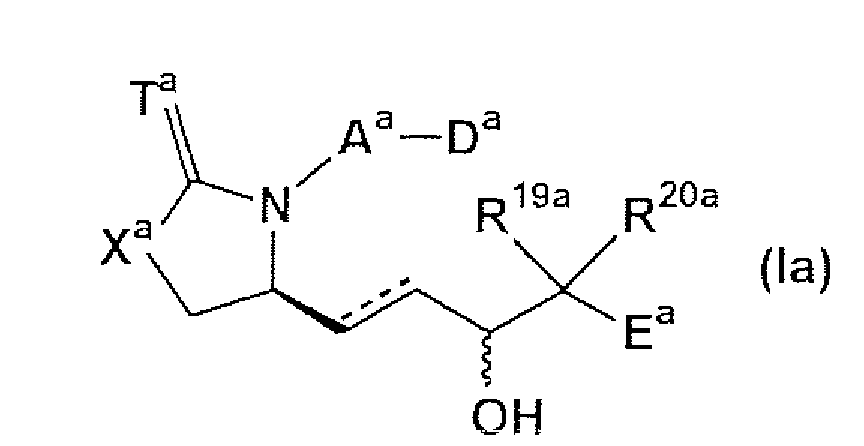

R19a and R20a are each independently, a hydrogen atom, C1-10 alkyl or a halogen atom,
Ta is oxygen or sulfur,
Xa is -CH2-, -O- or -S-,
Aa is A1a or A2a,
A1a is C2-8 straight-chain alkylene optionally substituted with 1-2 of C1-4 alkyl, C2-8 straight-chain alkenylene optionally substituted with 1-2 of C1-4 alkyl or C2-8 straight-chain alkynylene optionally substituted with 1-2 of C1-4 alkyl,
A2a is -G1a-G2a-G3a-,
G1a is C1-4 straight-chain alkylene optionally substituted with 1-2 of C1-4 alkyl, C2-4 straight-chain alkenylene optionally substituted with 1-2 of C1-4 alkyl or C2-4 straight-chain alkynylene optionally substituted with 1-2 of C1-4 alkyl,
G2a is -Ya-, -(ring1a)-, -Ya-(ring1a)-, -(ring1a)-Ya- or -Ya-(C1-4 alkylene)-(ring1a)-,
Ya is -S-, -SO-, -SO2-, -O- or -NR1a-,
R1a is a hydrogen atom, C1-10 alkyl or C2-10 acyl,
G3a is a bond, C1-4 straight-chain alkylene optionally substituted with 1-2 of C1-4 alkyl, C2-4 straight-chain alkenylene optionally substituted with 1-2 of C1-4 alkyl or C2-4 straight-chain alkynylene optionally substituted with 1-2 of C1-4 alkyl,
Da is D1a or D2a,
D1a is -COOH, -COOR2a, tetrazol-5-yl or CONR3aSO2R4a,
R2a is C1-10 alkyl, phenyl, C1-10 alkyl substituted with phenyl or biphenyl,
R3a is a hydrogen atom or C1-10 alkyl,
R4a is C1-10 alkyl or phenyl,
D2a is (1) -CH2OH, (2) -CH2OR5a, (3) hydroxy, (4) -OR5a, (5) formyl, (6) - CONR6aR7a, (7) -CONR6aSO2R8a, (8) -CO-(NH-amino acid residue-CO)m-OH, (9) -O-(CO- amino acid residue -NH)m-H, (10)-COOR9a, (11) -OCO-R10a, (12) -COO-Z1a-Z2a-Z3a, or (13)
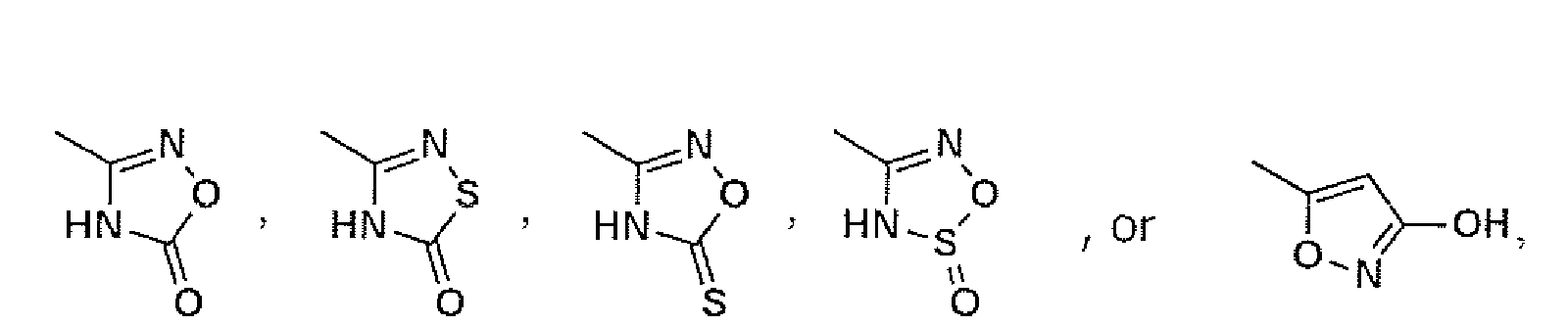
R6a and R7a are each independently, a hydrogen atom or C1-10 alkyl,
R8a is C1-10 alkyl substituted with phenyl,
R9a is (1) C1-10 alkyl substituted with biphenyl optionally substituted with 1-3 of C1-10 alkyl, C1-10 alkoxy or a halogen atom or (2) biphenyl substituted with 1-3 of C1-10 alkyl, C1-10 alkoxy or a halogen atom,
R10a is phenyl or C1-10 alkyl,
m is 1 or 2,
Z1a is C1-15 alkylene, C2-15 alkenylene or C2-15 alkynylene,
Z2a is (1) -CO-, (2) -OCO-, (3) -COO-, (4) -CONR11a-, (5) -NR12aCO-, (6)-O-, (7) -S-, (8) -SO-, (9) -SO2-, (10) -NR13a-, (11) -NR14aCONR15a-, (12) -NR16aCOO-, (13) -OCONR17a- or (14) -OCOO-,
Z3a is (1) a hydrogen atom, (2) C1-15 alkyl, (3) C2-15 alkenyl, (4) C2-15 alkynyl, (5) ring2a or (6) C1-10 alkyl substituted with C1-10 alkoxy, C1-10 alkylthio, C1-10 alkyl-NR18a- or ring2a,
R11a, R12a, R13a, R14a, R15a, R16a, R17a and R18a are each independently, a hydrogen atom or C1-15 alkyl, R11a and Z3a may be taken together with the nitrogen atom to which they are attached to form 5- to 7-membered saturated monoheterocyclic ring, and said heterocyclic ring may contain other one hetero atom selected from oxygen, nitrogen and sulfur atom,
Ea is E1a or E2a,
E1a is C3-7 cycloalkyl or ring3a,
E2a is C3-7 cycloalkyl, ring4a or ring5a,
ring1a and ring5a are optionally substituted with 1-3 of R21a and/or R22a, ring3a is optionally substituted with 1-2 R21a,
C3-7 cycloalkyl represented by E2a is substituted with one of R21a or R22a, and optionally substituted with another 1-2 of R21a and/or R22a,
ring4a is substituted with one ofR22a, optionally substituted with another 1-2 of R21a and/or R22a, and optionally substituted with a heterocyclic ring formed by R11a, Z3a and the nitrogen to which Z3a is attached or ring2a may be substituted with R23a,
R21a is C1-10 alkyl, C1-10 alkoxy, a halogen atom, nitro, C1-10 alkyl substituted with 1-3 of halogen atom(s) or phenyl,
R22a is (1) C2-10 alkenyl, (2) C2-10 alkynyl, (3) C1-10 alkylthio, (4) hydroxy, (5) -NR24aR25a, (6) C1-10 alkyl substituted with C1-10 alkoxy, (7) C1-10 alkyl substituted with C1-10 alkoxy substituted with 1-3 of halogen atom(s), (8) C1-10 alkyl substituted with -NR24aR25a, (9) ring6a, (10) -O-ring7a, (11) C1-10 alkyl substituted with ring7a, (12) C2-10 alkenyl substituted with ring7a, (13) C2-10 alkynyl substituted with ring7a, (14) C1-10 alkoxy substituted with ring7a, (15) C1-10 alkyl substituted with -O-ring7a, (16) -COOR26a or (17) C1-10 alkoxy substituted with 1-3 of halogen atom(s),
R24a, R25a and R26a are each independently, a hydrogen atom or C1-10 alkyl,
R23a is (1) C1-15 alkyl, (2) C2-15 alkenyl, (3) C2-15 alkynyl or (4) C1-10 alkyl substituted with C1-30 alkoxy, C1-10 alkylthio or C1-10 alkyl-NR27a-,
R27a is a hydrogen atom or C1-10 alkyl,
ring1a, ring2a, ring5a, ring6a and ring7a are (1) C3-15 mono-, bi- or tri-carbocyclic aryl which may be partially or fully saturated or (2) 3- to 15- membered mono-, bi- or tri-heterocyclic aryl containing 1 to 4 hetero atom(s) selected from oxygen, nitrogen and sulfur atom(s) which may be partially or fully saturated,
ring3a and ring4a are thienyl, phenyl or furyl,
ring6a and ring7a may be substituted with 1-3 of R28a,
R28a is (1) C1-10 alkyl, (2) C2-10 alkenyl, (3) C2-10 alkynyl, (4) C1-10 alkoxy, (5) C1-10 alkyl substituted with C1-10 alkoxy, (6) halogen atom, (7) hydroxy, (8) C1-10 alkyl substituted with 1-3 of halogen atom(s) or (9) C1-10 alkyl substituted with C1-10 alkoxy substituted with 1-3 of halogen atom(s), and
wherein (1) when Ta is an oxygen atom, Xa is CH2-, Aa is A1a, and Da is D1a, then Ea is E2a,
(2) ring5a is not C3-7 cycloalkyl, phenyl, thienyl nor furyl,
(3) ring6a is phenyl, then phenyl have at least one R28a. The present invention is the selective invention in the WO03/009872 and the compounds in the present invention are included within the compound represented by formula (Ia).

AA is a single bond or a cis-double bond;
BA is a single bond or a trans-double bond;
UA is

R3A is selected from the group consisting of hydrogen, C1-5 alkyl, phenyl and p-biphenyl;
R4A is selected from the group consisting of -COR5A and -SO2R5A;
R5A is selected from the group consisting of phenyl and C1-5 alkyl, and
a C5 epimer thereof, the salt of alkali metal and alkaline earth metals and ammonium salt of the compound which have carboxylate or tetrazol-5-yl.
And in the specification of JP-A-2001-181210, it is disclosed that the selective EP4 receptor agonist represented by above-mentioned formula (A) is useful for the treatment of osteoporosis.
And the specification of United Kingdom Patent No.1,553,595 discloses the pyrrolidone derivatives represented by formula (B)

R2B is a straight- or branched- chain, saturated or unsaturated, aliphatic or cycloaliphatic hydrocarbon radical having up to 6 carbon atoms, or an araliphatic hydrocarbon radical having 7 or 8 carbon atoms, and
nB is the integer 2, 3 or 4, and
a free acid, and the physiologically acceptable e.g. metal or amine, a salt thereof.
In the specifications of United Kingdom Patent No.1,569,982, and United Kingdom Patent No.1,583,163, the compound close to the compound represented by formula (B) is disclosed.
Further, the specification of United State Patent No.4,320, 136 discloses the compound represented by formula (C)

RC is hydrogen, C1-C12 n-alkyl, branched alkyl or cycloalkyl, etc.;
R1C is hydrogen, methyl or ethyl;
R2C is phenyl or mono- or di-substituted phenyl, said substituent is selected from the group consisting of, fluorine, chlorine, methyl, methoxy, nitro or trifuloromethyl;
when R2C is phenyl or substituted phenyl, nC is 0-2, the definitions of the symbols are excerpt.
Further, in the specification of WO02/042268 it was disclosed that the compound is EP4 receptor subtype agonist.


D is -COOR1 or tetrazoryl,
R1 is hydrogen or C1-4 alkyl,
G is ringA or C1-4 alkylene,
ringA is

p is 0 or an integer of 1-4,
when p is 2 or more, plural R2's are the same or different,
Y is a single bond or -S-,
T is oxygen or sulfur,
X is -CH2-, -O- or -S-,
ring B is C3-7 cycloalkyl optionally substituted,

(5) phenyl or (6) heterocyclic aryl in R3 is optionally substituted with 1-3 of (a) halogen atom(s), (b) C1-4 alkyl, (c) C1-4 alkoxy and/or (d) nitro,
q is 0 or an integer of 1-5,
when q is 2 or more, plural R3's are the same or different,
n is an integer of 1-4,
a salt thereof, a solvate thereof, a cyclodextrin clathrate thereof, or a prodrug thereof.

ringA1 is

ringB1 is C3-7 cycloalkyl,

other symbols have the same meanings as described in above-mentioned 1, and
wherein when T is oxygen, X is -CH2-, and
when n is an integer of 2-4, G1 is ringA1.


R4 is (1) a halogen atom, (2) C1-4 alkyl (3) C1-4 alkoxy, (4) C1-4 alkyl optionally substituted with 1-5 of halogen atom(s), (5) C1-4 alkoxy optionally substituted with 1-5 of halogen atom(s), (6) phenyl or (7) 3- to 15- membered mono-, bi- or tri-heterocyclic aryl containing 1 to 4 hetero atom(s) selected from oxygen, nitrogen and sulfur atom(s) which may be partially or fully saturated, and (6) phenyl or (7) heterocyclic in the R4 may be substituted with 1-3 of (a) a halogen atom(s), (b) C1-4 alkyl (c) C1-4 alkoxy and/or (d) nitro,
r is an integer 1 to 5, and
other symbols have the same meanings as described in above-mentioned 1.


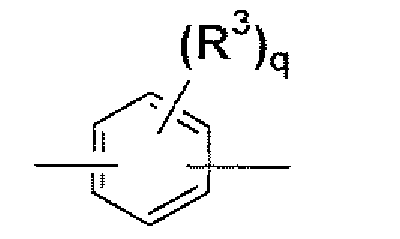


In the present invention, as G2,

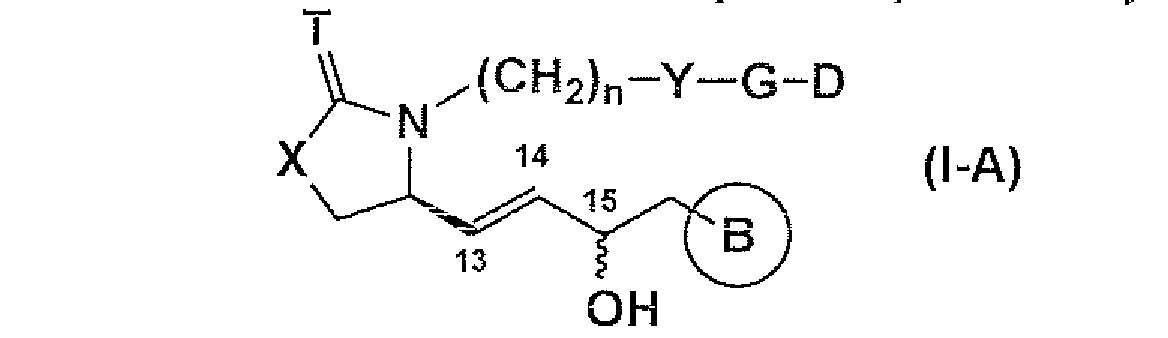
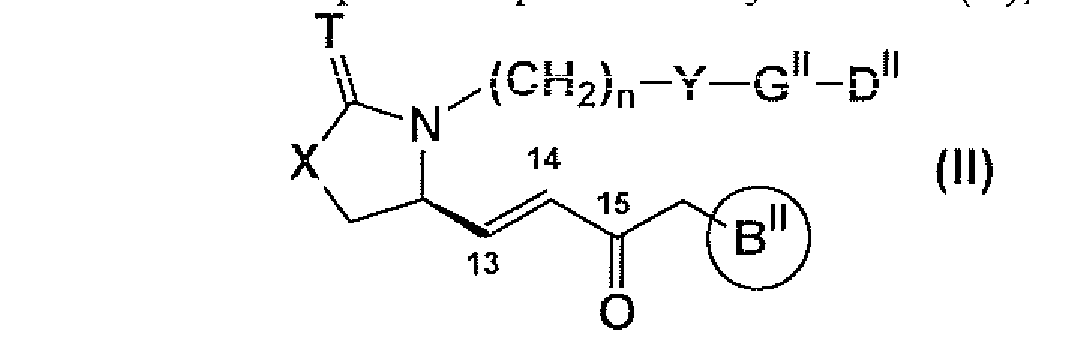
- (1) The deprotection reaction by alkaline hydrolysis is, for example, carried out in an organic solvent (e.g. methanol, tetrahydrofuran, or 1,4-dioxane, etc.) using a hydroxide of an alkali metal (e.g. sodium hydroxide, potassium hydroxide, or lithium hydroxide, etc.), a hydroxide alkaline earth metal (e.g. barium hydroxide, or calcium hydroxide, etc.), or a carbonate (e.g. sodium carbonate or potassium carbonate, etc.), or an aqueous solution thereof, or a mixture thereof at a temperature of 0 to 40°C.
- (2) The deprotection reaction under acidic conditions is carried out, for example, in an organic solvent (e.g. methylene chloride, chloroform, 1,4-dioxane, ethyl acetate, or anisole, etc.) in the presence or absence of 2,2,2-trifuloroethanol in an organic acid (e.g. acetic acid, trifuloroacetic acid, inethansulfonic acid, or p-tosylate, etc.), or an inorganic acid (e.g. hydrochloric acid, or sulfuric acid, etc.) or a mixture thereof (e.g. hydrogen bromide/acetic acid, etc.) at a temperature of 0 to 100°C.
- (3) The deprotection reaction by hydrogenolysis is carried out, for example, in a solvent (e.g. ethers (e.g., tetrahydrofuran, 1,4-dioxane, dimethoxyethane, or diethylether, etc.), alcohols (e.g., methanol, or ethanol, etc.), benzenes (e.g. benzene, or toluene, etc.), ketones (e.g. acetone, or methylethylketone, etc.), nitriles (e.g. actetonitrile, etc.), amides (e.g., dimethylformamide, etc.), water, ethyl acetate, acetic acid, or a mixed solvent of at least two of these, etc.) in the presence of a catalyst (e.g. palladium-carbon, palladium black, palladium hydroxide-carbon, platinum oxide, or Raney nickel, etc.) under the hydrogen atmosphere at normal pressure or under pressurization, or in the presence of ammonium formate at a temperature of 0 to 200°C.
- (4) The deprotection reaction of a silyl group is carried out, for example, in a water-miscible organic solvent (e.g. tetrahydrofuran, or acetonitrile, etc.) using tetrabutylammonium fluoride at a temperature of 0 to 40°C.
- (5) The deprotection reaction using metals is carried out, for example, in an acidic solvent (e.g. acetic acid, pH4.2-7.2 buffer solution, or a mixture of a solution thereof and an organic solvent of tetrahydrofran, etc.) in the presence of zinc powder, if necessary sonicating, at the temperature of 0 to 40°C.
- (6) The deprotection reaction using metal complexes is carried out, for example, in an organic solvent (e.g. methylene chloride, N,N-dimethylformamide, tetrahydrofran, ethyl acetate, acetonitrile, 1,4-dioxane, ethanol, etc.), water, or a mixture thereof, in the presence of a trap reagent (e.g. tributyltine hydride, triethylsilane, dimedone, morpholine, diethylamine, pyrrolidine, etc.), an organic acid (e.g. acetic acid, formic acid, 2-ethyl hexanoic acid, etc.) and/or salts of organic acid (e.g., sodium 2-ethylhexanoate, potassium 2-ethylhexanoate, etc.), in the presence or absence of a phosphine reagent (e.g. triphenylphosphine, etc.), using metal complexes (e.g. tetrakistriphenylphosphinepalladium(0), dichlorobis(triphenylphosphine)palladium(II), palladium acetate(II), tris(triphenylphosphine)rhodium(I) chloride, etc.) at the temperature of 0 to 40°C.

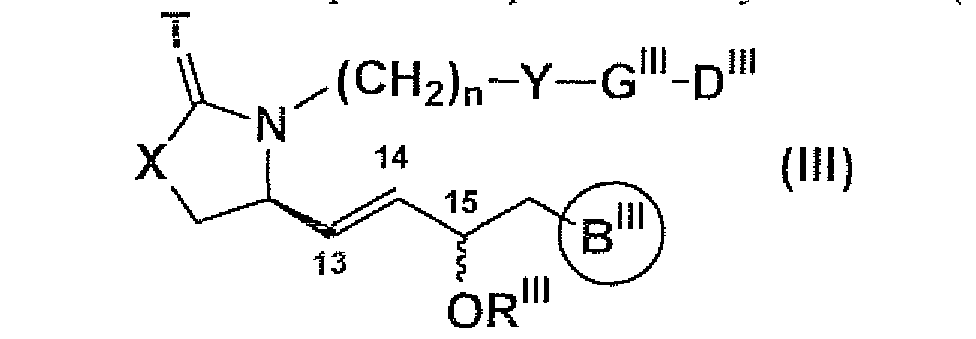
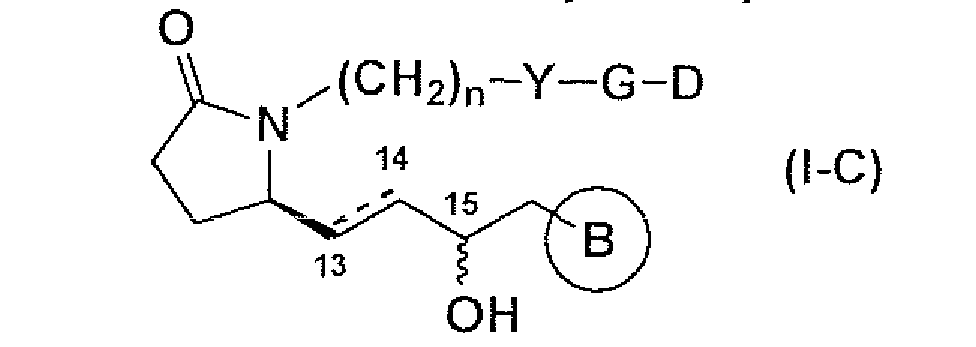

TLC: Rf 0.76 (hexane : ethyl acetate = 1 : 1)
TLC: Rf 0.59 (hexane : ethyl acetate = 1 : 1) ;
NMR: δ 6.87, 6.82, 5.72, 5.57, 4.50, 4.33, 4.17-4.09, 2.79, 2.67, 2.32, 2.30, 1.90-1.63, 1.44, 1.26.
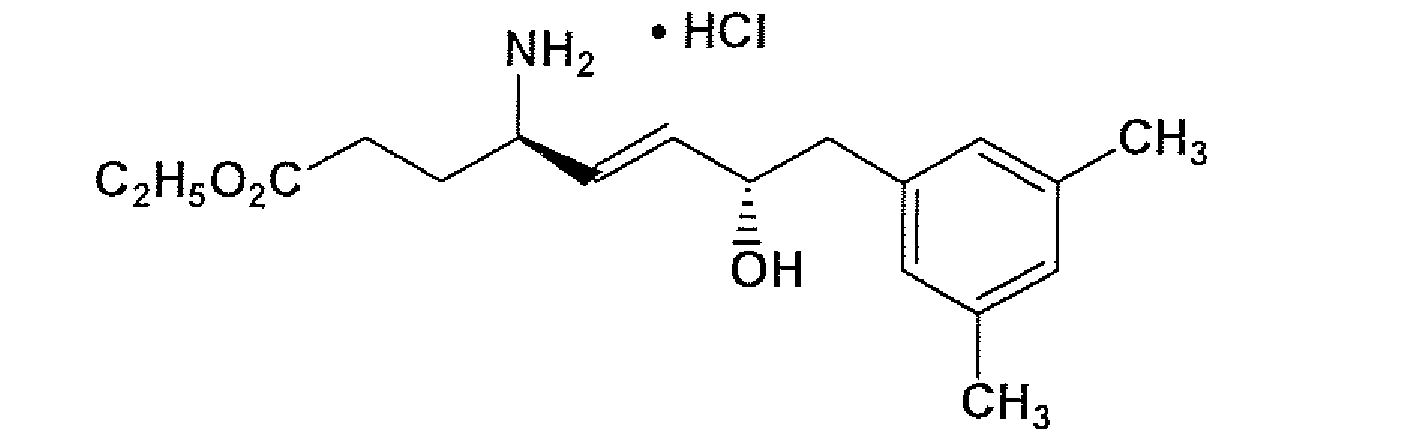
TLC: Rf 0.29 (chloroform : methanol: acetic acid = 9 : 1: 0.1) ;
NMR: δ 6.83, 5,90, 5.54, 4.40-4.34, 4.14, 3.76-3.68, 2.82-2.67, 2.27, 2.26, 2.10-1.94, 1.85-1.72, 1.26
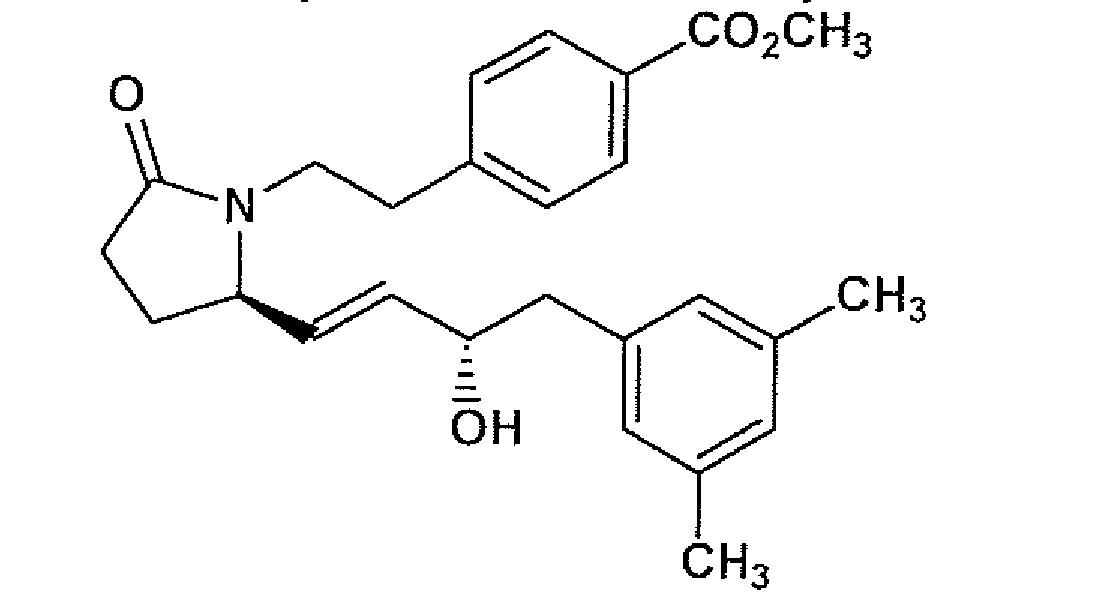
TLC: Rf 0.49 (ethyl acetate);
NMR: δ 7.96, 7.22, 6.89, 6.82, 5.62, 5.36, 4.34, 3.91, 3.77-3.69, 3.07-2.98, 2.93-2.70, 2.40-2.05, 2.29, 1.71-1.50, 1.26

TLC: Rf 0.31 (ethyl acetate);
NMR: δ 8.00, 7.24, 6.88, 6.82, 5.64, 5.38, 4.37, 3.82-3.70, 3.62, 3.10-3.01, 2.94-2.69, 2.40-2.25, 2.29, 2.18-2.06, 1.72-1.60

NMR: δ 8.18-7.86, 7.62-7.10, 5.61, 5.32, 4.46-4.40, 3.76-3.62, 3.07-2.98, 2.93, 2.87-2.75, 2.44-2.22, 2.14-2.02, 1.79, 1.67-1,55.
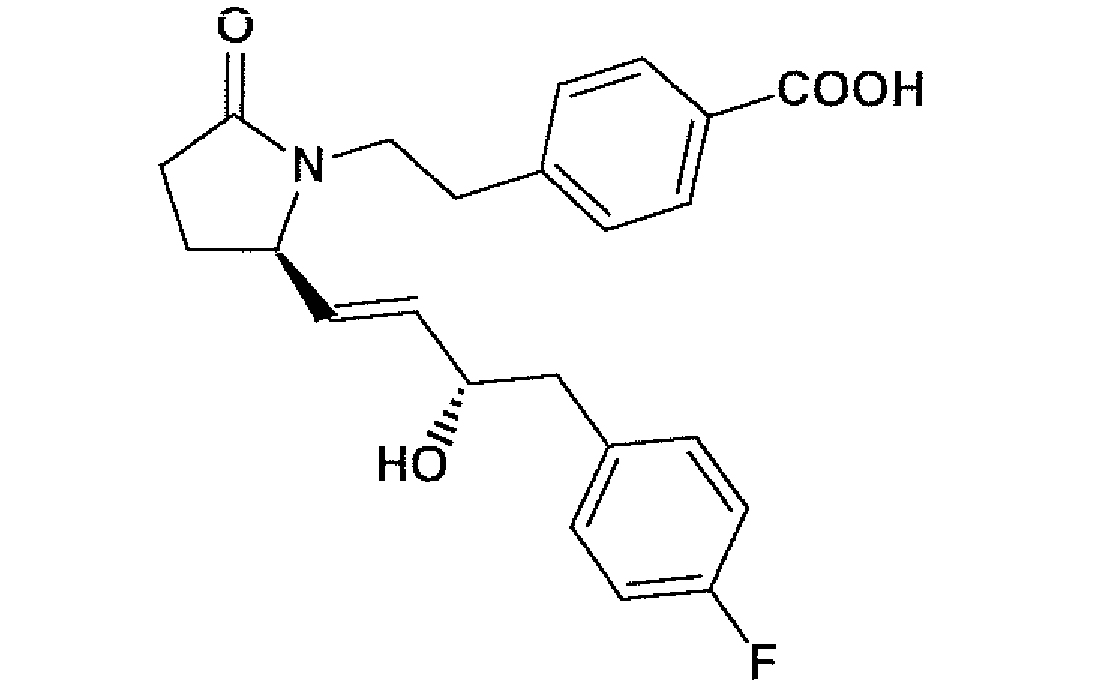
NMR: δ 1.64, 2.11, 2.34, 2.83, 2.98, 3.75, 4.34, 5.35, 5.59, 6.97, 7.16, 7.24, 7.99.

NMR: δ 8.47, 8.14, 8.04, 7.65, 7.52-7.36, 7.21, 5.94, 5.81, 4.63, 4.17, 3.55-3.24, 3.00, 2.84, 2.51, 2.46-2.18, 1.81.
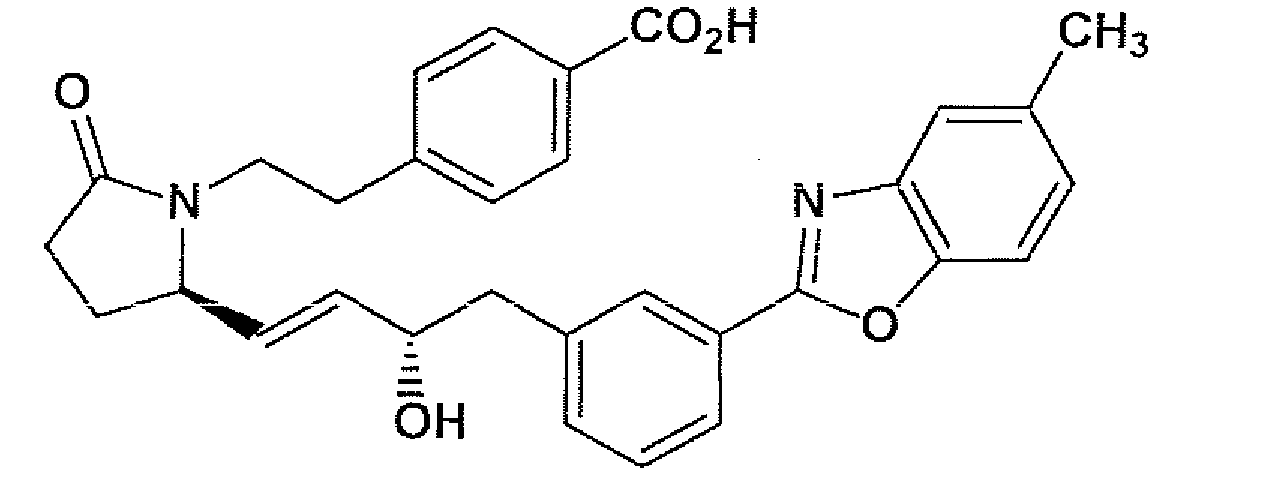
NMR(DMSO-d6): δ 8.05, 7.98, 7.81, 7.63, 7.57, 7.46, 7.25-7.18, 5.65, 5.29, 5.05, 4.29, 3.83, 3.46, 2.90-2.60, 2.43, 2.26-1.95, 1.51.
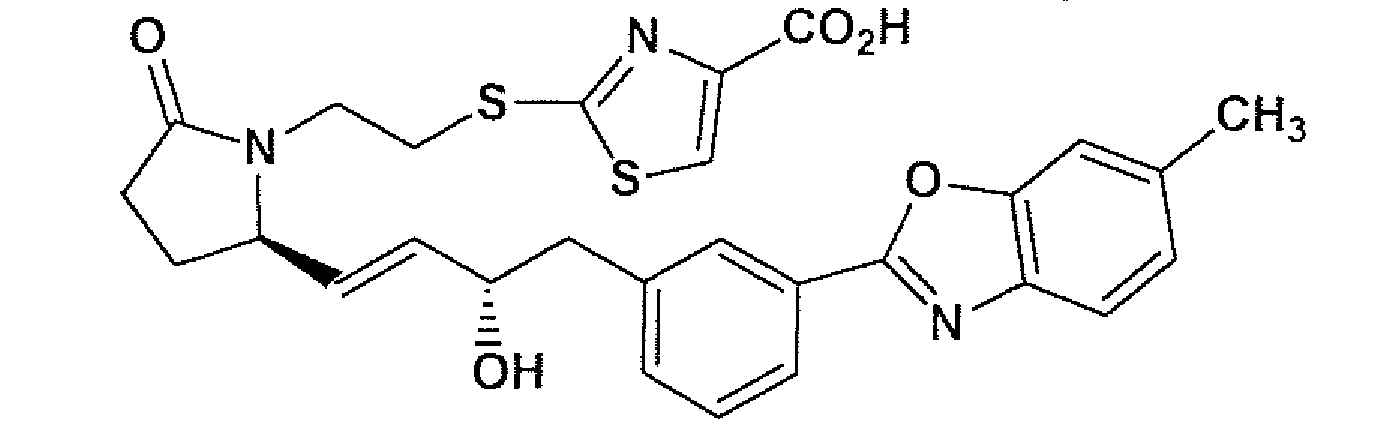
NMR: δ 1.75, 2.33, 2.90, 3.34, 3.60, 4.19, 4.49, 5.62, 5.92, 7.20, 7.42, 7.66, 8.05, 8.20.
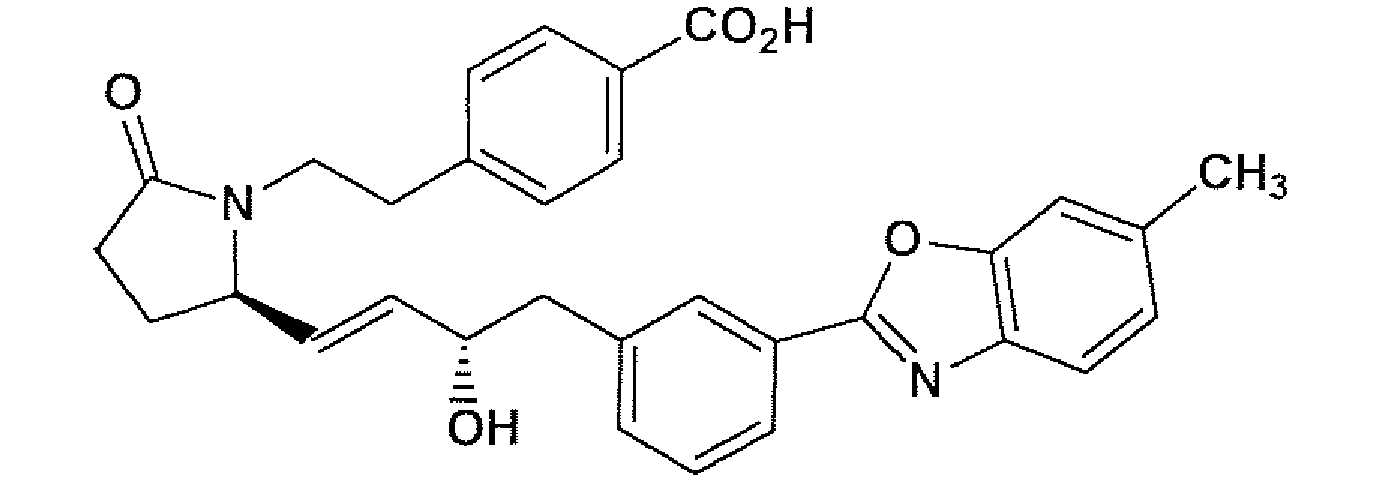
NMR: δ 1.62, 2.21, 2.52, 2.85, 3.70, 4.42, 5.35, 5.62, 7.20, 7.42, 7.62, 7.95, 8.08.

NMR: δ 1.65, 2.10, 2.30, 2.67, 2.77, 2.95, 3.69, 4.43, 5.34, 5.62, 7.22, 7.41, 7.95, 8.11.
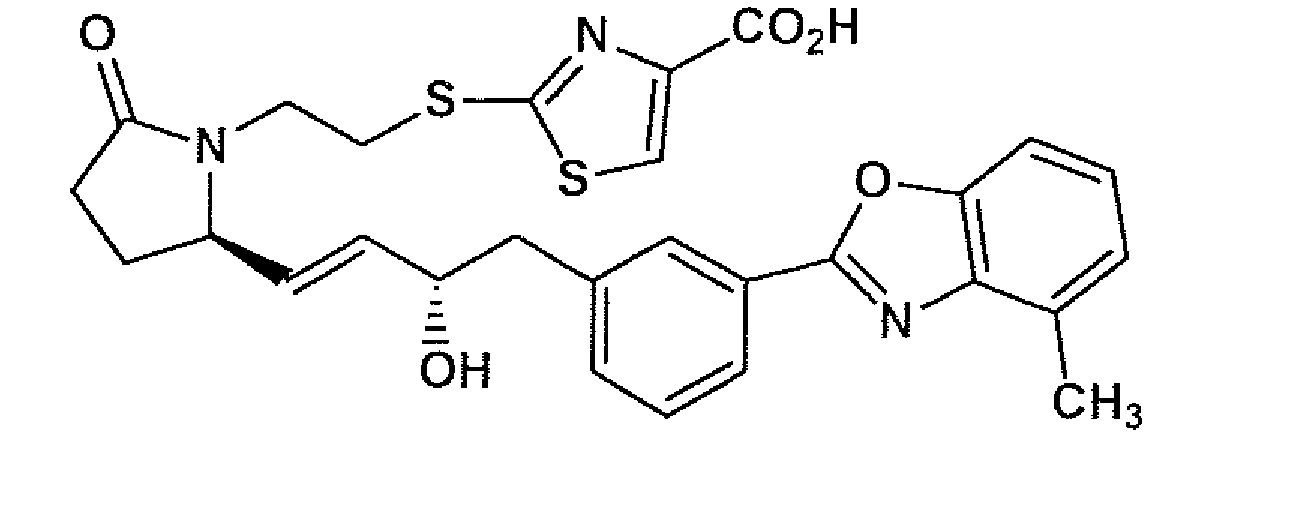
NMR: δ 1.74, 2.24, 2.37, 2.68, 2.91, 3.29, 3.40, 3.53, 4.20, 4.43, 5.53, 5.88, 7.17, 7.27, 7.35, 7.44, 8.08, 8.16.

NNM: δ 7.90, 7.19, 7.09-6.91, 5.67, 5.40, 4.40, 3.83, 3.71, 3.02, 2.90-2.73, 2.44-2.25, 2.33, 2.14, 1.67.
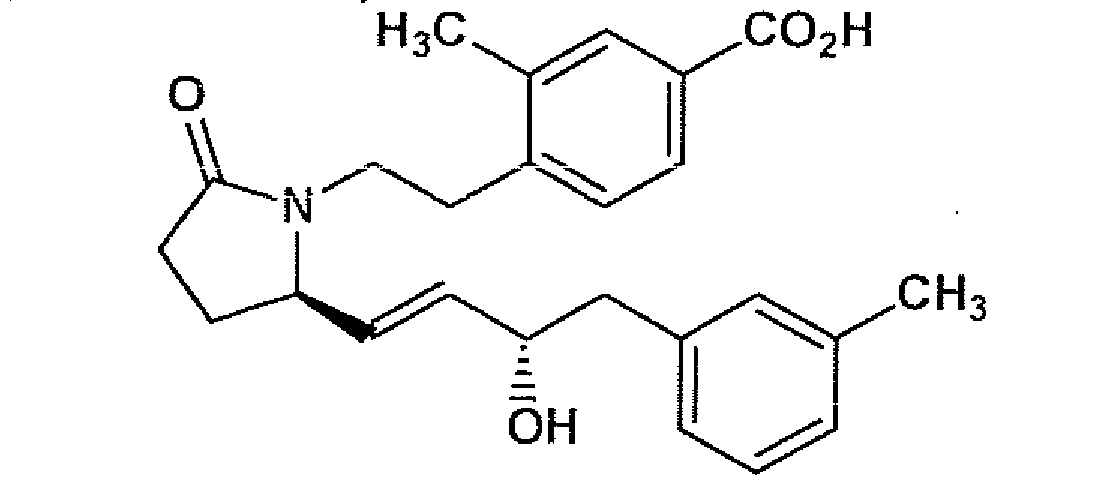
NMR: δ 7.88, 7.84, 7.23-7.15, 7.07-6.97, 5.64, 5.41, 4.37, 3.81, 3.68, 3.06-2.71, 2.48-2.27, 2.38, 2.32, 2.15, 1.68.
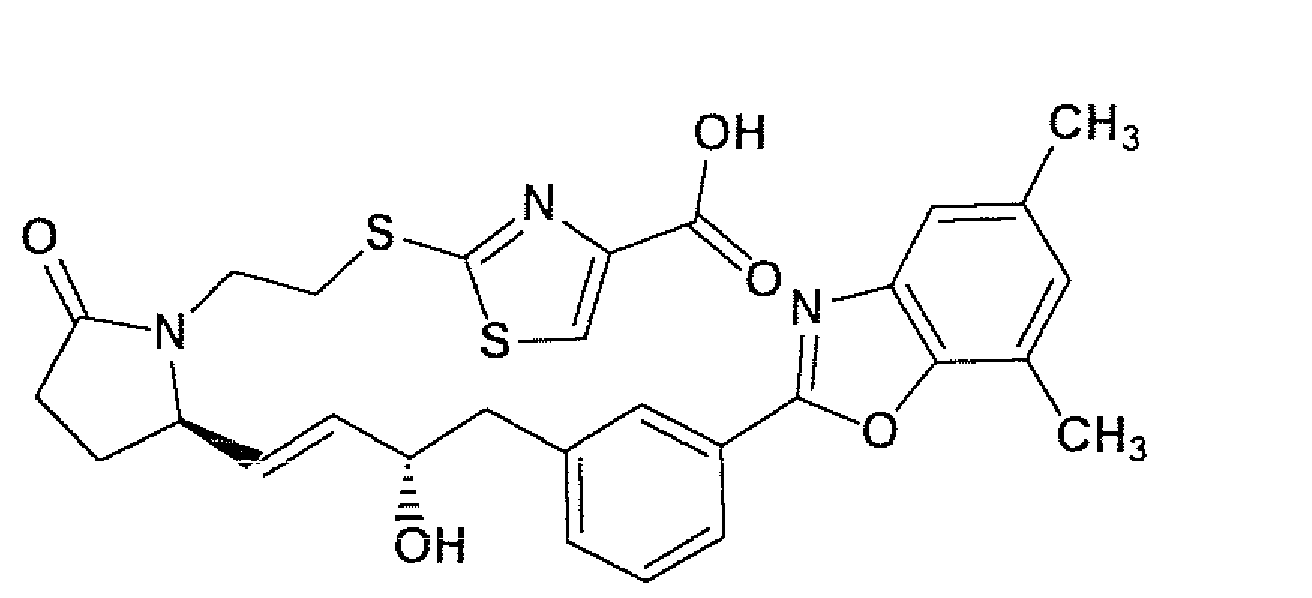
NMR: δ 1.81, 2.39, 2.83, 3.01, 3.39, 4.15, 4.63, 5.81, 7.01, 7.42, 8.06, 8.14, 8.48.
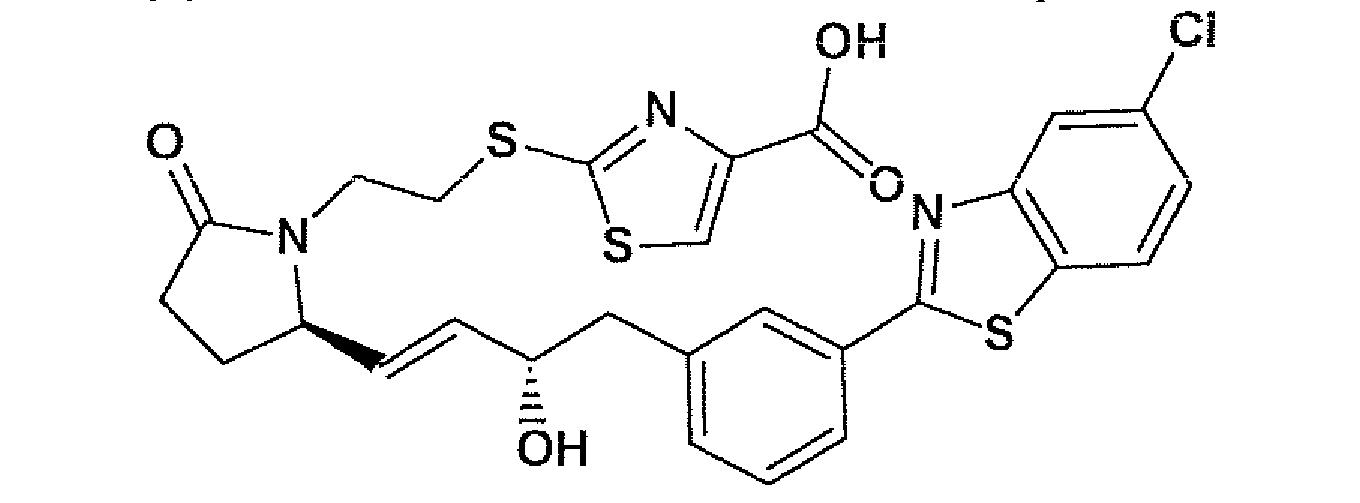
NMR(DMSO-d6): δ 1.55, 2.11, 2.83, 3.20, 3.55, 4.10, 4.25, 5.05, 5.33, 5.72, 7.45, 7.90, 8.15, 8.31.
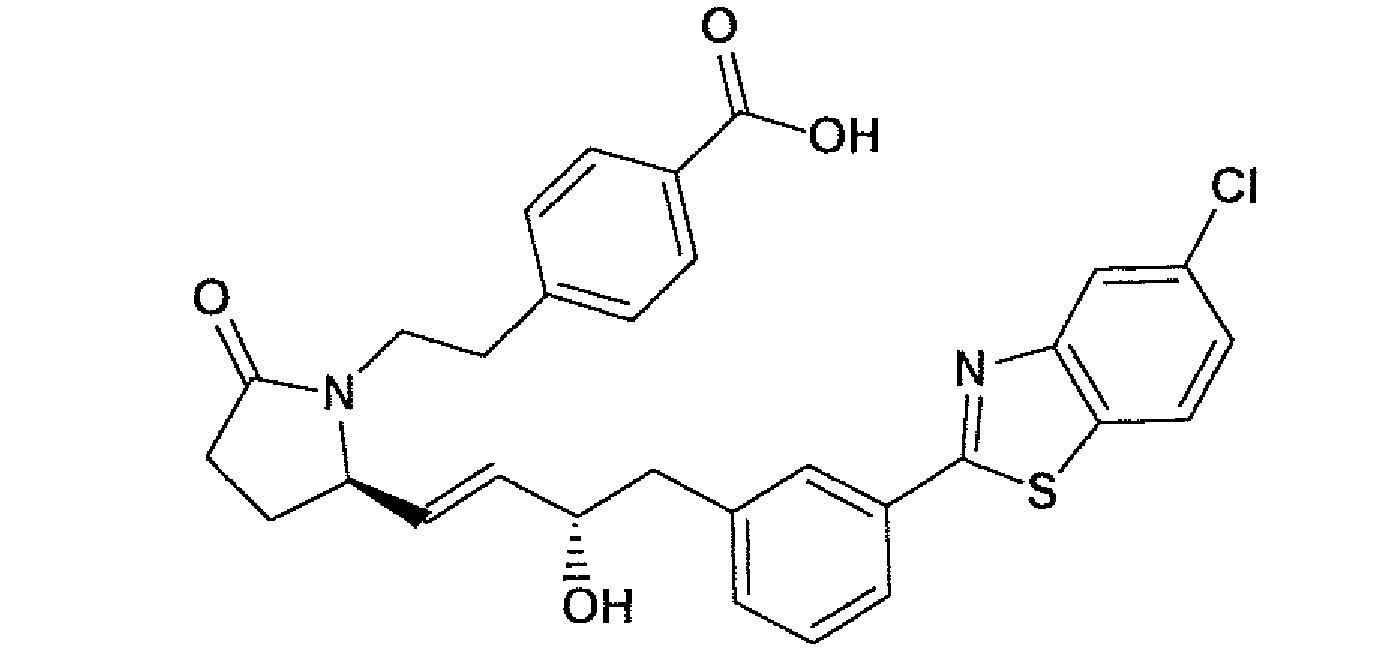
NMR(DMSO-d6): δ 1.52, 2.09, 2.73, 3.46, 3.85, 4.28, 5.06, 5.29, 5.66, 7.20, 7.43, 7.51, 7.81, 7.92, 8.11, 8.18.

NMR: δ 1.74, 2.23, 2.33, 2.36, 2.88, 3.24, 3.71, 4.12, 4.44, 5.53, 5.82, 7.15, 7.35, 8.07.

NMR: δ 1.70, 2.30, 2.31, 2.33, 2.91, 3.13, 3.24, 3.68, 4.10, 4.46, 5.50, 5.82, 7.15, 7.40, 8.06.

NMR(CD3OD): δ 1.64, 2.23, 2.86, 3.65, 3.92, 4.29, 5.36, 5.64, 7.07, 7.28, 7.94.

NMR: δ 7.97, 7.19, 7.10-6.98, 5.63, 5.40, 4.39, 3.82-3,68, 3.00, 2.90-2.69, 2.62, 2.45-2.26, 2.32, 2.12, 1.67.

NMR: δ 1.78, 2.34, 2.87, 2.99, 3.29, 3.45, 4.15, 4.60, 5.75, 5.93, 7.44, 7.83, 8.05, 8.12, 8.38.
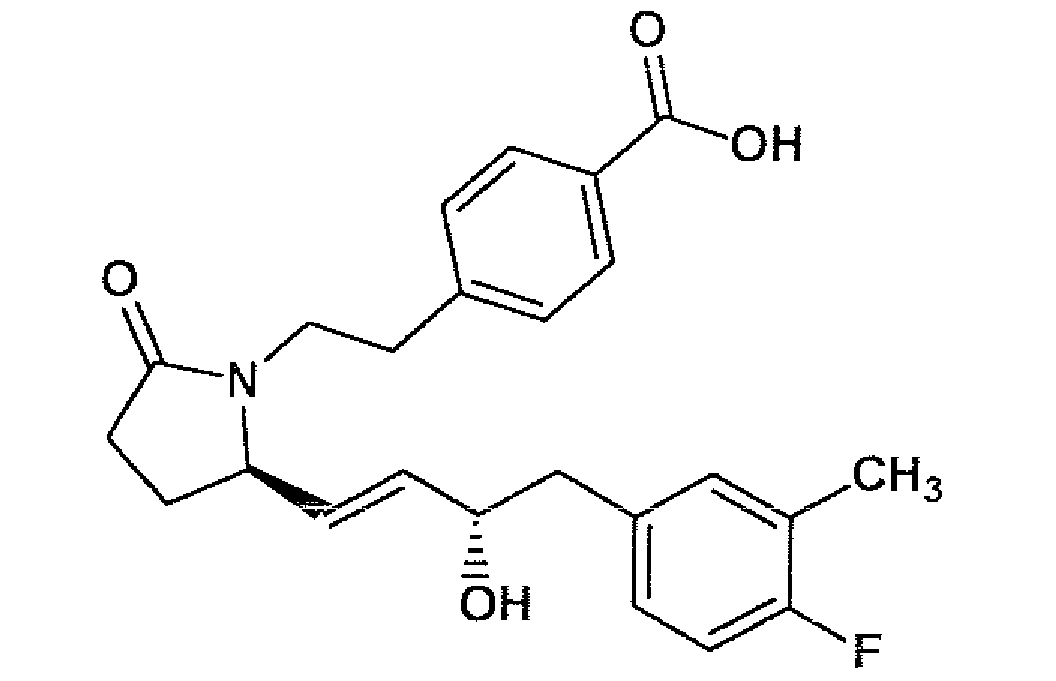
NMR: δ 1.65, 2.24, 2.88, 3.77, 4.33, 5.38, 5.62, 6.96, 7.26, 8.01.

NMR: δ 8.01, 7.29-7.23, 7.06, 5.60, 5.37, 4.36, 3.92-3.72, 3.06-2.71, 2.45-2.25, 2.12, 1.61.

NMR: δ 7.62, 7.53, 7.21-7.15, 7.08-6.96, 5.63, 5.40, 4.38, 3.88, 3.88-3.63, 3.04, 2.97-2.73, 2.43-2.25, 2.32, 2.11, 1.66.
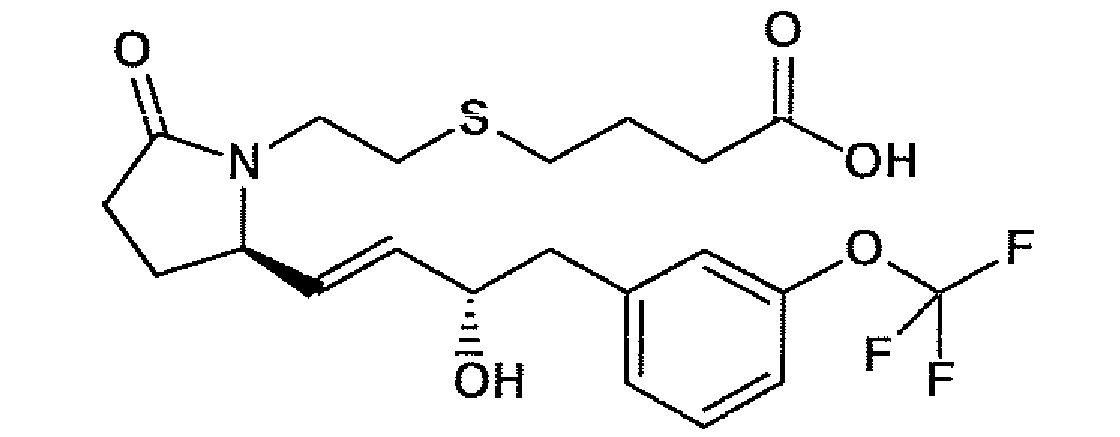
NMR: δ 7.34, 7.17-7.07, 5.75, 5.52, 4.44, 4.12, 3.63, 2.97, 2.87, 2.67-2.33, 2.22, 1.98-1.82, 1.69.
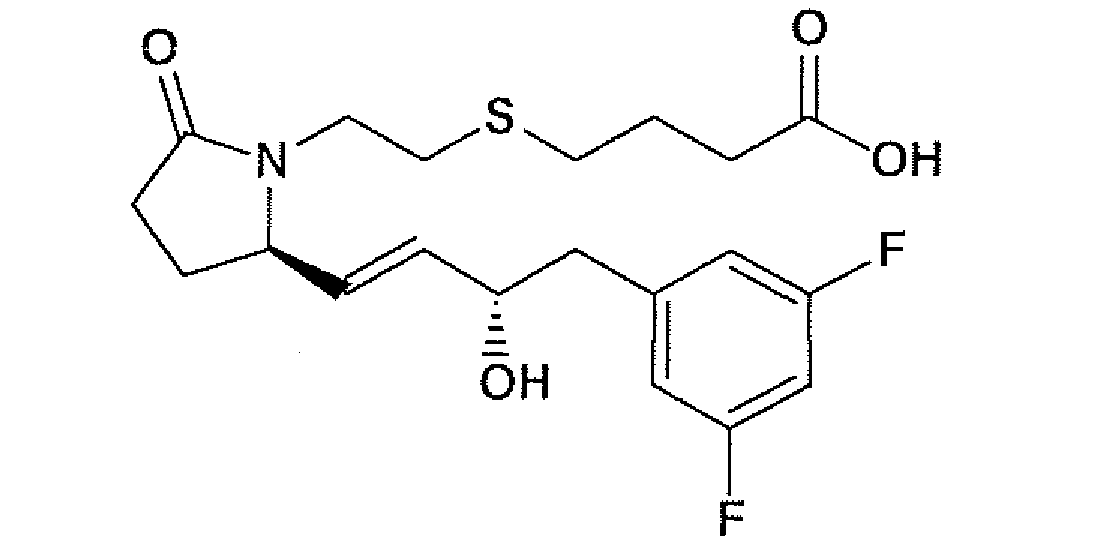
NMR: δ 6.80-6.64, 5.75, 5.52, 4.43, 4.13, 3.64, 2.99, 2.87, 2.70-2.37, 2.23, 1.98-1.82, 1. 70.

NMR: δ 7.59-7.55, 7.49-7.33, 7.17, 5.76, 5.46, 4.45, 4.09, 3.57, 2.98-2.82, 2.61-2.26, 2.18, 1.92-1.78, 1.63.
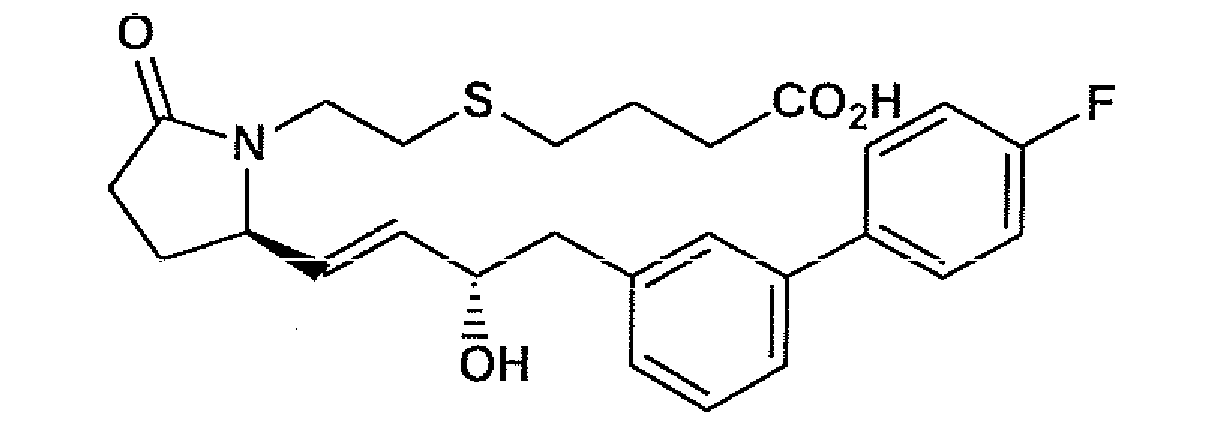
NMR: δ 7.56-7.51, 7.45-7.35, 7.20-7.10, 5.78, 5.50, 4.47, 4.10, 3.59, 3.00-2.85, 2.61-2.30, 2.21, 1.97-1.80, 1.57.

NMR: δ 7.56-7.51, 7.48-7.34, 7.28, 7.18-7.06, 5.77, 5.51, 4.43, 4.11, 3.61, 2.95, 2.87, 2.61-2.33, 2.21, 1.95-1.78, 1.67.
TLC: Rf 0.83 (ethyl acetate : methanol = 20 : 1).
TLC: Rf 0.32 (hexane : ethyl acetate = 1 : 2).
TLC: Rf 0.63 (hexane : ethyl acetate = 1 : 1).
TLC: Rf 0.72 (hexane : ethyl acetate = 1 : 1).
TLC: Rf 0.08 (hexane : ethyl acetate = 1 : 1).
TLC: Rf 0.32 (hexane : ethyl acetate = 1 : 1).
TLC: Rf 0.27 (hexane : ethyl acetate = 1 : 2).

TLC: Rf 0.33 (methylene chloride : methanol = 9 : 1);
NMR: δ 1.88, 2.50, 2.96, 3.40, 3.88, 4.34, 4.51, 5.55, 5.90, 7.17, 7.49.
NMR: δ 1.24, 1.89, 2.65, 3.10, 3.45, 3.91, 4.40, 5.58, 5.90, 7.01, 7.11, 7.23.
NMR: δ 1.90, 2.65, 3.11, 3.47, 3.91, 4.38, 5.59, 5.88, 7.09, 7.23.
NMR: δ 1.85, 2.50, 2.97, 3.34, 3.87, 4.34, 4.55, 5.54, 5.91, 7.32, 7.47, 7.64, 7.80.
NMR: δ 1.91, 2.57, 2.87, 3.10, 3.46, 3.89, 4.41, 5.59, 5.89, 7.11, 7.36.
NMR: δ 1.87, 2.53, 2.87, 3.07, 3.44, 3.89, 4.40, 5.58, 5.90, 7.12, 7.26, 7.46.
NMR(CD3OD): δ 1.86, 2.23, 2.40, 2.56, 2.71, 2.83, 2.96, 3.37, 3.91, 4.39, 5.45, 5.85, 6.95.
NMR: δ 1.91, 2.63, 3.10, 3.47, 3.91, 4.41, 5.60, 5.88, 6.72.
NMR: δ 1.93, 2.58, 2.86, 3.10, 3.44, 3.90, 4.41, 5.57, 5.88, 6.97, 7.30.
NMR: δ 1.90, 2.68, 3.13, 3.48, 3.90, 4.41, 5.61, 5.90, 7.16, 7.41.
NMR: δ 1.90, 2.57, 2.92, 3.10, 3.46, 3.88, 4.42, 5.58, 5.90, 7.45.
NMR: δ 1.91, 2.64, 3.12, 3.48, 3.91, 4.40, 5.60, 5.88, 6.92, 7.09.
NMR: δ 1.90, 2.62, 3.06, 3.45, 3.89, 4.38, 5.55, 5.89, 7.28.
NMR: δ 0.94, 1.63, 1.92, 2.62, 3.10, 3.45, 3.90, 4.39, 5.58, 5.90, 7.04, 7.22.
NMR: δ 1.89, 2.58, 3.20, 3.39, 3.43, 3.92, 4.41, 4.47, 5.63, 5.92, 7.24.
NMR: δ 1.22, 1.89, 2.62, 3.13, 3.48, 3.92, 4.39, 5.60, 5.90, 6.98.

NMR: δ 2.85, 3.30, 3.54, 3.92, 4.38, 5.53, 5.92, 7.24, 8.10.
NMR: δ 2.33, 2.80, 3.31, 3.57, 3.93, 4.40, 5.55, 5.92, 6.96, 7.06, 7.19, 8.10.
NMR: δ 2.81, 3.35, 3.59, 3.93, 4.39, 5.57, 5.92, 6.99, 7.13, 8.11.
NMR: δ 2.98, 3.38, 3.88, 4.33, 4.53, 5.51, 5.95, 7.30, 7.45, 7.60, 7.78, 8.05.
NMR: δ 2.27, 2.90, 3.26, 3.55, 3.91, 4.34, 4.49, 5.55, 5.95, 7.15, 7.46, 8.08.
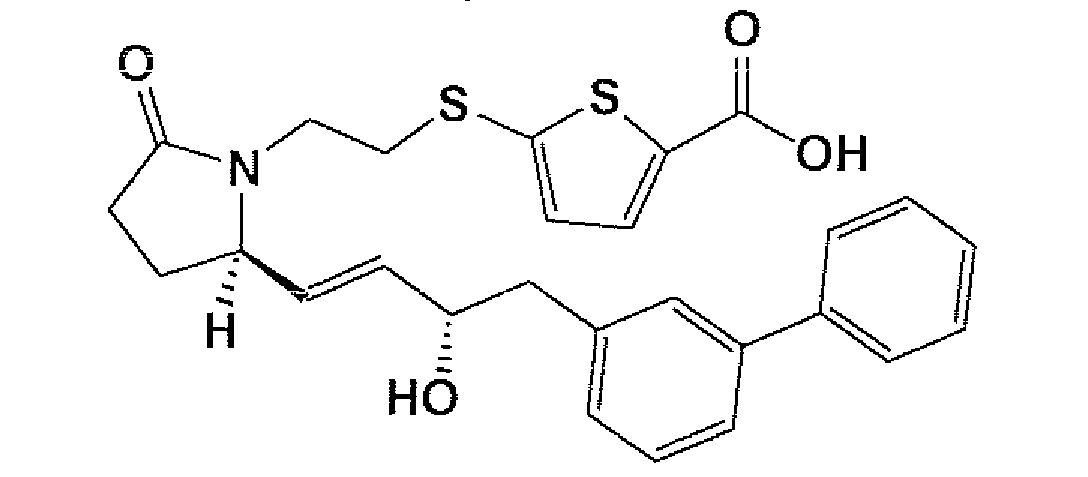
NMR: δ 1.69, 2.19, 2.35, 2.89, 3.00, 3.61, 4.09, 4.43, 5.46, 5.73, 7.02, 7.16, 7.38, 7.56, 7.66.
NMR: δ 1.69, 2.19, 2.34, 2.92, 3.52, 4.05, 4.48, 5.44, 5.74, 7.02, 7.30, 7.44, 7.62, 7.66, 7.78.
NMR: δ 1.71, 2.16, 2.36, 2.81, 3.04, 3.66, 4.12, 4.38, 5.48, 5.73, 7.03, 7.10, 7.23, 7.41, 7.53, 7.66.
NMR: δ 1.23, 1.73, 2.21, 2.38, 2.63, 2.78, 3.06, 3.67, 4.12, 4.39, 5.48, 5.73, 7.00, 7.08, 7.23, 7.69.
NMR: δ 1.72, 2.20, 2.33, 2.38, 2.77, 3.07, 3.66, 4.12, 4.38, 5.47, 5.72, 7.04, 7.19, 7.69.
NMR: δ 1.72, 2.16, 2.38, 2.83, 3.08, 3.67, 4.12, 4.40, 5.50, 5.72, 7.09, 7.33, 7.69.
NMR: δ 1.73, 2.34, 2.86, 3.25, 3.74, 4.13, 4.44, 5.54, 5.82, 7.11, 7.26, 7.40, 7.53, 8.07.
NMR: δ 1.22, 1.74, 2.31, 2.63, 2.82, 3.25, 3.72, 4.11, 4.42, 5.51, 5.81, 7.00, 7.08, 7.23, 8.08.
NMR: δ 1.72, 2.30, 3.11, 3.65, 4.11, 4.51, 5.50, 5.83, 7.31, 7.46, 7.63, 7.80, 8.05.
NMR: δ 1.73, 2.33, 2.87, 3.27, 3.75, 4.12, 4.42, 5.55, 5.80, 7.11, 7.33, 8.09.
NMR: δ 1.74, 2.34, 2.79, 3.32, 3.74, 4.12, 4.40, 5.54, 5.80, 7.06, 7.24, 8.10.
NMR: δ 0.10, 0.50, 0.69, 1.46, 1.80, 2.35, 3.34, 3.47, 3.85, 4.13, 4.29, 5.60, 5.83, 8.10.
NMR: δ 0.93, 1.35, 1.77, 2.33, 3.33, 3.46, 3.85, 4.14, 4.28, 5.55, 5.79, 8.10.
NMR: δ 1.72, 2.31, 2.77, 3.32, 3.69, 4.13, 4.36, 4.70, 5.52, 5.76, 6.98, 7.15, 8.20.
NMR: δ 1.72, 2.07, 2.39, 3.34, 3.48, 3.82, 4.12, 5.54, 5.76, 8.10.
NMR: δ 1.72, 2.32, 2.80, 3.32, 3.72, 4.11, 4.39, 5.51, 5.78, 7.11, 7.30, 8.09.
NMR: δ 1.50, 2.36, 3.43, 3.84, 4.18, 5.55, 5.78, 8.10.
NMR: δ 1.75, 2.43, 3.25, 3.80, 4,14, 4.31, 5.61, 5.84, 7.15, 8.07.
NMR: δ 1.52, 2.37, 3.42, 3.80, 3.96, 4.15, 4.30, 5.58, 5.82, 8.10.
NMR: δ 1.72, 2.33, 2.50, 3.23, 4.11, 4.51, 5.49, 5.82, 7.26, 7.54, 7.70, 7.74, 8.06.
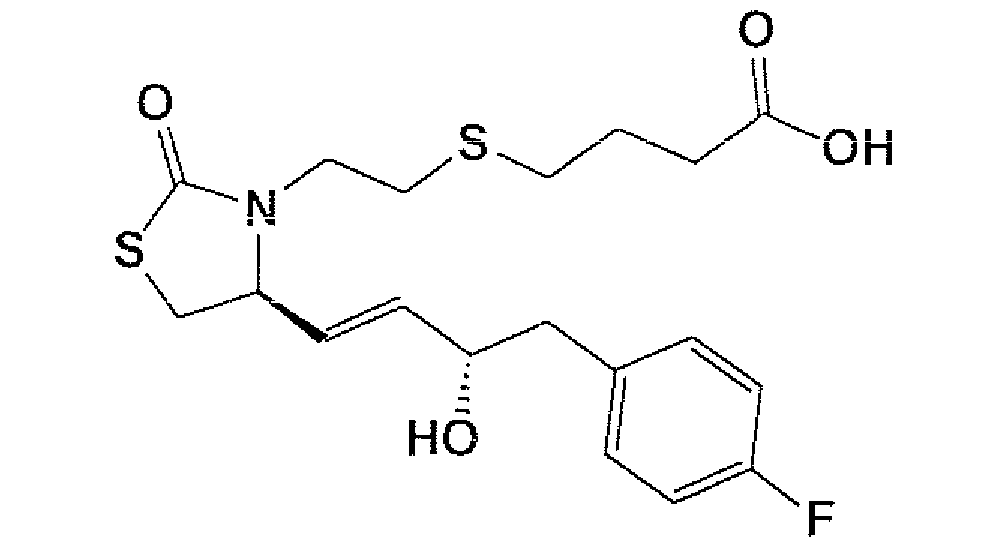
TLC: Rf 0.22 (hexane : ethyl acetate = 1 : 3);
NMR: δ 1.90, 2.56, 2.97, 3.39, 3.61, 4.38, 5.64, 5.84, 7.01, 7.17.
TLC: Rf 0.81 (ethyl acetate).
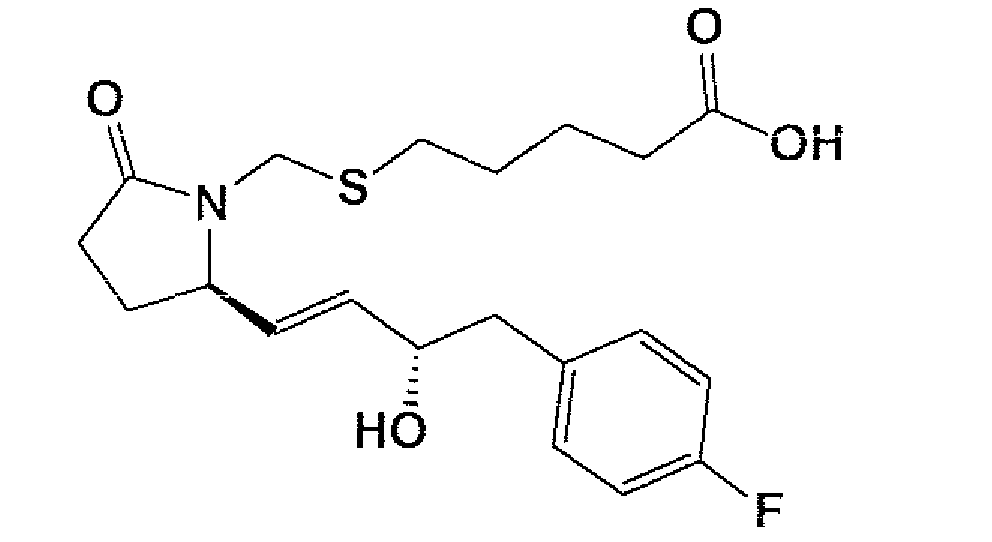
NMR: δ 1.70, 2.39, 2.83, 3.48, 4.34, 4.90, 5.40, 5.78, 7.00, 7.15.
NMR: δ 1.73, 2.38, 2.81, 3.45, 4.36, 4.89, 5.39, 5.79, 7.04, 7.20.
TLC: Rf 0.24 (hexane : ethyl acetate = 1 : 1).
TLC: Rf 0.20 (hexane : ethyl acetate = 4 : 1).
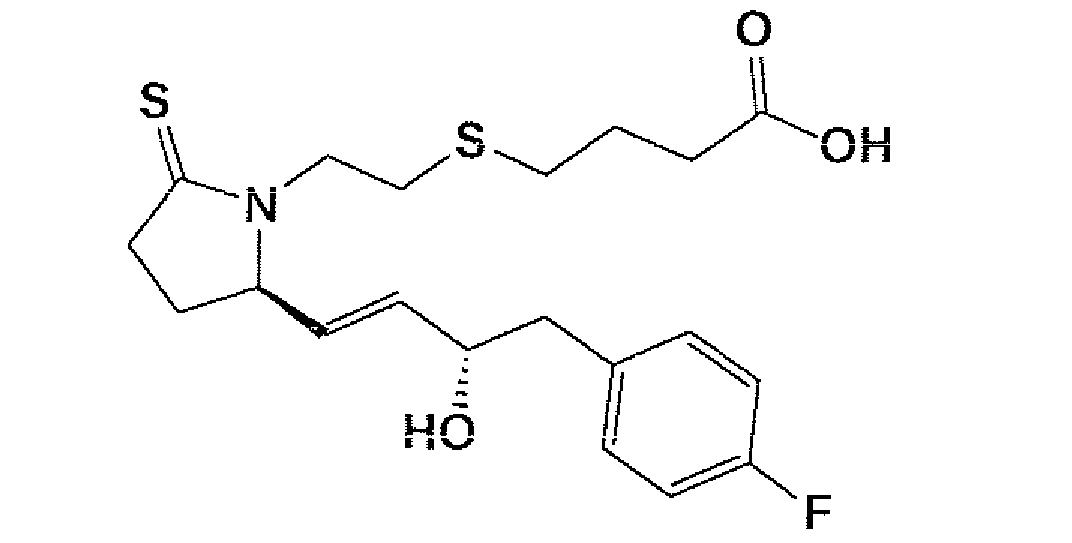
TLC: Rf 0.44 (methylene chloride : methanol = 9 : 1);
NMR: δ 1.75, 1.93, 2.28, 2.75, 3.35, 4.13, 4.44, 5.55, 5.79, 7.01, 7.17.
MS(APCI, Neg. 20V):422 (M-H)-;
TLC: Rf 0.43 (ethyl acetate).
MS(APCI, Neg. 20V):394 (M-H)-;
TLC:Rf 0.45 (ethyl acetate).
MS(APCI, Neg. 20V):480 (M-H)-;
TLC: Rf 0.52 (ethyl acetate).
MS(APCI, Neg. 20V):430 (M-H)-;
TLC: Rf 0.58 (ethyl acetate).
MS(APCI, Neg. 20V):436 (M-H)-;
TLC: Rf 0.52 (ethyl acetate).
MS(APCI, Neg. 20V):440 (M-H)-;
TLC: Rf 0.55 (ethyl acetate).
MS(APCI, Neg. 20V):430 (M-H)-;
TLC: Rf 0.50 (ethyl acetate).
MS(APCI, Neg. 20V):462 (M-H)-;
TLC: Rf 0.50 (ethyl acetate).
MS(APCI, Neg. 20V):426 (M-H)-;
TLC: Rf 0.50 (ethyl acetate).
MS(APCI, Neg. 20V):412 (M-H)-;
TLC: Rf 0.50 (ethyl acetate).
MS(APCI, Neg, 20V):446 (M-H)-;
TLC: Rf 0.38 (hexane : ethyl acetate : methanol =25 : 75 : 2).
MS(APCI, Neg, 20V):438 (M-H)-;
TLC: Rf 0.35 (hexane : ethyl acetate : methanol = 25 : 75 : 2).
MS(APCI, Neg. 20V):392 (M-H)-;
TLC: Rf 0.44 (chloroform : methanol = 9 : 1).
MS(APCI, Neg. 20V):410 (M-H)-;
TLC: Rf 0.60 (ethyl acetate).
MS(APCI, Neg. 20V):460 (M-H)-;
TLC: Rf 0.61 (ethyl acetate).
MS(APCI, Neg. 20V):406 (M-H)-;
TLC: Rf 0.58 (ethyl acetate).
MS(APCI, Neg. 20V):420 (M-H)-;
TLC: Rf 0.59 (ethyl acetate).
MS(APCI, Neg. 20V):442 (M-H)-;
TLC: Rf 0.72 (ethyl acetate).
MS(APCI, Neg. 20V):392 (M-H)-;
TLC: Rf 0.70 (ethyl acetate).
MS(APCI, Neg. 20V):374 (M-H)-;
TLC: Rf 0.69 (ethyl acetate).
MS(APCI, Neg. 20V):410 (M-H)-;
TLC: Rf 0.70 (ethyl acetate).
MS(APCI, Neg. 20V):426 (M-H)-;
TLC: Rf 0.61 (ethyl acetate).
MS(APCI, Neg. 20V):402 (M-H)-;
TLC: Rf 0.63 (ethyl acetate).
MS(APCI, Neg. 20V):416 (M-H)-;
TLC: Rf 0.64 (ethyl acetate).
NMR: δ 1.40-1.70, 3.76, 4.00-4.20, 4.37;
TLC: Rf 0.50 (ethyl acetate : hexane = 1 : 4).
NMR: δ 1.34-1.70, 2.80, 3.68, 4.02, 4.37, 5.67, 6.99, 7.18;
TLC: Rf 0.38 (ethyl acetate : hexane = 1 : 3).
NMR(DMSO-d6): δ 2.68, 3.40, 3.51, 3.65, 4.17, 5.04, 5.36, 5.54, 5.86, 7.07, 7.23, 7.97;
TLC: Rf 0.10 (methanol : chloroform = 1 : 5).
NMR: δ 1.26, 1,90, 2.01, 2.42, 2.61, 2.82, 3.07, 3.45, 3.91, 4.12, 4.34, 4.41, 5.58, 5.88, 7.02, 7.17;
TLC: Rf 0.40 (ethyl acetate : hexane =2:1).
White crystal; melting point from 75 to 76°C;
NMR: δ 1.89, 2.58, 2.82, 3.08, 3.46, 3.90, 4.39, 5.56, 5.87, 7.01, 7.16;
MS(APCI, Neg. 20V):396 (M-H)-;
TLC: Rf 0.49 (ethyl acetate).
- Buffer:
- 10mM potassium phosphate (pH6.0), 1mM EDTA, 10mM MgCl2 and 0.1M NaCl.
B represents the ROI area in the remote callus region.
| (15α, 13E)-9-oxo-15-hydroxy-16-(3-phenylphenyl)-17,18,19,20 -tetranol-5-thia-8-aza-10-oxaprost-13-enoic acid | 5.0g |
| Carboxymethylcellulose calcium | 20g |
| Magnesium stearate | 10g |
| Micro crystalline cellulose | 920g |
| (15α,13E)-9-oxo-15-hydroxy-16-(3-phenylphenyl)-17,18,19,20 -tetranol-5-thia-8-aza-10-oxaprost-13-enoic acid | 2.0g |
| Mannit | 500g |
| Distilled water | 10L |
Claims (10)
- A compound represented by formula (I)wherein
 is a single bond or double bond,
is α-configuration, β-configuration or a voluntary mixture of α-configuration and β-configuration,
D is -COOR1 or tetrazoryl,
R1 is hydrogen or C1-4 alkyl,
G is ringA or C1-4 alkylene,
ringA isR2 is a halogen atom, C1-4 alkyl or C1-4 alkoxy,
p is 0 or an integer of 1-4,
when p is 2 or more, plural R2's are the same or different,
Y is a single bond or -S-,
T is oxygen or sulfur,
X is -CH2-, -O- or -S-,
ringB is C3-7 cycloalkyl optionally substituted,wherein R3 is (1) a halogen atom, (2) C1-4 alkyl optionally substituted with 1-5 of halogen atom(s), (3) C1-4 alkoxy optionally substituted with 1-5 of halogen atom(s), (4) C1-4 alkyl substituted with C1-4 alkoxy, (5) phenyl or (6) 3- to 15-membered mono-, bi- or tri-heterocyclic aryl containing 1 to 4 hetero atom(s) selected from oxygen, nitrogen and sulfur atom(s) which may be partially or fully saturated, and (5) phenyl or (6) heterocyclic aryl in R3 is optionally substituted with 1-3 of (a) halogen atom(s), (b) C1-4 alkyl, (c) C1-4 alkoxy and/or (d) nitro,
q is 0 or an integer of 1-5,
when q is 2 or more, plural R3's are the same or different,
n is an integer of 1-4,
a salt thereof, a solvate thereof, a cyclodextrin clathrate thereof, or a prodrug thereof. - The compound according to claim 1, which is selected from the group consisting of:(1) 4-[(2-{(4S)-4-[(1E,3S)-4-(3-ethylphenyl)-3-hydroxybut-1-enyl]-2-oxo-1,3-thiazolidine-3-yl]ethyl)sulfanyl]butanoic acid,(2) 4-[(2-{(4S)-4-[(1E,3S)-3-hydroxy-4-phenylbut-1-enyl]-2-oxo-1,3-thiazolidine-3-yl}ethyl)sulfanyl]butanoic acid,(3) 4-{[2-((4S)-4-{(1E,3S)-4-[4-fuloro-3-(trifuloromethyl)phenyl]-3-hydroxybut-1-enyl}-2-oxo-1,3-thiazolidine-3-yl)ethyl]sulfanyl}butanoic acid,(4) 4-[(2-{(4S)-4-[(1E,3S)-4-(3,5-difulorophenyl)-3-hydroxybut-1-enyl]-2-oxo-1,3-thiazolidine-3-yl}ethyl)sulfanyl]butanoic acid,(5) 4-[(2-{(4S)-4-[(1E,3S)-3-hydroxy-4-(3-propylphenyl)but-1-enyl]-2-oxo-1,3-thiazolidine-3-yl]ethyl)sulfanyl]butanoic acid,(6) 4-[(2-{(4S)-4-[(1E,3S)-4-(3-ethyl-4-fulorophenyl)-3-hydroxybut-1-enyl]-2-oxo-1,3-thiazolidine-3-yl}ethyl)sulfanyl]butanoic acid,(7) 4-[(2-{(4S)-4-[(1E,3S)-4-(3,4-difulorophenyl)-3-hydroxybut-1-enyl]-2-oxo-1,3-thiazolidine-3-yl}ethyl)sulfanyl)butanoic acid.(8) 4-{[2-((4S)-4-{(1E,3S)-3-hydroxy-4-[3-(trifuloromethyl)phenyl]but-1-enyl]-2-oxo-1,3-thiazolidine-3-yl}ethyl)sulfanyl]butanoic acid,(9) 4-[2-{(4S)-4-[(1E,3S)-4-(4-fuloro-3-methylphenyl)-3-hydroxybut-1-enyl]-2-oxo-1,3-thiazolidine-3-yl}ethyl)sulfanyl]butanoic acid,(10) 4-[(2-{(4S)-4-[(1E,3S)-4-(3-fulorophenyl)-3-hydroxybut-1-enyl]-2-oxo-1,3-thiazolidine-3-yl}ethyl)sulfanyl]butanoic acid,(11) 4-[(2-{(4S)-4-[(1E,3S)-4-(3-chloro-4-fulorophenyl)-3-hydroxybut-1-enyl]-2-oxo-1,3-thiazolidine-3-yl}ethyl)sulfanyl]butanoic acid,(12) 4-{[2-((4S)-4-{(1E,3S)-3-hydroxy-4-[3-(methoxymethyl)phenyl]but-1-enyl}-2-oxo-1,3-thiazolidine-3-yl)ethyl]sulfanyl}butanoic acid,(13) 7-{(2R)-2-[(1E,3S)-4-(4-fulorophenyl)-3-hydroxybut-1-enyl]-5-thioxopyrrolidine-1-yl}heptanoic acid,(14) 7-{(2R)-2-[(1E,3S)-4-(3,5-difulorophenyl)-3-hydroxybut-1-enyl]-5-thioxopyrrolidine-1-yl}heptanoic acid,(15) 7-((2R)-2-{(1E,3S)-4-[4-fuloro-3-(trifuloromethyl)phenyl]-3-hydroxybut-1-enyl}-5-thioxopyrrolidine-1-yl)heptanoic acid,(16) 7-{(2R)-2-[(1E,3S)-4-(4-fuloro-3-methylphenyl)-3-hydroxybut-1-enyl]-5-thioxopyrrolidine-1-yl}heptanoic acid,(17) 7-{(2R)-2-[(1E,3S)-4-(3-ethyl-4-fulorophenyl)-3-hydroxybut-1-enyl]-5-thioxopyrrolidine-1-yl}heptanoic acid,(18) 7-((2R)-2-{(1E,3S)-3-hydroxy-4-[3-(trifuloromethyl)phenyl]but-1-enyl}-5-thioxopyrrolidine-1-yl)heptanoic acid,(19) 7-{(2R)-2-[(1E,3S)-4-(3-fulorophenyl)-3-hydroxybut-1-enyl]-5-thioxopyrrolidine-1-yl}heptanoic acid,(20) 7-{(2R)-2-[(1E,3S)-3-hydroxy-4-phenylbut-1-enyl]-5-thioxopyrrolidine-1-yl}heptanoic acid,(21) 7-{(2R)-2-[(1E,3S)-4-(3,4-difulorophenyl)-3-hydoroxybut-1-enyl]-5-thioxopyrrolidine-1-yl}heptanoic acid,(22) 7-{(2R)-2-[(1E,3S)-4-(3-chloro-4-fulorophenyl)-3-hydroxybut-1-enyl]-5-thioxiopyrrolidine-1-yl}heptanoic acid,(23) 7-{(2R)-2-[(1E,3S)-4-(3-ethylphenyl)-3-hydroxybut-1-enyl]-5-thioxopyrrolidine-1-yl}heptanoic acid,(24) 7-{(2R)-2-[(1E,3S)-3-hydroxy-4-(3-propylphenyl)but-1-enyl]-5-thioxopyrrolidine-1-yl}heptanoic acid.
- The compound according to claim 1, which is represented by formula (I-1):wherein G1 is ringA1 or C1-4 alkylene,
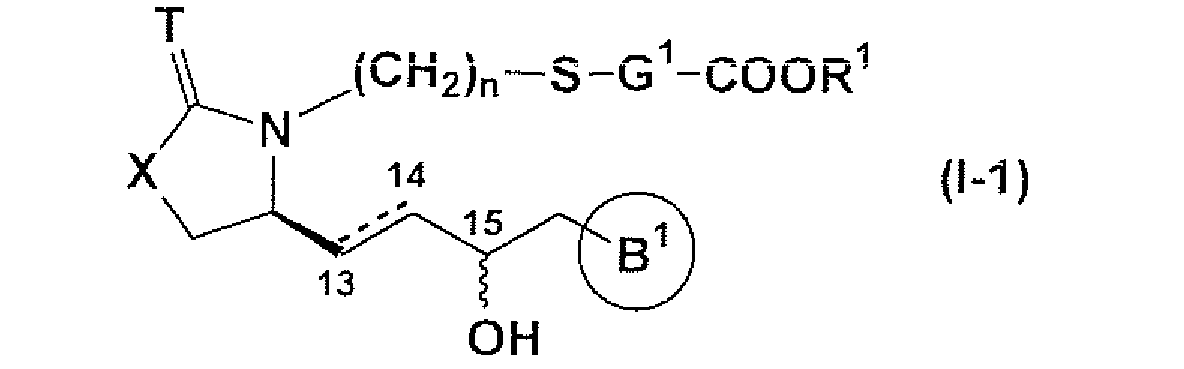
ringA1 iswherein left-pointing arrow represents binding to S, and right-pointing arrow represents binding to COOR1,
ringB1 is C3-7 cycloalkyl,ringB1 may be substituted with a halogen atom, C1-4 alkyl, phenyl, methoxymethyl, trifuloromethyl and/or trifuloromethoxy,
other symbols have the same meanings as described in claim 1, and
wherein when T is oxygen, X is -CH2-, and
when n is an integer of 2-4, G1 is ringA1. - The compound according to claim 3, which is selected from the group consisting of:(1) (15α,13E)-9-oxo-15-hydroxy-16-(3-phenylphenyl)-17,18,19,20-tetranol-5-thia-8-aza-10-oxaprost-13-enoic acid,(2) (15α,13E)-9-oxo-15-hydroxy-16-(3-ethylphenyl)-17,18,19,20-tetranol-5-thia-8-aza-10-oxaprost-13-enoic acid,(3) (15α, 13E)-9-oxo-15-hydroxy-16-(3-chloro-4-fulorophenyl)-17,18,19,20-tetranol-5-thia-8-aza-10-oxaprost-13-enoic acid,(4) (15α,13E)-9-oxo-15-hydroxy-16-(naphthalene-2-yl)-17,18,19,20-tetranol-5-thia-8-aza-10-oxaprost-13-enoic acid,(5) (15α,13E)-9-oxo-15-hydroxy-16-(3-trifuloromethoxyphenyl)-17,18,19,20-tetranol-5-thia-8-aza-10-oxaprost-13-enoic acid,(6) (15α,13E)-9-oxo-15-hydroxy-16-(4-fuloro-3-phenylphenyl)-17,18,19,20-tetranol-5-thia-8-aza-10-oxaprost-13-enoic acid,(7) (15α,13E)-9-oxo-15-hydroxy-16-(4-fuloro-3-methylphenyl)-17,18,19,20-tetranol-5-thia-8-aza-10-oxaprost-13-enoic acid,(8) (15α,13E)-9-oxo-15-hydroxy-16-(3,5-difulorophenyl)-17,18,19,20-tetranol-5-thia-8-aza-10-oxaprost-13-enoic acid,(9) (15α,13E)-9-oxo-15-hydroxy-16-(3-fulorophenyl)-17,18,19,20-tetranol-5-thia-8-aza-10-oxaprost-13-enoic acid,(10) (15α,13E)-9-oxo-15-hydroxy-16-(4-fuloro-3-trifuloromethylphenyl)-17,18,19,20-tetranol-5-thia-8-aza-10-oxaprost-13-enoic acid,(11) (15α,13E)-9-oxo-15-hydroxy-16-(3-trifuloromethylphenyl)-17,18,19,20-tetranol-5-thia-8-aza-10-oxaprost-13-enoic acid,(12) (15α,13E)-9-oxo-15-hydroxy-16-(3,4-difulorophenyl)-17,18,19,20-tetranol-5-thia-8-aza-10-oxaprost-13-enoic acid,(13) (15α,13E)-9-oxo-15-hydroxy-16-phenyl-17,18,19,20-tetranol-5-thia-8-aza-10-oxaprost-13-enoic acid,(14) (15α,13E)-9-oxo-15-hydroxy-16-(3-propylphenyl)-17,18,19,20-tetranol-5-thia-8-aza-10-oxaprost-13-enoic acid,(15) (15α,13E)-9-oxo-15-hydroxy-16-(3-methoxymethylphenyl)-17,18,19,20-tetranol-5-thia-8-aza-10-oxaprost-13-enoic acid,(16) (15α,13E)-9-oxo-15-hydroxy-16-(3-ethyl-4-fulorophenyl)-17,18,19,20-tetranol-5-thia-8-aza-10-oxaprost-13-enoic acid,(17) (15α,13E)-9-oxo-15-hydroxy-16-phenyl-5-(4-carboxythiazol-2-yl)-1,2,3,4,17,18,19,20-octanol-5-thia-8-aza-10-oxaprost-13-ene,(18) (15α,13E)-9-oxo-15-hydroxy-16-(3-methylphenyl)-5-(4-carboxythiazol-2-yl)-1,2,3,4,17,18,19,20-octanol-5-thia-8-aza-10-oxaprost-13-ene,(19) (15α,13E)-9-oxo-15-hydroxy-16-(4-fulorophenyl)-5-(4-carboxythiazol-2-yl)-1,2,3,4,17,18,19,20-octanol-5-thia-8-aza-10-oxaprost-13-ene,(20) (15α,13E)-9-oxo-15-hydroxy-16-(naphthalene-2-yl)-5-(4-carboxythiazol-2-yl)-1,2,3,4,17,18,19,20-octanal-5-thia-8-aza-10-oxaprost-13-ene,(21) (15α,13E)-9-oxo-15-hydroxy-16-(3-phenylphenyl)-5-(4-carboxythiazol-2-yl)-1,2,3,4,17,18,19,20-octanol-5-thia-8-aza-10-oxaprost-13-ene,(22) (15α,13E)-9-oxo-15-hydroxy-16-(3-phenylphenyl)-5-(5-carboxythiophene-2-yl)-1,2,3,4,17,18,19,20-octanol-5-thia-8-azaprost-13-ene,(23) (15α, 13E)-9-oxo-15-hydroxy-16-(naphthalene-2-yl)-5-(5-carboxythiophene-2-yl)-1,2,3,4,17,18,19,20-octanol-5-thia-8-azaprost-13-ene,(24) (15α, 13E)-9-oxo-15-hydroxy-16-(4-fuloro-3-phenylphenyl)-5-(5-carboxythiophene-2-yl)-1,2,3,4,17,18,19,20-octanol-5-thia-8-azaprost-13-ene,(25) (15α, 13E)-9-oxo-15-hydroxy-16-(3-ethylphenyl)-5-(5-carboxythiophene-2-yl)-1,2,3,4,17,18,19,20-octanol-5-thia-8-azaprost-13-ene,(26) (15α,13E)-9-oxo-15-hydroxy-16-(3-methylphenyl)-5-(5-carboxythiophene-2-yl)-1,2,3,4,17,18,19,20-octanol-5-thia-8-azaprost-13-ene,(27) (15α,13E)-9-oxo-15-hydroxy-16-(3-trifuloromethoxyphenyl)-5-(5-carboxythiophene-2-yl)-1,2,3,4,17,18,19,20-octanol-5-thia-8-azaprost-13-ene,(28) (15α,13E)-9-oxo-15-hydroxy-16-(4-fuloro-3-phenylphenyl)-5-(4-carboxythiazol-2-yl)-1,2,3,4,17,18,19,20-octanol-5-thia-8-azaprost-13-ene,(29) (15α,13E)-9-oxo-15-hydroxy-16-(3-ethylphenyl)-5-(4-carboxythiazol-2-yl)-1,2,3,4,17,18,19,20-octanol-5-thia-8-azaprost-13-ene,(30) (15α,13E)-9-oxo-15-hydroxy-16-(naphthalene-2-yl)-5-(4-carboxythiazol-2-yl)- 1,2,3,4,17,18,19,20-octanol-5-thia-8-azaprost-13-ene,(31) (15α,13E)-9-oxo-15-hydroxy-16-(3-trifuloromethoxyphenyl)-5-(4-carboxythiazol-2-yl)-1,2,3,4,17,18,19,20-octanol-5-thia-8-azaprost-13-ene,(32) (15α,13E)-9-oxo-15-hydroxy-16-(3-chloro-4-fulorophenyl)-5-(4-carboxythiazol-2-yl)-1,2,3,4,17,18,19,20-octanol-5-thia-8-azaprost-13-ene,(33) (15α,13E)-9-oxo-15-hydroxy-16-cyclopropyl-5-(4-carboxythiazol-2-yl)-1,2,3,4,17,18,19,20-octanol-5-thia-8-azaprost-13-ene,(34) (15α,13E)-9-oxo-15-hydroxy-16-cyclohexyl-5-(4-carboxythiazol-2-yl)-1,2,3,4,17,18,19,20-octanol-5-thia-8-azaprost-13-ene,(35) (15α,13E)-9-oxo-15-hydroxy-16-(4-fulorophenyl)-5-(5-carboxythiazol-2-yl)-1,2,3,4,17,18,19,20-octanol-5-thia-8-azaprost-13-ene,(36) (15α,13E)-9-oxo-15-hydroxy-16-cyclobutyl-5-(4-carboxythiazol-2-yl)-1,2,3,4,17,18,19,20-octanol-5-thia-8-azaprost-13-ene,(37) (15α,13E)-9-oxo-15-hydroxy-16-(4-chlorophenyl)-5-(4-carboxythiazol-2-yl)-1,2,3,4,17,18,19,20-octanol-5-thia-8-azaprost-13-ene,(38) (15α,13E)-9-oxo-15-hydroxy-16-cycloheptyl-5-(4-carboxythiazol-2-yl)-1,2,3,4,17,18,19,20-octanol-5-thia-8-azaprost-13-ene,(39) (15α,13E)-9-oxo-15-hydroxy-16-(indane-2-yl)-5-(4-carboxythiazol-2-yl)-1,2,3,4,17,18,19,20-octanol-5-thia-8-azaprost-13-ene,(40) (15α,13E)-9-oxo-15-hydroxy-16-(tetrahydropyran-4-yl)-5-(4-carboxythiazol-2-yl)-1,2,3,4,17,18,19,20-octanol-5-thia-8-azaprost-13-ene,(41) (15α,13E)-9-oxo-15-hydroxy-16-(7-methylnaphthalene-2-yl)-5-(4-carboxythiazol-2-yl)-1,2,3,4,17,18,19,20-octanol-5-thia-8-azaprost-13-ene,(42) (15α,13E)-9-oxo-15-hydroxy-16-(4-fulorophenyl)-17,18,19,20-tetranol-5,10-dithia-8-azaprost-13-enoic acid,(43) (15α,13E)-9-oxo-15-hydroxy-16-(4-fulorophenyl)-17,18,19,20-tetranol-6-thia-8-azaprost-13-enoic acid,(44) (15α,13E)-9-oxo-15-hydroxy-16-(3-methylphenyl)-17,18,19,20-tetranol-6-thia-8-azaprost-13-enoic acid, and(45) (15α,13E)-9-thioxo-15-hydroxy-16-(4-fulorophenyl)-17,18,19,20-tetranol-5-thia-8-azaprost-13-enoic acid.
- The compound according to claim 1, which is represented by formula (I-2):wherein G2 is
 wherein left-pointing arrow represents binding to -(CH2)2-, and right-pointing arrow represents binding to D,
R4 is (1) a halogen atom, (2) C1-4 alkyl (3) C1-4 alkoxy, (4) C1-4 alkyl optionally substituted with 1-5 of halogen atom(s), (5) C1-4 alkoxy optionally substituted with 1-5 of halogen atom(s), (6) phenyl or (7) 3- to 15- membered mono-, bi- or tri-heterocyclic aryl containing 1 to 4 hetero atom(s) selected from oxygen, nitrogen and sulfur atom(s) which may be partially or fully saturated, and (6) phenyl or (7) heterocyclic in the R4 may be substituted with 1-3 of (a) a halogen atom(s), (b) C1-4 alkyl (c) C1-4 alkoxy and/or (d) nitro,
r is an integer 1 to 5, and
other symbols have the same meanings as described in claim 1. - The compound according to claim 5, which is selected from the group consisting of:(1) (15α, 13E)-1,6-(1,4-interphenylene)-9-oxo-15-hydroxy-16-(3,5-dimethylphenyl)-2,3,4,5,17,18,19,20-octanol-8-azaprost-13-enoic acid,(2) (15α,13E)-1,6-(1,4-interphenylene)-9-oxo-15-hydroxy-16-(3-(benzothiazol-2-yl)phenyl)-2,3,4,5,17,18,19,20-octanol-8-azaprost-13-enoic acid,(3) (15α,13E)-1,6-(1,4-interphenylene)-9-oxo-15-hydroxy-16-(4-fulorophenyl)-2,3,4,5,17,18,19,20-octanol-8-azaprost-13-enoic acid,(4) (15α,13E)-9-oxo-15-hydroxy-16-(3-(5-methylbenzothiazol-2-yl)phenyl)-5-(4-carboxythiazol-2-yl)-1,2,3,4,17,18,19,20-octanol-5-thia-8-azaprost-13-ene,(5) (15α,13E)-1,6-(1,4-interphenylene)-9-oxo-15-hydroxy-16-(3-(5-methylbenzoxazol-2-yl)phenyl)-2,3,4,5,17,18,19,20-octanol-8-azaprost-13-enoic acid,(6) (15α,13E)-9-oxo-15-hydroxy-16-(3-(6-methylbenzoxazol-2-yl)phenyl)-5-(4-carboxythiazol-2-yl)-1,2,3,4,17,18,19,20-octanol-5-thia-8-azaprost-13-ene,(7) (15α,13E)-1,6-(1,4-interphenylene)-9-oxo-15-hydroxy-16-(3-(6-methylbenzoxazol-2-yl)phenyl)-2,3,4,5,17,18,19,20-octanol-8-azaprost-13-enoic acid,(8) (15α,13E)-1,6-(1,4-interphenylene)-9-oxo-15-hydroxy-16-(3-(4-methylbenzothiazol-2-yl)phenyl)-2,3,4,5,17,18,19,20-octanol-8-azaprost-13-enoic acid,(9) (15α,13E)-9-oxo-15-hydroxy-16-(3-(4-methylbenzothiazol-2-yl)phenyl)-5-(4-carboxythiazol-2-yl)-1,2,3,4,17,18,19,20-octanol-5-thia-8-azaprost-13-ene,(10) (15α,13E)-1,6-(2-fuloro-1,4-interphenylene)-9-oxo-15-hydroxy-16-(3-methylphenyl)-2,3,4,5,17,18,19,20-octanol-8-azaprost-13-enoic acid,(11) (15α,13E)-1,6-(3-methyl-1,4-interphenylene)-9-oxo-15-hydroxy-16-(3-methylphenyl)-2,3,4,5,17,18,19,20-octanol-8-azaprost-13-enoic acid,(12) (15α,13E)-9-oxo-15-hydroxy-16-(3-(5,7-dimethylbenzoxazol-2-yl)phenyl)-5-(4-carboxythiazol-2-yl)-1,2,3,4,17,18,19,20-octanol-5-thia-8-azaprost-13-ene,(13) (15α,13E)-9-oxo-15-hydroxy-16-(3-(5-chlorobenzothiazol-2-yl)phenyl)-5-(4-carboxythiazol-2-yl)-1,2,3,4,17,18,19,20-octanol-5-thia-8-azaprast-13-ene,(14) (15α,13E)-1,6-(1,4-interphenylene)-9-oxo-15-hydroxy-16-(3-(5-chlorobenzothiazol-2-yl)phenyl)-2,3,4,5,17,18,19,20-octanol-8-azaprost-13-enoic acid,(15) (15α)-9-oxo-15-hydroxy-16-(3-(2,4-dimethylphenyl)phenyl)-5-(4-carboxythiazol-2-yl)-1,2,3,4,17,18,19,20-octanol-5-thia-8-azaprost-13-ene,(16) (15α,13E)-9-oxo-15-hydroxy-16-(3-(3,4-dimethylphenyl)phenyl)-5-(4-carboxythiazol-2-yl)-1,2,3,4,17,18,19,20-octanol-5-thia-8-azaprost-13-ene,(17) (15α,13E)-1,6-(1,4-interphenylene)-9-oxo-15-hydroxy-16-(3,4-difulorophenyl)-2,3,4,5,17,18,19,20-octanol-8-azaprost-13-enoic acid,(18) (15α,13E)-1,6-(2-methyl-1,4-interphenylene)-9-oxo-15-hydroxy-16-(3-methylphenyl)-2,3,4,5,17,18,19,20-octanol-8-azaprost-13-enoic acid,(19) (15α,13E)-9-oxo-15-hydroxy-16-(3-(5-chlorobenzoxazol-2-yl)phenyl)-5-(4-carboxythiazol-2-yl)-1,2,3,4,17,18,19,20-octanol-5-thia-8-azaprost-13-ene,(20) (15α,13E)-1,6-(1,4-interphenylene)-9-oxo-15-hydroxy-16-(3-methyl-4-fulorophenyl)-2,3,4,5,17,18,19,20-octanol-8-azaprost-13-enoic acid,(21) (15α,13E)-1,6-(1,4-interphenylene)-9-oxo-15-hydroxy-16-(3-chloro-4-fulorophenyl)-2,3,4,5,17,18,19,20-octanol-8-azaprost-13-enoic acid,(22) (15α,13E)-1,6-(3-methoxy-1,4-interphenylene)-9-oxo-15-hydroxy-16-(3-methylphenyl)-2,3,4,5,17,18,19,20-octanol-8-azaprost-13-enoic acid,(23) (15α,13E)-9-oxo-15-hydroxy-16-(3-trifuloromethoxyphenyl)-17,18,19,20-tetranol-5-thia-8-azaprost-13-enoic acid,(24) (15α,13E)-9-oxo-15-hydroxy-16-(3,5-difulorophenyl)-17,18,19,20-tetranol-5-thia-8-azaprost-13-enoic acid,(25) (15α,13E)-9-oxo-15-hydroxy-16-(3-(phenyl)phenyl)-17,18,19,20-tetranol-5-thia-8-azaprost-13-enoic acid,(26) (15α,13E)-9-oxo-15-hydroxy-16-(3-(4-fulorophenyl)phenyl)-17,18,19,20-tetranol-5-thia-8-azaprost-13-enoic acid, and(27) (15α,13E)-9-oxo-15-hydroxy-16-(3-phenyl-4-fulorophenyl)-17,18,19,20-tetranol-5-thia-8-azaprost-13-enoic acid.
- A pharmaceutical composition comprising the compound represented by formula (I) according to claim 1, a salt thereof, a solvate thereof, a cyclodextrin clathlate thereof, or a prodrug thereof.
- An EP4 agonist comprising the compound represented by formula (I) according to claim 1, a salt thereof, a solvate thereof or a cyclodextrin clathlate thereof, or a prodrug thereof.
- A method for preventing and/or treating EP4-mediated disease, which comprises administrating to a mammal an effective amount of the compound represented by formula (I) according to claim 1, a salt thereof, a solvate thereof or a cyclodextrin clathrate thereof, or a prodrug thereof.
- Use of the compound represented by formula (I) according to claim 1, a salt thereof, a solvate thereof, a cyclodextrin clathrate thereof, or a prodrug thereof for the manufacture of an EP4 agonist.
Applications Claiming Priority (5)
| Application Number | Priority Date | Filing Date | Title |
|---|---|---|---|
| JP2003011936 | 2003-01-21 | ||
| JP2003011936 | 2003-01-21 | ||
| JP2003289954A JP2005104836A (en) | 2003-08-08 | 2003-08-08 | Prostaglandin derivatives |
| JP2003289954 | 2003-08-08 | ||
| PCT/JP2004/000419 WO2004065365A1 (en) | 2003-01-21 | 2004-01-20 | 8-azaprostaglandin derivatives and medicinal uses thereof |
Publications (3)
| Publication Number | Publication Date |
|---|---|
| EP1586564A1 true EP1586564A1 (en) | 2005-10-19 |
| EP1586564A4 EP1586564A4 (en) | 2008-04-30 |
| EP1586564B1 EP1586564B1 (en) | 2012-11-28 |
Family
ID=32775163
Family Applications (1)
| Application Number | Title | Priority Date | Filing Date |
|---|---|---|---|
| EP04703518A Expired - Lifetime EP1586564B1 (en) | 2003-01-21 | 2004-01-20 | 8-azaprostaglandin derivatives and medicinal uses thereof |
Country Status (4)
| Country | Link |
|---|---|
| US (2) | US7256211B1 (en) |
| EP (1) | EP1586564B1 (en) |
| JP (1) | JP4582456B2 (en) |
| WO (1) | WO2004065365A1 (en) |
Cited By (4)
| Publication number | Priority date | Publication date | Assignee | Title |
|---|---|---|---|---|
| US7833995B2 (en) | 2003-12-05 | 2010-11-16 | Ono Pharmaceutical Co., Ltd. | Blood flow promoters for cauda equina tissues |
| US7863263B2 (en) | 2005-06-03 | 2011-01-04 | Ono Pharmaceutical Co., Ltd. | Agent for regeneration and/or protection of nerves |
| US8410281B2 (en) | 2009-06-10 | 2013-04-02 | Ono Pharmaceutical Co., Ltd. | Compound having detrusor muscle-contracting activity and urethral sphincter muscle-relaxing activity |
| US9643940B2 (en) | 2012-08-31 | 2017-05-09 | Ono Pharmaceutical Co., Ltd. | Amine salt and crystals thereof |
Families Citing this family (19)
| Publication number | Priority date | Publication date | Assignee | Title |
|---|---|---|---|---|
| WO2005061492A1 (en) * | 2003-12-22 | 2005-07-07 | Ono Pharmaceutical Co., Ltd. | Nitrogen-containing heterocyclic compounds and drugs comprising the same as the active ingredient |
| WO2006043655A1 (en) * | 2004-10-22 | 2006-04-27 | Ono Pharmaceutical Co., Ltd. | Medicinal composition for inhalation |
| US7547685B2 (en) | 2004-11-08 | 2009-06-16 | Allergan, Inc. | Therapeutic substituted pyrrolidone compounds |
| US20060211662A1 (en) * | 2005-03-02 | 2006-09-21 | Du Mee Charles P | Combination therapy for topical application in the treatment of age-related macular degeneration and ocular hypertension |
| EP1947942B1 (en) | 2005-08-18 | 2015-07-29 | Accelalox, Inc. | Methods for bone treatment by modulating an arachidonic acid metabolic or signaling pathway |
| US7893107B2 (en) | 2005-11-30 | 2011-02-22 | Allergan, Inc. | Therapeutic methods using prostaglandin EP4 agonist components |
| AU2008246579A1 (en) | 2007-05-08 | 2008-11-13 | National University Corporation, Hamamatsu University School Of Medicine | Cytotoxic T cell activator comprising EP4 agonist |
| WO2009105723A2 (en) * | 2008-02-22 | 2009-08-27 | Accelalox, Inc. | Novel methods for bone treatment by modulating an arachidonic acid metabolic or signaling pathway |
| KR20120093955A (en) | 2009-10-14 | 2012-08-23 | 젬머스 파마 인코포레이티드 | Combination therapy treatment for viral infections |
| RU2565596C2 (en) * | 2011-07-04 | 2015-10-20 | Роттафарм Биотек С.Р.Л. | Cyclic amine derivatives as ep4 receptor antagonists |
| HUE031885T2 (en) | 2012-07-19 | 2017-08-28 | Cayman Chemical Co Inc | Difluorolactam compositions for ep4-mediated osteo related diseases and conditions |
| US9676712B2 (en) | 2013-03-15 | 2017-06-13 | Cayman Chemical Company, Inc. | Lactam compounds as EP4 receptor-selective agonists for use in the treatment of EP4-mediated diseases and conditions |
| ES2635635T3 (en) | 2013-03-15 | 2017-10-04 | Cayman Chemical Company, Incorporated | Difluorolactam compounds as selective agonists of the EP4 receptor for use in the treatment of diseases and conditions mediated by EP4 |
| KR20160048054A (en) | 2013-07-19 | 2016-05-03 | 카이맨 케미칼 컴파니 인코포레이티드 | Methods, systems, and compositions for promoting bone growth |
| KR20160042039A (en) | 2013-08-09 | 2016-04-18 | 알데릭스, 인코포레이티드 | Compounds and methods for inhibiting phosphate transport |
| US9540357B1 (en) | 2014-07-31 | 2017-01-10 | Allergan, Inc. | 15-aryl prostaglandins as EP4 agonists, and methods of use thereof |
| CN106916091B (en) * | 2015-12-24 | 2020-10-09 | 广东东阳光药业有限公司 | Cathepsin K inhibitors and their uses |
| WO2020237096A1 (en) | 2019-05-21 | 2020-11-26 | Ardelyx, Inc. | Combination for lowering serum phosphate in a patient |
| GB202211232D0 (en) | 2022-08-02 | 2022-09-14 | Heptares Therapeutics Ltd | Prostaglandin EP4 receptor agonist compounds |
Family Cites Families (17)
| Publication number | Priority date | Publication date | Assignee | Title |
|---|---|---|---|---|
| DE2619638A1 (en) * | 1976-05-04 | 1977-11-17 | Hoechst Ag | PYRROLIDONE AND THE METHOD FOR MANUFACTURING THEIR |
| SE423813B (en) * | 1976-08-06 | 1982-06-07 | Pfizer | PROCEDURE FOR THE PREPARATION OF 1,5-DISUBSTITUTED PYRROLIDONS WITH THERAPEUTICAL PROPERTIES |
| US4177346A (en) * | 1976-08-06 | 1979-12-04 | Pfizer Inc. | 1,5-Disubstituted-2-pyrrolidones |
| JP3180230B2 (en) | 1992-05-14 | 2001-06-25 | セーレン株式会社 | Method for producing colored suede-like synthetic leather |
| PL356662A1 (en) * | 1999-12-22 | 2004-06-28 | Pfizer Products Inc. | Ep4 receptor selective agonists in the treatment of osteoporosis |
| PT1132086E (en) | 2000-01-31 | 2006-09-29 | Pfizer Prod Inc | USE OF SELECTIVE AGONISTS FOR THE PROSTAGLANDINE (PGE2) 4 (EP4) RECEPTOR FOR THE TREATMENT OF ACUTE AND CHRONIC RENAL FAILURE |
| US20010056060A1 (en) | 2000-02-07 | 2001-12-27 | Cameron Kimberly O. | Treatment of osteoporsis with EP2/EP4 receptor selective agonists |
| AU2001290250A1 (en) * | 2000-09-21 | 2002-04-02 | Ono Pharmaceutical Co. Ltd. | Ep4 receptor agonists containing 8-azaprostaglandin derivatives as the active ingredient |
| NZ525164A (en) * | 2000-11-27 | 2005-04-29 | Pfizer Prod Inc | EP4 receptor selective agonists in the treatment of osteoporosis |
| CN101921220B (en) * | 2001-07-23 | 2013-05-22 | 小野药品工业株式会社 | Pharmaceutical compositions for treating diseases with bone mass loss having EP4 agonist as the active ingredient |
| EP1461026A2 (en) | 2001-12-03 | 2004-09-29 | Merck & Co., Inc. | Method for treating ocular hypertension |
| CA2466751A1 (en) | 2001-12-03 | 2003-06-12 | Merck And Co., Inc. | Ep4 receptor agonist, compositions and methods thereof |
| WO2003077910A1 (en) | 2002-03-18 | 2003-09-25 | Pfizer Products Inc. | Methods of treatment with selective ep4 receptor agonists |
| AU2003209571A1 (en) | 2002-03-18 | 2003-09-29 | Pfizer Products Inc. | Use of selective ep4 receptor agonists for the treatment of liver failure, loss of patency of the ductus arteriosus, glaucoma or ocular hypertension |
| US6573294B1 (en) | 2002-05-14 | 2003-06-03 | Allergan, Inc. | 8-azaprostaglandin analogs as agents for lowering intraocular pressure |
| CA2483555A1 (en) * | 2002-06-10 | 2003-12-18 | Applied Research Systems Ars Holding N.V. | Gamma lactams as prostaglandin agonists and use thereof |
| CA2495917A1 (en) * | 2002-08-28 | 2004-03-11 | Merck Frosst Canada & Co. | Oxazolidin-2-one and thiazolidin-2-one derivatives for use as ep4 receptor agonists in the treatment of glaucoma |
-
2004
- 2004-01-20 WO PCT/JP2004/000419 patent/WO2004065365A1/en not_active Ceased
- 2004-01-20 EP EP04703518A patent/EP1586564B1/en not_active Expired - Lifetime
- 2004-01-20 JP JP2005508088A patent/JP4582456B2/en not_active Expired - Fee Related
- 2004-01-20 US US10/542,724 patent/US7256211B1/en not_active Expired - Fee Related
-
2007
- 2007-05-16 US US11/749,531 patent/US20080033033A1/en not_active Abandoned
Cited By (8)
| Publication number | Priority date | Publication date | Assignee | Title |
|---|---|---|---|---|
| US7833995B2 (en) | 2003-12-05 | 2010-11-16 | Ono Pharmaceutical Co., Ltd. | Blood flow promoters for cauda equina tissues |
| US8501793B2 (en) | 2003-12-05 | 2013-08-06 | Ono Pharmaceutical Co., Ltd. | Blood flow promoters for cauda equina tissues |
| US7863263B2 (en) | 2005-06-03 | 2011-01-04 | Ono Pharmaceutical Co., Ltd. | Agent for regeneration and/or protection of nerves |
| US8404858B2 (en) | 2005-06-03 | 2013-03-26 | Ono Pharmaceutical Co., Ltd. | Agent for regeneration and/or protection of nerves |
| US8410281B2 (en) | 2009-06-10 | 2013-04-02 | Ono Pharmaceutical Co., Ltd. | Compound having detrusor muscle-contracting activity and urethral sphincter muscle-relaxing activity |
| US8716490B2 (en) | 2009-06-10 | 2014-05-06 | Ono Pharmaceutical Co., Ltd. | Compound having detrusor muscle-contracting activity and urethral sphincter muscle-relaxing activity |
| US9150528B2 (en) | 2009-06-10 | 2015-10-06 | Ono Pharmaceutical Co., Ltd. | Compound having detrusor muscle-contracting activity and urethral sphincter muscle-relaxing activity |
| US9643940B2 (en) | 2012-08-31 | 2017-05-09 | Ono Pharmaceutical Co., Ltd. | Amine salt and crystals thereof |
Also Published As
| Publication number | Publication date |
|---|---|
| EP1586564B1 (en) | 2012-11-28 |
| JP4582456B2 (en) | 2010-11-17 |
| JPWO2004065365A1 (en) | 2006-05-18 |
| EP1586564A4 (en) | 2008-04-30 |
| US7256211B1 (en) | 2007-08-14 |
| WO2004065365A1 (en) | 2004-08-05 |
| US20080033033A1 (en) | 2008-02-07 |
Similar Documents
| Publication | Publication Date | Title |
|---|---|---|
| US20080033033A1 (en) | 8-azaprostaglandin derivatives and medical use thereof | |
| AU2002318759B2 (en) | Remedies for diseases with bone mass loss having EP4 agonists as the active ingredient | |
| EP1481976B1 (en) | 8-azaprostaglandin derivative compounds and drugs containing the compounds as the active ingredient | |
| JP4766384B2 (en) | Compound having lysophosphatidic acid receptor antagonistic activity and use thereof | |
| JP4893999B2 (en) | Pharmaceutical composition for inhalation | |
| ES2360604T3 (en) | REMEDIES FOR DISEASES WITH LOSS OF OSEA MASS THAT HAVE AS ACTIVE INGREDIENT AGONISTS OF EP4. | |
| JP2005104836A (en) | Prostaglandin derivatives |
Legal Events
| Date | Code | Title | Description |
|---|---|---|---|
| PUAI | Public reference made under article 153(3) epc to a published international application that has entered the european phase |
Free format text: ORIGINAL CODE: 0009012 |
|
| 17P | Request for examination filed |
Effective date: 20050719 |
|
| AK | Designated contracting states |
Kind code of ref document: A1 Designated state(s): AT BE BG CH CY CZ DE DK EE ES FI FR GB GR HU IE IT LI LU MC NL PT RO SE SI SK TR |
|
| AX | Request for extension of the european patent |
Extension state: AL LT LV MK |
|
| DAX | Request for extension of the european patent (deleted) | ||
| A4 | Supplementary search report drawn up and despatched |
Effective date: 20080401 |
|
| RIC1 | Information provided on ipc code assigned before grant |
Ipc: A61K 31/4015 20060101ALI20080326BHEP Ipc: C07D 417/10 20060101ALI20080326BHEP Ipc: C07D 413/10 20060101ALI20080326BHEP Ipc: C07D 277/14 20060101ALI20080326BHEP Ipc: C07D 409/12 20060101ALI20080326BHEP Ipc: A61K 31/421 20060101ALI20080326BHEP Ipc: C07D 263/24 20060101ALI20080326BHEP Ipc: A61K 31/423 20060101ALI20080326BHEP Ipc: C07D 207/27 20060101ALI20080326BHEP Ipc: A61P 13/00 20060101ALI20080326BHEP Ipc: C07D 417/12 20060101ALI20080326BHEP Ipc: C07D 417/14 20060101AFI20080326BHEP |
|
| 17Q | First examination report despatched |
Effective date: 20091218 |
|
| REG | Reference to a national code |
Ref country code: DE Ref legal event code: R079 Ref document number: 602004040199 Country of ref document: DE Free format text: PREVIOUS MAIN CLASS: C07D0207270000 Ipc: C07D0417140000 |
|
| GRAP | Despatch of communication of intention to grant a patent |
Free format text: ORIGINAL CODE: EPIDOSNIGR1 |
|
| RIC1 | Information provided on ipc code assigned before grant |
Ipc: A61P 13/00 20060101ALI20120507BHEP Ipc: A61P 1/16 20060101ALI20120507BHEP Ipc: A61P 1/06 20060101ALI20120507BHEP Ipc: C07D 417/10 20060101ALI20120507BHEP Ipc: C07D 277/14 20060101ALI20120507BHEP Ipc: C07D 413/10 20060101ALI20120507BHEP Ipc: A61P 37/00 20060101ALI20120507BHEP Ipc: A61P 11/06 20060101ALI20120507BHEP Ipc: C07D 417/14 20060101AFI20120507BHEP Ipc: C07D 409/12 20060101ALI20120507BHEP Ipc: A61P 11/00 20060101ALI20120507BHEP Ipc: A61P 27/06 20060101ALI20120507BHEP Ipc: A61K 31/4015 20060101ALI20120507BHEP Ipc: C07D 263/24 20060101ALI20120507BHEP Ipc: C07D 207/27 20060101ALI20120507BHEP Ipc: A61K 31/421 20060101ALI20120507BHEP Ipc: C07D 417/12 20060101ALI20120507BHEP Ipc: A61P 19/02 20060101ALI20120507BHEP Ipc: A61P 25/28 20060101ALI20120507BHEP Ipc: A61K 31/423 20060101ALI20120507BHEP Ipc: A61P 19/08 20060101ALI20120507BHEP |
|
| GRAS | Grant fee paid |
Free format text: ORIGINAL CODE: EPIDOSNIGR3 |
|
| GRAA | (expected) grant |
Free format text: ORIGINAL CODE: 0009210 |
|
| AK | Designated contracting states |
Kind code of ref document: B1 Designated state(s): AT BE BG CH CY CZ DE DK EE ES FI FR GB GR HU IE IT LI LU MC NL PT RO SE SI SK TR |
|
| REG | Reference to a national code |
Ref country code: GB Ref legal event code: FG4D |
|
| REG | Reference to a national code |
Ref country code: CH Ref legal event code: EP |
|
| REG | Reference to a national code |
Ref country code: AT Ref legal event code: REF Ref document number: 586109 Country of ref document: AT Kind code of ref document: T Effective date: 20121215 |
|
| REG | Reference to a national code |
Ref country code: IE Ref legal event code: FG4D |
|
| REG | Reference to a national code |
Ref country code: DE Ref legal event code: R096 Ref document number: 602004040199 Country of ref document: DE Effective date: 20130124 |
|
| REG | Reference to a national code |
Ref country code: AT Ref legal event code: MK05 Ref document number: 586109 Country of ref document: AT Kind code of ref document: T Effective date: 20121128 |
|
| REG | Reference to a national code |
Ref country code: NL Ref legal event code: VDEP Effective date: 20121128 |
|
| PG25 | Lapsed in a contracting state [announced via postgrant information from national office to epo] |
Ref country code: FI Free format text: LAPSE BECAUSE OF FAILURE TO SUBMIT A TRANSLATION OF THE DESCRIPTION OR TO PAY THE FEE WITHIN THE PRESCRIBED TIME-LIMIT Effective date: 20121128 Ref country code: SE Free format text: LAPSE BECAUSE OF FAILURE TO SUBMIT A TRANSLATION OF THE DESCRIPTION OR TO PAY THE FEE WITHIN THE PRESCRIBED TIME-LIMIT Effective date: 20121128 Ref country code: ES Free format text: LAPSE BECAUSE OF FAILURE TO SUBMIT A TRANSLATION OF THE DESCRIPTION OR TO PAY THE FEE WITHIN THE PRESCRIBED TIME-LIMIT Effective date: 20130311 |
|
| PG25 | Lapsed in a contracting state [announced via postgrant information from national office to epo] |
Ref country code: GR Free format text: LAPSE BECAUSE OF FAILURE TO SUBMIT A TRANSLATION OF THE DESCRIPTION OR TO PAY THE FEE WITHIN THE PRESCRIBED TIME-LIMIT Effective date: 20130301 Ref country code: BE Free format text: LAPSE BECAUSE OF FAILURE TO SUBMIT A TRANSLATION OF THE DESCRIPTION OR TO PAY THE FEE WITHIN THE PRESCRIBED TIME-LIMIT Effective date: 20121128 Ref country code: PT Free format text: LAPSE BECAUSE OF FAILURE TO SUBMIT A TRANSLATION OF THE DESCRIPTION OR TO PAY THE FEE WITHIN THE PRESCRIBED TIME-LIMIT Effective date: 20130328 Ref country code: SI Free format text: LAPSE BECAUSE OF FAILURE TO SUBMIT A TRANSLATION OF THE DESCRIPTION OR TO PAY THE FEE WITHIN THE PRESCRIBED TIME-LIMIT Effective date: 20121128 Ref country code: CY Free format text: LAPSE BECAUSE OF FAILURE TO SUBMIT A TRANSLATION OF THE DESCRIPTION OR TO PAY THE FEE WITHIN THE PRESCRIBED TIME-LIMIT Effective date: 20121128 |
|
| PG25 | Lapsed in a contracting state [announced via postgrant information from national office to epo] |
Ref country code: AT Free format text: LAPSE BECAUSE OF FAILURE TO SUBMIT A TRANSLATION OF THE DESCRIPTION OR TO PAY THE FEE WITHIN THE PRESCRIBED TIME-LIMIT Effective date: 20121128 |
|
| PG25 | Lapsed in a contracting state [announced via postgrant information from national office to epo] |
Ref country code: BG Free format text: LAPSE BECAUSE OF FAILURE TO SUBMIT A TRANSLATION OF THE DESCRIPTION OR TO PAY THE FEE WITHIN THE PRESCRIBED TIME-LIMIT Effective date: 20130228 Ref country code: DK Free format text: LAPSE BECAUSE OF FAILURE TO SUBMIT A TRANSLATION OF THE DESCRIPTION OR TO PAY THE FEE WITHIN THE PRESCRIBED TIME-LIMIT Effective date: 20121128 Ref country code: EE Free format text: LAPSE BECAUSE OF FAILURE TO SUBMIT A TRANSLATION OF THE DESCRIPTION OR TO PAY THE FEE WITHIN THE PRESCRIBED TIME-LIMIT Effective date: 20121128 Ref country code: CZ Free format text: LAPSE BECAUSE OF FAILURE TO SUBMIT A TRANSLATION OF THE DESCRIPTION OR TO PAY THE FEE WITHIN THE PRESCRIBED TIME-LIMIT Effective date: 20121128 Ref country code: SK Free format text: LAPSE BECAUSE OF FAILURE TO SUBMIT A TRANSLATION OF THE DESCRIPTION OR TO PAY THE FEE WITHIN THE PRESCRIBED TIME-LIMIT Effective date: 20121128 |
|
| PG25 | Lapsed in a contracting state [announced via postgrant information from national office to epo] |
Ref country code: MC Free format text: LAPSE BECAUSE OF NON-PAYMENT OF DUE FEES Effective date: 20130131 Ref country code: IT Free format text: LAPSE BECAUSE OF FAILURE TO SUBMIT A TRANSLATION OF THE DESCRIPTION OR TO PAY THE FEE WITHIN THE PRESCRIBED TIME-LIMIT Effective date: 20121128 Ref country code: NL Free format text: LAPSE BECAUSE OF FAILURE TO SUBMIT A TRANSLATION OF THE DESCRIPTION OR TO PAY THE FEE WITHIN THE PRESCRIBED TIME-LIMIT Effective date: 20121128 Ref country code: RO Free format text: LAPSE BECAUSE OF FAILURE TO SUBMIT A TRANSLATION OF THE DESCRIPTION OR TO PAY THE FEE WITHIN THE PRESCRIBED TIME-LIMIT Effective date: 20121128 |
|
| REG | Reference to a national code |
Ref country code: CH Ref legal event code: PL |
|
| PLBE | No opposition filed within time limit |
Free format text: ORIGINAL CODE: 0009261 |
|
| STAA | Information on the status of an ep patent application or granted ep patent |
Free format text: STATUS: NO OPPOSITION FILED WITHIN TIME LIMIT |
|
| PG25 | Lapsed in a contracting state [announced via postgrant information from national office to epo] |
Ref country code: CH Free format text: LAPSE BECAUSE OF NON-PAYMENT OF DUE FEES Effective date: 20130131 Ref country code: LI Free format text: LAPSE BECAUSE OF NON-PAYMENT OF DUE FEES Effective date: 20130131 |
|
| 26N | No opposition filed |
Effective date: 20130829 |
|
| REG | Reference to a national code |
Ref country code: DE Ref legal event code: R097 Ref document number: 602004040199 Country of ref document: DE Effective date: 20130829 |
|
| PG25 | Lapsed in a contracting state [announced via postgrant information from national office to epo] |
Ref country code: IE Free format text: LAPSE BECAUSE OF NON-PAYMENT OF DUE FEES Effective date: 20130120 |
|
| PGFP | Annual fee paid to national office [announced via postgrant information from national office to epo] |
Ref country code: DE Payment date: 20140115 Year of fee payment: 11 |
|
| PGFP | Annual fee paid to national office [announced via postgrant information from national office to epo] |
Ref country code: FR Payment date: 20140108 Year of fee payment: 11 |
|
| PGFP | Annual fee paid to national office [announced via postgrant information from national office to epo] |
Ref country code: GB Payment date: 20140115 Year of fee payment: 11 |
|
| PG25 | Lapsed in a contracting state [announced via postgrant information from national office to epo] |
Ref country code: TR Free format text: LAPSE BECAUSE OF FAILURE TO SUBMIT A TRANSLATION OF THE DESCRIPTION OR TO PAY THE FEE WITHIN THE PRESCRIBED TIME-LIMIT Effective date: 20121128 |
|
| PG25 | Lapsed in a contracting state [announced via postgrant information from national office to epo] |
Ref country code: HU Free format text: LAPSE BECAUSE OF FAILURE TO SUBMIT A TRANSLATION OF THE DESCRIPTION OR TO PAY THE FEE WITHIN THE PRESCRIBED TIME-LIMIT; INVALID AB INITIO Effective date: 20040120 Ref country code: LU Free format text: LAPSE BECAUSE OF NON-PAYMENT OF DUE FEES Effective date: 20130120 |
|
| REG | Reference to a national code |
Ref country code: DE Ref legal event code: R119 Ref document number: 602004040199 Country of ref document: DE |
|
| GBPC | Gb: european patent ceased through non-payment of renewal fee |
Effective date: 20150120 |
|
| PG25 | Lapsed in a contracting state [announced via postgrant information from national office to epo] |
Ref country code: DE Free format text: LAPSE BECAUSE OF NON-PAYMENT OF DUE FEES Effective date: 20150801 Ref country code: GB Free format text: LAPSE BECAUSE OF NON-PAYMENT OF DUE FEES Effective date: 20150120 |
|
| REG | Reference to a national code |
Ref country code: FR Ref legal event code: ST Effective date: 20150930 |
|
| PG25 | Lapsed in a contracting state [announced via postgrant information from national office to epo] |
Ref country code: FR Free format text: LAPSE BECAUSE OF NON-PAYMENT OF DUE FEES Effective date: 20150202 |