EP1585541B1 - Pharmaceutical compositions comprising insulin and legends of insulin hexamer - Google Patents
Pharmaceutical compositions comprising insulin and legends of insulin hexamer Download PDFInfo
- Publication number
- EP1585541B1 EP1585541B1 EP03767488A EP03767488A EP1585541B1 EP 1585541 B1 EP1585541 B1 EP 1585541B1 EP 03767488 A EP03767488 A EP 03767488A EP 03767488 A EP03767488 A EP 03767488A EP 1585541 B1 EP1585541 B1 EP 1585541B1
- Authority
- EP
- European Patent Office
- Prior art keywords
- alkyl
- independently selected
- pharmaceutical composition
- aryl
- composition according
- Prior art date
- Legal status (The legal status is an assumption and is not a legal conclusion. Google has not performed a legal analysis and makes no representation as to the accuracy of the status listed.)
- Expired - Lifetime
Links
- 239000008194 pharmaceutical composition Substances 0.000 title claims abstract description 289
- NOESYZHRGYRDHS-UHFFFAOYSA-N insulin Chemical compound N1C(=O)C(NC(=O)C(CCC(N)=O)NC(=O)C(CCC(O)=O)NC(=O)C(C(C)C)NC(=O)C(NC(=O)CN)C(C)CC)CSSCC(C(NC(CO)C(=O)NC(CC(C)C)C(=O)NC(CC=2C=CC(O)=CC=2)C(=O)NC(CCC(N)=O)C(=O)NC(CC(C)C)C(=O)NC(CCC(O)=O)C(=O)NC(CC(N)=O)C(=O)NC(CC=2C=CC(O)=CC=2)C(=O)NC(CSSCC(NC(=O)C(C(C)C)NC(=O)C(CC(C)C)NC(=O)C(CC=2C=CC(O)=CC=2)NC(=O)C(CC(C)C)NC(=O)C(C)NC(=O)C(CCC(O)=O)NC(=O)C(C(C)C)NC(=O)C(CC(C)C)NC(=O)C(CC=2NC=NC=2)NC(=O)C(CO)NC(=O)CNC2=O)C(=O)NCC(=O)NC(CCC(O)=O)C(=O)NC(CCCNC(N)=N)C(=O)NCC(=O)NC(CC=3C=CC=CC=3)C(=O)NC(CC=3C=CC=CC=3)C(=O)NC(CC=3C=CC(O)=CC=3)C(=O)NC(C(C)O)C(=O)N3C(CCC3)C(=O)NC(CCCCN)C(=O)NC(C)C(O)=O)C(=O)NC(CC(N)=O)C(O)=O)=O)NC(=O)C(C(C)CC)NC(=O)C(CO)NC(=O)C(C(C)O)NC(=O)C1CSSCC2NC(=O)C(CC(C)C)NC(=O)C(NC(=O)C(CCC(N)=O)NC(=O)C(CC(N)=O)NC(=O)C(NC(=O)C(N)CC=1C=CC=CC=1)C(C)C)CC1=CN=CN1 NOESYZHRGYRDHS-UHFFFAOYSA-N 0.000 title claims abstract description 212
- 102000004877 Insulin Human genes 0.000 title claims abstract description 102
- 108090001061 Insulin Proteins 0.000 title claims abstract description 102
- 229940125396 insulin Drugs 0.000 title claims abstract description 102
- 239000003446 ligand Substances 0.000 claims abstract description 31
- 238000000034 method Methods 0.000 claims description 701
- 125000004169 (C1-C6) alkyl group Chemical group 0.000 claims description 448
- 125000001424 substituent group Chemical group 0.000 claims description 376
- 125000003118 aryl group Chemical group 0.000 claims description 248
- 229910052739 hydrogen Inorganic materials 0.000 claims description 222
- 239000001257 hydrogen Substances 0.000 claims description 222
- 229910052736 halogen Inorganic materials 0.000 claims description 216
- 150000002367 halogens Chemical group 0.000 claims description 216
- 239000000203 mixture Substances 0.000 claims description 198
- 125000004435 hydrogen atom Chemical group [H]* 0.000 claims description 162
- 125000001072 heteroaryl group Chemical group 0.000 claims description 140
- 125000002023 trifluoromethyl group Chemical group FC(F)(F)* 0.000 claims description 135
- 125000000876 trifluoromethoxy group Chemical group FC(F)(F)O* 0.000 claims description 109
- -1 - CF3 Chemical group 0.000 claims description 103
- 125000004093 cyano group Chemical group *C#N 0.000 claims description 96
- 125000004122 cyclic group Chemical group 0.000 claims description 85
- 229910052757 nitrogen Inorganic materials 0.000 claims description 84
- 125000000449 nitro group Chemical group [O-][N+](*)=O 0.000 claims description 80
- 125000003178 carboxy group Chemical group [H]OC(*)=O 0.000 claims description 77
- 125000001997 phenyl group Chemical group [H]C1=C([H])C([H])=C(*)C([H])=C1[H] 0.000 claims description 62
- 125000004104 aryloxy group Chemical group 0.000 claims description 60
- 125000002496 methyl group Chemical group [H]C([H])([H])* 0.000 claims description 60
- UFHFLCQGNIYNRP-UHFFFAOYSA-N Hydrogen Chemical compound [H][H] UFHFLCQGNIYNRP-UHFFFAOYSA-N 0.000 claims description 59
- 125000000217 alkyl group Chemical group 0.000 claims description 51
- 125000004433 nitrogen atom Chemical group N* 0.000 claims description 48
- IJGRMHOSHXDMSA-UHFFFAOYSA-N nitrogen Substances N#N IJGRMHOSHXDMSA-UHFFFAOYSA-N 0.000 claims description 47
- PBGKTOXHQIOBKM-FHFVDXKLSA-N insulin (human) Chemical compound C([C@@H](C(=O)N[C@@H](CC(C)C)C(=O)N[C@H]1CSSC[C@H]2C(=O)N[C@H](C(=O)N[C@@H](CO)C(=O)N[C@H](C(=O)N[C@H](C(N[C@@H](CO)C(=O)N[C@@H](CC(C)C)C(=O)N[C@@H](CC=3C=CC(O)=CC=3)C(=O)N[C@@H](CCC(N)=O)C(=O)N[C@@H](CC(C)C)C(=O)N[C@@H](CCC(O)=O)C(=O)N[C@@H](CC(N)=O)C(=O)N[C@@H](CC=3C=CC(O)=CC=3)C(=O)N[C@@H](CSSC[C@H](NC(=O)[C@H](C(C)C)NC(=O)[C@H](CC(C)C)NC(=O)[C@H](CC=3C=CC(O)=CC=3)NC(=O)[C@H](CC(C)C)NC(=O)[C@H](C)NC(=O)[C@H](CCC(O)=O)NC(=O)[C@H](C(C)C)NC(=O)[C@H](CC(C)C)NC(=O)[C@H](CC=3NC=NC=3)NC(=O)[C@H](CO)NC(=O)CNC1=O)C(=O)NCC(=O)N[C@@H](CCC(O)=O)C(=O)N[C@@H](CCCNC(N)=N)C(=O)NCC(=O)N[C@@H](CC=1C=CC=CC=1)C(=O)N[C@@H](CC=1C=CC=CC=1)C(=O)N[C@@H](CC=1C=CC(O)=CC=1)C(=O)N[C@@H]([C@@H](C)O)C(=O)N1[C@@H](CCC1)C(=O)N[C@@H](CCCCN)C(=O)N[C@@H]([C@@H](C)O)C(O)=O)C(=O)N[C@@H](CC(N)=O)C(O)=O)=O)CSSC[C@@H](C(N2)=O)NC(=O)[C@H](CCC(N)=O)NC(=O)[C@H](CCC(O)=O)NC(=O)[C@H](C(C)C)NC(=O)[C@@H](NC(=O)CN)[C@@H](C)CC)[C@@H](C)CC)[C@@H](C)O)NC(=O)[C@H](CCC(N)=O)NC(=O)[C@H](CC(N)=O)NC(=O)[C@@H](NC(=O)[C@@H](N)CC=1C=CC=CC=1)C(C)C)C1=CN=CN1 PBGKTOXHQIOBKM-FHFVDXKLSA-N 0.000 claims description 46
- 125000003435 aroyl group Chemical group 0.000 claims description 45
- 101000976075 Homo sapiens Insulin Proteins 0.000 claims description 41
- 150000003839 salts Chemical class 0.000 claims description 35
- 125000000882 C2-C6 alkenyl group Chemical group 0.000 claims description 34
- 239000002253 acid Substances 0.000 claims description 31
- 125000003601 C2-C6 alkynyl group Chemical group 0.000 claims description 30
- 229910004749 OS(O)2 Inorganic materials 0.000 claims description 27
- 125000005330 8 membered heterocyclic group Chemical group 0.000 claims description 24
- 108010088577 zinc-binding protein Proteins 0.000 claims description 24
- NINIDFKCEFEMDL-UHFFFAOYSA-N Sulfur Chemical group [S] NINIDFKCEFEMDL-UHFFFAOYSA-N 0.000 claims description 23
- 239000005864 Sulphur Chemical group 0.000 claims description 23
- 125000005161 aryl oxy carbonyl group Chemical group 0.000 claims description 23
- QVGXLLKOCUKJST-UHFFFAOYSA-N atomic oxygen Chemical group [O] QVGXLLKOCUKJST-UHFFFAOYSA-N 0.000 claims description 23
- 125000005842 heteroatom Chemical group 0.000 claims description 23
- QJGQUHMNIGDVPM-UHFFFAOYSA-N nitrogen group Chemical group [N] QJGQUHMNIGDVPM-UHFFFAOYSA-N 0.000 claims description 23
- 229910052760 oxygen Inorganic materials 0.000 claims description 23
- 239000001301 oxygen Chemical group 0.000 claims description 23
- PTFCDOFLOPIGGS-UHFFFAOYSA-N Zinc dication Chemical compound [Zn+2] PTFCDOFLOPIGGS-UHFFFAOYSA-N 0.000 claims description 18
- 125000000623 heterocyclic group Chemical group 0.000 claims description 18
- 125000001624 naphthyl group Chemical group 0.000 claims description 16
- 125000003342 alkenyl group Chemical group 0.000 claims description 12
- 125000005163 aryl sulfanyl group Chemical group 0.000 claims description 12
- 125000001041 indolyl group Chemical group 0.000 claims description 10
- 125000003837 (C1-C20) alkyl group Chemical group 0.000 claims description 9
- 125000000609 carbazolyl group Chemical group C1(=CC=CC=2C3=CC=CC=C3NC12)* 0.000 claims description 9
- 125000001544 thienyl group Chemical group 0.000 claims description 9
- 239000003795 chemical substances by application Substances 0.000 claims description 7
- 125000002541 furyl group Chemical group 0.000 claims description 7
- 239000004026 insulin derivative Substances 0.000 claims description 7
- 125000000168 pyrrolyl group Chemical group 0.000 claims description 7
- 125000005493 quinolyl group Chemical group 0.000 claims description 7
- KJUGUADJHNHALS-UHFFFAOYSA-N 1H-tetrazole Substances C=1N=NNN=1 KJUGUADJHNHALS-UHFFFAOYSA-N 0.000 claims description 6
- 229940123452 Rapid-acting insulin Drugs 0.000 claims description 6
- 108010026951 Short-Acting Insulin Proteins 0.000 claims description 6
- 125000000499 benzofuranyl group Chemical group O1C(=CC2=C1C=CC=C2)* 0.000 claims description 6
- 150000003536 tetrazoles Chemical class 0.000 claims description 6
- 125000006727 (C1-C6) alkenyl group Chemical group 0.000 claims description 5
- JAAIPIWKKXCNOC-UHFFFAOYSA-N 1h-tetrazol-1-ium-5-thiolate Chemical class SC1=NN=NN1 JAAIPIWKKXCNOC-UHFFFAOYSA-N 0.000 claims description 5
- UVQSQWZYJWNHSU-UHFFFAOYSA-N 2h-triazole-4-carbonitrile Chemical class N#CC1=CNN=N1 UVQSQWZYJWNHSU-UHFFFAOYSA-N 0.000 claims description 5
- 229940123464 Thiazolidinedione Drugs 0.000 claims description 5
- 150000007513 acids Chemical class 0.000 claims description 5
- 150000002989 phenols Chemical class 0.000 claims description 5
- 150000003870 salicylic acids Chemical class 0.000 claims description 5
- 150000001467 thiazolidinediones Chemical class 0.000 claims description 5
- 239000012928 buffer substance Substances 0.000 claims description 4
- 125000005913 (C3-C6) cycloalkyl group Chemical group 0.000 claims description 3
- 230000003019 stabilising effect Effects 0.000 claims description 3
- 125000003354 benzotriazolyl group Chemical class N1N=NC2=C1C=CC=C2* 0.000 claims 1
- 238000002360 preparation method Methods 0.000 abstract description 35
- 239000000126 substance Substances 0.000 abstract description 5
- 238000000589 high-performance liquid chromatography-mass spectrometry Methods 0.000 description 341
- XEKOWRVHYACXOJ-UHFFFAOYSA-N Ethyl acetate Chemical compound CCOC(C)=O XEKOWRVHYACXOJ-UHFFFAOYSA-N 0.000 description 96
- 150000001875 compounds Chemical class 0.000 description 84
- QTBSBXVTEAMEQO-UHFFFAOYSA-N acetic acid Substances CC(O)=O QTBSBXVTEAMEQO-UHFFFAOYSA-N 0.000 description 67
- XLYOFNOQVPJJNP-UHFFFAOYSA-N water Substances O XLYOFNOQVPJJNP-UHFFFAOYSA-N 0.000 description 67
- ZMXDDKWLCZADIW-UHFFFAOYSA-N N,N-Dimethylformamide Chemical compound CN(C)C=O ZMXDDKWLCZADIW-UHFFFAOYSA-N 0.000 description 64
- 238000005160 1H NMR spectroscopy Methods 0.000 description 63
- WEVYAHXRMPXWCK-UHFFFAOYSA-N Acetonitrile Chemical compound CC#N WEVYAHXRMPXWCK-UHFFFAOYSA-N 0.000 description 63
- IAZDPXIOMUYVGZ-WFGJKAKNSA-N Dimethyl sulfoxide Chemical compound [2H]C([2H])([2H])S(=O)C([2H])([2H])[2H] IAZDPXIOMUYVGZ-WFGJKAKNSA-N 0.000 description 62
- LFQSCWFLJHTTHZ-UHFFFAOYSA-N Ethanol Chemical compound CCO LFQSCWFLJHTTHZ-UHFFFAOYSA-N 0.000 description 51
- VEXZGXHMUGYJMC-UHFFFAOYSA-N Hydrochloric acid Chemical compound Cl VEXZGXHMUGYJMC-UHFFFAOYSA-N 0.000 description 46
- 239000000243 solution Substances 0.000 description 41
- WYURNTSHIVDZCO-UHFFFAOYSA-N Tetrahydrofuran Chemical compound C1CCOC1 WYURNTSHIVDZCO-UHFFFAOYSA-N 0.000 description 40
- YMWUJEATGCHHMB-UHFFFAOYSA-N Dichloromethane Chemical compound ClCCl YMWUJEATGCHHMB-UHFFFAOYSA-N 0.000 description 38
- OKKJLVBELUTLKV-UHFFFAOYSA-N Methanol Chemical compound OC OKKJLVBELUTLKV-UHFFFAOYSA-N 0.000 description 36
- IMNFDUFMRHMDMM-UHFFFAOYSA-N N-Heptane Chemical compound CCCCCCC IMNFDUFMRHMDMM-UHFFFAOYSA-N 0.000 description 34
- CSCPPACGZOOCGX-UHFFFAOYSA-N Acetone Chemical compound CC(C)=O CSCPPACGZOOCGX-UHFFFAOYSA-N 0.000 description 33
- RTZKZFJDLAIYFH-UHFFFAOYSA-N Diethyl ether Chemical compound CCOCC RTZKZFJDLAIYFH-UHFFFAOYSA-N 0.000 description 32
- 235000019439 ethyl acetate Nutrition 0.000 description 32
- 125000001495 ethyl group Chemical group [H]C([H])([H])C([H])([H])* 0.000 description 27
- ISWSIDIOOBJBQZ-UHFFFAOYSA-N phenol group Chemical group C1(=CC=CC=C1)O ISWSIDIOOBJBQZ-UHFFFAOYSA-N 0.000 description 27
- SOIIHESTBYNJRH-PMPSAXMXSA-N (3r,6r,8as)-6-(benzylsulfonylamino)-n-[3-(diaminomethylideneamino)propyl]-5-oxo-2,3,6,7,8,8a-hexahydro-[1,3]thiazolo[3,2-a]pyridine-3-carboxamide Chemical compound N([C@@H]1CC[C@@H]2SC[C@H](N2C1=O)C(=O)NCCCN=C(N)N)S(=O)(=O)CC1=CC=CC=C1 SOIIHESTBYNJRH-PMPSAXMXSA-N 0.000 description 26
- JKKOLPWDKQDVJE-UHFFFAOYSA-N 3-[(3-fluoro-4-methoxyphenyl)methylamino]-6-(trifluoromethyl)quinoxaline-2-carboxylic acid Chemical compound C1=C(F)C(OC)=CC=C1CNC1=NC2=CC(C(F)(F)F)=CC=C2N=C1C(O)=O JKKOLPWDKQDVJE-UHFFFAOYSA-N 0.000 description 26
- CSNNHWWHGAXBCP-UHFFFAOYSA-L Magnesium sulfate Chemical compound [Mg+2].[O-][S+2]([O-])([O-])[O-] CSNNHWWHGAXBCP-UHFFFAOYSA-L 0.000 description 24
- 239000007787 solid Substances 0.000 description 24
- 239000002585 base Substances 0.000 description 23
- 125000003161 (C1-C6) alkylene group Chemical group 0.000 description 22
- YXFVVABEGXRONW-UHFFFAOYSA-N Toluene Chemical compound CC1=CC=CC=C1 YXFVVABEGXRONW-UHFFFAOYSA-N 0.000 description 21
- HEMHJVSKTPXQMS-UHFFFAOYSA-M Sodium hydroxide Chemical compound [OH-].[Na+] HEMHJVSKTPXQMS-UHFFFAOYSA-M 0.000 description 20
- 238000006243 chemical reaction Methods 0.000 description 19
- 239000002904 solvent Substances 0.000 description 19
- ZOBPZXTWZATXDG-UHFFFAOYSA-N 1,3-thiazolidine-2,4-dione Chemical compound O=C1CSC(=O)N1 ZOBPZXTWZATXDG-UHFFFAOYSA-N 0.000 description 17
- 125000000732 arylene group Chemical group 0.000 description 17
- 238000001816 cooling Methods 0.000 description 17
- DTQVDTLACAAQTR-UHFFFAOYSA-N trifluoroacetic acid Substances OC(=O)C(F)(F)F DTQVDTLACAAQTR-UHFFFAOYSA-N 0.000 description 17
- 125000005549 heteroarylene group Chemical group 0.000 description 16
- BWHMMNNQKKPAPP-UHFFFAOYSA-L potassium carbonate Chemical compound [K+].[K+].[O-]C([O-])=O BWHMMNNQKKPAPP-UHFFFAOYSA-L 0.000 description 16
- NLXLAEXVIDQMFP-UHFFFAOYSA-N Ammonia chloride Chemical class [NH4+].[Cl-] NLXLAEXVIDQMFP-UHFFFAOYSA-N 0.000 description 15
- VYPSYNLAJGMNEJ-UHFFFAOYSA-N Silicium dioxide Chemical compound O=[Si]=O VYPSYNLAJGMNEJ-UHFFFAOYSA-N 0.000 description 15
- CDBYLPFSWZWCQE-UHFFFAOYSA-L Sodium Carbonate Chemical compound [Na+].[Na+].[O-]C([O-])=O CDBYLPFSWZWCQE-UHFFFAOYSA-L 0.000 description 15
- ZMANZCXQSJIPKH-UHFFFAOYSA-N Triethylamine Chemical compound CCN(CC)CC ZMANZCXQSJIPKH-UHFFFAOYSA-N 0.000 description 13
- 239000011541 reaction mixture Substances 0.000 description 13
- 125000004400 (C1-C12) alkyl group Chemical group 0.000 description 12
- HEDRZPFGACZZDS-MICDWDOJSA-N Trichloro(2H)methane Chemical compound [2H]C(Cl)(Cl)Cl HEDRZPFGACZZDS-MICDWDOJSA-N 0.000 description 12
- 229910052943 magnesium sulfate Inorganic materials 0.000 description 12
- 238000001914 filtration Methods 0.000 description 11
- VLKZOEOYAKHREP-UHFFFAOYSA-N n-Hexane Chemical compound CCCCCC VLKZOEOYAKHREP-UHFFFAOYSA-N 0.000 description 11
- 125000004191 (C1-C6) alkoxy group Chemical group 0.000 description 10
- PXIPVTKHYLBLMZ-UHFFFAOYSA-N Sodium azide Chemical compound [Na+].[N-]=[N+]=[N-] PXIPVTKHYLBLMZ-UHFFFAOYSA-N 0.000 description 10
- 239000000543 intermediate Substances 0.000 description 10
- RLSSMJSEOOYNOY-UHFFFAOYSA-N m-cresol Chemical compound CC1=CC=CC(O)=C1 RLSSMJSEOOYNOY-UHFFFAOYSA-N 0.000 description 10
- 239000012074 organic phase Substances 0.000 description 10
- 125000001436 propyl group Chemical group [H]C([*])([H])C([H])([H])C([H])([H])[H] 0.000 description 10
- 238000003756 stirring Methods 0.000 description 10
- IAZDPXIOMUYVGZ-UHFFFAOYSA-N Dimethylsulphoxide Chemical compound CS(C)=O IAZDPXIOMUYVGZ-UHFFFAOYSA-N 0.000 description 9
- SECXISVLQFMRJM-UHFFFAOYSA-N N-Methylpyrrolidone Chemical compound CN1CCCC1=O SECXISVLQFMRJM-UHFFFAOYSA-N 0.000 description 9
- 125000000484 butyl group Chemical group [H]C([*])([H])C([H])([H])C([H])([H])C([H])([H])[H] 0.000 description 9
- 238000004440 column chromatography Methods 0.000 description 9
- 238000001035 drying Methods 0.000 description 9
- 125000001971 neopentyl group Chemical group [H]C([*])([H])C(C([H])([H])[H])(C([H])([H])[H])C([H])([H])[H] 0.000 description 9
- 239000002244 precipitate Substances 0.000 description 9
- 239000007858 starting material Substances 0.000 description 9
- 239000007832 Na2SO4 Substances 0.000 description 8
- UFWIBTONFRDIAS-UHFFFAOYSA-N Naphthalene Chemical compound C1=CC=CC2=CC=CC=C21 UFWIBTONFRDIAS-UHFFFAOYSA-N 0.000 description 8
- PMZURENOXWZQFD-UHFFFAOYSA-L Sodium Sulfate Chemical compound [Na+].[Na+].[O-]S([O-])(=O)=O PMZURENOXWZQFD-UHFFFAOYSA-L 0.000 description 8
- 150000001299 aldehydes Chemical class 0.000 description 8
- 230000003281 allosteric effect Effects 0.000 description 8
- 238000002347 injection Methods 0.000 description 8
- 239000007924 injection Substances 0.000 description 8
- 229910000027 potassium carbonate Inorganic materials 0.000 description 8
- 239000000741 silica gel Substances 0.000 description 8
- 229910002027 silica gel Inorganic materials 0.000 description 8
- 229960001866 silicon dioxide Drugs 0.000 description 8
- 229910000029 sodium carbonate Inorganic materials 0.000 description 8
- 229910052938 sodium sulfate Inorganic materials 0.000 description 8
- JUJWROOIHBZHMG-UHFFFAOYSA-N Pyridine Chemical compound C1=CC=NC=C1 JUJWROOIHBZHMG-UHFFFAOYSA-N 0.000 description 7
- 235000019270 ammonium chloride Nutrition 0.000 description 7
- 238000004458 analytical method Methods 0.000 description 7
- 230000027455 binding Effects 0.000 description 7
- 238000004587 chromatography analysis Methods 0.000 description 7
- 239000012043 crude product Substances 0.000 description 7
- 206010012601 diabetes mellitus Diseases 0.000 description 7
- 208000037265 diseases, disorders, signs and symptoms Diseases 0.000 description 7
- 239000003480 eluent Substances 0.000 description 7
- 238000009472 formulation Methods 0.000 description 7
- 238000000746 purification Methods 0.000 description 7
- UHOVQNZJYSORNB-UHFFFAOYSA-N Benzene Chemical compound C1=CC=CC=C1 UHOVQNZJYSORNB-UHFFFAOYSA-N 0.000 description 6
- KDXKERNSBIXSRK-YFKPBYRVSA-N L-lysine Chemical compound NCCCC[C@H](N)C(O)=O KDXKERNSBIXSRK-YFKPBYRVSA-N 0.000 description 6
- KDXKERNSBIXSRK-UHFFFAOYSA-N Lysine Natural products NCCCCC(N)C(O)=O KDXKERNSBIXSRK-UHFFFAOYSA-N 0.000 description 6
- NQRYJNQNLNOLGT-UHFFFAOYSA-N Piperidine Chemical compound C1CCNCC1 NQRYJNQNLNOLGT-UHFFFAOYSA-N 0.000 description 6
- KWYUFKZDYYNOTN-UHFFFAOYSA-M Potassium hydroxide Chemical compound [OH-].[K+] KWYUFKZDYYNOTN-UHFFFAOYSA-M 0.000 description 6
- KEAYESYHFKHZAL-UHFFFAOYSA-N Sodium Chemical compound [Na] KEAYESYHFKHZAL-UHFFFAOYSA-N 0.000 description 6
- 239000008186 active pharmaceutical agent Substances 0.000 description 6
- 150000001413 amino acids Chemical class 0.000 description 6
- JFDZBHWFFUWGJE-UHFFFAOYSA-N benzonitrile Chemical compound N#CC1=CC=CC=C1 JFDZBHWFFUWGJE-UHFFFAOYSA-N 0.000 description 6
- 229910052794 bromium Inorganic materials 0.000 description 6
- 125000002837 carbocyclic group Chemical group 0.000 description 6
- 125000004432 carbon atom Chemical group C* 0.000 description 6
- 238000001514 detection method Methods 0.000 description 6
- 238000004128 high performance liquid chromatography Methods 0.000 description 6
- 125000004356 hydroxy functional group Chemical group O* 0.000 description 6
- 125000000842 isoxazolyl group Chemical group 0.000 description 6
- 125000000956 methoxy group Chemical group [H]C([H])([H])O* 0.000 description 6
- MZRVEZGGRBJDDB-UHFFFAOYSA-N n-Butyllithium Substances [Li]CCCC MZRVEZGGRBJDDB-UHFFFAOYSA-N 0.000 description 6
- 239000000047 product Substances 0.000 description 6
- 125000004076 pyridyl group Chemical group 0.000 description 6
- 150000003254 radicals Chemical class 0.000 description 6
- 229920006395 saturated elastomer Polymers 0.000 description 6
- 229910000104 sodium hydride Inorganic materials 0.000 description 6
- 125000001376 1,2,4-triazolyl group Chemical group N1N=C(N=C1)* 0.000 description 5
- OKTJSMMVPCPJKN-UHFFFAOYSA-N Carbon Chemical compound [C] OKTJSMMVPCPJKN-UHFFFAOYSA-N 0.000 description 5
- 239000012448 Lithium borohydride Substances 0.000 description 5
- 125000000304 alkynyl group Chemical group 0.000 description 5
- 239000005457 ice water Substances 0.000 description 5
- OLNJUISKUQQNIM-UHFFFAOYSA-N indole-3-carbaldehyde Chemical compound C1=CC=C2C(C=O)=CNC2=C1 OLNJUISKUQQNIM-UHFFFAOYSA-N 0.000 description 5
- 239000003921 oil Substances 0.000 description 5
- 239000012312 sodium hydride Substances 0.000 description 5
- YLQBMQCUIZJEEH-UHFFFAOYSA-N tetrahydrofuran Natural products C=1C=COC=1 YLQBMQCUIZJEEH-UHFFFAOYSA-N 0.000 description 5
- 238000005406 washing Methods 0.000 description 5
- 125000001399 1,2,3-triazolyl group Chemical group N1N=NC(=C1)* 0.000 description 4
- MYKQKWIPLZEVOW-UHFFFAOYSA-N 11h-benzo[a]carbazole Chemical group C1=CC2=CC=CC=C2C2=C1C1=CC=CC=C1N2 MYKQKWIPLZEVOW-UHFFFAOYSA-N 0.000 description 4
- GUOVBFFLXKJFEE-UHFFFAOYSA-N 2h-benzotriazole-5-carboxylic acid Chemical compound C1=C(C(=O)O)C=CC2=NNN=C21 GUOVBFFLXKJFEE-UHFFFAOYSA-N 0.000 description 4
- CVKOOKPNCVYHNY-UHFFFAOYSA-N 3-(bromomethyl)benzonitrile Chemical compound BrCC1=CC=CC(C#N)=C1 CVKOOKPNCVYHNY-UHFFFAOYSA-N 0.000 description 4
- ZLNHAVGAMMHQNC-UHFFFAOYSA-N 4-[4-[(2,4-dioxo-1,3-thiazolidin-5-ylidene)methyl]naphthalen-1-yl]oxybutanoic acid Chemical compound C12=CC=CC=C2C(OCCCC(=O)O)=CC=C1C=C1SC(=O)NC1=O ZLNHAVGAMMHQNC-UHFFFAOYSA-N 0.000 description 4
- CFKMVGJGLGKFKI-UHFFFAOYSA-N 4-chloro-m-cresol Chemical compound CC1=CC(O)=CC=C1Cl CFKMVGJGLGKFKI-UHFFFAOYSA-N 0.000 description 4
- PRYNJOJHKYNLIS-UHFFFAOYSA-N 6-hydroxynaphthalene-2-carbaldehyde Chemical compound C1=C(C=O)C=CC2=CC(O)=CC=C21 PRYNJOJHKYNLIS-UHFFFAOYSA-N 0.000 description 4
- QYJPNWKXNJSRKS-UHFFFAOYSA-N 7-formyl-4-methoxy-1-benzofuran-2-carboxylic acid Chemical compound COC1=CC=C(C=O)C2=C1C=C(C(O)=O)O2 QYJPNWKXNJSRKS-UHFFFAOYSA-N 0.000 description 4
- USFZMSVCRYTOJT-UHFFFAOYSA-N Ammonium acetate Chemical compound N.CC(O)=O USFZMSVCRYTOJT-UHFFFAOYSA-N 0.000 description 4
- 239000005695 Ammonium acetate Substances 0.000 description 4
- WKBOTKDWSSQWDR-UHFFFAOYSA-N Bromine atom Chemical compound [Br] WKBOTKDWSSQWDR-UHFFFAOYSA-N 0.000 description 4
- VEXZGXHMUGYJMC-UHFFFAOYSA-M Chloride anion Chemical compound [Cl-] VEXZGXHMUGYJMC-UHFFFAOYSA-M 0.000 description 4
- DGAQECJNVWCQMB-PUAWFVPOSA-M Ilexoside XXIX Chemical compound C[C@@H]1CC[C@@]2(CC[C@@]3(C(=CC[C@H]4[C@]3(CC[C@@H]5[C@@]4(CC[C@@H](C5(C)C)OS(=O)(=O)[O-])C)C)[C@@H]2[C@]1(C)O)C)C(=O)O[C@H]6[C@@H]([C@H]([C@@H]([C@H](O6)CO)O)O)O.[Na+] DGAQECJNVWCQMB-PUAWFVPOSA-M 0.000 description 4
- KDLHZDBZIXYQEI-UHFFFAOYSA-N Palladium on carbon Substances [Pd] KDLHZDBZIXYQEI-UHFFFAOYSA-N 0.000 description 4
- SMWDFEZZVXVKRB-UHFFFAOYSA-N Quinoline Chemical compound N1=CC=CC2=CC=CC=C21 SMWDFEZZVXVKRB-UHFFFAOYSA-N 0.000 description 4
- VMHLLURERBWHNL-UHFFFAOYSA-M Sodium acetate Chemical compound [Na+].CC([O-])=O VMHLLURERBWHNL-UHFFFAOYSA-M 0.000 description 4
- FAPWRFPIFSIZLT-UHFFFAOYSA-M Sodium chloride Chemical compound [Na+].[Cl-] FAPWRFPIFSIZLT-UHFFFAOYSA-M 0.000 description 4
- 125000002820 allylidene group Chemical group [H]C(=[*])C([H])=C([H])[H] 0.000 description 4
- 235000019257 ammonium acetate Nutrition 0.000 description 4
- 229940043376 ammonium acetate Drugs 0.000 description 4
- 150000001450 anions Chemical class 0.000 description 4
- 239000008346 aqueous phase Substances 0.000 description 4
- 239000012298 atmosphere Substances 0.000 description 4
- 125000003785 benzimidazolyl group Chemical group N1=C(NC2=C1C=CC=C2)* 0.000 description 4
- 125000004604 benzisothiazolyl group Chemical group S1N=C(C2=C1C=CC=C2)* 0.000 description 4
- 125000004603 benzisoxazolyl group Chemical group O1N=C(C2=C1C=CC=C2)* 0.000 description 4
- 125000004618 benzofuryl group Chemical group O1C(=CC2=C1C=CC=C2)* 0.000 description 4
- 125000001164 benzothiazolyl group Chemical group S1C(=NC2=C1C=CC=C2)* 0.000 description 4
- 125000004196 benzothienyl group Chemical group S1C(=CC2=C1C=CC=C2)* 0.000 description 4
- 150000001565 benzotriazoles Chemical class 0.000 description 4
- 125000004541 benzoxazolyl group Chemical group O1C(=NC2=C1C=CC=C2)* 0.000 description 4
- GDTBXPJZTBHREO-UHFFFAOYSA-N bromine Substances BrBr GDTBXPJZTBHREO-UHFFFAOYSA-N 0.000 description 4
- 208000035475 disorder Diseases 0.000 description 4
- 238000001704 evaporation Methods 0.000 description 4
- 150000002430 hydrocarbons Chemical group 0.000 description 4
- 230000002209 hydrophobic effect Effects 0.000 description 4
- 125000002883 imidazolyl group Chemical group 0.000 description 4
- 125000000904 isoindolyl group Chemical group C=1(NC=C2C=CC=CC12)* 0.000 description 4
- 125000001786 isothiazolyl group Chemical group 0.000 description 4
- 125000002950 monocyclic group Chemical group 0.000 description 4
- 125000002971 oxazolyl group Chemical group 0.000 description 4
- 125000003226 pyrazolyl group Chemical group 0.000 description 4
- 125000001567 quinoxalinyl group Chemical group N1=C(C=NC2=CC=CC=C12)* 0.000 description 4
- 239000000523 sample Substances 0.000 description 4
- 239000002002 slurry Substances 0.000 description 4
- 239000000725 suspension Substances 0.000 description 4
- 125000003831 tetrazolyl group Chemical group 0.000 description 4
- 125000001984 thiazolidinyl group Chemical group 0.000 description 4
- 125000000335 thiazolyl group Chemical group 0.000 description 4
- MGSRCZKZVOBKFT-UHFFFAOYSA-N thymol Chemical compound CC(C)C1=CC=C(C)C=C1O MGSRCZKZVOBKFT-UHFFFAOYSA-N 0.000 description 4
- 229940086542 triethylamine Drugs 0.000 description 4
- 239000011701 zinc Substances 0.000 description 4
- 125000004502 1,2,3-oxadiazolyl group Chemical group 0.000 description 3
- 125000004511 1,2,3-thiadiazolyl group Chemical group 0.000 description 3
- 125000004529 1,2,3-triazinyl group Chemical group N1=NN=C(C=C1)* 0.000 description 3
- 125000004504 1,2,4-oxadiazolyl group Chemical group 0.000 description 3
- 125000004514 1,2,4-thiadiazolyl group Chemical group 0.000 description 3
- 125000004530 1,2,4-triazinyl group Chemical group N1=NC(=NC=C1)* 0.000 description 3
- 125000004517 1,2,5-thiadiazolyl group Chemical group 0.000 description 3
- 125000001781 1,3,4-oxadiazolyl group Chemical group 0.000 description 3
- 125000004520 1,3,4-thiadiazolyl group Chemical group 0.000 description 3
- 125000003363 1,3,5-triazinyl group Chemical group N1=C(N=CN=C1)* 0.000 description 3
- 238000001644 13C nuclear magnetic resonance spectroscopy Methods 0.000 description 3
- YBYIRNPNPLQARY-UHFFFAOYSA-N 1H-indene Natural products C1=CC=C2CC=CC2=C1 YBYIRNPNPLQARY-UHFFFAOYSA-N 0.000 description 3
- OISVCGZHLKNMSJ-UHFFFAOYSA-N 2,6-dimethylpyridine Chemical compound CC1=CC=CC(C)=N1 OISVCGZHLKNMSJ-UHFFFAOYSA-N 0.000 description 3
- BWNBLGQCCSCCHF-UHFFFAOYSA-N 2-ethyl-1h-indole Chemical compound C1=CC=C2NC(CC)=CC2=C1 BWNBLGQCCSCCHF-UHFFFAOYSA-N 0.000 description 3
- CYZIVXOEJNAIBS-UHFFFAOYSA-N 2-methyl-1h-indole-3-carbaldehyde Chemical compound C1=CC=C2C(C=O)=C(C)NC2=C1 CYZIVXOEJNAIBS-UHFFFAOYSA-N 0.000 description 3
- ONZDEFYNHCDVRH-UHFFFAOYSA-N 3-(naphthalen-2-yloxymethyl)benzonitrile Chemical compound N#CC1=CC=CC(COC=2C=C3C=CC=CC3=CC=2)=C1 ONZDEFYNHCDVRH-UHFFFAOYSA-N 0.000 description 3
- ALKYHXVLJMQRLQ-UHFFFAOYSA-N 3-Hydroxy-2-naphthoate Chemical compound C1=CC=C2C=C(O)C(C(=O)O)=CC2=C1 ALKYHXVLJMQRLQ-UHFFFAOYSA-N 0.000 description 3
- FEKNOVDWGFGZMB-UHFFFAOYSA-N 4-(2h-benzotriazole-5-carbonylamino)benzoic acid Chemical compound C1=CC(C(=O)O)=CC=C1NC(=O)C1=CC=C(NN=N2)C2=C1 FEKNOVDWGFGZMB-UHFFFAOYSA-N 0.000 description 3
- XMUBOIWJKZIQSR-UHFFFAOYSA-N 4-methoxy-1-benzofuran-7-carbaldehyde Chemical compound COC1=CC=C(C=O)C2=C1C=CO2 XMUBOIWJKZIQSR-UHFFFAOYSA-N 0.000 description 3
- XZWXQSGFZHRDNB-UHFFFAOYSA-N 7-bromo-3-hydroxynaphthalene-2-carboxylic acid Chemical compound BrC1=CC=C2C=C(O)C(C(=O)O)=CC2=C1 XZWXQSGFZHRDNB-UHFFFAOYSA-N 0.000 description 3
- WFDIJRYMOXRFFG-UHFFFAOYSA-N Acetic anhydride Chemical compound CC(=O)OC(C)=O WFDIJRYMOXRFFG-UHFFFAOYSA-N 0.000 description 3
- QGZKDVFQNNGYKY-UHFFFAOYSA-O Ammonium Chemical compound [NH4+] QGZKDVFQNNGYKY-UHFFFAOYSA-O 0.000 description 3
- GSNUFIFRDBKVIE-UHFFFAOYSA-N DMF Natural products CC1=CC=C(C)O1 GSNUFIFRDBKVIE-UHFFFAOYSA-N 0.000 description 3
- PEDCQBHIVMGVHV-UHFFFAOYSA-N Glycerine Chemical compound OCC(O)CO PEDCQBHIVMGVHV-UHFFFAOYSA-N 0.000 description 3
- SJRJJKPEHAURKC-UHFFFAOYSA-N N-Methylmorpholine Chemical compound CN1CCOCC1 SJRJJKPEHAURKC-UHFFFAOYSA-N 0.000 description 3
- AHVYPIQETPWLSZ-UHFFFAOYSA-N N-methyl-pyrrolidine Natural products CN1CC=CC1 AHVYPIQETPWLSZ-UHFFFAOYSA-N 0.000 description 3
- 230000009471 action Effects 0.000 description 3
- 238000005917 acylation reaction Methods 0.000 description 3
- 230000015572 biosynthetic process Effects 0.000 description 3
- 125000005566 carbazolylene group Chemical group 0.000 description 3
- 230000008859 change Effects 0.000 description 3
- 239000000460 chlorine Substances 0.000 description 3
- 229910052801 chlorine Inorganic materials 0.000 description 3
- KRKNYBCHXYNGOX-UHFFFAOYSA-N citric acid Chemical compound OC(=O)CC(O)(C(O)=O)CC(O)=O KRKNYBCHXYNGOX-UHFFFAOYSA-N 0.000 description 3
- SIPUZPBQZHNSDW-UHFFFAOYSA-N diisobutylaluminium hydride Substances CC(C)C[Al]CC(C)C SIPUZPBQZHNSDW-UHFFFAOYSA-N 0.000 description 3
- 201000010099 disease Diseases 0.000 description 3
- 230000008020 evaporation Effects 0.000 description 3
- 238000000105 evaporative light scattering detection Methods 0.000 description 3
- 238000002474 experimental method Methods 0.000 description 3
- 239000000284 extract Substances 0.000 description 3
- 239000000706 filtrate Substances 0.000 description 3
- 125000003983 fluorenyl group Chemical group C1(=CC=CC=2C3=CC=CC=C3CC12)* 0.000 description 3
- 125000003454 indenyl group Chemical group C1(C=CC2=CC=CC=C12)* 0.000 description 3
- 125000002183 isoquinolinyl group Chemical group C1(=NC=CC2=CC=CC=C12)* 0.000 description 3
- 150000007522 mineralic acids Chemical class 0.000 description 3
- 150000007524 organic acids Chemical class 0.000 description 3
- 125000000843 phenylene group Chemical group C1(=C(C=CC=C1)*)* 0.000 description 3
- 238000002953 preparative HPLC Methods 0.000 description 3
- 239000003755 preservative agent Substances 0.000 description 3
- 125000004309 pyranyl group Chemical group O1C(C=CC=C1)* 0.000 description 3
- 125000003373 pyrazinyl group Chemical group 0.000 description 3
- 125000002098 pyridazinyl group Chemical group 0.000 description 3
- UMJSCPRVCHMLSP-UHFFFAOYSA-N pyridine Natural products COC1=CC=CN=C1 UMJSCPRVCHMLSP-UHFFFAOYSA-N 0.000 description 3
- 125000000714 pyrimidinyl group Chemical group 0.000 description 3
- 125000002943 quinolinyl group Chemical group N1=C(C=CC2=CC=CC=C12)* 0.000 description 3
- 238000010992 reflux Methods 0.000 description 3
- 239000011734 sodium Substances 0.000 description 3
- 125000004525 thiadiazinyl group Chemical group S1NN=C(C=C1)* 0.000 description 3
- 230000007704 transition Effects 0.000 description 3
- 239000003643 water by type Substances 0.000 description 3
- ARHIHDVVUHVQCP-VMPITWQZSA-N (5e)-5-[(4-hydroxyphenyl)methylidene]-1,3-thiazolidine-2,4-dione Chemical compound C1=CC(O)=CC=C1\C=C\1C(=O)NC(=O)S/1 ARHIHDVVUHVQCP-VMPITWQZSA-N 0.000 description 2
- HTFKYUIYCWNLNL-POHAHGRESA-N (5z)-5-[(3-ethoxy-4-hydroxyphenyl)methylidene]-1,3-thiazolidine-2,4-dione Chemical compound C1=C(O)C(OCC)=CC(\C=C/2C(NC(=O)S\2)=O)=C1 HTFKYUIYCWNLNL-POHAHGRESA-N 0.000 description 2
- 125000004506 1,2,5-oxadiazolyl group Chemical group 0.000 description 2
- RYHBNJHYFVUHQT-UHFFFAOYSA-N 1,4-Dioxane Chemical compound C1COCCO1 RYHBNJHYFVUHQT-UHFFFAOYSA-N 0.000 description 2
- LMDZBCPBFSXMTL-UHFFFAOYSA-N 1-ethyl-3-(3-dimethylaminopropyl)carbodiimide Chemical compound CCN=C=NCCCN(C)C LMDZBCPBFSXMTL-UHFFFAOYSA-N 0.000 description 2
- ORVPXPKEZLTMNW-UHFFFAOYSA-N 1h-indol-7-ol Chemical compound OC1=CC=CC2=C1NC=C2 ORVPXPKEZLTMNW-UHFFFAOYSA-N 0.000 description 2
- RKMGAJGJIURJSJ-UHFFFAOYSA-N 2,2,6,6-tetramethylpiperidine Chemical compound CC1(C)CCCC(C)(C)N1 RKMGAJGJIURJSJ-UHFFFAOYSA-N 0.000 description 2
- HBEDSQVIWPRPAY-UHFFFAOYSA-N 2,3-dihydrobenzofuran Chemical compound C1=CC=C2OCCC2=C1 HBEDSQVIWPRPAY-UHFFFAOYSA-N 0.000 description 2
- LNWKDMRQWSDYCU-UHFFFAOYSA-N 2-[3-[(2,4-dioxo-1,3-thiazolidin-5-ylidene)methyl]phenoxy]acetic acid Chemical compound OC(=O)COC1=CC=CC(C=C2C(NC(=O)S2)=O)=C1 LNWKDMRQWSDYCU-UHFFFAOYSA-N 0.000 description 2
- SNFPKLGZUBVKBM-UHFFFAOYSA-N 2-[5-(4-formylnaphthalen-1-yl)oxypentyl]propanedioic acid Chemical compound C1=CC=C2C(OCCCCCC(C(=O)O)C(O)=O)=CC=C(C=O)C2=C1 SNFPKLGZUBVKBM-UHFFFAOYSA-N 0.000 description 2
- GCIKNZLHVBUJBX-UHFFFAOYSA-N 2-[5-[4-[(2,4-dioxo-1,3-thiazolidin-5-ylidene)methyl]naphthalen-1-yl]oxypentyl]propanedioic acid Chemical compound C12=CC=CC=C2C(OCCCCCC(C(=O)O)C(O)=O)=CC=C1C=C1SC(=O)NC1=O GCIKNZLHVBUJBX-UHFFFAOYSA-N 0.000 description 2
- VQUBLYCYPFBXNA-UHFFFAOYSA-N 2-ethyl-1h-indole-3-carbaldehyde Chemical compound C1=CC=C2C(C=O)=C(CC)NC2=C1 VQUBLYCYPFBXNA-UHFFFAOYSA-N 0.000 description 2
- BHNHHSOHWZKFOX-UHFFFAOYSA-N 2-methyl-1H-indole Chemical compound C1=CC=C2NC(C)=CC2=C1 BHNHHSOHWZKFOX-UHFFFAOYSA-N 0.000 description 2
- JWAZRIHNYRIHIV-UHFFFAOYSA-N 2-naphthol Chemical compound C1=CC=CC2=CC(O)=CC=C21 JWAZRIHNYRIHIV-UHFFFAOYSA-N 0.000 description 2
- QBWSEMLZLBMDRO-UHFFFAOYSA-N 3-[(4-phenylphenoxy)methyl]benzonitrile Chemical compound N#CC1=CC=CC(COC=2C=CC(=CC=2)C=2C=CC=CC=2)=C1 QBWSEMLZLBMDRO-UHFFFAOYSA-N 0.000 description 2
- ZQRJVPHFWVEIPS-UHFFFAOYSA-N 3-hydroxy-4-iodonaphthalene-2-carboxylic acid Chemical compound C1=CC=C2C(I)=C(O)C(C(=O)O)=CC2=C1 ZQRJVPHFWVEIPS-UHFFFAOYSA-N 0.000 description 2
- QKMXBEZLGNNTIJ-UHFFFAOYSA-N 3-hydroxy-7-[(4-propan-2-ylanilino)methyl]naphthalene-2-carboxylic acid Chemical compound C1=CC(C(C)C)=CC=C1NCC1=CC=C(C=C(O)C(=C2)C(O)=O)C2=C1 QKMXBEZLGNNTIJ-UHFFFAOYSA-N 0.000 description 2
- RVWOHBWQJGLXIJ-UHFFFAOYSA-N 3-iodo-4-methoxybenzaldehyde Chemical compound COC1=CC=C(C=O)C=C1I RVWOHBWQJGLXIJ-UHFFFAOYSA-N 0.000 description 2
- GKECISRCTNHSNA-UHFFFAOYSA-N 4-(4-formylphenoxy)butanoic acid Chemical compound OC(=O)CCCOC1=CC=C(C=O)C=C1 GKECISRCTNHSNA-UHFFFAOYSA-N 0.000 description 2
- ALWFNBUBFCKLSC-UHFFFAOYSA-N 4-[(2h-benzotriazole-5-carbonylamino)methyl]benzoic acid Chemical compound C1=CC(C(=O)O)=CC=C1CNC(=O)C1=CC=C(NN=N2)C2=C1 ALWFNBUBFCKLSC-UHFFFAOYSA-N 0.000 description 2
- PDIZUZAVKXEJGF-UHFFFAOYSA-N 4-[2-bromo-4-[(2,4-dioxo-1,3-thiazolidin-5-ylidene)methyl]phenoxy]butanoic acid Chemical compound C1=C(Br)C(OCCCC(=O)O)=CC=C1C=C1C(=O)NC(=O)S1 PDIZUZAVKXEJGF-UHFFFAOYSA-N 0.000 description 2
- UXUDIIFVPJCKAP-UHFFFAOYSA-N 4-[3,5-dichloro-4-[(2,4-dioxo-1,3-thiazolidin-5-ylidene)methyl]phenyl]benzoic acid Chemical compound C1=CC(C(=O)O)=CC=C1C(C=C1Cl)=CC(Cl)=C1C=C1C(=O)NC(=O)S1 UXUDIIFVPJCKAP-UHFFFAOYSA-N 0.000 description 2
- OCONLCUTYNWJGK-UHFFFAOYSA-N 4-[4-[(2,4-dioxo-1,3-thiazolidin-5-ylidene)methyl]phenoxy]butanoic acid Chemical compound C1=CC(OCCCC(=O)O)=CC=C1C=C1C(=O)NC(=O)S1 OCONLCUTYNWJGK-UHFFFAOYSA-N 0.000 description 2
- HBUFBIFPUAHIDX-UHFFFAOYSA-N 4-bromo-3-hydroxynaphthalene-2-carboxylic acid Chemical compound C1=CC=C2C(Br)=C(O)C(C(=O)O)=CC2=C1 HBUFBIFPUAHIDX-UHFFFAOYSA-N 0.000 description 2
- ZVOARUZCWWAAQR-UHFFFAOYSA-N 4-hydroxy-1-benzofuran-7-carbaldehyde Chemical compound OC1=CC=C(C=O)C2=C1C=CO2 ZVOARUZCWWAAQR-UHFFFAOYSA-N 0.000 description 2
- RGHHSNMVTDWUBI-UHFFFAOYSA-N 4-hydroxybenzaldehyde Chemical compound OC1=CC=C(C=O)C=C1 RGHHSNMVTDWUBI-UHFFFAOYSA-N 0.000 description 2
- LORPDGZOLAPNHP-UHFFFAOYSA-N 4-hydroxynaphthalene-1-carbaldehyde Chemical compound C1=CC=C2C(O)=CC=C(C=O)C2=C1 LORPDGZOLAPNHP-UHFFFAOYSA-N 0.000 description 2
- NJQJUJHJJZMVNB-UHFFFAOYSA-N 5,7-dibromo-2,3-dihydro-1-benzofuran Chemical compound BrC1=CC(Br)=CC2=C1OCC2 NJQJUJHJJZMVNB-UHFFFAOYSA-N 0.000 description 2
- WMHVUSFNJBJQQB-UHFFFAOYSA-N 5-(naphthalen-1-ylmethylidene)-1,3-thiazolidine-2,4-dione Chemical compound S1C(=O)NC(=O)C1=CC1=CC=CC2=CC=CC=C12 WMHVUSFNJBJQQB-UHFFFAOYSA-N 0.000 description 2
- NYTMYQRFLUTBEL-UHFFFAOYSA-N 5-(pyridin-2-ylmethylidene)-1,3-thiazolidine-2,4-dione Chemical compound S1C(=O)NC(=O)C1=CC1=CC=CC=N1 NYTMYQRFLUTBEL-UHFFFAOYSA-N 0.000 description 2
- PZXKINXAOGGVKL-UHFFFAOYSA-N 5-[(2-methyl-1h-indol-3-yl)methylidene]-1,3-thiazolidine-2,4-dione Chemical compound CC=1NC2=CC=CC=C2C=1C=C1SC(=O)NC1=O PZXKINXAOGGVKL-UHFFFAOYSA-N 0.000 description 2
- KCNLJTNNQJEBIE-UHFFFAOYSA-N 5-[(3-bromo-4-methoxyphenyl)methylidene]-1,3-thiazolidine-2,4-dione Chemical compound C1=C(Br)C(OC)=CC=C1C=C1C(=O)NC(=O)S1 KCNLJTNNQJEBIE-UHFFFAOYSA-N 0.000 description 2
- RDKMUVWAEHLOBD-UHFFFAOYSA-N 5-[4-[(2,4-dioxo-1,3-thiazolidin-5-ylidene)methyl]naphthalen-1-yl]oxypentanoic acid Chemical compound C12=CC=CC=C2C(OCCCCC(=O)O)=CC=C1C=C1SC(=O)NC1=O RDKMUVWAEHLOBD-UHFFFAOYSA-N 0.000 description 2
- HBWDLADZPDVBOV-UHFFFAOYSA-N 5-[[4-[(4-nitrophenyl)methoxy]phenyl]methylidene]-1,3-thiazolidine-2,4-dione Chemical compound C1=CC([N+](=O)[O-])=CC=C1COC(C=C1)=CC=C1C=C1C(=O)NC(=O)S1 HBWDLADZPDVBOV-UHFFFAOYSA-N 0.000 description 2
- LQCBHNHULMHKFB-UHFFFAOYSA-N 5-bromo-2,3-dihydro-1-benzofuran-7-carbaldehyde Chemical compound O=CC1=CC(Br)=CC2=C1OCC2 LQCBHNHULMHKFB-UHFFFAOYSA-N 0.000 description 2
- IZZIWIAOVZOBLF-UHFFFAOYSA-N 5-methoxysalicylic acid Chemical compound COC1=CC=C(O)C(C(O)=O)=C1 IZZIWIAOVZOBLF-UHFFFAOYSA-N 0.000 description 2
- RTIUWXJUJKDMPG-UHFFFAOYSA-N 7-formyl-3-hydroxynaphthalene-2-carboxylic acid Chemical compound O=CC1=CC=C2C=C(O)C(C(=O)O)=CC2=C1 RTIUWXJUJKDMPG-UHFFFAOYSA-N 0.000 description 2
- HBAQYPYDRFILMT-UHFFFAOYSA-N 8-[3-(1-cyclopropylpyrazol-4-yl)-1H-pyrazolo[4,3-d]pyrimidin-5-yl]-3-methyl-3,8-diazabicyclo[3.2.1]octan-2-one Chemical class C1(CC1)N1N=CC(=C1)C1=NNC2=C1N=C(N=C2)N1C2C(N(CC1CC2)C)=O HBAQYPYDRFILMT-UHFFFAOYSA-N 0.000 description 2
- PAYRUJLWNCNPSJ-UHFFFAOYSA-N Aniline Chemical compound NC1=CC=CC=C1 PAYRUJLWNCNPSJ-UHFFFAOYSA-N 0.000 description 2
- KAKZBPTYRLMSJV-UHFFFAOYSA-N Butadiene Chemical group C=CC=C KAKZBPTYRLMSJV-UHFFFAOYSA-N 0.000 description 2
- DHMQDGOQFOQNFH-UHFFFAOYSA-N Glycine Chemical compound NCC(O)=O DHMQDGOQFOQNFH-UHFFFAOYSA-N 0.000 description 2
- WHXSMMKQMYFTQS-UHFFFAOYSA-N Lithium Chemical compound [Li] WHXSMMKQMYFTQS-UHFFFAOYSA-N 0.000 description 2
- AMQJEAYHLZJPGS-UHFFFAOYSA-N N-Pentanol Chemical compound CCCCCO AMQJEAYHLZJPGS-UHFFFAOYSA-N 0.000 description 2
- OFBQJSOFQDEBGM-UHFFFAOYSA-N Pentane Chemical compound CCCCC OFBQJSOFQDEBGM-UHFFFAOYSA-N 0.000 description 2
- UIIMBOGNXHQVGW-UHFFFAOYSA-M Sodium bicarbonate Chemical compound [Na+].OC([O-])=O UIIMBOGNXHQVGW-UHFFFAOYSA-M 0.000 description 2
- 239000005844 Thymol Substances 0.000 description 2
- HCHKCACWOHOZIP-UHFFFAOYSA-N Zinc Chemical compound [Zn] HCHKCACWOHOZIP-UHFFFAOYSA-N 0.000 description 2
- 125000000641 acridinyl group Chemical group C1(=CC=CC2=NC3=CC=CC=C3C=C12)* 0.000 description 2
- 150000003863 ammonium salts Chemical class 0.000 description 2
- 229940040526 anhydrous sodium acetate Drugs 0.000 description 2
- 125000002178 anthracenyl group Chemical group C1(=CC=CC2=CC3=CC=CC=C3C=C12)* 0.000 description 2
- 125000005427 anthranyl group Chemical group 0.000 description 2
- 125000005428 anthryl group Chemical group [H]C1=C([H])C([H])=C2C([H])=C3C(*)=C([H])C([H])=C([H])C3=C([H])C2=C1[H] 0.000 description 2
- 125000002785 azepinyl group Chemical group 0.000 description 2
- 125000003828 azulenyl group Chemical group 0.000 description 2
- QRUDEWIWKLJBPS-UHFFFAOYSA-N benzotriazole Chemical compound C1=CC=C2N[N][N]C2=C1 QRUDEWIWKLJBPS-UHFFFAOYSA-N 0.000 description 2
- YXVFYQXJAXKLAK-UHFFFAOYSA-N biphenyl-4-ol Chemical compound C1=CC(O)=CC=C1C1=CC=CC=C1 YXVFYQXJAXKLAK-UHFFFAOYSA-N 0.000 description 2
- 239000000872 buffer Substances 0.000 description 2
- FJDQFPXHSGXQBY-UHFFFAOYSA-L caesium carbonate Chemical compound [Cs+].[Cs+].[O-]C([O-])=O FJDQFPXHSGXQBY-UHFFFAOYSA-L 0.000 description 2
- 229960002242 chlorocresol Drugs 0.000 description 2
- 229910052681 coesite Inorganic materials 0.000 description 2
- 229910052906 cristobalite Inorganic materials 0.000 description 2
- 239000013078 crystal Substances 0.000 description 2
- 125000002576 diazepinyl group Chemical group N1N=C(C=CC=C1)* 0.000 description 2
- AHSRXNVUAPPODE-UHFFFAOYSA-N diethyl 2-[5-(4-formylnaphthalen-1-yl)oxypentyl]propanedioate Chemical compound C1=CC=C2C(OCCCCCC(C(=O)OCC)C(=O)OCC)=CC=C(C=O)C2=C1 AHSRXNVUAPPODE-UHFFFAOYSA-N 0.000 description 2
- 238000009792 diffusion process Methods 0.000 description 2
- XBDQKXXYIPTUBI-UHFFFAOYSA-N dimethylselenoniopropionate Natural products CCC(O)=O XBDQKXXYIPTUBI-UHFFFAOYSA-N 0.000 description 2
- WDSJLHOCUPDPOJ-UHFFFAOYSA-N ethyl 3-(3-formylindol-1-yl)propanoate Chemical compound C1=CC=C2N(CCC(=O)OCC)C=C(C=O)C2=C1 WDSJLHOCUPDPOJ-UHFFFAOYSA-N 0.000 description 2
- QELMYVTXAHKHBG-UHFFFAOYSA-N ethyl 4-(4-formylphenoxy)butanoate Chemical compound CCOC(=O)CCCOC1=CC=C(C=O)C=C1 QELMYVTXAHKHBG-UHFFFAOYSA-N 0.000 description 2
- MABZLWMXXLPAHR-UHFFFAOYSA-N ethyl 4-methoxy-1-benzofuran-2-carboxylate Chemical compound C1=CC=C2OC(C(=O)OCC)=CC2=C1OC MABZLWMXXLPAHR-UHFFFAOYSA-N 0.000 description 2
- PQJJJMRNHATNKG-UHFFFAOYSA-N ethyl bromoacetate Chemical compound CCOC(=O)CBr PQJJJMRNHATNKG-UHFFFAOYSA-N 0.000 description 2
- 238000000605 extraction Methods 0.000 description 2
- 229910052731 fluorine Inorganic materials 0.000 description 2
- 239000005350 fused silica glass Substances 0.000 description 2
- YMAWOPBAYDPSLA-UHFFFAOYSA-N glycylglycine Chemical compound [NH3+]CC(=O)NCC([O-])=O YMAWOPBAYDPSLA-UHFFFAOYSA-N 0.000 description 2
- VKYKSIONXSXAKP-UHFFFAOYSA-N hexamethylenetetramine Chemical compound C1N(C2)CN3CN1CN2C3 VKYKSIONXSXAKP-UHFFFAOYSA-N 0.000 description 2
- WJRBRSLFGCUECM-UHFFFAOYSA-N hydantoin Chemical compound O=C1CNC(=O)N1 WJRBRSLFGCUECM-UHFFFAOYSA-N 0.000 description 2
- 229940091173 hydantoin Drugs 0.000 description 2
- 238000001727 in vivo Methods 0.000 description 2
- 125000003453 indazolyl group Chemical group N1N=C(C2=C1C=CC=C2)* 0.000 description 2
- 229910052740 iodine Inorganic materials 0.000 description 2
- DLEDOFVPSDKWEF-UHFFFAOYSA-N lithium butane Chemical compound [Li+].CCC[CH2-] DLEDOFVPSDKWEF-UHFFFAOYSA-N 0.000 description 2
- 235000019341 magnesium sulphate Nutrition 0.000 description 2
- 235000012054 meals Nutrition 0.000 description 2
- 229910052751 metal Inorganic materials 0.000 description 2
- 239000002184 metal Substances 0.000 description 2
- KPXKZFCIIVAYNF-UHFFFAOYSA-N methyl 3-[(2,4-dioxo-1,3-thiazolidin-5-ylidene)methyl]-1h-indole-6-carboxylate Chemical compound C=1NC2=CC(C(=O)OC)=CC=C2C=1C=C1SC(=O)NC1=O KPXKZFCIIVAYNF-UHFFFAOYSA-N 0.000 description 2
- UMJRLLHPUHGWGC-UHFFFAOYSA-N methyl 4-(2h-benzotriazole-5-carbonylamino)benzoate Chemical compound C1=CC(C(=O)OC)=CC=C1NC(=O)C1=CC=C(NN=N2)C2=C1 UMJRLLHPUHGWGC-UHFFFAOYSA-N 0.000 description 2
- 230000004048 modification Effects 0.000 description 2
- 238000012986 modification Methods 0.000 description 2
- JYVACAKVDSJSKN-UHFFFAOYSA-N n-(2-phenylethyl)-2h-benzotriazole-5-carboxamide Chemical compound C=1C=C2NN=NC2=CC=1C(=O)NCCC1=CC=CC=C1 JYVACAKVDSJSKN-UHFFFAOYSA-N 0.000 description 2
- OCTGTHWJAKSHLU-UHFFFAOYSA-N n-[(4-chlorophenyl)methyl]-2h-benzotriazole-5-carboxamide Chemical compound C1=CC(Cl)=CC=C1CNC(=O)C1=CC=C(NN=N2)C2=C1 OCTGTHWJAKSHLU-UHFFFAOYSA-N 0.000 description 2
- 125000004593 naphthyridinyl group Chemical group N1=C(C=CC2=CC=CN=C12)* 0.000 description 2
- QWVGKYWNOKOFNN-UHFFFAOYSA-N o-cresol Chemical compound CC1=CC=CC=C1O QWVGKYWNOKOFNN-UHFFFAOYSA-N 0.000 description 2
- 235000005985 organic acids Nutrition 0.000 description 2
- 239000012044 organic layer Substances 0.000 description 2
- 239000003960 organic solvent Substances 0.000 description 2
- BHAAPTBBJKJZER-UHFFFAOYSA-N p-anisidine Chemical compound COC1=CC=C(N)C=C1 BHAAPTBBJKJZER-UHFFFAOYSA-N 0.000 description 2
- IWDCLRJOBJJRNH-UHFFFAOYSA-N p-cresol Chemical compound CC1=CC=C(O)C=C1 IWDCLRJOBJJRNH-UHFFFAOYSA-N 0.000 description 2
- ZRSNZINYAWTAHE-UHFFFAOYSA-N p-methoxybenzaldehyde Chemical compound COC1=CC=C(C=O)C=C1 ZRSNZINYAWTAHE-UHFFFAOYSA-N 0.000 description 2
- 125000001792 phenanthrenyl group Chemical group C1(=CC=CC=2C3=CC=CC=C3C=CC12)* 0.000 description 2
- 125000000951 phenoxy group Chemical group [H]C1=C([H])C([H])=C(O*)C([H])=C1[H] 0.000 description 2
- 239000011591 potassium Substances 0.000 description 2
- 229910052700 potassium Inorganic materials 0.000 description 2
- SCVFZCLFOSHCOH-UHFFFAOYSA-M potassium acetate Chemical compound [K+].CC([O-])=O SCVFZCLFOSHCOH-UHFFFAOYSA-M 0.000 description 2
- 230000002335 preservative effect Effects 0.000 description 2
- 102000004169 proteins and genes Human genes 0.000 description 2
- 108090000623 proteins and genes Proteins 0.000 description 2
- 125000001042 pteridinyl group Chemical group N1=C(N=CC2=NC=CN=C12)* 0.000 description 2
- 125000000561 purinyl group Chemical group N1=C(N=C2N=CNC2=C1)* 0.000 description 2
- AOJFQRQNPXYVLM-UHFFFAOYSA-N pyridin-1-ium;chloride Chemical compound [Cl-].C1=CC=[NH+]C=C1 AOJFQRQNPXYVLM-UHFFFAOYSA-N 0.000 description 2
- 125000002294 quinazolinyl group Chemical group N1=C(N=CC2=CC=CC=C12)* 0.000 description 2
- 238000001953 recrystallisation Methods 0.000 description 2
- 230000002829 reductive effect Effects 0.000 description 2
- YGSDEFSMJLZEOE-UHFFFAOYSA-N salicylic acid Chemical compound OC(=O)C1=CC=CC=C1O YGSDEFSMJLZEOE-UHFFFAOYSA-N 0.000 description 2
- 239000012488 sample solution Substances 0.000 description 2
- 239000000377 silicon dioxide Substances 0.000 description 2
- 229910052708 sodium Inorganic materials 0.000 description 2
- 239000001632 sodium acetate Substances 0.000 description 2
- 235000017281 sodium acetate Nutrition 0.000 description 2
- 239000011780 sodium chloride Substances 0.000 description 2
- BEOOHQFXGBMRKU-UHFFFAOYSA-N sodium cyanoborohydride Chemical compound [Na+].[B-]C#N BEOOHQFXGBMRKU-UHFFFAOYSA-N 0.000 description 2
- 239000012453 solvate Substances 0.000 description 2
- 229910052682 stishovite Inorganic materials 0.000 description 2
- 238000003860 storage Methods 0.000 description 2
- 239000006228 supernatant Substances 0.000 description 2
- 238000003786 synthesis reaction Methods 0.000 description 2
- KECRYSLLDABRQB-UHFFFAOYSA-N tert-butyl n-[3-[4-[4-[(2,4-dioxo-1,3-thiazolidin-5-ylidene)methyl]naphthalen-1-yl]oxybutanoylamino]propyl]carbamate Chemical compound C12=CC=CC=C2C(OCCCC(=O)NCCCNC(=O)OC(C)(C)C)=CC=C1C=C1SC(=O)NC1=O KECRYSLLDABRQB-UHFFFAOYSA-N 0.000 description 2
- 125000001113 thiadiazolyl group Chemical group 0.000 description 2
- FYSNRJHAOHDILO-UHFFFAOYSA-N thionyl chloride Chemical compound ClS(Cl)=O FYSNRJHAOHDILO-UHFFFAOYSA-N 0.000 description 2
- NBOMNTLFRHMDEZ-UHFFFAOYSA-N thiosalicylic acid Chemical compound OC(=O)C1=CC=CC=C1S NBOMNTLFRHMDEZ-UHFFFAOYSA-N 0.000 description 2
- 229910052905 tridymite Inorganic materials 0.000 description 2
- 229910052725 zinc Inorganic materials 0.000 description 2
- VCGRFBXVSFAGGA-UHFFFAOYSA-N (1,1-dioxo-1,4-thiazinan-4-yl)-[6-[[3-(4-fluorophenyl)-5-methyl-1,2-oxazol-4-yl]methoxy]pyridin-3-yl]methanone Chemical compound CC=1ON=C(C=2C=CC(F)=CC=2)C=1COC(N=C1)=CC=C1C(=O)N1CCS(=O)(=O)CC1 VCGRFBXVSFAGGA-UHFFFAOYSA-N 0.000 description 1
- SOCAXRLFGRNEPK-IFZYUDKTSA-N (1r,3s,5r)-2-n-[1-carbamoyl-5-(cyanomethoxy)indol-3-yl]-3-n-[(3-chloro-2-fluorophenyl)methyl]-2-azabicyclo[3.1.0]hexane-2,3-dicarboxamide Chemical compound O=C([C@@H]1C[C@H]2C[C@H]2N1C(=O)NC1=CN(C2=CC=C(OCC#N)C=C21)C(=O)N)NCC1=CC=CC(Cl)=C1F SOCAXRLFGRNEPK-IFZYUDKTSA-N 0.000 description 1
- DOMQFIFVDIAOOT-ROUUACIJSA-N (2S,3R)-N-[4-(2,6-dimethoxyphenyl)-5-(5-methylpyridin-3-yl)-1,2,4-triazol-3-yl]-3-(5-methylpyrimidin-2-yl)butane-2-sulfonamide Chemical compound COC1=C(C(=CC=C1)OC)N1C(=NN=C1C=1C=NC=C(C=1)C)NS(=O)(=O)[C@@H](C)[C@H](C)C1=NC=C(C=N1)C DOMQFIFVDIAOOT-ROUUACIJSA-N 0.000 description 1
- MAYZWDRUFKUGGP-VIFPVBQESA-N (3s)-1-[5-tert-butyl-3-[(1-methyltetrazol-5-yl)methyl]triazolo[4,5-d]pyrimidin-7-yl]pyrrolidin-3-ol Chemical compound CN1N=NN=C1CN1C2=NC(C(C)(C)C)=NC(N3C[C@@H](O)CC3)=C2N=N1 MAYZWDRUFKUGGP-VIFPVBQESA-N 0.000 description 1
- OBQRODBYVNIZJU-UHFFFAOYSA-N (4-acetylphenyl)boronic acid Chemical compound CC(=O)C1=CC=C(B(O)O)C=C1 OBQRODBYVNIZJU-UHFFFAOYSA-N 0.000 description 1
- XWVAPEUZJRGTSH-UHFFFAOYSA-N (4-formylnaphthalen-1-yl) trifluoromethanesulfonate Chemical compound C1=CC=C2C(OS(=O)(=O)C(F)(F)F)=CC=C(C=O)C2=C1 XWVAPEUZJRGTSH-UHFFFAOYSA-N 0.000 description 1
- HGRWHBQLRXWSLV-DEOSSOPVSA-N (4s)-3'-(3,6-dihydro-2h-pyran-5-yl)-1'-fluoro-7'-(3-fluoropyridin-2-yl)spiro[5h-1,3-oxazole-4,5'-chromeno[2,3-c]pyridine]-2-amine Chemical compound C1OC(N)=N[C@]21C1=CC(C=3COCCC=3)=NC(F)=C1OC1=CC=C(C=3C(=CC=CN=3)F)C=C12 HGRWHBQLRXWSLV-DEOSSOPVSA-N 0.000 description 1
- XUOVOGTZQNQWFV-FPYGCLRLSA-N (5e)-5-[(2,4-dichlorophenyl)methylidene]-1,3-thiazolidine-2,4-dione Chemical compound ClC1=CC(Cl)=CC=C1\C=C\1C(=O)NC(=O)S/1 XUOVOGTZQNQWFV-FPYGCLRLSA-N 0.000 description 1
- LODOBCLAGUEESL-VMPITWQZSA-N (5e)-5-[(2-chlorophenyl)methylidene]-1,3-thiazolidine-2,4-dione Chemical compound ClC1=CC=CC=C1\C=C\1C(=O)NC(=O)S/1 LODOBCLAGUEESL-VMPITWQZSA-N 0.000 description 1
- LJEQHDQLEYCLSC-RMKNXTFCSA-N (5e)-5-[(2-methoxyphenyl)methylidene]-1,3-thiazolidine-2,4-dione Chemical compound COC1=CC=CC=C1\C=C\1C(=O)NC(=O)S/1 LJEQHDQLEYCLSC-RMKNXTFCSA-N 0.000 description 1
- CAHCXHIKGCIUCO-XNTDXEJSSA-N (5e)-5-[(2-phenylmethoxyphenyl)methylidene]-1,3-thiazolidine-2,4-dione Chemical compound S1C(=O)NC(=O)\C1=C/C1=CC=CC=C1OCC1=CC=CC=C1 CAHCXHIKGCIUCO-XNTDXEJSSA-N 0.000 description 1
- PAIQMMLSXDZBKP-WEVVVXLNSA-N (5e)-5-[(3-bromo-5-ethoxy-4-hydroxyphenyl)methylidene]-1,3-thiazolidine-2,4-dione Chemical compound BrC1=C(O)C(OCC)=CC(\C=C\2C(NC(=O)S/2)=O)=C1 PAIQMMLSXDZBKP-WEVVVXLNSA-N 0.000 description 1
- DTXPSQFSJWKKSG-VMPITWQZSA-N (5e)-5-[(3-chlorophenyl)methylidene]-1,3-thiazolidine-2,4-dione Chemical compound ClC1=CC=CC(\C=C\2C(NC(=O)S/2)=O)=C1 DTXPSQFSJWKKSG-VMPITWQZSA-N 0.000 description 1
- KHGSTORHXXLQBR-WEVVVXLNSA-N (5e)-5-[(3-ethoxy-4-hydroxy-5-nitrophenyl)methylidene]-1,3-thiazolidine-2,4-dione Chemical compound [O-][N+](=O)C1=C(O)C(OCC)=CC(\C=C\2C(NC(=O)S/2)=O)=C1 KHGSTORHXXLQBR-WEVVVXLNSA-N 0.000 description 1
- HWOVMANHBOBQRW-VMPITWQZSA-N (5e)-5-[(3-nitrophenyl)methylidene]-1,3-thiazolidine-2,4-dione Chemical compound [O-][N+](=O)C1=CC=CC(\C=C\2C(NC(=O)S/2)=O)=C1 HWOVMANHBOBQRW-VMPITWQZSA-N 0.000 description 1
- SKRSSNZOVQMETG-GXDHUFHOSA-N (5e)-5-[(3-phenoxyphenyl)methylidene]-2-sulfanylidene-1,3-thiazolidin-4-one Chemical compound O=C1NC(=S)S\C1=C\C1=CC=CC(OC=2C=CC=CC=2)=C1 SKRSSNZOVQMETG-GXDHUFHOSA-N 0.000 description 1
- WOJYBXTWFNRUTA-VMPITWQZSA-N (5e)-5-[(4-bromophenyl)methylidene]-1,3-thiazolidine-2,4-dione Chemical compound C1=CC(Br)=CC=C1\C=C\1C(=O)NC(=O)S/1 WOJYBXTWFNRUTA-VMPITWQZSA-N 0.000 description 1
- DWADLBIRAWMTCN-VMPITWQZSA-N (5e)-5-[(4-nitrophenyl)methylidene]-1,3-thiazolidine-2,4-dione Chemical compound C1=CC([N+](=O)[O-])=CC=C1\C=C\1C(=O)NC(=O)S/1 DWADLBIRAWMTCN-VMPITWQZSA-N 0.000 description 1
- NITHMFXIRVGRJD-XNTDXEJSSA-N (5e)-5-[(4-phenylmethoxyphenyl)methylidene]-1,3-thiazolidine-2,4-dione Chemical compound S1C(=O)NC(=O)\C1=C/C(C=C1)=CC=C1OCC1=CC=CC=C1 NITHMFXIRVGRJD-XNTDXEJSSA-N 0.000 description 1
- LNPKMUHSBCXBNB-XNTDXEJSSA-N (5e)-5-[(4-phenylmethoxyphenyl)methylidene]-2-sulfanylidene-1,3-thiazolidin-4-one Chemical compound O=C1NC(=S)S\C1=C\C(C=C1)=CC=C1OCC1=CC=CC=C1 LNPKMUHSBCXBNB-XNTDXEJSSA-N 0.000 description 1
- SGIZECXZFLAGBW-SOFGYWHQSA-N (5e)-5-benzylidene-1,3-thiazolidine-2,4-dione Chemical compound S1C(=O)NC(=O)\C1=C/C1=CC=CC=C1 SGIZECXZFLAGBW-SOFGYWHQSA-N 0.000 description 1
- UDTSPKADQGPZFS-SOFGYWHQSA-N (5e)-5-benzylideneimidazolidine-2,4-dione Chemical compound N1C(=O)NC(=O)\C1=C/C1=CC=CC=C1 UDTSPKADQGPZFS-SOFGYWHQSA-N 0.000 description 1
- MMEQBAAOGVIZST-XFXZXTDPSA-N (5z)-2-amino-5-[[4-(diethylamino)phenyl]methylidene]-1,3-thiazol-4-one Chemical compound C1=CC(N(CC)CC)=CC=C1\C=C/1C(=O)N=C(N)S\1 MMEQBAAOGVIZST-XFXZXTDPSA-N 0.000 description 1
- ATGWUPYXIYFRKP-WQLSENKSSA-N (5z)-5-(naphthalen-2-ylmethylidene)-2-sulfanylidene-1,3-thiazolidin-4-one Chemical compound O=C1NC(=S)S\C1=C/C1=CC=C(C=CC=C2)C2=C1 ATGWUPYXIYFRKP-WQLSENKSSA-N 0.000 description 1
- FVXJTXWHZJSCSP-YHYXMXQVSA-N (5z)-5-[(2,4-dimethoxyphenyl)methylidene]-1,3-thiazolidine-2,4-dione Chemical compound COC1=CC(OC)=CC=C1\C=C/1C(=O)NC(=O)S\1 FVXJTXWHZJSCSP-YHYXMXQVSA-N 0.000 description 1
- FKSQUNCVENBSMC-YWEYNIOJSA-N (5z)-5-[(2,6-dichlorophenyl)methylidene]-1,3-thiazolidine-2,4-dione Chemical compound ClC1=CC=CC(Cl)=C1\C=C/1C(=O)NC(=O)S\1 FKSQUNCVENBSMC-YWEYNIOJSA-N 0.000 description 1
- KSUQQPMAKGYQEG-YWEYNIOJSA-N (5z)-5-[(2,6-difluorophenyl)methylidene]-1,3-thiazolidine-2,4-dione Chemical compound FC1=CC=CC(F)=C1\C=C/1C(=O)NC(=O)S\1 KSUQQPMAKGYQEG-YWEYNIOJSA-N 0.000 description 1
- BLCHWUBPPGEKBS-YVMONPNESA-N (5z)-5-[(2-bromophenyl)methylidene]-1,3-thiazolidine-2,4-dione Chemical compound BrC1=CC=CC=C1\C=C/1C(=O)NC(=O)S\1 BLCHWUBPPGEKBS-YVMONPNESA-N 0.000 description 1
- IZVVCHFDGJEVTB-YVMONPNESA-N (5z)-5-[(2-hydroxyphenyl)methylidene]-1,3-thiazolidine-2,4-dione Chemical compound OC1=CC=CC=C1\C=C/1C(=O)NC(=O)S\1 IZVVCHFDGJEVTB-YVMONPNESA-N 0.000 description 1
- ULWSONREDISANN-YVMONPNESA-N (5z)-5-[(3-bromophenyl)methylidene]-1,3-thiazolidine-2,4-dione Chemical compound BrC1=CC=CC(\C=C/2C(NC(=O)S\2)=O)=C1 ULWSONREDISANN-YVMONPNESA-N 0.000 description 1
- IPQWMGNQGDHUJR-TWGQIWQCSA-N (5z)-5-[(3-methoxyphenyl)methylidene]-1,3-thiazolidine-2,4-dione Chemical compound COC1=CC=CC(\C=C/2C(NC(=O)S\2)=O)=C1 IPQWMGNQGDHUJR-TWGQIWQCSA-N 0.000 description 1
- KUGWAQWUAGDMPL-UVTDQMKNSA-N (5z)-5-[(3-phenoxyphenyl)methylidene]-1,3-thiazolidine-2,4-dione Chemical compound S1C(=O)NC(=O)\C1=C\C1=CC=CC(OC=2C=CC=CC=2)=C1 KUGWAQWUAGDMPL-UVTDQMKNSA-N 0.000 description 1
- OTTGINRZTJUWBT-YVMONPNESA-N (5z)-5-[(4-chlorophenyl)methylidene]-1,3-thiazolidine-2,4-dione Chemical compound C1=CC(Cl)=CC=C1\C=C/1C(=O)NC(=O)S\1 OTTGINRZTJUWBT-YVMONPNESA-N 0.000 description 1
- HIWUQEXWRIIIKB-YVMONPNESA-N (5z)-5-[(4-chlorophenyl)methylidene]-2-sulfanylidene-1,3-thiazolidin-4-one Chemical compound C1=CC(Cl)=CC=C1\C=C/1C(=O)NC(=S)S\1 HIWUQEXWRIIIKB-YVMONPNESA-N 0.000 description 1
- VESGBWCBYXZTMM-WTKPLQERSA-N (5z)-5-[(4-hydroxy-2-methoxyphenyl)methylidene]-1,3-thiazolidine-2,4-dione Chemical compound COC1=CC(O)=CC=C1\C=C/1C(=O)NC(=O)S\1 VESGBWCBYXZTMM-WTKPLQERSA-N 0.000 description 1
- KAICHBSRWFIESE-UITAMQMPSA-N (5z)-5-[(4-hydroxy-3-methoxyphenyl)methylidene]-1,3-thiazolidine-2,4-dione Chemical compound C1=C(O)C(OC)=CC(\C=C/2C(NC(=O)S\2)=O)=C1 KAICHBSRWFIESE-UITAMQMPSA-N 0.000 description 1
- VRUKGUBMRBLJJW-TWGQIWQCSA-N (5z)-5-[(4-methoxyphenyl)methylidene]-1,3-thiazolidine-2,4-dione Chemical compound C1=CC(OC)=CC=C1\C=C/1C(=O)NC(=O)S\1 VRUKGUBMRBLJJW-TWGQIWQCSA-N 0.000 description 1
- XLTKBDZXXGQCSC-TWGQIWQCSA-N (5z)-5-[(4-methoxyphenyl)methylidene]imidazolidine-2,4-dione Chemical compound C1=CC(OC)=CC=C1\C=C/1C(=O)NC(=O)N\1 XLTKBDZXXGQCSC-TWGQIWQCSA-N 0.000 description 1
- FONFGNGCCZIGRM-YFHOEESVSA-N (5z)-5-[[4-(dimethylamino)phenyl]methylidene]-1,3-thiazolidine-2,4-dione Chemical compound C1=CC(N(C)C)=CC=C1\C=C/1C(=O)NC(=O)S\1 FONFGNGCCZIGRM-YFHOEESVSA-N 0.000 description 1
- UKGJZDSUJSPAJL-YPUOHESYSA-N (e)-n-[(1r)-1-[3,5-difluoro-4-(methanesulfonamido)phenyl]ethyl]-3-[2-propyl-6-(trifluoromethyl)pyridin-3-yl]prop-2-enamide Chemical compound CCCC1=NC(C(F)(F)F)=CC=C1\C=C\C(=O)N[C@H](C)C1=CC(F)=C(NS(C)(=O)=O)C(F)=C1 UKGJZDSUJSPAJL-YPUOHESYSA-N 0.000 description 1
- ZGYIXVSQHOKQRZ-COIATFDQSA-N (e)-n-[4-[3-chloro-4-(pyridin-2-ylmethoxy)anilino]-3-cyano-7-[(3s)-oxolan-3-yl]oxyquinolin-6-yl]-4-(dimethylamino)but-2-enamide Chemical compound N#CC1=CN=C2C=C(O[C@@H]3COCC3)C(NC(=O)/C=C/CN(C)C)=CC2=C1NC(C=C1Cl)=CC=C1OCC1=CC=CC=N1 ZGYIXVSQHOKQRZ-COIATFDQSA-N 0.000 description 1
- MOWXJLUYGFNTAL-DEOSSOPVSA-N (s)-[2-chloro-4-fluoro-5-(7-morpholin-4-ylquinazolin-4-yl)phenyl]-(6-methoxypyridazin-3-yl)methanol Chemical compound N1=NC(OC)=CC=C1[C@@H](O)C1=CC(C=2C3=CC=C(C=C3N=CN=2)N2CCOCC2)=C(F)C=C1Cl MOWXJLUYGFNTAL-DEOSSOPVSA-N 0.000 description 1
- XTIBCEUGIZGZHC-UHFFFAOYSA-N 1,4-dimethyl-9h-carbazole-3-carbaldehyde Chemical compound N1C2=CC=CC=C2C2=C1C(C)=CC(C=O)=C2C XTIBCEUGIZGZHC-UHFFFAOYSA-N 0.000 description 1
- APWRZPQBPCAXFP-UHFFFAOYSA-N 1-(1-oxo-2H-isoquinolin-5-yl)-5-(trifluoromethyl)-N-[2-(trifluoromethyl)pyridin-4-yl]pyrazole-4-carboxamide Chemical compound O=C1NC=CC2=C(C=CC=C12)N1N=CC(=C1C(F)(F)F)C(=O)NC1=CC(=NC=C1)C(F)(F)F APWRZPQBPCAXFP-UHFFFAOYSA-N 0.000 description 1
- MJUVRTYWUMPBTR-MRXNPFEDSA-N 1-(2,2-difluoro-1,3-benzodioxol-5-yl)-n-[1-[(2r)-2,3-dihydroxypropyl]-6-fluoro-2-(1-hydroxy-2-methylpropan-2-yl)indol-5-yl]cyclopropane-1-carboxamide Chemical compound FC=1C=C2N(C[C@@H](O)CO)C(C(C)(CO)C)=CC2=CC=1NC(=O)C1(C=2C=C3OC(F)(F)OC3=CC=2)CC1 MJUVRTYWUMPBTR-MRXNPFEDSA-N 0.000 description 1
- ZGZBVRRPMNQEDK-UHFFFAOYSA-N 1-(3-bromo-1,4-dimethoxynaphthalen-2-yl)propan-2-ol Chemical compound C1=CC=C2C(OC)=C(Br)C(CC(C)O)=C(OC)C2=C1 ZGZBVRRPMNQEDK-UHFFFAOYSA-N 0.000 description 1
- ASOKPJOREAFHNY-UHFFFAOYSA-N 1-Hydroxybenzotriazole Chemical compound C1=CC=C2N(O)N=NC2=C1 ASOKPJOREAFHNY-UHFFFAOYSA-N 0.000 description 1
- ABDDQTDRAHXHOC-QMMMGPOBSA-N 1-[(7s)-5,7-dihydro-4h-thieno[2,3-c]pyran-7-yl]-n-methylmethanamine Chemical compound CNC[C@@H]1OCCC2=C1SC=C2 ABDDQTDRAHXHOC-QMMMGPOBSA-N 0.000 description 1
- BHKKSKOHRFHHIN-MRVPVSSYSA-N 1-[[2-[(1R)-1-aminoethyl]-4-chlorophenyl]methyl]-2-sulfanylidene-5H-pyrrolo[3,2-d]pyrimidin-4-one Chemical compound N[C@H](C)C1=C(CN2C(NC(C3=C2C=CN3)=O)=S)C=CC(=C1)Cl BHKKSKOHRFHHIN-MRVPVSSYSA-N 0.000 description 1
- 125000004973 1-butenyl group Chemical group C(=CCC)* 0.000 description 1
- 125000004972 1-butynyl group Chemical group [H]C([H])([H])C([H])([H])C#C* 0.000 description 1
- 125000006039 1-hexenyl group Chemical group 0.000 description 1
- SJJCQDRGABAVBB-UHFFFAOYSA-N 1-hydroxy-2-naphthoic acid Chemical compound C1=CC=CC2=C(O)C(C(=O)O)=CC=C21 SJJCQDRGABAVBB-UHFFFAOYSA-N 0.000 description 1
- FPIRBHDGWMWJEP-UHFFFAOYSA-N 1-hydroxy-7-azabenzotriazole Chemical compound C1=CN=C2N(O)N=NC2=C1 FPIRBHDGWMWJEP-UHFFFAOYSA-N 0.000 description 1
- 125000006023 1-pentenyl group Chemical group 0.000 description 1
- 125000006017 1-propenyl group Chemical group 0.000 description 1
- 125000000530 1-propynyl group Chemical group [H]C([H])([H])C#C* 0.000 description 1
- UDTSPKADQGPZFS-UHFFFAOYSA-N 1/7/3775 Natural products N1C(=O)NC(=O)C1=CC1=CC=CC=C1 UDTSPKADQGPZFS-UHFFFAOYSA-N 0.000 description 1
- NDUMGRUKHBJNDS-UHFFFAOYSA-N 11-[6-[(2,4-dioxo-1,3-thiazolidin-5-ylidene)methyl]naphthalen-2-yl]oxyundecanoic acid Chemical compound C1=CC2=CC(OCCCCCCCCCCC(=O)O)=CC=C2C=C1C=C1SC(=O)NC1=O NDUMGRUKHBJNDS-UHFFFAOYSA-N 0.000 description 1
- BGWYGKAODRREGE-UHFFFAOYSA-N 12-[6-[(2,4-dioxo-1,3-thiazolidin-5-ylidene)methyl]naphthalen-2-yl]oxydodecanoic acid Chemical compound C1=CC2=CC(OCCCCCCCCCCCC(=O)O)=CC=C2C=C1C=C1SC(=O)NC1=O BGWYGKAODRREGE-UHFFFAOYSA-N 0.000 description 1
- QQILNGHMXUBVNM-UHFFFAOYSA-N 15-[6-[(2,4-dioxo-1,3-thiazolidin-5-ylidene)methyl]naphthalen-2-yl]oxypentadecanoic acid Chemical compound C1=CC2=CC(OCCCCCCCCCCCCCCC(=O)O)=CC=C2C=C1C=C1SC(=O)NC1=O QQILNGHMXUBVNM-UHFFFAOYSA-N 0.000 description 1
- CFHJPEDNWULMPW-UHFFFAOYSA-N 1h-indole;potassium Chemical compound [K].C1=CC=C2NC=CC2=C1 CFHJPEDNWULMPW-UHFFFAOYSA-N 0.000 description 1
- AZLPTVNIEKCKBY-UHFFFAOYSA-N 2-(2H-benzotriazol-5-yliminomethyl)-4,6-dichlorophenol Chemical compound OC1=C(Cl)C=C(Cl)C=C1C=NC1=CC=C(NN=N2)C2=C1 AZLPTVNIEKCKBY-UHFFFAOYSA-N 0.000 description 1
- ZQSOIYJHIKBSLS-UHFFFAOYSA-N 2-(2H-benzotriazol-5-yliminomethyl)-4-bromophenol Chemical compound OC1=CC=C(Br)C=C1C=NC1=CC=C(NN=N2)C2=C1 ZQSOIYJHIKBSLS-UHFFFAOYSA-N 0.000 description 1
- ZUUGBTJTGRTIFK-UHFFFAOYSA-N 2-(3-formylindol-1-yl)acetic acid Chemical compound C1=CC=C2N(CC(=O)O)C=C(C=O)C2=C1 ZUUGBTJTGRTIFK-UHFFFAOYSA-N 0.000 description 1
- CRROFCAJRAVIET-UHFFFAOYSA-N 2-[2-bromo-4-[(2,4-dioxo-1,3-thiazolidin-5-ylidene)methyl]phenoxy]acetic acid Chemical compound C1=C(Br)C(OCC(=O)O)=CC=C1C=C1C(=O)NC(=O)S1 CRROFCAJRAVIET-UHFFFAOYSA-N 0.000 description 1
- JWQKBKOFWFLYQC-UHFFFAOYSA-N 2-[3-(2h-benzotriazole-5-carbonylamino)phenyl]acetic acid Chemical compound OC(=O)CC1=CC=CC(NC(=O)C=2C=C3N=NNC3=CC=2)=C1 JWQKBKOFWFLYQC-UHFFFAOYSA-N 0.000 description 1
- RXVXJXIKQJDDGX-UHFFFAOYSA-N 2-[3-[(2,4-dioxo-1,3-thiazolidin-5-ylidene)methyl]indol-1-yl]acetic acid Chemical compound C12=CC=CC=C2N(CC(=O)O)C=C1C=C1SC(=O)NC1=O RXVXJXIKQJDDGX-UHFFFAOYSA-N 0.000 description 1
- UPVMGWSCPPBJBO-UHFFFAOYSA-N 2-[4-(2h-benzotriazole-5-carbonylamino)phenoxy]-2-methylpropanoic acid Chemical compound C1=CC(OC(C)(C)C(O)=O)=CC=C1NC(=O)C1=CC=C(NN=N2)C2=C1 UPVMGWSCPPBJBO-UHFFFAOYSA-N 0.000 description 1
- NEWKNKANAUKMFQ-UHFFFAOYSA-N 2-[4-(2h-benzotriazole-5-carbonylamino)phenyl]acetic acid Chemical compound C1=CC(CC(=O)O)=CC=C1NC(=O)C1=CC=C(NN=N2)C2=C1 NEWKNKANAUKMFQ-UHFFFAOYSA-N 0.000 description 1
- FAKWHLKJQMUONQ-UHFFFAOYSA-N 2-[4-(2h-benzotriazole-5-carbonylamino)phenyl]sulfanylacetic acid Chemical compound C1=CC(SCC(=O)O)=CC=C1NC(=O)C1=CC=C(NN=N2)C2=C1 FAKWHLKJQMUONQ-UHFFFAOYSA-N 0.000 description 1
- JEFCOCVEDBFXOF-UHFFFAOYSA-N 2-[4-[(2,4-dioxo-1,3-thiazolidin-5-ylidene)methyl]-3-methoxyphenoxy]acetic acid Chemical compound COC1=CC(OCC(O)=O)=CC=C1C=C1C(=O)NC(=O)S1 JEFCOCVEDBFXOF-UHFFFAOYSA-N 0.000 description 1
- PGEDUIWYKPMUMZ-UHFFFAOYSA-N 2-[4-[(2,4-dioxo-1,3-thiazolidin-5-ylidene)methyl]naphthalen-1-yl]oxyacetic acid Chemical compound C12=CC=CC=C2C(OCC(=O)O)=CC=C1C=C1SC(=O)NC1=O PGEDUIWYKPMUMZ-UHFFFAOYSA-N 0.000 description 1
- WXMCOLGPDOYHNK-UHFFFAOYSA-N 2-[4-[(2,4-dioxo-1,3-thiazolidin-5-ylidene)methyl]phenoxy]acetic acid Chemical compound C1=CC(OCC(=O)O)=CC=C1C=C1C(=O)NC(=O)S1 WXMCOLGPDOYHNK-UHFFFAOYSA-N 0.000 description 1
- VPSMOVWSOBKATQ-UHFFFAOYSA-N 2-[4-[[3-[(2,4-dioxo-1,3-thiazolidin-5-ylidene)methyl]indol-1-yl]methyl]phenyl]benzonitrile Chemical compound S1C(=O)NC(=O)C1=CC(C1=CC=CC=C11)=CN1CC1=CC=C(C=2C(=CC=CC=2)C#N)C=C1 VPSMOVWSOBKATQ-UHFFFAOYSA-N 0.000 description 1
- JVWWLIJHUBDFQY-UHFFFAOYSA-N 2-[5-[[4-[(2,4-dioxo-1,3-thiazolidin-5-ylidene)methyl]phenyl]methylidene]-4-oxo-2-sulfanylidene-1,3-thiazolidin-3-yl]acetic acid Chemical compound O=C1N(CC(=O)O)C(=S)SC1=CC(C=C1)=CC=C1C=C1C(=O)NC(=O)S1 JVWWLIJHUBDFQY-UHFFFAOYSA-N 0.000 description 1
- VMAIOEPWYAITQH-UHFFFAOYSA-N 2-[6-[(2,4-dioxo-1,3-thiazolidin-5-ylidene)methyl]naphthalen-2-yl]oxyoctanoic acid Chemical compound O=C1SC(C(N1)=O)=CC=1C=C2C=CC(=CC2=CC=1)OC(C(=O)O)CCCCCC VMAIOEPWYAITQH-UHFFFAOYSA-N 0.000 description 1
- PMIIHQKCMAFUPX-UHFFFAOYSA-N 2-[[4-(2h-benzotriazole-5-carbonylamino)benzoyl]amino]acetic acid Chemical compound C1=CC(C(=O)NCC(=O)O)=CC=C1NC(=O)C1=CC=C(NN=N2)C2=C1 PMIIHQKCMAFUPX-UHFFFAOYSA-N 0.000 description 1
- JYYLQSCZISREGY-UHFFFAOYSA-N 2-amino-4-chlorobenzoic acid Chemical compound NC1=CC(Cl)=CC=C1C(O)=O JYYLQSCZISREGY-UHFFFAOYSA-N 0.000 description 1
- 125000004974 2-butenyl group Chemical group C(C=CC)* 0.000 description 1
- 125000000069 2-butynyl group Chemical group [H]C([H])([H])C#CC([H])([H])* 0.000 description 1
- 125000006040 2-hexenyl group Chemical group 0.000 description 1
- ONMDNQFBIVCMAS-UHFFFAOYSA-N 2-hydroxy-11h-benzo[a]carbazole-3-carboxylic acid Chemical compound C1=CC=C2NC3=C(C=C(C(C(=O)O)=C4)O)C4=CC=C3C2=C1 ONMDNQFBIVCMAS-UHFFFAOYSA-N 0.000 description 1
- WWWFHFGUOIQNJC-UHFFFAOYSA-N 2-hydroxy-3-nitrobenzoic acid Chemical compound OC(=O)C1=CC=CC([N+]([O-])=O)=C1O WWWFHFGUOIQNJC-UHFFFAOYSA-N 0.000 description 1
- FMCTXHRYRWXABY-UHFFFAOYSA-N 2-hydroxy-5-[(4-methoxyanilino)methyl]benzoic acid Chemical compound C1=CC(OC)=CC=C1NCC1=CC=C(O)C(C(O)=O)=C1 FMCTXHRYRWXABY-UHFFFAOYSA-N 0.000 description 1
- ZZQSRFASBWWWCX-UHFFFAOYSA-N 2-hydroxy-5-[(4-methoxyphenyl)sulfamoyl]benzoic acid Chemical compound C1=CC(OC)=CC=C1NS(=O)(=O)C1=CC=C(O)C(C(O)=O)=C1 ZZQSRFASBWWWCX-UHFFFAOYSA-N 0.000 description 1
- AAUQLHHARJUJEH-UHFFFAOYSA-N 2-hydroxy-5-methoxybenzoic acid Natural products COC1=CC=CC(O)=C1C(O)=O AAUQLHHARJUJEH-UHFFFAOYSA-N 0.000 description 1
- DZJPDDVDKXHRLF-UHFFFAOYSA-N 2-hydroxy-6-methoxybenzaldehyde Chemical compound COC1=CC=CC(O)=C1C=O DZJPDDVDKXHRLF-UHFFFAOYSA-N 0.000 description 1
- 125000006020 2-methyl-1-propenyl group Chemical group 0.000 description 1
- XWKFPIODWVPXLX-UHFFFAOYSA-N 2-methyl-5-methylpyridine Natural products CC1=CC=C(C)N=C1 XWKFPIODWVPXLX-UHFFFAOYSA-N 0.000 description 1
- UOBYKYZJUGYBDK-UHFFFAOYSA-N 2-naphthoic acid Chemical compound C1=CC=CC2=CC(C(=O)O)=CC=C21 UOBYKYZJUGYBDK-UHFFFAOYSA-N 0.000 description 1
- 125000006024 2-pentenyl group Chemical group 0.000 description 1
- 125000003903 2-propenyl group Chemical group [H]C([*])([H])C([H])=C([H])[H] 0.000 description 1
- 125000001494 2-propynyl group Chemical group [H]C#CC([H])([H])* 0.000 description 1
- XSFHICWNEBCMNN-UHFFFAOYSA-N 2h-benzotriazol-5-amine Chemical compound NC1=CC=C2NN=NC2=C1 XSFHICWNEBCMNN-UHFFFAOYSA-N 0.000 description 1
- UTYRZXNEFUYFCJ-UHFFFAOYSA-N 3,4-dibromobenzaldehyde Chemical compound BrC1=CC=C(C=O)C=C1Br UTYRZXNEFUYFCJ-UHFFFAOYSA-N 0.000 description 1
- YELLAPKUWRTITI-UHFFFAOYSA-N 3,5-dihydroxynaphthalene-2-carboxylic acid Chemical compound C1=CC(O)=C2C=C(O)C(C(=O)O)=CC2=C1 YELLAPKUWRTITI-UHFFFAOYSA-N 0.000 description 1
- QMWOUSYSNFCKAZ-UHFFFAOYSA-N 3,7-dihydroxynaphthalene-2-carboxylic acid Chemical compound OC1=CC=C2C=C(O)C(C(=O)O)=CC2=C1 QMWOUSYSNFCKAZ-UHFFFAOYSA-N 0.000 description 1
- HCDMJFOHIXMBOV-UHFFFAOYSA-N 3-(2,6-difluoro-3,5-dimethoxyphenyl)-1-ethyl-8-(morpholin-4-ylmethyl)-4,7-dihydropyrrolo[4,5]pyrido[1,2-d]pyrimidin-2-one Chemical compound C=1C2=C3N(CC)C(=O)N(C=4C(=C(OC)C=C(OC)C=4F)F)CC3=CN=C2NC=1CN1CCOCC1 HCDMJFOHIXMBOV-UHFFFAOYSA-N 0.000 description 1
- JTZOWGOXFQNPPO-UHFFFAOYSA-N 3-(3-formylindol-1-yl)propanoic acid Chemical compound C1=CC=C2N(CCC(=O)O)C=C(C=O)C2=C1 JTZOWGOXFQNPPO-UHFFFAOYSA-N 0.000 description 1
- BYHQTRFJOGIQAO-GOSISDBHSA-N 3-(4-bromophenyl)-8-[(2R)-2-hydroxypropyl]-1-[(3-methoxyphenyl)methyl]-1,3,8-triazaspiro[4.5]decan-2-one Chemical compound C[C@H](CN1CCC2(CC1)CN(C(=O)N2CC3=CC(=CC=C3)OC)C4=CC=C(C=C4)Br)O BYHQTRFJOGIQAO-GOSISDBHSA-N 0.000 description 1
- FPQQSJJWHUJYPU-UHFFFAOYSA-N 3-(dimethylamino)propyliminomethylidene-ethylazanium;chloride Chemical compound Cl.CCN=C=NCCCN(C)C FPQQSJJWHUJYPU-UHFFFAOYSA-N 0.000 description 1
- CCCLIXBSUZNVSN-UHFFFAOYSA-N 3-(phenoxymethyl)benzonitrile Chemical compound N#CC1=CC=CC(COC=2C=CC=CC=2)=C1 CCCLIXBSUZNVSN-UHFFFAOYSA-N 0.000 description 1
- ZSEZLKFEHQKJRB-UHFFFAOYSA-N 3-[(2,4-dioxo-1,3-thiazolidin-5-ylidene)methyl]-1h-indole-7-carboxylic acid Chemical compound C=1NC=2C(C(=O)O)=CC=CC=2C=1C=C1SC(=O)NC1=O ZSEZLKFEHQKJRB-UHFFFAOYSA-N 0.000 description 1
- PQBQBFUOCTYUDC-UHFFFAOYSA-N 3-[(2,4-dioxo-1,3-thiazolidin-5-ylidene)methyl]benzoic acid Chemical compound OC(=O)C1=CC=CC(C=C2C(NC(=O)S2)=O)=C1 PQBQBFUOCTYUDC-UHFFFAOYSA-N 0.000 description 1
- YGYGASJNJTYNOL-CQSZACIVSA-N 3-[(4r)-2,2-dimethyl-1,1-dioxothian-4-yl]-5-(4-fluorophenyl)-1h-indole-7-carboxamide Chemical compound C1CS(=O)(=O)C(C)(C)C[C@@H]1C1=CNC2=C(C(N)=O)C=C(C=3C=CC(F)=CC=3)C=C12 YGYGASJNJTYNOL-CQSZACIVSA-N 0.000 description 1
- WNEODWDFDXWOLU-QHCPKHFHSA-N 3-[3-(hydroxymethyl)-4-[1-methyl-5-[[5-[(2s)-2-methyl-4-(oxetan-3-yl)piperazin-1-yl]pyridin-2-yl]amino]-6-oxopyridin-3-yl]pyridin-2-yl]-7,7-dimethyl-1,2,6,8-tetrahydrocyclopenta[3,4]pyrrolo[3,5-b]pyrazin-4-one Chemical compound C([C@@H](N(CC1)C=2C=NC(NC=3C(N(C)C=C(C=3)C=3C(=C(N4C(C5=CC=6CC(C)(C)CC=6N5CC4)=O)N=CC=3)CO)=O)=CC=2)C)N1C1COC1 WNEODWDFDXWOLU-QHCPKHFHSA-N 0.000 description 1
- KMRHTTIIGJDFJC-UHFFFAOYSA-N 3-[3-[(2,4-dioxo-1,3-thiazolidin-5-ylidene)methyl]indol-1-yl]propanoic acid Chemical compound C12=CC=CC=C2N(CCC(=O)O)C=C1C=C1SC(=O)NC1=O KMRHTTIIGJDFJC-UHFFFAOYSA-N 0.000 description 1
- SRVXSISGYBMIHR-UHFFFAOYSA-N 3-[3-[3-(2-amino-2-oxoethyl)phenyl]-5-chlorophenyl]-3-(5-methyl-1,3-thiazol-2-yl)propanoic acid Chemical compound S1C(C)=CN=C1C(CC(O)=O)C1=CC(Cl)=CC(C=2C=C(CC(N)=O)C=CC=2)=C1 SRVXSISGYBMIHR-UHFFFAOYSA-N 0.000 description 1
- SOAIJMICLQPVQC-UHFFFAOYSA-N 3-[4-(2h-benzotriazole-5-carbonylamino)phenyl]prop-2-enoic acid Chemical compound C1=CC(C=CC(=O)O)=CC=C1NC(=O)C1=CC=C(NN=N2)C2=C1 SOAIJMICLQPVQC-UHFFFAOYSA-N 0.000 description 1
- YVIXDHVXFCABDB-UHFFFAOYSA-N 3-[4-[(2,4-dioxo-1,3-thiazolidin-5-ylidene)methyl]phenyl]prop-2-enoic acid Chemical compound C1=CC(C=CC(=O)O)=CC=C1C=C1C(=O)NC(=O)S1 YVIXDHVXFCABDB-UHFFFAOYSA-N 0.000 description 1
- FXMBYQRTKBDWFR-UHFFFAOYSA-N 3-[5-[(2,4-dioxo-1,3-thiazolidin-5-ylidene)methyl]furan-2-yl]propanoic acid Chemical compound O1C(CCC(=O)O)=CC=C1C=C1C(=O)NC(=O)S1 FXMBYQRTKBDWFR-UHFFFAOYSA-N 0.000 description 1
- XZOJCWSEYPZQGJ-UHFFFAOYSA-N 3-[[3-[(2,4-dioxo-1,3-thiazolidin-5-ylidene)methyl]-2-methylindol-1-yl]methyl]benzonitrile Chemical compound C12=CC=CC=C2N(CC=2C=C(C=CC=2)C#N)C(C)=C1C=C1SC(=O)NC1=O XZOJCWSEYPZQGJ-UHFFFAOYSA-N 0.000 description 1
- RKGWFBFHWUEEIN-UHFFFAOYSA-N 3-[[4-(2h-benzotriazole-5-carbonylamino)benzoyl]amino]propanoic acid Chemical compound C1=CC(C(=O)NCCC(=O)O)=CC=C1NC(=O)C1=CC=C(NN=N2)C2=C1 RKGWFBFHWUEEIN-UHFFFAOYSA-N 0.000 description 1
- WQDJOFHMRPGZTG-UHFFFAOYSA-N 3-[n-(2-cyanoethyl)-4-[(2,4-dioxo-1,3-thiazolidin-5-ylidene)methyl]anilino]propanenitrile Chemical compound S1C(=O)NC(=O)C1=CC1=CC=C(N(CCC#N)CCC#N)C=C1 WQDJOFHMRPGZTG-UHFFFAOYSA-N 0.000 description 1
- NJXPYZHXZZCTNI-UHFFFAOYSA-N 3-aminobenzonitrile Chemical compound NC1=CC=CC(C#N)=C1 NJXPYZHXZZCTNI-UHFFFAOYSA-N 0.000 description 1
- 125000004975 3-butenyl group Chemical group C(CC=C)* 0.000 description 1
- 125000000474 3-butynyl group Chemical group [H]C#CC([H])([H])C([H])([H])* 0.000 description 1
- 125000006041 3-hexenyl group Chemical group 0.000 description 1
- QONZLRFFQVJION-UHFFFAOYSA-N 3-hydroxy-7-(3-methoxyphenyl)naphthalene-2-carboxylic acid Chemical compound COC1=CC=CC(C=2C=C3C=C(C(O)=CC3=CC=2)C(O)=O)=C1 QONZLRFFQVJION-UHFFFAOYSA-N 0.000 description 1
- LXUZKLPWLOQIPK-UHFFFAOYSA-N 3-hydroxy-7-(3-phenylphenyl)naphthalene-2-carboxylic acid Chemical compound C=1C=C2C=C(O)C(C(=O)O)=CC2=CC=1C(C=1)=CC=CC=1C1=CC=CC=C1 LXUZKLPWLOQIPK-UHFFFAOYSA-N 0.000 description 1
- ZWGMXIAYOOBGDF-UHFFFAOYSA-N 3-hydroxy-7-(4-methoxyphenyl)naphthalene-2-carboxylic acid Chemical compound C1=CC(OC)=CC=C1C1=CC=C(C=C(O)C(=C2)C(O)=O)C2=C1 ZWGMXIAYOOBGDF-UHFFFAOYSA-N 0.000 description 1
- UPHCLBIHJBMRQO-UHFFFAOYSA-N 3-hydroxy-7-(4-methylphenyl)naphthalene-2-carboxylic acid Chemical compound C1=CC(C)=CC=C1C1=CC=C(C=C(O)C(=C2)C(O)=O)C2=C1 UPHCLBIHJBMRQO-UHFFFAOYSA-N 0.000 description 1
- AVFPVYDWCFOSGM-UHFFFAOYSA-N 3-hydroxy-7-[(4-methoxyanilino)methyl]naphthalene-2-carboxylic acid Chemical compound C1=CC(OC)=CC=C1NCC1=CC=C(C=C(O)C(=C2)C(O)=O)C2=C1 AVFPVYDWCFOSGM-UHFFFAOYSA-N 0.000 description 1
- BBGWDAPVFBLSQI-UHFFFAOYSA-N 3-hydroxy-7-[(naphthalen-1-ylmethylamino)methyl]naphthalene-2-carboxylic acid Chemical compound C1=CC=C2C(CNCC=3C=C4C=C(C(=CC4=CC=3)O)C(=O)O)=CC=CC2=C1 BBGWDAPVFBLSQI-UHFFFAOYSA-N 0.000 description 1
- NQVZYBNTDKTGQC-UHFFFAOYSA-N 3-hydroxy-7-[(quinolin-6-ylamino)methyl]naphthalene-2-carboxylic acid Chemical compound N1=CC=CC2=CC(NCC=3C=C4C=C(C(=CC4=CC=3)O)C(=O)O)=CC=C21 NQVZYBNTDKTGQC-UHFFFAOYSA-N 0.000 description 1
- RSWPCCADPVMBCT-UHFFFAOYSA-N 3-hydroxy-7-[[(2-phenylphenyl)methylamino]methyl]naphthalene-2-carboxylic acid Chemical compound C=1C=C2C=C(O)C(C(=O)O)=CC2=CC=1CNCC1=CC=CC=C1C1=CC=CC=C1 RSWPCCADPVMBCT-UHFFFAOYSA-N 0.000 description 1
- FCOHRZHRDJFSAV-UHFFFAOYSA-N 3-hydroxy-7-[[(4-methoxyphenyl)methylamino]methyl]naphthalene-2-carboxylic acid Chemical compound C1=CC(OC)=CC=C1CNCC1=CC=C(C=C(O)C(=C2)C(O)=O)C2=C1 FCOHRZHRDJFSAV-UHFFFAOYSA-N 0.000 description 1
- USBWPDASTXHCKZ-UHFFFAOYSA-N 3-hydroxy-7-[[(4-phenoxyphenyl)methylamino]methyl]naphthalene-2-carboxylic acid Chemical compound C=1C=C2C=C(O)C(C(=O)O)=CC2=CC=1CNCC(C=C1)=CC=C1OC1=CC=CC=C1 USBWPDASTXHCKZ-UHFFFAOYSA-N 0.000 description 1
- NNSQHMPMHZAEPG-UHFFFAOYSA-N 3-hydroxy-7-phenylnaphthalene-2-carboxylic acid Chemical compound C=1C=C2C=C(O)C(C(=O)O)=CC2=CC=1C1=CC=CC=C1 NNSQHMPMHZAEPG-UHFFFAOYSA-N 0.000 description 1
- MZJUHDHCOLXKOT-UHFFFAOYSA-N 3-hydroxy-8-naphthalen-2-ylnaphthalene-2-carboxylic acid Chemical compound C1=CC=CC2=CC(C3=C4C=C(C(=CC4=CC=C3)O)C(=O)O)=CC=C21 MZJUHDHCOLXKOT-UHFFFAOYSA-N 0.000 description 1
- MRLGCTNJRREZHZ-UHFFFAOYSA-N 3-phenoxybenzaldehyde Chemical compound O=CC1=CC=CC(OC=2C=CC=CC=2)=C1 MRLGCTNJRREZHZ-UHFFFAOYSA-N 0.000 description 1
- WNMKUIQCIRAXBN-UHFFFAOYSA-N 4,7-dibromo-3-hydroxynaphthalene-2-carboxylic acid Chemical compound BrC1=CC=C2C(Br)=C(O)C(C(=O)O)=CC2=C1 WNMKUIQCIRAXBN-UHFFFAOYSA-N 0.000 description 1
- CQQSQBRPAJSTFB-UHFFFAOYSA-N 4-(bromomethyl)benzoic acid Chemical compound OC(=O)C1=CC=C(CBr)C=C1 CQQSQBRPAJSTFB-UHFFFAOYSA-N 0.000 description 1
- OBIIEKYDLUWNRW-UHFFFAOYSA-N 4-[(3-formyl-1,4-dimethylcarbazol-9-yl)methyl]benzoic acid Chemical compound C1=2C(C)=CC(C=O)=C(C)C=2C2=CC=CC=C2N1CC1=CC=C(C(O)=O)C=C1 OBIIEKYDLUWNRW-UHFFFAOYSA-N 0.000 description 1
- VJPPLCNBDLZIFG-ZDUSSCGKSA-N 4-[(3S)-3-(but-2-ynoylamino)piperidin-1-yl]-5-fluoro-2,3-dimethyl-1H-indole-7-carboxamide Chemical compound C(C#CC)(=O)N[C@@H]1CN(CCC1)C1=C2C(=C(NC2=C(C=C1F)C(=O)N)C)C VJPPLCNBDLZIFG-ZDUSSCGKSA-N 0.000 description 1
- LXRKDEAFRQCTBN-VMPITWQZSA-N 4-[(e)-(2,4-dioxo-1,3-thiazolidin-5-ylidene)methyl]benzoic acid Chemical compound C1=CC(C(=O)O)=CC=C1\C=C\1C(=O)NC(=O)S/1 LXRKDEAFRQCTBN-VMPITWQZSA-N 0.000 description 1
- VIVGEYDRIJNANJ-UHFFFAOYSA-N 4-[2-bromo-4-[(2,4-dioxo-1,3-thiazolidin-5-ylidene)methyl]naphthalen-1-yl]oxybutanoic acid Chemical compound C12=CC=CC=C2C(OCCCC(=O)O)=C(Br)C=C1C=C1SC(=O)NC1=O VIVGEYDRIJNANJ-UHFFFAOYSA-N 0.000 description 1
- ZOOXKSLVVSKUGD-UHFFFAOYSA-N 4-[2-bromo-4-[(4-oxo-2-sulfanylidene-1,3-thiazolidin-5-ylidene)methyl]phenoxy]butanoic acid Chemical compound C1=C(Br)C(OCCCC(=O)O)=CC=C1C=C1C(=O)NC(=S)S1 ZOOXKSLVVSKUGD-UHFFFAOYSA-N 0.000 description 1
- LUBQPSIZWCCGFW-UHFFFAOYSA-N 4-[2-chloro-4-[(2,4-dioxo-1,3-thiazolidin-5-ylidene)methyl]phenoxy]butanoic acid Chemical compound C1=C(Cl)C(OCCCC(=O)O)=CC=C1C=C1C(=O)NC(=O)S1 LUBQPSIZWCCGFW-UHFFFAOYSA-N 0.000 description 1
- XDRGDNNFODLFNL-UHFFFAOYSA-N 4-[3-[(2,4-dioxo-1,3-thiazolidin-5-ylidene)methyl]-2,5-dimethylpyrrol-1-yl]benzoic acid Chemical compound CC=1N(C=2C=CC(=CC=2)C(O)=O)C(C)=CC=1C=C1SC(=O)NC1=O XDRGDNNFODLFNL-UHFFFAOYSA-N 0.000 description 1
- YUGVIMGREGYMCE-UHFFFAOYSA-N 4-[3-[(2,4-dioxo-1,3-thiazolidin-5-ylidene)methyl]phenoxy]butanoic acid Chemical compound OC(=O)CCCOC1=CC=CC(C=C2C(NC(=O)S2)=O)=C1 YUGVIMGREGYMCE-UHFFFAOYSA-N 0.000 description 1
- YFCIFWOJYYFDQP-PTWZRHHISA-N 4-[3-amino-6-[(1S,3S,4S)-3-fluoro-4-hydroxycyclohexyl]pyrazin-2-yl]-N-[(1S)-1-(3-bromo-5-fluorophenyl)-2-(methylamino)ethyl]-2-fluorobenzamide Chemical compound CNC[C@@H](NC(=O)c1ccc(cc1F)-c1nc(cnc1N)[C@H]1CC[C@H](O)[C@@H](F)C1)c1cc(F)cc(Br)c1 YFCIFWOJYYFDQP-PTWZRHHISA-N 0.000 description 1
- TUAKWENOXRREQN-UHFFFAOYSA-N 4-[4-[(2,4,6-trioxo-1,3-diazinan-5-ylidene)methyl]naphthalen-1-yl]oxybutanoic acid Chemical compound C12=CC=CC=C2C(OCCCC(=O)O)=CC=C1C=C1C(=O)NC(=O)NC1=O TUAKWENOXRREQN-UHFFFAOYSA-N 0.000 description 1
- NTIGBHOTDMJIAB-UHFFFAOYSA-N 4-[4-[(2,4-dioxo-1,3-thiazolidin-5-yl)methyl]naphthalen-1-yl]oxybutanoic acid Chemical compound C12=CC=CC=C2C(OCCCC(=O)O)=CC=C1CC1SC(=O)NC1=O NTIGBHOTDMJIAB-UHFFFAOYSA-N 0.000 description 1
- KXQDAPUERVGIOC-UHFFFAOYSA-N 4-[6-[(2,4-dioxo-1,3-thiazolidin-5-ylidene)methyl]naphthalen-2-yl]oxybutanoic acid Chemical compound C1=CC2=CC(OCCCC(=O)O)=CC=C2C=C1C=C1SC(=O)NC1=O KXQDAPUERVGIOC-UHFFFAOYSA-N 0.000 description 1
- GVQFYMKKPALSAT-UHFFFAOYSA-N 4-[7-[(2,4-dioxo-1,3-thiazolidin-5-ylidene)methyl]-1-benzofuran-5-yl]benzoic acid Chemical compound C1=CC(C(=O)O)=CC=C1C1=CC(C=C2C(NC(=O)S2)=O)=C(OC=C2)C2=C1 GVQFYMKKPALSAT-UHFFFAOYSA-N 0.000 description 1
- XYWIPYBIIRTJMM-IBGZPJMESA-N 4-[[(2S)-2-[4-[5-chloro-2-[4-(trifluoromethyl)triazol-1-yl]phenyl]-5-methoxy-2-oxopyridin-1-yl]butanoyl]amino]-2-fluorobenzamide Chemical compound CC[C@H](N1C=C(OC)C(=CC1=O)C1=C(C=CC(Cl)=C1)N1C=C(N=N1)C(F)(F)F)C(=O)NC1=CC(F)=C(C=C1)C(N)=O XYWIPYBIIRTJMM-IBGZPJMESA-N 0.000 description 1
- QCQCHGYLTSGIGX-GHXANHINSA-N 4-[[(3ar,5ar,5br,7ar,9s,11ar,11br,13as)-5a,5b,8,8,11a-pentamethyl-3a-[(5-methylpyridine-3-carbonyl)amino]-2-oxo-1-propan-2-yl-4,5,6,7,7a,9,10,11,11b,12,13,13a-dodecahydro-3h-cyclopenta[a]chrysen-9-yl]oxy]-2,2-dimethyl-4-oxobutanoic acid Chemical compound N([C@@]12CC[C@@]3(C)[C@]4(C)CC[C@H]5C(C)(C)[C@@H](OC(=O)CC(C)(C)C(O)=O)CC[C@]5(C)[C@H]4CC[C@@H]3C1=C(C(C2)=O)C(C)C)C(=O)C1=CN=CC(C)=C1 QCQCHGYLTSGIGX-GHXANHINSA-N 0.000 description 1
- GGLICTWUGPVSMD-UHFFFAOYSA-N 4-[[3-[(2,4-dioxo-1,3-thiazolidin-5-ylidene)methyl]-1,4-dimethylcarbazol-9-yl]methyl]benzoic acid Chemical compound CC=1C=2C3=CC=CC=C3N(CC=3C=CC(=CC=3)C(O)=O)C=2C(C)=CC=1C=C1SC(=O)NC1=O GGLICTWUGPVSMD-UHFFFAOYSA-N 0.000 description 1
- FJTMXKRYZBTEGA-UHFFFAOYSA-N 4-[[5-bromo-6-[(2,4-dioxo-1,3-thiazolidin-5-ylidene)methyl]naphthalen-2-yl]oxymethyl]benzoic acid Chemical compound C1=CC(C(=O)O)=CC=C1COC1=CC=C(C(Br)=C(C=C2C(NC(=O)S2)=O)C=C2)C2=C1 FJTMXKRYZBTEGA-UHFFFAOYSA-N 0.000 description 1
- KVCQTKNUUQOELD-UHFFFAOYSA-N 4-amino-n-[1-(3-chloro-2-fluoroanilino)-6-methylisoquinolin-5-yl]thieno[3,2-d]pyrimidine-7-carboxamide Chemical compound N=1C=CC2=C(NC(=O)C=3C4=NC=NC(N)=C4SC=3)C(C)=CC=C2C=1NC1=CC=CC(Cl)=C1F KVCQTKNUUQOELD-UHFFFAOYSA-N 0.000 description 1
- WUBBRNOQWQTFEX-UHFFFAOYSA-N 4-aminosalicylic acid Chemical compound NC1=CC=C(C(O)=O)C(O)=C1 WUBBRNOQWQTFEX-UHFFFAOYSA-N 0.000 description 1
- KUHNCPCUPOPMDY-UHFFFAOYSA-N 4-cyclohexylbenzaldehyde Chemical compound C1=CC(C=O)=CC=C1C1CCCCC1 KUHNCPCUPOPMDY-UHFFFAOYSA-N 0.000 description 1
- UTMDJGPRCLQPBT-UHFFFAOYSA-N 4-nitro-1h-1,2,3-benzotriazole Chemical compound [O-][N+](=O)C1=CC=CC2=NNN=C12 UTMDJGPRCLQPBT-UHFFFAOYSA-N 0.000 description 1
- MVPKIPGHRNIOPT-UHFFFAOYSA-N 5,6-dimethyl-2h-benzotriazole Chemical compound C1=C(C)C(C)=CC2=NNN=C21 MVPKIPGHRNIOPT-UHFFFAOYSA-N 0.000 description 1
- CYRHPZRZCQAYLN-UHFFFAOYSA-N 5-(1,2,3,4-tetrahydrophenanthren-9-ylmethylidene)-1,3-thiazolidine-2,4-dione Chemical compound S1C(=O)NC(=O)C1=CC(C1=CC=CC=C11)=CC2=C1CCCC2 CYRHPZRZCQAYLN-UHFFFAOYSA-N 0.000 description 1
- YTACLCAEFUAQMI-UHFFFAOYSA-N 5-(1,3-benzodioxol-4-ylmethylidene)-1,3-thiazolidine-2,4-dione Chemical compound S1C(=O)NC(=O)C1=CC1=CC=CC2=C1OCO2 YTACLCAEFUAQMI-UHFFFAOYSA-N 0.000 description 1
- SDGWAUUPHUBJNQ-UHFFFAOYSA-N 5-(1,3-benzodioxol-5-ylmethylidene)-1,3-thiazolidine-2,4-dione Chemical compound S1C(=O)NC(=O)C1=CC1=CC=C(OCO2)C2=C1 SDGWAUUPHUBJNQ-UHFFFAOYSA-N 0.000 description 1
- JMRQNSULIHRDLN-UHFFFAOYSA-N 5-(1-benzofuran-2-ylmethylidene)-1,3-thiazolidine-2,4-dione Chemical compound S1C(=O)NC(=O)C1=CC1=CC2=CC=CC=C2O1 JMRQNSULIHRDLN-UHFFFAOYSA-N 0.000 description 1
- RMGVUUACAPEVFM-UHFFFAOYSA-N 5-(1-benzofuran-7-ylmethylidene)-1,3-thiazolidine-2,4-dione Chemical compound S1C(=O)NC(=O)C1=CC1=CC=CC2=C1OC=C2 RMGVUUACAPEVFM-UHFFFAOYSA-N 0.000 description 1
- PUNWYNVSBRXNJZ-UHFFFAOYSA-N 5-(1-naphthalen-2-ylethylidene)-1,3-thiazolidine-2,4-dione Chemical compound C=1C=C2C=CC=CC2=CC=1C(C)=C1SC(=O)NC1=O PUNWYNVSBRXNJZ-UHFFFAOYSA-N 0.000 description 1
- YLTRHCGCTZECOC-UHFFFAOYSA-N 5-(1-phenylethylidene)-1,3-thiazolidine-2,4-dione Chemical compound C=1C=CC=CC=1C(C)=C1SC(=O)NC1=O YLTRHCGCTZECOC-UHFFFAOYSA-N 0.000 description 1
- LYHRXHVLUIOFBC-UHFFFAOYSA-N 5-(1h-imidazol-5-ylmethylidene)-1,3-thiazolidine-2,4-dione Chemical compound S1C(=O)NC(=O)C1=CC1=CNC=N1 LYHRXHVLUIOFBC-UHFFFAOYSA-N 0.000 description 1
- YRPCEGFPKMQCHL-UHFFFAOYSA-N 5-(1h-indol-3-ylmethylidene)-1,3-thiazolidine-2,4-dione Chemical compound S1C(=O)NC(=O)C1=CC1=CNC2=CC=CC=C12 YRPCEGFPKMQCHL-UHFFFAOYSA-N 0.000 description 1
- GIJLDCCGVOWFDA-UHFFFAOYSA-N 5-(2,2-diphenylethylidene)-1,3-thiazolidine-2,4-dione Chemical compound S1C(=O)NC(=O)C1=CC(C=1C=CC=CC=1)C1=CC=CC=C1 GIJLDCCGVOWFDA-UHFFFAOYSA-N 0.000 description 1
- SNUGHXPGJQRAAH-UHFFFAOYSA-N 5-(2-adamantylidene)-1,3-thiazolidine-2,4-dione Chemical compound S1C(=O)NC(=O)C1=C1C(C2)CC3CC2CC1C3 SNUGHXPGJQRAAH-UHFFFAOYSA-N 0.000 description 1
- HZNKMXOSABBQJV-UHFFFAOYSA-N 5-(3-hydroxy-5-methylanilino)-1,3-thiazolidine-2,4-dione Chemical compound CC1=CC(O)=CC(NC2C(NC(=O)S2)=O)=C1 HZNKMXOSABBQJV-UHFFFAOYSA-N 0.000 description 1
- MUPCQOPJEWLLSO-UHFFFAOYSA-N 5-(anthracen-9-ylmethylidene)-1,3-thiazolidine-2,4-dione Chemical compound S1C(=O)NC(=O)C1=CC1=C(C=CC=C2)C2=CC2=CC=CC=C12 MUPCQOPJEWLLSO-UHFFFAOYSA-N 0.000 description 1
- PZOIFFOJXKXXKG-UHFFFAOYSA-N 5-(naphthalen-1-ylmethyl)-1,3-thiazolidine-2,4-dione Chemical compound S1C(=O)NC(=O)C1CC1=CC=CC2=CC=CC=C12 PZOIFFOJXKXXKG-UHFFFAOYSA-N 0.000 description 1
- KHWBBJGNDBRXEW-UHFFFAOYSA-N 5-(naphthalen-1-ylmethylidene)-2-sulfanylidene-1,3-thiazolidin-4-one Chemical compound O=C1NC(=S)SC1=CC1=CC=CC2=CC=CC=C12 KHWBBJGNDBRXEW-UHFFFAOYSA-N 0.000 description 1
- YZXMJWJVDAPREH-UHFFFAOYSA-N 5-(naphthalen-2-ylmethylidene)-1,3-thiazolidine-2,4-dione Chemical compound S1C(=O)NC(=O)C1=CC1=CC=C(C=CC=C2)C2=C1 YZXMJWJVDAPREH-UHFFFAOYSA-N 0.000 description 1
- YKIHIGXYXSSARE-UHFFFAOYSA-N 5-(pyridin-2-ylmethyl)-1,3-thiazolidine-2,4-dione Chemical compound S1C(=O)NC(=O)C1CC1=CC=CC=N1 YKIHIGXYXSSARE-UHFFFAOYSA-N 0.000 description 1
- SNBCHQYHZKXQQY-UHFFFAOYSA-N 5-(pyridin-4-ylmethylidene)-1,3-thiazolidine-2,4-dione Chemical compound S1C(=O)NC(=O)C1=CC1=CC=NC=C1 SNBCHQYHZKXQQY-UHFFFAOYSA-N 0.000 description 1
- HZLRXYSUEXNFEB-UHFFFAOYSA-N 5-(quinolin-2-ylmethylidene)-1,3-thiazolidine-2,4-dione Chemical compound S1C(=O)NC(=O)C1=CC1=CC=C(C=CC=C2)C2=N1 HZLRXYSUEXNFEB-UHFFFAOYSA-N 0.000 description 1
- GCEDGPIRNNEFQW-UHFFFAOYSA-N 5-(quinolin-3-ylmethylidene)-1,3-thiazolidine-2,4-dione Chemical compound S1C(=O)NC(=O)C1=CC1=CN=C(C=CC=C2)C2=C1 GCEDGPIRNNEFQW-UHFFFAOYSA-N 0.000 description 1
- ROQWDXAYJHDYAF-UHFFFAOYSA-N 5-(quinolin-4-ylmethylidene)-1,3-thiazolidine-2,4-dione Chemical compound S1C(=O)NC(=O)C1=CC1=CC=NC2=CC=CC=C12 ROQWDXAYJHDYAF-UHFFFAOYSA-N 0.000 description 1
- JEVFCCGWYHFYRQ-UHFFFAOYSA-N 5-(quinolin-8-ylmethylidene)-1,3-thiazolidine-2,4-dione Chemical compound S1C(=O)NC(=O)C1=CC1=CC=CC2=CC=CN=C12 JEVFCCGWYHFYRQ-UHFFFAOYSA-N 0.000 description 1
- DOOLJLRRQAYVGK-UHFFFAOYSA-N 5-(thiophen-2-ylmethylidene)-1,3-thiazolidine-2,4-dione Chemical compound S1C(=O)NC(=O)C1=CC1=CC=CS1 DOOLJLRRQAYVGK-UHFFFAOYSA-N 0.000 description 1
- LUWCLLQOGKMJQF-UHFFFAOYSA-N 5-[(1,4-dimethyl-9h-carbazol-3-yl)methylidene]-1,3-thiazolidine-2,4-dione Chemical compound CC=1C(C2=CC=CC=C2N2)=C2C(C)=CC=1C=C1SC(=O)NC1=O LUWCLLQOGKMJQF-UHFFFAOYSA-N 0.000 description 1
- MLQCBMPXZCLSJE-UHFFFAOYSA-N 5-[(1-benzyl-2-methylindol-3-yl)methylidene]-1,3-thiazolidine-2,4-dione Chemical compound C12=CC=CC=C2N(CC=2C=CC=CC=2)C(C)=C1C=C1SC(=O)NC1=O MLQCBMPXZCLSJE-UHFFFAOYSA-N 0.000 description 1
- FSHJJYQZCGYBSK-UHFFFAOYSA-N 5-[(1-benzylindol-3-yl)methylidene]-1,3-thiazolidine-2,4-dione Chemical compound S1C(=O)NC(=O)C1=CC(C1=CC=CC=C11)=CN1CC1=CC=CC=C1 FSHJJYQZCGYBSK-UHFFFAOYSA-N 0.000 description 1
- AXIOMLSFZZMJKV-UHFFFAOYSA-N 5-[(1-bromo-6-hydroxynaphthalen-2-yl)methylidene]-1,3-thiazolidine-2,4-dione Chemical compound C1=CC2=CC(O)=CC=C2C(Br)=C1C=C1SC(=O)NC1=O AXIOMLSFZZMJKV-UHFFFAOYSA-N 0.000 description 1
- GFZKRRYOLYJIBN-UHFFFAOYSA-N 5-[(1-bromo-6-methoxynaphthalen-2-yl)methylidene]-1,3-thiazolidine-2,4-dione Chemical compound C1=CC2=CC(OC)=CC=C2C(Br)=C1C=C1SC(=O)NC1=O GFZKRRYOLYJIBN-UHFFFAOYSA-N 0.000 description 1
- HLXBSTFDMSTUAC-UHFFFAOYSA-N 5-[(1-bromonaphthalen-2-yl)methylidene]-1,3-thiazolidine-2,4-dione Chemical compound C1=CC2=CC=CC=C2C(Br)=C1C=C1SC(=O)NC1=O HLXBSTFDMSTUAC-UHFFFAOYSA-N 0.000 description 1
- GRUDKHGILUCAMR-UHFFFAOYSA-N 5-[(1-methylindol-2-yl)methylidene]-1,3-thiazolidine-2,4-dione Chemical compound C=1C2=CC=CC=C2N(C)C=1C=C1SC(=O)NC1=O GRUDKHGILUCAMR-UHFFFAOYSA-N 0.000 description 1
- XJCXGFYMMUZQET-UHFFFAOYSA-N 5-[(1-methylindol-3-yl)methylidene]-1,3-thiazolidine-2,4-dione Chemical compound C12=CC=CC=C2N(C)C=C1C=C1SC(=O)NC1=O XJCXGFYMMUZQET-UHFFFAOYSA-N 0.000 description 1
- IGAKPZUHZYZWKU-UHFFFAOYSA-N 5-[(2,3,6-trichlorophenyl)methylidene]-1,3-thiazolidine-2,4-dione Chemical compound ClC1=CC=C(Cl)C(C=C2C(NC(=O)S2)=O)=C1Cl IGAKPZUHZYZWKU-UHFFFAOYSA-N 0.000 description 1
- WXFJSGIVYLSHAV-UHFFFAOYSA-N 5-[(2,3-dichlorophenyl)methylidene]-1,3-thiazolidine-2,4-dione Chemical compound ClC1=CC=CC(C=C2C(NC(=O)S2)=O)=C1Cl WXFJSGIVYLSHAV-UHFFFAOYSA-N 0.000 description 1
- ULSKKFPKPUZANM-UHFFFAOYSA-N 5-[(2,4,6-tribromo-3-hydroxyphenyl)methylidene]-1,3-thiazolidine-2,4-dione Chemical compound OC1=C(Br)C=C(Br)C(C=C2C(NC(=O)S2)=O)=C1Br ULSKKFPKPUZANM-UHFFFAOYSA-N 0.000 description 1
- FWOQCVWNOILUEM-UHFFFAOYSA-N 5-[(2,4,6-trimethoxyphenyl)methylidene]-1,3-thiazolidine-2,4-dione Chemical compound COC1=CC(OC)=CC(OC)=C1C=C1C(=O)NC(=O)S1 FWOQCVWNOILUEM-UHFFFAOYSA-N 0.000 description 1
- YGRUEACBMFASPH-UHFFFAOYSA-N 5-[(2,4-dimethyl-9h-carbazol-3-yl)methylidene]-1,3-diazinane-2,4,6-trione Chemical compound CC1=CC=2NC3=CC=CC=C3C=2C(C)=C1C=C1C(=O)NC(=O)NC1=O YGRUEACBMFASPH-UHFFFAOYSA-N 0.000 description 1
- KFYPWWDPFGBNDO-UHFFFAOYSA-N 5-[(2,4-dimethylphenyl)methylidene]-1,3-thiazolidine-2,4-dione Chemical compound CC1=CC(C)=CC=C1C=C1C(=O)NC(=O)S1 KFYPWWDPFGBNDO-UHFFFAOYSA-N 0.000 description 1
- KAYUQYNMDLCRIE-UHFFFAOYSA-N 5-[(2,4-dioxo-1,3-thiazolidin-5-ylidene)methyl]furan-2-sulfonic acid Chemical compound O1C(S(=O)(=O)O)=CC=C1C=C1C(=O)NC(=O)S1 KAYUQYNMDLCRIE-UHFFFAOYSA-N 0.000 description 1
- PWSZSXZXCZFCFQ-UHFFFAOYSA-N 5-[(2,4-dioxo-1,3-thiazolidin-5-ylidene)methyl]thiophene-2-carboxylic acid Chemical compound S1C(C(=O)O)=CC=C1C=C1C(=O)NC(=O)S1 PWSZSXZXCZFCFQ-UHFFFAOYSA-N 0.000 description 1
- SEYLNTUDICNOGO-UHFFFAOYSA-N 5-[(2,6-dimethoxyphenyl)methylidene]-1,3-thiazolidine-2,4-dione Chemical compound COC1=CC=CC(OC)=C1C=C1C(=O)NC(=O)S1 SEYLNTUDICNOGO-UHFFFAOYSA-N 0.000 description 1
- ATAAKQUGUXDRFW-UHFFFAOYSA-N 5-[(2,6-dimethylphenyl)methylidene]-1,3-thiazolidine-2,4-dione Chemical compound CC1=CC=CC(C)=C1C=C1C(=O)NC(=O)S1 ATAAKQUGUXDRFW-UHFFFAOYSA-N 0.000 description 1
- DFQVAONSHOTOCW-UHFFFAOYSA-N 5-[(2-chloro-1-methylindol-3-yl)methylidene]-1,3-thiazolidine-2,4-dione Chemical compound C12=CC=CC=C2N(C)C(Cl)=C1C=C1SC(=O)NC1=O DFQVAONSHOTOCW-UHFFFAOYSA-N 0.000 description 1
- HFXCKEUGBNKYRW-UHFFFAOYSA-N 5-[(2-ethyl-1h-indol-3-yl)methylidene]-1,3-thiazolidine-2,4-dione Chemical compound CCC=1NC2=CC=CC=C2C=1C=C1SC(=O)NC1=O HFXCKEUGBNKYRW-UHFFFAOYSA-N 0.000 description 1
- DEXQGOYQECJOKR-UHFFFAOYSA-N 5-[(2-methoxynaphthalen-1-yl)methylidene]-1,3-thiazolidine-2,4-dione Chemical compound COC1=CC=C2C=CC=CC2=C1C=C1SC(=O)NC1=O DEXQGOYQECJOKR-UHFFFAOYSA-N 0.000 description 1
- DPEPBOZVCBAXOV-UHFFFAOYSA-N 5-[(2-methyl-1h-indol-3-yl)methyl]-1,3-thiazolidine-2,4-dione Chemical compound CC=1NC2=CC=CC=C2C=1CC1SC(=O)NC1=O DPEPBOZVCBAXOV-UHFFFAOYSA-N 0.000 description 1
- CUQZGEKYSQRVDJ-UHFFFAOYSA-N 5-[(2-methyl-5-nitro-1h-indol-3-yl)methylidene]-1,3-thiazolidine-2,4-dione Chemical compound CC=1NC2=CC=C([N+]([O-])=O)C=C2C=1C=C1SC(=O)NC1=O CUQZGEKYSQRVDJ-UHFFFAOYSA-N 0.000 description 1
- OIHRWYVGRJYYNP-UHFFFAOYSA-N 5-[(2-naphthalen-2-ylimidazo[1,2-a]pyridin-3-yl)methylidene]-1,3-thiazolidine-2,4-dione Chemical compound S1C(=O)NC(=O)C1=CC1=C(C=2C=C3C=CC=CC3=CC=2)N=C2N1C=CC=C2 OIHRWYVGRJYYNP-UHFFFAOYSA-N 0.000 description 1
- QURWTIDHCXOUKY-UHFFFAOYSA-N 5-[(2-oxo-1h-quinolin-3-yl)methylidene]-1,3-thiazolidine-2,4-dione Chemical compound S1C(=O)NC(=O)C1=CC1=CC2=CC=CC=C2NC1=O QURWTIDHCXOUKY-UHFFFAOYSA-N 0.000 description 1
- PWZMKNRCTYIZRZ-UHFFFAOYSA-N 5-[(2-pentoxyphenyl)methylidene]-1,3-thiazolidine-2,4-dione Chemical compound CCCCCOC1=CC=CC=C1C=C1C(=O)NC(=O)S1 PWZMKNRCTYIZRZ-UHFFFAOYSA-N 0.000 description 1
- CIFYPFNKKSDEAI-UHFFFAOYSA-N 5-[(2-phenyl-1h-imidazol-5-yl)methylidene]-1,3-thiazolidine-2,4-dione Chemical compound S1C(=O)NC(=O)C1=CC1=CNC(C=2C=CC=CC=2)=N1 CIFYPFNKKSDEAI-UHFFFAOYSA-N 0.000 description 1
- VTXZCJWCUYLGJK-UHFFFAOYSA-N 5-[(2-phenyl-1h-indol-3-yl)methylidene]-1,3-thiazolidine-2,4-dione Chemical compound S1C(=O)NC(=O)C1=CC1=C(C=2C=CC=CC=2)NC2=CC=CC=C12 VTXZCJWCUYLGJK-UHFFFAOYSA-N 0.000 description 1
- WQFUWXJMSZLMDD-UHFFFAOYSA-N 5-[(2-phenylimidazo[1,2-a]pyridin-3-yl)methylidene]-1,3-thiazolidine-2,4-dione Chemical compound S1C(=O)NC(=O)C1=CC1=C(C=2C=CC=CC=2)N=C2N1C=CC=C2 WQFUWXJMSZLMDD-UHFFFAOYSA-N 0.000 description 1
- DCZSRERSVDNDKQ-UHFFFAOYSA-N 5-[(2-phenylimidazo[2,1-b][1,3]benzothiazol-1-yl)methylidene]-1,3-thiazolidine-2,4-dione Chemical compound S1C(=O)NC(=O)C1=CC1=C(C=2C=CC=CC=2)N=C2N1C1=CC=CC=C1S2 DCZSRERSVDNDKQ-UHFFFAOYSA-N 0.000 description 1
- SVAYYQDNKOKQHP-UHFFFAOYSA-N 5-[(2-phenylphenyl)methylidene]-1,3-thiazolidine-2,4-dione Chemical compound S1C(=O)NC(=O)C1=CC1=CC=CC=C1C1=CC=CC=C1 SVAYYQDNKOKQHP-UHFFFAOYSA-N 0.000 description 1
- DHPCXXPPAJOXRS-UHFFFAOYSA-N 5-[(2-phenyltriazol-4-yl)methylidene]-1,3-thiazolidine-2,4-dione Chemical compound S1C(=O)NC(=O)C1=CC1=NN(C=2C=CC=CC=2)N=C1 DHPCXXPPAJOXRS-UHFFFAOYSA-N 0.000 description 1
- JWOYGNSKOTVCTG-UHFFFAOYSA-N 5-[(2-pyridin-4-yl-1h-indol-3-yl)methylidene]-1,3-thiazolidine-2,4-dione Chemical compound S1C(=O)NC(=O)C1=CC1=C(C=2C=CN=CC=2)NC2=CC=CC=C12 JWOYGNSKOTVCTG-UHFFFAOYSA-N 0.000 description 1
- ZYRVPYDXCADQQL-UHFFFAOYSA-N 5-[(3,4-dibromophenyl)methylidene]-1,3-thiazolidine-2,4-dione Chemical compound C1=C(Br)C(Br)=CC=C1C=C1C(=O)NC(=O)S1 ZYRVPYDXCADQQL-UHFFFAOYSA-N 0.000 description 1
- MYQOFENGCCDZOW-UHFFFAOYSA-N 5-[(3,4-dihydroxyphenyl)methylidene]-1,3-thiazolidine-2,4-dione Chemical compound C1=C(O)C(O)=CC=C1C=C1C(=O)NC(=O)S1 MYQOFENGCCDZOW-UHFFFAOYSA-N 0.000 description 1
- APERVMUZATXJPC-UHFFFAOYSA-N 5-[(3,5,5,8,8-pentamethyl-6,7-dihydronaphthalen-2-yl)methylidene]-1,3-thiazolidine-2,4-dione Chemical compound CC1=CC(C(CCC2(C)C)(C)C)=C2C=C1C=C1SC(=O)NC1=O APERVMUZATXJPC-UHFFFAOYSA-N 0.000 description 1
- MFIRMNDQUFKHHE-UHFFFAOYSA-N 5-[(3,5-dibromo-4-hydroxyphenyl)methylidene]-1,3-thiazolidine-2,4-dione Chemical compound C1=C(Br)C(O)=C(Br)C=C1C=C1C(=O)NC(=O)S1 MFIRMNDQUFKHHE-UHFFFAOYSA-N 0.000 description 1
- FLVPHWLHRTVQAG-UHFFFAOYSA-N 5-[(3,5-dichlorophenyl)methylidene]-1,3-thiazolidine-2,4-dione Chemical compound ClC1=CC(Cl)=CC(C=C2C(NC(=O)S2)=O)=C1 FLVPHWLHRTVQAG-UHFFFAOYSA-N 0.000 description 1
- JWQFKVGACKJIAV-UHFFFAOYSA-N 5-[(3-carboxy-4-hydroxyphenyl)methyl]-2-hydroxybenzoic acid Chemical compound C1=C(O)C(C(=O)O)=CC(CC=2C=C(C(O)=CC=2)C(O)=O)=C1 JWQFKVGACKJIAV-UHFFFAOYSA-N 0.000 description 1
- OVMJOIJMZYURIJ-UHFFFAOYSA-N 5-[(3-fluoro-4-methoxyphenyl)methylidene]-1,3-thiazolidine-2,4-dione Chemical compound C1=C(F)C(OC)=CC=C1C=C1C(=O)NC(=O)S1 OVMJOIJMZYURIJ-UHFFFAOYSA-N 0.000 description 1
- KVOSQTFRHINPKZ-UHFFFAOYSA-N 5-[(3-fluoro-4-methoxyphenyl)methylidene]-2-sulfanylidene-1,3-thiazolidin-4-one Chemical compound C1=C(F)C(OC)=CC=C1C=C1C(=O)NC(=S)S1 KVOSQTFRHINPKZ-UHFFFAOYSA-N 0.000 description 1
- FXXBMDHXBFMPBB-UHFFFAOYSA-N 5-[(3-methoxy-2-phenylmethoxyphenyl)methylidene]-1,3-thiazolidine-2,4-dione Chemical compound C=1C=CC=CC=1COC=1C(OC)=CC=CC=1C=C1SC(=O)NC1=O FXXBMDHXBFMPBB-UHFFFAOYSA-N 0.000 description 1
- FLKJGTGDTWYQNY-UHFFFAOYSA-N 5-[(3-methoxyphenyl)methyl]-1,3-thiazolidine-2,4-dione Chemical compound COC1=CC=CC(CC2C(NC(=O)S2)=O)=C1 FLKJGTGDTWYQNY-UHFFFAOYSA-N 0.000 description 1
- NQFUGCKNXNBJNF-UHFFFAOYSA-N 5-[(3-methoxyphenyl)methylidene]imidazolidine-2,4-dione Chemical compound COC1=CC=CC(C=C2C(NC(=O)N2)=O)=C1 NQFUGCKNXNBJNF-UHFFFAOYSA-N 0.000 description 1
- OSAMFBBKHJZYDX-UHFFFAOYSA-N 5-[(3-phenylmethoxyphenyl)methylidene]-1,3-thiazolidine-2,4-dione Chemical compound S1C(=O)NC(=O)C1=CC1=CC=CC(OCC=2C=CC=CC=2)=C1 OSAMFBBKHJZYDX-UHFFFAOYSA-N 0.000 description 1
- CPLDJHALZBPVNS-UHFFFAOYSA-N 5-[(3-phenylmethoxyphenyl)methylidene]-2-sulfanylidene-1,3-thiazolidin-4-one Chemical compound O=C1NC(=S)SC1=CC1=CC=CC(OCC=2C=CC=CC=2)=C1 CPLDJHALZBPVNS-UHFFFAOYSA-N 0.000 description 1
- YKIKRDDYYBUKFS-UHFFFAOYSA-N 5-[(4-bromo-2,6-dichlorophenyl)methylidene]-1,3-thiazolidine-2,4-dione Chemical compound ClC1=CC(Br)=CC(Cl)=C1C=C1C(=O)NC(=O)S1 YKIKRDDYYBUKFS-UHFFFAOYSA-N 0.000 description 1
- IJBJEPWVJXXJLY-UHFFFAOYSA-N 5-[(4-bromothiophen-2-yl)methylidene]-1,3-thiazolidine-2,4-dione Chemical compound BrC1=CSC(C=C2C(NC(=O)S2)=O)=C1 IJBJEPWVJXXJLY-UHFFFAOYSA-N 0.000 description 1
- KKXCNLPOQHINCO-UHFFFAOYSA-N 5-[(4-butoxyphenyl)methylidene]-2-sulfanylidene-1,3-thiazolidin-4-one Chemical compound C1=CC(OCCCC)=CC=C1C=C1C(=O)NC(=S)S1 KKXCNLPOQHINCO-UHFFFAOYSA-N 0.000 description 1
- NJXVRXXFYSQJOI-UHFFFAOYSA-N 5-[(4-cyclohexylphenyl)methylidene]-1,3-thiazolidine-2,4-dione Chemical compound S1C(=O)NC(=O)C1=CC1=CC=C(C2CCCCC2)C=C1 NJXVRXXFYSQJOI-UHFFFAOYSA-N 0.000 description 1
- CPIVNLSCERTQSW-UHFFFAOYSA-N 5-[(4-decoxynaphthalen-1-yl)methylidene]-1,3-thiazolidine-2,4-dione Chemical compound C12=CC=CC=C2C(OCCCCCCCCCC)=CC=C1C=C1SC(=O)NC1=O CPIVNLSCERTQSW-UHFFFAOYSA-N 0.000 description 1
- MXEOAWPPTHLZDD-UHFFFAOYSA-N 5-[(4-hexoxynaphthalen-1-yl)methylidene]-1,3-thiazolidine-2,4-dione Chemical compound C12=CC=CC=C2C(OCCCCCC)=CC=C1C=C1SC(=O)NC1=O MXEOAWPPTHLZDD-UHFFFAOYSA-N 0.000 description 1
- SXMBHUWBQPZJBA-UHFFFAOYSA-N 5-[(4-hydroxy-1-benzofuran-7-yl)methylidene]-1,3-thiazolidine-2,4-dione Chemical compound C1=2OC=CC=2C(O)=CC=C1C=C1SC(=O)NC1=O SXMBHUWBQPZJBA-UHFFFAOYSA-N 0.000 description 1
- PSFKLPLQZUZDJZ-UHFFFAOYSA-N 5-[(4-hydroxy-2,6-dimethoxyphenyl)methylidene]-1,3-thiazolidine-2,4-dione Chemical compound COC1=CC(O)=CC(OC)=C1C=C1C(=O)NC(=O)S1 PSFKLPLQZUZDJZ-UHFFFAOYSA-N 0.000 description 1
- SNYSLBWITWCUKY-UHFFFAOYSA-N 5-[(4-hydroxy-2,6-dimethylphenyl)methylidene]-1,3-thiazolidine-2,4-dione Chemical compound CC1=CC(O)=CC(C)=C1C=C1C(=O)NC(=O)S1 SNYSLBWITWCUKY-UHFFFAOYSA-N 0.000 description 1
- IUWAJFUOHMKIES-UHFFFAOYSA-N 5-[(4-hydroxy-3,5-diiodophenyl)methylidene]-1,3-thiazolidine-2,4-dione Chemical compound C1=C(I)C(O)=C(I)C=C1C=C1C(=O)NC(=O)S1 IUWAJFUOHMKIES-UHFFFAOYSA-N 0.000 description 1
- ZCHBFHCAGSBARE-UHFFFAOYSA-N 5-[(4-hydroxy-3,5-dimethoxyphenyl)methylidene]-1,3-thiazolidine-2,4-dione Chemical compound COC1=C(O)C(OC)=CC(C=C2C(NC(=O)S2)=O)=C1 ZCHBFHCAGSBARE-UHFFFAOYSA-N 0.000 description 1
- HKPHVGNWQVVMBC-UHFFFAOYSA-N 5-[(4-hydroxy-3-iodo-5-methoxyphenyl)methylidene]-1,3-thiazolidine-2,4-dione Chemical compound IC1=C(O)C(OC)=CC(C=C2C(NC(=O)S2)=O)=C1 HKPHVGNWQVVMBC-UHFFFAOYSA-N 0.000 description 1
- ZBXUCDXDINMYLH-UHFFFAOYSA-N 5-[(4-hydroxy-3-iodophenyl)methylidene]-1,3-thiazolidine-2,4-dione Chemical compound C1=C(I)C(O)=CC=C1C=C1C(=O)NC(=O)S1 ZBXUCDXDINMYLH-UHFFFAOYSA-N 0.000 description 1
- NUKUFIYNEFXNIP-UHFFFAOYSA-N 5-[(4-hydroxy-3-methoxy-5-nitrophenyl)methylidene]-1,3-thiazolidine-2,4-dione Chemical compound [O-][N+](=O)C1=C(O)C(OC)=CC(C=C2C(NC(=O)S2)=O)=C1 NUKUFIYNEFXNIP-UHFFFAOYSA-N 0.000 description 1
- JBITXJRZWAVMNK-UHFFFAOYSA-N 5-[(4-hydroxynaphthalen-1-yl)methylidene]-1,3-thiazolidine-2,4-dione Chemical compound C12=CC=CC=C2C(O)=CC=C1C=C1SC(=O)NC1=O JBITXJRZWAVMNK-UHFFFAOYSA-N 0.000 description 1
- FFPRHTXTWOFOCF-UHFFFAOYSA-N 5-[(4-imidazol-1-ylphenyl)methylidene]-1,3-thiazolidine-2,4-dione Chemical compound S1C(=O)NC(=O)C1=CC1=CC=C(N2C=NC=C2)C=C1 FFPRHTXTWOFOCF-UHFFFAOYSA-N 0.000 description 1
- FJBKXNWTAMXPOV-UHFFFAOYSA-N 5-[(4-methoxy-1-benzofuran-7-yl)methylidene]-1,3-thiazolidine-2,4-dione Chemical compound C1=2OC=CC=2C(OC)=CC=C1C=C1SC(=O)NC1=O FJBKXNWTAMXPOV-UHFFFAOYSA-N 0.000 description 1
- PVYVYNQVHQWKGD-UHFFFAOYSA-N 5-[(4-methoxy-2,3-dimethylphenyl)methylidene]-1,3-thiazolidine-2,4-dione Chemical compound CC1=C(C)C(OC)=CC=C1C=C1C(=O)NC(=O)S1 PVYVYNQVHQWKGD-UHFFFAOYSA-N 0.000 description 1
- FTSZBNQJXYIMDT-UHFFFAOYSA-N 5-[(4-methoxynaphthalen-1-yl)methylidene]-1,3-thiazolidine-2,4-dione Chemical compound C12=CC=CC=C2C(OC)=CC=C1C=C1SC(=O)NC1=O FTSZBNQJXYIMDT-UHFFFAOYSA-N 0.000 description 1
- UVHJBBGQIUAVRA-UHFFFAOYSA-N 5-[(4-methylnaphthalen-1-yl)methylidene]-1,3-thiazolidine-2,4-dione Chemical compound C12=CC=CC=C2C(C)=CC=C1C=C1SC(=O)NC1=O UVHJBBGQIUAVRA-UHFFFAOYSA-N 0.000 description 1
- CVDCRGZIPLYTEX-UHFFFAOYSA-N 5-[(4-methylsulfanylphenyl)methylidene]-1,3-thiazolidine-2,4-dione Chemical compound C1=CC(SC)=CC=C1C=C1C(=O)NC(=O)S1 CVDCRGZIPLYTEX-UHFFFAOYSA-N 0.000 description 1
- SEIFTQHMDCKSIB-UHFFFAOYSA-N 5-[(4-methylsulfanylphenyl)methylidene]-2-sulfanylidene-1,3-thiazolidin-4-one Chemical compound C1=CC(SC)=CC=C1C=C1C(=O)NC(=S)S1 SEIFTQHMDCKSIB-UHFFFAOYSA-N 0.000 description 1
- ITHROPTXZUGZHY-UHFFFAOYSA-N 5-[(4-naphthalen-2-yl-1,3-thiazol-2-yl)methylidene]-1,3-thiazolidine-2,4-dione Chemical compound S1C(=O)NC(=O)C1=CC1=NC(C=2C=C3C=CC=CC3=CC=2)=CS1 ITHROPTXZUGZHY-UHFFFAOYSA-N 0.000 description 1
- AXISBWCZMKNOBJ-UHFFFAOYSA-N 5-[(4-nitro-1h-indol-3-yl)methylidene]-1,3-thiazolidine-2,4-dione Chemical compound C1=2C([N+](=O)[O-])=CC=CC=2NC=C1C=C1SC(=O)NC1=O AXISBWCZMKNOBJ-UHFFFAOYSA-N 0.000 description 1
- YDMLRGYVPHSVSL-UHFFFAOYSA-N 5-[(4-phenoxyphenyl)methylidene]-1,3-thiazolidine-2,4-dione Chemical compound S1C(=O)NC(=O)C1=CC(C=C1)=CC=C1OC1=CC=CC=C1 YDMLRGYVPHSVSL-UHFFFAOYSA-N 0.000 description 1
- SKCOSPKGBINVQZ-UHFFFAOYSA-N 5-[(4-phenylmethoxy-1h-indol-3-yl)methylidene]-1,3-thiazolidine-2,4-dione Chemical compound S1C(=O)NC(=O)C1=CC1=CNC2=CC=CC(OCC=3C=CC=CC=3)=C12 SKCOSPKGBINVQZ-UHFFFAOYSA-N 0.000 description 1
- RHRLYVRWKISPMD-UHFFFAOYSA-N 5-[(4-phenylphenyl)methylidene]-1,3-thiazolidine-2,4-dione Chemical compound S1C(=O)NC(=O)C1=CC1=CC=C(C=2C=CC=CC=2)C=C1 RHRLYVRWKISPMD-UHFFFAOYSA-N 0.000 description 1
- VRNCZWQQVCTSAL-UHFFFAOYSA-N 5-[(4-phenylphenyl)methylidene]-2-sulfanylidene-1,3-thiazolidin-4-one Chemical compound O=C1NC(=S)SC1=CC1=CC=C(C=2C=CC=CC=2)C=C1 VRNCZWQQVCTSAL-UHFFFAOYSA-N 0.000 description 1
- NJFAVLILWJYGBI-UHFFFAOYSA-N 5-[(4-pyridin-2-ylphenyl)methylidene]-1,3-thiazolidine-2,4-dione Chemical compound S1C(=O)NC(=O)C1=CC1=CC=C(C=2N=CC=CC=2)C=C1 NJFAVLILWJYGBI-UHFFFAOYSA-N 0.000 description 1
- LCMWJRBNDRHCJL-UHFFFAOYSA-N 5-[(4-tert-butylphenyl)methylidene]-1,3-thiazolidine-2,4-dione Chemical compound C1=CC(C(C)(C)C)=CC=C1C=C1C(=O)NC(=O)S1 LCMWJRBNDRHCJL-UHFFFAOYSA-N 0.000 description 1
- XHCUJRGIJZRDSP-UHFFFAOYSA-N 5-[(5-bromo-1-benzofuran-7-yl)methylidene]-1,3-thiazolidine-2,4-dione Chemical compound C=12OC=CC2=CC(Br)=CC=1C=C1SC(=O)NC1=O XHCUJRGIJZRDSP-UHFFFAOYSA-N 0.000 description 1
- ZJMRNKDBXYBSQT-UHFFFAOYSA-N 5-[(5-bromo-1h-indol-3-yl)methylidene]-1,3-thiazolidine-2,4-dione Chemical compound C12=CC(Br)=CC=C2NC=C1C=C1SC(=O)NC1=O ZJMRNKDBXYBSQT-UHFFFAOYSA-N 0.000 description 1
- MESYLFZNCPDKQT-UHFFFAOYSA-N 5-[(5-bromo-2,3-dihydro-1-benzofuran-7-yl)methylidene]-1,3-thiazolidine-2,4-dione Chemical compound C=1C(Br)=CC=2CCOC=2C=1C=C1SC(=O)NC1=O MESYLFZNCPDKQT-UHFFFAOYSA-N 0.000 description 1
- ZUEUAPNBXOBUBV-UHFFFAOYSA-N 5-[(5-bromo-2-methyl-1h-indol-3-yl)methylidene]-1,3-thiazolidine-2,4-dione Chemical compound CC=1NC2=CC=C(Br)C=C2C=1C=C1SC(=O)NC1=O ZUEUAPNBXOBUBV-UHFFFAOYSA-N 0.000 description 1
- NAPKIGLRWAGXDP-UHFFFAOYSA-N 5-[(5-nitro-1h-indol-3-yl)methylidene]-1,3-thiazolidine-2,4-dione Chemical compound C12=CC([N+](=O)[O-])=CC=C2NC=C1C=C1SC(=O)NC1=O NAPKIGLRWAGXDP-UHFFFAOYSA-N 0.000 description 1
- MMMJCJQTBSGHGX-UHFFFAOYSA-N 5-[(5-phenylmethoxy-1h-indol-3-yl)methylidene]-1,3-thiazolidine-2,4-dione Chemical compound S1C(=O)NC(=O)C1=CC(C1=C2)=CNC1=CC=C2OCC1=CC=CC=C1 MMMJCJQTBSGHGX-UHFFFAOYSA-N 0.000 description 1
- NGZNJWREYIKIJU-UHFFFAOYSA-N 5-[(5-phenylmethoxy-1h-pyrrolo[2,3-c]pyridin-3-yl)methylidene]-1,3-thiazolidine-2,4-dione Chemical compound S1C(=O)NC(=O)C1=CC(C1=C2)=CNC1=CN=C2OCC1=CC=CC=C1 NGZNJWREYIKIJU-UHFFFAOYSA-N 0.000 description 1
- QWANMIOBSBFNNI-UHFFFAOYSA-N 5-[(6-bromo-1h-indol-3-yl)methylidene]-1,3-thiazolidine-2,4-dione Chemical compound C=1NC2=CC(Br)=CC=C2C=1C=C1SC(=O)NC1=O QWANMIOBSBFNNI-UHFFFAOYSA-N 0.000 description 1
- MWSRLOOOXGXSRO-UHFFFAOYSA-N 5-[(6-hydroxynaphthalen-2-yl)methylidene]-1,3-thiazolidine-2,4-dione Chemical compound C1=CC2=CC(O)=CC=C2C=C1C=C1SC(=O)NC1=O MWSRLOOOXGXSRO-UHFFFAOYSA-N 0.000 description 1
- XSMHDBMXABSVEN-UHFFFAOYSA-N 5-[(6-methoxy-2-oxo-1h-quinolin-3-yl)methylidene]-1,3-thiazolidine-2,4-dione Chemical compound C=1C2=CC(OC)=CC=C2NC(=O)C=1C=C1SC(=O)NC1=O XSMHDBMXABSVEN-UHFFFAOYSA-N 0.000 description 1
- DLKLAHOUMDITOY-UHFFFAOYSA-N 5-[(6-methoxynaphthalen-2-yl)methylidene]-1,3-thiazolidine-2,4-dione Chemical compound C1=CC2=CC(OC)=CC=C2C=C1C=C1SC(=O)NC1=O DLKLAHOUMDITOY-UHFFFAOYSA-N 0.000 description 1
- SQFQGLKXHCVMTB-UHFFFAOYSA-N 5-[(6-methyl-2-oxo-1h-quinolin-3-yl)methylidene]-1,3-thiazolidine-2,4-dione Chemical compound C=1C2=CC(C)=CC=C2NC(=O)C=1C=C1SC(=O)NC1=O SQFQGLKXHCVMTB-UHFFFAOYSA-N 0.000 description 1
- ZBTKXTLCVWQWFQ-UHFFFAOYSA-N 5-[(6-methylpyridin-2-yl)methylidene]-1,3-thiazolidine-2,4-dione Chemical compound CC1=CC=CC(C=C2C(NC(=O)S2)=O)=N1 ZBTKXTLCVWQWFQ-UHFFFAOYSA-N 0.000 description 1
- SJRFZDVYZUBDJI-UHFFFAOYSA-N 5-[(7-bromo-2-methyl-1h-indol-3-yl)methylidene]-1,3-thiazolidine-2,4-dione Chemical compound CC=1NC2=C(Br)C=CC=C2C=1C=C1SC(=O)NC1=O SJRFZDVYZUBDJI-UHFFFAOYSA-N 0.000 description 1
- RKBWKLDXHZOGJQ-UHFFFAOYSA-N 5-[(8-hydroxyquinolin-2-yl)methylidene]-1,3-thiazolidine-2,4-dione Chemical compound N1=C2C(O)=CC=CC2=CC=C1C=C1SC(=O)NC1=O RKBWKLDXHZOGJQ-UHFFFAOYSA-N 0.000 description 1
- IEFPAJIPYFGVLR-UHFFFAOYSA-N 5-[(8-methyl-2-oxo-1h-quinolin-3-yl)methylidene]-1,3-thiazolidine-2,4-dione Chemical compound O=C1NC=2C(C)=CC=CC=2C=C1C=C1SC(=O)NC1=O IEFPAJIPYFGVLR-UHFFFAOYSA-N 0.000 description 1
- UNMHZJIWHHEJLR-UHFFFAOYSA-N 5-[(9-ethylcarbazol-2-yl)methylidene]-1,3-diazinane-2,4,6-trione Chemical compound C1=C2N(CC)C3=CC=CC=C3C2=CC=C1C=C1C(=O)NC(=O)NC1=O UNMHZJIWHHEJLR-UHFFFAOYSA-N 0.000 description 1
- MXRTWMVXDVMZJB-UHFFFAOYSA-N 5-[(9-ethylcarbazol-3-yl)methylidene]-1,3-thiazolidine-2,4-dione Chemical compound C=1C=C2N(CC)C3=CC=CC=C3C2=CC=1C=C1SC(=O)NC1=O MXRTWMVXDVMZJB-UHFFFAOYSA-N 0.000 description 1
- DNLSIPCUTVXKTI-UHFFFAOYSA-N 5-[1-(3-bromophenyl)ethylidene]-1,3-thiazolidine-2,4-dione Chemical compound C=1C=CC(Br)=CC=1C(C)=C1SC(=O)NC1=O DNLSIPCUTVXKTI-UHFFFAOYSA-N 0.000 description 1
- OBKDSKLCRVOJGP-UHFFFAOYSA-N 5-[1-(3-fluoro-4-methoxyphenyl)ethylidene]-1,3-thiazolidine-2,4-dione Chemical compound C1=C(F)C(OC)=CC=C1C(C)=C1C(=O)NC(=O)S1 OBKDSKLCRVOJGP-UHFFFAOYSA-N 0.000 description 1
- MXPCWGQPDVELID-UHFFFAOYSA-N 5-[1-(3-methoxyphenyl)ethylidene]-1,3-thiazolidine-2,4-dione Chemical compound COC1=CC=CC(C(C)=C2C(NC(=O)S2)=O)=C1 MXPCWGQPDVELID-UHFFFAOYSA-N 0.000 description 1
- PGZFZYGTIUYBSL-UHFFFAOYSA-N 5-[1-(4-bromophenyl)ethylidene]-1,3-thiazolidine-2,4-dione Chemical compound C=1C=C(Br)C=CC=1C(C)=C1SC(=O)NC1=O PGZFZYGTIUYBSL-UHFFFAOYSA-N 0.000 description 1
- UDTOPEPLZHZUDK-UHFFFAOYSA-N 5-[1-(4-methoxyphenyl)ethylidene]-1,3-thiazolidine-2,4-dione Chemical compound C1=CC(OC)=CC=C1C(C)=C1C(=O)NC(=O)S1 UDTOPEPLZHZUDK-UHFFFAOYSA-N 0.000 description 1
- LNPVBNBSHSRXRV-UHFFFAOYSA-N 5-[1-(4-phenoxyphenyl)ethylidene]-1,3-thiazolidine-2,4-dione Chemical compound C=1C=C(OC=2C=CC=CC=2)C=CC=1C(C)=C1SC(=O)NC1=O LNPVBNBSHSRXRV-UHFFFAOYSA-N 0.000 description 1
- FFPJVSVNOUYKRI-UHFFFAOYSA-N 5-[1-(6-methoxynaphthalen-2-yl)ethylidene]-1,3-thiazolidine-2,4-dione Chemical compound C1=CC2=CC(OC)=CC=C2C=C1C(C)=C1SC(=O)NC1=O FFPJVSVNOUYKRI-UHFFFAOYSA-N 0.000 description 1
- IRPVABHDSJVBNZ-RTHVDDQRSA-N 5-[1-(cyclopropylmethyl)-5-[(1R,5S)-3-(oxetan-3-yl)-3-azabicyclo[3.1.0]hexan-6-yl]pyrazol-3-yl]-3-(trifluoromethyl)pyridin-2-amine Chemical compound C1=C(C(F)(F)F)C(N)=NC=C1C1=NN(CC2CC2)C(C2[C@@H]3CN(C[C@@H]32)C2COC2)=C1 IRPVABHDSJVBNZ-RTHVDDQRSA-N 0.000 description 1
- ZJRGSRRXAGZTJJ-UHFFFAOYSA-N 5-[2-bromo-4-[(2,4-dioxo-1,3-thiazolidin-5-ylidene)methyl]naphthalen-1-yl]oxypentanoic acid Chemical compound C12=CC=CC=C2C(OCCCCC(=O)O)=C(Br)C=C1C=C1SC(=O)NC1=O ZJRGSRRXAGZTJJ-UHFFFAOYSA-N 0.000 description 1
- RTERRDCCXVAZFJ-UHFFFAOYSA-N 5-[3-(naphthalen-2-yloxymethyl)phenyl]-2h-tetrazole Chemical compound C=1C=C2C=CC=CC2=CC=1OCC(C=1)=CC=CC=1C1=NN=NN1 RTERRDCCXVAZFJ-UHFFFAOYSA-N 0.000 description 1
- DJLPSZZRBUXMGD-UHFFFAOYSA-N 5-[3-[(4-phenylphenoxy)methyl]phenyl]-2h-tetrazole Chemical compound C=1C=CC(C=2NN=NN=2)=CC=1COC(C=C1)=CC=C1C1=CC=CC=C1 DJLPSZZRBUXMGD-UHFFFAOYSA-N 0.000 description 1
- DUHRJVBVBUISMD-UHFFFAOYSA-N 5-[[1-(2,5-dimethoxyphenyl)-2-methyl-5-(4-methylsulfonylphenyl)pyrrol-3-yl]methylidene]-1,3-thiazolidine-2,4-dione Chemical compound COC1=CC=C(OC)C(N2C(=CC(C=C3C(NC(=O)S3)=O)=C2C)C=2C=CC(=CC=2)S(C)(=O)=O)=C1 DUHRJVBVBUISMD-UHFFFAOYSA-N 0.000 description 1
- UHRILAREUMRZJO-UHFFFAOYSA-N 5-[[1-(3,5-dichlorophenyl)-2-methyl-5-(4-methylsulfonylphenyl)pyrrol-3-yl]methylidene]-1,3-thiazolidine-2,4-dione Chemical compound C1=C(C=2C=CC(=CC=2)S(C)(=O)=O)N(C=2C=C(Cl)C=C(Cl)C=2)C(C)=C1C=C1SC(=O)NC1=O UHRILAREUMRZJO-UHFFFAOYSA-N 0.000 description 1
- QROIXVLJKYORQN-UHFFFAOYSA-N 5-[[1-(benzenesulfonyl)indol-3-yl]methylidene]-1,3-thiazolidine-2,4-dione Chemical compound S1C(=O)NC(=O)C1=CC1=CN(S(=O)(=O)C=2C=CC=CC=2)C2=CC=CC=C12 QROIXVLJKYORQN-UHFFFAOYSA-N 0.000 description 1
- VFJSUFQSWBILOD-UHFFFAOYSA-N 5-[[1-[(2-fluorophenyl)methyl]-4-nitroindol-3-yl]methylidene]-1,3-thiazolidine-2,4-dione Chemical compound C1=C(C=C2C(NC(=O)S2)=O)C=2C([N+](=O)[O-])=CC=CC=2N1CC1=CC=CC=C1F VFJSUFQSWBILOD-UHFFFAOYSA-N 0.000 description 1
- VZRNORLLTLVVFP-UHFFFAOYSA-N 5-[[1-[(9,10-dioxoanthracen-2-yl)methyl]indol-3-yl]methylidene]-1,3-thiazolidine-2,4-dione Chemical compound S1C(=O)NC(=O)C1=CC(C1=CC=CC=C11)=CN1CC1=CC=C(C(=O)C=2C(=CC=CC=2)C2=O)C2=C1 VZRNORLLTLVVFP-UHFFFAOYSA-N 0.000 description 1
- STNFSECHPFNGOQ-UHFFFAOYSA-N 5-[[1-[2,6-dichloro-4-(trifluoromethyl)phenyl]-2,5-dimethylpyrrol-3-yl]methylidene]-1,3-thiazolidine-2,4-dione Chemical compound CC=1N(C=2C(=CC(=CC=2Cl)C(F)(F)F)Cl)C(C)=CC=1C=C1SC(=O)NC1=O STNFSECHPFNGOQ-UHFFFAOYSA-N 0.000 description 1
- YFNXICOASLFHQF-UHFFFAOYSA-N 5-[[2,6-dichloro-4-(dibenzylamino)phenyl]methylidene]-1,3-thiazolidine-2,4-dione Chemical compound ClC1=CC(N(CC=2C=CC=CC=2)CC=2C=CC=CC=2)=CC(Cl)=C1C=C1SC(=O)NC1=O YFNXICOASLFHQF-UHFFFAOYSA-N 0.000 description 1
- GMXHJYXHMBJIKI-UHFFFAOYSA-N 5-[[2-(4-bromophenyl)sulfanyl-1-methylindol-3-yl]methylidene]-1,3-thiazolidine-2,4-dione Chemical compound S1C(=O)NC(=O)C1=CC=1C2=CC=CC=C2N(C)C=1SC1=CC=C(Br)C=C1 GMXHJYXHMBJIKI-UHFFFAOYSA-N 0.000 description 1
- ARHWIEKPLLKXHJ-UHFFFAOYSA-N 5-[[2-(4-pentylbenzoyl)-1-benzofuran-5-yl]methylidene]-1,3-thiazolidine-2,4-dione Chemical compound C1=CC(CCCCC)=CC=C1C(=O)C1=CC2=CC(C=C3C(NC(=O)S3)=O)=CC=C2O1 ARHWIEKPLLKXHJ-UHFFFAOYSA-N 0.000 description 1
- FNRASMWRCLDLSZ-UHFFFAOYSA-N 5-[[2-(trifluoromethoxy)phenyl]methylidene]-1,3-thiazolidine-2,4-dione Chemical compound FC(F)(F)OC1=CC=CC=C1C=C1C(=O)NC(=O)S1 FNRASMWRCLDLSZ-UHFFFAOYSA-N 0.000 description 1
- XCSNPQXITIAHDV-UHFFFAOYSA-N 5-[[2-[(2,4-dichlorophenyl)methoxy]naphthalen-1-yl]methylidene]-1,3-thiazolidine-2,4-dione Chemical compound ClC1=CC(Cl)=CC=C1COC1=CC=C(C=CC=C2)C2=C1C=C1C(=O)NC(=O)S1 XCSNPQXITIAHDV-UHFFFAOYSA-N 0.000 description 1
- JWTUPBOIUAJJMU-UHFFFAOYSA-N 5-[[3,4-bis(phenylmethoxy)phenyl]methylidene]-1,3-thiazolidine-2,4-dione Chemical compound S1C(=O)NC(=O)C1=CC(C=C1OCC=2C=CC=CC=2)=CC=C1OCC1=CC=CC=C1 JWTUPBOIUAJJMU-UHFFFAOYSA-N 0.000 description 1
- LMBVQAFLUMULSY-UHFFFAOYSA-N 5-[[3-(4-methylphenoxy)phenyl]methylidene]-1,3-thiazolidine-2,4-dione Chemical compound C1=CC(C)=CC=C1OC1=CC=CC(C=C2C(NC(=O)S2)=O)=C1 LMBVQAFLUMULSY-UHFFFAOYSA-N 0.000 description 1
- ANSQUVFQPSOXFA-UHFFFAOYSA-N 5-[[4-(2-aminoethoxy)naphthalen-1-yl]methylidene]-1,3-thiazolidine-2,4-dione Chemical compound C12=CC=CC=C2C(OCCN)=CC=C1C=C1SC(=O)NC1=O ANSQUVFQPSOXFA-UHFFFAOYSA-N 0.000 description 1
- INBFWIXXNDEWDG-UHFFFAOYSA-N 5-[[4-(2-bromoethoxy)naphthalen-1-yl]methylidene]-1,3-thiazolidine-2,4-dione Chemical compound C12=CC=CC=C2C(OCCBr)=CC=C1C=C1SC(=O)NC1=O INBFWIXXNDEWDG-UHFFFAOYSA-N 0.000 description 1
- NAIJXDWIEXOOAB-UHFFFAOYSA-N 5-[[4-(2-methylpropyl)phenyl]methylidene]-1,3-thiazolidine-2,4-dione Chemical compound C1=CC(CC(C)C)=CC=C1C=C1C(=O)NC(=O)S1 NAIJXDWIEXOOAB-UHFFFAOYSA-N 0.000 description 1
- HKPCMNVSEQWNFE-UHFFFAOYSA-N 5-[[4-(4-methoxynaphthalen-1-yl)-1,3-thiazol-2-yl]methylidene]-1,3-thiazolidine-2,4-dione Chemical compound C12=CC=CC=C2C(OC)=CC=C1C(N=1)=CSC=1C=C1SC(=O)NC1=O HKPCMNVSEQWNFE-UHFFFAOYSA-N 0.000 description 1
- WBJSGYLUILWDEM-UHFFFAOYSA-N 5-[[4-(diethylamino)-2-methoxyphenyl]methylidene]imidazolidine-2,4-dione Chemical compound COC1=CC(N(CC)CC)=CC=C1C=C1C(=O)NC(=O)N1 WBJSGYLUILWDEM-UHFFFAOYSA-N 0.000 description 1
- KDTOSYKCRNPHIP-UHFFFAOYSA-N 5-[[4-(diethylamino)phenyl]methylidene]-1,3-thiazolidine-2,4-dione Chemical compound C1=CC(N(CC)CC)=CC=C1C=C1C(=O)NC(=O)S1 KDTOSYKCRNPHIP-UHFFFAOYSA-N 0.000 description 1
- CWQLQYNQWCTDQF-UHFFFAOYSA-N 5-[[4-(diethylazaniumyl)phenyl]methylidene]-2-sulfanylidene-1,3-thiazol-4-olate Chemical compound C1=CC(N(CC)CC)=CC=C1C=C1C(=O)NC(=S)S1 CWQLQYNQWCTDQF-UHFFFAOYSA-N 0.000 description 1
- VERWXTMWLFGSCK-UHFFFAOYSA-N 5-[[4-(dimethylamino)naphthalen-1-yl]methylidene]-1,3-thiazolidine-2,4-dione Chemical compound C12=CC=CC=C2C(N(C)C)=CC=C1C=C1SC(=O)NC1=O VERWXTMWLFGSCK-UHFFFAOYSA-N 0.000 description 1
- NAPLVLRBYHFCJP-UHFFFAOYSA-N 5-[[4-(dimethylamino)phenyl]methylidene]-1,3-diazinane-2,4,6-trione Chemical compound C1=CC(N(C)C)=CC=C1C=C1C(=O)NC(=O)NC1=O NAPLVLRBYHFCJP-UHFFFAOYSA-N 0.000 description 1
- JJRVRELEASDUMY-UHFFFAOYSA-N 5-[[4-(dimethylamino)phenyl]methylidene]-2-sulfanylidene-1,3-thiazolidin-4-one Chemical compound C1=CC(N(C)C)=CC=C1C=C1C(=O)NC(=S)S1 JJRVRELEASDUMY-UHFFFAOYSA-N 0.000 description 1
- KVJATQLDSPAWAZ-UHFFFAOYSA-N 5-[[4-(thiadiazol-4-yl)phenyl]methylidene]-1,3-thiazolidine-2,4-dione Chemical compound S1C(=O)NC(=O)C1=CC1=CC=C(C=2N=NSC=2)C=C1 KVJATQLDSPAWAZ-UHFFFAOYSA-N 0.000 description 1
- FEDBNAWDMKCSIU-UHFFFAOYSA-N 5-[[4-[(2-fluoro-6-nitrophenyl)methoxy]-2,6-dimethoxyphenyl]methylidene]-1,3-thiazolidine-2,4-dione Chemical compound C=1C(OC)=C(C=C2C(NC(=O)S2)=O)C(OC)=CC=1OCC1=C(F)C=CC=C1[N+]([O-])=O FEDBNAWDMKCSIU-UHFFFAOYSA-N 0.000 description 1
- IKXPGAWCZJDQMZ-UHFFFAOYSA-N 5-[[4-[(4-fluorophenyl)methoxy]phenyl]methylidene]-2-sulfanylidene-1,3-thiazolidin-4-one Chemical compound C1=CC(F)=CC=C1COC(C=C1)=CC=C1C=C1C(=O)NC(=S)S1 IKXPGAWCZJDQMZ-UHFFFAOYSA-N 0.000 description 1
- ZFVCKXRXIWIOCV-UHFFFAOYSA-N 5-[[4-[3-(4-bromophenyl)-3-oxoprop-1-enyl]phenyl]methylidene]-1,3-thiazolidine-2,4-dione Chemical compound C1=CC(Br)=CC=C1C(=O)C=CC(C=C1)=CC=C1C=C1C(=O)NC(=O)S1 ZFVCKXRXIWIOCV-UHFFFAOYSA-N 0.000 description 1
- XAYCMJUBTWYVBN-UHFFFAOYSA-N 5-[[5-(2,5-dimethylphenyl)-1h-pyrazol-4-yl]methylidene]-1,3-thiazolidine-2,4-dione Chemical compound CC1=CC=C(C)C(C2=C(C=NN2)C=C2C(NC(=O)S2)=O)=C1 XAYCMJUBTWYVBN-UHFFFAOYSA-N 0.000 description 1
- HXTAARXOWIWEFH-UHFFFAOYSA-N 5-[[5-(4-chlorophenyl)-1h-pyrazol-4-yl]methylidene]-1,3-thiazolidine-2,4-dione Chemical compound C1=CC(Cl)=CC=C1C1=C(C=C2C(NC(=O)S2)=O)C=NN1 HXTAARXOWIWEFH-UHFFFAOYSA-N 0.000 description 1
- ODKMZMWIJOEBSL-UHFFFAOYSA-N 5-[[6-(2,4-dichlorophenyl)imidazo[2,1-b][1,3]thiazol-5-yl]methylidene]-1,3-thiazolidine-2,4-dione Chemical compound ClC1=CC(Cl)=CC=C1C1=C(C=C2C(NC(=O)S2)=O)N2C=CSC2=N1 ODKMZMWIJOEBSL-UHFFFAOYSA-N 0.000 description 1
- PRABHPGEFDASTJ-UHFFFAOYSA-N 5-[[6-bromo-2-(3-methoxyphenyl)imidazo[1,2-a]pyridin-3-yl]methylidene]-1,3-thiazolidine-2,4-dione Chemical compound COC1=CC=CC(C2=C(N3C=C(Br)C=CC3=N2)C=C2C(NC(=O)S2)=O)=C1 PRABHPGEFDASTJ-UHFFFAOYSA-N 0.000 description 1
- BQCIJWPKDPZNHD-UHFFFAOYSA-N 5-bromo-2h-benzotriazole Chemical compound C1=C(Br)C=CC2=NNN=C21 BQCIJWPKDPZNHD-UHFFFAOYSA-N 0.000 description 1
- PZBQVZFITSVHAW-UHFFFAOYSA-N 5-chloro-2h-benzotriazole Chemical compound C1=C(Cl)C=CC2=NNN=C21 PZBQVZFITSVHAW-UHFFFAOYSA-N 0.000 description 1
- NKBASRXWGAGQDP-UHFFFAOYSA-N 5-chlorosalicylic acid Chemical compound OC(=O)C1=CC(Cl)=CC=C1O NKBASRXWGAGQDP-UHFFFAOYSA-N 0.000 description 1
- OAXPSIPBZAUIDS-UHFFFAOYSA-N 5-cyclohexylidene-1,3-thiazolidine-2,4-dione Chemical compound S1C(=O)NC(=O)C1=C1CCCCC1 OAXPSIPBZAUIDS-UHFFFAOYSA-N 0.000 description 1
- KUXDUYGMWQNGGL-UHFFFAOYSA-N 5-fluoren-9-ylidene-1,3-thiazolidine-2,4-dione Chemical compound S1C(=O)NC(=O)C1=C1C2=CC=CC=C2C2=CC=CC=C21 KUXDUYGMWQNGGL-UHFFFAOYSA-N 0.000 description 1
- UTCFOFWMEPQCSR-UHFFFAOYSA-N 5-formylsalicylic acid Chemical compound OC(=O)C1=CC(C=O)=CC=C1O UTCFOFWMEPQCSR-UHFFFAOYSA-N 0.000 description 1
- 125000006043 5-hexenyl group Chemical group 0.000 description 1
- AOCDQWRMYHJTMY-UHFFFAOYSA-N 5-nitro-2h-benzotriazole Chemical compound C1=C([N+](=O)[O-])C=CC2=NNN=C21 AOCDQWRMYHJTMY-UHFFFAOYSA-N 0.000 description 1
- PPDRLQLKHRZIJC-UHFFFAOYSA-N 5-nitrosalicylic acid Chemical compound OC(=O)C1=CC([N+]([O-])=O)=CC=C1O PPDRLQLKHRZIJC-UHFFFAOYSA-N 0.000 description 1
- KCBWAFJCKVKYHO-UHFFFAOYSA-N 6-(4-cyclopropyl-6-methoxypyrimidin-5-yl)-1-[[4-[1-propan-2-yl-4-(trifluoromethyl)imidazol-2-yl]phenyl]methyl]pyrazolo[3,4-d]pyrimidine Chemical compound C1(CC1)C1=NC=NC(=C1C1=NC=C2C(=N1)N(N=C2)CC1=CC=C(C=C1)C=1N(C=C(N=1)C(F)(F)F)C(C)C)OC KCBWAFJCKVKYHO-UHFFFAOYSA-N 0.000 description 1
- TUVFYZDZTDFLAO-UHFFFAOYSA-N 6-[6-[(2,4-dioxo-1,3-thiazolidin-5-ylidene)methyl]naphthalen-2-yl]oxyhexanoic acid Chemical compound C1=CC2=CC(OCCCCCC(=O)O)=CC=C2C=C1C=C1SC(=O)NC1=O TUVFYZDZTDFLAO-UHFFFAOYSA-N 0.000 description 1
- YLDFTMJPQJXGSS-UHFFFAOYSA-N 6-bromo-2-naphthol Chemical compound C1=C(Br)C=CC2=CC(O)=CC=C21 YLDFTMJPQJXGSS-UHFFFAOYSA-N 0.000 description 1
- WKUDIPHFBLCTFN-UHFFFAOYSA-N 6-formylnaphthalene-2-carbonitrile Chemical compound C1=C(C#N)C=CC2=CC(C=O)=CC=C21 WKUDIPHFBLCTFN-UHFFFAOYSA-N 0.000 description 1
- ZYSTTYNEEVNMQB-UHFFFAOYSA-N 7-(1,3-benzodioxol-5-yl)-3-hydroxynaphthalene-2-carboxylic acid Chemical compound C1=C2OCOC2=CC(C=2C=C3C=C(C(=CC3=CC=2)O)C(=O)O)=C1 ZYSTTYNEEVNMQB-UHFFFAOYSA-N 0.000 description 1
- YPAVRZXWYYLJOJ-UHFFFAOYSA-N 7-(1-benzofuran-2-yl)-3-hydroxynaphthalene-2-carboxylic acid Chemical compound C1=CC=C2OC(C=3C=C4C=C(C(=CC4=CC=3)O)C(=O)O)=CC2=C1 YPAVRZXWYYLJOJ-UHFFFAOYSA-N 0.000 description 1
- SSVZILJWJLJZRS-UHFFFAOYSA-N 7-(3-ethoxyphenyl)-3-hydroxynaphthalene-2-carboxylic acid Chemical compound CCOC1=CC=CC(C=2C=C3C=C(C(O)=CC3=CC=2)C(O)=O)=C1 SSVZILJWJLJZRS-UHFFFAOYSA-N 0.000 description 1
- LRVYIIGPRSJCSZ-UHFFFAOYSA-N 7-(4-acetylphenyl)-3-hydroxynaphthalene-2-carboxylic acid Chemical compound C1=CC(C(=O)C)=CC=C1C1=CC=C(C=C(O)C(=C2)C(O)=O)C2=C1 LRVYIIGPRSJCSZ-UHFFFAOYSA-N 0.000 description 1
- SMMRUUMCMIXOCL-UHFFFAOYSA-N 7-(4-carboxyphenyl)-3-hydroxynaphthalene-2-carboxylic acid Chemical compound C1=CC(C(=O)O)=CC=C1C1=CC=C(C=C(O)C(=C2)C(O)=O)C2=C1 SMMRUUMCMIXOCL-UHFFFAOYSA-N 0.000 description 1
- QGALRKNOVXCHMH-UHFFFAOYSA-N 7-(4-formylphenyl)-3-hydroxynaphthalene-2-carboxylic acid Chemical compound C=1C=C2C=C(O)C(C(=O)O)=CC2=CC=1C1=CC=C(C=O)C=C1 QGALRKNOVXCHMH-UHFFFAOYSA-N 0.000 description 1
- KQQLOCJGKYHNEU-UHFFFAOYSA-N 7-[(1,3-benzothiazol-6-ylamino)methyl]-3-hydroxynaphthalene-2-carboxylic acid Chemical compound C1=C2N=CSC2=CC(NCC=2C=C3C=C(C(=CC3=CC=2)O)C(=O)O)=C1 KQQLOCJGKYHNEU-UHFFFAOYSA-N 0.000 description 1
- PRZHISGMUWRJIN-UHFFFAOYSA-N 7-[(2,3-dihydro-1-benzofuran-5-ylmethylamino)methyl]-3-hydroxynaphthalene-2-carboxylic acid Chemical compound C1=C2OCCC2=CC(CNCC=2C=C3C=C(C(=CC3=CC=2)O)C(=O)O)=C1 PRZHISGMUWRJIN-UHFFFAOYSA-N 0.000 description 1
- CQUANROGQSZNCZ-UHFFFAOYSA-N 7-[(2,4-dioxo-1,3-thiazolidin-5-ylidene)methyl]-4-methoxy-1-benzofuran-2-carboxylic acid Chemical compound C1=2OC(C(O)=O)=CC=2C(OC)=CC=C1C=C1SC(=O)NC1=O CQUANROGQSZNCZ-UHFFFAOYSA-N 0.000 description 1
- YYHYERZKSWGCIH-UHFFFAOYSA-N 7-[(3,5-dichloroanilino)methyl]-3-hydroxynaphthalene-2-carboxylic acid Chemical compound C=1C=C2C=C(O)C(C(=O)O)=CC2=CC=1CNC1=CC(Cl)=CC(Cl)=C1 YYHYERZKSWGCIH-UHFFFAOYSA-N 0.000 description 1
- KPFREGKSJNIZOZ-UHFFFAOYSA-N 7-[(4-bromoanilino)methyl]-3-hydroxynaphthalene-2-carboxylic acid Chemical compound C=1C=C2C=C(O)C(C(=O)O)=CC2=CC=1CNC1=CC=C(Br)C=C1 KPFREGKSJNIZOZ-UHFFFAOYSA-N 0.000 description 1
- UNQYAAAWKOOBFQ-UHFFFAOYSA-N 7-[(4-chlorophenyl)methyl]-8-[4-chloro-3-(trifluoromethoxy)phenoxy]-1-(3-hydroxypropyl)-3-methylpurine-2,6-dione Chemical compound C=1C=C(Cl)C=CC=1CN1C=2C(=O)N(CCCO)C(=O)N(C)C=2N=C1OC1=CC=C(Cl)C(OC(F)(F)F)=C1 UNQYAAAWKOOBFQ-UHFFFAOYSA-N 0.000 description 1
- XEHBZDJFZYMAOJ-UHFFFAOYSA-N 7-[(n-acetyl-4-bromoanilino)methyl]-3-hydroxynaphthalene-2-carboxylic acid Chemical compound C=1C=C2C=C(O)C(C(O)=O)=CC2=CC=1CN(C(=O)C)C1=CC=C(Br)C=C1 XEHBZDJFZYMAOJ-UHFFFAOYSA-N 0.000 description 1
- NZXVMVZSKDNMTR-UHFFFAOYSA-N 7-[(n-acetyl-4-propan-2-ylanilino)methyl]-3-hydroxynaphthalene-2-carboxylic acid Chemical compound C1=CC(C(C)C)=CC=C1N(C(C)=O)CC1=CC=C(C=C(O)C(=C2)C(O)=O)C2=C1 NZXVMVZSKDNMTR-UHFFFAOYSA-N 0.000 description 1
- QXSAJHGEFHWNSA-UHFFFAOYSA-N 7-[[(4-chlorophenyl)methylamino]methyl]-3-hydroxynaphthalene-2-carboxylic acid Chemical compound C=1C=C2C=C(O)C(C(=O)O)=CC2=CC=1CNCC1=CC=C(Cl)C=C1 QXSAJHGEFHWNSA-UHFFFAOYSA-N 0.000 description 1
- NBVJRGVARLQGCY-UHFFFAOYSA-N 7-[[acetyl(2,3-dihydro-1-benzofuran-5-ylmethyl)amino]methyl]-3-hydroxynaphthalene-2-carboxylic acid Chemical compound C1=C(O)C(C(O)=O)=CC2=CC(CN(CC=3C=C4CCOC4=CC=3)C(=O)C)=CC=C21 NBVJRGVARLQGCY-UHFFFAOYSA-N 0.000 description 1
- DKWHHRNWTIKBSO-UHFFFAOYSA-N 7-[[acetyl-[(4-chlorophenyl)methyl]amino]methyl]-3-hydroxynaphthalene-2-carboxylic acid Chemical compound C=1C=C2C=C(O)C(C(O)=O)=CC2=CC=1CN(C(=O)C)CC1=CC=C(Cl)C=C1 DKWHHRNWTIKBSO-UHFFFAOYSA-N 0.000 description 1
- CYJRNFFLTBEQSQ-UHFFFAOYSA-N 8-(3-methyl-1-benzothiophen-5-yl)-N-(4-methylsulfonylpyridin-3-yl)quinoxalin-6-amine Chemical compound CS(=O)(=O)C1=C(C=NC=C1)NC=1C=C2N=CC=NC2=C(C=1)C=1C=CC2=C(C(=CS2)C)C=1 CYJRNFFLTBEQSQ-UHFFFAOYSA-N 0.000 description 1
- OLJGYINCZYLRRX-UHFFFAOYSA-N 8-(6-formylnaphthalen-2-yl)oxyoctanoic acid Chemical compound C1=C(C=O)C=CC2=CC(OCCCCCCCC(=O)O)=CC=C21 OLJGYINCZYLRRX-UHFFFAOYSA-N 0.000 description 1
- NTEOLMYVQJNEME-UHFFFAOYSA-N 8-[(2,4-dioxo-1,3-thiazolidin-5-ylidene)methyl]naphthalene-1-carboxylic acid Chemical compound C=12C(C(=O)O)=CC=CC2=CC=CC=1C=C1SC(=O)NC1=O NTEOLMYVQJNEME-UHFFFAOYSA-N 0.000 description 1
- BKJFDZSBZWHRNH-UHFFFAOYSA-N 8-bromooctanoic acid Chemical compound OC(=O)CCCCCCCBr BKJFDZSBZWHRNH-UHFFFAOYSA-N 0.000 description 1
- YDXRPPDCHGHWMY-UHFFFAOYSA-N 9-pyridin-2-ylfluoren-9-ol Chemical compound C12=CC=CC=C2C2=CC=CC=C2C1(O)C1=CC=CC=N1 YDXRPPDCHGHWMY-UHFFFAOYSA-N 0.000 description 1
- ZRPZPNYZFSJUPA-UHFFFAOYSA-N ARS-1620 Chemical compound Oc1cccc(F)c1-c1c(Cl)cc2c(ncnc2c1F)N1CCN(CC1)C(=O)C=C ZRPZPNYZFSJUPA-UHFFFAOYSA-N 0.000 description 1
- 102000009027 Albumins Human genes 0.000 description 1
- 108010088751 Albumins Proteins 0.000 description 1
- 239000004475 Arginine Substances 0.000 description 1
- COVZYZSDYWQREU-UHFFFAOYSA-N Busulfan Chemical compound CS(=O)(=O)OCCCCOS(C)(=O)=O COVZYZSDYWQREU-UHFFFAOYSA-N 0.000 description 1
- 125000004648 C2-C8 alkenyl group Chemical group 0.000 description 1
- ZAMOUSCENKQFHK-UHFFFAOYSA-N Chlorine atom Chemical compound [Cl] ZAMOUSCENKQFHK-UHFFFAOYSA-N 0.000 description 1
- FBPFZTCFMRRESA-KVTDHHQDSA-N D-Mannitol Chemical compound OC[C@@H](O)[C@@H](O)[C@H](O)[C@H](O)CO FBPFZTCFMRRESA-KVTDHHQDSA-N 0.000 description 1
- OKKJLVBELUTLKV-MZCSYVLQSA-N Deuterated methanol Chemical compound [2H]OC([2H])([2H])[2H] OKKJLVBELUTLKV-MZCSYVLQSA-N 0.000 description 1
- 229920002307 Dextran Polymers 0.000 description 1
- 241000196324 Embryophyta Species 0.000 description 1
- GISRWBROCYNDME-PELMWDNLSA-N F[C@H]1[C@H]([C@H](NC1=O)COC1=NC=CC2=CC(=C(C=C12)OC)C(=O)N)C Chemical compound F[C@H]1[C@H]([C@H](NC1=O)COC1=NC=CC2=CC(=C(C=C12)OC)C(=O)N)C GISRWBROCYNDME-PELMWDNLSA-N 0.000 description 1
- PXGOKWXKJXAPGV-UHFFFAOYSA-N Fluorine Chemical compound FF PXGOKWXKJXAPGV-UHFFFAOYSA-N 0.000 description 1
- WQZGKKKJIJFFOK-GASJEMHNSA-N Glucose Natural products OC[C@H]1OC(O)[C@H](O)[C@@H](O)[C@@H]1O WQZGKKKJIJFFOK-GASJEMHNSA-N 0.000 description 1
- 239000004471 Glycine Substances 0.000 description 1
- 108010008488 Glycylglycine Proteins 0.000 description 1
- 241000238631 Hexapoda Species 0.000 description 1
- QZRGKCOWNLSUDK-UHFFFAOYSA-N Iodochlorine Chemical compound ICl QZRGKCOWNLSUDK-UHFFFAOYSA-N 0.000 description 1
- 102000005237 Isophane Insulin Human genes 0.000 description 1
- 108010081368 Isophane Insulin Proteins 0.000 description 1
- AHLPHDHHMVZTML-BYPYZUCNSA-N L-Ornithine Chemical compound NCCC[C@H](N)C(O)=O AHLPHDHHMVZTML-BYPYZUCNSA-N 0.000 description 1
- ODKSFYDXXFIFQN-BYPYZUCNSA-P L-argininium(2+) Chemical compound NC(=[NH2+])NCCC[C@H]([NH3+])C(O)=O ODKSFYDXXFIFQN-BYPYZUCNSA-P 0.000 description 1
- GUBGYTABKSRVRQ-QKKXKWKRSA-N Lactose Natural products OC[C@H]1O[C@@H](O[C@H]2[C@H](O)[C@@H](O)C(O)O[C@@H]2CO)[C@H](O)[C@@H](O)[C@H]1O GUBGYTABKSRVRQ-QKKXKWKRSA-N 0.000 description 1
- 239000004472 Lysine Substances 0.000 description 1
- 241000124008 Mammalia Species 0.000 description 1
- 229930195725 Mannitol Natural products 0.000 description 1
- 241001465754 Metazoa Species 0.000 description 1
- JELATUVLKHGSMP-UHFFFAOYSA-N N-(3,5-dichloro-4-hydroxyphenyl)-2H-benzotriazole-5-carboxamide Chemical compound C1=C(Cl)C(O)=C(Cl)C=C1NC(=O)C1=CC=C(NN=N2)C2=C1 JELATUVLKHGSMP-UHFFFAOYSA-N 0.000 description 1
- AYCPARAPKDAOEN-LJQANCHMSA-N N-[(1S)-2-(dimethylamino)-1-phenylethyl]-6,6-dimethyl-3-[(2-methyl-4-thieno[3,2-d]pyrimidinyl)amino]-1,4-dihydropyrrolo[3,4-c]pyrazole-5-carboxamide Chemical compound C1([C@H](NC(=O)N2C(C=3NN=C(NC=4C=5SC=CC=5N=C(C)N=4)C=3C2)(C)C)CN(C)C)=CC=CC=C1 AYCPARAPKDAOEN-LJQANCHMSA-N 0.000 description 1
- FEYNFHSRETUBEM-UHFFFAOYSA-N N-[3-(1,1-difluoroethyl)phenyl]-1-(4-methoxyphenyl)-3-methyl-5-oxo-4H-pyrazole-4-carboxamide Chemical compound COc1ccc(cc1)N1N=C(C)C(C(=O)Nc2cccc(c2)C(C)(F)F)C1=O FEYNFHSRETUBEM-UHFFFAOYSA-N 0.000 description 1
- GEFDRROBUCULOD-UHFFFAOYSA-N N-acetyl-5-aminosalicylic acid Chemical compound CC(=O)NC1=CC=C(O)C(C(O)=O)=C1 GEFDRROBUCULOD-UHFFFAOYSA-N 0.000 description 1
- 125000000729 N-terminal amino-acid group Chemical group 0.000 description 1
- 229910004879 Na2S2O5 Inorganic materials 0.000 description 1
- 101100326804 Neurospora crassa (strain ATCC 24698 / 74-OR23-1A / CBS 708.71 / DSM 1257 / FGSC 987) arg-2 gene Proteins 0.000 description 1
- GRYLNZFGIOXLOG-UHFFFAOYSA-N Nitric acid Chemical class O[N+]([O-])=O GRYLNZFGIOXLOG-UHFFFAOYSA-N 0.000 description 1
- IDRGFNPZDVBSSE-UHFFFAOYSA-N OCCN1CCN(CC1)c1ccc(Nc2ncc3cccc(-c4cccc(NC(=O)C=C)c4)c3n2)c(F)c1F Chemical compound OCCN1CCN(CC1)c1ccc(Nc2ncc3cccc(-c4cccc(NC(=O)C=C)c4)c3n2)c(F)c1F IDRGFNPZDVBSSE-UHFFFAOYSA-N 0.000 description 1
- AHLPHDHHMVZTML-UHFFFAOYSA-N Orn-delta-NH2 Natural products NCCCC(N)C(O)=O AHLPHDHHMVZTML-UHFFFAOYSA-N 0.000 description 1
- UTJLXEIPEHZYQJ-UHFFFAOYSA-N Ornithine Natural products OC(=O)C(C)CCCN UTJLXEIPEHZYQJ-UHFFFAOYSA-N 0.000 description 1
- 229910019142 PO4 Inorganic materials 0.000 description 1
- 239000002202 Polyethylene glycol Substances 0.000 description 1
- 229920001213 Polysorbate 20 Polymers 0.000 description 1
- ZLMJMSJWJFRBEC-UHFFFAOYSA-N Potassium Chemical compound [K] ZLMJMSJWJFRBEC-UHFFFAOYSA-N 0.000 description 1
- 108010007568 Protamines Proteins 0.000 description 1
- 102000007327 Protamines Human genes 0.000 description 1
- 240000004808 Saccharomyces cerevisiae Species 0.000 description 1
- 241000282887 Suidae Species 0.000 description 1
- QAOWNCQODCNURD-UHFFFAOYSA-N Sulfuric acid Chemical compound OS(O)(=O)=O QAOWNCQODCNURD-UHFFFAOYSA-N 0.000 description 1
- 238000006069 Suzuki reaction reaction Methods 0.000 description 1
- 239000007983 Tris buffer Substances 0.000 description 1
- 206010067584 Type 1 diabetes mellitus Diseases 0.000 description 1
- 102100026383 Vasopressin-neurophysin 2-copeptin Human genes 0.000 description 1
- LXRZVMYMQHNYJB-UNXOBOICSA-N [(1R,2S,4R)-4-[[5-[4-[(1R)-7-chloro-1,2,3,4-tetrahydroisoquinolin-1-yl]-5-methylthiophene-2-carbonyl]pyrimidin-4-yl]amino]-2-hydroxycyclopentyl]methyl sulfamate Chemical compound CC1=C(C=C(S1)C(=O)C1=C(N[C@H]2C[C@H](O)[C@@H](COS(N)(=O)=O)C2)N=CN=C1)[C@@H]1NCCC2=C1C=C(Cl)C=C2 LXRZVMYMQHNYJB-UNXOBOICSA-N 0.000 description 1
- FGFFJTDNYQIWQR-UHFFFAOYSA-N [4-[(2,4-dioxo-1,3-thiazolidin-5-ylidene)methyl]naphthalen-1-yl] trifluoromethanesulfonate Chemical compound C12=CC=CC=C2C(OS(=O)(=O)C(F)(F)F)=CC=C1C=C1SC(=O)NC1=O FGFFJTDNYQIWQR-UHFFFAOYSA-N 0.000 description 1
- CSCPPACGZOOCGX-WFGJKAKNSA-N acetone d6 Chemical compound [2H]C([2H])([2H])C(=O)C([2H])([2H])[2H] CSCPPACGZOOCGX-WFGJKAKNSA-N 0.000 description 1
- 230000010933 acylation Effects 0.000 description 1
- 125000003545 alkoxy group Chemical group 0.000 description 1
- 230000029936 alkylation Effects 0.000 description 1
- 238000005804 alkylation reaction Methods 0.000 description 1
- 125000002947 alkylene group Chemical group 0.000 description 1
- HSFWRNGVRCDJHI-UHFFFAOYSA-N alpha-acetylene Natural products C#C HSFWRNGVRCDJHI-UHFFFAOYSA-N 0.000 description 1
- 150000001412 amines Chemical class 0.000 description 1
- 125000000539 amino acid group Chemical group 0.000 description 1
- 150000008064 anhydrides Chemical class 0.000 description 1
- 125000004653 anthracenylene group Chemical group 0.000 description 1
- 239000007864 aqueous solution Substances 0.000 description 1
- 239000007900 aqueous suspension Substances 0.000 description 1
- ODKSFYDXXFIFQN-UHFFFAOYSA-N arginine Natural products OC(=O)C(N)CCCNC(N)=N ODKSFYDXXFIFQN-UHFFFAOYSA-N 0.000 description 1
- 150000001543 aryl boronic acids Chemical class 0.000 description 1
- 150000001502 aryl halides Chemical class 0.000 description 1
- 238000003556 assay Methods 0.000 description 1
- 125000004429 atom Chemical group 0.000 description 1
- 238000010533 azeotropic distillation Methods 0.000 description 1
- 125000004069 aziridinyl group Chemical group 0.000 description 1
- 230000001580 bacterial effect Effects 0.000 description 1
- 230000009286 beneficial effect Effects 0.000 description 1
- 150000001555 benzenes Chemical group 0.000 description 1
- WPYMKLBDIGXBTP-UHFFFAOYSA-N benzoic acid group Chemical group C(C1=CC=CC=C1)(=O)O WPYMKLBDIGXBTP-UHFFFAOYSA-N 0.000 description 1
- 239000012964 benzotriazole Substances 0.000 description 1
- AGEZXYOZHKGVCM-UHFFFAOYSA-N benzyl bromide Chemical compound BrCC1=CC=CC=C1 AGEZXYOZHKGVCM-UHFFFAOYSA-N 0.000 description 1
- 125000001797 benzyl group Chemical group [H]C1=C([H])C([H])=C(C([H])=C1[H])C([H])([H])* 0.000 description 1
- 229950011260 betanaphthol Drugs 0.000 description 1
- 238000009835 boiling Methods 0.000 description 1
- 239000012267 brine Substances 0.000 description 1
- 229940045348 brown mixture Drugs 0.000 description 1
- 229910000024 caesium carbonate Inorganic materials 0.000 description 1
- 229910052799 carbon Inorganic materials 0.000 description 1
- 150000001728 carbonyl compounds Chemical class 0.000 description 1
- 150000001732 carboxylic acid derivatives Chemical class 0.000 description 1
- 125000006244 carboxylic acid protecting group Chemical group 0.000 description 1
- 206010061592 cardiac fibrillation Diseases 0.000 description 1
- 239000003054 catalyst Substances 0.000 description 1
- DGLFSNZWRYADFC-UHFFFAOYSA-N chembl2334586 Chemical compound C1CCC2=CN=C(N)N=C2C2=C1NC1=CC=C(C#CC(C)(O)C)C=C12 DGLFSNZWRYADFC-UHFFFAOYSA-N 0.000 description 1
- 239000003153 chemical reaction reagent Substances 0.000 description 1
- 229940031956 chlorothymol Drugs 0.000 description 1
- 239000000470 constituent Substances 0.000 description 1
- 229920001577 copolymer Polymers 0.000 description 1
- 238000005100 correlation spectroscopy Methods 0.000 description 1
- WZHCOOQXZCIUNC-UHFFFAOYSA-N cyclandelate Chemical compound C1C(C)(C)CC(C)CC1OC(=O)C(O)C1=CC=CC=C1 WZHCOOQXZCIUNC-UHFFFAOYSA-N 0.000 description 1
- 125000000392 cycloalkenyl group Chemical group 0.000 description 1
- 125000000753 cycloalkyl group Chemical group 0.000 description 1
- 125000001995 cyclobutyl group Chemical group [H]C1([H])C([H])([H])C([H])(*)C1([H])[H] 0.000 description 1
- 125000000582 cycloheptyl group Chemical group [H]C1([H])C([H])([H])C([H])([H])C([H])([H])C([H])(*)C([H])([H])C1([H])[H] 0.000 description 1
- 125000000113 cyclohexyl group Chemical group [H]C1([H])C([H])([H])C([H])([H])C([H])(*)C([H])([H])C1([H])[H] 0.000 description 1
- HHNHBFLGXIUXCM-GFCCVEGCSA-N cyclohexylbenzene Chemical compound [CH]1CCCC[C@@H]1C1=CC=CC=C1 HHNHBFLGXIUXCM-GFCCVEGCSA-N 0.000 description 1
- 125000000640 cyclooctyl group Chemical group [H]C1([H])C([H])([H])C([H])([H])C([H])([H])C([H])(*)C([H])([H])C([H])([H])C1([H])[H] 0.000 description 1
- 125000001511 cyclopentyl group Chemical group [H]C1([H])C([H])([H])C([H])([H])C([H])(*)C1([H])[H] 0.000 description 1
- 125000001559 cyclopropyl group Chemical group [H]C1([H])C([H])([H])C1([H])* 0.000 description 1
- 239000003599 detergent Substances 0.000 description 1
- 201000010064 diabetes insipidus Diseases 0.000 description 1
- GRTGGSXWHGKRSB-UHFFFAOYSA-N dichloromethyl methyl ether Chemical compound COC(Cl)Cl GRTGGSXWHGKRSB-UHFFFAOYSA-N 0.000 description 1
- JZCAZGWJCVMTTQ-UHFFFAOYSA-N diethyl 2-(5-bromopentyl)propanedioate Chemical compound CCOC(=O)C(C(=O)OCC)CCCCCBr JZCAZGWJCVMTTQ-UHFFFAOYSA-N 0.000 description 1
- PGZHEJJSLIFJCM-UHFFFAOYSA-N diethyl 2-[(2h-benzotriazol-5-ylamino)methylidene]propanedioate Chemical compound C1=C(NC=C(C(=O)OCC)C(=O)OCC)C=CC2=NNN=C21 PGZHEJJSLIFJCM-UHFFFAOYSA-N 0.000 description 1
- KFGMUTQJYVTOFC-UHFFFAOYSA-N diethyl 2-[5-[4-[(2,4-dioxo-1,3-thiazolidin-5-ylidene)methyl]naphthalen-1-yl]oxypentyl]propanedioate Chemical compound C12=CC=CC=C2C(OCCCCCC(C(=O)OCC)C(=O)OCC)=CC=C1C=C1SC(=O)NC1=O KFGMUTQJYVTOFC-UHFFFAOYSA-N 0.000 description 1
- 125000004177 diethyl group Chemical group [H]C([H])([H])C([H])([H])* 0.000 description 1
- UAOMVDZJSHZZME-UHFFFAOYSA-N diisopropylamine Substances CC(C)NC(C)C UAOMVDZJSHZZME-UHFFFAOYSA-N 0.000 description 1
- 229940043279 diisopropylamine Drugs 0.000 description 1
- 238000010790 dilution Methods 0.000 description 1
- 239000012895 dilution Substances 0.000 description 1
- 125000000118 dimethyl group Chemical group [H]C([H])([H])* 0.000 description 1
- 230000008034 disappearance Effects 0.000 description 1
- 239000006185 dispersion Substances 0.000 description 1
- 239000003937 drug carrier Substances 0.000 description 1
- 230000000694 effects Effects 0.000 description 1
- 230000008030 elimination Effects 0.000 description 1
- 238000003379 elimination reaction Methods 0.000 description 1
- 238000010828 elution Methods 0.000 description 1
- NJSUFZNXBBXAAC-UHFFFAOYSA-N ethanol;toluene Chemical compound CCO.CC1=CC=CC=C1 NJSUFZNXBBXAAC-UHFFFAOYSA-N 0.000 description 1
- FYDDCVVWRYVCFK-UHFFFAOYSA-N ethyl 1-[5-[(2,4-dioxo-1,3-thiazolidin-5-ylidene)methyl]-1,3-thiazol-2-yl]piperidine-4-carboxylate Chemical compound C1CC(C(=O)OCC)CCN1C(S1)=NC=C1C=C1C(=O)NC(=O)S1 FYDDCVVWRYVCFK-UHFFFAOYSA-N 0.000 description 1
- YBKKLZGZHIBOBZ-UHFFFAOYSA-N ethyl 2-(3-formylindol-1-yl)acetate Chemical compound C1=CC=C2N(CC(=O)OCC)C=C(C=O)C2=C1 YBKKLZGZHIBOBZ-UHFFFAOYSA-N 0.000 description 1
- VAKKBCXXFCWGDG-UHFFFAOYSA-N ethyl 3-[(2,4-dioxo-1,3-thiazolidin-5-ylidene)methyl]indole-1-carboxylate Chemical compound C12=CC=CC=C2N(C(=O)OCC)C=C1C=C1SC(=O)NC1=O VAKKBCXXFCWGDG-UHFFFAOYSA-N 0.000 description 1
- FQTIYMRSUOADDK-UHFFFAOYSA-N ethyl 3-bromopropanoate Chemical compound CCOC(=O)CCBr FQTIYMRSUOADDK-UHFFFAOYSA-N 0.000 description 1
- HAAZISQVJWDFPZ-UHFFFAOYSA-N ethyl 4-[2-chloro-4-[(2,4-dioxo-1,3-thiazolidin-5-ylidene)methyl]phenoxy]butanoate Chemical compound C1=C(Cl)C(OCCCC(=O)OCC)=CC=C1C=C1C(=O)NC(=O)S1 HAAZISQVJWDFPZ-UHFFFAOYSA-N 0.000 description 1
- NUMPKYXMONPUSF-UHFFFAOYSA-N ethyl 4-[6-[(2,4-dioxo-1,3-thiazolidin-5-ylidene)methyl]naphthalen-2-yl]oxybutanoate Chemical compound C1=CC2=CC(OCCCC(=O)OCC)=CC=C2C=C1C=C1SC(=O)NC1=O NUMPKYXMONPUSF-UHFFFAOYSA-N 0.000 description 1
- XBPOBCXHALHJFP-UHFFFAOYSA-N ethyl 4-bromobutanoate Chemical compound CCOC(=O)CCCBr XBPOBCXHALHJFP-UHFFFAOYSA-N 0.000 description 1
- TXXWANVAKDIRKQ-UHFFFAOYSA-N ethyl 6-[6-[(2,4-dioxo-1,3-thiazolidin-5-ylidene)methyl]naphthalen-2-yl]oxyhexanoate Chemical compound C1=CC2=CC(OCCCCCC(=O)OCC)=CC=C2C=C1C=C1SC(=O)NC1=O TXXWANVAKDIRKQ-UHFFFAOYSA-N 0.000 description 1
- BWSHWXUDUUYNDI-UHFFFAOYSA-N ethyl 7-formyl-4-methoxy-1-benzofuran-2-carboxylate Chemical compound C1=CC(C=O)=C2OC(C(=O)OCC)=CC2=C1OC BWSHWXUDUUYNDI-UHFFFAOYSA-N 0.000 description 1
- 125000002534 ethynyl group Chemical group [H]C#C* 0.000 description 1
- NNYBQONXHNTVIJ-UHFFFAOYSA-N etodolac Chemical compound C1COC(CC)(CC(O)=O)C2=C1C(C=CC=C1CC)=C1N2 NNYBQONXHNTVIJ-UHFFFAOYSA-N 0.000 description 1
- 230000029142 excretion Effects 0.000 description 1
- 230000002600 fibrillogenic effect Effects 0.000 description 1
- 239000012065 filter cake Substances 0.000 description 1
- 125000005567 fluorenylene group Chemical group 0.000 description 1
- 239000011737 fluorine Substances 0.000 description 1
- 238000004508 fractional distillation Methods 0.000 description 1
- 239000012458 free base Substances 0.000 description 1
- 230000002538 fungal effect Effects 0.000 description 1
- 239000007789 gas Substances 0.000 description 1
- 230000014509 gene expression Effects 0.000 description 1
- 239000008103 glucose Substances 0.000 description 1
- 229940043257 glycylglycine Drugs 0.000 description 1
- 238000010438 heat treatment Methods 0.000 description 1
- 239000004312 hexamethylene tetramine Substances 0.000 description 1
- 235000010299 hexamethylene tetramine Nutrition 0.000 description 1
- GNOIPBMMFNIUFM-UHFFFAOYSA-N hexamethylphosphoric triamide Chemical compound CN(C)P(=O)(N(C)C)N(C)C GNOIPBMMFNIUFM-UHFFFAOYSA-N 0.000 description 1
- 150000004677 hydrates Chemical class 0.000 description 1
- 150000002431 hydrogen Chemical class 0.000 description 1
- 230000007062 hydrolysis Effects 0.000 description 1
- 238000006460 hydrolysis reaction Methods 0.000 description 1
- 125000002887 hydroxy group Chemical group [H]O* 0.000 description 1
- 125000003387 indolinyl group Chemical group N1(CCC2=CC=CC=C12)* 0.000 description 1
- 230000003993 interaction Effects 0.000 description 1
- 230000002452 interceptive effect Effects 0.000 description 1
- 125000000959 isobutyl group Chemical group [H]C([H])([H])C([H])(C([H])([H])[H])C([H])([H])* 0.000 description 1
- 125000004491 isohexyl group Chemical group C(CCC(C)C)* 0.000 description 1
- 125000001972 isopentyl group Chemical group [H]C([H])([H])C([H])(C([H])([H])[H])C([H])([H])C([H])([H])* 0.000 description 1
- JMMWKPVZQRWMSS-UHFFFAOYSA-N isopropanol acetate Natural products CC(C)OC(C)=O JMMWKPVZQRWMSS-UHFFFAOYSA-N 0.000 description 1
- 125000000555 isopropenyl group Chemical group [H]\C([H])=C(\*)C([H])([H])[H] 0.000 description 1
- 229940011051 isopropyl acetate Drugs 0.000 description 1
- 125000001449 isopropyl group Chemical group [H]C([H])([H])C([H])(*)C([H])([H])[H] 0.000 description 1
- 125000005956 isoquinolyl group Chemical group 0.000 description 1
- GWYFCOCPABKNJV-UHFFFAOYSA-M isovalerate Chemical compound CC(C)CC([O-])=O GWYFCOCPABKNJV-UHFFFAOYSA-M 0.000 description 1
- 150000002576 ketones Chemical class 0.000 description 1
- 239000008101 lactose Substances 0.000 description 1
- 239000010410 layer Substances 0.000 description 1
- 230000000670 limiting effect Effects 0.000 description 1
- 229910052744 lithium Inorganic materials 0.000 description 1
- 229910000103 lithium hydride Inorganic materials 0.000 description 1
- 229940063718 lodine Drugs 0.000 description 1
- 159000000003 magnesium salts Chemical class 0.000 description 1
- 239000000594 mannitol Substances 0.000 description 1
- 235000010355 mannitol Nutrition 0.000 description 1
- 208000030159 metabolic disease Diseases 0.000 description 1
- 229910021645 metal ion Inorganic materials 0.000 description 1
- NLWBJPPMPLPZIE-UHFFFAOYSA-N methyl 4-(bromomethyl)benzoate Chemical compound COC(=O)C1=CC=C(CBr)C=C1 NLWBJPPMPLPZIE-UHFFFAOYSA-N 0.000 description 1
- FVEJYMWMFZQGOL-UHFFFAOYSA-N methyl 4-[4-[(2,4-dioxo-1,3-thiazolidin-5-ylidene)methyl]-2-nitrophenoxy]benzoate Chemical compound C1=CC(C(=O)OC)=CC=C1OC(C(=C1)[N+]([O-])=O)=CC=C1C=C1C(=O)NC(=O)S1 FVEJYMWMFZQGOL-UHFFFAOYSA-N 0.000 description 1
- BDUPRIIUPYMGIK-UHFFFAOYSA-N methyl 4-[[3-[(2,4-dioxo-1,3-thiazolidin-5-ylidene)methyl]-2-methylindol-1-yl]methyl]benzoate Chemical compound C1=CC(C(=O)OC)=CC=C1CN1C2=CC=CC=C2C(C=C2C(NC(=O)S2)=O)=C1C BDUPRIIUPYMGIK-UHFFFAOYSA-N 0.000 description 1
- VCGNCSGVWUOAKX-UHFFFAOYSA-N methyl 4-[[3-[(2,4-dioxo-1,3-thiazolidin-5-ylidene)methyl]indol-1-yl]methyl]benzoate Chemical compound C1=CC(C(=O)OC)=CC=C1CN1C2=CC=CC=C2C(C=C2C(NC(=O)S2)=O)=C1 VCGNCSGVWUOAKX-UHFFFAOYSA-N 0.000 description 1
- HGSUELJOTQHWLL-UHFFFAOYSA-N methyl 4-chloro-6-oxo-1-[3-(trifluoromethyl)phenyl]pyridazine-3-carboxylate Chemical compound O=C1C=C(Cl)C(C(=O)OC)=NN1C1=CC=CC(C(F)(F)F)=C1 HGSUELJOTQHWLL-UHFFFAOYSA-N 0.000 description 1
- 239000002480 mineral oil Substances 0.000 description 1
- 235000010446 mineral oil Nutrition 0.000 description 1
- 125000002757 morpholinyl group Chemical group 0.000 description 1
- BYTYXVSPJXCQCI-UHFFFAOYSA-N n-(1,2-diphenylethyl)-2h-benzotriazole-5-carboxamide Chemical compound C=1C=C2NN=NC2=CC=1C(=O)NC(C=1C=CC=CC=1)CC1=CC=CC=C1 BYTYXVSPJXCQCI-UHFFFAOYSA-N 0.000 description 1
- UPKKCDRSOZTNGF-UHFFFAOYSA-N n-(1-phenylethyl)-2h-benzotriazole-5-carboxamide Chemical compound C=1C=C2NN=NC2=CC=1C(=O)NC(C)C1=CC=CC=C1 UPKKCDRSOZTNGF-UHFFFAOYSA-N 0.000 description 1
- KCOOJCMRFHXKPB-UHFFFAOYSA-N n-(2,2-diphenylethyl)-2h-benzotriazole-5-carboxamide Chemical compound C=1C=C2NN=NC2=CC=1C(=O)NCC(C=1C=CC=CC=1)C1=CC=CC=C1 KCOOJCMRFHXKPB-UHFFFAOYSA-N 0.000 description 1
- IVYJJRBDNWJKMN-UHFFFAOYSA-N n-(2-chlorophenyl)-2h-benzotriazole-5-carboxamide Chemical compound ClC1=CC=CC=C1NC(=O)C1=CC=C(NN=N2)C2=C1 IVYJJRBDNWJKMN-UHFFFAOYSA-N 0.000 description 1
- XHUADLHRBDVUFE-UHFFFAOYSA-N n-(2-hydroxy-2-phenylethyl)-n-methyl-2h-benzotriazole-5-carboxamide Chemical compound C=1C=C2NN=NC2=CC=1C(=O)N(C)CC(O)C1=CC=CC=C1 XHUADLHRBDVUFE-UHFFFAOYSA-N 0.000 description 1
- BVBHFTWIVZHOPL-UHFFFAOYSA-N n-(2h-benzotriazol-5-yl)-3,4,5-trimethoxybenzamide Chemical compound COC1=C(OC)C(OC)=CC(C(=O)NC2=CC3=NNN=C3C=C2)=C1 BVBHFTWIVZHOPL-UHFFFAOYSA-N 0.000 description 1
- KNDCBFNQHCGLIZ-UHFFFAOYSA-N n-(2h-benzotriazol-5-yl)-3-chloro-1-benzothiophene-2-carboxamide Chemical compound C1=CC2=NNN=C2C=C1NC(=O)C1=C(Cl)C2=CC=CC=C2S1 KNDCBFNQHCGLIZ-UHFFFAOYSA-N 0.000 description 1
- OOIBXWYQCWYDIW-UHFFFAOYSA-N n-(2h-benzotriazol-5-yl)-3-chlorobenzamide Chemical compound ClC1=CC=CC(C(=O)NC2=CC3=NNN=C3C=C2)=C1 OOIBXWYQCWYDIW-UHFFFAOYSA-N 0.000 description 1
- GEZKSSBZDHMUHN-UHFFFAOYSA-N n-(2h-benzotriazol-5-yl)acetamide Chemical compound CC(=O)NC1=CC=C2NN=NC2=C1 GEZKSSBZDHMUHN-UHFFFAOYSA-N 0.000 description 1
- JUNGXBPUJASACW-UHFFFAOYSA-N n-(3-aminopropyl)-4-[4-[(2,4-dioxo-1,3-thiazolidin-5-ylidene)methyl]naphthalen-1-yl]oxybutanamide Chemical compound C12=CC=CC=C2C(OCCCC(=O)NCCCN)=CC=C1C=C1SC(=O)NC1=O JUNGXBPUJASACW-UHFFFAOYSA-N 0.000 description 1
- JDYSTILGJVYLMS-UHFFFAOYSA-N n-(3-bromophenyl)-2h-benzotriazole-5-carboxamide Chemical compound BrC1=CC=CC(NC(=O)C=2C=C3N=NNC3=CC=2)=C1 JDYSTILGJVYLMS-UHFFFAOYSA-N 0.000 description 1
- UYXXNTIMOARKKK-UHFFFAOYSA-N n-(3-chloro-4-methoxyphenyl)-2h-benzotriazole-5-carboxamide Chemical compound C1=C(Cl)C(OC)=CC=C1NC(=O)C1=CC=C(NN=N2)C2=C1 UYXXNTIMOARKKK-UHFFFAOYSA-N 0.000 description 1
- NETOUGNNGHJWSK-UHFFFAOYSA-N n-(3-cyanophenyl)naphthalene-2-carboxamide Chemical compound C=1C=C2C=CC=CC2=CC=1C(=O)NC1=CC=CC(C#N)=C1 NETOUGNNGHJWSK-UHFFFAOYSA-N 0.000 description 1
- MIZMKJIWVORMHR-UHFFFAOYSA-N n-(3-fluorophenyl)-2h-benzotriazole-5-carboxamide Chemical compound FC1=CC=CC(NC(=O)C=2C=C3N=NNC3=CC=2)=C1 MIZMKJIWVORMHR-UHFFFAOYSA-N 0.000 description 1
- WBMKZVFVBUREGW-UHFFFAOYSA-N n-(4-acetamidophenyl)-2h-benzotriazole-5-carboxamide Chemical compound C1=CC(NC(=O)C)=CC=C1NC(=O)C1=CC=C(NN=N2)C2=C1 WBMKZVFVBUREGW-UHFFFAOYSA-N 0.000 description 1
- CSTPYZVWIAWQTO-UHFFFAOYSA-N n-(4-bromophenyl)-2h-benzotriazole-5-carboxamide Chemical compound C1=CC(Br)=CC=C1NC(=O)C1=CC=C(NN=N2)C2=C1 CSTPYZVWIAWQTO-UHFFFAOYSA-N 0.000 description 1
- JBSHRNOTJWPJDJ-UHFFFAOYSA-N n-(4-butoxyphenyl)-2h-benzotriazole-5-carboxamide Chemical compound C1=CC(OCCCC)=CC=C1NC(=O)C1=CC=C(NN=N2)C2=C1 JBSHRNOTJWPJDJ-UHFFFAOYSA-N 0.000 description 1
- POIBDCTYFRBZRL-UHFFFAOYSA-N n-(4-butylphenyl)-2h-benzotriazole-5-carboxamide Chemical compound C1=CC(CCCC)=CC=C1NC(=O)C1=CC=C(NN=N2)C2=C1 POIBDCTYFRBZRL-UHFFFAOYSA-N 0.000 description 1
- FMASTMURQSHELY-UHFFFAOYSA-N n-(4-fluoro-2-methylphenyl)-3-methyl-n-[(2-methyl-1h-indol-4-yl)methyl]pyridine-4-carboxamide Chemical compound C1=CC=C2NC(C)=CC2=C1CN(C=1C(=CC(F)=CC=1)C)C(=O)C1=CC=NC=C1C FMASTMURQSHELY-UHFFFAOYSA-N 0.000 description 1
- ZJSKIJZOAOQNAK-UHFFFAOYSA-N n-(4-methoxyphenyl)-2h-benzotriazole-5-carboxamide Chemical compound C1=CC(OC)=CC=C1NC(=O)C1=CC=C(NN=N2)C2=C1 ZJSKIJZOAOQNAK-UHFFFAOYSA-N 0.000 description 1
- WJLYJYZSVCWCNU-UHFFFAOYSA-N n-(4-phenoxyphenyl)-2h-benzotriazole-5-carboxamide Chemical compound C=1C=C2NN=NC2=CC=1C(=O)NC(C=C1)=CC=C1OC1=CC=CC=C1 WJLYJYZSVCWCNU-UHFFFAOYSA-N 0.000 description 1
- JVVUYARCBADYHN-UHFFFAOYSA-N n-(4-phenylmethoxyphenyl)-2h-benzotriazole-5-carboxamide Chemical compound C=1C=C2NN=NC2=CC=1C(=O)NC(C=C1)=CC=C1OCC1=CC=CC=C1 JVVUYARCBADYHN-UHFFFAOYSA-N 0.000 description 1
- OZTNKTRFJACPKH-UHFFFAOYSA-N n-[(2-chlorophenyl)methyl]-2h-benzotriazole-5-carboxamide Chemical compound ClC1=CC=CC=C1CNC(=O)C1=CC=C(NN=N2)C2=C1 OZTNKTRFJACPKH-UHFFFAOYSA-N 0.000 description 1
- OOUTUHNOTOEGDP-UHFFFAOYSA-N n-[(3,4-dichlorophenyl)methyl]-2h-benzotriazole-5-carboxamide Chemical compound C1=C(Cl)C(Cl)=CC=C1CNC(=O)C1=CC=C(NN=N2)C2=C1 OOUTUHNOTOEGDP-UHFFFAOYSA-N 0.000 description 1
- ANXNZUIVCCUVFE-UHFFFAOYSA-N n-[(3-bromophenyl)methyl]-2h-benzotriazole-5-carboxamide Chemical compound BrC1=CC=CC(CNC(=O)C=2C=C3N=NNC3=CC=2)=C1 ANXNZUIVCCUVFE-UHFFFAOYSA-N 0.000 description 1
- WJPPANNKUANGNG-UHFFFAOYSA-N n-[(3-methoxyphenyl)methyl]-2h-benzotriazole-5-carboxamide Chemical compound COC1=CC=CC(CNC(=O)C=2C=C3N=NNC3=CC=2)=C1 WJPPANNKUANGNG-UHFFFAOYSA-N 0.000 description 1
- RHOCHMJIFLNIPM-UHFFFAOYSA-N n-[(4-methoxyphenyl)methyl]-2h-benzotriazole-5-carboxamide Chemical compound C1=CC(OC)=CC=C1CNC(=O)C1=CC2=NNN=C2C=C1 RHOCHMJIFLNIPM-UHFFFAOYSA-N 0.000 description 1
- VHDXMYOVYBQQJO-UHFFFAOYSA-N n-[(4-nitrophenyl)methyl]-2h-benzotriazole-5-carboxamide Chemical compound C1=CC([N+](=O)[O-])=CC=C1CNC(=O)C1=CC=C(NN=N2)C2=C1 VHDXMYOVYBQQJO-UHFFFAOYSA-N 0.000 description 1
- SIADJPOIPSPBNE-UHFFFAOYSA-N n-[2-(3,4-dimethoxyphenyl)ethyl]-n-methyl-2h-benzotriazole-5-carboxamide Chemical compound C1=C(OC)C(OC)=CC=C1CCN(C)C(=O)C1=CC=C(NN=N2)C2=C1 SIADJPOIPSPBNE-UHFFFAOYSA-N 0.000 description 1
- NXAKBHMUDDDRDN-UHFFFAOYSA-N n-[2-(3-chloro-4-methoxyphenyl)ethyl]-n-methyl-2h-benzotriazole-5-carboxamide Chemical compound C1=C(Cl)C(OC)=CC=C1CCN(C)C(=O)C1=CC=C(NN=N2)C2=C1 NXAKBHMUDDDRDN-UHFFFAOYSA-N 0.000 description 1
- OIFVILRQHMOVDD-UHFFFAOYSA-N n-[2-(3-chlorophenyl)ethyl]-2h-benzotriazole-5-carboxamide Chemical compound ClC1=CC=CC(CCNC(=O)C=2C=C3N=NNC3=CC=2)=C1 OIFVILRQHMOVDD-UHFFFAOYSA-N 0.000 description 1
- ZZHHWZVNDBJNNS-UHFFFAOYSA-N n-[2-(3-methoxyphenyl)ethyl]-2h-benzotriazole-5-carboxamide Chemical compound COC1=CC=CC(CCNC(=O)C=2C=C3N=NNC3=CC=2)=C1 ZZHHWZVNDBJNNS-UHFFFAOYSA-N 0.000 description 1
- BIQSHIVCGVZFAN-UHFFFAOYSA-N n-[2-(4-chlorophenyl)ethyl]-2h-benzotriazole-5-carboxamide Chemical compound C1=CC(Cl)=CC=C1CCNC(=O)C1=CC=C(NN=N2)C2=C1 BIQSHIVCGVZFAN-UHFFFAOYSA-N 0.000 description 1
- RQFIJVVYQPSHNQ-UHFFFAOYSA-N n-[2-(4-methoxyphenyl)ethyl]-2h-benzotriazole-5-carboxamide Chemical compound C1=CC(OC)=CC=C1CCNC(=O)C1=CC=C(NN=N2)C2=C1 RQFIJVVYQPSHNQ-UHFFFAOYSA-N 0.000 description 1
- NHKYJSIMGTYVEH-UHFFFAOYSA-N n-[3-(2h-tetrazol-5-yl)phenyl]naphthalene-2-carboxamide Chemical compound C=1C=C2C=CC=CC2=CC=1C(=O)NC(C=1)=CC=CC=1C1=NN=NN1 NHKYJSIMGTYVEH-UHFFFAOYSA-N 0.000 description 1
- GHBHWOJADWVHKL-UHFFFAOYSA-N n-[3-bromo-4-(trifluoromethoxy)phenyl]-2h-benzotriazole-5-carboxamide Chemical compound C1=C(Br)C(OC(F)(F)F)=CC=C1NC(=O)C1=CC=C(NN=N2)C2=C1 GHBHWOJADWVHKL-UHFFFAOYSA-N 0.000 description 1
- MDVDGMUCUQUBHY-UHFFFAOYSA-N n-[4-[(2,4-dioxo-1,3-thiazolidin-5-ylidene)methyl]phenyl]acetamide Chemical compound C1=CC(NC(=O)C)=CC=C1C=C1C(=O)NC(=O)S1 MDVDGMUCUQUBHY-UHFFFAOYSA-N 0.000 description 1
- MCNYNDCJGOFYCL-UHFFFAOYSA-N n-[4-[2-[(2,4-dioxo-1,3-thiazolidin-5-ylidene)methyl]phenoxy]phenyl]acetamide Chemical compound C1=CC(NC(=O)C)=CC=C1OC1=CC=CC=C1C=C1C(=O)NC(=O)S1 MCNYNDCJGOFYCL-UHFFFAOYSA-N 0.000 description 1
- VFBILHPIHUPBPZ-UHFFFAOYSA-N n-[[2-[4-(difluoromethoxy)-3-propan-2-yloxyphenyl]-1,3-oxazol-4-yl]methyl]-2-ethoxybenzamide Chemical compound CCOC1=CC=CC=C1C(=O)NCC1=COC(C=2C=C(OC(C)C)C(OC(F)F)=CC=2)=N1 VFBILHPIHUPBPZ-UHFFFAOYSA-N 0.000 description 1
- LMEZUNCOXQJPMX-UHFFFAOYSA-N n-benzyl-2h-benzotriazole-5-carboxamide Chemical compound C1=CC2=NNN=C2C=C1C(=O)NCC1=CC=CC=C1 LMEZUNCOXQJPMX-UHFFFAOYSA-N 0.000 description 1
- DOWVMJFBDGWVML-UHFFFAOYSA-N n-cyclohexyl-n-methyl-4-(1-oxidopyridin-1-ium-3-yl)imidazole-1-carboxamide Chemical compound C1=NC(C=2C=[N+]([O-])C=CC=2)=CN1C(=O)N(C)C1CCCCC1 DOWVMJFBDGWVML-UHFFFAOYSA-N 0.000 description 1
- NNKPHNTWNILINE-UHFFFAOYSA-N n-cyclopropyl-3-fluoro-4-methyl-5-[3-[[1-[2-[2-(methylamino)ethoxy]phenyl]cyclopropyl]amino]-2-oxopyrazin-1-yl]benzamide Chemical compound CNCCOC1=CC=CC=C1C1(NC=2C(N(C=3C(=C(F)C=C(C=3)C(=O)NC3CC3)C)C=CN=2)=O)CC1 NNKPHNTWNILINE-UHFFFAOYSA-N 0.000 description 1
- 125000001280 n-hexyl group Chemical group C(CCCCC)* 0.000 description 1
- UNYBBYUBDAYKMI-UHFFFAOYSA-N n-methyl-n-(2-phenylethyl)-2h-benzotriazole-5-carboxamide Chemical compound C=1C=C2NN=NC2=CC=1C(=O)N(C)CCC1=CC=CC=C1 UNYBBYUBDAYKMI-UHFFFAOYSA-N 0.000 description 1
- SQRBIUDDAOHHAJ-UHFFFAOYSA-N n-methyl-n-phenyl-2h-benzotriazole-5-carboxamide Chemical compound C=1C=C2NN=NC2=CC=1C(=O)N(C)C1=CC=CC=C1 SQRBIUDDAOHHAJ-UHFFFAOYSA-N 0.000 description 1
- 125000000740 n-pentyl group Chemical group [H]C([H])([H])C([H])([H])C([H])([H])C([H])([H])C([H])([H])* 0.000 description 1
- QGJUFKXPWDTDEX-UHFFFAOYSA-N n-phenyl-2h-benzotriazole-5-carboxamide Chemical compound C=1C=C2NN=NC2=CC=1C(=O)NC1=CC=CC=C1 QGJUFKXPWDTDEX-UHFFFAOYSA-N 0.000 description 1
- 125000004123 n-propyl group Chemical group [H]C([H])([H])C([H])([H])C([H])([H])* 0.000 description 1
- KJCVRFUGPWSIIH-UHFFFAOYSA-M naphthalen-1-olate Chemical compound C1=CC=C2C([O-])=CC=CC2=C1 KJCVRFUGPWSIIH-UHFFFAOYSA-M 0.000 description 1
- RMHJJUOPOWPRBP-UHFFFAOYSA-N naphthalene-1-carboxamide Chemical compound C1=CC=C2C(C(=O)N)=CC=CC2=C1 RMHJJUOPOWPRBP-UHFFFAOYSA-N 0.000 description 1
- 125000004957 naphthylene group Chemical group 0.000 description 1
- 230000007935 neutral effect Effects 0.000 description 1
- 239000002736 nonionic surfactant Substances 0.000 description 1
- 229960003104 ornithine Drugs 0.000 description 1
- 125000000160 oxazolidinyl group Chemical group 0.000 description 1
- 125000005968 oxazolinyl group Chemical group 0.000 description 1
- 125000005564 oxazolylene group Chemical group 0.000 description 1
- 125000005489 p-toluenesulfonic acid group Chemical class 0.000 description 1
- 229910052763 palladium Inorganic materials 0.000 description 1
- LXNAVEXFUKBNMK-UHFFFAOYSA-N palladium(II) acetate Substances [Pd].CC(O)=O.CC(O)=O LXNAVEXFUKBNMK-UHFFFAOYSA-N 0.000 description 1
- YJVFFLUZDVXJQI-UHFFFAOYSA-L palladium(ii) acetate Chemical compound [Pd+2].CC([O-])=O.CC([O-])=O YJVFFLUZDVXJQI-UHFFFAOYSA-L 0.000 description 1
- IPCSVZSSVZVIGE-UHFFFAOYSA-N palmitic acid group Chemical group C(CCCCCCCCCCCCCCC)(=O)O IPCSVZSSVZVIGE-UHFFFAOYSA-N 0.000 description 1
- 206010033675 panniculitis Diseases 0.000 description 1
- FJKROLUGYXJWQN-UHFFFAOYSA-N papa-hydroxy-benzoic acid Natural products OC(=O)C1=CC=C(O)C=C1 FJKROLUGYXJWQN-UHFFFAOYSA-N 0.000 description 1
- LRTFPLFDLJYEKT-UHFFFAOYSA-N para-isopropylaniline Chemical compound CC(C)C1=CC=C(N)C=C1 LRTFPLFDLJYEKT-UHFFFAOYSA-N 0.000 description 1
- MKBQTFDMPVHKDL-UHFFFAOYSA-N pentyl 3-[(2,4-dioxo-1,3-thiazolidin-5-ylidene)methyl]-1h-indole-6-carboxylate Chemical compound C=1NC2=CC(C(=O)OCCCCC)=CC=C2C=1C=C1SC(=O)NC1=O MKBQTFDMPVHKDL-UHFFFAOYSA-N 0.000 description 1
- 125000005560 phenanthrenylene group Chemical group 0.000 description 1
- NBIIXXVUZAFLBC-UHFFFAOYSA-K phosphate Chemical compound [O-]P([O-])([O-])=O NBIIXXVUZAFLBC-UHFFFAOYSA-K 0.000 description 1
- 239000010452 phosphate Substances 0.000 description 1
- XHXFXVLFKHQFAL-UHFFFAOYSA-N phosphoryl trichloride Chemical compound ClP(Cl)(Cl)=O XHXFXVLFKHQFAL-UHFFFAOYSA-N 0.000 description 1
- 125000004193 piperazinyl group Chemical group 0.000 description 1
- QJIJQNUQORKBKY-UHFFFAOYSA-N piperidin-1-ium;benzoate Chemical compound C1CCNCC1.OC(=O)C1=CC=CC=C1 QJIJQNUQORKBKY-UHFFFAOYSA-N 0.000 description 1
- 125000005936 piperidyl group Chemical group 0.000 description 1
- 229920000747 poly(lactic acid) Polymers 0.000 description 1
- 229920001223 polyethylene glycol Polymers 0.000 description 1
- 239000000256 polyoxyethylene sorbitan monolaurate Substances 0.000 description 1
- 235000010486 polyoxyethylene sorbitan monolaurate Nutrition 0.000 description 1
- 229920001451 polypropylene glycol Polymers 0.000 description 1
- LZMJNVRJMFMYQS-UHFFFAOYSA-N poseltinib Chemical compound C1CN(C)CCN1C(C=C1)=CC=C1NC1=NC(OC=2C=C(NC(=O)C=C)C=CC=2)=C(OC=C2)C2=N1 LZMJNVRJMFMYQS-UHFFFAOYSA-N 0.000 description 1
- 235000011056 potassium acetate Nutrition 0.000 description 1
- LPNYRYFBWFDTMA-UHFFFAOYSA-N potassium tert-butoxide Chemical compound [K+].CC(C)(C)[O-] LPNYRYFBWFDTMA-UHFFFAOYSA-N 0.000 description 1
- 125000001844 prenyl group Chemical group [H]C([*])([H])C([H])=C(C([H])([H])[H])C([H])([H])[H] 0.000 description 1
- 125000002924 primary amino group Chemical group [H]N([H])* 0.000 description 1
- 108090000765 processed proteins & peptides Proteins 0.000 description 1
- 235000019260 propionic acid Nutrition 0.000 description 1
- 229940048914 protamine Drugs 0.000 description 1
- 230000002685 pulmonary effect Effects 0.000 description 1
- 125000005550 pyrazinylene group Chemical group 0.000 description 1
- 125000002755 pyrazolinyl group Chemical group 0.000 description 1
- 125000005551 pyridylene group Chemical group 0.000 description 1
- 125000005576 pyrimidinylene group Chemical group 0.000 description 1
- 125000000719 pyrrolidinyl group Chemical group 0.000 description 1
- 125000001422 pyrrolinyl group Chemical group 0.000 description 1
- 230000009257 reactivity Effects 0.000 description 1
- 238000004366 reverse phase liquid chromatography Methods 0.000 description 1
- 230000002441 reversible effect Effects 0.000 description 1
- KIWUVOGUEXMXSV-UHFFFAOYSA-N rhodanine Chemical compound O=C1CSC(=S)N1 KIWUVOGUEXMXSV-UHFFFAOYSA-N 0.000 description 1
- 229960004889 salicylic acid Drugs 0.000 description 1
- 229940058287 salicylic acid derivative anticestodals Drugs 0.000 description 1
- 150000003872 salicylic acid derivatives Chemical class 0.000 description 1
- 125000002914 sec-butyl group Chemical group [H]C([H])([H])C([H])([H])C([H])(*)C([H])([H])[H] 0.000 description 1
- XIIOFHFUYBLOLW-UHFFFAOYSA-N selpercatinib Chemical compound OC(COC=1C=C(C=2N(C=1)N=CC=2C#N)C=1C=NC(=CC=1)N1CC2N(C(C1)C2)CC=1C=NC(=CC=1)OC)(C)C XIIOFHFUYBLOLW-UHFFFAOYSA-N 0.000 description 1
- KZJPVUDYAMEDRM-UHFFFAOYSA-M silver;2,2,2-trifluoroacetate Chemical compound [Ag+].[O-]C(=O)C(F)(F)F KZJPVUDYAMEDRM-UHFFFAOYSA-M 0.000 description 1
- XGVXKJKTISMIOW-ZDUSSCGKSA-N simurosertib Chemical compound N1N=CC(C=2SC=3C(=O)NC(=NC=3C=2)[C@H]2N3CCC(CC3)C2)=C1C XGVXKJKTISMIOW-ZDUSSCGKSA-N 0.000 description 1
- 235000017557 sodium bicarbonate Nutrition 0.000 description 1
- 229910000030 sodium bicarbonate Inorganic materials 0.000 description 1
- HRZFUMHJMZEROT-UHFFFAOYSA-L sodium disulfite Chemical compound [Na+].[Na+].[O-]S(=O)S([O-])(=O)=O HRZFUMHJMZEROT-UHFFFAOYSA-L 0.000 description 1
- 159000000000 sodium salts Chemical class 0.000 description 1
- AKHNMLFCWUSKQB-UHFFFAOYSA-L sodium thiosulfate Chemical compound [Na+].[Na+].[O-]S([O-])(=O)=S AKHNMLFCWUSKQB-UHFFFAOYSA-L 0.000 description 1
- 235000019345 sodium thiosulphate Nutrition 0.000 description 1
- HPALAKNZSZLMCH-UHFFFAOYSA-M sodium;chloride;hydrate Chemical compound O.[Na+].[Cl-] HPALAKNZSZLMCH-UHFFFAOYSA-M 0.000 description 1
- 239000012258 stirred mixture Substances 0.000 description 1
- 238000007920 subcutaneous administration Methods 0.000 description 1
- 238000010254 subcutaneous injection Methods 0.000 description 1
- 239000007929 subcutaneous injection Substances 0.000 description 1
- 210000004304 subcutaneous tissue Anatomy 0.000 description 1
- 238000006467 substitution reaction Methods 0.000 description 1
- 239000004094 surface-active agent Substances 0.000 description 1
- 208000024891 symptom Diseases 0.000 description 1
- 125000000999 tert-butyl group Chemical group [H]C([H])([H])C(*)(C([H])([H])[H])C([H])([H])[H] 0.000 description 1
- YYROTPJBLSNEGO-UHFFFAOYSA-N tert-butyl n-[4-(2h-benzotriazole-5-carbonylamino)phenyl]carbamate Chemical compound C1=CC(NC(=O)OC(C)(C)C)=CC=C1NC(=O)C1=CC=C(NN=N2)C2=C1 YYROTPJBLSNEGO-UHFFFAOYSA-N 0.000 description 1
- 125000001973 tert-pentyl group Chemical group [H]C([H])([H])C([H])([H])C(*)(C([H])([H])[H])C([H])([H])[H] 0.000 description 1
- 125000003718 tetrahydrofuranyl group Chemical group 0.000 description 1
- QEMXHQIAXOOASZ-UHFFFAOYSA-N tetramethylammonium Chemical class C[N+](C)(C)C QEMXHQIAXOOASZ-UHFFFAOYSA-N 0.000 description 1
- 238000002560 therapeutic procedure Methods 0.000 description 1
- 125000005557 thiazolylene group Chemical group 0.000 description 1
- 125000005556 thienylene group Chemical group 0.000 description 1
- JADVWWSKYZXRGX-UHFFFAOYSA-M thioflavine T Chemical compound [Cl-].C1=CC(N(C)C)=CC=C1C1=[N+](C)C2=CC=C(C)C=C2S1 JADVWWSKYZXRGX-UHFFFAOYSA-M 0.000 description 1
- 125000004568 thiomorpholinyl group Chemical group 0.000 description 1
- 229940103494 thiosalicylic acid Drugs 0.000 description 1
- 229960000790 thymol Drugs 0.000 description 1
- 210000001519 tissue Anatomy 0.000 description 1
- XJDNKRIXUMDJCW-UHFFFAOYSA-J titanium tetrachloride Chemical compound Cl[Ti](Cl)(Cl)Cl XJDNKRIXUMDJCW-UHFFFAOYSA-J 0.000 description 1
- 230000009466 transformation Effects 0.000 description 1
- ITMCEJHCFYSIIV-UHFFFAOYSA-M triflate Chemical compound [O-]S(=O)(=O)C(F)(F)F ITMCEJHCFYSIIV-UHFFFAOYSA-M 0.000 description 1
- 125000002827 triflate group Chemical group FC(S(=O)(=O)O*)(F)F 0.000 description 1
- WJKHJLXJJJATHN-UHFFFAOYSA-N triflic anhydride Chemical compound FC(F)(F)S(=O)(=O)OS(=O)(=O)C(F)(F)F WJKHJLXJJJATHN-UHFFFAOYSA-N 0.000 description 1
- 208000001072 type 2 diabetes mellitus Diseases 0.000 description 1
- 210000002700 urine Anatomy 0.000 description 1
- 125000000391 vinyl group Chemical group [H]C([*])=C([H])[H] 0.000 description 1
- 229920002554 vinyl polymer Polymers 0.000 description 1
- 239000003039 volatile agent Substances 0.000 description 1
- 239000002888 zwitterionic surfactant Substances 0.000 description 1
Classifications
-
- C—CHEMISTRY; METALLURGY
- C07—ORGANIC CHEMISTRY
- C07D—HETEROCYCLIC COMPOUNDS
- C07D403/00—Heterocyclic compounds containing two or more hetero rings, having nitrogen atoms as the only ring hetero atoms, not provided for by group C07D401/00
- C07D403/02—Heterocyclic compounds containing two or more hetero rings, having nitrogen atoms as the only ring hetero atoms, not provided for by group C07D401/00 containing two hetero rings
- C07D403/04—Heterocyclic compounds containing two or more hetero rings, having nitrogen atoms as the only ring hetero atoms, not provided for by group C07D401/00 containing two hetero rings directly linked by a ring-member-to-ring-member bond
-
- A—HUMAN NECESSITIES
- A61—MEDICAL OR VETERINARY SCIENCE; HYGIENE
- A61K—PREPARATIONS FOR MEDICAL, DENTAL OR TOILETRY PURPOSES
- A61K31/00—Medicinal preparations containing organic active ingredients
- A61K31/33—Heterocyclic compounds
- A61K31/395—Heterocyclic compounds having nitrogen as a ring hetero atom, e.g. guanethidine or rifamycins
- A61K31/41—Heterocyclic compounds having nitrogen as a ring hetero atom, e.g. guanethidine or rifamycins having five-membered rings with two or more ring hetero atoms, at least one of which being nitrogen, e.g. tetrazole
- A61K31/415—1,2-Diazoles
- A61K31/416—1,2-Diazoles condensed with carbocyclic ring systems, e.g. indazole
-
- A—HUMAN NECESSITIES
- A61—MEDICAL OR VETERINARY SCIENCE; HYGIENE
- A61K—PREPARATIONS FOR MEDICAL, DENTAL OR TOILETRY PURPOSES
- A61K31/00—Medicinal preparations containing organic active ingredients
- A61K31/33—Heterocyclic compounds
- A61K31/395—Heterocyclic compounds having nitrogen as a ring hetero atom, e.g. guanethidine or rifamycins
- A61K31/41—Heterocyclic compounds having nitrogen as a ring hetero atom, e.g. guanethidine or rifamycins having five-membered rings with two or more ring hetero atoms, at least one of which being nitrogen, e.g. tetrazole
- A61K31/4192—1,2,3-Triazoles
-
- A—HUMAN NECESSITIES
- A61—MEDICAL OR VETERINARY SCIENCE; HYGIENE
- A61K—PREPARATIONS FOR MEDICAL, DENTAL OR TOILETRY PURPOSES
- A61K38/00—Medicinal preparations containing peptides
- A61K38/16—Peptides having more than 20 amino acids; Gastrins; Somatostatins; Melanotropins; Derivatives thereof
- A61K38/17—Peptides having more than 20 amino acids; Gastrins; Somatostatins; Melanotropins; Derivatives thereof from animals; from humans
- A61K38/22—Hormones
- A61K38/28—Insulins
-
- A—HUMAN NECESSITIES
- A61—MEDICAL OR VETERINARY SCIENCE; HYGIENE
- A61P—SPECIFIC THERAPEUTIC ACTIVITY OF CHEMICAL COMPOUNDS OR MEDICINAL PREPARATIONS
- A61P3/00—Drugs for disorders of the metabolism
- A61P3/08—Drugs for disorders of the metabolism for glucose homeostasis
- A61P3/10—Drugs for disorders of the metabolism for glucose homeostasis for hyperglycaemia, e.g. antidiabetics
-
- C—CHEMISTRY; METALLURGY
- C07—ORGANIC CHEMISTRY
- C07D—HETEROCYCLIC COMPOUNDS
- C07D249/00—Heterocyclic compounds containing five-membered rings having three nitrogen atoms as the only ring hetero atoms
- C07D249/02—Heterocyclic compounds containing five-membered rings having three nitrogen atoms as the only ring hetero atoms not condensed with other rings
- C07D249/04—1,2,3-Triazoles; Hydrogenated 1,2,3-triazoles
- C07D249/06—1,2,3-Triazoles; Hydrogenated 1,2,3-triazoles with aryl radicals directly attached to ring atoms
-
- C—CHEMISTRY; METALLURGY
- C07—ORGANIC CHEMISTRY
- C07D—HETEROCYCLIC COMPOUNDS
- C07D249/00—Heterocyclic compounds containing five-membered rings having three nitrogen atoms as the only ring hetero atoms
- C07D249/16—Heterocyclic compounds containing five-membered rings having three nitrogen atoms as the only ring hetero atoms condensed with carbocyclic rings or ring systems
- C07D249/18—Benzotriazoles
-
- C—CHEMISTRY; METALLURGY
- C07—ORGANIC CHEMISTRY
- C07D—HETEROCYCLIC COMPOUNDS
- C07D277/00—Heterocyclic compounds containing 1,3-thiazole or hydrogenated 1,3-thiazole rings
- C07D277/02—Heterocyclic compounds containing 1,3-thiazole or hydrogenated 1,3-thiazole rings not condensed with other rings
- C07D277/20—Heterocyclic compounds containing 1,3-thiazole or hydrogenated 1,3-thiazole rings not condensed with other rings having two or three double bonds between ring members or between ring members and non-ring members
- C07D277/32—Heterocyclic compounds containing 1,3-thiazole or hydrogenated 1,3-thiazole rings not condensed with other rings having two or three double bonds between ring members or between ring members and non-ring members with hetero atoms or with carbon atoms having three bonds to hetero atoms with at the most one bond to halogen, e.g. ester or nitrile radicals, directly attached to ring carbon atoms
- C07D277/34—Oxygen atoms
-
- C—CHEMISTRY; METALLURGY
- C07—ORGANIC CHEMISTRY
- C07D—HETEROCYCLIC COMPOUNDS
- C07D413/00—Heterocyclic compounds containing two or more hetero rings, at least one ring having nitrogen and oxygen atoms as the only ring hetero atoms
- C07D413/02—Heterocyclic compounds containing two or more hetero rings, at least one ring having nitrogen and oxygen atoms as the only ring hetero atoms containing two hetero rings
- C07D413/12—Heterocyclic compounds containing two or more hetero rings, at least one ring having nitrogen and oxygen atoms as the only ring hetero atoms containing two hetero rings linked by a chain containing hetero atoms as chain links
-
- C—CHEMISTRY; METALLURGY
- C07—ORGANIC CHEMISTRY
- C07D—HETEROCYCLIC COMPOUNDS
- C07D417/00—Heterocyclic compounds containing two or more hetero rings, at least one ring having nitrogen and sulfur atoms as the only ring hetero atoms, not provided for by group C07D415/00
- C07D417/02—Heterocyclic compounds containing two or more hetero rings, at least one ring having nitrogen and sulfur atoms as the only ring hetero atoms, not provided for by group C07D415/00 containing two hetero rings
- C07D417/12—Heterocyclic compounds containing two or more hetero rings, at least one ring having nitrogen and sulfur atoms as the only ring hetero atoms, not provided for by group C07D415/00 containing two hetero rings linked by a chain containing hetero atoms as chain links
-
- C—CHEMISTRY; METALLURGY
- C07—ORGANIC CHEMISTRY
- C07K—PEPTIDES
- C07K14/00—Peptides having more than 20 amino acids; Gastrins; Somatostatins; Melanotropins; Derivatives thereof
- C07K14/435—Peptides having more than 20 amino acids; Gastrins; Somatostatins; Melanotropins; Derivatives thereof from animals; from humans
- C07K14/575—Hormones
- C07K14/62—Insulins
Definitions
- This invention relates to insulin compositions stabilised by adding ligands for the His B10 Zn 2+ sites of the R-state insulin hexamer, as well as methods for preparation and use of such preparations.
- Diabetes is a general term for disorders in man having excessive urine excretion as in diabetes mellitus and diabetes insipidus. Diabetes mellitus is a metabolic disorder in which the ability to utilize glucose is partly or completely lost.
- insulin compositions having a protracted profile of action are well known in the art.
- one main type of such insulin compositions comprises injectable aqueous suspensions of insulin crystals or amorphous insulin.
- the insulin in these compositions is provided in the form of protamine insulin, zinc insulin or protamine zinc insulin Soluble, rapid acting insulin compositions usually comprise insulin, insulin analogue or insulin derivative together with zinc ion, phenolic preservative, isotonicity agent, and a buffer substance.
- the preparation may optionally contain some salts and/or surfactants.
- Such preparations contain insulin in the form of an R-state hexamer.
- the insulin hexamer is an allosteric protein that exhibits both positive and negative cooperativity and half-of-the-sites reactivity in ligand binding.
- This allosteric behaviour consists of two interrelated allosteric transitions designated L A 0 and L B 0 , three inter-converting allosteric conformation states (eq. 1), T 6 ⁇ ⁇ L A 0 ⁇ T 3 ⁇ R 3 ⁇ ⁇ L B 0 ⁇ R 6 designated T 6 , T 3 R 3 , and R 6 and two classes of allosteric ligand binding sites designated as the phenolic pockets and the His B10 anion sites. These allosteric sites are associated only with insulin subunits in the R conformation.
- the T- to R-transition of the insulin hexamer involves transformation of the first nine residues of the B chain from an extended conformation in the T-state to an alpha-helical conformation in the R-state.
- This coil-to-helix transition causes the N-terminal residue, Phe B1 , to undergo an ⁇ 30 ⁇ change in position.
- This conformational change creates hydrophobic pockets (the phenolic pockets) at the subunit interfaces (three in T 3 R 3 , and six in R 6 ), and the new B-chain helices form 3-helix bundles (one in T 3 R 3 and two in R 6 ) with the bundle axis aligned along the hexamer three-fold symmetry axis.
- the His B10 Zn 2+ in each R 3 unit is forced to change coordination geometry from octahedral to either tetrahedral (monodentate ligands) or pentahedral (bidentate ligands). Formation of the helix bundle creates a narrow hydrophobic tunnel in each R 3 unit that extends from the surface ⁇ 12 ⁇ down to the His B10 metal ion. This tunnel and the His B10 Zn 2+ ion form the anion binding site. Ligands for the His B10 Zn 2+ sites of the R-state insulin hexamer have been disclosed in US 5830999 .
- T to R transition The in vivo role of the T to R transition is unknown.
- allosteric ligands e.g. phenol and chloride ion
- Hexamerization is driven by coordination of Zn 2+ at the His B10 sites to give T 6 .
- some dilution of the depot will take place over time and the ligands of soluble hexamers most likely diffuse away from the protein relatively rapidly. This is probably due to one or more phenomena including the binding of Zn 2+ by surrounding tissue and albumin, the relatively larger space available for diffusion of the hydrophobic phenolic preservatives, and the generally larger diffusion coefficients characteristic of the smaller sized molecules.
- Insulin compositions are usually stored for extended periods of time e.g. in vials or cartridges. Furthermore, insulin pumps are becoming more widely used, which places an additional demand on the chemical and physical stability of the insulin composition due to the elevated temperatures and physical stress these preparations are exposed to. There is thus a need for insulin compositions that are more physically and chemically stable. It has been found that stabilising Zn 2+ -site ligands may be added to insulin compositions to improve these properties.
- the present invention provides pharmaceutical compositions comprising insulin and novel ligands for the His B10 Zn 2+ sites of the R-state insulin hexamer.
- the ligands belong to different subclasses of compounds, e.g. benzotriazoles, 3-hydroxy 2-napthoic acids, salicylic acids, tetrazoles, thiazolidinediones, 5-mercaptotetrazoles, or 4-cyano-1,2,3-triazoles.
- the insulin may be rapid-acting.
- the insulin may be selected from human insulin, or an analogue or derivative thereof.
- the formulation may also comprise a phenolic compound, an isotonicity agent, and buffer.
- arylene as used herein is intended to include divalent, carbocyclic, aromatic ring systems such as 6 membered monocyclic and 9 to 14 membered bi- and tricyclic, divalent, carbocyclic, aromatic ring systems. Representative examples are phenylene, biphenylylene, naphthylene, anthracenylene, phenanthrenylene, fluorenylene, indenylene, azulenylene and the like.
- Arylene is also intended to include the partially hydrogenated derivatives of the ring systems enumerated above. Non-limiting examples of such partially hydrogenated derivatives are 1,2,3,4-tetrahydronaphthylene, 1,4-dihydronaphthylene and the like.
- aryloxy denotes a group -O-aryl, wherein aryl is as defined above.
- aroyl denotes a group -C(O)-aryl, wherein aryl is as defined above.
- heteroaryl as used herein is intended to include aromatic, heterocyclic ring systems containing one or more heteroatoms selected from nitrogen, oxygen and sulphur such as 5 to 7 membered monocyclic and 8 to 14 membered bi- and tricyclic aromatic, heterocyclic ring systems containing one or more heteroatoms selected from nitrogen, oxygen and sulphur.
- furyl is furyl, thienyl, pyrrolyl, pyrazolyl, 3-oxopyrazolyl, oxazolyl, thiazolyl, imidazolyl, isoxazolyl, isothiazolyl, 1,2,3-triazolyl, 1,2,4-triazolyl, pyranyl, pyridyl, pyridazinyl, pyrimidinyl, pyrazinyl, 1,2,3-triazinyl, 1,2,4-triazinyl, 1,3,5- triazinyl, 1,2,3-oxadiazolyl, 1,2,4-oxadiazolyl, 1,2,5-oxadiazolyl, 1,3,4-oxadiazolyl, 1,2,3-thiadiazolyl, 1,2,4-thiadiazolyl, 1,2,5-thiadiazolyl, 1,3,4-thiadiazolyl, tetrazolyl, thiadiazinyl, indolyl,
- Heteroaryl is also intended to include the partially hydrogenated derivatives of the ring systems enumerated above.
- Non-limiting examples of such partially hydrogenated derivatives are 2,3-dihydrobenzofuranyl, pyrrolinyl, pyrazolinyl, indolinyl, oxazolidinyl, oxazolinyl, oxazepinyl and the like.
- heteroarylene as used herein is intended to include divalent, aromatic, heterocyclic ring systems containing one or more heteroatoms selected from nitrogen, oxygen and sulphur such as 5 to 7 membered monocyclic and 8 to 14 membered bi- and tricyclic aromatic, heterocyclic ring systems containing one or more heteroatoms selected from nitrogen, oxygen and sulphur.
- Heteroaryl is also intended to include the partially hydrogenated derivatives of the ring systems enumerated above.
- Non-limiting examples of such partially hydrogenated derivatives are 2,3-dihydrobenzofuranylene, pyrrolinylene, pyrazolinylene, indolinylene, oxazolidinylene, oxazolinylene, oxazepinylene and the like.
- ArG1 as used herein is intended to include an aryl or arylene radical as applicable, where aryl or arylene are as defined above but limited to phenyl, biphenylyl, naphthyl, anthracenyl, phenanthrenyl, fluorenyl, indenyl, and azulenyl as well as the corrresponding divalent radicals.
- ArG2 as used herein is intended to include an aryl or arylene radical as applicable, where aryl or arylene are as defined above but limited to phenyl, biphenylyl, naphthyl, fluorenyl, and indenyl, as well as the corrresponding divalent radicals.
- Het1 as used herein is intended to include a heteroaryl or heteroarylene radical as applicable, where heteroaryl or heteroarylene are as defined above but limited to furyl, thienyl, pyrrolyl, pyrazolyl, 3-oxopyrazolyl, oxazolyl, thiazolyl, imidazolyl, isoxazolyl, isothiazolyl, 1,2,3-triazolyl, 1,2,4-triazolyl, pyranyl, pyridyl, pyridazinyl, pyrimidinyl, pyrazinyl, 1,2,3-triazinyl, 1,2,4-triazinyl, 1,3,5- triazinyl, 1,2,3-oxadiazolyl, 1,2,4-oxadiazolyl, - 1,2,5-oxadiazolyl, 1,3,4-oxadiazolyl, 1,2,3-thiadiazolyl, 1,2,4-thiadiazolyl,
- Het2 as used herein is intended to include a heteroaryl or heteroarylene radical as applicable, where heteroaryl or heteroarylene are as defined above but limited to furyl, thienyl, pyrrolyl, pyrazolyl, 3-oxopyrazolyl, oxazolyl, thiazolyl, imidazolyl, isoxazolyl, isothiazolyl, 1,2,3-triazolyl, 1,2,4-triazolyl, pyranyl, pyridyl, pyridazinyl, pyrimidinyl, pyrazinyl, 1,2,3-triazinyl, 1,2,4-triazinyl, 1,3,5- triazinyl, 1,2,3-oxadiazolyl, 1,2,4-oxadiazolyl, 1,2,5-oxadiazolyl, 1,3,4-oxadiazolyl, 1,2,3-thiadiazolyl, 1,2,4-thiadiazolyl, 1,2,2,4-
- Het3 is intended to include a heteroaryl or heteroarylene radical as applicable, where heteroaryl or heteroarylene are as defined above but limited to furyl, thienyl, pyrrolyl, pyrazolyl, 3-oxopyrazolyl, oxazolyl, thiazolyl, imidazolyl, isoxazolyl, isothiazolyl, 1,2,3-triazolyl, 1,2,4-triazolyl, pyridyl, tetrazolyl, indolyl, isoindolyl, benzofuryl, benzothienyl, benzimidazolyl, benzthiazolyl, benzisothiazolyl, benzoxazolyl, benzisoxazolyl, quinolyl, isoquinolyl, quinoxalinyl, carbazolyl, thiazolidinyl, 2-thiooxothiazolidinyl, as well as the cor
- Aryl-C 1 -C 6 -alkyl is intended to mean C 1 -C 6 -alkyl or C 2 -C 6 -alkenyl as defined above, substituted with an aryl or heteroaryl as defined above, for example:
- substituents are either unsubstituted or substituted with one or more of the substituents specified. When the groups in question are substituted with more than one substituent the substituents may be the same or different. Certain of the above defined terms may occur more than once in the structural formulae, and upon such occurrence each term shall be defined independently of the other. Furthermore, when using the terms “independently are” and “independently selected from” it should be understood that the groups in question may be the same or different.
- substituted with one or more substituents as used herein is intended to include one to four substituents, such as one to three substitents, one to two substituents, or even one substituent.
- treatment means the management and care of a patient for the purpose of combating a disease, disorder or condition.
- the term is intended to include the delaying of the progression of the disease, disorder or condition, the alleviation or relief of symptoms and complications, and/or the cure or elimination of the disease, disorder or condition.
- the patient to be treated is preferably a mammal, in particular a human being.
- insulin refers to human insulin as well as derivatives ans analogues hereof as defined below.
- human insulin refers to insulin naturally produced in the human body or recombinantly produced insulin identical thereto. Recombinant human insulin may be produced in any suitable host cell, for example the host cells may be bacterial, fungal (including yeast), insect, animal or plant cells.
- insulin derivative refers to human insulin or an analogue thereof in which at least one organic substituent is bound to one or more of the amino acids.
- analogue of human insulin as used herein (and related terms) is meant human insulin in which one or more amino acids have been deleted and/or replaced by other amino acids, including non-codeable amino acids, or human insulin comprising additional amino acids, i.e. more than 51 amino acids, such that the resulting analogue possesses insulin activity.
- Rapid acting insulin is intended to mean human insulin, insulin analogues or insulin derivatives having an onset of action after injection or any other form of administration faster or equal to that of soluble and neutral formulations of human insulin.
- phenolic compound or similar expressions as used herein refers to a compound in which a hydroxyl group is bound directly to a benzene or substituted benzene ring. Examples of such compounds include, but are not limited to, phenol, o-cresol, m-cresol, p-cresol, chloro-cresol, thymol, and 7-hydroxyindole.
- the present invention is based on the discovery that the two known ligand binding sites of the R-state insulin hexamer can be used to obtain an insulin composition having improved physical and chemical stability.
- the basic concept underlying the present invention involves reversible attachment of a ligand to the His B10 Zn 2+ site of the R-state hexamer.
- the anions currently used in insulin compositions as allosteric ligands for the R-state hexamers bind only weakly to the His B10 anion site.
- the His B10 Zn 2+ site consists of a tunnel or cavity with a triangular-shaped cross-section that extends ⁇ 12 ⁇ from the surface of the hexamer down to the His B10 Zn 2+ ion.
- the diameter of the tunnel varies along its length and, depending on the nature of the ligand occupying the site, the opening can be capped over by the Asn B3 and Phe B1 side chains.
- the walls of the tunnel are made up of the side chains of the amino acid residues along one face each of the three alpha-helices.
- the side chains from each helix that make up the lining of the tunnel are Phe B1 , Asn B3 , and Leu B6 . Therefore, except for the zinc ion, which is coordinated to three His B10 residues and is positioned at the bottom of the tunnel, the site is principally hydrophobic.
- substituents on the ligand may be possible for substituents on the ligand to make H-bonding interactions with Asn B3 and with the peptide linkage to Cys B7 .
- the invention provides a pharmaceutical composition
- a pharmaceutical composition comprising insulin and a zinc-binding ligand which reversibly binds to a HisB10 Zn2+ site of an insulin hexamer
- the ligand is selected from the group consisting of benzotriazoles, 3-hydroxy 2-napthoic acids, salicylic acids, tetrazoles, thiazolidinediones, 5-mercaptotetrazoles, or 4-cyano-1,2,3-triazoles, or any enantiomer, diastereomer, including a racemic mixture, tautomer as well as a salt thereof with a pharmaceutically acceptable acid or base.
- the invention provides a pharmaceutical composition wherein the zinc-binding ligand is wherein
- the invention provides a pharmaceutical composition wherein A is selected from ArG1 optionally substituted with up to four substituents, R 7 , R 8 , R 9 , and R 10 which may be the same or different.
- the invention provides a pharmaceutical composition wherein A is phenyl or naphtyl optionally substituted with up to four substituents, R 7 , R 8 , R 9 , and R 10 which may be the same or different.
- the invention provides a pharmaceutical composition wherein A is In another embodiment the invention provides a pharmaceutical composition wherein A is phenyl.
- the invention provides a pharmaceutical composition wherein A is heteroaryl optionally substituted with up to four substituents, R 7 , R 8 , R 9 , and R 10 which may be the same or different.
- the invention provides a pharmaceutical composition wherein A is selected from Het1 optionally substituted with up to four substituents, R 7 , R 8 , R 9 , and R 10 which may be the same or different.
- the invention provides a pharmaceutical composition wherein A is selected from Het2 optionally substituted with up to four substituents, R 7 , R 8 , R 9 , and R 10 which may be the same or different.
- the invention provides a pharmaceutical composition wherein A is selected from Het3 optionally substituted with up to four substituents, R 7 , R 8 , R 9 , and R 10 which may be the same or different.
- the invention provides a pharmaceutical composition wherein A is selected from the group consisting of indolyl, benzofuranyl, quinolyl, furyl, thienyl, or pyrrolyl, wherein each heteroaryl may optionally substituted with up to four substituents, R 7 , R 8 , R 9 , and R 10 which may be the same or different.
- the invention provides a pharmaceutical composition wherein A is benzofuranyl optionally substituted with up to four substituents R 7 , R 8 , R 9 , and R 10 which may be the same or different.
- the invention provides a pharmaceutical composition wherein A is In another embodiment the invention provides a pharmaceutical composition wherein A is carbazolyl optionally substituted with up to four substituents R 7 , R 8 , R 9 , and R 10 which may be the same or different.
- the invention provides a pharmaceutical composition wherein A is In another embodiment the invention provides a pharmaceutical composition wherein A is In another embodiment the invention provides a pharmaceutical composition wherein A is quinolyl optionally substituted with up to four substituents R 7 , R 8 , R 9 , and R 10 which may be the same or different.
- the invention provides a pharmaceutical composition wherein A is In another embodiment the invention provides a pharmaceutical composition wherein A is indolyl optionally substituted with up to four substituents R 7 , R 8 , R 9 , and R 10 which may be the same or different. In another embodiment the invention provides a pharmaceutical composition wherein A is In another embodiment the invention provides a pharmaceutical composition wherein R 1 is hydrogen. In another embodiment the invention provides a pharmaceutical composition wherein R 2 is hydrogen. In another embodiment the invention provides a pharmaceutical composition wherein R 1 and R 2 are combined to form a double bond. In another embodiment the invention provides a pharmaceutical composition wherein R 3 is C 1 -C 6 -alkyl, halogen, or C(O)NR 16 R 17 .
- the invention provides a pharmaceutical composition wherein R 3 is C 1 -C 6 -alkyl or C(O)NR 16 R 17 . In another embodiment the invention provides a pharmaceutical composition wherein R 3 is methyl. In another embodiment the invention provides a pharmaceutical composition wherein B is phenyl optionally substituted with up to four substituents, R 7 , R 6 , R 9 , and R 10 which may be the same or different. In another embodiment the invention provides a pharmaceutical composition wherein R 4 is hydrogen. In another embodiment the invention provides a pharmaceutical composition wherein R 5 is hydrogen. In another embodiment the invention provides a pharmaceutical composition wherein R 6 is aryl. In another embodiment the invention provides a pharmaceutical composition wherein R 6 is phenyl. In another embodiment the invention provides a pharmaceutical composition wherein R 7 , R 8 , R 9 and R 10 are independently selected from
- the invention provides a pharmaceutical composition wherein R 7 , R 8 , R 9 and R 10 are independently selected from
- the invention provides a pharmaceutical composition wherein R 7 , R 8 , R 9 and R 10 are independently selected from
- the invention provides a pharmaceutical composition wherein R 7 , R 8 , R 9 and R 10 are independently selected from
- the invention provides a pharmaceutical composition wherein R 7 , R 8 , R 9 and R 10 are independently selected from
- the invention provides a pharmaceutical composition wherein R 11 and R 12 are independently selected from hydrogen, C 1 -C 20 -alkyl, aryl or aryl-C 1 -C 6 -alkyl, wherein the alkyl groups may optionally be substituted with one or more substituents independently selected from R 15 , and the aryl groups may optionally be substituted one or more substituents independently selected from R 16 ; R 11 and R 12 when attached to the same nitrogen atom may form a 3 to 8 membered heterocyclic ring with the said nitrogen atom, the heterocyclic ring optionally containing one or two further heteroatoms selected from nitrogen, oxygen and sulphur, and optionally containing one or two double bonds.
- the invention provides a pharmaceutical composition wherein R 11 and R 12 are independently selected from hydrogen, C 1 -C 20 -alkyl, aryl or aryl-C 1 -C 6 -alkyl, wherein the alkyl groups may optionally be substituted with one or more substituents independently selected from R 15 , and the aryl groups may optionally be substituted one or more substituents independently selected from R 16 .
- the invention provides a pharmaceutical composition wherein R 11 and R 12 are independently selected from phenyl or phenyl-C 1 -C 6 -alkyl.
- the invention provides a pharmaceutical composition wherein one or both of R 11 and R 12 are methyl.
- the invention provides a pharmaceutical composition wherein R 13 is independently selected from halogen, CF 3 , OR 11 or NR 11 R 12 . In another embodiment the invention provides a pharmaceutical composition wherein R 13 is independently selected from halogen or OR 11 . In another embodiment the invention provides a pharmaceutical composition wherein R 13 is OR 11 . In another embodiment the invention provides a pharmaceutical composition wherein R 14 is independently selected from halogen, -C(O)OR 11 , -CN, -CF 3 , -OR 11 , S(O) 2 R 11 , and C 1 -C 6 -alkyl. In another embodiment the invention provides a pharmaceutical composition wherein R 14 is independently selected from halogen, -C(O)OR 11 , or -OR 11 .
- the invention provides a pharmaceutical composition wherein R 16 is independently selected from halogen, -C(O)OC 1 -C 6 -alkyl, -COOH, -NO 2 , or C 1 -C 6 -alkyl.
- the invention provides a pharmaceutical composition wherein the zinc-binding ligand is wherein
- the invention provides a pharmaceutical composition wherein R 21 , R 22 and R 23 are independently selected from
- the invention provides a pharmaceutical composition wherein R 21 , R 22 and R 23 are independently selected from
- the invention provides a pharmaceutical composition wherein R 21 , R 22 and R 23 are independently selected from
- the invention provides a pharmaceutical composition wherein R 21 , R 22 and R 23 are independently selected from
- the invention provides a pharmaceutical composition wherein R 21 , R 22 and R 23 are independently selected from
- the invention provides a pharmaceutical composition wherein R 19 is hydrogen or methyl. In another embodiment the invention provides a pharmaceutical composition wherein R 19 is hydrogen. In another embodiment the invention provides a pharmaceutical composition wherein R 27 is Hydrogen, C 1 -C 6 -alkyl or aryl. In another embodiment the invention provides a pharmaceutical composition wherein R 27 is hydrogen or C 1 -C 6 -alkyl. In another embodiment the invention provides a pharmaceutical composition wherein R 28 is hydrogen or C 1 -C 6 -alkyl. In another embodiment the invention provides a pharmaceutical composition wherein F is a valence bond.
- the invention provides a pharmaceutical composition wherein F is C 1 -C 6 -alkylene optionally substituted with one or more hydroxy, C 1 -C 6 -alkyl, or aryl.
- the invention provides a pharmaceutical composition wherein G is C 1 -C 6 -alkyl or aryl, wherein the aryl is optionally substituted with up to three substituents R 24 , R 25 and R 26 .
- the invention provides a pharmaceutical composition wherein G is C 1 -C 6 -alkyl or ArG1, wherein the aryl is optionally substituted with up to three substituents R 24 , R 25 and R 26 .
- the invention provides a pharmaceutical composition wherein G is C 1 -C 6 -alkyl. In another embodiment the invention provides a pharmaceutical composition wherein G is phenyl optionally substituted with up to three substituents R 24 , R 25 and R 26 . In another embodiment the invention provides a pharmaceutical composition wherein R 24 , R 25 and R 26 are independently selected from
- the invention provides a pharmaceutical composition wherein R 24 , R 25 and R 26 are independently selected from
- the invention provides a pharmaceutical composition wherein R 24 , R 25 and R 26 are independently selected from
- the invention provides a pharmaceutical composition wherein R 21 , R 22 and R 23 are independently selected from
- the invention provides a pharmaceutical composition wherein R 21 , R 22 and R 23 are independently selected from
- the invention provides a pharmaceutical composition wherein R 21 , R 22 and R 23 are independently selected from
- the invention provides a pharmaceutical composition wherein R 20 is hydrogen or methyl. In another embodiment the invention provides a pharmaceutical composition wherein R 20 is hydrogen. In another embodiment the invention provides a pharmaceutical composition wherein R 27 is hydrogen, C 1 -C 6 -alkyl or aryl. In another embodiment the invention provides a pharmaceutical composition wherein R 27 is hydrogen or C 1 -C 6 -alkyl or ArG1. In another embodiment the invention provides a pharmaceutical composition wherein R 27 is hydrogen or C 1 -C 6 -alkyl. In another embodiment the invention provides a pharmaceutical composition wherein R 28 is hydrogen or C 1 -C 6 -alkyl. In another embodiment the invention provides a pharmaceutical composition wherein R 17 and R 18 are independently selected from
- the invention provides a pharmaceutical composition wherein R 17 and R 18 are independently selected from
- the invention provides a pharmaceutical composition wherein R 17 and R 18 are independently selected from
- the invention provides a pharmaceutical composition wherein R 17 and R 18 are independently selected from
- the invention provides a pharmaceutical composition wherein R 17 and R 18 are independently selected from
- the invention provides a pharmaceutical composition wherein R 27 is hydrogen or C 1 -C 6 -alkyl. In another embodiment the invention provides a pharmaceutical composition wherein R 27 is hydrogen, methyl or ethyl. In another embodiment the invention provides a pharmaceutical composition wherein R 28 is hydrogen or C 1 -C 6 -alkyl. In another embodiment the invention provides a pharmaceutical composition wherein R 28 is hydrogen, methyl or ethyl. In another embodiment the invention provides a pharmaceutical composition wherein R 72 is -OH or phenyl.
- the invention provides a pharmaceutical composition wherein the zinc-binding ligand is of the form H-I-J, wherein H is
- the invention provides a pharmaceutical composition wherein I is a valence bond, -CH 2 N(R 32 )-, or -SO 2 N(R 33 )-. In another embodiment the invention provides a pharmaceutical composition wherein I is a valence bond. In another embodiment the invention provides a pharmaceutical composition wherein J is
- the invention provides a pharmaceutical composition wherein R 50 is C 1 -C 6 -alkyl, C 1 -C 6 -alkoxy, aryl, aryloxy, aryl-C 1 -C 6 -alkoxy , -OR 51 , -NO 2 , halogen, -COOH, -CF 3 , wherein any aryl moiety is optionally substituted with one or more R 53 .
- the invention provides a pharmaceutical composition wherein R 50 is C 1 -C 6 -alkyl, aryloxy, aryl-C 1 -C 6 -alkoxy, -OR 51 , halogen, -COOH, -CF 3 , wherein any aryl moiety is optionally substituted with one or more R 53 .
- the invention provides a pharmaceutical composition wherein R 50 is C 1 -C 6 -alkyl, ArG1-O-, ArG1-C 1 -C 6 -alkoxy, -OR 51 , halogen, -COOH, -CF 3 , wherein any aryl moiety is optionally substituted with one or more R 53 .
- the invention provides a pharmaceutical composition wherein R 50 is phenyl, methyl or ethyl. In another embodiment the invention provides a pharmaceutical composition wherein R 50 is methyl or ethyl. In another embodiment the invention provides a pharmaceutical composition wherein R 51 is methyl. In another embodiment the invention provides a pharmaceutical composition wherein R 53 is C 1 -C 6 -alkyl, C 1 -C 6 -alkoxy, -OR 51 , halogen,or -CF 3 .
- the invention provides a pharmaceutical composition wherein V is aryl, heteroaryl, or aryl-C 1-6 -alkyl-, wherein the alkyl is optionally substituted with one or more substituents independently selected R 54 , and the aryl or heteroaryl is optionally substituted with one or more substituents independently selected from R 55 .
- the invention provides a pharmaceutical composition wherein V is aryl, Het1, or aryl-C 1-6 -alkyl-, wherein the alkyl is optionally substituted with one or more substituents independently selected from R 54 , and the aryl or heteroaryl moiety is optionally substituted with one or more substituents independently selected from R 55 .
- the invention provides a pharmaceutical composition wherein V is aryl, Het2, or aryl-C 1-6 -alkyl-, wherein the alkyl is optionally substituted with one or more substituents independently selected from R 54 , and the aryl or heteroaryl moiety is optionally substituted with one or more substituents independently selected from R 55 .
- the invention provides a pharmaceutical composition wherein V is aryl, Het3, or aryl-C 1-6 -alkyl-, wherein the alkyl is optionally substituted with one or more substituents independently selected from R 54 , and the aryl or heteroaryl moiety is optionally substituted with one or more substituents independently selected from R 55 .
- the invention provides a pharmaceutical composition wherein V is aryl optionally substituted with one or more substituents independently selected from R 55 . In another embodiment the invention provides a pharmaceutical composition wherein V is ArG1 optionally substituted with one or more substituents independently selected from R 55 . In another embodiment the invention provides a pharmaceutical composition wherein V is phenyl, naphthyl or anthranyl optionally substituted with one or more substituents independently selected from R 55 . In another embodiment the invention provides a pharmaceutical composition wherein V is phenyl optionally substituted with one or more substituents independently selected from R 55 . In another embodiment the invention provides a pharmaceutical composition wherein R 55 is independently selected from
- the invention provides a pharmaceutical composition wherein R 55 is independently selected from halogen, -OR 56 , -NR 56 R 57 , -C(O)OR 56 , -OC 1 -C 8 -alkyl-C(O)OR 56 , -NR 56 C(O)R 57 or C 1 -C 6 -alkyl.
- the invention provides a pharmaceutical composition wherein R 55 is independently selected from halogen, -OR 56 , -NR 56 R 57 , -C(O)OR 56 , -OC 1 -C 8 -alkyl-C(O)OR 56 , -NR 56 C(O)R 57 , methyl or ethyl.
- the invention provides a pharmaceutical composition wherein R 56 and R 57 are independently selected from hydrogen or C 1 -C 12 -alkyl, R 56 and R 57 when attached to the same nitrogen atom may form a 3 to 8 membered heterocyclic ring with the said nitrogen atom.
- the invention provides a pharmaceutical composition wherein R 56 and R 57 are independently selected from hydrogen or methyl, ethyl, propyl butyl, R 56 and R 57 when attached to the same nitrogen atom may form a 3 to 8 membered heterocyclic ring with the said nitrogen atom.
- the invention provides a pharmaceutical composition 1 wherein the zinc-binding ligand is
- the invention provides a pharmaceutical composition
- a pharmaceutical composition comprising insulin and a zinc-binding ligand which reversibly binds to a His B10 Zn 2+ site of an insulin hexamer
- the ligand is selected from the group consisting of benzotriazoles, 3-hydroxy 2-napthoic acids, salicylic acids, tetrazoles, thiazolidinediones, 5-mercaptotetrazoles, or 4-cyano-1,2,3-triazoles, or any enantiomer, diastereomer, including a racemic mixture, tautomer as well as a salt thereof with a pharmaceutically acceptable acid or base.
- the zinc-binding ligand is wherein
- A is phenyl or naphtyl optionally substituted with up to four substituents, R 7 , R 8 , R 9 , and R 10 which may be the same or different.
- R 7 , R 8 , R 9 , and R 10 substituents, R 7 , R 8 , R 9 , and R 10 which may be the same or different.
- R 7 , R 8 , R 9 , and R 10 substituents, R 7 , R 8 , R 9 , and R 10 which may be the same or different.
- A is selected from Het1 optionally substituted with up to four substituents, R 7 , R 8 , R 9 , and R 10 which may be the same or different.
- A is selected from Het2 optionally substituted with up to four substituents, R 7 , R 8 , R 9 , and R 10 which may be the same or different.
- A is selected from Het3 optionally substituted with up to four substituents, R 7 , R 8 , R 9 , and R 10 which may be the same or different.
- A is selected from the group consisting of indolyl, benzofuranyl, quinolyl, furyl, thienyl, or pyrrolyl, wherein each heteroaryl may optionally substituted with up to four substituents, R 7 , R 8 , R 9 , and R 10 which may be the same or different.
- A is benzofuranyl optionally substituted with up to four substituents R 7 , R 8 , R 9 , and R 10 which may be the same or different.
- A is carbazolyl optionally substituted with up to four substituents R 7 , R 8 , R 9 , and R 10 which may be the same or different.
- A is In another embodiment hereof A is In another embodiment hereof A is quinolyl optionally substituted with up to four substituents R 7 , R 8 , R 9 , and R 10 which may be the same or different.
- R 1 is hydrogen.
- R 2 is hydrogen.
- R 1 and R 2 are combined to form a double bond.
- R 3 is C 1 -C 6 -alkyl, halogen, or C(O)NR 16 R 17 .
- R 3 is C 1 -C 6 -alkyl or C(O)NR 16 R 17 .
- R 3 is methyl.
- R 7 , R 8 , R 9 , and R 10 which may be the same or different.
- R 4 is hydrogen.
- R 5 is hydrogen.
- R 6 is aryl.
- R 6 is phenyl.
- R 7 , R 8 , R 9 and R 10 are independently selected from
- R 7 , R 8 , R 9 and R 10 are independently selected from
- R 7 , R 8 , R 9 and R 10 are independently selected from
- R 7 , R 8 , R 9 and R 10 are independently selected from
- R 7 , R 8 , R 9 and R 10 are independently selected from
- R 11 and R 12 are independently selected from hydrogen, C 1 -C 20 -alkyl, aryl or aryl-C 1 -C 6 -alkyl, wherein the alkyl groups may optionally be substituted with one or more substituents independently selected from R 15 , and the aryl groups may optionally be substituted one or more substituents independently selected from R 16 ; R 11 and R 12 when attached to the same nitrogen atom may form a 3 to 8 membered heterocyclic ring with the said nitrogen atom, the heterocyclic ring optionally containing one or two further heteroatoms selected from nitrogen, oxygen and sulphur, and optionally containing one or two double bonds.
- R 11 and R 12 are independently selected from hydrogen, C 1 -C 20 -alkyl, aryl or aryl-C 1 -C 6 -alkyl, wherein the alkyl groups may optionally be substituted with one or more substituents independently selected from R 15 , and the aryl groups may optionally be substituted one or more substituents independently selected from R 16 .
- R 11 and R 12 are independently selected from phenyl or phenyl-C 1 -C 6 -alkyl.
- one or both of R 11 and R 12 are methyl.
- R 13 is independently selected from halogen, CF 3 , OR 11 or NR 11 R 12 .
- R 13 is independently selected from halogen or OR 11 . In another embodiment hereof R 13 is OR 11 . In another embodiment hereof R 14 is independently selected from halogen, -C(O)OR 11 , -CN,-CF 3 , -OR 11 , S(O) 2 R 11 , and C 1 -C 6 -alkyl. In another embodiment hereof R 14 is independently selected from halogen, -C(O)OR 11 , or-OR 11 . In another embodiment hereof R 15 is independently selected from halogen, -CN, -CF 3 ,-C(O)OC 1 -C 6 -alkyl,and -COOH.
- R 15 is independently selected from halogen or -C(O)OC 1 -C 6 -alkyl.
- R 16 is independently selected from halogen, -C(O)OC 1 -C 6 -alkyl, -COOH, -NO 2 , or C 1 -C 6 -alkyl.
- the zinc-binding ligand is wherein
- R 21 , R 22 and R 23 are independently selected from
- R 21 , R 22 and R 23 are independently selected from
- R 21 , R 22 and R 23 are independently selected from
- R 21 , R 22 and R 23 are independently selected from
- R 21 , R 22 and R 23 are independently selected from
- R 19 is hydrogen or methyl. In another embodiment hereof R 19 is hydrogen. In another embodiment hereof R 27 is hydrogen, C 1 -C 6 -alkyl or aryl. In another embodiment hereof R 27 is hydrogen or C 1 -C 6 -alkyl. In another embodiment hereof R 28 is hydrogen or C 1 -C 6 -alkyl. In another embodiment hereof F is a valence bond. In another embodiment hereof F is C 1 -C 6 -alkylene optionally substituted with one or more hydroxy, C 1 -C 6 -alkyl, or aryl.
- G is C 1 -C 6 -alkyl or aryl, wherein the aryl is optionally substituted with up to three substituents R 24 , R 25 and R 26 .
- G is C 1 -C 6 -alkyl or ArG1, wherein the aryl is optionally substituted with up to three substituents R 24 , R 25 and R 26 .
- G is C 1 -C 6 -alkyl.
- G is phenyl optionally substituted with up to three substituents R 24 , R 25 and R 26 .
- R 24 , R 25 and R 26 are independently selected from
- R 24 , R 25 and R 26 are independently selected from
- R 24 , R 25 and R 26 are independently selected from
- R 21 , R 22 and R 23 are independently selected from
- R 21 , R 22 and R 23 are independently selected from
- R 21 , R 22 and R 23 are independently selected from
- R 20 is hydrogen or methyl. In another embodiment hereof R 20 is hydrogen. In another embodiment hereof R 27 is hydrogen, C 1 -C 6 -alkyl or aryl. In another embodiment hereof R 27 is hydrogen or C 1 -C 6 -alkyl or ArG1. In another embodiment hereof R 27 is hydrogen or C 1 -C 6 -alkyl. In another embodiment hereof R 28 is hydrogen or C 1 -C 6 -alkyl. In another embodiment hereof R 17 and R 18 are independently selected from
- R 17 and R 18 are independently selected from
- R 17 and R 18 are independently selected from
- R 17 and R 18 are independently selected from
- R 17 and R 18 are independently selected from
- the zinc-binding ligand is of the form H-I-J, wherein H is wherein the phenyl, naphthalene or benzocarbazole rings are optionally substituted with one or more substituents independently selected from R 31 ,
- I is a valence bond, -CH 2 N(R 32 )-, or -SO 2 N(R 33 )-.
- I is a valence bond.
- J is
- R 40 is hydrogen. In another embodiment hereof R 40 is selected from
- R 50 is phenyl, methyl or ethyl.
- R 50 is methyl or ethyl.
- m is 1 or 2.
- R 51 is methyl.
- R 53 is C 1 -C 6 -alkyl, C 1 -C 6 -alkoxy, -OR 51 , halogen,or -CF 3 .
- R 50A is -C(O)OCH 3 , -C(O)OCH 2 CH 3 -COOH, -CH 2 C(O)OCH 3 , -CH 2 C(O)OCH 2 CH 3 , -CH 2 CH 2 C(O)OCH 3 , -CH 2 CH 2 C(O)OCH 2 CH 3 , -CH 2 COOH, methyl, or ethyl.
- R 50B is -C(O)OCH 3 , -C(O)OCH 2 CH 3 -COOH, -CH 2 C(O)OCH 3 , -CH 2 C(O)OCH 2 CH 3 , -CH 2 CH 2 C(O)OCH 3 , -CH 2 CH 2 C(O)OCH 2 CH 3 , -CH 2 COOH, methyl, or ethyl.
- the zinc-binding ligand is
- V is aryl, heteroaryl, or aryl-C 1-6 -alkyl-, wherein the alkyl is optionally substituted with one or more substituents independently selected R 54 , and the aryl or heteroaryl is optionally substituted with one or more substituents independently selected from R 55 .
- V is aryl, Het1, or aryl-C 1-6 -alkyl-, wherein the alkyl is optionally substituted with one or more substituents independently selected from R 54 , and the aryl or heteroaryl moiety is optionally substituted with one or more substituents independently selected from R 55 .
- V is aryl, Het2, or aryl-C 1-6 -alkyl-, wherein the alkyl is optionally substituted with one or more substituents independently selected from R 54 , and the aryl or heteroaryl moiety is optionally substituted with one or more substituents independently selected from R 55 .
- V is aryl, Het3, or aryl-C 1-6 -alkyl-, wherein the alkyl is optionally substituted with one or more substituents independently selected from R 54 , and the aryl or heteroaryl moiety is optionally substituted with one or more substituents independently selected from R 55 .
- V is aryl optionally substituted with one or more substituents independently selected from R 55 .
- V is ArG1 optionally substituted with one or more substituents independently selected from R 55 .
- V is phenyl, naphthyl or anthranyl optionally substituted with one or more substituents independently selected from R 55 .
- V is phenyl optionally substituted with one or more substituents independently selected from R 55 .
- R 55 is independently selected from
- R 55 is independently selected from halogen, -OR 56 , -NR 56 R 57 , -C(O)OR 56 , -OC 1 -C 8 -alkyl-C(O)OR 56 , -NR 56 C(O)R 57 or C 1 -C 6 -alkyl.
- R 55 is independently selected from halogen, -OR 56 , -NR 56 R 57 , -C(O)OR 56 , -OC 1 -C 8 -alkyl-C(O)OR 56 , -NR 56 C(O)R 57 , methyl or ethyl.
- R 56 and R 57 are independently selected from hydrogen or C 1 -C 12 -alkyl, R 56 and R 57 when attached to the same nitrogen atom may form a 3 to 8 membered heterocyclic ring with the said nitrogen atom.
- R 56 and R 57 are independently selected from hydrogen or methyl, ethyl, propyl butyl, R 56 and R 57 when attached to the same nitrogen atom may form a 3 to 8 membered heterocyclic ring with the said nitrogen atom.
- the zinc-binding ligand is
- the invention provides a pharmaceutical composition wherein the insulin is rapid acting insulin.
- the invention provides a pharmaceutical composition wherein the insulin is selected from the group consisting of human insulin, an analogue thereof, a derivative thereof, and combinations of any of these.
- the invention provides a pharmaceutical composition wherein the insulin is an analogue of human insulin selected from the group consisting of
- the invention provides a pharmaceutical composition wherein the insulin is an analogue of human insulin wherein position B28 is Asp or Lys, and position B29 is Lys or Pro. In another embodiment the invention provides a pharmaceutical composition wherein the insulin is des(B30) human insulin. In another embodiment the invention provides a pharmaceutical composition wherein the insulin is is an analogue of human insulin wherein position B3 is Lys and position B29 is Glu or Asp. In another embodiment the invention provides a pharmaceutical composition wherein the insulin is a derivative of human insulin having one or more lipophilic substituents.
- the invention provides a pharmaceutical composition wherein the insulin derivative is selected from the group consisting of B29-N ⁇ -myristoyl-des(B30) human insulin, B29-N ⁇ -palmitoyl-des(B30) human insulin, B29-N ⁇ -myristoyl human insulin, B29-N ⁇ -palmitoyl human insulin, B28-N ⁇ -myristoyl Lys B28 Pro B29 human insulin, B28-N ⁇ -palmitoyl Lys B28 Pro B29 human insulin, B30-N ⁇ -myristoyl-Thr B29 Lys B30 human insulin, B30-N ⁇ -palmitoyl-Th B29 Lys B30 human insulin, B29-N ⁇ -(N-palmitoyl- ⁇ -glutamyl)-des(B30) human insulin, B29-N ⁇ -(N-lithocholyl- ⁇ -glutamyl)-des(B30) human insulin, B29
- the invention provides a pharmaceutical composition wherein the insulin derivative is B29-N ⁇ -myristoyl-des(B30) human insulin. In another embodiment the invention provides a pharmaceutical composition comprising 2-6 moles zinc 2+ ions per mole insulin. In another embodiment the invention provides a pharmaceutical composition comprising 2-3 moles zinc 2+ ions per mole insulin.
- the invention provides a pharmaceutical composition further comprising at least 3 molecules of a phenolic compound per insulin hexamer. In another embodiment the invention provides a pharmaceutical composition further comprising an isotonicity agent. In another embodiment the invention provides a pharmaceutical composition further comprising a buffer substance. A method of stabilising an insulin composition comprising adding a zinc-binding ligand to the insulin composition.
- compositions can be used in a method of treating type 1 or type 2 diabetes comprising administering to a patient in need thereof a pharmaceutically effective dose of an insulin composition.
- the concentration of added ligand for the zinc site is between 0.2 and 10 times that of zinc ion in the preparation. In another embodiment the concentration is between 0.5 and 5 times that of zinc ion. In another embodiment the ligand concentration is identical to that of zinc ion in the preparation.
- the compounds of the present invention may be chiral, and it is intended that any enantiomers, as separated, pure or partially purified enantiomers or racemic mixtures thereof are included within the scope of the invention. Furthermore, when a double bond or a fully or partially saturated ring system or more than one centre of asymmetry or a bond with restricted rotatability is present in the molecule diastereomers may be formed. It is intended that any diastereomers, as separated, pure or partially purified diastereomers or mixtures thereof are included within the scope of the invention. Furthermore, some of the compounds of the present invention may exist in different tautomeric forms and it is intended that any tautomeric forms, which the compounds are able to form, are included within the scope of the present invention.
- the present invention also encompasses pharmaceutically acceptable salts of the present compounds.
- Such salts include pharmaceutically acceptable acid addition salts, pharmaceutically acceptable metal salts, ammonium and alkylated ammonium salts.
- Acid addition salts include salts of inorganic acids as well as organic acids. Representative examples of suitable inorganic acids include hydrochloric, hydrobromic, hydroiodic, phosphoric, sulphuric, nitric acids and the like.
- suitable organic acids include formic, acetic, trichloroacetic, trifluoroacetic, propionic, benzoic, cinnamic, citric, fumaric, glycolic, lactic, maleic, malic, malonic, mandelic, picric, pyruvic, succinic, methanesulfonic, ethanesulfonic, tartaric, ascorbic, pamoic, , ethanedisulfonic, gluconic, citraconic, aspartic, stearic, palmitic, glycolic, p-aminobenzoic, glutamic, benzenesulfonic, p-toluenesulfonic acids and the like.
- compositions include the pharmaceutically acceptable salts listed in J. Pharm. Sci. 1977, 66, 2 , which is incorporated herein by reference.
- metal salts include lithium, sodium, potassium, magnesium salts and the like.
- ammonium and alkylated ammonium salts include ammonium, methyl-, dimethyl-, trimethyl-, ethyl-, hydroxyethyl-, diethyl-, n-butyl-, sec -butyl-, tert -butyl-, tetramethylammonium salts and the like.
- pharmaceutically acceptable acid addition salts are the hydrates, which the present compounds, are able to form.
- the pharmaceutically acceptable salts comprise basic amino acid salts such as lysine, arginine and ornithine.
- the acid addition salts may be obtained as the direct products of compound synthesis.
- the free base may be dissolved in a suitable solvent containing the appropriate acid, and the salt isolated by evaporating the solvent or otherwise separating the salt and solvent.
- the compounds of the present invention may form solvates with standard low molecular weight solvents using methods well known to the person skilled in the art. Such solvates are also contemplated as being within the scope of the present invention.
- the stabilized preparations are used in connection with insulin pumps.
- the insulin pumps may be prefilled and disposable, or the insulin compositions may be supplied from a reservoir which is removable.
- Insulin pumps may be skin-mounted or carried, and the path of the insulin composition from the storage compartment of the pump to the patient may be more or less tortuous. The elevated temperature and increased physical stress the insulin composition is thus exposed to challenges the stability of the constituent insulin.
- Non-limiting examples of insulin pumps are disclosed in US 5,957,895 , US 5,858,001 , US 4,468,221 , US 4,468,221 , US 5,957,895 , US 5,858,001 , US 6,074,369 , US 5,858,001 , US 5,527,288 , and US 6,074,369 .
- the stabilized preparations are used in connection with pen-like injection devices, which may be prefilled and disposable, or the insulin compositions may be supplied from a reservoir which is removable.
- pen-like injection devices are FlexPen ® , InnoLet ® , InDuo TM , Innovo ® .
- stabilized preparations are used in connection with devices for pulmonary administration of aqueous insulin compositions, a non-limiting example of which is the AerX ® device.
- the ligands are added to rapid acting insulin.
- the resulting preparations have improved physical and chemical stability while still retaining a high rate of absorbtion from subcutaneous tissue.
- the present invention also relates to pharmaceutical compositions for the treatment of diabetes in a patient in need of such a treatment comprising an R-state hexamer of insulin according to the invention together with a pharmaceutically acceptable carrier.
- the insulin composition comprises 60 to 3000 nmol/ml of insulin.
- the insulin composition comprises 240 to 1200 nmol/ml of insulin.
- the insulin composition comprises about 600 nmol/ml of insulin.
- Zinc ions may be present in an amount corresponding to 13 to 33 ⁇ g Zn/100 U insulin, more preferably 15 to 26 ⁇ g Zn/100 U insulin.
- Insulin formulations of the invention are usually administered from multi-dose containers where a preservative effect is desired.
- the formulations may contain up to 50 mM of phenolic molecules.
- phenolic molecules are phenol, m-cresol, chloro-cresol, thymol, 7-hydroxyindole or any mixture thereof.
- 0.5 to 4.0 mg/ml of phenolic compound may be employed.
- 0.6 to 4.0 mg/ml of m-cresol may be employed.
- 0.5 to 4.0 mg/ml of phenol may be employed.
- 1.4 to 4.0 mg/ml of phenol may be employed.
- the pharmaceutical composition may further comprise a buffer substance, such as a TRIS, phosphate, glycine or glycylglycine (or another zwitterionic substance) buffer, an isotonicity agent, such as NaCl, glycerol, mannitol and/or lactose.
- a buffer substance such as a TRIS, phosphate, glycine or glycylglycine (or another zwitterionic substance) buffer
- an isotonicity agent such as NaCl, glycerol, mannitol and/or lactose.
- Chloride would be used at moderate concentrations, in one embodiment of the invention up to 50 mM to avoid competition with the zinc-site ligands of the present invention.
- the chloride concentration would be from 3 to 20 mM.
- the in vivo action of insulin may be modified by the addition of physiologically acceptable agents that increase the viscosity of the pharmaceutical composition.
- the pharmaceutical composition according to the invention may furthermore comprise an agent which increases the viscosity, such as polyethylene glycol, polypropylene glycol, copolymers thereof, dextrans and/or polylactides.
- the insulin composition of the invention comprises between 0.0005 % by weight and 1 % by weight of a non-ionic or zwitter-ionic surfactant, for example tween 20 or Polox 188.
- a nonionic detergent can be added to stabilise insulin against fibrillation during storage and handling.
- the insulin composition of the present invention may have a pH value in the range of 3.0 to 8.5, e.g. 7.4 to 7.9.
- the instrument was controlled by HP Chemstation software.
- the HPLC pump was connected to two eluent reservoirs containing:
- the Sciex Sample control software running on a Macintosh PowerPC 7200 computer was used for the instrument control and data acquisition.
- the HPLC pump was connected to four eluent reservoirs containing:
- samples contain approximately 500 ⁇ g/mL of the compound to be analysed in an acceptable solvent such as methanol, ethanol, acetonitrile, THF, water and mixtures thereof. (High concentrations of strongly eluting solvents will interfere with the chromatography at low acetonitrile concentrations.)
- an acceptable solvent such as methanol, ethanol, acetonitrile, THF, water and mixtures thereof.
- the analysis was performed at room temperature by injecting 20 ⁇ L of the sample solution on the column, which was eluted with a gradient of acetonitrile in either 0.05% TFA or 0.002 M ammonium acetate. Depending on the analysis method varying elution conditions were used.
- the eluate from the column was passed through a flow splitting T-connector, which passed approximately 20 ⁇ L/min through approx. 1 m. 75 ⁇ fused silica capillary to the API interface of API 100 spectrometer.
- the remaining 1.48 mL/min was passed through the UV detector and to the ELS detector.
- the detection data were acquired concurrently from the mass spectrometer, the UV detector and the ELS detector.
- the analysis is performed at 40 °C by injecting an appropriate volume of the sample (preferably 1 ⁇ l) onto the column which is eluted with a gradient of acetonitrile.
- the HPLC conditions, detector settings and mass spectrometer settings used are given in the following table.
- the HPLC pump was connected to two eluent reservoirs containing:
- the requirements for the samples are that they contain approximately 500 ⁇ g/ml of the compound to be analysed in an acceptable solvent such as methanol, ethanol, acetonitrile, THF, water and mixtures thereof. (High concentrations of strongly eluting solvents will interfere with the chromatography at low acetonitrile concentrations.)
- the analysis was performed at room temperature by injecting 20 ⁇ l of the sample solution on the column, which was eluted with a gradient of acetonitrile in 0.05% TFA
- the eluate from the column was passed through a flow splitting T-connector, which passed approximately 20 ⁇ l/min through approx. 1 m 75 ⁇ fused silica capillary to the API interface of API 150 spectrometer.
- D, E and R 19 are as defined above, and E is optionally substituted with up to three substituents R 21 , R 22 and R 23 independently as defined above.
- the carboxylic acid of 1H-benzotriazole-5-carboxylic acid is activated, ie the OH functionality is converted into a leaving group L (selected from eg fluorine, chlorine, bromine, iodine, 1-imidazolyl, 1,2,4-triazolyl, 1-benzotriazolyloxy, 1-(4-aza benzotriazolyl)oxy, pentafluorophenoxy, N-succinyloxy 3,4-dihydro-4-oxo-3-(1,2,3-benzotriazinyl)oxy, benzotriazole 5-COO, or any other leaving group known to act as a leaving group in acylation reactions.
- L selected from eg fluorine, chlorine, bromine, iodine, 1-imidazolyl, 1,2,4-triazolyl, 1-benzotriazolyloxy, 1-(4-aza benzotriazolyl)oxy, pentafluorophenoxy, N-succinyloxy
- the activated benzotriazole-5-carboxylic acid is then reacted with R 2 -(CH 2 ) n -B' in the presence of a base.
- the base can be either absent (i.e. R 2 -(CH 2 ) n -B' acts as a base) or triethylamine, N-ethyl-N,N.-diisopropylamine, N-methylmorpholine, 2,6-lutidine, 2,2,6,6-tetramethylpiperidine, potassium carbonate, sodium carbonate, caesium carbonate or any other base known to be useful in acylation reactions.
- the reaction is performed in a solvent solvent such as THF, dioxane, toluene, dichloromethane, DMF, NMP or a mixture of two or more of these.
- a solvent solvent such as THF, dioxane, toluene, dichloromethane, DMF, NMP or a mixture of two or more of these.
- the reaction is performed between 0 °C and 80 °C, preferably between 20 °C and 40 °C.
- the product is isolated by extraction, filtration, chromatography or other methods known to those skilled in the art.
- the compounds in the following examples were similarly made.
- the compounds may be isolated by filtration or by chromatography.
- X, Y, A and R 3 are as defined above and A is optionally substituted with up to four substituents R 7 , R 8 , R 9 , and R 10 as defined above.
- a base such as sodium acetate, potassium acetate, ammonium
- the compounds in the following examples were similarly prepared.
- the compounds can be further purified by filtration and washing with water, ethanol and / or heptane instead of concentration in vacuo.
- the compounds can be purified by washing with ethanol, water and/or heptane, or by chromatography, such as preparative HPLC.
- X, Y, A, and R 3 are as defined above and A is optionally substituted with up to four substituents R 7 , R 8 , R 9 , and R 10 as defined above.
- the compounds in the following examples were similarly prepared.
- the compounds can be further purified by filtration and washing with water instead of concentration in vacuo.
- the compounds can be purified by washing with ethanol, water and/or heptane, or by preparative HPLC.
- 6-Cyano-2-naphthalenecarbaldehyde (1.0 g, 5.9 mmol) was dissolved in dry hexane (15 mL) under nitrogen. The solution was cooled to -60 °C and a solution of diisobutyl aluminium hydride (DIBAH) (15 mL, 1M in hexane) was added dropwise. After the addition, the solution was left at room temperature overnight. Saturated ammonium chloride solution (20 mL) was added and the mixture was stirred at room temperature for 20 min, subsequently aqueous H 2 SO 4 (10% solution, 15 mL) was added followed by water until all salt was dissolved.
- DIBAH diisobutyl aluminium hydride
- citric acid was added to a pH of 5. The mixture was stirred for 0.5 hour. Ethyl acetate (200 mL) was added and the organic layer was separated and washed with brine (100 mL), dried over Na 2 SO 4 and concentrated. To the residue was added heptane with 20% ethyl acetate (ca 50 mL) and the mixture was stirred for 1 hour. The mixture was filtered and the solid was washed with ethyl acetate and dried in vacuo to afford 16 g of the title compound.
- Trifluoromethanesulfonic acid 4-(2,4-dioxothiazolidin-5-ylidenemethyl)naphthalen-1-yl ester
- Indole-3-carbaldehyde (3.8 g, 26 mmol) was stirred with potassium hydroxide (1.7 g) in acetone (200 mL) at RT until a solution was obtained indicating full conversion to the indole potassium salt. Subsequently the solution was evaporated to dryness in vacuo. The residue was dissolved in acetone to give a solution containing 2.6 mmol/20 mL.
- ligands of the invention include
Landscapes
- Chemical & Material Sciences (AREA)
- Health & Medical Sciences (AREA)
- Organic Chemistry (AREA)
- Life Sciences & Earth Sciences (AREA)
- Diabetes (AREA)
- Medicinal Chemistry (AREA)
- General Health & Medical Sciences (AREA)
- Veterinary Medicine (AREA)
- Animal Behavior & Ethology (AREA)
- Public Health (AREA)
- Pharmacology & Pharmacy (AREA)
- Endocrinology (AREA)
- Epidemiology (AREA)
- Bioinformatics & Cheminformatics (AREA)
- Gastroenterology & Hepatology (AREA)
- Engineering & Computer Science (AREA)
- Zoology (AREA)
- Proteomics, Peptides & Aminoacids (AREA)
- Emergency Medicine (AREA)
- Nuclear Medicine, Radiotherapy & Molecular Imaging (AREA)
- Molecular Biology (AREA)
- Genetics & Genomics (AREA)
- Biophysics (AREA)
- Immunology (AREA)
- Biochemistry (AREA)
- Hematology (AREA)
- Obesity (AREA)
- Chemical Kinetics & Catalysis (AREA)
- General Chemical & Material Sciences (AREA)
- Toxicology (AREA)
- Medicines That Contain Protein Lipid Enzymes And Other Medicines (AREA)
- Pharmaceuticals Containing Other Organic And Inorganic Compounds (AREA)
- Heterocyclic Compounds That Contain Two Or More Ring Oxygen Atoms (AREA)
- Quinoline Compounds (AREA)
- Thiazole And Isothizaole Compounds (AREA)
- Furan Compounds (AREA)
- Plural Heterocyclic Compounds (AREA)
- Nitrogen Condensed Heterocyclic Rings (AREA)
- Nitrogen And Oxygen Or Sulfur-Condensed Heterocyclic Ring Systems (AREA)
- Medicinal Preparation (AREA)
Abstract
Description
- This invention relates to insulin compositions stabilised by adding ligands for the HisB10 Zn2+ sites of the R-state insulin hexamer, as well as methods for preparation and use of such preparations.
- Diabetes is a general term for disorders in man having excessive urine excretion as in diabetes mellitus and diabetes insipidus. Diabetes mellitus is a metabolic disorder in which the ability to utilize glucose is partly or completely lost.
- Since the discovery of insulin in the 1920's, continuous strides have been made to improve the treatment of diabetes mellitus. To help avoid extreme glycaemia levels, diabetic patients often practice multiple injection therapy, whereby insulin is administered with each meal. Many diabetic patients are treated with multiple daily insulin injections in a regimen comprising one or two daily injections of a protracted insulin composition to cover the basal requirement, supplemented by bolus injections of rapid acting insulin to cover the meal-related requirements.
Insulin compositions having a protracted profile of action are well known in the art. Thus, one main type of such insulin compositions comprises injectable aqueous suspensions of insulin crystals or amorphous insulin. Typically, the insulin in these compositions is provided in the form of protamine insulin, zinc insulin or protamine zinc insulin
Soluble, rapid acting insulin compositions usually comprise insulin, insulin analogue or insulin derivative together with zinc ion, phenolic preservative, isotonicity agent, and a buffer substance. In addition, the preparation may optionally contain some salts and/or surfactants. Such preparations contain insulin in the form of an R-state hexamer. - The insulin hexamer is an allosteric protein that exhibits both positive and negative cooperativity and half-of-the-sites reactivity in ligand binding. This allosteric behaviour consists of two interrelated allosteric transitions designated LA 0 and LB 0, three inter-converting allosteric conformation states (eq. 1),

- The T- to R-transition of the insulin hexamer involves transformation of the first nine residues of the B chain from an extended conformation in the T-state to an alpha-helical conformation in the R-state. This coil-to-helix transition causes the N-terminal residue, PheB1, to undergo an ∼ 30 Å change in position. This conformational change creates hydrophobic pockets (the phenolic pockets) at the subunit interfaces (three in T3R3, and six in R6), and the new B-chain helices form 3-helix bundles (one in T3R3 and two in R6) with the bundle axis aligned along the hexamer three-fold symmetry axis. The HisB10 Zn2+ in each R3 unit is forced to change coordination geometry from octahedral to either tetrahedral (monodentate ligands) or pentahedral (bidentate ligands). Formation of the helix bundle creates a narrow hydrophobic tunnel in each R3 unit that extends from the surface ~12 Å down to the HisB10 metal ion. This tunnel and the HisB10 Zn2+ ion form the anion binding site. Ligands for the HisB10 Zn2+ sites of the R-state insulin hexamer have been disclosed in
US 5830999 . - The in vivo role of the T to R transition is unknown. However, the addition of allosteric ligands (e.g. phenol and chloride ion) to insulin compositions is widely used. Hexamerization is driven by coordination of Zn2+ at the HisB10 sites to give T6. Following subcutaneous injection, some dilution of the depot will take place over time and the ligands of soluble hexamers most likely diffuse away from the protein relatively rapidly. This is probably due to one or more phenomena including the binding of Zn2+ by surrounding tissue and albumin, the relatively larger space available for diffusion of the hydrophobic phenolic preservatives, and the generally larger diffusion coefficients characteristic of the smaller sized molecules.
- Insulin compositions are usually stored for extended periods of time e.g. in vials or cartridges. Furthermore, insulin pumps are becoming more widely used, which places an additional demand on the chemical and physical stability of the insulin composition due to the elevated temperatures and physical stress these preparations are exposed to. There is thus a need for insulin compositions that are more physically and chemically stable. It has been found that stabilising Zn2+-site ligands may be added to insulin compositions to improve these properties.
- The present invention provides pharmaceutical compositions comprising insulin and novel ligands for the HisB10 Zn2+ sites of the R-state insulin hexamer. The ligands belong to different subclasses of compounds, e.g. benzotriazoles, 3-hydroxy 2-napthoic acids, salicylic acids, tetrazoles, thiazolidinediones, 5-mercaptotetrazoles, or 4-cyano-1,2,3-triazoles. The insulin may be rapid-acting. The insulin may be selected from human insulin, or an analogue or derivative thereof. The formulation may also comprise a phenolic compound, an isotonicity agent, and buffer.
-
- Figures 1-8 show ThT assays of various combinations of insulin formulations and ligands of the invention.
- Figure 9 shows disappearance rate of various combinations of insulin formulations and ligands of the invention from the subcutaneous depot following injection in pigs.
- Figures 10-14 show reverse phase chromatography of various combinations of insulin formulations and ligands of the invention.
- The following is a detailed definition of the terms used to describe the invention:
- "Halogen" designates an atom selected from the group consisting of F, Cl, Br and I.
- The term "arylene" as used herein is intended to include divalent, carbocyclic, aromatic ring systems such as 6 membered monocyclic and 9 to 14 membered bi- and tricyclic, divalent, carbocyclic, aromatic ring systems. Representative examples are phenylene, biphenylylene, naphthylene, anthracenylene, phenanthrenylene, fluorenylene, indenylene, azulenylene and the like. Arylene is also intended to include the partially hydrogenated derivatives of the ring systems enumerated above. Non-limiting examples of such partially hydrogenated derivatives are 1,2,3,4-tetrahydronaphthylene, 1,4-dihydronaphthylene and the like.
- The term "aryloxy" as used herein denotes a group -O-aryl, wherein aryl is as defined above.
- The term "aroyl" as used herein denotes a group -C(O)-aryl, wherein aryl is as defined above.
- The term "heteroaryl" as used herein is intended to include aromatic, heterocyclic ring systems containing one or more heteroatoms selected from nitrogen, oxygen and sulphur such as 5 to 7 membered monocyclic and 8 to 14 membered bi- and tricyclic aromatic, heterocyclic ring systems containing one or more heteroatoms selected from nitrogen, oxygen and sulphur. Representative examples are furyl, thienyl, pyrrolyl, pyrazolyl, 3-oxopyrazolyl, oxazolyl, thiazolyl, imidazolyl, isoxazolyl, isothiazolyl, 1,2,3-triazolyl, 1,2,4-triazolyl, pyranyl, pyridyl, pyridazinyl, pyrimidinyl, pyrazinyl, 1,2,3-triazinyl, 1,2,4-triazinyl, 1,3,5- triazinyl, 1,2,3-oxadiazolyl, 1,2,4-oxadiazolyl, 1,2,5-oxadiazolyl, 1,3,4-oxadiazolyl, 1,2,3-thiadiazolyl, 1,2,4-thiadiazolyl, 1,2,5-thiadiazolyl, 1,3,4-thiadiazolyl, tetrazolyl, thiadiazinyl, indolyl, isoindolyl, benzofuryl, benzothienyl, indazolyl, benzimidazolyl, benzthiazolyl, benzisothiazolyl, benzoxazolyl, benzisoxazolyl, purinyl, quinazolinyl, quinolizinyl, quinolinyl, isoquinolinyl, quinoxalinyl, naphthyridinyl, pteridinyl, carbazolyl, azepinyl, diazepinyl, acridinyl, thiazolidinyl, 2-thiooxothiazolidinyl and the like. Heteroaryl is also intended to include the partially hydrogenated derivatives of the ring systems enumerated above. Non-limiting examples of such partially hydrogenated derivatives are 2,3-dihydrobenzofuranyl, pyrrolinyl, pyrazolinyl, indolinyl, oxazolidinyl, oxazolinyl, oxazepinyl and the like.
- The term "heteroarylene" as used herein is intended to include divalent, aromatic, heterocyclic ring systems containing one or more heteroatoms selected from nitrogen, oxygen and sulphur such as 5 to 7 membered monocyclic and 8 to 14 membered bi- and tricyclic aromatic, heterocyclic ring systems containing one or more heteroatoms selected from nitrogen, oxygen and sulphur. Representative examples are furylene, thienylene, pyrrolylene, oxazolylene, thiazolylene, imidazolylene, isoxazolylene, isothiazolylene, 1,2,3-triazolylene, 1,2,4-triazolylene, pyranylene, pyridylene, pyridazinylene, pyrimidinylene, pyrazinylene, 1,2,3-triazinylene, 1,2,4-triazinylene, 1,3,5- triazinylene, 1,2,3-oxadiazolylene, 1,2,4-oxadiazolylene, 1,2,5-oxadiazolylene, 1,3,4-oxadiazolylene, 1,2,3-thiadiazolylene, 1,2,4-thiadiazolylene, 1,2,5-thiadiazolylene, 1,3,4-thiadiazolylene, tetrazolylene, thiadiazinylene, indolylene, isoindolylene, benzofurylene, benzothienylene, indazolylene, benzimidazolylene, benzthiazolylene, benzisothiazolylene, benzoxazolylene, benzisoxazolylene, purinylene, quinazolinylene, quinolizinylene, quinolinylene, isoquinolinylene, quinoxalinylene, naphthyridinylene, pteridinylene, carbazolylene, azepinylene, diazepinylene, acridinylene and the like. Heteroaryl is also intended to include the partially hydrogenated derivatives of the ring systems enumerated above. Non-limiting examples of such partially hydrogenated derivatives are 2,3-dihydrobenzofuranylene, pyrrolinylene, pyrazolinylene, indolinylene, oxazolidinylene, oxazolinylene, oxazepinylene and the like.
- The term "ArG1" as used herein is intended to include an aryl or arylene radical as applicable, where aryl or arylene are as defined above but limited to phenyl, biphenylyl, naphthyl, anthracenyl, phenanthrenyl, fluorenyl, indenyl, and azulenyl as well as the corrresponding divalent radicals.
- The term "ArG2" as used herein is intended to include an aryl or arylene radical as applicable, where aryl or arylene are as defined above but limited to phenyl, biphenylyl, naphthyl, fluorenyl, and indenyl, as well as the corrresponding divalent radicals.
- The term "Het1" as used herein is intended to include a heteroaryl or heteroarylene radical as applicable, where heteroaryl or heteroarylene are as defined above but limited to furyl, thienyl, pyrrolyl, pyrazolyl, 3-oxopyrazolyl, oxazolyl, thiazolyl, imidazolyl, isoxazolyl, isothiazolyl, 1,2,3-triazolyl, 1,2,4-triazolyl, pyranyl, pyridyl, pyridazinyl, pyrimidinyl, pyrazinyl, 1,2,3-triazinyl, 1,2,4-triazinyl, 1,3,5- triazinyl, 1,2,3-oxadiazolyl, 1,2,4-oxadiazolyl, - 1,2,5-oxadiazolyl, 1,3,4-oxadiazolyl, 1,2,3-thiadiazolyl, 1,2,4-thiadiazolyl, 1,2,5-thiadiazolyl, 1,3,4-thiadiazolyl, tetrazolyl, thiadiazinyl, indolyl, isoindolyl, benzofuryl, benzothienyl, indazolyl, benzimidazolyl, benzthiazolyl, benzisothiazolyl, benzoxazolyl, benzisoxazolyl, purinyl, quinazolinyl, quinolizinyl, quinolinyl, isoquinolinyl, quinoxalinyl, naphthyridinyl, pteridinyl, carbazolyl, azepinyl, diazepinyl, acridinyl, thiazolidinyl, 2-thiooxothiazolidinyl, as well as the corrresponding divalent radicals.
- The term "Het2" as used herein is intended to include a heteroaryl or heteroarylene radical as applicable, where heteroaryl or heteroarylene are as defined above but limited to furyl, thienyl, pyrrolyl, pyrazolyl, 3-oxopyrazolyl, oxazolyl, thiazolyl, imidazolyl, isoxazolyl, isothiazolyl, 1,2,3-triazolyl, 1,2,4-triazolyl, pyranyl, pyridyl, pyridazinyl, pyrimidinyl, pyrazinyl, 1,2,3-triazinyl, 1,2,4-triazinyl, 1,3,5- triazinyl, 1,2,3-oxadiazolyl, 1,2,4-oxadiazolyl, 1,2,5-oxadiazolyl, 1,3,4-oxadiazolyl, 1,2,3-thiadiazolyl, 1,2,4-thiadiazolyl, 1,2,5-thiadiazolyl, 1,3,4-thiadiazolyl, tetrazolyl, thiadiazinyl, indolyl, isoindolyl, benzofuryl, benzothienyl, benzimidazolyl, benzthiazolyl, benzisothiazolyl, benzoxazolyl, benzisoxazolyl, quinolinyl, isoquinolinyl, quinoxalinyl, carbazolyl, thiazolidinyl, 2-thiooxothiazolidinyl, as well as the corrresponding divalent radicals.
The term "Het3" as used herein is intended to include a heteroaryl or heteroarylene radical as applicable, where heteroaryl or heteroarylene are as defined above but limited to furyl, thienyl, pyrrolyl, pyrazolyl, 3-oxopyrazolyl, oxazolyl, thiazolyl, imidazolyl, isoxazolyl, isothiazolyl, 1,2,3-triazolyl, 1,2,4-triazolyl, pyridyl, tetrazolyl, indolyl, isoindolyl, benzofuryl, benzothienyl, benzimidazolyl, benzthiazolyl, benzisothiazolyl, benzoxazolyl, benzisoxazolyl, quinolyl, isoquinolyl, quinoxalinyl, carbazolyl, thiazolidinyl, 2-thiooxothiazolidinyl, as well as the corrresponding divalent radicals.
"Aryl-C1-C6-alkyl", "heteroaryl-C1-C6-alkyl", "aryl-C2-C6-alkenyl" etc. is intended to mean C1-C6-alkyl or C2-C6-alkenyl as defined above, substituted with an aryl or heteroaryl as defined above, for example:
- The term "optionally substituted" as used herein means that the groups in question are either unsubstituted or substituted with one or more of the substituents specified. When the groups in question are substituted with more than one substituent the substituents may be the same or different.
Certain of the above defined terms may occur more than once in the structural formulae, and upon such occurrence each term shall be defined independently of the other.
Furthermore, when using the terms "independently are" and "independently selected from" it should be understood that the groups in question may be the same or different.
The term "substituted with one or more substituents" as used herein is intended to include one to four substituents, such as one to three substitents, one to two substituents, or even one substituent.
The term "treatment" as used herein means the management and care of a patient for the purpose of combating a disease, disorder or condition. The term is intended to include the delaying of the progression of the disease, disorder or condition, the alleviation or relief of symptoms and complications, and/or the cure or elimination of the disease, disorder or condition. The patient to be treated is preferably a mammal, in particular a human being. When in the specification or claims mention is made of groups of compounds such as benzotriazoles, 3-hydroxy 2-napthoic acids, salicylic acids, tetrazoles, thiazolidinediones, 5-mercaptotetrazoles, or 4-cyano-1,2,3-triazoles, these groups of compounds are intended to include also derivatives of the compounds from which the groups take their name. - The term "insulin" as used herein refers to human insulin as well as derivatives ans analogues hereof as defined below.
The term "human insulin" as used herein refers to insulin naturally produced in the human body or recombinantly produced insulin identical thereto. Recombinant human insulin may be produced in any suitable host cell, for example the host cells may be bacterial, fungal (including yeast), insect, animal or plant cells.
The term "insulin derivative" as used herein (and related terms) refers to human insulin or an analogue thereof in which at least one organic substituent is bound to one or more of the amino acids.
By the term "analogue of human insulin" as used herein (and related terms) is meant human insulin in which one or more amino acids have been deleted and/or replaced by other amino acids, including non-codeable amino acids, or human insulin comprising additional amino acids, i.e. more than 51 amino acids, such that the resulting analogue possesses insulin activity.
Rapid acting insulin is intended to mean human insulin, insulin analogues or insulin derivatives having an onset of action after injection or any other form of administration faster or equal to that of soluble and neutral formulations of human insulin.
The term "phenolic compound" or similar expressions as used herein refers to a compound in which a hydroxyl group is bound directly to a benzene or substituted benzene ring. Examples of such compounds include, but are not limited to, phenol, o-cresol, m-cresol, p-cresol, chloro-cresol, thymol, and 7-hydroxyindole. - The present invention is based on the discovery that the two known ligand binding sites of the R-state insulin hexamer can be used to obtain an insulin composition having improved physical and chemical stability.
- The basic concept underlying the present invention involves reversible attachment of a ligand to the HisB10 Zn2+ site of the R-state hexamer. The anions currently used in insulin compositions as allosteric ligands for the R-state hexamers (notably chloride ion) bind only weakly to the HisB10 anion site.
The HisB10 Zn2+ site consists of a tunnel or cavity with a triangular-shaped cross-section that extends ~12 Å from the surface of the hexamer down to the HisB10 Zn2+ ion. The diameter of the tunnel varies along its length and, depending on the nature of the ligand occupying the site, the opening can be capped over by the AsnB3 and PheB1 side chains. The walls of the tunnel are made up of the side chains of the amino acid residues along one face each of the three alpha-helices. The side chains from each helix that make up the lining of the tunnel are PheB1, AsnB3, and LeuB6. Therefore, except for the zinc ion, which is coordinated to three HisB10 residues and is positioned at the bottom of the tunnel, the site is principally hydrophobic. Depending on the ligand structure, it may be possible for substituents on the ligand to make H-bonding interactions with AsnB3 and with the peptide linkage to CysB7. - In one aspect the invention provides a pharmaceutical composition comprising insulin and a zinc-binding ligand which reversibly binds to a HisB10 Zn2+ site of an insulin hexamer,
wherein the ligand is selected from the group consisting of benzotriazoles, 3-hydroxy 2-napthoic acids, salicylic acids, tetrazoles, thiazolidinediones, 5-mercaptotetrazoles, or 4-cyano-1,2,3-triazoles, or any enantiomer, diastereomer, including a racemic mixture, tautomer as well as a salt thereof with a pharmaceutically acceptable acid or base. - In one embodiment the invention provides a pharmaceutical composition wherein the zinc-binding ligand is
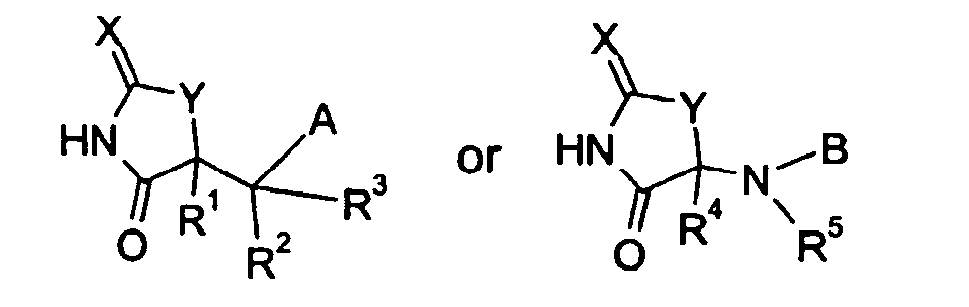
- X is =O, =S or =NH
- Y is -S-, -O- or -NH-
- R1 and R4 are independently selected from hydrogen or C1-C6-alkyl,
- R2 is hydrogen or C1-C6-alkyl or aryl, R1 and R2 may optionally be combined to form a double bond,
- R3 and R5 are independently selected from hydrogen, halogen, aryl, C1-C6-alkyl, or -C(O)NR11R12,
- A and B are independently selected from C1-C6-alkyl, aryl, aryl-C1-C6-alkyl, aryl-C2-C6-alkenyl or heteroaryl, wherein the alkyl or alkenyl is optionally substituted with one or more substituents independently selected from R6 and the aryl or heteroaryl is optionally substituted with up to four substituents R7, R8, R9, and R10,
- A and R3 may be connected through one or two valence bonds, B and R5 may be connected through one or two valence bonds,
- R6 is independently selected from halogen, -CN, -CF3, -OCF3, aryl, -COOH and -NH2,
- R7, R8, R9 and R10 are independently selected from
- hydrogen, halogen, -CN, -CH2CN, -CHF2, -CF3, -OCF3, -OCHF2, -OCH2CF3, -OCF2CHF2, -S(O)2CF3, -OS(O)2CF3, -SCF3, -NO2, -OR11, -NR11R12, -SR11, -NR11S(O)2R12, -S(O)2NR11R12, -S(O)NR11R12, -S(O)R11, -S(O)2R11, -OS(O)2 R11, -C(O)NR11R12, -OC(O)NR11R12, -NR11C(O)R12, -CH2C(O)NR11R12, -OC1-C6-alkyl-C(O)NR11R12, -CH2OR11, -CH2OC(O)R11, -CH2NR11R12, -OC(O)R11, -OC1-C15-alkyl-C(O)OR11, -OC1-C6-alkyl-OR11, -SC1-C6-alkyl-C(O)OR11, -C2-C6-alkenyl-C(=O)OR11, -NR11-C(=O)-C1-C6-alkyl-C(=O)OR11, -NR11-C(=O)-C1-C6-alkenyl-C(=O)OR11 , -C(O)OR11, C(O)R11, or -C2-C6-alkenyl-C(=O)R11, =O, or -C2-C6-alkenyl-C(=O)-NR11R12,
- C1-C6-alkyl, C2-C6-alkenyl or C2-C6-alkynyl, each of which may optionally be substituted with one or more substituents independently selected from R13,
- aryl, aryloxy, aryloxycarbonyl, aroyl, arylsulfanyl, aryl-C1-C6-alkoxy, aryl-C1-C6-alkyl, aryl-C2-C6-alkenyl, aroyl-C2-C6-alkenyl, aryl-C2-C6-alkynyl, heteroaryl, heteroaryl-C1-C6-alkyl, heteroaryl-C2-C6-alkenyl, heteroaryl-C2-C6-alkynyl, or C3-C6 cycloalkyl,
- R11 and R12 are independently selected from hydrogen, OH, C1-C20-alkyl, aryl-C1-C6-alkyl or aryl, wherein the alkyl groups may optionally be substituted with one or more substituents independently selected from R15 , and the aryl groups may optionally be substituted one or more substituents independently selected from R16; R11 and R12 when attached to the same nitrogen atom may form a 3 to 8 membered heterocyclic ring with the said nitrogen atom, the heterocyclic ring optionally containing one or two further heteroatoms selected from nitrogen, oxygen and sulphur, and optionally containing one or two double bonds,
- R13 is independently selected from halogen, -CN, -CF3, -OCF3, -OR11, -C(O)OR11, -NR11R12, and -C(O)NR11R12,
- R14 is independently selected from halogen, -C(O)OR11, -CH2C(O)OR11, -CH2OR11, -CN, - CF3, -OCF3, -N02, -OR11, -NR11R12, S(O)2R11, aryl and C1-C6-alkyl,
- R15 is independently selected from halogen, -CN, -CF3, -OCF3, -OC1-C6-alkyl, -C(O)OC1-C6-alkyl, -COOH and -NH2,
- R16 is independently selected from halogen, -C(O)OC1-C6-alkyl, -COOH, -CN, -CF3, -OCF3, - N02, -OH, -OC1-C6-alkyl, -NH2, C(=O) or C1-C6-alkyl, or any enantiomer, diastereomer, including a racemic mixture, tautomer as well as a salt thereof with a pharmaceutically acceptable acid or base.
- In another embodiment the invention provides a pharmaceutical composition wherein X is =O or =S.
In another embodiment the invention provides a pharmaceutical composition wherein X is =O.
In another embodiment the invention provides a pharmaceutical composition wherein X is =S.
In another embodiment the invention provides a pharmaceutical composition wherein Y is -O- or -S-.
In another embodiment the invention provides a pharmaceutical composition wherein Y is -O-.
In another embodiment the invention provides a pharmaceutical composition wherein Y is -S-.
In another embodiment the invention provides a pharmaceutical composition wherein A is aryl optionally substituted with up to four substituents, R7, R8, R9, and R10 which may be the same or different.
In another embodiment the invention provides a pharmaceutical composition wherein A is selected from ArG1 optionally substituted with up to four substituents, R7, R8, R9, and R10 which may be the same or different.
In another embodiment the invention provides a pharmaceutical composition wherein A is phenyl or naphtyl optionally substituted with up to four substituents, R7, R8, R9, and R10 which may be the same or different.
In another embodiment the invention provides a pharmaceutical composition wherein A is
In another embodiment the invention provides a pharmaceutical composition wherein A is heteroaryl optionally substituted with up to four substituents, R7, R8, R9, and R10 which may be the same or different.
In another embodiment the invention provides a pharmaceutical composition wherein A is selected from Het1 optionally substituted with up to four substituents, R7, R8, R9, and R10 which may be the same or different.
In another embodiment the invention provides a pharmaceutical composition wherein A is selected from Het2 optionally substituted with up to four substituents, R7, R8, R9, and R10 which may be the same or different.
In another embodiment the invention provides a pharmaceutical composition wherein A is selected from Het3 optionally substituted with up to four substituents, R7, R8, R9, and R10 which may be the same or different.
In another embodiment the invention provides a pharmaceutical composition wherein A is selected from the group consisting of indolyl, benzofuranyl, quinolyl, furyl, thienyl, or pyrrolyl,
wherein each heteroaryl may optionally substituted with up to four substituents, R7, R8, R9, and R10 which may be the same or different.
In another embodiment the invention provides a pharmaceutical composition wherein A is benzofuranyl optionally substituted with up to four substituents R7, R8, R9, and R10 which may be the same or different.
In another embodiment the invention provides a pharmaceutical composition wherein A is
In another embodiment the invention provides a pharmaceutical composition wherein A is
In another embodiment the invention provides a pharmaceutical composition wherein A is
In another embodiment the invention provides a pharmaceutical composition wherein A is
In another embodiment the invention provides a pharmaceutical composition wherein R2 is hydrogen.
In another embodiment the invention provides a pharmaceutical composition wherein R1 and R2 are combined to form a double bond.
In another embodiment the invention provides a pharmaceutical composition wherein R3 is C1-C6-alkyl, halogen, or C(O)NR16R17.
In another embodiment the invention provides a pharmaceutical composition wherein R3 is C1-C6-alkyl or C(O)NR16R17.
In another embodiment the invention provides a pharmaceutical composition wherein R3 is methyl.
In another embodiment the invention provides a pharmaceutical composition wherein B is phenyl optionally substituted with up to four substituents, R7, R6, R9, and R10 which may be the same or different.
In another embodiment the invention provides a pharmaceutical composition wherein R4 is hydrogen.
In another embodiment the invention provides a pharmaceutical composition wherein R5 is hydrogen.
In another embodiment the invention provides a pharmaceutical composition wherein R6 is aryl.
In another embodiment the invention provides a pharmaceutical composition wherein R6 is phenyl.
In another embodiment the invention provides a pharmaceutical composition wherein R7, R8, R9 and R10 are independently selected from - hydrogen, halogen, -NO2, -OR11, -NR11R12, -SR11, -NR11S(O)2R12, -S(O)2NR11R12, -S(O)NR11R12, -S(O)R11, -S(O)2R11, -OS(O)2 R11, -NR11C(O)R12, -CH2OR11,-CH2OC(O)R11, -CH2NR11R12, -OC(O)R11, -OC1-C6-alkyl-C(O)OR11, -OC1-C6-alkyl-C(O)NR11R12, -OC1-C6-alkyl-OR11, -SC1-C6-alkyl-C(O)OR11, -C2-C6-alkenyl-C(=O)OR11, -C(O)OR11, or -C2-C6-alkenyl-C(=O)R11,
- C1-C6-alkyl, C2-C6-alkenyl or C2-C6-alkynyl, which may each optionally be substituted with one or more substituents independently selected from R13
- aryl, aryloxy, aroyl, arylsulfanyl, aryl-C1-C6-alkoxy, aryl-C1-C6-alkyl, aryl-C2-C6-alkenyl, aroyl-C2-C6-alkenyl, aryl-C2-C6-alkynyl, heteroaryl, heteroaryl-C1-C6-alkyl, wherein each of the cyclic moieties optionally may be substituted with one or more substituents independently selected from R14
- In another embodiment the invention provides a pharmaceutical composition wherein R7, R8, R9 and R10 are independently selected from
- hydrogen, halogen, -NO2, -OR11, -NR11R12, -SR11, -S(O)2R11, -OS(O)2 R11, - CH2OC(O)R11, -OC(O)R11, -OC1-C6-alkyl-C(O)OR11, -OC1-C6-alkyl-OR11, -SC1-C6-alkyl-C(O)OR11, -C(O)OR11, or-C2-C6-alkenyl-C(=O)R11,
- C1-C6-alkyl or C1-C6-alkenyl which may each optionally be substituted with one or more substituents independently selected from R13
- aryl, aryloxy, aroyl, aryl-C1-C6-alkoxy, aryl-C1-C6-alkyl, heteroaryl,
- In another embodiment the invention provides a pharmaceutical composition wherein R7, R8, R9 and R10 are independently selected from
- hydrogen, halogen, -NO2, -OR11, -NR11R12, -SR11, -S(O)2R11, -OS(O)2 R11,-CH2OC(O)R11, -OC(O)R11, -OC1-C6-alkyl-C(O)OR11, -OC1-C6-alkyl-OR11, -SC1-C6-alkyl-C(O)OR11, -C(O)OR11, or -C2-C6-alkenyl-C(=O)R11,
- C1-C6-alkyl or C1-C6- which may each optionally be substituted with one or more substituents independently selected from R13
- aryl, aryloxy, aroyl, aryl-C1-C6-alkoxy, aryl-C1-C6-alkyl, heteroaryl,
- In another embodiment the invention provides a pharmaceutical composition wherein R7, R8, R9 and R10 are independently selected from
- hydrogen, halogen, -OR11, -OC1-C6-alkyl-C(O)OR11, or -C(O)OR11,
- C1-C6-alkyl which may each optionally be substituted with one or more substituents independently selected from R13
- aryl, aryloxy, aryl-C1-C6-alkoxy,
- In another embodiment the invention provides a pharmaceutical composition wherein R7, R8, R9 and R10 are independently selected from
- hydrogen, halogen, -OR11, -OC1-C6-alkyl-C(O)OR11, or -C(O)OR11,
- C1-C6-alkyl which may optionally be substituted with one or more substituents independently selected from R13
- phenyl, phenyloxy, phenyl-C1-C6-alkoxy, wherein each of the cyclic moieties optionally may be substituted with one or more substituents independently selected from R14.
- In another embodiment the invention provides a pharmaceutical composition wherein R11 and R12 are independently selected from hydrogen, C1-C20-alkyl, aryl or aryl-C1-C6-alkyl, wherein the alkyl groups may optionally be substituted with one or more substituents independently selected from R15, and the aryl groups may optionally be substituted one or more substituents independently selected from R16; R11 and R12 when attached to the same nitrogen atom may form a 3 to 8 membered heterocyclic ring with the said nitrogen atom, the heterocyclic ring optionally containing one or two further heteroatoms selected from nitrogen, oxygen and sulphur, and optionally containing one or two double bonds.
In another embodiment the invention provides a pharmaceutical composition wherein R11 and R12 are independently selected from hydrogen, C1-C20-alkyl, aryl or aryl-C1-C6-alkyl, wherein the alkyl groups may optionally be substituted with one or more substituents independently selected from R15, and the aryl groups may optionally be substituted one or more substituents independently selected from R16.
In another embodiment the invention provides a pharmaceutical composition wherein R11 and R12 are independently selected from phenyl or phenyl-C1-C6-alkyl.
In another embodiment the invention provides a pharmaceutical composition wherein one or both of R11 and R12 are methyl.
In another embodiment the invention provides a pharmaceutical composition wherein R13 is independently selected from halogen, CF3, OR11 or NR11R12.
In another embodiment the invention provides a pharmaceutical composition wherein R13 is independently selected from halogen or OR11.
In another embodiment the invention provides a pharmaceutical composition wherein R13 is OR11.
In another embodiment the invention provides a pharmaceutical composition wherein R14 is independently selected from halogen, -C(O)OR11, -CN, -CF3, -OR11, S(O)2R11, and C1-C6-alkyl.
In another embodiment the invention provides a pharmaceutical composition wherein R14 is independently selected from halogen, -C(O)OR11, or -OR11.
In another embodiment the invention provides a pharmaceutical composition wherein R15 is independently selected from halogen, -CN, -CF3, -C(O)OC1-C6-alkyl,and -COOH.
In another embodiment the invention provides a pharmaceutical composition wherein R15 is independently selected from halogen or -C(O)OC1-C6-alkyl.
In another embodiment the invention provides a pharmaceutical composition wherein R16 is independently selected from halogen, -C(O)OC1-C6-alkyl, -COOH, -NO2, -OC1-C6-alkyl, -NH2, C(=O) or C1-C6-alkyl.
In another embodiment the invention provides a pharmaceutical composition wherein R16 is independently selected from halogen, -C(O)OC1-C6-alkyl, -COOH, -NO2, or C1-C6-alkyl.
In another embodiment the invention provides a pharmaceutical composition wherein the zinc-binding ligand is
- R19 is hydrogen or C1-C6-alkyl,
- R20 is hydrogen or C1-C6-alkyl,
- D and F are a valence bond or C1-C6-alkylene optionally substituted with one or more substituents independently selected from R72,
- R72 is independently selected from hydroxy, C1-C6-alkyl, or aryl,
- E is C1-C6-alkyl, aryl or heteroaryl, wherein the aryl or heteroaryl is optionally substituted with up to three substituents R21, R22 and R23,
- G is C1-C6-alkyl, aryl or heteroaryl, wherein the aryl or heteroaryl is optionally substituted with up to three substituents R24, R25 and R26,
- R17 R18, R21, R22, R23, R24, R25 and R26 are independently selected from
- hydrogen, halogen, -CN, -CH2CN, -CHF2, -CF3, -OCF3, -OCHF2, -OCH2CF3, -OCF2CHF2, -S(O)2CF3, -SCF3, -NO2, -OR27, -NR27R28, -SR27, -NR27S(O)2R28, -S(O)2NR27R28, -S(O)NR27R28, -S(O)R27, -S(O)2R27, -C(O)NR27R28, -OC(O)NR27R28, -NR27C(O)R28, -NR27C(O)OR28, -CH2C(O)NR27R28, -OCH2C(O)NR27R28, -CH2OR27, -CH2NR27R28, -OC(O)R27, -OC1-C6-alkyl-C(O)OR27, -SC1-C6-alkyl-C(O)OR27, -C2-C6-alkenyl-C(=O)OR27, -NR27-C(=O)-C1-C6-alkyl-C(=O)OR27, -NR27-C(=O)-C1-C6-alkenyl-C(=O)OR27, -C(=O)NR27-C1-C6-alkyl-C(=O)OR27, -C1-C6-alkyl-C(=O)OR27, or -C(O)OR27,
- C1-C6-alkyl, C2-C6-alkenyl or C2-C6-alkynyl,
which may optionally be substituted with one or more substituents independently selected from R29, - aryl, aryloxy, aryloxycarbonyl, aroyl, aryl-C1-C6-alkoxy, aryl-C1-C6-alkyl, aryl-C2-C6-alkenyl, aryl-C2-C6-alkynyl, heteroaryl, heteroaryl-C1-C6-alkyl, heteroaryl-C2-C6-alkenyl or heteroaryl-C2-C6-alkynyl,
- R27 and R28 are independently selected from hydrogen, C1-C6-alkyl, aryl-C1-C6-alkyl or aryl, or R27 and R28 when attached to the same nitrogen atom together with the said nitrogen atom may form a 3 to 8 membered heterocyclic ring optionally containing one or two further heteroatoms selected from nitrogen, oxygen and sulphur, and optionally containing one or two double bonds,
- R29 is independently selected from halogen, -CN, -CF3, -OCF3, -OR27, and -NR27R28,
- R30 is independently selected from halogen, -C(O)OR27, -CN, -CF3, -OCF3, -NO2, -OR27, -NR27R28 and C1-C6-alkyl, or any enantiomer, diastereomer, including a racemic mixture, tautomer as well as a salt thereof with a pharmaceutically acceptable acid or base.
In another embodiment the invention provides a pharmaceutical composition wherein D is a valence bond.
In another embodiment the invention provides a pharmaceutical composition wherein D is C1-C6-alkylene optionally substituted with one or more hydroxy, C1-C6-alkyl, or aryl.
In another embodiment the invention provides a pharmaceutical composition wherein E is aryl or heteroaryl, wherein the aryl or heteroaryl is optionally substituted with up to three substituents independently selected from R21, R22 and R23.
In another embodiment the invention provides a pharmaceutical composition wherein E is aryl optionally substituted with up to three substituents independently selected from R21, R22 and R23.
In another embodiment the invention provides a pharmaceutical composition wherein E is selected from ArG1 and optionally substituted with up to three substituents independently selected from R21, R22 and R23.
In another embodiment the invention provides a pharmaceutical composition wherein E is phenyl optionally substituted with up to three substituents independently selected from R21, R22 and R23.
In another embodiment the invention provides a pharmaceutical composition wherein the zinc-binding ligand is
- In another embodiment the invention provides a pharmaceutical composition wherein R21, R22 and R23 are independently selected from
- hydrogen, halogen, -CHF2, -CF3, -OCF3, -OCHF2, -OCH2CF3, -OCF2CHF2, -SCF3, - NO2, -OR27, -NR27R28, -SR27, -C(O)NR27R28, -OC(O)NR27R28, -NR27C(O)R28, -NR27C(O)OR28, -CH2C(O)NR27R28, -OCH2C(O)NR27R28, -CH2OR27, -CH2NR27R28, -OC(O)R27, -OC1-C6-alkyl-C(O)OR27, -SC1-C6-alkyl-C(O)OR27, -C2-C6-alkenyl-C(=O)OR27, -NR27-C(=O)-C1-C6-alkyl-C(=O)OR27, -NR27-C(=O)-C1-C6-alkenyl-C(=O)OR27-, -C(=O)NR27-C1-C6-alkyl-C(=O)OR27, -C1-C6-alkyl-C(=O)OR27, or -C(O)OR27,
- C1-C6-alkyl, C2-C6-alkenyl or C2-C6-alkynyl,
which may optionally be substituted with one or more substituents independently selected from R29 - aryl, aryloxy, aryloxycarbonyl, aroyl, aryl-C1-C6-alkoxy, aryl-C1-C6-alkyl, aryl-C2-C6-alkenyl, aryl-C2-C6-alkynyl, heteroaryl, heteroaryl-C1-C6-alkyl, heteroaryl-C2-C6-alkenyl or heteroaryl-C2-C6-alkynyl,
- In another embodiment the invention provides a pharmaceutical composition wherein R21, R22 and R23 are independently selected from
- hydrogen, halogen, -OCF3, -OR27, -NR27R28, -SR27, -NR27C(O)R28, -NR27C(O)OR28, -OC(O)R27, -OC1-C6-alkyl-C(O)OR27, -SC1-C6-alkyl-C(O)OR27, -C2-C6-alkenyl-C(=O)OR27, -C(=O)NR27-C1-C6-alkyl-C(=O)OR27, -C1-C6-alkyl-C(=O)OR27, or -C(O)OR27,
- C1-C6-alkyl optionally substituted with one or more substituents independently selected from R29
- aryl, aryloxy, aroyl, aryl-C1-C6-alkoxy, aryl-C1-C6-alkyl, heteroaryl, heteroaryl-C1-C6-alkyl,
- In another embodiment the invention provides a pharmaceutical composition wherein R21, R22 and R23 are independently selected from
- hydrogen, halogen, -OCF3, -OR27, -NR27R28, -SR27, -NR27C(O)R28, -NR27C(O)OR28, -OC(O)R27, -OC1-C6-alkyl-C(O)OR27, -SC1-C6-alkyl-C(O)OR27, -C2-C6-alkenyl-C(=O)OR27, -C(=O)NR27-C1-C6-alkyl-C(=O)OR27, -C1-C6-alkyl-C(=O)OR27, or -C(O)OR27,
- methyl, ethyl propyl optionally substituted with one or more substituents independently selected from R29
- aryl, aryloxy, aroyl, aryl-C1-C6-alkoxy, aryl-C1-C6-alkyl, heteroaryl, heteroaryl-C1-C6-alkyl
- In another embodiment the invention provides a pharmaceutical composition wherein R21, R22 and R23 are independently selected from
- hydrogen, halogen, -OCF3, -OR27, -NR27R28, -SR27, -NR27C(O)R28, -NR27C(O)OR28, -OC(O)R27, -OC1-C6-alkyl-C(O)OR27, -SC1-C6-alkyl-C(O)OR27, -C2-C6-alkenyl-C(=O)OR27, -C(=O)NR27-C1-C6-alkyl-C(=O)OR27, -C1-C6-alkyl-C(=O)OR27, or -C(O)OR27,
- methyl, ethyl propyl optionally substituted with one or more substituents independently selected from R29
- ArG1, ArG1-O-, ArG1-C(O)-, ArG1-C1-C6-alkoxy, ArG1-C1-C6-alkyl, Het3, Het3-C1-C6-alkyl
- In another embodiment the invention provides a pharmaceutical composition wherein R21, R22 and R23 are independently selected from
- hydrogen, halogen, -OCF3, -OR27, -NR27R28, -SR27, -NR27C(O)R28, -NR27C(O)OR28, -OC(O)R27, -OC1-C6-alkyl-C(O)OR27, -SC1-C6-alkyl-C(O)OR27, -C2-C6-alkenyl-C(=O)OR27, -C(=O)NR27-C1-C6-alkyl-C(=O)OR27. -C1-C6-alkyl-C(=O)OR27, or -C(O)OR27,
- C1-C6-alkyl optionally substituted with one or more substituents independently selected from R29
- phenyl, phenyloxy, phenyl-C1-C6-alkoxy, phenyl-C1-C6-alkyl,
- In another embodiment the invention provides a pharmaceutical composition wherein R19 is hydrogen or methyl.
In another embodiment the invention provides a pharmaceutical composition wherein R19 is hydrogen.
In another embodiment the invention provides a pharmaceutical composition wherein R27 is Hydrogen, C1-C6-alkyl or aryl.
In another embodiment the invention provides a pharmaceutical composition wherein R27 is hydrogen or C1-C6-alkyl.
In another embodiment the invention provides a pharmaceutical composition wherein R28 is hydrogen or C1-C6-alkyl.
In another embodiment the invention provides a pharmaceutical composition wherein F is a valence bond.
In another embodiment the invention provides a pharmaceutical composition wherein F is C1-C6-alkylene optionally substituted with one or more hydroxy, C1-C6-alkyl, or aryl.
In another embodiment the invention provides a pharmaceutical composition wherein G is C1-C6-alkyl or aryl, wherein the aryl is optionally substituted with up to three substituents R24, R25 and R26.
In another embodiment the invention provides a pharmaceutical composition wherein G is C1-C6-alkyl or ArG1, wherein the aryl is optionally substituted with up to three substituents R24, R25 and R26.
In another embodiment the invention provides a pharmaceutical composition wherein G is C1-C6-alkyl.
In another embodiment the invention provides a pharmaceutical composition wherein G is phenyl optionally substituted with up to three substituents R24, R25 and R26.
In another embodiment the invention provides a pharmaceutical composition wherein R24, R25 and R26 are independently selected from - hydrogen, halogen, -CHF2, -CF3, -OCF3, -OCHF2, -OCH2CF3, -OCF2CHF2, -SCF3, - NO2, -OR27, -NR27R28, -SR27, -C(O)NR27R28, -OC(O)NR27R28, -NR27C(O)R28, -NR27C(O)OR28, -CH2C(O)NR27R28, -OCH2C(O)NR27R28, -CH2OR27, -CH2NR27R28, -OC(O)R27, -OC1-C6-alkyl-C(O)OR27, -SC1-C6-alkyl-C(O)OR27, -C2-C6-alkenyl-C(=O)OR27, -NR27-C(=O)-C1-C6-alkyl-C(=O)OR27, -NR27-C(=O)-C1-C6-alkenyl-C(=O)OR27-, -C(=O)NR27-C1-C6-alkyl-C(=O)OR27, -C1-C6-alkyl-C(=O)OR27, or -C(O)OR27,
- C1-C6-alkyl, C2-C6-alkenyl or C2-C6-alkynyl,
which may optionally be substituted with one or more substituents independently selected from R29 - aryl, aryloxy, aryloxycarbonyl, aroyl, aryl-C1-C6-alkoxy, aryl-C1-C6-alkyl, aryl-C2-C6-alkenyl, aryl-C2-C6-alkynyl, heteroaryl, heteroaryl-C1-C6-alkyl, heteroaryl-C2-C6-alkenyl or heteroaryl-C2-C6-alkynyl,
- In another embodiment the invention provides a pharmaceutical composition wherein R24, R25 and R26 are independently selected from
- hydrogen, halogen, -OCF3, -OR27, -NR27R28, -SR27, -NR27C(O)R28, -NR27C(O)OR28, -OC(O)R27, -OC1-C6-alkyl-C(O)OR27, -SC1-C6-alkyl-C(O)OR27, -C2-C6-alkenyl-C(=O)OR27, -C(=O)NR27-C1-C6-alkyl-C(=O)OR27, -C1-C6-alkyl-C(=O)OR27, or -C(O)OR27,
- C1-C6-alkyl, C2-C6-alkenyl or C2-C6-alkynyl,
which may optionally be substituted with one or more substituents independently selected from R29 - aryl, aryloxy, aryloxycarbonyl, aroyl, aryl-C1-C6-alkoxy, aryl-C1-C6-alkyl, aryl-C2-C6-alkenyl, aryl-C2-C6-alkynyl, heteroaryl, heteroaryl-C1-C6-alkyl, heteroaryl-C2-C6-alkenyl or heteroaryl-C2-C6-alkynyl,
- In another embodiment the invention provides a pharmaceutical composition wherein R24, R25 and R26 are independently selected from
- hydrogen, halogen, -OCF3, -OR27, -NR27R28, -SR27, -NR27C(O)R28, -NR27C(O)OR28, -OC(O)R27, -OC1-C6-alkyl-C(O)OR27, -SC1-C6-alkyl-C(O)OR27, -C2-C6-alkenyl-C(=O)OR27, -C(=O)NR27-C1-C6-alkyl-C(=O)OR27, -C1-C6-alkyl-C(=O)OR27, or -C(O)OR27,
- C1-C6-alkyl optionally substituted with one or more substituents independently selected from R29
- aryl, aryloxy, aroyl, aryl-C1-C6-alkoxy, aryl-C1-C6-alkyl, heteroaryl, heteroaryl-C1-C6-alkyl,
- In another embodiment the invention provides a pharmaceutical composition wherein R21, R22 and R23 are independently selected from
- hydrogen, halogen, -OCF3, -OR27, -NR27R28, -SR27, -NR27C(O)R28, -NR27C(O)OR28, -OC(O)R27, -OC1-C6-alkyl-C(O)OR27, -SC1-C6-alkyl-C(O)OR27, -C2-C6-alkenyl-C(=O)OR27, -C(=O)NR27-C1-C6-alkyl-C(=O)OR27, -C1-C6-alkyl-C(=O)OR27, or -C(O)OR27,
- methyl, ethyl propyl optionally substituted with one or more substituents independently selected from R29
- ArG1, ArG1-O-, ArG1-C(O)-, ArG1-C1-C6-alkoxy, ArG1-C1-C6-alkyl, Het3, Het3-C1-C6-alkyl
- In another embodiment the invention provides a pharmaceutical composition wherein R21, R22 and R23 are independently selected from
- hydrogen, halogen, -OCF3, -OR27, -NR27R28, -SR27, -NR27C(O)R28, -NR27C(O)OR28, -OC(O)R27, -OC1-C6-alkyl-C(O)OR27, -SC1-C6-alkyl-C(O)OR27, -C2-C6-alkenyl-C(=O)OR27, -C(=O)NR27-C1-C6-alkyl-C(=O)OR27, -C1-C6-alkyl-C(=O)OR27, or -C(O)OR27,
- methyl, ethyl propyl optionally substituted with one or more substituents independently selected from R29
- ArG1, ArG1-O-, ArG1-C(O)-, ArG1-C1-C6-alkoxy, ArG1-C1-C6-alkyl, Het3, Het3-C1-C6-alkyl
- In another embodiment the invention provides a pharmaceutical composition wherein R21, R22 and R23 are independently selected from
- hydrogen, halogen, -OCF3, -OR27, -NR27R28, -SR27, -NR27C(O)R28, -NR27C(O)OR28, -OC(O)R27, -OC1-C6-alkyl-C(O)OR27, -SC1-C6-alkyl-C(O)OR27, -C2-C6-alkenyl-C(=O)OR27, -C(=O)NR27-C1-C6alkyl-C(=O)OR27. -C1-C6-alkyl-C(=O)OR27, or -C(O)OR27,
- methyl, ethyl propyl optionally substituted with one or more substituents independently selected from R29
- ArG1, ArG1-O-, ArG1-C1-C6-alkoxy, ArG1-C1-C6-alkyl,
- In another embodiment the invention provides a pharmaceutical composition wherein R20 is hydrogen or methyl.
In another embodiment the invention provides a pharmaceutical composition wherein R20 is hydrogen.
In another embodiment the invention provides a pharmaceutical composition wherein R27 is hydrogen, C1-C6-alkyl or aryl.
In another embodiment the invention provides a pharmaceutical composition wherein R27 is hydrogen or C1-C6-alkyl or ArG1.
In another embodiment the invention provides a pharmaceutical composition wherein R27 is hydrogen or C1-C6-alkyl.
In another embodiment the invention provides a pharmaceutical composition wherein R28 is hydrogen or C1-C6-alkyl.
In another embodiment the invention provides a pharmaceutical composition wherein R17 and R18 are independently selected from - hydrogen, halogen, -CN, -CF3, -OCF3, -NO2, -OR27, -NR27R28, -SR27, -S(O)R27, -S(O)2R27, -C(O)NR27R28, -CH2OR27, -OC(O)R27, -OC1-C6-alkyl-C(O)OR27, -SC1-C6-alkyl-C(O)OR27, or -C(O)OR27,
- C1-C6-alkyl, C2-C6-alkenyl or C2-C6-alkynyl, optionally substituted with one or more substituents independently selected from R29
- aryl, aryloxy, aroyl, aryl-C1-C6-alkoxy, aryl-C1-C6-alkyl, heteroaryl, heteroaryl-C1-C6-alkyl,
- In another embodiment the invention provides a pharmaceutical composition wherein R17 and R18 are independently selected from
- hydrogen, halogen, -CN, -CF3, -NO2, -OR27, -NR27R28, or -C(O)OR27,
- C1-C6-alkyl optionally substituted with one or more substituents independently selected from R29
- aryl, aryloxy, aroyl, aryl-C1-C6-alkoxy, aryl-C1-C6-alkyl, heteroaryl, heteroaryl-C1-C6-alkyl,
- In another embodiment the invention provides a pharmaceutical composition wherein R17 and R18 are independently selected from
- hydrogen, halogen, -CN, -CF3, -NO2, -OR27, -NR27R28, or -C(O)OR27
- methyl, ethyl propyl optionally substituted with one or more substituents independently selected from R29
- aryl, aryloxy, aroyl, aryl-C1-C6-alkoxy, aryl-C1-C6-alkyl, heteroaryl, heteroaryl-C1-C6-alkyl
- In another embodiment the invention provides a pharmaceutical composition wherein R17 and R18 are independently selected from
- hydrogen, halogen, -CN, -CF3, -NO2, -OR27, -NR27R28, or -C(O)OR27
- methyl, ethyl propyl optionally substituted with one or more substituents independently selected from R29
- ArG1, ArG1-O-, ArG1-C(O)-, ArG1-C1-C6-alkoxy, ArG1-C1-C6-alkyl, Het3, Het3-C1-C6-alkyl
- In another embodiment the invention provides a pharmaceutical composition wherein R17 and R18 are independently selected from
- hydrogen, halogen, -CN, -CF3, -NO2, -OR27, -NR27R28, or -C(O)OR27
- C1-C6-alkyl optionally substituted with one or more substituents independently selected from R29
- phenyl, phenyloxy, phenyl-C1-C6-alkoxy, phenyl-C1-C6-alkyl,
- In another embodiment the invention provides a pharmaceutical composition wherein R27 is hydrogen or C1-C6-alkyl.
In another embodiment the invention provides a pharmaceutical composition wherein R27 is hydrogen, methyl or ethyl.
In another embodiment the invention provides a pharmaceutical composition wherein R28 is hydrogen or C1-C6-alkyl.
In another embodiment the invention provides a pharmaceutical composition wherein R28 is hydrogen, methyl or ethyl.
In another embodiment the invention provides a pharmaceutical composition wherein R72 is -OH or phenyl. - In another embodiment the invention provides a pharmaceutical composition wherein the zinc-binding ligand is

- In another embodiment the invention provides a pharmaceutical composition wherein the zinc-binding ligand is of the form H-I-J
- wherein H is

- wherein the phenyl, naphthalene or benzocarbazole rings are optionally substituted with one or more substituents independently selected from R31
- I is selected from
- a valence bond,
- -CH2N(R32)- or -SO2N(R33)-,
-

- J is
- C1-C6-alkyl, C2-C8-alkenyl or C2-C6-alkynyl, which may each optionally be substituted with one or more substituents selected from R34,
- Aryl, aryloxy, aryl-oxycarbonyl-, aroyl, aryl-C1-C6-alkoxy-, aryl-C1-C6-alkyl-, aryl-C2-C6-alkenyl-, aryl-C2-C6-alkynyl-, heteroaryl, heteroaryl-C1-C6-alkyl-, heteroaryl-C2-C6-alkenyl- or heteroaryl-C2-C6-alkynyl-, wherein the cyclic moieties are optionally substituted with one or more substituents selected from R37,
- hydrogen,
- R31 is independently selected from hydrogen, halogen, -CN, -CH2CN, -CHF2, -CF3, -OCF3, -OCHF2, -OCH2CF3, -OCF2CHF2, -S(O)2CF3, -SCF3, -NO2, -OR35, -C(O)R35, -NR35R36, -SR35, -NR35S(O)2R36, -S(O)2NR35R36, -S(O)NR35R36, -S(O)R35, -S(O)2R35, -C(O)NR35R36, -OC(O)NR35R36, -NR35C(O)R36, -CH2C(O)NR35R36, -OCH2C(O)NR35R36, -CH2OR35, -CH2NR35R36, -OC(O)R35, -OC1-C6-alkyl-C(O)OR35, -SC1-C6-alkyl-C(O)OR35 -C2-C6-alkenyl-C(=O)OR35, -NR35-C(=O)-C1-C6-alkyl-C(=O)OR35, -NR35-C(=O)-C1-C6-alkenyl-C(=O)OR35-, C1-C6-alkyl, C1-C6-alkanoyl or -C(O)OR35,
- R32 and R33 are independently selected from hydrogen, C1-C6-alkyl or C1-C6-alkanoyl,
- R34 is independently selected from halogen, -CN, -CF3, -OCF3, -OR35, and -NR35R36,
- R35 and R36 are independently selected from hydrogen, C1-C6-alkyl, aryl-C1-C6-alkyl or aryl, or R35 and R36 when attached to the same nitrogen atom together with the said nitrogen atom may form a 3 to 8 membered heterocyclic ring optionally containing one or two further heteroatoms selected from nitrogen, oxygen and sulphur, and optionally containing one or two double bonds,
- R37 is independently selected from halogen, -C(O)OR35, -C(O)H, -CN, -CF3, -OCF3, -NO2,-OR35, -NR35R36, C1-C6-alkyl or C1-C6-alkanoyl,
- In another embodiment the invention provides a pharmaceutical composition wherein the zinc-binding ligand is of the form H-I-J, wherein H is

- wherein the phenyl, naphthalene or benzocarbazole rings are optionally substituted with one or more substituents independently selected from R31,
- I is selected from
- a valence bond,
- -CH2N(R32)- or -SO2N(R33)-,
-

- J is
- C1-C6-alkyl, C2-C6-alkenyl or C2-C6-alkynyl, which may each optionally be substituted with one or more substituents selected from R34,
- Aryl, aryloxy, aryl-oxycarbonyl-, aroyl, aryl-C1-C6-alkoxy-, aryl-C1-C6-alkyl-, aryl-C2-C6-alkenyl-, aryl-C2-C6-alkynyl-, heteroaryl, heteroaryl-C1-C6-alkyl-, heteroaryl-C2-C6-alkenyl- or heteroaryl-C2-C6-alkynyl-, wherein the cyclic moieties are optionally substituted with one or more substituents selected from R37,
- hydrogen,
- R31 is independently selected from hydrogen, halogen, -CN, -CH2CN, -CHF2, -CF3, -OCF3, -OCHF2, -OCH2CF3, -OCF2CHF2, -S(O)2CF3, -SCF3, -NO2, -OR35, -C(O)R35, -NR35R36, -SR35, -NR35S(O)2R36, -S(O)2NR35R36, -S(O)NR35R36, -S(O)R35, -S(O)2R35, -C(O)NR35R36, -OC(O)NR35R36, -NR35C(O)R36, -CH2C(O)NR35R36, -OCH2C(O)NR35R36, -CH2OR35, -CH2NR35R36, -OC(O)R35, -OC1-C6-alkyl-C(O)OR35, -SC1-C6-alkyl-C(O)OR35 -C2-C6-alkenyl-C(=O)OR35, -NR35-C(=O)-C1-C6-alkyl-C(=O)OR35, -NR35-C(=O)-C1-C6-alkenyl-C(=O)OR35-, C1-C6-alkyl, C1-C6-alkanoyl or -C(O)OR35.
- R32 and R33 are independently selected from hydrogen, C1-C6-alkyl or C1-C6-alkanoyl,
- R34 is independently selected from halogen, -CN, -CF3, -OCF3, -OR35, and -NR35R36,
- R35 and R36 are independently selected from hydrogen, C1-C6-alkyl, aryl-C1-C6-alkyl or aryl, or R35 and R36 when attached to the same nitrogen atom together with the said nitrogen atom may form a 3 to 8 membered heterocyclic ring optionally containing one or two further heteroatoms selected from nitrogen, oxygen and sulphur, and optionally containing one or two double bonds,
- R37 is independently selected from halogen, -C(O)OR35, -C(O)H, -CN, -CF3, -OCF3, -NO2,-OR35, -NR35R36, C1-C6-alkyl or C1-C6-alkanoyl,
- In another embodiment the invention provides a pharmaceutical composition wherein H is

- In another embodiment the invention provides a pharmaceutical composition wherein H is

- In another embodiment the invention provides a pharmaceutical composition wherein H is

- In another embodiment the invention provides a pharmaceutical composition wherein I is a valence bond, -CH2N(R32)-, or -SO2N(R33)-.
In another embodiment the invention provides a pharmaceutical composition wherein I is a valence bond.
In another embodiment the invention provides a pharmaceutical composition wherein J is - hydrogen,
- C1-C6-alkyl, C2-C6-alkenyl or C2-C6-alkynyl,
which may optionally be substituted with one or more substituents selected from halogen, -CN, -CF3, -OCF3, -OR35, and -NR35R36, - aryl, or heteroaryl, wherein the cyclic moieties are optionally substituted with one or more substituents independently selected from R37.
- hydrogen,
- aryl or heteroaryl, wherein the cyclic moieties are optionally substituted with one or more substituents independently selected from R37. In another embodiment the invention provides a pharmaceutical composition wherein J is
- hydrogen,
- ArG1 or Het3, wherein the cyclic moieties are optionally substituted with one or more substituents independently selected from R37.
- hydrogen,
- phenyl or naphthyl optionally substituted with one or more substituents independently selected from R37.
- wherein K is a valence bond, C1-C6-alkylene, -NH-C(=O)-U-, -C1-C6-alkyl-S-, -C1-C6-alkyl-O-, -C(=O)-, or -C(=O)-NH-, wherein any C1-C6-alkyl moiety is optionally substituted with R38,
- U is a valence bond, C1-C6-alkenylene, -C1-C6-alkyl-O- or C1-C6-alkylene wherein any C1-C6-alkyl moiety is optionally substituted with C1-C6-alkyl,
- R38 is C1-C6-alkyl, aryl, wherein the alkyl or aryl moieties are optionally substituted with one or more substituents independently selected from R39,
- R39 is independently selected from halogen, cyano, nitro, amino,
- M is a valence bond, arylene or heteroarylene, wherein the aryl or heteroaryl moieties are optionally substituted with one or more substituents independently selected from R40,
- R40 is selected from
- hydrogen, halogen, -CN, -CH2CN, -CHF2, -CF3, -OCF3, -OCHF2, -OCH2CF3, -OCF2CHF2, -S(O)2CF3, -OS(O)2CF3, -SCF3, -N02, -OR41, -NR41R42, -SR41, -NR41S(O)2R42, -S(O)2NR41R42, -S(O)NR41R42, -S(O)R41, -S(O)2R41, -OS(O)2 R41, -C(O)NR41R42, -OC(O)NR41R42, -NR41C(O)R42, -CH2C(O)NR41R42, -OC1-C6-alkyl-C(O)NR41R42, -CH2OR41, -CH2OC(O)R41, -CH2NR41R42, -OC(O)R41, -OC1-C6-alkyl-C(O)OR41, -OC1-C6-alkyl-OR41, -S-C1-C6-alkyl-C(O)OR41, -C2-C6-alkenyl-C(=O)OR41, -NR41-C(=O)-C1-C6-alkyl-C(=O)OR41, -NR41-C(=O)-C1-C6-alkenyl-C(=O)OR41, -C(O)OR41, -C2-C6-alkenyl-C(=O)R41, =O, -NH-C(=O)-O-C1-C6-alkyl, or -NH-C(=O)-C(=O)-O-C1-C6-alkyl,
- C1-C6-alkyl, C2-C6-alkenyl or C2-C6-alkynyl, which may each optionally be substituted with one or more substituents selected from R43,
- aryl, aryloxy, aryloxycarbonyl, aroyl, arylsulfanyl, aryl-C1-C6-alkoxy, aryl-C1-C6-alkyl, aryl-C2-C6-alkenyl, aroyl-C2-C6-alkenyl, aryl-C2-C6-alkynyl, heteroaryl, heteroaryl-C1-C6-alkyl, heteroaryl-C2-C6-alkenyl or heteroaryl-C2-C6-alkynyl, wherein the cyclic moieties optionally may be substituted with one or more substituents selected from R44,
- R41 and R42 are independently selected from hydrogen, -OH, C1-C6-alkyl, C1-C6-alkenyl, aryl-C1-C6-alkyl or aryl, wherein the alkyl moieties may optionally be substituted with one or more substituents independently selected from R45, and the aryl moieties may optionally be substituted with one or more substituents independently selected from R46; R41 and R42 when attached to the same nitrogen atom may form a 3 to 8 membered heterocyclic ring with the said nitrogen atom, the heterocyclic ring optionally containing one or two further heteroatoms selected from nitrogen, oxygen and sulphur, and optionally containing one or two double bonds,
- R43 is independently selected from halogen, -CN, -CF3, -OCF3, -OR41, and -NR41R42
- R44 is independently selected from halogen, -C(O)OR41, -CH2C(O)OR41, -CH2OR41, -CN, - CF3, -OCF3, -NO2, -OR41, -NR41R42 and C1-C6-alkyl,
- R45 is independently selected from halogen, -CN, -CF3, -OCF3, -O-C1-C6-alkyl, -C(O)-O-C1-C6-alkyl, -COOH and -NH2,
- R46 is independently selected from halogen, -C(O)OC1-C6-alkyl, -COOH, -CN, -CF3, -OCF3, - NO2, -OH, -OC1-C6-alkyl, -NH2, C(=O) or C1-C6-alkyl,
- Q is a valence bond, C1-C6-alkylene, -C1-C6-alkyl-O-, -C1-C6-alkyl-NH-, -NH-C1-C6-alkyl, -NH-C(=O)-, -C(=O)-NH-, -O-C1-C6-alkyl, -C(=O)-, or -C1-C6-alkyl-C(=O)-N(R47)- wherein the alkyl moieties are optionally substituted with one or more substituents independently selected from R48,
- R47 and R48 are independently selected from hydrogen, C1-C6-alkyl, aryl optionally substituted with one or more R49,
- R49 is independently selected from halogen and -COOH,
- T is
- hydrogen,
- C1-C6-alkyl, C2-C6-alkenyl , C2-C6-alkynyl, C1-C6-alkyloxy-carbonyl, wherein the alkyl, alkenyl and alkynyl moieties are optionally substituted with one or more substituents independently selected from R50,
- aryl, aryloxy, aryloxy-carbonyl, aryl-C1-C6-alkyl, aroyl, aryl-C1-C6-alkoxy, aryl-C2-C6-alkenyl, aryl-C2-C6-alkyny-, heteroaryl, heteroaryl-C1-C6-alkyl, heteroaryl-C2-C6-alkenyl, heteroaryl-C2-C6-alkynyl,
- R50 is C1-C6-alkyl, C1-C6-alkoxy, aryl, aryloxy, aryl-C1-C6-alkoxy, -C(=O)-NH-C1-C6-alkyl-aryl, heteroaryl, heteroaryl-C1-C6-alkoxy, -C1-C6-alkyl-COOH, -O-C1-C6-alkyl-COOH, -S(O)2R51, -C2-C6-alkenyl-COOH, -OR51, -NO2, halogen, -COOH, -CF3, -CN, =O, -N(R51R52), wherein the aryl or heteroaryl moieties are optionally substituted with one or more R53,
- R51 and R52 are independently selected from hydrogen and C1-C6-alkyl,
- R53 is independently selected from C1-C6-alkyl, C1-C6-alkoxy, -C1-C6-alkyl-COOH, -C2-C6-alkenyl-COOH, -OR51, -NO2, halogen, -COOH, -CF3, -CN, or -N(R51R52),
- hydrogen, halogen, -CN, -CF3, -OCF3, -NO2, -OR41, -NR41R42, -SR41, -S(O)2R41, -NR41C(O)R42, -OC1-C6-alkyl-C(O)NR41R42, -C2-C6-alkenyl-C(=O)OR41, -C(O)OR41, =O, -NH-C(=O)-O-C1-C6-alkyl, or -NH-C(=O)-C(=O)-O-C1-C6-alkyl,
C1-C6-alkyl or C2-C6- alkenyl which may each optionally be substituted with one or more substituents independently selected from R43, - aryl, aryloxy, aryl-C1-C6-alkoxy, aryl-C1-C6-alkyl, aryl-C2-C6-alkenyl, heteroaryl, heteroaryl-C1-C6-alkyl, or heteroaryl-C2-C6-alkenyl, wherein the cyclic moieties optionally may be substituted with one or more substituents selected from R44.
- hydrogen, halogen, -CN, -CF3, -OCF3, -NO2, -OR41, -NR41R42, -SR41, -S(O)2R41, -NR41C(O)R42, -OC1-C6-alkyl-C(O)NR41R42, -C2-C6-alkenyl-C(=O)OR41, -C(O)OR41, =O, -NH-C(=O)-O-C1-C6-alkyl, or -NH-C(=O)-C(=O)-O-C1-C6-alkyl,
C1-C6-alkyl or C2-C6- alkenyl which may each optionally be substituted with one or more substituents independently selected from R43, - ArG1, ArG1-O-, ArG1-C1-C6-alkoxy, ArG1-C1-C6-alkyl, ArG1-C2-C6-alkenyl, Het3, Het3-C1-C6-alkyl, or Het3-C2-C6-alkenyl, wherein the cyclic moieties optionally may be substituted with one or more substituents selected from R44.
- hydrogen, halogen, -CF3, -NO2, -OR41, -NR41R42, -C(O)OR41, =O, or -NR41C(O)R42,
- C1-C6-alkyl,
- ArG1.
- Halogen, -NO2, -OR41, -NR41R42, -C(O)OR41, or -NR41C(O)R42,
- Methyl,
- Phenyl.
- hydrogen,
- C1-C6-alkyl optionally substituted with one or more substituents independently selected from R50,
- aryl, aryl-C1-C6-alkyl, heteroaryl, wherein the alkyl, aryl and heteroaryl moieties are optionally substituted with one or more substituents independently selected from R50.
- hydrogen,
- C1-C6-alkyl optionally substituted with one or more substituents independently selected from R50,
- ArG1, ArG1-C1-C6-alkyl, Het3, wherein the alkyl, aryl and heteroaryl moieties are optionally substituted with one or more substituents independently selected from R50.
- hydrogen,
- C1-C6-alkyl, optionally substituted with one or more substituents independently selected from R50,
- phenyl, phenyl-C1-C6-alkyl, wherein the alkyl and phenyl moieties are optionally substituted with one or more substituents independently selected from R50.
- In another embodiment the invention provides a pharmaceutical composition wherein R50 is C1-C6-alkyl, C1-C6-alkoxy, aryl, aryloxy, aryl-C1-C6-alkoxy, -C(=O)-NH-C1-C6-alkyl-aryl, heteroaryl, -C1-C6-alkyl-COOH, -O-C1-C6-alkyl-COOH, -S(O)2R51, -C2-C6-alkenyl-COOH, -OR51, -NO2, halogen, -COOH, -CF3, -CN, =O, -N(R51R52), wherein the aryl or heteroaryl moieties are optionally substituted with one or more R53.
In another embodiment the invention provides a pharmaceutical composition wherein R50 is C1-C6-alkyl, C1-C6-alkoxy, aryl, aryloxy, aryl-C1-C6-alkoxy , -OR51, -NO2, halogen, -COOH, -CF3, wherein any aryl moiety is optionally substituted with one or more R53.
In another embodiment the invention provides a pharmaceutical composition wherein R50 is C1-C6-alkyl, aryloxy, aryl-C1-C6-alkoxy, -OR51, halogen, -COOH, -CF3, wherein any aryl moiety is optionally substituted with one or more R53.
In another embodiment the invention provides a pharmaceutical composition wherein R50 is C1-C6-alkyl, ArG1-O-, ArG1-C1-C6-alkoxy, -OR51, halogen, -COOH, -CF3, wherein any aryl moiety is optionally substituted with one or more R53.
In another embodiment the invention provides a pharmaceutical composition wherein R50 is phenyl, methyl or ethyl.
In another embodiment the invention provides a pharmaceutical composition wherein R50 is methyl or ethyl.
In another embodiment the invention provides a pharmaceutical composition wherein R51 is methyl.
In another embodiment the invention provides a pharmaceutical composition wherein R53 is C1-C6-alkyl, C1-C6-alkoxy, -OR51, halogen,or -CF3. - In another embodiment the invention provides a pharmaceutical composition wherein the zinc-binding ligand is

- wherein V is C1-C6-alkyl, aryl, heteroaryl, aryl-C1-6-alkyl- or aryl-C2-6-alkenyl-, wherein the alkyl or alkenyl is optionally substituted with one or more substituents independently selected from R54, and the aryl or heteroaryl is optionally substituted with one or more substituents independently selected from R55,
- R54 is independently selected from halogen, -CN, -CF3, -OCF3, aryl, -COOH and -NH2,
- R55 is independently selected from
- hydrogen, halogen, -CN, -CH2CN, -CHF2, -CF3, -OCF3, -OCHF2, -OCH2CF3, -OCF2CHF2, -S(O)2CF3, -OS(O)2CF3, -SCF3, -NO2, -OR56, -NR56R57, -SR56, -NR56S(O)2R57, -S(O)2NR56R57, -S(O)NR56R57, -S(O)R56, -S(O)2R56, -OS(O)2 R56, -C(O)NR56R57, -OC(O)NR56R57, -NR56C(O)R57, -CH2C(O)NR56R57, -OC1-C6-alkyl-C(O)NR56R57, -CH2OR56, -CH2OC(O)R56, -CH2NR56R57, -OC(O)R56, -OC1-C8-alkyl-C(O)OR 56, -OC1-C6-alkyl-OR56, -SC1-C6-alkyl-C(O)ORO56, -C2-C6-alkenyl-C(=O)OR56, -NR56-C(=O)-C1-C6-alkyl-C(=O)OR56, -NR56-C(=O)-C1-C6-alkenyl-C(=O)OR56 , -C(O)OR56, or -C2-C6-alkenyl-C(=O)R56,
- C1-C6-alkyl, C2-C6-alkenyl or C2-C6-alkynyl,
which may optionally be substituted with one or more substituents selected from R58, - aryl, aryloxy, aryloxycarbonyl, aroyl, arylsulfanyl, aryl-C1-C6-alkoxy, aryl-C1-C6-alkyl, aryl-C2-C6-alkenyl, aroyl-C2-C6-alkenyl, aryl-C2-C6-alkynyl, heteroaryl, heteroaryl-C1-C6-alkyl, heteroaryl-C2-C6-alkenyl or heteroaryl-C2-C6-alkynyl,
- R56 and R57 are independently selected from hydrogen, OH, CF3, C1-C12-alkyl, aryl-C1-C6-alkyl, -C(=O)-C1-C6-alkyl or aryl, wherein the alkyl groups may optionally be substituted with one or more substituents independently selected from R60, and the aryl groups may optionally be substituted with one or more substituents independently selected from R61 ; R56 and R57 when attached to the same nitrogen atom may form a 3 to 8 membered heterocyclic ring with the said nitrogen atom, the heterocyclic ring optionally containing one or two further heteroatoms selected from nitrogen, oxygen and sulphur, and optionally containing one or two double bonds,
- R58 is independently selected from halogen, -CN, -CF3, -OCF3, -OR56, and -NR56R57,
- R59 is independently selected from halogen, -C(O)OR56, -CH2C(O)OR56, -CH2OR56, -CN,-CF3, -OCF3, -NO2, -OR56, -NR56R57 and C1-C6-alkyl,
- R60 is independently selected from halogen, -CN, -CF3, -OCF3, -OC1-C6-alkyl, -C(O)OC1-C6-alkyl, -C(=O)-R62, -COOH and -NH2,
- R61 is independently selected from halogen, -C(O)OC1-C6-alkyl, -COOH, -CN, -CF3, -OCF3,-NO2, -OH, -OC1-C6-alkyl, -NH2, C(=O) or C1-C6-alkyl,
- R62 is C1-C6-alkyl, aryl optionally substituted with one or more substituents independently selected from halogen, or heteroaryl optionally substituted with one or more C1-C6-alkyl independently,
- In another embodiment the invention provides a pharmaceutical composition wherein V is aryl, heteroaryl, or aryl-C1-6-alkyl-, wherein the alkyl is optionally substituted with one or more substituents independently selected R54, and the aryl or heteroaryl is optionally substituted with one or more substituents independently selected from R55.
In another embodiment the invention provides a pharmaceutical composition wherein V is aryl, Het1, or aryl-C1-6-alkyl-, wherein the alkyl is optionally substituted with one or more substituents independently selected from R54, and the aryl or heteroaryl moiety is optionally substituted with one or more substituents independently selected from R55.
In another embodiment the invention provides a pharmaceutical composition wherein V is aryl, Het2, or aryl-C1-6-alkyl-, wherein the alkyl is optionally substituted with one or more substituents independently selected from R54, and the aryl or heteroaryl moiety is optionally substituted with one or more substituents independently selected from R55.
In another embodiment the invention provides a pharmaceutical composition wherein V is aryl, Het3, or aryl-C1-6-alkyl-, wherein the alkyl is optionally substituted with one or more substituents independently selected from R54, and the aryl or heteroaryl moiety is optionally substituted with one or more substituents independently selected from R55.
In another embodiment the invention provides a pharmaceutical composition wherein V is aryl optionally substituted with one or more substituents independently selected from R55.
In another embodiment the invention provides a pharmaceutical composition wherein V is ArG1 optionally substituted with one or more substituents independently selected from R55.
In another embodiment the invention provides a pharmaceutical composition wherein V is phenyl, naphthyl or anthranyl optionally substituted with one or more substituents independently selected from R55.
In another embodiment the invention provides a pharmaceutical composition wherein V is phenyl optionally substituted with one or more substituents independently selected from R55. In another embodiment the invention provides a pharmaceutical composition wherein R55 is independently selected from - halogen, C1-C6-alkyl, -CN, -OCF3 ,-CF3, -NO2, -OR56, -NR56R57, -NR56C(O)R57 -SR56, -OC1-C8-alkyl-C(O)OR56, or -C(O)OR56,
- C1-C6-alkyl optionally substituted with one or more substituents independently selected from R58
- aryl, aryl-C1-C6-alkyl, heteroaryl, or heteroaryl-C1-C6-alkyl
- halogen, C1-C6-alkyl, -CN, -OCF3 ,-CF3, -NO2, -OR56, -NR56R57, -NR56C(O)R57 -SR56, -OC1-C8-alkyl-C(O)OR56, or -C(O)OR56
- C1-C6-alkyl optionally substituted with one or more substituents independently selected from R58
- ArG1, ArG1-C1-C6-alkyl, Het3, or Het3-C1-C6-alkyl
- In another embodiment the invention provides a pharmaceutical composition wherein R55 is independently selected from halogen, -OR56, -NR56R57, -C(O)OR56, -OC1-C8-alkyl-C(O)OR56, -NR56C(O)R57 or C1-C6-alkyl.
In another embodiment the invention provides a pharmaceutical composition wherein R55 is independently selected from halogen, -OR56, -NR56R57, -C(O)OR56, -OC1-C8-alkyl-C(O)OR56, -NR56C(O)R57 , methyl or ethyl.
In another embodiment the invention provides a pharmaceutical composition wherein R56 and R57 are independently selected from hydrogen, CF3, C1-C12-alkyl, or -C(=O)-C1-C6-alkyl; R56 and R57 when attached to the same nitrogen atom may form a 3 to 8 membered heterocyclic ring with the said nitrogen atom.
In another embodiment the invention provides a pharmaceutical composition wherein R56 and R57 are independently selected from hydrogen or C1-C12-alkyl, R56 and R57 when attached to the same nitrogen atom may form a 3 to 8 membered heterocyclic ring with the said nitrogen atom.
In another embodiment the invention provides a pharmaceutical composition wherein R56 and R57 are independently selected from hydrogen or methyl, ethyl, propyl butyl, R56 and R57 when attached to the same nitrogen atom may form a 3 to 8 membered heterocyclic ring with the said nitrogen atom.
In another embodiment the invention provides a pharmaceutical composition 1 wherein the zinc-binding ligand is
- wherein AA is C1-C6-alkyl, aryl, heteroaryl, aryl-C1-6-alkyl- or aryl-C2-6-alkenyl-, wherein the alkyl or alkenyl is optionally substituted with one or more substituents independently selected from R63, and the aryl or heteroaryl is optionally substituted with one or more substituents independently selected from R64,
- R63 is independently selected from halogen, -CN, -CF3, -OCF3, aryl, -COOH and -NH2,
- R64 is independently selected from
- hydrogen, halogen, -CN, -CH2CN, -CHF2, -CF3, -OCF3, -OCHF2, -OCH2CF3, -OCF2CHF2, -S(O)2CF3, -OS(O)2CF3, -SCF3, -NO2, -OR65, -NR65R66, -SR65, -NR65S(O)2R66, -S(O)2NR65R66, -S(O)NR65R66, -S(O)R65, -S(O)2R65, -OS(O)2 R65, -C(O)NR65R66, -OC(O)NR65R66, -NR65C(O)R66, CH2C(O)NR65R66, -OC1-C6-alkyl-C(O)NR65R66, -CH2OR65, -CH2OC(O)R65, -CH2NR65R66, -OC(O)R65, -OC1-C6-alkyl-C(O)OR65, -OC1-C6-alkyl-OR65, -SC1-C6-alkyl-C(O)OR65, -C2-C6-alkenyl-C(=O)OR65, -NR65-C(=O)-C1-C6-alkyl-C(=O)OR61, -NR65-C(=O)-C1-C6-alkenyl-C(=O)OR65, -C(O)OR65, or -C2-C6-alkenyl-C(=O)R65,
- C1-C6-alkyl, C2-C6-alkenyl or C2-C6-alkynyl, each of which may optionally be substituted with one or more substituents selected from R67,
- aryl, aryloxy, aryloxycarbonyl, aroyl, arylsulfanyl, aryl-C1-C6-alkoxy, aryl-C1-C6-alkyl, aryl-C2-C6-alkenyl, aroyl-C2-C6-alkenyl, aryl-C2-C6-alkynyl, heteroaryl, heteroaryl-C1-C6-alkyl, heteroaryl-C2-C6-alkenyl or heteroaryl-C2-C6-alkynyl,
- R65 and R66 are independently selected from hydrogen, OH, CF3, C1-C12-alkyl, aryl-C1-C6-alkyl, -C(=O)-R69, aryl or heteroaryl, wherein the alkyl groups may optionally be substituted with one or more substituents selected from R70, and the aryl and heteroaryl groups may optionally be substituted with one or more substituents independently selected from R71; R65 and R66 when attached to the same nitrogen atom may form a 3 to 8 membered heterocyclic ring with the said nitrogen atom, the heterocyclic ring optionally containing one or two further heteroatoms selected from nitrogen, oxygen and sulphur, and optionally containing one or two double bonds,
- R67 is independently selected from halogen, -CN, -CF3, -OCF3, -OR65, and -NR65R66,
- R68 is independently selected from halogen, -C(O)OR65, -CH2C(O)OR65, -CH2OR65, -CN,-CF3, -OCF3, -NO2, -OR65, -NR65R66 and C1-C6-alkyl,
- R69 is independently selected from C1-C6-alkyl, aryl optionally substituted with one or more halogen, or heteroaryl optionally substituted with one or more C1-C6-alkyl,
- R70 is independently selected from halogen, -CN, -CF3, -OCF3, -OC1-C6-alkyl, -C(O)OC1-C6-alkyl, -COOH and -NH2,
- R71 is independently selected from halogen, -C(O)OC1-C6-alkyl, -COOH, -CN, -CF3, -OCF3, - NO2, -OH, -OC1-C6-alkyl, -NH2, C(=O) or C1-C6-alkyl,
- In another aspect the invention provides a pharmaceutical composition comprising insulin and a zinc-binding ligand which reversibly binds to a HisB10 Zn2+ site of an insulin hexamer, wherein the ligand is selected from the group consisting of benzotriazoles, 3-hydroxy 2-napthoic acids, salicylic acids, tetrazoles, thiazolidinediones, 5-mercaptotetrazoles, or 4-cyano-1,2,3-triazoles, or any enantiomer, diastereomer, including a racemic mixture, tautomer as well as a salt thereof with a pharmaceutically acceptable acid or base.
- In one embodiment hereof the zinc-binding ligand is

- X is =O, =S or =NH
- Y is -S-, -O- or -NH-
- R1, R1A and R4 are independently selected from hydrogen or C1-C6-alkyl,
- R2 and R2A are hydrogen or C1-C6-alkyl or aryl, R1 and R2 may optionally be combined to form a double bond, R1A and R2A may optionally be combined to form a double bond,
- R3, R3A and R5 are independently selected from hydrogen, halogen, aryl optionally substituted with one or more substituents independently selected from R16, C1-C6-alkyl, or -C(O)NR11R12,
- A, A1 and B are independently selected from C1-C6-alkyl, aryl, aryl-C1-C6-alkyl, -NR11-aryl, aryi-C2-C6-alkenyl or heteroaryl, wherein the alkyl or alkenyl is optionally substituted with one or more substituents independently selected from R6 and the aryl or heteroaryl is optionally substituted with up to four substituents R7, R8, R9, and R10,
- A and R3 may be connected through one or two valence bonds, B and R5 may be connected through one or two valence bonds,
- R6 is independently selected from halogen, -CN, -CF3, -OCF3, aryl, -COOH and -NH2,
- R7, R8, R9 and R10 are independently selected from
- hydrogen, halogen, -CN, -CH2CN, -CHF2, -CF3, -OCF3, -OCHF2, -OCH2CF3, -OCF2CHF2, -S(O)2CF3, -OS(O)2CF3, -SCF3, -NO2, -OR11, -NR11R12, -SR11, -NR11S(O)2R12, -S(O)2NR11R12, -S(O)NR11R12, -S(O)R11, -S(O)2R11, -OS(O)2 R11, -C(O)NR11R12, -OC(O)NR11R12, -NR11C(O)R12, -CH2C(O)NR11R12, -OC1-C6-alkyl-C(O)NR11R12, -CH2OR11, -CH2OC(O)R11, -CH2NR11R12, -OC(O)R11, -OC1-C15-alkyl-C(O)OR11, -OC1-C6-alkyl-OR11, SC1-C6-alkyl-C(O)OR11 -C2-C6-alkenyl-C(=O)OR11, -NR11-C(=O)-C1-C6-alkyl-C(=O)OR11, -NR11-C(=O)-C1-C6-alkenyl-C(=O)OR11, -C(O)OR11, C(O)R11, or -C2-C6-alkenyl-C(=O)R11, =O, or -C2-C6-alkenyl-C(=O)-NR11R12,
- C1-C6-alkyl, C2-C6-alkenyl or C2-C6-alkynyl, each of which may optionally be substituted with one or more substituents independently selected from R13,
- aryl, aryloxy, aryloxycarbonyl, aroyl, arylsulfanyl, aryl-C1-C6-alkoxy, aryl-C1-C6-alkyl, aryl-C2-C6-alkenyl, aroyl-C2-C6-alkenyl, aryl-C2-C6-alkynyl, heteroaryl, heteroaryl-C1-C6-alkyl, heteroaryl-C2-C6-alkenyl, heteroaryl-C2-C6-alkynyl, or C3-C6 cycloalkyl,
- R11 and R12 are independently selected from hydrogen, OH, C1-C20-alkyl, aryl-C1-C6-alkyl or aryl, wherein the alkyl groups may optionally be substituted with one or more substituents independently selected from R15, and the aryl groups may optionally be substituted one or more substituents independently selected from R16; R11 and R12 when attached to the same nitrogen atom may form a 3 to 8 membered heterocyclic ring with the said nitrogen atom, the heterocyclic ring optionally containing one or two further heteroatoms selected from nitrogen, oxygen and sulphur, and optionally containing one or two double bonds,
- R13 is independently selected from halogen, -CN, -CF3, -OCF3, -OR11, -C(O)OR11, -NR11R12, and -C(O)NR11R12,
- R14 is independently selected from halogen, -C(O)OR11, -CH2C(O)OR11, -CH2OR11, -CN,-CF3, -OCF3, -NO2, -OR11, -NR11R12, -NR11C(O)R11, -S(O)2R11, aryl and C1-C6-alkyl,
- R15 is independently selected from halogen, -CN, -CF3, =O, -OCF3, -OC1-C6-alkyl, -C(O)OC1-C6-alkyl, -COOH and -NH2,
- R16 is independently selected from halogen, -C(O)OC1-C6-alkyl, -COOH, -CN, -CF3, -OCF3,-NO2, -OH, -OC1-C6-alkyl, -NH2, C(=O) or C1-C6-alkyl, or any enantiomer, diastereomer, including a racemic mixture, tautomer as well as a salt thereof with a pharmaceutically acceptable acid or base.
- In another embodiment hereof X is =O or =S.
In another embodiment hereof X is =O.
in another embodiment hereof X is =S.
in another embodiment hereof Y is -O- or -S-.
In another embodiment hereof Y is -O-.
In another embodiment hereof Y is -NH-.
In another embodiment hereof Y is -S-.
In another embodiment hereof A is aryl optionally substituted with up to four substituents, R7, R8, R9, and R10 which may be the same or different.
In another embodiment hereof A is selected from ArG1 optionally substituted with up to four substituents, R7, R8, R9, and R10 which may be the same or different.
In another embodiment hereof A is phenyl or naphtyl optionally substituted with up to four substituents, R7, R8, R9, and R10 which may be the same or different.
In another embodiment hereof A is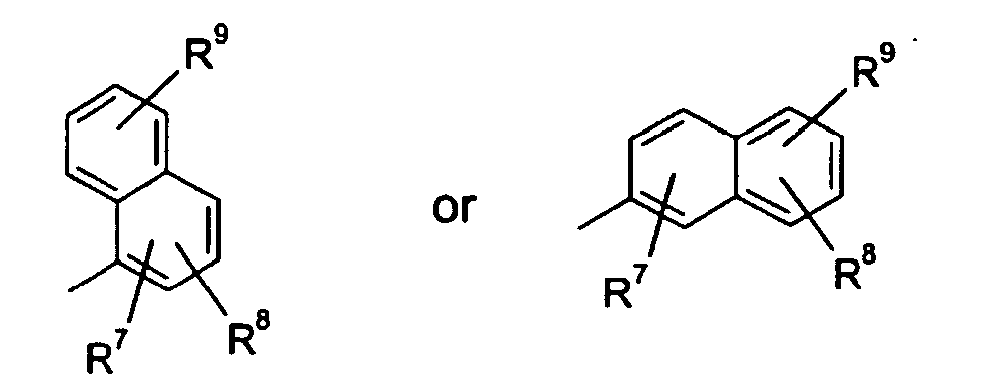
In another embodiment hereof A is heteroaryl optionally substituted with up to four substituents, R7, R8, R9, and R10 which may be the same or different.
In another embodiment hereof A is selected from Het1 optionally substituted with up to four substituents, R7, R8, R9, and R10 which may be the same or different.
In another embodiment hereof A is selected from Het2 optionally substituted with up to four substituents, R7, R8, R9, and R10 which may be the same or different.
In another embodiment hereof A is selected from Het3 optionally substituted with up to four substituents, R7, R8, R9, and R10 which may be the same or different.
In another embodiment hereof A is selected from the group consisting of indolyl, benzofuranyl, quinolyl, furyl, thienyl, or pyrrolyl, wherein each heteroaryl may optionally substituted with up to four substituents, R7, R8, R9, and R10 which may be the same or different.
In another embodiment hereof A is benzofuranyl optionally substituted with up to four substituents R7, R8, R9, and R10 which may be the same or different.
In another embodiment hereof A is
In another embodiment hereof A is
In another embodiment hereof A is
In another embodiment hereof A is
In another embodiment hereof R2 is hydrogen.
In another embodiment hereof R1 and R2 are combined to form a double bond.
In another embodiment hereof R3 is C1-C6-alkyl, halogen, or C(O)NR16R17.
In another embodiment hereof R3 is C1-C6-alkyl or C(O)NR16R17.
In another embodiment hereof R3 is methyl.
In another embodiment hereof B is phenyl optionally substituted with up to four substituents, R7, R8, R9, and R10 which may be the same or different.
In another embodiment hereof R4 is hydrogen.
In another embodiment hereof R5 is hydrogen.
In another embodiment hereof R6 is aryl.
In another embodiment hereof R6 is phenyl.
In another embodiment hereof R7, R8, R9 and R10 are independently selected from - hydrogen, halogen, -NO2, -OR11, -NR11R12, -SR11, -NR11S(O)2R12, -S(O)2NR11R12, -S(O)NR11R12, -S(O)R11, -S(O)2R11, -OS(O)2 R11, -NR11C(O)R12, -CH2OR11, - CH2OC(O)R11, -CH2NR11R12, -OC(O)R11, -OC1-C6-alkyl-C(O)OR11, -OC1-C6-alkyl-C(O)NR11R12, -OC1-C6-alkyl-OR11, -SC1-C6-alkyl-C(O)OR11, -C2-C6-alkenyl-C(=O)OR11, -C(O)OR11, or -C2-C6-alkenyl-C(=O)R11,
- C1-C6-alkyl, C2-C6-alkenyl or C2-C6-alkynyl, which may each optionally be substituted with one or more substituents independently selected from R13
- aryl, aryloxy, aroyl, arylsulfanyl, aryl-C1-C6-alkoxy, aryl-C1-C6-alkyl, aryl-C2-C6-alkenyl, aroyl-C2-C6-alkenyl, aryl-C2-C6-alkynyl, heteroaryl, heteroaryl-C1-C6-alkyl, wherein each of the cyclic moieties optionally may be substituted with one or more substituents independently selected from R14
- In another embodiment hereof R7, R8, R9 and R10 are independently selected from
- hydrogen, halogen, -NO2, -OR11, -NR11R12, -SR11, -S(O)2R11, -OS(O)2 R11, - CH2OC(O)R11, -OC(O)R11, -OC1-C6-alkyl-C(O)OR11, -OC1-C6-alkyl-OR11, -SC1-C6-alkyl-C(O)OR11, -C(O)OR11, or -C2-C6-alkenyl-C(=O)R11,
- C1-C6-alkyl or C1-C6-alkenyl which may each optionally be substituted with one or more substituents independently selected from R13
- aryl, aryloxy, aroyl, aryl-C1-C6-alkoxy, aryl-C1-C6-alkyl, heteroaryl,
- In another embodiment hereof R7, R8, R9 and R10 are independently selected from
- hydrogen, halogen, -NO2, -OR11, -NR11R12, -SR11, -S(O)2R11, -OS(O)2 R11, - CH2OC(O)R11, -OC(O)R11, -OC1-C6-alkyl-C(O)OR11, -OC1-C6-alkyl-OR11, -SC1-C6-alkyl-C(O)OR11, -C(O)OR11, or -C2-C6-alkenyl-C(=O)R11,
- C1-C6-alkyl or C1-C6- which may each optionally be substituted with one or more substituents independently selected from R13
- aryl, aryloxy, aroyl, aryl-C1-C6-alkoxy, aryl-C1-C6-alkyl, heteroaryl,
- In another embodiment hereof R7, R8, R9 and R10 are independently selected from
- hydrogen, halogen, -OR11, -OC1-C6-alkyl-C(O)OR11, or -C(O)OR11,
- C1-C6-alkyl which may each optionally be substituted with one or more substituents independently selected from R13
- aryl, aryloxy, aryl-C1-C6-alkoxy,
- In another embodiment hereof R7, R8, R9 and R10 are independently selected from
- hydrogen, halogen, -OR11, -OC1-C6-alkyl-C(O)OR11, or -C(O)OR11,
- C1-C6-alkyl which may each optionally be substituted with one or more substituents independently selected from R13
- ArG1, ArG1oxy, ArG1-C1-C6-alkoxy,
- hydrogen, halogen, -OR11, -OC1-C6-alkyl-C(O)OR11, or -C(O)OR11,
- C1-C6-alkyl which may optionally be substituted with one or more substituents independently selected from R13
- phenyl, phenyloxy, phenyl-C1-C6-alkoxy, wherein each of the cyclic moieties optionally may be substituted with one or more substituents independently selected from R14.
- In another embodiment hereof R11 and R12 are independently selected from hydrogen, C1-C20-alkyl, aryl or aryl-C1-C6-alkyl, wherein the alkyl groups may optionally be substituted with one or more substituents independently selected from R15, and the aryl groups may optionally be substituted one or more substituents independently selected from R16; R11 and R12 when attached to the same nitrogen atom may form a 3 to 8 membered heterocyclic ring with the said nitrogen atom, the heterocyclic ring optionally containing one or two further heteroatoms selected from nitrogen, oxygen and sulphur, and optionally containing one or two double bonds.
In another embodiment hereof R11 and R12 are independently selected from hydrogen, C1-C20-alkyl, aryl or aryl-C1-C6-alkyl, wherein the alkyl groups may optionally be substituted with one or more substituents independently selected from R15, and the aryl groups may optionally be substituted one or more substituents independently selected from R16.
In another embodiment hereof R11 and R12 are independently selected from phenyl or phenyl-C1-C6-alkyl.
In another embodiment hereof one or both of R11 and R12 are methyl.
In another embodiment hereof R13 is independently selected from halogen, CF3, OR11 or NR11R12.
In another embodiment hereof R13 is independently selected from halogen or OR11.
In another embodiment hereof R13 is OR11.
In another embodiment hereof R14 is independently selected from halogen, -C(O)OR11, -CN,-CF3, -OR11, S(O)2R11, and C1-C6-alkyl.
In another embodiment hereof R14 is independently selected from halogen, -C(O)OR11, or-OR11.
In another embodiment hereof R15 is independently selected from halogen, -CN, -CF3,-C(O)OC1-C6-alkyl,and -COOH.
in another embodiment hereof R15 is independently selected from halogen or -C(O)OC1-C6-alkyl.
In another embodiment hereof R16 is independently selected from halogen, -C(O)OC1-C6-alkyl, -COOH, -NO2, -OC1-C6-alkyl, -NH2, C(=O) or C1-C6-alkyl.
In another embodiment hereof R16 is independently selected from halogen, -C(O)OC1-C6-alkyl, -COOH, -NO2, or C1-C6-alkyl.
In another embodiment hereof the zinc-binding ligand is
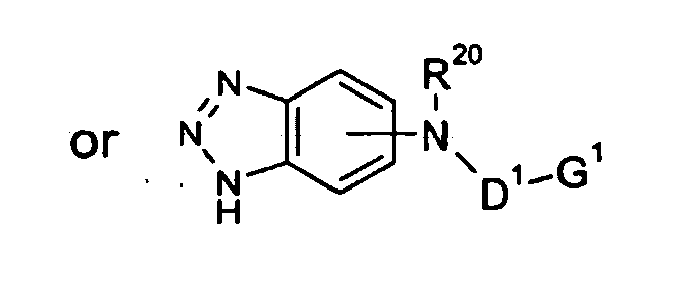
- R19 is hydrogen or C1-C6-alkyl,
- R20 is hydrogen or C1-C6-alkyl,
- D, D1 and F are a valence bond, C1-C6-alkylene or C1-C6-alkenylene optionally substituted with one or more substituents independently selected from R72,
- R72 is independently selected from hydroxy, C1-C6-alkyl, or aryl,
- E is C1-C6-alkyl, aryl or heteroaryl, wherein the aryl or heteroaryl is optionally substituted with up to three substituents R21, R22 and R23,
- G and G1 are C1-C6-alkyl, aryl or heteroaryl, wherein the aryl or heteroaryl is optionally substituted with up to three substituents R24, R25 and R26,
- R17, R18, R21, R22, R23, R24, R25 and R26 are independently selected from
- hydrogen, halogen, -CN, -CH2CN, -CHF2, -CF3, -OCF3, -OCHF2, -OCH2CF3, -OCF2CHF2, -S(O)2CF3, -SCF3, -NO2, =O, -OR27, -NR27R28, -SR27, -NR27S(O)2R28, -S(O)2NR27R28, -S(O)NR27R28, -S(O)R27, -S(O)2R27, -C(O)NR27R28, -OC(O)NR27R28, -NR27C(O)R28, -NR27C(O)OR28, -CH2C(O)NR27R28, -OCH2C(O)NR27R28, -CH2OR27, -CH2NR27R28, -OC(O)R27, -OC1-C6-alkyl-C(O)OR27, -SC1-C6-alkyl-C(O)OR27, -C2-C6-alkenyl-C(=O)OR27, -NR27-C(=O)-C1-C6-alkyl-C(=O)OR27, -NR27-C(=O)-C1-C6-alkenyl-C(=O)OR27, -C(=O)NR27-C1-C6-alkyl-C(=O)OR27, -C1-C6-alkyl-C(=O)OR27 or -C(O)OR27,
- C1-C6-alkyl, C2-C6-alkenyl or C2-C6-alkynyl,
which may optionally be substituted with one or more substituents independently selected from R29, - aryl, aryloxy, aryloxycarbonyl, aroyl, aryl-C1-C6-alkoxy, aryl-C1-C6-alkyl, aryl-C2-C6-alkenyl, aryl-C2-C6-alkynyl, heteroaryl, heteroaryl-C1-C6-alkyl, heteroaryl-C2-C6-alkenyl or heteroaryl-C2-C6-alkynyl,
- R27 and R28 are independently selected from hydrogen, C1-C6-alkyl, aryl-C1-C6-alkyl or aryl, or R27 and R28 when attached to the same nitrogen atom together with the said nitrogen atom may form a 3 to 8 membered heterocyclic ring optionally containing one or two further heteroatoms selected from nitrogen, oxygen and sulphur, and optionally containing one or two double bonds,
- R29 is independently selected from halogen, -CN, -CF3, -OCF3, -OR27, and -NR27R28,
- R30 is independently selected from halogen, -C(O)OR27, -CN, -CF3, -OCF3, -NO2, -OR27, -NR27R28 and C1-C6-alkyl, or any enantiomer, diastereomer, including a racemic mixture, tautomer as well as a salt thereof with a pharmaceutically acceptable acid or base.
- In another embodiment hereof R21, R22 and R23 are independently selected from
- hydrogen, halogen, -CHF2, -CF3, -OCF3, -OCHF2, -OCH2CF3, -OCF2CHF2, -SCF3, - N02, -OR27, -NR27R28, -SR27, -C(O)NR27R28, -OC(O)NR27R28, -NR27C(O)R28, -NR27C(O)OR28, -CH2C(O)NR27R28, -OCH2C(O)NR27R28, -CH2OR27, -CH2NR27R28, -OC(O)R27, -OC1-C6-alkyl-C(O)OR27, -SC1-C6-alkyl-C(O)OR27, -C2-C6-alkenyl-C(=O)OR27, -NR27-C(=O)-C1-C6-alkyl-C(=O)OR27, -NR27-C(=O)-C1-C6-alkenyl-C(=O)OR27-, -C(=O)NR27-C1-C6-alkyl-C(=O)OR27, -C1-C6-alkyl-C(=O)OR27, or -C(O)OR27,
- C1-C6-alkyl, C2-C6-alkenyl or C2-C6-alkynyl,
which may optionally be substituted with one or more substituents independently selected from R29 - aryl, aryloxy, aryloxycarbonyl, aroyl, aryl-C1-C6-alkoxy, aryl-C1-C6-alkyl, aryl-C2-C6-alkenyl, aryl-C2-C6-alkynyl, heteroaryl, heteroaryl-C1-C6-alkyl, heteroaryl-C2-C6-alkenyl or heteroaryl-C2-C6-alkynyl,
- In another embodiment hereof R21, R22 and R23 are independently selected from
- hydrogen, halogen, -OCF3, -OR27, -NR27R28, -SR27, -NR27C(O)R28, -NR27C(O)OR28, -OC(O)R27, -OC1-C6-alkyl-C(O)OR27, -SC1-C6-alkyl-C(O)OR27, -C2-C6-alkenyl-C(=O)OR27, -C(=O)NR27-C1-C6-alkyl-C(=O)OR27, -C1-C6-alkyl-C(=O)OR27, or -C(O)OR27,
- C1-C6-alkyl optionally substituted with one or more substituents independently selected from R29
- aryl, aryloxy, aroyl, aryl-C1-C6-alkoxy, aryl-C1-C6-alkyl, heteroaryl, heteroaryl-C1-C6-alkyl,
- In another embodiment hereof R21, R22 and R23 are independently selected from
- hydrogen, halogen, -OCF3, -OR27, -NR27R28, -SR27, -NR27C(O)R28, -NR27C(O)OR28, -OC(O)R27, -OC1-C6-alkyl-C(O)OR27, -SC1-C6-alkyl-C(O)OR27, -C2-C6-alkenyl-C(=O)OR27, -C(=O)NR27-C1-C6-alkyl-C(=O)OR27, -C1-C6-alkyl-C(=O)OR27, or -C(O)OR27,
- methyl, ethyl propyl optionally substituted with one or more substituents independently selected from R29
- aryl, aryloxy, aroyl, aryl-C1-C6-alkoxy, aryl-C1-C6-alkyl, heteroaryl, heteroaryl-C1-C6-alkyl
- In another embodiment hereof R21, R22 and R23 are independently selected from
- hydrogen, halogen, -OCF3, -OR27, -NR27R28, -SR27, -NR27C(O)R28, -NR27C(O)OR28, -OC(O)R27, -OC1-C6-alkyl-C(O)OR27, -SC1-C6-alkyl-C(O)OR27, -C2-C6-alkenyl-C(=O)OR27, -C(=O)NR27-C1-C6-alkyl-C(=O)OR27, -C1-C6-alkyl-C(=O)OR27, or -C(O)OR27,
- Methyl, ethyl propyl optionally substituted with one or more substituents independently selected from R29
- ArG1, ArG1-O-, ArG1-C(O)-, ArG1-C1-C6-alkoxy, ArG1-C1-C6-alkyl, Het3, Het3-C1-C6-alkyl
- In another embodiment hereof R21, R22 and R23 are independently selected from
- hydrogen, halogen, -OCF3, -OR27, -NR27R28, -SR27, -NR27C(O)R28, -NR27C(O)OR28, -OC(O)R27, -OC1-C6-alkyl-C(O)OR27, -SC1-C6-alkyl-C(O)OR27, -C2-C6-alkenyl-C(=O)OR27, -C(=O)NR27-C1-C6-alkyl-C(=O)OR27, -C1-C6-alkyl-C(=O)OR27, or -C(O)OR27,
- C1-C6-alkyl optionally substituted with one or more substituents independently selected from R29
- phenyl, phenyloxy, phenyl-C1-C6-alkoxy, phenyl-C1-C6-alkyl,
- In another embodiment hereof R19 is hydrogen or methyl.
In another embodiment hereof R19 is hydrogen.
In another embodiment hereof R27 is hydrogen, C1-C6-alkyl or aryl.
In another embodiment hereof R27 is hydrogen or C1-C6-alkyl.
In another embodiment hereof R28 is hydrogen or C1-C6-alkyl.
In another embodiment hereof F is a valence bond.
In another embodiment hereof F is C1-C6-alkylene optionally substituted with one or more hydroxy, C1-C6-alkyl, or aryl.
In another embodiment hereof G is C1-C6-alkyl or aryl, wherein the aryl is optionally substituted with up to three substituents R24, R25 and R26.
In another embodiment hereof G is C1-C6-alkyl or ArG1, wherein the aryl is optionally substituted with up to three substituents R24, R25 and R26.
In another embodiment hereof G is C1-C6-alkyl.
In another embodiment hereof G is phenyl optionally substituted with up to three substituents R24, R25 and R26.
In another embodiment hereof R24, R25 and R26 are independently selected from - hydrogen, halogen, -CHF2, -CF3, -OCF3, -OCHF2, -OCH2CF3, -OCF2CHF2, -SCF3,-NO2, -OR27, -NR27R28, -SR27, -C(O)NR27R28, -OC(O)NR27R28, -NR27C(O)R28, -NR27C(O)OR28, -CH2C(O)NR27R28, -OCH2C(O)NR27R28, -CH2OR27, -CH2NR27R28, -OC(O)R27, -OC1-C6-alkyl-C(O)OR27, -SC1-C6-alkyl-C(O)OR27, -C2-C6-alkenyl-C(=O)OR27, -NR27-C(=O)-C1-C6-alkyl-C(=O)OR27, -NR27-C(=O)-C1-C6-alkenyl-C(=O)OR27-, -C(=O)NR27-C1-C6-alkyl-C(=O)OR27, -C1-C6-alkyl-C(=O)OR27, or -C(O)OR27,
- C1-C6-alkyl, C2-C6-alkenyl or C2-C6-alkynyl,
which may optionally be substituted with one or more substituents independently selected from R29 - aryl, aryloxy, aryloxycarbonyl, aroyl, aryl-C1-C6-alkoxy, aryl-C1-C6-alkyl, aryl-C2-C6-alkenyl, aryl-C2-C6-alkynyl, heteroaryl, heteroaryl-C1-C6-alkyl, heteroaryl-C2-C6-alkenyl or heteroaryl-C2-C6-alkynyl,
- In another embodiment hereof R24, R25 and R26 are independently selected from
- hydrogen, halogen, -OCF3, -OR27, -NR27R28, -SR27, -NR27C(O)R28, -NR27C(O)OR28, -OC(O)R27, -OC1-C6-alkyl-C(O)OR27, -SC1-C6-alkyl-C(O)OR27, -C2-C6-alkenyl-C(=O)OR27, -C(=O)NR27-C1-C6-alkyl-C(=O)OR27, -C1-C6-alkyl-C(=O)OR27, or -C(O)OR27,
- C1-C6-alkyl, C2-C6-alkenyl or C2-C6-alkynyl,
which may optionally be substituted with one or more substituents independently selected from R29 - aryl, aryloxy, aryloxycarbonyl, aroyl, aryl-C1-C6-alkoxy, aryl-C1-C6-alkyl, aryl-C2-C6-alkenyl, aryl-C2-C6-alkynyl, heteroaryl, heteroaryl-C1-C6-alkyl, heteroaryl-C2-C6-alkenyl or heteroaryl-C2-C6-alkynyl,
- In another embodiment hereof R24, R25 and R26 are independently selected from
- hydrogen, halogen, -OCF3, -OR27, -NR27R28, -SR27, -NR27C(O)R28, -NR27C(O)OR28, -OC(O)R27, -OC1-C6-alkyl-C(O)OR27, -SC1-C6-alkyl-C(O)OR27, -C2-C6-alkenyl-C(=O)OR27, -C(=O)NR27-C1-C6-alkyl-C(=O)OR27, -C1-C6-alkyl-C(=O)OR27, or -C(O)OR27,
- C1-C6-alkyl optionally substituted with one or more substituents independently selected from R29
- aryl, aryloxy, aroyl, aryl-C1-C6-alkoxy, aryl-C1-C6-alkyl, heteroaryl, heteroaryl-C1-C6-alkyl,
- In another embodiment hereof R21, R22 and R23 are independently selected from
- hydrogen, halogen, -OCF3, -OR27, -NR27R28, -SR27, -NR27C(O)R28, -NR27C(O)OR28, -OC(O)R27, -OC1-C6-alkyl-C(O)OR27, -SC1-C6-alkyl-C(O)OR27, -C2-C6-alkenyl-C(=O)OR27, -C(=O)NR27-C1-C6-alkyl-C(=O)OR27, -C1-C6-alkyl-C(=O)OR27, or -C(O)OR27,
- methyl, ethyl propyl optionally substituted with one or more substituents independently selected from R29
- ArG1, ArG1-O-, ArG1-C(O)-, ArG1-C1-C6-alkoxy, ArG1-C1-C6-alkyl, Het3, Het3-C1-C6-alkyl
- In another embodiment hereof R21, R22 and R23 are independently selected from
- hydrogen, halogen, -OCF3, -OR27, -NR27R28, -SR27, -NR27C(O)R28, -NR27C(O)OR28, -OC(O)R27, -OC1-C6-alkyl-C(O)OR27, -SC1-C6-alkyl-C(O)OR27, -C2-C6-alkenyl-C(=O)OR27, -C(=O)NR27-C1-C6-alkyl-C(=O)OR27, -C1-C6-alkyl-C(=O)OR27, or -C(O)OR27,
- methyl, ethyl propyl optionally substituted with one or more substituents independently selected from R29
- ArG1, ArG1-O-, ArG1-C(O)-, ArG1-C1-C6-alkoxy, ArG1-C1-C6-alkyl, Het3, Het3-C1-C6-alkyl
- In another embodiment hereof R21, R22 and R23 are independently selected from
- hydrogen, halogen, -OCF3, -OR27, -NR27R28, -SR27, -NR27C(O)R28, -NR27C(O)OR28, -OC(O)R27, -OC1-C6-alkyl-C(O)OR27, -SC1-C6-alkyl-C(O)OR27, -C2-C6-alkenyl-C(=O)OR27, -C(=O)NR27-C1-C6-alkyl-C(=O)OR27, -C1-C6-alkyl-C(=O)OR27, or -C(O)OR27,
- methyl, ethyl propyl optionally substituted with one or more substituents independently selected from R29
- ArG1, ArG1-O-, ArG1-C1-C6-alkoxy, ArG1-C1-C6-alkyl,
- In another embodiment hereof R20 is hydrogen or methyl.
In another embodiment hereof R20 is hydrogen.
In another embodiment hereof R27 is hydrogen, C1-C6-alkyl or aryl.
In another embodiment hereof R27 is hydrogen or C1-C6-alkyl or ArG1.
In another embodiment hereof R27 is hydrogen or C1-C6-alkyl.
In another embodiment hereof R28 is hydrogen or C1-C6-alkyl.
In another embodiment hereof R17 and R18 are independently selected from - hydrogen, halogen, -CN, -CF3, -OCF3, -NO2, -OR27, -NR27R28, -SR27, -S(O)R27, -S(O)2R27, -C(O)NR27R28, -CH2OR27, -OC(O)R27, -OC1-C6-alkyl-C(O)OR27, -SC1-C6-alkyl-C(O)OR27, or -C(O)OR27,
- C1-C6-alkyl, C2-C6-alkenyl or C2-C6-alkynyl, optionally substituted with one or more substituents independently selected from R29
- aryl, aryloxy, aroyl, aryl-C1-C6-alkoxy, aryl-C1-C6-alkyl, heteroaryl, heteroaryl-C1-C6-alkyl,
- In another embodiment hereof R17 and R18 are independently selected from
- hydrogen, halogen, -CN, -CF3, -N02, -OR27, -NR27R28, or -C(O)OR27,
- C1-C6-alkyl optionally substituted with one or more substituents independently selected from R29
- aryl, aryloxy, aroyl, aryl-C1-C6-alkoxy, aryl-C1-C6-alkyl, heteroaryl, heteroaryl-C1-C6-alkyl,
- In another embodiment hereof R17 and R18 are independently selected from
- hydrogen, halogen, -CN, -CF3, -NO2, -OR27, -NR27R28, or -C(O)OR27
- methyl, ethyl propyl optionally substituted with one or more substituents independently selected from R29
- aryl, aryloxy, aroyl, aryl-C1-C6-alkoxy, aryl-C1-C6-alkyl, heteroaryl, heteroaryl-C1-C6-alkyl
- In another embodiment hereof R17 and R18 are independently selected from
- hydrogen, halogen, -CN, -CF3, -NO2, -OR27, -NR27R28, or -C(O)OR27
- methyl, ethyl propyl optionally substituted with one or more substituents independently selected from R29
- ArG1, ArG1-O-, ArG1-C(O)-, ArG1-C1-C6-alkoxy, ArG1-C1-C6-alkyl, Het3, Het3-C1-C6-alkyl
- In another embodiment hereof R17 and R18 are independently selected from
- hydrogen, halogen, -CN, -CF3, -NO2, -OR27, -NR27R28, or -C(O)OR27
- C1-C6-alkyl optionally substituted with one or more substituents independently selected from R29
- phenyl, phenyloxy, phenyl-C1-C6-alkoxy, phenyl-C1-C6-alkyl,
- In another embodiment hereof the zinc-binding ligand is

- In another embodiment hereof the zinc-binding ligand is of the form H-I-J
- wherein H is

- I is selected from
- a valence bond,
- -CH2N(R32)- or -SO2N(R33)-,
-

- J is
- C1-C6-alkyl, C2-C6-alkenyl or C2-C6-alkynyl, which may each optionally be substituted with one or more substituents selected from R34,
- Aryl, aryloxy, aryl-oxycarbonyl-, aroyl, aryl-C1-C6-alkoxy-, aryl-C1-C6-alkyl-, aryl-C2-C6-alkenyl-, aryl-C2-C6-alkynyl-, heteroaryl, heteroaryl-C1-C6-alkyl-, heteroaryl-C2-C6-alkenyl- or heteroaryl-C2-C6-alkynyl-, wherein the cyclic moieties are optionally substituted with one or more substituents selected from R37,
- hydrogen,
- R31 is independently selected from hydrogen, halogen, -CN, -CH2CN, -CHF2, -CF3, -OCF3, -OCHF2, -OCH2CF3, -OCF2CHF2, -S(O)2CF3, -SCF3, -NO2, -OR35, -C(O)R35, -NR35R36, -SR35, -NR35S(O)2R36, -S(O)2NR35R36, -S(O)NR35R36, -S(O)R35, -S(O)2R35, -C(O)NR35R36, -OC(O)NR35R36, -NR35C(O)R36, -CH2C(O)NR35R36, -OCH2C(O)NR35R36, -CH2OR35, -CH2NR35R36, -OC(O)R35, -OC1-C6-alkyl-C(O)OR35, -SC1-C6-alkyl-C(O)OR35 -C2-C6-alkenyl-C(=O)OR35, -NR35-C(=O)-C1-C6-alkyl-C(=O)OR35, -NR35-C(=O)-C1-C6-alkenyl-C(=O)OR35-, C1-C6-alkyl, C1-C6-alkanoyl or -C(O)OR35,
- R32 and R33 are independently selected from hydrogen, C1-C6-alkyl or C1-C6-alkanoyl,
- R34 is independently selected from halogen, -CN, -CF3, -OCF3, -OR35, and -NR35R36,
- R35 and R36 are independently selected from hydrogen, C1-C6-alkyl, aryl-C1-C6-alkyl or aryl, or R35 and R36 when attached to the same nitrogen atom together with the said nitrogen atom may form a 3 to 8 membered heterocyclic ring optionally containing one or two further heteroatoms selected from nitrogen, oxygen and sulphur, and optionally containing one or two double bonds,
- R37 is independently selected from halogen, -C(O)OR35, -C(O)H, -CN, -CF3, -OCF3, -NO2, - OR35, -NR35R36, C1-C6-alkyl or C1-C6-alkanoyl,
- In another embodiment hereof the zinc-binding ligand is of the form H-I-J, wherein H is wherein the phenyl, naphthalene or benzocarbazole rings are optionally substituted with one

- I is selected from
- a valence bond,
- -CH2N(R32)- or -SO2N(R33)-,
-

- J is
- C1-C6-alkyl, C2-C6-alkenyl or C2-C6-alkynyl, which may each optionally be substituted with one or more substituents selected from R34,
- Aryl, aryloxy, aryl-oxycarbonyl-, aroyl, aryl-C1-C6-alkoxy-, aryl-C1-C6-alkyl-, aryl-C2-C6-alkenyl-, aryl-C2-C6-alkynyl-, heteroaryl, heteroaryl-C1-C6-alkyl-, heteroaryl-C2-C6-alkenyl- or heteroaryl-C2-C6-alkynyl-, wherein the cyclic moieties are optionally substituted with one or more substituents selected from R37 ,
- hydrogen,
- R31 is independently selected from hydrogen, halogen, -CN, -CH2CN, -CHF2, -CF3, -OCF3, -OCHF2, -OCH2CF3, -OCF2CHF2, -S(O)2CF3, -SCF3, -NO2, -OR35, -C(O)R35, -NR35R36, -SR35, -NR35S(O)2R36, -S(O)2NR35R36, -S(O)NR35R36, -S(O)R35, -S(O)2R35, -C(O)NR35R36, -OC(O)NR35R36, -NR35C(O)R36, -CH2C(O)NR35R36, -OCH2C(O)NR35R36, -CH2OR35, -CH2NR35R36, -OC(O)R35, -OC1-C6-alkyl-C(O)OR35, -SC1-C6-alkyl-C(O)OR35 -C2-C6-alkenyl-C(=O)OR35, -NR35-C(=O)-C1-C6-alkyl-C(=O)OR35, -NR35-C(=O)-C1-C6-alkenyl-C(=O)OR35-, C1-C6-alkyl, C1-C6-alkanoyl or -C(O)OR35.
- R32 and R33are independently selected from hydrogen, C1-C6-alkyl or C1-C6-alkanoyl,
- R34 is independently selected from halogen, -CN, -CF3, -OCF3, -OR35 , and -NR35R36,
- R35 and R36 are independently selected from hydrogen, C1-C6-alkyl, aryl-C1-C6-alkyl or aryl, or R35 and R36 when attached to the same nitrogen atom together with the said nitrogen atom may form a 3 to 8 membered heterocyclic ring optionally containing one or two further heteroatoms selected from nitrogen, oxygen and sulphur, and optionally containing one or two double bonds,
- R37 is independently selected from halogen, -C(O)OR35, -C(O)H, -CN, -CF3, -OCF3, -NO2,-OR35, -NR35R36, C1-C6-alkyl or C1-C6-alkanoyl,
- In another embodiment hereof H is

- In another embodiment hereof H is

- In another embodiment hereof H is

- In another embodiment hereof I is a valence bond, -CH2N(R32)-, or -SO2N(R33)-.
In another embodiment hereof I is a valence bond.
In another embodiment hereof J is - hydrogen,
- C1-C6-alkyl, C2-C6-alkenyl or C2-C6-alkynyl,
which may optionally be substituted with one or more substituents selected from halogen, -CN, -CF3, -OCF3, -OR35, and -NR35R36, - aryl, or heteroaryl, wherein the cyclic moieties are optionally substituted with one or more substituents independently selected from R37.
- hydrogen,
- aryl or heteroaryl, wherein the cyclic moieties are optionally substituted with one or more substituents independently selected from R37.
- hydrogen,
- ArG1 or Het3, wherein the cyclic moieties are optionally substituted with one or more substituents independently selected from R37.
- hydrogen,
- phenyl or naphthyl optionally substituted with one or more substituents independently selected from R37.
- wherein K is a valence bond, C1-C6-alkylene, -NH-C(=O)-U-, -C1-C6-alkyl-S-, -C1-C6-alkyl-O-, -C(=O)-, or -C(=O)-NH-, wherein any C1-C6-alkyl moiety is optionally substituted with R38,
- U is a valence bond, C1-C6-alkenylene, -C1-C6-alkyl-O- or C1-C6-alkylene wherein any C1-C6-alkyl moiety is optionally substituted with C1-C6-alkyl,
- R38 is C1-C6-alkyl, aryl, wherein the alkyl or aryl moieties are optionally substituted with one or more substituents independently selected from R39,
- R39 is independently selected from halogen, cyano, nitro, amino,
- M is a valence bond, arylene or heteroarylene, wherein the aryl or heteroaryl moieties are optionally substituted with one or more substituents independently selected from R40,
- R40 is selected from
- hydrogen, halogen, -CN, -CH2CN, -CHF2, -CF3, -OCF3, -OCHF2, -OCH2CF3, -OCF2CHF2, -S(O)2CF3, -OS(O)2CF3, -SCF3, -NO2, -OR41, -NR41R42, -SR41, -NR41S(O)2R42, -S(O)2NR41R42, -S(O)NR41R42, -S(O)R41, -S(O)2R41, -OS(O)2 R41, -C(O)NR41R42, -OC(O)NR41R42, -NR41C(O)R42, -CH2C(O)NR41R42, -OC1-C6-alkyl-C(O)NR41R42, -CH2OR41, -CH2OC(O)R41, -CH2NR41R42, -OC(O)R41, -OC1-C6-alkyl-C(O)OR41, -OC1-C6-alkyl-OR41, -S-C1-C6-alkyl-C(O)OR41, -C2-C6-alkenyl-C(=O)OR41, -NR41-C(=O)-C1-C6-alkyl-C(=O)OR41, -NR41-C(=O)-C1-C6-alkenyl-C(=O)OR41, -C(O)OR41, -C2-C6-alkenyl-C(=O)R41, =O, -NH-C(=O)-O-C1-C6-alkyl, or -NH-C(=O)-C(=O)-O-C1-C6-alkyl,
- C1-C6-alkyl, C2-C6-alkenyl or C2-C6-alkynyl, which may each optionally be substituted with one or more substituents selected from R43,
- aryl, aryloxy, aryloxycarbonyl, aroyl, arylsulfanyl, aryl-C1-C6-alkoxy, aryl-C1-C6-alkyl, aryl-C2-C6-alkenyl, aroyl-C2-C6-alkenyl, aryl-C2-C6-alkynyl, heteroaryl, heteroaryl-C1-C6-alkyl, heteroaryl-C2-C6-alkenyl or heteroaryl-C2-C6-alkynyl, wherein the cyclic moieties optionally may be substituted with one or more substituents selected from R44,
- R41 and R42 are independently selected from hydrogen, -OH, C1-C6-alkyl, C1-C6-alkenyl, aryl-C1-C6-alkyl or aryl, wherein the alkyl moieties may optionally be substituted with one or more substituents independently selected from R45, and the aryl moieties may optionally be substituted with one or more substituents independently selected from R46; R41 and R42 when attached to the same nitrogen atom may form a 3 to 8 membered heterocyclic ring with the said nitrogen atom, the heterocyclic ring optionally containing one or two further heteroatoms selected from nitrogen, oxygen and sulphur, and optionally containing one or two double bonds,
- R43 is independently selected from halogen, -CN, -CF3, -OCF3, -OR41, and -NR41R42
- R44 is independently selected from halogen, -C(O)OR41, -CH2C(O)OR41, -CH2OR41, -CN, - CF3, -OCF3, -NO2, -OR41, -NR41R42 and C1-C6-alkyl,
- R45 is independently selected from halogen, -CN, -CF3, -OCF3, -O-C1-C6-alkyl, -C(O)-O-C1-C6-alkyl, -COOH and -NH2,
- R46 is independently selected from halogen, -C(O)OC1-C6-alkyl, -COOH, -CN, -CF3, -OCF3, - NO2, -OH, -OC1-C6-alkyl, -NH2, C(=O) or C1-C6-alkyl,
- Q is a valence bond, C1-C6-alkylene, -C1-C6-alkyl-O-, -C1-C6-alkyl-NH-, -NH-C1-C6-alkyl, -NH-C(=O)-, -C(=O)-NH-, -O-C1-C6-alkyl, -C(=O)-, or -C1-C6-alkyl-C(=O)-N(R47)- wherein the alkyl moieties are optionally substituted with one or more substituents independently selected from R46,
- R47 and R48 are independently selected from hydrogen, C1-C6-alkyl, aryl optionally substituted with one or more R49,
- R49 is independently selected from halogen and -COOH,
- T is
- hydrogen,
- C1-C6-alkyl, C2-C6-alkenyl, C2-C6-alkynyl, C1-C6-alkyloxy-carbonyl, wherein the alkyl, alkenyl and alkynyl moieties are optionally substituted with one or more substituents independently selected from R50,
- aryl, aryloxy, aryloxy-carbonyl, aryl-C1-C6-alkyl, aroyl, aryl-C1-C6-alkoxy, aryl-C2-C6-alkenyl, aryl-C2-C6-alkyny-, heteroaryl, heteroaryl-C1-C6-alkyl, heteroaryl-C2-C6-alkenyl, heteroaryl-C2-C6-alkynyl,
- R50 is C1-C6-alkyl, C1-C6-alkoxy, aryl, aryloxy, aryl-C1-C6-alkoxy, -C(=O)-NH-C1-C6-alkyl-aryl, -C(=O)-NR50A-C1-C6-alkyl, -C(=O)-NH-(CH2CH2O)mC1-C6-alkyl-COOH, heteroaryl, heteroaryl-C1-C8-alkoxy, -C1-C6-alkyl-COOH, -O-C1-C6-alkyl-COOH, -S(O)2R51, -C2-C6-alkenyl-COOH, -OR51, -NO2, halogen, -COOH, -CF3, -CN, =O, -N(R51R52), wherein m is 1, 2, 3 or 4, and wherein the aryl or heteroaryl moieties are optionally substituted with one or more R53, and the alkyl moieties are optionally substituted with one or more R50B.
- R50A and R50B are independently selected from -C(O)OC1-C6-alkyl, -COOH, -C1-C6-alkyl-C(O)OC1-C6-alkyl, -C1-C6-alkyl-COOH, or C1-C6-alkyl,
- R51 and R52 are independently selected from hydrogen and C1-C6-alkyl,
- R53 is independently selected from C1-C6-alkyl, C1-C6-alkoxy, -C1-C6-alkyl-COOH, -C2-C6-alkenyl-COOH, -OR51, -NO2, halogen, -COOH, -CF3, -CN, or -N(R51R52),
- hydrogen, halogen, -CN, -CF3, -OCF3, -NO2, -OR41, -NR41R42, -SR41, -S(O)2R41, -NR41C(O)R42, -OC1-C6-alkyl-C(O)NR41R42, -C2-C6-alkenyl-C(=O)OR41, -C(O)OR41, =O, -NH-C(=O)-O-C1-C6-alkyl, or -NH-C(=O)-C(=O)-O-C1-C6-alkyl,
C1-C6-alkyl or C2-C6- alkenyl which may each optionally be substituted with one or more substituents independently selected from R43, - aryl, aryloxy, aryl-C1-C6-alkoxy, aryl-C1-C6-alkyl, aryl-C2-C6-alkenyl, heteroaryl, heteroaryl-C1-C6-alkyl, or heteroaryl-C2-C6-alkenyl, wherein the cyclic moieties optionally may be substituted with one or more substituents selected from R44.
- hydrogen, halogen, -CN, -CF3, -OCF3, -NO2, -OR41, -NR41R42, -SR41, -S(O)2R41, -NR41C(O)R42, -OC1-C6-alkyl-C(O)NR41R42, -C2-C6-alkenyl-C(=O)OR41, -C(O)OR41, =O, -NH-C(=O)-O-C1-C6-alkyl, or -NH-C(=O)-C(=O)-O-C1-C6-alkyl,
C1-C6-alkyl or C2-C6- alkenyl which may each optionally be substituted with one or more substituents independently selected from R43, - ArG1, ArG1-O-, ArG1-C1-C6-alkoxy, ArG1-C1-C6-alkyl, ArG1-C2-C6-alkenyl, Het3, Het3-C1-C6-alkyl, or Het3-C2-C6-alkenyl, wherein the cyclic moieties optionally may be substituted with one or more substituents selected from R44.
- hydrogen, halogen, -CF3, -NO2, -OR41, -NR41R42, -C(O)OR41, =O, or-NR41C(O)R42,
- C1-C6-alkyl,
- ArG1.
- In another embodiment hereof R40 is hydrogen.
In another embodiment hereof R40 is selected from - Halogen, -NO2, -OR41, -NR41R42, -C(O)OR41, or -NR41C(O)R42,
- Methyl,
- Phenyl.
- Hydrogen,
- C1-C6-alkyl optionally substituted with one or more substituents independently selected from R50,
- aryl, aryl-C1-C6-alkyl, heteroaryl, wherein the alkyl, aryl and heteroaryl moieties are optionally substituted with one or more substituents independently selected from R50.
- hydrogen,
- C1-C6-alkyl optionally substituted with one or more substituents independently selected from R50,
- ArG1, ArG1-C1-C6-alkyl, Het3, wherein the alkyl, aryl and heteroaryl moieties are optionally substituted with one or more substituents independently selected from R50.
- In another embodiment hereof T is
- hydrogen,
- C1-C6-alkyl, optionally substituted with one or more substituents independently selected from R50,
- phenyl, phenyl-C1-C6-alkyl, wherein the alkyl and phenyl moieties are optionally substituted with one or more substituents independently selected from R50.
- In another embodiment hereof R50 is C1-C6-alkyl, C1-C6-alkoxy, aryl, aryloxy, aryl-C1-C6-alkoxy, -C(=O)-NH-C1-C6-alkyl-aryl, -C(=O)-NR50A-C1-C6-alkyl, -C(=O)-NH-(CH2CH2O)mC1-C6-alkyl-COOH, heteroaryl, -C1-C6-alkyl-COOH, -O-C1-C6-alkyl-COOH, -S(O)2R51, -C2-C6-alkenyl-COOH, -OR51, -N02, halogen, -COOH, -CF3, -CN, =O, -N(R51R52), wherein the aryl or heteroaryl moieties are optionally substituted with one or more R53.
In another embodiment hereof R50 is C1-C6-alkyl, C1-C6-alkoxy, aryl, aryloxy, -C(=O)-NR50A-C1-C6-alkyl, -C(=O)-NH-(CH2CH2O)mC1-C6-alkyl-COOH, aryl-C1-C6-alkoxy , -OR51, -NO2, halogen, -COOH, -CF3, wherein any aryl moiety is optionally substituted with one or more R53.
In another embodiment hereof R50 is C1-C6-alkyl, aryloxy, -C(=O)-NR50A-C1-C6-alkyl, -C(=O)-NH-(CH2CH2O)mC1-C6-alkyl-COOH, aryl-C1-C6-alkoxy, -OR51, halogen, -COOH, -CF3, wherein any aryl moiety is optionally substituted with one or more R53.
In another embodiment hereof R50 is C1-C6-alkyl, ArG1-0-, -C(=O)-NR50A-C1-C6-alkyl -C(=O)-NH-(CH2CH2O)mC1-C6-alkyl-COOH, ArG1-C1-C6-alkoxy, -OR51, halogen, -COOH, -CF3, wherein any aryl moiety is optionally substituted with one or more R53.
In another embodiment hereof R50 is -C(=O)-NR50ACH2, -C(=O)-NH-(CH2CH2O)2CH2l-COOH, or -C(=O)-NR50ACH2CH2.
In another embodiment hereof R50 is phenyl, methyl or ethyl.
In another embodiment hereof R50 is methyl or ethyl.
In another embodiment hereof m is 1 or 2.
In another embodiment hereof R51 is methyl.
In another embodiment hereof R53 is C1-C6-alkyl, C1-C6-alkoxy, -OR51, halogen,or -CF3.
In another embodiment hereof R50A is -C(O)OCH3, -C(O)OCH2CH3 -COOH, -CH2C(O)OCH3, -CH2C(O)OCH2CH3, -CH2CH2C(O)OCH3, -CH2CH2C(O)OCH2CH3, -CH2COOH, methyl, or ethyl.
In another embodiment hereof R50B is -C(O)OCH3, -C(O)OCH2CH3 -COOH, -CH2C(O)OCH3, -CH2C(O)OCH2CH3, -CH2CH2C(O)OCH3, -CH2CH2C(O)OCH2CH3, -CH2COOH, methyl, or ethyl.
In another embodiment hereof the zinc-binding ligand is
- wherein V is C1-C6-alkyl, aryl, heteroaryl, aryl-C1-6-alkyl- or aryl-C2-6-alkenyl-, wherein the alkyl or alkenyl is optionally substituted with one or more substituents independently selected from R54, and the aryl or heteroaryl is optionally substituted with one or more substituents independently selected from R55,
- R54 is independently selected from halogen, -CN, -CF3, -OCF3, aryl, -COOH and -NH2,
- R55 is independently selected from
- hydrogen, halogen, -CN, -CH2CN, -CHF2, -CF3, -OCF3, -OCHF2, -OCH2CF3, -OCF2CHF2, -S(O)2CF3, -OS(O)2CF3, -SCF3, -NO2, -OR56, -NR56R57, -SR56, -NR56S(O)2R57, -S(O)2NR56R57, -S(O)NR56R57, -S(O)R56, -S(O)2R56, -OS(O)2 R56, -C(O)NR56R57, -OC(O)NR56R57, -NR56C(O)R57, -CH2C(O)NR56R57, -OC1-C6-alkyl-C(O)NR56R57, -CH2OR56, -CH2OC(O)R56, -CH2NR56R57, -OC(O)R56, -OC1-C8-alkyl-C(O)OR56, -OC1-C6-alkyl-OR56, -SC1-C6-alkyl-C(O)OR56, -C2-C6-alkenyl-C(=O)OR56, -NR56-C(=O)-C1-C6-alkyl-C(=O)OR56, -NR56-C(=O)-C1-C6-alkenyl-C(=O)OR58, -C(O)OR56, or -C2-C6-alkenyl-C(=O)R56,
- C1-C6-alkyl, C2-C6-alkenyl or C2-C6-alkynyl,
which may optionally be substituted with one or more substituents selected from R58, - aryl, aryloxy, aryloxycarbonyl, aroyl, arylsulfanyl, aryl-C1-C6-alkoxy, aryl-C1-C6-alkyl, aryl-C2-C6-alkenyl, aroyl-C2-C6-alkenyl, aryl-C2-C6-alkynyl, heteroaryl, heteroaryl-C1-C6-alkyl, heteroaryl-C2-C6-alkenyl or heteroaryl-C2-C6-alkynyl,
- R56 and R57 are independently selected from hydrogen, OH, CF3, C1-C12-alkyl, aryl-C1-C6-alkyl, -C(=O)-C1-C6-alkyl or aryl, wherein the alkyl groups may optionally be substituted with one or more substituents independently selected from R60, and the aryl groups may optionally be substituted with one or more substituents independently selected from R61; R56 and R57 when attached to the same nitrogen atom may form a 3 to 8 membered heterocyclic ring with the said nitrogen atom, the heterocyclic ring optionally containing one or two further heteroatoms selected from nitrogen, oxygen and sulphur, and optionally containing one or two double bonds,
- R58 is independently selected from halogen, -CN, -CF3, -OCF3, -OR56, and -NR56R57,
- R59 is independently selected from halogen, -C(O)OR56, CH2C(O)OR56 , -CH2OR56, -CN,-CF3, -OCF3, -NO2, -OR56, -NR56R57 and C1-C6-alkyl,
- R60 is independently selected from halogen, -CN, -CF3, -OCF3, -OC1-C6-alkyl, -C(O)OC1-C6-alkyl, -C(=O)-R62, -COOH and -NH2,
- R61 is independently selected from halogen, -C(O)OC1-C6-alkyl, -COOH, -CN, -CF3, -OCF3, - NO2, -OH, -OC1-C6-alkyl, -NH2, C(=O) or C1-C6-alkyl,
- R62 is C1-C6-alkyl, aryl optionally substituted with one or more substituents independently selected from halogen, or heteroaryl optionally substituted with one or more C1-C6-alkyl independently,
or any enantiomer, diastereomer, including a racemic mixture, tautomer as well as a salt thereof with a pharmaceutically acceptable acid or base. - In another embodiment hereof V is aryl, heteroaryl, or aryl-C1-6-alkyl-, wherein the alkyl is optionally substituted with one or more substituents independently selected R54, and the aryl or heteroaryl is optionally substituted with one or more substituents independently selected from R55.
In another embodiment hereof V is aryl, Het1, or aryl-C1-6-alkyl-, wherein the alkyl is optionally substituted with one or more substituents independently selected from R54, and the aryl or heteroaryl moiety is optionally substituted with one or more substituents independently selected from R55.
In another embodiment hereof V is aryl, Het2, or aryl-C1-6-alkyl-, wherein the alkyl is optionally substituted with one or more substituents independently selected from R54, and the aryl or heteroaryl moiety is optionally substituted with one or more substituents independently selected from R55.
In another embodiment hereof V is aryl, Het3, or aryl-C1-6-alkyl-, wherein the alkyl is optionally substituted with one or more substituents independently selected from R54, and the aryl or heteroaryl moiety is optionally substituted with one or more substituents independently selected from R55.
In another embodiment hereof V is aryl optionally substituted with one or more substituents independently selected from R55.
In another embodiment hereof V is ArG1 optionally substituted with one or more substituents independently selected from R55.
In another embodiment hereof V is phenyl, naphthyl or anthranyl optionally substituted with one or more substituents independently selected from R55.
In another embodiment hereof V is phenyl optionally substituted with one or more substituents independently selected from R55.
In another embodiment hereof R55 is independently selected from - halogen, C1-C6-alkyl, -CN, -OCF3 ,-CF3, -NO2, -OR56, -NR56R57, -NR56C(O)R57 -SR56, -OC1-C8-alkyl-C(O)OR56, or -C(O)OR56,
- C1-C6-alkyl optionally substituted with one or more substituents independently selected from R58
- aryl, aryl-C1-C6-alkyl, heteroaryl, or heteroaryl-C1-C6-alkyl
- halogen, C1-C6-alkyl, -CN, -OCF3 ,-CF3, -NO2, -OR56, -NR56R57, -NR56C(O)R57 -SR56, -OC1-C6-alkyl-C(O)OR56, or -C(O)OR56
- C1-C6-alkyl optionally substituted with one or more substituents independently selected from R58
- ArG1, ArG1-C1-C6-alkyl, Het3, or Het3-C1-C6-alkyl
- In another embodiment hereof R55 is independently selected from halogen, -OR56, -NR56R57, -C(O)OR56, -OC1-C8-alkyl-C(O)OR56, -NR56C(O)R57 or C1-C6-alkyl.
In another embodiment hereof R55 is independently selected from halogen, -OR56, -NR56R57, -C(O)OR56, -OC1-C8-alkyl-C(O)OR56, -NR56C(O)R57, methyl or ethyl.
In another embodiment hereof R56 and R57 are independently selected from hydrogen, CF3, C1-C12-alkyl, or -C(=O)-C1-C6-alkyl; R56 and R57 when attached to the same nitrogen atom may form a 3 to 8 membered heterocyclic ring with the said nitrogen atom.
In another embodiment hereof R56 and R57 are independently selected from hydrogen or C1-C12-alkyl, R56 and R57 when attached to the same nitrogen atom may form a 3 to 8 membered heterocyclic ring with the said nitrogen atom.
In another embodiment hereof R56 and R57 are independently selected from hydrogen or methyl, ethyl, propyl butyl, R56 and R57 when attached to the same nitrogen atom may form a 3 to 8 membered heterocyclic ring with the said nitrogen atom.
In another embodiment hereof the zinc-binding ligand is
- wherein AA is C1-C6-alkyl, aryl, heteroaryl, aryl-C1-6-alkyl- or aryl-C2-6-alkenyl-, wherein the alkyl or alkenyl is optionally substituted with one or more substituents independently selected from R63, and the aryl or heteroaryl is optionally substituted with one or more substituents independently selected from R64,
- R63 is independently selected from halogen, -CN, -CF3, -OCF3, aryl, -COOH and -NH2,
- R64 is independently selected from
- hydrogen, halogen, -CN, -CH2CN, -CHF2, -CF3, -OCF3, -OCHF2, -OCH2CF3, -OCF2CHF2, -S(O)2CF3, -OS(O)2CF3, -SCF3, -NO2, -OR65, -NR65R66, -SR 65, -NR65S(O)2R66, -S(O)2NR65R66, -S(O)NR65R66, -S(O)R65, -S(O)2R65, -OS(O)2 R65, -C(O)NR65R66, -OC(O)NR65R68, -NR65C(O)R66, -CH2C(O)NR65R66, -OC1-C6-alkyl-C(O)NR65R66, -CH2O65, -CH2OC(O)R65, -CH2NR65R66, -OC(O)R65, -OC1-C6-alkyl-C(O)OR65, -OC1-C6-alkyl-OR65, -SC1-C6-alkyl-C(O)OR65, -C2-C6-alkenyl-C(=O)OR65, -NR65-C(=O)-C1-C6-alkyl-C(=O)OR65, -NR65-C(=O)-C1-C6-alkenyl-C(=O)OR65, -C(O)OR65, or -C2-C6-alkenyl-C(=O)R65,
- C1-C6-alkyl, C2-C6-alkenyl or C2-C6-alkynyl, each of which may optionally be substituted with one or more substituents selected from R67,
- aryl, aryloxy, aryloxycarbonyl, aroyl, arylsulfanyl, aryl-C1-C6-alkoxy, aryl-C1-C6-alkyl, aryl-C2-C6-alkenyl, aroyl-C2-C6-alkenyl, aryl-C2-C6-alkynyl, heteroaryl, heteroaryl-C1-C6-alkyl, heteroaryl-C2-C6-alkenyl or heteroaryl-C2-C6-alkynyl,
- R65 and R66 are independently selected from hydrogen, OH, CF3, C1-C12-alkyl, aryl-C1-C6-alkyl, -C(=O)-R69, aryl or heteroaryl, wherein the alkyl groups may optionally be substituted with one or more substituents selected from R70, and the aryl and heteroaryl groups may optionally be substituted with one or more substituents independently selected from R71 ; R65 and R66 when attached to the same nitrogen atom may form a 3 to 8 membered heterocyclic ring with the said nitrogen atom, the heterocyclic ring optionally containing one or two further heteroatoms selected from nitrogen, oxygen and sulphur, and optionally containing one or two double bonds,
- R67 is independently selected from halogen, -CN, -CF3, -OCF3, -OR65, and -NR65R66,
- R68 is independently selected from halogen, -C(O)OR65, -CH2C(O)OR65, -CH2OR65, -CN,-CF3, -OCF3, -NO2, -OR65, -NR65R66 and C1-C6-alkyl,
- R69 is independently selected from C1-C6-alkyl, aryl optionally substituted with one or more halogen, or heteroaryl optionally substituted with one or more C1-C6-alkyl,
- R70 is independently selected from halogen, -CN, -CF3, -OCF3, -OC1-C6-alkyl, -C(O)OC1-C6-alkyl, -COOH and -NH2,
- R71 is independently selected from halogen, -C(O)OC1-C6-alkyl, -COOH, -CN, -CF3, -OCF3, - NO2, -OH, -OC1-C6-alkyl, -NH2, C(=O) or C1-C6-alkyl,
- The following aspects are also provided by the present invention, wherein the compounds of the invention may be any of the above described embodiments.
- In one aspect the invention provides a pharmaceutical composition wherein the insulin is rapid acting insulin.
In another embodiment the invention provides a pharmaceutical composition wherein the insulin is selected from the group consisting of human insulin, an analogue thereof, a derivative thereof, and combinations of any of these.
In another embodiment the invention provides a pharmaceutical composition wherein the insulin is an analogue of human insulin selected from the group consisting of - i.An analogue wherein position B28 is Asp, Lys, Leu, Val, or Ala and position B29 is Lys or Pro; and
- ii.des(B28-B30), des(B27) or des(B30) human insulin.
- In another embodiment the invention provides a pharmaceutical composition wherein the insulin is an analogue of human insulin wherein position B28 is Asp or Lys, and position B29 is Lys or Pro.
In another embodiment the invention provides a pharmaceutical composition wherein the insulin is des(B30) human insulin.
In another embodiment the invention provides a pharmaceutical composition wherein the insulin is is an analogue of human insulin wherein position B3 is Lys and position B29 is Glu or Asp.
In another embodiment the invention provides a pharmaceutical composition wherein the insulin is a derivative of human insulin having one or more lipophilic substituents.
In another embodiment the invention provides a pharmaceutical composition wherein the insulin derivative is selected from the group consisting of B29-Nε-myristoyl-des(B30) human insulin, B29-Nε-palmitoyl-des(B30) human insulin, B29-Nε-myristoyl human insulin, B29-Nε-palmitoyl human insulin, B28-Nε-myristoyl LysB28 ProB29 human insulin, B28-Nε-palmitoyl LysB28 ProB29 human insulin, B30-Nε-myristoyl-ThrB29LysB30 human insulin, B30-Nε-palmitoyl-ThB29LysB30 human insulin, B29-Nε-(N-palmitoyl-γ-glutamyl)-des(B30) human insulin, B29-Nε-(N-lithocholyl-γ-glutamyl)-des(B30) human insulin, B29-Nε-(ω-carboxyheptadecanoyl)-des(B30) human insulin and B29-Nε-(ω-carboxyheptadecanoyl) human insulin.
In another embodiment the invention provides a pharmaceutical composition wherein the insulin derivative is B29-Nε-myristoyl-des(B30) human insulin.
In another embodiment the invention provides a pharmaceutical composition comprising 2-6 moles zinc2+ ions per mole insulin.
In another embodiment the invention provides a pharmaceutical composition comprising 2-3 moles zinc2+ ions per mole insulin. - In another embodiment the invention provides a pharmaceutical composition further comprising at least 3 molecules of a phenolic compound per insulin hexamer.
In another embodiment the invention provides a pharmaceutical composition further comprising an isotonicity agent.
In another embodiment the invention provides a pharmaceutical composition further comprising a buffer substance.
A method of stabilising an insulin composition comprising adding a zinc-binding ligand to the insulin composition. - The claimed compositions can be used in a method of treating type 1 or type 2 diabetes comprising administering to a patient in need thereof a pharmaceutically effective dose of an insulin composition.
- In one embodiment of the invention the concentration of added ligand for the zinc site is between 0.2 and 10 times that of zinc ion in the preparation. In another embodiment the concentration is between 0.5 and 5 times that of zinc ion. In another embodiment the ligand concentration is identical to that of zinc ion in the preparation.
- The compounds of the present invention may be chiral, and it is intended that any enantiomers, as separated, pure or partially purified enantiomers or racemic mixtures thereof are included within the scope of the invention.
Furthermore, when a double bond or a fully or partially saturated ring system or more than one centre of asymmetry or a bond with restricted rotatability is present in the molecule diastereomers may be formed. It is intended that any diastereomers, as separated, pure or partially purified diastereomers or mixtures thereof are included within the scope of the invention.
Furthermore, some of the compounds of the present invention may exist in different tautomeric forms and it is intended that any tautomeric forms, which the compounds are able to form, are included within the scope of the present invention.
The present invention also encompasses pharmaceutically acceptable salts of the present compounds. Such salts include pharmaceutically acceptable acid addition salts, pharmaceutically acceptable metal salts, ammonium and alkylated ammonium salts. Acid addition salts include salts of inorganic acids as well as organic acids. Representative examples of suitable inorganic acids include hydrochloric, hydrobromic, hydroiodic, phosphoric, sulphuric, nitric acids and the like. Representative examples of suitable organic acids include formic, acetic, trichloroacetic, trifluoroacetic, propionic, benzoic, cinnamic, citric, fumaric, glycolic, lactic, maleic, malic, malonic, mandelic, picric, pyruvic, succinic, methanesulfonic, ethanesulfonic, tartaric, ascorbic, pamoic, , ethanedisulfonic, gluconic, citraconic, aspartic, stearic, palmitic, glycolic, p-aminobenzoic, glutamic, benzenesulfonic, p-toluenesulfonic acids and the like. Further examples of pharmaceutically acceptable inorganic or organic acid addition salts include the pharmaceutically acceptable salts listed in J. Pharm. Sci. 1977, 66, 2, which is incorporated herein by reference. Examples of metal salts include lithium, sodium, potassium, magnesium salts and the like. Examples of ammonium and alkylated ammonium salts include ammonium, methyl-, dimethyl-, trimethyl-, ethyl-, hydroxyethyl-, diethyl-, n-butyl-, sec-butyl-, tert-butyl-, tetramethylammonium salts and the like.
Also intended as pharmaceutically acceptable acid addition salts are the hydrates, which the present compounds, are able to form.
Furthermore, the pharmaceutically acceptable salts comprise basic amino acid salts such as lysine, arginine and ornithine.
The acid addition salts may be obtained as the direct products of compound synthesis. In the alternative, the free base may be dissolved in a suitable solvent containing the appropriate acid, and the salt isolated by evaporating the solvent or otherwise separating the salt and solvent.
The compounds of the present invention may form solvates with standard low molecular weight solvents using methods well known to the person skilled in the art. Such solvates are also contemplated as being within the scope of the present invention. - In one embodiment of the invention the stabilized preparations are used in connection with insulin pumps. The insulin pumps may be prefilled and disposable, or the insulin compositions may be supplied from a reservoir which is removable. Insulin pumps may be skin-mounted or carried, and the path of the insulin composition from the storage compartment of the pump to the patient may be more or less tortuous. The elevated temperature and increased physical stress the insulin composition is thus exposed to challenges the stability of the constituent insulin. Non-limiting examples of insulin pumps are disclosed in
US 5,957,895 ,US 5,858,001 ,US 4,468,221 ,US 4,468,221 ,US 5,957,895 ,US 5,858,001 ,US 6,074,369 ,US 5,858,001 ,US 5,527,288 , andUS 6,074,369 . - In another embodiment the stabilized preparations are used in connection with pen-like injection devices, which may be prefilled and disposable, or the insulin compositions may be supplied from a reservoir which is removable. Non-limiting examples of pen-like injection devices are FlexPen®, InnoLet®, InDuo™, Innovo®.
- In a further embodiment stabilized preparations are used in connection with devices for pulmonary administration of aqueous insulin compositions, a non-limiting example of which is the AerX® device.
- In one aspect of the invention, the ligands are added to rapid acting insulin. The resulting preparations have improved physical and chemical stability while still retaining a high rate of absorbtion from subcutaneous tissue.
- The present invention also relates to pharmaceutical compositions for the treatment of diabetes in a patient in need of such a treatment comprising an R-state hexamer of insulin according to the invention together with a pharmaceutically acceptable carrier.
In one embodiment of the invention the insulin composition comprises 60 to 3000 nmol/ml of insulin.
In another embodiment of the invention the insulin composition comprises 240 to 1200 nmol/ml of insulin.
In another embodiment of the invention the insulin composition comprises about 600 nmol/ml of insulin.
Zinc ions may be present in an amount corresponding to 13 to 33 µg Zn/100 U insulin, more preferably 15 to 26 µg Zn/100 U insulin.
Insulin formulations of the invention are usually administered from multi-dose containers where a preservative effect is desired. Since phenolic preservatives also stabilize the R-state hexamer the formulations may contain up to 50 mM of phenolic molecules. Non-limiting examples of phenolic molecules are phenol, m-cresol, chloro-cresol, thymol, 7-hydroxyindole or any mixture thereof.
In one embodiment of the invention 0.5 to 4.0 mg/ml of phenolic compound may be employed. In another embodiment of the invention 0.6 to 4.0 mg/ml of m-cresol may be employed.
In another embodiment of the invention 0.5 to 4.0 mg/ml of phenol may be employed.
In another embodiment of the invention 1.4 to 4.0 mg/ml of phenol may be employed.
In another embodiment of the invention 0.5 to 4.0 mg/ml of a mixture of m-cresol or phenol may be employed.
In another embodiment of the invention 1.4 to 4.0 mg/ml of a mixture of m-cresol or phenol may be employed.
The pharmaceutical composition may further comprise a buffer substance, such as a TRIS, phosphate, glycine or glycylglycine (or another zwitterionic substance) buffer, an isotonicity agent, such as NaCl, glycerol, mannitol and/or lactose. Chloride would be used at moderate concentrations, in one embodiment of the invention up to 50 mM to avoid competition with the zinc-site ligands of the present invention. In another embodiment the chloride concentration would be from 3 to 20 mM.
The in vivo action of insulin may be modified by the addition of physiologically acceptable agents that increase the viscosity of the pharmaceutical composition. Thus, the pharmaceutical composition according to the invention may furthermore comprise an agent which increases the viscosity, such as polyethylene glycol, polypropylene glycol, copolymers thereof, dextrans and/or polylactides. - In one embodiment the insulin composition of the invention comprises between 0.0005 % by weight and 1 % by weight of a non-ionic or zwitter-ionic surfactant, for example tween 20 or Polox 188. A nonionic detergent can be added to stabilise insulin against fibrillation during storage and handling.
The insulin composition of the present invention may have a pH value in the range of 3.0 to 8.5, e.g. 7.4 to 7.9. - The following examples and general procedures refer to intermediate compounds and final products identified in the specification and in the synthesis schemes. The preparation of the compounds of the present invention is described in detail using the following examples, but the chemical reactions described are disclosed in terms of their general applicability to the preparation of compounds of the invention. Occasionally, the reaction may not be applicable as described to each compound included within the disclosed scope of the invention. The compounds for which this occurs will be readily recognised by those skilled in the art. In these cases the reactions can be successfully performed by conventional modifications known to those skilled in the art, that is, by appropriate protection of interfering groups, by changing to other conventional reagents, or by routine modification of reaction conditions. Alternatively, other reactions disclosed herein or otherwise conventional will be applicable to the preparation of the corresponding compounds of the invention. In all preparative methods, all starting materials are known or may easily be prepared from known starting materials. All temperatures are set forth in degrees Celsius and unless otherwise indicated, all parts and percentages are by weight when referring to yields and all parts are by volume when referring to solvents and eluents.
- The following instrumentation was used:
- Hewlett Packard series 1100 G1312A Bin Pump
- Hewlett Packard series 1100 Column compartment
- Hewlett Packard series 1100 G13 15A DAD diode array detector
- Hewlett Packard series 1100 MSD
- The instrument was controlled by HP Chemstation software.
The HPLC pump was connected to two eluent reservoirs containing: - A: 0.01% TFA in water
- B: 0.01% TFA in acetonitrile
- The analysis was performed at 40 °C by injecting an appropriate volume of the sample (preferably 1 µL) onto the column, which was eluted with a gradient of acetonitrile.
The HPLC conditions, detector settings and mass spectrometer settings used are given in the following table.Column Waters Xterra MS C-18 X 3 mm id Gradient 10% - 100% acetonitrile lineary during 7.5 min at 1.0 mL/min Detection UV: 210 nm (analog output from DAD) MS lonisation mode: API-ES Scan 100-1000 amu step 0.1 amu - The following instrumentation was used:
- Sciex API 100 Single quadropole mass spectrometer
- Perkin Elmer Series 200 Quard pump
- Perkin Elmer Series 200 autosampler
- Applied Biosystems 785A UV detector
- Sedex 55 evaporative light scattering detector
- A Valco column switch with a Valco actuator controlled by timed events from the pump.
- The Sciex Sample control software running on a Macintosh PowerPC 7200 computer was used for the instrument control and data acquisition.
- The HPLC pump was connected to four eluent reservoirs containing:
- A: Acetonitrile
- B: Water
- C: 0.5% TFA in water
- D: 0.02 M ammonium acetate
- The requirements for samples are that they contain approximately 500 µg/mL of the compound to be analysed in an acceptable solvent such as methanol, ethanol, acetonitrile, THF, water and mixtures thereof. (High concentrations of strongly eluting solvents will interfere with the chromatography at low acetonitrile concentrations.)
- The analysis was performed at room temperature by injecting 20 µL of the sample solution on the column, which was eluted with a gradient of acetonitrile in either 0.05% TFA or 0.002 M ammonium acetate. Depending on the analysis method varying elution conditions were used.
- The eluate from the column was passed through a flow splitting T-connector, which passed approximately 20 µL/min through approx. 1 m. 75 µ fused silica capillary to the API interface of API 100 spectrometer.
- The remaining 1.48 mL/min was passed through the UV detector and to the ELS detector.
- During the LC-analysis the detection data were acquired concurrently from the mass spectrometer, the UV detector and the ELS detector.
- The LC conditions, detector settings and mass spectrometer settings used for the different methods are given in the following table.
Column YMC ODS-A 120Å s - 5µ 3 mm x 50 mm id Gradient 5% - 90% acetonitrile in 0.05% TFA linearly during 7.5 min at 1.5 mL/min Detection UV: 214 nm ELS: 40 °C MS Experiment: Start: 100 amu Stop: 800 amu Step: 0.2 amu Dwell: 0.571 msec Method: Scan 284 times = 9.5 min - HPLC-MS (Method C) The following instrumentation is used:
- Hewlett Packard series 1100 G1312A Bin Pump
- Hewlett Packard series 1100 Column compartment
- Hewlett Packard series 1100 G1315A DAD diode array detector
- Hewlett Packard series 1100 MSD
- Sedere 75 Evaporative Light Scattering detector
- The analysis is performed at 40 °C by injecting an appropriate volume of the sample (preferably 1 µl) onto the column which is eluted with a gradient of acetonitrile.
The HPLC conditions, detector settings and mass spectrometer settings used are given in the following table.Column Waters Xterra MS C-18 X 3 mm id 5 µm Gradient 5%- 100% acetonitrile linear during 7.5 min at 1.5 ml/min Detection 210 nm (analogue output from DAD)
ELS (analogue output from ELS)MS ionisation mode API-ES Scan 100-1000 amu step 0.1 amu - After the DAD the flow is divided yielding approximately 1 ml/min to the ELS and 0.5 ml/min to the MS.
- The following instrumentation was used:
- Sciex API 150 Single Quadropole mass spectrometer
- Hewlett Packard Series 1100 G1312A Bin pump
- Gilson 215 micro injector
- Hewlett Packard Series 1100 G1315A DAD diode array detector
- Sedex 55 evaporative light scattering detector
- A Valco column switch with a Valco actuator controlled by timed events from the pump.
- The Sciex Sample control software running on a Macintosh Power G3 computer was used for the instrument control and data acquisition.
- The HPLC pump was connected to two eluent reservoirs containing:
- A: Acetonitrile containing 0.05% TFA
- B: Water containing 0.05% TFA
- The requirements for the samples are that they contain approximately 500 µg/ml of the compound to be analysed in an acceptable solvent such as methanol, ethanol, acetonitrile, THF, water and mixtures thereof. (High concentrations of strongly eluting solvents will interfere with the chromatography at low acetonitrile concentrations.)
The analysis was performed at room temperature by injecting 20 µl of the sample solution on the column, which was eluted with a gradient of acetonitrile in 0.05% TFA
The eluate from the column was passed through a flow splitting T-connector, which passed approximately 20 µl/min through approx. 1 m 75 µ fused silica capillary to the API interface of API 150 spectrometer.
The remaining 1.48 ml/min was passed through the UV detector and to the ELS detector. During the LC-analysis the detection data were acquired concurrently from the mass spectrometer, the UV detector and the ELS detector.
The LC conditions, detector settings and mass spectrometer settings used for the different methods are given in the following table.Column Waters X-terra C18 5µ 3 mm x 50 mm id Gradient 5% - 90% acetonitrile in 0.05% TFA linearly during 7.5 min at 1.5 ml/min Detection UV: 214 nm ELS: 40 °C MS Experiment: Start: 100 amu Stop: 800 amu Step: 0.2 amu Dwell: 0.571 msec Method: Scan 284 times = 9.5 min -
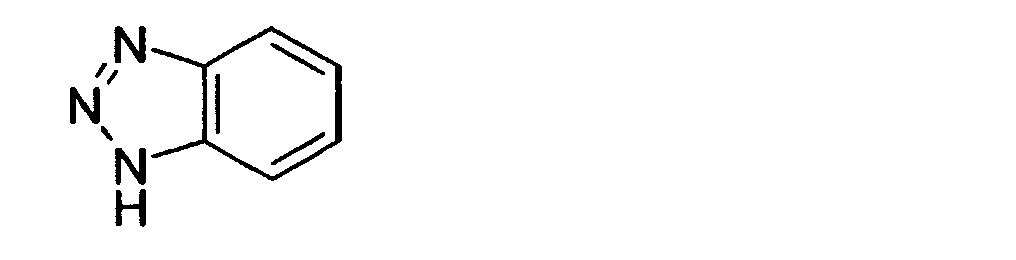
-

-

-

-

-

-

-

- 4-[(1H-Benzotriazole-5-carbonyl)amino]benzoic acid methyl ester (5.2 g, 17.6 mmol) was dissolved in THF (60 mL) and methanol (10 mL) was added followed by 1N sodium hydroxide (35 mL). The mixture was stirred at room temperature for 16 hours and then 1N hydrochloric acid (45 mL) was added. The mixture was added water (200 mL) and extracted with ethyl acetate (2 x 500 mL). The combined organic phases were evaporated in vacuo to afford 0.44 g of 4-[(1H-benzotriazole-5-carbonyl)amino]benzoic acid. By filtration of the aqueous phase a further crop of 4-[(1H-benzotriazole-5-carbonyl)amino]benzoic acid was isolated (0.52 g).
1H-NMR (DMSO-d6): δ 7.97 (4H, s), 8.03 (2H, m), 8.66 (1H, bs), 10.7 (1H, s), 12.6 (1H, bs); HPLC-MS (Method A): m/z: 283 (M+1); Rt = 1.85 min. -

- The carboxylic acid of 1H-benzotriazole-5-carboxylic acid is activated, ie the OH functionality is converted into a leaving group L (selected from eg fluorine, chlorine, bromine, iodine, 1-imidazolyl, 1,2,4-triazolyl, 1-benzotriazolyloxy, 1-(4-aza benzotriazolyl)oxy, pentafluorophenoxy, N-succinyloxy 3,4-dihydro-4-oxo-3-(1,2,3-benzotriazinyl)oxy, benzotriazole 5-COO, or any other leaving group known to act as a leaving group in acylation reactions. The activated benzotriazole-5-carboxylic acid is then reacted with R2-(CH2)n-B' in the presence of a base. The base can be either absent (i.e. R2-(CH2)n-B' acts as a base) or triethylamine, N-ethyl-N,N.-diisopropylamine, N-methylmorpholine, 2,6-lutidine, 2,2,6,6-tetramethylpiperidine, potassium carbonate, sodium carbonate, caesium carbonate or any other base known to be useful in acylation reactions. The reaction is performed in a solvent solvent such as THF, dioxane, toluene, dichloromethane, DMF, NMP or a mixture of two or more of these. The reaction is performed between 0 °C and 80 °C, preferably between 20 °C and 40 °C. When the acylation is complete, the product is isolated by extraction, filtration, chromatography or other methods known to those skilled in the art.
- The general procedure (A) is further illustrated in the following example:
-
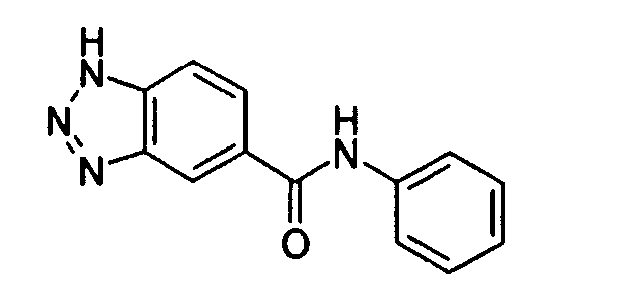
- Benzotriazole-5-carboxylic acid (856 mg), HOAt (715 mg) and EDAC (1.00 g) were dissolved in DMF (17.5 mL) and the mixture was stirred at room temperature 1 hour. A 0.5 mL aliqot of this mixture was added to aniline (13.7 µL, 0.15 mmol) and the resulting mixture was vigorously shaken at room temperature for 16 hours. 1N hydrochloric acid (2 mL) and ethyl acetate (1 mL) were added and the mixture was vigorously shaken at room temperature for 2 hours. The organic phase was isolated and concentrated in vacuo to afford the title compound.
HPLC-MS (Method B): m/z: 239 (M+1); Rt = 3.93 min. - The compounds in the following examples were similarly made. Optionally, the compounds may be isolated by filtration or by chromatography.
-

HPLC-MS (Method B): m/z: 239 (M+1); Rt = 3.93 min. -

-

-

-

-

-

-

-

-
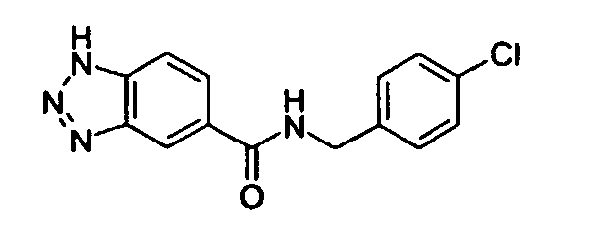
-

-

-

-

-

-

-
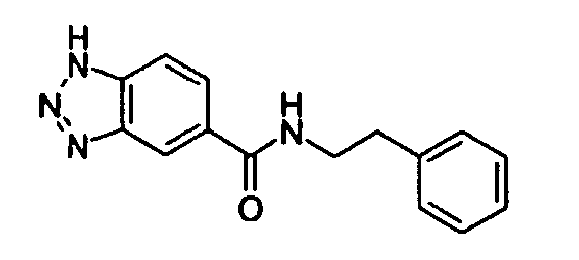
-

-

-

-
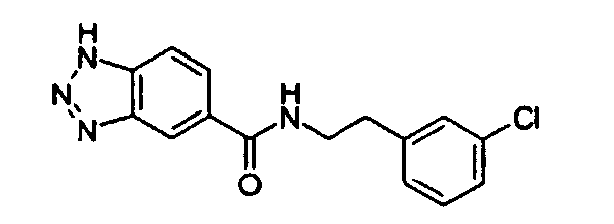
-

-

-

-
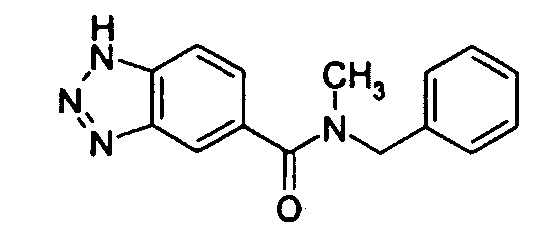
-

-

-

-

-

-

-

-

-
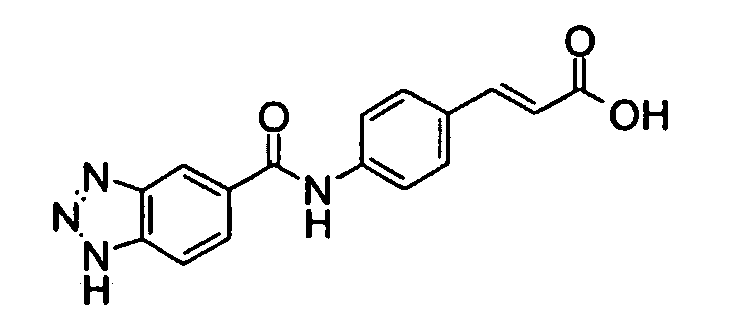
-

-

-

-

-

-
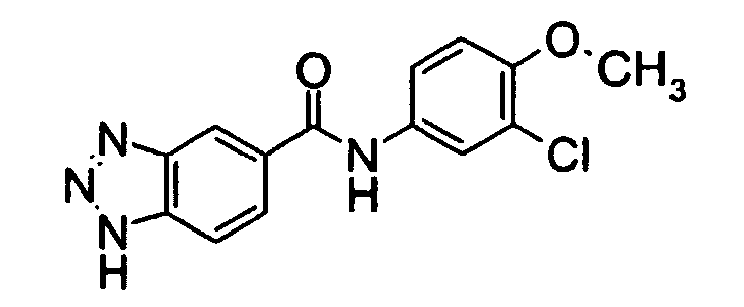
-

-

-

-

-

-

-

-

- The following compound is prepared according to general procedure (N) as described below:
-

-
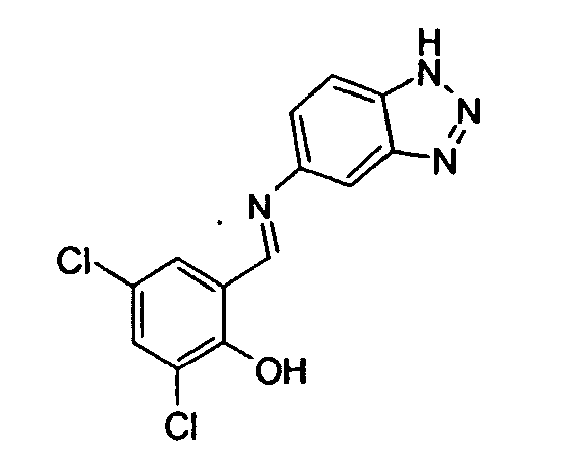
-

-

-

-

-

-

-

- The chemistry is well known (eg Lohray et al., J. Med. Chem., 1999, 42, 2569-81) and is generally performed by reacting a carbonyl compound (aldehyde or ketone) with the heterocyclic ring (eg thiazolidine-2,4-dione (X = O; Y = S), rhodanine (X = Y = S) and hydantoin (X = O; Y = NH) in the presence of a base, such as sodium acetate, potassium acetate, ammonium acetate, piperidinium benzoate or an amine (eg piperidine, triethylamine and the like) in a solvent (eg acetic acid, ethanol, methanol, DMSO, DMF, NMP, toluene, benzene) or in a mixture of two or more of these solvents. The reaction is performed at room temperature or at elevated temperature, most often at or near the boiling point of the mixture. Optionally, azeotropic removal of the formed water can be done.
- This general procedure (B) is further illustrated in the following example:
-

- A solution of thiazolidine-2,4-dione (90%, 78 mg, 0.6 mmol) and ammonium acetate (92 mg, 1.2 mmol) in acetic acid (1 mL) was added to 3-phenoxybenzaldehyde (52µL, 0.6 mmol) and the resulting mixture was shaken at 115°C for 16 hours. After cooling, the mixture was concentrated in vacuo to afford the title compound.
HPLC-MS (Method A): m/z: 298 (M+1); Rt = 4.54 min. - The compounds in the following examples were similarly prepared. Optionally, the compounds can be further purified by filtration and washing with water, ethanol and / or heptane instead of concentration in vacuo. Also optionally the compounds can be purified by washing with ethanol, water and/or heptane, or by chromatography, such as preparative HPLC.
-

-

-

-

-

-

-
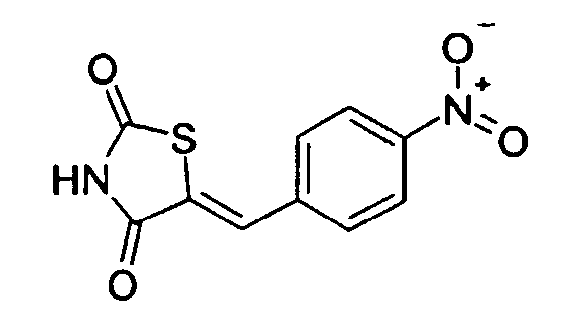
-

-

-

1H NMR (DMSO-d 6): δ = 0.90 (3H, t), 1.39 (4H, m), 1.77 (2H, p), 4.08 (2H, t), 7.08 (1H, t), 7.14 (1H, d), 7.43 (2H, m), 8.03 (1H, s), 12.6 (1H, bs). -

-

-

-

-

-

-

-

-

-

-

-

-

-
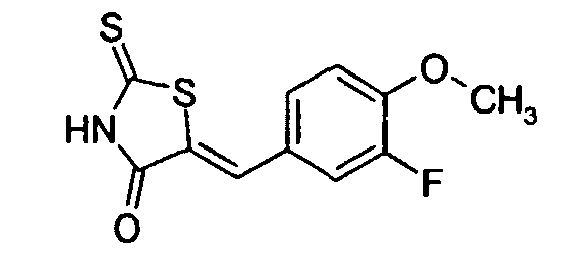
-

-

-

-

-

-

-

-

-

-

-

-

-

-
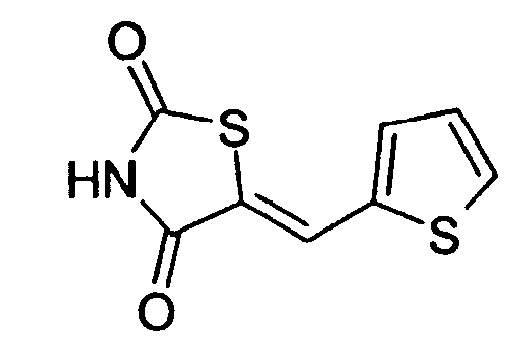
-

-

-

-

-

-
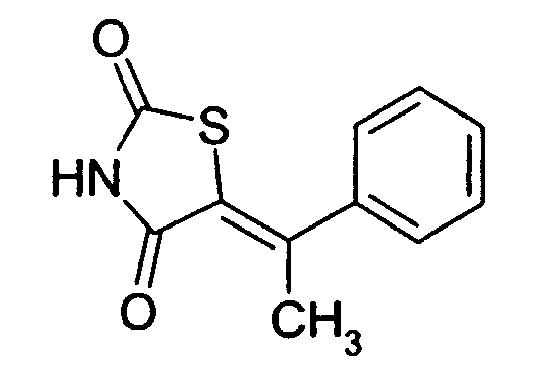
-

-

-

-

-

-

-

-

-

-

-

-

-

-

-

-

- 5-Pyridin-2-ylmethylene-thiazolidine-2,4-dione (5 g) in tetrahydrofuran (300 ml) was added 10% Pd/C (1 g) and the mixture was hydrogenated at ambient pressure for 16 hours. More 10% Pd/C (5 g) was added and the mixture was hydrogenated at 50 psi for 16 hours. After filtration and evaporation in vacuo, the residue was purified by column chromatography eluting with a mixture of ethyl acetate and heptane (1:1). This afforded the title compound (0.8 g, 16%) as a solid.
TLC: Rf = 0.30 (SiO2; EtOAc: heptane 1:1) -

-

-

-

-

-

-

-

-

-

-

-

-

-

-

-

-

-

-

-

-

-

-

-

-

-

-

-

-

-

-

-

-

-
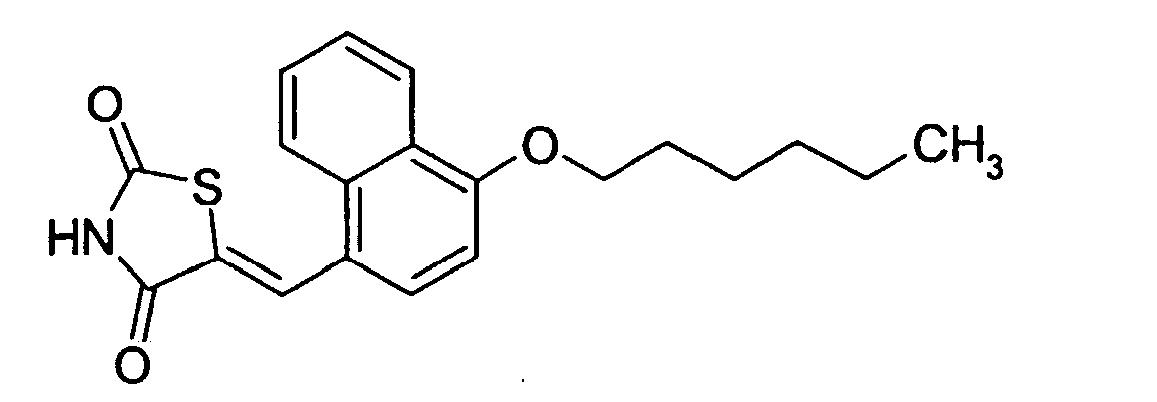
-
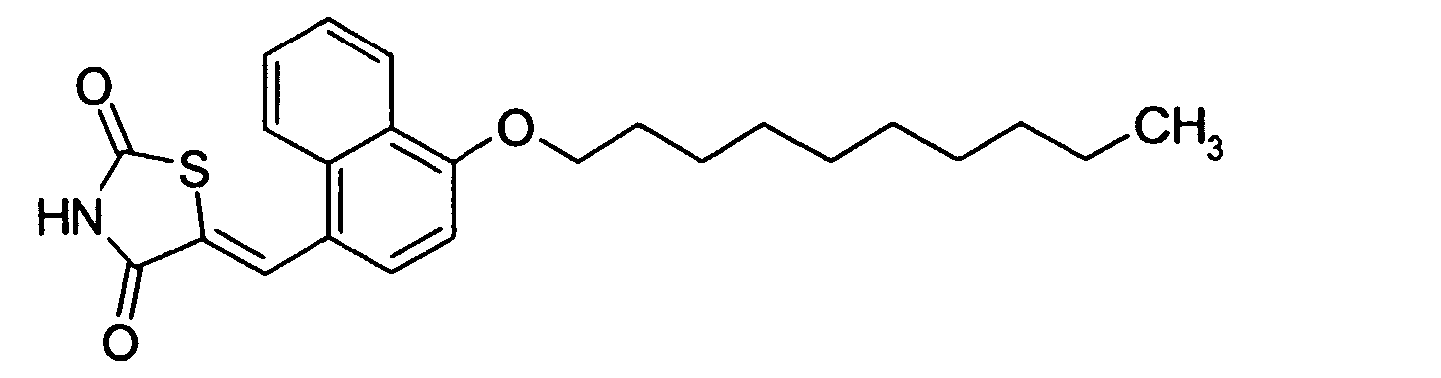
-

-

-

-

-

- This general procedure (C) is quite similar to general procedure (B) and is further illustrated in the following example:
-

- A mixture of thiazolidine-2,4-dione (90%, 65 mg, 0.5 mmol), 3,4-dibromobenzaldehyde (132 mg, 0.5 mmol), and piperidine (247 µL, 2.5 mmol) was shaken in acetic acid (2 mL) at 110 °C for 16 hours. After cooling, the mixture was concentrated to dryness in vacuo .
The resulting crude product was shaken with water, centrifuged, and the supernatant was discarded. Subsequently the residue was shaken with ethanol, centrifuged, the supernatant was discarded and the residue was further evaporated to dryness to afford the title compound.
1H NMR (Acetone-d 6): δH 7.99 (d,1H), 7.90 (d,1H), 7.70 (s,1H), 7.54 (d,1H); HPLC-MS (Method A): m/z: 364 (M+1); Rt = 4.31 min. - The compounds in the following examples were similarly prepared. Optionally, the compounds can be further purified by filtration and washing with water instead of concentration in vacuo. Also optionally the compounds can be purified by washing with ethanol, water and/or heptane, or by preparative HPLC.
-

-
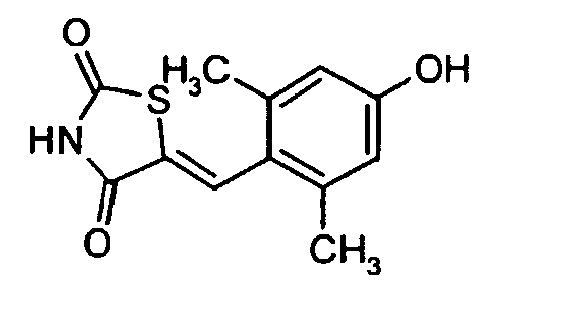
-

-

-

- 6-Cyano-2-naphthalenecarbaldehyde (1.0 g, 5.9 mmol) was dissolved in dry hexane (15 mL) under nitrogen. The solution was cooled to -60 °C and a solution of diisobutyl aluminium hydride (DIBAH) (15 mL, 1M in hexane) was added dropwise. After the addition, the solution was left at room temperature overnight. Saturated ammonium chloride solution (20 mL) was added and the mixture was stirred at room temperature for 20 min, subsequently aqueous H2SO4 (10% solution, 15 mL) was added followed by water until all salt was dissolved. The resulting solution was extracted with ethyl acetate (3x), the combined organic phases were dried with MgSO4, evaporated to dryness to afford 0.89 g of 6-hydroxy-2-naphtalenecarbaldehyde.
Mp.: 153.5-156.5 °C; HPLC-MS (Method A): m/z: 173 (M+1); Rt = 2.67 min; 1H NMR (DMSO-d6): δH = 10.32(s, 1H), 8.95 (d, 1H), 10.02 (s, 1H), 8.42 (s, broad, 1H), 8.01 (d, 1H), 7.82-7.78 (m,2H), 7.23-7.18 (m,2H). - To a stirred cooled mixture of 6-bromo-2-hydroxynaphthalene (25.3 g, 0.113 mol) in THF (600 mL) at -78 °C was added n-BuLi (2.5 M, 100 mL, 0.250 mol) dropwise. The mixture turned yellow and the temperature rose to -64 °C. After ca 5 min a suspension appeared. After addition, the mixture was maintained at -78 °C. After 20 minutes, a solution of DMF (28.9 mL, 0.373 mol) in THF (100 mL) was added over 20 minutes. After addition, the mixture was allowed to warm slowly to room temperature. After 1 hour, the mixture was poured in ice/water (200 mL). To the mixture citric acid was added to a pH of 5. The mixture was stirred for 0.5 hour. Ethyl acetate (200 mL) was added and the organic layer was separated and washed with brine (100 mL), dried over Na2SO4 and concentrated. To the residue was added heptane with 20% ethyl acetate (ca 50 mL) and the mixture was stirred for 1 hour. The mixture was filtered and the solid was washed with ethyl acetate and dried in vacuo to afford 16 g of the title compound.
-

- 4-Methoxybenzaldehyde (0.5 g, 3.67 mmol) and silver trifluoroacetate (0.92 g, 4.19 mmol) were mixed in dichloromethane (25 mL). lodine (1.19 g, 4.7 mmol) was added in small portions and the mixture was stirred overnight at room temperature under nitrogen. The mixture was subsequently filtered and the residue washed with DCM. The combined filtrates were treated with an acqueous sodium thiosulfate solution (1 M) until the colour disappeared. Subsequent extraction with dichloromethane (3 x 20 mL) followed by drying with MgSO4 and evaporation in vacuo afforded 0.94 g of 3-iodo-4-methoxybenzaldehyde.
Mp 104-107 °C; HPLC-MS (Method A): m/z:263 (M+1); Rt = 3.56 min.;1H NMR (CDCl3): δH = 8.80 (s, 1H), 8.31 (d,1H), 7.85 (dd,1H) 6.92 (d,1H), 3.99 (s, 3H). -

-

-

-

-

-

-

-

-

-

-

-
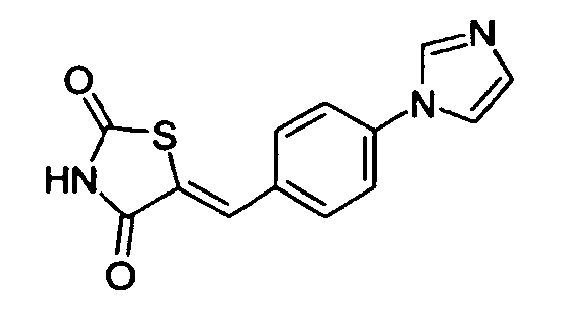
-

-
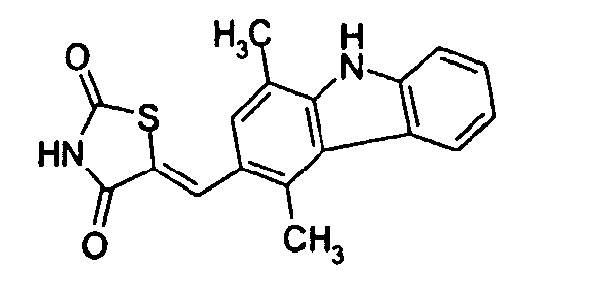
-

-

- 2-Methylindole (1.0 g, 7.6mmol) dissolved in diethyl ether (100 mL) under nitrogen was treated with n-Butyl lithium (2 M in pentane, 22.8 mmol) and potassium tert-butoxide (15.2 mmol) with stirring at RT for 30 min. The temperature was lowered to -70 C and methyl lodide (15.2 mmol) was added and the resulting mixture was stirred at -70 for 2 h. Then 5 drops of water was added and the mixture allowed to warm up to RT. Subsequently, the mixture was poured into water (300 mL), pH was adjusted to 6 by means of 1N hydrochloric acid and the mixture was extracted with diethyl ether. The organic phase was dried with Na2SO4 and evaporated to dryness. The residue was purified by column chromatography on silica gel using heptane/ether( 4/1) as eluent. This afforded 720 mg (69 %) of 2-ethylindole.
1H NMR (DMSO-d 6): δ = 10.85 (1H,s); 7.39 (1H,d); 7.25 (1H,d); 6.98(1H,t); 6.90(1H,t); 6.10 (1H,s); 2.71 (2H,q); 1.28 (3H,t). - 2-Ethylindole (0.5 g, 3.4mmol) dissolved in DMF (2 mL) was added to a cold (0 °C) premixed (30 minutes) mixture of DMF (1.15 mL) and phosphorous oxychloride (0.64 g, 4.16 mmol). After addition of 2-ethylindole, the mixture was heated to 40 °C for 1 h, water (5 mL) was added and the pH adjusted to 5 by means of 1 N sodium hydroxide.The mixture was subsequently extracted with diethyl ether, the organic phase isolated, dried with MgSO4 and evaporated to dryness affording 2-ethylindole-3-carbaldehyde (300 mg ).
HPLC-MS (Method C): m/z:174 (M+1); Rt. =2.47 min. - 2-Ethylindole-3-carbaldehyde (170 mg) was treated with thiazolidine-2,4-dione using the general procedure (C) to afford the title compound (50 mg).
HPLC-MS (Method C):m/z: 273 (M+1); Rt.= 3.26 min. -

-

-

-

-

-

-

-

-

-
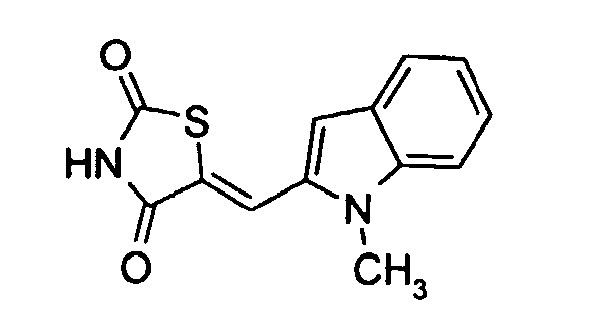
-

-

-

-
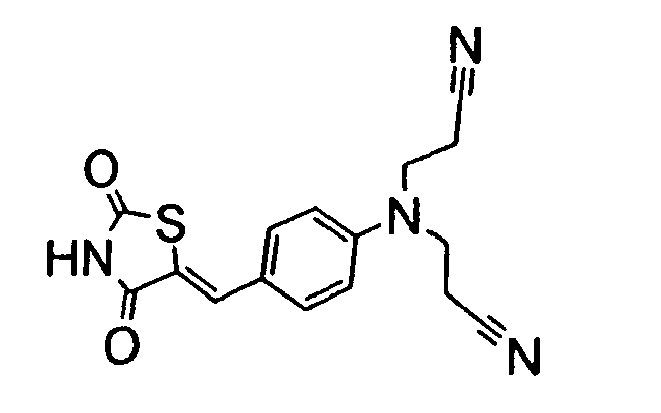
-

-

HPLC-MS (Method C): m/z: 359 (M+1); Rt.= 4.25 min. -

-

-

-

-

-

-

-

-

-

-

- 4-Hydroxy-1-naphthaldehyde (10 g, 58 mmol) was dissolved in pyridin (50 ml) and the mixture was cooled to 0-5 °C. With stirring, trifluoromethanesulfonic acid anhydride (11.7 ml, 70 mmol) was added drop-wise. After addition was complete, the mixture was allowed to warm up to room temperature, and diethyl ether (200 ml) was added. The mixture was washed with water (2 x 250 ml), hydrochloric acid (3N, 200 ml), and saturated aqueous sodium chloride (100 ml). After drying (MgSO4), filtration and concentration in vacuo, the residue was purified by column chromatography on silica gel eluting with a mixture of ethyl acetate and heptane (1:4). This afforded 8.35 g (47%) trifluoromethanesulfonic acid 4-formylnaphthalen-1-yl ester, mp 44-46.6 °C.
-

-

-

- Indole-3-carbaldehyde (3.8 g, 26 mmol) was stirred with potassium hydroxide (1.7 g) in acetone (200 mL) at RT until a solution was obtained indicating full conversion to the indole potassium salt. Subsequently the solution was evaporated to dryness in vacuo. The residue was dissolved in acetone to give a solution containing 2.6 mmol/20 mL.
- 20 mL portions of this solution were mixed with equimolar amounts of arylmethylbromides in acetone (10 mL). The mixtures were stirred at RT for 4 days and subsequently evaporated to dryness and checked by HPLC-MS. The crude products, 1-benzylated indole-3-carbaldehydes, were used for the reaction with thiazolidine-2,4-dione using the general procedure C.
-

-

-

-

- 2-Methylindole-3-carbaldehyde (200 mg, 1.26 mmol) was added to a slurry of 3-bromomethylbenzenecarbonitrile (1.26 mmol) followed by sodium hydride, 60%, (1.26 mmol) in DMF (2 mL). The mixture was shaken for 16 hours, evaporated to dryness and washed with water and ethanol. The residue was treated with thiazolidine-2,4-dione following the general procedure C to afford the title compound (100 mg).
HPLC-MS (Method C): m/z: 374 (M+1); Rt. = 3.95 min. -

- This compound was prepared in analogy with the compound described in example 222 from benzyl bromide and 2-methylindole-3-carbaldehyde, followed by reaction with thiazolidine-2,4-dione resulting in 50 mg of the title compound.
HPLC-MS (Method C): m/z: 349 (M+1); Rt. = 4.19 min. -

- This compound was prepared in analogy with the compound described in example 222 from 4-(bromomethyl)benzoic acid methyl ester and 2-methylindole-3-carbaldehyde, followed by reaction with thiazolidine-2,4-dione.
HPLC-MS (Method C): m/z: 407 (M+1); Rt.= 4.19 min. -

-

-

1H-NMR: (DMSO-d6 ): 11.5 (1H, broad); 7.95(1 H,d); 7.65(1 H,s); 7.45 (1H,dd); 7.01 (1H,dd); 3.4 (1H,broad). -

-

HPLC-MS (Method C): m/z: 274 (M+1), Rt.= 3.70 min
1H-NMR: (DMSO-d 6): 12.8 (1H, broad); 7.72 (1H,s); 7.60 (2H,d); 7.50 (1H,t). -

-

-

-

-

-

HPLC-MS (Method C): m/z: 234 (M+1); Rt.= 3.58 min, -
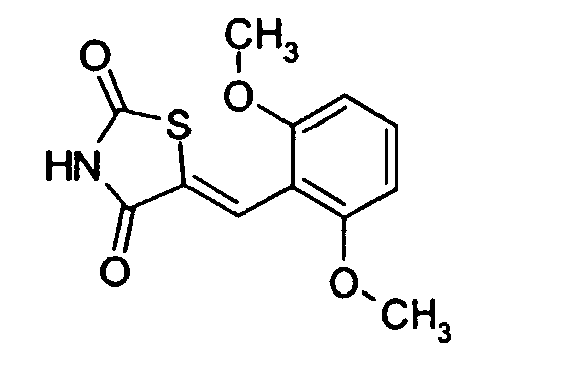
HPLC-MS (Method C): m/z: 266 (M+1); Rt.= 3.25 min; -

HPLC-MS (Method C): m/z: 435 (M+1), Rt 4.13 min, -

-

1H-NMR: (DMSO-d 6) δ= 12.3 (1H,broad); 7.46 (2H,d); 7.39 (1H,d); 7.11 (1H,d); 6.69 (2H,d); 6.59 (1 H, dd); 2.98 (3H,s). -

HPLC-MS (Method C): m/z: 246 (M+1); Rt = 3.79 min. -

HPLC-MS (Method C): m/z: 266 (M+1; Rt= 3.90 min -

HPLC-MS (Method C): m/z: 273 (M+1); Rt. = 2.59 min. -

-

-

-

-

-

-

-

-

-

-
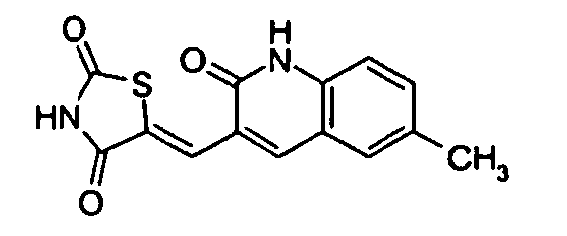
-
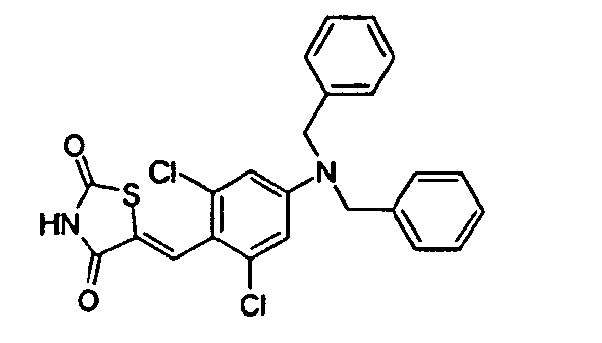
-

- A mixture of 2-hydroxy-6-methoxybenzaldehyde (6.4 g, 42 mmol), ethyl bromoacetate (14.2 mL, 128 mmol) and potassium carbonate (26 g, 185 mmol) was heated to 130 °C. After 3 h the mixture was cooled to room temperature and acetone (100 mL) was added, the mixture was subsequently filtered and concentrated in vacuo. The residue was purified by column chromatography on silica gel eluting with a mixture of ethyl acetate and heptane (1:4). This afforded 7.5 g (55%) of ethyl 4-methoxybenzofuran-2-carboxylate.
- A solution of ethyl 4-methoxybenzofuran-2-carboxylate (6.9 g, 31.3 mmol) in dichloromethane (70 ml) was cooled to 0 °C and a solution of titanium tetrachloride (13.08 g, 69 mmol) was added drop wise. After 10 minutes dichloromethoxymethane (3.958 g, 34 mmol) was added over 10 minutes. After addition, the mixture was warmed to room temperature for 18 hours and the mixture poured into hydrochloric acid (2N, 100 mL). The mixture was stirred for 0.5 hour and then extracted with a mixture of ethyl acetate and toluene (1:1). The organic phase was dried over Na2SO4 and concentrated in vacuo. The residue was purified by column chromatography on silica gel eluting with a mixture of ethyl acetate and heptane (1:4). This afforded 5.8 g (80%) of ethyl 7-formyl-4-methoxybenzofuran-2-carboxylate.
- 7-formyl-4-methoxybenzofuran-2-carboxylate (5.0 g, 21.5 mmol) and sodium carbonate (43 mmol) in water (100 mL) was refluxed until a clear solution appeared (about 0.5 hour). The solution was filtered and acidified to pH =1 with hydrochloric acid (2 N), the resulting product was filtered off and washed with ethyl acetate and ethanol and dried to afford 3.5 g (74%) of 7-formyl-4-methoxybenzofuran-2-carboxylic acid as a solid.
1H NMR (DMSO-d6 ): δ = 10.20 (s, 1H) ; 8.07 (d, 1H) ; 7.70 (s, 1H) ; 7.17 (d, 1H) ; 4.08 (s, 3H). -

- A mixture of 7-formyl-4-methoxybenzofuran-2-carboxylic acid (3.0 g, 13.6 mmol) and Cu (0.6 g, 9.44 mmol) in quinoline (6 mL) was refluxed. After 0.5 h the mixture was cooled to room temperature and water (100 mL) and hydrochloric acid (10 N, 20 mL) were added. The mixture was extracted with a mixture of ethyl acetate and toluene (1:1), filtered through celite and the organic layer separated and washed with a sodium carbonate solution, dried over Na2SO4 and concentrated in vacuo to afford 1.5 g crude product. Column chromatography SiO2, EtOAc/heptanes=1/4 gave 1.1 g (46%) of 4-methoxybenzofuran-7-carbaldehyde as a solid.
1H NMR (CDCl3): δ: 10.30 (s,1H) ; 7.85 (d,1H) ; 7.75 (d,1H) ; 6.98 (d,1H) ; 6.87 (d,1H) ; 4.10 (s,3H). HPLC-MS (Method C) :m/z: 177 (M+1); Rt. = 7.65 min. -

- A mixture of 4-methoxybenzofuran-7-carbaldehyde (1.6 g, 9.1 mmol) and pyridine hydrochloride (4.8 g, 41.7mmol) in quinoline (8 mL) was refluxed. After 8 h the mixture was cooled to room temperature and poured into water (100 mL) and hydrochloric acid (2 N) was added to pH = 2. The mixture was extracted with a mixture of ethyl acetate and toluene (1:1), washed with a sodium carbonate solution, dried with Na2SO4 and concentrated in vacuo to afford 0.8 g crude product. This was purified by column chromatography on silica gel, eluting with a mixture of ethyl acetate and heptane (1:3). This afforded 250 mg of 4-hydroxybenzofuran-7-carbaldehyde as a solid.
1H NMR (DMSO-d6): δ = 11.35 (s, broad,1H) ; 10.15 (s, 1H); 8.05 (d, 1H); 7.75 (d, 1H); 7.10 (d, 1H); 6.83 (d, 1H). HPLC-MS (Method C): m/z: 163 (M+1); Rt. = 6.36 min. -

- To a cooled (15 °C) stirred mixture dihydrobenzofuran (50.9 g, 0.424 mol) in acetic acid (500 mL), a solution of bromine (65.5 mL, 1.27 mol) in acetic acid (200 mL) was added drop wise over 1 hour. After stirring for 18 hours, a mixture of Na2S2O5 (150 g) in water (250 mL) was added carefully, and the mixture was concentrated in vacuo. Water (200 mL) was added and the mixture was extracted with ethyl acetate containing 10% heptane, dried over Na2SO4 and concentrated in vacuo to give crude 5,7-dibromo-2,3-dihydrobenzofuran which was used as such for the following reaction steps. To a cooled solution (-78 °C) of crude 5,7-dibromo-2,3-dihydrobenzofuran (50.7 g, 0.182 mol) in THF (375 mL) a solution of n-BuLi (2.5 M, 80 mL, 0.200 mol) in hexane was added. After addition, the mixture was stirred for 20 min. DMF (16 mL) was then added drop wise at -78 °C. After addition, the mixture was stirred at room temperature for 3 h and then the mixture was poured into a mixture of ice water, (500 mL) and hydrochloric acid (10 N, 40 mL) and extracted with toluene, dried over Na2SO4 and concentrated in vacuo. Column chromatography on silica gel eluting with a mixture of ethyl acetate and heptane (1:4) afforede 23 g of 5-bromo-2,3-dihydrobenzofuran-7-carbaldehyde as a solid.
1H NMR (CDCl3): δ:10.18 (s,1H); 7.75 (d,1H) ;7.55 (d,1H) ; 4.80 (t,2H) ; 3.28 (t,2H). -

- This compound was synthesized according to a modified literature procedure (J. Org. Chem., 37, No.24, (1972), 3972-3973).
Cyclohexylbenzene (112.5 g, 0.702 mol) and hexamethylenetetramine (99.3 g, 0.708 mol) were mixed in TFA (375 mL). The mixture was stirred under nitrogen at 90 °C for 3 days. After cooling to room temperature the red-brown mixture was poured into ice-water (3600 ml) and stirred for 1 hour. The solution was neutralized with Na2CO3 (2 M solution in water) and extracted with dichloromethane (2.5 L). The organic phase was dried (Na2SO4) and the solvent was removed in vacuo. The remaining red-brown oil was purified by fractional distillation to afford the title compound (51 g, 39%).
1H NMR (CDCl3): δ 9.96 (s, 1H), 7.80 (d, 2H), 7.35 (d, 2H), 2.58 (m, 1H), 1.94-1.70 (m, 5 H), 1.51-1.17 (m, 5H) - Other ligands of the invention include
-

-

-
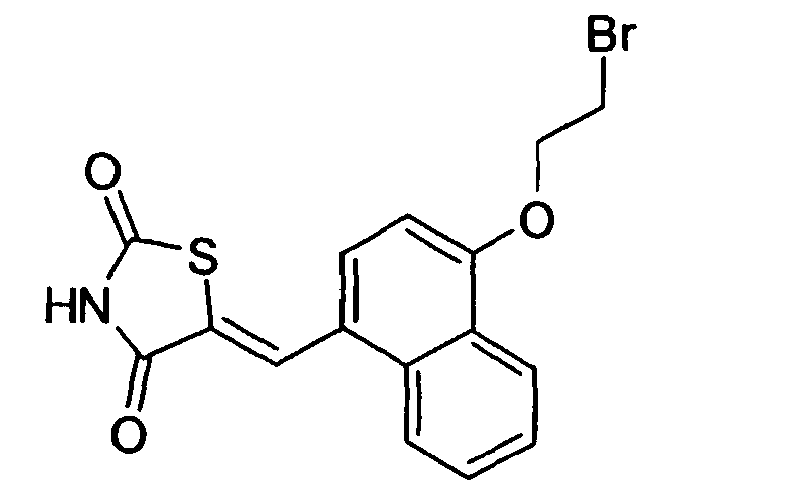
-

-

-

-

-
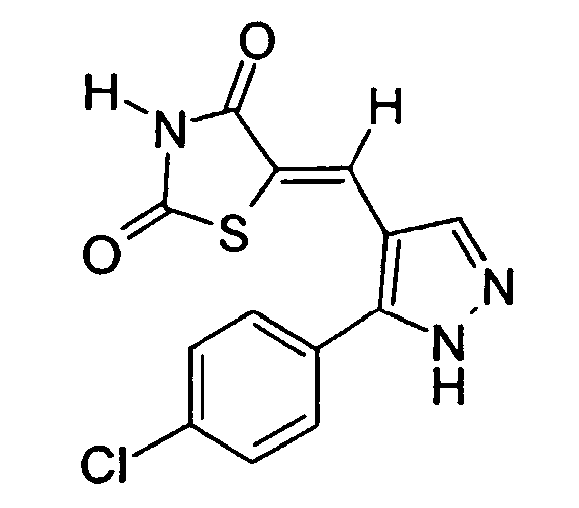
-

-

-

-

-

-

-

-

-

-

-

- 1,4 Dimethylcarbazol-3-carbaldehyde (0.68 g, 3.08 mmol) was dissolved in dry DMF (15 mL), NaH (diethyl ether washed) (0.162 g, 6.7 mol) was slowly added under nitrogen and the mixture was stirred for 1 hour at room temperature. 4-Bromomethylbenzoic acid (0.73 g, 3.4 mmol) was slowly added and the resulting slurry was heated to 40 °C for 16 hours. Water (5 mL) and hydrochloric acid (6N, 3 mL) were added. After stirring for 20 min at room temperature, the precipitate was filtered off and washed twice with acetone to afford after drying 0.38 g (34%) of 4-(3-formyl-1,4-dimethylcarbazol-9-ylmethyl)benzoic acid.
HPLC-MS (Method C): m/z = 358 (M+1), RT. = 4.15 min. -

HPLC-MS (Method C): m/z = 366 (M+1); Rt. = 3.37 min. -

-

HPLC-MS (Method C): m/z = 394 (M+1); Rt. = 3.71 min. -
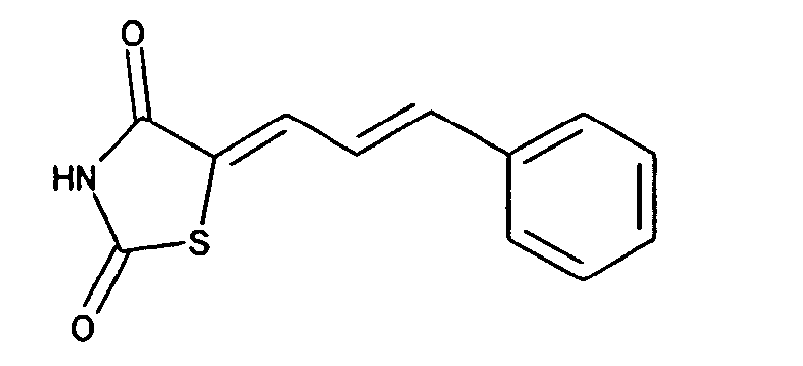
-

HPLC-MS (Method C): m/z = 261 (M+1); Rt. = 3.00 min. -

- 4-[4-(2,4-Dioxothiazolidin-5-ylidenemethyl)naphthalen-1-yloxy]butyric acid (4.98 g, 13.9 mmol, prepared as described in example 469) was dissolved in dry THF (50 mL) and added dry pyridine (50 mL) and, in portions, lithium borohydride (2.0 M, in THF, 14 mL). The resulting slurry was refluxed under nitrogen for 16 hours, added (after cooling) more lithium borohydride (2.0 M, in THF, 7 mL). The resulting mixture was refluxed under nitrogen for 16 hours. The mixture was cooled and added more lithium borohydride (2.0 M, in THF, 5 mL). The resulting mixture was refluxed under nitrogen for 16 hours. After cooling to 5 °C, the mixture was added water (300 mL) and hydrochloric acid (150 mL). The solid was isolated by filtration, washed with water (3 x 500 mL) and dried. Recrystallization from acetonitrile (500 mL) afforded2.5 g of the title compound.
1H-NMR (DMSO-d 6, selected peaks): δ = 3.42 (1H, dd), 3.90 (1H, dd), 4.16 (2H, "t"), 4.95 (1H, dd), 6.92 (1H, d), 7.31 (1H, d), 7.54 (1H, t), 7.62 (1H, t), 8.02 (1H, d), 8.23 (1H, d), 12.1 (1H, bs), 12.2 (1H, bs).
HPLC-MS (Method C): m/z = 382 (M+23); Rt = 3,23 min. -

- 5-Naphthalen-1-ylmethylenethiazolidine-2,4-dione (1.08 g, 4.2 mmol, prepared as described in example 68) was dissolved in dry THF (15 mL) and added dry pyridine (15 mL) and, in portions, lithium borohydride (2.0 M, in THF, 4.6 mL). The resulting mixture was refluxed under nitrogen for 16 hours. After cooling to 5 °C, the mixture was added water (100 mL), and, in portions, concentrated hydrochloric acid (40 mL). More water (100 mL) was added, and the mixture was extracted with ethyl acetate (200 mL). The organic phase was washed with water (3 x 100 mL), dried and concentrated in vacuo. The residue was dissolved in ethyl acetate (50 mL) added activated carbon, filtered and concentrated in vacuo and dried to afford 0.82 g (75%) of the title compound.
1H-NMR (DMSO-d 6): δ = 3.54 (1H, dd), 3.98 (1H, dd), 5.00 (1H, dd), 7.4-7.6 (4H, m), 7.87 (1H, d), 7.96 (1H, d), 8.11 (1H, d), 12.2 (1H, bs).
HPLC-MS (Method C): m/z = 258 (M+1); Rt = 3,638 min. - The following preferred compounds of the invention may be prepared according to procedures similar to those described in the three examples above:
Example 285 
Example 286 
Example 287 
Example 288 
Example 289 
Example 290 
Example 291 
Example 292 
Example 293 
Example 294 
Example 295 
Example 296 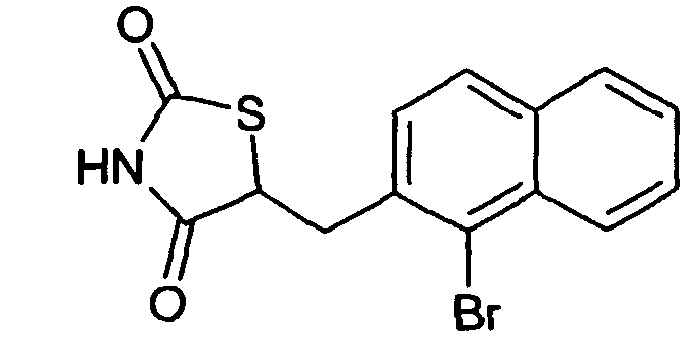
Example 297 
Example 298 
Example 299 
Example 300 
Example 301 
Example 302 
Example 303 
Example 304 
Example 305 
Example 306 
Example 307 
Example 308 
Example 309 
Example 310 
Example 311 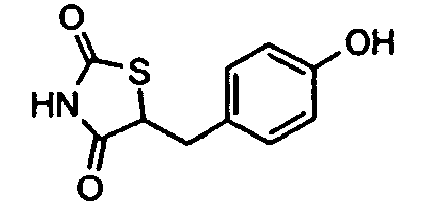
Example 312 
Example 313 
Example 314 
Example 315 
Example 316 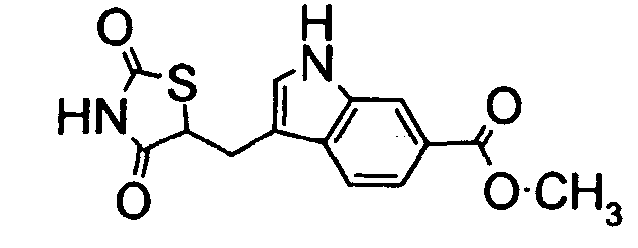
Example 317 
Example 318 
Example 319 
Example 320 
Example 321 
Example 322 
Example 323 
Example 324 
Example 325 
Example 326 
Example 327 
Example 328 
Example 329 
Example 330 
Example 331 
Example 332 
Example 333 
Example 334 
Example 335 
Example 336 
Example 337 
Example 338 
Example 339 
Example 340 
Example 341 
Example 342 
Example 343 
Example 344 
Example 345 
Example 346 
Example 347 
Example 348 
Example 349 
Example 350 
Example 351 
Example 352 
Example 353 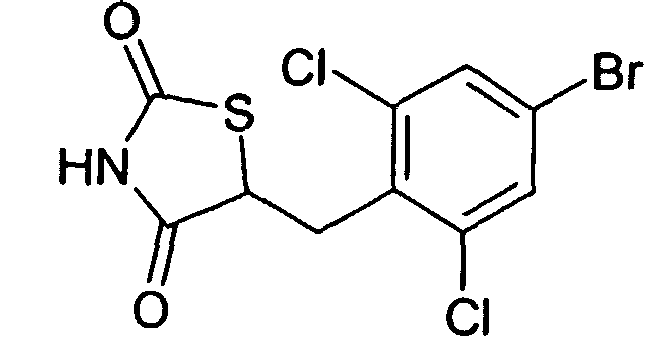
Example 354 
Example 355 
Example 356 
Example 357 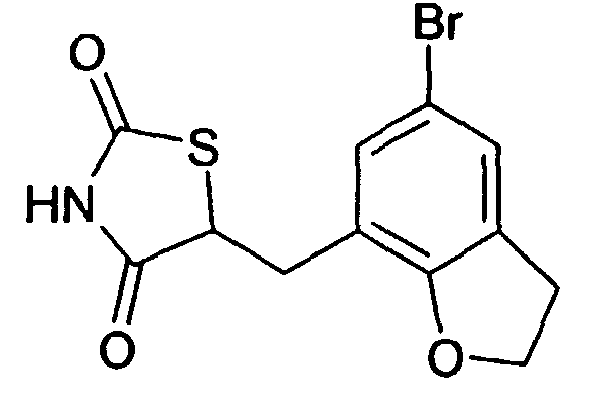
Example 358 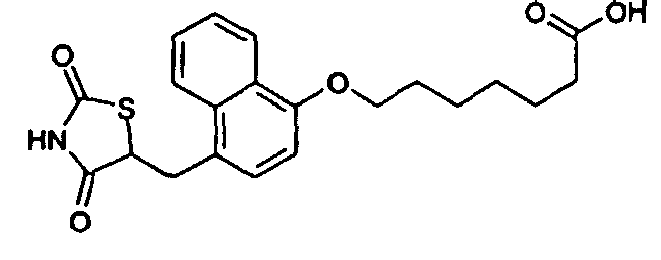
Example 359 
Example 360 
Example 361 
Example 362 
Example 363 
Example 364 
Example 365 
Example 366 
Example 367 
Example 368 
Example 369 
Example 370 
Example 371 
Example 372 
Example 373 
Example 374 
Example 375 
Example 376 
Example 377 
Example 378 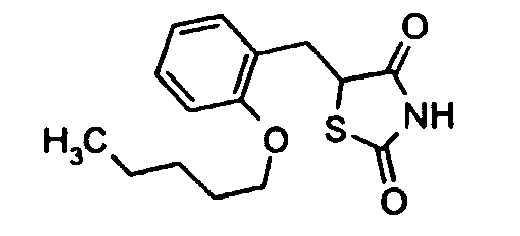
Example 379 
- The following compounds are commercially available and may be prepared using general procedures (B) and / or (C).
-

-

-

-
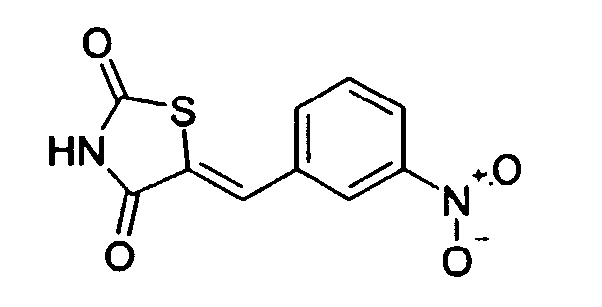
-

-

-

-

-

-

-

-

-

-

-

-

-

-

-

-

-

-

-

-

-

-

-

-

-

-
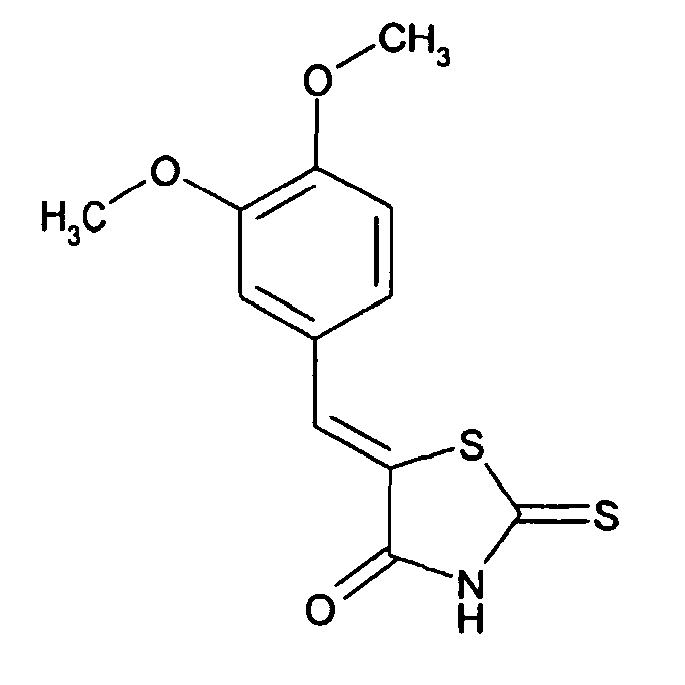
-
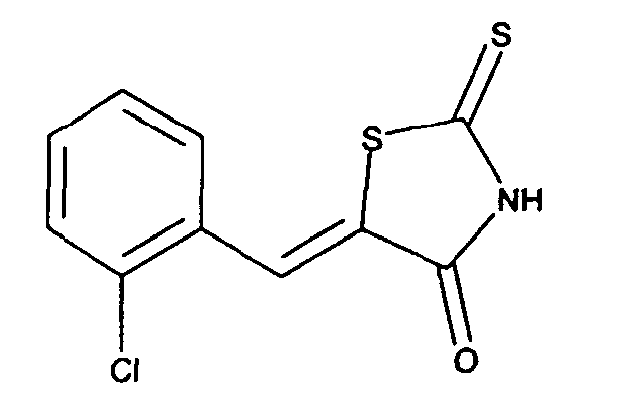
-

-

-

-

-

-

-

-

-

-

-

-

-

-

-

-

-

-

-

-

-
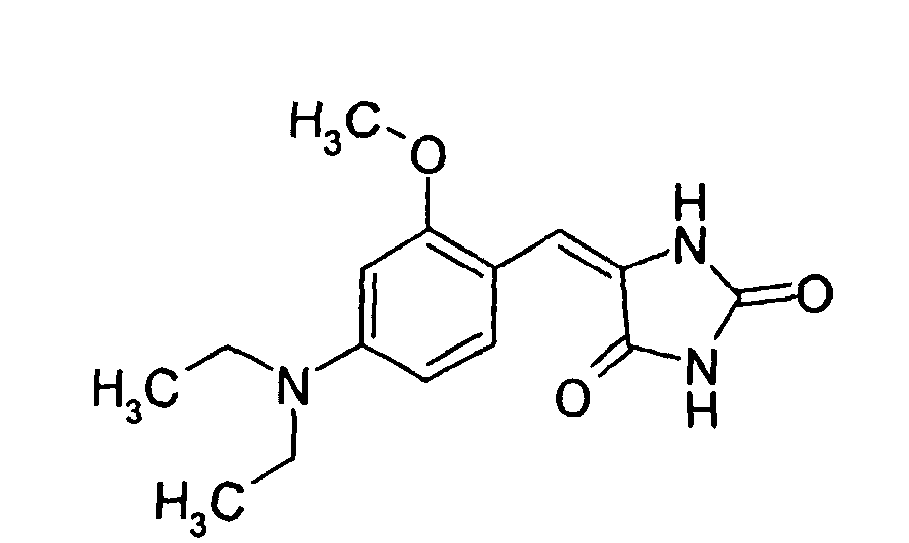
-

-

-

-

-
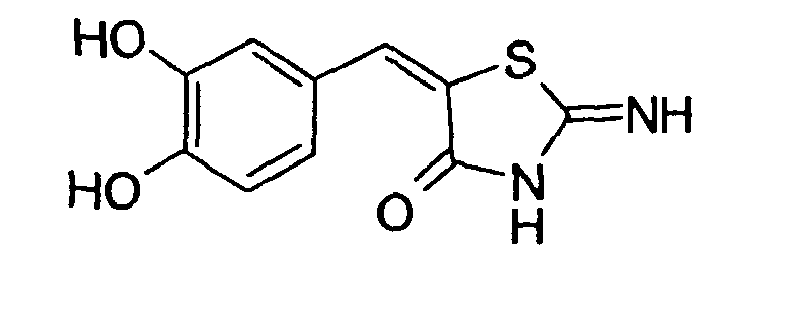
-

-

-
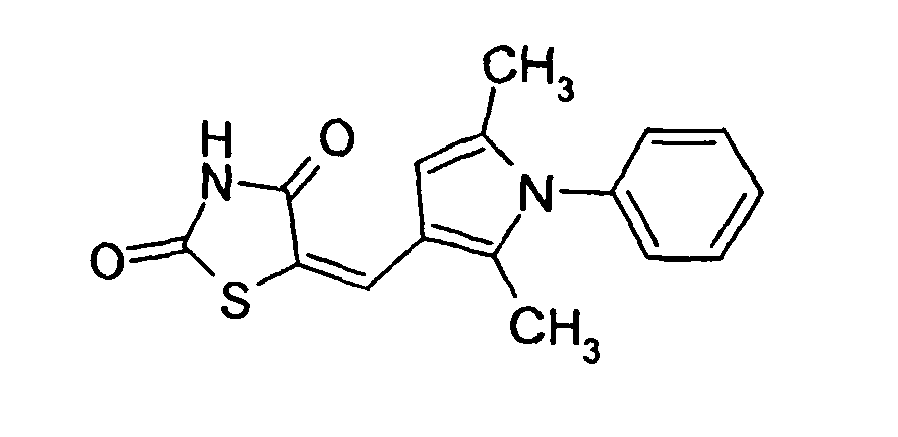
-

-

-

-

-

-

-

-

-

-

-

-

-

-

-

-
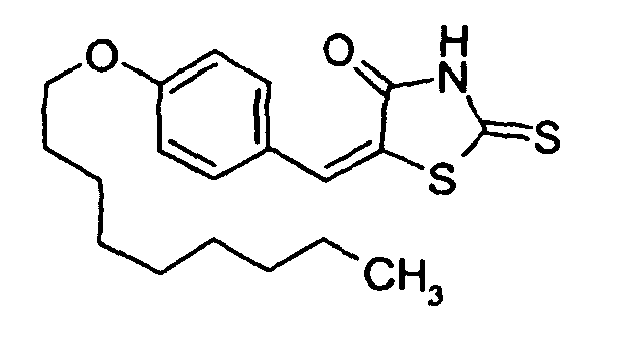
-

-
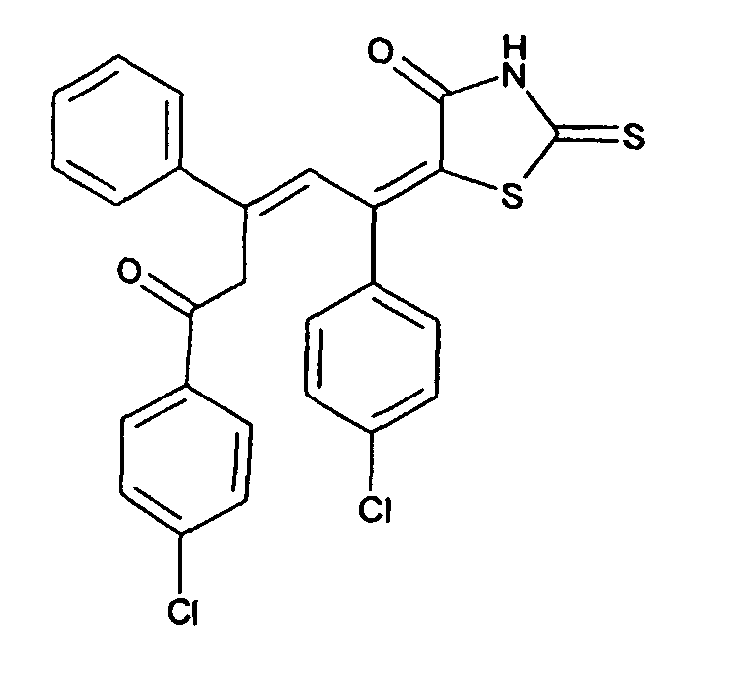
-

-

-

- wherein X, Y, and R3 are as defined above,
- n is 1 or 3-20,
- E is arylene or heterarylene (including up to four optional substituents, R13, R14, R15, and R15A as defined above),
- R' is a standard carboxylic acid protecting group, such as C1-C6-alkyl or benzyl and Lea is a leaving group, such as chloro, bromo, iodo, methanesulfonyloxy, toluenesulfonyloxy or the like.
- Step 1 is an alkylation of a phenol moiety. The reaction is preformed by reacting R10-C(=O)-E-OH with an ω-bromo-alkane-carboxylic acid ester (or a synthetic equivalent) in the presence of a base such as sodium or potassium carbonate, sodium or potassium hydroxide, sodium hydride, sodium or potassium alkoxide in a solvent, such as DMF, NMP, DMSO, acetone, acetonitrile, ethyl acetate or isopropyl acetate. The reaction is performed at 20 - 160 °C, usually at room temperature, but when the phenol moiety has one or more substituents heating to 50 °C or more can be beneficial, especially when the substituents are in the ortho position relatively to the phenol. This will readily be recognised by those skilled in the art.
- Step 2 is a hydrolysis of the product from step 1.
- Step 3 is similar to general procedure (B) and (C).
- This general procedure (D) is further illustrated in the following examples:
-

- A mixture of 4-hydroxybenzaldehyde (9.21 g, 75 mmol), potassium carbonate (56 g, 410 mmol) and 4-bromobutyric acid ethyl ester (12.9 mL, 90 mmol) in N,N-dimethylformamide (250 mL) was stirred vigorously for 16 hours at room temperature. The mixture was filtered and concentrated in vacuo to afford 19.6 g (100%) of 4-(4-formylphenoxy)butyric acid ethyl ester as an oil. 1H-NMR (DMSO-d6): δ 1.21 (3H, t), 2.05 (2H, p), 2.49 (2H, t), 4.12 (4H, m), 7.13 (2H, d), 7.87 (2H, d), 9.90 (1H, s). HPLC-MS (Method A): m/z = 237 (M+1); Rt = 3.46 min.
- 4-(4-Formylphenoxy)butyric acid ethyl ester (19.6 g, 75 mmol) was dissolved in methanol (250 mL) and 1N sodium hydroxide (100 mL) was added and the resulting mixture was stirred at room temperature for 16 hours. The organic solvent was evaporated in vacuo (40 °C, 120 mBar) and the residue was acidified with 1N hydrochloric acid (110 mL). The mixture was filtered and washed with water and dried in vacuo to afford 14.3 g (91%) 4-(4-formylphenoxy)butyric acid as a solid. 1H-NMR (DMSO-d 6): δ 1.99 (2H, p), 2.42 (2H, t), 4.13 (2H, t), 7.14 (2H, d), 7.88 (2H, d), 9.90 (1H, s), 12.2 (1H, bs). HPLC-MS (Method A): m/z = 209 (M+1); Rt = 2.19 min.
- Thiazolidine-2,4-dione (3.55 g, 27.6 mmol), 4-(4-formylphenoxy)butyric acid (5.74 g, 27.6 mmol), anhydrous sodium acetate (11.3 g, 138 mmol) and acetic acid (100 mL) was refluxed for 16 h. After cooling, the mixture was filtered and washed with acetic acid and water. Drying in vacuo afforded 2.74 g (32%) of 4-[4-(2,4-dioxothiazolidin-5-ylidenemethyl)phenoxy]butyric acid as a solid.
1H-NMR (DMSO-d6): δ 1-97 (2H, p), 2.40 (2H, t), 4.07 (2H, t), 7.08 (2H, d), 7.56 (2H, d), 7.77 (1H, s), 12.2 (1H, bs), 12.5 (1H, bs); HPLC-MS (Method A): m/z: 308 (M+1); Rt= 2.89 min. -

- Thiazolidine-2,4-dione (3.9 g, 33 mmol), 3-formylphenoxyacetic acid (6.0 g, 33 mmol), anhydrous sodium acetate (13.6 g, 165 mmol) and acetic acid (100 mL) was refluxed for 16 h. After cooling, the mixture was filtered and washed with acetic acid and water. Drying in vacuo afforded 5.13 g (56%) of [3-(2,4-dioxothiazolidin-5-ylidenemethyl)phenoxy]acetic acid as a solid.
1H-NMR (DMSO-d6): δ 4.69 (2H, s), 6.95 (1H, dd), 7.09 (1H, t), 7.15 (1H, d), 7.39 (1H, t),7.53 (1H, s); HPLC-MS (Method A): m/z = 280 (M+1) (poor ionisation); Rt = 2.49 min. - The compounds in the following examples were similarly prepared.
-

-

-

-

-

-

-

HPLC-MS (Method A): m/z: 424 (M+23); Rt = 3,84 min -

-

1H-NMR (DMSO-d 6): δ 1.78 (2H, m), 1.90 (2H, m), 2.38 (2H, t), 4.27 (2H, t), 7.16 (1H, d), 7.6-7.75 (3H, m), 8.13 (1H, d), 8.28 (1H, d), 8.39 (1H, s), 12.1 (1H, bs), 12.6 (1H, bs). -

- 5-[4-(2,4-Dioxothiazolidin-5-ylidenemethyl)-naphthalen-1-yloxy]pentanoic acid (example 470, 185 mg, 0.5 mmol) was treated with an equimolar amount of bromine in acetic acid (10 mL). Stirring at RT for 14 days followed by evaporation to dryness afforded a mixture of the brominated compound and unchanged starting material. Purification by preparative HPLC on a C18 column using acetonitrile and water as eluent afforded 8 mg of the title compound.
HPLC-MS (Method C): m/z: 473 (M+23), Rt. = 3.77 min -
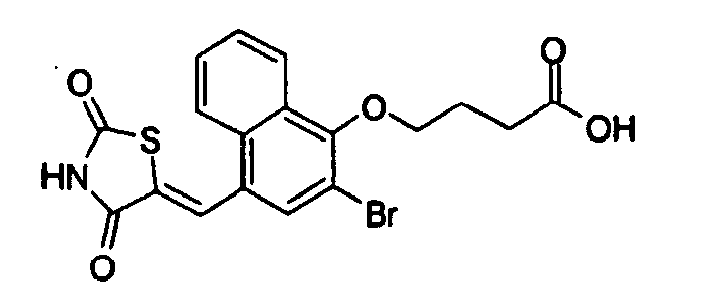
- Starting with 4-[4-(2,4-dioxothiazolidin-5-ylidenemethyl)-naphthalen-1-yloxy]-butyric acid (example 469, 0.5 mmol) using the same method as in example 471 afforded 66 mg of the title compound.
HPLC-MS (Method C): m/z: 459 (M+23) ; Rt. = 3.59 min. -

-

-

-

-

-

- 3-Formylindol (10 g, 69 mmol) was dissolved in N,N-dimethylformamide (100 mL) and under an atmosphere of nitrogenand with external cooling, keeping the temperature below 15 °C, sodium hydride (60% in mineral oil, 3.0 g, 76 mmol) was added in portions. Then a solution of ethyl bromoacetate (8.4 mL, 76 mmol) in N,N-dimethylformamide (15 mL) was added dropwise over 30 minutes and the resulting mixture was stirred at room temperature for 16 hours. The mixture was concentrated in vacuo and the residue was partitioned between water (300 mL) and ethyl acetate (2 x 150 mL). The combined organic extracts were washed with a saturated aqueous solution of ammonium chloride (100 mL), dried (MgSO4) and concentrated in vacuo to afford 15.9 g (quant.) of (3-formylindol-1-yl)acetic acid ethyl ester as an oil.
1H-NMR (CDCl3): δH = 1.30 (3H, t), 4.23 (2H, q), 4.90 (2H, s), 7.3 (3H, m), 7.77 (1H, s), 8.32 (1H, d), 10.0 (1H, s). - (3-Fonnylindol-1-yl)acetic acid ethyl ester (15.9 g 69 mmol) was dissolved in 1,4-dioxane (100 mL) and 1 N sodium hydroxide (10 mL) was added and the resulting mixture was stirred at room temperature for 4 days. Water (500 mL) was added and the mixture was washed with diethyl ether (150 mL). The aqueous phase was acidified with 5N hydrochloric acid and extracted with ethyl acetate (250 + 150 mL). The combined organic extracts were dried (MgSO4) and concentrated in vacuo to afford 10.3 g (73%) of (3-formylindol-1-yl)acetic acid as a solid.
1H-NMR (DMSO-d 6): δH = 5.20 (2H, s), 7.3 (2H, m), 7.55 (1H, d), 8.12 (1H, d), 8.30 (1H, s), 9.95 (1H, s), 13.3 (1H, bs). -

- A mixture of 3-formylindol (10 g, 69 mmol), ethyl 3-bromopropionate (10.5 mL. 83 mmol) and potassium carbonate (28.5 g, 207 mmol) and acetonitrile (100 mL) was stirred vigorously at refux temperature for 2 days. After cooling, the mixture was filtered and the filtrate was concentrated in vacuo to afford 17.5 g (quant.) of 3-(3-formylindol-1-yl)propionic acid ethyl ester as a solid.
1H-NMR (DMSO-d6 ): δH = 1.10 (3H, t), 2.94 (2H, t), 4.02 (2H, q), 4.55 (2H, t), 7.3 (2H, m), 7.67 (1H, d), 8.12 (1H, d), 8.30 (1H, s), 9.90 (1H, s). - 3-(3-Formylindol-1-yl)propionic acid ethyl ester (17.5 g 69 mmol) was hydrolysed as described above to afford 12.5 g (83%) of 3-(3-formylindol-1-yl)propionic acid as a solid.
1H-NMR (DMSO-d6 ): δH = 2.87 (2H, t), 4.50 (2H, t), 7.3 (2H, m), 7.68 (1H, d), 8.12 (1H, d), 8.31 (1H, s), 9.95 (1H, s), 12.5 (1H, bs). -

-

- The intermediate aldehyde for this compound was prepared by a slightly modified procedure: 6-Hydroxynaphthalene-2-carbaldehyde (1.0 g, 5.8 mmol) was dissolved in DMF (10 mL) and sodium hydride 60% (278 mg) was added and the mixture stirred at RT for 15 min. 8-Bromooctanoic acid (0.37 g, 1.7 mmol) was converted to the sodium salt by addition of sodium hydride 60% and added to an aliquot (2.5 mL) of the above naphtholate solution and the resulting mixture was stirred at RT for 16 hours. Aqueous acetic acid (10 %) was added and the mixture was extracted 3 times with diethyl ether. The combined organic phases were dried with MgSO4 and evaporated to dryness affording 300 mg of 8-(6-formylnaphthalen-2-yloxy)octanoic acid.
HPLC-MS (Method C): m/z 315 (M+1); Rt. = 4.24 min. -

- The intermediate aldehyde was prepared similarly as described in example 481.
-
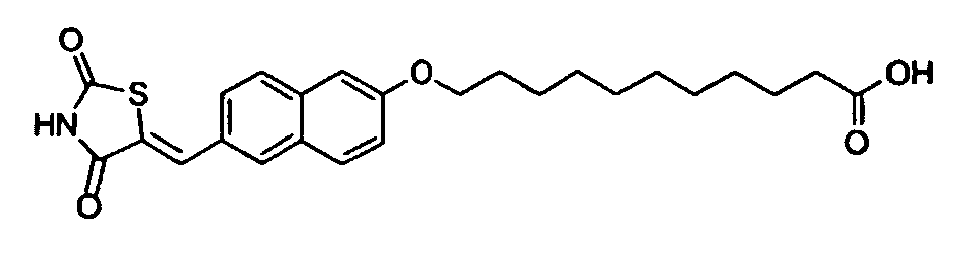
- The intermediate aldehyde was prepared similarly as described in example 481.
-

- The intermediate aldehyde was prepared similarly as described in example 481.
-

-

-

-
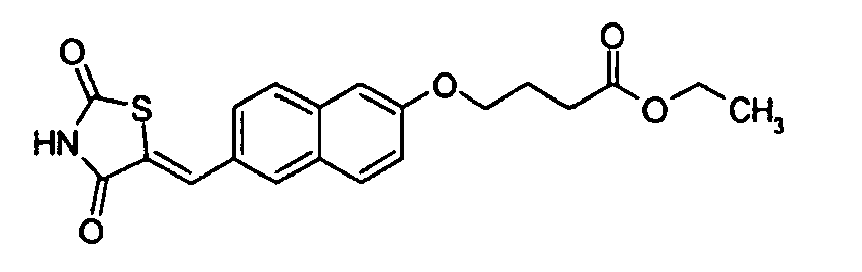
-

-

-

-

- To a mixture of 4-[4-(2,4-dioxothiazolidin-5-ylidenemethyl)naphthalen-1-yloxy]butyric acid (example 469, 5.9 g, 16.5 mmol) and 1-hydroxybenzotriazole (3.35 g, 24.8 mmol) in DMF (60 mL) was added 1-ethyl-3-(3'-dimethylaminopropyl)carbodiimide hydrochloride (4.75 g, 24.8 mmol) and the resulting mixture was stirred at room temperature for 2 hours. N-(3-amino-propylcarbamic acid tert-butyl ester (3.45 g, 19.8 mmol) was added and the resulting mixture was stirred at room temperature for 16 hours. The mixture was concentrated in vacuo and ethyl acetate and dichloromethane were added to the residue. The mixture was filtered, washed with water and dried in vacuo to afford 4.98 g (59%) of (3-{4-[4-(2,4-dioxothiazolidin-5-ylidenemethyl)naphthalen-1-yloxy]butyrylamino}propyl)carbamic acid tert-butyl ester.
HPLC-MS (Method C): m/z: 515 (M+1); Rt = 3.79 min. - (3-{4-[4-(2,4-Dioxothiazolidin-5-ylidenemethyl)naphthalen-1-yloxy]butyrylamino}propyl)carbamic acid tert-butyl ester (4.9 g, 9.5 mmol) was added dichloromethane (50 mL) and trifluoroacetic acid (50 mL) and the resulting mixture was stirred at room temperature for 45 minutes. The mixture was concentrated in vacuo and co-evaporated with toluene. To the residue was added ethyl acetate (100 mL) and the mixture was filtered and dried in vacuo to afford the title compound as the trifluoroacetic acid salt.
HPLC-MS (Method C): m/z: 414 (M+1); Rt = 2,27 min. - Compounds of the invention includes:
Example 493 
Example 494 
Example 495 
Example 496 
Example 497 
Example 498 
Example 499 
Example 500 
Example 501 
Example 502 
Example 503 
-
- 2-{5-[4-(2,4-Thiazolidindion-5-ylidenemethyl)naphthalen-1-yloxy]pentyl}malonic acid

- A solution of 4-hydroxy-1-naphtaldehyde (1.0 g, 5.81 mmol), 2-(5-bromopentyl)malonic acid diethyl ester (2.07 g, 6.68 mmol) and potassium carbonate (4.01 g, 29 mmol) in DMF (50 mL) was stirred at 100° C for 3 hours. The mixture was cooled and the salt was filtered off. The solvent was then removed under reduced pressure to afford 2.9 g of crude 2-[5-(4-formylnaphtalen-1-yloxy)pentyl]malonic acid diethyl ester which was used for the next reaction without further purification.
HPLC-MS (Method C): m/z: 401 (M+1); Rt = 5.16 min. 1H-NMR (DMSO-d6): δ = 1.18 (t, 6 H), 1,39 (m, 2 H), 1.55 (m, 2 H), 1.87 (m, 4 H), 3.48 (t, 1 H), 4.13 (m, 4 H), 4.27 (t, 2 H), 7.17 (d, 1 H), 7.64(t, 1 H), 7.75 (t, 1 H), 8.13 (d, 1 H), 8.29 (d, 1 H), 9.24 (d, 1 H), 10.19 (s, 1 H). - 1.4 g (3.5 mmol) of crude 2-[5-(4-formylnaphtalen-1-yloxy)pentyl]malonic acid diethyl ester was treated with aqueous sodium hydroxide (1N, 8.75 mL, 8.75 mmol) and methanol (50 mL). The solution was stirred at 70° C for 5 hours and the mixture was concentrated under reduced pressure. Hydrochloric acid (6 N) was added until pH <2. The resulting slurry was stirred untill it solidified. The crystals were filtered off, washed with water and then dried in vacuo to afford 1.1 g (92%) of 2-[5-(4-formylnaphtalen-1-yloxy)pentyl]malonic acid. The product was used in the next step without further purification.
HPLC-MS (Method C): m/z: 345 (M+1); Rt = 3.52 min. 1H-NMR(DMSO-d 6): δ = 1,40 (m, 2 H), 1.55 (m, 2 H), 1.80 (m, 2 H), 1.90 (m, 2 H), 3.24 (t, 1 H), 4.29 (t, 2 H), 7.19 (d, 1 H), 7.64(t, 1 H), 7.75 (t, 1 H), 8.14 (d, 1 H), 8.30 (d, 1 H), 9.23 (d, 1 H), 10.18 (s, 1 H), 12.69 (s, 2 H). - To a solution of 2-[5-(4-formylnaphtalen-1-yloxy) pentyl]malonic acid (0.36 g, 1.05 mmol) in acetic acid (10 mL) was added 2,4-thiazolidindione (0.16 g,1.36 mmol) and piperidine (0.52 mL, 5.25 mmol). The solution was heated to 105°C for 24 hours. After cooling to room temperature, the solvents were removed in vacuo. Water was added to the residue. The precipitate was filtered off and washed with water. Recrystalisation from acetonitrile afforded 200 mg (43%) of the title compound as a solid.
HPLC-MS (Method C): m/z: 422 (M-CO2+Na); Rt = 4.08 min. 1H-NMR(DMSO-d 6): δ = 1,41 (m, 2 H), 1.55 (m, 4 H), 1.88 (m, 2 H), 2.23 (t, 1 H), 4.24 (t, 2 H), 7.61-7.74 (m, 3 H), 8.12 (d, 1 H), 8.28 (d, 1 H), 8.38 (s, 1 H), 12.00 (s, 1 H), 12.59 (s, 2 H). - The following compounds are commercially available and may be prepared according to general procedure (D):
-

-

-
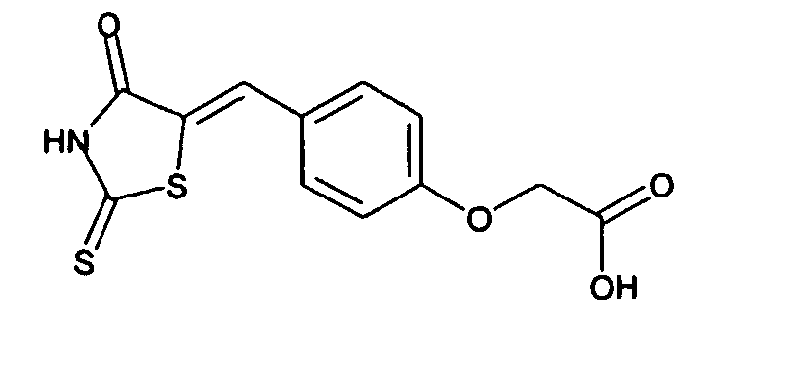
-

-

-

-

- The following salicylic acid derivatives do all bind to the His B10 Zn2+ site of the insulin hexamer:
-

-

-

-
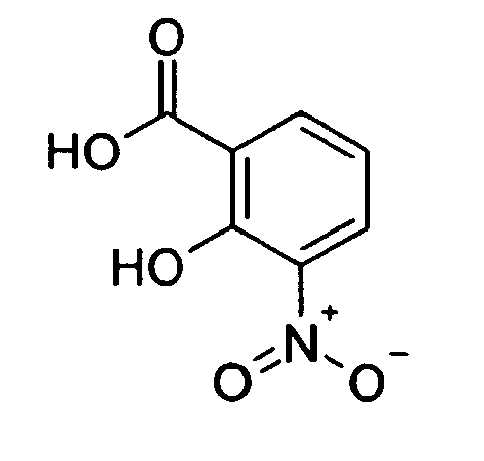
-

-

-

-

-

-

-

-

-

-

-

-

-

-

-

-

-

-

- This compound was prepared according to Murphy et al., J. Med. Chem. 1990, 33, 171-8. HPLC-MS (Method A): m/z: 267 (M+1); Rt: = 3.78 min.
-

- This compound was prepared according to Murphy et al., J. Med. Chem. 1990, 33, 171-8. HPLC-MS (Method A): m/z: 346 (M+1); Rt: = 4,19 min.
-

- A solution of 7-bromo-3-hydroxynaphthalene-2-carboxylic acid (15.0 g, 56.2 mmol) (example 533) in tetrahydrofuran (100 mL) was added to a solution of lithium hydride (893 mg, 112 mmol) in tetrahydrofuran (350 mL). After 30 minutes stirring at room temperature, the resulting solution was heated to 50 °C for 2 minutes and then allowed to cool to ambient temperature over a period of 30 minutes. The mixture was cooled to -78 °C, and butyllithium (1.6 M in hexanes, 53 mL, 85 mmol) was added over a period of 15 minutes. N,N-Dimethylformamide (8.7 mL, 8.2 g, 112 mmol) was added after 90 minutes additional stirring. The cooling was discontinued, and the reaction mixture was stirred at room temperature for 17 hours before it was poured into 1 N hydrochloric acid (aq.) (750 mL). The organic solvents were evaporated in vacuo, and the resulting precipitate was filtered off and rinsed with water (3 x 100 mL) to yield the crude product (16.2 g). Purification on silica gel (dichloromethane /methanol / acetic acid = 90:9:1) furnished the title compound as a solid.
1H-NMR (DMSO-d 6 ) : δ 11.95 (1H, bs), 10.02 (1H, s), 8.61 (1H, s), 8.54 (1H, s), 7.80 (2H, bs), 7.24 (1H, s); HPLC-MS (Method (A)): m/z: 217 (M+1); Rt = 2.49 min. -

-

-

-

- The following compounds were prepared as described below:
-

- 3-Hydroxynaphthalene-2-carboxylic acid (3.0 g, 15.9 mmol) was suspended in acetic acid (40 mL) and with vigorous stirring a solution of bromine (817 µL, 15.9 mmol) in acetic acid (10 mL) was added drop wise during 30 minutes. The suspension was stirred at room temperature for 1 hour, filtered and washed with water. Drying in vacuo afforded 3.74 g (88%) of 4-bromo-3-hydroxynaphthalene-2-carboxylic acid as a solid.
1H-NMR (DMSO-d 6): δ 7.49 (1H, t), 7.75 (1H, t), 8.07 (2H, "t"), 8.64 (1H, s). The substitution pattern was confirmed by a COSY experiment, showing connectivities between the 3 (4 hydrogen) "triplets". HPLC-MS (Method A): m/z: 267 (M+1); Rt = 3.73 min. -

- 3-Hydroxynaphthalene-2-carboxylic acid (0.5 g, 2.7 mmol) was suspended in acetic acid (5 mL) and with stirring iodine monochloride (135 µL, 2.7 mml) was added. The suspension was stirred at room temperature for 1 hour, filtered and washed with water. Drying afforded 0.72 g (85%) of 4-iodo-3-hydroxynaphthalene-2-carboxylic acid as a solid.
1H-NMR (DMSO-d 6): δ 7.47 (1H, t), 7.73 (1H, t), 7.98 (1H, d), 8.05 (1H, d), 8.66 (1H, s). HPLC-MS (Method A): m/z: 315 (M+1); Rt = 3.94 min. -

- p-Anisidine (1.3 g, 10.6 mmol) was dissolved in methanol (20 mL) and 5-formylsalicylic acid (1.75 g, 10.6 mmol)was added and the resulting mixture was stirred at room temperature for 16 hours. The solid formed was isolated by filtration, re-dissolved in N-methyl pyrrolidone (20 mL) and methanol (2 mL). To the mixture was added sodium cyanoborohydride (1.2 g) and the mixture was heated to 70 °C for 3 hours. To the cooled mixture was added ethyl acetate (100 mL) and the mixture was extracted with water (100 mL) and saturated aqueous ammonium chloride (100 mL). The combined aqueous phases were concentrated in vacuo and a 2 g aliquot was purified by SepPac chromatography eluting with mixtures of aetonitrile and water containing 0.1% trifluoroacetic acid to afford the title compound.
HPLC-MS (Method A): m/z: 274 (M+1); Rt = 1.77 min.
1H-NMR (methanol-d 4): δ 3.82 (3H, s), 4.45 (2H, s), 6.96 (1H, d), 7.03 (2H, d), 7.23 (2H, d), 7.45 (1H, dd), 7.92 (1H, d). -

- A solution of 5-chlrosulfonylsalicylic acid (0.96 g, 4.1 mmol) in dichloromethane (20 mL) and triethylamine (1.69 mL, 12.2 mmol) was added p-anisidine (0.49 g, 4.1 mmol) and the resulting mixture was stirred at room temperature for 16 hours. The mixture was added dichloromethane (50 mL) and was washed with water (2 x 100 mL). Drying (MgSO4) of the organic phase and concentration in vacuo afforded 0.57 g crude product. Purification by column chromatography on silica gel eluting first with ethyl acetate:heptane (1:1) then with methanol afforded 0.1 g of the title compound.
HPLC-MS (Method A): m/z: 346 (M+23); Rt = 2.89 min.
1H-NMR (DMSO-d 6): δ 3.67 (3H, s), 6.62 (1H, d), 6.77 (2H, d), 6.96 (2H, d), 7.40 (1H, dd), 8.05 (1H, d), 9.6 (1H, bs). -

- An analogous chemical transformation has previously been described in the literature (Bumagin et al., Tetrahedron, 1997, 53, 14437-14450). The reaction is generally known as the Suzuki coupling reaction and is generally performed by reacting an aryl halide or triflate with an arylboronic acid or a heteroarylboronic acid in the presence of a palladium catalyst and a base such as sodium acetate, sodium carbonate or sodium hydroxide. The solvent can be water, acetone, DMF, NMP, HMPA, methanol, ethanol toluene or a mixture of two or more of these solvents. The reaction is performed at room temperature or at elevated temperature.
- The general procedure (E) is further illustrated in the following example:
-

- To 7-bromo-3-hydroxynaphthalene-2-carboxylic acid (100 mg, 0.37 mmol) (example 533) was added a solution of 4-acetylphenylboronic acid (92 mg, 0.56 mmol) in acetone (2.2 mL) followed by a solution of sodium carbonate (198 mg, 1.87 mmol) in water (3.3 mL). A suspension of palladium(II) acetate (4 mg, 0.02 mmol) in acetone (0.5 mL) was filtered and added to the above solution. The mixture was purged with N2 and stirred vigorously for 24 hours at room temperature. The reaction mixture was poured into 1 N hydrochloric acid (aq.) (60 mL) and the precipitate was filtered off and rinsed with water (3 x 40 mL). The crude product was dissolved in acetone (25 mL) and dried with magnesium sulfate (1 h). Filtration followed by concentration furnished the title compound as a solid (92 mg).
1H-NMR (DMSO-d6 ): δ 12.60 (1H, bs), 8.64 (1H, s), 8.42 (1H, s), 8.08 (2H, d), 7.97 (2H, d), 7.92 (2H, m), 7.33 (1H, s), 2.63 (3H, s); HPLC-MS (Method (A): m/z: 307 (M+1); Rt = 3.84 min. - The compounds in the following examples were prepared in a similar fashion. Optionally, the compounds can be further purified by recrystallization from e.g. ethanol or by chromatography.
-

-

-

-

-

-

-

-

-

-

-

-

- This general procedure (F) is further illustrated in the following example:
-

- 7-Formyl-3-hydroxynaphthalene-2-carboxylic acid (40 mg, 0.19 mmol) (example 535) was suspended in methanol (300 µL). Acetic acid (16 µL. 17 mg, 0.28 mmol) and 4-(2-propyl)aniline (40 µL, 40 mg, 0.30 mmol) were added consecutively, and the resulting mixture was stirred vigorously at room temperature for 2 hours. Sodium cyanoborohydride (1.0 M in tetrahydrofuran, 300 µL, 0.3 mmol) was added, and the stirring was continued for another 17 hours. The reaction mixture was poured into 6 N hydrochloric acid (aq.) (6 mL), and the precipitate was filtered off and rinsed with water (3 x 2 mL) to yield the title compound (40 mg) as its hydrochloride salt. No further purification was necessary.
1H-NMR (DMSO-d 6): δ 10.95 (1H, bs), 8.45 (1H, s), 7.96 (1H, s), 7.78 (1H, d), 7.62 (1H, d), 7.32 (1H, s), 7.13 (2H, bd), 6.98 (2H, bd), 4.48 (2H, s), 2.79 (1H, sept), 1.14 (6H, d); HPLC-MS (Method (A)): m/z: 336 (M+1); Rt = 3.92 min. - The compounds in the following examples were made using this general procedure (F).
-

-

-

-

-

-

-

-

-

-

-

-

- The general procedure (G) is illustrated by the following example:
-

- 3-Hydroxy-7-[(4-(2-propyl)phenylamino)methyl]naphthalene-2-carboxylic acid (25 mg, 0.07 mmol) (example 556) was suspended in tetrahydrofuran (200 µL). A solution of sodium hydrogencarbonate (23 mg, 0.27 mmol) in water (200 µL) was added followed by acetic anhydride (14 µL, 15 mg, 0.15 mmol). The reaction mixture was stirred vigorously for 65 hours at room temperature before 6 N hydrochloric acid (4 mL) was added. The precipitate was filtered off and rinsed with water (3 x 1 mL) to yield the title compound (21 mg). No further purification was necessary.
1H-NMR (DMSO-d6): δ 10.96 (1H, bs), 8.48 (1H, s), 7.73 (1H, s), 7.72 (1H, d), 7.41 (1H, dd), 7.28 (1H, s), 7.23 (2H, d), 7.18 (2H, d), 4.96 (2H, s), 2.85 (1H, sept), 1.86 (3H, s), 1.15 (6H, d); HPLC-MS (Method (A)): m/z: 378 (M+1); Rt = 3.90 min. - The compounds in the following examples were prepared in a similar fashion.
-

-

-

- Compounds of the invention may also include tetrazoles:
-

- To a mixture of 2-naphthol (10 g, 0.07 mol) and potassium carbonate (10 g, 0.073 mol) in acetone (150 mL), alpha-bromo-m-tolunitril (13.6 g, 0.07 mol) was added in portions. The reaction mixture was stirred at reflux temperature for 2.5 hours. The cooled reaction mixture was filtered and evaporated in vacuo affording an oily residue (19 g) which was dissolved in diethyl ether (150 mL) and stirred with a mixture of active carbon and MgSO4 for 16 hours. The mixture was filtered and evaporated in vacuo affording crude 18.0 g (100 %) of 3-(naphthalen-2-yloxymethyl)-benzonitrile as a solid.
12 g of the above benzonitrile was recrystallised from ethanol (150 mL) affording 8.3 g (69 %) of 3-(naphthalen-2-yloxymethyl)-benzonitrile as a solid.
M.p. 60 - 61 °C.
Calculated for C18H13NO:
C, 83.37 %; H, 5.05 %; N, 5.40 %; Found
C, 83.51 %; H, 5.03 %; N, 5.38 %. - To a mixture of sodium azide (1.46 g, 22.5 mmol) and ammonium chloride (1.28 g, 24.0 mmol) in dry dimethylformamide (20 mL) under an atmosphere of nitrogen, 3-(naphthalen-2-yloxymethyl)-benzonitrile (3.9 g, 15 mmol) was added and the reaction mixture was stirred at 125 °C for 4 hours. The cooled reaction mixture was poured on to ice water (300 mL) and acidified to pH = 1 with 1 N hydrochloric acid. The precipitate was filtered off and washed with water, dried at 100 °C for 4 hours affording 4.2 g (93 %) of the title compound.
M.p. 200 - 202 °C.
Calculated for C18H14N4O:
C, 71.51 %; H, 4.67 %; N, 18.54 %; Found
C. 72.11 %; H, 4.65 %; N, 17.43 %.
1H NMR (400 MHz, DMSO-d6) δH 5.36 (s, 2H), 7.29 (dd, 1H), 7.36 (dt, 1H), 7.47 (m, 2H), 7.66 (t, 1H), 7.74 (d, 1H), 7.84 (m, 3H), 8.02 (d, 1H), 8.22 (s, 1H). -

- 2-Naphtoic acid (10 g, 58 mmol) was dissolved in dichloromethane (100 mL) and N,N-dimethylformamide (0.2 mL) was added followed by thionyl chloride (5.1 ml, 70 mmol). The mixture was heated at reflux temperature for 2 hours. After cooling to room temperature, the mixture was added dropwise to a mixture of 3-aminobenzonitril (6.90 g, 58 mmol) and triethyl amine (10 mL) in dichloromethane (75 mL). The resulting mixture was stirred at room temperature for 30 minutes. Water (50 mL) was added and the volatiles was exaporated in vacuo. The resulting mixture was filtered and the filter cake was washed with water followed by heptane (2 x 25 mL). Drying in vacuo at 50 °C for 16 hours afforded 15.0 g (95 %) of N-(3-cyanophenyl)-2-naphtoic acid amide.
M.p. 138-140 °C - The above naphthoic acid amide (10 g, 37 mmol) was dissolved in N,N-dimethylformamide (200 mL) and sodium azide (2.63 g, 40 mmol) and ammonium chloride (2.16 g, 40 mmol) were added and the mixture heated at 125 °C for 6 hours. Sodium azide (1.2 g) and ammonium chloride (0.98 g) were added and the mixture heated at 125 °C for 16 hours. After cooling, the mixture was poured into water (1.5 l) and stirred at room temperature for 30 minutes. The solid formed was filtered off, washed with water and dried in vacuo at 50 °C for 3 days affording 9.69 g (84 %) of the title compound as a solid which could be further purified by treatment with ethanol at reflux temperature.
1H NMR (200 MHz, DMSO-d6): δH 7.58-7.70 (m, 3H), 7.77 (d, 1H), 8.04-8.13 (m, 5H), 8.65 (d, 1H), 10.7 (s, 1H).
Calculated for C18H13N5O, 0.75 H2O:
C, 65.74 %; H, 4.44 %; N, 21.30 %. Found:
C, 65.58 %; H, 4.50 %; N, 21.05 %. -

- To a solution of 4-phenylphenol (10.0 g, 59 mmol) in dry N,N-dimethyl-formamide (45 mL) kept under an atmosphere of nitrogen, sodium hydride (2.82 g, 71 mmol, 60 % dispersion in oil) was added in portions and the reaction mixture was stirred until gas evolution ceased. A solution of m-cyanobenzyl bromide (13 g, 65 mmol) in dry N,N-dimethylformamide (45 mL) was added dropwise and the reaction mixture was stirred at room temperature for 18 hours. The reaction mixture was poured on to ice water (150 mL). The precipitate was filtered of and washed with 50 % ethanol
(3 x 50 mL), ethanol (2 x 50 mL), diethyl ether (80 mL), and dried in vacuo at
50 °C for 18 hours affording crude 17.39 g of 3-(biphenyl-4-yloxymethyl)-benzonitrile as a solid.
1H NMR (200 MHz, CDCl3) δH 5.14 (s, 2H), 7.05 (m, 2H), 7.30 - 7.78 (m, 11H). - To a mixture of sodium azide (2.96 g, 45.6 mmol) and ammonium chloride (2.44 g, 45.6 mmol) in dry N,N-dimethylformamide (100 mL) under an atmosphere of nitrogen, 3-(biphenyl-4-yloxymethyl)-benzonitrile (10.0 g, 35.0 mmol) was added and the reaction mixture was stirred at 125 °C for 18 hours. The cooled reaction mixture was poured on to a mixture of 1N hydrochloric acid (60 mL) and ice water (500 mL). The precipitate was filtered off and washed with water (3 x 100 mL), 50 % ethanol (3 x 100 mL), ethanol (50 mL), diethyl ether (50 mL), ethanol (80 mL), and dried in vacuo at 50 °C for 18 hours affording 8.02 g (70 %) of the title compound.
1H NMR (200 MHz, DMSO-d6) δH 5.31 (s, 2H), 7.19 (m, 2H), 7.34 (m, 1H), 7.47 (m, 2H), 7.69 (m, 6H), 8.05 (dt, 1H), 8.24 (s, 1H). -

- 3-Bromomethylbenzonitrile (5.00 g, 25.5 mmol) was dissolved in N,N-dimethylformamide (50 mL), phenol (2.40 g, 25.5 mmol) and potassium carbonate (10.6 g, 77 mmol) were added. The mixture was stirred at room temperature for 16 hours. The mixture was poured into water (400 mL) and extracted with ethyl acetate (2 x 200 mL). The combined organic extracts were washed with water (2 x 100 mL), dried (MgSO4) and evaporated in vacuo to afford 5.19 g (97 %) 3-(phenoxymethyl)benzonitrile as an oil.
TLC: Rf = 0.38 (Ethyl acetate/heptane = 1:4) - The above benzonitrile (5.19 g, 24.8 mmol) was dissolved in N,N-dimethylformamide (100 mL) and sodium azide (1.93 g, 30 mmol) and ammonium chloride (1.59 g, 30 mmol) were added and the mixture was heated at 140 °C for 16 hours. After cooling, the mixture was poured into water (800 mL). The aqeous mixture was washed with ethyl acetate (200 mL). The pH of the aqueous phase was adjusted to 1 with 5 N hydrochloric acid and stirred at room temperature for 30 minutes. Filtration, washing with water and drying in vacuo at 50 °C afforded 2.06 g (33 %) of the title compound as a solid.
1H NMR (200 MHz, CDCl3 + DMSO-d 6) δH 5.05 (s, 2H), 6.88 (m, 3H), 7.21 (m, 2H), 7.51 (m, 2H), 7.96 (dt, 1H), 8.14 (s, 1H). -

- To a solution of 3-cyanophenol (5.0 g, 40.72 mmol) in dry N,N-dimethylformamide (100 mL) kept under an atmosphere of nitrogen, sodium hydride (2 g, 48.86 mmol, 60 % dispersion in oil) was added in portions and the reaction mixture was stirred until gas evolution ceased. p-Phenylbenzyl chloride (9.26 g, 44.79 mmol) and potassium iodide (0.2 g, 1.21 mmol) were added and the reaction mixture was stirred at room temperature for 60 hours. The reaction mixture was poured on to a mixture of saturated sodium carbonate (100 mL) and ice water (300 mL). The precipitate was filtered of and washed with water (3 x 100 mL), n-hexane (2 x 80 mL) and dried in vacuo at 50 °C for 18 hours affording 11.34 g (98 %) of 3-(biphenyl-4-ylmethoxy)-benzonitrile as a solid.
- To a mixture of sodium azide (2.37 g, 36.45 mmol) and ammonium chloride (1.95 g, 36.45 mmol) in dry N,N-dimethylformamide (100 mL) under an atmosphere of nitrogen, 3-(biphenyl-4-ylmethoxy)-benzonitrile (8.0 g, 28.04 mmol) was added and the reaction mixture was stirred at
125 °C for 18 hours. To the cooled reaction mixture water (100 mL) was added and the reaction mixture stirred for 0.75 hour. The precipitate was filtered off and washed with water, 96 % ethanol (2 x 50 mL), and dried in vacuo at 50°C for 18 hours affording 5.13 g (56 %) of the title compound.
1H NMR (200 MHz, DMSO-d6) δH 5.29 (s, 2H), 7.31 (dd, 1H), 7.37 - 7.77 (m, 12H). -

- This compound was made similarly as described in example 576.
-

-

- This compound was prepared similarly as described in example 572, step 2.
-

- This compound was prepared similarly as described in example 572, step 2.
-

- A solution of alpha-bromo-p-tolunitrile (5.00 g, 25.5 mmol), 4-phenylphenol (4.56 g, 26.8 mmol), and potassium carbonate (10.6 g, 76.5 mmol) in N,N-dimethylformamide (75 mL) was stirred vigorously for 16 hours at room temperature. Water (75 mL) was added and the mixture was stirred at room temperature for 1 hour. The precipitate was filtered off and washed with thoroughly with water. Drying in vacuo over night at 50 °C afforded 7.09 g (97 %) of 4-(biphenyl-4-yloxymethyl)benzonitrile as a solid.
- The above benzonitrile (3.00 g, 10.5 mmol) was dissolved in N,N-dimethylformamide (50 mL), and sodium azide (1.03 g, 15.8 mmol) and ammonium chloride (0.84 g, 15.8 mmol) were added and the mixture was stirred 16 hours at 125 °C. The mixture was cooled to room temperature and water (50 mL) was added. The suspension was stirred overnight, filtered, washed with water and dried in vacuo at 50 °C for 3 days to give crude 3.07 g (89 %) of the title compound. From the mother liquor crystals were colected and washed with water, dried by suction to give 0.18 g
(5 %) of the title compound as a solid.
1H NMR (200 MHz, DMSO-d6): δH 5.21 (s, 2H), 7.12 (d, 2H), 7.30 (t, 1H), 7.42 (t, 2H), 7.56-7.63 (m, 6H), 8.03 (d, 2H).
Calculated for C20H16N4O, 2H2O:
C, 65.92 %; H, 5.53 %; N, 15.37 %. Found:
C, 65.65 %; H, 5.01 %; N, 14.92 %. -

- This compound was prepared similarly as described in example 576.
-

-

-

-

-

- This compound was prepared similarly as described in example 572, step 2.
-

- This compound was made similarly as described in example 576.
-

- This compound was prepared similarly as described in example 572, step 2.
-

-

- This compound was prepared similarly as described in example 572, step 2.
-

- To a mixture of methyl 4-hydroxybenzoate (30.0 g, 0.20 mol), sodium iodide (30.0 g, 0.20 mol) and potassium carbonate (27.6 g, 0.20 mol) in acetone (2000 mL) was added chloroacetonitrile (14.9 g , 0.20 mol). The mixture was stirred at RT for 3 days. Water was added and the mixture was acidified with 1N hydrochloric acid and the mixture was extracted with diethyl ether. The combined organic layers were dried over Na2SO4 and concentrated in vacuo. The residue was dissolved in acetone and chloroacetonitrile (6.04 g,0.08 mol), sodium iodide (12.0 g, 0.08 mol) and potassium carbonate (11.1 g, 0.08 mol) were added and the mixture was stirred for 16 hours at RT and at 60 °C. More chloroacetonitrile was added until the conversion was 97%. Water was added and the mixture was acidified with 1N hydrochloric acid and the mixture was extracted with diethyl ether. The combined organic layers were dried over Na2SO4 and concentrated in vacuo to afford methyl 4-cyanomethyloxybenzoate in quantitative yield. This compound was used without further purification in the following step.
- A mixture of methyl 4-cyanomethyloxybenzoate (53.5 g,0.20 mol), sodium azide (16.9 g, 0.26 mol) and ammonium chloride (13.9 g, 0.26 mol) in DMF 1000 (mL) was refluxed overnight under N2. After cooling, the mixture was concentrated in vacuo. The residue was suspended in cold water and extracted with ethyl acetate. The combined organic phases were washed with brine, dried over Na2SO4 and concentrated in vacuo, to afford methyl 4-(2H-tetrazol-5-ylmethoxy)benzoate. This compound was used as such in the following step.
- Methyl 4-(2H-Tetrazol-5-ylmethoxy)-benzoate was refluxed in 3N sodium hydroxide. The reaction was followed by TLC (DCM:MeOH = 9:1). The reaction mixture was cooled, acidified and the product filtered off. The impure product was washed with DCM, dissolved in MeOH, filtered and purified by column chromatography on silica gel (DCM:MeOH = 9:1).The resulting product was recrystallised from DCM:MeOH=95:5. This was repeated until the product was pure. This afforded 13.82 g (30 %) of the title compound.
1H-NMR (DMSO-d6): 4.70 (2H, s), 7.48 (2H, d), 7.73 (2H, d), 13 (1H, bs). -

- To a solution of sodium hydroxide (10.4 g, 0.26 mol) in degassed water (600 mL) was added 4-mercaptobenzoic acid (20.0 g, 0.13 mol). This solution was stirred for 30 minutes. To a solution of potassium carbonate (9.0 g, 65 mmol) in degassed water (400 mL) was added chloroacetonitrile (9.8 g, (0.13 mol) portion-wise. These two solutions were mixed and stirred for 48 hours at RT under N2. The mixture was filtered and washed with heptane. The aqueous phase was acidified with 3N hydrochloric acid and the product was filtered off, washed with water and dried, affording 4-cyanomethylsulfanylbenzoic acid (27.2 g, 88%). This compound was used without further purification in the following step.
- A mixture of 4-cyanomethylsulfanylbenzoic acid (27.2 g, 0.14 mol), sodium azide (11.8 g, 0,18 mol) and ammonium chloride (9.7 g, 0.18 mol) in DMF (1000 mL) was refluxed overnight under N2. The mixture was concentrated in vacuo. The residue was suspended in cold water and extracted with diethyl ether. The combined organic phases were washed with brine, dried over Na2SO4 and concentrated in vacuo. Water was added and the precipitate was filtered off. The aqueous layer was concentrated in vacuo, water was added and the precipitate filtered off. The combined impure products were purified by column chromatography using DCM:MeOH = 9:1 as eluent, affording the title compound (5.2 g, 16%).
1H-NMR (DMSO-d6): 5.58 (2H, s), 7.15 (2H, d), 7.93 (2H, d), 12.7 (1H, bs). -

- 3-Bromo-9H-carbazole was prepared as described by Smith et al. in Tetrahedron 1992, 48, 7479-7488.
A solution of 3-bromo-9H-carbazole (23.08 g, 0.094 mol) and cuprous cyanide (9.33 g, 0.103 mol) in N-methyl-pyrrolidone (300 ml) was heated at 200 °C for 5 h. The cooled reaction mixture was poured on to water (600 ml) and the precipitate was filtered off and washed with ethyl acetate (3 x 50 ml). The filtrate was extracted with ethyl acetate (3 x 250 ml) and the combined ethyl acetate extracts were washed with water (150 ml), brine (150 ml), dried (MgSO4) and concentrated in vacuo. The residue was crystallised from heptanes and recrystallised from acetonitrile (70 ml) affording 7.16 g (40 %) of 3-cyano-9H-carbazole as a solid. M.p. 180 - 181 °C. - 3-Cyano-9H-carbazole (5.77 g, 30 mmol) was dissolved in N,N-dimethylformamide (150 ml), and sodium azide (9.85 g, 152 mmol), ammonium chloride (8.04 g. 150 mmol) and lithium chloride (1.93 g, 46 mmol) were added and the mixture was stirred for 20 h at 125 °C. To the reaction mixture was added an additional portion of sodium azide (9.85 g, 152 mmol) and ammonium chloride (8.04 g, 150 mmol) and the reaction mixture was stirred for an additional 24 h at 125 °C. The cooled reaction mixture was poured on to water (500 ml). The suspension was stirred for 0.5 h, and the precipitate was filtered off and washed with water (3 x 200 ml) and dried in vacuo at 50 °C. The dried crude product was suspended in diethyl ether (500 ml) and stirred for 2 h, filtered off and washed with diethyl ether (2 x 200 ml) and dried in vacuo at 50 °C affording 5.79 g (82 %) of the title compound as a solid.
1H-NMR (DMSO-d6 ): δ 11.78 (1H, bs), 8.93 (1H, d), 8.23 (1H, d), 8.14 (1H, dd), 7.72 (1H, d), 7.60 (1H, d), 7.49 (1H, t), 7.28 (1H, t); HPLC-MS (Method C): m/z: 236 (M+1); Rt = 2.77 min. - The following commercially available tetrazoles do all bind to the His B10 Zn2+ site of the insulin hexamer:
-

-

-

-

-

-

-

-

-

-
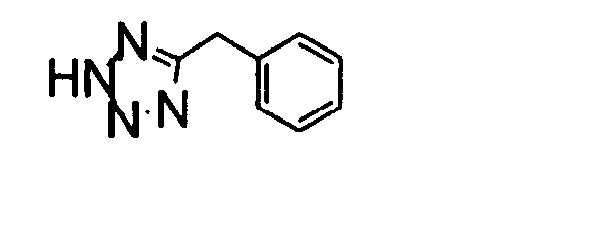
-

-

-
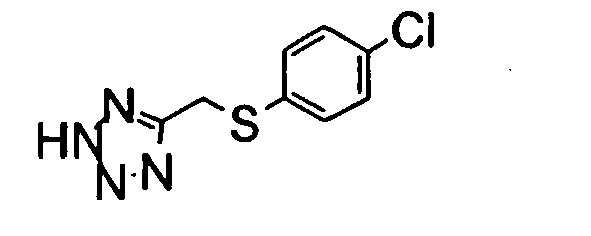
-

-

-

-

-

-

-

-

-

-

-

-

-

-
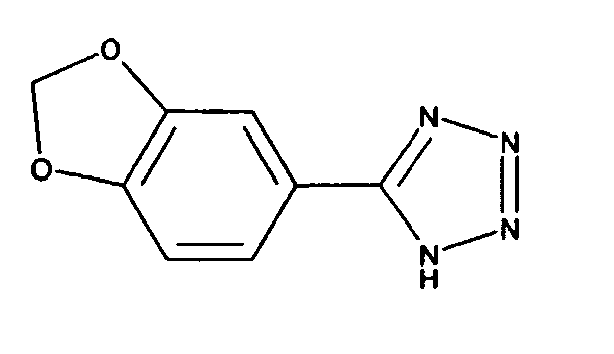
-

-

-

-

-

-

-

-

-

-

-

-

-

-

-

-

-

-

-

-

-
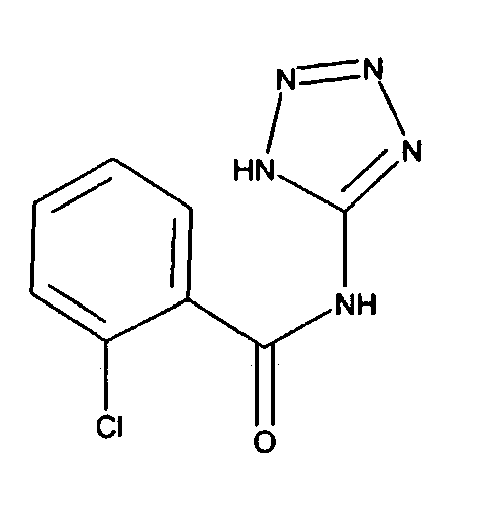
-

-
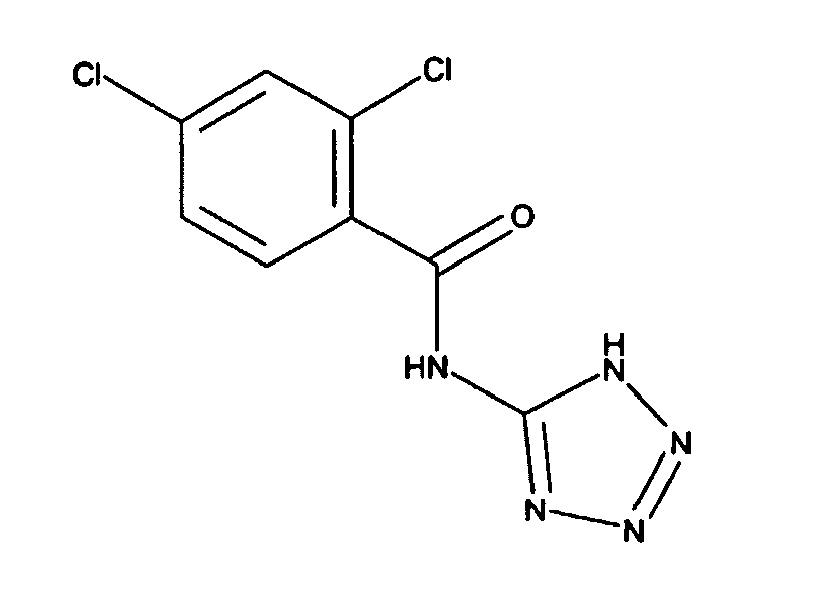
-

-

-

- The reaction is generally known as a reductive alkylation reaction and is generally performed by stirring an aldehyde with an amine at low pH (by addition of an acid, such as acetic acid or formic acid) in a solvent such as THF, DMF, NMP, methanol, ethanol, DMSO, dichloromethane, 1,2-dichloroethane, trimethyl orthoformate, triethyl orthoformate, or a mixture of two or more of these. As reducing agent sodium cyano borohydride or sodium triacetoxy borohydride may be used. The reaction is performed between 20°C and 120°C, preferably at room temperature.
- When the reductive alkylation is complete, the product is isolated by extraction, filtration, chromatography or other methods known to those skilled in the art.
- The general procedure (H) is further illustrated in the following example 647:
-

- A solution of 5-(3-aminophenyl)-2H-tetrazole (example 874, 48 mg, 0.3 mmol) in DMF (250 µL) was mixed with a solution of 4-biphenylylcarbaldehyde (54 mg, 0.3 mmol) in DMF (250 µL) and acetic acid glacial (250 µL) was added to the mixture followed by a solution of sodium cyano borohydride (15 mg, 0.24 mmol) in methanol (250 µL). The resulting mixture was shaken at room temperature for 2 hours. Water (2 mL) was added to the mixture and the resulting mixture was shaken at room temperature for 16 hours. The mixture was centrifugated (6000 rpm, 10 minutes) and the supernatant was removed by a pipette. The residue was washed with water (3 mL), centrifugated (6000 rpm, 10 minutes) and the supernatant was removed by a pipette. The residue was dried in vacuo at 40 °C for 16 hours to afford the title compound as a solid.
HPLC-MS (Method C): m/z: 328 (M+1), 350 (M+23); Rt = 4.09 min. -
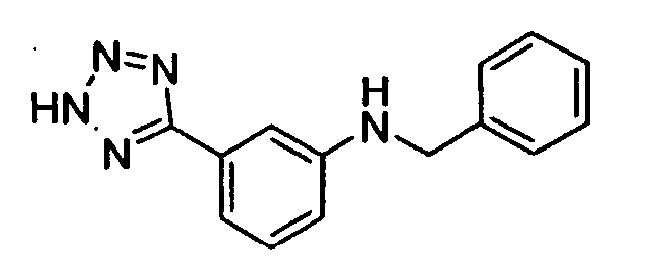
-

-

-

-

-

-

-

-

-

-

-

-

-

-

-

-

-

-

-

-
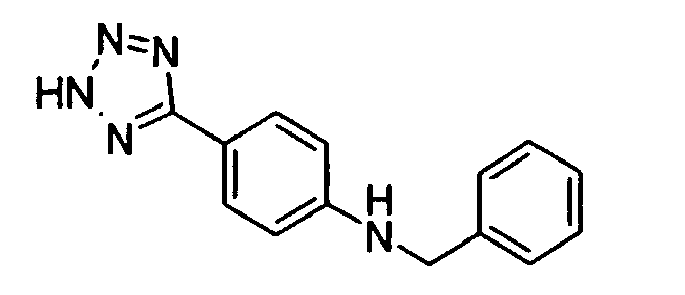
HPLC-MS (Method D): m/z: 252 (M+1); Rt = 3,97 min. -

-

-

-
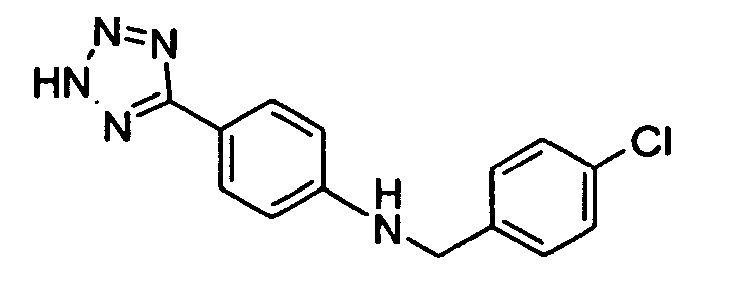
-

-

-

-

-

-

-

-

-

-

-

-
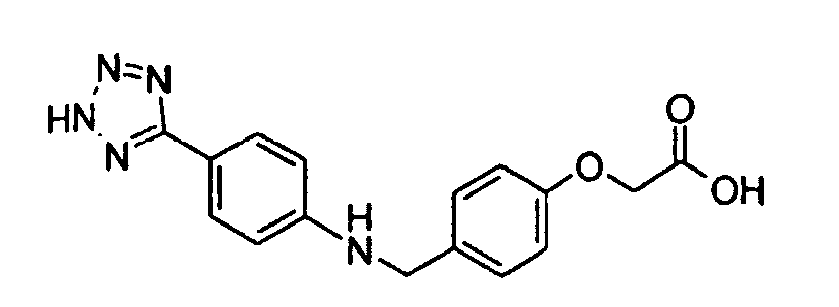
-

-

-

-

-

-

- This procedure is very similar to general procedure (A), the only difference being the carboxylic acid is containing a tetrazole moiety. When the acylation is complete, the product is isolated by extraction, filtration, chromatography or other methods known to those skilled in the art.
- The general procedure (I) is further illustrated in the following example 690:
-

- To a solution of 4-(2H-tetrazol-5-yl)benzoic acid (example 605, 4 mmol) and HOAt (4.2 mmol) in DMF (6 mL) was added 1-ethyl-3-(3'-dimethylaminopropyl)carbodiimide hydrochloride (4.2 mmol) and the resulting mixture was stirred at room temperature for 1 hour. An alquot of this HOAt-ester solution (0.45 mL) was mixed with 0.25 mL of a solution of 4-aminobenzoic acid (1.2 mmol in 1 mL DMF). (Anilines as hydrochlorides can also be utilised, a slight excess of triethylamine was added to the hydrochloride suspension in DMF prior to mixing with the HOAt-ester.) The resulting mixture was shaken for 3 days at room temperature. 1N hydrochloric acid (2 mL) was added and the mixture was shaken for 16 hours at room temperature. The solid was isolated by centrifugation (alternatively by filtration or extraction) and was washed with water (3 mL). Drying in vacuo at 40 °C for 2 days afforded the title compound.
HPLC-MS (Method D): m/z: 310 (M+1); Rt = 2.83 min. -

-

-

-

-

-

-

-

-

-

- The starting material was prepared as described in example 592.
HPLC-MS (Method D): m/z: 340 (M+1); Rt = 2.83 min. -

-

-

-

-

-

-

-

-

-
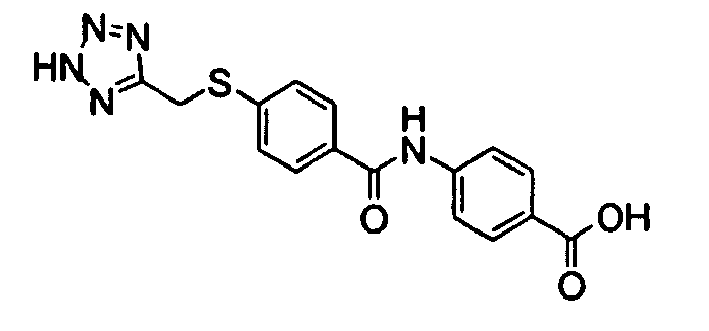
- The starting material was prepared as described in example 593.
HPLC-MS (Method D): m/z: 356 (M+1); Rt = 2.93 min. -

-
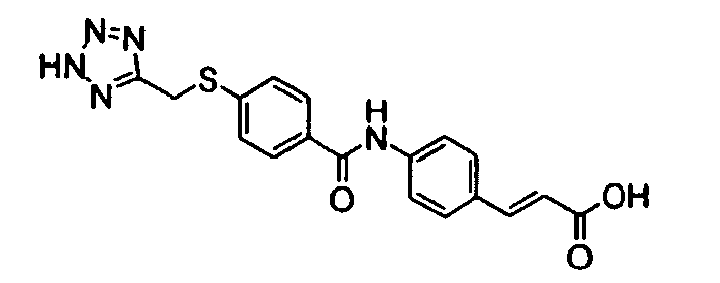
-
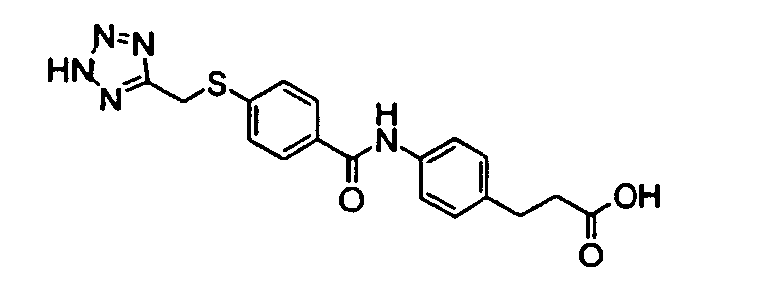
-

-

-

-

-

-

-

- This general procedure (J) is further illustrated in the following example.
-
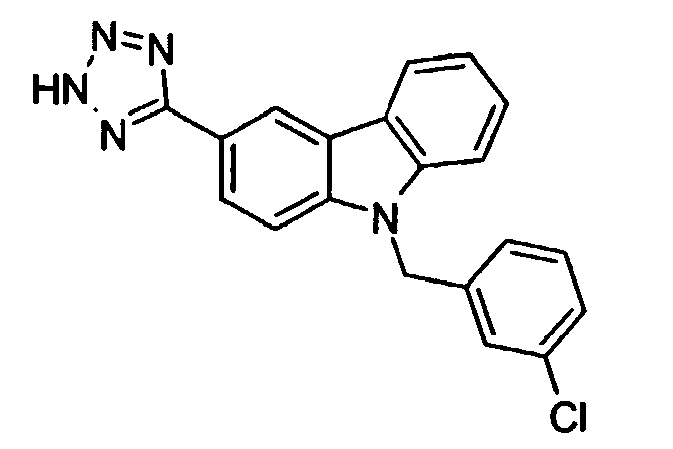
- 3-(2H-Tetrazol-5-yl)-9H-carbazole (example 594, 17 g, 72.26 mmol) was dissolved in N,N-dimethylformamide (150 mL). Triphenylmethyl chloride (21.153 g, 75.88 mmol) and triethylamine (20.14 mL, 14.62 g, 144.50 mmol) were added consecutively. The reaction mixture was stirred for 18 hours at room temperature, poured into water (1.5 L) and stirred for an additional 1 hour. The crude product was filtered off and dissolved in dichloromethane (500 mL). The organic phase was washed with water (2 x 250 mL) and dried with magnesium sulfate (1 h). Filtration followed by concentration yielded a solid which was triturated in heptanes (200 mL). Filtration furnished 3-[2-(triphenylmethyl)-2H-tetrazol-5-yl]-9H-carbazole (31.5 g) which was used without further purification.
1H-NMR (CDCl3): δ 8.87 (1H, d), 8.28 (1H, bs), 8.22 (1H, dd), 8.13 (1H, d), 7.49 (1H, d), 7.47-7.19 (18H, m); HPLC-MS (Method C): m/z: 243 (triphenylmethyl); Rt = 5.72 min. - 3-[2-(Triphenylmethyl)-2H-tetrazol-5-yl]-9H-carbazole (200 mg, 0.42 mmol) was dissolved in methyl sulfoxide (1.5 mL). Sodium hydride (34 mg, 60 %, 0.85 mmol) was added, and the resulting suspension was stirred for 30 min at room temperature. 3-Chlorobenzyl chloride (85 µL, 108 mg, 0.67 mmol) was added, and the stirring was continued at 40°C for 18 hours. The reaction mixture was cooled to ambient temperature and poured into 0.1 N hydrochloric acid (aq.) (15 mL). The precipitated solid was filtered off and washed with water (3 x 10 mL) to furnish 9-(3-chlorobenzyl)-3-[2-(triphenylmethyl)-2H-tetrazol-5-yl]-9H-carbazole, which was dissolved in a mixture of tetrahydrofuran and 6 N hydrochloric acid (aq.) (9:1) (10 mL) and stirred at room temperature for 18 hours. The reaction mixture was poured into water (100 mL). The solid was filtered off and rinsed with water (3x10mL) and dichloromethane (3x10 mL) to yield the title compound (127 mg). No further purification was necessary.
1H-NMR (DMSO-d 6): δ 8.89 (1H, d), 8.29 (1H, d), 8.12 (1H, dd), 7.90 (1H, d), 7.72 (1H, d), 7.53 (1H, t), 7.36-7.27 (4H, m), 7.08 (1H, bt), 5.78 (2H, s); HPLC-MS (Method B): m/z: 360 (M+1); Rt = 5.07 min. - The compounds in the following examples were prepared in a similar fashion. Optionally, the compounds can be further purified by recrystallization from e.g. aqueous sodium hydroxide (1 N) or by chromatography.
-

-

-

-

-

-

-

-

-

-

-

-

-

-

-

-

-

-
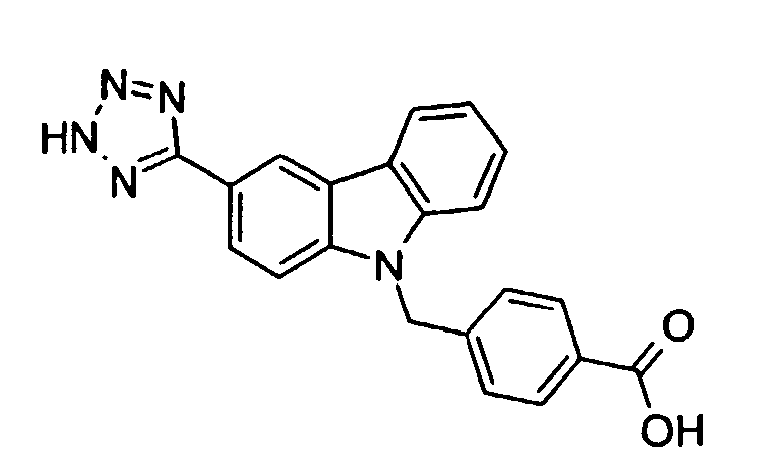
1H-NMR (DMSO-d6 ): δ 12.89 (1H, bs), 8.89 (1H, d), 8.30 (1H, d), 8.10 (1H, dd), 7.87 (1H, d), 7.86 (2H, d), 7.68 (1H, d), 7.51 (1H, t), 7.32 (1H, t), 7.27 (2H, d), 5.84 (2H, s); HPLC-MS (Method C): m/z: 370 (M+1); Rt = 3.37 min. -

-
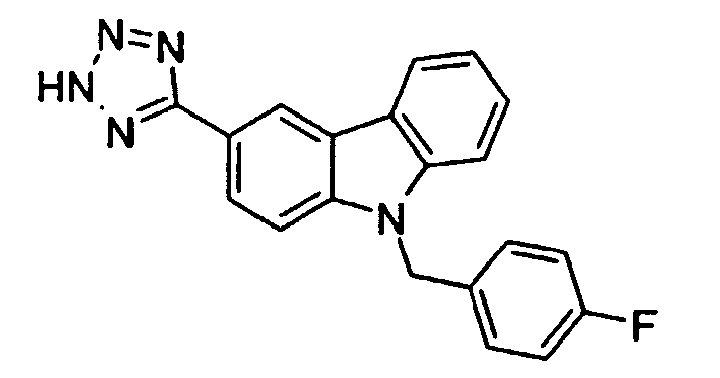
-

-

-

1H-NMR (DMSO-d 6): δ 12.97 (1H, bs), 8.90 (1H, bs), 8.30 (1H, d), 8.12 (1H, bd), 7.89 (1H, d), 7.82 (1H, m), 7.77 (1H, bs), 7.71 (1H, d), 7.53 (1H, t), 7.46-7.41 (2H, m), 7.32 (1H, t), 5.84 (2H, s); HPLC-MS (Method C): m/z: 370 (M+1); Rt = 3.35 min. -

-

-
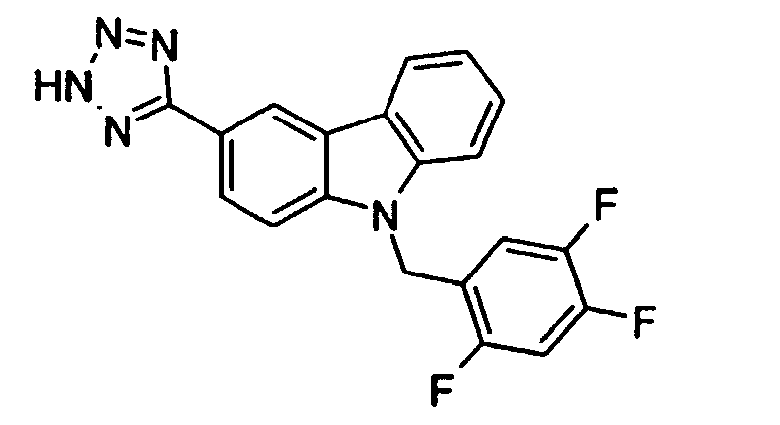
-

-

-

-

-

-

-
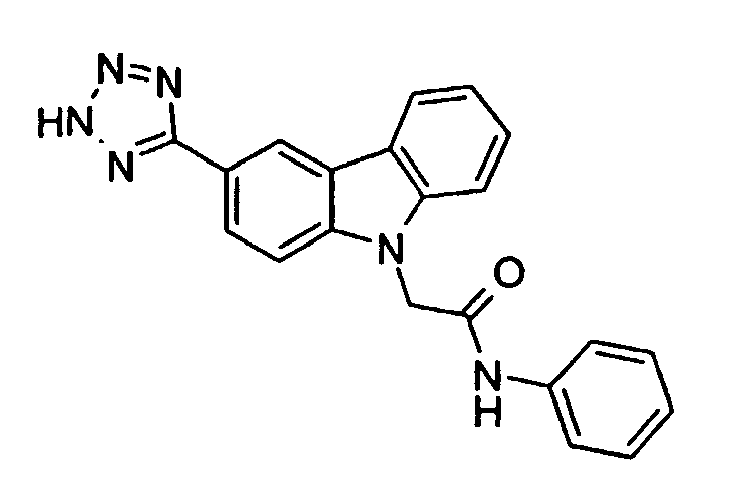
-

-

-

-

-

-

-

-
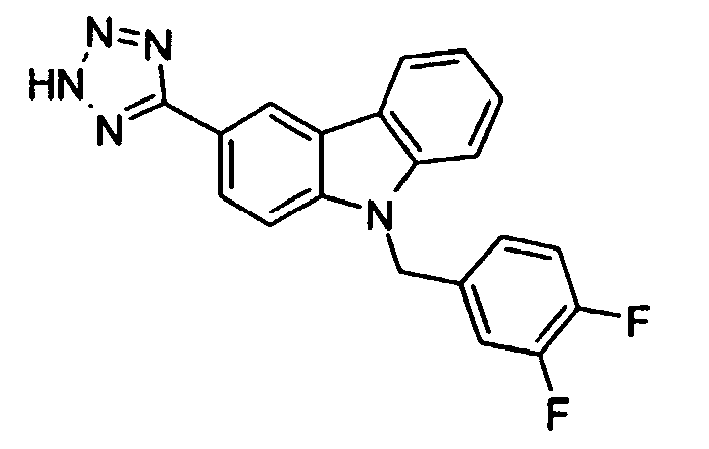
-

-

-

HPLC-MS (Method B): m/z: 413 (M+1); Rt = 3.92 min. -

-
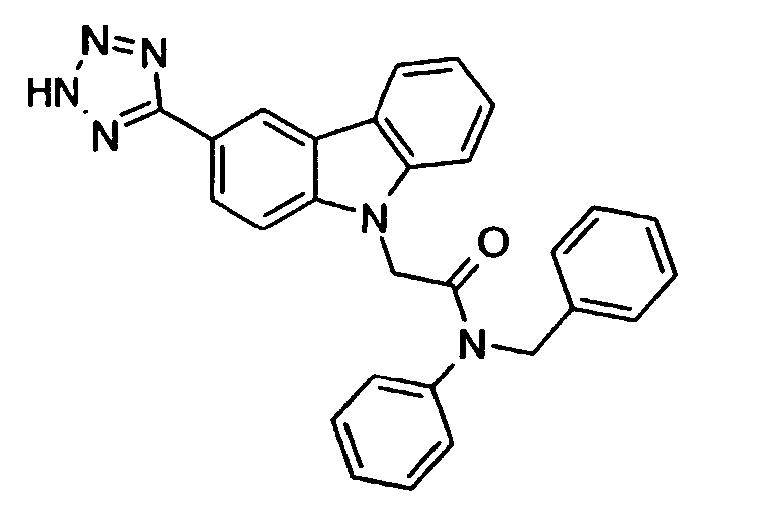
-

-

-

-

-

-

-

-

-

-

-

-
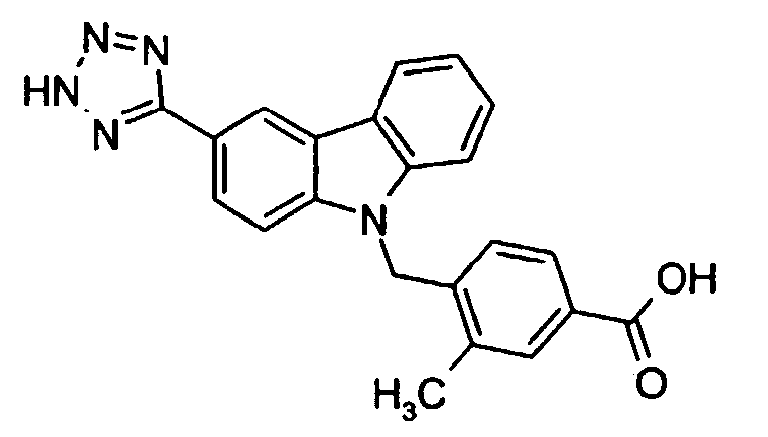
HPLC-MS (Method C): m/z: 384 (M+1); Rt = 3.56 min. -

-

-

- 3-Fluoro-4-methylbenzoic acid (3.0 g, 19.5 mmol) and benzoyl peroxide (0.18 g, 0.74 mmol) were suspended in benzene. The mixture was purged with N2 and heated to reflux. N-Bromosuccinimide (3.47 g, 19.5 mmol) was added portionwise, and reflux was maintained for 18 hours. The reaction mixture was concentrated, and the residue was washed with water (20 mL) at 70 °C for 1 hour. The crude product was isolated by filtration and washed with additional water (2 x 10 mL). The dry product was recrystallized from heptanes. Filtration furnished 4-bromomethyl-3-fluorobenzoic acid (1.92 g) which was used in the following step according to General Procedure (J).
In this preparation, a 3.6-fold excess of sodium hydride was used.
HPLC-MS (Method C): m/z: 388 (M+1); Rt = 3.49 min. -

- 5-[(4-Formylnaphthalen-1-yl)oxy]pentanoic acid intermediate obtained in example 470(3.0 g, 11.0 mmol) was dissolved in a mixture of methanol and tetrahydrofuran (9:1) (100 mL), and sodium borohydride (1.67 g, 44.1 mmol) was added portionwise at ambient temperature. After 30 minutes, the reaction mixture was concentrated to 50 mL and added to hydrochloric acid (0.1 N, 500 mL). Additional hydrochloric acid (1 N, 40 mL) was added, and 5-[(4-hydroxymethyl-naphthalen-1-yl)oxy]pentanoic acid (2.90 g) was collected by filtration. To the crude product was added concentrated hydrochloric acid (100 mL), and the suspension was stirred vigorously for 48 hours at room temperature. The crude product was filtered off and washed with water, until the pH was essentially neutral. The material was washed with heptanes to furnish 5-[(4-chloromethylnaphthalen-1-yl)oxy]pentanoic acid (3.0 g) which was used in the following step according to General Procedure (J).
- In this preparation, a 3.6-fold excess of sodium hydride was used.
HPLC-MS (Method C): m/z: 492 (M+1); Rt = 4.27 min. -

-

-

-

- Further compounds of the invention that may be prepared according to general procedure (J), and includes:
Example 787 Example 788 Example 789 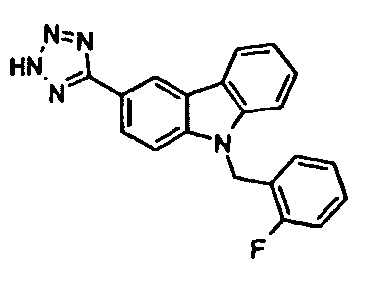


Example 790 Example 791 Example 792 


Example 793 Example 794 Example 795 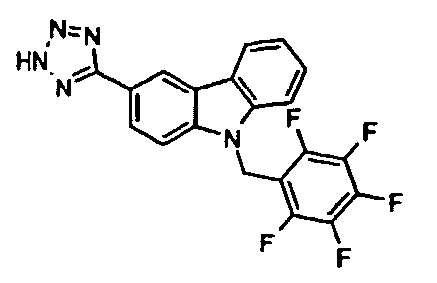


Example 796 Example 797 Example 798 


Example 799 
- The following compounds of the invention may be prepared eg. from 9-(4-bromobenzyl)-3-(2H-tetrazol-5-yl)-9H-carbazole (example 736) or from 9-(3-bromobenzyl)-3-(2H-tetrazol-5-yl)-9H-carbazole (example 730) and aryl boronic acids via the Suzuki coupling reaction eg as described in Littke, Dai & Fu J. Am. Chem. Soc., 2000, 122, 4020-8 (or references cited therein), or using the methodology described in general procedure (E), optionally changing the palladium catalyst to bis(tri-tert-butylphosphine)palladium (0).
Example 800 Example 801 Example 802 


Example 803 Example 804 Example 805 


-

- The general procedure (K) is further illustrated by the following example:
-

- 5-Cyanoindole (1.0 g, 7.0 mmol) was dissolved in N,N-dimethylformamide (14 mL) and cooled in an ice-water bath. Sodium hydride (0.31 g, 60 %, 7.8 mmol) was added, and the resulting suspension was stirred for 30 min. Benzyl chloride (0.85 mL, 0.94 g, 7.4 mmol) was added, and the cooling was discontinued. The stirring was continued for 65 hours at room temperature. Water (150 mL) was added, and the mixture was extracted with ethyl acetate (3 x 25 mL). The combined organic phases were washed with brine (30 mL) and dried with sodium sulfate (1 hour). Filtration and concentration yielded the crude material. Purification by flash chromatography on silica gel eluting with ethyl acetate/heptanes = 1:3 afforded 1.60 g 1-benzyl-1H-indole-5-carbonitrile.
HPLC-MS (Method C): m/z: 233 (M+1); Rt = 4.17 min. - 1-Benzyl-1H-indole-5-carbonitrile was transformed into 1-benzyl-5-(2H-tetrazol-5-yl)-1H-indole by the method described in general procedure (J) and in example 594. Purification was done by flash chromatography on silica gel eluting with dichloromethane/methanol =9:1.
HPLC-MS (Method C): m/z: 276 (M+1); Rt = 3.35 min. - The compounds in the following examples were prepared by the same procedure.
-

-

Calculated for C22H17N5, H2O:
73.32% C; 5.03% H; 19.43% N. Found:
73.81% C; 4.90% H; 19.31% N. -

- 5-(2H-Tetrazol-5-yl)-1H-indole (Syncom BV, Groningen, NL) (1.66g, 8.9 mmol) was treated with trityl chloride (2.5 g, 8.9 mmol) and triethyl amine (2.5 mL, 17.9 mmol) in DMF(25 mL) by stirring at RT overnight. The resulting mixture was treated with water. The gel was isolated, dissolved in methanol, treated with activated carbon; filtered and evaporated to dryness in vacuo. This afforded 3.6 g (94%) of crude 5-(2-trityl-2H-tetrazol-5-yl)-1H-indole.
HPLC-MS (Method C): m/z = 450 (M+23); Rt. = 5.32 min. - 4-Methylphenylbenzoic acid (5 g, 23.5 mmol) was mixed with CCl4 (100 mL) and under an atmosphere of nitrogen, the slurry was added N-Bromosuccinimide (4.19 g, 23.55 mmol) and dibenzoyl peroxide (0.228 g, 0.94 mmol). The mixture was subsequently heated to reflux for 0.5 hour. After cooling, DCM and water (each 30 mL) were added. The resulting precipitate was isolated, washed with water and a small amount of methanol. The solid was dried in vacuo to afford 5.27 g (77%) of 4'-bromomethylbiphenyl-4-carboxylic acid.
HPLC-MS (Method C): m/z = 291 (M+1); Rt. = 3.96 min. - 5-(2-Trityl-2H-tetrazol-5-yl)-1H-indole (3.6 g, 8.4 mmol) was dissolved in DMF (100 mL). Under nitrogen, NaH (60 % suspension in mineral oil, 34 mmol) was added slowly. 4'-Bromomethylbiphenyl-4-carboxylic acid (2.7 g, 9.2 mmol) was added over 5 minutes and the resulting slurry was heated at 40 °C for 16 hours. The mixture was poured into water (100mL) and the precipitate was isolated by filtration and treated with THF/6N HCl (9/1) (70 mL) at room temperature for 16 hours. The mixture was subsequently evaporated to dryness in vacuo, the residue was treated with water and the solid was isolated by filtration and washed thoroughly 3 times with DCM. The solid was dissolved in hot THF (400 mL) treated with activated carbon and filtered. The filtrate was evaporated in vacuo to dryness. This afforded 1.6 g (50%) of the title compound.
HPLC-MS (Method C): m/z = 396 (M+1); Rt. = 3.51 min. -
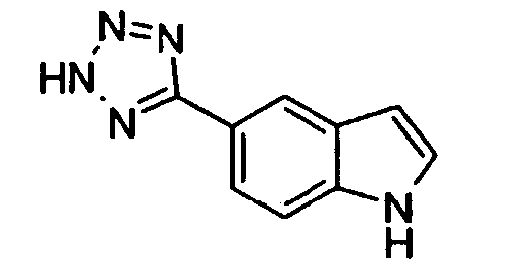
- 5-(2H-Tetrazol-5-yl)-1H-indole was prepared from 5-cyanoindole according to the method described in example 594.
HPLC-MS (Method C): m/z: 186 (M+1); Rt= 1.68 min. -

- 1-Benzyl-1H-indole-4-carbonitrile was prepared from 4-cyanoindole according to the method described in example 806.
HPLC-MS (Method C): m/z: 233 (M+1); Rt = 4.24 min. - 1-Benzyl-4-(2H-tetrazol-5-yl)-1H-indole was prepared from 1-benryl-1H-indole-4-carbonitrile according to the method described in example 594.
HPLC-MS (Method C): m/z: 276 (M+1); Rt = 3.44 min. -


Pol- is a polystyrene resin loaded with a 2-chlorotrityl linker, graphically shown below:
- This general procedure (L) is further illustrated by the following example:
-
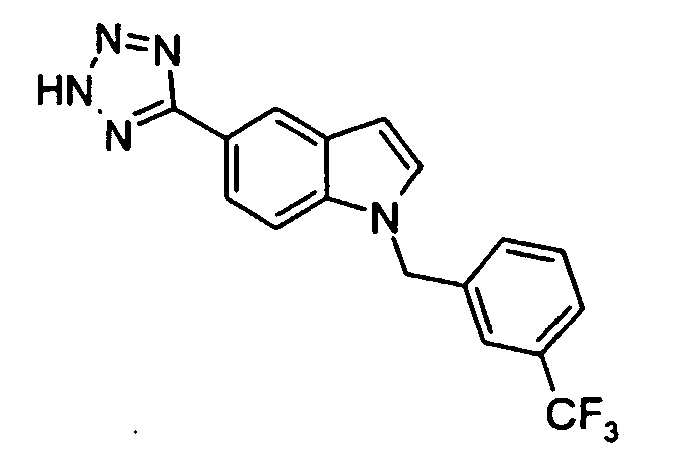
- 2-Chlorotritylchloride resin (100 mg, 0.114 mmol active chloride) was swelled in dichloromethane (2 mL) for 30 min. The solvent was drained, and a solution of 5-(2H-tetrazol-5-yl)-1H-indole (example 810) (63 mg, 0.34 mmol) in a mixture of N,N-dimethylformamide, dichloromethane and N,N-di(2-propyl)ethylamine (DIPEA) (5:5:2) (1.1 mL) was added. The reaction mixture was shaken at room temperature for 20 hours. The solvent was removed by filtration, and the resin was washed consecutively with N,N-dimethylformamide (2 x 4 mL), dichloromethane (6 x 4 mL) and methyl sulfoxide (2 x 4 mL). Methyl sulfoxide (1 mL) was added, followed by the addition of a solution of lithium bis(trimethylsilyl)amide in tetrahydrofuran (1.0 M, 0.57 mL, 0.57 mmol). The mixture was shaken for 30 min at room temperature, before 3-(trifluoromethyl)benzyl bromide (273 mg, 1.14 mmol) was added as a solution in methyl sulfoxide (0.2 mL). The reaction mixture was shaken for 20 hours at room temperature. The drained resin was washed consecutively with methyl sulfoxide (2 x 4 mL), dichloromethane (2 x 4 mL), methanol (2 x 4 mL), dichloromethane (2 x 4 mL) and tetrahydrofuran (4 mL). The resin was treated with a solution of hydrogen chloride in tetrahydrofuran, ethyl ether and ethanol = 8:1:1 (0.1 M, 3 mL) for 6 hours at room temperature. The resin was drained and the filtrate was concentrated in vacuo. The crude product was re-suspended in dichloromethane (1.5 mL) and concentrated three times to afford the title compound (35 mg). No further purification was necessary.
HPLC-MS (Method B): m/z: 344 (M+1); Rt = 4.35 min.
1H-NMR (DMSO-d6 ): δ 8.29 (1H, s), 7.80 (1H, dd), 7.72 (2H, m), 7.64 (2H, bs), 7.56 (1H, t), 7.48 (1H, d), 6.70 (1H, d), 5.62 (2H, s). - The compounds in the following examples were prepared in a similar fashion. Optionally, the compounds can be further purified by recrystallization or by chromatography.
-

-

-

-

-

-

-
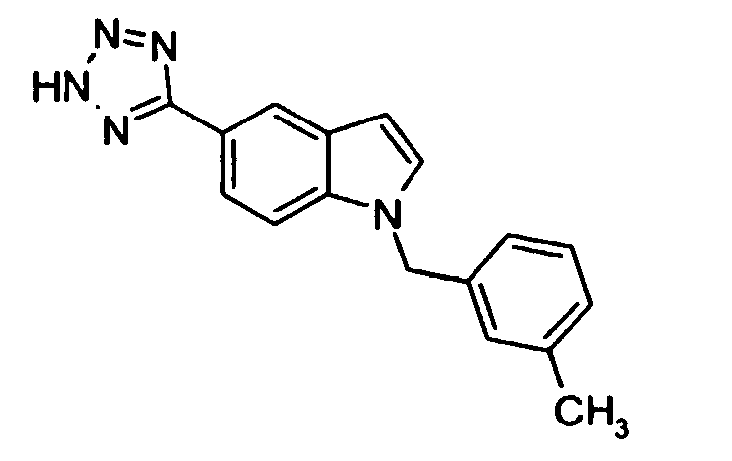
-

-

-

-

-

-

-

-

- In this preparation, a larger excess of lithium bis(trimethylsilyl)amide in tetrahydrofuran (1.0 M, 1.7 mL, 1.7 mmol) was used.
HPLC-MS (Method B): m/z: 320 (M+1); Rt = 2.84 min. -

- In this preparation, a larger excess of lithium bis(trimethylsilyl)amide in tetrahydrofuran (1.0 M, 1.7 mL, 1.7 mmol) was used.
HPLC-MS (Method B): m/z: 320 (M+1); Rt = 2.91 min. -

-

-

-

-

-

-

- Further compounds of the invention that may be prepared according to general procedure (K) and/or (L) includes:
Example 836 Example 837 Example 838 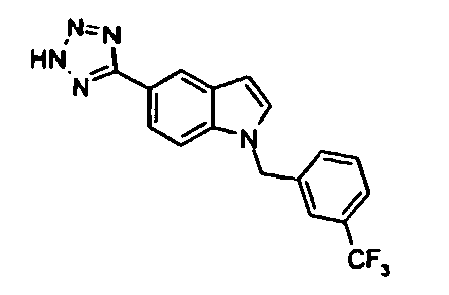


Example 839 Example 840 Example 841 


Example 842 Example 843 Example 844 


Example 845 Example 846 Example 847 

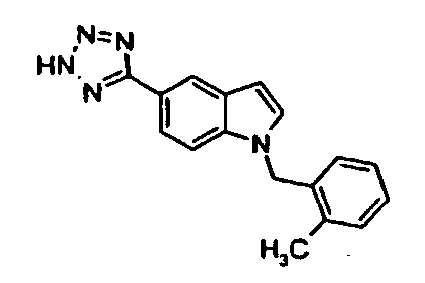
Example 848 Example 849 Example 850 


Example 851 Example 852 Example 853 


Example 854 Example 855 Example 856 


Example 857 Example 858 Example 859 


- The following compounds of the invention may be prepared eg. from 1-(4-bromobenzyl)-5-(2H-tetrazol-5-yl)-1H-indole (example 807) or from the analogue 1-(3-bromobenzyl)-5-(2H-tetrazol-5-yl)-1H-indole and aryl boronic acids via the Suzuki coupling reaction eg as described in Littke, Dai & Fu J. Am. Chem. Soc., 2000, 122, 4020-8 (or references cited therein), or using the methodology described in general procedure (E), optionally changing the palladium catalyst to bis(tri-tert-butylphosphine)palladium (0).
Example 860 Example 861 

Example 862 Example 863 Example 864 


-

- The general procedure (M) is further illustrated by the following example:
-

- To a solution of 5-cyanoindole (1.0 g, 7.0 mmol) in dichloromethane (8 mL) was added 4-(dimethylamino)pyridine (0.171 g, 1.4 mmol), triethylamine (1.96 mL, 1.42 g, 14 mmol) and benzoyl chloride (0.89 mL, 1.08 g, 7.7 mmol). The resulting mixture was stirred for 18 hours at room temperature. The mixture was diluted with dichloromethane (80 mL) and washed consecutively with a saturated solution of sodium hydrogencarbonate (40 mL) and brine (40 mL). The organic phase was dried with magnesium sulfate (1 hour). Filtration and concentration furnished the crude material which was purified by flash chromatography on silica gel, eluting with ethyl acetate/heptanes = 2:3. 1-Benzoyl-1H-indole-5-carbonitrile was obtained as a solid.
HPLC-MS (Method C): m/z: 247 (M+1); Rt = 4.07 min. - 1-Benzoyl-1H-indole-5-carbonitrile was transformed into 1-benzoyl-5-(2H-tetrazol-5-yl)-1H-indole by the method described in example 594.
HPLC (Method C): Rt = 1.68 min. - The compound in the following example was prepared by the same procedure.
-
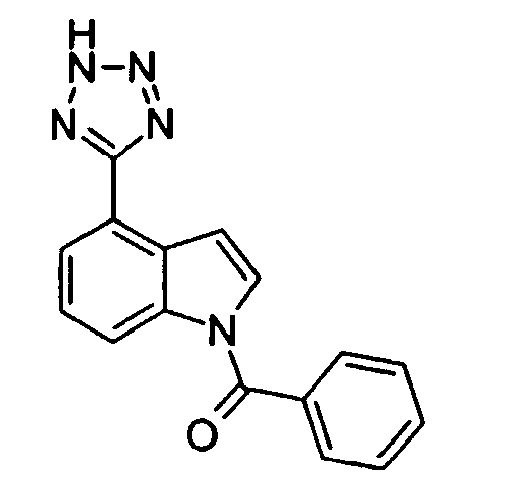
- 1-Benzoyl-1H-indole-4-carbonitrile was prepared from 4-cyanoindole according to the method described in example 865.
HPLC-MS (Method C): m/z: 247 (M+1); Rt = 4.24 min. - 1-Benzoyl-4-(2H-tetrazol-5-yl)-1H-indole was prepared from 1-benzoyl-1H-indole-4-carbonitrile according to the method described in example 594.
HPLC (Method C): Rt = 1.56 min. -

-

-

-

-

-

- The following known and commercially available compounds do all bind to the His B10 Zn2+ site of the insulin hexamer:
-

-

-

- A mixture of 4-aminobenzonitrile (10 g, 84.6 mmol), sodium azide (16.5 g, 254 mmol) and ammonium chloride (13.6 g, 254 mmol) in DMF was heated at 125 °C for 16 hours. The cooled mixture was filtered and the filtrate was concentrated in vacuo. The residue was added water (200 mL) and diethyl ether (200 mL) which resulted in crystallisation. The mixture was filtered and the solid was dried in vacuo at 40 °C for 16 hours to afford 5-(4-aminophenyl)-2H-tetrazole.
1H NMR DMSO-d 6): δ = 5.7 (3H, bs), 6.69 (2H, d), 7.69 (2H, d). HPLC-MS (Method C): m/z: 162 (M+1); Rt = 0,55 min. -

-

-

- Frag-CO2H may be prepared eg by general procedure (D) or by other similar procedures described herein, or may be commercially available.
- The procedure is further illustrated in the following example 878:
-

- [3-(2,4-Dioxothiazolidin-5-ylidenemethyl)indol-1-yl]acetic acid (example 478, 90.7 mg, 0.3 mmol) was dissolved in NMP (1 mL) and added to a mixture of 1-ethyl-3-(3-dimethylaminopropyl)carbodiimide, hydrochloride (86.4 mg, 0.45 mmol) and 1-hydroxybenzotriazol (68.8 mg, 0.45 mmol) in NMP (1 mL). The resulting mixture was shaken at RT for 2 h. 4-Chlorobenzylamine (51 mg, 0.36 mmol) and DIPEA (46.4 mg, 0.36 mmol) in NMP (1 mL) were added to the mixture and the resulting mixture shaken at RT for 2 days. Subsequently ethyl acetate (10 mL) was added and the resulting mixture washed with 2x10 mL water followed by saturated ammonium chloride (5 mL). The organic phase was evaporated to dryness giving 75 mg (57%) of the title compound.
HPLC-MS (Method C): m/z: 426 (M+1); Rt. = 3.79 min. -

-

-

-

-

-

-

-

-
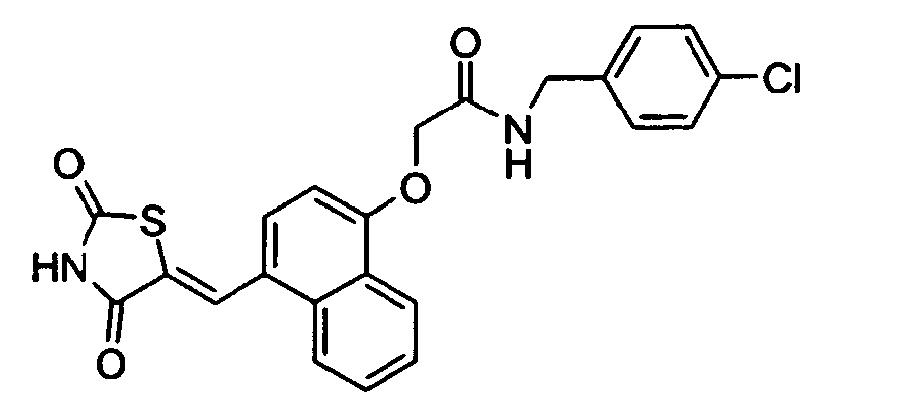
-

-

-
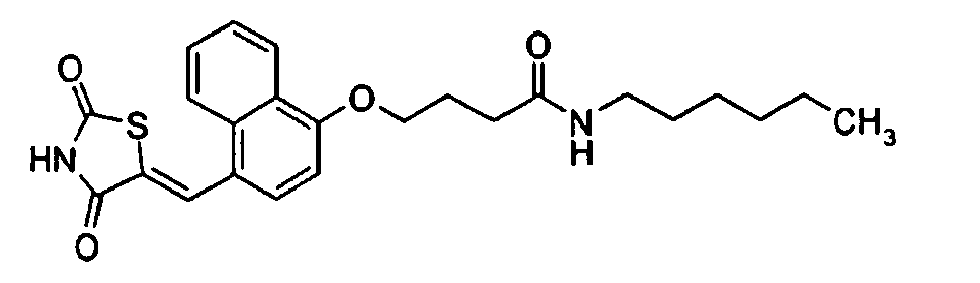
-

-

-

-

-

-

-

-

- 4-[3-(1H-Tetrazol-5-yl)carbazol-9-ylmethyl]benzoic acid (2.00 g, 5.41 mmol), 1-hydroxybenzotriazole (1.46 g, 10.8 mmol) and N,N-di(2-propyl)ethylamine (4.72 mL, 3.50 g, 27.1 mmol) were dissolved in dry N,N-dimethylformamide (60 mL). The mixture was cooled in an ice-water bath, and 1-[3-(dimethylamino)propyl]-3-ethylcarbodiimide hydrochloride (1.45 g, 7.56 mmol) and (S)-aminosuccinic acid dimethyl ester hydrochloride (1.28 g, 6.48 mmol) were added. The cooling was discontinued, and the reaction mixture was stirred at room temperature for 18 hours before it was poured into hydrochloric acid (0.1 N, 600 mL). The solid was collected by filtration and washed with water (2 X 25 mL) to furnish the title compound.
HPLC-MS (Method C): m/z: 513 (M+1); Rt = 3.65 min.
1H-NMR (DMSO-d6): δ 8.90 (1H, d), 8.86 (1H, d), 8.29 (1H, d), 8.11 (1H, dd), 7.87 (1H, d), 7.75 (2H, d), 7.69 (1H, d), 7.51 (1H, t), 7.32 (1H, t), 7.28 (2H, d), 5.82 (2H, s), 4.79 (1H, m), 3.61 (3H, s), 3.58 (3H, s), 2.92 (1H, dd), 2.78 (1H, dd). -

- 2-{4-[3-(2H-Tetrazol-5-yl)carbazol-9-ytmethyl]benzoylamino}succinic acid dimethyl ester (1.20 g, 2.34 mmol) was dissolved in tetrahydrofuran (30 mL). Aqueous sodium hydroxide (1 N, 14 mL) was added, and the resulting mixture was stirred at room temperature for 18 hours. The reaction mixture was poured into hydrochloric acid (0.1 N, 500 mL). The solid was collected by filtration and washed with water (2 X 25 mL) and diethyl ether (2 X 25 mL) to furnish the title compound.
HPLC-MS (Method C): m/z: 485 (M+1); Rt = 2.94 min.
1H-NMR (DMSO-d6): δ 12.44 (2H, s (br)), 8.90 (1H, d), 8.68 (1H, d), 8.29 (1H, d), 8.11 (1H, dd), 7.87 (1H, d), 7.75 (2H, d), 7.68 (1H, d), 7.52 (1H, t), 7.32 (1H, t), 7.27 (2H, d), 5.82 (2H, s), 4.70 (1H, m), 2.81 (1H, dd), 2.65 (1H, dd). - The compounds in the following examples were prepared in a similar fashion.
-

-

-

-

-

-

-

-

-

-

-
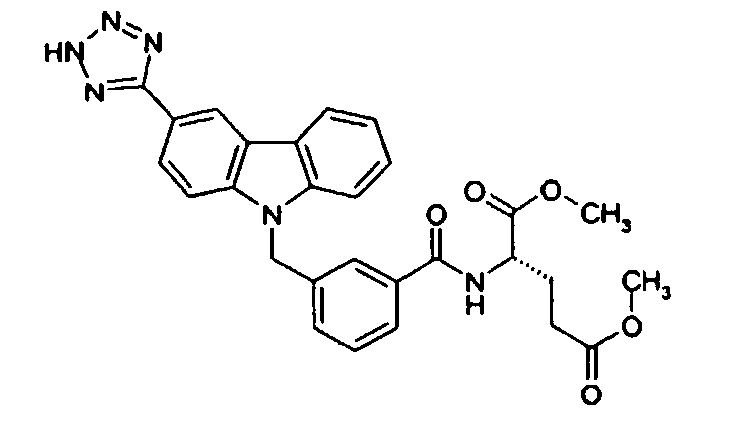
-

-

-

-

-
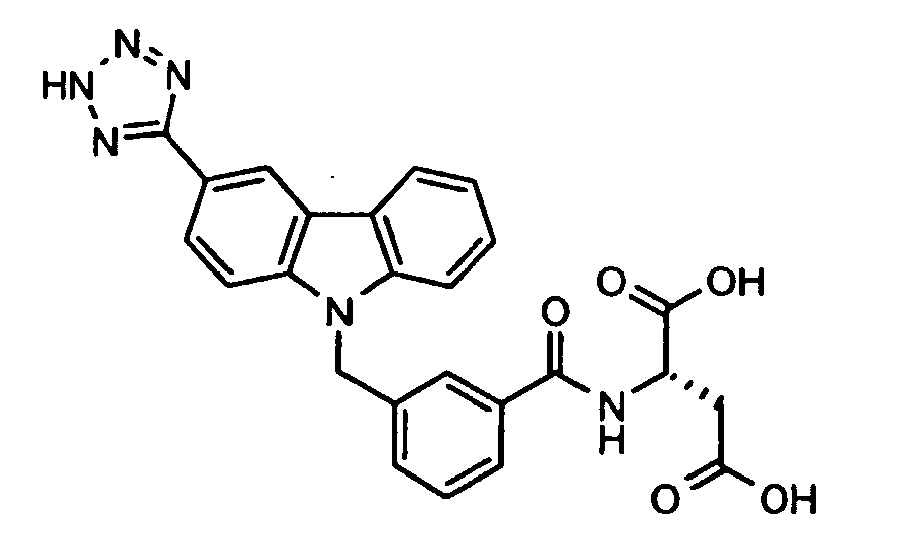
-

-

- The title compound was prepared by coupling of (S)-2-{4-[3-(2H-tetrazol-5-yl)carbazol-9-ylmethyl]benzoylamino}pentanedioic acid bis-(2,5-dioxopyrrolidin-1-yl) ester (prepared from (S)-2-{4-[3-(2H-tetrazol-5-yl)carbazol-9-ylmethyl]benzoylamino}pentanedioic acid by essentially the same procedure as described for the synthesis of 4-[3-(2H-tetrazol-5-yl)carbazol-9-ylmethyl]benzoic acid 2,5-dioxopyrrolidin-1-yl ester) with 4-aminobutyric acid according to the procedure described for the preparation of 4-{4-[3-(2H-tetrazol-5-yl)carbazol-9-ylmethyl]benzoylamino}butyric acid.
HPLC-MS (Method C): m/z: 669 (M+1); Rt = 2.84 min. -

-

-

-

- The title compound was prepared by coupling of 4-[3-(2H-tetrazol-5-yl)carbazol-9-ylmethyl]benzoic acid 2,5-dioxopyrrolidin-1-yl ester with [2-(2-aminoethoxy)ethoxy]acetic acid (prepared from [2-[2-(Fmoc-amino)ethoxy]ethoxy]acetic acid by treatment with PS-Trisamine resin in DMF).
HPLC-MS (Method C): m/z: 515 (M+1); Rt = 3.10 min. - The commercially available compounds in the following examples do all bind to the HisB10 Zn2+site:
-

-

-

-

-

-

-

-

-

-

-

-

-

-

-

-

-

-

-

- Preparation of 1-aryl-1,4-dihydrotetrazole-5-thiones (or the tautomeric 1-aryltetrazole-5-thiols) is described in the literature (eg. by Kauer & Sheppard, J. Org. Chem., 32, 3580-92 (1967)) and is generally performed eg. by reaction of aryl-isothiocyanates with sodium azide followed by acidification
- 1-Aryl-1,4-dihydrotetrazole-5-thiones with a carboxylic acid tethered to the aryl group may be prepared as shown in the following scheme:

- Step 1 is a phenol alkylation and is very similar to steps 1 and 2 of general procedure (D) and may also be prepared similarly as described in example 481.
- Step 2 is a reduction of the nitro group. SnCl2, H2 over Pd/C and many other procedures known to those skilled in the art may be utilised.
- Step 3 is formation of an arylisothiocyanate from the corresponding aniline. As reagents CS2, CSCl2, or other reagents known to those skilled in the art, may be utilised.
- Step 4 is a conversion to mercaptotetrazole as described above.
- Compounds of the invention include:
Example 941 Example 942 

Example 943 Example 944 

Example 945 Example 946 

Example 947 
-

- Phenylsulphonyl acetonitrile (2.0 g, 11.04 mmol) was mixed with 4-hydroxybenzaldehyde (1.35 g, 11.04 mmol) in DMF (10 mL) and toluene (20 mL). The mixture was refluxed for 3 hours and subsequently evaporated to dryness in vacuo. The residue was treated with diethyl ether and toluene. The solid formed was filtered to afford 2.08 g (66%) of 2-benzenesulfonyl-3-(4-hydroxyphenyl)acrylonitrile.
HPLC-MS (Method C): m/z: 286 (M+1); Rt. = 3.56 min. - A mixture of 2-benzenesulfonyl-3-(4-hydroxyphenyl)acrylonitrile (2.08 g, 7.3 mmol) and sodium azide (0.47g,7.3 mmol) in DMF (50 mL) was heated at reflux temperature 2 hours. After cooling, the mixture was poured on ice. The mixture was evaporated in vacuo to almost dryness and toluene was added. After filtration, the organic phase was evaporated in vacuo. The residue was purified by silicagel chromatography eluting with a mixture of ethyl acetate and heptane (1:2). This afforded 1.2 g (76%) of the title compound.
1H NMR (DMSO-d 6): 10.2 (broad,1H); 7.74 (d,2H); 6.99 (d,2H); 3.6-3.2 (broad, 1H).
HPLC-MS (Method C) m/z: = 187 (M+1); Rt. = 1.93 min -

AA is as defined above, - Steps 1 and 2 are described in the literature (eg Beck & Gûnther, Chem. Ber., 106, 2758-66 (1973))
- Step 1 is a Knoevenagel condensation of the aldehyde AA-CHO with phenylsulfonylacetonitrile and step 2 is a reaction of the vinylsulfonyl compound obtained in step 1 with sodium azide. This reaction is usually performed in DMF at 90 -110 °C.
- This general procedure is further illustrated in the following example 949:
-

- Phenylsulphonylacetonitrile (0.1 g, 0.55 mmol) was mixed with 4-formylphenoxyactic acid (0.099 g, 0.55 mmol) in DMF (3 mL) and heated to 110 °C for 3 h and subsequently cooled to RT. Sodium azide (0.036 g, 0.55 mmol) was added and the resulting mixture was heated to 110 °C for 3 h and cooled to RT. The mixture was poured into water (20 mL) and centrifuged. The supernatant was discarded, ethanol (5 mL) was added and the mixture was centrifuged again. After discarding the supernatant, the residue was dried in vacuo to afford 50 mg (37%) of [4-(5-Cyano-1H[1,2,3]triazol-4-yl)phenoxy]acetic acid.
HPLC-MS (Method C): m/z: 245 (M+1) Rt. 2.19 min. -

-

-

- 1,4 Dimethylcarbazol-3-carbaldehyde (0.68 g, 3.08 mmol) was dissolved in dry DMF (15 mL), NaH (diethyl ether washed) (0.162 g, 6.7 mol) was slowly added under nitrogen and the mixture was stirred for 1 hour at room temperature. 4-Bromomethylbenzoic acid (0.73 g, 3.4 mmol) was slowly added and the resulting slurry was heated to 40 °C for 16 hours. Water (5 mL) and hydrochloric acid (6N, 3 mL) were added. After stirring for 20 min at room temperature, the precipitate was filtered off and washed twice with acetone to afford after drying 0.38 g (34%) of 4-(3-formyl-1,4-dimethylcarbazol-9-ylmethyl)benzoic acid.
HPLC-MS (Method C) : m/z = 358 (M+1), RT. = 4.15 min. -
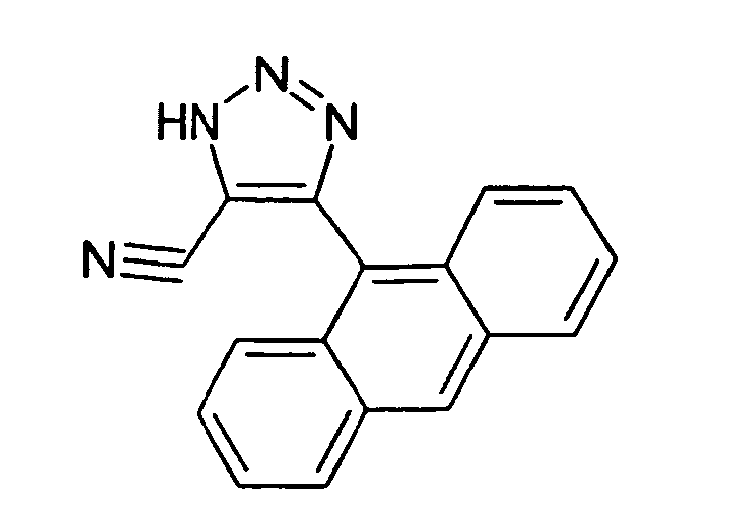
-

-
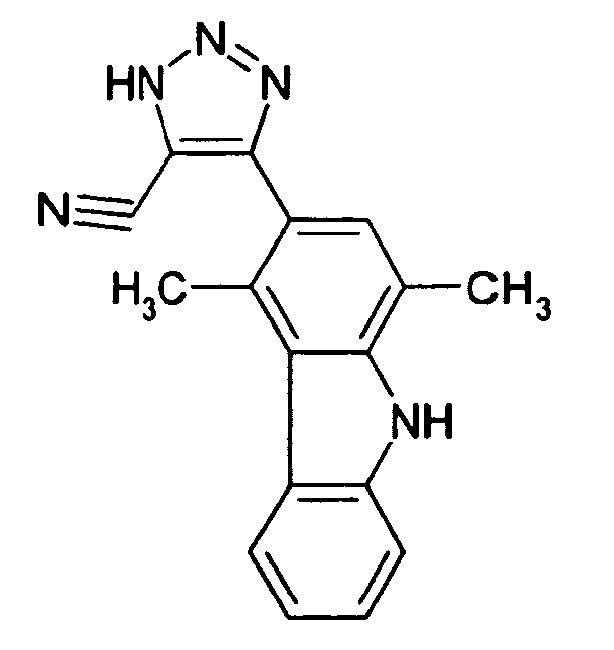
-
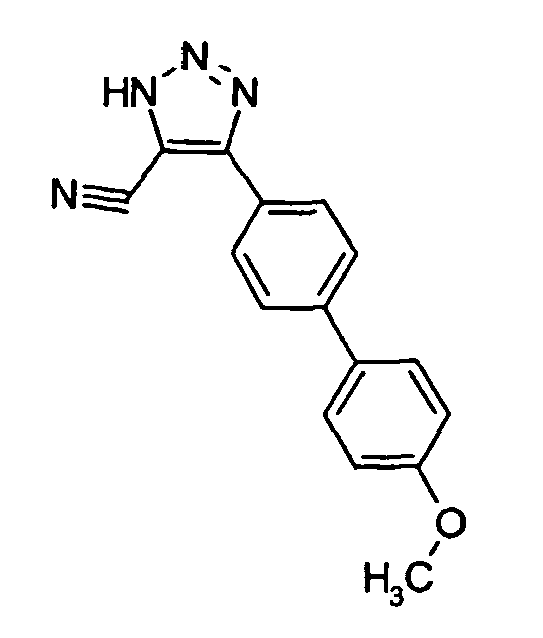
-
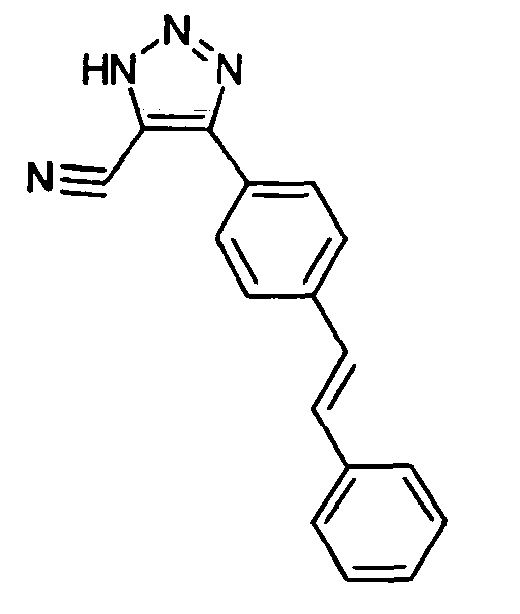
-

-

-

- This compound is commercially available (MENAI).
-

- This compound is commercially available (MENAI).
-

- The compounds in the following examples are commercially available and may be prepared using a similar methodology:
-
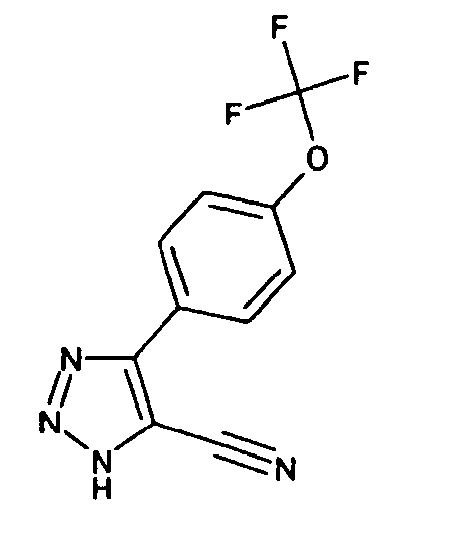
-

-

-

-

-

-
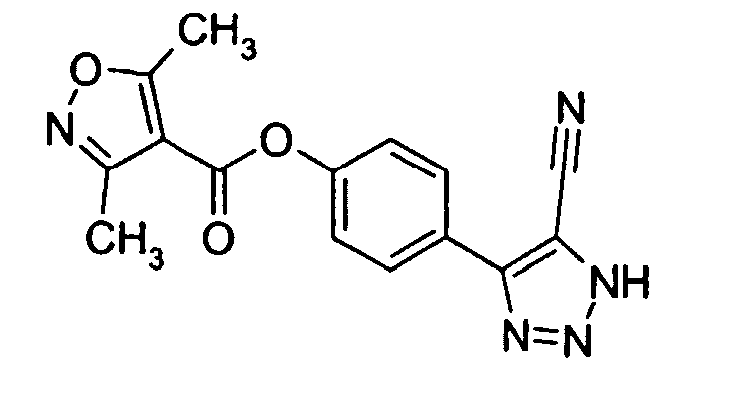
-

-

-

-

-

-

- The following cyanotriazoles are also compounds of the invention:
- 4-(2-Chloro-6-fluorophenyl)-1H-[1,2,3]triazole-5-carbonitrile.
- Terephthalic acid mono[4-(5-cyano-1H-[1,2,3]triazol-4-yl)phenyl] ester.
- N-[4-(5-cyano-1H-[1,2,3]triazol-4-yl)-phenyl]terephthalamic acid
- 4-(4-Octyloxyphenyl)-1H-[1,2,3]triazole-5-carbonitrile
- 4-(4-Styrylphenyl)-1H-[1,2,3]triazole-5-carbonitrile.
- 4-(4'-Trifluoromethylbiphenyl-4-yl)-1H-[1,2,3]triazole-5-carbonitrile.
- 4-(4'-Chlorobiphenyl-4-yl)-1H-[1,2,3]triazole-5-carbonitrile.
- 4-(4'-Methoxybiphenyl-4-yl)-1H-[1,2,3]triazole-5-carbonitrile.
- 4-(1-Naphthyl)-1H-[1,2,3]triazole-5-carbonitrile.
- 4-(9-Anthranyl)-1H-[1,2,3]triazole-5-carbonitrile.
- 4-(4-Methoxy-1-naphthyl)-1H-[1,2,3]triazole-5-carbonitrile.
- 4-(4-Aminophenyl)-1H-[1,2,3]triazole-5-carbonitrile.
- 4-(2-Naphthyl)-1H-[1,2,3]triazole-5-carbonitrile.
-

- n is 1 or 3-20,
- AA is as defined above,
- R" is a standard carboxylic acid protecting group, such as C1-C6-alkyl or benzyl and Lea is a leaving group, such as chloro, bromo, iodo, methanesulfonyloxy, toluenesulfonyloxy or the like.
- This procedure is very similar to general procedure (D), steps 1 and 2 are identical.
- Steps 3 and 4 are described in the literature (eg Beck & Gûnther, Chem. Ber., 106, 2758-66 (1973))
- Step 3 is a Knoevenagel condensation of the aldehyde obtained in step 2 with phenylsulfonylacetonitrile and step 4 is a reaction of the vinylsulfonyl compound obtained in step 3 with sodium azide. This reaction is usually performed in DMF at 90-110 °C.
- This General procedure (P) is further illustrated in the following two examples
-

- 6-Hydroxynaphthalene-2-carbaldehyde (Syncom BV. NL, 15.5 g, 90 mmol) and K2CO3 (62.2 g, 450 mmol) were mixed in DMF (300mL) and stirred at room temperature for 1 hour. Ethyl 5-bromovalerate (21.65 g, 103.5 mmol) was added and the mixture was stirred at room temperature for 16 hours. Activated carbon was added and the mixture was filtered. The filtrate was evaporated to dryness in vacuo to afford 28.4 g of crude 5-(6-formylnaphthalen-2-yloxy)pentanoic acid ethyl ester, which was used without further purification.
HPLC-MS (Method C): m/z = 301 (M+1); Rt. = 4.39 min. - 5-(6-Formylnaphthalen-2-yloxy)pentanoic acid ethyl ester (28.4 g, 94.5 mmol), phenylsulfonylacetonitrile (20.6 g, 113.5 mmol), and piperidine (0.94 mL) were dissolved in DMF (200 mL) and the mixture was heated at 50 °C for 16 hours. The resulting mixture was evaporated to dryness in vacuo and the residue was dried for 16 hours at 40 °C in vacuo. The solid was recrystallised from 2-propanol (800 mL) and dried again as described above. This afforded 35 g (80%) of 5-[6-(2-benzenesulfonyl-2-cyanovinyl)naphthalen-2-yloxy]pentanoic acid ethyl ester.
HPLC-MS (Method C): m/z = 486 (M+23); Rt. = 5.09 min. - 5-[6-(2-Benzenesulfonyl-2-cyanovinyl)naphthalen-2-yloxy]pentanoic acid ethyl ester (35 g, 74.6 mmol) and sodium azide (4.9 g, 75.6 mmol) were dissolved in DMF (100 mL) and stirred for 16 hours at 50 °C. The mixture was evaporated to dryness in vacuo, redissolved in THF /ethanol and a small amount of precipitate was filtered off. The resulting filtrate was poured into water (2.5 L). Filtration afforded after drying 24.5 g (88%) of 5-[6-(5-cyano-1H-[1,2,3]triazol-4-yl)naphthalen-2-yloxy]pentanoic acid ethyl ester (24.5 g, 88%).
HPLC-MS (Method C): m/z = 365 (M+1); Rt. = 4.36 min. -

- 5-[6-(5-Cyano-1H-[1,2,3]triazol-4-yl)naphthalen-2-yloxy]pentanoicacid ethyl ester (24.5 g, 67.4 mmol) was dissolved in THF (150 mL) and mixed with sodium hydroxide (8.1 g, 202 mmol) dissolved in water (50 mL). The mixture was stirred for 2 days and the volatiles were evaporated in vacuo. The resulting aqueous solution was poured into a mixture of water (1 L) and hydrochloric acid (1N, 250 mL). The solid was isolated by filtration, dissolved in sodium hydroxide (1N, 200 mL), and the solution was washed with DCM and then ethyl acetate, the aquous layer was acidified with hydrochloric acid (12N). The precipitate was isolated by filtration, dissolved in THF / diethyl ether, the solution was treated with MgSO4 and activated carbon, filtrated and evaporated in vacuo to almost dryness followed by precipitation by addition of pentane (1L). This afforded after drying in vacuo 17.2 g ( 76%) of the title compound.
HPLC-MS (Method C): m/z = 337 (M+1); Rt. = 3.49 min. -

-

-

-

-

-

-

- The following compounds may be prepared according to this general procedure (P):
- 4-(4-(5-Cyano-1H-[1,2,3]triazol-4-yl)phenoxy)butyric acid:


- 2-(4-(5-Cyano-1H-[1,2,3]triazol-4-yl)phenoxy)acetic acid:

- 4-(4-(5-Cyano-1H-[1,2,3]triazol-4-yl)phenoxy)butyric acid ethyl ester
- 5-(4-(5-Cyano-1H-[1,2,3]triazol-4-yl)phenoxy)pentanoic acid
- 8-(4-(5-Cyano-1H-[1,2,3]triazol-4-yl)phenoxy)octanoic acid
- 10-(4-(5-Cyano-1H-[1,2,3]triazol-4-yl)phenoxy)decanoic acid
- 12-(4-(5-Cyano-1H-[1,2,3]triazol-4-yl)phenoxy)dodecanoic acid
-

- The general procedure (R) is further illustrated by the following example:
-

- 2-Chlorotritylchloride resin (100 mg, 0.114 mmol active chloride) was swelled in dichloromethane (4 mL) for 30 minutes. The solvent was drained, and a solution of 3-(2H-tetrazol-5-yl)-9H-carbazole (80 mg, 0.34 mmol) in a mixture of N,N-dimethylformamide /dichloromethane / N,N-di(2-propyl)ethylamine (5:5:1) (3 mL) was added. The reaction mixture was shaken at room temperature for 20 hours. The solvent was removed by filtration, and the resin was washed thoroughly with N,N-dimethylformamide (2 x 4 mL) and dichloromethane (6 x 4 mL). A solution of 4-(dimethylamino)pyridine (14 mg, 0.11 mmol) and N,N-di(2-propyl)ethylamine (0.23 mL, 171 mg, 1.32 mmol) in N,N-dimethylformamide (2 mL) was added followed by benzoyl chloride (0.13 mL, 157 mg, 1.12 mmol). The mixture was shaken for 48 hours at room temperature. The drained resin was washed consecutively with dichloromethane (2 x 4 mL), methanol (2 x 4 mL) and tetrahydrofuran (4 mL). The resin was treated for 2 hours at room temperature with a solution of dry hydrogen chloride in tetrahydrofuran / ethyl ether / ethanol = 8:1:1 (0.1 M, 3 mL). The reaction mixture was drained and concentrated. The crude product was stripped with dichloromethane (1.5 mL) three times to yield the title compound.
HPLC-MS (Method C): m/z: 340 (M+1); Rt = 3.68 min.
1H-NMR (DMSO-d6): δ 8.91 (1H, s), 8.34 (1H, d), 8.05 (1H, d), 7.78 (3H, m), 7.63 (3H, m), 7.46 (2H, m), 7.33 (1H, dd). - The compounds in the following examples were prepared in a similar fashion.
-

1H-NMR (DMSO-d6): δ 8.46 (1H, d), 8.42 (1H, d), 8.08 (1H, dd), 7.82 (2H, d), 7.74 (1H, t), 7.64 (2H, t), 7.55 (1H, d), 6.93 (1H, d). -

-

-

-

-

-

-
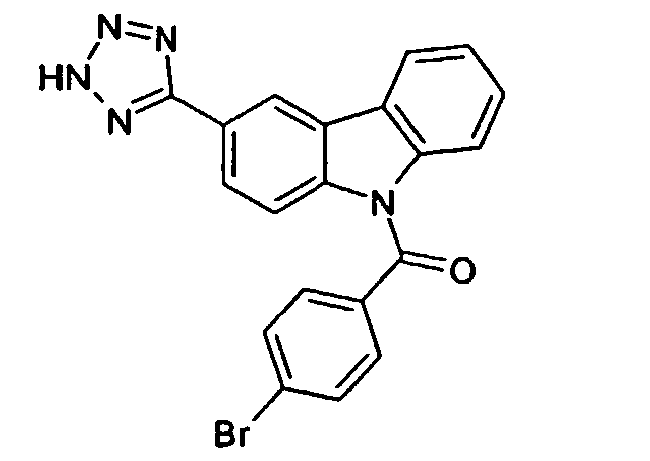
-

-

-

-

-

-

-
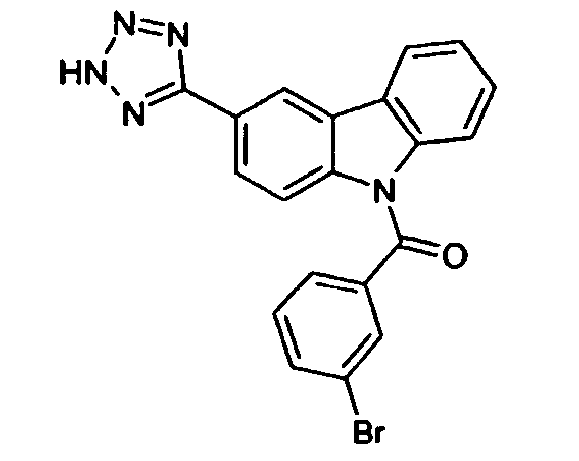
-

-

-

-

-

-

-

-

HPLC-MS (Method C): m/z: 326 (M+1); Rt = 3.37 min. -

- Low physical stability of insulin formulations may lead to amyloid fibril formation, which is observed as well-ordered, thread-like macromolecular structures in the sample eventually resulting in gel formation. This has traditionally been measured by visual inspection of the sample. However, the application of a small molecule indicator probe is much more preferable. Thioflavin T is such a probe and has a distinct fluorescence signature when binding to fibrils (or rather β-sheet rich proteins) [Naiki et al. (1989) Anal. Biochem. 177, 244-249; LeVine (1999) Methods. Enzymol. 309, 274-284]. Its application to insulin fibrillation has recently been validated [Nielsen et al. (2001) Biochemistry 40, 6036-6046].
The time course for fibril formation can be described by a sigmoidal curve with the following expression:
- Here, F is the ThT fluorescence at the time t. The constant t0 is the time needed to reach 50% of maximum fluorescence. The minimum and maximum fluorescence is denoted fi and ff , respectively, and the expressions mit and mft describe the linear development of the bottom and top base lines. The two important parameters describing fibril formation are the lag-time calculated by t0 - 2τ and the apparent rate constant k app = 1/τ.

- Formation of a partially folded intermediate of the protein is suggested as a general initiating mechanism for fibrillation. Few of those intermediates nucleate to form a template onto which further intermediates may assembly and the fibrillation is initiated. The lag-time corresponds to the interval in which the critical mass of nucleus is built up and the apparent rate constant is the rate with which the fibril itself is formed.
In accordance with this mechanism, insulin needs to dissociate to its monomeric form before a partially folded intermediate may be formed. Keeping insulin on a multimeric form may therefore result in increased physical stability. Ligands binding to the insulin hexamer zinc site should stabilize the hexameric form and draw the equilibrium even further away from the monomeric form. Hence, an increased physical stability could be achieved. - Insulin formulations were prepared freshly before each assay from appropriate stock solutions. Typical final concentrations were 0.6 mM human insulin or insulin aspart analogue, 0.2 mM ZnAc, 30 mM phenol, 10 mM Tris pH 8. ThT was added from a 1 mM stock solution in water to a final concentration of 1 µM. The formulations were typically prepared in double concentration and mixed with an equal volume of test compound in appropriate concentration in 4% DMSO, 10 mM Tris pH 8.
Alternatively, insulin aspart formulations (100 U/ml) from the production line were used directly. ThT was added to 1 µM and DMSO containing test compound in appropriate concentration to 2%.
Sample aliquots of 200 µl were placed in a 96 well microtiter plate (Packard OptiPlate™-96, white polystyrene). Usually, eight replica of each sample (corresponding to one test compound concentration) was placed in one column of wells. The plate was sealed with Scotch Pad (Qiagen).
Control experiments for possible test compound quenching of the ThT emission were carried out using human insulin without Zn2+ and phenol i.e. in a non-hexameric configuration. Hence, the fibrillation process as well as the ThT emission should be unaffected by the presence of test compound, unless it quenched the ThT signal. - Temperature incubation, shaking and measurement of the ThT fluorescence were done in a Fluoroskan Ascent FL fluorescence platereader (Thermo Labsystems). Temperature setting is possible up till 45 °C, but usually sat at 30 °C. Heating was initiated at first measurement. The orbital shaking is selectable up till 1200 rpm, but adjusted to 960 rpm in all the presented data with an amplitude of 1 mm.
Fluorescence measurement was done using excitation trough a 444 nm filter and measurement of emission through a 485 nm filter. Each run was initiated by a measurement and intervals between measurements were usually 20 min. The plate was shaken and heated as adjusted between each measurement. The assay time was regulated by the number of measurements and the interval in between. Usually the plate was measured 46 times with 20 min between, i.e. over 15 hours. - The measurement points were saved in Microsoft Excel format for further processing and curve drawing and fitting was performed using GraphPad Prism. The background emission from ThT in the absence of fibrils was negligible. Some test compounds had background fluorescence under the applied experimental conditions. This was eliminated by subtracting the mean value of the first measurement from the data set for this test compound. The data points are shown with standard deviation.
The data set may be fitted to Eq. (2). However, since the stabilizing effect of the test compounds/ligands were so significant that a full sigmoid curve was not obtained during the usual assay time, curve fitting to such a data set would be imprecise and hence meaningless.
Only data obtained in the same experiment (i.e. samples on the same plate) are presented in the same graph. - The various ligands are shown below with structure and affinity towards the zinc site as measured by the TZD-assay described in "Analytical Methods".
Reference Example Compound K d(app) (nM) A 533 
383 C 462 
58 D 738 
171 E 68 
23 F 756 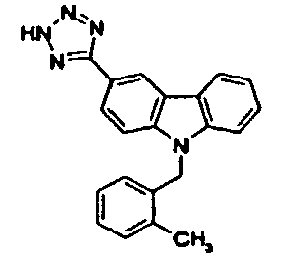
3 G 1 
3879 H 76 
82 I 759 
23 - The ThT assays of various combinations of insulin formulations and ligands are shown in Fig. 1 - 8.
- Addition of ligands improves the physical stability of insulin formulations. This holds for human insulin formulations (see Fig 1) as well as insulin aspart formulations (rest of data set).
- The improved stability can be obtained by using various compound classes as zinc site anchor, e.g. benzothriazoles (G, Fig 1), naphthosalicylic acids (A, Fig 2), thiazolidine-diones (E, Figs 4, 7; C, Fig 2; H, Figs 6, 8) and tetrazoles (D, Fig 3; F, Fig 8; I, Fig 5).
- Increased affinity of the ligand results in higher stability of the formulation. Compare the effect of the weakest binding ligand in 2 mM (G, Fig. 1) with the effect on an insulin aspart formulation of 0,5 mM E (Fig. 4). Also compare the effects of similar concentrations of A and C (Fig 2); and of D (fig. 3) and E (Fig 4) on insulin aspart formulations.
- Increasing the concentration of ligand tends to improve the stabilization (see Figs. 1, 3, 4, 5, 6). In some instants, more pronounced effects are seen with the ligand in slight molar excess to the zinc sites, see Figs. 4, 6, whereas it seems to plateau around the stoichiometric concentration in other instances (Figs. 3, 5).
- Of the presented ligands, A, C, D, E, F were tested in a disappearance assay for the effect on release of insulin aspart from a subcutaneous inject site. Surprisingly, the ligands had no effect on the insulin aspart disappearance. In a very limited way, this can be mimicked in the ThT assay by increasing the assay temperature to 37 °C (see Figs. 7, 8). The stabilizing effect is somewhat attenuated, e.g. compare E at 30 °C (Fig 4) and 37 °C (Fig 7), and H (Fig 6 and 8). The ligand with highest affinity (F) has the most stabilizing effect at 37 °C (Fig. 8).


- Formulations of the present invention were characterized by the disappearance rate from the subcutaneous depot following injection in pigs. Formulations of B28 Asp human insulin containing A14Tyr(125I) B28 Asp human insulin were followed with an external y-counter (Ribel et al., The pig as a model for subcutaneous absorption in man. In: Serrano-Ritos & Lefebre (Eds.): Diabetes (1985) proceedings ot the 12th congress of the international diabetes federation, Madrid. Spain, 1985 (Excerpta Medica, Amsterdam (1986) 891-896. Formulations of Insulin Aspart (0.6 mM, U100) containing 0.3 mM Zn2+, 30 mM phenol, 2 mM phosphate buffer, and 1.6% glycerol, pH 7.4, were compared with the corresponding formulations containing 0.3 mM of the ligands shown below: where T50% is the time when 50% ot the A14Tyr(125I) 828 Asp insulin has disappeared from the site of injection and Kd is the affinity of the ligand as measured by the TZD-assay described in "Analytical methods" below. It is evident that the stabilizing ligands do not affect the fast absorption properties of the formulations
Example # Compound T50% Kd (app) (nM) reference 1.3± 0.3 A 533 
1.0±0.23 383 B 476 
1.1± 0.37 68 C 462 
0.9±0.19 58 D 738 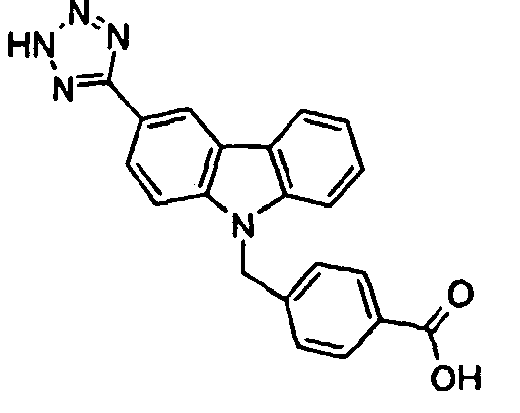
1.3±0.36 171 E 68 
1.2±0.41 23 F 756 
1.2± 0.27 3 
- The chemical stability of insulin formulations of the invention was characterised by HPLC (RPC, reverse phase chromatography and SEC, size exclusion chromatography). As reference, insulin formulated without ligands of the invention but with 0.3 % DMSO was also investigated and shown below:

- Fig 10. Reverse phase chromatography of formulated human insulin with 3 Zn2+ per hexamer, 30 mM phenol, 150 mM mannitol, 3 mM phosphoric acid, sodium hydroxide to pH 7.4 and 0.3 % DMSO corresponding to 3 ligands per hexamer at start (upper panel) and after storage for 2 weeks at 37 °C (lower panel): Preservatives before 20 min., "hydrophilic derivatives" (desamido-insulins) 20 min to main top insulin, "hydrophobic derivatives 1" main top to 64 min., and "hydrophobic derivatives 2" (insulin dimers) after 64 min.
- Storage in HPLC 1 ml vials at 45 °C (5 d), 37 °C (2 w), 30 °C (6 w), 25 °C (10 w), 15 °C (30 w) gave about the same increase of transformation products correlating to an increase in reactions constants of a factor 3-4 per 10 degree..
- RPC (reverse phase chromatography) on Waters SymmetryShield RP8 column, 150x4.6 mm and 3.5 µm, eluted by A: 0.2 M sodium sulfate + 0.04 M sodium phosphate pH 7.2 + 10 % acetonitrile and isocratically (i) or a gradient (g) of B: 70 % acetonitrile [minutes/%B(i/g): 0/19, 21/24(i)(sudden change), 51/24(i), 81/39(g), 81.1/0(i), 82.3/19(i)] at flow of 0.9 mL/min and 30 °C.
SEC (size exclusion chromatography) on Waters insulin HMWP column, 300x7.8 mm, eluted by 15:20:65 of acetic acid: acetonitrile: arginine 1 g/L at flow of 1 mL/min and ambient temperature.% formed/year RPC SEC hphil hphob1 hphob2 dimer 45°C 153.3 47.5 23.4 21.9 37°C 57.2 15.6 5.20 6.24 30°C 24.5 4.16 1.30 2.08 25°C 14.2 2.13 0.68 1.09 15°C 4.12 0.43 0.22 0.31 5°predicted (1.001) (0.066) (0.027) (0.052) The chemical stability of insulin formulations of the invention was likewise characterised by HPLC (RPC, reverse phase chromatography and SEC, size exclusion chromatography). Compared to the reference the formulations of the invention were shown to be more chemically stable.
-
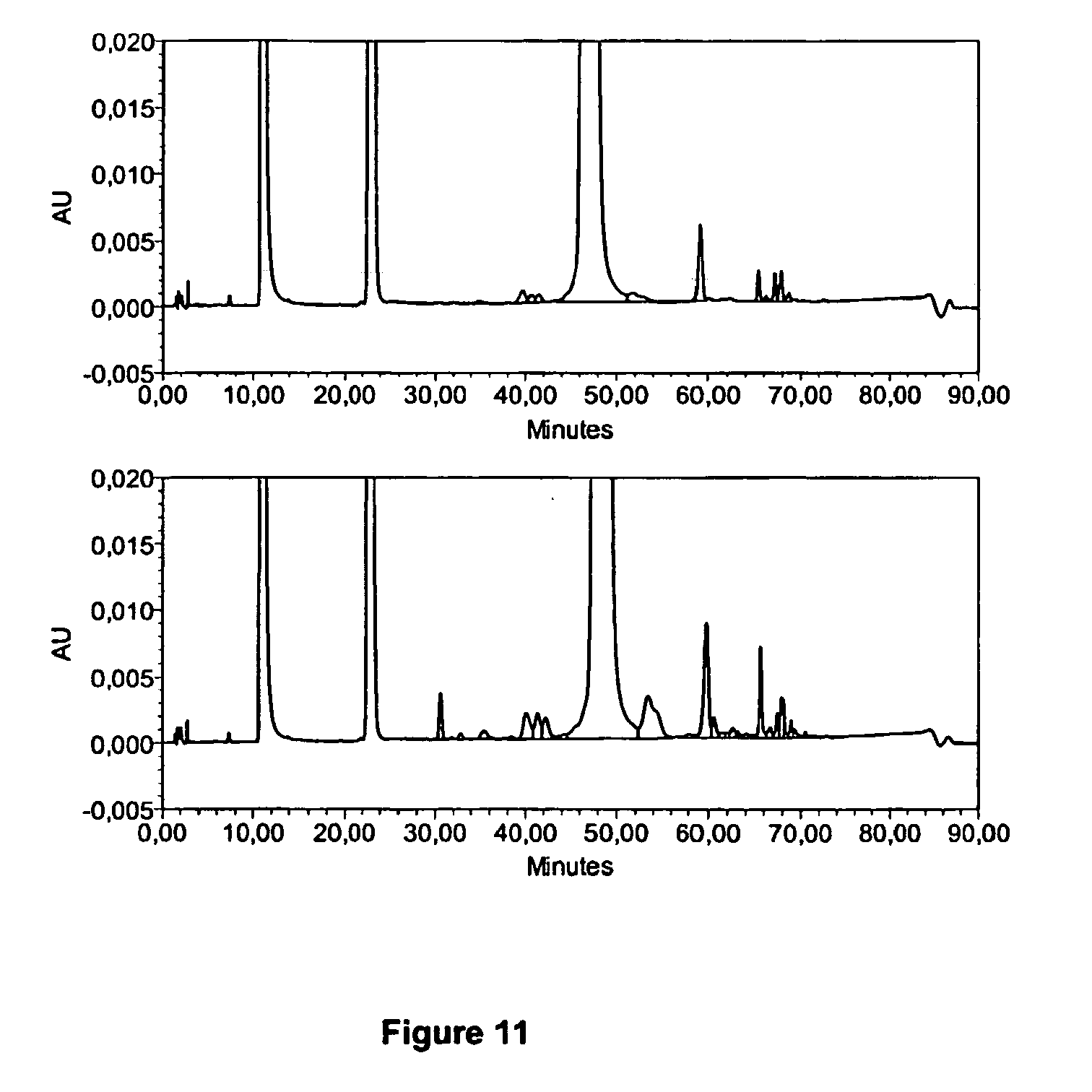
- Fig 11. Reverse phase chromatography of formulated human insulin as described for the reference example and added 3 ligands of Example 533 and 3 Zn2+ per hexamer at start (upper panel) and after storage for 2 weeks at 37 °C (lower panel): Preservatives before 20 min., "hydrophilic derivatives" (desamido-insulins) 20 min to main top insulin, "hydrophobic derivatives 1" main top to 64 min., and "hydrophobic derivatives 2" (insulin dimers) after 64 min.
- Storage in HPLC 1 ml vials at 45 °C (5 d), 37 °C (2 w), 30 °C (6 w), 25 °C (10 w), 15 °C (30 w) will give about the same increase in transformation products correlating to an increase in reaction constants of a factor 3-4 per 10 degrees...
- RPC (reverse phase chromatography) on Waters SymmetryShield RP8 column, 150x4.6 mm and 3.5 µm, eluted by A: 0.2 M sodium sulfate + 0.04 M sodium phosphate pH 7.2 + 10 % acetonitrile and isocratically (i) or a gradient (g) of B: 70 % acetonitrile [minutes/%B(i/g): 0/19, 21/24(i)(sudden change), 51/24(i), 81/39(g), 81.1/0(i), 82.3/19(i)] at flow of 0.9 mL/min and 30 °C.
- SEC (size exclusion chromatography) on Waters insulin HMWP column, 300x7.8 mm, eluted by 15:20:65 of acetic acid: acetonitrile:arginine 1 g/L at flow of 1 mL/min and ambient temperature.
% formed/year RPC SEC hphil hphob1 hphob2 dimer 45°C 30.7 62.1 23.4 26.3 37°C 12.5 22.4 7.02 7.02 30°C 6.76 6.42 2.25 2.86 25°C 4.06 5.67 1.46 1.61 15°C 1.80 0.85 0.42 0.45 5°predicted (0.55) (0.19) (0.079) (0.087) 
-
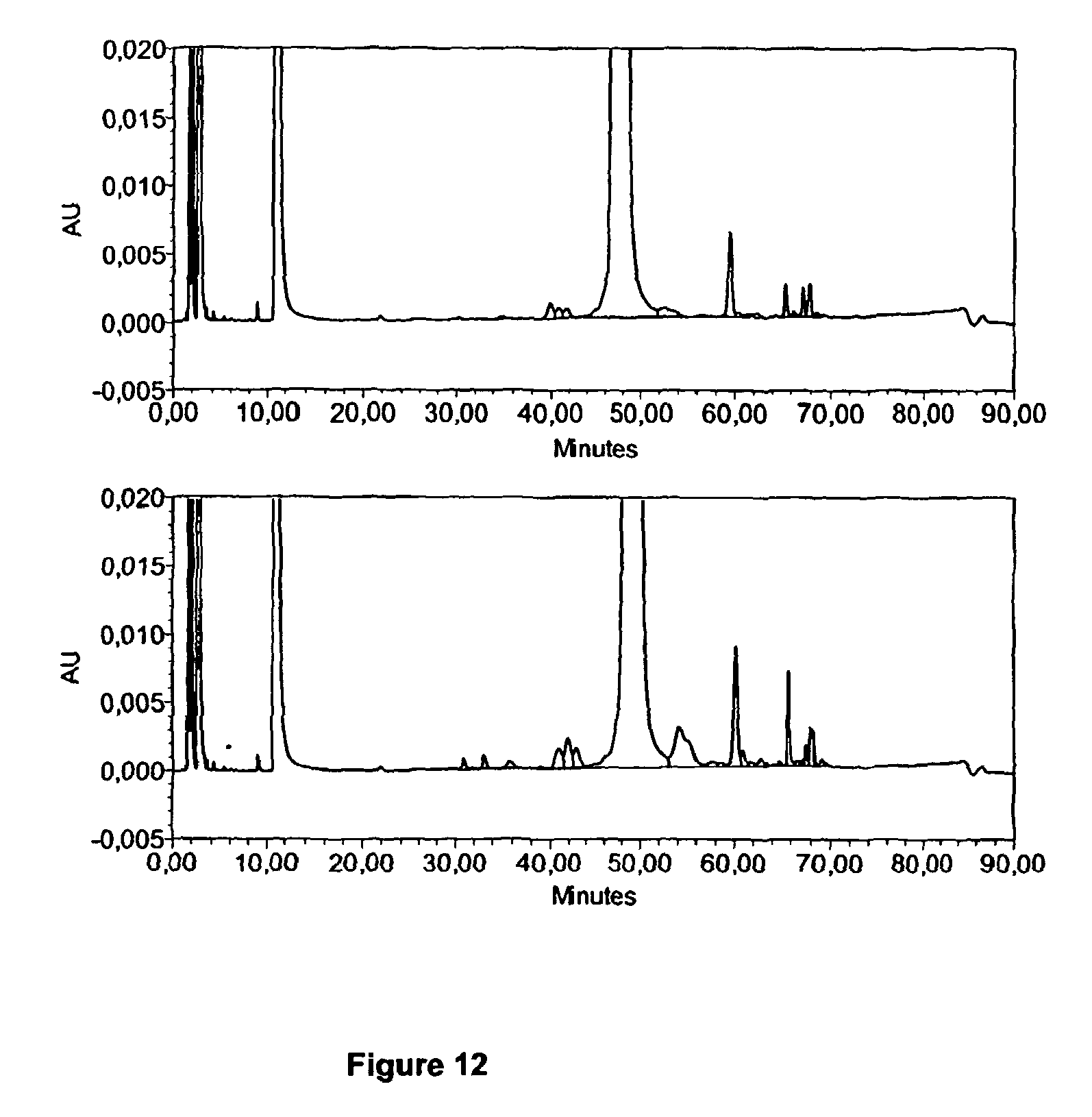
- Fig 12. Reverse phase chromatography of formulated human insulin as described for the reference example and added 3 ligands of example 462 and 3 Zn2+ per hexamer at start (upper panel) and after storage for 2 weeks at 37 °C (lower panel): Preservatives before 20 min., "hydrophilic derivatives" (desamido-insulins) 20 min to main top insulin, "hydrophobic derivatives 1" main top to 64 min., and "hydrophobic derivatives 2" (insulin dimers) after 64 min.
- Storage in HPLC 1 ml vials at 45 °C (5 d), 37 °C (2 w), 30 °C (6 w), 25 °C (10 w), 15 °C (30 w) will give about the same increase in transformation products correlating to an increase in reaction constants of a factor 3-4 per 10 degrees.
- RPC (reverse phase chromatography) on Waters SymmetryShield RP8 column, 150x4.6 mm and 3.5 µm, eluted by A: 0.2 M sodium sulfate + 0.04 M sodium phosphate pH 7.2 + 10 % acetonitrile and isocratically (i) or a gradient (g) of B: 70 % acetonitrile [minutes/%B(i/g): 0/19, 21/24(i)(sudden change), 51/24(i), 81/39(g), 81.1/0(i), 82.3/19(i)] at flow of 0.9 mUmin and 30 °C.
- SEC (size exclusion chromatography) on Waters insulin HMWP column, 300x7.8 mm, eluted by 15:20:65 of acetic acid: acetonitrile:arginine 1 g/L at flow of 1 mL/min and ambient temperature.
% formed/year RPC SEC hphil hphob1 hphob2 Dimer 45°C 20.4 43.8 17.5 21.2 37°C 9.88 19.5 4.68 6.24 30°C 4.07 4.42 1.65 2.17 25°C 2.60 6.14 0.78 1.09 15°C 1.02 1.28 0.38 0.28 5°predicted (0.293) (0.336) (0.062) (0.048) 
-


- Fig 13. Reverse phase chromatography of formulated human insulin added 3 ligands (#) and 3 Zn per hexamer at start and storage of 2 w 37 °C: Preservatives before 20 min., "hydrophilic derivatives" (desamido-insulins) 20 min to main top insulin, "hydrophobic derivatives 1" main top to 64 min., and "hydrophobic derivatives 2" (insulin dimers) after 64 min.
- Storage in HPLC 1 ml vials at 45 °C (5 d), 37 °C (2 w), 30°C (6 w), 25°C (10 w), 15 °C (30 w) will give about the same increase of 0.7 % hfil, 0.6 % hfob1, 0.3 % hfob2 and 0.3 % dimer solution 1, correlating to Q10 of 3 below 30 °C and 4 at higher temperature for ref..
- RPC (reverse phase chromatography) on Waters SymmetryShield RP8 column, 150x4.6 mm and 3.5 µm, eluted by A: 0.2 M sodium sulfate + 0.04 M sodium phosphate pH 7.2 + 10 % acetonitrile and isocratically (i) or a gradient (g) of B: 70 % acetonitrile [minutes/%B(i/g): 0/19, 21/24(i)(sudden change), 51/24(i), 81/39(g), 81.1/0(i), 82.3/19(i)] at flow of 0.9 mL/min and 30 °C.
- SEC (size exclusion chromatography) on Waters insulin HMWP column, 300x7.8 mm, eluted by 15:20:65 of acetic acid: acetonitrile:arginine 1 g/L at flow of 1 mL/min and ambient temperature.
% formed/year RPC SEC hphil hphob1 hphob2 dimer 45°C 29.9 52.6 23.4 23.4 37°C 11.2 20.0 7.02 6.50 30°C 5.12 7.11 1.99 2.34 25°C 2.86 4.78 0.99 1.20 15°C 1.14 0.67 0.29 0.33 5°predicted (0.287) (0.153) (0.044) (0.057) 
-


- Fig 14. Reverse phase chromatography of formulated human insulin added 3 ligands (#) and 3 Zn per hexamer at start and storage of 2 w 37 °C: Preservatives before 20 min., "hydrophilic derivatives" (desamido-insulins) 20 min to main top insulin, "hydrophobic derivatives 1" main top to 64 min., and "hydrophobic derivatives 2" (insulin dimers) after 64 min.
- Storage in HPLC 1 ml vials at 45 °C (5 d), 37 °C (2 w), 30 °C (6 w), 25 °C (10 w), 15 °C (30 w) will give about the same increase of 0.7 % hfil, 0.6 % hfob1, 0.3 % hfob2 and 0.3 % dimer solution 1, correlating to Q10 of 3 below 30 °C and 4 at higher temperature for ref..
- RPC (reverse phase chromatography) on Waters SymmetryShield RP8 column, 150x4.6 mm and 3.5 µm, eluted by A: 0.2 M sodium sulfate + 0.04 M sodium phosphate pH 7.2 + 10 % acetonitrile and isocratically (i) or a gradient (g) of B: 70 % acetonitrile [minutes/%B(i/g): 0/19, 21/24(i)(sudden change), 51/24(i), 81/39(g), 81.1/0(i), 82.3/19(i)] at flow of 0.9 mL/min and 30 °C.
- SEC (size exclusion chromatography) on Waters insulin HMWP column, 300x7.8 mm, eluted by 15:20:65 of acetic acid: acetonitrile:arginine 1 g/L at flow of 1 mL/min and ambient temperature.
% formed/year RPC SEC hphil hphob1 hphob2 dimer 45°C 56.2 78.8 27.0 29.2 37°C 23.7 14.8 6.50 8.84 30°C 12.1 6.94 3.03 3.55 25°C 6.08 4.99 0.94 2.24 15°C 1.95 1.09 0.42 0.69 5°predicted (0.54) (0.22) (0.064) (0.15) 
- The binding affinity of ligands to the metal site of insulin R6 hexamers are measured in a UV/vis based displacement assay. The UV/vis spectrum of 3-hydroxy-4-nitro benzoic acid (4H3N) which is a known ligand for the metal site of insulin R6 shows a shift in absorption maximum upon displacement from the metal site to the solution (Huang et al., 1997, Biochemistry 36, 9878-9888). Titration of a ligand to a solution of insulin R6 hexamers with 4H3N mounted in the metal site allows the binding affinity of these ligands to be determined following the reduction of absorption at 444 nm.
A stock solution with the following composition 0.2 mM human insulin, 0.067 mM Zn-acetate, 40 mM phenol, 0.101 mM 4H3N is prepared in a 10mL quantum as described below. Buffer is always 50mM tris buffer adjusted to pH=8.0 with NaOH/ClO4 -.
1000 µL of 2.0mM human insulin in buffer
66.7 µL of 10mM Zn-acetate in buffer
800 µL of 500mM phenol in H2O
201 µL of 4H3N in H2O
7.93 ml buffer - The ligand is dissolved in DMSO to a concentration of 20 mM.
The ligand solution is titrated to a cuvette containing 2 mL stock solution and after each addition the UV/vis spectrum is measured. The titration points are listed in Table 3 below.Table 3 ligand addition (µl) ligand conc. (mM) dilution factor 1 0.010 1.0005 1 0.020 1.0010 1 0.030 1.0015 2 0.050 1.0025 5 0.100 1.0050 10 0.198 1.0100 20 0.392 1.0200 20 0.583 1.0300 20 0.769 1.0400 20 0.952 1.0500 - The UV/vis spectra resulting from a titration of the compound 3-hydroxy-2-naphthoic acid is shown in Figure 5. Inserted in the upper right corner is the absorbance at 444nm vs. the concentration of ligand.
The following equation is fitted to these datapoints to determine the two parameters KD(obs), the observed dissociation constant, and absmax the absorbance at maximal ligand concentration.
- The observed dissociation constant is recalculated to obtain the apparent dissociation constant

- The value of K4H3N=50 µM is taken from Huang et al., 1997, Biochemistry 36, 9878-9888.
- The binding affinity of ligands to the metal site of insulin R6 hexamers are measured in a fluorescense based displacement assay. The fluorescence of 5-(4-dimethylaminobenzylidene)thiazolidine-2,4-dione (TZD) which is a ligand for the metal site of insulin R6 is quenched upon displacement from the metal site to the solution. Titration of a ligand to a stock solution of insulin R6 hexamers with this compound mounted in the metal site allows the binding affinity of these ligands to be determined measuring the fluorescence at 455nm upon excitation at 410nm.
- Stock solution: 0.02 mM human insulin, 0.007 mM Zn-acetate, 40 mM phenol, 0.01 mM TZD in 50mM tris buffer adjusted to pH=8.0 with NaOH/ClO4 - .
The ligand is dissolved in DMSO to a concentration of 5 mM and added in aliquots to the stock solution to final concentrations of 0-250 □M. - Fluorescence measurements were carried out on a Perkin Elmer Spectrofluorometer LS50B.The main absorption band was excited at 410 nm and emission was detected at 455 nm. The resolution was 10 nm and 2.5 nm for excitation and emission, respectively.
- This equation is fitted to the datapoints

- Two different fitting-procedures can be used. One in which both parameters, KD(app) and Fmax, are adjusted to best fit the data and a second in which the value of Fmax is fixed (Fmax=1) and only KD(app) is adjusted. The given data are from the second fitting procedure. The Solver module of Microsoft Excel can be used to generate the fits from the data points.
The term "alkylene" as used herein represents a saturated, branched or straight bivalent hydrocarbon group having the indicated number of carbon atoms. Representative examples include, but are not limited to, methylene, 1,2-ethylene, 1,3-propylene, 1,2-propylene, 1,4-butylene, 1,5-pentylene, 1,6-hexylene, and the like.
The term "alkenyl" as used herein represents a branched or straight hydrocarbon group having the indicated number of carbon atoms and at least one double bond. Examples of such groups include, but are not limited to, vinyl, 1-propenyl, 2-propenyl, iso-propenyl, 1,3-butadienyl, 1-butenyl, 2-butenyl, 3-butenyl, 2-methyl-1-propenyl, 1-pentenyl, 2-pentenyl, 3-pentenyl, 4-pentenyl, 3-methyl-2-butenyl, 1-hexenyl, 2-hexenyl, 3-hexenyl, 2,4-hexadienyl, 5-hexenyl and the like.
The term "alkynyl" as used herein represents a branched or straight hydrocarbon group having the indicated number of carbon atoms and at least one triple bond. Examples of such groups include, but are not limited to, ethynyl, 1-propynyl, 2-propynyl, 1-butynyl, 2-butynyl, 3-butynyl, 1-pentynyl, 2-pentynyl, 3-pentynyl, 4-pentynyl, 1-hexynyl, 2-hexynyl, 3-hexynyl, 4-hexynyl, 5-hexynyl, 2,4-hexadiynyl and the like.
The term "alkoxy" as used herein refers to the radical -O- alkyl, wherein alkyl is as defined above. Representative examples are methoxy, ethoxy, n-propoxy, isopropoxy, butoxy, sec-butoxy, tert-butoxy, pentoxy, isopentoxy, hexoxy, isohexoxy and the like.
The term "cycloalkyl" as used herein represents a saturated, carbocyclic group having the indicated number of carbon atoms. Representative examples are cyclopropyl, cyclobutyl, cyclopentyl, cyclohexyl, cycloheptyl, cyclooctyl and the like.
The term "cycloalkenyl" as used herein represents a non-aromatic, carbocyclic group having the indicated number of carbon atoms containing one or two double bonds. Representative examples are 1-cyclopentenyl, 2-cyclopentenyl, 3-cyclopentenyl, 1-cyclohexenyl, 2-cyclohexenyl, 3-cyclohexenyl, 2-cycloheptenyl, 3-cycloheptenyl, 2-cyclooctenyl, 1,4-cyclooctadienyl and the like.
The term "heterocyclyl" as used herein represents a non-aromatic 3 to 10 membered ring containing one or more heteroatoms selected from nitrogen, oxygen and sulphur and optionally containing one or two double bonds. Representative examples are pyrrolidinyl, piperidyl, piperazinyl, morpholinyl, thiomorpholinyl, aziridinyl, tetrahydrofuranyl and the like.
The term "aryl" as used herein is intended to include carbocyclic, aromatic ring systems such as 6 membered monocyclic and 9 to 14 membered bi- and tricyclic, carbocyclic, aromatic ring systems. Representative examples are phenyl, biphenylyl, naphthyl, anthracenyl, phenanthrenyl, fluorenyl, indenyl, azulenyl and the like. Aryl is also intended to include the partially hydrogenated derivatives of the ring systems enumerated above. Non-limiting examples of such partially hydrogenated derivatives are 1,2,3,4-tetrahydronaphthyl, 1,4-dihydronaphthyl and the like.
With the proviso that R31 and J cannot both be hydrogen.
In another embodiment the invention provides a pharmaceutical composition wherein R32 and R33 are independently selected from hydrogen or C1-C6-alkyl.
In another embodiment the invention provides a pharmaceutical composition wherein R34 is hydrogen, halogen, -CN, -CF3, -OCF3, -SCF3, -NO2, -OR35, -C(O)R35, -NR35R36, -SR35, -C(O)NR35R36, -OC(O)NR35R36, -NR35C(O)R36, -OC(O)R35, -OC1-C6-alkyl-C(O)OR35, -SC1-C6-alkyl-C(O)OR35 or -C(O)OR35.
In another embodiment the invention provides a pharmaceutical composition wherein R34 is hydrogen, halogen, -CF3, -NO2, -OR35, -NR35R36, -SR35, -NR35C(O)R36, or -C(O)OR35.
In another embodiment the invention provides a pharmaceutical composition wherein R34 is hydrogen, halogen, -CF3, -NO2, -OR35, -NR35R36, or -NR35C(O)R36.
In another embodiment the invention provides a pharmaceutical composition wherein R34 is hydrogen, halogen, or -OR35.
In another embodiment the invention provides a pharmaceutical composition wherein R35 and R36 are independently selected from hydrogen, C1-C6-alkyl, or aryl.
In another embodiment the invention provides a pharmaceutical composition wherein R35 and R36 are independently selected from hydrogen or C1-C6-alkyl.
In another embodiment the invention provides a pharmaceutical composition wherein R37 is halogen, -C(O)OR35, -CN, -CF3, -OR35, -NR35R36, C1-C6-alkyl or C1-C6-alkanoyl.
In another embodiment the invention provides a pharmaceutical composition wherein R37 is halogen, -C(O)OR35, -OR35, -NR35R36, C1-C6-alkyl or C1-C6-alkanoyl.
In another embodiment the invention provides a pharmaceutical composition wherein R37 is halogen, -C(O)OR35 or -OR35.
In another embodiment the invention provides a pharmaceutical composition wherein the zinc-binding ligand is

In another embodiment the invention provides a pharmaceutical composition wherein K is a valence bond, C1-C6-alkylene, -NH-C(=O)-U-, -C1-C6-alkyl-S-, -C1-C6-alkyl-O-, or -C(=O)-, wherein any C1-C6-alkyl moiety is optionally substituted with R38.
In another embodiment the invention provides a pharmaceutical composition wherein K is a valence bond, C1-C6-alkylene, -NH-C(=O)-U-, -C1-C6-alkyl-S-, or -C1-C6-alkyl-O, wherein any C1-C6-alkyl moiety is optionally substituted with R38.
In another embodiment the invention provides a pharmaceutical composition wherein K is a valence bond, C1-C6-alkylene, or -NH-C(=O)-U, wherein any C1-C6-alkyl moiety is optionally substituted with R38.
In another embodiment the invention provides a pharmaceutical composition wherein K is a valence bond or C1-C6-alkylene, wherein any C1-C6-alkyl moiety is optionally substituted with R38.
In another embodiment the invention provides a pharmaceutical composition wherein K is a valence bond or -NH-C(=O)-U.
In another embodiment the invention provides a pharmaceutical composition wherein K is a valence bond.
In another embodiment the invention provides a pharmaceutical composition wherein U is a valence bond or -C1-C6-alkyl-O-.
In another embodiment the invention provides a pharmaceutical composition wherein U is a valence bond.
In another embodiment the invention provides a pharmaceutical composition wherein M is arylene or heteroarylene, wherein the arylene or heteroarylene moieties are optionally substituted with one or more substituents independently selected from R40.
In another embodiment the invention provides a pharmaceutical composition wherein M is ArG1 or Het1, wherein the arylene or heteroarylene moieties are optionally substituted with one or more substituents independently selected from R40.
In another embodiment the invention provides a pharmaceutical composition wherein M is ArG1 or Het2, wherein the arylene or heteroarylene moieties are optionally substituted with one or more substituents independently selected from R40.
In another embodiment the invention provides a pharmaceutical composition wherein M is ArG1 or Het3, wherein the arylene or heteroarylene moieties are optionally substituted with one or more substituents independently selected from R40.
In another embodiment the invention provides a pharmaceutical composition wherein M is phenylene optionally substituted with one or more substituents independently selected from R40.
In another embodiment the invention provides a pharmaceutical composition wherein M is indolylene optionally substituted with one or more substituents independently selected from R40.
In another embodiment the invention provides a pharmaceutical composition wherein M is

In another embodiment the invention provides a pharmaceutical composition wherein M is

In another embodiment the invention provides a pharmaceutical composition wherein R41 and R42 are independently selected from hydrogen, methyl, ethyl, or phenyl, wherein the phenyl moieties may optionally be substituted with halogen or -COOH.
In another embodiment the invention provides a pharmaceutical composition wherein Q is a valence bond, C1-C6-alkylene, -C1-C6-alkyl-O-, -C1-C6-alkyl-NH-, -NH-C1-C6-alkyl, -NH-C(=O)-, -C(=O)-NH-, -O-C1-C6-alkyl, -C(=O)-, or -C1-C6-alkyl-C(=O)-N(R47)- wherein the alkyl moieties are optionally substituted with one or more substituents independently selected from R48.
In another embodiment the invention provides a pharmaceutical composition wherein Q is a valence bond, -CH2-, -CH2-CH2-, -CH2-O-, -CH2-CH2-O-, -CH2-NH-, -CH2-CH2-NH-, -NH-CH2-, -NH-CH2-CH2-, -NH-C(=O)-, -C(=O)-NH-, -O-CH2-, -O-CH2-CH2-, or -C(=O)-.
In another embodiment the invention provides a pharmaceutical composition wherein R47 and R48 are independently selected from hydrogen, methyl and phenyl.
In another embodiment the invention provides a pharmaceutical composition wherein T is
In another embodiment the invention provides a pharmaceutical composition wherein R55 is independently selected from
In another embodiment the invention provides a pharmaceutical composition wherein AA is aryl, heteroaryl or aryl-C1-6-alkyl-, wherein the alkyl is optionally substituted with one or more R63, and the aryl or heteroaryl is optionally substituted with one or more substituents independently selected from R64.
In another embodiment the invention provides a pharmaceutical composition wherein AA is aryl or heteroaryl optionally substituted with one or more substituents independently selected from R64.
In another embodiment the invention provides a pharmaceutical composition wherein AA is ArG1 or Het1 optionally substituted with one or more substituents independently selected from R64.
In another embodiment the invention provides a pharmaceutical composition wherein AA is ArG1 or Het2 optionally substituted with one or more substituents independently selected from R64.
In another embodiment the invention provides a pharmaceutical composition wherein AA is ArG1 or Het3 optionally substituted with one or more substituents independently selected from R64.
In another embodiment the invention provides a pharmaceutical composition wherein AA is phenyl, naphtyl, anthryl, carbazolyl, thienyl, pyridyl, or benzodioxyl optionally substituted with one or more substituents independently selected from R64.
In another embodiment the invention provides a pharmaceutical composition wherein AA is phenyl or naphtyl optionally substituted with one or more substituents independently selected from R64.
In another embodiment the invention provides a pharmaceutical composition wherein R64 is independently selected from hydrogen, halogen, -CF3, -OCF3, -OR65, -NR65R66, C1-C6-alkyl, -OC(O)R65, -OC1-C6-alkyl-C(O)OR85, aryl-C2-C6-alkenyl, aryloxy or aryl, wherein C1-C6-alkyl is optionally substituted with one or more substituents independently selected from R67, and the cyclic moieties optionally are substituted with one or more substituents independently selected from R68.
In another embodiment the invention provides a pharmaceutical composition wherein R64 is independently selected from halogen, -CF3, -OCF3, -OR65, -NR65R66, methyl, ethyl, propyl, -OC(O)R65, -OCH2-C(O)OR65, -OCH2-CH2-C(O)OR65, phenoxy optionally substituted with one or more substituents independently selected from R68.
In another embodiment the invention provides a pharmaceutical composition wherein R65 and R66 are independently selected from hydrogen, CF3, C1-C12-alkyl, aryl, or heteroaryl optionally substituted with one or more substituents independently selected from R71.
In another embodiment the invention provides a pharmaceutical composition wherein R65 and R66 are independently hydrogen, C1-C12-alkyl, aryl, or heteroaryl optionally substituted with one or more substituents independently selected from R71.
In another embodiment the invention provides a pharmaceutical composition wherein R65 and R66 are independently hydrogen, methyl, ethyl, propyl, butyl, 2,2-dimethyl-propyl, ArG1 or Het1 optionally substituted with one or more substituents independently selected from R71.
In another embodiment the invention provides a pharmaceutical composition wherein R65 and R66 are independently hydrogen, methyl, ethyl, propyl, butyl, 2,2-dimethyl-propyl, ArG1 or Het2 optionally substituted with one or more substituents independently selected from R71.
In another embodiment the invention provides a pharmaceutical composition wherein R65 and R66 are independently hydrogen, methyl, ethyl, propyl, butyl, 2,2-dimethyl-propyl, ArG1 or Het3 optionally substituted with one or more substituents independently selected from R71.
In another embodiment the invention provides a pharmaceutical composition wherein R65 and R66 are independently hydrogen, methyl, ethyl, propyl, butyl, 2,2-dimethyl-propyl, phenyl, naphtyl, thiadiazolyl optionally substituted with one or more R71 independently; or isoxazolyl optionally substituted with one or more substituents independently selected from R71.
In another embodiment the invention provides a pharmaceutical composition wherein R71 is halogen or C1-C6-alkyl.
In another embodiment the invention provides a pharmaceutical composition wherein R71 is halogen or methyl.
In another embodiment hereof R7, R8, R9 and R10 are independently selected from
In another embodiment hereof D is C1-C6-alkylene optionally substituted with one or more hydroxy, C1-C6-alkyl, or aryl.
In another embodiment hereof E is aryl or heteroaryl, wherein the aryl or heteroaryl is optionally substituted with up to three substituents independently selected from R21, R22 and R23.
In another embodiment hereof E is aryl optionally substituted with up to three substituents independently selected from R21, R22 and R23.
In another embodiment hereof E is selected from ArG1 and optionally substituted with up to three substituents independently selected from R21, R22 and R23.
In another embodiment hereof E is phenyl optionally substituted with up to three substituents independently selected from R21, R22 and R23.
In another embodiment hereof the zinc-binding ligand is
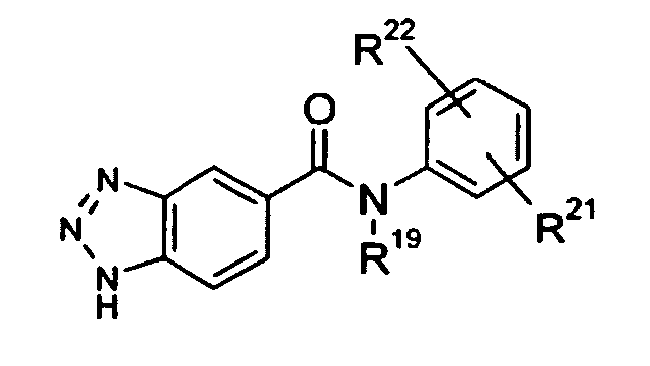
In another embodiment hereof R27 is hydrogen or C1-C6-alkyl.
In another embodiment hereof R27 is hydrogen, methyl or ethyl.
In another embodiment hereof R28 is hydrogen or C1-C6-alkyl.
In another embodiment hereof R28 is hydrogen, methyl or ethyl.
In another embodiment hereof R72 is -OH or phenyl.
With the proviso that R31 and J cannot both be hydrogen.
In another embodiment hereof R32 and R33 are independently selected from hydrogen or C1-C6-alkyl.
In another embodiment hereof R34 is hydrogen, halogen, -CN, -CF3, -OCF3, -SCF3, -NO2, -OR35, -C(O)R35, -NR35R36, -SR35, -C(O)NR35R36, -OC(O)NR35R36, -NR35C(O)R36, -OC(O)R35, -OC1-C6-alkyl-C(O)OR35, -SC1-C6-alkyl-C(O)OR35 or -C(O)OR35.
In another embodiment hereof R34 is hydrogen, halogen, -CF3, -NO2, -OR35, -NR35R36 -SR35, -NR35C(O)R36, or -C(O)OR35.
In another embodiment hereof R34 is hydrogen, halogen, -CF3, -NO2, -OR35, -NR35R36, or -NR35C(O)R36.
In another embodiment hereof R34 is hydrogen, halogen, or -OR35.
In another embodiment hereof R35 and R36 are independently selected from hydrogen, C1-C6-alkyl, or aryl.
In another embodiment hereof R35 and R36 are independently selected from hydrogen or C1-C6-alkyl.
In another embodiment hereof R37 is halogen, -C(O)OR35, -CN, -CF3, -OR35, -NR35R36, C1-C6-alkyl or C1-C6-alkanoyl.
In another embodiment hereof R37 is halogen, -C(O)OR35, -OR35, -NR35R36, C1-C6-alkyl or C1-C6-alkanoyl.
In another embodiment hereof R37 is halogen, -C(O)OR35 or -OR35.
In another embodiment hereof the zinc-binding ligand is

In another embodiment hereof K is a valence bond, C1-C6-alkylene, -NH-C(=O)-U-, -C1-C6-alkyl-S-, -C1-C6-alkyl-O-, or -C(=O)-, wherein any C1-C6-alkyl moiety is optionally substituted with R38.
In another embodiment hereof K is a valence bond, C1-C6-alkylene, -NH-C(=O)-U-, -C1-C6-alkyl-S-, or -C1-C6-alkyl-O, wherein any C1-C6-alkyl moiety is optionally substituted with R38.
In another embodiment hereof K is a valence bond, C1-C6-alkylene, or -NH-C(=O)-U, wherein any C1-C6-alkyl moiety is optionally substituted with R38.
In another embodiment hereof K is a valence bond or C1-C6-alkylene, wherein any C1-C6-alkyl moiety is optionally substituted with R38.
In another embodiment hereof K is a valence bond or -NH-C(=O)-U.
In another embodiment hereof K is a valence bond.
In another embodiment hereof U is a valence bond or -C1-C6-alkyl-O-.
In another embodiment hereof U is a valence bond.
In another embodiment hereof M is arylene or heteroarylene, wherein the arylene or heteroarylene moieties are optionally substituted with one or more substituents independently selected from R40.
In another embodiment hereof M is ArG1 or Het1, wherein the arylene or heteroarylene moieties are optionally substituted with one or more substituents independently selected from R40.
In another embodiment hereof M is ArG1 or Het2, wherein the arylene or heteroarylene moieties are optionally substituted with one or more substituents independently selected from R40.
In another embodiment hereof M is ArG1 or Het3, wherein the arylene or heteroarylene moieties are optionally substituted with one or more substituents independently selected from R40.
In another embodiment hereof M is phenylene optionally substituted with one or more substituents independently selected from R40.
In another embodiment hereof M is indolylene optionally substituted with one or more substituents independently selected from R40.
In another embodiment hereof M is

In another embodiment hereof M is

In another embodiment hereof R41 and R42 are independently selected from hydrogen, methyl, ethyl, or phenyl, wherein the phenyl moieties may optionally be substituted with halogen or -COOH.
In another embodiment hereof Q is a valence bond, C1-C6-alkylene, -C1-C6-alkyl-O-, -C1-C6-alkyl-NH-, -NH-C1-C6-alkyl, -NH-C(=O)-, -C(=O)-NH-, -O-C1-C6-alkyl, -C(=O)-, or -C1-C6-alkyl-C(=O)-N(R47)- wherein the alkyl moieties are optionally substituted with one or more substituents independently selected from R48.
In another embodiment hereof Q is a valence bond, -CH2-, -CH2-CH2-, -CH2-O-, -CH2-CH2-O-, -CH2-NH-, -CH2-CH2-NH-, -NH-CH2-, -NH-CH2-CH2-, -NH-C(=O)-, -C(=O)-NH-, -O-CH2-, -O-CH2-CH2-, or -C(=O)-.
In another embodiment hereof R47 and R48 are independently selected from hydrogen, methyl and phenyl.
In another embodiment hereof T is
In another embodiment hereof R55 is independently selected from
In another embodiment hereof AA is aryl, heteroaryl or aryl-C1-6-alkyl-, wherein the alkyl is optionally substituted with one or more R63, and the aryl or heteroaryl is optionally substituted with one or more substituents independently selected from R64.
In another embodiment hereof AA is aryl or heteroaryl optionally substituted with one or more substituents independently selected from R64.
In another embodiment hereof AA is ArG1 or Het1 optionally substituted with one or more substituents independently selected from R64.
In another embodiment hereof AA is ArG1 or Het2 optionally substituted with one or more substituents independently selected from R64.
In another embodiment hereof AA is ArG1 or Het3 optionally substituted with one or more substituents independently selected from R64.
In another embodiment hereof AA is phenyl, naphtyl, anthryl, carbazolyl, thienyl, pyridyl, or benzodioxyl optionally substituted with one or more substituents independently selected from R64.
In another embodiment hereof AA is phenyl or naphtyl optionally substituted with one or more substituents independently selected from R64.
In another embodiment hereof R64 is independently selected from hydrogen, halogen, -CF3, - OCF3, -OR65, -NR65R66, C1-C6-alkyl , -OC(O)R65, -OC1-C6-alkyl-C(O)OR65 , aryl-C2-C6-alkenyl, aryloxy or aryl, wherein C1-C6-alkyl is optionally substituted with one or more substituents independently selected from R67, and the cyclic moieties optionally are substituted with one or more substituents independently selected from R68.
In another embodiment hereof R64 is independently selected from halogen, -CF3, -OCF3, -OR65, -NR65R66, methyl, ethyl, propyl, -OC(O)R65, -OCH2-C(O)OR65, -OCH2-CH2-C(O)OR65, phenoxy optionally substituted with one or more substituents independently selected from R68.
In another embodiment hereof R65 and R66 are independently selected from hydrogen, CF3, C1-C12-alkyl, aryl, or heteroaryl optionally substituted with one or more substituents independently selected from R71.
In another embodiment hereof R65 and R66 are independently hydrogen, C1-C12-alkyl, aryl, or heteroaryl optionally substituted with one or more substituents independently selected from R71.
In another embodiment hereof R65 and R66 are independently hydrogen, methyl, ethyl, propyl, butyl, 2,2-dimethyl-propyl, ArG1 or Het1 optionally substituted with one or more substituents independently selected from R71.
In another embodiment hereof R65 and R66 are independently hydrogen, methyl, ethyl, propyl, butyl, 2,2-dimethyl-propyl, ArG1 or Het2 optionally substituted with one or more substituents independently selected from R71.
In another embodiment hereof R65 and R66 are independently hydrogen, methyl, ethyl, propyl, butyl, 2,2-dimethyl-propyl, ArG1 or Het3 optionally substituted with one or more substituents independently selected from R71.
In another embodiment hereof R65 and R66 are independently hydrogen, methyl, ethyl, propyl, butyl, 2,2-dimethyl-propyl, phenyl, naphtyl, thiadiazolyl optionally substituted with one or more R71 independently; or isoxazolyl optionally substituted with one or more substituents independently selected from R71.
In another embodiment hereof R71 is halogen or C1-C6-alkyl.
In another embodiment hereof R71 is halogen or methyl.
The HPLC pump is connected to two eluent reservoirs containing:
| A | 0.01% TFA in water |
| B | 0.01% TFA in acetonitrile |
Claims (72)
- A pharmaceutical composition comprising insulin and a zinc-binding ligand which reversibly binds to a HisB10 Zn2+ site of an insulin hexamer, wherein the ligand is selected from the group consisting of benzotriazoles, 3-hydroxy 2-napthoic acids, salicylic acids, tetrazoles, thiazolidinediones, 5-mercaptotetrazoles, or 4-cyano-1,2,3-triazoles, or any enantiomer, diastereomer, including a racemic mixture, tautomer as well as a salt thereof with a pharmaceutically acceptable acid or base.
- A pharmaceutical composition according to claim 1 wherein the zinc-binding ligand is
 X is =O, =S or =NHY is -S-, -O- or -NH-R1, R1A and R4 are independently selected from hydrogen or C1-C6-alkyl,R2 and R2A are hydrogen or C1-C6-alkyl or aryl, R1 and R2 may optionally be combined to form a double bond, R1A and R2A may optionally be combined to form a double bond,R3, R3A and R5 are independently selected from hydrogen, halogen, aryl optionally substituted with one or more substituents independently selected from R16, C1-C6-alkyl, or -C(O)NR11R12,A, A1 and B are independently selected from C1-C6-alkyl, aryl, aryl-C1-C6-alkyl, -NR11-aryl, aryl-C2-C6-alkenyl or heteroaryl, wherein the alkyl or alkenyl is optionally substituted with one or more substituents independently selected from R6 and the aryl or heteroaryl is optionally substituted with up to four substituents R7, R8, R9, and R10,A and R3 may be connected through one or two valence bonds, B and R5 may be connected through one or two valence bonds,R6 is independently selected from halogen, -CN, -CF3, -OCF3, aryl, -COOH and -NH2,R7, R8, R9 and R10 are independently selected from• hydrogen, halogen, -CN, -CH2CN, -CHF2, -CF3, -OCF3, -OCHF2, -OCH2CF3, -OCF2CHF2, -S(O)2CF3, -OS(O)2CF3, -SCF3, -NO2, -OR11, -NR11R12, -SR11, -NR11S(O)2R12, -S(O)2NR11R12, -S(O)NR11R12, -S(O)R11, -S(O)2R11, -OS(O)2 R11, -C(O)NR11R12, -OC(O)NR11R12, -NR11C(O)R12, -CH2C(O)NR11R12, -OC1-C6-alkyl-C(O)NR11R12, -CH2OR11, -CH2OC(O)R11, -CH2NR11R12, -OC(O)R11, -OC1-C15-alkyl-C(O)OR11, -OC1-C6-alkyl-OR11, -SC1-C6-alkyl-C(O)OR11 , -C2-C6-alkenyl-C(=O)OR11, -NR11-C(=O)-C1-C6-alkyl-C(=O)OR11, -NR11-C(=O)-C1-C6-alkenyl-C(=O)OR11, -C(O)OR11, C(O)R11, or -C2-C6-alkenyl-C(=O)R11, =O, or-C2-C6-alkenyl-C(=O)-NR11R12,• C1-C6-alkyl, C2-C6-alkenyl or C2-C6-alkynyl, each of which may optionally be substituted with one or more substituents independently selected from R13,• aryl, aryloxy, aryloxycarbonyl, aroyl, arylsulfanyl, aryl-C1-C6-alkoxy, aryl-C1-C6-alkyl, aryl-C2-C6-alkenyl, aroyl-C2-C6-alkenyl, aryl-C2-C6-alkynyl, heteroaryl, heteroaryl-C1-C6-alkyl, heteroaryl-C2-C6-alkenyl, heteroaryl-C2-C6-alkynyl, or C3-C6 cycloalkyl,of which each cyclic moiety may optionally be substituted with one or more substituents independently selected from R14,R11 and R12 are independently selected from hydrogen, OH, C1-C20-alkyl, aryl-C1-C6-alkyl or aryl, wherein the alkyl groups may optionally be substituted with one or more substituents independently selected from R15, and the aryl groups may optionally be substituted one or more substituents independently selected from R16; R11 and R12 when attached to the same nitrogen atom may form a 3 to 8 membered heterocyclic ring with the said nitrogen atom, the heterocyclic ring optionally containing one or two further heteroatoms selected from nitrogen, oxygen and sulphur, and optionally containing one or two double bonds,R13 is independently selected from halogen, -CN, -CF3, -OCF3, -OR11, -C(O)OR11, -NR11R12, and -C(O)NR11R12,R14 is independently selected from halogen, -C(O)OR11, -CH2C(O)OR11, -CH2OR11, -CN, - CF3, -OCF3, -NO2, -OR11, -NR11R12, -NR11C(O)R11, -S(O)2R11, aryl and C1-C6-alkyl,R15 is independently selected from halogen, -CN, -CF3, =O, -OCF3, -OC1-C6-alkyl, -C(O)OC1-C6-alkyl, -COOH and -NH2,R16 is independently selected from halogen, -C(O)OC1-C6-alkyl, -COOH, -CN, -CF3, -OCF3, - NO2, -OH, -OC1-C6-alkyl, -NH2, C(=O) or C1-C6-alkyl, or any enantiomer, diastereomer, including a racemic mixture, tautomer as well as a salt thereof with a pharmaceutically acceptable acid or base.
 - A pharmaceutical composition according to claim 2 wherein X is =O or =S.
- A pharmaceutical composition according to claim 3 wherein X is =O.
- A pharmaceutical composition according to claim 3 wherein X is =S.
- A pharmaceutical composition according to any one of the claims 2 to 5 wherein Y is -O- or -S-.
- A pharmaceutical composition according to claim 6 wherein Y is -O-.
- A pharmaceutical composition according to claim 6 wherein Y is -NH-.
- A pharmaceutical composition according to claim 6 wherein Y is -S-.
- A pharmaceutical composition according to any one of the claims 2 to 9 wherein A is aryl optionally substituted with up to four substituents, R7, R8, R9, and R10 which may be the same or different.
- A pharmaceutical composition according to claim 10 wherein A is selected from ArG1 optionally substituted with up to four substituents, R7, R8, R9, and R10 which may be the same or different.
- A pharmaceutical composition according to claim 11 wherein A is phenyl or naphtyl optionally substituted with up to four substituents, R7, R8, R9, and R10 which may be the same or different.
- A pharmaceutical composition according to claim 12 wherein A is

- A pharmaceutical composition according to claim 12 wherein A is phenyl.
- A pharmaceutical composition according to any one of the claims 2 to 9 wherein A is heteroaryl optionally substituted with up to four substituents, R7, R8, R9, and R10 which may be the same or different.
- A pharmaceutical composition according to claim 15 wherein A is selected from Het1 optionally substituted with up to four substituents, R7, R8, R9, and R10 which may be the same or different.
- A pharmaceutical composition according to claim 16 wherein A is selected from Het2 optionally substituted with up to four substituents, R7, R8, R9, and R10 which may be the same or different.
- A pharmaceutical composition according to claim 17 wherein A is selected from Het3 optionally substituted with up to four substituents, R7, R8, R9, and R10 which may be the same or different.
- A pharmaceutical composition according to claim 18 wherein A is selected from the group consisting of indolyl, benzofuranyl, quinolyl, furyl, thienyl, or pyrrolyl, wherein each heteroaryl may optionally substituted with up to four substituents, R7, R8, R9, and R10 which may be the same or different.
- A pharmaceutical composition according to claim 18 wherein A is benzofuranyl optionally substituted with up to four substituents R7, R8, R9, and R10 which may be the same or different.
- A pharmaceutical composition according to claim 20 wherein A is

- A pharmaceutical composition according to claim 18 wherein A is carbazolyl optionally substituted with up to four substituents R7, R8, R9, and R10 which may be the same or different.
- A pharmaceutical composition according to claim 22 wherein A is

- A pharmaceutical composition according to claim 18 wherein A is quinolyl optionally substituted with up to four substituents R7, R8, R9, and R10 which may be the same or different.
- A pharmaceutical composition according to claim 24 wherein A is

- A pharmaceutical composition according to claim 18 wherein A is indolyl optionally substituted with up to four substituents R7, R8, R9, and R10 which may be the same or different.
- A pharmaceutical composition according to claim 26 wherein A is

- A pharmaceutical composition according to any one of the claims 2 to 27 wherein R1 is hydrogen.
- A pharmaceutical composition according to any one of the claims 2 to 28 wherein R2 is hydrogen.
- A pharmaceutical composition according to any one of the claims 2 to 27 wherein R1 and R2 are combined to form a double bond.
- A pharmaceutical composition according to any one of the claims 2 to 30 wherein R3 is C1-C6-alkyl, halogen, or C(O)NR16R17.
- A pharmaceutical composition according to claim 31 wherein R3 is C1-C6-alkyl or C(O)NR16R17.
- A pharmaceutical composition according to claim 32 wherein R3 is methyl.
- A pharmaceutical composition according to any one of the claims 2 to 9 wherein B is phenyl optionally substituted with up to four substituents, R7, R8, R9, and R10 which may be the same or different.
- A pharmaceutical composition according to any one of the claims 2 to 9 or 34 wherein R4 is hydrogen.
- A pharmaceutical composition according to any one of the claims 2 to 9 or 34 to 35 wherein R5 is hydrogen.
- A pharmaceutical composition according to any one of the claims 2 to 36 wherein R6 is aryl.
- A pharmaceutical composition according to claim 37 wherein R6 is phenyl.
- A pharmaceutical composition according to any one of the claims 2 to 38 wherein R7, R8, R9 and R10 are independently selected from• hydrogen, halogen, -NO2, -OR11, -NR11R12, -SR11, -NR11S(O)2R12, -S(O)2NR11R12, -S(O)NR11R12, -S(O)R11, -S(O)2R11, -OS(O)2 R11, -NR11C(O)R12, -CH2OR11,-CH2OC(O)R11, -CH2NR11R12, -OC(O)R11, -OC1-C6-alkyl-C(O)OR11, -OC1-C6-alkyl-C(O)NR11R12, -OC1-C6-alkyl-OR11 -SC1-C6-alkyl-C(O)OR11, -C2-C6-alkenyl-C(=O)OR11, -C(O)OR11, or-C2-C6-alkenyl-C(=O)R11,• C1-C6-alkyl, C2-C6-alkenyl or C2-C6-alkynyl, which may each optionally be substituted with one or more substituents independently selected from R13• aryl, aryloxy, aroyl, arylsulfanyl, aryl-C1-C6-alkoxy, aryl-C1-C6-alkyl, aryl-C2-C6-alkenyl, aroyl-C2-C6-alkenyl, aryl-C2-C6-alkynyl, heteroaryl, heteroaryl-C1-C6-alkyl, wherein each of the cyclic moieties optionally may be substituted with one or more substituents independently selected from R14
- A pharmaceutical composition according to claim 39 wherein R7, R8, R9 and R10 are independently selected from• hydrogen, halogen, -NO2, -OR11, -NR11R12, -SR11, -S(O)2R11, -OS(O)2 R11,-CH2OC(O)R11, -OC(O)R11, -OC1-C6-alkyl-C(O)OR11, -OC1-C6-alkyl-OR11, -SC1-C6-alkyl-C(O)OR11, -C(O)OR11, or -C2-C6-alkenyl-C(=O)R11,• C1-C6-alkyl or C1-C6-alkenyl which may each optionally be substituted with one or more substituents independently selected from R13• aryl, aryloxy, aroyl, aryl-C1-C6-alkoxy, aryl-C1-C6-alkyl, heteroaryl,of which each of the cyclic moieties optionally may be substituted with one or more substituents independently selected from R14
- A pharmaceutical composition according to claim 40 wherein R7, R8, R9 and R10 are independently selected from• hydrogen, halogen, -NO2, -OR11, -NR11R12, -SR11, -S(O)2R11, -OS(O)2 R11, - CH2OC(O)R11, -OC(O)R11, -OC1-C6-alkyl-C(O)OR11, -OC1-C6-alkyl-OR11, -SC1-C6-alkyl-C(O)OR11, -C(O)OR11, or -C2-C6-alkenyl-C(=O)R11,• C1-C6-alkyl or C1-C6- which may each optionally be substituted with one or more substituents independently selected from R13• aryl, aryloxy, aroyl, aryl-C1-C6-alkoxy, aryl-C1-C6-alkyl, heteroaryl,of which each of the cyclic moieties optionally may be substituted with one or more substituents independently selected from R14.
- A pharmaceutical composition according to claim 41 wherein R7, R8, R9 and R10 are independently selected from• hydrogen, halogen, -OR11, -OC1-C6-alkyl-C(O)OR11, or-C(O)OR11,• C1-C6-alkyl which may each optionally be substituted with one or more substituents independently selected from R13• aryl, aryloxy, aryl-C1-C6-alkoxy,of which each of the cyclic moieties optionally may be substituted with one or more substituents independently selected from R14.
- A pharmaceutical composition according to claim 42 wherein R7, R8, R9 and R10 are independently selected from• hydrogen, halogen, -OR11, -OC1-C6-alkyl-C(O)OR11, or -C(O)OR11,• C1-C6-alkyl which may each optionally be substituted with one or more substituents independently selected from R13• ArG1, ArG1oxy, ArG1-C1-C6-alkoxy,of which each of the cyclic moieties optionally may be substituted with one or more substituents independently selected from R14.
- A pharmaceutical composition according to claim 43 wherein R7, R8, R9 and R10 are independently selected from• hydrogen, halogen, -OR11, -OC1-C6-alkyl-C(O)OR11, or-C(O)OR11,• C1-C6-alkyl which may optionally be substituted with one or more substituents independently selected from R13• phenyl, phenyloxy, phenyl-C1-C6-alkoxy, wherein each of the cyclic moieties optionally may be substituted with one or more substituents independently selected from R14.
- A pharmaceutical composition according to any one of the claims 2 to 44 wherein R11 and R12 are independently selected from hydrogen, C1-C20-alkyl, aryl or aryl-C1-C6-alkyl, wherein the alkyl groups may optionally be substituted with one or more substituents independently selected from R15, and the aryl groups may optionally be substituted one or more substituents independently selected from R16; R11 and R12 when attached to the same nitrogen atom may form a 3 to 8 membered heterocyclic ring with the said nitrogen atom, the heterocyclic ring optionally containing one or two further heteroatoms selected from nitrogen, oxygen and sulphur, and optionally containing one or two double bonds.
- A pharmaceutical composition according to claim 45 wherein R11 and R12 are independently selected from hydrogen, C1-C20-alkyl, aryl or aryl-C1-C6-alkyl, wherein the alkyl groups may optionally be substituted with one or more substituents independently selected from R15, and the aryl groups may optionally be substituted one or more substituents independently selected from R16.
- A pharmaceutical composition according to claim 46 wherein R11 and R12 are independently selected from phenyl or phenyl-C1-C6-alkyl.
- A pharmaceutical composition according to claim 46 wherein one or both of R11 and R12 are methyl.
- A pharmaceutical composition according to any one of the claims 2 to 48 wherein R13 is independently selected from halogen, CF3, OR11 or NR11R12.
- A pharmaceutical composition according to claim 49 wherein R13 is independently selected from halogen or OR11.
- A pharmaceutical composition according to claim 50 wherein R13 is OR11.
- A pharmaceutical composition according to any one of the claims 2 to 51 wherein R14 is independently selected from halogen, -C(O)OR11, -CN, -CF3, -OR11, S(O)2R11, and C1-C6-alkyl.
- A pharmaceutical composition according to claim 52 wherein R14 is independently selected from halogen, -C(O)OR11, or -OR11.
- A pharmaceutical composition according to any one of the claims 2 to 53 wherein R15 is independently selected from halogen, -CN, -CF3, -C(O)OC1-C6-alkyl, and -COOH.
- A pharmaceutical composition according to claim 54 wherein R15 is independently selected from halogen or -C(O)OC1-C6-alkyl.
- A pharmaceutical composition according to any one of the claims 2 to 55 wherein R16 is independently selected from halogen, -C(O)OC1-C6-alkyl, -COOH, -NO2, -OC1-C6-alkyl, -NH2, C(=O) or C1-C6-alkyl.
- A pharmaceutical composition according to claim 56 wherein R16 is independently selected from halogen, -C(O)OC1-C6-alkyl, -COOH, -NO2, or C1-C6-alkyl.
- A pharmaceutical composition according to any one of the claims 1 to 57 wherein the insulin is rapid acting insulin.
- A pharmaceutical composition according to any one of the claims 1 to 58 wherein the insulin is selected from the group consisting of human insulin, an analogue thereof, a derivative thereof, and combinations of any of these.
- A pharmaceutical composition according to claim 59 wherein the insulin is an analogue of human insulin selected from the group consisting ofi.An analogue wherein position B28 is Asp, Lys, Leu, Val, or Ala and position B29 is Lys or Pro; andii. des (B28-B30), des (B27) or des(B30) human insulin.
- A pharmaceutical composition according to claim 60, wherein the insulin is an analogue of human insulin wherein position B28 is Asp or Lys, and position B29 is Lys or Pro.
- A pharmaceutical composition according to claim 60 wherein the insulin is des(B30) human insulin.
- A pharmaceutical composition according to claim 60 wherein the insulin is is an analogue of human insulin wherein position B3 is Lys and position B29 is Glu or Asp.
- A pharmaceutical composition according to claim 59 wherein the insulin is a derivative of human insulin having one or more lipophilic substituents.
- A pharmaceutical composition according to claim 64 wherein the insulin derivative is selected from the group consisting of B29-Nε-myristoyl-des(B30) human insulin, B29-Nε-palmitoyl-des(B30) human insulin, B29-Nε-myristoyl human insulin, B29-Nε-palmitoyl human insulin, B28-Nε-myristoyl LysB28 ProB29 human insulin, B28-Nε-palmitoyl LysB28 ProB29 human insulin, B30-Nε-myristoyl-ThrB29LysB30 human insulin, B30-Nε-palmitoyl-ThrB29LysB30 human insulin, B29-Nε-(N-palmitoyl-γ-glutamyl)-des(B30) human insulin, B29-Nε-(N-lithocholyl-γ-glutamyl)-des(B30) human insulin, B29-Nε-(ω-carboxyheptadecanoyl)-des(B30) human insulin and B29-Nε-(ω-carboxyheptadecanoyl) human insulin.
- A pharmaceutical composition according to claim 65 wherein the insulin derivative is B29-Nε-myristoyl-des(B30) human insulin.
- A pharmaceutical composition according to any one of the claims 1 to 66 comprising 2-6 moles zinc2+ ions per mole insulin.
- A pharmaceutical composition according to claim 67 comprising 2-3 moles zinc2+ ions per mole insulin.
- A pharmaceutical composition according to any one of the claims 1 to 68 further comprising at least 3 molecules of a phenolic compound per insulin hexamer.
- A pharmaceutical composition according to any one of the claims 1 to 69 further comprising an isotonicity agent.
- A pharmaceutical composition according to any one of the claims 1 to 70 further comprising a buffer substance.
- A method of stabilising an insulin composition comprising adding a zinc-binding ligand according to any one of the claims 1 to 57 to the insulin composition.
Applications Claiming Priority (5)
| Application Number | Priority Date | Filing Date | Title |
|---|---|---|---|
| DK200201991 | 2002-12-20 | ||
| DKPA200201991 | 2002-12-20 | ||
| US43938203P | 2003-01-10 | 2003-01-10 | |
| US439382P | 2003-01-10 | ||
| PCT/DK2003/000931 WO2004056347A2 (en) | 2002-12-20 | 2003-12-22 | Pharmaceutical compositions comprising insulin and legends of insulin hexamer |
Publications (2)
| Publication Number | Publication Date |
|---|---|
| EP1585541A2 EP1585541A2 (en) | 2005-10-19 |
| EP1585541B1 true EP1585541B1 (en) | 2007-11-14 |
Family
ID=32683719
Family Applications (1)
| Application Number | Title | Priority Date | Filing Date |
|---|---|---|---|
| EP03767488A Expired - Lifetime EP1585541B1 (en) | 2002-12-20 | 2003-12-22 | Pharmaceutical compositions comprising insulin and legends of insulin hexamer |
Country Status (7)
| Country | Link |
|---|---|
| EP (1) | EP1585541B1 (en) |
| JP (1) | JP2006516966A (en) |
| AT (1) | ATE378063T1 (en) |
| AU (1) | AU2003291972A1 (en) |
| DE (1) | DE60317565T2 (en) |
| ES (1) | ES2297227T3 (en) |
| WO (1) | WO2004056347A2 (en) |
Families Citing this family (15)
| Publication number | Priority date | Publication date | Assignee | Title |
|---|---|---|---|---|
| US7037927B2 (en) * | 2003-10-16 | 2006-05-02 | Abbott Laboratories | Amides that inhibit vanilloid receptor subtype 1 (VR1) receptor |
| US7326732B2 (en) * | 2004-02-12 | 2008-02-05 | Pharmagene Laboratories Limited | EP2 receptor agonists |
| ES2542228T3 (en) | 2004-07-08 | 2015-08-03 | Novo Nordisk A/S | Polypeptide extension tags comprising a tetrazole moiety |
| WO2006005683A1 (en) * | 2004-07-09 | 2006-01-19 | Novo Nordisk A/S | Phamaceutical preparations comprising insulin |
| US20080280814A1 (en) * | 2004-09-17 | 2008-11-13 | Novo Nordisk A/S | Pharmaceutical Compositions Containing Insulin and Insulinotropic Peptide |
| DE102005022182A1 (en) * | 2005-05-09 | 2006-11-16 | Combinature Biopharm Ag | Modulators of the PDZ domain |
| TW200800978A (en) * | 2006-03-23 | 2008-01-01 | Otsuka Pharma Co Ltd | Carbazole compound |
| JP5191155B2 (en) * | 2006-03-27 | 2013-04-24 | 大塚製薬株式会社 | Medicaments comprising carbostyril compounds |
| WO2015095265A1 (en) * | 2013-12-19 | 2015-06-25 | Merck Sharp & Dohme Corp. | Hiv protease inhibitors |
| WO2016094846A1 (en) | 2014-12-11 | 2016-06-16 | President And Fellows Of Harvard College | Inhibitors of cellular necrosis and related methods |
| EP3658546B1 (en) * | 2017-07-28 | 2022-10-26 | Novartis AG | Indole derivatives and uses thereof |
| WO2019178439A1 (en) * | 2018-03-16 | 2019-09-19 | The Board Of Regents Of The University Of Oklahoma | Agonists of peroxisome proliferator-activated receptor alpha and methods of use |
| US12473312B2 (en) | 2018-03-16 | 2025-11-18 | The Board Of Regents Of The University Of Oklahoma | Agonists of peroxisome proliferator-activated receptor alpha (PPAR+60 ) and methods of use |
| EP4083037A4 (en) * | 2019-12-26 | 2024-01-24 | Yonsei University, University-Industry Foundation(UIF). | PYRROLIDINE DERIVATIVE AND PHARMACEUTICAL COMPOSITION FOR PREVENTING OR TREATING DISEASES ASSOCIATED WITH BETA-AMYLOID OR TAU PROTEIN CONTAINING THE LATTER |
| CN113929588B (en) * | 2020-06-29 | 2023-08-15 | 沈阳化工研究院有限公司 | A kind of method of synthesizing 4-aminomethylbenzoic acid |
Family Cites Families (4)
| Publication number | Priority date | Publication date | Assignee | Title |
|---|---|---|---|---|
| FI78616C (en) * | 1982-02-05 | 1989-09-11 | Novo Industri As | Process for preparing an infused stabilized insulin solution having an elevated zinc content |
| US5830999A (en) * | 1995-01-26 | 1998-11-03 | Regents Of The University Of California | Stabilization of insulin through ligand binding interations |
| EP1396272A1 (en) * | 1997-12-23 | 2004-03-10 | Eli Lilly & Company | Insoluble Insulin Compositions for Controlling Blood Glucose |
| ATE363278T1 (en) * | 2001-09-14 | 2007-06-15 | Novo Nordisk As | NEW LIGANDS FOR THE HISB10 ZN2+ SITES OF THE INSULIN HEXAMER IN THE R CONFORMATION |
-
2003
- 2003-12-22 WO PCT/DK2003/000931 patent/WO2004056347A2/en not_active Ceased
- 2003-12-22 AU AU2003291972A patent/AU2003291972A1/en not_active Abandoned
- 2003-12-22 ES ES03767488T patent/ES2297227T3/en not_active Expired - Lifetime
- 2003-12-22 EP EP03767488A patent/EP1585541B1/en not_active Expired - Lifetime
- 2003-12-22 DE DE60317565T patent/DE60317565T2/en not_active Expired - Fee Related
- 2003-12-22 AT AT03767488T patent/ATE378063T1/en not_active IP Right Cessation
- 2003-12-22 JP JP2005502527A patent/JP2006516966A/en not_active Withdrawn
Also Published As
| Publication number | Publication date |
|---|---|
| DE60317565T2 (en) | 2008-09-11 |
| ES2297227T3 (en) | 2008-05-01 |
| EP1585541A2 (en) | 2005-10-19 |
| AU2003291972A1 (en) | 2004-07-14 |
| WO2004056347A3 (en) | 2004-08-12 |
| DE60317565D1 (en) | 2007-12-27 |
| AU2003291972A8 (en) | 2004-07-14 |
| ATE378063T1 (en) | 2007-11-15 |
| WO2004056347A2 (en) | 2004-07-08 |
| JP2006516966A (en) | 2006-07-13 |
Similar Documents
| Publication | Publication Date | Title |
|---|---|---|
| EP1429763B1 (en) | NOVEL LIGANDS FOR THE HisB10 Zn2+ SITES OF THE R-STATE INSULIN HEXAMER | |
| WO2004080480A1 (en) | Pharmaceutical preparations comprising acid-stabilised insulin | |
| US20090123563A1 (en) | Pharmaceutical Preparations Comprising Insulin, Zinc Ions and Zinc-Binding Ligand | |
| EP1969004B1 (en) | Compositions comprising an acylated insulin and zinc and method of making the said compositions | |
| ES2297227T3 (en) | PHARMACEUTICAL COMPOSITIONS CONTAINING INSULIN AND LIGANDS OF INSULIN HEXAMERO. | |
| EP2264065B1 (en) | Novel insulin derivatives | |
| EP2386572B1 (en) | Insulin derivative | |
| EP2262539B1 (en) | Insulin albumin conjugates | |
| WO2004080481A1 (en) | Novel nph insulin preparations | |
| EP1991576B1 (en) | Insulin derivatives | |
| JP4933455B2 (en) | New insulin derivatives | |
| CN1281466A (en) | Aggregates of human insulin derivatives | |
| EP0766966A2 (en) | Method of treating insulin resistance | |
| WO2006005683A1 (en) | Phamaceutical preparations comprising insulin | |
| US20050065066A1 (en) | Stabilised insulin compositions | |
| ZA200507007B (en) | Pharmaceutical preparations comprising acid-stabilised insulin | |
| JPS58131960A (en) | Manufacture of novel amino acid derivative | |
| CN116635023A (en) | Ionic liquid preparations for the treatment of diabetes | |
| EP2470514B1 (en) | Pseudo-dipeptides as mmp inhibitors | |
| AU2002340773A1 (en) | Novel ligands for the HisB10 Zn2+ sites of the R-state insulin hexamer | |
| ZA200401839B (en) | Novel ligands for the HisB10 Zn2+ sites of the R-state insulin hexamer. | |
| KR20040044932A (en) | NOVEL LIGANDS FOR THE HisB10 Zn2+ SITES OF THE R-STATE INSULIN HEXAMER | |
| FR2623090A1 (en) | Pharmaceutical compositions containing a calcitonin | |
| MXPA00003697A (en) | Aggregates of human insulin derivatives |
Legal Events
| Date | Code | Title | Description |
|---|---|---|---|
| PUAI | Public reference made under article 153(3) epc to a published international application that has entered the european phase |
Free format text: ORIGINAL CODE: 0009012 |
|
| 17P | Request for examination filed |
Effective date: 20050720 |
|
| AK | Designated contracting states |
Kind code of ref document: A2 Designated state(s): AT BE BG CH CY CZ DE DK EE ES FI FR GB GR HU IE IT LI LU MC NL PT RO SE SI SK TR |
|
| AX | Request for extension of the european patent |
Extension state: AL LT LV MK |
|
| DAX | Request for extension of the european patent (deleted) | ||
| GRAP | Despatch of communication of intention to grant a patent |
Free format text: ORIGINAL CODE: EPIDOSNIGR1 |
|
| GRAS | Grant fee paid |
Free format text: ORIGINAL CODE: EPIDOSNIGR3 |
|
| GRAA | (expected) grant |
Free format text: ORIGINAL CODE: 0009210 |
|
| AK | Designated contracting states |
Kind code of ref document: B1 Designated state(s): AT BE BG CH CY CZ DE DK EE ES FI FR GB GR HU IE IT LI LU MC NL PT RO SE SI SK TR |
|
| REG | Reference to a national code |
Ref country code: GB Ref legal event code: FG4D |
|
| REG | Reference to a national code |
Ref country code: CH Ref legal event code: EP |
|
| REG | Reference to a national code |
Ref country code: IE Ref legal event code: FG4D |
|
| REF | Corresponds to: |
Ref document number: 60317565 Country of ref document: DE Date of ref document: 20071227 Kind code of ref document: P |
|
| PG25 | Lapsed in a contracting state [announced via postgrant information from national office to epo] |
Ref country code: LI Free format text: LAPSE BECAUSE OF FAILURE TO SUBMIT A TRANSLATION OF THE DESCRIPTION OR TO PAY THE FEE WITHIN THE PRESCRIBED TIME-LIMIT Effective date: 20071114 Ref country code: SE Free format text: LAPSE BECAUSE OF FAILURE TO SUBMIT A TRANSLATION OF THE DESCRIPTION OR TO PAY THE FEE WITHIN THE PRESCRIBED TIME-LIMIT Effective date: 20080214 Ref country code: NL Free format text: LAPSE BECAUSE OF FAILURE TO SUBMIT A TRANSLATION OF THE DESCRIPTION OR TO PAY THE FEE WITHIN THE PRESCRIBED TIME-LIMIT Effective date: 20071114 Ref country code: CH Free format text: LAPSE BECAUSE OF FAILURE TO SUBMIT A TRANSLATION OF THE DESCRIPTION OR TO PAY THE FEE WITHIN THE PRESCRIBED TIME-LIMIT Effective date: 20071114 |
|
| PGFP | Annual fee paid to national office [announced via postgrant information from national office to epo] |
Ref country code: ES Payment date: 20080130 Year of fee payment: 5 |
|
| NLV1 | Nl: lapsed or annulled due to failure to fulfill the requirements of art. 29p and 29m of the patents act | ||
| REG | Reference to a national code |
Ref country code: ES Ref legal event code: FG2A Ref document number: 2297227 Country of ref document: ES Kind code of ref document: T3 |
|
| PG25 | Lapsed in a contracting state [announced via postgrant information from national office to epo] |
Ref country code: SI Free format text: LAPSE BECAUSE OF FAILURE TO SUBMIT A TRANSLATION OF THE DESCRIPTION OR TO PAY THE FEE WITHIN THE PRESCRIBED TIME-LIMIT Effective date: 20071114 Ref country code: BG Free format text: LAPSE BECAUSE OF FAILURE TO SUBMIT A TRANSLATION OF THE DESCRIPTION OR TO PAY THE FEE WITHIN THE PRESCRIBED TIME-LIMIT Effective date: 20080214 Ref country code: FI Free format text: LAPSE BECAUSE OF FAILURE TO SUBMIT A TRANSLATION OF THE DESCRIPTION OR TO PAY THE FEE WITHIN THE PRESCRIBED TIME-LIMIT Effective date: 20071114 |
|
| PGFP | Annual fee paid to national office [announced via postgrant information from national office to epo] |
Ref country code: DE Payment date: 20080201 Year of fee payment: 5 Ref country code: GB Payment date: 20080116 Year of fee payment: 5 Ref country code: IT Payment date: 20080226 Year of fee payment: 5 |
|
| REG | Reference to a national code |
Ref country code: CH Ref legal event code: PL |
|
| PG25 | Lapsed in a contracting state [announced via postgrant information from national office to epo] |
Ref country code: AT Free format text: LAPSE BECAUSE OF FAILURE TO SUBMIT A TRANSLATION OF THE DESCRIPTION OR TO PAY THE FEE WITHIN THE PRESCRIBED TIME-LIMIT Effective date: 20071114 |
|
| PG25 | Lapsed in a contracting state [announced via postgrant information from national office to epo] |
Ref country code: CZ Free format text: LAPSE BECAUSE OF FAILURE TO SUBMIT A TRANSLATION OF THE DESCRIPTION OR TO PAY THE FEE WITHIN THE PRESCRIBED TIME-LIMIT Effective date: 20071114 Ref country code: MC Free format text: LAPSE BECAUSE OF NON-PAYMENT OF DUE FEES Effective date: 20071231 Ref country code: DK Free format text: LAPSE BECAUSE OF FAILURE TO SUBMIT A TRANSLATION OF THE DESCRIPTION OR TO PAY THE FEE WITHIN THE PRESCRIBED TIME-LIMIT Effective date: 20071114 |
|
| PGFP | Annual fee paid to national office [announced via postgrant information from national office to epo] |
Ref country code: FR Payment date: 20080116 Year of fee payment: 5 |
|
| ET | Fr: translation filed | ||
| PG25 | Lapsed in a contracting state [announced via postgrant information from national office to epo] |
Ref country code: RO Free format text: LAPSE BECAUSE OF FAILURE TO SUBMIT A TRANSLATION OF THE DESCRIPTION OR TO PAY THE FEE WITHIN THE PRESCRIBED TIME-LIMIT Effective date: 20071114 Ref country code: SK Free format text: LAPSE BECAUSE OF FAILURE TO SUBMIT A TRANSLATION OF THE DESCRIPTION OR TO PAY THE FEE WITHIN THE PRESCRIBED TIME-LIMIT Effective date: 20071114 Ref country code: BE Free format text: LAPSE BECAUSE OF FAILURE TO SUBMIT A TRANSLATION OF THE DESCRIPTION OR TO PAY THE FEE WITHIN THE PRESCRIBED TIME-LIMIT Effective date: 20071114 |
|
| PLBE | No opposition filed within time limit |
Free format text: ORIGINAL CODE: 0009261 |
|
| STAA | Information on the status of an ep patent application or granted ep patent |
Free format text: STATUS: NO OPPOSITION FILED WITHIN TIME LIMIT |
|
| PG25 | Lapsed in a contracting state [announced via postgrant information from national office to epo] |
Ref country code: PT Free format text: LAPSE BECAUSE OF FAILURE TO SUBMIT A TRANSLATION OF THE DESCRIPTION OR TO PAY THE FEE WITHIN THE PRESCRIBED TIME-LIMIT Effective date: 20080414 |
|
| 26N | No opposition filed |
Effective date: 20080815 |
|
| PG25 | Lapsed in a contracting state [announced via postgrant information from national office to epo] |
Ref country code: IE Free format text: LAPSE BECAUSE OF NON-PAYMENT OF DUE FEES Effective date: 20071224 |
|
| PG25 | Lapsed in a contracting state [announced via postgrant information from national office to epo] |
Ref country code: EE Free format text: LAPSE BECAUSE OF FAILURE TO SUBMIT A TRANSLATION OF THE DESCRIPTION OR TO PAY THE FEE WITHIN THE PRESCRIBED TIME-LIMIT Effective date: 20071114 Ref country code: GR Free format text: LAPSE BECAUSE OF FAILURE TO SUBMIT A TRANSLATION OF THE DESCRIPTION OR TO PAY THE FEE WITHIN THE PRESCRIBED TIME-LIMIT Effective date: 20080215 |
|
| PG25 | Lapsed in a contracting state [announced via postgrant information from national office to epo] |
Ref country code: CY Free format text: LAPSE BECAUSE OF FAILURE TO SUBMIT A TRANSLATION OF THE DESCRIPTION OR TO PAY THE FEE WITHIN THE PRESCRIBED TIME-LIMIT Effective date: 20071114 |
|
| GBPC | Gb: european patent ceased through non-payment of renewal fee |
Effective date: 20081222 |
|
| PG25 | Lapsed in a contracting state [announced via postgrant information from national office to epo] |
Ref country code: LU Free format text: LAPSE BECAUSE OF NON-PAYMENT OF DUE FEES Effective date: 20071222 |
|
| PG25 | Lapsed in a contracting state [announced via postgrant information from national office to epo] |
Ref country code: HU Free format text: LAPSE BECAUSE OF FAILURE TO SUBMIT A TRANSLATION OF THE DESCRIPTION OR TO PAY THE FEE WITHIN THE PRESCRIBED TIME-LIMIT Effective date: 20080515 Ref country code: TR Free format text: LAPSE BECAUSE OF FAILURE TO SUBMIT A TRANSLATION OF THE DESCRIPTION OR TO PAY THE FEE WITHIN THE PRESCRIBED TIME-LIMIT Effective date: 20071114 |
|
| PG25 | Lapsed in a contracting state [announced via postgrant information from national office to epo] |
Ref country code: DE Free format text: LAPSE BECAUSE OF NON-PAYMENT OF DUE FEES Effective date: 20090701 |
|
| PG25 | Lapsed in a contracting state [announced via postgrant information from national office to epo] |
Ref country code: GB Free format text: LAPSE BECAUSE OF NON-PAYMENT OF DUE FEES Effective date: 20081222 |
|
| REG | Reference to a national code |
Ref country code: ES Ref legal event code: FD2A Effective date: 20081223 |
|
| PG25 | Lapsed in a contracting state [announced via postgrant information from national office to epo] |
Ref country code: ES Free format text: LAPSE BECAUSE OF NON-PAYMENT OF DUE FEES Effective date: 20081223 |
|
| REG | Reference to a national code |
Ref country code: FR Ref legal event code: ST Effective date: 20110722 |
|
| PG25 | Lapsed in a contracting state [announced via postgrant information from national office to epo] |
Ref country code: FR Free format text: LAPSE BECAUSE OF NON-PAYMENT OF DUE FEES Effective date: 20081231 |
|
| PG25 | Lapsed in a contracting state [announced via postgrant information from national office to epo] |
Ref country code: IT Free format text: LAPSE BECAUSE OF NON-PAYMENT OF DUE FEES Effective date: 20081222 |