EP1582583A2 - Methods for making plants tolerant to glyphosate and compositions thereof - Google Patents
Methods for making plants tolerant to glyphosate and compositions thereof Download PDFInfo
- Publication number
- EP1582583A2 EP1582583A2 EP05104468A EP05104468A EP1582583A2 EP 1582583 A2 EP1582583 A2 EP 1582583A2 EP 05104468 A EP05104468 A EP 05104468A EP 05104468 A EP05104468 A EP 05104468A EP 1582583 A2 EP1582583 A2 EP 1582583A2
- Authority
- EP
- European Patent Office
- Prior art keywords
- plant
- glyphosate
- dna
- promoter
- gene
- Prior art date
- Legal status (The legal status is an assumption and is not a legal conclusion. Google has not performed a legal analysis and makes no representation as to the accuracy of the status listed.)
- Withdrawn
Links
Images







Classifications
-
- C—CHEMISTRY; METALLURGY
- C12—BIOCHEMISTRY; BEER; SPIRITS; WINE; VINEGAR; MICROBIOLOGY; ENZYMOLOGY; MUTATION OR GENETIC ENGINEERING
- C12N—MICROORGANISMS OR ENZYMES; COMPOSITIONS THEREOF; PROPAGATING, PRESERVING, OR MAINTAINING MICROORGANISMS; MUTATION OR GENETIC ENGINEERING; CULTURE MEDIA
- C12N9/00—Enzymes; Proenzymes; Compositions thereof; Processes for preparing, activating, inhibiting, separating or purifying enzymes
- C12N9/10—Transferases (2.)
- C12N9/1085—Transferases (2.) transferring alkyl or aryl groups other than methyl groups (2.5)
- C12N9/1092—3-Phosphoshikimate 1-carboxyvinyltransferase (2.5.1.19), i.e. 5-enolpyruvylshikimate-3-phosphate synthase
-
- C—CHEMISTRY; METALLURGY
- C12—BIOCHEMISTRY; BEER; SPIRITS; WINE; VINEGAR; MICROBIOLOGY; ENZYMOLOGY; MUTATION OR GENETIC ENGINEERING
- C12N—MICROORGANISMS OR ENZYMES; COMPOSITIONS THEREOF; PROPAGATING, PRESERVING, OR MAINTAINING MICROORGANISMS; MUTATION OR GENETIC ENGINEERING; CULTURE MEDIA
- C12N15/00—Mutation or genetic engineering; DNA or RNA concerning genetic engineering, vectors, e.g. plasmids, or their isolation, preparation or purification; Use of hosts therefor
- C12N15/09—Recombinant DNA-technology
- C12N15/63—Introduction of foreign genetic material using vectors; Vectors; Use of hosts therefor; Regulation of expression
- C12N15/79—Vectors or expression systems specially adapted for eukaryotic hosts
- C12N15/82—Vectors or expression systems specially adapted for eukaryotic hosts for plant cells, e.g. plant artificial chromosomes (PACs)
- C12N15/8241—Phenotypically and genetically modified plants via recombinant DNA technology
- C12N15/8261—Phenotypically and genetically modified plants via recombinant DNA technology with agronomic (input) traits, e.g. crop yield
- C12N15/8271—Phenotypically and genetically modified plants via recombinant DNA technology with agronomic (input) traits, e.g. crop yield for stress resistance, e.g. heavy metal resistance
- C12N15/8274—Phenotypically and genetically modified plants via recombinant DNA technology with agronomic (input) traits, e.g. crop yield for stress resistance, e.g. heavy metal resistance for herbicide resistance
Definitions
- This invention relates in general to plant molecular biology and plant genetic engineering for herbicide resistance and, more particularly, to a novel glyphosate resistant 5-enolpyruvylshikimate-3-phosphate synthase from Eleusine indica .
- Plant genetic engineering methods can be used to transfer the glyphosate resistant 5-enolpyruvylshikimate-3-phosphate synthase gene isolated and purified from Eleusine indica into crop and ornamental plants of economic importance.
- N-phosphonomethylglycine also known as glyphosate
- Glyphosate is a well known herbicide that has activity on a broad spectrum of plant species.
- Glyphosate is the active ingredient of Roundup® (Monsanto Co.), a safe herbicide having a desirably short half life in the environment. When applied onto a plant surface, glyphosate moves systemically through the plant. Glyphosate is toxic to plants by inhibiting the shikimic acid pathway that provides a precursor for the synthesis of aromatic amino acids.
- glyphosate affects the conversion of phosphoenolpyruvate and 3-phosphoshikimic acid to 5-enolpyruvyl-3-phosphoshikimic acid by inhibiting the enzyme 5-enolpyruvyl-3-phosphoshikimic acid (hereinafter referred to as EPSP synthase or EPSPS).
- EPSP synthase EPSPS
- the term "glyphosate” should be considered to include any herbicidally effective form of N-phosphonomethylglycine (including any salt thereof) and other forms that result in the production of the glyphosate anion in planta.
- glyphosate tolerant plants by inserting into the plant genome a DNA molecule that causes the production of higher levels of wild-type EPSPS (Shah et al ., Science 233:478-481 (1986). Glyphosate tolerance can also be achieved by the expression of EPSPS variants that have lower affinity for glyphosate and therefore retain their catalytic activity in the presence of glyphosate (U.S. Patent No. 4,940,835, U.S. Patent No. 5,094,945, U.S. Patent No. 5,633,435). Enzymes that degrade glyphosate in the plant tissues (U.S. Patent No.
- glyphosate tolerance has been genetically engineered into corn (U.S. Patent No. 5,554,798), wheat (Zhou et al . Plant Cell Rep. 15:159-163 (1995), soybean (WO 9200377) and canola (WO 9204449).
- Variants of the wild-type EPSPS enzyme are glyphosate-resistant as a result of alterations in the EPSPS amino acid coding sequence (Kishore et al ., Annu. Rev. Biochem. 57:627-663 (1988); Schulz et al ., Arch. Microbiol. 137:121-123 (1984); Sost et al., FEBS Lett. 173:238-241 (1984); Kishore et al., In "Biotechnology for Crop Protection” ACS Symposium Series No. 379. Eds. Hedlin et al ., 37-48 (1988).
- variants typically have a higher K i for glyphosate than the wild-type EPSPS enzyme that confers the glyphosate-tolerant phenotype, but these variants are also characterized by a high K m for PEP that makes the enzyme kinetically less efficient.
- the apparent K m for PEP and the apparent K i for glyphosate for the native EPSPS from E. coli are 10 ⁇ M and 0.5 ⁇ M while for a glyphosate-resistant isolate having a single amino acid substitution of an alanine for the glycine at position 96 these values are 220 ⁇ M and 4.0 mM, respectively.
- a number of glyphosate-resistant plant variant EPSPS genes have been constructed by mutagenesis.
- EPSPS native and variant EPSPS enzymes have been expressed in transgenic plants in order to confer glyphosate tolerance (Singh, et al ., In “Biosynthesis and Molecular Regulation of Amino Acids in Plants", Amer Soc Plant Phys. Pubs (1992).
- Examples of some of these EPSPSs and methods for preparing transgenic plants resistant to glyphosate include those described and/or isolated in accordance with U.S. Patent No. 4,940,835, U.S. Patent No. 4,971,908, U.S. Patent No. 5,145,783, U.S. Patent No. 5,188,642, U.S. Patent No. 5,310,667, U.S. Patent No. 5,312,910, and U.S. Patent No.
- Eleusine indica is commonly referred to as “goose grass” and may also be known as “yard grass”. It is a common monocotyledonous plant found world wide. As a member of the Poaceae family, the grass family, it is related to many well known crop plants.
- Eleusine indica is most closely related to the millets, that include Sorghum bicolor (sorghum or great millet), Zea mays (maize), Pennisetum americanum (pearl millet), Eleusine coracana (finger millet), Setaria italica (foxtail millet), Paspalum scrobiculatum (kodo millet), Echinochloa frumentacea (barnyhard millet) and Eragrostis tef (teff) (Chennaveeraiah et al ., In “Chromosome engineering in plants: genetics, breeding and evolution", Cytogenetics of Minor Millets, in Tsuchiya et al ., eds Elsevier Sci Pub Amsterdam, 613-627 (1991).
- Eleusine indica has been shown to hybridize with Eleusine coracana (finger millet), an important cultivated millet of India and East Africa (Chennaveeraiah et al., Euphytica 2-3:489-495, (1974).
- Classical plant breeding methods can be used to transfer the genes and traits of interest from Eleusine indica into agronomic crop plants within the family Poaceae.
- the present invention herein provides a method for plant tolerance to glyphosate herbicide by the expression of an isolated DNA molecule encoding a naturally occurring glyphosate resistant EPSPS enzyme.
- the enzyme and the DNA is isolated from Eleusine species, more particularly Eleusine indica ( E. indica ).
- the first aspect of the present invention described herein provides a method to cause plants to be tolerant to glyphosate herbicide by the insertion of a recombinant DNA molecule into the nuclear genome of a plant cell, the recombinant DNA molecule comprising:
- the promoter used in the DNA molecule is expressed in a constitutive fashion.
- suitable promoters that function effectively in this capacity include cauliflower mosaic virus 19S promoter, cauliflower mosaic virus 35S promoter, figwort mosaic virus 34S promoter, sugarcane bacilliform virus promoter, commelina yellow mottle virus promoter, small subunit of ribulose-1,5-bisphosphate carboxylase promoter, rice cytosolic triosephosphate isomerase promoter, adenine phosphoribosyltransferae promoter, rice actin 1 promoter, maize ubiquitin promoter, mannopine synthase promoter and octopine synthase promoter.
- a Promoter may also comprise leader sequences and intron sequences useful in the invention.
- a DNA molecule that encodes a chloroplast transit peptide sequence can be isolated from EPSPS genes purified from various plant species including E. indica as well as from various plant genes whose protein products have been shown to be transported into the chloroplast.
- a DNA molecule that encodes a glyphosate resistant EPSPS enzyme isolated from Eleusine species, more particularly from E. indica , comprising SEQ ID NO:7 is an object of the invention and a DNA molecule substantially homologous to the DNA molecule isolated from E. indica or a portion thereof identified as SEQ ID NO:6.
- the 3' non-translated region can be obtained from various genes that are expressed in plant cells.
- the nopaline synthase 3' untranslated, the 3' untranslated region from pea small subunit Rubisco gene, the wheat heat shock protein 17.9 3' untranslated region, the 3' untranslated region from soybean 7S seed storage protein gene are commonly used in this capacity.
- the invention also relates to a glyphosate tolerant transgenic crop plant cell, a glyphosate tolerant crop plant and crop plant parts, crop seeds and progeny thereof comprising the recombinant DNA molecule of the present invention.
- a DNA molecule that encodes a naturally occurring plant derived glyphosate resistant EPSPS enzyme wherein the glyphosate resistant EPSPS enzyme has a K m for phosphoenolpyruvate (PEP) of less than 10 ⁇ M. More preferably, a DNA molecule that encodes a naturally occurring plant derived glyphosate resistant EPSPS enzyme wherein the glyphosate resistant EPSPS enzyme has a K m for PEP of less than 10 ⁇ M and the K m for PEP is not more than about 2 X of the naturally occurring plant derived glyphosate sensitive EPSPS enzyme.
- PEP phosphoenolpyruvate
- PEP phosphoenolpyruvate
- the invention also relates to the homologous genetic elements regulating expression of the E. indica glyphosate resistant EPSPS gene.
- These elements include but are not limited to the DNA sequences of a promoter, a 5' untranslated region, a chloroplast transit peptide, an intron, and a 3' untranslated region of E. indica EPSPS glyphosate resistance gene.
- a DNA molecule that encodes a glyphosate resistant EPSPS enzyme purified from the genome of Eleusine species, more particularly from E. indica glyphosate resistant biotype provided by the ATCC deposit # PTA-2177 is an object of the invention.
- cDNA library refers to a collection of cDNA fragments, each cloned into a separate vector molecule.
- chimeric refers to a fusion nucleic acid or protein sequence.
- a chimeric nucleic acid coding sequence is comprised of two or more sequences joined in-frame that encode a chimeric protein.
- a chimeric gene refers to the multiple genetic elements derived from heterologous sources comprising a gene.
- coding sequence refers to the region of continuous sequential nucleic acid triplets encoding a protein, polypeptide, or peptide sequence.
- Codon refers to a sequence of three nucleotides that specify a particular amino acid.
- Constant refers to the heterologous genetic elements operably linked to each other making up a recombinant DNA molecule.
- C-terminal region refers to the region of a peptide, polypeptide, or protein chain from the middle thereof to the end that carries the amino acid having a free carboxyl group.
- encoding DNA refers to chromosomal DNA, plasmid DNA, cDNA, or synthetic DNA that encodes any of the proteins discussed herein.
- endogenous refers to materials originating from within an organism or cell.
- Endonuclease refers to an enzyme that hydrolyzes double stranded DNA at internal locations.
- Exogenous refers to materials originating from outside of an organism or cell. This typically applies to nucleic acid molecules used in producing transformed or transgenic host cells and plants.
- Example refers to the portion of a gene that is actually translated into protein, i.e. a coding sequence.
- expression refers to the transcription of a gene to produce the corresponding mRNA.
- a fragment of a EPSPS gene is a portion of a full-length EPSPS gene nucleic acid that is of at least a minimum length capable of expressing a protein with EPSPS activity.
- gene refers to chromosomal DNA, plasmid DNA, cDNA, synthetic DNA, or other DNA that encodes a peptide, polypeptide, protein, or RNA molecule, and regions flanking the coding sequence involved in the regulation of expression.
- the term “genome” as it applies to viruses encompasses all of the nucleic acid sequence contained within the capsid of the virus.
- the term “genome” as it applies to bacteria encompasses both the chromosome and plasmids within a bacterial host cell. Encoding nucleic acids of the present invention introduced into bacterial host cells can therefore be either chromosomally-integrated or plasmid-localized.
- the term “genome” as it applies to plant cells encompasses not only chromosomal DNA found within the nucleus, but organelle DNA found within subcellular components of the cell. Nucleic acids of the present invention introduced into plant cells can therefore be either chromosomally-integrated or organelle-localized.
- Glyphosate refers to N-phosphonomethylglycine and its' salts
- Glyphosate is the active ingredient of Roundup® herbicide (Monsanto Co.).
- Plant treatments with “glyphosate” refer to treatments with the Roundup® or Roundup Ultra® herbicide formulation, unless otherwise stated.
- Glyphosate as N-phosphonomethylglycine and its' salts are components of synthetic culture media used for the selection of bacteria and plant tolerance to glyphosate or used to determine enzyme resistance in in vitro biochemical assays.
- Heterologous DNA refers to DNA from a source different than that of the recipient cell.
- Homologous DNA refers to DNA from the same source as that of the recipient cell.
- Hybridization refers to the ability of a strand of nucleic acid to join with a complementary strand via base pairing. Hybridization occurs when complementary sequences in the two nucleic acid strands bind to one another.
- Identity refers to the degree of similarity between two nucleic acid or protein sequences.
- An alignment of the two sequences is performed by a suitable computer program.
- a widely used and accepted computer program for performing sequence alignments is CLUSTALW v1.6 (Thompson, et al . Nucl. Acids Res., 22: 4673-4680, 1994).
- the number of matching bases or amino acids is divided by the total number of bases or amino acids, and multiplied by 100 to obtain a percent identity. For example, if two 580 base pair sequences had 145 matched bases, they would be 25 percent identical. If the two compared sequences are of different lengths, the number of matches is divided by the shorter of the two lengths.
- the shorter sequence is less than 150 bases or 50 amino acids in length, the number of matches are divided by 150 (for nucleic acid bases) or 50 (for amino acids), and multiplied by 100 to obtain a percent identity.
- Intron refers to a portion of a gene not translated into protein, even though it is transcribed into RNA.
- isolated nucleic acid is one that has been substantially separated or purified away from other nucleic acid sequences in the cell of the organism that the nucleic acid naturally occurs, i.e., other chromosomal and extrachromosomal DNA and RNA, by conventional nucleic acid-purification methods.
- the term also embraces recombinant nucleic acids and chemically synthesized nucleic acids.
- “Native” refers to a naturally-occurring (“wild-type”) nucleic acid or polypeptide.
- N-terminal region refers to the region of a peptide, polypeptide, or protein chain from the amino acid having a free amino group to the middle of the chain.
- Nucleic acid refers to deoxyribonucleic acid (DNA) and ribonucleic acid (RNA).
- nucleic acid segment or a “nucleic acid molecule segment” is a nucleic acid molecule that has been isolated free of total genomic DNA of a particular species, or that has been synthesized. Included with the term “nucleic acid segment” are DNA segments, recombinant vectors, plasmids, cosmids, phagemids, phage, viruses, et cetera.
- nucleic-Acid Hybridization is functionally defined with regard to the hybridization of a nucleic-acid probe to a target nucleic acid (i.e., to a particular nucleic-acid sequence of interest) by the specific hybridization procedure discussed in Sambrook et al., Molecular Cloning: A Laboratory Manual, Cold Spring Harbor Press (1989), at 9.52-9.55. See also, Sambrook et al., Molecular Cloning: A Laboratory Manual, Cold Spring Harbor Press (1989) at 9.47-9.52, 9.56-9.58; Kanehisa, Nucl. Acids Res. 12:203-213, 1984; and Wetmur and Davidson, J. Mol. Biol. 31:349-370, 1968.
- Nucleotide Sequence Variants Using well-known methods, the skilled artisan can readily produce nucleotide and amino acid sequence variants of EPSPS genes and proteins, respectively.
- "Variant" DNA molecules are DNA molecules containing minor changes in a native EPSPS gene sequence, i.e., changes that one or more nucleotides of a native EPSPS gene sequence is deleted, added, and/or substituted, such that the variant EPSPS gene encodes a protein that retains EPSPS activity.
- Variant DNA molecules can be produced, for example, by standard DNA mutagenesis techniques or by chemically synthesizing the variant DNA molecule or a portion thereof.
- nucleic acids are discussed, for example, in Beaucage et al ., Tetra. Letts. 22:1859-1862 (1981), and Matteucci et al ., J. Am. Chem. Soc. 103:3185- (1981).
- Chemical synthesis of nucleic acids can be performed, for example, on automated oligonucleotide synthesizers.
- Such variants preferably do not change the reading frame of the protein-coding region of the nucleic acid and preferably encode a protein having no amino acid changes.
- Nucleic acid sequence variants are most often created for the purposes of modification of the sequence to add or delete restriction endonuclease sites or to affect transcription or translation of the nucleic acid molecule.
- amino-acid substitutions are preferably substitutions of single amino-acid residue for another amino-acid residue at any position within the protein. Substitutions, deletions, insertions or any combination thereof can be combined to arrive at a final construct.
- Open reading frame refers to a region of DNA or RNA encoding a peptide, polypeptide, or protein.
- a first nucleic-acid sequence is “operably” linked with a second nucleic-acid sequence when the first nucleic-acid sequence is placed in a functional relationship with the second nucleic-acid sequence.
- a promoter is operably linked to a protein-coding sequence if the promoter effects the transcription or expression of the coding sequence.
- operably linked DNA sequences are contiguous and, where necessary to join two protein-coding regions, in reading frame.
- “Overexpression” refers to the expression of a polypeptide or protein encoded by a DNA introduced into a host cell, wherein said polypeptide or protein is either not normally present in the host cell, or wherein said polypeptide or protein is present in said host cell at a higher level than that normally expressed from the endogenous gene encoding said polypeptide or protein.
- Plant expression vector refers to chimeric DNA molecules comprising the regulatory elements that are operably linked to provide the expression of a transgene product in plants.
- Plasmid refers to a circular, extrachromosomal, self-replicating piece of DNA.
- Polyadenylation signal or “polyA signal” refers to a nucleic acid sequence located 3' to a coding region that causes the addition of adenylate nucleotides to the 3' end of the mRNA transcribed from the coding region.
- PCR Polymerase chain reaction
- promoter refers to a nucleic acid sequence, usually found upstream (5') to a coding sequence, that controls expression of the coding sequence by controlling production of messenger RNA (mRNA) by providing the recognition site for RNA polymerase and/or other factors necessary for start of transcription at the correct site.
- mRNA messenger RNA
- a promoter or promoter region includes variations of promoters derived by means of ligation to various regulatory sequences, random or controlled mutagenesis, and addition or duplication of enhancer sequences.
- the promoter region disclosed herein, and biologically functional equivalents thereof, are responsible for driving the transcription of coding sequences under their control when introduced into a host as part of a suitable recombinant vector, as demonstrated by its ability to produce mRNA.
- a "recombinant" nucleic acid is made by an artificial combination of two otherwise separated segments of sequence, e.g., by chemical synthesis or by the manipulation of isolated segments of nucleic acids by genetic engineering techniques.
- recombinant DNA construct refers to any agent such as a plasmid, cosmid, virus, autonomously replicating sequence, phage, or linear or circular single-stranded or double-stranded DNA or RNA nucleotide sequence, derived from any source, capable of genomic integration or autonomous replication, comprising a DNA molecule that one or more DNA sequences have been linked in a functionally operative manner.
- recombinant DNA constructs or vectors are capable of introducing a 5' regulatory sequence or promoter region and a DNA sequence for a selected gene product into a cell in such a manner that the DNA sequence is transcribed into a functional mRNA that is translated and therefore expressed.
- Recombinant DNA constructs or recombinant vectors may be constructed to be capable of expressing antisense RNAs, in order to inhibit translation of a specific RNA of interest.
- Regeneration refers to the process of growing a plant from a plant cell (e.g., plant protoplast or explant).
- Reporter refers to a gene and corresponding gene product that when expressed in transgenic organisms produces a product detectable by chemical or molecular methods or produces an observable phenotype.
- Restriction enzyme refers to an enzyme that recognizes a specific palindromic sequence of nucleotides in double stranded DNA and cleaves both strands; also called a restriction endonuclease. Cleavage typically occurs within the restriction site.
- Selectable marker refers to a nucleic acid sequence whose expression confers a phenotype facilitating identification of cells containing the nucleic acid sequence. Selectable markers include those that confer resistance to toxic chemicals (e.g. ampicillin resistance, kanamycin resistance), complement a nutritional deficiency (e.g. uracil, histidine, leucine), or impart a visually distinguishing characteristic (e.g. color changes or fluorescence).
- toxic chemicals e.g. ampicillin resistance, kanamycin resistance
- complement a nutritional deficiency e.g. uracil, histidine, leucine
- impart a visually distinguishing characteristic e.g. color changes or fluorescence
- Useful dominant selectable marker genes include genes encoding antibiotic resistance genes (e.g., resistance to hygromycin, kanamycin, bleomycin, G418, streptomycin or spectinomycin); and herbicide resistance genes (e.g., phosphinothricin acetyltransferase).
- antibiotic resistance genes e.g., resistance to hygromycin, kanamycin, bleomycin, G418, streptomycin or spectinomycin
- herbicide resistance genes e.g., phosphinothricin acetyltransferase
- the term "specific for (a target sequence)" indicates that a probe or primer hybridizes under given hybridization conditions only to the target sequence in a sample comprising the target sequence.
- Tolerant refers to a reduced toxic effect of glyphosate on the growth and development of microorganisms and plants.
- Transcription refers to the process of producing an RNA copy from a DNA template.
- Transformation refers to a process of introducing an exogenous nucleic acid sequence (e.g., a vector, recombinant nucleic acid molecule) into a cell or protoplast that exogenous nucleic acid is incorporated into a chromosome or is capable of autonomous replication.
- exogenous nucleic acid sequence e.g., a vector, recombinant nucleic acid molecule
- Transformed or transgenic refers to a cell, tissue, organ, or organism into that has been introduced a foreign nucleic acid, such as a recombinant vector.
- a “transgenic” or “transformed” cell or organism also includes progeny of the cell or organism and progeny produced from a breeding program employing such a "transgenic" plant as a parent in a cross and exhibiting an altered phenotype resulting from the presence of the foreign nucleic acid.
- transgene refers to any nucleic acid sequence nonnative to a cell or organism transformed into said cell or organism. "Transgene” also encompasses the component parts of a native plant gene modified by insertion of a nonnative nucleic acid sequence by directed recombination.
- translation refers to the production the corresponding gene product, i.e., a peptide, polypeptide, or protein from a mRNA.
- Vector refers to a plasmid, cosmid, bacteriophage, or virus that carries foreign DNA into a host organism.
- a polypeptide is “isolated” if it has been separated from the cellular components (nucleic acids, lipids, carbohydrates, and other polypeptides) that naturally accompany it or that is chemically synthesized or recombinant.
- a monomeric polypeptide is isolated when at least 60% by weight of a sample is composed of the polypeptide, preferably 90% or more, more preferably 95% or more, and most preferably more than 99%.
- Protein purity or homogeneity is indicated, for example, by polyacrylamide gel electrophoresis of a protein sample, followed by visualization of a single polypeptide band upon staining the polyacrylamide gel; high pressure liquid chromatography; or other conventional methods.
- Coat proteins can be purified by any of the means known in the art, for example as described in Guide to Protein Purification, ed. Guide to Protein Purification, ed. Manual Repeat Analysis, ed. Deutscher, Meth. Enzymol. 185, Academic Press, San Diego, 1990; and Scopes, Protein Purification: Principles and Practice, Springer Verlag, New York, 1982.
- Labeling There are a variety of conventional methods and reagents for labeling polypeptides and fragments thereof. Typical labels include radioactive isotopes, ligands or ligand receptors, fluorophores, chemiluminescent agents, and enzymes. Methods for labeling and guidance in the choice of labels appropriate for various purposes are discussed, e . g ., in Sambrook et al., Molecular Cloning: A Laboratory Manual, Cold Spring Harbor Press (1989) and Ausubel et al ., Greene Publishing and Wiley-Interscience, New York, (1992).
- “Mature protein coding region” refers to the sequence of the processed protein product of EPSPS remaining after the chloroplast transit peptide sequence has been removed.
- Polypeptide fragments The present invention also encompasses fragments of an E indica EPSPS that lacks at least one residue of a native full-length E. indica EPSPS protein, but that specifically maintains EPSPS activity.
- Transit peptide or targeting peptide sequence generally refer to peptide sequences that when linked to a protein of interest directs the protein to a particular tissue, cell, subcellular location, or cell organelle. Examples include, but are not limited to, chloroplast transit peptides, nuclear targeting signals, and vacuolar signals.
- the chloroplast transit peptide is of particular utility in the present invention to direct expression of the EPSPS enzyme to the chloroplast.
- plant encompasses any higher plant and progeny thereof, including monocots (e . g ., corn, rice, wheat, barley, etc .), dicots (e . g ., soybean, cotton, tomato, potato, Arabidopsis, tobacco, etc .), gymnosperms (pines, firs, cedars, etc) and includes parts of plants, including reproductive units of a plant ( e . g ., seeds, bulbs, tubers, or other parts or tissues from that the plant can be reproduced), fruits and flowers.
- monocots e . g ., corn, rice, wheat, barley, etc .
- dicots e . g ., soybean, cotton, tomato, potato, Arabidopsis, tobacco, etc .
- gymnosperms pines, firs, cedars, etc
- reproductive units of a plant e . g ., seeds, bulbs, tubers, or other parts or tissues from that the plant can be reproduced
- Exogenous genetic material may be transferred into a plant by the use of a DNA vector designed for such a purpose by methods that utilize Agrobacterium, particle bombardment or other methods known to those skilled in the art.
- a particularly preferred subgroup of exogenous material comprises a nucleic acid molecule of the present invention. Design of such a vector is generally within the skill of the art (Plant Molecular Biology: A Laboratory Manual, eds. Clark, Springer, New York (1997).
- Examples of such plants in to which exogenous genetic material may be transferred include, without limitation, alfalfa, Arabidopsis, barley, Brassica, broccoli, cabbage, citrus, cotton, garlic, oat, oilseed rape, onion, canola, flax, maize, an ornamental annual and ornamental perennial plant, pea, peanut, pepper, potato, rice, rye, sorghum, soybean, strawberry, sugarcane, sugar beet, tomato, wheat, poplar, pine, fir, eucalyptus, apple, lettuce, lentils, grape, banana, tea, turf grasses, sunflower, oil palm, Phaseolus etc.
- the particular promoters selected for use in embodiments of the present invention should be capable of causing the production of sufficient expression to, in the case of the DNA molecule, generate protein expression in vegetative and reproductive tissues of a transformed plant.
- the DNA molecule will typically contain a constitutive promoter, a structural DNA sequence encoding a herbicide resistant enzyme, and a 3' non-translated region.
- constitutive promoters that are active in plant cells have been described.
- Suitable promoters for constitutive expression in plants of herbicide tolerance for the DNA molecule include, but are not limited to, the cauliflower mosaic virus (CaMV) 35S promoter (Odell et al .
- Figwort mosaic virus FMV 35S
- sugarcane bacilliform virus promoter Bouhida et al ., J. Gen. Virol. 74:15-22 (1993)
- commelina yellow mottle virus promoter Medberry et al ., Plant J. 3:619-626 (1993)
- ssRUBISCO light-inducible promoter from the small subunit of the ribulose-1,5-bis-phosphate carboxylase
- promoters that are known or are found to cause transcription of DNA in plant cells can be used in the present invention.
- promoters may be obtained from a variety of sources such as plants and plant viruses.
- promoters that are known to cause transcription of DNA in plant cells other promoters may be identified for use in the current invention by screening a plant cDNA library for genes that are selectively or preferably expressed in the target tissues or cells.
- promoters utilized in the present invention have relatively high expression in these specific tissues.
- promoters for genes with tissue- or cell-specific or -enhanced expression. Examples of such promoters reported in the literature include the chloroplast glutamine synthetase GS2 promoter from pea (Edwards et al., Proc. Natl. Acad. Sci. U.S.A.
- RBCS ribulose-1,5-bisphosphate carboxylase
- promoters for the chlorophyll ⁇ / ⁇ -binding proteins may also be utilized in the present invention, such as the promoters for LhcB gene and PsbP gene from white mustard ( Sinapis alba ) ( Kretsch et al ., Plant Mol. Biol. 28: 219-229 (1995).
- organ-specific promoters e.g., Roshal et al ., EMBO J. 6:1155- (1987); Schernthaner et al ., EMBO J. 7:1249-1255 (1988); Bustos et al ., Plant Cell 1:839-853 (1989).
- the promoters utilized in the present invention have relatively high expression in these specific tissues.
- a number of promoters for genes with tuber-specific or - enhanced expression are known, including the class I patatin promoter (Bevan et al ., EMBO J. 8:1899-1906 (1986); Jefferson et al ., Plant Mol. Biol.
- the promoter for the potato tuber ADPGPP genes both the large and small subunits, the sucrose synthase promoter (Salanoubat et al .,, Gene 60:47-56 (1987); Salanoubat et al., Gene 84:181-185 (1989), the promoter for the major tuber proteins including the 22 kD protein complexes and proteinase inhibitors (Hannapel, Plant Physiol. 101:703-704 (1993), the promoter for the granule bound starch synthase gene (GBSS) (Visser et al ., Plant Mol. Biol.
- patatins promoters can also be used to express a protein in specific tissues, such as seeds or fruits.
- the promoter for ⁇ -conglycinin Choen et al ., Dev. Genet. 10:112-122 (1989) or other seed-specific promoters such as the napin and phaseolin promoters, can be used.
- the zeins are a group of storage proteins found in Zea mays endosperm.
- Genomic clones for zein genes have been isolated (Pedersen et al., Cell 29:1015-1026 (1982), and the promoters from these clones, including the 15 kD, 16 kD, 19 kD, 22 kD, 27 kD, and gamma genes, could also be used.
- Other promoters known to function, for example, in Zea mays include the promoters for the following genes: waxy, Brittle, Shrunken 2, Branching enzymes I and II, starch synthases, debranching enzymes, oleosins, glutelins, and sucrose synthases.
- a particularly preferred promoter for Zea mays endosperm expression is the promoter for the glutelin gene from rice, more particularly the Osgt-1 promoter (Zheng et al ., Mol. Cell Biol. 13:5829-5842 (1993).
- promoters suitable for expression in wheat include those promoters for the ADPglucose pyrosynthase (ADPGPP) subunits, the granule bound and other starch synthase, the branching and debranching enzymes, the embryogenesis-abundant proteins, the gliadins, and the glutenins.
- ADPGPP ADPglucose pyrosynthase
- promoters in rice include those promoters for the ADPGPP subunits, the granule bound and other starch synthase, the branching enzymes, the debranching enzymes, sucrose synthases, and the glutelins.
- a particularly preferred promoter is the promoter for rice glutelin, Osgt-1 gene.
- promoters for barley include those for the ADPGPP subunits, the granule bound and other starch synthase, the branching enzymes, the debranching enzymes, sucrose synthases, the hordeins, the embryo globulins, and the aleurone specific proteins.
- Root specific promoters may also be used.
- An example of such a promoter is the promoter for the acid chitinase gene (Samac et al ., Plant Mol. Biol. 25:587-596 (1994). Expression in root tissue could also be accomplished by utilizing the root specific subdomains of the CaMV 35S promoter that have been identified (Lam et al., Proc. Natl. Acad. Sci. U.S.A. 86: 7890-7894 (1989).
- Other root cell specific promoters include those reported by Conkling et al . (Plant Physiol. 93: 1203-1211 (1990).
- the 5' non-translated leader sequence can be derived from the promoter selected to express the heterologous gene sequence of the DNA molecule of the present invention , and can be specifically modified if desired so as to increase translation of mRNA.
- the 5' non-translated regions can also be obtained from plant viral RNAs (Tobacco mosaic virus, Tobacco etch virus, Maize dwarf mosaic virus, Alfalfa mosaic virus, among others) from suitable eukaryotic genes, plant genes (wheat and maize chlorophyll a/b binding protein gene leader), or from a synthetic gene sequence.
- the present invention is not limited to constructs wherein the non-translated region is derived from the 5' non-translated sequence that accompanies the promoter sequence.
- the leader sequence could also be derived from an unrelated promoter or coding sequence.
- Leader sequences useful in context of the present invention comprise the maize Hsp70 leader (U.S. Patent No. 5,362,865 and U.S. Patent No. 5,859,347), and the TMV omega element (Gallie et al ., The Plant Cell 1:301-311 (1989).
- a vector or construct may also include various regulatory elements.
- Intron sequences are known in the art to aid in the expression of transgenes in monocot plant cells. Examples of such introns include the Adh intron 1 (Callis et al ., Genes and Develop. 1:1183-1200 (1987), the sucrose synthase intron (Vasil et al., Plant Physiol. 91:1575-1579 (1989), U.S. Patent No. 5,955,330), first intron of the rice actin gene (U.S. Patent No. 5,641,876).
- a vector may also include a transit peptide nucleic acid sequence.
- the glyphosate target in plants the 5-enolpyruvyl-shikimate-3-phosate synthase (EPSPS) enzyme, is located in the chloroplast.
- EPSPS 5-enolpyruvyl-shikimate-3-phosate synthase
- CTP chloroplast transit peptide
- examples of other such chloroplast proteins include the small subunit (SSU) of Ribulose-1,5,-bisphosphate carboxylase, Ferredoxin, Ferredoxin oxidoreductase, the light-harvesting complex protein I and protein II, and Thioredoxin F.
- non-chloroplast proteins may be targeted to the chloroplast by use of protein fusions with a CTP and that a CTP sequence is sufficient to target a protein to the chloroplast.
- a suitable chloroplast transit peptide such as, the Arabidopsis thaliana EPSPS CTP (Klee et al., Mol. Gen. Genet. 210:437-442 (1987), and the Petunia hybrida EPSPS CTP (della-Cioppa et al., Proc. Natl. Acad. Sci.
- the termination of transcription is accomplished by a 3' non-translated DNA sequence operably linked in the chimeric vector to the gene of interest.
- the 3' non-translated region of a recombinant DNA molecule contains a polyadenylation signal that functions in plants to cause the addition of adenylate nucleotides to the 3' end of the RNA.
- the 3' non-translated region can be obtained from various genes that are expressed in plant cells.
- the nopaline synthase 3' untranslated region (Fraley et al ., Proc. Natl. Acad. Sci. 80:4803-4807 (1983), the 3' untranslated region from pea small subunit Rubisco gene (Coruzzi et al., EMBO J.
- DNA constructs for glyphosate tolerance designed for expression in plastids will necessarily contain genetic elements that function in plastids.
- a vector may also include a screenable or scorable marker gene.
- Screenable or scorable markers may be used to monitor expression.
- Exemplary markers include a ⁇ -glucuronidase or uidA gene (GUS) that encodes an enzyme for that various chromogenic substrates are known (Jefferson, Plant Mol. Biol, Rep. 5:387-405 (1987); Jefferson et al ., EMBO J.
- tyrosinase gene (Katz et al ., J. Gen. Microbiol. 129:2703-2714 (1983) that encodes an enzyme capable of oxidizing tyrosine to DOPA and dopaquinone that in turn condenses to melanin; green flourescence protein (Elliot et al ., Plant cell Rep. 18:707-714 (1999) and an ⁇ -galactosidase.
- selectable or screenable marker genes are also genes that encode a secretable marker whose secretion can be detected as a means of identifying or selecting for transformed cells. Examples include markers that encode a secretable antigen that can be identified by antibody interaction, or even secretable enzymes that can be detected catalytically. Secretable proteins fall into a number of classes, including small, diffusible proteins that are detectable, ( e . g ., by ELISA), small active enzymes that are detectable in extracellular solution ( e .
- proteins that are inserted or trapped in the cell wall such as proteins that include a leader sequence such as that found in the expression unit of extension or tobacco PR-S.
- proteins that include a leader sequence such as that found in the expression unit of extension or tobacco PR-S.
- Other possible selectable and/or screenable marker genes will be apparent to those of skill in the art.
- Suitable methods are believed to include virtually any method shown effective in introducing the nucleic acid molecules into a plant cell, such as by Agrobacterium infection or direct delivery of nucleic acid molecules.
- Acceleration methods include, for example, microprojectile bombardment and the like.
- microprojectile bombardment One example of a method for delivering transforming nucleic acid molecules to plant cells is microprojectile bombardment. This method has been reviewed by Yang et al ., Particle Bombardment Technology for Gene Transfer, Oxford Press, Oxford, England (1994).
- Non-biological particles that may be coated with nucleic acids and delivered into cells by a propelling force.
- Exemplary particles include those comprised of tungsten, gold, platinum, and the like.
- a particular advantage of microprojectile bombardment, in addition to it being an effective means of reproducibly transforming monocots, is that neither the isolation of protoplasts (Cristou et al ., Plant Physiol.
- An illustrative embodiment of a method for delivering DNA into Zea mays cells by acceleration is a biolistics ⁇ -particle delivery system, that can be used to propel particles coated with DNA through a screen, such as a stainless steel or Nytex screen, onto a filter surface covered with corn cells cultured in suspension.
- a screen such as a stainless steel or Nytex screen
- Gordon-Kamm et al . describes the basic procedure for coating tungsten particles with DNA (Gordon-Kamm et al ., Plant Cell 2:603-618 (1990). The screen disperses the tungsten nucleic acid particles so that they are not delivered to the recipient cells in large aggregates.
- a particle delivery system suitable for use with the present invention is the helium acceleration PDS-1000/He gun is available from Bio-Rad Laboratories (Bio-Rad, Hercules, California) (Sanford et al ., Technique 3:3-16 (1991).
- cells in suspension may be concentrated on filters.
- Filters containing the cells to be bombarded are positioned at an appropriate distance below the microprojectile stopping plate. If desired, one or more screens are also positioned between the gun and the cells to be bombarded.
- immature embryos or other target cells may be arranged on solid culture medium.
- the cells to be bombarded are positioned at an appropriate distance below the microprojectile stopping plate.
- one or more screens are also positioned between the acceleration device and the cells to be bombarded.
- bombardment transformation one may optimize the pre-bombardment culturing conditions and the bombardment parameters to yield the maximum numbers of stable transformants.
- Both the physical and biological parameters for bombardment are important in this technology. Physical factors are those that involve manipulating the DNA/microprojectile precipitate or those that affect the flight and velocity of either the macro- or microprojectiles.
- Biological factors include all steps involved in manipulation of cells before and immediately after bombardment, the osmotic adjustment of target cells to help alleviate the trauma associated with bombardment, and also the nature of the transforming DNA, such as linearized DNA or intact supercoiled plasmids. It is believed that pre-bombardment manipulations are especially important for successful transformation of immature embryos.
- plastids can be stably transformed.
- Method disclosed for plastid transformation in higher plants include particle gun delivery of DNA containing a selectable marker and targeting of the DNA to the plastid genome through homologous recombination (Svab et al . Proc. Natl. Acad. Sci. (U.S.A.) 87:8526-8530 (1990); Svab et al ., Proc. Natl. Acad. Sci. (U.S.A.) 90:913-917 (1993); (Staub et al ., EMBO J. 12:601-606 (1993).
- the execution of other routine adjustments will be known to those of skill in the art in light of the present disclosure.
- Agrobacterium -mediated transfer is a widely applicable system for introducing genes into plant cells because the DNA can be introduced into whole plant tissues, thereby bypassing the need for regeneration of an intact plant from a protoplast.
- the use of Agrobacterium -mediated plant integrating vectors to introduce DNA into plant cells is well known in the art. See, for example the methods described by Fraley et al ., Bio/Technology 3:629-635 (1985) and Rogers et al ., Methods Enzymol. 153:253-277 (1987). Further, the integration of the T-DNA is a relatively precise process resulting in few rearrangements.
- the region of DNA to be transferred is defined by the border sequences, and intervening DNA is usually inserted into the plant genome as described (Seemann et al ., Mol. Gen. Genet. 205:34 (1986).
- Modem Agrobacterium transformation vectors are capable of replication in E. coli as well as Agrobacterium, allowing for convenient manipulations as described (Klee et al ., In: Plant DNA Infectious Agents, Hohn and Schell, eds., Springer-Verlag, New York, pp. 179-203 (1985). Moreover, technological advances in vectors for Agrobacterium -mediated gene transfer have improved the arrangement of genes and restriction sites in the vectors to facilitate construction of vectors capable of expressing various polypeptide coding genes.
- the vectors described have convenient multi-linker regions flanked by a promoter and a polyadenylation site for direct expression of inserted polypeptide coding genes and are suitable for present purposes (Rogers et al ., Methods Enzymol. 153:253-277 (1987).
- Agrobacterium containing both armed and disarmed Ti genes can be used for the transformations. In those plant varieties where Agrobacterium -mediated transformation is efficient, it is the method of choice because of the facile and defined nature of the gene transfer.
- a transgenic plant formed using Agrobacterium transformation methods typically contains a single genetic locus on one chromosome. Such transgenic plants can be referred to as being hemizygous for the added gene. More preferred is a transgenic plant that is homozygous for the added structural gene; i.e., a transgenic plant that contains two added genes, one gene at the same locus on each chromosome of a chromosome pair.
- a homozygous transgenic plant can be obtained by sexually mating (selfing) an independent segregant transgenic plant that contains a single added gene, germinating some of the seed produced and analyzing the resulting plants for the gene of interest.
- transgenic plants can also be mated to produce offspring that contain two independently segregating exogenous genes. Selfing of appropriate progeny can produce plants that are homozygous for both exogenous genes.
- Backcrossing to a parental plant and out-crossing with a non-transgenic plant are also contemplated, as is vegetative propagation. Descriptions of other breeding methods that are commonly used for different traits and crops can be found in Fehr, In: Breeding Methods for Cultivar Development , Wilcox J. ed., American Society of Agronomy, Madison WI (1987).
- Transformation of plant protoplasts can be achieved using methods based on calcium phosphate precipitation, polyethylene glycol treatment, electroporation, and combinations of these treatments (see, e.g., Potrykus et al ., Mol. Gen. Genet. 205:193-200 (1986); Lorz et al., Mol. Gen. Genet. 199:178 (1985); Fromm et al ., Nature 319:791 (1986); Uchimiya et al ., Mol. Gen. Genet. 204:204 (1986); Marcotte et al ., Nature 335:454-457 (1988).
- Application of these systems to different plant varieties depends upon the ability to regenerate that particular plant strain from protoplasts.
- Other methods of cell transformation can also be used and include but are not limited to introduction of DNA into plants by direct DNA transfer into pollen (Hess et al ., Intern Rev. Cytol. 107:367 (1987); Luo et al ., Plant Mol Biol. Reporter 6:165 (1988), by direct injection of DNA into reproductive organs of a plant (Pena et al ., Nature 325:274 (1987), or by direct injection of DNA into the cells of immature embryos followed by the rehydration of desiccated embryos (Neuhaus et al ., Theor. Appl. Genet. 75:30 (1987).
- This regeneration and growth process typically includes the steps of selection of transformed cells, culturing those individualized cells through the usual stages of embryonic development through the rooted plantlet stage. Transgenic embryos and seeds are similarly regenerated. The resulting transgenic rooted shoots are thereafter planted in an appropriate plant growth medium such as soil.
- the development or regeneration of plants containing the foreign, exogenous gene is well known in the art.
- the regenerated plants are self-pollinated to provide homozygous transgenic plants. Otherwise, pollen obtained from the regenerated plants is crossed to seed-grown plants of agronomically important lines. Conversely, pollen from plants of these important lines is used to pollinate regenerated plants.
- a transgenic plant of the present invention containing a desired exogenous nucleic acid is cultivated using methods well known to one skilled in the art.
- Transformation of monocotyledons using electroporation, particle bombardment, and Agrobacterium have also been reported. Transformation and plant regeneration have been achieved in asparagus (Bytebier et al ., Proc. Natl. Acad. Sci. (USA) 84:5354-5349 (1987); barley (Wan et al., Plant Physiol 104:37-48 (1994); Zea mays (Rhodes et al ., Science 240:204-207 (1988), Gordon-Kamm et al ., Plant Cell 2:603-618 (1990), Fromm et al ., Bio/Technology 8:833-839 (1990), Koziel et al ., Bio/Technology 11:194-200 (1993), Armstrong et al ., Crop Science 35:550-557 (1995); oat (Somers et al ., Bio/Technology 10:1589-1594 (1992); orchard grass (Horn et al
- Transient expression systems may be used to functionally dissect gene constructs (see generally, Mailga et al ., Methods in Plant Molecular Biology, Cold Spring Harbor Press (1995). It is understood that any of the nucleic acid molecules of the present invention can be introduced into a plant cell in a permanent or transient manner in combination with other genetic elements such as promoters, leaders, transit peptide sequences, enhancers, introns, 3' nontranslated regions and other elements known to those skilled in the art that are useful for control of transgene expression in plants.
- Eleusine indica has been shown to hybridize with Eleusine coracana (finger millet), an important cultivated millet of India and East Africa (Chennaveeraiah et al., Euphytica 2-3:489-495, (1974).
- Classical plant breeding methods can be used to transfer the gene and the glyphosate tolerant phenotype to crop plants within the family Poaceae.
- the DNA molecules of the EPSPS glyphosate resistance gene of E. indica (SEQ ID NO:6) can be used as a probe to identify other like DNA molecules by standard methods. Oligonucleotide DNA molecules homologous or complementary to the EPSPS glyphosate resistance gene of E.
- indica can be used in a marker assisted breeding method (Simple sequence repeat DNA marker analysis, in "DNA markers: Protocols, applications, and overviews: (1997) 173-185, Cregan, et al., eds., Wiley-Liss NY ) to assist in the breeding of this gene into related and heterologous crop species.
- a marker assisted breeding method Simple sequence repeat DNA marker analysis, in "DNA markers: Protocols, applications, and overviews: (1997) 173-185, Cregan, et al., eds., Wiley-Liss NY ) to assist in the breeding of this gene into related and heterologous crop species.
- Plant species containing a naturally occurring EPSPS enzyme resistant to glyphosate have not been previously reported.
- the subject of this invention is the EPSPS enzyme isolated from Eleusine indica that has been shown to be resistant to glyphosate and the expression of the DNA molecule encoding this EPSPS enzyme in other plants that then confers glyphosate tolerance to those recipient plants.
- the glyphosate resistant EPSPS enzyme isolated from Eleusine indica glyphosate tolerant biotype has a novel K m with respect to binding of PEP as compared to other plant EPSPS that have been modified for glyphosate resistance by a proline to serine substitution in the active site of the enzyme. The K m for PEP of the E.
- indica glyphosate resistant enzyme is little changed from the E. indica glyphosate sensitive EPSPS enzyme.
- this gene is from a monocot plant and hence may not need nucleic sequence modification to affect expression in transgenic monocot crop plants.
- the E. indica glyphosate tolerant EPSPS enzyme amino acid sequence can be modified by site directed mutation to include other known substitutions.
- the present invention also provides for parts of the plants of the present invention.
- Plant parts include seed, endosperm, ovule and pollen.
- the plant part is a seed.
- Seeds from glyphosate tolerant Eleusine indica plants were deposited with the American Type Culture Collection (ATCC, 10801 University Boulevard, Manassas, Virginia, U.S.A., 20110-2209) and assigned ATCC No. PTA-2177. The deposit will be maintained in the depository for a period of 30 years, or 5 years after the last request, or for the effective life of the patent, whichever is longer, and will be replaced as necessary during that period.
- ATCC American Type Culture Collection
- Eleusine indica plants tolerant to glyphosate were collected from a site near Johor, Malaysia.
- Glyphosate tolerant biotypes of E. indica are identified and numbered. Seed is collected from each biotype and planted in pots in the greenhouse. Clones are generated for each plant by excising 10-20 tillers and transplanting these in separate pots. Glyphosate sensitive and tolerant individual plants are then identified by treatment with glyphosate at either 0.5 kg active ingredient (ai)/hectare (ha) or 2.0 kg ai/ha, respectively.
- a corresponding clone for glyphosate tolerant and glyphosate sensitive E. indica biotype is left untreated. These clones are used as the source of fresh tissue for enzyme analysis and gene isolation.
- RNAs are extracted from frozen crown samples using the RNeasy Plant Mini Kit (cat.# 74904, Qiagen Inc., Valencia, CA) per manufacturer's instructions. Oligo'dT-primed first-strand cDNAs are prepared from 5 ⁇ g samples of total RNA using the Superscript Pre-Amplification System (cat.# 18089-011, Life Technologies, Rockville, MD) per manufacturer's instructions.
- Two ⁇ l of first-strand cDNA are then used to generate partial E. indica EPSP synthase cDNAs via polymerase chain reaction using a modification of the "touchdown PCR" technique (Don et al ., Nucl. Acids Res. 19:4008, 1991).
- Degenerate oligonucleotide pools of SEQ ID NO: 1 and SEQ ID NO:2 are added in a 50 ⁇ l RT-PCR reaction at a final concentration of 25 ⁇ M.
- PCR amplifications are then performed using the Expand High Fidelity PCR System (cat.# 1 732 641, Roche Molecular Biochemicals, Indianapolis, IN) per manufacturer's instructions.
- a thermal profile of 94°C for 20 seconds, followed by 60°C for 1 minute, then 72°C for 1 minute 30 seconds is used for the initial 30 cycles with a 0.5°C decrease in annealing temperature per cycle. This is followed by 10 additional cycles of 94°C for 20 seconds, 45°C for 1 minute, then 72°C for 1 minute 30 seconds.
- RT-PCR products are then purified by agarose gel electrophoresis using a QIAquick Gel Extraction Kit (cat.# 28704, Qiagen Inc., Valencia, CA) then directly cloned into the pCR2.1-TOPO vector (cat.# K4500-40, Invitrogen, Carlsbad, CA). The identity of the cloned RT-PCR products is confirmed by DNA sequence analysis (ABI PrismTM 377, Perkin Elmer, Foster City, CA ).
- the remainder of the 3' end of the EPSP synthase coding region is generated using the 3' RACE System for Rapid Amplification of cDNA Ends (cat.# 18373-027, Life Technologies, Rockville, MD), using the gene-specific oligonucleotide of SEQ ID NO:3.
- the cDNA is prepared according to manufacturer's instructions using 5 ⁇ g of total RNA isolated from crown tissues as previously described.
- PCR amplifications are conducted in 50 ⁇ l reactions including 5 ⁇ l first-strand cDNA reaction, 20 picomoles of each primer, 10 mM Tris ⁇ HCl (pH 8.3), 50 mM KCl, 1.5 mM MgCl 2 , 200 ⁇ M dNTPs, and 2.5 units Taq polymerase.
- a thermal profile of 94°C for 20 seconds, followed by 57°C for 1 minute, then 72°C for 1 minute 30 seconds is used for 35 cycles.
- the identity of the 3'-RACE products is confirmed by DNA sequence analysis (ABI PrismTM 377, Perkin Elmer, Foster, CA ).
- the remainder of the 5' end of the E. indica EPSP synthase mature protein coding region is generated using the SMART RACE cDNA Amplification Kit (cat.# K1811-1, Clontech Laboratories Inc., Palo Alto, CA), using the gene-specific oligonucleotides of SEQ ID NO: 4 and SEQ ID NO:5.
- the cDNA is prepared according to manufacturer's instructions using 150 ng of polyA+ mRNA isolated from crown tissues using an Oligotex mRNA Midi Kit (cat.# 28704, Qiagen Inc., Valencia, CA).
- PCR reactions are conducted as recommended by the manufacturer, except that the Expand High Fidelity PCR System (cat.# 1 732 641, Roche Molecular Biochemicals, Indianapolis, IN) is used and DMSO is included in all reactions at a final concentration of 5.0% to facilitate the amplification of GC-rich sequences.
- the synthetic DNA oligonucleotide described in SEQ ID NO: 4 is used in the primary amplifications, then second round (“nested") amplifications are performed using the oligonucleotide described in SEQ ID NO: 5, with a 1 ⁇ l aliquot of 1:100 dilution of the primary PCR reactions.
- the identity of the 5'-RACE products is confirmed by DNA sequence analysis (ABI PrismTM 377, Perkin Elmer, Foster City, CA ).
- EPSP synthase enzyme from the glyphosate tolerant E. indica biotype confers increased glyphosate tolerance in transgenic E. coli .
- E. coli is useful as a heterologous expression system for testing glyphosate resistant enzymes.
- the EPSP synthase mature protein-coding regions isolated from the glyphosate tolerant and glyphosate sensitive E. indica biotypes can be directly compared for their ability to confer tolerance to glyphosate in transgenic hosts.
- E. coli strain SR481 are transformed with the glyphosate resistant EPSPS gene (Ei.EPSPS:glyR) and the glyphosate sensitive EPSPS gene (Ei.EPSPS:glyS) purified from E. indica.
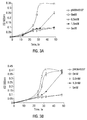
- the growth rate differentials of transformed cell lines grown in the presence of glyphosate contained in the culture medium is used as a measure of the resistance of the EPSPS enzyme to the inhibitory effects of glyphosate (Rogers et al ., Appl. Enviro. Microbiol. 46:37-43 (1983).
- An appropriate E. coli expression vector that carries the native promoter and operator sequence from the E. coli lac operon (Dickson et al., Science 187:27-35 (1975) including the sequence is contained in pMON45337.
- This nucleotide sequence includes 1) flanking BglII and Nde1 endonuclease sites, 2) a ribosome binding site, and 3) an unstructured region 5' to the ribosome binding element (Balbas, P. et.al., in "Methods in Enzymology" (D. V. Goeddel, ed.)185: 15-37, 1990).
- a multiple cloning site is positioned immediately downstream of this Nde1 site, followed by the rho-independant transcriptional terminator element of the E. coli trpA gene (T.
- This vector when it operbly contains the EPSP synthase coding sequences of the present invention is employed for the inducible expression of glyphosate resistant and glyphosate sensitive EPSP synthase cDNAs in E. coli.
- Other commercially available inducible E. coli expression vectors are suitable for testing the EPSP synthases from E. indica .
- E. coli expression vectors carrying the EPSP synthase mature protein coding sequences from the tolerant and sensitive E. indica biotypes are constructed according to standard procedures (Sambrook et al ., Molecular Cloning: A Laboratory Manual, Cold Spring Harbor Press (1989).
- E. coli expression vectors carrying the EPSP synthase mature protein coding sequences from the tolerant and sensitive E. indica biotypes are constructed according to standard procedures (Sambrook et al ., Molecular Cloning: A Laboratory Manual, Cold Spring Harbor Press (1989).
- RT-PCR reactions are employed in RT-PCR reactions to generate expression cassettes suitable for cloning into pMON45337 cut with the restriction enzymes Nde1 and EcoR1.
- RT-PCR reactions are performed with total RNAs extracted from frozen crown samples using the RNeasy Plant Mini Kit (cat.# 74904, Qiagen Inc., Valencia, CA) per manufacturer's instructions.
- Oligo ⁇ dT-primed first-strand cDNAs are prepared from 5 ⁇ g samples of total RNA using the Superscript Pre-Amplification System (cat.# 18089-011, Life Technologies, Rockville, MD) per manufacturer's instructions. Two ⁇ l of first-strand cDNA are then used to generate E. indica EPSP synthase expression cassettes via polymerase chain reaction.
- oligonucleotides are added in 50 ⁇ l RT-PCR reactions at a final concentration of 0.4 ⁇ M.
- PCR amplifications are then performed using the Expand High Fidelity PCR System (cat.# 1 732 641, Roche Molecular Biochemicals, Indianapolis, IN) per manufacturer's instructions, using a thermal profile of 94°C for 30 seconds, then 57°C for 2 minutes, followed by 75°C for 3 minutes, for a total of 35 cycles.
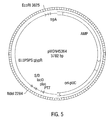
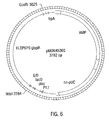
- the resulting PCR products are digested with Nde I and EcoRI, then ligated into pMON45337, resulting in the E. coli expression vectors pMON45364 ( Figure 5) and pMON45365 ( Figure 6), which contain the mature protein coding region for E.
- coli SR481 cells transformed with pMON45337, pMON45364 (Ei.EPSPS:glypR), and pMON45365 (Ei.EPSPS:glypS) are grown in Terrific Broth (Sambrook et al ., Molecular Cloning: A Laboratory Manual, Cold Spring Harbor Press (1989), supplemented with 1.0 mM IPTG, 50 ⁇ g/ml ampicillin, and 100 ⁇ g/ml each of L-phenylalanine, L-tyrosine, and L-tryptophan. O.D. 595 measurements are taken on all of the overnight cultures to confirm similar cell densities. For E.
- coli SR481-pMON45364 and SR481-pMON45365 cells 14 ml culture tubes (cat.# 60818-725, VWR Scientific, West Chester, PA) each containing 3.0 ml of minimal M9 media (Sambrook et al ., Molecular Cloning: A Laboratory Manual, Cold Spring Harbor Press (1989) supplemented with 50 ⁇ g/ml ampicillin, 1.0 mM IPTG, and either 0.0, 0.5, 1.5, or 5.0 mM glyphosate (N-phosphonomethyl glycine or a salt thereof) are inoculated with 100 ⁇ l of undiluted overnight culture per tube. Each experimental condition is performed in triplicate to confirm the reproducibility of the experiment.
- Kinetic characterization of the E . indica glyphosate-resistant EPSP synthase activity in plant and bacterial extracts Kinetic characterization of the glyphosate-resistant E. indica enzyme are performed using both partially purified plant extracts as well as bacterial extracts prepared from cells expressing the cloned sequence on a suitable vector such as pMON45365. Parameters that describe the enzyme's resistance to glyphosate-mediated inhibition and the affinity for the substrate phosphoenolpyruvate (PEP) are of particular interest, given that glyphosate is a competitive inhibitor of EPSP synthase with respect to PEP (Boocock, M. et al ., FEBS Letts. 154:127-133 (1983).
- PEP substrate phosphoenolpyruvate
- Homogenates are prepared from 0.5 g tissue per sample in 25 ml extraction buffer (100 mM TrisCl, 10 % glycerol, 1 mM EDTA, 1 mM benzamidine, 1 mM dithiothreitol, 1 mM 4-(2-aminoethyl)-benzenesulfonyl floride HCl, 0.1 mM leupeptin, pH 7.4) at 4°C using a model PT3000 Polytron homogenizer (Brinkman Instuments Inc., Westbury, NY).
- reaction include 50 mM HEPES, pH 7.0, 5 mM potassium fluoride, 1 mM shikimate-3-phosphate, 0.5 mM [1- 14 C]-phosphoenolpyruvate (29.0 mCi/mmol cyclohexylammonium salt; #CFQ10004, Amersham Life Science, Inc., Arlington Heights, IL), and 0.1 mM ammonium molybdate).
- Reactions are quenched with the addition of 50 ⁇ l 9:1 ethanol: 0.1 M acetic acid. Thirty ⁇ l of quenched reaction is then injected onto a Synchropak AX100 anion exchange column (cat.# 942804, P.J.
- I 50 (glyphosate) values For determination of I 50 (glyphosate) values, the assays as described, are performed in the presence of increasing concentrations of glyphosate and the resulting activities analyzed and plotted using GraFit version 3.0 software (Erithacus Software Ltd., Staines, U.K.).
- Figure 4 shows data generated for a typical glyphosate inhibition study, comparing the EPSP synthase activities detectable in extracts prepared from the glyphosate sensitive and tolerant E. indica biotypes. These data demonstrate the difference in sensitivity to glyphosate for the activities present in the two biotypes, with the sensitive biotype EPSPS activity having an I 50 (glyphosate) of approximately 3.0 ⁇ M and the tolerant biotype EPSPS approximately 16 ⁇ M.
- E.EPSPS glyphosate resistant EPSP synthase gene from E. indica
- a monocot vector that utilizes a plant expression cassette that contains a promoter (P) and first intron (I) from the rice (Os) actin gene (P-Os.Act1/I-Os.Act1 U.S. Patent No.
- TS plastid transit peptide sequence
- Arabidopsis thaliana Arabidopsis thaliana
- TS-At.EPSPS:CTP Arabidopsis thaliana
- T-AGRTU.nos polyadenylation/termination region from the Agrobacterium tumefaciens nopaline synthase gene
- This expression cassette may be combined with a second transgene expression cassette by plant breeding, plant transformation, or by joining in a DNA construct that comprises a plant DNA virus promoter, for example, the cauliflower mosaic virus (CaMV) 35S promoter containing a tandem duplication of the enhancer region, operably connected to a Zea mays Hsp70 intron, operably connected to a nucleic acid sequence encoding an Arabidopsis thaliana EPSPS chloroplast transit peptide sequence, operably connected to a E. indica glyphosate resistant EPSPS coding sequence, operably connected to a nopaline synthase transcriptional terminator.
- CaMV cauliflower mosaic virus
- Other combinations of genetic elements are known and those skilled in the art of plant molecular biology can easily construct plant expression vectors that will express the E. indica EPSPS glyphosate resistant enzyme at sufficient levels to confer glyphosate the transformed plant.
- a plant expression vector that utilizes the promoter and 5' untranslated region (including intron I) of the plant elongation factor 1 ⁇ gene (Elf ⁇ -A1) as described in U.S. Patent No. 5,177,011 or more specifically, dicot vector of the present invention which utilizes the Arabidopsis thaliana Elf ⁇ -A1 promoter and intron sequence (PAt.Elf1a/I-At.Elf1a), (Axelos et al ., Mol. Gen. Genet.
- This expression cassette may be combined with a second transgene expression cassette by plant breeding, plant transformation, or by joining in a DNA construct that comprises a plant DNA virus promoter, for example, the Figwort mosaic virus (FMV) 34S promoter, operably connected to a nucleic acid sequence encoding an Arabidopsis thaliana EPSPS chloroplast transit peptide sequence, operably connected to a E. indica glyphosate resistant EPSPS coding sequence, operably connected to a nopaline synthase transcriptional terminator.
- FMV Figwort mosaic virus
- Other combinations of genetic elements are known and those skilled in the art of plant molecular biology can easily construct plant expression vectors that will express the E. indica EPSPS glyphosate resistant enzyme at sufficient levels to confer glyphosate tolerance to the transformed plant.
- oligonucleotide primers of SEQ ID NO: 11 and SEQ ID NO: 12 are employed in PCR reactions to generate an expression cassette suitable for direct cloning into a monocot vector and a dicot vector.
- PCR reactions are performed using 300-500 ng of pMON45364 plasmid DNA as template to amplify the E. indica EPSP synthase mature protein coding region, flanked by Sph1 and EcoR1 restriction cleavage sites.
- the oligonucleotides are added in 50 ⁇ l PCR reactions at a final concentration of 0.4 ⁇ M.
- PCR amplifications are then performed using the Expand High Fidelity PCR System (cat.# 1 732 641, Roche Molecular Biochemicals, Indianapolis, IN) per manufacturer's instructions, using a thermal profile of 94°C for 30 seconds, then 57°C for 2 minutes, followed by 75°C for 3 minutes, for a total of 20-35 cycles.
- PCR products are digested with Sph1 and EcoR1, then ligated into pMON45366 and pMON45368 resulting in the plant expression vectors pMON45367 ( Figure 7) and pMON45369 ( Figure 8), respectively.
- the accuracy of the cloned sequences are confirmed by DNA sequence analysis (ABI PrismTM 377, Perkin Elmer, Foster City, CA).
- Transgenic corn can be produced by particle bombardment transformation methods as described in U.S. Patent No. 5,424,412.
- the plant expression vector (pMON45367) contains the glyphosate resistant E. indica EPSPS mature protein coding sequence in an expression cassette suitable for expression in monocot plants.
- the pMON45367 plasmid DNA is digested with Not1 and Pme1 restriction endonucleases to complete digestion.
- the 3.3 kb expression cassette is agarose gel purified, then bombarded into embryogenic corn tissue culture cells using a Biolistic® (Dupont, Wilmington, DE) particle gun with purified isolated DNA fragment.
- Transformed cells are selected on glyphosate (N-phosphonomethyl glycine and its salts) containing media and whole plants are regenerated then grown under greenhouse conditions. Fertile seed is collected, planted and the glyphosate tolerant phenotype is back crossed into commercially acceptable corn germplasm by methods known in the art of corn breeding (Sprague et al ., Corn and Corn Improvement 3 rd Edition, Am. Soc. Agron. Publ (1988).
- glyphosate N-phosphonomethyl glycine and its salts
- Transgenic corn plants can be produced by an Agrobacterium mediated transformation method.
- a disarmed Agrobacterium strain C58 (ABI) harboring a binary vector (pMON45367) is used for all the experiments.
- the pMON45367 is transferred into Agrobacterium by a triparental mating method (Ditta et al ., Proc. Natl. Acad. Sci. 77:7347-7351).
- Liquid cultures of Agrobacterium are initiated from glycerol stocks or from a freshly streaked plate and grown overnight at 26°C-28°C with shaking (approximately 150 rpm) to mid-log growth phase in liquid LB medium, pH 7.0 containing 50 mg/l kanamycin, 50 mg/l streptomycin and spectinomycin and 25 mg/l chloramphenicol with 200 ⁇ M acetosyringone (AS).
- the Agrobacterium cells are resuspended in the inoculation medium (liquid CM4C) and the density is adjusted to OD 660 of 1.
- Freshly isolated Type II immature HiIIxLH198 and HiII corn embryos are inoculated with Agrobacterium containing pMON45367 and co-cultured 2-3 days in the dark at 23 °C.
- the embryos are then transferred to delay media (N6 1-100-12/micro/Carb 500/20 ⁇ M AgNO3) and incubated at 28 °C for 4 to 5 days. All subsequent cultures are kept at this temperature.
- Coleoptiles are removed one week after inoculation.
- the embryos are transferred to the first selection medium (N61-0-12/Carb 500/0.5 mM glyphosate). Two weeks later, surviving tissue are transferred to the second selection medium (N61-0-12/Carb 500/1.0 mM glyphosate).
- R 0 plants Three R 0 plants are regenerated for any given transgenic event. These three plants are expected to be near isogenic because they are thought to be derived from a single transgenic plant cell. Thus, one plant is used as a non-sprayed control and the remaining two plants are treated with glyphosate (as Roundup® herbicide). Plants are most effectively treated with glyphosate at V2-V6 stage. Glyphosate (as Roundup® herbicide) is administered through the use of a linear track sprayer set to deliver a 16, 32 or 64 oz./A rate of glyphosate.
- the R 0 plants produced are allowed to self, then R 1 plants are screened using spray applications of glyphosate and the rating system as described for the R 0 screen.
- An increase in whole-plant tolerance to the herbicide, as compared to non-transgenic control plants, is used to assess the utility of the E. indica EPSP synthase enzyme for the generation of glyphosate tolerance in planta.
- Immature embryos of wheat ( Triticum aestivum L) cultivar Bobwhite are isolated from the immature caryopsis 13-15 days after pollination, and cultured on CM4C (Table 3) for 3-4 days. The embryos showing active cell division, but no apparent callus formation are selected for Agrobacterium infection.
- a disarmed Agrobacterium strain C58 (ABI) harboring a binary vector of interest (pMON45367) is used for all the experiments.
- the pMON45367 is transferred into Agrobacterium by a triparental mating method (Ditta et al., Proc. Natl. Acad. Sci. 77:7347-7351).
- the Agrobacterium cells are resuspended in the inoculation medium (liquid CM4C) and the density is adjusted to OD 660 of 1.
- the immature embryos cultured in CM4C medium are transferred into sterile petri plates (16 x 20 mm) or wells of a 6-well cell culture plate (Costar Corporation, Cambridge, MA) containing 10 ml of inoculation medium per petri plate or 5 ml per cell culture cluster plate.
- An equal amount of the Agrobacterium cell suspension is added such that the final concentration of Agrobacterium cells is an OD 600 of 0.5.
- pluronic F68 is added to the inoculation mixture at a final concentration of 0.01%.
- the ratio between the Agrobacterium and immature embryos is about 10 ml: 20-200 IEs.
- the inoculation is allowed to proceed at 23°C-26°C from 5-60 minutes.
- the remaining Agrobacterium cells are removed from the explants by using vacuum aspiration equipment.
- a piece of sterile Whatman No. 1 filter paper (to fit the size of the petri plate) is placed in each of 60 x 15 or 60 x 20 mm petri dishes. Two hundred ⁇ l of sterile water is placed in the middle of the filter paper. After 2-3 minutes, the inoculated immature embryos are placed in the plates. Usually, 20-50 explants are grouped as one stack (about 1 cm in size and 60-80 mg/stack), with 4-5 stacks on each plate. The plates are immediately covered with Parafilm® and then co-cultivated in the dark at 24°C-26°C for 2-3 days.
- the co-cultivated PCIEs are transferred CM4C+500 mg/l carbenicillin medium (delay medium) at dark. After 7 days on the delay medium, the immature embryos are transferred to CM4C supplemented with 2 mM glyphosate and 500 mg/l carbenicillin for selection for one week. Then calli are transferred to MMS0.2C+0.1mM glyphosate +250 mg/l carbenicillin medium for 2 weeks under light for further selection. Embryogenic calli are transferred to a second regeneration medium MMS0C with lower glyphosate concentration (0.02 mM) and 500 mg/L carbenicillin for plant regeneration. Those embryogenic calli are transferred onto fresh medium every two weeks. Regenerated plantlets are transferred to Sundae cups (Sweetheart Cup Company, Chicago, IL) containing the second regeneration medium for further growth and selection. When roots are well established from transgenic plants the plants are transferred to soil for further evaluation.
- Novel glyphosate-resistant EPSP synthases can be designed based on the E. indica glyphosate resistant EPSPS.
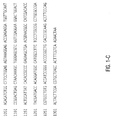
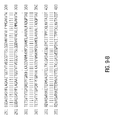
- the amino acid sequence deduced from the cDNA sequence shows that two amino acid substitutions distinguish the mature EPSP protein sequence derived from the glyphosate-tolerant E. indica biotype (top row , Figure 9) from that of the glyphosate sensitive E. indica biotype EPSPS protein sequence (bottom row, Figure 9).
- indica glypR was found to not have a major effect on the K m indicating that this enzyme will continue to function well in the plant chloroplast. It required a double mutation in the Z. mays EPSPS enzyme to achieve a low K m for PEP. Comparison of the apparent K m for PEP and apparent K i for glyphosate of the E. indica glyphosate resistant EPSPS with other known plant EPSPS modified for glyphosate resistance.
- EPSPS enzyme K m PEP ( M) K i Glyphosate ( M) E. indica glypS 5 0.05 E. indica glypR (Pro-Ser) 7 1 Z. mays glypS (wt) 5 0.2 Z.
- K m (PEP) determinations for the different enzymes are performed at saturating shikimate-3-phosphate (S3P) concentrations, which is determined according to standard methods (Fersht, Enzyme Structure and Mechanism, W.H. Freeman and Co., Ltd., San Francisco, CA., 1977). A series of PEP concentrations are tested, such that the final range of concentrations spans one order of magnitude above and below the experimentally determined K m .
- K i (glyphosate) is determined in a similar manner, at saturating S3P concentrations, except that velocity vs.
- PEP is determined for a range of glyphosate concentrations (Orsi in "Methods in Enzymology” (Purich, ed.), vol. 63, pg. 159-183, 1979). Calculations, graphical representation, and statistical analysis of enzyme kinetic data are performed using GraFit version 3.0 software (Erithacus Software Ltd., Staines, U.K.).
- transgenic plants resistant to glyphosate are made by transformation with an E. indica glyphosate resistant EPSPS gene construct that can include additional modification of the naturally occurring amino acid sequence.
- These changes are be made by site-directed mutagenesis of the codons of DNA sequence to incorporate other known amino acid substitutions in glyphosate resistant plant EPSPSs, such as the threonine to isoleucine substitution (U.S. Patent No. 6,040,497), and glycine to alanine substitution (U.S. Patent No. 5,188,642) in the catalytic domain.
- the catalytic domain of the E is anticipated that the catalytic domain of the E.
- indica EPSPS can be modified to the amino acid sequence of the catalytic domain of the Agrobacterium strain CP4 glyphosate resistant EPSPS (U.S. Patent No. 5,633,435) by the same methods.
- Previous random and site-directed mutations in the conserved region (catalytic domain) of bacterial and plant EPSPSs have shown that modifications that increase the K i for glyphosate while keeping the K m for PEP low are important for an enzyme that is useful for genetically modifying plants for glyphosate tolerance (U.S. Patent No. 5,866,775).
- E. indica EPSPS regulatory sequences can be isolated by any number of methods known to those of skill in the art for genomic library preparation.
- E. indica genomic DNA is isolated by a CsCl purification protocol according to Current Protocols in Molecular Biology, ed. Ausubel et al ., Greene Publishing and Wiley-Interscience, New York, 1992 (with periodic updates); or by a CTAB purification method (Rogers et al., Plant Mol. Biol., 5:69, 1988). Reagents are available commercially (see, for example Sigma Chemical Co., St. Louis, MO).
- the genomic DNA libraries are prepared according to manufacturer instructions (Genome WalkerTM, CloneTech Laboratories, Inc, Palo Alto, CA).
- genomic DNA is subjected to restriction enzyme digestion overnight at 37°C with the following blunt-end endonucleases: Eco RV , Sca 1, Dra 1, Pvu II, or Stu 1 (CloneTech Laboratories, Inc. Palo Alto, CA).
- the reaction mixtures are extracted with phenol:chloroform, ethanol precipitated, and resuspended in Tris-EDTA buffer (10mM Tris-.HCl, pH 8.0, 1mM EDTA).
- Tris-EDTA buffer 10mM Tris-.HCl, pH 8.0, 1mM EDTA.
- the purified blunt-ended genomic DNA fragments are then ligated to the Genome WalkerTM adapters and ligation of the resulting DNA fragments to adapters were done according to the manufacturer's protocol.
- each reaction is heated treated (70°C for 5 min) to terminate the reaction and then diluted 10-fold in Tris-EDTA buffer.
- One ⁇ l of each respective ligation is then amplified in a 50 ⁇ l reaction according to manufacturer's recommended protocol using an adaptor-specific oligonucleotide (supplied by manufacturer) and an E. indica EPSP synthase gene-specific oligonucleotide, such as SEQ ID NO 4.
- PCR products representing 5' regions of the E. indica EPSP synthase gene are then purified by agarose gel electrophoresis using a QIAquick Gel Extraction Kit (cat.# 28704, Qiagen Inc., Valencia, CA) then directly cloned into the pCR2.1-TOPO vector (cat.# K4500-40, Invitrogen, Carlsbad, CA).
- E. indica Genome WalkerTM libraries and methods that are used to isolate the E. indica EPSP synthase 5' region can be used to isolate the 3' region of E. indica EPSP synthase gene, by substituting gene-specific primers (first round SEQ ID NO: 13 and second round SEQ ID NO: 14) that anneal to the 3' end of the gene. Amplification products are cloned and verified as for the 5' end of the E. indica EPSP synthase gene.
- the translation initiation codon is determined for the E. indica EPSP synthase gene by inspection, anticipating an initiation codon approximately 63 codons upstream of the start of the mature protein codon region, based on comparison to the maize EPSP synthase gene. Primers are then designed to amplify approximately 2.5 kb of the 5' region beginning at the initiation codon. These primers incorporate restriction sites for cloning into expression vectors, for example, placing a EcoR1 site in the 5' end of promoter region the E. indica EPSP synthase gene and an Nco 1 site incorporating the translation start. Such primers are added in a 50 ⁇ l RT-PCR reaction at a final concentration of 25 ⁇ M with 50 ng of E. indica genomic DNA.
- PCR amplifications are then performed using the Expand High Fidelity PCR System (cat.# 1 732 641, Roche Molecular Biochemicals, Indianapolis, IN) per manufacturer's instructions. A thermal profile of 94°C for 30 seconds, followed by 60°C for 30seconds, then 72°C for 3 minutes is used for thirty cycles. This is followed by a cycle of 72°C for 3 minutes.
- the gel purified amplification product is then digested with Pst1 and Nco1.
- the 3' end of the E. indica EPSP synthase gene is amplified using two gene specific primers (SEQ ID NO:15 and SEQ ID NO:16) which incorporate a BamH1 site immediately downstream of the translation stop codon and a Pst1 approximately 650 bases downstream of the translation stop codon.
- the product is amplified as for the 5' end of the E. indica EPSP synthase gene except an extension time of 1 minute is used.
- the gel purified product is digested with BamH1 and Pst1.
- the 5' (EcoR1/Nco1 fragment) regulatory and 3' (BamH1/Pst1 fragment) regulatory regions of the E. indica EPSP synthase gene can be ligated to a compatibly digested vector and a coding region to generate a transgene capable of expressing a transcript under control of E. indica EPSP synthase gene regulatory elements.
- An example of such is a coding region would be the A. tumefaciens strain CP4 EPSP synthase gene (U.S. Patent No. 5,633,435) expressed under the control of the E. indica regulatory sequences.
- the basal expression of the E. indica EPSP synthase gene promoter may be modified to enhance its expression.
- Methods known to those of skill in the art can be used to insert enhancing elements (for example, subdomains of the CaMV 35S promoter, Benfey et. al, 1990 EMBO J. 9: 1677-1684) into the E. indica EPSP synthase gene 5' sequence to generate a promoter which encompasses the temporal and spatial expression of the E. indica EPSP synthase gene but have quantitatively higher levels of expression.
- tissue specific modifications of the E. indica EPSP synthase 5' region expression can be accomplished with elements determined to specifically activate or repress gene expression (for example, pollen specific elements, Eyal et al ., 1995 Plant Cell 7: 373-384).
- PEP phosphoenolpyruvate
- a DNA molecule above wherein said plant is Eleusine species
- a DNA molecule above wherein said naturally occurring glyphosate resistant EPSPS enzyme is modified by a substitution or a deletion of at least one amino acid in a catalytic domain.
- a DNA molecule above wherein said substitution is selected from the group consisting of glycine to alanine 102 and threonine to isoleucine 103 of SEQ ID NO:7.
- a recombinant DNA molecule comprising: a promoter that functions in plant cells to cause the production of an RNA sequence, operably linked to; a structural DNA sequence that causes the production of an RNA sequence that encodes an EPSPS enzyme comprising the sequence of SEQ ID NO:7, operably linked to; a 3' non-translated region that functions in plant cells to cause the addition of polyadenyl nucleotides to the 3'end of the RNA sequence, wherein the promoter is heterologous with respect to the structural DNA sequence and selected so as to cause sufficient expression of the polypeptide to enhance the glyphosate tolerance of a transgenic plant cell containing said recombinant DNA molecule.
- a recombinant DNA molecule above wherein said structural DNA sequence encodes a fusion polypeptide comprising an amino-terminal chloroplast transit peptide and an EPSPS enzyme comprising the sequence of SEQ ID NO:7.
- a method of producing glyphosate tolerant plants comprising the steps of:
- a glyphosate tolerant plant cell comprising a recombinant DNA molecule above.
- a glyphosate tolerant plant cell above selected from the group consisting of corn, wheat, rice, millet, sugarcane, barley, oat, rye, turf grasses, asparagus, soybean, cotton, sugar beet, oilseed rape, canola, flax, sunflower, potato, tobacco, tomato, alfalfa, forest trees, fruit trees, ornamental annuals, and ornarnental perennials.
- a glyphosate tolerant plant comprising the plant cells above.
- a glyphosate tolerant plant above selected from the group consisting of corn, wheat, rice, millet, sugarcane, barley, oat, rye, turf grasses, asparagus, soybean, cotton, sugar beet, oilseed rape, canola, flax, sunflower, potato, tobacco, tornato, alfalfa, forest trees, fruit trees, ornamental annuals, and ornamental perennials.
- a recombinant DNA molecule comprising: a promoter that functions in plant cells to cause the production of an RNA sequence, operably linked to; a structural DNA sequence that causes the production of an RNA sequence which encodes an EPSPS enzyme having the sequence of SEQ ID NO:7, operably linked to; a 3' non-translated region that functions in plant cells to cause the addition of polyadenyl nucleotides the 3' end of the RNA sequence, wherein the promoter is homologous with respect to the structural DNA sequence.
- a glyphosate tolerant transgenic plant cell comprising a DNA molecule above or
- a glyphosate tolerant transgenic plant cell above selected from the group consisting of corn, wheat, rice, millet, sugarcane, barley, oat, rye, turf grasses, asparagus, soybean, cotton, sugar beet, oilseed rape, canola, flax, sunflower, potato, tobacco, tomato, alfalfa, forest trees, fruit trees, ornamental annuals, ornamental perennials.
- a glyphosate tolerant transgenic plant comprising plant cells above.
- Glyphosate tolerant transgenic plant above selected from the group consisting of corn, wheat, rice, millet, sugarcane, barley, oat, rye, turf grasses, asparagus, soybean, cotton, sugar beet, oilseed rape, canola, flax, sunflower, potato, tobacco, tomato, alfalfa, forest trees, fruit trees, ornamental annuals, ornamental perennials.
- a DNA molecule comprising the promoter region located 5' to the DNA molecule above.
- a DNA molecule comprising the chloroplast transit peptide coding region located 5' to the DNA molecule above.
- a DNA molecule comprising the 3' untranslated region located 3' to the DNA molecule above.
Landscapes
- Health & Medical Sciences (AREA)
- Life Sciences & Earth Sciences (AREA)
- Genetics & Genomics (AREA)
- Engineering & Computer Science (AREA)
- Chemical & Material Sciences (AREA)
- Zoology (AREA)
- Bioinformatics & Cheminformatics (AREA)
- Wood Science & Technology (AREA)
- Organic Chemistry (AREA)
- General Engineering & Computer Science (AREA)
- Biomedical Technology (AREA)
- Biotechnology (AREA)
- Molecular Biology (AREA)
- Microbiology (AREA)
- Biochemistry (AREA)
- General Health & Medical Sciences (AREA)
- Medicinal Chemistry (AREA)
- Cell Biology (AREA)
- Physics & Mathematics (AREA)
- Biophysics (AREA)
- Plant Pathology (AREA)
- Micro-Organisms Or Cultivation Processes Thereof (AREA)
- Breeding Of Plants And Reproduction By Means Of Culturing (AREA)
- Agricultural Chemicals And Associated Chemicals (AREA)
- Enzymes And Modification Thereof (AREA)
Abstract
Description








| Percent-maximal EPSPS activity in extracts from different E. indica individuals assayed in the presence 1.6 uM glyphosate | |
| biotype-individual | EPSPS Activity, (% maximal @ 1.6 uM glyphosate) |
| Sensitive- #1 | 51.6 |
| Sensitive- #2 | 55.6 |
| Sensitive- #3 | 57.4 |
| Tolerant - #1 | 76.3 |
| Tolerant - #2 | 86.0 |
| Tolerant - #3 | 82.4 |
| EPSPS activity in aroA- bacterial extracts transformed with pMON45364 or pMON45365 assayed in the presence and absence of glyphosate | ||
| sample | activity (nMol/min/mg protein) | % maximal activity (1.6 uM glyphosate) |
| SR481 (pMON45364) | ||
| - glyphosate | 34.3 | |
| + glyphosate | 24.9 | 72.6 |
| SR481 (pMON45365) | ||
| - glyphosate | 27.1 | |
| + glyphosate | 14.4 | 53.1 |


| Supplemental Components in Basal Media | ||||
| Components | CM4 | CM4C | MMS.2C | MMS0 |
| 2,4-D (mg/l) | 0.5 | 0.5 | 0.2 | -- |
| Pichloram (mg/l) | 2.2 | 2.2 | ||
| Maltose (g/l) | 40.0 | 40.0 | 40.0 | 40.0 |
| Glutamine (g/l) | 0.5 | 0.5 | ||
| Magnesium Chloride (g/l) | 0.75 | 0.7 | ||
| Casein Hydrolysate (g/l) | 0.1 | 0.1 | ||
| MES (g/l) | 1.95 | 1.95 | 1.95 | |
| Ascorbic Acid (mg/l) | 100.0 | 100.0 | 100.0 | |
| Gelling Agent (g/l) | 2(P) | 2(P) | 2(G) | 2(G) |
| Comparison of the apparent Km for PEP and apparent Ki for glyphosate of the E. indica glyphosate resistant EPSPS with other known plant EPSPS modified for glyphosate resistance. | ||
| EPSPS enzyme | KmPEP ( M) | KiGlyphosate ( M) |
| E. indica glypS | 5 | 0.05 |
| E. indica glypR (Pro-Ser) | 7 | 1 |
| Z. mays glypS (wt) | 5 | 0.2 |
| Z. mays glypR (Thr-Ile, Pro-Ser) | 5 | 60 |
| P. hybrida glypS (wt) | 5 | 0.4 |
| P. hybrida glypR (Pro-Ser) | 44 | 3 |
| P. hybrida glypR (Gly-Ala) | 200 | 2000 |
| P. hybrida glypR (Gly-Ala, Pro-Ser) | 340 | 8500 |





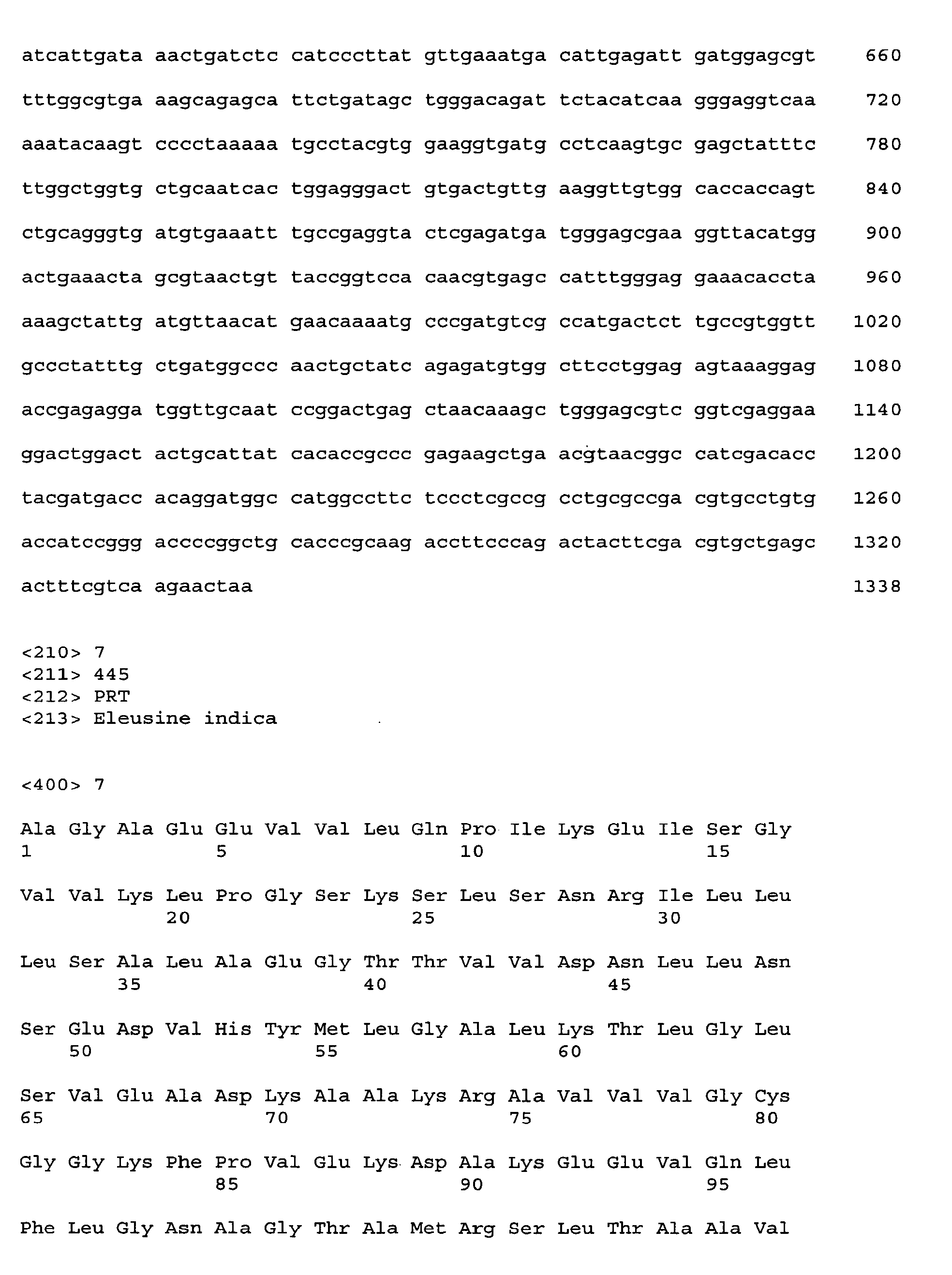
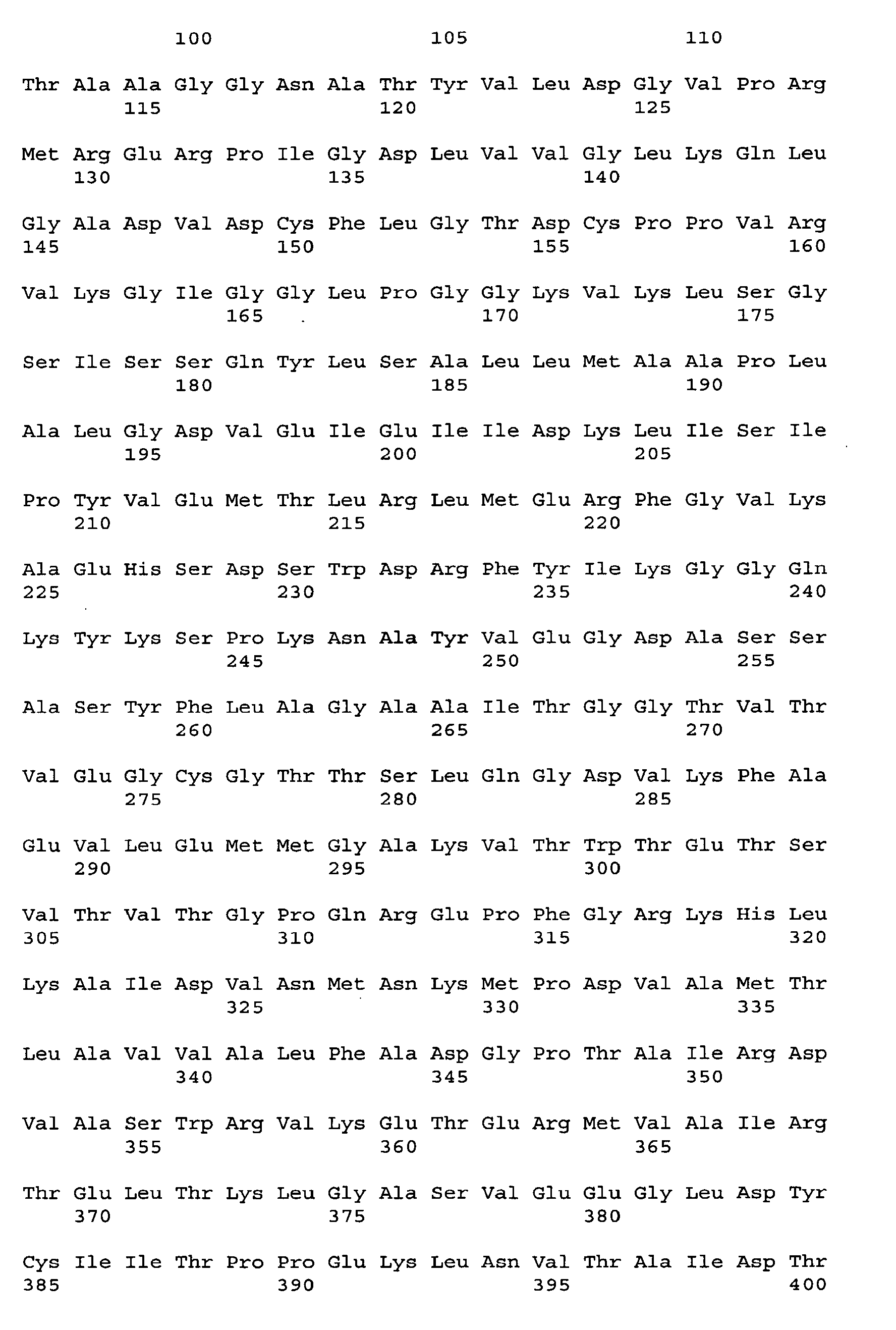
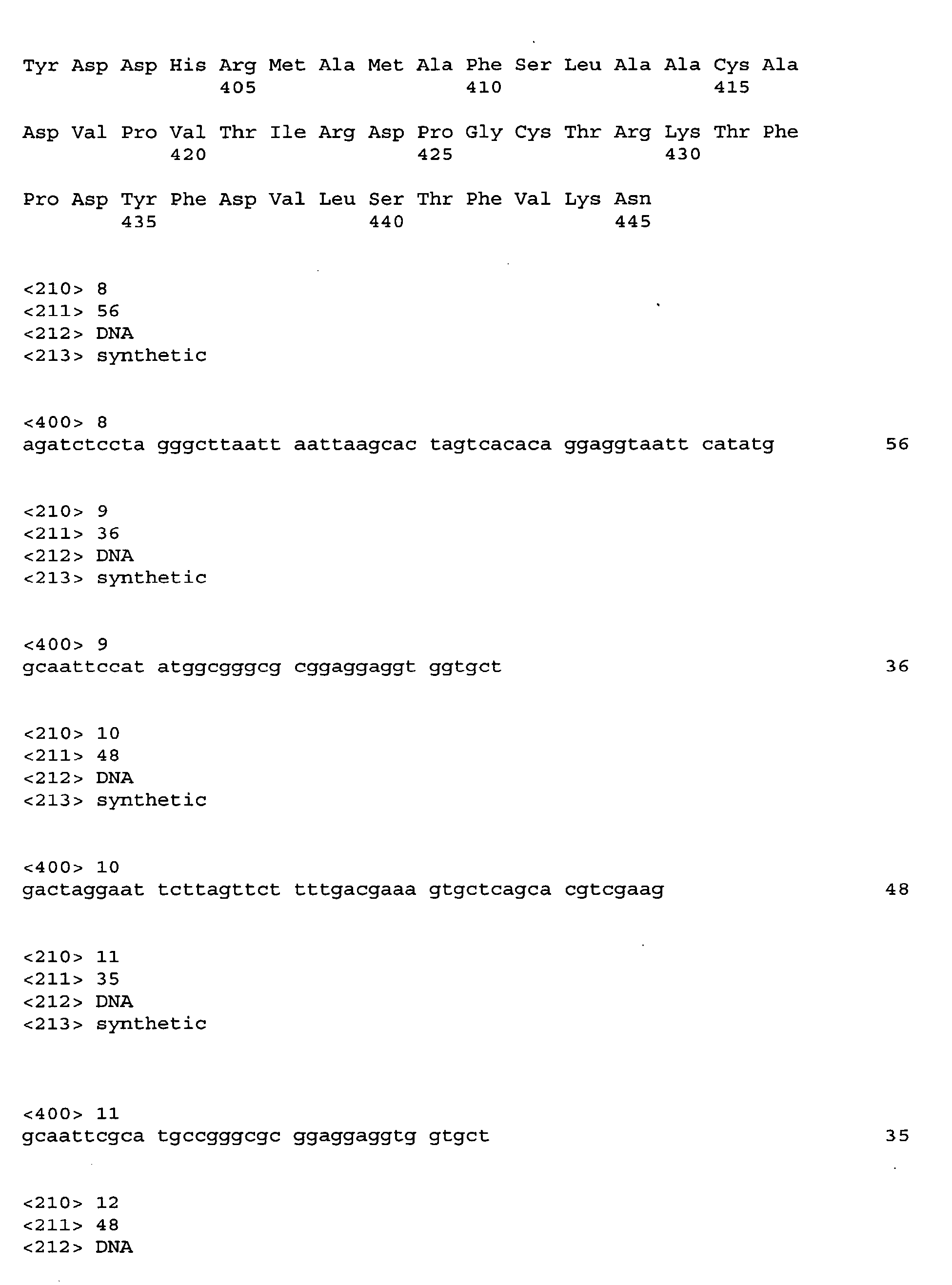
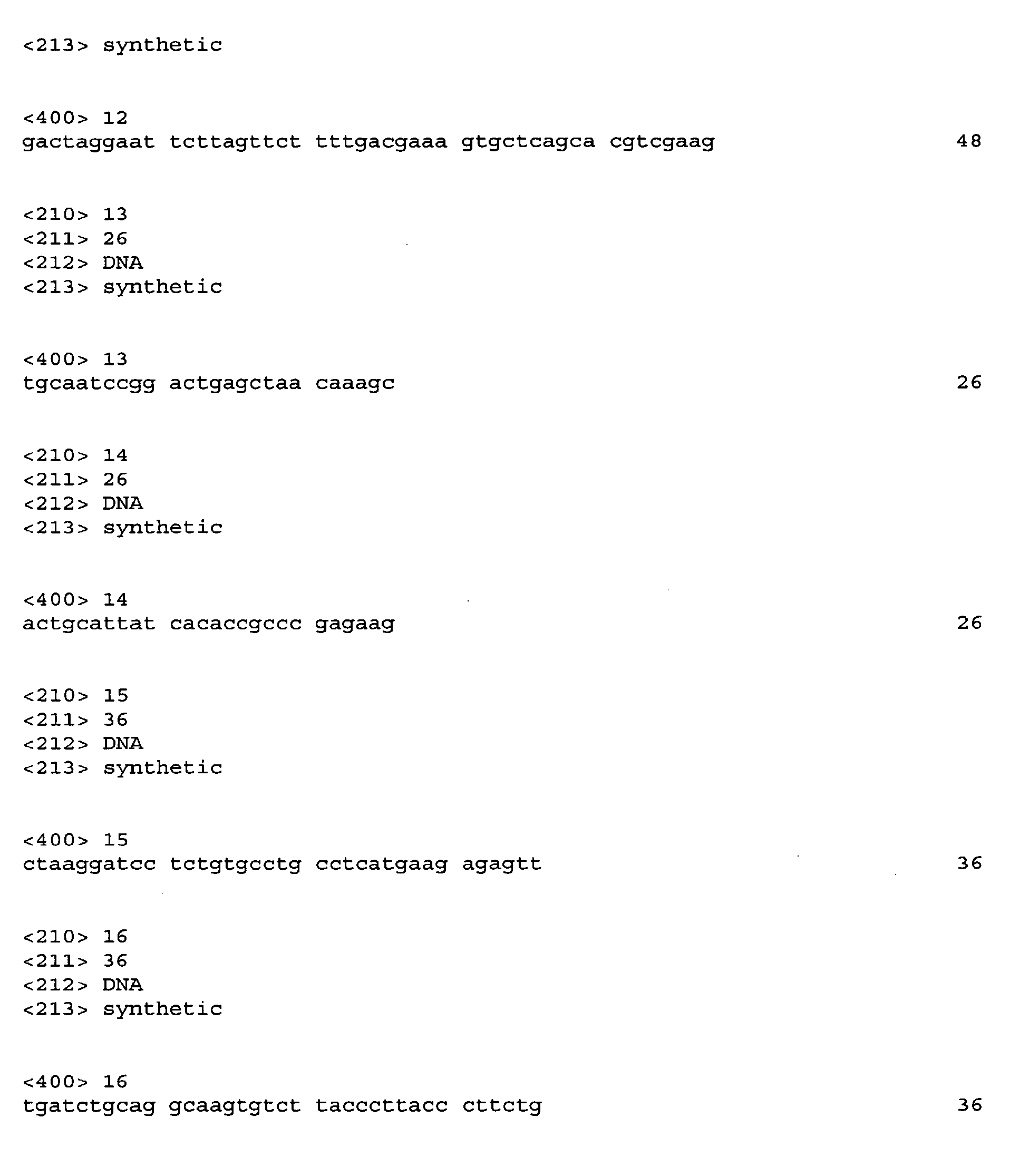
Claims (19)
- A plant EPSP synthase gene promoter modified to enhance the expression of the gene it regulates, said modification comprising at least one enhancing element derived from a plant DNA virus promoter.
- The plant EPSP synthase gene promoter of claim 1, wherein said plant DNA virus is selected from the group consisting of cauliflower mosaic virus, figwort mosaic virus, sugarcane bacilliform virus, and commelina yellow mottle virus.
- The plant EPSP synthase gene promoter of claim 1, wherein said plant EPSP synthase gene promoter is derived from Eleusine indica.
- A plant cell comprising said plant EPSP synthase promoter of claim 1, 2 or 3.
- A plant, plant part or seed comprising the plant cell of claim 4.
- The plant cell of claim 5 selected from the group consisting of alfalfa, Arabidopsis, barley, Brassica, broccoli, cabbage, citrus, cotton, garlic, oat, oilseed rape, onion, canola, flax, maize, tobacco, cedar, an ornamental annual and ornamental perennial plant, pea, peanut, pepper, potato, rice, rye, sorghum, soybean, strawberry, sugarcane, sugar beet, tomato, wheat, poplar, pine, fir, eucalyptus, apple, lettuce, lentils, grape, banana, tea, turf grasses, sunflower, oil palm, and Phaseolus.
- A DNA construct comprising a plant EPSP synthase gene promoter modified to enhance the expression of the gene it regulates, wherein said modification comprising at least one enhancing element-derived from a plant DNA virus, and said plant EPSP synthase gene promoter is operably linked to a DNA molecule encoding a chloroplast transit peptide and an EPSP synthase protein.
- The DNA construct of claim 7, wherein said EPSP synthase protein is a glyphosate-resistant EPSP synthase.
- The DNA construct of claim 8, wherein said encoded glyphosate resistant EPSP synthase has at least one amino acid substitution in its catalytic domain, and wherein said amino acid substitution is selected from the group consisting of a serine for a proline, an isoleucine for a threonine, and an alanine for a glycine.
- The DNA construct of claim 7, wherein said EPSP synthase protein has the amino acid sequence of SEQ ID NO:7.
- The DNA construct of claim 7, wherein said DNA molecule has the nucleotide sequence of SEQ ID NO:6.
- A plant cell comprising the DNA construct of any one of claims 7-11.
- The plant cell of claim 12 selected from the group consisting of alfalfa, Arabidopsis, barley, Brassica, broccoli, cabbage, citrus, cotton, garlic, oat, oilseed rape, onion, canola, flax, maize, tobacco, cedar, an ornamental annual and ornamental perennial plant, pea, peanut, pepper, potato, rice, rye, sorghum, soybean, strawberry, sugarcane, sugar beet, tomato, wheat, poplar, pine, fir, eucalyptus, apple, lettuce, lentils, grape, banana, tea, turf grasses, sunflower, oil palm, and Phaseolus.
- A plant, plant part or seed comprising the plant cell of claim 13.
- An isolated DNA sequence comprising a promoter region of E. indica glyphosate resistant EPSPS gene.
- An isolated DNA sequence comprising a promoter region located 5' to an Eleusine species coding region that is capable of hybridizing to SEQ ID NO:6.
- An isolated DNA molecule comprising the promoter region located 5' to an Eleusine species coding region for a naturally occurring glyphosate resistant EPSPS enzyme, wherein said enzyme has a Km for phosphoenolpyruvate (PEP) of less that 10 µM and the Km for PEP is not more than about twice of the Km for PEP of naturally occurring glyphosate sensitive EPSPS enzyme derived from a glyphosate sensitive plant.
- An isolated DNA molecule comprising the chloroplast transit peptide coding region located 5' to an Eleusine species coding region for a naturally occurring glyphosate resistant EPSPS enzyme, wherein said enzyme has a Km for phosphoenolpyruvate (PEP) of less that 10 µM and the Km for PEP is not more than about twice of the Km for PEP of naturally occurring glyphosate sensitive EPSPS enzyme derived from a glyphosate sensitive plant.
- An isolated DNA molecule comprising the 3' untranslated region located 3' to an Eleusine species coding region for a naturally occurring glyphosate resistant EPSPS enzyme, wherein said enzyme has a Km for phosphoenolpyruvate (PEP) of less that 10 µM and the Km for PEP is not more than about twice of the Km for PEP of naturally occurring glyphosate sensitive EPSPS enzyme derived from a glyphosate sensitive plant.
Applications Claiming Priority (3)
| Application Number | Priority Date | Filing Date | Title |
|---|---|---|---|
| US18809300P | 2000-03-09 | 2000-03-09 | |
| US188093P | 2000-03-09 | ||
| EP01913329A EP1261695B1 (en) | 2000-03-09 | 2001-03-06 | Methods for making plants tolerant to glyphosate and compositions thereof |
Related Parent Applications (1)
| Application Number | Title | Priority Date | Filing Date |
|---|---|---|---|
| EP01913329A Division EP1261695B1 (en) | 2000-03-09 | 2001-03-06 | Methods for making plants tolerant to glyphosate and compositions thereof |
Publications (2)
| Publication Number | Publication Date |
|---|---|
| EP1582583A2 true EP1582583A2 (en) | 2005-10-05 |
| EP1582583A3 EP1582583A3 (en) | 2005-10-12 |
Family
ID=34888895
Family Applications (1)
| Application Number | Title | Priority Date | Filing Date |
|---|---|---|---|
| EP05104468A Withdrawn EP1582583A3 (en) | 2000-03-09 | 2001-03-06 | Methods for making plants tolerant to glyphosate and compositions thereof |
Country Status (1)
| Country | Link |
|---|---|
| EP (1) | EP1582583A3 (en) |
Cited By (1)
| Publication number | Priority date | Publication date | Assignee | Title |
|---|---|---|---|---|
| CN111443076A (en) * | 2020-06-01 | 2020-07-24 | 中国农业科学院农业质量标准与检测技术研究所 | A tyrosinase inhibition-based glyphosate detection system and SERS detection method |
Family Cites Families (3)
| Publication number | Priority date | Publication date | Assignee | Title |
|---|---|---|---|---|
| FR2736926B1 (en) * | 1995-07-19 | 1997-08-22 | Rhone Poulenc Agrochimie | 5-ENOL PYRUVYLSHIKIMATE-3-PHOSPHATE SYNTHASE MUTEE, CODING GENE FOR THIS PROTEIN AND PROCESSED PLANTS CONTAINING THIS GENE |
| AU6882298A (en) * | 1997-04-03 | 1998-10-22 | Dekalb Genetics Corporation | Glyphosate resistant maize lines |
| GB9711015D0 (en) * | 1997-05-28 | 1997-07-23 | Zeneca Ltd | Improvements in or relating to organic compounds |
-
2001
- 2001-03-06 EP EP05104468A patent/EP1582583A3/en not_active Withdrawn
Cited By (2)
| Publication number | Priority date | Publication date | Assignee | Title |
|---|---|---|---|---|
| CN111443076A (en) * | 2020-06-01 | 2020-07-24 | 中国农业科学院农业质量标准与检测技术研究所 | A tyrosinase inhibition-based glyphosate detection system and SERS detection method |
| CN111443076B (en) * | 2020-06-01 | 2023-01-20 | 中国农业科学院农业质量标准与检测技术研究所 | Glyphosate detection system based on tyrosinase inhibition and SERS detection method |
Also Published As
| Publication number | Publication date |
|---|---|
| EP1582583A3 (en) | 2005-10-12 |
Similar Documents
| Publication | Publication Date | Title |
|---|---|---|
| EP1261695B1 (en) | Methods for making plants tolerant to glyphosate and compositions thereof | |
| AU2001242005A2 (en) | Methods for making plants tolerant to glyphosate and compositions thereof | |
| AU2001242005A1 (en) | Methods for making plants tolerant to glyphosate and compositions thereof | |
| EP2087124B1 (en) | Improved grg23 epsp synthases: compositions and methods of use | |
| US5972644A (en) | Cyanobacterial and plant acetyl-CoA carboxylase | |
| CA2603465C (en) | Identification of a new class of epsp synthases | |
| US20170342426A1 (en) | Methods for Enhancing Segregation of Transgenes in Plants and Compositions Thereof | |
| EP1994158B1 (en) | Epsp synthase enzyme domains conferring glyphosate resistance | |
| EP2078754B1 (en) | GRG23 and GRG51 genes conferring herbicide resistance | |
| US20070295251A1 (en) | Epsp synthases: compositions and methods of use | |
| US20090151018A1 (en) | Gdc-1 genes conferring herbicide resistance | |
| US20020062499A1 (en) | Methods for translational repression of gene expression in plants | |
| WO2004097013A1 (en) | Gdc-1 genes conferring herbicide resistance | |
| HK1134108B (en) | Improved grg23 epsp synthases: compositions and methods of use |
Legal Events
| Date | Code | Title | Description |
|---|---|---|---|
| PUAI | Public reference made under article 153(3) epc to a published international application that has entered the european phase |
Free format text: ORIGINAL CODE: 0009012 |
|
| PUAL | Search report despatched |
Free format text: ORIGINAL CODE: 0009013 |
|
| AC | Divisional application: reference to earlier application |
Ref document number: 1261695 Country of ref document: EP Kind code of ref document: P |
|
| AK | Designated contracting states |
Kind code of ref document: A2 Designated state(s): AT BE CH CY DE DK ES FI FR GB GR IE IT LI LU MC NL PT SE TR |
|
| AK | Designated contracting states |
Kind code of ref document: A3 Designated state(s): AT BE CH CY DE DK ES FI FR GB GR IE IT LI LU MC NL PT SE TR |
|
| 17P | Request for examination filed |
Effective date: 20060329 |
|
| AKX | Designation fees paid |
Designated state(s): CH DE GB LI |
|
| 17Q | First examination report despatched |
Effective date: 20060906 |
|
| STAA | Information on the status of an ep patent application or granted ep patent |
Free format text: STATUS: THE APPLICATION HAS BEEN WITHDRAWN |
|
| 18W | Application withdrawn |
Effective date: 20070222 |