EP1582209B1 - The use of succinate derivative esters for the treatment of dementia - Google Patents
The use of succinate derivative esters for the treatment of dementia Download PDFInfo
- Publication number
- EP1582209B1 EP1582209B1 EP03782083A EP03782083A EP1582209B1 EP 1582209 B1 EP1582209 B1 EP 1582209B1 EP 03782083 A EP03782083 A EP 03782083A EP 03782083 A EP03782083 A EP 03782083A EP 1582209 B1 EP1582209 B1 EP 1582209B1
- Authority
- EP
- European Patent Office
- Prior art keywords
- dementia
- mice
- extract
- learning
- compounds
- Prior art date
- Legal status (The legal status is an assumption and is not a legal conclusion. Google has not performed a legal analysis and makes no representation as to the accuracy of the status listed.)
- Expired - Lifetime
Links
- 0 CC(C)C[C@](C*OCc(cc1)ccc1O*)(C=*OC(c(cc1)ccc1O*)I)O* Chemical compound CC(C)C[C@](C*OCc(cc1)ccc1O*)(C=*OC(c(cc1)ccc1O*)I)O* 0.000 description 2
- DOJXTZCGNJWDAF-UHFFFAOYSA-N CCC(CC)CC(C(C(F)(F)F)O)(C(O)=O)O Chemical compound CCC(CC)CC(C(C(F)(F)F)O)(C(O)=O)O DOJXTZCGNJWDAF-UHFFFAOYSA-N 0.000 description 1
Images

Classifications
-
- A—HUMAN NECESSITIES
- A61—MEDICAL OR VETERINARY SCIENCE; HYGIENE
- A61K—PREPARATIONS FOR MEDICAL, DENTAL OR TOILETRY PURPOSES
- A61K31/00—Medicinal preparations containing organic active ingredients
- A61K31/185—Acids; Anhydrides, halides or salts thereof, e.g. sulfur acids, imidic, hydrazonic or hydroximic acids
- A61K31/19—Carboxylic acids, e.g. valproic acid
- A61K31/194—Carboxylic acids, e.g. valproic acid having two or more carboxyl groups, e.g. succinic, maleic or phthalic acid
-
- A—HUMAN NECESSITIES
- A61—MEDICAL OR VETERINARY SCIENCE; HYGIENE
- A61K—PREPARATIONS FOR MEDICAL, DENTAL OR TOILETRY PURPOSES
- A61K31/00—Medicinal preparations containing organic active ingredients
- A61K31/21—Esters, e.g. nitroglycerine, selenocyanates
- A61K31/215—Esters, e.g. nitroglycerine, selenocyanates of carboxylic acids
- A61K31/22—Esters, e.g. nitroglycerine, selenocyanates of carboxylic acids of acyclic acids, e.g. pravastatin
- A61K31/222—Esters, e.g. nitroglycerine, selenocyanates of carboxylic acids of acyclic acids, e.g. pravastatin with compounds having aromatic groups, e.g. dipivefrine, ibopamine
-
- A—HUMAN NECESSITIES
- A61—MEDICAL OR VETERINARY SCIENCE; HYGIENE
- A61K—PREPARATIONS FOR MEDICAL, DENTAL OR TOILETRY PURPOSES
- A61K31/00—Medicinal preparations containing organic active ingredients
- A61K31/70—Carbohydrates; Sugars; Derivatives thereof
- A61K31/7012—Compounds having a free or esterified carboxyl group attached, directly or through a carbon chain, to a carbon atom of the saccharide radical, e.g. glucuronic acid, neuraminic acid
-
- A—HUMAN NECESSITIES
- A61—MEDICAL OR VETERINARY SCIENCE; HYGIENE
- A61K—PREPARATIONS FOR MEDICAL, DENTAL OR TOILETRY PURPOSES
- A61K31/00—Medicinal preparations containing organic active ingredients
- A61K31/70—Carbohydrates; Sugars; Derivatives thereof
- A61K31/7028—Compounds having saccharide radicals attached to non-saccharide compounds by glycosidic linkages
-
- A—HUMAN NECESSITIES
- A61—MEDICAL OR VETERINARY SCIENCE; HYGIENE
- A61P—SPECIFIC THERAPEUTIC ACTIVITY OF CHEMICAL COMPOUNDS OR MEDICINAL PREPARATIONS
- A61P25/00—Drugs for disorders of the nervous system
-
- A—HUMAN NECESSITIES
- A61—MEDICAL OR VETERINARY SCIENCE; HYGIENE
- A61P—SPECIFIC THERAPEUTIC ACTIVITY OF CHEMICAL COMPOUNDS OR MEDICINAL PREPARATIONS
- A61P25/00—Drugs for disorders of the nervous system
- A61P25/28—Drugs for disorders of the nervous system for treating neurodegenerative disorders of the central nervous system, e.g. nootropic agents, cognition enhancers, drugs for treating Alzheimer's disease or other forms of dementia
Definitions
- the present invention is related to the use of an extract containing derivatives of succinate esters from Wangla ( Coeloglossum viride (L) Hartm- Var- Bracteatum (Wild.) Richter), synthetic derivatives of succinate esters, and pharmaceutical acceptable salts thereof in the manufacture of a pharmaceutical preparation for the treatment of dementia, particularly for the treatment of Alzheimer' disease and vascular dementia.
- Wangla Coeloglossum viride (L) Hartm- Var- Bracteatum (Wild.) Richter
- synthetic derivatives of succinate esters and pharmaceutical acceptable salts thereof in the manufacture of a pharmaceutical preparation for the treatment of dementia, particularly for the treatment of Alzheimer' disease and vascular dementia.
- the average life-span in China is over 70 years old. Predicted by a scientific research abroad, by year 2025 there will be 18.8% persons over 65 years old. This data indicates that, 20 years later, there will be one elder in every 5 people. Alzheimer's Disease tends to occur in people older than 50 years. Multi-infarct dementia or senile dementia due to cerebrovascular pathological changes occurs in people older than 60 years. As the world's population grows older, the incidence of Alzheimer's Disease and Senile Dementia is expected to increase. The ageing and the peculiar neurological degenerative diseases-different kinds of dementia will go through two types of death, first in spirit, then in physical. It does not only afflict the patients, but also brings burden to their families and the society The aging population is considered to be an adverse factor impacting social development and stability, only inferior to battles, plague, starvation and shortage in resource.
- Dementia is an acquired and durative intellective obstacle syndromes caused by brain function impediment that includes cognitive decline, impaired memory, language, thinking, behaviour, and abnormal personality.
- Dementia mainly includes Alzheimer's Disease, Vascular Dementia, and etc.
- the pathological changes of Alzheimer's Disease involve the formation of senile plaques-mostly made of a component called A ⁇ ( ⁇ -amyloid peptide), the loss of cholinergic neurons and the deposition of A ⁇ in endotheliocyte of the blood vessels, etc.
- Vascular Dementia is induced by cerebrovascular diseases, mostly ischemia.
- the pathological changes involve multiple lacunae illness or large-scale infarct and atherosclerotic changes. Recent studies indicate that vascular factors participate in the process of Senile Dementia and the lack of blood flow in brain is the most risky factor.
- Cerebrovascular dilation drugs help in energy supply and intellectual improvement by enhancing the brain blood supply, but the really valuable drugs for cerebrovascular dilation must have high selectivity, meanwhile, they will not affect brain metabolism and 'pilfer blood', and they have anti-aggregating of blood platelet and anti-thrombus effect.
- Nimodipine a Calcium antagonist, qualifies some of the above criteria, but it only acts on L-type voltage-gated Ca 2+ channel and has no effects on N-type and T-type Ca 2+ channels.
- Some neuropeptides and NGF were deemed to be promising in the treatment of dementia, but their clinical trail results were discouraging, primarily attribute to be hard to pass the blood-brain barrier (BBB) and exert their actions in brain.
- BBB blood-brain barrier
- Coeloglossum viride (L.) Hartm. Var. bracteatum (Willd.) Richter is widely distributed, mainly in the west of China such as Georgia, Inner Mongolia, Shanxi, Gansu, Qinghai, etc.
- the dried rhizome of Coelogrlossum viride (L.) Hartm. var. bracteatum is the famous Vietnamese medicine named Wangla, having a long history of use in minority in the west of china. The indications were multiple, such as invigorating vital energy, promoting the production of body fluid, tranquilizing and enhancing intelligence.
- the object of the present invention is to provide a method for the treatment of dementia, particularly for the treatment of Alzhimer's disease and Vascular dementia by using an extract containing derivatives of succinate esters from Wangla (Coeloglossum viride (L) Hartm. Var. Bracteatum (Wild.) Richter), and synthetic derivatives of succinate esters defined by formula L
- the pharmaceutical composition used herein comprises derivatives of succinate ester of formula (I) as active component and pharmaceutically acceptable carrier.
- the compounds of the present invention include its derivatives, stereo-isomers and pharmaceutically acceptable salts.
- the object of the present invention is to provide the use of the extract of Coelogrossum viride (L.) Hartm. var. bracteatum (wild.) Richter in the manufacture of a medicament for the treatment of dementia, particularly for the treatment of Alzheimer's disease and vascular dementia.
- the pharmaceutical composition used herein comprises the extract ofCoeloglossum viride (L.) Hartm. Var. bracteatum (Wild.)Richter as active component, and pharmaceutically acceptable carrier.
- the configuration of the chiral centers at C-2 and C-3 are 2R3S, 2R3R, 2S3S and 2S3R respectively.
- the preferable structures include but not limited to: 1-(4- ⁇ -D-glucopyranosyloxybenzyl)-2-isobutyltartrate (coelovirin A) (W1) 4-(4- ⁇ -D-glucopyranosyloxybenzyl)-2-isobutyltartrate (coelovirin B) (W2) 1-(4- ⁇ -D-glucopyranosyloxybenzyl)-2- ⁇ -D-glucopyranosyl-2-isobutyltartrate (coelovirin C) (W3) 4-(4- ⁇ -D-glucopyranosyloxybenzyl)-2- ⁇ -D-glucopyranosyl-2-isobutyltartrate (coelovirin D) (W4) 2- ⁇ -D-glucopyranosyl-2-isobutyltartrate (W5) 1,4-bis( ⁇ -D-glucopyranosyl)
- the extract and the compounds of the present invention treatment are able to prolong significantly the step-down latency and decrease the number of errors in the test session.
- the extract and the compounds of the present invention significantly reversed the cycloheximide-induced reduction of step-through latency, and decreased the number of errors in the test session.
- the result indicates that the extract and the compounds of the present invention can ameliorate impairment of passive avoidance induced by cycloheximide, and increase learning and memory performance of mice.
- mice The result of an acute toxicity study in mice showed that no significant differences in mice behavior were observed, and there was no animal death and the body weight of mice grown as normal mice after orally administered a single dose of 5 g/kg of the extract or the compounds of the invention. It suggests that the extract or the compounds of the invention have a very low acute toxicity in mice.
- the extract or the compounds of the invention have effects on treatment of dementia, particularly Alzheimer disease and vascular dementia, as well as mild cognition imparment in the early stage of dementia, deterioration of mental faculties and amnesia, etc.
- the extract and the compounds of the invention has a very low toxicity, high safety and no inhibition on activity of AChE in animal brain.
- the present invention is also related to a pharmaceutical composition made by mixing any of the extract and the compounds of the invention used as active component and commonly used drug excipients and/or additives.
- a pharmaceutical composition contains from 0.1 to 95 wt% of the extract or the compounds of the invention.
- composition used herein can be made according to the well known method in the art.
- any of the extract and the compounds of the invention may be mixed with one of more commonly used drug excipients and/or additives in the form of solid or liquid.
- the composition may be formulated into the form for the administration use of human or veterinary.
- the extract or the compounds of the invention or pharmaceutical composition thereof may be formulated into the unit dosage form.
- the compounds can be administered by a variety of routes including oral, rectal, transdermal, peritoneal, subcutaneous, intravenous, intramuscular, oral mucosal and intranasal. It is preferred to be orally administrated.
- the extract or the compounds of the invention or pharmaceutical composition thereof may be adminsitrated by injecting, such as intravenously, intramuscularly, subcutaneously and intracutaneously injecting.
- the dosage may be in liquid form or solid form.
- the liquid form it may be a true solution, a colloid, a microparticle, an emulsion and a suspension.
- the other dosage form may be tablets, capsules, drops, pills, aerosols, powders, sulitions, suspentions, emulsions, particles, suppositories, and froze-dried powder for injection.
- the extract or compositions of the invention can be formulated into common formulation, sustained released formulation, controled released formulation, target formulation or various microparticle systems.
- suitable carriers include:diluent and absorbent, such as starches, dextrin, calcium sulphate, lactose, mannitol, sucrose, sodium chloride, glucose, urea, calcium carbonate, kaolin, microcrystalline cellulose, aluminium silicate; wetting agents and binders, such as water, glycerol, polyethylene glycol, ethanol, propanol, starch paste, dextrin, syrup, honey, glucose solution, gum acacia paste, gelatin paste, sodium carboxymethylcellulose, incorporate, methyl cellulose, potassium phosphate, and polyvinylpyrrolidone; disintergrating agent, such as dry starch, alginates, agarose, laminaran, sodium bicarbonate, citric acid, calcium carbonate, polyoxyethylene sorbitan fatty acid ester, sodium dodecyl sulphate, methylcellulose, ethylcellulose; disintergrating agent, such as dry starch, alginates, agarose, laminaran
- various carriers for preparing pills, various carriers well known in the art may be used.
- the examples of such carriers are diluents and absorbents, such as glucose, lactose, starch, cacao butter, hydrogenated plant oil, polyvinylpyrrolidone, Gelucire, kaolin, talc; binders, such as gum acacia, gum tragacanth, gelatin, ethanol, honey, liquid sugar, rice paste or flour paste; disintergrating agent, such as agarose powder, dry starch, alginates, sodium dodecyl sulphate, methyl cellulose, ethyl cellulose.
- diluents and absorbents such as glucose, lactose, starch, cacao butter, hydrogenated plant oil, polyvinylpyrrolidone, Gelucire, kaolin, talc
- binders such as gum acacia, gum tragacanth, gelatin, ethanol, honey, liquid sugar, rice paste or flour paste
- the extract or compound of the present invention is mixed with the various carriers mentioned above, and put the result mixture in hard or soft gelatin capsule.
- the compound of the present invention can be made into microcapsule, suspensed in the aquatic medium as suspension, encapsulated into hard capsules or be made into injections.
- the extract or compound of the invention may be made into injectable formulations, such as solution, suspension, emulsion and froze-dried powder.
- Such formulation may be aqueous or non-aqueous, and may contain one and/or more pharmaceutically acceptable carrier, diluent, binder, lubricant, preservative, surfacant or dispersant.
- the diluent may be selected from water, ethanol, polyethylene glycol, 1,3-propanol, ethoxylated stearyl alcohol, polyoxided isostearyl alcohol, polyoxyethylene sorbitan fatty acid ester, etc.
- the therapeutically effective dose for active compounds of the invention or a pharmaceutical composition thereof will depend on various factors, such as the property and severity of the diseases to be treated, gender, age, weight, characteristic and individual response of the patients or animals, route and number of the administration, and the treatment purpose. Therefore, the therapeutic dose according to the invention may vary greatly. In general, the dosages to be administrated may be readily determined by those skilled in the art.
- a therapeutically effective dose for use of the instant extract or compounds of the invention comprises a dose range of from about 0,001 to about 150 mg/kg/day, preferably from 0.01 to about 100 mg/kg/day, in particular from about 0.01 to about 60 mg/kg/day, more particular from about 0.1 to about 10 mg/kg/day of active ingredient.
- the total daily dosage may be administrated once or in divided doses into two, three or four times daily. It will be understood, however, that the amount of the compound actually administered will be determined by a physician according to his clinical experience and the other therapy concurrently used.
- Every remedy's total dosage may be administrated once or divided into several times.
- the extract, compounds, any pharmaceutical composition of the invention may be used solely or combined with other therapeutic drugs with adjusted dosage.
- the compounds of the invention exist in the following 6 genera of orchidaceous family, Coeloglossum , Galeola , Gastrodia , Loroglossum, Orchis, Vanda. (see table)
- Air-dried and grounded rhizomes of Coeloglossum . viride (L.) Hartm. var. bracteatum (Willd.) Richter (5 kg) were extracted with eight volumes of 95 % EtOH under heated for three times, filtered, and the filtrates are combined, then the solvent was removed under reduced pressure to give a residue (220 g).
- the residue was suspended in water and then partitioned with EtOAc.
- the water phase was subjected to column chromatography over macroporous resin, successively eluting with H 2 O, and 20%, 40% and 80% EtOH in H 2 O.
- Scopolamine a muscarinic cholinergic receptor antagonist
- the scopolamine-amnesia test is widely used as primary screening test for so-called anti-Alzheimer drugs.
- the present study was designed to investigate whether CE and W6-W9 could modulate the memory impairment induced by scopolamine, using step-down type passive avoidance tasks in mice.
- mice were administered by gavage of physiological saline, or drugs at different doses, respectively in the negative control, scopolamine group, and test drugs groups. Twice daily for 2 days.
- each mouse was individually placed onto the safety platform in the box of step-down apparatus .
- the mouse stepped down and touched the grid floor, it was given an electric shock with a tension of 36V, and jumped back onto the rubber platform.
- Each animal was trained for 5min and returned to the home cage.
- the step-down test shows the latency time reduced significantly in the group of scopolamine relative to the control group, and the number of errors during 5 min was increased markedly. It was shown that scopolamine, at the dosage of lmg/kg, can impair the capacity of learning and memory in animal.
- CE, W6, W7, W8 or W9 treatment inhibited the reduction of the step-down latency and decreased the number of errors during the test session, attenuated the scopolamine-induced impairment of passive avoidance behaviors.
- the data indicated that all of CE, W6, W7, W8 and W9 can ameliorate impairment of passive avoidance induced by scopolamine. Table 1. Effects of CE and W6-W9 on passive avoidance task performance impairment caused by scopolamine in mice (step-down test).
- Cycloheximide is an inhibitor of protein synthesis. It can impair the performance of experimental animals in a wide variety of learning and memory tasks, including passive avoidance. In this experiment, the effect of W6 and CE on cycloheximide-induced memory deficit in the passive avoidance task was investigated.
- mice were administered with cycloheximide (120 mg/kg i.p), except for the control group. 30 min later, each mouse was individually placed onto the platform of the step-down apparatus, and trained for 5min. The retention test started 24 hours later, the step-down latency and the number of step-down events (number of errors) during 5 min were recorded.
- Cycloheximide (120mg/kg, ip.) significantly impaired the acquisition of learning when given before the training trial.
- the result indicates that CE and W6 can ameliorate impairments of passive avoidance induced by cycloheximide, and increase leanning and memory performance of mice.
- Beta-Amyloid peptide (A beta), a 39 -- 43 amino acid peptide, is believed to induce oxidative stress and inflammation in the brain, which are postulated to play important roles in the pathogenesis of Alzheimer's disease.
- a beta amyloid-beta peptides
- a ⁇ amyloid-beta peptides
- a ⁇ (1-42) (10 ⁇ g/mouse) was administered via ICV injection.
- the sham group was given same volumn of Ringer's solution.
- the mice with injection of A ⁇ (1-42) were randomly divided into 3 groups, and were administered by oral with saline, CE (5mg/kg) or W6 (1mg/kg), respectively.
- step-down test and water-maze test were performed for evaluating the capacity of learning and memory of mice.
- Water-maze test Each mouse was first placed on the stairs, then released into the water from position 1 and allowed 120 sec to find the stairs. The mouse received 2 trials per day for 3 days. The starting location varied from position 1 to position 2 and position 3 for the next 2 day. The distance and the dead end increased every day. In D4, the mouse was put into water from position 3, the time to escape from water to the stairs and the number of entering the dead ends (number of errors) were measured. This method is used to evaluate the spatial performance and learning and memory performance of animal.
- ICV or intra-hippocampus injection of control mice with A ⁇ (1-42) impaired performance on the passive avoidance test (significantly decreased in step-down latency), and the water maze test (significantly prolonged the latency to escape from water and increased number of errors).
- mice At surgery, under pentobarbital anaesthesia (40 mg/kg i.p.), the common carotid arteries of mice were exposed and occluded with thread permanently and the surrounding skin sutured. Sham-operated controls had their carotids exposed but not occluded. After 1 week, the survival mice with occluded carotids were randomly divided into 3 groups. 2 groups were repeated administered with CE (5mg/kg, po) or W6 (1mg/kg, po) daily. Four weeks after surgery, mice were trained and tested in a water maze and step-down apparatus.
- Piracetam is the best known nootropic drug. It's mechanism of action is unknown but most would describe it as an intelligence booster and CNS (central nervous system) stimulant and is remarkably effective in counteracting cerebral hypoxia. Therefore, piracetam was used as a reference drug in this study.
- mice Male ICR mice (24-28g) were used. Mice was repeated administered with CE (1.25 and 5 mg/kg) for 3 days. Then 3 days' learning trial in water-maze for each mouse was performed. From D4 to D6, mouse was released into water from the starting point and the escape latency and number of entering dead ends were recorded.
- CE treatment shortened the escape latency of mice in water-maze testing, and the number of entering dead ends decreased significantly. The result indicates that CE can enhance the capacity of learning and memory in young normal mice. (see Fig.2 and Fig.3 )
- Example 6 An acute toxicity study of CE and W6 in mice:
- mice were used for this experiment. 10 male and 10 female mice were included in each group. CE(5g/kg) or W6-W9(0.5g/kg) were given by oral or by i.p- The animals were observed carefully and their body weight were checked every 3 days within 2 weeks.
- AchE It is generally accepted that the physiological role of AchE is the rapid hydrolysis and inactivation of Ach. Inhibitors of AchE can be beneficial in the treatment of Alzheimer's demetia. The purpose of this assay is to determine the influence of CE and W6 on AchE activity.
Landscapes
- Health & Medical Sciences (AREA)
- Life Sciences & Earth Sciences (AREA)
- Public Health (AREA)
- General Health & Medical Sciences (AREA)
- Animal Behavior & Ethology (AREA)
- Pharmacology & Pharmacy (AREA)
- Chemical & Material Sciences (AREA)
- Veterinary Medicine (AREA)
- Medicinal Chemistry (AREA)
- Epidemiology (AREA)
- Molecular Biology (AREA)
- Emergency Medicine (AREA)
- Neurosurgery (AREA)
- Neurology (AREA)
- Biomedical Technology (AREA)
- Bioinformatics & Cheminformatics (AREA)
- Engineering & Computer Science (AREA)
- Chemical Kinetics & Catalysis (AREA)
- Organic Chemistry (AREA)
- Nuclear Medicine, Radiotherapy & Molecular Imaging (AREA)
- General Chemical & Material Sciences (AREA)
- Hospice & Palliative Care (AREA)
- Psychiatry (AREA)
- Medicines Containing Plant Substances (AREA)
- Pharmaceuticals Containing Other Organic And Inorganic Compounds (AREA)
- Saccharide Compounds (AREA)
- Medicinal Preparation (AREA)
- Acyclic And Carbocyclic Compounds In Medicinal Compositions (AREA)
Description
- The present invention is related to the use of an extract containing derivatives of succinate esters from Wangla (Coeloglossum viride (L) Hartm- Var- Bracteatum (Wild.) Richter), synthetic derivatives of succinate esters, and pharmaceutical acceptable salts thereof in the manufacture of a pharmaceutical preparation for the treatment of dementia, particularly for the treatment of Alzheimer' disease and vascular dementia.
- At present, the average life-span in China is over 70 years old. Predicted by a scientific research abroad, by year 2025 there will be 18.8% persons over 65 years old. This data indicates that, 20 years later, there will be one elder in every 5 people. Alzheimer's Disease tends to occur in people older than 50 years. Multi-infarct dementia or senile dementia due to cerebrovascular pathological changes occurs in people older than 60 years. As the world's population grows older, the incidence of Alzheimer's Disease and Senile Dementia is expected to increase. The ageing and the peculiar neurological degenerative diseases-different kinds of dementia will go through two types of death, first in spirit, then in physical. It does not only afflict the patients, but also brings burden to their families and the society The aging population is considered to be an adverse factor impacting social development and stability, only inferior to battles, plague, starvation and shortage in resource.
- Dementia is an acquired and durative intellective obstacle syndromes caused by brain function impediment that includes cognitive decline, impaired memory, language, thinking, behaviour, and abnormal personality. Dementia mainly includes Alzheimer's Disease, Vascular Dementia, and etc. The pathological changes of Alzheimer's Disease involve the formation of senile plaques-mostly made of a component called Aβ (β-amyloid peptide), the loss of cholinergic neurons and the deposition of Aβ in endotheliocyte of the blood vessels, etc. Vascular Dementia is induced by cerebrovascular diseases, mostly ischemia. The pathological changes involve multiple lacunae illness or large-scale infarct and atherosclerotic changes. Recent studies indicate that vascular factors participate in the process of Senile Dementia and the lack of blood flow in brain is the most risky factor.
- There are many kinds of drugs for preventing ageing and treating Senile Dementia. At present, the leading remedies applied clinically are cholinergic drugs and Acetylcholinerase inhibitors (ChEIs), accompanied with adjuvant treatment on improvement of cerebrovascular circulation and protection of brain, yet the effect is limited. Among the drugs increasing cholinergic system function, only Ach precursor show mild therapeutical effect. Although Ach receptor agonists and ChEIs have certain effects, the duration is too short and the adverse effects are relatively great. Cerebrovascular dilation drugs help in energy supply and intellectual improvement by enhancing the brain blood supply, but the really valuable drugs for cerebrovascular dilation must have high selectivity, meanwhile, they will not affect brain metabolism and 'pilfer blood', and they have anti-aggregating of blood platelet and anti-thrombus effect. Nimodipine, a Calcium antagonist, qualifies some of the above criteria, but it only acts on L-type voltage-gated Ca2+ channel and has no effects on N-type and T-type Ca2+ channels. Some neuropeptides and NGF were deemed to be promising in the treatment of dementia, but their clinical trail results were discouraging, primarily attribute to be hard to pass the blood-brain barrier (BBB) and exert their actions in brain. Since 2-pyrrolidone acetamide (trade name Piracetam) came into use, there is no doubt that it is a new nootropic in the early reports. It is recently reported at home and abroad, it has mild effect or does not act on all kinds of memory impairments and senile dementia. It is a water soluble compound and has a low permeance through BBB, and it is difficult to be concentrated to the target to exert its effect.
- Coeloglossum viride(L.) Hartm. Var. bracteatum (Willd.) Richter is widely distributed, mainly in the west of China such as Tibet, Inner Mongolia, Shanxi, Gansu, Qinghai, etc. The dried rhizome of Coelogrlossum viride (L.) Hartm. var. bracteatum is the famous Tibetan medicine named Wangla, having a long history of use in minority in the west of china. The indications were multiple, such as invigorating vital energy, promoting the production of body fluid, tranquilizing and enhancing intelligence.
- Through the preliminary biological activity screening of this plant, we found that the ethanolic extract of the rhizome of this plant has preferable intellectual improvement, sedation and anti-fatigue activities, which is consistent with its indications. Based on the results, we investigated systematically the chemical component and biological activity of this plant, and several derivatives of succinate mono- and di-esters were isolated and identified. The chemical components of Coeloglossum viride (L.) Hartm. var. bracteatum (Willd.) Richter have been published by the inventors, but the biological activities of the extract and purified compounds have not been reported. (See: Huang Sheng-Yang, Shi Jian-Gong, Yang Yun-Chun, Hu Shi-lin, Studies on the Chemical Constituents of Coeloglossu viride (L) Harm. var. bracteatum (Willd) Richter., Acta Pharmaceutica Sinica, 2002, 37(3), 199-203; Sheng Yang HUANQ Jian Gong SHI, Yong Chun YANQ, Shi Lin HU. Two new isobutyltartrate monoesters from Coeloglossum viride (L.) Hartm. var. bracteatum (Willd.) Richter . Chinese Chemical Letters,2002,13(6):551-554.)
- To overcome the shortage of the prior art, the object of the present invention is to provide a method for the treatment of dementia, particularly for the treatment of Alzhimer's disease and Vascular dementia by using an extract containing derivatives of succinate esters from Wangla (Coeloglossum viride (L) Hartm. Var. Bracteatum (Wild.) Richter), and synthetic derivatives of succinate esters defined by formula L
- The pharmaceutical composition, used herein comprises derivatives of succinate ester of formula (I) as active component and pharmaceutically acceptable carrier.
- The compounds of the present invention include its derivatives, stereo-isomers and pharmaceutically acceptable salts.
- The object of the present invention is to provide the use of the extract of Coelogrossum viride (L.) Hartm. var. bracteatum (wild.) Richter in the manufacture of a medicament for the treatment of dementia, particularly for the treatment of Alzheimer's disease and vascular dementia.
- The pharmaceutical composition used herein comprises the extract ofCoeloglossum viride (L.) Hartm. Var. bracteatum (Wild.)Richter as active component, and pharmaceutically acceptable carrier.
- Particularly, the present invention is related to the compounds of formula (I):

- R1 and R4 are selected from -OCH3, -OH, -O-Glu,


- R2 and R3 are selected from H, -OH, -O-Glu,


- R5 is selected from non-branched or branched C1-6 alkyl, preferably, from methyl, ethyl, propyl, isopropyl, n-butyl, isobutyl, tert-butyl, more preferably, from isopropyl, tert-butyl, and isobutyl;
- The configuration of the chiral centers at C-2 and C-3 are 2R3S, 2R3R, 2S3S and 2S3R respectively.
- In order to achieve the aim of this invention, the preferable structures include but not limited to:


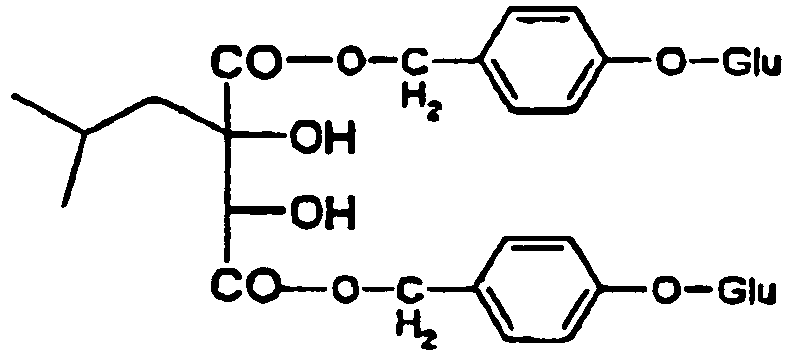


- Tested on the animal model for the impaired acquisition of learning caused by scopolamine, at very low dosage, the extract and the compounds of the present invention treatment are able to prolong significantly the step-down latency and decrease the number of errors in the test session. These results indicate that the extract and the compounds of the invention can effectively ameliorate scopolamine-induced impaired acquisition of learning in mice.
- ICV injection of Aβ (1-42) impaired learning and memory function, treatment of mice and rats with the extract and the compounds of the present invention significantly blocked the Aβ (1-42)-induced impairment in passive avoidance performance, also significantly improved Aβ (1-42)-induced decrease in spatial working memory. These findings suggest that the extract and the compounds of the invention may have preventive effect against memory impairment related with Aβ of Alzheimer's disease.
- It is well known that chronic cerebral hypoperfusion induced by permanent occlusion of bilateral common carotid arteries in animal is associated with behavioral and histopathological alterations. Cerebral hypoperfusion in mice and rats caused deficits of learning and memory. Long term treatment with the extract and the compounds of the present invention significantly alleviated these changes in behavioral (step-down testing and water-maze testing). Our data suggest the beneficial role of the extract and the compounds of the present invention in the cerebrovascular insufficiency states and dementia.
- Tested on cycloheximide (an inhibitor of protein synthesis) induced mice dementia model, the extract and the compounds of the present invention significantly reversed the cycloheximide-induced reduction of step-through latency, and decreased the number of errors in the test session. The result indicates that the extract and the compounds of the present invention can ameliorate impairment of passive avoidance induced by cycloheximide, and increase learning and memory performance of mice.
- To investigate the influence of the extract of the invention on the memory in normal mice, we found that the extract of the invention treatment shortened the escape latency of mice in water-maze testing, and the number of errors is decreased significantly. The result indicates that the extract of the invention can enhance the capacity of learning and memory in normal mice.
- In the experiment of detecting the acetylcholinesterase (AChE) activity in vivo, we found that a single dose or multiple doses of the extract and the compounds of the invention to mice or rats have no inhibition on activity of ACHE in animal brain. It indicates that the improvement mechanism of the extract and the compounds of the invention on cognitive function in animal is not mediated via anticholinesterase pathway.
- The result of an acute toxicity study in mice showed that no significant differences in mice behavior were observed, and there was no animal death and the body weight of mice grown as normal mice after orally administered a single dose of 5 g/kg of the extract or the compounds of the invention. It suggests that the extract or the compounds of the invention have a very low acute toxicity in mice.
- The pharmacological studies demonstrated that the extract or the compounds of the invention have effects on treatment of dementia, particularly Alzheimer disease and vascular dementia, as well as mild cognition imparment in the early stage of dementia, deterioration of mental faculties and amnesia, etc. In addition, the extract and the compounds of the invention has a very low toxicity, high safety and no inhibition on activity of AChE in animal brain.
- The present invention is also related to a pharmaceutical composition made by mixing any of the extract and the compounds of the invention used as active component and commonly used drug excipients and/or additives. Normally, a pharmaceutical composition contains from 0.1 to 95 wt% of the extract or the compounds of the invention.
- The pharmaceutical composition used herein can be made according to the well known method in the art. For this purpose, if necessary, any of the extract and the compounds of the invention may be mixed with one of more commonly used drug excipients and/or additives in the form of solid or liquid. The composition may be formulated into the form for the administration use of human or veterinary.
- The extract or the compounds of the invention or pharmaceutical composition thereof may be formulated into the unit dosage form. The compounds can be administered by a variety of routes including oral, rectal, transdermal, peritoneal, subcutaneous, intravenous, intramuscular, oral mucosal and intranasal. It is preferred to be orally administrated.
- The extract or the compounds of the invention or pharmaceutical composition thereof may be adminsitrated by injecting, such as intravenously, intramuscularly, subcutaneously and intracutaneously injecting.
- The dosage may be in liquid form or solid form. As for the liquid form, it may be a true solution, a colloid, a microparticle, an emulsion and a suspension. The other dosage form may be tablets, capsules, drops, pills, aerosols, powders, sulitions, suspentions, emulsions, particles, suppositories, and froze-dried powder for injection. The extract or compositions of the invention can be formulated into common formulation, sustained released formulation, controled released formulation, target formulation or various microparticle systems.
- For preparing solid compositions such as tablets, various carriers well known in the art may be employed. Some examples of suitable carriers include:diluent and absorbent, such as starches, dextrin, calcium sulphate, lactose, mannitol, sucrose, sodium chloride, glucose, urea, calcium carbonate, kaolin, microcrystalline cellulose, aluminium silicate; wetting agents and binders, such as water, glycerol, polyethylene glycol, ethanol, propanol, starch paste, dextrin, syrup, honey, glucose solution, gum acacia paste, gelatin paste, sodium carboxymethylcellulose, lakh, methyl cellulose, potassium phosphate, and polyvinylpyrrolidone; disintergrating agent, such as dry starch, alginates, agarose, laminaran, sodium bicarbonate, citric acid, calcium carbonate, polyoxyethylene sorbitan fatty acid ester, sodium dodecyl sulphate, methylcellulose, ethylcellulose; disintegration inhibitor, such as sucrose, tristearin, cacao butter, hydrogenated oil; sorbefacient, such as quaternary ammonium salt, lauryl sodium sulfate; lubricating agents, such as talc, silica, corn starch, salt stearate, boric acid, liquid petrolatum, polyethylen glycol. The tablets of the present invention may be coated, such as sugar coating, film coating, enteric coating, or coated by two layers or multiple layers.
- For preparing pills, various carriers well known in the art may be used. The examples of such carriers are diluents and absorbents, such as glucose, lactose, starch, cacao butter, hydrogenated plant oil, polyvinylpyrrolidone, Gelucire, kaolin, talc; binders, such as gum acacia, gum tragacanth, gelatin, ethanol, honey, liquid sugar, rice paste or flour paste; disintergrating agent, such as agarose powder, dry starch, alginates, sodium dodecyl sulphate, methyl cellulose, ethyl cellulose.
- For preparing capsules, the extract or compound of the present invention is mixed with the various carriers mentioned above, and put the result mixture in hard or soft gelatin capsule. Also the compound of the present invention can be made into microcapsule, suspensed in the aquatic medium as suspension, encapsulated into hard capsules or be made into injections.
- For example, the extract or compound of the invention may be made into injectable formulations, such as solution, suspension, emulsion and froze-dried powder. Such formulation may be aqueous or non-aqueous, and may contain one and/or more pharmaceutically acceptable carrier, diluent, binder, lubricant, preservative, surfacant or dispersant. The diluent may be selected from water, ethanol, polyethylene glycol, 1,3-propanol, ethoxylated stearyl alcohol, polyoxided isostearyl alcohol, polyoxyethylene sorbitan fatty acid ester, etc.
- In addition, in order to prepare isotonic injections, proper amount of NaCl, glucose or glycerol can be added into the injectable formulations. Also routine cosolvent, buffer, pH-adjusting agent and the like can be added. These additives are used frequently in this field.
- It is apparent to one skilled in the art that the therapeutically effective dose for active compounds of the invention or a pharmaceutical composition thereof will depend on various factors, such as the property and severity of the diseases to be treated, gender, age, weight, characteristic and individual response of the patients or animals, route and number of the administration, and the treatment purpose. Therefore, the therapeutic dose according to the invention may vary greatly. In general, the dosages to be administrated may be readily determined by those skilled in the art. A therapeutically effective dose for use of the instant extract or compounds of the invention comprises a dose range of from about 0,001 to about 150 mg/kg/day, preferably from 0.01 to about 100 mg/kg/day, in particular from about 0.01 to about 60 mg/kg/day, more particular from about 0.1 to about 10 mg/kg/day of active ingredient. The total daily dosage may be administrated once or in divided doses into two, three or four times daily. It will be understood, however, that the amount of the compound actually administered will be determined by a physician according to his clinical experience and the other therapy concurrently used.
- Every remedy's total dosage may be administrated once or divided into several times. The extract, compounds, any pharmaceutical composition of the invention may be used solely or combined with other therapeutic drugs with adjusted dosage.
- The compounds of the invention exist in the following 6 genera of orchidaceous family, Coeloglossum, Galeola, Gastrodia, Loroglossum, Orchis, Vanda. (see table)
- Compounds included in this invention from orchidaceous plants
No. Compounds Molecular formula Molecular weight Plant source* 1 W1 C21H30O12 474 a 2 W2 C21H30O12 474 a 3 W3 C21H40O17 636 a 4 W4 C27H40O17 636 a 5 W7 C34H46O18 742 a, f, g, h 6 W6 C40H56O23 904 a, f 7 W13 C27H40O10 620 a, f 8 W11 C21H30O11 458 c 9 W12 C33H44O17 712 b, c 10 W10 C34H46O17 726 b 11 W9 C34H46O17 726 f, g 12 W14 C40H56O25 888 f * a: Coeloglossum viride ; b: Galeola faberi ; c: Galeola septentrionalis ; d: Gastrodia elata ;
e: Loroglossum hircinum ; f: Orchis latifolia ; g: Orchis militaris ; h: Orchis papilionacea ; -
-
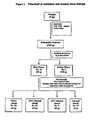
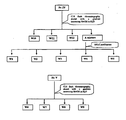
Fig.1 : Flowchart of extraction and isolation from Wangla -
Fig.2 : The time needed for the mice to reach the target region daily -
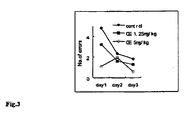
Fig.3 : The error times of the mice daily - The following examples are used to illustrate the present invention, but do not mean any limitation to the invention.
- CE : An effective fraction extracted from Wangla
- W6, W7, W8, W9 : effective compounds isolated from CE
- Air-dried and grounded rhizomes of Coeloglossum. viride (L.) Hartm. var. bracteatum (Willd.) Richter (5 kg) were extracted with eight volumes of 95 % EtOH under heated for three times, filtered, and the filtrates are combined, then the solvent was removed under reduced pressure to give a residue (220 g). The residue was suspended in water and then partitioned with EtOAc. The water phase was subjected to column chromatography over macroporous resin, successively eluting with H2O, and 20%, 40% and 80% EtOH in H2O. The 20% and 40% EtOH.eluted solution was concentrated to give a residue (29 g) that was chromatographed over reversed-phase silica gel RP-18, eluting with a gradient increasing in MeOH in H2O (0-60%), to give several fractions based on TLC analysis. These fractions were further purified by a recrystallization, silica gel chromatography,
Sephadex LH 20, and reversed phase preparative HPLC techniques to yield compounds W1 (70 mg), W2 (95 mg), W3 (85 mg), W4 (173 mg), W5 (65 mg), W6 (4.2 g), W7 (4.8 g), W8 (3.4 g), and W9 (1.2 g). The diagram of the isolation procedure seeFigure 1 . - Scopolamine, a muscarinic cholinergic receptor antagonist, has been shown to impair memory retention when given to mice shortly before training in passive avoidance task, the scopolamine-amnesia test is widely used as primary screening test for so-called anti-Alzheimer drugs. The present study was designed to investigate whether CE and W6-W9 could modulate the memory impairment induced by scopolamine, using step-down type passive avoidance tasks in mice.
- Male ICR mice, 24-28g, were used. The mice were housed for 2 days period of habituation before experiment. Mice were randomized into groups (n=20).
- The mice were administered by gavage of physiological saline, or drugs at different doses, respectively in the negative control, scopolamine group, and test drugs groups. Twice daily for 2 days.
- At D3, 30min after administration of test drugs, scopolamine (1mg/kg i.p) was administered, except for the control group.
- 30 min later, each mouse was individually placed onto the safety platform in the box of step-down apparatus . When the mouse stepped down and touched the grid floor, it was given an electric shock with a tension of 36V, and jumped back onto the rubber platform. Each animal was trained for 5min and returned to the home cage.
- 24 hours after the learning trial, the animal was again placed on the platform and the step-down latency and the number of step-down events (number of errors) during 5 min were recorded. The results are shown in table 1.
- The step-down test shows the latency time reduced significantly in the group of scopolamine relative to the control group, and the number of errors during 5 min was increased markedly. It was shown that scopolamine, at the dosage of lmg/kg, can impair the capacity of learning and memory in animal. CE, W6, W7, W8 or W9 treatment inhibited the reduction of the step-down latency and decreased the number of errors during the test session, attenuated the scopolamine-induced impairment of passive avoidance behaviors. The data indicated that all of CE, W6, W7, W8 and W9 can ameliorate impairment of passive avoidance induced by scopolamine.
Table 1. Effects of CE and W6-W9 on passive avoidance task performance impairment caused by scopolamine in mice (step-down test). Group Dose (mg/kg) Latency (s) Number of errors Control 266±20 0.2±0.1 Scopolamine 147±32# 1.7+0.4## CE 2.5 218±19* 0.2±0.1** 5 245±22* 0.4±0.2* 10 280±27** 0.6±0.2* W6 0.03 283±38** 0.2±0.1** 0.3 259±34* 0.4±0.2* 3 258±17* 0.3±0.1** W7 0.25 205±142 0.4±0.7* 1 237±125* 0.2±0.4** W8 0.25 197±144 0.7±0.9 1 218±127* 0.3±0.5* W9 0.25 140±129 0.8±0.7 1 210±134* 0.4±0.5* Data represents mean ± S.E.M, n=20 for each group. #: P<0.05, ##: P<0.01 vs. control;
*: P<0.05, * *: P<0.01 vs. scopolamine group only. - Cycloheximide is an inhibitor of protein synthesis. It can impair the performance of experimental animals in a wide variety of learning and memory tasks, including passive avoidance. In this experiment, the effect of W6 and CE on cycloheximide-induced memory deficit in the passive avoidance task was investigated.
- The randomization and the administration of drugs are as before. The mice were administered with cycloheximide (120 mg/kg i.p), except for the control group. 30 min later, each mouse was individually placed onto the platform of the step-down apparatus, and trained for 5min. The retention test started 24 hours later, the step-down latency and the number of step-down events (number of errors) during 5 min were recorded.
- Cycloheximide (120mg/kg, ip.) significantly impaired the acquisition of learning when given before the training trial. CE and W6 significantly reversed the cycloheximide-induced reduction of step-down latency, and decrease the number of errors. The result indicates that CE and W6 can ameliorate impairments of passive avoidance induced by cycloheximide, and increase leanning and memory performance of mice. The results are shown in table 2.
Table 2. Effect of CE and W6 on impairment of passive avoidance behaviours induced by cycloheximide in mice (step-down test) Group Dose (mg/kg) Latency (s) Improvement (%) No.of errors Control 255±16 0.2±0.1 Cycloheximide 174±20### 1.0±0.2### CE 2.5 183±31 11 0.7±0.2 5 217±20 53 0.5±0.1** 10 231±33 70 0.4±0.1* Control 276±17 0.1±0.3 cycloheximide 124±30### 1.6±1.9## W6 1.25 211±31 57 0.6±1.2 2.5 223±24* 65 0.7±0.9* 5 182±33 38 0.4±0.5** 10 216±29* 61 0.3±0.5** Data represents mean±SEM, n=20 for each group. ##: P<0.01, ###:P<0.001 vs. control; *: P<0.05, **: P<0.01 vs. cycloheximide only group. - Beta-Amyloid peptide (A beta), a 39 -- 43 amino acid peptide, is believed to induce oxidative stress and inflammation in the brain, which are postulated to play important roles in the pathogenesis of Alzheimer's disease. Ample experimental evidence indicates that intracerebral injection or infusion of amyloid-beta peptides (Aβ) to rodents induces learning and memory impairments as well as neurodegeneration in brain areas related to cognitive function. In the present study, we assessed the effects of long-term oral administration of CE and W6 on a single intracerebroventricular (i.c.v.) injection in mice and intra-hippocampus injection in rats of aggregated beta-amyloid peptide 1-42 (Aβ(1-42))-induced memory impairment.
- Aβ(1-42) (10µg/mouse) was administered via ICV injection. The sham group was given same volumn of Ringer's solution. One week later, The mice with injection of Aβ(1-42) were randomly divided into 3 groups, and were administered by oral with saline, CE (5mg/kg) or W6 (1mg/kg), respectively. Two weeks later, step-down test and water-maze test were performed for evaluating the capacity of learning and memory of mice.
- Water-maze test : Each mouse was first placed on the stairs, then released into the water from position 1 and allowed 120 sec to find the stairs. The mouse received 2 trials per day for 3 days. The starting location varied from position 1 to
position 2 and position 3 for the next 2 day. The distance and the dead end increased every day. In D4, the mouse was put into water from position 3, the time to escape from water to the stairs and the number of entering the dead ends (number of errors) were measured. This method is used to evaluate the spatial performance and learning and memory performance of animal. - This experiment was repeated for CE with male Wistar rats. The protocal is almost the same, except Aβ(1-42) (10µg/each side) was injected into hippocampus. The step-down test were performed for evaluating the capacity of learning and memory of rats.
- ICV or intra-hippocampus injection of control mice with Aβ(1-42) impaired performance on the passive avoidance test (significantly decreased in step-down latency), and the water maze test (significantly prolonged the latency to escape from water and increased number of errors).
- Treatment of mice or rats with CE and W6 for 2 weeks significantly blocked the Aβ(1-42)-induced impairment in passive avoidance performance, also significantly improved Aβ(1-42)-induced decrease in spatial working memory. These findings suggest that CE and W6 may have preventive effect against memory impairment related with Aβ of Alzheimer's disease.
Table 3. Effects of CE and W6 on Aβ(142)-induced impairment in passive avoidance performance in mice. (step-down test). Group Dose (mg/kg) Latency (s) Number of errors Sham 156±35 1.3±0.3 Aβ only 30±14## 1.6±0.2 Aβ + CE 5 118±34* 1.4±0.3 Aβ + W6 1 110±37* 0.9±0.2 Table 4. Effects of CE and W6 on Aβ(1-42)-induced impairment of learning and memory in mice. (water-maze test) Group Dose (mg/kg) Escape Latency (s) Number of errors Sham 34±8 4.3±1.1 Aβ only 62±10# 6.4±1.1# Aβ + CE 5 36±10* 3.1±1.4* Aβ + W6 1 46±11 3.1±0.8* Table 5. Effect of CE on Aβ(1-42)-induced impairment in passive avoidance performance in rat. (step-down test) Group Dose (mg/kg) Latency (s) Number of errors Sham 241±39 0.2±0.1 Aβ only 107±34# 1.3±0.3# Aβ + CE 1.25 188±69* 0.4±0.2 5.0 237±42* 0.2±0.1* - Data represents mean±SEM, n=12-15. #: P<0.05, ## P<0.01 vs. sham group. *: P<0.05, vs. Aβ only group.
- It is well known that chronic cerebral hypoperfusion induced by permanent occlusion of bilateral common carotid arteries in animal is associated with behavioral and histopathological alterations. In this study, we investigated the effects of CE and W6 on learning and memory performance impairment caused by permanent occlusion of carotid arteries in mice and rats.
- At surgery, under pentobarbital anaesthesia (40 mg/kg i.p.), the common carotid arteries of mice were exposed and occluded with thread permanently and the surrounding skin sutured. Sham-operated controls had their carotids exposed but not occluded. After 1 week, the survival mice with occluded carotids were randomly divided into 3 groups. 2 groups were repeated administered with CE (5mg/kg, po) or W6 (1mg/kg, po) daily. Four weeks after surgery, mice were trained and tested in a water maze and step-down apparatus.
- This experiment was repeated for CE with male SD rats. The protocal is almost the same, except the Morris water maze test was used for rats.
- Piracetam is the best known nootropic drug. It's mechanism of action is unknown but most would describe it as an intelligence booster and CNS (central nervous system) stimulant and is remarkably effective in counteracting cerebral hypoxia. Therefore, piracetam was used as a reference drug in this study.
- Morris water maze test: Animals were tested in a water maze (Morris et al., 1982). After a habituation trial of 1 min on the first day, the animals were tested on the next three days for their ability to escape from the pool by searching for a 6 cm diameter perspex platform mounted 1.5 cm below the water level. Each rat received 4 escape trials every day, with the starting locations at fixed 2 positions. Immediately after the final escape trial, spatial bias was tested during a probe trial lasting 2 minute, during which the platform was removed and the number of animals crossings of the original platform position and the time spent in the original platform located quadrant within 2 min were recorded, as an index of the spatial learning and memory.
- Four week's cerebral hypoperfusion in mice and rats caused deficits of learning and memory (step-down testing and water-maze testing). Long term treatment with CE and W6 significantly alleviated these changes in behavioral. Our data suggest the beneficial role of CE and W6 in cerebrovascular insufficiency states and dementia
Tab.6: Effects of CE and W6 on learning and memory performance impairment caused by permanent occlusion of 2 carotid arteries in mice. (step-down test) Group Dose (mg/kg) Latency (s) Number of errors Sham 256±40 0.3±0.2 2-VO only 125±38# 0.9±0.2# 2- VO + CE 5 245±30* 0.2±0.2* 2-VO + W6 1 253±31* 0.2±0.1* Tab.7: Effects of CE and W6 on learning and memory performance impairment caused by permanent occlusion of 2 carotid arteries in mice. (water-maze test) Group Dose (mg/kg) Escape Latency (s) Number of errors Sham 25±14 4.0±0.3 2-VO only 51±24## 7.5±0.7# 2- VO + CE 5 22±11*** 4.3±0.5* 2-VO + W6 1 33±19* 5.4±1.4 Data are expressed as mean ±SEM, n=10-15. #:P<0.05, ##:P<0.01 vs sham group.
*:P<0.05, **:P<0.01, ***:P<0.001 vs 2-VO only group. - This experiment is to observe whether CE could enhance the capacity of learning and memory in young normal mice.
- Male ICR mice (24-28g) were used. Mice was repeated administered with CE (1.25 and 5 mg/kg) for 3 days. Then 3 days' learning trial in water-maze for each mouse was performed. From D4 to D6, mouse was released into water from the starting point and the escape latency and number of entering dead ends were recorded.
- Compared with normal mice, CE treatment shortened the escape latency of mice in water-maze testing, and the number of entering dead ends decreased significantly. The result indicates that CE can enhance the capacity of learning and memory in young normal mice. (see
Fig.2 andFig.3 ) - KM mice were used for this experiment. 10 male and 10 female mice were included in each group. CE(5g/kg) or W6-W9(0.5g/kg) were given by oral or by i.p- The animals were observed carefully and their body weight were checked every 3 days within 2 weeks.
- After orally administered a single dose of CE at 5 g/kg, there is no animal dead and the body weight of animals is gained relative to normal mice.
- The result is the same with W6, W7, W8 or W9 at 0.5 g/kg (i.p. or p.o.).
- These results suggest that CE and W6-W9 have little or even no acute toxicity in mice.
- It is generally accepted that the physiological role of AchE is the rapid hydrolysis and inactivation of Ach. Inhibitors of AchE can be beneficial in the treatment of Alzheimer's demetia. The purpose of this assay is to determine the influence of CE and W6 on AchE activity.
- Wistar rats were randomly divided into 5 groups(n=6): normal control, HupA (1 mg/kg), CE (5 mg/kg), W6 (5 mg/kg), and W6 (20 mg/kg). The rats were fasting over night and given a single oral dose of drugs. 1 hour later, the rats were decapitated, the forebrains were rapidly removed under ice bath, weighed and homogenized in 0.9% saline using a ultrasonic homogenizer to obtain 10% brain homogenate. The homogenate was centrifuged (6000rpm) for 20mins at low temperature, and retained the supernatant. Then the AchE activity was measured with an assay kit.
- The data show that a single dose of CE or W6 to rats has no inhibition on activity of AchE. It indicates that the improvement of CE and W6 on cognitive function in animal is not mediated via anticholinesterase pathway.
Tab. 8: Effects of CE and W6 on activity of AchE in vivo group AchE activity inhibition (%) control 0.72 ± 0.18 -- Hup A (1 mg/kg) 0.48 ± 0.10* 34 CE (5 mg/kg) 0.77 ± 0.20 0 W6 (5 mg/kg) 0.80 ± 0.16 0 W6 (20 mg/kg) 0.72 ± 0.16 0
Claims (6)
- Use of derivatives of succinate esters of general formula (I), and the stereoisomers and pharmaceutical salts thereof, in the manufacture of a medicine for preventing or treating dementia:
 R1 and R4 are selected from -OCH3, -OH, -O-Glu,
 R2 and R3 are selected from H, -OH, -O-Glu,
 R5 is selected from non-branched or branched C1-6 alkyls;and the configuration of chiral center at C-2 and C-3 are 2R3S, 2R3R, 2S3S and 2S3R respectively.
 - The use according to claim 1, characterized in that said compound of formula (I) is:

- The use according to claim characterized in that said compounds include

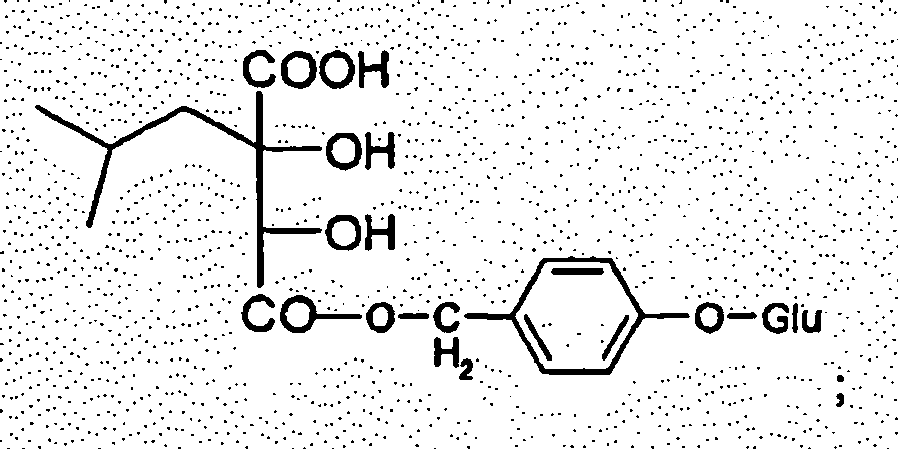


- The use according to claim 1, characterized in that said dementia includes Alzheimer' disease, vascular dementia, and learning and memory obstacle.
- Use of extract of Coeloglossum viride (L.) Hartm. var. bracteatum (Willd.) Richter in the manufacture of drugs for preventing or treating dementia.
- The use according to claim 5, characterized in that said dementia includes Alzheimer' disease, vascular dementia and learning and memory obstacle.
Applications Claiming Priority (3)
| Application Number | Priority Date | Filing Date | Title |
|---|---|---|---|
| CNA021593426A CN1511520A (en) | 2002-12-31 | 2002-12-31 | Use of succinate derivatives for treating dementia |
| CN02159342 | 2002-12-31 | ||
| PCT/CN2003/001155 WO2004058244A1 (en) | 2002-12-31 | 2003-12-31 | The use of succinate derivative esters for the treatment of dementia |
Publications (3)
| Publication Number | Publication Date |
|---|---|
| EP1582209A1 EP1582209A1 (en) | 2005-10-05 |
| EP1582209A4 EP1582209A4 (en) | 2010-02-10 |
| EP1582209B1 true EP1582209B1 (en) | 2012-09-19 |
Family
ID=32661095
Family Applications (1)
| Application Number | Title | Priority Date | Filing Date |
|---|---|---|---|
| EP03782083A Expired - Lifetime EP1582209B1 (en) | 2002-12-31 | 2003-12-31 | The use of succinate derivative esters for the treatment of dementia |
Country Status (12)
| Country | Link |
|---|---|
| US (1) | US7557089B2 (en) |
| EP (1) | EP1582209B1 (en) |
| JP (1) | JP4880223B2 (en) |
| KR (1) | KR100855389B1 (en) |
| CN (3) | CN1511520A (en) |
| AU (1) | AU2003292876A1 (en) |
| BR (1) | BR0317217A (en) |
| CA (1) | CA2512187C (en) |
| ES (1) | ES2395725T3 (en) |
| IL (1) | IL169489A0 (en) |
| RU (1) | RU2334524C2 (en) |
| WO (1) | WO2004058244A1 (en) |
Families Citing this family (10)
| Publication number | Priority date | Publication date | Assignee | Title |
|---|---|---|---|---|
| GB0708507D0 (en) | 2007-05-02 | 2007-06-13 | Queen Mary & Westfield College | Substituted phosphonates and their use |
| RU2504367C1 (en) * | 2012-06-05 | 2014-01-20 | Государственное бюджетное образовательное учреждение высшего профессионального образования "Амурская государственная медицинская академия" Минздравсоцразвития Российской Федерации | Method of correcting psychic condition of patients and antioxidant status in case of organic personality disorder |
| JP6009080B2 (en) | 2012-08-16 | 2016-10-19 | ユニバーシティ−インダストリー コオペレーション グループ オブ キョン ヒ ユニバーシティUniversity−Industry Cooperation Group Of Kyung Hee University | Lactic acid bacteria having preventive and / or therapeutic activity for aging and dementia |
| US10874701B2 (en) | 2012-08-16 | 2020-12-29 | University-Industry Cooperation Group Of Kyung Hee University | Lactic acid bacteria capable of preventing and/or treating senescence and dementia |
| LU92126B1 (en) * | 2012-12-31 | 2014-07-01 | Cesa Alliance Sa | Pharmaceutical compound for the prevention and treatment of a disorder or disease of memory, neurodegenerative or neuronal |
| CN109160928B (en) * | 2017-09-21 | 2020-07-21 | 暨南大学 | New phenolic glycosides from Moringa seeds and their applications |
| CN108690104B (en) * | 2018-05-08 | 2020-11-20 | 北京理工大学 | A class of glucosyloxybenzyl ester compounds, preparation method and application thereof |
| CN110698531B (en) * | 2019-11-01 | 2020-11-03 | 首都医科大学附属北京中医医院 | A new compound for improving microcirculation disorder and its preparation method |
| CN110787172B (en) * | 2019-12-13 | 2022-07-01 | 中央民族大学 | Application of loranthus glycoside in preparing medicine for preventing and treating diabetes and medicine for preventing and treating diabetes |
| CN113730425B (en) * | 2021-09-06 | 2023-05-23 | 北京斯利安健康科技有限公司 | Folic acid-containing composition and application thereof |
Family Cites Families (1)
| Publication number | Priority date | Publication date | Assignee | Title |
|---|---|---|---|---|
| CN1104253C (en) * | 1999-05-25 | 2003-04-02 | 青海省老年医学研究所 | Medicine for strengthening physique and strengthening immunity |
-
2002
- 2002-12-31 CN CNA021593426A patent/CN1511520A/en active Pending
-
2003
- 2003-12-31 BR BR0317217-1A patent/BR0317217A/en not_active Application Discontinuation
- 2003-12-31 EP EP03782083A patent/EP1582209B1/en not_active Expired - Lifetime
- 2003-12-31 RU RU2005124275/15A patent/RU2334524C2/en active
- 2003-12-31 KR KR1020057012335A patent/KR100855389B1/en not_active Expired - Fee Related
- 2003-12-31 WO PCT/CN2003/001155 patent/WO2004058244A1/en not_active Ceased
- 2003-12-31 CN CNB2003801078643A patent/CN100413496C/en not_active Expired - Lifetime
- 2003-12-31 ES ES03782083T patent/ES2395725T3/en not_active Expired - Lifetime
- 2003-12-31 JP JP2004562475A patent/JP4880223B2/en not_active Expired - Lifetime
- 2003-12-31 AU AU2003292876A patent/AU2003292876A1/en not_active Abandoned
- 2003-12-31 CA CA2512187A patent/CA2512187C/en not_active Expired - Lifetime
- 2003-12-31 CN CN2007100846994A patent/CN101015648B/en not_active Expired - Lifetime
- 2003-12-31 US US10/541,082 patent/US7557089B2/en not_active Expired - Lifetime
-
2005
- 2005-06-30 IL IL169489A patent/IL169489A0/en active IP Right Grant
Also Published As
| Publication number | Publication date |
|---|---|
| CN101015648B (en) | 2010-05-26 |
| KR100855389B1 (en) | 2008-09-04 |
| IL169489A0 (en) | 2007-07-04 |
| BR0317217A (en) | 2005-11-01 |
| CN1511520A (en) | 2004-07-14 |
| CN100413496C (en) | 2008-08-27 |
| CN101015648A (en) | 2007-08-15 |
| CA2512187C (en) | 2011-03-01 |
| RU2334524C2 (en) | 2008-09-27 |
| JP4880223B2 (en) | 2012-02-22 |
| ES2395725T3 (en) | 2013-02-14 |
| KR20050085934A (en) | 2005-08-29 |
| AU2003292876A1 (en) | 2004-07-22 |
| CA2512187A1 (en) | 2004-07-15 |
| US7557089B2 (en) | 2009-07-07 |
| RU2005124275A (en) | 2006-01-20 |
| CN1731991A (en) | 2006-02-08 |
| EP1582209A4 (en) | 2010-02-10 |
| US20060281692A1 (en) | 2006-12-14 |
| EP1582209A1 (en) | 2005-10-05 |
| WO2004058244A1 (en) | 2004-07-15 |
| JP2006512373A (en) | 2006-04-13 |
Similar Documents
| Publication | Publication Date | Title |
|---|---|---|
| Vas et al. | Eburnamine derivatives and the brain | |
| US12280030B2 (en) | Method of using a chlorogenic acid composition for supporting cognitive function | |
| JP2016175926A (en) | Treatment of neurodegeneration and nerve inflammation | |
| AU2017202572A1 (en) | Compositions and methods for prevention and treatment of brain diseases and conditions | |
| US7557089B2 (en) | Use of derivatives of succinate esters for the treatment of dementia | |
| KR20260011783A (en) | Pharmaceutical Composition for Preventing or Treating Non-alcoholic Fatty Liver Disease containing Sodium-Glucose Cotransporter-2 Inhibitor and Angiotensin Ⅱ Receptor Blocker | |
| US20240316001A1 (en) | Use of pharmaceutical composition comprising chlorogenic acid in preparation of drug for treating early alzheimer's disease | |
| KR20180058816A (en) | How to treat hyperglycemia | |
| WO2022114459A1 (en) | Pharmaceutical composition for preventing or treating organ fibrosis comprising monomethyl fumarate as active ingredient | |
| CN108771662A (en) | Application of pterostilbene in preparing medicine for preventing and treating hyperuric acid nephropathy | |
| EP3750904A1 (en) | Therapeutic drug for neurodegenerative disease and application thereof | |
| US20190030005A1 (en) | Therapeutic agent for dyslipidemia | |
| WO2024022468A1 (en) | Use of rhamnose in preparing medicament for treating or preventing neurodegenerative diseases, pharmaceutical composition, and use thereof | |
| EP2332530B1 (en) | The use of potassium 2-(hydroxypentyl) benzoate in the manufacture of medicaments for preventing and/or treating senile dementia | |
| JP7257091B2 (en) | Dementia treatment and preventive drug | |
| DE2815878A1 (en) | NEW PHARMACEUTICAL COMPOSITIONS SPECIFICALLY INTENDED FOR THE TREATMENT OF FUNCTIONAL CEREBRAL DISORDERS | |
| WO2025152110A1 (en) | Drug combination for treating alzheimer's disease and pharmaceutical composition thereof | |
| CN120459084A (en) | Application of a C6-C3 derivative in the preparation of a drug for treating autoimmune demyelinating diseases | |
| TWI527828B (en) | A novel triterpenoid and uses thereof | |
| US9512168B2 (en) | Compound, composition and method for treating and/or ameoliorating kidney disease | |
| Allen et al. | Does phentermine use for weight loss have significant adverse effects? | |
| WO2016137040A1 (en) | Composition for preventing or treating cerebrophathy or neurological disorder, containing medicinal plant extract as active ingredient | |
| CN116987091A (en) | Medicine for treating epileptic seizure disease and preparation method thereof | |
| CN116023305A (en) | A kind of caffeic acid-dopamine-rivastigmine hybrid compound, preparation method and application | |
| DE102004050952A1 (en) | Use of a beta-3-adrenoreceptor-agonist for the prophylaxis and/or treatment of e.g. benign prostata hyperplasia and/or its associated symptoms and chronic pelvic base pain syndrome, pelvic myoneuropathy, prostatodynia or prostatopathy |
Legal Events
| Date | Code | Title | Description |
|---|---|---|---|
| PUAI | Public reference made under article 153(3) epc to a published international application that has entered the european phase |
Free format text: ORIGINAL CODE: 0009012 |
|
| 17P | Request for examination filed |
Effective date: 20050630 |
|
| AK | Designated contracting states |
Kind code of ref document: A1 Designated state(s): AT BE BG CH CY CZ DE DK EE ES FI FR GB GR HU IE IT LI LU MC NL PT RO SE SI SK TR |
|
| AX | Request for extension of the european patent |
Extension state: AL LT LV MK |
|
| DAX | Request for extension of the european patent (deleted) | ||
| A4 | Supplementary search report drawn up and despatched |
Effective date: 20100111 |
|
| 17Q | First examination report despatched |
Effective date: 20110516 |
|
| GRAP | Despatch of communication of intention to grant a patent |
Free format text: ORIGINAL CODE: EPIDOSNIGR1 |
|
| GRAS | Grant fee paid |
Free format text: ORIGINAL CODE: EPIDOSNIGR3 |
|
| GRAA | (expected) grant |
Free format text: ORIGINAL CODE: 0009210 |
|
| AK | Designated contracting states |
Kind code of ref document: B1 Designated state(s): AT BE BG CH CY CZ DE DK EE ES FI FR GB GR HU IE IT LI LU MC NL PT RO SE SI SK TR |
|
| REG | Reference to a national code |
Ref country code: GB Ref legal event code: FG4D |
|
| REG | Reference to a national code |
Ref country code: CH Ref legal event code: EP |
|
| REG | Reference to a national code |
Ref country code: IE Ref legal event code: FG4D |
|
| REG | Reference to a national code |
Ref country code: AT Ref legal event code: REF Ref document number: 575634 Country of ref document: AT Kind code of ref document: T Effective date: 20121015 |
|
| REG | Reference to a national code |
Ref country code: DE Ref legal event code: R096 Ref document number: 60342142 Country of ref document: DE Effective date: 20121115 |
|
| REG | Reference to a national code |
Ref country code: DE Ref legal event code: R082 Ref document number: 60342142 Country of ref document: DE Representative=s name: TBK, DE |
|
| PG25 | Lapsed in a contracting state [announced via postgrant information from national office to epo] |
Ref country code: CY Free format text: LAPSE BECAUSE OF FAILURE TO SUBMIT A TRANSLATION OF THE DESCRIPTION OR TO PAY THE FEE WITHIN THE PRESCRIBED TIME-LIMIT Effective date: 20120919 Ref country code: FI Free format text: LAPSE BECAUSE OF FAILURE TO SUBMIT A TRANSLATION OF THE DESCRIPTION OR TO PAY THE FEE WITHIN THE PRESCRIBED TIME-LIMIT Effective date: 20120919 |
|
| REG | Reference to a national code |
Ref country code: NL Ref legal event code: VDEP Effective date: 20120919 |
|
| REG | Reference to a national code |
Ref country code: ES Ref legal event code: FG2A Ref document number: 2395725 Country of ref document: ES Kind code of ref document: T3 Effective date: 20130214 |
|
| REG | Reference to a national code |
Ref country code: AT Ref legal event code: MK05 Ref document number: 575634 Country of ref document: AT Kind code of ref document: T Effective date: 20120919 |
|
| PG25 | Lapsed in a contracting state [announced via postgrant information from national office to epo] |
Ref country code: SE Free format text: LAPSE BECAUSE OF FAILURE TO SUBMIT A TRANSLATION OF THE DESCRIPTION OR TO PAY THE FEE WITHIN THE PRESCRIBED TIME-LIMIT Effective date: 20120919 Ref country code: GR Free format text: LAPSE BECAUSE OF FAILURE TO SUBMIT A TRANSLATION OF THE DESCRIPTION OR TO PAY THE FEE WITHIN THE PRESCRIBED TIME-LIMIT Effective date: 20121220 Ref country code: SI Free format text: LAPSE BECAUSE OF FAILURE TO SUBMIT A TRANSLATION OF THE DESCRIPTION OR TO PAY THE FEE WITHIN THE PRESCRIBED TIME-LIMIT Effective date: 20120919 |
|
| REG | Reference to a national code |
Ref country code: DE Ref legal event code: R081 Ref document number: 60342142 Country of ref document: DE Owner name: INSTITUTE OF MATERIA MEDICA, CHINESE ACADEMY O, CN Free format text: FORMER OWNER: THE INSTITUTE OF MATERIA MEDICA OF CHINESE ACADEMY OF MEDICAL SCIENCES, XUANWU, CN Effective date: 20120919 Ref country code: DE Ref legal event code: R082 Ref document number: 60342142 Country of ref document: DE Representative=s name: TBK, DE Effective date: 20130115 Ref country code: DE Ref legal event code: R081 Ref document number: 60342142 Country of ref document: DE Owner name: INSTITUTE OF MATERIA MEDICA, CHINESE ACADEMY O, CN Free format text: FORMER OWNER: THE INSTITUTE OF MATERIA MEDICA OF CHINESE ACADEMY OF MEDICAL SCIENCES, PEKING/BEIJING, CN Effective date: 20130115 Ref country code: DE Ref legal event code: R081 Ref document number: 60342142 Country of ref document: DE Owner name: BEIJING LIANXIN PHARMACEUTIC CO., LTD., CN Free format text: FORMER OWNER: THE INSTITUTE OF MATERIA MEDICA OF CHINESE ACADEMY OF MEDICAL SCIENCES, PEKING/BEIJING, CN Effective date: 20130115 Ref country code: DE Ref legal event code: R081 Ref document number: 60342142 Country of ref document: DE Owner name: BEIJING LIANXIN PHARMACEUTIC CO., LTD., CN Free format text: FORMER OWNER: THE INSTITUTE OF MATERIA MEDICA OF CHINESE ACADEMY OF MEDICAL SCIENCES, XUANWU, PEKING/PEI-CHING, CN Effective date: 20120919 |
|
| RAP2 | Party data changed (patent owner data changed or rights of a patent transferred) |
Owner name: INSTITUTE OF MATERIA MEDICA, CHINESE ACADEMY OF ME |
|
| PG25 | Lapsed in a contracting state [announced via postgrant information from national office to epo] |
Ref country code: EE Free format text: LAPSE BECAUSE OF FAILURE TO SUBMIT A TRANSLATION OF THE DESCRIPTION OR TO PAY THE FEE WITHIN THE PRESCRIBED TIME-LIMIT Effective date: 20120919 Ref country code: NL Free format text: LAPSE BECAUSE OF FAILURE TO SUBMIT A TRANSLATION OF THE DESCRIPTION OR TO PAY THE FEE WITHIN THE PRESCRIBED TIME-LIMIT Effective date: 20120919 Ref country code: CZ Free format text: LAPSE BECAUSE OF FAILURE TO SUBMIT A TRANSLATION OF THE DESCRIPTION OR TO PAY THE FEE WITHIN THE PRESCRIBED TIME-LIMIT Effective date: 20120919 Ref country code: RO Free format text: LAPSE BECAUSE OF FAILURE TO SUBMIT A TRANSLATION OF THE DESCRIPTION OR TO PAY THE FEE WITHIN THE PRESCRIBED TIME-LIMIT Effective date: 20120919 Ref country code: BE Free format text: LAPSE BECAUSE OF FAILURE TO SUBMIT A TRANSLATION OF THE DESCRIPTION OR TO PAY THE FEE WITHIN THE PRESCRIBED TIME-LIMIT Effective date: 20120919 |
|
| PG25 | Lapsed in a contracting state [announced via postgrant information from national office to epo] |
Ref country code: PT Free format text: LAPSE BECAUSE OF FAILURE TO SUBMIT A TRANSLATION OF THE DESCRIPTION OR TO PAY THE FEE WITHIN THE PRESCRIBED TIME-LIMIT Effective date: 20130121 Ref country code: SK Free format text: LAPSE BECAUSE OF FAILURE TO SUBMIT A TRANSLATION OF THE DESCRIPTION OR TO PAY THE FEE WITHIN THE PRESCRIBED TIME-LIMIT Effective date: 20120919 |
|
| PG25 | Lapsed in a contracting state [announced via postgrant information from national office to epo] |
Ref country code: AT Free format text: LAPSE BECAUSE OF FAILURE TO SUBMIT A TRANSLATION OF THE DESCRIPTION OR TO PAY THE FEE WITHIN THE PRESCRIBED TIME-LIMIT Effective date: 20120919 |
|
| PLBE | No opposition filed within time limit |
Free format text: ORIGINAL CODE: 0009261 |
|
| STAA | Information on the status of an ep patent application or granted ep patent |
Free format text: STATUS: NO OPPOSITION FILED WITHIN TIME LIMIT |
|
| PG25 | Lapsed in a contracting state [announced via postgrant information from national office to epo] |
Ref country code: DK Free format text: LAPSE BECAUSE OF FAILURE TO SUBMIT A TRANSLATION OF THE DESCRIPTION OR TO PAY THE FEE WITHIN THE PRESCRIBED TIME-LIMIT Effective date: 20120919 Ref country code: MC Free format text: LAPSE BECAUSE OF NON-PAYMENT OF DUE FEES Effective date: 20121231 Ref country code: BG Free format text: LAPSE BECAUSE OF FAILURE TO SUBMIT A TRANSLATION OF THE DESCRIPTION OR TO PAY THE FEE WITHIN THE PRESCRIBED TIME-LIMIT Effective date: 20121219 |
|
| REG | Reference to a national code |
Ref country code: CH Ref legal event code: PL |
|
| 26N | No opposition filed |
Effective date: 20130620 |
|
| REG | Reference to a national code |
Ref country code: IE Ref legal event code: MM4A |
|
| REG | Reference to a national code |
Ref country code: DE Ref legal event code: R097 Ref document number: 60342142 Country of ref document: DE Effective date: 20130620 |
|
| PG25 | Lapsed in a contracting state [announced via postgrant information from national office to epo] |
Ref country code: LI Free format text: LAPSE BECAUSE OF NON-PAYMENT OF DUE FEES Effective date: 20121231 Ref country code: CH Free format text: LAPSE BECAUSE OF NON-PAYMENT OF DUE FEES Effective date: 20121231 Ref country code: IE Free format text: LAPSE BECAUSE OF NON-PAYMENT OF DUE FEES Effective date: 20121231 |
|
| PG25 | Lapsed in a contracting state [announced via postgrant information from national office to epo] |
Ref country code: TR Free format text: LAPSE BECAUSE OF FAILURE TO SUBMIT A TRANSLATION OF THE DESCRIPTION OR TO PAY THE FEE WITHIN THE PRESCRIBED TIME-LIMIT Effective date: 20120919 |
|
| PG25 | Lapsed in a contracting state [announced via postgrant information from national office to epo] |
Ref country code: LU Free format text: LAPSE BECAUSE OF NON-PAYMENT OF DUE FEES Effective date: 20121231 |
|
| PG25 | Lapsed in a contracting state [announced via postgrant information from national office to epo] |
Ref country code: HU Free format text: LAPSE BECAUSE OF FAILURE TO SUBMIT A TRANSLATION OF THE DESCRIPTION OR TO PAY THE FEE WITHIN THE PRESCRIBED TIME-LIMIT Effective date: 20031231 |
|
| REG | Reference to a national code |
Ref country code: DE Ref legal event code: R082 Ref document number: 60342142 Country of ref document: DE Representative=s name: TBK, DE |
|
| REG | Reference to a national code |
Ref country code: GB Ref legal event code: 732E Free format text: REGISTERED BETWEEN 20141120 AND 20141126 |
|
| REG | Reference to a national code |
Ref country code: DE Ref legal event code: R082 Ref document number: 60342142 Country of ref document: DE Representative=s name: TBK, DE Effective date: 20141106 Ref country code: DE Ref legal event code: R081 Ref document number: 60342142 Country of ref document: DE Owner name: BEIJING LIANXIN PHARMACEUTIC CO., LTD., CN Free format text: FORMER OWNER: INSTITUTE OF MATERIA MEDICA, CHINESE ACADEMY OF MEDICAL SCIENCES, BEIJING, CN Effective date: 20141106 |
|
| REG | Reference to a national code |
Ref country code: FR Ref legal event code: TP Owner name: INDO OPTICAL S.L., ES Effective date: 20150306 |
|
| REG | Reference to a national code |
Ref country code: FR Ref legal event code: PLFP Year of fee payment: 13 |
|
| REG | Reference to a national code |
Ref country code: ES Ref legal event code: PC2A Owner name: BEIJING LIANXIN PHARMACEUTIC CO., LTD. Effective date: 20160817 |
|
| REG | Reference to a national code |
Ref country code: FR Ref legal event code: PLFP Year of fee payment: 14 |
|
| REG | Reference to a national code |
Ref country code: FR Ref legal event code: PLFP Year of fee payment: 15 |
|
| PGFP | Annual fee paid to national office [announced via postgrant information from national office to epo] |
Ref country code: IT Payment date: 20221111 Year of fee payment: 20 Ref country code: GB Payment date: 20221110 Year of fee payment: 20 Ref country code: FR Payment date: 20221227 Year of fee payment: 20 Ref country code: DE Payment date: 20221108 Year of fee payment: 20 |
|
| PGFP | Annual fee paid to national office [announced via postgrant information from national office to epo] |
Ref country code: ES Payment date: 20230109 Year of fee payment: 20 |
|
| REG | Reference to a national code |
Ref country code: DE Ref legal event code: R071 Ref document number: 60342142 Country of ref document: DE |
|
| PG25 | Lapsed in a contracting state [announced via postgrant information from national office to epo] |
Ref country code: GB Free format text: LAPSE BECAUSE OF EXPIRATION OF PROTECTION Effective date: 20231230 |
|
| REG | Reference to a national code |
Ref country code: GB Ref legal event code: PE20 Expiry date: 20231230 |
|
| REG | Reference to a national code |
Ref country code: ES Ref legal event code: FD2A Effective date: 20240126 |
|
| PG25 | Lapsed in a contracting state [announced via postgrant information from national office to epo] |
Ref country code: GB Free format text: LAPSE BECAUSE OF EXPIRATION OF PROTECTION Effective date: 20231230 |
|
| PG25 | Lapsed in a contracting state [announced via postgrant information from national office to epo] |
Ref country code: ES Free format text: LAPSE BECAUSE OF EXPIRATION OF PROTECTION Effective date: 20240101 |
|
| PG25 | Lapsed in a contracting state [announced via postgrant information from national office to epo] |
Ref country code: ES Free format text: LAPSE BECAUSE OF EXPIRATION OF PROTECTION Effective date: 20240101 |