EP1576467B1 - Generic layer for virtual object resolution - Google Patents
Generic layer for virtual object resolution Download PDFInfo
- Publication number
- EP1576467B1 EP1576467B1 EP02806371.7A EP02806371A EP1576467B1 EP 1576467 B1 EP1576467 B1 EP 1576467B1 EP 02806371 A EP02806371 A EP 02806371A EP 1576467 B1 EP1576467 B1 EP 1576467B1
- Authority
- EP
- European Patent Office
- Prior art keywords
- target object
- elements
- derived
- delta link
- application
- Prior art date
- Legal status (The legal status is an assumption and is not a legal conclusion. Google has not performed a legal analysis and makes no representation as to the accuracy of the status listed.)
- Expired - Lifetime
Links
Images




Classifications
-
- G—PHYSICS
- G06—COMPUTING OR CALCULATING; COUNTING
- G06F—ELECTRIC DIGITAL DATA PROCESSING
- G06F9/00—Arrangements for program control, e.g. control units
- G06F9/06—Arrangements for program control, e.g. control units using stored programs, i.e. using an internal store of processing equipment to receive or retain programs
- G06F9/44—Arrangements for executing specific programs
- G06F9/448—Execution paradigms, e.g. implementations of programming paradigms
- G06F9/4488—Object-oriented
- G06F9/4493—Object persistence
Definitions
- a portion of this disclosure contains material which is subject to copyright protection. Specifically, portions of source code, scripting language and program model and design information appear in the specification. The copyright owner has no objection to the facsimile reproduction of the specification as filed. Otherwise all copyright rights are reserved.
- the following description relates to software layers in computer systems, for example, a generic layer for virtual object resolution.
- Computer systems may include different software layers. Objects may be stored in a persistence layer and utilized in a presentation layer, which represents the run-time environment of the computer system. Objects may be passed between the software layers, e.g., from the persistence layer to the presentation layer for utilization by a requesting software application.
- object may refer to discrete objects, which may hold data in the form of name-value pairs, or "properties".
- a web page may be defined by an object including a number of name-value pairs which correspond to, for example, background color, font, layout, and page content.
- object may also refer to object hierarchies, which may include a top-most "parent” object with many depending, or "child”, objects below it on the hierarchy.
- An object hierarchy may be used to organize data and enable a user to navigate efficiently through data stored in the hierarchy.
- An object may be pre-defined and stored in a computer system, e.g., in a database or system memory.
- the object may be accessed by different applications in different contexts.
- the context may depend on the device or browser in which the application is running or be specific to the user of the application. It may be desirable to present different versions of the object in different contexts. Multiple versions of the object may be stored in the database, however, this may create inefficiencies relating to addressing the object and storage capacity.
- Prior art document WO 01/33435 describes a method for automatically updating website content that comprises providing one or more links, each of which associates one or more target content items with one or more original content item and updating the target data content items according to the links.
- the present application teaches generating virtual objects for presentation to a requesting application from objects stored in a persistence layer in a computer system.
- the present inventors recognized that it may be desirable to return different versions of a stored object based on the context of the application requesting the object. Accordingly, the inventors recognized the potential advantages of providing a generic layer that can generate a virtual object from a delta link referencing the requested object.
- a computer system includes several software layers.
- Objects may be stored in a persistence layer.
- Objects may be presented to requesting applications in a presentation layer at run-time.
- a generic layer includes delta links pointing to corresponding target objects in the persistence layer.
- a delta link includes a location of the target object and information describing a desired difference between the target object and a derived object to be presented to the requesting application at run-time.
- the generic layer may include a module that intercepts a request from the application for the target object, locates the target object in the persistence layer, and generates the derived object from the target object and the information in the delta link. The generic layer then returns the derived object to the requesting application.
- the target object may include a number of name-value pairs.
- the module may replace values in the target object with values in the delta link when generating the derived object.
- the target object may be an object hierarchy including a parent object and a number of child objects.
- the module may omit or add objects to the object hierarchy when building the derived object.
- the systems and techniques described here relate to software layers in computer systems, and more particularly, a generic layer for virtual object resolution.
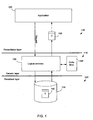
- Figure 1 illustrates functional layers of a software product in a computer system.
- Objects may be stored in a persistence layer 105, which may include, e.g., a database 110.
- a generic layer 115 may generate objects derived from the stored objects at run-time.
- the derived objects may be presented to a requesting application 125 in a presentation layer 130.
- the presentation layer 130 may represent a run-time environment of the computer system, whereas the persistence layer 105 may represent the design-time environment developed at or prior to installation of the software product in the computer system.
- Objects stored in the persistence layer 105 may include a number of name-value pairs, or "properties".
- the persistence layer may also store hierarchies of objects, e.g., a folder hierarchy.
- An object in the hierarchy may depend from another object above it in the hierarchy. The depending object may be referred to as a "child” object, and the object from which it depends a "parent" object.
- a parent object may be a child of another object.
- An object hierarchy may itself be considered an object, which is identified by the top-most parent object.
- an object contains one or more elements:
- the elements may be properties, and in the case of object hierarchies, the elements may be child objects depending from the top-most parent object.
- Different version of the underlying object 140 may be appropriate in different contexts.
- the context may depend on, for example, the particular device or browser in which the application is running, the user's role or group association, or other information, such as the country or language in which the application is operating.
- a object lookup module 135 may generate a derived object 120 appropriate for a user context from a target object 140 at run-time. The newly generated derived object 120 may then be presented to the application.
- the object lookup module 130 may use delta links to generate derived objects at run-time.
- a delta link may include an identifier for the target object 140.
- the identifier may be a link or pointer that points to the target object's location in the persistence layer 105.
- the delta link may include definitions that may be used to change or modify the target object. The modification may not affect the target object, but rather be carried out on an internal object that replaces the delta link at run time, i.e., the derived object.
- the delta link may store only the "delta," i.e., the differences, between the target object and the derived object.
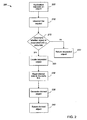
- Figure 2 is a flowchart depicting a delta link resolution operation 200 that may be performed by the object lookup module 135.
- the application 125 may request an object in the persistence layer 105, e.g., by sending a name or address of the object (block 205).
- the object lookup module 135 may intercept the request (block 210) and determine whether the requested object is associated with a delta link (block 215). If not, the object lookup module 135 may return the object (block 220). If the object is associated with a delta link, the object lookup module 135 may locate the target object (block 225).
- the object lookup module 135 may then read the internal data in the delta link (block 230) and generate a derived object based on the delta link information and the elements in the target object (block 235). The object lookup module 135 may then return the derived object to the application (block 240).
- all delta links may be resolved at run-time.
- the resultant delta links may then be stored temporarily in the generic or persistence layer for access by the object lookup module 135.
- the object lookup module 135 may "merge" the properties in the delta link and the properties in the target object 140.
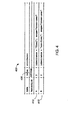
- Figures 3 and 4 illustrate a target object 300 and a delta link 400, respectively.
- the target object 300 has four properties 302-305, i.e., the name value pairs A:1, B:1, C:3, and D:1, respectively.
- Each property may be bound to a set of attributes, which control the algorithm for merging the properties of the target object and the delta link to generate the derived object.
- the properties have the associated attributes "inheritance" and "scope”.
- the inheritance attribute may indicate which properties can and cannot be modified by a delta link, e.g., the "non-final” and “final” values, respectively.
- the scope attribute may identify which properties can be personalized by a user and which apply to all user, e.g., the "user specific” and “cross-user” values, respectively.
- the delta link 400 may include a link 405 to the target object and modified properties 410 and 415, i.e., the name value pairs A:2 and B:2, respectively.
- the object lookup module may merge the properties in the delta-link 400 with the properties in the target object 300 to generate a derived object 500, shown in Figure 5 .
- the derived object has four properties 502-505, i.e., A:1, B:2, C:3, and D:1, respectively.
- the value for A is in the derived object is unchanged from the target object because A has a "final" inheritance value.
- the value for B in the derived object is that defined in the delta link since B has a "non-final" inheritance value.
- the values for C and D are unchanged since the delta link did not include these properties.
- Delta links may be used with a variety of different discrete objects.
- the target object described above may define a web page for a company's portal.
- the properties in the object may define, e.g., the layout of the page (background color, fonts, etc.), hyperlinks, and content, such as a telephone number for a reception desk at the main office.
- the delta link may be defined by a branch office of the company to generate a similar web page, but modified to reflect the specific context of the subsidiary, e.g., a the telephone number for a reception desk at the branch office.
- the object lookup module 135 may build a virtual tree from the target object hierarchy and the information in the delta link.
- a delta link for an object hierarchy may have the structure shown in Figure 6 .
- the target attribute value 605 in the ⁇ DELTA_LINK ... > tag defines the target object hierarchy.
- the obj ect_id is a unique identifier for the derived object hierarchy.
- the delta link may include a list of entries that define subtractive (MINUS_ENTRIES 610) and additive (PLUS_ENTRIES 615) alterations to the target object hierarchy.
- MINUS_ENTRIES 610 and additive (PLUS_ENTRIES 615) alterations to the target object hierarchy.
- PLUS_ENTRIES 605 For the ⁇ MINUS_ENTRY>-tag and ⁇ PLUS_ENTRY>-tag, the target attribute has the value (relative_object_id), which is a relative URL using object_id as its root.
- the definition of an entry to be removed from the hierarchy is sufficient for the ⁇ MINUS-ENTRY>-tag.
- the ⁇ PLUS-ENTRY>-tag may require positional information identifying where the new entry should be included in the derived structure.
- the position attribute 625 defines where the additional entries should be located. Possible values include:
- the delta link technique may be used to adapt an object that has been pre-defined in a generic system to the needs of companies in a given industry.
- a user may be assigned a role in a company, e.g., "manager”, “engineer”, or "human resources administrator”.
- An object hierarchy may be created for the role.
- Figure 7 shows the structure of an exemplary role object.
- the role object may be a hierarchy of objects, e.g., folders 705, worksets 710, pages, 715 and services 720, which may be useful to users assigned that role.
- the object hierarchy may be structured to provide easy, intuitive navigation through the role.
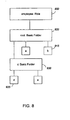
- a role “employee” 800 (shown in Figure 8 ) is tailored to the requirements of organizations in the public sector by deriving a role named “employee public sector" from the "employee” role.
- the object lookup module 135 may intercept the request (block 210) and determine that the employee role is associated with a delta link 1000 (block 215). The object lookup module 135 may then locate the target object in the persistence layer 105 (block 225). The object lookup module 135 may read the internal data in the delta link (block 230) and use this information to build a virtual tree corresponding to the derived object "employee public sector" (block 235).
- Figure 9 illustrates the structure of the delta link 900 for the "employee public sector” role.
- the minus entries 905 and 910 identify the targets “root/b” and "root/c/d”. Accordingly, entry “b" 915 is removed from the "root” folder 920 and entry “d” 925 is removed from the "c” folder 930 when building the virtual tree for the derived object.
- the plus entries 935 and 940 identify a new entry "g” 945 and a new folder “h” 950 in the "c” folder.
- the new folder “h” includes the new entries "i” 955 and "j” 960.
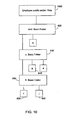
- the definition of the "employee public sector” role 1000 is resolved as shown in Figure 10 .
- the derived role "employee public sector” differs from the target role, "employee” 800, in that entry “b” in the top level content object and entry “d” in folder “c” are removed from the “employee” object hierarchy. Also, a single entry “g” and a folder “h” with two new entries, "i” and “j”, are added to folder “c" of the "employee” role.
- the object lookup module 135 may return the derived object, i.e., the "employee public sector" role 1000, to the application 125 (block 240).
- the systems and techniques described here can be implemented in a computing system that includes a back-end component (e.g., as a data server), or that includes a middleware component (e.g., an application server), or that includes a front-end component (e.g., a client computer having a graphical user interface or a Web browser through which a user can interact with an implementation of the systems and techniques described here), or any combination of such back-end, middleware, or front-end components.
- the components of the system can be interconnected by any form or medium of digital data communication (e.g., a communication network). Examples of communication networks include a local area network ("LAN”), a wide area network (“WAN”), and the Internet.
- LAN local area network
- WAN wide area network
- the Internet the global information network
- the computing system can include clients and servers.
- a client and server are generally remote from each other and typically interact through a communication network.
- the relationship of client and server arises by virtue of computer programs running on the respective computers and having a client-server relationship to each other.
Landscapes
- Engineering & Computer Science (AREA)
- Software Systems (AREA)
- Theoretical Computer Science (AREA)
- Physics & Mathematics (AREA)
- General Engineering & Computer Science (AREA)
- General Physics & Mathematics (AREA)
- Information Retrieval, Db Structures And Fs Structures Therefor (AREA)
Description
- A portion of this disclosure contains material which is subject to copyright protection. Specifically, portions of source code, scripting language and program model and design information appear in the specification. The copyright owner has no objection to the facsimile reproduction of the specification as filed. Otherwise all copyright rights are reserved.
- The following description relates to software layers in computer systems, for example, a generic layer for virtual object resolution.
- Computer systems may include different software layers. Objects may be stored in a persistence layer and utilized in a presentation layer, which represents the run-time environment of the computer system. Objects may be passed between the software layers, e.g., from the persistence layer to the presentation layer for utilization by a requesting software application.
- The term "object" may refer to discrete objects, which may hold data in the form of name-value pairs, or "properties". For example, a web page may be defined by an object including a number of name-value pairs which correspond to, for example, background color, font, layout, and page content.
- The term "object" may also refer to object hierarchies, which may include a top-most "parent" object with many depending, or "child", objects below it on the hierarchy. An object hierarchy may be used to organize data and enable a user to navigate efficiently through data stored in the hierarchy.
- An object may be pre-defined and stored in a computer system, e.g., in a database or system memory. The object may be accessed by different applications in different contexts. The context may depend on the device or browser in which the application is running or be specific to the user of the application. It may be desirable to present different versions of the object in different contexts. Multiple versions of the object may be stored in the database, however, this may create inefficiencies relating to addressing the object and storage capacity.
- Prior art document
WO 01/33435 - The present application teaches generating virtual objects for presentation to a requesting application from objects stored in a persistence layer in a computer system.. The present inventors recognized that it may be desirable to return different versions of a stored object based on the context of the application requesting the object. Accordingly, the inventors recognized the potential advantages of providing a generic layer that can generate a virtual object from a delta link referencing the requested object.
- In one aspect, a computer system includes several software layers. Objects may be stored in a persistence layer. Objects may be presented to requesting applications in a presentation layer at run-time. A generic layer includes delta links pointing to corresponding target objects in the persistence layer. A delta link includes a location of the target object and information describing a desired difference between the target object and a derived object to be presented to the requesting application at run-time. The generic layer may include a module that intercepts a request from the application for the target object, locates the target object in the persistence layer, and generates the derived object from the target object and the information in the delta link. The generic layer then returns the derived object to the requesting application.
- The target object may include a number of name-value pairs. The module may replace values in the target object with values in the delta link when generating the derived object. Alternatively, the target object may be an object hierarchy including a parent object and a number of child objects. The module may omit or add objects to the object hierarchy when building the derived object.
- Details of one or more implementations are set forth in the accompanying drawings and the description below. Other features and advantages may be apparent from the description and drawings, and from the claims.
- These and other aspects will now be described in detail with reference to the following drawings.
-
FIG. 1 shows a block diagram of software layers in a computer system. -
FIG. 2 is a flowchart showing a process for generating a derived object from a stored object for presentation to a requesting application. -
FIG. 3 illustrates an object including properties/ -
FIG. 4 illustrates a delta link for the object inFIG. 3 . -
FIG. 5 illustrates a derived object generated by merging the delta link inFIG. 4 and the object inFIG. 3 . -
FIG. 6 shows a code template for a delta link. -
FIG. 7 is a block diagram of a role object hierarchy. -
FIG. 8 is a block diagram of a target object hierarchy. -
FIG. 9 is a block diagram representing a delta link for the target object hierarchy inFIG. 8 . -
FIG. 10 is a block diagram of a derived object hierarchy generated from the target object hierarchy inFIG. 8 and the delta link inFIG. 9 . - Like reference symbols in the various drawings indicate like elements.
- The systems and techniques described here relate to software layers in computer systems, and more particularly, a generic layer for virtual object resolution.
-
Figure 1 illustrates functional layers of a software product in a computer system. Objects may be stored in apersistence layer 105, which may include, e.g., adatabase 110. Ageneric layer 115 may generate objects derived from the stored objects at run-time. The derived objects may be presented to a requestingapplication 125 in apresentation layer 130. Thepresentation layer 130 may represent a run-time environment of the computer system, whereas thepersistence layer 105 may represent the design-time environment developed at or prior to installation of the software product in the computer system. - Objects stored in the
persistence layer 105 may include a number of name-value pairs, or "properties". The persistence layer may also store hierarchies of objects, e.g., a folder hierarchy. An object in the hierarchy may depend from another object above it in the hierarchy. The depending object may be referred to as a "child" object, and the object from which it depends a "parent" object. A parent object may be a child of another object. An object hierarchy may itself be considered an object, which is identified by the top-most parent object. - Generally, an object contains one or more elements: In the case of discrete objects, the elements may be properties, and in the case of object hierarchies, the elements may be child objects depending from the top-most parent object.
- It may be desirable to present the
application 125 with a modified version of an object in the persistence layer based on the user of the application's context. Different version of theunderlying object 140 may be appropriate in different contexts. The context may depend on, for example, the particular device or browser in which the application is running, the user's role or group association, or other information, such as the country or language in which the application is operating. - Since an object in the
persistence layer 105 may be an underlying object for many different user contexts, it may be desirable to generate a derived object for presentation in thepresentation layer 130 without altering the underlying object in thepersistence layer 105. Aobject lookup module 135 may generate a derivedobject 120 appropriate for a user context from atarget object 140 at run-time. The newly generated derivedobject 120 may then be presented to the application. - The
object lookup module 130 may use delta links to generate derived objects at run-time. A delta link may include an identifier for thetarget object 140. The identifier may be a link or pointer that points to the target object's location in thepersistence layer 105. The delta link may include definitions that may be used to change or modify the target object. The modification may not affect the target object, but rather be carried out on an internal object that replaces the delta link at run time, i.e., the derived object. The delta link may store only the "delta," i.e., the differences, between the target object and the derived object. -
Figure 2 is a flowchart depicting a deltalink resolution operation 200 that may be performed by theobject lookup module 135. Theapplication 125 may request an object in thepersistence layer 105, e.g., by sending a name or address of the object (block 205). Theobject lookup module 135 may intercept the request (block 210) and determine whether the requested object is associated with a delta link (block 215). If not, theobject lookup module 135 may return the object (block 220). If the object is associated with a delta link, theobject lookup module 135 may locate the target object (block 225). Theobject lookup module 135 may then read the internal data in the delta link (block 230) and generate a derived object based on the delta link information and the elements in the target object (block 235). Theobject lookup module 135 may then return the derived object to the application (block 240). - In an alternative embodiment, all delta links may be resolved at run-time. The resultant delta links may then be stored temporarily in the generic or persistence layer for access by the
object lookup module 135. - When resolving a delta link pointing to a discrete object, the
object lookup module 135 may "merge" the properties in the delta link and the properties in thetarget object 140.Figures 3 and4 illustrate atarget object 300 and adelta link 400, respectively. Thetarget object 300 has four properties 302-305, i.e., the name value pairs A:1, B:1, C:3, and D:1, respectively. Each property may be bound to a set of attributes, which control the algorithm for merging the properties of the target object and the delta link to generate the derived object. In this example, the properties have the associated attributes "inheritance" and "scope". The inheritance attribute may indicate which properties can and cannot be modified by a delta link, e.g., the "non-final" and "final" values, respectively. The scope attribute may identify which properties can be personalized by a user and which apply to all user, e.g., the "user specific" and "cross-user" values, respectively. Thedelta link 400 may include alink 405 to the target object and modifiedproperties - The object lookup module may merge the properties in the delta-
link 400 with the properties in thetarget object 300 to generate a derived object 500, shown inFigure 5 . Like thetarget object 300, the derived object has four properties 502-505, i.e., A:1, B:2, C:3, and D:1, respectively. The value for A is in the derived object is unchanged from the target object because A has a "final" inheritance value. The value for B in the derived object is that defined in the delta link since B has a "non-final" inheritance value. The values for C and D are unchanged since the delta link did not include these properties. - Delta links may be used with a variety of different discrete objects. For example, the target object described above may define a web page for a company's portal. The properties in the object may define, e.g., the layout of the page (background color, fonts, etc.), hyperlinks, and content, such as a telephone number for a reception desk at the main office. The delta link may be defined by a branch office of the company to generate a similar web page, but modified to reflect the specific context of the subsidiary, e.g., a the telephone number for a reception desk at the branch office.
- When resolving a delta link pointing to a object hierarchy, the
object lookup module 135 may build a virtual tree from the target object hierarchy and the information in the delta link. A delta link for an object hierarchy may have the structure shown inFigure 6 . Thetarget attribute value 605 in the <DELTA_LINK ... > tag defines the target object hierarchy. The obj ect_id is a unique identifier for the derived object hierarchy. - The delta link may include a list of entries that define subtractive (MINUS_ENTRIES 610) and additive (PLUS_ENTRIES 615) alterations to the target object hierarchy. For the <MINUS_ENTRY>-tag and <PLUS_ENTRY>-tag, the target attribute has the value (relative_object_id), which is a relative URL using object_id as its root.
- The definition of an entry to be removed from the hierarchy is sufficient for the <MINUS-ENTRY>-tag. The <PLUS-ENTRY>-tag may require positional information identifying where the new entry should be included in the derived structure. The position attribute 625 defines where the additional entries should be located. Possible values include:
- BEFORE, indicating that the new entry should be placed directly before the target entry;
- AFTER, indicating that the new entry should be placed directly behind the target entry;
- FIRST_CHILD, indicating that the additional entry is to be included in this folder as the first (top most) item; and
- LAST_CHILD, indicating that the additional entry is to be included in this folder as the last (bottom) element.
- The delta link technique may be used to adapt an object that has been pre-defined in a generic system to the needs of companies in a given industry. For example, a user may be assigned a role in a company, e.g., "manager", "engineer", or "human resources administrator". An object hierarchy may be created for the role.
Figure 7 shows the structure of an exemplary role object. The role object may be a hierarchy of objects, e.g., folders 705,worksets 710, pages, 715 andservices 720, which may be useful to users assigned that role. The object hierarchy may be structured to provide easy, intuitive navigation through the role. - In an example, a role "employee" 800 (shown in
Figure 8 ) is tailored to the requirements of organizations in the public sector by deriving a role named "employee public sector" from the "employee" role. Referring to 2, when the application requests the employee role (block 205), theobject lookup module 135 may intercept the request (block 210) and determine that the employee role is associated with a delta link 1000 (block 215). Theobject lookup module 135 may then locate the target object in the persistence layer 105 (block 225). Theobject lookup module 135 may read the internal data in the delta link (block 230) and use this information to build a virtual tree corresponding to the derived object "employee public sector" (block 235). -
Figure 9 illustrates the structure of thedelta link 900 for the "employee public sector" role. Theminus entries folder 920 and entry "d" 925 is removed from the "c"folder 930 when building the virtual tree for the derived object. Theplus entries 935 and 940 identify a new entry "g" 945 and a new folder "h" 950 in the "c" folder. The new folder "h" includes the new entries "i" 955 and "j" 960. The definition of the "employee public sector"role 1000 is resolved as shown inFigure 10 . The derived role "employee public sector" differs from the target role, "employee" 800, in that entry "b" in the top level content object and entry "d" in folder "c" are removed from the "employee" object hierarchy. Also, a single entry "g" and a folder "h" with two new entries, "i" and "j", are added to folder "c" of the "employee" role. - After the delta link is resolved, the
object lookup module 135 may return the derived object, i.e., the "employee public sector"role 1000, to the application 125 (block 240). - These computer programs (also known as programs, software, software applications or code) may include machine instructions for a programmable processor, and can be implemented in a high-level procedural and/or object-oriented programming language, and/or in assembly/machine language. As used herein, the term "machine-readable medium" refers to any computer program product, apparatus and/or device (e.g., magnetic discs, optical disks, memory, Programmable Logic Devices (PLDs)) used to provide machine instructions and/or data to a programmable processor, including a machine-readable medium that receives machine instructions as a machine-readable signal. The term "machine-readable signal" refers to any signal used to provide machine instructions and/or data to a programmable processor.
- The systems and techniques described here can be implemented in a computing system that includes a back-end component (e.g., as a data server), or that includes a middleware component (e.g., an application server), or that includes a front-end component (e.g., a client computer having a graphical user interface or a Web browser through which a user can interact with an implementation of the systems and techniques described here), or any combination of such back-end, middleware, or front-end components. The components of the system can be interconnected by any form or medium of digital data communication (e.g., a communication network). Examples of communication networks include a local area network ("LAN"), a wide area network ("WAN"), and the Internet.
- The computing system can include clients and servers. A client and server are generally remote from each other and typically interact through a communication network. The relationship of client and server arises by virtue of computer programs running on the respective computers and having a client-server relationship to each other.
- Although only a few embodiments have been described in detail above, other modifications are possible. Portions of this disclosure discuss PARTICULAR DETAILS HERE, AND GENERAL APPLICABILITY OF SYSTEMS AND TECHNIQUES DISCLOSED. The logic flows depicted in FIGS. FLOWCHARTS do not require the particular order shown, or sequential order, to achieve desirable results. For example, DETAILS HERE may be performed at many different places within the overall process. In certain implementations, multitasking and parallel processing may be preferable.
- Other embodiments may be within the scope of the following claims.
Claims (14)
- A method comprising:requesting, by an application (125) in a presentation layer (130), a target object (140) in a persistence layer (105) operative to store the target object;receiving the request for the target object by a module (135) operative to intercept the request and to determine whether the requested target object is associated with a delta link (150), the delta link including a location of the target object and defining modifications to one or more elements of the target object;identifying a delta link associated with the target object by the module (135);locating the target object by the module (135);generating a derived object (120) from the target object and the defined modifications in the identified delta link by the module (135); andreturning the derived object (120) from the module (135) to the application (125).
- The method of claim 1, wherein the target object includes a first plurality of elements.
- The method of claim 2, wherein the derived object comprises a second plurality of elements including one or more elements from said first plurality of elements.
- The method of claim 2, wherein said generating the derived object comprises omitting one or more elements in the first plurality of elements in response to the defined modifications in the delta link.
- The method of claim 2, wherein said generating the derived object comprises adding one or more elements not in the first plurality of elements to the second plurality of elements in response to the defined modifications in the delta link.
- The method of any of claims 2 to 5, wherein said first plurality of elements comprises a plurality of name-value pairs.
- The method of claim 6, wherein said generating the derived object comprises including in a second plurality of elements a modified version of one of said plurality of name-value pairs.
- The method of any of claims 2 to 5, wherein said first plurality of elements comprise a hierarchy of child objects.
- The method of any of claims 1 to 8, wherein said receiving a request comprises receiving a request for the target object from an application at run-time.
- An article comprising a machine-readable medium storing instructions operable to cause one or more machines to perform the method according to any of the claims 1 to 9.
- A computer system comprising: a persistence layer (105) operative to store a target object (140); a presentation layer (130) operative to present objects to a requesting application (125) at run-time; and a generic layer (115) including a delta link (150) including a location of the target object and defining modifications to one or more elements of the target object, and a module (135) operative to receive a request from the application for the target object, determine whether the requested target object is associated with a delta link (150), identify a delta link (150) associated with the target object (140), locate the target object in the persistence layer, generate a derived object (120) from the target object and the defined modifications in the identified delta link, and return the derived object (120) to the requesting application (125).
- The system of claim 11, wherein the target object includes a first plurality of elements.
- The system of claim 12, wherein the derived object comprises a second plurality of elements including one or more elements from said first plurality of elements.
- The system of claim 12, wherein the first plurality of element comprise a plurality of name-value pairs or a hierarchy of child objects.
Applications Claiming Priority (5)
| Application Number | Priority Date | Filing Date | Title |
|---|---|---|---|
| US34640701P | 2001-12-28 | 2001-12-28 | |
| US346407P | 2001-12-28 | ||
| US331099 | 2002-12-26 | ||
| US10/331,099 US7308676B2 (en) | 2001-12-28 | 2002-12-26 | Generic layer for virtual object resolution |
| PCT/IB2002/005784 WO2003060700A2 (en) | 2001-12-28 | 2002-12-27 | Generic layer for virtual object resolution |
Publications (2)
| Publication Number | Publication Date |
|---|---|
| EP1576467A2 EP1576467A2 (en) | 2005-09-21 |
| EP1576467B1 true EP1576467B1 (en) | 2014-10-15 |
Family
ID=26987585
Family Applications (1)
| Application Number | Title | Priority Date | Filing Date |
|---|---|---|---|
| EP02806371.7A Expired - Lifetime EP1576467B1 (en) | 2001-12-28 | 2002-12-27 | Generic layer for virtual object resolution |
Country Status (4)
| Country | Link |
|---|---|
| US (1) | US7308676B2 (en) |
| EP (1) | EP1576467B1 (en) |
| AU (1) | AU2002356395A1 (en) |
| WO (1) | WO2003060700A2 (en) |
Families Citing this family (12)
| Publication number | Priority date | Publication date | Assignee | Title |
|---|---|---|---|---|
| US7370273B2 (en) * | 2004-06-30 | 2008-05-06 | International Business Machines Corporation | System and method for creating dynamic folder hierarchies |
| USD552618S1 (en) * | 2005-07-14 | 2007-10-09 | Brother Industries, Ltd. | Graphic user interface for handheld terminal |
| USD552620S1 (en) * | 2005-07-14 | 2007-10-09 | Brother Industries, Ltd. | Graphic user interface for handheld terminal |
| US8099716B2 (en) * | 2005-11-28 | 2012-01-17 | Ubiquity Software Corporation Limited | Service structured application development architecture |
| US8255901B2 (en) * | 2005-12-16 | 2012-08-28 | Sap Ag | Methods and systems for configuring software applications |
| DK2271127T3 (en) * | 2006-02-03 | 2012-03-05 | Sigram Schindler Beteiligungs Gmbh | Managing objects on a technical communication group platform with the help of the latter's users |
| US7907144B2 (en) * | 2006-04-14 | 2011-03-15 | Autodesk, Inc. | Optimized tile-based image storage |
| US20080033997A1 (en) * | 2006-08-04 | 2008-02-07 | Sap Portals (Israel) Ltd. | Transformation tool for migration of web-based content to portal |
| US8583701B2 (en) | 2009-08-06 | 2013-11-12 | Sap Ag | Uniform data model and API for representation and processing of semantic data |
| US8725550B2 (en) | 2011-07-12 | 2014-05-13 | Sap Ag | Managing process logs |
| US9128886B2 (en) | 2011-12-20 | 2015-09-08 | Sap Se | Computer implemented method, computer system, electronic interface, mobile computing device and computer readable medium |
| US10102212B2 (en) * | 2012-09-07 | 2018-10-16 | Red Hat, Inc. | Remote artifact repository |
Family Cites Families (11)
| Publication number | Priority date | Publication date | Assignee | Title |
|---|---|---|---|---|
| FR2644161B1 (en) | 1989-03-08 | 1991-05-10 | Rhone Poulenc Chimie | PROCESS FOR THE PREPARATION OF N-ARYLSUBSTITUTED AMIDES |
| GB8915875D0 (en) * | 1989-07-11 | 1989-08-31 | Intelligence Quotient United K | A method of operating a data processing system |
| US5404508A (en) * | 1992-12-03 | 1995-04-04 | Unisys Corporation | Data base backup and recovery system and method |
| US5632034A (en) * | 1993-06-01 | 1997-05-20 | International Business Machines Corporation | Controlling method invocation sequence through virtual functions in an object-oriented class library |
| WO1998021651A1 (en) * | 1996-11-14 | 1998-05-22 | Alcatel Usa Sourcing, L.P. | Generic software state machine and method of constructing dynamic objects for an application program |
| US6158019A (en) * | 1996-12-15 | 2000-12-05 | Delta-Tek Research, Inc. | System and apparatus for merging a write event journal and an original storage to produce an updated storage using an event map |
| US6604236B1 (en) | 1998-06-30 | 2003-08-05 | Iora, Ltd. | System and method for generating file updates for files stored on read-only media |
| US6128655A (en) | 1998-07-10 | 2000-10-03 | International Business Machines Corporation | Distribution mechanism for filtering, formatting and reuse of web based content |
| US6470344B1 (en) | 1999-05-29 | 2002-10-22 | Oracle Corporation | Buffering a hierarchical index of multi-dimensional data |
| US6418447B1 (en) * | 1999-06-14 | 2002-07-09 | International Business Machines Corporation | Registration of object factories under multiple interface names |
| US7383320B1 (en) | 1999-11-05 | 2008-06-03 | Idom Technologies, Incorporated | Method and apparatus for automatically updating website content |
-
2002
- 2002-12-26 US US10/331,099 patent/US7308676B2/en not_active Expired - Lifetime
- 2002-12-27 WO PCT/IB2002/005784 patent/WO2003060700A2/en not_active Ceased
- 2002-12-27 EP EP02806371.7A patent/EP1576467B1/en not_active Expired - Lifetime
- 2002-12-27 AU AU2002356395A patent/AU2002356395A1/en not_active Abandoned
Non-Patent Citations (1)
| Title |
|---|
| NEUMAN CLIFFORD B. - UNIVERSITY OF SOUTHERN CALIFORNIA: "Prospero : a tool for organizing Internet resources", ELECTRONIC NETWORKING, SPRING1992, vol. 2, no. 1, 21 March 1992 (1992-03-21), pages 30 - 37, XP009073193, ISSN: 1066-2243 * |
Also Published As
| Publication number | Publication date |
|---|---|
| AU2002356395A8 (en) | 2003-07-30 |
| US7308676B2 (en) | 2007-12-11 |
| AU2002356395A1 (en) | 2003-07-30 |
| WO2003060700A3 (en) | 2005-08-25 |
| EP1576467A2 (en) | 2005-09-21 |
| WO2003060700A2 (en) | 2003-07-24 |
| US20030225925A1 (en) | 2003-12-04 |
Similar Documents
| Publication | Publication Date | Title |
|---|---|---|
| JP5787963B2 (en) | Computer platform programming interface | |
| US6834284B2 (en) | Process and system for providing name service scoping behavior in java object-oriented environment | |
| EP0578209B1 (en) | Method and system for organizing internal structure of a file | |
| US7478408B2 (en) | System and method for accessing objects in a platform dependent environment from a platform independent environment | |
| US5557793A (en) | In an object oriented repository, a method for treating a group of objects as a single object during execution of an operation | |
| US7536409B2 (en) | Having a single set of object relational mappings across different instances of the same schemas | |
| US5724503A (en) | Method and apparatus for interpreting exceptions in a distributed object system | |
| JP4739455B2 (en) | Document management method | |
| JP3939923B2 (en) | Knowledge supply device with logical hyperlink | |
| US7490332B2 (en) | System and method for accessing ActiveX objects in a platform dependent environment from objects in a platform independent environment | |
| US20010029604A1 (en) | Descriptive data construct mapping method and apparatus | |
| US5842219A (en) | Method and system for providing a multiple property searching capability within an object-oriented distributed computing network | |
| JP2004506968A (en) | Data processing apparatus, method, and system | |
| EP1337936A2 (en) | Method and apparatus for generating web pages from templates | |
| JPH1173320A (en) | Method for developing framework and software system | |
| US7308676B2 (en) | Generic layer for virtual object resolution | |
| JP2003514283A (en) | Method and apparatus for automatically updating web site content | |
| US20030225781A1 (en) | Entry points for navigation of hierarchical information structures | |
| US7383535B1 (en) | System and method for implementing code hooks in a web-based environment | |
| US6625610B1 (en) | Method and apparatus for accessing transaction services using object linking and embedding | |
| US20040216146A1 (en) | Method for mapping procedural C++ code to java object-oriented classes | |
| Hicks et al. | Using Meta-data to Support Customization. | |
| JP3355194B2 (en) | Distributed operating method | |
| AU727275B2 (en) | Computer software | |
| AU706157C (en) | A distributed operating system |
Legal Events
| Date | Code | Title | Description |
|---|---|---|---|
| PUAI | Public reference made under article 153(3) epc to a published international application that has entered the european phase |
Free format text: ORIGINAL CODE: 0009012 |
|
| PUAK | Availability of information related to the publication of the international search report |
Free format text: ORIGINAL CODE: 0009015 |
|
| 17P | Request for examination filed |
Effective date: 20040727 |
|
| AK | Designated contracting states |
Kind code of ref document: A2 Designated state(s): AT BE BG CH CY CZ DE DK EE ES FI FR GB GR IE IT LI LU MC NL PT SE SI SK TR |
|
| AK | Designated contracting states |
Kind code of ref document: A3 Designated state(s): AT BE BG CH CY CZ DE DK EE ES FI FR GB GR IE IT LI LU MC NL PT SE SI SK TR |
|
| RIC1 | Information provided on ipc code assigned before grant |
Ipc: 7G 06F 9/44 A |
|
| RAP1 | Party data changed (applicant data changed or rights of an application transferred) |
Owner name: SAP AG |
|
| GRAP | Despatch of communication of intention to grant a patent |
Free format text: ORIGINAL CODE: EPIDOSNIGR1 |
|
| INTG | Intention to grant announced |
Effective date: 20131122 |
|
| GRAP | Despatch of communication of intention to grant a patent |
Free format text: ORIGINAL CODE: EPIDOSNIGR1 |
|
| INTG | Intention to grant announced |
Effective date: 20140604 |
|
| GRAS | Grant fee paid |
Free format text: ORIGINAL CODE: EPIDOSNIGR3 |
|
| GRAA | (expected) grant |
Free format text: ORIGINAL CODE: 0009210 |
|
| AK | Designated contracting states |
Kind code of ref document: B1 Designated state(s): AT BE BG CH CY CZ DE DK EE ES FI FR GB GR IE IT LI LU MC NL PT SE SI SK TR |
|
| REG | Reference to a national code |
Ref country code: CH Ref legal event code: EP Ref country code: GB Ref legal event code: FG4D |
|
| REG | Reference to a national code |
Ref country code: DE Ref legal event code: R082 Ref document number: 60246705 Country of ref document: DE Representative=s name: MUELLER-BORE & PARTNER PATENTANWAELTE PARTG MB, DE |
|
| RAP2 | Party data changed (patent owner data changed or rights of a patent transferred) |
Owner name: SAP SE |
|
| REG | Reference to a national code |
Ref country code: IE Ref legal event code: FG4D |
|
| REG | Reference to a national code |
Ref country code: AT Ref legal event code: REF Ref document number: 691945 Country of ref document: AT Kind code of ref document: T Effective date: 20141115 |
|
| REG | Reference to a national code |
Ref country code: DE Ref legal event code: R096 Ref document number: 60246705 Country of ref document: DE Effective date: 20141127 |
|
| REG | Reference to a national code |
Ref country code: NL Ref legal event code: VDEP Effective date: 20141015 |
|
| REG | Reference to a national code |
Ref country code: AT Ref legal event code: MK05 Ref document number: 691945 Country of ref document: AT Kind code of ref document: T Effective date: 20141015 |
|
| PG25 | Lapsed in a contracting state [announced via postgrant information from national office to epo] |
Ref country code: NL Free format text: LAPSE BECAUSE OF FAILURE TO SUBMIT A TRANSLATION OF THE DESCRIPTION OR TO PAY THE FEE WITHIN THE PRESCRIBED TIME-LIMIT Effective date: 20141015 |
|
| PG25 | Lapsed in a contracting state [announced via postgrant information from national office to epo] |
Ref country code: ES Free format text: LAPSE BECAUSE OF FAILURE TO SUBMIT A TRANSLATION OF THE DESCRIPTION OR TO PAY THE FEE WITHIN THE PRESCRIBED TIME-LIMIT Effective date: 20141015 Ref country code: FI Free format text: LAPSE BECAUSE OF FAILURE TO SUBMIT A TRANSLATION OF THE DESCRIPTION OR TO PAY THE FEE WITHIN THE PRESCRIBED TIME-LIMIT Effective date: 20141015 Ref country code: PT Free format text: LAPSE BECAUSE OF FAILURE TO SUBMIT A TRANSLATION OF THE DESCRIPTION OR TO PAY THE FEE WITHIN THE PRESCRIBED TIME-LIMIT Effective date: 20150216 |
|
| PG25 | Lapsed in a contracting state [announced via postgrant information from national office to epo] |
Ref country code: SE Free format text: LAPSE BECAUSE OF FAILURE TO SUBMIT A TRANSLATION OF THE DESCRIPTION OR TO PAY THE FEE WITHIN THE PRESCRIBED TIME-LIMIT Effective date: 20141015 Ref country code: GR Free format text: LAPSE BECAUSE OF FAILURE TO SUBMIT A TRANSLATION OF THE DESCRIPTION OR TO PAY THE FEE WITHIN THE PRESCRIBED TIME-LIMIT Effective date: 20150116 Ref country code: CY Free format text: LAPSE BECAUSE OF FAILURE TO SUBMIT A TRANSLATION OF THE DESCRIPTION OR TO PAY THE FEE WITHIN THE PRESCRIBED TIME-LIMIT Effective date: 20141015 Ref country code: AT Free format text: LAPSE BECAUSE OF FAILURE TO SUBMIT A TRANSLATION OF THE DESCRIPTION OR TO PAY THE FEE WITHIN THE PRESCRIBED TIME-LIMIT Effective date: 20141015 |
|
| PG25 | Lapsed in a contracting state [announced via postgrant information from national office to epo] |
Ref country code: BE Free format text: LAPSE BECAUSE OF NON-PAYMENT OF DUE FEES Effective date: 20141231 |
|
| REG | Reference to a national code |
Ref country code: DE Ref legal event code: R097 Ref document number: 60246705 Country of ref document: DE |
|
| PG25 | Lapsed in a contracting state [announced via postgrant information from national office to epo] |
Ref country code: DK Free format text: LAPSE BECAUSE OF FAILURE TO SUBMIT A TRANSLATION OF THE DESCRIPTION OR TO PAY THE FEE WITHIN THE PRESCRIBED TIME-LIMIT Effective date: 20141015 Ref country code: EE Free format text: LAPSE BECAUSE OF FAILURE TO SUBMIT A TRANSLATION OF THE DESCRIPTION OR TO PAY THE FEE WITHIN THE PRESCRIBED TIME-LIMIT Effective date: 20141015 Ref country code: CZ Free format text: LAPSE BECAUSE OF FAILURE TO SUBMIT A TRANSLATION OF THE DESCRIPTION OR TO PAY THE FEE WITHIN THE PRESCRIBED TIME-LIMIT Effective date: 20141015 Ref country code: LU Free format text: LAPSE BECAUSE OF FAILURE TO SUBMIT A TRANSLATION OF THE DESCRIPTION OR TO PAY THE FEE WITHIN THE PRESCRIBED TIME-LIMIT Effective date: 20141227 Ref country code: SK Free format text: LAPSE BECAUSE OF FAILURE TO SUBMIT A TRANSLATION OF THE DESCRIPTION OR TO PAY THE FEE WITHIN THE PRESCRIBED TIME-LIMIT Effective date: 20141015 |
|
| REG | Reference to a national code |
Ref country code: CH Ref legal event code: PL |
|
| PLBE | No opposition filed within time limit |
Free format text: ORIGINAL CODE: 0009261 |
|
| STAA | Information on the status of an ep patent application or granted ep patent |
Free format text: STATUS: NO OPPOSITION FILED WITHIN TIME LIMIT |
|
| PG25 | Lapsed in a contracting state [announced via postgrant information from national office to epo] |
Ref country code: IT Free format text: LAPSE BECAUSE OF FAILURE TO SUBMIT A TRANSLATION OF THE DESCRIPTION OR TO PAY THE FEE WITHIN THE PRESCRIBED TIME-LIMIT Effective date: 20141015 |
|
| 26N | No opposition filed |
Effective date: 20150716 |
|
| REG | Reference to a national code |
Ref country code: IE Ref legal event code: MM4A |
|
| PG25 | Lapsed in a contracting state [announced via postgrant information from national office to epo] |
Ref country code: CH Free format text: LAPSE BECAUSE OF NON-PAYMENT OF DUE FEES Effective date: 20141231 Ref country code: LI Free format text: LAPSE BECAUSE OF NON-PAYMENT OF DUE FEES Effective date: 20141231 Ref country code: IE Free format text: LAPSE BECAUSE OF NON-PAYMENT OF DUE FEES Effective date: 20141227 |
|
| PG25 | Lapsed in a contracting state [announced via postgrant information from national office to epo] |
Ref country code: SI Free format text: LAPSE BECAUSE OF FAILURE TO SUBMIT A TRANSLATION OF THE DESCRIPTION OR TO PAY THE FEE WITHIN THE PRESCRIBED TIME-LIMIT Effective date: 20141015 |
|
| REG | Reference to a national code |
Ref country code: FR Ref legal event code: PLFP Year of fee payment: 14 |
|
| PG25 | Lapsed in a contracting state [announced via postgrant information from national office to epo] |
Ref country code: BG Free format text: LAPSE BECAUSE OF FAILURE TO SUBMIT A TRANSLATION OF THE DESCRIPTION OR TO PAY THE FEE WITHIN THE PRESCRIBED TIME-LIMIT Effective date: 20141015 Ref country code: MC Free format text: LAPSE BECAUSE OF FAILURE TO SUBMIT A TRANSLATION OF THE DESCRIPTION OR TO PAY THE FEE WITHIN THE PRESCRIBED TIME-LIMIT Effective date: 20141015 |
|
| PG25 | Lapsed in a contracting state [announced via postgrant information from national office to epo] |
Ref country code: TR Free format text: LAPSE BECAUSE OF FAILURE TO SUBMIT A TRANSLATION OF THE DESCRIPTION OR TO PAY THE FEE WITHIN THE PRESCRIBED TIME-LIMIT Effective date: 20141015 |
|
| REG | Reference to a national code |
Ref country code: FR Ref legal event code: PLFP Year of fee payment: 15 |
|
| REG | Reference to a national code |
Ref country code: FR Ref legal event code: PLFP Year of fee payment: 16 |
|
| PGFP | Annual fee paid to national office [announced via postgrant information from national office to epo] |
Ref country code: DE Payment date: 20211210 Year of fee payment: 20 Ref country code: GB Payment date: 20211221 Year of fee payment: 20 Ref country code: FR Payment date: 20211224 Year of fee payment: 20 |
|
| REG | Reference to a national code |
Ref country code: DE Ref legal event code: R071 Ref document number: 60246705 Country of ref document: DE |
|
| REG | Reference to a national code |
Ref country code: GB Ref legal event code: PE20 Expiry date: 20221226 |
|
| PG25 | Lapsed in a contracting state [announced via postgrant information from national office to epo] |
Ref country code: GB Free format text: LAPSE BECAUSE OF EXPIRATION OF PROTECTION Effective date: 20221226 |