EP1575252A1 - Telephone device - Google Patents
Telephone device Download PDFInfo
- Publication number
- EP1575252A1 EP1575252A1 EP04792592A EP04792592A EP1575252A1 EP 1575252 A1 EP1575252 A1 EP 1575252A1 EP 04792592 A EP04792592 A EP 04792592A EP 04792592 A EP04792592 A EP 04792592A EP 1575252 A1 EP1575252 A1 EP 1575252A1
- Authority
- EP
- European Patent Office
- Prior art keywords
- section
- call
- information
- telephone
- speech
- Prior art date
- Legal status (The legal status is an assumption and is not a legal conclusion. Google has not performed a legal analysis and makes no representation as to the accuracy of the status listed.)
- Withdrawn
Links
Images



Classifications
-
- H—ELECTRICITY
- H04—ELECTRIC COMMUNICATION TECHNIQUE
- H04M—TELEPHONIC COMMUNICATION
- H04M1/00—Substation equipment, e.g. for use by subscribers
- H04M1/66—Substation equipment, e.g. for use by subscribers with means for preventing unauthorised or fraudulent calling
- H04M1/663—Preventing unauthorised calls to a telephone set
-
- H—ELECTRICITY
- H04—ELECTRIC COMMUNICATION TECHNIQUE
- H04M—TELEPHONIC COMMUNICATION
- H04M1/00—Substation equipment, e.g. for use by subscribers
- H04M1/57—Arrangements for indicating or recording the number of the calling subscriber at the called subscriber's set
- H04M1/575—Means for retrieving and displaying personal data about calling party
- H04M1/578—Means for retrieving and displaying personal data about calling party associated with a synthesized vocal announcement
Definitions
- the present invention relates to a telephone apparatus having a call waiting function for notifying a user of an incoming call received during a call in progress, holding the call in progress and connecting the incoming call.
- a call waiting function which when notified through a tone by an exchange that a call has arrived from another caller while a call is in progress, orally notifies the other party currently in communication that the other call has arrived, holds the call in progress without off-hooking the call in progress and allows the user to resume the conversation with the other party who has called later (e.g., see Patent Document 1).
- Patent Document 1 Unexamined Japanese Patent Publication No.2000-165520 (pp5-7, FIG.1)
- the above described conventional telephone apparatus having a call waiting function has a problem that when there is an incoming call from another caller during a conversation with one caller, it is not possible to identify the other caller without holding the call currently in progress and on-hooking the call arriving later to engage conversation.
- the other conventional telephone apparatus that displays the telephone number of a caller or the name registered in a telephone directory on a display apparatus has a problem that it is not possible to identify the caller without suspending the conversation and confirming the caller displayed on the display apparatus.
- the present invention has been implemented in view of the above described problems and it is an object of the present invention to provide a telephone apparatus capable of deciding whether or not to receive an incoming call without suspending a conversation currently in progress while keeping the call in progress as is.
- the telephone apparatus comprises a call section that engages conversation with one of a plurality of telephone apparatuses, a call waiting section that notifies, when there is an incoming call during the conversation by the call section, the user of the incoming call, holds the call in progress and connects the incoming call, a telephone number acquisition section that can acquire the telephone number of the telephone apparatus of the other party, a telephone directory information registration section that registers the telephone number associated with information on the name, a caller confirmation section that searches the telephone number of the telephone directory information registration section based on the telephone number acquired by the telephone number acquisition section to confirm the caller, a character string speech conversion section that converts the character information on the name of the caller confirmed by the caller confirmation section to speech information and a caller information notification section that notifies, when the incoming call arrives during a call, the user of the speech information from the character string speech conversion section with speech in a volume which does not disturb the call.
- the user of the present telephone apparatus can recognize the caller of an incoming call without suspending a conversation currently in progress during a call, and therefore it is possible to decide whether or not to accept the incoming call.
- An essence of the present invention is to search a telephone number of a telephone directory information registration section based on a telephone number acquired by a telephone number acquisition section, confirm a caller, convert, when an incoming call arrives during a call, character information on the name of the confirmed caller to speech information through a character string speech conversion section and notify the user of the speech information through speech at a volume level that does not disturb the call.
- FIG.1 is a block diagram showing the structure of a portable radio telephone apparatus according to an embodiment of the present invention.
- a portable radio telephone apparatus 100 is provided with a microphone 101, a speaker 102, a speech signal processing section 103, a communication control section 104, a control section 105, a display control section 106, a display section 107, an operation input section 108, a telephone directory information registration section 109, a speech data storage section 110 and an antenna 111.
- the microphone 101 receives speech, generates a speech signal and gives the speech signal to the speech signal processing section 103.
- the speaker 102 receives the speech signal from the speech signal processing section 103 and outputs speech.
- the speech signal processing section 103 receives the speech from the microphone 101, processes the speech signal and gives the speech signal to the communication control section 104. Furthermore, the speech signal processing section 103 processes the speech signal from the communication control section 104 and gives the speech signal to the speaker 102.
- the speech signal processing section 103 receives the speech data from the speech data storage section 110 through the control section 105, generates a speech signal and gives the speech signal to the speaker 102.
- the communication control section 104 receives the speech signal from the microphone 101 through the speech signal processing section 103, processes the speech signal and gives it to the antenna 111. Furthermore, the communication control section 104 receives information from the operation input section 108 through the control section 105 and gives the information to the antenna 111. Furthermore, the communication control section 104 receives the speech signal from the antenna 111, processes the speech signal and gives it to the speech signal processing section 103. Furthermore, the communication control section 104 receives information from the antenna 111, processes the information and gives it to the control section 105.
- the control section 105 controls the speech signal processing section 103, communication control section 104, display control section 106, display section 107, operation input section 108, telephone directory information registration section 109 and speech data storage section 110.
- the control section 105 is made up of a CPU, etc.
- the display control section 106 controls information to be displayed.
- the display section 107 is made up of a liquid crystal display device, etc., and displays information under the control of the display control section 106.
- the operation input section 108 is made up of a numeric keypad and other keys and used to input telephone numbers and operation signals.
- the telephone directory information registration section 109 is used to register telephone numbers and personal information of at least names, etc.
- the speech data storage section 110 stores speech messages to be offered to the user of the portable radio telephone apparatus 100.
- the speech data storage section 110 is made up of a magnetic tape, DRAM or E2PROM, etc.
- the antenna 111 sends data and speech signals from the communication control section 104 to the telephone apparatus of the other party and receives data and speech signals from the telephone apparatus of the other party and gives them to the communication control section 104.
- the portable radio telephone apparatus 100 searches the telephone directory information of the telephone directory information registration section 109 based on the telephone numbers which are set in CLI information obtained at the time of reception and decides the sender of the incoming call.
- the control section 105 decides the presence/absence of an incoming call to the user from the information corresponding to the caller registered in the telephone directory information registration section 109, and when notification of the incoming call is decided to be necessary, the portable radio telephone apparatus 100 creates notification speech data corresponding to the speech notification character string from the speech data stored in the speech data storage section 110, gives the notification speech data to the speaker 102 through the speech signal processing section 103 and notifies the user with a tone which does not disturb the call.
- the user of the portable radio telephone apparatus 100 can operate the operation input section 108 to communicate with the user of the telephone apparatus of the incoming call. That is, when an incoming call arrives during a call, the portable radio telephone apparatus 100 has a call waiting function which notifies the user of the incoming call, holds the call in progress and connects the incoming call.
- the operation of the portable radio telephone apparatus 100 according to an embodiment of the present invention will be explained in further detail with reference to FIG.1 to FIG.6.
- detailed explanations are provided about the operation of the portable radio telephone apparatus 100 according to an embodiment of the present invention when there is an incoming call from a telephone apparatus of another party during a conversation with one party, the presence o r absence of incoming call notification is decided and the user is notified of the incoming call with speech information when the incoming call notification is decided to be necessary.
- FIG.2 is a flow chart illustrating the operation of the portable radio telephone apparatus 100 according to the embodiment of the present invention.
- the portable radio telephone apparatus 100 acquires CLI (Calling Line Identity) information on the incoming call (step ST201), searches telephone directory registration information (step ST202), decides incoming call notification (step ST203), decides whether or not to perform incoming call notification (step ST204), synthesizes speech (step ST205) and outputs speech information (step ST206).
- CLI Calling Line Identity
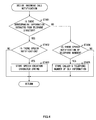
- FIG.3 is a flow chart illustrating the detailed operation in step ST202 of searching the telephone directory registration information in FIG.2.
- the portable radio telephone apparatus 100 decides whether the CLI information (telephone number) mismatches the telephone directory registration information (registered telephone number) or not (step ST301). In this case, the portable radio telephone apparatus 100 compares, for example, telephone number 1 or telephone number 2 of the telephone directory data written in FIG.6 which is set in the telephone directory information registration section 109 with the telephone number of the incoming caller which is set in the CLI information. When the CLI information (telephone number) does not mismatch the telephone directory registration information (registered telephone number) in step ST301, the portable radio telephone apparatus 100 sets the corresponding telephone directory data record in the telephone directory extraction information (step ST302) and the operation returns to the flow in FIG.2.
- step ST303 the portable radio telephone apparatus 100 decides whether the comparison corresponding to the telephone directory registration information in step ST301 has been completed or not (step ST303).
- the operation returns to step ST301.
- the portable radio telephone apparatus 100 sets the absence of the corresponding telephone number in the telephone directory extraction information (step ST304) and the operation returns to the flow in FIG.2.
- FIG.4 is a flow chart illustrating the detailed operation in step ST203 of deciding incoming call notification in FIG.2.
- the portable radio telephone apparatus 100 decides the presence or absence of the corresponding information extracted from the telephone directory (step ST401) .
- the portable radio telephone apparatus 100 decides that there is the corresponding information extracted from the telephone directory and when the telephone directory data record is not set in the information extracted from the telephone directory, the portable radio telephone apparatus 100 decides that there is not the corresponding information extracted from the telephone directory.
- step ST401 when the corresponding telephone directory information exists, information on the presence or absence of speech notification during the call in the corresponding information in the telephone directory data record is acquired and it is decided whether speech notification during the call exists or not (step ST402).
- the speech notification exists in step ST402
- the speech creation character string of the corresponding information in the telephone directory data record is stored (step ST403) and the operation returns to the flow in FIG.2.
- the operation returns to the flow in FIG.2 .
- the portable radio telephone apparatus 100 decides whether the speech notification of the telephone number exists or not (step ST404).
- the portable radio telephone apparatus 100 stores the caller's telephone number of the CLI information (step ST405) and the operation returns to the flow in FIG.2.
- the speech notification of the telephone number does not exist in step ST404, the operation returns to the flow in FIG.2.
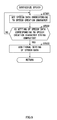
- FIG.5 is a flow chart illustrating the detailed operation in step ST205 of synthesizing speech in FIG.2.
- the portable radio telephone apparatus 100 sets the corresponding speech data in the speech creation character (step ST501).
- the portable radio telephone apparatus 100 converts the character string stored in step ST203 to speech data character by character (including numerals) and stores the speech data.
- the portable radio telephone apparatus 100 decides whether the setting of the speech data corresponding to the speech creation character string has been completed or not (step ST502).
- the operation returns to step ST501.
- the portable radio telephone apparatus 100 When the setting of the speech data corresponding to the speech creation character string has been completed in step ST502, the portable radio telephone apparatus 100 performs an additional setting of the speech data of the speech data storage section 110 (step ST503). In this case, the portable radio telephone apparatus 100 combines fixed speech data such as "Call from Mr./Ms. " preset in the speech data storage section 110 with the speech data stored in step ST501 and stores the combined data.
- step ST206 the speech signal processing section 103 notifies the user of the information on the sender of the incoming call using a tone through the microphone 101.
- the character string with "Taro Matsushita" corresponding to the telephone directory data (n-1) record in FIG.6 is converted to speech, combined with the speech information "Call from Mr./Ms." stored as fixed speech information and the user is notified of "Call from Mr. Taro Matsushita" with speech.
- the portable radio telephone apparatus 100 is provided with an incoming call rejection setting section that makes a setting in the information on the telephone numbers registered by the telephone directory information registration section 109 so that incoming calls are rejected during a call and in the case where the incoming call rejection is set in the information on the telephone number related to the incoming call when the incoming call arrives during a call, the incoming call is not notified to the user, whereas in the case where it is decided that no incoming call should be notified, no response is made to the caller or network.
- a first mode of the present invention comprises a call section that carries out a call with one of a plurality of telephone apparatuses, a call waiting section that notifies, when there is an incoming call during a call using the call section, the user of the incoming call, holds the call in progress and connects the incoming call, a telephone number acquisition section that can acquire the telephone number of the telephone apparatus of the other party, a telephone directory information registration section that registers the telephone number associated with the information on the name, a caller confirmation section that searches the telephone number of the telephone directory information registration section based on the telephone number acquired by the telephone number acquisition section and confirms the caller, a character string speech conversion section that converts the character information on the name of the caller confirmed by the caller confirmation section to speech information and a caller information notification section that notifies, when the incoming call arrives during a call, the speech information to the user from the character string speech conversion section with speech at a volume level which does not disturb the call.
- This configuration allows the user of the present telephone apparatus to know the sender of the incoming call without suspending the conversation currently in progress while keeping the call as is and thereby decide whether or not to receive the incoming call.
- a second mode of the present invention is the invention according to claim 1, further comprising another character string speech conversion section that converts, when information for identifying the corresponding caller is not obtained by the caller confirmation section, the information on the telephone number acquired by the telephone number acquisition section to speech information and another caller information notification section that notifies the user of the speech information converted by the other character string speech conversion section with speech at a volume level which does not disturb the call.
- the user of the present telephone apparatus can acquire the information on the telephone number of the caller while continuing the call with the other party of the call currently in progress.
- a third mode of the present invention is either the first mode or the secondmode of the present invention, further comprising an incoming call rejection setting section that makes a setting in information on the telephone numbers registered by the telephone directory information registration section so as to reject incoming calls during a call, wherein if the incoming call rejection is set in the information on the telephone number related to the incoming call when the incoming call arrives during the call, the incoming call is not notified to the user.
- the user can set whether or not to notify the incoming call during the call for each party of incoming call and thereby prevent interference with the call by the incoming call notification from a caller with a low degree of emergency which may disturb the call currently in progress.
- the present invention is suitable for use in various telephone apparatuses other than portable radio telephone apparatuses.
Landscapes
- Engineering & Computer Science (AREA)
- Signal Processing (AREA)
- Computer Security & Cryptography (AREA)
- Telephone Function (AREA)
- Mobile Radio Communication Systems (AREA)
- Telephonic Communication Services (AREA)
Abstract
Description
[Patent Document 1] Unexamined Japanese Patent Publication No.2000-165520 (pp5-7, FIG.1)
Claims (3)
- A telephone apparatus comprising:a call section that carries out a call with one of a plurality of telephone apparatuses;a call waiting section that notifies, when there is an incoming call during a call using said call section, the user of said incoming call, holds the call in progress and connects the incoming call;a telephone number acquisition section that can acquire the telephone number of the telephone apparatus of the other party;a telephone directory information registration section that registers the telephone number associated with the information on the name;a caller confirmation section that searches said telephone number of said telephone directory information registration section based on said telephone number acquired by said telephone number acquisition section and confirms the caller;a character string speech conversion section that converts the character information on the name of said caller confirmed by said caller confirmation section to speech information; anda caller information notification section that notifies, when said incoming call arrives during a call, said speech information to the user from said character string speech conversion section with speech at a volume level which does not disturb the call.
- The telephone apparatus according to claim 1, further comprising:another character string speech conversion section that converts, when information for identifying said corresponding caller is not obtained by said caller confirmation section, the information on said telephone number acquired by said telephone number acquisition section to speech information; andanother caller information notification section that notifies the user of said speech information converted by said other character string speech conversion section with speech at a volume level which does not disturb the call.
- The telephone apparatus according to claim 1, further comprising an incoming call rejection setting section that makes a setting in information on said telephone numbers registered by said telephone directory information registration section so as to reject incoming calls during a call,
wherein if said incoming call rejection is set in the information on said telephone number related to said incoming call when the incoming call arrives during the call, said incoming call is not notified to the user.
Applications Claiming Priority (3)
| Application Number | Priority Date | Filing Date | Title |
|---|---|---|---|
| JP2003359426A JP2005124062A (en) | 2003-10-20 | 2003-10-20 | Telephone equipment |
| JP2003359426 | 2003-10-20 | ||
| PCT/JP2004/015423 WO2005039162A1 (en) | 2003-10-20 | 2004-10-19 | Telephone device |
Publications (2)
| Publication Number | Publication Date |
|---|---|
| EP1575252A1 true EP1575252A1 (en) | 2005-09-14 |
| EP1575252A4 EP1575252A4 (en) | 2009-11-11 |
Family
ID=34463338
Family Applications (1)
| Application Number | Title | Priority Date | Filing Date |
|---|---|---|---|
| EP04792592A Withdrawn EP1575252A4 (en) | 2003-10-20 | 2004-10-19 | TELEPHONE APPARATUS |
Country Status (4)
| Country | Link |
|---|---|
| US (1) | US7206395B2 (en) |
| EP (1) | EP1575252A4 (en) |
| JP (1) | JP2005124062A (en) |
| WO (1) | WO2005039162A1 (en) |
Cited By (2)
| Publication number | Priority date | Publication date | Assignee | Title |
|---|---|---|---|---|
| US7992170B2 (en) | 2006-02-07 | 2011-08-02 | Samsung Electronics Co., Ltd | Apparatus for providing electronic program guide information in a digital multimedia broadcast receiving terminal and a method therefor |
| EP3041204A1 (en) * | 2014-11-28 | 2016-07-06 | Xiaomi Inc. | Method for prompting calling request and device for the same |
Families Citing this family (9)
| Publication number | Priority date | Publication date | Assignee | Title |
|---|---|---|---|---|
| US8165280B1 (en) | 2005-09-22 | 2012-04-24 | Verizon Services Organization Inc. | Method and system for providing busy override service in a SIP-based network |
| JP2007194691A (en) * | 2006-01-17 | 2007-08-02 | Nakayo Telecommun Inc | Telephone terminal capable of notifying of arrival of call during speech |
| TW200835282A (en) * | 2007-02-07 | 2008-08-16 | Accton Technology Corp | Volume control process of a mobile device |
| JP5095505B2 (en) * | 2008-05-29 | 2012-12-12 | 京セラ株式会社 | Portable radio |
| WO2011039884A1 (en) | 2009-10-01 | 2011-04-07 | 富士通株式会社 | Voice communication apparatus |
| JP2013012987A (en) * | 2011-06-30 | 2013-01-17 | Funai Electric Co Ltd | Telephone set and fixed telephone set |
| JP5911781B2 (en) * | 2012-09-27 | 2016-04-27 | 京セラ株式会社 | Portable terminal device, program, and information notification method |
| KR101776727B1 (en) * | 2015-10-23 | 2017-09-08 | 현대자동차 주식회사 | System and computer readable recording medium for auto dialing |
| CN120416778A (en) * | 2024-01-31 | 2025-08-01 | 海能达通信股份有限公司 | A method and device for processing missed group calls |
Family Cites Families (13)
| Publication number | Priority date | Publication date | Assignee | Title |
|---|---|---|---|---|
| US4899358A (en) * | 1988-08-08 | 1990-02-06 | American Telephone And Telegraph Company At&T Bell Laboratories | Call announcement arrangement |
| JPH04144461A (en) * | 1990-10-05 | 1992-05-18 | Canon Inc | telephone equipment |
| US5511111A (en) * | 1993-11-01 | 1996-04-23 | Engineering And Business Systems, Inc. | Caller name and identification communication system with caller screening option |
| US5796806A (en) * | 1995-03-20 | 1998-08-18 | Dsc Telecom, L.P. | Apparatus and method for spoken caller identification using signals of the advanced intelligent network |
| US5745562A (en) * | 1995-12-27 | 1998-04-28 | Lucent Technologies, Inc. | Telephone station voice announce device and method |
| JPH11252254A (en) * | 1998-03-02 | 1999-09-17 | Canon Inc | Telephone device and control method thereof |
| US6498841B2 (en) * | 1998-03-19 | 2002-12-24 | Ameritech Corporation | Method and system for providing enhanced call waiting and caller identification |
| US6377668B1 (en) * | 1998-05-26 | 2002-04-23 | Command Communications, Inc. | Internet priority call device |
| JP2000165520A (en) | 1999-01-01 | 2000-06-16 | Nec Mobile Commun Ltd | Call waiting (registered trademark) system and mobile terminal |
| US6366661B1 (en) * | 1999-10-25 | 2002-04-02 | Quest Communications Int'l., Inc. | Online call routing apparatus and method |
| US6826159B1 (en) * | 2000-05-24 | 2004-11-30 | Cisco Technology, Inc. | System and method for providing speaker identification in a conference call |
| US20030032415A1 (en) * | 2001-08-13 | 2003-02-13 | Cho Han S. | Voice announced caller identification features and methods therefor |
| EP1284574A1 (en) * | 2001-08-18 | 2003-02-19 | Siemens Aktiengesellschaft | Method and apparatus for displaying an identification related to a telecommunication terminal |
-
2003
- 2003-10-20 JP JP2003359426A patent/JP2005124062A/en active Pending
-
2004
- 2004-10-19 WO PCT/JP2004/015423 patent/WO2005039162A1/en not_active Ceased
- 2004-10-19 US US10/542,474 patent/US7206395B2/en not_active Expired - Fee Related
- 2004-10-19 EP EP04792592A patent/EP1575252A4/en not_active Withdrawn
Cited By (4)
| Publication number | Priority date | Publication date | Assignee | Title |
|---|---|---|---|---|
| US7992170B2 (en) | 2006-02-07 | 2011-08-02 | Samsung Electronics Co., Ltd | Apparatus for providing electronic program guide information in a digital multimedia broadcast receiving terminal and a method therefor |
| EP3041204A1 (en) * | 2014-11-28 | 2016-07-06 | Xiaomi Inc. | Method for prompting calling request and device for the same |
| RU2619083C2 (en) * | 2014-11-28 | 2017-05-11 | Сяоми Инк. | Method and device for message on request to call |
| US9654621B2 (en) | 2014-11-28 | 2017-05-16 | Xiaomi Inc. | Methods and devices for prompting calling request |
Also Published As
| Publication number | Publication date |
|---|---|
| US20060140379A1 (en) | 2006-06-29 |
| JP2005124062A (en) | 2005-05-12 |
| US7206395B2 (en) | 2007-04-17 |
| WO2005039162A1 (en) | 2005-04-28 |
| EP1575252A4 (en) | 2009-11-11 |
Similar Documents
| Publication | Publication Date | Title |
|---|---|---|
| US8195222B2 (en) | Shared phone, medium having recorded therein program for controlling shared phone, and method for controlling shared phone | |
| JP2004153779A (en) | Communication terminal equipment, telephone set, system for notifying caller information and method for notifying caller information used for the same, and the program | |
| EP1170932B1 (en) | Audible identification of caller and callee for mobile communication device | |
| US20050085274A1 (en) | Method for displaying call record list in wireless telecommunication terminal | |
| JP2002247144A (en) | Mobile phone device and method of receiving the same | |
| US7206395B2 (en) | Telephone apparatus | |
| EP2833608B1 (en) | Cordless telephone equipment and cordless telephone system | |
| JP2002118626A (en) | Mobile phone | |
| CA2614644C (en) | Method and system for presenting customized caller options via a communication device | |
| US20050113076A1 (en) | Method and apparatus for searching for expected caller by matching caller ID to phone book | |
| EP3131272A1 (en) | Cordless telephone device and telephone directory control method | |
| JPH07236179A (en) | Data registration method for communication system and communication device using the same | |
| JP2014220725A (en) | Telephone system and connection control method | |
| JP2002094612A (en) | Mobile phone | |
| EP1925093B1 (en) | Method and apparatus for improved calling in a mobile communication terminal | |
| JPH0774806A (en) | Mobile phone | |
| JP2004297122A (en) | Portable communication method, portable communication system, and portable communication terminal used therefor | |
| JP4208076B2 (en) | Private branch exchange system | |
| US20070105596A1 (en) | Real time caller information retrieval and display in dispatch calls | |
| KR100429376B1 (en) | Method and the System for Downloading the Calling Sound of Mobile-Phone | |
| JP2007006192A (en) | Communication terminal device | |
| JP4150543B2 (en) | Cordless phone system | |
| KR200321190Y1 (en) | Caller Information Voice Output Device | |
| JP4293101B2 (en) | Telephone device and caller number display system | |
| JPH05316193A (en) | Calling method in mobile communication terminals |
Legal Events
| Date | Code | Title | Description |
|---|---|---|---|
| PUAI | Public reference made under article 153(3) epc to a published international application that has entered the european phase |
Free format text: ORIGINAL CODE: 0009012 |
|
| 17P | Request for examination filed |
Effective date: 20050707 |
|
| AK | Designated contracting states |
Kind code of ref document: A1 Designated state(s): AT BE BG CH CY CZ DE DK EE ES FI FR GB GR HU IE IT LI LU MC NL PL PT RO SE SI SK TR |
|
| AX | Request for extension of the european patent |
Extension state: AL HR LT LV MK |
|
| RIN1 | Information on inventor provided before grant (corrected) |
Inventor name: YOKOI, SHIGEKI Inventor name: IGARASHI, HIROYUKI Inventor name: YAMAMOTO, OSAMU |
|
| DAX | Request for extension of the european patent (deleted) | ||
| RBV | Designated contracting states (corrected) |
Designated state(s): DE FR GB |
|
| RAP1 | Party data changed (applicant data changed or rights of an application transferred) |
Owner name: PANASONIC CORPORATION |
|
| RIC1 | Information provided on ipc code assigned before grant |
Ipc: H04M 1/663 20060101ALI20090908BHEP Ipc: H04M 1/00 20060101ALI20090908BHEP Ipc: H04M 1/57 20060101ALI20090908BHEP Ipc: H04M 3/42 20060101AFI20050503BHEP |
|
| 17Q | First examination report despatched |
Effective date: 20090924 |
|
| A4 | Supplementary search report drawn up and despatched |
Effective date: 20090914 |
|
| STAA | Information on the status of an ep patent application or granted ep patent |
Free format text: STATUS: THE APPLICATION IS DEEMED TO BE WITHDRAWN |
|
| 18D | Application deemed to be withdrawn |
Effective date: 20100205 |