EP1575216A1 - Method to invoke service among devices in home network - Google Patents
Method to invoke service among devices in home network Download PDFInfo
- Publication number
- EP1575216A1 EP1575216A1 EP03737859A EP03737859A EP1575216A1 EP 1575216 A1 EP1575216 A1 EP 1575216A1 EP 03737859 A EP03737859 A EP 03737859A EP 03737859 A EP03737859 A EP 03737859A EP 1575216 A1 EP1575216 A1 EP 1575216A1
- Authority
- EP
- European Patent Office
- Prior art keywords
- service
- called
- party
- call
- calling
- Prior art date
- Legal status (The legal status is an assumption and is not a legal conclusion. Google has not performed a legal analysis and makes no representation as to the accuracy of the status listed.)
- Granted
Links
Images


Classifications
-
- H—ELECTRICITY
- H04—ELECTRIC COMMUNICATION TECHNIQUE
- H04L—TRANSMISSION OF DIGITAL INFORMATION, e.g. TELEGRAPHIC COMMUNICATION
- H04L12/00—Data switching networks
- H04L12/28—Data switching networks characterised by path configuration, e.g. LAN [Local Area Networks] or WAN [Wide Area Networks]
-
- H—ELECTRICITY
- H04—ELECTRIC COMMUNICATION TECHNIQUE
- H04L—TRANSMISSION OF DIGITAL INFORMATION, e.g. TELEGRAPHIC COMMUNICATION
- H04L12/00—Data switching networks
- H04L12/28—Data switching networks characterised by path configuration, e.g. LAN [Local Area Networks] or WAN [Wide Area Networks]
- H04L12/2803—Home automation networks
- H04L12/2807—Exchanging configuration information on appliance services in a home automation network
- H04L12/2809—Exchanging configuration information on appliance services in a home automation network indicating that an appliance service is present in a home automation network
-
- H—ELECTRICITY
- H04—ELECTRIC COMMUNICATION TECHNIQUE
- H04L—TRANSMISSION OF DIGITAL INFORMATION, e.g. TELEGRAPHIC COMMUNICATION
- H04L12/00—Data switching networks
- H04L12/28—Data switching networks characterised by path configuration, e.g. LAN [Local Area Networks] or WAN [Wide Area Networks]
- H04L12/2803—Home automation networks
- H04L12/283—Processing of data at an internetworking point of a home automation network
- H04L12/2836—Protocol conversion between an external network and a home network
-
- H—ELECTRICITY
- H04—ELECTRIC COMMUNICATION TECHNIQUE
- H04L—TRANSMISSION OF DIGITAL INFORMATION, e.g. TELEGRAPHIC COMMUNICATION
- H04L12/00—Data switching networks
- H04L12/66—Arrangements for connecting between networks having differing types of switching systems, e.g. gateways
Definitions
- This invention relates to a technology of calling service in home network. More particularly, the invention provides a method of calling service among devices in home network.
- home network has four meanings: 1) the devices such as information devices, communication devices, entertainment devices, home electronic appliances, automating devices, security monitoring devices and the likes in home are interconnected, share resources, and combine a home smart network system; 2) the devices in home connect to local community network and internet through gateway so that information can be exchanged with the environment out of home; 3) the devices in home and the network to which the devices connect can satisfy the basic requirements of human for security, convenience, comfort, health and environment protection so as to provide the experience to make human enjoyment; and 4) the home network can be easily used, safety and reliable, easily maintained, reasonable price, and satisfy the home life.
- the system disclosed in the another patent application comprises a gateway 11, one or more backbone network devices 12 and a plurality of control subnetwork devices 13.
- the gateway 11 may comprises two sections, a door-gateway 110 and a control gateway 111.
- the door-gateway 110 connects the control gateway 111 through a wideband interface.
- the digital home network comprises two subnetworks, i.e., backbone network and control subnetwork.
- the network composed of the home gateway 110 and the home devices connected to the home gateway 110 is called as backbone network.
- the backbone network is used for carrying out the interconnection of the home devices such as information devices, communication devices, entertainment devices and the likes.
- the network composed of the control gateway 111 and the home devices connected to the control gateway 111 is called as control subnetwork.
- the control subnetwork is used for carrying out the interconnection of the home devices such as home electronic appliances, automating devices, security monitoring devices and the likes.
- the digital home network has a function to have the home devices interconnected and to share resource.
- the home gateway, the control gateway and the server are called as resource management device for managing the network resource.
- the device A looks for a resource management device, then sends a registering request to the resource management device. After receiving an authorization from the resource management device, the device A establishes a connection with the resource management device based on the security authorization from the resource management device. The device A registers into the resource management device in the network if the connection is successful. That is, the device A sends its device information to the resource management device and then registers the service which can be provided by the device A itself into the resource management device.
- the resource management device stores all of device registering information and service registering information so that the information of the devices accessed to the network can be searched easily.
- the device A which originates the communication first sends a device searching request to the resource management device.
- the resource management device searches the device registering information into a storing unit in the resource management device to determine whether or not there is an appropriate device to communicate with the device A. If there is an appropriate device B, the information of the device B is sent to the device A. Then, the device A sends a request to device B in response to the reception of the information of device B from the resource management device.
- the device A calls the service from device B.
- the device A automatically disconnects with device B after the operation is complete.
- the device will perform a logout operation to cancel its relative information, which includes device information and service information, from the resource management device when the device disconnect with the network.
- the resource management device may exist or not in the network.
- the devices can perform communication through equity connection formed by self-negotiating among the devices after the mutual searching among the devices is performed. If there is a resource management device in the network, the resource management device would announce the information of itself periodically to other devices. The devices other than the resource management device would also announce their information in various cases.
- a method according to the present invention is as follows.
- a method of calling service among devices in home network comprising steps of:
- the method further comprises the step of after the protocol stack of the service calling party and the protocol stack of the service called party determine that the service calling party has established renting relationship with the service called party, the service called party determines whether or not the number which the service is called currently exceeds a parallel-sending control threshold of the called service, if it is, the called party sets a denying-call to the service call result; otherwise, the called party sets an allowing-call to the service call result.
- the method further comprises the step of obtaining a service handle for uniquely identifying the service after the service registration of the each of the services is successful.
- the step a of obtaining the service handle further comprising:
- the actual interacting process of the service call in said step c comprises at least a basic service call process, each of the basic service call processes comprises steps of:
- the protocol stack of the service calling party stack and the protocol stack of the service called party process the service call request message and the service call response message by using a service call request call-back function and a service call response call-back function which are provided by called service and calling service respectively.
- the service call request call-back function and the service call response call-back function are transferred to the local protocol stack by a application corresponding to the current registered service when the service is registered.
- the method of calling service among devices in home network provided by the present invention, it can checks whether or not the called service is currentingly available, is registered, establishes renting relationship, or conform to the parallel-sending control before each of services is normally called since the service call is associated with service registration, service searching and service renting.
- the method according to the present invention can ensure the security, reliability and cooperativity of the service call operation.
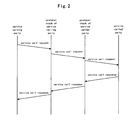
- a service calling party sends a service call request message to a service called party.
- the request message is transferred to the service called party through the protocol stack of the calling party and the protocol stack of the called party.
- the called party After receiving the request message, the called party returns a service call response message containing the information desired by the calling party to the calling party through the protocol stack of the called party and the protocol stack of the calling party.
- the process shown in figure 2 is only one interactive process between the calling party and the called party for the service call operation (hereinafter referred as to a basic service call process).
- a basic service call process it is necessary to perform a plurality of basic service call processes between the calling party and the called party for a complete service call process.
- the service call should be associated with the operations such as service registration, service searching, service authorization, service renting and the like so as to adapt the dynamic change of the services and satisfy the requirements for security.
- the combination of the service registration and the service searching may adapt the dynamic change of the service, and the combination of the service authorization and service renting may satisfy the requirements for security. Therefore, the service call in home network should satisfy following conditions:
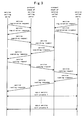
- figure 4 shows the flow chart for implementing the concrete service call process, comprising following steps:
- the service calling party also transfers the buffer area address and data length containing concrete calling information to the local protocol stack while the service call request is sent.
- the protocol stack of the service calling party transfers the call information to the protocol stack of the called party based on the service handle of the called party.
- Each of the services will register its service into the device to which the service belongs and the resource management device in the home network when the device accesses into the home network, as shown in figure 3. After the registration is successful, each of the services will have its own service handle.
- the service registration response contains the service handle of service which is registered currently. Therefore, the service handle of the service calling party and the service handle of the service called party should be indicated in the service call process so that the service handle is used to complete the interaction of the messages.
- the service handles of calling service and called service is searched with following method: if service A calls service B and service A is then the service calling party and service B is the service called party.
- Service A do not know the existence of the service B, it only knows the characteristics to be searched. Therefore, the service calling party searches whether or not the service B exists in the protocol stack of the calling party by using the description of service characteristics. If it exists, the service handle of the service B is returned. After that, the service handle of the service A continuously communicates with the service handle of the service B. Otherwise, the service calling party searches whether or not the service B exists in other devices in the home network by using the description of service characteristics. If it exists, the service handle of the service B is returned, and it determines the party to which the service B belongs is the called party. If the service B does not exist in all devices in the home network, the searching flow is ended.
- Steps 402-404 after receiving the service call request, the protocol stack of the called party searches whether or not corresponding service exists in the registered services based on the service handle of the called service included in the service call request. If it does not exist, an error indication code B_E_SERVICE_NOT_EXIST indicating the inexistence of the service is returned to the service calling party. The service calling party ends the calling flow after receiving the error indication code. Otherwise, the flow proceeds into step 405.
- Steps 405-406 the protocol stack of the called party judges whether or not the currently called service has established a renting relationship with service calling party. If not, the service called party returns an error indication code B_E_SERVICE_RENT_DENIED indicating a service renting error to the service calling party. The service calling party ends the calling flow after receiving this error indication code. Otherwise, the flow proceeds into step 407.
- Step 407 the called party sends the service call result in the form of service call response to the service calling party, i.e., returning a indication to allow the service calling party to call the service.
- the protocol stack of the service called party sends the response to the protocol stack of the service calling party protocol stack.
- Steps 408-412 after receiving the service call response, the protocol stack of the service calling party protocol stack checks the service search and the renting relationship based on the service handle to determine whether or not any one of steps of the both is error. That is, in the case where currently called service is not found, or renting relationship between the called party and the calling party is not established, the response message will be discarded, no process will be carried out. Otherwise, the flow will proceed into step 413.
- Step 413 if the checking results for the service search and the renting relationship by the service calling party indicate that the service handle has been found and the renting relationship has been established, the service calling party and the service called party will start the actual service call process.
- the protocol stack of the service calling party and the protocol stack of the service called party process the call request and the response information by using the service call and call-back function provided by the calling service and called service respectively.
- the service call and call-back function includes a service call request call-back function and a service call response call-back function.
- the service call and call-back function is transferred to the respective protocol stacks by the applications corresponding to the registered service when the service is registered.
- At least one basic service call process is interacted between the service calling party and the service called party until the service call which is completed once ends.
- the method may comprises the step of performing parallel-sending control after the service calling party or the service called party has confirmed that the renting relationship between the service calling party and the service called party has established. That is, it judges whether or not the number of times currently calling the called service exceeds the parallel-send control threshold of the called service. If it is, the called party set the service call result as call denial. Otherwise, the called party set the service call result as call allowance.
- Table 1 shows the detail format of the service call request message, including name of field, content of field, type of field and the range of value of the field.
- Name of field Content Type Range of Value Message type Type of message Character string Fixed to: ServiceUsingRequest Message sequence No. Sequence No.
- Character string Character string with 256 bytes in maximal length Parameter value Parameter value appearing as a pair with the name of parameter Character string Character string with 256 bytes in maximal length Binary data length Length of binary data contained in calling request message integers 0 to 0x7FFFFF Binary data content Content of binary data contained in calling request message binary Arbitrary value
- Table 2 shows the detail format of the service call response message, including name of field, content of field, type of field and the range of value of the field.
- Name of field Content Type Range of Value Message type Type of message Character string Fixed to: ServiceUsingResponse Message sequence No. Sequence No.
- Character string Character string with 256 bytes in maximal length Parameter value Parameter value appearing as a pair with the name of parameter Character string Character string with 256 bytes in maximal length Binary data length Length of binary data contained in calling request message integers 0 to 0x7FFFFF Binary data content Content of binary data contained in calling request message binary Arbitrary value
- the first six fields included in each of the messages are same. That is, the first field is message type, the second field is message sequence number used for retransmission of the message and correspondence of response message and request message.
- the third to sixth fields indicate the service calling party and the service called party.
- the service call request message and the service call response message may be implemented by using XML language.
- the actual called data for example, the description and the likes for the content or function of the service to be called, sent by the applications can be transmitted with the manner of Hypertext transfer Protocol (HTTP) plus simple object access protocol (SOAP).
- HTTP Hypertext transfer Protocol
- SOAP simple object access protocol
- the data with other formats are transmitted as general binary data.
- the concrete meanings of the data are analyzed by the service calling party and the service called party.
- the protocol stack only responds for transmission.
Landscapes
- Engineering & Computer Science (AREA)
- Automation & Control Theory (AREA)
- Computer Networks & Wireless Communication (AREA)
- Signal Processing (AREA)
- Multimedia (AREA)
- Computing Systems (AREA)
- Data Exchanges In Wide-Area Networks (AREA)
- Telephonic Communication Services (AREA)
- Small-Scale Networks (AREA)
- Communication Control (AREA)
- Computer And Data Communications (AREA)
Abstract
Description
The service call request call-back function and the service call response call-back function are transferred to the local protocol stack by a application corresponding to the current registered service when the service is registered.
The application also transfers other information to the protocol stack at the local end during the service registration. Following two items of content included in the information relate to service call:
| Name of field | Content | Type | Range of Value |
| Message type | Type of message | Character string | Fixed to: ServiceUsingRequest |
| Message sequence No. | Sequence No. of message | Signless integers | 0 to 0xFFFFFFFF |
| Target device ID | Device ID of called party | Character string | Character string with 32 bytes in length |
| Target function ID | Service ID of called party | Character string | Character string with 8 bytes in length |
| Source device ID | Device ID of calling party | Character string | Character string with 32 bytes in length |
| Source service ID | Service ID of calling party | Character string | Character string with 8 bytes in length |
| Action name | Indicating name of detail action of called service, it can be omitted if not necessary | Character string | Character string with 256 bytes in maximal length |
| Parameter name | Name of parameters corresponding to the actions, may include a plurality of names. The name of parameters may not be provided if no name of actions is indicated. | Character string | Character string with 256 bytes in maximal length |
| Parameter value | Parameter value, appearing as a pair with the name of parameter | Character string | Character string with 256 bytes in maximal length |
| Binary data length | Length of binary data contained in calling request message | integers | 0 to 0x7FFFFFFF |
| Binary data content | Content of binary data contained in calling request message | binary | Arbitrary value |
| Name of field | Content | Type | Range of Value |
| Message type | Type of message | Character string | Fixed to: ServiceUsingResponse |
| Message sequence No. | Sequence No. of message | Signless integers | 0 to 0xFFFFFFFF |
| Target device ID | Device ID of calling party | Character string | Character string with 32 bytes in length |
| Target function ID | Service ID of calling party | Character string | Character string with 8 bytes in length |
| Source device ID | Device ID of called party | Character string | Character string with 32 bytes in length |
| Source service ID | Service ID of called party | Character string | Character string with 8 bytes in length |
| Action name | Indicating name of detail action of calling party service, it can be omitted if not necessary | Character string | Character string with 256 bytes in maximal length |
| Parameter name | Name of parameters corresponding to the actions, may include a plurality of names. The name of parameters may not be provided if no name of actions is indicated. | Character string | Character string with 256 bytes in maximal length |
| Parameter value | Parameter value, appearing as a pair with the name of parameter | Character string | Character string with 256 bytes in maximal length |
| Binary data length | Length of binary data contained in calling request message | integers | 0 to 0x7FFFFFFF |
| Binary data content | Content of binary data contained in calling request message | binary | Arbitrary value |
Claims (7)
- A method of calling service among devices in home network, comprising steps of:a. a service calling party obtains a service handle of the called service by using the characterized information of the service, sends a service calling request information to a called party by using the obtained service handle;b. the protocol stack of the called party determines whether or not the called service exists based on the service handle of the called service contained in the request information and whether or not the called service has established a renting relationship with the service calling party after receiving the request information, if it is, the called sends service call response message containing service call result to the service calling party and proceeds into step c; otherwise, the flow is ended;c. after receiving the service call response message, the protocol stack of the service calling party determines whether or not the service exist in the calling party based on the service handle of the calling service included in the response message, and whether or not the calling service has established a renting relationship with the called party, if it is, the service calling party and the called party start the actual interacting processing of the service call; otherwise, the flow is ended.
- The method according to claim 1, further comprising the step of obtaining a service handle for uniquely identifying the service after the service registration of the each of the services is successful.
- The method according to claim 1, wherein the step a of obtaining said service handle further comprising the steps of:a1. the service calling party search whether or not the called service exist in local protocol stack by using the characteristic description of the called service, if it is, the service handle of the called service is returned, and end the searching process; if not, step a2 will be executed;a2. the service calling party search whether or not the called service exist in other home network devices by using the characteristic description of the called service, if it is, the service handle of the called service is returned, and set the party which can provide the called service as the called party; otherwise, the flow will be ended.
- The method according to claim 1, wherein said step c comprising at least a basic service call process, each of the basic service call processes comprising steps of:c1. the service calling party sends service call request message to the service called party through the protocol stack of the service calling party and the protocol stack of the service called party sequentially;c2. after receiving the request message, the called party returns a service call response message containing the information required by the calling party to the calling party through the protocol stack of the service called party and the protocol stack of the service calling party sequentially.
- The method according to claim 4, wherein the protocol stack of the service calling party and the protocol stack of the service called party process the service call request message and the service call response message by using a service call request call-back function and a service call response call-back function which are provided by called service and calling service respectively.
- The method according to claim 5, wherein the service call request call-back function and the service call response call-back function are transferred to the local protocol stack by a application corresponding to the current registered service when the service is registered.
- The method according to claim 1, wherein further comprising the step of after the service calling party or the service called party determine that the service calling party has established renting relationship with the service called party, determining whether or not the number which the service is called currently exceeds a parallel-sending control threshold of the called service, if it is, the called party sets a denying-call to the service call result; otherwise, the called party sets an allowing-call to the service call result.
Applications Claiming Priority (3)
| Application Number | Priority Date | Filing Date | Title |
|---|---|---|---|
| CN02158016 | 2002-12-20 | ||
| CNB021580162A CN1173524C (en) | 2002-12-20 | 2002-12-20 | Method for service call among equipments in home network |
| PCT/CN2003/000518 WO2004057800A1 (en) | 2002-12-20 | 2003-06-30 | Method to invoke service among devices in home network |
Publications (3)
| Publication Number | Publication Date |
|---|---|
| EP1575216A1 true EP1575216A1 (en) | 2005-09-14 |
| EP1575216A4 EP1575216A4 (en) | 2009-02-25 |
| EP1575216B1 EP1575216B1 (en) | 2014-01-01 |
Family
ID=32076033
Family Applications (1)
| Application Number | Title | Priority Date | Filing Date |
|---|---|---|---|
| EP03737859.3A Expired - Lifetime EP1575216B1 (en) | 2002-12-20 | 2003-06-30 | Method to invoke service among devices in home network |
Country Status (8)
| Country | Link |
|---|---|
| US (1) | US7218714B2 (en) |
| EP (1) | EP1575216B1 (en) |
| JP (1) | JP4220471B2 (en) |
| KR (1) | KR100706769B1 (en) |
| CN (1) | CN1173524C (en) |
| AU (1) | AU2003246153A1 (en) |
| RU (1) | RU2291582C2 (en) |
| WO (1) | WO2004057800A1 (en) |
Families Citing this family (13)
| Publication number | Priority date | Publication date | Assignee | Title |
|---|---|---|---|---|
| JP4829635B2 (en) * | 2006-02-17 | 2011-12-07 | キヤノン株式会社 | Communication apparatus, communication method, network configuration method, and communication system |
| JP4914207B2 (en) * | 2006-02-17 | 2012-04-11 | キヤノン株式会社 | Communication device and communication layer role determination method |
| KR100754221B1 (en) * | 2006-06-07 | 2007-09-03 | 삼성전자주식회사 | Service request method between network devices and network device and storage medium capable of performing the method |
| KR101614945B1 (en) * | 2008-08-20 | 2016-04-25 | 삼성전자주식회사 | Method and apparatus for protecting of pravacy in home network |
| US8325893B2 (en) * | 2008-11-24 | 2012-12-04 | Ringcentral, Inc. | Click-to-call attack prevention |
| CN104065684B (en) * | 2013-03-21 | 2019-03-08 | 联想(北京)有限公司 | Information processing method, electronic equipment and terminal device |
| CN103401912B (en) * | 2013-07-24 | 2016-03-16 | 江苏物联网研究发展中心 | Based on the service ad hoc network method of general fit calculation |
| CN103945002B (en) * | 2014-05-05 | 2017-05-31 | 瞄财网络科技(北京)有限公司 | High-effective Service management method based on general fit calculation |
| CN104392011B (en) * | 2014-10-31 | 2017-10-20 | 小米科技有限责任公司 | Intelligent index calculating method and device |
| CN105681137A (en) * | 2014-11-20 | 2016-06-15 | 北京海尔广科数字技术有限公司 | Method and device for invoking services |
| CN104935484A (en) * | 2015-05-28 | 2015-09-23 | 北京海尔广科数字技术有限公司 | A method and device for invoking home appliance services through a gateway |
| RU2619082C1 (en) * | 2016-05-05 | 2017-05-11 | Общество с ограниченной ответственностью "КьюЛабс" | Method for user connection in case of callback, and device for its implementation |
| CN115081010A (en) * | 2021-03-16 | 2022-09-20 | 华为技术有限公司 | Distributed access control method, related device and system |
Family Cites Families (10)
| Publication number | Priority date | Publication date | Assignee | Title |
|---|---|---|---|---|
| US5734828A (en) * | 1995-08-30 | 1998-03-31 | Intel Corporation | System for accessing/delivering on-line/information services via individualized environments using streamlined application sharing host and client services |
| UA65565C2 (en) * | 1997-03-21 | 2004-04-15 | Canal Plus Sa | Method for translation of television programs and other data (versions), receiver-decoder of digital television (versions), communication and digital television transmission system (versions), system for digital television translation (versions) |
| US6418211B1 (en) * | 1998-12-28 | 2002-07-09 | Ericsson Inc. | Adaptive call screening method |
| US7739407B1 (en) * | 1999-12-29 | 2010-06-15 | Nokia Siemens Networks Oy | Systems for customizing behaviors and interfaces in service invocations |
| RU2162245C1 (en) * | 2000-04-14 | 2001-01-20 | Пригоровнер Геннадий Ефимович | Method and system using identification codes to pay for and receive commodities and services |
| US6917976B1 (en) * | 2000-05-09 | 2005-07-12 | Sun Microsystems, Inc. | Message-based leasing of resources in a distributed computing environment |
| US6922685B2 (en) * | 2000-05-22 | 2005-07-26 | Mci, Inc. | Method and system for managing partitioned data resources |
| EP1168856A1 (en) * | 2000-06-27 | 2002-01-02 | TELEFONAKTIEBOLAGET L M ERICSSON (publ) | Call handling in an intelligent network |
| US7085805B1 (en) * | 2000-07-07 | 2006-08-01 | Sun Microsystems, Inc. | Remote device management in grouped server environment |
| JP2002094543A (en) * | 2000-09-18 | 2002-03-29 | Sony Corp | Portable information device, portable information device access device, home network system, and access method to home network |
-
2002
- 2002-12-20 CN CNB021580162A patent/CN1173524C/en not_active Expired - Fee Related
-
2003
- 2003-06-30 RU RU2005122114/09A patent/RU2291582C2/en active
- 2003-06-30 AU AU2003246153A patent/AU2003246153A1/en not_active Abandoned
- 2003-06-30 WO PCT/CN2003/000518 patent/WO2004057800A1/en not_active Ceased
- 2003-06-30 JP JP2004560992A patent/JP4220471B2/en not_active Expired - Fee Related
- 2003-06-30 KR KR1020057010829A patent/KR100706769B1/en not_active Expired - Lifetime
- 2003-06-30 US US10/539,603 patent/US7218714B2/en not_active Expired - Lifetime
- 2003-06-30 EP EP03737859.3A patent/EP1575216B1/en not_active Expired - Lifetime
Also Published As
| Publication number | Publication date |
|---|---|
| KR100706769B1 (en) | 2007-04-12 |
| US7218714B2 (en) | 2007-05-15 |
| EP1575216A4 (en) | 2009-02-25 |
| JP2006510320A (en) | 2006-03-23 |
| RU2005122114A (en) | 2006-01-27 |
| AU2003246153A1 (en) | 2004-07-14 |
| CN1173524C (en) | 2004-10-27 |
| US20060140373A1 (en) | 2006-06-29 |
| EP1575216B1 (en) | 2014-01-01 |
| KR20050084289A (en) | 2005-08-26 |
| JP4220471B2 (en) | 2009-02-04 |
| CN1482772A (en) | 2004-03-17 |
| WO2004057800A1 (en) | 2004-07-08 |
| RU2291582C2 (en) | 2007-01-10 |
Similar Documents
| Publication | Publication Date | Title |
|---|---|---|
| RU2286023C2 (en) | Method for automatic search of device in network | |
| US20080089349A1 (en) | File server device | |
| US7218714B2 (en) | Method of calling service among devices in home network | |
| CN1647451B (en) | Apparatus, method and system for monitoring information in a network environment | |
| US20020120872A1 (en) | Internet roaming method | |
| CN112202795A (en) | Data processing method, gateway equipment and medium | |
| JP4833995B2 (en) | Mobile online game system and communication method between mobile game terminals | |
| CN102546533B (en) | Method and system through unregistered residence gateway accessing internet of things service server | |
| WO2002039678A1 (en) | A method for an internet communication | |
| US20090245499A1 (en) | Call transfer system and call transfer control method | |
| KR20040012311A (en) | Contents Sharing Service System and Method by Presence Information in Wireless Network | |
| JP2002523984A (en) | Method for real-time billing of a communication connection when a subscriber stays outside a subscriber home network | |
| US8046419B2 (en) | Method of processing open asynchronous application service event and open web service gateway implementing the same | |
| US20050259666A1 (en) | Method for distributing and collecting address information | |
| KR100798951B1 (en) | Mobile access broker | |
| JP3012600B2 (en) | Terminal adapter and domain name management method | |
| CN117768924A (en) | Network disaster recovery method, device, client and service control point | |
| CN120768851A (en) | Internet access control method, forwarding device, electronic device and readable storage medium | |
| KR100256681B1 (en) | Method for process bidirectional login in sdh | |
| JP5121789B2 (en) | Data transmission system and computer | |
| CN114666313A (en) | Parameter acquisition method, server, terminal and readable storage medium | |
| JP2003242368A (en) | Server | |
| KR20020068099A (en) | Apparatus and method for enbody service management system platform using message distributor | |
| JPH0669983A (en) | Protocol processing unit |
Legal Events
| Date | Code | Title | Description |
|---|---|---|---|
| PUAI | Public reference made under article 153(3) epc to a published international application that has entered the european phase |
Free format text: ORIGINAL CODE: 0009012 |
|
| 17P | Request for examination filed |
Effective date: 20050628 |
|
| AK | Designated contracting states |
Kind code of ref document: A1 Designated state(s): AT BE BG CH CY CZ DE DK EE ES FI FR GB GR HU IE IT LI LU MC NL PT RO SE SI SK TR |
|
| AX | Request for extension of the european patent |
Extension state: AL LT LV MK |
|
| DAX | Request for extension of the european patent (deleted) | ||
| RBV | Designated contracting states (corrected) |
Designated state(s): DE FR GB |
|
| A4 | Supplementary search report drawn up and despatched |
Effective date: 20090123 |
|
| 17Q | First examination report despatched |
Effective date: 20100607 |
|
| GRAP | Despatch of communication of intention to grant a patent |
Free format text: ORIGINAL CODE: EPIDOSNIGR1 |
|
| INTG | Intention to grant announced |
Effective date: 20130612 |
|
| GRAS | Grant fee paid |
Free format text: ORIGINAL CODE: EPIDOSNIGR3 |
|
| GRAA | (expected) grant |
Free format text: ORIGINAL CODE: 0009210 |
|
| AK | Designated contracting states |
Kind code of ref document: B1 Designated state(s): DE FR GB |
|
| REG | Reference to a national code |
Ref country code: GB Ref legal event code: FG4D |
|
| REG | Reference to a national code |
Ref country code: DE Ref legal event code: R096 Ref document number: 60345548 Country of ref document: DE Effective date: 20140213 |
|
| REG | Reference to a national code |
Ref country code: DE Ref legal event code: R097 Ref document number: 60345548 Country of ref document: DE |
|
| PLBE | No opposition filed within time limit |
Free format text: ORIGINAL CODE: 0009261 |
|
| STAA | Information on the status of an ep patent application or granted ep patent |
Free format text: STATUS: NO OPPOSITION FILED WITHIN TIME LIMIT |
|
| 26N | No opposition filed |
Effective date: 20141002 |
|
| REG | Reference to a national code |
Ref country code: DE Ref legal event code: R097 Ref document number: 60345548 Country of ref document: DE Effective date: 20141002 |
|
| REG | Reference to a national code |
Ref country code: FR Ref legal event code: ST Effective date: 20150227 |
|
| PG25 | Lapsed in a contracting state [announced via postgrant information from national office to epo] |
Ref country code: FR Free format text: LAPSE BECAUSE OF NON-PAYMENT OF DUE FEES Effective date: 20140630 |
|
| PGFP | Annual fee paid to national office [announced via postgrant information from national office to epo] |
Ref country code: GB Payment date: 20220621 Year of fee payment: 20 |
|
| PGFP | Annual fee paid to national office [announced via postgrant information from national office to epo] |
Ref country code: DE Payment date: 20220628 Year of fee payment: 20 |
|
| REG | Reference to a national code |
Ref country code: DE Ref legal event code: R071 Ref document number: 60345548 Country of ref document: DE |
|
| REG | Reference to a national code |
Ref country code: GB Ref legal event code: PE20 Expiry date: 20230629 |
|
| P01 | Opt-out of the competence of the unified patent court (upc) registered |
Effective date: 20230627 |
|
| PG25 | Lapsed in a contracting state [announced via postgrant information from national office to epo] |
Ref country code: GB Free format text: LAPSE BECAUSE OF EXPIRATION OF PROTECTION Effective date: 20230629 |