Technical Field
The invention relates to communications. More specifically, the invention relates to a
technique for use with a system accessible via a computer network that determines
whether assigned or selected passwords are susceptible to unauthorized access.
Background of the Invention
In-house computer systems, such as those used in connection with enterprise
software, are typically accessible via one or more passwords by a plurality of users
via a computer network. These passwords may be unique to each individual user, or
they may be shared among several users. Increasingly, companies are making their
computer systems available via the Internet so that users may access them from
various locations. While this arrangement may increase productivity, it also makes
the computer system more vulnerable to unauthorized attempts to access the system
(such as through "hackers").
Users, when prompted to generate their own passwords, often select a password
that is easy to remember. Such passwords may be duplicative of those the users
have at other computer systems (including websites), or they may include terms
such as commonly found terms within a dictionary, variations on their names, family
names, their pets' names, birthday, favorite hobby, favorite movie actor, etc. If a
user selects a passwords based on any of these subjects, then such password may
be more vulnerable to unauthorized access. This vulnerability makes the account
more susceptible to hacker attack where a common technique is to attempt to login
into accounts by cycling through a list of entries in a password dictionary until a
match is found.
As increasing amounts of proprietary data are being generated via computer
networks, prudent business practices require that safeguards be implemented to
prevent or reduce the likelihood of unauthorized access. Although simple safeguards
are often implemented, such as freezing access to an account after three
unsuccessful attempts to login (which can be useful in repelling brute-force hacker
attacks), organizations often overlook the risks posed by the passwords chosen by
their various computer system users. Conventional techniques for determining
whether a password is safe at a system level include simulating a dictionary attack by
comparing each password to a fixed sequence of entries within a dictionary to
determine if a match occurs. However, processing times and associated computing
resources required for such simulated dictionary attacks often make frequent
password security checks unfeasible.
Summary of the Invention
Accordingly, it is an object of the invention to provide a more efficient technique,
utilizing fewer computing resources and minimizing data traffic, for identifying
passwords that are weak or otherwise vulnerable to duplication and use by
unauthorized entities. It is a further object of the invention to provide an improved
technique for generating a password dictionary.
The invention is embodied in a system for evaluating passwords for a plurality of
users of a client system accessible via a computer network. The system includes a
plurality of client systems each coupled to a computer network. Each client system
has a login database for storing a user name and a corresponding hashed password
entry (or entries depending on the configuration of the client system) for each of a
plurality of users, a data acquisition interface for receiving user name and password
data from the plurality of users, and a security module coupled to the login database
and the data acquisition interface for hashing the received user name and password
into a hashed password entry and providing access to the client system if the hashed
password entry matches a hashed password entry within the login database. The
system also includes a password evaluation component which comprises a data
acquisition interface for receiving a plurality of user names and corresponding
hashed password entries from one of the plurality of client systems, a password
database having a plurality of sequenced dictionary entries, and an analysis module
coupled to the data acquisition interface and the password database for sequentially
generating, for each user name, a hashed value combining the user name with the
sequenced dictionary entries until either a hashed value matching the hashed
password entry is detected or the dictionary entries are exhausted. In addition, the
password database stores, for each sequenced entry, data associated with the
number of matches and the sequence of entries within the password database may
be adjusted based on the number of detected matched hashed values associated
with each entry.
The analysis module may further determine that a password is not secure based on
whether a match occurs and the number of historical matches for the corresponding
dictionary entry. Furthermore, the analysis module may make this determination
provided that the number of detected matches is above a predetermined sequence
threshold. For example, unless there are more than X number or Y percentage of
matches corresponding to a password, then the analysis module determines that the
password is secure.
The system, in some variations, further comprises a pre-screening module for
comparing hashed password entries for a client system to determine if there are any
duplications and for excluding the duplicated hashed password entries from
sequential hashed value generation by the analysis module. This pre-screening
module further increases the efficiency of the system by removing passwords that
are, on their face, not secure. In addition, the pre-screening module may
incorporate other criteria such as passwords solely using letters or numbers to
exclude hashed password entries.
The sequence of dictionary entries within the password database may be adjusted by
ranking the entries in decreasing order based on the number of historical (or for
some pre-defined period of time) detected matches corresponding to each such
dictionary entry. Optionally, the ranking may only take into account those dictionary
entries that have a number of matches that exceeds a predetermined threshold. For
example, the ranking may exclude those entries that do not have more than ten
matches associated therewith.
To facilitate the acquisition of user names and associated hashed password entries
from a client system, the system may include an extraction unit coupled to the
password evaluation component for extracting user names and hashed password
entries from a client system. For example, if the extraction unit identifies the
software used at the client system, it may seek out filenames that are associated
with such software and typically contain the user name and hashed password data.
In other variations, the system further comprises an accounting unit, coupled to the
password evaluation component for calculating the number of matched passwords,
and generating an invoice based on the number of matched passwords.
Alternatively, the accounting unit may generate an invoice solely based on the total
number of pairs of user names and hashed password entries analyzed.
The invention is also embodied in a method for evaluating computer system
passwords. Such a method includes the step of obtaining a user name and a
corresponding hashed password entry for each user of a client system (whether by
extracting such data from the client system, receiving a data transmission from the
client system, accessing a computer program product storing the data, or otherwise).
Once the data has been obtained, the method continues with the step of sequentially
generating, for each user name, a hashed value combining the user name with
sequenced entries in a password dictionary until either a hashed value matching the
hashed password entry is detected or the dictionary entries are exhausted. Based on
these iterations, the method adjusts the sequence of a dictionary entry in the
dictionary based on the number of detected matched hashed values associated with
the dictionary entry.
In some variations, the method repeats the steps for a plurality of client systems
(with the dictionary being adjusted after each set of analyses). Therefore, in some
arrangements, iterations through each password dictionary entry commences with
those dictionary entries that most often corresponded to the hashed password
entries, which often results in fewer iterations until a match is detected (and thus
more efficient and rapid detection of weak passwords).
The method may also determine whether a password is not secure, weak, or
otherwise poses a security risk for the client system. This determination may be
based on whether a hashed value matching the hashed password entry is detected.
Or in some variations, the password is determined to not be secure if a hashed value
matching the hashed password entry is detected and the dictionary entry
corresponding to the hashed password entry is above a predetermined sequence
threshold within the dictionary (e.g., within the first 20,000 entries within the
dictionary).
The entries within the dictionary may be adjusted by ranking them based on the
number of detected matches corresponding thereto, or in the alternative, by ranking
only those entries having a certain number of historical matches (e.g., a total of 10
matches or more).
Depending on the implementation, the method may also include pre-processing steps
to filter any passwords that are, on their face, weak. For example, the method may
compare hashed password entries for a client system to determine if there are any
duplications, and exclude the duplicated hashed password entries from the
sequential generation step to avoid unnecessary iterations (and use of computing
resources). The method may also exclude those passwords that appear to refer to
dates, names, and other types of passwords that have easily identifiable formats.
The dictionary entries may be stored within a database, and in that case, the method
also includes the step of obtaining the dictionary entries from a database. In
addition, whether the dictionary entries are stored in a database or otherwise, the
method may also comprise the step of populating the password dictionary with terms
selected from the group comprising user/account names, background information
pertaining to users, character sequences, numbers, foreign language words, names
of places, common last names, common male and female first names, uncommon
first names, characters in myths and legends, Shakespearean references, sports
terms, science fiction terms, movies and actors, cartoons, celebrities, phrases and
patterns, biological terms, machine names, religious references, mnemonics, celestial
objects, as well as any other class of terms of phrases that might be commonly used
by account users (as well as hackers).
The methods of the current invention may also be utilized in connection with a fee-for-service
analysis of the passwords of a client system. With such arrangements,
the method would also include the step of calculating the number of matched
passwords, and generating (and eventually sending) an invoice based on the number
of matched passwords (or percentage of matched passwords). Alternatively, pricing
may simply be based on the number of obtained user names for a particular client
system.
In another embodiment, the invention is provided in a computer program product,
which may be stored on a computer readable recording medium, that comprise
program code portions for performing any of the above described method steps
when the computer program product is run on a computer system.
Similarly, the invention may also comprise a system having a computer processor
and a memory coupled to the processor, where the memory is encoded with one or
more programs that may perform any of the above described method steps.
In another interrelated embodiment within the same general inventive concept as
those embodiments described above, a password dictionary is provided that includes
a sequence of dictionary entries for evaluating passwords of users of a plurality of
client systems. With this password dictionary, the password entries are sequenced
using the method comprising the steps of obtaining a user name and a
corresponding hashed password entry for each user of a client system, sequentially
generating, for each user name, a hashed value combining the user name with the
sequenced entries until either a hashed value matching the hashed password entry is
detected or the dictionary entries are exhausted, adjusting the sequence of a
dictionary entry based on the number of detected matched hashed values associated
with the dictionary entry, and repeating the preceding steps for a plurality of client
systems.
The invention may also be embodied in an apparatus, interrelated to the systems
described above, for evaluating computer system passwords. The apparatus may
include an acquisition unit for obtaining a user name and a corresponding hashed
password entry for each user of a computer system, an analysis unit for sequentially
generating, for each user name, a hashed value combining the user name with
sequenced entries in a password dictionary until either a hashed value matching the
hashed password entry is detected or the dictionary entries are exhausted, and a
modification unit for adjusting the sequence of a dictionary entry in the dictionary
based on the number of detected matched hashed values associated with the
dictionary entry. In some variations, the various units are either combined or split
into further sub-units depending on the desired implementation and design
requirements.
Brief Description of the Drawings
Further details, embodiments, modifications and enhancements of the present invention
may be obtained from consideration of the following description of various
illustrative embodiments of the invention in conjunction with the drawings, in which:
- Fig. 1
- is a schematic diagram illustrating a data processing system used in
accordance with the present invention;
- Fig. 2
- is a process flow diagram illustrating a method embodiment of the
current invention;
- Fig. 3
- is a process flow diagram of an example useful for understanding and
implementing the invention;
- Fig.4
- is a data flow diagram of an example useful for understanding and
implementing the invention; and
- Fig. 5
- is a schematic diagram illustrating an apparatus embodiment of the
current invention.
Detailed Description of Preferred Embodiments
In the following description, for purposes of explanation and not limitation, specific
details are set forth, such as particular sequences of steps and various
configurations, etc. in order to provide a thorough understanding of the present
invention. It will be apparent to one skilled in the art that the present invention may
be practiced in other embodiments that depart from these specific details. Moreover,
those skilled in the art will appreciate that the functions explained herein below may
be implemented using software functioning in conjunction with a programmed
microprocessor or general purpose computer, and/or using an application specific
integrated circuit (ASIC). It will also be appreciated that while the current invention is
primarily described as a method, it may also be embodied in a computer program
product as well as a system comprising a computer processor and a memory coupled
to the processor, where the memory is encoded with one or more programs that may
perform the methods disclosed herein.
With reference to Fig. 1, a computer network system 100 that may be used to
implement and practice the current invention is illustrated. The computer network
system 100 comprises a network component 105 having a processor 110, a database
113 for storing data such as dictionary entries, a memory 115, a bus 120, and an
interface 125, interoperating in a conventionally known manner. The network
component 105 may be coupled to a computer network 140 to provide it access to a
data storage unit 145 (which may house one or more databases) and a plurality of
client systems 150 (each of which may be similarly configured). The present
invention may be embodied in a computer program product (hereinafter CPP)
residing on a program carrier 130 and/or in the memory 115, and generating
program signals 135, collectively called a "program".
The network component 105 can be, for example, a conventional personal computer
(PC), a desktop or a hand-held device, a multiprocessor computer, a microprocessor-based
or programmable consumer electronics device, a minicomputer, a mainframe
computer, a personal mobile computing device, a mobile communications device, a
portable or stationary personal computer, a palmtop computer or the like.
The processor 110 can be, for example, a central processing unit (CPU), a microcontroller
unit (MCU), digital signal processor (DSP), or the like. The memory 115
symbolizes elements or components that can temporarily or permanently store data
and instructions. Although the memory 115 is conveniently illustrated as a part of the
network component 105, a memory function can also be implemented as an
independent node in the network 140, in the other components of the network, in
the processor 110 itself (e.g., cache, register), or elsewhere.
The memory 115 can be a read only memory (ROM), a random access memory
(RAM), or a memory with other access options or capabilities. The memory 115 may
be physically implemented as machine-accessible media, such as a magnetic media
(like a hard disk, a floppy disk, or other magnetic disk, or a tape), an optical media
(like an optical disk, e.g. a CD-ROM or a digital versatile disk - DVD), a
semiconductor media (like DRAM, SRAM, EPROM, EEPROM, or a memory stick), or by
any other media. Optionally, the memory 115 is distributed across different media.
Portions of the memory 115 can be removable or non-removable with respect to a
particular network component. For reading from media and for writing into media,
the network component 105 uses devices well known in the art such as, for example,
disk drives, tape drives, memory card or memory stick reader/writers, etc.
The memory 115 can store software program support modules such as, for example,
a basic input output system (BIOS), an operating system (OS), a program library, a
compiler, an interpreter, communication programs, drivers, protocol converters,
application software programs like text processors, (Internet-) browsers, or database
applications. Although the CPP is illustrated as being stored in memory 115, the CPP
can also be located elsewhere. For example; the CPP can also be embodied on the
program carrier 130.
The CPP comprises program instructions and, optionally, data or variables that cause
processor 110 to execute the steps forming the methodology of the present invention.
The method steps are explained in greater detail below. The CPP defines and
controls the operation of the network component 105 and its interaction in the network
140. For example, and without the intention to be limiting, the CPP can be available
as source code in any programming language, and as object code ("binary
code") in a compiled presentation. Persons of ordinary skill in the art can use the CPP
in connection with any of the above mentioned support modules.
The program carrier 130 is illustrated as being outside the network component 105.
For communicating the CPP to the network component 105, the program carrier 130
is conveniently inserted into the interface 125. The carrier 130 is implemented as any
computer readable medium, such as one of the media explained above (cf. memory
115). Generally, the program carrier 130 is an article of manufacture comprising a
computer readable medium having computer readable program code means embodied
therein for executing the method of the present invention. Further, the program
signals 135 can also embody the CPP. The signals 135 travel on the network 140 to
and from the network component 105. The steps of the computer program product
CPP can be executed solely in the network component 105, in which case the
computer network 140 may be omitted, or can be executed in a distributed manner
in one or more of the components of the computer network 140.
The interface 135 may include a device that provides data and instructions for being
processed by the network component 105. For example, the interface 135 may
include a keyboard, a pointing device (e.g., a mouse, a trackball, cursor direction
keys), a microphone, a joystick, a game pad, a scanner, etc. While these examples
are devices requiring human interaction, the interface 135 can also operate without
human interaction, such as a wireless receiver (e.g., with satellite dish or terrestrial
antenna), a sensor, a counter (e.g., goods counter in a factory), etc. The interface
135 can also serve to retrieve the program code of the CPP from the program carrier
130. The interface 135 may also include a device that presents instructions and data
that have been processed. It can be, for example, a monitor or display (such as a
cathode ray tube, a flat panel display, or a liquid crystal display), a speaker, a printer,
a plotter, a vibration alert device, etc.
The bus 120 and the network 140 provide logical and physical connections by
conveying instructions and data signals. While connections and communications
inside the network component 105 are conveniently handled by the bus 120, connections
and communications between different network components are handled by
the network 140. Optionally, the network 140 comprises gateways and routers being
computers that are dedicatedly programmed to effect data transmission and protocol
conversion.
The interface 125 is coupled to the network component 105 by the bus 120 (as
illustrated) or by the network 140 (optional). While the signals inside the network
component 105 can be mostly electrical signals, the signals in the network can be
electrical, magnetic, optical or wireless (radio) signals.
The network 140 can include one or more of an office-wide computer network, an
enterprise-wide computer network, an intranet or the Internet (i.e., world wide web).
The world wide web (www) represents all of the computers on the Internet that offer
users access to information on the Internet via interactive documents or Web pages.
Web information resides on Web servers on the Internet or within company or
community networks (intranets). Network 140 can include a wired or a wireless
network, such as, for example, a local area network (LAN), a wide area network
(WAN), a wireless LAN (WLAN), a public switched telephone network (PSTN), an
integrated services digital network (ISDN), an infra-red (IR) or Bluetooth link, a radio
link e.g. according to the Universal Mobile Telecommunications System (UMTS), the
Global System for Mobile Communication (GSM), a Code Division Multiple Access
(CDMA) system, or satellite link.
Transmission protocols, mechanisms and data formats to effect communications
between network components which are connected to and by the network 140 are
known, for example, as transmission control protocol/internet protocol (TCP/IP),
hyper text transfer protocol (HTTP), secure HTTP, wireless application protocol
(WAP), unique resource locator (URL), unique resource identifier (URI), hyper text
markup language HTML, extensible markup language (XML), extensible hyper text
markup language (XHTML), wireless application markup language (WML), electronic
data interchange (EDI), which is an electronic exchange of business information between
or inside organizations and their information technology (IT) infrastructure in a
structured format, remote function call (RFC), or via an application programming
interface (API), etc.
Interfaces (whether wired or wireless) coupled between individual elements and
components are also well known in the art. For simplicity, interfaces are not
illustrated. An interface can be, for example, a serial port interface, a parallel port
interface, a game port, a universal serial bus (USB) interface, an internal or external
modem, a video adapter, or a sound card.
The software and the hardware infrastructure of an embodiment of the invention
utilize the network component 105 and an interface 125 having a graphical display
unit and an input unit such as a mouse or a trackball. The network component 105 is
connected to a wide area network (WAN) 140, for operating in an intranet and for
providing access to the Internet to which the client systems 150 are also connected.
The CPP according to the present invention can be part of a complex software system
embedded in a hardware structure. The cooperation of the software system
and the hardware structure is sometimes referred to as the IT backbone system. The
backbone system can have a layered structure with individual software components
acting as service providers, service requesters, or both. For example, application
software can include software components that provide services for presentation,
acting as a server. But at the same time, the application software also can act as
service requester of database services provided by a lower layer. The layered components
can communicate with each other via predefined (hardware and software)
interfaces.
With regard to a possible implementation of a layered software structure, a lower
layer may include network-related functionalities, a physical database and an
operating system for the network components. A middle layer that interfaces with
the lower layer integrates software applications in the upper layer above it. This
middle layer may include components like software tools, system administration
tools, data handling tools, authorization and security management tools, cross-application
modules, and a system kernel. The system kernel can use communications
and application program interfaces to access components like application
software in the upper layer or the operating system, the database, and the network
in the lower layer. This system kernel can operate independently from the applications
and is located "under" the application software and the data layers of the software
system. The upper layer contains the different software applications for
determining whether passwords are vulnerable to unauthorized usage, etc.
Each of the client systems 150 include a login database 155 for storing a user name
and a corresponding hashed password entry for each of a plurality of users, a data
acquisition interface 160 for receiving user name and password data from the
plurality of users, and a security module 165 coupled to the login database 155 and
the data acquisition interface for hashing the received user name and password into
a hashed password entry and providing access to the client system if the hashed
password entry matches a hashed password entry within the login database 155. In
other aspects, the client systems 150 are arranged in conventional manners for
systems that are accessible by a plurality of users via a computer network, such as
the Internet, and where a user provides an identification entry and a security entry
(or entries) to access the client system.
Fig. 2 is a process flow diagram illustrating a method embodiment 200 according to
the current invention for evaluating computer system passwords. The method
commences (which may be implemented using a device such as network component
105 in Fig. 1), at step 210, with obtaining user name and corresponding hashed
password entries for each user of a client system (such as the client systems 150 in
Fig. 1). After this data has been acquired, at step 220, the method continues with the
step of sequentially generating, for each user name, a hashed value combining the
user name with sequenced entries in a password dictionary, until the earlier of the
hashed value matches the hashed password or the entries in the password dictionary
are exhausted. In other words, the method generates a hashed value using the same
encryption techniques of the client system based on the user name and each of a
series of password entries. At step 230, the sequence of dictionary entries is adjusted
based on the number of detected matched hashed values associated with each
dictionary entry. Further details and examples useful for understanding and
implementing the invention are provided below.
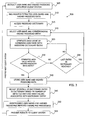
Fig. 3 illustrates a sample process 300 that may be used, in some variations, with the
current invention. At step 305, user name and hashed password entries
corresponding to each user name is extracted from a client system. The hashed
password entries are encrypted and are based on both the user name and the
corresponding password generated by either the user or the client system (when the
account for the user name was generated) - so that hashing dictionary entries alone
would not be sufficient to determine if a match exists. Next, at step 310, the user
names and hashed password entries are pre-processed to identify and segregate
those user names and hashed passwords that are prima facie weak. For example,
the method may detect duplicates in user password pairs (or filters out passwords
that are based on user background information that may be separately provided),
store such duplicate information, and then segregate or otherwise remove such user
names with their hashed passwords from the steps relating to the generation of
hashed values.
A password dictionary is accessed (e.g., loaded from a database such as an internal
database 113 or from data storage unit 145 in Fig. 1) at step 315, whereafter, at
step 320, a user name and its corresponding hashed password entry are selected.
This selection may be simply based on the order in which the user name data was
provided, or it can be conducted in another manner (such as alphabetical order,
access levels for such accounts, etc.). At step 325, the combination of the selected
user name and a first entry within the password dictionary, is encrypted (or
otherwise modified) to generate a hashed value.
Once the hashed value has been generated, at step 330, it is determined whether
the hashed value matches the hashed password entry for the selected user name. If
the hashed value does not match, then it is determined, at step 335, whether there
are any remaining entries in the dictionary. If the last entry has not been reached,
then, at step 325, a hashed value is generated based on the user name and the next
subsequent entry in the password dictionary. Otherwise, at step 320, a new user
name and corresponding hashed password entry is selected. As is illustrated, this
process repeats until the user names are exhausted. For each match, at step 330,
the user name and hashed password data, at step 340, is stored.
Once all of the matches are collected, stored, or tallied, at step 345, the sequence of
dictionary entries is adjusted based on the number of detected matched hashed
values. For example, the dictionary entries may be ranked in order of most
frequently detected (having the lowest sequence number) to least frequently
detected (having the highest sequence number). Or in the alternative, only those
dictionary entries having matches above a certain threshold may be ranked or
otherwise adjusted in the password dictionary sequence. In addition, the method
may further include the step of providing, by the client system, a threshold in which
to determine whether a password is weak (e.g., a password is deemed week if has
been matched more than 0.0001% of all attempted matches). The ability to set this
threshold permits the client system to selectively determine and adjust what it
determines to be a safe password. In addition, as the password dictionary may
increase in size over time, the fact that an entry matches a hashed value does not
necessarily mean that such a password is weak.
The user names and hashed passwords that were removed during pre-processing, at
step 310, are reintroduced at step 350, and finally, at step 355, the results regarding
the passwords matching dictionary entries as well as the user names and hashed
passwords that were removed during pre-processing are provided to a client system
(or a module associated with an administrator of the client system). The results may
contain data regarding the number of detected matches to permit the client system
to determine whether a certain password presents any security risks, or the results
may identify those passwords identified as vulnerable to unauthorized access (based
on factors such as frequency of matches or other determinations).
The password dictionary is preferably stored within a database and may be
generated using terms within a standard dictionary as well as with terms from other
sources. For example, the password dictionary may be populated with terms (or
variations thereof such as reverse spelling, terms interdigitated with asterisks, etc.)
such as user/account names, character sequences, numbers, foreign language
words, names of places, common last names, common male and female first names,
uncommon first names, characters in myths and legends, Shakespearean references,
sports terms, science fiction terms, movies and actors, cartoons, celebrities, phrases
and patterns, biological terms, religious references, machine names, mnemonics,
celestial objects, etc.
In addition, the password dictionary may also be populated with information
pertaining to each user prior to the creation of hashed values for each user name
/ dictionary entry combination, such as mother's maiden name, date of birth,
anniversary date, place of birth, etc. Such an arrangement requires that additional
information regarding each user is provided when the user name and hashed
passwords are extracted, or in the alternative, that a pool of background information
regarding all of the users is provided when the user names are extracted or
otherwise acquired and that the password dictionary contains background
information for all of the users (rather than for a particular user).
The technique of the current invention may be used for multiple client systems.
After the analysis of each client system, the password dictionary is readjusted or
ranked to reflect the aggregate number of matches for certain passwords for all of
the client systems. For example, Table 1 illustrates the sequence of entries within
the password dictionary, the password, and the number of matches after analyzing a
client system. As provided in Table 2, the password dictionary entries may be ranked
in order based on the number of matches so that those entries having the highest
number of matches are given lower numbered sequences within the dictionary entry.
| (Password Dictionary Prior to Adjustment) |
| Sequence | Password | Number of Matches |
| 1 | best-run1 | 2 |
| 2 | 2S0A0P4 | 1 |
| 3 | Walldorf2004 | 5 |
| 4 | SxxAxxP | 3 |
| 5 | No1enterprise | 0 |
| (Password Dictionary Subsequent to Adjustment) |
| Sequence | Password | Number of Matches |
| 1 | Walldorf2004 | 5 |
| 2 | SxxAxxP | 3 |
| 3 | best-run1 | 2 |
| 4 | 2S0A0P4 | 1 |
| 5 | No1enterprise | 0 |
The skilled artisan will appreciate that the sequence of dictionary entries may be
adjusted after each match is detected (rather than after the technique has processed
all of the user names for a certain client system). This arrangement is beneficial in
that it provides a technique for modeling human behavior (i.e., the likelihood that
certain passwords be selected) to provide an evaluation method that requires fewer
computing resources as compared to other password evaluation methods that simply
scroll through a fixed list of password dictionary entries. In other words, as
passwords that are more likely to be used, based on past data, are first analyzed to
determine whether a match occurs, fewer iterations need to be conducted (and
lesser computing resources are required) in order to find a match (if one is present).
In addition, the analysis of multiple client systems, if conducted by a secure and
trusted service provider, could also be used to generate a new password dictionary
comprised of commonly used passwords from multiple client systems, however, the
preferred dictionary is composed of arbitrary terms selected from different areas of
life (and the technique described herein acts to optimize the dictionary).
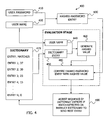
Fig. 4 illustrates a sample data flow 400 useful for understanding and implementing
the invention. User password 410 data and user name 420 data are both used to
generate a hashed password entry 430 (which typically occurs at the client system or
via a component associated therewith). The user name 420 data is provided in a
manner 440 such that it is used in combination with a dictionary entry 450 from a
password dictionary 470 to generate a hashed value 460. This hashed value 460 is
compared 480 with the hashed password entry 430. If a match occurs, then the
sequence of dictionary entries may be adjusted 490 (although this adjustment may
occur at periodic intervals or after the completion of the analysis of a set of user
passwords 410 and user names 420 for a particular client system). If a match does
not occur then the next subsequent dictionary entry 450 is obtained from the
dictionary 470 for combination with the provided user name 440 to generate a new
hashed value 460. This process continues until a match occurs or the dictionary 470
entries are exhausted.
With reference to Fig. 5, an apparatus 500 for evaluating computer system
passwords is illustrated. The apparatus 500 includes an acquisition unit for obtaining
a user name and corresponding hashed password entries for each user of a client
(computer) system. The acquisition unit 510 may extract the user names and
hashed password entries from a client system, or it may, in the alternative, receive
user names and hashed password entries via a computer network or via a computer
storage medium (e.g., CD-ROM). An analysis unit 520 that is coupled to the
acquisition unit 510 sequentially generates, for each user name, a hashed value
combining the user name with sequenced entries in a password dictionary until either
a hashed value matching the hashed password entry is detected or the dictionary
entries are exhausted. The analysis unit 520 may also conduct other steps described
above in connection with the method embodiment 200 and the exemplary process
flow diagram 300. In addition, the apparatus 500 includes a modification unit 530
coupled to the analysis unit for adjusting the sequence of a dictionary entry in the
dictionary based on the number of detected matched hashed values associated with
the dictionary entry. Preferably, this sequence adjustment is conducted after a
tranche of user names and hashed password entries are analyzed by the analysis
unit 510, however, it will be appreciated that the sequence readjustment may occur
after each successful match.
The current invention may also be coupled to or used in connection with an
accounting system that determines how many user name and hashed passwords are
detected, and that a client system or user associated therewith is charged for each
user name / hashed password analyzed, or alternatively, for each user name
/ hashed password combination that is determined to constitute a weak password.
While the present invention has been described with respect to particular
embodiments (including certain system arrangements and certain orders of steps
within various methods), those skilled in the art will recognize that the current
invention is not limited to the specific embodiments described and illustrated herein.
Therefore, while the present invention has been described in relation to its preferred
embodiments, it is to be understood that this disclosure is only illustrative.
Accordingly, it is intended that the invention be limited only by the scope of the
claims appended hereto.