EP1574568A1 - D-aminoacylase - Google Patents
D-aminoacylase Download PDFInfo
- Publication number
- EP1574568A1 EP1574568A1 EP03780848A EP03780848A EP1574568A1 EP 1574568 A1 EP1574568 A1 EP 1574568A1 EP 03780848 A EP03780848 A EP 03780848A EP 03780848 A EP03780848 A EP 03780848A EP 1574568 A1 EP1574568 A1 EP 1574568A1
- Authority
- EP
- European Patent Office
- Prior art keywords
- acetyl
- amino acid
- aminoacylase
- activity
- protein
- Prior art date
- Legal status (The legal status is an assumption and is not a legal conclusion. Google has not performed a legal analysis and makes no representation as to the accuracy of the status listed.)
- Withdrawn
Links
Images


Classifications
-
- C—CHEMISTRY; METALLURGY
- C12—BIOCHEMISTRY; BEER; SPIRITS; WINE; VINEGAR; MICROBIOLOGY; ENZYMOLOGY; MUTATION OR GENETIC ENGINEERING
- C12N—MICROORGANISMS OR ENZYMES; COMPOSITIONS THEREOF; PROPAGATING, PRESERVING, OR MAINTAINING MICROORGANISMS; MUTATION OR GENETIC ENGINEERING; CULTURE MEDIA
- C12N9/00—Enzymes; Proenzymes; Compositions thereof; Processes for preparing, activating, inhibiting, separating or purifying enzymes
- C12N9/14—Hydrolases (3)
- C12N9/78—Hydrolases (3) acting on carbon to nitrogen bonds other than peptide bonds (3.5)
- C12N9/80—Hydrolases (3) acting on carbon to nitrogen bonds other than peptide bonds (3.5) acting on amide bonds in linear amides (3.5.1)
Definitions
- This invention relates to a novel D-aminoacylase produced by a bacterium belonging to genus Defluvibacter, and a method for producing a D-amino acid adapted for use in drugs and chemical products by using the D-aminoacylase.
- D-amino acids are lately found to be an effective ingredient as a raw material of drugs and other pharmaceuticals, and production of the D-amino acids of high optical purity at low cost has become an issue of significance in the industry.
- the approach generally employed is resolution of a chemically synthesized racemate, and enzymatic production has drawn attention since such process is free from generation of byproducts and a large amount of waste solvents.
- One known enzymatic process for producing the D-amino acid is the process wherein action of a D-aminoacylase on a N-acetyl-D,L-amino acid is utilized for the specific production of the D-amino acid, and this method has been commercially adopted in producing the D-amino acid.
- Microorganisms which produce a D-aminoacylase include Pseudomonas sp. AAA6029 strain (for example, Chemical and Pharmaceutical Bulletin (US), 1978, vol.26, p. 2698), Streptomyces olivaceus S ⁇ 62 strain (for example, Japanese Patent Application Laid-Open No. Sho 53-59092), and Alcaligenes xylosoxydans subsp. xylosoxydans A-6 strain (for example, Japanese Patent Application Laid-Open No. Hei 2-234677), and D-aminoacylases produced by these microorganisms have also been reported.
- Pseudomonas sp. AAA6029 strain for example, Chemical and Pharmaceutical Bulletin (US), 1978, vol.26, p. 2698
- Streptomyces olivaceus S ⁇ 62 strain for example, Japanese Patent Application Laid-Open No. Sho 53-59092
- D-aminoacylases exhibit markedly different reaction characteristics depending on the type of the N-acetyl-D,L-amino acid, and it has been difficult to produce a wide variety of D-amino acids at low cost by using such known D-aminoacylases.
- D-amino acid by using a genetically engineered D-aminoacylase has also been disclosed (for example, Japanese Patent Application Laid-Open No. 2001-185 and Japanese Patent Application Laid-Open No. 2001-275688).
- a large amount of enzyme would be required for the production of a D-amino acid from the N-acetyl-D-amino acid which essentially has a low reactivity, and this poses a limitation on the cost and amount of the production.
- a novel microorganism which produces a D-aminoacylase having a high activity for the N-acetyl-D-amino acid for which conventionally reported enzymes had low activity was found in nature to thereby provide a novel method for producing a D-aminoacylase capable of producing a D-amino acid at a low cost, as well as a method for producing a D-amino acid utilizing such novel D-aminoacylase. Also provided is a microorganism which produces such novel D-aminoacylase.
- the inventors of the present invention have made an intensive study to solve the problems as described above, and found in nature a bacterial species belonging to genus Defluvibacter which exhibits a high activity for the substrates for which conventional enzymes had only limited reactivity, and the present invention has been completed on the bases of such finding.
- this invention provides a D-aminoacylase which has the following enzymological characteristics.
- This invention also provides a D-aminoacylase comprising a protein defined in either one of the following (a) and (b) as well as a gene coding such D-aminoacylase.
- This invention also provides a microorganism of genus Defluvibacter which products a D-aminoacylase that efficiently converts a N-acetyl-D,L-amino acid or a N-acetyl-D-amino acid to a D-amino acid.
- This invention also provides a method for producing the D-aminoacylase wherein the microorganism is cultivated, and the D-aminoacylase is recovered from the culture.
- This invention also provides a method for producing a D-amino acid wherein the D-aminoacylase acts on a N-acetyl-D,L-amino acid or a N-acetyl-D-amino acid.
- the novel D-aminoacylase produced by the microorganism of genus Defluvibacter according to the present invention has a high substrate specificity, and it can produce D-amino acids from, for example, N-acetyl-D,L-valine, N-acetyl-D,L-methionine, N-acetyl-D,L-tryptophan, N-acetyl-D,L-leucine, N-acetyl-D,L-phenylalanine, and N-acetyl-D,L-tyrosine conveniently and efficiently at a low cost.
- D-amino acids from, for example, N-acetyl-D,L-valine, N-acetyl-D,L-methionine, N-acetyl-D,L-tryptophan, N-acetyl-D,L-leucine, N-acetyl-D,L-phenylalanine, and N-acetyl-
- the present invention was completed after finding a microorganism which is capable of producing a novel D-aminoacylase, characterizing the novel D-aminoacylase and finding the gene therefor, and demonstrating that the novel D-aminoacylase is effective for producing the D-amino acid.
- a typical novel D-aminoacylase-producing microrganism found in the present invention is the microorganism of genus Defluvibacter isolated from the soil of Daiichi Pure Chemicals Co., Ltd., Iwate factory.
- An example of the microorganism is Defluvibacter sp. A131-3. This A131-3 strain has the following bacteriological characteristics. (Morphological finding)
- Biochemical test was conducted by using API20NE identification system (bioMerieux, France) in accordance with its instruction.
- composition of the fatty acid was measured by using gas chromatographic system HP6890 (Hewlett-Packard, CA, USA). Bacterial species data was compared by using Sherlock Microbial Identification System (MIDI, DE, USA). The database used was TSBA (Version 4.0) from MIS Standard Libraries (MIDI, DE, USA).
- HPTLC high performance thin layer chromatography
- microorganism newly discovered in nature was classified as a bacterium belonging to genus Defluvibacter from these biochemical and bacteriological characteristics.
- a microorganism having similar characteristics, namely, Defluvibacter lusatiensis DSM11099 of genus Defluvibacter has already been reported (Defluvibacter lusatiae gen. nov., sp. nov., a new chlorophenol-degrading member of the ⁇ -2 subgroup of proteobacteria. Syst. Appl. Microbiol., 1999, 22, 197-204).
- novel D-aminoacylase found in the present invention may also be produced by using a strain produced by genetic engineering, alteration, or modification from the parent strain of the bacterium of the genus Defluvibacter, for example, Defluvibacter sp. A131-3 by utilizing deliberate or random mutation, or known recombinant DNA manipulation technique which is commonly used to improve productivity or nature of an enzyme.
- the novel D-aminoacylase of the present invention can be obtained by inoculating the microorganism in an appropriate medium followed by cultivation.
- the medium used in the cultivation may be any medium commonly used for the cultivation of a microorganism as long as the microorganism of interest can grow and produce the novel D-aminoacylase.
- the medium preferably contains an appropriate amount of nitrogen source, carbon source, and inorganic salts which are utilizable by the microorganism.
- the nitrogen source, the carbon source, and the inorganic salts are not particularly limited.
- Exemplary nitrogen sources include meat extract, yeast extract, and peptone.
- Exemplary carbon sources include glucose, fructose, sucrose, glycerin, and acetic acid.
- Exemplary inorganic salts include disodium hydrogen phosphate, potassium dihydrogen phosphate, magnesium sulfate, ammonium nitrate, iron sulfate, and zinc sulfate.
- the D-aminoacylase of the present invention does not require any inducer for its production.
- a N-acetyl-D-amino acid, N-acetyl-D,L-amino acid, or other acylated amino acid derivative is preferably added as an inducer to the medium in an amount of about 0.01 to 0.5% by weight (hereinafter simply referred to as "%"), and N-acetyl-D-valine, N-acetyl-D-leucine, and the like are particularly effective inducers.
- the culture is not limited for its pH range as long as it admits bacterial growth, although the pH is preferably in the range of about 7 to 9.
- the temperature of the culture is preferably kept at 15 to 40°C, and more preferably, at 25 to 37°C.
- the cultivation is preferably continued for 20 to 48 hours using a liquid medium with shaking. The time, however, may vary depending on the medium used.
- the cultivation of the bacterium may also take place in a solid medium having agar added to the medium similar to the one as described above.
- the D-aminoacylase is produced within the bacterial cell of the microorganism obtained by the process as described above.
- Recovery and purification of the target D-aminoacylase from the culture may be performed according to the process used for the recovery and purification of common enzymes, namely, by separating the microorganism by centrifugation, filtration, or the like, lysing the cell by mechanical grinding, ultrasonication, or the like, and recovering and purifying the enzyme from the cell lysate by common separation means such as hydrophobic chromatography, ion-exchange chromatography, hydroxyapatite chromatography, gel filtration chromatography, or the like.
- the D-aminoacylase of the present invention thus obtained had the enzymological characteristics and the amino acid sequence as described below.
- the base sequence of the gene for the D-aminoacylase of the present invention is also shown below.
- Base sequence of the D-aminoacylase gene and amino acid sequence of the D-aminoacylase protein of the present invention were determined by the method known in the art as described below.
- PCR was conducted by using a primer mix including all of the DNA sequences that are estimated from the N-terminal and the internal amino acid sequences of the purified enzyme, and the DNA that had been extracted and purified from the Defluvibacter sp. A131-3; and then the resulting amplification product was cloned.
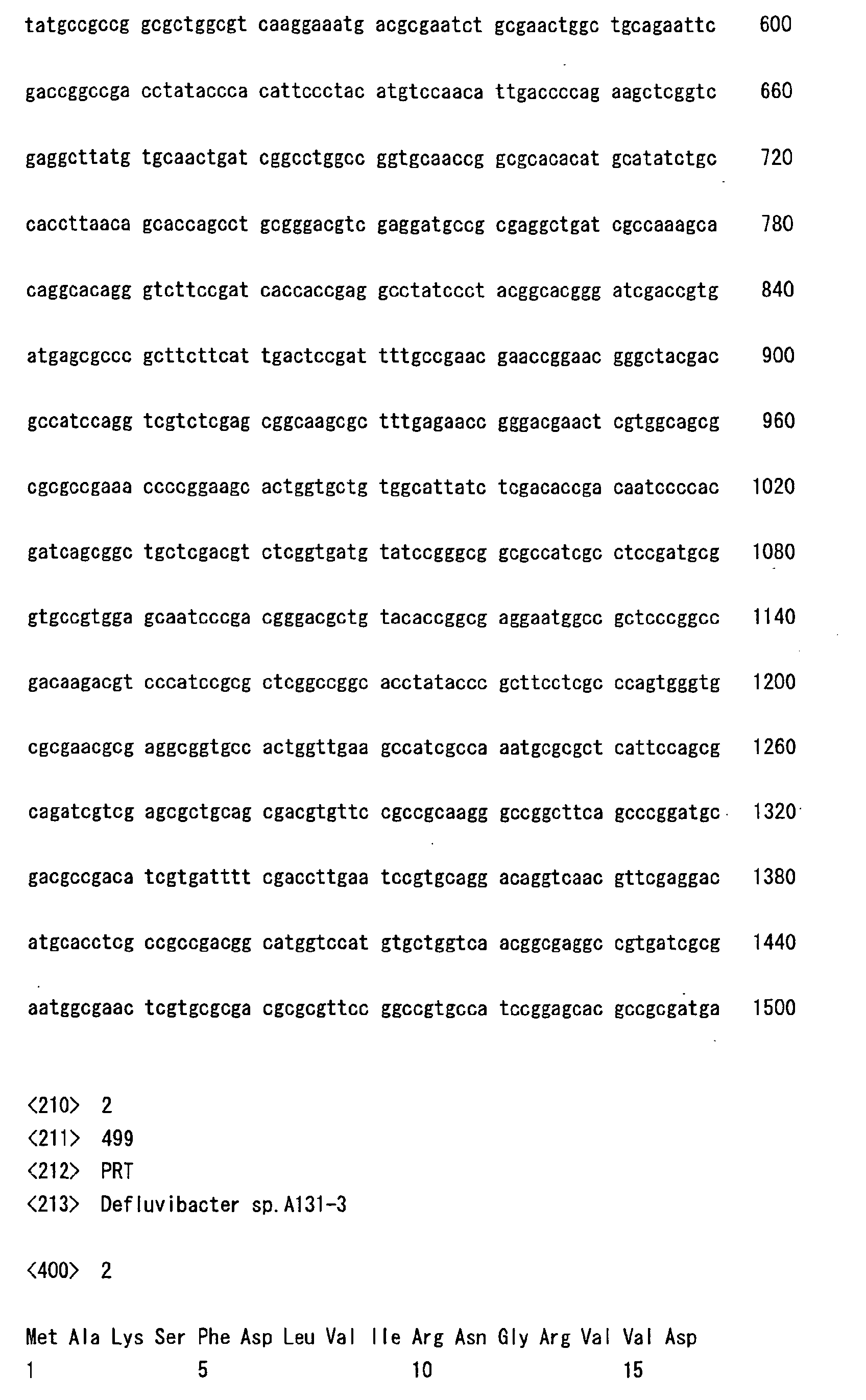
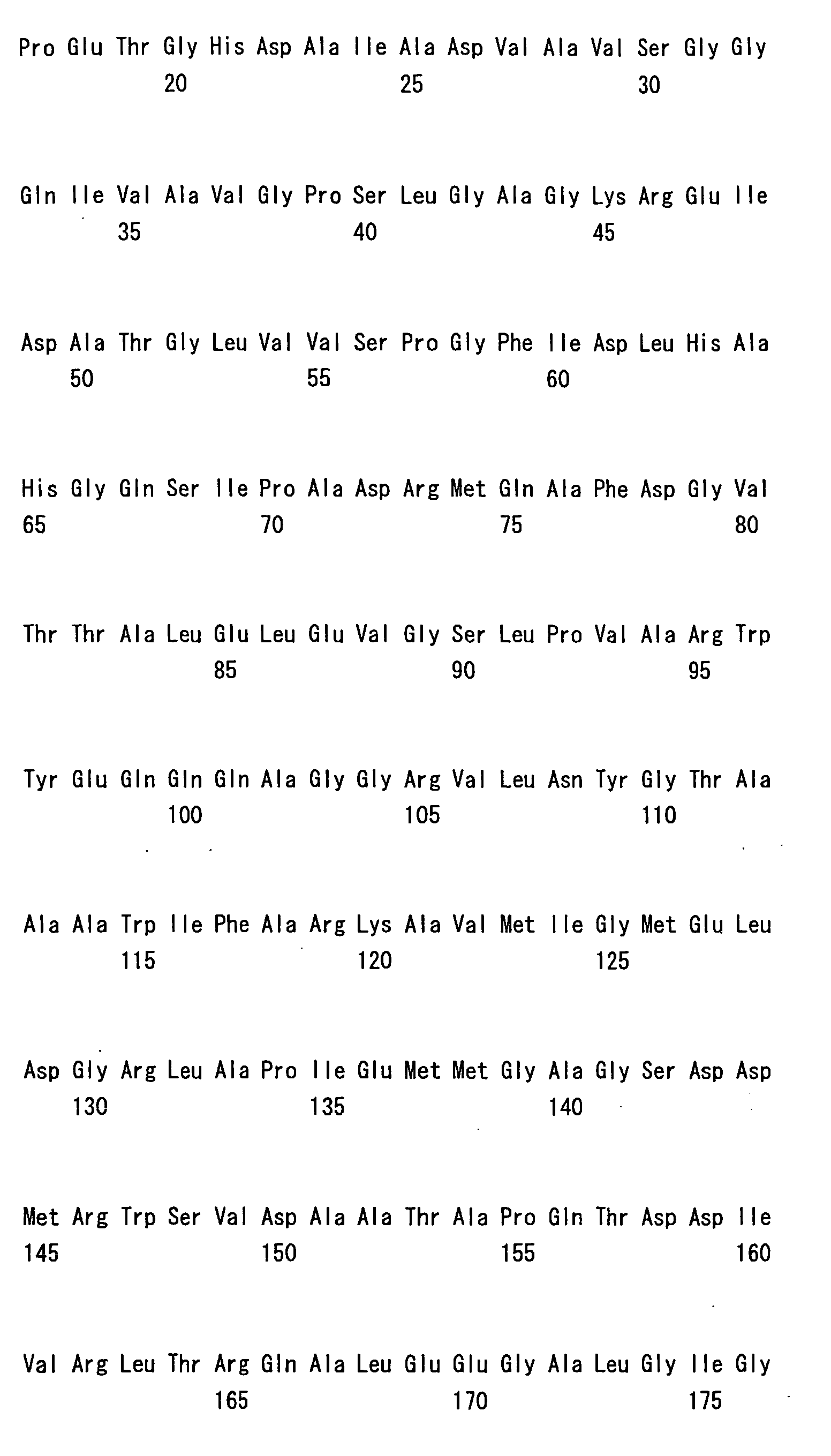
- the base sequence of the D-aminoacylase gene of the present invention was then determined to be the base sequence of SEQ ID NO. 1. It was also found from this base sequence that the D-aminoacylase protein of the present invention has the amino acid sequence of SEQ ID NO.2.
- the D-aminoacylase of the present invention may comprise not only (a) a protein comprising the amino acid sequence of SEQ ID NO.2, but also (b) a protein comprising an amino acid sequence of SEQ ID NO.2 wherein substitution, deletion, or addition of one to several amino acids has occurred, and having D-aminoacylase activity.
- the amino acid sequence wherein substitution, deletion, or addition of one to several amino acids has occurred in the amino acid sequence includes an amino acid sequence which has homology of at least 80%, preferably at least 90%, and more preferably at least 95% with the amino acid sequence of the SEQ ID NO. 2.
- the D-aminoacylase gene of the present invention may be any gene as long as it codes for the protein (a) or (b), and the D-aminoacylase gene preferably comprises not only (c) a DNA comprising the base sequence defined by SEQ ID NO. 1 but also (d) a DNA which hybridizes under stringent conditions with the DNA comprising the base sequence which is complimentary to the base sequence defined by SEQ ID NO. 1, and which codes for a protein having D-aminoacylase activity.
- the typical stringent conditions include conditions wherein the hybridization takes place in 0.2x SSC containing 0.1% SDS at 50°C, or in 1x SSC containing 0.1% SDS at 60°C.
- the DNA which hybridizes under the above stringent conditions includes a DNA which has a homology of at least 80%, preferably at least 90%, and more preferably at least 95% with the base sequence defined by SEQ ID NO. 1.
- 1 U is the amount of the enzyme that catalyzes generation of 1 ⁇ mol of D-valine in 1 minute.
- the analysis was carried out by using Inertsil ODS-2 column (manufactured by GL Science Inc.) and a buffer solution containing 0.015% 1-sodium pentanesulfonate (pH 2.5) and acetonitrile in a ratio of 80 : 20 at a flow rate of 0.5 mL/minute. The detection was conducted at 230 nm. The column was analyzed at a temperature of 30°C. The enzymatic activity was evaluated in terms of the ratio between the area of the acetyl compound and the free compound, and the resolution rate was expressed as a relative activity in relation to the resolution rate of 100 in the case when no acylase was added.
- the resulting novel D-aminoacylase specifically acts on N-acetyl-D-amino acids but not on N-acetyl-L-amino acids, and therefore, it can be used for producing a D-amino acid from an N-acetyl-D-amino acid. It can also be used in the resolution, therefore, in the separation of D-amino acids from N-acetyl-D,L-amino acids.
- Separation of a D-amino acid from an L-amino acid can be accomplished by acetylating a D,L-amino acid to produce the corresponding N-acetyl-D,L-amino acid, and then adding thereto the D-aminoacylase to hydrolyze the N-acetyl-D-amino acid to produce the D-amino acid. It is to be noted that, if only an N-acetyl-D-amino acid is used, the resulting compound will solely yield a D-amino acid.
- the D-aminoacylase When D-aminoacylase is to be acted on an N-acetyl-D,L-amino acid or N-acetyl-D-amino acid, the D-aminoacylase is generally added to the aqueous solution of the substrate in an amount of 1 to 1000 U/mL, and preferably in an amount of 50 to 500 U/mL.
- the N-acetyl-D,L-amino acid or the N-acetyl-D-amino acid is preferably provided in the form of an aqueous solution of 1 to 40 % by weight (hereinafter referred to as "%"), and more preferably, in the form of a 5 to 25% aqueous solution.
- the reaction temperature is preferably 10 to 50°C, and more preferably 15 to 45°C, and the reaction is preferably conducted at a pH of 6.5 to 10.5, and more preferably at 7.5 to 10.
- the reaction time is preferably 0.2 to 10 days, and more preferably 1 to 5 days.
- the D-amino acid may be separated and recovered from the reaction solution by utilizing a known means such as concentration, isoelectric point, precipitation, treatment using an ion exchange resin, and membrane separation.
- Example 1 Isolation of Defluvibacter sp. A131-3 strain
- Soil was collected at Daiichi Pure Chemicals Co., Ltd., Iwate factory, and the collected soil was treated as described below to recover the bacterial cells.
- a small amount of the soil was added to a culture medium at pH 8.5 containing 0.2% ammonium nitrate, 0.2% potassium dihydrogen phosphate, 0.1% disodium hydrogen phosphate, 0.05% magnesium sulfate heptahydrate, and 0.2% N-acetyl-D,L-valine (an inducer), and the medium was incubated at 30°C in a test tube with shaking.
- a culture solution was plated out (inoculated) to a plate culture medium of the same composition additionally containing 2% agar, and the plate culture medium was incubated at 30°C to separate the microorganisms that had grown in the medium.
- microorganisms were again cultivated in the culture medium of the same composition in a test tube with shaking to select a microorganism which has a D-aminoacylase-producing ability different from conventional microorganisms by the following two methods.
- strains that had been selected by the chromogenic process show rapid reduction of the N-acetyl-D-valine and increase of the D-valine in an amount corresponding to the reduction of the N-acetyl-D-valine.
- the bacterial strain obtained by the above procedure as described above had bacteriological characteristics as described above, and this strain was designated as Defluvibacter sp. A131-3 strain.
- Defluvibacter sp. A131-3 strain was cultivated in 20 L of the medium at pH 8 prepared by adding 0.1% yeast extract powder D-3 (manufactured by Wako Pure Chemical Industries, Ltd., Code: 390-00531), 0.1% polypeprone (manufactured by Wako Pure Chemical Industries, Ltd., Code: 394-00115), and 0.05% sodium chloride to the culture medium used in Example 1.
- the cultivation took place in an aerated jar fermenter at 30°C agitated at 150 r/min for 27 hours. At the completion of the cultivation, turbidity (ABS 660 nm) was 1.52, and pH was 7.75.
- the bacterial cells were collected by centrifugation in a refrigerated centrifuge (manufactured by Hitachi Koki Co., Ltd.) at 4000 r/min for 60 minutes, and the collected cells were washed with 20 mmol/L Tris-HCl buffer solution (pH 8), and again centrifuged. The thus collected bacterial cells of 112 g were cryopreserved at -80°C.
- the cryopreserved bacterial cells were thawed, and suspended in 340 mL of 20 mmol/L Tris-HCl buffer solution (pH 8) which is an amount three times that of the bacterial cells.
- the suspension was ultrasonicated for 120 minutes in a low temperature chamber (4°C) by using an injection-type sonicator, and the sonicated suspension was centrifuged in a refrigerated high speed centrifuge (manufactured by Hitachi Koki Co., Ltd.) at 8000 r/min and at 4°C for 60 minutes.
- the supernatant thus obtained was used as a crude enzyme solution.
- This bacterial strain produced D-aminoacylase with no addition of N-acetyl-D,L-valine in the culture medium. However, the amount of the enzyme produced would be at least doubled by adding N-acetyl-D,L-valine to the medium.
- the crude enzyme solution was filled in a dialysis tube and dialyzed against 20 mmol/L Tris-HCl buffer solution (pH 8) containing 0.1 mol/L sodium chloride in a low temperature chamber (4°C) for one day with stirring, while replacing the buffer solution several times.
- the dialyzate was centrifuged at 8000 r/min and at 4°C for 60 minutes on a refrigerated high speed centrifuge (manufactured by Hitachi Koki Co., Ltd.) to obtain a supernatant (342 mL).
- dialyzate was purified as described below.
- a 114 mL portion of the dialyzate was introduced into TOYOPEARL SuperQ-650M column (manufactured by Toso Corporation) (4.4 cm diameter x 37.5 cm) that had been equilibrated with 20 mmol/L Tris-HCl buffer solution (pH 8) containing 0.1 mol/L sodium chloride for adsorption of the enzyme.
- the column was washed with 1500 mL of 20 mmol/L Tris-HCl buffer solution (pH 8) containing 0.1 mol/L sodium chloride, and then, enzyme was eluted with 5700 mL of 20 mmol/L Tris-HCl buffer solution (pH 8) containing 0.1 mol/L sodium chloride and 5700 mL of 20 mmol/L Tris-HCl buffer solution (pH 8) containing 0.3 mol/L sodium chloride by linear concentration gradient method.
- the eluate from the column was collected into 25 mL fractions, and each fraction was evaluated for the amount of protein (absorbance at 280 nm) and the D-aminoacylase activity (see below for the measurement of enzymatic activity) to recover the active fractions.
- the D-aminoacylase enzymatic activity of each fraction was evaluated by using the chromogenic reagent prepared by dissolving 0.61 mg of 4-aminoantipyrine (manufactured by Nacalai Tesque, Inc., Code: 01907-52), 3.22 mg of N-ethyl-N-(2-hydroxy-3-sulfopropyl)-3-methlaniline, sodium salt, dihydrate (manufactured by Dojindo Laboratories, Code: OC13), 30 units of peroxidase (manufactured by SIGMA, Code: P-6782), and 1 unit of D-amino acid oxidase (manufactured by SIGMA, Code: A-9128) in 10 mL of 0.1 mol/L phosphate buffer solution (pH 8).
- the column was washed with 350 mL of 5 mmol/L phosphate buffer solution (pH 7.2), and the enzyme was eluted with 750 mL of 5 mmol/L phosphate buffer solution (pH 7.2) and 750 mL of 200 mmol/L phosphate buffer solution (pH 7.2) by linear concentration gradient method.
- the eluate from the column was collected into 25 mL fractions, and each fraction was evaluated for the amount of protein and the D-aminoacylase activity to recover the active fractions.
- the active fractions (280 ml) obtained by hydroxyapatite chromatography using BIO-GEL HT (manufactured by BIO-RAD) were concentrated to 20 mL using Vivaflow 50 ultrafiltration membrane having a molecular weight cut-off of 10000 (manufactured by SARTORIUS K.K.).
- the concentrate thus obtained was applied to Superdex 200 pg column (manufactured by Pharmacia Biotech) (2.2 cm diameter x 66 cm) that had been equilibrated with 20 mmol/L Tris-HCl buffer solution (pH 8) containing 0.3 mol/L sodium chloride, and the same buffer solution was allowed to flow at a flow rate of 1.5 mL/minute.
- the eluate from the column was collected into 10 mL fractions, and each fraction was evaluated for the amount of protein and the D-aminoacylase activity.
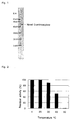
- the SDS-polyacrylamide gel electrophoresis was conducted by using PAG Mini "Daiichi" 10/20 (manufactured by Daiichi Pure Chemicals Co.,Ltd.) according to the SDS-polyacrylamide gel electrophoresis process instructed by Daiichi Pure Chemicals Co.,Ltd. 50 ⁇ L of SDS-sample treating solution (manufactured by Daiichi Pure Chemicals Co.,Ltd.) and 50 ⁇ L of the purified fractions were mixed in equal amounts, and the mixture was boiled for 5 minutes.
- the active fractions whose purity had been confirmed to be high by the specific activity (enzymatic activity in relation to unit amount of protein) and the electrophoresis were collected, and the these fractions were concentrated by Vivaflow 50 ultrafiltration membrane having a molecular weight cut-off of 10000 (manufactured by SARTORIUS K.K.), and then, by Vivapore 10/20 ultrafiltration membrane having a molecular weight cut-off of 7500 (manufactured by SARTORIUS K.K.) to obtain 28 mL of a purified enzyme.
- the enzyme purification yield by this purification method was as shown in Table 1.
- Stage Liquid volume (mL) Total protein content (mg) Total activity (KU) Specific activity (U/mg) Activity yield (%) Sonicated and centrifuged supernatant 114 4605 2707 588 100 SuperQ-650M 968 47 1334 28300 49 BIO-GEL HT 280 27 1125 41600 42 Superdex 200 346 25 1003 40100 37 Conc. solution 28 23 953 41400 35
- the D-aminoacylase from the Defluvibacter sp. A131-3 strain obtained in Example 3 was evaluated for its enzymological characteristics by the methods as described below.
- the D-aminoacylase purified and isolated from the Defluvibacter sp. A131-3 was analyzed by the method known in the art for the N-terminal and the internal amino acid sequences to thereby obtain the N-terminal sequence (KSFDLVIRNGRVVDP) and the internal sequences (AQAQGLXITXEA and TALIPAQIVER).
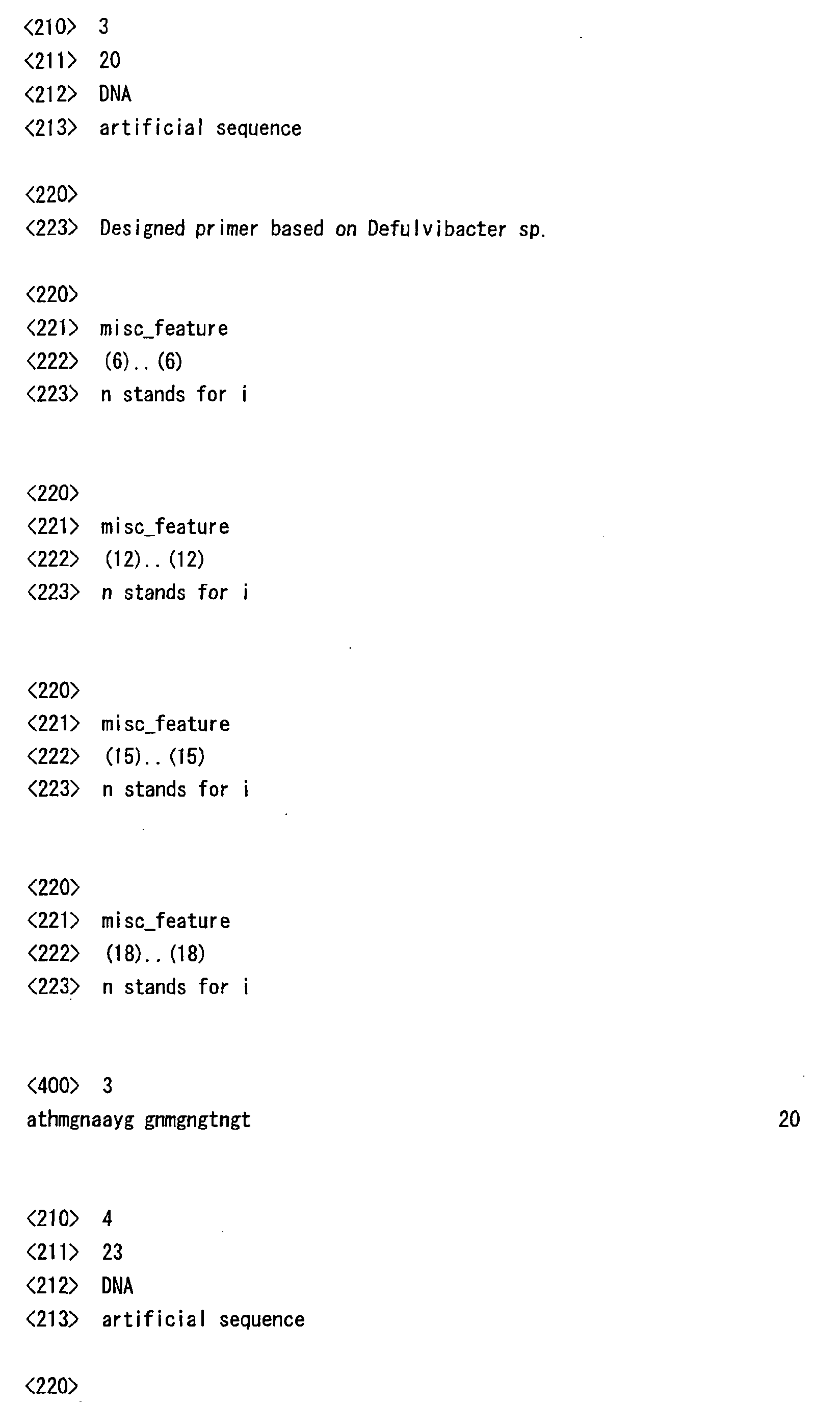
- the primer mix of the N-terminal and the internal sequences including all DNA sequences that are expectable from these amino acids namely, two primers of ATHMGIAAYGGIMGIGTIGT (SEQ ID NO. 3) and CKYTCIACDATYTGIGCIGGDAT (SEQ ID NO. 4) were prepared. It is to be noted that "I" represents inosine.
- genomic DNA was extracted from bacterial cell of the cultivated Defluvibacter sp. A131-3 by a known method.
- the primer mix obtained from the purified enzyme and the genomic DNA obtained from the cultivated bacterial cell were used for the PCR using Hot Star Taq (manufactured by QIAGEN).
- the reaction solution (10 ⁇ L) used in the PCR contained in a buffer solution supplied by a manufacturer, 200 ⁇ M dNTP, 50 pmol of each primer, 100 ng of the genomic DNA of the Defluvibacter sp. A131-3, and 1 unit of DNA polymerase.
- the reaction was conducted by denaturing at 95°C for 15 minutes, and then repeating 30 cycles of 1) denaturing at 95°C for 30 seconds; 2) annealing at 40°C for 30 seconds; and 3) synthesis at 72°C for 90 seconds.
- the reaction included denaturing at 95°C for 15 minutes followed by 30 cycles of 1) denaturing at 94°C for 30 seconds; 2) annealing at 60°C for 30 seconds; and 3) synthesis at 72°C for 4 minutes.
- the resulting PCR product was cloned using pCR2.1topo to determine the entire base sequence (entire gene).
- primers of exterior of the N-terminal and C-terminal namely, ATGGCCAAAAGCTTCGATCTC (SEQ ID NO. 7) and TCATCGCGGCGTGCTCCGGATG (SEQ ID NO. 8) were prepared, and a PCR was conducted by using Hot Star Taq (manufactured by QIAGEN) and KOD plus (manufactured by TOYUBO) polymerases.
- the reaction of the Hot Star Taq was conducted by denaturing at 95°C for 15 minutes, and then, repeating 30 cycles of 1) denaturing at 94°C for 30 seconds; 2) annealing at 58°C for 30 seconds; and 3) synthesis at 72°C for 2 minutes; and the reaction of the KOD plus was conducted by denaturing at 95°C for 2 minutes, and then repeating 30 cycles of 1) denaturing at 94°C for 30 seconds; 2) annealing at 58°C for 30 seconds; and 3) synthesis at 68°C for 2 minutes.
- the resulting PCR product was cloned by using pCR2.1topo, and the base sequences of the clones were compared to thereby confirm the base sequence of the D-aminoacylase gene of the present invention (SEQ ID NO. 1) and the amino acid sequence of the D-aminoacylase of the present invention (SEQ ID NO. 2).
- D-aminoacylase from Defluvibacter sp. A131-3 strain was added with in an amount of 200 U per 1 ml of the aqueous solution of the substrate, and the reaction was allowed to proceed at 40°C for 3 days.
- the rate of D-valine production by resolution from the N-acetyl-D,L-valine was measured by the HPLC method described in Example 1(2). The results are shown in FIG. 6.
- N-acetyl-L-valine was not decomposed at all, indicating the practical utility of the enzyme of the present invention in the production of D-amino acids.
Landscapes
- Life Sciences & Earth Sciences (AREA)
- Chemical & Material Sciences (AREA)
- Health & Medical Sciences (AREA)
- Genetics & Genomics (AREA)
- Organic Chemistry (AREA)
- Zoology (AREA)
- Engineering & Computer Science (AREA)
- Bioinformatics & Cheminformatics (AREA)
- Wood Science & Technology (AREA)
- Microbiology (AREA)
- Biotechnology (AREA)
- Biomedical Technology (AREA)
- Molecular Biology (AREA)
- Biochemistry (AREA)
- General Engineering & Computer Science (AREA)
- General Health & Medical Sciences (AREA)
- Medicinal Chemistry (AREA)
- Enzymes And Modification Thereof (AREA)
- Preparation Of Compounds By Using Micro-Organisms (AREA)
- Micro-Organisms Or Cultivation Processes Thereof (AREA)
Abstract
Description
Defluvibacter has the ability of producing D-aminoacylase. It is to be noted that the bacterial strain found in the present invention was designated as Defluvibacter sp. A131-3, and deposited on September 26, 2002 to The National Institute of Advanced Industrial Science and Technology (an Independent Administrative Institution), International Patent Organism Depositary (Chuo-6, 1-1, Higashi 1-chome, Tsukuba-shi, Ibaraki, Japan (Post code, 305-8566)) as FERM BP-08563.
| Stage | Liquid volume (mL) | Total protein content (mg) | Total activity (KU) | Specific activity (U/mg) | Activity yield (%) |
| Sonicated and centrifuged supernatant | 114 | 4605 | 2707 | 588 | 100 |
| SuperQ-650M | 968 | 47 | 1334 | 28300 | 49 |
| BIO-GEL HT | 280 | 27 | 1125 | 41600 | 42 |
| Superdex 200 | 346 | 25 | 1003 | 40100 | 37 |
| Conc. solution | 28 | 23 | 953 | 41400 | 35 |
| Substrate | Relative activity (% in relation to Met) | Relative activity (% in relation to Val) |
| N-Ac-D-Val | 762 | 100 |
| N-Ac-D- | 100 | 13 |
| N-Ac-D-Trp | 1.1 | 0.2 |
| N-Ac-D-Leu | 555 | 73 |
| N-Ac-D-Phe | 37 | 4.8 |
| N-Ac-D-Tyr | 8.4 | 1.1 |
| N-Ac-D- | 0 | 0 |
| N-Ac-L- | 0 | 0 |
| N-Ac-L- | 0 | 0 |
| N-Ac-L- | 0 | 0 |
| N-Ac-L- | 0 | 0 |
| N-Ac-L- | 0 | 0 |
| N-Ac-L- | 0 | 0 |
| N-Ac-L- | 0 | 0 |
| Metal ion, 1.0 mmol/L | Relative activity (%) |
| Not added | 100 |
| Calcium chloride | 99 |
| Iron (III) chloride | 88 |
| Sodium chloride | 99 |
| Cobalt (II) chloride | 27 |
| Potassium chloride | 92 |
| | 20 |
| | 90 |
| Copper (II) | 90 |
| Manganese chloride | 48 |
| Zinc chloride | 31 |
| Sodium molybdate | 105 |
| Inhibitor, 5 mmol/L | Relative activity (%) |
| Ethylenediamine tetraacetic acid | 112 |
| 2-mercaptoethanol | 47 |
| N-ethylmaleimide | 100 |
| O-phenanthroline | 53 |
| L-cysteine | 78 |
| Iodacetamide | 107 |
| Dithiothreitol | 38 |





Claims (9)
- A D-aminoacylase having the following enzymological properties:(a) action: acting on a N-acetyl-D-amino acid to produce a D-amino acid;(b) molecular weight: about 55,000 daltons when determined by SDS-polyacrylamide gel electrophoresis;(c) isoelectric point: an isoelectric point of 5.3 when measured by two-dimensional electrophoresis for denatured system;(d) substrate specificity: acting on N-acetyl-D-amino acids, and in particular on N-acetyl-D-valine, but not on N-acetyl-L-amino acids;
acting on substrates such as N-acetyl-D-valine, N-acetyl-D-leucine, N-acetyl-D-methionine, N-acetyl-D-tryptophan, N-acetyl-D-phenylalanine, and N-acetyl-D-tyrosine, but not on N-acetyl-L-valine, N-acetyl-L-leucine, N-acetyl-L-methionine, N-acetyl-L-tryptophan, N-acetyl-L-phenylalanine, and N-acetyl-L-tyrosine;(e) thermostability: relatively stable at 4°C to 30°C when heated at pH 8.5 for 1 day;(f) optimal temperature: optimally active at 37°C when reacted at pH 8 for 30 minutes;(g) pH stability: stable near pH 9, and relatively stable near pH 7 to 10 when heated at a temperature of 30°C for 1 day;(h) optimal pH: optimally active near pH 8 to 8.5 when reacted at 37°C;(i) effects of metal ions: activity is inhibited by Mn2+, Co2+, Ni2+, and Zn2+ each at 1 mmol/L; and(j) effects of inhibitors: activity is inhibited by dithiothreitol, 2-mercaptoethanol, o-phenanthroline, and L-cysteine each at 5 mmol/L. - A D-aminoacylase comprising a protein defined in either one of (a) and (b):(a) a protein comprising the amino acid sequence of SEQ ID NO.2; and(b) a protein comprising an amino acid sequence wherein substitution, deletion, or addition of one to several amino acids has occurred in the amino acid sequence of SEQ ID NO.2, and having D-aminoacylase activity.
- A gene coding a D-aminoacylase comprising a protein defined in either one of (a) and (b):(a) a protein comprising the amino acid sequence of SEQ ID NO.2; and(b) a protein comprising an amino acid sequence wherein substitution, deletion, or addition of one to several amino acids has occurred in the amino acid sequence of SEQ ID NO.2, said protein having D-aminoacylase activity.
- The gene according to claim 3 comprising a DNA defined in either one of (c) and (d):(c) a DNA comprising the base sequence of SEQ ID NO. 1; and(d) a DNA which hybridizes under stringent conditions with the DNA comprising the base sequence which is complimentary to the base sequence of SEQ ID NO. 1, and which codes for a protein having D-aminoacylase activity.
- A microorganism of genus Defluvibacter which produces a D-aminoacylase that produces a D-amino acid from a N-acetyl-D,L-amino acid or a N-acetyl-D-amino acid.
- The microorganism according to claim 5 which has been designated Defluvibacter sp. A131-3 and deposited as FERM BP-08563.
- The microorganism according to claim 5 or 6 which produces the D-aminoacylase of claim 1 or 2.
- A method for producing the D-aminoacylase of claim 1 or 2 wherein the microorganism of any one of claims 5 to 7 is cultivated, and the D-aminoacylase is recovered from the culture.
- A method for producing a D-amino acid wherein the D-aminoacylase of claim 1 or 2 is acted on a N-acetyl-D,L-amino acid or a N-acetyl-D-amino acid.
Applications Claiming Priority (5)
| Application Number | Priority Date | Filing Date | Title |
|---|---|---|---|
| JP2002366389 | 2002-12-18 | ||
| JP2002366389 | 2002-12-18 | ||
| JP2003351560 | 2003-10-10 | ||
| JP2003351560 | 2003-10-10 | ||
| PCT/JP2003/016182 WO2004055179A1 (en) | 2002-12-18 | 2003-12-17 | D-aminoacylase |
Publications (2)
| Publication Number | Publication Date |
|---|---|
| EP1574568A1 true EP1574568A1 (en) | 2005-09-14 |
| EP1574568A4 EP1574568A4 (en) | 2006-10-11 |
Family
ID=32599278
Family Applications (1)
| Application Number | Title | Priority Date | Filing Date |
|---|---|---|---|
| EP03780848A Withdrawn EP1574568A4 (en) | 2002-12-18 | 2003-12-17 | D-AMINOACYLASE |
Country Status (5)
| Country | Link |
|---|---|
| US (4) | US20060172375A1 (en) |
| EP (1) | EP1574568A4 (en) |
| JP (1) | JP4489598B2 (en) |
| AU (1) | AU2003289400A1 (en) |
| WO (1) | WO2004055179A1 (en) |
Families Citing this family (4)
| Publication number | Priority date | Publication date | Assignee | Title |
|---|---|---|---|---|
| JP4513967B2 (en) * | 2005-03-17 | 2010-07-28 | 東洋紡績株式会社 | Method for improving the activity of D-aminoacylase |
| JP2008061642A (en) * | 2006-08-10 | 2008-03-21 | Toyobo Co Ltd | Method for producing D-amino acid |
| JP5147347B2 (en) * | 2007-09-28 | 2013-02-20 | 旭化学工業株式会社 | Method for producing D-amino acid by D-aminoacylase |
| CN116926139A (en) * | 2022-04-12 | 2023-10-24 | 元素驱动(杭州)生物科技有限公司 | A kind of preparation method of N-acetyl-D-amino acid, D-amino acid, D-amino acid derivatives |
Family Cites Families (7)
| Publication number | Priority date | Publication date | Assignee | Title |
|---|---|---|---|---|
| JP4063400B2 (en) * | 1997-07-31 | 2008-03-19 | ダイセル化学工業株式会社 | D-aminoacylase |
| JPH11318442A (en) * | 1998-03-17 | 1999-11-24 | Daicel Chem Ind Ltd | D-aminoacylase |
| JP2000041684A (en) * | 1998-07-29 | 2000-02-15 | Daicel Chem Ind Ltd | Novel D-aminoacylase, method for producing the same, and method for producing D-amino acid using the D-aminoacylase |
| JP4327301B2 (en) * | 1999-06-17 | 2009-09-09 | 天野エンザイム株式会社 | Transformed microorganism and method for producing D-aminoacylase |
| JP4526157B2 (en) * | 2000-01-27 | 2010-08-18 | ダイセル化学工業株式会社 | D-aminoacylase and gene encoding the same |
| JP4502295B2 (en) * | 2000-08-02 | 2010-07-14 | ダイセル化学工業株式会社 | Thermostable D-aminoacylase |
| KR20020087948A (en) * | 2001-02-01 | 2002-11-23 | 미쯔이가가꾸가부시끼가이샤 | DNA Encoding Novel D-Aminoacylase and Process for Producing D-Amino Acid by Using the Same |
-
2003
- 2003-12-17 JP JP2004560651A patent/JP4489598B2/en not_active Expired - Fee Related
- 2003-12-17 AU AU2003289400A patent/AU2003289400A1/en not_active Abandoned
- 2003-12-17 WO PCT/JP2003/016182 patent/WO2004055179A1/en not_active Ceased
- 2003-12-17 US US10/539,281 patent/US20060172375A1/en not_active Abandoned
- 2003-12-17 EP EP03780848A patent/EP1574568A4/en not_active Withdrawn
-
2007
- 2007-01-25 US US11/627,256 patent/US20080096244A1/en not_active Abandoned
-
2009
- 2009-03-04 US US12/397,879 patent/US20090215118A1/en not_active Abandoned
-
2012
- 2012-01-06 US US13/345,399 patent/US20120149071A1/en not_active Abandoned
Also Published As
| Publication number | Publication date |
|---|---|
| AU2003289400A1 (en) | 2004-07-09 |
| WO2004055179A1 (en) | 2004-07-01 |
| US20090215118A1 (en) | 2009-08-27 |
| EP1574568A4 (en) | 2006-10-11 |
| JP4489598B2 (en) | 2010-06-23 |
| US20060172375A1 (en) | 2006-08-03 |
| US20120149071A1 (en) | 2012-06-14 |
| US20080096244A1 (en) | 2008-04-24 |
| JPWO2004055179A1 (en) | 2006-04-20 |
Similar Documents
| Publication | Publication Date | Title |
|---|---|---|
| JP6048850B2 (en) | D-succinylase and method for producing D-amino acid using the same | |
| US20120149071A1 (en) | D-aminoacylase | |
| JP4501689B2 (en) | NOVEL ENZYME FOR PRODUCING PEPTIDE, MICROORGANISM PRODUCING THE SAME, AND METHOD FOR PRODUCING DIPEPTIDE USING THEM | |
| JPH0329399B2 (en) | ||
| CN101586086B (en) | Organic solvent-resistant protease and strain produced by same | |
| JPS6126357B2 (en) | ||
| US7091017B2 (en) | Fructosyl amino acid oxidase | |
| Kumagai et al. | A new D-aminoacylase from Defluvibacter sp. A 131-3 | |
| Liu et al. | Purification, characterization, and primary structure of a novel N-acyl-D-amino acid amidohydrolase from Microbacterium natoriense TNJL143-2 | |
| Genda et al. | Purification and characterization of malate dehydrogenase from Corynebacterium glutamicum | |
| US8546113B2 (en) | Hydrogen peroxide-forming NADH oxidase and DNA encoding the same | |
| US6316242B1 (en) | Method for producing nitrile hydratase | |
| Wani Lako et al. | Cloning, expression and characterization of thermostable YdaP from Bacillus licheniformis 9A | |
| JPH0783711B2 (en) | Novel method for producing D-aminoacylase | |
| US6902915B2 (en) | Heat-stable D-aminoacylase | |
| US7618800B2 (en) | Glycerol kinase, which has high resistance against preservative | |
| JP2023010659A (en) | Composition containing L-glutamate oxidase | |
| JPH10248572A (en) | Modified sarcosine oxidase and uses thereof | |
| JPH0428353B2 (en) | ||
| JP2000004879A (en) | Stable 6-phosphogluconolactonase and its production | |
| JPS63207385A (en) | D-selenocystine decomposition enzyme and production thereof | |
| JP2009055915A (en) | Stabilized sarcosine oxidase | |
| JP2009022304A (en) | Stabilized sarcosine oxidase | |
| JP2009022303A (en) | Stabilized sarcosine oxidase | |
| JP2009050274A (en) | Stabilized sarcosine oxidase |
Legal Events
| Date | Code | Title | Description |
|---|---|---|---|
| PUAI | Public reference made under article 153(3) epc to a published international application that has entered the european phase |
Free format text: ORIGINAL CODE: 0009012 |
|
| 17P | Request for examination filed |
Effective date: 20050615 |
|
| AK | Designated contracting states |
Kind code of ref document: A1 Designated state(s): AT BE BG CH CY CZ DE DK EE ES FI FR GB GR HU IE IT LI LU MC NL PT RO SE SI SK TR |
|
| AX | Request for extension of the european patent |
Extension state: AL LT LV MK |
|
| DAX | Request for extension of the european patent (deleted) | ||
| A4 | Supplementary search report drawn up and despatched |
Effective date: 20060908 |
|
| 17Q | First examination report despatched |
Effective date: 20061205 |
|
| GRAP | Despatch of communication of intention to grant a patent |
Free format text: ORIGINAL CODE: EPIDOSNIGR1 |
|
| RAP1 | Party data changed (applicant data changed or rights of an application transferred) |
Owner name: SEKISUI MEDICAL CO., LTD. Owner name: ISOBE, KIMIYASU |
|
| STAA | Information on the status of an ep patent application or granted ep patent |
Free format text: STATUS: THE APPLICATION IS DEEMED TO BE WITHDRAWN |
|
| 18D | Application deemed to be withdrawn |
Effective date: 20130604 |