EP1574541A1 - Polymer, bioabsorbable material and film for preventing tissue fusion - Google Patents
Polymer, bioabsorbable material and film for preventing tissue fusion Download PDFInfo
- Publication number
- EP1574541A1 EP1574541A1 EP02788820A EP02788820A EP1574541A1 EP 1574541 A1 EP1574541 A1 EP 1574541A1 EP 02788820 A EP02788820 A EP 02788820A EP 02788820 A EP02788820 A EP 02788820A EP 1574541 A1 EP1574541 A1 EP 1574541A1
- Authority
- EP
- European Patent Office
- Prior art keywords
- polymer
- amino acid
- group
- segment
- modified
- Prior art date
- Legal status (The legal status is an assumption and is not a legal conclusion. Google has not performed a legal analysis and makes no representation as to the accuracy of the status listed.)
- Granted
Links
- 229920000642 polymer Polymers 0.000 title claims abstract description 113
- 239000000463 material Substances 0.000 title claims description 26
- 230000004927 fusion Effects 0.000 title 1
- 125000000539 amino acid group Chemical group 0.000 claims abstract description 36
- 150000001413 amino acids Chemical class 0.000 claims abstract description 33
- CKLJMWTZIZZHCS-REOHCLBHSA-N L-aspartic acid Chemical compound OC(=O)[C@@H](N)CC(O)=O CKLJMWTZIZZHCS-REOHCLBHSA-N 0.000 claims description 30
- 229940024606 amino acid Drugs 0.000 claims description 28
- 229920001223 polyethylene glycol Polymers 0.000 claims description 21
- 125000006239 protecting group Chemical group 0.000 claims description 12
- 125000000524 functional group Chemical group 0.000 claims description 11
- WHUUTDBJXJRKMK-VKHMYHEASA-N L-glutamic acid Chemical compound OC(=O)[C@@H](N)CCC(O)=O WHUUTDBJXJRKMK-VKHMYHEASA-N 0.000 claims description 9
- 125000004432 carbon atom Chemical group C* 0.000 claims description 6
- -1 o-nitrophenylsulfenyl groups Chemical group 0.000 claims description 6
- 239000002994 raw material Substances 0.000 claims description 6
- 239000002202 Polyethylene glycol Substances 0.000 claims description 4
- 229960005261 aspartic acid Drugs 0.000 claims description 4
- 125000001797 benzyl group Chemical group [H]C1=C([H])C([H])=C(C([H])=C1[H])C([H])([H])* 0.000 claims description 4
- 229960002989 glutamic acid Drugs 0.000 claims description 4
- VGALFAWDSNRXJK-VIFPVBQESA-N L-aspartic acid beta-benzyl ester Chemical compound OC(=O)[C@@H](N)CC(=O)OCC1=CC=CC=C1 VGALFAWDSNRXJK-VIFPVBQESA-N 0.000 claims description 2
- 125000002777 acetyl group Chemical group [H]C([H])([H])C(*)=O 0.000 claims description 2
- 125000002723 alicyclic group Chemical group 0.000 claims description 2
- 125000001931 aliphatic group Chemical group 0.000 claims description 2
- 125000001584 benzyloxycarbonyl group Chemical group C(=O)(OCC1=CC=CC=C1)* 0.000 claims description 2
- 125000001495 ethyl group Chemical group [H]C([H])([H])C([H])([H])* 0.000 claims description 2
- 125000001449 isopropyl group Chemical group [H]C([H])([H])C([H])(*)C([H])([H])[H] 0.000 claims description 2
- 125000002496 methyl group Chemical group [H]C([H])([H])* 0.000 claims description 2
- 125000004108 n-butyl group Chemical group [H]C([H])([H])C([H])([H])C([H])([H])C([H])([H])* 0.000 claims description 2
- UYWQUFXKFGHYNT-UHFFFAOYSA-N phenylmethyl ester of formic acid Natural products O=COCC1=CC=CC=C1 UYWQUFXKFGHYNT-UHFFFAOYSA-N 0.000 claims description 2
- 125000001501 propionyl group Chemical group O=C([*])C([H])([H])C([H])([H])[H] 0.000 claims description 2
- 125000001436 propyl group Chemical group [H]C([*])([H])C([H])([H])C([H])([H])[H] 0.000 claims description 2
- 125000002914 sec-butyl group Chemical group [H]C([H])([H])C([H])([H])C([H])(*)C([H])([H])[H] 0.000 claims description 2
- 125000000999 tert-butyl group Chemical group [H]C([H])([H])C(*)(C([H])([H])[H])C([H])([H])[H] 0.000 claims description 2
- BGGHCRNCRWQABU-JTQLQIEISA-N (2s)-2-amino-5-oxo-5-phenylmethoxypentanoic acid Chemical compound OC(=O)[C@@H](N)CCC(=O)OCC1=CC=CC=C1 BGGHCRNCRWQABU-JTQLQIEISA-N 0.000 claims 1
- CKLJMWTZIZZHCS-UHFFFAOYSA-N D-OH-Asp Natural products OC(=O)C(N)CC(O)=O CKLJMWTZIZZHCS-UHFFFAOYSA-N 0.000 claims 1
- CKLJMWTZIZZHCS-UWTATZPHSA-N L-Aspartic acid Natural products OC(=O)[C@H](N)CC(O)=O CKLJMWTZIZZHCS-UWTATZPHSA-N 0.000 claims 1
- 238000012360 testing method Methods 0.000 description 29
- 210000001519 tissue Anatomy 0.000 description 26
- 235000001014 amino acid Nutrition 0.000 description 23
- 239000011734 sodium Substances 0.000 description 19
- HEMHJVSKTPXQMS-UHFFFAOYSA-M Sodium hydroxide Chemical compound [OH-].[Na+] HEMHJVSKTPXQMS-UHFFFAOYSA-M 0.000 description 18
- 238000005160 1H NMR spectroscopy Methods 0.000 description 9
- YMWUJEATGCHHMB-UHFFFAOYSA-N Dichloromethane Chemical compound ClCCl YMWUJEATGCHHMB-UHFFFAOYSA-N 0.000 description 9
- 238000005259 measurement Methods 0.000 description 9
- 230000000052 comparative effect Effects 0.000 description 8
- WHUUTDBJXJRKMK-UHFFFAOYSA-N Glutamic acid Natural products OC(=O)C(N)CCC(O)=O WHUUTDBJXJRKMK-UHFFFAOYSA-N 0.000 description 7
- ZMXDDKWLCZADIW-UHFFFAOYSA-N N,N-Dimethylformamide Chemical compound CN(C)C=O ZMXDDKWLCZADIW-UHFFFAOYSA-N 0.000 description 7
- 210000000683 abdominal cavity Anatomy 0.000 description 7
- 229920001400 block copolymer Polymers 0.000 description 7
- 235000010948 carboxy methyl cellulose Nutrition 0.000 description 7
- 229920002134 Carboxymethyl cellulose Polymers 0.000 description 6
- 230000003187 abdominal effect Effects 0.000 description 6
- 238000000034 method Methods 0.000 description 6
- 235000011121 sodium hydroxide Nutrition 0.000 description 6
- IAZDPXIOMUYVGZ-UHFFFAOYSA-N Dimethylsulphoxide Chemical compound CS(C)=O IAZDPXIOMUYVGZ-UHFFFAOYSA-N 0.000 description 5
- 239000003513 alkali Substances 0.000 description 5
- 125000003277 amino group Chemical group 0.000 description 5
- 229940083608 sodium hydroxide Drugs 0.000 description 5
- 239000002904 solvent Substances 0.000 description 5
- WCDDVEOXEIYWFB-VXORFPGASA-N (2s,3s,4r,5r,6r)-3-[(2s,3r,5s,6r)-3-acetamido-5-hydroxy-6-(hydroxymethyl)oxan-2-yl]oxy-4,5,6-trihydroxyoxane-2-carboxylic acid Chemical compound CC(=O)N[C@@H]1C[C@H](O)[C@@H](CO)O[C@H]1O[C@@H]1[C@@H](C(O)=O)O[C@@H](O)[C@H](O)[C@H]1O WCDDVEOXEIYWFB-VXORFPGASA-N 0.000 description 4
- HEDRZPFGACZZDS-UHFFFAOYSA-N Chloroform Chemical compound ClC(Cl)Cl HEDRZPFGACZZDS-UHFFFAOYSA-N 0.000 description 4
- 241000700159 Rattus Species 0.000 description 4
- 229940014041 hyaluronate Drugs 0.000 description 4
- 239000000017 hydrogel Substances 0.000 description 4
- 230000007062 hydrolysis Effects 0.000 description 4
- 238000006460 hydrolysis reaction Methods 0.000 description 4
- 238000002360 preparation method Methods 0.000 description 4
- 125000002924 primary amino group Chemical group [H]N([H])* 0.000 description 4
- 239000007787 solid Substances 0.000 description 4
- 238000009864 tensile test Methods 0.000 description 4
- 241000699670 Mus sp. Species 0.000 description 3
- 208000031737 Tissue Adhesions Diseases 0.000 description 3
- 235000003704 aspartic acid Nutrition 0.000 description 3
- OQFSQFPPLPISGP-UHFFFAOYSA-N beta-carboxyaspartic acid Natural products OC(=O)C(N)C(C(O)=O)C(O)=O OQFSQFPPLPISGP-UHFFFAOYSA-N 0.000 description 3
- 125000003178 carboxy group Chemical group [H]OC(*)=O 0.000 description 3
- 239000001768 carboxy methyl cellulose Substances 0.000 description 3
- 239000008112 carboxymethyl-cellulose Substances 0.000 description 3
- 238000009903 catalytic hydrogenation reaction Methods 0.000 description 3
- 238000006243 chemical reaction Methods 0.000 description 3
- 229920001577 copolymer Polymers 0.000 description 3
- 235000013922 glutamic acid Nutrition 0.000 description 3
- 239000004220 glutamic acid Substances 0.000 description 3
- 239000000203 mixture Substances 0.000 description 3
- 229920001308 poly(aminoacid) Polymers 0.000 description 3
- 229920000835 poly(gamma-benzyl-L-glutamate) polymer Polymers 0.000 description 3
- 239000002861 polymer material Substances 0.000 description 3
- 230000002980 postoperative effect Effects 0.000 description 3
- 210000004872 soft tissue Anatomy 0.000 description 3
- XLYOFNOQVPJJNP-UHFFFAOYSA-N water Substances O XLYOFNOQVPJJNP-UHFFFAOYSA-N 0.000 description 3
- KIUKXJAPPMFGSW-DNGZLQJQSA-N (2S,3S,4S,5R,6R)-6-[(2S,3R,4R,5S,6R)-3-Acetamido-2-[(2S,3S,4R,5R,6R)-6-[(2R,3R,4R,5S,6R)-3-acetamido-2,5-dihydroxy-6-(hydroxymethyl)oxan-4-yl]oxy-2-carboxy-4,5-dihydroxyoxan-3-yl]oxy-5-hydroxy-6-(hydroxymethyl)oxan-4-yl]oxy-3,4,5-trihydroxyoxane-2-carboxylic acid Chemical compound CC(=O)N[C@H]1[C@H](O)O[C@H](CO)[C@@H](O)[C@@H]1O[C@H]1[C@H](O)[C@@H](O)[C@H](O[C@H]2[C@@H]([C@@H](O[C@H]3[C@@H]([C@@H](O)[C@H](O)[C@H](O3)C(O)=O)O)[C@H](O)[C@@H](CO)O2)NC(C)=O)[C@@H](C(O)=O)O1 KIUKXJAPPMFGSW-DNGZLQJQSA-N 0.000 description 2
- 102000008186 Collagen Human genes 0.000 description 2
- 108010035532 Collagen Proteins 0.000 description 2
- ZAFNJMIOTHYJRJ-UHFFFAOYSA-N Diisopropyl ether Chemical compound CC(C)OC(C)C ZAFNJMIOTHYJRJ-UHFFFAOYSA-N 0.000 description 2
- IAZDPXIOMUYVGZ-WFGJKAKNSA-N Dimethyl sulfoxide Chemical compound [2H]C([2H])([2H])S(=O)C([2H])([2H])[2H] IAZDPXIOMUYVGZ-WFGJKAKNSA-N 0.000 description 2
- YGYAWVDWMABLBF-UHFFFAOYSA-N Phosgene Chemical compound ClC(Cl)=O YGYAWVDWMABLBF-UHFFFAOYSA-N 0.000 description 2
- 229920000954 Polyglycolide Polymers 0.000 description 2
- 239000002253 acid Substances 0.000 description 2
- 238000012644 addition polymerization Methods 0.000 description 2
- 125000003118 aryl group Chemical group 0.000 description 2
- 231100000209 biodegradability test Toxicity 0.000 description 2
- 239000012620 biological material Substances 0.000 description 2
- 230000015572 biosynthetic process Effects 0.000 description 2
- 238000005266 casting Methods 0.000 description 2
- 229920001436 collagen Polymers 0.000 description 2
- 238000007796 conventional method Methods 0.000 description 2
- 230000032050 esterification Effects 0.000 description 2
- 238000005886 esterification reaction Methods 0.000 description 2
- 229920002674 hyaluronan Polymers 0.000 description 2
- 229960003160 hyaluronic acid Drugs 0.000 description 2
- 230000002209 hydrophobic effect Effects 0.000 description 2
- 229910052751 metal Inorganic materials 0.000 description 2
- 239000002184 metal Substances 0.000 description 2
- 238000002156 mixing Methods 0.000 description 2
- 210000004303 peritoneum Anatomy 0.000 description 2
- 229920000747 poly(lactic acid) Polymers 0.000 description 2
- 229920001610 polycaprolactone Polymers 0.000 description 2
- 239000004632 polycaprolactone Substances 0.000 description 2
- 239000004633 polyglycolic acid Substances 0.000 description 2
- 239000004626 polylactic acid Substances 0.000 description 2
- 230000002035 prolonged effect Effects 0.000 description 2
- 238000000425 proton nuclear magnetic resonance spectrum Methods 0.000 description 2
- 239000000376 reactant Substances 0.000 description 2
- 238000007142 ring opening reaction Methods 0.000 description 2
- 238000000967 suction filtration Methods 0.000 description 2
- 238000003786 synthesis reaction Methods 0.000 description 2
- 125000003396 thiol group Chemical group [H]S* 0.000 description 2
- 229920000428 triblock copolymer Polymers 0.000 description 2
- MTCFGRXMJLQNBG-REOHCLBHSA-N (2S)-2-Amino-3-hydroxypropansäure Chemical compound OC[C@H](N)C(O)=O MTCFGRXMJLQNBG-REOHCLBHSA-N 0.000 description 1
- ATCFYQUZTYQTJN-AXDSSHIGSA-N (2s)-2-amino-4-benzylpentanedioic acid Chemical compound OC(=O)[C@@H](N)CC(C(O)=O)CC1=CC=CC=C1 ATCFYQUZTYQTJN-AXDSSHIGSA-N 0.000 description 1
- DNIAPMSPPWPWGF-GSVOUGTGSA-N (R)-(-)-Propylene glycol Chemical compound C[C@@H](O)CO DNIAPMSPPWPWGF-GSVOUGTGSA-N 0.000 description 1
- RYHBNJHYFVUHQT-UHFFFAOYSA-N 1,4-Dioxane Chemical compound C1COCCO1 RYHBNJHYFVUHQT-UHFFFAOYSA-N 0.000 description 1
- 125000000022 2-aminoethyl group Chemical group [H]C([*])([H])C([H])([H])N([H])[H] 0.000 description 1
- 239000004475 Arginine Substances 0.000 description 1
- WVDDGKGOMKODPV-UHFFFAOYSA-N Benzyl alcohol Chemical compound OCC1=CC=CC=C1 WVDDGKGOMKODPV-UHFFFAOYSA-N 0.000 description 1
- 102000004190 Enzymes Human genes 0.000 description 1
- 108090000790 Enzymes Proteins 0.000 description 1
- XUJNEKJLAYXESH-REOHCLBHSA-N L-Cysteine Chemical compound SC[C@H](N)C(O)=O XUJNEKJLAYXESH-REOHCLBHSA-N 0.000 description 1
- ODKSFYDXXFIFQN-BYPYZUCNSA-P L-argininium(2+) Chemical compound NC(=[NH2+])NCCC[C@H]([NH3+])C(O)=O ODKSFYDXXFIFQN-BYPYZUCNSA-P 0.000 description 1
- HNDVDQJCIGZPNO-YFKPBYRVSA-N L-histidine Chemical compound OC(=O)[C@@H](N)CC1=CN=CN1 HNDVDQJCIGZPNO-YFKPBYRVSA-N 0.000 description 1
- KDXKERNSBIXSRK-YFKPBYRVSA-N L-lysine Chemical compound NCCCC[C@H](N)C(O)=O KDXKERNSBIXSRK-YFKPBYRVSA-N 0.000 description 1
- AYFVYJQAPQTCCC-GBXIJSLDSA-N L-threonine Chemical compound C[C@@H](O)[C@H](N)C(O)=O AYFVYJQAPQTCCC-GBXIJSLDSA-N 0.000 description 1
- OUYCCCASQSFEME-QMMMGPOBSA-N L-tyrosine Chemical compound OC(=O)[C@@H](N)CC1=CC=C(O)C=C1 OUYCCCASQSFEME-QMMMGPOBSA-N 0.000 description 1
- KDXKERNSBIXSRK-UHFFFAOYSA-N Lysine Natural products NCCCCC(N)C(O)=O KDXKERNSBIXSRK-UHFFFAOYSA-N 0.000 description 1
- 239000004472 Lysine Substances 0.000 description 1
- 241001465754 Metazoa Species 0.000 description 1
- 241000699666 Mus <mouse, genus> Species 0.000 description 1
- FXHOOIRPVKKKFG-UHFFFAOYSA-N N,N-Dimethylacetamide Chemical compound CN(C)C(C)=O FXHOOIRPVKKKFG-UHFFFAOYSA-N 0.000 description 1
- 241000700157 Rattus norvegicus Species 0.000 description 1
- MTCFGRXMJLQNBG-UHFFFAOYSA-N Serine Natural products OCC(N)C(O)=O MTCFGRXMJLQNBG-UHFFFAOYSA-N 0.000 description 1
- 229920002385 Sodium hyaluronate Polymers 0.000 description 1
- AYFVYJQAPQTCCC-UHFFFAOYSA-N Threonine Natural products CC(O)C(N)C(O)=O AYFVYJQAPQTCCC-UHFFFAOYSA-N 0.000 description 1
- 239000004473 Threonine Substances 0.000 description 1
- 230000002159 abnormal effect Effects 0.000 description 1
- DPXJVFZANSGRMM-UHFFFAOYSA-N acetic acid;2,3,4,5,6-pentahydroxyhexanal;sodium Chemical compound [Na].CC(O)=O.OCC(O)C(O)C(O)C(O)C=O DPXJVFZANSGRMM-UHFFFAOYSA-N 0.000 description 1
- 150000007933 aliphatic carboxylic acids Chemical class 0.000 description 1
- 125000004202 aminomethyl group Chemical group [H]N([H])C([H])([H])* 0.000 description 1
- 238000004458 analytical method Methods 0.000 description 1
- ODKSFYDXXFIFQN-UHFFFAOYSA-N arginine Natural products OC(=O)C(N)CCCNC(N)=N ODKSFYDXXFIFQN-UHFFFAOYSA-N 0.000 description 1
- 239000002585 base Substances 0.000 description 1
- WPYMKLBDIGXBTP-UHFFFAOYSA-N benzoic acid Chemical compound OC(=O)C1=CC=CC=C1 WPYMKLBDIGXBTP-UHFFFAOYSA-N 0.000 description 1
- 238000006065 biodegradation reaction Methods 0.000 description 1
- 239000008280 blood Substances 0.000 description 1
- 210000004369 blood Anatomy 0.000 description 1
- 210000001124 body fluid Anatomy 0.000 description 1
- 239000010839 body fluid Substances 0.000 description 1
- 150000001732 carboxylic acid derivatives Chemical class 0.000 description 1
- 238000001816 cooling Methods 0.000 description 1
- 239000002537 cosmetic Substances 0.000 description 1
- 238000005520 cutting process Methods 0.000 description 1
- XUJNEKJLAYXESH-UHFFFAOYSA-N cysteine Natural products SCC(N)C(O)=O XUJNEKJLAYXESH-UHFFFAOYSA-N 0.000 description 1
- 235000018417 cysteine Nutrition 0.000 description 1
- 238000011161 development Methods 0.000 description 1
- PXEDJBXQKAGXNJ-QTNFYWBSSA-L disodium L-glutamate Chemical compound [Na+].[Na+].[O-]C(=O)[C@@H](N)CCC([O-])=O PXEDJBXQKAGXNJ-QTNFYWBSSA-L 0.000 description 1
- 229940079593 drug Drugs 0.000 description 1
- 239000003814 drug Substances 0.000 description 1
- HNDVDQJCIGZPNO-UHFFFAOYSA-N histidine Natural products OC(=O)C(N)CC1=CN=CN1 HNDVDQJCIGZPNO-UHFFFAOYSA-N 0.000 description 1
- 238000007731 hot pressing Methods 0.000 description 1
- 125000002887 hydroxy group Chemical group [H]O* 0.000 description 1
- 210000003111 iliac vein Anatomy 0.000 description 1
- 239000011261 inert gas Substances 0.000 description 1
- 238000004519 manufacturing process Methods 0.000 description 1
- 125000001570 methylene group Chemical group [H]C([H])([*:1])[*:2] 0.000 description 1
- 235000013923 monosodium glutamate Nutrition 0.000 description 1
- 231100000956 nontoxicity Toxicity 0.000 description 1
- 125000006353 oxyethylene group Chemical group 0.000 description 1
- 108010007032 poly-beta-benzyl-aspartate Proteins 0.000 description 1
- 108700024573 poly-gamma-benzyl-L-glutamate Proteins 0.000 description 1
- 238000006116 polymerization reaction Methods 0.000 description 1
- 229920001343 polytetrafluoroethylene Polymers 0.000 description 1
- 239000004810 polytetrafluoroethylene Substances 0.000 description 1
- 238000003825 pressing Methods 0.000 description 1
- 239000004627 regenerated cellulose Substances 0.000 description 1
- 150000003839 salts Chemical class 0.000 description 1
- 229920001027 sodium carboxymethylcellulose Polymers 0.000 description 1
- 229940073490 sodium glutamate Drugs 0.000 description 1
- 229940010747 sodium hyaluronate Drugs 0.000 description 1
- WTWSHHITWMVLBX-DKWTVANSSA-M sodium;(2s)-2-aminobutanedioate;hydron Chemical compound [Na+].[O-]C(=O)[C@@H](N)CC(O)=O WTWSHHITWMVLBX-DKWTVANSSA-M 0.000 description 1
- YWIVKILSMZOHHF-QJZPQSOGSA-N sodium;(2s,3s,4s,5r,6r)-6-[(2s,3r,4r,5s,6r)-3-acetamido-2-[(2s,3s,4r,5r,6r)-6-[(2r,3r,4r,5s,6r)-3-acetamido-2,5-dihydroxy-6-(hydroxymethyl)oxan-4-yl]oxy-2-carboxy-4,5-dihydroxyoxan-3-yl]oxy-5-hydroxy-6-(hydroxymethyl)oxan-4-yl]oxy-3,4,5-trihydroxyoxane-2- Chemical compound [Na+].CC(=O)N[C@H]1[C@H](O)O[C@H](CO)[C@@H](O)[C@@H]1O[C@H]1[C@H](O)[C@@H](O)[C@H](O[C@H]2[C@@H]([C@@H](O[C@H]3[C@@H]([C@@H](O)[C@H](O)[C@H](O3)C(O)=O)O)[C@H](O)[C@@H](CO)O2)NC(C)=O)[C@@H](C(O)=O)O1 YWIVKILSMZOHHF-QJZPQSOGSA-N 0.000 description 1
- 239000000126 substance Substances 0.000 description 1
- 238000001356 surgical procedure Methods 0.000 description 1
- 230000002459 sustained effect Effects 0.000 description 1
- OUYCCCASQSFEME-UHFFFAOYSA-N tyrosine Natural products OC(=O)C(N)CC1=CC=C(O)C=C1 OUYCCCASQSFEME-UHFFFAOYSA-N 0.000 description 1
- 210000003462 vein Anatomy 0.000 description 1
Images

Classifications
-
- A—HUMAN NECESSITIES
- A61—MEDICAL OR VETERINARY SCIENCE; HYGIENE
- A61L—METHODS OR APPARATUS FOR STERILISING MATERIALS OR OBJECTS IN GENERAL; DISINFECTION, STERILISATION OR DEODORISATION OF AIR; CHEMICAL ASPECTS OF BANDAGES, DRESSINGS, ABSORBENT PADS OR SURGICAL ARTICLES; MATERIALS FOR BANDAGES, DRESSINGS, ABSORBENT PADS OR SURGICAL ARTICLES
- A61L31/00—Materials for other surgical articles, e.g. stents, stent-grafts, shunts, surgical drapes, guide wires, materials for adhesion prevention, occluding devices, surgical gloves, tissue fixation devices
- A61L31/14—Materials characterised by their function or physical properties, e.g. injectable or lubricating compositions, shape-memory materials, surface modified materials
- A61L31/148—Materials at least partially resorbable by the body
-
- A—HUMAN NECESSITIES
- A61—MEDICAL OR VETERINARY SCIENCE; HYGIENE
- A61L—METHODS OR APPARATUS FOR STERILISING MATERIALS OR OBJECTS IN GENERAL; DISINFECTION, STERILISATION OR DEODORISATION OF AIR; CHEMICAL ASPECTS OF BANDAGES, DRESSINGS, ABSORBENT PADS OR SURGICAL ARTICLES; MATERIALS FOR BANDAGES, DRESSINGS, ABSORBENT PADS OR SURGICAL ARTICLES
- A61L31/00—Materials for other surgical articles, e.g. stents, stent-grafts, shunts, surgical drapes, guide wires, materials for adhesion prevention, occluding devices, surgical gloves, tissue fixation devices
- A61L31/04—Macromolecular materials
- A61L31/06—Macromolecular materials obtained otherwise than by reactions only involving carbon-to-carbon unsaturated bonds
-
- C—CHEMISTRY; METALLURGY
- C08—ORGANIC MACROMOLECULAR COMPOUNDS; THEIR PREPARATION OR CHEMICAL WORKING-UP; COMPOSITIONS BASED THEREON
- C08G—MACROMOLECULAR COMPOUNDS OBTAINED OTHERWISE THAN BY REACTIONS ONLY INVOLVING UNSATURATED CARBON-TO-CARBON BONDS
- C08G73/00—Macromolecular compounds obtained by reactions forming a linkage containing nitrogen with or without oxygen or carbon in the main chain of the macromolecule, not provided for in groups C08G12/00 - C08G71/00
- C08G73/02—Polyamines
-
- C—CHEMISTRY; METALLURGY
- C08—ORGANIC MACROMOLECULAR COMPOUNDS; THEIR PREPARATION OR CHEMICAL WORKING-UP; COMPOSITIONS BASED THEREON
- C08G—MACROMOLECULAR COMPOUNDS OBTAINED OTHERWISE THAN BY REACTIONS ONLY INVOLVING UNSATURATED CARBON-TO-CARBON BONDS
- C08G73/00—Macromolecular compounds obtained by reactions forming a linkage containing nitrogen with or without oxygen or carbon in the main chain of the macromolecule, not provided for in groups C08G12/00 - C08G71/00
- C08G73/02—Polyamines
- C08G73/024—Polyamines containing oxygen in the form of ether bonds in the main chain
-
- C—CHEMISTRY; METALLURGY
- C08—ORGANIC MACROMOLECULAR COMPOUNDS; THEIR PREPARATION OR CHEMICAL WORKING-UP; COMPOSITIONS BASED THEREON
- C08G—MACROMOLECULAR COMPOUNDS OBTAINED OTHERWISE THAN BY REACTIONS ONLY INVOLVING UNSATURATED CARBON-TO-CARBON BONDS
- C08G73/00—Macromolecular compounds obtained by reactions forming a linkage containing nitrogen with or without oxygen or carbon in the main chain of the macromolecule, not provided for in groups C08G12/00 - C08G71/00
- C08G73/02—Polyamines
- C08G73/028—Polyamidoamines
Definitions
- the present invention relates to novel A 1 -B-A 2 polymers having bioabsorbability, bioabsorbable materials prepared from the polymers, and tissue anti-adhesion films prepared from the bioabsorbable materials which have good mechanical strength and flexibility in a dry state, quickly absorb moisture to formhydrogel when embedded in a living organism, and are degradable and absorbable in a certain period of time even when embedded in a large amount in a living organism.
- High polymer materials used as biomaterials are required to have functions suitable for their applications, such as non-exothermicity, non-toxicity including non-allergenicity, mechanical strength for adapting to tissues and living organisms, ability to separate substances, and ability to release drugs in a sustained manner.
- anti-adhesion films used for preventing postoperative tissue adhesion are required to have good adaptability, non-adhesiveness, and low irritativeness to tissues, quick bioabsorbability for dispensing with postoperative removal, and excellent mechanical strength and flexibility in a dry state, which affect the handling property of the films.
- A-B-A triblock copolymers are conventionally known, wherein segment B is polyethylene glycol, and segments A on both ends of segment B are modified amino acid groups, such as poly- ⁇ -benzyl-L-aspartate (abbreviated as PBLA hereinbelow) or poly- ⁇ -benzyl-L-glutamate (abbreviated as PBLG hereinbelow) (WO00/771602).
- PBLA poly- ⁇ -benzyl-L-aspartate
- PBLG poly- ⁇ -benzyl-L-glutamate
- bioabsorbable materials there are known hyaluronic acid, collagen, carboxymethyl cellulose, polycaprolactone, regenerated cellulose, polylactic acid, polyglycolic acid, and copolymers of these.
- hyaluronic acid collagen, carboxymethyl cellulose, polycaprolactone, regenerated cellulose, polylactic acid, polyglycolic acid, and copolymers of these.
- none of these materials may easily be given an ideal bioabsorption rate or have sufficient mechanical strength and flexibility.
- an A 1 -B-A 2 polymer consisting of segments A 1 and A 2 each comprising at least either of a modified amino acid group whose functional group is protected with a protective group and an unmodified amino acid group whose functional group is not protected with a protective group, and segment B consisting of polyethylene glycol having a number average molecular weight of 8000 to 50000, with segment A 1 binding to one end of segment B and segment A 2 binding to the other end of segment B, wherein said polymer comprises both the modified and unmodified amino acid groups, and the content of the modified amino acids is 20 to 85 mol% of all the amino acids in the polymer, and wherein said polymer has a number average molecular weight of 10000 to 100000.
- bioabsorbable material comprising the A 1 -B-A 2 polymer.
- tissue anti-adhesion film obtained by forming the bioabsorbable material into a film.
- the A 1 -B-A 2 polymer according to the present invention is a block polymer having a number average molecular weight of 10000 to 100000, wherein segments A 1 and A 2 having particular amino acid groups are bonded on either ends of segment B consisting of polyethylene glycol (abbreviated as PEG hereinbelow) having a particular molecular weight.
- PEG polyethylene glycol
- Each of segments A 1 and A 2 mentioned above has at least either of the modified and unmodified amino acid groups, and the A 1 -B-A 2 polymer of the present invention contains both the modified and unmodified amino acid groups.
- the content of the modified amino acids as a water-insoluble segment is 20 to 85 mol%, preferably 30 to 85 mol%, more preferably 35 to 80 mol%, of the total amino acids in the polymer.
- each of segments A 1 and A 2 is composed of both the modified and unmodified amino acid groups for facilitating adjustment of the bioabsorption rate of the formed products, such as films, prepared from the polymer.
- the modified and/or unmodified amino acid groups in segments A 1 and A 2 may be the same or different, and the molecular weights of segments A 1 and A 2 may be the same or different.
- the content of the modified amino acids is less than 20 mol% of all the amino acids in the polymer of the present invention, the tissue adhesion property of the tissue anti-adhesion film prepared from the polymer is remarkably deteriorated, whereas if the content is more than 85 mol%, the ability to prevent tissue adhesion is deteriorated and the bioabsorbability is also remarkably lowered. In addition, at the content outside the above-mentioned rage, an ideal bioabsorption rate cannot be achieved easily.
- the ideal bioabsorption rate may vary depending on the shape and application of the formed product prepared from the polymer, but is such that the formed product is absorbed in the living body and disappears in usually 2 days to 1 week, preferably 3 to 6 days, more preferably 4 to 6 days.
- the formed product is a tissue anti-adhesion film
- the film is desirably absorbed and disappears in the living body in 3 to 6 days, more preferably 4 to 6 days.
- the modified and/or unmodified amino acid groups contained in segments A 1 and A 2 may be prepared from raw material amino acids that are polymerizable and capable of being made into modified amino acid-N-carboxylic anhydride (abbreviated as NCA hereinbelow) by the phosgene process.
- a raw material amino acid include aspartic acid, glutamic acid, serine, threonine, tyrosine, cysteine, lysine, histidine, and arginine.
- aspartic acid and glutamic acid are particularly preferred since these amino acids have a carboxyl group in the side chain, and may be made hydrophobic by esterification with aliphatic or aromatic alcohol, i.e. may easily be made into a modified amino acid.
- the ester bond given to the amino acid may easily be cleaved in the living body.
- the modified amino acid group contained in at least either of the segments A 1 and A 2 is an amino acid group whose functional group, such as a carboxyl, amino, hydroxyl, or thiol group, is protected with a protective group during synthesis of NCA by the phosgene process.
- the unmodified amino acid group as used herein means an amino acid group whose functional group is not protected with a protective group, or an amino acid group wherein a metal or the like is bonded to its functional group in its side chain to form a salt.
- the protective group there for may be, for example, methyl, ethyl, propyl, isopropyl, n-butyl, s-butyl, or t-butyl group, or a straight or branched aliphatic group having 5 to 18 carbon atoms, an alicyclic group having 5 to 18 carbon atoms, or an aromatic group, such as a benzyl group.
- the protective group therefor may be, for example, a group derived from carboxylic acid for amidification or esterification, such as acetyl or propionyl group, a group derived from a straight or branched aliphatic carboxylic acid having 4 to 18 carbon atoms or an alicyclic carboxylic acid having 4 to 18 carbon atoms, or a group derived from aromatic carboxylic acid.
- the protective group containing an aromatic group may include benzyloxycarbonyl, benzyl, or o-nitrophenylsulfenyl group.
- the protective group therefor may be, for example, a benzyl group.
- the protective group in the modified amino acid group is not limited to the above specific examples, and may be any group as long as it can protect the functional group of an amino acid group to make the amino acid hydrophobic, and can be easily cleaved in the living organism.
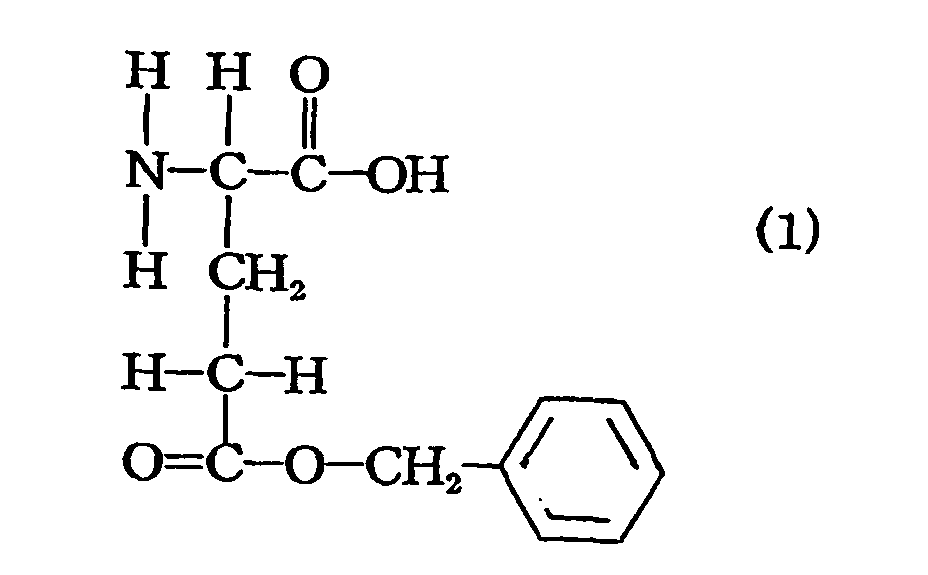
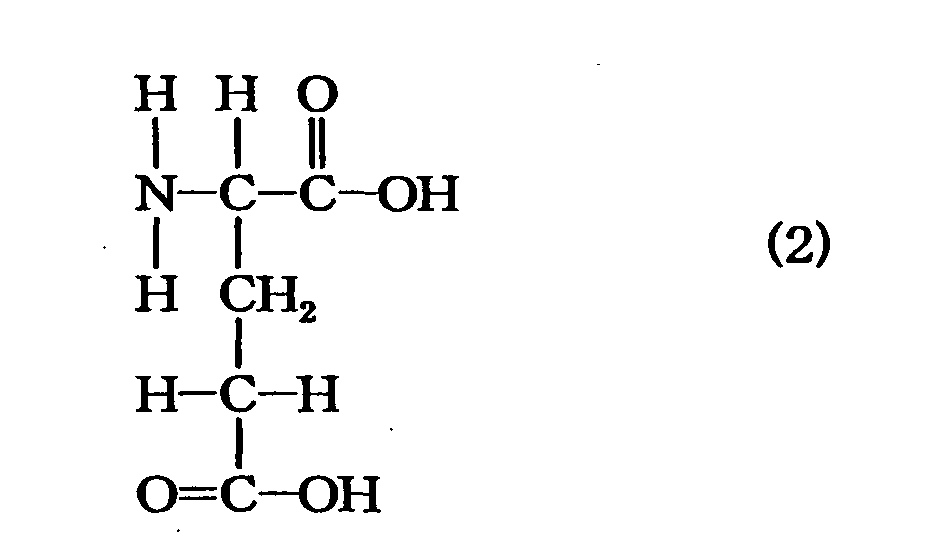
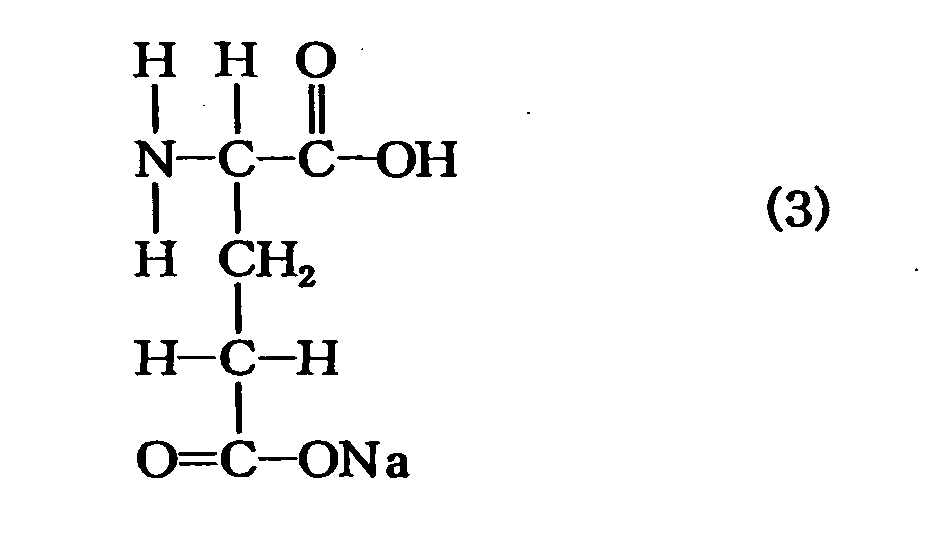
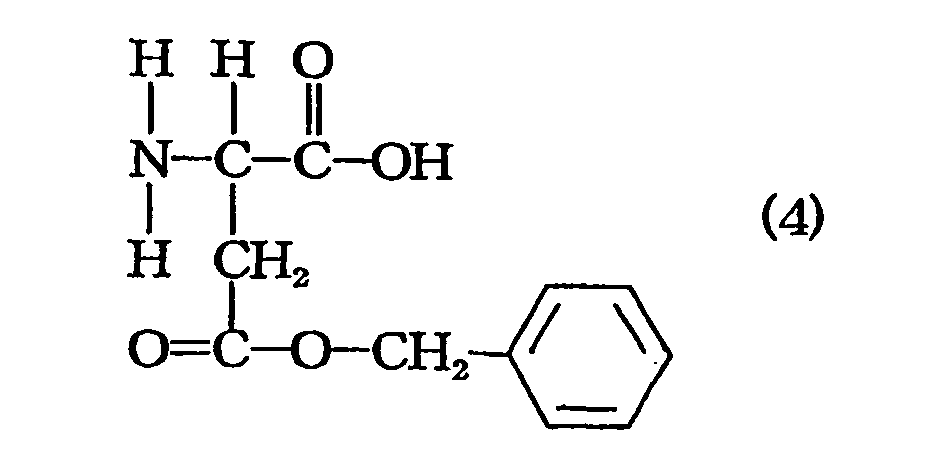
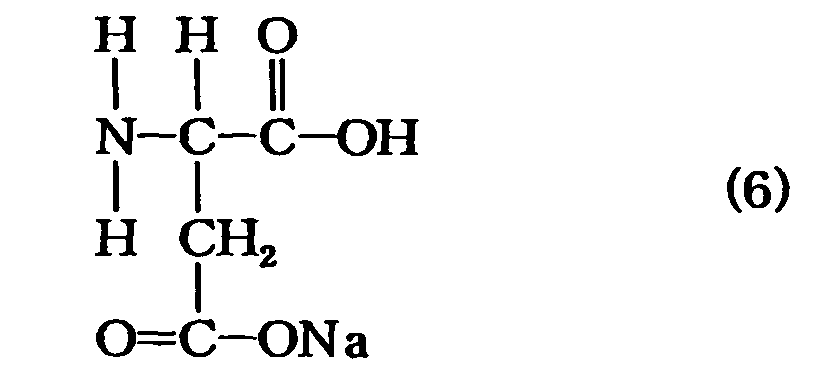
- Typical examples of the amino acid constituting the modified or unmodified amino acid group may include ⁇ -benzylglutamate represented by the formula (1) (abbreviated as BLG hereinbelow), glutamic acid represented by the formula (2) (abbreviated as Glu hereinbelow), sodium glutamate represented by the formula (3) (abbreviated as Glu ⁇ Na hereinbelow), ⁇ -benzyl aspartate represented by the formula (4) (abbreviated as BLA hereinbelow), aspartic acid represented by the formula (5) (abbreviated as Asp hereinbelow), and sodium aspartate represented by the formula (6) (abbreviated as Asp ⁇ Na hereinbelow).
- BLG ⁇ -benzylglutamate represented by the formula (1)
- Glu glutamic acid represented by the formula (2)
- Glu ⁇ Na sodium glutamate represented by the formula (3)
- ⁇ -benzyl aspartate represented by the formula (4) abbreviated as BLA hereinbelow
- Each of segments A 1 and A 2 may usually be composed of polyamino acid having one or more units of modified amino acid and/or one or more units of unmodified amino acid.
- the total number average molecular weight of the polyamino acids composing segments A 1 and A 2 is usually 20 to 70 %, preferably 25 to 65 %, more preferably 30 to 60 % of the number average molecular weight of the A 1 -B-A 2 polymer of the present invention. If the total number average molecular weight of the polyamino acids is less than 20 % of that of the present polymer, sufficient mechanical strength cannot be given to the film prepared from the polymer, whereas at more than 70 %, an ideal bioabsorption rate cannot be achieved easily, and the film is not given flexibility.
- the total number average molecular weight of the polyamino acids composing segments A 1 and A 2 is usually 2000 to 70000, preferably 3000 to 60000, more preferably 4000 to 40000, most preferably 6000 to 14000, for giving good kinetic properties to the film prepared from the polymer.
- the number average molecular weight of the polyamino acid composing each segment A 1 or A 2 is usually 1000 to 35000, preferably 1500 to 30000, more preferably 2000 to 20000, most preferably 3000 to 7000.
- the water-soluble PEG composing segment B may have amino groups at both ends, such as aminomethyl, aminoethyl, or aminopropyl group.
- the number average molecular weight of segment B needs to be 8000 to 50000, preferably 10000 to 30000, more preferably 11000 to 20000, for facilitating balancing between a good bioabsorption rate and kinetic properties in the film prepared from the present polymer. At a number average molecular weight of less than 8000, sufficient properties are hardly given, whereas at a number average molecular weight of more than 50000, the viscosity of PEG as a raw material of the polymer is too high to produce the polymer conveniently.
- the polymer of the present invention may be any polymer as long as segment A 1 is bonded to one end of segment B and segment A 2 is bonded to the other end of segment B, and segments A 1 and A 2 may be bonded via any bond at the ends of segment B.
- polymers represented by the formula (7) for example, may preferably be used.
- R's may be the same or different and each stands for -CH 2 COONa, -CH 2 COOH, or -CH 2 COOC 6 H 5 .
- a and d denote the number of repeat units in segments A 1 and A 2 , respectively, and is an integer of 1 or more, preferably 5 to 100.
- b represents the number of methylene groups repeated in the bond between segments B and A 1 or B and A 2 , and is an integer of preferably 1 to 10.
- c represents the number of oxyethylene groups repeated, and is an integer of preferably 200 to 1200.
- Preferred embodiments of the present polymer include one or a mixture of two or more polymers represented by the formula (7).
- a, b, c, and d in the formula (7) denoting the numbers of repeat merely represent rough numbers calculated from the number average molecular weights mentioned above, and thus are not limited to the above ranges.
- the polymer of the present invention may readily be prepared, for example, by a method including the steps of:
- the number average molecular weight of each segment may easily be controlled by adjusting the molecular weight of PEG and the amount of NCA added in step (X), and the amount of the modifying groups to be decomposed and removed from segments A in step (Y).
- the A-B-A polymer may be prepared, using PEG of a desired number average molecular weight having primary amino groups at both ends, which may be a commercially available product, and by mixing with PEG a desired NCA prepared by a conventional method or the like, and reacting the mixture by conventional ring opening addition polymerization usually at 20 to 50 °C for 6 to 36 hours.
- solvents such as N,N-dimethylformamide (abbreviated as DMF hereinbelow), dimethyl sulfoxide, N,N-dimethylacetamide, or 1,4-dioxane, or a mixture of these solvents with dichloromethane or chloroform, may be used.
- the modifying group of some of the modified amino acid units consisting segment A may be decomposed and removed by, for example, hydrolysis with alkali usually at 0 to 60 °C for 0.1 to 1 hour, wherein the amount of alkali is adjusted so that the resulting polymer contains the amount of modified amino acids as in the present polymer.
- the hydrolysis with alkali may be replaced with catalytic hydrogenation or enzymolysis, wherein the conditions, kind and amount of enzymes, or the like parameters may suitably be selected so that the resulting polymer contains the amount of modified amino acids as in the present polymer.
- the A 1 -B-A 2 polymer of the present invention has moisture retaining ability, hydrogel forming property, bioabsorbability, and the like properties.
- the present polymer may be used as a raw material for bioabsorbable materials and tissue anti-adhesion films to be discussed later, and also finds applications in a raw material for various products such as toiletry products or various cosmetics.
- the bioabsorbable material of the present invention contains the A 1 -B-A 2 polymer of the present invention, and fulfills kinetic properties and non-irritativeness required when the product formed of the material is to be embedded in the living organism.
- the bioabsorbable material of the present invention may optionally contain, in addition to the polymer of the present invention, other bioabsorbable polymers such as known polymers having bioabsorbability, as desired.
- other bioabsorbable polymers may include PBLA-PEG-PBLAtriblock copolymers, PBLG-PEG-PBLG triblock copolymers, hyaluronic acid, collagen, carboxymethyl cellulose, polycaprolactone, polylactic acid, polyglycolic acid, and copolymers thereof.
- the content of the other bioabsorbable polymer may suitably be selected so that the formed product prepared from the present bioabsorbable material has a desired bioabsorption rate and mechanical strength, and is preferably 0 to 50 wt%.
- the bioabsorbable material of the present invention may easily be made into a sheet-like formed product by, for example, casting or hot pressing, but the shape of the formed product is not particularly limited.
- the resulting formed product usually has good mechanical strength and rubber elasticity in a dry state.
- the bioabsorption rate of the formed product may easily be controlled by adjusting the number average molecular weights and molecular weight ratio of segments B, A 1 , and A 2 of the A 1 -B-A 2 polymer of the present invention contained in the present bioabsorbable material, the shape and thickness of the formed product, the molar ratio of the unmodified and modified amino acids in the polymer, or the like parameters.
- the tissue anti-adhesion film of the present invention is a product obtained by forming the bioabsorbable material of the present invention into a sheet, film, or the like form.
- the thickness of the film is not particularly limited, and may suitably be selected from the range of, for example, 0.1 to 2 mm, depending on the location to which the film is to be applied, or the like factors.
- the tissue anti-adhesion film of the present invention may be prepared by forming the bioabsorbable material of the present invention into a film, for example, by conventional casting or heat pressing.
- the present anti-adhesion film may also be prepared by first preparing an A-B-A polymer wherein segments A composed of modified or poly modified amino acid are bonded at both ends of segment B in accordance with step (X) of the method for producing the polymer of the present invention discussed above, optionally mixing the A-B-A polymer with the other bioabsorbable polymers mentioned above or the present polymer to prepare a polymer material, forming the polymer material into a film according to a method such as the conventional method mentioned above, and then subjecting the resulting film to hydrolysis with alkali, catalytic hydrogenation, enzymolysis, or the like reaction to decompose and remove the modifying group of some of the modified amino acid units constituting segments A in the film according to step (Y) discussed above.
- the content of the modified amino acids in the tissue anti-adhesion film of the present invention is preferably 20 to 85 mol%, more preferably 30 to 85 mol%, most preferably 35 to 80 mol% of the total amino acids in the film. Further, it is desirable that the present anti-adhesion film is composed essentially of the polymer of the present invention.
- the tissue anti-adhesion film of the present invention when placed in water, forms hydrogel.
- This hydrogel has sufficient flexibility, and is capable of maintaining its original swollen shape even when left in the swollen state in water at room temperature for a prolonged time.
- the tissue anti-adhesion film of the present invention exhibits excellent handling property in placing the film on the tissues of animals including human, and excellent shape adaptability to soft tissues when gelled.
- a polymer 500 mg is dissolved completely in 5 ml of methylene chloride.
- the resulting polymer solution is cast in a petri dish made of polytetrafluoroethylene, and the solvent is evaporated at room temperature for 1 hour. Then the petri dish is dried in a high temperature phase set at 60 °C for 1 hour to thereby obtain a colorless, translucent sheet.
- the bioabsorbability test is conducted by embedding a sample sheet in 2 cm square in the abdominal cavity of eight-week-old male ddy mice by abdominal operation. When it is confirmed that the sheet absorbs the body fluid on the tissue surface to adhere to the tissue, and is rapidly softened and adapted to the soft tissues therearound, then the peritoneum is sutured. The mice having the sheet embedded are raised for three days from the next day, and three of them are slaughtered per day, and the embedded sheets are taken out by abdominal operation to measure the dry weight. The difference between the value obtained by this measurement and the sheet weight before the embedment is taken as the test result.
- the test on ability to prevent adhesion is conducted by ligating the base of the iliac vein of a seven-week-old female Wistar rat with 3-0 silk thread for blood stanching, and cutting the vein at about 1 mm down stream of the ligation. A sample sheet is applied over the treatment site, and the peritoneum and skin are sutured. One week after, adhesion in the living tissues is evaluated by abdominal operation.
- a sheet is measured for thickness, and cut into strips of about 2 mm wide . Each sample was measured for the tensile strength ten times, and the average of eight measurements is taken as the result. The maximum load is obtained by dividing the average of the eight measurements with the cross sectional area.
- the BLA content with respect to the total amino acids in the obtained polymer is shown in Table 1.
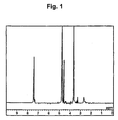
- the 1 H-NMR spectrum of PEG-P (BLA, Asp ⁇ Na, Asp) polymer is shown in Fig. 1.
- a bioabsorbable sheet was prepared using the thus synthesized PEG-P (BLA, Asp ⁇ Na, Asp) polymer in accordance with Preparation (1) of Bioabsorbable Sheet discussed above.
- the obtained PEG-P (BLA, Asp ⁇ Na, Asp) polymer sheet was embedded in the abdominal cavity of an eight-week-old male ddy mouse by abdominal operation in accordance with the Bioabsorbability Test discussed above, and the postoperative residual amount of the sheet was measured. The results are shown in Fig. 2.
- the sheet prepared above was subjected to a tensile test in accordance with the procedures discussed in Tensile Test above.
- the same test was also conducted on a synthetic absorbable anti-adhesion sheet containing sodium hyaluronate and carboxymethyl cellulose at 2 : 1 (molar ratio) (abbreviated as Na hyaluronate ⁇ CMC hereinbelow), which was commercially available from Genzyme Corporation.
- the results are shown in Fig. 3.
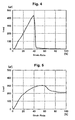
- the stress-strain curve of the sheet of this example is shown in Fig. 4, and that of the commercial Na hyaluronate ⁇ CMC is shown in Fig. 5.
- PBLA-PEG-PBLA block polymer and PEG-P (BLA, Asp ⁇ Na, Asp) polymer of the A 1 -B-A 2 type were prepared in the same way as in Example 1, except that the PEG was replaced with PEG having amino groups at both ends (11000 g/mol), and the amount of the sodium hydroxide solution was 1.86 ml.
- PBLA-PEG-PBLA block polymer and PEG-P (BLA, Asp ⁇ Na, Asp) polymer of the A 1 -B-A 2 type were prepared in the same way as in Example 1, except that the amount of BLA-NCA was 100 equivalents of PEG, and the amount of the sodium hydroxide solution was 1.80 ml.
- PBLG-PEG-PBLG block polymer and PEG-P (BLG, Glu ⁇ Na, Glu) polymer of the A 1 -B-A 2 type were prepared in the same way as in Example 1, except that BLA-NCA was replaced with ⁇ -benzyl-L-glutamate-N-carboxylic anhydride (abbreviated as BLG-NCA hereinbelow).
- a bioabsorbable sheet was prepared with the PBLA-PEG-PBLA block polymer synthesized in Example 1. The number average molecular weights were measured, the BLA content was calculated, and the test on ability to prevent adhesion was conducted in the same way as in Example 1. The results are shown in Table 1. The bioabsorbability test was also conducted in the same way as in Example 1. The results are shown in Fig. 2.
- PBLA-PEG-PBLA block copolymer was prepared in the same way as in Example 1, except that the PEG was replaced with PEG having amino groups at both ends (4000 g/mol) and the amount of BLA-NCA was 1.74 g (28 equivalents of PEG).
- a bioabsorbable sheet was prepared with the obtained block copolymer.
- the number average molecular weights were measured, the BLA content was calculated, and the test on ability to prevent adhesion was conducted in the same way as in Example 1.
- the results are shown in Table 1. Further, the bioabsorbability test was conducted in the same way as in Example 1. The results are shown in Fig. 2.
- PBLA-PEG-PBLA block polymer and PEG-P (BLA, Asp ⁇ Na, Asp) polymer of the A 1 -B-A 2 type were prepared in the same way as in Example 1, except that the PEG was replaced with PEG having amino groups at both ends (11000 g/mol), and the amount of the sodium hydroxide solution was 3.34 ml.
- a bioabsorbable sheet was prepared from the obtained PEG-P(BLA, Asp ⁇ Na, Asp) polymer in the same way as in Example 1. The number average molecular weights were measured, the BLA content was calculated, and the test on ability to prevent adhesion was conducted in the same way as in Example 1. The results are shown in Table 1.
- PBLA-PEG-PBLA block polymer and PEG-P (BLA, Asp - Na, Asp) polymer of the A 1 -B-A 2 type were prepared in the same way as in Example 1, except that the amount of the sodium hydroxide solution was 0.26 ml.
- a bioabsorbable sheet was prepared from the obtained PEG-P (BLA, Asp ⁇ Na, Asp) polymer in the same way as in Example 1. The number average molecular weights were measured, the BLA content was calculated, and the test on ability to prevent adhesion was conducted in the same way as in Example 1. The results are shown in Table 1.
- the commercially available Na hyaluronate ⁇ CMC is a hard and brittle material, and thus very likely to be broken upon use.
- the sheet prepared in Example 1 was not broken even when stretched over 500 % in a dry state, providing excellent kinetic properties.
- the sheet prepared with the polymer of the present invention absorbed the moisture in the abdominal cavity to adhere to the soft tissues, without damaging the tissues or being damaged itself.
- the polymer of the present invention is suitable for biodegradable materials and tissue anti-adhesion films.
Landscapes
- Health & Medical Sciences (AREA)
- Chemical & Material Sciences (AREA)
- Chemical Kinetics & Catalysis (AREA)
- Medicinal Chemistry (AREA)
- Organic Chemistry (AREA)
- Polymers & Plastics (AREA)
- Surgery (AREA)
- Life Sciences & Earth Sciences (AREA)
- Animal Behavior & Ethology (AREA)
- General Health & Medical Sciences (AREA)
- Public Health (AREA)
- Veterinary Medicine (AREA)
- Epidemiology (AREA)
- Vascular Medicine (AREA)
- Heart & Thoracic Surgery (AREA)
- Polyamides (AREA)
- Materials For Medical Uses (AREA)
- Polyethers (AREA)
Abstract
Description
wherein said polymer comprises both the modified and unmodified amino acid groups, and the content of the modified amino acids is 20 to 85 mol% of all the amino acids in the polymer, and
wherein said polymer has a number average molecular weight of 10000 to 100000.



Claims (8)
- An A1-B-A2 polymer consisting of segments A1 and A2 each comprising at least either of a modified amino acid group whose functional group is protected with a protective group and an unmodified amino acid group whose functional group is not protected with a protective group, and segment B consisting of polyethylene glycol having a number average molecular weight of 8000 to 50000, with segment A1 binding to one end of segment B and segment A2 binding to the other end of segment B,
wherein said polymer comprises both the modified and unmodified amino acid groups, and the content of the modified amino acids is 20 to 85 mol% of all the amino acids in the polymer, and
wherein said polymer has a number average molecular weight of 10000 to 100000. - The A1-B-A2 polymer of claim 1, wherein the total number average molecular weights of segments A1 and A2 is 20 to 70 % of the number average molecular weight of the A1-B-A2 polymer.
- The A1-B-A2 polymer of claim 1, wherein said protective group of the modified amino acid group is selected from the group consisting of methyl, ethyl, propyl, isopropyl, n-butyl, s-butyl, t-butyl, acetyl, propionyl, benzyl, benzyloxycarbonyl, and o-nitrophenylsulfenyl groups, and aliphatic groups having 4 to 18 carbon atoms, and alicyclic groups having 4 to 18 carbon atoms.
- The A1-B-A2 polymer of claim 1, wherein a raw material amino acid for the modified and unmodified amino acid groups is at least one material selected from the group consisting of L-glutamic acid and L-aspartic acid.
- The A1-B-A2 polymer of claim 1, wherein the modified amino acid group is selected from the group consisting of β-benzyl-L-aspartate and γ-benzyl-L-glutamate.
- A bioabsorbable material comprising the A1-B-A2 polymer of claim 1.
- A tissue anti-adhesion film obtained by forming the bioabsorbable material of claim 6 into a film shape.
- The tissue anti-adhesion film of claim 7, wherein the content of the modified amino acids is 20 to 85 mol% of all the amino acids in the film.
Applications Claiming Priority (1)
| Application Number | Priority Date | Filing Date | Title |
|---|---|---|---|
| PCT/JP2002/013063 WO2004055095A1 (en) | 2002-12-13 | 2002-12-13 | Polymer, bioabsorbable material and film for preventing tissue fusion |
Publications (3)
| Publication Number | Publication Date |
|---|---|
| EP1574541A1 true EP1574541A1 (en) | 2005-09-14 |
| EP1574541A4 EP1574541A4 (en) | 2008-02-06 |
| EP1574541B1 EP1574541B1 (en) | 2010-09-01 |
Family
ID=32587936
Family Applications (1)
| Application Number | Title | Priority Date | Filing Date |
|---|---|---|---|
| EP02788820A Expired - Lifetime EP1574541B1 (en) | 2002-12-13 | 2002-12-13 | Polymer, bioabsorbable material and film for preventing tissue fusion |
Country Status (4)
| Country | Link |
|---|---|
| US (1) | US7491408B2 (en) |
| EP (1) | EP1574541B1 (en) |
| DE (1) | DE60237552D1 (en) |
| WO (1) | WO2004055095A1 (en) |
Cited By (1)
| Publication number | Priority date | Publication date | Assignee | Title |
|---|---|---|---|---|
| WO2009075788A1 (en) * | 2007-12-05 | 2009-06-18 | Semprus Biociences Corporation | Synthetic non-fouling amino acids |
Families Citing this family (3)
| Publication number | Priority date | Publication date | Assignee | Title |
|---|---|---|---|---|
| CN101280047B (en) * | 2008-05-06 | 2010-06-23 | 华南理工大学 | Biodegradable composite material containing polybenzyl glutamate and preparation method thereof |
| CN109354680A (en) * | 2018-09-14 | 2019-02-19 | 中山大学 | A kind of amino acid cationic polymer and its preparation method and application |
| US20220142729A1 (en) * | 2020-11-06 | 2022-05-12 | Carbon, Inc. | Bioresorbable 3d printed adhesion barriers |
Family Cites Families (6)
| Publication number | Priority date | Publication date | Assignee | Title |
|---|---|---|---|---|
| FR2658521B1 (en) * | 1990-02-19 | 1994-01-21 | Serbioo | SYMMETRIC BIPEPTIDES COMPRISING A POLYALKYLENEGLYCOL REST, PREPARATION METHOD AND USE IN THE DETERMINATION OF PROTEASES. |
| DE19542837A1 (en) | 1995-11-17 | 1997-05-22 | Boehringer Mannheim Gmbh | Formulation contg. microparticles of polymer matrix contg. active agent |
| US6211249B1 (en) * | 1997-07-11 | 2001-04-03 | Life Medical Sciences, Inc. | Polyester polyether block copolymers |
| ATE229992T1 (en) * | 1999-05-19 | 2003-01-15 | Basf Ag | POLYMERS CONTAINING ALKOXYLATED, CONDENSED BASIC AMINO ACIDS AND METHOD FOR THE PRODUCTION THEREOF |
| JP4524923B2 (en) * | 1999-05-19 | 2010-08-18 | 日油株式会社 | Polymers, biodegradable materials and applications |
| JP4734772B2 (en) | 2001-06-13 | 2011-07-27 | 日油株式会社 | Polymer, bioabsorbable material and tissue adhesion prevention film |
-
2002
- 2002-12-13 EP EP02788820A patent/EP1574541B1/en not_active Expired - Lifetime
- 2002-12-13 DE DE60237552T patent/DE60237552D1/en not_active Expired - Lifetime
- 2002-12-13 WO PCT/JP2002/013063 patent/WO2004055095A1/en not_active Ceased
- 2002-12-13 US US10/538,799 patent/US7491408B2/en not_active Expired - Lifetime
Cited By (1)
| Publication number | Priority date | Publication date | Assignee | Title |
|---|---|---|---|---|
| WO2009075788A1 (en) * | 2007-12-05 | 2009-06-18 | Semprus Biociences Corporation | Synthetic non-fouling amino acids |
Also Published As
| Publication number | Publication date |
|---|---|
| DE60237552D1 (en) | 2010-10-14 |
| WO2004055095A1 (en) | 2004-07-01 |
| EP1574541B1 (en) | 2010-09-01 |
| US7491408B2 (en) | 2009-02-17 |
| US20060252908A1 (en) | 2006-11-09 |
| EP1574541A4 (en) | 2008-02-06 |
Similar Documents
| Publication | Publication Date | Title |
|---|---|---|
| Choi et al. | Synthesis and characterization of elastic PLGA/PCL/PLGA tri-block copolymers | |
| P. Pêgo et al. | Copolymers of trimethylene carbonate and ε-caprolactone for porous nerve guides: Synthesis and properties | |
| US5665831A (en) | Biocompatible block copolymer | |
| US4857602A (en) | Bioabsorbable surgical suture coating | |
| US5644002A (en) | Absorbable polyalkylene diglycolates | |
| Yu et al. | Tyrosine–PEG-derived poly (ether carbonate) s as new biomaterials: Part I: synthesis and evaluation | |
| US7838122B2 (en) | Hydrazide compounds with angiogenic activity | |
| CA2294711C (en) | Novel polymeric compositions | |
| CA2279270C (en) | Polyesteramides with amino acid-derived groups alternating with alpha-hydroxyacid-derived groups and surgical articles made therefrom | |
| Feng et al. | Progress in depsipeptide‐based biomaterials | |
| JPWO2000071602A1 (en) | Polymers, biodegradable materials and applications | |
| EP1203784B1 (en) | Polymer, in vivo degradable material, and use | |
| US7714077B2 (en) | Triblock copolymer, method for producing the same, and biocompatible material | |
| EP1574541B1 (en) | Polymer, bioabsorbable material and film for preventing tissue fusion | |
| WO2003062298A1 (en) | Co-poly(ester amide) and co-poly(ester urethane) compositions which exhibit biodegradability, methods for making same and uses for same | |
| US8754135B2 (en) | Functionalized non-phenolic amino acids and absorbable polymers therefrom | |
| JP4734772B2 (en) | Polymer, bioabsorbable material and tissue adhesion prevention film | |
| Ohya et al. | The Synthesis and Biodegradability of Poly (lactide-random-depsipeptide)-PEGPoly (lactide-random-depsipeptide) ABA-type Triblock Copolymers | |
| CN1418901A (en) | Carboxy polylactic acid contained composition and preparation process thereof | |
| JP5258189B2 (en) | Flexible biodegradable polymer | |
| KR101394428B1 (en) | Multiblock copolymers with shape-memory properties | |
| Yodoya et al. | Preparation and properties of A–B–A tri-block copolymer membranes consisting of N-hydroxypropyl-l-glutamine as the A component and l-alanine as the B component | |
| Seidel et al. | Degradation of oligo (lactone) branches linked to poly (methacrylate) networks | |
| Samyn et al. | Biodegradable Polymers: Polydepsipeptides | |
| JP2008120888A (en) | Biodegradable copolymer and method for producing the same |
Legal Events
| Date | Code | Title | Description |
|---|---|---|---|
| PUAI | Public reference made under article 153(3) epc to a published international application that has entered the european phase |
Free format text: ORIGINAL CODE: 0009012 |
|
| 17P | Request for examination filed |
Effective date: 20050629 |
|
| AK | Designated contracting states |
Kind code of ref document: A1 Designated state(s): AT BE BG CH CY CZ DE DK EE ES FI FR GB GR IE IT LI LU MC NL PT SE SI SK TR |
|
| RBV | Designated contracting states (corrected) |
Designated state(s): DE FR GB |
|
| A4 | Supplementary search report drawn up and despatched |
Effective date: 20080107 |
|
| RIC1 | Information provided on ipc code assigned before grant |
Ipc: C08L 77/00 20060101ALI20071228BHEP Ipc: C08G 73/10 20060101ALI20071228BHEP Ipc: C08G 73/00 20060101ALI20071228BHEP Ipc: A61L 31/06 20060101ALI20071228BHEP Ipc: C08L 77/04 20060101ALI20071228BHEP Ipc: C08G 69/40 20060101AFI20040705BHEP Ipc: C08G 69/48 20060101ALI20071228BHEP Ipc: A61L 31/00 20060101ALI20071228BHEP Ipc: A61L 27/22 20060101ALI20071228BHEP Ipc: C08G 69/00 20060101ALI20071228BHEP Ipc: A61L 15/32 20060101ALI20071228BHEP |
|
| 17Q | First examination report despatched |
Effective date: 20080516 |
|
| GRAP | Despatch of communication of intention to grant a patent |
Free format text: ORIGINAL CODE: EPIDOSNIGR1 |
|
| GRAS | Grant fee paid |
Free format text: ORIGINAL CODE: EPIDOSNIGR3 |
|
| GRAA | (expected) grant |
Free format text: ORIGINAL CODE: 0009210 |
|
| AK | Designated contracting states |
Kind code of ref document: B1 Designated state(s): DE FR GB |
|
| REG | Reference to a national code |
Ref country code: GB Ref legal event code: FG4D |
|
| REF | Corresponds to: |
Ref document number: 60237552 Country of ref document: DE Date of ref document: 20101014 Kind code of ref document: P |
|
| PLBE | No opposition filed within time limit |
Free format text: ORIGINAL CODE: 0009261 |
|
| STAA | Information on the status of an ep patent application or granted ep patent |
Free format text: STATUS: NO OPPOSITION FILED WITHIN TIME LIMIT |
|
| 26N | No opposition filed |
Effective date: 20110606 |
|
| REG | Reference to a national code |
Ref country code: DE Ref legal event code: R097 Ref document number: 60237552 Country of ref document: DE Effective date: 20110606 |
|
| REG | Reference to a national code |
Ref country code: FR Ref legal event code: PLFP Year of fee payment: 14 |
|
| REG | Reference to a national code |
Ref country code: FR Ref legal event code: PLFP Year of fee payment: 15 |
|
| REG | Reference to a national code |
Ref country code: FR Ref legal event code: PLFP Year of fee payment: 16 |
|
| PGFP | Annual fee paid to national office [announced via postgrant information from national office to epo] |
Ref country code: DE Payment date: 20171211 Year of fee payment: 16 Ref country code: FR Payment date: 20171221 Year of fee payment: 16 |
|
| PGFP | Annual fee paid to national office [announced via postgrant information from national office to epo] |
Ref country code: GB Payment date: 20171221 Year of fee payment: 16 |
|
| REG | Reference to a national code |
Ref country code: DE Ref legal event code: R119 Ref document number: 60237552 Country of ref document: DE |
|
| GBPC | Gb: european patent ceased through non-payment of renewal fee |
Effective date: 20181213 |
|
| PG25 | Lapsed in a contracting state [announced via postgrant information from national office to epo] |
Ref country code: DE Free format text: LAPSE BECAUSE OF NON-PAYMENT OF DUE FEES Effective date: 20190702 Ref country code: FR Free format text: LAPSE BECAUSE OF NON-PAYMENT OF DUE FEES Effective date: 20181231 |
|
| PG25 | Lapsed in a contracting state [announced via postgrant information from national office to epo] |
Ref country code: GB Free format text: LAPSE BECAUSE OF NON-PAYMENT OF DUE FEES Effective date: 20181213 |