EP1574505A1 - 1,2,4-thiadiazole compounds and use thereof - Google Patents
1,2,4-thiadiazole compounds and use thereof Download PDFInfo
- Publication number
- EP1574505A1 EP1574505A1 EP02808100A EP02808100A EP1574505A1 EP 1574505 A1 EP1574505 A1 EP 1574505A1 EP 02808100 A EP02808100 A EP 02808100A EP 02808100 A EP02808100 A EP 02808100A EP 1574505 A1 EP1574505 A1 EP 1574505A1
- Authority
- EP
- European Patent Office
- Prior art keywords
- group
- thiadiazole
- mixture
- formula
- compound
- Prior art date
- Legal status (The legal status is an assumption and is not a legal conclusion. Google has not performed a legal analysis and makes no representation as to the accuracy of the status listed.)
- Granted
Links
- 0 C*(C)c1ccccc1 Chemical compound C*(C)c1ccccc1 0.000 description 3
Classifications
-
- C—CHEMISTRY; METALLURGY
- C07—ORGANIC CHEMISTRY
- C07D—HETEROCYCLIC COMPOUNDS
- C07D285/00—Heterocyclic compounds containing rings having nitrogen and sulfur atoms as the only ring hetero atoms, not provided for by groups C07D275/00 - C07D283/00
- C07D285/01—Five-membered rings
- C07D285/02—Thiadiazoles; Hydrogenated thiadiazoles
- C07D285/04—Thiadiazoles; Hydrogenated thiadiazoles not condensed with other rings
- C07D285/12—1,3,4-Thiadiazoles; Hydrogenated 1,3,4-thiadiazoles
- C07D285/125—1,3,4-Thiadiazoles; Hydrogenated 1,3,4-thiadiazoles with oxygen, sulfur or nitrogen atoms, directly attached to ring carbon atoms, the nitrogen atoms not forming part of a nitro radical
-
- C—CHEMISTRY; METALLURGY
- C07—ORGANIC CHEMISTRY
- C07D—HETEROCYCLIC COMPOUNDS
- C07D285/00—Heterocyclic compounds containing rings having nitrogen and sulfur atoms as the only ring hetero atoms, not provided for by groups C07D275/00 - C07D283/00
- C07D285/01—Five-membered rings
- C07D285/02—Thiadiazoles; Hydrogenated thiadiazoles
- C07D285/04—Thiadiazoles; Hydrogenated thiadiazoles not condensed with other rings
- C07D285/08—1,2,4-Thiadiazoles; Hydrogenated 1,2,4-thiadiazoles
-
- A—HUMAN NECESSITIES
- A01—AGRICULTURE; FORESTRY; ANIMAL HUSBANDRY; HUNTING; TRAPPING; FISHING
- A01N—PRESERVATION OF BODIES OF HUMANS OR ANIMALS OR PLANTS OR PARTS THEREOF; BIOCIDES, e.g. AS DISINFECTANTS, AS PESTICIDES OR AS HERBICIDES; PEST REPELLANTS OR ATTRACTANTS; PLANT GROWTH REGULATORS
- A01N43/00—Biocides, pest repellants or attractants, or plant growth regulators containing heterocyclic compounds
- A01N43/72—Biocides, pest repellants or attractants, or plant growth regulators containing heterocyclic compounds having rings with nitrogen atoms and oxygen or sulfur atoms as ring hetero atoms
-
- A—HUMAN NECESSITIES
- A01—AGRICULTURE; FORESTRY; ANIMAL HUSBANDRY; HUNTING; TRAPPING; FISHING
- A01N—PRESERVATION OF BODIES OF HUMANS OR ANIMALS OR PLANTS OR PARTS THEREOF; BIOCIDES, e.g. AS DISINFECTANTS, AS PESTICIDES OR AS HERBICIDES; PEST REPELLANTS OR ATTRACTANTS; PLANT GROWTH REGULATORS
- A01N43/00—Biocides, pest repellants or attractants, or plant growth regulators containing heterocyclic compounds
- A01N43/72—Biocides, pest repellants or attractants, or plant growth regulators containing heterocyclic compounds having rings with nitrogen atoms and oxygen or sulfur atoms as ring hetero atoms
- A01N43/82—Biocides, pest repellants or attractants, or plant growth regulators containing heterocyclic compounds having rings with nitrogen atoms and oxygen or sulfur atoms as ring hetero atoms five-membered rings with three ring hetero atoms
Definitions
- the present invention relates to a 1,2,4-thiadiazole compound and use thereof.
- the present inventor has studied intensively in order to find out a compound having excellent pesticidal activity, and have found excellent harmful arthropod controlling activity in a 1,2,4-thiadiazole compound. Thus, the present invention has been completed.
- the present invention provides a 1,2,4-thiadiazole compound represented by the formula (1): wherein R 1 represents a C3-C7 alkynyl group optionally substituted with one or more halogen atom(s), R 2 represents a halogen atom, a C1-C4 alkyl group, a C1-C4 haloalkyl group, a C1-C4 alkoxy group, a C1-C4 haloalkoxy group, a C1-C4 alkylthio group, a cyano group or a nitro group, n represents an integer of 0 to 5, provided that, when n represents an integer of 2 or more, respective R 2 s may be the same or different,
- A represents an oxygen atom, a sulfur atom, a single bond, a CR 3 R 4 group or a NR 5 group
- R 3 and R 4 represent each independently a hydrogen atom or a C1-C4 alkyl group
- R 5 represents a hydrogen atom, a C1-C7 alkyl group, a C1-C3 haloalkyl group, a C2-C4(alkoxyalkyl) group, a C2-C4(haloalkoxyalkyl) group, a C3-C6 alkenyl group, a C3-C6 haloalkenyl group, a C3-C7 alkynyl group, a C3-C7 haloalkynyl group or a cyanomethyl group (herein after referred to as the compound of the present invention); and an arthropod controlling composition containing the same as an active ingredient.
- examples of the C3-C7 alkynyl group optionally substituted with one or more halogen atom(s) represented by R 1 include a 2-propynyl group, a 2-butynyl group, a 4-fluoro-2-butynyl group, a 1-methyl-2-butynyl group, a 2-pentynyl group, a 4,4-dimethyl-2-pentynyl group, a 3-chloro-2-propynyl group, a 3-bromo-2-propynyl group, a 3-iodo-2-propynyl group, a 1-methyl-2-propynyl group, a 3-butynyl group, and a 3-pentynyl group.
- Examples of the halogen atom represented by R 2 include a fluorine atom, a chlorine atom, and a bromine atom
- examples of the C1-C4 alkyl group represented by R 2 include a methyl group, an ethyl group, and a 1,1-dimethylethyl group
- examples of the C1-C4 haloalkyl group represented by R 2 include a trifluoromethyl group, a difluoromethyl group, and a pentafluoroethyl group
- examples of the C1-C4 alkoxy group represented by R 2 include a methoxy group and an ethoxy group
- examples of the C1-C4 haloalkoxy group represented by R 2 include a trifluoromethoxy group and a pentafluoroethoxy group
- examples of the C1-C4 alkylthio group represented by R 2 include a methylthio group, and an ethylthio group.
- Examples of the CR 3 R 4 group represented by A include a CH 2 group, a CH(CH 3 ) group, and examples of the NR 5 group represented by A include a NH group, a NCH 3 group, a NC 2 H 5 group, a NCH 2 OCH 3 group, a NCH 2 OC 2 H 5 group and a NCH 2 CN group.
- Examples of the compound of the present invention include a 1,2,4-thiadiazole compound represented by the formula (1) wherein R 1 is a 2-propynyl group; a 1,2,4-thiadiazole compound represented by the formula (1) wherein R 1 is a 2-butynyl group; a 1,2,4-thiadiazole compound represented by the formula (1) wherein R 1 is a 2-pentynyl group; a 1,2,4-thiadiazole compound represented by the formula (1) wherein A is a single bond; a 1,2,4-thiadiazole compound represented by the formula (1) wherein R 1 is a 2-propynyl group, and A is a single bond; a 1,2,4-thiadiazole compound represented by the formula (1) wherein R 1 is a 2-butynyl group, and A is a single bond; a 1,2,4-thiadiazole compound represented by the formula (1) wherein R 1 is a 2-butynyl group, and A is a single bond; a 1,2,4-thiadiazol
- the compound of the present invention can be prepared, for example, by reacting a compound represented by the formula (2) and R 1 OH in the presence of a base.
- A, R 1 , R 2 and n are as defined above, and m represents 1 or 2.
- the reaction is usually performed in a solvent.
- the solvent to be used include ethers such as tetrahydrofuran, acid amides such as N,N-dimethylformamide, dimethyl sulfoxide, and a mixture thereof.
- the base used in the reaction include inorganic bases such as sodium hydride, and the amount of the base is usually 1 to 2 mole relative to. 1 mole of a. compound represented by the formula (2).
- the amount of R 1 OH used in the reaction is usually 1 to 1.2 moles relative to 1 mole of a compound represented by the formula (2).
- the reaction temperature is usually in a range of 0 to 80°C, and the reaction time is usually in a range of 1 to 24 hours.
- the compound of the present invention can be obtained by subjecting the reaction mixture to post-treatment procedures such as organic solvent extraction, and concentration. If necessary, the compound of the present invention can be further purified by subjecting to procedures such as chromatography.
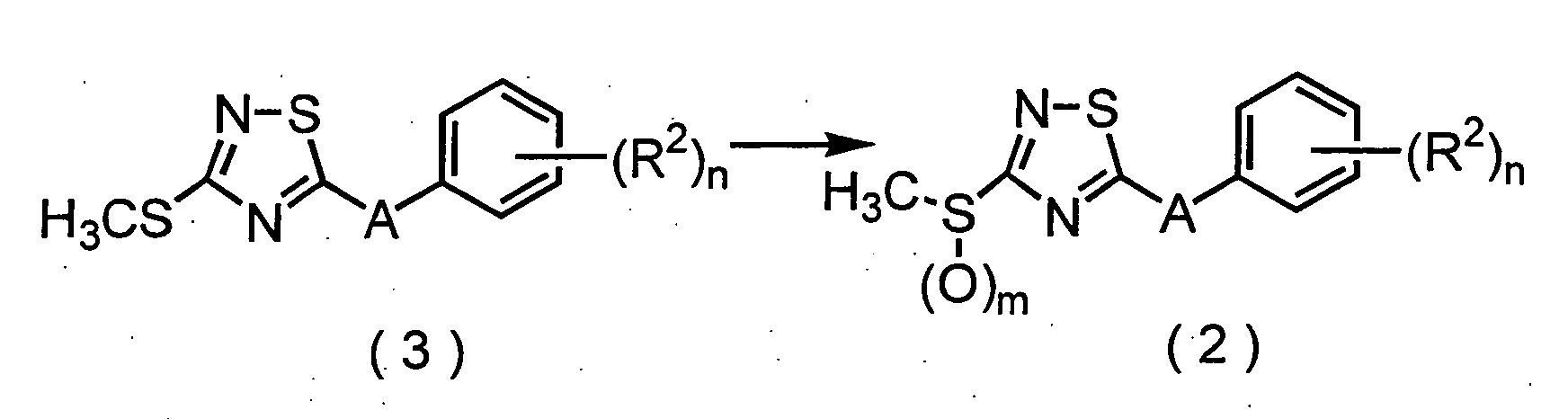
- the compound represented by the formula (2) can be prepared by reacting a compound represented by the formula (3) with an oxidizing agent.
- A, R 2 , n and m are as defined above.
- the reaction is usually performed in a solvent.
- the solvent to be used include halogenated hydrocarbons such as chloroform and dichloromethane, and a mixture thereof.
- the oxidizing agent used in the reaction include peracids such as 3-chloroperoxybenzoic acid, and the amount of the oxidizing agent is usually 1 to 2.5 moles relative to 1 mole of the compound represented by the formula (3).
- the reaction temperature is usually in a range of -5°C to room temperature, and the reaction time is usually in a range of 0.1 to 24 hours.
- the compound represented by the formula (2) can be obtained by subjecting the reaction mixture to post-treatment procedures such as organic solvent extraction, and concentration. If necessary, the compound can be further purified by subjecting to procedures such as chromatography.
- the compound represented by the formula (3) can be prepared by any of the following methods of (I) to (IV) depending on a kind of A in the formula (3).
- the reaction is usually performed in a solvent under an atmosphere of an inert gas (nitrogen, argon etc.).
- solvent used in the reaction include alcohols such as methanol, ethanol and 2-propanol, ethers such as 1,2-dimethoxyethane, tetrahydrofuran, 1,4-dioxane, and methyl-t-butyl ether, aromatic hydrocarbons such as benzene and toluene, ketones such as acetone, acid amides such as N,N-dimethylformamide, water, and a mixture thereof.
- alcohols such as methanol, ethanol and 2-propanol
- ethers such as 1,2-dimethoxyethane, tetrahydrofuran, 1,4-dioxane, and methyl-t-butyl ether
- aromatic hydrocarbons such as benzene and toluene
- ketones such as acetone
- acid amides such as N,N-di
- transition metal compound used in the reaction examples include palladium (II) acetate, tetrakis (triphenylphosphine) palladium (0), ⁇ 1,1'- bis(diphenylphosphino)ferrocene ⁇ dichloropalladium (II) and dichloro bis(triphenylphosphine)palladium(II), and the amount of the transition metal compound is usually 0.001 to 0.1 mole relative to 1 mole of 5-chloro-3-methylthio-1,2,4-thiadiazole.
- the amount of the phenylboronic acid compound represented by the formula (4) or the trialkylphenyltin compound represented by the formula (5) used in the reaction is usually 0.9 to 1.5 mole relative to 1 mole of 5-chloro-3-methylthio-1,2,4-thiadiazole.
- the reaction temperature of the reaction is usually in a range of room temperature to 150°C.
- the reaction time is usually in a range of 1 to 12 hours.
- the reaction can be performed by adding a base, if necessary.
- a base which can be used include potassium phosphate, sodium carbonate, sodium bicarbonate, sodium acetate, potassium acetate and barium hydroxide.
- the reaction can be performed by adding a phase transfer catalyst, if necessary.
- the phase transfer catalyst which can be used include a quaternary ammonium salt such as tetrabutylammonium bromide, and benzyltrimethylammonium bromide.
- the objective product can be obtained by subjecting the reaction mixture to post-treatment procedures such as organic solvent extraction, and concentration.
- the objecte product can be obtained by adding an aqueous potassium fluoride solution to the reaction mixture, filtering the resulting precipitate, and concentrating the filtrate.
- the product can be further purified by subjecting to procedures such as chromatography, if necessary.
- the reaction is usually performed in a solvent, and examples of the solvent used in the reaction include ethers such as tetrahydrofuran, acid amides such as N,N-dimethylformamide, dimethyl sulfoxide, and a mixture thereof.
- the base used in the reaction include inorganic bases such as sodium hydride, and the amount of the base is usually 1 to 2 mole relative to 1 mole of 5-chloro-3-methylthio-1,2,4-thiadiazole.
- the amount of the compound represented by the formula (6) used in the reaction is usually 1 to 1.2 mole relative to 1 mole of 5-chloro-3-methylthio-1,2,4-thiadiazole.
- the reaction temperature is usually in a range of 0 to 80°C, and the reaction time is usually in a range of 1 to 24 hours.
- the objective product can be obtained by subjecting the reaction mixture to post-treatment procedures such as organic solvent extraction, and concentration. If necessary, the product can be further purified by subjecting to procedures such as chromatography.
- the reaction is usually performed in a solvent.
- the solvent used in the reaction include ethers such as tetrahydrofuran, acid amides such as N,N-dimethylformamide, dimethyl sulfoxide, and a mixture thereof.
- the base used in the reaction include inorganic bases such as sodium hydride, and the amount of the base is usually. 1 to 2 mole relative to 1 mole of a compound represented by the formula (3) in which A is a NR 5 group.
- the amount of R 5 X used in the reaction is usually 1 to 1.2 mole relative to 1 mole of a compound represented by the formula (3) in which A is a NR 5 group.
- the reaction temperature is usually in a range of 0 to 80°C, and the reaction time is usually in a range of 1 to 12 hours.
- the objective product can be obtained by subjecting the reaction mixture to post-treatment procedures such as organic solvent extraction, and concentration. If necessary, the product can be further purified by subjecting to procedures such as chromatography.
- the reaction is usually performed in a solvent, and examples of the solvent used in the reaction include ethers such as tetrahydrofuran, acid amides such as N, N-dimethylformamide, dimethyl sulfoxide, and a mixture thereof.
- transition metal compound used in the reaction examples include tetrakis(triphenylphosphine)palladium (0), ⁇ 1,1'-bis(diphenylphosphino)ferrocene ⁇ dichloropalladium (II) and dichloro bis(triphenylphosphine)palladium (II), and the amount of the transition metal compound is usually 0.001 to. 0.1 mole relative to 1 mole of 5-chloro-3-methylthio-1,2,4-thiadiazole.
- the amount of a compound represented by the formula (7) used in the reaction is usually 1 to 1.2 mole relative to 1 mole of 5-chloro-3-methylthio-1,2,4-thiadiazole.
- the reaction temperature is usually in a range of 0 to 80°C, and the reaction time is usually in a range of 1 to 24 hours.
- the objective product can be obtained by subjecting the reaction mixture to post-treatment procedures such as organic solvent extraction, and concentration. If necessary, the product can be further purified by subjecting to procedures such as chromatography.
- Examples of the harmful arthropod against which the compound of the present invention exhibits controlling effect are insects and mites, specifically, following ones.
- Hemiptera insect pest planthoppers such as small brown planthopper(Laodelphax striatellus), brown planthopper (Nilaparvata lugens) and white-backed rice planthopper (Sogatella furcifera), leafhoppers such as green rice leafhopper (Nephotettix cincticeps)and tea green leafhopper.
- leafhoppers such as green rice leafhopper (Nephotettix cincticeps)and tea green leafhopper.
- aphids such as cotton aphid (Aphis gossypii) and green peach aphid (Myzus persicae)
- stink bugs whiteflies such as greenhouse whitefly.
- Trialeurodes vaporariorum sweet-potato whitefy (Bemisia tabaci) and silverleaf whitefly.
- Bemisia argentifolii scales, lace bugs, jumping plantlice, etc.
- Lepidoptera insect pest pyralid moths such as rice stem borer (Chilo suppressalis), rice leafroller (Cnaphalocrocis medinalis), European corn borer (Ostrinia nubilalis) and bluegrass webworm (Parapediasia teterrella), owlet moths such as tabaco cutworm (Spodoptera litura), Spodoptera exigua, rice armyworm (Pseudaletia separata), cabbage armyworm (Mamestra brassicae), black cutworm (Agrotis ipsilon), Trichoplusia spp., Heliothis spp., Helicoverpa spp.
- Earias spp. whites and sulfer butterflies such as common cabbage worm (Pieris rapae.. crucivora), tortricid moths such as Adoxophyes orana fasciata, Grapholita molesta and codling moth(Cydia pomonella), Carposinidae such as peach fruit moth (Carposina niponensis), Bucculatricidae such as Lyonetia clerkella, leaf-blotch miners such as Phyllonorycter ringoniella, Phyllochistinae such as Phyllocnistis citrella, Yponomeutidae such as diamondback moth (Plutela xylostella), gelechid moths such as pink ball worm (Pectinophora gossypiella), Arctiidae, clothes moths, etc.
- tortricid moths such as Adox
- Diptera insect pest mosquitos such as common mosquito (Culex pipiens pallens), oriental latrine fly. (Culex tritaeniorhynchus) and southern house mosquito (Culex quinquefasciatus), Aedes spp. such as Aedes aegypti and Aedes albopictus, Anophles spp. such as Anopheles sinensis, midges, house flies such as housefly (Musca domestica) and false stablefly (Muscina stabulans), Calliphoridae, Sarcophagidae, little housefly, Anthomyiidae such as seedcrn maggot (Delia platura) and onion maggot. (Delia antiqua), fruit flies, small fruit flies, moth flies, black flies, Tabanidae, stable flies , leafminer flies, etc.
- Aedes spp. such as Aedes
- Coleoptera insect pest corn rootworm such as western corn rootworm (Diabrotica virgifera virgifera) and southern corn rootworm (Diabrotica undecimpunctata howardi), scarabs such as cupreous chafer (Anomala cuprea) and soybean beetle (Anomala rufocuprea), weevils such as maize weevil (Sitophilus zeamais), ricewater weevil (Lissorhoptrus oryzophilus) and adzuki bean weevil (Callosobruchuys Kunststoffensis), darkling beetles such as yellow mealworm (Tenebrio molitor) and red flour beetles (Tribolium castaneum), leaf beetles such as Oulema oryzae, cucurbit leaf beetle (Aulacophora femoralis), striped flea beetle (Phyllotreta striolata) and Colorado beetle (Leptinotars
- Thysanoptera insect pest thrips such as. Thrips spp. such as Thrips palmi, Frankliniella spp. such as western flower thrips (Frankliniella occidentalis), Sciltothrips ssp. such as yellow tea thrips (Sciltothrips dorsalis), Plaeothripidae, etc.
- Hymenoptera insect pest saufliws, ants, hornets, etc.
- Dictyoptera insect pest cockroachs, German cockroachs, etc.
- Orthoptera insect pest glasshoppers, mole crickets, etc.
- Siphonaptera insect pest feas, etc.
- Anoplura insect pest human body louse, etc.
- Isoptera insect pest termites, etc.
- Acarina insect pest spider mites etc.
- the compound of the present invention has characteristic in controlling effect against Hemiptera insect pests, Lepidopterta insect pests, Coleoptera insect pests and Thysanoptera insect pest.
- the harmful arthropod controlling composition of the present invention may be the compound of the present invention itself.
- the compound of the present invention and, for example, a solid carrier, a liquid carrier, a gaseous carrier and/or a bait (base material for poison bait) are mixed, a surfactant and other adjuvants for formulation are added if necessary, and they are formulated into, for example, oils, emulsions, flowables, granules, powders, poison baits or microcapsules to obtain the harmful arthropod controlling composition of the present invention.
- the formulation usually contains 0.01 to 95% by weight of the compound of the present invention.
- solid carrier used for formulation into the composition examples include fine powders or particles such as clays (kaolin clay, diatomaceous earth, synthetic hydrated silicon oxide, bentonite, fubasami clay, acid clay etc.), talc, ceramics, other inorganic minerals (sericite, quarts, sulfur, active carbon, calcium carbonate, hydrated silica etc.), and chemical fertilizers (ammonium sulfate, ammonium phosphate, ammonium nitrate, urea, ammonium chloride, etc.).
- clays kaolin clay, diatomaceous earth, synthetic hydrated silicon oxide, bentonite, fubasami clay, acid clay etc.
- talc ceramics
- other inorganic minerals such as calcium carbonate, hydrated silica etc.
- chemical fertilizers ammonium sulfate, ammonium phosphate, ammonium nitrate, urea, ammonium chloride, etc.
- liquid carrier examples include water, alcohols (methanol, ethanol, etc.), ketones (acetone, methyl ethyl ketone, etc.), aromatic hydrocarbons (benzene, toluene, xylene, ethylbenzene, methylnaphthalene, etc.), aliphatic hydrocarbons (hexane, cyclohexane, kerosene, light oil, etc.), esters (ethyl acetate, butyl acetate, etc.), nitriles (acetonitrile, isobutyronitrile, etc.), ethers (diisopropyl ether, dioxane, etc.), acid amides (N,N-dimethylformamide, N,N-dimethylacetamide, etc.), halogenated hydrocarbons (dichloromethane, trichloroethane carbon tetrachloride, etc.), dimethyl sulfoxide, and vegetable oils
- gaseous carrier examples include fluorocarbon, butane gas, LPG (liquefied petroleum gas), dimethyl ether and carbon dioxide gas.
- a surfactant examples include alkyl sulfate salts, alkyl sulfonic acid salts, alkylaryl sulfonic acid salts, alkylaryl ethers and their polyoxyethylene derivatives, polyethylene glycols ethers, polyhydric alcohol esters and sugar alcohol derivatives
- adjuvants for formulation include sticker, dispersants and stabilizers, specifically, casein, gelatin, polysaccharides (starch powder, gum arabic, cellulose derivative, alginic acid etc.), lignin derivative, bentonite, sugars, synthetic water-soluble polymers (polyvinyl alcohol, polyvinylpyrrolidone, polyacrylic acid, etc.), PAP (acidic isopropyl phosphate), BHT (2,6-di-ter
- Examples of the base of a poison bait include a bait ingredient such as cereal powder, vegetable oil, sugar and crystalline cellulose, and antioxidant such as dibutylhydroxytoluene and nordihydroguaialetic acid, preservative such as dehydroacetic acid, agent for preventing erroneous eating by children or pets such as red pepper powder, and insect pest attracting perfume such as cheese perfume, onion perfume, and peanuts: oil.
- a bait ingredient such as cereal powder, vegetable oil, sugar and crystalline cellulose
- antioxidant such as dibutylhydroxytoluene and nordihydroguaialetic acid
- preservative such as dehydroacetic acid
- agent for preventing erroneous eating by children or pets such as red pepper powder
- insect pest attracting perfume such as cheese perfume, onion perfume, and peanuts: oil.
- the harmful arthropod controlling composition of the present invention is used by applying to harmful arthropods or a place where harmful arthropods inhibit.
- the arthropod can be controlled by scattering the harmful arthropod controlling composition of the present invention on a ground part of the cultivating plant, or by pouring the harmful arthropod controlling composition of the present invention over a root part of the cultivating plant.
- the application amount is usually 0.1 to. 1,000 g per 1,000 m 2 in terms of the compound of the present invention.
- Emulsions, wettable powders, flowables and microcapsules are usually applied by diluting with water so that the active ingredient concentration becomes 10 to 10,000 ppm, and granules and powders are usually applied as they are.
- the harmful arthropod controlling composition of the present invention can be used together with other insecticide, nematicide, acaricide, fungicide, herbicide, plant growth regulating agent, synergist, fertilizer, soil conditioner, animal feed, etc.
- insecticide, acaricide and nematicide include organophosphorous compounds such as fenitrothion, fenthion, pyridafenthion, diazinon, chlorpyrifos, chlorpyrifos-methyl, acephate, methidathion, disulfoton, DDVP, sulprofos, profenofos, cyanophos, dioxabenzofos, dimethoate, phenthoate, malathion, trichlorfon, azin phosmethyl, monocrotophos, dicrotophos, ethion, fosthiazate; carbamate compounds such as BPMC, benfuracarb, propoxur, carbo sulfan, carbaryl, methomyl, ethiofencarb, aldicarb, oxamyl, fenothiocarb, and thiodicarb; pyrethroid compounds such as et
- a mixture of 4.5 parts of each of the compounds (1) to (140) of the present invention, 1 part of a synthetic hydrated silicon oxide fine powder, 1 part of Dolires B (Sankyo Co., Ltd.) as a coagulating agent, and 7 parts of clay is thoroughly mixed with a mortar, and then stirred and mixed with a juice mixer. To the resulting mixture is added 86.5 parts of cut clay, and the mixture is thoroughly stirred and mixed to obtain a powder.
- a mixture of 10 parts of each of the compounds (1) to (140), 35 parts of white carbon containing 50 parts of polyoxyethylene alkyl ether sulfate ammonium salt, and 55 parts of water is finely ground by a wet grinding method to obtain a preparation.
- Test Examples demonstrate that the compound of the present invention is effective as an active ingredient of a harmful arthropod controlling composition.
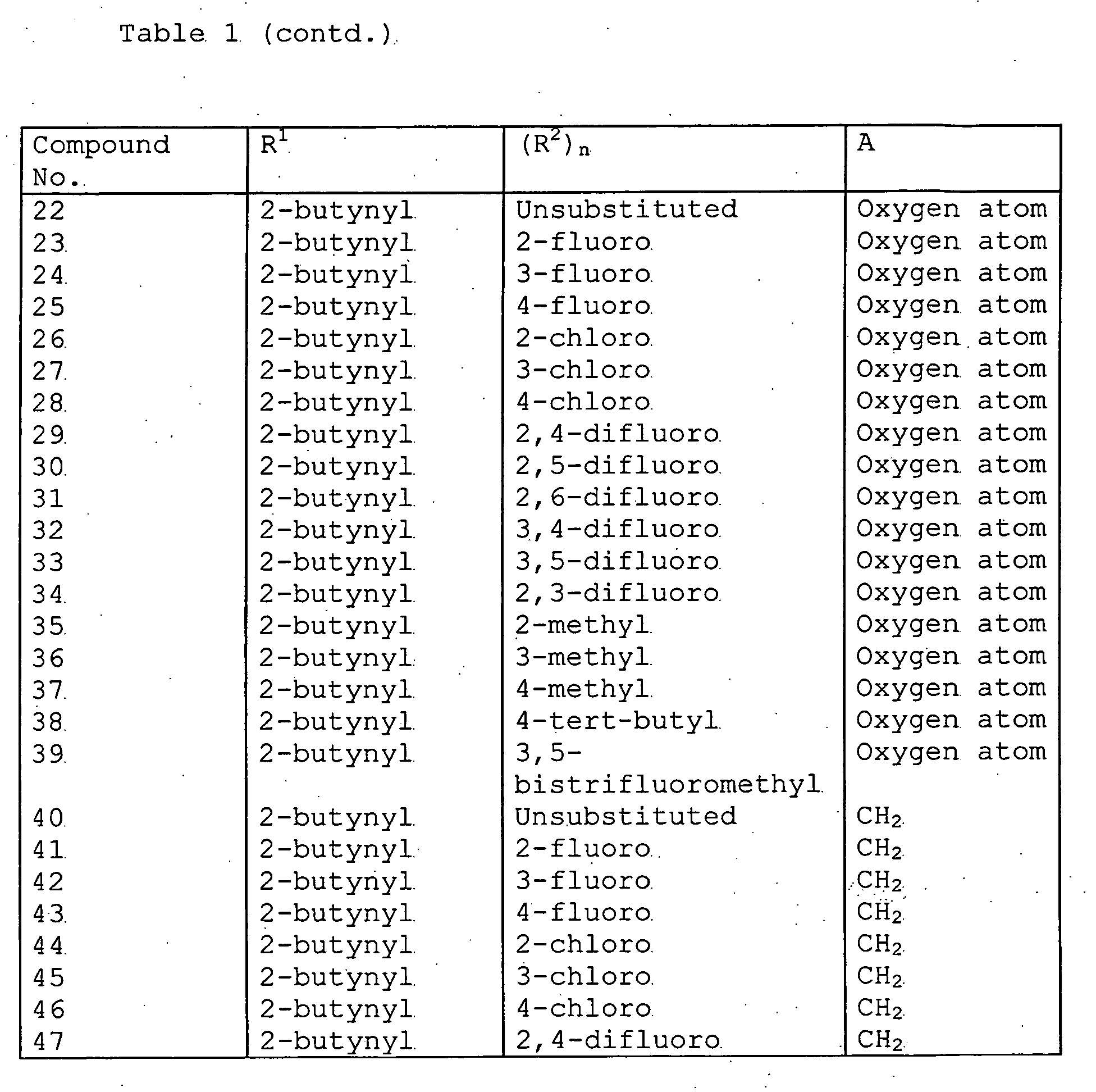
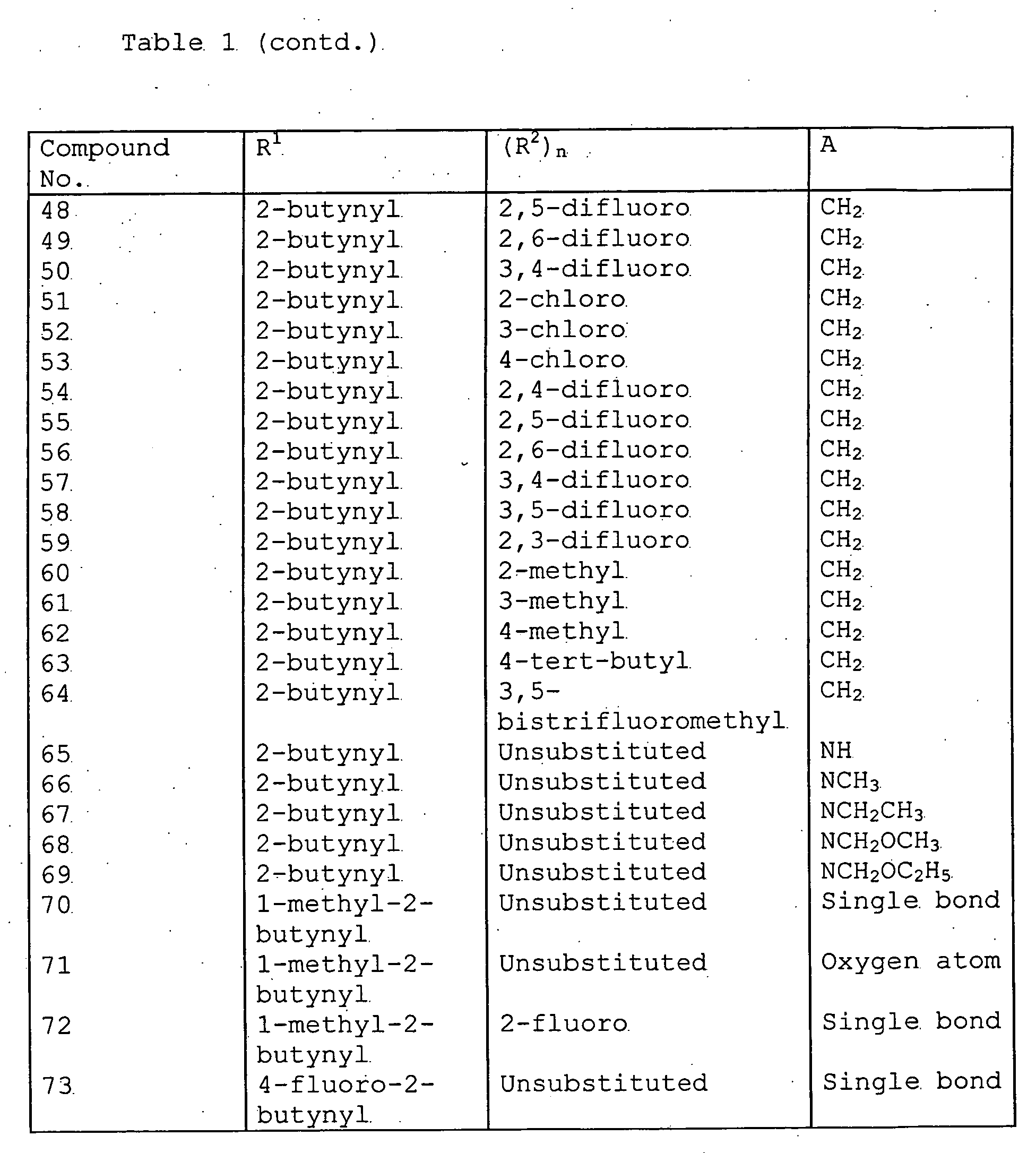
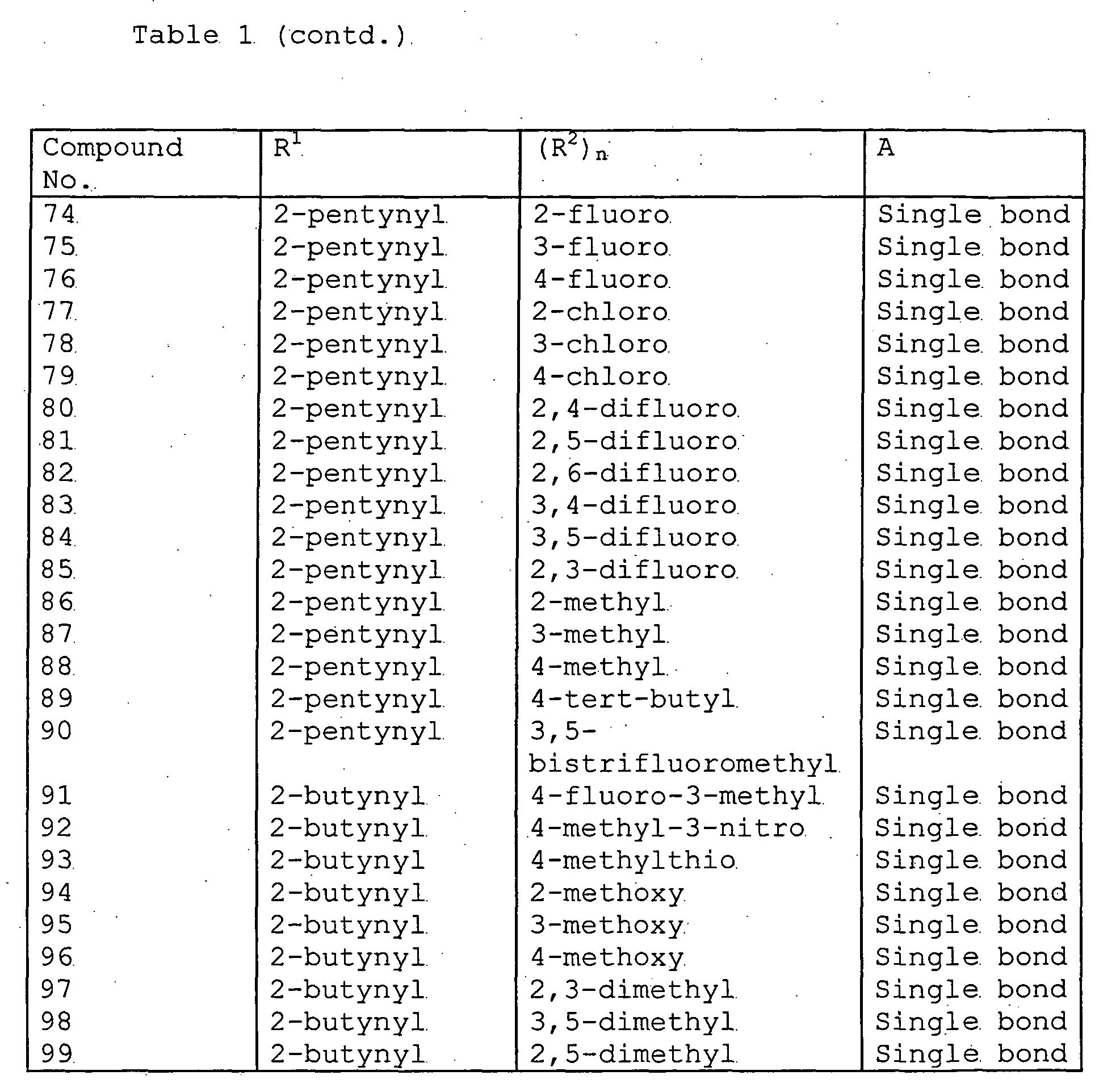
- a preparation prepared from each of the compounds (1), (2), (5), (6) and (16) of the present invention according to Formulation Example 5 was diluted with water so that the concentration of the compound of the present invention became. 500 ppm to obtain a test scattering solution.
- Controlling value (%) ⁇ 1 - (Cb ⁇ Tai) / (Cai ⁇ Tb) ⁇ ⁇ 100 wherein Cb represents the number of insects of an untreated group before treatment, Cai represents the number of insects of an untreated group at the time of observation, Tb represents the number of insects of a treated group before treatment, and Tai represents the number of insects of a treated group at the time of observation, respectively.
- a preparation prepared from each of the compound (1) of the present invention and a comparative compound (A) according to Formulation Example 5 was diluted with water so that the concentration of the compound of the present invention became 500 ppm to obtain a test scattering solution.
- a damage area rate by western flower thrips. (Frankliniella occidentalis) in the leaf treated with the compound (1) of the present invention was within 5%.
- a damage area rate in the leaf treated with the comparative compound (A) was 20% or more.
- a preparation prepared from each of the compounds (1), (2), (5), (6), (8), (9), (16), (77) and (78) of the present invention and the comparative compound (A) according to Formulation Example 5 was diluted with water so that the concentration of the compound of the present invention became 500 ppm to obtain a test scattering solution.
- the thus obtained cabbage on which about 80 to 100 eggs of silverleaf whitefly (Bemisia argentifolii) were laid was allowed to stand in a greenhouse for 8 days, and the aforementioned test scattering solution was scattered at a ratio of 20 ml/cup. Seven days after scattering, the number of alive insects was examined, and an insecticidal rate was calculated. As a result, the compounds (1), (2), (5), (6), (8), (9), (16), (77) and (78) of the present invention showed an insecticidal rate of 90% or more.
- the comparative compound (A) showed an insecticidal rate of 30% or less.
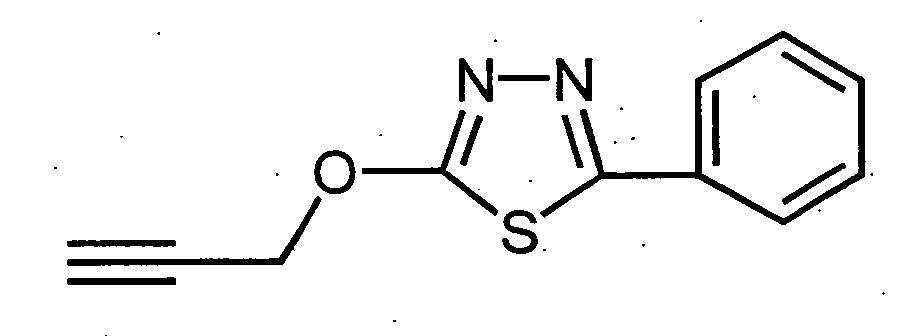
- the comparative compound (A) used in Test Example 2 and Test Example 3 is a compound represented by the following formula described in DE3030661 (compound 9 in the table on page 47).
Landscapes
- Life Sciences & Earth Sciences (AREA)
- Organic Chemistry (AREA)
- Chemical & Material Sciences (AREA)
- Health & Medical Sciences (AREA)
- Plant Pathology (AREA)
- Engineering & Computer Science (AREA)
- Dentistry (AREA)
- General Health & Medical Sciences (AREA)
- Wood Science & Technology (AREA)
- Zoology (AREA)
- Environmental Sciences (AREA)
- Pest Control & Pesticides (AREA)
- Agronomy & Crop Science (AREA)
- Agricultural Chemicals And Associated Chemicals (AREA)
- Nitrogen- Or Sulfur-Containing Heterocyclic Ring Compounds With Rings Of Six Or More Members (AREA)
- Plural Heterocyclic Compounds (AREA)
Abstract

Description



tetrakis (triphenylphosphine) palladium (0), {1,1'-
bis(diphenylphosphino)ferrocene}dichloropalladium (II) and dichloro bis(triphenylphosphine)palladium(II), and the amount of the transition metal compound is usually 0.001 to 0.1 mole relative to 1 mole of 5-chloro-3-methylthio-1,2,4-thiadiazole. The amount of the phenylboronic acid compound represented by the formula (4) or the trialkylphenyltin compound represented by the formula (5) used in the reaction is usually 0.9 to 1.5 mole relative to 1 mole of 5-chloro-3-methylthio-1,2,4-thiadiazole. The reaction temperature of the reaction is usually in a range of room temperature to 150°C. The reaction time is usually in a range of 1 to 12 hours.






benzoylphenylurea compounds such as chlorfluazuron, teflubenzuron, fulfenoxuron and lufenuron; benzoylhydrazide compounds such as tebufenozide, holofenozide, methoxyfenozide and chromafenozide; thiadiazine compounds such as buprofezin; nereistoxin compounds such as cartap, thiocyclam, bensultap; chlorinated hydrocarbon compounds such as endosulfan, γ-BHC, and 1,1-bis(chlorophenyl)-2,2,2-trichloroethanol; formamidine compounds such as amitraz, and chlordimeform; thiourea compounds such as
diafenthiuron; phenylpyrazole compounds; chlorfenapyr, pymetrozine, spinosad, indoxacarb, bromopropylate, tetradifon, chinomethionat, propargite, fenbutatin oxide, hexythiazox, etoxazole, clofentezine, pyridaben, fenpyroximate, tebufenpyrad, pyrimidifen, fenazaquin, acequinocyl, bifenazate, fluacrypyrim, spirodichlofen, milbemectin, avermectin, emamectin benzoate, azadirachtin[AZAD], polynactine complex [tetranactin, dinactin, trinactin].
mp: 66.9°C
1H-NMR: 2.55 (t, 1H), 5.10 (d, 2H), 7.48-7.54 (m, 3H), 7.91-7.94 (m, 2H).
mp: 70.3°C
1H-NMR: 1.88 (t, 3H), 5.05 (q, 2H), 7.45-7.53 (m, 3H), 7.91-7.93 (m, 2H)
1H-NMR: 1.88 (t, 3H), 5.07 (q, 2H), 7.24-7.36 (m, 2H), 8.04-8.09 (m, 1H)
1H-NMR: 1.88 (t, 3H), 5.07 (q, 2H), 7.20-7.33 (m, 2H), 7.48-7.56 (m, 1H), 8.29-8.35 (m, 1H)
mp: 68.7°C
1H-NMR: 1.88 (t, 3H), 5.06 (q, 2H), 7.12-7.25 (m, 1H), 7.42-7.50 (m, 1H), 7.64-7.70 (m, 1H)
1H-NMR: 7.94 (s, 1H), 7.78 (d, 1H), 7.48 (d, 1H), 7.42 (t, 1H), 5.05 (q, 2H), 1.88 (t, 3H)
1H-NMR: 7.94 (s, 1H), 7.78 (d, 1H), 7.48 (d, 1H), 7.42 (t, 1H), 5.05 (q, 2H), 1.88 (t, 3H)
1H-NMR: 8.51 (d, 1H), 7.53 (d, 1H), 7.46 (m, 2H), 5.06 (q, 2H), 1.88 (t, 3H)
1H-NMR: 8.52 (d, 1H), 7.53 (d, 1H), 7.45 (m, 2H), 5.08 (q, 2H), 2.25 (m, 2H), 1.15 (t, 3H)
1H-NMR: 3.13 (sulfinylmethyl s, 3H), 3.44 (sulfonylmethyl s, 3H), 7.55 (m, 3H), 8.00 (m, 2H)
Sulfonyl form : sulfinyl form = 1 : 4
1H-NMR: 3.13 (sulfinylmethyl s, 3H), 3.45 (sulfonylmethyl s, 3H), 7.29-7.41 (m, 2H), 7.59-7.65 (m, 1H), 8.41-8.46 (m, 1H)
sulfonyl form : sulfinyl form = 4 : 1
1H-NMR: 3.45 (s, 3H), 7.27-7.47 (m, 1H), 7.49-7.58 (m, 1H), 7.73-7.81 (m, 1H)
mp: 57.1°C
1H-NMR: 2.73 (s, 3H), 7.26-7.38 (m, 2H), 8.05-8.11 (m, 1H)
1H-NMR: 2.74 (s, 3H), 7.21-7.34 (m, 2H), 7.49-7.56 (m, 1H), 8.30-8.36 (m, 1H)
1H-NMR: 7.95 (s, 1H), 7.78 (d, 1H), 7.49 (d, 1H), 7.42 (t, 1H), 2.73 (s, 3H).
1H-NMR: 8.04 (s, 1H), 7.88 (d, 1H), 7.59 (d, 1H), 7.7.49 (t, 1H), 3.32 (s, 3H)
1H-NMR: 8.64-8.58 (m), 7.60-7.48 (m), 3.45 (s), 3.13 (s)
sulfonyl form : sulfinyl form = about. 2.7 : 1
Controlling value (%) = {1 - (Cb × Tai) / (Cai × Tb)} × 100 wherein Cb represents the number of insects of an untreated group before treatment, Cai represents the number of insects of an untreated group at the time of observation, Tb represents the number of insects of a treated group before treatment, and Tai represents the number of insects of a treated group at the time of observation, respectively.
Claims (9)
- A 1,2,4-thiadiazole compound represented by the formula (1):wherein R1 represents a C3-C7 alkynyl group optionally substituted with one or more halogen atom(s), R2 represents a halogen atom, a C1-C4 alkyl group, a C1-C4 haloalkyl group, a C1-C4 alkoxy group, a C1-C4 haloalkoxy group, a C1-C4 alkylthio group, a cyano group or a nitro group, n represents an integer of 0 to 5, provided that, when n represents an integer of 2 or more, respective R2s may be the same or different,

A represents an oxygen atom, a sulfur atom, a single bond, a CR3R4 group or a NR5 group, R3 and R4 represent each independently a hydrogen atom or a C1-C4 alkyl group, and R5 represents a hydrogen atom, a C1-C7 alkyl group, a C1-C3 haloalkyl group, a C2-C4(alkoxyalkyl) group, a C2-C4(haloalkoxyalkyl) group, a C3-C6 alkenyl group, a C3-C6 haloalkenyl group, a C3-C7 alkynyl group, a C3-C7 haloalkynyl group or a cyanomethyl group. - The 1,2,4-thiadiazole compound according to claim 1, wherein A in the formula (1) is a single bond.
- The 1,2,4-thiadiazole compound according to claim 1 or 2, wherein R1 in the formula (1) is a 2-propynyl group, a 2-butynyl group or 2-pentynyl group.
- The 1,2,4-thiadiazole compound according to claim 1 or 2, wherein R1 in the formula (1) is a 2-butynyl group or a 2-pentynyl group.
- A composition for controlling a harmful arthropod which comprises an effective amount of the 1,2,4-thiadiazole compound according to claim 1.
- A method for controlling a harmful arthropod which comprises applying, to harmful arthropods or a place where harmful arthropods inhabit, a 1,2,4-thiadiazole compound represented by the formula (1):wherein R1 represents a C3-C7 alkynyl group optionally substituted with one or more halogen atom(s), R2 represents a halogen atom, a C1-C4 alkyl group, a C1-C4 haloalkyl group, a C1-C4 alkoxy group, a C1-C4 haloalkoxy group, a C1-C4 alkylthio group, a cyano group or a nitro group, n represents an integer of 0 to 5, provided that, when n represents an integer of 2 or more, respective R2s may be the same or different,

A represents an oxygen atom, a sulfur atom, a single bond, a CR3R4 group or a NR5 group, R3 and R4 represent each independently a hydrogen atom or C1-C4 alkyl group, and R5 represents a hydrogen atom, a C1-C7 alkyl group, a C1-C3 haloalkyl group, a C2-C4(alkoxyalkyl) group, a C2-C4(haloalkoxyalkyl) group, a C3-C6 alkenyl group, a C3-C6 haloalkenyl group, a C3-C7 alkynyl group, a C3-C7 haloalkynyl group or a cyanomethyl group. - The controlling method according to claim 6, wherein the harmful arthropod is a Hemiptera insect pest, a Lepidoptera insect pest, a Coleoptera insect pest or a Thysanoptera insect pest.
- The controlling method according to claim 6, wherein the harmful arthropod is a Hemiptera insect pest or a Thysanoptera insect pest.
- Use of the 1,2,4-thiadiazole compound according to claim 1 as an active ingredient of a composition for controlling a harmful arthropod.
Applications Claiming Priority (1)
| Application Number | Priority Date | Filing Date | Title |
|---|---|---|---|
| PCT/JP2002/011644 WO2004041798A1 (en) | 2002-11-08 | 2002-11-08 | 1,2,4-thiadiazole compounds and use thereof |
Publications (3)
| Publication Number | Publication Date |
|---|---|
| EP1574505A1 true EP1574505A1 (en) | 2005-09-14 |
| EP1574505A4 EP1574505A4 (en) | 2006-07-26 |
| EP1574505B1 EP1574505B1 (en) | 2008-07-16 |
Family
ID=32310239
Family Applications (1)
| Application Number | Title | Priority Date | Filing Date |
|---|---|---|---|
| EP02808100A Expired - Lifetime EP1574505B1 (en) | 2002-11-08 | 2002-11-08 | 1,2,4-thiadiazole compounds and use thereof |
Country Status (12)
| Country | Link |
|---|---|
| US (1) | US7361675B2 (en) |
| EP (1) | EP1574505B1 (en) |
| KR (1) | KR100874562B1 (en) |
| CN (1) | CN100391950C (en) |
| AT (1) | ATE401316T1 (en) |
| AU (1) | AU2002368330B2 (en) |
| BR (1) | BR0215911A (en) |
| DE (1) | DE60227714D1 (en) |
| ES (1) | ES2307833T3 (en) |
| IL (1) | IL167829A (en) |
| MX (1) | MXPA05004824A (en) |
| WO (1) | WO2004041798A1 (en) |
Cited By (2)
| Publication number | Priority date | Publication date | Assignee | Title |
|---|---|---|---|---|
| WO2007012724A1 (en) * | 2005-07-27 | 2007-02-01 | Cytomics Systems | 1,2,4-thiadiazole derivatives antifungal compounds, compositions containing said compounds and the use thereof |
| US10827753B2 (en) | 2007-08-13 | 2020-11-10 | Monsanto Technology Llc | Compositions and methods for controlling nematodes |
Families Citing this family (2)
| Publication number | Priority date | Publication date | Assignee | Title |
|---|---|---|---|---|
| AU2004282018B2 (en) | 2003-10-15 | 2009-07-23 | Sumitomo Chemical Company, Limited | 1,2,4-thiadiazole compounds and pests controlling composition containing the same |
| CN103113322B (en) * | 2013-02-05 | 2014-12-17 | 浙江省诸暨合力化学对外贸易有限公司 | Synthesis method of thiadiazolylamide derivative |
Family Cites Families (12)
| Publication number | Priority date | Publication date | Assignee | Title |
|---|---|---|---|---|
| US4069319A (en) * | 1973-10-26 | 1978-01-17 | Roussel Uclaf | Novel thiadiazoles |
| DE3030661A1 (en) * | 1980-08-13 | 1982-04-01 | Bayer Ag, 5090 Leverkusen | Pesticides, esp. insecticide and acaricide synergists - are hetero:aryl propargyl ether cpds. with hetero:aryl gp. e.g. thiazole ring being hetero:aromatic |
| GB8509752D0 (en) * | 1985-04-16 | 1985-05-22 | Fbc Ltd | Acaricides |
| DE4131138A1 (en) | 1991-09-19 | 1993-03-25 | Bayer Ag | 3- (4-BROMPHENYL) -5-METHYLSULFONYL-1,2,4-THIADIAZOLE, A METHOD FOR THE PRODUCTION, ITS USE AND NEW INTERMEDIATE PRODUCTS |
| JPH06100550A (en) | 1992-08-06 | 1994-04-12 | Nissan Chem Ind Ltd | Diazole derivative and noxious life controlling agent |
| GB9320744D0 (en) | 1992-11-04 | 1993-12-01 | Zeneca Ltd | Oxa and thiadiazole derivatives |
| DE4341066A1 (en) * | 1993-05-03 | 1994-11-10 | Bayer Ag | Oxa (thia) diazole oxy phenyl acrylates |
| DE4415338A1 (en) * | 1994-05-02 | 1995-11-09 | Bayer Ag | Alkylsulfinyl and alkylsulfonyl-1,2,4-thiadiazolyloxyacetamides |
| GB9902592D0 (en) * | 1999-02-06 | 1999-03-24 | Hoechst Schering Agrevo Gmbh | Fungicides |
| JP2001039954A (en) | 1999-05-24 | 2001-02-13 | Tomono Agrica Co Ltd | Heterocyclic derivative |
| JP4923334B2 (en) | 2001-05-22 | 2012-04-25 | 住友化学株式会社 | 1,2,4-thiadiazole compounds and uses thereof |
| WO2003059897A1 (en) | 2002-01-17 | 2003-07-24 | Sumitomo Chemical Company, Limited | Thiadiazole compounds and use thereof |
-
2002
- 2002-11-08 CN CNB02829792XA patent/CN100391950C/en not_active Expired - Fee Related
- 2002-11-08 MX MXPA05004824A patent/MXPA05004824A/en active IP Right Grant
- 2002-11-08 DE DE60227714T patent/DE60227714D1/en not_active Expired - Lifetime
- 2002-11-08 AU AU2002368330A patent/AU2002368330B2/en not_active Ceased
- 2002-11-08 EP EP02808100A patent/EP1574505B1/en not_active Expired - Lifetime
- 2002-11-08 ES ES02808100T patent/ES2307833T3/en not_active Expired - Lifetime
- 2002-11-08 WO PCT/JP2002/011644 patent/WO2004041798A1/en not_active Ceased
- 2002-11-08 BR BR0215911-2A patent/BR0215911A/en not_active Application Discontinuation
- 2002-11-08 AT AT02808100T patent/ATE401316T1/en not_active IP Right Cessation
- 2002-11-08 KR KR1020057008059A patent/KR100874562B1/en not_active Expired - Fee Related
- 2002-11-08 US US10/530,136 patent/US7361675B2/en not_active Expired - Fee Related
-
2005
- 2005-04-03 IL IL167829A patent/IL167829A/en not_active IP Right Cessation
Cited By (3)
| Publication number | Priority date | Publication date | Assignee | Title |
|---|---|---|---|---|
| WO2007012724A1 (en) * | 2005-07-27 | 2007-02-01 | Cytomics Systems | 1,2,4-thiadiazole derivatives antifungal compounds, compositions containing said compounds and the use thereof |
| FR2889192A1 (en) * | 2005-07-27 | 2007-02-02 | Cytomics Systems Sa | ANTIFUNGAL COMPOUNDS, COMPOSITIONS CONTAINING THESE COMPOUNDS, AND USES THEREOF |
| US10827753B2 (en) | 2007-08-13 | 2020-11-10 | Monsanto Technology Llc | Compositions and methods for controlling nematodes |
Also Published As
| Publication number | Publication date |
|---|---|
| ATE401316T1 (en) | 2008-08-15 |
| ES2307833T3 (en) | 2008-12-01 |
| AU2002368330A1 (en) | 2004-06-07 |
| DE60227714D1 (en) | 2008-08-28 |
| IL167829A (en) | 2010-11-30 |
| KR100874562B1 (en) | 2008-12-16 |
| CN1688559A (en) | 2005-10-26 |
| EP1574505B1 (en) | 2008-07-16 |
| EP1574505A4 (en) | 2006-07-26 |
| US20060167266A1 (en) | 2006-07-27 |
| BR0215911A (en) | 2005-07-26 |
| KR20050090981A (en) | 2005-09-14 |
| WO2004041798A1 (en) | 2004-05-21 |
| US7361675B2 (en) | 2008-04-22 |
| MXPA05004824A (en) | 2005-07-22 |
| CN100391950C (en) | 2008-06-04 |
| AU2002368330B2 (en) | 2009-03-26 |
Similar Documents
| Publication | Publication Date | Title |
|---|---|---|
| TWI322804B (en) | Pyrimidine compounds and their use | |
| US7361675B2 (en) | 1,2,4-thiadiazole compounds and use thereof | |
| JP4923334B2 (en) | 1,2,4-thiadiazole compounds and uses thereof | |
| KR101195800B1 (en) | Production method of pyrimidine compounds | |
| JP4595381B2 (en) | Pyrimidine compounds and their use for pest control | |
| JP4513251B2 (en) | Thiadiazole compounds and uses thereof | |
| JP4894225B2 (en) | 4-Fluoro-6-alkynyloxypyrimidine compound and process for producing the same | |
| EP1475374A1 (en) | Thiadiazole compounds and use thereof | |
| JP3038903B2 (en) | Uracil derivatives and pesticides | |
| JP2004026815A (en) | Phthalamide derivative, agricultural and horticultural insecticide and method of using the same | |
| JP2003160568A (en) | 4,5-Substituted pyrimidine compounds and uses thereof | |
| JP4706225B2 (en) | 1,2,4-thiadiazole compounds and their use for pest control and intermediates thereof | |
| JP2003155279A (en) | 1,2,4-oxadiazole compounds and uses thereof | |
| JP2003155204A (en) | Insecticide containing triazine compound as active ingredient | |
| JP2003146971A (en) | Pyridine compounds and their uses | |
| JP2003277372A (en) | Thiadiazole compounds and uses thereof | |
| WO2004085407A1 (en) | Pyrimidine compound and arthropod control agent containing the same | |
| ZA200502910B (en) | 1,2,4-thiadiazole compounds and use thereof | |
| JPH0912552A (en) | Novel pyridine derivative and pest control agent | |
| JP2002187881A (en) | Pyridine compounds, arthropod pest control agents containing the same as an active ingredient, and intermediates thereof | |
| JP2003221384A (en) | Pyrazole compounds and uses thereof |
Legal Events
| Date | Code | Title | Description |
|---|---|---|---|
| PUAI | Public reference made under article 153(3) epc to a published international application that has entered the european phase |
Free format text: ORIGINAL CODE: 0009012 |
|
| 17P | Request for examination filed |
Effective date: 20050525 |
|
| AK | Designated contracting states |
Kind code of ref document: A1 Designated state(s): AT BE BG CH CY CZ DE DK EE ES FI FR GB GR IE IT LI LU MC NL PT SE SK TR |
|
| AX | Request for extension of the european patent |
Extension state: AL LT LV MK RO SI |
|
| DAX | Request for extension of the european patent (deleted) | ||
| A4 | Supplementary search report drawn up and despatched |
Effective date: 20060627 |
|
| GRAP | Despatch of communication of intention to grant a patent |
Free format text: ORIGINAL CODE: EPIDOSNIGR1 |
|
| GRAS | Grant fee paid |
Free format text: ORIGINAL CODE: EPIDOSNIGR3 |
|
| GRAA | (expected) grant |
Free format text: ORIGINAL CODE: 0009210 |
|
| AK | Designated contracting states |
Kind code of ref document: B1 Designated state(s): AT BE BG CH CY CZ DE DK EE ES FI FR GB GR IE IT LI LU MC NL PT SE SK TR |
|
| REG | Reference to a national code |
Ref country code: GB Ref legal event code: FG4D |
|
| REG | Reference to a national code |
Ref country code: CH Ref legal event code: EP |
|
| REF | Corresponds to: |
Ref document number: 60227714 Country of ref document: DE Date of ref document: 20080828 Kind code of ref document: P |
|
| REG | Reference to a national code |
Ref country code: IE Ref legal event code: FG4D |
|
| REG | Reference to a national code |
Ref country code: GR Ref legal event code: EP Ref document number: 20080402094 Country of ref document: GR |
|
| REG | Reference to a national code |
Ref country code: ES Ref legal event code: FG2A Ref document number: 2307833 Country of ref document: ES Kind code of ref document: T3 |
|
| PG25 | Lapsed in a contracting state [announced via postgrant information from national office to epo] |
Ref country code: PT Free format text: LAPSE BECAUSE OF FAILURE TO SUBMIT A TRANSLATION OF THE DESCRIPTION OR TO PAY THE FEE WITHIN THE PRESCRIBED TIME-LIMIT Effective date: 20081216 |
|
| PG25 | Lapsed in a contracting state [announced via postgrant information from national office to epo] |
Ref country code: AT Free format text: LAPSE BECAUSE OF FAILURE TO SUBMIT A TRANSLATION OF THE DESCRIPTION OR TO PAY THE FEE WITHIN THE PRESCRIBED TIME-LIMIT Effective date: 20080716 Ref country code: FI Free format text: LAPSE BECAUSE OF FAILURE TO SUBMIT A TRANSLATION OF THE DESCRIPTION OR TO PAY THE FEE WITHIN THE PRESCRIBED TIME-LIMIT Effective date: 20080716 Ref country code: BG Free format text: LAPSE BECAUSE OF FAILURE TO SUBMIT A TRANSLATION OF THE DESCRIPTION OR TO PAY THE FEE WITHIN THE PRESCRIBED TIME-LIMIT Effective date: 20081016 |
|
| PG25 | Lapsed in a contracting state [announced via postgrant information from national office to epo] |
Ref country code: BE Free format text: LAPSE BECAUSE OF FAILURE TO SUBMIT A TRANSLATION OF THE DESCRIPTION OR TO PAY THE FEE WITHIN THE PRESCRIBED TIME-LIMIT Effective date: 20080716 |
|
| PG25 | Lapsed in a contracting state [announced via postgrant information from national office to epo] |
Ref country code: DK Free format text: LAPSE BECAUSE OF FAILURE TO SUBMIT A TRANSLATION OF THE DESCRIPTION OR TO PAY THE FEE WITHIN THE PRESCRIBED TIME-LIMIT Effective date: 20080716 Ref country code: EE Free format text: LAPSE BECAUSE OF FAILURE TO SUBMIT A TRANSLATION OF THE DESCRIPTION OR TO PAY THE FEE WITHIN THE PRESCRIBED TIME-LIMIT Effective date: 20080716 |
|
| PLBE | No opposition filed within time limit |
Free format text: ORIGINAL CODE: 0009261 |
|
| STAA | Information on the status of an ep patent application or granted ep patent |
Free format text: STATUS: NO OPPOSITION FILED WITHIN TIME LIMIT |
|
| PG25 | Lapsed in a contracting state [announced via postgrant information from national office to epo] |
Ref country code: CZ Free format text: LAPSE BECAUSE OF FAILURE TO SUBMIT A TRANSLATION OF THE DESCRIPTION OR TO PAY THE FEE WITHIN THE PRESCRIBED TIME-LIMIT Effective date: 20080716 Ref country code: SK Free format text: LAPSE BECAUSE OF FAILURE TO SUBMIT A TRANSLATION OF THE DESCRIPTION OR TO PAY THE FEE WITHIN THE PRESCRIBED TIME-LIMIT Effective date: 20080716 |
|
| 26N | No opposition filed |
Effective date: 20090417 |
|
| PG25 | Lapsed in a contracting state [announced via postgrant information from national office to epo] |
Ref country code: MC Free format text: LAPSE BECAUSE OF NON-PAYMENT OF DUE FEES Effective date: 20081130 |
|
| REG | Reference to a national code |
Ref country code: CH Ref legal event code: PL |
|
| REG | Reference to a national code |
Ref country code: IE Ref legal event code: MM4A |
|
| PG25 | Lapsed in a contracting state [announced via postgrant information from national office to epo] |
Ref country code: CH Free format text: LAPSE BECAUSE OF NON-PAYMENT OF DUE FEES Effective date: 20081130 Ref country code: LI Free format text: LAPSE BECAUSE OF NON-PAYMENT OF DUE FEES Effective date: 20081130 Ref country code: IE Free format text: LAPSE BECAUSE OF NON-PAYMENT OF DUE FEES Effective date: 20081108 |
|
| PG25 | Lapsed in a contracting state [announced via postgrant information from national office to epo] |
Ref country code: SE Free format text: LAPSE BECAUSE OF FAILURE TO SUBMIT A TRANSLATION OF THE DESCRIPTION OR TO PAY THE FEE WITHIN THE PRESCRIBED TIME-LIMIT Effective date: 20081016 |
|
| PG25 | Lapsed in a contracting state [announced via postgrant information from national office to epo] |
Ref country code: CY Free format text: LAPSE BECAUSE OF FAILURE TO SUBMIT A TRANSLATION OF THE DESCRIPTION OR TO PAY THE FEE WITHIN THE PRESCRIBED TIME-LIMIT Effective date: 20080716 Ref country code: LU Free format text: LAPSE BECAUSE OF NON-PAYMENT OF DUE FEES Effective date: 20081108 |
|
| PGFP | Annual fee paid to national office [announced via postgrant information from national office to epo] |
Ref country code: DE Payment date: 20101104 Year of fee payment: 9 |
|
| PGFP | Annual fee paid to national office [announced via postgrant information from national office to epo] |
Ref country code: IT Payment date: 20101115 Year of fee payment: 9 Ref country code: GR Payment date: 20101014 Year of fee payment: 9 Ref country code: GB Payment date: 20101103 Year of fee payment: 9 Ref country code: TR Payment date: 20101014 Year of fee payment: 9 |
|
| PGFP | Annual fee paid to national office [announced via postgrant information from national office to epo] |
Ref country code: FR Payment date: 20111118 Year of fee payment: 10 Ref country code: NL Payment date: 20111117 Year of fee payment: 10 Ref country code: ES Payment date: 20111216 Year of fee payment: 10 |
|
| REG | Reference to a national code |
Ref country code: NL Ref legal event code: V1 Effective date: 20130601 |
|
| GBPC | Gb: european patent ceased through non-payment of renewal fee |
Effective date: 20121108 |
|
| REG | Reference to a national code |
Ref country code: FR Ref legal event code: ST Effective date: 20130731 |
|
| PG25 | Lapsed in a contracting state [announced via postgrant information from national office to epo] |
Ref country code: NL Free format text: LAPSE BECAUSE OF NON-PAYMENT OF DUE FEES Effective date: 20130601 Ref country code: IT Free format text: LAPSE BECAUSE OF NON-PAYMENT OF DUE FEES Effective date: 20121108 Ref country code: GR Free format text: LAPSE BECAUSE OF NON-PAYMENT OF DUE FEES Effective date: 20130604 |
|
| REG | Reference to a national code |
Ref country code: GR Ref legal event code: ML Ref document number: 20080402094 Country of ref document: GR Effective date: 20130604 |
|
| REG | Reference to a national code |
Ref country code: DE Ref legal event code: R119 Ref document number: 60227714 Country of ref document: DE Effective date: 20130601 |
|
| PG25 | Lapsed in a contracting state [announced via postgrant information from national office to epo] |
Ref country code: DE Free format text: LAPSE BECAUSE OF NON-PAYMENT OF DUE FEES Effective date: 20130601 |
|
| PG25 | Lapsed in a contracting state [announced via postgrant information from national office to epo] |
Ref country code: GB Free format text: LAPSE BECAUSE OF NON-PAYMENT OF DUE FEES Effective date: 20121108 Ref country code: FR Free format text: LAPSE BECAUSE OF NON-PAYMENT OF DUE FEES Effective date: 20121130 |
|
| REG | Reference to a national code |
Ref country code: ES Ref legal event code: FD2A Effective date: 20140527 |
|
| PG25 | Lapsed in a contracting state [announced via postgrant information from national office to epo] |
Ref country code: ES Free format text: LAPSE BECAUSE OF NON-PAYMENT OF DUE FEES Effective date: 20121109 Ref country code: TR Free format text: LAPSE BECAUSE OF NON-PAYMENT OF DUE FEES Effective date: 20121108 |