EP1574500A1 - Quinoline derivative as diagnostic probe for disease with tau protein accumulation - Google Patents
Quinoline derivative as diagnostic probe for disease with tau protein accumulation Download PDFInfo
- Publication number
- EP1574500A1 EP1574500A1 EP03775961A EP03775961A EP1574500A1 EP 1574500 A1 EP1574500 A1 EP 1574500A1 EP 03775961 A EP03775961 A EP 03775961A EP 03775961 A EP03775961 A EP 03775961A EP 1574500 A1 EP1574500 A1 EP 1574500A1
- Authority
- EP
- European Patent Office
- Prior art keywords
- compound
- disease
- pharmaceutically acceptable
- solvate
- acceptable salt
- Prior art date
- Legal status (The legal status is an assumption and is not a legal conclusion. Google has not performed a legal analysis and makes no representation as to the accuracy of the status listed.)
- Withdrawn
Links
Images




Classifications
-
- C—CHEMISTRY; METALLURGY
- C07—ORGANIC CHEMISTRY
- C07D—HETEROCYCLIC COMPOUNDS
- C07D215/00—Heterocyclic compounds containing quinoline or hydrogenated quinoline ring systems
- C07D215/02—Heterocyclic compounds containing quinoline or hydrogenated quinoline ring systems having no bond between the ring nitrogen atom and a non-ring member or having only hydrogen atoms or carbon atoms directly attached to the ring nitrogen atom
- C07D215/16—Heterocyclic compounds containing quinoline or hydrogenated quinoline ring systems having no bond between the ring nitrogen atom and a non-ring member or having only hydrogen atoms or carbon atoms directly attached to the ring nitrogen atom with hetero atoms or with carbon atoms having three bonds to hetero atoms with at the most one bond to halogen, e.g. ester or nitrile radicals, directly attached to ring carbon atoms
- C07D215/48—Carbon atoms having three bonds to hetero atoms with at the most one bond to halogen
- C07D215/50—Carbon atoms having three bonds to hetero atoms with at the most one bond to halogen attached in position 4
- C07D215/52—Carbon atoms having three bonds to hetero atoms with at the most one bond to halogen attached in position 4 with aryl radicals attached in position 2
-
- A—HUMAN NECESSITIES
- A61—MEDICAL OR VETERINARY SCIENCE; HYGIENE
- A61K—PREPARATIONS FOR MEDICAL, DENTAL OR TOILETRY PURPOSES
- A61K31/00—Medicinal preparations containing organic active ingredients
- A61K31/33—Heterocyclic compounds
- A61K31/395—Heterocyclic compounds having nitrogen as a ring hetero atom, e.g. guanethidine or rifamycins
- A61K31/435—Heterocyclic compounds having nitrogen as a ring hetero atom, e.g. guanethidine or rifamycins having six-membered rings with one nitrogen as the only ring hetero atom
- A61K31/47—Quinolines; Isoquinolines
-
- A—HUMAN NECESSITIES
- A61—MEDICAL OR VETERINARY SCIENCE; HYGIENE
- A61K—PREPARATIONS FOR MEDICAL, DENTAL OR TOILETRY PURPOSES
- A61K31/00—Medicinal preparations containing organic active ingredients
- A61K31/33—Heterocyclic compounds
- A61K31/395—Heterocyclic compounds having nitrogen as a ring hetero atom, e.g. guanethidine or rifamycins
- A61K31/435—Heterocyclic compounds having nitrogen as a ring hetero atom, e.g. guanethidine or rifamycins having six-membered rings with one nitrogen as the only ring hetero atom
- A61K31/47—Quinolines; Isoquinolines
- A61K31/473—Quinolines; Isoquinolines ortho- or peri-condensed with carbocyclic ring systems, e.g. acridines, phenanthridines
-
- A—HUMAN NECESSITIES
- A61—MEDICAL OR VETERINARY SCIENCE; HYGIENE
- A61K—PREPARATIONS FOR MEDICAL, DENTAL OR TOILETRY PURPOSES
- A61K51/00—Preparations containing radioactive substances for use in therapy or testing in vivo
- A61K51/02—Preparations containing radioactive substances for use in therapy or testing in vivo characterised by the carrier, i.e. characterised by the agent or material covalently linked or complexing the radioactive nucleus
- A61K51/04—Organic compounds
- A61K51/041—Heterocyclic compounds
- A61K51/044—Heterocyclic compounds having nitrogen as a ring hetero atom, e.g. guanethidine, rifamycins
- A61K51/0455—Heterocyclic compounds having nitrogen as a ring hetero atom, e.g. guanethidine, rifamycins having six-membered rings with one nitrogen as the only ring hetero atom
-
- A—HUMAN NECESSITIES
- A61—MEDICAL OR VETERINARY SCIENCE; HYGIENE
- A61P—SPECIFIC THERAPEUTIC ACTIVITY OF CHEMICAL COMPOUNDS OR MEDICINAL PREPARATIONS
- A61P25/00—Drugs for disorders of the nervous system
-
- A—HUMAN NECESSITIES
- A61—MEDICAL OR VETERINARY SCIENCE; HYGIENE
- A61P—SPECIFIC THERAPEUTIC ACTIVITY OF CHEMICAL COMPOUNDS OR MEDICINAL PREPARATIONS
- A61P25/00—Drugs for disorders of the nervous system
- A61P25/28—Drugs for disorders of the nervous system for treating neurodegenerative disorders of the central nervous system, e.g. nootropic agents, cognition enhancers, drugs for treating Alzheimer's disease or other forms of dementia
-
- C—CHEMISTRY; METALLURGY
- C07—ORGANIC CHEMISTRY
- C07D—HETEROCYCLIC COMPOUNDS
- C07D215/00—Heterocyclic compounds containing quinoline or hydrogenated quinoline ring systems
- C07D215/02—Heterocyclic compounds containing quinoline or hydrogenated quinoline ring systems having no bond between the ring nitrogen atom and a non-ring member or having only hydrogen atoms or carbon atoms directly attached to the ring nitrogen atom
- C07D215/12—Heterocyclic compounds containing quinoline or hydrogenated quinoline ring systems having no bond between the ring nitrogen atom and a non-ring member or having only hydrogen atoms or carbon atoms directly attached to the ring nitrogen atom with substituted hydrocarbon radicals attached to ring carbon atoms
-
- C—CHEMISTRY; METALLURGY
- C07—ORGANIC CHEMISTRY
- C07D—HETEROCYCLIC COMPOUNDS
- C07D221/00—Heterocyclic compounds containing six-membered rings having one nitrogen atom as the only ring hetero atom, not provided for by groups C07D211/00 - C07D219/00
- C07D221/02—Heterocyclic compounds containing six-membered rings having one nitrogen atom as the only ring hetero atom, not provided for by groups C07D211/00 - C07D219/00 condensed with carbocyclic rings or ring systems
- C07D221/04—Ortho- or peri-condensed ring systems
- C07D221/06—Ring systems of three rings
- C07D221/10—Aza-phenanthrenes
-
- A—HUMAN NECESSITIES
- A61—MEDICAL OR VETERINARY SCIENCE; HYGIENE
- A61K—PREPARATIONS FOR MEDICAL, DENTAL OR TOILETRY PURPOSES
- A61K2123/00—Preparations for testing in vivo
Definitions
- the present invention relates to a probe for the imaging diagnosis of a disease it which tau protein accumulates, in particular, a probe labeled with a positron-emitting radionuclide, as well as to a composition for imaging diagnosis comprising such a probe. Further, the present invention relates to staining of neurofibrillary tangles in brain materials, and to a pharmaceutical composition for the prophylaxis and/or treatment of a disease in which ⁇ -sheet structure is the cause or possible cause.
- Amyloid accumulating diseases include a variety, of diseases characterized by the deposition of insoluble fibrillary proteins (amyloids) in various organs and tissues in the body, including Alzheimer's disease, Down's syndrome and others. Among them, Alzheimer's disease (AD) is considered as a disease which is most difficult to treat at present, and there is a need for its accurate and early diagnosis.
- AD Alzheimer's disease
- Alzheimer's disease is considered as a disease which is most difficult to treat at present and whose accurate and early diagnosis is required.
- Alzheimer's disease is a disease whose feature is progressive dementia developing predominantly in a presenile to senile period.
- Alzheimer's disease is pathologically characterized by overall cerebral atrophy, remarkable degeneration and neuronal loss, and appearing of neurofibrillary tangles and senile plaques. It is known that the highest risk factor of dementia represented by Alzheimer's disease is aging. Thus, an increase in the number of patients as an old population increases is remarkable in especially Japan, America, and European countries, which have reached an aging society, and medical costs for the patients bring the medical system of those countries to a crisis.
- Alzheimer's disease has already took place for a considerable period of time (about 40 years, in the case of a long period) prior to developing its initial clinical symptom.
- the pathologic feature in the brain has already progressed to an irrecoverable stage when family members and clinicians surrounding an AD patient recognize its initial clinical symptom.
- the need for and the value of an accurate, early diagnosis of Alzheimer's disease are of extreme significance.
- the histopathological feature of Alzheimer's disease is represented by two major signs: senile plaques and neurofibrillary tangles.
- the former has, as the main component, amyloid ⁇ -protein (A ⁇ protein) taking ⁇ -sheet structures, whereas the latter has, as the main component, hyperphosphorylated tau protein.
- a ⁇ protein amyloid ⁇ -protein
- the definite diagnosis of Alzheimer's disease relies on the appearance of these pathological characteristics in the brain of a patient.
- Amyloid ⁇ -protein is characteristic of diseases in which amyloid accumulates, including Alzheimer's disease, and has a close relation with the disease.
- detection of amyloid ⁇ -protein taking ⁇ -sheet structures in the body, especially in the brain, as a marker, will provide for an important method for the diagnosis of a disease in which amyloid accumulates, particularly Alzheimer's disease.
- substances which can bind specifically to and stain amyloid ⁇ -protein in the body, especially in the brain have been searched for the purpose of diagnosing diseases in which amyloid accumulates, including Alzheimer's disease.
- Such substances known include Congo red (Puchtler et al., Journal of Histochemistry and Cytochemistry, vol.
- the present inventors have found a variety of compounds characterized by having high specificity to amyloid ⁇ -protein, high permeability through the blood-brain barrier, high solubilities, reduced toxicities, and others (Japanese Patent Application Nos. 2000-080082, 2000-080083, and 2001-076075, and International Patent Application Nos. PCT/JP01/02204 and PCT/JP01/02205).
- intracerebral proteins may take ⁇ -sheet structures, thereby resulting in diseases whose etiology can be assigned to such proteins themselves.
- amyloid ⁇ -protein and tau protein take ⁇ -sheet structures, whereby such proteins themselves are responsible for or contribute to the disease.
- Yankner et al. have first reported that amyloid ⁇ -protein is allowed to take ⁇ -sheet structures, thereby displaying neural cytotoxicity (Science, vol. 245, 417-420, 1989). Later, many experiments for corroboration have been performed and ascertained that amyloid ⁇ -protein with ⁇ -sheet structures possess neural cytotoxicity.
- Neurofibrillary tangles and their main component, hyperphosphorylated tau protein, which are another histopathological major sign of Alzheimer's disease, are generally supposed to develop later than amyloid ⁇ -protein.
- neurofibrillary tangles correlate well with the degree of dementia, compared to amyloid ⁇ -protein (Braak H and Braak E: Acta Neuropathol., vol. 82, 239-259, 1991; Wischik et al., In "Neurobiology of Alzheimer's Disease,” 103-206, Oxford University Press, Oxford, 2001).
- tauopathies disorders whose major sign is accumulation of tau protein in the brain (tauopathies) include Pick's disease, progressive supranuclear palsy (PSP), and others.
- tau protein is characteristic of diseases in which tau protein accumulates, including Alzheimer's disease, and has a close relation with the disease.
- detection of tau protein taking ⁇ -sheet structures in the body, especially in the brain, as a marker will provide for an important method for the diagnosis of a disease in which tau accumulates, particularly Alzheimer's disease.
- the present invention provides a substance that has high specificity of binding to tau protein and an high permeability through the blood-brain barrier and is capable of use as a probe for the imaging diagnosis of a disease in which tau protein accumulates.
- the present invention also provides such a substance which is labeled, for use as a probe for the imaging diagnosis of a disease in which tau accumulates, and a composition and a kit for imaging diagnosis comprising such a probe.
- the present invention further provides a method for staining neurofibrillary tangles in brain materials, and a pharmaceutical composition for the prophylaxis and/or treatment of a disease in which ⁇ -sheet structure is the cause or possible cause.
- the present inventors have conducted extensive research, in order to solve the above-described problems.
- the present inventors have found that compounds, or salts or solvates thereof represented by the formula I(a) or I(b) have high specificity of binding to tau and furthermore high permeability through the blood-brain barrier, leading to the completion of the present invention.
- the inventive compounds which are capable of specifically and clearly staining tau, are compounds allowing an accurate, early diagnosis of, especially, Alzheimer's disease, Pick's disease, progressive supranuclear palsy (PSP), and others.
- the inventive compounds will allow making a noninvasive diagnosis before death, due to their high permeability through the blood-brain barrier.
- the present invention provides the following:
- Substances of the present invention which can be used as probes for the imaging diagnosis of a disease in which tau accumulates are compounds, or salts or solvates thereof, represented by the general formula I(a) or I(b) as described above.
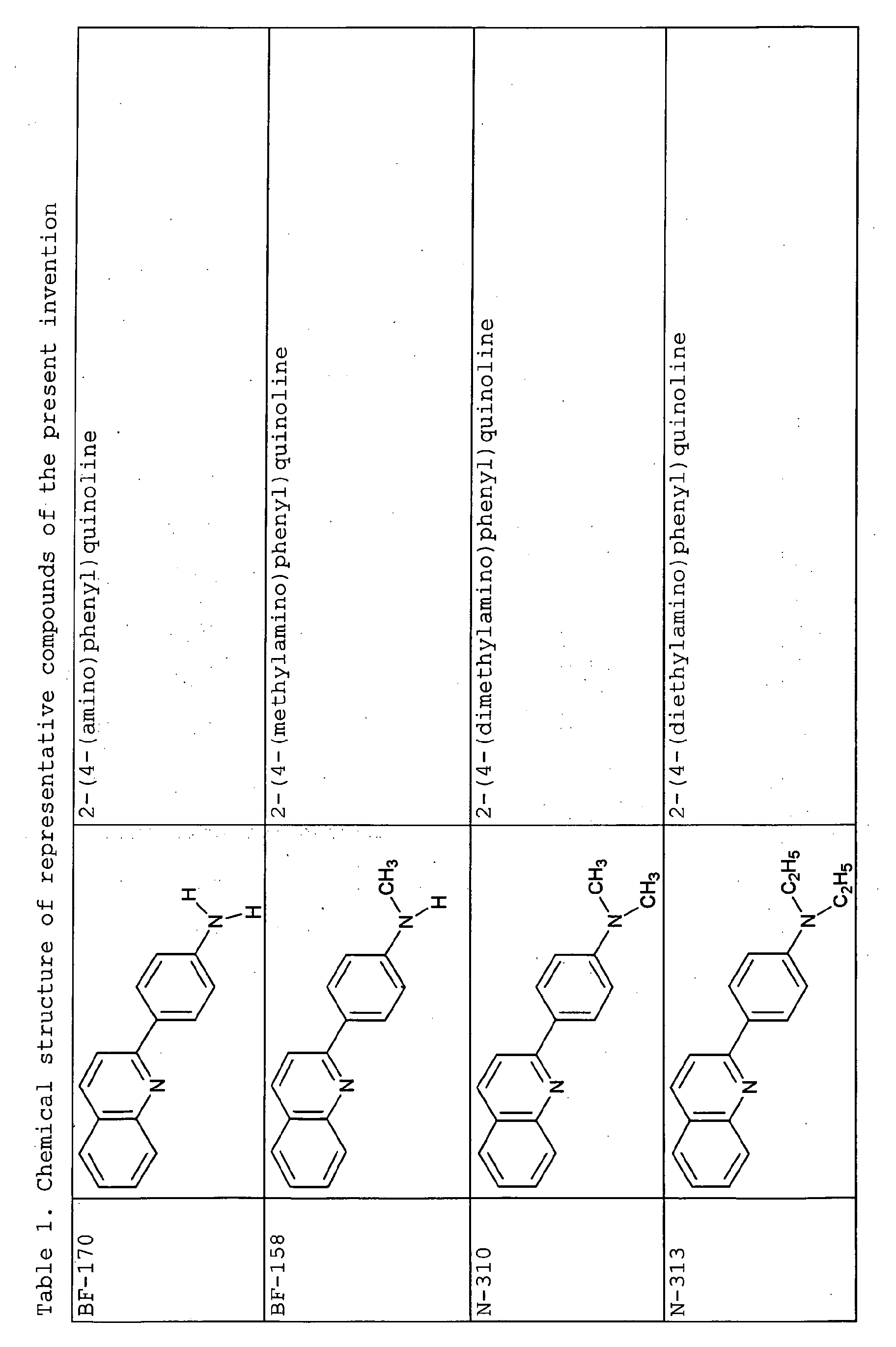
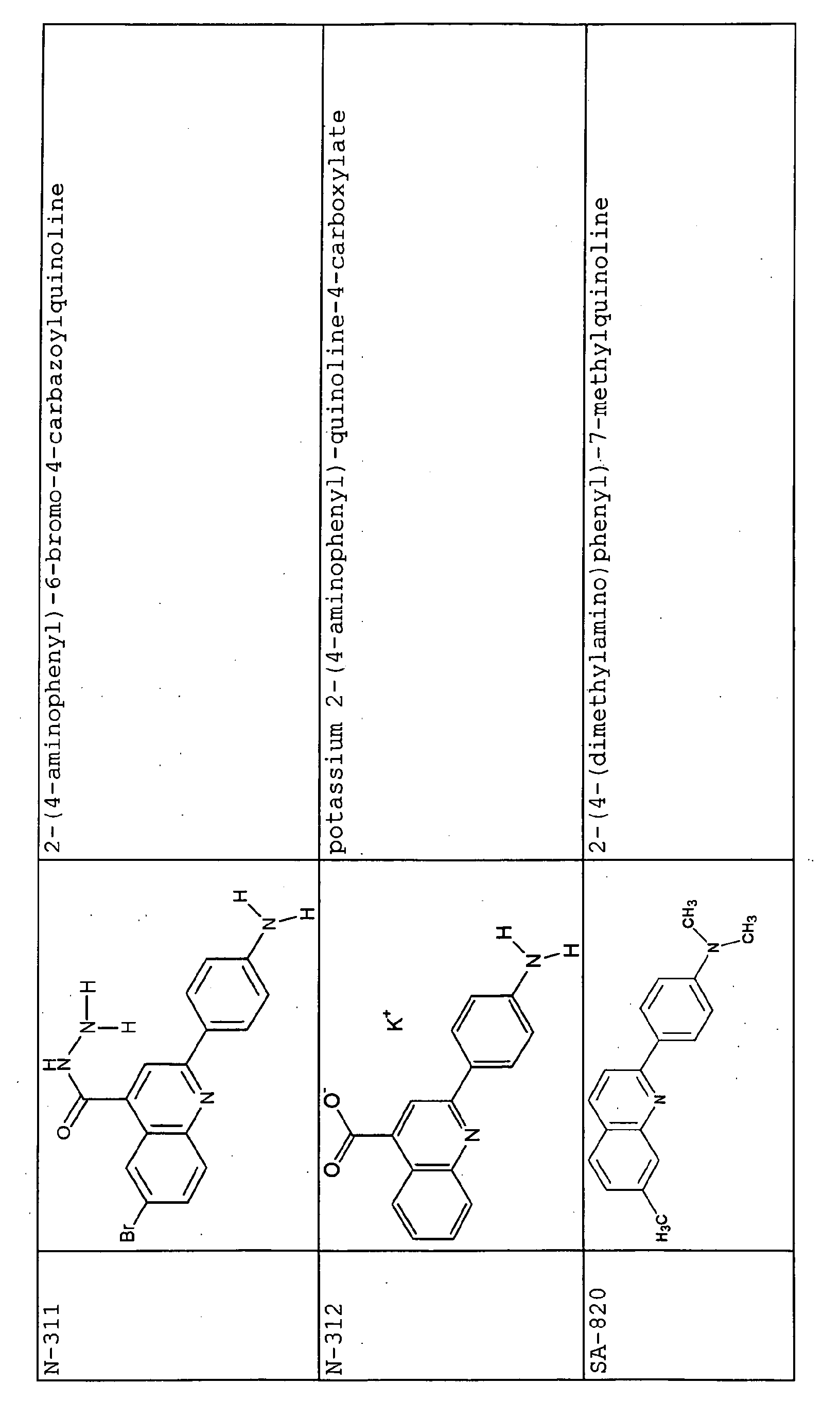
- Particularly preferable compounds of the present invention includes BF-158 (2-(4-(methylamino)phenyl)quinoline), BF-170 (2-(4-(amino)phenyl)quinoline), N-310 (2-(4-(dimethylamino)phenyl)-quinoline), N-311 (2-(4-aminophenyl)-6-bromo-4-carbazoylquinoline), N-312 (potassium 2-(4-aminophenyl)-quinoline-4-carboxylate), N-313 (2-(4-(diethylamino)phenyl)quinoline), SA-821 (2-(4-(dimethylamino)phenyl)-benzo[f]quinoline), SA-822 (3,4-d
- C 1-4 alkyl (alkyl having one to four carbons) is intended to include methyl, ethyl, propyl, butyl, and structural isomers thereof.
- R 1 , R 2 , and R 3 are hydrogen, fluorine, chlorine, OH, COOH, SO 3 H NH 2 , NO 2 , CO-NH-NH 2 , or methyl, ethyl, n-propyl, i-propyl, etc. Particularly preferable R 1 , R 2 , and R 3 are hydrogen.
- R 1 , R 2 , or R 3 may be a labeled group, for example, a labeled halogen, preferably a halogen which is a positron emitting nuclide, such as 18 F.
- R 4 and R 5 are hydrogen, methyl, ethyl, etc.
- R 4 or R 5 may be a labeled group.
- n and n independently are an integer of 0 to 4.
- R 1 or R 3 substituent(s) may be present at any position of the respective benzene rings on which R 1 or R 3 substituent(s) is/are attached. Two R 1 substituents, together, may form a benzene ring. When two or more R 1 and/or R 3 substituents are present, the respective R 1 and/or R 3 substituents may be the same or different.
- salts of the compounds of the formula I(a) or I(b) may be formed with the nitrogen atom or any functional group within a compound of the formula I(a) or I(b).
- salts may be formed between the group and metals.
- alkali metals such as lithium, sodium, and potassium
- alkaline earth metals such as magnesium, calcium, and barium, and others (for example, the compound N-312 in Table 1 is shown as potassium salt).
- a compound of the formula I(a) or I(b) having a hydroxyl group compounds in which the hydrogen atom of a hydroxyl group is substituted with metals such as sodium, potassium, or the like are also included in the present invention.
- metal salts for example, complexes formed with metal salts such as magnesium chloride, iron chloride, and others
- these complexes are herein intended to be included in salts of the compounds of the formula I(a) or I(b). It is preferable that when a salt of the compound of the formula I(a) or I(b) is used in a composition or kit, such a salt is a pharmaceutically acceptable salt.
- Pharmaceutically acceptable salts of the compounds of the formula I(a) or I(b) include, for example, salts with halide ions such as chlorine, bromine, and iodine, and salts with metals such as sodium, potassium, and calcium. Such salts fall within the present invention. Additionally, solvates of the compounds of the formula I(a) or I(b) are also included in the present invention. Solvates include hydrates, methanolates, ethanolates, ammoniates, and the like. It is preferable that when a solvate of the compound of the formula I(a) or I(b) is used in an inventive composition or kit, such a solvate is a pharmaceutically acceptable solvate.
- solvates include hydrates, ethanolates, and others.
- an "inventive compound” or “compound of the present invention” is intended to include a compound of the formula I(a) or I(b), and salts and solvates thereof.
- BF-312 when “BF-312” is referred to, it is intended to include the compound BF-312, and salts and solvates thereof.
- the present invention makes use of compounds of the formula I(a) or I(b), or salts or solvates thereof, which bind specifically to tau in vivo within the body in a disease in which tau accumulates, as probes for the imaging diagnosis of the disease in which tau accumulates.
- a "disease in which tau accumulates” refers to a disease which has, as the major sign, deposition of tau protein in the brain (tauopathy).
- Diseases whose diagnosis can be made using tau as the marker include Alzheimer's disease, Pick's disease, progressive supranuclear palsy (PSP), frontotemporal palsy (frontotemporal dementia and parkinsonism linked to chromosome 17; FTDP-17), and others.
- compounds of the present invention which have been labeled are generally employed as probes.
- Labels are fluorescent substances, affinity substances, enzyme substrates, radionuclides, and others.
- Imaging diagnosis of a disease in which tau accumulates usually uses probes which have been labeled with radionuclides.
- the inventive compounds can be labeled with a variety of radionuclides by methods well known in the art. For example, 3 H, 14 C, 3 55, 131 I, and others are radionuclides which have been used for a long time, and have many in vitro applications.
- Imaging diagnosis probes and means for their detection are to allow making an in vivo diagnosis, to cause less damage to patients (especially, to be non-invasive), to have a high sensitivity of detection, to have an appropriate half-life (to have an appropriate period of time for preparing the labeled probes and for diagnosis), and the like. Accordingly; one have recently tended to employ positron emission tomography (PET) utilizing ⁇ -ray displaying a high sensitivity and permeability of materials or computered tomography (SPECT) with ⁇ -ray emitting nuclides.
- PET positron emission tomography
- SPECT computered tomography
- PET which detects two ⁇ -rays emitting in opposite directions from a positron emitting nuclide by means of simultaneous counting with a pair of detectors, provides information which is superior in resolution and quantification and thus is preferable.
- an inventive compound can be labeled with a ⁇ -ray emitting nuclide, such as 99m Tc, 111 In, 67 Ga, 201 Tl, 123 I, 133 Xe, and others. 99m Tc and 123 I are often used for SPECT.
- a positron emitting nuclide such as 11 C , 13 N, 15 O, 18 F, 62 Cu, 68 Ga, 76 Br, and others.
- positron emitting nuclides 11 C, 13 N, and 15 O are preferable, with 18 F being particularly preferable, from the viewpoint of having an appropriate half-life, the ease of labeling, and the like.
- the position at which an inventive compound is labeled with a radiation emitting nuclide such as a positron or ⁇ -ray emitting nuclide, or the like can be any position in the formula I(a) or I(b).
- a hydrogen atom on the benzene ring of an inventive compound may be substituted with a radioactive nuclide such as a positron or ⁇ -ray emitting nuclide.
- labeling may preferably be carried out at the phenyl ring of the compound.
- labeled compounds of the formula I(a) or I(b) are also included in the present invention.
- any position of the side chain may be labeled with 18 F, or a hydrogen on the ring may be substituted with 18 F.
- a hydrogen contained in any of R 1 to R 5 may be substituted with 18 F or the like.
- nuclides are generated on an instrument termed cyclotron or generator.
- cyclotron or generator
- Those skilled in the art can select methods and instruments for production, depending upon nuclides to be produced. Nuclides thus produced can be used to label the inventive compounds.
- Typical methods include chemical synthesis, isotope exchanging, and biosynthesis processes.
- Chemical synthesis processes have been traditionally and widely employed, and are essentially the same as usual chemical synthesis processes, except that radioactive starting materials are used.
- Various nuclides are introduced into compounds by these chemical processes.
- Isotope exchanging processes are processes by which 3H, 35 S, 125 I, or the like contained in a compound of a simple structure is transferred into one of a more complex structure, thereby obtaining a compound that has been labeled with the nuclide and possess the more complex structure.
- Biosynthesis processes are processes by which a compound labeled with 14 C, 35 5, or the like is given to cells such as microorganisms to obtain its metabolites having the nuclide introduced therein.
- positron emitting nuclides such as 11 C, 13 N, 15 O, and 18 F, which have relatively short half-lives, for example, it is also possible to generate a desired nuclide on a (highly) small-sized cyclotron placed in a facility of hospitals or the like, which in turn is used to label a desired compound at its desired position by any of the above-described methods, followed by carrying out immediately diagnosis, examination, treatment, or the like.
- the inventive compound which has been labeled may be administered to subjects locally or systemically.
- Routes for administration include intradermal, intraperitoneal, intravenous, intra-arterial injections or infusions, injections or infusions into the spinal fluid, and others, and can be selected, depending upon factors such as the disease type, nuclide used, compound used, the condition of the subject, the site to be examined, and others.
- the site to be examined can be investigated with means such as PET, SPECT, or the like by administering an inventive probe, followed by the elapse of a sufficient time to allow its binding to tau and decay. These procedures can be selected as appropriate, depending upon factors such as the disease type, nuclide used, compound used, the condition of the subject, the site to be examined, and others.
- the dose of an inventive compound which has been labeled with a radionuclide varies, depending upon the disease type, nuclide used, compound used, the age, physical condition, and gender of the subject, the degree of the disease, the site to be examined, and others. In particular, sufficient care has to be taken about exposure doses to a subject.
- the amount of radioactivity of an inventive compound labeled with a positron emitting nuclide usually ranges from 3.7 megabecquerels to 3.7 gigabecquerels, and preferably from 18 megabecquerels to 740 megabecquerels.
- the present invention also provides a compound for the diagnosis, especially for the imaging diagnosis of a disease in which tau accumulates, the composition comprising an inventive compound.
- the composition of the present invention comprises an inventive compound and a pharmaceutically acceptable carrier.
- the inventive compound in the composition is labeled.
- labeling with radionuclides in particular, positron emitting nuclides such as 11 C, 13 N, 15 O, 18 F, and others
- the form of the inventive compositions is one allowing injection or infusion.
- pharmaceutically acceptable carriers are preferably liquid and include, but not limiting to, aqueous solvents such as potassium phosphate buffer, saline, Ringer's solution, and distillated water, or non-aqueous solvents such as polyethylene glycols, vegetable oils, ethanol, glycerin, dimethyl sulfoxide, and propylene glycols.
- aqueous solvents such as potassium phosphate buffer, saline, Ringer's solution, and distillated water
- non-aqueous solvents such as polyethylene glycols, vegetable oils, ethanol, glycerin, dimethyl sulfoxide, and propylene glycols.
- the ratio of formulation of a carrier and an inventive compound can be selected as appropriate, depending upon sites to be applied, means for detection, and the like, and usually ranges from 100,000:1 to 2:1, preferably from 10,000:1 to 10:1.
- inventive compositions may further contain well-known antimicrobials (for example, antibiotics etc.), local anesthetics (for example, procaine hydrochloride, dibucaine hydrochloride, etc.), buffers (for example, Tris-HCl buffer, HEPES buffer, etc.), osmoregulatory agents (for example, glucose, sorbitol, sodium chloride, etc.), and the like.
- antimicrobials for example, antibiotics etc.
- local anesthetics for example, procaine hydrochloride, dibucaine hydrochloride, etc.
- buffers for example, Tris-HCl buffer, HEPES buffer, etc.
- osmoregulatory agents for example, glucose, sorbitol, sodium chloride, etc.
- the present invention provides a kit for the diagnosis, especially for imaging diagnosis of a disease in which tau accumulates, the kit comprising an inventive compound as the essential ingredient.
- the kit is a package in which each of the components such as an inventive compound, solvent for dissolving it, buffer, osmoregulatory agent, antimicrobial, local anesthetic, and the like are packaged separately into respective containers, or some of the components are packaged together into respective containers.
- the inventive compound may be unlabeled or labeled. When not labeled, the inventive compound can be labeled, prior to use, by usual methods as described above.
- the inventive compound may be presented in solid, such as lyophilized powder, or in solutions in appropriate solvents.
- Solvents may be similar to carriers used in the above-mentioned inventive compositions.
- Components such as a buffer, an osmoregulatory agent, an antimicrobial, a local anesthetic, and the like, also may be similar to those used in the above-mentioned inventive compositions.
- containers can be selected as appropriate, they may be of shapes suitable for carrying out the introduction of a label into an inventive compound, or of light-shielding materials, depending upon the nature of compounds, or take forms such as vials or syringes, so as to be convenient for administration to patients.
- the kit may also contains, as appropriate, tools necessary for diagnosis, for example, syringes, an infusion set, or apparatus for use in a PET instrument. The kit usually has its instructions attached thereto.
- inventive compounds have properties of binding specifically to tau, and thus can be also used, for example, for staining and quantifying tau in vitro with or without labeling.
- inventive compounds can be used for staining tau protein in microscopic specimens, for colorimetric determination of tau protein in samples, or for quantifying tau protein using a sciritillation counter.
- inventive compounds stain only neurofibrillary tangles
- inventive compounds stain only neurofibrillary tangles. Therefore, the inventive compounds are useful, for example, for studies of Alzheimer's disease or in their diagnosis before death, and could be useful, for example, as agents for staining neurofibrillary tangles in brain sections of Alzheimer's disease patients. Staining brain sections with the inventive compounds can be carried out in usual methods.
- the present invention is directed to a composition for staining neurofibrillary tangles in brain samples, the composition comprising an inventive compound, or a pharmaceutically acceptable salt or solvate thereof, and to a kit for staining neurofibrillary tangles in brain samples, the kit comprising an inventive compound, or a pharmaceutically acceptable salt or solvate thereof as the essential ingredient.
- the present invention is also directed to a method for staining neurofibrillary tangles in brain samples, the method comprising employing an inventive compound, or a pharmaceutically acceptable salt or solvate thereof.
- inventive compounds are likely to become drugs for the treatment of a disease in which ⁇ -sheet structure is the cause or possible cause, such as Alzheimer's disease.
- the present invention is further directed to a pharmaceutical composition for the prophylaxis and/or treatment of a disease in which ⁇ -sheet structure is the cause or possible cause, such as Alzheimer's disease, comprising a compound according to claims 1, or a pharmaceutically acceptable salt or solvate thereof and a pharmaceutically acceptable carrier.
- Such pharmaceutical compositions are not limited in particular, but liquid formulations, especially formulations for injection, are preferable.
- Such formulations for injection can be infused directly into the brain, or alternatively pharmaceutical compositions as described above can be formulated for intravenous injection or drip and administered, since the inventive compounds have high permeability through the blood-brain barrier, as shown in Example 3.
- Such liquid formulations can be prepared in methods well known in the art. Solutions can be prepared, for example, by dissolving an inventive compound in an appropriate carrier, water for injection, saline, Ringer's solution, or the like, sterilizing the solution through a filter or the like, and filling the sterilized solution into appropriate containers, for example, vials or ampules.
- Solutions also can be lyophilized and when used, reconstituted with an appropriate carrier.
- Suspensions can be prepared, for example, by sterilizing an inventive compound, for example, by exposure to ethylene oxide, and then suspending it in a sterilized suspending liquid carrier.
- the amount of the inventive compounds to be administered depends on the condition, gender, age, weight of the patient, and the like, and in general ranges from 0.1 mg to 1 g, preferably from 1 mg to 100 mg, more preferably from 5 mg to 50 mg, per day for adult humans weighing 70 kg. It is possible to conduct treatment with such a dosage for a specified period of time, followed by increasing or reducing the dosage according to the outcome.
- a preferable compound of the formula I(a) or I(b) in these methods or uses is selected from the group consisting of BF-158, BF-170, N-310, N-311, N-312, N-313, SA-820, SA-821 and SA-822.
- the compounds of the present invention that is, compounds represented by the formula I(a) or I(b), or salts or solvates thereof can be used as probes for the diagnosis of a conformational disease., preferably as probes for its imaging diagnosis which are labeled with radiation emitting nuclide.
- the compounds of the present invention are effective for treatment and/or prophylaxis of a conformational disease. Therefore, the present invention is also directed to:
- Conformational disease include Alzheimer's disease (senile plaques, neurofibrillary tangles), Lewy body disease, Parkinson's disease, Huntington's disease, spinal and bulbar muscular atrophy, dentatorubral-pallidoluysian atrophy, spinocerebellar degeneration, Machado-Joseph disease, amyotrophic lateral sclerosis, Down's syndrome, progressive supranuclear palsy, Pick's disease, FTDP-17 (Frontotemporal Dementia and Parkinsonism Linked to Chromosome 17), LNTD (Limbic Neurofibrillary Tangle Dementia), sudanophilic leukodystrophy, amyloid angiopathy, and others.
- Alzheimer's disease senile plaques, neurofibrillary tangles
- Lewy body disease Parkinson's disease, Huntington's disease, spinal and bulbar muscular atrophy, dentatorubral-pallidoluysian
- Acute toxicity of the inventive compounds was determined employing mice by intravenous administration.
- Male Crj:CD1 mice were used and divided into groups of 4 mice, with an average weight of each group of 30-34 g.
- Each compound was dissolved in saline, 1N HCl, or a mixture of 1N HCl/polyethylene glycol 400, and then diluted with distilled water for injection, and administered via tail vein. Up to 7 days after administration, observations were made.
- Compounds of the present invention were intravenously administered to mice to determine their in vivo blood-brain barrier permeability.
- Example 1 The inventive compounds are compounds which specifically recognize tau protein.
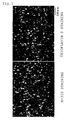
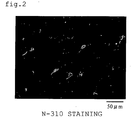
- N-310 displayed staining properties similar to those of thioflavin S (right panel, an adjacent section of the left panel's section), in hippocampus sections of the brain of a patient with Alzheimer's disease. Like thioflavin S, N-310 stained neurofibrillary tangles (or phosphorylated tau protein).
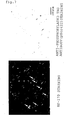
- N-313 (left panel) also displayed staining properties similar to those of thioflavin S (right panel, an adjacent section of the left panel's section), in hippocampus sections of the brain of a patient with Alzheimer's disease. Like thioflavin S, N-313 stained neurofibrillary tangles (or phosphorylated tau protein).
- BF-170 an antibody directed to phosphorylated tau
- pSer422 an antibody specific to phosphorylated tau protein
- BF-170 left panel
- thioflavin S right panel, an adjacent section of the left panel's section
- BF-170 stained only neurofibrillary tangles (or phosphorylated tau protein)
- thioflavin S stained both senile plaques (wedge-shaped arrowheads) and neurofibrillary tangles (or phosphorylated tau protein).
- the compounds of the present invention stained senile plaques and neurofibrillary tangles (or phosphorylated tau protein) which were stained with thioflavin S, and stained neurofibrillary tangles (or phosphorylated tau protein) with higher specificity, when their staining properties were compared. Furthermore, an inventive compound, BF-170, stained phosphorylated tau protein which was recognized by pSer422, an antibody specific to phosphorylated tau protein. Therefore, it has turned out that the compounds of the present invention can be used as probe mainly recognizing tau protein.
- total doses of administration of a positron label and an unlabeled compound utilize intravenous administrations ranging from 1 x 10 -12 to 1 x 10 -5 mg/kg, and often from 1 x 10 -10 to 1 x 10 -7 mg/kg.
- the inventive compounds are likely to be compounds which have extremely high levels of safety as probes for PET imaging.
- Table 3 shows the permeability of the test compounds into the brain in mice two minutes after intravenous administration. Testing procedures followed the method described above in (B). With regard to blood-brain barrier permeability of compounds for PET or SPECT whose target is the central nervous system, it is believed that values of 0.5 %ID/g or higher would be sufficient. In that sense, BF-170, BF-158, N-313, and N-313 are compounds having extremely high levels of blood-brain barrier permeability. Blood-brain barrier permeability of the test compounds two minutes after intravenous administration (mice) Compound %ID/g or ml Brain Plasma BF-170 9.1 1.4 BF-158 9.7 1.8 N-310 15.0 1.0 N-313 4.6 1.1
- staining agents As conventional agents for staining brain sections of patients with Alzheimer's disease, mainly Congo red or thioflavin S has been used. These staining agents are characterized by staining both senile plaques and neurofibrillary tangles, which are said to be two major pathological signs of Alzheimer's disease.
- the compounds of the present invention mainly stain neurofibrillary tangles.
- Conventional agents such as Congo red or thioflavin S cannot stain only neurofibrillary tangles.
- none of many reports until now describes low molecular-weight organic compounds capable of staining only neurofibrillary tangles.
- Figs. 1 to 6 and 9 show the comparison of staining between the compounds of the present invention and thioflavin S in adjacent sections of a patient with Alzheimer's disease.
- the compounds of the present invention mainly stained neurofibrillary tangles, whereas thioflavin S stained both senile plaques and neurofibrillary tangles.
- the compounds of the present invention are likely to be useful as agents for staining neurofibrillary tangles in brain sections of patients with Alzheimer's disease.
- the present compounds of the present invention are compounds which mainly recognize tau protein, have high permeability through the blood-brain barrier, and also have extremely high levels of safety. Therefore, the compounds of the present invention are useful as probes for the imaging diagnosis of diseases in which tau protein accumulates.
- compositions and kits for the imaging diagnosis of diseases in which tau protein accumulates comprising the compounds of the present invention. The use of such compounds, compositions, or kits will allow making an early, accurate diagnosis of such diseases.
Landscapes
- Chemical & Material Sciences (AREA)
- Health & Medical Sciences (AREA)
- Organic Chemistry (AREA)
- Life Sciences & Earth Sciences (AREA)
- Medicinal Chemistry (AREA)
- Veterinary Medicine (AREA)
- Public Health (AREA)
- General Health & Medical Sciences (AREA)
- Animal Behavior & Ethology (AREA)
- Pharmacology & Pharmacy (AREA)
- Epidemiology (AREA)
- Neurology (AREA)
- Engineering & Computer Science (AREA)
- Bioinformatics & Cheminformatics (AREA)
- Biomedical Technology (AREA)
- Neurosurgery (AREA)
- Physics & Mathematics (AREA)
- Chemical Kinetics & Catalysis (AREA)
- Nuclear Medicine, Radiotherapy & Molecular Imaging (AREA)
- General Chemical & Material Sciences (AREA)
- Proteomics, Peptides & Aminoacids (AREA)
- Optics & Photonics (AREA)
- Hospice & Palliative Care (AREA)
- Psychiatry (AREA)
- Medicines Containing Antibodies Or Antigens For Use As Internal Diagnostic Agents (AREA)
- Quinoline Compounds (AREA)
- Other In-Based Heterocyclic Compounds (AREA)
- Medicines That Contain Protein Lipid Enzymes And Other Medicines (AREA)
- Pharmaceuticals Containing Other Organic And Inorganic Compounds (AREA)
Abstract
The present invention provides compounds, or salts or solvates thereof, which can be used as probes for the imaging diagnosis of diseases in which tau protein accumulates, and compositions and kits comprising such compounds, or salts or solvates thereof. The present invention also provides a method for staining neurofibrillary tangles in brain samples, and a pharmaceutical composition for the treatment and/or prophylaxis of a disease in which beta -sheet structure is the cause or possible cause.
Description
The present invention relates to a probe for the
imaging diagnosis of a disease it which tau protein
accumulates, in particular, a probe labeled with a positron-emitting
radionuclide, as well as to a composition for
imaging diagnosis comprising such a probe. Further, the
present invention relates to staining of neurofibrillary
tangles in brain materials, and to a pharmaceutical
composition for the prophylaxis and/or treatment of a disease
in which β-sheet structure is the cause or possible cause.
Amyloid accumulating diseases include a variety, of
diseases characterized by the deposition of insoluble
fibrillary proteins (amyloids) in various organs and tissues
in the body, including Alzheimer's disease, Down's syndrome
and others. Among them, Alzheimer's disease (AD) is
considered as a disease which is most difficult to treat at
present, and there is a need for its accurate and early
diagnosis.
Alzheimer's disease (AD) is considered as a disease
which is most difficult to treat at present and whose
accurate and early diagnosis is required. Alzheimer's
disease is a disease whose feature is progressive dementia
developing predominantly in a presenile to senile period.
Alzheimer's disease is pathologically characterized by
overall cerebral atrophy, remarkable degeneration and
neuronal loss, and appearing of neurofibrillary tangles and
senile plaques. It is known that the highest risk factor of
dementia represented by Alzheimer's disease is aging. Thus,
an increase in the number of patients as an old population
increases is remarkable in especially Japan, America, and
European countries, which have reached an aging society, and
medical costs for the patients bring the medical system of
those countries to a crisis.
In Japan, it is estimated that the number of patients
with Alzheimer's disease are about one million, and it is
certain that the number of the patients will increase with
the aging of the population in future. The costs associated
with Alzheimer's disease patients, including the nursing care
expense, are supposed to exceed 2.5 million yen per patient
for a year, which means that in Japan, socio-economic costs
more than 2.5 trillion yen have been already paid for a year.
It has now become common in the world that significant
effects of medical economy will be brought about by
administering treatment before symptoms of dementia in
Alzheimer's disease become appeared or as early as possible.
At present, however, it is extremely difficult to make an
accurate diagnosis of Alzheimer's disease at these stages.
Currently there are various types of methods for
diagnosing Alzheimer's disease. Japan commonly employs
methods which make a quantitative evaluation of the decrease
in cognitive functions of an individual suspected to be
affected with Alzheimer's disease, such as Hasegawa's
procedure, ADAS, and MMSE, and although not often, imaging
diagnosis methods (MRI, CT, and others) are employed
supplementarily. However, these methods are insufficient to
define the disease, and its definitive diagnosis requires
biopsy of the brain before death or histopathological
examinations of the brain after death. In spite of these
intensive studies on methods for diagnosing Alzheimer's
disease, progress has been not made so much. From results of
many studies, it has turned out that neural degeneration
characteristic of Alzheimer's disease has already took place
for a considerable period of time (about 40 years, in the
case of a long period) prior to developing its initial
clinical symptom. In addition, it is known for Alzheimer's
disease that the pathologic feature in the brain has already
progressed to an irrecoverable stage when family members and
clinicians surrounding an AD patient recognize its initial
clinical symptom. Considering together the progression
properties of disease conditions and a sharp increase in the
number of AD patients as described above, the need for and
the value of an accurate, early diagnosis of Alzheimer's
disease are of extreme significance.
The histopathological feature of Alzheimer's disease is
represented by two major signs: senile plaques and
neurofibrillary tangles. The former has, as the main
component, amyloid β-protein (Aβ protein) taking β-sheet
structures, whereas the latter has, as the main component,
hyperphosphorylated tau protein. The definite diagnosis of
Alzheimer's disease relies on the appearance of these
pathological characteristics in the brain of a patient.
Amyloid β-protein is characteristic of diseases in
which amyloid accumulates, including Alzheimer's disease, and
has a close relation with the disease. Thus, detection of
amyloid β-protein taking β-sheet structures in the body,
especially in the brain, as a marker, will provide for an
important method for the diagnosis of a disease in which
amyloid accumulates, particularly Alzheimer's disease. In
the past, substances which can bind specifically to and stain
amyloid β-protein in the body, especially in the brain, have
been searched for the purpose of diagnosing diseases in which
amyloid accumulates, including Alzheimer's disease. Such
substances known include Congo red (Puchtler et al., Journal
of Histochemistry and Cytochemistry, vol. 10, 35, 1962),
thioflavin S (Puchtler et al., Journal of Histochemistry and
Cytochemistry, vol. 77, 431, 1983), thioflavin T (LeVine,
Protein Science, vol. 2, 404-410, 1993), and chrysamine G and
derivatives thereof (International Patent Application Nos.
PCT/US96/05918 and PCT/US98/07889), and they have not a few
problems in terms of binding specificity to amyloid β-protein,
permeability through the blood-brain barrier, solubility,
toxicity, and others. The present inventors have found a
variety of compounds characterized by having high specificity
to amyloid β-protein, high permeability through the blood-brain
barrier, high solubilities, reduced toxicities, and
others (Japanese Patent Application Nos. 2000-080082, 2000-080083,
and 2001-076075, and International Patent Application
Nos. PCT/JP01/02204 and PCT/JP01/02205).
It is known that intracerebral proteins may take β-sheet
structures, thereby resulting in diseases whose
etiology can be assigned to such proteins themselves. In the
case of Alzheimer's disease, it is supposed that amyloid β-protein
and tau protein take β-sheet structures, whereby such
proteins themselves are responsible for or contribute to the
disease. Yankner et al. have first reported that amyloid β-protein
is allowed to take β-sheet structures, thereby
displaying neural cytotoxicity (Science, vol. 245, 417-420,
1989). Later, many experiments for corroboration have been
performed and ascertained that amyloid β-protein with β-sheet
structures possess neural cytotoxicity. Thus, the fact that
neural cytotoxicity is observed with amyloid β-protein and
tau protein taking β-sheet structures suggests that compounds
inhibiting their cytotoxicity could be drugs for treating a
disease in which a protein itself takes β-sheet structures,
thereby causing or contributing to the disease, for example,
Alzheimer's disease.
Neurofibrillary tangles and their main component,
hyperphosphorylated tau protein, which are another
histopathological major sign of Alzheimer's disease, are
generally supposed to develop later than amyloid β-protein.
However, it is likely that neurofibrillary tangles correlate
well with the degree of dementia, compared to amyloid β-protein
(Braak H and Braak E: Acta Neuropathol., vol. 82,
239-259, 1991; Wischik et al., In "Neurobiology of
Alzheimer's Disease," 103-206, Oxford University Press,
Oxford, 2001).
Besides Alzheimer's disease, disorders whose major sign
is accumulation of tau protein in the brain (tauopathies)
include Pick's disease, progressive supranuclear palsy (PSP),
and others.
As mentioned above, tau protein is characteristic of
diseases in which tau protein accumulates, including
Alzheimer's disease, and has a close relation with the
disease. Thus, detection of tau protein taking β-sheet
structures in the body, especially in the brain, as a marker,
will provide for an important method for the diagnosis of a
disease in which tau accumulates, particularly Alzheimer's
disease.
Methods have been reported by a few groups for
quantifying tau in the body, especially in the cerebrospinal
fluid for the purpose of diagnosing diseases in which tau
accumulates, including Alzheimer's disease (Ishiguro et al.,
Neurosci. Lett., vol. 270, 81-84, 1999 and Itoh et al., Ann.
Neurol., vol. 5.0, 150-156, 2001). However, no probe intended
to quantify tau noninvasively in vivo can be found throughout
the world.
Therefore, there is an increased need for compounds
having high specificity to tau which is for the diagnosis and
treatment of diseases in which tau accumulates, including
Alzheimer's disease.
On the one hand, studies of Alzheimer's disease or
diagnoses employing biopsy or autopsy samples until now
involve preparation of brain sections from a patient with
Alzheimer's disease and staining them. Conventional staining
agents have mainly utilized Congo red or thioflavin S. These
staining agents are characterized by staining both senile
plaques and neurofibrillary tangles, which are said to be two
major pathological signs of Alzheimer's disease.
However, none of many reports so far reports low
molecular-weight organic compounds capable of staining only
neurofibrillary tangles.
In view of the above-described circumstances, the
present invention provides a substance that has high
specificity of binding to tau protein and an high
permeability through the blood-brain barrier and is capable
of use as a probe for the imaging diagnosis of a disease in
which tau protein accumulates. In addition, the present
invention also provides such a substance which is labeled,
for use as a probe for the imaging diagnosis of a disease in
which tau accumulates, and a composition and a kit for
imaging diagnosis comprising such a probe. The present
invention further provides a method for staining
neurofibrillary tangles in brain materials, and a
pharmaceutical composition for the prophylaxis and/or
treatment of a disease in which β-sheet structure is the
cause or possible cause.
The present inventors have conducted extensive research,
in order to solve the above-described problems. In
consequence, the present inventors have found that compounds,
or salts or solvates thereof represented by the formula I(a)
or I(b) have high specificity of binding to tau and
furthermore high permeability through the blood-brain barrier,
leading to the completion of the present invention. In
particular, it can be said that the inventive compounds,
which are capable of specifically and clearly staining tau,
are compounds allowing an accurate, early diagnosis of,
especially, Alzheimer's disease, Pick's disease, progressive
supranuclear palsy (PSP), and others. Also, the inventive
compounds will allow making a noninvasive diagnosis before
death, due to their high permeability through the blood-brain
barrier.
Thus, the present invention provides the following:
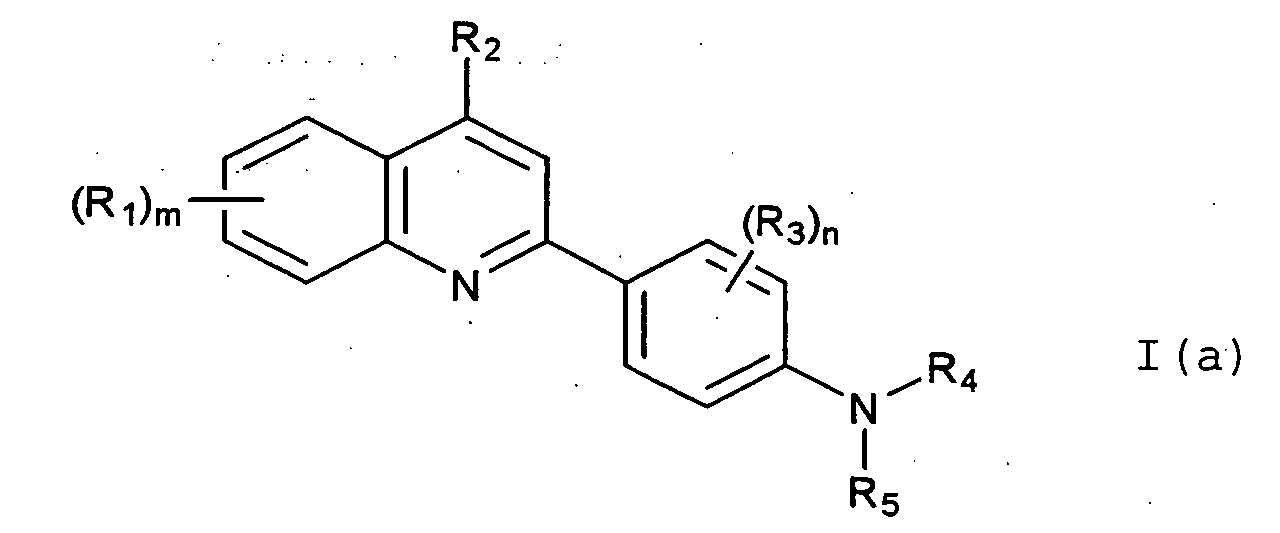

R1, R2, and R3 independently are hydrogen, halogen, OH, COOH, SO3H, NH2, NO2, CO-NH-NH2, alkyl having 1 to 4 carbons (hereinafter, referred to as C1-4alkyl), or O-C1-4alkyl, wherein two R1s, together, may form a benzene ring;
R4 and R5 independently are hydrogen or C1-4alkyl; and
m and n independently are an integer of 0 to 4;
Substances of the present invention which can be used
as probes for the imaging diagnosis of a disease in which tau
accumulates are compounds, or salts or solvates thereof,
represented by the general formula I(a) or I(b) as described
above. Particularly preferable compounds of the present
invention includes BF-158 (2-(4-(methylamino)phenyl)quinoline),
BF-170 (2-(4-(amino)phenyl)quinoline),
N-310 (2-(4-(dimethylamino)phenyl)-quinoline),
N-311 (2-(4-aminophenyl)-6-bromo-4-carbazoylquinoline),
N-312 (potassium 2-(4-aminophenyl)-quinoline-4-carboxylate),
N-313 (2-(4-(diethylamino)phenyl)quinoline),
SA-821 (2-(4-(dimethylamino)phenyl)-benzo[f]quinoline),
SA-822 (3,4-dihydro-3-(4-(dimethylamino)phenyl)-benzo[f]quinoline),
and
others (see, Table 1). In Table 1, when a compound is shown
in its salt form, there is given only one example of the
existing forms of the compound.

The following explanation is given of each substituent
of the compounds of the formula I(a) or I(b).
As referred to herein, "C1-4alkyl" (alkyl having one to
four carbons) is intended to include methyl, ethyl, propyl,
butyl, and structural isomers thereof.
Examples of R1, R2, and R3 are hydrogen, fluorine,
chlorine, OH, COOH, SO3H NH2, NO2, CO-NH-NH2, or methyl,
ethyl, n-propyl, i-propyl, etc. Particularly preferable R1,
R2, and R3 are hydrogen. In addition, R1, R2, or R3 may be a
labeled group, for example, a labeled halogen, preferably a
halogen which is a positron emitting nuclide, such as 18F.
Preferable examples of R4 and R5 are hydrogen, methyl,
ethyl, etc. R4 or R5 may be a labeled group.
m and n independently are an integer of 0 to 4. In the
case of m or n being other than 0, R1 or R3 substituent(s)
may be present at any position of the respective benzene
rings on which R1 or R3 substituent(s) is/are attached. Two
R1 substituents, together, may form a benzene ring. When two
or more R1 and/or R3 substituents are present, the respective
R1 and/or R3 substituents may be the same or different.
Also included in the present invention are salts of the
compounds of the formula I(a) or I(b). Salts may be formed
with the nitrogen atom or any functional group within a
compound of the formula I(a) or I(b). In the case of a
compound having a carboxylic or sulfonic acid group, salts
may be formed between the group and metals. Examples of such
salts include salts with alkali metals such as lithium,
sodium, and potassium, alkaline earth metals such as
magnesium, calcium, and barium, and others (for example, the
compound N-312 in Table 1 is shown as potassium salt). In
the case of a compound of the formula I(a) or I(b) having a
hydroxyl group, compounds in which the hydrogen atom of a
hydroxyl group is substituted with metals such as sodium,
potassium, or the like are also included in the present
invention. In addition, if there are complexes formed
between compounds of the formula I(a) or I(b) and metal salts
(for example, complexes formed with metal salts such as
magnesium chloride, iron chloride, and others), these
complexes are herein intended to be included in salts of the
compounds of the formula I(a) or I(b). It is preferable that
when a salt of the compound of the formula I(a) or I(b) is
used in a composition or kit, such a salt is a
pharmaceutically acceptable salt. Pharmaceutically
acceptable salts of the compounds of the formula I(a) or I(b)
include, for example, salts with halide ions such as chlorine,
bromine, and iodine, and salts with metals such as sodium,
potassium, and calcium. Such salts fall within the present
invention. Additionally, solvates of the compounds of the
formula I(a) or I(b) are also included in the present
invention. Solvates include hydrates, methanolates,
ethanolates, ammoniates, and the like. It is preferable that
when a solvate of the compound of the formula I(a) or I(b) is
used in an inventive composition or kit, such a solvate is a
pharmaceutically acceptable solvate. Pharmaceutically
acceptable solvates include hydrates, ethanolates, and others.
In the specification, an "inventive compound" or "compound of
the present invention" is intended to include a compound of
the formula I(a) or I(b), and salts and solvates thereof.
For example, when "BF-312" is referred to, it is intended to
include the compound BF-312, and salts and solvates thereof.
The present invention makes use of compounds of the
formula I(a) or I(b), or salts or solvates thereof, which
bind specifically to tau in vivo within the body in a disease
in which tau accumulates, as probes for the imaging diagnosis
of the disease in which tau accumulates. As used herein, a
"disease in which tau accumulates" refers to a disease which
has, as the major sign, deposition of tau protein in the
brain (tauopathy). Diseases whose diagnosis can be made
using tau as the marker include Alzheimer's disease, Pick's
disease, progressive supranuclear palsy (PSP), frontotemporal
palsy (frontotemporal dementia and parkinsonism linked to
chromosome 17; FTDP-17), and others.
In the diagnosis of a disease in which tau accumulates,
compounds of the present invention which have been labeled
are generally employed as probes. Labels are fluorescent
substances, affinity substances, enzyme substrates,
radionuclides, and others. Imaging diagnosis of a disease in
which tau accumulates usually uses probes which have been
labeled with radionuclides. The inventive compounds can be
labeled with a variety of radionuclides by methods well known
in the art. For example, 3H, 14C, 355, 131I, and others are
radionuclides which have been used for a long time, and have
many in vitro applications. General requirements for imaging
diagnosis probes and means for their detection are to allow
making an in vivo diagnosis, to cause less damage to patients
(especially, to be non-invasive), to have a high sensitivity
of detection, to have an appropriate half-life (to have an
appropriate period of time for preparing the labeled probes
and for diagnosis), and the like. Accordingly; one have
recently tended to employ positron emission tomography (PET)
utilizing γ-ray displaying a high sensitivity and
permeability of materials or computered tomography (SPECT)
with γ-ray emitting nuclides. Of them, PET, which detects
two γ-rays emitting in opposite directions from a positron
emitting nuclide by means of simultaneous counting with a
pair of detectors, provides information which is superior in
resolution and quantification and thus is preferable. For
SPECT, an inventive compound can be labeled with a γ-ray
emitting nuclide, such as 99mTc, 111In, 67Ga, 201Tl, 123I, 133Xe,
and others. 99mTc and 123I are often used for SPECT. For PET,
an inventive compound can be labeled with a positron emitting
nuclide, such as 11C, 13N, 15O, 18F, 62Cu, 68Ga, 76Br, and others.
Of positron emitting nuclides, 11C, 13N, and 15O are preferable,
with 18F being particularly preferable, from the viewpoint of
having an appropriate half-life, the ease of labeling, and
the like. The position at which an inventive compound is
labeled with a radiation emitting nuclide such as a positron
or γ-ray emitting nuclide, or the like can be any position in
the formula I(a) or I(b). Alternatively, a hydrogen atom on
the benzene ring of an inventive compound may be substituted
with a radioactive nuclide such as a positron or γ-ray
emitting nuclide. Although the position of labeling the
compound of the formula I(a) or I(b) can be any position as
described above, labeling may preferably be carried out at
the phenyl ring of the compound. Such labeled compounds of
the formula I(a) or I(b) are also included in the present
invention. For example, when an inventive compound is
labeled with 18F, any position of the side chain may be
labeled with 18F, or a hydrogen on the ring may be
substituted with 18F. Additionally, a hydrogen contained in
any of R1 to R5, for example, may be substituted with 18F or
the like.
In general, these nuclides are generated on an
instrument termed cyclotron or generator. Those skilled in
the art can select methods and instruments for production,
depending upon nuclides to be produced. Nuclides thus
produced can be used to label the inventive compounds.
Methods for producing labeled compounds, which have
been labeled with these radionuclides, are well known in the
art. Typical methods include chemical synthesis, isotope
exchanging, and biosynthesis processes. Chemical synthesis
processes have been traditionally and widely employed, and
are essentially the same as usual chemical synthesis
processes, except that radioactive starting materials are
used. Various nuclides are introduced into compounds by
these chemical processes. Isotope exchanging processes are
processes by which 3H, 35S, 125I, or the like contained in a
compound of a simple structure is transferred into one of a
more complex structure, thereby obtaining a compound that has
been labeled with the nuclide and possess the more complex
structure. Biosynthesis processes are processes by which a
compound labeled with 14C, 355, or the like is given to cells
such as microorganisms to obtain its metabolites having the
nuclide introduced therein.
With respect to the labeling position, similarly to
usual synthesis, synthetic schemes can be designed, depending
upon the purpose, so that a label can be introduced at a
desired position. Such designing is well known to those
skilled in the art.
When utilizing positron emitting nuclides, such as 11C,
13N, 15O, and 18F, which have relatively short half-lives, for
example, it is also possible to generate a desired nuclide on
a (highly) small-sized cyclotron placed in a facility of
hospitals or the like, which in turn is used to label a
desired compound at its desired position by any of the above-described
methods, followed by carrying out immediately
diagnosis, examination, treatment, or the like.
These methods well known to those skilled in art enable
one to carry out labeling by introducing a desired nuclide
into an inventive compound at its desired position.
The inventive compound which has been labeled may be
administered to subjects locally or systemically. Routes for
administration include intradermal, intraperitoneal,
intravenous, intra-arterial injections or infusions,
injections or infusions into the spinal fluid, and others,
and can be selected, depending upon factors such as the
disease type, nuclide used, compound used, the condition of
the subject, the site to be examined, and others. The site
to be examined can be investigated with means such as PET,
SPECT, or the like by administering an inventive probe,
followed by the elapse of a sufficient time to allow its
binding to tau and decay. These procedures can be selected
as appropriate, depending upon factors such as the disease
type, nuclide used, compound used, the condition of the
subject, the site to be examined, and others.
The dose of an inventive compound which has been
labeled with a radionuclide varies, depending upon the
disease type, nuclide used, compound used, the age, physical
condition, and gender of the subject, the degree of the
disease, the site to be examined, and others. In particular,
sufficient care has to be taken about exposure doses to a
subject. For example, the amount of radioactivity of an
inventive compound labeled with a positron emitting nuclide,
such as 11C, 13N, 15O , and 18F, usually ranges from 3.7
megabecquerels to 3.7 gigabecquerels, and preferably from 18
megabecquerels to 740 megabecquerels.
The present invention also provides a compound for the
diagnosis, especially for the imaging diagnosis of a disease
in which tau accumulates, the composition comprising an
inventive compound. The composition of the present invention
comprises an inventive compound and a pharmaceutically
acceptable carrier. Preferably, the inventive compound in
the composition is labeled. Although a variety of labeling
methods is possible as described above, labeling with
radionuclides (in particular, positron emitting nuclides such
as 11C, 13N, 15O, 18F, and others) is desirable for in vivo
image-diagnosis applications. It is preferable from their
purposes that the form of the inventive compositions is one
allowing injection or infusion. Therefore, pharmaceutically
acceptable carriers are preferably liquid and include, but
not limiting to, aqueous solvents such as potassium phosphate
buffer, saline, Ringer's solution, and distillated water, or
non-aqueous solvents such as polyethylene glycols, vegetable
oils, ethanol, glycerin, dimethyl sulfoxide, and propylene
glycols. The ratio of formulation of a carrier and an
inventive compound can be selected as appropriate, depending
upon sites to be applied, means for detection, and the like,
and usually ranges from 100,000:1 to 2:1, preferably from
10,000:1 to 10:1. Additionally, the inventive compositions
may further contain well-known antimicrobials (for example,
antibiotics etc.), local anesthetics (for example, procaine
hydrochloride, dibucaine hydrochloride, etc.), buffers (for
example, Tris-HCl buffer, HEPES buffer, etc.), osmoregulatory
agents (for example, glucose, sorbitol, sodium chloride,
etc.), and the like.
Further, the present invention provides a kit for the
diagnosis, especially for imaging diagnosis of a disease in
which tau accumulates, the kit comprising an inventive
compound as the essential ingredient. Usually, the kit is a
package in which each of the components such as an inventive
compound, solvent for dissolving it, buffer, osmoregulatory
agent, antimicrobial, local anesthetic, and the like are
packaged separately into respective containers, or some of
the components are packaged together into respective
containers. The inventive compound may be unlabeled or
labeled. When not labeled, the inventive compound can be
labeled, prior to use, by usual methods as described above.
In addition, the inventive compound may be presented in solid,
such as lyophilized powder, or in solutions in appropriate
solvents. Solvents may be similar to carriers used in the
above-mentioned inventive compositions. Components such as a
buffer, an osmoregulatory agent, an antimicrobial, a local
anesthetic, and the like, also may be similar to those used
in the above-mentioned inventive compositions. While
containers can be selected as appropriate, they may be of
shapes suitable for carrying out the introduction of a label
into an inventive compound, or of light-shielding materials,
depending upon the nature of compounds, or take forms such as
vials or syringes, so as to be convenient for administration
to patients. The kit may also contains, as appropriate,
tools necessary for diagnosis, for example, syringes, an
infusion set, or apparatus for use in a PET instrument. The
kit usually has its instructions attached thereto.
Further, the inventive compounds have properties of
binding specifically to tau, and thus can be also used, for
example, for staining and quantifying tau in vitro with or
without labeling. For example, the inventive compounds can
be used for staining tau protein in microscopic specimens,
for colorimetric determination of tau protein in samples, or
for quantifying tau protein using a sciritillation counter.
As mentioned above, Congo red, thioflavin S, and the
like can not stain only neurofibrillary tangles, whereas the
inventive compounds stain only neurofibrillary tangles.
Therefore, the inventive compounds are useful, for example,
for studies of Alzheimer's disease or in their diagnosis
before death, and could be useful, for example, as agents for
staining neurofibrillary tangles in brain sections of
Alzheimer's disease patients. Staining brain sections with
the inventive compounds can be carried out in usual methods.
Thus, the present invention is directed to a
composition for staining neurofibrillary tangles in brain
samples, the composition comprising an inventive compound, or
a pharmaceutically acceptable salt or solvate thereof, and to
a kit for staining neurofibrillary tangles in brain samples,
the kit comprising an inventive compound, or a
pharmaceutically acceptable salt or solvate thereof as the
essential ingredient. In addition, the present invention is
also directed to a method for staining neurofibrillary
tangles in brain samples, the method comprising employing an
inventive compound, or a pharmaceutically acceptable salt or
solvate thereof.
Further, as described above, it has turned out that
neural cytotoxicity is observed with amyloid β-protein and
tau protein taking β-sheet structures. Thus, the inventive
compounds are likely to become drugs for the treatment of a
disease in which β-sheet structure is the cause or possible
cause, such as Alzheimer's disease.
Therefore, the present invention is further directed to
a pharmaceutical composition for the prophylaxis and/or
treatment of a disease in which β-sheet structure is the
cause or possible cause, such as Alzheimer's disease,
comprising a compound according to claims 1, or a
pharmaceutically acceptable salt or solvate thereof and a
pharmaceutically acceptable carrier.
Forms of such pharmaceutical compositions are not
limited in particular, but liquid formulations, especially
formulations for injection, are preferable. Such
formulations for injection can be infused directly into the
brain, or alternatively pharmaceutical compositions as
described above can be formulated for intravenous injection
or drip and administered, since the inventive compounds have
high permeability through the blood-brain barrier, as shown
in Example 3. Such liquid formulations can be prepared in
methods well known in the art. Solutions can be prepared,
for example, by dissolving an inventive compound in an
appropriate carrier, water for injection, saline, Ringer's
solution, or the like, sterilizing the solution through a
filter or the like, and filling the sterilized solution into
appropriate containers, for example, vials or ampules.
Solutions also can be lyophilized and when used, reconstituted
with an appropriate carrier. Suspensions can be
prepared, for example, by sterilizing an inventive compound,
for example, by exposure to ethylene oxide, and then
suspending it in a sterilized suspending liquid carrier.
The amount of the inventive compounds to be
administered depends on the condition, gender, age, weight of
the patient, and the like, and in general ranges from 0.1 mg
to 1 g, preferably from 1 mg to 100 mg, more preferably from
5 mg to 50 mg, per day for adult humans weighing 70 kg. It
is possible to conduct treatment with such a dosage for a
specified period of time, followed by increasing or reducing
the dosage according to the outcome.
Further, the present invention is directed to:
A preferable compound of the formula I(a) or I(b) in
these methods or uses is selected from the group consisting
of BF-158, BF-170, N-310, N-311, N-312, N-313, SA-820, SA-821
and SA-822.
In addition, the compounds of the present invention,
that is, compounds represented by the formula I(a) or I(b),
or salts or solvates thereof can be used as probes for the
diagnosis of a conformational disease., preferably as probes
for its imaging diagnosis which are labeled with radiation
emitting nuclide. Furthermore, the compounds of the present
invention are effective for treatment and/or prophylaxis of a
conformational disease. Therefore, the present invention is
also directed to:
Conformational disease include Alzheimer's disease
(senile plaques, neurofibrillary tangles), Lewy body disease,
Parkinson's disease, Huntington's disease, spinal and bulbar
muscular atrophy, dentatorubral-pallidoluysian atrophy,
spinocerebellar degeneration, Machado-Joseph disease,
amyotrophic lateral sclerosis, Down's syndrome, progressive
supranuclear palsy, Pick's disease, FTDP-17 (Frontotemporal
Dementia and Parkinsonism Linked to Chromosome 17), LNTD
(Limbic Neurofibrillary Tangle Dementia), sudanophilic
leukodystrophy, amyloid angiopathy, and others.
The following explanation is made about a method for
screening the inventive compounds.
Immunostaining was carried out as follows:
Properties of binding to amyloid β-protein were
examined as follows:
The following explanation is made of testing methods
for properties of the compounds of the present invention.
Acute toxicity of the inventive compounds was determined
employing mice by intravenous administration. Male Crj:CD1
mice were used and divided into groups of 4 mice, with an
average weight of each group of 30-34 g. Each compound was
dissolved in saline, 1N HCl, or a mixture of 1N
HCl/polyethylene glycol 400, and then diluted with distilled
water for injection, and administered via tail vein. Up to 7
days after administration, observations were made.
Compounds of the present invention were intravenously
administered to mice to determine their in vivo blood-brain
barrier permeability.
Following examples are provided to explain the present
invention more specifically, but should not be construed as
limiting the present invention thereto in any way.
According to the above-described method for screening
compounds which specifically recognize tau, we have found BF-158,
BF-170, N-310, and N-313 as compounds which are
particularly preferred. The results are shown in Figs. 1 to
9. For the structure of the test compounds, see Table 1.
As shown in Figs. 1 and 2, N-310 (left panel) displayed
staining properties similar to those of thioflavin S (right
panel, an adjacent section of the left panel's section), in
hippocampus sections of the brain of a patient with
Alzheimer's disease. Like thioflavin S, N-310 stained
neurofibrillary tangles (or phosphorylated tau protein).
As shown in Figs. 3 and 4, N-313 (left panel) also
displayed staining properties similar to those of thioflavin
S (right panel, an adjacent section of the left panel's
section), in hippocampus sections of the brain of a patient
with Alzheimer's disease. Like thioflavin S, N-313 stained
neurofibrillary tangles (or phosphorylated tau protein).
When the comparison was made between SA-820 and
thioflavin S in staining senile plaques in hippocampus
sections of the brain of a patient with Alzheimer's disease,
the compound SA-820 (left panel) stained senile plaques
(wedge-shaped arrowheads) with a clearly weaker degree than
that of thioflavin S (right panel), as shown in Fig. 5.
In addition, when the comparison was made between SA-821
and thioflavin S in staining senile plaques in
hippocampus sections of the brain of a patient with
Alzheimer's disease, the compound SA-821 (left panel).stained
senile plaques (wedge-shaped arrowheads) with a clearly
weaker degree than that of thioflavin S (right panel), as
shown in Fig. 6.
The comparison of staining was made between BF-170 and
an antibody directed to phosphorylated tau (right panel, an
adjacent section of the left panel's section), in hippocampus
sections of the brain of a patient with Alzheimer's disease.
As shown in Fig. 7, it has turned out that BF-170 (left
panel) stained phosphorylated tau protein which was
recognized by pSer422 (an antibody specific to phosphorylated
tau protein) (right panel, an adjacent section of the left
panel's section).
As shown in Fig. 8, with Aβ1-40 taking β-sheet
structures on slides, BF-170 (left panel) hardly bound to
this Aβ1-40 (fluorescence was not observed), whereas
significant binding to this Aβ1-40 was displayed by
thioflavin T, a fluorescent dye known to be bind to Aβ1-40
(right panel).
As shown in Fig. 9, when the comparison was made
between BF-170 (left panel) and thioflavin S (right panel,
an adjacent section of the left panel's section), in staining
senile plaques in hippocampus sections of the brain of a
patient with Alzheimer's disease, BF-170 stained only
neurofibrillary tangles (or phosphorylated tau protein),
whereas thioflavin S stained both senile plaques (wedge-shaped
arrowheads) and neurofibrillary tangles (or
phosphorylated tau protein).
Thus, the compounds of the present invention stained
senile plaques and neurofibrillary tangles (or phosphorylated
tau protein) which were stained with thioflavin S, and
stained neurofibrillary tangles (or phosphorylated tau
protein) with higher specificity, when their staining
properties were compared. Furthermore, an inventive compound,
BF-170, stained phosphorylated tau protein which was
recognized by pSer422, an antibody specific to phosphorylated
tau protein. Therefore, it has turned out that the compounds
of the present invention can be used as probe mainly
recognizing tau protein.
Next, BF-170, BF-158, and N-313 were examined by the
procedures for testing of acute toxicity as described above
in (A) and yielded the results as shown in Table 2 below.
| Results of acute toxicity testing | |
| Compound | Maximum Tolerated Dose (mg/kg, intravenous administration) |
| BF-170 | ≧ 10 |
| BF-158 | ≧ 10 |
| N-313 | ≧ 10 |
For PET imaging in humans, in general, total doses of
administration of a positron label and an unlabeled compound
utilize intravenous administrations ranging from 1 x 10-12 to
1 x 10⁻⁵ mg/kg, and often from 1 x 10⁻¹⁰ to 1 x 10⁻⁷ mg/kg.
When the comparison is made between the maximum tolerated
dose upon intravenous administration of these compounds and
the total amount of compounds required for PET imaging, there
are at least more than 1,000,000 times and more than 100,000
times differences between both of these compounds, and
therefore the inventive compounds are likely to be compounds
which have extremely high levels of safety as probes for PET
imaging.
Table 3 shows the permeability of the test compounds
into the brain in mice two minutes after intravenous
administration. Testing procedures followed the method
described above in (B). With regard to blood-brain barrier
permeability of compounds for PET or SPECT whose target is
the central nervous system, it is believed that values of
0.5 %ID/g or higher would be sufficient. In that sense, BF-170,
BF-158, N-313, and N-313 are compounds having extremely
high levels of blood-brain barrier permeability.
| Blood-brain barrier permeability of the test compounds two minutes after intravenous administration (mice) | ||
| Compound | %ID/g or ml | |
| Brain | Plasma | |
| BF-170 | 9.1 | 1.4 |
| BF-158 | 9.7 | 1.8 |
| N-310 | 15.0 | 1.0 |
| N-313 | 4.6 | 1.1 |
As conventional agents for staining brain sections of
patients with Alzheimer's disease, mainly Congo red or
thioflavin S has been used. These staining agents are
characterized by staining both senile plaques and
neurofibrillary tangles, which are said to be two major
pathological signs of Alzheimer's disease.
On the one hand, as described previously, the compounds
of the present invention mainly stain neurofibrillary tangles.
Conventional agents such as Congo red or thioflavin S cannot
stain only neurofibrillary tangles. Also, none of many
reports until now describes low molecular-weight organic
compounds capable of staining only neurofibrillary tangles.
Figs. 1 to 6 and 9 show the comparison of staining
between the compounds of the present invention and thioflavin
S in adjacent sections of a patient with Alzheimer's disease.
The compounds of the present invention mainly stained
neurofibrillary tangles, whereas thioflavin S stained both
senile plaques and neurofibrillary tangles.
From these findings, the compounds of the present
invention are likely to be useful as agents for staining
neurofibrillary tangles in brain sections of patients with
Alzheimer's disease.
As explained above, the present compounds of the
present invention are compounds which mainly recognize tau
protein, have high permeability through the blood-brain
barrier, and also have extremely high levels of safety.
Therefore, the compounds of the present invention are useful
as probes for the imaging diagnosis of diseases in which tau
protein accumulates. Further, according to the present
invention, there are provided compositions and kits for the
imaging diagnosis of diseases in which tau protein
accumulates, comprising the compounds of the present
invention. The use of such compounds, compositions, or kits
will allow making an early, accurate diagnosis of such
diseases. Further, according to the present invention, it is
possible to stain neurofibrillary tangles in brain materials,
and there are also provided pharmaceutical compositions for
the prophylaxis and/or treatment of diseases in which β-sheet
structure is the cause or possible cause.
Claims (34)
- A compound, or salts or solvates thereof, which is used as a probe for diagnosing a disease in which tau protein accumulates, represented by the formula I(a) or I(b):or
 wherein,
R1, R2, and R3 independently are hydrogen, halogen, OH, COOH, SO3H NH2, NO2, CO-NH-NH2, alkyl having 1 to 4 carbons (hereinafter, referred to as C1-4alkyl), or O-C1-4alkyl, wherein two R1s, together, may form a benzene ring;
R4 and R5 independently are hydrogen or C1-4alkyl; and
m and n independently are an integer of 0 to 4. - The compound, or salts or solvates thereof, according to claim 1, wherein the compound is selected from the group consisting of BF-158, BF-170, N-310, N-311, N-312, N-313, SA-820, SA-821, and SA-822.
- The compound, or salts or solvates thereof, according to claim 1 or 2, wherein the compound is labeled.
- The compound, or salts or solvates thereof, according to claim 3, wherein the label is a radionuclide.
- The compound, or salts or solvates thereof, according to claim 4, wherein either R1 or R5 is labeled with a radiation emitting nuclide.
- The compound, or salts or solvates thereof, according to claim 4 or 5, wherein the label is a γ-ray emitting nuclide.
- The compound, or salts or solvates thereof, according to claim 6, wherein the γ-ray emitting nuclide is selected from the group consisting of 99mTc, 111In, 67Ga, 201Tl, 123I, and 133Xe.
- The compound, or salts or solvates thereof, according to claim 7, wherein the γ-ray emitting nuclide is selected from the group consisting of 99mTc and 123I.
- The compound, or salts or solvates thereof, according to claim 4 or 5, wherein the label is a positron emitting nuclide.
- The compound, or salts or solvates thereof, according to claim 9, wherein the positron emitting nuclide is selected from the group consisting of 11C, 13N, 15O, and 18 F.
- The compound, or salts or solvates thereof, according to claim 10, wherein the positron emitting nuclide is 18F.
- A composition for the imaging diagnosis of a disease in which tau protein accumulates, comprising a compound according to any one of claims 1 to 11, or a pharmaceutically acceptable salt or solvate thereof, and a pharmaceutically acceptable carrier.
- The composition according to claim 12, comprising a 99mTc-or 123I-labeled compound according to claim 8, or a pharmaceutically acceptable salt or solvate thereof.
- The composition according to claim 12, comprising a 18F-labled compound according to claim 11, or a pharmaceutically acceptable salt or solvate thereof.
- A kit for the imaging diagnosis of a disease in which tau protein accumulates, comprising a compound according to any one of claims 1 to 11, or a pharmaceutically acceptable salt or solvate thereof, as the essential ingredient.
- The kit according to claim 15, comprising a 99mTc- or 123I-labeled compound according to claim 8, or a pharmaceutically acceptable salt or solvate thereof, as the essential ingredient.
- The kit according to claim 15, comprising a 18F-labled compound according to claim 11, or a pharmaceutically acceptable salt or solvate thereof, as the essential ingredient.
- A composition for staining neurofibillary tangles in brain samples, comprising a compound according to claim 1, or a pharmaceutically acceptable salt or solvate thereof.
- A kit for staining neurofibillary tangles in brain samples, comprising a compound according to claim 1, or a pharmaceutically acceptable salt or solvate thereof, as the essential ingredient.
- A method for staining neurofibillary tangles plaques in brain samples, which comprises employing a compound according to claim 1, or a pharmaceutically acceptable salt or solvate thereof.
- A pharmaceutical composition for the prophylaxis and/or treatment of a disease in which β-sheet structure is the cause or possible cause, comprising a compound according to claims 1, or a pharmaceutically acceptable salt or solvate thereof and a pharmaceutically acceptable carrier.
- The pharmaceutical composition according to claim 21, wherein the disease is Alzheimer's disease.
- A method for the diagnosis of a disease in which tau protein accumulates, which comprises employing a compound according to any one of claims 1 to 11, or a pharmaceutically acceptable salt or solvate thereof.
- Use of a compound according to any one of claims 1 to 11, or a pharmaceutically acceptable salt or solvate thereof for the diagnosis of a disease in which tau protein accumulates.
- A method for the prophylaxis and/or treatment of a disease in which β-sheet structure is the cause or possible cause, which comprises administering to a subject a compound according to claims 1, or a pharmaceutically acceptable salt or solvate thereof.
- Use of a compound according to claim 1, or a pharmaceutically acceptable salt or solvate thereof for the prophylaxis and/or treatment of a disease in which β-sheet structure is the cause or possible cause.
- The method according to claim 23 or 25, or the use according to claim 24 or 26, wherein the compound is selected from the group consisting of BF-158, BF-170, N-310, N-311, N-312, N-313, SA-820, SA-821, and SA-822.
- The compound according to any one of claims 1 to 11, or salts or solvates thereof, which is used as a probe for the diagnosis of a conformational disease.
- A composition or kit for the imaging diagnosis of a conformational disease, comprising a compound of the formula I(a) or I(b), or a salt or solvate thereof.
- A pharmaceutical composition for the prophylaxis and/or treatment of a conformational disease, comprising a compound according to any one of claims 1 to 11, or a pharmaceutically acceptable salt or solvate thereof and a pharmaceutically acceptable carrier.
- A method for the diagnosis of a conformational disease, which comprises employing a compound according to any one of claims 1 to 11, or a pharmaceutically acceptable salt or solvate thereof.
- Use of a compound according to any one of claims to 11, or a pharmaceutically acceptable salt or solvate thereof for the diagnosis of a conformational disease.
- A method for the prophylaxis and/or treatment of a conformational disease, which comprises administering to a subject a compound according to any one of claims 1 to 11, or a pharmaceutically acceptable salt or solvate thereof.
- Use of a compound according to any one of claims 1 to 11, or a pharmaceutically acceptable salt or solvate thereof for the prophylaxis and/or treatment of a conformational disease.
Applications Claiming Priority (3)
| Application Number | Priority Date | Filing Date | Title |
|---|---|---|---|
| JP2002363369 | 2002-12-16 | ||
| JP2002363369 | 2002-12-16 | ||
| PCT/JP2003/015269 WO2004054978A1 (en) | 2002-12-16 | 2003-11-28 | Quinoline derivative as diagnostic probe for disease with tau protein accumulation |
Publications (1)
| Publication Number | Publication Date |
|---|---|
| EP1574500A1 true EP1574500A1 (en) | 2005-09-14 |
Family
ID=32588205
Family Applications (1)
| Application Number | Title | Priority Date | Filing Date |
|---|---|---|---|
| EP03775961A Withdrawn EP1574500A1 (en) | 2002-12-16 | 2003-11-28 | Quinoline derivative as diagnostic probe for disease with tau protein accumulation |
Country Status (6)
| Country | Link |
|---|---|
| US (1) | US7118730B2 (en) |
| EP (1) | EP1574500A1 (en) |
| JP (1) | JPWO2004054978A1 (en) |
| AU (1) | AU2003284492A1 (en) |
| CA (1) | CA2465554A1 (en) |
| WO (1) | WO2004054978A1 (en) |
Cited By (5)
| Publication number | Priority date | Publication date | Assignee | Title |
|---|---|---|---|---|
| WO2011134098A1 (en) | 2010-04-29 | 2011-11-03 | Universidad De Chile | Method for inhibiting tau protein aggregation and treatment of alzheimer's disease with a compound derived from quinoline |
| WO2012057312A1 (en) | 2010-10-29 | 2012-05-03 | クリノ株式会社 | Tau imaging probe |
| US8895313B2 (en) | 2008-09-23 | 2014-11-25 | Wista Laboratories Ltd. | Ligands for aggregated tau molecules |
| WO2015060365A1 (en) | 2013-10-22 | 2015-04-30 | クリノ株式会社 | Tau imaging probe |
| WO2016000798A1 (en) | 2014-06-30 | 2016-01-07 | Ge Healthcare Limited | Radiolabelling method |
Families Citing this family (17)
| Publication number | Priority date | Publication date | Assignee | Title |
|---|---|---|---|---|
| EP1574500A1 (en) | 2002-12-16 | 2005-09-14 | BF Research Institute, Inc. | Quinoline derivative as diagnostic probe for disease with tau protein accumulation |
| EP1967517A4 (en) * | 2005-12-26 | 2012-04-18 | Univ Tohoku | DIAGNOSTIC PROBE OF CONFORMATIONAL DISEASE |
| US7910579B2 (en) * | 2006-12-25 | 2011-03-22 | Tohoku University | Benzoxazole derivatives |
| EP2144916A4 (en) * | 2007-04-10 | 2012-01-04 | Univ Pennsylvania | PHENYLNAPHTHALENE DERIVATIVES AND PHENYLQUINOLINES AND THEIR USE FOR THE BINDING AND FORMATION OF AMYLOID PLATE IMAGES |
| EP2172444A4 (en) * | 2007-07-04 | 2010-12-22 | Univ Tohoku | PET SENSOR HAVING ALCOXY GROUP SUBSTITUTED BY FLUORIN ATOM AND HYDROXY GROUP |
| KR101101977B1 (en) * | 2009-04-09 | 2012-01-02 | (주)에스메디 | 2-arylnaphthalene, 2-arylquinoline derivative or pharmaceutically acceptable salt thereof, preparation method thereof, and pharmaceutical composition for diagnosis or treatment of degenerative brain disease containing the same as an active ingredient |
| EP2543666A1 (en) | 2010-03-01 | 2013-01-09 | Nihon Medi-Physics Co., Ltd. | Radioactive iodine labeled organic compound or salt thereof |
| WO2012048181A1 (en) | 2010-10-08 | 2012-04-12 | N30 Pharmaceuticals, Llc | Novel substituted quinoline compounds as s-nitrosoglutathione reductase inhibitors |
| KR20130129975A (en) | 2010-11-16 | 2013-11-29 | 지이 헬쓰케어 리미티드 | Heterocyclic compounds as imaging probes of tau pathology |
| BR112013014681A2 (en) | 2010-12-16 | 2016-10-04 | N30 Pharmaceuticals Inc | new substituted bicyclic aromatic compounds as s-nitrosoglutathione reductase inhibitors |
| EP2791113A1 (en) | 2011-12-15 | 2014-10-22 | GE Healthcare UK Limited | Heterocyclic compounds as imaging probes of tau pathology |
| KR20190136125A (en) * | 2012-12-21 | 2019-12-09 | 국립연구개발법인 양자과학기술연구개발기구 | Novel compound for imaging tau protein accumulated in the brain |
| US20180141911A1 (en) * | 2015-05-14 | 2018-05-24 | Northeastern University | Quinoline Derivatives for Diagnosis and Treatment of Alzheimer's Disease |
| US10399946B2 (en) | 2015-09-10 | 2019-09-03 | Laurel Therapeutics Ltd. | Solid forms of an S-Nitrosoglutathione reductase inhibitor |
| US10301308B2 (en) * | 2015-11-13 | 2019-05-28 | Eli Lilly And Company | Azetidine derivatives for tau imaging |
| JP7531822B2 (en) | 2019-11-08 | 2024-08-13 | 静岡県公立大学法人 | Compound or its salt |
| KR102344676B1 (en) | 2020-02-12 | 2021-12-30 | 한국과학기술연구원 | Novel compounds useful as near infrared fluorescent probes selectively binding to tau aggregates and preparation method thereof |
Family Cites Families (4)
| Publication number | Priority date | Publication date | Assignee | Title |
|---|---|---|---|---|
| BG34582A1 (en) | 1980-02-15 | 1983-10-15 | Konstantinov | Photographic system and method of producing it |
| CA2235481A1 (en) * | 1995-10-23 | 1997-05-01 | Sean M. Kerwin | Compositions and methods for treating bone deficit conditions |
| EP1266884A4 (en) | 2000-03-22 | 2003-04-23 | Bf Res Inst Inc | Image diagnosis probe based on substituted azobenzene or analogue thereof for disease attributable to amyloid accumulation and composition for image diagnosis containing the same |
| EP1574500A1 (en) | 2002-12-16 | 2005-09-14 | BF Research Institute, Inc. | Quinoline derivative as diagnostic probe for disease with tau protein accumulation |
-
2003
- 2003-11-28 EP EP03775961A patent/EP1574500A1/en not_active Withdrawn
- 2003-11-28 US US10/494,314 patent/US7118730B2/en not_active Expired - Fee Related
- 2003-11-28 CA CA002465554A patent/CA2465554A1/en not_active Abandoned
- 2003-11-28 WO PCT/JP2003/015269 patent/WO2004054978A1/en not_active Ceased
- 2003-11-28 AU AU2003284492A patent/AU2003284492A1/en not_active Abandoned
- 2003-11-28 JP JP2004560602A patent/JPWO2004054978A1/en active Pending
Non-Patent Citations (1)
| Title |
|---|
| See references of WO2004054978A1 * |
Cited By (9)
| Publication number | Priority date | Publication date | Assignee | Title |
|---|---|---|---|---|
| US8895313B2 (en) | 2008-09-23 | 2014-11-25 | Wista Laboratories Ltd. | Ligands for aggregated tau molecules |
| WO2011134098A1 (en) | 2010-04-29 | 2011-11-03 | Universidad De Chile | Method for inhibiting tau protein aggregation and treatment of alzheimer's disease with a compound derived from quinoline |
| WO2012057312A1 (en) | 2010-10-29 | 2012-05-03 | クリノ株式会社 | Tau imaging probe |
| US9249101B2 (en) | 2010-10-29 | 2016-02-02 | Clino Ltd. | Tau imaging probe |
| US9452985B2 (en) | 2010-10-29 | 2016-09-27 | Ge Healthcare Limited | Tau imaging probe |
| US9701637B2 (en) | 2010-10-29 | 2017-07-11 | Ge Healthcare Limited | Tau imaging probe |
| WO2015060365A1 (en) | 2013-10-22 | 2015-04-30 | クリノ株式会社 | Tau imaging probe |
| KR20160072226A (en) | 2013-10-22 | 2016-06-22 | 클리노 가부시끼가이샤 | Tau imaging probe |
| WO2016000798A1 (en) | 2014-06-30 | 2016-01-07 | Ge Healthcare Limited | Radiolabelling method |
Also Published As
| Publication number | Publication date |
|---|---|
| WO2004054978A1 (en) | 2004-07-01 |
| US7118730B2 (en) | 2006-10-10 |
| CA2465554A1 (en) | 2004-06-16 |
| US20050009865A1 (en) | 2005-01-13 |
| AU2003284492A1 (en) | 2004-07-09 |
| JPWO2004054978A1 (en) | 2006-04-20 |
Similar Documents
| Publication | Publication Date | Title |
|---|---|---|
| US7118730B2 (en) | Quinoline derivative as diagnostic probe for disease with tau protein accumulation | |
| US20060018825A1 (en) | Probe for diseases with amyloid accumulation, amyloid-staining agent, remedy and preventive for diseases with amyloid accumulation and diagnostic probe and staining agent for neurofibrillary change | |
| EP1547996A1 (en) | Diagnostic probes and remedies for diseases with accumulation of prion protein, and stains for prion protein | |
| US7351401B2 (en) | Thioflavin derivatives for use in the antemortem diagnosis of Alzheimers disease and in vivo imaging and prevention of amyloid deposition | |
| EP1655287A1 (en) | Probe for diseases with amyloid accumulation, amyloid-staining agent, remedy and preventive for diseases with amyloid accumulation and diagnostic probe and staining agent for neurofibrillary change | |
| WO2003106439A1 (en) | Probe compound for image diagnosis of disease with amyloid accumulation, compound for staining age spots/diffuse age spots, and remedy for disease with amyloid accumulation | |
| US20080219922A1 (en) | Alzheimer's Disease Imaging Agents | |
| JP2004250411A (en) | DIAGNOSTIC PROBE FOR AMYLOID beta-ACCUMULATIVE DISEASE AND THERAPEUTIC COMPOUND | |
| JPWO2007074786A1 (en) | Conformation disease diagnostic probe | |
| US20030138374A1 (en) | Image diagnosis probe based on substituted azobenzene or analogue thereof for disease attributable to amyloid accumulation and composition for image diagnosis containing the same | |
| CN116251199A (en) | Small molecule probes that bind to alpha-synuclein aggregates and uses thereof | |
| CN116262744A (en) | Small molecule probes for imaging α-synuclein aggregates | |
| JP2000344684A (en) | Probe for diagnostic imaging of a disease in which amyloid is accumulated due to pyronin B analog, and diagnostic imaging composition containing the same | |
| JP2000344685A (en) | Graphic diagnosis probe for disease accepting accumulating amyloid by azure a analog compound and composition for graphic diagnosis containing the same | |
| JP2004067659A (en) | BENZIMIDAZOLE RING-CONTAINING COMPOUND AS DIAGNOSTIC PROBE OF tau-PROTEIN ACCUMULATIVE DISEASE | |
| JP2007223952A (en) | Imaging probe for diseases in which amyloid β protein accumulates | |
| JP2004250407A (en) | Diagnostic probe for amyloid accumulative disease and therapeutic compound | |
| CN116199622A (en) | Small molecule binding ligands for alpha-synuclein aggregates and uses thereof | |
| JP2002275099A (en) | Probe for diagnostic imaging of amyloid-accumulating disease caused by compound containing benzocyazoline ring or benzoxazoline ring, and diagnostic imaging composition containing the same | |
| JP2000281591A (en) | Image diagnostic probe for amyloid-accumulating disease with basic blue-41 and palatine fast black wan and image diagnostic composition containing the same | |
| WO2001070699A1 (en) | Azure a analogues useful as probes in the diagnostic imaging for diseases due to accumulation of amyloid and compositions for diagnostic imaging containing the analogues | |
| KR20210052435A (en) | Radioactive imidazothiadiazole derivative compounds | |
| JPWO2001070667A1 (en) | Diagnostic imaging probes for diseases associated with amyloid accumulation based on substituted azobenzenes and analogous compounds, and diagnostic imaging compositions containing the same |
Legal Events
| Date | Code | Title | Description |
|---|---|---|---|
| PUAI | Public reference made under article 153(3) epc to a published international application that has entered the european phase |
Free format text: ORIGINAL CODE: 0009012 |
|
| 17P | Request for examination filed |
Effective date: 20050530 |
|
| AK | Designated contracting states |
Kind code of ref document: A1 Designated state(s): AT BE BG CH CY CZ DE DK EE ES FI FR GB GR HU IE IT LI LU MC NL PT RO SE SI SK TR |
|
| AX | Request for extension of the european patent |
Extension state: AL LT LV MK |
|
| DAX | Request for extension of the european patent (deleted) | ||
| STAA | Information on the status of an ep patent application or granted ep patent |
Free format text: STATUS: THE APPLICATION HAS BEEN WITHDRAWN |
|
| 18W | Application withdrawn |
Effective date: 20060908 |