EP1572929B1 - Membrane-anchored beta2 microglobulin covalently linked to mhc class i peptide epitopes - Google Patents
Membrane-anchored beta2 microglobulin covalently linked to mhc class i peptide epitopes Download PDFInfo
- Publication number
- EP1572929B1 EP1572929B1 EP03730447A EP03730447A EP1572929B1 EP 1572929 B1 EP1572929 B1 EP 1572929B1 EP 03730447 A EP03730447 A EP 03730447A EP 03730447 A EP03730447 A EP 03730447A EP 1572929 B1 EP1572929 B1 EP 1572929B1
- Authority
- EP
- European Patent Office
- Prior art keywords
- peptide
- seq
- sequence
- antigen
- molecule
- Prior art date
- Legal status (The legal status is an assumption and is not a legal conclusion. Google has not performed a legal analysis and makes no representation as to the accuracy of the status listed.)
- Expired - Lifetime
Links
- 108090000765 processed proteins & peptides Proteins 0.000 title claims abstract description 308
- 102000015736 beta 2-Microglobulin Human genes 0.000 title abstract description 4
- 108010081355 beta 2-Microglobulin Proteins 0.000 title abstract description 4
- 102000004196 processed proteins & peptides Human genes 0.000 claims abstract description 114
- 230000000890 antigenic effect Effects 0.000 claims abstract description 79
- 210000000612 antigen-presenting cell Anatomy 0.000 claims abstract description 61
- 229920001184 polypeptide Polymers 0.000 claims abstract description 57
- 108091007433 antigens Proteins 0.000 claims abstract description 54
- 102000036639 antigens Human genes 0.000 claims abstract description 54
- 206010028980 Neoplasm Diseases 0.000 claims abstract description 53
- 239000000427 antigen Substances 0.000 claims abstract description 53
- 108091054437 MHC class I family Proteins 0.000 claims abstract description 42
- 102000043129 MHC class I family Human genes 0.000 claims abstract description 38
- 102000040430 polynucleotide Human genes 0.000 claims abstract description 34
- 108091033319 polynucleotide Proteins 0.000 claims abstract description 34
- 239000002157 polynucleotide Substances 0.000 claims abstract description 34
- 125000002924 primary amino group Chemical group [H]N([H])* 0.000 claims abstract description 30
- 210000000170 cell membrane Anatomy 0.000 claims abstract description 28
- 125000003178 carboxy group Chemical group [H]OC(*)=O 0.000 claims abstract description 27
- 201000011510 cancer Diseases 0.000 claims abstract description 13
- 229940030156 cell vaccine Drugs 0.000 claims abstract description 13
- 229940021995 DNA vaccine Drugs 0.000 claims abstract description 11
- 238000011282 treatment Methods 0.000 claims abstract description 9
- 210000004027 cell Anatomy 0.000 claims description 126
- 210000004443 dendritic cell Anatomy 0.000 claims description 39
- 108010074032 HLA-A2 Antigen Proteins 0.000 claims description 30
- 102000025850 HLA-A2 Antigen Human genes 0.000 claims description 30
- 230000001086 cytosolic effect Effects 0.000 claims description 28
- 210000001744 T-lymphocyte Anatomy 0.000 claims description 26
- 201000001441 melanoma Diseases 0.000 claims description 23
- 102100028389 Melanoma antigen recognized by T-cells 1 Human genes 0.000 claims description 20
- 230000027455 binding Effects 0.000 claims description 19
- 102100040245 Tumor necrosis factor receptor superfamily member 5 Human genes 0.000 claims description 18
- 239000013604 expression vector Substances 0.000 claims description 16
- 108010088652 Histocompatibility Antigens Class I Proteins 0.000 claims description 14
- 101800001271 Surface protein Proteins 0.000 claims description 14
- 238000004873 anchoring Methods 0.000 claims description 14
- 102100022430 Melanocyte protein PMEL Human genes 0.000 claims description 12
- 108010041986 DNA Vaccines Proteins 0.000 claims description 11
- 230000003213 activating effect Effects 0.000 claims description 11
- 230000019491 signal transduction Effects 0.000 claims description 11
- 102100028976 HLA class I histocompatibility antigen, B alpha chain Human genes 0.000 claims description 10
- 101000578784 Homo sapiens Melanoma antigen recognized by T-cells 1 Proteins 0.000 claims description 10
- 108010010995 MART-1 Antigen Proteins 0.000 claims description 10
- 108091008874 T cell receptors Proteins 0.000 claims description 9
- 102000016266 T-Cell Antigen Receptors Human genes 0.000 claims description 9
- 108010086377 HLA-A3 Antigen Proteins 0.000 claims description 8
- 210000002540 macrophage Anatomy 0.000 claims description 8
- LKKMLIBUAXYLOY-UHFFFAOYSA-N 3-Amino-1-methyl-5H-pyrido[4,3-b]indole Chemical compound N1C2=CC=CC=C2C2=C1C=C(N)N=C2C LKKMLIBUAXYLOY-UHFFFAOYSA-N 0.000 claims description 7
- 102100031413 L-dopachrome tautomerase Human genes 0.000 claims description 7
- 101710093778 L-dopachrome tautomerase Proteins 0.000 claims description 7
- 101710173694 Short transient receptor potential channel 2 Proteins 0.000 claims description 7
- 150000001413 amino acids Chemical class 0.000 claims description 7
- 108091008875 B cell receptors Proteins 0.000 claims description 6
- 102100028971 HLA class I histocompatibility antigen, C alpha chain Human genes 0.000 claims description 6
- 102000011786 HLA-A Antigens Human genes 0.000 claims description 6
- 108010075704 HLA-A Antigens Proteins 0.000 claims description 6
- 108010058607 HLA-B Antigens Proteins 0.000 claims description 6
- 102000003425 Tyrosinase Human genes 0.000 claims description 6
- 108060008724 Tyrosinase Proteins 0.000 claims description 6
- 210000003719 b-lymphocyte Anatomy 0.000 claims description 6
- 230000000139 costimulatory effect Effects 0.000 claims description 6
- 230000036961 partial effect Effects 0.000 claims description 6
- 230000002265 prevention Effects 0.000 claims description 6
- 102100025475 Carcinoembryonic antigen-related cell adhesion molecule 5 Human genes 0.000 claims description 5
- 108010025464 Cyclin-Dependent Kinase 4 Proteins 0.000 claims description 5
- 101000744505 Homo sapiens GTPase NRas Proteins 0.000 claims description 5
- 101001012157 Homo sapiens Receptor tyrosine-protein kinase erbB-2 Proteins 0.000 claims description 5
- 210000002950 fibroblast Anatomy 0.000 claims description 5
- 102100030310 5,6-dihydroxyindole-2-carboxylic acid oxidase Human genes 0.000 claims description 4
- 102100021305 Acyl-CoA:lysophosphatidylglycerol acyltransferase 1 Human genes 0.000 claims description 4
- 102000015735 Beta-catenin Human genes 0.000 claims description 4
- 108060000903 Beta-catenin Proteins 0.000 claims description 4
- 102100024423 Carbonic anhydrase 9 Human genes 0.000 claims description 4
- 108010051152 Carboxylesterase Proteins 0.000 claims description 4
- 102000013392 Carboxylesterase Human genes 0.000 claims description 4
- 102100025064 Cellular tumor antigen p53 Human genes 0.000 claims description 4
- 102000013701 Cyclin-Dependent Kinase 4 Human genes 0.000 claims description 4
- 108010087819 Fc receptors Proteins 0.000 claims description 4
- 102000009109 Fc receptors Human genes 0.000 claims description 4
- 101001042227 Homo sapiens Acyl-CoA:lysophosphatidylglycerol acyltransferase 1 Proteins 0.000 claims description 4
- 101000721661 Homo sapiens Cellular tumor antigen p53 Proteins 0.000 claims description 4
- 108010008707 Mucin-1 Proteins 0.000 claims description 4
- 108010072866 Prostate-Specific Antigen Proteins 0.000 claims description 4
- 108700019889 TEL-AML1 fusion Proteins 0.000 claims description 4
- 108010056708 bcr-abl Fusion Proteins Proteins 0.000 claims description 4
- 239000003937 drug carrier Substances 0.000 claims description 4
- 108020001507 fusion proteins Proteins 0.000 claims description 4
- 102000037865 fusion proteins Human genes 0.000 claims description 4
- 230000000968 intestinal effect Effects 0.000 claims description 4
- 239000008194 pharmaceutical composition Substances 0.000 claims description 4
- 239000013603 viral vector Substances 0.000 claims description 4
- 101710163881 5,6-dihydroxyindole-2-carboxylic acid oxidase Proteins 0.000 claims description 3
- 102100035526 B melanoma antigen 1 Human genes 0.000 claims description 3
- 102100026548 Caspase-8 Human genes 0.000 claims description 3
- 108090000538 Caspase-8 Proteins 0.000 claims description 3
- 102100039788 GTPase NRas Human genes 0.000 claims description 3
- 102100041003 Glutamate carboxypeptidase 2 Human genes 0.000 claims description 3
- 108010052199 HLA-C Antigens Proteins 0.000 claims description 3
- 101000874316 Homo sapiens B melanoma antigen 1 Proteins 0.000 claims description 3
- 101100165850 Homo sapiens CA9 gene Proteins 0.000 claims description 3
- 101000892862 Homo sapiens Glutamate carboxypeptidase 2 Proteins 0.000 claims description 3
- 102000000440 Melanoma-associated antigen Human genes 0.000 claims description 3
- 108050008953 Melanoma-associated antigen Proteins 0.000 claims description 3
- 102100034256 Mucin-1 Human genes 0.000 claims description 3
- 108010077519 Peptide Elongation Factor 2 Proteins 0.000 claims description 3
- 102100030086 Receptor tyrosine-protein kinase erbB-2 Human genes 0.000 claims description 3
- 101710173693 Short transient receptor potential channel 1 Proteins 0.000 claims description 3
- 108010017842 Telomerase Proteins 0.000 claims description 3
- LVTKHGUGBGNBPL-UHFFFAOYSA-N Trp-P-1 Chemical compound N1C2=CC=CC=C2C2=C1C(C)=C(N)N=C2C LVTKHGUGBGNBPL-UHFFFAOYSA-N 0.000 claims description 3
- 239000004480 active ingredient Substances 0.000 claims description 3
- 102000013529 alpha-Fetoproteins Human genes 0.000 claims description 3
- 108010026331 alpha-Fetoproteins Proteins 0.000 claims description 3
- 102000004441 bcr-abl Fusion Proteins Human genes 0.000 claims description 3
- 108010008486 gp100 Melanoma Antigen Proteins 0.000 claims description 3
- 102000007192 gp100 Melanoma Antigen Human genes 0.000 claims description 3
- 238000012737 microarray-based gene expression Methods 0.000 claims description 3
- 238000012243 multiplex automated genomic engineering Methods 0.000 claims description 3
- FWMNVWWHGCHHJJ-SKKKGAJSSA-N 4-amino-1-[(2r)-6-amino-2-[[(2r)-2-[[(2r)-2-[[(2r)-2-amino-3-phenylpropanoyl]amino]-3-phenylpropanoyl]amino]-4-methylpentanoyl]amino]hexanoyl]piperidine-4-carboxylic acid Chemical compound C([C@H](C(=O)N[C@H](CC(C)C)C(=O)N[C@H](CCCCN)C(=O)N1CCC(N)(CC1)C(O)=O)NC(=O)[C@H](N)CC=1C=CC=CC=1)C1=CC=CC=C1 FWMNVWWHGCHHJJ-SKKKGAJSSA-N 0.000 claims description 2
- 102100031334 Elongation factor 2 Human genes 0.000 claims description 2
- 101000835745 Homo sapiens Teratocarcinoma-derived growth factor 1 Proteins 0.000 claims description 2
- 102100039648 Lactadherin Human genes 0.000 claims description 2
- 101710191666 Lactadherin Proteins 0.000 claims description 2
- 102100026404 Teratocarcinoma-derived growth factor 1 Human genes 0.000 claims description 2
- 102000009764 Uroplakin III Human genes 0.000 claims description 2
- 108010009737 Uroplakin III Proteins 0.000 claims description 2
- 102000018070 Uroplakin Ia Human genes 0.000 claims description 2
- 108010066197 Uroplakin Ia Proteins 0.000 claims description 2
- 238000010361 transduction Methods 0.000 claims description 2
- 230000026683 transduction Effects 0.000 claims description 2
- 101100395312 Homo sapiens HLA-C gene Proteins 0.000 claims 3
- 101000914324 Homo sapiens Carcinoembryonic antigen-related cell adhesion molecule 5 Proteins 0.000 claims 2
- 101000914321 Homo sapiens Carcinoembryonic antigen-related cell adhesion molecule 7 Proteins 0.000 claims 2
- 101000617725 Homo sapiens Pregnancy-specific beta-1-glycoprotein 2 Proteins 0.000 claims 2
- 102100021768 Phosphoserine aminotransferase Human genes 0.000 claims 2
- 102100024003 Arf-GAP with SH3 domain, ANK repeat and PH domain-containing protein 1 Human genes 0.000 claims 1
- 102000013532 Uroplakin II Human genes 0.000 claims 1
- 108010065940 Uroplakin II Proteins 0.000 claims 1
- 102000018215 Uroplakin Ib Human genes 0.000 claims 1
- 108010066203 Uroplakin Ib Proteins 0.000 claims 1
- 108010051038 acetyl-(2-naphthylalanyl)(2)-4-chlorophenylalanyl-(3-pyridyl)alanyl(3)-seryl-tyrosyl-n5-aminocarbonylornithyl-tryptophyl-tyrosyl-prolyl-alaninamine Proteins 0.000 claims 1
- 229920001481 poly(stearyl methacrylate) Polymers 0.000 claims 1
- 108040000983 polyphosphate:AMP phosphotransferase activity proteins Proteins 0.000 claims 1
- 208000023275 Autoimmune disease Diseases 0.000 abstract description 3
- 208000035473 Communicable disease Diseases 0.000 abstract description 2
- 230000001717 pathogenic effect Effects 0.000 abstract 1
- 210000001151 cytotoxic T lymphocyte Anatomy 0.000 description 63
- 108020004414 DNA Proteins 0.000 description 38
- 108090000623 proteins and genes Proteins 0.000 description 26
- JVJGCCBAOOWGEO-RUTPOYCXSA-N (2s)-2-[[(2s)-2-[[(2s)-2-[[(2s)-2-[[(2s)-4-amino-2-[[(2s,3s)-2-[[(2s,3s)-2-[[(2s)-2-azaniumyl-3-hydroxypropanoyl]amino]-3-methylpentanoyl]amino]-3-methylpentanoyl]amino]-4-oxobutanoyl]amino]-3-phenylpropanoyl]amino]-4-carboxylatobutanoyl]amino]-6-azaniumy Chemical compound OC[C@H](N)C(=O)N[C@@H]([C@@H](C)CC)C(=O)N[C@@H]([C@@H](C)CC)C(=O)N[C@@H](CC(N)=O)C(=O)N[C@H](C(=O)N[C@@H](CCC(O)=O)C(=O)N[C@@H](CCCCN)C(=O)N[C@@H](CC(C)C)C(O)=O)CC1=CC=CC=C1 JVJGCCBAOOWGEO-RUTPOYCXSA-N 0.000 description 25
- 241000699666 Mus <mouse, genus> Species 0.000 description 18
- 102000004169 proteins and genes Human genes 0.000 description 16
- 230000004044 response Effects 0.000 description 16
- 108700018351 Major Histocompatibility Complex Proteins 0.000 description 15
- 230000020382 suppression by virus of host antigen processing and presentation of peptide antigen via MHC class I Effects 0.000 description 15
- 102000017420 CD3 protein, epsilon/gamma/delta subunit Human genes 0.000 description 14
- 108050005493 CD3 protein, epsilon/gamma/delta subunit Proteins 0.000 description 14
- 102000008949 Histocompatibility Antigens Class I Human genes 0.000 description 14
- 239000013612 plasmid Substances 0.000 description 14
- 101150013553 CD40 gene Proteins 0.000 description 13
- 108020004705 Codon Proteins 0.000 description 13
- 230000006698 induction Effects 0.000 description 12
- 101000609762 Gallus gallus Ovalbumin Proteins 0.000 description 11
- 210000004881 tumor cell Anatomy 0.000 description 11
- 230000004913 activation Effects 0.000 description 10
- 229940022399 cancer vaccine Drugs 0.000 description 10
- 238000009566 cancer vaccine Methods 0.000 description 10
- 239000012634 fragment Substances 0.000 description 10
- 238000000034 method Methods 0.000 description 10
- 238000012413 Fluorescence activated cell sorting analysis Methods 0.000 description 9
- 210000002472 endoplasmic reticulum Anatomy 0.000 description 9
- 230000003053 immunization Effects 0.000 description 9
- 238000002649 immunization Methods 0.000 description 9
- 238000013459 approach Methods 0.000 description 8
- LOKCTEFSRHRXRJ-UHFFFAOYSA-I dipotassium trisodium dihydrogen phosphate hydrogen phosphate dichloride Chemical compound P(=O)(O)(O)[O-].[K+].P(=O)(O)([O-])[O-].[Na+].[Na+].[Cl-].[K+].[Cl-].[Na+] LOKCTEFSRHRXRJ-UHFFFAOYSA-I 0.000 description 8
- 239000002953 phosphate buffered saline Substances 0.000 description 8
- 238000001890 transfection Methods 0.000 description 8
- 238000013461 design Methods 0.000 description 7
- 238000002474 experimental method Methods 0.000 description 7
- 230000028993 immune response Effects 0.000 description 7
- 230000002441 reversible effect Effects 0.000 description 7
- 238000010186 staining Methods 0.000 description 7
- 108700028369 Alleles Proteins 0.000 description 6
- 241000699670 Mus sp. Species 0.000 description 6
- 239000012636 effector Substances 0.000 description 6
- 230000004927 fusion Effects 0.000 description 6
- 210000004408 hybridoma Anatomy 0.000 description 6
- 239000012528 membrane Substances 0.000 description 6
- 230000003389 potentiating effect Effects 0.000 description 6
- 238000012552 review Methods 0.000 description 6
- 230000000638 stimulation Effects 0.000 description 6
- OPIFSICVWOWJMJ-AEOCFKNESA-N 5-bromo-4-chloro-3-indolyl beta-D-galactoside Chemical compound O[C@@H]1[C@@H](O)[C@@H](O)[C@@H](CO)O[C@H]1OC1=CNC2=CC=C(Br)C(Cl)=C12 OPIFSICVWOWJMJ-AEOCFKNESA-N 0.000 description 5
- 238000011740 C57BL/6 mouse Methods 0.000 description 5
- 102000053602 DNA Human genes 0.000 description 5
- 101710154606 Hemagglutinin Proteins 0.000 description 5
- 102000011931 Nucleoproteins Human genes 0.000 description 5
- 108010061100 Nucleoproteins Proteins 0.000 description 5
- 101710093908 Outer capsid protein VP4 Proteins 0.000 description 5
- 101710135467 Outer capsid protein sigma-1 Proteins 0.000 description 5
- 101710176177 Protein A56 Proteins 0.000 description 5
- 238000010240 RT-PCR analysis Methods 0.000 description 5
- 239000000185 hemagglutinin Substances 0.000 description 5
- 102000005962 receptors Human genes 0.000 description 5
- 108020003175 receptors Proteins 0.000 description 5
- 229960005486 vaccine Drugs 0.000 description 5
- NHZLNPMOSADWGC-UHFFFAOYSA-N 4-amino-N-(2-quinoxalinyl)benzenesulfonamide Chemical compound C1=CC(N)=CC=C1S(=O)(=O)NC1=CN=C(C=CC=C2)C2=N1 NHZLNPMOSADWGC-UHFFFAOYSA-N 0.000 description 4
- 241000283707 Capra Species 0.000 description 4
- 108010035452 HLA-A1 Antigen Proteins 0.000 description 4
- 241001465754 Metazoa Species 0.000 description 4
- 108091028043 Nucleic acid sequence Proteins 0.000 description 4
- 102000004245 Proteasome Endopeptidase Complex Human genes 0.000 description 4
- 108090000708 Proteasome Endopeptidase Complex Proteins 0.000 description 4
- 108010076504 Protein Sorting Signals Proteins 0.000 description 4
- 241000700605 Viruses Species 0.000 description 4
- 125000000539 amino acid group Chemical group 0.000 description 4
- 230000030741 antigen processing and presentation Effects 0.000 description 4
- 230000008901 benefit Effects 0.000 description 4
- 238000011161 development Methods 0.000 description 4
- 238000010494 dissociation reaction Methods 0.000 description 4
- 230000005593 dissociations Effects 0.000 description 4
- 238000004520 electroporation Methods 0.000 description 4
- 230000002068 genetic effect Effects 0.000 description 4
- 238000010353 genetic engineering Methods 0.000 description 4
- 229930004094 glycosylphosphatidylinositol Natural products 0.000 description 4
- 210000000987 immune system Anatomy 0.000 description 4
- 238000001727 in vivo Methods 0.000 description 4
- 230000003834 intracellular effect Effects 0.000 description 4
- 210000004698 lymphocyte Anatomy 0.000 description 4
- 238000002255 vaccination Methods 0.000 description 4
- 108010075254 C-Peptide Proteins 0.000 description 3
- 108010029697 CD40 Ligand Proteins 0.000 description 3
- 102100032937 CD40 ligand Human genes 0.000 description 3
- 108010022366 Carcinoembryonic Antigen Proteins 0.000 description 3
- 201000009030 Carcinoma Diseases 0.000 description 3
- 108010078791 Carrier Proteins Proteins 0.000 description 3
- 241000701022 Cytomegalovirus Species 0.000 description 3
- 208000001382 Experimental Melanoma Diseases 0.000 description 3
- 206010019695 Hepatic neoplasm Diseases 0.000 description 3
- 108010073807 IgG Receptors Proteins 0.000 description 3
- 102100029185 Low affinity immunoglobulin gamma Fc region receptor III-B Human genes 0.000 description 3
- 241001529936 Murinae Species 0.000 description 3
- 230000001413 cellular effect Effects 0.000 description 3
- 238000010276 construction Methods 0.000 description 3
- 238000002784 cytotoxicity assay Methods 0.000 description 3
- 231100000263 cytotoxicity test Toxicity 0.000 description 3
- 230000002950 deficient Effects 0.000 description 3
- 230000000670 limiting effect Effects 0.000 description 3
- 208000014018 liver neoplasm Diseases 0.000 description 3
- 230000001404 mediated effect Effects 0.000 description 3
- 102000039446 nucleic acids Human genes 0.000 description 3
- 108020004707 nucleic acids Proteins 0.000 description 3
- 150000007523 nucleic acids Chemical class 0.000 description 3
- 239000013641 positive control Substances 0.000 description 3
- 230000037452 priming Effects 0.000 description 3
- 238000004445 quantitative analysis Methods 0.000 description 3
- 239000012679 serum free medium Substances 0.000 description 3
- 238000010561 standard procedure Methods 0.000 description 3
- 241000712461 unidentified influenza virus Species 0.000 description 3
- 102100027205 B-cell antigen receptor complex-associated protein alpha chain Human genes 0.000 description 2
- 101710095183 B-cell antigen receptor complex-associated protein alpha chain Proteins 0.000 description 2
- 102100027203 B-cell antigen receptor complex-associated protein beta chain Human genes 0.000 description 2
- 101710166261 B-cell antigen receptor complex-associated protein beta chain Proteins 0.000 description 2
- 108010009575 CD55 Antigens Proteins 0.000 description 2
- 108010047041 Complementarity Determining Regions Proteins 0.000 description 2
- 108090000695 Cytokines Proteins 0.000 description 2
- 102000004127 Cytokines Human genes 0.000 description 2
- BWGNESOTFCXPMA-UHFFFAOYSA-N Dihydrogen disulfide Chemical compound SS BWGNESOTFCXPMA-UHFFFAOYSA-N 0.000 description 2
- 102000009438 IgE Receptors Human genes 0.000 description 2
- 108010073816 IgE Receptors Proteins 0.000 description 2
- 108060003951 Immunoglobulin Proteins 0.000 description 2
- OUYCCCASQSFEME-QMMMGPOBSA-N L-tyrosine Chemical compound OC(=O)[C@@H](N)CC1=CC=C(O)C=C1 OUYCCCASQSFEME-QMMMGPOBSA-N 0.000 description 2
- TWRXJAOTZQYOKJ-UHFFFAOYSA-L Magnesium chloride Chemical compound [Mg+2].[Cl-].[Cl-] TWRXJAOTZQYOKJ-UHFFFAOYSA-L 0.000 description 2
- 241000124008 Mammalia Species 0.000 description 2
- NWIBSHFKIJFRCO-WUDYKRTCSA-N Mytomycin Chemical compound C1N2C(C(C(C)=C(N)C3=O)=O)=C3[C@@H](COC(N)=O)[C@@]2(OC)[C@@H]2[C@H]1N2 NWIBSHFKIJFRCO-WUDYKRTCSA-N 0.000 description 2
- 108091061960 Naked DNA Proteins 0.000 description 2
- 102000007066 Prostate-Specific Antigen Human genes 0.000 description 2
- 108700008625 Reporter Genes Proteins 0.000 description 2
- PXIPVTKHYLBLMZ-UHFFFAOYSA-N Sodium azide Chemical compound [Na+].[N-]=[N+]=[N-] PXIPVTKHYLBLMZ-UHFFFAOYSA-N 0.000 description 2
- 230000024932 T cell mediated immunity Effects 0.000 description 2
- 238000004458 analytical method Methods 0.000 description 2
- 230000003466 anti-cipated effect Effects 0.000 description 2
- 230000000259 anti-tumor effect Effects 0.000 description 2
- 230000014102 antigen processing and presentation of exogenous peptide antigen via MHC class I Effects 0.000 description 2
- 238000003556 assay Methods 0.000 description 2
- 230000003416 augmentation Effects 0.000 description 2
- 239000011324 bead Substances 0.000 description 2
- 230000005859 cell recognition Effects 0.000 description 2
- 238000010367 cloning Methods 0.000 description 2
- 230000000295 complement effect Effects 0.000 description 2
- 230000009089 cytolysis Effects 0.000 description 2
- 210000000805 cytoplasm Anatomy 0.000 description 2
- 210000000172 cytosol Anatomy 0.000 description 2
- 230000007547 defect Effects 0.000 description 2
- 238000009792 diffusion process Methods 0.000 description 2
- 238000009826 distribution Methods 0.000 description 2
- 230000000694 effects Effects 0.000 description 2
- 230000008030 elimination Effects 0.000 description 2
- 238000003379 elimination reaction Methods 0.000 description 2
- 210000003979 eosinophil Anatomy 0.000 description 2
- 238000011156 evaluation Methods 0.000 description 2
- 239000013613 expression plasmid Substances 0.000 description 2
- 238000000684 flow cytometry Methods 0.000 description 2
- 238000001476 gene delivery Methods 0.000 description 2
- 239000000833 heterodimer Substances 0.000 description 2
- 210000003630 histaminocyte Anatomy 0.000 description 2
- 102000051957 human ERBB2 Human genes 0.000 description 2
- 230000002163 immunogen Effects 0.000 description 2
- 102000018358 immunoglobulin Human genes 0.000 description 2
- 230000002779 inactivation Effects 0.000 description 2
- 230000001939 inductive effect Effects 0.000 description 2
- NOESYZHRGYRDHS-UHFFFAOYSA-N insulin Chemical compound N1C(=O)C(NC(=O)C(CCC(N)=O)NC(=O)C(CCC(O)=O)NC(=O)C(C(C)C)NC(=O)C(NC(=O)CN)C(C)CC)CSSCC(C(NC(CO)C(=O)NC(CC(C)C)C(=O)NC(CC=2C=CC(O)=CC=2)C(=O)NC(CCC(N)=O)C(=O)NC(CC(C)C)C(=O)NC(CCC(O)=O)C(=O)NC(CC(N)=O)C(=O)NC(CC=2C=CC(O)=CC=2)C(=O)NC(CSSCC(NC(=O)C(C(C)C)NC(=O)C(CC(C)C)NC(=O)C(CC=2C=CC(O)=CC=2)NC(=O)C(CC(C)C)NC(=O)C(C)NC(=O)C(CCC(O)=O)NC(=O)C(C(C)C)NC(=O)C(CC(C)C)NC(=O)C(CC=2NC=NC=2)NC(=O)C(CO)NC(=O)CNC2=O)C(=O)NCC(=O)NC(CCC(O)=O)C(=O)NC(CCCNC(N)=N)C(=O)NCC(=O)NC(CC=3C=CC=CC=3)C(=O)NC(CC=3C=CC=CC=3)C(=O)NC(CC=3C=CC(O)=CC=3)C(=O)NC(C(C)O)C(=O)N3C(CCC3)C(=O)NC(CCCCN)C(=O)NC(C)C(O)=O)C(=O)NC(CC(N)=O)C(O)=O)=O)NC(=O)C(C(C)CC)NC(=O)C(CO)NC(=O)C(C(C)O)NC(=O)C1CSSCC2NC(=O)C(CC(C)C)NC(=O)C(NC(=O)C(CCC(N)=O)NC(=O)C(CC(N)=O)NC(=O)C(NC(=O)C(N)CC=1C=CC=CC=1)C(C)C)CC1=CN=CN1 NOESYZHRGYRDHS-UHFFFAOYSA-N 0.000 description 2
- 230000003993 interaction Effects 0.000 description 2
- 230000002427 irreversible effect Effects 0.000 description 2
- 239000003446 ligand Substances 0.000 description 2
- 210000004185 liver Anatomy 0.000 description 2
- 108020004999 messenger RNA Proteins 0.000 description 2
- 230000001394 metastastic effect Effects 0.000 description 2
- 206010061289 metastatic neoplasm Diseases 0.000 description 2
- 108700043516 mouse H-2Kb Proteins 0.000 description 2
- 230000035772 mutation Effects 0.000 description 2
- 239000013642 negative control Substances 0.000 description 2
- 210000000440 neutrophil Anatomy 0.000 description 2
- -1 or gp75) Proteins 0.000 description 2
- 244000052769 pathogen Species 0.000 description 2
- 230000008569 process Effects 0.000 description 2
- 230000017854 proteolysis Effects 0.000 description 2
- 230000011664 signaling Effects 0.000 description 2
- 230000006641 stabilisation Effects 0.000 description 2
- 238000011105 stabilization Methods 0.000 description 2
- 238000007920 subcutaneous administration Methods 0.000 description 2
- 238000012360 testing method Methods 0.000 description 2
- 210000001541 thymus gland Anatomy 0.000 description 2
- OUYCCCASQSFEME-UHFFFAOYSA-N tyrosine Natural products OC(=O)C(N)CC1=CC=C(O)C=C1 OUYCCCASQSFEME-UHFFFAOYSA-N 0.000 description 2
- 239000013598 vector Substances 0.000 description 2
- AHOKKYCUWBLDST-QYULHYBRSA-N (2s)-2-[[(2s)-2-[[(2s)-2-[[(2s)-2-[[(2s)-2-[[2-[[(2s)-2-[[(2s,3s)-2-[[(2s)-2,6-diaminohexanoyl]amino]-3-methylpentanoyl]amino]-3-phenylpropanoyl]amino]acetyl]amino]-3-hydroxypropanoyl]amino]-4-methylpentanoyl]amino]propanoyl]amino]-3-phenylpropanoyl]amino Chemical compound C([C@H](NC(=O)[C@@H](NC(=O)[C@@H](N)CCCCN)[C@@H](C)CC)C(=O)NCC(=O)N[C@@H](CO)C(=O)N[C@@H](CC(C)C)C(=O)N[C@@H](C)C(=O)N[C@@H](CC=1C=CC=CC=1)C(=O)N[C@@H](CC(C)C)C(O)=O)C1=CC=CC=C1 AHOKKYCUWBLDST-QYULHYBRSA-N 0.000 description 1
- 108091032973 (ribonucleotides)n+m Proteins 0.000 description 1
- GZCWLCBFPRFLKL-UHFFFAOYSA-N 1-prop-2-ynoxypropan-2-ol Chemical compound CC(O)COCC#C GZCWLCBFPRFLKL-UHFFFAOYSA-N 0.000 description 1
- NHBKXEKEPDILRR-UHFFFAOYSA-N 2,3-bis(butanoylsulfanyl)propyl butanoate Chemical compound CCCC(=O)OCC(SC(=O)CCC)CSC(=O)CCC NHBKXEKEPDILRR-UHFFFAOYSA-N 0.000 description 1
- 108010051457 Acid Phosphatase Proteins 0.000 description 1
- 102000013563 Acid Phosphatase Human genes 0.000 description 1
- 208000024893 Acute lymphoblastic leukemia Diseases 0.000 description 1
- 208000014697 Acute lymphocytic leukaemia Diseases 0.000 description 1
- 108090000915 Aminopeptidases Proteins 0.000 description 1
- 102000004400 Aminopeptidases Human genes 0.000 description 1
- 208000003950 B-cell lymphoma Diseases 0.000 description 1
- 108010045634 B7 Antigens Proteins 0.000 description 1
- 102000005738 B7 Antigens Human genes 0.000 description 1
- 208000032791 BCR-ABL1 positive chronic myelogenous leukemia Diseases 0.000 description 1
- 241000894006 Bacteria Species 0.000 description 1
- 108700012439 CA9 Proteins 0.000 description 1
- 108010056891 Calnexin Proteins 0.000 description 1
- 102000034342 Calnexin Human genes 0.000 description 1
- 102100029968 Calreticulin Human genes 0.000 description 1
- 108090000549 Calreticulin Proteins 0.000 description 1
- 101710098119 Chaperonin GroEL 2 Proteins 0.000 description 1
- 208000010833 Chronic myeloid leukaemia Diseases 0.000 description 1
- 102100025680 Complement decay-accelerating factor Human genes 0.000 description 1
- 241000699800 Cricetinae Species 0.000 description 1
- 238000002965 ELISA Methods 0.000 description 1
- 206010061968 Gastric neoplasm Diseases 0.000 description 1
- SXRSQZLOMIGNAQ-UHFFFAOYSA-N Glutaraldehyde Chemical compound O=CCCCC=O SXRSQZLOMIGNAQ-UHFFFAOYSA-N 0.000 description 1
- HVLSXIKZNLPZJJ-TXZCQADKSA-N HA peptide Chemical compound C([C@@H](C(=O)N[C@@H](CC(O)=O)C(=O)N[C@@H](C(C)C)C(=O)N1[C@@H](CCC1)C(=O)N[C@@H](CC(O)=O)C(=O)N[C@@H](CC=1C=CC(O)=CC=1)C(=O)N[C@@H](C)C(O)=O)NC(=O)[C@H]1N(CCC1)C(=O)[C@@H](N)CC=1C=CC(O)=CC=1)C1=CC=C(O)C=C1 HVLSXIKZNLPZJJ-TXZCQADKSA-N 0.000 description 1
- 108010013476 HLA-A24 Antigen Proteins 0.000 description 1
- 108010018475 HLA-A31 antigen Proteins 0.000 description 1
- 108010014597 HLA-B44 Antigen Proteins 0.000 description 1
- 108010091938 HLA-B7 Antigen Proteins 0.000 description 1
- 108010059045 HLA-C*06 antigen Proteins 0.000 description 1
- 108010059421 HLA-C*16 antigen Proteins 0.000 description 1
- 102000002812 Heat-Shock Proteins Human genes 0.000 description 1
- 108010004889 Heat-Shock Proteins Proteins 0.000 description 1
- 102100026122 High affinity immunoglobulin gamma Fc receptor I Human genes 0.000 description 1
- 108010027412 Histocompatibility Antigens Class II Proteins 0.000 description 1
- 102000018713 Histocompatibility Antigens Class II Human genes 0.000 description 1
- 101000773083 Homo sapiens 5,6-dihydroxyindole-2-carboxylic acid oxidase Proteins 0.000 description 1
- 101000827785 Homo sapiens Alpha-fetoprotein Proteins 0.000 description 1
- 101100099884 Homo sapiens CD40 gene Proteins 0.000 description 1
- 101000910338 Homo sapiens Carbonic anhydrase 9 Proteins 0.000 description 1
- 101000916173 Homo sapiens Catenin beta-1 Proteins 0.000 description 1
- 101000715942 Homo sapiens Cyclin-dependent kinase 4 Proteins 0.000 description 1
- 101000866749 Homo sapiens Elongation factor 2 Proteins 0.000 description 1
- 101000913074 Homo sapiens High affinity immunoglobulin gamma Fc receptor I Proteins 0.000 description 1
- 101000796203 Homo sapiens L-dopachrome tautomerase Proteins 0.000 description 1
- 101001133056 Homo sapiens Mucin-1 Proteins 0.000 description 1
- 101000605534 Homo sapiens Prostate-specific antigen Proteins 0.000 description 1
- 101000592517 Homo sapiens Puromycin-sensitive aminopeptidase Proteins 0.000 description 1
- 101000665241 Homo sapiens Short transient receptor potential channel 1 Proteins 0.000 description 1
- 101000946860 Homo sapiens T-cell surface glycoprotein CD3 epsilon chain Proteins 0.000 description 1
- 101000914514 Homo sapiens T-cell-specific surface glycoprotein CD28 Proteins 0.000 description 1
- 101000848653 Homo sapiens Tripartite motif-containing protein 26 Proteins 0.000 description 1
- 101000606090 Homo sapiens Tyrosinase Proteins 0.000 description 1
- 108010054477 Immunoglobulin Fab Fragments Proteins 0.000 description 1
- 102000001706 Immunoglobulin Fab Fragments Human genes 0.000 description 1
- 102000004877 Insulin Human genes 0.000 description 1
- 108090001061 Insulin Proteins 0.000 description 1
- 208000005016 Intestinal Neoplasms Diseases 0.000 description 1
- 208000008839 Kidney Neoplasms Diseases 0.000 description 1
- 206010025323 Lymphomas Diseases 0.000 description 1
- 102000018697 Membrane Proteins Human genes 0.000 description 1
- 108010052285 Membrane Proteins Proteins 0.000 description 1
- 102000007298 Mucin-1 Human genes 0.000 description 1
- 241000699660 Mus musculus Species 0.000 description 1
- 208000033761 Myelogenous Chronic BCR-ABL Positive Leukemia Diseases 0.000 description 1
- 102000017954 Nuclear factor of activated T cells (NFAT) Human genes 0.000 description 1
- 108050007058 Nuclear factor of activated T cells (NFAT) Proteins 0.000 description 1
- 108091034117 Oligonucleotide Proteins 0.000 description 1
- 240000007594 Oryza sativa Species 0.000 description 1
- 238000012408 PCR amplification Methods 0.000 description 1
- 206010061902 Pancreatic neoplasm Diseases 0.000 description 1
- 102000035195 Peptidases Human genes 0.000 description 1
- 108091005804 Peptidases Proteins 0.000 description 1
- 208000006664 Precursor Cell Lymphoblastic Leukemia-Lymphoma Diseases 0.000 description 1
- 206010060862 Prostate cancer Diseases 0.000 description 1
- 239000004365 Protease Substances 0.000 description 1
- 102000004022 Protein-Tyrosine Kinases Human genes 0.000 description 1
- 108090000412 Protein-Tyrosine Kinases Proteins 0.000 description 1
- 108020004511 Recombinant DNA Proteins 0.000 description 1
- FAPWRFPIFSIZLT-UHFFFAOYSA-M Sodium chloride Chemical compound [Na+].[Cl-] FAPWRFPIFSIZLT-UHFFFAOYSA-M 0.000 description 1
- 101000874347 Streptococcus agalactiae IgA FC receptor Proteins 0.000 description 1
- 230000037453 T cell priming Effects 0.000 description 1
- 230000005867 T cell response Effects 0.000 description 1
- 102100035794 T-cell surface glycoprotein CD3 epsilon chain Human genes 0.000 description 1
- 102100027213 T-cell-specific surface glycoprotein CD28 Human genes 0.000 description 1
- 102100028082 Tapasin Human genes 0.000 description 1
- 101710098080 Teratocarcinoma-derived growth factor Proteins 0.000 description 1
- 108090000848 Ubiquitin Proteins 0.000 description 1
- 102000044159 Ubiquitin Human genes 0.000 description 1
- 208000007097 Urinary Bladder Neoplasms Diseases 0.000 description 1
- 208000036142 Viral infection Diseases 0.000 description 1
- JLCPHMBAVCMARE-UHFFFAOYSA-N [3-[[3-[[3-[[3-[[3-[[3-[[3-[[3-[[3-[[3-[[3-[[5-(2-amino-6-oxo-1H-purin-9-yl)-3-[[3-[[3-[[3-[[3-[[3-[[5-(2-amino-6-oxo-1H-purin-9-yl)-3-[[5-(2-amino-6-oxo-1H-purin-9-yl)-3-hydroxyoxolan-2-yl]methoxy-hydroxyphosphoryl]oxyoxolan-2-yl]methoxy-hydroxyphosphoryl]oxy-5-(5-methyl-2,4-dioxopyrimidin-1-yl)oxolan-2-yl]methoxy-hydroxyphosphoryl]oxy-5-(6-aminopurin-9-yl)oxolan-2-yl]methoxy-hydroxyphosphoryl]oxy-5-(6-aminopurin-9-yl)oxolan-2-yl]methoxy-hydroxyphosphoryl]oxy-5-(6-aminopurin-9-yl)oxolan-2-yl]methoxy-hydroxyphosphoryl]oxy-5-(6-aminopurin-9-yl)oxolan-2-yl]methoxy-hydroxyphosphoryl]oxyoxolan-2-yl]methoxy-hydroxyphosphoryl]oxy-5-(5-methyl-2,4-dioxopyrimidin-1-yl)oxolan-2-yl]methoxy-hydroxyphosphoryl]oxy-5-(4-amino-2-oxopyrimidin-1-yl)oxolan-2-yl]methoxy-hydroxyphosphoryl]oxy-5-(5-methyl-2,4-dioxopyrimidin-1-yl)oxolan-2-yl]methoxy-hydroxyphosphoryl]oxy-5-(5-methyl-2,4-dioxopyrimidin-1-yl)oxolan-2-yl]methoxy-hydroxyphosphoryl]oxy-5-(6-aminopurin-9-yl)oxolan-2-yl]methoxy-hydroxyphosphoryl]oxy-5-(6-aminopurin-9-yl)oxolan-2-yl]methoxy-hydroxyphosphoryl]oxy-5-(4-amino-2-oxopyrimidin-1-yl)oxolan-2-yl]methoxy-hydroxyphosphoryl]oxy-5-(4-amino-2-oxopyrimidin-1-yl)oxolan-2-yl]methoxy-hydroxyphosphoryl]oxy-5-(4-amino-2-oxopyrimidin-1-yl)oxolan-2-yl]methoxy-hydroxyphosphoryl]oxy-5-(6-aminopurin-9-yl)oxolan-2-yl]methoxy-hydroxyphosphoryl]oxy-5-(4-amino-2-oxopyrimidin-1-yl)oxolan-2-yl]methyl [5-(6-aminopurin-9-yl)-2-(hydroxymethyl)oxolan-3-yl] hydrogen phosphate Polymers Cc1cn(C2CC(OP(O)(=O)OCC3OC(CC3OP(O)(=O)OCC3OC(CC3O)n3cnc4c3nc(N)[nH]c4=O)n3cnc4c3nc(N)[nH]c4=O)C(COP(O)(=O)OC3CC(OC3COP(O)(=O)OC3CC(OC3COP(O)(=O)OC3CC(OC3COP(O)(=O)OC3CC(OC3COP(O)(=O)OC3CC(OC3COP(O)(=O)OC3CC(OC3COP(O)(=O)OC3CC(OC3COP(O)(=O)OC3CC(OC3COP(O)(=O)OC3CC(OC3COP(O)(=O)OC3CC(OC3COP(O)(=O)OC3CC(OC3COP(O)(=O)OC3CC(OC3COP(O)(=O)OC3CC(OC3COP(O)(=O)OC3CC(OC3COP(O)(=O)OC3CC(OC3COP(O)(=O)OC3CC(OC3COP(O)(=O)OC3CC(OC3CO)n3cnc4c(N)ncnc34)n3ccc(N)nc3=O)n3cnc4c(N)ncnc34)n3ccc(N)nc3=O)n3ccc(N)nc3=O)n3ccc(N)nc3=O)n3cnc4c(N)ncnc34)n3cnc4c(N)ncnc34)n3cc(C)c(=O)[nH]c3=O)n3cc(C)c(=O)[nH]c3=O)n3ccc(N)nc3=O)n3cc(C)c(=O)[nH]c3=O)n3cnc4c3nc(N)[nH]c4=O)n3cnc4c(N)ncnc34)n3cnc4c(N)ncnc34)n3cnc4c(N)ncnc34)n3cnc4c(N)ncnc34)O2)c(=O)[nH]c1=O JLCPHMBAVCMARE-UHFFFAOYSA-N 0.000 description 1
- 239000002671 adjuvant Substances 0.000 description 1
- 230000000735 allogeneic effect Effects 0.000 description 1
- 230000003321 amplification Effects 0.000 description 1
- 230000001093 anti-cancer Effects 0.000 description 1
- 230000006023 anti-tumor response Effects 0.000 description 1
- 210000003651 basophil Anatomy 0.000 description 1
- 102000005936 beta-Galactosidase Human genes 0.000 description 1
- 108010005774 beta-Galactosidase Proteins 0.000 description 1
- 230000015572 biosynthetic process Effects 0.000 description 1
- 210000001185 bone marrow Anatomy 0.000 description 1
- 239000006285 cell suspension Substances 0.000 description 1
- 230000036755 cellular response Effects 0.000 description 1
- 238000007385 chemical modification Methods 0.000 description 1
- 239000003795 chemical substances by application Substances 0.000 description 1
- 210000005220 cytoplasmic tail Anatomy 0.000 description 1
- 231100000433 cytotoxic Toxicity 0.000 description 1
- 230000001472 cytotoxic effect Effects 0.000 description 1
- 230000007423 decrease Effects 0.000 description 1
- 230000004069 differentiation Effects 0.000 description 1
- 238000010790 dilution Methods 0.000 description 1
- 239000012895 dilution Substances 0.000 description 1
- 201000010099 disease Diseases 0.000 description 1
- 208000037265 diseases, disorders, signs and symptoms Diseases 0.000 description 1
- 230000003828 downregulation Effects 0.000 description 1
- 229940079593 drug Drugs 0.000 description 1
- 239000003814 drug Substances 0.000 description 1
- 210000003162 effector t lymphocyte Anatomy 0.000 description 1
- 230000003028 elevating effect Effects 0.000 description 1
- 230000012202 endocytosis Effects 0.000 description 1
- 238000005516 engineering process Methods 0.000 description 1
- 239000000284 extract Substances 0.000 description 1
- 230000002349 favourable effect Effects 0.000 description 1
- 238000001943 fluorescence-activated cell sorting Methods 0.000 description 1
- 239000012737 fresh medium Substances 0.000 description 1
- 238000002825 functional assay Methods 0.000 description 1
- 239000007789 gas Substances 0.000 description 1
- 210000001035 gastrointestinal tract Anatomy 0.000 description 1
- 238000012239 gene modification Methods 0.000 description 1
- 230000005017 genetic modification Effects 0.000 description 1
- 235000013617 genetically modified food Nutrition 0.000 description 1
- 230000000762 glandular Effects 0.000 description 1
- PCHJSUWPFVWCPO-UHFFFAOYSA-N gold Chemical compound [Au] PCHJSUWPFVWCPO-UHFFFAOYSA-N 0.000 description 1
- 239000010931 gold Substances 0.000 description 1
- 229910052737 gold Inorganic materials 0.000 description 1
- 108010014242 gp100(17-25) peptide Proteins 0.000 description 1
- 108010072094 gp100(280-288) melanoma antigen peptide Proteins 0.000 description 1
- 239000001307 helium Substances 0.000 description 1
- 229910052734 helium Inorganic materials 0.000 description 1
- SWQJXJOGLNCZEY-UHFFFAOYSA-N helium atom Chemical compound [He] SWQJXJOGLNCZEY-UHFFFAOYSA-N 0.000 description 1
- 210000002443 helper t lymphocyte Anatomy 0.000 description 1
- 102000046101 human AFP Human genes 0.000 description 1
- 102000051505 human CA9 Human genes 0.000 description 1
- 102000056097 human CTNNB1 Human genes 0.000 description 1
- 230000028996 humoral immune response Effects 0.000 description 1
- 230000004727 humoral immunity Effects 0.000 description 1
- 230000007062 hydrolysis Effects 0.000 description 1
- 238000006460 hydrolysis reaction Methods 0.000 description 1
- 230000001900 immune effect Effects 0.000 description 1
- 230000036039 immunity Effects 0.000 description 1
- 238000003365 immunocytochemistry Methods 0.000 description 1
- 230000001506 immunosuppresive effect Effects 0.000 description 1
- 230000001024 immunotherapeutic effect Effects 0.000 description 1
- 238000009169 immunotherapy Methods 0.000 description 1
- 230000001976 improved effect Effects 0.000 description 1
- 238000000338 in vitro Methods 0.000 description 1
- 238000011534 incubation Methods 0.000 description 1
- 208000015181 infectious disease Diseases 0.000 description 1
- 230000002458 infectious effect Effects 0.000 description 1
- 230000005764 inhibitory process Effects 0.000 description 1
- 238000002347 injection Methods 0.000 description 1
- 239000007924 injection Substances 0.000 description 1
- 238000003780 insertion Methods 0.000 description 1
- 230000037431 insertion Effects 0.000 description 1
- 229940125396 insulin Drugs 0.000 description 1
- 210000000936 intestine Anatomy 0.000 description 1
- 230000004068 intracellular signaling Effects 0.000 description 1
- 238000007918 intramuscular administration Methods 0.000 description 1
- 230000002147 killing effect Effects 0.000 description 1
- 210000000265 leukocyte Anatomy 0.000 description 1
- 238000012417 linear regression Methods 0.000 description 1
- 239000002502 liposome Substances 0.000 description 1
- 230000005923 long-lasting effect Effects 0.000 description 1
- 201000005243 lung squamous cell carcinoma Diseases 0.000 description 1
- 210000001165 lymph node Anatomy 0.000 description 1
- 229910001629 magnesium chloride Inorganic materials 0.000 description 1
- 210000004962 mammalian cell Anatomy 0.000 description 1
- 238000004519 manufacturing process Methods 0.000 description 1
- 239000000463 material Substances 0.000 description 1
- 230000007246 mechanism Effects 0.000 description 1
- 239000002609 medium Substances 0.000 description 1
- 229960004857 mitomycin Drugs 0.000 description 1
- 239000000203 mixture Substances 0.000 description 1
- 238000010172 mouse model Methods 0.000 description 1
- 229940022007 naked DNA vaccine Drugs 0.000 description 1
- 210000000822 natural killer cell Anatomy 0.000 description 1
- 230000001613 neoplastic effect Effects 0.000 description 1
- 230000000926 neurological effect Effects 0.000 description 1
- 238000003199 nucleic acid amplification method Methods 0.000 description 1
- 244000045947 parasite Species 0.000 description 1
- 230000037361 pathway Effects 0.000 description 1
- 239000002243 precursor Substances 0.000 description 1
- 210000004986 primary T-cell Anatomy 0.000 description 1
- 238000012545 processing Methods 0.000 description 1
- 210000002307 prostate Anatomy 0.000 description 1
- 201000001514 prostate carcinoma Diseases 0.000 description 1
- 235000019419 proteases Nutrition 0.000 description 1
- 230000001681 protective effect Effects 0.000 description 1
- 230000002797 proteolythic effect Effects 0.000 description 1
- 210000001938 protoplast Anatomy 0.000 description 1
- 238000003127 radioimmunoassay Methods 0.000 description 1
- 230000009467 reduction Effects 0.000 description 1
- 230000001105 regulatory effect Effects 0.000 description 1
- 230000003362 replicative effect Effects 0.000 description 1
- 230000004043 responsiveness Effects 0.000 description 1
- 210000005212 secondary lymphoid organ Anatomy 0.000 description 1
- 238000013207 serial dilution Methods 0.000 description 1
- 210000003491 skin Anatomy 0.000 description 1
- 239000011780 sodium chloride Substances 0.000 description 1
- 239000000243 solution Substances 0.000 description 1
- 210000001082 somatic cell Anatomy 0.000 description 1
- 238000001228 spectrum Methods 0.000 description 1
- 210000000952 spleen Anatomy 0.000 description 1
- 210000004988 splenocyte Anatomy 0.000 description 1
- 230000002269 spontaneous effect Effects 0.000 description 1
- 238000007619 statistical method Methods 0.000 description 1
- 210000002784 stomach Anatomy 0.000 description 1
- 238000006467 substitution reaction Methods 0.000 description 1
- 230000001502 supplementing effect Effects 0.000 description 1
- 108010059434 tapasin Proteins 0.000 description 1
- 108010044720 telomerase reverse transcriptase (540-548) Proteins 0.000 description 1
- 210000001550 testis Anatomy 0.000 description 1
- 230000001225 therapeutic effect Effects 0.000 description 1
- 210000001519 tissue Anatomy 0.000 description 1
- 230000002463 transducing effect Effects 0.000 description 1
- 238000012546 transfer Methods 0.000 description 1
- 238000011830 transgenic mouse model Methods 0.000 description 1
- 230000001052 transient effect Effects 0.000 description 1
- 108010055094 transporter associated with antigen processing (TAP) Proteins 0.000 description 1
- 230000004614 tumor growth Effects 0.000 description 1
- 108010014402 tyrosinase-related protein-1 Proteins 0.000 description 1
- 241000701161 unidentified adenovirus Species 0.000 description 1
- 239000003981 vehicle Substances 0.000 description 1
- 238000012795 verification Methods 0.000 description 1
- 230000009385 viral infection Effects 0.000 description 1
- 229960004854 viral vaccine Drugs 0.000 description 1
- 238000001262 western blot Methods 0.000 description 1
Images


Classifications
-
- C—CHEMISTRY; METALLURGY
- C07—ORGANIC CHEMISTRY
- C07K—PEPTIDES
- C07K14/00—Peptides having more than 20 amino acids; Gastrins; Somatostatins; Melanotropins; Derivatives thereof
- C07K14/005—Peptides having more than 20 amino acids; Gastrins; Somatostatins; Melanotropins; Derivatives thereof from viruses
-
- C—CHEMISTRY; METALLURGY
- C07—ORGANIC CHEMISTRY
- C07K—PEPTIDES
- C07K14/00—Peptides having more than 20 amino acids; Gastrins; Somatostatins; Melanotropins; Derivatives thereof
- C07K14/435—Peptides having more than 20 amino acids; Gastrins; Somatostatins; Melanotropins; Derivatives thereof from animals; from humans
- C07K14/705—Receptors; Cell surface antigens; Cell surface determinants
- C07K14/70503—Immunoglobulin superfamily
- C07K14/70539—MHC-molecules, e.g. HLA-molecules
-
- C—CHEMISTRY; METALLURGY
- C12—BIOCHEMISTRY; BEER; SPIRITS; WINE; VINEGAR; MICROBIOLOGY; ENZYMOLOGY; MUTATION OR GENETIC ENGINEERING
- C12N—MICROORGANISMS OR ENZYMES; COMPOSITIONS THEREOF; PROPAGATING, PRESERVING, OR MAINTAINING MICROORGANISMS; MUTATION OR GENETIC ENGINEERING; CULTURE MEDIA
- C12N15/00—Mutation or genetic engineering; DNA or RNA concerning genetic engineering, vectors, e.g. plasmids, or their isolation, preparation or purification; Use of hosts therefor
- C12N15/09—Recombinant DNA-technology
- C12N15/11—DNA or RNA fragments; Modified forms thereof; Non-coding nucleic acids having a biological activity
- C12N15/62—DNA sequences coding for fusion proteins
- C12N15/625—DNA sequences coding for fusion proteins containing a sequence coding for a signal sequence
-
- A—HUMAN NECESSITIES
- A61—MEDICAL OR VETERINARY SCIENCE; HYGIENE
- A61K—PREPARATIONS FOR MEDICAL, DENTAL OR TOILETRY PURPOSES
- A61K39/00—Medicinal preparations containing antigens or antibodies
- A61K2039/51—Medicinal preparations containing antigens or antibodies comprising whole cells, viruses or DNA/RNA
- A61K2039/515—Animal cells
- A61K2039/5154—Antigen presenting cells [APCs], e.g. dendritic cells or macrophages
-
- A—HUMAN NECESSITIES
- A61—MEDICAL OR VETERINARY SCIENCE; HYGIENE
- A61K—PREPARATIONS FOR MEDICAL, DENTAL OR TOILETRY PURPOSES
- A61K39/00—Medicinal preparations containing antigens or antibodies
- A61K2039/51—Medicinal preparations containing antigens or antibodies comprising whole cells, viruses or DNA/RNA
- A61K2039/53—DNA (RNA) vaccination
-
- A—HUMAN NECESSITIES
- A61—MEDICAL OR VETERINARY SCIENCE; HYGIENE
- A61K—PREPARATIONS FOR MEDICAL, DENTAL OR TOILETRY PURPOSES
- A61K39/00—Medicinal preparations containing antigens or antibodies
-
- C—CHEMISTRY; METALLURGY
- C07—ORGANIC CHEMISTRY
- C07K—PEPTIDES
- C07K2319/00—Fusion polypeptide
-
- C—CHEMISTRY; METALLURGY
- C07—ORGANIC CHEMISTRY
- C07K—PEPTIDES
- C07K2319/00—Fusion polypeptide
- C07K2319/01—Fusion polypeptide containing a localisation/targetting motif
- C07K2319/02—Fusion polypeptide containing a localisation/targetting motif containing a signal sequence
-
- C—CHEMISTRY; METALLURGY
- C07—ORGANIC CHEMISTRY
- C07K—PEPTIDES
- C07K2319/00—Fusion polypeptide
- C07K2319/01—Fusion polypeptide containing a localisation/targetting motif
- C07K2319/03—Fusion polypeptide containing a localisation/targetting motif containing a transmembrane segment
-
- C—CHEMISTRY; METALLURGY
- C07—ORGANIC CHEMISTRY
- C07K—PEPTIDES
- C07K2319/00—Fusion polypeptide
- C07K2319/01—Fusion polypeptide containing a localisation/targetting motif
- C07K2319/035—Fusion polypeptide containing a localisation/targetting motif containing a signal for targeting to the external surface of a cell, e.g. to the outer membrane of Gram negative bacteria, GPI- anchored eukaryote proteins
-
- C—CHEMISTRY; METALLURGY
- C07—ORGANIC CHEMISTRY
- C07K—PEPTIDES
- C07K2319/00—Fusion polypeptide
- C07K2319/01—Fusion polypeptide containing a localisation/targetting motif
- C07K2319/04—Fusion polypeptide containing a localisation/targetting motif containing an ER retention signal such as a C-terminal HDEL motif
-
- C—CHEMISTRY; METALLURGY
- C07—ORGANIC CHEMISTRY
- C07K—PEPTIDES
- C07K2319/00—Fusion polypeptide
- C07K2319/40—Fusion polypeptide containing a tag for immunodetection, or an epitope for immunisation
-
- C—CHEMISTRY; METALLURGY
- C12—BIOCHEMISTRY; BEER; SPIRITS; WINE; VINEGAR; MICROBIOLOGY; ENZYMOLOGY; MUTATION OR GENETIC ENGINEERING
- C12N—MICROORGANISMS OR ENZYMES; COMPOSITIONS THEREOF; PROPAGATING, PRESERVING, OR MAINTAINING MICROORGANISMS; MUTATION OR GENETIC ENGINEERING; CULTURE MEDIA
- C12N2740/00—Reverse transcribing RNA viruses
- C12N2740/00011—Details
- C12N2740/10011—Retroviridae
- C12N2740/16011—Human Immunodeficiency Virus, HIV
- C12N2740/16311—Human Immunodeficiency Virus, HIV concerning HIV regulatory proteins
- C12N2740/16322—New viral proteins or individual genes, new structural or functional aspects of known viral proteins or genes
Definitions
- the present invention is in the field of Immunology and relates to DNA molecules encoding chimeric polypeptides comprising ⁇ 2 -microglobulin and a polypeptide stretch for anchoring the ⁇ 2 -microglobulin molecule to the cell membrane, herein referred to as single-chimeric ⁇ 2 -microglobulin (sc ⁇ 2 m), and to such DNA molecules further comprising at least one antigenic peptide linked to the amino terminal of the ⁇ 2 -microglobulin molecule, herein referred to as double-chimeric ⁇ 2 -microglobulin (dc ⁇ 2 m), wherein the antigenic peptide is tumor-associated antigen (TAA) , and to antigen-presenting cells expressing said sc ⁇ 2 m and dc ⁇ 2 m polypeptides, as novel tools for efficient CTL induction for the treatment of cancer and infectious diseases.
- TAA tumor-associated antigen
- APC antigen-presenting cell
- ⁇ 2 m ⁇ 2 -microglobulin
- BCR B cell receptor
- CDR complementarity-determining region
- CTL cytotoxic T lymphocyte
- dc ⁇ 2 m double-chimeric ⁇ 2 -microglobulin
- DC dendritic cells
- ER endoplasmic reticulum
- GPI glycosyl-phosphatidylinositol
- Ha hemagglutinin
- h ⁇ 2 m human ⁇ 2 -microglobulin
- Ig immunoglobulin
- ITAM immunoreceptor tyrosine-based activation motif
- mAb monoclonal antibody
- m ⁇ 2 m mouse ⁇ 2 -microglobulin
- MFI mean fluorescence intensity
- MHC major histocompatibility complex
- NP nucleoprotein
- OVA chicken ovalbumin
- TAAs tumor associated antigens
- Tumor antigens can be divided according to the type of immune response they induce: humoral or cellular, which can be further subdivided into CD4 + (helper) and CD8 + (cytotoxic) T cell responses.
- Most TAAs known today were identified by their ability to induce cellular responses, predominantly by cytotoxic T lymphocytes (CTLs).
- CTLs utilize their clonotypic T cell receptor (TCR) to recognize antigenic peptides presented on major histocompatibility complex (MHC) class I molecules, which are expressed by most nucleated cells in the body.
- TCR clonotypic T cell receptor
- MHC major histocompatibility complex
- proteins consist of a membrane-attached ⁇ heavy chain, which harbors three structurally distinct extracellular domains ( ⁇ 1- ⁇ 3), and a non-covalently associated ⁇ 2 microglobulin ( ⁇ 2 m) light chain, that is not anchored to the cell membrane.
- Peptides typically 8-10 amino acids long, bind to a special groove formed between the two membrane-distal domains of the ⁇ chain, ⁇ 1 and ⁇ 2, mainly via 2-3 dominant anchor residues.
- CTLs serve as the major effector arm of the immune system and represent an important component of an animal's or an individual's immune response against a variety of pathogens and cancers.
- CTLs which have been specifically activated against a particular antigen are capable of killing the cell that contains or expresses the antigen.
- CTLs are particularly important in providing an effective immune response against intracellular pathogens, such as a wide variety of viruses, and some bacteria and parasites, as well as against tumors.
- TAAs-derived MHC class I peptides are likely to constitute effective rejection antigens.
- CTL activation, or priming requires that antigenic peptides be presented initially on professional antigen-presenting cells (APCs), primarily dendritic cells (DCs), in secondary lymphoid organs (Steinman, 1989).
- APCs professional antigen-presenting cells
- DCs dendritic cells
- T cell priming usually by engagement of their up-regulated B7 molecules with their CD28 receptor on the T cell (Janeway and Bottomly, 1994).
- Acquisition of the ability of the DC to prime CTLs is primarily mediated by antigen-specific CD4 T cells in a process referred to as 'licensing'.
- autologous DCs are considered ideal for the induction of antitumor responses (for reviews, see Gilboa et al., 1998; Nouri-Shirazi et al., 2000; Chen et al., 2000; Porgador et al., 1996) and are thus widely explored as potential cancer vaccines.
- TAA-derived peptides of potential clinical benefit is not enriched and these protocols may thus fail to induce therapeutic CTLs (Sogn, 2000; Dalgleish, 2001). Furthermore, these procedures do not allow attribution of clinical response to particular antigens and, therefore, useful information cannot be deduced for broader implementation.
- TAAs tumor-associated proteins
- DNA and recombinant viral vaccines charging DCs with either purified tumor-associated proteins or TAA-derived peptides and presentation of TAA-derived peptides, which are produced following gene delivery into autologous or syngeneic (in mice) DCs (for review, see Gilboa et al., 1998).
- the peptides, generated in the cytosol by the proteasome, are translocated by a transporter protein, called TAP (for "transporter associated with antigen processing"), into the endoplasmic reticulum (ER), by a process that requires the hydrolysis of ATP.
- TAP transporter associated with antigen processing
- ER endoplasmic reticulum
- newly synthesized class I ⁇ chain associates with calnexin until ⁇ 2 m binds to the ⁇ chain.
- the class I ⁇ chain- ⁇ 2 m heterodimer then binds to calreticulin and the TAP-associated protein tapasin.
- TAP has the highest affinity for peptides containing 8-13 amino acids. Peptides longer than the size required for MHC class I binding are further trimmed in the ER by assigned amino peptidases to acquire the optimal length.
- a single cell can display thousands of different MHC class I bound peptides, most of them only at low frequency of less than 0.1% of the total.
- the density of MHC/peptide complexes on the cell surface determines the degree of T cell responsiveness (Levitsky et al., 1996; Tsomides et al., 1994; Gervois et al., 1996).
- CTL priming by a professional APC generally requires a higher density of specific complexes than that required on the surface of the target cell for activation of an armed effector CTL (Armstrong et al., 1998; Reis e Souza, 2001).
- the ability to generate high numbers of particular MHC class I/peptide complexes on the APC itself could, therefore, be of great value for elicitation of strong CTL responses, which may be effective against TAA-derived peptides of an otherwise limited distribution.
- the present invention relates, in one aspect, to a polynucleotide comprising a sequence encoding a polypeptide that is capable of high level presentation of antigenic peptides on antigen-presenting cells, wherein the polypeptide comprises a ⁇ 2 -microglobulin molecule that is linked through its carboxyl terminal to a polypeptide stretch that allows the anchorage of the ⁇ 2 -microglobulin molecule to the cell membrane, and through its amino terminal to at least one antigeriic peptide comprising a MHC class I epitope, that is a tumorassociated antigen (TAA), wherein said polypeptide stretch at the ⁇ 2 -microglobulin carboxyl terminal consists of a bridge peptide of about 10-15 amino acid residues within the membrane-proximal sequence of a class I heavy chain HLA molecule, which spans the whole distance to the cell membrane, said bridge peptide being linked to a sequence which can exert the required anchoring function being the full or partial transmembrane and/or
- an epitope which is an antigenic determinant of one sole antigen, is linked to the amino terminal of the ⁇ 2 -microglobulin.
- the present invention relates to a vector comprising a DNA molecule of the invention.
- the present invention relates to antigen-presenting cells (APCs), which express a dc ⁇ 2 m encoded by the DNA molecule of the invention as defined above.
- APCs antigen-presenting cells
- Any suitable professional APC can be used according to the invention such as dendritic cells, macrophages and B cells.
- the APC is a dendritic cell. Transfection or transduction of the cells is carried out by standard methods of recombinant DNA technology as well known to a person skilled in the art.
- the APCs are capable of expressing a dc ⁇ 2 m polypeptide comprising at least one TAA peptide such as to present the TAA peptide(s) at a sufficiently high density to allow potent activation of peptide-specific cytotoxic T lymphocytes (CTL) capable of recognizing and binding to harmful tumor cells and causing their elimination or inactivation.
- CTL cytotoxic T lymphocytes
- the present invention further provides a cancer vaccine comprising an agent selected from: (i) a DNA molecule encoding a dc ⁇ 2 m as defined herein wherein the at least one epitope linked to the amino terminal of ⁇ 2 m is derived from at least one TAA; (ii) an expression vector comprising such DNA molecule (i); (iii) antigen presenting cells expressing a dc ⁇ 2 m as defined herein wherein the at least one epitope linked to the amino terminal of ⁇ 2 m is derived from at least one TAA; (iv) antigen presenting cells (APCs) expressing a single-chimeric ⁇ 2 -microglobulin (sc ⁇ 2 m) molecule as defined herein consisting of a ⁇ 2 microglobulin molecule linked through its carboxyl terminal to a polypeptide stretch that allows the anchorage of the ⁇ 2 -microglobulin molecule to the cell membrane; and (v) APCs as defined in (iv) that have been
- the present invention still further provides pharmaceutical compositions for use in inducing a class I-restricted CTL response in a mammal comprising cells expressing a dc ⁇ 2 m of the invention.
- Duration of the functional MHC classI/peptide complex on the cell surface is governed by the affinity of the peptide for the MHC molecule. Dissociation of the peptide from its binding groove in the ⁇ heavy chain, results in practically irreversible disruption of the ternary complex formed between the ⁇ chain, ⁇ 2 m and peptide. Both latter components are not anchored to the cell membrane and immediately detach from the cell, while the ⁇ chain is later internalized. Stabilization of a particular class I/peptide complex by enabling fast re-association is therefore likely to result in high level of presentation of the antigenic peptide.
- the concept underlying the present invention is that connecting at least one epitope to one end (the amino terminal) of ⁇ 2 m and anchoring this polypeptide to the cell membrane through its other end (the carboxyl terminal), will provide an exceedingly high level of the antigenic peptide directly to the ER in a TAP- and proteasome-independent manner and substantially increase complex stability, and consequently, the level of presentation of this peptide.
- WO 01/91698 of the same applicants discloses the development by genetic engineering of a novel MHC class I configuration, in which the ⁇ 2 m light chain is anchored to the cell membrane, while harboring an antigenic peptide related to an autoimmune disease fused to its amino terminal. Expression of this construct results in an exceptionally high level of the MHC-peptide complex on the surface of transfected cells, despite competition from normally presented peptides.
- an influenza virus hemagglutinin-derived peptide (Ha 255-262 )
- K k restricted by the mouse class I allele K k
- the main objectives of the present invention are to develop both a cell based-vaccine and a DNA vaccine, based on membranal ⁇ 2 m carrying at least one antigenic peptide covalently bound to its amino terminal, wherein said antigenic peptide is a tumor-associated antigen (TAA).
- TAA tumor-associated antigen
- antigenic peptide or “peptide or epitope derived from an antigen” mean both a peptide having a sequence comprised within the sequence of said antigen or an altered sequence, in which one or more amino acid residues have been replaced by different amino acid residues, which may bear higher affinity for the MHC class I molecule.
- the present invention provides a polynucleotide comprising a sequence encoding a polypeptide that is capable of high level presentation of antigenic peptides on antigen-presenting cells, wherein the polypeptide comprises a ⁇ 2 -microglobulin molecule that is linked through its carboxyl terminal to a polypeptide stretch that allows the anchorage of the ⁇ 2 -microglobulin molecule to the cell membrane, and through its amino terminal to at least one antigenic peptide comprising a MHC class I epitope, that isa tumor-associated antigen (TAA), wherein saidpolypeptide stretch at the ⁇ 2 -microglobulin carboxyl terminal consists of a bridge peptide of about 10-15 amino acid residues within the membrane-proximal sequence of a class I heavy chain HLA molecule, which spans the whole distance to the cell membrane, said bridge peptide being linked to a sequence which can exert the required anchoring function being the full or partial transmembrane and/or cytoplasm
- TAA tumor
- the anchoring residue (i) above is a sequence consisting of the transmembrane and cytoplasmic domains from the MHC class I heavy chain HLA-A2 molecule, of the SEQ ID NO: 2, of the sequence:
- the anchoring residue (iii) above is the intracellular region of a suitable signal transduction element capable of activating T cells such as, but not being limited to, a component of T-cell receptor CD3 such as the zeta ( ⁇ ) or eta ( ⁇ ) polypeptide, a B cell receptor polypeptide or an Fc receptor polypeptide.
- a suitable signal transduction element capable of activating T cells such as, but not being limited to, a component of T-cell receptor CD3 such as the zeta ( ⁇ ) or eta ( ⁇ ) polypeptide, a B cell receptor polypeptide or an Fc receptor polypeptide.
- TAM immunoreceptor tyrosine-based activation motif
- This motif is found in a number of other receptors including the Ig- ⁇ /Ig- ⁇ heterodimer of the B-cell receptor complex and Fc receptors for IgE and IgG, and three copies of it are found in the long cytoplasmic domains of the the ⁇ and ⁇ chains.
- the anchoring residue of the chimeric molecule comprises the transmembranal and cytoplasmic regions of the human T-cell receptor CD3 ⁇ polypeptide, a signal transduction element capable of activating T cells.
- the signal transduction element capable of activating T cells comprises the transmembranal and cytoplasmic regions of a B-cell receptor polypeptide such as the Ig- ⁇ or Ig- ⁇ chain, the cytoplasmic tails in both being long enough to interact with intracellular signaling molecules.
- the signal transduction element comprises the transmembranal and cytoplasmic regions of Fc receptor polypeptides such as Fc ⁇ RI, Fc ⁇ RI or Fc ⁇ RIII chains.
- Fc ⁇ RI a high-affinity receptor expressed on the surface of mast cells and basophils, contains four polypeptide chains: an ⁇ and a ⁇ chain and two identical disulfide-linked ⁇ chains that extend a considerable distance into the cytoplasm and each has an ITAM motif.
- Fc ⁇ RI, or CD64 is the high affinity receptor for IgG, expressed mainly on macrophages, neutrophils, eosinophils and dendritic cells. It comprises an ⁇ chain and two disulfide-linked ⁇ chains. This structure is also typical to Fc ⁇ RIII, or CD 16, which is the low affinity receptor for IgG, found on NK cells, eosinophils, macrophages, neutrophils and mast cells. CD3 ⁇ chain is found instead of the ⁇ chain in a fraction of Fc ⁇ RIII.
- the anchoring residue to which the bridge peptide is linked through its carboxyl terminal is a glycosylphosphatidylinositol (GPI)-anchor sequence, preferably the GPI-anchor peptide of SEQ ID NO:3, of the sequence FTLTGLLGTLVTMGLLT (from the protein DAF - complement decay-accelerating factor precursor or CD55 antigen; SWISSProt ID P08174, positions 365-381).
- GPI glycosylphosphatidylinositol
- the polynucleotide of the invention comprises a sequence encoding a polypeptide as defined in which the at least one antigenic peptide comprising a MHC class I epitope is linked to the ⁇ 2 -microglobulin amino terminal directly.
- the at least one antigenic peptide is linked to the ⁇ 2 -microglobulin amino terminal through a peptide linker.
- the at least one antigenic peptide is at least one antigenic determinant of one sole antigen.
- the at least one antigenic peptide is at least one antigenic determinant of each one of at least two different antigens.
- the at least one non-autoimmune disease related antigenic peptide comprising a MHC class I epitope linked to the ⁇ 2 -microglobulin amino terminal is derived from a tumor-associated antigen (TAA) such as, but not limited to, alpha-fetoprotein, BA-46/lactadherin, BAGE (B antigen), BCR-ABL fusion protein, beta-catenin, CASP-8 (caspase-8), CDK4 (cyclin-dependent kinase 4), CEA (carcinoembryonic antigen), CRIPTO-1 (teratocarcinoma-derived growth factor), elongation factor 2, ETV6-AML1 fusion protein, G250/MN/CAIX, GAGE, gp100 gyp100 (glycoprotein 100)/Pme117, HER-2/neu (human epidermal receptor-2/neurological), intestinal carboxyl esterase, KIAA0205, MAGE (melanoma antigen),
- TAA tumor-associated
- TAA peptides include, without being limited to, the following antigenic peptides:
- TAA peptides that can be used according to the invention. However, it is intended to encompass within the scope any TAA peptide known or to be discovered in the future as periodically published in Cancer Immunity, a Journal of the Academy of Cancer Immunology, at the website http://www.cancerimmunity.org/peptidedatabase/Tcellepitopes.htm .
- the polynucleotide encodes a polypeptide comprising at least one antigenic determinant of one sole TAA. In another preferred embodiment, the polynucleotide encodes a polypeptide comprising at least one antigenic determinant of each one of at least two different TAAs.
- the product of a single DNA molecule can mediate the induction of CTL clones directed at different epitopes from the same TAA, or from two or more different TAAs, restricted by one or more HLA class I allelic products.
- the two or more epitopes may be derived from the same antigen.
- the two or more epitopes may be derived from the same antigen.
- at least 9 different HLA-A2 binding peptides and 4 different HLA-A3 binding peptides derived from the melanoma-associated antigen gp100 have been identified.
- a melanoma patient, who carries both HLA-A2 and HLA-A3 can, in principle, mount CTL responses to these 13 different gp 100-derived peptides.
- the at least one antigenic peptide is at least one HLA-A2 binding peptide and at least one HLA-A3 binding peptide derived from the melanoma-associated antigen gp100, more preferably at least one gp100 HLA-A2 binding peptide selected from the group consisting of SEQ ID NO: 14, 15, 16, 17, 18, 19, 20, 21 and 22, and at least one gp100 HLA-A3 binding peptide selected from the group consisting of SEQ ID NO: 23, 24, 25 and 26.
- this strategy can be employed to elicit a CTL response to more than one antigenic molecule by using a single gene encoding epitopes of two different TAAs.
- the same sequence can harbor peptides from gp100 and Melan-A/MART-1, both associated with melanoma, and harbor several HLA-A2-binding peptides, preferably at least one gp100 HLA-A2 binding peptide selected from the group consisting of SEQ ID NO: 14, 15, 16, 17, 18, 19, 20, 21 and 22, and at least one Melan-A/MART-1 HLA-A2 binding peptide selected from the group consisting of SEQ ID NO: 34.
- peptides from different antigens, which bind different class I alleles can be incorporated on the same construct, e.g., HLA-A3-restricted gp100 and HLA-A2-restricted Melan-A/MART-1 peptide(s).
- other combinations of different TAAs related to melanoma can be formed using one or more of the melanoma-associated TAAs described above, e.g. peptides derived from beta-catenin, CDK4, gp 100, Melan-A/MART-1, N-ras, TRP-1, TRP-2, and tyrosinase.
- the present invention provides an expression vector comprising a polynucleotide of the invention as described hereinbefore.
- any suitable mammalian expression vector can be used such as, but not limited to, the pCI mammalian expression vectors (Promega, Madison, WI, USA), pCDNA3 expression vectors (Invitrogen, San Diego, CA) and pBJ1-Neo.
- the expression vector may also be a plasmid DNA in which the polynucleotide sequence is controlled by a virus, e.g. cytomegalovirus, promoter, or, most preferably, the expression vector is a recombinant viral vector such as, but not limited to, pox virus or adenovirus or adeno-associated viral vector.
- the present invention provides an antigen-presenting cell (APC) transfected with a polynucleotide comprising a sequence encoding a dc ⁇ 2 m of the invention.
- APC antigen-presenting cell
- the APC may be a macrophage, a B cell, a fibroblast and, more preferably, a dendritic cell.
- the at least one antigenic peptide in the antigen-presenting cell is at least one peptide derived from at least one TAA.
- Said cell is capable of presenting the at least one TAA peptide at a sufficiently high density to allow potent activation of peptide-specific cytotoxic T lymphocytes (CTL) capable of recognizing and binding to harmful tumor cells and causing their elimination or inactivation.
- CTL cytotoxic T lymphocytes
- transfection any of the techniques which are available in the art may be used to introduce the recombinant nucleic acid encoding the polypeptide into the antigen presenting cell. These techniques are collectively referred to as transfection herein and include, but are not limited to, transfection with naked or encapsulated nucleic acids, cellular fusion, protoplast fusion, viral infection, cellular endocytosis of calcium-nucleic acid microprecipitates, fusion with liposomes containing nucleic acids, and electroporation. Choice of suitable vectors for expression is well within the skill of the art. Antigen expression may be determined by any of a variety of methods known in the art, such as immunocytochemistry, ELISA, Western blotting, radioimmunoassay, or protein fingerprinting.
- a DNA vaccine comprising a polynucleotide of the invention or an expression vector of the invention, both as described hereinabove.
- a DNA vaccine for prevention or treatment of cancer comprising a polynucleotide that encodes a polypeptide comprising at least one antigenic determinant of at least one TAA.
- the DNA vaccines may be constructed according to methods known in the art. Genes in plasmid expression vectors are expressed in vivo after intramuscular (i.m.) or subcutaneous (s.c.) injection and this expression stimulates an immune response against the plasmid-encoded proteins. The same or better effect is obtained replacing the plasmid by a viral vector.
- the DNA vaccine is a naked DNA vaccine. It may contain a plasmid DNA that contains the polynucleotide of the invention controlled by a cytomegalovirus (CMV) promoter.
- CMV cytomegalovirus
- the plasmid is introduced into mammalian cells, cell machinery transcribes and translates the gene.
- the expressed protein is then presented to the immune system where it can elicit an immune response.
- One method of introducing DNA into cells is by using a gene gun. This method of vaccination involves using pressurized helium gas to accelerate DNA-coated gold beads into the skin of the vaccinee.
- DNA vaccines are capable of eliciting both strong humoral and cell-mediated immunity. Therefore DNA immunization represents a new approach for prevention (vaccination) and treatment (immune-based therapy) of infectious and neoplastic diseases.
- a cellular vaccine which comprises an antigen presenting cell of the invention as described hereinbefore.
- the antigen presenting cell is preferably a dendritic cell, but may also be a macrophage, a B cell and a fibroblast.
- the cells in the cellular vaccine may be autologous, allogeneic or xenogeneic cells.
- the present invention provides cellular vaccines which comprise an antigen presenting cell that is capable of presenting at least one antigenic peptide comprising an epitope of at least one antigen and has the ability to induce potent CTL responses against the desired antigen(s).
- Vaccination refers to the step of administering the cellular vaccine to a mammal to induce such an immune responseto prevent or treat a tumor.
- the presentation of the at least one antigenic peptide by the APCs in the cellular vaccine can be achieved by transfecting the APCs with the polynucleotide of the invention, or by transducing the APCs with a virus encoding the polynucleotide of the invention or by incubating said antigen presenting cells with a polynucleotide encoding said at least one antigenic peptide.
- the invention provides a cellular vaccine for prevention or treatment of cancer wherein the antigen presenting cell presents at least one peptide derived from at least one tumor associated antigen.
- the present invention provides a cellular vaccine for the prevention and/or treatment of a cancer
- a cellular vaccine for the prevention and/or treatment of a cancer
- antigen presenting cells which express a sc ⁇ 2 m, i.e. a ⁇ 2 -microglobulin linked through its carboxyl terminal to a polypeptide stretch that allows the anchorage of the ⁇ 2 -microglobulin molecule to a cell membrane, wherein said polypeptide stretch consists of a bridge peptide which spans the whole distance to the cell membrane, said bridge peptide being linked to a sequence which can exert the required anchoring function, and wherein said cells have been pulsed with at least one antigenic peptide derived from at least one tumor associated antigen.
- the cellular vaccine may be administered subcutaneously, intradermally, intratracheally, intranasally, or intravenously.
- the cells may be suspended in any pharmaceutically acceptable carrier, such as saline or phosphate-buffered saline.
- the present invention provides pharmaceutical compositions.
- the composition comprises as an active ingredient at least one polynucleotide or an expression vector of the invention, and a pharmaceutically acceptable carrier.
- the polynucleotide may comprise a sequence encoding a polypeptide comprising at least one antigenic peptide derived from at least one tumor associated antigen,.
- the pharmaceutical composition comprises as an active ingredient at least one antigen presenting cell of the invention, and a pharmaceutically acceptable carrier.
- DCs dendritic cell
- MHC class I peptides derived from TAAs The pivotal APC in CTL priming is the dendritic cell (DC), which has indeed been widely utilized in the design of cancer vaccines.
- DCs are attributed a critical role in DNA immunization, and direct presentation of peptides derived from expression of genetic material internalized by DCs is considered a major route for CTL induction. While magnitude of a CTL response correlates with density of specific MHC-peptide complexes on the APC surface, many TAA peptides have low affinity for the class I molecule and are presented at sub-optimal densities. Combined with the limiting expression level normally achieved following administration of non-replicating DNA, DNA immunization against TAAs usually falls short from achieving the anticipated effect.
- the double-chimeric ⁇ 2 m (dc ⁇ 2 m) polypeptide design of the present invention creates an entirely novel MHC class I entity, which may offer a great advantage over current strategies as a means to augment CTL induction.
- the membrane anchorage of the ⁇ 2 m molecule can be achieved by covalently linking to its carboxyl terminal a peptide bridge, which spans the whole distance to the cell membrane, and is supplemented by an anchoring sequence such as the transmembrane and cytoplasmic domains derived from another cell surface protein. Following dissociation of ⁇ 2 m-linked peptide from the ⁇ chain, this design is expected to prevent detachment of the ⁇ 2 m/peptide from the cell membrane.
- Membrane anchorage should enormous increase the local concentration of dc ⁇ 2 m in the cell membrane, and allow rapid re-formation or de-novo formation of the specific MHC class I complex upon peptide dissociation. This will significantly prolong the actual half-life of the complex, and increase its membranal level.
- Chimeric ⁇ 2 m polypeptides having a sole antigenic peptide linked to their amino terminal have been shown to associate with ⁇ chains on the cell surface and to form full MHC class I complexes (Uger and Barber, 1998' Tafuro et al., 2001; Uger et al., 1999; White et al., 1999). According to the present invention, it is also assumed that re-association will take place on the cell membrane but obeying kinetics of lateral diffusion.
- the high local peptide concentration, the membranal form of ⁇ 2 m and the anticipated proteasome- and TAP-independence according to the invention are all expected to render initial assembly of the specific, intact MHC class I complex in the ER highly favorable, compared with assembly involving processing and transportation of conventional, cytosolic peptides.
- double-chimeric ⁇ 2 -microglobulin refers to a molecule of ⁇ 2 m having at least one epitope/antigenic peptide bound to the amino terminal and an anchor domain bound to the carboxyl terminal, wherein said anchor domain is composed of a polypeptide stretch consisting of a bridge peptide, which spans the whole distance to the cell membrane, and a peptide sequence that allows the anchorage of the ⁇ 2 -microglobulin molecule to the cell membrane.
- single-chimeric ⁇ 2 -microglobulin refers to a molecule of ⁇ 2 m having only the anchor domain, as defined above, but no antigenic peptide at the amino terminal.
- direct delivery of the dc ⁇ 2m polypeptide produced by DCs, which express the introduced gene, to surface MHC class I molecules for peptide presentation is expected to result in considerable enhancement in peptide level, and hence, in vaccine efficacy, compared with that achieved by conventional antigen processing and presentation.
- the present invention thus provides a novel and broadly-applicable strategy for efficient induction of antigen-specific CTLs, which is based on the ability of dc ⁇ 2 m to markedly enhance presentation of antigenic peptides.
- the CTL response may be optimized by a regimen of two or more booster administrations. Cocktails of two or more CTL inducing peptides are employed to optimize epitope and/or MHC class I restricted coverage.
- the biochemical and immunological properties associated with this mode of presentation are first explored in vitro in transfected cell lines, and its in vivo function is then assessed in a mouse melanoma tumor model, applying transfected APC cell lines, naked DNA immunization and adoptive transfer of syngeneic APCs from transgenic mice.
- the inability to present low affinity peptides at densities required for potent activation of the entire repertoire of peptide-specific CTL clones is considered a major obstacle in many of the current protocols, which aim at producing DC-based cancer vaccines.
- the dc ⁇ 2 m-based constructs will increase the apparent affinity of the peptide to the MHC molecule and, thus, the dc ⁇ 2 m-mediated presentation on DCs should allow TAA-derived peptides with limiting affinity for the restricting MHC class I product to be presented by the DCs at sufficiently high density. This is one of the expected advantages of the present invention in comparison to previously proposed approaches for the development of cancer vaccines based on dendritic cells.
- TAAs are expected to play an active part in the induction of central tolerance in the thymus, thus allowing only CTLs of low avidity to mature (Gilboa, 1999). These may include TAAs which are classified as differentiation antigens (for example MART-1/Melan A, gp100 and tyrosinase), and, probably to a lesser extent, normal gene products with highly restricted tissue distribution (such as MAGE, BAGE and GAGE).
- differentiation antigens for example MART-1/Melan A, gp100 and tyrosinase
- Tumors often evade the immune system by reduction in MHC class I peptide presentation to CTLs by downregulation of either components of the proteasome complex or TAP (for review see Benton and Kennedy, 1998). Enhancement of TAA peptide presentation by such tumors following gene delivery activates CTLs, which can respond also to non-modified tumor cells (Sherritt et al., 2001), provided the density of class I tumor-associated epitopes exceeds a functional threshold of these CTLs.
- dc ⁇ 2 M or sc ⁇ 2 m are expected to induce CTLs not only in professional APCs as dendritic cells but, in certain cases, also when expressed in tumor cells.
- Table 1 summarizes all different single and double chimeric ⁇ 2 m expression plasmids generated in this system as well in the tumor experimental system, which will be described below. Table 1.
- Double and single chimeric ⁇ 2 m constructs and transfected clones expressing them Peptide Allele ⁇ 2 2m Anchor Cell (H-2) Clone IV Ha 255-262 K k human none MD45(k/d) 840-7 IV Ha 255-262 K k human CD3 ⁇ MD45 427-24 IV NP 50-57 Kk human CD3 ⁇ MD45 425-44 Insulin B 15-23 Kd mouse CD3 ⁇ MD45 829S-36 OVA 257-264 K b mouse H-2K b RMA-S(b) Y314-7 OVA 257-264 K b human H-2K b RMA-S Y317-2 TRP-2 181-188 K b mouse H-2K b RMA-S Y313-10 TRP-2 181-188 K b human H-2K b RMA-S Y318-7 none - human CD3 ⁇ RMA-S KD21-4,6 none - human H-2K b RMA-S D323-4
- WO 01/91698 it was aimed to redirect effector T cells against other, harmful T cells, through the CD3 ⁇ chain portion.
- two special mammalian expression cassettes were constructed, which allow the single-step insertion of a stretch coding for an antigenic peptide, so as to create dc ⁇ 2 m of either human or mouse origin.
- the bridging peptide derived from the human MHC class I molecule HLA-A2, was the extracellular 13-amino acid stretch of SEQ ID NO:1, which is most proximal to the cell membrane, and the transmembrane and cytoplasmic domains were those of the mouse CD3 ⁇ chain.
- the sequence encoding the K k -restricted influenza virus hemagglutinin peptide Ha 255-262 was cloned into the unique cloning sites in the human ⁇ 2 m cassette. Plasmid DNA was transfected into the MD45 hybridoma, and one stable transfectant, designated 427-24 (Ha), was further analyzed. Another MD45 transfectant, designated 425-44 (NP), was generated, which similarly expresses the K k -restricted influenza virus nucleoprotein peptide NP 50-57 . FACS analysis was performed with the anti-h ⁇ 2 m and anti-H-2K k antibodies and with the e/Ha 255-262 complex-specific Fab13.4.1. Fig.
- the complex-specific antibody (Fab13.4.1) is a Fab
- the anti-H-2K k is an intact IgG. Therefore, the actual occupation of H-2K k molecules on the surface of 427-24 may in fact be higher. Also noteworthy is the 3-fold increase in the total amount of H-2K k in both transfectants 425-44 and 427-24, compared with the parental MD45 cells.
- dc ⁇ 2 m polypeptides can associate with MHC class I allelic products other than the restricting one.
- the flexible peptide linker allows the covalently linked antigenic peptide to be situated away from the MHC binding groove, which is occupied by a conventional peptide.
- a functional assay based on the ability of our transfectants to respond to stimulation by Lac-Z production. If this indeed occurs, cells expressing an H-2K k binding peptide will also be activated by an anti-H-2K d mAb, and vice-versa. As shown in Fig. 3 , this is really the case. This finding implies to an elevated pool of membranal ⁇ 2 m, which can become available by lateral diffusion for binding to their cognate MHC class I alleles following dissociation of their original peptide.
- Example 2 Construction and expression of dc ⁇ 2 m molecules harboring antigenic peptides of the B16 mouse melanoma model
- the APCs for the animal studies are based on the commonly used RMA and RMA-S H-2 b cell lines.
- focus is on a mouse melanoma expressing a natural K b -restricted, TAA-derived peptide, and, as a control for peptide specificity, a derivative of the same mouse melanoma is employed presenting another, highly immunogenic K b -restricted peptide, following DNA transfection.
- B16 is a spontaneous murine (m) melanoma originating in C57BL/6 mice.
- B16-F10.9 is a high metastatic line of B16, which shows a low cell surface expression of H-2K b
- K1 is a low metastatic B16 variant, expressing high level of H-2K b following DNA transfection (Porgador et al., 1989).
- TRP-2 was recently identified as a tumor rejection antigen for the B16 melanoma (Bloom et al., 1997).
- TRP-2 181-188 (VYDFFVWL - the peptide of SEQ ID NO: 43, in which the residue S at the amino terminal is absent) is a K b -restricted peptide from TRP-2, and is a major peptide epitope in the induction of tumor-reactive CTLs, which mediate tumor rejection.
- MO5 is a chicken ovalbumin-transfected variant of the B16 melanoma. It presents the peptide OVA 257-264 (SIINFEKL - SEQ ID NO: 48), possessing H-2K b anchor residues F at position 5 and L at position 8) in the context of K b .
- the bridge is LRWEPSSSTVSNM (SEQ ID NO: 50), a fusion between the connecting peptide of HLA-A2 (at the carboxyl terminal) and H2-K b . It is encoded by the sequence ctg aga tgg gag ccC TCG AGc tcc act gtc tcc aac atg, (SEQ ID NO: 51) with an XhoI site incorporated into the sequence.
- the sequence of the sense primer comprises 2b protection and an XhoI site followed by the 3' part of the H-2K b connecting peptide"
- the sequence of the reverse primer comprises 3b protection, a NotI site and it corresponds to GenBank accession J00400 positions 858-875:
- the fragment was produced by RT-PCR performed on mRNA prepared from RMA (H-2 b ) cells.
- Trp-2 181-188 and OVA 257-264 were cloned as XbaI/BamHI fragments (see Fig. 1 ) with synthetic oligonucleotides, which were used for PCR amplification of the gene segments encoding m ⁇ 2 m leader peptide.
- the sequence of the sense primer is:
- the sense sequence of the reverse primer for TRP-2 181-188 is:
- the final (reverse complementary sequence) is:
- the sense sequence of the reverse primer for OVA 257-264 is:
- the final (reverse complementary) sequence is:
- the sequence of the sense primer is:
- It comprises 3b protection, a BamHI site, a segment encoding the carboxyl terminal of the linker peptide and the first 7 codons of the mature m ⁇ 2 m.
- the sequence of the reverse primer is:
- RT-PCR for amplification of m ⁇ 2 m sequences was performed on mRNA prepared from MD45 cells. Following verification of DNA sequences, each of the two XbaI/BamHI fragments was cloned into either pCI-Neo or pBJ1-Neo expression vectors, together with the BamHI/XhoI and the XhoI/NotI fragments described herein.
- a plasmid was assembled, designated 21-2, which encodes a membranal h ⁇ 2 m, linked to the transmembrane and cytoplasmic region of mouse CD3 ⁇ chain.
- Another plasmid, 323-3 was assembled, in which the CD3 ⁇ portion was replaced with those of H-2Kb. This was done as follows:
- Plasmid 21-2 was introduced into RMA-S cells. Following FACS analysis of G418-resistant transfectants with the anti-h ⁇ 2 m antibody, two clones, designated KD21-4 and KD21-6, were chosen, the latter expressing higher level of membranal ⁇ 2 m. These two clones were analyzed for the ability of the sc ⁇ 2 m product to stabilize the MHC class I molecule H-2D b at 37°C. Results of a typical experiment are presented in Fig. 7 . It is clear from these results that H-2D b level is elevated at 37°C compared with the parental RMA-S cells, and that this elevation correlates with expression level of h ⁇ 2 m. In fact, for KD21-6, the level of surface H-2D b is comparable to that of the wild-type RMA cells.
- Plasmid 323-3 was similarly introduced to RMA-S cells and a stable transfectant, designated D323-4, which expresses high level of h ⁇ 2 m, was selected.
- D323-4 a stable transfectant
- This experiment was repeated 6 times, producing essentially identical results. Results of one of these experiments are shown in Fig. 8 . They demonstrate approximately 3 logs enhancement of the ability to bind exogenous peptide, while maximal level of binding increases only 3-4-fold compared with RMA-S cells.
- the RMA-S transfectants Y317-2 and Y314-7 expressing OVA 257-264 linked to h ⁇ 2 m or m ⁇ 2 m, respectively, were compared with cells exogenously loaded by peptides.
- C57BL/6 (B6) mice were immunized with the indicated cells.
- CTLs prepared from immunized mice were used in a cell cytotoxicity assay, in which transfectants were evaluated as target cells at various effector/target ratios. Results are depicted in Fig.
- Example 5 Assembly and preliminary evaluation of ⁇ 2 m fused to CD40 trans-membrane and cytoplasmic region
- CD40 signaling moiety can serve as an adjuvant in membranal ⁇ 2 m-based vaccines.
- the sequence of the sense primer (SEQ ID NO: 63) is:
- sequence of the reverse primer (SEQ ID NO: 64) is:
- Messenger RNA was prepared from the murine B cell lymphoma A20, known to express CD40, and RT-PCR was performed with the two primers.
- the 369 bp product was cloned into pGEMT and DNA sequence was confirmed.
- the XhoI-NotI fragment was excised and inserted into the expression vector pBJ1-Neo cut with XbaI and NotI, together with the XbaI-XhoI fragment from plasmid 21-2, encoding h ⁇ 2 m with its leader peptide and the amino terminal of the bridge.
- CD40 can activate the nuclear factor of activated T cells (NFAT) (Choi et al., 1994). Plasmid DNA was introduced into B3Z cells (capable of high LacZ expression following stimulation through the NFAT-LacZ reporter gene) and resulting clones were screened for h ⁇ 2 m expression. FACS analysis, shown in Fig. 10 , reveals high expression of h ⁇ 2 m in one of the transfectants (Y340-13) but none in the parental B3Z cells.
- NFAT nuclear factor of activated T cells
Landscapes
- Health & Medical Sciences (AREA)
- Life Sciences & Earth Sciences (AREA)
- Chemical & Material Sciences (AREA)
- Genetics & Genomics (AREA)
- Organic Chemistry (AREA)
- Engineering & Computer Science (AREA)
- Molecular Biology (AREA)
- Biomedical Technology (AREA)
- Biochemistry (AREA)
- Biophysics (AREA)
- General Health & Medical Sciences (AREA)
- Zoology (AREA)
- General Engineering & Computer Science (AREA)
- Wood Science & Technology (AREA)
- Immunology (AREA)
- Bioinformatics & Cheminformatics (AREA)
- Proteomics, Peptides & Aminoacids (AREA)
- Medicinal Chemistry (AREA)
- Gastroenterology & Hepatology (AREA)
- Biotechnology (AREA)
- Physics & Mathematics (AREA)
- Virology (AREA)
- Plant Pathology (AREA)
- Toxicology (AREA)
- Microbiology (AREA)
- Cell Biology (AREA)
- Peptides Or Proteins (AREA)
- Medicines That Contain Protein Lipid Enzymes And Other Medicines (AREA)
- Micro-Organisms Or Cultivation Processes Thereof (AREA)
- Medicines Containing Antibodies Or Antigens For Use As Internal Diagnostic Agents (AREA)
Abstract
Description
- The present invention is in the field of Immunology and relates to DNA molecules encoding chimeric polypeptides comprising β2-microglobulin and a polypeptide stretch for anchoring the β2-microglobulin molecule to the cell membrane, herein referred to as single-chimeric β2-microglobulin (scβ2m), and to such DNA molecules further comprising at least one antigenic peptide linked to the amino terminal of the β2-microglobulin molecule, herein referred to as double-chimeric β2-microglobulin (dcβ2m), wherein the antigenic peptide is tumor-associated antigen (TAA) , and to antigen-presenting cells expressing said scβ2m and dcβ2m polypeptides, as novel tools for efficient CTL induction for the treatment of cancer and infectious diseases.
- ABBREVIATIONS: APC: antigen-presenting cell; β2 m: β2-microglobulin; BCR: B cell receptor; CDR: complementarity-determining region; CTL: cytotoxic T lymphocyte; dcβ 2m: double-chimeric β2-microglobulin; DC: dendritic cells; ER: endoplasmic reticulum; GPI: glycosyl-phosphatidylinositol; Ha: hemagglutinin; hβ 2m: human β2-microglobulin; HLA: human leukocyte antigen (=human MHC); Ig: immunoglobulin; ITAM: immunoreceptor tyrosine-based activation motif; mAb: monoclonal antibody; mβ 2m: mouse β2-microglobulin; MFI: mean fluorescence intensity; MHC: major histocompatibility complex; NP: nucleoprotein; OVA: chicken ovalbumin; RT-PCR: reverse transcriptase-polymerase chain reaction; scβ 2m: single-chimeric β2-microglobulin TAA: tumor associated antigen; TAP: transporter associated with antigen processing; TCR: T-cell receptor; T H : T helper cells; TRP: tyrosinase-related protein.
- The discovery, in recent years, of tumor associated antigens (TAAs) in a growing list of primary human tumors has led to the recognition that most, if not all types of human cancers express tumor antigens. The realization that some TAAs can elicit immune responses that lead to tumor rejection, has refueled interest in the field of cancer immunology, raising hopes for the development of potent anticancer immunotherapeutic tools and cancer vaccines (for reviews, see Minev et al., 1999; Gilboa et al., 1998; Rosenberg, 1999).
- Tumor antigens can be divided according to the type of immune response they induce: humoral or cellular, which can be further subdivided into CD4+ (helper) and CD8+ (cytotoxic) T cell responses. Most TAAs known today were identified by their ability to induce cellular responses, predominantly by cytotoxic T lymphocytes (CTLs). CTLs utilize their clonotypic T cell receptor (TCR) to recognize antigenic peptides presented on major histocompatibility complex (MHC) class I molecules, which are expressed by most nucleated cells in the body. These proteins consist of a membrane-attached α heavy chain, which harbors three structurally distinct extracellular domains (α1-α3), and a non-covalently associated β2 microglobulin (β2m) light chain, that is not anchored to the cell membrane. Peptides, typically 8-10 amino acids long, bind to a special groove formed between the two membrane-distal domains of the α chain, α1 and α2, mainly via 2-3 dominant anchor residues.
- CTLs serve as the major effector arm of the immune system and represent an important component of an animal's or an individual's immune response against a variety of pathogens and cancers. CTLs which have been specifically activated against a particular antigen are capable of killing the cell that contains or expresses the antigen. CTLs are particularly important in providing an effective immune response against intracellular pathogens, such as a wide variety of viruses, and some bacteria and parasites, as well as against tumors.
- Some tumors down-regulate MHC class I expression, implying a strong selective pressure imposed by CTLs. In addition, CTLs are capable of recognizing single amino acid substitutions such as those that occur in TAAs resulting from point mutations. All these suggest that TAAs-derived MHC class I peptides are likely to constitute effective rejection antigens.
- CTL activation, or priming, requires that antigenic peptides be presented initially on professional antigen-presenting cells (APCs), primarily dendritic cells (DCs), in secondary lymphoid organs (Steinman, 1989). In addition to highly efficient antigen presentation, DCs provide a co-stimulatory signal, which is mandatory for T cell priming, usually by engagement of their up-regulated B7 molecules with their CD28 receptor on the T cell (Janeway and Bottomly, 1994). Acquisition of the ability of the DC to prime CTLs is primarily mediated by antigen-specific CD4 T cells in a process referred to as 'licensing'. It involves interaction of the TCR of the CD4 T cell with an antigenic peptide on an MHC class II molecule on the DC and concomitant engagement of the CD40 ligand (CD40L) on the T cell with the DC CD40 receptor (Guermonprez et al., 2002). Another unique feature of DCs is their ability to present peptides generated from exogenous proteins on their MHC class I molecules, a phenomenon generally referred to as cross-presentation (Heath and Carbone, 2001). Indeed, it is due to these unique properties, that autologous DCs are considered ideal for the induction of antitumor responses (for reviews, see Gilboa et al., 1998; Nouri-Shirazi et al., 2000; Chen et al., 2000; Porgador et al., 1996) and are thus widely explored as potential cancer vaccines.
- Attempts to develop novel approaches for the generation of cancer vaccines have taken two major routes. Some approaches make use of the complete antigenic repertoire of the tumor cells. This is accomplished by induction of T cells by irradiated tumor cells, genetically modified to express cytokines, co-stimulatory molecules or foreign MHC, by pulsing of DCs with tumor-derived heat shock proteins, whole tumor cell extracts or total RNA (a minute amount of which can easily be amplified) and fusion of DCs with tumor cells (Zhang et al., 1997; Gong et al., 1997; Gong et al., 2000). These strategies are applicable to many types of tumors and, in theory, can induce a wide spectrum of antitumor CTLs. However, presentation of TAA-derived peptides of potential clinical benefit is not enriched and these protocols may thus fail to induce therapeutic CTLs (Sogn, 2000; Dalgleish, 2001). Furthermore, these procedures do not allow attribution of clinical response to particular antigens and, therefore, useful information cannot be deduced for broader implementation.
- Other approaches for the generation of cancer vaccines are based on known TAAs. These include the design of peptide, DNA and recombinant viral vaccines, charging DCs with either purified tumor-associated proteins or TAA-derived peptides and presentation of TAA-derived peptides, which are produced following gene delivery into autologous or syngeneic (in mice) DCs (for review, see Gilboa et al., 1998).
- Indeed, some encouraging data showing CTL induction and vaccine efficacy came from animal studies exploring either type of above-described approaches. However, clinical success in human trials has so far been limited, with little correlation between the observed number of specific anti-tumor CTLs and the actual clinical response (Sogn, 1998; Moingeon, 2001; Jager et al., 2002). This is attributed, in part, to requirement for help from CD4+ cells and to immunosuppressing cytokines produced by the tumor cells, but also to the fact that many of the identified MHC class I-associated TAA peptides are poorly presented on the cell surface because of low level of protein expression and low affinity for their restricting MHC class I molecule (Watson et al., 1995; Vora et al., 1997).
- Intracellular proteins, as well as soluble protein antigens delivered into the cytoplasm of a cell, are degraded into short peptides by a cytosolic proteolytic system present in all cells. Those proteins targeted for proteolysis often have a small protein, called ubiquitin, attached covalently to a lysine-amino group near the amino terminal of the protein. These ubiquitin-protein complexes are degraded into a variety of peptides by a multifunctional protease complex called proteasome. Experimental evidence indicates that the immune system utilizes this general pathway of protein degradation to produce small peptides for presentation with class I MHC molecules. The peptides, generated in the cytosol by the proteasome, are translocated by a transporter protein, called TAP (for "transporter associated with antigen processing"), into the endoplasmic reticulum (ER), by a process that requires the hydrolysis of ATP. Within the ER membrane, newly synthesized class I α chain associates with calnexin until β2m binds to the α chain. The class I α chain-β2m heterodimer then binds to calreticulin and the TAP-associated protein tapasin. When a peptide delivered by TAP is bound to the class I molecule, folding of MHC class I is complete and it is released from the ER and transported to the surface of the cell. TAP has the highest affinity for peptides containing 8-13 amino acids. Peptides longer than the size required for MHC class I binding are further trimmed in the ER by assigned amino peptidases to acquire the optimal length.
- A single cell can display thousands of different MHC class I bound peptides, most of them only at low frequency of less than 0.1% of the total. The density of MHC/peptide complexes on the cell surface determines the degree of T cell responsiveness (Levitsky et al., 1996; Tsomides et al., 1994; Gervois et al., 1996). CTL priming by a professional APC generally requires a higher density of specific complexes than that required on the surface of the target cell for activation of an armed effector CTL (Armstrong et al., 1998; Reis e Souza, 2001). The ability to generate high numbers of particular MHC class I/peptide complexes on the APC itself could, therefore, be of great value for elicitation of strong CTL responses, which may be effective against TAA-derived peptides of an otherwise limited distribution.
- This realization has prompted attempts to enhance level of peptide presentation by APCs, either by increasing the intrinsic affinity of the peptide for the restricting MHC class I molecule, or by manipulations aiming at elevating the actual number of specific classI/peptide complexes on the cell surface. A recent study (Tirosh et al., 1999) has examined the effect of peptide affinity on CTL response it elicits, either by a chemical modification, which renders peptide binding to the class I groove irreversible, or by optimizing the MHC anchor residues of the peptide. Working with the TAP-deficient RMA-S cells, it was shown that improving the affinity of a murine TAA-derived peptide could indeed result in significant enhancement of CTL induction and inhibition of tumor growth. However, at least in this particular system, there seems to exist an affinity ceiling, beyond which a corresponding augmentation in the magnitude of the immune response could not be achieved. An important observation in this study is of a significant decrease in the initial number of specific complexes, both of low and high affinity peptides, which occurred in the first two hours post-loading. This finding underlines an inherent limitation associated with the transient nature of MHC-binding by exogenous antigenic peptides, and reinforces the prospects of genetic modification of DCs.
- A number of studies have indeed attempted to increase the actual frequency of the desired antigenic class I complexes on the cell surface, through genetic engineering of improved class I-peptide ligands. For example, one group (Mottez et al., 1995; Lone et al., 1998) has constructed a chimeric MHC class I molecule, in which the antigenic peptide was covalently linked to the amino terminal of the α chain. These proteins were expressed on the surface of transfected cells and were capable of eliciting a specific CTL response. However, using this approach, each antigenic peptide should be constructed with its own restricting α chain. To overcome this problem, another group (Uger and Barber, 1998) has attached the antigenic peptide to the amino terminal of the monomorphic β2m. Primary T cells from mice, which had been immunized with the specific peptide, could indeed selectively lyse transfected cells, expressing these constructs. However, the cells used for expression in this study were deficient in MHC class I expression, due to a TAP transporter mutation. Yet, in spite of lack of competition from cytosol-derived peptides, level of peptide presentation was limited. Using a similar design, another study (Tafuro et al., 2001) has recently demonstrated reconstitution of MHC class I presentation in human cancer cells, but these, again, were class I-negative, due either to a TAP defect or to lack of β2m expression. Although a non-mutated lymphoblastoid cell line was also included in this study and potentiated specific CTL lysis, there is no evidence as to the actual level of peptide presentation in these cells.
- Citation or identification of any reference in any section of this application shall not be construed as an admission that such reference is available as prior art to the present invention.
- The present invention relates, in one aspect, to a polynucleotide comprising a sequence encoding a polypeptide that is capable of high level presentation of antigenic peptides on antigen-presenting cells, wherein the polypeptide comprises a β2-microglobulin molecule that is linked through its carboxyl terminal to a polypeptide stretch that allows the anchorage of the β2-microglobulin molecule to the cell membrane, and through its amino terminal to at least one antigeriic peptide comprising a MHC class I epitope, that is a tumorassociated antigen (TAA), wherein said polypeptide stretch at the β2-microglobulin carboxyl terminal consists of a bridge peptide of about 10-15 amino acid residues within the membrane-proximal sequence of a class I heavy chain HLA molecule, which spans the whole distance to the cell membrane, said bridge peptide being linked to a sequence which can exert the required anchoring function being the full or partial transmembrane and/or cytoplasmic domain of a molecule selected from the group consisting of: (i) a human MHC class I molecule consisting of an HLA-A, HLA-B or HLA-C molecule; (ii) a costimulatory B7.1, B7.2 or CD40 molecule; and (iii) a signal transduction element capable of activating T cells or antigen-presenting cells. This chimeric polypeptide is referred to herein as "double-chimeric β2-microglobulin" (dcβ2m).
- In one embodiment, an epitope, which is an antigenic determinant of one sole antigen, is linked to the amino terminal of the β2-microglobulin. In another embodiment, there are two or more epitopes that may be antigenic determinants of the same or of two or more different antigens..
- In another aspect, the present invention relates to a vector comprising a DNA molecule of the invention.
- In a further aspect, the present invention relates to antigen-presenting cells (APCs), which express a dcβ2m encoded by the DNA molecule of the invention as defined above. Any suitable professional APC can be used according to the invention such as dendritic cells, macrophages and B cells. In a preferred embodiment, the APC is a dendritic cell. Transfection or transduction of the cells is carried out by standard methods of recombinant DNA technology as well known to a person skilled in the art.
- In one preferred embodiment, the APCs are capable of expressing a dcβ2m polypeptide comprising at least one TAA peptide such as to present the TAA peptide(s) at a sufficiently high density to allow potent activation of peptide-specific cytotoxic T lymphocytes (CTL) capable of recognizing and binding to harmful tumor cells and causing their elimination or inactivation.
- The present invention further provides a cancer vaccine comprising an agent selected from: (i) a DNA molecule encoding a dcβ2m as defined herein wherein the at least one epitope linked to the amino terminal of β2m is derived from at least one TAA; (ii) an expression vector comprising such DNA molecule (i); (iii) antigen presenting cells expressing a dcβ2m as defined herein wherein the at least one epitope linked to the amino terminal of β2m is derived from at least one TAA; (iv) antigen presenting cells (APCs) expressing a single-chimeric β2-microglobulin (scβ2m) molecule as defined herein consisting of a β2microglobulin molecule linked through its carboxyl terminal to a polypeptide stretch that allows the anchorage of the β2-microglobulin molecule to the cell membrane; and (v) APCs as defined in (iv) that have been pulsed with at least one TAA peptide.
- The present invention still further provides pharmaceutical compositions for use in inducing a class I-restricted CTL response in a mammal comprising cells expressing a dcβ2m of the invention.
-
-
Figs. 1A-1B depict the construction and expression of dcβ2m.Fig. 1A is a sketch of the dcβ2m polypeptide associated on the cell surface with a MHC class I heavy (α) chain, while the antigenic peptide is in the binding groove. The transmembrane and cytoplasmic domains are derived from either the mouse CD3 ζ chain or the MHC class I heavy chain H-2Kb, and are covalently attached, via a short bridge, to the carboxyl teminus of human or mouse β2m. The antigenic peptide is attached to the amino terminal of β2m via a short linker with the sequence G4S(G3S)2.Fig. 1B is a scheme of the genetic construct: pr, promoter; lead, leader peptide; p, antigenic peptide; li, linker peptide; br, bridge. Important restriction sites are indicated. -
Figs. 2A-2C show flow cytometry analysis of MD45 parental cells (Fig. 2A ) and transfectants 425-44 (NP) cells (expressing NP50-57 dcβ2m) (Fig. 2B ) and 427-44 (Ha) cells (expressing the Ha255-262 dcβ2m) (Fig. 2C ). Cells were analyzed with primary antibodies against H-2Kk (clone AF3-12.1), hβ2m (clone BM-63) and Kk/Ha255-262 complex (Fab13.4.1) and detected with secondary goat anti-mouse IgG (Fab-specific)-FITC conjugated polyclonal antibodies. -
Fig. 3 shows stimulation of the MD45 transfectants 425-44, 427-24 and 892S-36 (see Table 1 hereinafter) by different MHC-I allele-specific antibodies. Indicated cells at 5x10⁵/ml in 100 µl were incubated in wells of a microtiter plate pre-coated with the different antibodies at 5 µg/ml and then subjected to an in-cell X-Gal staining. Anti-Kk is AF3-12.1 and anti-Kd is SF1-1.1. Anti-TCR is the hamster anti-mouse CD3ε mAb 2C 11, which served as a positive control for activation. -
Figs. 4A-4C show FACS analysis of RMA (Fig. 4A ), RMA-S (Fig. 4B ) and transfectant Y317-2 (expressing OVA257-264 linked to human membranal β2m) cells (Fig. 4C ). Antibodies were: anti-H-2Db (28-14-8); anti-H-2Kb (20-8-4); anti-hβ2m (BM-63) and anti-kb-OVA257-264 (25-D1.16). Cells were grown for 24 hours in serum-free medium prior to staining at both 27°C and 37°C. -
Figs. 5A-5G show that a Kb/OVA257-264-specific T cell hybridoma is activated by cells expressing OVA257-264 dcβ2m. B3Z cells, an H-2Kb-restricted OVA257-264-specific T cell hybridoma, were incubated with: 5A. no stimulation; 5B. Plastic-bound (5 µg/ml) anti-CD3ζ mAb (2C11); 5C. RMA cells; 5D. RMA cells loaded with synthetic OVA257-264 at 2 µg/ml as a positive control; 5E. Y314-7 cells; 5F. Y317-2 cells; 5G. Y318-7 cells as a negative control. All cells were at 5x10⁵/ml. Cells were stained with X-Gal and visualized under a microscope. -
Figs. 6A-6B depict construction and expression of scβ2m. Fig. 6A is a sketch of the scβ2m polypeptide. The transmembrane and cytoplasmic domains are derived from either the mouse CD3 ζ chain or the MHC class I heavy chain H-2Kb, and are covalently attached, via a short bridge, to the carboxyl teminus of human or mouse β2m. Fig. 6B is a scheme of the genetic construct: pr, promoter; lead, leader peptide; p, antigenic peptide; li, linker peptide; br, bridge. Important restriction sites are indicated. -
Fig. 7 shows stabilization of MHC class I molecules by membranal β2m. KD21-4 and KD21-6 RMA-S transfectants and parental RMA-S and RMA cells were grown in serum-free medium for 24 hours at 27°C and 37°C and then stained with anti-H-2Db (28-14-8) and anti-hβ2m (BM-63) mAbs. FACS analysis was performed with FACSCalibur (BD Biosciences). -
Fig. 8 is a graph showing the ability of KD21-6 and D323-4 transfectants to bind exogenously added synthetic OVA257-264 peptide through H-2Kb, in comparison with parental RMA-S cells. The cells were grown at 37°C for 24 hours in serum-free medium and were then incubated for 42 hours with serial dilutions of synthetic OVA257-264. Cells were stained with mAb 25.D1-16 and FACS analysis was performed with FACSCalibur. Mean fluorescence intensity was calculated using CellQuest software. -
Fig. 9 is a graph showing generation of antigen specific CTLs following cell immunization. RMA-S and RMA-S/OVA (negative controls), RMA-S loaded with OVA257-264 and RMA/OVA (positive controls), and transfectants Y317-2 and Y314-7 were injected i.p. twice at 10-day interval. Ten days after the second immunization, CTLs were prepared and the indicated cells (Y317-2, Y314-7 and RMA-S) were used as target cells in a cell cytotoxicity assay at effector/target ratio of 50:1. Histogram shows percent specific lysis. -
Fig. 10 shows FACS analysis of RMA-S, KD21-6 and Y340-13 cells. Cells were analyzed with a primary antibody against hβ2m (clone BM-63) and detected with secondary goat anti-mouse IgG (Fab-specific)-FITC conjugated polyclonal antibodies. - Duration of the functional MHC classI/peptide complex on the cell surface is governed by the affinity of the peptide for the MHC molecule. Dissociation of the peptide from its binding groove in the α heavy chain, results in practically irreversible disruption of the ternary complex formed between the α chain, β2m and peptide. Both latter components are not anchored to the cell membrane and immediately detach from the cell, while the α chain is later internalized. Stabilization of a particular class I/peptide complex by enabling fast re-association is therefore likely to result in high level of presentation of the antigenic peptide.
- In one aspect, the concept underlying the present invention is that connecting at least one epitope to one end (the amino terminal) of β2m and anchoring this polypeptide to the cell membrane through its other end (the carboxyl terminal), will provide an exceedingly high level of the antigenic peptide directly to the ER in a TAP- and proteasome-independent manner and substantially increase complex stability, and consequently, the level of presentation of this peptide.
-
WO 01/91698 - The main objectives of the present invention are to develop both a cell based-vaccine and a DNA vaccine, based on membranal β2m carrying at least one antigenic peptide covalently bound to its amino terminal, wherein said antigenic peptide is a tumor-associated antigen (TAA).
- As used herein, the terms "antigenic peptide" or "peptide or epitope derived from an antigen" mean both a peptide having a sequence comprised within the sequence of said antigen or an altered sequence, in which one or more amino acid residues have been replaced by different amino acid residues, which may bear higher affinity for the MHC class I molecule.
- Thus, in one aspect, the present invention provides a polynucleotide comprising a sequence encoding a polypeptide that is capable of high level presentation of antigenic peptides on antigen-presenting cells, wherein the polypeptide comprises a β2-microglobulin molecule that is linked through its carboxyl terminal to a polypeptide stretch that allows the anchorage of the β2-microglobulin molecule to the cell membrane, and through its amino terminal to at least one antigenic peptide comprising a MHC class I epitope, that isa tumor-associated antigen (TAA), wherein saidpolypeptide stretch at the β2-microglobulin carboxyl terminal consists of a bridge peptide of about 10-15 amino acid residues within the membrane-proximal sequence of a class I heavy chain HLA molecule, which spans the whole distance to the cell membrane, said bridge peptide being linked to a sequence which can exert the required anchoring function being the full or partial transmembrane and/or cytoplasmic domain of a molecule selected from the group consisting of: (i) a human MHC class I molecule consisting of an HLA-A, HLA-B or HLA-C molecule; (ii) a costimulatory B7.1, B7.2 or CD40 molecule; and (iii) a signal transduction element capable of activating T cells or antigen-presenting cells. In a most preferred embodiment, this bridge peptide is the peptide of SEQ ID NO: 1, of the sequence LRWEPSSQPTIPI.
- In one embodiment, the anchoring residue (i) above is a sequence consisting of the transmembrane and cytoplasmic domains from the MHC class I heavy chain HLA-A2 molecule, of the SEQ ID NO: 2, of the sequence:

- In another embodiment, the anchoring residue (iii) above is the intracellular region of a suitable signal transduction element capable of activating T cells such as, but not being limited to, a component of T-cell receptor CD3 such as the zeta (ζ) or eta (η) polypeptide, a B cell receptor polypeptide or an Fc receptor polypeptide. The cytoplasmic regions of the CD3 chains contain a motif designated the immunoreceptor tyrosine-based activation motif (ITAM), which has been shown to associate with cytoplasmic tyrosine kinases and to participate in signal transduction following TCR-mediated triggering. This motif is found in a number of other receptors including the Ig-α/Ig-β heterodimer of the B-cell receptor complex and Fc receptors for IgE and IgG, and three copies of it are found in the long cytoplasmic domains of the the ζ and η chains.
- In a preferred embodiment, the anchoring residue of the chimeric molecule comprises the transmembranal and cytoplasmic regions of the human T-cell receptor CD3 ζ polypeptide, a signal transduction element capable of activating T cells.
- In another embodiment, the signal transduction element capable of activating T cells comprises the transmembranal and cytoplasmic regions of a B-cell receptor polypeptide such as the Ig-α or Ig-β chain, the cytoplasmic tails in both being long enough to interact with intracellular signaling molecules. In a further embodiment, the signal transduction element comprises the transmembranal and cytoplasmic regions of Fc receptor polypeptides such as FcεRI, FcγRI or FcγRIII chains. FcεRI, a high-affinity receptor expressed on the surface of mast cells and basophils, contains four polypeptide chains: an α and a β chain and two identical disulfide-linked γ chains that extend a considerable distance into the cytoplasm and each has an ITAM motif. FcγRI, or CD64, is the high affinity receptor for IgG, expressed mainly on macrophages, neutrophils, eosinophils and dendritic cells. It comprises an α chain and two disulfide-linked γ chains. This structure is also typical to FcγRIII, or CD 16, which is the low affinity receptor for IgG, found on NK cells, eosinophils, macrophages, neutrophils and mast cells. CD3 ζ chain is found instead of the γ chain in a fraction of FcγRIII.
- In still a further embodiment, the anchoring residue to which the bridge peptide is linked through its carboxyl terminal is a glycosylphosphatidylinositol (GPI)-anchor sequence, preferably the GPI-anchor peptide of SEQ ID NO:3, of the sequence FTLTGLLGTLVTMGLLT (from the protein DAF - complement decay-accelerating factor precursor or CD55 antigen; SWISSProt ID P08174, positions 365-381).
- In one embodiment, the polynucleotide of the invention comprises a sequence encoding a polypeptide as defined in which the at least one antigenic peptide comprising a MHC class I epitope is linked to the β2-microglobulin amino terminal directly. In another embodiment, the at least one antigenic peptide is linked to the β2-microglobulin amino terminal through a peptide linker.
- In one embodiment, the at least one antigenic peptide is at least one antigenic determinant of one sole antigen.
- In another embodiment, the at least one antigenic peptide is at least one antigenic determinant of each one of at least two different antigens.
- In one preferred embodiment of the invention, the at least one non-autoimmune disease related antigenic peptide comprising a MHC class I epitope linked to the β2-microglobulin amino terminal is derived from a tumor-associated antigen (TAA) such as, but not limited to, alpha-fetoprotein, BA-46/lactadherin, BAGE (B antigen), BCR-ABL fusion protein, beta-catenin, CASP-8 (caspase-8), CDK4 (cyclin-dependent kinase 4), CEA (carcinoembryonic antigen), CRIPTO-1 (teratocarcinoma-derived growth factor), elongation factor 2, ETV6-AML1 fusion protein, G250/MN/CAIX, GAGE, gp100 gyp100 (glycoprotein 100)/Pme117, HER-2/neu (human epidermal receptor-2/neurological), intestinal carboxyl esterase, KIAA0205, MAGE (melanoma antigen), MART-1/Melan-A (melanoma antigen recognized by T cells/melanoma antigen A), MUC-1 (mucin 1), N-ras, p53, PAP (prostate acid phosphatase), PSA (prostate specific antigen), PSMA (prostate specific membrane antigen), telomerase, TRP-1/gp75 (tyrosinase related protein 1, or gp75), TRP-2, tyrosinase, and uroplakin Ia, Ib, II and III.
- Examples of TAA peptides include, without being limited to, the following antigenic peptides:
- (i)
- the HLA-A2 restricted human alpha-fetoprotein peptide GVALQTMKQ (SEQ ID NO:4) associated with liver tumors;
- (ii)
- the HLA-Cw16 restricted human BAGE-1 peptide AARAVFLAL (SEQ ID NO:5);
- (iii)
- the HLA-A2 restricted human BCR-ABL fusion protein (b3a2) peptide SSKALQRPV (SEQ ID NO:6) associated with chronic myeloid leukemia;
- (iv)
- the HLA-A24 restricted human beta-catenin peptide SYLDSGIHF (SEQ ID NO:7) associated with melanoma;
- (v)
- the HLA-A2 restricted human CDK4 peptide ACDPHSGHFV (SEQ ID NO:8) associated with melanoma;
- (vi)
- the HLA-A2 restricted human CEA peptide YLSGANLNL (SEQ ID NO: 9) associated with gut carcinoma;
- (vii)
- the HLA-A68 restricted human elongation factor 2 peptide ETVSEQSNV (SEQ ID NO: 10) associated with lung squamous cell carcinoma;
- (viii)
- the HLA-A2 restricted human ETV6-AML1 fusion protein peptide RIAECILGM (SEQ ID NO:11) associated with acute lymphoblastic leukemia;
- (ix)
- the HLA-A2 restricted human G250 peptide HLSTAFARV (SEQ ID NO:12) associated with stomach, liver and pancreas tumors;
- (x)
- the HLA-Cw6 restricted human GAGE-1,2,8 peptide YRPRPRRY (SEQ ID NO:13);
- (xi)
- the
gp 100 human peptides associated with melanoma HLA-A2 restricted KTWGQYWQV (SEQ ID NO:14), (A)MLGTHTMEV (SEQ ID NO:15), ITDQVPFSV (SEQ ID NO:16), YLEPGPVTA (SEQ ID NO:17), LLDGTATLRL (SEQ ID NO:18), VLYRYGSFSV (SEQ ID NO:19), SLADTNSLAV (SEQ ID NO:20), RLMKQDFSV (SEQ ID NO:21), RLPRIFCSC (SEQ ID NO:22), and the HLA-A3 restricted LIYRRRLMK (SEQ ID NO:23), ALLAVGATK (SEQ ID NO:24), IALNFPGSQK (SEQ ID NO:25) and ALNFPGSQK (SEQ ID NO:26); - (xii)
- the HLA-A2 restricted human HER-2/neu ubiquitous peptide KIFGSLAFL (SEQ ID NO: 27);
- (xiii)
- the HLA-B7 restricted human intestinal carboxyl esterase peptide SPRWWPTCL (SEQ ID NO:28) associated with liver, intestine and kidney tumors;
- (xiv)
- the HLA-B44 restricted human KIAA0205 peptide AEPINIQTW (SEQ ID NO:29) associated with bladder tumor;
- (xv)
- the MAGE-1 peptides HLA-A1 restricted human EADPTGHSY (SEQ ID NO:30) and HLA-A3 restricted human SLFRAVITK (SEQ ID NO:31);
- (xvi)
- the MAGE-3 peptides HLA-A1 restricted human EVDPIGHLY (SEQ ID NO:32) and HLA-A2 restricted human FLWGPRALV (SEQ ID NO:33);
- (xvii)
- the HLA-A2 restricted human MART-1/Melan-A peptide (E)AAGIGILTV (SEQ ID NO:34) associated with melanoma;
- (xviii) the
- HLA-A2 restricted human MUC-1 peptide STAPPVHNV (SEQ ID NO:35) associated with glandular epithelia carcinoma;
- (xix)
- the HLA-A1 restricted human N-ras peptide ILDTAGREEY (SEQ ID NO:36) associated with melanoma;
- (xx)
- the HLA-A2 restricted human p53 ubiquitous peptide LLGRNSFEV (SEQ ID NO:37);
- (xxi)
- the HLA-A2 restricted human PSA peptides FLTPKKLQCV (SEQ ID NO:38) and VISNDVCAQV (SEQ ID NO:39) associated with prostate carcinoma;
- (xxii)
- the HLA-A2 restricted human telomerase peptide ILAKFLHWL (SEQ ID NO: 40) associated with testis, thymus, bone marrow, and lymph nodes carcinomas;
- (xxiii) the
- HLA-A31 restricted human TRP-1 peptide MSLQRQFLR (SEQ ID NO:41) associated with melanoma;
- (xxiv) the
- HLA-A2 restricted human TRP-2 peptides LLGPGRPYR (SEQ ID NO:42), SVYDFFVWL (SEQ ID NO:43), and TLDSQVMSL (SEQ ID NO:44) associated with melanoma;
- (xxv)
- the HLA-A68 restricted human TRP2-INT2 peptide EVISCKLIKR (SEQ ID NO:45); and
- (xxvi)
- the HLA-A1 restricted human tyrosinase peptide KCDICTDEY (SEQ ID NO:46) associated with melanoma.
- This list is presented only as examples of TAA peptides that can be used according to the invention. However, it is intended to encompass within the scope any TAA peptide known or to be discovered in the future as periodically published in Cancer Immunity, a Journal of the Academy of Cancer Immunology, at the website http://www.cancerimmunity.org/peptidedatabase/Tcellepitopes.htm.
- In one embodiment of the invention, the polynucleotide encodes a polypeptide comprising at least one antigenic determinant of one sole TAA. In another preferred embodiment, the polynucleotide encodes a polypeptide comprising at least one antigenic determinant of each one of at least two different TAAs.
- Thus, in some applications according to the invention, it may be desired to link more than one epitope to the amino terminal of the anchored β2m. In this way, the product of a single DNA molecule can mediate the induction of CTL clones directed at different epitopes from the same TAA, or from two or more different TAAs, restricted by one or more HLA class I allelic products.
- In one embodiment, the two or more epitopes may be derived from the same antigen. For example, at least 9 different HLA-A2 binding peptides and 4 different HLA-A3 binding peptides derived from the melanoma-associated antigen gp100 have been identified. A melanoma patient, who carries both HLA-A2 and HLA-A3, can, in principle, mount CTL responses to these 13 different gp 100-derived peptides.
- Thus, in one preferred embodiment, the at least one antigenic peptide is at least one HLA-A2 binding peptide and at least one HLA-A3 binding peptide derived from the melanoma-associated antigen gp100, more preferably at least one gp100 HLA-A2 binding peptide selected from the group consisting of SEQ ID NO: 14, 15, 16, 17, 18, 19, 20, 21 and 22, and at least one gp100 HLA-A3 binding peptide selected from the group consisting of SEQ ID NO: 23, 24, 25 and 26.
- In another embodiment, this strategy can be employed to elicit a CTL response to more than one antigenic molecule by using a single gene encoding epitopes of two different TAAs. For example, the same sequence can harbor peptides from gp100 and Melan-A/MART-1, both associated with melanoma, and harbor several HLA-A2-binding peptides, preferably at least one gp100 HLA-A2 binding peptide selected from the group consisting of SEQ ID NO: 14, 15, 16, 17, 18, 19, 20, 21 and 22, and at least one Melan-A/MART-1 HLA-A2 binding peptide selected from the group consisting of SEQ ID NO: 34. Similarly, peptides from different antigens, which bind different class I alleles can be incorporated on the same construct, e.g., HLA-A3-restricted gp100 and HLA-A2-restricted Melan-A/MART-1 peptide(s). Similarly, other combinations of different TAAs related to melanoma can be formed using one or more of the melanoma-associated TAAs described above, e.g. peptides derived from beta-catenin, CDK4,
gp 100, Melan-A/MART-1, N-ras, TRP-1, TRP-2, and tyrosinase. - In another aspect, the present invention provides an expression vector comprising a polynucleotide of the invention as described hereinbefore.
- Any suitable mammalian expression vector can be used such as, but not limited to, the pCI mammalian expression vectors (Promega, Madison, WI, USA), pCDNA3 expression vectors (Invitrogen, San Diego, CA) and pBJ1-Neo. The expression vector may also be a plasmid DNA in which the polynucleotide sequence is controlled by a virus, e.g. cytomegalovirus, promoter, or, most preferably, the expression vector is a recombinant viral vector such as, but not limited to, pox virus or adenovirus or adeno-associated viral vector.
- In a further aspect, the present invention provides an antigen-presenting cell (APC) transfected with a polynucleotide comprising a sequence encoding a dcβ2m of the invention.
- The APC may be a macrophage, a B cell, a fibroblast and, more preferably, a dendritic cell..
- In one embodiment, the at least one antigenic peptide in the antigen-presenting cell is at least one peptide derived from at least one TAA. Said cell is capable of presenting the at least one TAA peptide at a sufficiently high density to allow potent activation of peptide-specific cytotoxic T lymphocytes (CTL) capable of recognizing and binding to harmful tumor cells and causing their elimination or inactivation.
- Any of the techniques which are available in the art may be used to introduce the recombinant nucleic acid encoding the polypeptide into the antigen presenting cell. These techniques are collectively referred to as transfection herein and include, but are not limited to, transfection with naked or encapsulated nucleic acids, cellular fusion, protoplast fusion, viral infection, cellular endocytosis of calcium-nucleic acid microprecipitates, fusion with liposomes containing nucleic acids, and electroporation. Choice of suitable vectors for expression is well within the skill of the art. Antigen expression may be determined by any of a variety of methods known in the art, such as immunocytochemistry, ELISA, Western blotting, radioimmunoassay, or protein fingerprinting.
- In an additional aspect of the present invention, a DNA vaccine is provided comprising a polynucleotide of the invention or an expression vector of the invention, both as described hereinabove.
- In one embodiment, there is provided a DNA vaccine for prevention or treatment of cancer comprising a polynucleotide that encodes a polypeptide comprising at least one antigenic determinant of at least one TAA.
- The DNA vaccines may be constructed according to methods known in the art. Genes in plasmid expression vectors are expressed in vivo after intramuscular (i.m.) or subcutaneous (s.c.) injection and this expression stimulates an immune response against the plasmid-encoded proteins. The same or better effect is obtained replacing the plasmid by a viral vector.
- In one embodiment, the DNA vaccine is a naked DNA vaccine. It may contain a plasmid DNA that contains the polynucleotide of the invention controlled by a cytomegalovirus (CMV) promoter. When the plasmid is introduced into mammalian cells, cell machinery transcribes and translates the gene. The expressed protein (immunogen) is then presented to the immune system where it can elicit an immune response. One method of introducing DNA into cells is by using a gene gun. This method of vaccination involves using pressurized helium gas to accelerate DNA-coated gold beads into the skin of the vaccinee.
- DNA vaccines are capable of eliciting both strong humoral and cell-mediated immunity. Therefore DNA immunization represents a new approach for prevention (vaccination) and treatment (immune-based therapy) of infectious and neoplastic diseases.
- In yet a further aspect of the invention, there is provided a cellular vaccine which comprises an antigen presenting cell of the invention as described hereinbefore. The antigen presenting cell is preferably a dendritic cell, but may also be a macrophage, a B cell and a fibroblast. The cells in the cellular vaccine may be autologous, allogeneic or xenogeneic cells.
- The present invention provides cellular vaccines which comprise an antigen presenting cell that is capable of presenting at least one antigenic peptide comprising an epitope of at least one antigen and has the ability to induce potent CTL responses against the desired antigen(s). Vaccination, as used herein, refers to the step of administering the cellular vaccine to a mammal to induce such an immune responseto prevent or treat a tumor.
- The presentation of the at least one antigenic peptide by the APCs in the cellular vaccine can be achieved by transfecting the APCs with the polynucleotide of the invention, or by transducing the APCs with a virus encoding the polynucleotide of the invention or by incubating said antigen presenting cells with a polynucleotide encoding said at least one antigenic peptide.
- In one embodiment, the invention provides a cellular vaccine for prevention or treatment of cancer wherein the antigen presenting cell presents at least one peptide derived from at least one tumor associated antigen.
- In an additional aspect, the present invention provides a cellular vaccine for the prevention and/or treatment of a cancer comprising antigen presenting cells which express a scβ2m, i.e. a β2-microglobulin linked through its carboxyl terminal to a polypeptide stretch that allows the anchorage of the β2-microglobulin molecule to a cell membrane, wherein said polypeptide stretch consists of a bridge peptide which spans the whole distance to the cell membrane, said bridge peptide being linked to a sequence which can exert the required anchoring function, and wherein said cells have been pulsed with at least one antigenic peptide derived from at least one tumor associated antigen.
- The cellular vaccine may be administered subcutaneously, intradermally, intratracheally, intranasally, or intravenously. The cells may be suspended in any pharmaceutically acceptable carrier, such as saline or phosphate-buffered saline.
- In yet still a further aspect, the present invention provides pharmaceutical compositions. In one embodiment, the composition comprises as an active ingredient at least one polynucleotide or an expression vector of the invention, and a pharmaceutically acceptable carrier. The polynucleotide may comprise a sequence encoding a polypeptide comprising at least one antigenic peptide derived from at least one tumor associated antigen,. In another embodiment, the pharmaceutical composition comprises as an active ingredient at least one antigen presenting cell of the invention, and a pharmaceutically acceptable carrier.
- Good cancer vaccines should induce a protective CTL response directed at MHC class I peptides derived from TAAs. The pivotal APC in CTL priming is the dendritic cell (DC), which has indeed been widely utilized in the design of cancer vaccines. In particular, DCs are attributed a critical role in DNA immunization, and direct presentation of peptides derived from expression of genetic material internalized by DCs is considered a major route for CTL induction. While magnitude of a CTL response correlates with density of specific MHC-peptide complexes on the APC surface, many TAA peptides have low affinity for the class I molecule and are presented at sub-optimal densities. Combined with the limiting expression level normally achieved following administration of non-replicating DNA, DNA immunization against TAAs usually falls short from achieving the anticipated effect.
- The double-chimeric β2m (dcβ2m) polypeptide design of the present invention creates an entirely novel MHC class I entity, which may offer a great advantage over current strategies as a means to augment CTL induction. The membrane anchorage of the β2m molecule can be achieved by covalently linking to its carboxyl terminal a peptide bridge, which spans the whole distance to the cell membrane, and is supplemented by an anchoring sequence such as the transmembrane and cytoplasmic domains derived from another cell surface protein. Following dissociation of β2m-linked peptide from the α chain, this design is expected to prevent detachment of the β2m/peptide from the cell membrane. Membrane anchorage should immensely increase the local concentration of dcβ2m in the cell membrane, and allow rapid re-formation or de-novo formation of the specific MHC class I complex upon peptide dissociation. This will significantly prolong the actual half-life of the complex, and increase its membranal level.
- Chimeric β2m polypeptides having a sole antigenic peptide linked to their amino terminal, which are provided exogenously, have been shown to associate with α chains on the cell surface and to form full MHC class I complexes (Uger and Barber, 1998' Tafuro et al., 2001; Uger et al., 1999; White et al., 1999). According to the present invention, it is also assumed that re-association will take place on the cell membrane but obeying kinetics of lateral diffusion. Furthermore, but not less important, the high local peptide concentration, the membranal form of β2m and the anticipated proteasome- and TAP-independence according to the invention, are all expected to render initial assembly of the specific, intact MHC class I complex in the ER highly favorable, compared with assembly involving processing and transportation of conventional, cytosolic peptides.
- As used herein, the term "double-chimeric β2-microglobulin" (dcβ2m) refers to a molecule of β2m having at least one epitope/antigenic peptide bound to the amino terminal and an anchor domain bound to the carboxyl terminal, wherein said anchor domain is composed of a polypeptide stretch consisting of a bridge peptide, which spans the whole distance to the cell membrane, and a peptide sequence that allows the anchorage of the β2-microglobulin molecule to the cell membrane. The term "single-chimeric β2-microglobulin" (scβ2m), when used herein, refers to a molecule of β2m having only the anchor domain, as defined above, but no antigenic peptide at the amino terminal.
- The realization that vaccination with naked DNA results in long-lasting protein expression and stimulation of specific humoral and cellular immune responses, has made a large impact in the field of vaccine design (see Gurunathan et al., 2000 for review). Numerous studies, which have shown that DNA vaccines induce potent MHC class I-restricted CTL responses against TAAs, have suggested that this modality may be particularly useful for the treatment of cancer, and have prompted the development of a variety of DNA vaccine strategies (see review by Benton and Kennedy, 1998). First human trials of cancer DNA vaccines have been initiated, but it is too early to evaluate their efficacy. There is compelling evidence that a CTL response following DNA administration can be induced by directly transfected DCs (Porgador et al., 1998), although other mechanisms, such as direct transfection of somatic cells or cross presentation by DCs, are also considered.
- According to the present invention, direct delivery of the dcβ2m polypeptide produced by DCs, which express the introduced gene, to surface MHC class I molecules for peptide presentation is expected to result in considerable enhancement in peptide level, and hence, in vaccine efficacy, compared with that achieved by conventional antigen processing and presentation.
- The present invention thus provides a novel and broadly-applicable strategy for efficient induction of antigen-specific CTLs, which is based on the ability of dcβ2m to markedly enhance presentation of antigenic peptides. The CTL response may be optimized by a regimen of two or more booster administrations. Cocktails of two or more CTL inducing peptides are employed to optimize epitope and/or MHC class I restricted coverage.
- For the purposes of the present invention, the biochemical and immunological properties associated with this mode of presentation are first explored in vitro in transfected cell lines, and its in vivo function is then assessed in a mouse melanoma tumor model, applying transfected APC cell lines, naked DNA immunization and adoptive transfer of syngeneic APCs from transgenic mice.
- Defining various parameters, which govern expression of dcβ2m, and establishing its actual potential as a tumor vaccine in a mouse model are expected to pave the way for the design of a novel modality of human cancer vaccines. The most suitable effector cells for this purpose are autologous DCs, which can be relatively easily transduced to express foreign genes (Hadzantonis and O'Neill, 1999; Bubenik, 2001).
- The inability to present low affinity peptides at densities required for potent activation of the entire repertoire of peptide-specific CTL clones is considered a major obstacle in many of the current protocols, which aim at producing DC-based cancer vaccines. According to the present invention, it is expected that the dcβ2m-based constructs will increase the apparent affinity of the peptide to the MHC molecule and, thus, the dcβ2m-mediated presentation on DCs should allow TAA-derived peptides with limiting affinity for the restricting MHC class I product to be presented by the DCs at sufficiently high density. This is one of the expected advantages of the present invention in comparison to previously proposed approaches for the development of cancer vaccines based on dendritic cells.
- Some TAAs are expected to play an active part in the induction of central tolerance in the thymus, thus allowing only CTLs of low avidity to mature (Gilboa, 1999). These may include TAAs which are classified as differentiation antigens (for example MART-1/Melan A, gp100 and tyrosinase), and, probably to a lesser extent, normal gene products with highly restricted tissue distribution (such as MAGE, BAGE and GAGE). The strategy of the present invention can be efficient in activating such low avidity CTLs.
- Tumors often evade the immune system by reduction in MHC class I peptide presentation to CTLs by downregulation of either components of the proteasome complex or TAP (for review see Benton and Kennedy, 1998). Enhancement of TAA peptide presentation by such tumors following gene delivery activates CTLs, which can respond also to non-modified tumor cells (Sherritt et al., 2001), provided the density of class I tumor-associated epitopes exceeds a functional threshold of these CTLs. Hence, dcβ2M or scβ2m are expected to induce CTLs not only in professional APCs as dendritic cells but, in certain cases, also when expressed in tumor cells.
- The approach of the proposed invention offers broad applicability and requires only straightforward genetic engineering: since human β2m is monomorphic, only one cloning expression cassette should be prepared, to which the segment encoding any antigenic peptide of interest can easily be inserted.
- The invention will now be illustrated by the following non-limiting examples.
-
- (i) Cells. MD45 is an H-2Db-allospecific mouse H-2k/d CTL hybridoma of BALB/c origin (Faufmann et al., 1981). RMA-S is a mutant cell line derived from the C57BL/6 lymphoma RMA (H-2b), which has defects in peptide presentation by class I MHC molecules due to loss of functional expression of the TAP component TAP-2. These cells can be loaded exogenously with high levels of MHC class I compatible peptides. RMA/OVA and RMA-S/OVA are clones of these two cells transfected with the full-length chicken ovalbumin gene. B3Z is an H-2Kb-restricted, OVA257-264-specific CTL hybridoma, harboring the NFAT-LacZ reporter gene (Sanderson and Shastri, 1994), and is a gift from Dr. N. Shastri, University of California, Berkeley. Three clones of the mouse melanoma B16, a spontaneously-arising melanoma of C57BL/6 origin are used: F10.9 is a spontaneously metastasizing clone of the B16-F10 line, K1 is an H-2Kb transfectant of F10.9 (Porgador et al., 1989) and MO5 is a chicken ovalbumin-transfected variant of the B16 melanoma. C57BL/6-derived T cell Line A, reactive with TRP-2 peptide 181-188 (TRP-2181-188) (Bloom et al., 1997), is available from Dr. J. Yang, NCI, NIH, USA.
- (ii) Antibodies. Fab13.4.1 is a Fab fragment specific to Ha255-262 in the context of Kk, and was a gift from Dr. J. Engberg, University of Copenhagen (Andersen et al., 1996). AF3-12.1 is an anti-Kk mAb (Pharmingen). BM-63 is an anti-human β2m mAb (Sigma). 20.8.4 is an anti-H-2Kb mAb. 28-14-8 is an anti-H-2Db mAb. 25-D1.16 is specific to the complex H-2Kb/OVA257-264 (Porgador et al., 1997). These latter antibodies are available from Dr. L. Eisenbach, Weizmann Institute of Science, Rehovot, Israel.
- (iii) DNA transfection. 5-10x106 RMA-S cells in 0.8 ml were mixed in 4 mm sterile electroporation cuvette (ECU-104, EquiBio, Ashford, UK) with 10-20 µg DNA of the constructed plasmid and placed on ice. Transfection was performed by electroporation using Easyject Plus electroporation unit (EquiBio, Ashford, UK) at 350V, 750 µF. Cells were resuspended in fresh medium and cultured for 24-48 hours in 96-well plates prior to addition of the selecting drug (1 mg/ml G418). Resistant clones were first expanded in 24-well plates and analyzed for expression of the introduced gene by FACS.
- (iv) FACS analysis. Cells were stained with indicated antibodies according to standard procedures and were subjected to flow cytometry analysis. 106 cells were washed with phosphate-buffered saline (PBS) containing 0.02% sodium azide and incubated for 30 minutes on ice with 100 µl of the anti-human β2m mAb (Sigma) at 10 µg/ml or the same concentration of a control antibody (or no antibody). Cells were then washed and incubated on ice with 100 µl of 1:100 dilution of goat anti-mouse IgG (FAB specific)-FITC conjugated polyclonal antibody (Sigma) for 30 minutes. Cells were washed and resuspended in PBS and analyzed by a FACSCalibur (BD Biosciences, Mountain View, CA). Statistical analysis was performed with the FACSCalibur CellQuest software. Quantitative analysis of cell surface antigens was performed with QIFIKIT (DAKO, Carpinteria, CA) according to the manufacturer's instructions.
- (v) Cell stimulation assay. Cells at 5x10⁵ cells/ml were incubated overnight in 96-well plates in the presence of 5 µg/ml antibody (immobilized overnight and washed 3 times in PBS) or with target cells at 5x10⁵ cells/ml. Total volume: 0.1 ml.
- (vi) In-cell X-Gal staining. Cells in 96-well plates were washed twice with PBS and fixed with 0.25% glutaraldehyde for 15 min, washed 3 times in PBS, incubated for 4 hours with 100 µl of X-Gal solution {0.2% X-Gal, 2mM MgCl2, 5mM K4Fe(CN)6 ·3H2O, 5mM K3Fe(CN)6 in PBS} and scored under the microscope for blue staining.
- (vii) Immunization of mice. Immunization was carried out with peptide loaded RMA-S cells, RMA-S, RMA-S/OVA and RMA/OVA and OVA257-264-dcβ2m-expressing RMA-S transfectants (Y314-7 and Y317-2): RMA-S cells were incubated at 2x10⁶ cells/ml for 2 hours with 200 µg/ml of OVA257-264. Mice were immunized twice i.p. with 2x10⁶ irradiated (50 Gy) cells, at 10 day intervals.
- (viii) Cytotoxicity assay. Ten days after last immunization spleens were removed and single cell suspension were prepared. Splenocytes were restimulated with irradiated, mitomycin-C-treated tumor cells or target cells. Restimulated lymphocytes were maintained for another 4 days. Viable lymphocytes were separated on Lympholyte-M gradient (Cendarlane, Ontario, Canada) and resuspended at 5 x 10⁶/ml with lymphocyte medium. Lymphocytes were mixed at different ratios (1:100, 1:50, 1:25 and 1:12.5 target to effector) with 35S-methionine-labeled target cells (tumor cells or peptide-presenting cells). CTL assays were carried out following standard procedures.
- The general schemes of genetic constructs encoding dcβ2m and of the polypeptide product associated with an MHC class I heavy chain are illustrated in
Fig. 1 . Table 1 summarizes all different single and double chimeric β2m expression plasmids generated in this system as well in the tumor experimental system, which will be described below.Table 1. Double and single chimeric β 2m constructs and transfected clones expressing them Peptide Allele β2 2m Anchor Cell (H-2) Clone IV Ha255-262 Kk human none MD45(k/d) 840-7 IV Ha255-262 Kk human CD3 ζ MD45 427-24 IV NP50-57 Kk human CD3 ζ MD45 425-44 Insulin B15-23 Kd mouse CD3 ζ MD45 829S-36 OVA257-264 Kb mouse H-2Kb RMA-S(b) Y314-7 OVA257-264 Kb human H-2Kb RMA-S Y317-2 TRP-2181-188 Kb mouse H-2Kb RMA-S Y313-10 TRP-2181-188 Kb human H-2Kb RMA-S Y318-7 none - human CD3 ζ RMA-S KD21-4,6 none - human H-2Kb RMA-S D323-4 none - human CD40 B3Z(b) Y340-13 - In our previous patent application,
WO 01/91698 WO 01/91698 Fig. 2 shows intensive staining of 427-24, but no detectable staining of the control cell 425-44 or of the parental MD45. Quantitative analysis of antigen level on the surface of both transfectants and parental MD45 cells is shown in Table 2 and reveals occupation of 20% of surface H- Kk molecules of 427-24 cells by the Ha255-262 peptide.Table 2. Quantitative analysis of surface antigens of transfectants 425-44 and 427-24 and parental MD45 cells* Antibody Cell Anti-H-2Kk Anti-hβ2m Fab13.4.1 MD45 10,909 0 0 425-44 37,604 466,704 0 427-24 28,637 173,143 5,715 * Cells were stained with the anti-H-2Kk mAb AF3-12.1, the anti-hβ2m mAb BM-63 and Fab13.4.1, specific to the Kk/Ha255-262 complex, and analyzed with QIFIKIT (Dako), using goat anti-mouse IgG (Fab-specific)-FITC conjugated polyclonal antibodies. Mean fluorescence intensities were derived with FACSCalibur software and standard curve was generated from the linear regression of five points at 3,600, 16,000, 53,000, 218,000 and 620,000 mouse IgG molecules per bead, using Excel. - It should be noted that the complex-specific antibody (Fab13.4.1) is a Fab, whereas the anti-H-2Kk is an intact IgG. Therefore, the actual occupation of H-2Kk molecules on the surface of 427-24 may in fact be higher. Also noteworthy is the 3-fold increase in the total amount of H-2Kk in both transfectants 425-44 and 427-24, compared with the parental MD45 cells.
- It is conceivable that, on the cell surface, dcβ2m polypeptides can associate with MHC class I allelic products other than the restricting one. In this scenario, the flexible peptide linker allows the covalently linked antigenic peptide to be situated away from the MHC binding groove, which is occupied by a conventional peptide. In order to test this structural prediction we designed a functional assay, based on the ability of our transfectants to respond to stimulation by Lac-Z production. If this indeed occurs, cells expressing an H-2Kk binding peptide will also be activated by an anti-H-2Kd mAb, and vice-versa. As shown in
Fig. 3 , this is really the case. This finding implies to an elevated pool of membranal β2m, which can become available by lateral diffusion for binding to their cognate MHC class I alleles following dissociation of their original peptide. - The APCs for the animal studies are based on the commonly used RMA and RMA-S H-2b cell lines. In the animal experiments, focus is on a mouse melanoma expressing a natural Kb-restricted, TAA-derived peptide, and, as a control for peptide specificity, a derivative of the same mouse melanoma is employed presenting another, highly immunogenic Kb-restricted peptide, following DNA transfection.
- B16 is a spontaneous murine (m) melanoma originating in C57BL/6 mice. B16-F10.9 is a high metastatic line of B16, which shows a low cell surface expression of H-2Kb, and K1 is a low metastatic B16 variant, expressing high level of H-2Kb following DNA transfection (Porgador et al., 1989). TRP-2 was recently identified as a tumor rejection antigen for the B16 melanoma (Bloom et al., 1997). TRP-2181-188, (VYDFFVWL - the peptide of SEQ ID NO: 43, in which the residue S at the amino terminal is absent) is a Kb-restricted peptide from TRP-2, and is a major peptide epitope in the induction of tumor-reactive CTLs, which mediate tumor rejection. MO5 is a chicken ovalbumin-transfected variant of the B16 melanoma. It presents the peptide OVA257-264 (SIINFEKL - SEQ ID NO: 48), possessing H-2Kb anchor residues F at
position 5 and L at position 8) in the context of Kb. - For further studies, including the B16 model, we replaced both the peptide bridge and the transmembrane and cytoplasmic domains of membranal β2m with those of the H-2Kb molecule. A new XhoI/NotI fragment (see
Fig.1 ), encoding this polypeptide stretch, was produced, bearing the DNA sequence of SEQ ID NO: 49:
- From the 11th codon (gcg) till the end this sequence encompasses the intact transmembrane and cytoplasmic portion of H-2Kb (positions 658-852 in GenBank accession J00400). The bridge is LRWEPSSSTVSNM (SEQ ID NO: 50), a fusion between the connecting peptide of HLA-A2 (at the carboxyl terminal) and H2-Kb. It is encoded by the sequence ctg aga tgg gag ccC TCG AGc tcc act gtc tcc aac atg, (SEQ ID NO: 51) with an XhoI site incorporated into the sequence.
- The sequence of the sense primer comprises 2b protection and an XhoI site followed by the 3' part of the H-2Kb connecting peptide"
- 5' CCC TCG AGC TCC ACT GTC TCC AAC ATG GCG 3' (SEQ ID NO: 52)
- The sequence of the reverse primer comprises 3b protection, a NotI site and it corresponds to GenBank accession J00400 positions 858-875:
- 5' CGC GCGG CCGC AAG TCC ACT CCA GGC AGC 3'(SEQ ID NO: 53)
- The fragment was produced by RT-PCR performed on mRNA prepared from RMA (H-2b) cells.
- The sequences encoding both Trp-2181-188 and OVA257-264 were cloned as XbaI/BamHI fragments (see
Fig. 1 ) with synthetic oligonucleotides, which were used for PCR amplification of the gene segments encoding mβ2m leader peptide. - The sequence of the sense primer is:
- 5' GCG TCT AGA GCT TCA GTC GTC AGC ATG GCT CGC 3' (SEQ ID NO: 54)
- It comprises 3b protection, an XbaI site and positions 38-61 in GenBank accession X01838, composed of 15 b 5' non- translated region of mβ2m leader and the first 3 leader codons, including the ATG.
- The sense sequence of the reverse primer for TRP-2181-188 is:

- It corresponds to the last 6 codons of the mβ2m leader, the 8 codons for TRP-2181-188 (GBA X66349 945-968), the first 5 codons of the linker peptide and 3b protection.
- The final (reverse complementary sequence) is:

- The sense sequence of the reverse primer for OVA257-264 is:

- It corresponds to the last 6 codons of the mβ2m leader, the 8 codons for the OVA257-264 (GenBank accession J00895, positions 7870-7893), the first 5 codons of the linker peptide and 3b protection.
- The final (reverse complementary) sequence is:

- As a BamHI/XhoI fragment encoding the carboxyl terminal of the linker peptide, the full mature hβ2m and the amino terminal of the bridge we used the same fragment described in
WO 01/91698 
- From the 11th codon (atc) till the 8th codon before the end (atg) it encompasses positions 113-409 in GenBank accession X01838.
- The sequence of the sense primer is:

- It comprises 3b protection, a BamHI site, a segment encoding the carboxyl terminal of the linker peptide and the first 7 codons of the mature mβ2m.
- The sequence of the reverse primer is:

- It comprises 4b protection, an XhoI site and it corresponds the last 7 codons of mβ2m and to the amino terminal part of the bridge.
- RT-PCR for amplification of mβ2m sequences was performed on mRNA prepared from MD45 cells. Following verification of DNA sequences, each of the two XbaI/BamHI fragments was cloned into either pCI-Neo or pBJ1-Neo expression vectors, together with the BamHI/XhoI and the XhoI/NotI fragments described herein.
- Stable transfectants with the resulting plasmids were generated and are listed in Table 1.
- In order to evaluate expression of the new dcβ2m constructs, we performed the FACS analysis shown in
Fig. 4 . In this experiment, we compared expression of different MHC class I components on RMA, RMA-S and Y317-2 cells (transfected with OVA257-264 fused to membranal hβ2m), both at 37°C and 27°C. At this lower temperature MHC class I molecules on the TAP-deficient RMA-S cells are stabilized and their cell surface level increases. It is evident from this analysis that level of both H-2Kb and H-2Db is considerably higher in Y317-2 cells than in their parental RMA-S cells. These results support our previous ones (Fig. 3 ) in showing that the chimeric polypeptide can associate on the cell surface with allelic products (in this case H-2Db) other than the one binding the encoded antigenic peptide (Kb). Surface expression of the antigenic Kb/OVA257-264 complex (as judged by staining with the 25D-1.16 mAb) conclusively indicates that presentation is TAP-independent. Comparison of mean fluorescence intensity (MFI) of expression at 37°C is presented in Table 3 and reveals 57% H-2Kb occupancy in the transfectant.Table 3. Mean fluorescence intensities of clone Y317-2 stained with an allele-specific and complex-specific mAbs. Antibody Cell Anti-H-2Kb 25D-1.16 Y317-2 121.7 69.7 - We then went on to confirm that the linker peptide, which joins the carboxyl terminal of the antigenic peptide to the amino terminal of β2m, does not interfere with T cell recognition. To this end we examined specific activation of B3Z, an H-2K6-restricted, OVA257-264-specific CTL hybridoma, by RMA-S clones expressing dcβ2m with OVA257-264. The results, presented in
Fig. 5 , show that the level of activation is indistinguishable from that achieved following incubation of parental RMA-S cells with synthetic OVA257-264 and rule out major disruption of TCR-ligand interaction in this case. - In the experimental system described in
WO 01/91698 - Scheme of genetic constructs encoding these single chimeric β2m (scβ2m) derivatives and of their expected polypeptide products associated with an MHC class I heavy chain are illustrated in
Fig. 6 . - Plasmid 21-2 was introduced into RMA-S cells. Following FACS analysis of G418-resistant transfectants with the anti-hβ2m antibody, two clones, designated KD21-4 and KD21-6, were chosen, the latter expressing higher level of membranal β2m. These two clones were analyzed for the ability of the scβ2m product to stabilize the MHC class I molecule H-2Db at 37°C. Results of a typical experiment are presented in
Fig. 7 . It is clear from these results that H-2Db level is elevated at 37°C compared with the parental RMA-S cells, and that this elevation correlates with expression level of hβ2m. In fact, for KD21-6, the level of surface H-2Db is comparable to that of the wild-type RMA cells. - Plasmid 323-3 was similarly introduced to RMA-S cells and a stable transfectant, designated D323-4, which expresses high level of hβ2m, was selected. In the next experiment we evaluated the ability of both KD21-6 and D323-4 transfectants to bind exogenously added synthetic OVA257-264 peptide through H-2Kb, in comparison with parental RMA-S cells, exploiting the complex-specific 25D-1.16 mAb. This experiment was repeated 6 times, producing essentially identical results. Results of one of these experiments are shown in
Fig. 8 . They demonstrate approximately 3 logs enhancement of the ability to bind exogenous peptide, while maximal level of binding increases only 3-4-fold compared with RMA-S cells. These findings imply that expression of the scβ2m products results in a vast enhancement in the functional affinity of the antigenic peptide to the MHC class I molecule. It should be noted that the nature of the β2m anchor (CD3 ζ in KD21-6 or H-2Kb in D323-4) has little influence on the magnitude of this striking phenomenon. - For in vivo evaluation of the capacity of dcβ2m-based APCs to induce a specific CTL response, the RMA-S transfectants Y317-2 and Y314-7, expressing OVA257-264 linked to hβ2m or mβ2m, respectively, were compared with cells exogenously loaded by peptides. In a preliminary experiment, C57BL/6 (B6) mice were immunized with the indicated cells. CTLs prepared from immunized mice were used in a cell cytotoxicity assay, in which transfectants were evaluated as target cells at various effector/target ratios. Results are depicted in
Fig. 9 and indicate that both Y317-2 and Y314-7 cells can serve as immunogens and as target cells for CTLs. These finding reinforce our previous conclusion that dcβ2m is an efficient vehicle for presentation of pre-selected antigenic peptides and that the linker peptide does not interfere with T cell recognition. - DC licensing requires engagement of the CD40L on the CD4 T cell with CD40 on the DC and is a mandatory step in the elicitation of many CTL responses We reasoned that supplementing β2m with the intracellular portion of CD40 might trigger CD40 signaling upon encounter of DCs expressing these new dcβ2m constructs with specific CTLs, circumventing CD4 T cell help. In other words, the CD40 signaling moiety can serve as an adjuvant in membranal β2m-based vaccines. To test this idea we assembled a new scβ2m expression plasmid (encoding hβ2m according to the general scheme illustrated in
Fig. 6 ), in which the encoded anchor comprises CD40 transmembrane and cytoplasmic portion. This was done as follows: - The bridge is LRWEPSSSTVSNM (SEQ ID NO:50), a fusion between the connecting peptide of H-Kb with that of HLA-A2, as in Example 2. The gene segment encoding mouse CD40 transmembrane and cytoplasmic region encompasses positions 588-878 in GenBank accession M83312 and its DNA sequence (SEQ ID NO: 62) is:

- The sequence of the sense primer (SEQ ID NO: 63) is:

- It comprises 2b protection, an XhoI site followed by the 3' part of the segment encoding the bridge and the first 19b encoding the CD40 portion.
- The sequence of the reverse primer (SEQ ID NO: 64) is:
- 5' CGC GCG GCC GCG GTC AGC AAG CAG CCA TC 3'
- It corresponds to a stretch downstream the CD40 stop codon (positions 901-918 in GenBank Accession M83312) and contains NotI and 3b protection.
- Messenger RNA was prepared from the murine B cell lymphoma A20, known to express CD40, and RT-PCR was performed with the two primers. The 369 bp product was cloned into pGEMT and DNA sequence was confirmed. The XhoI-NotI fragment was excised and inserted into the expression vector pBJ1-Neo cut with XbaI and NotI, together with the XbaI-XhoI fragment from plasmid 21-2, encoding hβ2m with its leader peptide and the amino terminal of the bridge.
- In order to assess function of the CD40 domains, we took advantage of the finding that CD40 can activate the nuclear factor of activated T cells (NFAT) (Choi et al., 1994). Plasmid DNA was introduced into B3Z cells (capable of high LacZ expression following stimulation through the NFAT-LacZ reporter gene) and resulting clones were screened for hβ2m expression. FACS analysis, shown in
Fig. 10 , reveals high expression of hβ2m in one of the transfectants (Y340-13) but none in the parental B3Z cells. -
- Andersen, P. S., Stryhn, A., Hansen, B. E., Fugger, L., Engberg, J., and Buus, S. 1996. A recombinant antibody with the antigen-specific, major histocompatibility complex-restricted specificity of T cells. Proc Natl Acad Sci U S A 93:1820-4.
- Armstrong, T. D., Pulaski, B. A., and Ostrand_Rosenberg, S. 1998. Tumor antigen presentation: changing the rules. Cancer Immunol. Immunother. 46:70-4.
- Benton, P. A. and Kennedy, R. C. 1998. DNA vaccine strategies for the treatment of cancer. Curr Top Microbiol Immunol 226:1-20.
- Berger, C. L., Longley, B. J., Imaeda, S., Christensen, I., Heald, P., and Edelson, R. L. 1998. Tumor-specific peptides in cutaneous T-cell lymphoma: association with class I major histocompatibility complex and possible derivation from the clonotypic T-cell receptor. Int J Cancer 76:304-11.
- Bloom, M. B., Perry-Lalley, D., Robbins, P. F., Li, Y., el-Gamil, M., Rosenberg, S. A., and Yang, J. C. 1997. Identification of tyrosinase-related protein 2 as a tumor rejection antigen for the B16 melanoma. J Exp Med 185:453-9.
- Bubenik, J. 2001. Genetically engineered dendritic cell-based cancer vaccines (review). Int J Oncol. 18:475-8.
- Chen, W., Rains, N., Young, D., and Stubbs, R. S. 2000. Dendritic cell-based cancer immunotherapy: potential for treatment of colorectal cancer? J Gastroenterol Hepatol 15:698-705 .
- Choi, M. S., Brines, R. D., Holman, M. J., and Klaus, G. G. 1994. Induction of NFAT in normal B lymphocytes by anti-immunoglobulin or CD40 ligand in conjunction with IL-4. Immunity 1:179-87.
- Cohen, I. R. and Weiner, H. L. 1988. T-cell vaccination. Immunol Today 9:332-5.
- Dalgleish, A. G. 2001. Current problems in the development of specific immunotherapeutic approaches to cancer. J.Clin. Pathol. 54:675-6.
- Feldman M. and Eisenbach L. 1991. MHC class I genes controlling the metastatic phenotype of tumor cells. Semin Cancer Biol. Oct;2(5):337-46:
- Gervois, N., Guilloux, Y., Diez, E., and Jotereau, F. 1996. Suboptimal activation of melanoma infiltrating lymphocytes (TIL) due to low avidity of TCR/MHC-tumor peptide interactions. J. Exp.. Med. 183:2403-7.
- Gilboa, E., Nair, S. K., and Lyerly, H. K. 1998. Immunotherapy of cancer with dendritic-cell-based vaccines. Cancer Immunol, Immunother 46:82-7.
- Gilboa, E. 1999. The makings of a tumor rejection antigen. Immunity 11:263-70.
- Gong, J., Chen, D., Kashiwaba, M., and Kufe, D. 1997. Induction of antitumor activity by immunization with fusions of dendritic and carcinoma cells. Nature Medicine 3:558-61.
- Gong, J., Nikrui, N., Chen, D., Koido, S., Wu, Z., Tanaka, Y., Cannistra, S., Avigan, D., and Kufe, D. 2000. Fusions of human ovarian carcinoma cells with autologous or allogeneic dendritic cells induce antitumor immunity. J Immunol 165:1705-11.
- Guermonprez, P., Valladeau, J., Zitvogel, L., Thery, C., and Amigorena, S. 2002. Antigen presentation and T cell stimulation by dendritic cells. Annu Rev Immunol 20:621-67.
- Gurunathan, S., Klinman, D. M., and Seder, R. A. 2000. DNA vaccines: immunology, application, and optimization*. Annu Rev Immunol 18:927-74.
- Hadzantonis, M. and O'Neill, H. 1999. Review: dendritic cell immunotherapy for melanoma. Cancer Biother Radiopharm. 14:11-22.
- Heath, W. R. and Carbone, F. R. 2001. Cross-presentation, dendritic cells, tolerance and immunity. Annual Review of Immunology 19:47-64.
- Horig, H., Young, A. C., Papadopoulos, N. J., DiLorenzo, T. P., and Nathenson, S. G. 1999. Binding of longer peptides to the H-2Kb heterodimer is restricted to peptides extended at their C terminus: refinement of the inherent MHC class I peptide binding criteria. J Immunol 163:4434-41.
- Jager, E., Jager, D., and Knuth, A. 2002. Clinical cancer vaccine trials. Curr Opin Immunol 14:178-82 .
- Janeway, C. A. and Bottomly, K. 1994. Signals and signs for lymphocyte responses. Cell 76:275-85.
- Kaufmann, Y., Berke, G., and Eshhar, Z. 1981. Cytotoxic T lymphocyte hybridomas that mediate specific tumor-cell lysis in vitro. Proc Natl Acad Sci USA 78:2502-6.
- Kumar, V., Tabibiazar, R., Geysen, H. M., and Sercarz, E. 1995. .
- Kumar, V. and Sercarz, E. 2001. An integrative model of regulation centered on recognition of TCR peptide/MHC complexes. Immunol Rev 182:113-21.
- Levitsky, V., Zhang, Q. J., Levitskaya, J., and Masucci, M. G. 1996. The life span of major histocompatibility complex-peptide complexes influences the efficiency of presentation and immunogenicity of two class I-restricted cytotoxic T lymphocyte epitopes in the Epstein-Barr virus nuclear antigen 4. Jf Exp Med 183:915-26.
- Lone, Y. C., Motta, I., Mottez, E., Guilloux, Y., Lim, A., Demay, F., Levraud, J. P., Kourilsky, P., and Abastado, J. P. 1998. In vitro induction of specific cytotoxic T lymphocytes using recombinant single-chain MHC class I/peptide complexes. J Immunother 21:283-94.
- Minev, B. R., Chavez, F. L., and Mitchell, M. S. 1999. Cancer vaccines: novel approaches and new promise. Pharmacol and Therapeut 81:121-39.
- Moingeon, P. 2001. Cancer vaccines. Vaccine 19:1305-26.
- Mottez, E., Langlade_Demoyen, P., Gournier, H., Martinon, F., Maryanski, J., Kourilsky, P., and Abastado, J. P. 1995. Cells expressing a major histocompatibility complex class I molecule with a single covalently bound peptide are highly immunogenic. J Exp Med 181:493-502.
- Nouri-Shirazi, M., Banchereau, J., Fay, J., and Palucka, K. 2000. Dendritic cell based tumor vaccines. Immunol Letters 74:5-10.
- Offner, H., Jacobs, R., Bebo, B. F., Jr., and Vandenbark, A. A. 1999. Treatments targeting the T cell receptor (TCR): effects of TCR peptide- specific T cells on activation, migration, and encephalitogenicity of myelin basic protein-specific T cells. Springer Semin Immunopathol 21:77-90.
- Ojcius, D. M., Langlade-Demoyen, P., Gachelin, G., and Kourilsky, P. 1994. Role for MHC class I molecules in selecting and protecting high affinity peptides in the presence of proteases. J Immunol 152:2798-810.
- Porgador, A., Snyder, D., and Gilboa, E. 1996. Induction of antitumor immunity using bone marrow-generated dendritic cells. J Immunol 156:2918-26.
- Porgador, A., Feldman, M., and Eisenbach, L. 1989. H-2Kb transfection of B16 melanoma cells results in reduced tumourigenicity and metastatic competence. J Immunogen 16:291-303.
- Porgador, A., Yewdell, J. W., Deng, Y., Bennink, J. R., and Germain, R. N. 1997. Localization, quantitation, and in situ detection of specific peptide-MHC class I complexes using a monoclonal antibody. Immunity 6:715-26.
- Porgador, A., Irvine, K. R., Iwasaki, A., Barber, B. H., Restifo, N. P., and Germain, R. N. 1998. Predominant role for directly transfected dendritic cells in antigen presentation to CD8+ T cells after gene gun immunization. J Exp Med 188:1075-82.
- Reis e Sousa, C. 2001. Dendritic cells as sensors of infection. Immunity 14:495-8.
- Rosenberg, S. A. 1999. A new era of cancer immunotherapy: converting theory to performance. CA Cancer J Clin. 49:70-3, 65.
- Sanderson, S. and Shastri, N. 1994. LacZ inducible, antigen/MHC-specific T cell hybrids. Int Immunol 6:369-76.
- Saric, T., Chang, S. C., Hattori, A., York, I. A., Markant, S., Rock, K. L., Tsujimoto, M., and Goldberg, A. L. 2002. An IFN-gamma-induced aminopeptidase in the ER, ERAP1, trims precursors to MHC class I-presented peptides. Nat Immunol 3:1169-76 .
- Serwold, T., Gonzalez, F., Kim, J., Jacob, R., and Shastri, N. 2002. ERAAP customizes peptides for MHC class I molecules in the endoplasmic reticulum. Nature 419:480-3.
- Sherritt, M., Cooper, L., Moss, D. J., Kienzle, N., Altman, J., and Khanna, R. 2001. Immunization with tumor-associated epitopes fused to an endoplasmic reticulum translocation signal sequence affords protection against tumors with down-regulated expression of MHC and peptide transporters. Int Immunol 13:265-71.
- Snyder, H. L., Yewdell, J. W., and Bennink, J. R. 1994. Trimming of antigenic peptides in an early secretory compartment. J Exp Med 180:2389-94.
- Snyder, H. L., Bacik, I., Yewdell, J. W., Behrens, T. W., and Bennink, J. R. 1998. Promiscuous liberation of MHC-class I-binding peptides from the C termini of membrane and soluble proteins in the secretory pathway. Eur J Immunol 28:1339-46.
- Sogn, J. A. 1998. Tumor immunology: the glass is half full. Immunity 9:757-63.
- Sogn, J. A. 2000. The status of tumor immunology and cancer immunotherapy. Introduction. Immunol Investig 29:81-4.
- Steinman, R. M. 1989. Dendritic cells: clinical aspects. Res Immunol 140:911-8; discussion 918-26.
- Stryhn, A., Pedersen, L. O., Holm, A., and Buus, S. 2000. Longer peptide can be accommodated in the MHC class I binding site by a protrusion mechanism. Eur J Immunol 30:3089-99.
- Tafuro, S., Meier, U. C., Dunbar, P. R., Jones, E. Y., Layton, G. T., Hunter, M. G., Bell, J. I., and McMichael, A. J. 2001. Reconstitution of antigen presentation in HLA class I-negative cancer cells with peptide-beta2m fusion molecules. Eur J Immunol 31:440-9.
- Takahashi, H., Nakagawa, Y., Yokomuro, K., and Berzofsky, J. A. 1993. Induction of CD8+ cytotoxic T lymphocytes by immunization with syngeneic irradiated HIV-1 envelope derived peptide-pulsed dendritic cells. Int Immunol 5:849-57.
- Tirosh, B., el_Shami, K., Vaisman, N., Carmon, L., Bar_Haim, E., Vadai, E., Feldman, M., Fridkin, M., and Eisenbach, L. 1999. Immunogenicity of H-2Kb-low affinity, high affinity, and covalently-bound peptides in anti-tumor vaccination. Immunol Letters 70:21-8.
- Tsomides, T. J., Aldovini, A., Johnson, R. P., Walker, B. D., Young, R. A., and Eisen, H. N. 1994. Naturally processed viral peptides recognized by cytotoxic T lymphocytes on cells chronically infected by human .
- Uger, R. A. and Barber, B. H. 1998. Creating CTL targets with epitope-linked beta 2-microglobulin constructs. J Immunol 160:1598-605.
- Uger, R. A., Chan, S. M., and Barber, B. H. 1999. Covalent linkage to beta2-microglobulin enhances the MHC stability and antigenicity of suboptimal CTL epitopes. J Immunol 162:6024-8.
- Vora, A. R., Rodgers, S., Parker, A. J., Start, R., Rees, R C., and Murray, A. K. 1997. An immunohistochemical study of altered immunomodulatory molecule expression in head and neck squamous cell carcinoma. Brit J Cancer 76:836-44.
- Watson, G. A. and Lopez, D. M. 1995. Aberrant antigen presentation by macrophages from tumor-bearing mice is involved in the down-regulation of their T cell responses. J Immunol 155:3124-34.
- Wen, Y. J. and Lim, S. H. 1997. T cells recognize the VH complementarity-determining .
- White, J., Crawford, F., Fremont, D., Marrack, P., and Kappler, J. 1999. Soluble class I MHC with beta2-microglobulin covalently linked peptides: specific binding to a T cell hybridoma. J Immunol 162:2671-6.
- York, I. A., Chang, S. C., Saric, T., Keys, J. A., Favreau, J. M., Goldberg, A. L., and Rock, K. L. 2002. The ER aminopeptidase ERAP1 enhances or limits antigen presentation by trimming epitopes to 8-9 residues. Nat Immunol 3:1177-84.
- Zhang, W., Cao, X., and Huang, X. 1997. [In vivo induction of antitumor immune response by tumor cells fused with GM-CSF gene-modified dendritic cells]. Zhonghua Yi Xue Za Zhi. (Chinese). 77:39-42.
-
- <110> GAVISH-GALILEE BIO APPLICATIONS LTD.
GROSS, Gideon
MARGALIT, Alon - <120> MEMBRANE-ANCHORED β2 MICROGLOBULIN COVALENTLY LINKED TO MHC CLASS I
EPITOPES - <130> GAVISH-004 PCT
- <150>
US 60/388,273
<151> 2002-06-12 - <160> 64
- <170> PatentIn version 3.1
- <210> 1
<211> 13
<212> PRT
<213> Synthetic sequence - <400>. 1

- <210> 2
<211> 57
<212> PRT
<213> Synthetic sequence - <400> 2

- <210> 3
<211> 17
<212> PRT
<213> Synthetic sequence - <400> 3

- <210> 4
<211> 9
<212> PRT
<213> Synthetic sequence - <400> 4

- <210> 5
<211> 9
<212> PRT
<213> Synthetic sequence - <400> 5

- <210> 6
<211> 9
<212> PRT
<213> Synthetic sequence - <400> 6

- <210> 7
<211> 9
<212> PRT
<213> Synthetic sequence - <400> 7

- <210> 8
<211> 10
<212> PRT
<213> Synthetic sequence - <400> 8

- <210> 9
<211> 9
<212> PRT
<213> Synthetic sequence - <400> 9

- <210> 10
<211> 9
<212> PRT
<213> Synthetic sequence - <400> 10

- <210> 11
<211> 9
<212> PRT
<213> Synthetic sequence - <400> 11

- <210> 12
<211> 9
<212> PRT
<213> Synthetic sequence - <400> 12

- <210> 13
<211> 8
<212> PRT
<213> Synthetic sequence - <400> 13

- <210> 14
<211> 9
<212> PRT
<213> Synthetic sequence - <400> 14

- <210> 15
<211> 9
<212> PRT
<213> Artificial sequence - <220>
<223> The residue inposition 1 is Met or Ala - <400> 15

- <210> 16
<211> 9
<212> PRT
<213> Synthetic sequence - <400> 16

- <210> 17
<211> 9
<212> PRT
<213> Synthetic sequence - <400> 17

- <210> 18
<211> 10
<212> PRT
<213> Synthetic sequence - <400> 18

- <210> 19
<211> 10
<212> PRT
<213> Synthetic sequence - <400> 19

- <210> 20
<211> 10
<212> PRT
<213> Synthetic sequence - <400> 20

- <210> 21
<211> 9
<212> PRT
<213> Synthetic sequence - <400> 21

- <210> 22
<211> 9
<212> PRT
<213> Synthetic sequence - <400> 22

- <210> 23
<211> 9
<212> PRT
<213> Synthetic sequence - <400> 23

- <210> 24
<211> 9
<212> PRT
<213> Synthetic sequence - <400> 24

- <210> 25
<211> 10
<212> PRT
<213> Synthetic sequence - <400> 25

- <210> 26
<211> 9
<212> PRT
<213> Synthetic sequence - <400> 26

- <210> 27
<211> 9
<212> PRT
<213> Synthetic sequence - <400> 27

- <210> 28
<211> 9
<212> PRT
<213> Synthetic sequence - <400> 28

- <210> 29
<211> 9
<212> PRT
<213> Synthetic sequence - <400> 29

- <210> 30
<211> 9
<212> PRT
<213> Synthetic sequence - <400> 30

- <210> 31
<211> 9
<212> PRT
<213> Synthetic sequence - <400> 31

- <210> 32
<211> 9
<212> PRT
<213> Synthetic sequence - <400> 32

- <210> 33
<211> 9
<212> PRT
<213> Synthetic sequence - <400> 33

- <210> 34
<211> 9
<212> PRT
<213> Artificial sequence - <220>
<223> The residue inposition 1 is Ala or Glu - <400> 34

- <210> 35
<211> 9
<212> PRT
<213> Synthetic sequence - <400> 35

- <210> 36
<211> 10
<212> PRT
<213> Synthetic sequence - <400> 36

- <210> 37
<211> 9
<212> PRT
<213> Synthetic sequence - <400> 37

- <210> 38
<211> 10
<212> PRT
<213> Synthetic sequence - <400> 38

- <210> 39
<211> 10
<212> PRT
<213> Synthetic sequence - <400> 39

- <210> 40
<211> 9
<212> PRT
<213> Synthetic sequence - <400> 40

- <210> 41
<211> 9
<212> PRT
<213> Synthetic sequence - <400> 41

- <210> 42
<211> 9
<212> PRT
<213> Synthetic sequence - <400> 42

- <210> 43
<211> 9
<212> PRT
<213> Synthetic sequence - <400> 43

- <210> 44
<211> 9
<212> PRT
<213> Synthetic sequence - <400> 44

- <210> 45
<211> 10
<212> PRT
<213> Synthetic sequence - <400> 45

- <210> 46
<211> 9
<212> PRT
<213> Synthetic sequence - <400> 46

- <210> 47
<211> 10
<212> PRT
<213> Synthetic sequence - <400> 47

- <210> 48
<211> 8
<212> PRT
<213> Synthetic sequence - <400> 48

- <210> 49
<211> 225
<212> DNA
<213> Synthetic sequence - <400> 49

- <210> 50
<211> 13
<212> PRT
<213> Synthetic sequence - <400> 50

- <210> 51
<211> 39
<212> DNA
<213> Synthetic sequence - <400> 51
ctgagatggg agccctcgag ctccactgtc tccaacatg 39 - <210> 52
<211> 30
<212> DNA
<213> Synthetic sequence - <400> 52
ccctcgagct ccactgtctc caacatggcg 30 - <210> 53
<211> 29
<212> DNA
<213> Synthetic sequence - <400> 53
cgcgcggccg caagtccact ccaggcagc 29 - <210> 54
<211> 33
<212> DNA
<213> Synthetic sequence - <400> 54
gcgtctagag cttcagtcgt cagcatggct cgc 33 - <210> 55
<211> 60
<212> DNA
<213> Synthetic sequence - <400> 55
ctgaccggct tgtatgctgt gtatgacttt tttgtgtggc tcggaggtgg cggatccgcg 60 - <210> 56
<211> 60
<212> DNA
<213> Synthetic sequence - <400> 56
cgcggatccg ccacctccga gccacacaaa aaagtcatac acagcataca agccggtcag 60 - <210> 57
<211> 60
<212> DNA
<213> Synthetic sequence - <400> 57
ctgaccggct tgtatgctag tataatcaac tttgaaaaac tgggaggtgg cggatccgcg 60 - <210> 58
<211> 60
<212> DNA
<213> Synthetic sequence - <400> 58
cgcggatccg ccacctccca gtttttcaaa gttgattata ctagcataca agccggtcag 60 - <210> 59
<211> 348
<212> DNA
<213> Synthetic sequence - <400> 59

- <210> 60
<211> 55
<212> DNA
<213> Synthetic sequence - <400> 60
gcgggatccg gaggtggttc tggtggaggt tcgatccaga aaacccctca aattc 55 - <210> 61
<211> 45
<212> DNA
<213> Synthetic sequence - <400> 61
gcggctcgag ggctcccatc tcagcatgtc tcgatcccag tagac 45 - <210> 62
<211> 291
<212> DNA
<213> Synthetic sequence - <400> 62
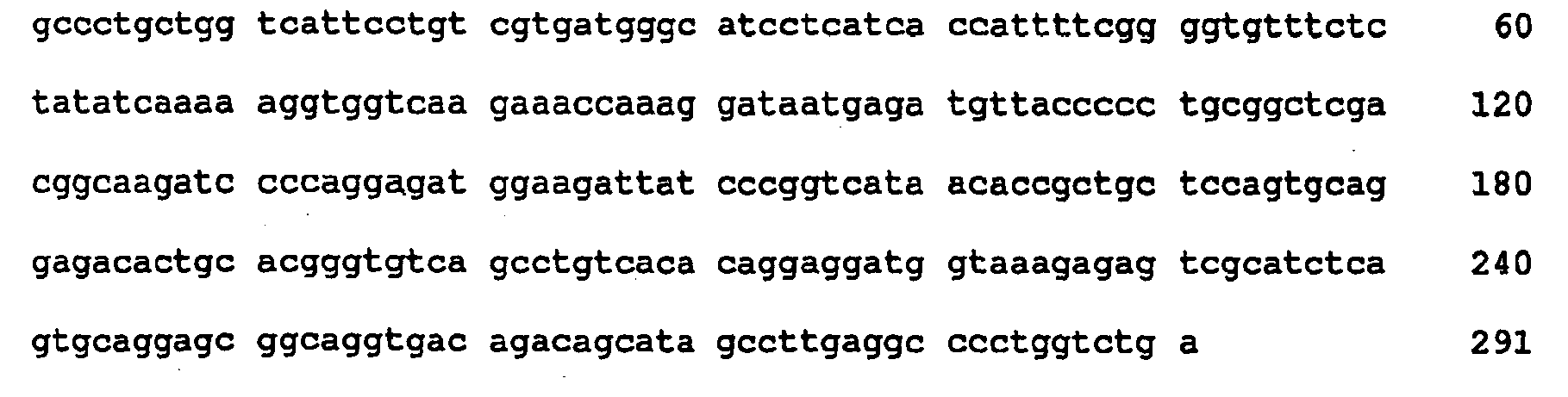
- <210> 63
<211> 46
<212> DNA
<213> Synthetic sequence - <400> 63

- <210> 64
<211> 29
<212> DNA
<213> Synthetic sequence - <400> 64

Claims (23)
- A polynucleotide comprising a sequence encoding a polypeptide that is capable of high level presentation of antigenic peptides on antigen-presenting cells, wherein the polypeptide comprises a β2-microglobulin molecule that is linked through its carboxyl terminal to a polypeptide stretch that allows the anchorage of the β2-microglobulin molecule to the cell membrane, and through its amino terminal to at least one antigenic peptide comprising a MHC class I epitope that is a tumor-associated antigen (TAA), wherein said polypeptide stretch at the β2-microglobulin carboxyl terminal consists of a bridge peptide of about 10-15 amino acids within the membrane-proximal sequence of a class I heavy chain HLA molecule, which spans the whole distance to the cell membrane, said bridge peptide being linked to a sequence which can exert the required anchoring function, being the full or partial transmembrane and/or cytoplasmic domain of a molecule selected from the group consisting of:(i) a human MHC class I molecule selected from an HLA-A, HLA-B or HLA-C molecule;(ii) a costimulatory B7.1, B7.2 or CD40 molecule; and(iii) a signal transduction element capable of activating T cells or antigen-presenting cells.
- The polynucleotide of claim I, wherein said bridge peptide is the peptide having the sequence of SEQ ID NO: 1.
- The polynucleotide of claim 1, wherein said bridge peptide is linked to the transmembrane and cytoplasmic domains from the MHC class I heavy chain HLA-A2 molecule having the sequence of SEQ ID NO: 2.
- The polynucleotide of claim 1, wherein said transduction element capable of activating T cells is selected from:(i) a component of T-cell receptor CD3 such as the zeta (ζ) or eta (η) polypeptide, optionally comprising the transmembranal and cytoplasmic regions of the human CD3 ζ polypeptide;(ii) a B cell receptor polypeptide; and(iii) an Fc receptor polypeptide.
- The polynucleotide of claim 1 or 2, wherein said bridge peptide is linked through its carboxyl terminal to a GPI-anchor sequence such as the peptide having the sequence of SEQ ID NO: 3.
- The polynucleotide of anyone of claims 1 to 5, wherein said at least one antigenic peptide comprising a MHC class I epitope is linked to the β2-microglobulin amino terminal through a peptide linker, and said at least one antigenic peptide may be at least one antigenic determinant of one sole antigen or at least one antigenic determinant of each one of at least two different antigens.
- The polynucleotide of claim 6, wherein said antigen is a tumor-associated antigen (TAA) such as alpha-fetoprotein, BA-46/lactadherin, BAGE, BCR-ABL fusion protein, beta-catenin, CASP-8, CDK4, CEA, CRIPTO-1, elongation factor 2, ETV6-AML1 fusion protein, G250, GAGE, gp100, HER-2/neu, intestinal carboxyl esterase, KIAA0205, MAGE, MART-1/Melan-A, MUC-1, N-ras, p53, PAP, PSA, PSMA, telomerase, TRP-1/gp75, TRP-2, tyrosinase, and uroplakin 1a, 1b, II and III.
- The polynucleotide of claim 7, wherein said antigenic peptide is selected from the group consisting of:(i) the alpha-fetoprotein peptide having the sequence of SEQ ID NO: 4;(ii) the BAGE-1 peptide having the sequence of SEQ ID NO: 5;(iii) the BCR-ABL fusion protein peptide having the sequence of SEQ ID NO: 6;(iv) the beta-catenin peptide having the sequence of SEQ ID NO: 7;(v) the CDK4 peptide having the sequence of SEQ ID NO: 8;(vi) the CEA peptide having the sequence of SEQ ID NO: 9;(vii) the elongation factor 2 peptide having the sequence of SEQ ID NO: 10;(viii) the ETV6-AML1 fusion protein peptide having the sequence of SEQ ID NO:11;(ix) the G250 peptide having the sequence of EQ ID NO: 12;(x) the GAGE-1,2,8 peptide having the sequence of SEQ ID NO: 13;(xi) the gp100 peptides having the sequences of SEQ ID NO: 14, SEQ ID NO: 15, SEQ ID NO: 16, SEQ ID NO: 17, SEQ ID NO: 18, SEQ ID NO: 19, SEQ ID NO: 20, SEQ ID NO: 21, SEQ ID NO: 22, SEQ ID NO: 23, SEQ ID NO: 24, S SEQ ID NO: 25 and SEQ ID NO:26;(xii) the HER-2/neu peptide having the sequence of SEQ ID NO: 27;(xiii) the intestinal carboxyl esterase peptide having the sequence of SEQ ID NO: 28;(xiv) the KIAA0205 peptide having the sequence of SEQ ID NO: 29;(xv) the MAGE-1 peptides having the sequences of SEQ ID NO: 30 and SEQ ID NO: 31;(xvi) the MAGE-3 peptides having the sequences of SEQ ID NO: 32 and SEQ ID NO: 33;(xvii) the MART -1/Melan-A peptide having the sequence of SEQ ID NO: 34;(xviii) the MUC-1 peptide having the sequence of SEQ ID NO: 35;(xix) the N-ras peptide having the sequence of SEQ ID NO: 36;(xx) the p53 peptide having the sequence of SEQ ID NO: 37;(xxi) the PSA peptides having the sequences of SEQ ID NO: 38 and SEQ ID NO: 39;(xxii) the telomerase peptide having the sequence of SEQ ID NO: 40;(xxiii) the TRP-1 peptide having the sequence of SEQ ID NO: 41;(xxiv) the TRP-2 peptides having the sequences of SEQ ID NO: 42, SEQ ID NO: 43, and SEQ ID NO: 44;(xxv) the TRP2-INT2 peptide having the sequence of SEQ ID NO: 45; and(xxvi) the tyrosinase peptide having the sequence of SEQ ID NO: 46.
- The polynucleotide of claim 7 or 8, wherein said at least one antigenic peptide is at least one antigenic determinant of one sole tumor-associated antigen.
- The polynucleotide of claim 9, wherein said at least one antigenic peptide is at least one HLA-A2 binding peptide and at least one HLA-A3 binding peptide derived from the melanoma-associated antigen gp100.
- The polynucleotide of claim 10, wherein said at least one HLA-A2 binding peptide derived from gp100 is selected from the group consisting of SEQ ID NO: 14, 15, 16, 17, 18, 19, 20, 21 and 22; and said at least one gp100 HLA-A3 binding peptide is selected from the group consisting of SEQ ID NO: 23, 24, 25 and 26.
- The polynucleotide of claim 7 or 8, wherein said, at least one antigenic peptide is at least one antigenic determinant of each one of at least two different tumor-associated antigens.
- The polynucleotide of claim 12, wherein said at least one antigenic peptide is at least one HLA-A2 binding peptide derived from each one of the melanoma associated antigens gp100 and Melan-A/MART-1, or at least one HLA-A3-restricted gp100 and at least one HLA-A2-restricted Melan-A/MART-1 peptide.
- An expression vector, preferably a recombinant viral vector, comprising a polynucleotide according to anyone of claims 1 to 13.
- An antigen-presenting cell selected from the group consisting of a dendritic cell, a macrophage, a B cell or a fibroblast, transfected with a polynucleotide comprising a sequence encoding a polypeptide comprising a β2-microglobulin molecule that is linked through its carboxyl terminal to a polypeptide stretch that allows the anchorage of the β2-microglobulin molecule to the cell membrane, and through its amino terminal to at least one antigenic peptide comprising a MHC class I epitope that is a tumor-associated antigen (TAA), wherein said polypeptide stretch at the β2-microglobulin carboxyl terminal consists of a bridge peptide of about 10-15 amino acids within the membrane-proximal sequence of a class I heavy chain HLA molecule, which spans the whole distance to the cell membrane, said bridge peptide being linked to a sequence which can exert the required anchoring function, optionally being the full or partial transmembrane and/or cytoplasmic domain of a molecule selected from the group consisting of:(i) a human MHC class I molecule selected from an HLA-A, HLA-B or HLAC molecule;(ii) a costimulatory B7.1, B7.2 or CD40 molecule; and(iii) a signal transduction element capable of activating T cells or antigen-presenting cells.
- A DNA vaccine comprising a polynucleotide of anyone of claims 1 to 13 or an expression vector of claim 14.
- A cellular vaccine which comprises an antigen-presenting cell of claim 15.
- A cellular vaccine comprising antigen-presenting cells which express a β2-microglobulin molecule linked through its carboxyl terminal to a polypeptide stretch that allows the anchorage of the β2-microglobulin molecule to the cell membrane, wherein said polypeptide stretch at the β2-microglobulin carboxyl terminal consists of a bridge peptide which spans the whole distance to the cell membrane, said bridge peptide of about 10-15 amino acids within the membrane-proximal sequence of a class I heavy chain HLA molecule, being linked to a sequence which can exert the required anchoring function, optionally being the full or partial transmembrane and/or cytoplasmic domain of a molecule selected from the group consisting of:(i) a human MHC class I molecule selected from an HLA-A, HLA-B or HLAC molecule;(ii) a costimulatory B7.1, B7.2 or CD40 molecule; and(iii) a signal transduction element capable of activating T cells or antigen-presenting cells, wherein said cells have been pulsed with at least one antigenic peptide derived from at least one tumor associated antigen.
- Antigen-presenting cells which express a β2-microglobulin molecule linked through its carboxyl terminal to a polypeptide stretch that allows the anchorage of the β2-Microglobulin molecule to the cell membrane, wherein said polypeptide stretch at the β2-microglobulin carboxyl terminal consists of a bridge peptide of about 10-15 amino acids within the membrane-proximal sequence of a class I heavy chain HLA molecule, which spans the whole distance to the cell membrane, said bridge peptide being linked to a sequence which can exert the required anchoring function, optionally being the full or partial transmembrane and/or cytoplasmic domain of a molecule selected from the group consisting of:(i) a human MHC class I molecule selected from an HLA-A, HLA-B or HLAC molecule;(ii) a costimulatory B7.1, B7.2 or CD40 molecule; and(iii) a signal transduction element capable of activating T cells or antigen-presenting cells, wherein said cells have been pulsed with at least one antigenic peptide derived from at least one tumor associated antigen for use in the prevention or treatment of cancer.
- The cellular vaccine of claim 17 or 18, wherein the antigen-presenting cell is selected from the group consisting of a dendritic cell, a macrophage, a B cell and a fibroblast, wherein said antigen-presenting cell presents at least one antigenic peptide derived from at least one tumor associated antigen.
- The antigen-presenting cells of claim 19, wherein the antigen-presenting cells are selected from the group consisting of dendritic cells, macrophages, B cells and fibroblasts, wherein said antigen-presenting cells present at least one antigenic peptide derived from at least one tumor associated antigen.
- A pharmaceutical composition comprising as an active ingredient at least one polynucleotide of any one of claims 1 to 13 or an expression vector of claim 14, or an antigen-presenting cell of claim 15, and a pharmaceutically acceptable carrier.
- The expression vector of claim 14, or the antigen-presenting cell of claim 15, for use in the prevention or treatment of cancer.
Applications Claiming Priority (3)
| Application Number | Priority Date | Filing Date | Title |
|---|---|---|---|
| US38827302P | 2002-06-12 | 2002-06-12 | |
| PCT/IL2003/000501 WO2003106616A2 (en) | 2002-06-12 | 2003-06-12 | MEMBRANE-ANCHORED β2 MICROGLOBULIN COVALENTLY LINKED TO MHC CLASS I PEPTIDE EPITOPES |
| US388273P | 2010-09-30 |
Publications (3)
| Publication Number | Publication Date |
|---|---|
| EP1572929A2 EP1572929A2 (en) | 2005-09-14 |
| EP1572929A4 EP1572929A4 (en) | 2007-07-11 |
| EP1572929B1 true EP1572929B1 (en) | 2011-05-11 |
Family
ID=29736450
Family Applications (1)
| Application Number | Title | Priority Date | Filing Date |
|---|---|---|---|
| EP03730447A Expired - Lifetime EP1572929B1 (en) | 2002-06-12 | 2003-06-12 | Membrane-anchored beta2 microglobulin covalently linked to mhc class i peptide epitopes |
Country Status (5)
| Country | Link |
|---|---|
| US (1) | US20060003315A1 (en) |
| EP (1) | EP1572929B1 (en) |
| AT (1) | ATE509025T1 (en) |
| AU (1) | AU2003241127A1 (en) |
| WO (1) | WO2003106616A2 (en) |
Families Citing this family (13)
| Publication number | Priority date | Publication date | Assignee | Title |
|---|---|---|---|---|
| US20080286312A1 (en) * | 2002-06-12 | 2008-11-20 | Gavish-Galilee Bio Applications Ltd. | Membrane-anchored beta2 microglobulincovalently linked to MHC class I peptide epitopes |
| LT5414B (en) * | 2005-04-13 | 2007-04-25 | Biotechnologijos Institutas | Process for preparing monoclonal antibodies; hybridoma cell lines generated by this process and recombinant chimeric virus-like particles with inserted foreign protein fragments as immunogenes to generate hybridomas by this process |
| EP2684957A2 (en) * | 2009-01-08 | 2014-01-15 | International Institute of Cancer Immunology, Inc. | Double-stranded siRNA targeting cancer antigen eEF2 |
| WO2012127464A2 (en) | 2011-03-23 | 2012-09-27 | Gavish-Galilee Bio Applications Ltd | Constitutively activated t cells for use in adoptive cell therapy |
| WO2013170305A1 (en) * | 2012-05-16 | 2013-11-21 | Adelaide Research & Innovation Pty Ltd | Cellular vaccine and method of inducing an immune response in a subject |
| CN103948944B (en) * | 2013-05-20 | 2016-06-01 | 中国人民解放军军事医学科学院基础医学研究所 | A kind of broad-spectrum anti-tumor double-mass model replication competent type DNA vaccine |
| CN103948943B (en) * | 2013-05-20 | 2017-01-11 | 中国人民解放军军事医学科学院基础医学研究所 | Reproducible kidney cancer therapeutic DNA vaccine |
| GB201520575D0 (en) * | 2015-11-23 | 2016-01-06 | Immunocore Ltd & Adaptimmune Ltd | Peptides |
| CN111373031A (en) * | 2017-11-10 | 2020-07-03 | 朱拉生物公司 | Chimeric receptors based on major histocompatibility complex and their use for treating autoimmune diseases |
| KR102943105B1 (en) * | 2018-03-23 | 2026-03-24 | 가비쉬-가릴리 바이오 어플리케이션스 리미티드. | Genetically reprogrammed treg expressing membrane-bound IL-10 |
| WO2019209631A1 (en) * | 2018-04-23 | 2019-10-31 | Baylor College Of Medicine | Chimeric hla accessory receptor |
| CN114127297A (en) * | 2019-03-26 | 2022-03-01 | 加维什-加利里生物应用有限公司 | Genetically reprogrammed CAR-expressing TREG |
| WO2024192465A1 (en) * | 2023-03-20 | 2024-09-26 | Garvan Institute Of Medical Research | Vaccines and methods of use thereof |
Citations (1)
| Publication number | Priority date | Publication date | Assignee | Title |
|---|---|---|---|---|
| WO2001072768A2 (en) * | 2000-03-27 | 2001-10-04 | Technion Research And Development Foundation Ltd. | Single chain class i major histo-compatibility complexes, constructs encoding same and methods of generating same |
Family Cites Families (6)
| Publication number | Priority date | Publication date | Assignee | Title |
|---|---|---|---|---|
| US6080409A (en) * | 1995-12-28 | 2000-06-27 | Dendreon Corporation | Immunostimulatory method |
| WO1998046769A1 (en) * | 1997-04-11 | 1998-10-22 | Dendreon Corporation | Composition and method for inducing an immune response against tumour-related antigens |
| ES2265165T3 (en) * | 1997-07-10 | 2007-02-01 | Mannkind Corporation | DEVICE TO INDUCE AN ANSWER LTC. |
| US6194152B1 (en) * | 1997-08-20 | 2001-02-27 | Dendreon Corporation | Prostate tumor polynucleotide compositions and methods of detection thereof |
| IL136511A0 (en) * | 2000-06-01 | 2001-06-14 | Gavish Galilee Bio Appl Ltd | Genetically engineered mhc molecules |
| AU2003258081A1 (en) * | 2002-08-02 | 2004-02-23 | South Alabama Medical Sciences Foundation | Cancer vaccines containing epitopes of oncofetal antigen |
-
2003
- 2003-06-12 EP EP03730447A patent/EP1572929B1/en not_active Expired - Lifetime
- 2003-06-12 US US10/517,784 patent/US20060003315A1/en not_active Abandoned
- 2003-06-12 AU AU2003241127A patent/AU2003241127A1/en not_active Abandoned
- 2003-06-12 AT AT03730447T patent/ATE509025T1/en not_active IP Right Cessation
- 2003-06-12 WO PCT/IL2003/000501 patent/WO2003106616A2/en not_active Ceased
Patent Citations (1)
| Publication number | Priority date | Publication date | Assignee | Title |
|---|---|---|---|---|
| WO2001072768A2 (en) * | 2000-03-27 | 2001-10-04 | Technion Research And Development Foundation Ltd. | Single chain class i major histo-compatibility complexes, constructs encoding same and methods of generating same |
Non-Patent Citations (7)
| Title |
|---|
| BERKO DIKLA ET AL: "Membrane-anchored beta2-microglobtilin stabilizes a highly receptive state of MHC class I molecules", JOURNAL OF IMMUNOLOGY, vol. 174, no. 4, 15 February 2005 (2005-02-15), pages 2116 - 2123, ISSN: 0022-1767 * |
| BJORKMAN P.J. ET AL: "STRUCTURE OF THE HUMAN CLASS I HISTOCOMPATIBILITY ANTIGEN HLA-A2", NATURE (LONDON), vol. 329, no. 6139, 1987, pages 506 - 512, ISSN: 0028-0836 * |
| MARGALIT A. ET AL: "Chimeric beta2 microglobulin/CD3zeta polypeptides expressed in T cells convert MHC class I peptide ligands into T cell activation receptors: A potential tool for specific targeting of pathogenic CD8+ T cells", INTERNATIONAL IMMUNOLOGY, OXFORD UNIVERSITY PRESS, GB LNKD- DOI:10.1093/INTIMM/DXG136, vol. 15, no. 11, 1 November 2003 (2003-11-01), pages 1379 - 1387, XP009039662, ISSN: 0953-8178 * |
| NAIR S.K. ET AL: "ANTIGEN-PRESENTING CELLS PULSED WITH UNFRACTIONATED TUMOR-DERIVED PEPTIDES ARE POTENT TUMOR VACCINES", EUROPEAN JOURNAL OF IMMUNOLOGY, WILEY - V C H VERLAG GMBH & CO. KGAA, DE LNKD- DOI:10.1002/EJI.1830270304, vol. 27, no. 3, 1 January 1997 (1997-01-01), pages 589 - 597, XP001096188, ISSN: 0014-2980 * |
| NAYAK J.V. ET AL: "Antigen delivery to dendritic cells: Implications for cancer immunotherapy", CLINICAL IMMUNOLOGY NEWSLETTER 199910 US LNKD- DOI:10.1016/S0197-1859(00)87087-9, vol. 19, no. 10-11, October 1999 (1999-10-01), pages 131 - 135, ISSN: 0197-1859 * |
| TOSHITANI K. ET AL: "EXPRESSION OF A SINGLE-CHAIN HLA CLASS I MOLECULE IN A HUMAN CELL LINE: PRESENTATION OF EXOGENOUS PEPTIDE AND PROCESSED ANTIGEN TO CYTOTOXIC T LYMPHOCYTES", PROCEEDINGS OF THE NATIONAL ACADEMY OF SCIENCES OF THE UNITED STATES (PNAS), NATIONAL ACADEMY OF SCIENCE, US LNKD- DOI:10.1073/PNAS.93.1.236, vol. 93, no. 1, 9 January 1996 (1996-01-09), pages 236 - 240, XP002051157, ISSN: 0027-8424 * |
| UGER R.A.; CHAN S.M.; BARBER B.H.: "Covalent linkage to beta 2-microglobulin enhances the MHC stability and antigenicity of suboptimal CTL epitopes", JOURNAL OF IMMUNOLOGY, AMERICAN ASSOCIATION OF IMMUNOLOGISTS, US, vol. 162, no. 10, 1 January 1999 (1999-01-01), pages 6024 - 6028, XP002959840, ISSN: 0022-1767 * |
Also Published As
| Publication number | Publication date |
|---|---|
| EP1572929A2 (en) | 2005-09-14 |
| AU2003241127A1 (en) | 2003-12-31 |
| WO2003106616A3 (en) | 2006-05-18 |
| US20060003315A1 (en) | 2006-01-05 |
| ATE509025T1 (en) | 2011-05-15 |
| EP1572929A4 (en) | 2007-07-11 |
| WO2003106616A2 (en) | 2003-12-24 |
| AU2003241127A8 (en) | 2003-12-31 |
Similar Documents
| Publication | Publication Date | Title |
|---|---|---|
| JP6612963B2 (en) | Compositions and methods for using recombinant T cell receptors to directly recognize tumor antigens | |
| JP3581366B2 (en) | Lysosomal targeting of immunogens | |
| EP1363938B1 (en) | Molecular vaccine linking an endoplasmic reticulum chaperone polypeptide to an antigen | |
| Firat et al. | Use of a lentiviral flap vector for induction of CTL immunity against melanoma. Perspectives for immunotherapy | |
| US20110182926A1 (en) | Minigene | |
| ES3002958T3 (en) | Chimeric antigen receptor-modified cells for the treatment of cldn6-expressing cancers | |
| Massa et al. | Enhanced efficacy of tumor cell vaccines transfected with secretable hsp70 | |
| US20160250309A1 (en) | Compositions and methods for cancer treatment | |
| TWI852977B (en) | Prostate neoantigens and their uses | |
| US20100159594A1 (en) | Single chain trimers and uses therefor | |
| JP2018515518A (en) | Enhancement of the effect of CAR-engineered T cells by nucleic acid vaccination | |
| WO2009002418A2 (en) | T-cell peptide epitopes from carcinoembryonic antigen, immunogenic analogs, and uses thereof | |
| US20060003315A1 (en) | Membrane-anchored beta2 microglobulin covalently linked to mhc class 1 peptide epitopes | |
| Fioretti et al. | Recent advances in design of immunogenic and effective naked DNA vaccines against cancer | |
| CN113795272B (en) | Therapies involving CAR-engineered T cells and cytokines | |
| EP2066690A2 (en) | Membrane-anchored 2 microglobulin covalently linked to mhc class i peptide epitopes | |
| US7816334B2 (en) | Materials and methods relating to immune responses to fusion proteins | |
| Stevenson et al. | Tumor vaccines | |
| Margalit et al. | Induction of antitumor immunity by CTL epitopes genetically linked to membrane-anchored β2-microglobulin | |
| Pietersz* et al. | Generation of cellular immune responses to antigenic tumor peptides | |
| Iwasaki et al. | Induction by DNA immunization of a protective antitumor cytotoxic T lymphocyte response against a minimal-epitope-expressing tumor | |
| JP2002506622A (en) | Methods of enhanced antigen presentation on antigen presenting cells and compositions produced thereby | |
| JP2023514566A (en) | Neoantigen expression and its use in ovarian cancer | |
| RU2841311C1 (en) | Neoantigens expressed in multiple myeloma, and use thereof | |
| US20060099202A1 (en) | Immunoglobulin construct containing tumor- specific p53bp2 sequenes for eliciting an anti-tumor response |
Legal Events
| Date | Code | Title | Description |
|---|---|---|---|
| PUAI | Public reference made under article 153(3) epc to a published international application that has entered the european phase |
Free format text: ORIGINAL CODE: 0009012 |
|
| 17P | Request for examination filed |
Effective date: 20050107 |
|
| AK | Designated contracting states |
Kind code of ref document: A2 Designated state(s): AT BE BG CH CY CZ DE DK EE ES FI FR GB GR HU IE IT LI LU MC NL PT RO SE SI SK TR |
|
| AX | Request for extension of the european patent |
Extension state: AL LT LV MK |
|
| DAX | Request for extension of the european patent (deleted) | ||
| RIC1 | Information provided on ipc code assigned before grant |
Ipc: C07H 21/02 20060101AFI20060704BHEP |
|
| PUAK | Availability of information related to the publication of the international search report |
Free format text: ORIGINAL CODE: 0009015 |
|
| A4 | Supplementary search report drawn up and despatched |
Effective date: 20070612 |
|
| 17Q | First examination report despatched |
Effective date: 20071219 |
|
| GRAP | Despatch of communication of intention to grant a patent |
Free format text: ORIGINAL CODE: EPIDOSNIGR1 |
|
| GRAS | Grant fee paid |
Free format text: ORIGINAL CODE: EPIDOSNIGR3 |
|
| GRAA | (expected) grant |
Free format text: ORIGINAL CODE: 0009210 |
|
| AK | Designated contracting states |
Kind code of ref document: B1 Designated state(s): AT BE BG CH CY CZ DE DK EE ES FI FR GB GR HU IE IT LI LU MC NL PT RO SE SI SK TR |
|
| REG | Reference to a national code |
Ref country code: GB Ref legal event code: FG4D |
|
| REG | Reference to a national code |
Ref country code: CH Ref legal event code: EP |
|
| REG | Reference to a national code |
Ref country code: IE Ref legal event code: FG4D |
|
| REG | Reference to a national code |
Ref country code: DE Ref legal event code: R096 Ref document number: 60337098 Country of ref document: DE Effective date: 20110622 |
|
| PGFP | Annual fee paid to national office [announced via postgrant information from national office to epo] |
Ref country code: CH Payment date: 20110623 Year of fee payment: 9 |
|
| REG | Reference to a national code |
Ref country code: NL Ref legal event code: VDEP Effective date: 20110511 |
|
| PG25 | Lapsed in a contracting state [announced via postgrant information from national office to epo] |
Ref country code: SE Free format text: LAPSE BECAUSE OF FAILURE TO SUBMIT A TRANSLATION OF THE DESCRIPTION OR TO PAY THE FEE WITHIN THE PRESCRIBED TIME-LIMIT Effective date: 20110511 Ref country code: PT Free format text: LAPSE BECAUSE OF FAILURE TO SUBMIT A TRANSLATION OF THE DESCRIPTION OR TO PAY THE FEE WITHIN THE PRESCRIBED TIME-LIMIT Effective date: 20110912 |
|
| PG25 | Lapsed in a contracting state [announced via postgrant information from national office to epo] |
Ref country code: SI Free format text: LAPSE BECAUSE OF FAILURE TO SUBMIT A TRANSLATION OF THE DESCRIPTION OR TO PAY THE FEE WITHIN THE PRESCRIBED TIME-LIMIT Effective date: 20110511 Ref country code: CY Free format text: LAPSE BECAUSE OF FAILURE TO SUBMIT A TRANSLATION OF THE DESCRIPTION OR TO PAY THE FEE WITHIN THE PRESCRIBED TIME-LIMIT Effective date: 20110511 Ref country code: BE Free format text: LAPSE BECAUSE OF FAILURE TO SUBMIT A TRANSLATION OF THE DESCRIPTION OR TO PAY THE FEE WITHIN THE PRESCRIBED TIME-LIMIT Effective date: 20110511 Ref country code: FI Free format text: LAPSE BECAUSE OF FAILURE TO SUBMIT A TRANSLATION OF THE DESCRIPTION OR TO PAY THE FEE WITHIN THE PRESCRIBED TIME-LIMIT Effective date: 20110511 Ref country code: ES Free format text: LAPSE BECAUSE OF FAILURE TO SUBMIT A TRANSLATION OF THE DESCRIPTION OR TO PAY THE FEE WITHIN THE PRESCRIBED TIME-LIMIT Effective date: 20110822 Ref country code: GR Free format text: LAPSE BECAUSE OF FAILURE TO SUBMIT A TRANSLATION OF THE DESCRIPTION OR TO PAY THE FEE WITHIN THE PRESCRIBED TIME-LIMIT Effective date: 20110812 Ref country code: AT Free format text: LAPSE BECAUSE OF FAILURE TO SUBMIT A TRANSLATION OF THE DESCRIPTION OR TO PAY THE FEE WITHIN THE PRESCRIBED TIME-LIMIT Effective date: 20110511 |
|
| PG25 | Lapsed in a contracting state [announced via postgrant information from national office to epo] |
Ref country code: NL Free format text: LAPSE BECAUSE OF FAILURE TO SUBMIT A TRANSLATION OF THE DESCRIPTION OR TO PAY THE FEE WITHIN THE PRESCRIBED TIME-LIMIT Effective date: 20110511 |
|
| PG25 | Lapsed in a contracting state [announced via postgrant information from national office to epo] |
Ref country code: EE Free format text: LAPSE BECAUSE OF FAILURE TO SUBMIT A TRANSLATION OF THE DESCRIPTION OR TO PAY THE FEE WITHIN THE PRESCRIBED TIME-LIMIT Effective date: 20110511 Ref country code: CZ Free format text: LAPSE BECAUSE OF FAILURE TO SUBMIT A TRANSLATION OF THE DESCRIPTION OR TO PAY THE FEE WITHIN THE PRESCRIBED TIME-LIMIT Effective date: 20110511 |
|
| REG | Reference to a national code |
Ref country code: CH Ref legal event code: NV Representative=s name: MICHELI & CIE SA |
|
| PG25 | Lapsed in a contracting state [announced via postgrant information from national office to epo] |
Ref country code: SK Free format text: LAPSE BECAUSE OF FAILURE TO SUBMIT A TRANSLATION OF THE DESCRIPTION OR TO PAY THE FEE WITHIN THE PRESCRIBED TIME-LIMIT Effective date: 20110511 Ref country code: RO Free format text: LAPSE BECAUSE OF FAILURE TO SUBMIT A TRANSLATION OF THE DESCRIPTION OR TO PAY THE FEE WITHIN THE PRESCRIBED TIME-LIMIT Effective date: 20110511 Ref country code: DK Free format text: LAPSE BECAUSE OF FAILURE TO SUBMIT A TRANSLATION OF THE DESCRIPTION OR TO PAY THE FEE WITHIN THE PRESCRIBED TIME-LIMIT Effective date: 20110511 |
|
| PLBE | No opposition filed within time limit |
Free format text: ORIGINAL CODE: 0009261 |
|
| STAA | Information on the status of an ep patent application or granted ep patent |
Free format text: STATUS: NO OPPOSITION FILED WITHIN TIME LIMIT |
|
| REG | Reference to a national code |
Ref country code: IE Ref legal event code: MM4A |
|
| 26N | No opposition filed |
Effective date: 20120214 |
|
| PG25 | Lapsed in a contracting state [announced via postgrant information from national office to epo] |
Ref country code: IE Free format text: LAPSE BECAUSE OF NON-PAYMENT OF DUE FEES Effective date: 20110612 |
|
| PG25 | Lapsed in a contracting state [announced via postgrant information from national office to epo] |
Ref country code: IT Free format text: LAPSE BECAUSE OF FAILURE TO SUBMIT A TRANSLATION OF THE DESCRIPTION OR TO PAY THE FEE WITHIN THE PRESCRIBED TIME-LIMIT Effective date: 20110511 |
|
| REG | Reference to a national code |
Ref country code: DE Ref legal event code: R097 Ref document number: 60337098 Country of ref document: DE Effective date: 20120214 |
|
| PGFP | Annual fee paid to national office [announced via postgrant information from national office to epo] |
Ref country code: DE Payment date: 20120629 Year of fee payment: 10 |
|
| PGFP | Annual fee paid to national office [announced via postgrant information from national office to epo] |
Ref country code: GB Payment date: 20120629 Year of fee payment: 10 |
|
| PGFP | Annual fee paid to national office [announced via postgrant information from national office to epo] |
Ref country code: FR Payment date: 20120718 Year of fee payment: 10 |
|
| PG25 | Lapsed in a contracting state [announced via postgrant information from national office to epo] |
Ref country code: MC Free format text: LAPSE BECAUSE OF NON-PAYMENT OF DUE FEES Effective date: 20110630 |
|
| PG25 | Lapsed in a contracting state [announced via postgrant information from national office to epo] |
Ref country code: LU Free format text: LAPSE BECAUSE OF NON-PAYMENT OF DUE FEES Effective date: 20110612 |
|
| PG25 | Lapsed in a contracting state [announced via postgrant information from national office to epo] |
Ref country code: BG Free format text: LAPSE BECAUSE OF FAILURE TO SUBMIT A TRANSLATION OF THE DESCRIPTION OR TO PAY THE FEE WITHIN THE PRESCRIBED TIME-LIMIT Effective date: 20110811 |
|
| PG25 | Lapsed in a contracting state [announced via postgrant information from national office to epo] |
Ref country code: TR Free format text: LAPSE BECAUSE OF FAILURE TO SUBMIT A TRANSLATION OF THE DESCRIPTION OR TO PAY THE FEE WITHIN THE PRESCRIBED TIME-LIMIT Effective date: 20110511 |
|
| PG25 | Lapsed in a contracting state [announced via postgrant information from national office to epo] |
Ref country code: HU Free format text: LAPSE BECAUSE OF FAILURE TO SUBMIT A TRANSLATION OF THE DESCRIPTION OR TO PAY THE FEE WITHIN THE PRESCRIBED TIME-LIMIT Effective date: 20110511 |
|
| REG | Reference to a national code |
Ref country code: CH Ref legal event code: PL |
|
| GBPC | Gb: european patent ceased through non-payment of renewal fee |
Effective date: 20130612 |
|
| REG | Reference to a national code |
Ref country code: FR Ref legal event code: ST Effective date: 20140228 |
|
| REG | Reference to a national code |
Ref country code: DE Ref legal event code: R119 Ref document number: 60337098 Country of ref document: DE Effective date: 20140101 |
|
| PG25 | Lapsed in a contracting state [announced via postgrant information from national office to epo] |
Ref country code: LI Free format text: LAPSE BECAUSE OF NON-PAYMENT OF DUE FEES Effective date: 20130630 Ref country code: CH Free format text: LAPSE BECAUSE OF NON-PAYMENT OF DUE FEES Effective date: 20130630 Ref country code: DE Free format text: LAPSE BECAUSE OF NON-PAYMENT OF DUE FEES Effective date: 20140101 Ref country code: GB Free format text: LAPSE BECAUSE OF NON-PAYMENT OF DUE FEES Effective date: 20130612 |
|
| PG25 | Lapsed in a contracting state [announced via postgrant information from national office to epo] |
Ref country code: FR Free format text: LAPSE BECAUSE OF NON-PAYMENT OF DUE FEES Effective date: 20130701 |