EP1572727B1 - On-growth inhibiting compounds - Google Patents
On-growth inhibiting compounds Download PDFInfo
- Publication number
- EP1572727B1 EP1572727B1 EP20030781208 EP03781208A EP1572727B1 EP 1572727 B1 EP1572727 B1 EP 1572727B1 EP 20030781208 EP20030781208 EP 20030781208 EP 03781208 A EP03781208 A EP 03781208A EP 1572727 B1 EP1572727 B1 EP 1572727B1
- Authority
- EP
- European Patent Office
- Prior art keywords
- cycloviolacin
- varv
- kalata
- composition according
- amino acid
- Prior art date
- Legal status (The legal status is an assumption and is not a legal conclusion. Google has not performed a legal analysis and makes no representation as to the accuracy of the status listed.)
- Expired - Lifetime
Links
- 230000002401 inhibitory effect Effects 0.000 title abstract description 5
- 150000001875 compounds Chemical class 0.000 title description 15
- 108060002063 Cyclotide Proteins 0.000 claims abstract description 45
- 239000000203 mixture Substances 0.000 claims abstract description 23
- 230000005764 inhibitory process Effects 0.000 claims abstract description 10
- 230000002265 prevention Effects 0.000 claims abstract description 4
- 108010093427 cycloviolacin O2 Proteins 0.000 claims description 27
- LPRLNBIIZMVTNT-CGJDGIRVSA-N cycloviolacin o2 Chemical compound C([C@H]1C(=O)N[C@@H](CCCNC(N)=N)C(=O)N[C@@H](CC(N)=O)C(=O)NCC(=O)N[C@H](C(=O)N2CCC[C@H]2C(=O)N[C@@H](CSSC[C@H]2C(=O)N[C@@H](CO)C(=O)N[C@@H]3C(=O)N[C@@H](CCCCN)C(=O)N[C@@H](CO)C(=O)N[C@@H](CCCCN)C(=O)N[C@H](C(=O)N[C@H](C(N1)=O)CSSC[C@H](NC(=O)[C@@H]1CCCN1C(=O)[C@H]([C@@H](C)CC)NC(=O)[C@H](CC=1C4=CC=CC=C4NC=1)NC(=O)[C@H](C(C)C)NC(=O)[C@@H](NC(=O)[C@H](CO)NC(=O)[C@H](CCC(O)=O)NC(=O)CN)CSSC3)C(=O)N[C@H](C(=O)N[C@@H](CO)C(=O)N[C@@H](CO)C(=O)N[C@@H](C)C(=O)N[C@H](C(NCC(=O)N2)=O)[C@@H](C)CC)[C@@H](C)CC)C(C)C)C(O)=O)[C@@H](C)CC)C1=CC=C(O)C=C1 LPRLNBIIZMVTNT-CGJDGIRVSA-N 0.000 claims description 24
- 125000000539 amino acid group Chemical group 0.000 claims description 14
- 239000008199 coating composition Substances 0.000 claims description 10
- 238000000034 method Methods 0.000 claims description 10
- 239000000284 extract Substances 0.000 claims description 9
- 235000018417 cysteine Nutrition 0.000 claims description 7
- 238000000605 extraction Methods 0.000 claims description 6
- 230000003405 preventing effect Effects 0.000 claims description 6
- -1 kalata S Chemical compound 0.000 claims description 5
- 101710155911 Cycloviolacin-O3 Proteins 0.000 claims description 3
- 101710155826 Cycloviolacin-O7 Proteins 0.000 claims description 3
- 101710155839 Cycloviolacin-O9 Proteins 0.000 claims description 3
- DRHFCEIZVVAMEH-GZQYODANSA-N CC[C@H](C)[C@@H]1NC(=O)[C@@H](CC(C)C)NC(=O)[C@H](CCN)NC(=O)[C@@H](NC(=O)[C@H](CCN)NC(=O)[C@@H](NC(=O)[C@H](CCN)NC(=O)CCCCC(C)C)[C@@H](C)O)CCNC(=O)[C@H]([C@@H](C)O)NC(=O)[C@H](CCN)NC(=O)[C@H](CCN)NC1=O Chemical compound CC[C@H](C)[C@@H]1NC(=O)[C@@H](CC(C)C)NC(=O)[C@H](CCN)NC(=O)[C@@H](NC(=O)[C@H](CCN)NC(=O)[C@@H](NC(=O)[C@H](CCN)NC(=O)CCCCC(C)C)[C@@H](C)O)CCNC(=O)[C@H]([C@@H](C)O)NC(=O)[C@H](CCN)NC(=O)[C@H](CCN)NC1=O DRHFCEIZVVAMEH-GZQYODANSA-N 0.000 claims description 2
- 101710155845 Cycloviolacin-H1 Proteins 0.000 claims description 2
- 101710155920 Cycloviolacin-O1 Proteins 0.000 claims description 2
- 101710127829 Cycloviolacin-O10 Proteins 0.000 claims description 2
- 101710127812 Cycloviolacin-O11 Proteins 0.000 claims description 2
- 101710127831 Cycloviolacin-O12 Proteins 0.000 claims description 2
- 101710155906 Cycloviolacin-O4 Proteins 0.000 claims description 2
- 101710155905 Cycloviolacin-O5 Proteins 0.000 claims description 2
- 101710155827 Cycloviolacin-O6 Proteins 0.000 claims description 2
- 101710155840 Cycloviolacin-O8 Proteins 0.000 claims description 2
- 101710084988 Cycloviolin-A Proteins 0.000 claims description 2
- 101710084987 Cycloviolin-B Proteins 0.000 claims description 2
- 101710084992 Cycloviolin-C Proteins 0.000 claims description 2
- 101710084993 Cycloviolin-D Proteins 0.000 claims description 2
- 101800003534 Kalata-B1 Proteins 0.000 claims description 2
- 101800003526 Kalata-B6 Proteins 0.000 claims description 2
- OEDKDVKQFDPTHK-UBIDWWFKSA-N chembl526148 Chemical compound C([C@H]1C(=O)N[C@@H](CCCNC(N)=N)C(=O)N[C@@H](CC(N)=O)C(=O)NCC(=O)N[C@H](C(=O)N2CCC[C@H]2C(=O)N[C@@H]2C(=O)NCC(=O)N[C@@H](CCC(O)=O)C(=O)N[C@@H](CO)C(=O)N[C@H]3CSSC[C@H]4C(=O)N[C@@H](CCCCN)C(=O)N[C@@H](CC(N)=O)C(=O)N[C@@H](CCCCN)C(=O)N[C@H](C(=O)N[C@H](C(N1)=O)CSSC[C@H](NC(=O)[C@@H]1CCCN1C(=O)[C@H]([C@@H](C)CC)NC(=O)[C@H](CC=1C5=CC=CC=C5NC=1)NC(=O)[C@H](C(C)C)NC3=O)C(=O)N[C@H](C(N[C@@H](CO)C(=O)N[C@@H](C)C(=O)N[C@@H](C)C(=O)N[C@@H](CC(C)C)C(=O)NCC(=O)N[C@@H](CSSC2)C(=O)N[C@@H](CO)C(=O)N4)=O)[C@@H](C)CC)C(C)C)[C@@H](C)CC)C1=CC=C(O)C=C1 OEDKDVKQFDPTHK-UBIDWWFKSA-N 0.000 claims description 2
- 108010014869 circulin A Proteins 0.000 claims description 2
- 108010014868 circulin B Proteins 0.000 claims description 2
- KNNKLNZUUUBNAO-KERYQHGTSA-N circulin c Chemical compound C([C@H]1C(=O)N[C@@H](CCCNC(N)=N)C(=O)N[C@@H](CC(N)=O)C(=O)NCC(=O)N[C@H](C(=O)N2CCC[C@H]2C(=O)N[C@@H]2C(=O)NCC(=O)N[C@@H](CCC(O)=O)C(=O)N[C@@H](CO)C(=O)N[C@H]3CSSC[C@H]4C(=O)N[C@@H](CCCCN)C(=O)N[C@@H](CO)C(=O)N[C@@H](CCCCN)C(=O)N[C@H](C(=O)N[C@H](C(N1)=O)CSSC[C@H](NC(=O)[C@@H]1CCCN1C(=O)[C@H]([C@H](C)CC)NC(=O)[C@H](CC=1C=CC=CC=1)NC(=O)[C@H](C(C)C)NC3=O)C(=O)N[C@H](C(N[C@H](C(=O)N[C@@H](CO)C(=O)N[C@H](C(=O)N[C@@H](C)C(=O)NCC(=O)N[C@@H](CSSC2)C(=O)N[C@@H](CO)C(=O)N4)C(C)C)[C@@H](C)O)=O)[C@@H](C)CC)C(C)C)[C@@H](C)CC)C1=CC=C(O)C=C1 KNNKLNZUUUBNAO-KERYQHGTSA-N 0.000 claims description 2
- MSVJOJFCJSDVQL-BDXIEVRTSA-N circulin d Chemical compound C([C@H]1C(=O)N[C@H](C(=O)N[C@@H](CO)C(=O)N[C@H](C(N[C@@H](CC=2C=CC=CC=2)C(=O)N[C@@H](CC(N)=O)C(=O)N[C@H]2CSSC[C@H]3C(=O)NCC(=O)N[C@@H](CCC(O)=O)C(=O)N[C@@H](CO)C(=O)N[C@H]4CSSC[C@H](NC(=O)[C@H](CCCCN)NC2=O)C(=O)N[C@@H](CCC(O)=O)C(=O)N[C@@H](CC(N)=O)C(=O)N[C@@H](CCCCN)C(=O)N[C@H](C(=O)N[C@H](C(N[C@@H](CC=2C=CC(O)=CC=2)C(=O)N[C@@H](CC=2NC=NC=2)C(=O)N[C@@H](CC(O)=O)C(=O)N[C@@H](CCCCN)C(=O)N[C@H](C(=O)N2CCC[C@H]2C(=O)N3)[C@@H](C)CC)=O)CSSC[C@H](NC(=O)[C@@H]2CCCN2C(=O)[C@H]([C@@H](C)CC)NC(=O)[C@H](CC=2C3=CC=CC=C3NC=2)NC(=O)[C@H](C(C)C)NC4=O)C(=O)N1)C(C)C)=O)[C@@H](C)CC)[C@@H](C)O)C1=CC=C(O)C=C1 MSVJOJFCJSDVQL-BDXIEVRTSA-N 0.000 claims description 2
- OQFFATFPYICMLY-WHBDPGKYSA-N circulin e Chemical compound C([C@H]1C(=O)N[C@@H](CC(O)=O)C(=O)N[C@@H](CCCCN)C(=O)N[C@H](C(N2CCC[C@H]2C(=O)N[C@H]2CSSC[C@H]3C(=O)N[C@@H](CCCCN)C(=O)N[C@H]4CSSC[C@H](NC(=O)[C@H](CO)NC(=O)[C@H](CCC(O)=O)NC(=O)CNC2=O)C(=O)N[C@H](C(=O)N[C@@H](CC=2C5=CC=CC=C5NC=2)C(=O)N[C@H](C(=O)N2CCC[C@H]2C(=O)N[C@H](C(N[C@@H](CC(C)C)C(=O)N[C@H](C(=O)N[C@@H](CO)C(=O)N[C@H](C(=O)N[C@@H](CC=2C=CC=CC=2)C(=O)N[C@@H](CC(N)=O)C(=O)N3)C(C)C)[C@@H](C)O)=O)CSSC[C@H](NC(=O)[C@H](C(C)C)NC(=O)[C@H](CCCCN)NC(=O)[C@H](CC(N)=O)NC(=O)[C@H](CCC(O)=O)NC4=O)C(=O)N[C@@H](CC=2C=CC(O)=CC=2)C(=O)N1)[C@@H](C)CC)C(C)C)=O)[C@@H](C)CC)C1=CN=CN1 OQFFATFPYICMLY-WHBDPGKYSA-N 0.000 claims description 2
- GKMYQVYOZWLZEC-SOLBYISXSA-N circulin f Chemical compound C([C@H]1C(=O)N[C@@H](CCCNC(N)=N)C(=O)N[C@@H](C)C(=O)N[C@H](C(=O)N2CCC[C@H]2C(=O)N[C@@H]2C(=O)NCC(=O)N[C@@H](CCC(O)=O)C(=O)N[C@@H](CO)C(=O)N[C@H]3CSSC[C@H]4C(=O)N[C@@H](CCCCN)C(=O)N[C@@H](CC(N)=O)C(=O)N[C@@H](CCCCN)C(=O)N[C@H](C(=O)N[C@H](C(N1)=O)CSSC[C@H](NC(=O)[C@@H]1CCCN1C(=O)[C@H]([C@@H](C)CC)NC(=O)[C@H](CC=1C5=CC=CC=C5NC=1)NC(=O)[C@H](C(C)C)NC3=O)C(=O)N[C@H](C(=O)N[C@@H](CO)C(=O)N[C@@H](C)C(=O)N[C@@H](C)C(=O)N[C@H](C(NCC(=O)N[C@@H](CSSC2)C(=O)N[C@@H](CO)C(=O)N4)=O)[C@@H](C)CC)[C@@H](C)CC)C(C)C)[C@@H](C)CC)C1=CC=C(O)C=C1 GKMYQVYOZWLZEC-SOLBYISXSA-N 0.000 claims description 2
- 108010077962 cyclopsychotride A Proteins 0.000 claims description 2
- QKBBIVYYGFGSBZ-OQSUNEHQSA-N cyclopsychotride a Chemical compound C([C@H]1C(=O)N[C@H](C(=O)N[C@@H](CS)C(=O)N[C@@H](CO)C(=O)N[C@@H](CCC(O)=O)C(=O)NCC(=O)N[C@@H](CS)C(=O)N2CCC[C@H]2C(=O)N[C@H](C(N[C@@H](CO)C(=O)N[C@@H](CC(N)=O)C(=O)N[C@@H](CCCCN)C(=O)N[C@@H](CC=2C=CC(O)=CC=2)C(=O)N[C@@H](CS)C(=O)N[C@H](C(=O)N[C@@H](CCCCN)C(=O)N[C@@H](CO)C(=O)N[C@@H](CCCCN)C(=O)N[C@@H](CS)C(=O)N[C@@H](CO)C(=O)N[C@@H](CS)C(=O)NCC(=O)N[C@@H](CC(C)C)C(=O)N[C@@H](CC(C)C)C(=O)N[C@@H](C)C(=O)N[C@H](C(=O)N[C@H](C(=O)N[C@H](C(=O)N[C@@H](CS)C(=O)N2CCC[C@H]2C(=O)N[C@H](C(=O)N1)[C@@H](C)CC)[C@H](C)O)C(C)C)[C@H](C)O)C(C)C)=O)[C@@H](C)CC)C(C)C)C1=CC=CC=C1 QKBBIVYYGFGSBZ-OQSUNEHQSA-N 0.000 claims description 2
- WVDDKBIDSUUCLT-AWZLLTDASA-N cycloviolin a Chemical compound C([C@H]1C(=O)N[C@@H](CCCNC(N)=N)C(=O)N[C@@H](CC(N)=O)C(=O)NCC(=O)N[C@H](C(=O)N[C@H](C(=O)N2CCC[C@H]2C(=O)N[C@@H]2C(=O)NCC(=O)N[C@@H](CCC(=O)N[C@@H](CO)C(=O)N[C@H]3CSSC[C@H]4C(=O)N[C@@H](CCCCN)C(=O)N[C@@H](CC(N)=O)C(=O)N[C@@H](CCCCN)C(=O)N[C@H](C(=O)N[C@@H](C(N1)=O)CSSC[C@H](NC(=O)[C@@H]1CCCN1C(=O)[C@H]([C@@H](C)CC)NC(=O)[C@H](CC=1C=CC=CC=1)NC(=O)[C@H](C(C)C)NC3=O)C(=O)N[C@H](C(=O)N[C@@H](CO)C(=O)N[C@@H](C)C(=O)N[C@@H](C)C(=O)N[C@H](C(NCC(=O)N[C@@H](CSSC2)C(=O)N[C@@H](CO)C(=O)N4)=O)[C@@H](C)CC)[C@@H](C)CC)C(C)C)C(O)=O)[C@@H](C)CC)C(C)C)C1=CC=C(O)C=C1 WVDDKBIDSUUCLT-AWZLLTDASA-N 0.000 claims description 2
- HLXPUKTVQPHDNH-JIQJZISXSA-N cycloviolin b Chemical compound C([C@H]1C(=O)N[C@H](C(=O)N[C@H](C(N2CCC[C@H]2C(=O)N[C@H]2CSSC[C@H]3C(=O)N[C@@H](CC=4C=CC=CC=4)C(=O)N[C@@H](CCCCN)C(=O)N[C@@H](CC(N)=O)C(=O)NCC(=O)N[C@H](C(=O)N[C@@H](C)C(=O)N[C@H]4CSSC[C@H](NC(=O)CNC(=O)[C@H](C(C)C)NC(=O)[C@H]([C@@H](C)O)NC(=O)[C@H](CC=5C=CC=CC=5)NC2=O)C(=O)N[C@H](C(=O)N[C@H](C(N[C@H](C(=O)N[C@@H](CO)C(=O)N[C@@H](CO)C(=O)N[C@@H](CCC(N)=O)C(=O)N3)[C@@H](C)O)=O)CSSC[C@H](NC(=O)[C@H](CO)NC(=O)[C@H](CCC(O)=O)NC(=O)CNC4=O)C(=O)N1)[C@@H](C)O)[C@@H](C)O)=O)CC(C)C)C(C)C)C1=CC=C(O)C=C1 HLXPUKTVQPHDNH-JIQJZISXSA-N 0.000 claims description 2
- KERWJIKEFRTRJG-HQBYQADJSA-N cycloviolin c Chemical compound C([C@H]1C(=O)N[C@@H](CCCNC(N)=N)C(=O)N[C@@H](CC(N)=O)C(=O)NCC(=O)N[C@H](C(N2CCC[C@H]2C(=O)N[C@H]2CSSC[C@H]3C(=O)N[C@@H](CO)C(=O)N[C@H]4CSSC[C@H](NC(=O)[C@@H](CO)NC(=O)[C@H](CCC(O)=O)NC(=O)CNC2=O)C(=O)N[C@H](C(=O)N[C@@H](CC=2C=CC=CC=2)C(=O)N[C@H](C(=O)N2CCC[C@H]2C(=O)N[C@H](C(N[C@@H](CC(C)C)C(=O)N[C@H](C(=O)N[C@H](C(=O)N[C@H](C(=O)N[C@@H](C)C(=O)NCC(=O)N3)C(C)C)[C@@H](C)O)[C@@H](C)O)=O)CSSC[C@H](NC(=O)[C@H](C(C)C)NC(=O)[C@H](CCCCN)NC(=O)[C@H](CC(N)=O)NC(=O)[C@H](CCCCN)NC4=O)C(=O)N1)[C@@H](C)CC)C(C)C)=O)[C@@H](C)CC)C1=CC=C(O)C=C1 KERWJIKEFRTRJG-HQBYQADJSA-N 0.000 claims description 2
- WGVRHEXYCJCYCS-CMYGWODQSA-N cycloviolin d Chemical compound C([C@H]1C(=O)N2CCC[C@H]2C(=O)N[C@@H]2C(=O)NCC(=O)N[C@@H](CCC(O)=O)C(=O)N[C@@H](CO)C(=O)N[C@H]3CSSC[C@H]4C(=O)N[C@@H](CCCCN)C(=O)N[C@@H](CC(N)=O)C(=O)N[C@@H](CCCCN)C(=O)N[C@H](C(=O)N[C@H](C(N[C@@H](CC=5C=CC(O)=CC=5)C(=O)N[C@@H](CCCNC(N)=N)C(=O)N[C@@H](CC(N)=O)C(=O)NCC(=O)N1)=O)CSSC[C@H](NC(=O)[C@@H]1CCCN1C(=O)[C@H]([C@@H](C)CC)NC(=O)[C@H](CC=1C=CC=CC=1)NC(=O)[C@H](C(C)C)NC3=O)C(=O)N[C@H](C(=O)N[C@@H](CO)C(=O)N[C@@H](C)C(=O)N[C@@H](C)C(=O)N[C@H](C(NCC(=O)N[C@@H](CSSC2)C(=O)N[C@@H](CO)C(=O)N4)=O)[C@@H](C)CC)[C@@H](C)CC)C(C)C)C1=CC=CC=C1 WGVRHEXYCJCYCS-CMYGWODQSA-N 0.000 claims description 2
- XUJNEKJLAYXESH-UHFFFAOYSA-N cysteine Natural products SCC(N)C(O)=O XUJNEKJLAYXESH-UHFFFAOYSA-N 0.000 claims description 2
- 108010011632 kalata B2 Proteins 0.000 claims description 2
- GQMIKDMGMMDPCG-JBVIHKKMSA-N kalata b1 Chemical compound O=C1[C@H]([C@@H](C)O)NC(=O)[C@H](CC(N)=O)NC(=O)[C@H](CS)NC(=O)[C@H]([C@@H](C)O)NC(=O)CNC(=O)CNC(=O)[C@H](C(C)C)NC(=O)[C@H](CS)NC(=O)[C@H]([C@@H](C)O)NC(=O)[C@H](CCC(O)=O)NC(=O)CNC(=O)[C@H](CS)NC(=O)[C@H](C(C)C)NC(=O)[C@@H]2CCCN2C(=O)[C@H](CC(C)C)NC(=O)CNC(=O)[C@H](CC(N)=O)NC(=O)[C@H](CCCNC(N)=N)NC(=O)[C@H]([C@@H](C)O)NC(=O)[C@H](CS)NC(=O)[C@H](C(C)C)NC(=O)[C@@H]2CCCN2C(=O)[C@H](CCC(O)=O)NC(=O)[C@H](CO)NC(=O)[C@H](CS)NC(=O)[C@H]([C@@H](C)O)NC(=O)[C@H](CS)NC(=O)CNC(=O)[C@@H]2CCCN21 GQMIKDMGMMDPCG-JBVIHKKMSA-N 0.000 claims description 2
- ICAALLMSPFBYPU-QHGOUDKXSA-N kalata b2 Chemical compound C([C@H]1C(=O)NCC(=O)NCC(=O)N[C@H](C(=O)N[C@@H]2C(=O)N[C@@H](CC(N)=O)C(=O)N[C@H](C(=O)N3CCC[C@H]3C(=O)NCC(=O)N[C@H]3CSSC[C@H]4C(=O)NCC(=O)N[C@@H](CCC(O)=O)C(=O)N[C@](C)(C(=O)N[C@H](C(N1)=O)CSSC[C@H](NC(=O)[C@H](CO)NC3=O)C(=O)N[C@H](C(=O)N[C@@H](CC=1C3=CC=CC=C3NC=1)C(=O)N1CCC[C@H]1C(=O)N[C@H](C(N[C@@H](CSSC2)C(=O)N[C@@H]([C@@H](C)O)C(=O)N[C@@H](CCCNC(N)=N)C(=O)N[C@@H](CC(O)=O)C(=O)NCC(=O)N[C@@H](CC(C)C)C(=O)N1[C@@H](CCC1)C(=O)N[C@@H](C(C)C)C(=O)N4)=O)[C@@H](C)CC)[C@@H](C)O)[C@@H](C)O)[C@@H](C)O)[C@@H](C)O)C1=CC=CC=C1 ICAALLMSPFBYPU-QHGOUDKXSA-N 0.000 claims description 2
- 108010075723 varv A Proteins 0.000 claims description 2
- 108010075727 varv F Proteins 0.000 claims description 2
- 239000000419 plant extract Substances 0.000 abstract 1
- 108090000765 processed proteins & peptides Proteins 0.000 description 33
- 230000003373 anti-fouling effect Effects 0.000 description 21
- 230000000694 effects Effects 0.000 description 17
- 241000196324 Embryophyta Species 0.000 description 14
- 102000004196 processed proteins & peptides Human genes 0.000 description 12
- 241000238586 Cirripedia Species 0.000 description 10
- 240000009038 Viola odorata Species 0.000 description 9
- 238000002955 isolation Methods 0.000 description 9
- 238000003776 cleavage reaction Methods 0.000 description 8
- 230000007017 scission Effects 0.000 description 8
- 108010069514 Cyclic Peptides Proteins 0.000 description 7
- 102000001189 Cyclic Peptides Human genes 0.000 description 7
- 235000013487 Viola odorata Nutrition 0.000 description 7
- 241001106476 Violaceae Species 0.000 description 7
- 125000000151 cysteine group Chemical group N[C@@H](CS)C(=O)* 0.000 description 7
- LHHPEAQVCCPLBC-UHFFFAOYSA-N tributyltin;hydrate Chemical compound O.CCCC[Sn](CCCC)CCCC LHHPEAQVCCPLBC-UHFFFAOYSA-N 0.000 description 7
- XLYOFNOQVPJJNP-UHFFFAOYSA-N water Substances O XLYOFNOQVPJJNP-UHFFFAOYSA-N 0.000 description 7
- OKKJLVBELUTLKV-UHFFFAOYSA-N Methanol Chemical compound OC OKKJLVBELUTLKV-UHFFFAOYSA-N 0.000 description 6
- 239000002519 antifouling agent Substances 0.000 description 6
- 231100000252 nontoxic Toxicity 0.000 description 6
- 230000003000 nontoxic effect Effects 0.000 description 6
- 239000003973 paint Substances 0.000 description 6
- 238000004007 reversed phase HPLC Methods 0.000 description 6
- 238000012360 testing method Methods 0.000 description 6
- 230000002441 reversible effect Effects 0.000 description 5
- 239000013535 sea water Substances 0.000 description 5
- LFQSCWFLJHTTHZ-UHFFFAOYSA-N Ethanol Chemical compound CCO LFQSCWFLJHTTHZ-UHFFFAOYSA-N 0.000 description 4
- FAPWRFPIFSIZLT-UHFFFAOYSA-M Sodium chloride Chemical compound [Na+].[Cl-] FAPWRFPIFSIZLT-UHFFFAOYSA-M 0.000 description 4
- 230000000845 anti-microbial effect Effects 0.000 description 4
- 125000004122 cyclic group Chemical group 0.000 description 4
- 231100000673 dose–response relationship Toxicity 0.000 description 4
- 238000011534 incubation Methods 0.000 description 4
- 239000000463 material Substances 0.000 description 4
- 229930014626 natural product Natural products 0.000 description 4
- 150000003839 salts Chemical class 0.000 description 4
- WFDIJRYMOXRFFG-UHFFFAOYSA-N Acetic anhydride Chemical compound CC(=O)OC(C)=O WFDIJRYMOXRFFG-UHFFFAOYSA-N 0.000 description 3
- WEVYAHXRMPXWCK-UHFFFAOYSA-N Acetonitrile Chemical compound CC#N WEVYAHXRMPXWCK-UHFFFAOYSA-N 0.000 description 3
- 241001629057 Amphibalanus improvisus Species 0.000 description 3
- YMWUJEATGCHHMB-UHFFFAOYSA-N Dichloromethane Chemical compound ClCCl YMWUJEATGCHHMB-UHFFFAOYSA-N 0.000 description 3
- DTQVDTLACAAQTR-UHFFFAOYSA-N Trifluoroacetic acid Chemical compound OC(=O)C(F)(F)F DTQVDTLACAAQTR-UHFFFAOYSA-N 0.000 description 3
- 102000004142 Trypsin Human genes 0.000 description 3
- 108090000631 Trypsin Proteins 0.000 description 3
- 230000021736 acetylation Effects 0.000 description 3
- 238000006640 acetylation reaction Methods 0.000 description 3
- 235000001014 amino acid Nutrition 0.000 description 3
- 150000001413 amino acids Chemical class 0.000 description 3
- 238000004458 analytical method Methods 0.000 description 3
- 230000015572 biosynthetic process Effects 0.000 description 3
- 238000000576 coating method Methods 0.000 description 3
- VHJLVAABSRFDPM-ZXZARUISSA-N dithioerythritol Chemical compound SC[C@H](O)[C@H](O)CS VHJLVAABSRFDPM-ZXZARUISSA-N 0.000 description 3
- 238000011156 evaluation Methods 0.000 description 3
- 238000005194 fractionation Methods 0.000 description 3
- 239000012634 fragment Substances 0.000 description 3
- 229920001184 polypeptide Polymers 0.000 description 3
- 230000003389 potentiating effect Effects 0.000 description 3
- 230000002829 reductive effect Effects 0.000 description 3
- 238000012437 strong cation exchange chromatography Methods 0.000 description 3
- 238000002305 strong-anion-exchange chromatography Methods 0.000 description 3
- 239000000126 substance Substances 0.000 description 3
- 108010034266 theta-defensin Proteins 0.000 description 3
- 239000012588 trypsin Substances 0.000 description 3
- ZKIAWZPHVZQYMG-QYJCGYSGSA-N θ-defensin Chemical compound O=C([C@@H]1CSSC[C@H](NC(=O)[C@H](CCCNC(N)=N)NC2=O)C(=O)N[C@H](C(=O)N[C@@H](CSSC[C@@H](C(N[C@@H](CCCNC(N)=N)C(=O)N1)=O)NC(=O)[C@@H](NC(=O)CN)[C@@H](C)CC)C(=O)NCC(=O)N[C@@H](CCCNC(N)=N)C(O)=O)[C@@H](C)CC)N[C@@H]([C@@H](C)CC)C(=O)N[C@@H]1C(=O)NCC(=O)N[C@@H](CCCNC(N)=N)C(=O)NCC(=O)N[C@@H]([C@@H](C)CC)C(=O)N[C@H]2CSSC1 ZKIAWZPHVZQYMG-QYJCGYSGSA-N 0.000 description 3
- QKNYBSVHEMOAJP-UHFFFAOYSA-N 2-amino-2-(hydroxymethyl)propane-1,3-diol;hydron;chloride Chemical compound Cl.OCC(N)(CO)CO QKNYBSVHEMOAJP-UHFFFAOYSA-N 0.000 description 2
- 241000238631 Hexapoda Species 0.000 description 2
- LEVWYRKDKASIDU-IMJSIDKUSA-N L-cystine Chemical compound [O-]C(=O)[C@@H]([NH3+])CSSC[C@H]([NH3+])C([O-])=O LEVWYRKDKASIDU-IMJSIDKUSA-N 0.000 description 2
- VVQNEPGJFQJSBK-UHFFFAOYSA-N Methyl methacrylate Chemical compound COC(=O)C(C)=C VVQNEPGJFQJSBK-UHFFFAOYSA-N 0.000 description 2
- 229920005372 Plexiglas® Polymers 0.000 description 2
- 241001107098 Rubiaceae Species 0.000 description 2
- 125000003275 alpha amino acid group Chemical group 0.000 description 2
- 238000013459 approach Methods 0.000 description 2
- 230000006399 behavior Effects 0.000 description 2
- 238000004166 bioassay Methods 0.000 description 2
- 239000003795 chemical substances by application Substances 0.000 description 2
- 239000011248 coating agent Substances 0.000 description 2
- 229960003067 cystine Drugs 0.000 description 2
- 238000011161 development Methods 0.000 description 2
- 238000002474 experimental method Methods 0.000 description 2
- 230000000749 insecticidal effect Effects 0.000 description 2
- 230000001418 larval effect Effects 0.000 description 2
- 238000004895 liquid chromatography mass spectrometry Methods 0.000 description 2
- 235000018977 lysine Nutrition 0.000 description 2
- 230000007246 mechanism Effects 0.000 description 2
- 229920001296 polysiloxane Polymers 0.000 description 2
- 238000012163 sequencing technique Methods 0.000 description 2
- 239000011780 sodium chloride Substances 0.000 description 2
- 239000000243 solution Substances 0.000 description 2
- 239000002904 solvent Substances 0.000 description 2
- 238000004885 tandem mass spectrometry Methods 0.000 description 2
- 231100000419 toxicity Toxicity 0.000 description 2
- 230000001988 toxicity Effects 0.000 description 2
- KDZUJZSBNBCYEK-URQIXXPJSA-N (2s,8s,14s,17s,20s,25s,28r,29s)-2,8-bis[(2s)-butan-2-yl]-28-ethyl-17-[(4-methoxyphenyl)methyl]-7,13,16,20,22,22,25,29-octamethyl-14-propan-2-yl-1-oxa-4,7,10,13,16,19,24,27-octazacyclotriacontane-3,6,9,12,15,18,21,23,26,30-decone Chemical compound CN1C(=O)[C@H](C(C)C)N(C)C(=O)CNC(=O)[C@H]([C@@H](C)CC)N(C)C(=O)CNC(=O)[C@H]([C@@H](C)CC)OC(=O)[C@@H](C)[C@@H](CC)NC(=O)[C@H](C)NC(=O)C(C)(C)C(=O)[C@H](C)NC(=O)[C@@H]1CC1=CC=C(OC)C=C1 KDZUJZSBNBCYEK-URQIXXPJSA-N 0.000 description 1
- IZQAUUVBKYXMET-UHFFFAOYSA-N 2-bromoethanamine Chemical compound NCCBr IZQAUUVBKYXMET-UHFFFAOYSA-N 0.000 description 1
- ZTGQZSKPSJUEBU-UHFFFAOYSA-N 3-bromopropan-1-amine Chemical compound NCCCBr ZTGQZSKPSJUEBU-UHFFFAOYSA-N 0.000 description 1
- QTBSBXVTEAMEQO-UHFFFAOYSA-N Acetic acid Chemical compound CC(O)=O QTBSBXVTEAMEQO-UHFFFAOYSA-N 0.000 description 1
- 241000351387 Amphibalanus amphitrite Species 0.000 description 1
- 241001672739 Artemia salina Species 0.000 description 1
- 241000238588 Balanus Species 0.000 description 1
- 239000002028 Biomass Substances 0.000 description 1
- LSNNMFCWUKXFEE-UHFFFAOYSA-M Bisulfite Chemical compound OS([O-])=O LSNNMFCWUKXFEE-UHFFFAOYSA-M 0.000 description 1
- QPLDLSVMHZLSFG-UHFFFAOYSA-N Copper oxide Chemical compound [Cu]=O QPLDLSVMHZLSFG-UHFFFAOYSA-N 0.000 description 1
- 239000005751 Copper oxide Substances 0.000 description 1
- 241000195493 Cryptophyta Species 0.000 description 1
- 241000192700 Cyanobacteria Species 0.000 description 1
- 241001195836 Cypris Species 0.000 description 1
- 235000016936 Dendrocalamus strictus Nutrition 0.000 description 1
- KCXVZYZYPLLWCC-UHFFFAOYSA-N EDTA Chemical compound OC(=O)CN(CC(O)=O)CCN(CC(O)=O)CC(O)=O KCXVZYZYPLLWCC-UHFFFAOYSA-N 0.000 description 1
- 108090000790 Enzymes Proteins 0.000 description 1
- 102000004190 Enzymes Human genes 0.000 description 1
- 229910004373 HOAc Inorganic materials 0.000 description 1
- 241000243152 Haliclona Species 0.000 description 1
- 241001124568 Helicoverpa punctigera Species 0.000 description 1
- 241000394591 Hybanthus Species 0.000 description 1
- 241000243320 Hydrozoa Species 0.000 description 1
- 239000004472 Lysine Substances 0.000 description 1
- KDXKERNSBIXSRK-UHFFFAOYSA-N Lysine Natural products NCCCCC(N)C(O)=O KDXKERNSBIXSRK-UHFFFAOYSA-N 0.000 description 1
- 241000124008 Mammalia Species 0.000 description 1
- 241001465754 Metazoa Species 0.000 description 1
- 241000237536 Mytilus edulis Species 0.000 description 1
- LRHPLDYGYMQRHN-UHFFFAOYSA-N N-Butanol Chemical compound CCCCO LRHPLDYGYMQRHN-UHFFFAOYSA-N 0.000 description 1
- 102400001103 Neurotensin Human genes 0.000 description 1
- 101800001814 Neurotensin Proteins 0.000 description 1
- 241000237502 Ostreidae Species 0.000 description 1
- 108010033276 Peptide Fragments Proteins 0.000 description 1
- 102000007079 Peptide Fragments Human genes 0.000 description 1
- 239000004952 Polyamide Substances 0.000 description 1
- 239000004793 Polystyrene Substances 0.000 description 1
- 241000243142 Porifera Species 0.000 description 1
- 101710096272 Varv peptide A Proteins 0.000 description 1
- 101710096239 Varv peptide D Proteins 0.000 description 1
- 101710096236 Varv peptide E Proteins 0.000 description 1
- 241000394440 Viola arvensis Species 0.000 description 1
- 230000009471 action Effects 0.000 description 1
- 239000013543 active substance Substances 0.000 description 1
- 239000000654 additive Substances 0.000 description 1
- 150000001408 amides Chemical group 0.000 description 1
- 238000000540 analysis of variance Methods 0.000 description 1
- 230000008485 antagonism Effects 0.000 description 1
- 230000000844 anti-bacterial effect Effects 0.000 description 1
- 230000000843 anti-fungal effect Effects 0.000 description 1
- 230000036436 anti-hiv Effects 0.000 description 1
- 229940121375 antifungal agent Drugs 0.000 description 1
- 238000009360 aquaculture Methods 0.000 description 1
- 244000144974 aquaculture Species 0.000 description 1
- 125000000637 arginyl group Chemical group N[C@@H](CCCNC(N)=N)C(=O)* 0.000 description 1
- 230000008901 benefit Effects 0.000 description 1
- 239000011230 binding agent Substances 0.000 description 1
- 230000004071 biological effect Effects 0.000 description 1
- 244000144987 brood Species 0.000 description 1
- 239000002034 butanolic fraction Substances 0.000 description 1
- 210000004899 c-terminal region Anatomy 0.000 description 1
- 239000003054 catalyst Substances 0.000 description 1
- 238000005341 cation exchange Methods 0.000 description 1
- 238000005277 cation exchange chromatography Methods 0.000 description 1
- 238000006243 chemical reaction Methods 0.000 description 1
- 230000000295 complement effect Effects 0.000 description 1
- 238000007796 conventional method Methods 0.000 description 1
- 229920001577 copolymer Polymers 0.000 description 1
- 229910000431 copper oxide Inorganic materials 0.000 description 1
- 239000000287 crude extract Substances 0.000 description 1
- UXGKDCRTOGQACC-YMWYTIKZSA-N cyclotide kalata b1 Chemical compound C([C@H]1C(=O)N[C@H](C(=O)N[C@@H](CSSC[C@@H](C(=O)N[C@H](C(=O)N2)[C@H](C)O)NC(=O)CNC(=O)[C@H]3N(CCC3)C(=O)[C@@H](NC(=O)[C@H](CC(N)=O)NC3=O)[C@H](C)O)C(=O)NCC(=O)N[C@@H](CCC(O)=O)C(=O)N[C@@H]([C@H](C)O)C(=O)N4)C(C)C)CCN1C(=O)[C@H](CC(C)C)NC(=O)CNNC(=O)[C@H](CC(N)=O)NC(=O)[C@H](CCCNC(N)=N)NC(=O)[C@H]([C@@H](C)O)NC(=O)[C@H]1NC(=O)[C@H](C(C)C)NC(=O)[C@@H]5CCCN5C(=O)[C@H](CC=5C6=CC=CC=C6NC=5)NC(=O)[C@H](CO)NC(=O)[C@@H]2CSSC[C@H]4C(=O)N[C@@H](C(C)C)C(=O)NCC(=O)NCC(=O)N[C@@H]([C@H](C)O)C(=O)N[C@H]3CSSC1 UXGKDCRTOGQACC-YMWYTIKZSA-N 0.000 description 1
- 231100000433 cytotoxic Toxicity 0.000 description 1
- 230000001472 cytotoxic effect Effects 0.000 description 1
- 201000010099 disease Diseases 0.000 description 1
- 208000037265 diseases, disorders, signs and symptoms Diseases 0.000 description 1
- 239000006185 dispersion Substances 0.000 description 1
- 238000001035 drying Methods 0.000 description 1
- 239000000975 dye Substances 0.000 description 1
- 238000010828 elution Methods 0.000 description 1
- 230000006862 enzymatic digestion Effects 0.000 description 1
- 238000006200 ethylation reaction Methods 0.000 description 1
- 238000000556 factor analysis Methods 0.000 description 1
- 239000000945 filler Substances 0.000 description 1
- 238000009472 formulation Methods 0.000 description 1
- 244000000004 fungal plant pathogen Species 0.000 description 1
- 230000009422 growth inhibiting effect Effects 0.000 description 1
- 229960004198 guanidine Drugs 0.000 description 1
- PJJJBBJSCAKJQF-UHFFFAOYSA-N guanidinium chloride Chemical compound [Cl-].NC(N)=[NH2+] PJJJBBJSCAKJQF-UHFFFAOYSA-N 0.000 description 1
- 239000004009 herbicide Substances 0.000 description 1
- 238000004128 high performance liquid chromatography Methods 0.000 description 1
- 239000003112 inhibitor Substances 0.000 description 1
- 238000002347 injection Methods 0.000 description 1
- 239000007924 injection Substances 0.000 description 1
- 239000001023 inorganic pigment Substances 0.000 description 1
- 230000003993 interaction Effects 0.000 description 1
- 238000004255 ion exchange chromatography Methods 0.000 description 1
- 238000000534 ion trap mass spectrometry Methods 0.000 description 1
- 150000002500 ions Chemical class 0.000 description 1
- JEIPFZHSYJVQDO-UHFFFAOYSA-N iron(III) oxide Inorganic materials O=[Fe]O[Fe]=O JEIPFZHSYJVQDO-UHFFFAOYSA-N 0.000 description 1
- 230000000670 limiting effect Effects 0.000 description 1
- 150000002669 lysines Chemical class 0.000 description 1
- 108010066861 majusculamide C Proteins 0.000 description 1
- XQYFZYBSNWJRDT-UHFFFAOYSA-N majusculamide C Natural products CCC(C)C(OC(=O)C(C)C(CC)NC(=O)C(C)NC(=O)C(C)(C)C(=O)C(C)NC(=O)C(Cc1ccc(OC)cc1)N(C)C(=O)C(C(C)C)N(C)C(=O)CN)C(=O)NCC(=O)N(C)C(C(C)CC)C(=O)C XQYFZYBSNWJRDT-UHFFFAOYSA-N 0.000 description 1
- 238000004949 mass spectrometry Methods 0.000 description 1
- 230000010534 mechanism of action Effects 0.000 description 1
- 230000000813 microbial effect Effects 0.000 description 1
- 244000005700 microbiome Species 0.000 description 1
- PCJGZPGTCUMMOT-ISULXFBGSA-N neurotensin Chemical compound C([C@@H](C(=O)N[C@@H]([C@@H](C)CC)C(=O)N[C@@H](CC(C)C)C(O)=O)NC(=O)[C@H]1N(CCC1)C(=O)[C@H](CCCN=C(N)N)NC(=O)[C@H](CCCN=C(N)N)NC(=O)[C@H]1N(CCC1)C(=O)[C@H](CCCCN)NC(=O)[C@H](CC(N)=O)NC(=O)[C@H](CCC(O)=O)NC(=O)[C@H](CC=1C=CC(O)=CC=1)NC(=O)[C@H](CC(C)C)NC(=O)[C@H]1NC(=O)CC1)C1=CC=C(O)C=C1 PCJGZPGTCUMMOT-ISULXFBGSA-N 0.000 description 1
- 239000012860 organic pigment Substances 0.000 description 1
- 235000020636 oyster Nutrition 0.000 description 1
- 239000004014 plasticizer Substances 0.000 description 1
- 238000009428 plumbing Methods 0.000 description 1
- 229920003229 poly(methyl methacrylate) Polymers 0.000 description 1
- 229920002647 polyamide Polymers 0.000 description 1
- 239000004926 polymethyl methacrylate Substances 0.000 description 1
- 229920002223 polystyrene Polymers 0.000 description 1
- 238000002360 preparation method Methods 0.000 description 1
- 230000003449 preventive effect Effects 0.000 description 1
- 230000008569 process Effects 0.000 description 1
- 238000011321 prophylaxis Methods 0.000 description 1
- 235000018102 proteins Nutrition 0.000 description 1
- 108090000623 proteins and genes Proteins 0.000 description 1
- 102000004169 proteins and genes Human genes 0.000 description 1
- 230000000384 rearing effect Effects 0.000 description 1
- 230000007115 recruitment Effects 0.000 description 1
- 230000009467 reduction Effects 0.000 description 1
- 230000008439 repair process Effects 0.000 description 1
- 229920006395 saturated elastomer Polymers 0.000 description 1
- 229920002050 silicone resin Polymers 0.000 description 1
- 229920002379 silicone rubber Polymers 0.000 description 1
- 239000004945 silicone rubber Substances 0.000 description 1
- 239000002356 single layer Substances 0.000 description 1
- 239000007921 spray Substances 0.000 description 1
- 238000007619 statistical method Methods 0.000 description 1
- 238000012799 strong cation exchange Methods 0.000 description 1
- 230000004083 survival effect Effects 0.000 description 1
- 238000003786 synthesis reaction Methods 0.000 description 1
- 229920001864 tannin Polymers 0.000 description 1
- 239000001648 tannin Substances 0.000 description 1
- 235000018553 tannin Nutrition 0.000 description 1
- 231100000331 toxic Toxicity 0.000 description 1
- 230000002588 toxic effect Effects 0.000 description 1
- 239000003440 toxic substance Substances 0.000 description 1
- 238000011282 treatment Methods 0.000 description 1
- 230000003191 uterotonic effect Effects 0.000 description 1
Images


Classifications
-
- C—CHEMISTRY; METALLURGY
- C09—DYES; PAINTS; POLISHES; NATURAL RESINS; ADHESIVES; COMPOSITIONS NOT OTHERWISE PROVIDED FOR; APPLICATIONS OF MATERIALS NOT OTHERWISE PROVIDED FOR
- C09D—COATING COMPOSITIONS, e.g. PAINTS, VARNISHES OR LACQUERS; FILLING PASTES; CHEMICAL PAINT OR INK REMOVERS; INKS; CORRECTING FLUIDS; WOODSTAINS; PASTES OR SOLIDS FOR COLOURING OR PRINTING; USE OF MATERIALS THEREFOR
- C09D5/00—Coating compositions, e.g. paints, varnishes or lacquers, characterised by their physical nature or the effects produced; Filling pastes
- C09D5/16—Antifouling paints; Underwater paints
- C09D5/1606—Antifouling paints; Underwater paints characterised by the anti-fouling agent
- C09D5/1612—Non-macromolecular compounds
- C09D5/1625—Non-macromolecular compounds organic
-
- A—HUMAN NECESSITIES
- A01—AGRICULTURE; FORESTRY; ANIMAL HUSBANDRY; HUNTING; TRAPPING; FISHING
- A01N—PRESERVATION OF BODIES OF HUMANS OR ANIMALS OR PLANTS OR PARTS THEREOF; BIOCIDES, e.g. AS DISINFECTANTS, AS PESTICIDES OR AS HERBICIDES; PEST REPELLANTS OR ATTRACTANTS; PLANT GROWTH REGULATORS
- A01N37/00—Biocides, pest repellants or attractants, or plant growth regulators containing organic compounds containing a carbon atom having three bonds to hetero atoms with at the most two bonds to halogen, e.g. carboxylic acids
- A01N37/44—Biocides, pest repellants or attractants, or plant growth regulators containing organic compounds containing a carbon atom having three bonds to hetero atoms with at the most two bonds to halogen, e.g. carboxylic acids containing at least one carboxylic group or a thio analogue, or a derivative thereof, and a nitrogen atom attached to the same carbon skeleton by a single or double bond, this nitrogen atom not being a member of a derivative or of a thio analogue of a carboxylic group, e.g. amino-carboxylic acids
- A01N37/46—N-acyl derivatives
-
- A—HUMAN NECESSITIES
- A01—AGRICULTURE; FORESTRY; ANIMAL HUSBANDRY; HUNTING; TRAPPING; FISHING
- A01N—PRESERVATION OF BODIES OF HUMANS OR ANIMALS OR PLANTS OR PARTS THEREOF; BIOCIDES, e.g. AS DISINFECTANTS, AS PESTICIDES OR AS HERBICIDES; PEST REPELLANTS OR ATTRACTANTS; PLANT GROWTH REGULATORS
- A01N65/00—Biocides, pest repellants or attractants, or plant growth regulators containing material from algae, lichens, bryophyta, multi-cellular fungi or plants, or extracts thereof
- A01N65/08—Magnoliopsida [dicotyledons]
-
- C—CHEMISTRY; METALLURGY
- C07—ORGANIC CHEMISTRY
- C07K—PEPTIDES
- C07K14/00—Peptides having more than 20 amino acids; Gastrins; Somatostatins; Melanotropins; Derivatives thereof
- C07K14/415—Peptides having more than 20 amino acids; Gastrins; Somatostatins; Melanotropins; Derivatives thereof from plants
-
- C—CHEMISTRY; METALLURGY
- C07—ORGANIC CHEMISTRY
- C07K—PEPTIDES
- C07K7/00—Peptides having 5 to 20 amino acids in a fully defined sequence; Derivatives thereof
- C07K7/64—Cyclic peptides containing only normal peptide links
-
- C—CHEMISTRY; METALLURGY
- C09—DYES; PAINTS; POLISHES; NATURAL RESINS; ADHESIVES; COMPOSITIONS NOT OTHERWISE PROVIDED FOR; APPLICATIONS OF MATERIALS NOT OTHERWISE PROVIDED FOR
- C09D—COATING COMPOSITIONS, e.g. PAINTS, VARNISHES OR LACQUERS; FILLING PASTES; CHEMICAL PAINT OR INK REMOVERS; INKS; CORRECTING FLUIDS; WOODSTAINS; PASTES OR SOLIDS FOR COLOURING OR PRINTING; USE OF MATERIALS THEREFOR
- C09D5/00—Coating compositions, e.g. paints, varnishes or lacquers, characterised by their physical nature or the effects produced; Filling pastes
- C09D5/16—Antifouling paints; Underwater paints
- C09D5/1656—Antifouling paints; Underwater paints characterised by the film-forming substance
- C09D5/1662—Synthetic film-forming substance
- C09D5/1675—Polyorganosiloxane-containing compositions
Definitions
- the present invention relates to coating compositions for preventing or inhibiting fouling of underwater surfaces caused by biological organisms and products thereof and methods thereof.
- Craik et al in WO 01/27147 discloses a novel cyclic molecular framework comprising i.a. so called cyclotides, i.e. cyclic peptides. These compounds are claimed to be usable for treatment or prophylaxis of disease conditions in animals, mammals and plants.
- Craik et al (Letters in Peptide Science, 2001, Volume 8, No 3, p. 119-128 ) describes the discovery of cyclotides in plants from Rubiaceae and Violaceae families and their uterotonic action, anti-HIV effect and neurotensin antagonism.
- Jennings et al discusses the mechanism of synthesis of cyclic peptides in plants from the Rubicaeae and Violaceae families.
- JP 2003128696 there are disclosed peptides from extracts of a sponge which belongs to Haliclona and the use of said peptides as antifoulant.
- US 6,335,318 discloses the cyclic peptide theta defensin and the use of theta defensin or an analog thereof to reduce or inhibit microbial growth or survival in an environment by contacting the environment with the theta defensin.
- WO 00/68265 discloses pharmaceutical compounds based on cyclic peptides.
- WO 99/21879 discloses cyclic peptides having antimicrobial and antibacterial activity.
- This peptide is one member of the family of cyclotides, which today consist of almost 50 members. Their main character is their cyclic cystine knot; their amino acid backbone is circular and thus they lack both N- and C-terminals, and they all contain six cysteine residues involved in three disulfide bridges in a knotted arrangement. In combination with their size, ranging from 28-37 amino acid residues, these structural features renders the cyclotide peptides an extreme stability.
- This structural scaffold unique for the cyclotides, has previously been shown able to mediate a variety of biological activities, such as antimicrobial and insecticidal effects.
- the inventors have now surprisingly discovered that the antifouling effect against barnacles of cyclotides, and in particular cycloviolacin O2 is, in contrast to the existing antifouling agents on the market today, is non-toxic and reversible.
- the present invention in its broadest aspect, which provides a novel coating composition comprising a class of compounds having an on-growth inhibiting and preventing effect, is defined in claim 1.
- an extract from a member of the Violaceae family of plants having fouling inhibiting and preventing properties is defined in claim 9.
- the invention is based on the discovery that a cyclopeptide designated cycloviolacin O2, extracted from the Sweet Violet, Viola odorata L., has an anti-fouling effect against larvae from barnacles, i.e. on-growth of barnacles on e.g. boat hulls is inhibited and even prevented, this effect being reversible.
- the mechanism of action is unknown at this stage.
- the effect may be due to a inhibition at the early stage of folding, that is prevention of the formation of a biofilm of microorganisms that preceeds settling of macroorgansims (such as barnacles). This possibility is supported by earlier observations of the antifungal and antimicrobial effect of cyclotides.
- the invention comprises coating compositions comprising one or more compounds selected from the class of compounds designated as cyclotides, for the inhibition and/or prevention of fouling of underwater structures, said composition further comprising a suitable carrier medium.
- An embodiment of the invention comprises an extract from plants, preferably from Sweet Violet, comprising a mixture of cyclotides.
- the cyclotide cycloviolacin O2 is used as the active agent.
- Products comprising underwater structures are also an aspect of the invention.
- the method of protecting such products by applying an agent comprising the cyclotide(s), in any of the forms discussed, is part of the inventive concept.
- a cyclotide is a cyclic peptide which is characterized by being fairly small (the known naturally occurring cyclotides have 28-37 amino acids, although the compounds according to the invention shall not be considered limited to any particular number of amino acids), and by containing six cysteine residues forming three disulphide bridges in a knotted arrangement.
- a schematic representation of a general cyclotide is given in Formula I: wherein
- each of a to f ranges from 1 to about 10.
- a, b, c, d, e and f represent the number of amino acid residues in each respective sequence and wherein a is from about 3 to about 6, b is from about 3 to about 5, c is from about 2 to about 7, d is about 1 to about 3, e is about 3 to about 6, and f is from about 4 to about 9.
- a, b, c, d, e and f represent the number of amino acid residues in each respective sequence and wherein a is about 3, b is about 4, c is from about 4 to about 7, d is about 1, e is about 4 or 5, and f is from about 4 to about 7.
- a, b, c, d, e and f represent the number of amino acid residues in each respective sequence and wherein a is about 6, b is about 4, c is 3, d is about 1, e is about 5, and f is about 8.
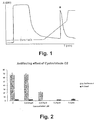
- cycloviolacin O2 belongs to the family of cyclic plant peptides recently named cyclotides. It was isolated from the dried aerial part of the plant Viola odorata through already established techniques for cyclotide isolation in combination with strong cation exchange chromatography. The latter was shown to be an efficient complementary method for capture of cyclotides containing a positive net charge ( Figure 1 ).
- the rapidly growing family today consists of about 50 different peptides, mainly isolated from the Violaceae and Rubiaceae plant families.
- All of the members of the cyclotide family contain around 30 amino acid residues, organised in the characteristic cyclic cystine knot motif, a head-to-tail cyclised amide backbone further stabilised by three intramolecular disulfide bridges.
- This variety of cyclotides may be used to further explore the antifouling effect reported here, as it enables detailed structure activity studies. Such studies may be further expanded by the use of synthetic chemistry developed for cyclotides, to identify which parts or regions of the peptide that is important for activity.
- a similar approach may be used to optimise the sequence to suit a specific formulation or use, for example to covalently bind the cyclotide directly to an underwater surface or into an antifouling paint.
- novel class of compounds according to the invention can suitably be used in anti-fouling products for underwater use and such products can be prepared by conventional methods.
- Cyclotides as defined in the claims can for example be mixed with a binding agent such as an organopolysiloxane, e.g. a low molecular mass alkoxy-functional silicone resin, a silicone rubber or an organosilicon copolymer.
- a binding agent such as an organopolysiloxane, e.g. a low molecular mass alkoxy-functional silicone resin, a silicone rubber or an organosilicon copolymer.
- An anti-fouling composition comprising cyclotides according to the invention and an organopolysiloxane can additionally comprise inorganic pigments, organic pigments, dyes (which are preferably insoluble in salt water) and/or conventional auxiliaries such as fillers, solvents, plasticizers, catalysts, inhibitors, tackifiers, coating additives and/or common dispersion auxiliaries.
- inorganic pigments organic pigments
- dyes which are preferably insoluble in salt water
- auxiliaries such as fillers, solvents, plasticizers, catalysts, inhibitors, tackifiers, coating additives and/or common dispersion auxiliaries.
- anti-fouling compositions that are meant for use under water and that can be used with anti-fouling agents according to the present invention, are disclosed in US-6 245 784-B1 .
- US-6 217 642-B1 US-6 291 549-B1 .
- US-6 211 172-B1 and US-6 172 132-B1 are disclosed in US-6 245 784-B1 .
- the final anti-fouling compositions could be used for underwater structures, e.g. in plumbing ports of nuclear power stations, at ocean facilities such as bay-shore roads, undersea tunnels, port facilities, and in canals or channels, machinery operated by the power of sea motion (waves), such as power plants.
- the agents according to the invention could also be used for coating marine vessels, fishing gear (rope, fishing net or the like).
- the anti-fouling coating compositions can be applied either directly to the surface of vessel hulls and underwater structures or applied to the surface of vessel hulls and underwater structures pre-coated with undercoating material such as rust preventive and a primer.
- the anti-fouling coating compositions may also be used to repair surfaces of vessel hulls and underwater structures previously coated with a conventional anti-fouling paint or anti-fouling coating composition.
- Fraction I The peak (referred to as Fraction I) eluting in the salt gradient was collected ( Figure 1 ), and analysed by RP-HPLC and MS, and was found to contain a mixture of peptides.
- the major peptide was then isolated by means of RP-HPLC in an analogous way as described in the article by Broussalis et al and in Göransson et al, "Seven novel macrocyclic polypeptides from Viola arvensis", J. Nat. Prod. 62. 283-6 .
- the fraction contains a mixture of cyclotides, one of the major components is cycloviolacin O2 which was tested as a pure compound. However, results from testing the fraction itself reveals that a similar activity may be found for other members of the cyclotide family.
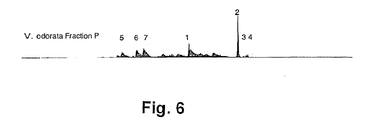
- An LC/MS analysis was performed on this extract, and is shown in Fig. 6 . Some of the identified cyclotides are marked in the chromatogram as folloes: cycloviolacin O2 (marked as 1).
- Peptide (1-5 nmol) was reduced with dithioerythritol (DTE, 390 nmol) in 0.25 M Tris-HCl containing 1 mM EDTA and 6 M guanidine-HCl (pH 8.5; 24°C; 1h). Reduced peptide was then alkylated by the addition of 25 times the amount bromopropylamine/bromoethylamine versus DTE (9.75 ⁇ mol) dissolved in 10 ul of the Tris-HCl buffert. The reaction was then incubated overnight (37°C), after which it was terminated by injection on RP-HPLC.
- DTE dithioerythritol
- Dry peptide (1 nmol) was dissolved in 20 ⁇ l 50 mM NH4HC03. To this, 50 ⁇ l of acetic anhydride in methanol (1/3) was added. After 1 hour incubation at room temperature, the mixture was lyophilized to dryness.
- the experiment for the evaluation of the effect on settlement and mortality was performed using polystyrene Petri dishes ( ⁇ 48 mm) to which 10 ml of the peptide dissolved to different concentrations in filtered seawater (0.2 ⁇ m, 32 ⁇ 1 ⁇ ) was added. Competent cyprids (20 ⁇ 2 ind.) were added to each dish in four replicates and dishes with filtered seawater served as controls. Dishes were maintained for 3-4 days in room temperature after which they were examined under a stereo microscope for attached and metamorphosed individuals and also, for dead cyprids.
- Results are reported as means ⁇ standard error and using 1-factor analysis of variance (ANOVA).
- the molecular weight of the isolated peptide was determined to 3140.4 Da, congruent with the molecular weight of the earlier reported cycloviolacin O2 (calculated 3140.8).
- the peptide was digested with trypsin after converting the cysteines of the reduced peptide into its aminopropylated and its acetylated and aminoethylated derivatives. Obtained fragments were then sequenced by MS/MS.
- the antifouling effect is non-toxic and reversible.
- Fraction P The peptide enriched crude extract obtained following the established fractionation protocol (i.e. Fraction P) was subjected to cation exchange chromatography, to capture the positively charged cyclotides (Fraction I). Both Fraction P and I were tested for antifouling effect (settling and mortality) of Balanus improvisous ( Figs. 4 and 5 , respectively).
- Fraction P of V. odorata was dissolved in a marine paint (SPF, Loutrec, Lidingö, Sweden) in two different concentrations, 1% and 0.1% (w/w).
- Plexiglass plates (PMMA, polymethylmetacrylate) of 11 x 11 cm were then coated with 2 ml in a single layer of respective paint.
- a set of plates were painted with paint only and served as controls, and all experiments were done in quadruplicates. After drying, the plates were randomly fixed to ropes, attached in one end to a buoy and in the other to a weight, which were deployed in the sea in a bay outside Tjärnö Marine Biological Laboratory (58°53'N, 11°8'E) in August 2003.
- a set of 4 plates (of each concentration and control) were brought to the lab after 4 and 8 weeks, respectively, and examined for settled barnacles. No settling could be observed for the dishes coated with paint containing Fraction P.
Landscapes
- Life Sciences & Earth Sciences (AREA)
- Chemical & Material Sciences (AREA)
- Health & Medical Sciences (AREA)
- Organic Chemistry (AREA)
- General Health & Medical Sciences (AREA)
- Engineering & Computer Science (AREA)
- Wood Science & Technology (AREA)
- Environmental Sciences (AREA)
- Medicinal Chemistry (AREA)
- Proteomics, Peptides & Aminoacids (AREA)
- Molecular Biology (AREA)
- Agronomy & Crop Science (AREA)
- Genetics & Genomics (AREA)
- Plant Pathology (AREA)
- Dentistry (AREA)
- Zoology (AREA)
- Materials Engineering (AREA)
- Biochemistry (AREA)
- Biophysics (AREA)
- Gastroenterology & Hepatology (AREA)
- Mycology (AREA)
- Natural Medicines & Medicinal Plants (AREA)
- Biotechnology (AREA)
- Pest Control & Pesticides (AREA)
- Botany (AREA)
- Microbiology (AREA)
- Agricultural Chemicals And Associated Chemicals (AREA)
- Peptides Or Proteins (AREA)
- Transition And Organic Metals Composition Catalysts For Addition Polymerization (AREA)
- Preparation Of Compounds By Using Micro-Organisms (AREA)
- Saccharide Compounds (AREA)
- Paints Or Removers (AREA)
- Pharmaceuticals Containing Other Organic And Inorganic Compounds (AREA)
- Pyridine Compounds (AREA)
Abstract
Description
- The present invention relates to coating compositions for preventing or inhibiting fouling of underwater surfaces caused by biological organisms and products thereof and methods thereof.
- The solution of the severe technical and economical problem caused by marine fouling organisms, e.g. barnacles, blue mussels, algae and hydroids, for the shipping industry and in aquaculture has been the use of TBTO (tri-n-butyl tin oxide), copper oxide and herbicides in marine coatings. However, several of these have been recognised to be toxic against non-fouling marine organisms. For example, TBTO has been ascribed effects such as reproduction failure and decrease in adult growth in oysters and the development of imposex in gastro-podes such as the dog whelk. Because of these unwanted side effects, the use of TBTO will be stopped by future bans; the International Marine Organisation will recommend a global ban from the year 2005. Therefore it is urgent to find new non-toxic alternatives which exert a specific action on target organisms and which also are biodegradable.
-
Craik et al in WO 01/27147 - Trabi et al (Trends Biochem. Sci., 2002 Mar; 27(3):132-8) describes the discovery, structure, function and biosynthesis of circular proteins known at the time of publication, cyclotides belonging to them.
- Craik et al (Letters in Peptide Science, 2001, ) describes the discovery of cyclotides in plants from Rubiaceae and Violaceae families and their uterotonic action, anti-HIV effect and neurotensin antagonism.
- Jennings et al (PNAS , 2001, Volume 98, No 19, p. 10614-10619) discusses the mechanism of synthesis of cyclic peptides in plants from the Rubicaeae and Violaceae families.
- In
JP 2003128696 -
US 6,335,318 discloses the cyclic peptide theta defensin and the use of theta defensin or an analog thereof to reduce or inhibit microbial growth or survival in an environment by contacting the environment with the theta defensin. - In
US 4,432,751 there is disclosed majusculamide C, a novel peptide compound that inhibits fungal plant pathogens, and a process for the preparation from a deep-water blue-green algae. -
WO 00/68265 (Ouelette et al -
WO 99/21879 (Chang et al - I.a. in view of the toxicity of the presently used compounds for preventing on-growth on i.a. marine structures, it would be desirable to have access to non-toxic substances, which do not accumulate in the environment, and which do not intervene irreversibly in the natural biological/ecological systems.
- One promising approach to find new non-toxic antifouling agents has been to explore natural compounds occurring in the marine environment, especially those produced by marine organisms free from fouling. The present inventors have shown that this search among biologically active natural products may be expanded to terrestrial ones as well, by the potent, antifouling effect against barnacles (Balanus amphitrite, Darwin) of the plant peptide cycloviolacin O2, isolated from the Sweet violet, Viola odorata L. (Violaceae).
- This peptide is one member of the family of cyclotides, which today consist of almost 50 members. Their main character is their cyclic cystine knot; their amino acid backbone is circular and thus they lack both N- and C-terminals, and they all contain six cysteine residues involved in three disulfide bridges in a knotted arrangement. In combination with their size, ranging from 28-37 amino acid residues, these structural features renders the cyclotide peptides an extreme stability. This structural scaffold, unique for the cyclotides, has previously been shown able to mediate a variety of biological activities, such as antimicrobial and insecticidal effects.
- The inventors have now surprisingly discovered that the antifouling effect against barnacles of cyclotides, and in particular cycloviolacin O2 is, in contrast to the existing antifouling agents on the market today, is non-toxic and reversible.
- Thus, the present invention in its broadest aspect, which provides a novel coating composition comprising a class of compounds having an on-growth inhibiting and preventing effect, is defined in
claim 1. - In a further aspect of the invention, an extract from a member of the Violaceae family of plants having fouling inhibiting and preventing properties, is defined in
claim 9. - In a still further aspect there is provided a method of preventing fouling by biological organisms on underwater structures on physical objects or on living beings, said method being defined in claim 11.
- The invention will now be further illustrated with reference to the attached drawings wherein
-
Figure 1 illustrates the isolation by ion exchange chromatography. Cyclotides with a basic net charge was effectively captured by strong cation exchange chromatography. After elution of non charged substances, the bound peptides, here marked *, were eluted in a NaCl gradient (0-1 M). A solvent composition of 25% AcN, 0.1% TFA in water was used; the addition of AcN was shown to promote ionic interactions. -
Figure 2 shows the antifouling effect of cycloviolacin O2. The settlement was inhibited in a dose-dependent manner. At 0.25 µM cycloviolacin O2 there was a complete inhibition of settlement. No one of the tested concentrations showed an increase in mortality compared to the control (saltwater only). All concentrations were tested in quadruplicates. -
Figure 3 demonstrates the reversibility test. Compared to the control, a lower percentage of settlement was seen of cypris transferred from 2.5 µM cycloviolacin O2. This is however a normal behaviour after long incubation times, in this case 3+5 days, and may be explained by exhaustion. No increase in mortality was observed. All concentrations were tested in quadruplicates. -
Figure 4 illustrates effect on settlement of Fraction P from an extraction process performed on Sweet Violet. -
Figure 5 illustrates effect on settlement of Fraction I from Sweet Violet. - The invention is based on the discovery that a cyclopeptide designated cycloviolacin O2, extracted from the Sweet Violet, Viola odorata L., has an anti-fouling effect against larvae from barnacles, i.e. on-growth of barnacles on e.g. boat hulls is inhibited and even prevented, this effect being reversible.
- The mechanism of action is unknown at this stage. However, without wishing to be bound by theory, it is believed that the effect may be due to a inhibition at the early stage of folding, that is prevention of the formation of a biofilm of microorganisms that preceeds settling of macroorgansims (such as barnacles). This possibility is supported by earlier observations of the antifungal and antimicrobial effect of cyclotides.
- In its most general form, the invention comprises coating compositions comprising one or more compounds selected from the class of compounds designated as cyclotides, for the inhibition and/or prevention of fouling of underwater structures, said composition further comprising a suitable carrier medium. An embodiment of the invention comprises an extract from plants, preferably from Sweet Violet, comprising a mixture of cyclotides. In a particular embodiment, the cyclotide cycloviolacin O2 is used as the active agent. Products comprising underwater structures are also an aspect of the invention. Also, the method of protecting such products by applying an agent comprising the cyclotide(s), in any of the forms discussed, is part of the inventive concept.
- As already discussed above, a cyclotide is a cyclic peptide which is characterized by being fairly small (the known naturally occurring cyclotides have 28-37 amino acids, although the compounds according to the invention shall not be considered limited to any particular number of amino acids), and by containing six cysteine residues forming three disulphide bridges in a knotted arrangement. A schematic representation of a general cyclotide is given in Formula I:

- C is cysteine;
- each of [X1 ... Xa],[XI 1 ... XI b], [XII 1 ... XII c],[XIII 1 ... XIII d],[XIV 1 ... XIV e], and [XV 1 ... XV f] represents one or more amino acid residues wherein each one or more amino acid residues within or between the sequence residues may be the same or different; and wherein
- a, b, c, d, e and f represent the number of amino acid residues in each respective sequence and each of a to f may be the same or different and range from 1 to about 20;
- Preferably each of a to f ranges from 1 to about 10.
- In a further embodiment a, b, c, d, e and f represent the number of amino acid residues in each respective sequence and wherein a is from about 3 to about 6, b is from about 3 to about 5, c is from about 2 to about 7, d is about 1 to about 3, e is about 3 to about 6, and f is from about 4 to about 9.
- In a still further embodiment a, b, c, d, e and f represent the number of amino acid residues in each respective sequence and wherein a is about 3, b is about 4, c is from about 4 to about 7, d is about 1, e is about 4 or 5, and f is from about 4 to about 7.
- Another embodiment is provided wherein a, b, c, d, e and f represent the number of amino acid residues in each respective sequence and wherein a is about 6, b is about 4, c is 3, d is about 1, e is about 5, and f is about 8.
- As examples of cyclotides usable according to the invention, the following non-exhaustive and non-limiting listing of a number of known cyclotides is given. Thus, any of vico A, vico B, hypa A, cycloviolacin O1, cyclopsychotride A, cycloviolacin O7, circulin D, circulin E, cycloviolin C, cycloviolacin O3, cycloviolacin O9, cycloviolacin O10, cycloviolacin H1, circulin C, cycloviolin A, cycloviolin D, circulin F, circulin A, circulin B, cycloviolacin O2, cycloviolacin O4, cycloviolacin O6, cycloviolacin O11, cycloviolacin O8, cycloviolacin O5, kalata B5, cycloviolin B, varv A, kalata S, kalata B1, kalata B4, varv E, cycloviolacin O12, varv D, varv C, varv B, varv G, varv H, kalata B2, kalata B3, kalata B6, varv F, kalata B7, alone or in combination can be used in a coating composition according to the invention.
- The actual amino acid sequence for these compounds can be found in Table 4, in the doctoral thesis by Ulf Göransson, "Macrocylic Polypeptides from Plants" (ACTA UNIVERSITATIS UPSALIENSIS UPPSALA 2002), page 36.
- The particular peptide tested in the Examples below, cycloviolacin O2, belongs to the family of cyclic plant peptides recently named cyclotides. It was isolated from the dried aerial part of the plant Viola odorata through already established techniques for cyclotide isolation in combination with strong cation exchange chromatography. The latter was shown to be an efficient complementary method for capture of cyclotides containing a positive net charge (
Figure 1 ). The rapidly growing family today consists of about 50 different peptides, mainly isolated from the Violaceae and Rubiaceae plant families. - The number of cyclotides known to occur in the family of Violaceae, and their high degree of sequence homology, made molecular weight alone insufficient for absolute identification after isolation of the peptide. Hence, it was modified by introduction of charged cleavage sites on the cysteines, followed by enzymatic digestion to produce peptide fragments suitable for sequencing by MS. After aminopropylation and tryptic cleavage the major part of the sequence was obtained. For full coverage, possible cleavage sites were constrained to modified cysteines only: trypsin was exchanged for endoproteinase LysC to prevent cleavage after the arginine residue, native lysine cleavage sites were protected by acetylation, and finally, cysteines were aminoethylated instead of aminopropylated to better suit the chosen enzyme. After this, the full sequence could be determined to cyclo-(VWIPCISSAIGCSCKSKVCYRNGIPCGESC), unambiguously identifying the peptide as the previously reported cycloviolacin O2.
- A vide variety of effects has previously been ascribed to the cyclotides, including antimicrobial, HIV-inhibitory, trypsin inhibitory and cytotoxic ones. Their function within the plant however, have not yet been fully elucidated, but probably they are involved in the host defence system. This conjecture was recently supported by Jennings and coworkers, that showed potent insecticidal activities of the cyclotide kalata B1; growth and development of the insect larvae (from Heli-coverpa punctigera) was shown to be greatly affected in a feeding trial. While this activity seems intriguingly similar in aspect to cycloviolacin O2:s ability to inhibit cyprides from fouling; the insect larvae also showed an increase in mortality over time. Though, it may be hypothesized that there might be a common mechanism behind the two findings, and that the difference instead lies in the surrounding environment and its influence to the test organisms ability to give off the peptide; the marine milieu simulated in the antifouling bioassay, is ideally suited to maintain equilibriums of water soluble compounds such as peptides. Indeed, the fact that the antifouling effect is reversible show that such an equilibrium does exist in our system. Hence, the reason that the peptide can be solubilised in the surrounding water may be the simple explanation to the difference in toxicity between these two seemingly related activities.
- All of the members of the cyclotide family contain around 30 amino acid residues, organised in the characteristic cyclic cystine knot motif, a head-to-tail cyclised amide backbone further stabilised by three intramolecular disulfide bridges. Through slight variations in the sequences between cysteines-the loops-the plant provide itself with a library of different peptides. This variety of cyclotides may be used to further explore the antifouling effect reported here, as it enables detailed structure activity studies. Such studies may be further expanded by the use of synthetic chemistry developed for cyclotides, to identify which parts or regions of the peptide that is important for activity. Likewise, a similar approach may be used to optimise the sequence to suit a specific formulation or use, for example to covalently bind the cyclotide directly to an underwater surface or into an antifouling paint.
- To our knowledge, this is the first disclosure of an evaluation of a natural product from a terrestrial source against fouling barnacles. Moreover, the tested substance represents a class and size of molecules—peptides—that generally are considered non-attractive due to their instability. However, we have isolated a peptide belonging to the cyclotide family, recognised as one of the most stable peptide structures known, with a potency in the same range as TBTO. A complete inhibition of fouling was observed at a concentration of 0.25 µM [EC50 values for TBTO, 0.09 µg ml-1 or 0.15 µM]. In addition, cycloviolacin O2 showed a distinct advantage compared to both TBTO and any other commercially used antifouling agent of today; the effect is non toxic and reversible.
- To conclude, we have shown that the search for antifouling agents may be expanded to natural products from terrestrial sources, exemplified here by the potent activity of the cyclic peptide cycloviolacin O2.
- The novel class of compounds according to the invention can suitably be used in anti-fouling products for underwater use and such products can be prepared by conventional methods.
- Cyclotides as defined in the claims can for example be mixed with a binding agent such as an organopolysiloxane, e.g. a low molecular mass alkoxy-functional silicone resin, a silicone rubber or an organosilicon copolymer.
- An anti-fouling composition comprising cyclotides according to the invention and an organopolysiloxane can additionally comprise inorganic pigments, organic pigments, dyes (which are preferably insoluble in salt water) and/or conventional auxiliaries such as fillers, solvents, plasticizers, catalysts, inhibitors, tackifiers, coating additives and/or common dispersion auxiliaries.
- Other examples of anti-fouling compositions that are meant for use under water and that can be used with anti-fouling agents according to the present invention, are disclosed in
US-6 245 784-B1 .US-6 217 642-B1 .US-6 291 549-B1 .US-6 211 172-B1 andUS-6 172 132-B1 . - The final anti-fouling compositions could be used for underwater structures, e.g. in plumbing ports of nuclear power stations, at ocean facilities such as bay-shore roads, undersea tunnels, port facilities, and in canals or channels, machinery operated by the power of sea motion (waves), such as power plants. The agents according to the invention could also be used for coating marine vessels, fishing gear (rope, fishing net or the like).
- The anti-fouling coating compositions can be applied either directly to the surface of vessel hulls and underwater structures or applied to the surface of vessel hulls and underwater structures pre-coated with undercoating material such as rust preventive and a primer.
- The anti-fouling coating compositions may also be used to repair surfaces of vessel hulls and underwater structures previously coated with a conventional anti-fouling paint or anti-fouling coating composition.
- The present invention will now be described by way of examples, based on extraction of active compounds from Sweet Violet, Viola odorata L.
- HPLC (cation exchange and RP) was done on a Akta Basic system (Amersham Biosciences, Uppsala, Sweden). Mass spectrometry was done by nanospray-ion trap MS [Protana's NanoES source (MDS Protana A/S, Odense, Denmark) mounted on a LCQ (Thermo Finningan. San Jose,USA)] operated in the positive ion mode. Samples were sprayed using a 60% MeOH, 1% HOAc in water; the capillary temperature was set at 150°C and the spray voltage at 0.5 kV. For MS/MS sequencing the relative CID was typically set at 35%. Unless otherwise stated, average masses were used and given as [M].
- Dried and grinded plant material (Viola odorata L., obtained from Galke, Gittelde, Germany) was defatted with dichloromethane before the main extraction was carried out using 50% aqueous ethanol. This extract was concentrated in vacuo (i.e. all EtOH was removed) then the acidified extract was filtered through polyamide to remove tannins. This is referred to as Fraction P. Subsequently this extract was partitioned between H2O and n-BuOH . So far, the isolation procedure was carried out according to Claeson et al in "Fractionation protocol for the isolation of polypeptides from plant biomass", J. Nat. Prod. 61, 77-81, and Broussalis et al in "First cyclotide from Hybanthus (Violaceae)", Phytochemistry 58, 47-51. The BuOH fraction was then evaporated, and redissolved in 25% acetonitrile, 0.1% trifluoroacetic acid in water before pumped through a Vydac sulfonic acid polymeric strong cation exchange column (400VHP575, 5µm, 7.5mm ID x 50 mm) at a flow rate of 1 ml/min, until the binding sites of the gel were saturated. Bound substances were then eluted with a salt gradient, ranging from 0 to 1M NaCl. The peak (referred to as Fraction I) eluting in the salt gradient was collected (
Figure 1 ), and analysed by RP-HPLC and MS, and was found to contain a mixture of peptides. The major peptide was then isolated by means of RP-HPLC in an analogous way as described in the article by Broussalis et al and in Göransson et al, "Seven novel macrocyclic polypeptides from Viola arvensis", J. Nat. Prod. 62. 283-6. - The fraction contains a mixture of cyclotides, one of the major components is cycloviolacin O2 which was tested as a pure compound. However, results from testing the fraction itself reveals that a similar activity may be found for other members of the cyclotide family. An LC/MS analysis was performed on this extract, and is shown in
Fig. 6 . Some of the identified cyclotides are marked in the chromatogram as folloes: cycloviolacin O2 (marked as 1). These are kalataS/varv peptide A (2); varv peptide D (3); varv peptide E (4); cycloviolacin O9 (5); cycloviolacin O3 (6); cycloviolacin O7 (7), which represent a wide variety of cyclotide sequences. - Peptide (1-5 nmol) was reduced with dithioerythritol (DTE, 390 nmol) in 0.25 M Tris-HCl containing 1 mM EDTA and 6 M guanidine-HCl (pH 8.5; 24°C; 1h). Reduced peptide was then alkylated by the addition of 25 times the amount bromopropylamine/bromoethylamine versus DTE (9.75 µmol) dissolved in 10 ul of the Tris-HCl buffert. The reaction was then incubated overnight (37°C), after which it was terminated by injection on RP-HPLC.
- Dry peptide (1 nmol) was dissolved in 20
µl 50 mM NH4HC03. To this, 50 µl of acetic anhydride in methanol (1/3) was added. After 1 hour incubation at room temperature, the mixture was lyophilized to dryness. - The brood stock of adult barnacles (B. improvisus. Darwin 1854) were allowed to settle on Plexi glass® panels in the sea on a raft outside Tjärnö Marine Biological Laboratory (58°53'N, 11°8'E). Cleaned from epiphytes they were brought to the laboratory and immediately placed in trays with running seawater (salinity 32±1‰). When regularly fed, with nauplii of Artemia salina, B. improvisus will spawn throughout the year. For larval rearing we used the method according to Berntsson et al., described in "Reduction of barnacle recruitment on micro-textured surfaces: Analysis of effective topographic characteristics and evaluation of skin friction". Biofouling 16, 245-261. The experiment for the evaluation of the effect on settlement and mortality was performed using polystyrene Petri dishes (φ 48 mm) to which 10 ml of the peptide dissolved to different concentrations in filtered seawater (0.2 µm, 32±1‰) was added. Competent cyprids (20±2 ind.) were added to each dish in four replicates and dishes with filtered seawater served as controls. Dishes were maintained for 3-4 days in room temperature after which they were examined under a stereo microscope for attached and metamorphosed individuals and also, for dead cyprids.
- Half of the number of cyprids in each petri dish incubated at the highest tested concentration, 2.5 µM, were moved to a petri dish containing 10 ml of fresh seawater. These petridishes, as well as the original ones incubated at this concentration were examined as described above after five days of incubation.
- Results are reported as means ± standard error and using 1-factor analysis of variance (ANOVA).
- Extraction of plant material and isolation of cycloviolacin O2 was carried out as previously described, with the exception of the use of strong cation exchange chromatography, which effectively captured positively charged cyclotides (
Figure 1 ). The peak eluting in the salt gradient was collected, and analysed by RP-HPLC and MS, and was found to contain a mixture of peptides. The major peptide was then isolated by means of RP-HPLC, in analogy with previous isolations of cyclotides. - The molecular weight of the isolated peptide was determined to 3140.4 Da, congruent with the molecular weight of the earlier reported cycloviolacin O2 (calculated 3140.8). To unambiguously establish its identity, the peptide was digested with trypsin after converting the cysteines of the reduced peptide into its aminopropylated and its acetylated and aminoethylated derivatives. Obtained fragments were then sequenced by MS/MS.
- After aminopropylation and tryptic cleavage, the sequence of 26 out of 31 amino acids in four identified fragments were successfully determined (sorted after masses, all cysteines converted to their aminopropylated derivatives): VCYR [597.5 (MH+)] VWIPC [674.4 (MH+)]; ISSAIGC [707.5 (MH+)] and NGIPCGESC [994.5 (MH+)]. The remaining five residues were identified first after acetylation, to protect this particular fragment from internal cleavage, followed by amino-ethylation and tryptic cleavage to KSKVC [691.3, (MH+)]. Together, these MS data gave the following sequence:
cyclo-(VWIPCISSAIGCSCKSKVCYRNGIPCGESC). - The effect of cycloviolacin O2 on settlement and mortality of B. improvisus is shown in
Figure 2 . The settlement was inhibited in a dose-dependent manner; at the lowest tested concentration (0.0025 µM), the degree of settlement was the same as in the control (saltwater only) with 68± 3% and 67±3% settlement respectively; at 0.025 µM only 21±0.5 % of the cyprids settled; and at 0.25 µM cycloviolacin O2 there was a complete inhibition of settlement. - The antifouling effect is non-toxic and reversible.
- No increase in mortality could be detected even at the highest tested concentration (2.5 µM), compared to the control (
Figure 2 ). Cyprids incubated at this concentration were then moved into petri dishes containing fresh sea water (without cycloviolacin O2), where they regained their normal behaviour, that is to settle, as shown inFigure 3 . After five days of incubation in this solution, 27% of the transferred cyprids had settled. No increase in mortality was observed. - Extraction and fractionation of plant material was carried out as previously described (Claeson et al., 1998; Göransson et al., 1999; Broussalis et al., 2001). The peptide enriched crude extract obtained following the established fractionation protocol (i.e. Fraction P) was subjected to cation exchange chromatography, to capture the positively charged cyclotides (Fraction I). Both Fraction P and I were tested for antifouling effect (settling and mortality) of Balanus improvisous (
Figs. 4 and 5 , respectively). When testing Fraction P, settlement was inhibited in a dose-dependent manner; at lowest concentration (0.001 mg/ml), the degree of settlement was the same as in the control (saltwater only); and at 0.1 mg/ml there was a complete inhibition of settlement. Fraction I also inhibited settlement, but only at 0.1 mg/ml. Fraction I was further purified by means of RP-HPLC and the major cyclotide was isolated (i.e. cycloviolacin O2). The inhibition on settlement of cycloviolacin O2 is dose-dependent and at 0.25 µM there was a complete inhibition. - Fraction P of V. odorata was dissolved in a marine paint (SPF, Loutrec, Lidingö, Sweden) in two different concentrations, 1% and 0.1% (w/w). Plexiglass plates (PMMA, polymethylmetacrylate) of 11 x 11 cm were then coated with 2 ml in a single layer of respective paint. A set of plates were painted with paint only and served as controls, and all experiments were done in quadruplicates. After drying, the plates were randomly fixed to ropes, attached in one end to a buoy and in the other to a weight, which were deployed in the sea in a bay outside Tjärnö Marine Biological Laboratory (58°53'N, 11°8'E) in August 2003. A set of 4 plates (of each concentration and control) were brought to the lab after 4 and 8 weeks, respectively, and examined for settled barnacles. No settling could be observed for the dishes coated with paint containing Fraction P.
Claims (12)
- Coating composition for the inhibition and/or prevention of fouling of underwater structures caused by biological organisms, said composition comprising at least one cyclotide, and a suitable carrier medium.
- Composition according to claim 1, said cyclotide(s) having the general formula
 C is cysteine;each of [X1 ... Xa],[XI 1 ... XI b],[XII 1 ... XII c],[XIII 1 ... XIII d],[XIV 1 ... XIV e], and[XV1 ... XV f] represents one or more amino acid residues wherein each one or more amino acid residues within or between the sequence residues may be the same or different; and whereina, b, c, d, e and f represent the number of amino acid residues in each respective sequence and each of a to f may be the same or different and range from 1 to about 20.
 - Composition according to claim 1, wherein each of a to f ranges from 1 to about 10.
- Composition according to claim 1, wherein a, b, c, d, e and f represent the number of amino acid residues in each respective sequence and wherein a is from about 3 to about 6, b is from about 3 to about 5, c is from about 2 to about 7, d is about 1 to about 3, e is about 3 to about 6, and f is from about 4 to about 9.
- Composition according to claim 1, wherein a, b, c, d, e and f represent the number of amino acid residues in each respective sequence and wherein a is about 3, b is about 4, c is from about 4 to about 7, d is about 1, e is about 4 or 5, and f is from about 4 to about 7.
- Composition according to claim 1, wherein a, b, c, d, e and f represent the number of amino acid residues in each respective sequence and wherein a is about 6, b is about 4, c is 3, d is about 1, e is about 5, and f is about 8.
- Composition according to claim 1, comprising any of the following cyclotides alone or in combination: vico A, vico B, hypa A, cycloviolacin O1, cyclopsychotride A, cycloviolacin O7, circulin D, circulin E, cycloviolin C, cycloviolacin O3, cycloviolacin O9, cycloviolacin O10, cycloviolacin H1, circulin C, cycloviolin A, cycloviolin D, circulin F, circulin A, circulin B, cycloviolacin O2, cycloviolacin O4, cycloviolacin O6, cycloviolacin O11, cycloviolacin O8, cycloviolacin O5, kalata B5, cycloviolin B, varv A, kalata S, kalata B1, kalata B4, varv E, cycloviolacin O12, varv D, varv C, varv B, varv G, varv H, kalata B2, kalata B3, kalata B6, varv F, kalata B7.
- Composition according to claim 1, wherein the cyclotide is cycloviolacin O2.
- Composition according to claim 1, comprising a fraction from an extraction process containing a mixture of cyclotides.
- Composition according to claim 9, obtained from Sweet Violet.
- A method of preventing fouling by biological organisms on underwater structures, comprising applying a coating composition as claimed in claim 1 or an extract as claimed in claim 9 on a surface of said object or living being.
- An underwater structure, protected from fouling by biological organisms by a coating composition as claimed in claim 1 on a surface thereof.
Applications Claiming Priority (3)
| Application Number | Priority Date | Filing Date | Title |
|---|---|---|---|
| SE0203700A SE0203700D0 (en) | 2002-12-16 | 2002-12-16 | On-Growth Inhibiting Compounds |
| SE0203700 | 2002-12-16 | ||
| PCT/SE2003/001961 WO2004055044A1 (en) | 2002-12-16 | 2003-12-16 | On-growth inhibiting compounds |
Publications (2)
| Publication Number | Publication Date |
|---|---|
| EP1572727A1 EP1572727A1 (en) | 2005-09-14 |
| EP1572727B1 true EP1572727B1 (en) | 2008-10-08 |
Family
ID=20289859
Family Applications (1)
| Application Number | Title | Priority Date | Filing Date |
|---|---|---|---|
| EP20030781208 Expired - Lifetime EP1572727B1 (en) | 2002-12-16 | 2003-12-16 | On-growth inhibiting compounds |
Country Status (7)
| Country | Link |
|---|---|
| US (2) | US7462686B2 (en) |
| EP (1) | EP1572727B1 (en) |
| AT (1) | ATE410444T1 (en) |
| AU (1) | AU2003287138A1 (en) |
| DE (1) | DE60324019D1 (en) |
| SE (1) | SE0203700D0 (en) |
| WO (1) | WO2004055044A1 (en) |
Families Citing this family (7)
| Publication number | Priority date | Publication date | Assignee | Title |
|---|---|---|---|---|
| US20050058689A1 (en) | 2003-07-03 | 2005-03-17 | Reactive Surfaces, Ltd. | Antifungal paints and coatings |
| US20040109853A1 (en) | 2002-09-09 | 2004-06-10 | Reactive Surfaces, Ltd. | Biological active coating components, coatings, and coated surfaces |
| US8618066B1 (en) | 2003-07-03 | 2013-12-31 | Reactive Surfaces, Ltd., Llp | Coating compositions having peptidic antimicrobial additives and antimicrobial additives of other configurations |
| US7211658B2 (en) | 2004-10-05 | 2007-05-01 | E.I. Dupont Denemours And Company | Insecticidal plant cyclotide with activity against homopteran insects |
| US7914614B1 (en) * | 2008-04-15 | 2011-03-29 | Maria Lukacs | Herbal paint |
| DE102014015897A1 (en) * | 2014-10-28 | 2016-04-28 | Drägerwerk AG & Co. KGaA | Method and system for controlling a drug dosing device |
| CN113678837B (en) * | 2021-08-23 | 2022-12-02 | 王文明 | Plant extract slow-release insect-resist agent and preparation method thereof |
Family Cites Families (6)
| Publication number | Priority date | Publication date | Assignee | Title |
|---|---|---|---|---|
| US4342751A (en) * | 1981-03-09 | 1982-08-03 | Eli Lilly And Company | Majusculamide C |
| US20020037260A1 (en) * | 1997-10-16 | 2002-03-28 | Budny John A. | Compositions for treating biofilm |
| US6777388B1 (en) * | 1998-08-21 | 2004-08-17 | Clf Medical Technology Acceleration Program, Inc. | Leptin-related peptides |
| US6335318B1 (en) * | 1999-05-10 | 2002-01-01 | The Regents Of The University Of California | Antimicrobial theta defensins and methods of using same |
| AUPQ339899A0 (en) * | 1999-10-13 | 1999-11-04 | University Of Queensland, The | Novel molecules |
| JP2003128696A (en) | 2001-10-18 | 2003-05-08 | Marine Biotechnol Inst Co Ltd | New peptide |
-
2002
- 2002-12-16 SE SE0203700A patent/SE0203700D0/en unknown
-
2003
- 2003-12-16 WO PCT/SE2003/001961 patent/WO2004055044A1/en not_active Ceased
- 2003-12-16 EP EP20030781208 patent/EP1572727B1/en not_active Expired - Lifetime
- 2003-12-16 US US10/539,637 patent/US7462686B2/en not_active Expired - Fee Related
- 2003-12-16 AT AT03781208T patent/ATE410444T1/en not_active IP Right Cessation
- 2003-12-16 DE DE60324019T patent/DE60324019D1/en not_active Expired - Lifetime
- 2003-12-16 AU AU2003287138A patent/AU2003287138A1/en not_active Abandoned
-
2008
- 2008-10-24 US US12/258,026 patent/US8168747B2/en not_active Expired - Fee Related
Also Published As
| Publication number | Publication date |
|---|---|
| AU2003287138A1 (en) | 2004-07-09 |
| EP1572727A1 (en) | 2005-09-14 |
| ATE410444T1 (en) | 2008-10-15 |
| DE60324019D1 (en) | 2008-11-20 |
| US7462686B2 (en) | 2008-12-09 |
| US8168747B2 (en) | 2012-05-01 |
| SE0203700D0 (en) | 2002-12-16 |
| US20070020344A1 (en) | 2007-01-25 |
| WO2004055044A1 (en) | 2004-07-01 |
| US20090099068A1 (en) | 2009-04-16 |
Similar Documents
| Publication | Publication Date | Title |
|---|---|---|
| US8168747B2 (en) | On-growth inhibiting compounds | |
| Xu et al. | Potent antifouling compounds produced by marine Streptomyces | |
| CN100415095C (en) | Capsaicin derivative and its production process and application | |
| US9591855B2 (en) | Diindol-3-ylmethanes as potent non-toxic antifouling compounds | |
| KR20060136361A (en) | Capsaicin derivates and the production and use thereof | |
| Doiron et al. | Reduction of bacterial biofilm formation using marine natural antimicrobial peptides | |
| NZ289025A (en) | Antifouling composition comprising substituted 3-butyl-furan-2-one and a carrier | |
| AU2011201077A1 (en) | Antifungal Paints and Coatings | |
| WO1994013462A1 (en) | Phenolic acid sulfate esters for prevention of marine biofouling | |
| KR20150139828A (en) | Antifouling materials | |
| JP2002535255A (en) | Controlling surface marine biological pollution | |
| US20090124634A1 (en) | Novel dipodazine compounds and applications | |
| WO2010009632A1 (en) | Antifouling furan-2-one derivatives | |
| Soliman et al. | Antifouling and antibacterial activities of marine bioactive compounds extracted from some red sea cucumber | |
| Gopikrishnan et al. | Natural products: potential and less explored source for antifouling compounds | |
| US5989323A (en) | Aquatic antifouling compositions and methods | |
| Yamamoto et al. | Neurotransmitter blockers as antifoulants against planktonic larvae of the barnacle Balanus amphitrite and the mussel Mytilus galloprovincialis | |
| US8257478B2 (en) | Use of marine fungus originated compounds as antifouling agents | |
| WO2003081199A2 (en) | Antifouling agent | |
| WO1996008967A1 (en) | Aquatic surface antifouling compositions | |
| Trepos | Innovative Approaches for the Development of New Non-Toxic Antifouling Solutions | |
| JP2000119297A (en) | New substance epidioxysterol | |
| Zheng et al. | Natural antifouling materials from marine plants Ulva pertusa | |
| WO2001035713A2 (en) | Anti-fouling composition | |
| Jinwei et al. | Natural Antifouling materials from marine plants Ulva pertusa |
Legal Events
| Date | Code | Title | Description |
|---|---|---|---|
| PUAI | Public reference made under article 153(3) epc to a published international application that has entered the european phase |
Free format text: ORIGINAL CODE: 0009012 |
|
| 17P | Request for examination filed |
Effective date: 20050617 |
|
| AK | Designated contracting states |
Kind code of ref document: A1 Designated state(s): AT BE BG CH CY CZ DE DK EE ES FI FR GB GR HU IE IT LI LU MC NL PT RO SE SI SK TR |
|
| AX | Request for extension of the european patent |
Extension state: AL LT LV MK |
|
| DAX | Request for extension of the european patent (deleted) | ||
| 17Q | First examination report despatched |
Effective date: 20061218 |
|
| 17Q | First examination report despatched |
Effective date: 20061218 |
|
| RAP1 | Party data changed (applicant data changed or rights of an application transferred) |
Owner name: VIOGARD AB |
|
| RIN1 | Information on inventor provided before grant (corrected) |
Inventor name: BOHLIN, LARS Inventor name: CLAESON, PER Inventor name: SVANGARD, ERIKA Inventor name: GORANSSON, ULF Inventor name: SJOEGREN, MARTIN |
|
| RIN1 | Information on inventor provided before grant (corrected) |
Inventor name: SJOEGREN, MARTIN Inventor name: BOHLIN, LARS Inventor name: GORANSSON, ULF Inventor name: SVANGARD, ERIKA Inventor name: CLAESON, PER |
|
| RIN1 | Information on inventor provided before grant (corrected) |
Inventor name: SVANGARD, ERIKA Inventor name: GORANSSON, ULF Inventor name: BOHLIN, LARS Inventor name: CLAESON, PER Inventor name: SJOEGREN, MARTIN |
|
| GRAP | Despatch of communication of intention to grant a patent |
Free format text: ORIGINAL CODE: EPIDOSNIGR1 |
|
| RIC1 | Information provided on ipc code assigned before grant |
Ipc: C07K 14/415 20060101ALI20080326BHEP Ipc: C07K 7/64 20060101AFI20080326BHEP |
|
| GRAS | Grant fee paid |
Free format text: ORIGINAL CODE: EPIDOSNIGR3 |
|
| GRAA | (expected) grant |
Free format text: ORIGINAL CODE: 0009210 |
|
| AK | Designated contracting states |
Kind code of ref document: B1 Designated state(s): AT BE BG CH CY CZ DE DK EE ES FI FR GB GR HU IE IT LI LU MC NL PT RO SE SI SK TR |
|
| REG | Reference to a national code |
Ref country code: GB Ref legal event code: FG4D |
|
| REG | Reference to a national code |
Ref country code: CH Ref legal event code: EP |
|
| REG | Reference to a national code |
Ref country code: IE Ref legal event code: FG4D |
|
| REF | Corresponds to: |
Ref document number: 60324019 Country of ref document: DE Date of ref document: 20081120 Kind code of ref document: P |
|
| REG | Reference to a national code |
Ref country code: CH Ref legal event code: NV Representative=s name: DR. LUSUARDI AG |
|
| REG | Reference to a national code |
Ref country code: SE Ref legal event code: TRGR |
|
| PG25 | Lapsed in a contracting state [announced via postgrant information from national office to epo] |
Ref country code: SI Free format text: LAPSE BECAUSE OF FAILURE TO SUBMIT A TRANSLATION OF THE DESCRIPTION OR TO PAY THE FEE WITHIN THE PRESCRIBED TIME-LIMIT Effective date: 20081008 |
|
| PG25 | Lapsed in a contracting state [announced via postgrant information from national office to epo] |
Ref country code: AT Free format text: LAPSE BECAUSE OF FAILURE TO SUBMIT A TRANSLATION OF THE DESCRIPTION OR TO PAY THE FEE WITHIN THE PRESCRIBED TIME-LIMIT Effective date: 20081008 Ref country code: BG Free format text: LAPSE BECAUSE OF FAILURE TO SUBMIT A TRANSLATION OF THE DESCRIPTION OR TO PAY THE FEE WITHIN THE PRESCRIBED TIME-LIMIT Effective date: 20090108 Ref country code: ES Free format text: LAPSE BECAUSE OF FAILURE TO SUBMIT A TRANSLATION OF THE DESCRIPTION OR TO PAY THE FEE WITHIN THE PRESCRIBED TIME-LIMIT Effective date: 20090119 |
|
| PG25 | Lapsed in a contracting state [announced via postgrant information from national office to epo] |
Ref country code: PT Free format text: LAPSE BECAUSE OF FAILURE TO SUBMIT A TRANSLATION OF THE DESCRIPTION OR TO PAY THE FEE WITHIN THE PRESCRIBED TIME-LIMIT Effective date: 20090218 Ref country code: FI Free format text: LAPSE BECAUSE OF FAILURE TO SUBMIT A TRANSLATION OF THE DESCRIPTION OR TO PAY THE FEE WITHIN THE PRESCRIBED TIME-LIMIT Effective date: 20081008 |
|
| PG25 | Lapsed in a contracting state [announced via postgrant information from national office to epo] |
Ref country code: DK Free format text: LAPSE BECAUSE OF FAILURE TO SUBMIT A TRANSLATION OF THE DESCRIPTION OR TO PAY THE FEE WITHIN THE PRESCRIBED TIME-LIMIT Effective date: 20081008 Ref country code: MC Free format text: LAPSE BECAUSE OF NON-PAYMENT OF DUE FEES Effective date: 20081231 Ref country code: RO Free format text: LAPSE BECAUSE OF FAILURE TO SUBMIT A TRANSLATION OF THE DESCRIPTION OR TO PAY THE FEE WITHIN THE PRESCRIBED TIME-LIMIT Effective date: 20081008 Ref country code: EE Free format text: LAPSE BECAUSE OF FAILURE TO SUBMIT A TRANSLATION OF THE DESCRIPTION OR TO PAY THE FEE WITHIN THE PRESCRIBED TIME-LIMIT Effective date: 20081008 Ref country code: BE Free format text: LAPSE BECAUSE OF FAILURE TO SUBMIT A TRANSLATION OF THE DESCRIPTION OR TO PAY THE FEE WITHIN THE PRESCRIBED TIME-LIMIT Effective date: 20081008 |
|
| PLBE | No opposition filed within time limit |
Free format text: ORIGINAL CODE: 0009261 |
|
| STAA | Information on the status of an ep patent application or granted ep patent |
Free format text: STATUS: NO OPPOSITION FILED WITHIN TIME LIMIT |
|
| PG25 | Lapsed in a contracting state [announced via postgrant information from national office to epo] |
Ref country code: IT Free format text: LAPSE BECAUSE OF FAILURE TO SUBMIT A TRANSLATION OF THE DESCRIPTION OR TO PAY THE FEE WITHIN THE PRESCRIBED TIME-LIMIT Effective date: 20081008 Ref country code: CZ Free format text: LAPSE BECAUSE OF FAILURE TO SUBMIT A TRANSLATION OF THE DESCRIPTION OR TO PAY THE FEE WITHIN THE PRESCRIBED TIME-LIMIT Effective date: 20081008 |
|
| 26N | No opposition filed |
Effective date: 20090709 |
|
| REG | Reference to a national code |
Ref country code: IE Ref legal event code: MM4A |
|
| PG25 | Lapsed in a contracting state [announced via postgrant information from national office to epo] |
Ref country code: SK Free format text: LAPSE BECAUSE OF FAILURE TO SUBMIT A TRANSLATION OF THE DESCRIPTION OR TO PAY THE FEE WITHIN THE PRESCRIBED TIME-LIMIT Effective date: 20081008 |
|
| PG25 | Lapsed in a contracting state [announced via postgrant information from national office to epo] |
Ref country code: IE Free format text: LAPSE BECAUSE OF NON-PAYMENT OF DUE FEES Effective date: 20081216 |
|
| PG25 | Lapsed in a contracting state [announced via postgrant information from national office to epo] |
Ref country code: LU Free format text: LAPSE BECAUSE OF NON-PAYMENT OF DUE FEES Effective date: 20081216 Ref country code: CY Free format text: LAPSE BECAUSE OF FAILURE TO SUBMIT A TRANSLATION OF THE DESCRIPTION OR TO PAY THE FEE WITHIN THE PRESCRIBED TIME-LIMIT Effective date: 20081008 Ref country code: HU Free format text: LAPSE BECAUSE OF FAILURE TO SUBMIT A TRANSLATION OF THE DESCRIPTION OR TO PAY THE FEE WITHIN THE PRESCRIBED TIME-LIMIT Effective date: 20090409 |
|
| PG25 | Lapsed in a contracting state [announced via postgrant information from national office to epo] |
Ref country code: TR Free format text: LAPSE BECAUSE OF FAILURE TO SUBMIT A TRANSLATION OF THE DESCRIPTION OR TO PAY THE FEE WITHIN THE PRESCRIBED TIME-LIMIT Effective date: 20081008 |
|
| PG25 | Lapsed in a contracting state [announced via postgrant information from national office to epo] |
Ref country code: GR Free format text: LAPSE BECAUSE OF FAILURE TO SUBMIT A TRANSLATION OF THE DESCRIPTION OR TO PAY THE FEE WITHIN THE PRESCRIBED TIME-LIMIT Effective date: 20090109 |
|
| REG | Reference to a national code |
Ref country code: FR Ref legal event code: PLFP Year of fee payment: 13 |
|
| REG | Reference to a national code |
Ref country code: FR Ref legal event code: PLFP Year of fee payment: 14 |
|
| PGFP | Annual fee paid to national office [announced via postgrant information from national office to epo] |
Ref country code: CH Payment date: 20161228 Year of fee payment: 14 Ref country code: NL Payment date: 20161230 Year of fee payment: 14 |
|
| PGFP | Annual fee paid to national office [announced via postgrant information from national office to epo] |
Ref country code: FR Payment date: 20161227 Year of fee payment: 14 |
|
| PGFP | Annual fee paid to national office [announced via postgrant information from national office to epo] |
Ref country code: DE Payment date: 20170102 Year of fee payment: 14 |
|
| PGFP | Annual fee paid to national office [announced via postgrant information from national office to epo] |
Ref country code: GB Payment date: 20171215 Year of fee payment: 15 |
|
| REG | Reference to a national code |
Ref country code: DE Ref legal event code: R119 Ref document number: 60324019 Country of ref document: DE |
|
| REG | Reference to a national code |
Ref country code: CH Ref legal event code: PL |
|
| REG | Reference to a national code |
Ref country code: NL Ref legal event code: MM Effective date: 20180101 |
|
| PG25 | Lapsed in a contracting state [announced via postgrant information from national office to epo] |
Ref country code: NL Free format text: LAPSE BECAUSE OF NON-PAYMENT OF DUE FEES Effective date: 20180101 |
|
| REG | Reference to a national code |
Ref country code: FR Ref legal event code: ST Effective date: 20180831 |
|
| PG25 | Lapsed in a contracting state [announced via postgrant information from national office to epo] |
Ref country code: DE Free format text: LAPSE BECAUSE OF NON-PAYMENT OF DUE FEES Effective date: 20180703 Ref country code: FR Free format text: LAPSE BECAUSE OF NON-PAYMENT OF DUE FEES Effective date: 20180102 |
|
| PG25 | Lapsed in a contracting state [announced via postgrant information from national office to epo] |
Ref country code: CH Free format text: LAPSE BECAUSE OF NON-PAYMENT OF DUE FEES Effective date: 20171231 Ref country code: LI Free format text: LAPSE BECAUSE OF NON-PAYMENT OF DUE FEES Effective date: 20171231 |
|
| PGFP | Annual fee paid to national office [announced via postgrant information from national office to epo] |
Ref country code: SE Payment date: 20190110 Year of fee payment: 16 |
|
| GBPC | Gb: european patent ceased through non-payment of renewal fee |
Effective date: 20181216 |
|
| PG25 | Lapsed in a contracting state [announced via postgrant information from national office to epo] |
Ref country code: GB Free format text: LAPSE BECAUSE OF NON-PAYMENT OF DUE FEES Effective date: 20181216 |
|
| REG | Reference to a national code |
Ref country code: SE Ref legal event code: EUG |
|
| PG25 | Lapsed in a contracting state [announced via postgrant information from national office to epo] |
Ref country code: SE Free format text: LAPSE BECAUSE OF NON-PAYMENT OF DUE FEES Effective date: 20191217 |