EP1571782A1 - Procédé et dispositif de formation de règles de traitement d'une trame d'informations - Google Patents
Procédé et dispositif de formation de règles de traitement d'une trame d'informations Download PDFInfo
- Publication number
- EP1571782A1 EP1571782A1 EP04290585A EP04290585A EP1571782A1 EP 1571782 A1 EP1571782 A1 EP 1571782A1 EP 04290585 A EP04290585 A EP 04290585A EP 04290585 A EP04290585 A EP 04290585A EP 1571782 A1 EP1571782 A1 EP 1571782A1
- Authority
- EP
- European Patent Office
- Prior art keywords
- client
- information
- customer
- address
- rule
- Prior art date
- Legal status (The legal status is an assumption and is not a legal conclusion. Google has not performed a legal analysis and makes no representation as to the accuracy of the status listed.)
- Granted
Links
- 238000000034 method Methods 0.000 title claims abstract description 29
- 238000012545 processing Methods 0.000 claims abstract description 36
- 238000004590 computer program Methods 0.000 claims abstract description 3
- 238000012549 training Methods 0.000 claims description 12
- 235000010385 ascorbyl palmitate Nutrition 0.000 claims description 7
- 239000000542 fatty acid esters of ascorbic acid Substances 0.000 claims description 7
- 235000010382 gamma-tocopherol Nutrition 0.000 claims description 6
- 239000002478 γ-tocopherol Substances 0.000 claims description 6
- 239000002076 α-tocopherol Substances 0.000 claims description 5
- 235000004835 α-tocopherol Nutrition 0.000 claims description 5
- 239000000574 octyl gallate Substances 0.000 claims description 3
- 235000010387 octyl gallate Nutrition 0.000 claims description 3
- PPASLZSBLFJQEF-RKJRWTFHSA-M sodium ascorbate Substances [Na+].OC[C@@H](O)[C@H]1OC(=O)C(O)=C1[O-] PPASLZSBLFJQEF-RKJRWTFHSA-M 0.000 claims description 3
- 235000010378 sodium ascorbate Nutrition 0.000 claims description 3
- 239000000555 dodecyl gallate Substances 0.000 claims description 2
- 235000010386 dodecyl gallate Nutrition 0.000 claims description 2
- 230000008569 process Effects 0.000 abstract description 7
- 230000015572 biosynthetic process Effects 0.000 description 15
- 238000012546 transfer Methods 0.000 description 11
- 239000011668 ascorbic acid Substances 0.000 description 6
- 235000010323 ascorbic acid Nutrition 0.000 description 6
- 235000010384 tocopherol Nutrition 0.000 description 5
- 239000004261 Ascorbyl stearate Substances 0.000 description 4
- 238000004891 communication Methods 0.000 description 3
- 230000005540 biological transmission Effects 0.000 description 2
- 235000010389 delta-tocopherol Nutrition 0.000 description 2
- 238000010586 diagram Methods 0.000 description 2
- 239000000473 propyl gallate Substances 0.000 description 2
- 235000010388 propyl gallate Nutrition 0.000 description 2
- 239000002446 δ-tocopherol Substances 0.000 description 2
- 239000011692 calcium ascorbate Substances 0.000 description 1
- 235000010376 calcium ascorbate Nutrition 0.000 description 1
- 239000000835 fiber Substances 0.000 description 1
- 230000006870 function Effects 0.000 description 1
- 238000007726 management method Methods 0.000 description 1
- 230000007246 mechanism Effects 0.000 description 1
- 238000012986 modification Methods 0.000 description 1
- 230000004048 modification Effects 0.000 description 1
- 230000004044 response Effects 0.000 description 1
- 239000000541 tocopherol-rich extract Substances 0.000 description 1
Images


Classifications
-
- H—ELECTRICITY
- H04—ELECTRIC COMMUNICATION TECHNIQUE
- H04L—TRANSMISSION OF DIGITAL INFORMATION, e.g. TELEGRAPHIC COMMUNICATION
- H04L12/00—Data switching networks
- H04L12/28—Data switching networks characterised by path configuration, e.g. LAN [Local Area Networks] or WAN [Wide Area Networks]
- H04L12/2854—Wide area networks, e.g. public data networks
- H04L12/2856—Access arrangements, e.g. Internet access
- H04L12/2869—Operational details of access network equipments
- H04L12/2898—Subscriber equipments
Definitions
- the present invention relates to a method and a device for forming rules for processing an information frame transiting between two networks of telecommunication.
- the invention lies in the field of the formation of rules for the treatment of frames of information transiting between two telecommunication networks according to customer profiles of a telecommunication network.
- PPP Point to Point Protocol
- BAS Broadband Access Server
- the customer can choose a contract in which the information transfer rate issued or received by the client is adapted to his budget and his needs. This rate is defined manually by the operator of the telecommunications network operator at the multiplexer customer lines. If the contract is modified by the client, an intervention of the the operator of the telecommunications network is then necessary for the level of the customer line multiplexer to redefine it. The delay Staff intervention is sometimes long for clients.
- the customer lines digital multiplexer to which the customer is connected does not transfer this information to the customer.
- This processing when the customer receives information, is done once the information was received from the Internet and transferred by the PPP sessions through the telecommunication network.
- the quantity information is greater than the rate chosen by the customer, this information unnecessarily clutter the PPP session concentrator, because the collection network they are not finally transferred by the digital line multiplexer customers to the receiving customer.
- firewalls destroy information issued by hackers.
- These Firewall systems can be integrated into the customer's connection equipment or in a dedicated device at the customer. The information issued by the hackers computers unnecessarily clutter the PPP session concentrator, the network of telecommunication and digital multiplexer customer lines as they are not finally not treated by the customer.
- the object of the invention is to solve the disadvantages of the prior art by providing a method and device for forming frame processing rules information transiting between two telecommunication networks in which the Processing rules are dynamically formed.
- the invention also aims at information that will not be processed by the customers, although their addressed will not be transmitted on the telecommunication network to which the customers are connected.
- the invention also aims at using a collection network in which it It is not necessary to establish PPP sessions across the network of telecommunication to access the services of a service provider.
- customer profiles are treated dynamically.
- the training device for processing rules an information frame obtains the profile associated with the address contained in the frame and forms rules for processing the information frame. Any modification of the customer profile is taken into account upon receipt of an information frame issued by the customer or to the customer.
- the treatment rules can thus be adapted in real time.
- the information frame is processed from treatment rules formed.
- the frames of information that pass between the two networks of telecommunication are processed in accordance with the services contracted by the customer transmitter or recipient of these frames of information.
- the processing of a frame information before its arrival on the telecommunication network to which are connected customers makes it possible to optimize the resources of the telecommunication network.
- the quality of service is thus maintained in the collection network for customers and this without having to resort to PPP sessions.
- the customer profile is obtained from a database comprising the profiles of clients connected to the network of remote telecommunication from the rule-making device or from the temporary memory of the rule-making device.
- the rule-making device can thus be get a customer's profile very quickly when an information frame needs to be processed and thus significantly reduce the processing time of the frame information.
- customer profiles are stored in the temporary memory of the rule maker and the customer profiles whose addresses have not been read in an information frame for a while predetermined values are removed from the temporary memory of the training device of rules.
- a service subscribed by the customer is a service in which at least one application, among all the applications of the customer, is authorized or not to receive information, to the authorized application or no is associated with an identifier, at least part of the information frame is included in a data packet comprising at least one identifier of the application of the recipient client of the information frame, and if the identifier of the recipient application of the information frame included in the packet of data is the identifier of the authorized application or not, the information frame is transmitted or not on the telecommunication network to which the customers are connected or conversely in the opposite case.
- a service subscribed by the customer is a service in which the amount of information transmitted and / or received by the customer is limited in a predetermined time interval and if the amount of information transmitted and / or received by the customer is greater than a service limit subscribed by the customer, the frame is not transmitted over the telecommunication network to which connected customers.
- the method comprises a step of processing the information frame.
- the telecommunication network to which connected customers is a GigaEthernet ⁇ collection network
- the other network of telecommunication is an Internet-type network
- the training device of rules is a gateway.
- the client's address is a MAC address or an IPv6 address or an address assigned respectively to each customer by the digital multiplexer of customer lines.
- the invention also relates to the computer program stored on a medium information, the program including instructions for carrying out process of forming treatment rules previously described, when is loaded and executed by a computer system.
- Fig. 1 represents the architecture of the rule-making system of processing of information frames for or by clients of a network telecommunication.
- customers 110 access an Internet type network 180 via a multiplexer number of customer lines 130, a collection network 150 and a rule formation 100 which processes the frames of information received from the Internet network 180 or to the Internet 180 according to the profile of the customers 110 that transmit or receive information frames.
- the device rule formation 100 is more precisely a gateway 100.
- the information frame processing rule system intended or issued by customers of a telecommunications network includes a digital multiplexer of customer lines 130.
- the digital multiplexer of lines 130 clients is in a preferred mode adapted to dedicated physical links with clients 110a, 110b and 110c.
- the multiplexer Numeric customer lines 130 is known as DSLAM.
- DSLAM is the acronym for "Digital Subscriber Line Access Multiplexor".
- the digital multiplexer of customer lines 130 has the function of grouping several lines of clients 110a, 110b and 110c on a physical medium which ensures the transport of data exchanged between the clients 110a, 110b and 110c and the network Internet 180.
- the clients 110a, 110b and 110c are more precisely terminals of telecommunication and are connected to the digital multiplexer of customer lines 130 via the wireline telephone network and use DSL modulations.
- DSL modulations DSL modulations
- other types of dedicated physical links can be used.
- these links can also be wireless links or fiber optic links.
- a customer is for example a telecommunication device such as a computer comprising a communication card adapted to the physical link existing dedicated with the customer's 130-line digital multiplexer or a computer connected to an external communication device adapted to the physical link existing dedicated with the 130 lines digital multiplexer.
- a telecommunication device such as a computer comprising a communication card adapted to the physical link existing dedicated with the customer's 130-line digital multiplexer or a computer connected to an external communication device adapted to the physical link existing dedicated with the 130 lines digital multiplexer.
- Each client 110a, 110b and 110c is allocated a unique identifier or address to distinguish it from other customers 110.
- This address is for example the MAC address of the physical interface of the client computer or the MAC address of the logical interfaces of the client computer.
- this address is an address unique delivery to each customer respectively by the digital multiplexer of lines of customers 130 to hide the actual address of the client 110.
- this address is an IPv6 address when the IPv6 protocol is used.
- FIG. 1 only three customers 110a, 110b and 110c are represented, although heard, a larger number of clients 110 are connected to the multiplexer digital lines of customers 130.
- Each client 110 is connected to a digital multiplexer of customer lines 130 which is itself connected via the collection network 150 to a device rule training device 100.
- the rule training device 100 is a gateway between the collection network 150 and the Internet network 180.
- the digital multiplexer of customer lines 130 preferably has DSL interfaces 140a, 140b and 140c respectively connected to the clients 110a, 110b and 110c.
- the digital customer row multiplexer 130 allows access to services offered by Internet service providers, eg 110a 110b customers and 110c, if they have correctly identified themselves and if their identification has been validated by an authentication server associated with their Internet service provider.
- the digital customer row multiplexer 130 has a network interface 145 the connecting to the collection network 150.
- the collection network 150 is for example a network of GigaEthernet ⁇ type.
- the frames of information transmitted through the collection network 150 are Ethernet frames.
- the clients 110 need not establish sessions established according to a point-to-point protocol in order to be able to access the 180. It is noteworthy here that the source and destination addresses included in these frames of information are not changed in the course of routing the information frames in the collection network 150.
- the rule training device 100 processes the information received from the network Internet 180 according to the profile of the customers 110 recipients or transmitters of these information. More specifically, the rule-making device 100 forms from the customer profile 110 a set of rules in the form of access lists or "Access List", classes and service disciplines, filters, which are applied to information frames that have the address corresponding to the list access or filters.
- the rule-forming device 100 has a network interface 160 connecting it to the collection network 150 and a network interface 165 connecting it to the Internet 180. The rule-making device 100 will be described in more detail with reference to FIG. 2.
- the rule-forming device 100 is associated with a database 120 which includes the profiles associated with different clients 110.
- a profile is formed for each client 110 when the client 110 subscribes to a service provider.
- a profile includes, for example and in a non-limiting manner, incoming and outgoing flows information allocated to the customer according to the type of service to which the client 110 subscribed. These flow rates can be maximum flow rates and / or minimum flow rates guaranteed and that in each direction of transfer of information.
- a profile includes also security information related to the client 110. This information indicates the or the ports of the applications which a client 110 has and which are authorized to transmit and / or receive data from the Internet network 180. These applications are for example FTP servers, acronym for "File Transfer Protocol" or WEB servers that make web pages available according to the protocol HTTP.
- These profiles also include the ISP ID which customers are subscribers.
- the collection network 150 may be connected to a PPP session concentrator (not shown in Fig. 1), which establishes sessions PPP with other customers (not shown in Fig. 1) via a network telecommunication and at least one digital multiplexer of customer lines (not shown in Fig. 1).
- the PPP session concentrator ensures in this variant formatting information issued by these customers according to the protocol PPP into Ethernet frames before transferring them to the collection network 150 and reciprocally.
- Fig. 2 represents a block diagram of the rule-making device of processing of information frames for or by clients of a network telecommunication.
- the rule-forming device 100 comprises a communication bus 201 to which is connected a central unit 200, a non-volatile memory 202, a RAM 203, a client interface 205 and a network interface 206.
- the non-volatile memory 202 stores the programs implementing the invention as well as the algorithm which will be described later with reference to FIG. 3.
- the non-volatile memory 302 is for example a hard disk. More
- the programs according to the present invention are stored in a means storage. This storage means is readable by a computer or a microprocessor 200. This storage means is integrated or not in the device application of profiles 100, and can be removable. When turning on the power rule-making device 100, the programs are transferred into the memory vivid 203 which then contains the executable code of the invention as well as the data necessary for the implementation of the invention.
- the rule-forming device 100 also includes a network interface of This interface allows the transfer of information from and / or to the Internet network 180.
- the network interface 160 links the training device of rules 100 to the collection network 150.
- the processor 200 is able to authorize or not the transfer of data between the 180 Internet network and 110 clients according to the frame processing rules information formed from the profile stored in the database 120.
- This database 120 is connected to the rule-forming device 100 by via the telecommunications network 150 or the network of telecommunication 180, or even via a dedicated link.
- database 120 may also be, alternatively integrated into the digital customer row multiplexer 130.
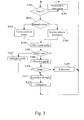
- Fig. 3 represents the algorithm for forming frame processing rules information intended or issued by customers of a network of telecommunication.
- step E300 the processor 200 of the rule-maker 100 checks whether an information frame is received on the network interface 160 or 165.
- frames are preferentially Ethernet type frames or type frames IPv6.
- processor 200 proceeds to step E301.
- the processor 200 checks whether the respective time associated with each address included in the cache of the rule maker 100 is considered too much Ancient. It should be noted that the cache memory is for example and not This limitation is included in the RAM 203. Indeed, the method according to the present invention invention removes from the cache the addresses of clients who are inactive for a predetermined time. When these different operations were performed, the processor 200 returns to the previously described step E300.
- step E300 When an information frame is received in step E300, the processor 200 go to step E302.
- the processor 200 checks whether this frame is an incoming frame, that is to say, coming from the Internet network 180 or if this frame is an outgoing frame, i.e., from the collection network 150.
- the processor 200 reads, at the step E304, in a field predetermined information frame, the destination address of the frame information. Once this is done, processor 200 goes to the next step E305.
- the processor 200 reads, in step E303, in a predetermined field of the frame information, the source address of the information frame. This operation performed, the processor 200 proceeds to the next step E305.
- step E305 the processor 200 updates the cache memory of the device of formation of rules 100.
- This cache is included in the RAM 203 of the rule-forming device 100.
- In the cache is memorized the set of source or destination addresses read by the processor 200 during previous passages to E303 or E304.
- processor 200 sets to day the cache memory of the rule-forming device 100 including it as well as a time associated with the address. This time associated with the address is the time of the inclusion of the address in the cache memory.
- Step E301 and E305 constitute a mechanism management of the lifetime of the addresses stored in the cache memory.
- the processor 200 stores in association with the address, information such as the port number of the the destination application of the information frame or the address of the provider of the services receiving the information frame in the telecommunication network 180.
- a port number is obtained by reading predetermined fields of packets IP, TCP / IP or UDP compliant including Ethernet frames including the addresses.
- TCP / IP is the acronym for Transmission Control Protocol / Internet Protocol, UDP stands for User Datagram Protocol.
- the processor 200 checks at step E306 whether there is a profile associated with the address previously read in the cache memory of the device of rule formation 100. If there is a profile associated with the previously read address in the cache memory, the processor 200 then proceeds to step E307 and reads the profile the client in the cache. The processor 200 then proceeds to step E311.
- step E308 the processor 200 performs step E308 to the place of step E307.
- the processor 200 then proceeds to step E308.
- the processor 200 command at step E308 to obtain the profile of the customer whose address has been read to step E303 or E304. More specifically, the processor 200 controls the generation a request to obtain the profile of the customer whose address was read at the step E303 or E304.
- the customer's profile is stored in the database 120.
- the rule-training device 100 includes a client software module by example a RADIUS module which issues requests to obtain a profile on the basis of data 120 which is in this example a server of type RADIUS 120.
- RADIUS is the acronym for Remote Authentication Dial In User Service.
- the database 120 from the address provided by the rule maker 100, identifies the profile of the customer with the same address as the address transferred by the rule-making device 100 and in turn transfers the different information included in the profile.
- the profile includes the security rules that Client 110 has chosen. These rules for example, rules to allow the transfer of frames of information to one or more client applications 110.
- the profile also includes information describing the charge (s) that the customer has chosen when subscribing to a service provider. Information describing the rate (s) chosen by the customer 110 are the traffic contract established between the customer and the service provider.
- the processor 200 proceeds to the next step E309. AT this step, the processor 200 checks whether a profile has been transferred in response by the base 120. If no profile has been transferred, the processor 200 proceeds to step E310.
- step E310 the processor 200 performs a processing on the received frame at step E300.
- This frame is for example a network supervision frame and is not not for a client 110, but for the different elements of the collection network 150.
- the processing is for example a transfer of the frame received in step E300 on the 150. This operation performed, the processor 200 returns to step E300 waiting for a new information frame to process.
- the access list 100 here comprises two rules.
- the first rule allows frames of information from anyone (any) and to the customer 10.10.0.1 on the destination port 80.
- the second rule rejects the frames information from anyone (any) and to the client 10.10.0.1 on the destination port 90.
- the processor 200 forms, from the different representative information flow rate contained in the profile obtained in step E307 or E308, a class of service describing the client's traffic contract 110.
- the frames of information processed by the class of service are then transferred to the collection network 150 or the Internet network 180 in accordance with the service contract described in the definition of class of service. It should be noted here that these frames of information are prior to their transfer, placed in a queue.
- the processor 200 then controls an application algorithm of the service discipline.
- Service discipline application algorithm provides frame forwarding information placed in the queue on the collection network 150 or the network Internet 180.
- the client 110a has a subscription to a service provider whose maximum bit rate is 8 Megabits per second.
- Client 110a has two servers, a VIDEO server and a server WEB accessible by third parties.
- the client 110a so that a certain quality in the video transmission be guaranteed, chose a contract stipulating that a flow of 7.8 Megabits per second must be guaranteed for the video server.
- the Web server when he then only has a guaranteed speed of 200 Kilobits. This information is included in the profile of the subscriber 110a stored in the database 120.
- the first rule describes IP packets to the client's web server 110a and from anyone.
- the second rule describes IP packets for the client's VIDEO server 110a from anyone.
- the processor 200 When the processor 200 has formed the processing rules from the profile of the client 110, the processor 200 proceeds to the next step E312.
- the treatment then consists of a transfer of the frame information to the network 150 or 180 or a rejection thereof.
- packets that comply with the Client_110a_WEB rule are directed in the 200_kbits service class, while the packets conform to the Client_110a_VIDEO rule are directed in the 7800_kbits service class.
Landscapes
- Engineering & Computer Science (AREA)
- Computer Networks & Wireless Communication (AREA)
- Signal Processing (AREA)
- Data Exchanges In Wide-Area Networks (AREA)
- Computer And Data Communications (AREA)
- Devices For Executing Special Programs (AREA)
- Communication Control (AREA)
Abstract
Description
- lecture d'une adresse d'un client dans la trame d'informations reçue par le dispositif de formation de règles,
- obtention d'un profil de client à partir de l'adresse lue, le profil comprenant des informations représentatives de services souscrits par le client,
- formation de règles de traitement de la trame d'informations à partir du profil du client obtenu.
- des moyens de lecture d'une adresse d'un client dans la trame d'informations reçue par le dispositif de formation de règles,
- des moyens d'obtention d'un profil de client à partir de l'adresse lue, le profil comprenant des informations représentatives de services souscrits par le client,
- des moyens de formation de règles de traitement de la trame d'informations à partir du profil du client obtenu.
Claims (11)
- Procédé de formation de règles de traitement d'une trame d'informations transitant entre deux réseaux de télécommunication (150, 180) par l'intermédiaire d'un dispositif de formation de règles (100), à un réseau de télécommunication (150) sont reliés des clients (110) par l'intermédiaire d'un multiplexeur numérique de lignes de clients (130), la trame d'informations étant destinée à au moins un client ou émise par un client relié au réseau de télécommunication (150), chaque client relié au réseau de télécommunication disposant d'une adresse différente des adresses des autres clients reliés au réseau de télécommunication, caractérisé en ce que le procédé comporte les étapes effectuées par le dispositif de formation de règles de :lecture (E303, E304) d'une adresse d'un client dans la trame d'informations reçue par le dispositif de formation de règles,obtention (E307, E308) d'un profil de client à partir de l'adresse lue, le profil comprenant des informations représentatives de services souscrits par le client,formation (E311) de règles de traitement de la trame d'informations à partir du profil du client obtenu.
- Procédé selon la revendication 1, caractérisé en ce que le procédé comporte une étape de traitement (E312) de la trame d'informations à partir des règles de traitement formées.
- Procédé selon la revendication 1 ou 2, caractérisé en ce que le profil de client est obtenu à partir d'une base de données (120) comprenant les profils de clients reliés au réseau de télécommunication distante du dispositif de formation de règles ou à partir de la mémoire temporaire du dispositif de formation de règles.
- Procédé selon la revendication 3, caractérisé en ce que des profils de clients sont mémorisés dans la mémoire temporaire du dispositif de formation de règles et les profils de clients dont les adresses n'ont pas été lues dans une trame d'informations pendant un temps prédéterminé sont supprimés (E301) de la mémoire temporaire du dispositif de formation de règles.
- Procédé selon l'une quelconque des revendications 1 à 4, caractérisé en ce qu'un service souscrit par le client est un service dans lequel au moins une application, parmi l'ensemble des applications du client, est autorisée ou non à recevoir des informations, à l'application autorisée ou non est associé un identifiant et en ce que au moins une partie de la trame d'informations est comprise dans un paquet de données comprenant au moins un identifiant de l'application du client destinataire de la trame d'informations, et si l'identifiant de l'application destinataire de la trame d'informations compris dans le paquet de données est l'identifiant de l'application autorisée ou n'est pas l'identifiant de l'application non autorisée, la trame d'informations est transmise sur le réseau de télécommunication auquel sont reliés les clients ou inversement dans le cas contraire.
- Procédé selon l'une quelconque des revendications 1 à 5, caractérisé en ce qu'un service souscrit par le client est un service dans lequel la quantité d'informations transmise et/ou reçue par le client est limitée dans un intervalle de temps prédéterminé et en ce que si la quantité d'informations transmise et/ou reçue par le client est supérieure à une limite du service souscrit par le client, la trame n'est pas transmise sur le réseau de télécommunication auquel sont reliés les clients.
- Procédé selon l'une quelconque des revendications 1 à 6, caractérisé en ce que si aucun profil n'est obtenu à partir de l'adresse lue, le procédé comporte une étape de traitement de la trame d'informations.
- Procédé selon l'une quelconque des revendications 1 à 7, caractérisé en ce que le réseau de télécommunication auquel sont reliés les clients est un réseau de collecte GigaEthernet ©, l'autre réseau de télécommunication est un réseau de type Internet et le dispositif de formation de règles est une passerelle.
- Procédé selon la revendication 8, caractérisé en ce que l'adresse du client est une adresse MAC ou une adresse IPv6 ou une adresse attribuée respectivement à chaque client par le multiplexeur numérique de lignes de clients.
- Dispositif de formation de règles de traitement d'une trame d'informations transitant entre deux réseaux de télécommunication, à un réseau de télécommunication sont reliés des clients par l'intermédiaire d'un multiplexeur numérique de lignes de clients, la trame d'informations étant destinée à au moins un client ou émise par un client relié au réseau de télécommunication, chaque client relié au réseau de télécommunication disposant d'une adresse différente des adresses des autres clients reliés au réseau de télécommunication, caractérisé en ce que le dispositif de formation de règles comporte :des moyens de lecture d'une adresse d'un client dans la trame d'informations reçue par le dispositif de formation de règles,des moyens d'obtention d'un profil de client à partir de l'adresse lue, le profil comprenant des informations représentatives de services souscrits par le client,des moyens de formation de règles de traitement de la trame d'informations à partir du profil du client obtenu.
- Programme d'ordinateur stocké sur un support d'informations, ledit programme comportant des instructions permettant de mettre en oeuvre le procédé selon l'une quelconque des revendications 1 à 9, lorsqu'il est chargé et exécuté par un système informatique.
Priority Applications (4)
| Application Number | Priority Date | Filing Date | Title |
|---|---|---|---|
| AT04290585T ATE385096T1 (de) | 2004-03-03 | 2004-03-03 | Verfahren und vorrichtung zur erzeugung von regeln zur behandlung eines informationsrahmen |
| EP04290585A EP1571782B1 (fr) | 2004-03-03 | 2004-03-03 | Procédé et dispositif de formation de règles de traitement d'une trame d'informations |
| ES04290585T ES2300720T3 (es) | 2004-03-03 | 2004-03-03 | Procedimiento y dispositivo de formacion de reglas de tratamiento de una trama de informaciones. |
| DE602004011468T DE602004011468T2 (de) | 2004-03-03 | 2004-03-03 | Verfahren und Vorrichtung zur Erzeugung von Regeln zur Behandlung eines Informationsrahmen |
Applications Claiming Priority (1)
| Application Number | Priority Date | Filing Date | Title |
|---|---|---|---|
| EP04290585A EP1571782B1 (fr) | 2004-03-03 | 2004-03-03 | Procédé et dispositif de formation de règles de traitement d'une trame d'informations |
Publications (2)
| Publication Number | Publication Date |
|---|---|
| EP1571782A1 true EP1571782A1 (fr) | 2005-09-07 |
| EP1571782B1 EP1571782B1 (fr) | 2008-01-23 |
Family
ID=34746164
Family Applications (1)
| Application Number | Title | Priority Date | Filing Date |
|---|---|---|---|
| EP04290585A Expired - Lifetime EP1571782B1 (fr) | 2004-03-03 | 2004-03-03 | Procédé et dispositif de formation de règles de traitement d'une trame d'informations |
Country Status (4)
| Country | Link |
|---|---|
| EP (1) | EP1571782B1 (fr) |
| AT (1) | ATE385096T1 (fr) |
| DE (1) | DE602004011468T2 (fr) |
| ES (1) | ES2300720T3 (fr) |
Citations (4)
| Publication number | Priority date | Publication date | Assignee | Title |
|---|---|---|---|---|
| US5987611A (en) * | 1996-12-31 | 1999-11-16 | Zone Labs, Inc. | System and methodology for managing internet access on a per application basis for client computers connected to the internet |
| WO2000054477A1 (fr) * | 1999-03-10 | 2000-09-14 | Koninklijke Kpn N.V. | Codage d'abonnements d'utilisateurs dans une adresse ip |
| US20030061338A1 (en) * | 1998-06-27 | 2003-03-27 | Tony Stelliga | System for multi-layer broadband provisioning in computer networks |
| US6553375B1 (en) * | 1998-11-25 | 2003-04-22 | International Business Machines Corporation | Method and apparatus for server based handheld application and database management |
-
2004
- 2004-03-03 DE DE602004011468T patent/DE602004011468T2/de not_active Expired - Lifetime
- 2004-03-03 EP EP04290585A patent/EP1571782B1/fr not_active Expired - Lifetime
- 2004-03-03 ES ES04290585T patent/ES2300720T3/es not_active Expired - Lifetime
- 2004-03-03 AT AT04290585T patent/ATE385096T1/de not_active IP Right Cessation
Patent Citations (4)
| Publication number | Priority date | Publication date | Assignee | Title |
|---|---|---|---|---|
| US5987611A (en) * | 1996-12-31 | 1999-11-16 | Zone Labs, Inc. | System and methodology for managing internet access on a per application basis for client computers connected to the internet |
| US20030061338A1 (en) * | 1998-06-27 | 2003-03-27 | Tony Stelliga | System for multi-layer broadband provisioning in computer networks |
| US6553375B1 (en) * | 1998-11-25 | 2003-04-22 | International Business Machines Corporation | Method and apparatus for server based handheld application and database management |
| WO2000054477A1 (fr) * | 1999-03-10 | 2000-09-14 | Koninklijke Kpn N.V. | Codage d'abonnements d'utilisateurs dans une adresse ip |
Also Published As
| Publication number | Publication date |
|---|---|
| DE602004011468T2 (de) | 2009-01-22 |
| EP1571782B1 (fr) | 2008-01-23 |
| ATE385096T1 (de) | 2008-02-15 |
| ES2300720T3 (es) | 2008-06-16 |
| DE602004011468D1 (de) | 2008-03-13 |
Similar Documents
| Publication | Publication Date | Title |
|---|---|---|
| EP3053303B1 (fr) | Procede d'abonnement a des flux en provenance de clients multicast | |
| EP2095570B1 (fr) | Systeme de reservation de bande passante pour differentes classes de trafic | |
| EP1875675B1 (fr) | Procédé d'établissement d'un accès multi-liens entre un réseau local et un réseau distant et modem multi-liens correspondant | |
| EP1470690A2 (fr) | Procede et dispositif de transmission de message de gestion de titre d'acces | |
| EP1571800A1 (fr) | Procédé et système d'accès par un client à des services fournis par un fournisseur de services | |
| EP2460322A1 (fr) | Procede et systeme pour la selection automatique de media de transmission | |
| EP1738526B1 (fr) | Procede et systeme d'accreditation d'un client pour l'acces a un reseau virtuel permettant d'acceder a des services | |
| EP2856719B1 (fr) | Technique de communication dans un réseau de communication centré sur les informations | |
| EP1571782B1 (fr) | Procédé et dispositif de formation de règles de traitement d'une trame d'informations | |
| FR3081653A1 (fr) | Procede de modification de messages par un equipement sur un chemin de communication etabli entre deux noeuds | |
| WO2008035006A2 (fr) | Procede pour configurer le profil de qualite de service d'un flot donne au niveau d'un noeud d'acces d'un reseau de communication par paquets | |
| EP3539318B1 (fr) | Equipement mandataire dans un système de télécommunication cellulaire | |
| EP3235217B1 (fr) | Procédé d'échanges de données entre deux navigateurs internet, équipement de routage, terminal, programme d'ordinateur et support d'informations corespondants | |
| EP2428008B1 (fr) | Procede de traitement de flots dans un reseau de communication | |
| EP2815547B1 (fr) | Technique de traitement d'un flux de donnees entre un serveur et une entite cliente | |
| EP3949287B1 (fr) | Passerelle et procédé de différentiation de trafic émis par la passerelle, dispositif et procédé gestion du trafic | |
| EP2031809B1 (fr) | Procédé de traitement de flots dans un réseau de communication | |
| WO2014135793A1 (fr) | Procédé d'allocation de ressources pour la mise en œuvre de réseaux virtuels dans un réseau de télécommunication | |
| EP2476225B1 (fr) | Procede et systeme pour le controle de l'acheminement d'un flux de donnees d'une classe de service a travers un reseau maille et chiffre | |
| FR2979505A1 (fr) | Procede d'insertion d'un equipement intermediaire permettant le controle a distance de la qualite d'une communication | |
| WO2006120331A1 (fr) | Procede et dispositif de controle d'acces | |
| WO2007074308A1 (fr) | Procede et systeme de connexion a un service | |
| FR2951044A1 (fr) | Procede et dispositif de gestion de transmission de donnees sur un lien de communication, produit programme d'ordinateur et moyen de stockage correspondants. | |
| WO2007101962A1 (fr) | Mécanisme de régulation multicouches du débit d'un flux de données tcp dans un réseau haut débit ethernet full duplex | |
| FR2851386A1 (fr) | Systeme et procede d'acces a un reseau de donnees haut-debit par liaison haut-debit de type x-dsl |
Legal Events
| Date | Code | Title | Description |
|---|---|---|---|
| PUAI | Public reference made under article 153(3) epc to a published international application that has entered the european phase |
Free format text: ORIGINAL CODE: 0009012 |
|
| AK | Designated contracting states |
Kind code of ref document: A1 Designated state(s): AT BE BG CH CY CZ DE DK EE ES FI FR GB GR HU IE IT LI LU MC NL PL PT RO SE SI SK TR |
|
| AX | Request for extension of the european patent |
Extension state: AL LT LV MK |
|
| 17P | Request for examination filed |
Effective date: 20060213 |
|
| AKX | Designation fees paid |
Designated state(s): AT BE BG CH CY CZ DE DK EE ES FI FR GB GR HU IE IT LI LU MC NL PL PT RO SE SI SK TR |
|
| 17Q | First examination report despatched |
Effective date: 20060316 |
|
| GRAP | Despatch of communication of intention to grant a patent |
Free format text: ORIGINAL CODE: EPIDOSNIGR1 |
|
| GRAS | Grant fee paid |
Free format text: ORIGINAL CODE: EPIDOSNIGR3 |
|
| GRAA | (expected) grant |
Free format text: ORIGINAL CODE: 0009210 |
|
| AK | Designated contracting states |
Kind code of ref document: B1 Designated state(s): AT BE BG CH CY CZ DE DK EE ES FI FR GB GR HU IE IT LI LU MC NL PL PT RO SE SI SK TR |
|
| REG | Reference to a national code |
Ref country code: GB Ref legal event code: FG4D Free format text: NOT ENGLISH |
|
| REG | Reference to a national code |
Ref country code: CH Ref legal event code: EP |
|
| REG | Reference to a national code |
Ref country code: IE Ref legal event code: FG4D Free format text: LANGUAGE OF EP DOCUMENT: FRENCH |
|
| REF | Corresponds to: |
Ref document number: 602004011468 Country of ref document: DE Date of ref document: 20080313 Kind code of ref document: P |
|
| GBT | Gb: translation of ep patent filed (gb section 77(6)(a)/1977) |
Effective date: 20080501 |
|
| REG | Reference to a national code |
Ref country code: ES Ref legal event code: FG2A Ref document number: 2300720 Country of ref document: ES Kind code of ref document: T3 |
|
| NLV1 | Nl: lapsed or annulled due to failure to fulfill the requirements of art. 29p and 29m of the patents act | ||
| PG25 | Lapsed in a contracting state [announced via postgrant information from national office to epo] |
Ref country code: FI Free format text: LAPSE BECAUSE OF FAILURE TO SUBMIT A TRANSLATION OF THE DESCRIPTION OR TO PAY THE FEE WITHIN THE PRESCRIBED TIME-LIMIT Effective date: 20080123 |
|
| PG25 | Lapsed in a contracting state [announced via postgrant information from national office to epo] |
Ref country code: AT Free format text: LAPSE BECAUSE OF FAILURE TO SUBMIT A TRANSLATION OF THE DESCRIPTION OR TO PAY THE FEE WITHIN THE PRESCRIBED TIME-LIMIT Effective date: 20080123 Ref country code: BG Free format text: LAPSE BECAUSE OF FAILURE TO SUBMIT A TRANSLATION OF THE DESCRIPTION OR TO PAY THE FEE WITHIN THE PRESCRIBED TIME-LIMIT Effective date: 20080423 |
|
| BERE | Be: lapsed |
Owner name: FRANCE TELECOM Effective date: 20080331 |
|
| PG25 | Lapsed in a contracting state [announced via postgrant information from national office to epo] |
Ref country code: PL Free format text: LAPSE BECAUSE OF FAILURE TO SUBMIT A TRANSLATION OF THE DESCRIPTION OR TO PAY THE FEE WITHIN THE PRESCRIBED TIME-LIMIT Effective date: 20080123 Ref country code: SI Free format text: LAPSE BECAUSE OF FAILURE TO SUBMIT A TRANSLATION OF THE DESCRIPTION OR TO PAY THE FEE WITHIN THE PRESCRIBED TIME-LIMIT Effective date: 20080123 Ref country code: PT Free format text: LAPSE BECAUSE OF FAILURE TO SUBMIT A TRANSLATION OF THE DESCRIPTION OR TO PAY THE FEE WITHIN THE PRESCRIBED TIME-LIMIT Effective date: 20080623 |
|
| REG | Reference to a national code |
Ref country code: IE Ref legal event code: FD4D |
|
| PG25 | Lapsed in a contracting state [announced via postgrant information from national office to epo] |
Ref country code: SE Free format text: LAPSE BECAUSE OF FAILURE TO SUBMIT A TRANSLATION OF THE DESCRIPTION OR TO PAY THE FEE WITHIN THE PRESCRIBED TIME-LIMIT Effective date: 20080423 Ref country code: NL Free format text: LAPSE BECAUSE OF FAILURE TO SUBMIT A TRANSLATION OF THE DESCRIPTION OR TO PAY THE FEE WITHIN THE PRESCRIBED TIME-LIMIT Effective date: 20080123 Ref country code: IE Free format text: LAPSE BECAUSE OF FAILURE TO SUBMIT A TRANSLATION OF THE DESCRIPTION OR TO PAY THE FEE WITHIN THE PRESCRIBED TIME-LIMIT Effective date: 20080123 Ref country code: MC Free format text: LAPSE BECAUSE OF NON-PAYMENT OF DUE FEES Effective date: 20080331 Ref country code: DK Free format text: LAPSE BECAUSE OF FAILURE TO SUBMIT A TRANSLATION OF THE DESCRIPTION OR TO PAY THE FEE WITHIN THE PRESCRIBED TIME-LIMIT Effective date: 20080123 Ref country code: SK Free format text: LAPSE BECAUSE OF FAILURE TO SUBMIT A TRANSLATION OF THE DESCRIPTION OR TO PAY THE FEE WITHIN THE PRESCRIBED TIME-LIMIT Effective date: 20080123 Ref country code: CZ Free format text: LAPSE BECAUSE OF FAILURE TO SUBMIT A TRANSLATION OF THE DESCRIPTION OR TO PAY THE FEE WITHIN THE PRESCRIBED TIME-LIMIT Effective date: 20080123 |
|
| REG | Reference to a national code |
Ref country code: CH Ref legal event code: PL |
|
| PG25 | Lapsed in a contracting state [announced via postgrant information from national office to epo] |
Ref country code: RO Free format text: LAPSE BECAUSE OF FAILURE TO SUBMIT A TRANSLATION OF THE DESCRIPTION OR TO PAY THE FEE WITHIN THE PRESCRIBED TIME-LIMIT Effective date: 20080123 |
|
| PLBE | No opposition filed within time limit |
Free format text: ORIGINAL CODE: 0009261 |
|
| STAA | Information on the status of an ep patent application or granted ep patent |
Free format text: STATUS: NO OPPOSITION FILED WITHIN TIME LIMIT |
|
| 26N | No opposition filed |
Effective date: 20081024 |
|
| PG25 | Lapsed in a contracting state [announced via postgrant information from national office to epo] |
Ref country code: CH Free format text: LAPSE BECAUSE OF NON-PAYMENT OF DUE FEES Effective date: 20080331 Ref country code: LI Free format text: LAPSE BECAUSE OF NON-PAYMENT OF DUE FEES Effective date: 20080331 Ref country code: EE Free format text: LAPSE BECAUSE OF FAILURE TO SUBMIT A TRANSLATION OF THE DESCRIPTION OR TO PAY THE FEE WITHIN THE PRESCRIBED TIME-LIMIT Effective date: 20080123 |
|
| PG25 | Lapsed in a contracting state [announced via postgrant information from national office to epo] |
Ref country code: BE Free format text: LAPSE BECAUSE OF NON-PAYMENT OF DUE FEES Effective date: 20080331 |
|
| PG25 | Lapsed in a contracting state [announced via postgrant information from national office to epo] |
Ref country code: CY Free format text: LAPSE BECAUSE OF FAILURE TO SUBMIT A TRANSLATION OF THE DESCRIPTION OR TO PAY THE FEE WITHIN THE PRESCRIBED TIME-LIMIT Effective date: 20080123 |
|
| PG25 | Lapsed in a contracting state [announced via postgrant information from national office to epo] |
Ref country code: LU Free format text: LAPSE BECAUSE OF NON-PAYMENT OF DUE FEES Effective date: 20080303 Ref country code: HU Free format text: LAPSE BECAUSE OF FAILURE TO SUBMIT A TRANSLATION OF THE DESCRIPTION OR TO PAY THE FEE WITHIN THE PRESCRIBED TIME-LIMIT Effective date: 20080724 |
|
| PG25 | Lapsed in a contracting state [announced via postgrant information from national office to epo] |
Ref country code: TR Free format text: LAPSE BECAUSE OF FAILURE TO SUBMIT A TRANSLATION OF THE DESCRIPTION OR TO PAY THE FEE WITHIN THE PRESCRIBED TIME-LIMIT Effective date: 20080123 |
|
| PG25 | Lapsed in a contracting state [announced via postgrant information from national office to epo] |
Ref country code: GR Free format text: LAPSE BECAUSE OF FAILURE TO SUBMIT A TRANSLATION OF THE DESCRIPTION OR TO PAY THE FEE WITHIN THE PRESCRIBED TIME-LIMIT Effective date: 20080424 |
|
| REG | Reference to a national code |
Ref country code: FR Ref legal event code: PLFP Year of fee payment: 13 |
|
| REG | Reference to a national code |
Ref country code: FR Ref legal event code: PLFP Year of fee payment: 14 |
|
| REG | Reference to a national code |
Ref country code: FR Ref legal event code: PLFP Year of fee payment: 15 |
|
| PGFP | Annual fee paid to national office [announced via postgrant information from national office to epo] |
Ref country code: IT Payment date: 20210217 Year of fee payment: 18 |
|
| PGFP | Annual fee paid to national office [announced via postgrant information from national office to epo] |
Ref country code: GB Payment date: 20210219 Year of fee payment: 18 Ref country code: DE Payment date: 20210217 Year of fee payment: 18 |
|
| PGFP | Annual fee paid to national office [announced via postgrant information from national office to epo] |
Ref country code: ES Payment date: 20210401 Year of fee payment: 18 |
|
| REG | Reference to a national code |
Ref country code: DE Ref legal event code: R119 Ref document number: 602004011468 Country of ref document: DE |
|
| GBPC | Gb: european patent ceased through non-payment of renewal fee |
Effective date: 20220303 |
|
| PG25 | Lapsed in a contracting state [announced via postgrant information from national office to epo] |
Ref country code: GB Free format text: LAPSE BECAUSE OF NON-PAYMENT OF DUE FEES Effective date: 20220303 Ref country code: DE Free format text: LAPSE BECAUSE OF NON-PAYMENT OF DUE FEES Effective date: 20221001 |
|
| REG | Reference to a national code |
Ref country code: ES Ref legal event code: FD2A Effective date: 20230427 |
|
| PGFP | Annual fee paid to national office [announced via postgrant information from national office to epo] |
Ref country code: FR Payment date: 20230222 Year of fee payment: 20 |
|
| PG25 | Lapsed in a contracting state [announced via postgrant information from national office to epo] |
Ref country code: IT Free format text: LAPSE BECAUSE OF NON-PAYMENT OF DUE FEES Effective date: 20220303 |
|
| PG25 | Lapsed in a contracting state [announced via postgrant information from national office to epo] |
Ref country code: ES Free format text: LAPSE BECAUSE OF NON-PAYMENT OF DUE FEES Effective date: 20220304 |