EP1571767A2 - Event data reproducing apparatus and method, and program therefor - Google Patents
Event data reproducing apparatus and method, and program therefor Download PDFInfo
- Publication number
- EP1571767A2 EP1571767A2 EP05101295A EP05101295A EP1571767A2 EP 1571767 A2 EP1571767 A2 EP 1571767A2 EP 05101295 A EP05101295 A EP 05101295A EP 05101295 A EP05101295 A EP 05101295A EP 1571767 A2 EP1571767 A2 EP 1571767A2
- Authority
- EP
- European Patent Office
- Prior art keywords
- event
- data
- section
- type
- trigger
- Prior art date
- Legal status (The legal status is an assumption and is not a legal conclusion. Google has not performed a legal analysis and makes no representation as to the accuracy of the status listed.)
- Granted
Links
Images



Classifications
-
- H—ELECTRICITY
- H04—ELECTRIC COMMUNICATION TECHNIQUE
- H04H—BROADCAST COMMUNICATION
- H04H60/00—Arrangements for broadcast applications with a direct linking to broadcast information or broadcast space-time; Broadcast-related systems
- H04H60/02—Arrangements for generating broadcast information; Arrangements for generating broadcast-related information with a direct linking to broadcast information or to broadcast space-time; Arrangements for simultaneous generation of broadcast information and broadcast-related information
- H04H60/04—Studio equipment; Interconnection of studios
-
- H—ELECTRICITY
- H04—ELECTRIC COMMUNICATION TECHNIQUE
- H04H—BROADCAST COMMUNICATION
- H04H60/00—Arrangements for broadcast applications with a direct linking to broadcast information or broadcast space-time; Broadcast-related systems
- H04H60/02—Arrangements for generating broadcast information; Arrangements for generating broadcast-related information with a direct linking to broadcast information or to broadcast space-time; Arrangements for simultaneous generation of broadcast information and broadcast-related information
- H04H60/06—Arrangements for scheduling broadcast services or broadcast-related services
Definitions
- the present invention relates to an improved event data reproducing apparatus and method suited for use, for example, in digital mixers, an electronic apparatus using the improved event data reproducing apparatus and/or method, and a computer program for the event data reproduction.
- Recent digital mixers are provided with a function (so-called “scene recall function") of storing, in memory, parameter values set via faders, volume control operator members, etc., ON/OFF states of various buttons and other settings or setting states of the digital mixer as "scene data” and then reproducing the thus-stored settings (scene data) in response to one-touch operation by a user or human operator.
- scene recall function a function of storing, in memory, parameter values set via faders, volume control operator members, etc., ON/OFF states of various buttons and other settings or setting states of the digital mixer as "scene data” and then reproducing the thus-stored settings (scene data) in response to one-touch operation by a user or human operator.
- scene recall function a function of storing, in memory, parameter values set via faders, volume control operator members, etc., ON/OFF states of various buttons and other settings or setting states of the digital mixer as "scene data” and then reproducing the thus-stored settings (scene data) in response to one-touch operation by a user
- digital mixers employed particularly in production of video and music content are provided with a so-called "automix” function.
- parameters such as fader levels, panning and send levels of individual channels are recorded in advance as “automix data” in association with time codes.
- automix data to be reproduced is designated and the corresponding time codes are supplied to the mixer, the parameters are automatically set to values corresponding to the supplied time codes.
- fader levels etc. can be automatically set in synchronism with the time codes recorded together with materials, such as video/music data (see, for example, "DM2000 Instruction Manual", published by Hyundai Corporation in February, 2002, Pages 157 - 181.
- the number of human operators of a digital mixer is sometimes less than that in a real (non-rehearsal) performance before the audience. If, in such a case, the scene recall function can be performed automatically, then it is possible to significantly lessen the burden of the human operators. Even during the real performance, part of the scene recall may sometimes be safely performed automatically. In such a case, once the "scene recall" is designated as an automix parameter, the scene recall can be effected automatically.
- the conventional digital mixers would require the human operator to manually adjust all execution timing having changed. Consequently, the conventional digital mixers present the problem that the execution-timing editing operation tends to be very cumbersome. Further, when a particular scene has been recalled at given timing, the execution timing of one or more scenes following the particular scene is sometimes determined on the basis of respective time differences from the particular scene. In such a case, it should be very convenient if the execution timing of the other scenes can be automatically determined when the execution timing of the particular scene has been changed.
- an object of the present invention to provide an event data reproducing apparatus and method which can promptly deal with any unexpected change in execution timing while automatically executing events, such as a scene recall event, an electronic apparatus using the event data reproducing apparatus and/or method, and a computer program for the event data reproduction.
- an improved event data reproducing apparatus which comprises: a sequence data supply section that supplies sequence data including a plurality of event sets with their execution sequence predefined, each of the event sets including event data indicative of an event to be executed and trigger data defining timing for executing the event; a processing section that sequentially executes the event data of individual ones of the event sets, included in the sequence data, in accordance with the timing defined by the trigger data corresponding to the event data; an index section that indicates or indexes the event set of an execution position (i.e., timing) immediately following that of the event data last (i.e., most recently) executed by the processing section; an operation section operable by a user to perform progression instructing operation; and a control section that, in response to the progression instructing operation performed via the operation section, causes processing by the processing section to proceed so as to execute the event data of the event set currently indexed by the index section.
- the next event can be executed immediately even before arrival of the execution timing of the next event, so that the event sequence is caused to proceed in a manual manner.
- the event execution can be manually changed promptly in an appropriate manner during the execution of the sequence depending on a current situation
- another improved event data reproducing apparatus which comprises: a sequence data supply section that supplies sequence data including a plurality of event sets with an execution sequence of the event sets predefined, each of the event sets including event data indicative of an event to be executed and trigger data defining timing for executing the event, the trigger data of the event sets including trigger data of a first type that defines the timing for executing the event by use of absolute time information and trigger data of a second type that defines the timing for executing the event by use of relative time information indicative of a time interval between the events, the sequence data being capable of mixedly including the trigger data of the first type and the second type; a processing section that sequentially executes the event data of the individual event sets, included in the sequence data, in accordance with the timing defined by the trigger data corresponding to the event data; and an index section that indexes the event set of an execution position immediately following that of the event data last executed by the processing section.
- the processing section Upon arrival of earlier one of the timing defined by the trigger data of the event set currently indexed by the index section and the timing defined by the trigger data of any of the event sets having an execution position following that of the event set currently indexed by the index section, the processing section executes the event data of the event set corresponding to the earlier timing having arrived.
- any one of the two time information can be used appropriately in accordance with characteristics of the individual events.
- the relative time information can be used, as the data defining the trigger timing, so that the next event can be executed reliably at timing closely related to the execution timing of the earlier event.
- the present invention may be constructed and implemented not only as the apparatus invention as discussed above but also as a method invention. Also, the present invention may be arranged and implemented as a software program for execution by a processor such as a computer or DSP, as well as a storage medium storing such a software program. Further, the processor used in the present invention may comprise a dedicated processor with dedicated logic built in hardware, not to mention a computer or other general-purpose type processor capable of running a desired software program.
- the digital mixer of the present invention includes an operation panel 2 that in turn includes various display devices and elements, operator members, etc.
- the "operator members” are electric faders, rotary encoders, buttons, etc. Once any one of the electric faders is operated by a user or human operator, the current operating state of the operated electric fader is output via a bus 7. Similarly, once any one of the rotary encoders and buttons is operated, the current operating state of the operated encoder or button is output via the bus 7.
- Mouse and keyboard of a personal computer can also be connected to the digital mixer of the present invention. Let it be assumed here that the mouse and keyboard of the personal computer are also included in the operator group of the operation panel 2 of the digital mixer.
- buttons of the mixer are never automatically driven physically.
- Each of the buttons has an LED built therein and indicates its ON/OFF state by an ON/OFF (i.e., illuminated/deilluminated) state of the built-in LED.
- display elements in the neighborhood of each of the rotary encoders, to indicate an operated amount of the rotary encoder. In some cases, the displaying states of these display elements may be automatically set via the bus 7.
- Reference numeral 4 represents a waveform I/O section which inputs/outputs analog or digital audio or sound signals.
- mixing processing, effect processing, etc. of various audio or sound signals are all carried out in a digital manner.
- sound signals input to the digital mixer from the outside and sound signals to be output to the outside are in analog representation. Therefore, in the waveform I/O section 4, any desired one or more of cards having various functions, such as microphone-level analog input, line-level analog input, digital input, analog output and digital output functions, are inserted as necessary, and necessary conversion processes can be performed by these cards.
- the digital mixer also includes a signal processing section 6 which is in the form of a group of DSPs (Digital Signal Processors).
- the signal processing section 6 performs mixing processing and effect processing on digital sound signals supplied via the waveform I/O section 4, and it outputs processed results to the waveform I/O section 4.
- Reference numeral 8 represents another or further I/O section, which transmits and receives time codes and other information to and from any of various external equipment.
- Reference numeral 10 represents a CPU, which controls various components of the digital mixer via the bus 7 on the basis of various control programs to be later described.
- Flash memory 12 includes a program area 12a where the above-mentioned control programs are stored.
- RAM 14 is used as a working memory for the CPU 10.
- a set of settings (i.e., setting states or set values) of the digital mixer, representing a given scenic situation, are herein referred to as a "scene".
- the contents of the current "scene” are stored in a current area 14a within the RAM 14. Once the human operator performs predetermined operation, the stored contents of the current area 14a are transferred, as "scene data", into a scene sequence area 12b of the flash memory 12 or other storage device, as appropriate.
- the scene sequence area 12b is capable of storing a plurality of scene data, and thus, at the time of a scene switching on a stage or the like, the human operator allows a necessary scene to be reproduced (i.e., recalled) in the current area 14a through his or her one-touch operation.
- sequence data there are also stored sequence data to be used for automatically executing the scene recall on the basis of time codes etc.
- SCN1- SCNm represent "m" scene data, and, in each of the scene data, there are recorded settings (i.e., set values) to be reproduced for parameters to be recalled.
- Each of the scene data comprises event sets ES1 - ESn defining the contents of "n” events.
- each of the event sets ESk (k is an arbitrary value in the range of 1 - n) comprises a trigger type TTk, time data TDk and event data EDk, and the trigger type TTk and time data TDk will be collectively referred to as "trigger data”.
- the event data EDk there is recorded a pointer to any one of the scene data SCN1 - SCNm which is to be recalled in the event in question.
- "no-assign" data is recorded in the event data EDk.
- the trigger data is intended to set a trigger for executing recall of the scene. The following three types of triggers are employed in the instant embodiment:
- the above-mentioned trigger type TTk designates a particular trigger to be applied from among the above-mentioned three types of triggers.
- the trigger type TTk is the "time code type”
- the trigger type TTk is the "after type”
- These time point and relative time are defined as the time data TDk.
- the trigger type TTk is the "manual type”
- the time data TDk is ignored.
- a dot-matrix display section 202 As shown in Fig. 2, there is provided a dot-matrix display section 202 as shown in Fig. 2.
- an event list editing screen of Fig. 3 is displayed on the dot-matrix display section 202.
- reference numeral 110 represents an event list, where the details or contents of the event sets ES1 - ESn are indicated in respective rows thereof.
- a sequence number display section 112 indicates an execution order sequence of the events in increasing numeric values.
- Reference numeral 114 represents a trigger data display section, which indicates the contents of the trigger data of the individual event sets.
- the trigger type indicated in each row of an eight-digit numerical value e.g. "00:00:38:02"
- the indicated eight-digit numerical value is a time code of execution timing indicated by a series of four units of time, i.e., in a "hour: minute: second: hundredth of second” format.
- ⁇ After 30.0sec is the "after type"
- time value such as "30.0sec” following the " ⁇ After” combination represents a relative time until the event set is executed after completion of the execution of the immediately-preceding event set.
- the trigger type indicated in each row of "MANUAL” is the “manual type”.
- Reference numeral 116 represents a scene display section, which indicates the "scene number” and "scene number” of the scene data to be recalled in the event set in question.
- the scene number is a unique number assigned to each of the scene data, which is represented, in the illustrated example, by a three-digit numerical value, such as "001".
- the scene name is a string of letters indicative of the contents of the scene data, which, in the illustrated example, is indicated following the scene number.
- 118 represents a cursor which highlights a row assigned or pertaining to an event set that immediately follows the last executed event set in the execution sequence. Note that the data of the trigger data display section 114 and scene display section 116 in the cursor-indicated (highlighted) row can be edited, as necessary, by the human operator. The thus-edited data is reflected directly in the sequence data and then the sequence data and contents of the event list 110 are sorted on the basis of time codes generated or supplied after the editing, as will be later detailed.
- reference numeral 134 represents an EVENT TRIGGER button, which switches between auto and manual "event trigger” modes each time it is clicked via the mouse.
- auto event trigger mode scene recall of the event sets having the "time code type” and “after type” trigger data can be automatically performed on the basis of time codes received from the outside or generated internally in the digital mixer.
- manual event trigger mode however, the scene recall of these event sets is not performed automatically.
- the event set specified in the row indicated (highlighted) by the cursor 118 in the event list 110 is executed irrespective of whether the event trigger mode is "auto" or "manual".
- 102 represents an UP button and 104 a DOWN button. These UP and DOWN buttons 102 and 104 are enabled only when the cursor 118 is located at the row of a "manual type” or “after type” event set (i.e., at a "manual type” or “after type” row) in the event list 110, and disabled when the cursor 118 is at a "time code type” row.
- the cursor 118 While the cursor 118 is located at one of the rows that is assigned to or pertains to a data set of the "manual type", the cursor 118 itself is moved upward by one row when the UP button 102 has been clicked via the mouse, but moved downward by one row when the DOWN button 104 has been clicked via the mouse. In either case, the cursor 118 is repositioned at and highlights the row to which it has been moved (i.e., moved-to row).
- the "manual type” row of sequence number "005" is followed by the "after type” row of sequence number "006".
- one "manual type” or “after type” row is followed by one or more "after type” rows as in the instance mentioned just above, and when the cursor-indicated row has been moved via the UP or DOWN button 102 or 104, the one or more "after type” rows are also moved in accordance with such movement of the cursor-indicated row. For instance, in the illustrated example of Fig.
- Reference numeral 138 represents a TC (Time Code) source setting section, which selects, as the time code to be used, between the internal time code generated within the digital mixer and the external time code supplied from an external device.
- Time code display section 136 displays the time code selected via the TC source setting section 138. If the selected time code is the internal time code, the human operator can edit (increase or decrease the value of) the time code as necessary.
- TC offset setting section 140 is enabled only when the external time code is currently selected via the TC source setting section 138. The TC offset setting section 140 can set an offset value that is to be added to the externally-supplied time code, and the addition result (sum) is used as the time code for determining the execution timing of the event set. The addition result, rather than the externally-supplied time code itself, is displayed on the time code display section 136.
- Reference numeral 142 represents a TC ON/OFF button that is operable to set a desired one of ON and OFF states of the time code.
- the event set whose trigger type is the "time code type” is automatically executed in accordance with progression of the time code, while, when the time code is OFF, no event set, except for the event set whose trigger type is the "after type", is automatically scene-recalled, as will be later described in greater detail.
- Reference numeral 122 represents a CAPTURE button, which is switched between ON/OFF states each time it is clicked via the mouse.
- the CAPTURE button 122 is kept enabled irrespective of whether the event trigger mode is "auto" or “manual”. If the trigger type of the event set is the "time code type", i.e. if the TC ON/OFF button 142 is ON, the sequence data is automatically sorted in accordance with the order of the time codes, in response to which the inserted event set is also inserted into the displayed event list 110 and the row assigned to the inserted event set is highlighted by the cursor 118, i.e. becomes a cursor-indicated row.
- Reference numeral 124 represents an INSERT button, and, once this INSERT button 124 is clicked via the mouse with the TC ON/OFF button 142 in the ON state, the current time code is captured, so that a new event set, whose trigger type TTk is the "time code type" and which has the captured time code as its time data TDk, is inserted in the sequence data.
- the event data in this event set is set to "no-assign".
- Reference numeral 126 represents an OVERWRITE button, and once this OVERWRITE button 126 is clicked via the mouse with the TC ON/OFF button 142 in the ON state, the current time code is captured, the trigger type of the event set in the current cursor-indicated row is set to the "time code type", and the time data is changed to, or replaced with, the captured time code. Note that the event data is not changed in this case.
- Reference numeral 128 represents a CLEAR button, and once this CLEAR button 128 is clicked via the mouse, the trigger type of the event set in the current cursor-indicated row is set to the "manual type", and the event data in this event set is set to "no-assign".
- 130 represents a DELETE button, and once this DELETE button 130 is clicked via the mouse, the event set in the current cursor-indicated row is deleted. Once an UNDO button 132 is clicked via the mouse, the sequence data and event list 110 are each brought back to the last editing phase, i.e. one phase before the current editing state.
- the dot-matrix display section 202 graphically displays the above-mentioned event list editing screen (Fig. 3) and some of various settings of the digital mixer which have been selected by the human operator.
- 204 represents a next event display section, which, for the event set immediately following the last-executed event set in the execution sequence, displays the sequence number, trigger data and scene number and scene name of the scene to be recalled.
- the scene recall can be executed not only on the basis of the time codes and sequence data as set forth above, but also in response to the human operator recalling a desired scene through predetermined manual operation.
- Scene number display section 206 displays the scene number of the scene to be recalled through such manual operation by the human operator.
- STORE button 208 is operable to store the current stored contents of the current area 14a into the scene sequence area 12b as new scene data.
- UP button 210 is operable to increment by one the scene number displayed on the scene number display section 206, and a DOWN button 212 is operable to decrement by one the displayed scene number.
- RECALL button 214 is operable to recall the scene represented by the scene number displayed on the scene number display section 206.
- Reference numerals 216 - 220 represent cursor buttons, which are operable to move a mouse cursor, displayed on the dot-matrix display section 202, in vertical and horizontal (i.e., in Fig. 2, top-and-bottom and left-and-right) directions. Namely, the mouse cursor can be moved not only in response to operation of the mouse, but also in response to operation of any of the cursor buttons 216 - 220.
- Reference numerals 224 and 226 represent DECREMENT and INCREMENT buttons, respectively, which are, for example, operable to decrement and increment the time code value displayed on the time code display section 136 and any one of other numerical values.
- Wheel 227 is rotatable by the human operator to increment or decrement any one of various numerical values in a similar manner to the buttons 224 and 226.
- ENTER button 228 is operable to confirm entry of the numerical value set via the wheel 227.
- NEXT button 230 is operable to execute the event set in the cursor-indicated row of the event list 110 and move the cursor 118 downward by one row.
- PREV button 232 is operable to execute the event set located two rows above the cursor-indicated row (i.e., second preceding event set from the cursor-indicated row) and move the cursor 118 downward by one row (one row above the initial cursor-indicated row). Processes responsive to depression events of these NEXT button 230 and PREV button 232 will be later described in greater detail.
- the event list editing screen of Fig. 3 is displayed on the dot-matrix display section 202.
- the following paragraphs describe principal event processes performed in the embodiment as various events occur in this state.
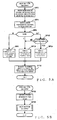
- a NEXT button ON event process routine of Fig. 5A is started up.
- the event data in the cursor-indicated row of the event list 110 is executed. Namely, scene recall of the event set in question is carried out.
- the cursor 118 is moved downward by one row, so that the event set of the moved-to row, i.e. changed cursor-indicated row, is read out from the sequence data.
- step SP6 the process branches variously on the basis of the trigger type determined. If the trigger type has been determined to be "the manual type", the process goes to step SP8, where the contents of the event set in question, i.e. the contents of the event set specified in the cursor-indicated row of the event list 110, are displayed on the next event display section 204 in "blinking red letters". This blinking display is intended to call the attention of the human operator, because the event set in question is not executed unless the human operator operates the MANUAL TRIGGER button 120 or NEXT button 230.
- step SP4 If the event set read out at step SP4 is of the "time code type" as determined at step SP4, the process goes to step SP10, where the contents of the event set is displayed on the next event display section 204 in normal "non-blinking black letters". If the cursor-indicated row is displayed in such normal "non-blinking black letters", it means that "the event set is scheduled to be automatically executed in accordance with the progression of the time code".
- event set A If the event set read out at step SP4 (hereinafter referred to as "event set A”) is of the “after type” as determined at step SP6, the process goes to step SP12.
- the current time code value and the time data of the event set A are added together to thereby determine an "estimated execution time” at which the event set A is to be executed.
- a search is made through the sequence data for a first-appearing event set of the "time code type” among all event sets located below the cursor-indicated row (such a first event set of the "time code type” will hereinafter be referred to as “event set B").
- a determination is made as to whether the estimated execution time of the event set A is later than the time represented by the time data value of the event set B.
- step SP14 the contents of the event set in question are displayed on the next event display section 204 in "non-blinking red letters".
- the instant embodiment is arranged to not automatically execute event sets located in the rows above the current cursor-indicated row. Therefore, without any particular operation performed by the human operator, the event set B is then executed ahead of the event set A and the cursor 118 is moved to the row immediately following the row of the event set B, so that the event set A will not be executed. Because the event set A is not be executed in the absence of any particular operation by the human operator as noted above, step S14 is directed to issuing attention-calling information to that effect in "red letters”.
- step SP12 the process proceeds to step SP10, where the contents of the event set in question is displayed on the next event display section 204 in "non-blinking black letters".
- the event set A is executed ahead of the event set B, followed by execution of the event set B.
- step SP16 the entire event list 110 is scrolled so that the cursor 118 is positioned in the middle of the event list 110.
- the display style of the cursor-indicated row is set to agree with the earlier-set display style (one of the three styles: "blinking red letters”; “non-blinking red letters”; and “non-blinking blank letters") of the next event display section 204.
- the event set of sequence number "004" is executed at step SP2, and the cursor 118 moves to the row of sequence number "005" at step SP4. Because the trigger type of the event set in this moved-to row is "manual", the cursor-indicated row is displayed in "blinking red letters" on the next event display section 204 and event list 110, at steps SP8 and SP16.
- a PREV button ON event process routine of Fig. 5B is started up.
- the cursor 118 is moved upward by two rows.
- the NEXT button ON event process routine of Fig. 5A is called.
- the cursor 118 is moved to the row of sequence number "002" two rows above the so-far cursor-indicated row, at step SP22. Then, the event set of the new or moved-to row is executed at step SP2, after which the cursor 118 is moved to the row of sequence number "003" at step SP4. Because the event set in the row of sequence number "003" is of the "time code type", this cursor-indicated row is displayed in normal "non-blinking black letters".
- a search is made, through the event sets of the current cursor-indicated row and rows following the cursor-indicated row in the event list 110, for a particular event set whose estimated execution time is equal to the current time code value.
- the "estimated execution time” is a time value set for each of the event sets of the "time code type” or “after type”, and, for the event set of the "time code type", the "time data" included in the event set itself is used as the estimated execution time. Therefore, the estimated execution time of the "time code type” event set is known from the beginning or in advance.
- the estimated execution time of the "after type” event set is a result of addition (sum) between the execution time of another event set having an execution position (turn) immediately preceding that of "after type” event set in the execution sequence (such another event set will hereinafter be referred to as "depending-from event set") and the value of the "time data". Therefore, the estimated execution time of the "after type” event set is determined when the depending-from event set, having an execution position (turn) immediately preceding that of "after type” event set, has been actually executed.
- step SP34 a determination is made as to whether there is any event set whose estimated execution time is equal to the current time code value. If a NO determination is made at step SP34, the time code input event process routine is brought to an end immediately without performing any further operation. If, on the other hand, a YES determination is made at step SP34, the process moves on to step SP36, where the cursor 118 is moved to the row pertaining to the event set whose estimated execution time has been determined to be equal to the current time code value.
- the NEXT button ON event process routine of Fig. 5A is called. Thus, the event set in the current cursor-indicated row is executed at step SP2, and the cursor 118 is moved downward by one row at step SP4.
- back (backward) time codes which are not clearly identifiable by (i.e., transparent to) the human operator, are generated.
- the back time code is updated by the hundredth of second similarly to the above-mentioned normal time code.
- step SP42 of the BTC input event process routine of Fig. 6B it is determined whether the estimated execution time of the event set in the current cursor-indicated row of the event list 110 is equal to the current back time code value.
- the "estimated execution time” is defined only for the event set of the current cursor-indicated row in the case where the event set of the current cursor-indicated row is of the "after type” and when the depending-from event set has been executed.
- the estimated execution time of the event set in question is a result of addition (sum) between the execution time of the back time code of the depending-from event set and the "time data" of the event set in question.
- step SP44 a determination is made as to whether the estimated execution time of the event set in question is equal to the current back time code value. With a NO determination at step SP44, the instant routine is brought to an end immediately without performing any further substantive operation. Note that, if the event set of the current cursor-indicated row is of the "time code type" or "manual type", a NO determination is always made at step SP44. If, on the other hand, a YES determination is made at step SP44, the process goes to step SP46, where the NEXT button ON event process routine of Fig. 5A is called. Thus, the event set in the current cursor-indicated row is executed at step SP2, and the cursor 118 is moved downward by one row at step SP4.
- Fig. 7 is a table indicating whether various processes are carried out or not carried out in response to various combinations of the auto/manual event trigger modes and ON/OFF states of the time code.
- " ⁇ " indicates that the process in question is carried out, while “ ⁇ ” indicates that the process in question is not carried out.
- a "TC Recall” section indicates whether or not the "time code type” event set is automatically executed.
- the time code input event process routine of Fig. 6A is carried out only when the event trigger mode is "auto” and the time code is in the ON state; thus, the "time code type” event set is automatically carried out under such conditions.
- an "After Recall” section of Fig. 7 indicates whether or not the "after type” event set is automatically executed.
- the "after type” event set is also executed in the time code input event process routine of Fig. 6A; thus, the event set in question is executed when the event trigger mode is "auto” and the time code is in the ON state. Further, as explained above in relation to the BTC input event process routine of Fig. 6B, the event set in question is executed even when the time code is in the OFF state. Namely, the "after type” event set is executed if the event trigger mode is "auto", irrespective of the ON/OFF state of the time code.
- a "Selective Movement on List” section of Fig. 7 indicates whether or not the cursor 118 is moved automatically on the event list 110. If the time code is in the ON state as illustrated, the cursor 118 is moved on the event list 110 irrespective of the ON/OFF state of the time code.
- the event trigger mode is "manual" and if the human operator has operated none of the MANUAL TRIGGER button 120, NEXT button 230 and PREV button 232, the cursor 118 is moved from the top to the bottom of the event list 110 without any event set being executed. However, as noted above, if any event set has been executed through operation of any of the buttons 120, 230 and 232, the "after type" event set depending from the executed event set is also executed.
- a "Manual Recall” section indicates whether or not manual scene recall is possible through operation of any of the buttons 120, 230 and 232. As illustrated in Fig. 7, such manual scene recall is always possible irrespective of the states of the event trigger and time codes.
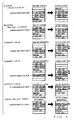
- the time code is expressed briefly in the "hour: minute: second" format.
- the event set in the cursor-indicated row is of the time code type (1: 00: 00), from which an "after type (10 sec)" event set depends. From the "after type” event set, another "after type (30 sec)” event set depends. The "after type (30 sec)” event is followed by "manual type” and "time code type (1: 01: 00)” event sets.
- the position of the cursor-indicated row is changed on the basis of the changed time code and any of the following conditions. Namely, in accordance with the editing of time data of a desired event set, the execution sequence of the event sets in the event list 110 is rearranged and accordingly the execution position of the desired event set in the event list 110 may be changed.
- the event set in the cursor-indicated row is of the "after type (10 sec)". If the event set in the cursor-indicated row is changed by the human operator to the "time code type (0: 55: 00)", the operation falls under "Case 1" above because there is no other "time code type” event set having a time data value earlier than the changed time, so that the event set in the cursor-indicated row is moved to the head of the event list. Further, an "after type (30 sec)" event set having so far depended from the event set in the cursor-indicated row is moved to the second row from the head of the event list in accordance with the movement of the cursor-indicated row.
- the depending-from event set of the "after type (30 sec)” event set is changed to the "time code type (1:01: 00)" event set from which the "after type (10 sec)” event set previously depended before the UP operation.
- the "after type (10 sec)" event set in the cursor-indicated row does not depend from any other event set and is not automatically executed, so that it is displayed in non-blinking red letters.
Landscapes
- Engineering & Computer Science (AREA)
- Signal Processing (AREA)
- Circuit For Audible Band Transducer (AREA)
- User Interface Of Digital Computer (AREA)
- Television Signal Processing For Recording (AREA)
- Indexing, Searching, Synchronizing, And The Amount Of Synchronization Travel Of Record Carriers (AREA)
Abstract
Description
Claims (31)
- An event data reproducing apparatus comprising:a sequence data supply section (12b) that supplies sequence data including a plurality of event sets with an execution sequence of the event sets predefined, each of the event sets including event data indicative of an event to be executed and trigger data defining timing for executing the event;a processing section (10) that sequentially executes the event data of individual ones of the event sets, included in the sequence data, in accordance with the timing defined by the trigger data corresponding to the event data;an index section (110, 118) that indexes the event set of an execution position immediately following an execution position of event data last executed by said processing section;an operation section (230) operable by a user to perform progression instructing operation; anda control section (SP2) that, in response to the progression instructing operation performed via said operation section, causes processing by said processing section to proceed so as to execute the event data of the event set currently indexed by said index section.
- An event data reproducing apparatus as claimed in claim 1 wherein the trigger data defines timing for automatically executing the event corresponding thereto, and
wherein, upon arrival of the timing defined by the trigger data of the event set currently indexed by said index section, said processing section executes the event data of the indexed event set, and, upon arrival of the timing defined by the trigger data of the event set having an execution position following the execution position of the event set currently indexed by said index section, said processing section executes the event data of the event set of the following execution position. - An event data reproducing apparatus as claimed in claim 1 which further comprises a backward-proceeding operation section operable by the user to perform backward-proceeding instructing operation; and
a control section that, in response to the backward-proceeding instructing operation performed by the user via said backward-proceeding operation section, causes the processing by said processing section to proceed backward so as to execute the event set of a second preceding execution position from the execution position of the event set currently indexed by said index section. - An event data reproducing apparatus as claimed in claim 2 wherein said processing section determines, with reference to a time code indicative of a progression of time, whether or not the timing defined by the trigger data has arrived, and
which further comprises an ON/OFF operation section operable by the user to set ON/OFF of the time code. - An event data reproducing apparatus as claimed in claim 1 wherein the trigger data of the event sets include trigger data of a first type that defines the timing for executing the event corresponding thereto, and trigger data of a second type that indicates that the event corresponding thereto is to be executed in response to manual execution-instructing operation by the user,
wherein, when the trigger data of the event set currently indexed by said index section is of said first type, said processing section automatically executes the event data of the indexed event set upon arrival of the timing defined by the trigger data of the indexed event set, but, when the trigger data of the event set currently indexed by said index section is of said second type, said processing section executes the event data of the indexed event set in response to the manual execution-instructing operation performed by the user, and
wherein said control section causes the processing by said processing section to proceed so as to execute the event data of the event set currently indexed by said index section, in response to the progression instructing operation performed by the user, irrespective of whether the trigger data of the indexed event set is of said first type or said second type. - An event data reproducing apparatus as claimed in claim 5 wherein predetermined attention-calling information is given to the user when the trigger data of the event set currently indexed by said index section is of said second type.
- An event data reproducing apparatus as claimed in claim 1 wherein said index section visibly displays information indicative of the event set of the immediately-following execution position.
- An event data reproducing apparatus as claimed in claim 1 which is used for an audio mixer apparatus, and wherein the event data in the sequence data include mixer setting data.
- An event data reproducing method comprising:a step of supplying sequence data including a plurality of event sets with an execution sequence of the event sets predefined, each of the event sets including event data indicative of an event to be executed and trigger data defining timing for executing the event;an execution step of sequentially executing the event data of individual ones of the event sets, included in the sequence data, in accordance with the timing defined by the trigger data corresponding to the event data;a step of indexing the event set of an execution position following an execution position of the event data last executed by said execution step;a step of, in response to predetermined progression instructing operation performed by a user, causing processing by said execution step to proceed so as to execute the event data of the event set currently indexed by said step of indexing.
- A program containing a group of instructions for causing a computer to perform an event data reproducing method, said event data reproducing method comprising:a step of supplying sequence data including a plurality of event sets with an execution sequence of the event sets predefined, each of the event sets including event data indicative of an event to be executed and trigger data defining timing for executing the event;an execution step of sequentially executing the event data of individual ones of the event sets, included in the sequence data, in accordance with the timing defined by the trigger data corresponding to the event data;a step of indexing the event set of an execution position following an execution position of the event data last executed by said execution step;a step of, in response to predetermined progression instructing operation performed by a user, causing processing by said execution step to proceed so as to execute the event data of the event set currently indexed by said step of indexing.
- An electronic apparatus comprising the event data reproducing apparatus as claimed in claim 1, said electronic apparatus further comprising:a current memory that stores a set of parameters;a control section that controls a state of said electronic apparatus in accordance with the parameters stored in said current memory;a scene memory that stores a plurality of sets of parameters as a plurality of scenes; anda transfer section that transfers one scene, selected from among the plurality of scenes, from said scene memory to said current memory,the event data being data instructing said transfer section to designate and transfer the one scene.
- An event data reproducing apparatus comprising:wherein, upon arrival of earlier one of the timing defined by the trigger data of the event set currently indexed by said index section and the timing defined by the trigger data of the event set having an execution position following the execution position of the event set currently indexed by said index section, said processing section executes the event data of the event set corresponding to the earlier timing having arrived.a sequence data supply section (12b) that supplies sequence data including a plurality of event sets with an execution sequence of the event sets predefined, each of the event sets including event data indicative of an event to be executed and trigger data defining timing for executing the event, the trigger data of the event sets including trigger data of a first type that defines the timing for executing the event by use of absolute time information and trigger data of a second type that defines the timing for executing the event by use of relative time information indicative of a time interval between the events, the sequence data being capable of mixedly including the trigger data of said first type and said second type;a processing section (10) that sequentially executes the event data of individual ones of the event sets, included in the sequence data, in accordance with the timing defined by the trigger data corresponding to the event data; andan index section (110, 118) that indexes the event set of an execution position immediately following an execution position of the event data last executed by said processing section,
- An event data reproducing apparatus as claimed in claim 12 wherein, when the event set including the trigger data of said second type is currently indexed by said index section, said processing section calculates, on the basis of the trigger data of said second type, an estimated time at which the indexed event set is to be executed, and executes the indexed event set upon arrival of the calculated estimated time.
- An event data reproducing apparatus as claimed in claim 12 wherein, when a first event set including the trigger data of said second type is currently indexed by said index section,
said processing section
calculates, on the basis of the trigger data of said second type, an estimated time at which said first event set is to be executed,
searches for a second event set having an execution position following an execution position of said first event set but earliest among all of the event sets including the trigger data of said first type, and
makes a comparison between the estimated time at which said first event set is to be executed and a time at which said second event set searched out is to be executed and thereby provides a display, related to said first event set, in a display style corresponding to a result of the comparison. - An event data reproducing apparatus as claimed in claim 14 wherein, when the estimated time at which said first event set is to be executed is later than the time at which said second event set searched out is to be executed, the display style corresponding to the result of the comparison is set to a predetermined display style for calling attention of the user.
- An event data reproducing apparatus as claimed in claim 12 which further comprises:wherein, even before arrival of the timing defined by the trigger data, said processing section executes said event set currently indexed by said index section, in response to reception, via said operation section, of the predetermined instructing operation.a presentation section that visually or auditorily presents, to the user, information representing contents of the event data of the event set currently indexed by said index section; andan operation section that receives predetermined instructing operation by the user, and
- An event data reproducing apparatus as claimed in claim 12 wherein said processing section determines, with reference to a time code indicative of a progression of time, whether or not the timing defined by the trigger data has arrived, and
which further comprises an ON/OFF operation section operable by the user to set ON/OFF of the time code. - An event data reproducing apparatus as claimed in claim 12 which further comprises an editing section that edits the sequence data supplied by said sequence data supply section, and
wherein said second event set including the trigger data of said second type is included in the sequence data in an execution position immediately following the execution position of said first event set, and, when editing operation is performed, via said editing section, to change the execution position of said first event set, the execution position of said second event set is changed in dependence upon the changed execution position of said first event set. - An event data reproducing apparatus as claimed in claim 12 which is used for an audio mixer apparatus, and wherein the event data in the sequence data include mixer setting data.
- An electronic apparatus comprising the event data reproducing apparatus as claimed in claim 12, said electronic apparatus further comprising:the event data being data instructing said transfer section to designate and transfer the one scene.a current memory that stores a set of parameters;a control section that controls a state of said electronic apparatus in accordance with the parameters stored in said current memory;a scene memory that stores a plurality of sets of parameters as a plurality of scenes; anda transfer section that transfers one scene, selected from among the plurality of scenes, from said scene memory to said current memory,
- An event data reproducing method comprising:wherein, upon arrival of earlier one of the timing defined by the trigger data of the event set currently indexed by said index step and the timing defined by the trigger data of the event set having following the execution position of the event set currently indexed by said index step, said processing step executes the event data of the event set corresponding to the earlier timing having arrived.a step of supplying sequence data including a plurality of event sets with an execution sequence of the event sets predefined, each of the event sets including event data indicative of an event to be executed and trigger data defining timing for executing the event, the trigger data of the event sets including trigger data of a first type that defines the timing for executing the event by use of absolute time information and trigger data of a second type that defines the timing for executing the event by use of relative time information indicative of a time interval between the events, the sequence data being capable of mixedly including the trigger data of said first type and said second type;a processing step of sequentially executing the event data of individual ones of the event sets, included in the sequence data, in accordance with the timing defined by the trigger data corresponding to the event data; andan index step of indexing the event set of an execution position immediately following an execution position of the event data last executed by said processing step,
- A program containing a group of instructions for causing a computer to perform an event data reproducing method, said event data reproducing method comprising:wherein, upon arrival of earlier one of the timing defined by the trigger data of the event set currently indexed by said index step and the timing defined by the trigger data of the event set having an execution position later than the event set currently indexed by said index step, said processing step executes the event set corresponding to the earlier timing having arrived.a step of supplying sequence data including a plurality of event sets with an execution sequence of the event sets predefined, each of the event sets including event data indicative of an event to be executed and trigger data defining timing for executing the event, the trigger data of the event sets including trigger data of a first type that defines the timing for executing the event by use of absolute time information and trigger data of a second type that defines the timing for executing the event by use of relative time information indicative of a time interval between the events, the sequence data being capable of mixedly including the trigger data of said first type and said second type;a processing step of sequentially executing the event data of individual ones of the event sets, included in the sequence data, in accordance with the timing defined by the trigger data corresponding to the event data; andan index step of indexing the event set of an execution position immediately following an execution position of the event data last executed by said processing step,
- An event data reproducing apparatus comprising:wherein, upon arrival of earlier one of the timing defined by the trigger data of the event set currently indexed by said index section and the timing defined by the trigger data of the event set, including the trigger data of said first type, having an execution position following the event set currently indexed by said index section, said processing section executes the event set corresponding to the earlier timing having arrived, the timing defined by the trigger data of said third type being when the manual execution-instructing operation has been performed by the user.a sequence data supply section (12b) that supplies sequence data including a plurality of event sets with an execution sequence of the event sets predefined, each of the event sets including event data indicative of an event to be executed and trigger data defining timing for executing the event, the trigger data of the event sets including: trigger data of a first type that defines the timing for executing the event by use of absolute time information; and trigger data of a second type that defines the timing for executing the event by use of relative time information indicative of a time interval between the events; and trigger data of a third type that instructs that the corresponding event be executed in response to manual execution-instructing operation performed by a user, the sequence data being capable of mixedly including the trigger data of said first, second and third types;a processing section (10) that sequentially executes the event data of individual ones of the event sets, included in the sequence data, in accordance with the timing defined by the trigger data corresponding to the event data; andan index section (110, 118) that indexes the event set of an execution position immediately following an execution position of the event data last executed by said processing section,
- An event data reproducing apparatus comprising:an event list presentation section (110) that presents an event list for listing sequence data including a plurality of event sets with an execution sequence of the event sets predefined, said event list listing said plurality of event sets in order of said execution sequence, each of the event sets including event data indicative of an event to be executed and trigger data defining timing for executing the event, the trigger data of the event sets including: trigger data of a first type that defines the timing for executing the event by use of absolute time information; and trigger data of a second type that defines the timing for executing the event by use of relative time information indicative of a time interval between the events; and trigger data of a third type that instructs that the corresponding event be executed in response to manual execution-instructing operation performed by a user, the sequence data listed in said event list being capable of mixedly including the trigger data of said first, second and third types; anda processing section (10) that sequentially executes the event data of individual ones of the event sets, listed in the event list, in accordance with the timing defined by the trigger data corresponding to the event data.
- An event data reproducing apparatus as claimed in claim 24, wherein said event list presentation section includes a display device that visibly displays said event list for listing sequence data.
- An event data reproducing apparatus as claimed in claim 24, which further comprises an editing section that edits the sequence data listed in said event list, said editing section being capable of modifying a value of said absolute or relative time information defined by said trigger data of said first or second type included in a desired event set listed in said event list,
wherein, in accordance with the modification of the value of said absolute or relative time information of said desired event set via said editing section, the execution sequence of the event sets in said event list is rearranged. - An event data reproducing apparatus as claimed in claim 24, which further comprises an editing section that edits the sequence data listed in said event list, said editing section being capable of changing said relative time information defined by said trigger data of said second type included in a desired event set listed in said event list into absolute time information defined by said trigger data of said first type, or changing said absolute time information defined by said trigger data of said first type included in a desired event set listed in said event list into relative time information defined by said trigger data of said second type,
wherein, in accordance with the change of the relative or absolute time information of the second or first type for said desired event set via said editing section, the execution sequence of the event sets in said event list is rearranged. - An event data reproducing apparatus as claimed in claim 24, which further comprises an editing section that edits the sequence data listed in said event list, said editing section being capable of inserting a desired event set having trigger data of the first or second type into said event list,
wherein, in accordance with the insertion of the desired event set via said editing section, the execution sequence of the event sets in said event list is rearranged so that said desired event set is inserted into an execution position according to absolute or relative time information of the trigger data included in said desired event set. - An event data reproducing apparatus as claimed in claim 24, which further comprises an editing section that edits the sequence data listed in said event list, said editing section being capable of inserting a desired event set having trigger data of the third type in correspondence with a desired execution position in said event list,
wherein, in accordance with the insertion of the desired event set via said editing section, the execution sequence of the event sets in said event list is rearranged so that said desired event set is inserted into the desired execution position in said event list. - An event data reproducing apparatus as claimed in claim 24, which further comprises an editing section that edits the sequence data listed in said event list, said editing section being capable of deleting a desired event set from said event list,
wherein, in accordance with the deletion of the desired event set via said editing section, the execution sequence of the event sets in said event list is rearranged so that said desired event set is deleted from said event list. - An event data reproducing apparatus as claimed in claim 24, which further comprises an editing section that edits the sequence data listed in said event list, said editing section being capable of moving a desired event set in said event list,
wherein, in accordance with the movement of the desired event set via said editing section, the execution sequence of the event sets in said event list is rearranged so that an execution position of said desired event set is moved in said event list.
Priority Applications (1)
| Application Number | Priority Date | Filing Date | Title |
|---|---|---|---|
| EP11162011A EP2337249A1 (en) | 2004-02-24 | 2005-02-21 | Event data reproducing apparatus and method, and program therefor |
Applications Claiming Priority (4)
| Application Number | Priority Date | Filing Date | Title |
|---|---|---|---|
| JP2004047708 | 2004-02-24 | ||
| JP2004047702A JP4001121B2 (en) | 2004-02-24 | 2004-02-24 | Event data reproduction method, event data reproduction device, electronic device, and program |
| JP2004047702 | 2004-02-24 | ||
| JP2004047708A JP4165414B2 (en) | 2004-02-24 | 2004-02-24 | Mixer equipment |
Related Child Applications (2)
| Application Number | Title | Priority Date | Filing Date |
|---|---|---|---|
| EP11162011A Division-Into EP2337249A1 (en) | 2004-02-24 | 2005-02-21 | Event data reproducing apparatus and method, and program therefor |
| EP11162011.8 Division-Into | 2011-04-12 |
Publications (3)
| Publication Number | Publication Date |
|---|---|
| EP1571767A2 true EP1571767A2 (en) | 2005-09-07 |
| EP1571767A3 EP1571767A3 (en) | 2011-06-22 |
| EP1571767B1 EP1571767B1 (en) | 2018-05-30 |
Family
ID=34752150
Family Applications (2)
| Application Number | Title | Priority Date | Filing Date |
|---|---|---|---|
| EP05101295.3A Expired - Lifetime EP1571767B1 (en) | 2004-02-24 | 2005-02-21 | Event data reproducing apparatus and method, and program therefor |
| EP11162011A Withdrawn EP2337249A1 (en) | 2004-02-24 | 2005-02-21 | Event data reproducing apparatus and method, and program therefor |
Family Applications After (1)
| Application Number | Title | Priority Date | Filing Date |
|---|---|---|---|
| EP11162011A Withdrawn EP2337249A1 (en) | 2004-02-24 | 2005-02-21 | Event data reproducing apparatus and method, and program therefor |
Country Status (3)
| Country | Link |
|---|---|
| US (1) | US7729787B2 (en) |
| EP (2) | EP1571767B1 (en) |
| CN (1) | CN1662102B (en) |
Families Citing this family (5)
| Publication number | Priority date | Publication date | Assignee | Title |
|---|---|---|---|---|
| US20070243515A1 (en) * | 2006-04-14 | 2007-10-18 | Hufford Geoffrey C | System for facilitating the production of an audio output track |
| JP5076410B2 (en) * | 2006-09-06 | 2012-11-21 | ヤマハ株式会社 | Audio mixer |
| CN101146096B (en) * | 2006-09-14 | 2011-12-28 | 华为技术有限公司 | Event processing method, event processing system and transmission terminal |
| US9936231B2 (en) * | 2012-03-21 | 2018-04-03 | Saturn Licensing Llc | Trigger compaction |
| CN111221666A (en) * | 2020-01-03 | 2020-06-02 | 北京明略软件系统有限公司 | Scheduling method, scheduling device, electronic equipment and computer readable storage medium |
Family Cites Families (7)
| Publication number | Priority date | Publication date | Assignee | Title |
|---|---|---|---|---|
| JPH10276160A (en) * | 1997-03-31 | 1998-10-13 | Sony Corp | Program production and transmission equipment |
| JP3632523B2 (en) * | 1999-09-24 | 2005-03-23 | ヤマハ株式会社 | Performance data editing apparatus, method and recording medium |
| JP4602535B2 (en) | 2000-11-17 | 2010-12-22 | 富士通株式会社 | Schedule execution management apparatus and management method |
| JP3862061B2 (en) * | 2001-05-25 | 2006-12-27 | ヤマハ株式会社 | Music sound reproducing device, music sound reproducing method, and portable terminal device |
| JP3823855B2 (en) * | 2002-03-18 | 2006-09-20 | ヤマハ株式会社 | Recording apparatus, reproducing apparatus, recording method, reproducing method, and synchronous reproducing system |
| JP2004133733A (en) * | 2002-10-11 | 2004-04-30 | Sony Corp | Display device and method, and program |
| US8477639B2 (en) * | 2004-09-08 | 2013-07-02 | Cradlepoint, Inc. | Communicating network status |
-
2005
- 2005-02-21 EP EP05101295.3A patent/EP1571767B1/en not_active Expired - Lifetime
- 2005-02-21 EP EP11162011A patent/EP2337249A1/en not_active Withdrawn
- 2005-02-23 US US11/064,664 patent/US7729787B2/en active Active
- 2005-02-24 CN CN2005100517945A patent/CN1662102B/en not_active Expired - Fee Related
Also Published As
| Publication number | Publication date |
|---|---|
| EP2337249A1 (en) | 2011-06-22 |
| EP1571767A3 (en) | 2011-06-22 |
| CN1662102A (en) | 2005-08-31 |
| US7729787B2 (en) | 2010-06-01 |
| EP1571767B1 (en) | 2018-05-30 |
| US20050283678A1 (en) | 2005-12-22 |
| CN1662102B (en) | 2010-06-02 |
Similar Documents
| Publication | Publication Date | Title |
|---|---|---|
| US6430355B1 (en) | Editing device with display of program ID code and images of the program | |
| US6674955B2 (en) | Editing device and editing method | |
| US9192024B2 (en) | Dimming console | |
| EP1160658B1 (en) | Playback apparatus, playback method, and recording medium | |
| JP4280767B2 (en) | Combination of editing system and digital video recording system | |
| US20030091329A1 (en) | Editing system and editing method | |
| KR19990082917A (en) | Editing apparatus for creating an edit decision list | |
| JP3632523B2 (en) | Performance data editing apparatus, method and recording medium | |
| JPH0643839A (en) | Method and apparatus for displaying and editing multimedia information | |
| CA2285366A1 (en) | A user interface for managing track assignment for portable digital moving picture recording and editing system | |
| EP2568630A2 (en) | Sound signal processing apparatus | |
| EP1571767B1 (en) | Event data reproducing apparatus and method, and program therefor | |
| JP4229199B2 (en) | Editing apparatus and editing method | |
| JP4165414B2 (en) | Mixer equipment | |
| JP4588126B2 (en) | Editing system and editing method | |
| JP4001121B2 (en) | Event data reproduction method, event data reproduction device, electronic device, and program | |
| JP2007142899A (en) | Digital mixer with dot matrix display | |
| JPH10283759A (en) | Editing device | |
| JP4172525B2 (en) | Editing apparatus and editing method | |
| JP5560760B2 (en) | Acoustic signal processing apparatus and program | |
| WO2025213221A1 (en) | Media playout system and method | |
| JP4858821B2 (en) | Digital mixer with dot matrix display | |
| JP2007317352A (en) | Editing apparatus and editing method | |
| EP3923284A1 (en) | Content selection device, and control method and program for content selection device | |
| JP2000013682A (en) | Information sending device and information sending method |
Legal Events
| Date | Code | Title | Description |
|---|---|---|---|
| PUAI | Public reference made under article 153(3) epc to a published international application that has entered the european phase |
Free format text: ORIGINAL CODE: 0009012 |
|
| 17P | Request for examination filed |
Effective date: 20050225 |
|
| AK | Designated contracting states |
Kind code of ref document: A2 Designated state(s): AT BE BG CH CY CZ DE DK EE ES FI FR GB GR HU IE IS IT LI LT LU MC NL PL PT RO SE SI SK TR |
|
| AX | Request for extension of the european patent |
Extension state: AL BA HR LV MK YU |
|
| RAP1 | Party data changed (applicant data changed or rights of an application transferred) |
Owner name: YAMAHA CORPORATION |
|
| PUAL | Search report despatched |
Free format text: ORIGINAL CODE: 0009013 |
|
| AK | Designated contracting states |
Kind code of ref document: A3 Designated state(s): AT BE BG CH CY CZ DE DK EE ES FI FR GB GR HU IE IS IT LI LT LU MC NL PL PT RO SE SI SK TR |
|
| AX | Request for extension of the european patent |
Extension state: AL BA HR LV MK YU |
|
| AKX | Designation fees paid |
Designated state(s): AT BE BG CH CY CZ DE DK EE ES FI FR GB GR HU IE IS IT LI LT LU MC NL PL PT RO SE SI SK TR |
|
| 17Q | First examination report despatched |
Effective date: 20120412 |
|
| REG | Reference to a national code |
Ref country code: DE Ref legal event code: R079 Ref document number: 602005054031 Country of ref document: DE Free format text: PREVIOUS MAIN CLASS: H04H0007000000 Ipc: H04H0060040000 |
|
| GRAP | Despatch of communication of intention to grant a patent |
Free format text: ORIGINAL CODE: EPIDOSNIGR1 |
|
| STAA | Information on the status of an ep patent application or granted ep patent |
Free format text: STATUS: GRANT OF PATENT IS INTENDED |
|
| RIC1 | Information provided on ipc code assigned before grant |
Ipc: H04H 60/04 20080101AFI20171129BHEP |
|
| INTG | Intention to grant announced |
Effective date: 20171215 |
|
| RIN1 | Information on inventor provided before grant (corrected) |
Inventor name: TERADA, KOTARO Inventor name: OKABAYASHI, MASAAKI Inventor name: TSUKAZAKI, FUMIAKI |
|
| GRAS | Grant fee paid |
Free format text: ORIGINAL CODE: EPIDOSNIGR3 |
|
| GRAA | (expected) grant |
Free format text: ORIGINAL CODE: 0009210 |
|
| STAA | Information on the status of an ep patent application or granted ep patent |
Free format text: STATUS: THE PATENT HAS BEEN GRANTED |
|
| AK | Designated contracting states |
Kind code of ref document: B1 Designated state(s): AT BE BG CH CY CZ DE DK EE ES FI FR GB GR HU IE IS IT LI LT LU MC NL PL PT RO SE SI SK TR |
|
| REG | Reference to a national code |
Ref country code: GB Ref legal event code: FG4D |
|
| REG | Reference to a national code |
Ref country code: CH Ref legal event code: EP |
|
| REG | Reference to a national code |
Ref country code: AT Ref legal event code: REF Ref document number: 1004696 Country of ref document: AT Kind code of ref document: T Effective date: 20180615 |
|
| REG | Reference to a national code |
Ref country code: DE Ref legal event code: R096 Ref document number: 602005054031 Country of ref document: DE |
|
| REG | Reference to a national code |
Ref country code: IE Ref legal event code: FG4D |
|
| REG | Reference to a national code |
Ref country code: NL Ref legal event code: MP Effective date: 20180530 |
|
| REG | Reference to a national code |
Ref country code: LT Ref legal event code: MG4D |
|
| PG25 | Lapsed in a contracting state [announced via postgrant information from national office to epo] |
Ref country code: BG Free format text: LAPSE BECAUSE OF FAILURE TO SUBMIT A TRANSLATION OF THE DESCRIPTION OR TO PAY THE FEE WITHIN THE PRESCRIBED TIME-LIMIT Effective date: 20180830 Ref country code: FI Free format text: LAPSE BECAUSE OF FAILURE TO SUBMIT A TRANSLATION OF THE DESCRIPTION OR TO PAY THE FEE WITHIN THE PRESCRIBED TIME-LIMIT Effective date: 20180530 Ref country code: SE Free format text: LAPSE BECAUSE OF FAILURE TO SUBMIT A TRANSLATION OF THE DESCRIPTION OR TO PAY THE FEE WITHIN THE PRESCRIBED TIME-LIMIT Effective date: 20180530 Ref country code: ES Free format text: LAPSE BECAUSE OF FAILURE TO SUBMIT A TRANSLATION OF THE DESCRIPTION OR TO PAY THE FEE WITHIN THE PRESCRIBED TIME-LIMIT Effective date: 20180530 Ref country code: LT Free format text: LAPSE BECAUSE OF FAILURE TO SUBMIT A TRANSLATION OF THE DESCRIPTION OR TO PAY THE FEE WITHIN THE PRESCRIBED TIME-LIMIT Effective date: 20180530 Ref country code: CY Free format text: LAPSE BECAUSE OF FAILURE TO SUBMIT A TRANSLATION OF THE DESCRIPTION OR TO PAY THE FEE WITHIN THE PRESCRIBED TIME-LIMIT Effective date: 20180530 |
|
| PG25 | Lapsed in a contracting state [announced via postgrant information from national office to epo] |
Ref country code: GR Free format text: LAPSE BECAUSE OF FAILURE TO SUBMIT A TRANSLATION OF THE DESCRIPTION OR TO PAY THE FEE WITHIN THE PRESCRIBED TIME-LIMIT Effective date: 20180831 |
|
| REG | Reference to a national code |
Ref country code: AT Ref legal event code: MK05 Ref document number: 1004696 Country of ref document: AT Kind code of ref document: T Effective date: 20180530 |
|
| PG25 | Lapsed in a contracting state [announced via postgrant information from national office to epo] |
Ref country code: NL Free format text: LAPSE BECAUSE OF FAILURE TO SUBMIT A TRANSLATION OF THE DESCRIPTION OR TO PAY THE FEE WITHIN THE PRESCRIBED TIME-LIMIT Effective date: 20180530 |
|
| PG25 | Lapsed in a contracting state [announced via postgrant information from national office to epo] |
Ref country code: RO Free format text: LAPSE BECAUSE OF FAILURE TO SUBMIT A TRANSLATION OF THE DESCRIPTION OR TO PAY THE FEE WITHIN THE PRESCRIBED TIME-LIMIT Effective date: 20180530 Ref country code: SK Free format text: LAPSE BECAUSE OF FAILURE TO SUBMIT A TRANSLATION OF THE DESCRIPTION OR TO PAY THE FEE WITHIN THE PRESCRIBED TIME-LIMIT Effective date: 20180530 Ref country code: AT Free format text: LAPSE BECAUSE OF FAILURE TO SUBMIT A TRANSLATION OF THE DESCRIPTION OR TO PAY THE FEE WITHIN THE PRESCRIBED TIME-LIMIT Effective date: 20180530 Ref country code: EE Free format text: LAPSE BECAUSE OF FAILURE TO SUBMIT A TRANSLATION OF THE DESCRIPTION OR TO PAY THE FEE WITHIN THE PRESCRIBED TIME-LIMIT Effective date: 20180530 Ref country code: DK Free format text: LAPSE BECAUSE OF FAILURE TO SUBMIT A TRANSLATION OF THE DESCRIPTION OR TO PAY THE FEE WITHIN THE PRESCRIBED TIME-LIMIT Effective date: 20180530 Ref country code: CZ Free format text: LAPSE BECAUSE OF FAILURE TO SUBMIT A TRANSLATION OF THE DESCRIPTION OR TO PAY THE FEE WITHIN THE PRESCRIBED TIME-LIMIT Effective date: 20180530 Ref country code: PL Free format text: LAPSE BECAUSE OF FAILURE TO SUBMIT A TRANSLATION OF THE DESCRIPTION OR TO PAY THE FEE WITHIN THE PRESCRIBED TIME-LIMIT Effective date: 20180530 |
|
| REG | Reference to a national code |
Ref country code: CH Ref legal event code: PK Free format text: BERICHTIGUNGEN |
|
| RIC2 | Information provided on ipc code assigned after grant |
Ipc: H04H 60/04 20080101AFI20171129BHEP |
|
| PG25 | Lapsed in a contracting state [announced via postgrant information from national office to epo] |
Ref country code: IT Free format text: LAPSE BECAUSE OF FAILURE TO SUBMIT A TRANSLATION OF THE DESCRIPTION OR TO PAY THE FEE WITHIN THE PRESCRIBED TIME-LIMIT Effective date: 20180530 |
|
| REG | Reference to a national code |
Ref country code: DE Ref legal event code: R097 Ref document number: 602005054031 Country of ref document: DE |
|
| PLBE | No opposition filed within time limit |
Free format text: ORIGINAL CODE: 0009261 |
|
| STAA | Information on the status of an ep patent application or granted ep patent |
Free format text: STATUS: NO OPPOSITION FILED WITHIN TIME LIMIT |
|
| 26N | No opposition filed |
Effective date: 20190301 |
|
| PG25 | Lapsed in a contracting state [announced via postgrant information from national office to epo] |
Ref country code: SI Free format text: LAPSE BECAUSE OF FAILURE TO SUBMIT A TRANSLATION OF THE DESCRIPTION OR TO PAY THE FEE WITHIN THE PRESCRIBED TIME-LIMIT Effective date: 20180530 |
|
| REG | Reference to a national code |
Ref country code: CH Ref legal event code: PL |
|
| GBPC | Gb: european patent ceased through non-payment of renewal fee |
Effective date: 20190221 |
|
| PG25 | Lapsed in a contracting state [announced via postgrant information from national office to epo] |
Ref country code: MC Free format text: LAPSE BECAUSE OF FAILURE TO SUBMIT A TRANSLATION OF THE DESCRIPTION OR TO PAY THE FEE WITHIN THE PRESCRIBED TIME-LIMIT Effective date: 20180530 Ref country code: LU Free format text: LAPSE BECAUSE OF NON-PAYMENT OF DUE FEES Effective date: 20190221 |
|
| REG | Reference to a national code |
Ref country code: BE Ref legal event code: MM Effective date: 20190228 |
|
| REG | Reference to a national code |
Ref country code: IE Ref legal event code: MM4A |
|
| PG25 | Lapsed in a contracting state [announced via postgrant information from national office to epo] |
Ref country code: LI Free format text: LAPSE BECAUSE OF NON-PAYMENT OF DUE FEES Effective date: 20190228 Ref country code: CH Free format text: LAPSE BECAUSE OF NON-PAYMENT OF DUE FEES Effective date: 20190228 |
|
| PG25 | Lapsed in a contracting state [announced via postgrant information from national office to epo] |
Ref country code: GB Free format text: LAPSE BECAUSE OF NON-PAYMENT OF DUE FEES Effective date: 20190221 Ref country code: IE Free format text: LAPSE BECAUSE OF NON-PAYMENT OF DUE FEES Effective date: 20190221 |
|
| PG25 | Lapsed in a contracting state [announced via postgrant information from national office to epo] |
Ref country code: BE Free format text: LAPSE BECAUSE OF NON-PAYMENT OF DUE FEES Effective date: 20190228 Ref country code: FR Free format text: LAPSE BECAUSE OF NON-PAYMENT OF DUE FEES Effective date: 20190228 |
|
| PG25 | Lapsed in a contracting state [announced via postgrant information from national office to epo] |
Ref country code: TR Free format text: LAPSE BECAUSE OF FAILURE TO SUBMIT A TRANSLATION OF THE DESCRIPTION OR TO PAY THE FEE WITHIN THE PRESCRIBED TIME-LIMIT Effective date: 20180530 |
|
| PG25 | Lapsed in a contracting state [announced via postgrant information from national office to epo] |
Ref country code: PT Free format text: LAPSE BECAUSE OF FAILURE TO SUBMIT A TRANSLATION OF THE DESCRIPTION OR TO PAY THE FEE WITHIN THE PRESCRIBED TIME-LIMIT Effective date: 20181001 |
|
| PG25 | Lapsed in a contracting state [announced via postgrant information from national office to epo] |
Ref country code: IS Free format text: LAPSE BECAUSE OF FAILURE TO SUBMIT A TRANSLATION OF THE DESCRIPTION OR TO PAY THE FEE WITHIN THE PRESCRIBED TIME-LIMIT Effective date: 20180930 |
|
| PG25 | Lapsed in a contracting state [announced via postgrant information from national office to epo] |
Ref country code: HU Free format text: LAPSE BECAUSE OF FAILURE TO SUBMIT A TRANSLATION OF THE DESCRIPTION OR TO PAY THE FEE WITHIN THE PRESCRIBED TIME-LIMIT; INVALID AB INITIO Effective date: 20050221 |
|
| PGFP | Annual fee paid to national office [announced via postgrant information from national office to epo] |
Ref country code: DE Payment date: 20220620 Year of fee payment: 19 |
|
| REG | Reference to a national code |
Ref country code: DE Ref legal event code: R119 Ref document number: 602005054031 Country of ref document: DE |
|
| PG25 | Lapsed in a contracting state [announced via postgrant information from national office to epo] |
Ref country code: DE Free format text: LAPSE BECAUSE OF NON-PAYMENT OF DUE FEES Effective date: 20240903 |
|
| PG25 | Lapsed in a contracting state [announced via postgrant information from national office to epo] |
Ref country code: DE Free format text: LAPSE BECAUSE OF NON-PAYMENT OF DUE FEES Effective date: 20240903 |