EP1569108A1 - Data protection for applications on a mobile electronic device - Google Patents
Data protection for applications on a mobile electronic device Download PDFInfo
- Publication number
- EP1569108A1 EP1569108A1 EP04251093A EP04251093A EP1569108A1 EP 1569108 A1 EP1569108 A1 EP 1569108A1 EP 04251093 A EP04251093 A EP 04251093A EP 04251093 A EP04251093 A EP 04251093A EP 1569108 A1 EP1569108 A1 EP 1569108A1
- Authority
- EP
- European Patent Office
- Prior art keywords
- event
- occurs
- applications
- memory
- cleaning
- Prior art date
- Legal status (The legal status is an assumption and is not a legal conclusion. Google has not performed a legal analysis and makes no representation as to the accuracy of the status listed.)
- Granted
Links
Images


Classifications
-
- G—PHYSICS
- G06—COMPUTING OR CALCULATING; COUNTING
- G06F—ELECTRIC DIGITAL DATA PROCESSING
- G06F21/00—Security arrangements for protecting computers, components thereof, programs or data against unauthorised activity
- G06F21/60—Protecting data
- G06F21/62—Protecting access to data via a platform, e.g. using keys or access control rules
- G06F21/6218—Protecting access to data via a platform, e.g. using keys or access control rules to a system of files or objects, e.g. local or distributed file system or database
- G06F21/6245—Protecting personal data, e.g. for financial or medical purposes
-
- G—PHYSICS
- G06—COMPUTING OR CALCULATING; COUNTING
- G06F—ELECTRIC DIGITAL DATA PROCESSING
- G06F12/00—Accessing, addressing or allocating within memory systems or architectures
- G06F12/02—Addressing or allocation; Relocation
- G06F12/0223—User address space allocation, e.g. contiguous or non contiguous base addressing
- G06F12/023—Free address space management
- G06F12/0253—Garbage collection, i.e. reclamation of unreferenced memory
-
- G—PHYSICS
- G06—COMPUTING OR CALCULATING; COUNTING
- G06F—ELECTRIC DIGITAL DATA PROCESSING
- G06F8/00—Arrangements for software engineering
- G06F8/60—Software deployment
- G06F8/61—Installation
- G06F8/62—Uninstallation
Definitions
- the present invention relates to data protection for applications on mobile electronic devices.
- a mobile electronic device will typically include a number of applications for performing various functions on the device. These applications may store sensitive data on the memory of the device.
- a mobile electronic device may also include a memory cleaning mechanism through which memory on the device is periodically cleaned.
- the memory cleaning mechanism may not be aware of sensitive data stored by various applications on the device, and thus may not clean the memory of sensitive data that it would be desirable to remove from the device for data protection reasons. Protection of sensitive application data is particularly a concern in respect of software applications that are developed for the mobile electronic device by third parties other than the provider of the base operating system and/or virtual machine software used by the mobile electronic device.
- Examples of the invention include a method and system for data protection for applications that comprises registering applications with a storage cleaning mechanism so that the registered applications can receive notification of impending storage cleaning operations. Upon receiving notification of an impending cleaning operation, the registered applications can release or unreference storage so it can be cleaned of sensitive data.
- One example embodiment includes a data protection method for software applications on a mobile electronic device, the device having storage for allocation to respective software applications for data storage.
- the method is characterized by steps of creating and storing a list of selected software applications operating on the mobile electronic device; notifying the selected software applications of an impending storage cleaning operation; and determining, for each selected software application receiving the notification, if any storage allocated thereto is to be released for cleaning during the impending storage cleaning operation and if so releasing the storage for cleaning.
- a method for protecting the data is characterized by steps of: registering selected applications; notifying the registered applications upon the occurrence of a trigger event; unreferencing at least some objects referenced by the registered applications based on the notification; and cleaning the memory to remove data stored in any unreferenced objects.
- a mobile electronic device that comprises a microprocessor, a plurality of software applications operable on the microprocessor, and a heap memory for storing objects used by the software applications.
- a garbage collector module is operable on the microprocessor module for cleaning unreferenced objects in the heap memory.
- the device is characterized by a memory cleaner module operable on the microprocessor for maintaining a list of registered applications selected from the software applications, and for notifying the registered applications upon the occurrence of a trigger event.
- the registered applications are responsive to the memory cleaner module for unreferencing at least some of the objects in the heap memory used thereby upon receiving notification from the memory cleaner module upon the occurrence of a trigger event.
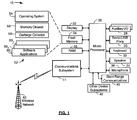
- Figure 1 is a block diagram showing a mobile electronic device to which example embodiments of the invention may be applied;
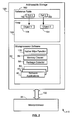
- Figure 2 is block diagram showing a memory management system according to example embodiments of the invention.
- FIG. 3 is a block diagram depicting an application registration method in the memory management system of Figure 2;
- Figure 4 shows block diagrams of an application notification and object cleaning method in the memory management system of Figure 2;
- Figure 5 shows a user interface screen displayed by the memory management system of Figure 2.
- FIG. 1 is a block diagram of a mobile electronic device 10 to which the methods and systems described herein may be applied in an example embodiment.
- the mobile electronic device 10 is a two-way communication device having at least data and, in some embodiments, also voice communication capabilities and/or the capability to communicate with other computer systems on the Internet.
- the device may be a hand-held data communication device, a multiple-mode communication device configured for both data and voice communication, a mobile telephone, a PDA (personal digital assistant) enabled for wireless communication, or a computer system with a wireless modem, among other things.
- the systems and methods described herein could be applied to electronics devices that are not enabled for wireless communications, such as non-wireless network enabled PDAs and digital cameras for example.
- the device 10 includes a communication subsystem 11 for exchanging wireless communications signals with a wireless network 50.
- a communication subsystem 11 for exchanging wireless communications signals with a wireless network 50.
- the particular design of the communication subsystem 11 will be dependent upon the communication network in which the device is intended to operate. In devices that are not enabled for wireless communication, communications subsystem 11 may be omitted or inactive.
- the device 10 includes a microprocessor 38 that controls the overall operation of the device.
- the microprocessor 38 interacts with communications subsystem 11 and also interacts with further device subsystems such as the display 22, flash memory 24, random access memory (RAM) 26, auxiliary input/output (I/O) subsystems 28, serial and/or USB port(s) 30, keyboard or keypad 32, speaker 34, microphone 36, a short-range communications subsystem 40 and any other device subsystems generally designated as 42.
- Fig. 1 Some of the subsystems shown in Fig. 1 perform communication-related functions, whereas other subsystems may provide "resident" or on-device functions. Notably, some subsystems, such as keyboard 32 and display 22 for example, may be used for both communication-related functions, such as entering a text message for transmission over a communication network, and device-resident functions such as a calculator or task list.
- software modules 52 Resident on device 10 are various software modules 52, including for example operating system software 54, memory cleaner 56, garbage collector 58, and various software applications 60 1 -60 n (individual software applications may be generically referred to as a software application 60 herein).
- software modules 52 are stored in a persistent store such as flash memory 24 or similar storage element.
- the software modules 52 or parts thereof may be temporarily loaded into a volatile store such as RAM 26.
- Received communication signals may also be stored to RAM 26.
- the microprocessor 38 in addition to its operating system functions, preferably enables execution of software applications 60 1 -60 n on the device.
- Further applications 60 including applications provided by third party vendors other then the provider of device 10, may also be loaded onto the device 10 through the network 50, an auxiliary I/O subsystem 28, serial and/or USB port(s) 30, short-range communications subsystem 40 or any other suitable subsystem 42, and installed by a user in the RAM 26 or a non-volatile store for execution by the microprocessor 38.
- Such flexibility in application installation increases the functionality of the device and may provide enhanced on-device functions, communication-related functions, or both.
- secure communication applications may enable electronic commerce functions and other such financial transactions to be performed using the device 10.
- a received signal such as a text message or web page download will be processed by the communication subsystem 11 and input to the microprocessor 38, which will preferably further process the received signal for output to the display 22, or alternatively to an auxiliary I/O device 28.
- a user of device 10 may also compose data items such as email messages for example, using the keyboard 32 in conjunction with the display 22 and possibly an auxiliary I/O device 28. Such composed items may then be transmitted over a communication network through the communication subsystem 11.
- Serial and/or USB port(s) 30 in Fig. 1 would normally be implemented in a personal digital assistant (PDA)-type communication device for which synchronization with a user's desktop computer (not shown) is desirable.
- PDA personal digital assistant
- Such a port 30 would enable a user to set preferences through an external device or software application and would extend the capabilities of the device by providing for information or software downloads to the device 10 other than through a wireless communication network.
- a short-range communications subsystem 40 is a further component which may provide for communication between the device 10 and different systems or devices, which need not necessarily be similar devices.
- the subsystem 40 may include an infrared device and associated circuits and components or a BluetoothTM communication module to provide for communication with similarly enabled systems and devices.
- Wireless mobile network 50 is, in an example embodiment, a wireless packet data network, (e.g. MobitexTM or DataTACTM), which provides radio coverage to mobile electronic devices 10.
- wireless mobile network 50 may also be a voice and data network such as GSM (Global System for Mobile Communication) and GPRS (General Packet Radio System), CDMA (Code Division Multiple Access), or various other third generation networks such as EDGE (Enhanced Data rates for GSM Evolution) or UMTS (Universal Mobile Telecommunications Systems).
- GSM Global System for Mobile Communication
- GPRS General Packet Radio System
- CDMA Code Division Multiple Access
- EDGE Enhanced Data rates for GSM Evolution
- UMTS Universal Mobile Telecommunications Systems
- FIG. 2 is a block diagram showing an example of a memory management system 110.
- memory management system 110 is illustrated and described herein in the context of mobile communications device 10, many different types of mobile electronic devices may utilize system 110, such as personal digital assistants, cellular phones, wireless two-way communication devices, as well as any device that has applications that store information.
- the memory management system 110 of Fig. 2 includes microprocessor 38, and an addressable storage 120 connected to microprocessor 38 by a data bus 130.
- the addressable storage 120 which may include RAM 26 and persistent flash memory 24, among other things, stores software modules 52, heap 150 and reference table 160.
- Software 52 includes a native wipe function 170.
- the native wipe function 170 can clean the data in a portion of addressable storage 120.
- a suitable function in the 'C' programming language is the function 'memset()', which could be used to write over data with all zeroes, all ones, or with random data to thwart sophisticated memory recovery techniques.
- Software 52 also includes a garbage collector software module 58 capable of using native wipe function 170, as well as being able to access objects in heap 150 via reference table 160.
- the software 52 also includes various software applications 60 1 -60 n for implementing various functions on the mobile electronic device 10.
- software applications 60 1 -60 n may customer relationship management applications, streaming information service applications and attachment viewers.
- the software 52 also includes a memory cleaner module 56 that, as will be described in greater detail below, acts as an interface between at least some of the software applications 60 1 -60 n and the garbage collector 58.
- Software 52 may be used in many different implementation environments, such as object-oriented environments (e.g., Java).
- software 52 includes virtual machine software modules and virtual machine software that is capable of interpreting virtual machine instructions found in the virtual machine software modules.
- the garbage collector 58 can be part of the virtual machine software.
- software applications 60 1 -60 n are each allocated a region of addressable storage 120 to use for storing data that is used or generated by the software application 60. More particularly, when a software application 60 is executed, one or more objects 164 for storing data associated with the software is/are allocated in heap 150.
- the objects 164 may be allocated in RAM 26 or flash memory 24.
- the objects 164 are accessible through reference table 160 (which in an example embodiment is stored in RAM 26) in that each object 164 has an associated reference entry 162 in reference table 160.
- Each reference entry 162 includes an address or pointer for its associated object 164.
- the reference entry 162 that points to the dropped object is nulled out, thereby indicating that the memory previously used by the object has been freed up.
- the memory cleaner module 56 provides a mechanism through which applications 60 1 -60 n can register to be notified upon the occurrence of certain predetermined events so that they can then unreference objects in storage 120 to release storage for subsequent cleaning.
- Figure 3 depicts an example registration method 300 carried out by memory cleaner module 56. As indicated in step 302, a registration request is received for an application 60, and as indicated in step 304, the application is registered for notification. Registration requests may occur in one or more ways in various embodiments.
- the memory cleaner module may allow a user of the device 10 to select from a partial or full list of applications 60 1 -60 n those applications that notification is desired for; alternatively, an application 60 may automatically request registration for notification when it is installed on device 10, or each time that it executes, or when it creates data that is categorized according to predetermined standards as sensitive data, and in some embodiments the user may be given the option to opt out of the registration of a specific application.
- the application 60 being registered for notification is stored in a list 172 of registered applications maintained by the memory cleaner module 56.
- the list 172 may be maintained as an object in storage 120.
- Figure 4 depicts a flow diagram showing an example method 400 implemented by memory cleaner 56 for notifying registered applications and instigating cleaning of objects that are unreferenced by the applications in response to the notification.
- Figure 4 also depicts a flow diagram of an example method 420 carried out at individual registered applications upon receiving notification of a trigger event.
- trigger events can include, but are not limited to: (a) a holstered event 402-0, which occurs when the mobile electronic device 10 is placed in its associated holster (if so equipped) by the user; (b) an idle timeout event 402-1, which occurs when the mobile electronic device 10 has been left idle by the user for a user configurable time period; (c) a sync start event 402-2, which occurs when a synchronization operation between a desktop computer and the mobile electronic device 10 has begun; (d) a sync stop event 402-3, which occurs when a synchronization operation between the desktop computer and the mobile electronic device 10 has ended; (e) a memory cleaner event 402-4, which occurs when the memory cleaner module 56 itself initiates the notification and cleaning method 400 - for example, the memory cleaner module 56 may be configured to initiate method 400 periodically at user configured time intervals; (f) a time change event 402-5, which occurs when the mobile electronic device changes time-zone
- any software applications 60 1 -60 n that are registered with the memory cleaner module 56 will be notified of the occurrence of the trigger event.
- the registered applications are each passed a value that indicated the type of triggering event that has occurred. For example, a value of "0" may indicate a holstered event 402-0, a value of "1" may indicate an idle timeout event 402-1, and so on.
- Method 420 includes steps taken by a registered application upon receiving notification of a triggering event. As indicated in step 422, method 420 begins when the registered application receives notification of a trigger event from the memory cleaner 56. As indicated above, the trigger event notification may include a value that identifies the type of trigger event, such that the registered application can distinguish between different triggering events and determine what objects, if any, need to be cleaned based on the type of triggering event. As indicated in step 424, the registered application unreferences any objects 164 that have been allocated to it that include data that the registered application has determined should be wiped. In an example embodiment, an object 164 is unreferenced by nulling out in reference table 160 the reference 162 to the object 164.
- the registered application selectively unreferences objects 164 based on the type of trigger event. For example, a holstered event 402-0 may cause a particular registered application to unreference one object or set of objects allocated to it, a power down event 402-8 may cause the registered application to unreference a different object or set of objects allocated to it, and a programmatic clean event 402-7 may cause the registered application to unreference all data storing objects allocated to the registered application.
- a holstered event 402-0 may cause a particular registered application to unreference one object or set of objects allocated to it
- a power down event 402-8 may cause the registered application to unreference a different object or set of objects allocated to it
- a programmatic clean event 402-7 may cause the registered application to unreference all data storing objects allocated to the registered application.
- the registered application then reports to the memory cleaner 56 in the event that it has unreferenced any objects 164 - for example, the registered application may return a "true" value to the memory cleaner 56 if the registered application unreferences any objects upon receiving a trigger event notification.
- the memory cleaner 56 waits to see if any of the registered applications report that they have unreferenced objects 164, and if so, the memory cleaner 56 calls on garbage collector 58 to perform a garbage collection function.
- the memory cleaner 56 forces a garbage collection in step 408 without any regard for whether any registered applications have indicated that they have unreferenced objects 164.
- the memory cleaner 56 may force a garbage collection upon the occurrence of selected trigger events (for example a memory cleaner event 402-4) regardless of whether any registered applications have indicated that they have unreferenced objects 164, thus ensuring that previously unreferenced objects by all applications (and not just registered applications) are cleaned.
- the garbage collector 58 identifies unreferenced objects 164 in the heap 150 and calls on the native wipe function 170 to clean the unreferenced objects 164 from the heap. This may be done by setting the object data to zeros, ones or random data.
- memory management system 110 allows for data stored by registered applications to be cleaned upon the occurrence of predetermined trigger events, improving data security for the mobile electronic device 10.
- the registered applications may include selected third party applications.
- the memory cleaner module 56 includes an application program interface and is configured to generate a user interface screen 180 on display 22 of device 10.
- the user interface screen 180 includes a visual representation of the list 172 of registered applications.
- the screen 180 also displays a number of user configurable settings for the memory cleaner 56, including for example, trigger events such as "Clean When Holstered”; and Clean When Idled", which can be activated or deactivated as trigger events by the user.
- trigger events such as "Clean When Holstered"; and Clean When Idled" which can be activated or deactivated as trigger events by the user.
- the user configurable timeout value is displayed to the user. Additionally, the user is given the option of displaying an icon linking to the memory cleaner interface on the device home screen.
Landscapes
- Engineering & Computer Science (AREA)
- Theoretical Computer Science (AREA)
- General Engineering & Computer Science (AREA)
- Software Systems (AREA)
- Physics & Mathematics (AREA)
- General Physics & Mathematics (AREA)
- Bioethics (AREA)
- General Health & Medical Sciences (AREA)
- Health & Medical Sciences (AREA)
- Computer Security & Cryptography (AREA)
- Medical Informatics (AREA)
- Computer Hardware Design (AREA)
- Databases & Information Systems (AREA)
- Telephone Function (AREA)
- Credit Cards Or The Like (AREA)
- Surgical Instruments (AREA)
- Thin Film Transistor (AREA)
- Hardware Redundancy (AREA)
Abstract
Description
- The present invention relates to data protection for applications on mobile electronic devices.
- A mobile electronic device will typically include a number of applications for performing various functions on the device. These applications may store sensitive data on the memory of the device. A mobile electronic device may also include a memory cleaning mechanism through which memory on the device is periodically cleaned. However, the memory cleaning mechanism may not be aware of sensitive data stored by various applications on the device, and thus may not clean the memory of sensitive data that it would be desirable to remove from the device for data protection reasons. Protection of sensitive application data is particularly a concern in respect of software applications that are developed for the mobile electronic device by third parties other than the provider of the base operating system and/or virtual machine software used by the mobile electronic device.
- Thus, a method and system of memory management for applications that assists the memory cleaning mechanism in cleaning sensitive data associated with applications is desired.
- Examples of the invention include a method and system for data protection for applications that comprises registering applications with a storage cleaning mechanism so that the registered applications can receive notification of impending storage cleaning operations. Upon receiving notification of an impending cleaning operation, the registered applications can release or unreference storage so it can be cleaned of sensitive data.
- One example embodiment includes a data protection method for software applications on a mobile electronic device, the device having storage for allocation to respective software applications for data storage. The method is characterized by steps of creating and storing a list of selected software applications operating on the mobile electronic device; notifying the selected software applications of an impending storage cleaning operation; and determining, for each selected software application receiving the notification, if any storage allocated thereto is to be released for cleaning during the impending storage cleaning operation and if so releasing the storage for cleaning.
- According to another example embodiment, in a mobile electronic device having a plurality of software applications operating thereon, at least some of the applications referencing objects for storing data in memory of the mobile electronic device, is a method for protecting the data. The method is characterized by steps of: registering selected applications; notifying the registered applications upon the occurrence of a trigger event; unreferencing at least some objects referenced by the registered applications based on the notification; and cleaning the memory to remove data stored in any unreferenced objects.
- According to another example embodiment is a mobile electronic device that comprises a microprocessor, a plurality of software applications operable on the microprocessor, and a heap memory for storing objects used by the software applications. A garbage collector module is operable on the microprocessor module for cleaning unreferenced objects in the heap memory. The device is characterized by a memory cleaner module operable on the microprocessor for maintaining a list of registered applications selected from the software applications, and for notifying the registered applications upon the occurrence of a trigger event. The registered applications are responsive to the memory cleaner module for unreferencing at least some of the objects in the heap memory used thereby upon receiving notification from the memory cleaner module upon the occurrence of a trigger event.
- Other aspects and features of the present invention will become apparent to those ordinarily skilled in the art upon review of the following description of specific embodiments of the invention in conjunction with the accompanying Figures.
- Figure 1 is a block diagram showing a mobile electronic device to which example embodiments of the invention may be applied;
- Figure 2 is block diagram showing a memory management system according to example embodiments of the invention;
- Figure 3 is a block diagram depicting an application registration method in the memory management system of Figure 2;
- Figure 4 shows block diagrams of an application notification and object cleaning method in the memory management system of Figure 2; and
- Figure 5 shows a user interface screen displayed by the memory management system of Figure 2.
- Like reference numerals are used throughout the Figures to denote similar elements and features.
- Referring now to the drawings, Figure 1 is a block diagram of a mobile
electronic device 10 to which the methods and systems described herein may be applied in an example embodiment. The mobileelectronic device 10 is a two-way communication device having at least data and, in some embodiments, also voice communication capabilities and/or the capability to communicate with other computer systems on the Internet. Depending on the functionality provided by the device, in various embodiments the device may be a hand-held data communication device, a multiple-mode communication device configured for both data and voice communication, a mobile telephone, a PDA (personal digital assistant) enabled for wireless communication, or a computer system with a wireless modem, among other things. In some embodiments, the systems and methods described herein could be applied to electronics devices that are not enabled for wireless communications, such as non-wireless network enabled PDAs and digital cameras for example. - The
device 10 includes acommunication subsystem 11 for exchanging wireless communications signals with awireless network 50. As will be apparent to those skilled in the field of communications, the particular design of thecommunication subsystem 11 will be dependent upon the communication network in which the device is intended to operate. In devices that are not enabled for wireless communication,communications subsystem 11 may be omitted or inactive. - The
device 10 includes amicroprocessor 38 that controls the overall operation of the device. Themicroprocessor 38 interacts withcommunications subsystem 11 and also interacts with further device subsystems such as thedisplay 22,flash memory 24, random access memory (RAM) 26, auxiliary input/output (I/O)subsystems 28, serial and/or USB port(s) 30, keyboard orkeypad 32,speaker 34,microphone 36, a short-range communications subsystem 40 and any other device subsystems generally designated as 42. - Some of the subsystems shown in Fig. 1 perform communication-related functions, whereas other subsystems may provide "resident" or on-device functions. Notably, some subsystems, such as
keyboard 32 and display 22 for example, may be used for both communication-related functions, such as entering a text message for transmission over a communication network, and device-resident functions such as a calculator or task list. - Resident on
device 10 arevarious software modules 52, including for exampleoperating system software 54,memory cleaner 56,garbage collector 58, and various software applications 601-60n (individual software applications may be generically referred to as asoftware application 60 herein). In an example embodiment,software modules 52 are stored in a persistent store such asflash memory 24 or similar storage element. Thesoftware modules 52 or parts thereof may be temporarily loaded into a volatile store such asRAM 26. Received communication signals may also be stored toRAM 26. - The
microprocessor 38, in addition to its operating system functions, preferably enables execution of software applications 601-60n on the device. A predetermined set of applications which control basic device operations, including at least data and voice communication applications for example, will normally be installed on thedevice 10 during manufacture.Further applications 60, including applications provided by third party vendors other then the provider ofdevice 10, may also be loaded onto thedevice 10 through thenetwork 50, an auxiliary I/O subsystem 28, serial and/or USB port(s) 30, short-range communications subsystem 40 or any othersuitable subsystem 42, and installed by a user in theRAM 26 or a non-volatile store for execution by themicroprocessor 38. Such flexibility in application installation increases the functionality of the device and may provide enhanced on-device functions, communication-related functions, or both. For example, secure communication applications may enable electronic commerce functions and other such financial transactions to be performed using thedevice 10. - In a data communication mode, a received signal such as a text message or web page download will be processed by the
communication subsystem 11 and input to themicroprocessor 38, which will preferably further process the received signal for output to thedisplay 22, or alternatively to an auxiliary I/O device 28. A user ofdevice 10 may also compose data items such as email messages for example, using thekeyboard 32 in conjunction with thedisplay 22 and possibly an auxiliary I/O device 28. Such composed items may then be transmitted over a communication network through thecommunication subsystem 11. - Serial and/or USB port(s) 30 in Fig. 1 would normally be implemented in a personal digital assistant (PDA)-type communication device for which synchronization with a user's desktop computer (not shown) is desirable. Such a
port 30 would enable a user to set preferences through an external device or software application and would extend the capabilities of the device by providing for information or software downloads to thedevice 10 other than through a wireless communication network. - A short-
range communications subsystem 40 is a further component which may provide for communication between thedevice 10 and different systems or devices, which need not necessarily be similar devices. For example, thesubsystem 40 may include an infrared device and associated circuits and components or a Bluetooth™ communication module to provide for communication with similarly enabled systems and devices. - Wireless
mobile network 50 is, in an example embodiment, a wireless packet data network, (e.g. Mobitex™ or DataTAC™), which provides radio coverage to mobileelectronic devices 10. Among other things, wirelessmobile network 50 may also be a voice and data network such as GSM (Global System for Mobile Communication) and GPRS (General Packet Radio System), CDMA (Code Division Multiple Access), or various other third generation networks such as EDGE (Enhanced Data rates for GSM Evolution) or UMTS (Universal Mobile Telecommunications Systems). - Figure 2 is a block diagram showing an example of a
memory management system 110. Althoughmemory management system 110 is illustrated and described herein in the context ofmobile communications device 10, many different types of mobile electronic devices may utilizesystem 110, such as personal digital assistants, cellular phones, wireless two-way communication devices, as well as any device that has applications that store information. - The
memory management system 110 of Fig. 2 includesmicroprocessor 38, and anaddressable storage 120 connected tomicroprocessor 38 by adata bus 130. Theaddressable storage 120, which may includeRAM 26 andpersistent flash memory 24, among other things, storessoftware modules 52,heap 150 and reference table 160. -
Software 52 includes anative wipe function 170. Thenative wipe function 170 can clean the data in a portion ofaddressable storage 120. As an example, a suitable function in the 'C' programming language is the function 'memset()', which could be used to write over data with all zeroes, all ones, or with random data to thwart sophisticated memory recovery techniques.Software 52 also includes a garbagecollector software module 58 capable of usingnative wipe function 170, as well as being able to access objects inheap 150 via reference table 160. Thesoftware 52 also includes various software applications 601-60n for implementing various functions on the mobileelectronic device 10. By way of non-limiting examples, software applications 601-60n may customer relationship management applications, streaming information service applications and attachment viewers. Thesoftware 52 also includes a memorycleaner module 56 that, as will be described in greater detail below, acts as an interface between at least some of the software applications 601-60n and thegarbage collector 58.Software 52 may be used in many different implementation environments, such as object-oriented environments (e.g., Java). - In an example embodiment,
software 52 includes virtual machine software modules and virtual machine software that is capable of interpreting virtual machine instructions found in the virtual machine software modules. In such an embodiment, thegarbage collector 58 can be part of the virtual machine software. - When executed, software applications 601-60n are each allocated a region of
addressable storage 120 to use for storing data that is used or generated by thesoftware application 60. More particularly, when asoftware application 60 is executed, one ormore objects 164 for storing data associated with the software is/are allocated inheap 150. Theobjects 164 may be allocated inRAM 26 orflash memory 24. Theobjects 164 are accessible through reference table 160 (which in an example embodiment is stored in RAM 26) in that eachobject 164 has an associatedreference entry 162 in reference table 160. Eachreference entry 162 includes an address or pointer for its associatedobject 164. Typically, when anapplication 60 ceases using aparticular object 164, thereference entry 162 that points to the dropped object is nulled out, thereby indicating that the memory previously used by the object has been freed up. - The memory
cleaner module 56 provides a mechanism through which applications 601-60n can register to be notified upon the occurrence of certain predetermined events so that they can then unreference objects instorage 120 to release storage for subsequent cleaning. Figure 3 depicts anexample registration method 300 carried out by memorycleaner module 56. As indicated instep 302, a registration request is received for anapplication 60, and as indicated instep 304, the application is registered for notification. Registration requests may occur in one or more ways in various embodiments. For example, the memory cleaner module may allow a user of thedevice 10 to select from a partial or full list of applications 601-60n those applications that notification is desired for; alternatively, anapplication 60 may automatically request registration for notification when it is installed ondevice 10, or each time that it executes, or when it creates data that is categorized according to predetermined standards as sensitive data, and in some embodiments the user may be given the option to opt out of the registration of a specific application. Instep 304, theapplication 60 being registered for notification is stored in alist 172 of registered applications maintained by the memorycleaner module 56. Thelist 172 may be maintained as an object instorage 120. - Once an application is in the registered
application list 172, it will be notified by the memorycleaner module 56 upon the occurrence of predetermined trigger events. Figure 4 depicts a flow diagram showing anexample method 400 implemented by memory cleaner 56 for notifying registered applications and instigating cleaning of objects that are unreferenced by the applications in response to the notification. Figure 4 also depicts a flow diagram of anexample method 420 carried out at individual registered applications upon receiving notification of a trigger event. - As indicated in
step 404, themethod 400 includes waiting for one of the predetermined trigger events. In example embodiments, trigger events can include, but are not limited to: (a) a holstered event 402-0, which occurs when the mobile electronic device 10 is placed in its associated holster (if so equipped) by the user; (b) an idle timeout event 402-1, which occurs when the mobile electronic device 10 has been left idle by the user for a user configurable time period; (c) a sync start event 402-2, which occurs when a synchronization operation between a desktop computer and the mobile electronic device 10 has begun; (d) a sync stop event 402-3, which occurs when a synchronization operation between the desktop computer and the mobile electronic device 10 has ended; (e) a memory cleaner event 402-4, which occurs when the memory cleaner module 56 itself initiates the notification and cleaning method 400 - for example, the memory cleaner module 56 may be configured to initiate method 400 periodically at user configured time intervals; (f) a time change event 402-5, which occurs when the mobile electronic device changes time-zones or the user changes the time on the mobile electronic device; (g) a device lock event 402-6, which occurs when the mobile electronic device has been locked, which may occur due to a number of reasons, such as the user expressly locking the mobile electronic device, or a delay beyond a timeout period in entering a required password; (h) a programmatic clean event 402-7, which occurs when a programmatic clean has been initiated - for example, by calling of a MemoryCleanerDaemon.cleanAll() function; and (i) a power down event 402-8, which occurs when the mobile electronic device 10 is about to power down. - As indicated in
step 406, upon the occurrence of a trigger event, any software applications 601-60n that are registered with the memorycleaner module 56 will be notified of the occurrence of the trigger event. In an example embodiment, as part ofnotification step 406, the registered applications are each passed a value that indicated the type of triggering event that has occurred. For example, a value of "0" may indicate a holstered event 402-0, a value of "1" may indicate an idle timeout event 402-1, and so on. -
Method 420 includes steps taken by a registered application upon receiving notification of a triggering event. As indicated instep 422,method 420 begins when the registered application receives notification of a trigger event from thememory cleaner 56. As indicated above, the trigger event notification may include a value that identifies the type of trigger event, such that the registered application can distinguish between different triggering events and determine what objects, if any, need to be cleaned based on the type of triggering event. As indicated instep 424, the registered application unreferences anyobjects 164 that have been allocated to it that include data that the registered application has determined should be wiped. In an example embodiment, anobject 164 is unreferenced by nulling out in reference table 160 thereference 162 to theobject 164. In example embodiments, the registered application selectively unreferencesobjects 164 based on the type of trigger event. For example, a holstered event 402-0 may cause a particular registered application to unreference one object or set of objects allocated to it, a power down event 402-8 may cause the registered application to unreference a different object or set of objects allocated to it, and a programmatic clean event 402-7 may cause the registered application to unreference all data storing objects allocated to the registered application. As indicated instep 426, in an example embodiment, the registered application then reports to thememory cleaner 56 in the event that it has unreferenced any objects 164 - for example, the registered application may return a "true" value to thememory cleaner 56 if the registered application unreferences any objects upon receiving a trigger event notification. - Returning again to
method 400, after issuing a trigger event notification to all registered applications, as indicated instep 406, thememory cleaner 56 waits to see if any of the registered applications report that they haveunreferenced objects 164, and if so, thememory cleaner 56 calls ongarbage collector 58 to perform a garbage collection function. In some embodiments, thememory cleaner 56 forces a garbage collection instep 408 without any regard for whether any registered applications have indicated that they haveunreferenced objects 164. In some embodiments, thememory cleaner 56 may force a garbage collection upon the occurrence of selected trigger events (for example a memory cleaner event 402-4) regardless of whether any registered applications have indicated that they haveunreferenced objects 164, thus ensuring that previously unreferenced objects by all applications (and not just registered applications) are cleaned. - When the
memory cleaner 56 forces a garbage collection, thegarbage collector 58 identifiesunreferenced objects 164 in theheap 150 and calls on the native wipefunction 170 to clean theunreferenced objects 164 from the heap. This may be done by setting the object data to zeros, ones or random data. Thus,memory management system 110 allows for data stored by registered applications to be cleaned upon the occurrence of predetermined trigger events, improving data security for the mobileelectronic device 10. The registered applications may include selected third party applications. - With reference to Figure 5, in an example embodiment the memory
cleaner module 56 includes an application program interface and is configured to generate auser interface screen 180 ondisplay 22 ofdevice 10. As can be seen in Figure 5, in an example embodiment theuser interface screen 180 includes a visual representation of thelist 172 of registered applications. Thescreen 180 also displays a number of user configurable settings for thememory cleaner 56, including for example, trigger events such as "Clean When Holstered"; and Clean When Idled", which can be activated or deactivated as trigger events by the user. As indicated onscreen 180, the user configurable timeout value is displayed to the user. Additionally, the user is given the option of displaying an icon linking to the memory cleaner interface on the device home screen. - The above-described embodiments of the present invention are intended to be examples only. Alterations, modifications and variations may be effected to the particular embodiments by those skilled in the art without departing from the scope of the invention, which is defined by the claims appended hereto.
Claims (20)
- A data protection method for software applications on a mobile device (10), the device (10) having storage (120) for allocation to respective software applications (60) for data storage, characterized by steps of:creating and storing a list (172) of selected software applications (60) operating on the mobile electronic device;notifying the selected software applications (60) of an impending storage cleaning operation; anddetermining, for each selected software application (60) receiving the notification, if any storage (120) allocated thereto is to be released for cleaning during the impending storage cleaning operation and if so releasing the storage (120) for cleaning.
- The method of claim 1 characterized by a step of cleaning the released storage (120).
- The method of claim 1 or claim 2 characterized in that the cleaning includes causing a garbage collector (58) to implement the cleaning operation.
- The method of any one of claims 1 to 3 characterized in that an impending storage cleaning operation can be triggered by any one of a plurality of types of predetermined trigger events, the method including waiting for one of the plurality of trigger events to occur prior to the step of notifying the selected software applications (60) of the impending storage cleaning operation.
- The method of claim 4 characterized in that the step of notifying comprises identifying for the selected software applications (60) the type of trigger event triggering the impending storage cleaning operation, at least some of the selected software applications selectively releasing storage (120) allocated thereto for cleaning based on the type of trigger event identified.
- The method of claim 4 or claim 5 characterized by a step of determining if any of the selected software applications (60) have indicated that they have released storage (120) for cleaning, and if so, causing the released storage (120) to be cleaned.
- The method of any of claims 4 to 6 characterized in that at least one of the trigger events is selected from the group consisting of: a bolstering event that occurs when the device (10) is placed in a corresponding holster; an idle timeout event that occurs when the device (10) is left idle by a user thereof for a predetermined time period; a synchronization start event that occurs when the device (10) begins a synchronization operation with a computer; a synchronization end event that occurs when the device (10) ends the synchronization operation with the computer; a memory cleaner event that occurs when a memory cleaning operation is initiated on the device (10); a time change event that occurs when a time setting of the device (10) is changed; a device lock event that occurs when the device (10) is locked; and a power down event that occurs as the device (10) is about to power down.
- In a mobile electronic device (10) having a plurality of software applications (60) operating thereon, at least some of the applications (60) referencing objects (164) for storing data in memory (150) of the mobile electronic device, a method for protecting the data characterized by, in the following order, steps of:registering selected applications (60);notifying the registered applications (60) upon the occurrence of a trigger event;unreferencing at least some objects (164) referenced by the registered applications (60) based on the notification; andcleaning the memory (150) to remove data stored in any unreferenced objects (164).
- The method of claim 8 characterized in that the registered applications (60) are notified upon the occurrence of any one of a plurality of different types of trigger events, and the registered applications (60) are notified of the type of trigger event that has occurred.
- The method of claim 9 characterized in that in the unreferencing step, at least some of the registered applications (60) selectively unreference objects (164) based on the type of trigger event.
- The method of claim 9 or claim 10 characterized in that at least one of the trigger events is selected from the group consisting of: a holstering event that occurs when the device (10) is placed in a corresponding holster; an idle timeout event that occurs when the device (10) is left idle by a user thereof for a predetermined time period; a synchronization start event that occurs when the device (10) begins a synchronization operation with a computer; a synchronization end event that occurs when the device (10) ends the synchronization operation with the computer; a memory cleaner event that occurs when a memory cleaning operation is initiated on the device (10); a time change event that occurs when a time setting of the device (10) is changed; a device lock event that occurs when the device (10) is locked; and a power down event that occurs as the device (10) is about to power down.
- The method of any of claims 9 to 11 characterized in that the trigger events can be pre-selected by a user of the device (10).
- The method of any of claims 8 to 12 comprising, prior to the cleaning step, determining if any objects have been unreferenced by the registered applications (60), and if not, forgoing the cleaning step.
- The method of claim 8 characterized in that the cleaning step comprises calling a wipe function (170) to cause either all zeros, all ones or random data to be written to the unreferenced objects (164).
- A mobile electronic device (10), comprising:a microprocessor (38);a plurality of software applications (60) operable on the microprocessor (38);a heap memory (150) for storing objects (164) used by the software applications (60);a garbage collector module (58) operable on the microprocessor (38) for cleaning unreferenced objects (164) in the heap memory (150); anda memory cleaner module (56) operable on the microprocessor (38) for maintaining a list (172) of registered applications selected from the software applications (60), and for notifying at least some of the registered applications upon the occurrence of a trigger event;the registered applications being responsive to the memory cleaner module (56) for unreferencing objects (164) in the heap memory (150) used thereby upon receiving the notification from the memory cleaner module (56).
- The mobile electronic device (10) of claim 15 characterized in that there are a plurality of different types of trigger events upon the occurrence of any one of which the memory cleaner module (56) notifies the registered applications, the notification including an identification of the type of trigger event.
- The mobile electronic device (10) of claim 16 characterized in that at least one of the trigger events is selected from the group consisting of: a holstering event that occurs when the device (10) is placed in a corresponding holster; an idle timeout event that occurs when the device (10) is left idle by a user thereof for a predetermined time period; a synchronization start event that occurs when the device (10) begins a synchronization operation with a computer; a synchronization end event that occurs when the device (10) ends the synchronization operation with the computer; a memory cleaner event that occurs when a memory cleaning operation is initiated on the device(10); a time change event that occurs when a time setting of the device (10) is changed; a device lock event that occurs when the device is locked(1 0); and a power down event that occurs as the device (10) is about to power down.
- The mobile electronic device (10) of claim 16 or claim 17 characterized in that at least some of the registered applications are configured for, upon receiving notification from the memory cleaner module (56), selectively unreferencing objects (164) referenced thereby based on the type of trigger event.
- The mobile electronic device (10) of claim 18 characterized in that the registered applications are each configured for advising the memory cleaner module (56) if any objects have been unreferenced thereby based on the notification, and the memory cleaner module (56) is configured for causing the garbage collector module (58) to clean unreferenced objects (164) in the heap memory (150) upon being advised by one or more of the registered applications that objects (164) have been unreferenced thereby based on the notification.
- The mobile electronic device (10) of any of claims 15 to 19 characterized in that at least one of the software applications is configured to automatically register with the memory cleaner module (56) as a registered application when creating a predetermined category of data.
Priority Applications (5)
| Application Number | Priority Date | Filing Date | Title |
|---|---|---|---|
| EP04251093A EP1569108B1 (en) | 2004-02-26 | 2004-02-26 | Data protection for applications on a mobile electronic device |
| DE602004015061T DE602004015061D1 (en) | 2004-02-26 | 2004-02-26 | Data backup for applications on an electronic mobile device |
| AT04251093T ATE401604T1 (en) | 2004-02-26 | 2004-02-26 | DATA BACKUP FOR APPLICATIONS ON AN ELECTRONIC MOBILE DEVICE |
| CA002498598A CA2498598C (en) | 2004-02-26 | 2005-02-25 | Data protection for applications on a mobile electronic device |
| HK06102290.7A HK1080180B (en) | 2006-02-21 | Data protection for applications on a mobile electronic device |
Applications Claiming Priority (1)
| Application Number | Priority Date | Filing Date | Title |
|---|---|---|---|
| EP04251093A EP1569108B1 (en) | 2004-02-26 | 2004-02-26 | Data protection for applications on a mobile electronic device |
Publications (2)
| Publication Number | Publication Date |
|---|---|
| EP1569108A1 true EP1569108A1 (en) | 2005-08-31 |
| EP1569108B1 EP1569108B1 (en) | 2008-07-16 |
Family
ID=34746098
Family Applications (1)
| Application Number | Title | Priority Date | Filing Date |
|---|---|---|---|
| EP04251093A Expired - Lifetime EP1569108B1 (en) | 2004-02-26 | 2004-02-26 | Data protection for applications on a mobile electronic device |
Country Status (4)
| Country | Link |
|---|---|
| EP (1) | EP1569108B1 (en) |
| AT (1) | ATE401604T1 (en) |
| CA (1) | CA2498598C (en) |
| DE (1) | DE602004015061D1 (en) |
Cited By (4)
| Publication number | Priority date | Publication date | Assignee | Title |
|---|---|---|---|---|
| EP1785873A1 (en) * | 2005-11-09 | 2007-05-16 | Research In Motion Limited | Methods and apparatus for use in controlling garbage collection processes in a mobile communication device |
| US7840612B2 (en) | 2006-10-23 | 2010-11-23 | Research In Motion Limited | Methods and apparatus for concurrently executing a garbage collection process during execution of a primary application program |
| CN111221586A (en) * | 2018-11-08 | 2020-06-02 | 奇酷互联网络科技(深圳)有限公司 | Privacy cleaning method for application program, readable storage medium and terminal equipment |
| CN113849133A (en) * | 2021-09-29 | 2021-12-28 | 珠海格力电器股份有限公司 | Processing method and device of private data, electronic equipment and storage medium |
Citations (1)
| Publication number | Priority date | Publication date | Assignee | Title |
|---|---|---|---|---|
| WO2003079196A2 (en) * | 2002-03-20 | 2003-09-25 | Research In Motion Limited | System and method of secure garbage collection on a mobile device |
-
2004
- 2004-02-26 EP EP04251093A patent/EP1569108B1/en not_active Expired - Lifetime
- 2004-02-26 DE DE602004015061T patent/DE602004015061D1/en not_active Expired - Lifetime
- 2004-02-26 AT AT04251093T patent/ATE401604T1/en not_active IP Right Cessation
-
2005
- 2005-02-25 CA CA002498598A patent/CA2498598C/en not_active Expired - Lifetime
Patent Citations (1)
| Publication number | Priority date | Publication date | Assignee | Title |
|---|---|---|---|---|
| WO2003079196A2 (en) * | 2002-03-20 | 2003-09-25 | Research In Motion Limited | System and method of secure garbage collection on a mobile device |
Non-Patent Citations (1)
| Title |
|---|
| SHIOW-YANG WU AND H.S. CINATIT CHAO: "Event Engine for Adaptive Mobile Computing", PROCEEDINGS OF SECOND INTERNATIONAL CONFERENCE ON MOBILE DATA MANAGEMENT, 2001, pages 27 - 38, XP002291221 * |
Cited By (6)
| Publication number | Priority date | Publication date | Assignee | Title |
|---|---|---|---|---|
| EP1785873A1 (en) * | 2005-11-09 | 2007-05-16 | Research In Motion Limited | Methods and apparatus for use in controlling garbage collection processes in a mobile communication device |
| US7840612B2 (en) | 2006-10-23 | 2010-11-23 | Research In Motion Limited | Methods and apparatus for concurrently executing a garbage collection process during execution of a primary application program |
| US8073883B2 (en) | 2006-10-23 | 2011-12-06 | Research In Motion Limited | Methods and apparatus for concurrently executing a garbage collection process during execution of a primary application program |
| CN111221586A (en) * | 2018-11-08 | 2020-06-02 | 奇酷互联网络科技(深圳)有限公司 | Privacy cleaning method for application program, readable storage medium and terminal equipment |
| CN113849133A (en) * | 2021-09-29 | 2021-12-28 | 珠海格力电器股份有限公司 | Processing method and device of private data, electronic equipment and storage medium |
| CN113849133B (en) * | 2021-09-29 | 2023-09-12 | 珠海格力电器股份有限公司 | Processing method and device of privacy data, electronic equipment and storage medium |
Also Published As
| Publication number | Publication date |
|---|---|
| HK1080180A1 (en) | 2006-04-21 |
| DE602004015061D1 (en) | 2008-08-28 |
| ATE401604T1 (en) | 2008-08-15 |
| CA2498598A1 (en) | 2005-08-26 |
| EP1569108B1 (en) | 2008-07-16 |
| CA2498598C (en) | 2009-11-17 |
Similar Documents
| Publication | Publication Date | Title |
|---|---|---|
| US7912455B2 (en) | Data protection for applications on a mobile electronic device | |
| US7661140B2 (en) | System and method of secure garbage collection on a mobile device | |
| US8875304B2 (en) | Application and data removal system | |
| EP1872606B1 (en) | Method and system for centralized memory management in wireless terminal devices | |
| WO2019137252A1 (en) | Memory processing method, electronic device, and computer-readable storage medium | |
| CN111507608A (en) | Work order early warning method and device and storage medium | |
| EP3945420A1 (en) | Method and apparatus for data processing, server and storage medium | |
| CN110377422A (en) | A kind of method for managing resource, device, equipment and readable storage medium storing program for executing | |
| CA2498598C (en) | Data protection for applications on a mobile electronic device | |
| CN109117153B (en) | Application processing method, device, terminal and storage medium | |
| CN112199042B (en) | Storage space management method, device, chip, equipment and storage medium | |
| HK1080180B (en) | Data protection for applications on a mobile electronic device | |
| EP1330096A2 (en) | System and method for transmitting, storing and using data patterns in a mobile communications terminal | |
| CN111090627B (en) | Log storage method and device based on pooling, computer equipment and storage medium | |
| CN118672844A (en) | Exception handling method, terminal device and storage medium | |
| CN115525462A (en) | Log storage method and device, electronic equipment and storage medium | |
| CN110187957B (en) | Queuing method and device for downloading tasks and electronic equipment | |
| CN112100153A (en) | File processing method and device, electronic equipment and readable storage medium | |
| CN105550026A (en) | Application moving method and device | |
| CN112330240A (en) | Express delivery cabinet management method, device and equipment and computer readable storage medium | |
| CN111382351A (en) | Soft telephone resource sharing method, electronic device and computer readable storage medium | |
| CN107729021A (en) | A kind of method and terminal for installing application software | |
| CN112965728A (en) | Application program management method and device, electronic equipment and storage medium | |
| CN116431338A (en) | Memory optimization method, memory manager, electronic device and storage medium | |
| CN120011325A (en) | Free space recovery method and device for file storage system |
Legal Events
| Date | Code | Title | Description |
|---|---|---|---|
| PUAI | Public reference made under article 153(3) epc to a published international application that has entered the european phase |
Free format text: ORIGINAL CODE: 0009012 |
|
| 17P | Request for examination filed |
Effective date: 20040326 |
|
| AK | Designated contracting states |
Kind code of ref document: A1 Designated state(s): AT BE BG CH CY CZ DE DK EE ES FI FR GB GR HU IE IT LI LU MC NL PT RO SE SI SK TR |
|
| AX | Request for extension of the european patent |
Extension state: AL LT LV MK |
|
| REG | Reference to a national code |
Ref country code: HK Ref legal event code: DE Ref document number: 1080180 Country of ref document: HK |
|
| AKX | Designation fees paid |
Designated state(s): AT BE BG CH CY CZ DE DK EE ES FI FR GB GR HU IE IT LI LU MC NL PT RO SE SI SK TR |
|
| AXX | Extension fees paid |
Extension state: LV Payment date: 20040326 Extension state: AL Payment date: 20040326 Extension state: MK Payment date: 20040326 Extension state: LT Payment date: 20040326 |
|
| 17Q | First examination report despatched |
Effective date: 20060221 |
|
| RIC1 | Information provided on ipc code assigned before grant |
Ipc: G06F 12/02 20060101ALI20071219BHEP Ipc: G06F 9/445 20060101AFI20071219BHEP Ipc: G06F 21/00 20060101ALI20071219BHEP |
|
| GRAP | Despatch of communication of intention to grant a patent |
Free format text: ORIGINAL CODE: EPIDOSNIGR1 |
|
| RIC1 | Information provided on ipc code assigned before grant |
Ipc: G06F 12/02 20060101AFI20080108BHEP Ipc: G06F 21/00 20060101ALI20080108BHEP Ipc: G06F 9/445 20060101ALN20080108BHEP |
|
| GRAS | Grant fee paid |
Free format text: ORIGINAL CODE: EPIDOSNIGR3 |
|
| GRAA | (expected) grant |
Free format text: ORIGINAL CODE: 0009210 |
|
| AK | Designated contracting states |
Kind code of ref document: B1 Designated state(s): AT BE BG CH CY CZ DE DK EE ES FI FR GB GR HU IE IT LI LU MC NL PT RO SE SI SK TR |
|
| AX | Request for extension of the european patent |
Extension state: AL LT LV MK |
|
| REG | Reference to a national code |
Ref country code: GB Ref legal event code: FG4D |
|
| REG | Reference to a national code |
Ref country code: CH Ref legal event code: EP |
|
| REF | Corresponds to: |
Ref document number: 602004015061 Country of ref document: DE Date of ref document: 20080828 Kind code of ref document: P |
|
| REG | Reference to a national code |
Ref country code: IE Ref legal event code: FG4D |
|
| REG | Reference to a national code |
Ref country code: HK Ref legal event code: GR Ref document number: 1080180 Country of ref document: HK |
|
| NLV1 | Nl: lapsed or annulled due to failure to fulfill the requirements of art. 29p and 29m of the patents act | ||
| PG25 | Lapsed in a contracting state [announced via postgrant information from national office to epo] |
Ref country code: NL Free format text: LAPSE BECAUSE OF FAILURE TO SUBMIT A TRANSLATION OF THE DESCRIPTION OR TO PAY THE FEE WITHIN THE PRESCRIBED TIME-LIMIT Effective date: 20080716 Ref country code: PT Free format text: LAPSE BECAUSE OF FAILURE TO SUBMIT A TRANSLATION OF THE DESCRIPTION OR TO PAY THE FEE WITHIN THE PRESCRIBED TIME-LIMIT Effective date: 20081216 Ref country code: ES Free format text: LAPSE BECAUSE OF FAILURE TO SUBMIT A TRANSLATION OF THE DESCRIPTION OR TO PAY THE FEE WITHIN THE PRESCRIBED TIME-LIMIT Effective date: 20081027 |
|
| PG25 | Lapsed in a contracting state [announced via postgrant information from national office to epo] |
Ref country code: BG Free format text: LAPSE BECAUSE OF FAILURE TO SUBMIT A TRANSLATION OF THE DESCRIPTION OR TO PAY THE FEE WITHIN THE PRESCRIBED TIME-LIMIT Effective date: 20081016 Ref country code: AT Free format text: LAPSE BECAUSE OF FAILURE TO SUBMIT A TRANSLATION OF THE DESCRIPTION OR TO PAY THE FEE WITHIN THE PRESCRIBED TIME-LIMIT Effective date: 20080716 Ref country code: SI Free format text: LAPSE BECAUSE OF FAILURE TO SUBMIT A TRANSLATION OF THE DESCRIPTION OR TO PAY THE FEE WITHIN THE PRESCRIBED TIME-LIMIT Effective date: 20080716 Ref country code: FI Free format text: LAPSE BECAUSE OF FAILURE TO SUBMIT A TRANSLATION OF THE DESCRIPTION OR TO PAY THE FEE WITHIN THE PRESCRIBED TIME-LIMIT Effective date: 20080716 |
|
| PG25 | Lapsed in a contracting state [announced via postgrant information from national office to epo] |
Ref country code: BE Free format text: LAPSE BECAUSE OF FAILURE TO SUBMIT A TRANSLATION OF THE DESCRIPTION OR TO PAY THE FEE WITHIN THE PRESCRIBED TIME-LIMIT Effective date: 20080716 |
|
| PG25 | Lapsed in a contracting state [announced via postgrant information from national office to epo] |
Ref country code: EE Free format text: LAPSE BECAUSE OF FAILURE TO SUBMIT A TRANSLATION OF THE DESCRIPTION OR TO PAY THE FEE WITHIN THE PRESCRIBED TIME-LIMIT Effective date: 20080716 Ref country code: DK Free format text: LAPSE BECAUSE OF FAILURE TO SUBMIT A TRANSLATION OF THE DESCRIPTION OR TO PAY THE FEE WITHIN THE PRESCRIBED TIME-LIMIT Effective date: 20080716 |
|
| PLBE | No opposition filed within time limit |
Free format text: ORIGINAL CODE: 0009261 |
|
| STAA | Information on the status of an ep patent application or granted ep patent |
Free format text: STATUS: NO OPPOSITION FILED WITHIN TIME LIMIT |
|
| PG25 | Lapsed in a contracting state [announced via postgrant information from national office to epo] |
Ref country code: CZ Free format text: LAPSE BECAUSE OF FAILURE TO SUBMIT A TRANSLATION OF THE DESCRIPTION OR TO PAY THE FEE WITHIN THE PRESCRIBED TIME-LIMIT Effective date: 20080716 Ref country code: SK Free format text: LAPSE BECAUSE OF FAILURE TO SUBMIT A TRANSLATION OF THE DESCRIPTION OR TO PAY THE FEE WITHIN THE PRESCRIBED TIME-LIMIT Effective date: 20080716 Ref country code: RO Free format text: LAPSE BECAUSE OF FAILURE TO SUBMIT A TRANSLATION OF THE DESCRIPTION OR TO PAY THE FEE WITHIN THE PRESCRIBED TIME-LIMIT Effective date: 20080716 |
|
| 26N | No opposition filed |
Effective date: 20090417 |
|
| PG25 | Lapsed in a contracting state [announced via postgrant information from national office to epo] |
Ref country code: IT Free format text: LAPSE BECAUSE OF FAILURE TO SUBMIT A TRANSLATION OF THE DESCRIPTION OR TO PAY THE FEE WITHIN THE PRESCRIBED TIME-LIMIT Effective date: 20080716 |
|
| PG25 | Lapsed in a contracting state [announced via postgrant information from national office to epo] |
Ref country code: MC Free format text: LAPSE BECAUSE OF NON-PAYMENT OF DUE FEES Effective date: 20090228 |
|
| REG | Reference to a national code |
Ref country code: CH Ref legal event code: PL |
|
| PG25 | Lapsed in a contracting state [announced via postgrant information from national office to epo] |
Ref country code: LI Free format text: LAPSE BECAUSE OF NON-PAYMENT OF DUE FEES Effective date: 20090228 Ref country code: CH Free format text: LAPSE BECAUSE OF NON-PAYMENT OF DUE FEES Effective date: 20090228 |
|
| REG | Reference to a national code |
Ref country code: IE Ref legal event code: MM4A |
|
| PG25 | Lapsed in a contracting state [announced via postgrant information from national office to epo] |
Ref country code: SE Free format text: LAPSE BECAUSE OF FAILURE TO SUBMIT A TRANSLATION OF THE DESCRIPTION OR TO PAY THE FEE WITHIN THE PRESCRIBED TIME-LIMIT Effective date: 20081016 Ref country code: IE Free format text: LAPSE BECAUSE OF NON-PAYMENT OF DUE FEES Effective date: 20090226 |
|
| PG25 | Lapsed in a contracting state [announced via postgrant information from national office to epo] |
Ref country code: GR Free format text: LAPSE BECAUSE OF FAILURE TO SUBMIT A TRANSLATION OF THE DESCRIPTION OR TO PAY THE FEE WITHIN THE PRESCRIBED TIME-LIMIT Effective date: 20081017 |
|
| PG25 | Lapsed in a contracting state [announced via postgrant information from national office to epo] |
Ref country code: LU Free format text: LAPSE BECAUSE OF NON-PAYMENT OF DUE FEES Effective date: 20090226 |
|
| PG25 | Lapsed in a contracting state [announced via postgrant information from national office to epo] |
Ref country code: HU Free format text: LAPSE BECAUSE OF FAILURE TO SUBMIT A TRANSLATION OF THE DESCRIPTION OR TO PAY THE FEE WITHIN THE PRESCRIBED TIME-LIMIT Effective date: 20090117 |
|
| PG25 | Lapsed in a contracting state [announced via postgrant information from national office to epo] |
Ref country code: TR Free format text: LAPSE BECAUSE OF FAILURE TO SUBMIT A TRANSLATION OF THE DESCRIPTION OR TO PAY THE FEE WITHIN THE PRESCRIBED TIME-LIMIT Effective date: 20080716 |
|
| PG25 | Lapsed in a contracting state [announced via postgrant information from national office to epo] |
Ref country code: CY Free format text: LAPSE BECAUSE OF FAILURE TO SUBMIT A TRANSLATION OF THE DESCRIPTION OR TO PAY THE FEE WITHIN THE PRESCRIBED TIME-LIMIT Effective date: 20080716 |
|
| REG | Reference to a national code |
Ref country code: DE Ref legal event code: R082 Ref document number: 602004015061 Country of ref document: DE Representative=s name: MERH-IP MATIAS ERNY REICHL HOFFMANN, DE |
|
| REG | Reference to a national code |
Ref country code: DE Ref legal event code: R081 Ref document number: 602004015061 Country of ref document: DE Owner name: BLACKBERRY LIMITED, WATERLOO, CA Free format text: FORMER OWNER: RESEARCH IN MOTION LTD., WATERLOO, ONTARIO, CA Effective date: 20140925 Ref country code: DE Ref legal event code: R082 Ref document number: 602004015061 Country of ref document: DE Representative=s name: MERH-IP MATIAS ERNY REICHL HOFFMANN, DE Effective date: 20140925 Ref country code: DE Ref legal event code: R082 Ref document number: 602004015061 Country of ref document: DE Representative=s name: MERH-IP MATIAS ERNY REICHL HOFFMANN PATENTANWA, DE Effective date: 20140925 |
|
| REG | Reference to a national code |
Ref country code: FR Ref legal event code: PLFP Year of fee payment: 13 |
|
| REG | Reference to a national code |
Ref country code: FR Ref legal event code: PLFP Year of fee payment: 14 |
|
| REG | Reference to a national code |
Ref country code: FR Ref legal event code: PLFP Year of fee payment: 15 |
|
| PGFP | Annual fee paid to national office [announced via postgrant information from national office to epo] |
Ref country code: FR Payment date: 20230223 Year of fee payment: 20 |
|
| PGFP | Annual fee paid to national office [announced via postgrant information from national office to epo] |
Ref country code: GB Payment date: 20230227 Year of fee payment: 20 Ref country code: DE Payment date: 20230223 Year of fee payment: 20 |
|
| REG | Reference to a national code |
Ref country code: DE Ref legal event code: R071 Ref document number: 602004015061 Country of ref document: DE |
|
| REG | Reference to a national code |
Ref country code: GB Ref legal event code: PE20 Expiry date: 20240225 |
|
| PG25 | Lapsed in a contracting state [announced via postgrant information from national office to epo] |
Ref country code: GB Free format text: LAPSE BECAUSE OF EXPIRATION OF PROTECTION Effective date: 20240225 |
|
| REG | Reference to a national code |
Ref country code: DE Ref legal event code: R082 Ref document number: 602004015061 Country of ref document: DE Ref country code: DE Ref legal event code: R081 Ref document number: 602004015061 Country of ref document: DE Owner name: MALIKIE INNOVATIONS LTD., IE Free format text: FORMER OWNER: BLACKBERRY LIMITED, WATERLOO, ONTARIO, CA |