EP1568717A1 - Process for producing modified polymer - Google Patents
Process for producing modified polymer Download PDFInfo
- Publication number
- EP1568717A1 EP1568717A1 EP03775989A EP03775989A EP1568717A1 EP 1568717 A1 EP1568717 A1 EP 1568717A1 EP 03775989 A EP03775989 A EP 03775989A EP 03775989 A EP03775989 A EP 03775989A EP 1568717 A1 EP1568717 A1 EP 1568717A1
- Authority
- EP
- European Patent Office
- Prior art keywords
- group
- polymer
- radical
- modified polymer
- producing
- Prior art date
- Legal status (The legal status is an assumption and is not a legal conclusion. Google has not performed a legal analysis and makes no representation as to the accuracy of the status listed.)
- Withdrawn
Links
- 0 C*(CC(CC1(C)C)NC(C(C=C2)=O)C2=O)N1[O+] Chemical compound C*(CC(CC1(C)C)NC(C(C=C2)=O)C2=O)N1[O+] 0.000 description 2
- GMXOTWPDUBXCMS-UHFFFAOYSA-O CC(C)(C=C(C1(C)C)C(N)=O)N1[OH2+] Chemical compound CC(C)(C=C(C1(C)C)C(N)=O)N1[OH2+] GMXOTWPDUBXCMS-UHFFFAOYSA-O 0.000 description 1
- KMEUSKGEUADGET-UHFFFAOYSA-N CC(C)(CC(CC1(C)C)=O)N1O Chemical compound CC(C)(CC(CC1(C)C)=O)N1O KMEUSKGEUADGET-UHFFFAOYSA-N 0.000 description 1
Classifications
-
- C—CHEMISTRY; METALLURGY
- C08—ORGANIC MACROMOLECULAR COMPOUNDS; THEIR PREPARATION OR CHEMICAL WORKING-UP; COMPOSITIONS BASED THEREON
- C08C—TREATMENT OR CHEMICAL MODIFICATION OF RUBBERS
- C08C19/00—Chemical modification of rubber
-
- C—CHEMISTRY; METALLURGY
- C08—ORGANIC MACROMOLECULAR COMPOUNDS; THEIR PREPARATION OR CHEMICAL WORKING-UP; COMPOSITIONS BASED THEREON
- C08C—TREATMENT OR CHEMICAL MODIFICATION OF RUBBERS
- C08C19/00—Chemical modification of rubber
- C08C19/22—Incorporating nitrogen atoms into the molecule
-
- C—CHEMISTRY; METALLURGY
- C08—ORGANIC MACROMOLECULAR COMPOUNDS; THEIR PREPARATION OR CHEMICAL WORKING-UP; COMPOSITIONS BASED THEREON
- C08F—MACROMOLECULAR COMPOUNDS OBTAINED BY REACTIONS ONLY INVOLVING CARBON-TO-CARBON UNSATURATED BONDS
- C08F8/00—Chemical modification by after-treatment
- C08F8/30—Introducing nitrogen atoms or nitrogen-containing groups
-
- C—CHEMISTRY; METALLURGY
- C08—ORGANIC MACROMOLECULAR COMPOUNDS; THEIR PREPARATION OR CHEMICAL WORKING-UP; COMPOSITIONS BASED THEREON
- C08F—MACROMOLECULAR COMPOUNDS OBTAINED BY REACTIONS ONLY INVOLVING CARBON-TO-CARBON UNSATURATED BONDS
- C08F8/00—Chemical modification by after-treatment
- C08F8/50—Partial depolymerisation
Definitions
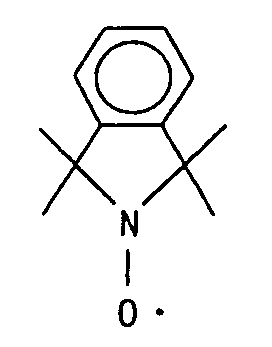
- the present invention relates to a process for producing a modified polymer, more particularly it relates to a process for producing a modified polymer by reacting a polymer such as an elastomer with a compound(s) having a free radical or radicals stable in the presence of oxygen at ordinary temperature (hereinafter referred to as "stable free radical").
- Japanese Unexamined Patent Publication (Kokai) No. 10-182881 it has been proposed to compound stable free radicals such as TEMPO (i.e., 2,2,6,6-tetramethyl-1-piperidinyloxy) into rubber to improve the physical properties of the rubber composition, in particular those such as processability, abrasion resistance.
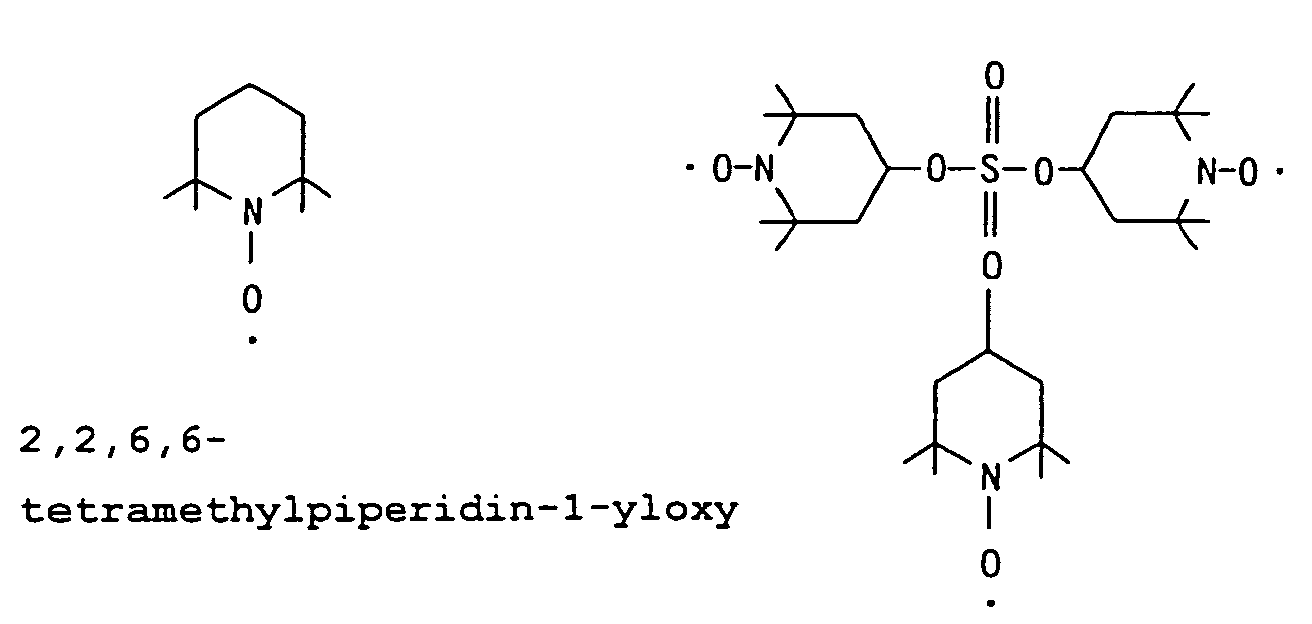
- TEMPO stable free radicals
- Japanese Unexamined Patent Publication (Kokai) No. 8-239510 proposes to include a TEMPO derivative in a polymer to prevent polymer aging.
- the object of the present invention is to modify a polymer such as an elastomer to improve the bondability (or adhesion) and processability of the polymer.
- a process for producing a modified polymer having, in the molecule thereof, an organic group or groups introduced thereinto and derived from a compound(s) having a free radical or the radicals comprising reacting a polymer with a compound(s) having the free radical or radicals stable at an ordinary temperature in the presence of oxygen, after or while a carbon radical or radicals are generated in the polymer.
- diene-based rubbers such as natural rubbers (NR), polyisoprene rubbers (IR), various types of styrene-butadiene copolymer rubbers (SBR), various types of polybutadiene rubbers (BR), acrylonitrile butadiene copolymer rubbers (NBR), butyl rubbers (IIR), chloroprene rubbers (CR); olefin-based rubbers such as ethylene-propylene copolymer rubbers (EPM, EPDM), chlorosulfonated polyethylenes (CSM), epichlorohydrin rubbers (CO, ECO), acryl rubbers (ACM, ANM) and, polysulfide rubbers (OT) may be illustrated.
- NR natural rubbers
- IR polyisoprene rubbers
- SBR various types of polybutadiene rubbers
- BR acrylonitrile butadiene copolymer rubbers
- NBR butyl rubbers
- IIR chloropre
- thermoplastic elastomers capable of being modified according to the present invention
- polystyrene-based TPE SBS, SIS, SEBS
- polyolefin-based TPE polyvinyl chloride-based TPE
- polyurethane-based TPE polyester-based TPE
- polyurethane-based TPE polyamide-based TPE, etc.
- polyethylene PE
- polypropylene PP
- polyvinyl chloride PVC
- chlorinated polymers CPE, CPP
- polystyrene PS
- SAN acrylonitrile butadiene styrene
- ABS polyamide
- PA acetal resin
- PPO polyphenylene oxide
- polyester polycarbonate
- PC polysulfone, polyketone, polyacrylonitrile
- PAN polyacrylonitrile
- PI liquid crystal polymer
- LCP liquid crystal polymer
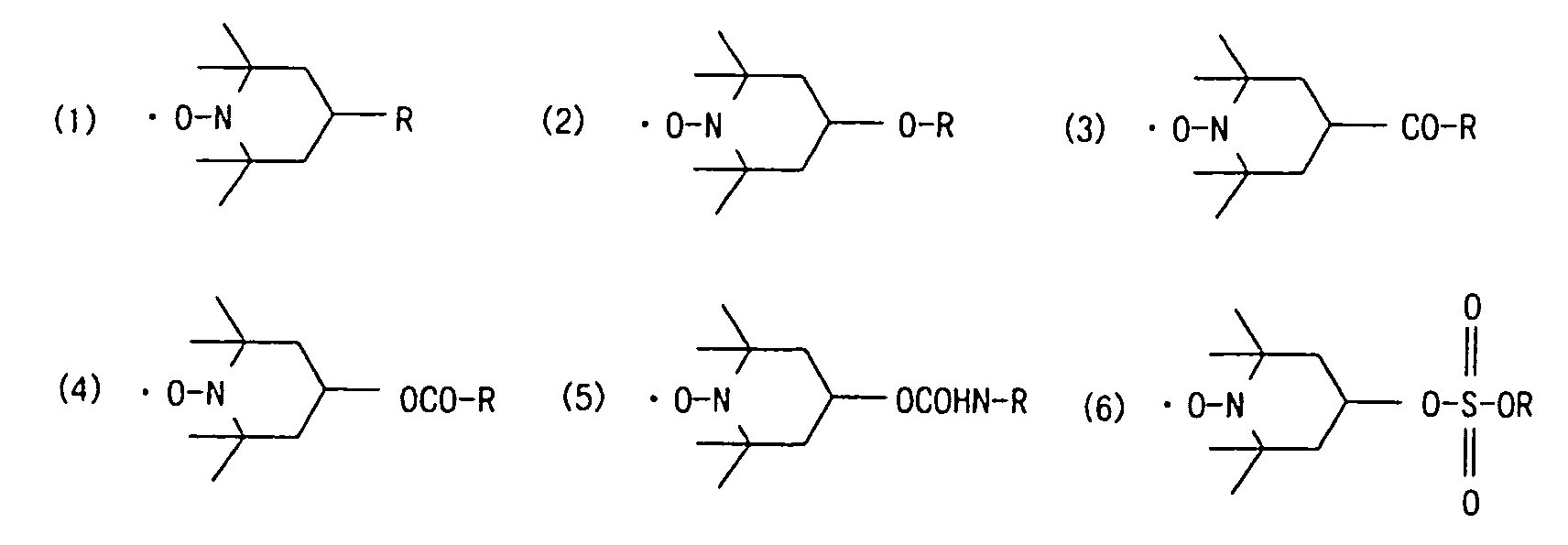
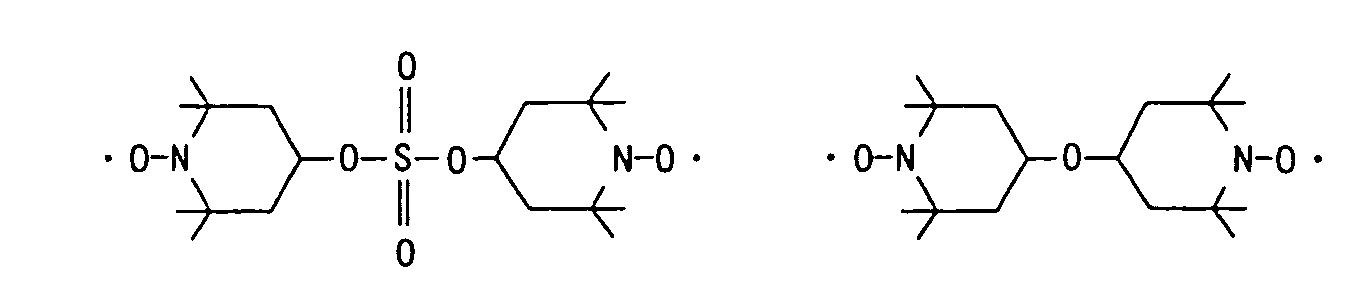
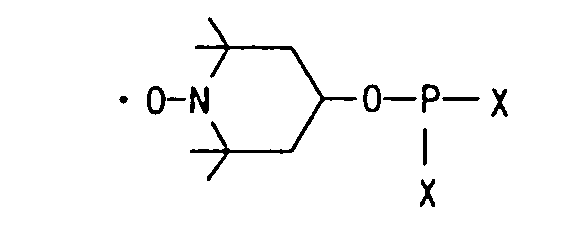
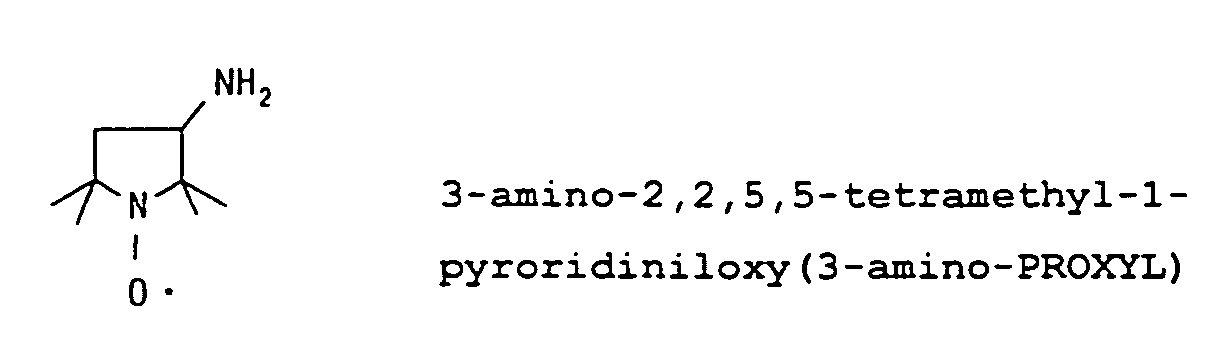
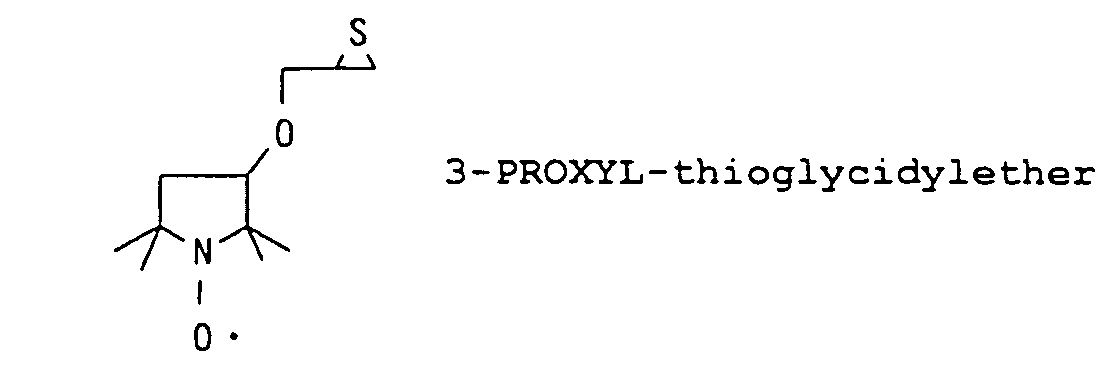
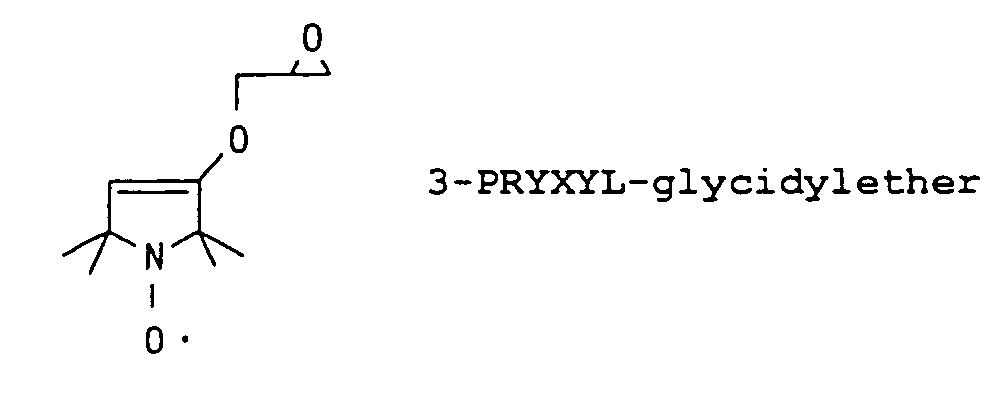
- R indicates a C 1 to C 30 alkyl group, allyl group, amino group, isocyanate group, hydroxy group, thiol group, vinyl group, epoxy group, thiirane group, carboxyl group, carbonyl group-containing group (e.g., cyclic acid anhydrides such as succinic anhydride, maleic anhydride, glutanic anhydride, phthalic anhydride,) organic groups containing functional groups an amide group, ester group, imide group, nitrile group, thiocyan group, C 1 to C 20 alkoxy group, silyl group, alkoxysilyl group, nitro group.
- cyclic acid anhydrides such as succinic anhydride, maleic anhydride, glutanic anhydride, phthalic anhydride,
- organic groups containing functional groups an amide group, ester group, imide group, nitrile group, thiocyan group, C 1 to C 20 alkoxy group, silyl group, alkoxys
- the method of adding a radical initiator to the reaction system may be used.
- the radical initiator for example, organic peroxides such as benzoyl peroxide (BPO), t-butylperoxybenzoate (Z), dicumyl peroxide (DCP), t-butylcumyl peroxide (C), t-butyl peroxide (D), 2,5-dimethyl-2,5-di-t-butylperoxyhexane (2,5B), 2,5-dimethyl-2,5-di-t-butylperoxy-3-hexyne (Hexyne-3), 2,4-dichloro-benzoylperoxide (DC-BPO), di-t-butylperoxy-diisopropylbenzene (P), 1,1-bis(t) organic peroxides such as benzoyl peroxide (BPO), t-butylperoxybenzoate (Z), dicumyl peroxide (DCP),
- radical generators can generate a carbon radical or radicals in a polymer by addition to a reaction system of the polymer and compound having such stable free radicals (mixture system or catalyzation system).
- the amount of the radical initiator added is preferably, based upon 100 parts by weight of the polymer, 0.1 to 6.0 parts by weight, more preferably 0.2 to 3.0 parts by weight.
- radical initiator instead of the radical initiator or in addition to the radical initiator, it is possible to use an electron beam (for example, ⁇ -rays), light (for example, UV light) and/or radiation (for example, ⁇ -rays or X-rays) etc. to generate carbon radicals in the polymer.
- electron beam for example, ⁇ -rays
- light for example, UV light
- radiation for example, ⁇ -rays or X-rays
- a C 1 to C 30 alkyl group, allyl group, amino group, isocyanate group, hydroxyl group, thiol group, vinyl group, epoxy group, thiirane group, carboxyl group, carbonyl group-containing group for example, cyclic acid anhydrides such as succinate anhydride, maleic anhydride, glutanic anhydride, phthalic anhydride; an amide group, ester group, imide group, nitrile group, thiocyan group, C 1 to C 20 alkoxy group, silyl group, alkoxysilyl group, etc.
- polymers such as diene-based rubbers, polyolefin-based rubbers, thermoplastic elastomer, polyolefins, various additives generally used for tire use or for other general rubber use reinforcing fillers such as carbon black or silica, vulcanization or cross-linking agent, vulcanization or cross-linking accelerator, various types of oils, anti-aging agent, plasticizer may be blended in.
- the formulations are mixed and vulcanized to obtain compositions by general methods and can be used for vulcanization or cross-linking.
- the amounts of these additives used may be made the general amounts used in the past in so far as the object of the present invention is not adversely affected.
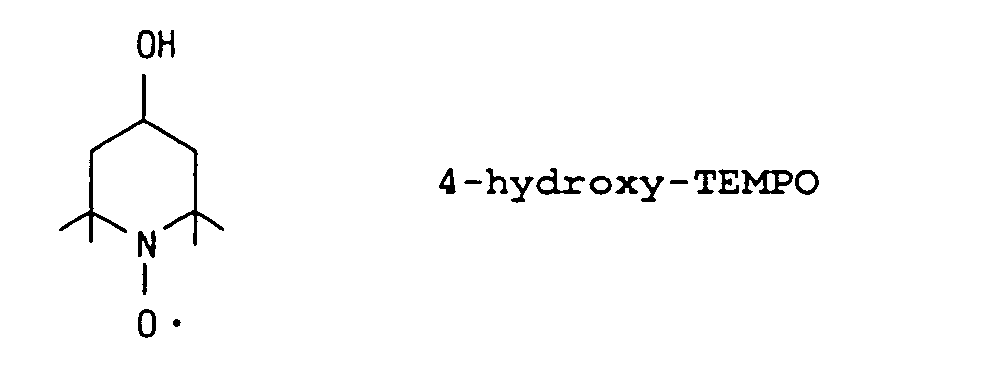
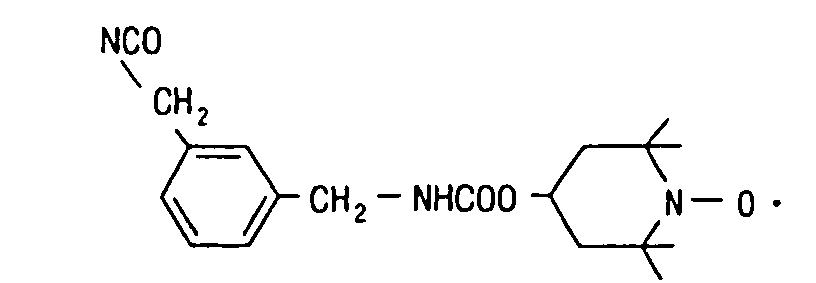
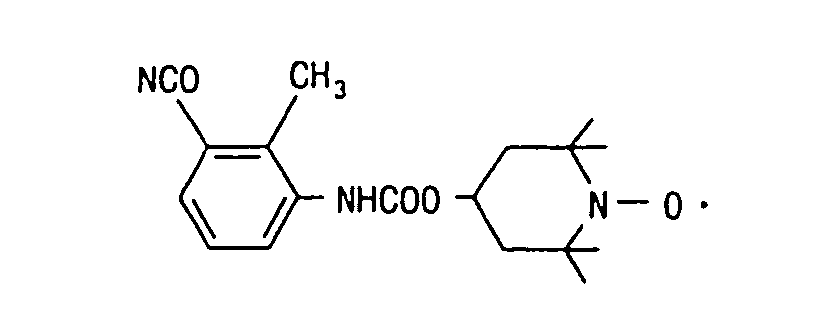
- tolylene diisocyanate (TDI made by Sumitomo Bayer Urethane K.K.) was added to 50.0 g (0.291 mol) of OH-TEMPO (LA7RD made by Asahi Denka Kogyo K.K.) dissolved in 50 ml of acetone. The mixture was agitated at room temperature for 24 hours. It was confirmed that the isocyanate content was 11.96% (theoretical value 12.13%). The acetone was distilled off in vacuo, then the residue was dried to obtain the final product.
- TDI tolylene diisocyanate
- LA7RD made by Asahi Denka Kogyo K.K.
- IR 100 100 100 100 Modifying TEMPO 1 2 1 2 2 Radical initiator 0.98 1.95 - - 1.95 Modification rate (wt%) 0.23 0.65 0 0 0 (Notes)
- IR Nipol IR-2200 (Nippon Zeon K.K.)
- Modifying TEMPOL See above Synthesis Radical initiator: Percumyl D-40 (Nihon Oil & Fat K.K.)
- a calibration curve for finding the modification rate of TDI-TEMPO on the polymer was prepared. Mixtures with different ratios of IR rubber and the modifying TEMPO were uniformly dissolved in toluene and the mixtures used for IR analysis. The calibration curve was obtained by averaging the two peak ratios of the peak ratio of the peak of 1376 cm -1 of the IR rubber to the peak of 1727 cm -1 of the modifying TEMPO and the peak ratio of the peak of 1448 cm -1 of the IR rubber to the peak of 1727 cm -1 of the modifying TEMPO. Similarly, the peak ratios of the modified polymers fabricated in Table I were calculated and the calibration curves used to find the modification rates.
- Comparative Examples 1 and 2 have no peroxide added, and therefore sufficient carbon radicals could not be generated in the polymers and the polymers could not be modified with the modifying TEMPO.
- Comparative Example 3 peroxide was added, but no heat treatment was performed, and therefore sufficient carbon radicals could not be generated in the polymer and the rubber could not be modified with the modifying TEMPO.
- peroxide was added and heat treatment performed, and therefore sufficient carbon radicals were generated in the polymers and the polymers could be modified with the modifying TEMPO.
- tolylene diisocyanate (TDI made by Sumitomo Bayer Urethane K.K.) was added to 50.0 g (0.291 mol) of OH-TEMPO (LA7RD made by Asahi Denka Kogyo K.K.) dissolved in 50 ml of acetone. The mixture was agitated at room temperature for 24 hours. It was confirmed that the isocyanate content was 11.96% (theoretical value 12.13%). The acetone was distilled off in vacuo, then the residue was dried to obtain the final product.
- TDI tolylene diisocyanate
- LA7RD made by Asahi Denka Kogyo K.K.
- Fiber cord (3300 dtex) composed of one type of polyester fiber, that is, polyethylene terephthalate fiber (PET), was dipped in a 2% aqueous solution of an epoxy compound (diglycerol triglycidyl ether), dried at 120°C for one minute, then heat treated at 240°C for 2 minutes.
- the polyester fiber cord thus treated was embedded in a predetermined length in the unvulcanized rubber which was then vulcanized at 150°C for 30 minutes to prepare a bonding test sample.
- the bonding test was based on the JIS 1017 T-Test Method. The cord was pulled out from the sample and the pullout force at that time was measured.
- tolylene diisocyanate (TDI made by Sumitomo Bayer Urethane K.K.) was added to 50.0 g (0.291 mol) of OH-TEMPO (LA7RD made by Asahi Denka Kogyo K.K.) dissolved in 50 ml of acetone. The mixture was agitated at room temperature for 24 hours. It was confirmed that the isocyanate content was 11.96% (theoretical value 12.13%). The acetone was distilled off in vacuo, then the residue was dried to obtain the final product.
- TDI tolylene diisocyanate
- LA7RD made by Asahi Denka Kogyo K.K.
- PP and the various compounding agents were mixed by a nitrogen-substituted kneader at 200°C for 15 minutes to obtain a modified polymer.
- a calibration curve for finding the modification rate of TDI-TEMPO on the PP was prepared. Mixtures with different ratios of PP and modifying TEMPO were prepared by kneaders and used for IR analysis. The calibration curve was obtained by averaging the two peak ratios of the peak ratio of the peak of 1376 cm -1 of PP with respect to the peak of 1727 cm -1 of the modifying TEMPO and the peak ratio of the peak of 1460 cm -1 of PP with respect to the peak of 1727 cm -1 of the modifying TEMPO. Similarly, the peak ratios of the modified polymers fabricated in Table III were calculated and the calibration curves used to find the modification rates.
- the bondability and processability can be improved and the polymer can be effectively used for rubber products such as tires, conveyor belts, hoses, and also as plastic products.
Landscapes
- Chemical & Material Sciences (AREA)
- General Chemical & Material Sciences (AREA)
- Health & Medical Sciences (AREA)
- Chemical Kinetics & Catalysis (AREA)
- Medicinal Chemistry (AREA)
- Polymers & Plastics (AREA)
- Organic Chemistry (AREA)
- Addition Polymer Or Copolymer, Post-Treatments, Or Chemical Modifications (AREA)
- Graft Or Block Polymers (AREA)
Abstract
Description





















- ON(SO3K)2 Fermi salt



| Ex. 1 | Ex. 2 | Comp. Ex. 1 | Comp. Ex. 2 | Comp. Ex. 3 | |
| IR | 100 | 100 | 100 | 100 | 100 |
| Modifying TEMPO | 1 | 2 | 1 | 2 | 2 |
| Radical initiator | 0.98 | 1.95 | - | - | 1.95 |
| Modification rate (wt%) | 0.23 | 0.65 | 0 | 0 | 0 |
| (Notes) IR: Nipol IR-2200 (Nippon Zeon K.K.) Modifying TEMPOL: See above Synthesis Radical initiator: Percumyl D-40 (Nihon Oil & Fat K.K.) |
| Ex. 3 | Ex. 4 | Comp. Ex. 4 | Comp. Ex. 5 | |
| Mixing 1 | ||||
| Formulation (parts by weight) | ||||
| IR | 100 | 100 | - | - |
| Modifying TEMPO | 1.2 | 2.4 | - | - |
| Radical initiator | 0.98 | 1.95 | - | - |
| NP total | 102.18 | 104.35 | - | - |
| Mixing 2 | ||||
| Formulation (parts by weight) | ||||
| NP | 102.18 | 104.35 | - | - |
| IR | - | - | 100 | 100 |
| Modifying TEMPO | - | - | 1.2 | 2.4 |
| Radical initiator | - | - | 0.98 | 1.95 |
| Carbon black | 60 | 60 | 60 | 60 |
| Zinc white | 3 | 3 | 3 | 3 |
| Stearic acid | 1 | 1 | 1 | 1 |
| Antioxidant | 1 | 1 | 1 | 1 |
| Aromatic oil | 5 | 5 | 5 | 5 |
| Sulfur | 2.5 | 2.5 | 2.5 | 2.5 |
| Vulcanization | 1 | 1 | 1 | 1 |
| accelerator CZ | ||||
| Modification rate | 0.35 | 0.51 | 0 | 0 |
| (wt%) | ||||
| Bonding test | ||||
| Pullout force (N) | 75 | 87 | 12 | 14 |
| (Notes) IR: Nipol IR-2200 (made by Nippon Zeon K.K.) Radical initiator: Percumyl D-40 (Nihon Oil & Fat K.K.) Carbon black: HTC-100 (Chubu Carbon) Stearic acid: Beads Stearic Acid (Nihon Oil & Fat K.K.) Antioxidant: Nocrac 224 (Ouchi Shinko Chemical Industrial K.K.) Aromatic oil: Desolex No. 3 (Showa Shell Sekiyu K.K.) Sulfur: Oil extended sulfur (Karuizawa Refinery K.K.) Vulcanization accelerator CZ: Noccelar CZ-G (Ouchi Shinko Chemical Industrial K.K.) |
| Ex. 5 | Ex. 6 | Comp. Ex. 6 | Comp. Ex. 7 | |
| Formulation (parts by weight) | ||||
| PP | 100 | 100 | 100 | 100 |
| Modifying TEMPO | 1 | 2 | 1 | 2 |
| DCP | 0.5 | 1 | - | - |
| Modification rate (wt%) | 0.31 | 0.55 | 0 | 0 |
| (Notes) PP: Polypropylene (made by Sumitomo Chemical K.K.) Modifying TEMPO: See above Synthesis DCP: Dicumyl peroxide (Aldrich Chemical K.K.) |
Claims (6)
- A process for producing a modified polymer having, in the molecule thereof, an organic group introduced thereinto and derived from a compound(s) having a free radical(s) comprising reacting a polymer with a compound(s) having the free radical stable at an ordinary temperature in the presence of oxygen, after or while a carbon radical(s) is generated in the polymer.
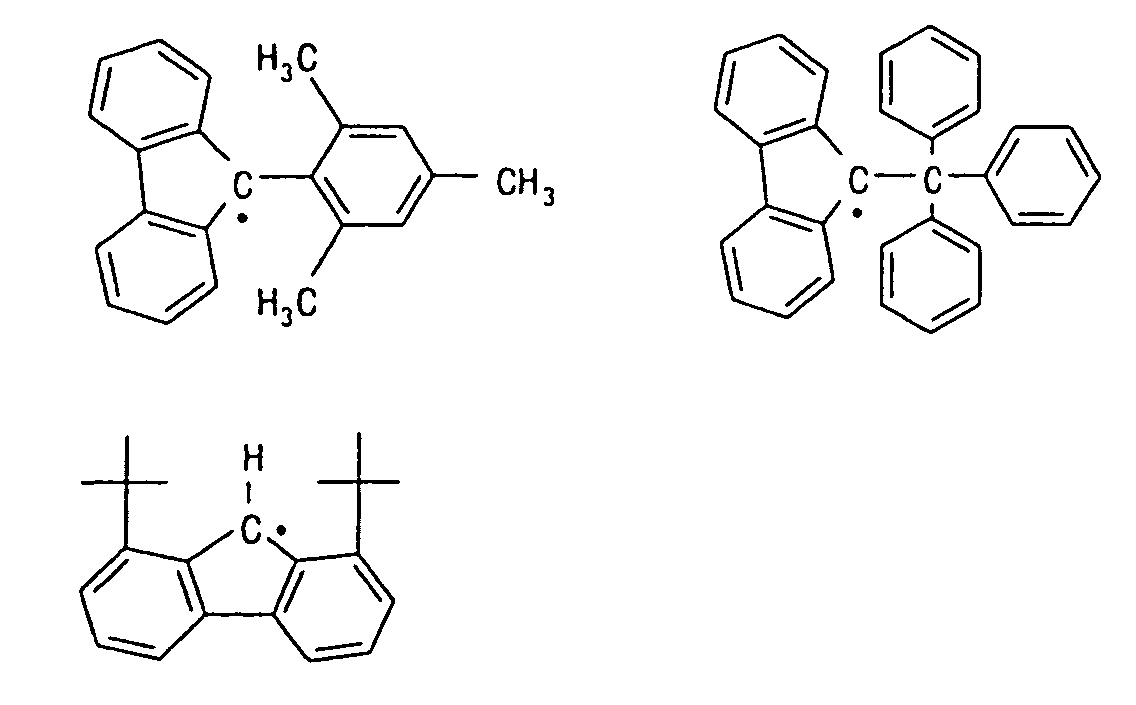
- A process for producing a modified polymer as claimed in claim 1, wherein said compound having, in the molecule thereof, a free radical(s) stably present in the presence of oxygen at ordinary temperature contains in the molecule thereof at least one free radical selected from the group consisting of a nitroxide, hydrazyl radical(s), aryloxy radical(s) and trityl radical(s).
- A process for producing a modified polymer as claimed in claim 1 or 2, wherein said organic group is at least one group selected from the group consisting of a C1 to C30 alkyl group, allyl group, amino group, isocyanate group, hydroxyl group, thiol group, vinyl group, epoxy group, thiirane group, carboxyl group, carbonyl-group containing group, amide group, ester group, imide group, nitrile group, thiocyan group, C1 to C20 alkoxy group, silyl group and alkoxysilyl group.
- A process for producing a modified polymer as claimed in claim 1, 2, or 3, wherein a means for generating a carbon radical in said polymer is at least one means selected from a radical initiator, electron beam, light and radiation.
- A process for producing modified polymer as claimed in claim 4, wherein the amount of use of the radical initiator is 0.1 to 6.0 parts by weight based upon 100 parts by weight of said polymer.
- A modified polymer obtainable by a process according to any one of claims 1 to 5.
Applications Claiming Priority (3)
| Application Number | Priority Date | Filing Date | Title |
|---|---|---|---|
| JP2002353831A JP2004182926A (en) | 2002-12-05 | 2002-12-05 | Polymer modification method |
| JP2002353831 | 2002-12-05 | ||
| PCT/JP2003/015354 WO2004050721A1 (en) | 2002-12-05 | 2003-12-01 | Process for producing modified polymer |
Publications (2)
| Publication Number | Publication Date |
|---|---|
| EP1568717A1 true EP1568717A1 (en) | 2005-08-31 |
| EP1568717A4 EP1568717A4 (en) | 2007-06-20 |
Family
ID=32463312
Family Applications (1)
| Application Number | Title | Priority Date | Filing Date |
|---|---|---|---|
| EP03775989A Withdrawn EP1568717A4 (en) | 2002-12-05 | 2003-12-01 | PROCESS FOR PRODUCING A MODIFIED POLYMER |
Country Status (4)
| Country | Link |
|---|---|
| US (2) | US7019086B2 (en) |
| EP (1) | EP1568717A4 (en) |
| JP (1) | JP2004182926A (en) |
| WO (1) | WO2004050721A1 (en) |
Cited By (1)
| Publication number | Priority date | Publication date | Assignee | Title |
|---|---|---|---|---|
| EP1942152A1 (en) * | 2003-12-24 | 2008-07-09 | Dow Gloval Technologies Inc. | Polymeric composition |
Families Citing this family (19)
| Publication number | Priority date | Publication date | Assignee | Title |
|---|---|---|---|---|
| US20070292923A1 (en) | 2004-08-06 | 2007-12-20 | Akira Iwasaki | Process For Production Of Enantiomer-Enriched Compounds |
| JP4449751B2 (en) * | 2005-01-11 | 2010-04-14 | 横浜ゴム株式会社 | Modified polymer production method and modified polymer produced thereby |
| JP4046734B2 (en) | 2005-01-18 | 2008-02-13 | 横浜ゴム株式会社 | Polymer modification method |
| US20090022990A1 (en) * | 2005-04-28 | 2009-01-22 | Toyo Boseki Kabushiki Kaisha | Heat-resistant cross-linking polyester fiber and fiber cord |
| JP4243320B2 (en) | 2006-07-07 | 2009-03-25 | 横浜ゴム株式会社 | Rubber composition containing modified diene rubber |
| US20080087380A1 (en) * | 2006-10-13 | 2008-04-17 | Dow Global Technologies Inc. | Reactively-coupled articles and related methods |
| WO2008097952A1 (en) * | 2007-02-06 | 2008-08-14 | Dow Global Technologies Inc. | Functionalized, crosslinked polyolefin foams and methods for making the same |
| JP5133983B2 (en) * | 2007-04-25 | 2013-01-30 | 日本ケミコン株式会社 | Electrolytic capacitor sealing body and electrolytic capacitor using the sealing body |
| JP4420095B2 (en) | 2007-10-01 | 2010-02-24 | 横浜ゴム株式会社 | Modified butyl rubber composition |
| US20090277554A1 (en) * | 2008-05-06 | 2009-11-12 | Yves Donckels | High twist polyester carcass ply for a pneumatic tire |
| JP5617252B2 (en) * | 2010-01-21 | 2014-11-05 | 横浜ゴム株式会社 | Diene rubber composition |
| JP5617253B2 (en) * | 2010-01-21 | 2014-11-05 | 横浜ゴム株式会社 | Method for producing modified crushed vulcanized rubber |
| KR20160132958A (en) | 2014-03-14 | 2016-11-21 | 밀리켄 앤드 캄파니 | Modified heterophasic polyolefin composition |
| WO2016085535A1 (en) | 2014-11-26 | 2016-06-02 | Milliken & Company | Modified heterophasic polyolefin composition |
| US9718957B2 (en) * | 2015-01-30 | 2017-08-01 | International Business Machines Corporation | Biodegradable organic radical-functionalized polycarbonates for medical applications |
| CN107531936B (en) | 2015-02-10 | 2019-05-14 | 美利肯公司 | thermoplastic polymer composition |
| CN107406640B (en) | 2015-03-05 | 2020-12-08 | 美利肯公司 | Modified heterophasic polyolefin compositions |
| PL3347389T3 (en) | 2015-09-13 | 2021-04-19 | Milliken & Company | Method for making heterophasic polymer compositions |
| BR112020006330B1 (en) * | 2017-09-30 | 2023-03-07 | Dow Global Technologies Llc | COMPOSITION, RETICULATED COMPOSITION AND ARTICLE |
Family Cites Families (18)
| Publication number | Priority date | Publication date | Assignee | Title |
|---|---|---|---|---|
| JPS58120608A (en) | 1982-01-12 | 1983-07-18 | Mitsubishi Chem Ind Ltd | Manufacturing method of modified polyolefin |
| DE3486145T2 (en) * | 1983-07-11 | 1993-09-23 | Commw Scient Ind Res Org | METHOD FOR POLYMERIZATION AND POLYMERS PRODUCED BY THIS METHOD. |
| JPH0670187B2 (en) | 1986-02-04 | 1994-09-07 | 旭電化工業株式会社 | Polymeric material composition with improved photostability |
| US4743657A (en) * | 1986-03-17 | 1988-05-10 | Milliken Research Corporation | Method for preparing polymer bound stabilizers made from non-homopolymerizable stabilizers |
| JPH0717846B2 (en) | 1986-09-29 | 1995-03-01 | 旭電化工業株式会社 | Stabilizer for polymer materials |
| US5530079A (en) * | 1995-01-03 | 1996-06-25 | Xerox Corporation | Polymerization processes |
| FR2730240A1 (en) | 1995-02-07 | 1996-08-09 | Atochem Elf Sa | STABILIZATION OF A POLYMER BY A STABLE FREE RADICAL |
| JPH10182881A (en) | 1996-10-25 | 1998-07-07 | Yokohama Rubber Co Ltd:The | Rubber composition |
| US6084015A (en) * | 1996-10-25 | 2000-07-04 | The Yokohama Rubber Co., Ltd. | Rubber composition |
| FR2768739B1 (en) * | 1997-09-19 | 2004-08-06 | Atochem Elf Sa | SHOCK VINYLAROMATIC POLYMER OBTAINED FROM A RUBBER CARRIER OF A GROUP GENERATING A STABLE FREE RADICAL |
| JP2000212329A (en) * | 1999-01-20 | 2000-08-02 | Yokohama Rubber Co Ltd:The | Rubber composition |
| FR2791060A1 (en) * | 1999-03-18 | 2000-09-22 | Atochem Elf Sa | PROCESS FOR PREPARING A STABLE FREE RADICAL CARRIER RUBBER AND USE OF THE SAID CARRIER RUBBER FOR THE PREPARATION OF A VINYLAROMATIC SHOCK POLYMER |
| FR2792321B1 (en) * | 1999-04-19 | 2003-12-12 | Atochem Elf Sa | PROCESS FOR PRODUCING POLYPROPYLENE RESIN WITH CONTROLLED RHEOLOGY |
| JP4144771B2 (en) * | 1999-05-31 | 2008-09-03 | 株式会社Adeka | Method for producing high molecular weight hindered amine compound |
| FR2805268B1 (en) * | 2000-02-23 | 2005-03-25 | Atofina | THERMOREVERSIBLE POLYMERS WITH MITROXIDE FUNCTIONS |
| JP4001497B2 (en) | 2001-02-26 | 2007-10-31 | 横浜ゴム株式会社 | Radical modified polymer and polymer composition containing the same |
| US6653409B2 (en) * | 2001-02-26 | 2003-11-25 | The Yokohama Rubber Co., Ltd. | Radical-modified polymer and polymer composition containing the same |
| FR2824840B1 (en) * | 2001-05-17 | 2005-05-13 | Atofina | THERMAL STABILIZER OF ORGANIC PEROXIDES |
-
2002
- 2002-12-05 JP JP2002353831A patent/JP2004182926A/en active Pending
-
2003
- 2003-12-01 WO PCT/JP2003/015354 patent/WO2004050721A1/en not_active Ceased
- 2003-12-01 EP EP03775989A patent/EP1568717A4/en not_active Withdrawn
- 2003-12-01 US US10/501,228 patent/US7019086B2/en not_active Expired - Fee Related
-
2005
- 2005-12-27 US US11/316,986 patent/US20060135703A1/en not_active Abandoned
Cited By (1)
| Publication number | Priority date | Publication date | Assignee | Title |
|---|---|---|---|---|
| EP1942152A1 (en) * | 2003-12-24 | 2008-07-09 | Dow Gloval Technologies Inc. | Polymeric composition |
Also Published As
| Publication number | Publication date |
|---|---|
| US7019086B2 (en) | 2006-03-28 |
| JP2004182926A (en) | 2004-07-02 |
| US20060135703A1 (en) | 2006-06-22 |
| US20050124764A1 (en) | 2005-06-09 |
| WO2004050721A1 (en) | 2004-06-17 |
| EP1568717A4 (en) | 2007-06-20 |
Similar Documents
| Publication | Publication Date | Title |
|---|---|---|
| US7019086B2 (en) | Process for producing modified polymer | |
| JP4243320B2 (en) | Rubber composition containing modified diene rubber | |
| US7772325B2 (en) | Thermoplastic elastomer composition | |
| US7589155B2 (en) | Modified butyl rubber composition | |
| US7956134B2 (en) | Modified butyl rubber composition | |
| US7196144B2 (en) | Process for modification of polymer | |
| US20090156728A1 (en) | Modified butyl rubber composition | |
| CA2217281A1 (en) | Polymer compounds and their use for the vulcanisation of halogenated butyl rubbers with a low halogen content | |
| EP2045289B1 (en) | Modified butyl rubber composition | |
| US6403720B1 (en) | Rubber composition and production process thereof | |
| US20190292355A1 (en) | Rubber composition, cover rubber for conveyor belt, and conveyor belt | |
| US6653409B2 (en) | Radical-modified polymer and polymer composition containing the same | |
| JP2624792B2 (en) | Vulcanizable rubber composition | |
| US7282542B2 (en) | Modification method of polymer | |
| EP1837350A1 (en) | Process for production of modified polymers and modified polymers produced thereby | |
| EP4174129A1 (en) | Rubber composition and crosslinked rubber composition | |
| JP4201828B2 (en) | Method for improving tan δ and vibration isolating property of crosslinked butyl rubber | |
| JP2003128726A (en) | Radical-modified polymer and polymer composition containing the same | |
| JP2006193682A (en) | Method for modifying polymer | |
| WO2024116768A1 (en) | Polymer, rubber composition, and crosslinked rubber composition | |
| JP2006328280A (en) | Method for modifying polymer | |
| JPH0747672B2 (en) | Composition having rubber elasticity |
Legal Events
| Date | Code | Title | Description |
|---|---|---|---|
| PUAI | Public reference made under article 153(3) epc to a published international application that has entered the european phase |
Free format text: ORIGINAL CODE: 0009012 |
|
| 17P | Request for examination filed |
Effective date: 20040723 |
|
| AK | Designated contracting states |
Kind code of ref document: A1 Designated state(s): AT BE BG CH CY CZ DE DK EE ES FI FR GB GR HU IE IT LI LU MC NL PT RO SE SI SK TR |
|
| RBV | Designated contracting states (corrected) |
Designated state(s): DE FR GB |
|
| A4 | Supplementary search report drawn up and despatched |
Effective date: 20070521 |
|
| RIC1 | Information provided on ipc code assigned before grant |
Ipc: C08F 8/30 20060101ALI20070514BHEP Ipc: C08F 8/00 20060101ALI20070514BHEP Ipc: C08C 19/00 20060101AFI20070514BHEP Ipc: C08C 19/22 20060101ALN20070515BHEP |
|
| 17Q | First examination report despatched |
Effective date: 20071025 |
|
| STAA | Information on the status of an ep patent application or granted ep patent |
Free format text: STATUS: THE APPLICATION IS DEEMED TO BE WITHDRAWN |
|
| 18D | Application deemed to be withdrawn |
Effective date: 20130703 |