BACKGROUND OF THE INVENTION
Field of the Invention:
The present invention relates generally to an apparatus and method for
transmitting control information for retransmission of high-speed packet data in a
Wideband Code Division Multiple Access (WCDMA) mobile communication
system. In particular, the present invention relates to an apparatus and method for
transmitting/receiving an on-demand channel quality indicator (CQI) also known
as an On-Demand CQI or ODC using a control channel, for retransmission of
high-speed packet data.
Description of the Related Art
Mobile communication systems are evolving into high-speed, high-quality
radio data packet communication systems for providing a data service and
a multimedia service surpassing the early voice-oriented service. For a 3rd
generation (3G) mobile communication system, which is divided into an
asynchronous 3rd Generation Partnership Project (3GPP) system and a
synchronous 3rd Generation Partnership Project 2 (3GPP2) system,
standardization of a high-speed, high-quality radio data packet service is being
carried out in release 5 (Rel'5).
For example, standardization on High Speed Downlink Packet Access
(HSDPA) is being carried out in 3GPP, while standardization on First Evolution-Data
and Voice (1xEV-DV) is being achieved in 3GPP2. Standardization is a
typical effort to find a solution for providing a high-speed, high-quality radio
data packet transmission service at 2Mbps or higher in a 3G mobile
communication system. A 4th generation (4G) mobile communication system
aims at providing a high-speed, high-quality multimedia service at a much higher
rate.
Also, Enhanced Uplink Dedicated Channel (EU-DCH) which is under
discussion in Rel'6 is another effort to transmit a high-speed, high-quality radio
data packet in an uplink.
Generally, in a mobile communication system, a high-speed, high-quality
data service deteriorates due to variations in a radio channel environment. A radio
communication channel experiences frequent changes in channel environment
due to a variation in signal power caused by fading as well as white noises,
Doppler effect caused by movement and a frequent variation in velocity of a
shadowing terminal, and interference caused by the other users and multipath
signals.
Therefore, in order to provide high-speed, high-quality radio data packet
service, there is a demand for another type of advanced technology capable of
increasing adaptability to the channel variation in addition to the conventional
technologies provided in the existing 2G or 3G mobile communication system.
Although a fast power control scheme adopted in the existing system also
increases adaptability to the channel variation, both 3GPP and 3GPP2
committees conducting standardization on a high-speed data packet transmission
system propose a Adaptive Modulation & Coding Scheme (AMCS) and a Hybrid
Automatic Repeat reQuest (HARQ) scheme.
AMCS refers to a scheme for adaptively changing a modulation scheme
and a coding rate of a channel encoder according to a variation in channel
environment of a downlink. Generally, a user equipment (UE) measures a signal-to-noise
ratio (SNR) and transmits the measurement information to a Node B
through an uplink so that the Node B can determine the channel environment of a
downlink. The Node B estimates an environment of a downlink channel based on
the measurement information, and selects an appropriate modulation scheme and
coding rate of a channel encoder based on the estimated value.
Therefore, a system using AMCS applies a high-order modulation
scheme such as 16 Quadrature Amplitude Modulation (16QAM) or 64QAM and
a high coding rate of 3/4 to a UE located close to a Node B, having a good
channel environment, and applies a low-order modulation scheme and a low
coding rate of 1/2 to a UE located in a cell boundary. Compared with the existing
scheme dependent on fast power control, AMCS reduces interference signals,
thereby improving system performance on average.
HARQ refers to a link control scheme used to retransmit a transmission-failed
packet for error compensation when there is an error in an initially
transmitted data packet.
Although AMCS and HARQ are independent technologies for increasing
adaptability to a link variation, a combination of the two schemes can greatly
improve system performance.
That is, once a modulation scheme and a coding rate of a channel
encoder, appropriate for a downlink channel condition, are determined using
AMCS, a data packet corresponding thereto is transmitted, and if a receiver fails
to decode the transmitted data packet, it requests retransmission of the failed data
packet. In response to the retransmission request from the receiver, a Node B
retransmits a predetermined data packet based on HARQ.
Although the foregoing schemes can be used in HSDPA, 1xEV-DV, and
EU-DCH, a description of the present invention will be made with reference to
channels adopted in HSDPA, for convenience.
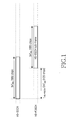
FIG. 1 is a diagram illustrating a timing relationship between a high
speed shared control channel (HS-SCCH) and a high speed physical downlink
shared channel (HS-PDSCH), two channels adopted to support high-speed
downlink packet transmission. The HS-SCCH is a channel for transmitting
control information for supporting the HS-PDSCH.
The HS-SCCH and the HS-PDSCH each include a 10-ms frame
comprising 5 subframes, and each of the subframes comprises 3 slots.
As illustrated in FIG. 1, a UE receives a HS-SCCH including control
information, transmitted two slots ahead of a HS-PDSCH, and demodulates the
received HS-SCCH. That is, the UE pre-acquires control information necessary
for demodulation of the HS-PDSCH.
The HS-SCCH is divided into two parts as illustrated in Table 1, and
each part includes the following information.
| 1st part | 2nd part |
| Channelization code set info (7) | Transport block size info (6) |
| Modulation scheme info (1) | Hybrid ARQ process ID (3) |
| | Redundancy and constellation version info (3) |
| | New data indicator (1) |
| | UE-ID (16) |
A UE should monitor a maximum of 4 HS-SCCHs and analyze one of
the HS-SCCHs, uniquely allocated thereto. Specifically, the UE analyzes one of
the 4 HS-SCCHs whether the HS-SCCH includes control information transmitted
thereto, and if it includes the control information transmitted thereto,
demodulates the HS-SCCH depending on the control information. However, if
the HS-SCCH does not include control information transmitted thereto, the UE
analyzes the next HS-SCCH.
A detailed description will now be made of control information bits
transmitted over the HS-SCCH illustrated in Table 1.
A channelization code set (CCS) is information indicating the number of
channelization codes through which an HS-PDSCH has been transmitted. As
illustrated in Table 1, the CCS is transmitted with 7 bits.
A UE acquires the number of codes required for despreading and the type
of the codes, through the CCS. In the current standard, a maximum of 15
channelization codes can be used for an HS-PDSCH.
FIG. 2 is a diagram illustrating a typical example of channelization codes
allocated in HSDPA. Referring to FIG. 2, respective channelization codes are
denoted by C(i,j) according to their positions in a code tree. In the C(i,j), a
variable 'i' denotes a spreading factor, and a variable 'j' denotes the order of the
channelization code tree from the leftmost side.
A channelization code C(16,0) has a spreading factor (SF) of 16 and is
located in a first position from the leftmost side. In FIG. 2, for example, 10
channelization codes of a 7th channelization code C(16,6) to a 16th channelization
code C(16,15) are allocated. The channelization codes can be multiplexed to
multiple UEs.
For example, assuming that particular UEs A, B and C are receiving a
service, it is possible to allocate 4 channelization codes to the UE A, 5
channelization codes to the UE B, and 1 channelization code to the UE C at a
time t0.
The number of channelization codes to be allocated to the UEs and their
positions in the code tree are determined by a Node B. The determined number of
channelization codes is transmitted to the respective UEs through a CCS of an
HS-SCCH.
Next, a description will be made of modulation scheme (MS)
information. As described above, HSDPA supports two modulation schemes of
Quadrature Phase Shift Keying (QPSK) and 16QAM. Therefore, based on the
MS, a UE can determine whether a modulation scheme of packet data, used in a
Node B, is QPSK or 16QAM. The MS is allocated 1 bit.
The CCS and the MS are urgent information that the UE should quickly
check, and as illustrated in Table 1, are located in a first part of a subframe of the
HS-SCCH.
A description will now be made of a second part in the subframe. A
transport block size (TBS) indicates a size of a block transmitted over a transport
channel. The TBS is allocated 6 bits.
Next, a description will be made of a Hybrid ARQ Process ID (HAP).
The Hybrid ARQ introduces the following two planes in order to increase
transmission efficiency of Automatic Repeat reQuest (ARQ). A first plane is to
perform an exchange of a retransmission request and response between a UE and
a Node B, and a second plane is to temporarily store defective data and then
combine the stored defective data with its retransmitted data. In addition, the
HSDPA scheme introduces an n-channel Stop And Wait (SAW) HARQ scheme in
order to make up for the defects of the conventional SAW ARQ scheme.
The n-channel SAW HARQ scheme continuously transmits a plurality of
data packets even before an acknowledgement (ACK) for previous packet data is
received, thereby increasing channel efficiency. That is, n logical channels are
established between a UE and a Node B, and if each of the n logical channels can
be identified by its unique time and channel number, a UE receiving packet data
can determine a channel over which the received packet data is transmitted, and
reorder data packets in proper order or soft-combine the corresponding packet
data.
The HAP indicates a channel over which packet data is transmitted,
among the n logical channels. The HAP is allocated 3 bits.
Next, redundancy and constellation version information (RV) will be
described. As illustrated in Table 2 and Table 3, the RV is set different according
to 16QAM and QPSK. The RV includes a parameter 's', a parameter 'r', and a
parameter 'b'. Here, the parameter 's' and the parameter 'r' are used for rate
matching. The parameter 'b' is constellation rearrangement information
illustrated in Table 4, and is transmitted with one of 4 values.
| Xrv (value) | s | r | b | |
| 0 | 1 | 0 | 0 |
| 1 | 0 | 0 | 0 |
| 2 | 1 | 1 | 1 |
| 3 | 0 | 1 | 1 |
| 4 | 1 | 0 | 1 |
| 5 | 1 | 0 | 2 |
| 6 | 1 | 0 | 3 |
| 7 | 1 | 1 | 0 |
| Xrv (value) | s | r |
| 0 | 1 | 0 |
| 1 | 0 | 0 |
| 2 | 1 | 1 |
| 3 | 0 | 1 |
| 4 | 1 | 2 |
| 5 | 0 | 2 |
| 6 | 1 | 3 |
| 7 | 0 | 3 |
| Constellation version parameter, b | Output bit sequence | Operation |
| 0 | s1, s2, s3, s4 | None |
| 1 | s3, s4, s1, s2 | Swapping MSBs with LSBs |
| 2 | s1, s2, s 3, s 4 | Inversion of the logical values of LSBs |
| 3 | s3, s4, s 1 , s 2 | 1 & 2 |
As described above, the control information transmitted over the HS-SCCH
is determined depending on acknowledgement/negative acknowledgement
(ACK/NACK) and channel quality indicator (CQI), which are information
transmitted from a reception apparatus (or UE).
When transmitting a new packet upon receiving an ACK from the
reception apparatus, a Node B sets a new data indicator (NDI) to inform the
reception apparatus that transmission packet data is new data. At this point, the
Node B informs the reception apparatus of RV and HAP parameters.
In setting the MS and the CCS, the Node B sets a modulation scheme
and the number of channelization codes by considering a CQI transmitted from
the reception side.
As a result, the control information transmitted over the HS-SCCH is
determined according to ACK/NACK information and CQI information
transmitted from the reception apparatus, before being transmitted.
FIG. 3 is a diagram illustrating a flow of control information and
transmission of packet data between a transmission apparatus and a reception
apparatus. As illustrated in FIG. 3, when a packet is transmitted from a
transmission apparatus to a reception apparatus, an NDI is set to New before
being transmitted in order to inform the reception apparatus that the packet is
initially transmitted. In addition, the transmission apparatus informs the reception
apparatus of the parameters 's', 'r' and 'b' used for the transmission, through Xrv.
Then the reception apparatus decodes a received packet, checks whether
there is an error in the packet, and sets ACK/NACK according to the error check
result. The set ACK/NACK information is transmitted to the transmission
apparatus using an HS-DPCCH.
If the reception apparatus sets a NACK and transmits the NACK to the
transmission apparatus, the transmission apparatus should retransmit the
corresponding packet. Therefore, the reception apparatus sets an NDI to Continue
and randomly selects Xrv from 0 to 7, before transmission.
However, if the reception apparatus transmits an ACK, the transmission
apparatus should transmit a new packet. Therefore, the reception apparatus sets a
NDI to New and randomly selects Xrv from 0 to 7, before transmission.
As described above, the NDI indicates whether transmission data is
Continue data or New data, and is allocated 1 bit.
Next, a UE-ID will be described. As described above, a reception
apparatus receives a maximum of 4 HS-SCCHs from an upper layer. The receiver
should monitor whether there is a channel including its own UE-ID every
subframe. Here, the 16-bit UE-ID is not included as bit information, and is
masked to a first part which is extended to 40 bits and then rate-matched, before
being transmitted.
Therefore, the reception apparatus cannot directly compare the UE-ID
with the decoded bit sequence, and uses reliability of a decoding process as a
criterion for decision.
FIG. 4 is a block diagram illustrating a coding process of control
information transmitted over an HS-SCCH. Referring to FIG. 4, an SCCH
information controller 410 generates/controls HARQ-related information such as
the parameters 's', 'r' and 'b' used for generating Modulation Scheme (MS),
Channelization Code Set (CCS), Transport Block Size (TBS), Hybrid ARQ
Process information (HAP), New Data Indicator (NDI), UE Identification (UE-ID)
and Redundancy and constellation Version (RV). Here, the CCS and MS in
the first part are output as X1 through a first multiplexer (MUX) 430. The output
X1 is input to a first channel coding unit 450 and a UE specific Cyclic
Redundancy Check (CRC) attachment unit 440.
However, the TBS, HAP, RV and NDI in the second part are output as X2
through a second multiplexer 435. The output X2 is combined with the X1 and a
16-bit UE CRC Xue generated by a UE-ID in the UE specific CRC attachment
unit 440. The entire sequences (X1+X2) and XUE obtained by adding up the first
part and the second part are output as Y.
The channel coding units 450 and 455 perform rate R=1/3 coding on
their inputs X1 and Y using convolutional codes.
That is, the first channel coding unit 450 performs R=1/3 convolutional
coding on the 8-bit first part information X1, and outputs the coding result Z1 to a
first rate matching unit 460, and the first rate matching unit 460 converts the
output information of the first channel coding unit 450 to 40-bit information R1.
Thereafter, a UE specific masking unit 470 masks the output information of the
first rate matching unit 460 with a UE-ID, and outputs the masking result to a
physical channel mapping unit 480. The physical channel mapping unit 480 maps
the output information of the UE specific masking unit 470 to a first part of an
HS-SCCH.
The second channel coding unit 455 performs R=1/3 convolutional
coding on the output information Y of the UE specific CRC attachment unit 440,
and outputs the coding result Z2 to a second rate matching unit 465, and the
second rate matching unit 465 converts the output information of the second
channel coding unit 455 to 80-bit information R2, and outputs the rate matching
result to the physical channel mapping unit 480. The physical channel mapping
unit 480 maps the output information of the second rate matching unit 465 to a
second part of the HS-SCCH.
As described above, when transmitting data over an HS-PDSCH, the
transmission apparatus transmits control information over the HS-SCCH, two
slots ahead of the HS-PDSCH, thereby providing information required for
demodulating and decoding the HS-PDSCH.
Then the reception apparatus demodulates an HS-PDSCH depending on
the control information transmitted over the HS-SCCH, and if control
information to be transmitted over the HS-SCCH is derived from a CQI
inappropriate for the current channel information, there is a high possibility that
an error will occur in the control information. In this context, the current standard
adopts a method in which an upper layer determines a QCI transmission cycle
and transmits the CQI transmission cycle information over a physical channel.
Therefore, the reception apparatus should transmit a CQI to the
transmission apparatus at periods determined based on the CQI transmission
cycle information provided from the upper layer.
Here, assuming that the CQI transmission cycle is so short that the
reception apparatus should frequently transmit the CQI to the transmission
apparatus, the transmission apparatus can acquire correct information on the
channel quality, but interference occurs frequently between reception apparatuses.
The frequent transmission of the channel quality information where the channel
quality does not change abruptly cannot contribute to improvement in
performance of limited radio resources. However, when the CQI transmission
cycle is too long, the transmission apparatus cannot acquire correct information
on a channel from the reception apparatus, causing deterioration in system
performance.
For these reasons, it is preferable to change the CQI transmission cycle
according to circumstances. However, because the CQI transmission cycle is a
coefficient determined by an upper layer, it is difficult to frequently change the
CQI transmission cycle.
In order to prevent deterioration in system performance, the
standardization organization proposes a method in which the reception apparatus
additionally transmits a CQI when a NACK is generated. This method is
effective when the channel environment becomes worse. However, when the
channel environment improves, this method cannot consider the improvement in
the channel environment.
Accordingly, there is a demand for a method in which while transmitting
channel quality information in a CQI transmission cycle determined by an upper
layer, a UE can transmit desired information in response to a request from a Node
B at a time desired by the Node B.
SUMMARY OF THE INVENTION
It is, therefore, an object of the present invention to provide an apparatus
and method in which a Node B can receive desired information from a user
equipment (UE), or the UE can receive desired information from the Node B in a
radio communication system.
It is another object of the present invention to provide an apparatus and
method in which a Node B sets an on-demand CQI (ODC) for analyzing a
channel state of a UE and transmits the ODC over a control channel in a radio
communication system.
In accordance with a first aspect of the present invention, there is
provided a method for efficiently transmitting control information to transmit
high-speed packet data in a Code Division Multiple Access (CDMA) mobile
communication system. The method comprises the steps of transmitting, by a
Node B, a control channel including an on-demand channel quality indicator
(ODC) for analyzing a channel state due to transmission of high-speed packet
data by a user equipment (UE) according to a transmission cycle of a channel
quality indicator (CQI), determined by an upper layer; and transmitting, by the
UE, a CQI to the Node B according to the ODC included in the control channel.
In accordance with a second aspect of the present invention, there is
provided a transmission apparatus for efficiently transmitting control information
to transmit high-speed packet data in a Code Division Multiple Access (CDMA)
mobile communication system. The apparatus comprises a controller for
transmitting a channel quality indicator (CQI) in a predetermined subframe cycle,
and applying an on-demand CQI (ODC) for analyzing a channel state of a user
equipment (UE) by discontinuous transmission (DTX)-processing the CQI in the
subframe cycle; and a transmitter for mapping downlink control information
including the ODC to a high speed shared control channel (HS-SCCH) before
transmission.
In accordance with a third aspect of the present invention, there is
provided a method for transmitting/receiving packet data in a mobile
communication system. The method comprises the steps of transmitting, by a
first transceiver, packet data and control information for enabling demodulation
of the packet data to a second transceiver; receiving, by the second transceiver,
the control information and the packet data; and demodulating, by the second
transceiver, the packet data according to the control information, and transmitting
ACK/NACK information for indicating whether there is an error in the packet
data, and channel state information for the second transceiver, to the first
transceiver; wherein the second transceiver transmits channel state information to
the first transceiver according to a predetermined channel state information
transmission cycle, and transmits channel state information regardless of the
channel state information transmission cycle upon receiving an on-demand
channel quality indicator (ODC) from the first transceiver.
BRIEF DESCRIPTION OF THE DRAWINGS
The above and other objects, features and advantages of the present
invention will become more apparent from the following detailed description
when taken in conjunction with the accompanying drawings in which:
DETAILED DESCRIPTION OF THE PREFERRED EMBODIMENTS
Several embodiments of the present invention will now be described in
detail with reference to the accompanying drawings. In the following description,
a detailed description of known functions and configurations incorporated herein
has been omitted for conciseness.
The embodiments of the present invention provide an apparatus and
method for transmitting control information when a Node B desires to acquire,
from a user equipment (UE), specific information for data retransmission for
support of high-speed packet data, or the UE desires to receive, from the Node B,
specific information for reception of the high-speed packet data in a Wideband
Code Division Multiple Access (WCDMA) mobile communication system.
That is, the embodiments of the present invention provide an apparatus
and method in which a Node B can receive information for analyzing a channel
state or status of a UE using a specific field of a control channel. Advantageously,
the embodiments of the present invention can allow the Node B or the UE to
acquire desired information at a desired time, thereby efficiently improving the
entire performance of a mobile communication system. In addition, the
embodiments of the present invention enable additional information transmission
without an increase in the number of control information bits.
With reference to Table 5, a description will now be made of control
information bits transmitted over a high speed-shared control channel (HS-SCCH)
according to an embodiment of the present invention. As illustrated in
Table 5, the proposed HS-SCCH is divided into two parts: a first part comprising
channelization code set (CCS) and modulation scheme (MS) information as
recommended in the current standard and a second part including transport block
size (TBS), Hybrid Automatic Repeat reQuest (ARQ) Process (HAP),
redundancy and constellation version information (RV), on-demand channel
quality indicator (ODC), and user equipment Identification (UE-ID) information.
Compared with the prior art based on Table 1, an embodiment of the
present invention sets an On-Demand CQI (ODC) instead of the existing NDI
and transmits the ODC as control information in order to transmit information for
analyzing a channel state of a reception apparatus in order to prevent
performance deterioration of a system due to packet data transmission.
The definition of an ODC allows a reception apparatus to periodically
receive a channel state. However, the reception apparatus receives a modified
CQI as the occasion demands. In addition, Table 5 includes a new definition of
an RV.
| 1st part | 2nd part |
| Channelization code set info (7) | Transport block size info (6) |
| Modulation scheme info (1) | Hybrid ARQ process ID (3) |
| | Redundancy and constellation version info (3) |
| | On-demand CQI (1) |
| | UE-ID (16) |
Table 6 illustrates RV coding for 16 Quadrature Amplitude Modulation
(QAM), and Table 7 illustrates RV coding for Quadrature Phase Shift Keying
(QPSK).
| Xrv (value) | s | r | b | |
| 0 | 1 | 0 | 0 |
| 1 | 0 | 0 | 0 |
| 2 | 1 | 1 | 1 |
| 3 | 0 | 1 | 1 |
| 4 | 1 | 0 | 1 |
| 5 | 1 | 0 | 2 |
| 6 | 1 | 0 | 3 |
| 7 | 1 | 1 | 0 |
| Xrv (value) | s | r |
| 0 | 1 | 0 |
| 1 | 0 | 0 |
| 2 | 1 | 1 |
| 3 | 0 | 1 |
| 4 | 1 | 2 |
| 5 | 0 | 2 |
| 6 | 1 | 3 |
| 7 | 0 | 3 |
The maximum number of retransmissions, recommended in the current
standard, is 4 or 8, and the order of Xrv has not been defined. Therefore, if it is
assumed that the maximum number of retransmissions is 8, a specific Xrv may
not be used at all, or may be used a maximum of 8 times. For example, assuming
that a reception apparatus continuously transmits NACK, the Xrv are used as
follows.
Example (1)
Initial transmission: Xrv = 0
1st retransmission: Xrv = 1
2nd retransmission: Xrv = 2
3rd retransmission: Xrv = 3
4th retransmission: Xrv = 4
5th retransmission: Xrv = 6
6th retransmission: Xrv = 7
7th retransmission: Xrv = 2
In Example (1), Xrv=5 is not used at all, Xrv=2 is used twice.
Example (2)
Initial transmission: Xrv = 0
1st retransmission: Xrv = 0
2nd retransmission: Xrv = 0
3rd retransmission: Xrv = 0
4th retransmission: Xrv = 0
5th retransmission: Xrv = 0
6th retransmission: Xrv = 0
7th retransmission: Xrv = 0
In Example (2), all transmissions use the same Xrv. However, if the
number of retransmissions is 8, it is preferable that Xrv=0 to Xrv=7 should be
uniformly used as shown in Example (3).
Example (3)
Initial transmission: Xrv = 0
1st retransmission: Xrv = 1
2nd retransmission: Xrv = 2
3rd retransmission: Xrv = 3
4th retransmission: Xrv = 4
5th retransmission: Xrv = 5
6th retransmission: Xrv = 6
7th retransmission: Xrv = 7
In this embodiment of the present invention, a Node B maps the number
of transmissions to Xrv, and a UE can acquire an RV from an Xrv previously
determined with the Node B, and recognize initial transmission and the number
of retransmissions.
Although this embodiment of the present invention shows a typical
example of a method for distinguishing between initial transmission and
retransmission, if the maximum number of retransmissions is less than or equal
to 8, it is also possible to indicate the number of transmissions using the Xrv. In
this method of indicating whether the current transmission is initial transmission
or retransmission using Xrv, the NDI is unnecessary.
Therefore, this embodiment of the present invention determines an NDI
using an Xrv, and allocates an ODC for analyzing an uplink channel state with 1
bit instead of allocating the NDI.
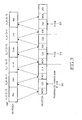
FIG. 5 is a diagram illustrating a control information flow between a
transmission apparatus and a reception apparatus according to an embodiment of
the present invention. As illustrated in FIG. 5, the transmission apparatus sets Xrv
to 0 during initial packet transmission. Upon receiving the packet, the reception
apparatus recognizes that the packet transmitted by the transmission apparatus is
an initially transmitted packet, determining that the Xrv is set to 0. In addition, the
transmission apparatus sets an ODC to a 2-subframe value which is a predefined
CQI feedback cycle. That is, the transmission apparatus sets the ODC such that it
receives a CQI from the reception apparatus every 2 subframes.
In FIG. 5, the transmission apparatus sets the channel quality information
based on a predefined cycle to a predefined-CQI feedback cycle (P-CQI), or sets
channel quality information required by the transmission apparatus to a required-CQI
feedback cycle (R-CQI). That is, in order to allow a UE to transmit CQI
information for analyzing an uplink channel state, i.e., to allow the UE to
periodically transmit a P-CQI over a high speed dedicated physical control
channel (HS-DPCCH), a Node B sets the ODC to 0 every 2 subframes. In
addition, the Node B can perform discontinuous transmission (DTX) on a
subframe between 2 subframes instead of transmitting the P-CQI.
Therefore, when continuously receiving NACK information from an HS-DPCCH
for a predetermined subframe according to packet data on the HS-PDSCH,
the Node B sets the ODC to 1 in order to analyze a channel state of a
UE.
In an embodiment of the present invention, when a transmission
apparatus requires channel quality information, it sets an ODC to 1, and a
reception apparatus transmits an R-CQI through a subframe to be DTX-processed.
In this manner, a Node B acquires a required CQI at a required time by
transmitting an ODC to a UE except for the period determined based on a CQI
transmission cycle given from an upper layer. Therefore, a reduction in the CQI
transmission cycle of the UE can decrease uplink interference, and an increase in
the CQI transmission cycle can decrease errors in the CQI.
With reference to FIG. 6, a description will now be made of a process of
transmitting control information bits over an HS-SCCH according to an
embodiment of the present invention.
Referring to FIG. 6, an SCCH information controller 610 generates Xms
(modulation scheme) and Xccs (channelization code set), and generates/controls
HARQ-related information such as parameters 's', 'r' and 'b' used for generating
Xtbs (transport block size), Xhap (hybrid ARQ process information), XODC (On-Demand
CQI), Xue (UE identification) and Xrv (redundancy and constellation
version). The proposed SCCH information controller 610 changes the existing bit
Xndi for an NDI to a bit XODC for an ODC in order to guarantee the reliability of
transmitted control information by analyzing a channel state of a UE, thereby
preventing a transmission error of packet data.
The Xccs and Xms in a first part are output as X1 through a first
multiplexer (MUX) 630. The output X1 is input to a first channel coding unit 650
and a UE specific cyclic redundancy check (CRC) attachment unit 640.
The Xtbs, Xhap, Xrv and XODC in a second part are output as X2 through a
second multiplexer 635. The output X2 is combined with the X1 and a 16-bit UE
CRC Xue generated by a UE-ID in the UE specific CRC attachment unit 640. The
output Y of the UE specific CRC attachment unit 640 is applied to a second
channel coding unit 655.
The channel coding units 650 and 655 preferably perform R=1/3 coding
on their inputs X1 and Y using convolutional codes.
That is, the first channel coding unit 650 performs R=1/3 convolutional
coding on the 8-bit first part information X1, and outputs the coding result Z1 to a
first rate matching unit 660, and the first rate matching unit 660 converts the
output information of the first channel coding unit 650 to 40-bit information R1.
Thereafter, a UE specific masking unit 670 masks the output information of the
first rate matching unit 660 with a UE-ID, and outputs the masking result to a
physical channel mapping unit 680. The physical channel mapping unit 680 maps
the output information of the UE specific masking unit 670 to a first part of a
HS-SCCH.
The second channel coding unit 655 performs R=1/3 convolutional
coding on the output information Y of the UE specific CRC attachment unit 640,
and outputs the coding result Z2 to a second rate matching unit 665, and the
second rate matching unit 665 converts the output information of the second
channel coding unit 655 to 80-bit information R2, and outputs the rate matching
result to the physical channel mapping unit 680. The physical channel mapping
unit 680 maps the output information of the second rate matching unit 665 to a
second part of the HS-SCCH.
That is, an algorithm for the proposed SCCH information controller 610
adds a process of setting an ODC and a process of selecting an RV parameter for
indicating initial transmission/retransmission, to the conventional SCCH
information controller 410 in accordance with an embodiment of the present
invention. The algorithm for the proposed SCCH information controller 610 will
now be described with reference to FIG. 7.
FIG. 7 is a diagram illustrating a modified algorithm for an SCCH
information controller according to an embodiment of the present invention.
Referring to FIG. 7, if a Node B desires to request a CQI from a UE, the Node B
sets an ODC to 1, otherwise, the Node B sets the ODC to 0.
If it is determined in step 710 that the Node B desires to request a CQI
from a UE, the Node B proceeds to step 730. In step 730, the Node B sets the
DOC to 1. However, if it is determined in step 710 that the Node B does not
desire to request the CQI, i.e., desires to receive the periodically transmitted
channel quality information, the Node B proceeds to step 720 where it sets the
ODC to 0. That is, in transmitting control information, the Node B sets the ODC
by considering a channel state of a UE.
If it is determined in step 740 that the Node B desires to transmit a new
packet, the Node B proceeds to step 750 where it sets s=1 and r=0, and sets b=0
for 16QAM, outputting Xrv=0. However, if it is determined in step 740 that the
Node B desires to retransmit a previous packet, the Node B proceeds to step 760
where it selects parameters 's', 'r', and 'b' satisfying Xrv=1 to Xrv=7.
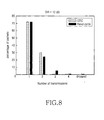
FIG. 8 is a graph illustrating a comparison in retransmission statistics
between the conventional method in which a UE receives a CQI transmission
cycle from an upper layer and transmits only a P-CQI and the method in
accordance with an embodiment of the present invention in which a reception
apparatus additionally transmits a CQI upon generation of NACK.
As illustrated in FIG. 8, as the number of retransmissions increases, the
amount of packet data remarkably decreases in the embodiment where an ODC is
set, thereby increasing the entire throughput of the system.
In conclusion, in the embodiments of the present invention, while the UE
transmits a CQI in a CQI transmission cycle determined by an upper layer, a
Node B can allow a UE to transmit a CQI in response to a request from the Node
B at a time desired by the Node B, thereby efficiently decreasing uplink
interference and correctly acquiring channel quality information. In addition, the
Node B determines an MS and a TBS appropriate for a transport channel
according to the acquired CQI, thereby improving system performance.
As described above, in embodiments of the present invention, a UE
transmits a CQI for transmission of high-speed packet data in a CQI transmission
cycle determined by an upper layer, the UE additionally transmits its CQI in
response to a request from the Node B, thereby efficiently decreasing uplink
interference. In addition, a Node B determines an MS and a TBS appropriate for
a transport channel of the UE by correctly analyzing CQI information of the UE
according to a channel condition, thereby improving system performance.
Therefore, the Node B can acquire information necessary for transport channel
allocation at a desired time, thereby efficiently improving the entire performance
of the system.
While the invention has been shown and described with reference to a
certain embodiments thereof, it should be understood by those skilled in the art
that various changes in form and details may be made therein without departing
from the spirit and scope of the invention as defined by the appended claims.