EP1566741A1 - Systems and methods for managing discussion threads based on ratings - Google Patents
Systems and methods for managing discussion threads based on ratings Download PDFInfo
- Publication number
- EP1566741A1 EP1566741A1 EP05100946A EP05100946A EP1566741A1 EP 1566741 A1 EP1566741 A1 EP 1566741A1 EP 05100946 A EP05100946 A EP 05100946A EP 05100946 A EP05100946 A EP 05100946A EP 1566741 A1 EP1566741 A1 EP 1566741A1
- Authority
- EP
- European Patent Office
- Prior art keywords
- post
- thread
- date
- type
- delete
- Prior art date
- Legal status (The legal status is an assumption and is not a legal conclusion. Google has not performed a legal analysis and makes no representation as to the accuracy of the status listed.)
- Withdrawn
Links
Images


Classifications
-
- G—PHYSICS
- G06—COMPUTING OR CALCULATING; COUNTING
- G06Q—INFORMATION AND COMMUNICATION TECHNOLOGY [ICT] SPECIALLY ADAPTED FOR ADMINISTRATIVE, COMMERCIAL, FINANCIAL, MANAGERIAL OR SUPERVISORY PURPOSES; SYSTEMS OR METHODS SPECIALLY ADAPTED FOR ADMINISTRATIVE, COMMERCIAL, FINANCIAL, MANAGERIAL OR SUPERVISORY PURPOSES, NOT OTHERWISE PROVIDED FOR
- G06Q10/00—Administration; Management
- G06Q10/40—Business processes related to social networking or social networking services
-
- G—PHYSICS
- G06—COMPUTING OR CALCULATING; COUNTING
- G06F—ELECTRIC DIGITAL DATA PROCESSING
- G06F40/00—Handling natural language data
- G06F40/10—Text processing
- G06F40/166—Editing, e.g. inserting or deleting
-
- G—PHYSICS
- G06—COMPUTING OR CALCULATING; COUNTING
- G06F—ELECTRIC DIGITAL DATA PROCESSING
- G06F16/00—Information retrieval; Database structures therefor; File system structures therefor
- G06F16/30—Information retrieval; Database structures therefor; File system structures therefor of unstructured textual data
- G06F16/33—Querying
- G06F16/335—Filtering based on additional data, e.g. user or group profiles
Definitions
- the present invention is directed to discussion groups and more particularly to a method for removing threads from discussion groups.
- Discussion groups are basically a continuous public discussion related to a particular topic. Users can log onto a particular discussion group and post a message or a question to the discussion board. Discussion groups are very effective when users want to participate in a detailed discussion about a particular topic. Typically, the discussion groups are started by an author or entity that has an interest in a particular topic or is seeking answers to questions related to the particular topic. Within each discussion group, there may be multiple threads, which are a hierarchical listing of multiple posts related to the same subject and also archive the conversation among users about that subject.
- Posts within each thread usually share subject lines as well as the notion of different types of threads, e.g. right now, question and answer, or general discussion.
- a user also known as a poster, places a post to begin a thread.
- Other posters then may reply to the post. These replies constitute the thread of the discussion.
- discussion groups have become quite popular, their popularity has lead to several concerns.
- threads within the discussion groups can become quit large, they require a large amount of storage space within the server.
- the discussion boards are typically maintained on a single server, usually by the author who originated the forum or discussion group, the cost of storing the threads can become quite large.
- threads may be searched for a particular reply, the cost associated with searching a large number of unimportant threads becomes expensive both in time and money.
- a second concern is that some threads are of no use to users. These threads remain on the server and needlessly consume precious system resources. Additionally, even threads that originally were once useful, may become obsolete, because the topic of the discussion group has become obsolete or because an upgrade or a patch to the software product has become available that solved the problem that was the focus of the discussion. These obsolete threads then occupy resources on the server, thereby increasing the costs associated with hosting it. Still another concern for discussion groups is unsolicited advertisements. These unsolicited advertisements provide no useful information to the discussion thread, occupy valuable system resources, and generally annoy intended users.
- One method to deal with these concerns is to delete individual posts within threads that are older than a predetermined date.
- the server hosting the discussion board will delete "old" posts from the system. Normally, the server examines each post to determine its age by looking at the post date. If the post date exceeds a threshold number of days, such as ninety days, then the post or message is eliminated.
- a threshold number of days such as ninety days
- Another solution to deal with the cost of storing discussion threads is to delete the entire thread if the earliest post within the thread exceeds a predetermined number of days. Thus, instead of only deleting those individual posts within a given thread, the entire thread is deleted. Although deleting the entire thread alleviates the problem of fragmenting threads, potentially useful threads may be deleted simply because they have exceed an arbitrary threshold time limit, while potentially useless threads remain on the server because they have not aged past the predetermined time limit.
- the present invention meets the needs described above in a method and system for removing threads from a discussion group based on rating given to the individual posts within the thread.
- the invention includes a method for removing threads from a discussion group based on the ratings of the individual posts supplied by the users.
- a date to delete the thread is initially set to a predetermined value.
- a window is displayed asking the user to rate the usefulness of the post. If at least one user rates at least one post in the thread as being useful, then the delete date is reset. However, if no user has selected at least one post as being useful, the delete date is left unchanged.
- the delete dates of the thread is examined to determine whether the delete date is the same as the current date of the system clock of the server hosting the discussion group. If the delete date of the thyead is the same as the current date system clock, the entire thread is deleted from the discussion group.
- the method may also determine whether the rating field has a value indicative of being useful by first determining whether at least one user opened a post within the thread. Next, a rating field associated with the thread is examined to determine whether the user has affirmatively rated at least post within the thread as being useful. If the user rated at least one post as being useful by placing an affirmative answer in the rating field, then the delete date is reset. However, if the user opened the post but did not rate the post, the post is still considered useful, as the non-response of the user is considered to be an implicit affirmative response.
- the method resets the delete date by first examining the thread type. If the thread is determined to be a first type, such as a General Comment-type, the delete date is set to a first predetermined date. However, if the thread is categorized as a second thread type, which may be either a Question/Answer-type thread or a Feedback-type thread, then the deleted date is set to a second predetermined date, wherein the first predetermined date is less than the second predetermined date. This is due to the fact that threads that fall within the second type are considered to be more useful than those threads that fall within the first type and are retained for a greater period of time on the discussion board on the server.
- a first type such as a General Comment-type
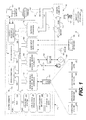
- FIG. 1 is a block diagram illustrating a computer that provides the operating environment in accordance with some embodiments of the present invention.
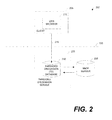
- FIG. 2 is a block diagram illustrating a client-server system that provides the operating environment in accordance with some embodiments of the invention.
- FIG. 3 is an illustration of a screen shot illustrating a method for rating a post in a discussion thread by a user in accordance with some embodiments of the present invention.
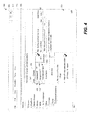
- FIG. 4 is an illustration of a screen shot illustrating a method for adding additional posts to a thread in accordance with some embodiments of the present invention.
- FIG. 5 is a logic flow diagram illustrating a routine for removing threads from a discussion group based on how important the thread is rated by the users of the discussion group in accordance with some embodiments of the present invention.
- the present invention is typically embodied in a routine to determine whether a given thread in a discussion group should be removed from the discussion group.
- the routine allows a user to rate the usefulness of each post within a given thread.
- FIG. 1 illustrates an example of a suitable computing system environment 100 on which the invention may be implemented.
- the computing system environment 100 is only one example of a suitable computing environment and is not intended to suggest any limitation as to the scope of use or functionality of the invention. Neither should the computing environment 100 be interpreted as having any dependency or requirement relating to any one or combination of components illustrated in the exemplary operating environment 100.
- the invention is operational with numerous other general purpose or special purpose computing system environments or configurations.
- Examples of well known computing systems, environments, and/or configurations that may be suitable for use with the invention include, but are not limited to, personal computers, server computers, hand-held or laptop devices, multiprocessor systems, microprocessor-based systems, set top boxes, programmable consumer electronTD, network PCs, minicomputers, mainframe computers, distributed computing environments that include any of the above systems or devices, and the like.
- the invention may be described in the general context of computer-executable instructions, such as program modules, being executed by a computer.
- program modules include routines, programs, objects, components, data structures, etc. that perform particular tasks or implement particular abstract data types.
- the invention may also be practiced in distributed computing environments where tasks are performed by remote processing devices that are linked through a communications network.
- program modules may be located in both local and remote computer storage media including memory storage devices.
- an exemplary system for implementing the invention includes a general purpose computing device in the form of a computer 110.
- Components of computer 110 may include, but are not limited to, a processing unit 120, a system memory 130, and a system bus 121 that couples various system components including the system memory 130 to the processing unit 120.
- the system bus 121 may be any of several types of bus structures including a memory bus or memory controller, a peripheral bus, and a local bus using any of a variety of bus architectures.
- such architectures include Industry Standard Architecture (ISA) bus, Micro Channel Architecture (MCA) bus, Enhanced ISA (EISA) bus, Video ElectronTD Standards Association (VESA) local bus, and Peripheral Component Interconnect (PCI) bus also known as Mezzanine bus.
- ISA Industry Standard Architecture
- MCA Micro Channel Architecture
- EISA Enhanced ISA
- VESA Video ElectronTD Standards Association
- PCI Peripheral Component Interconnect
- Computer 110 typically includes a variety of computer readable media.
- Computer readable media can be any available media that can be accessed by computer 110 and includes both volatile and nonvolatile, removable and non-removable media.
- Computer readable media may comprise computer storage media and communication media.
- Computer storage media includes both volatile and nonvolatile, removable and non-removable media implemented in any method or technology for storage of information such as computer readable instructions, data structures, program modules or other data.
- Computer storage media includes, but is not limited to, RAM, ROM, EEPROM, flash memory or other memory technology, CD-ROM, digital versatile disks (DVD) or other optical disk storage, magnetic cassettes, magnetic tape, magnetic disk storage or other magnetic storage devices, or any other medium which can be used to store the desired information and which can accessed by computer 110.
- Communication media typically embodies computer readable instructions, data structures, program modules, or other data in a modulated data signal such as a carrier wave or other transport mechanism and includes any information delivery media.
- modulated data signal means a signal that has one or more of its characteristTD set or changed in such a manner as to encode information in the signal.
- communication media includes wired media such as a wired network or direct-wired connection, and wireless media such as acoustic, RF, infrared and other wireless media. Combinations of the any of the above should also be included within the scope of computer readable media.
- the system memory 130 includes computer storage media in the form of volatile and/or nonvolatile memory such as read only memory (ROM) 131 and random access memory (RAM) 132.
- ROM read only memory
- RAM random access memory
- BIOS basic input/output system
- RAM 132 typically contains data and/or program modules that are immediately accessible to and/or presently being operated on by processing unit 120.
- FIG. 1 illustrates operating system 134, application programs 135, other program modules 136, and program data 137.
- the computer 110 may also include other removable/non-removable, volatile/nonvolatile computer storage media.
- FIG. 1 illustrates a hard disk drive 141 that reads from or writes to non-removable, nonvolatile magnetic media, a magnetic disk drive 151 that reads from or writes to a removable, nonvolatile magnetic disk 152, and an optical disk drive 155 that reads from or writes to a removable, nonvolatile optical disk 156 such as a CD ROM or other optical media.
- removable/non-removable, volatile/nonvolatile computer storage media that can be used in the exemplary operating environment include, but are not limited to, magnetic tape cassettes, flash memory cards, digital versatile disks, digital video tape, solid state RAM, solid state ROM, and the like.
- the hard disk drive 141 is typically connected to the system bus 121 through a non-removable memory interface such as interface 140, and magnetic disk drive 151 and optical disk drive 155 are typically connected to the system bus 121 by a removable memory interface, such as interface 150.
- hard disk drive 141 is illustrated as storing operating system 144, application programs 145, other program modules 146, and program data 147. Note that these components can either be the same as or different from operating system 134, application programs 135, other program modules 136, and program data 137. Operating system 144, application programs 145, other program modules 146, and program data 147 are given different numbers here to illustrate that, at a minimum, they are different copies.
- a user may enter commands and information into the computer 110 through input devices such as a keyboard 162 and pointing device 161, commonly referred to as a mouse, trackball, or touch pad.
- Other input devices may include a microphone, joystick, game pad, satellite dish, scanner, or the like.
- These and other input devices are often connected to the processing unit 120 through a user input interface 160 that is coupled to the system bus 121, but may be connected by other interface and bus structures, such as a parallel port, game port or a universal serial bus (USB).
- a monitor 191 or other type of display device is also connected to the system bus 121 via an interface, such as a video interface 190.
- computers may also include other peripheral output devices such as speakers 197 and printer 196, which may be connected through an output peripheral interface 195.
- the computer 110 may operate in a networked environment using logical connections to one or more remote computers, such as a remote computer 180.
- the remote computer 180 may be a personal computer, a server, a router, a network PC, a peer device or other common network node, and typically includes many or all of the elements described above relative to the computer 110, although only a memory storage device 181 has been illustrated in FIG. 1.
- the logical connections depicted in FIG. 1 include a local area network (LAN) 171 and a wide area network (WAN) 173, but may also include other networks.
- LAN local area network
- WAN wide area network
- Such networking environments are commonplace in offices, enterprise-wide computer networks, intranets and the Internet.
- the computer 110 When used in a LAN networking environment, the computer 110 is connected to the LAN 171 through a network interface or adapter 170. When used in a WAN networking environment, the computer 110 typically includes a modem 172 or other means for establishing communications over the WAN 173, such as the Internet.
- the modem 172 which may be internal or external, may be connected to the system bus 121 via the user input interface 160, or other appropriate mechanism.
- program modules depicted relative to the computer 110, or portions thereof may be stored in the remote memory storage device.
- FIG. 1 illustrates remote application programs 185 as residing on memory device 181. It will be appreciated that the network connections shown are exemplary and other means of establishing a communications link between the computers may be used.
- FIG. 2 is a block diagram illustrating a client server operating system 200 that provides an operating environment in accordance with some embodiments of the present invention.
- the client-server system 200 includes a client machine 205, which may be the personal computer 110, which individual users may use to access and place posts on discussion groups.
- client machine 205 may be the personal computer 110, which individual users may use to access and place posts on discussion groups.
- client 205 is depicted as a personal computer, those skilled in the art will appreciate that the client 205 is not limited to a personal computer and may be a server, personal digital assistant (PDA), a cellular telephone, Blackberry® device, or any other device that allows the user to access a distributed network.
- PDA personal digital assistant
- the client 205 may also contain a web browser 210 application program, such as Internet ExplorerTM manufactured by Microsoft Corporation of Redmond, Washington, that allows the user to access discussion groups on the Internet, or any other distributed network.
- a web browser 210 application program such as Internet ExplorerTM manufactured by Microsoft Corporation of Redmond, Washington, that allows the user to access discussion groups on the Internet, or any other distributed network.
- the client-server system 200 also includes a threaded discussion (TD) server 225.
- the TD server 225 may be in turn connected to a Network New Transfer Protocol (NNTP) server 235, which may host the particular discussion group.
- the TD server 225 can push and or pull any post to or from the NNTP server 235.
- the TD server 225 is depicted as being connected to a single NNTP server 235, those skilled in the art will appreciate that the TD server 225 may be connected to any number of NNTP servers 235.
- the TD server 225 may stand alone and support the discussion group without being connected to any NNTP server 235.
- the TD server 225 may contain an integrated community store database 230 that stores each post associated with each thread in the discussion group.
- the client 205 passes the post to the TD server 225, which stores the post and associated thread on the TD database 230.
- the post and threads are stored twice, once on the NNTP server 235 and once on the TD server 225.
- This allows the threads to be stored on the TD server 225 based on how important the thread is determined to be rather than for an arbitrary time, as with the case of the NNTP server 235. For instance, posts are typically deleted from the NNTP server 235 after a period time has elapsed, such as ninety days.
- the post may be a Question-type post that the user wishes to pose to the community and receive an answer, or the post may be a General Comment-type post regarding the subject matter of the discussion group, which the poster believes may be of interest to the entire community, or the post may be a Reply-type post, in which the poster is responding to either a Question, or General Comment.
- the post may be a Feedback-type post, in which the user provides comments or suggestions to the host of the discussion group. This list of post types is not meant to be exhaustive and those skilled in the art will appreciate that other types of posts may be included without departing from the scope of this invention.
- the type of post created by the user determines how long the post will be stored on the TD server 225, which is due to some post types being considered more important than other post types. For example, threads that contain posts that are either Answer or Feedback posts are considered to be more important since they typically contain information that may be beneficial for a longer period of time.
- a developer had a question concerning creating custom macros in Microsoft® ExcelTM and posted a Question-type post on a discussion group dealing with creating macros in Microsoft® ExcelTM. If the thread containing the Question-type post also contains an Answer, it may likely be of interest to anyone who creates custom macros and therefore will likely be more valuable the entire community. Therefore, it is advantageous to keep the thread around longer.
- Feedback-type posts may also be more important since they may contain information both about how to improve the product as well as responses from the producers of the product.
- a delete date for the thread is set to a first value, which is typically the date that the last message was added or the last positive rating was received plus a predefined number of days, such as 120 days.
- the post type is of a type other than a Question or Feedback type, such as a General Comment type post
- the delete date to delete the thread is set to a second value, that is less than the first value associated with the Question or Feedback type posts.
- the first threshold value for a General Comment thread may be set at ninety (90) days.
- the delete date of the thread is reset by adding the threshold value to the current date on the system clock of the TD server 225. Setting distinct threshold dates for threads that are assumed to hold information that is important to the discussion group community insures that threads are maintained on the TD server 225 for a greater length of time.
- each post may typically contains several fields that are used to track and identify the poster.
- each post may contain a field to identify the discussion group, as well as a field to identify the thread subject, a field for the email address of the poster, the date that the post was made, the text of the post itself and possibly the text of the antecedent posts if the post is a Reply.
- Some of these fields may be automatically filled through handshaking between the client 205 and the server 225 at the time the client 205 registers with the TD server 225, or may be manually entered by the user at the time the post is created. Additionally, a field passport identification (ID) may be used to identify the user during and is typically generated by the TD server 225.
- ID field passport identification
- buttons may be used for rating the individual posts with the threads without departing from the scope of the invention.
- the user is able to answer through selecting either the "YES” button if he or she determined that the message or post was useful, or the "NO” button if the user determined that the post or message was not useful.
- the answer is then passed from the client 205 to the TD server 225, where it is stored in the ratings field associated with the post in the TD database 230.
- the TD server 225 Upon receipt of a positive rating, the TD server 225 will reset the delete date for the thread to the second date.
- the user also has the option not to reply to the text message. In this instance, when the user does not provide any feedback, the non-response of the user may be recorded as an implicit "YES" response by the user.
- the Reply post may be considered as an implicit "YES" response to the inquiry of whether the post is useful. Again, the assumption being that if the user took the time to reply to the message then the message must be useful.
- the rating is stored with the post in the ratings field in the TD database 230 on the TD server 225.
- the TD server 225 checks each post within each thread of the discussion group stored in the TD database 230 on a predetermined basis to determine how long the post has been saved and whether it has received a favorable rating.
- the ratings field in each post of each thread is checked to determine whether any of the posts received a favorable rating. If one of the posts received a favorable rating then the delete date is set to the current date on the system clock plus the predetermined threshold date value.
- the delete date to delete the thread would be reset to the date of the system clock plus the threshold value for a Question-type post, which may be 180 days.
- the updated delete date is stored with the thread in the TD database 230. If the originator of the thread marked at least one post within the thread as "ANSWERED," it is assumed that the thread is useful, since the original question has been satisfactorily answered. Since an answer has been supplied, the thread is then upgraded to a Question/Answer- type thread, which is maintained for a longer period of time on the TD server 225. In this instance the thread's delete date is updated to the date of the system clock plus second number of threshold days for a Question/Answer thread. Thus, assuming the number of threshold days for a Question/Answer-type thread is 180 days, the delete date of the particular thread is reset to the current date plus 180 days.
- the date associated with the original post within the thread is checked against the date of the system clock. If the date of the system clock is less than the delete date of the thread, the thread remains on the system. However, if the delete date is less than the date of the system clock, the thread is determined to be not important and the entire thread is deleted from the TD database 230. Thus in this manner, the threads are retained on the TD server 225 based on the whether users of the discussion group have determined that the thread is useful rather than deleted after an arbitrary number of days have elapsed since the thread was first started.
- the client-sever system 200 may also include a firewall 220 to prevent any unauthorized access to or from the distributed network 215.
- the firewall 220 may be implemented in either hardware or software, or a combination of both. All messages entering or leaving the TD server 220 pass through the firewall 220, which may examine each message and may block any messages or portions of messages, such as attachments, that do not meet the specified security criteria.
- FIG. 3 illustrates a typical screen shot of a window 300 for rating the usefulness of the thread within a discussion group in accordance with some embodiments of the present invention.
- the window 300 may be from a web browser application program, such as INTERNET EXPLORE, manufactured by Microsoft Corporation of Redmond, Washington. Although the present invention is described as being used with a web browser application program, those skilled in the art will appreciate that any program, which allows a user to access a discussion group over a distributed network 210 may be used without departing from the scope of the invention.
- the window 300 in the web browser application program typically resides on the client 205 of the client-server system 200.
- the window 300 contains a Title Bar 305, which typically displays the software application and the name of the file current running in window 300.
- the title bar 305 may also contain a minimize button, a maximize button, and a close button, which are well known in the art.
- the window 300 may also contain a command bar 310, which typically contains a number of commands such as FILE, EDIT, VIEW, FAVORITES, TOOLS, and HELP. Those skilled in the art will appreciate that any number of commands may be placed in the command bar 305 in accordance with the application program running in window 300 without departing from the scope of the invention.
- the window 300 may also contain one or more toolbars 310, which may contain any number of commands, such as a BACK button, a FORWARD button, a DELETE button, a REFRESH button, and a HOME button.
- buttons displayed in the toolbar 310 in the illustration are only a representation of the types of command buttons that may be displayed in the toolbar 310. Those skilled in the art will appreciate that other buttons that perform a variety of functions may be included in the command bars without departing from the scope of the invention.
- the window 300 may also contain a display area 330 for displaying information regarding the discussion group.
- the display area 330 may be divided into several regions to organize the information regarding the discussion group.
- the display area 330 may contain a first region 332, which may display a hierarchical organization of the available discussion groups hosed by the TD server 225.
- the following discussion categories are shown: Games, MapPort, Mobile Device, Money, MSN, .Net Development, and Office.
- Within each category there may be sub categories, or discussion groups..
- the Office category may have an Access sub-category, an Excel sub-category, a Word sub-category and, and so forth.
- each sub-category there may be an additional level of sub-categories or discussion groups. There is no limit to the number of levels of sub-categories that may be contained within each category. AT the bottom of each category or sub-category is a list of discussion groups. For instance, under the Excel sub-category there is a General Questions discussion group.
- a visual indicator 338 such as a bracket, shading, reverse video, or any other visual indicator, may be displayed around the discussion group topic when the cursor is placed proximate to a topic to provide visual feedback to the user.
- the discussion group topTD for that discussion group may be displayed in a second region 334 of the display area 330.
- the second region 332 may contain the name of the discussion group topic as well as each thread under the discussion group topic.
- the second region may also contain a field 337 that indicates how many posts are listed within each thread, as well as a ratings field 338 that shows then number of posts that have been identified as helpful.
- the user may expand the threads by using the pointing device 161 to select an expansion icon 339 located proximate to the desired thread. Additionally, the thread may be selected by placing the pointing device 161 proximate to the desired thread.
- the expansion icons are well-known in the computing field and therefore will not be discussed in detail.
- Each thread displayed in the second region 334 has an indicator 360 proximate to the thread to indicate what types of posts are associated with the thread.
- the one type of indicator may be a question mark to indicate that the post is a Question-type post.
- the indicator 360 may be a call out box to indicate that the post is a Suggestion to the operator of the discussion group.
- the thread contains a reply to a question of a suggestion, then the indicator may be a question mark with check mark, or a call-out box with a check mark, respectively.
- the indicator 360 proximate to each thread will illustrate the nature of the thread.
- the indicator 360 also provides the user with a visual feedback as to what threads may be important.
- each post within the thread may also have a similar indicator 365 associated with it once the view of the thread is expanded by selecting the expansion icon 339.
- the indicator 360 and 365 have been described as being either question mark, a call-out box, or a combination of a question mark and a check mark or a call-out box and a check mark, those skilled in the art will appreciate that the indicators 360 and 365 may be any shape that conveys to the user the type of post listed within the thread to the without departing from the scope of the invention.
- the user may place the cursor over the individual post using the pointing device 161 and "click" on the post.
- the text of the post is displayed in a third region 336 of the display area 330.
- addition information such as the subject of the post, the date that the post was created, the name of the person who created the post and the like may also be displayed within the third region 336.
- a ratings window 392 may also be displayed within the third region, which is used to elicit feedback from the user.
- the ratings window 392 contains a text message, which may ask the user "Was this post helpful to you?" Additionally, the ratings window may have a "YES” button 394 and a "NO” button 396 for the user to select for a response. If the user selects the "YES” button, then a positive response is recorded in the ratings field associated with the post. Alternatively, if the user selects a post to read but does not affirmatively select either the "YES" button 394 or the "NO” button 396 in the ratings window 392, the non-response may be treated as an affirmative answer. Therefore, non responses are treated as if the user had selected the "YES" button.
- a negative response is recorded in the ratings field of the particular post.
- the passport ID of the user is also recorded along with his or her response and stored in the TD database 230. This allows the response to be associated with a user and insures that the each user only votes one time for each post.
- FIG. 4 is an illustration depicting a screen shot of the window 300 illustrating how a user may create a new post within a given thread in accordance with some embodiments of the present invention.
- a menu bar 340 for generating new post is located proximate to the second region 334 of the display area 330.
- the menu bar 340 is located directly above the second region 334.
- the menu bar 340 may be located anywhere within the window 300 without departing from the scope of the invention.
- the drop-down window 405 will display several menu items that represent the available types of posts.
- the drop-down menu 405 may contain a Question menu item 410 that represent a Question-type post 410. If the user select the Question menu item 410 a new Question thread will be started in the selected discussion.
- the drop-down menu 405 may also contain a Suggestion menu item 415 that represent a Suggestion-type post 420. If the user selects the Suggestion menu item 415, a Suggestion post will be created in the selected discussion thread.
- the drop-down menu 405 may also have a General Comment menu item 430 that represent a General Comment-type post.
- a new General Comment thread will be added to the selected discussion.
- the drop-down menu item has been described as only having a Question menu item 410, a Suggestion menu item, and a General Comment menu item 430, those skilled in the art will appreciate that any number of menu items may be added to the drop-down menu 405 without departing from the scope of the invention.
- new post types are created for discussion threads, they may be easily added to the drop-down menu 405.
- a cursor will appear in the third region 336 of the display area 330 to allow the user to enter the text of the post. Once the user is finished typing in the text message, the post will appear in under the appropriate discussion in the second region 334 of the display area 330.
- the drop-down menu 405 may also contain several identifying indicia associated with one or more of the menu items.
- a question mark 425 may be associated with the Question-type post 410, or a call-out balloon 430 associated with the Suggestion type menu item 415.
- the indicia provide the user with a visual feedback, and are used to identify to the user the type of post contained in the threads as displayed in the second region 334 of the display area 330.
- the user may select any of the menu items.
- the menu bar 340 may also display identifying indicia associated with one or more of the thread types, such as a question mark 425 associated with the Question menu item 410, or a call-out balloon 430 associated with the Suggestion-type menu item.
- identifying indicia associated with one or more of the thread types, such as a question mark 425 associated with the Question menu item 410, or a call-out balloon 430 associated with the Suggestion-type menu item.
- FIG. 5 is logic flow diagram illustrating a routine 500, in which discussion threads may be removed from a TD server 225 based on how users rate the usefulness, or importance of the thread, rather than the age of the thread.
- the routine 500 may be stored on the TD server 205 and implemented in a browser application program on the client.
- Routine 500 begins at 505, in which the thread is started by a user on a discussion board within a discussion group. The thread is begun when the user submits a post.
- a post menu bar 340 is displayed in the web browser window 330 and may contain a "NEW" button 345 and a REPLY button 350. If the user selects the "NEW" button 345, a drop down menu 405 may appear to display the types of posts that the user may select from.
- the drop down menu 405 will contain a Question menu item 410, a Suggestion menu item 415, and a General Comment menu item 420.
- the post menu bar 340 may also display identifying indicia associated with one or more of the menu items, such as a question mark 425 associated with the Question menu item 410, or a call-out balloon 430 associated with the Suggestion item 415.
- the user may then simply select a menu item to begin entering a post by simply dragging the cursor over the desired choice in the drop-down menu 405 and selecting the appropriate menu item using standard windowing techniques.
- a cursor will appear in the third portion 336 of the display area 330 to allow the user to compose the text message.
- the third portion 336 of the display area 330 may be preloaded with the name of the user creating the post as well as the subject of the post, if the user selected the REPLY button 350. However, if the post is the beginning of a new thread, then the user will typically be required to supply the subject of the post. In addition to the text of the post, additional information is added to the post, which includes the name of the discussion group, the subject line of the post, the email address of the poster, the date that the post was created, and the passport ID of the user.
- the delete date of the post is set and stored with the post in the TD database 230.
- the delete date is selected as the date that the post is created plus a first predefined number of days, T1.
- T1 is typically 90 days.
- the delete date will be set 90 days from the date the thread was created.
- T2 which is greater than T1
- T2 may be added to the creation date of the thread to form the delete date.
- Question/Answer threads that contain at least one Answer post may be consider to be more important General Comment threads and the Question thread should be retained for a greater period of time.
- T2 may be set at 180 days.
- the delete date of the Question/Answer thread is determined by adding the second predefined number of day, T2, to the system date when the thread was created.
- T1 is described as being set to 90 day
- the second predefined number of days, T2 is described as being set to 180 days, those skilled in the art will appreciate that the values for T1 and T2 may be set to any number of days as the administrator of the TD server 225 sees fit in light of the number of threads and the number of messages being posted to the discussion group.
- T2 which is associated with the more important threads, such as Questions/Answer and Feedback-type threads
- T1 the value of T1 which is associated with the remaining thread types to insure that the Question and Feedback type threads are retained longer on the TD server 225.
- routine 500 remains idle until the determination is made that a user positively rates a post within the thread as 515, in which the determination is made whether any post in the thread has been rated positively by another user. If the post is rated positively, then the "YES" branch of routine 500 is followed to 520, where the delete date is reset to the current date of the system clock plus the appropriate time period, T1 or T2, depending on whether the post is a Reply or General Comment type or whether the post is a Question/Answer or Feedback type, respectively. Once the delete date has been reset, the routine proceeds to 540, in which a predetermined period of time elapses before the routine determines whether the delete date equals the system clock date.
- the routine will examine the threads at a predefined period of time, such each day, every thirty (30) days, and the like. This ensures that unwanted threads are removed from the TD server 225 in a timely manner.
- the predefined amount of time that the TD server 225 examine the delete dates may be any number of days and is not limited to 30 days, as described above.
- the "NO" branch is followed back to 540 where the TD server 225 waits for another predetermined time period before proceeding to 545 to again check the threads in the TD database 230 to determine whether any of the threads should be deleted. The process of checking the post to determine whether any of them should be deleted is continually repeated.
- the "NO" branch is followed to 525, in which the determination is made whether a post within the thread has been marked as being an answered by the creator of the post.
- the creator of the original post has the option to review the replies and if the he or she believes that one of the replies provides an answer to the post then he or she may mark the post as being answered. Marking a post as being answered automatically converts the thread to a Question/Answe type thread, which automatically elevates the post to a more important status and insures that the thread will be maintained on the TD server 225 for a loner period of time.
- the "YES" branch is followed to 530 where the delete date is reset to the current date of the system clock plus the second predefined time interval, T2.
- the routine proceeds to 540, where the routine 500 waits a predetermined period of time.
- the system clock of the TD server 225 is equal to or greater than the delete date of a particular thread. If the date of the system clock is equal to or greater than the deleted date, then the "YES" branch is followed to 550 where the entire thread is deleted.
- the "NO" branch is followed back to 540 where the TD server 225 waits for another predetermined time period before proceeding to 545 to again check the posts in the TD database 230 to determine whether any of the threads should be deleted. However if the determination is made at 525 that the thread does not contain an Answer to a Question, then the "NO" branch is followed to 540, where the process of determining whether the thread should be deleted begins.
Landscapes
- Engineering & Computer Science (AREA)
- Theoretical Computer Science (AREA)
- Physics & Mathematics (AREA)
- General Physics & Mathematics (AREA)
- Computational Linguistics (AREA)
- General Engineering & Computer Science (AREA)
- Artificial Intelligence (AREA)
- Audiology, Speech & Language Pathology (AREA)
- General Health & Medical Sciences (AREA)
- Health & Medical Sciences (AREA)
- Business, Economics & Management (AREA)
- Data Mining & Analysis (AREA)
- Databases & Information Systems (AREA)
- Economics (AREA)
- Entrepreneurship & Innovation (AREA)
- Human Resources & Organizations (AREA)
- Marketing (AREA)
- Operations Research (AREA)
- Quality & Reliability (AREA)
- Strategic Management (AREA)
- Tourism & Hospitality (AREA)
- General Business, Economics & Management (AREA)
- Information Transfer Between Computers (AREA)
Abstract
Description
- The present invention is directed to discussion groups and more particularly to a method for removing threads from discussion groups.
- The Internet has evolved into having two main functions: facilitating communications and dispersing information. One source for both facilitating communications and dispersing information are discussion groups. Discussion groups are basically a continuous public discussion related to a particular topic. Users can log onto a particular discussion group and post a message or a question to the discussion board. Discussion groups are very effective when users want to participate in a detailed discussion about a particular topic. Typically, the discussion groups are started by an author or entity that has an interest in a particular topic or is seeking answers to questions related to the particular topic. Within each discussion group, there may be multiple threads, which are a hierarchical listing of multiple posts related to the same subject and also archive the conversation among users about that subject. Posts within each thread usually share subject lines as well as the notion of different types of threads, e.g. right now, question and answer, or general discussion. Normally, a user, also known as a poster, places a post to begin a thread. Other posters then may reply to the post. These replies constitute the thread of the discussion.
- Users may log into the discussion group and either read the post within a thread or add a new post to a given thread. Although discussion groups have become quite popular, their popularity has lead to several concerns. First, because threads within the discussion groups can become quit large, they require a large amount of storage space within the server. Because the discussion boards are typically maintained on a single server, usually by the author who originated the forum or discussion group, the cost of storing the threads can become quite large. Additionally, because threads may be searched for a particular reply, the cost associated with searching a large number of unimportant threads becomes expensive both in time and money.
- A second concern is that that some threads are of no use to users. These threads remain on the server and needlessly consume precious system resources. Additionally, even threads that originally were once useful, may become obsolete, because the topic of the discussion group has become obsolete or because an upgrade or a patch to the software product has become available that solved the problem that was the focus of the discussion. These obsolete threads then occupy resources on the server, thereby increasing the costs associated with hosting it. Still another concern for discussion groups is unsolicited advertisements. These unsolicited advertisements provide no useful information to the discussion thread, occupy valuable system resources, and generally annoy intended users.
- One method to deal with these concerns is to delete individual posts within threads that are older than a predetermined date. Typically, the server hosting the discussion board will delete "old" posts from the system. Normally, the server examines each post to determine its age by looking at the post date. If the post date exceeds a threshold number of days, such as ninety days, then the post or message is eliminated. Although deleting individual posts based on a first-in-first-out (FIFO) approach reduces the overall number of posts stored in the discussion board, several problems result from this method. First, deleting old posts fragments the threads and destroys the continuity of the thread. For example, if the original post and earlier replies are deleted from the discussion board, users accessing the thread will not see the initial question or comment and the initial replies, which may contain valuable information. Additionally, the remaining posts may become meaningless to users, as users will not know in what context the post were created. Another problem is that because posts are deleted based on a FIFO approach, potentially useful posts may be deleted, thereby erasing potentially important information, while at the same time possibly leaving useless posts intact.
- Another solution to deal with the cost of storing discussion threads is to delete the entire thread if the earliest post within the thread exceeds a predetermined number of days. Thus, instead of only deleting those individual posts within a given thread, the entire thread is deleted. Although deleting the entire thread alleviates the problem of fragmenting threads, potentially useful threads may be deleted simply because they have exceed an arbitrary threshold time limit, while potentially useless threads remain on the server because they have not aged past the predetermined time limit.
- Therefore, there is a continuing need for a method for monitoring a discussion group in an automated manner. In particular, there is a need for a method for removing useless and unused threads from a discussion string while maintaining useful threads within the discussion group, regardless of their age.
- The present invention meets the needs described above in a method and system for removing threads from a discussion group based on rating given to the individual posts within the thread. Generally described, the invention includes a method for removing threads from a discussion group based on the ratings of the individual posts supplied by the users. Upon opening a post within a thread, a date to delete the thread is initially set to a predetermined value. Whenever a user reads a post within the thread, a window is displayed asking the user to rate the usefulness of the post. If at least one user rates at least one post in the thread as being useful, then the delete date is reset. However, if no user has selected at least one post as being useful, the delete date is left unchanged. Next, the delete dates of the thread is examined to determine whether the delete date is the same as the current date of the system clock of the server hosting the discussion group. If the delete date of the thyead is the same as the current date system clock, the entire thread is deleted from the discussion group.
- The method may also determine whether the rating field has a value indicative of being useful by first determining whether at least one user opened a post within the thread. Next, a rating field associated with the thread is examined to determine whether the user has affirmatively rated at least post within the thread as being useful. If the user rated at least one post as being useful by placing an affirmative answer in the rating field, then the delete date is reset. However, if the user opened the post but did not rate the post, the post is still considered useful, as the non-response of the user is considered to be an implicit affirmative response.
- The method resets the delete date by first examining the thread type. If the thread is determined to be a first type, such as a General Comment-type, the delete date is set to a first predetermined date. However, if the thread is categorized as a second thread type, which may be either a Question/Answer-type thread or a Feedback-type thread, then the deleted date is set to a second predetermined date, wherein the first predetermined date is less than the second predetermined date. This is due to the fact that threads that fall within the second type are considered to be more useful than those threads that fall within the first type and are retained for a greater period of time on the discussion board on the server.
- The various aspects of the present invention may be more clearly understood and appreciated from a review of the following detailed description of the disclosed embodiments and by reference to the appended drawings and claims.
- FIG. 1 is a block diagram illustrating a computer that provides the operating environment in accordance with some embodiments of the present invention.
- FIG. 2 is a block diagram illustrating a client-server system that provides the operating environment in accordance with some embodiments of the invention.
- FIG. 3 is an illustration of a screen shot illustrating a method for rating a post in a discussion thread by a user in accordance with some embodiments of the present invention.
- FIG. 4 is an illustration of a screen shot illustrating a method for adding additional posts to a thread in accordance with some embodiments of the present invention.
- FIG. 5 is a logic flow diagram illustrating a routine for removing threads from a discussion group based on how important the thread is rated by the users of the discussion group in accordance with some embodiments of the present invention.
- The present invention is typically embodied in a routine to determine whether a given thread in a discussion group should be removed from the discussion group. The routine allows a user to rate the usefulness of each post within a given thread.
- Turning now to the figures, in which like numerals refer to like elements through the several figures, FIG. 1 illustrates an example of a suitable
computing system environment 100 on which the invention may be implemented. Thecomputing system environment 100 is only one example of a suitable computing environment and is not intended to suggest any limitation as to the scope of use or functionality of the invention. Neither should thecomputing environment 100 be interpreted as having any dependency or requirement relating to any one or combination of components illustrated in theexemplary operating environment 100. - The invention is operational with numerous other general purpose or special purpose computing system environments or configurations. Examples of well known computing systems, environments, and/or configurations that may be suitable for use with the invention include, but are not limited to, personal computers, server computers, hand-held or laptop devices, multiprocessor systems, microprocessor-based systems, set top boxes, programmable consumer electronTD, network PCs, minicomputers, mainframe computers, distributed computing environments that include any of the above systems or devices, and the like.
- The invention may be described in the general context of computer-executable instructions, such as program modules, being executed by a computer. Generally, program modules include routines, programs, objects, components, data structures, etc. that perform particular tasks or implement particular abstract data types. The invention may also be practiced in distributed computing environments where tasks are performed by remote processing devices that are linked through a communications network. In a distributed computing environment, program modules may be located in both local and remote computer storage media including memory storage devices.
- With reference to FIG. 1, an exemplary system for implementing the invention includes a general purpose computing device in the form of a
computer 110. Components ofcomputer 110 may include, but are not limited to, aprocessing unit 120, asystem memory 130, and asystem bus 121 that couples various system components including thesystem memory 130 to theprocessing unit 120. Thesystem bus 121 may be any of several types of bus structures including a memory bus or memory controller, a peripheral bus, and a local bus using any of a variety of bus architectures. By way of example, and not limitation, such architectures include Industry Standard Architecture (ISA) bus, Micro Channel Architecture (MCA) bus, Enhanced ISA (EISA) bus, Video ElectronTD Standards Association (VESA) local bus, and Peripheral Component Interconnect (PCI) bus also known as Mezzanine bus. -
Computer 110 typically includes a variety of computer readable media. Computer readable media can be any available media that can be accessed bycomputer 110 and includes both volatile and nonvolatile, removable and non-removable media. By way of example, and not limitation, computer readable media may comprise computer storage media and communication media. Computer storage media includes both volatile and nonvolatile, removable and non-removable media implemented in any method or technology for storage of information such as computer readable instructions, data structures, program modules or other data. Computer storage media includes, but is not limited to, RAM, ROM, EEPROM, flash memory or other memory technology, CD-ROM, digital versatile disks (DVD) or other optical disk storage, magnetic cassettes, magnetic tape, magnetic disk storage or other magnetic storage devices, or any other medium which can be used to store the desired information and which can accessed bycomputer 110. Communication media typically embodies computer readable instructions, data structures, program modules, or other data in a modulated data signal such as a carrier wave or other transport mechanism and includes any information delivery media. The term "modulated data signal" means a signal that has one or more of its characteristTD set or changed in such a manner as to encode information in the signal. By way of example, and not limitation, communication media includes wired media such as a wired network or direct-wired connection, and wireless media such as acoustic, RF, infrared and other wireless media. Combinations of the any of the above should also be included within the scope of computer readable media. - The
system memory 130 includes computer storage media in the form of volatile and/or nonvolatile memory such as read only memory (ROM) 131 and random access memory (RAM) 132. A basic input/output system 133 (BIOS), containing the basic routines that help to transfer information between elements withincomputer 110, such as during start-up, is typically stored inROM 131.RAM 132 typically contains data and/or program modules that are immediately accessible to and/or presently being operated on by processingunit 120. By way of example, and not limitation, FIG. 1 illustratesoperating system 134,application programs 135,other program modules 136, andprogram data 137. - The
computer 110 may also include other removable/non-removable, volatile/nonvolatile computer storage media. By way of example only, FIG. 1 illustrates ahard disk drive 141 that reads from or writes to non-removable, nonvolatile magnetic media, amagnetic disk drive 151 that reads from or writes to a removable, nonvolatilemagnetic disk 152, and anoptical disk drive 155 that reads from or writes to a removable, nonvolatileoptical disk 156 such as a CD ROM or other optical media. Other removable/non-removable, volatile/nonvolatile computer storage media that can be used in the exemplary operating environment include, but are not limited to, magnetic tape cassettes, flash memory cards, digital versatile disks, digital video tape, solid state RAM, solid state ROM, and the like. Thehard disk drive 141 is typically connected to thesystem bus 121 through a non-removable memory interface such asinterface 140, andmagnetic disk drive 151 andoptical disk drive 155 are typically connected to thesystem bus 121 by a removable memory interface, such asinterface 150. - The drives and their associated computer storage media discussed above and illustrated in FIG. 1, provide storage of computer readable instructions, data structures, program modules, and other data for the
computer 110. In FIG. 1, for example,hard disk drive 141 is illustrated as storingoperating system 144,application programs 145,other program modules 146, andprogram data 147. Note that these components can either be the same as or different fromoperating system 134,application programs 135,other program modules 136, andprogram data 137.Operating system 144,application programs 145,other program modules 146, andprogram data 147 are given different numbers here to illustrate that, at a minimum, they are different copies. A user may enter commands and information into thecomputer 110 through input devices such as akeyboard 162 andpointing device 161, commonly referred to as a mouse, trackball, or touch pad. Other input devices (not shown) may include a microphone, joystick, game pad, satellite dish, scanner, or the like. These and other input devices are often connected to theprocessing unit 120 through auser input interface 160 that is coupled to thesystem bus 121, but may be connected by other interface and bus structures, such as a parallel port, game port or a universal serial bus (USB). Amonitor 191 or other type of display device is also connected to thesystem bus 121 via an interface, such as avideo interface 190. In addition to the monitor, computers may also include other peripheral output devices such asspeakers 197 andprinter 196, which may be connected through an outputperipheral interface 195. - The
computer 110 may operate in a networked environment using logical connections to one or more remote computers, such as aremote computer 180. Theremote computer 180 may be a personal computer, a server, a router, a network PC, a peer device or other common network node, and typically includes many or all of the elements described above relative to thecomputer 110, although only amemory storage device 181 has been illustrated in FIG. 1. The logical connections depicted in FIG. 1 include a local area network (LAN) 171 and a wide area network (WAN) 173, but may also include other networks. Such networking environments are commonplace in offices, enterprise-wide computer networks, intranets and the Internet. - When used in a LAN networking environment, the
computer 110 is connected to theLAN 171 through a network interface oradapter 170. When used in a WAN networking environment, thecomputer 110 typically includes amodem 172 or other means for establishing communications over theWAN 173, such as the Internet. Themodem 172, which may be internal or external, may be connected to thesystem bus 121 via theuser input interface 160, or other appropriate mechanism. In a networked environment, program modules depicted relative to thecomputer 110, or portions thereof, may be stored in the remote memory storage device. By way of example, and not limitation, FIG. 1 illustratesremote application programs 185 as residing onmemory device 181. It will be appreciated that the network connections shown are exemplary and other means of establishing a communications link between the computers may be used. - FIG. 2 is a block diagram illustrating a client
server operating system 200 that provides an operating environment in accordance with some embodiments of the present invention. The client-server system 200 includes aclient machine 205, which may be thepersonal computer 110, which individual users may use to access and place posts on discussion groups. Although theclient 205 is depicted as a personal computer, those skilled in the art will appreciate that theclient 205 is not limited to a personal computer and may be a server, personal digital assistant (PDA), a cellular telephone, Blackberry® device, or any other device that allows the user to access a distributed network. - The
client 205 may also contain aweb browser 210 application program, such as Internet Explorer™ manufactured by Microsoft Corporation of Redmond, Washington, that allows the user to access discussion groups on the Internet, or any other distributed network. - The client-
server system 200 also includes a threaded discussion (TD)server 225. TheTD server 225 may be in turn connected to a Network New Transfer Protocol (NNTP)server 235, which may host the particular discussion group. TheTD server 225 can push and or pull any post to or from theNNTP server 235. Although theTD server 225 is depicted as being connected to asingle NNTP server 235, those skilled in the art will appreciate that theTD server 225 may be connected to any number ofNNTP servers 235. Also, theTD server 225 may stand alone and support the discussion group without being connected to anyNNTP server 235. TheTD server 225 may contain an integratedcommunity store database 230 that stores each post associated with each thread in the discussion group. For example, when a user on theclient 205 wants to place a post on the discussion board of a discussion group, theclient 205 passes the post to theTD server 225, which stores the post and associated thread on theTD database 230. In this manner, the post and threads are stored twice, once on theNNTP server 235 and once on theTD server 225. This allows the threads to be stored on theTD server 225 based on how important the thread is determined to be rather than for an arbitrary time, as with the case of theNNTP server 235. For instance, posts are typically deleted from theNNTP server 235 after a period time has elapsed, such as ninety days. If a user wanted to see the a particular post more than ninety days after it had been posted, the user would be unable to view the message since it would have been deleted. However, by storing the threads on theTD server 225, the individual posts within the threads would still be available after the individual posts are removed from theNNTP server 235. - Upon creation of a new post, the user is asked to identify the type of post he or she is creating. For example, the post may be a Question-type post that the user wishes to pose to the community and receive an answer, or the post may be a General Comment-type post regarding the subject matter of the discussion group, which the poster believes may be of interest to the entire community, or the post may be a Reply-type post, in which the poster is responding to either a Question, or General Comment. Finally, the post may be a Feedback-type post, in which the user provides comments or suggestions to the host of the discussion group. This list of post types is not meant to be exhaustive and those skilled in the art will appreciate that other types of posts may be included without departing from the scope of this invention. The type of post created by the user determines how long the post will be stored on the
TD server 225, which is due to some post types being considered more important than other post types. For example, threads that contain posts that are either Answer or Feedback posts are considered to be more important since they typically contain information that may be beneficial for a longer period of time. Suppose a developer had a question concerning creating custom macros in Microsoft® Excel™ and posted a Question-type post on a discussion group dealing with creating macros in Microsoft® Excel™. If the thread containing the Question-type post also contains an Answer, it may likely be of interest to anyone who creates custom macros and therefore will likely be more valuable the entire community. Therefore, it is advantageous to keep the thread around longer. Similarly, Feedback-type posts may also be more important since they may contain information both about how to improve the product as well as responses from the producers of the product. - If the thread type is either a Question/Answer or a Feedback type, a delete date for the thread is set to a first value, which is typically the date that the last message was added or the last positive rating was received plus a predefined number of days, such as 120 days. However, if the post type is of a type other than a Question or Feedback type, such as a General Comment type post, then the delete date to delete the thread is set to a second value, that is less than the first value associated with the Question or Feedback type posts. For example, the first threshold value for a General Comment thread may be set at ninety (90) days. These threshold values are typically configurable and may be set by the administrator of the
TD server 225. Whenever a user rates one of the posts within a given thread as being useful, the delete date of the thread is reset by adding the threshold value to the current date on the system clock of theTD server 225. Setting distinct threshold dates for threads that are assumed to hold information that is important to the discussion group community insures that threads are maintained on theTD server 225 for a greater length of time. - Once the user at the
client 205 identifies the post type, the post type is placed in anTD database 230 on theTD server 225. Additional information supplied by the user associated with the post and may also be placed in theTD database 230. For example, each post may typically contains several fields that are used to track and identify the poster. For instance, each post may contain a field to identify the discussion group, as well as a field to identify the thread subject, a field for the email address of the poster, the date that the post was made, the text of the post itself and possibly the text of the antecedent posts if the post is a Reply. Some of these fields may be automatically filled through handshaking between theclient 205 and theserver 225 at the time theclient 205 registers with theTD server 225, or may be manually entered by the user at the time the post is created. Additionally, a field passport identification (ID) may be used to identify the user during and is typically generated by theTD server 225. - After the information for the poster has been generate, other user within the discussion group may read the post. When a post is read, a window may appear on the display device proximate to the post which may contain a message to the user inquiring whether the user found the post or message useful. Normally, there may be two response buttons in the window for the user to select: a "YES" button and a "NO" button. Although the user interface for rating a post is described as using buttons, those skilled in the art will appreciate that other types of user interface mechanisms may be used for rating the individual posts with the threads without departing from the scope of the invention. The user is able to answer through selecting either the "YES" button if he or she determined that the message or post was useful, or the "NO" button if the user determined that the post or message was not useful. The answer is then passed from the
client 205 to theTD server 225, where it is stored in the ratings field associated with the post in theTD database 230. Upon receipt of a positive rating, theTD server 225 will reset the delete date for the thread to the second date. The user also has the option not to reply to the text message. In this instance, when the user does not provide any feedback, the non-response of the user may be recorded as an implicit "YES" response by the user. This is due to the fact that it may be assumed that since the user took to the trouble to open and read the post, he or she must have thought that it was important and had some value. Similarly, if a user posted a replay to a particular post and failed to provide a rating for the post, the Reply post may be considered as an implicit "YES" response to the inquiry of whether the post is useful. Again, the assumption being that if the user took the time to reply to the message then the message must be useful. - After the user has posted a post or rated a post, the rating is stored with the post in the ratings field in the
TD database 230 on theTD server 225. TheTD server 225 then checks each post within each thread of the discussion group stored in theTD database 230 on a predetermined basis to determine how long the post has been saved and whether it has received a favorable rating. First, the ratings field in each post of each thread is checked to determine whether any of the posts received a favorable rating. If one of the posts received a favorable rating then the delete date is set to the current date on the system clock plus the predetermined threshold date value. For example, if a post in a question thread received a positive rating, then the delete date to delete the thread would be reset to the date of the system clock plus the threshold value for a Question-type post, which may be 180 days. The updated delete date is stored with the thread in theTD database 230. If the originator of the thread marked at least one post within the thread as "ANSWERED," it is assumed that the thread is useful, since the original question has been satisfactorily answered. Since an answer has been supplied, the thread is then upgraded to a Question/Answer- type thread, which is maintained for a longer period of time on theTD server 225. In this instance the thread's delete date is updated to the date of the system clock plus second number of threshold days for a Question/Answer thread. Thus, assuming the number of threshold days for a Question/Answer-type thread is 180 days, the delete date of the particular thread is reset to the current date plus 180 days. - The date associated with the original post within the thread is checked against the date of the system clock. If the date of the system clock is less than the delete date of the thread, the thread remains on the system. However, if the delete date is less than the date of the system clock, the thread is determined to be not important and the entire thread is deleted from the
TD database 230. Thus in this manner, the threads are retained on theTD server 225 based on the whether users of the discussion group have determined that the thread is useful rather than deleted after an arbitrary number of days have elapsed since the thread was first started. - The client-sever
system 200 may also include afirewall 220 to prevent any unauthorized access to or from the distributednetwork 215. Thefirewall 220 may be implemented in either hardware or software, or a combination of both. All messages entering or leaving theTD server 220 pass through thefirewall 220, which may examine each message and may block any messages or portions of messages, such as attachments, that do not meet the specified security criteria. - FIG. 3 illustrates a typical screen shot of a
window 300 for rating the usefulness of the thread within a discussion group in accordance with some embodiments of the present invention. Thewindow 300 may be from a web browser application program, such as INTERNET EXPLORE, manufactured by Microsoft Corporation of Redmond, Washington. Although the present invention is described as being used with a web browser application program, those skilled in the art will appreciate that any program, which allows a user to access a discussion group over a distributednetwork 210 may be used without departing from the scope of the invention. Thewindow 300 in the web browser application program typically resides on theclient 205 of the client-server system 200. Thewindow 300 contains aTitle Bar 305, which typically displays the software application and the name of the file current running inwindow 300. Thetitle bar 305 may also contain a minimize button, a maximize button, and a close button, which are well known in the art. Thewindow 300 may also contain acommand bar 310, which typically contains a number of commands such as FILE, EDIT, VIEW, FAVORITES, TOOLS, and HELP. Those skilled in the art will appreciate that any number of commands may be placed in thecommand bar 305 in accordance with the application program running inwindow 300 without departing from the scope of the invention. Thewindow 300 may also contain one ormore toolbars 310, which may contain any number of commands, such as a BACK button, a FORWARD button, a DELETE button, a REFRESH button, and a HOME button. The number of buttons displayed in thetoolbar 310 in the illustration are only a representation of the types of command buttons that may be displayed in thetoolbar 310. Those skilled in the art will appreciate that other buttons that perform a variety of functions may be included in the command bars without departing from the scope of the invention. - The
window 300 may also contain adisplay area 330 for displaying information regarding the discussion group. Thedisplay area 330 may be divided into several regions to organize the information regarding the discussion group. For example, thedisplay area 330 may contain afirst region 332, which may display a hierarchical organization of the available discussion groups hosed by theTD server 225. For instance, in the figure, the following discussion categories are shown: Games, MapPort, Mobile Device, Money, MSN, .Net Development, and Office. Within each category, there may be sub categories, or discussion groups.. For example, the Office category may have an Access sub-category, an Excel sub-category, a Word sub-category and, and so forth. Similarly, under each sub-category, there may be an additional level of sub-categories or discussion groups. There is no limit to the number of levels of sub-categories that may be contained within each category. AT the bottom of each category or sub-category is a list of discussion groups. For instance, under the Excel sub-category there is a General Questions discussion group. Avisual indicator 338, such as a bracket, shading, reverse video, or any other visual indicator, may be displayed around the discussion group topic when the cursor is placed proximate to a topic to provide visual feedback to the user. - When a desired discussion group is highlighted in the
first region 332, the discussion group topTD for that discussion group may be displayed in asecond region 334 of thedisplay area 330. Thesecond region 332 may contain the name of the discussion group topic as well as each thread under the discussion group topic. In addition to the second region may also contain afield 337 that indicates how many posts are listed within each thread, as well as aratings field 338 that shows then number of posts that have been identified as helpful. - The user may expand the threads by using the
pointing device 161 to select anexpansion icon 339 located proximate to the desired thread. Additionally, the thread may be selected by placing thepointing device 161 proximate to the desired thread. The expansion icons are well-known in the computing field and therefore will not be discussed in detail. Once the desired thread is selected, a listing of the individual posts along with the users who entered them is displayed proximate to the thread title. For example, as shown in FIG. 5, the listing of posts is displayed immediately below the discussion topic thread. In addition to the name of the user who entered a post, the date that the post was entered may also be displayed. - Each thread displayed in the
second region 334 has anindicator 360 proximate to the thread to indicate what types of posts are associated with the thread. For example, the one type of indicator may be a question mark to indicate that the post is a Question-type post. Similarly, theindicator 360 may be a call out box to indicate that the post is a Suggestion to the operator of the discussion group. Similarly, if the thread contains a reply to a question of a suggestion, then the indicator may be a question mark with check mark, or a call-out box with a check mark, respectively. Normally, theindicator 360 proximate to each thread will illustrate the nature of the thread. Theindicator 360 also provides the user with a visual feedback as to what threads may be important. Similarly, if a post that has been listed for long period of time does not have any replies, the user may assume that the thread is not very useful. Just as each thread will have anindicator 360 associated with it, each post within the thread may also have asimilar indicator 365 associated with it once the view of the thread is expanded by selecting theexpansion icon 339. Although theindicator indicators - To select a post, the user may place the cursor over the individual post using the
pointing device 161 and "click" on the post. When the user clicks on the individual post, the text of the post is displayed in athird region 336 of thedisplay area 330. In addition to the text of the individual post, addition information, such as the subject of the post, the date that the post was created, the name of the person who created the post and the like may also be displayed within thethird region 336. Furthermore, aratings window 392 may also be displayed within the third region, which is used to elicit feedback from the user. Theratings window 392 contains a text message, which may ask the user "Was this post helpful to you?" Additionally, the ratings window may have a "YES"button 394 and a "NO"button 396 for the user to select for a response. If the user selects the "YES" button, then a positive response is recorded in the ratings field associated with the post. Alternatively, if the user selects a post to read but does not affirmatively select either the "YES"button 394 or the "NO"button 396 in theratings window 392, the non-response may be treated as an affirmative answer. Therefore, non responses are treated as if the user had selected the "YES" button. Conversely, If the user selects the "NO"button 396, then a negative response is recorded in the ratings field of the particular post. Additionally, the passport ID of the user is also recorded along with his or her response and stored in theTD database 230. This allows the response to be associated with a user and insures that the each user only votes one time for each post. Although thedisplay area 330 of the window has been described as having a configuration with three regions, those skilled in the art will appreciate that other window configurations may be used without departing from the scope of the invention. - FIG. 4 is an illustration depicting a screen shot of the
window 300 illustrating how a user may create a new post within a given thread in accordance with some embodiments of the present invention. Amenu bar 340 for generating new post is located proximate to thesecond region 334 of thedisplay area 330. For example, themenu bar 340 is located directly above thesecond region 334. Those skilled in the art will appreciate that themenu bar 340 may be located anywhere within thewindow 300 without departing from the scope of the invention. When a user selects either the "NEW"button 345 or the "Reply"button 350, a drop-downwindow 405 appears proximate to themenu bar 340. If the user selects the "NEW"button 345, the drop-downwindow 405 will display several menu items that represent the available types of posts. For example, the drop-down menu 405 may contain aQuestion menu item 410 that represent a Question-type post 410. If the user select the Question menu item 410 a new Question thread will be started in the selected discussion. The drop-down menu 405 may also contain aSuggestion menu item 415 that represent a Suggestion-type post 420. If the user selects theSuggestion menu item 415, a Suggestion post will be created in the selected discussion thread. The drop-down menu 405 may also have a GeneralComment menu item 430 that represent a General Comment-type post. If the user selects the GeneralComment menu item 430 then a new General Comment thread will be added to the selected discussion. Although the drop-down menu item has been described as only having aQuestion menu item 410, a Suggestion menu item, and a GeneralComment menu item 430, those skilled in the art will appreciate that any number of menu items may be added to the drop-down menu 405 without departing from the scope of the invention. Also, as new post types are created for discussion threads, they may be easily added to the drop-down menu 405. Finally, once the user has selected the desired type of post her or she would like to create, a cursor will appear in thethird region 336 of thedisplay area 330 to allow the user to enter the text of the post. Once the user is finished typing in the text message, the post will appear in under the appropriate discussion in thesecond region 334 of thedisplay area 330. - In addition to the menu items the drop-
down menu 405 may also contain several identifying indicia associated with one or more of the menu items. For example aquestion mark 425 may be associated with the Question-type post 410, or a call-outballoon 430 associated with the Suggestiontype menu item 415. The indicia provide the user with a visual feedback, and are used to identify to the user the type of post contained in the threads as displayed in thesecond region 334 of thedisplay area 330. At the drop-down menu 405, the user may select any of the menu items. Additionally, themenu bar 340 may also display identifying indicia associated with one or more of the thread types, such as aquestion mark 425 associated with theQuestion menu item 410, or a call-outballoon 430 associated with the Suggestion-type menu item. Although method for allowing a user to rate a post is described as being presented in drop-down menu 405, those skilled in the art will appreciate that other methods, such a placing the ratings on the menu bar, in a field displayed within the text of the post, or the like, may be used to allow the user to rate the post without departing from the scope of the invention. The important feature is that the rating mechanism is clearly associated with the appropriate post so that the user is aware of the association. - FIG. 5 is logic flow diagram illustrating a routine 500, in which discussion threads may be removed from a
TD server 225 based on how users rate the usefulness, or importance of the thread, rather than the age of the thread. The routine 500 may be stored on theTD server 205 and implemented in a browser application program on the client.Routine 500 begins at 505, in which the thread is started by a user on a discussion board within a discussion group. The thread is begun when the user submits a post. Apost menu bar 340 is displayed in theweb browser window 330 and may contain a "NEW"button 345 and aREPLY button 350. If the user selects the "NEW"button 345, a drop downmenu 405 may appear to display the types of posts that the user may select from. Typically, the drop downmenu 405 will contain aQuestion menu item 410, aSuggestion menu item 415, and a GeneralComment menu item 420. Additionally, thepost menu bar 340 may also display identifying indicia associated with one or more of the menu items, such as aquestion mark 425 associated with theQuestion menu item 410, or a call-outballoon 430 associated with theSuggestion item 415. The user may then simply select a menu item to begin entering a post by simply dragging the cursor over the desired choice in the drop-down menu 405 and selecting the appropriate menu item using standard windowing techniques. Once the user has selected the desired type of post, a cursor will appear in thethird portion 336 of thedisplay area 330 to allow the user to compose the text message. Thethird portion 336 of thedisplay area 330 may be preloaded with the name of the user creating the post as well as the subject of the post, if the user selected theREPLY button 350. However, if the post is the beginning of a new thread, then the user will typically be required to supply the subject of the post. In addition to the text of the post, additional information is added to the post, which includes the name of the discussion group, the subject line of the post, the email address of the poster, the date that the post was created, and the passport ID of the user. - At 510, the delete date of the post is set and stored with the post in the
TD database 230. The delete date is selected as the date that the post is created plus a first predefined number of days, T1. For example, for most threads the predefined number of days, T1 is typically 90 days. Thus, the delete date will be set 90 days from the date the thread was created. However, there are some types of threads that may be more important than other threads and therefore a second predefined number of days, T2, which is greater than T1, may be added to the creation date of the thread to form the delete date. For instance, Question/Answer threads that contain at least one Answer post may be consider to be more important General Comment threads and the Question thread should be retained for a greater period of time. Therefore, T2 may be set at 180 days. Thus, the delete date of the Question/Answer thread is determined by adding the second predefined number of day, T2, to the system date when the thread was created. Although T1 is described as being set to 90 day, and the second predefined number of days, T2, is described as being set to 180 days, those skilled in the art will appreciate that the values for T1 and T2 may be set to any number of days as the administrator of theTD server 225 sees fit in light of the number of threads and the number of messages being posted to the discussion group. However, the value of T2, which is associated with the more important threads, such as Questions/Answer and Feedback-type threads, should be greater than the value of T1, which is associated with the remaining thread types to insure that the Question and Feedback type threads are retained longer on theTD server 225. - Once the delete date has been determined, routine 500 remains idle until the determination is made that a user positively rates a post within the thread as 515, in which the determination is made whether any post in the thread has been rated positively by another user. If the post is rated positively, then the "YES" branch of routine 500 is followed to 520, where the delete date is reset to the current date of the system clock plus the appropriate time period, T1 or T2, depending on whether the post is a Reply or General Comment type or whether the post is a Question/Answer or Feedback type, respectively. Once the delete date has been reset, the routine proceeds to 540, in which a predetermined period of time elapses before the routine determines whether the delete date equals the system clock date. Typically, the routine will examine the threads at a predefined period of time, such each day, every thirty (30) days, and the like. This ensures that unwanted threads are removed from the
TD server 225 in a timely manner. Those skilled in the art will appreciate that the predefined amount of time that theTD server 225 examine the delete dates may be any number of days and is not limited to 30 days, as described above. Once the predefined number of days has passed, the determination is made at 545 whether the system clock of theTD server 225 is equal to or greater than the delete date of a particular thread. If the date of the system clock is equal to or greater than the deleted date, then the "YES" branch is followed to 550 where the entire thread is deleted. If however, the date of the system clock is less than the delete date of the thread, then the "NO" branch is followed back to 540 where theTD server 225 waits for another predetermined time period before proceeding to 545 to again check the threads in theTD database 230 to determine whether any of the threads should be deleted. The process of checking the post to determine whether any of them should be deleted is continually repeated. - Returning to 515, if the post has not been rated positively, then the "NO" branch is followed to 525, in which the determination is made whether a post within the thread has been marked as being an answered by the creator of the post. The creator of the original post has the option to review the replies and if the he or she believes that one of the replies provides an answer to the post then he or she may mark the post as being answered. Marking a post as being answered automatically converts the thread to a Question/Answe type thread, which automatically elevates the post to a more important status and insures that the thread will be maintained on the
TD server 225 for a loner period of time. In this instance, the "YES" branch is followed to 530 where the delete date is reset to the current date of the system clock plus the second predefined time interval, T2. Once the delete date of the thread is reset, the routine proceeds to 540, where the routine 500 waits a predetermined period of time. At 545 whether the system clock of theTD server 225 is equal to or greater than the delete date of a particular thread. If the date of the system clock is equal to or greater than the deleted date, then the "YES" branch is followed to 550 where the entire thread is deleted. If however, the date of the system clock is less than the delete date of the thread, then the "NO" branch is followed back to 540 where theTD server 225 waits for another predetermined time period before proceeding to 545 to again check the posts in theTD database 230 to determine whether any of the threads should be deleted. However if the determination is made at 525 that the thread does not contain an Answer to a Question, then the "NO" branch is followed to 540, where the process of determining whether the thread should be deleted begins. - Other alternative embodiments will become apparent to those skilled in the art to which an exemplary embodiment pertains without departing from its spirit and scope. Accordingly, the scope of the present invention is defined by the appended claims rather than the foregoing description.
Claims (21)
- A method for deleting threads from a discussion group comprising a plurality of posts, comprising:receiving a rating from each of the users whether the post was useful;determining whether at least one user has rated at least one post within the thread as useful;
if at least one user has rated at least one post as useful, retaining the thread; and
if at least one user has not rated at least one post as useful, then deleting the thread. - The method of claim 1, further comprising setting a delete date associated with the thread to a predetermined value.
- The method of claim 2, wherein retaining the thread comprises resetting the delete date of the thread to the predetermined value
- The method of claim 3, wherein retaining the thread comprises leaving the delete date of the post unchanged.
- The method of claim 3, wherein deleting the thread comprises:determining whether the delete date of at least one post is equal to the current date; anddeleting the thread if the deleted date is equal to the current date.
- The method of claim 1, wherein determining whether at least one user has rated at least one post within the thread, comprises:storing the rating value in a field associated with the post; anddetermining whether the user has affirmatively rated the post as positive.
- The method of claim 6, wherein determining whether the rating field has a value indicative of a positive response, comprises:determining whether at least one person opened the post; andstoring a positive value in the rating field associated with the post.
- The method of claim 7, wherein determining whether the rating field has a value indicative of a positive response further comprises:determining whether the user provided a positive response in response to an inquiry whether the post was useful.
- The method of claim 2, wherein setting the delete date to a predetermined value, comprises:wherein the first predefined value is less than the second predefined value.determining the type of the post;
if the post is a first type then setting the delete date of the thread to a first predefined value;
if the post is a second type then the setting the delete date of the thread to a second predefined value, - The method of claim 8, wherein the first type of thread is selected from a list consisting essentially of Question/Answer-type thread and Feedback-type threads.
- The method of claim 8, wherein the second type of thread comprises a General Comment-type post.
- The method of claim 1, further comprising:displaying each post and the rating for each post on a display device.
- A computer-readable medium having computer-executable instructions for performing deleting threads from a discussion group comprising a plurality of posts, comprising:setting a delete date associated with the thread to a predetermined value;updating the delete date of the thread if at least one post is rated positively by a user;updating the delete date of the thread if;
the thread is a first type of thread; and
the thread contains at least one Answer-type post;determining whether the delete date of the thread is equal to the current date; and
if the deleted date is equal to the current date, deleting the thread. - The computer-readable medium of claim 13, wherein determining whether at least one post has received a positive rating, comprising:determining whether at least one person opened the post; andupdating the delete date of the thread if at least one person has opened the post.
- The computer-readable medium of claim 13, wherein setting the delete date to a predetermined value, comprises:determining the type of the post;
if the post if a first type, setting the delete date to a first predetermined value; and
if the post is a second type, setting the delete date to a second predetermined value. - The computer-readable medium of claim 15, wherein the first type of post is selected from a list consisting essentially of Question type posts and Feedback type posts and the second type of post comprises a General Comment-type post.
- A system for removing a thread comprising a plurality of posts from, comprising: a client operable for:a server operable for:receiving an input from a user related to the rating of at least one post associated with the thread;a distributed network connecting the client tot the server.displaying at least one post of a thread on the client;receiving at least one rating associated with the post from the client;determining whether to delete the thread associated with the post from the database depending on the rating received from the client; and
- The system of claim 17, wherein determining whether to delete the thread comprises:determining whether the delete date of the thread is equal to the current date; and
if the deleted date is equal to the current date, deleting the thread. - The system of claim 17, wherein the server is further operable for storing the received input from the client in a rating field associated with the post and the delete date associated with the thread.
- The system of claim 17, further comprising:determining whether the input received from the client has a value indicative of being useful, comprising:determining whether at least one person opened the constituent post; andupdating the delete date of the thread if at least one person opened the constituent post.
- The system of claim 20, wherein updating the delete date of the thread, comprises:determining the type of the thread;
setting the deleted date to a first predetermined value if the thread is a General Comment-type thread;
setting the delete date to a second predetermined value if the thread comprises a Question/Answer-type thread; and
setting the delete date to a second predetermined value if the thread comprises a Feedback-type post.
Applications Claiming Priority (2)
| Application Number | Priority Date | Filing Date | Title |
|---|---|---|---|
| US784691 | 2004-02-23 | ||
| US10/784,691 US7904510B2 (en) | 2004-02-23 | 2004-02-23 | Systems and methods for managing discussion threads based on ratings |
Publications (1)
| Publication Number | Publication Date |
|---|---|
| EP1566741A1 true EP1566741A1 (en) | 2005-08-24 |
Family
ID=34711898
Family Applications (1)
| Application Number | Title | Priority Date | Filing Date |
|---|---|---|---|
| EP05100946A Withdrawn EP1566741A1 (en) | 2004-02-23 | 2005-02-10 | Systems and methods for managing discussion threads based on ratings |
Country Status (5)
| Country | Link |
|---|---|
| US (1) | US7904510B2 (en) |
| EP (1) | EP1566741A1 (en) |
| JP (1) | JP4724434B2 (en) |
| KR (1) | KR101159321B1 (en) |
| CN (1) | CN1661612A (en) |
Cited By (1)
| Publication number | Priority date | Publication date | Assignee | Title |
|---|---|---|---|---|
| US20200356365A1 (en) * | 2018-02-05 | 2020-11-12 | Peter Pezaris | Systems and methods for providing an instant communication channel within integrated development environments |
Families Citing this family (290)
| Publication number | Priority date | Publication date | Assignee | Title |
|---|---|---|---|---|
| US7269621B2 (en) | 2004-03-31 | 2007-09-11 | Google Inc. | Method system and graphical user interface for dynamically updating transmission characteristics in a web mail reply |
| US7814155B2 (en) | 2004-03-31 | 2010-10-12 | Google Inc. | Email conversation management system |
| US9819624B2 (en) * | 2004-03-31 | 2017-11-14 | Google Inc. | Displaying conversations in a conversation-based email system |
| US7912904B2 (en) | 2004-03-31 | 2011-03-22 | Google Inc. | Email system with conversation-centric user interface |
| US7596571B2 (en) * | 2004-06-30 | 2009-09-29 | Technorati, Inc. | Ecosystem method of aggregation and search and related techniques |
| US7979501B1 (en) | 2004-08-06 | 2011-07-12 | Google Inc. | Enhanced message display |
| US7844668B2 (en) | 2004-07-30 | 2010-11-30 | Microsoft Corporation | Suggesting a discussion group based on indexing of the posts within that discussion group |
| US20060026593A1 (en) * | 2004-07-30 | 2006-02-02 | Microsoft Corporation | Categorizing, voting and rating community threads |
| US9002725B1 (en) | 2005-04-20 | 2015-04-07 | Google Inc. | System and method for targeting information based on message content |
| US9058387B2 (en) * | 2005-04-25 | 2015-06-16 | Jack R. Paulus | Method and system for conducting adversarial discussions over a computer network |
| US7949714B1 (en) * | 2005-12-05 | 2011-05-24 | Google Inc. | System and method for targeting advertisements or other information using user geographical information |
| US8601004B1 (en) | 2005-12-06 | 2013-12-03 | Google Inc. | System and method for targeting information items based on popularities of the information items |
| US7529795B2 (en) | 2006-03-20 | 2009-05-05 | Stragent, Llc | Message board aggregator |
| US7962555B2 (en) * | 2006-09-29 | 2011-06-14 | International Business Machines Corporation | Advanced discussion thread management using a tag-based categorization system |
| US8554868B2 (en) | 2007-01-05 | 2013-10-08 | Yahoo! Inc. | Simultaneous sharing communication interface |
| US8209619B2 (en) * | 2007-03-16 | 2012-06-26 | Oracle International Corporation | Non-linear navigation in discussion forums |
| US8010613B2 (en) | 2007-05-24 | 2011-08-30 | International Business Machines Corporation | System and method for end-user management of E-mail threads using a single click |
| US9954996B2 (en) | 2007-06-28 | 2018-04-24 | Apple Inc. | Portable electronic device with conversation management for incoming instant messages |
| US20090055756A1 (en) * | 2007-08-24 | 2009-02-26 | International Business Machines Corporation | Doubly linked visual discussions for data visualization |
| US8352549B2 (en) * | 2007-09-28 | 2013-01-08 | Ebay Inc. | System and method for creating topic neighborhoods in a networked system |
| US8161083B1 (en) * | 2007-09-28 | 2012-04-17 | Emc Corporation | Creating user communities with active element manager |
| US20090157819A1 (en) * | 2007-12-12 | 2009-06-18 | Mark Carl Hampton | Live connection of email threads to discussion forum |
| US8276092B1 (en) * | 2008-01-31 | 2012-09-25 | Intuit Inc. | Method and system for displaying financial reports |
| US9298815B2 (en) * | 2008-02-22 | 2016-03-29 | Accenture Global Services Limited | System for providing an interface for collaborative innovation |
| US20100042618A1 (en) * | 2008-08-12 | 2010-02-18 | Peter Rinearson | Systems and methods for comparing user ratings |
| US20100174700A1 (en) * | 2009-01-02 | 2010-07-08 | Mark Howard Krietzman | System and method to generate specific DM content for distribution |
| US8165997B1 (en) * | 2009-07-27 | 2012-04-24 | Intuit Inc. | Method and system for classifying postings in a forum |
| US20110225248A1 (en) * | 2010-03-15 | 2011-09-15 | Microsoft Corporation | Multimodal conversation state and transfer through centralized notification |
| US20110239130A1 (en) * | 2010-03-26 | 2011-09-29 | Michael Lindley | Method, System and Computer Program Product for Conducting Formal Debates |
| US9021394B2 (en) * | 2010-04-01 | 2015-04-28 | Eventsq Llc | Capturing user feedback of software content in a networked environment and controlling the software using a single action |
| US9740785B1 (en) | 2011-03-25 | 2017-08-22 | Amazon Technologies, Inc. | Ranking discussion forum threads |
| US9619483B1 (en) * | 2011-03-25 | 2017-04-11 | Amazon Technologies, Inc. | Ranking discussion forum threads |
| US20120297313A1 (en) * | 2011-05-22 | 2012-11-22 | Puneet Sharma | System and method of improved group collaboration |
| US8806598B2 (en) * | 2011-06-09 | 2014-08-12 | Megathread, Ltd. | System and method for authenticating a user through community discussion |
| EP4009651B1 (en) | 2011-07-12 | 2025-09-24 | Snap Inc. | Methods and systems of providing visual content editing functions |
| US8583654B2 (en) | 2011-07-27 | 2013-11-12 | Google Inc. | Indexing quoted text in messages in conversations to support advanced conversation-based searching |
| US8812527B2 (en) * | 2011-11-29 | 2014-08-19 | International Business Machines Corporation | Automatically recommending asynchronous discussion forum posts during a real-time collaboration |
| WO2013095348A1 (en) | 2011-12-19 | 2013-06-27 | Eventsq Llc | Content recommendation based on user feedback of content in a networked environment captured using a single action |
| US11734712B2 (en) | 2012-02-24 | 2023-08-22 | Foursquare Labs, Inc. | Attributing in-store visits to media consumption based on data collected from user devices |
| US8768876B2 (en) | 2012-02-24 | 2014-07-01 | Placed, Inc. | Inference pipeline system and method |
| US8972357B2 (en) | 2012-02-24 | 2015-03-03 | Placed, Inc. | System and method for data collection to validate location data |
| US10155168B2 (en) | 2012-05-08 | 2018-12-18 | Snap Inc. | System and method for adaptable avatars |
| US20140351719A1 (en) * | 2012-06-29 | 2014-11-27 | JadeLynx Pty Ltd. | On-Line Collaboration Systems and Methods |
| WO2014031899A1 (en) | 2012-08-22 | 2014-02-27 | Goldrun Corporation | Augmented reality virtual content platform apparatuses, methods and systems |
| US8775972B2 (en) | 2012-11-08 | 2014-07-08 | Snapchat, Inc. | Apparatus and method for single action control of social network profile access |
| US9264463B2 (en) * | 2013-03-15 | 2016-02-16 | Facebook, Inc. | Method and system of managing ephemeral post in a social networking system |
| US9705831B2 (en) | 2013-05-30 | 2017-07-11 | Snap Inc. | Apparatus and method for maintaining a message thread with opt-in permanence for entries |
| US9742713B2 (en) | 2013-05-30 | 2017-08-22 | Snap Inc. | Apparatus and method for maintaining a message thread with opt-in permanence for entries |
| US10439972B1 (en) | 2013-05-30 | 2019-10-08 | Snap Inc. | Apparatus and method for maintaining a message thread with opt-in permanence for entries |
| US9083770B1 (en) | 2013-11-26 | 2015-07-14 | Snapchat, Inc. | Method and system for integrating real time communication features in applications |
| CA2863124A1 (en) | 2014-01-03 | 2015-07-03 | Investel Capital Corporation | User content sharing system and method with automated external content integration |
| US9628950B1 (en) | 2014-01-12 | 2017-04-18 | Investment Asset Holdings Llc | Location-based messaging |
| US10082926B1 (en) | 2014-02-21 | 2018-09-25 | Snap Inc. | Apparatus and method for alternate channel communication initiated through a common message thread |
| US8909725B1 (en) | 2014-03-07 | 2014-12-09 | Snapchat, Inc. | Content delivery network for ephemeral objects |
| US9276886B1 (en) | 2014-05-09 | 2016-03-01 | Snapchat, Inc. | Apparatus and method for dynamically configuring application component tiles |
| US10332217B2 (en) * | 2014-05-16 | 2019-06-25 | International Business Machines Corporation | Management of online community merge events |
| US9537811B2 (en) * | 2014-10-02 | 2017-01-03 | Snap Inc. | Ephemeral gallery of ephemeral messages |
| US9396354B1 (en) | 2014-05-28 | 2016-07-19 | Snapchat, Inc. | Apparatus and method for automated privacy protection in distributed images |
| US9185062B1 (en) | 2014-05-31 | 2015-11-10 | Apple Inc. | Message user interfaces for capture and transmittal of media and location content |
| EP2953085A1 (en) | 2014-06-05 | 2015-12-09 | Mobli Technologies 2010 Ltd. | Web document enhancement |
| US9113301B1 (en) | 2014-06-13 | 2015-08-18 | Snapchat, Inc. | Geo-location based event gallery |
| US9225897B1 (en) | 2014-07-07 | 2015-12-29 | Snapchat, Inc. | Apparatus and method for supplying content aware photo filters |
| CN114115461B (en) | 2014-08-06 | 2024-04-26 | 苹果公司 | Reduced size user interface for battery management |
| US10055717B1 (en) | 2014-08-22 | 2018-08-21 | Snap Inc. | Message processor with application prompts |
| CN115623117A (en) | 2014-09-02 | 2023-01-17 | 苹果公司 | Telephone user interface |
| KR102143308B1 (en) | 2014-09-02 | 2020-08-10 | 애플 인크. | Reduced-size interfaces for managing alerts |
| US10423983B2 (en) | 2014-09-16 | 2019-09-24 | Snap Inc. | Determining targeting information based on a predictive targeting model |
| US10824654B2 (en) | 2014-09-18 | 2020-11-03 | Snap Inc. | Geolocation-based pictographs |
| US11216869B2 (en) | 2014-09-23 | 2022-01-04 | Snap Inc. | User interface to augment an image using geolocation |
| US10284508B1 (en) * | 2014-10-02 | 2019-05-07 | Snap Inc. | Ephemeral gallery of ephemeral messages with opt-in permanence |
| US9015285B1 (en) | 2014-11-12 | 2015-04-21 | Snapchat, Inc. | User interface for accessing media at a geographic location |
| US9854219B2 (en) | 2014-12-19 | 2017-12-26 | Snap Inc. | Gallery of videos set to an audio time line |
| US9385983B1 (en) | 2014-12-19 | 2016-07-05 | Snapchat, Inc. | Gallery of messages from individuals with a shared interest |
| US10311916B2 (en) | 2014-12-19 | 2019-06-04 | Snap Inc. | Gallery of videos set to an audio time line |
| US9754355B2 (en) | 2015-01-09 | 2017-09-05 | Snap Inc. | Object recognition based photo filters |
| US11388226B1 (en) | 2015-01-13 | 2022-07-12 | Snap Inc. | Guided personal identity based actions |
| US10133705B1 (en) | 2015-01-19 | 2018-11-20 | Snap Inc. | Multichannel system |
| US9521515B2 (en) | 2015-01-26 | 2016-12-13 | Mobli Technologies 2010 Ltd. | Content request by location |
| US9294425B1 (en) | 2015-02-06 | 2016-03-22 | Snapchat, Inc. | Storage and processing of ephemeral messages |
| US9886953B2 (en) | 2015-03-08 | 2018-02-06 | Apple Inc. | Virtual assistant activation |
| JP6609941B2 (en) * | 2015-03-09 | 2019-11-27 | 日本電気株式会社 | Mail management apparatus, mail management method, and mail management program |
| US10223397B1 (en) | 2015-03-13 | 2019-03-05 | Snap Inc. | Social graph based co-location of network users |
| KR102662169B1 (en) | 2015-03-18 | 2024-05-03 | 스냅 인코포레이티드 | Geo-fence authorization provisioning |
| US9692967B1 (en) | 2015-03-23 | 2017-06-27 | Snap Inc. | Systems and methods for reducing boot time and power consumption in camera systems |
| US10965622B2 (en) * | 2015-04-16 | 2021-03-30 | Samsung Electronics Co., Ltd. | Method and apparatus for recommending reply message |
| US10135949B1 (en) | 2015-05-05 | 2018-11-20 | Snap Inc. | Systems and methods for story and sub-story navigation |
| US9881094B2 (en) | 2015-05-05 | 2018-01-30 | Snap Inc. | Systems and methods for automated local story generation and curation |
| KR102710051B1 (en) | 2015-05-06 | 2024-09-26 | 스냅 인코포레이티드 | Systems and methods for ephemeral group chat |
| US9906479B1 (en) | 2015-06-16 | 2018-02-27 | Snap Inc. | Storage management for ephemeral messages |
| US10503264B1 (en) | 2015-06-16 | 2019-12-10 | Snap Inc. | Radial gesture navigation |
| US10216800B2 (en) * | 2015-06-18 | 2019-02-26 | Rocket Apps, Inc. | Self expiring social media |
| US10993069B2 (en) | 2015-07-16 | 2021-04-27 | Snap Inc. | Dynamically adaptive media content delivery |
| US10817898B2 (en) | 2015-08-13 | 2020-10-27 | Placed, Llc | Determining exposures to content presented by physical objects |
| US10003938B2 (en) | 2015-08-14 | 2018-06-19 | Apple Inc. | Easy location sharing |
| US11121997B1 (en) | 2015-08-24 | 2021-09-14 | Snap Inc. | Systems, devices, and methods for determining a non-ephemeral message status in a communication system |
| US10616162B1 (en) | 2015-08-24 | 2020-04-07 | Snap Inc. | Systems devices and methods for automatically selecting an ephemeral message availability |
| US10157333B1 (en) | 2015-09-15 | 2018-12-18 | Snap Inc. | Systems and methods for content tagging |
| US9652896B1 (en) | 2015-10-30 | 2017-05-16 | Snap Inc. | Image based tracking in augmented reality systems |
| US11119628B1 (en) | 2015-11-25 | 2021-09-14 | Snap Inc. | Dynamic graphical user interface modification and monitoring |
| US9984499B1 (en) | 2015-11-30 | 2018-05-29 | Snap Inc. | Image and point cloud based tracking and in augmented reality systems |
| US10474321B2 (en) | 2015-11-30 | 2019-11-12 | Snap Inc. | Network resource location linking and visual content sharing |
| US10192456B2 (en) * | 2015-12-01 | 2019-01-29 | President And Fellows Of Harvard College | Stimulating online discussion in interactive learning environments |
| US12411890B2 (en) | 2015-12-08 | 2025-09-09 | Snap Inc. | System to correlate video data and contextual data |
| US10354425B2 (en) | 2015-12-18 | 2019-07-16 | Snap Inc. | Method and system for providing context relevant media augmentation |
| US10285001B2 (en) | 2016-02-26 | 2019-05-07 | Snap Inc. | Generation, curation, and presentation of media collections |
| US11023514B2 (en) | 2016-02-26 | 2021-06-01 | Snap Inc. | Methods and systems for generation, curation, and presentation of media collections |
| US10679389B2 (en) | 2016-02-26 | 2020-06-09 | Snap Inc. | Methods and systems for generation, curation, and presentation of media collections |
| US10530731B1 (en) | 2016-03-28 | 2020-01-07 | Snap Inc. | Systems and methods for chat with audio and video elements |
| US10270839B2 (en) | 2016-03-29 | 2019-04-23 | Snap Inc. | Content collection navigation and autoforwarding |
| US10339365B2 (en) | 2016-03-31 | 2019-07-02 | Snap Inc. | Automated avatar generation |
| US11900418B2 (en) | 2016-04-04 | 2024-02-13 | Snap Inc. | Mutable geo-fencing system |
| US10686899B2 (en) | 2016-04-06 | 2020-06-16 | Snap Inc. | Messaging achievement pictograph display system |
| US9813642B1 (en) | 2016-05-06 | 2017-11-07 | Snap Inc. | Dynamic activity-based image generation |
| US10474353B2 (en) | 2016-05-31 | 2019-11-12 | Snap Inc. | Application control using a gesture based trigger |
| AU2017203723A1 (en) * | 2016-06-07 | 2017-12-21 | David Nixon | Meeting management system and process |
| WO2017218901A1 (en) * | 2016-06-17 | 2017-12-21 | Infields, Llc | Application for enhancing metadata tag uses for social interaction |
| US11785161B1 (en) | 2016-06-20 | 2023-10-10 | Pipbin, Inc. | System for user accessibility of tagged curated augmented reality content |
| US11201981B1 (en) | 2016-06-20 | 2021-12-14 | Pipbin, Inc. | System for notification of user accessibility of curated location-dependent content in an augmented estate |
| US10638256B1 (en) | 2016-06-20 | 2020-04-28 | Pipbin, Inc. | System for distribution and display of mobile targeted augmented reality content |
| US11876941B1 (en) | 2016-06-20 | 2024-01-16 | Pipbin, Inc. | Clickable augmented reality content manager, system, and network |
| US11044393B1 (en) | 2016-06-20 | 2021-06-22 | Pipbin, Inc. | System for curation and display of location-dependent augmented reality content in an augmented estate system |
| US10334134B1 (en) | 2016-06-20 | 2019-06-25 | Maximillian John Suiter | Augmented real estate with location and chattel tagging system and apparatus for virtual diary, scrapbooking, game play, messaging, canvasing, advertising and social interaction |
| US10805696B1 (en) | 2016-06-20 | 2020-10-13 | Pipbin, Inc. | System for recording and targeting tagged content of user interest |
| US9804752B1 (en) * | 2016-06-27 | 2017-10-31 | Atlassian Pty Ltd | Machine learning method of managing conversations in a messaging interface |
| US10430838B1 (en) | 2016-06-28 | 2019-10-01 | Snap Inc. | Methods and systems for generation, curation, and presentation of media collections with automated advertising |
| US9681265B1 (en) | 2016-06-28 | 2017-06-13 | Snap Inc. | System to track engagement of media items |
| US11507977B2 (en) | 2016-06-28 | 2022-11-22 | Snap Inc. | Methods and systems for presentation of media collections with automated advertising |
| US10182047B1 (en) | 2016-06-30 | 2019-01-15 | Snap Inc. | Pictograph password security system |
| US10360708B2 (en) | 2016-06-30 | 2019-07-23 | Snap Inc. | Avatar based ideogram generation |
| US10387514B1 (en) | 2016-06-30 | 2019-08-20 | Snap Inc. | Automated content curation and communication |
| US11334768B1 (en) | 2016-07-05 | 2022-05-17 | Snap Inc. | Ephemeral content management |
| US10855632B2 (en) | 2016-07-19 | 2020-12-01 | Snap Inc. | Displaying customized electronic messaging graphics |
| KR102606785B1 (en) | 2016-08-30 | 2023-11-29 | 스냅 인코포레이티드 | Systems and methods for simultaneous localization and mapping |
| US10552968B1 (en) | 2016-09-23 | 2020-02-04 | Snap Inc. | Dense feature scale detection for image matching |
| US10609036B1 (en) | 2016-10-10 | 2020-03-31 | Snap Inc. | Social media post subscribe requests for buffer user accounts |
| US10432559B2 (en) | 2016-10-24 | 2019-10-01 | Snap Inc. | Generating and displaying customized avatars in electronic messages |
| KR102697773B1 (en) | 2016-11-01 | 2024-08-23 | 스냅 인코포레이티드 | Fast video capture and sensor adjustment |
| KR102163443B1 (en) | 2016-11-07 | 2020-10-08 | 스냅 인코포레이티드 | Selective identification and ordering of image modifiers |
| US10888271B2 (en) * | 2016-12-08 | 2021-01-12 | Louise M. Falevsky | Systems, apparatus and methods for using biofeedback to facilitate a discussion |
| US10740939B1 (en) | 2016-12-09 | 2020-08-11 | Snap Inc. | Fast image style transfers |
| US10203855B2 (en) | 2016-12-09 | 2019-02-12 | Snap Inc. | Customized user-controlled media overlays |
| US11616745B2 (en) | 2017-01-09 | 2023-03-28 | Snap Inc. | Contextual generation and selection of customized media content |
| US10242477B1 (en) | 2017-01-16 | 2019-03-26 | Snap Inc. | Coded vision system |
| US10454857B1 (en) | 2017-01-23 | 2019-10-22 | Snap Inc. | Customized digital avatar accessories |
| US10915911B2 (en) | 2017-02-03 | 2021-02-09 | Snap Inc. | System to determine a price-schedule to distribute media content |
| US11250075B1 (en) | 2017-02-17 | 2022-02-15 | Snap Inc. | Searching social media content |
| US10319149B1 (en) | 2017-02-17 | 2019-06-11 | Snap Inc. | Augmented reality anamorphosis system |
| US10374993B2 (en) | 2017-02-20 | 2019-08-06 | Snap Inc. | Media item attachment system |
| US11019001B1 (en) * | 2017-02-20 | 2021-05-25 | Snap Inc. | Selective presentation of group messages |
| US10074381B1 (en) | 2017-02-20 | 2018-09-11 | Snap Inc. | Augmented reality speech balloon system |
| US10878837B1 (en) | 2017-03-01 | 2020-12-29 | Snap Inc. | Acoustic neural network scene detection |
| US10565795B2 (en) | 2017-03-06 | 2020-02-18 | Snap Inc. | Virtual vision system |
| US10523625B1 (en) | 2017-03-09 | 2019-12-31 | Snap Inc. | Restricted group content collection |
| US12321412B1 (en) | 2017-03-20 | 2025-06-03 | Snap Inc. | Management of electronically published collections of content |
| US10582277B2 (en) | 2017-03-27 | 2020-03-03 | Snap Inc. | Generating a stitched data stream |
| US10581782B2 (en) | 2017-03-27 | 2020-03-03 | Snap Inc. | Generating a stitched data stream |
| US11170393B1 (en) | 2017-04-11 | 2021-11-09 | Snap Inc. | System to calculate an engagement score of location based media content |
| US10387730B1 (en) | 2017-04-20 | 2019-08-20 | Snap Inc. | Augmented reality typography personalization system |
| US10212541B1 (en) | 2017-04-27 | 2019-02-19 | Snap Inc. | Selective location-based identity communication |
| US11893647B2 (en) | 2017-04-27 | 2024-02-06 | Snap Inc. | Location-based virtual avatars |
| US10382372B1 (en) | 2017-04-27 | 2019-08-13 | Snap Inc. | Processing media content based on original context |
| KR20240067287A (en) | 2017-04-27 | 2024-05-16 | 스냅 인코포레이티드 | Friend location sharing mechanism for social media platforms |
| US10467147B1 (en) | 2017-04-28 | 2019-11-05 | Snap Inc. | Precaching unlockable data elements |
| US10943255B1 (en) | 2017-04-28 | 2021-03-09 | Snap Inc. | Methods and systems for interactive advertising with media collections |
| US10679428B1 (en) | 2017-05-26 | 2020-06-09 | Snap Inc. | Neural network-based image stream modification |
| US10803120B1 (en) | 2017-05-31 | 2020-10-13 | Snap Inc. | Geolocation based playlists |
| US10788900B1 (en) | 2017-06-29 | 2020-09-29 | Snap Inc. | Pictorial symbol prediction |
| US11323398B1 (en) | 2017-07-31 | 2022-05-03 | Snap Inc. | Systems, devices, and methods for progressive attachments |
| US11216517B1 (en) | 2017-07-31 | 2022-01-04 | Snap Inc. | Methods and systems for selecting user generated content |
| US10791077B2 (en) | 2017-08-08 | 2020-09-29 | Snap Inc. | Application-independent messaging system |
| US11164376B1 (en) | 2017-08-30 | 2021-11-02 | Snap Inc. | Object modeling using light projection |
| US9980100B1 (en) | 2017-08-31 | 2018-05-22 | Snap Inc. | Device location based on machine learning classifications |
| US11475254B1 (en) | 2017-09-08 | 2022-10-18 | Snap Inc. | Multimodal entity identification |
| US10474900B2 (en) | 2017-09-15 | 2019-11-12 | Snap Inc. | Real-time tracking-compensated image effects |
| US10740974B1 (en) | 2017-09-15 | 2020-08-11 | Snap Inc. | Augmented reality system |
| US10891723B1 (en) | 2017-09-29 | 2021-01-12 | Snap Inc. | Realistic neural network based image style transfer |
| US10872292B1 (en) | 2017-10-09 | 2020-12-22 | Snap Inc. | Compact neural networks using condensed filters |
| US10499191B1 (en) | 2017-10-09 | 2019-12-03 | Snap Inc. | Context sensitive presentation of content |
| US10573043B2 (en) | 2017-10-30 | 2020-02-25 | Snap Inc. | Mobile-based cartographic control of display content |
| US10599289B1 (en) | 2017-11-13 | 2020-03-24 | Snap Inc. | Interface to display animated icon |
| US11551059B1 (en) | 2017-11-15 | 2023-01-10 | Snap Inc. | Modulated image segmentation |
| US10885564B1 (en) | 2017-11-28 | 2021-01-05 | Snap Inc. | Methods, system, and non-transitory computer readable storage medium for dynamically configurable social media platform |
| US11265273B1 (en) | 2017-12-01 | 2022-03-01 | Snap, Inc. | Dynamic media overlay with smart widget |
| US10217488B1 (en) | 2017-12-15 | 2019-02-26 | Snap Inc. | Spherical video editing |
| US11017173B1 (en) | 2017-12-22 | 2021-05-25 | Snap Inc. | Named entity recognition visual context and caption data |
| US10523606B2 (en) | 2018-01-02 | 2019-12-31 | Snap Inc. | Generating interactive messages with asynchronous media content |
| US10678818B2 (en) | 2018-01-03 | 2020-06-09 | Snap Inc. | Tag distribution visualization system |
| US10482565B1 (en) | 2018-02-12 | 2019-11-19 | Snap Inc. | Multistage neural network processing using a graphics processor |
| US11507614B1 (en) | 2018-02-13 | 2022-11-22 | Snap Inc. | Icon based tagging |
| US10979752B1 (en) | 2018-02-28 | 2021-04-13 | Snap Inc. | Generating media content items based on location information |
| US10726603B1 (en) | 2018-02-28 | 2020-07-28 | Snap Inc. | Animated expressive icon |
| US10885136B1 (en) | 2018-02-28 | 2021-01-05 | Snap Inc. | Audience filtering system |
| US10327096B1 (en) | 2018-03-06 | 2019-06-18 | Snap Inc. | Geo-fence selection system |
| EP3766028A1 (en) | 2018-03-14 | 2021-01-20 | Snap Inc. | Generating collectible items based on location information |
| US11163941B1 (en) | 2018-03-30 | 2021-11-02 | Snap Inc. | Annotating a collection of media content items |
| US11310176B2 (en) | 2018-04-13 | 2022-04-19 | Snap Inc. | Content suggestion system |
| KR20200143464A (en) | 2018-04-18 | 2020-12-23 | 스냅 인코포레이티드 | Augmented expression system |
| US10219111B1 (en) | 2018-04-18 | 2019-02-26 | Snap Inc. | Visitation tracking system |
| US11487501B2 (en) | 2018-05-16 | 2022-11-01 | Snap Inc. | Device control using audio data |
| US10896197B1 (en) | 2018-05-22 | 2021-01-19 | Snap Inc. | Event detection system |
| US10679393B2 (en) | 2018-07-24 | 2020-06-09 | Snap Inc. | Conditional modification of augmented reality object |
| US10997760B2 (en) | 2018-08-31 | 2021-05-04 | Snap Inc. | Augmented reality anthropomorphization system |
| US10698583B2 (en) | 2018-09-28 | 2020-06-30 | Snap Inc. | Collaborative achievement interface |
| US10778623B1 (en) | 2018-10-31 | 2020-09-15 | Snap Inc. | Messaging and gaming applications communication platform |
| US11199957B1 (en) | 2018-11-30 | 2021-12-14 | Snap Inc. | Generating customized avatars based on location information |
| US10939236B1 (en) | 2018-11-30 | 2021-03-02 | Snap Inc. | Position service to determine relative position to map features |
| US12411834B1 (en) | 2018-12-05 | 2025-09-09 | Snap Inc. | Version control in networked environments |
| US11709686B1 (en) | 2018-12-20 | 2023-07-25 | Snap Inc. | Media content item generation for a content sharing platform |
| US11032670B1 (en) | 2019-01-14 | 2021-06-08 | Snap Inc. | Destination sharing in location sharing system |
| US10939246B1 (en) | 2019-01-16 | 2021-03-02 | Snap Inc. | Location-based context information sharing in a messaging system |
| US11294936B1 (en) | 2019-01-30 | 2022-04-05 | Snap Inc. | Adaptive spatial density based clustering |
| US11297027B1 (en) | 2019-01-31 | 2022-04-05 | Snap Inc. | Automated image processing and insight presentation |
| US11972529B2 (en) | 2019-02-01 | 2024-04-30 | Snap Inc. | Augmented reality system |
| US10936066B1 (en) | 2019-02-13 | 2021-03-02 | Snap Inc. | Sleep detection in a location sharing system |
| US10838599B2 (en) | 2019-02-25 | 2020-11-17 | Snap Inc. | Custom media overlay system |
| US10964082B2 (en) | 2019-02-26 | 2021-03-30 | Snap Inc. | Avatar based on weather |
| US10852918B1 (en) | 2019-03-08 | 2020-12-01 | Snap Inc. | Contextual information in chat |
| US12242979B1 (en) | 2019-03-12 | 2025-03-04 | Snap Inc. | Departure time estimation in a location sharing system |
| US11868414B1 (en) | 2019-03-14 | 2024-01-09 | Snap Inc. | Graph-based prediction for contact suggestion in a location sharing system |
| US11852554B1 (en) | 2019-03-21 | 2023-12-26 | Snap Inc. | Barometer calibration in a location sharing system |
| US11249614B2 (en) | 2019-03-28 | 2022-02-15 | Snap Inc. | Generating personalized map interface with enhanced icons |
| US11166123B1 (en) | 2019-03-28 | 2021-11-02 | Snap Inc. | Grouped transmission of location data in a location sharing system |
| US10810782B1 (en) | 2019-04-01 | 2020-10-20 | Snap Inc. | Semantic texture mapping system |
| US11099726B1 (en) | 2019-04-30 | 2021-08-24 | Slack Technologies, Inc. | Group-based communication system and apparatus configured to manage user-defined channel labels associated with a plurality of group-based communication channels |
| US10575131B1 (en) | 2019-05-30 | 2020-02-25 | Snap Inc. | Wearable device location accuracy systems |
| US10582453B1 (en) | 2019-05-30 | 2020-03-03 | Snap Inc. | Wearable device location systems architecture |
| US10560898B1 (en) | 2019-05-30 | 2020-02-11 | Snap Inc. | Wearable device location systems |
| US10893385B1 (en) | 2019-06-07 | 2021-01-12 | Snap Inc. | Detection of a physical collision between two client devices in a location sharing system |
| US11134036B2 (en) | 2019-07-05 | 2021-09-28 | Snap Inc. | Event planning in a content sharing platform |
| US11307747B2 (en) | 2019-07-11 | 2022-04-19 | Snap Inc. | Edge gesture interface with smart interactions |
| US11812347B2 (en) | 2019-09-06 | 2023-11-07 | Snap Inc. | Non-textual communication and user states management |
| US11821742B2 (en) | 2019-09-26 | 2023-11-21 | Snap Inc. | Travel based notifications |
| US11218838B2 (en) | 2019-10-31 | 2022-01-04 | Snap Inc. | Focused map-based context information surfacing |
| US11128715B1 (en) | 2019-12-30 | 2021-09-21 | Snap Inc. | Physical friend proximity in chat |
| US11429618B2 (en) | 2019-12-30 | 2022-08-30 | Snap Inc. | Surfacing augmented reality objects |
| US10880496B1 (en) | 2019-12-30 | 2020-12-29 | Snap Inc. | Including video feed in message thread |
| US11169658B2 (en) | 2019-12-31 | 2021-11-09 | Snap Inc. | Combined map icon with action indicator |
| US11343323B2 (en) | 2019-12-31 | 2022-05-24 | Snap Inc. | Augmented reality objects registry |
| US11265281B1 (en) | 2020-01-28 | 2022-03-01 | Snap Inc. | Message deletion policy selection |
| US11316806B1 (en) | 2020-01-28 | 2022-04-26 | Snap Inc. | Bulk message deletion |
| US11228551B1 (en) | 2020-02-12 | 2022-01-18 | Snap Inc. | Multiple gateway message exchange |
| US11516167B2 (en) | 2020-03-05 | 2022-11-29 | Snap Inc. | Storing data based on device location |
| US11619501B2 (en) | 2020-03-11 | 2023-04-04 | Snap Inc. | Avatar based on trip |
| US11430091B2 (en) | 2020-03-27 | 2022-08-30 | Snap Inc. | Location mapping for large scale augmented-reality |
| US10956743B1 (en) | 2020-03-27 | 2021-03-23 | Snap Inc. | Shared augmented reality system |
| US11411900B2 (en) | 2020-03-30 | 2022-08-09 | Snap Inc. | Off-platform messaging system |
| US11625873B2 (en) | 2020-03-30 | 2023-04-11 | Snap Inc. | Personalized media overlay recommendation |
| US11676354B2 (en) | 2020-03-31 | 2023-06-13 | Snap Inc. | Augmented reality beauty product tutorials |
| US12124678B2 (en) | 2020-03-31 | 2024-10-22 | Snap Inc. | Reply back mechanism within a messaging system |
| KR20250117750A (en) * | 2020-03-31 | 2025-08-05 | 스냅 인코포레이티드 | Augmented reality beauty product tutorials |
| US11700225B2 (en) | 2020-04-23 | 2023-07-11 | Snap Inc. | Event overlay invite messaging system |
| US11513667B2 (en) | 2020-05-11 | 2022-11-29 | Apple Inc. | User interface for audio message |
| US11843574B2 (en) | 2020-05-21 | 2023-12-12 | Snap Inc. | Featured content collection interface |
| US11423652B2 (en) | 2020-06-10 | 2022-08-23 | Snap Inc. | Adding beauty products to augmented reality tutorials |
| WO2021252662A1 (en) | 2020-06-10 | 2021-12-16 | Snap Inc. | Visual search to launch application |
| US11290851B2 (en) | 2020-06-15 | 2022-03-29 | Snap Inc. | Location sharing using offline and online objects |
| US11503432B2 (en) | 2020-06-15 | 2022-11-15 | Snap Inc. | Scalable real-time location sharing framework |
| US11314776B2 (en) | 2020-06-15 | 2022-04-26 | Snap Inc. | Location sharing using friend list versions |
| US11483267B2 (en) | 2020-06-15 | 2022-10-25 | Snap Inc. | Location sharing using different rate-limited links |
| US11308327B2 (en) | 2020-06-29 | 2022-04-19 | Snap Inc. | Providing travel-based augmented reality content with a captured image |
| US11991469B2 (en) | 2020-06-30 | 2024-05-21 | Snap Inc. | Skeletal tracking for real-time virtual effects |
| US11580682B1 (en) | 2020-06-30 | 2023-02-14 | Snap Inc. | Messaging system with augmented reality makeup |
| US11899905B2 (en) | 2020-06-30 | 2024-02-13 | Snap Inc. | Selectable items providing post-viewing context actions |
| US11832015B2 (en) | 2020-08-13 | 2023-11-28 | Snap Inc. | User interface for pose driven virtual effects |
| US11349797B2 (en) | 2020-08-31 | 2022-05-31 | Snap Inc. | Co-location connection service |
| US12469182B1 (en) | 2020-12-31 | 2025-11-11 | Snap Inc. | Augmented reality content to locate users within a camera user interface |
| US11606756B2 (en) | 2021-03-29 | 2023-03-14 | Snap Inc. | Scheduling requests for location data |
| US12034680B2 (en) | 2021-03-31 | 2024-07-09 | Snap Inc. | User presence indication data management |
| US11645324B2 (en) | 2021-03-31 | 2023-05-09 | Snap Inc. | Location-based timeline media content system |
| US12026362B2 (en) | 2021-05-19 | 2024-07-02 | Snap Inc. | Video editing application for mobile devices |
| US12166839B2 (en) | 2021-10-29 | 2024-12-10 | Snap Inc. | Accessing web-based fragments for display |
| US11829834B2 (en) | 2021-10-29 | 2023-11-28 | Snap Inc. | Extended QR code |
| US12412205B2 (en) | 2021-12-30 | 2025-09-09 | Snap Inc. | Method, system, and medium for augmented reality product recommendations |
| US11928783B2 (en) | 2021-12-30 | 2024-03-12 | Snap Inc. | AR position and orientation along a plane |
| US12499626B2 (en) | 2021-12-30 | 2025-12-16 | Snap Inc. | AR item placement in a video |
| US12499628B2 (en) | 2022-04-19 | 2025-12-16 | Snap Inc. | Augmented reality experiences with dynamically loadable assets |
| US12001750B2 (en) | 2022-04-20 | 2024-06-04 | Snap Inc. | Location-based shared augmented reality experience system |
| US12243167B2 (en) | 2022-04-27 | 2025-03-04 | Snap Inc. | Three-dimensional mapping using disparate visual datasets |
| US12164109B2 (en) | 2022-04-29 | 2024-12-10 | Snap Inc. | AR/VR enabled contact lens |
| US11973730B2 (en) | 2022-06-02 | 2024-04-30 | Snap Inc. | External messaging function for an interaction system |
| US12020384B2 (en) | 2022-06-21 | 2024-06-25 | Snap Inc. | Integrating augmented reality experiences with other components |
| US12020386B2 (en) | 2022-06-23 | 2024-06-25 | Snap Inc. | Applying pregenerated virtual experiences in new location |
| US12578200B2 (en) | 2022-09-06 | 2026-03-17 | Apple Inc. | Navigational user interfaces |
| US12154232B2 (en) | 2022-09-30 | 2024-11-26 | Snap Inc. | 9-DoF object tracking |
| US12088544B2 (en) | 2022-11-21 | 2024-09-10 | Snap Inc. | Saving ephemeral media to a conversation thread |
| US12475658B2 (en) | 2022-12-09 | 2025-11-18 | Snap Inc. | Augmented reality shared screen space |
| US12265664B2 (en) | 2023-02-28 | 2025-04-01 | Snap Inc. | Shared augmented reality eyewear device with hand tracking alignment |
| US12361664B2 (en) | 2023-04-19 | 2025-07-15 | Snap Inc. | 3D content display using head-wearable apparatuses |
| US12571640B2 (en) | 2023-11-30 | 2026-03-10 | Snap Inc. | Package delivery assistance using wearable device |
| US12669921B2 (en) | 2024-02-09 | 2026-06-30 | Snap Inc. | Content collection indicators within a group messaging system |
Family Cites Families (23)
| Publication number | Priority date | Publication date | Assignee | Title |
|---|---|---|---|---|
| US5724567A (en) * | 1994-04-25 | 1998-03-03 | Apple Computer, Inc. | System for directing relevance-ranked data objects to computer users |
| US5826022A (en) * | 1996-04-05 | 1998-10-20 | Sun Microsystems, Inc. | Method and apparatus for receiving electronic mail |
| US6362837B1 (en) * | 1997-05-06 | 2002-03-26 | Michael Ginn | Method and apparatus for simultaneously indicating rating value for the first document and display of second document in response to the selection |
| US6757713B1 (en) * | 1998-09-23 | 2004-06-29 | John W. L. Ogilvie | Method for including a self-removing indicator in a self-removing message |
| US6442600B1 (en) * | 1999-01-15 | 2002-08-27 | Micron Technology, Inc. | Method and system for centralized storage and management of electronic messages |
| US6493703B1 (en) * | 1999-05-11 | 2002-12-10 | Prophet Financial Systems | System and method for implementing intelligent online community message board |
| US6578025B1 (en) * | 1999-06-11 | 2003-06-10 | Abuzz Technologies, Inc. | Method and apparatus for distributing information to users |
| US6826596B1 (en) * | 1999-09-07 | 2004-11-30 | Roy Satoshi Suzuki | System for categorizing and displaying reply messages in computer facilitated discussions |
| US6816884B1 (en) * | 2000-01-27 | 2004-11-09 | Colin T. Summers | System and method for creating conversationally-styled summaries from digesting email messages |
| US6665655B1 (en) * | 2000-04-14 | 2003-12-16 | Rightnow Technologies, Inc. | Implicit rating of retrieved information in an information search system |
| KR20000037385A (en) * | 2000-04-21 | 2000-07-05 | 주진용 | Operating apparatus and method of website related to visual creations |
| US6807566B1 (en) * | 2000-08-16 | 2004-10-19 | International Business Machines Corporation | Method, article of manufacture and apparatus for processing an electronic message on an electronic message board |
| JP2002140602A (en) | 2000-10-31 | 2002-05-17 | Sharp Corp | Content management system |
| US7200606B2 (en) * | 2000-11-07 | 2007-04-03 | The Regents Of The University Of California | Method and system for selecting documents by measuring document quality |
| US20020078152A1 (en) * | 2000-12-19 | 2002-06-20 | Barry Boone | Method and apparatus for providing predefined feedback |
| US7640305B1 (en) * | 2001-06-14 | 2009-12-29 | Apple Inc. | Filtering of data |
| JP2005514673A (en) * | 2001-06-22 | 2005-05-19 | オモイグイ,ノサ | Knowledge acquisition, management, communication and presentation system and method |
| US7328242B1 (en) * | 2001-11-09 | 2008-02-05 | Mccarthy Software, Inc. | Using multiple simultaneous threads of communication |
| CN1349176A (en) * | 2001-12-03 | 2002-05-15 | 上海交通大学 | Content safety monitoring system for outer bolletion board system |
| US7143135B2 (en) * | 2002-02-08 | 2006-11-28 | Microsoft Corporation | Automatic participant evaluation in computer mediated persistent conversations |
| JP2003263387A (en) | 2002-03-07 | 2003-09-19 | Fujitsu Ltd | Interpersonal communication method and interpersonal communication device |
| US7305436B2 (en) * | 2002-05-17 | 2007-12-04 | Sap Aktiengesellschaft | User collaboration through discussion forums |
| US7543053B2 (en) * | 2003-03-03 | 2009-06-02 | Microsoft Corporation | Intelligent quarantining for spam prevention |
-
2004
- 2004-02-23 US US10/784,691 patent/US7904510B2/en not_active Expired - Fee Related
-
2005
- 2005-02-10 EP EP05100946A patent/EP1566741A1/en not_active Withdrawn
- 2005-02-22 CN CN2005100525975A patent/CN1661612A/en active Pending
- 2005-02-23 KR KR1020050014961A patent/KR101159321B1/en not_active Expired - Fee Related
- 2005-02-23 JP JP2005047642A patent/JP4724434B2/en not_active Expired - Fee Related
Non-Patent Citations (1)
| Title |
|---|
| No Search * |
Cited By (2)
| Publication number | Priority date | Publication date | Assignee | Title |
|---|---|---|---|---|
| US20200356365A1 (en) * | 2018-02-05 | 2020-11-12 | Peter Pezaris | Systems and methods for providing an instant communication channel within integrated development environments |
| US11513793B2 (en) * | 2018-02-05 | 2022-11-29 | Codestream, Inc. | Systems and methods for providing an instant communication channel within integrated development environments |
Also Published As
| Publication number | Publication date |
|---|---|
| KR20060043137A (en) | 2006-05-15 |
| CN1661612A (en) | 2005-08-31 |
| US20050198128A1 (en) | 2005-09-08 |
| JP4724434B2 (en) | 2011-07-13 |
| US7904510B2 (en) | 2011-03-08 |
| JP2005243025A (en) | 2005-09-08 |
| KR101159321B1 (en) | 2012-06-22 |
Similar Documents
| Publication | Publication Date | Title |
|---|---|---|
| US7904510B2 (en) | Systems and methods for managing discussion threads based on ratings | |
| US7962555B2 (en) | Advanced discussion thread management using a tag-based categorization system | |
| US5950193A (en) | Interactive records and groups of records in an address book database | |
| US5428778A (en) | Selective dissemination of information | |
| KR101608099B1 (en) | Simultaneous collaborative review of a document | |
| US7444328B2 (en) | Keyword-driven assistance | |
| US8250154B2 (en) | Structured archiving and retrieval of linked messages in a synchronous collaborative environment | |
| US7568151B2 (en) | Notification of activity around documents | |
| US7734577B2 (en) | Composite user interface and framework | |
| JP4598874B2 (en) | Efficient navigation of search results | |
| USRE45184E1 (en) | Sectional E-mail transmission | |
| US6557028B2 (en) | Method and computer program product for implementing collaborative bookmarks and synchronized bookmark lists | |
| US8533238B2 (en) | Sharing information about a document across a private computer network | |
| US9544265B2 (en) | Tracking interactive text-message communications | |
| US7310658B2 (en) | Method for tracking responses to a forum topic | |
| US7523391B1 (en) | Indicating change to data form | |
| US20060112081A1 (en) | Storing searches in an e-mail folder | |
| US20070136244A1 (en) | Query-driven sharing and syndication | |
| US20180336283A1 (en) | Named entity-based document recommendations | |
| CN1532728B (en) | Methods for examining and resolving publication design issues | |
| US20130290118A1 (en) | Promoting content | |
| US20030229858A1 (en) | Method and apparatus for providing source information from an object originating from a first document and inserted into a second document | |
| US7454414B2 (en) | Automatic data retrieval system based on context-traversal history | |
| JPH11259568A (en) | Information processing apparatus and method, and recording medium | |
| US20050278343A1 (en) | File propagation tool |
Legal Events
| Date | Code | Title | Description |
|---|---|---|---|
| PUAI | Public reference made under article 153(3) epc to a published international application that has entered the european phase |
Free format text: ORIGINAL CODE: 0009012 |
|
| AK | Designated contracting states |
Kind code of ref document: A1 Designated state(s): AT BE BG CH CY CZ DE DK EE ES FI FR GB GR HU IE IS IT LI LT LU MC NL PL PT RO SE SI SK TR |
|
| AX | Request for extension of the european patent |
Extension state: AL BA HR LV MK YU |
|
| 17P | Request for examination filed |
Effective date: 20060109 |
|
| AKX | Designation fees paid |
Designated state(s): AT BE BG CH CY CZ DE DK EE ES FI FR GB GR HU IE IS IT LI LT LU MC NL PL PT RO SE SI SK TR |
|
| 17Q | First examination report despatched |
Effective date: 20090213 |
|
| RAP1 | Party data changed (applicant data changed or rights of an application transferred) |
Owner name: MICROSOFT TECHNOLOGY LICENSING, LLC |
|
| STAA | Information on the status of an ep patent application or granted ep patent |
Free format text: STATUS: THE APPLICATION IS DEEMED TO BE WITHDRAWN |
|
| 18D | Application deemed to be withdrawn |
Effective date: 20160901 |