BACKGROUND OF THE INVENTION
FIELD OF THE INVENTION
-
The present invention relates to providing time information to a communications
device.
DESCRIPTION OF THE RELATED ART
-
Positioning services have become very popular in the recent years. Positioning refers
here to determining the location of a receiver device. The receiver device may be
capable of determining its position based on signals it receives. The signals can be sent
either from a specific positioning system or, for example, from a cellular
communications system. Alternatively, the receiver device may act as a measurement
device and send measurement results to a further unit, which then determines the
location of the receiver device.
-
The most widely used positioning system is the Global Positioning System (GPS).
GPS positioning is based on measuring relative time of arrival of signals sent
simultaneously from GPS satellites. The locations of the GPS satellites at the time of
sending the signal can be determined. It is possible to determine the location of the
GPS receiver by determining the distance between GPS satellites and the GPS receiver
using time of arrival measurement results together with the exact GPS time.
-
In theory, three time of arrival measurements would be enough to calculate the GPS
receiver's position and also the velocity, if the exact GPS time is known to the GPS
receiver. In practice, a GPS receiver has low-cost, low-accuracy local oscillator as a
local clock. Therefore a fourth time of arrival measurement is typically needed to
determine the difference between the local time and the GPS time. This means that for
successfully locating a GPS receiver, it typically needs to receive signals
simultaneously from at least four GPS satellites.
-
Each signal transmitted by a GPS positioning satellite carries a navigation message,
which includes both data unique to the transmitting satellite and data common to all
satellites. The navigation message contains time information, satellite clock correction
data, ephemeris (precise orbital parameters), almanac (coarse orbital parameters),
health data for all satellites, coefficients for the ionospheric delay model and
coefficients to calculate the Universal Coordinated Time (UTC) from the GPS system
time. The navigation message consists of 25 frames, and the frames are organized in
such a way that a GPS receiver is able to obtain satellite-specific data (ephemeris) for
exact position calculation within 30 seconds. This 30 seconds is the minimum time-to-first-fix
(TTFF) of GPS in the general case. It takes 12.5 minutes to receive all the 25
frames completely.
-
As mentioned above, GPS positioning is dependent on obtaining accurate GPS time
and navigation data and on performing distance measurements. For carrying out GPS
positioning successfully, signals from three or four GPS satellites need to be received
properly for demodulating navigation data needed for the distance measurements. GPS
provides accurate positioning results especially in rural areas, where a GPS receiver
can have a line-of-sight with the needed number GPS satellites. In urban areas, where
buildings may cause attenuation of the GPS signals and reflections to the signal
propagation paths, especially the reception of the navigation data may not be
successful.
-
The distance measurements need to be performed at the GPS receiver, but the GPS
time and navigation data may be provided to the GPS receiver also via another system.
In Assisted GPS (AGPS), at least part of the GPS time and/or navigation data is
provided as location assistance data to a GPS receiver by means of some other signals
than by the GPS satellite signals. By providing navigation data and/or exact GPS time
as location assistance information, the availability and the response time of GPS
positioning can be enhanced. For example, the Time-To-First-Fix can be shortened. By
obtaining location assistance information, a GPS receiver can perform distance
measurements and optionally also calculate its position even when the GPS signals the
GPS receiver receives are so weak that the navigation message cannot be properly
demodulated. If the GPS time can be transferred to a GPS receiver with better
accuracy than 2-3 seconds, it already helps in positioning. The best assistance is
obtained with better than 10 microseconds accuracy.
-
A communications system, for example a cellular communications system, may be
used for transmitting the location assistance information. The communications system
may be equipped with a plurality of reference GPS receivers for obtaining and
determining the location assistance information. Typically each reference GPS receiver
is associated with a serving area. The location assistance information sent to GPS
receivers within a serving area typically includes information relating to those GPS
satellites, from which the reference GPS receiver of the respective serving area is able
to successfully receive GPS signals. The GPS receivers, to which location assistance
information is transmitted using a cellular telecommunications network, are typically
integrated to a communication device capable of supporting communication via the
communications system.
-
There are at least two alternatives for providing to a communication device
information about a reference time for positioning. The first alternative is to tie the
reference time of the positioning system to an event or events in the communications
network. For example, the reference time may be tied to a start of a certain frame
transmitted from a certain network element. For this purpose, time differences between
base stations of a communication network typically need to be measured. A Location
Measurement Unit is defined in the 3GPP (Third Generation Partnership Project), and
it is responsible, for example, for measuring time differences between base stations
and reporting them to a serving mobile location center. From the measurements the
serving mobile location center defines the time correspondence between the reference
time and GSM frames. Using this first alternative it is possible to deliver accurate
reference time to a communications device. The accuracy may be better than 10
microseconds.
-
A second alternative is to estimate the current time of the positioning system in the
communications system and send this information to the communications device. A
GPS clock or receiver connected to the communication system may be used for
determining current GPS time. This second alternative means, in practice, delivery of
less accurate reference time. Providing reference time information without reference to
external events in location assistance data is an example of this second alternative.
When information about the reference time is sent to a communications device, there is
a delay between the time instant when the reference time of the positioning system is
determined and when the communications device receives the reference time
information.
-
Especially if it is desired to provide a user-plane based positioning solution, the first
alternative for providing reference time is not likely, as it would require a connection
between a location measurement unit or a corresponding unit and a user-plane
application.
-
To provide more accurate time information about the positioning system, it is possible
to try to take into account the transfer delay. For example, for packet data transfer
using IP (Internet Protocol) connections, a ping procedure may be used to measure the
transfer delay. It is, however, possible that ping or similar procedures cannot be used
due to data channel characteristics or standards support problems. As an example, ping
assumes the existence of Internet Control Message Protocol (ICMP) in the
communications device. The ICMP is part of the TCP/IP (Transfer Control
Protocol/Internet Protocol) protocol suite. Ping therefore does not work if the
communications device does not have a proper protocol stack. Moreover, depending
on the settings and configurations of the network operator, the ICMP data packets that
are used by ping, may not be able to reach the communications device. For example,
the communications device does not have data connection subscription or some
intermediate network element (such as a firewall or a proxy) blocks the IP packets
carrying ICMP messages.
-
It is appreciated that although problems relating to providing accurate time information
relating to GPS are discussed above, similar problems may arise in connection with
delivering time information for other purposes.
-
Embodiments of the present invention aim to provide a feasible solution for providing
time information accurately to a communications device.
SUMMARY OF THE INVENTION
-
A first aspect of the present invention relates to a method for providing time
information, said method comprising
- sending time information to at least one communications device, and
- receiving information indicating error in received time information from at
least one of said at least one communications device, said error in received time
information having been determined in a communications device.
-
-
A second aspect of the present invention relates to a communications system, which is
configured to
- send time information to at least one communications device, and
- receive information indicating error in received time information from at least
one of said at least one communications device, said error in received time information
having been determined in a communications device.
-
-
A third aspect of the present invention relates to a network element for
communications system, said network element being configured to
- send time information to at least one communications device, and
- receive information indicating error in received time information from at least
one of said at least one communications device, said error in received time information
having been determined in a communications device.
-
-
A fourth aspect of the present invention relates to a communications device, which is
configured to
- receive first time information from a communications system,
- determine second time information with respect to an external time frame,
- determine an error in first time information based on at least said second time
information, and
- send information indicating said error in said first time information to said
communications system.
-
-
A fifth aspect of the present invention relates to a method for operating a
communications device, said method comprising
- receiving first time information from a communications system,
- determining second time information with respect to an external time frame,
- determining an error in first time information based on at least said second time
information, and
- sending information indicating said error in said first time information to said
communications system.
-
BRIEF DESCRIPTION OF THE DRAWINGS
-
Embodiments of the present invention will now be described by way of example only
with reference to the accompanying drawings, in which:
- Figure 1 shows a flowchart relating to methods in accordance with a first embodiment
of the invention;
- Figure 2 shows a flowchart relating to a method in accordance with a second
embodiment of the invention;
- Figure 3 shows schematically a communication system with which embodiments of
the invention can be used;
- Figure 4 shows schematically a method relating to assisted positioning in accordance
with a third embodiment of the invention;
- Figure 5 shows schematically an example of implementation of determination of the
error in the received time information in a communications device;
- Figure 6 shows an example of implementation of statistical analysis relating to the
time error information of a transfer medium; and
- Figure 7 shows, as examples, schematically a network element and a communications
device in accordance with an embodiment of the invention.
-
DETAILED DESCRIPTION OF THE EMBODIMENTS OF THE INVENTION
-
In embodiments of the inventions, a communications device determines time with
respect to an external time frame. Then the communications device determines an error
in the time information it received from the communications system. Thereafter
information indicating the estimated error in the received time information is sent to
the communications system.
-
The external time frame in this description and in the appended claims may refer to
any time frame separate from the system clock or time frame of a communications
system. As an example of an external time frame, some embodiments below use the
GPS time.
-
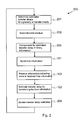
Figure 1 shows a flowchart relating to methods 100 and 110 in accordance with a first
embodiment of the invention. This first embodiment relates to transferring time
information to a communications device. The method 100 is carried out in a
communications system, and method 110 is carried out in a communications device. In
step 101 time information is sent from a communication system to a communication
device. The time information may, for example, form part of a location assistance data
relating to a GPS system. In step 111, the communication device receives the time
information. In step 112, the communication device determines time with respect to an
external time frame. The external time frame may be, for example, the GPS time, and
the communication device having the necessary GPS functionality determines the GPS
time based on signals received from the GPS satellites, typically with the help of
location assistance data. In step 113, the communications device determines the error
in the received time information. In step 114, the communications device sends
information indicating the determined error to the communications system. In step
102, the communications system receives information indicating the error in the time
information received by the communications device, and in step 103 the
communications system estimates a transfer delay for transferring said time
information.
-
Figure 2 shows a method 200 relating to a second embodiment of the present
invention. In this method, there are a plurality of transfer media through which the
time information may be sent. Transfer delays for the transfer media are estimated
statistically using information received from communications devices relating to the
errors in time information. Transfer delay estimates may be used for selecting a
suitable transfer medium for time information. Furthermore, it is possible to
compensate for the estimated transfer delay.
-
In step 201, estimated transfer delays are determined for a plurality of transfer media.
This may be done by updating transfer delay information each time information
indicating error relating to the time information is received from a communications
device (see step 204). In step 202, a transfer medium is selected for transferring time
information to a specific communications device. The transfer medium is typically
selected using the estimated transfer delays. In step 203, the expected transfer delay is
compensated for in the time information. The following steps 101-103 are the same
steps as in method 100. In step 204, the transfer delay estimate relating to the selected
transfer medium is updated.
-
In the following, GPS time information is used as an example of time information. It
is, however, appreciated that the present invention is not restricted providing time
information relating to the GPS system, but may be used for providing any time
information.
-
Figure 3 shows, as an example, a schematic view of a cellular telecommunications
network 10 supporting positioning services. The cellular telecommunications network
10 contains a radio access network 12 and a core network 20. The radio access
network 12 has a plurality of base station controllers (BSC) 14 responsible for
controlling the radio resources. A base station controller 14 may control a plurality of
base stations (BS) 16, which are typically connected to a base station controller with a
fixed line connection or, for example, with a point-to-point radio or microwave link. A
base station controller 14 is responsible for controlling and managing the radio
resources in a base station 16. The core network 20 contains Mobile Switching Centers
(MSC) 22, a Home Location Register (HLR) 24 and Visitor Location Registers (VLR)
26. Figure 3 shows, as an example, only one BSC, MSC and VLR.
-
It is appreciated that the names of the network elements of a cellular
telecommunications network may vary. The naming of the network elements in
connection with Figure 3 is in accordance with the Global Mobile
Telecommunications System (GSM), but similar network elements are found also in
other cellular telecommunication systems. For example, in Universal Mobile
Telecommunications System (UMTS) a transceiver network element is called a node
B, and a control network element responsible for controlling radio resources is a Radio
Network Controller. A communications device is called user equipment in UMTS and
a mobile station in GSM. It is evident to a person skilled in the art that in Figure 3 a
GSM network is used as an example of a cellular communications system.
-
Location services architecture is logically implemented in the GSM network 10
through the addition of one network node, the Mobile Location Center (MLC). A MLC
can be either a Serving MLC (SMLC) 30 or a Gateway MLC (GMLC) 32. The SMLC
manages the overall coordination and scheduling of resources required to perform
positioning of a mobile station. The SMLC typically calculates the final estimate and
accuracy for the location of a mobile station. The GMLC is a node, which an external
LCS client accesses for obtaining location information about a mobile station. The
GMLC obtains location area of the mobile station from Home Location Register after
proper authentication, and can then obtain information about the location of the mobile
station from the serving MLC.
-
For positioning a communication device of a cellular telecommunications network
using a satellite positioning system, the communication device needs to be provided
with functionality to receive and process signals from satellite positioning system
satellites. A communications device equipped may locate itself without location
assistance information, if it receives signals from positioning system satellites
successfully. Even in this case location assistance data may make the positioning
faster. A communications device may alternatively be capable of determining only
satellite positioning system time and distances from the positioning system satellites.
The distance measurement results are transmitted to a further computing element,
where the location of the communications device is determined. The further computing
element is often called a location server.
-
For providing location assistance information to the communications device, the
communications system is equipped with reference satellite positioning system
receivers. Figure 3 shows, as an example, a reference GPS receiver 34 connected to the
SMLC 30.
-
It is evident that in other location service architectures, the network elements having
similar functionality as the Mobile Location Center may have different names. Below
term location server is used to refer to a network element providing functionality
relating to positioning of a communication device.
-
A third embodiment of the invention relates to sending time information relating to
GPS, or other satellite positioning system, to a mobile station via a communications
system. Figure 4 shows schematically a method where a mobile station with an A-GPS
receiver receives the location assistance information from the communications system.
Time information contained in the location assistance information represents a
reference time for GPS positioning. If/when the mobile station gets a GPS location fix
and at the same time GPS time fix, the mobile station estimates the error in the
reference time received from the communications system. In other words, the mobile
station estimates the time difference between the GPS time as estimated based on the
received time information and the real GPS time from the GPS receiver having GPS
fix. The mobile station sends this time error information back to the communications
system. The communications system can estimate statistically the transfer delay and
the related GPS reference time inaccuracy for other assistance data delivery
transactions.
-
The third embodiment is discussed in more detail next with reference to Figure 4. The
communications system sends GPS location assistance information including time
information t_ref for GPS to the mobile station (arrow 401). The GPS location
assistance information may be sent, for example, in a location request message. The
network element generating the GPS location assistance data may be the Serving
Mobile Location Center (SMLC) in 3GPP standardized GSM and UMTS A-GPS
solutions. It may alternatively be a network server as planned for OMA (Open Mobile
Alliance) Overlay A-GPS solution. The mobile station tries to obtain a GPS fix with
the available location assistance data (step 402 in Figure 4). If a GPS fixed is
successfully obtained, the mobile station gets both a GPS location estimate and also
the real (accurate) GPS time.
-
The mobile station estimates for a certain moment the time difference between the real
GPS time t_GPS and the estimate of GPS time t_est that is based on reference time
t_ref (step 403 in Figure 4). An example of this procedure can be seen in Figure 5,
discussed in more detail below. The mobile station then sends the time difference
(t_GPS - t_est) to the communications system (arrow 404). The time difference
information may be sent, for example, in a location request message. The
communications system (for example, the SMLC) collects and stores the time
difference information (step 405 in Figure 4). Additional parameters can be related to
the time difference information may also be stored, as Figure 4 shows by the way of
example. Some examples of these additional parameters are the time of day, nature of
the data channel (transfer medium) and, if delays within the communications system
may vary geographically, rough location of the communications device (for example, a
location area). These additional parameters and/or the transfer delay information may
be used in selecting a data channel (transfer medium) for location assistance data
delivers, where there are a number of transfer media for sending location assistance
data. The communication system processes statistically collected time difference
information to obtain useful information (step 406 in Figure 4).
-
The statistically processed information can be used, for example, to the following
purposes. It is possible to enhance the accuracy of time information for other
location/assistance data delivery transactions. For example, if the time difference
distribution has a certain offset (Δ as seen in Figure 6), this can be compensated for
either in the communication system before sending time information or in the
communications device. In the latter case, the communications device is informed
about estimated transfer delay, for example, as part of location assistance information.
Δ represents here the median error in the reference time represented by the time
information. It is also or alternatively possible to estimate the reliability of the
reference time, for example based on standard deviation of the time difference
distribution (see Figure 6). The reliability of the reference time may be indicated to a
communications device. The communications device may use the reliability
information, for example, to change the size of search window for searching GPS
satellite signals. Better reliability means a smaller search window, which in turn means
that a satellite can be faster fixed.
-
Figure 5 shows schematically an example of implementation of determination of the
error in time information in a communications device. Figure 5 relates to GPS
positioning of a mobile station containing a GPS receiver. The horizontal axis in
Figure 5 represents time. In step 501 the communication system obtains a current GPS
time, for example from a GPS receiver connected to the communications system, and
uses it as the reference time t_ref. This reference time t_ref is sent to a mobile station
as part of location assistance information. Arrow 511 represents the transfer delay for
the assistance data, and in step 502 the mobile station receives the location assistance
data including the reference time t_ref. In step 503, the mobile station gets a GPR fix
and real GPS time t_GPS. Between steps 502 and 503, the mobile station uses its
internal clock to measure the elapsed time t_fix. Arror 512 indicates this elapsed time
t_fix. In step 504, the mobile station defines the time difference between the accurate
GPS time t_GPS and the estimated time t_est, the estimated time being based on the
reference time received from the communications system: t_est = t_ref + t_fix.
Information indicating the time difference is sent to the communications system. In
step 505, the communications system, for example the SMLC, estimates a transfer
delay for the location assistance data based on the received time difference
information. The transfer delay is typically estimated to be the time difference t_GPS -
t_est, which is received from the mobile station.
-
To describe the functionality of a communications device in more general terms, time
information is received at a first time instance. Time with respect to an external time
frame is determined at a second time instance. The communication device determines
the time lapsed between the first and second time instances using a specific clock, for
example its internal clock. The error in the received time information is determined
based on the received time information, time information with respect to the external
time frame and the time period lapsed between the first and second time instances.
-
Figure 6 shows an example of implementation of statistical analysis relating to the
time error information of a transfer medium. It is appreciated that if there is a plurality
of transfer media, statistical analysis may be carried out for each transfer medium
separately. The horizontal axis in Figure 6 represents the error in received time
information. As an example, the horizontal axis represents time difference t_GPS -
t_est. The vertical axis in Figure 6 represents the number of counts a specific time
difference has been indicated. The median of the time difference values is represented
with Δ. This median value is typically used when the effect of the transfer delay is
compensated for. The reliability of the time information can be estimated using a
standard deviation or other characteristics representing the width of the time difference
distribution. A small the standard deviation indicates, in a statistical sense, more
accurate received time information.
-
It is appreciated that if transfer delays in the underlying data transfer system vary too
much, the accuracy of the received time information may not be greatly enhanced even
with the compensation. Even in this case, however, estimation of the reliability of
transfer delays on statistical grounds is possible.
-
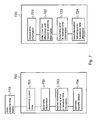
Figure 7 shows, as examples, schematically a network element 700 and a
communications device 720 in accordance with an embodiment of the invention. The
network element 700 may be, for example, a location server, more particularly a
Mobile Location Center or a network server in accordance with OMA SUPL (Secure
User Plane Location) specifications. An example of an OMA SUPL server is shown in
Figure 3, where a SUPL location server 36 is shown. The SUPL location server 36
may have an interface towards a SMLC 30, GMLC 32 or a Gateway GPRS Supporting
Node (GGSN, not shown in Figure 3). The GGSN is a gateway network element
relating to General Packet Radio Service (GPRS). The interface to a GMLC is optional
for a SUPL server 36, but an interface to SMLC 30 or to GGSN is typically required. It
is appreciated that a location server may, in general, have an interface to any serving or
gateway network element relating to a communications device. In a specific
communications system, the relevant specifications typically dictate the optional and
required interfaces.
-
The network element 700 is provided with a clock 710 measuring time with respect to
an external time frame. The clock 710 may be implemented as a GPS receiver
providing GPS time. Alternatively, the clock 710 may be a specific clock synchronized
with an external time frame, for example with a GPS time frame. The network element
700 has functionality 701 for determining the current time with respect to the external
time frame. Furthermore, there is functionality 702 for sending time information
indicating the determined current time to a communications device. Functionality 703
is for receiving information indicating error in time information received by a
communications device, and functionality 704 is for estimating transfer delay based on
received error information. It is clear that further functional blocks corresponding to
various further features discussed above may be implemented in the network element
700.
-
The communications device 720 contains functionality 721 for receiving time
information from the communications system. Functionality 722 is for determining
time information with respect to an external time frame. This functionality 722 may
contain a receiver for receiving signals, for example, from a positioning system.
Alternatively, functionality 722 may contain a special clock synchronized with the
external time frame. Functionality 723 is for determining error in the first time
information, and functionality 724 is for sending information indicating the error in the
first time information to the network element 700.
-
It is appreciated that most of the functionality discussed above may be provided as
software. Regarding positioning features, a receiver for location system signals is
needed in the communications device 720. In the network element 700, a receiver or at
least a clock synchronized with the location system time is typically needed for
providing a reference time for positioning. The network element 700 may need also
functionality for determining location assistance information to be sent to a
communications device.
-
It is appreciated that an alternative implementation could be a solution where the
mobile station itself collects information about transfer delays, but it is expected that
the communication system can collect much larger statistics in a shorter time. It is
appreciated, however, that in the appended claims the information indicating error in
the received time information is meant to cover also information containing statistical
information about the estimated error, not only one estimated error relating to a
specific time information transfer.
-
Implementation of the embodiments of the invention allows sending time information
relatively accurately without requiring specific hardware in the communication system
for synchronizing transmissions with respect to an external time frame, for example,
with respect to GPS time. Sending from a communications device information
indicating error in the received time information does not cause a considerable increase
in (signaling) load, especially if this information is sent in (signaling) messages that
are sent in any case. As an example, the location response message is mentioned
above.
-
Embodiments of the invention may be used, for example, for enhancing performance
of assisted Global Positioning System (A-GPS) by compensating for the transfer
delays relating to location assistance information. Embodiments of the invention can
further be used for estimating performance of a data transfer system, for example
performance of the cellular control plane signalling in GSM and UMTS, or
performance of the user plane signalling. Some examples of user plane signalling are
GPRS (General Packet Radio Service) and packet data. As discussed above, it is
possible to select the best transfer media (for example, SMS, GPRS, or GSM data) to
transfer location assistance data. Embodiments of the invention can be used for
network monitoring.
-
Implementing embodiments of the invention may require support in specifications of
relevant protocols. Some examples of relevant protocols are the 3GPP RRLP (Radio
Resource LCS Protocol) protocol in GSM, the RRC (Radio Resource Control) protocol
in UMTS, and in the OMA (Open Mobile Alliance) SUPL (Secure User Plane
Location) protocol. These are also examples of positioning systems, where
embodiments of the invention are applicable. The RRLP and RRC are signalling
protocols, and the OMA SUPL is a user-plane based positioning solution.
-
The term communications device in this description and in the appended claims refers
to a device equipped to receive and transmit information to and from a
communications system. Some examples of communications devices are user
equipment, mobile telephones, mobile stations, personal digital assistants, laptop
computers and the like. A communications system need not be mobile, but it may be
fixed to a certain position. Furthermore, a communications device need not be directly
used by a human user.
-
It is appreciated that a communications system, a network element or a
communications device may be arranged to implement any method in accordance with
embodiments of the invention.
-
Although preferred embodiments of the apparatus and method embodying the present
invention have been illustrated in the accompanying drawings and described in the
foregoing detailed description, it will be understood that the invention is not limited to
the embodiments disclosed, but is capable of numerous rearrangements, modifications
and substitutions without departing from the spirit of the invention as set forth and
defined by the following claims.