EP1563836A1 - Drug for inhibiting production of matrix metalloprotease-9 - Google Patents
Drug for inhibiting production of matrix metalloprotease-9 Download PDFInfo
- Publication number
- EP1563836A1 EP1563836A1 EP03755696A EP03755696A EP1563836A1 EP 1563836 A1 EP1563836 A1 EP 1563836A1 EP 03755696 A EP03755696 A EP 03755696A EP 03755696 A EP03755696 A EP 03755696A EP 1563836 A1 EP1563836 A1 EP 1563836A1
- Authority
- EP
- European Patent Office
- Prior art keywords
- mmp
- lmb
- production
- drug
- mouse
- Prior art date
- Legal status (The legal status is an assumption and is not a legal conclusion. Google has not performed a legal analysis and makes no representation as to the accuracy of the status listed.)
- Withdrawn
Links
Images


Classifications
-
- A—HUMAN NECESSITIES
- A61—MEDICAL OR VETERINARY SCIENCE; HYGIENE
- A61K—PREPARATIONS FOR MEDICAL, DENTAL OR TOILETRY PURPOSES
- A61K31/00—Medicinal preparations containing organic active ingredients
- A61K31/33—Heterocyclic compounds
- A61K31/335—Heterocyclic compounds having oxygen as the only ring hetero atom, e.g. fungichromin
- A61K31/35—Heterocyclic compounds having oxygen as the only ring hetero atom, e.g. fungichromin having six-membered rings with one oxygen as the only ring hetero atom
- A61K31/351—Heterocyclic compounds having oxygen as the only ring hetero atom, e.g. fungichromin having six-membered rings with one oxygen as the only ring hetero atom not condensed with another ring
-
- A—HUMAN NECESSITIES
- A61—MEDICAL OR VETERINARY SCIENCE; HYGIENE
- A61P—SPECIFIC THERAPEUTIC ACTIVITY OF CHEMICAL COMPOUNDS OR MEDICINAL PREPARATIONS
- A61P17/00—Drugs for dermatological disorders
-
- A—HUMAN NECESSITIES
- A61—MEDICAL OR VETERINARY SCIENCE; HYGIENE
- A61P—SPECIFIC THERAPEUTIC ACTIVITY OF CHEMICAL COMPOUNDS OR MEDICINAL PREPARATIONS
- A61P17/00—Drugs for dermatological disorders
- A61P17/02—Drugs for dermatological disorders for treating wounds, ulcers, burns, scars, keloids, or the like
-
- A—HUMAN NECESSITIES
- A61—MEDICAL OR VETERINARY SCIENCE; HYGIENE
- A61P—SPECIFIC THERAPEUTIC ACTIVITY OF CHEMICAL COMPOUNDS OR MEDICINAL PREPARATIONS
- A61P17/00—Drugs for dermatological disorders
- A61P17/16—Emollients or protectives, e.g. against radiation
-
- A—HUMAN NECESSITIES
- A61—MEDICAL OR VETERINARY SCIENCE; HYGIENE
- A61P—SPECIFIC THERAPEUTIC ACTIVITY OF CHEMICAL COMPOUNDS OR MEDICINAL PREPARATIONS
- A61P35/00—Antineoplastic agents
-
- A—HUMAN NECESSITIES
- A61—MEDICAL OR VETERINARY SCIENCE; HYGIENE
- A61P—SPECIFIC THERAPEUTIC ACTIVITY OF CHEMICAL COMPOUNDS OR MEDICINAL PREPARATIONS
- A61P35/00—Antineoplastic agents
- A61P35/04—Antineoplastic agents specific for metastasis
-
- A—HUMAN NECESSITIES
- A61—MEDICAL OR VETERINARY SCIENCE; HYGIENE
- A61P—SPECIFIC THERAPEUTIC ACTIVITY OF CHEMICAL COMPOUNDS OR MEDICINAL PREPARATIONS
- A61P43/00—Drugs for specific purposes, not provided for in groups A61P1/00-A61P41/00
-
- A—HUMAN NECESSITIES
- A61—MEDICAL OR VETERINARY SCIENCE; HYGIENE
- A61P—SPECIFIC THERAPEUTIC ACTIVITY OF CHEMICAL COMPOUNDS OR MEDICINAL PREPARATIONS
- A61P9/00—Drugs for disorders of the cardiovascular system
-
- C—CHEMISTRY; METALLURGY
- C07—ORGANIC CHEMISTRY
- C07D—HETEROCYCLIC COMPOUNDS
- C07D309/00—Heterocyclic compounds containing six-membered rings having one oxygen atom as the only ring hetero atom, not condensed with other rings
- C07D309/32—Heterocyclic compounds containing six-membered rings having one oxygen atom as the only ring hetero atom, not condensed with other rings having two double bonds between ring members or between ring members and non-ring members
Definitions
- the present invention relates to a drug for inhibiting the production of matrix metalloproteinase-9.
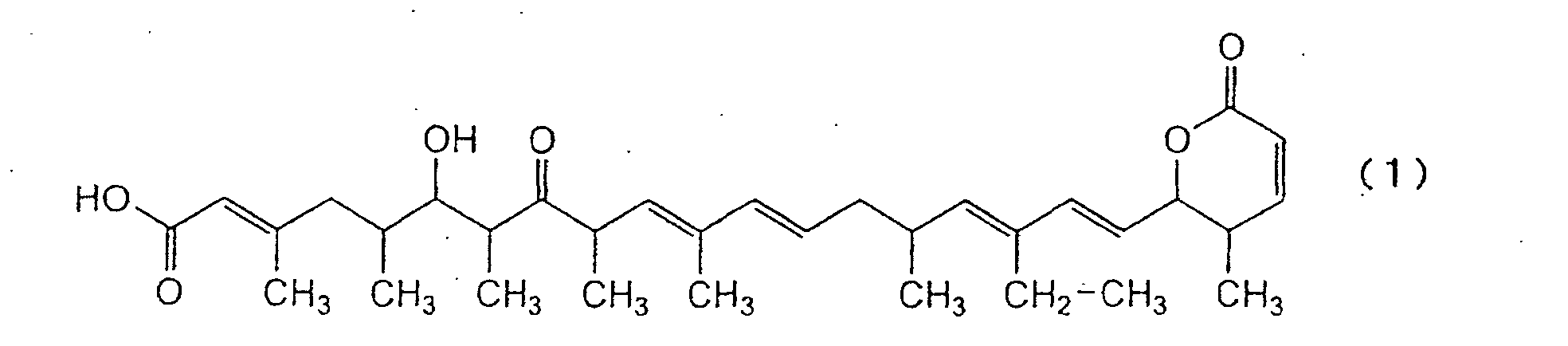
- Leptomycin B (or LMB) of the following formula (1) has been found originally as an anti-fungal antibiotic, however, thereafter, it has been clarified that also a derivative of the leptomycin B has analogous anti-fungal activity, and currently, it is paid to attention particularly as an anti-cancer agent.
- JP-A Japanese Patent Application Laid-Open (JP-A) No. 5-13133 describes an anti-tumor agent containing leptomycinB as an active ingredient and administered by parenteral administration methods such as subcutaneous injection, intravenous injection, intramuscular injection and the like or oral administration methods.
- This anti-tumor agent can show a strong anti-tumor action on P388 cell, Lewis Landa carcinoma cell, B16 melanoma cell, Erich carcinoma cell and the like transplanted to mouse, however, since it is not clear how leptomycin B acts on a tumor cell, applications other than anti-tumor agents have not been developed.
- Matrix metalloproteinases are a generic name for a group of metalloproteinases having an extracellular matrix protein as a main substrate. MMPs play an important role in tissue metabolism in vivo. Among them, matrix metalloproteinase-9 (MMP-9) not only acts as gelatinase to decompose gelatin components but also decomposes extracellular matrix components such as various collagens, elastin, fibronectin and the like as called alias type IV collagenase, and further, a possibility of activating a transforming growth factor (TGF- ⁇ ) and a tumor necrosis factor (TNF- ⁇ ) has been shown.
- TGF- ⁇ transforming growth factor
- TNF- ⁇ tumor necrosis factor
- MMP-9 infiltrated from peripheral inflammatory cells is a factor causing infiltration and metastasis of cancer and at the same time a factor causing blister formation in bullosis, and that MMP-9 derived from epidermal is correlated with apoptosis in irradiation with ultraviolet ray and consequently with ultraviolet dermatitis.
- MMP-9 causes delay of injury healing.
- MMP-9 causes neovascularization.
- MMP-9 correlated with these skin inflammatory diseases is believed to relate to eczematous dermatitis.
- MMP-9 derived from epidermal and epidermal keratinization the present inventors have separated and purified MMP-9 derived from neutrophiles, produced a monoclonal antibodies against MMP-9, and investigated localization of MMP-9 in skin tissue by this antibody, and resultantly confirmed localization of MMP-9 in epidermal keratinocyte tissue. Further, it has been confirmed that expression of MMP-9 is promoted more specifically as compared with MMP-2 in stimulating differentiation into keratinocytes using cultured epidermal keratinocyte.
- KRE-M9 which is a gene promoter region common to involucrin which is a marker for keratinization is present in an MMP-9 promoter, in addition to conventionally known TPA responsive element, as a transcription factor binding gene region regarding this promotion of expression, this finding supports promotion of specific expression of MMP-9 in stimulating differentiation into keratinocyte.
- keratinization is programmed cell death of an epidermal keratinocyte and believed to be one of apoptosis, and in such apoptosis, particularly, in apoptosis of epidermal cells, clinical conditions of hyperkeratosis, namely, dyskeratosis are often manifested as one inflammation condition, and since the study of the present inventors has clarified that expression of MMP-9 is specifically promoted in stimulating differentiation into keratinocyte, a possibility has been suggested of correlation of MMP-9 also in dyskeratosis in such apoptosis in epidermal keratinization.
- MMP-9 is correlated with skin inflammatory diseases such as infiltration and metastasis of cancer, blister formation in bullosis, neovascularization, delay of injury healing, eczematous dermatitis, ultraviolet dermatitis, dyskeratosis and the like.
- an object of the present invention is to provide a novel drug inhibiting the production of MMP-9.
- the present inventors have intensively studied and resultantly found that the leptomycin B can inhibit the production of MMP-9 derived from cultured epidermal keratinocyte more specifically as compared with MMP-2, further that the leptomycin B can inhibit the production of MMP-9 even under stimulating the differentiation by adding calcium at a high concentration, or adding TGF- ⁇ , and under stimulating for inducing inflammation by adding TNF- ⁇ or adding IL-1 ⁇ , leading to completion of the invention.
- the present invention (1) provides a drug for inhibiting the production of matrix metalloproteinase-9, comprising leptomycin B of the following formula (1) or its derivative as the active ingredient.
- a drug for inhibiting the production of matrix metalloproteinase-9 comprising leptomycin B of the following formula (1) or its derivative as the active ingredient.
- Such a constitution performs an effect that the production of MMP-9 can be inhibited specifically as compared with MMP-2, further, the production of MMP-9 can be inhibited even under stimulating the differentiation by adding calcium at a high concentration or adding TGF- ⁇ , and under stimulating for inducing inflammation by adding TNF- ⁇ or adding IL-1 ⁇ .
- the present invention (2) provides the drug according to the above-mentioned invention (1), which is a preventive drug or a therapeutic drug for matrix metalloproteinase-9 related skin diseases.
- This constitution performs an effect that prevention or treatment of metalloproteinase-9 related skin diseases can be conducted effectively, in addition to the effect performed by the above-mentioned invention (1).
- the present invention (3) provides the drug according to the above-mentioned invention (2) wherein the above-mentioned preventive drug or therapeutic drug is administered in the form of skin external medicine.
- This constitution performs an effect that an effect of preventing or treating MMP-9 related skin diseases can be further improved, in addition to the effect performed by the above-mentioned invention (2).
- the drug for inhibiting MMP-9 of the present invention contains LMB or its derivative as the active ingredient.
- LMB is an antibiotic produced from an LMB production germ belonging to Streptomyces belonging to Actinomycetes and can be obtained by separation and purification from a cultured LMB production germ according to a method described in (The Journal of Antibiotics, 1983, vol. 36, pp. 639 to 650).
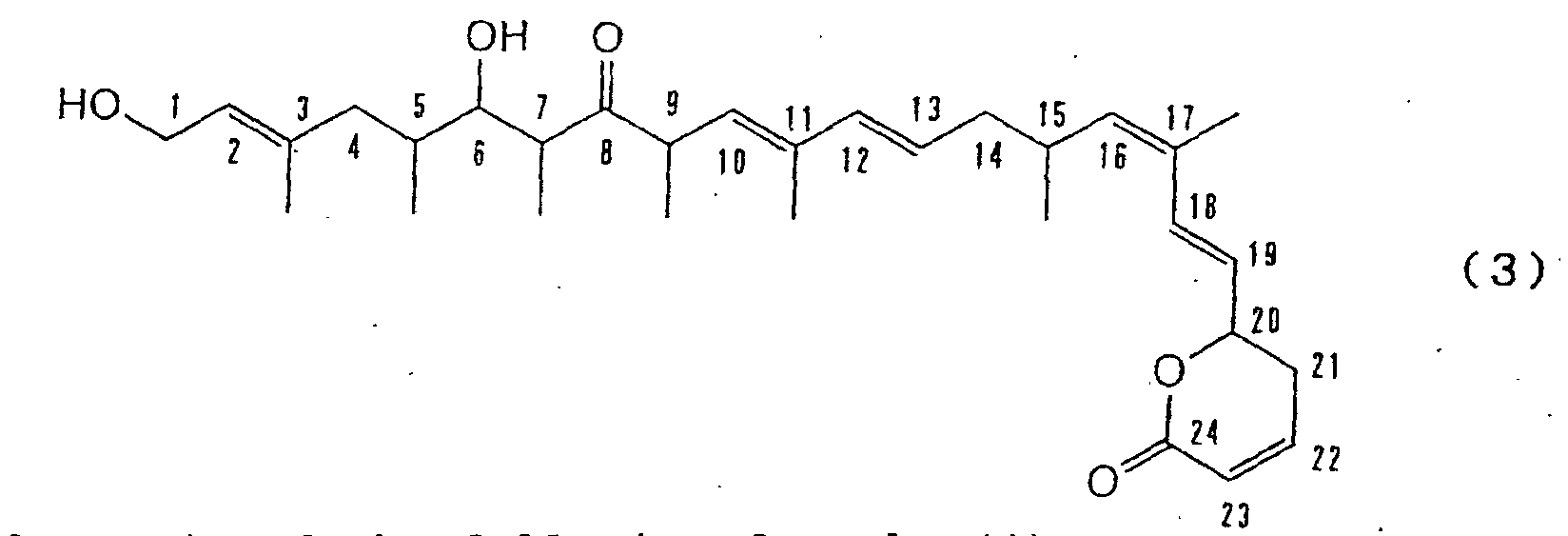
- LMB derivative there exemplified derivatives of LMB selected from the group consisting of leptomycin A of the following formula (2) a substance S-59917a of the following formula (3) and elactocin of the following formula (4)
- Leptomycin A is an antibiotic produced from the above-mentioned LMB production germ and can be obtained by separation and purification from the above-mentioned cultured LMB production germ according to a method described in (The Journal of Antibiotics, 1983, vol. 36, pp. 639 to 650).
- the substance S-59917a is an antibiotic produced from a substance S-59917a production germ belonging to Streptomyces, and can be obtained by separation and purification from a cultured S-59917a production germ as described in Japanese Patent Application Laid-Open (JP-A) No. 5-39283.
- the drug for inhibiting the production of MMP-9 of the present invention can be used as a preventive drug or a therapeutic drug for MMP-9 related skin diseases
- the MMP-9 related skin diseases include infiltration and metastasis of cancer, bullosis, neovascularization, delay of injury healing, eczematous dermatitis, ultraviolet dermatitis, dyskeratosis and the like, preferably, bullosis, neovascularization, delay of injury healing, eczematous dermatitis, ultraviolet dermatitis, or dyskeratosis, particularly preferably bullosis, delay of injury healing, eczematous dermatitis, ultraviolet dermatitis, or dyskeratosis.
- the drug for inhibiting the production of MMP-9 of the present invention suppresses the production of MMP-9, and it is also preferable that, in the case of induction of the production of MMP-9 by causing an inflammatory reaction in a cell by cytokines such as TNF- ⁇ , IL-1 ⁇ and the like, the drug inhibits the production of MMP-9.
- the present drug is effective as a therapeutic drug or a preventive drug for MMP-9 related skin diseases such as bullosis, neovascularization, delay of injury healing, eczematous dermatitis and the like, or a therapeutic drug or a preventive drug for MMP-9 related skin diseases such as bullosis, delay of injury healing, eczematous dermatitis and the like.
- MMP-9 induction of the production of MMP-9 by inducing a differentiation such as keratinization and the like in a cell by differentiation stimulation by adding calcium at a high concentration or TGF- ⁇
- the production of MMP-9 is inhibited, and in this case, the present drug is effective as a therapeutic drug or a preventive drug for MMP-9 related skin diseases such as ultraviolet dermatitis, dyskeratosis and the like.
- leptomycin B or its derivative in an amount effective for preventive or therapeutic object is formulated together with a pharmaceutically acceptable carrier or diluent.
- a binder, absorption promoter, lubricant, emulsifer, surfactant, antioxidant, preservative, coloring agent, aromatic, sweetener or the like may be added.
- the dosage form of the medical preparation includes granule, fineparticle, tablet, capsule, pill, ointment, gel, paste, cream, spray, solution, suspension and the like, and the dosage embodiments thereof include oral administration, and additionally, various administration embodiments such as parenteral administrations such as injection, external application and the like.
- the preparation of the present invention is preferably a therapeutic drug or a preventive drug which is administered in the form of external preparation, and particularly preferably a skin external preparation which is applied on skin.
- a therapeutic drug or a preventive drug which is administered in the form of external preparation
- a skin external preparation which is applied on skin.
- components compounded in external preparations for usual drug or cosmetics for example, ultraviolet absorbers, oily components, humectants, thickening agents, emulsifiers, preservatives, powders, emulsification stabilizers, pH regulators, aromatics, alcohols, water and the like can be compounded.
- the ultraviolet absorber includes organic ultraviolet absorbers such as dibenzoylmethane derivatives, cinnamate ester derivatives, benzophenone derivatives, p-aminobenzoic acid derivatives and the like, and inorganic ultraviolet absorbers such as zinc oxide, mica, mica titanium, titanium oxide, magnesium oxide, zioconium oxide and the like.
- organic ultraviolet absorbers such as dibenzoylmethane derivatives, cinnamate ester derivatives, benzophenone derivatives, p-aminobenzoic acid derivatives and the like
- inorganic ultraviolet absorbers such as zinc oxide, mica, mica titanium, titanium oxide, magnesium oxide, zioconium oxide and the like.
- the oily components include liquid paraffin, Vaseline, paraffin wax, squalane, beeswax, carnauba wax, oliveoil, lanolin, higher alcohols, fatty acids, synthetic ester oils of higher alcohols with fatty acids, silicone oils, fluorine-based oils and the like.
- the compounding amount of leptomycin B or its derivative into a skin external preparation is not particularly restricted, and preferably from 0.0001 to 50 wt%, particularly preferably from 0.001 to 20 wt%.
- the skin external preparation of the present invention may be any drug used as a skin external preparation such as an ointment, cream, emulsion, lotion, pack, bath preparation and the like, and the dosage form is not particularly restricted.
- a foreskin of a neonate was treated at 4°C for 16 hours by a disperse having a casein decomposition activity of 25.0 caseinolytic units/ml.
- Epidermal was peeled from dermis using a forceps, then, the epidermal was treated with 0.05% trypsin for 5 minutes.
- the separated human foreskin keratinocytes (HFKs) were allowed to incubate at 37°C in a plate having a keratinocyte-SFM medium (manufactured by Invitrogen), and sub-cultured over three generations.
- LMB human foreskin keratinocytes
- MMP-2 and MMP-9 were separated from the samples by an SDS-PAGE method using 7.5% polyacrylamide gel containing 0.5% gelatin. After separation by an SDS-PAGE method, the separated gel was washed with a solution containing 2.5% Triton X-100 for 1 hour, to remove SDS. For allowing MMP-2 and MMP-9 separated in the separated gel to decompose gelatin in the separated gel, the separated gel was allowed to incubate at 35°C for a given time in abuffer solution for reaction (standard conditions: 0.05 M Tris-HCl (pH 7.4)/0.15 M NaCl/5 mM CaCl 2 /0.02% NaN 3 ).
- Culturing of a human epidermal keratinocyte and detection of MMP-2 and MMP-9 by a gelatin zymography method were conducted by the same manner as in Example 1 except that LMB was added into four plates obtained by sub-culturing human foreskin keratinocytes (HFKs) over three generations, so that the concentrations in the medium were 0 nM, 0.4 nM, 2 nM and 10 nM, respectively, and a calcium chloride aqueous solution was added so that the four concentrations of Ca + in the medium were all 1.5 mM, instead of adding LMB into four plates obtained by sub-culturing human foreskin keratinocytes (HFKs) over three generations, so that the concentrations in the medium were 0 nM, 0.4 nM, 2 nM and 10 nM, respectively, in culturing of human epidermal keratinocyte.
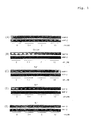
- the results are shown in Fig. 1 (B).
- Culturing of a human epidermal keratinocyte and detection of MMP-2 and MMP-9 by a gelatin zymography method were conducted by the same manner as in Example 1 except that LMB was added into four plates obtained by sub-culturing human foreskin keratinocytes (HFKs) over three generations, so that the concentrations in the medium were 0 nM, 0.4 nM, 2 nM and 10 nM, respectively, and TGF- ⁇ was added so that the four concentrations of TGF- ⁇ in the medium were all 1 ng/ml, instead of adding LMB into four plates obtained by sub-culturing human foreskin keratinocytes (HFKs) over three generations, so that the concentrations in the medium were 0 nM, 0.4 nM, 2 nM and 10 nM, respectively, in culturing of human epidermal keratinocytes.
- the results are shown in Fig. 1 (C).
- Culturing of a human epidermal keratinocyte and detection of MMP-2 and MMP-9 by a gelatin zymography method were conducted by the same manner as in Example 1 except that LMB was added into four plates obtained by sub-culturing human foreskin keratinocytes (HFKs) over three generations, so that the concentrations in the medium were 0 nM, 0.4 nM, 2 nM and 10 nM, respectively, and TNF- ⁇ was added so that the four concentrations of TNF- ⁇ in the medium were all 10 ng/ml, instead of adding LMB into four plates obtained by sub-culturing human foreskin keratinocytes (HFKs) over three generations, so that the concentrations in the medium were 0 nM, 0.4 nM, 2 nM and 10 nM, respectively, in culturing of human epidermal keratinocytes.
- the results are shown in Fig. 1 (D).
- Culturing of a human epidermal keratinocyte and detection of MMP-2 and MMP-9 by a gelatin zymography method were conducted by the same manner as in Example 1 except that LMB was added into four plates obtained by sub-culturing human foreskin keratinocytes (HFKs) over three generations, so that the concentrations in the medium were 0 nM, 0.4 nM, 2 nM and 10 nM, respectively, and IL-1 ⁇ was added so that the four concentrations of IL-1 ⁇ in the medium were all 10 -10 M, instead of adding LMB into four plates obtained by sub-culturing human foreskin keratinocytes (HFKs) over three generations, so that the concentrations in the medium were 0 nM, 0.4 nM, 2 nM and 10 nM, respectively, in culturing of human epidermal keratinocytes.
- the results are shown in Fig. 1 (E).
- Example 1 From the results in Example 1 shown in Fig. 1 (A), it is understood that when the concentration of LMB in the medium is 2 nM or more, under no stimulation, the production of MMP-9 is inhibited. From the results of Examples 2 and 3 shown in Figs. 1 (B) and (C), it is understood that when the concentration of LMB in the medium is 2 nM or more even under conditions for stimulating differentiation by calcium at a high concentration or TGF- ⁇ and promoting the production of MMP-9, the production of MMP-9 is inhibited. Further, from the results of Examples 4 and 5 shown in Figs.
- a foreskin of a neonate was treated at 4°C for 16 hours by a disperse having a casein decomposition activity of 25.0 caseinolytic units/ml.
- Epidermal was peeled from dermis using a forceps, then, the epidermal was treated with 0.05% trypsin for 5 minutes.
- the separated human foreskin keratinocytes (HFKs) were allowed to incubate at 37°C in a plate having a keratinocyte-SFM medium (manufactured by Invitrogen), and sub-cultured over three generations.
- LMB foreskin keratinocytes
- RNAs were stored at -80°C in the form of solution having a concentration of 1 ⁇ g/ml.
- a RT-PCR method was conducted using TaKaRa RNA PCR kit (manufactured by TaKaRa).
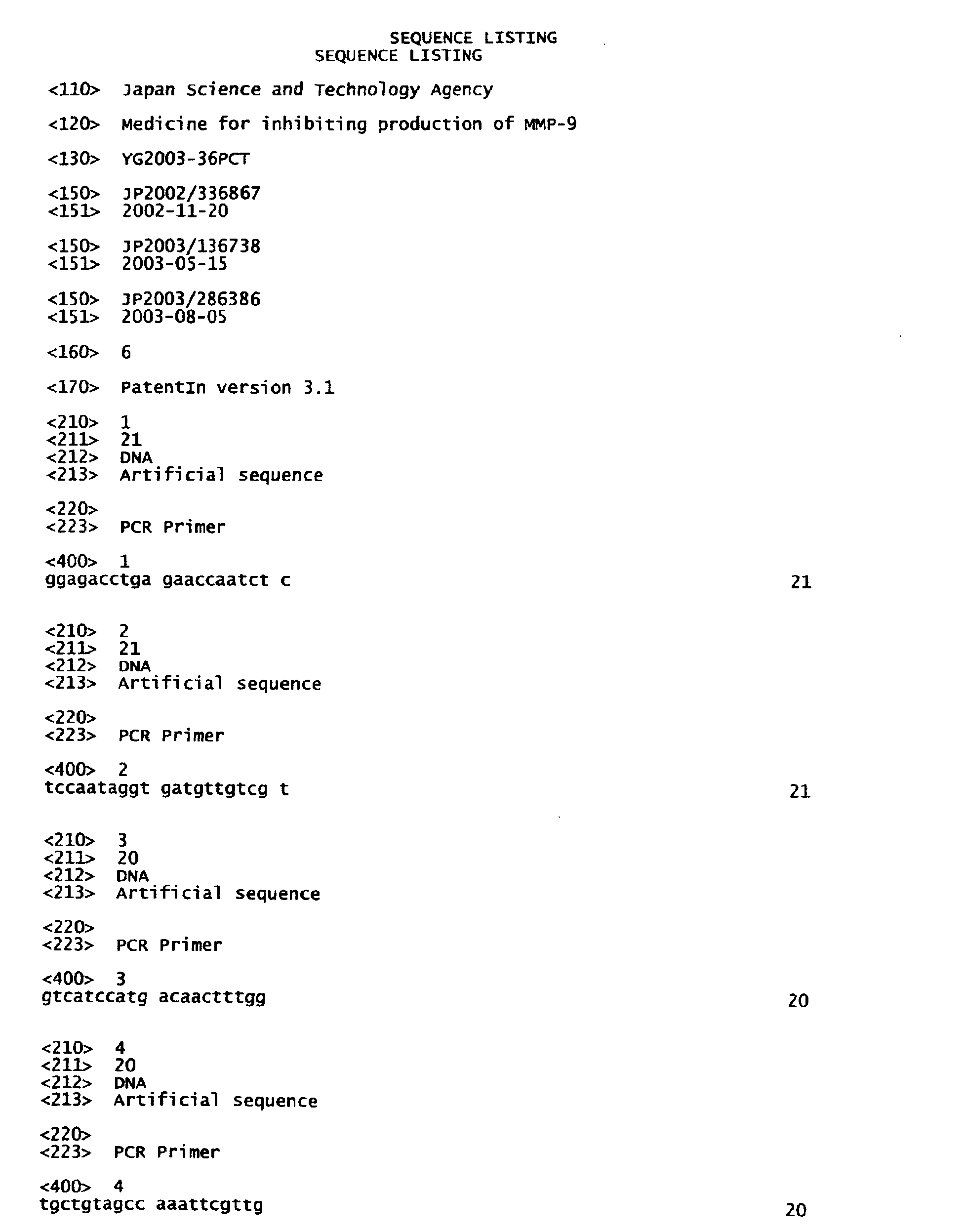
- a sense primer SEQ ID No. 1
- an antisense primer SEQ ID No. 1
- RNA was used for the 3' end situated at 372 to 392 base pairs.
- a sense primer SEQ ID No. 3
- an antisense primer SEQ ID No. 4
- Reverse transcription of RNA was conducted by incubating at 42°C for 1 hour. Incubation in PCR of cDNA obtained by reverse transcription was conducted according to the following temperature profile.
- Example 6 From the results in Example 6 shown in Sample 1 and Sample 2 in Fig. 2, it is understood that when the concentration of LMB in the medium is 10 nM, under no stimulation, the production of MMP-9 is inhibited, as compared with GAPDH. From the results in Example 7 shown in Sample 3 and Sample 4 in Fig. 2, it is understood that when the concentration of LMB in the medium is 10 nM, even under stimulation with calcium at a high concentration, the production of MMP-9 is inhibited, as compared with GAPDH. From the results in Example 8 shown in Sample 5 and Sample 6 in Fig. 2, it is understood that when the concentration of LMB in the medium is 10 nM, even under stimulation with TGF- ⁇ , the production of MMP-9 is inhibited, as compared with GAPDH.
- Example 9 shown in Sample 7 and Sample 8 in Fig. 2 it is understood that when the concentration of LMB in the medium is 10 nM, even under stimulation with TNF- ⁇ , the production of MMP-9 is inhibited, as compared with GAPDH.
- Example 10 shown in Sample 9 and Sample 10 in Fig. 2 it is understood that when the concentration of LMB in the medium is 10 nM, even under stimulation with IL-1 ⁇ , the production of MMP-9 is inhibited, as compared with GAPDH. From the above-mentioned results, it has been clarified that addition of LMB inhibits the production of MMP-9 as compared with GAPDH.
- the following experiment was conducted for the purpose of checking a relation between KRE-M9 of a promoter sequence of an MMP-9 gene, the production of MMP-9, and LMB, to verify that the production of MMP-9 is inhibited by the action of LMB.
- a foreskin of a neonate was treated at 4°C for 16 hours by a disperse having a casein decomposition activity of 25.0 caseinolytic units/ml.
- Epidermal was peeled from dermis using a forceps, then, the epidermal was treated with 0.05% trypsin for 5 minutes.
- the separated human foreskin keratinocytes (HFKs) were allowed to incubate at 37°C in a 24-well plate having a keratinocyte-SFM medium (manufactured by Life Technologies) containing 0.09 mM Ca + , and sub-cultured over three generations.
- a -73 to +16 base sequence containing KRE-M9 of an MMP-9 promoter sequence and a -56 to +16 base sequence containing no KRE-M9 were inserted into pGL3-basic vector (manufactured by Promega) which is a luciferase expression vector containing a luciferase gene according to a method of Kobayashi et al. (Kobayashi et al. (2001) EMBO Rep. 2, 604 to 608), to prepare vector-1 and vector-2.
- pGL3-basic vector manufactured by Promega
- a base sequence containing a -73 to +16 base sequence containing KRE-M9 is shown in Fig. 3 (C).
- vector-1 and vector-2 and Fugene 6 manufactured by Roche which is a reagent for gene introduction
- a vector-1 solution and a vector-2 solution each having a DNA concentration of 3 ⁇ g/1 ml were prepared, respectively.
- the vector solution 1 was added to solutions in 12 wells and the vector solution 2 was added to solutions in the remaining 12 wells each at 37°C, of HFKs culture solutions in the 24-well plates obtained in ⁇ Culturing of human epidermal keratinocyte> and gene introduction was performed, further, 10 nM LMB was added to solutions in 6 wells to give a 6-well LMB added plate 1 and LMB was not added to solutions in the remaining 6 wells to give a 6-well LMB no-addition plate 1, of the 12 wells obtained by addition of the vector-1 solution, and 10 nM LMB was added to solutions in 6 wells to give a 6-well LMB added plate 2 and LMB was not added to solutions in the remaining 6 wells to give a 6-well LMB no-addition plate 2, of the 12 wells obtained by addition of the vector-2 solution, then, they were allowed to stand still for 3 hours.
- Gene introduction of a luciferase gene effected as described above induces the production of MMP-9 and the production of luciferase, and by measuring the light emitting intensity in a light emitting reaction by luciferase by a micro press counter, the production of MMP-9 can be monitored.
- luciferase assay The activity of luciferase was measured by Luciferase assay system (manufactured by Promega). As a micro press counter, Microbeta (manufactured by Perkin-Elmer) was used. In this measurement, the total transcription activity after 12 hours was measured using 3 wells among 6 wells, further, the total transcription activity after 24 hours was measured using the remaining 3 wells, each using the 6-well LMB added plate 1, 6-well LMB no-addition plate 1, 6-well LMB added plate 2 and 6-well LMB no-addition plate 2. The results are shown in Figs. 3 (A) and (B). In Figs.
- the upper numerical value shows a total transcription activity in the case of gene introduction of vector-1 containing KRE-M9 into HFKs
- the lower numerical value shows a total transcription activity in the case of gene introduction of vector-2 containing no KRE-M9 into HFKs
- the upper stage numerical value shows a case of addition of 10 nM LMB
- the lower stage numerical value shows a case of no addition of LMB
- a figure is by arbitrary unit and shows an average value of 3 wells. The standard deviation is shown by error bar.
- KRE-M9 is important for promoting the transcription activity of MMP-9 , and that KRE-M9 regulates expression through inhibition of the transcription activity of MMP-9 in the case of the presence of LMB, supporting effectiveness of LMB as a drug for inhibiting the production of MMP-9.
- ⁇ Culturing of human epidermal keratinocyte> was conducted in the same manner as in Example 11.
- ⁇ Preparation of vector for lucif erase assaymeasurement> was conducted in the samemanner as in Example 11 except that a -80 to +16 base sequence 1 containing KRE-M9 of an MMP-9 promoter sequence and TPA responsive element (hereinafter, referred to as TRE in some cases), a base sequence 2 obtained by 4-base substitution of the KRE-M9 sequence in the base sequence 1, a -714 to +16 base sequence 3, a base sequence 4 obtained by 4-base substitution of the KRE-M9 sequence in the base sequence 3 , abase sequence 5 obtained by 3-base substitution of the TRE sequence in the base sequence 4, and a base sequence 6 obtained by 4-base substitution of the KRE-M9 sequence and by 3-base substitution of the TRE sequence in the base sequence 4, were used, instead of the -73 to +16 base sequence containing KRE-M9 of an MMP-9 promoter sequence and the -56 to +
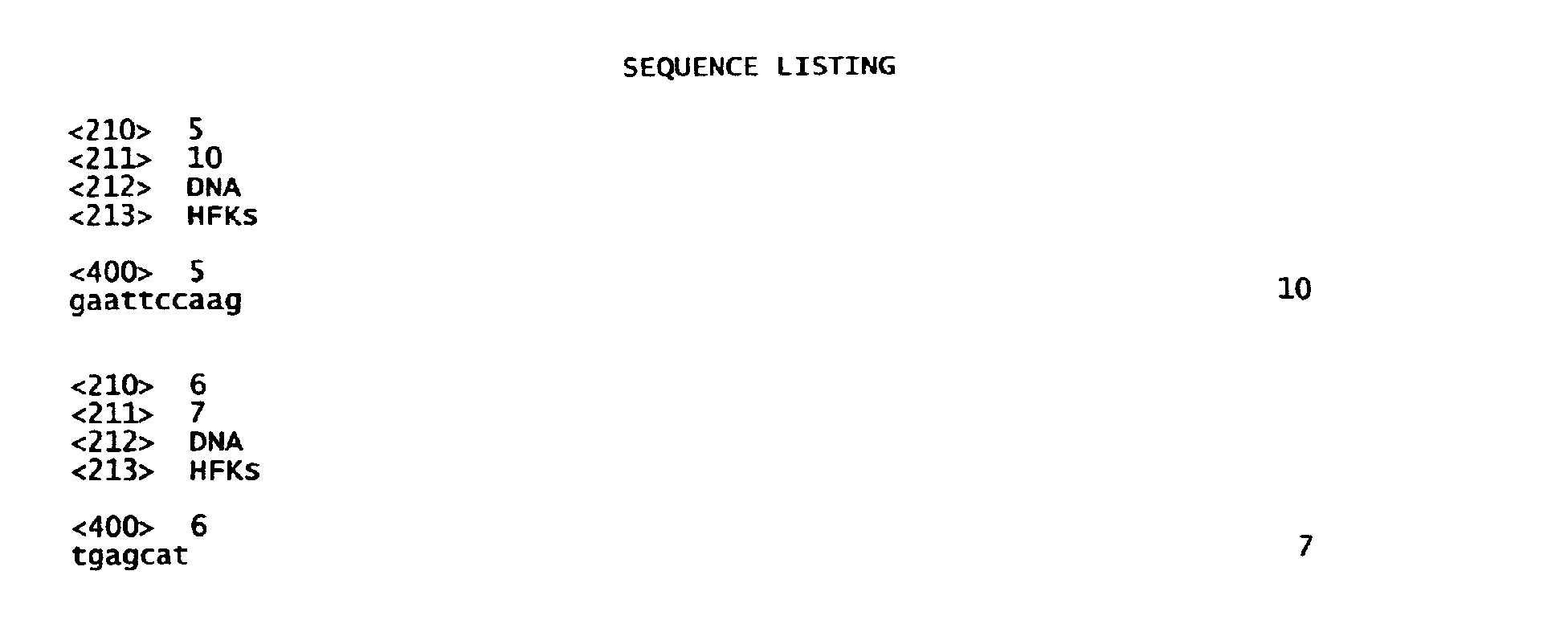
- the 4-base substituted sequence of the KRE-M9 sequence and the 3-base substituted sequence of the TRE sequence are shown in SEQ ID Nos. 5 and 6.
- ⁇ Gene introduction> and ⁇ Measurement of transcription activity by luciferase assay> were also conducted in the same manner as in Example 11 except that the total transcription activity was measured 24 hours after gene introduction.
- the results of measurement of transcription activity in the case of use of the base sequences 1 and 2 and the results of measurement of transcription activity in the case of use of the base sequences 3 to 6 are shown in Fig. 4 (A) and Fig. 4 (B), respectively.
- a gel shift assay was conducted using a human keratinocyte nuclear protein according to a method of Kobayashi et al. (Kobayashi et al. (2001) EMBO Rep. 2, 604 to 608) except that a double stranded DNA1 prepared using a KRE-M9 sequence and a double stranded DNA2 prepared using a 4-base substituted sequence of a KRE-M9 sequence as depicted in SEQ ID No. 5 were used as a competitor and a KRE-M9 sequence labeled with 32 P and a 4-base substituted sequence of a KRE-M9 sequence were used as a probe in the experiment.
- the results are shown in Fig. 4 (C) .
- aright triangle arrow shows a band revealing detection of a probe itself and a left arrow shows a shifted band.
- Fig. 4 (A) show that the transcription activity of MMP-9 is suppressed by the addition of LMB in the case of use of not only the base sequence 1 but also the base sequence 2 obtained by 4-base substitution of KRE-M9, therefore, not only KRE-M9 but also TRE is important for suppression of the transcription activity of MMP-9 in a gene region containing TRE and KRE-M9.
- Fig. 4 (B) show that the transcription activity of MMP-9 is suppressed by the addition of LMB also in the case of use of the base sequence 6 varied by base substitution of both KRE-M9 and TRE, therefore, also gene regions other than KRE-M9 and TRE cause suppression of the transcription activity of MMP-9 by the addition of LMB.
- a shifted band is detected, obtained by binding of a human keratinocyte nucleus protein to a KRE-M9 probe (first stage from left in Fig. 4 (C)).
- a shifted band is not detected by competitive inhibition (second stage from left in Fig. 4 (C)).
- a shifted band is detected (third stage from left in Fig.
- mice Ten 8-weeks old female hairless mice (Hos: HR-1) were previously bred for 1 week. Five mice (mouse A1, mouse B1, mouse C1, mouse D1, mouse E1) were irradiated at the back with ultraviolet B (UVB) of 300 mJ (about 3 MED (minimal erythema dose)), and five mice (mouse A2, mouse B2, mouse C2, mouse D2, mouse E2) were not irradiated with ultraviolet ray.
- UVB ultraviolet B
- leptomycin B was administered by externally applying a solution of a concentration of 10 ⁇ g/ml (20 ⁇ M) to mouse B1 and mouse B2, a solution of a concentration of 1 ⁇ g/ml (2 ⁇ M) to mouse C1 and mouse C2, a solution of a concentration of 100 ng/ml (200 nM) to mouse D1 and mouse D2 and a solution of a concentration of 10 ng/ml (20 nM) to mouse E1 and mouse E2, each in an amount of 0.1 ml by a brush, as a solution containing leptomycin B dissolved in 70% ethanol.
- mice A1 and mouse A2 To mouse A1 and mouse A2, about 0.1 ml of 70% ethanol was applied by a brush. Then, skins were collected from mouse A1 to mouse E1 irradiated with ultraviolet ray 48 hours after irradiation and mouse A2 to mouse E2 not irradiated with ultraviolet ray. The collected skins were fixed with formalin and embedded in paraffin, then, the slices were stained with hematoxylin and eosin.
- FIG. 5 Slices of skins collected from mouse A1, mouse B1, mouse C1, mouse D1 and mouse E1 and stained and slices of skins collected from mouse A2, mouse B2, mouse C2, mouse D2 and mouse E2 and stained were observed by ECLIPSE E1000M optical microscope (manufactured by NIKON), and the results are shown in Fig. 5.
- A1 to E1 correspond to slices of skins collected from mouse A1 to mouse E1 and stained, respectively
- A2 to E2 correspond to slices of skins collected from mouse A2 to mouse E2 and stained, respectively
- the length of a bar indicates 100 ⁇ m.
- SEQ ID Nos. 1 to 4 show a sequence of a primer
- SEQ ID Nos. 5 and 6 show a 4-base substituted sequence of a KRE-M9 sequence and a substituted sequence of a TRE sequence.
- the drug for inhibiting the production of MMP-9 of the present invention can inhibit the production of MMP-9 more specifically as compared with MMP-2, further, can inhibit the production of MMP-9 even under stimulating the differentiation by adding calcium at a high concentration, or adding TGF- ⁇ , and under stimulating for inducing inflammation by adding TNF- ⁇ or adding IL-1 ⁇ .
Landscapes
- Health & Medical Sciences (AREA)
- Chemical & Material Sciences (AREA)
- Organic Chemistry (AREA)
- Veterinary Medicine (AREA)
- Medicinal Chemistry (AREA)
- Pharmacology & Pharmacy (AREA)
- Life Sciences & Earth Sciences (AREA)
- Animal Behavior & Ethology (AREA)
- General Health & Medical Sciences (AREA)
- Public Health (AREA)
- Nuclear Medicine, Radiotherapy & Molecular Imaging (AREA)
- General Chemical & Material Sciences (AREA)
- Chemical Kinetics & Catalysis (AREA)
- Bioinformatics & Cheminformatics (AREA)
- Engineering & Computer Science (AREA)
- Dermatology (AREA)
- Epidemiology (AREA)
- Cardiology (AREA)
- Heart & Thoracic Surgery (AREA)
- Oncology (AREA)
- Toxicology (AREA)
- Pharmaceuticals Containing Other Organic And Inorganic Compounds (AREA)
- Medicines That Contain Protein Lipid Enzymes And Other Medicines (AREA)
- Pyrane Compounds (AREA)
Abstract
Description



Claims (3)
- A drug for inhibiting the production of matrix metalloproteinase-9, comprising leptomycin B of the following formula (1)or its derivative as the active ingredient:

- The drug according to Claim 1, which is a preventive drug or a therapeutic drug for matrix metalloproteinase-9 related skin diseases.
- The drug according to Claim 2 wherein said preventive drug or therapeutic drug is administered in the form of skin external preparation.
Applications Claiming Priority (7)
| Application Number | Priority Date | Filing Date | Title |
|---|---|---|---|
| JP2002336867 | 2002-11-20 | ||
| JP2002336867 | 2002-11-20 | ||
| JP2003136738 | 2003-05-15 | ||
| JP2003136738 | 2003-05-15 | ||
| JP2003286386A JP4480128B2 (en) | 2002-11-20 | 2003-08-05 | Drug for inhibiting the production of matrix metalloprotease-9 |
| JP2003286386 | 2003-08-05 | ||
| PCT/JP2003/012898 WO2004045602A1 (en) | 2002-11-20 | 2003-10-08 | Drug for inhibiting production of matrix metalloprotease-9 |
Publications (2)
| Publication Number | Publication Date |
|---|---|
| EP1563836A1 true EP1563836A1 (en) | 2005-08-17 |
| EP1563836A4 EP1563836A4 (en) | 2006-04-12 |
Family
ID=32329648
Family Applications (1)
| Application Number | Title | Priority Date | Filing Date |
|---|---|---|---|
| EP03755696A Withdrawn EP1563836A4 (en) | 2002-11-20 | 2003-10-08 | MEDICAMENT FOR INHIBITING METALLOPROTEASE-9 PRODUCTION OF MATRIX |
Country Status (4)
| Country | Link |
|---|---|
| US (1) | US20080119558A1 (en) |
| EP (1) | EP1563836A4 (en) |
| JP (1) | JP4480128B2 (en) |
| WO (1) | WO2004045602A1 (en) |
Cited By (1)
| Publication number | Priority date | Publication date | Assignee | Title |
|---|---|---|---|---|
| CN101732308B (en) * | 2008-11-17 | 2011-11-30 | 中国人民解放军军事医学科学院毒物药物研究所 | New application of leptomycin B, pharmaceutical compositions and products thereof |
Families Citing this family (6)
| Publication number | Priority date | Publication date | Assignee | Title |
|---|---|---|---|---|
| KR20200136051A (en) * | 2007-09-26 | 2020-12-04 | 안트로제네시스 코포레이션 | Angiogenic cells from human placental perfusate |
| AU2009310952B2 (en) | 2008-10-27 | 2015-04-30 | Mitsubishi Tanabe Pharma Corporation | Novel amide derivative and use thereof as medicine |
| AR080154A1 (en) | 2010-02-10 | 2012-03-14 | Immunogen Inc | CD20 ANTIBODIES AND ITS USE |
| TWI525090B (en) | 2010-04-27 | 2016-03-11 | Mitsubishi Tanabe Pharma Corp | Novel amide derivatives and their use as pharmaceuticals |
| US20130211059A1 (en) * | 2010-08-24 | 2013-08-15 | University Of Miyazaki | Composition suppressing matrix-metalloproteinase activity |
| JP6856555B2 (en) * | 2017-01-06 | 2021-04-07 | 田辺三菱製薬株式会社 | Pharmaceutical composition |
Family Cites Families (7)
| Publication number | Priority date | Publication date | Assignee | Title |
|---|---|---|---|---|
| CA1232852A (en) * | 1983-09-12 | 1988-02-16 | Gerard C. Hokanson | Cl-1957b antibiotic compound and its production |
| JPS61109717A (en) * | 1984-11-02 | 1986-05-28 | Teruhiko Beppu | Antitumor agent |
| JPS6265692A (en) * | 1985-09-19 | 1987-03-24 | Ss Pharmaceut Co Ltd | Production of leptomycin a |
| JPS63203676A (en) * | 1987-02-20 | 1988-08-23 | Kirin Brewery Co Ltd | New substance KR2827 |
| US5239078A (en) * | 1990-11-21 | 1993-08-24 | Glycomed Incorporated | Matrix metalloprotease inhibitors |
| JPH0539283A (en) * | 1991-01-31 | 1993-02-19 | Suntory Ltd | New substance, s-59917a, and its production |
| JPH08239379A (en) * | 1995-03-03 | 1996-09-17 | Kirin Brewery Co Ltd | Kr 2827 derivative as new substance, its production and use |
-
2003
- 2003-08-05 JP JP2003286386A patent/JP4480128B2/en not_active Expired - Fee Related
- 2003-10-08 US US10/535,672 patent/US20080119558A1/en not_active Abandoned
- 2003-10-08 WO PCT/JP2003/012898 patent/WO2004045602A1/en not_active Ceased
- 2003-10-08 EP EP03755696A patent/EP1563836A4/en not_active Withdrawn
Cited By (1)
| Publication number | Priority date | Publication date | Assignee | Title |
|---|---|---|---|---|
| CN101732308B (en) * | 2008-11-17 | 2011-11-30 | 中国人民解放军军事医学科学院毒物药物研究所 | New application of leptomycin B, pharmaceutical compositions and products thereof |
Also Published As
| Publication number | Publication date |
|---|---|
| JP4480128B2 (en) | 2010-06-16 |
| US20080119558A1 (en) | 2008-05-22 |
| WO2004045602A1 (en) | 2004-06-03 |
| EP1563836A4 (en) | 2006-04-12 |
| JP2004359657A (en) | 2004-12-24 |
Similar Documents
| Publication | Publication Date | Title |
|---|---|---|
| Wang et al. | Genistein suppresses psoriasis-related inflammation through a STAT3–NF-κB-dependent mechanism in keratinocytes | |
| Lee et al. | Brazilin inhibits UVB-induced MMP-1/3 expressions and secretions by suppressing the NF-κB pathway in human dermal fibroblasts | |
| US5955059A (en) | Use of locally applied DNA fragments | |
| CA2636960C (en) | Pharmaceutical composition comprising a specific inhibitor of hedgehog/smoothened signaling and a corticosteroid | |
| US7572831B2 (en) | Composition containing chalcone | |
| TWI480057B (en) | Application of caffeic acid amide derivatives | |
| US20160030322A1 (en) | Applications of Surfactin in Cosmetic Products | |
| WO1995024921A1 (en) | A medical use of matrix metalloproteinase inhibitors for inhibiting tissue contraction | |
| KR101938548B1 (en) | Composition for regulating expression of pigmentation-related genes containing microRNA | |
| Kim et al. | Anti-melanogenic effect of (Z)-5-(2, 4-dihydroxybenzylidene) thiazolidine-2, 4-dione, a novel tyrosinase inhibitor | |
| JP2003519654A (en) | Use of epigallocatechin gallate to suppress angiogenesis | |
| MX2011007970A (en) | Visfatin therapeutic agents for the treatment of acne and other conditions. | |
| US20250127700A1 (en) | Methods of treating hyperpigmentation disorders | |
| US9463338B2 (en) | Derivatives of the sinapinic acid | |
| US20080119558A1 (en) | Drug for Inhibiting Production of Matrix Metalloprotease-9 | |
| US20230346773A1 (en) | Use of pcsk9 inhibitor in preparation of product for treating multiple diseases | |
| KR20140118960A (en) | A Cosmetic Composition for Whitening Skin Containing Cynanchum atratum Extracts | |
| Park et al. | Effects of xanthium stramarium and psoralea corylifolia extracts combined with UVA1 irradiation on the cell proliferation and TGF-β1 expression of keloid fibroblasts | |
| KR101601020B1 (en) | - Skin external composition for inhibiting epidermal hyperproliferation and treating inflammatory skin diseases containing -dihydroxyisoflavone derivatives | |
| Jarocka-Karpowicz et al. | Cannabigerol Reduces Lipid Peroxidation Influencing Oxidative Stress and Inflammation Signaling Pathways in Melanocytes Exposed to UVA Radiation | |
| US20190388501A1 (en) | Glycopeptide Derivatives For Use In The Treatment And/Or Prevention And/Or Attenuation of Fibrosis Diseases | |
| KR101769546B1 (en) | Cosmetic composition comprising daphnin and use thereof | |
| KR102963190B1 (en) | Anti-inflammatory composition comprising N-benzyl-N-methyldecan-1-amine or a derivative thereof as an active ingredient | |
| KR101574964B1 (en) | - Skin external composition for anti-inflammation treating a wound or anti-aging containing ortho-dihydroxyisoflavones | |
| KR20260024519A (en) | Composition comprising white tomato extract for suppressing tear staining and caring fur in companion animals |
Legal Events
| Date | Code | Title | Description |
|---|---|---|---|
| PUAI | Public reference made under article 153(3) epc to a published international application that has entered the european phase |
Free format text: ORIGINAL CODE: 0009012 |
|
| 17P | Request for examination filed |
Effective date: 20050520 |
|
| AK | Designated contracting states |
Kind code of ref document: A1 Designated state(s): AT BE BG CH CY CZ DE DK EE ES FI FR GB GR HU IE IT LI LU MC NL PT RO SE SI SK TR |
|
| A4 | Supplementary search report drawn up and despatched |
Effective date: 20060223 |
|
| RIC1 | Information provided on ipc code assigned before grant |
Ipc: C07D 309/32 20060101ALI20060217BHEP Ipc: A61K 31/351 20060101AFI20040608BHEP Ipc: A61P 17/00 20060101ALI20060217BHEP |
|
| 17Q | First examination report despatched |
Effective date: 20061129 |
|
| STAA | Information on the status of an ep patent application or granted ep patent |
Free format text: STATUS: THE APPLICATION IS DEEMED TO BE WITHDRAWN |
|
| 18D | Application deemed to be withdrawn |
Effective date: 20090129 |