EP1563729A1 - Nonhuman model animal suffering from guillain-barre syndrome and/or fisher syndrome - Google Patents
Nonhuman model animal suffering from guillain-barre syndrome and/or fisher syndrome Download PDFInfo
- Publication number
- EP1563729A1 EP1563729A1 EP03770050A EP03770050A EP1563729A1 EP 1563729 A1 EP1563729 A1 EP 1563729A1 EP 03770050 A EP03770050 A EP 03770050A EP 03770050 A EP03770050 A EP 03770050A EP 1563729 A1 EP1563729 A1 EP 1563729A1
- Authority
- EP
- European Patent Office
- Prior art keywords
- guillain
- syndrome
- human animal
- barré syndrome
- animal model
- Prior art date
- Legal status (The legal status is an assumption and is not a legal conclusion. Google has not performed a legal analysis and makes no representation as to the accuracy of the status listed.)
- Withdrawn
Links
Images

Classifications
-
- C—CHEMISTRY; METALLURGY
- C12—BIOCHEMISTRY; BEER; SPIRITS; WINE; VINEGAR; MICROBIOLOGY; ENZYMOLOGY; MUTATION OR GENETIC ENGINEERING
- C12N—MICROORGANISMS OR ENZYMES; COMPOSITIONS THEREOF; PROPAGATING, PRESERVING, OR MAINTAINING MICROORGANISMS; MUTATION OR GENETIC ENGINEERING; CULTURE MEDIA
- C12N15/00—Mutation or genetic engineering; DNA or RNA concerning genetic engineering, vectors, e.g. plasmids, or their isolation, preparation or purification; Use of hosts therefor
- C12N15/09—Recombinant DNA-technology
- C12N15/63—Introduction of foreign genetic material using vectors; Vectors; Use of hosts therefor; Regulation of expression
- C12N15/79—Vectors or expression systems specially adapted for eukaryotic hosts
- C12N15/85—Vectors or expression systems specially adapted for eukaryotic hosts for animal cells
- C12N15/8509—Vectors or expression systems specially adapted for eukaryotic hosts for animal cells for producing genetically modified animals, e.g. transgenic
-
- A—HUMAN NECESSITIES
- A01—AGRICULTURE; FORESTRY; ANIMAL HUSBANDRY; HUNTING; TRAPPING; FISHING
- A01K—ANIMAL HUSBANDRY; AVICULTURE; APICULTURE; PISCICULTURE; FISHING; REARING OR BREEDING ANIMALS, NOT OTHERWISE PROVIDED FOR; NEW BREEDS OF ANIMALS
- A01K67/00—Rearing or breeding animals, not otherwise provided for; New or modified breeds of animals
- A01K67/027—New or modified breeds of vertebrates
- A01K67/0275—Genetically modified vertebrates, e.g. transgenic
- A01K67/0276—Knock-out vertebrates
-
- A—HUMAN NECESSITIES
- A01—AGRICULTURE; FORESTRY; ANIMAL HUSBANDRY; HUNTING; TRAPPING; FISHING
- A01K—ANIMAL HUSBANDRY; AVICULTURE; APICULTURE; PISCICULTURE; FISHING; REARING OR BREEDING ANIMALS, NOT OTHERWISE PROVIDED FOR; NEW BREEDS OF ANIMALS
- A01K2217/00—Genetically modified animals
- A01K2217/07—Animals genetically altered by homologous recombination
- A01K2217/075—Animals genetically altered by homologous recombination inducing loss of function, i.e. knock out
-
- A—HUMAN NECESSITIES
- A01—AGRICULTURE; FORESTRY; ANIMAL HUSBANDRY; HUNTING; TRAPPING; FISHING
- A01K—ANIMAL HUSBANDRY; AVICULTURE; APICULTURE; PISCICULTURE; FISHING; REARING OR BREEDING ANIMALS, NOT OTHERWISE PROVIDED FOR; NEW BREEDS OF ANIMALS
- A01K2227/00—Animals characterised by species
- A01K2227/10—Mammal
- A01K2227/105—Murine
-
- A—HUMAN NECESSITIES
- A01—AGRICULTURE; FORESTRY; ANIMAL HUSBANDRY; HUNTING; TRAPPING; FISHING
- A01K—ANIMAL HUSBANDRY; AVICULTURE; APICULTURE; PISCICULTURE; FISHING; REARING OR BREEDING ANIMALS, NOT OTHERWISE PROVIDED FOR; NEW BREEDS OF ANIMALS
- A01K2267/00—Animals characterised by purpose
- A01K2267/03—Animal model, e.g. for test or diseases
-
- A—HUMAN NECESSITIES
- A01—AGRICULTURE; FORESTRY; ANIMAL HUSBANDRY; HUNTING; TRAPPING; FISHING
- A01K—ANIMAL HUSBANDRY; AVICULTURE; APICULTURE; PISCICULTURE; FISHING; REARING OR BREEDING ANIMALS, NOT OTHERWISE PROVIDED FOR; NEW BREEDS OF ANIMALS
- A01K2267/00—Animals characterised by purpose
- A01K2267/03—Animal model, e.g. for test or diseases
- A01K2267/0306—Animal model for genetic diseases
- A01K2267/0318—Animal model for neurodegenerative disease, e.g. non- Alzheimer's
-
- G—PHYSICS
- G01—MEASURING; TESTING
- G01N—INVESTIGATING OR ANALYSING MATERIALS BY DETERMINING THEIR CHEMICAL OR PHYSICAL PROPERTIES
- G01N2500/00—Screening for compounds of potential therapeutic value
-
- G—PHYSICS
- G01—MEASURING; TESTING
- G01N—INVESTIGATING OR ANALYSING MATERIALS BY DETERMINING THEIR CHEMICAL OR PHYSICAL PROPERTIES
- G01N2800/00—Detection or diagnosis of diseases
- G01N2800/28—Neurological disorders
Definitions
- the present invention relates to a non-human animal model that develops Guillain-Barré syndrome (Fisher syndrome), more specifically to a non-human animal model of Guillain-Barré syndrome which can be obtained by immunizing with ganglioside GQ1b a non-human animal model whose Fc ⁇ RIIB-gene function is deficient in its chromosome (Fc ⁇ RIIB-gene-deficient non-human animal model), and a screening method of a therapeutic agent for Guillain-Barré syndrome using the non-human animal model.
- Fisher syndrome Guillain-Barré syndrome
- Guillain-Barré syndrome is an inflammatory demyelinating disorder of peripheral nerves which occurs a few weeks after a flu-like symptom, and is characterized by rapidly-progressing flaccid-motor paralysis (weakness in muscles of all four limbs), loss of deep tendon reflexes, dysphagia, articulatory disorder, deep sensory disturbance, and vegetative neurosis (cardiac arrhythmia, blood pressure fluctuation).
- the frequency of Guillain-Barré syndrome is two cases in every 100,000 people per year, and 2,000 to 2,500 people are estimated to be newly affected by the disorder each year across Japan.
- Gangliosides are classified into subclasses according to their molecular strucutres: GM1, GM2, GD1a, GD1b, GT1a, GQ1b and the like, and respective autoantibodies for each ganglioside are detected in sera of the patients with the disorder.
- GM1, GM2, GD1a, GD1b, GT1a, GQ1b and the like respective autoantibodies for each ganglioside are detected in sera of the patients with the disorder.
- anti-GM1 antibody and anti-GD1a antibody appear as anti-ganglioside antibodies in the serum.
- an elevated level of anti-GQ1b antibody is almost invariably and specifically observed in the sera in acute phase cases of Guillain-Barré syndrome with ocular muscle paralysis, and in Fisher syndrome cases.
- Campylobacter jejuni one of the bacteria responsible for foodpoisoning, has been pointed out to be relating to a cause of Guillain-Barré syndrome since there is a molecular homology between the lipopolysaccharide structure of Campylobacter and gangliosides, which may entail the appearance of auto-reactive T cells and B cells.
- Fisher syndrome is known as a variant of Guillan-Barre syndrome. About 5% of Guillain-Barré syndrome cases are estimated to fall under the aforementioned Fisher syndrome, whose symptoms include external ophthalmoplegia, diplopia, ataxia, loss of tendon reflexes, and facial nerve palsy, with a preceding infection of the upper respiratory tract and the like. The symptoms are identical to those of Guillain-Barré syndrome except that quadriplegia is not induced in humans. Further, in Fisher syndrome cases, elevated level of blood-IgG-antibody titer against ganglioside GQ1b has been reported while as with the case of the above Guillain-Barré syndrome, onset mechanism is unknown and the therapeutic agent is yet to be developed.
- FcR Fc part of Ig
- Fc ⁇ recepters the receptor proteins which specifically bind to ⁇ chain of IgG in body fluid
- Fc ⁇ RII has low affinity for monomeric IgG and binds to multivalent IgG that has become an immunocomplex, to broadly appear on blood-forming stem cells including monocytes, macrophages, polymorphonuclear leukocytes (PMN), mast cells, blood platelets, some T-cell lymphocytes and some B-cell lymphocytes.
- PMN polymorphonuclear leukocytes
- Fc ⁇ RIIA Fc ⁇ RIIA
- Fc ⁇ RIIB Fc ⁇ RIIC. All these receptors are mapped to the chromosome 1q23 region.
- the above Fc ⁇ RIIB possesses an amino-acid sequence which transmits inhibitory signals to intracellular domains without associating with ⁇ chain (ITIM: Immunoreceptor Tyrosine-based Inhibition Motif) (Immunol. Rev. 125, 49-76, 1992, Science 256, 1808-1812, 1992).
- ITIM Immunoreceptor Tyrosine-based Inhibition Motif
- the present inventors have already generated Fc ⁇ RIIB-deficient mice (Nature 379, 346-349, 1996), as well as arthritis-mouse model which can be obtained by immunizing Fc ⁇ RIIB-deficient mice with Type II collagen (J. Exp. Med. 189, 187-194, 1999), and autoimmune-disorder animal model (Japanese Laid-Open Patent Application No.Heisei 08-289699).
- the object of the present invention is to provide non-human animal model that developes Guillain-Barré syndrome (Fisher syndrome) and more specifically, to provide non-human animal model of Guillain-Barré syndrome which can be obtained by immunizing Fc ⁇ RIIB-gene-deficient non-human animal with ganglioside GQ1b, and a screening method of a therapeutic agent for Guillain-Barré syndrome using the aforementioned non-human animal model.
- the present inventors made a keen study to solve the above problem and they endeavored to generate Guillain-Barré syndrome mouse model by using Fc ⁇ RIIB-gene-deficient mice and immunized them with gngliosides GM1, GM2, GD1a and GQ1b together with Freund's adjuvant every three weeks four times in total.
- Fc ⁇ RIIB-gene-deficient mice immunized with GQ1b exhibited peripheral neuropathy in which paralysis of their tails and hind legs was observed.
- mice demonstrated an elevated level of antibody titer against GQ1b, which symptom appeared consistent with that of Fisher syndrome, a variant of Guillain-Barré syndrome, where humans are commonly observed to develop autoantibody against GQ1b.
- the present inventors have thus completed the present invention by discovering that a new disorder-mouse model can be generated for Guillain-Barré syndrome (Fisher syndrome).
- the present inventors have also established a screening method of an effective therapeutic agent for the syndrome based on the present invention.
- the present invention relates to: a non-human animal model of Guillain-Barré syndrome which can be obtained by immunizing with gangliosides GQ1b a non-human animal whose Fc ⁇ RIIB-gene function is deficient in its chromosome to develop Guillan-Barre syndrome ("1"); a non-human animal model of Guillain-Barré syndrome, wherein Guillain-Barré syndrome is Fisher syndrome ("2"); the non-human animal model of Guillain-Barré syndrome according to "1” or "2", which develops a peripheral neuropathy wherein paralysis of its tail and hind legs occurs ("3”); the non-human animal model of Guillain-Barré syndrome according to any one of "1” to "3", wherein the Fc ⁇ RIIB-gene-deficient non-human animal is a rodent ("4"); and the non-human animal model of Guillain-Barré syndrome according to "5", wherein the rodent is a mouse("5").
- the present invention further relates to: a screening method of a therapeutic agent for Guillain-Barré syndrome wherein a test substance is administered to the non-human animal model of Guillain-Barré syndrome according to any one of "1" to "5", to observe and assess the degree of symptoms of Guillain-Barré syndrome in the non-human animal model of the syndrome ("6"); a screening method of a therapeutic agent for Guillain-Barré syndrome and/or Fisher syndrome wherein a test substance is administered to the non-human animal model of Guillain-Barré syndrome according to any one of "1" to "5" , to measure and assess the level of anti-GQ1b antibody appearance("7"); and a therapeutic agent that can be obtained by the screening method of a therapeutic agent for Guillain-Barré syndrome according to "6” or "7"("8").
- the non-human animal model of Guillain-Barré syndrome of the present invention there is no particular limitation as long as it is obtained by immunizing with ganglioside GQ1b the non-human animal whose Fc ⁇ RIIB-gene function is deficient in its chromosome, and is a non-human animal that develops Guillan-Barre syndrome.
- Guillain-Barré syndrome indicates a non-hereditary disorder characterized by rapidly-progressing flaccid-motor paralysis (weakness in muscles of all four limbs), loss of deep tendon reflexes, dysphagia, articulatory disorder, deep sensory disturbance, and vegetative neurosis (cardiac arrhythmia, blood pressure fluctuation) which occurs a few weeks after a flu-like symptom, and other similar disorders.
- Guillain-Barré syndrome level of antibody titer against ganglioside GQ1b in the serum rises and more specifically, external ophthalmoplegia, diplopia, ataxia, loss of tendon reflexes, facial nerve palsy, peripheral neuropathy of tail and hind legs and the like are induced.
- Fisher syndrome is a variant of Guillain-Barré syndrome, whose symptoms are identical to those of Guillain-Barré syndrome except that quadriplegia is not induced in humans.
- any model animals are accepted as long as its Fc ⁇ RIIB-gene function is deficient in its chromosome, although it can be preferably exemplified by rodents such as mice and rats, in particular, by the mouse whose Fc ⁇ RIIB-gene function is deficient in its chromosome.
- the mouse whose Fc ⁇ RIIB-gene function is deficient in its chromosome can be generated according to the method previously described by the present inventors (Nature 379, 346-349, 1996) and the like.
- Fc ⁇ RIIB-knockout mouse can be obtained according to the following process: Fc ⁇ RIIB gene is screened using a gene fragment derived from the mouse gene library by a method such as PCR and the like; the screened Fc ⁇ RIIB gene is subcloned using a viral vector and the like, then determined by DNA sequencing; a target vector is prepared by substituting the fragment containing S 2 exon and EC 1 exon of the clone to a pMC1 neo gene cassette and the like; the linearized vector is introduced into ES cells by electroporation and the like to cause homologous recombination; from among the homologous recombinants, ES cells showing resistance to G418 and the like are selected, and the clones of those cells are microinjected into a murine blastocyst; the blastocyst is placed back to the host parent to generate a chimeric mouse; when this chimeric mouse is intercrossed with a wild-type mouse
- any methods are accepted without particular limitation as long as it can provide a non-human animal model of Guillain-Barré syndrome, although it can be preferably exemplified by the method wherein ganglioside GQ1b is used as an antigen to immunize the above Fc ⁇ RIIB-gene-deficient non-human animal.
- the method for immunizing no particular limitation is set although it can be preferably exemplified by the method wherein GQ1b antigen is used together with complete Freund's adjuvant in the first immunization, and afterwards together with incomplete Freund's adjuvant every three weeks. Additionally, it is desirable to repeat the immunization 3 to 6 times in total, of which 4 times is particularly preferable.
- Ganglioside GQ1b used in the present invention is sphingoglycolipid comprising four sialic acids (Sia), with the structure of Ga1 ⁇ 1 ⁇ 3(3 ⁇ 2 ⁇ Sia3 ⁇ 2 ⁇ Sia)Ga1NAc ⁇ 1 ⁇ 4Ga1 ⁇ 1 ⁇ 4(3 ⁇ 2 ⁇ Sia3 ⁇ 2 ⁇ Sia)G1c ⁇ 1 ⁇ 1'Cer, produced from lactosylceramide (Cer) in the synthetic pathway b.
- the binding form of 3 ⁇ 2 ⁇ Sia a peculiar sugar chain, characterizes the property of the GQ1b.
- a specific antibody has been obtained for each ganglioside.
- 3 ⁇ 2 ⁇ Sia, GQ1b (monoclonal) antibody also appears to be recognizing the four binding forms of 3 ⁇ 2 ⁇ Sia specifically.
- the screening method of a therapeutic agent for Guillain-Barré syndrome of the present invention there is no particular limitation as long as it can confirm and select the pharmacological effects of the therapeutic agent using the non-human animal model of Guillain-Barré syndrome of the present invention, although it can be specifically exemplified by the method wherein a test substance is administered orally or parenterally to the non-human animal model of Guillain-Barré syndrome of the present invention, to observe and assess the degree of symptoms in chronological order by scoring the level of the disorder (degree of alleviation), and also by the method wherein a test substance is administered to the non-human animal model of the Guillain-Barré syndrome of the present invention to measure and assess the appearance level of the anti-GQ1b antibody in the blood of the non-human animal model.
- a method for measuring the appearance level of the above anti-GQ1b antibody in the blood it can be specifically exemplified by ELISA analysis using secondary antibody.
- the therapeutic agent for Guillain-Barré syndrome obtained by the above screening method of the present invention can be used to treat patients developing Guillain-Barré syndrome (Fisher syndrome).
- the therapeutic agent for Guillain-Barré syndrome of the present invention can be administered orally or parenterally.
- An oral administration can be in the form of solid preparation such as powder, granule, capsules, and tablets, and also of liquid preparation such as syrup and elixir whereas pareteral administration can be in the form of injection, transcutaneous preparation, suppository and the like.
- These preparations can be produced according to the conventional procedure by adding auxiliaries, that are pharmacologically and galenical pharmaceutically acceptable, to active ingredients. Further, dosage can vary according to the type of disorder to be treated, age, sex, weight, symptom, and the form of administration, to suit each patient.
- a clone of genomic DNA of Fc ⁇ RIIB gene was isolated by screening the genomic DNA library of 129/Sv/J (H-2b) mouse.
- a 2.65 Kb fragment containing two independent exons i.e. S 2 and EC 1 of the clone was substituted by a pMC1 neo gene cassette (Toyobo) to construct a target vector.
- the linearized vector was introduced into ES cells (J1) by electroporation to cause homologous recombination.
- ES clones were isolated from the above ES cells wherein homologous recombination has occurred, then neomycin-resistant ES clones were screened for G418 and GANC (gancyclovir), and a homologous recombinant was identified by Southern Blot Analysis. Genomic DNA was isolated from the identified homologous recombinant and digested with HindIII. Then it was verified that targeted allele containing pMC1 neo gene cassette was included. The verified ES clones were microinjected into a blastocyst to generate a chimeric mouse. The generated chimeric mouse then was intercrossed with a wild-type C57BL/6(H-2b) mouse to generate a heterozygous mouse. Further, in order to obtain a homozygous mouse the heterozygous mice were intercrossed to generate a mouse whose Fc ⁇ RIIB gene is deficient in its chromosome, and a wild-type mouse.
- GM1, GM2, GD1a, GD1b and GQ1b were used as gangliosides.
- Two types of emulsions were prepared: one by mixing in coupled syringes 1 ml of each ganglioside solution of the concentration rate of 1 mg/ ml, respectively with 3 mg/ml of complete Freund's adjuvant (CFA) consisting of liquid paraffin, surfactant, and killed mycobacterium tuberclosis; the other by mixing in coupled syringes 1 ml of each ganglioside solution of the concentration rate of 1 mg/ml, respectively with 3 mg/ml of incomplete Freund's adjuvant (IFA) consisting of liquid paraffin and surfactant.
- CFA complete Freund's adjuvant
- IFA incomplete Freund's adjuvant
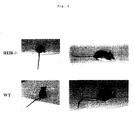
- mice were used as a control. Consequently, the Fc ⁇ RIIB-gene-deficient mice immunized with GQ1b exhibited peripheral neuropathy wherein paralysis of their tails and hind legs occurred. The mice demonstrated spread hind legs, inability of walking, and drooping tails ( Figure 1; RIIB -/- ). Meanwhile, the paralysis and the like were not observed in Fc ⁇ RIIB-gene-deficient mice immunized with GM1, GM2, GD1a, and GD1b, as well as in the wild-type mice ( Figure 1; WT) used as a control.
- the plates were washed once with PBS containing 0.05% of Tween 20 and 0.1% of BSA, and left overnight at 4°C in 250 ⁇ l of PBS containing 0.5% of BSA per well for blocking.
- the sera derived from the above blood and diluted by 500 folds were then added to the above 96-well micro plates at the rate of 50 ⁇ l per well to be reacted overnight at 4° C.
- the 96-well micro plates were washed three times with PBS containing 0.05% of Tween 20, added 50 ⁇ l of 500-fold-diluted goat-anti-mouse IgG1, IgG2a or IgG2b binding to peroxidase (Sigma), and incubated for two hours at 4° C, and after the incubation, were re-washed three times with PBS including 0.05% of Tween20, went through 30-minute enzymatic reaction with 50 ⁇ l of True Blue Peroxidase Substrate (Kirkegaard & Perry Labs) at ambient temperature. OD450 was then measured by a micro-plate reader (Biolumin 960; Molecular Dynamics). The result is shown in Figure 3.
- the non-human animal model of Guillain-Barré syndrome and/or Fisher syndrome of the present invention exhibited paralysis of its tail and hind legs and displayed an elevated level of antibody titer against gangliosides, they are deemed to have developed symptoms consistent with Guillain-Barré syndrome and Fisher syndrome, a variant of the aforementioned syndrome, in humans and can be utilized for developing the therapeutic method and agent for treating these symptoms.
Landscapes
- Life Sciences & Earth Sciences (AREA)
- Health & Medical Sciences (AREA)
- Engineering & Computer Science (AREA)
- Genetics & Genomics (AREA)
- Biotechnology (AREA)
- Zoology (AREA)
- Veterinary Medicine (AREA)
- General Health & Medical Sciences (AREA)
- Organic Chemistry (AREA)
- Chemical & Material Sciences (AREA)
- Environmental Sciences (AREA)
- General Engineering & Computer Science (AREA)
- Wood Science & Technology (AREA)
- Biomedical Technology (AREA)
- Bioinformatics & Cheminformatics (AREA)
- Animal Behavior & Ethology (AREA)
- Molecular Biology (AREA)
- Plant Pathology (AREA)
- Biophysics (AREA)
- Microbiology (AREA)
- Physics & Mathematics (AREA)
- Biodiversity & Conservation Biology (AREA)
- Biochemistry (AREA)
- Animal Husbandry (AREA)
- Investigating Or Analysing Biological Materials (AREA)
- Peptides Or Proteins (AREA)
Abstract
The present invention intends to provide a non-human
animal model of Guillain-Barré syndrome, which can be
obtained by immunizing FcγRIIB-gene-deficient non-human
animal with ganglioside GQ1b, and a screening method of a
therapeutic agent for Guillain-Barré syndrome using the
non-human animal model. A mouse model of Guillain-Barré
syndrome is generated by immunizing FcγRIIB-gene-deficient
mice with gangliosides GM1, GM2, GD1a, and GQ1b together
with Freund's adjuvant every three weeks four times in total.
Description
The present invention relates to a non-human animal
model that develops Guillain-Barré syndrome (Fisher
syndrome), more specifically to a non-human animal model
of Guillain-Barré syndrome which can be obtained by
immunizing with ganglioside GQ1b a non-human animal model
whose FcγRIIB-gene function is deficient in its chromosome
(FcγRIIB-gene-deficient non-human animal model), and a
screening method of a therapeutic agent for Guillain-Barré
syndrome using the non-human animal model.
Guillain-Barré syndrome (GBS) is an inflammatory
demyelinating disorder of peripheral nerves which occurs
a few weeks after a flu-like symptom, and is characterized
by rapidly-progressing flaccid-motor paralysis (weakness
in muscles of all four limbs), loss of deep tendon reflexes,
dysphagia, articulatory disorder, deep sensory disturbance,
and vegetative neurosis (cardiac arrhythmia, blood pressure
fluctuation). The frequency of Guillain-Barré syndrome is
two cases in every 100,000 people per year, and 2,000 to
2,500 people are estimated to be newly affected by the
disorder each year across Japan. However, not only is a
therapeutic agent capable of achieving complete cure of the
disorder undeveloped but also the cause and onset mechanism
are yet to be clearly known, which entails the disorder's
falling under so-called intractable diseases and being
designated a special disease. Recently, plasma-exchange
(plasmapheresis) and high-dose intravenous γ-globulin
therapy have been reported to be effective treatments for
the present syndrome. Further, with respect to the cause
of the present syndrome, since autoantibody
(anti-lipopolysaccharide antibody) against gangliosides
appearing in peripheral nerves, which is associated with
acuteness of the symptoms, has been detected in the patients'
sera, gangliosides and autoimmune reaction have been pointed
out to be closely linking to the onset mechanism.
Gangliosides are classified into subclasses according to
their molecular strucutres: GM1, GM2, GD1a, GD1b, GT1a, GQ1b
and the like, and respective autoantibodies for each
ganglioside are detected in sera of the patients with the
disorder. In the aforementioned Guillain-Barré syndrome,
it is particularly known that anti-GM1 antibody and anti-GD1a
antibody appear as anti-ganglioside antibodies in the serum.
Further, an elevated level of anti-GQ1b antibody is almost
invariably and specifically observed in the sera in acute
phase cases of Guillain-Barré syndrome with ocular muscle
paralysis, and in Fisher syndrome cases.
Recently, Campylobacter jejuni, one of the bacteria
responsible for foodpoisoning, has been pointed out to be
relating to a cause of Guillain-Barré syndrome since there
is a molecular homology between the lipopolysaccharide
structure of Campylobacter and gangliosides, which may
entail the appearance of auto-reactive T cells and B cells.
However, it remains unproven whether the appearance of
auto-reactive T cells and B cells including autoantibodies
leads to any actual organic pathologies. In the
animal-experiment level, although a case has been reported
where rabbits were immunized with GD1b to develop peripheral
neuropathy, there has been no such case where immunizing
mice with various types of gangliosides led to their
developing any pathological symptoms, which resulted in the
absence of such disorder-mouse model suitable for
Guillain-Barré syndrome. In cases like the above where
rabbits and rats were induced to develop the disorder, the
animals exhibited low incidence and mild symptoms which made
themselves inappropriate for the model. Further, the absence
of suitable model has prevented the development of a
therapeutic agent and method.
Likewise, Fisher syndrome is known as a variant of
Guillan-Barre syndrome. About 5% of Guillain-Barré
syndrome cases are estimated to fall under the aforementioned
Fisher syndrome, whose symptoms include external
ophthalmoplegia, diplopia, ataxia, loss of tendon reflexes,
and facial nerve palsy, with a preceding infection of the
upper respiratory tract and the like. The symptoms are
identical to those of Guillain-Barré syndrome except that
quadriplegia is not induced in humans. Further, in Fisher
syndrome cases, elevated level of blood-IgG-antibody titer
against ganglioside GQ1b has been reported while as with
the case of the above Guillain-Barré syndrome, onset
mechanism is unknown and the therapeutic agent is yet to
be developed.
The acuteness of these disorders is at its peak about
a month after the first symptom appears, gradually getting
milder with the recovery period of a few months to a year.
The prognosis for the patients with these disorders is
relatively good, but the cases with residual deficits are
not rare. Moreover, since the patients are forced to
experience mental distress, hospitalization and outpatient
visits over about a year, the development of the therapeutic
agent and treating method for the disorder is ardently awaited
by the medical-service community including patients, their
families, and physicians.
Meanwhile, on cell surfaces of the immune system and
the like, receptors which recognize and bind to Fc part of
Ig (hereinafter referred to as "FcR") are present, among
which, Fcγ recepters, the receptor proteins which
specifically bind to γ chain of IgG in body fluid (hereinafter
referred to as Fc γR), are broadly classified into three types
based on the gene-structure similarity: Type I (CD64 antigen),
Type II (CD32 antigen), and Type III (CD16 antigen). In
contrast to other FcRs, FcγRII has low affinity for monomeric
IgG and binds to multivalent IgG that has become an
immunocomplex, to broadly appear on blood-forming stem cells
including monocytes, macrophages, polymorphonuclear
leukocytes (PMN), mast cells, blood platelets, some T-cell
lymphocytes and some B-cell lymphocytes. Further, there
present three types of receptors of FcγRII differing in gene
sequences: FcγRIIA, FcγRIIB, and FcγRIIC. All these
receptors are mapped to the chromosome 1q23 region.
Unlike other FcRs, the above FcγRIIB possesses an
amino-acid sequence which transmits inhibitory signals to
intracellular domains without associating with γ chain
(ITIM: Immunoreceptor Tyrosine-based Inhibition Motif)
(Immunol. Rev. 125, 49-76, 1992, Science 256, 1808-1812,
1992). To elucidate such physiological functions of Fcγ RIIB,
the present inventors have already generated FcγRIIB-deficient
mice (Nature 379, 346-349, 1996), as well as
arthritis-mouse model which can be obtained by immunizing
FcγRIIB-deficient mice with Type II collagen (J. Exp. Med.
189, 187-194, 1999), and autoimmune-disorder animal model
(Japanese Laid-Open Patent Application No.Heisei
08-289699).
Previously, appropriate animal model for
investigating the onset mechanism of Guillain-Barré
syndrome, an inflammatory demyelinating disorder, did not
exist. The object of the present invention is to provide
non-human animal model that developes Guillain-Barré
syndrome (Fisher syndrome) and more specifically, to provide
non-human animal model of Guillain-Barré syndrome which can
be obtained by immunizing Fcγ RIIB-gene-deficient non-human
animal with ganglioside GQ1b, and a screening method of a
therapeutic agent for Guillain-Barré syndrome using the
aforementioned non-human animal model.
The present inventors made a keen study to solve the
above problem and they endeavored to generate Guillain-Barré
syndrome mouse model by using Fcγ RIIB-gene-deficient mice
and immunized them with gngliosides GM1, GM2, GD1a and GQ1b
together with Freund's adjuvant every three weeks four times
in total. As a result, of those immunized with ganglioside
antigen, FcγRIIB-gene-deficient mice immunized with GQ1b
exhibited peripheral neuropathy in which paralysis of their
tails and hind legs was observed. These mice demonstrated
an elevated level of antibody titer against GQ1b, which
symptom appeared consistent with that of Fisher syndrome,
a variant of Guillain-Barré syndrome, where humans are
commonly observed to develop autoantibody against GQ1b. The
present inventors have thus completed the present invention
by discovering that a new disorder-mouse model can be
generated for Guillain-Barré syndrome (Fisher syndrome).
The present inventors have also established a screening
method of an effective therapeutic agent for the syndrome
based on the present invention.
The present invention relates to: a non-human animal
model of Guillain-Barré syndrome which can be obtained by
immunizing with gangliosides GQ1b a non-human animal whose
FcγRIIB-gene function is deficient in its chromosome to
develop Guillan-Barre syndrome ("1"); a non-human animal
model of Guillain-Barré syndrome, wherein Guillain-Barré
syndrome is Fisher syndrome ("2"); the non-human animal model
of Guillain-Barré syndrome according to "1" or "2", which
develops a peripheral neuropathy wherein paralysis of its
tail and hind legs occurs ("3"); the non-human animal model
of Guillain-Barré syndrome according to any one of "1" to
"3", wherein the FcγRIIB-gene-deficient non-human animal
is a rodent ("4"); and the non-human animal model of
Guillain-Barré syndrome according to "5", wherein the rodent
is a mouse("5").
The present invention further relates to: a screening
method of a therapeutic agent for Guillain-Barré syndrome
wherein a test substance is administered to the non-human
animal model of Guillain-Barré syndrome according to any
one of "1" to "5", to observe and assess the degree of symptoms
of Guillain-Barré syndrome in the non-human animal model
of the syndrome ("6"); a screening method of a therapeutic
agent for Guillain-Barré syndrome and/or Fisher syndrome
wherein a test substance is administered to the non-human
animal model of Guillain-Barré syndrome according to any
one of "1" to "5" , to measure and assess the level of anti-GQ1b
antibody appearance("7"); and a therapeutic agent that can
be obtained by the screening method of a therapeutic agent
for Guillain-Barré syndrome according to "6" or "7"("8").
As for the non-human animal model of Guillain-Barré
syndrome of the present invention, there is no particular
limitation as long as it is obtained by immunizing with
ganglioside GQ1b the non-human animal whose FcγRIIB-gene
function is deficient in its chromosome, and is a non-human
animal that develops Guillan-Barre syndrome. Here,
Guillain-Barré syndrome indicates a non-hereditary disorder
characterized by rapidly-progressing flaccid-motor
paralysis (weakness in muscles of all four limbs), loss of
deep tendon reflexes, dysphagia, articulatory disorder,
deep sensory disturbance, and vegetative neurosis (cardiac
arrhythmia, blood pressure fluctuation) which occurs a few
weeks after a flu-like symptom, and other similar disorders.
If the Guillain-Barré syndrome is developed, level of
antibody titer against ganglioside GQ1b in the serum rises
and more specifically, external ophthalmoplegia, diplopia,
ataxia, loss of tendon reflexes, facial nerve palsy,
peripheral neuropathy of tail and hind legs and the like
are induced. Furthermore, Fisher syndrome is a variant of
Guillain-Barré syndrome, whose symptoms are identical to
those of Guillain-Barré syndrome except that quadriplegia
is not induced in humans.
As for the FcγRIIB-gene-deficient non-human animal
model of the present invention, any model animals are accepted
as long as its FcγRIIB-gene function is deficient in its
chromosome, although it can be preferably exemplified by
rodents such as mice and rats, in particular, by the mouse
whose FcγRIIB-gene function is deficient in its chromosome.
The mouse whose FcγRIIB-gene function is deficient in its
chromosome can be generated according to the method
previously described by the present inventors (Nature 379,
346-349, 1996) and the like. In concrete terms,
FcγRIIB-knockout mouse can be obtained according to the
following process: FcγRIIB gene is screened using a gene
fragment derived from the mouse gene library by a method
such as PCR and the like; the screened FcγRIIB gene is
subcloned using a viral vector and the like, then determined
by DNA sequencing; a target vector is prepared by substituting
the fragment containing S2 exon and EC1 exon of the clone
to a pMC1 neo gene cassette and the like; the linearized
vector is introduced into ES cells by electroporation and
the like to cause homologous recombination; from among the
homologous recombinants, ES cells showing resistance to G418
and the like are selected, and the clones of those cells
are microinjected into a murine blastocyst; the blastocyst
is placed back to the host parent to generate a chimeric
mouse; when this chimeric mouse is intercrossed with a
wild-type mouse, a heterozygous mouse can be obtained; by
intercrossing the heterozygous mice, an FcγRIIB-knockout
mouse can be obtained.
As for the generating method for a non-human animal
model of Guillain-Barré syndrome of the present invention,
any methods are accepted without particular limitation as
long as it can provide a non-human animal model of
Guillain-Barré syndrome, although it can be preferably
exemplified by the method wherein ganglioside GQ1b is used
as an antigen to immunize the above FcγRIIB-gene-deficient
non-human animal. Further, as for the method for immunizing,
no particular limitation is set although it can be preferably
exemplified by the method wherein GQ1b antigen is used
together with complete Freund's adjuvant in the first
immunization, and afterwards together with incomplete
Freund's adjuvant every three weeks. Additionally, it is
desirable to repeat the immunization 3 to 6 times in total,
of which 4 times is particularly preferable.
Ganglioside GQ1b used in the present invention is
sphingoglycolipid comprising four sialic acids (Sia), with
the structure of
Ga1β1→3(3←2αSia3←2αSia)Ga1NAcβ1→4Ga1β1→4(3←2αSia3←2
αSia)G1cβ1→1'Cer, produced from lactosylceramide (Cer) in
the synthetic pathway b. Among these, the binding form
of 3←2αSia, a peculiar sugar chain, characterizes the
property of the GQ1b. Further, a specific antibody has been
obtained for each ganglioside. Since antibodies
recognizing respective gangliosides recognize the
difference in the binding form of the above sugar chain,
3←2αSia, GQ1b (monoclonal) antibody also appears to be
recognizing the four binding forms of 3←2αSia specifically.
As for the screening method of a therapeutic agent
for Guillain-Barré syndrome of the present invention, there
is no particular limitation as long as it can confirm and
select the pharmacological effects of the therapeutic agent
using the non-human animal model of Guillain-Barré syndrome
of the present invention, although it can be specifically
exemplified by the method wherein a test substance is
administered orally or parenterally to the non-human animal
model of Guillain-Barré syndrome of the present invention,
to observe and assess the degree of symptoms in chronological
order by scoring the level of the disorder (degree of
alleviation), and also by the method wherein a test substance
is administered to the non-human animal model of the
Guillain-Barré syndrome of the present invention to measure
and assess the appearance level of the anti-GQ1b antibody
in the blood of the non-human animal model. As for a method
for measuring the appearance level of the above anti-GQ1b
antibody in the blood, it can be specifically exemplified
by ELISA analysis using secondary antibody.
The therapeutic agent for Guillain-Barré syndrome
obtained by the above screening method of the present
invention can be used to treat patients developing
Guillain-Barré syndrome (Fisher syndrome). The therapeutic
agent for Guillain-Barré syndrome of the present invention
can be administered orally or parenterally. An oral
administration can be in the form of solid preparation such
as powder, granule, capsules, and tablets, and also of liquid
preparation such as syrup and elixir whereas pareteral
administration can be in the form of injection,
transcutaneous preparation, suppository and the like.
These preparations can be produced according to the
conventional procedure by adding auxiliaries, that are
pharmacologically and galenical pharmaceutically
acceptable, to active ingredients. Further, dosage can vary
according to the type of disorder to be treated, age, sex,
weight, symptom, and the form of administration, to suit
each patient.
The present invention will be described in detail with
reference to the following examples, while the technical
scope of the present invention will not be limited to these
examples.
A clone of genomic DNA of FcγRIIB gene was isolated
by screening the genomic DNA library of 129/Sv/J (H-2b) mouse.
A 2.65 Kb fragment containing two independent exons i.e.
S2 and EC1 of the clone was substituted by a pMC1 neo gene
cassette (Toyobo) to construct a target vector. The
linearized vector was introduced into ES cells (J1) by
electroporation to cause homologous recombination.
ES clones were isolated from the above ES cells wherein
homologous recombination has occurred, then
neomycin-resistant ES clones were screened for G418 and GANC
(gancyclovir), and a homologous recombinant was identified
by Southern Blot Analysis. Genomic DNA was isolated from
the identified homologous recombinant and digested with
HindIII. Then it was verified that targeted allele
containing pMC1 neo gene cassette was included. The
verified ES clones were microinjected into a blastocyst to
generate a chimeric mouse. The generated chimeric mouse then
was intercrossed with a wild-type C57BL/6(H-2b) mouse to
generate a heterozygous mouse. Further, in order to obtain
a homozygous mouse the heterozygous mice were intercrossed
to generate a mouse whose FcγRIIB gene is deficient in its
chromosome, and a wild-type mouse.
As gangliosides, GM1, GM2, GD1a, GD1b and GQ1b (all
ALEXIS) were used. Two types of emulsions were prepared:
one by mixing in coupled syringes 1 ml of each ganglioside
solution of the concentration rate of 1 mg/ ml, respectively
with 3 mg/ml of complete Freund's adjuvant (CFA) consisting
of liquid paraffin, surfactant, and killed mycobacterium
tuberclosis; the other by mixing in coupled syringes 1 ml
of each ganglioside solution of the concentration rate of
1 mg/ml, respectively with 3 mg/ml of incomplete Freund's
adjuvant (IFA) consisting of liquid paraffin and surfactant.
The FcγRIIB-gene-deficient mice generated by the
method according to the above Reference Example (8 weeks
old: no difference between the sexes was observed in terms
of the test results) (n=5), anesthetized by ether and shaven
on the dorsocaudal side, were injected intracutaneously with
150 µl of emulsion consisting of 50 µg of respective
ganglioside and 100 µg of CFA to be primarily immunized, then
with 150 µl of emulsion consisting of 50 µg of respective
ganglioside and 100 µg of IFA every three weeks three times
in total, in endeavoring to generate the mice of
Guillain-Barré syndrome. Additionally, wild-type mice
(n=5) were used as a control. Consequently, the
FcγRIIB-gene-deficient mice immunized with GQ1b exhibited
peripheral neuropathy wherein paralysis of their tails and
hind legs occurred. The mice demonstrated spread hind legs,
inability of walking, and drooping tails (Figure 1; RIIB-/-).
Meanwhile, the paralysis and the like were not observed in
FcγRIIB-gene-deficient mice immunized with GM1, GM2, GD1a,
and GD1b, as well as in the wild-type mice (Figure 1; WT)
used as a control.
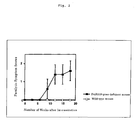
The wild-type mice and FcγRIIB-gene-deficient mice
immunized with GQ1b, were scored for an assessment into five
levels according to their symptoms: 0 point-no symptom; 1
point-paralysis of the tail; 2 points-paralysis of the tail
and both hind legs; 3 points-paralysis of the tail and all
four limbs; 4 points-death. The result is shown in Figure
2. Meanwhile in Figure 2, black squares (▪) represent the
scores for the wild-type mice and white squares (□) those
for FcγRIIB-gene-deficient mice. As a result,
FcγRIIB-gene-deficient mice immunized with GQ1b were
observed to develop Guillain-Barré syndrome (Fisher
syndrome) (Figure 2).
In addition, blood samples of wild-type mice and
FcγRIIB-gene-deficient mice both immunized with GQ1b were
collected from their orbits 3, 6, 9, and 12 weeks after the
primary immunization to examine the level of antibody titer
against GQ1b by employing the following improved ELISA
analysis provided in a literature (Cell. Immunol. 145,
299-310, 1992). 5 µg of GQ1b was dissolved in 1 ml of 50mM
sodium bicarbonate solution (pH=8.5) to be used at the rate
of 50 µl per well for coating positively-charged 96-well
micro plates (NUNC) overnight at 4°C. Subsequently, the
plates were washed once with PBS containing 0.05% of Tween
20 and 0.1% of BSA, and left overnight at 4°C in 250 µl of
PBS containing 0.5% of BSA per well for blocking. The sera
derived from the above blood and diluted by 500 folds were
then added to the above 96-well micro plates at the rate
of 50 µl per well to be reacted overnight at 4° C. Following
the reaction, the 96-well micro plates were washed three
times with PBS containing 0.05% of Tween 20, added 50 µl
of 500-fold-diluted goat-anti-mouse IgG1, IgG2a or IgG2b
binding to peroxidase (Sigma), and incubated for two hours
at 4° C, and after the incubation, were re-washed three times
with PBS including 0.05% of Tween20, went through 30-minute
enzymatic reaction with 50 µl of True Blue Peroxidase
Substrate (Kirkegaard & Perry Labs) at ambient temperature.
OD450 was then measured by a micro-plate reader (Biolumin
960; Molecular Dynamics). The result is shown in Figure
3. Meanwhile in Figure 3, black squares (▪) represent the
absorbance of the wild-type mice and white squares (□) that
of FcγRIIB-gene-deficient mice. These results have shown
that FcγRIIB-knockout mice(IIB-KO)displayed more increased
level of antibody titer (IgG1, IgG2a, and IgG2b) against
GQ1b than the wild-type mice (Wild), which is consistent
with the observation of Guillain-Barré syndrome (Fisher
syndrome). It was thus found that a model mouse of
Guillain-Barré syndrome (Fisher syndrome) can be generated.
Since the non-human animal model of Guillain-Barré
syndrome and/or Fisher syndrome of the present invention
exhibited paralysis of its tail and hind legs and displayed
an elevated level of antibody titer against gangliosides,
they are deemed to have developed symptoms consistent with
Guillain-Barré syndrome and Fisher syndrome, a variant of
the aforementioned syndrome, in humans and can be utilized
for developing the therapeutic method and agent for treating
these symptoms.
Claims (8)
- A non-human animal model of Guillain-Barré syndrome which can be obtained by immunizing with gangliosides GQ1b a non-human animal whose FcγRIIB-gene function is deficient in its chromosome to develop Guillan-Barre syndrome.
- A non-human animal model of Guillain-Barré syndrome, wherein Guillain-Barré syndrome is Fisher syndrome.
- The non-human animal model of Guillain-Barré syndrome according to claim 1 or 2, which develops peripheral neuropathy wherein paralysis of its tail and hind legs occurs.
- The non-human animal model of Guillain-Barré syndrome according to any one of claims 1 to 3, wherein the FcγRIIB-gene-deficient non-human animal is a rodent.
- The non-human animal model of Guillain-Barré syndrome according to claim 5, wherein the rodent is a mouse.
- A screening method of a therapeutic agent for Guillain-Barré syndrome wherein a test substance is administered to the non-human animal model of Guillain-Barré syndrome according to any one of claims 1 to 5, to observe and assess the degree of symptoms of Guillain-Barré syndrome in the non-human animal model of the syndrome.
- A screening method of a therapeutic agent for Guillain-Barré syndrome and/or Fisher syndrome wherein a test substance is administered to the non-human animal model of Guillain-Barré syndrome according to any one of claims 1 to 5, to measure and assess the level of anti-GQ1b antibody appearance.
- A therapeutic agent that can be obtained by the screening method of a therapeutic agent for Guillain-Barré syndrome according to claim 6 or 7.
Applications Claiming Priority (3)
| Application Number | Priority Date | Filing Date | Title |
|---|---|---|---|
| JP2002315091A JP2004147535A (en) | 2002-10-29 | 2002-10-29 | Non-human animal model of Guillain-Barre syndrome and / or Fisher syndrome |
| JP2002315091 | 2002-10-29 | ||
| PCT/JP2003/013958 WO2004039149A1 (en) | 2002-10-29 | 2003-10-29 | Nonhuman model animal suffering from guillain-barre syndrome and/or fisher syndrome |
Publications (2)
| Publication Number | Publication Date |
|---|---|
| EP1563729A1 true EP1563729A1 (en) | 2005-08-17 |
| EP1563729A4 EP1563729A4 (en) | 2008-05-14 |
Family
ID=32211640
Family Applications (1)
| Application Number | Title | Priority Date | Filing Date |
|---|---|---|---|
| EP03770050A Withdrawn EP1563729A4 (en) | 2002-10-29 | 2003-10-29 | NON-HUMAN ANIMAL MODEL SUFFERING FROM GUILLAIN-BARRE SYNDROME AND / OR FISCHER SYNDROME |
Country Status (4)
| Country | Link |
|---|---|
| US (1) | US7309810B2 (en) |
| EP (1) | EP1563729A4 (en) |
| JP (1) | JP2004147535A (en) |
| WO (1) | WO2004039149A1 (en) |
Families Citing this family (7)
| Publication number | Priority date | Publication date | Assignee | Title |
|---|---|---|---|---|
| GB0129260D0 (en) * | 2001-12-06 | 2002-01-23 | Eisai London Res Lab Ltd | Pharmaceutical compositions and their uses |
| TWI489994B (en) | 2008-03-17 | 2015-07-01 | Baxter Healthcare Sa | Combination and method for subcutaneous administration of immunoglobulin and hyaluronic acid |
| PT2477603E (en) | 2009-09-17 | 2016-06-16 | Baxalta Inc | Stable co-formulation of hyaluronidase and immunoglobulin, and methods of use thereof |
| EP3498730B1 (en) | 2009-12-21 | 2026-01-28 | Regeneron Pharmaceuticals, Inc. | Humanized fc gamma r mice |
| US8883496B2 (en) | 2009-12-21 | 2014-11-11 | Regeneron Phamaceuticals, Inc. | Humanized FcgR mice |
| RS60398B1 (en) | 2014-04-08 | 2020-07-31 | Regeneron Pharma | Non-human animals having humanized fc-gamma receptors |
| IL277355B2 (en) | 2018-03-26 | 2025-01-01 | Regeneron Pharma | Humanized rodents for testing therapeutic agents |
Family Cites Families (1)
| Publication number | Priority date | Publication date | Assignee | Title |
|---|---|---|---|---|
| JP3570674B2 (en) * | 1999-12-28 | 2004-09-29 | 独立行政法人 科学技術振興機構 | Rheumatoid arthritis-prone model animals |
-
2002
- 2002-10-29 JP JP2002315091A patent/JP2004147535A/en active Pending
-
2003
- 2003-10-29 EP EP03770050A patent/EP1563729A4/en not_active Withdrawn
- 2003-10-29 WO PCT/JP2003/013958 patent/WO2004039149A1/en not_active Ceased
- 2003-10-29 US US10/533,700 patent/US7309810B2/en not_active Expired - Fee Related
Also Published As
| Publication number | Publication date |
|---|---|
| JP2004147535A (en) | 2004-05-27 |
| US20070016966A1 (en) | 2007-01-18 |
| WO2004039149A1 (en) | 2004-05-13 |
| EP1563729A4 (en) | 2008-05-14 |
| US7309810B2 (en) | 2007-12-18 |
Similar Documents
| Publication | Publication Date | Title |
|---|---|---|
| US7358416B2 (en) | Transgenic mouse expressing human FcRn protein | |
| US7402728B2 (en) | Transgenic mice expressing human CD20 and/or CD16 | |
| Carter et al. | PD-1/PD-L1, but not PD-1/PD-L2, interactions regulate the severity of experimental autoimmune encephalomyelitis | |
| Hollmann et al. | Disruption of the C5a receptor gene increases resistance to acute Gram-negative bacteremia and endotoxic shock: opposing roles of C3a and C5a | |
| US7309810B2 (en) | Nonhuman model animal suffering from Guillain-Barré syndrome and/or fisher syndrome | |
| JP3570674B2 (en) | Rheumatoid arthritis-prone model animals | |
| Jabara et al. | Heterozygosity for transmembrane activator and calcium modulator ligand interactor A144E causes haploinsufficiency and pneumococcal susceptibility in mice | |
| CA2488775C (en) | Fcyriia transgenic animal model for autoimmune disease | |
| JPWO2003034818A1 (en) | SGRF gene modified non-human animals | |
| WO2015072544A1 (en) | Agent and method for treating autoimmune disease | |
| JP2022520819A (en) | Rodents with genetically modified sodium channels and how to use them | |
| US20090031434A1 (en) | Animal models for obesity and neurodegenerative diseases | |
| JP4550530B2 (en) | Synaptic maturation disorder animal model | |
| JP3410679B2 (en) | Good Pasture Syndrome Model Mouse | |
| US5859314A (en) | Mice with targeted tyrosine kinase, lyn, disruption | |
| JP2005517410A (en) | Mutant gene encoding LAT protein and biological application thereof | |
| AU722165B2 (en) | Animals with targeted gene deletion | |
| JP3471739B2 (en) | Screening method for preventive / therapeutic agent for diseases caused by α1ECa2 + channel dysfunction | |
| EP0876480A1 (en) | Animals with targeted gene deletion |
Legal Events
| Date | Code | Title | Description |
|---|---|---|---|
| PUAI | Public reference made under article 153(3) epc to a published international application that has entered the european phase |
Free format text: ORIGINAL CODE: 0009012 |
|
| 17P | Request for examination filed |
Effective date: 20050518 |
|
| AK | Designated contracting states |
Kind code of ref document: A1 Designated state(s): CH DE FR GB IT LI NL SE |
|
| RBV | Designated contracting states (corrected) |
Designated state(s): CH DE ES FR GB IT LI NL |
|
| A4 | Supplementary search report drawn up and despatched |
Effective date: 20080415 |
|
| STAA | Information on the status of an ep patent application or granted ep patent |
Free format text: STATUS: THE APPLICATION IS DEEMED TO BE WITHDRAWN |
|
| 18D | Application deemed to be withdrawn |
Effective date: 20080715 |