EP1562316A2 - Radio wave propagation simulator - Google Patents
Radio wave propagation simulator Download PDFInfo
- Publication number
- EP1562316A2 EP1562316A2 EP05002357A EP05002357A EP1562316A2 EP 1562316 A2 EP1562316 A2 EP 1562316A2 EP 05002357 A EP05002357 A EP 05002357A EP 05002357 A EP05002357 A EP 05002357A EP 1562316 A2 EP1562316 A2 EP 1562316A2
- Authority
- EP
- European Patent Office
- Prior art keywords
- radio
- radio wave
- propagation
- service area
- band
- Prior art date
- Legal status (The legal status is an assumption and is not a legal conclusion. Google has not performed a legal analysis and makes no representation as to the accuracy of the status listed.)
- Granted
Links
Images

Classifications
-
- H—ELECTRICITY
- H04—ELECTRIC COMMUNICATION TECHNIQUE
- H04B—TRANSMISSION
- H04B17/00—Monitoring; Testing
- H04B17/30—Monitoring; Testing of propagation channels
- H04B17/391—Modelling the propagation channel
- H04B17/3912—Simulation models, e.g. distribution of spectral power density or received signal strength indicator [RSSI] for a given geographic region
-
- H—ELECTRICITY
- H04—ELECTRIC COMMUNICATION TECHNIQUE
- H04B—TRANSMISSION
- H04B17/00—Monitoring; Testing
- H04B17/30—Monitoring; Testing of propagation channels
- H04B17/309—Measuring or estimating channel quality parameters
- H04B17/318—Received signal strength
- H04B17/327—Received signal code power [RSCP]
-
- H—ELECTRICITY
- H04—ELECTRIC COMMUNICATION TECHNIQUE
- H04B—TRANSMISSION
- H04B17/00—Monitoring; Testing
- H04B17/30—Monitoring; Testing of propagation channels
- H04B17/309—Measuring or estimating channel quality parameters
- H04B17/336—Signal-to-interference ratio [SIR] or carrier-to-interference ratio [CIR]
-
- H—ELECTRICITY
- H04—ELECTRIC COMMUNICATION TECHNIQUE
- H04B—TRANSMISSION
- H04B17/00—Monitoring; Testing
- H04B17/30—Monitoring; Testing of propagation channels
- H04B17/309—Measuring or estimating channel quality parameters
- H04B17/345—Interference values
Definitions
- the present invention relates to a mobile communication system in compliance with the code division multiple access (hereinafter referred to as COMA) standards, and particularly to a radio wave propagation simulator well usable for radio area tuning intended for improving a communication quality within a radio service area.
- COMA code division multiple access
- radio base stations are distributed (designing a mobile communication system) so as to provide a continuous radio service area to retain a ceaseless communication service for a moving user terminal (mobile station).
- the radio area tuning has been performed for tuning a variety of radio parameters of a radio base station (an antenna tilt angle, an antenna orientation, transmission power, etc.).
- a radio wave propagation simulator for simulating the state of propagation of a radio wave under the influence of topography and buildings has been known as a means for evaluation of a design of a mobile communication system.
- the details of the examples of the configuration and processing of this radio wave propagation simulator are described, for example, in Japanese laid-open patent publication No. 2001-28570.
- the known radio area tuning has carried out the procedures of actually measuring RSCP (Received Signal Code Power) of a desired radio wave etc. on a predetermined route within a radio service area using measuring instruments mounted on a vehicle, investigating the measures for improving the communication qualities from the measured data, and changing varieties of the radio parameter settings of the base stations to comply with the result of investigation.
- RSCP Received Signal Code Power
- the quality of communication is affected by the number of other mobile stations on communication and the positions of the mobile stations.
- a problem encountered in the conventional radio area tuning has been that the tuning simply adjusts varieties of the radio parameters of the radio base station such that the RSCP at any given point (position) within the radio service area exceeds a predetermined value, but makes no adjustment allowing for the levels of interferences caused by RF communications through other mobile stations.
- the conventional radio area tuning has suffered from the problem that the analysis on the entire radio service area has been impossible, because the measures for improving the communication quality are investigated based on the measured data and thus the intended investigation is limited to the measurement route.
- the simulation enables acquiring the RSCPs, the communication qualities, etc. at the points other than the measurement route.
- the conventional radio wave propagation simulator has been unable to be effectively utilized for modification of the radio parameters and the evaluation after the modification, which are the inherent operations of the radio area tuning, because the simulation model in the conventional radio wave propagation simulator does not sufficiently reflect actual environments.
- a radio wave propagation simulator of the present invention obtains correction values of a propagation curve for respective predetermined orientations from the differences of the measured data of the received signal code power of a desired signal and the propagation curve, corrects the propagation curve through the use of the correction values, and simulates the state of propagation of said radio wave making use of the propagation curve after the correction, or making use of both the propagation curve after the correction and the data after assigning predetermined weights to the measured data of the received signal code power of a desired signal.
- the accuracy of the propagation simulation is improved, and further, because it is enabled to confirm the improvement and deterioration of the received power density ratio within a band in the overall radio service area, a proper radio area tuning can be attained.
- a radio wave propagation simulator of the present invention calculates a relative value on the basis of the difference between the calculated values of the received power density ratio within a band before and after the modification of the radio parameter settings; adds the relative value to the measured data of the received power density ratio within a band; and estimates the received power density ratio within a band after the modification of the radio parameter settings.
- the present invention enables the estimation properly. Furthermore, by verifying the modification results of the radio parameter settings through the use of a distribution diagram, it become feasible easily to verify the effects of the radio area tuning. Still further, because the extraction of the deteriorated area of the communication quality, the modification of the radio parameter settings, the verification of the effects of the radio area tuning, etc., which are the operations for the radio area tuning, can be performed by means of the radio wave propagation simulator, the operating efficiency of the radio area tuning is boosted.
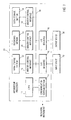
- Fig. 1 illustrates a configuration example of the radio wave propagation simulator according to the present invention.
- the radio wave propagation simulator has a structure made up of an information-processing device, for example, a work station computer etc., constituted by information processor 10 that executes predetermined processes according to a program, input device 20 that provides commands, pieces of information, etc to information processor 10 and output device 30 for monitoring the processed results made by information processor 10.
- information processor 10 that executes predetermined processes according to a program
- input device 20 that provides commands, pieces of information, etc to information processor 10
- output device 30 for monitoring the processed results made by information processor 10.
- Information processor 10 is structured comprising: CPU 11; main storage section 12 that temporarily stores the information required for the processes to be made by CPU 11; recording medium 13 that records the programs for CPU 11 to execute the below-described procedures required for evaluating the entire radio service area; data storage section 14 that stores the measured data, the data required for simulating radio wave propagation, etc.; memory control interfaces 15 that control data transfer with main storage section 12, recording medium 13 and data storage section 14; and I/O interfaces 16 that interfaces with input and output devices 20, 30, wherein the sections and interfaces are connected through bus 18.
- information processor 10 can include communication control section 17 that is an interface for controlling the data communication with a measuring instrument.
- Information processor 10 executes the radio wave propagation simulation processing in accordance with a program stored in recording medium 13.
- recording medium 13 can be a magnetic disk, semiconductor memory, optical memory disk, or other recording media.
- the radio wave propagation simulation in a CPICH (Common Pilot Channel) is first implemented using a radio wave propagation simulator on the basis of design data and a radio wave propagation area (radio service area) is specified.
- CPICH Common Pilot Channel
- a route for measuring the CPICH_RSCP and CPICH_Ec/No is established in a specified radio service area and by cruising through the measurement route by a vehicle etc on which measuring instruments etc. are mounted, the CPICH_RSCP and CPICH_Ec/No values are each actually measured.
- the measured data of CPICH_RSCP and CPICH_Ec/No are loaded to radio wave propagation simulator to perform the radio wave propagation simulation of the relevant CPICH. Further, using the measured data, the area in which the communication quality is deteriorated is extracted. If the point where the communication quality is deteriorated is found, then the measured data in the relevant point are analyzed and the modification of the radio parameter settings of the radio base stations is investigated to improve the communication quality. Then, the values of the CPICH_RSCP and CPICH_Ec/No afer the modification of the radio parameter settings are estimated through the use of the radio wave propagation simulator and the effect of the radio area tuning is verified.
- radio parameter settings of the relevant radio base station are modified based on the above investigation and verification results and the modification results are reported.
- the foregoing CPICH refers to a pilot channel transmitted continuously with a constant power from a radio base station
- the CPICH_RSCP refers to the received power (unit dBm) of a desired wave of the CPICH at any given point within a radio service area.
- the CPICH_Ec/No refers to a received power density ratio within a band indicating the ratio of the received power of a desired wave of the CPICH (CPICH_RSCP) to the total received power (RSSI: Received Signal Strength Indicator, unit dBm) in the CPICH (CPICH_RSSI) concerned (i.e., RSCP/RSSI, unit dB).
- the communication quality is commonly estimated by the value of this CPICH_Ec/No.
- An all-purpose area tester for measuring the above CPICH_RSCP, RSSI and CPICH_Ec/No and supplying the measured values is employed as a measuring instrument, provided with, for example, a GPS (Global Positioning System) to enable specifying the position of the measuring instrument.
- a GPS Global Positioning System
- the present embodiment it is enabled to investigate an improvement of the quality of the overall radio service area by improving the accuracy of the radio wave propagation simulator through the use of the measured data. For this end, measures required for realizing (1) improvement in accuracy of the radio wave propagation simulation, (2) improvement in an estimated accuracy of the CPICH_RSCP when modifying the radio parameter settings, and (3) improvement of an estimated accuracy of the CPICH_Ec/No when modifying the radio parameter settings will be proposed below.
- the radio wave propagation simulation is implemented through the use of a known propagation curve (for example, the Okumura curve/Hata), which is a mathematical expression of an attenuation characteristic of a radio wave represented on the basis of empirical values.
- a known propagation curve for example, the Okumura curve/Hata
- the improvement in the accuracy of radio wave propagation simulation is attained by correcting the relevant propagation curve though the use of measured data so as to be applicable to the actual environment.
- Area-coefficient dependent correction values are used for the correction of the propagation curve, wherein the area-coefficient dependent correction values are obtained by integrating the differences between the propagation curve and the measured values of the CPICH_RSCP (more specifically, the measurement curve obtained by plotting the measured values of the CPICH_RSCP against the abscissa of the propagation curve) per unit length of the abscissa (moving-averaged correction value).
- the area-coefficient dependent correction values are calculated at predetermined angular intervals (for example, at two degree intervals) in all the orientations with respect to a radio base station and the propagation curve is corrected for every predetermined angle (orientation).
- the present embodiment calculates the area-coefficient dependent correction values not on a cell basis but on a radio-base-station basis. For example, suppose the case where a radio base station is provided for three cells A, B and C. In this case, transmission beams are sent in three directions from the radio base station and measured data for three cells can be collected. In this case, because the direction of the back beam in the A cell is the transmission directions in the other cells, there are hardly included the measured data of the A cell in the collected data.
- the area-coefficient dependent correction values are calculated using the values of the measured data. In this way, the accuracy of the area-coefficient dependent correction value is improved by calculating the area-coefficient dependent correction value through the use of the measured data of the cell that supplies the greatest number of measured data values.
- the radio wave propagation simulation is implemented using a propagation curve after performing correction on the basis of the above-described area-coefficient dependent correction values and further using a (propagation curve + measured data assigned with weights) model in which the measured data are assigned with weights.
- the weights assigned to the measured data are set designating the distance from a simulation point, where the radio wave propagation simulation is implemented, to the point where the measured data exist, etc. as a parameter, if the measured data exist in the neighborhood of the simulation point.
- the radio area tuning is a technique not for designing a radio service area but for evaluate an actual field. Thus, it is enabled to improve an accuracy of the radio wave propagation simulation by means of the above-described method.
- the radio parameters of a radio base station intended to be modified mainly includes an antenna tilt angle, a direction of an antenna and a transmission power.
- the antenna tilt angle in particular is an important radio parameter for improving a communication quality.
- An actual antenna pattern however, varies depending on the antenna tilt angle.
- an antenna pattern is prepared for each of a plurality of antenna tilt angles and the prepared pattern is used.
- an antenna pattern for each of a plurality of antenna tilt angles is stored in advance in a radio wave propagation simulator and the variation of the antenna pattern attributed to the antenna tilt angle is applied to the process of estimating the CPICH_RSCP (the received power level), thereby improving the accuracy of the radio wave propagation simulation.
- the CPICH_Ec/No is the ratio of CPICH_RSCP to RSSI.
- the RSSI is a value yielded by adding the thermal noise of the measuring instrument to the sum of received powers from cells.
- the total received power is calculated from CPICH_RSCP and the number of channels, and further adding thermal noise of the measuring instrument to the total received power yields the theoretical RSSI.
- the measured value of RSSI does not coincide with the theoretical value on account of a delay wave, which is not measured by the measuring instrument.
- the total received power can be calculated on the basis of the number of transmission channels and channel types if no traffic is accommodated, it is impossible to calculate the number of the transmission channels and the total received power of the entire channels when any traffic is accommodated. While these values are not confirmed through the use of a measuring instrument, it is impossible to estimate the CPICH_Ec/No without any knowledge on these values.
- the CPICH_Ec/No before modification of the radio parameter settings is calculated based on the CPICH_RSCP of all the incoming cells before the modification of the radio parameter settings and the noise of the measuring instrument. This calculated value, of course, differs from the measured value of the CPICH_Ec/No.
- a similar calculation is also operated after the modification of the radio parameter settings to calculate the CPICH_Ec/No after the modification of the radio parameter settings. Further, by calculating the difference between the calculated values of the CPICH_Ec/No before and after the modification of the radio parameter settings, a relative value, which is a quantity to be revised through the modification of the radio parameter settings, is produced.
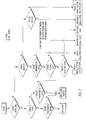
- the procedures of loading the measured data to the radio wave propagation simulator and performing the processing steps according to the flow chart shown in Fig. 2 are executed.
- the radio parameter settings are modified to adapt to the countermeasure required for the point decided to have a deteriorated quality through the processing steps shown in Fig. 2.
- the whole radio service area is divided into four categories as shown in the distribution diagram of Fig. 3.
- the categories are determined in accordance with the values of CPICH_RSCP and CPICH_Ec/No.
- Fig. 3 illustrates an example of the whole radio service area classified into four categories, the number of the categories is not limited to four and can be set to any number.
- Employing the distribution diagram like Fig. 3 enables easily grasping the degree of improvement of the overall radio service area before and after the modification of the radio parameter settings.
- the distribution diagram is usable for extracting the data at the point to be subject to the countermeasure and grasping the effect of the countermeasure.
- the communication quality is affected by the amount of interference to the relevant mobile station from other mobile stations. Consequently, when any of the radio parameter settings is modified, the CPICH_Ec/No is improved in some positions while deteriorated in other positions. If the improvement of the communication quality is investigated using the data measured only on a predetermined measurement route, then the prediction of the position of the deteriorated communication quality is limited to the measurement route, which entails difficulty in the radio area tuning that allows for the communication quality of the overall radio service area.
- the present invention enables confirming the improvement and deterioration of the CPICH_Ec/No in the overall radio service area and also enables an appropriate radio area tuning.
- the conventional measures did not allow the estimation of CPICH_Ec/No regardless of existence of traffic
- the present invention enables the estimation properly.
- by verifying the modification results of the radio parameter settings through the use of the above distribution diagram it become feasible easily to verify the effects of the radio area tuning.
- the extraction of the deterioration area of the communication quality, the modification of the radio parameter settings, the verification of the effects of the radio area tuning, etc. which are the routine operations of the radio area tuning, can be performed by means of the radio wave propagation simulator, the operating efficiency of the radio area tuning is boosted.
Landscapes
- Physics & Mathematics (AREA)
- Spectroscopy & Molecular Physics (AREA)
- Electromagnetism (AREA)
- Engineering & Computer Science (AREA)
- Computer Networks & Wireless Communication (AREA)
- Signal Processing (AREA)
- Monitoring And Testing Of Transmission In General (AREA)
- Mobile Radio Communication Systems (AREA)
Abstract
Description
Claims (7)
- , A radio wave propagation simulator for simulating a state of propagation of a radio wave within a radio service area, comprising:an input section for receiving measured data of a received signal code power of a desired signal within said radio service area,a processor section that stores said measured data of the received signal code power of a desired signal in a storage section, obtains correction values of a propagation curve for respective predetermined orientations from differences of said measured data and said propagation curve, said propagation curve being a mathematical expression representing an attenuation characteristic of a radio wave, corrects said propagation curve through a use of said correction values, and simulates said state of propagation of said radio wave making use of the propagation curve after the correction, andan output section that supplies as an output processed results by said processor section.
- The radio wave propagation simulator according to claim 1, wherein said processor section simulates said state of propagation of a radio wave through the use of said propagation curve after the correction and the data after weighting created by assigning predetermined weights to said measured data of said received signal code power of a desired signal.
- A radio wave propagation simulator for simulating a state of propagation of a radio wave within a radio service area, comprising:an input section that receives data regarding an antenna pattern for each of a plurality of antenna tilt angles, said antenna pattern being a characteristic of an antenna device equipped in a radio base station provided within said radio service area,a processor section that stores said data regarding an antenna pattern for each of a plurality of antenna tilt angles in a storage device and estimates the received signal code power of a desired signal within said radio service area after modification of said antenna tilt angles on the basis of corresponding said data regarding an antenna pattern, andan output section that supplies processed results made by said processor section.
- A radio wave propagation simulator for simulating a state of propagation of a radio wave within a radio service area, comprising:an input section for receiving the measured data of a received power density ratio within a band in said radio service area and an amount of noise generated in a measuring instrument for measuring the received power density ratio within a band,a processor section that stores measured data of said received power density ratio within a band and said amount of noise of said measuring instrument in a storage device; calculates total received power within said radio service area and the received power density ratio within a band before and after the modification of the radio parameter settings of said radio base station on the basis of the calculated value of the received signal code power of a desired signal and an amount of noise of said measuring instrument; calculates a relative value on the basis of the difference between the calculated values of the received power density ratio within a band before and after the modification of the radio parameter settings wherein said relative value refers to an amount improved by said modification of the radio parameter settings; adds said relative value to the measured data of said received power density ratio within a band; and estimates the received power density ratio within a band after the modification of the radio parameter settings; andan output section that supplies as an output the processed results made by said processor section.
- The radio wave propagation simulator according to claim 1, wherein
said processor section classifies the overall said radio service area into a plurality of categories defined on the basis of the value of said received signal code power of a desired signal and the value of said received power density ratio within a band and makes a distribution diagram partitioned correspondingly to said categories, and
said output section supplies as an output said distribution diagram made by said processor section. - The radio wave propagation simulator according to claim 3, wherein
said processor section classifies the overall said radio service area into a plurality of categories defined on the basis of the value of said received signal code power of a desired signal and the value of said received power density ratio within a band and makes a distribution diagram partitioned correspondingly to said categories, and
said output section supplies as an output said distribution diagram made by said processor section. - The radio wave propagation simulator according to claim 4, wherein
said processor section classifies the overall said radio service area into a plurality of categories defined on the basis of the value of said received signal code power of a desired signal and the value of said received power density ratio within a band and makes a distribution diagram partitioned correspondingly to said categories, and
said output section supplies as an output said distribution diagram made by said processor section.
Priority Applications (1)
| Application Number | Priority Date | Filing Date | Title |
|---|---|---|---|
| EP20120006980 EP2547013B1 (en) | 2004-02-06 | 2005-02-04 | Radio wave propagation simulator |
Applications Claiming Priority (2)
| Application Number | Priority Date | Filing Date | Title |
|---|---|---|---|
| JP2004031100 | 2004-02-06 | ||
| JP2004031100A JP3862021B2 (en) | 2004-02-06 | 2004-02-06 | Radio wave propagation simulator |
Related Child Applications (2)
| Application Number | Title | Priority Date | Filing Date |
|---|---|---|---|
| EP20120006980 Division EP2547013B1 (en) | 2004-02-06 | 2005-02-04 | Radio wave propagation simulator |
| EP12006980.2 Division-Into | 2012-10-09 |
Publications (3)
| Publication Number | Publication Date |
|---|---|
| EP1562316A2 true EP1562316A2 (en) | 2005-08-10 |
| EP1562316A3 EP1562316A3 (en) | 2011-06-29 |
| EP1562316B1 EP1562316B1 (en) | 2013-09-18 |
Family
ID=34675568
Family Applications (2)
| Application Number | Title | Priority Date | Filing Date |
|---|---|---|---|
| EP20120006980 Ceased EP2547013B1 (en) | 2004-02-06 | 2005-02-04 | Radio wave propagation simulator |
| EP20050002357 Ceased EP1562316B1 (en) | 2004-02-06 | 2005-02-04 | Radio wave propagation simulator |
Family Applications Before (1)
| Application Number | Title | Priority Date | Filing Date |
|---|---|---|---|
| EP20120006980 Ceased EP2547013B1 (en) | 2004-02-06 | 2005-02-04 | Radio wave propagation simulator |
Country Status (3)
| Country | Link |
|---|---|
| EP (2) | EP2547013B1 (en) |
| JP (1) | JP3862021B2 (en) |
| NO (1) | NO20050626L (en) |
Cited By (3)
| Publication number | Priority date | Publication date | Assignee | Title |
|---|---|---|---|---|
| US20110021156A1 (en) * | 2008-03-24 | 2011-01-27 | Nec Corporation | Margin design apparatus, margin design system, margin design method, and program |
| CN103222210A (en) * | 2012-12-10 | 2013-07-24 | 华为技术有限公司 | Multipath fading analogue method and multipath fading analogue means |
| WO2025084273A1 (en) * | 2023-10-16 | 2025-04-24 | Sony Group Corporation | Information processing device, terminal device, and information processing method |
Families Citing this family (7)
| Publication number | Priority date | Publication date | Assignee | Title |
|---|---|---|---|---|
| CN1925667B (en) * | 2005-08-29 | 2011-04-20 | 国际商业机器公司 | Wireless planning method and equipment for ascertaining arrangement mode of base station in indoor environment |
| JP5245389B2 (en) * | 2007-12-19 | 2013-07-24 | 日本電気株式会社 | Area design apparatus and area design method |
| US7768446B2 (en) * | 2008-11-21 | 2010-08-03 | Chung-Shan Institute Of Science And Technology, Armaments Bureau, Ministry Of National Defense | Simulating measurement apparatus and method |
| JP5601585B2 (en) * | 2009-02-03 | 2014-10-08 | 日本電気株式会社 | COMMUNICATION SYSTEM, INFORMATION COLLECTION CONTROL DEVICE, INFORMATION COLLECTION CONTROL PROGRAM, AND INFORMATION MEASUREMENT CONTROL METHOD |
| US8855623B2 (en) | 2009-03-31 | 2014-10-07 | Nec Corporation | Radio wave state measurement system, radio wave state measurement method, and storage medium storing radio wave state measurement program |
| JP5699545B2 (en) * | 2010-11-04 | 2015-04-15 | 日本電気株式会社 | Radio wave propagation characteristic estimation system, radio wave propagation characteristic estimation method, and computer program |
| CN116796530B (en) * | 2023-06-16 | 2025-07-01 | 国家无线电监测中心陕西监测站 | A method for correcting radio wave propagation measurements driven by hybrid data and models |
Citations (1)
| Publication number | Priority date | Publication date | Assignee | Title |
|---|---|---|---|---|
| WO2003005752A1 (en) | 2001-07-05 | 2003-01-16 | Nortel Networks Limited | Method of controlling radio resources allocated to a communication between a mobile terminal and a cellular spread spectrum infrastructure and the equipment therefor |
Family Cites Families (1)
| Publication number | Priority date | Publication date | Assignee | Title |
|---|---|---|---|---|
| JP3578944B2 (en) | 1999-07-12 | 2004-10-20 | 株式会社エヌ・ティ・ティ・ドコモ | Propagation simulation method, propagation simulation device, and recording medium recording propagation simulation program |
-
2004
- 2004-02-06 JP JP2004031100A patent/JP3862021B2/en not_active Expired - Fee Related
-
2005
- 2005-02-04 NO NO20050626A patent/NO20050626L/en not_active Application Discontinuation
- 2005-02-04 EP EP20120006980 patent/EP2547013B1/en not_active Ceased
- 2005-02-04 EP EP20050002357 patent/EP1562316B1/en not_active Ceased
Patent Citations (1)
| Publication number | Priority date | Publication date | Assignee | Title |
|---|---|---|---|---|
| WO2003005752A1 (en) | 2001-07-05 | 2003-01-16 | Nortel Networks Limited | Method of controlling radio resources allocated to a communication between a mobile terminal and a cellular spread spectrum infrastructure and the equipment therefor |
Cited By (6)
| Publication number | Priority date | Publication date | Assignee | Title |
|---|---|---|---|---|
| US20110021156A1 (en) * | 2008-03-24 | 2011-01-27 | Nec Corporation | Margin design apparatus, margin design system, margin design method, and program |
| US8428520B2 (en) * | 2008-03-24 | 2013-04-23 | Nec Corporation | Margin design apparatus, margin design system, margin design method, and program |
| CN103222210A (en) * | 2012-12-10 | 2013-07-24 | 华为技术有限公司 | Multipath fading analogue method and multipath fading analogue means |
| WO2014089733A1 (en) * | 2012-12-10 | 2014-06-19 | 华为技术有限公司 | Multipath fading simulation method and multipath fading simulation device |
| CN103222210B (en) * | 2012-12-10 | 2015-02-25 | 华为技术有限公司 | Multipath fading analogue method and multipath fading analogue means |
| WO2025084273A1 (en) * | 2023-10-16 | 2025-04-24 | Sony Group Corporation | Information processing device, terminal device, and information processing method |
Also Published As
| Publication number | Publication date |
|---|---|
| NO20050626D0 (en) | 2005-02-04 |
| JP2005223732A (en) | 2005-08-18 |
| NO20050626L (en) | 2005-08-08 |
| EP1562316B1 (en) | 2013-09-18 |
| EP2547013A3 (en) | 2013-10-16 |
| EP1562316A3 (en) | 2011-06-29 |
| EP2547013B1 (en) | 2015-01-28 |
| JP3862021B2 (en) | 2006-12-27 |
| EP2547013A2 (en) | 2013-01-16 |
Similar Documents
| Publication | Publication Date | Title |
|---|---|---|
| EP2938115B1 (en) | Network coverage planning method and device of evolution communication system | |
| CN1114832C (en) | Method and apparatus for covariance matrix estimation in a weighted least-squares location solution | |
| US7881720B2 (en) | Method of indoor radio planning | |
| US7697474B2 (en) | User throughput geographical distribution estimating system and user throughput geographical distribution estimating method | |
| JP5699545B2 (en) | Radio wave propagation characteristic estimation system, radio wave propagation characteristic estimation method, and computer program | |
| KR20000022979A (en) | Method and apparatus for estimating pilot coverages | |
| EP1718090A1 (en) | A method of optimising a cellular communication network, related system and computer program product | |
| US20130185036A1 (en) | Method and apparatus of using drive test data for propagation model calibration | |
| EP1562316B1 (en) | Radio wave propagation simulator | |
| JP5699544B2 (en) | Radio wave propagation characteristic estimation system, radio wave propagation characteristic estimation method, and computer program | |
| Bernardin et al. | Cell radius inaccuracy: a new measure of coverage reliability | |
| US6844841B1 (en) | Radio frequency link performance tool process and system | |
| US8639255B2 (en) | Simulation system, simulation apparatus, and simulation method | |
| EP1328131B1 (en) | Method and system for planning and/or evaluating of cell capacity in CDMA radio networks | |
| US8175607B2 (en) | Network configuration audit | |
| CN111541496B (en) | Method and device for testing amplitude inconsistency indexes among satellite-borne phased-array antenna channels | |
| KR101869731B1 (en) | Interference and signal quality performance analysis method of reference station selection for GNSS based correction | |
| JP2005229453A (en) | Method and device of tuning propagation model | |
| JP2001036462A (en) | Other channel communication quality estimation system using measurement channel and communication quality estimation method | |
| HK1081742A (en) | Radio wave propagation simulator | |
| US8188995B2 (en) | Methods and appratus for estimating cell radius in a mobile telecommunications network | |
| JP3479484B2 (en) | Communication quality calculation method and communication quality calculation device for mobile communication system | |
| KR20100050895A (en) | Rule-based wireless network optimization method using measured data | |
| KR100326147B1 (en) | A real-time estimation method of RF environment in CDMA system | |
| KR102546574B1 (en) | Base station coverage analysis method and apparatus |
Legal Events
| Date | Code | Title | Description |
|---|---|---|---|
| PUAI | Public reference made under article 153(3) epc to a published international application that has entered the european phase |
Free format text: ORIGINAL CODE: 0009012 |
|
| AK | Designated contracting states |
Kind code of ref document: A2 Designated state(s): AT BE BG CH CY CZ DE DK EE ES FI FR GB GR HU IE IS IT LI LT LU MC NL PL PT RO SE SI SK TR |
|
| AX | Request for extension of the european patent |
Extension state: AL BA HR LV MK YU |
|
| REG | Reference to a national code |
Ref country code: HK Ref legal event code: DE Ref document number: 1081742 Country of ref document: HK |
|
| PUAL | Search report despatched |
Free format text: ORIGINAL CODE: 0009013 |
|
| AK | Designated contracting states |
Kind code of ref document: A3 Designated state(s): AT BE BG CH CY CZ DE DK EE ES FI FR GB GR HU IE IS IT LI LT LU MC NL PL PT RO SE SI SK TR |
|
| AX | Request for extension of the european patent |
Extension state: AL BA HR LV MK YU |
|
| 17P | Request for examination filed |
Effective date: 20111006 |
|
| AKX | Designation fees paid |
Designated state(s): DE FR GB IT |
|
| 17Q | First examination report despatched |
Effective date: 20120411 |
|
| REG | Reference to a national code |
Ref country code: HK Ref legal event code: WD Ref document number: 1081742 Country of ref document: HK |
|
| GRAP | Despatch of communication of intention to grant a patent |
Free format text: ORIGINAL CODE: EPIDOSNIGR1 |
|
| INTG | Intention to grant announced |
Effective date: 20130424 |
|
| GRAS | Grant fee paid |
Free format text: ORIGINAL CODE: EPIDOSNIGR3 |
|
| GRAA | (expected) grant |
Free format text: ORIGINAL CODE: 0009210 |
|
| AK | Designated contracting states |
Kind code of ref document: B1 Designated state(s): DE FR GB IT |
|
| REG | Reference to a national code |
Ref country code: GB Ref legal event code: FG4D |
|
| REG | Reference to a national code |
Ref country code: DE Ref legal event code: R096 Ref document number: 602005041239 Country of ref document: DE Effective date: 20131114 |
|
| REG | Reference to a national code |
Ref country code: DE Ref legal event code: R097 Ref document number: 602005041239 Country of ref document: DE |
|
| PLBE | No opposition filed within time limit |
Free format text: ORIGINAL CODE: 0009261 |
|
| STAA | Information on the status of an ep patent application or granted ep patent |
Free format text: STATUS: NO OPPOSITION FILED WITHIN TIME LIMIT |
|
| 26N | No opposition filed |
Effective date: 20140619 |
|
| REG | Reference to a national code |
Ref country code: DE Ref legal event code: R097 Ref document number: 602005041239 Country of ref document: DE Effective date: 20140619 |
|
| REG | Reference to a national code |
Ref country code: FR Ref legal event code: PLFP Year of fee payment: 12 |
|
| REG | Reference to a national code |
Ref country code: FR Ref legal event code: PLFP Year of fee payment: 13 |
|
| REG | Reference to a national code |
Ref country code: FR Ref legal event code: PLFP Year of fee payment: 14 |
|
| PGFP | Annual fee paid to national office [announced via postgrant information from national office to epo] |
Ref country code: GB Payment date: 20180131 Year of fee payment: 14 Ref country code: DE Payment date: 20180123 Year of fee payment: 14 |
|
| PGFP | Annual fee paid to national office [announced via postgrant information from national office to epo] |
Ref country code: FR Payment date: 20180111 Year of fee payment: 14 Ref country code: IT Payment date: 20180221 Year of fee payment: 14 |
|
| REG | Reference to a national code |
Ref country code: DE Ref legal event code: R119 Ref document number: 602005041239 Country of ref document: DE |
|
| GBPC | Gb: european patent ceased through non-payment of renewal fee |
Effective date: 20190204 |
|
| PG25 | Lapsed in a contracting state [announced via postgrant information from national office to epo] |
Ref country code: GB Free format text: LAPSE BECAUSE OF NON-PAYMENT OF DUE FEES Effective date: 20190204 Ref country code: DE Free format text: LAPSE BECAUSE OF NON-PAYMENT OF DUE FEES Effective date: 20190903 |
|
| PG25 | Lapsed in a contracting state [announced via postgrant information from national office to epo] |
Ref country code: FR Free format text: LAPSE BECAUSE OF NON-PAYMENT OF DUE FEES Effective date: 20190228 Ref country code: IT Free format text: LAPSE BECAUSE OF NON-PAYMENT OF DUE FEES Effective date: 20190204 |