EP1562110A1 - A system for storing a pattern occuring in situation representations for context representation in an application and a method of storing a pattern occuring in situation representations for context representation in an application - Google Patents
A system for storing a pattern occuring in situation representations for context representation in an application and a method of storing a pattern occuring in situation representations for context representation in an application Download PDFInfo
- Publication number
- EP1562110A1 EP1562110A1 EP04075323A EP04075323A EP1562110A1 EP 1562110 A1 EP1562110 A1 EP 1562110A1 EP 04075323 A EP04075323 A EP 04075323A EP 04075323 A EP04075323 A EP 04075323A EP 1562110 A1 EP1562110 A1 EP 1562110A1
- Authority
- EP
- European Patent Office
- Prior art keywords
- situation
- pattern
- representation
- storage medium
- representations
- Prior art date
- Legal status (The legal status is an assumption and is not a legal conclusion. Google has not performed a legal analysis and makes no representation as to the accuracy of the status listed.)
- Ceased
Links
Images
Classifications
-
- G—PHYSICS
- G06—COMPUTING OR CALCULATING; COUNTING
- G06F—ELECTRIC DIGITAL DATA PROCESSING
- G06F9/00—Arrangements for program control, e.g. control units
- G06F9/06—Arrangements for program control, e.g. control units using stored programs, i.e. using an internal store of processing equipment to receive or retain programs
- G06F9/44—Arrangements for executing specific programs
- G06F9/451—Execution arrangements for user interfaces
- G06F9/453—Help systems
-
- G—PHYSICS
- G06—COMPUTING OR CALCULATING; COUNTING
- G06F—ELECTRIC DIGITAL DATA PROCESSING
- G06F9/00—Arrangements for program control, e.g. control units
- G06F9/06—Arrangements for program control, e.g. control units using stored programs, i.e. using an internal store of processing equipment to receive or retain programs
- G06F9/44—Arrangements for executing specific programs
- G06F9/451—Execution arrangements for user interfaces
Definitions
- a system for storing a pattern occurring in situation representations for context representation in an application and a method of storing a pattern occurring in situation representations for context representation in an application.
- a system for storing a pattern occurring in situation representations for context representation in an application comprising a first storage medium for storing a plurality of situations in which the user is or has been involved, as a respective plurality of situation representations having at least one property determined by the respective situation, a pattern identifier for identifying a pattern including a common property shared by at least two of the plurality of situation representations in the plurality of stored situation representations, and a second storage medium for storing a representation of the pattern, wherein the first storage medium is arranged to remove the at least two of the plurality of situation representations from the first storage medium in response to the identification of the pattern.
- the context sensitivity of the application is enhanced. Further, by storing the pattern representation in a second storage medium and removing the at least two of the plurality of situations from the first storage medium if a pattern is identified including a common property shared by the at least two of the plurality of situations, the memory requirements for storing the plurality of situations is decreased. In particular, patterns are identified to substitute for a plurality of situations in which the user has been involved.
- the context representation includes knowledge about the user preferences and best practices, since they are derivable from the situations in which the user has been involved. The present invention further allows irrelevant information to be hidden, additional related information and/or actions may be added. Further, a preselection of probable values for input fields is made. Further automatic learning of user preferences and "best practices" is built up.
- a user terminal comprising means operable to perform any of the methods of the first aspect of the present invention.
- a program storage device readable by a processing apparatus, the device embodying a program of instructions executable by the processor to perform the steps of the methods of the first aspect of the present invention.
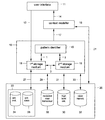
- Figure 1 shows an architecture incorporating an embodiment of the present invention.
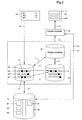
- Figure 2 shows aspects of the architecture shown in Figure 1 in further detail.
- a system 10 is shown on which the process described hereinafter may be implemented, in particular the data flow and data processing steps initiated by the system of an embodiment of the present invention are shown.
- the system 10 is for storing a pattern occurring in situation representations 64' for context representation 64* in an application 20.
- the system includes a first storage medium 18 for storing a plurality of situations 64 in which the user is or has been involved, as a respective plurality of situation representations 64' having at least one property 4 determined by the respective situation 64, a pattern identifier 15 for identifying a pattern including a common property 4 shared by at least two of the plurality of situation representations 64', 64" in the plurality of stored situation representations 64' 64", and a second storage medium 19 for storing a representation of the pattern 5, wherein the first storage medium 18 is arranged to remove the at least two of the plurality of situation representations 64', 64" from the first storage medium 18 in response to the identification of the pattern.
- the system 10 is associated with a context modeller 16.
- the system 10 may typically be associated with a user interface 11 with which a user interacts. Typically, at any one time the user is involved in a situation 64 that may include an action or a process or both.
- the system 10 is also typically associated with an application 20, that may include a database 22 that may form part of a business application.
- the situation 64 defined by at least one of an action and process is input 12 to the first storage medium 18 where it is stored as a situation representation 64', 64".
- the situation representation 64', 64" is created by the system 10 on the basis of data from the application 20 and depending on the circumstances the current context representation which may be stored in the context modeller 16. Data may be exchanged 12, 14 between the user interface 11 and the system 10.
- the context modeller 16 and system 10 are arranged to exchange 17 data.
- the context modeller 16 may be arranged to exchange data with the application 20.
- the context modeller 16 determines which entities 61 are to form the context representation 64* on the basis inter alia of the output of the system 10.
- the context representation 64* typically includes at least one entity 61.
- the context of an entity or a situation as defined by the process or action is a collection of facts and entities 61 which are of special importance for that entity or situation and which usually have a direct or indirect relationship to the entity or situation.
- a context may be defined for a variety of entities 61 or a situation 64 including, but not limited to a user, a session or a business entity.
- the context may include entities 61 including his role, projects, personal preferences etc.
- the context may include entities 61 including a user, last actions, manipulated business entities 61 etc.
- the context may include entities 61 including past projects, orders for a customer etc.
- a business object is typically an entity 61 stored in a database 22.
- context may be represented by a number of instances of business entities 61, processes/actions, or situations.
- a situation 64 may be defined by at least one or a process or action.
- a user is involved with procedures that may include processes and/or actions shown by triangle 1, 2, 3 and circle 1, 2 and 3. The procedures give rise to a situation 64.
- the context modeller 16 models the context in response to the situation using situation and pattern representations 5, 64', 64", 64"'stored in the system 10.
- representations of a situation in which the user has been involved are stored in the first storage medium 18. They may be stored in terms of the entities 61 involved or associated with each particular process and/or action as a frame.
- the current and previous situations may be represented by a number of frames 70 describing objects or actions involved in the situation and their relationship 71 to each other.
- a frame is a term, known to the skilled person for example, from artificial intelligence (AI), and represents a common pattern that occurs with different "actors" in fixed "roles”.
- AI artificial intelligence
- the frame comprises slots, wherein the roles are represented by the slots and the slots are filled with the actors in a specific instance of such a frame.
- entities 61 form the contents of the slot.
- the frame is a data-structure for representing a current or previous situation. In other words, it is a representation of a pattern.
- a frame may be compared to a "class" in object oriented programming (OOP).
- OOP object oriented programming
- the pattern represented by the frame can represent a single situation.
- the pattern represented by the frame may also be the essence of a large number of single situations. Therefore, the relations referring to the respective entities in the slots may carry various values.
- the relations referring to the respective entities may carry a value indicating at least one of the probability and reliability of that relation. Further, another value can be set to characterise the importance of the respective relation in that situation. Also, these relations can be marked as causal or dependent relations, respectively. While the causal relations characterise a situation, the dependent relations may be considered as the deduction.
- the frames, relations and values for at least one of the situations the user has been involved with together with the current situation are stored in the first storage medium 18. In other words, the user's behaviour is observed by the system 10 and stored as frames. This data may then be used by the context modeller 16 to model the context representation 64*. This approach ensures a seamless integration of predefined and learned rules for evaluation purposes.
- the context representation modelled by the context modeller 16 on the basis of the system 10 not only represents the application contents but also the observed user behaviour including the current situation. It has been found that storing all situations 64 as situation representations 64', 64" involves the storage and handling of large amounts of data.
- the pattern identifier 15 is provided. The pattern identifier identifies patterns in the situation representations 64', 64", 64''' stored in the first storage medium 18. In particular, the pattern identifier 15 identifies at least two situation representations 64', 64" sharing a common property 4. If a pattern is identified, a pattern representation 5 is created and stored in the second storage medium 19. Once the pattern has been identified, the situation representations 64', 64" associated with the pattern are removed from the first storage medium 18.
- the first storage medium 18 is a short term memory and the second storage medium 19 is a long term memory.
- the situation representations 64',64", 64'''and pattern representations 5 may be stored as frames.
- the frames in the long term memory are abstractions of many frames which have been in the short term memory before.
- the system 10 is arranged to identify whether a situation 64 has been encountered before. In particular, if the system 10 identifies that the situation has not been encountered before, the situation 64 is stored in the first storage medium 18 as a situation representation 64"', and the system 10 is arranged to determine whether the situation representation 64''' fits the pattern representation 5.
- the system 10 is arranged to assign an activation value A to the situation representation 64"'causing the duration of the storage of the situation representation in the first storage medium 18 to be extended.
- the pattern identifier 15 is arranged to perform an abstraction with respect to a plurality of properties 4 to determine an abstract pattern.
- the second storage medium19 may be arranged to store an abstract pattern representation corresponding to the abstract pattern. In other words, if a pattern or patterns are identified with common properties, the abstract pattern is moved 3 over to the long term memory 19 where it is stored as a pattern representation 5.
- the identification of which relations are causal and which are dependent may be performed, for example: if a pattern of relations A, B, C is found, A and B are identified as being causal if there is no situation of A, B, not C.
- the pattern identifier 15 is arranged to identify the pattern if a number of situation representations 64', 64" with at least one common property 4 exceed a first threshold value.
- the first threshold value may be defined by the system or the user.
- the pattern identifier 15 is arranged to identify the pattern if a number of common properties 4 shared by the at least two situation representations 64', 64" exceeds a second threshold value.
- the plurality of situation representations 64', 64" is stored as a respective plurality of frames describing at least one entity and action involved in the respective situation 64 and their relationship to each other.
- the pattern may also be stored as a frame representation.
- the frame storing the pattern is an abstraction of the plurality of frames corresponding to the at least two of the plurality of situation representations 64', 64" sharing a common property.
- the system 10 determines which elements of the current context are to be included in the situation 64. This is achieved by defining an activation threshold and defining a situation as being a set of entities in the current context having an activation above that threshold. In this way, the situation representation reflects the current context.
- a plurality of entities are stored in a plurality of tables in accordance with their entity type.
- the first and second storage media 18, 19 may store a uniform representation of the entities from different tables.
- the first and second storage media 18, 19 include a semantic net representation which, in addition to providing a uniform representation, stores the relations between the different entity types.
- the first and second storage media 18, 19 are semantic net servers. If a semantic net server is used, the relations between the representations of the processes and actions are included.
- a semantic net is a data structure made up of nodes and relations between those nodes.
- a semantic net is the common way of representing ontologies in a computer system. Representations of processes and actions can be integrated in the semantic net structure as well as a general knowledge ontology. It is noted that an ontology is an explicit specification of a conceptualization. A conceptualization is an abstract, simplified view of the world it is desired to represent for some purpose. An ontology contains the vocabulary (terms or labels) and the definition of the concepts and their relationships for a given domain. An ontology is a representation that exists independent of any computer models or implementations. As mentioned, the context modeller 16 uses the patterns stored in the system 10 to identify the context representation 64* from the pattern representations 5 and situation representations 64', 64".
- a business application 20 is shown.
- entity instances are stored.
- entity classes are stored.
- the business application 20 further includes a recorded user behaviour storage medium 28 for storing user behaviour, a high level ontology storage medium 30 for storing a high level ontology and other repositories 32 for storing other data.
- the database 22, the recorded user behaviour storage medium 28, the high level ontology storage medium 39 and the other repositories 32 may exchange data with the system 10 via communication links 27, 29, 31 and 33, respectively.
- the situation representations 64', 64", 64"' may exchange data with the system 10 via communication links 27, 29, 31 and 33, respectively.
- the system 10 may be arranged to store situation representations and pattern representations from at least one database.
- a plurality of databases may be influenced by the context representation modelled by the context modeller 16.
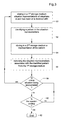
- FIG. 3 shows a flow diagram incorporating a method of modelling a context representation in accordance with an embodiment of the present invention.
- a process 200 is shown including the steps of: storing in a first storage medium situation representations of situations a user has been or is involved with (step 50), identifying a pattern in the situation representations (step 52), storing in a second storage medium a representation of the pattern (step 54), removing the situation representations associated with the identified pattern from the first storage medium (step 56). Subsequently, the system determines whether a new situation is being encountered. If it is, the process returns to step 50, if it is not, the system determines if the session is ending (step 60), if it is not, the process returns to step 58, if the session is ending, the process ends (step 62).
- a method of storing a pattern occurring in situation representations for context representation in an application comprising the steps of: storing in a first storage medium 18 a plurality of situations 64 in which the user is or has been involved, as a respective plurality of situation representations 64', 64" having at least one property 4 determined by the respective situation 64, identifying a pattern including a common property 4 shared by at least two of the plurality of situation representations 64', 64" in the plurality of stored situation representations 64', 64", and storing in a second storage medium19 a representation 5 of the pattern, wherein the first storage medium 18 is arranged to remove the at least two of the plurality of situation representations 64', 64" from the first storage medium 18 in response to the identification of the pattern.
- a further embodiment includes storing the situation representations 64', 64" in the first storage medium 18 for a short term duration.
- a further embodiment includes storing the pattern representation 5 in the second storage medium 19 for a long term duration.
- a yet further embodiment includes identifying the pattern if a number of situation representations 64', 64" with at least one common property 4 exceeds a first threshold value.
- a further embodiment includes identifying the pattern if a number of common properties 4 shared by the at least two situation representations 64', 64" exceeds a second threshold value.
- Still a further embodiment includes storing the plurality of situation representations 64', 64" as a respective plurality of frames describing at least one entity 61 and action involved in the respective situation 64 and their relationship to each other.
- the method may further include storing the pattern as a frame representation. Further, the method may include abstracting the plurality of frames corresponding to the at least two of the plurality of situation representations 64', 64" sharing a common property to determine the frame representation of the pattern.
- a yet further embodiment includes identifying whether a situation 64 has been encountered before. If the system 10 identifies that the situation 64 has not been encountered before, the method may include storing the situation 64 in the first storage medium 18 as a situation representation 64"', and determining whether the situation representation 64''' fits the pattern representation 5.
- a still further embodiment includes determining if the situation representation 64''' deviates from the pattern representation 5 or cannot be matched with the pattern representation 5, and, if so, assigning an activation value A to the situation representation 64''' causing the duration of the storage of the situation representation in the first storage medium 18 to be extended.
- a further embodiment includes intermittently identifying the pattern.
- a yet further embodiment includes performing an abstraction with respect to a plurality of properties 4 to determine an abstract pattern linking those properties. For example, a first statement " A has a dog" and the second statement "B has a cat" are not linked by any common property. However, abstraction can be used to identify the common property "A and B each have a pet".
- the method may include storing in the second storage medium 19 an abstract pattern representation corresponding to the abstract pattern.
- the method may include defining an activation threshold and defining the situation representation for a respective situation 64 as being a set of entities in a current context representation 64* having an activation value above the activation threshold.
- situation representations are stored in the first storage medium 18 and pattern representations are stored in a second storage medium.
- first and second storage media may form part of the same storage medium or, alternatively, separate storage media.
- the invention is not limited with respect to the storage medium or media required, in particular, the arrangement any particular storage medium or media.
- the present invention has application to a user terminal comprising means operable to perform any of the methods described.
- the present invention has application to a program storage device readable by a processing apparatus, said device embodying a program of instructions executable by the processor to perform the steps of any one of the methods described.
- the invention as described can be implemented in digital electronic circuitry, or in computer hardware, firmware, software, or in combination thereof.
- An apparatus according to the present invention can be implemented in a computer program product tangibly embodied in a machine readable storage device for execution by a programmable processor; and method steps of the invention can be performed by a programmable processor executing a program of instructions to perform functions of the invention by operating on input data and generating output.
- the invention can be implemented in one or more computer programs that are executable on a programmable system including at least one programmable processor coupled to receive data and instructions from, and to transmit data and instructions to, a data storage system, at least one input device, and at least one output device.
- Each computer program can be implemented in a high-level procedural or object-oriented programming language, or in assembly or machine language if desired; and in any case, the language can be a compiled or interpreted language.
- Suitable processors include, by way of example, both general and special purpose microprocessors.
- a processor will receive instructions and data from a read-only memory and/or a random access memory.
- a computer will include one or more mass storage devices for storing data files; such devices include magnetic disks, such as internal hard disks and removable disks; magneto-optical disks; and optical disks.
- Storage devices suitable for tangibly embodying computer program instructions and data include all forms of nonvolatile memory, including by way of example, semiconductor memory devices, such as EEPROM, and flash memory devices; magnetic disks such as internal hard disks and removable disks; magneto-optical disks; and CD-ROM disks. Any of the foregoing can be supplemented by, or incorporated in ASICs (application specific integrated circuits).
- ASICs application specific integrated circuits
- the invention can be implemented on a computer system having a display device such as a monitor or LCD screen for displaying information to the user and a keyboard and a pointing device such as a mouse or a trackball by which the user can provide input to the computer system.
- the computer system can be programmed to provide a graphical user interface through which computer programs interact with users. Whilst specific embodiments of the invention have been described above, it will be appreciated that the invention may be practiced otherwise than as described. The description is not intended to limit the invention. For example, the order steps be performed of the present invention is not limited to that order prescribed in the claims.
Landscapes
- Engineering & Computer Science (AREA)
- Software Systems (AREA)
- Theoretical Computer Science (AREA)
- Human Computer Interaction (AREA)
- Physics & Mathematics (AREA)
- General Engineering & Computer Science (AREA)
- General Physics & Mathematics (AREA)
- Information Retrieval, Db Structures And Fs Structures Therefor (AREA)
- Stored Programmes (AREA)
Abstract
Description
Therefore, one problem with conventional applications is that the context information is poor and unavailable for generic algorithms, instead the context sensitivity has to be hard coded for each screen.
a pattern identifier for identifying a pattern including a common property shared by at least two of the plurality of situation representations in the plurality of stored situation representations, and
a second storage medium for storing a representation of the pattern, wherein the first storage medium is arranged to remove the at least two of the plurality of situation representations from the first storage medium in response to the identification of the pattern.
By identifying patterns in the plurality of situations in which a user has been involved and using the pattern in order to determine the context representation, the context sensitivity of the application is enhanced. Further, by storing the pattern representation in a second storage medium and removing the at least two of the plurality of situations from the first storage medium if a pattern is identified including a common property shared by the at least two of the plurality of situations, the memory requirements for storing the plurality of situations is decreased. In particular, patterns are identified to substitute for a plurality of situations in which the user has been involved. A further advantage of the present invention is that the context representation includes knowledge about the user preferences and best practices, since they are derivable from the situations in which the user has been involved.
The present invention further allows irrelevant information to be hidden, additional related information and/or actions may be added. Further, a preselection of probable values for input fields is made. Further automatic learning of user preferences and "best practices" is built up.
The
Typically, as seen in Figure 2, a user is involved with procedures that may include processes and/or actions shown by
In this way, the context representation modelled by the
In a further embodiment, the
In a further embodiment of the present invention, the
A yet further embodiment includes identifying the pattern if a number of
Still a further embodiment includes storing the plurality of
To provide for interaction with a user, the invention can be implemented on a computer system having a display device such as a monitor or LCD screen for displaying information to the user and a keyboard and a pointing device such as a mouse or a trackball by which the user can provide input to the computer system. The computer system can be programmed to provide a graphical user interface through which computer programs interact with users.
Whilst specific embodiments of the invention have been described above, it will be appreciated that the invention may be practiced otherwise than as described. The description is not intended to limit the invention. For example, the order steps be performed of the present invention is not limited to that order prescribed in the claims.
Claims (32)
- A system for storing a pattern occurring in situation representations for context representation in an application, the system (10) comprising a first storage medium (18) for storing a plurality of situations (64) in which the user is or has been involved, as a respective plurality of situation representations (64', 64") having at least one property (4) determined by the respective situation (64),
a pattern identifier (15) for identifying a pattern including a common property (4) shared by at least two of the plurality of situation representations (64', 64") in the plurality of stored situation representations (64', 64"), and
a second storage medium (19) for storing a representation (5) of the pattern, wherein the first storage medium (18) is arranged to remove the at least two of the plurality of situation representations (64', 64") from the first storage medium (18) in response to the identification of the pattern. - A system according to claim 1, wherein the first storage medium (18) is a short term memory.
- A system according to any of the preceding claims 1 or 2, wherein the second storage medium (19) is a long term memory.
- A system according to any of the preceding claims, wherein the pattern identifier (15) is arranged to identify the pattern if a number of situation representations (64', 64") with at least one common property (4) exceeds a first threshold value.
- A system according to any of the preceding claims, wherein the pattern identifier (15) is arranged to identify the pattern if a number of common properties (4) shared by the at least two situation representations (64', 64") exceeds a second threshold value.
- A system according to any of the preceding claims, wherein the plurality of situation representations (64', 64") is stored as a respective plurality of frames describing at least one entity (61) and action involved in the respective situation (64) and their relationship to each other.
- A system according to any of the preceding claims, wherein the pattern is stored as a frame representation.
- A system according to claim 7, wherein the frame storing the pattern is an abstraction of the plurality of frames corresponding to the at least two of the plurality of situation representations (64', 64") sharing a common property (4).
- A system according to any of the preceding claims, wherein the system (10) is arranged to identify whether a situation (64) has been encountered before.
- A system according to claim 9, wherein if the system (10) identifies that the situation has not been encountered before, the situation is stored in the first storage medium (18) as a situation representation 64'''), and the system is arranged to determine whether the situation representation (64''') fits the pattern representation (5).
- A system according to claim 10, wherein if the situation representation (64''') deviates from the pattern representation (5) or cannot be matched with the pattern representation (5), the system (10) is arranged to assign an activation value to the situation representation (64''') causing the duration of the storage of the situation representation in the first storage medium (18) to be extended.
- A system according to any of the preceding claims, wherein the pattern identifier (15) is arranged to intermittently identify the pattern.
- A system according to any of the preceding claims, wherein the pattern identifier (15) is arranged to perform an abstraction with respect to a plurality of properties (4) to determine an abstract pattern.
- A system according to claim 13, wherein the second storage medium (19) is arranged to store an abstract pattern representation corresponding to the abstract pattern.
- A system according to any of the preceding claims, wherein the system (10) is arranged to define an activation threshold and is arranged to define the situation representation for a respective situation as being a set of entities in a current context representation having an activation value above the activation threshold.
- A method of storing a pattern occurring in situation representations for context representation in an application, the method comprising the steps of:storing in a first storage medium (18) a plurality of situations (64) in which the user is or has been involved, as a respective plurality of situation representations (64', 64") having at least one property (4) determined by the respective situation (64),identifying a pattern including a common property (4) shared by at least two of the plurality of situation representations (64', 64") in the plurality of stored situation representations (64', 64"), andstoring in a second storage medium(19) a representation (5) of the pattern, wherein the first storage medium (18) is arranged to remove the at least two of the plurality of situation representations(64', 64") from the first storage medium (18) in response to the identification of the pattern.
- A method according to claim 16, including storing the situation representations (64', 64") in the first storage medium (18) for a short term duration.
- A method according to any of the preceding claims 16 or 17, including storing the pattern representation (5) in the second storage medium (19) for a long term duration.
- A method according to any of the preceding claims 16-18, including identifying the pattern if a number of situation representations (64', 64") with at least one common property (4) exceeds a first threshold value.
- A method according to any of the preceding claims 16-19, including identifying the pattern if a number of common properties (4) shared by the at least two situation representations (64', 64") exceeds a second threshold value.
- A method according to any of the preceding claims 16-20, including storing the plurality of situation representations (64', 64") as a respective plurality of frames describing at least one entity (61) and action involved in the respective situation (64) and their relationship to each other.
- A method according to any of the preceding claims 16-21, including storing the pattern as a frame representation.
- A method according to claim 22, including abstracting the plurality of frames corresponding to the at least two of the plurality of situation representations (64', 64") sharing a property to determine the frame representation of the pattern.
- A method according to any of the preceding claims 16-23, including identifying whether a situation (64) has been encountered before.
- A method according to claim 24, including, if the system (10) identifies that the situation (64) has not been encountered before, storing the situation (64) in the first storage medium (18) as a situation representation (64'''), and determining whether the situation representation (64''') fits the pattern representation (5).
- A method according to claim 25, including determining if the situation representation (64''') deviates from the pattern representation (5) or cannot be matched with the pattern representation (5), and, if so, assigning an activation value (A) to the situation representation (64''') causing the duration of the storage of the situation representation in the first storage medium (18) to be extended.
- A method according to any of the preceding claims 16-26, including intermittently identifying the pattern.
- A method according to any of the preceding claims 16-27, including performing an abstraction with respect to a plurality of properties (4) to determine an abstract pattern.
- A method according to claim 28, including storing in the second storage medium (19) an abstract pattern representation corresponding to the abstract pattern.
- A method according to any of the preceding claims 16-29, including defining an activation threshold and defining the situation representation for a respective situation (64) as being a set of entities in a current context representation (64*) having an activation value above the activation threshold.
- A user terminal comprising means operable to perform the method of any of claims 16-30.
- A program storage device readable by a processing apparatus, the device embodying a program of instructions executable by the processor to perform the method of any of claims 16-30.
Priority Applications (3)
| Application Number | Priority Date | Filing Date | Title |
|---|---|---|---|
| EP04075323A EP1562110A1 (en) | 2004-02-03 | 2004-02-03 | A system for storing a pattern occuring in situation representations for context representation in an application and a method of storing a pattern occuring in situation representations for context representation in an application |
| JP2005025839A JP2005251181A (en) | 2004-02-03 | 2005-02-02 | System for storing patterns occurring in a situation expression for context representation in an application, and method for storing patterns occurring in a situation expression for context expression in an application |
| US11/048,702 US7617165B2 (en) | 2004-02-03 | 2005-02-03 | Systems and methods for storing a pattern occurring in situation representations for context representation in an application |
Applications Claiming Priority (1)
| Application Number | Priority Date | Filing Date | Title |
|---|---|---|---|
| EP04075323A EP1562110A1 (en) | 2004-02-03 | 2004-02-03 | A system for storing a pattern occuring in situation representations for context representation in an application and a method of storing a pattern occuring in situation representations for context representation in an application |
Publications (1)
| Publication Number | Publication Date |
|---|---|
| EP1562110A1 true EP1562110A1 (en) | 2005-08-10 |
Family
ID=34673706
Family Applications (1)
| Application Number | Title | Priority Date | Filing Date |
|---|---|---|---|
| EP04075323A Ceased EP1562110A1 (en) | 2004-02-03 | 2004-02-03 | A system for storing a pattern occuring in situation representations for context representation in an application and a method of storing a pattern occuring in situation representations for context representation in an application |
Country Status (3)
| Country | Link |
|---|---|
| US (1) | US7617165B2 (en) |
| EP (1) | EP1562110A1 (en) |
| JP (1) | JP2005251181A (en) |
Families Citing this family (3)
| Publication number | Priority date | Publication date | Assignee | Title |
|---|---|---|---|---|
| US20080027769A1 (en) | 2002-09-09 | 2008-01-31 | Jeff Scott Eder | Knowledge based performance management system |
| US8910183B2 (en) | 2011-08-19 | 2014-12-09 | Sap Se | Access to context information in a heterogeneous application environment |
| CN118152764A (en) * | 2022-12-06 | 2024-06-07 | 北京罗克维尔斯科技有限公司 | Information determination method, device, equipment, medium and vehicle |
Citations (2)
| Publication number | Priority date | Publication date | Assignee | Title |
|---|---|---|---|---|
| US20020165842A1 (en) * | 2001-05-04 | 2002-11-07 | International Business Machines Corporation | System and method for systematic construction of correlation rules for event management |
| US20030023593A1 (en) | 2000-05-11 | 2003-01-30 | Richard Schmidt | Real-time adaptive data mining system and method |
Family Cites Families (3)
| Publication number | Priority date | Publication date | Assignee | Title |
|---|---|---|---|---|
| US6996551B2 (en) * | 2000-12-18 | 2006-02-07 | International Business Machines Corporation | Apparata, articles and methods for discovering partially periodic event patterns |
| US7225107B2 (en) * | 2001-05-24 | 2007-05-29 | Test Advantage, Inc. | Methods and apparatus for data analysis |
| US7152075B2 (en) * | 2001-12-21 | 2006-12-19 | International Business Machines Corporation | System and method for removing rules from a data administration system |
-
2004
- 2004-02-03 EP EP04075323A patent/EP1562110A1/en not_active Ceased
-
2005
- 2005-02-02 JP JP2005025839A patent/JP2005251181A/en active Pending
- 2005-02-03 US US11/048,702 patent/US7617165B2/en active Active
Patent Citations (2)
| Publication number | Priority date | Publication date | Assignee | Title |
|---|---|---|---|---|
| US20030023593A1 (en) | 2000-05-11 | 2003-01-30 | Richard Schmidt | Real-time adaptive data mining system and method |
| US20020165842A1 (en) * | 2001-05-04 | 2002-11-07 | International Business Machines Corporation | System and method for systematic construction of correlation rules for event management |
Non-Patent Citations (2)
| Title |
|---|
| STRAUSS F: "Context sensitive help-facilities in GUIs through situations", 1993, BERLIN, GERMANY, SPRINGER-VERLAG, GERMANY, 1993, pages 79 - 90, XP009033386, ISBN: 3-540-57312-7 * |
| STRAUSS F:: ""Context sensitive help-facilities in GUIs through situations",", 1993, SPRINGER-VERLAG, GERMANY, BERLIN,GERMANY, ISBN: 3540573127, pages: 79 - 90 |
Also Published As
| Publication number | Publication date |
|---|---|
| US20050216438A1 (en) | 2005-09-29 |
| JP2005251181A (en) | 2005-09-15 |
| US7617165B2 (en) | 2009-11-10 |
Similar Documents
| Publication | Publication Date | Title |
|---|---|---|
| Steffen et al. | Language-driven engineering: from general-purpose to purpose-specific languages | |
| CN100504869C (en) | Information co-sharing systems and methods for managing electronic information | |
| US8326795B2 (en) | Enhanced process query framework | |
| Kishore et al. | Ontologies: a handbook of principles, concepts and applications in information systems | |
| WO2022048648A1 (en) | Method and apparatus for achieving automatic model construction, electronic device, and storage medium | |
| US7882148B2 (en) | Context modeler and method for modeling a context representation | |
| Shiva et al. | Software reuse: Research and practice | |
| CN116822195A (en) | Bidirectional model conversion method based on SysML v1 and SysML v2 | |
| Natschläger et al. | Deontic BPMN: a powerful extension of BPMN with a trusted model transformation | |
| US7933863B2 (en) | Database system and method for managing a database | |
| US12265579B2 (en) | Control system for controlling management and tagging of digital cards stored in decentralized content storage | |
| AU2002218864A1 (en) | Method for systemic enterprise knowledge management | |
| Lichtenstein et al. | Attribute-driven case notion discovery for unlabeled event logs | |
| CN120996215A (en) | A multi-domain task processing method, system, device, and medium based on knowledge fusion and agent collaboration | |
| US7617165B2 (en) | Systems and methods for storing a pattern occurring in situation representations for context representation in an application | |
| WO2022175288A1 (en) | Systems and methods for metadata based path finding | |
| Lavbič et al. | Ontology‐based multi‐agent system to support business users and management | |
| US7685205B2 (en) | Application management system and method for managing an application | |
| Smart et al. | A framework for combining rules and geo-ontologies | |
| Reinhartz-Berger et al. | A Variability-driven analysis method for automatic extraction of domain behaviors | |
| Zamansky et al. | Visualizing Code Variabilities for Supporting Reuse Decisions. | |
| Geist et al. | Supporting customizable business process models using graph transformation rules | |
| Lavbič | Knowledge Management with Multi-Agent System in BI Systems Integration | |
| Abbas | Extracting Domain Behaviors Through Multi-Criteria, Polymorphism-Inspired Variability Analysis | |
| Charrel | An engineering framework for domain knowledge modelling |
Legal Events
| Date | Code | Title | Description |
|---|---|---|---|
| PUAI | Public reference made under article 153(3) epc to a published international application that has entered the european phase |
Free format text: ORIGINAL CODE: 0009012 |
|
| AK | Designated contracting states |
Kind code of ref document: A1 Designated state(s): AT BE BG CH CY CZ DE DK EE ES FI FR GB GR HU IE IT LI LU MC NL PT RO SE SI SK TR |
|
| AX | Request for extension of the european patent |
Extension state: AL LT LV MK |
|
| RAP1 | Party data changed (applicant data changed or rights of an application transferred) |
Owner name: SAP AG |
|
| 17P | Request for examination filed |
Effective date: 20060112 |
|
| AKX | Designation fees paid |
Designated state(s): AT BE BG CH CY CZ DE DK EE ES FI FR GB GR HU IE IT LI LU MC NL PT RO SE SI SK TR |
|
| APBK | Appeal reference recorded |
Free format text: ORIGINAL CODE: EPIDOSNREFNE |
|
| APBN | Date of receipt of notice of appeal recorded |
Free format text: ORIGINAL CODE: EPIDOSNNOA2E |
|
| APBR | Date of receipt of statement of grounds of appeal recorded |
Free format text: ORIGINAL CODE: EPIDOSNNOA3E |
|
| APAF | Appeal reference modified |
Free format text: ORIGINAL CODE: EPIDOSCREFNE |
|
| RAP1 | Party data changed (applicant data changed or rights of an application transferred) |
Owner name: SAP SE |
|
| APBT | Appeal procedure closed |
Free format text: ORIGINAL CODE: EPIDOSNNOA9E |
|
| STAA | Information on the status of an ep patent application or granted ep patent |
Free format text: STATUS: THE APPLICATION HAS BEEN REFUSED |
|
| 18R | Application refused |
Effective date: 20150302 |