EP1557169A1 - Therapeutic and/or preventive agent for dyschezia - Google Patents
Therapeutic and/or preventive agent for dyschezia Download PDFInfo
- Publication number
- EP1557169A1 EP1557169A1 EP03758879A EP03758879A EP1557169A1 EP 1557169 A1 EP1557169 A1 EP 1557169A1 EP 03758879 A EP03758879 A EP 03758879A EP 03758879 A EP03758879 A EP 03758879A EP 1557169 A1 EP1557169 A1 EP 1557169A1
- Authority
- EP
- European Patent Office
- Prior art keywords
- defecation
- constipation
- therapeutic
- defecation dysfunction
- preventive agent
- Prior art date
- Legal status (The legal status is an assumption and is not a legal conclusion. Google has not performed a legal analysis and makes no representation as to the accuracy of the status listed.)
- Withdrawn
Links
Images




Classifications
-
- C—CHEMISTRY; METALLURGY
- C07—ORGANIC CHEMISTRY
- C07H—SUGARS; DERIVATIVES THEREOF; NUCLEOSIDES; NUCLEOTIDES; NUCLEIC ACIDS
- C07H17/00—Compounds containing heterocyclic radicals directly attached to hetero atoms of saccharide radicals
- C07H17/04—Heterocyclic radicals containing only oxygen as ring hetero atoms
- C07H17/08—Hetero rings containing eight or more ring members, e.g. erythromycins
-
- A—HUMAN NECESSITIES
- A61—MEDICAL OR VETERINARY SCIENCE; HYGIENE
- A61K—PREPARATIONS FOR MEDICAL, DENTAL OR TOILETRY PURPOSES
- A61K31/00—Medicinal preparations containing organic active ingredients
- A61K31/70—Carbohydrates; Sugars; Derivatives thereof
- A61K31/7042—Compounds having saccharide radicals and heterocyclic rings
- A61K31/7048—Compounds having saccharide radicals and heterocyclic rings having oxygen as a ring hetero atom, e.g. leucoglucosan, hesperidin, erythromycin, nystatin, digitoxin or digoxin
-
- A—HUMAN NECESSITIES
- A61—MEDICAL OR VETERINARY SCIENCE; HYGIENE
- A61P—SPECIFIC THERAPEUTIC ACTIVITY OF CHEMICAL COMPOUNDS OR MEDICINAL PREPARATIONS
- A61P1/00—Drugs for disorders of the alimentary tract or the digestive system
-
- A—HUMAN NECESSITIES
- A61—MEDICAL OR VETERINARY SCIENCE; HYGIENE
- A61P—SPECIFIC THERAPEUTIC ACTIVITY OF CHEMICAL COMPOUNDS OR MEDICINAL PREPARATIONS
- A61P1/00—Drugs for disorders of the alimentary tract or the digestive system
- A61P1/10—Laxatives
Definitions
- the present invention relates to a therapeutic and/or preventive agent for defecation dysfunction, which comprises an erythromycin derivative as an active ingredient, as well as a method for treating and/or preventing defecation dysfunction, which comprises administering an effective dose of the therapeutic and/or preventive agent to patients.
- Constipation is a physiological action essential to human life. Dysfunction in defecation causes symptoms of constipation and significantly reduces QOL. Constipation is a generic term for symptoms of defecation trouble associated not only with decreased frequency and/or amount of defecation, but also with changed condition of stool, incomplete evacuation and hypogastric flatulence. Constipation is caused by a variety of factors, including lack of food intake and exercise.
- constipation cases caused by other factors, for example, constipation associated with aging and social stress, analgesic-induced constipation caused by, e.g., morphine used in cancer treatment and surgical operation, and functional constipation (e.g., constipation associated with irritable bowel syndrome, atonic constipation, rectal constipation, chronic constipation).
- analgesic-induced constipation caused by, e.g., morphine used in cancer treatment and surgical operation
- functional constipation e.g., constipation associated with irritable bowel syndrome, atonic constipation, rectal constipation, chronic constipation.
- patients usually receive education on lifestyle habits to do with diet and exercise along with a laxative for medical treatment.
- a laxative is associated with a problem of frequent diarrhea and/or abdominal pain as side effects although treatment with a laxative may produce a transient improvement in symptoms.
- continuous medication is desired because the symptoms become worse immediately upon interruption of medication; but a laxative
- a gastroprokinetic agent such as cisapride may be used for treating constipation.
- Such an agent is considered to relieve constipation through enhancement of colonic motility.
- agents of this type have serious side effects including neurological effects, as represented by the fact that cisapride was withdrawn from the market because it was suspected to cause sudden death due to QT prolongation.
- gastrointestinal motility may be enhanced through receptors expressed exclusively in the gastrointestinal tract.
- the motilin receptor is a receptor for gastrointestinal motility hormone and this receptor is considered to be specifically distributed in the gastrointestinal tract.
- Motilin is known as a gastrointestinal motility hormone that is highly specific to the gastrointestinal tract. It is supposed that motilin stimulates upper gastrointestinal motility in human (see, e.g., Itoh Z. Motilin and clinical application. Peptides. 1997 18:593-608) and also reported not to affect colonic motility (Bradette M, Poitras P, Boivin M. Effect of motilin and erythromycin on the motor activity of the human colon. J Gastrointest Mot 1993 5:247-251).
- motilin makes an indirect contribution to colonic motility in view of the fact that motilin stimulates acetylcholine-induced colonic contraction; but it is reported that motilin has no direct stimulatory effect on colonic contraction (Chieppa DM, Mansi G, Rinaldi R, Serio M, Nacci C, Montagnani M, Potenza MA, De Salvia MA, Mitolo CI, Rinaldi M, Altomare DF. Effects of erythromycin on human colonic circular muscle in idiopathic chronic constipation. Eur J Clin Invest. 2000 30:66-71). It is therefore unclear whether defecation can be accelerated by motilin or a motilin agonist.
- constipation may be due to a synergistic effect between indirect enhancement of colonic motility and changes in enterobacterial flora induced by the antibacterial action of erythromycin; and hence, it is unclear whether constipation is relieved by a motilin agonist having a weak or no antibacterial action.
- erythromycin is clinically unsuitable for continuous medication as a therapeutic agent for constipation.
- JP 6-56843 A and WO93/24509 teach that a specific type of erythromycin derivative serves as a motilin agonist and enhances upper gastrointestinal motility. Moreover, among this type of compound, erythromycin, 8,9-didehydro-N- demethyl-9-deoxo-6,11-dideoxy-6,9-epoxy-12-O-methyl N-(1- methylethyl)-11-oxo-, (2E)-2-butenedioate (2:1) [development code: GM-611 (Chugai Pharmaceutical Co., Ltd.), hereinafter simply referred to as "GM-611"] is reported to have a weaker antibacterial action than erythromycin and hence suggested to be available for long-term clinical use (Koga H, Takanashi H, Itoh Z, Omura S.
- erythromycin derivative is preferred as a therapeutic and/or preventive agent for defecation dysfunction because it is capable of improving defecation functions and also suitable for continuous medication.
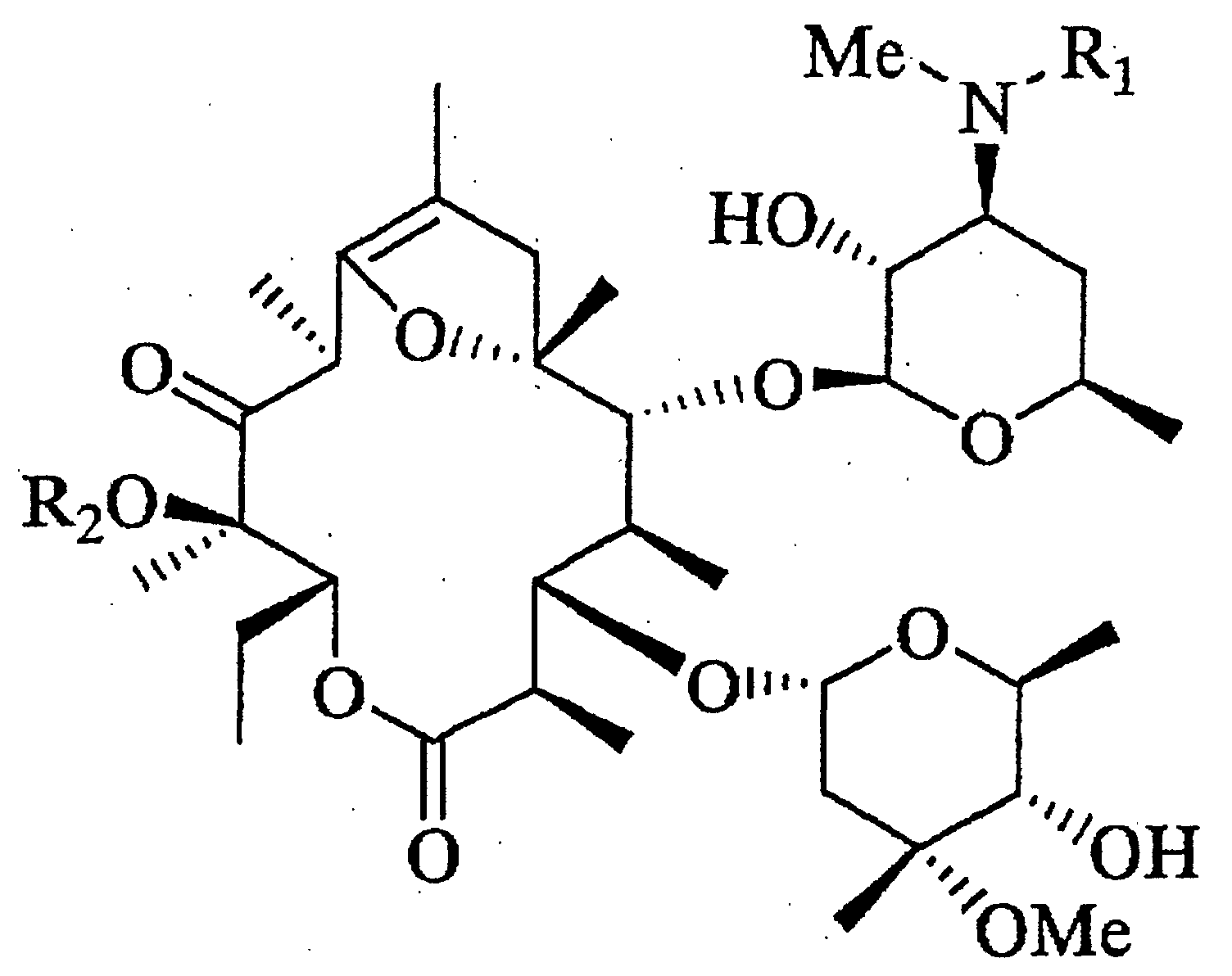
- the present invention relates to a therapeutic and/or preventive agent for defecation dysfunction, which comprises as an active ingredient a compound of Formula (1) or a pharmaceutically acceptable salt thereof: (wherein R 1 represents a C 1 -C 6 alkyl group and R 2 represents a C 1 -C 6 alkyl group).
- the present invention relates to a method for treating and/or preventing defecation dysfunction in a patient with defecation dysfunction, which comprises administering to the patient, a therapeutic and/or preventive agent for defecation dysfunction comprising as an active ingredient the above compound of Formula (1) or a pharmaceutically acceptable salt thereof, wherein the therapeutic and/or preventive agent is administered in doses sufficient to treat and/or prevent defecation dysfunction in the patient.
- R 1 in Formula (1) is an isopropyl group.
- R 2 in Formula (1) is a methyl group.
- defecation dysfunction is constipation.
- defecation dysfunction is selected from analgesic-induced constipation (e.g., morphine-induced constipation), functional constipation (e.g., constipation associated with irritable bowel syndrome, atonic constipation, rectal constipation, chronic constipation) and senile constipation.
- analgesic-induced constipation e.g., morphine-induced constipation
- functional constipation e.g., constipation associated with irritable bowel syndrome, atonic constipation, rectal constipation, chronic constipation
- senile constipation e.g., senile constipation.
- R 1 and R 2 each independently represent a C 1 -C 6 alkyl group.
- a C 1 -C 6 alkyl group refers to a linear or branched alkyl group containing 1 to 6 carbon atoms. Specific examples include a methyl group, an ethyl group, an n-propyl group, an isopropyl group, an n-butyl group, an isobutyl group, a sec-butyl group, a tert-butyl group, a pentyl group, a neopentyl group and a hexyl group.
- linear or branched C 1 -C 3 alkyl groups including a methyl group, an ethyl group, an n-propyl group and an isopropyl group.
- Particularly preferred examples of R 1 include an isopropyl group, while particularly preferred examples of R 2 include a methyl group.
- the compound of Formula (1) may be in a salt form.
- possible salts include those with inorganic acids such as hydrochloric acid, hydrobromic acid, hydroiodic acid and sulfuric acid, as well as those with organic acids such as acetic acid, oxalic acid, maleic acid, fumaric acid and methanesulfonic acid, with a fumaric acid salt being preferred.
- the compound of Formula (1) may be in a hydrate form.
- a fumaric acid salt of the compound i.e., erythromycin, 8,9-didehydro- N-demethyl-9-deoxo-6,11-dideoxy-6,9-epoxy-12-O-methyl N-(1- methylethyl)-11-oxo-, (2E)-2-butenedioate (2:1)
- development code: GM-611 (Chugai Pharmaceutical Co., Ltd.), hereinafter simply referred to as "GM-611"].
- the compound of Formula (1) used in the present invention is known and can be synthesized as described in, e.g., Bioorg & Med Chem Lett, Vol. 4, No. 11, page 1347, 1994; JP 6-56843 A (WO93/24509); JP 9-100291 A (WO97/06177); WO02/18403 or WO02/30943.
- the target disease of the present invention is defecation dysfunction.
- Defecation dysfunction refers to a condition associated with decreased frequency and/or amount of defecation, regardless of its cause. More specifically, such a condition is intended to mean constipation.
- Constipation as used herein includes analgesic-induced constipation (e.g., morphine-induced constipation), functional constipation (e.g., constipation associated with irritable bowel syndrome, atonic constipation, rectal constipation) and senile constipation.
- the term "therapeutic and/or preventive agent” refers to an agent used for either or both treatment and prevention purposes. More preferably, this term refers to an agent used for treating and/or preventing the target disease stated above or inhibiting the disease from progressing to more advanced stages so as to prevent further deterioration and/or maintain the status quo.
- the therapeutic and/or preventive agent for defecation dysfunction preferably facilitates normal defecation.
- normal defecation means that defecation occurs without changing stool condition for the worse, without increasing the water content of stool, or without changing stool into a diarrheal form.
- the pharmaceutical composition of the present invention may be prepared in various dosage forms by mixing the compound of Formula (1) as an active ingredient with a physiologically acceptable solid or liquid pharmaceutical carrier as appropriate for the intended route of administration.
- Possible routes of administration include oral administration, parenteral administration (e.g., intravenous injection), sustained release-administration using sustained-release preparations, and local administration using local delivery catheters or the like.
- Pharmaceutical carriers include commonly used excipients, binders, disintegrating agents, lubricants, coating agents, solubilizers, emulsifiers, suspending agents, stabilizers, fats/oils, and solvents.
- Dosage forms include tablets, granules, pills, capsules, solutions, syrups, suspensions, emulsions and injections.
- the dose of a compound of Formula (1) according to the present invention may be selected as appropriate for the age of a patient, the type of disease to be treated, the severity of symptoms, the intended route of administration and so on, the daily dose for adults may be 1 to 1000 mg, preferably 5 to 400 mg. More specifically, when administered with a particularly preferred compound GM-611, an adult patient preferably receives 10 mg to 40 mg of the compound, which may be given in single or divided doses.
- a subject When a subject is administered with the therapeutic and/or preventive agent for defecation dysfunction according to the present invention, some characteristic effects are observed in the subject.
- a compound of Formula (1) including GM-611
- the administered subject shows activation of the upper gastrointestinal motility, as well as enhancement of colonic motility.
- the starting point of GMC (giant migrating contraction) in the colon is closer to the mouth when compared to normal defecation; and in some cases, GMC is observed to occur starting from the ileum.
- GM-611 erythromycin, 8,9-didehydro-N-demethyl-9-deoxo-6,11-dideoxy-6,9-epoxy-12-O-methyl N-(1-methylethyl)-11-oxo-, (2E)-2-butenedioate (2:1)
- This compound was synthesized in the laboratory of Chugai Pharmaceutical Co., Ltd. as described in WO02/18403 and WO02/30943.
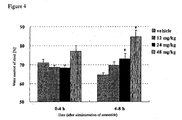
- sennoside sennoside solution (trade name), Taisho Pharm. Ind., Ltd.) was used as a laxative to compare with acceleratory effects of GM-611 on defecation. More specifically, normal rabbits were orally administered with GM-611 or sennoside and then measured for the weight and water content of stools. Normal rabbits (Kbl:JW), in groups of 13 to 15, were orally administered with vehicle (3 w/v% gum arabic suspension), GM-611 (1.25 mg/kg, 2.5 mg/kg, 5 mg/kg, 10 mg/kg), vehicle (purified water), or sennoside (12 mg/kg, 24 mg/kg, 48 mg/kg).
- vehicle 3 w/v% gum arabic suspension
- GM-611 1.25 mg/kg, 2.5 mg/kg, 5 mg/kg, 10 mg/kg
- vehicle (purified water) or sennoside (12 mg/kg, 24 mg/kg, 48 mg/kg).
- the stool weight was then measured every 4 hours until 8 hours after administration. Also, their stools were collected, dried in a dry oven (at 120°C for 24 hours or longer) and then the dry stool weight was measured to calculate the water content of stools (%) according to the following formula: ((wet stool weight [g] - dry stool weight [g])/wet stool weight [g]) ⁇ 100.
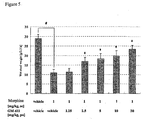
- Rabbits were subcutaneously administered with vehicle (physiological saline) or morphine (1 mg/kg) and fed for 30 minutes (feeding stimulation), followed by oral administration of vehicle (3 w/v% gum arabic suspension) or GM-611 at a dose of 1.25 mg/kg, 2.5 mg/kg, 5 mg/kg, 10 mg/kg or 20 mg/kg.
- vehicle physiological saline
- morphine 1 mg/kg
- GM-611 a dose of 1.25 mg/kg, 2.5 mg/kg, 5 mg/kg, 10 mg/kg or 20 mg/kg.
- the stool weight for 2.5 hours after administration was measured (11 rabbits in each group) to examine the improving effect of GM-611 on morphine-induced defecation dysfunction.
- the animals having defecation within 1 hour were intragastrically administered via the catheter with vehicle (3 w/v% gum arabic suspension) or GM-611 (0.3 mg/kg, 1 mg/kg, 3 mg/kg) and then measured for the time until the first defecation after administration.
- vehicle 3 w/v% gum arabic suspension
- GM-611 0.3 mg/kg, 1 mg/kg, 3 mg/kg
- GM-611 The acceleratory effect of GM-611 on defecation was studied by repeated oral administration of GM-611 in Phase I trials. Healthy male volunteers, in groups of 6, were orally administered for 10 days with placebo or GM-611 (5 mg, 10 mg, 20 mg) on a three-times-a-day basis together with 150 mL water at 30 minutes before each meal, provided that the volunteers were administered once before breakfast on the first and tenth days. The volunteers were then monitored for their defecation during the period of administration.
- the acceleratory effect on defecation was assessed by the daily frequency of defecation, the number of days that at least one defecation was observed (the number of defecation days), and stool condition (watery diarrhea, muddy diarrhea, muddy soft stool, formed soft stool, normal stool, hard stool, very hard stool). It should be noted that in this test, the subjects were allocated at random to each test group and tested in a double-blind manner.
- the average daily frequency of defecation was 0.7 in the placebo-treated group, whereas it was 1.0 in the GM-611-treated groups, indicating that the frequency of defecation tended to be higher in the GM-611-treated groups than the placebo-treated group.
- the inventors of the present invention found for the first time that an erythromycin derivative of Formula (1) had an improving effect on defecation dysfunction and clinically exerted the effect in humans. It was also found that this improving effect on defecation dysfunction led to stimulation of normal defecation, unlike a laxative. Further, the compound of Formula (1) according to the present invention is also suitable for long-term clinical use because of its weaker antibacterial action than erythromycin. In view of the foregoing, the present invention provides an agent having a safe and potent therapeutic and/or preventive effect on defecation dysfunction.
Landscapes
- Health & Medical Sciences (AREA)
- Chemical & Material Sciences (AREA)
- Life Sciences & Earth Sciences (AREA)
- Organic Chemistry (AREA)
- General Health & Medical Sciences (AREA)
- Molecular Biology (AREA)
- Public Health (AREA)
- Medicinal Chemistry (AREA)
- Engineering & Computer Science (AREA)
- Pharmacology & Pharmacy (AREA)
- Veterinary Medicine (AREA)
- Animal Behavior & Ethology (AREA)
- Biotechnology (AREA)
- Epidemiology (AREA)
- Biochemistry (AREA)
- Genetics & Genomics (AREA)
- Bioinformatics & Cheminformatics (AREA)
- Chemical Kinetics & Catalysis (AREA)
- General Chemical & Material Sciences (AREA)
- Nuclear Medicine, Radiotherapy & Molecular Imaging (AREA)
- Pharmaceuticals Containing Other Organic And Inorganic Compounds (AREA)
- Saccharide Compounds (AREA)
Abstract
Description

Claims (10)
- A therapeutic and/or preventive agent for defecation dysfunction, which comprises as an active ingredient a compound of Formula (1) or a pharmaceutically acceptable salt thereof:(wherein R1 represents a C1-C6 alkyl group and R2 represents a C1-C6 alkyl group).
- The therapeutic and/or preventive agent for defecation dysfunction according to claim 1, wherein R1 is an isopropyl group.
- The therapeutic and/or preventive agent for defecation dysfunction according to claim 1 or 2, wherein R2 is a methyl group.
- The therapeutic and/or preventive agent for defecation dysfunction according to claim 1, wherein defecation dysfunction is constipation.
- The therapeutic and/or preventive agent for defecation dysfunction according to claim 4, wherein defecation dysfunction is analgesic-induced constipation, including morphine-induced constipation.
- The therapeutic and/or preventive agent for defecation dysfunction according to claim 4, wherein defecation dysfunction is functional constipation.
- The therapeutic and/or preventive agent for defecation dysfunction according to claim 6, wherein defecation dysfunction is constipation associated with irritable bowel syndrome, atonic constipation, rectal constipation or chronic constipation.
- The therapeutic and/or preventive agent for defecation dysfunction according to claim 4, wherein defecation dysfunction is senile constipation.
- The therapeutic and/or preventive agent for defecation dysfunction according to any one of claims 1 to 8, wherein the agent accelerates normal defecation.
- A method for treating and/or preventing defecation dysfunction in a patient with defecation dysfunction, which comprises administering to the patient, the therapeutic and/or preventive agent for defecation dysfunction according to any one of claims 1 to 9 in doses sufficient to treat and/or prevent defecation dysfunction in the patient.
Applications Claiming Priority (3)
| Application Number | Priority Date | Filing Date | Title |
|---|---|---|---|
| JP2002311284 | 2002-10-25 | ||
| JP2002311284 | 2002-10-25 | ||
| PCT/JP2003/013627 WO2004037273A1 (en) | 2002-10-25 | 2003-10-24 | Therapeutic and/or preventive agent for dyschezia |
Publications (2)
| Publication Number | Publication Date |
|---|---|
| EP1557169A1 true EP1557169A1 (en) | 2005-07-27 |
| EP1557169A4 EP1557169A4 (en) | 2010-09-22 |
Family
ID=32171077
Family Applications (1)
| Application Number | Title | Priority Date | Filing Date |
|---|---|---|---|
| EP03758879A Withdrawn EP1557169A4 (en) | 2002-10-25 | 2003-10-24 | THERAPEUTIC AND / OR PROPHYLACTIC AGENT FOR DYSCHEZIA |
Country Status (8)
| Country | Link |
|---|---|
| US (1) | US7635714B2 (en) |
| EP (1) | EP1557169A4 (en) |
| JP (1) | JP4541148B2 (en) |
| KR (1) | KR20050059293A (en) |
| CN (1) | CN1708309A (en) |
| AU (1) | AU2003275652B2 (en) |
| CA (1) | CA2503088A1 (en) |
| WO (1) | WO2004037273A1 (en) |
Families Citing this family (2)
| Publication number | Priority date | Publication date | Assignee | Title |
|---|---|---|---|---|
| TW200633714A (en) | 2004-12-28 | 2006-10-01 | Chugai Pharmaceutical Co Ltd | Drugs for the treatment and/or prophylaxis of gastroparesis symptom |
| US7994020B2 (en) * | 2008-07-21 | 2011-08-09 | Advanced Micro Devices, Inc. | Method of forming finned semiconductor devices with trench isolation |
Family Cites Families (9)
| Publication number | Priority date | Publication date | Assignee | Title |
|---|---|---|---|---|
| WO1993013780A1 (en) * | 1992-01-21 | 1993-07-22 | Abbott Laboratories | 4''-deoxyerythromycin derivatives |
| CA2247929A1 (en) * | 1996-03-01 | 1997-09-04 | Miichiro Arita | Processes for the preparation of erythromycin derivatives |
| US6077943A (en) * | 1996-03-01 | 2000-06-20 | Takeda Chemical Industries, Ltd. | Method of producing erythromycin derivative |
| WO1998003531A1 (en) | 1996-07-24 | 1998-01-29 | Chugai Seiyaku Kabushiki Kaisha | Erythromycin derivatives |
| CA2330251A1 (en) * | 1998-06-12 | 1999-12-16 | Merck & Co., Inc. | Cloning and identification of the motilin receptor |
| WO2000009530A1 (en) * | 1998-08-10 | 2000-02-24 | Takeda Chemical Industries, Ltd. | Process for the preparation of erythromycin derivatives |
| JP2001119295A (en) | 1999-10-19 | 2001-04-27 | Nec Corp | PLL circuit |
| CA2399198A1 (en) * | 2000-02-18 | 2001-08-23 | Christopher Carreras | Motilide compounds |
| KR100554562B1 (en) | 2000-09-01 | 2006-03-03 | 쥬가이 세이야쿠 가부시키가이샤 | Process for preparing erythromycin derivative |
-
2003
- 2003-10-24 WO PCT/JP2003/013627 patent/WO2004037273A1/en not_active Ceased
- 2003-10-24 CA CA002503088A patent/CA2503088A1/en not_active Abandoned
- 2003-10-24 JP JP2004546475A patent/JP4541148B2/en not_active Expired - Fee Related
- 2003-10-24 EP EP03758879A patent/EP1557169A4/en not_active Withdrawn
- 2003-10-24 US US10/532,585 patent/US7635714B2/en not_active Expired - Fee Related
- 2003-10-24 CN CNA2003801020360A patent/CN1708309A/en active Pending
- 2003-10-24 KR KR1020057007043A patent/KR20050059293A/en not_active Ceased
- 2003-10-24 AU AU2003275652A patent/AU2003275652B2/en not_active Expired - Fee Related
Also Published As
| Publication number | Publication date |
|---|---|
| KR20050059293A (en) | 2005-06-17 |
| JPWO2004037273A1 (en) | 2006-02-23 |
| US20060014706A1 (en) | 2006-01-19 |
| JP4541148B2 (en) | 2010-09-08 |
| EP1557169A4 (en) | 2010-09-22 |
| AU2003275652B2 (en) | 2009-12-17 |
| US7635714B2 (en) | 2009-12-22 |
| WO2004037273A1 (en) | 2004-05-06 |
| CA2503088A1 (en) | 2004-05-06 |
| AU2003275652A1 (en) | 2004-05-13 |
| CN1708309A (en) | 2005-12-14 |
Similar Documents
| Publication | Publication Date | Title |
|---|---|---|
| ES2878575T3 (en) | Methods for using FXR agonists | |
| ES2862194T3 (en) | Methods for using FXR agonists | |
| US20220133738A1 (en) | Genotype and dose-dependent response to an asbti in patients with bile salt export pump deficiency | |
| JP2002537332A (en) | Gabapentin derivatives for preventing and treating visceral pain | |
| Iwanaga et al. | Gastroprokinetic effect of a new benzamide derivative itopride and its action mechanisms in conscious dogs | |
| PT1789067E (en) | Use of growth hormone secretagogues for stimulating the motility of the gastrointestinal system | |
| US20060205753A1 (en) | Use of methylnaltrexone and related compounds to treat post-operative gastrointestinal dysfunction | |
| SK287714B6 (en) | Use of amino acid derivative for the preparation of pharmaceutical compositions for treating phantom pain or diabetic neuropathic pain | |
| Hallerbäck et al. | Effect of combined blockade of β-adrenoceptors and acetylcholinesterase in the treatment of postoperative ileus after cholecystectomy | |
| US7635714B2 (en) | Methods of treating dyschezia | |
| HK1074174A (en) | Therapeutic and/or preventive agent for dyschezia | |
| JP2013040206A (en) | Method for stimulating motion of digestive system by using ipamorelin | |
| WO2020218950A1 (en) | Combination for treating functional diseases of the gastrointestinal tract | |
| Fauville et al. | Severe diltiazem poisoning with intestinal pseudo-obstruction: case report and toxicological data | |
| US7446128B2 (en) | Agent for treating interstitial cystitis | |
| EP3854391B1 (en) | Carbamate compound and use of formulation comprising same in preventing, alleviating, or treating acute stress disorder or post-traumatic stress disorder | |
| RU2697414C1 (en) | Novel tachykinin receptor antagonist and use thereof | |
| HK1079460A (en) | Therapeutic and/or preventive agent for dyschezia | |
| US9192602B2 (en) | Indication of anthra[2,1,c][1,2,5]thiadiazole-6,11-dione compound in alleviating pain | |
| KR20210062029A (en) | Use of carbamate compounds for the prevention, alleviation or treatment of diabetic peripheral neuropathy or chemotherapy-induced peripheral neuropathy | |
| US7803779B2 (en) | Drugs for the treatment and/or prophylaxis of gastroparesis symptom | |
| HK1105279B (en) | Use of growth hormone secretagogues for stimulating the motility of the gastrointestinal system | |
| EA046006B1 (en) | COMBINATION FOR TREATMENT OF FUNCTIONAL DISEASES OF THE GASTROINTESTINAL TRACT | |
| HK1257647B (en) | Methods for using fxr agonists | |
| HK1257649B (en) | Methods for using fxr agonists |
Legal Events
| Date | Code | Title | Description |
|---|---|---|---|
| PUAI | Public reference made under article 153(3) epc to a published international application that has entered the european phase |
Free format text: ORIGINAL CODE: 0009012 |
|
| 17P | Request for examination filed |
Effective date: 20050504 |
|
| AK | Designated contracting states |
Kind code of ref document: A1 Designated state(s): AT BE BG CH CY CZ DE DK EE ES FI FR GB GR HU IE IT LI LU MC NL PT RO SE SI SK TR |
|
| AX | Request for extension of the european patent |
Extension state: AL LT LV MK |
|
| REG | Reference to a national code |
Ref country code: HK Ref legal event code: DE Ref document number: 1074174 Country of ref document: HK |
|
| DAX | Request for extension of the european patent (deleted) | ||
| A4 | Supplementary search report drawn up and despatched |
Effective date: 20100824 |
|
| 17Q | First examination report despatched |
Effective date: 20110224 |
|
| REG | Reference to a national code |
Ref country code: HK Ref legal event code: WD Ref document number: 1074174 Country of ref document: HK |
|
| STAA | Information on the status of an ep patent application or granted ep patent |
Free format text: STATUS: THE APPLICATION IS DEEMED TO BE WITHDRAWN |
|
| 18D | Application deemed to be withdrawn |
Effective date: 20120619 |