EP1555787A2 - Upper layer security based on lower layer keying - Google Patents
Upper layer security based on lower layer keying Download PDFInfo
- Publication number
- EP1555787A2 EP1555787A2 EP04257705A EP04257705A EP1555787A2 EP 1555787 A2 EP1555787 A2 EP 1555787A2 EP 04257705 A EP04257705 A EP 04257705A EP 04257705 A EP04257705 A EP 04257705A EP 1555787 A2 EP1555787 A2 EP 1555787A2
- Authority
- EP
- European Patent Office
- Prior art keywords
- application
- key
- authentication
- network
- client
- Prior art date
- Legal status (The legal status is an assumption and is not a legal conclusion. Google has not performed a legal analysis and makes no representation as to the accuracy of the status listed.)
- Withdrawn
Links
- 238000000034 method Methods 0.000 claims abstract description 53
- 230000008569 process Effects 0.000 claims description 18
- 238000004891 communication Methods 0.000 description 32
- 239000000463 material Substances 0.000 description 25
- 239000003795 chemical substances by application Substances 0.000 description 15
- 230000002085 persistent effect Effects 0.000 description 15
- 230000006870 function Effects 0.000 description 14
- 238000010586 diagram Methods 0.000 description 12
- 230000001413 cellular effect Effects 0.000 description 9
- 238000013475 authorization Methods 0.000 description 6
- 238000012986 modification Methods 0.000 description 6
- 230000004048 modification Effects 0.000 description 6
- 230000003993 interaction Effects 0.000 description 5
- 230000004044 response Effects 0.000 description 5
- 238000013459 approach Methods 0.000 description 4
- 230000000694 effects Effects 0.000 description 4
- 230000008901 benefit Effects 0.000 description 3
- 238000009795 derivation Methods 0.000 description 3
- 238000007726 management method Methods 0.000 description 3
- 230000007246 mechanism Effects 0.000 description 3
- 101100217298 Mus musculus Aspm gene Proteins 0.000 description 2
- 230000009471 action Effects 0.000 description 2
- 238000005516 engineering process Methods 0.000 description 2
- 230000003068 static effect Effects 0.000 description 2
- 230000005540 biological transmission Effects 0.000 description 1
- 230000008859 change Effects 0.000 description 1
- 238000007596 consolidation process Methods 0.000 description 1
- 239000000470 constituent Substances 0.000 description 1
- 238000013461 design Methods 0.000 description 1
- 238000011161 development Methods 0.000 description 1
- 230000006855 networking Effects 0.000 description 1
- 239000013598 vector Substances 0.000 description 1
Images

Classifications
-
- H—ELECTRICITY
- H04—ELECTRIC COMMUNICATION TECHNIQUE
- H04L—TRANSMISSION OF DIGITAL INFORMATION, e.g. TELEGRAPHIC COMMUNICATION
- H04L63/00—Network architectures or network communication protocols for network security
- H04L63/06—Network architectures or network communication protocols for network security for supporting key management in a packet data network
-
- H—ELECTRICITY
- H04—ELECTRIC COMMUNICATION TECHNIQUE
- H04L—TRANSMISSION OF DIGITAL INFORMATION, e.g. TELEGRAPHIC COMMUNICATION
- H04L63/00—Network architectures or network communication protocols for network security
- H04L63/08—Network architectures or network communication protocols for network security for authentication of entities
-
- H—ELECTRICITY
- H04—ELECTRIC COMMUNICATION TECHNIQUE
- H04L—TRANSMISSION OF DIGITAL INFORMATION, e.g. TELEGRAPHIC COMMUNICATION
- H04L9/00—Cryptographic mechanisms or cryptographic arrangements for secret or secure communications; Network security protocols
- H04L9/08—Key distribution or management, e.g. generation, sharing or updating, of cryptographic keys or passwords
- H04L9/0816—Key establishment, i.e. cryptographic processes or cryptographic protocols whereby a shared secret becomes available to two or more parties, for subsequent use
- H04L9/0819—Key transport or distribution, i.e. key establishment techniques where one party creates or otherwise obtains a secret value, and securely transfers it to the other(s)
- H04L9/083—Key transport or distribution, i.e. key establishment techniques where one party creates or otherwise obtains a secret value, and securely transfers it to the other(s) involving central third party, e.g. key distribution center [KDC] or trusted third party [TTP]
-
- H—ELECTRICITY
- H04—ELECTRIC COMMUNICATION TECHNIQUE
- H04L—TRANSMISSION OF DIGITAL INFORMATION, e.g. TELEGRAPHIC COMMUNICATION
- H04L9/00—Cryptographic mechanisms or cryptographic arrangements for secret or secure communications; Network security protocols
- H04L9/08—Key distribution or management, e.g. generation, sharing or updating, of cryptographic keys or passwords
- H04L9/0861—Generation of secret information including derivation or calculation of cryptographic keys or passwords
- H04L9/0869—Generation of secret information including derivation or calculation of cryptographic keys or passwords involving random numbers or seeds
-
- H—ELECTRICITY
- H04—ELECTRIC COMMUNICATION TECHNIQUE
- H04L—TRANSMISSION OF DIGITAL INFORMATION, e.g. TELEGRAPHIC COMMUNICATION
- H04L9/00—Cryptographic mechanisms or cryptographic arrangements for secret or secure communications; Network security protocols
- H04L9/08—Key distribution or management, e.g. generation, sharing or updating, of cryptographic keys or passwords
- H04L9/0891—Revocation or update of secret information, e.g. encryption key update or rekeying
-
- H—ELECTRICITY
- H04—ELECTRIC COMMUNICATION TECHNIQUE
- H04L—TRANSMISSION OF DIGITAL INFORMATION, e.g. TELEGRAPHIC COMMUNICATION
- H04L9/00—Cryptographic mechanisms or cryptographic arrangements for secret or secure communications; Network security protocols
- H04L9/32—Cryptographic mechanisms or cryptographic arrangements for secret or secure communications; Network security protocols including means for verifying the identity or authority of a user of the system or for message authentication, e.g. authorization, entity authentication, data integrity or data verification, non-repudiation, key authentication or verification of credentials
- H04L9/321—Cryptographic mechanisms or cryptographic arrangements for secret or secure communications; Network security protocols including means for verifying the identity or authority of a user of the system or for message authentication, e.g. authorization, entity authentication, data integrity or data verification, non-repudiation, key authentication or verification of credentials involving a third party or a trusted authority
-
- H—ELECTRICITY
- H04—ELECTRIC COMMUNICATION TECHNIQUE
- H04W—WIRELESS COMMUNICATION NETWORKS
- H04W12/00—Security arrangements; Authentication; Protecting privacy or anonymity
- H04W12/06—Authentication
- H04W12/069—Authentication using certificates or pre-shared keys
-
- H—ELECTRICITY
- H04—ELECTRIC COMMUNICATION TECHNIQUE
- H04L—TRANSMISSION OF DIGITAL INFORMATION, e.g. TELEGRAPHIC COMMUNICATION
- H04L2209/00—Additional information or applications relating to cryptographic mechanisms or cryptographic arrangements for secret or secure communication H04L9/00
- H04L2209/56—Financial cryptography, e.g. electronic payment or e-cash
-
- H—ELECTRICITY
- H04—ELECTRIC COMMUNICATION TECHNIQUE
- H04L—TRANSMISSION OF DIGITAL INFORMATION, e.g. TELEGRAPHIC COMMUNICATION
- H04L2209/00—Additional information or applications relating to cryptographic mechanisms or cryptographic arrangements for secret or secure communication H04L9/00
- H04L2209/80—Wireless
-
- H—ELECTRICITY
- H04—ELECTRIC COMMUNICATION TECHNIQUE
- H04L—TRANSMISSION OF DIGITAL INFORMATION, e.g. TELEGRAPHIC COMMUNICATION
- H04L2463/00—Additional details relating to network architectures or network communication protocols for network security covered by H04L63/00
- H04L2463/061—Additional details relating to network architectures or network communication protocols for network security covered by H04L63/00 applying further key derivation, e.g. deriving traffic keys from a pair-wise master key
-
- H—ELECTRICITY
- H04—ELECTRIC COMMUNICATION TECHNIQUE
- H04L—TRANSMISSION OF DIGITAL INFORMATION, e.g. TELEGRAPHIC COMMUNICATION
- H04L63/00—Network architectures or network communication protocols for network security
- H04L63/08—Network architectures or network communication protocols for network security for authentication of entities
- H04L63/0853—Network architectures or network communication protocols for network security for authentication of entities using an additional device, e.g. smartcard, SIM or a different communication terminal
-
- H—ELECTRICITY
- H04—ELECTRIC COMMUNICATION TECHNIQUE
- H04L—TRANSMISSION OF DIGITAL INFORMATION, e.g. TELEGRAPHIC COMMUNICATION
- H04L63/00—Network architectures or network communication protocols for network security
- H04L63/16—Implementing security features at a particular protocol layer
- H04L63/162—Implementing security features at a particular protocol layer at the data link layer
Definitions
- the present invention relates in general to communication units and networks, and more specifically to methods and functionality for effecting upper layer security schema based on lower layer keying processes within such communication units operating within such networks.
- Security is a major concern for communications activities between clients and servers, particularly between clients and network based servers.
- the security concerns encompass not only insuring secure transport of communications with clients via the network but also include authorization and authentication issues.
- Authorization generally speaks to whether a given client is authorized for a desired activity and authentication typically refers to insuring that the client and the network entity are in fact the client or entity they claim to be or that is represented.
- a given client e.g. communication unit
- This may include billing parameters and the like.
- the client often needs to satisfy additional security parameters, in addition to the access parameters, in order to utilize an application, such as mobile IP and the like.
- additional security parameters in addition to the access parameters, in order to utilize an application, such as mobile IP and the like.
- These security parameters likely vary for different applications. Over and above these levels of security issues may be other levels of security if a client wishes to utilize particular services via an application via an access connection, for example voice over IP, and the like.
- each level typically requires some configuration or provisioning activities at both the client and the relevant server(s). Furthermore if any changes or revisions occur, the configuration information often needs to be updated. When taken as a whole this provisioning or configuration task can become all but intractable for a given client or server.
- the present disclosure concerns communication devices or units, such as wireless communication units, for example cellular phone or two-way radios and the like and communication networks or systems that provide services such as voice and data communication services to or for such communication units. More particularly various inventive concepts and principles are embodied in systems or constituent elements, communication units, and methods therein for providing or facilitating security processes, such as authorization and authentication processes for higher level services and applications where these security processes utilize or depend on lower layer, such as access layer, keying or security processes.
- communication unit may be used interchangeably herein with wireless subscriber device or unit and each of these terms denotes a device ordinarily associated with a user and typically a wireless communication unit that may be used with a public network in accordance with, for example, a service agreement or within a private network. Examples of such units include personal digital assistants, personal computers equipped for wireless operation, a cellular handset or device, or equivalents thereof provided such units are arranged and constructed for operation in corresponding networks.
- the communication systems and communication units that are of particular interest are those that may provide or facilitate voice communication services or data or messaging services over cellular wide area networks (WANs), such as conventional two way systems and devices, various cellular phone systems including analog and digital cellular, CDMA (code division multiple access) and variants thereof, GSM, GPRS (General Packet Radio System), 2.5G and 3G systems such as UMTS (Universal Mobile Telecommunication Service) systems, 4G OFDM (orthogonal frequency division multiplex) systems, integrated digital enhanced networks and variants or evolutions thereof.
- WANs wide area networks
- CDMA code division multiple access
- GSM Global System
- GPRS General Packet Radio System
- 2.5G and 3G systems such as UMTS (Universal Mobile Telecommunication Service) systems
- 4G OFDM orthogonal frequency division multiplex
- wireless communication units or devices of interest may have short range wireless communication capability normally referred to as WLAN capabilities, such as IEEE 802.11, Bluetooth, or Hiper-Lan and the like that preferably utilize CDMA, frequency hopping, OFDM or TDMA access technologies and one or more of various networking protocols, such as TCP/IP (Transmission Control Protocol/Internet Protocol), UDP/IP (User Datagram Protocol/IP), IPX/SPX (Inter-Packet Exchange/Sequential Packet Exchange), Net BIOS (Network Basic Input Output System) or other protocol structures.
- TCP/IP Transmission Control Protocol/Internet Protocol
- UDP/IP User Datagram Protocol/IP
- IPX/SPX Inter-Packet Exchange/Sequential Packet Exchange
- Net BIOS Network Basic Input Output System
- inventive principles and combinations thereof are advantageously employed to facilitate secure communications, including appropriate authorization and authentication of higher layer services or applications, where the authorization and authentication utilize lower layer keying processes.
- This is facilitated by providing a dynamic key during low level authentication and deriving or generating higher layer, e.g. application level, keys based on the dynamic key, and then providing these application keys as requested by the higher layer applications or services.
- application level authentication may be accomplished without separately provisioning or configuring a mobile client or network application server, provided each are arranged and operable in accordance with the below described and disclosed principles and concepts..
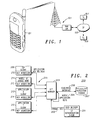
- FIG. 1 a simplified and representative environment or system diagram showing a communication unit using a wireless network to access various servers will be discussed and described.
- this embodiment includes a wireless access network
- the principles and concepts may be applied equally advantageously in normal wired networks, such as IEEE 802.3 and the like, using normal wired communication units and corresponding clients.
- the concepts and principles disclosed herein entail using authentication methods and procedures that facilitate accessing the wireless network or extended network and resultant keying material to support authentication of higher layer services and applications.
- the diagram generally shows a communication unit 101, such as a wireless communication unit, that is portable or mobile and operable upon appropriate authentication, etc to access services via a radio access or wireless network 103.
- the radio access network 103 includes a gateway that facilitates access to a further or extended network, such as the Internet or other IP based network 105.
- the radio access network can be, for example a wide area network, such as a cellular network, or a local area network or a hot spot, such as an airport, coffee shop, or the like, using, for example, a wireless LAN protocol such as the known IEEE 802.xx protocols.
- the communication unit 101 can access one or more servers 107, 109 including services and applications running on such servers, again provided appropriate security processes, including authentication and authorization are successfully undertaken.
- the authentication, etc allowing access to the radio access network or extended network(s) is typically not related to access to the applications and services supported by the servers 107, 109.
- the balance of this disclosure is largely devoted to concepts and principles that can be utilized to remedy this problem.
- FIG. 2 a diagram of various client entities 200 that can operate within the communication unit of FIG. 1 to facilitate upper layer security based on lower layer keying will be discussed and reviewed.
- FIG. 3 where 3xx reference numerals correspond functionally to similar 2xx entities from FIG. 2, a diagram of various network based entities that can operate to facilitate upper layer security based on lower layer keying will be discussed and described.
- the functionality portrayed in FIG. 2 is implemented as client entities and that in FIG. 3 as network entities.
- a low layer authentication alternatively referred to as Layer 2 authentication
- This would, for example, correspond to the authentication undertaken in order for the client to gain access to the network and would be performed by the L2 authentication client 201 and L2 authentication server 301.
- a dynamic seed 202, 302 is generated at the client and server and then one or more application keys required for authentication of applications or services, alternatively referred to as L3+ applications or services are generated based on the dynamic seed.
- L3+ applications are initiated or started, the L3+ client and L3+ server fetch the corresponding keys and authenticate based on these keys.
- the L2 Authentication Client 201 and Server 301 are each used in establishing a network connection, specifically for the Layer 2 authentication.
- the client/server 201, 301 are usually software programs running, for example, on the communications unit 101 and typically a RADIUS (Remote Access Dial In User Service) server.
- RADIUS Remote Access Dial In User Service
- L2 Authentication processes or methods include those using EAP-SIM, EAP-AKA, EAP-TLS, smart card, etc. based processes.
- a smart card is typically a small user specific device that is loaded with user specific information and operates according to prescribed methods to exchange portions of this information with other entities in order to establish the identity of the one using the smart card.
- EAP-SIM is an acronym used to denote Extensible Authentication Protocol with Subscriber Identity Module extensions and is specified in various IEFT draft documents, such as EAP SIM Authentication (Version 5), IETF draft-haverinen-pppext-eap-sim-05.txt, H. Haverinen, June 2002 and subsequent version thereof.
- EAP-AKA denotes EAP Authentication Key Agreement that is discussed and described for example in IEFT RFC 3310 document.
- EAP-TLS denotes EAP with Transport Level Security extensions as specified in IETF RFC 2716.
- this L2 authentication client/server may need to be modified to insure that the Layer 2 authentication mechanism has the capability of creating a dynamic seed 202, 302 that will be used for generating keys for L3+ authentication.
- Such modifications are well within the skills of one of ordinary skill.
- the dynamic seed 202 provided by the L2 client must be consistent with the dynamic seed 302 provided by the L2 server to ensure inter-operability.
- Typical examples of Client/Server entities for application layer or L3 authentication include a SIP Client/Server and Mobile IP client/Mobile IP Home Agent. Although strictly speaking the MIP client/Home Agent is not a client-server pair in the traditional sense. Note that in some implementations or embodiments these known L3+ client/server pairs may require modifications for dynamic key distribution and utilization in accordance with the concepts and principles disclosed herein. Such modifications, given the teachings of the present disclosure are within the skills of one of ordinary skill and thus will not be detailed.
- the Key Manager 203, 303 or key management utility or entity derives application keys 204 corresponding to the dynamic seed, stores/retrieves 208 these application keys in persistent storage 207, 307, and distributes such keys 205, 305 as required for L3+ services and applications. This is a heretofore unknown and inventive entity, function or component and will be further discussed below.
- the derivation, distribution, and utilization of application keys is based on layer 2 authentication. This is accomplished using the additional functions or functionality (seed delivery, key acquisition, and key management) at the client and authentication server to allocate and store keys for future use.
- the Seed Delivery entity or function is part of the lower layer or L2 authentication client/server and operates to extend a layer 2 authentication method (e.g., EAP-SIM or others) to provide a seed value or dynamic seed 202, 302 to the Key Manager 203, 303 that is a portion of or derivative of the L2 authentication that is performed.
- This derivative or dynamic seed is a unique value of, for example a known or specified length that is determined or generated via the L2 authentication process or method as a portion of the key material used in support of the L2 authentication.
- the Seed Delivery function delivers the seed key to the Key Manager function when a successful layer 2 authentication has been accomplished.
- the Key Manager function uses the seed key material or dynamic seed provided by the seed delivery function to generate or derive one or more application keys that correspond to the dynamic seed. These application keys are, for example, new derivatives of the current network layer authentication process used to grant access or authorize such access for the client, e.g. user, for use of the network.
- the Key Manager 203, 303 then stores 208, 308 the application keys on a per application basis in the persistent database or storage 207, 307. These application keys are stored as persistent data, potentially outliving the particular authentication activity or event that yielded the dynamic seed.
- application keys are provided to applications, such as the SIP client/server 209, 309, Mobile IP mobile node/home agent 211, 311, application X and Y clients/servers 213, 215/313, 315, as further described below.
- applications such as the SIP client/server 209, 309, Mobile IP mobile node/home agent 211, 311, application X and Y clients/servers 213, 215/313, 315, as further described below.
- the Key Managers can generate new application keys and overwrite the previous application keys, where the generation is based on the new dynamic seed material, once delivery of the dynamic seed to the Key Manager occurs.
- the Key Acquisition function or utility extends the authentication methods of various applications at both the client and server. This function acquires or requests the application key from the key manager that is assigned to the corresponding application, as described further below, and delivers or provides it to the application for use in application layer or higher layer authentication. This advantageously results in dynamic key provisioning at both the client and server, where the keys are based on the recent network layer authentication.
- the corresponding application key is delivered or provided, for example via a pull model from the application perspective.
- the application will request the application key corresponding to the application type from the Key Manager 202 that is local, e.g. installed or present on the communication unit. If this key, if present or available, it was generated or derived during the network layer authentication and provided to the Key Manager 202 local to the client device or unit. If no key exists for this application, authentication can not be successfully accomplished and an error will result or occur.
- the Key Manager has an application key corresponding to the application making the request, it will provide the key to the application. The application may then use this key directly or as an application seed for generating additional keying material specific to the application. The algorithm used to generate additional application keying material is left to the practitioners choosing given the application specifics and noting that the application client and server will have to use corresponding approaches.
- a client 200 specifically an application client (209, 211, 213, or 215) initiates contact with the relevant application server (309, 311, 313, or 315) and provides an identity associated with the particular client or user
- the corresponding application server will, for example, generate a RADIUS Access Request containing the user's identity and send it, via the IP network 320 to the RADIUS server 330 requesting the corresponding application key for the user.
- the RADIUS server will then recognize the request as a request for an application key, and will provide the application key in the RADIUS Access Accept message sent back to the Application Server.
- the Application Server may then use this key directly or as an application seed for generating additional keying material specific to the application.
- the notes above regarding the algorithm used to generate additional application keying material also apply at the Application Server.
- a system entity e.g. client or server that is operable to provide authentication services for applications that are running on a client and requiring access to a network based server.
- the system entity is either the client or server and comprises a network access function that is operable to establish a network connection that is network specific and completes an authentication, e.g. lower layer or L2 authentication, with the network, where this authentication includes providing a dynamic seed.
- the key manager that is operable to generate an application key that corresponds to or is derived from the dynamic seed; and provide, on demand, the application key to facilitate authenticating an application.
- the key manager further stores the application key in persistent storage for subsequent retrieval to facilitate the authenticating an application. Furthermore in certain embodiments the key manager may further generate a plurality of application keys where each of the plurality of keys is derived from the dynamic seed and corresponds to a different application. Note that the key manager in the providing the application key may provide an application seed and a further application entity will be operable to use the application seed for generating keying information specific to the application. Note also that the network access function can provide a new dynamic seed each time an authentication with the network occurs, and then the key manager will generate a new application key corresponding to the new dynamic seed and provide the new application key to facilitate the authenticating the application.
- subsequent authentication attempts can follow essentially the same process or method.
- the Key Acquisition Element in the Application Client and Server will fetch a key from the Key Manager every time an application authentication is required.
- this application key may be the same key or may be a new application key each time.
- the new application key can be generated by the respective key managers for each authentication attempt and thus the key manager provides a different application key every time the authenticating the application is required or alternatively the application client and server can generate a different application key, based on the application key delivered from the key manager, for each authentication.
- the Key Acquisition entities in the Application Client and Server maintain a "Time-to-Live" timer.
- This timer could be global (for all application clients) or could be negotiated per application client. For example, this timer could be derived from Mobile IP Registration timer values for Mobile IP applications. Any authentication attempt subsequent to timer expiry will cause the Key Acquisition entities to request a new key.
- the key manager provides the application key and the application key further corresponds to a time duration within which the application key is valid. Note that the key manager can also provide the corresponding time duration in some embodiments.
- the application protocol is updated to indicate explicitly that a new key is being used.
- the application client will fetch a new key and then indicate to the server (within the authentication message) that a new key is being used.
- the server on receiving the message would obtain a new key from the Key Manager prior to authenticating the client.
- EAP-SIM is a method. being widely supported by cellular operators to provide authentication for, for example WLAN access based on SIM credentials or parameters.
- the generation or development of the keying material for EAP SIM authentication is based on the random number generation specified in NIST FIPS Publication 186-2, change notice 1 (Oct 52001), page 74, Algorithm 1. Note that the "mod q" term below is omitted for general purpose random number generation.
- the key derivation algorithm for EAP-SIM (see the IETF noted above) is given below in pseudo-code for clarity:
- This algorithm provides for a flexible, extendible key derivation mechanism based initially on shared secret data between a client and server that is used in gaining access to network-layer services.
- the algorithm provides keying material in 320 bit blocks, which can be concatenated and split into variable length keys to be used for master session keys, encryption keys, integrity protection keys, and initialization vectors, as described in the EAP SIM draft.
- EAP SIM assigns a portion of the key material (derived per the algorithm described above) to be used in the layer 2 authentication process. The first 384 bits are used for this purpose.
- the EAP SIM draft does not specify the distribution or overall length of the remaining key material, but rather provides the flexibility to extend the key material length to provide "EAP application specific keys.”
- the seed key required by this invention can be taken from the remaining key material that is set aside as "application-specific.” To guarantee interoperability and adequate security, it is recommended that the value of the seed key be of 32 bytes (256 bits) in length, and start at the 513 th bit of the EAP application specific keying material. This allows for 802.1X keys in an 802.11 implementation to be taken first from the material (i.e., 256-bit signature and session keys, totaling 512 bits).
- client and server upon successful EAP-SIM authentication, client and server will push the Dynamic Seed to the Key Managers, respectively.
- the corresponding Key Managers then derive application keys using the dynamic seed as the seed value for a random number generator (e.g., that described in Algorithm 1 of FIPS Pub 186-2, and described above).
- the message flow in FIG. 4 illustrates the distribution of the dynamic seeds on the client and server after successful layer 2 EAP-SIM authentication.
- FIG. 4 shows an EAP SIM client 401 including dynamic seed delivery, a client Key Manager 403 and client persistent storage 405, which all entities local to the communication unit 101. Further shown is the EAP SIM server 407 with dynamic seed delivery, a server Key Manager 409, and a Server persistent storage 411, which are all entities local to a network that the client wishes to access. Note that the network entities while logically distinct may be co-located on a general purpose server platform or one or more can be separately located. The client and the other entities are coupled to an IP network 413. At 421 Layer 2 authentication via EAP SIM succeeds, resulting in shared keying material, e.g. a dynamic seed, at the client 401 and the server 407.
- shared keying material e.g. a dynamic seed
- a portion of the Key Material, e.g. dynamic seed, generated as a result of the successful EAP SIM based L2 authentication is pushed by the EAP SIM Client Seed Delivery extension to the Client Key Manager 403.
- the identical or functionally identical portion of the material, e.g. dynamic seed, at the server side is pushed by the EAP SIM Server Seed Delivery extension to the Server Key Manger 409.
- the Client Key Manager and Server Key Manager derive Application Keys 427, 429 for various Applications.
- the Client Key Manager 403 and Server Key Manager 409 store the Application Keys into the client-side and server-side Persistent Storage 405, 411, respectively, for future use.
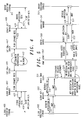
- FIG. 5 depicts a Mobile Node application client 501, client Key Manager 503, and client persistent storage 505 that are local to a user or communication unit. Further shown is a home agent 507, a RADIUS server 509, a server Key Manager 511, and server persistent storage 513.
- the interactions or message flow in FIG. 5 illustrates a MIP Registration Scenario that builds upon a successful Layer2 authentication.
- the Mobile Node (MN) 501 is collocated with the EAP-SIM Client and Home Agent (HA) 507 is operable to contact the server Key Manager 511 via the RADIUS server 509 to retrieve the key.
- MN Mobile Node
- HA Home Agent
- RequestAppKey MN requests a key from Client Key Manager for MIP.
- 517 RetriveAppKey Client Key Manager retrieves the Key for MIP from Persistent Storage.
- Kmip Key for MIP is passed to the Key Manager.
- 521 Kmip Key for MIP is passed to the MN.
- 523 GenerateRequiredKeys(Kmip): Using Kmip as the seed, MN can generate various keys needed for MIP Application.
- MN Registration Request ID, Keyed-MD5: Authenticator Value
- MIP Client sends request for registration with the Authenticator Value derived using the Key generated in pervious step to the Home Agent via Foreign Agent.
- RADIUS:AccessRequest(ID) The Home Agent requests the Application Key for MIP by sending a Access Request message with User ID.
- RequestAppKey RADIUS Server requests the Application Key for MIP from the Key Manager.
- RetreiveAppKey Key Manager retrieves Application Key for MIP from Persistent Storage.
- Kmip The Key for MIP is passed to the Key Manager 533
- Kmip The Key for MIP is passed to the RADIUS Server.
- RADIUS:AccessAccept (Kmip): RADIUS Server will respond to the Home Agent request and send the key for MIP. It could be sent as a Vendor specific attribute or as a MS-MPPE Key.
- MIP Registration Reply (registration accepted, Keyed-MD5: Authenticator Value): Based on the Key Material received in the previous step, the Home Agent can derive Keys required for MIP. The Home Agent performs Authentication of the Client using the Key derived, and sends a response back to the Mobile Node, with an Accept if authentication was successful and an Authenticator Value calculated by Keyed-MD5 using the Key derived. The MN will authenticate the HA by using the Key Material derived in step 523 with Keyed MD5 algorithm.
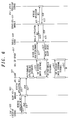
- FIG. 6 shows a User Agent Client 601, a client Key Manager 603, and client persistent storage 605. Further depicted is a User Agent Server 607, a RADIUS server 609, a server Key Manager 611, and server persistent storage 613.
- the interactions or message flow of FIG. 6 illustrates a SIP Registration Scenario that builds upon Layer2 authentication.
- SIP User Agent Client (UAC) 601 is collocated with the EAP-SIM Client and SIP User Agent Server (UAS) 607 is capable of contacting via the RADIUS server 609 the server Key Manager 611 to retrieve the key.
- UAC User Agent Client
- UAS SIP User Agent Server
- RequestAppKey UAC requests a key from Client Key Manager for SIP.
- RetriveAppKey Client Key Manager retrieves the Key for SIP from Persistent Storage.
- Ksip Key for SIP is passed to the Key Manager.
- Ksip Key for SIP is passed to UAC.
- SIP Register/Invite UAC sends request for registration/invite with the Usemame.
- RADIUS:AccessRequest(ID) UAS requests the Application Key for SIP by sending a Access Request message with Username.
- RequestAppKey RADIUS Server requests the Application Key for SIP from the Key Manager.
- RetreiveAppKey Key Manager retrieves Application Key for SIP from Persistent Storage.
- Ksip The Key for SIP is passed to the Key Manager 635
- Ksip The Key for SIP is passed to the RADIUS Server.
- RADIUS:AccessAccept (Ksip): RADIUS Server will respond to the UAS request and send the key for SIP. It could be sent as a Vendor specific attribute or as a MS-MPPE Key.
- the method comprises establishing a network connection further comprising an authentication with the network, obtaining, responsive to the authentication, a dynamic seed, generating an application key corresponding to the dynamic seed; and providing the application key to facilitate authenticating an application.
- the generating an application key can further comprise storing the application key for subsequent retrieval to facilitate the authenticating an application. Further the generating an application key can further comprise generating a plurality of application keys where each of the plurality of keys corresponds to a different application.
- the providing the application key can further comprise providing an application seed and generating keying information, such as one or more application keys or other keying material, specific to the application.
- the providing the application key can include providing a new application key every time the authenticating the application is required.
- the providing the application key may further comprises providing the application key corresponding to a time duration within which the application key is valid.
- This method typically includes, for example, obtaining a new dynamic seed each time an authentication with the network occurs, generating a new application key corresponding to the new dynamic seed, and providing the new application key via for example a push or pull approach.
- the method can use one or more of the processes noted above for the authentication with the network including one or more processes built on the Extensible Authentication Protocol.
- the required credentials can be derived (at run-time) from the L2 credentials from, for example, a smart card (SIM, USIM) or even a certificate.
- SIM SIM
- USIM smart card
- the disclosed concepts and principles facilitates SIM Based Authentication for L3+ services: If L3+ services are authenticated based on SIM, then the cellular operator effectively becomes an authentication and billing clearinghouse for L3+ services.
- third party networks could provide the L3+ services, with the cellular operator providing only authentication and billing service to the third party networks based on a user's SIM.
- the concepts and principles described in this disclosure provide for generating dynamic keys for L3+ services. This is expected to provide a higher degree of security than static keys (like passwords, or other static shared secrets).
Landscapes
- Engineering & Computer Science (AREA)
- Computer Security & Cryptography (AREA)
- Computer Networks & Wireless Communication (AREA)
- Signal Processing (AREA)
- Computer Hardware Design (AREA)
- Computing Systems (AREA)
- General Engineering & Computer Science (AREA)
- Telephonic Communication Services (AREA)
- Mobile Radio Communication Systems (AREA)
Abstract
Description

515 RequestAppKey: MN requests a key from Client Key Manager for MIP.
517 RetriveAppKey: Client Key Manager retrieves the Key for MIP from Persistent Storage.
519 Kmip: Key for MIP is passed to the Key Manager.
521 Kmip: Key for MIP is passed to the MN.
523 GenerateRequiredKeys(Kmip): Using Kmip as the seed, MN can generate various keys needed for MIP Application.
525 MN Registration Request (ID, Keyed-MD5: Authenticator Value): MIP Client sends request for registration with the Authenticator Value derived using the Key generated in pervious step to the Home Agent via Foreign Agent.
527 RADIUS:AccessRequest(ID): The Home Agent requests the Application Key for MIP by sending a Access Request message with User ID.
528 RequestAppKey: RADIUS Server requests the Application Key for MIP from the Key Manager.
529 RetreiveAppKey: Key Manager retrieves Application Key for MIP from Persistent Storage.
531 Kmip: The Key for MIP is passed to the Key Manager
533 Kmip: The Key for MIP is passed to the RADIUS Server.
535 RADIUS:AccessAccept (Kmip): RADIUS Server will respond to the Home Agent request and send the key for MIP. It could be sent as a Vendor specific attribute or as a MS-MPPE Key.
537 MIP Registration Reply (registration accepted, Keyed-MD5: Authenticator Value): Based on the Key Material received in the previous step, the Home Agent can derive Keys required for MIP. The Home Agent performs Authentication of the Client using the Key derived, and sends a response back to the Mobile Node, with an Accept if authentication was successful and an Authenticator Value calculated by Keyed-MD5 using the Key derived. The MN will authenticate the HA by using the Key Material derived in
615 RequestAppKey: UAC requests a key from Client Key Manager for SIP.
617 RetriveAppKey: Client Key Manager retrieves the Key for SIP from Persistent Storage.
619 Ksip: Key for SIP is passed to the Key Manager.
621 Ksip: Key for SIP is passed to UAC.
623 GenerateRequiredKeys(Ksip): Using Ksip as the seed, UAC can generate various keys needed for SIP Application.
625 SIP Register/Invite (Username): UAC sends request for registration/invite with the Usemame.
627 RADIUS:AccessRequest(ID): UAS requests the Application Key for SIP by sending a Access Request message with Username.
629 RequestAppKey: RADIUS Server requests the Application Key for SIP from the Key Manager.
631 RetreiveAppKey: Key Manager retrieves Application Key for SIP from Persistent Storage.
633 Ksip: The Key for SIP is passed to the Key Manager
635 Ksip: The Key for SIP is passed to the RADIUS Server.
637 RADIUS:AccessAccept (Ksip): RADIUS Server will respond to the UAS request and send the key for SIP. It could be sent as a Vendor specific attribute or as a MS-MPPE Key.
639 401:unauthorized (Challenge): Based on the Key Material received in the previous step, UAS can choose to generate various keys for SIP Application and derive a Key to be used for Authentication. UAS sends a 401:unauthorized message with a Challenge. IETF SIP RFC-3261 specifies the Authentication Protocol to be used for SIP and recommends use of Digest based authentication.
641 SIP Register/Invite (Username, Response): Upon receiving the Challenge from the UAS, UAC calculates the response using the Key Material derived in Step 5 and resends the original SIP Message with the Response.
643 OK: Upon receiving the Response from the UAC, UAS authenticates and responds with an OK if authentication is successful.
Claims (10)
- A method of providing authentication services for applications that are running on a client and requiring access to a network based server, the method comprising:establishing a network connection further comprising an authentication with the network;obtaining, responsive to the authentication, a dynamic seed;generating an application key corresponding to the dynamic seed; andproviding the application key to facilitate authenticating an application.
- The method of claim 1 wherein the generating an application key further comprises storing the application key for subsequent retrieval to facilitate the authenticating an application.
- The method of claim 1 wherein the generating an application key further comprises generating a plurality of application keys where each of the plurality of keys corresponds to a different application.
- The method of claim 1 wherein the providing the application key further comprises; providing an application seed and generating keying information specific to the application.
- The method of claim 1 wherein the providing the application key further comprises providing a new application key every time the authenticating the application is required.
- The method of claim 1 wherein the providing the application key further comprises providing the application key corresponding to a time duration within which the application key is valid.
- The method of claim 1 wherein the obtaining the dynamic seed further comprises obtaining a new dynamic seed each time an authentication with the network occurs, the generating the application key further comprises generating a new application key corresponding to the new dynamic seed, and the providing the application key further comprises providing the new application key.
- The method of claim 1 wherein the authentication with the network utilizes processes corresponding to an Extensible Authentication Protocol.
- A system entity operable to provide authentication services for applications that are running on a client and requiring access to a network based server, the system entity comprising:a network access function operable to establish a network connection and complete an authentication with the network, the authentication providing a dynamic seed;a key manager operable to generate an application key that is derived from the dynamic seed; and provide, on demand, the application key to facilitate authenticating an application.
- The system entity of claim 9 implemented by one of a client and a network server.
Applications Claiming Priority (2)
| Application Number | Priority Date | Filing Date | Title |
|---|---|---|---|
| US10/739,354 US20050135622A1 (en) | 2003-12-18 | 2003-12-18 | Upper layer security based on lower layer keying |
| US739354 | 2003-12-18 |
Publications (2)
| Publication Number | Publication Date |
|---|---|
| EP1555787A2 true EP1555787A2 (en) | 2005-07-20 |
| EP1555787A3 EP1555787A3 (en) | 2009-04-15 |
Family
ID=34620627
Family Applications (1)
| Application Number | Title | Priority Date | Filing Date |
|---|---|---|---|
| EP04257705A Withdrawn EP1555787A3 (en) | 2003-12-18 | 2004-12-10 | Upper layer security based on lower layer keying |
Country Status (2)
| Country | Link |
|---|---|
| US (1) | US20050135622A1 (en) |
| EP (1) | EP1555787A3 (en) |
Cited By (1)
| Publication number | Priority date | Publication date | Assignee | Title |
|---|---|---|---|---|
| EP1916817A1 (en) | 2006-10-25 | 2008-04-30 | Giesecke & Devrient GmbH | Call diversion for a VoIP telephone connection where a redirection server is implemented in the terminal of the caller or in the identity modul of this terminal |
Families Citing this family (29)
| Publication number | Priority date | Publication date | Assignee | Title |
|---|---|---|---|---|
| US7475241B2 (en) * | 2002-11-22 | 2009-01-06 | Cisco Technology, Inc. | Methods and apparatus for dynamic session key generation and rekeying in mobile IP |
| US7870389B1 (en) | 2002-12-24 | 2011-01-11 | Cisco Technology, Inc. | Methods and apparatus for authenticating mobility entities using kerberos |
| FI20040742A0 (en) * | 2004-05-31 | 2004-05-31 | Nokia Corp | Providing control information for the protocol |
| US7765404B2 (en) * | 2004-06-29 | 2010-07-27 | Nokia Corporation | Providing content in a communication system |
| US7639802B2 (en) * | 2004-09-27 | 2009-12-29 | Cisco Technology, Inc. | Methods and apparatus for bootstrapping Mobile-Foreign and Foreign-Home authentication keys in Mobile IP |
| US7502331B2 (en) * | 2004-11-17 | 2009-03-10 | Cisco Technology, Inc. | Infrastructure-less bootstrapping: trustless bootstrapping to enable mobility for mobile devices |
| DE102005026982A1 (en) * | 2005-06-10 | 2006-12-14 | Siemens Ag | Method for agreeing a security key between at least one first and a second communication subscriber for securing a communication connection |
| JP4887682B2 (en) * | 2005-08-05 | 2012-02-29 | 日本電気株式会社 | COMMUNICATION SYSTEM, KEY MANAGEMENT / DISTRIBUTION SERVER, TERMINAL DEVICE, DATA COMMUNICATION METHOD USED FOR THEM, AND PROGRAM THEREOF |
| US7626963B2 (en) * | 2005-10-25 | 2009-12-01 | Cisco Technology, Inc. | EAP/SIM authentication for mobile IP to leverage GSM/SIM authentication infrastructure |
| US7917142B2 (en) * | 2006-03-03 | 2011-03-29 | Samsung Electronics Co., Ltd. | Comprehensive registration method for wireless communication system |
| US8522025B2 (en) * | 2006-03-28 | 2013-08-27 | Nokia Corporation | Authenticating an application |
| US8249238B2 (en) * | 2006-09-21 | 2012-08-21 | Siemens Enterprise Communications, Inc. | Dynamic key exchange for call forking scenarios |
| CN100454876C (en) * | 2007-02-06 | 2009-01-21 | 西安西电捷通无线网络通信有限公司 | Application Method of Certificate in WAPI Security Mechanism of Wireless Local Area Network |
| US9083680B2 (en) * | 2008-01-18 | 2015-07-14 | Tekelec, Inc. | Systems, methods, and computer readable media for application-level authentication of messages in a telecommunications network |
| EP2245872A4 (en) * | 2008-02-15 | 2016-04-13 | Ericsson Telefon Ab L M | Application specific master key selection in evolved networks |
| US8571218B2 (en) | 2010-06-01 | 2013-10-29 | GreatCall, Inc. | Short message service cipher |
| US8327006B2 (en) * | 2011-02-24 | 2012-12-04 | Jibe Mobile | Endpoint device and article of manufacture for application to application communication over a network |
| US8918847B2 (en) * | 2012-09-28 | 2014-12-23 | Avaya Inc. | Layer 7 authentication using layer 2 or layer 3 authentication |
| NO338271B1 (en) * | 2014-02-12 | 2016-08-08 | Ipco As | Method and system for determining that a SIM and a SIP client are co-located in the same mobile device |
| US20160050066A1 (en) * | 2014-08-13 | 2016-02-18 | Louis Nunzio Loizides | Management of an encryption key for a secure data storage device on a trusted device paired to the secure device over a personal area network |
| CN107453864B (en) * | 2017-07-04 | 2020-08-04 | 奇瑞新能源汽车股份有限公司 | Security verification method and system |
| KR102334896B1 (en) * | 2019-05-29 | 2021-12-06 | (주)이더블유비엠 | Joining method, device and program with automatic key update |
| US11489821B2 (en) | 2020-02-26 | 2022-11-01 | International Business Machines Corporation | Processing a request to initiate a secure data transfer in a computing environment |
| US11652616B2 (en) * | 2020-02-26 | 2023-05-16 | International Business Machines Corporation | Initializing a local key manager for providing secure data transfer in a computing environment |
| US11502834B2 (en) | 2020-02-26 | 2022-11-15 | International Business Machines Corporation | Refreshing keys in a computing environment that provides secure data transfer |
| US11184160B2 (en) | 2020-02-26 | 2021-11-23 | International Business Machines Corporation | Channel key loading in a computing environment |
| US11405215B2 (en) | 2020-02-26 | 2022-08-02 | International Business Machines Corporation | Generation of a secure key exchange authentication response in a computing environment |
| US11546137B2 (en) | 2020-02-26 | 2023-01-03 | International Business Machines Corporation | Generation of a request to initiate a secure data transfer in a computing environment |
| US11520915B2 (en) * | 2020-03-26 | 2022-12-06 | Synamedia Limited | Secure fast channel change |
Family Cites Families (28)
| Publication number | Priority date | Publication date | Assignee | Title |
|---|---|---|---|---|
| SG46692A1 (en) * | 1992-03-30 | 1998-02-20 | Telstra Corp Ltd | A cryptographic communications method and system |
| JP2531354B2 (en) * | 1993-06-29 | 1996-09-04 | 日本電気株式会社 | Authentication method |
| US5455863A (en) * | 1993-06-29 | 1995-10-03 | Motorola, Inc. | Method and apparatus for efficient real-time authentication and encryption in a communication system |
| US5513245A (en) * | 1994-08-29 | 1996-04-30 | Sony Corporation | Automatic generation of private authentication key for wireless communication systems |
| DE69533328T2 (en) * | 1994-08-30 | 2005-02-10 | Kokusai Denshin Denwa Co., Ltd. | VERIFICATION DEVICE |
| US5999627A (en) * | 1995-01-07 | 1999-12-07 | Samsung Electronics Co., Ltd. | Method for exponentiation in a public-key cryptosystem |
| US5930362A (en) * | 1996-10-09 | 1999-07-27 | At&T Wireless Services Inc | Generation of encryption key |
| US5784463A (en) * | 1996-12-04 | 1998-07-21 | V-One Corporation | Token distribution, registration, and dynamic configuration of user entitlement for an application level security system and method |
| US6246771B1 (en) * | 1997-11-26 | 2001-06-12 | V-One Corporation | Session key recovery system and method |
| US6151395A (en) * | 1997-12-04 | 2000-11-21 | Cisco Technology, Inc. | System and method for regenerating secret keys in diffie-hellman communication sessions |
| KR100315641B1 (en) * | 1999-03-03 | 2001-12-12 | 서평원 | Mutual Authentication Method Of Mobile Station And System For OTAPA |
| US7120692B2 (en) * | 1999-12-02 | 2006-10-10 | Senvid, Inc. | Access and control system for network-enabled devices |
| JP2001175467A (en) * | 1999-12-07 | 2001-06-29 | Kizna.Com Inc | Computer security securing method and medium recording the program |
| WO2001063387A2 (en) * | 2000-02-22 | 2001-08-30 | Visualgold.Com, Inc. | Secure distributing services network system and method thereof |
| US6915437B2 (en) * | 2000-12-20 | 2005-07-05 | Microsoft Corporation | System and method for improved network security |
| US7043752B2 (en) * | 2001-01-12 | 2006-05-09 | Siemens Medical Solutions Health Services Corporation | System and user interface supporting concurrent application initiation and interoperability |
| US6931128B2 (en) * | 2001-01-16 | 2005-08-16 | Microsoft Corporation | Methods and systems for generating encryption keys using random bit generators |
| US20020169958A1 (en) * | 2001-05-14 | 2002-11-14 | Kai Nyman | Authentication in data communication |
| US7444513B2 (en) * | 2001-05-14 | 2008-10-28 | Nokia Corporiation | Authentication in data communication |
| US8140845B2 (en) * | 2001-09-13 | 2012-03-20 | Alcatel Lucent | Scheme for authentication and dynamic key exchange |
| US7127613B2 (en) * | 2002-02-25 | 2006-10-24 | Sun Microsystems, Inc. | Secured peer-to-peer network data exchange |
| US7464265B2 (en) * | 2002-05-03 | 2008-12-09 | Microsoft Corporation | Methods for iteratively deriving security keys for communications sessions |
| US7352867B2 (en) * | 2002-07-10 | 2008-04-01 | General Instrument Corporation | Method of preventing unauthorized distribution and use of electronic keys using a key seed |
| US20040039932A1 (en) * | 2002-08-23 | 2004-02-26 | Gidon Elazar | Apparatus, system and method for securing digital documents in a digital appliance |
| US20040166874A1 (en) * | 2002-11-14 | 2004-08-26 | Nadarajah Asokan | Location related information in mobile communication system |
| US7475241B2 (en) * | 2002-11-22 | 2009-01-06 | Cisco Technology, Inc. | Methods and apparatus for dynamic session key generation and rekeying in mobile IP |
| US7263357B2 (en) * | 2003-01-14 | 2007-08-28 | Samsung Electronics Co., Ltd. | Method for fast roaming in a wireless network |
| US7774828B2 (en) * | 2003-03-31 | 2010-08-10 | Alcatel-Lucent Usa Inc. | Methods for common authentication and authorization across independent networks |
-
2003
- 2003-12-18 US US10/739,354 patent/US20050135622A1/en not_active Abandoned
-
2004
- 2004-12-10 EP EP04257705A patent/EP1555787A3/en not_active Withdrawn
Cited By (1)
| Publication number | Priority date | Publication date | Assignee | Title |
|---|---|---|---|---|
| EP1916817A1 (en) | 2006-10-25 | 2008-04-30 | Giesecke & Devrient GmbH | Call diversion for a VoIP telephone connection where a redirection server is implemented in the terminal of the caller or in the identity modul of this terminal |
Also Published As
| Publication number | Publication date |
|---|---|
| US20050135622A1 (en) | 2005-06-23 |
| EP1555787A3 (en) | 2009-04-15 |
Similar Documents
| Publication | Publication Date | Title |
|---|---|---|
| US20050135622A1 (en) | Upper layer security based on lower layer keying | |
| US10284555B2 (en) | User equipment credential system | |
| KR101158956B1 (en) | Method for distributing certificates in a communication system | |
| EP1348280B1 (en) | Authentication in data communication | |
| EP1550341B1 (en) | Security and privacy enhancements for security devices | |
| US6993652B2 (en) | Method and system for providing client privacy when requesting content from a public server | |
| US20060059344A1 (en) | Service authentication | |
| JP3863852B2 (en) | Method of controlling access to network in wireless environment and recording medium recording the same | |
| US20060155822A1 (en) | System and method for wireless access to an application server | |
| KR100729105B1 (en) | AP-AK authentication processing device and method in non-US terminal | |
| KR101309426B1 (en) | Method and system for recursive authentication in a mobile network | |
| US20050271209A1 (en) | AKA sequence number for replay protection in EAP-AKA authentication | |
| Madhusudhan | A secure and lightweight authentication scheme for roaming service in global mobile networks | |
| CN1929371B (en) | Method for User and Peripheral to Negotiate a Shared Key | |
| EP1639782B1 (en) | Method for distributing passwords | |
| Meyer et al. | An approach to enhance inter-provider roaming through secret sharing and its application to WLANs |
Legal Events
| Date | Code | Title | Description |
|---|---|---|---|
| PUAI | Public reference made under article 153(3) epc to a published international application that has entered the european phase |
Free format text: ORIGINAL CODE: 0009012 |
|
| AK | Designated contracting states |
Kind code of ref document: A2 Designated state(s): AT BE BG CH CY CZ DE DK EE ES FI FR GB GR HU IE IS IT LI LT LU MC NL PL PT RO SE SI SK TR |
|
| AX | Request for extension of the european patent |
Extension state: AL BA HR LV MK YU |
|
| PUAL | Search report despatched |
Free format text: ORIGINAL CODE: 0009013 |
|
| AK | Designated contracting states |
Kind code of ref document: A3 Designated state(s): AT BE BG CH CY CZ DE DK EE ES FI FR GB GR HU IE IS IT LI LT LU MC NL PL PT RO SE SI SK TR |
|
| AX | Request for extension of the european patent |
Extension state: AL BA HR LV MK YU |
|
| AKX | Designation fees paid | ||
| 17P | Request for examination filed |
Effective date: 20091015 |
|
| RBV | Designated contracting states (corrected) |
Designated state(s): AT BE BG CH CY CZ DE DK EE ES FI FR GB GR HU IE IS IT LI LT LU MC NL PL PT RO SE SI SK TR |
|
| REG | Reference to a national code |
Ref country code: DE Ref legal event code: 8566 |
|
| 17Q | First examination report despatched |
Effective date: 20101214 |
|
| STAA | Information on the status of an ep patent application or granted ep patent |
Free format text: STATUS: THE APPLICATION IS DEEMED TO BE WITHDRAWN |
|
| 18D | Application deemed to be withdrawn |
Effective date: 20110427 |
|
| P01 | Opt-out of the competence of the unified patent court (upc) registered |
Effective date: 20230524 |