EP1553077A1 - Process for production of high-purity enamines - Google Patents
Process for production of high-purity enamines Download PDFInfo
- Publication number
- EP1553077A1 EP1553077A1 EP03765316A EP03765316A EP1553077A1 EP 1553077 A1 EP1553077 A1 EP 1553077A1 EP 03765316 A EP03765316 A EP 03765316A EP 03765316 A EP03765316 A EP 03765316A EP 1553077 A1 EP1553077 A1 EP 1553077A1
- Authority
- EP
- European Patent Office
- Prior art keywords
- group
- aqueous solution
- substituent
- substituted
- groups
- Prior art date
- Legal status (The legal status is an assumption and is not a legal conclusion. Google has not performed a legal analysis and makes no representation as to the accuracy of the status listed.)
- Withdrawn
Links
- 0 *C=C(*)N(*)* Chemical compound *C=C(*)N(*)* 0.000 description 1
Classifications
-
- C—CHEMISTRY; METALLURGY
- C07—ORGANIC CHEMISTRY
- C07C—ACYCLIC OR CARBOCYCLIC COMPOUNDS
- C07C209/00—Preparation of compounds containing amino groups bound to a carbon skeleton
- C07C209/60—Preparation of compounds containing amino groups bound to a carbon skeleton by condensation or addition reactions, e.g. Mannich reaction, addition of ammonia or amines to alkenes or to alkynes or addition of compounds containing an active hydrogen atom to Schiff's bases, quinone imines, or aziranes
-
- C—CHEMISTRY; METALLURGY
- C07—ORGANIC CHEMISTRY
- C07C—ACYCLIC OR CARBOCYCLIC COMPOUNDS
- C07C209/00—Preparation of compounds containing amino groups bound to a carbon skeleton
- C07C209/82—Purification; Separation; Stabilisation; Use of additives
- C07C209/84—Purification
-
- C—CHEMISTRY; METALLURGY
- C07—ORGANIC CHEMISTRY
- C07C—ACYCLIC OR CARBOCYCLIC COMPOUNDS
- C07C211/00—Compounds containing amino groups bound to a carbon skeleton
- C07C211/01—Compounds containing amino groups bound to a carbon skeleton having amino groups bound to acyclic carbon atoms
- C07C211/20—Compounds containing amino groups bound to a carbon skeleton having amino groups bound to acyclic carbon atoms of an acyclic unsaturated carbon skeleton
- C07C211/21—Monoamines
-
- C—CHEMISTRY; METALLURGY
- C07—ORGANIC CHEMISTRY
- C07D—HETEROCYCLIC COMPOUNDS
- C07D267/00—Heterocyclic compounds containing rings of more than six members having one nitrogen atom and one oxygen atom as the only ring hetero atoms
- C07D267/02—Seven-membered rings
-
- C—CHEMISTRY; METALLURGY
- C07—ORGANIC CHEMISTRY
- C07D—HETEROCYCLIC COMPOUNDS
- C07D279/00—Heterocyclic compounds containing six-membered rings having one nitrogen atom and one sulfur atom as the only ring hetero atoms
- C07D279/10—1,4-Thiazines; Hydrogenated 1,4-thiazines
- C07D279/12—1,4-Thiazines; Hydrogenated 1,4-thiazines not condensed with other rings
-
- C—CHEMISTRY; METALLURGY
- C07—ORGANIC CHEMISTRY
- C07D—HETEROCYCLIC COMPOUNDS
- C07D281/00—Heterocyclic compounds containing rings of more than six members having one nitrogen atom and one sulfur atom as the only ring hetero atoms
- C07D281/02—Seven-membered rings
-
- C—CHEMISTRY; METALLURGY
- C07—ORGANIC CHEMISTRY
- C07D—HETEROCYCLIC COMPOUNDS
- C07D285/00—Heterocyclic compounds containing rings having nitrogen and sulfur atoms as the only ring hetero atoms, not provided for by groups C07D275/00 - C07D283/00
- C07D285/01—Five-membered rings
- C07D285/02—Thiadiazoles; Hydrogenated thiadiazoles
- C07D285/14—Thiadiazoles; Hydrogenated thiadiazoles condensed with carbocyclic rings or ring systems
Definitions
- the present invention relates to a process by which highly pure enamines can be easily produced.
- Enamine is a general term for ⁇ -unsaturated amines, which are extremely useful compounds in the field of synthetic organic chemistry.
- Enamines are generally synthesized by a dehydrative condensation reaction between an aldehyde or ketone and a secondary amine. In the synthesis of enamines, the dehydrative condensation reaction has been well known to proceed more smoothly when one equivalent of an aldehyde or ketone is reacted with more than one equivalent of a secondary amine than when one equivalent of an aldehyde or ketone is reacted with one equivalent of a secondary amine.
- the desired product, the enamine, and the secondary amine are included in the final product obtained after the reaction is completed.
- Enamines thus obtained can be used for other reactions without any purifications, but in some reactions, for example, such as a condensation reaction between an enamine and a halogenated alkyl compound, purification of the enamine is necessary because the secondary amine inhibits the reaction.
- fractional distillation As a procedure for the purification of enamines, fractional distillation is generally known, but especially in the production of a large amount of enamine, large scale fractional distillation equipment is required, and additionally, this purification procedure is generally accompanied by disadvantages such as the decomposition of the enamines in the course of the fractional distillation at a high temperature.
- the present inventors have eagerly investigated methods of producing highly pure enamines and found that the enamines obtained using specific secondary amines are unexpectedly stable against water and, additionally, that the highly pure enamines can be easily obtained by a simple treatment using water (an acidic aqueous solution), to complete the present invention.
- the present invention relates to:
- R 3 and R 4 a straight or branched chain C 3 -C 5 alkyl group is preferred, a propyl, isopropyl, butyl, isobutyl or isopentyl group is more preferred, an isopropyl, isobutyl or isopentyl group is particularly preferred, and an isobutyl group is most preferred.
- C 1 -C 6 alkyl group substituted with substituent(s) selected from Substituent group ⁇ and Substituent group ⁇ " in the definition of R 1 and R 2 is preferably a C 1 -C 6 alkyl group substituted with from 1 to 5 substituents selected from Substituent group ⁇ and Substituent group ⁇ , and more preferably a C 1 -C 6 alkyl group substituted with from 1 to 3 substituents selected from Substituent group ⁇ and Substituent group ⁇ .
- the "C 6 -C 14 aryl group” and the aryl moiety of the "C 6 -C 14 aryl group substituted with substituent(s) selected from Substituent group ⁇ " in the definition of R 1 , R 2 and Substituent group P can be, for example, a phenyl, naphthyl, phenanthryl or anthracenyl group, and is preferably a phenyl or naphthyl group and most preferably a phenyl group.
- C 6 -C 14 aryl group may optionally be fused with a C 3 -C 10 cycloalkyl group (preferably a C 5 -C 6 cycloalkyl group), and such a fused aryl group is, for example, a 5-indanyl group.
- the "C 6 -C 14 aryl group substituted with substituent(s) selected from Substituent group ⁇ " in the definition of R 1 , R 2 and Substituent group ⁇ is preferably a C 6 -C 14 aryl group substituted with from 1 to 4 substituents selected from Substituent group ⁇ , more preferably a C 6 -C 14 aryl group substituted with from 1 to 3 substituents selected from Substituent group ⁇ , and still more preferably a C 6 -C 14 aryl group substituted with from 1 to 3 substituents selected from the group consisting of fluorine atoms, chlorine atoms, methyl, ethyl, methoxy and ethoxy groups.
- the "5- to 7-membered heteroaryl group containing from 1 to 3 sulfur atoms, oxygen atoms and/or nitrogen atoms” and the "5- to 7-membered heteroaryl group containing from 1 to 3 sulfur atoms, oxygen atoms and/or nitrogen atoms” moiety of the "5- to 7-membered heteroaryl group containing from 1 to 3 sulfur atoms, oxygen atoms and/or nitrogen atoms which is substituted with substituent(s) selected from Substituent group ⁇ " in the definition of R 1 , R 2 and Substituent group ⁇ can be, for example, a furyl, thienyl, pyrrolyl, pyrazolyl, imidazolyl, oxazolyl, isoxazolyl, thiazolyl, isothiazolyl, triazolyl, thiadiazolyl, pyridyl, pyridazinyl, pyrimidinyl, pyra
- the "5- to 7-membered heteroaryl group containing from 1 to 3 sulfur atoms, oxygen atoms and/or nitrogen atoms" described above may optionally be fused with other cyclic groups [for example, a C 6 -C 14 aryl group (preferably a C 6 -C 10 aryl group) or a C 3 -C 10 cycloalkyl group (preferably a C 5 -C 6 cycloalkyl group)], and such a fused heteroaryl group can be, for example, an indolyl, benzofuranyl, benzothienyl, quinolyl, isoquinolyl, quinazolinyl, tetrahydroquinolyl or tetrahydroisoquinolyl group.
- cyclic groups for example, a C 6 -C 14 aryl group (preferably a C 6 -C 10 aryl group) or a C 3 -C 10 cycloalkyl group (preferably a C 5
- the "5- to 7-membered heteroaryl group containing from 1 to 3 sulfur atoms, oxygen atoms and/or nitrogen atoms which is substituted with substituent(s) selected from Substituent group ⁇ " in the definition of R 1 , R 2 and Substituent group ⁇ is preferably a 5- to 7-membered heteroaryl group containing from 1 to 3 sulfur atoms, oxygen atoms and/or nitrogen atoms which is substituted with from 1 to 3 substituents selected from Substituent group ⁇ , more preferably a 5- to 7-membered heteroaryl group containing from 1 to 3 sulfur atoms, oxygen atoms and/or nitrogen atoms which is substituted with from 1 to 2 substituents selected from Substituent group ⁇ , and still more preferably a 5- to 7-membered heteroaryl group containing from 1 to 3 sulfur atoms, oxygen atoms and/or nitrogen atoms which is substituted with from 1 to 2 substituents selected from the group
- the "C 1 -C 6 alkylene group" formed together with R 1 and R 2 can be a straight or branched chain alkylene group such as a methylene, ethylene, trimethylene, propylene, tetramethylene, 1-methyltrimethylene, 2-methyltrimethylene, 1,1-dimethylethylene, pentamethylene, 1, 1-dimethyltrimethylene, 2,2-dimethyltrimethylene, 1,2-dimethyltrimethylene or hexamethylene group, and is preferably a straight or branched chain C 2 -C 5 alkylene group, more preferably a straight chain C 3 -C 4 alkylene group, still more preferably a trimethylene or tetramethylene group, and most preferably a tetramethylene group.
- a straight or branched chain alkylene group such as a methylene, ethylene, trimethylene, propylene, tetramethylene, 1-methyltrimethylene, 2-methyltrimethylene, 1,1-dimethylethylene, pentamethylene
- the "C 1 -C 6 alkoxy group" in the definition of Substituent group ⁇ , and the alkoxy moiety of the "C 1 -C 6 alkyl group substituted with a C 1 -C 6 alkoxy group” in the definition of R 3 and R 4 is a group wherein an oxygen atom is bonded to the "C 1 -C 6 alkyl group” described above, and preferably is a straight or branched chain C 1 -C 4 alkoxy group, more preferably a methoxy, ethoxy, propoxy, isopropoxy or butoxy group, and particularly preferably a methoxy, ethoxy or propoxy group.
- the "C 1 -C 6 alkyl group substituted with a C 1 -C 6 alkoxy group" in the definition of R 3 and R 4 is preferably a C 2 -C 5 alkyl group substituted with a C 1 -C 4 alkoxy group, more preferably an ethyl, propyl, isopropyl, n-butyl, isobutyl or isopentyl group, each of which is substituted with a methoxy, ethoxy or propoxy group, and still more preferably a 2-methoxyethyl, 3-methoxypropyl or 2-ethoxyethyl group.
- C 3 -C 6 cycloalkyl group in the definition of R 3 and R 4 can be a cyclopropyl, cyclobutyl, cyclopentyl or cyclohexyl group, and is preferably a C 4 -C 6 cycloalkyl group, and more preferably a cyclopentyl or cyclohexyl group.
- halogen atom in the definition of Substituent group ⁇ is a fluorine atom, chlorine atom, bromine atom or iodine atom, and preferably a fluorine atom or chlorine atom.
- C 1 -C 6 alkylthio group in the definition of Substituent group ⁇ is a group wherein a sulfur atom is bonded to the "C 1 -C 6 alkyl group” described above, and is preferably a straight or branched chain C 1 -C 4 alkylthio group, more preferably a methylthio, ethylthio, propylthio, isopropylthio or butylthio group, and particularly preferably a methylthio, ethylthio or propylthio group.
- R 1 , R 2 , R 3 , R 4 , R a , and R b the preferred groups are as follows.
- R 1 is preferably a C 1 -C 6 alkyl group, a C 1 -C 6 alkyl group substituted with substituent(s) selected from Substituent group ⁇ and Substituent group ⁇ , a C 6 -C 14 aryl group or a C 6 -C 14 aryl group substituted with substituent(s) selected from Substituent group ⁇ , or R 1 forms, together with R 2 , a C 1 -C 6 alkylene group; more preferably a C 1 -C 6 alkyl group or a C 1 -C 6 alkyl group substituted with substituent(s) selected from Substituent group ⁇ and Substituent group ⁇ ; still more preferably a C 1 -C 4 alkyl group, a C 1 -C 4 alkyl group substituted with a hydroxyl group, fluorine atom, chlorine atom, methoxy or phenyl group, a phenyl group, a naphth
- R 2 is preferably a hydrogen atom, a C 1 -C 6 alkyl group or a C 1 -C 6 alkyl group substituted with substituent(s) selected from Substituent group ⁇ and Substituent group ⁇ ; more preferably a hydrogen atom or a C 1 -C 4 alkyl group; and particularly preferably a hydrogen atom.
- R 3 and R 4 are preferably the same or different and each is a C 2 -C 5 alkyl group, a C 2 -C 5 alkyl group substituted with a C 1 -C 4 alkoxy group, or a C 4 -C 6 cycloalkyl group; more preferably an isopropyl, isobutyl, isopentyl, 2-methoxyethyl, 3-methoxypropyl, 2-ethoxyethyl, cyclopentyl or cyclohexyl group, and particularly preferably an isobutyl group.
- the Substituent group ⁇ preferably consists of hydroxyl groups, nitro groups, cyano groups, halogen atoms, C 1 -C 4 alkyl groups, C 1 -C 4 alkoxy groups, C 1 -C 4 alkylthio groups and di(C 1 -C 4 alkyl)amino groups: more preferably hydroxyl groups, fluorine atoms, chlorine atoms and methyl, ethyl, methoxy, ethoxy, methylthio and dimethylamino groups; and particularly preferably fluorine atom, chlorine atoms, and methyl, ethyl, methoxy and ethoxy groups.
- the Substituent group ⁇ preferably consists of C 6 -C 14 aryl groups and C 6 -C 14 aryl groups substituted with substituent(s) selected from Substituent group ⁇ ; more preferably C 6 -C 10 aryl groups and C 6 -C 10 aryl groups substituted with from 1 to 3 substituents selected from Substituent group ⁇ ; and more preferably phenyl groups and phenyl groups substituted with from 1 to 3 substituents selected from the group consisting of fluorine atoms, chlorine atoms and methyl, ethyl, methoxy and ethoxy groups.
- highly pure means that the purity is 80 % or more (preferably 90 % or more, and more preferably 95 % or more), and the purity can be, for example, confirmed by calculation of peak area ratio using gas chromatography.
- reaction to produce the compound of the general formula (3) by reacting a compound of the general formula (1) with a compound of general formula (2) is performed according to commonly known methods to produce enamines [for example, USP 3,481,939; Can. J. Chem. Vol. 68, 127-152 (1990); J. Chem. Soc., Perkin Trans. 1, 3389-3396 (2000); etc.].
- the compound of general formula (3) shown above and the compound of general formula (2) are contained in the reaction mixture.
- the compound of general formula (2) remaining in the reaction mixture can be easily removed by a treatment with an acidic aqueous solution, that is, by adding an acidic aqueous solution to the reaction mixture, shaking or stirring it for from 5 minutes to 2 hours and, then, removing the aqueous layer.
- the acidic aqueous solution to be employed can be, for example, a dilute aqueous solution of mineral acid such as dilute sulfuric acid, dilute hydrochloric acid or dilute nitric acid, or an aqueous solution of organic acid such as an aqueous solution of acetic acid, and aqueous solutions of oxalic acid, carbonic acid, citric acid and phosphoric acid, and is preferably dilute sulfuric acid or an aqueous solution of acetic acid.
- mineral acid such as dilute sulfuric acid, dilute hydrochloric acid or dilute nitric acid
- organic acid such as an aqueous solution of acetic acid
- oxalic acid oxalic acid
- carbonic acid citric acid and phosphoric acid
- an aqueous solution of a mineral acid 1 to 15 w/v % (preferably 5 to 10 w/v %, and more preferably between 6 and 8 w/v %) of such a solution can be used, while in the case of an aqueous solution of an organic acid, 3 to 20 w/v % (preferably 5 to 15 w/v %, and more preferably 8 to 10 w/v %) of such an aqueous solution can be used.
- an acidic aqueous solution with a pH value of between 1 and 7 preferably between 2 and 6) can be used.
- an acidic aqueous solution and shaking or stirring can be performed at 0°C to 30°C (preferably at 0°C to 15°C, and more preferably at 0°C to 5-C).
- said treatment can be performed after the addition of a water-insoluble aprotic solvent such as N,N-dimethylformamide, N,N-dimethylacetamide, dimethylsulfoxide, benzene, toluene or hexane to the reaction mixture.
- a water-insoluble aprotic solvent such as N,N-dimethylformamide, N,N-dimethylacetamide, dimethylsulfoxide, benzene, toluene or hexane
- reaction mixture After the treatment of the reaction mixture with the acidic aqueous solution in the manner mentioned above, if necessary, it can be furthermore treated with a basic aqueous solution.
- the basic aqueous solution to be employed is not particularly restricted, provided that it does not decompose the produced enamines, and can be, for example, a dilute aqueous solution of an alkali metal hydroxide such as a dilute aqueous solution of sodium hydroxide or a dilute aqueous solution of potassium hydroxide; a dilute aqueous solution of an alkaline earth metal hydroxide such as a dilute aqueous solution of calcium hydroxide; or an aqueous solution of a carbonate salt such as an aqueous solution of sodium hydrogencarbonate or an aqueous solution of calcium carbonate, and is preferably a dilute aqueous solution of sodium hydroxide or a dilute aqueous solution of potassium hydroxide.
- an alkali metal hydroxide such as a dilute aqueous solution of sodium hydroxide or a dilute aqueous solution of potassium hydroxide
- 0.1 to 10 w/v % (preferably 0.3 to 5 w/v %, and more preferably 0.5 to 3 w/v %) of such an aqueous solution can be used.
- a basic aqueous solution with a pH value of between 7 and 14 (preferably between 13 and 14) can be used.
- the "treating with using a basic aqueous solution” means the addition of the basic aqueous solution and shaking or stirring of the resulting mixture for from 5 minutes to 2 hours, and can be performed at 0°C to 30°C (preferably at 0°C to 15°C, and more preferably at 0°C to 5°C).
- said treatment can be performed after the addition of a water-insoluble aprotic solvent such as N,N-dimethylformamide, N,N-dimethylacetamide, dimethylsulfoxide, benzene, toluene or hexane to the reaction mixture.
- a water-insoluble aprotic solvent such as N,N-dimethylformamide, N,N-dimethylacetamide, dimethylsulfoxide, benzene, toluene or hexane
- said dehydrating agent can be easily removed by treatment with water, that is, by adding sufficient water (or ice water) to dissolve the dehydrating agent, shaking or stirring it for from 5 minutes to 2 hours and, then, removing the aqueous layer.
- the dehydrating agent to be employed in this case is not particularly restricted, provided that it can generally be used as a dehydrating agent for the production of enamines and that it dissolves in water, and can be, for example, magnesium sulfate, sodium sulfate, potassium carbonate, calcium carbonate or calcium chloride, and preferably magnesium sulfate.
- the addition of water (ice water) and shaking or stirring can be performed at 0°C to 30°C (preferably at 0°C to 15°C, and more preferably at 0°C to 5°C).
- said treatment can be performed after the addition of a water-insoluble aprotic solvent such as N,N-dimethylformamide, N,N-dimethylacetamide, dimethylsulfoxide, benzene, toluene or hexane to the reaction mixture.
- a water-insoluble aprotic solvent such as N,N-dimethylformamide, N,N-dimethylacetamide, dimethylsulfoxide, benzene, toluene or hexane
- aqueous sodium hydroxide solution 90 ml was added to the organic layer at 0-5°C, and stirred for 10 minutes. After stirring, the aqueous layer was removed to afford the title compound (57.0 g, yield: 76 %, purity: 96.7%) as a colorless oil.
- aqueous sodium hydroxide solution 60 ml was added to the organic layer at 0-5°C, and stirred for 5 minutes. After stirring, the aqueous layer was removed to afford the title compound (42.5 g, yield: 81 %, purity: 95.3%) as a colorless oil.
- aqueous sodium hydroxide solution 60 ml was added to the organic layer at 0-5°C, and stirred for 5 minutes. After stirring, the aqueous layer was removed to afford the title compound (51.3 g, yield: 80 %, purity: 93.8 %) as a colorless oil.
Landscapes
- Chemical & Material Sciences (AREA)
- Organic Chemistry (AREA)
- Chemical Kinetics & Catalysis (AREA)
- Organic Low-Molecular-Weight Compounds And Preparation Thereof (AREA)
Abstract
Description
- The present invention relates to a process by which highly pure enamines can be easily produced.
- Enamine is a general term for αβ-unsaturated amines, which are extremely useful compounds in the field of synthetic organic chemistry. Enamines are generally synthesized by a dehydrative condensation reaction between an aldehyde or ketone and a secondary amine. In the synthesis of enamines, the dehydrative condensation reaction has been well known to proceed more smoothly when one equivalent of an aldehyde or ketone is reacted with more than one equivalent of a secondary amine than when one equivalent of an aldehyde or ketone is reacted with one equivalent of a secondary amine. Accordingly, when the excess amount of the secondary amine is used in said synthetic reaction, the desired product, the enamine, and the secondary amine are included in the final product obtained after the reaction is completed. Enamines thus obtained can be used for other reactions without any purifications, but in some reactions, for example, such as a condensation reaction between an enamine and a halogenated alkyl compound, purification of the enamine is necessary because the secondary amine inhibits the reaction. As a procedure for the purification of enamines, fractional distillation is generally known, but especially in the production of a large amount of enamine, large scale fractional distillation equipment is required, and additionally, this purification procedure is generally accompanied by disadvantages such as the decomposition of the enamines in the course of the fractional distillation at a high temperature.
- Furthermore, it is known that enamines generally have poor stability against water [Barton S. D.; Ollis W. D. Comprehensive Organic Chemistry; Sutherland I.O. Ed.; Pergamon: New York, 1979; Vol. 2, Part 6], and studies on the rate (mechanism) of hydrolysis of various enamines have been reported [J. Org. Chem., 32, 1111 (1967); J. Org. Chem., vol. 40, No. 5, 607-614 (1975); J. Am. Chem. Soc., 82, 4261-4270 (1970), etc.].
- The present inventors have eagerly investigated methods of producing highly pure enamines and found that the enamines obtained using specific secondary amines are unexpectedly stable against water and, additionally, that the highly pure enamines can be easily obtained by a simple treatment using water (an acidic aqueous solution), to complete the present invention.
- The present invention relates to:
- (1) a method of producing a highly pure compound having the general formula (3)
(wherein, R1 and R2 are the same or different and each represents a hydrogen atom, a C1-C6 alkyl group, a C1-C6 alkyl group substituted with substituent(s) selected from the group consisting of Substituent group α and Substituent group β, a C6-C14 aryl group, a C6-C14 aryl group substituted with substituent(s) selected from Substituent group α, a 5- to 7-membered heteroaryl group containing 1 to 3 sulfur atoms, oxygen atoms and/or nitrogen atoms, or a 5- to 7-membered heteroaryl group containing 1 to 3 sulfur atoms, oxygen atoms and/or nitrogen atoms which is substituted with substituent(s) selected from Substituent group α, or R1 and R2 together form a C1-C6 alkylene group, R3 and R4 are the same or different and each represents a C1-C6 alkyl group, a C1-C6 alkyl group substituted with a C1-C6 alkoxy group or a C3-C6 cycloalkyl group, Substituent group α consists of hydroxyl groups, nitro groups, cyano groups, halogen atoms, C1-C6 alkyl groups, C1-C6 alkoxy groups, C1-C6 alkylthio groups and di(C1-C6 alkyl)amino groups, and Substituent group β consists of C6-C14 aryl groups, C6-C14 aryl groups substituted with substituent(s) selected from Substituent group α, 5- to 7-membered heteroaryl groups containing 1 to 3 sulfur atom, oxygen atom and/or nitrogen atom, and 5- to 7-membered heteroaryl groups containing from 1 to 3 sulfur atoms, oxygen atoms and/or nitrogen atoms which is substituted with substituent(s) selected from Substituent group α),

which comprises a step of reacting a compound having the general formula (1)(wherein, R1 and R2 have the same meanings as those indicated hereinbefore) with a compound having the general formula (2)
- (2) a method wherein R1 is a C1-C6 alkyl group, a C1-C6 alkyl group substituted with substituent(s) selected from Substituent group α and Substituent group β, a C6-C14 aryl group, or a C6-C14 aryl group substituted with substituent(s) selected from Substituent group α, or R1 and R2 together form a C1-C6 alkylene group,
- (3) a method wherein R1 is a C1-C6 alkyl group, a C1-C6 alkyl group substituted with substituent(s) selected from Substituent group α and Substituent group β, a C6-C14 aryl group, or a C6-C14 aryl group substituted with substituent(s) selected from Substituent group α,
- (4) a method wherein R1 is a C1-C4 alkyl group; a C1-C4 alkyl group substituted with a hydroxyl group, a fluorine atom, a chlorine atom, a methoxy group or a phenyl group; a phenyl group; a naphthyl group; or a phenyl group substituted with a fluorine atom, a chlorine atom, a methyl group or a methoxy group,
- (5) a method wherein R1 is a methyl, propyl or benzyl group,
- (6) a method wherein R2 is a hydrogen atom, a C1-C6 alkyl group or a C1-C6 alkyl group substituted with substituent(s) selected from Substituent group α and Substituent group β,
- (7) a method wherein R2 is a hydrogen atom or a C1-C4 alkyl group,
- (8) a method wherein R2 is a hydrogen atom,
- (9) a method wherein R3 and R4 are the same or different and each represents a C2-C5 alkyl group, a C2-C5 alkyl group substituted with a C1-C4 alkoxy group, or a C4-C6 cycloalkyl group,
- (10) a method wherein R3 and R4 are the same or different and each represents an isopropyl, isobutyl, isopentyl, 2-methoxyethyl, 3-methoxypropyl, 2-ethoxyethyl, cyclopentyl or cyclohexyl group,
- (11) a method wherein each of R3 and R4 is an isobutyl group,
- (12) a method wherein the pH of the acidic aqueous solution is between 2 and 6,
- (13) a method wherein the acidic aqueous solution is a dilute aqueous solution of a mineral acid selected from dilute sulfuric acid, dilute hydrochloric acid and dilute nitric acid, or an aqueous solution of an organic acid selected from an aqueous solution of acetic acid and aqueous solutions of oxalic acid, carbonic acid, citric acid and phosphoric acid,
- (14) a method wherein the acidic aqueous solution is dilute sulfuric acid or an aqueous solution of acetic acid,
- (15) a method wherein the concentration of the aqueous solution of mineral acid is between 1 and 15 w/v % and the concentration of the aqueous solution of organic acid is between 3 and 20 w/v %,
- (16) a method wherein the concentration of the aqueous solution of mineral acid is between 5 and 10 w/v % and the concentration of the aqueous solution of organic acid is between 5 and 15 w/v %,
- (17) a method wherein the concentration of the aqueous solution of mineral acid is between 6 and 8 w/v % and the concentration of the aqueous solution of organic acid is between 8 and 10 w/v %,
- (18) a method wherein the temperature of the treatment with an acidic aqueous solution is between 0°C and 15°C,
- (19) a method wherein the temperature of the treatment with an acidic aqueous solution is between 0°C and 5°C,
- (20) a method which is characterized by using a dehydrating agent in the step to react the compound having the general formula (1) with the compound having the general formula (2) and by treating the reaction mixture with water at between 0°C and 30°C after the completion of the reaction and prior to the treatment using an acidic aqueous solution,
- (21) a method wherein the dehydrating agent is magnesium sulfate, potassium carbonate or calcium chloride,
- (22) a method wherein the temperature of the treatment with water is between 0°C and 15°C,
- (23) a method wherein the temperature of the treatment with water is between 0°C and 5°C,
- (24) a method which is characterized by carrying out the treatment with an acidic aqueous solution followed by treatment with a basic aqueous solution,
- (25) a method wherein the pH of the basic aqueous solution is between 13 and 14,
- (26) a method wherein the basic aqueous solution is 0.1 to 10 w/v % of an aqueous solution of alkali metal hydroxide, an aqueous solution of alkaline earth metal hydroxide or an aqueous solution of a carbonate salt,
- (27) a method wherein the basic aqueous solution is 0.3 to 5 w/v % of an aqueous solution of alkali metal hydroxide, an aqueous solution of alkaline earth metal hydroxide or an aqueous solution of a carbonate salt,
- (28) a method wherein the basic aqueous solution is 0.5 to 3 w/v % of an aqueous solution of alkali metal hydroxide, an aqueous solution of alkaline earth metal hydroxide or an aqueous solution of a carbonate salt,
- (29) a method wherein the alkali metal hydroxide is sodium hydroxide or potassium hydroxide, the alkaline earth metal hydroxide is calcium hydroxide or barium hydroxide, and the carbonate salt is sodium hydrogencarbonate or calcium carbonate,
- (30) a method wherein the temperature of the treatment with a basic aqueous solution is between 0°C and 30°C,
- (31) a method wherein the temperature of the treatment with a basic aqueous solution is between 0°C and 15°C, and
- (32) a method wherein the temperature of the treatment with a basic aqueous solution is between 0°C and 5°C. Furthermore, the present invention relates to
- (33) a method of producing a highly pure compound having the general formula (3)
(wherein, R1 and R2 are the same or different and each represents a hydrogen atom, a C1-C6 alkyl group, a C1-C6 alkyl group substituted with substituent(s) selected from the group consisting of Substituent group α and Substituent group β, a C6-C14 aryl group, a C6-C14 aryl group substituted with substituent(s) selected from Substituent group α, a 5- to 7-membered heteroaryl group containing 1 to 3 sulfur atoms, oxygen atoms and/or nitrogen atoms, or a 5- to 7-membered heteroaryl group containing 1 to 3 sulfur atoms, oxygen atoms and/or nitrogen atoms which is substituted with substituent(s) selected from Substituent group α, or R1 and R2 together form a C1-C6 alkylene group, R3 and R4 are the same or different and each represents a C1-C6 alkyl group, a C1-C6 alkyl group substituted with a C1-C6 alkoxy group or a C3-C6 cycloalkyl group, Substituent group α consists of hydroxyl groups, nitro groups, cyano groups, halogen atoms, C1-C6 alkyl groups, C1-C6 alkoxy groups, C1-C6 alkylthio groups and di(C1-C6 alkyl)amino groups, and Substituent group β consists of C6-C14 aryl groups, C6-C14 aryl groups substituted with substituent(s) selected from Substituent group α, 5- to 7-membered heteroaryl groups containing 1 to 3 sulfur atoms, oxygen atoms and/or nitrogen atoms, and 5- to 7-membered heteroaryl groups containing from 1 to 3 sulfur atoms, oxygen atoms and/or nitrogen atoms which is substituted with substituent(s) selected from Substituent group α),

which comprises a step of reacting a compound having the general formula (1)(wherein, R1 and R2 have the same meanings as those indicated hereinbefore) with a compound having the general formula (2)
- (34) a method wherein the temperature of treatment with a basic aqueous solution is between 0°C and 30°C,
- (35) a method wherein the temperature of treatment with a basic aqueous solution is between 0°C and 15°C, and
- (36) a method wherein the temperature of treatment with a basic aqueous solution is between 0°C and 5°C.
-
- In general formulae (1), (2), and (3),
the "C1-C6 alkyl group" in the definition of R1, R2, R3, R4 and Substituent group α; the alkyl moiety of the "C1-C6 alkyl group substituted with substituent(s) selected from Substituent group α and Substituent group β" in the definition of R1 and R2; the alkyl moiety of the "di(C1-C6 alkyl)amino group" in the definition of Substituent group α; and the alkyl moiety of the "C1-C6 alkyl group substituted with a C1-C6 alkoxy group" in the definition of R3 and R4 can be a straight or branched chain alkyl group such as a methyl, ethyl, propyl, isopropyl, butyl, isobutyl, s-butyl, tert-butyl, n-pentyl, isopentyl, 2-methylbutyl, neopentyl, 1-ethylpropyl, n-hexyl, isohexyl, 4-methylpentyl, 3-methylpentyl, 2-methylpentyl, 1-methylpentyl, 3,3-dimethylbutyl, 2,2-dimethylbutyl, 1,1-dimethylbutyl, 1,2-dimethylbutyl, 1,3-dimethylbutyl, 2,3-dimethylbutyl or 2-ethylbutyl group; as to R1, R2, Substituent group α, Ra and Rb, a straight or branched chain C1-C4 alkyl group is preferred, a methyl, ethyl, propyl, isopropyl or butyl group is more preferred, and a methyl, ethyl or propyl group is particularly preferred. As to R3 and R4, a straight or branched chain C3-C5 alkyl group is preferred, a propyl, isopropyl, butyl, isobutyl or isopentyl group is more preferred, an isopropyl, isobutyl or isopentyl group is particularly preferred, and an isobutyl group is most preferred. - The "C1-C6 alkyl group substituted with substituent(s) selected from Substituent group α and Substituent group β" in the definition of R1 and R2 is preferably a C1-C6 alkyl group substituted with from 1 to 5 substituents selected from Substituent group α and Substituent group β, and more preferably a C1-C6 alkyl group substituted with from 1 to 3 substituents selected from Substituent group α and Substituent group β.
- The "C6-C14 aryl group" and the aryl moiety of the "C6-C14 aryl group substituted with substituent(s) selected from Substituent group α" in the definition of R1, R2 and Substituent group P can be, for example, a phenyl, naphthyl, phenanthryl or anthracenyl group, and is preferably a phenyl or naphthyl group and most preferably a phenyl group.
- Further, the "C6-C14 aryl group" described above may optionally be fused with a C3-C10 cycloalkyl group (preferably a C5-C6 cycloalkyl group), and such a fused aryl group is, for example, a 5-indanyl group.
- The "C6-C14 aryl group substituted with substituent(s) selected from Substituent group α" in the definition of R1, R2 and Substituent group β is preferably a C6-C14 aryl group substituted with from 1 to 4 substituents selected from Substituent group α, more preferably a C6-C14 aryl group substituted with from 1 to 3 substituents selected from Substituent group α, and still more preferably a C6-C14 aryl group substituted with from 1 to 3 substituents selected from the group consisting of fluorine atoms, chlorine atoms, methyl, ethyl, methoxy and ethoxy groups.
- The "5- to 7-membered heteroaryl group containing from 1 to 3 sulfur atoms, oxygen atoms and/or nitrogen atoms" and the "5- to 7-membered heteroaryl group containing from 1 to 3 sulfur atoms, oxygen atoms and/or nitrogen atoms" moiety of the "5- to 7-membered heteroaryl group containing from 1 to 3 sulfur atoms, oxygen atoms and/or nitrogen atoms which is substituted with substituent(s) selected from Substituent group α" in the definition of R1, R2 and Substituent group β can be, for example, a furyl, thienyl, pyrrolyl, pyrazolyl, imidazolyl, oxazolyl, isoxazolyl, thiazolyl, isothiazolyl, triazolyl, thiadiazolyl, pyridyl, pyridazinyl, pyrimidinyl, pyrazinyl or azepinyl group, and is preferably a 5- to 6-membered heteroaryl group containing from 1 to 2 sulfur atoms, oxygen atoms and/or nitrogen atoms such as a furyl, thienyl, pyrrolyl, pyrazolyl, imidazolyl, oxazolyl, isoxazolyl, thiazolyl, isothiazolyl, pyridyl, pyridazinyl, pyrimidinyl or pyrazinyl group, and more preferably a pyridyl or pyrimidinyl group.
- Further, the "5- to 7-membered heteroaryl group containing from 1 to 3 sulfur atoms, oxygen atoms and/or nitrogen atoms" described above may optionally be fused with other cyclic groups [for example, a C6-C14 aryl group (preferably a C6-C10 aryl group) or a C3-C10 cycloalkyl group (preferably a C5-C6 cycloalkyl group)], and such a fused heteroaryl group can be, for example, an indolyl, benzofuranyl, benzothienyl, quinolyl, isoquinolyl, quinazolinyl, tetrahydroquinolyl or tetrahydroisoquinolyl group.
- The "5- to 7-membered heteroaryl group containing from 1 to 3 sulfur atoms, oxygen atoms and/or nitrogen atoms which is substituted with substituent(s) selected from Substituent group α" in the definition of R1, R2 and Substituent group β is preferably a 5- to 7-membered heteroaryl group containing from 1 to 3 sulfur atoms, oxygen atoms and/or nitrogen atoms which is substituted with from 1 to 3 substituents selected from Substituent group α, more preferably a 5- to 7-membered heteroaryl group containing from 1 to 3 sulfur atoms, oxygen atoms and/or nitrogen atoms which is substituted with from 1 to 2 substituents selected from Substituent group α, and still more preferably a 5- to 7-membered heteroaryl group containing from 1 to 3 sulfur atoms, oxygen atoms and/or nitrogen atoms which is substituted with from 1 to 2 substituents selected from the group consisting of fluorine atoms, chlorine atoms, methyl, ethyl, methoxy and ethoxy groups.
- The "C1-C6 alkylene group" formed together with R1 and R2 can be a straight or branched chain alkylene group such as a methylene, ethylene, trimethylene, propylene, tetramethylene, 1-methyltrimethylene, 2-methyltrimethylene, 1,1-dimethylethylene, pentamethylene, 1, 1-dimethyltrimethylene, 2,2-dimethyltrimethylene, 1,2-dimethyltrimethylene or hexamethylene group, and is preferably a straight or branched chain C2-C5 alkylene group, more preferably a straight chain C3-C4 alkylene group, still more preferably a trimethylene or tetramethylene group, and most preferably a tetramethylene group.
- The "C1-C6 alkoxy group" in the definition of Substituent group α, and the alkoxy moiety of the "C1-C6 alkyl group substituted with a C1-C6 alkoxy group" in the definition of R3 and R4 is a group wherein an oxygen atom is bonded to the "C1-C6 alkyl group" described above, and preferably is a straight or branched chain C1-C4 alkoxy group, more preferably a methoxy, ethoxy, propoxy, isopropoxy or butoxy group, and particularly preferably a methoxy, ethoxy or propoxy group.
- The "C1-C6 alkyl group substituted with a C1-C6 alkoxy group" in the definition of R3 and R4 is preferably a C2-C5 alkyl group substituted with a C1-C4 alkoxy group, more preferably an ethyl, propyl, isopropyl, n-butyl, isobutyl or isopentyl group, each of which is substituted with a methoxy, ethoxy or propoxy group, and still more preferably a 2-methoxyethyl, 3-methoxypropyl or 2-ethoxyethyl group.
- The "C3-C6 cycloalkyl group" in the definition of R3 and R4 can be a cyclopropyl, cyclobutyl, cyclopentyl or cyclohexyl group, and is preferably a C4-C6 cycloalkyl group, and more preferably a cyclopentyl or cyclohexyl group.
- The "halogen atom" in the definition of Substituent group α is a fluorine atom, chlorine atom, bromine atom or iodine atom, and preferably a fluorine atom or chlorine atom.
- The "C1-C6 alkylthio group" in the definition of Substituent group α is a group wherein a sulfur atom is bonded to the "C1-C6 alkyl group" described above, and is preferably a straight or branched chain C1-C4 alkylthio group, more preferably a methylthio, ethylthio, propylthio, isopropylthio or butylthio group, and particularly preferably a methylthio, ethylthio or propylthio group.
- For R1, R2, R3, R4, Ra, and Rb, the preferred groups are as follows.
- R1 is preferably a C1-C6 alkyl group, a C1-C6 alkyl group substituted with substituent(s) selected from Substituent group α and Substituent group β, a C6-C14 aryl group or a C6-C14 aryl group substituted with substituent(s) selected from Substituent group α, or R1 forms, together with R2, a C1-C6 alkylene group; more preferably a C1-C6 alkyl group or a C1-C6 alkyl group substituted with substituent(s) selected from Substituent group α and Substituent group β; still more preferably a C1-C4 alkyl group, a C1-C4 alkyl group substituted with a hydroxyl group, fluorine atom, chlorine atom, methoxy or phenyl group, a phenyl group, a naphthyl group, or a phenyl group substituted with a fluorine atom, chlorine atom, methyl group or methoxy group; and particularly preferably a methyl, propyl or benzyl group.
- R2 is preferably a hydrogen atom, a C1-C6 alkyl group or a C1-C6 alkyl group substituted with substituent(s) selected from Substituent group α and Substituent group β; more preferably a hydrogen atom or a C1-C4 alkyl group; and particularly preferably a hydrogen atom.
- R3 and R4 are preferably the same or different and each is a C2-C5 alkyl group, a C2-C5 alkyl group substituted with a C1-C4 alkoxy group, or a C4-C6 cycloalkyl group; more preferably an isopropyl, isobutyl, isopentyl, 2-methoxyethyl, 3-methoxypropyl, 2-ethoxyethyl, cyclopentyl or cyclohexyl group, and particularly preferably an isobutyl group.
- The Substituent group α preferably consists of hydroxyl groups, nitro groups, cyano groups, halogen atoms, C1-C4 alkyl groups, C1-C4 alkoxy groups, C1-C4 alkylthio groups and di(C1-C4 alkyl)amino groups: more preferably hydroxyl groups, fluorine atoms, chlorine atoms and methyl, ethyl, methoxy, ethoxy, methylthio and dimethylamino groups; and particularly preferably fluorine atom, chlorine atoms, and methyl, ethyl, methoxy and ethoxy groups.
- The Substituent group β preferably consists of C6-C14 aryl groups and C6-C14 aryl groups substituted with substituent(s) selected from Substituent group α; more preferably C6-C10 aryl groups and C6-C10 aryl groups substituted with from 1 to 3 substituents selected from Substituent group α; and more preferably phenyl groups and phenyl groups substituted with from 1 to 3 substituents selected from the group consisting of fluorine atoms, chlorine atoms and methyl, ethyl, methoxy and ethoxy groups.
- In the present invention, "highly pure" means that the purity is 80 % or more (preferably 90 % or more, and more preferably 95 % or more), and the purity can be, for example, confirmed by calculation of peak area ratio using gas chromatography.
- The reaction to produce the compound of the general formula (3) by reacting a compound of the general formula (1) with a compound of general formula (2) is performed according to commonly known methods to produce enamines [for example, USP 3,481,939; Can. J. Chem. Vol. 68, 127-152 (1990); J. Chem. Soc., Perkin Trans. 1, 3389-3396 (2000); etc.].
- When more than one equivalent of the compound of the general formula (2) shown above is reacted with one equivalent of the compound of general formula (1) shown above, the compound of general formula (3) shown above and the compound of general formula (2) are contained in the reaction mixture. The compound of general formula (2) remaining in the reaction mixture can be easily removed by a treatment with an acidic aqueous solution, that is, by adding an acidic aqueous solution to the reaction mixture, shaking or stirring it for from 5 minutes to 2 hours and, then, removing the aqueous layer.
- The acidic aqueous solution to be employed can be, for example, a dilute aqueous solution of mineral acid such as dilute sulfuric acid, dilute hydrochloric acid or dilute nitric acid, or an aqueous solution of organic acid such as an aqueous solution of acetic acid, and aqueous solutions of oxalic acid, carbonic acid, citric acid and phosphoric acid, and is preferably dilute sulfuric acid or an aqueous solution of acetic acid. Specifically, in the case of an aqueous solution of a mineral acid, 1 to 15 w/v % (preferably 5 to 10 w/v %, and more preferably between 6 and 8 w/v %) of such a solution can be used, while in the case of an aqueous solution of an organic acid, 3 to 20 w/v % (preferably 5 to 15 w/v %, and more preferably 8 to 10 w/v %) of such an aqueous solution can be used. Generally, an acidic aqueous solution with a pH value of between 1 and 7 (preferably between 2 and 6) can be used.
- The addition of an acidic aqueous solution and shaking or stirring can be performed at 0°C to 30°C (preferably at 0°C to 15°C, and more preferably at 0°C to 5-C).
- Furthermore, when the molecular weight of the enamine is large, some of them are in the form of solid or have a low fluidity at the treatment temperature mentioned above. In these cases, said treatment can be performed after the addition of a water-insoluble aprotic solvent such as N,N-dimethylformamide, N,N-dimethylacetamide, dimethylsulfoxide, benzene, toluene or hexane to the reaction mixture.
- After the treatment of the reaction mixture with the acidic aqueous solution in the manner mentioned above, if necessary, it can be furthermore treated with a basic aqueous solution.
- The basic aqueous solution to be employed is not particularly restricted, provided that it does not decompose the produced enamines, and can be, for example, a dilute aqueous solution of an alkali metal hydroxide such as a dilute aqueous solution of sodium hydroxide or a dilute aqueous solution of potassium hydroxide; a dilute aqueous solution of an alkaline earth metal hydroxide such as a dilute aqueous solution of calcium hydroxide; or an aqueous solution of a carbonate salt such as an aqueous solution of sodium hydrogencarbonate or an aqueous solution of calcium carbonate, and is preferably a dilute aqueous solution of sodium hydroxide or a dilute aqueous solution of potassium hydroxide. Specifically, 0.1 to 10 w/v % (preferably 0.3 to 5 w/v %, and more preferably 0.5 to 3 w/v %) of such an aqueous solution can be used. Generally, a basic aqueous solution with a pH value of between 7 and 14 (preferably between 13 and 14) can be used.
- The "treating with using a basic aqueous solution" means the addition of the basic aqueous solution and shaking or stirring of the resulting mixture for from 5 minutes to 2 hours, and can be performed at 0°C to 30°C (preferably at 0°C to 15°C, and more preferably at 0°C to 5°C).
- Furthermore, when the molecular weight of the enamine is large, some of them are in the form of solid or have a low fluidity at the treatment temperature mentioned above. In these cases, said treatment can be performed after the addition of a water-insoluble aprotic solvent such as N,N-dimethylformamide, N,N-dimethylacetamide, dimethylsulfoxide, benzene, toluene or hexane to the reaction mixture.
- In the case that a compound of the general formula (1) shown above is reacted with a compound of the general formula (2) shown above in the presence of a dehydrating agent and the dehydrating agent is removed from the reaction mixure after the completion of the reaction, said dehydrating agent can be easily removed by treatment with water, that is, by adding sufficient water (or ice water) to dissolve the dehydrating agent, shaking or stirring it for from 5 minutes to 2 hours and, then, removing the aqueous layer.
- The dehydrating agent to be employed in this case is not particularly restricted, provided that it can generally be used as a dehydrating agent for the production of enamines and that it dissolves in water, and can be, for example, magnesium sulfate, sodium sulfate, potassium carbonate, calcium carbonate or calcium chloride, and preferably magnesium sulfate.
- The addition of water (ice water) and shaking or stirring can be performed at 0°C to 30°C (preferably at 0°C to 15°C, and more preferably at 0°C to 5°C).
- Furthermore, when the molecular weight of the enamine is large, some of them are in the form of solid or have a low fluidity at the treatment temperature mentioned above. In these cases, said treatment can be performed after the addition of a water-insoluble aprotic solvent such as N,N-dimethylformamide, N,N-dimethylacetamide, dimethylsulfoxide, benzene, toluene or hexane to the reaction mixture.
- The present invention will hereinafter be described in more detail by way of the Examples, but the scope of the present invention should not be limited to these examples.
- To a suspension of magnesium sulfate (15.1 g) in diisobutylamine (107.3 g) was added dropwise propionaldehyde (24.8 g) at 0-10°C under a nitrogen atmosphere, and it was stirred at 10-15°C for 1.5 hours. After ice-cooling, water (90 ml) was added and it was stirred to dissolve the magnesium sulfate. After the removal of the aqueous layer, to the organic layer obtained was added an 8% (w/v) aqueous sulfuric acid solution (300 ml) at 0-5°C and then stirred for 10 minutes. The aqueous layer was, then, removed again, a 0.5 % (w/v) aqueous sodium hydroxide solution (90 ml) was added to the organic layer at 0-5°C, and stirred for 10 minutes. After stirring, the aqueous layer was removed to afford the title compound (57.0 g, yield: 76 %, purity: 96.7%) as a colorless oil.
1H-NMR spectrum (400 MHz, CDCl3) δ ppm: 0.84 (d, J = 6.6 Hz, 12H), 1.61 (d, J = 6.3 Hz, 3H), 1.83 - 1.93 (m, 2H), 2.67 (d, J = 7.3 Hz, 4H), 3.92 - 4.00 (m, 1H), 5.90 (d, J = 13.8 Hz, 1H). - To a suspension of magnesium sulfate (10.1 g) in diisobutylamine (72.2 g) was added dropwise propionaldehyde (16.4 g) at 0-10°C under a nitrogen atmosphere, and it was stirred at 10-15°C for 1.5 hours. After ice-cooling, water (60 ml) was added and it was stirred to dissolve the magnesium sulfate. After the removal of the aqueous layer, to the organic layer obtained was added a 9% (w/v) aqueous acetic acid solution (200 ml) at 0-5°C and then stirred for 10 minutes. The aqueous layer was, then, removed again, a 0.5 % (w/v) aqueous sodium hydroxide solution (60 ml) was added to the organic layer at 0-5°C, and stirred for 5 minutes. After stirring, the aqueous layer was removed to afford the title compound (42.5 g, yield: 81 %, purity: 95.3%) as a colorless oil.
- The 1H-NMR spectrum of the compound obtained was substantially identical to that of Example 1.
- To a suspension of magnesium sulfate (10.1 g) in diisobutylamine (72.0 g) was added dropwise valeraldehyde (24.6 g) at 0-5°C under a nitrogen atmosphere, and it was stirred at 10-15°C for 1 hour. After ice-cooling, water (60 ml) was added and it was stirred to dissolve the magnesium sulfate. After the removal of the aqueous layer, to the organic layer obtained was added a 9% (w/v) aqueous acetic acid solution (200 ml) at 0-5°C and then stirred for 5 minutes. The aqueous layer was, then, removed again, a 0.5 % (w/v) aqueous sodium hydroxide solution (60 ml) was added to the organic layer at 0-5°C, and stirred for 5 minutes. After stirring, the aqueous layer was removed to afford the title compound (51.3 g, yield: 80 %, purity: 93.8 %) as a colorless oil.
1H-NMR spectrum (400 MHz, CDCl3) δ ppm: 0.84 (d, J = 6.6 Hz, 12H), 0.86 (t, J = 7.3 Hz, 3H), 1.26 - 1.35 (m, 2H), 1.83 - 1.94 (m, 2H), 2.68 (d, J = 7.3 Hz, 4H), 3.93 - 4.00 (m, 1H), 5.88 (d, J = 13.7 Hz, 1H). - According to the present invention, highly pure enamines can be easily produced.
Claims (36)
- A method of producing a highly pure compound having the general formula (3)(wherein, R1 and R2 are the same or different and each represents a hydrogen atom, a C1-C6 alkyl group, a C1-C6 alkyl group substituted with substituent(s) selected from the group consisting of Substituent group α and Substituent group β, a C6-C14 aryl group, a C6-C14 aryl group substituted with substituent(s) selected from Substituent group α, a 5- to 7-membered heteroaryl group containing 1 to 3 sulfur atoms, oxygen atoms and/or nitrogen atoms, or a 5- to 7-membered heteroaryl group containing 1 to 3 sulfur atoms, oxygen atoms and/or nitrogen atoms which is substituted with substituent(s) selected from Substituent group α, or R1 and R2 together form a C1-C6 alkylene group, R3 and R4 are the same or different and each represents a C1-C6 alkyl group, a C1-C6 alkyl group substituted with a C1-C6 alkoxy group or a C3-C6 cycloalkyl group, Substituent group α consists of hydroxyl groups, nitro groups, cyano groups, halogen atoms, C1-C6 alkyl groups, C1-C6 alkoxy groups, C1-C6 alkylthio groups and di(C1-C6 alkyl)amino groups, and Substituent group β consists of C6-C14 aryl groups, C6-C14 aryl groups substituted with substituent(s) selected from Substituent group α, 5- to 7-membered heteroaryl groups containing 1 to 3 sulfur atoms, oxygen atoms and/or nitrogen atoms, and 5- to 7-membered heteroaryl groups containing from 1 to 3 sulfur atoms, oxygen atoms and/or nitrogen atoms which is substituted with substituent(s) selected from Substituent group α),

which comprises a step of reacting a compound having the general formula (1)(wherein, R1 and R2 have the same meanings as those indicated hereinbefore) with a compound having the general formula (2)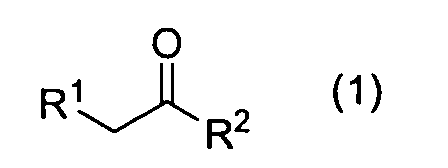
- A method according to claim 1, wherein R1 is a C1-C6 alkyl group, a C1-C6 alkyl group substituted with substituent(s) selected from Substituent group α and Substituent group β, a C6-C14 aryl group, or a C6-C14 aryl group substituted with substituent(s) selected from Substituent group α, or R1 and R2 together form a C1-C6 alkylene group.
- A method according to claim 1, wherein R1 is a C1-C6 alkyl group, a C1-C6 alkyl group substituted with substituent(s) selected from Substituent group α and Substituent group β, a C6-C14 aryl group, or a C6-C14 aryl group substituted with substituent(s) selected from Substituent group α.
- A method according to claim 1, wherein R1 is a C1-C4 alkyl group; a C1-C4 alkyl group substituted with a hydroxyl group, a fluorine atom, a chlorine atom, a methoxy or a phenyl group; a phenyl group; a naphthyl group; or a phenyl group substituted with a fluorine atom, a chlorine atom, a methyl group or methoxy group.
- A method according to claim 1, wherein R1 is a methyl, propyl or benzyl.
- A method according to any one of claims 1 to 5, wherein R2 is a hydrogen atom, a C1-C6 alkyl group or a C1-C6 alkyl group substituted with substituent(s) selected from Substituent group α and Substituent group β.
- A method according to any one of claims 1 to 5, wherein R2 is a hydrogen atom or a C1-C4 alkyl group.
- A method according to any one of claims 1 to 5, wherein R2 is a hydrogen atom.
- A method according to any one of claims 1 to 8, wherein R3 and R4 are the same or different and each represents a C2-C5 alkyl group, a C2-C5 alkyl group substituted with a C1-C4 alkoxy group, or a C4-C6 cycloalkyl group.
- A method according to any one of claims 1 to 8, wherein R3 and R4 are the same or different and each represents an isopropyl, isobutyl, isopentyl, 2-methoxyethyl, 3-methoxypropyl, 2-ethoxyethyl, cyclopentyl or cyclohexyl group.
- A method according to any one of claims 1 to 8, wherein R3 and R4 are an isobutyl group.
- A method according to any one of claims 1 to 11, wherein the pH of the acidic aqueous solution is between 2 and 6.
- A method according to any one of claims 1 to 11, wherein the acidic aqueous solution is a dilute aqueous solution of a mineral acid selected from dilute sulfuric acid, dilute hydrochloric acid and dilute nitric acid, or an aqueous solution of organic acid selected from an aqueous solution of acetic acid and aqueous solutions of oxalic acid, carbonic acid, citric acid and phosphoric acid.
- A method according to claim 13, wherein the acidic aqueous solution is dilute sulfuric acid or an aqueous solution of acetic acid.
- A method according to claim 13 or claim 14, wherein the concentration of the aqueous solution of mineral acid is between 1 and 15 w/v % and the concentration of the aqueous solution of organic acid is between 3 and 20 w/v %.
- A method according to claim 13 or claim 14, wherein the concentration of the aqueous solution of mineral acid is between 5 and 10 w/v % and the concentration of the aqueous solution of organic acid is between 5 and 15 w/v %.
- A method according to claim 13 or claim 14, wherein the concentration of the aqueous solution of mineral acid is between 6 and 8 w/v % and the concentration of the aqueous solution of organic acid is between 8 to 10 w/v %.
- A method according to any one of claims 1 to 17, wherein the temperature of the treatment with an acidic aqueous solution is between 0°C and 15°C.
- A method according to any one of claims 1 to 17, wherein the temperature of the treatment with an acidic aqueous solution is between 0°C and 5°C.
- A method according to any one of claims 1 to 19, which is characterized by using a dehydrating agent in the step to react the compound having the general formula (1) with the compound having the general formula (2) and by treating the reaction mixture with water at between 0°C and 30°C after the completion of the reaction and prior to the treatment using an acidic aqueous solution.
- A method according to any one of claims 1 to 20, wherein the dehydrating agent is magnesium sulfate, potassium carbonate or calcium chloride.
- A method according to claim 20, wherein the temperature of the treatment with water is between 0°C and 15°C.
- A method according to claim 20, wherein the temperature of the treatment with water is between 0°C and 5°C.
- A method according to any one of claims 1 to 23, which is characterized by carrying out the treatment with an acidic aqueous solution followed by treatment with a basic aqueous solution.
- A method according to claim 24, wherein the pH of the basic aqueous solution is between 13 and 14.
- A method according to claim 24, wherein the basic aqueous solution is 0.1 to 10 w/v % of an aqueous solution of alkali metal hydroxide, an aqueous solution of alkaline earth metal hydroxide or an aqueous solution of a carbonate salt.
- A method according to claim 26, wherein the basic aqueous solution is 0.3 to 5 w/v % of an aqueous solution of alkali metal hydroxide, an aqueous solution of alkaline earth metal hydroxide or an aqueous solution of a carbonate salt.
- A method according to claim 26, wherein the basic aqueous solution is 0.5 to 3 w/v % of an aqueous solution of alkali metal hydroxide, an aqueous solution of alkaline earth metal hydroxide or an aqueous solution of a carbonate salt.
- A method according to any one of claims 26 to 28, wherein the alkali metal hydroxide is sodium hydroxide or potassium hydroxide, the alkaline earth metal hydroxide is calcium hydroxide or barium hydroxide, and the carbonate salt is sodium hydrogencarbonate or calcium carbonate.
- A method according to any one of claims 24 to 29, wherein the temperature of the treatment with a basic aqueous solution is between 0°C and 30°C.
- A method according to any one of claims 24 to 29, wherein the temperature of the treatment with a basic aqueous solution is between 0°C and 15°C.
- A method according to any one of claims 24 to 29, wherein the temperature of the treatment with a basic aqueous solution is between 0°C and 5°C.
- A method of producing a highly pure compound having the general formula (3)(wherein, R1 and R2 are the same or different and each represents a hydrogen atom, a C1-C6 alkyl group, a C1-C6 alkyl group substituted with substituent(s) selected from the group consisting of Substituent group α and Substituent group β, a C6-C14 aryl group, a C6-C14 aryl group substituted with substituent(s) selected from Substituent group α, a 5- to 7-membered heteroaryl group containing 1 to 3 sulfur atoms, oxygen atoms and/or nitrogen atoms, or a 5- to 7-membered heteroaryl group containing 1 to 3 sulfur atoms, oxygen atoms and/or nitrogen atoms which is substituted with substituent(s) selected from Substituent group α, or R1 and R2 together form a C1-C6 alkylene group, R3 and R4 are the same or different and each represents a C1-C6 alkyl group, a C1-C6 alkyl group substituted with a C1-C6 alkoxy group or a C3-C6 cycloalkyl group, Substituent group α consists of hydroxyl groups, nitro groups, cyano groups, halogen atoms, C1-C6 alkyl groups, C1-C6 alkoxy groups, C1-C6 alkylthio groups and di(C1-C6 alkyl)amino groups, and Substituent group β consists of C6-C14 aryl groups, C6-C14 aryl groups substituted with substituent(s) selected from Substituent group α, 5- to 7-membered heteroaryl groups containing 1 to 3 sulfur atoms, oxygen atoms and/or nitrogen atoms, and 5- to 7-membered heteroaryl groups containing from 1 to 3 sulfur atoms, oxygen atoms and/or nitrogen atoms which is substituted with substituent(s) selected from Substituent group α),

which comprises a step of reacting a compound having the general formula (1)(wherein, R1 and R2 have the same meanings as those indicated hereinbefore) with a compound having the general formula (2)
- A method according to claim 33, wherein the temperature of treatment with a basic aqueous solution is between 0°C and 30°C.
- A method according to claim 33, wherein the temperature of treatment with a basic aqueous solution is between 0°C and 15°C.
- A method according to claim 33, wherein the temperature of treatment with a basic aqueous solution is between 0°C and 5°C.
Applications Claiming Priority (3)
| Application Number | Priority Date | Filing Date | Title |
|---|---|---|---|
| JP2002209623 | 2002-07-18 | ||
| JP2002209623 | 2002-07-18 | ||
| PCT/JP2003/009109 WO2004009530A1 (en) | 2002-07-18 | 2003-07-17 | Process for production of high-purity enamines |
Publications (2)
| Publication Number | Publication Date |
|---|---|
| EP1553077A1 true EP1553077A1 (en) | 2005-07-13 |
| EP1553077A4 EP1553077A4 (en) | 2007-06-20 |
Family
ID=30767692
Family Applications (1)
| Application Number | Title | Priority Date | Filing Date |
|---|---|---|---|
| EP03765316A Withdrawn EP1553077A4 (en) | 2002-07-18 | 2003-07-17 | PROCESS FOR PRODUCING HIGH PURITY ENAMINES |
Country Status (11)
| Country | Link |
|---|---|
| US (1) | US7411095B2 (en) |
| EP (1) | EP1553077A4 (en) |
| JP (1) | JP4458514B2 (en) |
| KR (1) | KR100969178B1 (en) |
| CN (2) | CN100491333C (en) |
| AU (1) | AU2003248078A1 (en) |
| BR (1) | BR0312773B1 (en) |
| CA (1) | CA2493390C (en) |
| IL (1) | IL166196A0 (en) |
| TW (1) | TWI295988B (en) |
| WO (1) | WO2004009530A1 (en) |
Families Citing this family (3)
| Publication number | Priority date | Publication date | Assignee | Title |
|---|---|---|---|---|
| JP2010533205A (en) * | 2007-07-12 | 2010-10-21 | トラガラ ファーマシューティカルズ,インク. | Methods and compositions for treating cancer, tumors, and tumor-related disorders |
| US20110099237A1 (en) * | 2009-10-23 | 2011-04-28 | Kfir Luzzatto | System for operating a social network and method therefor |
| WO2018039096A1 (en) * | 2016-08-22 | 2018-03-01 | 3M Innovative Properties Company | Propenylamines and methods of making and using same |
Family Cites Families (4)
| Publication number | Priority date | Publication date | Assignee | Title |
|---|---|---|---|---|
| US3481939A (en) | 1965-03-15 | 1969-12-02 | Eastman Kodak Co | Tertiaryaminocyclobutanes with electronegative substituents |
| US4963557A (en) | 1987-09-28 | 1990-10-16 | Smithkline Beecham Corporation | Immunomodulatory azaspiranes |
| US5908858A (en) * | 1996-04-05 | 1999-06-01 | Sankyo Company, Limited | 1,2-diphenylpyrrole derivatives, their preparation and their therapeutic uses |
| JP3883354B2 (en) | 2000-02-10 | 2007-02-21 | セントラル硝子株式会社 | Method for producing trifluoromethyl carbinol derivative |
-
2003
- 2003-07-16 JP JP2003275271A patent/JP4458514B2/en not_active Expired - Fee Related
- 2003-07-17 CA CA2493390A patent/CA2493390C/en not_active Expired - Fee Related
- 2003-07-17 KR KR1020057000856A patent/KR100969178B1/en not_active Expired - Fee Related
- 2003-07-17 IL IL16619603A patent/IL166196A0/en not_active IP Right Cessation
- 2003-07-17 AU AU2003248078A patent/AU2003248078A1/en not_active Abandoned
- 2003-07-17 EP EP03765316A patent/EP1553077A4/en not_active Withdrawn
- 2003-07-17 CN CNB2006101106121A patent/CN100491333C/en not_active Expired - Fee Related
- 2003-07-17 WO PCT/JP2003/009109 patent/WO2004009530A1/en not_active Ceased
- 2003-07-17 BR BRPI0312773-7A patent/BR0312773B1/en not_active IP Right Cessation
- 2003-07-17 CN CNB038218224A patent/CN100516022C/en not_active Expired - Fee Related
- 2003-07-18 TW TW092119614A patent/TWI295988B/en not_active IP Right Cessation
-
2005
- 2005-01-18 US US11/037,502 patent/US7411095B2/en not_active Expired - Fee Related
Non-Patent Citations (2)
| Title |
|---|
| CURPHEY T.J. ET AL.: "A study of the alkylation of enamines derived from sterically hindered amines." JOURNAL OF ORGANIC CHEMISTRY., vol. 40, no. 5, 1975, pages 607-614, XP002430914 US AMERICAN CHEMICAL SOCIETY. EASTON. * |
| See also references of WO2004009530A1 * |
Also Published As
| Publication number | Publication date |
|---|---|
| BR0312773B1 (en) | 2013-05-21 |
| AU2003248078A1 (en) | 2004-02-09 |
| CN1681768A (en) | 2005-10-12 |
| CA2493390C (en) | 2011-05-31 |
| WO2004009530A1 (en) | 2004-01-29 |
| CN100516022C (en) | 2009-07-22 |
| US7411095B2 (en) | 2008-08-12 |
| US20050143576A1 (en) | 2005-06-30 |
| CN100491333C (en) | 2009-05-27 |
| TWI295988B (en) | 2008-04-21 |
| CA2493390A1 (en) | 2004-01-29 |
| CN1923794A (en) | 2007-03-07 |
| KR20050029222A (en) | 2005-03-24 |
| BR0312773A (en) | 2005-05-03 |
| JP2004051638A (en) | 2004-02-19 |
| TW200403207A (en) | 2004-03-01 |
| IL166196A0 (en) | 2006-01-15 |
| EP1553077A4 (en) | 2007-06-20 |
| JP4458514B2 (en) | 2010-04-28 |
| KR100969178B1 (en) | 2010-07-08 |
Similar Documents
| Publication | Publication Date | Title |
|---|---|---|
| US8962849B2 (en) | Nitrogen-containing heterocyclic compound and method for producing same | |
| PL215879B1 (en) | New method of industrial synthesis of tetra esters of 5-[bis(carboxyl methyl)amino]-3 -karboxymethyl-4-cyano-2-tio phenokarboxylic acid, method of manufacture of divalent salts of ranelic acid and their hydrates, as well as new intermediate compounds | |
| US7411095B2 (en) | Process for production of high-purity enamines | |
| KR20020068517A (en) | Crystals of penicillin and process for the production thereof | |
| HK1074039A (en) | Process for production of high-purity enamines | |
| KR100674098B1 (en) | Process for preparing N-alk (en) oxy (or aryloxy) carbonylisothiocyanate and derivatives thereof in the presence of N, N-dialkylarylamine catalyst | |
| JP6695908B2 (en) | Method for producing benzamide compound | |
| JP2714724B2 (en) | Cyclic amine compounds having a carboxyl group | |
| JPS5838242A (en) | Manufacture of n-substituted methacrylamide and acrylamide | |
| JP5811736B2 (en) | Method for producing pyrazolinone derivative | |
| HK1005336B (en) | Process for the preparation of acid chloride compounds | |
| US20240025839A1 (en) | Method of synthesis | |
| TW201329033A (en) | Process for the preparation of 3-hydroxy-3-methylbutyric acid or its calcium salts | |
| JP4271924B2 (en) | Method for producing 4-mercaptophenols | |
| US7091327B2 (en) | Process for the preparation of aromatic azo-compounds | |
| JPH0586042A (en) | Process for producing 2-mercapto-phenothiazine | |
| JPS60158182A (en) | Method for producing substituted quinazoline-2,4(1H,3H)-diones | |
| RU2158730C1 (en) | Acrylic acid o-bromoanilide and utilization thereof in preparation of beta-diethylaminopropionic acid o-bromoanilide hydrochloride | |
| JP2000273087A (en) | Production of asymmetric 2-imidazolidinones | |
| JPS6051187A (en) | Preparation of 5-mercapto-1,2,3-thiadiazole salt | |
| JPS6363651A (en) | Production of nitron | |
| TH77587A (en) | New Pharnicyl protein inhibitor | |
| JPH04247061A (en) | Production of 3-butenenitriles | |
| MXPA99009263A (en) | Process for producing 1-chlorocarbonyl-4-piperidinopiperidine or hydrochloride thereof | |
| JP2003040857A (en) | Method for producing N-substituted or N, N-disubstituted sulfenamide compounds |
Legal Events
| Date | Code | Title | Description |
|---|---|---|---|
| PUAI | Public reference made under article 153(3) epc to a published international application that has entered the european phase |
Free format text: ORIGINAL CODE: 0009012 |
|
| 17P | Request for examination filed |
Effective date: 20050112 |
|
| AK | Designated contracting states |
Kind code of ref document: A1 Designated state(s): AT BE BG CH CY CZ DE DK EE ES FI FR GB GR HU IE IT LI LU MC NL PT RO SE SI SK TR |
|
| AX | Request for extension of the european patent |
Extension state: AL LT LV MK |
|
| REG | Reference to a national code |
Ref country code: HK Ref legal event code: DE Ref document number: 1074039 Country of ref document: HK |
|
| DAX | Request for extension of the european patent (deleted) | ||
| A4 | Supplementary search report drawn up and despatched |
Effective date: 20070518 |
|
| 17Q | First examination report despatched |
Effective date: 20100423 |
|
| RAP1 | Party data changed (applicant data changed or rights of an application transferred) |
Owner name: DAIICHI SANKYO COMPANY, LIMITED |
|
| GRAP | Despatch of communication of intention to grant a patent |
Free format text: ORIGINAL CODE: EPIDOSNIGR1 |
|
| STAA | Information on the status of an ep patent application or granted ep patent |
Free format text: STATUS: THE APPLICATION IS DEEMED TO BE WITHDRAWN |
|
| 18D | Application deemed to be withdrawn |
Effective date: 20130725 |
|
| REG | Reference to a national code |
Ref country code: HK Ref legal event code: WD Ref document number: 1074039 Country of ref document: HK |