EP1550954A1 - Transcription de traces - Google Patents
Transcription de traces Download PDFInfo
- Publication number
- EP1550954A1 EP1550954A1 EP04030380A EP04030380A EP1550954A1 EP 1550954 A1 EP1550954 A1 EP 1550954A1 EP 04030380 A EP04030380 A EP 04030380A EP 04030380 A EP04030380 A EP 04030380A EP 1550954 A1 EP1550954 A1 EP 1550954A1
- Authority
- EP
- European Patent Office
- Prior art keywords
- transcription
- trace
- traces
- terminal
- steps
- Prior art date
- Legal status (The legal status is an assumption and is not a legal conclusion. Google has not performed a legal analysis and makes no representation as to the accuracy of the status listed.)
- Withdrawn
Links
Images


Classifications
-
- G—PHYSICS
- G06—COMPUTING OR CALCULATING; COUNTING
- G06F—ELECTRIC DIGITAL DATA PROCESSING
- G06F40/00—Handling natural language data
- G06F40/10—Text processing
- G06F40/166—Editing, e.g. inserting or deleting
Definitions
- the present invention relates to a method and a system for semi-automatically transcribing traces. More specifically, the invention relates to manual processing of an audio signal assisted by computer for example to index the audio signal and associate it with one or more classes, or prepare it for automatic processing such than voice recognition.
- the object of the invention is to improve a transcription of traces by automating steps of transcription in order to increase the speed and the quality of transcription.
- the invention also relates to a computer program on an information carrier to transcribe first successive traces included in a database of a server in second traces and suitable for use in a transcription terminal, said terminal comprising program instructions which, when the program is loaded and executed on said terminal, perform the steps according to the method of the invention.
- a first trace may be an audio trace constituted by an audio segment of an audio signal to be transcribed into a transcribed trace, as a second trace, which is composed of a text message resulting from a manual transcription of the audio trace.
- An audio trace includes one or more successive words or groups separated by spaces including acoustic events defined below. In a conversation of two speakers or a meeting of several speakers, an audio trace comes only from a speaker.
- a first trace may be a transcribed trace as defined above, composed of a text message resulting for example from a text of an electronic message or a voice recognition of an audio trace in the audio signal, and is transcribed into a modified transcribed trace, as a second trace, resulting from a modification of the text message constituting the first trace.
- a first trace may still be a modified transcribed or transcribed trace to be transcribed into an annotated or transcribed modified annotated transcribed trace, as a second trace, which is composed of the first trace and an annotation that completes the meaning of the first trace by an observation difficult to classify on the first trace.
- the transcription system implementing the transcription method mainly comprises software components and a basic management server of first traces data SB.
- Components software are related to features of the invention and essentially settled in a TT transcription terminal, such as a computer staff, who can communicate with the server of database management, as illustrated in the figure 1.
- the transcription terminal TT is connected to an access network RA through a link of LT telecommunications.
- the LT link and the RA network can be classically a telephone line and the switched telephone network RTC itself connected to a high-speed packet transmission network RP type internet.
- the LT telecommunications link is an xDSL line (Digital Subscriber Line) or an ISDN line (Network Digital to Service Integration) connected to the network corresponding access.
- the transcription terminal TT is for example a connected personal computer directly via modem to the LT link.
- the terminal transcription and access networks are not limited to the examples above and may be constituted by other terminals and access networks known.
- the database server SB is connected to the RP packet transmission network.
- the server of database and TT transcription terminal communicates through the RA and RP networks.
- the database server SB is close to the TT transcription terminal and the link LT is for example a cable link classic or a short-range link.
- the TT transcription terminal relating to a US user includes a central processing unit UT including a communication interface with the access network RA, a transcription module of trace MT, an MA trace annotation module, a MVA validation module, a visualization module MVI trace, a completion module MC, word lexicon LM, a BD database including at least one list of acoustic events L1 and one L2 symbol list, and a user interface comprising an electro-acoustic transducer such than an HP speaker associated with an audio card or any other means of rendering an audio signal, a CL keyboard and an EC display screen.
- a central processing unit UT including a communication interface with the access network RA, a transcription module of trace MT, an MA trace annotation module, a MVA validation module, a visualization module MVI trace, a completion module MC, word lexicon LM, a BD database including at least one list of acoustic events L1 and one L2 symbol list, and a user interface comprising an electro-acous
- the database BD and / or lexicons of LM words are installed in the SB database server and the terminal of transcription TT accesses it through RA networks and RP.
- An acoustic event included between words or groups of words in a trace is a specific sound, such as a door slam, barking, sneezing, mouth noise, ringing, etc.
- An acoustic event is defined by a type, a unique name, a display name and a start tag, and possibly an end tag, a regular expression, and a description.
- An acoustic event is either long type or short type.
- a long-type acoustic event includes an end tag and a regular expression, as opposed to a short-type acoustic event.
- a short type event is associated with a punctual acoustic event such as a sneeze; for example with reference to the above conversation: "[sneeze] Asian".
- a long type event is associated with an event during which other sounds may occur such as the acoustic music event; for example with reference to the above conversation: "[music] You search for a restaurant [-music]”.
- Some acoustic events can be represented only by a start tag or a pair of start and end tags.
- Tags are used to facilitate the transposition of files containing transcribed traces in XML (Extensible Markup Language) format, since XML is based on tag-based syntax.
- a symbol is an abbreviation of a word or phrase and is defined by a symbol identifier from which a tag is formed.
- a triplet symbol, word or expression, identifier is for example: (cda, Côtes-d'Armor, @cda); (RP, Paris Region, @RP); (ft, France-Telecom, @ft).
- the semiautomatic transcription method mainly comprises steps E1 to E13 shown in FIG.
- the objective of the US user of the transcription terminal TT is to transcribe a first current trace TRC1 into a second current trace TRC2 for example in the context of the conversation between the voice server and the service user. voice. If the first current trace has never been transcribed and is therefore an audio trace, the transcription of the first current trace by the user consists in transcribing the audio file associated with the first current trace into a transcribed trace as a second trace common.
- the transcription of the first current trace by the user consists of a modification of the first trace transcribed into a modified transcribed trace as the second current trace.
- the TT transcription terminal at the request of the US user launches a software interface, inviting the user to identify himself.
- a session of the user begins and the transcription terminal TT is automatically connected to the management server SB in step E2.
- the US user selects in the BDT trace database the first TR traces to be processed. These first traces are stored by the central processing unit UT in the database BD of the transcription terminal TT in step E3.
- the first selected traces follow the temporal order of their recordings.
- the US user selects and configures PAT trace transcription parameters according to characteristics of the first TR traces selected in the TT transcription terminal.
- One of the transcription parameters is for example an embodiment, such as the transcription mode or the annotation mode.
- the transcription parameters designate, for example, one or more lexicons of words LM, one or more lists of acoustic events L1 and one or more lists of symbols L2 that the user has decided to associate with the first selected traces. This association is made according to the characteristics of the first traces. For example, for the conversation recorded as part of the vocal service on restaurants, word lexicons will relate to the linguistic context of gastronomy and the symbols used in the regions where the restaurants are located.
- a transcription parameter may also relate to the activation or not of the completion module MC, the choice of a transcription language, a specific trace transmitter, or the existence of an audio file associated with a first trace. Certain parameters such as the designation of the sender or of an audio file constitute a filtering or a selection among the first selected traces; for example, the user only requires the transcription of first traces having an audio file or associated with a specific transmitter.
- first TR traces and / or PAT transcription parameters are selected by an administrator of the transcription system.
- the central processing unit UT writes the selected transcription parameters PAT into the database BD of the terminal in step E5.
- Transcription steps are listed in a TT transcription terminal text file or stored in the database BD.
- the continuation of transcription method after step E5 has a automatic concatenation of at least two steps selected from the transcription steps in function of the selected transcription parameters PAT.
- the US user decides to configure the embodiment parameter to "transcription", which means that he wishes to carry out trace transcriptions.
- the US user also sets the usage of the completion module MC.
- the first of said at least two selected steps is a determination of a first current trace TRC1 to be transcribed from among the first TR traces selected according to the transcription parameters PAT, by the processing unit UT in step E6. For example, when a transcription parameter indicates a specific transmitter, the first current trace TRC1 must necessarily come from that specific transmitter; otherwise she is refused.
- the processing unit UT When the user has already transcribed a certain number of traces, the processing unit UT considers as the first current trace following the first trace succeeding the first trace which has just been transcribed in the audio signal to be transcribed according to the transcription parameters PAT stored in step E5. Otherwise, the user considers the first nontranscribed trace of the trace group as the first current trace.
- the processing unit UT commands the transcription module MT to open a transcription input window.
- the display module MVI automatically displays the first selected traces TR and visually indicates to the user the first current trace TRC1 by a color code or any other identification sign of this trace on the EC screen of the TT transcription terminal.
- the display module MVI displays, for example, parameters associated with the first current trace TRC1 such as the trace identifier, the designation of the sender, the trace name, and the first current trace TRC1 itself in textual form when the TRC1 trace is not an audio trace.
- the processing unit UT loads the various lexicons of LM words and lists of acoustic events L1 and symbols L2 selected by the user US in one or more windows.
- step E10 the processing unit UT automatically executes the audio file associated with the first current trace TRC1 so that the speaker HP reproduces it and the US user listens.
- step E11 as a function of the audio file listened to, the user US transcribes the first current trace TRC1 into the second current trace that he enters on the keyboard CL in the input window when the trace TRC1 is an audio trace. If the first current trace TRC1 is a transcribed trace resulting from one or more previous transcripts according to the invention or resulting from an earlier voice recognition of the current trace, whether annotated or not, the US user modifies the first current trace TRC1 using the CL keyboard in the input window according to the audio file listened to.
- the user can use the word lexicons and selected lists to facilitate transcription. For example by selecting the event [laughter] in a list of acoustic events L1, the processing unit UC automatically inserts in the input window at least one start tag [laughing]. For transcription, the processing unit UT activates the completion module MC when the transcription parameter indicating the activation of this module has been selected.
- the completion module MC relates to a help facilitating the input by the user to improve the quality and speed of data entry.
- the module of completion MC When entering the CL keyboard by the user, choice of words and / or expressions and / or acoustic events and / or list symbols to complete the second TRC2 current trace are proposed by the module of completion MC to the user as soon as at least one character of the second current trace TRC2 has been entered.
- the words and / or the expressions and / or the acoustic events and / or the proposed symbols are included in the LM lexicons and lists L1 and L2 selected by the user and designated by the transcription parameters PAT in step E4.
- the completion module MC proposes symbols of the symbol list in response to the entry of the "@" character, at least the acoustic event [sneezing] in response to the input of the characters "[é", etc.
- a spell checker CO is also activated by the processing unit UT. The spell checker notifies the user of misspelled words or phrases.
- the spell checker may contain other features such as grammar fault detection.
- the validation module MVA validates the transcription of the first current trace TRC1 in the second current trace TRC2 by the US user by applying transcription rules in step E12.
- the transcription rules are for example correspondences between the words of the second current trace and the words in the selected lexicons LM and the events and symbols in the selected lists L1 and L2. These rules can also be writing rules: for example, a long acoustic event must be represented by a start tag and an end tag, such as the [music] and [-music] tags.
- the validation module MV when the validation module MV refuses the input for example because of an element such as a word, an expression, an acoustic event or a symbol included in the second current trace TRC2 and not listed in the lexicons and lists , the validation module MV invites the user to ignore or add this new element in the LM lexicon or the corresponding list L1, L2, or possibly to create a new lexicon or a new list when no lexicon or list corresponds the meaning of the unlisted item. In another variant, the user manually forces the validation module to validate the unlisted item.
- the processing unit UT associates the second current trace TRC2 validated with characteristics of the first current trace TRC1 possibly modified by the user, such as the designation of the trace transmitter and the trace audio file and a trace annotation, and controls the TRC2 trace memory with the characteristics in the database BD.
- the second current trace entered by the US user to transcribe the first current trace such as "Asian” corresponding to the result of the processing of a voice response from the user to the voice service. by a voice recognition system can be "hum [sneeze] Asian".
- the processing unit UT automatically determines the next first current trace to be transcribed and the steps E6 to E13 are iterated. According to other variants, the scheduling of steps E7 to E13 may be different from that described above and shown in FIG.
- the processing unit UT automatically stores the transcription parameters of the last previous session of the user. This loading enables the processing unit UT to automatically go from step E1 to step E6 to start a transcription itself.
- the embodiment selected by the US user is a "transcription modification" in step E4.
- the processing unit UT iterates the same steps as the first embodiment except for the step E4 where the mode selection is different from the step E6 where the processing unit UT searches for the trace transcribed in as the first current trace that can be corrected, and E11 step where the MVI display module loads in the input window the trace transcribed previously to be modified by the user.
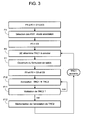
- the transcription method according to the second embodiment mainly comprises steps F1 to F12 shown in FIG. 3.
- This second embodiment relates to the parameterization of the "annotation" embodiment.
- the steps E1 to E3 of the first embodiment are therefore identical to the steps F1 to F3 of the second embodiment.
- the US user selects the "annotation" mode for the second embodiment.
- the storage step F5 is identical to the step E5.
- the processing unit UT selects only the first annotatable traces, and then automatically determines a first current trace TRC1 to be annotated in step F6.
- a trace TRC1 may be annotated is for example a trace from a human voice.
- An annotation to be associated with the first current trace TRC1 is a comment, a remark, or an indication based on an appreciation of the first current trace TRC1 by the US user very difficult to model automatically to be exploitable by a computer.
- the processing unit UT automatically commands the annotation module MA to open an annotation input form and no longer a transcription input window.
- This form presents for example multiple choices in the form of checkboxes as well as free fields.
- the checkboxes are next to predetermined annotation features stored in the DB database, such as "quiet tone,”"pissed off tone,””correctspeech,"”multiple choice question,” and so on.
- the following stages of visualization F8 and loading F9 are identical to the steps E8 and E9. Step E10 is deleted in the second embodiment.
- step F10 the user transcribes the first current trace TRC1 into the second current trace TRC2 by entering or correcting the annotation of the current trace TRC1 in the free field and / or by describing the annotation of the current trace to using the checkboxes.
- the validation module MVA validates the annotation of the first current trace in the second current trace by the US user by checking annotation rules in step F11.
- the annotation rules are, for example, correspondences between the words of the annotation entered and words in the LM lexicons selected in step F4.
- the validation module refuses the entry of the annotation to constitute the second current trace TRC2, which is identical to the first current trace except for the annotation, the user is automatically invited to modify his entry by a message correspondent displayed.
- the processing unit stores in the database BD the validated annotation associated with the second current trace TRC2, in step F12.
- the annotation entered by the US user and associated with the second current trace in which has been transcribed a trace already transcribed such as "hum [sneeze] Asian"
- the processing unit UT automatically loads into memory the first current trace to be annotated and steps F6 to F12 are iterated.
- the scheduling of steps F7 to F12 may be different from that described above and shown in FIG.
- the embodiment selected by the US user is an "annotation modification" to step F4, and the processing unit UT iterates the same steps as the second realization to except for steps F4, F6 and F10.
- transcripts of a first trace current TRC1 into a second current trace TRC2 relating to a transcription proper including including a correction of the first current trace
- an annotation including a correction of the annotation
- the user can request the execution a task that is not included in the mode selected, such as "add a word to a lexicon”.
- the invention described herein relates to a method and system for semi-automatically transcribing traces.
- the steps of the method of the invention are determined by the instructions of a computer program incorporated in a computing device such as the transcription terminal TT.
- the program comprises program instructions which, when said program is loaded and executed in the transcription terminal, whose operation is then controlled by the execution of the program, carry out the steps of the method according to the invention.
- the invention also applies to a computer program, including a computer program on or in an information carrier, adapted to implement the invention.
- the information carrier may be any entity or device capable of storing the program.
- the medium may comprise storage means or recording medium, such as a ROM, for example a CD ROM or a microelectronic circuit ROM, or a magnetic recording medium, for example a floppy disk (floppy). disc) or a hard disk.
- the information medium may be a transmissible medium such as an electrical or optical signal, which may be conveyed via an electrical or optical cable, by radio or by other means.
- the program according to the invention can in particular be downloaded to an Internet type network.
- the information carrier may be an integrated circuit in which the program is incorporated, the circuit being adapted to execute or to be used in the execution of the method according to the invention.
Landscapes
- Engineering & Computer Science (AREA)
- Theoretical Computer Science (AREA)
- Health & Medical Sciences (AREA)
- Artificial Intelligence (AREA)
- Audiology, Speech & Language Pathology (AREA)
- Computational Linguistics (AREA)
- General Health & Medical Sciences (AREA)
- Physics & Mathematics (AREA)
- General Engineering & Computer Science (AREA)
- General Physics & Mathematics (AREA)
- Machine Translation (AREA)
Abstract
Description
Deux logiciels connus sous les appellations "Transcriber" et "Praat" présentent de telles fonctionnalités.
Ces logiciels sont limités à des fonctionnalités sélectionnées au coup par coup par l'usager, mais ce qui offre une grande souplesse d'action à l'usager. Cependant ces logiciels restent inadaptés aux conditions de travail réelles d'un transcripteur et génèrent une perte de temps, parce que la transcription ou l'annotation est souvent un enchaínement de tâches répétitives.
Pour atteindre l'objectif ci-dessus, le procédé est caractérisé en ce qu'il comprend:
Comme on le verra ci-après, les étapes sélectionnées autres que la première étape sélectionnée peuvent être une mémorisation des paramètres de transcription sélectionnés dans la base de données du terminal, une transcription de la première trace courante en une deuxième trace courante, et une mémorisation de la deuxième trace courante afin que, lorsque la transcription de premières traces continue ultérieurement, la première trace succédant à la première trace qui vient d'être transcrite dans le signal audio soit considérée comme la première trace courante suivante à transcrire selon les paramètres de transcription mémorisés.
L'une des étapes sélectionnées autres que la première étape sélectionnée peut être
- une complétion proposant des choix de mots et/ou d'évènements acoustiques et/ou de symboles inclus dans la base de données du terminal pour compléter une deuxième trace courante dès une saisie d'un premier caractère de celle-ci, ou
- une validation de la transcription d'une première trace courante en une deuxième trace courante en appliquant des règles de transcription.
- la figure 1 est un bloc-diagramme schématique d'un système de transcription selon une réalisation de l'invention ;
- la figure 2 est un algorithme schématique du procédé de transcription selon une première réalisation de l'invention ; et
- la figure 3 est un algorithme schématique du procédé de transcription selon une deuxième réalisation de l'invention.
Une première trace peut être une trace audio constituée par un segment audio d'un signal audio à transcrire en une trace transcrite, en tant que deuxième trace, qui est composée d'un message textuel résultant d'une transcription manuelle de la trace audio. Une trace audio comporte un ou plusieurs mots ou groupes successifs séparés par des espaces incluant des événements acoustiques définis plus loin. Dans une conversation de deux locuteurs ou réunion de plusieurs locuteurs, une trace audio ne provient que d'un locuteur. Une première trace peut être une trace transcrite telle que définie ci-dessus, composée d'un message textuel résultant par exemple d'un texte d'un message électronique ou d'une reconnaissance vocale d'une trace audio dans le signal audio, et est à transcrire en une trace transcrite modifiée, en tant que deuxième trace, qui résulte d'une modification du message textuel constituant la première trace. Une première trace peut être encore une trace transcrite ou transcrite modifiée à transcrire en une trace transcrite annotée ou transcrite modifiée annotée, en tant que deuxième trace, qui est composée de la première trace et d'une annotation qui complète le sens de la première trace par une observation difficilement classifiable sur la première trace.
Par exemple dans le cadre d'un service vocal, une conversation est antérieurement enregistrée lors d'une interaction vocale entre un serveur vocal et un usager du service vocal. Un exemple de plusieurs enregistrements contenu dans la base de données de traces BDT est le suivant:
- serveur vocal : "Bonjour, vous êtes sur un serveur vocal de consultation de restaurant. Que désirez vous ?" (format texte) ;
- résultat du traitement de la réponse de l'usager du service vocal par un système de reconnaissance vocale : "cherche un restau" (format texte) ;
- serveur vocal : "Vous recherchez un restaurant. Précisez la spécialité, le lieu ou le prix" (format texte);
- résultat du traitement de la réponse de
l'usager du service vocal par un système de
reconnaissance vocale : "asiatique" (format texte).
Une trace est ici une trace transcrite puisqu'elle est déjà en format texte et comprend par exemple une question du serveur vocal, ou une réponse de l'usager du service vocal. Lorsque la première trace est une trace audio ou bien une trace transcrite, l'enregistrement de la trace audio correspondant constitue un fichier audio associé à la première trace dans la base de donnée BDT.
Chaque trace transcrite peut être incorporée dans un groupe de traces transcrites ayant des caractéristiques communes. Une trace transcrite est caractérisée par et associée à un identificateur de trace, une désignation d'émetteur de trace, un nom de trace et éventuellement un fichier audio de trace et une annotation de trace. En général, des caractéristiques d'une première trace, telles que la désignation d'émetteur de trace et éventuellement le fichier audio de trace et une annotation de trace sont attribuées à la deuxième trace qui résulte de la transcription de la première trace, moyennant des corrections ultérieures des caractéristiques.
L'émetteur de trace indique la provenance de la trace transcrite. En référence à l'exemple ci-dessus, un émetteur est par exemple un serveur vocal ou un système de reconnaissance vocale. La trace transcrite contient le texte correspondant à la trace audio d'origine ainsi que bien souvent des informations diverses caractérisant la trace.
Dans une variante, la base de données de traces BDT est installée directement dans le terminal de transcription TT.
Certains événements acoustiques peuvent à la fois être représentés seulement par une balise de début ou par un couple de balises de début et de fin.
Les balises sont utilisées afin de faciliter la transposition au format XML (extensible Markup Language) des fichiers contenant des traces transcrites, puisque le langage XML repose sur une syntaxe à base de balises.
Un symbole est une abréviation d'un mot ou d'une expression et est défini par un identificateur de symbole à partir duquel une balise est formée. Un triplet (symbole, mot ou expression, identificateur) est par exemple : (cda, Côtes-d'Armor, @cda) ; (RP, Région Parisienne, @RP) ; (ft, France-Télécom, @ft).
Dans cette première réalisation, l'objectif de l'usager US du terminal de transcription TT est de transcrire une première trace courante TRC1 en une deuxième trace courante TRC2 par exemple dans le contexte de la conversation entre le serveur vocal et l'usager du service vocal. Si la première trace courante n'a jamais été transcrite et est donc une trace audio, la transcription de la première trace courante par l'usager consiste à transcrire le fichier audio associé à la première trace courante en une trace transcrite en tant que deuxième trace courante. Si la première trace courante est initialement une trace transcrite issue d'une reconnaissance vocale, la transcription de la première trace courante par l'usager consiste en une modification de la première trace transcrite en une trace transcrite modifiée en tant que deuxième trace courante.
A l'étape E1, le terminal de transcription TT à la demande de l'usager US lance une interface logicielle, invitant l'usager à s'identifier.
Une fois l'usager identifié, une session de l'usager débute et le terminal de transcription TT est connecté automatiquement au serveur de gestion SB à l'étape E2.
L'usager US sélectionne dans la base de données de traces BDT des premières traces TR à traiter. Ces premières traces sont mémorisées par l'unité centrale de traitement UT dans la base de donnée BD du terminal de transcription TT à l'étape E3. Les premières traces sélectionnées suivent l'ordre temporel de leurs enregistrements.
A l'étape E4, l'usager US sélectionne et configure des paramètres de transcription de trace PAT en fonction de caractéristiques des premières traces TR sélectionnées dans le terminal de transcription TT. L'un des paramètres de transcription est par exemple un mode de réalisation, tel que le mode transcription ou le mode annotation. Les paramètres de transcription désignent par exemple un ou plusieurs lexiques de mots LM, une ou plusieurs listes d'événements acoustiques L1 et une ou plusieurs listes de symboles L2 que l'usager a décidé d'associer aux premières traces sélectionnées. Cette association est faite en fonction des caractéristiques des premières traces. Par exemple, pour la conversation enregistrée dans le cadre du service vocal sur les restaurants, les lexiques de mots auront trait au contexte linguistique de la gastronomie et les symboles utilisés aux régions dans lesquelles se trouvent les restaurants. Un paramètre de transcription peut concerner encore l'activation ou non du module de complétion MC, le choix d'une langue de transcription, un émetteur spécifique de trace, ou l'existence d'un fichier audio associé à une première trace. Certains paramètres tels que la désignation de l'émetteur ou d'un fichier audio constituent un filtrage ou une sélection parmi les premières traces sélectionnées ; par exemple, l'usager ne requiert que la transcription de premières traces possédant un fichier audio ou associées à un émetteur spécifique.
Dans une variante, des premières traces TR et/ou des paramètres de transcription PAT sont sélectionnées par un administrateur du système de transcription.
L'unité centrale de traitement UT écrit les paramètres de transcription sélectionnés PAT dans la base de données BD du terminal à l'étape E5.
La première desdites au moins deux étapes sélectionnées est une détermination d'une première trace courante TRC1 à transcrire parmi les premières traces TR sélectionnées en fonction des paramètres de transcription PAT, par l'unité de traitement UT à l'étape E6. Par exemple, lorsqu'un paramètre de transcription indique un émetteur spécifique, la première trace courante TRC1 doit nécessairement provenir de cet émetteur spécifique; sinon elle est refusée. Lorsque l'usager a déjà transcrit un certain nombre de traces, l'unité de traitement UT considère comme première trace courante suivante la première trace succédant à la première trace qui vient d'être transcrite dans le signal audio à transcrire selon les paramètres de transcription PAT mémorisés à l'étape E5. Sinon, l'usager considère la première trace non transcrite du groupe de traces, comme étant la première trace courante.
Automatiquement à l'étape E7, l'unité de traitement UT commande au module de transcription MT l'ouverture d'une fenêtre de saisie de transcription.
A l'étape E8, le module de visualisation MVI affiche automatiquement les premières traces sélectionnées TR et indique visuellement à l'usager la première trace courante TRC1 par un code couleur ou tout autre signe d'identification de cette trace sur l'écran EC du terminal de transcription TT. Le module de visualisation MVI affiche par exemple des paramètres associés à la première trace courante TRC1 comme l'identificateur de trace, la désignation de l'émetteur, le nom de trace, et la première trace courante TRC1 elle-même sous forme textuelle lorsque la trace TRC1 n'est pas une trace audio.
A l'étape E9, l'unité de traitement UT charge les divers lexiques de mots LM et listes d'évènements acoustiques L1 et de symboles L2 sélectionnés par l'usager US dans une ou plusieurs fenêtres.
A l'étape E11 en fonction du fichier audio écouté, l'usager US transcrit la première trace courante TRC1 en la deuxième trace courante qu'il saisit au clavier CL dans la fenêtre de saisie lorsque la trace TRC1 est une trace audio. Si la première trace courante TRC1 est une trace transcrite résultant d'une ou plusieurs transcriptions précédentes selon l'invention ou résultant d'une reconnaissance vocale antérieure de la trace courante, qu'elle soit annotée ou non, l'usager US modifie la première trace courante TRC1 au moyen du clavier CL dans la fenêtre de saisie en fonction du fichier audio écouté. L'usager peut utiliser les lexiques de mots et les listes sélectionnés afin de faciliter la transcription. Par exemple en sélectionnant l'événement [rire] dans une liste d'événements acoustiques L1, l'unité de traitement UC insère automatiquement dans la fenêtre de saisie au moins une balise de début [rire].
Pour la transcription, l'unité de traitement UT active le module de complétion MC lorsque le paramètre de transcription renseignant sur l'activation de ce module a été sélectionné.
Le module de complétion MC est relatif à une aide facilitant la saisie par l'usager afin d'améliorer la qualité et la vitesse de saisie. Lors de la saisie au clavier CL par l'usager, des choix de mots et/ou d'expressions et/ou d'évènements acoustiques et/ou de symboles sous forme de liste pour compléter la deuxième trace courante TRC2 sont proposés par le module de complétion MC à l'usager dès la saisie d'au moins un caractère de la deuxième trace courante TRC2. Les mots et/ou les expressions et/ou les événements acoustiques et/ou les symboles proposés sont compris dans les lexiques LM et les listes L1 et L2 sélectionnés par l'usager et désignés par les paramètres de transcription PAT à l'étape E4. Par exemple, le module de complétion MC propose des symboles de la liste de symboles en réponse à la saisie du caractère "@", au moins l'événement acoustique [éternuement] en réponse à la saisie des caractères "[é", etc.
En variante complémentaire, un correcteur orthographique CO est également activé par l'unité de traitement UT. Le correcteur orthographique signale à l'usager des mots ou expressions mal orthographiés par un soulignement. Le correcteur orthographique peut contenir d'autres fonctionnalités telles qu'une détection de faute grammaticale.
En variante, lorsque le module de validation MV refuse la saisie par exemple à cause d'un élément tel qu'un mot, une expression, un événement acoustique ou un symbole inclus dans la deuxième trace courante TRC2 et non répertorié dans les lexiques et listes, le module de validation MV invite l'usager à ignorer ou à ajouter cet élément nouveau dans le lexique LM ou la liste correspondante L1, L2, ou éventuellement à créer un nouveau lexique ou une nouvelle liste lorsqu'aucun lexique ni aucune liste ne correspond à la signification de l'élément non répertorié.
Dans une autre variante, l'usager force manuellement le module de validation à valider l'élément non répertorié.
Dans le cas contraire, automatiquement à l'étape E13, à la suite d'une saisie d'un caractère spécifique ou d'un caractère d'échappement au clavier par l'usager, l'unité de traitement UT associe la deuxième trace courante TRC2 validée à des caractéristiques de la première trace courante TRC1 éventuellement modifiées par l'usager, telles que la désignation d'émetteur de trace et le fichier audio de trace et une annotation de trace, et commande la mémorisation de la trace TRC2 avec les caractéristiques dans la base de données BD.
En reprenant l'exemple de la conversation décrite plus haut, la deuxième trace courante saisie par l'usager US pour transcrire la première trace courante telle que "asiatique" correspondant au résultat du traitement d'une réponse vocale de l'usager au service vocal par un système de reconnaissance vocale peut être "hum [éternuement] asiatique".
Suite à la mémorisation de la deuxième trace courante TRC2, l'unité de traitement UT détermine automatiquement la première trace courante suivante à transcrire et les étapes E6 à E13 sont itérées.
Selon d'autres variantes, l'ordonnancement des étapes E7 à E13 peut être différent de celui décrit ci-dessus et montré à la figure 2.
Dans une variante, suite à une session antérieure pour l'usager US et une identification de l'usager US à l'étape E1 au début d'une autre session, l'unité de traitement UT charge en mémoire automatiquement les paramètres de transcription de la dernière session antérieure de l'usager. Ce chargement permet à l'unité de traitement UT de passer automatiquement de l'étape E1 à l'étape E6 pour débuter une transcription proprement dite.
Dans une variante de la première réalisation, le mode de réalisation sélectionné par l'usager US est une "modification de transcription" à l'étape E4. L'unité de traitement UT itère les mêmes étapes qu'à la première réalisation à l'exception de l'étape E4 où la sélection du mode est différente, de l'étape E6 où l'unité de traitement UT recherche la trace transcrite en tant que première trace courante susceptible d'être corrigée, et de l'étape E11 où le module de visualisation MVI charge dans la fenêtre de saisie la trace transcrite antérieurement afin d'être modifiée par l'usager.
A l'étape F4, parmi des paramètres de transcription à sélectionner et configurer, l'usager US sélectionne le mode "annotation" pour la deuxième réalisation. L'étape de mémorisation F5 est identique à l'étape E5. Dans la deuxième réalisation, l'unité de traitement UT ne sélectionne que les premières traces susceptibles d'annotation, puis détermine automatiquement une première trace courante TRC1 à annoter à l'étape F6. Une trace TRC1 susceptible d'être annotée est par exemple une trace provenant d'une voix humaine.
Une annotation à associer à la première trace courante TRC1 est un commentaire, une remarque, ou une indication basé sur une appréciation de la première trace courante TRC1 par l'usager US très difficile à modéliser automatiquement pour être exploitable par un ordinateur.
A l'étape F7, l'unité de traitement UT commande automatiquement au module d'annotation MA l'ouverture d'un formulaire de saisie d'annotation et non plus une fenêtre de saisie de transcription. Ce formulaire présente par exemple des choix multiples sous la forme de cases à cocher ainsi que des champs libres. Les cases à cocher sont en regard de caractéristiques d'annotation prédéterminées mémorisées dans la base de données BD, telles que "ton calme", "ton énervé", "élocution correcte", "question à choix multiple", etc. Les étapes suivantes de visualisation F8 et de chargement F9 sont identiques aux étapes E8 et E9. L'étape E10 est supprimée dans la deuxième réalisation.
A l'étape F10, l'usager transcrit la première trace courante TRC1 en la deuxième trace courante TRC2 en saisissant ou corrigeant l'annotation de la trace courante TRC1 dans le champ libre et/ou en qualifiant l'annotation de la trace courante à l'aide des cases à cocher.
Puis le module de validation MVA valide l'annotation de la première trace courante en la deuxième trace courante par l'usager US en vérifiant des règles d'annotation à l'étape F11. Les règles d'annotation sont par exemple des correspondances entre les mots de l'annotation saisie et des mots dans les lexiques LM sélectionnés à l'étape F4. Lorsque le module de validation refuse la saisie de l'annotation pour constituer la deuxième trace courante TRC2, qui est identique à la première trace courante à l'exception de l'annotation, l'usager est automatiquement invité à modifier sa saisie par un message correspondant affiché.
Si l'annotation saisie est validée, l'unité de traitement mémorise dans la base de données BD l'annotation validée associée à la deuxième trace courante TRC2, à l'étape F12.
En reprenant l'exemple de la conversation décrite plus haut, l'annotation saisie par l'usager US et associée à la deuxième trace courante en laquelle a été transcrite une trace déjà transcrite telle que "hum [éternuement] asiatique", en tant que première trace courante, correspondant au résultat du traitement d'une réponse de l'usager US au service vocal par un système de reconnaissance vocale peut être "comportement calme ; élocution correcte".
Suite à la mémorisation de la deuxième trace courante TRC2 à l'étape F12, l'unité de traitement UT charge automatiquement en mémoire la première trace courante suivante à annoter et les étapes F6 à F12 sont itérées.
Selon d'autres variantes, l'ordonnancement des étapes F7 à F12 peut être différent de celui décrit ci-dessus et montré à la figure 3.
En conséquence, l'invention s'applique également à un programme d'ordinateur, notamment un programme d'ordinateur sur ou dans un support d'informations, adapté à mettre en oeuvre l'invention. Ce programme peut utiliser n'importe quel langage de programmation, et être sous la forme de code source, code objet, ou de code intermédiaire entre code source et code objet tel que dans une forme partiellement compilée, ou dans n'importe quelle autre forme souhaitable pour implémenter le procédé selon l'invention.
Le support d'informations peut être n'importe quelle entité ou dispositif capable de stocker le programme. Par exemple, le support peut comporter un moyen de stockage ou support d'enregistrement, tel qu'une ROM, par exemple un CD ROM ou une ROM de circuit microélectronique, ou encore un moyen d'enregistrement magnétique, par exemple une disquette (floppy disc) ou un disque dur.
D'autre part, le support d'informations peut être un support transmissible tel qu'un signal électrique ou optique, qui peut être acheminé via un câble électrique ou optique, par radio ou par d'autres moyens. Le programme selon l'invention peut être en particulier téléchargé sur un réseau de type internet.
Alternativement, le support d'informations peut être un circuit intégré dans lequel le programme est incorporé, le circuit étant adapté pour exécuter ou pour être utilisé dans l'exécution du procédé selon l'invention.
Claims (15)
- Procédé pour transcrire des premières traces successives (TR) incluses dans une base de données (BDT) d'un serveur (SB) en des deuxièmes traces dans un terminal (TT) incluant une base de données (BD), comprenant une sélection (E3) de premières traces dans la base de données (BDT) du serveur depuis le terminal et des étapes de transcription de premières traces (E5 à E13), caractérisé en ce qu'il comprend:une sélection (E4) de paramètres de transcription (PAT) en fonction de caractéristiques des premières traces sélectionnées dans le terminal (TT), etun enchaínement automatique d'au moins deux étapes (E6 ; E5 à E13) sélectionnées parmi les étapes de transcription en fonction des paramètres de transcription sélectionnés.
- Procédé conforme à la revendication 1, caractérisé en ce que la première desdites au moins deux étapes sélectionnées est une détermination (E6) d'une première trace courante (TRC1) à transcrire parmi les premières traces (TR) sélectionnées en fonction des paramètres de transcription (PAT).
- Procédé conforme à la revendication 2, caractérisé en ce que les étapes sélectionnées autres que la première étape sélectionnée (E6) sont une mémorisation (E5) des paramètres de transcription sélectionnés dans la base de données (BD) du terminal, une transcription (E11) de la première trace courante (TRC1) en une deuxième trace courante (TRC2), et une mémorisation (E13) de la deuxième trace courante.
- Procédé conforme à la revendication 2 ou 3, caractérisé en ce que l'une des étapes sélectionnées autres que la première étape sélectionnée (E6) est une exécution automatique (E10) d'un fichier audio associé à la première trace courante (TRC1).
- Procédé conforme à l'une quelconque des revendications 1 à 4, caractérisé en ce que l'une des étapes sélectionnées est un chargement (E9) de lexique de mots (LM) et/ou de liste d'évènements acoustiques (L1) et/ou de liste de symboles (L2) incluses dans la base de données (BD) dans le terminal (TT) en fonction des paramètres de transcription (PAT).
- Procédé conforme à l'une quelconque des revendications 1 à 5, caractérisé en ce que l'une des étapes sélectionnées est une complétion (E11) proposant des choix de mots et/ou d'évènements acoustiques et/ou de symboles inclus dans la base de données (BD) du terminal pour compléter une deuxième trace courante (TRC2) dès une saisie d'un premier caractère de celle-ci.
- Procédé conforme à l'une quelconque des revendications 1 à 6, caractérisé en ce que l'une des étapes sélectionnées est une validation (E12) de la transcription d'une première trace courante (TRC1) en une deuxième trace courante (TRC2) en appliquant des règles de transcription.
- Procédé conforme à l'une quelconque des revendications 1 à 7, caractérisé en ce qu'une première trace (TRC1) résulte d'une reconnaissance vocale d'une trace audio dans le signal audio et est transcrite (E11) en une deuxième trace (TRC2) par modification de la première trace.
- Procédé conforme à l'une quelconque des revendications 1 à 8, caractérisé en ce que la transcription d'une première trace (TRC1) en une deuxième trace (TRC2) consiste en une annotation (F10) à associer à la première trace ou à modifier (F10) une annotation associée à la première trace.
- Système pour transcrire automatiquement des premières traces successives (TR) incluses dans une base de données (BDT) d'un serveur (SB) en des deuxièmes traces depuis un terminal (TT) incluant une base de données (BD) et un moyen (UT) pour sélectionner (E3) des premières traces dans la base de données (BDT) du serveur et des étapes de transcription de premières traces (E6 ; E5 à E13), caractérisé en ce que le terminal (TT) comprend:un moyen (UT) pour sélectionner (E4) des paramètres de transcription (PAT) en fonction de caractéristiques des premières traces sélectionnées, etun moyen (UT) pour enchaíner automatiquement au moins deux étapes (E6 ; E5 à E13) sélectionnées parmi les étapes de transcription en fonction des paramètres de transcription sélectionnés.
- Système conforme à la revendication 10, caractérisé en ce que le terminal comprend un moyen (UT) pour déterminer (E6) une première trace courante (TRC1) à transcrire parmi les premières traces (TR) sélectionnées en fonction des paramètres de transcription (PAT) au cours de la première desdites au moins deux étapes sélectionnées.
- Système conforme à la revendication 10 ou 11, caractérisé en ce que le terminal comprend un moyen (UT) pour mémoriser (E5) des paramètres de transcription sélectionnés dans la base de données (BD) du terminal, un moyen (MT) pour transcrire (E11) la première trace courante (TRC1) en une deuxième trace courante (TRC2), et un moyen (UT) pour mémoriser (E13) la deuxième trace courante (TRC2).
- Système conforme à l'une quelconque des revendications 10 à 12, caractérisé en ce qu'il comprend un moyen (UT) pour exécuter automatiquement un fichier audio associé à la première trace courante (TRC1).
- Terminal pour transcrire automatiquement des premières traces successives (TR) incluses dans une base de données (BDT) d'un serveur (SB) en des deuxièmes traces comprenant une base de données (BD) et un moyen (UT) pour sélectionner (E3) des premières traces dans la base de données (BDT) du serveur et des étapes de transcription de premières traces (E6 ; E5 à E13), caractérisé en ce que le terminal (TT) comprend:un moyen (UT) pour sélectionner (E4) des paramètres de transcription (PAT) en fonction de caractéristiques des premières traces sélectionnées, etun moyen (UT) pour enchaíner automatiquement au moins deux étapes (E6 ; E5 à E13) sélectionnées parmi les étapes de transcription en fonction des paramètres de transcription sélectionnés.
- Programme d'ordinateur sur un support d'informations pour transcrire des premières traces successives (TR) incluses dans une base de données (BDT) d'un serveur (SB) en des deuxièmes traces et apte à être mis en oeuvre dans un terminal de transcription (TT), ledit terminal comprenant des instructions de programme qui, lorsque le programme est chargé et exécuté sur ledit terminal, réalisent les étapes suivantes de :sélectionner (E4) des paramètres de transcription (PAT) en fonction de caractéristiques des premières traces sélectionnées dans le terminal (TT), etd'enchaíner automatiquement au moins deux étapes (E6 ; E5 à E13) sélectionnées parmi les étapes de transcription en fonction des paramètres de transcription sélectionnés.
Applications Claiming Priority (2)
| Application Number | Priority Date | Filing Date | Title |
|---|---|---|---|
| FR0315511A FR2864682A1 (fr) | 2003-12-29 | 2003-12-29 | Transcription de traces |
| FR0315511 | 2003-12-29 |
Publications (1)
| Publication Number | Publication Date |
|---|---|
| EP1550954A1 true EP1550954A1 (fr) | 2005-07-06 |
Family
ID=34566352
Family Applications (1)
| Application Number | Title | Priority Date | Filing Date |
|---|---|---|---|
| EP04030380A Withdrawn EP1550954A1 (fr) | 2003-12-29 | 2004-12-22 | Transcription de traces |
Country Status (2)
| Country | Link |
|---|---|
| EP (1) | EP1550954A1 (fr) |
| FR (1) | FR2864682A1 (fr) |
Cited By (1)
| Publication number | Priority date | Publication date | Assignee | Title |
|---|---|---|---|---|
| EP1703418A3 (fr) * | 2005-03-16 | 2007-06-06 | France Telecom | Enrichissement d'une base de règles de transcription |
-
2003
- 2003-12-29 FR FR0315511A patent/FR2864682A1/fr active Pending
-
2004
- 2004-12-22 EP EP04030380A patent/EP1550954A1/fr not_active Withdrawn
Non-Patent Citations (2)
| Title |
|---|
| DRAXLER: "WWWTranscribe - A MODULAR TRANSCRIPTION SYSTEM BASED ON THE WORLD WIDE WEB", PROCEEDINGS EUROSPEECH 97, 1997, pages 1691 - 1694, XP002293214, Retrieved from the Internet <URL:http://speechdat.phonetik.uni-muenchen.de/speechdat/wwwtranscribe.pdf> [retrieved on 20040819] * |
| KAISER ET AL.: "The SpDatLabel Transcription Tool", WORKSHOP ON SPEECHDATABASE DEVELOPMENT FOR CENTRAL AND EASTERN EUROPEAN LANGUAGES, 1998, GRANADA, ES, XP002293215, Retrieved from the Internet <URL:http://www.dsplab.uni-mb.si/Clanki/janez/granada98_1.pdf> [retrieved on 20040819] * |
Cited By (1)
| Publication number | Priority date | Publication date | Assignee | Title |
|---|---|---|---|---|
| EP1703418A3 (fr) * | 2005-03-16 | 2007-06-06 | France Telecom | Enrichissement d'une base de règles de transcription |
Also Published As
| Publication number | Publication date |
|---|---|
| FR2864682A1 (fr) | 2005-07-01 |
Similar Documents
| Publication | Publication Date | Title |
|---|---|---|
| US8407049B2 (en) | Systems and methods for conversation enhancement | |
| EP2157571B1 (fr) | Dispositif répondeur automatique, système répondeur automatique, dispositif d'édition de scénarios de conversation et procédé de répondeur automatique | |
| US9247054B2 (en) | Systems and methods for generating and testing interactive voice response applications | |
| CN102017585B (zh) | 用于通知和电信管理的方法和系统 | |
| CN115668371A (zh) | 对听觉和视觉会议数据分类以推断用户话语的重要性 | |
| US20090306979A1 (en) | Data processing system for autonomously building speech identification and tagging data | |
| US20040120472A1 (en) | Voice response system | |
| EP1345394A1 (fr) | Système et méthode pour traiter des messages vocaux | |
| EP2290924A1 (fr) | Conversion de messages de texte en chaînes d'images graphiques | |
| US20090234648A1 (en) | Speech Recogniton System, Speech Recognition Method, and Program | |
| CN108228132A (zh) | 促进用户录制的音频的创建和回放 | |
| JP2022531994A (ja) | 人工知能ベースの会話システムの生成および動作 | |
| JP2004226741A (ja) | 情報提供装置 | |
| CN101656800A (zh) | 自动应答装置及方法、会话情节编辑装置、会话服务器 | |
| US20160203112A1 (en) | Method and arrangement for processing and providing media content | |
| CN109977386B (zh) | 一种基于流式制作的外呼流程制作方法及工具 | |
| CN108711428B (zh) | 指令执行方法、装置、存储介质及电子设备 | |
| CN109754788A (zh) | 一种语音控制方法、装置、设备及存储介质 | |
| CN110740212B (zh) | 基于智能语音技术的通话接听方法、装置及电子设备 | |
| CN115018633B (zh) | 一种业务推荐方法、装置、计算机设备及存储介质 | |
| KR102147619B1 (ko) | 전화 통화를 관리하는 방법 및 이러한 방법을 실행하는 인공지능 비서 시스템 | |
| CN107610718A (zh) | 一种对语音文件内容进行标记的方法及装置 | |
| EP4139784B1 (fr) | Actions spécifiques à un contexte hiérarchique à partir de la parole ambiante | |
| US20190068663A1 (en) | Cognitive Headset Awareness with External Voice Interruption Detection | |
| EP1550954A1 (fr) | Transcription de traces |
Legal Events
| Date | Code | Title | Description |
|---|---|---|---|
| PUAI | Public reference made under article 153(3) epc to a published international application that has entered the european phase |
Free format text: ORIGINAL CODE: 0009012 |
|
| AK | Designated contracting states |
Kind code of ref document: A1 Designated state(s): AT BE BG CH CY CZ DE DK EE ES FI FR GB GR HU IE IS IT LI LT LU MC NL PL PT RO SE SI SK TR |
|
| AX | Request for extension of the european patent |
Extension state: AL BA HR LV MK YU |
|
| 17P | Request for examination filed |
Effective date: 20051208 |
|
| AKX | Designation fees paid |
Designated state(s): AT BE BG CH CY CZ DE DK EE ES FI FR GB GR HU IE IS IT LI LT LU MC NL PL PT RO SE SI SK TR |
|
| STAA | Information on the status of an ep patent application or granted ep patent |
Free format text: STATUS: THE APPLICATION IS DEEMED TO BE WITHDRAWN |
|
| 18D | Application deemed to be withdrawn |
Effective date: 20120703 |