Technical Filed
The present invention relates to a method of using a
rice-derived peroxidase (hereinafter, referred to rice
peroxidase), more particularly a rice hull peroxidase,
having excellent reactivity and stability at high
temperatures.
More specifically, the invention is to provide a
method of decomposing (discoloring and/or bleaching) a
coloring substance (a dye, etc.) in a solution using a rice
peroxidase, and to a composition therefor.
Thus, the invention relates to a method of preventing
the transfer of a textile dye from one dyed fabric to
another fabric in the case of washing and/or rinsing a
number of fabrics including a dyed fabric together in a
washing liquor (hereinafter, referred to as a method of
inhibiting dye transfer). Moreover, the invention relates
to a method of bleaching a textile dye in a solution or a
dispersion solution. Further, the invention relates to a
detergent composition or a bleaching composition comprising
a rice peroxidase.
Background Art
Peroxidases (E.C. 1.11.1.7) are widely distributed in
plant tissues, animal tissues, blood and the like, and it
has been confirmed that several microorganisms also secrete
the enzymes. These enzymes belong to a family of enzymes
that act as a catalyst for the oxidation of a substrate
(electron or proton donors) by means of hydrogen peroxide.
Although the peroxidases are classified into several types
depending on variances in their prosthetic groups and the
reaction modes, industrially it is most widely known to use
the heme peroxidase including a heme as a prosthetic group.
Now, the above-mentioned heme peroxidase will be
explained. The heme peroxidase is a heme protein
comprising a trivalent iron ion and is an enzyme catalyzing
the oxidation of various compounds in the presence of
hydrogen peroxide or organic peroxide. As to the mechanism
thereof, it is explained that the compound catalyzes the
oxidative dehydrogenation of various compounds in the
presence of peroxide, as shown in the following step 1 to
step 3:
As representative examples of the heme peroxidase,
for example, a horseradish peroxidase, a soybean peroxidase,
a Corprinus cinerus peroxidase (see, for example, JP-A-03-1949)
and the like are well known.
There have been a number of suggestions on the
industrial application of peroxidases, including inter alia
the use in the process of decomposing a variety of organic
compounds. Examples thereof include the use of the enzymes
in the process of producing pulps for paper manufacturing
and the use intended to bleach and/or decompose a textile
dye. As such, based on the above-described mechanism,
peroxidases are usually used together with hydrogen
peroxide or any compound which can generate hydrogen
peroxide in situ or with an enzyme system in these known
processes.
In view of the bleaching and/or decomposing the
textile dye, suggestions have been made on the use of
peroxidases as a dye transfer inhibiting agent and as a
textile dye bleaching agent. The "inhibition of dye
transfer" as used herein means a process of inhibiting
transfer of a textile dye from one dyed fabric to another
fabric during the washing of fabric, as described in the
Japanese Patent Publication No. 2801398, for example. This
problem of dye transfer is important when dark-colored
fabric from which dyes percolate during washing are washed
together with white or pale-colored fabric. Moreover,
based on the bleaching action of peroxidases against
textile dyes in a solution or a dispersion solution, said
enzymes are expected to be effective in the waste water
treatment in textile industries. Further, it is also known
that such capability of peroxidases becomes particularly
conspicuous when combined, in addition to hydrogen peroxide,
with an oxidative substrate other than dyes, also referred
to as an activator.
Unfortunately, the activity level of said peroxidases
in the natural environment is often not maintained during
relatively non-natural washing processes or in the case of
wastewater treatment. In particular, it is hard to say
that a variety of properties possessed by peroxidases such
as reactivity (reaction rate), stability against heat,
stability against pH, stability against oxidation,
specificity on substrate and the like are essentially
optimal for the use of the enzymes in an environment other
than the natural environment. In fact, as the peroxidases
which are effective for the dye transfer inhibition and the
bleaching, horseradish peroxidases, soybean peroxidases, or
those peroxidases such as Corprinus cinerus peroxidases,
which are produced by microorganisms such as bacteria,
yeasts and fungi, have been already suggested, but all of
these have not yet reached the practical level for its
properties. In particular, although textile dye transfer
is likely to occur when washing is carried out at a
temperature of 40°C or higher, a peroxidase exhibiting
excellent reactivity and stability at such a temperature is
not known.
Further, a peroxidase showing excellent stability
both during the processing as a washing compositions such
as granulation, etc. and during storage after the
processing, is not known.
The development of these days in the genetic
engineering field allows substitution of a specific amino
acid residue with another amino acid residue in the amino
acid sequence of a protein, such substitution being
relatively easy. Further, it is possible to change the
original enzyme functions to various extents, according to
the position of the substituted amino acid residue, the
chemical properties or physical size of the substituted
amino acid residue or the like, and in some cases it is
also possible to deactivate the original enzyme. Such
approach can also be made on peroxidases, and for example,
in JP-A-9-503664, it is attempted to improve the
performance of a Corprinus cinerus peroxidase by modifying
its amino acid sequence under the purpose of obtaining a
peroxidase with enhanced efficacy in a washing environment,
unfortunately without achieving sufficient performance.
Further, in order to make use of peroxidases in the
inhibition of dye transfer or wastewater treatment, it is
required that peroxidases per se be produced at low costs.
That is, it is essential either to separate, purify and
recover peroxidases from certain materials which contain
peroxidases in large amounts, which are easily available
and abundant, and which are inexpensive, or to produce said
enzymes efficiently from microorganisms such as bacteria,
yeast, fungi and the like.
As discussed above, since peroxidases are present in
a wide range of plants (tissues), extraction from plants
(tissues), with no limitation in their species, may be
recommended . Horseradish is well known as a
representative example. However, although horseradish
contains a large amount of peroxidases, it is difficult to
view that said plant is a material which is easily
available and abundant, and which is inexpensive per se.
Moreover, with the recent progress in the genetic
engineering technology, it is possible to produce
peroxidases efficiently from microorganisms such as
bacteria, yeast, fungi and the like. In this case, from
the viewpoint of maintaining high production efficiency and
restricting spread of genetically recombined organisms, it
is necessary to control strictly the growth environment for
the host microorganisms during the production of the
enzymes. However, in order to control the growth
environment strictly, since a device or equipment for
exclusive use, which is very tightly sealed and
sterilizable, and a facility for exclusive use to
integrate the device or equipment are required, it is not
necessarily easy to produce the enzymes at low costs.
Rice also contains peroxidases, and it has been
already reported that especially rice hulls contain a
relatively large amount of peroxidases (Japan Crop Society,
Tokai Section Research Presentation Gazette, Vol.59, p.6).
Further, although proposals have been already made on the
method of purifying the enzymes (JP-A-5-22510) and on the
method of using the enzymes as a plant growth promoter (JP-A-7-91169),
but reports on their use for inhibition of dye
transfer or bleaching have not yet been made.
Disclosure of the Invention
In view of such circumstances, a task of the present
invention is to find a peroxidase that enables the
expression of the activity under more non-natural
conditions in which a conventional peroxidase does not act,
and to provide a method of using the enzyme.
Further, an object of the invention is to provide the
use of a peroxidase which has excellent activity level
effective in the inhibition of dye transfer and the
bleaching of dyes in a solution or a dispersion solution
as well as during wastewater treatment in textile
industries, and which is also cheap.
Rice hulls are generated in an annual amount of
approximately two million tons in Japan, and close to 30%
thereof is being either incinerated or discarded (see
"Biomass Energy Environment IPC "). That is, rice hulls
are a material containing a large amount of peroxidases,
which is easily available and abundant, and which is
inexpensive per se.
Surprisingly, the inventors found that the rice hull
peroxidase is excellent in reactivity and stability at high
temperatures compared with the above-mentioned horseradish
peroxidase, soybean peroxidase and Corprinus cinerus
peroxidase, and then confirmed that it is a peroxidase
which enables the maintenance of the effective activity
level for dye transfer inhibition and bleaching, to
complete the invention. Further, the rice hull peroxidase
also has an important advantage that it does not cause any
significant color degradation in dyed fabric itself.
That is, by using the rice hull peroxidase which
exhibits reactivity at high temperatures and stability,
there can be expected the effects of the inhibiting of
transfer of textile dyes and the bleaching at a wide
temperature ranging from room temperature to elevated
temperatures, and at the same time high stability during
the processing of the enzyme as a detergent composition
such as granulation, etc., and during storage after the
processing.
Thus, the invention relates to the following:
According to the invention, a peroxidase is provided
which has excellent reactivity and stability in the
inhibition of dye transfer in the process of washing or
rinsing, and in the bleaching of textile dyes in a solution
or a dispersion solution as well as in the wastewater
treatment in textile industries, and which is inexpensive.
Brief Description of Drawings
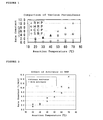
Fig. 1 shows the comparative results obtained by
various peroxidases with respect to the relationship
between a temperature and a reaction rate. In the figure,
triangle: RHP represents a rice hull peroxidase, square:
HRP represents a horseradish peroxidase,rhombus: CCP
represents a Corprinus cinerus peroxidase, and circle: SBP
represents a soybean peroxidase, respectively.
Fig. 2 shows the effect of the addition of an
activator (p-iodophenol) in the discoloration reaction of
Orange II by a rice hull peroxidase. In the figure, RHP
represents a rice hull peroxidase. × represents addition
of an activator, and triangle represents non-addition of an
activator.
Best Mode for Carrying Out the Invention
The present invention will be explained in detail in
the following.
The invention relates to a method of preventing the
transfer of a textile dye from one dyed fabric to another
fabric during washing and/or rinsing fabrics together in a
washing liquor, wherein in a washing liquor which washes
and/or rinses the fabrics, a rice peroxidase, and any one
of hydrogen peroxide, a hydrogen peroxide precursor, a
combined system of a hydrogen peroxide precursor and of a
bleaching activator which can generate hydrogen peroxide by
acting on the hydrogen peroxide precursor, and an enzyme
system which can generate hydrogen peroxide, are present
substantially simultaneously.
Further, the invention relates to a method of
bleaching a textile dye in a solution or a dispersion
solution , wherein in the solution or dispersion solution,
a rice peroxidase and any one of hydrogen peroxide, a
hydrogen peroxide precursor, a combined system of a
hydrogen peroxide precursor and of a bleaching activator
which can generate hydrogen peroxide by acting on the
hydrogen peroxide precursor, and an enzyme system which can
generate hydrogen peroxide, are present substantially
simultaneously.
Moreover, the invention provides a detergent
composition or a bleaching composition which contains a
rice peroxidase substantially simultaneously with any one
of hydrogen peroxide, a hydrogen peroxide precursor, a
combined system of a hydrogen peroxide precursor and of a
bleaching activator which can generate hydrogen peroxide by
acting on the hydrogen peroxide precursor, and an enzyme
system which can generate hydrogen peroxide.
The rice peroxidase according to the invention may
contain various quantities or types of impurities that are
associated with said enzyme depending on the degree of
purification, but it is preferable to use an enzyme having
an RZ value of 0.01 or more, more preferably 0.1 or more,
and even more preferably 1.0 or more. The term RZ value as
used herein is the ratio of the absorbances at 275 nm and
403 nm (A275nm/A403nm). This value indicates the ratio of the
heme content to the protein content in a peroxidase
solution and thus serves as an index to the degree of
purification of the peroxidase.
The heat-resistant rice peroxidase according to the
invention may be represented by a rice hull peroxidase
which is subjected to separation, purification and recovery
from rice hulls containing the enzyme, but as long as the
rice peroxidase is heat-resistant, there is no particular
limitation on the part of rice for the localization of the
enzyme. For example, even for peroxidases derived from
rice bran, stalk and leaves, as long as they are heat, they
can be used as the heat-resistant rice peroxidases as
mentioned in the invention. According to the invention,
said enzyme is considered to have heat resistance if 50% or
more of the activity is preserved even after it is
subjected to a heat treatment at 50°C or higher for 30
minutes. However, the most appropriate example would be
the case wherein 90% or more of the activity is preserved
after the enzyme is subjected to a heat treatment at 90°C
for 30 minutes, as shown in the following Examples.
The rice peroxidase, in particular the rice hull
peroxidase, according to the invention can be easily
obtained from rice hulls by means of the purification
method described in JP-A-5-22510. Also, it can be
purchased as a reagent from Funakoshi Co., Ltd.
Moreover, it has been reported, based on the recent
results in the analysis of rice genome, that plural
peroxidase genes are existent in rice (Chen ZH et al.;
Sheng Wu Hua Xue Yu Sheng Wu Wu Li Xue Bao (Shanghai)
2001;33(2):163-172). That is, by using the genetic
engineering technology of these days, it is possible to
build a recombinant DNA molecule in which a DNA sequence
encoding such rice peroxidase and a DNA sequence having the
function intended to express the DNA sequence encoding said
peroxidase are combined, and then to transform a host cell
or a host plant with said recombinant DNA molecule, to
produce a rice peroxidase efficiently. When such technical
background as described above is followed, a rice
peroxidase which can be obtained by culturing transformed
host cells or growing transformed host plants, and
subjecting the resultant culture product, cultured cells or
plants to a treatment to separate, purify and recover the
peroxidase, is included in the scope of the rice peroxidase
of the invention.
There is no particular limitation on the form of the
rice peroxidase according to the invention, but upon
considering the cases of the enzyme being added as a
component of a detergent composition or a bleaching
composition, it is preferable to be in the form of a dust-free
granule or a liquid enzyme preparation. The dust-free
granule can be prepared as described in the publications of
US 4,106,991 and 4,661,452 and optionally coated according
to any method known in the pertinent art. On the other
hand, the liquid enzyme preparation can be stabilized
according to a known method by the addition of polyols, for
example, propylene glycols, sugars or sugar alcohols,
lactic acid, boric acid or the like.
According to the invention, in the case of washing
and/or rinsing fabrics together in a washing liquor, or in
the case of bleaching textile dyes in a solution or a
dispersion solution, 0.001 mg to 1000 mg of the rice-peroxidase
may be added to one liter of such washing liquor
or bleaching liquor. Furthermore, the process may be
carried out at a temperature in the range of 10°C to 80°C,
preferably in the range of 20°C to 70°C, and more
preferably in the range of 20°C to 60°C. Moreover, the pH
of the washing liquor or the bleaching liquor may be in the
general pH range, and it may be the general pH range for
washing and/or rinsing, that is, pH 6.5 to 10.5, preferably
6.5 to 9.5, and more preferably 7.5 to 9.5.
According to the invention, when the inhibition of
dye transfer in the process of washing and/or rinsing, and
the bleaching of textile dyes in a solution or a dispersion
solution are carried out, it is essential that the rice
peroxidase and hydrogen peroxide are present substantially
simultaneously. Here, the hydrogen peroxide may be added
in an amount of 0.001 to 5 mM, and preferably 0.01 to 1 mM
in the beginning of the process of washing and/or rinsing
or during the process.
With regard to the supply of hydrogen peroxide,
hydrogen peroxide itself may be added to the washing liquor,
the solution or the dispersion solution , or a hydrogen
peroxide precursor that generates hydrogen peroxide in situ
may be added.
Representative examples of the hydrogen peroxide
precursor include perborates, percarbonates,
peroxycarboxylic acid or salts thereof. More specifically,
mention may be made of sodium perborate or sodium
percarbonate.
Further, a bleaching activator which can generate
hydrogen peroxide by acting on the hydrogen peroxide
precursor may be added together with the hydrogen peroxide
precursor. Such bleaching activator may include,
specifically, a sodium salt of nonanoyloxybenzenesulfonic
acid, a sodium salt of dodecanoyloxybenzenesulfonic acid,
4-decanoyloxybenzoic acid, tetraacetylethylenediamine and
the like. The bleaching activator to be co-present is
suitably added in an amount of about 1 µM to 10 mM, and
more preferably about 10 µM to 1 mM in the beginning of or
during the process of washing and/or rinsing.
Moreover, as a source of hydrogen peroxide, a
hydrogen peroxide-generating enzyme system which generates
hydrogen peroxide in situ may be selected. A preferred
hydrogen peroxide-generating enzyme system is one which is
added appropriately to a detergent composition, and which
acts on the substrate (hydrogen peroxide precursor) that is
easily available at low prices. An example of such
substrate (hydrogen peroxide precursor) is glucose, and
this can supply hydrogen peroxide by using a glucose
oxidase. Other suitable oxidases include a uric acid
oxidase, a galactose oxidase, an alcohol oxidase, an amine
oxidase, an amino acid oxidase and a cholesterol oxidase.
According to the invention, in the cases of carrying
out the inhibition of dye transfer in the process of
washing and/or rinsing, and of carrying out the bleaching
of textile dyes in a solution or a dispersion solution,
other oxidative substrates may also be added in order to
enhance the effects of the inhibition of dye transfer and
the bleaching of the rice peroxidase used. Such oxidative
substrates are generally referred to as activators and are
exemplified by p-iodophenol, L-ascorbic acid, p-aminophenol,
p-aminobenzoic acid substrates, without being limited to
these. Further, the amount of the oxidative substrates to
be added is suitably about 1 µM to 10 mM, and more
preferably about 10 µM to 1 mM.
According to the invention, in the cases of carrying
out the inhibition of dye transfer in the process of
washing or rinsing, and the bleaching of textile dyes in a
solution or a dispersion solution, there may be also
present anionic surfactants, nonionic surfactants, cationic
surfactants, amphoteric surfactants, and mixtures of these
surfactants. Examples of such surfactants may include
long-chained fatty acid salts (soap: an anionic surfactant)
such as alkyl benzenesulfonate (LAS: an anionic surfactant),
α-olefin sulfonates (AOS: an anionic surfactant), alkyl
polyoxyethylene sulfates (AES: an anionic surfactant),
sodium dodecylsulfate (SDS: an anionic surfactant), sodium
laurate, Brij35 (a nonioinic surfactant), alkyl
polyoxyethylene ether (a nonionic surfactant), alkyl
trimethylammonium salts (a cationic surfactant),
dialkyldimethylammonoium salts (a cationic surfactant),
dimethylalkylamine oxide (an amphoteric surfactant) and the
like, without being limited to these. Further, the amount
of the surfactants to be added is not particularly limited,
but preferably above the critical micelle concentration
(CMC) of each surfactant.
There is no particular limitation on the textile dyes
on which inhibition of dye transfer and bleaching are
carried out by the rice peroxidase in the invention, and
any conventionally used textile dyes, including the co-presence
of the above-described activators, may be used to
obtain the effect. The term textile dye as used herein may
include a natural dye, a natural-equivalent dye which is
synthetically produced but has its structure and properties
similar to the natural dye, as well as a synthetic dye
ranging from general azo dyes to anthraquinone dyes and
others. Furthermore, the invention is also effective on a
reactive dye which binds to textiles by covalent bonding.
Finally, the invention relates to a composition, and
more particularly, to a detergent composition or a
bleaching composition, comprising a rice peroxidase. It is
essential that the enzyme exists together with hydrogen
peroxide or a component intended for supplying the hydrogen
peroxide, and for that purpose, any one of a hydrogen
peroxide precursor substance, a bleaching activator or a
hydrogen peroxide-generating enzyme system may be selected.
That is, the invention relates to a detergent composition
or a bleaching composition, comprising a rice peroxidase,
and at least any one of hydrogen peroxide, a hydrogen
peroxide precursor, a combined system of a hydrogen
peroxide precursor and of a bleaching activator that can
generate hydrogen peroxide by acting on the hydrogen
peroxide precursor, and an enzyme system which can generate
hydrogen peroxide.
There is no limitation on the amount of the rice
peroxidase in the composition, but it preferably contains
0.001 mg to 1000 mg of the rice peroxidase per liter of a
washing liquor, a solution or a dispersion solution.
With regard to the form, either a powder form or a
liquid form may be selected appropriately for the purpose.
Specifically, a dust-free granule as described above or a
liquid enzyme preparation stabilized by several stabilizers
may be selected. In particular, in the case of a powder
form, the composition may be a composition comprising a
mixed granulated substance of all components of said
composition, or a composition of mixing a granulated
substance of a single individual component in said
composition or a mixed granulated substance of any plural
components. A mixed granulated substance of any plural
components as mentioned herein is, for example, a mixed
granulated substance of a rice peroxidase and of a
bleaching activator that can generate hydrogen peroxide by
acting on a hydrogen peroxide precursor.
There is no limitation on the amount of the rice
peroxidase in the bleaching composition, as in the case of
a detergent composition. Further, the form of the
composition is also applied similarly.
The detergent composition or the bleaching
composition according to the invention may also contain, in
addition to hydrogen peroxide itself, at least one
component among a hydrogen peroxide precursor, a bleaching
activator which can generate hydrogen peroxide by acting on
a hydrogen peroxide precursor and an enzyme system which
can generate hydrogen peroxide. Further, the detergent
composition or the bleaching composition according to the
invention may also contain an activator to enhance the
bleaching activity of the rice peroxidase, or surfactants
to enhance the cleaning effect.
Moreover, when the intended composition is a
detergent composition, it may even further contain other
detergent components that are known in the pertinent art,
for example, a builder, an anti-corrosive, a sequestering
agent, an anti-soil redeposition agent, a fragrance, an
enzyme stabilizer, other detergent enzymes (for example, a
protease, a lipase or an amylase) or the like.
The pH value of the washing liquor containing the
detergent composition of the invention or the bleaching
liquor containing the bleaching composition of the
invention ranges from 6.5 to 12, and preferably from 6.5 to
10.5.
Next, the invention will be explained in detail with
reference to the Examples described below, which are not
intended to limit the invention thereby.
EXAMPLE 1
Temperature and reaction rate of the rice hull
peroxidase
The relationship between the temperature and the
reaction rate of the rice hull peroxidase was investigated
by means of a discoloration reaction with Orange II (C.I.
Acid Orange 7: available from Kanto Chemical Co. Inc.: the
same hereinafter) as a substrate.
Into a cell (light path of 1 cm) of a Hitachi U-2010
Visible Spectrophotometer, 1 mL of a 0.1 M Tris-HCl buffer
solution (pH 9.0) containing 100 µM Orange II and 680 nM of
the rice hull peroxidase was added and preincubated at each
temperature for 10 minutes. Then, 1 mL of 1.5 mM aqueous
hydrogen peroxide that was preliminarily preincubated at
the same temperatures was introduced to initiate the
reaction. The change in the absorbance over time at 485 nm,
which is the maximum absorption wavelength of Orange II,
was determined.
The rice hull peroxidase used was a rice hull
peroxidase product sold by Funakoshi Co. Ltd. (Product No.
K0310100: a purity RZ > 1.2). Further, the molar
absorbance coefficient of said enzyme was set to 1.02 × 10⁵
mol-1dm3cm-1 (403 nm), as is the case of horseradish.
Further, Orange II was purified by recrystallization of a
reagent manufactured by Wako Pure Chemicals Industries, Ltd.
and used to determine a purity by paper chromatography and
UV spectrum.
From the discoloration curve for Orange II, the
equation for a reaction rate was analyzed, and it was found
that the discoloration reaction proceeds in a first-order
reaction in any case. Therefore, from the equation for the
first-order reaction rate as represented by the following
equation (1):
Equation (1) : ln(C0/Ct) = kt
wherein, k
t (min
-1) is a constant for the first-order
reaction rate, C
0 is an initial concentration of Orange II,
and C
t is a concentration of Orange II at a reaction time t,
the relationship between the temperature and the rate
constant k
t in the discoloration reaction of Orange II was
determined, and the results are presented in Table 1 below.
| Reaction Temperature | kt |
| 20°C | 1.52 |
| 30°C | 2.28 |
| 40°C | 3.84 |
| 50°C | 5.81 |
| 60°C | 7.70 |
| 70°C | 10.10 |
| 80°C | 11.00 |
Further, in Comparative Example 1 below, a comparison
was made as illustrated in Fig. 1 with respect to the
relationship between the temperature and the rate constant
kt, the same results (Table 2) for a horseradish peroxidase,
a Corprinus cinerus (formerly referred to as Arthromyces
ramosus) peroxidase, and a soybean peroxidase, and the
relationship between the temperature and the rate constant
kt of the rice hull peroxidase of the present Example.
As a result, the rice hull peroxidase was found to
have excellent reactivity and stability at high
temperatures as compared with other peroxidases.
COMPARATIVE EXAMPLE 1
Temperature and reaction rate of various peroxidases
An investigation was made on the relationships of the
temperature and the reaction rate of a horseradish
peroxidase, a Corprinus cinerus (formerly referred to as
Arthromyces ramosus) peroxidase and a soybean peroxidase.
The same measurements were carried out following the
same procedure under the same conditions as in Example 1,
except that a horseradish peroxidase, a Corprinus cinerus
peroxidase and a soybean peroxidase were used as the
peroxidase. The relationships between the temperature and
the rate constant kt were determined, and the results are
presented in Table 2 below.
Here, the horseradish peroxidase used was a reagent
manufactured by Wako Pure Chemicals Industries, Ltd. (R.Z.
= 2.65), the Corprinus cinerus peroxidase was a reagent
manufactured by Sigma Chemical Co. (R.Z. = 2.32), and the
soybean peroxidase was a reagent manufactured by Sigma
Chemical Co. (R.Z. = 1.11). Further, the molar absorbance
coefficient for each enzyme was set to 1.02 × 10⁵ mol-1dm3cm-1
(403 nm).
The results of the present Comparative Example and of
Example 1 were compared as shown in Fig. 1.
| Reaction Temperature | Horseradish | Corprinus cinerus | Soybean |
| 20°C | 1.89 | 1.42 | 0.25 |
| 30°C | 2.40 | 2.30 | 0.40 |
| 40°C | 3.18 | 3.58 | 0.53 |
| 50°C | 3.78 | 3.32 | 0.88 |
| 60°C | 4.26 | 0.34 | 1.03 |
| 70°C | 4.40 | - | 1.03 |
By means of a discoloration reaction with Orange II
as the substrate, the thermal stability of the rice hull
peroxidase at 90°C was investigated.
A 0.1 M Tris-HCl buffer solution (pH 9.0) containing
100 µM Orange II and 680 nM of the rice hull peroxidase was
preincubated at 90°C for from 0 minute to 150 minutes.
Then, 1 mL of said preincubated solution was added to a
cell (light path of 1 cm) of a Hitachi U-2010 Visible
Spectrophotometer which was preliminarily maintained at
80°C, and 1 mL of 1.5 mM aqueous hydrogen peroxide which
was preliminarily preincubated at 80°C was introduced to
initiate the reaction. As performed in Example 1, the
relationship between the preincubation time and the rate
constant kt was determined from the discoloration curve for
Orange II, and the results are presented in Table 3 below.
That is to say, it was proven that the rice hull
peroxidase has high heat-resistance at 90°C.
| Preincubation Time | kt |
| 0 min | 11.0 |
| 10 min | 10.8 |
| 20 min | 10.8 |
| 30 min | 9.98 |
| 60 min | 9.87 |
| 90 min | 9.51 |
| 120 min | 9.51 |
| 150 min | 9.51 |
By means of the discoloration reaction using Orange
II as the substrate, the thermal stability at 90°C of the
horseradish peroxidase and of the soybean peroxidase was
investigated. Further, with respect to the Corprinus
cinerus peroxidase, the enzyme lost its activity rapidly at
90°C and the discoloration reaction of Orange II did not
proceed, and the enzyme was tested for thermal stability at
50°C.
The measurement was carried out following the same
procedure under the same conditions as in Example 2
(provided that in the case of the
Corprinus cinerus
peroxidase, both preincubation and reaction were carried
out at 50°C), except that the peroxidases used were the
horseradish peroxidase, the
Corprinus cinerus peroxidase
and the soybean peroxidase as in Comparative Example 1.
The relationship between the preincubation time and the
rate constant k
t was determined, and the results are
presented in Table 4 below.
| Preincubation Time | Horseradish | Soybean | Corprinus cinerus |
| 0 min | 6.08 | 1.06 | 3.32 |
| 5 min | 3.00 | - | 1.11 |
| 10 min | 0.315 | 0.855 | - |
| 20 min | 0.293 | - | 0.937 |
| 30 min | 0.189 | 0.874 | - |
| 60 min | - | 0.828 | - |
| 150 min | - | 0.743 | 0.473 |
By means of a discoloration reaction using Orange II
as the substrate, an investigation was made on the
relationship between the temperature and the reaction rate
for the rice hull peroxidase in the presence of an
activator (p-iodophenol).
Into a cell (light path: 1 cm) of a Hitachi U-2010
Visible Spectrophotometer, 1 mL of a 0.1 M Tris-HCl buffer
solution (pH 9.0) containing 100 µM Orange II, 100 µM p-iodophenol
and 680 nM of rice hull peroxidase was added and
preincubated at each temperature for 10 minutes, and then 1
mL of 1.5 mM aqueous hydrogen peroxide that was
preliminarily preincubated at the same temperatures was
introduced to initiate the reaction. The relationship
between the temperature and the rate constant kt was
determined from the discoloration curve for Orange II as in
Example 1, and the results are presented in Table 5 below.
Further, a comparison was made between the results of the
present Example and the results of Example 1 (Table 1) for
the effect of the addition of p-iodophenol (Fig. 2).
That is to say, it was proven that the reaction rate
at each temperature is enhanced to 1.3 to 1.5 folds by the
addition of the activator (= p-iodophenol).
| Reaction Temperature | kt |
| 20°C | 2.42 |
| 30°C | 2.64 |
| 40°C | 5.32 |
| 50°C | 8.23 |
| 60°C | 10.50 |
| 70°C | 15.10 |
The discoloration reactions of various colorants by
means of the rice hull peroxidase were investigated in the
presence or absence of an activator (p-iodophenol).
Into a cell (light path: 1 cm) of a Hitachi U-2010
Visible Spectrophotometer, 1 mL of a 0.1 M Tris-HCl buffer
solution (pH 9.0) containing 100 µM each of various
colorants listed in Table 4 and 680 nM of the rice hull
peroxidase was added and preincubated at 20°C for 10
minutes, and then 1 mL of 1.5 mM aqueous hydrogen peroxide
that was preliminarily preincubated at the same temperature
was introduced to initiate the reaction. The relationship
with the rate constant kt was determined from the
discoloration curve for various colorants as in Example 1,
and the results are presented in Table 6 below. Here, in
the case where p-iodophenol was added, it was added to the
0.1 M Tris-HCl buffer solution (pH 9.0) to 100 µM.
From the results of the experiment, the discoloratior
effect of various colorants by the rice hull peroxidase wa
confirmed, and it was particularly conspicuous in the
presence of an activator.
| Reaction Temperature | Wavelength for Measurement | p-Iodophenol |
| | | Not Added (kt) | Added (kt) |
| Orange II | 485.0 nm | 1.52 | 2.42 |
| Orange I | 481.0 nm | 12.9 | 24.3 |
| Orange G | 476.0 nm | 0.0603 | 0.574 |
| Tropeolin O | 427.8 nm | 0.0653 | 0.2 |
| Arizarin Yellow R | 372.3 nm | 0.0434 | - |
| Arizarin Red S | 516.0 nm | 0.395 | 70.6 |
| Carcone | 635.6 nm | 34.2 | 65.5 |
An investigation was made on the effect of the
addition of various activators in the discoloration
reaction of Orange II by the rice hull peroxidase.
Into a cell (light path: 1 cm) of a Hitachi U-2010
Visible Spectrophotometer, 1 mL of a 0.1 M Tris-HCl buffer
solution (pH 9.0) containing 100 µM Orange II, 100 µM each
of various activators listed in Table 5 and 680 nM of the
rice hull peroxidase was added and preincubated at 20°C for
10 minutes, and then 1 mL of 1.5 mM aqueous hydrogen
peroxide that was preliminarily preincubated at the same
temperature was introduced to initiate the reaction. The
relationship with the rate constant kt was determined from
the discoloration curve for Orange II as in Example 1, and
the results are presented in Table 7 below.
As a result, the effect of the addition of various
activators in the discoloration reaction of Orange II by
the rice hull peroxidase was confirmed.
| Activator | kt |
| Not Added | 1.52 |
| p-Iodophenol | 2.42 |
| L-Ascorbic acid | 1.90 |
| p-Aminophenol | 1.67 |
| p-Aminobenzoic acid | 1.65 |
| Glutathione (reduced) | 1.27 |
| D-Glucose | 1.57 |
An investigation was made on the effect of the
activator (p-iodophenol) concentration in the discoloration
reaction by the rice hull peroxidase using Orange II and
Orange G as the substrate.
Into a cell (light path: 1 cm) of a Hitachi U-2010
Visible Spectrophotometer, 1 mL of a 0.1 M Tris-HCl buffer
solution (pH 9.0) containing 100 µM Orange II (or Orange G),
p-iodophenol at the concentrations listed in the following
Table 8 and 680 nM of the rice hull peroxidase was added
and preincubated at 20°C for 10 minutes, and then 1 mL of
1.5 mM aqueous hydrogen peroxide that was preliminarily
preincubated at the same temperature was introduced to
initiate the reaction. The relationship between the p-iodophenol
concentration and the rate constant kt was
determined from the discoloration curve for Orange II as in
Example 1, and the results are presented in Table 8 below.
Here, the absorbance changes for Orange II and Orange G
were measured at 485 nm and 476 nm, respectively.
As a result, the effect of discoloration of Orange II
and Orange G by the rice hull peroxidase at various
concentrations of p-iodophenol was confirmed.
| p-Iodophenol Concentration | kt |
| | Orange II | Orange G |
| 1000 µM | 3.89 | 2.42 |
| 200 µM | 3.71 | 2.21 |
| 100 µM | 2.42 | 0.56 |
An investigation was made on the effect of the
addition of a surfactant in the discoloration reaction by
the rice hull peroxidase using Orange II as the substrate.
Into a cell (light path: 1 cm) of a Hitachi U-2010
Visible Spectrophotometer, 1 mL of a 0.1 M Tris-HCl buffer
solution (pH 9.0) containing 100 µM Orange II, a surfactant
at the concentrations listed in the following Table 9 and
680 nM of the rice hull peroxidase was added and
preincubated at 20°C or 60°C for 10 minutes, and then 1 mL
of 1.5 mM aqueous hydrogen peroxide that was preincubated
at the same temperature was introduced to initiate the
reaction. The relationship with the rate constant kt was
determined from the discoloration curve for Orange II as in
Example 1, and the results are presented in Table 9 below.
Here, the amount of addition of each surfactant was
adjusted such that the concentration during the reaction
was 1.5 times the critical micelle concentration (CMC).
As a result, the effect of discoloration of Orange II
by the rice hul peroxidase in the presence of various
surfactants was confirmed.
| Surfactant (Type) | Concentration (Final Cone.) | kt |
| | | 20°C | 60°C |
| Not Added | - | 1.52 | 7.70 |
| Sodium dodecyl sulfate (SDS: an anionic surfactant) | 8.55 mM | 1.20 | 6.72 |
| Alkylbenzene sulfonate (LAS: an anionic surfactant) | 7.35 mM | 1.26 | 8.38 |
| Brij35 (a nonionic surfactant) | 90 µM | 1.29 | 7.46 |
| Sodium Laurate (a soap) | 10.1 mM | 1.43 | 5.73 |
An investigation was made on the effect of
discoloration by the rice hull peroxidase using Orange II
as the substrate in a model detergent system.
Into a cell (light path: 1 cm) of a Hitachi U-2010
Visible Spectrophotometer, 1 mL of a 0.1 M Tris-HCl buffer
solution (pH 9.0) containing 100 µM Orange II, a model
detergent component having a composition as described below,
and 680 nM of the rice hull peroxidase was added and
preincubated at 20°C, 40°C or 60°C for 10 minutes, and then
1 mL of 1.5 mM aqueous hydrogen peroxide that was
preincubated at the same temperatures was introduced to
initiate the reaction. The relationship with the rate
constant kt was determined from the discoloration curve for
Orange II as in Example 1, and the results are presented in
Table 10 below.
Here, the individual components in the model
detergent (concentration of species) are as follows:
Thus, the effect of discoloration of Orange II by the
rice hull peroxidase in a model detergent system was
confirmed at each temperature.
| Cleaning Temperature | kt |
| 20°C | 1.43 |
| 40°C | 3.77 |
| 60°C | 4.16 |
An investigation was made on the effect of the
prevention of dye transfer to testing fabric by the rice
hull peroxidase in a system using Orange II as the model
textile dye.
White clothing fabric of Nylon for testing from the
Clothing-Life Research Association was removed of water-soluble
components in a mixed solution of methanol-water at
a volume ratio of 1:1, and then the fabric was dried in the
air, removed of oily components with benzene, and dried in
the air. Thereafter, this was used as the testing fabric
(white fabric, the same hereinafter).
0.2 g of the testing fabric was put into a vial, and
9.5 mL of a 50 mM Tris-HCl buffer solution (pH 9.0)
containing the rice hull peroxidase (360 nM) and hydrogen
peroxide (790 µM) were added thereto to a final bath ratio
of 1:50, and stirring was initiated at 20°C. Then, 0.5 mL
of a 1 mM aqueous Orange II solution was added to the vial,
and the reaction was carried out at 20°C for 30 minutes.
After the reaction, the testing fabric was taken and dried
in the air. Then, in order to indicate the degree of
coloration of Orange II to the testing fabric after the
experiment for prevention of dye transfer, the color
differences (ΔE) were measured, using a Minolta Colorimeter
CR-300.
Here, the term color difference (ΔE) described herein
is not relevant to the three inherent properties of hue,
brightness and chromaticity as indicated in the sensational
color indication by the Committee of International
Commission on Illumination (CIE), but it indicates the
value defined to indicate quantitatively the sensation of
the color. That is, the parameters for the color
difference (ΔE), i.e., L, a and b are measured using a
colorimeter, and ΔE can be calculated by a Hunter's
equation for color difference as represented below
(Equation 2). ΔE = [((L)2 + ((a)2 + ((b)2]1/2
(L = L0 - Lw, (a = a0 - aw, (b = b0 - bw
wherein L0, a0 and b0 indicate the L, a and b values
of the testing fabric before treatment, respectively, and
Lw, aw and bw indicate the L, a and b values of the testing
fabric after the treatment, respectively.
Further, as a comparative example, the same
investigation was carried out with a system not containing
the rice hull peroxidase. Moreover, an investigation was
carried out with the above-described system, the system now
containing alkylbenzene sulfonate (LAS: an anionic
surfactant) or sodium laurate (a soap) as the surfactants
at concentrations of 7.35 mM or 10.1 mM, respectively. The
results of each experimental section are summarized in the
following Table 11.
As shown below, dye transfer of Orange II to the
testing fabric was prevented by the rice hull peroxidase.
Further, the effect of the prevention of dye transfer in
the presence of LAS or sodium laurate was also confirmed.
| Rice Hull Peroxidase | Surfactant | Color Difference ((E) |
| Added | Not Added | 1.19 ± 0.38 |
| Not Added | Not Added | 10.60 ± 0.58 |
| Added | LAS | 0.65 ± 0.08 |
| Added | Sodium Laurate | 0.61 ± 0.03 |
An investigation was made on the effect of pH on the
prevention of dye transfer to testing fabric by means of
the rice hull peroxidase in a system using Orange II as the
model textile dye.
Nylon fabric (Nylon 6) from Kansai Clothing-Life
Research Association was removed of water-soluble
components in a mixed solution of methanol-water at a
volume ratio of 1:1, and then the fabric was dried in the
air, removed of oily components with benzene, and dried in
the air. Thereafter, this was used as the testing fabric
(white fabric, the same hereinafter).
0.2 g of the testing fabric was put into a vial, and
any one of 9.5 mL of an aqueous hydrogen peroxide solution
(790 (M), 9.5 mL of a 50 mM Tris-HCl buffer solution (pH
9.0) containing hydrogen peroxide (790 (M) and 9.5 mL of a
Carmody buffer solution (pH 10.0) containing hydrogen
peroxide (790 (M), each having the rice hull peroxidase
(360 nM), was added thereto to a final bath ratio of 1:50,
and stirring was initiated at 20(C. Then, 0.5 mL of a 1 mM
aqueous Orange II solution was added to the vial, and the
reaction was carried out at 20(C for 30 minutes.
After the reaction, the testing fabric was taken and
dried in the air, and the color differences ((E) were
measured as in Example 9 to obtain the results as presented
in Table 12 below. Here, as a comparative example, the
same investigation was carried out with a system not
containing SDS or the rice hull peroxidase.
As a result, the dye transfer of Orange II to the
testing fabric was prevented by the addition of the rice
hull peroxidase. The effect of pH was not recognized.
| Rice Hull Peroxidase | Buffer Solution | Color Difference ((E) |
| Not Added | None | 30.10 |
| Not Added | 50 mM Tris-HCl | 21.52 |
| | buffer solution (pH 9.0) |
| Added | ditto | 4.47 |
| Not Added | Carmody buffer solution (pH 10.0) | 21.01 |
| Added | ditto | 2.47 |
An investigation was made on the effect of the
prevention of dye transfer to testing fabric by the rice
hull peroxidase in the presence of SDS in a system using
Orange II as the model textile dye.
0.2 g of the testing fabric prepared in Example 9 was
put into a vial, and 9.5 mL of a 50 mM Tris-HCl buffer
solution (pH 9.0) containing the rice hull peroxidase (360
nM), sodium dodecyl sulfate (SDS: 9.0 mM) and hydrogen
peroxide (790 µM) was added thereto to a final bath ratio
of 1:50, and stirring was initiated at 20°C or 60°C. Then,
0.5 mL of a 1 mM aqueous Orange II solution was added to
the vial, and the reaction was carried out at 20°C or 60°C
for 30 minutes.
After the reaction, the testing fabric was taken and
dried in the air. The color differences (ΔE) were measured
as in Example 9 to obtain results as described in Table 13.
Here, as comparative examples, the same examinations were
carried out in a system not containing SDS or the rice hull
peroxidase.
As a result, the dye transfer of Orange II to the
testing fabric was prevented by the addition of the rice
hull peroxidase. Also, in the presence of SDS, the
synergistic effect of dye transfer prevention was confirmed.
| Rice hull peroxidase | SDS | Color Difference (ΔE) : 20°C | Color Difference (ΔE) : 60°C |
| Added | Added | 0.35 ± 0.02 | 0.91 ± 0.45 |
| Added | Not Added | 1.19 ± 0.38 | 2.43 ± 0.15 |
| Not Added | Added | 2.30 ± 0.33 | 4.92 ± 0.32 |
| Not Added | Not Added | 10.60 ± 0.58 | Data Not Available |
An investigation was made on the effect of the
prevention of dye transfer to testing fabric by the rice
hull peroxidase in the presence of Brij35 in a system using
Orange II as the model textile dye.
0.2 g of the testing fabric prepared in Example 9 was
put into a vial, and 9.5 mL of a 50 mM Tris-HCl buffer
solution (pH 9.0) containing the rice hull peroxidase (360
nM), Brij35 (95 µM) and hydrogen peroxide (790 µM) was
added thereto to a final bath ratio of 1:50, and stirring
was initiated at 20°C or 60°C. Then, 0.5 mL of a 1 mM
aqueous Orange II solution was added to the vial, and the
reaction was carried out at 20°C or 60°C for 30 minutes.
After the reaction, the testing fabric was taken and
dried in the air. The color differences (ΔE) were measured
as in Example 9 to obtain results as described in Table 14.
Here, as a comparative example, the same investigation was
carried out in a system not containing the rice hull
peroxidase.
Thus, the effect of dye transfer prevention of Orange
II to the testing fabric by the rice hull peroxidase in the
presence of Brij35 was confirmed.
| Rice Hull Peroxidase | Color Difference (ΔE): 20°C | Color Difference (ΔE): 60°C |
| Added | 0.96 ± 0.09 | 3.71 ± 0.42 |
| Not Added | 7.18 ± 0.61 | 19.10 ± 0.67 |
An investigation was made on the effect of the
prevention of dye transfer to testing fabric by the rice
hull peroxidase in the presence of sodium percarbonate in a
system using Orange II as the model textile dye.
0.2 g of the testing fabric prepared in Example 10
was put into a vial, and 9.5 mL of a 50 mM Tris-HCl buffer
solution (pH 9.0) containing the rice hull peroxidase (360
nM), sodium percarbonate (105 mM) and hydrogen peroxide
(790 µM) was added thereto to a final bath ratio of 1:50,
and stirring was initiated at 20°C or 40°C. Then, 0.5 mL of
a 1 mM aqueous Orange II solution was added to the vial,
and the reaction was carried out at 20°C or 40°C for 30
minutes.
After the reaction, the testing fabric was taken and
dried in the air. The color differences (ΔE) were measured
as in Example 9 to obtain results as described in Table 15.
As a comparative example, the same investigation was
carried out in a system not containing the rice hull
peroxidase.
Thus, the effect of dye transfer prevention of Orange
II to the testing fabric by the rice hull peroxidase in the
presence of sodium percarbonate was confirmed.
| Rice Hull Peroxidase | Sodium Percarbonate | Hydrogen Peroxide | Temperature | Color Difference (ΔE) |
| Not Added | Not Added | Not Added | 20°C | 21.52 |
| Not Added | Added | Not Added | Ditto | 9.23 |
| Added | Not Added | Added | Ditto | 4.47 |
| Added | Added | Not Added | Ditto | 1.55 |
| Not Added | Not Added | Not Added | 40°C | 23.76 |
| Not Added | Added | Not Added | Ditto | 2.12 |
| Added | Not Added | Added | Ditto | 6.33 |
| Added | Added | Not Added | Ditto | 1.20 |
An investigation was made on the effect of the
prevention of dye transfer to testing fabric by the rice
hull peroxidase in the presence of a model detergent
component in a system using Orange II as the model textile
dye.
0.2 g of the testing fabric prepared in Example 9 was
put into a vial, and 9.5 mL of water having a mixture of
the rice hull peroxidase (360 nM), hydrogen peroxide (790
µM) and a model detergent component (the composition and
the final concentration were the same as those of Example
8) was added thereto to a final bath ratio of 1:50, and
stirring was initiated at 20°C. Then, 0.5 mL of a 1 mM
aqueous Orange II solution was added to the vial, and the
reaction was carried out at 20°C for 30 minutes.
After the reaction, the testing fabric was taken and
dried in the air. The color differences (ΔE) were measured
as in Example 9 to obtain results as described in Table 16.
As a comparative example, the same investigation was
carried out in a system containing neither the rice hull
peroxidase nor the model detergent component (a simple
water system).
Thus, the effect of dye transfer prevention of Orange
II to the testing fabric by the rice hull peroxidase in the
presence of a model detergent component was confirmed.
| Rice Hull Peroxidase | Model Detergent Component | Color Difference (ΔE) |
| Added | Added | 0.27 ± 0.04 |
| Not Added | Not Added | 13.70 ± 0.61 |
An investigation was made on the effect of the
prevention of dye transfer to testing fabric by the rice
hull peroxidase in the presence of a model detergent
component containing a bleaching activator, in a system
using Orange II as the model textile dye.
0.2 g of the testing fabric prepared in Example 10
was put into a vial, and 9.5 mL of water having a mixture
of the rice hull peroxidase (360 nM), sodium percarbonate
(105 mM), a model detergent component (the composition and
the final concentration were the same as those of Example
8) and a bleaching activator (a sodium salt of
nonanoyloxybenzenesulfonic acid, or a sodium salt of
dodecanoyloxybenzenesulfonic acid, or 4-decanoyloxybenzoic
acid; the concentration of each being 52 mM) was added
thereto to a final bath ratio of 1:50, and stirring was
initiated at 20°C. Then, 0.5 mL of a 1 mM aqueous Orange
II solution was added to the vial, and the reaction was
carried out at 20°C for 30 minutes.
After the reaction, the testing fabric was taken and
dried in the air. The color differences (ΔE) were measured
as in Example 9 to obtain results as described in Table 17.
Thus, the effect of dye transfer prevention of Orange II to
the testing fabric by the rice hull peroxidase in the
presence of a bleaching activator was confirmed.
| Bleaching Activator | Color Difference (ΔE) |
| Not Added | 1.67 |
| Sodium Salt of Nonanoyloxybenzenesulfonic acid | 0.43 |
| Sodium Salt of Dodecanoyloxybenzenesulfonic acid | 0.51 |
| 4-Decanoyloxybenzoic acid | 0.58 |
An investigation was made on the effect of the
prevention of dye transfer to testing fabric by the rice
hull peroxidase in a system using a reactive dye Cibacron
Blue F3G-A (C.I. Reactive Blue 2: available from Fluka
Bioceika) as the model textile dye.
Cotton fabric for washing test designated by the
Japanese Oil Chemists' Society (Calico 2023) was removed of
water-soluble components in a mixed solution of methanol-water
at a volume ratio of 1:1, and then the fabric was
dried in the air, removed of oily components with benzene,
and dried in the air. Thereafter, this was used as the
testing fabric.
0.2 g of the Nylon testing fabric prepared in Example
10 or 0.2 g of the above-described cotton testing fabric
was put into a vial, and 9.5 mL of a 50 mM Tris-HCl buffer
solution (pH 9.0) containing the rice hull peroxidase (360
nM), p-iodophenol (52 µM), and sodium percarbonate (105 mM)
or hydrogen peroxide (790 µM) was added thereto to a final
bath ratio of 1:50, and stirring was initiated at 20°C or
40°C. Then, 0.5 mL of a 1 mM aqueous Cibacron Blue F3G-A
solution was added to the vial, and the reaction was
carried out at 20°C or 40°C for 30 minutes.
After the reaction, the testing fabric was taken and
dried in the air, and the color differences (ΔE) were
measured as in Example 9 to obtain the results as presented
in Table 18 and Table 19 below.
Here, as comparative examples, the same investigation
was carried out with a system containing no rice hull
peroxidase, a system containing no sodium percarbonate or a
system using water instead of the 50 mM Tris-HCl buffer
solution.
| Results in Nylon testing fabric |
| Rice Hull Peroxidase | Hydrogen Peroxide Source | Tris Buffer Solution | Temperature | Color Difference (ΔE) |
| Not Added | Not Added | Not Used (Water) | 20°C | 10.31 |
| Not Added | Not Added | Used | Ditto | 10.41 |
| Not Added | Sodium Percarbonate | Used | Ditto | 2.84 |
| Added | Hydrogen Peroxide | Used | Ditto | 1.10 |
| Added | Sodium Percarbonate | Used | Ditto | 1.38 |
| Not Added | Not Added | Not Used (Water) | 40°C | 17.38 |
| Not Added | Not Added | Used | Ditto | 13.79 |
| Added | Hydrogen Peroxide | Used | Ditto | 4.01 |
| Results in cotton testing fabric |
| Rice Hull Peroxidase | Hydrogen Peroxide Source | Tris Buffer Solution | Temperature | Color Difference (ΔE) |
| Not Added | Not Added | Not Used (Water) | 20°C | 1.39 |
| Not Added | Not Added | Used | Ditto | 7.86 |
| Not Added | Sodium Percarbonate | Used | Ditto | 18.82 |
| Added | Hydrogen Peroxide | Used | Ditto | 1.51 |
| Added | Sodium Percarbonate | Used | Ditto | 5.54 |
| Not Added | Not Added | Not Used (Water) | 40°C | 1.38 |
| Not Added | Not Added | Used | Ditto | 9.07 |
| Added | Hydrogen Peroxide | Used | Ditto | 2.86 |
An investigation was made on the effect of pH
affecting the effect of the prevention of dye transfer to
testing fabric by the rice hull peroxidase in a system
using a reactive dye, Cibacron Blue F3G-A as the model
textile dye.
0.2 g of the Nylon testing fabric prepared in Example
10 or 0.2 g of the cotton testing fabric prepared in
Example 16 was put into a vial, and 9.5 mL of a Carmody
buffer solution (pH 10.0) containing the rice hull
peroxidase (360 nM), p-iodophenol (50 µM) and hydrogen
peroxide (790 µM) was added thereto to a final bath ratio
of 1:50, and stirring was initiated at 20°C or 40°C. Then,
0.5 mL of a 1 mM aqueous Cibacron Blue F3G-A solution was
added to the vial, and the reaction was carried out at 20°C
or 40°C for 30 minutes.
After the reaction, the testing fabric was taken and
dried in the air. The color differences (ΔE) were measured
as in Example 9 to obtain results as described in Table 20.
Here, as a comparative example, the same
investigation was carried out in a system containing no
rice hull peroxidase.
| Rice Hull Peroxidase | Testing Fabric | Temperature | Color Difference (ΔE) |
| Not Added | Nylon | 20°C | 4.33 |
| Not Added | Ditto | Ditto | 2.63 |
| Not Added | Ditto | 40°C | 8.92 |
| Added | Ditto | Ditto | 2.15 |
| Added | Cotton | 20°C | 17.16 |
| Not Added | Ditto | Ditto | 5.48 |
| Not Added | Ditto | 40°C | 15.41 |
| Added | Ditto | Ditto | 4.01 |
An investigation was made on the discoloration of
dyed fabric by using the rice hull peroxidase in the case
of using Orange II as the model textile dye, with the
washing temperature set at 20°C.
Nylon testing fabric from the Clothing-Life Research
Association was placed in an aqueous solution containing 2%
of Orange II (with respect to the textile weight), 10% of
acetic acid (with respect to the textile weight) and 10% of
anhydrous sodium sulfate (with respect to the textile
weight) having a bath ratio of 1:50, and the temperature of
the aqueous solution was elevated from room temperature to
90°C for 15 minutes. Then, the fabric was subjected to
dyeing for 15 minutes, rinsed with water and dried in the
air to obtain dyed fabric (original fabric).
10.0 mL of an aqueous solution containing hydrogen
peroxide (750 µM as a final concentration) and the
components listed in Table 21 below was added to a vial,
and stirring was initiated at 20°C. Then, 0.2 g of the
testing fabric (to a final bath ratio of 1:50) was put into
the vial, and stirring was continued at 20°C. After 30
minutes, the dyed fabric was taken and was measured for the
color differences (ΔE) against the original fabric as in
Example 9. The results are summarized in Table 21 below.
Thus, the rice hull peroxidase did not show any color
fading on dyed fabric at 20°C.
| Rice Hull Peroxidase (Final Conc.) | Surfactant (Final Conc.) | Buffer Component (Final Conc.) | Color Difference (ΔE) |
| Not Added | Not Added | Not Added (Water only) | 0.615 |
| Not Added | Not Added | Tris-HCl (50 mM) | 0.583 |
| Added (340 nM) | Not Added | Tris-HCl (50 mM) | 0.710 |
| Added (340 nM) | SDS (8.55 mM) | Tris-HCl (50 mM) | 0.601 |
| Added (340 nM) | Brij35 (90 µM) | Tris-HCl (50 mM) | 0.767 |
| Added (340 nM) | Model Detergent Component (see Example 7) | Not Added (Water only) | 0.275 |
An investigation was made on the color fading of dyed
fabric by the rice hull peroxidase in the case of using
Orange II as the model textile dye, with the washing
temperature set at 60°C.
10.0 mL of an aqueous solution containing hydrogen
peroxide (750 µM as a final concentration) and the
components listed in Table 22 below was added to a vial,
and stirring was initiated at 60°C. Then, 0.2 g of the
testing fabric as prepared in Example 18 (to a final bath
ratio of 1:50) was put into the vial, and stirring was
continued at 60°C. After 30 minutes, the dyed fabric was
taken and was measured for the color differences (ΔE)
against the original fabric as in Example 9. The results
are summarized in Table 22 below.
As a result, at 60°C, color fading of the dyed fabric
occurred in the solutions containing SDS and the Tris-HCl
buffer component, whereas addition of the rice hull
peroxidase did not show any increase in the color fading on
the dyed fabric.
| Rice Hull Peroxidase (Final Conc.) | Surfactant (Final Conc.) | Buffer Component (Final Conc.) | Color Difference (ΔE) |
| Not Added | Not Added | Not Added (Water only) | 1.23 |
| Not Added | Not Added | Tris-HCl (50 mM) | 14.43 |
| Added (340 nM) | Not Added | Tris-HCL (50 mM) | 14.51 |
| Not Added | SDS (8.55 mM) | Tris-HCl (50 mM) | 18.00 |
| Added (340 nM) | SDS (8.55 mM) | Tris-HCl (50 mM) | 17.88 |
20.0 mL of a 50 mM Tris-HCl buffer solution (pH 9.0)
containing the rice hull peroxidase (360 nM), and sodium
percarbonate (105 mM) or hydrogen peroxide (790 µM) was
added to a vial, and stirring was initiated at 20°C. Then,
0.2 g of the dyed fabric as prepared in Example 18 (to a
final bath ratio of 1:50) and 0.2 g of the testing fabric
as prepared in Example 10 (white fabric) were put into the
vial, and stirring was continued at 20°C. After 30 minutes,
the dyed fabric and the testing fabric were taken, and
their color differences (ΔE) against the original fabric
were measured as in Example 9. Here, as comparative
examples, the same investigation was carried out on a
system containing no rice hull peroxidase, a system
containing no sodium percarbonate and a system using water
instead of 50 mM Tris-HCl buffer solution.
The results are summarized in Table 23 and Table 24
below. Thus, the effect of the prevention of dye transfer
from dyed fabric to white fabric by the rice hull
peroxidase was confirmed.
| Color change or discoloration of dyed fabric (Color differences due to discoloration) |
| Rice Hull Peroxidase | Hydrogen Peroxide Source | Tris Buffer Solution | Color Difference (ΔE) |
| Not Added | Not Added | Not Used (Water) | 0.90 |
| Not Added | Not Added | Used | 2.39 |
| Added | Hydrogen Peroxide | Used | 3.39 |
| Not Added | Sodium Percarbonate | Used | 2.09 |
| Added | Sodium Percarbonate | Used | 2.31 |
| Color change of white fabric (Color differences due to coloration) |
| Rice Hull Peroxidase | Hydrogen Peroxide Source | Tris Buffer Solution | Color Difference (ΔE) |
| Not Added | Not Added | Not Used (Water) | 34.63 |
| Not Added | Not Added | Used | 37.20 |
| Added | Hydrogen Peroxide | Used | 23.06 |
| Not Added | Sodium Percarbonate | Used | 30.59 |
| Added | Sodium Percarbonate | Used | 21.85 |
An investigation was made on the prevention of dye
transfer from dyed fabric to white fabric by the rice hull
peroxidase in the presence of a bleaching activator in the
case of using Orange II as the model textile dye, with the
washing temperature set at 20°C.
20.0 mL of a 50 mM Tris-HCl buffer solution (pH 9.0)
containing the rice hull peroxidase (360 nM), sodium
percarbonate (105 mM), and a bleaching activator (a sodium
salt of nonaoyloxybenzenesulfonic acid, or a sodium salt of
dodecanoyloxybenzenesulfonic acid, or 4-decanoyloxybenzoic
acid; the concentration of each being 52 mM) was added to a
vial, and stirring was initiated at 20°C. Then, 0.2 g of
the dyed fabric as prepared in Example 18 (to a final bath
ratio of 1:50) and 0.2 g of the testing fabric as prepared
in Example 10 (white fabric) were put into the vial, and
stirring was continued at 20°C. After 30 minutes, the dyed
fabric and the testing fabric were taken, and their color
differences (ΔE) against the original fabric were measured
as in Example 9.
The results are summarized in Table 25 and Table 26
below. Thus, the effect of the prevention of dye transfer
from dyed fabric to white fabric by the rice hull
peroxidase in the presence of a bleaching activator was
confirmed.
| Color change or discoloration of dyed fabric (Color differences due to discoloration) |
| Bleaching Activator | Color Difference (ΔE) |
| Not Added | 2.53 |
| Sodium Salt of Nonanoyloxybenzenesulfonic acid | 2.46 |
| Sodium Salt of Dodecanoyloxybenzenesulfonic acid | 2.35 |
| 4-Decanoyloxybenzoic acid | 2.62 |
| Color change of white fabric (Color differences due to coloration) |
| Bleaching Activator | Color Difference (ΔE) |
| Not Added | 22.53 |
| Sodium Salt of Nonanoyloxybenzenesulfonic acid | 8.56 |
| Sodium Salt of Dodecanoyloxybenzenesulfonic acid | 9.43 |
| 4-decanoyloxybenzoic acid | 10.35 |
An investigation was made on the prevention of dye
transfer from dyed fabric to white fabric by the rice hull
peroxidase in the case of using a reactive dye, Cibacron
Blue F3G-A as the model textile dye, with the washing
temperature set at 20°C.
Cotton testing fabric (Calico 2023) designated by the
Japanese Emulsion Society was placed in an aqueous solution
containing Cibacron Blue F3G-A (2% with respect to the
textile weight) and anhydrous sodium sulfate (60 g/L)
having a bath ratio of 1:30, and the temperature of the
aqueous solution was elevated from room temperature to 40°C
for 5 minutes. Then, the cotton fabric was subjected to
dyeing for 25 minutes, taken, and lightly dewatered. In
order for the concentration of sodium carbonate in the
remaining dye solution to be 60 g/L, the cotton fabric was
repeatedly immersed in the solution. The temperature was
elevated from 75°C to 80°C for 20 minutes, and then the
fabric was dyed for 30 minutes. The cotton fabric was
taken again, rinsed, and dried in the air to obtain dyed
fabric (original fabric).
30.0 mL of a 50 mM Tris-HCl buffer solution (pH 9.0)
containing the rice hull peroxidase (360 nM), p-iodophenol
(52 µM), and sodium percarbonate (105 mM) or hydrogen
peroxide (790 µM) was added to a vial, and stirring was
initiated at 20°C. Then, 0.2 g of thus prepared dyed
fabric (to a final bath ratio of 1:50), 0.2 g of the Nylon
testing fabric (white fabric) as prepared in Example 10 and
0.2 g of the cotton testing fabric (white fabric) as
prepared in Example 16 were put into the vial, and stirring
was continued at 20°C. After 30 minutes, the dyed fabric
and the testing fabric were taken, and their color
differences (ΔE) against the original fabric were measured
as in Example 9. Here, as comparative examples, the same
investigation was carried out with a system containing no
rice hull peroxidase, a system containing no sodium
percarbonate, a system using water or a Carmody buffer
solution (pH 10.0) instead of the 50 mM Tris-HCl buffer
solution.
The results are summarized in Table 27, Table 28 and
Table 29 below. Thus, the effect of the prevention of dye
transfer from dyed fabric to white fabric by the rice hull
peroxidase was also confirmed with respect to a reactive
dye.
| Color change or discoloration of dyed fabric (Color differences due to discoloration) |
| Rice Hull Peroxidase | Hydrogen Peroxide Source | Type of Buffer Solution | Color Difference (ΔE) |
| Not Added | Not Added | Not Used (Water) | 2.91 |
| Not Added | Not Added | Carmody Buffer Soln. | 2.95 |
| Added | Hydrogen Peroxide | Carmody Buffer Soln. | 2.78 |
| Not Added | Not Added | Tris Buffer Solution | 3.36 |
| Added | Hydrogen Peroxide | Tris Buffer Solution | 3.67 |
| Not Added | Sodium Percarbonate | Tris Buffer Solution | 2.91 |
| Added | Sodium Percarbonate | Tris Buffer Solution | 2.93 |
| Color change of Nylon white fabric (Color differences due to coloration) |
| Rice Hull Peroxidase | Hydrogen Peroxide Source | Type of Buffer Solution | Color Difference (ΔE) |
| Not Added | Not Added | Not Used (Water) | 16.19 |
| Not Added | Not Added | Carmody Buffer Soln. | 3.66 |
| Added | Hydrogen Peroxide | Carmody Buffer Soln. | 1.73 |
| Not Added | Not Added | Tris Buffer Solution | 7.04 |
| Added | Hydrogen Peroxide | Tris Buffer Solution | 3.19 |
| Not Added | Sodium Percarbonate | Tris Buffer Solution | 4.22 |
| Added | Sodium Percarbonate | Tris Buffer Solution | 3.18 |
| Color change of cotton white fabric (Color differences due to coloration) |
| Rice Hull Peroxidase | Hydrogen Peroxide Source | Type of Buffer Solution | Color Difference (ΔE) |
| Not Added | Not Added | Not Used (Water) | 1.47 |
| Not Added | Not Added | Carmody Buffer Soln. | 7.08 |
| Added | Hydrogen Peroxide | Carmody Buffer Soln. | 1.75 |
| Not Added | Not Added | Tris Buffer Solution | 3.22 |
| Added | Hydrogen Peroxide | Tris Buffer Solution | 1.49 |
| Not Added | Sodium Percarbonate | Tris Buffer Solution | 9.92 |
| Added | Sodium Percarbonate | Tris Buffer Solution | 5.50 |
The rice peroxidase (more specifically, rice hull
peroxidase) according to the invention is excellent in
reactivity and stability at high temperatures. Therefore,
the invention provides a method of preventing the transfer
of a textile dye from one dyed fabric to another fabric in
the case of washing and/or rinsing a plurality of fabrics
including dyed fabric together in a washing liquor, by
using the rice peroxidase.
Further, the invention provides a method of bleaching
a textile dye in a solution or a dispersion solution by
using a rice peroxidase.
Furthermore, the invention provides a composition for
decomposing (discoloring □ bleaching) of a coloring
substance (a dye, etc.) in a solution by using a rice
peroxidase.