EP1549004A2 - Scheduling of downlink packets in a mobile network - Google Patents
Scheduling of downlink packets in a mobile network Download PDFInfo
- Publication number
- EP1549004A2 EP1549004A2 EP04030784A EP04030784A EP1549004A2 EP 1549004 A2 EP1549004 A2 EP 1549004A2 EP 04030784 A EP04030784 A EP 04030784A EP 04030784 A EP04030784 A EP 04030784A EP 1549004 A2 EP1549004 A2 EP 1549004A2
- Authority
- EP
- European Patent Office
- Prior art keywords
- scheduling
- packets
- mobile station
- scheduler
- transmission control
- Prior art date
- Legal status (The legal status is an assumption and is not a legal conclusion. Google has not performed a legal analysis and makes no representation as to the accuracy of the status listed.)
- Withdrawn
Links
Images



Classifications
-
- H—ELECTRICITY
- H04—ELECTRIC COMMUNICATION TECHNIQUE
- H04W—WIRELESS COMMUNICATION NETWORKS
- H04W28/00—Network traffic management; Network resource management
- H04W28/02—Traffic management, e.g. flow control or congestion control
-
- H—ELECTRICITY
- H04—ELECTRIC COMMUNICATION TECHNIQUE
- H04L—TRANSMISSION OF DIGITAL INFORMATION, e.g. TELEGRAPHIC COMMUNICATION
- H04L47/00—Traffic control in data switching networks
- H04L47/10—Flow control; Congestion control
-
- H—ELECTRICITY
- H04—ELECTRIC COMMUNICATION TECHNIQUE
- H04W—WIRELESS COMMUNICATION NETWORKS
- H04W72/00—Local resource management
- H04W72/50—Allocation or scheduling criteria for wireless resources
- H04W72/535—Allocation or scheduling criteria for wireless resources based on resource usage policies
-
- H—ELECTRICITY
- H04—ELECTRIC COMMUNICATION TECHNIQUE
- H04W—WIRELESS COMMUNICATION NETWORKS
- H04W8/00—Network data management
- H04W8/02—Processing of mobility data, e.g. registration information at HLR [Home Location Register] or VLR [Visitor Location Register]; Transfer of mobility data, e.g. between HLR, VLR or external networks
- H04W8/04—Registration at HLR or HSS [Home Subscriber Server]
-
- H—ELECTRICITY
- H04—ELECTRIC COMMUNICATION TECHNIQUE
- H04W—WIRELESS COMMUNICATION NETWORKS
- H04W72/00—Local resource management
- H04W72/12—Wireless traffic scheduling
Definitions
- the present invention relates to a packet transmission control apparatus and a packet transmission control method which perform transmission control of packets to a plurality of mobile stations.
- the present invention relates particularly to a packet transmission control apparatus and a packet transmission control method which perform transmission control (scheduling) of downlink packets in a mobile communication system.
- one physical channel can be shared among mobile stations which belong to the radio base station.
- the physical channel used in such a case is called a "downlink shared channel”.
- the radio base station controls the transmission order of packets to the plurality of mobile stations with which the radio base station communicates, in accordance with an instantaneous radio quality between the radio base station and each mobile station, so as to improve throughput that the radio base station can provide, in other words, a system capacity.
- This control of packet transmission order by the radio base station is called "scheduling". It is known that, by applying the scheduling to packet transmission, channel capacity increases, or communication quality improves.
- IMT-2000 there are “3GPP/3GPP2 (Third-Generation Partnership Project/Third-Generation Partnership Project 2)”. Standard specifications have been developed as “W-CDMA system” in the 3GPP, and standard specifications have been developed as “cdma2000 system” in the 3GPP2.
- HSDPA High Speed Downlink Packet Access
- a scheme for controlling a modulation scheme and a coding rate of respective radio channels in accordance with the radio condition between each mobile station and a radio base station (this scheme is called, for example, AMCS (Adaptive Modulation and Coding Scheme) in the HSPDA), and the scheduling which is operated in a cycle of few milliseconds, are used in a combination.
- AMCS Adaptive Modulation and Coding Scheme
- “Round Robin Scheduler” is widely known as a scheduling algorithm in a radio base station.
- the "Round Robin Scheduler” controls the transmission order of packets waiting for transmission, by assigning the downlink shared channel sequentially to mobile stations (for example, mobile stations #1 to #2 to #3...) which belong to the radio base station.
- Proportional Fairness Scheduler and “Max C/I (Maximum C/I) Scheduler” are known as scheduling algorithms in a radio base station.
- the "Proportional Fairness Scheduler” and the “Max C/I Scheduler” control the transmission order of packets waiting for transmission based upon the radio condition between the radio base station and each mobile station and the average transmission rate of packets to each mobile station.
- the "Proportional Fairness Scheduling” is a scheduling algorithm which assigns a transmission queue and also supports fairness amongst the mobile stations, in accordance with instantaneous changes in downlink conditions of the individual mobile stations.
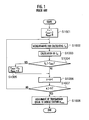
- FIG. 1 is a flowchart showing the operation of the "Proportional Fairness Scheduler" mounted on a radio base station.
- a value of an evaluation function of each mobile station which belongs to the radio base station is calculated based upon the measured radio condition between each mobile station and the radio base station and the measured average transmission rate of packets to each mobile station, and thereafter, a transmission queue is assigned to a mobile station maximizing the value of the evaluation function.
- step S1001 the radio base station sets initial values as follows:
- the radio base station measures elements required in calculating the value C n of the evaluation function, specifically, an instantaneous radio condition R n between the radio base station and each mobile station #n, and an average transmission rate Rn of packets to each mobile station #n.
- step S1003 the radio base station calculates the value C n of the evaluation function, by using the values measured in the step S1002, according to the following equation.
- Cn Rn Rn
- step S1004 the radio base station determines whether the value C n of the evaluation function calculated in the step S1003 exceeds a maximum value C max of the evaluation function.
- step S1004 the determination in the step S1004 is YES, and in step S1005, the radio base station sets the value C n of the evaluation function calculated in the step S1003 at the maximum value C max of the evaluation function, and also sets "1" at "n max ".
- step S1006 the radio base station increments "n” by "+1", and determines whether "n” exceeds "N (the number of mobile stations communicating with the radio base station)" in step S1007.
- step S1008 the radio base station selects a mobile station #n max maximizing the value C n of the evaluation function, and assigns a transmission queue to the mobile station #n max .
- a radio base station, on which the "Proportional Fairness Scheduler" is mounted assigns a transmission queue to each mobile station #n while downlink quality (radio condition) is relatively good. Therefore, higher throughput can be expected in comparison with a radio base station with the "Round Robin Scheduler" mounted thereon.
- the radio condition between the radio base station and each mobile station is divided by the average transmission rate of packets to each mobile station, thus lowering the value of the evaluation function of a mobile station with a high average transmission rate.
- the transmission queue can be assigned with high fairness in terms of time, compared to the "MAX C/I Scheduling" as describe later.
- the "MAX C/I Scheduling" is a scheduling algorithm which assigns a transmission queue to a mobile station with the best downlink quality (radio condition) amongst mobile stations which belong to the radio base station.
- a transmission queue is assigned to a mobile station with good downlink quality at the beginning of a scheduling cycle.
- a transmission rate of respective packets becomes higher depending on the quality of a link. Therefore, in the "MAX C/I Scheduling", a transmission opportunity is provided to a mobile station with the highest transmission rate.
- the "MAX C/I Scheduler" causes a situation where a mobile station located in the vicinity of the radio base station can obtain extremely good throughput, whereas the remaining mobile stations obtain low throughput.
- the scheduling has been carried out by setting the above-mentioned evaluation function in consideration of the type of service provided and priority related to the type of service, based upon the "Round Robin Scheduler", the “Proportional Fairness Scheduler”, or the "MAX C/I Scheduler".
- a scheduling algorism is evaluated based on two criteria which are "fairness in terms of time” and “high cell throughput by user diversity gain”.
- the "Proportional Fairness Scheduler” operates so that the probability of scheduling packets to the above mobile station, whose instantaneous transmission rate is larger than the above average transmission rate, becomes higher.
- Packets are scheduled to a mobile station which has high instantaneous radio quality, even when the average transmission rate of the mobile station is large or small. Therefore, the "Proportional Fairness scheduler" can realize both “fairness in terms of time” and “high cell throughput by user diversity gain”.
- the conventional "Proportional Fairness Scheduler” is easy to schedule packets to a mobile station whose radio quality changes are large, but is hard to schedule packets to a mobile station whose radio quality changes are small. Therefore, there has been a problem in that fairness in terms of time cannot always be provided by the conventional "Proportional Fairness Scheduler".
- the conventional "Proportional Fairness Scheduler” tends to schedule packets to the first mobile station, comparing to the second mobile station.
- the conventional "Proportional Fairness Scheduler” cannot realize fairness in terms of time.
- a first aspect of the present invention is summarized as a packet transmission control apparatus which performs transmission control of packets to a plurality of mobile stations.
- the packet transmission control apparatus includes an acquirer configured to acquire a scheduling frequency which shows a frequency of scheduling of packets to each mobile station in a predetermined period, and a scheduler configured to control scheduling of packets to each mobile station in accordance with an acquired scheduling frequency.
- a second aspect of the present invention is summarized as a packet transmission control method for performing transmission control to packets to a plurality of mobile stations.
- the method includes acquiring a scheduling frequency which shows a frequency of scheduling of packets to each mobile station in a predetermined period, and controlling scheduling of packets to each mobile station in accordance with an acquired scheduling frequency.
- FIG. 3 is a view showing an example of the configuration of a mobile communication system in which the packet transmission control apparatus is provided according to the first embodiment of the present invention is provided.
- this mobile communication system is configured with a radio base station 100 and a plurality of mobile stations #1 to #3, and employs the "HSDPA".
- HSDPA High Speed Downlink Packet Access
- description is given regarding an example where the above-described packet transmission control apparatus is provided in the radio base station 100.
- a downlink shared channel (DSCH) or a high speed-DSCH (HS-DSCH)
- associated dedicated physical channels #1 to #3 (bidirectional channels in uplink and downlink directions) associated with a physical channel (DSCH or HS-DSCH).
- DSCH downlink shared channel
- HS-DSCH high speed-DSCH
- dedicated physical channels #1 to #3 bidirectional channels in uplink and downlink directions
- Each of the associated dedicated physical channels #1 to #3 is assigned to the individual mobile stations #1 to #3, respectively.
- DPCCH dedicated physical channels
- DPDCH dedicated physical channels
- HS-DPCCH dedicated physical channels
- transmitted are not only user data, but also pilot symbols, transmission power control commands (TPC commands) for transmission of downlink associated dedicated physical channels, downlink quality information used for scheduling of the shared channel and AMCS (Adaptive Modulation and Coding Scheme), and the like.
- TPC commands transmission power control commands
- AMCS Adaptive Modulation and Coding Scheme
- TPC commands transmission power control commands
- the respective mobile stations #1 to #3 have the same configuration and function. Therefore, they are described as the mobile station(s) #n (n ⁇ 1) unless otherwise specified.
- FIG. 4 is a functional block diagram showing an example of the configuration of the radio base station 100 shown in FIG. 3.
- the radio base station 100 includes a transmitting-receiving antenna 101, an amplifying unit 102, a transmitting-receiving unit 103, a base band signal processing unit 104, a call processing unit 105, and an HWY interface 106.
- the transmit-receive antenna 101 is configured to transmit a downlink radio frequency signal containing the downlink shared channel, downlink associated dedicated physical channels #1 to #3, and the like, to the respective mobile stations #1 to #3.
- the transmit-receive antenna 101 is also configured to receive an uplink radio frequency signal containing the uplink associated dedicated physical channels #1 to #3 and the like, from the respective mobile stations #1 to #3.
- the amplifying unit 102 is configured to amplify the downlink radio frequency signal outputted from the base band signal processing unit 104, and to transmit the amplified signal to the transmit-receive antenna 101.
- the amplifying unit 102 is also configured to amplify the uplink radio frequency signal from the transmit-receive antenna 101, and to transmit the amplified signal to the base band signal processing unit 104.
- the transmitting-receiving unit 103 is configured to transmit a base band signal to the base band signal processing unit 104.
- the base band signal is obtained by converting the frequency of the uplink radio frequency signal outputted from the amplifying unit 102.
- the transmitting-receiving unit 103 is configured to transmit the downlink radio frequency signal to the amplifying unit 102.
- the downlink radio frequency signal is obtained by converting the frequency of the base band signal, outputted from the base band signal processing unit 104, into a radio frequency band.
- the base band signal processing unit 104 is configured to provide downlink packets, outputted from the HWY interface, with retransmission control (HARQ (Hybrid ARQ)) processing, scheduling processing, transmission format and resource selecting processing, error-correction coding processing, spreading processing and the like, and then transfers the packets to the transmitting and receiving unit 103.
- HARQ Hybrid ARQ
- the base band signal processing unit 104 is also configured to provide the base band signal, outputted from the transmitting-receiving unit 103, with despreading processing, RAKE combining processing, error-correction decoding processing, and the like, and transfers the signal to the HWY interface 106.
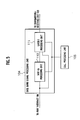
- FIG. 5 shows the functional configuration of the base band signal processing unit 104.
- the base band signal processing unit 104 includes a layer 1 processing unit 111 and an MAC-hs (Medium Access Control-HSDPA) processing unit 112. Both of the layer 1 processing unit 111 and the MAC-hs processing unit 112 are connected to the call processing unit 105.
- MAC-hs Medium Access Control-HSDPA
- the layer 1 processing unit 111 is configured to provide the downlink packets with error-correction coding processing and spreading processing, to provide the uplink packets with despreading processing, error-correction decoding process and RAKE combining processing, and to provide the associated dedicated physical channels in both directions with transmission power control processing.
- the layer 1 processing unit 111 is configured to receive information indicating a downlink radio condition. This information is reported, being carried on a control bit field specifically for an uplink dedicated physical channel from each mobile station. The layer 1 processing unit 111 then outputs the information to an evaluation function calculating unit 190 of the MAC-hs processing unit 112.
- the information indicating the radio condition include, for example, instantaneous receipt SIR (signal-to-interference ratio), BLER (Bit Error Rate), CQI (Channel Quality Indicator) and the like.
- the MAC-hs processing unit 112 is configured to provide retransmission control (HARQ) processing of the downlink shared channel in HSDPA, scheduling processing for packets waiting for transmission, and transmission format and resource selection processing.
- HARQ retransmission control
- FIG. 6 shows the functional configuration of the MAC-hs processing unit 112.
- the MAC-hs processing unit 112 includes a flow controlling unit 120, an MAC-hs resource calculating unit 130, a scheduling unit 140, a TFR (transmission format and resource) selecting unit 150, a packet assigning frequency calculating unit 160, an average value calculating unit 170, a mobile station transmission rate calculating unit 180, and the evaluation function calculating unit 190.
- the flow controlling unit 120 includes a plurality of flow controllers (#1 to #N) 121 1 to 121 N , and has a function of adjusting a transmission rate of downlink packets, which has been received from a radio network controller through the HWY interface 106, based upon a capacity of an implemented transmission queue (buffer) and the like.
- the respective flow controllers (#1 to #N) 121 1 to 121 N monitor the flow of downlink packets. Once the flow of downlink packets increases, and the free space in the transmission queue (buffer) is reduced, the flow controllers 121 1 to 121 N perform processing for suppressing the volume of packets to be transmitted.
- flow controls (#1 to #N) 121 1 to 121 N correspond to connections #1 to #N between the radio base station and the mobile stations #1 to #N, respectively.
- the MAC-hs resource calculating unit 130 is configured to calculate radio resources (a power resource, a code resource, a hardware resource and the like) to be assigned to HS-DSCH, and to include an HS-DSCH power resource calculating unit 131 which calculates the power resource, an HS-DSCH code resource calculating unit 132 which calculates the code resource, and an HS-DSCH hardware resource calculating unit 133 which calculates the hardware resource.
- radio resources a power resource, a code resource, a hardware resource and the like
- the scheduling unit 140 is configured to provide downlink packets to be transmitted to each mobile station, with scheduling processing.
- the scheduling unit 140 is configured to control the scheduling of packets to the respective mobile stations based upon scheduling frequency which shows a frequency of scheduling of packets to the respective mobile stations in a predetermined period.
- the scheduling unit 140 may be configured to control the scheduling of packets to the respective mobile stations #n based upon the respective scheduling frequencies and an average value of the scheduling frequencies amongst the mobile stations #n.
- the scheduling unit 140 may also be configured to control the scheduling of packets to the respective mobile stations based upon a first parameter for controlling fairness of opportunity for scheduling of packets to mobile stations, the respective scheduling frequencies, and the average value of the scheduling frequencies.
- the scheduling unit 140 provides scheduling processing for downlink packets to be transmitted to each mobile station, based upon the evaluation function related to each mobile station.
- the evaluation function is calculated by the evaluation function calculating unit 190.
- the scheduling unit 140 selects a mobile station #n maximizing the value C n of the evaluation function amongst the respective mobile stations. Thereafter, the scheduling unit 140 assigns a priority queue 141 to the mobile station #n (that is, the scheduling unit 140 carries out assignment of downlink transmission).
- the scheduling unit 140 has N priority queues (#1 to #N) 141 1 to 141 N , N reordering units (#1 to #N) 142 1 to 142 N , and N HARQ units (#1 to #N) 143 1 to 143 N .
- the priority queues (#1 to #N) 141 1 to 141 N , the reordering units (#1 to #N) 142 1 to 142 N , and the HARQ units (#1 to #N) 143 1 to 143 N correspond to connections #1 to #N between the radio base station and the mobile stations #1 to #N, respectively.
- the priority queues (#1 to #N) 141 1 to 141 N are transmission queues provided in the connections, respectively.
- the priority queues (#1 to #N) 141 1 to 141 N are configured to accumulate downlink packets until they are selected by the scheduling processing.
- one priority queue is used for one mobile station.
- a plurality of priority queues are used for one mobile station when a plurality of connections are set in one mobile station.
- the reordering units (#1 to #N) 142 1 to 142 N are configured to give sequence numbers to downlink packets so that the mobile station #n can execute receiving order control processing for the downlink packets in the retransmission control processing using HARQ.
- the reordering units (#1 to #N) 142 1 to 142 N also perform window control processing to prevent a receive buffer overflow in the mobile station #n.
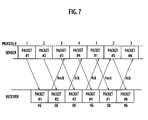
- the HARQ units (#1 to #N) 143 1 to 143 N are configured to perform the retransmission control processing by using a stop-and-wait protocol ARQ of M process, based upon ACK/NACK feedback in the uplink direction.
- a receiver receives packets from a sender and then returns transmission acknowledgements (ACK/NACK) to the sender.
- ACK/NACK transmission acknowledgements
- the receiver could not receive a packet #1 correctly and thus returns a negative acknowledgement (NACK) to the sender. Meanwhile, the receiver could receive a packet #2 correctly, and thus returns an acknowledgement (ACK) to the sender.
- the receiver repeats the operation of returning ACK or NACK to the sender in the order of received packets.
- the TFR selecting unit 150 includes N TFR selecting functions (#1 to #N) 151 1 to 151 N .
- the TFR selecting functions (#1 to #N) 151 1 to 151 N correspond to the connections #1 to #N between the radio base station and the mobile stations #1 to #N, respectively.
- the TFR selecting functions (#1 to #N) 151 1 to 151 N are configured to decide a downlink transmission format (a number of codes, a modulation scheme, a coding rate and the like) and radio resources which are used in the respective connections #1 to #N, based upon the CQI which is an indicator of the downlink quality received through an uplink channel, the radio resources (a power resource, a code resource, a hardware resource) to be assigned to HS-DSCH which are calculated in the MAC-hs resource calculating unit 130, and the like.
- a downlink transmission format a number of codes, a modulation scheme, a coding rate and the like
- radio resources a power resource, a code resource, a hardware resource
- the respective TFR selecting functions (#1 to #N) 151 1 to 151 N notify the layer 1 processing unit 111 of the decided downlink transmission format and radio resources.
- the packet assigning frequency calculating unit 160 is configured to calculate a scheduling frequency (that is, a packet assigning frequency) f n which shows a frequency of scheduling of packets to the respective mobile stations in a predetermined backward period (measuring period) in the respective mobile stations #n, that is, in each priority queues 141 1 to 141 N .
- Al n (t) becomes “1” when a packet is scheduled to mobile station #n at time “t"
- Al n (t) becomes "0” when a packet is not scheduled to mobile station #n at time "t”.
- T is a forgetting coefficient to be provided as a parameter.
- T is set close to "1"
- the above measuring period of the scheduling frequencies becomes longer so that the fairness in terms of time can be strengthened.
- T is set shorter, the above measuring period of the scheduling frequencies becomes smaller so that the fairness in terms of time can be weakened.
- the packet assigning frequency calculating unit 160 may also be configured to calculate the scheduling frequency f n (t) at time "t” according to the following equation.
- Al n (T) becomes “1” when a packet is scheduled to mobile station #n at time “t"
- Al n (T) becomes "0" when a packet is not scheduled to mobile station #n at time "t”.
- T is a control parameter for controlling the length of the above-described period for measuring the scheduling frequency.
- T is set large, the above period for measuring the scheduling frequency becomes longer so that the fairness in time period can be strengthened.
- the above measuring period of the scheduling frequency becomes shorter so that the fairness in time period can be weakened.
- the average value calculating unit 170 is configured to calculate an average value F of the scheduling frequencies amongst the mobile stations #n by using the scheduling frequencies f n of the respective mobile stations #n, which is calculated by the packet assigning frequency calculating unit 160.
- the average value calculating unit 170 calculates an average value of the scheduling frequencies amongst the mobile stations #n according to the following equation.
- the average value calculating unit 170 may be configured to calculate a median value, a geometry average value, a harmonic average value or a mode value in scheduling frequencies in a plurality of mobile stations #n as an average value F of the scheduling frequencies amongst the mobile stations #n, since one statistic middle value is required on the scheduling frequencies in a plurality of mobile stations #n.
- the mobile station transmission rate calculating unit 180 is configured to calculate an average transmission rate of downlink packets to the mobile station #n, according to (Equation 1).
- Rn (t) ⁇ Rn (t-1)+(1- ⁇ ) ⁇ n -
- ⁇ is a predetermined parameter which designates a section where averaging processing is performed, and also indicates a forgetting factor (0 ⁇ ⁇ ⁇ 1) for the averaging processing.
- This parameter ⁇ can be set for downlink packets within the priority queues 141 1 to 141 N , based upon the service types, the contract types, the terminal types, the cell types, the priority classes and the like.
- r n represents an instantaneous transmission rate of packets to a mobile station #n.
- the instantaneous transmission rate r n of packets to the mobile station #n is any one of the following: a size (data size) of packets, the delivery acknowledgment of which from the mobile station #n has been received; a size of packets transmitted to the mobile station #n; and a size of transmittable packets calculated (estimated) based upon the radio condition R n between the radio base station and the mobile station #n.
- the mobile station transmission rate calculating unit 180 is configured to renew the average transmission rate of packets at each predetermined transmission time interval or at each time interval at which the evaluation function used for scheduling of packets is calculated.
- the mobile station transmission rate calculating unit 180 is also configured to calculate the instantaneous transmission rate r n of the packets, which is used for renewal of the average transmission rate of the packets.
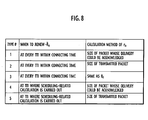
- the mobile station transmission rate calculating unit 180 is configured to renew the average transmission rate of packets in the patterns of the types #1 to #5 as shown in FIG. 8.
- the mobile station transmission rate calculating unit 180 renews the average transmission rate of packets, by calculating the size of packets, the delivery acknowledgement of which from the mobile station #n has been received, at every TTI (transmission time interval).
- the mobile station transmission rate calculating unit 180 renews the average transmission rate of packets, by calculating the sizes of packets transmitted to the mobile station #n, at every TTI.
- the mobile station transmission rate calculating unit 180 renews the average transmission rate of packets, by calculating the size of transmittable packets calculated (estimated) based upon the radio condition R n between the radio base station and the mobile station #n, at every TTI.
- the mobile station transmission rate calculating unit 180 renews the average transmission rate of packets, by calculating the size of packets, the delivery acknowledgement of which from the mobile station #n has been received.
- the size of the packets is calculated at each time interval at which the evaluation function used for scheduling of packets is calculated.
- the mobile station transmission rate calculating unit 180 renews the average transmission rate of packets, by calculating the size of packets transmitted to the mobile station #n.
- the size of the packets is calculated at each time interval at which the evaluation function used for scheduling of packets is calculated.
- the mobile station transmission rate calculating unit 180 may also be configured to obtain the instantaneous transmission rate r n of packets to the mobile station #n, by a method apart from the above.
- the mobile station transmission rate calculating unit 180 can measure the data size of packets in a data link layer, in each predetermined period, so as to obtain the instantaneous transmission rate r n of packets to the mobile station #n. Then, the packets are addressed to the mobile station #n, and the packets are flown into the MAC-hs processing unit 112.
- the MAC-hs processing unit 112 is required to have a function of measuring the transmission rate of the packets in the data link layer.
- the evaluation function calculating unit 190 is configured to calculate the value C n of the evaluation function used in the scheduling processing performed by the scheduling unit 140.
- the call processing unit 105 is configured to transmit and receive call processing signals to/from the radio network controller located in the upper position of the radio base station 100.
- the call processing unit 105 is also configured to manage the condition of the radio base station 100, and to assign the radio resources to the radio base station 100.
- the HWY interface 106 is configured to serve as an interface between the radio network controller and the radio base station 100.
- the HWY interface 106 is configured to transfer downlink packets received from the radio network controller to the base band signal processing unit 104, and to transfer uplink packets received from the base band signal processing unit 104 to the radio network controller.
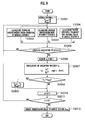
- Described with reference to FIG. 9 is the operation of the packet transmission control apparatus according to the first embodiment, more specifically, the operation of the scheduling processing for downlink packets in the MAC-hs processing unit 112.
- step S2001 the evaluation function calculating unit 190 sets initial values for calculation of the evaluation function related to each mobile station #n.
- "n” represents a subscript of the mobile station
- C max represents a maximum value of the evaluation function
- "n max " represents a subscript of a mobile station maximizing the value of the evaluation function.
- step S2002 the evaluation function calculating unit 190 acquires an instantaneous radio condition R n in the downlink between the radio base station and the mobile station #n, or a size (data size) of transmittable packets estimated based upon the radio condition R n , from the layer 1 processing unit 111.
- the size of transmittable packets estimated based upon the radio condition R n means a size of packets estimated as transmittable packets at a predetermined error rate, based upon CQI indicating downlink quality, an instantaneous SIR of a downlink transmission channel, the radio resources calculated by the MAC-hs resource calculating unit 130 and to be assigned to HS-DSCH, and the like.
- the evaluation function calculating unit 190 acquires, from the mobile station transmission rate calculating unit 180, an average transmission rate Rn of downlink packets to the mobile station #n.
- step S2004 the evaluation function calculating unit 190 acquires, from the packet assigning frequency calculating unit 160, a scheduling frequency f n which shows a frequency of scheduling implemented, in past times, to packets within the priority queue (#n) 141 n assigned to the mobile station #n, and acquires, from the average value calculating unit 170, an average value F of the scheduling frequencies amongst the mobile stations #n.
- step S2005 the evaluation function calculating unit 190 determines whether all information in the steps S2002 to S2004 is acquired.
- step S2005 where it is determined that all information is acquired (where the answer is "YES” in the step S2005), this operation proceeds to step S2006. Otherwise (where the answer is "NO” in the step S2005), the evaluation function calculating unit 190 attempts to acquire information which has not been acquired.
- step S2006 the evaluation function calculating unit 190 receives "index parameters ⁇ , ⁇ and ⁇ ", designated remotely, through the call processing unit 105, and then calculates the value C n of the evaluation function according to the following equation in step S2007.
- Cn R ⁇ n Rn ⁇ ⁇ exp(- ⁇ (fn-F)) -
- the evaluation function calculating unit 190 determines whether the calculated value C n of the evaluation function is the maximum value in step S2008.
- step S2009 the evaluation function calculating unit 190 sets the value C n of the evaluation function, measured in the step S2007, as C max , and sets the subscript "n" of the mobile station #n corresponding to C max , as n max .
- step S2010 the evaluation function calculating unit 190 increments the value of "n” by "+1", in order to calculate the value C n+1 of the evaluation function of the next mobile station #n+1.
- step S2011 the evaluation function calculating unit 190 determines whether the value of "n" exceeds the number "N" of the mobile stations which are communicating with the radio base station 100.
- step S2011 determines that the value of "n” does not exceed the number "N” of the mobile stations (where the answer is "NO” in the step S2011)
- the loop processing from the steps S2002 to S2010 is repeatedly carried out in this operation until it is determined that the value of "n” exceeds the number "N” of the mobile stations.
- the evaluation function calculating unit 190 can calculate the values C n of the evaluation function with respect to all the mobile stations communicating with the radio base station 100.
- the evaluation function calculating unit 180 instructs the scheduling unit 140 to assign a transmission queue to the mobile station #n max which corresponds to n max set in the step S2009.
- the scheduling unit 140 controls the scheduling of packets to the respective mobile stations #n based upon the scheduling frequency f n which shows the frequency of scheduling of packets to the respective mobile stations #n in a predetermined period, regardless of the range of changes in the radio quality R n .
- the packet transmission control apparatus of the first embodiment it is possible to provide a scheduler which can provide equalization in the scheduling opportunities, by calculating the scheduling frequency in each priority queue 141 n which is corresponding to the respective mobile station #n, and incorporating an evaluation item exp (- ⁇ ⁇ (f n -F)) to the evaluation function C n in the conventional scheduler.
- the evaluation item is based on the difference between the scheduling frequency f n and the average value F of the scheduling frequencies f n among priority queues 141 n .
- the item exp (- ⁇ ⁇ (f n -F)) is calculated based on the scheduling frequency f n of the priority queues 141 n which are corresponding to the respective mobile stations #n and an average value F of the relevant scheduling frequencies f n amongst the mobile stations (priority queues 141 n ).
- TTI Transmission Time Interval
- the average value of scheduling frequencies among the above five mobile stations A1 to A5 is "0.3".
- the values of exp (- ⁇ ⁇ (fn-F)) corresponding to the mobile stations A1 to A5 are "exp(0.2 ⁇ )", “exp(0.1 ⁇ )”, “exp(0.0 ⁇ )”, “exp(-0.1 ⁇ )” and “exp(-0.2 ⁇ )” in order.
- the value C n of evaluation function can be set larger to the mobile stations A1, A2, A3, A4 and A5 in order.
- the strength of fairness in the scheduling opportunities can be controlled by controlling the parameter (forgetting coefficient) ⁇ .
- the packet transmission control apparatus may be configured to set parameter ⁇ with respect to each priority class, service type, terminal type, cell type or contract type.
- the parameter controls the strength of fairness in scheduling opportunities
- the packet transmission control apparatus can provide a scheduler which can provide equalization in the scheduling opportunities by setting predetermined parameters ⁇ , ⁇ appropriately.
- the evaluation function calculating unit 190 may be configured to use F - fn a +b or (-a ⁇ x 2+a ⁇ F2+b) as a substitute for an item exp (- ⁇ ⁇ (f n -F)) which is used for equalization of the scheduling opportunities at the evaluation function C n .
- the "a” and "b” may be any constant numbers.
- the packet transmission control apparatus may be configured to use a scheduler other than the above described scheduler.
- ⁇ , ⁇ and ⁇ are parameters which takes a value within 0 to 1
- W n indicates residence time of packet at the radio base station 100.
- one mobile station uses one priority queue.
- one mobile station may use a plurality of priority queues (for example, K pieces of priority queues).
- the packet transmission control apparatus according to the first embodiment schedules N ⁇ K pieces of priority queues, not N pieces of priority queues.
- the evaluation function calculating unit 190 in MAC-hs processing unit 112 is configured to include, for example, a program device which can update programs such as CPU, digital signal processor (DSP), or EPCG.
- the evaluation function calculating unit 190 stores a program for calculating evaluation function C n in a predetermined memory. Also, the evaluation function calculating unit 190 may update by downloading predetermined parameters ( ⁇ , ⁇ , ⁇ , ⁇ ).
- the evaluation function calculating unit 190 may download the predetermined parameters ( ⁇ , ⁇ , ⁇ , ⁇ ) from the upper node of the radio base station 100, or may include a terminal I/F to read the predetermined parameters ( ⁇ , ⁇ , ⁇ , ⁇ ) directly from the terminal.
- each functional block in the MAC-Hs processing unit 112 may be divided by hardware, or may be divided by software in programs of a processor.
- a packet transmission control apparatus according to the second embodiment of the present invention is described focusing on different points from the packet transmission control apparatus according to the aforementioned first embodiment.
- the scheduling unit 140 is configured to manage priority classes PC n related to transmission of packets, for each mobile station #n, and to perform scheduling of packets in accordance with the priority classes PC n .
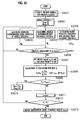
- An operation of the packet transmission control apparatus according to the second embodiment is described below with reference to FIG. 10.
- step S3001 the evaluation function calculating unit 190 of the MAC-hs processing unit 112 classifies the priority queues (#1 to #N) 141 1 to 141 N into several priority classes.
- step S3006 the evaluation function calculating unit 190 acquires all of Rn , Rn ,fn , F PC required in calculating the value C n of the evaluation function of the mobile station #n.
- the evaluation function calculating unit 190 receives predetermined parameters ( ⁇ i , ⁇ i , and ⁇ i ), designated remotely, through the call processing unit 105, and a weighting factor (weight) A i (where "i" represents a subscript of the priority class of the mobile station #n) set for each priority class.
- predetermined parameters ( ⁇ i , ⁇ i , and ⁇ i ) and the weighting factor (weight) A i may be set so that the same values are used in each priority class.
- step 3008 the evaluation function calculating unit 190 calculates the value C n of the evaluation function based upon the following equation.
- Cn A PCn ⁇ Rn ⁇ PCn Rn ⁇ PCn ⁇ exp(- ⁇ PCn ⁇ (fn-F PCn ))
- PC n represents the priority class of the mobile station #n.
- the evaluation function calculating unit 190 is configured to calculate an average value F PCn of the scheduling frequencies in a priority class PC n to which the mobile station #n belongs, as shown in (Equation 3).
- the average value F PCn of scheduling frequencies may be calculated, as described above, in each priority class PC n , or one average value F PCn of scheduling frequencies may be calculated in a plurality of priority classes PC n .
- the evaluation function calculating unit 190 determines whether the calculated value C n of the evaluation function is a maximum value in step S3009.
- step S3010 the evaluation function calculating unit 190 sets the value C n of the evaluation function, measured in the step S3008, as C max , and sets the subscript "n" of the mobile station #n corresponding to C max , as n max .
- step S3011 the evaluation function calculating unit 190 increments the value of "n” by "+1", in order to calculate the value C n+1 of the evaluation function of the next mobile station #n+1.
- step S3012 the evaluation function calculating unit 190 determines whether the value of "n" exceeds the number "N" of the mobile stations communicating with the radio base station 100.
- loop processing from the steps S3003 to S3011 is repeatedly carried out in this operation until it is determined that the value of "n" exceeds the number "N" of the mobile stations.
- the evaluation function calculating unit 190 can calculate the values C n of the evaluation function of all mobile stations communicating with the radio base station 100.
- the evaluation function calculating unit 190 instructs the scheduling unit 140 to assign a transmission queue to the mobile station #n max which corresponds to n max set in the step S3010.
- the packet transmission control apparatus not only controls the weighting factor A i and index parameters ⁇ i and ⁇ i , in accordance with the priority classes PC n , but also set a parameter ⁇ i for controlling the fairness of the scheduling opportunity in each priority class PC n . Therefore, The scheduling opportunity in each priority class can be equalized and the scheduling opportunity among the priority classes can be equalized. Thus, an appropriate scheduler in accordance with the priority classes can be realized.
- the packet transmission control apparatus can operate as the "Proportional Fairness Scheduler" for packets with the higher priority class and as the "MAX C/I Scheduler" for packets with the lower priority class.
- the packet transmission control apparatus can control the priority classes as follows: a large averaging section is set for packets with the higher priority class with more consideration of fairness in terms of time; a small averaging section is set for packets with the lower priority class with less consideration of fairness in terms of time.
- a mobile station in priority class "1" calculates an evaluation function in use of an average value of the scheduling frequencies amongst the mobile stations in the priority class "1".
- the mobile station in priority class "2" calculates an evaluation function in use of an average value of the scheduling frequencies amongst the mobile stations in the priority class "2".
- equalization can be provided in the scheduling opportunities amongst the mobile stations which are in the same priority class.
- a parameter ⁇ i can be set so as to control the strength of fairness in the scheduling opportunity for each priority class, in addition to the above described controlling for the priority class.
- a parameter ⁇ 1 in priority class "1", which priority is high, is set “2"
- a parameter ⁇ 2 in priority class "2", which priority is low is set “1”. Therefore, higher equalization in the scheduling opportunity is assured for packets in the priority class "1”, and lower equalization in the scheduling opportunity is assured for packets in the priority class "2".
- a parameter ⁇ 1 in priority class "1", which priority is high, may be set “1”
- a parameter a parameter ⁇ 2 in priority class "2", which priority is low may be set “2”. Then, lower equalization in the scheduling opportunity may be assured for packets in the priority class "1", and higher equalization in scheduling opportunity is assured for packets in the priority class "2".
- the present invention is not limited to this.
- the packet transmission control apparatus defines service types (service classes) so that the parameters of a scheduler is set in accordance with service types, a population is set for calculating an average value of the scheduling frequencies amongst the mobile stations for each service type, and the strength of equalization in the scheduling opportunities in the population is changed, thus an appropriate scheduler can be realized.
- service types service classes
- the service types classify services for transferring packets with various data sizes, and include, for example, an image packet transfer service and a voice packet transfer service.
- the packet transmission control apparatus defines contract types so that the parameters of the scheduler is set in accordance with the contract types, a population is set for calculating an average value of the scheduling frequencies amongst the mobile stations for each contract type, and the strength of equalization in the scheduling opportunities in the population is changed, thus an appropriate scheduler can be realized.
- the contract types classify various tariff contracts, and include, for example, a low class contract and a high class contract.
- the packet transmission control apparatus defines cell types so that the parameters of the scheduler is set in accordance with the cell types, a population is set for calculating an average value of the scheduling frequencies amongst the mobile stations for each cell type, and the strength of equalization in the scheduling opportunities in the population is changed, thus an appropriate scheduler can be realized.
- the cell types classify the forms of cells, and include, for example, an indoor or outdoor cell, a cell in a suburban or urban district, or a cell in a high-traffic region or low-traffic region.
- the packet transmission control apparatus defines terminal types so that the parameters of the scheduler is set in accordance with the terminal types, a population is set for calculating an average value of the scheduling frequencies amongst the mobile stations for each terminal type, and the strength of equalization in the scheduling opportunities in the population is changed, thus an appropriate scheduler can be realized.
- the terminal types classify various terminals, and include, for example, a class based upon identification of a mobile station, types depending on presence/absence or types of a RAKE receiving function, an equalizer, a receive diversity process, an interference canceller and the like, and types depending on terminal capabilities such as a receivable modulation scheme, a code number, and the number of bits.
- the HSDPA which is a high-speed packet transmission system in 3GPP.
- the present invention is not limited to the HSDPA, and can be applied to an arbitrary high-speed packet transmission system which performs transmission control (scheduling) of downlink packets in a mobile communication system.
- the present invention can be applied to a high-speed packet transmission system such as the high-speed packet transmission systems in the "cdma2000", the “1x-EV DO", the "TDD” in 3GPP2, and the like.
Landscapes
- Engineering & Computer Science (AREA)
- Computer Networks & Wireless Communication (AREA)
- Signal Processing (AREA)
- Databases & Information Systems (AREA)
- Mobile Radio Communication Systems (AREA)
- Data Exchanges In Wide-Area Networks (AREA)
Abstract
Description
of packets to each mobile station #n.
- the case where the mobile station is in a stationary state;
- the case where the mobile station is in a multipass environment (the case where a pass diversity exists);
- the case where the mobile station is in use of a receive diversity process, an equalizer or the like.


The evaluation
The
In step S2003, the evaluation
of downlink packets to the mobile station #n.
An operation of the packet transmission control apparatus according to the second embodiment is described below with reference to FIG. 10.
In step S3006, the evaluation
required in calculating the value Cn of the evaluation function of the mobile station #n.

Claims (11)
- A packet transmission control apparatus which performs transmission control of packets to a plurality of mobile stations, comprising:an acquirer configured to acquire a scheduling frequency which shows a frequency of scheduling of packets to each mobile station in a predetermined period, anda scheduler configured to control scheduling of packets to each mobile station in accordance with an acquired scheduling frequency.
- The packet transmission control apparatus according to claim 1, wherein the scheduler is configured to control the scheduling of packets to each mobile station, in accordance with an average value of the scheduling frequencies amongst the plurality of mobile stations and the scheduling frequency.
- The packet transmission control apparatus according to claim 2, wherein the scheduler is configured to control the scheduling of packets to each mobile station, in accordance with a first parameter to control fairness of opportunity for scheduling packets to the plurality of mobile stations, the scheduling frequency and the average value of the scheduling frequencies.
- The packet transmission control apparatus according to claim 3, wherein the scheduler is configured to schedule the packets to a mobile station #n which has a maximum value of evaluation function Cn, which is calculated according to an equation
- The packet transmission control apparatus according to claim 3,
wherein the acquirer is configured to acquire a radio condition Rn with the mobile station #n and an average transmission rate
the scheduler is configured to schedule the packets to the mobile station #n which has a maximum value of evaluation function Cn, which is calculated according to an equation - The packet transmission control apparatus according to claim 1, wherein the scheduler is configured to manage priority classes relating to transmission of the packets to each of the mobile station, and to control the scheduling of packets to each mobile station for each of the priority classes.
- The packet transmission control apparatus according to claim 6, wherein the scheduler is configured to schedule the packets to the mobile station #n which has a maximum value of evaluation function Cn, which is calculated according to an equation
- The packet transmission control apparatus according to claim 6,
wherein the acquirer is configured to acquire a radio condition Rn with the mobile station #n and an average transmission rateRn
of the packets to the mobile station #n, and
the scheduler is configured to schedule the packets to the mobile station #n which has a maximum value of evaluation function Cn, which is calculated according to an equation - The packet transmission control apparatus according to claim 7 or 8, wherein the first parameter is set for each service type, each contract type, each terminal type, each cell type, or each priority class.
- The packet transmission control apparatus according to claim 1, wherein the scheduling frequency fn(t) at time t relating to the mobile station #n is calculated based upon
- A packet transmission control method for performing transmission control to packets to a plurality of mobile stations, the method comprising:acquiring a scheduling frequency which shows a frequency of scheduling of packets to each mobile station in a predetermined period, andcontrolling scheduling of packets to each mobile station in accordance with an acquired scheduling frequency.
Applications Claiming Priority (2)
| Application Number | Priority Date | Filing Date | Title |
|---|---|---|---|
| JP2003428372 | 2003-12-24 | ||
| JP2003428372A JP4272048B2 (en) | 2003-12-24 | 2003-12-24 | Packet transmission control apparatus and packet transmission control method |
Publications (2)
| Publication Number | Publication Date |
|---|---|
| EP1549004A2 true EP1549004A2 (en) | 2005-06-29 |
| EP1549004A3 EP1549004A3 (en) | 2007-09-19 |
Family
ID=34544981
Family Applications (1)
| Application Number | Title | Priority Date | Filing Date |
|---|---|---|---|
| EP20040030784 Withdrawn EP1549004A3 (en) | 2003-12-24 | 2004-12-24 | Scheduling of downlink packets in a mobile network |
Country Status (4)
| Country | Link |
|---|---|
| US (1) | US7623489B2 (en) |
| EP (1) | EP1549004A3 (en) |
| JP (1) | JP4272048B2 (en) |
| CN (1) | CN100463441C (en) |
Cited By (5)
| Publication number | Priority date | Publication date | Assignee | Title |
|---|---|---|---|---|
| DE102004044965A1 (en) * | 2004-09-16 | 2006-03-30 | Infineon Technologies Ag | Mobile radio system e.g. Global system for mobile communication, has load memory in which weighing values are stored, where values specify portion of bandwidth which is allocated to select data stored in buffer memories |
| WO2008073013A1 (en) * | 2006-12-13 | 2008-06-19 | Telefonaktiebolaget Lm Ericsson (Publ) | A method of scheduling data transmission in a radio network |
| EP2083540A1 (en) * | 2008-01-28 | 2009-07-29 | Qualcomm Incorporated | Adaptive transmission of resource utilization messages based on throughput |
| EP1753179A4 (en) * | 2004-05-10 | 2011-08-17 | Ntt Docomo Inc | DEVICE AND METHOD FOR CONTROLLING PACKET TRANSMISSION |
| US8139528B2 (en) | 2008-01-28 | 2012-03-20 | Qualcomm Incorporated | Adaptive transmission of resource utilization messages |
Families Citing this family (18)
| Publication number | Priority date | Publication date | Assignee | Title |
|---|---|---|---|---|
| JP4301970B2 (en) * | 2004-02-23 | 2009-07-22 | 株式会社エヌ・ティ・ティ・ドコモ | Packet transmission control apparatus and packet transmission control method |
| EP1761091B1 (en) * | 2005-08-30 | 2012-11-07 | LG Electronics, Inc. | Method for performing admission control in a cellular network |
| US8605579B2 (en) * | 2005-10-17 | 2013-12-10 | Qualcomm Incorporated | Method and apparatus for flow control of data in a mesh network |
| JP4757671B2 (en) * | 2006-03-16 | 2011-08-24 | Necインフロンティア株式会社 | Wireless communication system, wireless base station, wireless communication method, and wireless base station program |
| JP4593528B2 (en) * | 2006-06-12 | 2010-12-08 | ソフトバンクBb株式会社 | Packet transmission schedule management system and packet transmission schedule management method |
| JP4751791B2 (en) * | 2006-08-22 | 2011-08-17 | 株式会社エヌ・ティ・ティ・ドコモ | Data inflow control device and data inflow control method |
| KR100911304B1 (en) * | 2007-06-18 | 2009-08-11 | 엘지전자 주식회사 | Data transmission method of radio bearers having priority in wireless communication system |
| JP4478180B2 (en) | 2007-08-10 | 2010-06-09 | 富士通株式会社 | Wireless communication system |
| JP5119977B2 (en) | 2008-02-28 | 2013-01-16 | 富士通株式会社 | Radio resource allocation control apparatus and method, and radio base station |
| KR101597510B1 (en) * | 2009-06-26 | 2016-02-25 | 삼성전자주식회사 | Apparatus and method for resource scheduling in a mobile communication system |
| US8159953B2 (en) | 2009-09-24 | 2012-04-17 | Alcatel Lucent | Method and apparatus for managing allocation of resources in a network |
| JP5364644B2 (en) * | 2010-05-28 | 2013-12-11 | パナソニック株式会社 | Base station, mobile communication system, and interference suppression method |
| FR2961050B1 (en) * | 2010-06-04 | 2012-07-20 | Commissariat Energie Atomique | ENERGY SAVING SCHEDULING METHOD |
| CN102893577A (en) * | 2010-06-17 | 2013-01-23 | 松下电器产业株式会社 | Data transmission device and data transmission method |
| WO2012011775A2 (en) * | 2010-07-22 | 2012-01-26 | 엘지전자 주식회사 | Apparatus and method for transmitting uplink control information in a multiple carrier system |
| CN102612149B (en) * | 2011-01-25 | 2014-12-03 | 华为技术有限公司 | Wireless resource distribution method for relay cell, base station and system |
| CN105743810B (en) * | 2014-12-12 | 2018-09-14 | 北京永安信通科技股份有限公司 | Based on the preceding packet transmission scheduling method and apparatus to valve |
| CN116437463B (en) | 2021-12-31 | 2026-08-04 | 中国移动通信有限公司研究院 | Service processing method, device and equipment |
Family Cites Families (22)
| Publication number | Priority date | Publication date | Assignee | Title |
|---|---|---|---|---|
| US7133380B1 (en) * | 2000-01-11 | 2006-11-07 | At&T Corp. | System and method for selecting a transmission channel in a wireless communication system that includes an adaptive array |
| JP4403347B2 (en) | 2000-11-16 | 2010-01-27 | ソニー株式会社 | Information processing apparatus, information processing method, recording medium, communication system, and communication method |
| JP3731469B2 (en) | 2000-12-04 | 2006-01-05 | Kddi株式会社 | Wireless packet communication system and base station |
| KR100598078B1 (en) * | 2001-01-05 | 2006-07-10 | 삼성전자주식회사 | Wireless communication device, wireless communication system using same and communication method thereof |
| KR100529424B1 (en) * | 2001-01-12 | 2005-11-17 | 마츠시타 덴끼 산교 가부시키가이샤 | Transmitting device and transmitting method |
| US6807426B2 (en) | 2001-04-12 | 2004-10-19 | Qualcomm Incorporated | Method and apparatus for scheduling transmissions in a communication system |
| US6657980B2 (en) | 2001-04-12 | 2003-12-02 | Qualcomm Incorporated | Method and apparatus for scheduling packet data transmissions in a wireless communication system |
| ES2237704T3 (en) * | 2001-10-15 | 2005-08-01 | Siemens Aktiengesellschaft | TRANSMISSION METHOD |
| US6788687B2 (en) | 2001-10-30 | 2004-09-07 | Qualcomm Incorporated | Method and apparatus for scheduling packet data transmissions in a wireless communication system |
| US7103350B2 (en) * | 2001-11-16 | 2006-09-05 | Nortel Networks Limited | Scheduler with fairness control and quality of service support |
| US6917812B2 (en) | 2001-12-03 | 2005-07-12 | Telefonaktiebolaget Lm Ericsson (Publ) | Air interface scheduler for wireless communication networks |
| JP3686614B2 (en) | 2001-12-26 | 2005-08-24 | 松下電器産業株式会社 | Wireless communication apparatus and transmission rate determination method |
| EP1326397B1 (en) * | 2002-01-03 | 2010-03-10 | Innovative Sonic Limited | Timer based stall avoidance mechanism for high speed wireless communication system |
| JP4173816B2 (en) * | 2002-01-08 | 2008-10-29 | ノキア コーポレイション | Method and apparatus for cell specific HSDPA parameter configuration and reconfiguration |
| JP2003218882A (en) | 2002-01-22 | 2003-07-31 | Matsushita Electric Ind Co Ltd | Communication device and communication method |
| US7298719B2 (en) | 2002-04-15 | 2007-11-20 | Lucent Technologies Inc. | Method for scheduling wireless downlink transmissions subject to rate constraints |
| JP2003330831A (en) * | 2002-05-15 | 2003-11-21 | Digitalact:Kk | Card-type medium, information terminal device with barcode reader, content distribution system, program and recording medium for realizing functions of the system |
| AU2003248063A1 (en) * | 2002-07-29 | 2004-02-16 | Matsushita Electric Industrial Co., Ltd. | Radio device and base station device |
| MXPA05001626A (en) * | 2002-08-13 | 2005-04-25 | Koninkl Philips Electronics Nv | Arq system with status and packet acknowledgement. |
| US7394768B2 (en) * | 2003-04-30 | 2008-07-01 | Nokia Corporation | Fair scheduling with guaranteed minimum parameter |
| WO2005048614A1 (en) * | 2003-11-14 | 2005-05-26 | Zte Corporation | A packet scheduling method for wireless communication system |
| KR20050054676A (en) * | 2003-12-05 | 2005-06-10 | 삼성전자주식회사 | Wireless packet scheduling method using cumulative distribution function |
-
2003
- 2003-12-24 JP JP2003428372A patent/JP4272048B2/en not_active Expired - Fee Related
-
2004
- 2004-12-23 US US11/019,443 patent/US7623489B2/en not_active Expired - Fee Related
- 2004-12-24 EP EP20040030784 patent/EP1549004A3/en not_active Withdrawn
- 2004-12-24 CN CNB2004100970860A patent/CN100463441C/en not_active Expired - Fee Related
Cited By (8)
| Publication number | Priority date | Publication date | Assignee | Title |
|---|---|---|---|---|
| EP1753179A4 (en) * | 2004-05-10 | 2011-08-17 | Ntt Docomo Inc | DEVICE AND METHOD FOR CONTROLLING PACKET TRANSMISSION |
| DE102004044965A1 (en) * | 2004-09-16 | 2006-03-30 | Infineon Technologies Ag | Mobile radio system e.g. Global system for mobile communication, has load memory in which weighing values are stored, where values specify portion of bandwidth which is allocated to select data stored in buffer memories |
| WO2008073013A1 (en) * | 2006-12-13 | 2008-06-19 | Telefonaktiebolaget Lm Ericsson (Publ) | A method of scheduling data transmission in a radio network |
| US8179853B2 (en) | 2006-12-13 | 2012-05-15 | Telefonaktiebolaget Lm Ericsson (Publ) | Method of scheduling data transmission in a radio network |
| EP2083540A1 (en) * | 2008-01-28 | 2009-07-29 | Qualcomm Incorporated | Adaptive transmission of resource utilization messages based on throughput |
| WO2009096982A1 (en) * | 2008-01-28 | 2009-08-06 | Qualcomm Incorporated | Adaptive transmission of resource utilization messages based on throughput |
| US8139528B2 (en) | 2008-01-28 | 2012-03-20 | Qualcomm Incorporated | Adaptive transmission of resource utilization messages |
| US8942636B2 (en) | 2008-01-28 | 2015-01-27 | Qualcomm Incorporated | Adaptive transmission of resource utilization messages based on throughput |
Also Published As
| Publication number | Publication date |
|---|---|
| US20050163111A1 (en) | 2005-07-28 |
| US7623489B2 (en) | 2009-11-24 |
| JP2005191745A (en) | 2005-07-14 |
| JP4272048B2 (en) | 2009-06-03 |
| EP1549004A3 (en) | 2007-09-19 |
| CN100463441C (en) | 2009-02-18 |
| CN1638360A (en) | 2005-07-13 |
Similar Documents
| Publication | Publication Date | Title |
|---|---|---|
| EP1526691B1 (en) | Method and apparatus for packet transmission control | |
| US7623489B2 (en) | Packet transmission control apparatus and packet transmission control method | |
| EP1513300B1 (en) | Packet-priority control apparatus and method thereof | |
| EP2223478B1 (en) | A scheduling method and system for communication | |
| EP1753179B1 (en) | Packet transmission control device | |
| US8099102B2 (en) | Call admission control device and call admission control method | |
| US20050002352A1 (en) | Method and apparatus for scheduling packet data transmissions in a wireless communication system | |
| EP1566926B1 (en) | Method and apparatus for packet scheduling according to the capabilities of the receiving mobile terminals | |
| CN100571073C (en) | Packet transmission control device, packet transmission control method | |
| JP4563452B2 (en) | Packet transmission control apparatus and packet transmission control method | |
| US20100165941A1 (en) | Method and system for peak scheduling in a wireless network | |
| JP4150622B2 (en) | Packet transmission control apparatus and packet transmission control method | |
| JP4726068B2 (en) | Packet transmission control device and packet transmission control method | |
| Al-Begain et al. | Packet Scheduling and Buffer Management |
Legal Events
| Date | Code | Title | Description |
|---|---|---|---|
| PUAI | Public reference made under article 153(3) epc to a published international application that has entered the european phase |
Free format text: ORIGINAL CODE: 0009012 |
|
| 17P | Request for examination filed |
Effective date: 20041224 |
|
| AK | Designated contracting states |
Kind code of ref document: A2 Designated state(s): AT BE BG CH CY CZ DE DK EE ES FI FR GB GR HU IE IS IT LI LT LU MC NL PL PT RO SE SI SK TR |
|
| AX | Request for extension of the european patent |
Extension state: AL BA HR LV MK YU |
|
| PUAL | Search report despatched |
Free format text: ORIGINAL CODE: 0009013 |
|
| AK | Designated contracting states |
Kind code of ref document: A3 Designated state(s): AT BE BG CH CY CZ DE DK EE ES FI FR GB GR HU IE IS IT LI LT LU MC NL PL PT RO SE SI SK TR |
|
| AX | Request for extension of the european patent |
Extension state: AL BA HR LV MK YU |
|
| 17Q | First examination report despatched |
Effective date: 20080404 |
|
| AKX | Designation fees paid |
Designated state(s): DE GB |
|
| STAA | Information on the status of an ep patent application or granted ep patent |
Free format text: STATUS: THE APPLICATION IS DEEMED TO BE WITHDRAWN |
|
| 18D | Application deemed to be withdrawn |
Effective date: 20140611 |
|
| REG | Reference to a national code |
Ref country code: DE Ref legal event code: R079 Free format text: PREVIOUS MAIN CLASS: H04L0012560000 Ipc: H04L0012801000 |
|
| REG | Reference to a national code |
Ref country code: DE Ref legal event code: R079 Free format text: PREVIOUS MAIN CLASS: H04L0012560000 Ipc: H04L0012801000 Effective date: 20141117 |
|
| P01 | Opt-out of the competence of the unified patent court (upc) registered |
Effective date: 20230520 |