EP1548626A1 - Network system, provider, management site, requestor, and program - Google Patents
Network system, provider, management site, requestor, and program Download PDFInfo
- Publication number
- EP1548626A1 EP1548626A1 EP03791204A EP03791204A EP1548626A1 EP 1548626 A1 EP1548626 A1 EP 1548626A1 EP 03791204 A EP03791204 A EP 03791204A EP 03791204 A EP03791204 A EP 03791204A EP 1548626 A1 EP1548626 A1 EP 1548626A1
- Authority
- EP
- European Patent Office
- Prior art keywords
- service
- information
- determining
- quality
- services
- Prior art date
- Legal status (The legal status is an assumption and is not a legal conclusion. Google has not performed a legal analysis and makes no representation as to the accuracy of the status listed.)
- Withdrawn
Links
Images


Classifications
-
- G—PHYSICS
- G06—COMPUTING OR CALCULATING; COUNTING
- G06Q—INFORMATION AND COMMUNICATION TECHNOLOGY [ICT] SPECIALLY ADAPTED FOR ADMINISTRATIVE, COMMERCIAL, FINANCIAL, MANAGERIAL OR SUPERVISORY PURPOSES; SYSTEMS OR METHODS SPECIALLY ADAPTED FOR ADMINISTRATIVE, COMMERCIAL, FINANCIAL, MANAGERIAL OR SUPERVISORY PURPOSES, NOT OTHERWISE PROVIDED FOR
- G06Q30/00—Commerce
- G06Q30/06—Buying, selling or leasing transactions
-
- G—PHYSICS
- G06—COMPUTING OR CALCULATING; COUNTING
- G06Q—INFORMATION AND COMMUNICATION TECHNOLOGY [ICT] SPECIALLY ADAPTED FOR ADMINISTRATIVE, COMMERCIAL, FINANCIAL, MANAGERIAL OR SUPERVISORY PURPOSES; SYSTEMS OR METHODS SPECIALLY ADAPTED FOR ADMINISTRATIVE, COMMERCIAL, FINANCIAL, MANAGERIAL OR SUPERVISORY PURPOSES, NOT OTHERWISE PROVIDED FOR
- G06Q50/00—Information and communication technology [ICT] specially adapted for implementation of business processes of specific business sectors, e.g. utilities or tourism
- G06Q50/10—Services
Definitions
- the present invention relates to a system for using a web services via a network, and more particularly to a system characterized by searching for the web services.
- the Web Services which are a kind of software services provided via networks, enable dynamic and loosely coupled communication between software components on the Internet.
- a website web server
- a website web server
- the Web Services utilize open techniques including UDDI (Universal Description, Discovery, and Integration), which is a registry mechanism that serves as a storage and management system capable of registration and retrieval of information.
- UDDI Universal Description, Discovery, and Integration
- the open techniques utilized also include WSDL (Web Services Description Language) as a description language for explaining services to be provided, SOAP (Simple Object Access Protocol) as a communication protocol, and XML (eXtensible Markup Language) as data description language specifications.
- WSDL Web Services Description Language
- SOAP Simple Object Access Protocol
- XML eXtensible Markup Language
- UDDI is described in the references 1 and 2
- WSDL is described in the references 3 and 4
- SOAP is described in the reference 5
- XML is described in the reference 6
- Web Services are described in the reference 7.
- Figure 13 shows a Web Services architecture.
- the architecture for realizing a Web Services includes a provider (service provider) 131, a UDDI site 132, and a requester (service user), which are capable of exchanging data with each other via a network.
- the Web Services is realized by exchanging data among these three entities.
- the provider 131 first implements a service to be provided [1]. Then, information on the implemented service is registered with and disclosed at the UDDI site 132 [2]. Then, the requester 133 issues a search request for a desired service to the UDDI site 132 [3]. If the desired service is found, the requester 133 connects to the provider 131 to request the service [4], and the provider 131 returns a result (response) to the requester 133 [5].
- the information registered with the UDDI site 132 includes, for example, information specifying a company that provides the service (e.g., a company name), a service type (e.g., the name of the service), and information required for binding the service (e.g., a URL). Binding a service means to obtain a URL address and connection interfaces (protocols and connection methods (connection code)) of a service (service component) and to connect to the service.
- a service component means a service encapsulated for external accesses. As seen from Figure 13, these information items are static ones registered before the actual start of the service.
- the ability to provide information that objectively represents the quality of provided services as those criteria will cause the providers to improve the quality of their services, thereby allowing the requester to enjoy the services of higher quality.
- an object of the invention is to realize provision of appropriate criteria in searching for a web services.
- Another object of the invention is to provide, as those criteria, objective information for determining service quality.
- the invention is provided as a network system for using a service via a network, comprising: a provider that provides the service and collects information for determining quality of the service provided; and a management site that registers and manages the service provided by the provider and the information for determining quality of the service collected at the provider.
- the management site may be a UDDI site with a UDDI, which is a search and query system for web services.
- the information for determining quality of the service may be service history resulting from actual operation of the service. Specifically, it may include the number of times the service has been used, frequency of use of the service, turnaround time in execution of the service, maintenance time for the service, and so on. These information items are easily collected as numerical information as data processing for the service is performed, and are therefore available as information for objectively determining the quality of the service.
- the network system may comprise a requester that searches the management site for a service, obtains a search result including the service history for determining quality of the services, determines a service to be used based on the search result, and requests the service from a provider that provides the web services determined.
- the provider comprises: a service execution unit for executing processing for the service; and a service quality information collection unit for collecting, based on execution of the processing by the service execution unit, information for determining quality of the service.
- the management site comprises: first management means for registering and managing information on services; and second management means for managing service history for determining quality of the services registered with the first management means.
- searching for the service history for determining quality of the services managed by the second management means may be registered with the first management means as a service and provided for the requester.
- the second management means obtains the service history for determining quality of the services from providers that provide the services.
- this information is generally transmitted as XML documents written in WSDL.
- the second management means may convert the information into relational database structures to improve performance of a search in response to the search request issued by the requester. It may also convert data of the XML documents into information content convenient for the search (such as the frequency of use per day, turnaround time for execution of the services, etc.) before storing the data.
- the requester comprises: a service search unit for issuing a search request for a desired service to a management site that performs searches and queries of services provided via a network and obtaining a search result including service history for determining quality of services; and a service request unit for selecting a service based on the search result obtained by the service search unit and issuing a request via the network for execution of the service to a provider that provides the service.
- the service history of the retrieved services may be compared with each other to prioritize the services in terms of the number of times they have been used (popularity of the services), the turnaround time for execution of them, and so on.
- the requester may further comprise a display control unit for displaying the search result obtained by the service search unit on a given display, the search result reflecting the service history for determining quality of services.
- the invention may also be provided as a program that controls a computer to implement the above described provider, management site, or requester.
- the program maybe stored in and distributed as a magnetic disk, optical disk, semiconductor memory, or other storage device, or distributed via a network.
- program files for implementing these functions may be provided as a class library in object-oriented programming. In this manner, these functions may be hidden from main functions of the provider and the requester, such as service provision and searching.
- a system is constructed in which a service user who searches a UDDI site for a web services can obtain information for determining the adequateness of the service, that is, information on service quality.
- This information (referred to as service quality information hereafter) is dynamic information resulting from actual provision of the service.
- Various evaluation categories for the service quality are possible, such as an evaluation by a third party and an evaluation by the user themselves of the service.
- service history resulting from actual operation of a service (the number of times the service has been used, frequency of use, turnaround time for execution of the service, maintenance time for the service, etc.) is employed as numerically expressible evaluation criteria.
- the service history is collected, and it is then provided for the UDDI site as information on the quality of the service of each service provider.
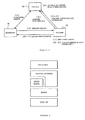
- Figure 1 shows a Web Services architecture according to this embodiment.
- the architecture for realizing a Web Services includes a provider (service provider) 10, a UDDI site 20, and a requester (service user) 30, which are capable of exchanging data with each other via a network.
- a provider service provider
- UDDI site 20 UDDI site 20
- requester service user 30
- Each of these elements is embodied in a computer with a network capability, for example, a workstation or a personal computer.
- the Web Services is realized by exchanging data among these three entities.
- the provider 10 firstly implements a service to be provided [1].
- a program classes that provide a service quality information collection function and a service quality information transmission function are obtained and incorporated into a control program in the computer embodying the provider 10.
- the control program used by the provider 10 to provide the service is written in an object-oriented programming language such as Java® (trademark of Sun Microsystems, Inc. in the U.S.), so that specific data processing for the service is performed with a predetermined method.
- the class library can provide program files having particular functions.
- the provider 10 can easily implement the service quality information collection function and the service quality information transmission function. The details of these functions will be described later.
- the provider 10 then registers the information on the implemented service with the UDDI site 20 using WSDL and discloses the information [2].
- the requester 30 issues a search request for desired services to the UDDI site 20 [3]. If quality information on those services has been collected, the information will be returned along with the services retrieved.
- the requester 30 takes account of the service quality information obtained and selects a provider 10 that provides a service to be used. Then, it connects to the provider 10 and requests the service [4].
- the provider 10 that has received the request for the service performs data processing for the service and returns the result to the requester 30 [5-1].
- the above mentioned service quality information collection function collects service history as the service quality information [5-2].
- the above mentioned service quality information transmission function transmits the collected service quality information to the UDDI site 20 using SOAP [5-3].
- the UDDI site 20 receives the service quality information from the provider 10 and accumulates it in a database [6].
- Figure 2 shows functional layers for realizing the Web Services according to this embodiment.
- Typical functional layers required for realizing Web Services include, from a physical level side, TCP/IP, SOAP, WSDL, and UDDI.
- Functions provided according to this embodiment are implemented at a functional layer provided over the UDDI layer as shown in Figure 2.
- This functional layer is called a Booster Container layer.
- An application for performing the data processing for the service is constructed over the Booster Container layer. This configuration hides the Booster Container layer from application development. That is, an application developer does not need to create software by themselves under specific rules for providing the service quality information collection function and other functions. Rather, the application developer can utilize the class library provided as a tool that operates at the Booster Container layer.
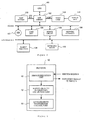
- Figure 3 is a schematic diagram of an exemplary hardware configuration of a computer suitable for embodying the provider 10, the UDDI site 20, and the requester 30 shown in Figure 1.
- the computer shown in Figure 3 includes a CPU (Central Processing Unit) 101 as operation means; main memory 103 connected to the CPU 101 via a M/B (motherboard) chipset 102 and a CPU bus; a video card 104 also connected to the CPU 101 via the M/B chipset 102 and an AGP (Accelerated Graphics Port) ; a hard disk 105, a network interface 106, and a USB port 107 connected to the M/B chipset 102 via a PCI (Peripheral Component Interconnect) bus; and a floppy disk drive 109 and a keyboard/mouse 110 connected to the M/B chipset 102 via the PCI bus over a bridge circuit 108 and a low-speed bus such as an ISA (Industry Standard Architecture) bus.
- ISA Industry Standard Architecture
- Figure 3 is a mere illustration of a hardware configuration of a computer for realizing this embodiment, and various other configurations may also be employed to the extent that this embodiment can be applied to them.
- only video memory may be provided instead of the video card 104, in which case the CPU 101 processes image data.
- a CD-ROM (Compact Disc Read Only Memory) drive or a DVD-ROM (Digital Versatile Disc Read Only Memory) drive may be provided via an interface such as an ATA (AT Attachment) interface.
- ATA AT Attachment
- the service quality information collected in the provider 10 is written as an XML document, which is named an sqML (Service Quality Markup Language).
- the sqML includes mandatory items and optional items.
- Figure 4 shows an exemplary sqML
- Figure 5 shows a table describing the meanings of tags in the sqML of Figure 4.
- the sqML includes the execution time and attribute of a decorator, the name and address of a service that called the decorator, the processing name and processing attribute of the decorator, content of the optional items, and so on.
- a decorator is code (a method) encapsulated as an additional function for collecting the service quality information as the service (method) is executed.
- Figure 6 describes functions of the provider 10.
- the provider 10 includes a service execution unit 11 for executing a service to be provided, a service quality information collection unit (decorator) 12 for collecting the service quality information, and an asynchronous transmission control unit 13 for transmitting the collected service quality information to the UDDI site 20.
- a registration function is also included for registering the information on the implemented service with the UDDI site 20 using WSDL before the start of the service.
- These components are virtual software blocks that may be provided by, for example, the CPU 101 of Figure 3 under the control of a program (methods).
- the program is stored in and distributed as a magnetic disk, optical disk, semiconductor memory, or other storage device, or distributed via a network. Then, the program is stored in the main memory 103 shown in Figure 3 and controls the CPU 101 to provide these functions.
- the service execution unit 11 receives a service request from the requester 30 and performs data processing for the service that the provider 10 provides. Then, it returns the result of the data processing to the requester 30.
- the service quality information collection unit 12 generates an sqML before and after execution of the service (method) by the service execution unit 11 and serializes it (temporarily stores it in an area such as a work area or work file in the main memory of Figure 3).
- the asynchronous transmission control unit 13 deserializes the sqML generated and serialized by the service quality information collection unit 12 (reads the sqML stored in the area such as a work file). Then, it controls the network interface 106 shown in Figure 3, for example, and asynchronously transmits the deserialized sqML to the UDDI site 20 using SOAP.
- Figure 7 shows an exemplary class configuration where the functions of these service execution unit 11 and service quality information collection unit 12 are provided by object-oriented programming.
- Figure 8 is a sequence diagram for this case.
- these functions may be implemented by using the Decorator Pattern of what is called the GoF's Design Patterns (Design Patterns by Erich Gamma, Richard Helm, Ralph Johnson, and John Vlissides).
- the Decorator Pattern allows methods to be added to a certain method in series while hiding the added methods from the certain method.
- This embodiment employs the Decorator Pattern of the GoF's Design Patterns, which are well known as a manual containing 23 patterns of function reuse techniques (know-how in inheritance, encapsulation, etc.) in object-oriented programming. Details about the GoF's Design Patterns are described, for example, in the following reference 8 and reference 9 (a translation of the reference 8).
- the processing (methods) of generating and serializing the sqML by the service quality information collection unit 12 before and after the provider 10 provides the service is called decorator processing.
- the decorator processing is provided in Operation() of ConcreteDecoratorBefore and ConcreteDecoratorAfter in Figure 7.
- the mandatory items in the sqML generated by the decorator processing are as follows:
- information unique to the service of each provider 10 may be collected by overriding the decorator processing.
- the execution sequence of these classes shows that ServiceMethodOperation is first executed, in which ConcreteDecoratorBefore is called to collect the execution time of Operation() method (corresponding to the start time of the service). Then, called in this ConcreteDecoratorBefore is ConcreteDecoratorAfter, in which ConcreteComponent is further called to execute the service (method). When the service is completed, the processing returns to ConcreteDecoratorAfter to collect the execution time of Operation() method (corresponding to the end time of the service). The processing returns to ConcreteDecoratorBefore and then to ServiceMethodOperation, where the processing terminates.
- Figure 9 describes functions of the UDDI site 20.
- the UDDI site 20 includes a UDDI 21 as a search and query system for a web services provided by the provider 10, and an asynchronous reception control unit 22 for receiving an spML transmitted by the provider 10.
- the UDDI site 20 also includes a service quality information accumulation and query unit 23 and an SQM (Service Quality Management) 24, which is a database.
- SQM Service Quality Management
- These components are virtual software blocks that may be provided by, for example, the CPU 101 of Figure 3 under the control of a program (methods).
- the program is stored in and distributed as a magnetic disk, optical disk, semiconductor memory, or other storage media, or distributed via a network. Then, the program is stored in the main memory 103 shown in Figure 3 and controls the CPU 101 to provide these functions.
- Data managed by the UDDI 21 and the SQM 24 may be stored in the main memory 103 or the hard disk 105 of Figure 3, for example.
- the UDDI 21 registers and manages information on the web services provided by the provider 10. It also responds to a search request from the requester 30 by searching for registered information (web services information) that matches the search request and then returning the search result to the requester 30.
- the asynchronous reception control unit 22 receives the sqML from the provider 10 and passes it to the service quality information accumulation and query unit 23.
- the service quality information accumulation and query unit 23 stores the sqML in the SQM 24, as well as searches for the service quality information in response to the search request from the requester 30. It also performs a predetermined preprocessing for improving performance in searching the SQM 24.
- the sqML which is an XML document, is converted into a relational database structure by using an XML parser. Then, the information is converted into a form convenient for the requester 30.
- the effective time it took for execution of the service (method) may be computed (by subtracting the execution time of Operation() method at ConcreteDecoratorBefore from the execution time of Operation() method at ConcreteDecoratorAfter). Also, the number of times the service (method) has been executed may be computed.
- the search of the service quality information accumulation and query unit 23 and the search of the UDDI 21 are performed at the same time.
- the service quality information to be retrieved by the service quality information accumulation and query unit 23 corresponds to the information retrieved by the UDDI 21; that is, the service quality information on that service is retrieved. Therefore, the search result of the service quality information accumulation and query unit 23 is typically returned to the requester 30 along with the search result of the UDDI 21.
- returning the search result of the UDDI 21 and the service quality information retrieved by the service quality information accumulation and query unit 23 to the requester 30 is expressed like returning the search result with the service quality information appended, or returning the search result along with the service quality information.
- the search result of the UDDI 21 and the service quality information may be transmitted in anymanner (such as being transmitted as separate files or transmitted by packaging them in one file), as long as they are associated with each other. Also, the search result of the UDDI 21 and the search result of the service quality information accumulation and query unit 23 are collectively expressed like the search result including the service quality information.
- TheSQM24 stores and accumulates the sqML transmitted by each provider 10.
- the service quality information in the sqMLs accumulated in the SQM 24 is searched for information corresponding to a web services specified by the search result.
- the corresponding service quality information is transmitted to the requester 30 as additional information to the search result.
- DB2/UDB Universal Database
- WORF WebServices Object Runtime Framework
- XML Extender may be used to facilitate conversion of the sqML from XML documents into relational database structures. This allows the sqML received from the provider 10 to be converted at the point of storage into the SQM 24.
- Figure 10 describes functions of the requester 30.
- the requester 30 includes a service search unit 31 for issuing a search request for a desired service to the UDDI site 20, and a service request unit 32 for issuing a service execution request to the provider 10.
- These components are virtual software blocks that may be provided by, for example, the CPU 101 of Figure 3 under the control of a program (methods).
- the program is stored in and distributed as a magnetic disk, optical disk, semiconductor memory, or other storage media, or distributed via a network. Then, the program is stored in the main memory 103 shown in Figure 3 and controls the CPU 101 to provide these functions.
- the service search unit 31 connects to the UDDI site 20 to issue a search request for a desired service to the UDDI 21. It also issues a search request for corresponding service quality information to the service quality information accumulation and query unit 23. It then receives a search result.
- the function of issuing a search request to the service quality information accumulation and query unit 23 can be easily incorporated into the service search unit 31 by providing as a class library a program for implementing the function.
- the service request unit 32 selects a certain service from the search result of services obtained by the service search unit 31, connects to the provider 10 that provides the service, and transmits a service request. It then receives an execution result of the service.
- the service request unit 32 can take account of the service quality information obtained along with the search result.
- the service quality information includes the effective time it took for execution of the service, the number of times the service has been executed, and so on. Therefore, the service request unit 32 can select a service by setting appropriate criteria, such as selecting a provider 10 having a short effective time it took for execution of the service (that is, a provider with quick response) or a provider 10 providing the service executed for many times (that is, a popular provider).
- Figure 11 shows examples of logic for determining a service to be used based on the search result including the service quality information obtained by the service search unit 31.
- the average service time (the average of effective times it took for execution of a service) and the access frequency (the number of accesses for a certain period (e.g., per day) are compared among services in the obtained search result.
- the logic 1 selects a service that has the first (shortest) average service time and the first (highest) access frequency, and determines to use that service.
- the logic 2 selects a service that does not have the first average service time but has the first (highest) access frequency, and determines to use that service. This logic 2 takes into account that a popular service is reliable even though it takes time to perform processing for the service.
- the logic 3 selects a service that has the average service time above the third (the third shortest one) and has the first access frequency, and determines to use that service. This logic 3 places a high value on thepopularityof the services while taking account of the effective time for executing the services to some extent.
- the service request unit 32 transmits a service request that addresses to a URL corresponding to the service (a URL of the provider 10 that provides the service).
- the requester 30 may include a display control unit (not shown in Figure 10) as one of its functions. Under the control of the display control unit, a predetermined display unit displays the search result obtained by the service search unit 31 with the service quality information reflected on the search result, and prompts the user to select a desired service. Then, the service request unit 32 issues a service request to a provider 10 that provides a service selected by the user.
- such mode of the requester 30 may be applied to the case where the requester 30 is not a server used in a company but a personal terminal device that accesses the UDDI site 20 and provider 10 through the service search unit 31, the service request unit 32, and a web browser operating as the display control unit (not shown).
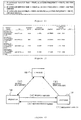
- Figure 12 shows an exemplary configuration of a display screen of the service search result displayed on the display unit.
- the display screen displays the search result retrieved with a search parameter of "determination of the need of nursing care.”
- the display screen displays a list of the following items: the service name, the URL, the company name, the average service time, the number of times of execution per day (Trx. /day), the time period when the use of the service concentrates (Trx. concentration distribution), and a note.
- the illustrated example lists the services in order of increasing average service time.
- Listing the search result information in ascending or descending order in terms of a particular item of the service quality information may serve the convenience of the user's selection from the services. Further, the note section for each service may describe information provided by the provider 10 (e.g., privileges and discounts according to the use of the service), an evaluation of the quality of the service (e.g., a five-grade evaluation), and so on. This information may also be taken into account for the user's determination.
- information provided by the provider 10 e.g., privileges and discounts according to the use of the service
- an evaluation of the quality of the service e.g., a five-grade evaluation
- This information may also be taken into account for the user's determination.
- the user determines a service to be used with reference to a display screen like the one shown in Figure 12 displayed by the web browser on the display unit of the terminal device. Then, the user operates an input device such as a mouse and selects the desired service.
- the web browser detects the event of this selection operation and transmits a service request that addresses to a URL corresponding to the selected service (a URL of the provider 10 that provides the service).
- the requester 30 issues a search request to the UDDI site 20, and the service quality information corresponding to registered information retrieved is returned along with a search result.
- the search itself for the service quality information may be a web services provided by the UDDI site 20.
- the invention can provide appropriate criteria in searching for a web services and serve the better use of the web services.
- the invention can provide service quality information as the criteria. 10 ... provider (service provider), 11 ... service execution unit, 12 ... service quality information collection unit, 13 ... asynchronous transmission control unit, 20 ... UDDI site, 21 ... UDDI, 22 ... asynchronous reception control unit, 23 ... service quality information accumulation and query unit, 24 ... SQM (Service Quality Management), 30 ... requester (service user), 31 ... service search unit, 32 ... service request unit, 101 ... CPU, 102 ... M/B chipset, 103 ... main memory, 105 ... hard disk, 106 ... network interface, 110 ... keyboard/mouse
- service quality information as the criteria. 10 ... provider (service provider), 11 ... service execution unit, 12 ... service quality information collection unit, 13 ... asynchronous transmission control unit, 20 ... UDDI site, 21 ... UDDI, 22 ... asynchronous reception control unit, 23 ... service quality information accumulation and query unit, 24 ... SQM (Service Quality Management), 30 ... request
Landscapes
- Business, Economics & Management (AREA)
- Finance (AREA)
- Accounting & Taxation (AREA)
- General Business, Economics & Management (AREA)
- Engineering & Computer Science (AREA)
- Theoretical Computer Science (AREA)
- Marketing (AREA)
- General Physics & Mathematics (AREA)
- Strategic Management (AREA)
- Physics & Mathematics (AREA)
- Economics (AREA)
- Development Economics (AREA)
- Tourism & Hospitality (AREA)
- Primary Health Care (AREA)
- General Health & Medical Sciences (AREA)
- Human Resources & Organizations (AREA)
- Health & Medical Sciences (AREA)
- Management, Administration, Business Operations System, And Electronic Commerce (AREA)
- Information Transfer Between Computers (AREA)
- Data Exchanges In Wide-Area Networks (AREA)
Abstract
A selection criterion appropriate for searching for a web service
in UDDI. A provider (10) that provides web services collects result
information, which will be used to judge the quality of provided
web services, and sends the information to a UDDI site (20). The
UDDI site (20) manages this result information and, in response to
a web service search request from a requestor (30), returns a searched
web service and result information on the web service.
Description
The present invention relates to a system for using a web services
via a network, and more particularly to a system characterized by
searching for the web services.
With increasing popularity of the Internet, attention is being given
to Web Services, a new use of web-based information exchange
techniques used on the Internet. The Web Services, which are a kind
of software services provided via networks, enable dynamic and
loosely coupled communication between software components on the
Internet. A website (web server) that provides a software function
as its service encapsulates the prepared service (wraps it with
connection code) and discloses it on the Internet. The website
thereby allows the service to be used by websites and web terminals
requesting the service. The Web Services utilize open techniques
including UDDI (Universal Description, Discovery, and Integration),
which is a registry mechanism that serves as a storage and management
system capable of registration and retrieval of information. The
open techniques utilized also include WSDL (Web Services Description
Language) as a description language for explaining services to be
provided, SOAP (Simple Object Access Protocol) as a communication
protocol, and XML (eXtensible Markup Language) as data description
language specifications.
For more details, UDDI is described in the references 1 and 2, WSDL
is described in the references 3 and 4, SOAP is described in the
reference 5, XML is described in the reference 6, and the Web Services
are described in the reference 7.
http://www.uddi.org/pubs/ProgrammersAPI-V2.04-Published-20020719.pdf
http://www.uddi.org/pubs/DataStructure-V2.03-Published-20020719.pdf
http://www.w3.org/TR/2001/NOTE-wsdl-20010315
http://www.w3.org/TR/wsdl
http://www.w3.org/TR/2002/WD-wsdl12-20020709
http://www.w3.org/TR/wsdl12
http//www.w3.org/TR/2001/WD-soapl2-20010709/
http://www.w3.org/TR/soapl2/
http://www.w3.org/TR/REC-xml
http://www.w3.org/TR/2002/WD-wsa-reqs-20020819
http://www.w3.org/TR/wsa-reqs
Figure 13 shows a Web Services architecture.
Referring to Figure 13, the architecture for realizing a Web Services
includes a provider (service provider) 131, a UDDI site 132, and
a requester (service user), which are capable of exchanging data
with each other via a network. The Web Services is realized by
exchanging data among these three entities. Specifically, the
provider 131 first implements a service to be provided [1]. Then,
information on the implemented service is registered with and
disclosed at the UDDI site 132 [2]. Then, the requester 133 issues
a search request for a desired service to the UDDI site 132 [3].
If the desired service is found, the requester 133 connects to the
provider 131 to request the service [4], and the provider 131 returns
a result (response) to the requester 133 [5].
In conventional Web Services, the information registered with the
UDDI site 132 includes, for example, information specifying a company
that provides the service (e.g., a company name), a service type
(e.g., the name of the service), and information required for binding
the service (e.g., a URL). Binding a service means to obtain a URL
address and connection interfaces (protocols and connection methods
(connection code)) of a service (service component) and to connect
to the service. A service component means a service encapsulated
for external accesses. As seen from Figure 13, these information
items are static ones registered before the actual start of the
service.
As described above, information registered with a UDDI site in
conventional Web Services has been static information prepared before
the start of services. Therefore, when a requester searches for
a desired service, the requester has no effective criteria for
determining which service to select from a plurality of similar
services found.
In such a case, the ability to provide appropriate criteria will
be able to introduce competition into service provision in Web
Services. That is, it can easily be imagined that providers will
take various measures in an effort to cause their services to be
selected. This will highly promote stimulation of Web Services
activities (especially business activities such as Internet
commerce).
Further, the ability to provide information that objectively
represents the quality of provided services as those criteria will
cause the providers to improve the quality of their services, thereby
allowing the requester to enjoy the services of higher quality.
Thus, an object of the invention is to realize provision of appropriate
criteria in searching for a web services.
Another object of the invention is to provide, as those criteria,
objective information for determining service quality.
To achieve the above objects, the invention is provided as a network
system for using a service via a network, comprising: a provider
that provides the service and collects information for determining
quality of the service provided; and a management site that registers
and manages the service provided by the provider and the information
for determining quality of the service collected at the provider.
In the case where the service is provided as a web services involving
web techniques, the management site may be a UDDI site with a UDDI,
which is a search and query system for web services.
The information for determining quality of the service may be service
history resulting from actual operation of the service.
Specifically, it may include the number of times the service has
been used, frequency of use of the service, turnaround time in
execution of the service, maintenance time for the service, and so
on. These information items are easily collected as numerical
information as data processing for the service is performed, and
are therefore available as information for objectively determining
the quality of the service.
The network system may comprise a requester that searches the
management site for a service, obtains a search result including
the service history for determining quality of the services,
determines a service to be used based on the search result, and requests
the service from a provider that provides the web services determined.
More specifically, the provider comprises: a service execution unit
for executing processing for the service; and a service quality
information collection unit for collecting, based on execution of
the processing by the service execution unit, information for
determining quality of the service.
The management site comprises: first management means for registering
and managing information on services; and second management means
for managing service history for determining quality of the services
registered with the first management means.
In the management site, searching for the service history for
determining quality of the services managed by the second management
means may be registered with the first management means as a service
and provided for the requester.
The second management means obtains the service history for
determining quality of the services from providers that provide the
services. In the case where the services provided by the providers
are web services, this information is generally transmitted as XML
documents written in WSDL. The second management means may convert
the information into relational database structures to improve
performance of a search in response to the search request issued
by the requester. It may also convert data of the XML documents
into information content convenient for the search (such as the
frequency of use per day, turnaround time for execution of the services,
etc.) before storing the data.
The requester comprises: a service search unit for issuing a search
request for a desired service to a management site that performs
searches and queries of services provided via a network and obtaining
a search result including service history for determining quality
of services; and a service request unit for selecting a service based
on the search result obtained by the service search unit and issuing
a request via the network for execution of the service to a provider
that provides the service.
In order to select a service for requesting from the provider based
on the search result including the service history for determining
quality of the services, the service history of the retrieved services
may be compared with each other to prioritize the services in terms
of the number of times they have been used (popularity of the services),
the turnaround time for execution of them, and so on.
The requester may further comprise a display control unit for
displaying the search result obtained by the service search unit
on a given display, the search result reflecting the service history
for determining quality of services.
The invention may also be provided as a program that controls a computer
to implement the above described provider, management site, or
requester. The program maybe stored in and distributed as a magnetic
disk, optical disk, semiconductor memory, or other storage device,
or distributed via a network.
In particular, as to the function of the provider for collecting
information for determining quality of the service and the function
of the requester for selecting a service for requesting from the
provider based on a search result including service history for
determining quality of services, program files for implementing these
functions may be provided as a class library in object-oriented
programming. In this manner, these functions may be hidden from
main functions of the provider and the requester, such as service
provision and searching.
Now, the invention will be described in detail according to an
embodiment illustrated in the appended drawings.
First, the overview of the invention will be presented. According
to the invention, a system is constructed in which a service user
who searches a UDDI site for a web services can obtain information
for determining the adequateness of the service, that is, information
on service quality. This information (referred to as service quality
information hereafter) is dynamic information resulting from actual
provision of the service. Various evaluation categories for the
service quality are possible, such as an evaluation by a third party
and an evaluation by the user themselves of the service. In this
invention, service history resulting from actual operation of a
service (the number of times the service has been used, frequency
of use, turnaround time for execution of the service, maintenance
time for the service, etc.) is employed as numerically expressible
evaluation criteria. As service providers operate their services,
the service history is collected, and it is then provided for the
UDDI site as information on the quality of the service of each service
provider.
Figure 1 shows a Web Services architecture according to this
embodiment.
Referring to Figure 1, the architecture for realizing a Web Services
according to this embodiment includes a provider (service provider)
10, a UDDI site 20, and a requester (service user) 30, which are
capable of exchanging data with each other via a network. Each of
these elements is embodied in a computer with a network capability,
for example, a workstation or a personal computer. The Web Services
is realized by exchanging data among these three entities.
Specifically, the provider 10 firstly implements a service to be
provided [1]. Here, from a class library provided according to this
embodiment, a program (classes) that provide a service quality
information collection function and a service quality information
transmission function are obtained and incorporated into a control
program in the computer embodying the provider 10. In this embodiment,
the control program used by the provider 10 to provide the service
is written in an object-oriented programming language such as Java®
(trademark of Sun Microsystems, Inc. in the U.S.), so that specific
data processing for the service is performed with a predetermined
method. The class library can provide program files having
particular functions. Thus, the provider 10 can easily implement
the service quality information collection function and the service
quality information transmission function. The details of these
functions will be described later.
The provider 10 then registers the information on the implemented
service with the UDDI site 20 using WSDL and discloses the information
[2].
Then, the requester 30 issues a search request for desired services
to the UDDI site 20 [3]. If quality information on those services
has been collected, the information will be returned along with the
services retrieved.
Once desired services have been retrieved, the requester 30 takes
account of the service quality information obtained and selects a
provider 10 that provides a service to be used. Then, it connects
to the provider 10 and requests the service [4].
The provider 10 that has received the request for the service performs
data processing for the service and returns the result to the requester
30 [5-1]. Before and after the data processing, the above mentioned
service quality information collection function collects service
history as the service quality information [5-2]. On completion
of the data processing, the above mentioned service quality
information transmission function transmits the collected service
quality information to the UDDI site 20 using SOAP [5-3].
The UDDI site 20 receives the service quality information from the
provider 10 and accumulates it in a database [6].
Figure 2 shows functional layers for realizing the Web Services
according to this embodiment.
Typical functional layers required for realizing Web Services include,
from a physical level side, TCP/IP, SOAP, WSDL, and UDDI. Functions
provided according to this embodiment (such as the service quality
information collection function in the provider 10, a service quality
information management function in the UDDI site 20, and a service
quality information search function in the requester 30) are
implemented at a functional layer provided over the UDDI layer as
shown in Figure 2. This functional layer is called a Booster
Container layer. An application for performing the data processing
for the service is constructed over the Booster Container layer.
This configuration hides the Booster Container layer from application
development. That is, an application developer does not need to
create software by themselves under specific rules for providing
the service quality information collection function and other
functions. Rather, the application developer can utilize the class
library provided as a tool that operates at the Booster Container
layer.
Figure 3 is a schematic diagram of an exemplary hardware configuration
of a computer suitable for embodying the provider 10, the UDDI site
20, and the requester 30 shown in Figure 1.
The computer shown in Figure 3 includes a CPU (Central Processing
Unit) 101 as operation means; main memory 103 connected to the CPU
101 via a M/B (motherboard) chipset 102 and a CPU bus; a video card
104 also connected to the CPU 101 via the M/B chipset 102 and an
AGP (Accelerated Graphics Port) ; a hard disk 105, a network interface
106, and a USB port 107 connected to the M/B chipset 102 via a PCI
(Peripheral Component Interconnect) bus; and a floppy disk drive
109 and a keyboard/mouse 110 connected to the M/B chipset 102 via
the PCI bus over a bridge circuit 108 and a low-speed bus such as
an ISA (Industry Standard Architecture) bus.
It is noted that Figure 3 is a mere illustration of a hardware
configuration of a computer for realizing this embodiment, and
various other configurations may also be employed to the extent that
this embodiment can be applied to them. For example, only video
memory may be provided instead of the video card 104, in which case
the CPU 101 processes image data. Further, a CD-ROM (Compact Disc
Read Only Memory) drive or a DVD-ROM (Digital Versatile Disc Read
Only Memory) drive may be provided via an interface such as an ATA
(AT Attachment) interface.
Now, description will be given of the service quality information
collected according to this embodiment as the service (method) is
executed in the provider 10.
In this embodiment, the service quality information collected in
the provider 10 is written as an XML document, which is named an
sqML (Service Quality Markup Language). The sqML includes mandatory
items and optional items. Figure 4 shows an exemplary sqML, and
Figure 5 shows a table describing the meanings of tags in the sqML
of Figure 4. As shown in Figures 4 and 5, the sqML includes the
execution time and attribute of a decorator, the name and address
of a service that called the decorator, the processing name and
processing attribute of the decorator, content of the optional items,
and so on. A decorator is code (a method) encapsulated as an
additional function for collecting the service quality information
as the service (method) is executed.
Now, each component for providing the Web Services in this embodiment
will be described in detail.
Figure 6 describes functions of the provider 10.
Referring to Figure 6, the provider 10 includes a service execution
unit 11 for executing a service to be provided, a service quality
information collection unit (decorator) 12 for collecting the service
quality information, and an asynchronous transmission control unit
13 for transmitting the collected service quality information to
the UDDI site 20. Although not expressly shown, a registration
function is also included for registering the information on the
implemented service with the UDDI site 20 using WSDL before the start
of the service.
These components are virtual software blocks that may be provided
by, for example, the CPU 101 of Figure 3 under the control of a program
(methods). The program is stored in and distributed as a magnetic
disk, optical disk, semiconductor memory, or other storage device,
or distributed via a network. Then, the program is stored in the
main memory 103 shown in Figure 3 and controls the CPU 101 to provide
these functions.
The service execution unit 11 receives a service request from the
requester 30 and performs data processing for the service that the
provider 10 provides. Then, it returns the result of the data
processing to the requester 30.
The service quality information collection unit 12 generates an sqML
before and after execution of the service (method) by the service
execution unit 11 and serializes it (temporarily stores it in an
area such as a work area or work file in the main memory of Figure
3).
The asynchronous transmission control unit 13 deserializes the sqML
generated and serialized by the service quality information
collection unit 12 (reads the sqML stored in the area such as a work
file). Then, it controls the network interface 106 shown in Figure
3, for example, and asynchronously transmits the deserialized sqML
to the UDDI site 20 using SOAP.
Figure 7 shows an exemplary class configuration where the functions
of these service execution unit 11 and service quality information
collection unit 12 are provided by object-oriented programming.
Figure 8 is a sequence diagram for this case.
As shown in Figures 7 and 8, these functions may be implemented by
using the Decorator Pattern of what is called the GoF's Design Patterns
(Design Patterns by Erich Gamma, Richard Helm, Ralph Johnson, and
John Vlissides). The Decorator Pattern allows methods to be added
to a certain method in series while hiding the added methods from
the certain method.
This embodiment employs the Decorator Pattern of the GoF's Design
Patterns, which are well known as a manual containing 23 patterns
of function reuse techniques (know-how in inheritance, encapsulation,
etc.) in object-oriented programming. Details about the GoF's
Design Patterns are described, for example, in the following
reference 8 and reference 9 (a translation of the reference 8).
Reference 8: Design Patterns Elements of Reusable Object-Oriented
Software, by Erich Gamma, Richard Helm, Ralph Johnson, and John
Vlissides, Addison Wesley Publishing Company
Reference 9: Object shikou ni okeru sairiyou no tameno design pattern,
translated under the editorship of Shinichi Motoida and Kazuki
Yoshida, SOFTBANK
The processing (methods) of generating and serializing the sqML by
the service quality information collection unit 12 before and after
the provider 10 provides the service is called decorator processing.
The decorator processing is provided in Operation() of
ConcreteDecoratorBefore and ConcreteDecoratorAfter in Figure 7.
The mandatory items in the sqML generated by the decorator processing
are as follows:
- the name and attribute of each of the decorators (ConcreteDecoratorBefore and ConcreteDecoratorAfter)
- the execution time of Operation() at ConcreteDecoratorBefore
- the execution time of Operation() at ConcreteDecoratorAfter
- the method name and URL of Operation() at ConcreteComponent
Further, information unique to the service of each provider 10 may
be collected by overriding the decorator processing.
The service (method) itself of the provider 10 performed by the service
execution unit 11 is implemented in Operation () at ConcreteComponent
of Figure 7.
Referring to Figure 8, the execution sequence of these classes shows
that ServiceMethodOperation is first executed, in which
ConcreteDecoratorBefore is called to collect the execution time of
Operation() method (corresponding to the start time of the service).
Then, called in this ConcreteDecoratorBefore is
ConcreteDecoratorAfter, in which ConcreteComponent is further
called to execute the service (method). When the service is completed,
the processing returns to ConcreteDecoratorAfter to collect the
execution time of Operation() method (corresponding to the end time
of the service). The processing returns to ConcreteDecoratorBefore
and then to ServiceMethodOperation, where the processing terminates.
In this manner, the processing of collecting the service quality
information (decorator processing) is hidden from the service
(method).
Figure 9 describes functions of the UDDI site 20.
Referring to Figure 9, the UDDI site 20 includes a UDDI 21 as a search
and query system for a web services provided by the provider 10,
and an asynchronous reception control unit 22 for receiving an spML
transmitted by the provider 10. As a management system for managing
the service quality information, the UDDI site 20 also includes a
service quality information accumulation and query unit 23 and an
SQM (Service Quality Management) 24, which is a database.
These components are virtual software blocks that may be provided
by, for example, the CPU 101 of Figure 3 under the control of a program
(methods). The program is stored in and distributed as a magnetic
disk, optical disk, semiconductor memory, or other storage media,
or distributed via a network. Then, the program is stored in the
main memory 103 shown in Figure 3 and controls the CPU 101 to provide
these functions. Data managed by the UDDI 21 and the SQM 24 may
be stored in the main memory 103 or the hard disk 105 of Figure 3,
for example.
The UDDI 21 registers and manages information on the web services
provided by the provider 10. It also responds to a search request
from the requester 30 by searching for registered information (web
services information) that matches the search request and then
returning the search result to the requester 30.
The asynchronous reception control unit 22 receives the sqML from
the provider 10 and passes it to the service quality information
accumulation and query unit 23.
The service quality information accumulation and query unit 23 stores
the sqML in the SQM 24, as well as searches for the service quality
information in response to the search request from the requester
30. It also performs a predetermined preprocessing for improving
performance in searching the SQM 24. Specifically, the sqML, which
is an XML document, is converted into a relational database structure
by using an XML parser. Then, the information is converted into
a form convenient for the requester 30. For example, the effective
time it took for execution of the service (method) may be computed
(by subtracting the execution time of Operation() method at
ConcreteDecoratorBefore from the execution time of Operation()
method at ConcreteDecoratorAfter). Also, the number of times the
service (method) has been executed may be computed. These
information items are returned as the service quality information
in response to the search request from the requester 30.
Typically, the search of the service quality information accumulation
and query unit 23 and the search of the UDDI 21 are performed at
the same time. The service quality information to be retrieved by
the service quality information accumulation and query unit 23
corresponds to the information retrieved by the UDDI 21; that is,
the service quality information on that service is retrieved.
Therefore, the search result of the service quality information
accumulation and query unit 23 is typically returned to the requester
30 along with the search result of the UDDI 21. As such, in the
following description, returning the search result of the UDDI 21
and the service quality information retrieved by the service quality
information accumulation and query unit 23 to the requester 30 is
expressed like returning the search result with the service quality
information appended, or returning the search result along with the
service quality information. In practice, the search result of the
UDDI 21 and the service quality information may be transmitted in
anymanner (such as being transmitted as separate files or transmitted
by packaging them in one file), as long as they are associated with
each other. Also, the search result of the UDDI 21 and the search
result of the service quality information accumulation and query
unit 23 are collectively expressed like the search result including
the service quality information.
TheSQM24 stores and accumulates the sqML transmitted by each provider
10. When the UDDI is searched in response to a search request from
the requester 30, the service quality information in the sqMLs
accumulated in the SQM 24 is searched for information corresponding
to a web services specified by the search result. The corresponding
service quality information is transmitted to the requester 30 as
additional information to the search result.
As a database that embodies the service quality information
accumulation and query unit 23 and SQM 24, DB2/UDB (Universal
Database) of International Business Machines Corporation in the U.S.
may be used, for example. In that case, WORF (WebServices Object
Runtime Framework) and XML Extender may be used to facilitate
conversion of the sqML from XML documents into relational database
structures. This allows the sqML received from the provider 10 to
be converted at the point of storage into the SQM 24.
Figure 10 describes functions of the requester 30.
Referring to Figure 10, the requester 30 includes a service search
unit 31 for issuing a search request for a desired service to the
UDDI site 20, and a service request unit 32 for issuing a service
execution request to the provider 10.
These components are virtual software blocks that may be provided
by, for example, the CPU 101 of Figure 3 under the control of a program
(methods). The program is stored in and distributed as a magnetic
disk, optical disk, semiconductor memory, or other storage media,
or distributed via a network. Then, the program is stored in the
main memory 103 shown in Figure 3 and controls the CPU 101 to provide
these functions.
The service search unit 31 connects to the UDDI site 20 to issue
a search request for a desired service to the UDDI 21. It also issues
a search request for corresponding service quality information to
the service quality information accumulation and query unit 23. It
then receives a search result. The function of issuing a search
request to the service quality information accumulation and query
unit 23 can be easily incorporated into the service search unit 31
by providing as a class library a program for implementing the
function.
The service request unit 32 selects a certain service from the search
result of services obtained by the service search unit 31, connects
to the provider 10 that provides the service, and transmits a service
request. It then receives an execution result of the service. When
selecting the certain service from the search result, the service
request unit 32 can take account of the service quality information
obtained along with the search result. As described above, the
service quality information includes the effective time it took for
execution of the service, the number of times the service has been
executed, and so on. Therefore, the service request unit 32 can
select a service by setting appropriate criteria, such as selecting
a provider 10 having a short effective time it took for execution
of the service (that is, a provider with quick response) or a provider
10 providing the service executed for many times (that is, a popular
provider).
Figure 11 shows examples of logic for determining a service to be
used based on the search result including the service quality
information obtained by the service search unit 31.
In the three examples of logic shown in Figure 11, the average service
time (the average of effective times it took for execution of a service)
and the access frequency (the number of accesses for a certain period
(e.g., per day) are compared among services in the obtained search
result. The logic 1 selects a service that has the first (shortest)
average service time and the first (highest) access frequency, and
determines to use that service. The logic 2 selects a service that
does not have the first average service time but has the first (highest)
access frequency, and determines to use that service. This logic
2 takes into account that a popular service is reliable even though
it takes time to perform processing for the service. The logic 3
selects a service that has the average service time above the third
(the third shortest one) and has the first access frequency, and
determines to use that service. This logic 3 places a high value
on thepopularityof the services while taking account of the effective
time for executing the services to some extent.
Once the service to be used is determined in this manner, the service
request unit 32 transmits a service request that addresses to a URL
corresponding to the service (a URL of the provider 10 that provides
the service).
Besides automatic selection of a requested service under the program
control at the service request unit 32, it is also possible to display
the search result to a user of the requester 30 to prompt for the
user's selection. Forexample, the requester 30 may include a display
control unit (not shown in Figure 10) as one of its functions. Under
the control of the display control unit, a predetermined display
unit displays the search result obtained by the service search unit
31 with the service quality information reflected on the search result,
and prompts the user to select a desired service. Then, the service
request unit 32 issues a service request to a provider 10 that provides
a service selected by the user. For example, such mode of the
requester 30 may be applied to the case where the requester 30 is
not a server used in a company but a personal terminal device that
accesses the UDDI site 20 and provider 10 through the service search
unit 31, the service request unit 32, and a web browser operating
as the display control unit (not shown).
Figure 12 shows an exemplary configuration of a display screen of
the service search result displayed on the display unit.
In the example shown in Figure 12 , assume that four exemplary companies
(AAA, BBB, CCC, and DDD) provide services of determining the need
of nursing care and are registered with the UDDI site 20. The display
screen displays the search result retrieved with a search parameter
of "determination of the need of nursing care." As shown, for each
service of the companies, the display screen displays a list of the
following items: the service name, the URL, the company name, the
average service time, the number of times of execution per day
(Trx. /day), the time period when the use of the service concentrates
(Trx. concentration distribution), and a note. The illustrated
example lists the services in order of increasing average service
time. Listing the search result information in ascending or
descending order in terms of a particular item of the service quality
information may serve the convenience of the user's selection from
the services. Further, the note section for each service may describe
information provided by the provider 10 (e.g., privileges and
discounts according to the use of the service), an evaluation of
the quality of the service (e.g., a five-grade evaluation), and so
on. This information may also be taken into account for the user's
determination.
The user determines a service to be used with reference to a display
screen like the one shown in Figure 12 displayed by the web browser
on the display unit of the terminal device. Then, the user operates
an input device such as a mouse and selects the desired service.
The web browser detects the event of this selection operation and
transmits a service request that addresses to a URL corresponding
to the selected service (a URL of the provider 10 that provides the
service).
In the above described embodiment, the requester 30 issues a search
request to the UDDI site 20, and the service quality information
corresponding to registered information retrieved is returned along
with a search result. Here, the search itself for the service quality
information may be a web services provided by the UDDI site 20.
Specifically, information on the search service for the service
quality information performed by the service quality information
accumulation and query unit 23 and the SQM 24 is registered with
the UDDI 21 by using WSDL and disclosed. Thus, once the UDDI 21
has been retrieved by the service search unit 31 of the requester
30 and the information on the search service for the service quality
information has been read, a proxy (a connecting program) for
connection to the search service is dynamically generated from the
WSDL description, thereby enabling the search for the service quality
information. For this configuration, there is no need to have a
class library for providing the service searchunit 31 of the requester
30 with a function of accessing the service quality information
accumulation and query unit 23 of the UDDI site 20.
As has been described, the invention can provide appropriate criteria
in searching for a web services and serve the better use of the web
services.
Further, the invention can provide service quality information as
the criteria.
10 ... provider (service provider), 11 ... service execution unit, 12 ... service quality information collection unit, 13 ... asynchronous transmission control unit, 20 ... UDDI site, 21 ... UDDI, 22 ... asynchronous reception control unit, 23 ... service quality information accumulation and query unit, 24 ... SQM (Service Quality Management), 30 ... requester (service user), 31 ... service search unit, 32 ... service request unit, 101 ... CPU, 102 ... M/B chipset, 103 ... main memory, 105 ... hard disk, 106 ... network interface, 110 ... keyboard/mouse
10 ... provider (service provider), 11 ... service execution unit, 12 ... service quality information collection unit, 13 ... asynchronous transmission control unit, 20 ... UDDI site, 21 ... UDDI, 22 ... asynchronous reception control unit, 23 ... service quality information accumulation and query unit, 24 ... SQM (Service Quality Management), 30 ... requester (service user), 31 ... service search unit, 32 ... service request unit, 101 ... CPU, 102 ... M/B chipset, 103 ... main memory, 105 ... hard disk, 106 ... network interface, 110 ... keyboard/mouse
Claims (20)
- A network system that provides software services via a network, comprising:at least one provider for providing a software service and for collecting service history for determining the quality of the service; anda management site for managing the service history collected by the provider.
- The network system according to Claim 1, wherein the provider collects, as the service history for determining the quality of the service, at least one of the following: the number of times the service has been used, frequency of use of the service, execution time of the service, and maintenance time for the service.
- A network system that implements software services via a network, comprising:wherein the requester requests the management site to search for software services and, based on a service search result including the service history for determining the quality of the retrieved services, determines a service to be provided.a management site for managing service history for determining the quality of services provided by at least one provider; anda requester for requesting a service fromat least one of the providers,
- A provider that provides software services via a network, comprising:means for executing processing for at least one software service: andmeans for collecting, based on execution of the processing by the executing means, information for determining the quality of the software service.
- The provider according to Claim 4, further comprising means for transmitting the information for determining the quality of the software service to a management site that searches for software services provided via the network.
- The provider according to Claim 4, wherein the collecting means collects, as the information for determining the quality of the service; service history resulting from executing the processing for the service.
- A management site that searches for software services provided via a network, comprising:first means for managing information on the software services; andsecond means for managing service history for determining the quality of the services on which the first means manages information.
- The management site according to Claim 7, wherein
the first means retrieves a service in response to a search request for the service transmitted from a requester via a network;
the second means retrieves information for determining the quality of the service retrieved by the first means; and
the service retrieved by the first means and the information retrieved by the second means for determining the quality of the service are transmitted to the requester. - The management site according to Claim 7, wherein the information for determining quality of the services is obtained from a provider that provides the software services.
- The management site according to Claim 7, wherein the first means manages, as a software service, a function of the second means for retrieving the information for determining the quality of the services.
- A requester comprising:means for transmitting a search request for a service to a management site that searches for software services provided via a network;means for obtaining a service search result including information for determining the quality of services from the management site;means for selecting at least one software service based on the obtained search result; andmeans for transmitting a request to execute the selected service to a provider.
- A requester comprising:means for transmitting a search request for a service to a management site that searches for software services provided via a network;means for obtaining a service search result including information for determining the quality of services from the management site; andmeans for displaying the service search result on a display so that the service search result reflects the information for determining the quality of the services.
- A computer program for providing software services via a network, the computer program causes a computer to function as:means for executing processing for at least one software service: andmeans for collecting, based on execution of the processing by the executing means, information for determining the quality of the software service.
- The computer program according to Claim 13, further causing the computer to function as means for transmitting the information for determining the quality of the software service to a management site that searches for software services provided via the network.
- The computer program according to Claim 13, wherein the collecting means collects, as the information for determining the quality of the service, service history resulting from executing the processing for the service.
- A computer program for searching for software services provided via a network, wherein the computer program causes a computer to function as:first means for managing information on the software services; andsecond means for managing service history for determining the quality of the services on which the first means manages information.
- The computer program according to Claim 16, wherein
the first means retrieves a service in response to a search request for the service transmitted from a requester via a network;
the second means retrieves information for determining the quality of the service retrieved by the first means; and
the service retrieved by the first means and the information retrieved by the second means for determining the quality of the service are transmitted to the requester. - The computer program according to Claim 16, wherein the information for determining the quality of the services is obtained from a provider that provides the software services.
- The computer program according to Claim 16, wherein the first means manages, as a software service, a function of the second means for retrieving the information for determining the quality of the services.
- A computer program for implementing software services provided via a network, the computer program causes a computer to function as:means for transmitting a search request for a service to a management site that searches for software services provided via the network;means for obtaining a service search result including information for determining the quality of services from the management site;means for selecting at least one software service based on the obtained search result; andmeans for transmitting a request to execute the selected service to a provider.
Applications Claiming Priority (3)
| Application Number | Priority Date | Filing Date | Title |
|---|---|---|---|
| JP2002249783 | 2002-08-28 | ||
| JP2002249783 | 2002-08-28 | ||
| PCT/JP2003/010189 WO2004021234A1 (en) | 2002-08-28 | 2003-08-08 | Network system, provider, management site, requestor, and program |
Publications (2)
| Publication Number | Publication Date |
|---|---|
| EP1548626A1 true EP1548626A1 (en) | 2005-06-29 |
| EP1548626A4 EP1548626A4 (en) | 2008-01-23 |
Family
ID=31972598
Family Applications (1)
| Application Number | Title | Priority Date | Filing Date |
|---|---|---|---|
| EP03791204A Withdrawn EP1548626A4 (en) | 2002-08-28 | 2003-08-08 | NETWORK SYSTEM, SERVICE PROVIDING, MANAGEMENT SITE, APPLICANT AND PROGRAM |
Country Status (9)
| Country | Link |
|---|---|
| US (1) | US8949390B2 (en) |
| EP (1) | EP1548626A4 (en) |
| JP (1) | JPWO2004021234A1 (en) |
| KR (1) | KR20050033640A (en) |
| CN (1) | CN1679037A (en) |
| AU (1) | AU2003254921A1 (en) |
| CA (1) | CA2497346A1 (en) |
| TW (1) | TWI241503B (en) |
| WO (1) | WO2004021234A1 (en) |
Cited By (5)
| Publication number | Priority date | Publication date | Assignee | Title |
|---|---|---|---|---|
| WO2005114411A1 (en) * | 2004-05-21 | 2005-12-01 | Computer Associates Think, Inc. | Balancing load requests and failovers using a uddi proxy |
| EP1773019A1 (en) * | 2005-10-07 | 2007-04-11 | Alcatel Lucent | Leveraging presence service system and method for distributed web service delivery and deployment |
| EP1760656A3 (en) * | 2005-08-30 | 2007-11-21 | Sap Ag | A computer system and computer implemented method for applying tax legislation |
| WO2008111884A1 (en) * | 2007-03-14 | 2008-09-18 | Telefonaktiebolaget Lm Ericsson (Publ) | Method and arrangement for mediating web services using uddi |
| CN1941771B (en) * | 2005-09-27 | 2011-09-07 | 国际商业机器公司 | Web service data managing method and system for use of service oriented system structure |
Families Citing this family (12)
| Publication number | Priority date | Publication date | Assignee | Title |
|---|---|---|---|---|
| KR100744533B1 (en) | 2004-12-16 | 2007-08-01 | 한국전자통신연구원 | Intelligent Registry and its Control Method in Open Service Gateway |
| KR100739715B1 (en) * | 2005-07-12 | 2007-07-13 | 삼성전자주식회사 | Apparatus and method for performing web service policy agreement |
| US8396849B2 (en) * | 2006-03-30 | 2013-03-12 | Microsoft Corporation | Automatic browser search provider detection and usage |
| US20070250611A1 (en) * | 2006-04-20 | 2007-10-25 | Bhogal Kulvir S | Method of and System for Providing Performance Information in a UDDI System |
| JP2008152397A (en) * | 2006-12-14 | 2008-07-03 | Canon Inc | Information processing method and apparatus, and information processing system |
| US20080172621A1 (en) * | 2007-01-11 | 2008-07-17 | International Business Machines Corporation | Augmenting service description with expected usage information |
| US10210532B2 (en) | 2007-04-16 | 2019-02-19 | Jda Software Group, Inc. | Business-to-business internet infrastructure |
| JP4963110B2 (en) * | 2008-01-25 | 2012-06-27 | インターナショナル・ビジネス・マシーンズ・コーポレーション | Service search system, method and program |
| JP5018536B2 (en) * | 2008-02-15 | 2012-09-05 | 日本電気株式会社 | Information service search system, patrol collection method, and information service patrol collection program |
| JP5936224B2 (en) | 2011-10-18 | 2016-06-22 | インターナショナル・ビジネス・マシーンズ・コーポレーションInternational Business Machines Corporation | Method, computer system, computer and program for dynamically selecting a service provider |
| CN103034963B (en) * | 2012-11-28 | 2017-10-27 | 东南大学 | A kind of service selection system and system of selection based on correlation |
| CN103973460B (en) * | 2013-01-30 | 2017-06-27 | 华为终端有限公司 | For realizing the method and device that network is intended to |
Family Cites Families (8)
| Publication number | Priority date | Publication date | Assignee | Title |
|---|---|---|---|---|
| KR200212645Y1 (en) | 1998-11-07 | 2001-02-15 | 김범성 | Dehumidifier with antirust and insect repellent |
| KR100358721B1 (en) | 2000-07-29 | 2002-10-30 | 인프라닉스 주식회사 | The system and method for collecting and analysing QoS data of client/server system |
| KR100376019B1 (en) | 2000-08-08 | 2003-03-15 | 주식회사 이지컴뮤니케이션즈 | Internet Web Server Management System and Method for Integrated Web Services |
| KR200210346Y1 (en) | 2000-08-21 | 2001-01-15 | 주식회사노비타 | Water purifier for moisturizer |
| US7319979B2 (en) * | 2001-03-29 | 2008-01-15 | Intel Corporation | Dynamically interacting with an internet service using a client-specified communication proxy and protocol |
| US7035944B2 (en) | 2001-09-19 | 2006-04-25 | International Business Machines Corporation | Programmatic management of software resources in a content framework environment |
| US7177862B2 (en) * | 2002-03-28 | 2007-02-13 | International Business Machines Corporation | Method and structure for federated web service discovery search over multiple registries with result aggregation |
| US7725590B2 (en) * | 2002-04-19 | 2010-05-25 | Computer Associates Think, Inc. | Web services broker |
-
2003
- 2003-06-30 TW TW092117803A patent/TWI241503B/en not_active IP Right Cessation
- 2003-08-08 CN CNA03819998XA patent/CN1679037A/en active Pending
- 2003-08-08 US US10/526,587 patent/US8949390B2/en active Active
- 2003-08-08 AU AU2003254921A patent/AU2003254921A1/en not_active Abandoned
- 2003-08-08 KR KR1020057001797A patent/KR20050033640A/en not_active Ceased
- 2003-08-08 JP JP2004532687A patent/JPWO2004021234A1/en active Pending
- 2003-08-08 CA CA002497346A patent/CA2497346A1/en not_active Abandoned
- 2003-08-08 WO PCT/JP2003/010189 patent/WO2004021234A1/en not_active Ceased
- 2003-08-08 EP EP03791204A patent/EP1548626A4/en not_active Withdrawn
Cited By (7)
| Publication number | Priority date | Publication date | Assignee | Title |
|---|---|---|---|---|
| WO2005114411A1 (en) * | 2004-05-21 | 2005-12-01 | Computer Associates Think, Inc. | Balancing load requests and failovers using a uddi proxy |
| EP1760656A3 (en) * | 2005-08-30 | 2007-11-21 | Sap Ag | A computer system and computer implemented method for applying tax legislation |
| CN1941771B (en) * | 2005-09-27 | 2011-09-07 | 国际商业机器公司 | Web service data managing method and system for use of service oriented system structure |
| EP1773019A1 (en) * | 2005-10-07 | 2007-04-11 | Alcatel Lucent | Leveraging presence service system and method for distributed web service delivery and deployment |
| US8788618B2 (en) | 2005-10-07 | 2014-07-22 | Alcatel Lucent | Leveraging presence service system and method for distributed web service delivery and deployment |
| WO2008111884A1 (en) * | 2007-03-14 | 2008-09-18 | Telefonaktiebolaget Lm Ericsson (Publ) | Method and arrangement for mediating web services using uddi |
| CN101637006B (en) * | 2007-03-14 | 2013-11-06 | 艾利森电话股份有限公司 | Method and apparatus for mediating WEB services using UDDI |
Also Published As
| Publication number | Publication date |
|---|---|
| WO2004021234A1 (en) | 2004-03-11 |
| TWI241503B (en) | 2005-10-11 |
| KR20050033640A (en) | 2005-04-12 |
| JPWO2004021234A1 (en) | 2005-12-22 |
| CN1679037A (en) | 2005-10-05 |
| EP1548626A4 (en) | 2008-01-23 |
| CA2497346A1 (en) | 2004-03-11 |
| AU2003254921A1 (en) | 2004-03-19 |
| US8949390B2 (en) | 2015-02-03 |
| US20050235053A1 (en) | 2005-10-20 |
| TW200404231A (en) | 2004-03-16 |
Similar Documents
| Publication | Publication Date | Title |
|---|---|---|
| US8949390B2 (en) | Management of service quality information in web services | |
| US7343428B2 (en) | Dynamic, real-time integration of software resources through services of a content framework | |
| US8589594B2 (en) | Programmatic management of software resources in a content framework environment | |
| US7318056B2 (en) | System and method for performing click stream analysis | |
| US20030055868A1 (en) | Building distributed software services as aggregations of other services | |
| US20050182690A1 (en) | Wish list | |
| US20120047176A1 (en) | System and Method for Real-Time Content Aggregation and Syndication | |
| US20030036917A1 (en) | Service provision system and method | |
| US20040133580A1 (en) | Persistent data storage for metadata related to web service entities | |
| US7877434B2 (en) | Method, system and apparatus for presenting forms and publishing form data | |
| US20040143623A1 (en) | Network service mediation method, network service mediation device and network service mediation program | |
| US20080016516A1 (en) | Systems and methods for using application services | |
| JP2006500650A (en) | Configuration services for autonomous computation | |
| CA2429166A1 (en) | Database integrity in an internet e-commerce environment | |
| US20010051898A1 (en) | Information mediating apparatus and method and storage medium storing information mediating program therein | |
| JP2001222403A (en) | Setting of information display policy of various display device | |
| Czarnul et al. | Automatic conversion of legacy applications into services in beesycluster | |
| JP2001265959A (en) | Information mediation device, information mediation method, computer-readable storage medium storing information mediation program, and information mediation program | |
| Krishnaswamy et al. | An XML Specification Language to Support a Virtual Marketplace of Data Mining E-Services. | |
| Ong et al. | Calling all agents, where are you? | |
| JP2003308323A (en) | Multiple service procedure proxy method, search server, ASP server and user terminal | |
| Liu et al. | Applying agents to search goods information based on three-level metadata architectures | |
| Chen et al. | Research on registry centre for geospatial web service based on CSW specification |
Legal Events
| Date | Code | Title | Description |
|---|---|---|---|
| PUAI | Public reference made under article 153(3) epc to a published international application that has entered the european phase |
Free format text: ORIGINAL CODE: 0009012 |
|
| 17P | Request for examination filed |
Effective date: 20050302 |
|
| AK | Designated contracting states |
Kind code of ref document: A1 Designated state(s): AT BE BG CH CY CZ DE DK EE ES FI FR GB GR HU IE IT LI LU MC NL PT RO SE SI SK TR |
|
| AX | Request for extension of the european patent |
Extension state: AL LT LV MK |
|
| DAX | Request for extension of the european patent (deleted) | ||
| A4 | Supplementary search report drawn up and despatched |
Effective date: 20071220 |
|
| 17Q | First examination report despatched |
Effective date: 20080813 |
|
| STAA | Information on the status of an ep patent application or granted ep patent |
Free format text: STATUS: THE APPLICATION IS DEEMED TO BE WITHDRAWN |
|
| 18D | Application deemed to be withdrawn |
Effective date: 20081224 |