EP1548105A1 - Method of targeted gene disruption, genome of hyperthermostable bacterium and genome chip using the same - Google Patents
Method of targeted gene disruption, genome of hyperthermostable bacterium and genome chip using the same Download PDFInfo
- Publication number
- EP1548105A1 EP1548105A1 EP03793947A EP03793947A EP1548105A1 EP 1548105 A1 EP1548105 A1 EP 1548105A1 EP 03793947 A EP03793947 A EP 03793947A EP 03793947 A EP03793947 A EP 03793947A EP 1548105 A1 EP1548105 A1 EP 1548105A1
- Authority
- EP
- European Patent Office
- Prior art keywords
- sequence
- nucleic acid
- seq
- variant
- amino acid
- Prior art date
- Legal status (The legal status is an assumption and is not a legal conclusion. Google has not performed a legal analysis and makes no representation as to the accuracy of the status listed.)
- Withdrawn
Links
Images


Classifications
-
- C—CHEMISTRY; METALLURGY
- C07—ORGANIC CHEMISTRY
- C07K—PEPTIDES
- C07K14/00—Peptides having more than 20 amino acids; Gastrins; Somatostatins; Melanotropins; Derivatives thereof
- C07K14/195—Peptides having more than 20 amino acids; Gastrins; Somatostatins; Melanotropins; Derivatives thereof from bacteria
-
- C—CHEMISTRY; METALLURGY
- C12—BIOCHEMISTRY; BEER; SPIRITS; WINE; VINEGAR; MICROBIOLOGY; ENZYMOLOGY; MUTATION OR GENETIC ENGINEERING
- C12Q—MEASURING OR TESTING PROCESSES INVOLVING ENZYMES, NUCLEIC ACIDS OR MICROORGANISMS; COMPOSITIONS OR TEST PAPERS THEREFOR; PROCESSES OF PREPARING SUCH COMPOSITIONS; CONDITION-RESPONSIVE CONTROL IN MICROBIOLOGICAL OR ENZYMOLOGICAL PROCESSES
- C12Q1/00—Measuring or testing processes involving enzymes, nucleic acids or microorganisms; Compositions therefor; Processes of preparing such compositions
- C12Q1/02—Measuring or testing processes involving enzymes, nucleic acids or microorganisms; Compositions therefor; Processes of preparing such compositions involving viable microorganisms
-
- G—PHYSICS
- G01—MEASURING; TESTING
- G01N—INVESTIGATING OR ANALYSING MATERIALS BY DETERMINING THEIR CHEMICAL OR PHYSICAL PROPERTIES
- G01N2333/00—Assays involving biological materials from specific organisms or of a specific nature
- G01N2333/195—Assays involving biological materials from specific organisms or of a specific nature from bacteria
-
- G—PHYSICS
- G01—MEASURING; TESTING
- G01N—INVESTIGATING OR ANALYSING MATERIALS BY DETERMINING THEIR CHEMICAL OR PHYSICAL PROPERTIES
- G01N2500/00—Screening for compounds of potential therapeutic value
- G01N2500/10—Screening for compounds of potential therapeutic value involving cells
Definitions
- the present invention relates to genomics. More specifically, the present invention relates to a genome of a hyperthermostable bacterium and a genome chip thereof. The present invention relates to a novel method for targeted disruption.
- Hyperthermostable bacteria survive in high temperature environments, proteins (such as enzymes) produced by the bacteria are generally thermostable, i.e., structurally stable. Further, archaebacteria, to which the hyperthermostable bacteria belong, are living organisms different from conventionally known prokaryotic or eukaryotic organisms. Therefore, it is clear that the hyperthermostable bacteria are evolutionally different from these organisms. Accordingly, even if an enzyme derived from the hyperthermostable bacteria has similar functions to those already known derived from prokaryotic or eukaryotic cells, the enzymes derived from the hyperthermostable bacteria are often structurally and/or enzymatically different from conventional enzymes.
- chaperonin isolated from the KOD-1 strain (Thermococcus kodakaraensis KOD1, hereinafter also called KOD1 or KOD1 strain; Morikawa,M.et al., Appl.Environ.Microbiol.60(12),4559-4566(1994)), a hyperthermostable bacterium, has similar functions to GroEL from Escherichia coli. However, GroEL forms a 14-mer and further complexes with GroES, which forms a 7-mer, in order to achieve its functions, whereas the chaperonin from KOD-1 strain functions alone (Yan, Z. et al., Appl. Environ. Microbiol. 63: 785-789).
- Gene disruption using a plasmid is conventionally known as a method for targeted disruption of a gene in thermostable bacteria (Bartolucci S., Third International Congress on Extremophiles Hamburg, Germany, September 3-7, 2000).
- the method of Bartolucci utilizes a homogeneous or heterogeneous expression system with a recombinant protein using a thermostable bacterium.
- the above identified problem has been solved by using an entire sequence of a genome of a living organism for targeting a portion of chromosomes thereof.
- the present invention demonstrates that the above-mentioned method has been carried out in an efficient and definite manner by sequencing the whole genome of Thermococcus kodakaraensis KOD1 strain, a strain of thermostable bacteria, as an example of genomic sequence.
- the present invention also provides for the first time a technology for analyzing an entire genome in an efficient and/or global manner by sequencing the entire genomic sequence of Thermococcus kodakaraensis KOD1 strain, a strain of the thermostable bacteria as an example of the genomic sequence. Therefore, it is now possible to simulate gene expression of the organism per se on a chip.
- the present invention provides the following:
- the prsent biomolecule chip may be DNA chip, protein chip or the like.
- organism is used in the widest sense in the art and refers to a living entity haveing a genome.
- An organism comprises prokaryotes (for example, E. coli, hyperthermophillic bacteria and the like) and eukaryotes (for example, plants, animals and the like) and the like.
- the term "genome” refers to a group of genes of a set of chromosomes which is indispensable for supporting living activity of a living organism.
- monoploidic organisms such as bacteria, phages, viruses and the like, one DNA or RNA molecule per se is responsible for the genetic information defining these species and is considered the genome.
- diploidic organisms such as many eukaryotic organisms, a set of chromosomes (for example, a human has 23 pairs of chromosomes, a mouse has 20 pairs of chromosomes) in a germ cell, and two sets of chromosomes in a somatic cell comprise the genome.
- the term “gene” refers to an element defining a genetic trait.
- a gene is typically arranged in a given sequence on a chromosome.
- a gene which defines the primary structure of a protein is called a structural gene.
- a gene which regulates the expression of a structural gene is called a regulatory gene.
- the term “gene” may refer to "polynucleotide”, “oligonucleotide”, “nucleic acid”, and “nucleic acid molecule” and/or “protein”, “polypeptide”, “oligopeptide” and “peptide”.
- protein protein
- polypeptide oligopeptide
- peptide as used herein have the same meaning and refer to an amino acid polymer having any length.
- This polymer may be a straight, branched or cyclic chain.
- An amino acid may be a naturally-occurring or non-naturally-occurring amino acid, or a variant amino acid.
- the term may include those assembled into a composite or a plurality of polypeptide chains.
- the term also includes a naturally-occurring or artificially modified amino acid polymer. Such modification includes, for example, disulfide bond formation, glycosylation, lipidation, acetylation, phosphorylation, or any other manipulation or modification (e.g., conjugation with a labeling moiety).
- This definition encompasses a polypeptide containing at least one amino acid analog (e.g., non-naturally-occurring amino acid, etc.), a peptide-like compound (e.g., peptoid), and other variants known in the art, for example.
- Gene products comprising a sequence listed in the Sequence Listing usually take a polypeptide form.
- the polypeptide of the present invention has a specific sequence (a sequence set forth in Sequence Listings or a variant thereof).
- a sequence having a variant may be used for a varitey of purposes, such as diagnostic use, in the present invention.
- polynucleotide refers to a nucleotide polymer having any length. This term also includes an "oligonucleotide derivative” or a "polynucleotide derivative”.
- An "oligonucleotide derivative” or a “polynucleotide derivative” includes a nucleotide derivative, or refers to an oligonucleotide or a polynucleotide having different linkages between nucleotides from typical linkages, which are interchangeably used.
- Examples of such an oligonucleotide specifically include 2'-O-methyl-ribonucleotide, an oligonucleotide derivative in which a phosphodiester bond in an oligonucleotide is converted to a phosphorothioate bond, an oligonucleotide derivative in which a phosphodiester bond in an oligonucleotide is converted to a N3'-P5' phosphoroamidate bond, an oligonucleotide derivative in which a ribose and a phosphodiester bond in an oligonucleotide are converted to a peptide-nucleic acid bond, an oligonucleotide derivative in which uracil in an oligonucleotide is substituted with C-5 propynyl uracil, an oligonucleotide derivative in which uracil in an oligonucleotide is substituted with C-5 thiazole ura
- nucleic acid sequence also implicitly encompasses conservatively-modified variants thereof (e.g. degenerate codon substitutions) and complementary sequences as well as the sequence explicitly indicated.
- degenerate codon substitutions may be produced by generating sequences in which the third position of one or more selected (or all) codons is substituted with mixed-base and/or deoxyinosine residues (Batzer et al., Nucleic Acid Res. 19:5081(1991); Ohtsuka et al., J. Biol. Chem. 260:2605-2608 (1985); Rossolini et al., Mol. Cell. Probes 8:91-98(1994)).
- the gene of the present invention usually takes this polynucleotide form.
- nucleic acid molecule is used interchangeably with “nucleic acid”, “oligonucleotide”, and “polynucleotide”, including cDNA, mRNA, genomic DNA, and the like.
- nucleic acid and nucleic acid molecule may be included by the concept of the term “gene”.
- a nucleic acid molecule encoding the sequence of a given gene includes “splice mutant (variant)”.
- a particular protein encoded by a nucleic acid encompasses any protein encoded by a splice variant of that nucleic acid.
- “Splice mutants” are products of alternative splicing of a gene.
- an initial nucleic acid transcript may be spliced such that different (alternative) nucleic acid splice products encode different polypeptides.
- Mechanisms for the production of splice variants vary, but include alternative splicing of exons.
- Alternative polypeptides derived from the same nucleic acid by read-through transcription are also encompassed by this definition. Any products of a splicing reaction, including recombinant forms of the splice products, are included in this definition. Such variants are useful for a variety of assays.
- amino acid may refer to a naturally-occurring or non-naturally-occurring amino acid as long as the object of the present invention is satisfied.
- amino acid derivative or “amino acid analog” refers to an amino acid which is different from a naturally-occurring amino acid and has a function similar to that of the original amino acid.
- amino acid derivatives and amino acid analogs are well known in the art.
- naturally-occurring amino acid refers to an L-isomer of a naturally-occurring amino acid.
- the naturally-occurring amino acids are glycine, alanine, valine, leucine, isoleucine, serine, methionine, threonine, phenylalanine, tyrosine, tryptophan, cysteine, proline, histidine, aspartic acid, asparagine, glutamic acid, glutamine, ⁇ -carboxyglutamic acid, arginine, ornithine, and lysine. Unless otherwise indicated, all amino acids as used herein are L-isomers. An embodiment using a D-isomer of an amino acid falls within the scope of the present invention.
- non-naturally-occurring amino acid refers to an amino acid which is ordinarily not found in nature.
- non-naturally-occurring amino acids include D-forms of an amino acid as described above, norleucine, para-nitrophenylalanine, homophenylalanine, para-fluorophenylalanine, 3-amino-2-benzyl propionic acid, D- or L-homoarginine, and D-phenylalanine.
- amino acid analog refers to a molecule having a physical property and/or function similar to that of amino acids, but is not an amino acid.
- amino acid analogs include, for example, ethionine, canavanine, 2-methylglutamine, and the like.
- An amino acid mimic refers to a compound which has a structure different from that of the general chemical structure of amino acids but which functions in a manner similar to that of naturally-occurring amino acids.
- nucleotide may be either naturally-occurring or non-naturally-occurring.
- nucleotide derivative or “nucleotide analog” refers to a nucleotide which is different from naturally-occurring nucleotides and has a function similar to that of the original nucleotide. Such nucleotide derivatives and nucleotide analogs are well known in the art.
- nucleotide derivatives and nucleotide analogs include, but are not limited to, phosphorothioate, phosphoramidate, methylphosphonate, chiral-methylphosphonate, 2-O-methyl ribonucleotide, and peptide-nucleic acid (PNA).
- PNA peptide-nucleic acid
- Amino acids may be referred to herein by either their commonly known three letter symbols or by the one-letter symbols recommended by the IUPAC-IUB Biochemical Nomenclature Commission. Nucleotides, likewise, may be referred to by their commonly accepted single-letter codes.
- corresponding amino acid or nucleic acid refers to an amino acid or nucleotide in a given polypeptide or polynucleotide molecule, which has, or is anticipated to have, a function similar to that of a predetermined amino acid or nucleotide in a polypeptide or polynucleotide as a reference for comparison.
- the term refers to an amino acid which is present at a similar position in an active site and similarly contributes to catalytic activity.
- a corresponding antisense molecule may be a similar portion in an ortholog corresponding to a particular portion of the antisense molecule.
- corresponding gene refers to a gene in a given species, which has, or is expected to have, a function similar to that of a predetermined gene in a species as a reference for comparison.
- the term refers to a gene having the same evolutionary origin. Therefore, a gene corresponding to a given gene may be an ortholog of the given gene.
- a gene corresponding to each gene can be found in other organisms. Such a corresponding gene can be identified by techniques well known in the art.
- a corresponding gene in a given organism can be found by searching a sequence database of the organism (e.g., hyperthermophillic bacteria) using the sequence of a reference gene (e.g., gene comprising a sequence set forth in Sequence Listing etc.) as a query sequence.
- a sequence database of the organism e.g., hyperthermophillic bacteria
- a reference gene e.g., gene comprising a sequence set forth in Sequence Listing etc.
- fragment refers to a polypeptide or polynucleotide having a sequence length ranging from 1 to n-1 with respect to the full length of the reference polypeptide or polynucleotide (of length n).
- the length of the fragment can be appropriately changed depending on the purpose.
- the lower limit of the length of the fragment includes 3, 4, 5, 6, 7, 8, 9, 10, 15, 20, 25, 30, 40, 50 or more nucleotides. Lengths represented by integers which are not herein specified (e.g., 11 and the like) may be appropriate as a lower limit.
- the lower limit of the length of the fragment includes 5, 6, 7, 8, 9, 10, 15, 20, 25, 30, 40, 50, 75, 100 or more nucleotides. Lengths represented by integers which are not herein specified (e.g., 11 and the like) may be appropriate as a lower limit.
- the length of polypeptides or polynucleotides can be represented by the number of amino acids or nucleic acids, respectively.
- the above-described numbers are not absolute.
- the above-described numbers, as the upper or lower limit are intended to include some greater or smaller numbers (e.g., ⁇ 10%), as long as the same function is maintained. For this purpose, "about” may be herein put ahead of the numbers. However, it should be understood that the interpretation of numbers is not affected by the presence or absence of "about” in the present specification.
- the term "agent specifically interacting with" a biological agent, or “specific agent”, such as a polynucleotide, a polypeptide or the like, are used interchangeably and refer to an agent which has an affinity for the biological agent, such as a polynucleotide, a polypeptide or the like, which is representatively higher than or equal to the affinity for other non-related biological agents, such as polynucleotides, polypeptides or the like (particularly, those with identity of less than 30%; in a specific embodiment, less than 99 % identity), and preferably significantly (e.g., statistically significantly) higher.
- affinity may be measured by hybridizatin assay, binding assay and the like.
- a specific agent to the polypeptide includes a specific antibody, and it should be understood that in a particular embodiment, the specific agents of the present invention may include an agent specific to the specific antibodies. It should be understood that such specific agents to the specific andibodies include the polypeptide of interest per se .
- the "agent” may be any substance or other agent (e.g., energy) as long as the intended purpose can be achieved.
- a substance include, but are not limited to, proteins, polypeptides, oligopeptides, peptides, polynucleotides, oligonucleotides, nucleotides, nucleic acids (e.g., DNA such as cDNA , genomic DNA , or the like, and RNA such as mRNA), polysaccharides, oligosaccharides, lipids, low molecular weight organic molecules (e.g., hormones, ligands, information transfer substances, molecules synthesized by combinatorial chemistry, low molecular weight molecules , and the like (e.g., pharmaceutically acceptable low molecular weight ligands and the like)), and combinations of these molecules.
- proteins polypeptides, oligopeptides, peptides, polynucleotides, oligonucleotides, nucleo
- an agent specific to a polynucleotide examples include, but are not limited to, a polynucleotide having complementarity to the sequence of the polynucleotide with a predetermined sequence homology (e.g., 70% or more sequence identity), a polypeptide such as a transcriptional agent binding to a promoter region, and the like.
- a polypeptide such as a transcriptional agent binding to a promoter region, and the like.
- an agent specific to a polypeptide include, but are not limited to, an antibody specifically directed to the polypeptide or derivatives or analogs thereof (e.g., single chain antibody), a specific ligand or receptor when the polypeptide is a receptor or ligand, a substrate when the polypeptide is an enzyme, and the like.
- the term "low molecular weight organic molecule” refers to an organic molecule having a relatively small molecular weight. Usually, the low molecular weight organic molecule refers to a molecular weight of about 1,000 or less, or may refer to a molecular weight of more than 1,000. Low molecular weight organic molecules can be ordinarily synthesized by methods known in the art or combinations thereof. These low molecular weight organic molecules may be produced by organisms. Examples of the low molecular weight organic molecule include, but are not limited to, hormones, ligands, information transfer substances, molecules synthesized by combinatorial chemistry, pharmaceutically acceptable low molecular weight molecules (e.g., low molecular weight ligands and the like), and the like.
- antibody encompasses polyclonal antibodies, monoclonal antibodies, human antibodies, humanized antibodies, polyfunctional antibodies, chimeric antibodies, and anti-idiotype antibodies, and fragments thereof (e.g., F(ab')2 and Fab fragments), and other recombinant conjugates. These antibodies may be fused with an enzyme (e.g., alkaline phosphatase, horseradish peroxidase, ⁇ -galactosidase, and the like) via a covalent bond or by recombination.
- an enzyme e.g., alkaline phosphatase, horseradish peroxidase, ⁇ -galactosidase, and the like
- the term "monoclonal antibody” refers to an antibody composition having a group of homologous antibodies. This term is not limited by the production manner thereof. This term encompasses all immunoglobulin molecules and Fab molecules, F(ab')2 fragments, Fv fragments, and other molecules having an immunological binding property of the original monoclonal antibody molecule. Methods for producing polyclonal antibodies and monoclonal antibodies are well known in the art, and will be more sufficiently described below.
- Monoclonal antibodies are prepared by using a standard technique well known in the art (e.g., Kohler and Milstein, Nature, 1975, 256:495) or a modification thereof (e.g., Buck et al., In Vitro, 18, 1982:377).
- a mouse or rat is immunized with a protein bound to a protein carrier, and boosted.
- the spleen (and optionally several large lymph nodes) is removed and dissociated into single cells.
- the spleen cells may be screened (after removal of nonspecifically adherent cells) by applying a cell suspension to a plate or well coated with a protein antigen.
- B-cells that express membrane-bound immunoglobulin specific for the antigen bind to the plate, and are not rinsed away with the rest of the suspension. Resulting B-cells, or all dissociated spleen cells, are then induced to fuse with myeloma cells to form hybridomas. The hybridomas are used to produce monoclonal antibodies.
- the term "antigen” refers to any substrate to which an antibody molecule may specifically bind.
- the term “immunogen” refers to an antigen initiating activation of the antigen-specific immune response of a lymphocyte.
- single chain antibody refers to a single chain polypeptide formed by linking a heavy chain fragment and the light chain fragment of the Fv region via a peptide crosslinker.
- composite molecule refers to a molecule in which a plurality of molecules, such as polypeptides, polynucleotides, lipids, sugars, small molecules, or the like, are linked together.
- examples of a composite molecule include, but are not limited to, glycolipids, glycopeptides, and the like.
- Such composite molecules can be herein used as a DICS1 gene or a product thereof, or an agent of the present invention, as long as they have a similar function to that of the gene or the product thereof, or the agent of the present invention.
- isolated biological agent refers to a biological agent that is substantially separated or purified from other biological agents in cells of a naturally-occurring organism (e.g., in the case of nucleic acids, agents other than nucleic acids and a nucleic acid having nucleic acid sequences other than an intended nucleic acid; and in the case of proteins, agents other than proteins and proteins having an amino acid sequence other than an intended protein).
- isolated nucleic acids and proteins include nucleic acids and proteins purified by a standard purification method.
- the isolated nucleic acids and proteins also include chemically synthesized nucleic acids and proteins.
- purified biological agent e.g., nucleic acids, proteins, and the like
- purified biological agent refers to one from which at least a part of the naturally accompanying agents are removed. Therefore, ordinarily, the purity of a purified biological agent is higher than that of the biological agent in a normal state (i.e., concentrated).
- the terms “purified” and “isolated” mean that the same type of biological agent is present preferably at least 75% by weight, more preferably at least 85% by weight, even more preferably at least 95% by weight, and most preferably at least 98% by weight.
- the term "expression" of a gene, a polynucleotide, a polypeptide, or the like indicates that the gene or the like is affected by a predetermined action in vivo to be changed into another form.
- the term "expression” indicates that genes, polynucleotides, or the like are transcribed and translated into polypeptides.
- genes may be transcribed into mRNA. More preferably, these polypeptides may have post-translational processing modifications.
- the term “reduction” of "expression” of a gene, a polynucleotide, a polypeptide, or the like indicates that the level of expression is significantly reduced in the presence of or under the action of the agent of the present invention as compared to when the action of the agent is absent.
- the reduction of expression includes a reduction in the amount of expression of a polypeptide.
- the term “increase” of "expression" of a gene, a polynucleotide, a polypeptide, or the like indicates that the level of expression is significantly increased in the presence of the action of the agent of the present invention as compared to when the action of the agent is absent.
- the increase of expression includes an increase in the amount of expression of a polypeptide.
- the term "induction" of "expression" of a gene indicates that the amount of expression of the gene is increased by applying a given agent to a given cell. Therefore, the induction of expression includes allowing a gene to be expressed when expression of the gene is not otherwise observed, and increasing the amount of expression of the gene when expression of the gene is observed.
- the term “specifically expressed” in relation to a gene indicates that the gene is expressed in a specific site or for a specific period of time, at a level different from (preferably higher than) that in other sites or for other periods of time.
- the term “specifically expressed” indicates that a gene may be expressed only in a given site (specific site) or may be expressed in other sites.
- the term “specifically expressed” indicates that a gene is expressed only in a given site.
- biological activity refers to activity possessed by an agent (e.g., a polynucleotide, a protein, etc.) within an organism, including activities exhibiting various functions (e.g., transcription promoting activity, etc.).
- an agent e.g., a polynucleotide, a protein, etc.
- the biological activity thereof includes the binding of the gene product of the present invention and the receptor therefor and a biological change (e.g., apoptosis) caused thereby.
- a certain factor is an enzyme
- the biological activity thereof includes its enzyme activity.
- the biological activity thereof includes the binding of the ligand to a receptor corresponding thereto.
- the above-described biological activity can be measured by techniques well-known in the art.
- the cases of a modified molecule having similar activity in the living organism may be included in the definition of having biological activity.
- antisense refers to activity which permits specific suppression or reduction of expression of a target gene.
- the antisense activity is ordinarily achieved by a nucleic acid sequence having a length of at least 8 contiguous nucleotides, which is complementary to the nucleic acid sequence of a target gene (e.g., genes of the present invention, etc.).
- a molecule having such antisense activity is called an antisense molecule.
- Such a nucleic acid sequence preferably has a length of at least 9 contiguous nucleotides, more preferably a length of at least 10 contiguous nucleotides, and even more preferably a length of at least 11 contiguous nucleotides, a length of at least 12 contiguous nucleotides, a length of at least 13 contiguous nucleotides, a length of at least 14 contiguous nucleotides, a length of at least 15 contiguous nucleotides, a length of at least 20 contiguous nucleotides, a length of at least 30 contiguous nucleotides, a length of at least 40 contiguous nucleotides, and a length of at least 50 contiguous nucleotides.
- nucleic acid sequences include nucleic acid sequences having at least 70% homology thereto, more preferably at least 80%, even more preferably at least 90%, and still even more preferably at least 95%.
- the antisense activity is preferably complementary to a 5' terminal sequence of the nucleic acid sequence of a target gene.
- Such an antisense nucleic acid sequence includes the above-described sequences having one or several, or at least one, nucleotide substitutions, additions, and/or deletions.
- RNAi is an abbreviation of RNA interference and refers to a phenomenon where an agent for causing RNAi, such as double-stranded RNA (also called dsRNA), is introduced into cells and mRNA homologous thereto is specifically degraded, so that synthesis of gene products is suppressed, and also referes to a technique using the phenomenon.
- RNAi may have the same meaning as that of an agent which causes RNAi.
- an agent causing RNAi refers to any agent causing RNAi.
- an agent causing RNAi for a gene indicates that the agent causes RNAi relating to the gene and the effect of RNAi is achieved (e.g., suppression of expression of the gene, and the like).
- examples of such an agent causing RNAi include, but are not limited to, a sequence having at least about 70% homology to the nucleic acid sequence of a target gene or a sequence hybridizable under stringent conditions, RNA containing a double-stranded portion having a length of at least 10 nucleotides or variants thereof.
- this agent may be preferably DNA containing a 3' protruding end, and more preferably the 3' protruding end has a length of 2 or more nucleotides (e.g., 2-4 nucleotides in length).
- RNAi RNAi-like nuclease having a helicase domain
- dicer cleaves the molecule on about a 20 base pair basis from the 3' terminus in the presence of ATP in the case where the RNA is relatively long (e.g., 40 or more base pairs).
- siRNA is an abbreviation of short interfering RNA and refers to short double-stranded RNA of 10 or more base pairs which are artificially chemically or biochemically synthesized, synthesized in the organism body, or produced by double-stranded RNA of about 40 or more base pairs being degraded within the body.
- siRNA typically has a structure having 5'-phosphate and 3'-OH, where the 3' terminus projects by about 2 bases.
- a specific protein is bound to siRNA to form RISC (RNA-induced-silencing-complex).
- This complex recognizes and binds to mRNA having the same sequence as that of siRNA and cleaves mRNA at the middle of siRNA due to RNase III-like enzymatic activity. It is preferable that the relationship between the sequence of siRNA and the sequence of mRNA to be cleaved as a target is a 100% match. However, base mutation at a site away from the middle of siRNA does not completely remove the cleavage activity by RNAi, leaving partial activity, while base mutation in the middle of siRNA has a large influence and the mRNA cleavage activity by RNAi is considerably lowered. By utilizing this nature, mRNA having a mutation can be specifically degraded.
- siRNA in which the mutation is provided in the middle thereof is synthesized and is introduced into a cell. Therefore, in the present invention, siRNA per se as well as an agent capable of producing siRNA (e.g., representatively dsRNA of about 40 or more base pairs) can be used as an agent capable of eliciting RNAi.
- an agent capable of producing siRNA e.g., representatively dsRNA of about 40 or more base pairs
- siRNA per se as well as an agent capable of producing siRNA, are useful.
- 35 dsRNA molecules can substantially completely degrade 1000 or more copies of intracellular mRNA, and therefore, it will be understood that siRNA per se , as well as an agent capable of producing siRNA, is useful.
- double-stranded RNA having a length of about 20 bases (e.g., representatively about 21 to 23 bases) or less than about 20 bases, which is called siRNA, can be used.
- siRNA double-stranded RNA having a length of about 20 bases (e.g., representatively about 21 to 23 bases) or less than about 20 bases, which is called siRNA.
- Expression of siRNA in cells can suppress expression of a pathogenic gene targeted by the siRNA. Therefore, siRNA can be used for treatment of diseases as a prophylaxis, prognosis, and the like.
- the siRNA of the present invention may be in any form as long as it can elicit RNAi.
- an agent capable of causing RNAi may have a short hairpin structure having a sticky portion at the 3' terminus (shRNA; short hairpin RNA).
- shRNA refers to a molecule of about 20 or more base pairs in which a single-standed RNA partially contains a palindromic base sequence and forms a double-strand structure therein (i.e., a hairpin structure).
- shRNA can be artificially synthesized chemically.
- shRNA can be produced by linking sense and antisense strands of a DNA sequence in reverse directions and synthesizing RNA in vitro with T7 RNA polymerase using the DNA as a template.
- shRNA after shRNA is introduced into a cell, the shRNA is degraded in the cell into a length of about 20 bases (e.g., representatively 21, 22, 23 bases), and causes RNAi as with siRNA, leading to the treatment effect of the present invention. It should be understood that such an effect is exhibited in a wide range of organisms, such as insects, plants, animals (including mammals), and the like. Thus, shRNA elicits RNAi as with siRNA and therefore can be used as an effective component of the present invention.
- shRNA may preferably have a 3' protruding end.
- the length of the double-stranded portion is not particularly limited, but is preferably about 10 or more nucleotides, and more preferably about 20 or more nucleotides.
- the 3' protruding end may be preferably DNA, more preferably DNA of at least 2 nucleotides in length, and even more preferably DNA of 2-4 nucleotides in length.
- An agent capable of causing RNAi used in the present invention may be artificially synthesized (chemically or biochemically) or naturally occurring. There is substantially no difference therebetween in terms of the effect of the present invention.
- a chemically synthesized agent is preferably purified by liquid chromatography or the like.
- RNAi an agent capable of causing RNAi used in the present invention can be produced in vitro.
- T7 RNA polymerase and T7 promoter are used to synthesize antisense and sense RNAs from template DNA. These RNAs are annealed and thereafter are introduced into a cell.
- RNAi is caused via the above-described mechanism, thereby achieving the effect of the present invention.
- the introduction of RNA into cell can be carried out by a calcium phosphate method.
- RNAi Another example of an agent capable of causing RNAi according to the present invention is a single-stranded nucleic acid hybridizable to mRNA or all nucleic acid analogs thereof. Such agents are useful for the method and composition of the present invention.
- polynucleotides hybridizing under stringent conditions refers to conditions commonly used and well known in the art.
- a polynucleotide can be obtained by conducting colony hybridization, plaque hybridization, Southern blot hybridization, or the like using a polynucleotide selected from the polynucleotides of the present invention.
- a filter on which DNA derived from a colony or plaque is immobilized is used to conduct hybridization at 65°C in the presence of 0.7 to 1.0 M NaCl.
- a 0.1 to 2-fold concentration SSC (saline-sodium citrate) solution (1-fold concentration SSC solution is composed of 150 mM sodium chloride and 15 mM sodium citrate) is used to wash the filter at 65°C.
- SSC saline-sodium citrate
- Polynucleotides identified by this method are referred to as "polynucleotides hybridizing under stringent conditions". Hybridization can be conducted in accordance with a method described in, for example, Molecular Cloning 2nd ed., Current Protocols in Molecular Biology, Supplement 1-38, DNA Cloning 1: Core Techniques, A Practical Approach, Second Edition, Oxford University Press (1995), and the like.
- sequences hybridizing under stringent conditions exclude, preferably, sequences containing only A or T.
- Hybridizable polynucleotide refers to a polynucleotide which can hybridize other polynucleotides under the above-described hybridization conditions.
- the hybridizable polynucleotide includes at least a polynucleotide having a homology of at least 60% to the base sequence of DNA encoding a polypeptide having an amino acid sequence specifically herein disclosed, preferably a polynucleotide having a homology of at least 80%, and more preferably a polynucleotide having a homology of at least 95%.
- highly stringent conditions refers to those conditions that are designed to permit hybridization of DNA strands whose sequences are highly complementary, and to exclude hybridization of significantly mismatched DNAs.
- Hybridization stringency is principally determined by temperature, ionic strength, and the concentration of denaturing agents such as formamide.
- Examples of "highly stringent conditions” for hybridization and washing are 0.0015 M sodium chloride, 0.0015 M sodium citrate at 65-68°C or 0.015 M sodium chloride, 0.0015 M sodium citrate, and 50% formamide at 42°C.
- Examples are 0.1% bovine serum albumin, 0.1% polyvinylpyrrolidone, 0.1% sodium pyrophosphate, 0.1% sodium dodecylsulfate (NaDodSO 4 or SDS), Ficoll, Denhardt's solution, sonicated salmon sperm DNA (or another noncomplementary DNA), and dextran sulfate, although other suitable agents can also be used.
- concentration and types of these additives can be changed without substantially affecting the stringency of the hybridization conditions.
- Hybridization experiments are ordinarily carried out at pH 6.8-7.4; however, at typical ionic strength conditions, the rate of hybridization is nearly independent of pH. See Anderson et al., Nucleic Acid Hybridization: A Practical Approach Ch. 4 (IRL Press Limited, Oxford UK).
- Tm (°C) 81.5 + 16.6 (log[Na + ]) + 0.41 (% G+C) - 600/N - 0.72 (% formamide)
- N is the length of the duplex formed
- [Na + ] is the molar concentration of the sodium ion in the hybridization or washing solution
- % G+C is the percentage of (guanine+cytosine) bases in the hybrid.
- the melting temperature is reduced by approximately 1°C for each 1% mismatch.
- moderately stringent conditions refers to conditions under which a DNA duplex with a greater degree of base pair mismatching than could occur under “highly stringent conditions” is able to form.
- typical “moderately stringent conditions” are 0.015 M sodium chloride, 0.0015 M sodium citrate at 50-65°C or 0.015 M sodium chloride, 0.0015 M sodium citrate, and 20% formamide at 37-50°C.
- “moderately stringent conditions” of 50°C in 0.015 M sodium ion will allow about a 21% mismatch.
- Tm (2°C per A-T base pair) + (4°C per G-C base pair).
- SSC 6X salt sodium citrate
- a naturally-occurring nucleic acid encoding a protein may be readily isolated from a cDNA library having PCR primers and hybridization probes containing part of a nucleic acid sequence indicated in the sequence listing.
- a preferable nucleic acid, or variants or fragments thereof, or the like is hybridizable to the whole or part of a sequence as set forth in SEQ ID NO: 1 or 1087 under low stringent conditions defined by hybridization buffer essentially containing 1% bovine serum alubumin (BSA); 500 mM sodium phosphate (NaPO 4 ); 1mM EDTA; and 7% SDS at 42°C, and wash buffer essentially containing 2 ⁇ SSC (600 mM NaCl; 60 mM sodium citrate); and 0.1% SDS at 50°C, more preferably under low stringent conditions defined by hybridization buffer essentially containing 1% bovine serum alubumin (BSA); 500 mM sodium phosphate (NaPO 4 ); 15% formamide; 1 mM EDTA; and 7% SDS at 50°C, and wash buffer essentially containing 1 ⁇ SSC (300 mM NaCl; 30 mM sodium citrate); and 1% SDS at 50°C, and most preferably
- probe refers to a substance for use in searching, which is used in a biological experiment, such as in vitro and/or in vivo screening or the like, including, but not being limited to, for example, a nucleic acid molecule having a specific base sequence or a peptide containing a specific amino acid sequence.
- nucleic acid molecule as a usual probe include one having a nucleic acid sequence having a length of at least 8 contiguous nucleotides, which is homologous or complementary to the nucleic acid sequence of a gene of interest.
- a nucleic acid sequence may be preferably a nucleic acid sequence having a length of at least 9 contiguous nucleotides, more preferably a length of at least 10 contiguous nucleotides, and even more preferably a length of at least 11 contiguous nucleotides, a length of 12 contiguous nucleotides, a length of at least 13 contiguous nucleotides, a length of at least 14 contiguous nucleotides, a length of at least 15 contiguous nucleotides, a length of at least 20 contiguous nucleotides, a length of at least 25 contiguous nucleotides, a length of 30 contiguous nucleotides, a length of at least 40 con
- search indicates that a given nucleic acid base sequence is utilized to find other nucleic acid base sequences having a specific function and/or property electronically or biologically, or other methods.
- electronic search include, but are not limited to, BLAST (Altschul et al., J. Mol. Biol. 215:403-410 (1990)), FASTA (Pearson & Lipman, Proc. Natl. Acad. Sci., USA 85:2444-2448 (1988)), Smith and Waterman method (Smith and Waterman, J. Mol. Biol. 147:195-197 (1981)), and Needleman and Wunsch method (Needleman and Wunsch, J. Mol. Biol.
- Examples of biological search include, but are not limited to, a macroarray in which genomic DNA is attached to a nylon membrane or the like or a microarray (microassay) in which genomic DNA is attached to a glass plate under stringent hybridization, PCR and in situ hybridization, and the like. It is herein intended that the genes used in the present invention include corresponding genes identified by such an electronic or biological search.
- the term "primer” refers to a substance required for initiation of a reaction of a macromolecule compound to be synthesized in a macromolecule synthesis enzymatic reaction.
- a nucleic acid molecule e.g., DNA, RNA, or the like
- a nucleic acid molecule which is complementary to part of a macromolecule compound to be synthesized may be used.
- a nucleic acid molecule which is ordinarily used as a primer includes one that has a nucleic acid sequence having a length of at least 8 contiguous nucleotides, which is complementary to the nucleic acid sequence of a gene of interest.
- Such a nucleic acid sequence preferably has a length of at least 9 contiguous nucleotides, more preferably a length of at least 10 contiguous nucleotides, even more preferably a length of at least 11 contiguous nucleotides, a length of at least 12 contiguous nucleotides, a length of at least 13 contiguous nucleotides, a length of at least 14 contiguous nucleotides, a length of at least 15 contiguous nucleotides, a length of at least 16 contiguous nucleotides, a length of at least 17 contiguous nucleotides, a length of at least 18 contiguous nucleotides, a length of at least 19 contiguous nucle
- a nucleic acid sequence used as a primer includes a nucleic acid sequence having at least 70% homology to the above-described sequence, more preferably at least 80%, even more preferably at least 90%, and at least 95%.
- An appropriate sequence as a primer may vary depending on the property of a sequence to be synthesized (amplified). Those skilled in the art can design an appropriate primer depending on a sequence of interest. Such a primer design is well known in the art and may be performed manually or using a computer program (e.g., LASERGENE, Primer Select, DNAStar).
- epitope refers to a basic structure constituting an antigenic determinant. Therefore, the term “epitope” includes a set of amino acid residues which is involved in recognition by a particular immunoglobulin, or in the context of T cells, those residues necessary for recognition by T cell receptor proteins and/or Major Histocompatibility Complex (MHC) receptors. This term is also used interchangeably with “antigenic determinant” or “antigenic determinant site”.
- MHC Major Histocompatibility Complex
- an epitope is the features of a molecule (e.g., primary, secondary and tertiary peptide structure, and charge) that form a site recognized by an immunoglobulin, T cell receptor or HLA molecule.
- An epitope including a peptide comprises 3 or more amino acids in a spatial conformation which is unique to the epitope.
- an epitope consists of at least 5 such amino acids, and more ordinarily, consists of at least 6, 7, 8, 9 or 10 such amino acids. The greater the length of an epitope, the more the similarity of the epitope to the original peptide, i.e., longer epitopes are generally preferable.
- an epitope including a peptide requires a sequence having a length of at least 3 amino acids, preferably at least 4 amino acids, more preferably at least 5 amino acids, at least 6 amino acids, at least 7 amino acids, at least 8 amino acids, at least 9 amino acids, at least 10 amino acids, at least 15 amino acids, at least 20 amino acids, and 25 amino acids.
- Epitopes may be linear or conformational.
- homology of a gene refers to the proportion of identity between two or more gene sequences.
- identity of a sequence refers to the proportion of the identical sequence (an individual nucleic acid, amino acid, or the like) between two or more comparable sequences. Therefore, the greater the homology between two given genes, the greater the identity or similarity between their sequences. Whether or not two genes have homology is determined by comparing their sequences directly or by a hybridization method under stringent conditions.
- these genes When two gene sequences are directly compared with each other, these genes have homology if the DNA sequences of the genes have representatively at least 50% identity, preferably at least 70% identity, more preferably at least 80%, 90%, 95%, 96%, 97%, 98%, or 99% identity with each other.
- the similarity, identity and homology of base sequences are herein compared using BLAST (sequence analyzing tool) with the default parameters.
- the similarity, identity and homology of amino acid sequences are herein compared using BLASTX (sequence analyzing tool) with the default parameters.
- Amino acids may be referred to herein by either their commonly known three letter symbols or by the one-letter symbols recommended by the IUPAC-IUB Biochemical Nomenclature Commission. Nucleotides, likewise, may be referred to by their commonly accepted single-letter codes.
- the "percentage of (amino acid, nucleotide, or the like) sequence identity, homology or similarity" is determined by comparing two optimally aligned sequences over a window of comparison, wherein the portion of a polynucleotide or polypeptide sequence in the comparison window may comprise additions or deletions (i.e. gaps), as compared to the reference sequences (which does not comprise additions or deletions (if the other sequence includes an addition, a gap may occur)) for optimal alignment of the two sequences.
- the percentage is calculated by determining the number of positions at which the identical nucleic acid bases or amino acid residues occur in both sequences to yield the number of matched positions, dividing the number of matched positions by the total number of positions in the reference sequence (i.e. the window size) and multiplying the results by 100 to yield the percentage of sequence identity.
- homology is evaluated by an appropriate technique selected from various sequence comparison algorithms and programs well known in the art. Examples of such algorithms and programs include, but are not limited to, TBLASTN, BLASTP, FASTA, TFASTA and CLUSTALW (Pearson and Lipman, 1988, Proc. Natl. Acad. Sci. USA 85(8):2444-2448, Altschul et al., 1990, J. Mol.
- BLAST Basic Local Alignment Search Tool
- the BLAST program identifies homologous sequences by specifying analogous segments called "high score segment pairs" between amino acid query sequences or nucleic acid query sequences and test sequences obtained from preferably a protein sequence database or a nucleic acid sequence database.
- a large number of the high score segment pairs are preferably identified (aligned) using a scoring matrix well known in the art.
- the scoring matrix is the BLOSUM62 matrix (Gonnet et al., 1992, Science 256:1443-1445, Henikoff and Henikoff, 1993, Proteins 17:49-61).
- the PAM or PAM250 matrix may be used, although they are not as preferable as the BLOSUM62 matrix (e.g., see Schwartz and Dayhoff, eds., 1978, Matrices for Detecting Distance Relationships: Atlas of Protein Sequence and Structure, Washington: National Biomedical Research Foundation).
- the BLAST program evaluates the statistical significance of all identified high score segment pairs and preferably selects segments which satisfy a threshold level of significance independently defined by a user, such as a user set homology.
- the statistical significance of high score segment pairs is evaluated using Karlin's formula (see Karlin and Altschul, 1990, Proc. Natl. Acad. Sci. USA 87:2267-2268).
- a sequence is "homologous” refers to that the homology thereof is so high that homologous recombination occurs. Accordingly, those skilled in the art can determine whether a sequence is "homologous” by introducing a DNA capable of completing a variation in a chromosome, and causing in vivo gene recombination. There is a method for confirming such a homologous state by determining incorporation of a DNA capable of complementation by a phenotype thereof (for example, if a green fluorescence protein is used, green fluorescence is used).
- homology between two sequences may be typically at least about 70 %, preferably at least about 80 %, more preferably at least about 90 %, still more preferably at least about 95 %, and most preferably, at least about 99%.
- the term "region" of a sequence is a portion having a certain length in the sequence. Such a region usually has a function.
- the "region" of a sequence is at least about 10 nucleotides in length, preferably at least about 15 nucleotides in length, more preferably at least about 20 nucleotides in length, still more preferably at least about 30 nucleotides in length, yet more preferably at least about 50 nucleotides in length.
- such a region may include a portion responsible for genetic function.
- the "region" of a sequence may be one or more genes.
- targeting refers to to to target a certain gene when used in the targeting disruption of a gene.
- biological activity refers to an activity which an agent (for example, a polypeptide or protein) may have in the living body, and includes those attaining a variety of functions.
- an agent for example, a polypeptide or protein
- the biological activity thereof includes the enzymatic activity thereof.
- an agent is a ligand
- the binding thereof to the receptor therefor is included.
- each gene product has the biological activities described in Table 2.
- the polypeptide of the present invention has an epitope activity.
- marker gene refers to a gene used as a label (or marker) in genetic analysis. Typically, marker genes are those having a clear variant phenotype and are easily detectable rather than having a detailed function. In addition to genes for drug resistance, genes of biochemical property (such as auxotrophic) are often used in microorganism. Genes for morphological properties may also be used. Drug resistance genes include, but are not limited to, for example, kanamycin resistance gene, hygromycin resistance gene, ampicillin resistance gene, chloramphenicol resistance gene, streptomycin resistance gene, and the like.
- vector refers to one which can transfer a polynucleotide of interest into a cell of interest.
- a vector includes, but is not limited to, for example, one which allows autonomous replication in a host cell such as a prokaryotic cell, yeast cell, animal cell, plant cell, insect cell, animal individual or plant individual or the like, or one which can be incorporated into the chromosome, and comprises a promoter at an appropriate position for trascription of the polynucleotide of the present invention.
- a vector includes one which can autonomously replicate in Thermococcus kodakarensis KOD1.
- expression vector refers to a nucleic acid sequence which comprises a structural gene and a promoter regulating the expression thereof, and a number of regulatory elements operably linked in the host cell.
- regulatory elements may comprise a terminator, a selective marker such as a drug resistance gene (for example, kanamycin resistance gene, hygromycin resistance gene and the like), and an enhancer.
- a drug resistance gene for example, kanamycin resistance gene, hygromycin resistance gene and the like
- enhancer for example, kanamycin resistance gene, hygromycin resistance gene and the like
- plant expression vectors used in the present invention may further have a T-DNA region. The T-DNA region enhances the efficiency of introduction of a gene when, in particular, Agrobacterium is used to transform the plant.
- the term "recombinant vector” refers to a vector which can transfer a polynucleotide of interest into a cell of interest.
- a vector includes, but is not limited to, for example, one which allows autonomous replication in a host cell such as a prokaryotic cell, yeast cell, animal cell, plant cell, insect cell, animal individual or plant individual or the like, or one which can be incorporated into the chromosome, and comprises a promoter at an appropriate position for trascription of the polynucleotide of the present invention.
- Recombinant vectors for prokaryotic cells include pBTrp2, pBTac1, pBTac2 (both available from Roche Molecular Biochemicals), pKK233-2(Pharmacia), pSE280 (Invitrogen), pGEMEX-1 (Promega), pQE-8 (QIAGEN), pKYP10 (Japanese Laid-Open Publication No.: 58-110600), pKYP200 (Agric.Biol.Chem.,48,669(1984)), pLSA1 (Agric.Biol.Chem., 53,277(1989)), pGEL1 (Proc.Natl.Acad.Sci.USA,82,4306 (1985)), pBluescript II SK+(Stratagene), pBluescript II SK(-) (Stratagene), pTrs30 (FERM BP-5407), pTrs32 (FERM BP-5408)
- promoter refers to a base sequence which determines the initiation site of transcription of a gene and is a DNA region which directly regulates the frequency of transcription. Transcription is started by RNA polymerase binding to a promoter.
- a promoter region is usually located within about 2 kbp upstream of the first exon of a putative protein coding region. Therefore, it is possible to estimate a promoter region by predicting a protein coding region in a genomic base sequence using DNA analysis software.
- a putative promoter region is usually located upstream of a structural gene, but depending on the structural gene, a putative promoter region may be located downstream of a structural gene.
- a putative promoter region is located within about 2 kbp upstream of the translation initiation site of the first exon, but such a putative promoter region is not limited to this and may be located in an intron or downstream of 3' terminus.
- terminal refers to a sequence which is located downstream of a protein-encoding region of a gene and which is involved in the termination of transcription when DNA is transcribed into mRNA, and the addition of a poly-A sequence.
- any method for introducing a nucleic acid into a cell may be used as methods for introducing a vector, and includes, for example, transfection, transduction, transformation (calcium chloride method, electroporation method (Japanese Laid-Open Publication 60-251887), particle gun (gene gun) method (Japanese Patent Nos. 2606856, and 2517813)
- transformant refers to the whole or a part of an organism, such as a cell, which is produced by transformation.
- examples of a transformant include prokaryotic cells, yeast cells, animal cells, plant cells, insect cells and the like.
- Transformants may be referred to as transformed cells, transformed tissue, transformed hosts, or the like, depending on the subject.
- all of the forms are encompassed, however, a particular form may be specified in a particular context.
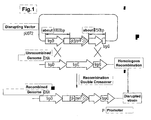
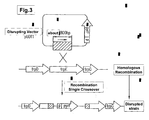
- homologous recombination refers to a recombination in the portion having a homologous base sequence in a pair of double stranded DNA. In a living organism, such homologous recombinations are observed in a form of chromosomal crossover and the like.
- condition under which homologous recombination occurs refers to conditions under which homologous recombination occurs when an organism having a genome and a nucleic acid molecule having a sequence homologous to at least any one region of the genomic sequence thereof, are present. Such conditions may differ depending on the organism, and are well known for those skilled in the art. Such conditions include, but are not limited to, for example: Tk-pyrF deleted strain No. 25, No. 27 are cultured in 20ml of ASW-YT liquid medium. ⁇ Collect the bacteria from the culture medium (3ml) per one sample (No. 25, No.
- ASW artificial sea water
- ASW artificial sea water
- NaCl 20g NaCl 20g
- MgCl 2 ⁇ 6H 2 O 3g MgSO 4 ⁇ 7H 2 O 6g
- (NH 4 ) 2 SO 4 1g NaHCO 3 0.2g
- CaCl 2 ⁇ 2H 2 O 0.3g KCl 0. 5g
- NaBr 0. 05g NaBr 0. 05g
- Homologous recombination may occur when there is at least one homologous region between a genome and a vector, and preferably, when there are two homologous regions between the genome and the vector.
- cross-over when used for a chromosome, refers to a pair of homologous chromosomes is crossed in this way, resulting in a new combination of nucleic acid sequences.
- single cross over when used for chromosome, refers to that there is one homologous region causing the cross-over between the nucleic acid molecules , and cross-over occurs only in that particular region, resulting in one nucleic acid sequence thereof that is incorporated in the other sequence.
- double cross-over when used for chromosome, refers to that there are two homologous regions betweem two nucleic acid molecules for cross-over, and the nucleic acid sequence is replaced with each other between the homologous regions.
- the term "expression" of a gene, a polynucleotide, a polypeptide, or the like indicates that the gene or the like is affected by a predetermined action in vivo to be changed into another form.
- the term "expression” indicates that genes, polynucleotides, or the like are transcribed and translated into polypeptides.
- genes may be transcribed into mRNA. More preferably, these polypeptides may have post-translational processing modifications.
- expression product of a gene refers to a substance resulting from expression of the gene, and includes mRNA which is a transcription product, a polypeptide which is a translation product, and a polypeptide which is a post-translational product, and the like. Detection of such expression products may be directly or indirectly performed, and may be performed using a well known technology in the art (for example, Southern blotting, Northern blotting and the like). These technologies are described elsewhere herein, as well as in the references cited elsewhere herein.
- Polypeptides used in the present invention may be produced by, for example, cultivating primary culture cells producing the peptides or cell lines thereof, followed by separation or purification of the peptides from culture supernatant.
- genetic manipulation techniques can be used to incorporate a gene encoding a polypeptide of interest into an appropriate expression vector, transform an expression host with the vector, and collect recombinant polypeptides from the culture supernatant of the transformed cells.
- the above-described host cell may be any host cells conventionally used in genetic manipulation techniques as long as they can express a polypeptide of interest while keeping the physiological activity of the peptide (e.g., E. coli , yeast, an animal cell, etc.).
- Conditions for culturing recombinant host cells may be appropriately selected depending on the type of host cell used. Any host cells which may be used in a recombinant DNA technology may be used as a host cell in the present invention, including bacterial cells, yeast cells, animal cells, plant cells, insect cells, and the like. Preferable host cell is a bacterial cell. Polypeptides derived from the thus-obtained cells may have at least one amino acid substitution, addition, and/or deletion or at least one sugar chain substitution, addition, and/or deletion as long as they have substantially the same function as that of naturally-occurring polypeptides.
- the supernatant is obtained by centrifuging or filtering a culture, and directly purifying the same or concentrating by precipitation or ultrafiltration for purification.
- cells may be disrupted by a cell wall lysis enzyme, change in osmolarity, use of glass beads, homogenizer, or sonication or the like, to obtain cellular extract for purification. Purification may be performed by combining known methods in the art, such as ion sxchange chromatography, gel filtration, affinity chromatography, electrophoresis and the like.
- a given amino acid may be substituted with another amino acid in a protein structure, such as a cationic region or a substrate molecule binding site, without a clear reduction or loss of interactive binding ability.
- a given biological function of a protein is defined by the interactive ability or other property of the protein. Therefore, a particular amino acid substitution may be performed in an amino acid sequence, or at the DNA code sequence level, to produce a protein which maintains the original property after the substitution. Therefore, various modifications of peptides as disclosed herein and DNA encoding such peptides may be performed without clear losses of biological usefulness.
- hydrophobicity indices of amino acids may be taken into consideration.
- Hydrophobic amino acid indices play an important role in providing a protein with an interactive biological function, which is generally recognized in the art (Kyte, J. and Doolittle, R.F., J. Mol. Biol. 157(1):105-132, 1982).
- the hydrophobic property of an amino acid contributes to the secondary structure of a protein and then regulates interactions between the protein and other molecules (e.g., enzymes, substrates, receptors, DNA, antibodies, antigens, etc.).
- Each amino acid is given a hydrophobicity index based on the hydrophobicity and charge properties thereof as follows: isoleucine (+4.5); valine (+4.2); leucine (+3.8); phenylalanine (+2.8); cysteine/cystine (+2.5); methionine (+1.9); alanine (+1.8); glycine (-0.4); threonine (-0.7); serine (-0.8); tryptophan (-0.9); tyrosine (-1.3); proline (-1.6); histidine (-3.2); glutamic acid (-3.5); glutamine (-3.5); aspartic acid (-3.5); asparagine (-3.5); lysine (-3.9); and arginine (-4.5).
- the resultant protein may still have a biological function similar to that of the original protein (e.g., a protein having an equivalent enzymatic activity).
- the hydrophobicity index is preferably within ⁇ 2, more preferably within ⁇ 1, and even more preferably within ⁇ 0.5. It is understood in the art that such an amino acid substitution based on hydrophobicity is efficient.
- a hydrophilicity index is also useful for modification of an amino acid sequence of the present invention.
- amino acid residues are given the following hydrophilicity indices: arginine (+3.0); lysine (+3.0); aspartic acid (+3.0 ⁇ 1); glutamic acid (+3.0 ⁇ 1); serine (+0.3); asparagine (+0.2); glutamine (+0.2); glycine (0); threonine (-0.4); proline (-0.5 ⁇ 1); alanine (-0.5); histidine (-0.5); cysteine (-1.0); methionine (-1.3); valine (-1.5); leucine (-1.8); isoleucine (-1.8); tyrosine (-2.3); phenylalanine (-2.5); and tryptophan (-3.4).
- an amino acid may be substituted with another amino acid which has a similar hydrophilicity index and can still provide a biological equivalent.
- the hydrophilicity index is preferably within ⁇ 2, more preferably ⁇ 1, and even more preferably ⁇ 0.5.
- conservative substitution refers to amino acid substitution in which a substituted amino acid and a substituting amino acid have similar hydrophilicity indices or/and hydrophobicity indices.
- the conservative substitution is carried out between amino acids having a hydrophilicity or hydrophobicity index of within ⁇ 2, preferably within ⁇ 1, and more preferably within ⁇ 0.5.
- Examples of the conservative substitution include, but are not limited to, substitutions within each of the following residue pairs: arginine and lysine; glutamic acid and aspartic acid; serine and threonine; glutamine and asparagine; and valine, leucine, and isoleucine, which are well known to those skilled in the art.
- silent substitution refers to a substitution in which there are nucleotide sequence substitutions but no amino acid change is encoded by the substituted nucleotides. Such silent substitutions may be performed using genetic code degeneracy. Such degeneracy is well known in the art, and is also described in the references cited herein.
- the term "variant" refers to a substance, such as a polypeptide, polynucleotide, or the like, which differs partially from the original substance.
- examples of such a variant include a substitution variant, an addition variant, a deletion variant, a truncated variant, an allelic variant, and the like.
- examples of such a variant include, but are not limited to, a nucleotide or polypeptide having one or several substitutions, additions and/or deletions or a nucleotide or polypeptide having at least one substitution, addition and/or deletion.
- allele refers to a genetic variant located at a locus identical to a corresponding gene, where the two genes are distinguished from each other.
- allelic variant refers to a variant which has an allelic relationship with a given gene.
- allelic variant ordinarily has a sequence the same as or highly similar to that of the corresponding allele, and ordinarily has almost the same biological activity, though it rarely has different biological activity.
- spectrum homolog or “homolog” as used herein refers to one that has an amino acid or nucleotide homology with a given gene in a given species (preferably at least 60% homology, more preferably at least 80%, at least 85%, at least 90%, and at least 95% homology). A method for obtaining such a species homolog is clearly understood from the description of the present specification.
- orthologs refers to genes in different species derived from a common ancestry (due to speciation).
- human and mouse ⁇ -hemoglobin genes are orthologs, while the human ⁇ -hemoglobin gene and the human ⁇ -hemoglobin gene are paralogs (genes arising from gene duplication).
- Orthologs are useful for estimation of molecular phylogenetic trees. Usually, orthologs in different species may have a function similar to that of the original species. Therefore, orthologs of the present invention may be useful in the present invention.
- conservatively modified variants refer to those nucleic acids which encode identical or essentially identical amino acid sequences. Because of the degeneracy of the genetic code, a large number of functionally identical nucleic acids encode any given protein. For example, the codons GCA, GCC, GCG and GCU all encode the amino acid alanine. Thus, at every position where an alanine is specified by a codon, the codon can be altered to any of the corresponding codons described without altering the encoded polypeptide. Such nucleic acid variations are "silent variations" which represent one species of conservatively modified variation.
- Every nucleic acid sequence herein which encodes a polypeptide also describes every possible silent variation of the nucleic acid.
- each codon in a nucleic acid (except AUG, which is ordinarily the only codon for methionine, and TGG, which is ordinarily the only codon for tryptophan) can be modified to yield a functionally identical molecule.
- each silent variation of a nucleic acid which encodes a polypeptide is implicit in each described sequence.
- such modification may be performed while avoiding substitution of cysteine which is an amino acid capable of largely affecting the higher-order structure of a polypeptide.
- Such a conservative modification or silent modification is also within the scope of the present invention.
- nucleic acid can be obtained by a well-known PCR method, i.e., chemical synthesis. This method may be combined with, for example, site-specific mutagenesis, hybridization, or the like.
- substitution, addition or deletion for a polypeptide or a polynucleotide refers to the substitution, addition or deletion of an amino acid or its substitute, or a nucleotide or its substitute, with respect to the original polypeptide or polynucleotide, respectively. This is achieved by techniques well known in the art, including a site directed mutagenesis technique and the like.
- a polypeptide or a polynucleotide may have any number (>0) of substitutions, additions, or deletions. The number can be as large as a variant having such a number of substitutions, additions or deletions which maintains an intended function (e.g., the cancer marker, nervous disorder marker, etc.). For example, such a number may be one or several, and preferably within 20% or 10% of the full length, or no more than 100, no more than 50, no more than 25, or the like.
- the term “specifically expressed” in the case of genes indicates that a gene is expressed in a specific site or in a specific period of time at a level different from (preferably higher than) that in other sites or periods of time.
- the term “specifically expressed” includes that a gene may be expressed only in a given site (specific site) or may be expressed in other sites.
- the term “specifically expressed” indicates that a gene is expressed only in a given site.
- thermostable refers to a property having resistance against a temperture which is higher than circumstancial temperature in which a usual organism survives, and includes resistance against temperature higher than 37 °C. More usually, the thermostable refers to resistance against temperature higher than 50 °C. Thermostable, when used for a living organism, may refer to a property thereof in which an organism can survive at lower and higher temperatures. On the other hand, thermostable, when used for a polypeptide, refers to resistance against higher temperature, for example a temperature higher than 37 °C, a temperature higher than 50 °C. Amongst them, the property of having resistance to temperatures higher than 90 °C refers to "hyperthermostable".
- thermophillic bacteria an organism which can survive at higher temperature is often called "thermophillic bacteria”.
- Thermophillic bacteria usually have survival optimum temperatures of 50-105 °C and do not grow at 30 °C or lower. Amongst them, those having an optimum temperature of 90 °C or higher are called “hyperthermophillic bacteria”.
- hyperthermophillic archeabacteria and “hyperthermostable bacteria” are interchangeably used to refer to a microorganism growing at 90 °C or higher.
- the hyperthermophillic archeabacteria is Thermococcus kodakaraensis KOD1 strain, a thermostable DNA ligase producing, thermostable thiol protease producing bacteria isolated by the present inventors (Morikawa, M. et al., Appl.Environ.Microbiol. 60(12), 4559-4566(1994)). KOD-1 strains were deposited in the International Patent Organism Depositary (Chuo No.
- KOD-1 strains were originally classified as a Pyrococcus bacteria, as described in the above-mentioned reference. However, when we compared the sequence of 16S rRNA using the registered data in GenBank R91.0 Octber, 1995+Daily Update inputted in DNASIS (Hitachi Software Engineering), it was revealed that KOD-1 strains belongs to the Thermococcus genus, rather than the Pyrococcus genus, and thus is presently classified as Thermococcus kodakaraensis KOD-1.
- culturing hyperthermophillic archeabateria producing hyperthermostable proteins may be performed under any culture conditions, for example, those described in Appl. Environ. Microbiol. 60 (12), 4559-4566 (1994) (ibid).
- Culture may be either static culture or jar fermentation culture by nitrogen gas, and may be either in a continuous or batch manner.
- the chromosomal DNA of a hyperthermophillic archeabacteria may be obtained by solubilizing the cultured bacterial cells with detergent (for example, N-lauryl sarcosin), and fractionating the resultant soluent by cesium chloride ethidium bromide equilibrium density-gradient centrifugation (see, for example, Imanaka et al., J.Bacteriol. 147 :776-786 (1981)).
- detergent for example, N-lauryl sarcosin
- Libraries may be obtained by digesting the resultant chromosomal DNA by a variety of restriction enzymes, followed by ligating the same into a vector (such as a phage or plasmid), which has been digested with the same restriction enzyme or similar restriction enzyme resulting in the same digestion terminus, with an enzyme such as T4 DNA ligase or the like.
- a vector such as a phage or plasmid
- Libraries may be screened by selecting a clone comprising a DNA encoding a thermophilic DNA ligase of interest therefrom. Selection may be performed using an oligonucleotide designed based on a partial amino acid sequence of the predetermined hyperthermophillic DNA ligase and a cloned DNA deduced to have homology with the DNA of interest as a probe. Alternatively, selection may be performed by expressing the enzyme of interest. Detection of expression may be performed, for example, when the activity of the enzyme of interest may be readily detected, by detecting the activity of expression product against the substrate added to the plate, or alternatively when an antibody against the enzyme of interest is available, using the reactivity between the expression product and the antibody.
- Analysis of the resultant cloned DNA may be perforemd by, for example, isolating a selected DNA, producing a restriction map therefor, and determining the nucleotide sequence, and the like.
- Technologies such as preparation of a cloned DNA, restriction enzyme processing, subcloning, nucleotide sequencing and the like are well known in the art, and may be performed by referring to "Molecular Cloning: A Laboratory Manual Second Edition," (Sambrook, Fritsch and Maniatis ed., Cold Spring Harbor Laboratory Press,1989)
- the resultant cloned DNA may be expressed by operably inserting the same into an expression vector applicable to a host cell used, transforming a host cell with the expression vector, and culturing the transformed host cell.
- the genomic information of the present invention may be used for providing a biomolecule chip (for example, DNA chip, protein chip, glycoprotein chip, antibody chip and the like).
- a biomolecule chip for example, DNA chip, protein chip, glycoprotein chip, antibody chip and the like.
- the analysis of expression control of the genes of the present invention may be performed by genetic analysis method using a DNA array.
- the present invention also provides a virtual genome DNA array (also called as “hyperthermophillic genomic array") using the genomic sequence which has first identified in the present invention.
- the nucleotides of the present invention may be used in a gene analysis method using a DNA array.
- a DNA array is widely reviewed (Shujunsha Ed., Saibokogaku (Cellular Engineering), Special issue, "DNA-maikuro-arei-to-saisin-PCR-ho [DNA microarray and Up-to-date PCR Method”). Further, plant analysis using a DNA array has been recently used (Schenk PM et al. (2000) Proc. Natl. Acad. Sci. (USA) 97: 11655-11660).
- a DNA array and a gene analysis method using the same will be briefly described.
- DNA array refers to a device in which DNAs are arrayed and immobilized on a plate. DNA arrays are divided into DNA macroarrays, DNA microarrays, and the like according to the size of a plate or the density of DNA placed on the plate, however, the use of these terms are not strict as used herein.
- DNA macroarray refers to a high density filter in which DNA is spotted on a membrane
- DNA microarray refers to a plate of glass, silicon, and the like which carries DNA on a surface thereof.
- cDNA array an oligoDNA array, and the like according to the type of DNA placed.
- a certain high density oligoDNA array in which a photolithography technique for production of semiconductor integrated circuits is applied and a plurality of oligoDNAs are simultaneously synthesized on a plate, is particularly called “DNA chip", an adaptation of the term “semiconductor chip".
- Examples of the DNA chip prepared by this method include GeneChip® (Affymetrix, CA), and the like (Marshall A et al., (1998) Nat. Biotechnol. 16: 27-31 and Ramsay G et al., (1998) Nat. Biotechnol. 16 40-44).
- GeneChip® may be used in gene analysis using a microarray according to the present invention.
- the DNA chip is defined as described above in a narrow sense, but may refer to all types of DNA arrays or DNA microarrays.
- DNA microarrays are a device in which several thousands to several ten thousands or more of gene DNAs are arrayed on a glass plate in high density. Therefore, it is possible to analyze gene expression profiles or gene polymorphism at a genomic scale by hybridization of cDNA, cRNA or genomic DNA. With this technique, it has been made possible to analyze a signal transfer system and/or a transcription control pathway (Fambrough D et al. (1999), Cell 97, 727-741); the mechanism of tissue repair (Iyer VR et al., (1999), Science 283: 83-87); the action mechanism of medicaments (Marton MJ,(1999), Nat. Med.
- DNA microarrays are prepared by immobilizing a number of different DNA probes in high density on a solid-phase plate, such as a slide glass, whose surface is appropriately processed. Thereafter, labeled nucleic acids (targets) are subjected to hybridization under appropriate hybridization conditions, and a signal from each probe is detected by an automated detector. The resultant data is subjected to massive analysis by a computer. For example, in the case of gene monitoring, target cDNAs integrated with fluorescent labels by reverse transcription from mRNA are allowed to hybridize to oligoDNAs or cDNAs as a probe on a microarray, and are detected with a fluorescence image analyzer. In this case, T7 polymerase may be used to carry out other various signal amplification reactions, such as cRNA synthesis reactions or via enzymatic reactions.
- Fodor et al. has developed a technique for synthesizing polymers on a plate using a combination of combinatorial chemistry and photolithography for semiconductor production (Fodor SP et al., (1991) Science 251: 767-773). This is called the synthesized DNA chip.
- Photolithography allows for extremely minute surface processing, thereby making it possible to produce a DNA microarray having a packing density of as high as 10 ⁇ m 2 /DNA sample. In this method, generally, about 25 to about 30 DNAs are synthesized on a glass plate.
- a so-called attached DNA microarray is prepared by attaching DNAs onto a slide glass, and fluorescence is detected (see also http://cmgm.stanford.edu/pbrown).
- this method no gigantic semiconductor production machine is required, and only a DNA array machine and a detector are used to perform the assay in a laboratory.
- This method has the advantage that it is possible to select DNAs to be attached.
- a high density array can be obtained by spotting spots having a diameter of 100 ⁇ m at intervals of 100 ⁇ m, for example. It is mathematically possible to spot 2500 DNAs per cm 2 . Therefore, a usual slide glass (the effective area is about 4 cm 2 ) can carry about 10,000 DNAs.
- double fluorescence labeling is used as a labeling method for synthesized DNA arrays.
- two different mRNA samples are labeled by different fluorescent dyes respectively.
- the two samples are subjected to competitive hybridization on the same microarray, and both fluorescences are measured.
- a difference in gene expression is detected by comparing the fluorescences.
- the fluorescent dye include, but are not limited to, Cy5 and Cy3, which are most often used, and the like.
- the advantage of Cy3 and Cy5 is that the wavelengths of fluorescences do not overlap substantially.
- Double fluorescence labeling may be used to detect mutations or morphorisms in addition to differences in gene expression.
- An array machine may be used for assays using a DNA array.
- a pin tip or a slide holder is moved in directions along the X, Y and Z axes in combination with a high-performance servo motor under the control of a computer so that DNA samples are transferred from a microtiter plate to the surface of a slide glass.
- the pin tip is processed into various shapes. For example, a DNA solution is retained in a cloven pen tip like a crow's bill and spotted onto a plurality of slide glasses. After washing and drying cycles, a DNA sample is then placed on the slide glasses. The above-described steps are repeated.
- the pin tip in order to prevent contamination of the pin tip by a different sample, the pin tip has to be perfectly washed and dried.
- Examples of such an array machine include SPBIO2000 (Hitachi Software Engineering Co., Ltd.; single strike type), GMS417 Arrayer (Takara Shuzo Co., Ltd.; pin ring type), Gene Tip Stamping (Nippon Laser&Electronics Lab.; fountain pen type), and the like.
- DNA microarrays may carry mainly cDNA fragments amplified by PCR. When the concentration of cDNA is insufficient, signals cannot be sufficiently detected in some cases. In a case when a sufficient amount of cDNA fragments is not obtained by one PCR operation, PCR is repeated. The resultant overall PCR products may be purified and condensed at one time.
- a probe cDNA may generally carry a number of random cDNAs, but may carry a group of selected genes (e.g., the gene or promoter groups of the present invention) or candidate genes for gene expression changes obtained by RDA (representational differential analysis) according to the purpose of an experiment. It is preferable to avoid overlapping clones. Clones may be prepared from a stock cDNA library, or cDNA clones may be purchased.
- a fluorescent signal indicating hybridization on the DNA microarray is detected by a fluorescence detector or the like.
- a fluorescence detector There are various conventionally available detectors for this purpose.
- a research group at the Stanford University has developed an original scanner which is a combination of a fluorescence microscope and a movable stage (see http://cmgm.stanford.edu/pbrown).
- a conventional fluorescence image analyzer for gel such as FMBIO (Hitachi Software Engineering), Storm (Molecular Dynamics), and the like, can read a DNA microarray if the spots are not arrayed in very high density.
- Examples of other available detectors include ScanArray 4000 and 5000 (GeneralScanning; scan type (confocal type)), GMS418 Array Scanner (Takara Shuzo; scan type (confocal type)), Gene Tip Scanner (Nippon Laser&Electronics Lab.; scan type (non-confocal type)), Gene Tac 2000 (Genomic Solutions; CCD camera type)), and the like.
- the present invention may also be used in gene analysis using a differential display technique.
- the differential display technique is a method for detecting or identifying a gene whose expression fluctuates.
- cDNA is prepared from each of at least two samples, and amplified by PCR using a set of any primers. Thereafter, a plurality of generated PCR products are separated by gel electrophoresis. After the electrophoresis pattern is produced, expression-fluctuating genes are cloned based on a relative signal strength change between each band.
- support refers to a material for an array construction of the present invention.
- a material for the substrate include any solid material having a property of binding to a biomolecule used in the present invention either by covalent bond or noncovalent bond, or which can be derived in such a manner as to have such a property.
- Such a material for the substrate may be any material capable of forming a solid surface, for example, including, but being not limited to, glass, silica, silicon, ceramics, silica dioxide, plastics, metals (including alloys), naturally-occurring and synthetic polymer (e.g., polystyrene, cellulose, chitosan, dextran, and nylon).
- the substrate may be formed of a plurality of layers made of different materials.
- an inorganic insulating material such as glass, silica glass, alumina, sapphire, forsterite, silicon carbide, silicon oxide, silicon nitride, or the like, can be used.
- an organic material such as polyethylene, ethylene, polypropylene, polyisobutylene, polyethylene terephthalate, unsaturated polyester, fluorine-containing resin, polyvinyl chloride, polyvinylidene chloride, polyvinyl acetate, polyvinyl alcohol, polyvinyl acetal, acrylic resin, polyacrylonitrile, polystyrene, acetal resin, polycarbonate, polyamide, phenol resin, urea resin, epoxy resin, melamine resin, styrene acrylonitrile copolymer, acrylonitrilebutadienestyrene copolymer, silicone resin, polyphenylene oxide, or polysulfone, can be used.
- fluorine-containing resin polyvinyl chloride, polyvinylidene chloride, polyvinyl acetate, polyvinyl alcohol, polyvinyl acetal, acrylic resin, polyacrylonitrile, polystyrene, acetal resin, polycarbonate, polyamide,
- a film used for nucleic acid blotting such as a nitrocellulose film, a PVDF film, or the like, can also be used.
- material constituting the substrate is a solid phase, it is specifically referred to as "solid (phase) substrate” as used herein.
- solid (phase) substrate As used herein such a substrate may be a form of plate, microwell plate, chip, glass slide, film, bead, metal (surface) and the like. Substrates may or may not be coated.
- Chip refers to an ultramicro-integrated circuit having various functions, which constitutes a part of a system.
- Biomolecule chip refers to a chip comprising a substrate and a biomolecule, in which at least one biomolecule as set forth herein is disposed on the substrate.
- address refers to a unique position on a substrate which can be distinguished from other unique positions.
- An address is suitably used to access a biomolecule associated with the address.
- Any entity present at each address can have an arbitrary shape which allows the entity to be distinguished from entities present at other addresses (e.g., in an optical manner).
- the shape of an address may be, for example, a circle, an ellipse, a square, or a rectangle, or alternatively an irregular shape.
- each address varies depending on, particularly, the size of a substrate, the number of addresses on the specific substrate, the amount of samples to be analyzed and/or an available reagent, the size of a biomolecule, and the magnitude of a resolution required for any method in which the array is used.
- the size of an address may range from 1-2 nm to several centimeters (e.g., 1-2 mm to several centimeters, etc., 125 ⁇ 80 mm, 10 ⁇ 10 mm, etc.). Any size of an address is possible as long as it matches the array to which it is applied. In such a case, a substrate material is formed into a size and a shape suitable for a specific production process and application of an array.
- an array may be more economically constructed on a relatively large substrate (e.g., 1 cm ⁇ 1 cm or more).
- a detection system which does not require much sensitivity and is therefore economical may be further advantageously used.
- an array may be designed so that consumption of the sample and reagent is minimized.
- Array refers to a pattern of solid substances fixed on a solid phase surface or a film, or a group of molecules having such a pattern.
- an array comprises biomolecules (e.g., DNA, RNA, protein-RNA fusion molecules, proteins, low-weight organic molecules, etc.) conjugated to nucleic acid sequences fixed on a solid phase surface or a film as if the biomolecule captured the nucleic sequence.
- biomolecules e.g., DNA, RNA, protein-RNA fusion molecules, proteins, low-weight organic molecules, etc.
- spots of biomolecules may be arranged on an array.
- spot refers to a predetermined set of biomolecules.
- any number of addresses may be arranged on a substrate, typically up to 10 8 addresses, in other embodiments up to 10 7 addresses, up to 10 6 addresses, up to 10 5 addresses, up to 10 4 addresses, up to 10 3 addresses, or up to 10 2 addresses. Therefore, when one biomolecule is placed on one address, up to 10 8 biomolecules can be placed on a substrate, and in other embodiment up to 10 7 biomolecules, up to 10 6 biomolecules, up to 10 5 biomolecules, up to 10 4 biomolecules, up to 10 3 biomolecules, or up to 10 2 biomolecules can be placed on a substrate. In these cases, a smaller size of substrate and a smaller size of address are suitable.
- the size of an address may be as small as the size of a single biomolecule (i.e., this size may be of the order of 1-2 nm).
- the minimum area of a substrate is determined based on the number of addresses on the substrate.
- biomolecule refers to a molecule related to an organism.
- An "organism (or “bio-”)” as used herein refers to a biological organic body, including, but being limited to, an animal, a plant, a fungus, a virus, and the like.
- a biomolecule includes a molecule extracted from an organism, but is not so limited.
- a biomolecule is any molecule capable of having an influence on an organism. Therefore, a biomolecule also includes a molecule synthesized by combinatorial chemistry, and a low weight molecule capable of being used as a medicament (e.g., a low molecular weight ligand, etc.) as long as they are intended to have an influence on an organism.
- biomolecule examples include, but are not limited to, proteins, polypeptides, oligopeptides, peptides, polynucleotides, oligonucleotides, nucleotides, nucleic acids (e.g., including DNA (such as cDNA and genomic DNA) and RNA (such as mRNA)), polysaccharides, oligosaccharides, lipids, low weight molecules (e.g., hormones, ligands, signal transduction substances, low-weight organic molecules, etc.), and complex molecules thereof, and the like.
- a biomolecule also includes a cell itself, and a part or the whole of a tissue, and the like as long as they can be coupled to a substrate of the present invention.
- a biomolecule includes a nucleic acid or a protein.
- a biomolecule is a nucleic acid (e.g., genomic DNA or cDNA, or DNA synthesized by PCR or the like).
- a biomolecule may be a protein.
- one type of biomolecule may be provided for each address on a substrate of the present invention.
- a sample containing two or more types of biomolecules may be provided for each address.
- liquid phase is used to mean as usually used in the art, and usually refers to a state in a solution.
- solid phase is used to mean as usually used in the art, and usually refers to a state in a solid.
- liquid and solid collectively refer to "fluid”.
- contact refers to existing in a sufficient vicinity distance for interaction between two matters (for example, a composition and a cell) to each other.
- interaction refers, when referring to two matters, to that the two matters exert a force to each other.
- Such interaction includes, but is not limited to, for example, covalent bonding, hydrpgen bonding, van der Waals forces, ionic interaction, non-ionic interaction, hydrophobic interaction, electrostatic interaction and the like.
- the interaction may be normal interaction caused in a living body such as hydrogen bonding, hydrophobic interaction, and the like.
- the present invention may produce a micoarray for screening for a molecule, by binding a library of biomolecules (for example, organic low-molecular weight moleculre, combinatorial chemistory products) to a substrate, and using the same.
- a library of biomolecules for example, organic low-molecular weight moleculre, combinatorial chemistory products
- Chemical library used in the present invention may be produced or obtained by any means including ,but is not limited to, for example, by the use of combinatorial chemistry technology, fermentation technology, plant and cell extraction procedures and the like. Production of a combinatorial library is well known in the art. For example, E. R. Felder, Chimia 1994, 48, 512-541; Gallop et al., J. Med. Chem. 1994, 37, 1233-1251; R. A. Houghten, Trends Genet.
- Methods, biomolecule chips and apparatuses of the present invention may be used for, for example, diagnosis, forensic medicine, drug discovery (screening for drugs) and development, molecular biological analysis (for example, nucleotide sequencing based array and gene sequence analysis based on array), analysis of protein properties and functions, pharmacogenomics, proteomics, environmental search, and additional biological and chemical analyses.
- molecular biological analysis for example, nucleotide sequencing based array and gene sequence analysis based on array
- analysis of protein properties and functions for example, pharmacogenomics, proteomics, environmental search, and additional biological and chemical analyses.
- the present invention can also be applied to polymorphism analysis, such as RFLP analysis, SNP (snipp, single nucleotide polymorphism) analysis, or the like, analysis of base sequences, and the like.
- polymorphism analysis such as RFLP analysis, SNP (snipp, single nucleotide polymorphism) analysis, or the like, analysis of base sequences, and the like.
- the present invention can also be used for screening of a medicament.
- the present invention can be applied to any situation requiring a biomolecule test other than medical applications, such as food testing, quarantine, medicament testing, forensic medicine, agriculture, husbandry, fishery, forestry, and the like.
- the present invention can also be used for detection of a gene amplified by PCR, SDA, NASBA, or the like, other than a sample directly collected from an organism.
- a target gene can be labeled in advance with an electrochemically active substance, a fluorescent substance (e.g., FITC, rhodamine, acridine, Texas Red, fluorecein, etc.), an enzyme (e.g., alkaline phosphatase, peroxidase, glucose oxidase, etc.), a colloid particle (e.g., a hapten, a light-emitting substance, an antibody, an antigen, gold colloid, etc.), a metal, a metal ion, a metal chelate (e.g., trisbipyridine, trisphenanthroline, hexamine, etc.), or the like.
- a fluorescent substance e.g., FITC, rhodamine, acridine, Texas
- a nucleic acid component is extracted from these samples in order to test the nucleic acid.
- the extraction is not limited to a particular method.
- a liquid-liquid extraction method such as phenol-chloroform method and the like, or a liquid-solid extraction method using a carrier can be used.
- a commercially available nucleic acid extraction method such as QIAamp (QIAGEN, Germany) or the like can be used.
- QIAamp QIAGEN, Germany
- a sample containing an extracted nucleic acid component is subjected to a hybridization reaction on a biomolecule chip of the present invention. The reaction is conducted in a buffer solution having an ionic strength of 0.01 to 5 and a pH of 5 to 10.
- a hybridization reaction can be conducted by dropping a solution on a substrate. The rate of a reaction can be increased by stirring or shaking during the reaction. The temperature of a reaction is in the range of 10°C to 90°C. The time of a reaction is in the range of one minute to about one night. After a hybridization reaction, an electrode is removed and then washed. For washing, a buffer solution having an ionic strength of 0.01 to 5 and a pH of 5 to 10 can be used.
- Label refers to an entity which distinguishes an intended molecule or substance from other substances (e.g., a substance, energy, electromagnetic wave, etc.). Examples of such a labeling method include an RI (radioisotope) method, a fluorescence method, a biotin method, a chemiluminescence method, and the like.
- RI radioisotope
- fluorescence method a fluorescence method
- biotin method e.g., a substance, energy, electromagnetic wave, etc.
- chemiluminescence method chemiluminescence method
- Preferable fluorescence substances include cyanine dye (e.g., Cy3, Cy5, etc. in Cy DyeTM series), a rhodamine 6G reagent, N-acetoxy-N2-acetylaminofluorene (AAF), AAIF (an iodine derivative of AAF), and the like.
- cyanine dye e.g., Cy3, Cy5, etc. in Cy DyeTM series
- AAF N-acetoxy-N2-acetylaminofluorene
- AAIF an iodine derivative of AAF
- Examples of a combination of fluorescence substances having a difference in the maximum wavelength of fluorescence of at least 10 nm include a combination of Cy5 and a rhodamine 6G reagent, a combination of Cy3 and fluorescein, a combination of a rhodamine 6G reagent and fluorescein, and the like.
- Chip attribute data refers to data associated with some information relating to a biomolecule chip of the present invention.
- Chip attribute data includes information associated with a biomolecule chip, such as a chip ID, substrate data, and biomolecule attribute data.
- Chip ID refers to a code for identification of each chip.
- Substrate data or “substrate attribute data” as used herein refers to data relating to a substrate used in a biomolecule chip of the present invention. Substrate data may contain information relating to an arrangement or pattern of a biomolecule.
- Biomolecule attribute data refers to information relating to a biomolecule, inclding, for example, the gene sequence of the biomolecule (a nucleotide sequence in the case of nucleic acid, and an amino acid sequence in the case of protein), information relating to a gene sequence (e.g., a relationship between the gene and a specific disease or condition), a function in the case of a low weight molecule or a hormone, library information in the case of a combinatorial library, molecular information relating to affinity for a low weight molecule, and the like.
- Perfectal information data refers to data associated with information for identifying an organism or subject to be measured by a method, chip or apparatus of the present invention.
- personal information data includes, but is not limited to, age, sex, health condition, medical history (e.g., drug history), educational background, the company of your insurance, personal genome information, address, name, and the like.
- medical history e.g., drug history
- the information may include data about the production company of the animal.
- Measurement data refers to raw data as a result of measurement by a biomolecule substrate, apparatus and system of the present invention and specific processed data derived therefrom. Such raw data may be represented by the intensity of an electric signal.
- processed data may be specific biochemical data, such as a blood sugar level or a gene expression level.
- Recording region refers to a region in which data may be recorded. In a recording region, measurement data as well as the above-described chip attribute data can be recorded.
- Micromachining is described in, for example, Campbell, S. A. (1996). The Science and Engineering of Microelectronic Fabrication, Oxford University Press; Zaut, P. V. (1996). Microarray Fabrication: a Practical Guide to Semiconductor Processing, Semiconductor Services; Madou, M. J. (1997). Fundamentals of Microfabrication, CRC1 5 Press; Rai-Choudhury, P. (1997). Handbook of Microlithography, Micromachining, & Microfabrication: Microlithography; and the like, related portions of which are herein incorporated by reference.
- Photolithography is a technique developed by Fodor et al., in which a photoreactive protecting group is utilized (see Science, 251, 767(1991)).
- a protecting group for a base inhibits a base monomer of the same or different type from binding to that base.
- a protecting group can be easily removed by irradiation. Initially, amino groups having a protecting group are immobilized throughout a substrate. Thereafter, only spots to which a desired base is to be bound are selectively irradiated by a method similar to a photolithography technique usually used in a semiconductor process, so that another base can be introduced by subsequent binding into only the bases in the irradiated portion.
- An ink jet method is a technique of projecting considerably small droplets onto a predetermined position on a two-dimensional plane using heat or a piezoelectric effect. This technique is widely used mainly in printers.
- an ink jet apparatus In production of a DNA array, an ink jet apparatus is used, which has a configuration in which a piezoelectric device is combined with a glass capillary. A voltage is applied to the piezoelectric device which is connected to a liquid chamber, so that the volume of the piezoelectric device is changed and the liquid within the chamber is expelled as a droplet from the capillary connected to the chamber. The size of the expelled droplet is determined by the diameter of the capillary, the volume variation of the piezoelectric device, and the physical property of the liquid.
- the diameter of the droplet is generally 30 ⁇ m.
- An ink jet apparatus using such a piezoelectric device can expel droplets at a frequency of about 10 KHz.
- the ink jet apparatus and a DNA array substrate are relatively moved so that droplets can be dropped onto desired spots on the DNA array.
- DNA array fabricating apparatuses using an ink jet apparatus are roughly divided into two categories. One category includes a DNA array fabricating apparatus using a single ink jet apparatus, and the other includes a DNA array fabricating apparatus using a multi-head ink jet apparatus.
- the DNA array fabricating apparatus with a single ink jet apparatus has a configuration in which a reagent for removing a protecting group at a terminus of an oligomer is dropped onto desired spots.
- a protecting group is removed from a spot, to which a desired base is to be introduced, by using the ink jet apparatus so that the spot is activated.
- the desired base is subjected to a binding reaction throughout a DNA array.
- the desired base is bound only to spots having an oligomer whose terminus is activated by the reagent dropped from the ink jet apparatus.
- the terminus of a newly added base is protected.
- a spot from which a protecting group is removed is changed and the procedures are repeated until desired nucleotide sequences are obtained.
- a DNA array fabricating apparatus using a multi-head ink jet apparatus an ink jet apparatus is provided for each reagent containing a different base, so that a desired base can be bound directly to each spot.
- a DNA array fabricating apparatus using a multi-head ink jet apparatus can have a higher throughput than that of a DNA array fabricating apparatus using a single ink jet apparatus.
- methods for fixing a presynthesized oligonucleotide to a substrate is a mechanical microspotting technique in which liquid containing an oligonucleotide, which is attached to the tip of a stainless pin, is mechanically pressed against a substrate so that the oligonucleotide is immobilized on the substrate.
- the size of a spot obtained by this method is 50 to 300 ⁇ m. After microspotting, subsequent processes, such as immobilization using UV light, are carried out.
- the present invention provides a method for targeted-disuption of an arbitrary gene in a genome of a living organism.
- the subject method comprises the steps of: A) providing information of the entire sequence of the genome of the living organism; B) selecting at least one arbitrary region of the sequence; C) providing a vector comprising a sequence complementary to the selected region and a marker gene; D) transforming the living organism with the vector; and E) placing the living organism in a condition allowing to cause homologous recombination.
- the method is first attained by clarifying the entire genomic sequence, and is different from the conventional technology in that, for example, a model system using Sulfolobus solfataricus , by Bartolucci S., cannot disrupt a desired gene, and can merely utilize the result from accidental disruption.
- this difference has attained effects which can rapidly disrupt a desired gene in an efficient manner, and allow functional anlaysis.
- the region comprises at least two regions.
- targeted-disruption of genes by double cross-over may be available.
- targeted-disruption of a gene by double cross-over is generally more efficient than targeted-disruption of a gene by single cross-over. Accordingly, it is preferable to have two such regions.
- Vectors used in the present invention are also called disruption vectors, and may further comprise an additional gene regulatory element such as a promoter.
- the gene targeting method of the present invention may further comprise the step of detecting an expression product of the marker gene.
- the expression product may be for example an mRNA, a polypeptide, or a post-translationally modified polypeptide.
- the marker gene is located in or outside the selected region.
- the genome used in the present invention may be any genome as long as the entire genomic sequence is substantially sequenced.
- a genome include, but are not limited to, for example, archeabacteria such as Aeropyrum pernix, Archaeoglobus fulgidus, Methanobacterium thermoautorophicum, Methanococcus jannaschii, Pyurococcus abyssi, Pyrococcus furiosus, Pyrococcus horikoshii, Sulfolobus solfataricus, Sulfolobus tokodaii, Thermoplasma acidophilum, Thermoplasma volcanium; bacteria such as Aquifex aeolicus, Thermotoga maritima, and the like.
- the genome used may be the genome of Thermococcus kodakaraensis KOD1, because the entire genome of Thermococcus kodakaraensis KOD1 has now been sequenced.
- that the entire sequence has been sequenced or substantially sequenced refers to that sequences are clarified so that for any regional sequence selected, a sufficiently homologous region for causing homologous recombination may be provided. Accordingly, it is preferable that the entire sequence is sequenced without lack of a single base, however, it is permissible to have one, two, or three bases unclarified in a sequences. A plurality of such unclarified sequences may be present as long as for any regional sequence selected, a region sufficiently homologous for causing homologous recombination may be provided.
- the genome of the present invention has a sequence set forth in SEQ ID NO: 1.
- the above-mentioned region selected is an open reading frame of SEQ ID NO; 1, which are selected from the group of sequences of gene Numbers (1) to (2151) in the following Table in the sequence of SEQ ID NO: 1, 342, 723, 1087, 1469 or 1838.
- gene No. Nucleic acid No. sense chain (corresponding to SEQ ID NO: 1, 342, 723), starting nucleotide Nucleic acid No. (sense chain (corresponding to SEQ ID NO: 1, 342, 723), ending nucleotide Nucleic acid No. (antisense chain (corresponding to SEQ ID NO: 1087, 1469, 1838), ending nucleotide Nucleic acid No.
- such a region is selected from the group consisting of genes (1) through (2151).
- translated amino acid sequences usually start with methionine, and is identified as"amino acid SEQ ID No: Y (SEQ ID NO: 2-341, 343-722, 724-1086, 1088-1468, 1470-1837, and 1839-2157)", however the other reading frames may also be readily translated using known molecular biological techniques. It is also understood that the polypeptide produced by another open reading frame is also encompassed in the scope of the present invention.
- sequence of the open reading frame region of SEQ ID NO: 1 is useful for designing a nucleic acid hybridization probe for detection of cDNA contained in the nucleic acid sequence in the open reading frame. These probes also hybridize with a nucleic acid molecule in a biological sample, thereby allowing a variety of forensic and diagnostic methods of the present invention.
- polypeptide identified by SEQ ID NO: Z may be used for, for example, producing an antibody specifically binding to a protein (including a polypeptide and secreted protein) encoded by an open reading frame identified herein.
- DNA sequences produced by sequencing reactions may comprise an error in sequencing.
- This error may be present as an incorrectly identified nucleotide, or as an insertion or a deletion of a nucleotide, in the DNA sequence produced.
- Incorrectly inserted or deleted nucleotides cause frame shifts in the deduced amino acid sequence of the reading frame.
- the produced DNA sequences may be identical with more than 99.9 % identity (for example, 1 base insertion or deletion in an open reading frame over 1000 bases), but the deduced amino acid sequence may differ from the actual amino acid sequence.
- the present invention also provides the nucleic acid sequence and the amino acid sequence encoded by the genome of Thermococcus kodakaraensis KOD1 of the present invention, which was deposisted in the International Patent Organism Depositary (IPOD).
- IPOD International Patent Organism Depositary
- Those skilled in the art may determine a more accurate sequence by sequencing the sequence of the deposited Thermococcus kodakaraensis KOD 1 of the present invention.
- allelic variants, orthologs, and/or speicies homologs are also provided in the present ivention.
- the present invention provides a nucleic acid molecule per se having a sequence set forth in SEQ ID NO: 1 or 1087.
- the nucleic acid molecule per se is useful in the gene targeting disruption method of the present invention.
- the present invention provides a nucleic acid molecule comprising at least eight contiguous nucleic acid sequence of the sequence set forth in SEQ ID NO: 1 or 1087.
- probe refers to a substance for use in searching, which is a nucleic acid sequence having a variable length. Probes are variable depending on the use thereof. Examples of a nucleic acid molecule as a common probe include one having a nucleic acid sequence of at least about 8 nucleotides in length, preferably at least about 10 nucleotides, preferably at least about 15 nucleotides, preferably at least about 20 nucleotides, preferably at least about 30 nucleotides, preferably at least about 40 nucleotides, preferably at least about 50 nucleotides, preferably at least about 100 nucleotides, or may be at least about 6000 nucleotides.
- Probes are used for detecting an identical, similar or complementary nucleic acid sequence. Longer probes may be usually available from natural or recombinant sources, are very specific, and hybridize much slower than oligomers. Probes may be single- or double-stranded, and are designed to have specificity in technologies such as PCR, membrane based hybridization or ELIS and the like.
- primer refers to a nucleic acid sequence having variable length, and serves for initiation of elongation of a polynucleotide strand in a synthetic reaction of a nucleic acid such as a PCR.
- nucleic acid molecule as a common primer examples include one having a nucleic acid sequence having a length of at least about 6 nucleotides, at least about 7 nucleotides, at least about 8 nucleotides, preferably at least about 10 nucleotides, preferably at least about 15 nucleotides, at least about 17 nucleotides, preferably at least about 20 nucleotides, preferably at least about 30 nucleotides, preferably at least about 40 nucleotides, preferably at least about 50 nucleotides, preferably at least about 100 nucleotides, or may be at least about 6000 nucleotides.
- the present invention provides a polypeptide having an amino acid sequence selected from a group consisting of any Gene ID (1) through (2151) as listed in Table 1 (namely, SEQ ID NOs: 2-341, 343-722, 724-1086, 1088-1468, 1470-1837, and 1839-2157).
- the polypeptide of the present invention is preferably fused to another protein.
- These fusion proteins may be used for a variety of applications. For example, fusion of His tag, HA tag, Protein A, IgG domain and maltose binding protein to the polypeptide of the present invention facilitates purification (see also EP A 394,827, Traunecker et al., Nature, 331:84-86(1988)).
- the present invention provides a peptide molecule comprising at least one amino acid sequence of an amino acid sequence selected from a group consisting of any Gene ID (1) through (2151) as listed in Table 1 (namely, SEQ ID NOs: 2-341, 343-722, 724-1086, 1088-1468, 1470-1837, and 1839-2157).
- Such peptide molecules may be used as an epitope.
- such a peptide molecule may comprise at least about a 4 amino acid sequence, at least about a 5 amino acid sequence, at least about a 6 amino acid sequence, at least about a 7 amino acid sequence, at least about a 8 amino acid sequence, at least about a 9 amino acid sequence, at least about a 10 amino acid sequence, at least about a 15 amino acid sequence, at least about a 20 amino acid sequence, at least about a 30 amino acid sequence, at least about a 40 amino acid sequence, at least about a 50 amino acid sequence, or at least about a 100 amino acid sequence.
- epitope refers to a portion of a polypeptide having antigenicity or immunogenicity in an animal, preferably a mammal, and most preferably in a human.
- the invention comprises a polypeptide comprising an epitope, and a polynucleotide encoding the polypeptide.
- immunogenic epitope is defined as a portion of a protein inducing antibody reaction in an animal, as determined by any method known in the art such as those for producing an antibody described herein below (see for example, Geysen et al., Proc.Natl.Acad.Sci.USA 81:3998-4002(1983)).
- antigenic epitope refers to a portion of a protein capable of binding to an antibody in an immunologically specific manner, as determined by any method well known in the art, such as an immunoassay as described herein. Immunologically specific binding excludes non-immunological binding, but does not necessarily exclude cross-reaction with different antigens. Antigenic epitopes are not necessarily immunogenic.
- Fragments working as an epitope may be produced in any method conventionally known in the art (for example, see Houghten, Proc. Natl. Acad. Sci. USA 82:5131-5135(1985); see also, US Patent No. 4,631,211).
- an antigenic epitope may comprise usually at least three amino acids, preferably at least 4 amino acids, at least 5 amino acids, at least 6 amino acids, at least 7 amino acids, more preferably at least 8 amino acids, at least 9 amino acids, at least 10 amino acids, at least 11 amino acids, at least 12 amino acids, at least 13 amino acids, at least 14 amino acids, at least 154 amino acids, at least 20 amino acids, at least 25 amino acids, at least 30 amino acids, at least 40 amino acids, at least 50 amino acids, and most preferably comprises a sequence of between about 15 amino acids and 30 amino acids.
- Preferable polypeptides comprising an immunogenic epitope or antigenic epitope are at least 10, 15, 20, 25, 30, 35, 40, 45, 50, 55, 60, 65, 70, 75, 80, 85, 90, 95 or 100 amino acid residues in length. Still, non-exclusively preferable antigenic epitopes comprise antigenic epitopes and a portion thereof as disclosed herein. Antigenic epitopes are useful for raising an antibody capable of specifically binding to an epitope (including monoclonal antibodies). Preferable antigenic epitopes comprise any combination of the antigenic epitopes as disclosed herein and 2, 3, 4, 5 or more these antigenic epitopes.
- Antigenic epitopes may be used as a target molecule in an immunoassay (see, for example, Wilson et al., Cell 37:767-778(1984); Sutcliffe et al., Science 219: 660-666 (1983)).
- an antibody may be induced according to a method well known in the art (see, for example, Sutcliffe et al., ( ibid. ); Wilson et al., ( ibid. ); Chow et al., , Proc. Natl. Acad. Sci. USA 82:910-914; and Bittle et al., , J. Gen. Virol. 66: 2347-2354 (1985)).
- Preferable immunogenic epitopes are those immunogenic epitopes as disclosed herein, and any combination of two, three, four, five or more of these immunogenic epitopes.
- Polypeptides comprising one or more immunogenic epitopes may be presented for raising antibody response against an animal system (for example, rabbit or mouse) with a carrier protein (for example, albumin), or if the polypeptide is sufficiently long (at least about 25 amino acids), the polypeptide is presented withouth carrier.
- a carrier protein for example, albumin
- immunogenic epitopes as short as 8-10 amino acids have been shown to be sufficient for raising an antibody capable of binding to (at least) a linear epitope of a modified polypeptide (for example, by Western blotting).
- Epitope-containing polypeptides of the present invention may be used for inducing an antibody according to a well known technology in the art.
- a method includes, but is not limited to in vivo immunization, in vitro immunization, and phage display method.
- in vivo immunization an animal may be immunized using a free peptide.
- anti-peptide antibody titer may be boosted by binding a peptide to a macromolecular carrier (for example, keyhole limpet hemocyanin (KLH) or tetanus toxoid).
- a macromolecular carrier for example, keyhole limpet hemocyanin (KLH) or tetanus toxoid
- KLH keyhole limpet hemocyanin
- tetanus toxoid tetanus toxoid
- a peptide comprising a cysteine residue may be bound to a carrier by the use of a linker such as a maleidobenzoyl-N-hydroxysuccineimideester (MBS).
- MBS maleidobenzoyl-N-hydroxysuccineimideester
- another peptide may be bound to a carrier by the use of more general binder such as glutaraldehyde.
- An animal such as a rabbit, rat, or mouse may be immunized by peritoneal injection and/or intradermic injection of, for example, an emulsion (containing about 100 ⁇ g of a peptide or carrier protein and Freund's adjuvant or any other adjuvant known to stimulate an immunoresponse).
- an emulsion containing about 100 ⁇ g of a peptide or carrier protein and Freund's adjuvant or any other adjuvant known to stimulate an immunoresponse.
- Some booster injections may be necessary to provide an effective titer of anti-peptide, for example, at about-two week intervals. This titer may be detected by an ELISA assay using a free peptide absorbed onto a solid surface.
- Titer of such anti-peptide antibodies in the serum derived from an immunized animal may be enhanced by selecting anti-peptide antibodies (for example, by absorption of the peptide on a solid support and elution of the selected antibody according to a well known method in the art).
- the polypeptide of the present invention comprising an immunogenic or antigenic epitope, may be fused to another polypeptide.
- the polypeptide of the present invention may be fused to a constant domain or a portion thereof (CH1, CH2, CH3 or any combination or fragment thereof), or albumin (including, but not limited to, for example, recombinant albumin (see, for example, US Patent No. 5,876,969 (issued March 2, 1999), EP 0 413 622 and US Patent No. 5,766,883 (issued June 16, 1998), which are herein incorporated as reference in their entireties) to result in a chimeric protein.
- a constant domain or a portion thereof CH1, CH2, CH3 or any combination or fragment thereof
- albumin including, but not limited to, for example, recombinant albumin (see, for example, US Patent No. 5,876,969 (issued March 2, 1999), EP 0 413 622 and US Patent No. 5,766,883 (issued June 16, 1998), which are herein
- Such a fusion protein may facilitate purification, and enhance half-life in vivo .
- an enhanced delivery of an antigen into the immune system across the epidermal barrier has been demonstrated for an antigen (for example, insulin) bound to an IgG or a FcRn binding partner such as Fc fragment (see, PCT publications WO 96/22024 and WO 99/04812).
- IgG fusion proteins having a dimeric structure due to disulfide bonding of the IgG portions have also been demonstrated to be more effective in binding and neutralizing of another molecule, than a monomer polypeptide or a fragment thereof alone. See Fountoulakis et al., J.Biochem., 270: 3958-3964 (1995).
- a nucleic acid encoding the epitope may be recombined as a gene of interest as an epitope tag (for example, hemagglutinin "HA" or flag tag) to assist detection and purification of the expressed polypeptide.
- a system described by Janknecht et al. allows simple purification of a non-modified fusion protein expressed in a human cell line (see Janknecht et al., 1991, Proc. Natl. Acad. Sci. USA 88: 8972-897).
- a gene of interest may be subcloned into a vaccinia recombinant plasmid to result in fusion of the open reading frame of the gene with an amino terminal tag consisting of six histidine residues upon translation. This tag functions as a substrate binding domain for the fusion protein.
- An extract from a cell infected with the recombinant vaccinia virus may be loaded onto a Ni2+ nitriloacetate-agarose column and a histidine tagged protein may be selectively eluted using imidazole containing buffer.
- isolated nucleic acid molecule is separated from the other nucleic acid molecules present in the natural source of the subject nucleic acid molecule.
- isolated nucleic acid molecules include, but are not limited to, for example, recombinant DNA molecules contained in a vector, recombinant DNA molecules maintained in a heterologous host cell, nucleic acid molecules partially or substantially purified, and synthetic DNA or RNA molecules.
- isolated nucleic acid is free of naturally flanking sequences to the subject nucleic acid in the genomic DNA of the organism from which the subject nucleic acid is derived (i.e., sequences located at 5' and 3' termini of the subject nucleic acid).
- isolated novel nucleic acids molecules may include nucleotide sequence of less than about 50 kb, 25 kb, 5 kb, 4 kb, 3 kb, 2 kb, 1 kb, 0.5 kb or 0.1 kb.
- isolated nucleic acid molecules for example, cDNA molecules, may be substantially free of other cellular materials or culture medium when recombinantly produced, or of chemical precursors or other chemical substances when chemically synthesized.
- the present invention provides a nucleic acid molecule comprising a sequence encoding an amino acid sequence having at least one amino acid sequence selected from the group consisting of Gene ID No. 1-2151 of Table 1 (at least one sequence selected from the group consisting of SEQ ID Nos: 2-341, 343-722, 724-1086, 1088-1468, 1470-1837 and 1839-2157); or a sequence having 70 % homology thereto.
- the present invention provides a polpeptide, having at least one amino acid sequence selected from the group consisting of Gene ID No. 1-2151 of Table 1 (comprising at least one amino acid sequence selected from the group consisting of SEQ ID NO: 2-341, 343-722, 724-1086, 1088-1468, 1470-1837 and 1839-2157), or a sequence having at least 70 % homology thereto.
- the present invention provides an epitope or a variant thereof, having at least one amino acid sequence selected from the group consisting of Gene ID No. 1-2151 of Table 1 (at least one amino acid sequence consisting of SEQ ID NO: 2-341, 343-722, 724-1086, 1088-1468, 1470-1837 and 1839-2157), or a sequence having at least 70 % homology thereto, or a portion thereof.
- the present invention provides a method for screening for a thermostable protein.
- the present method comprises A) providing the entire sequence of the genome of a thermoresistant living organism; B) selecting at least one arbitrary region of the sequence; C) providing a vector comprising a sequence complementary to the selected region and a gene encoding a candidate for the heat resistance protein; D) transforming the living organism with the vector; E) placing the thermoresistant living organism in a condition causing possible homologous recombination; F) selecting the thermoresistant living organism in which homologous recombination has occurred; and G) assaying for identifying the thermoresistant protein.
- the entire sequence of the genome may not necessarily be a complete sequence, but preferably is an entire complete sequence.
- the length of the region may be any length, as long as homologous recombination occurs, and includes, for example, at least about 500 bases, at least about 600 bases, at least about 700 bases, at least about 800 bases, at least about 900 bases, at least about 1000 bases, at least about 2000 bases, and the like.
- the candidate for the above thermotable proteins may be any protein of the present invention, as long as the expression thereof is expected.
- Vectors may be any vector, as long as they can express the protein of interest.
- Vectors may preferably comprise gene regulation elements such as a promoter. Transformation may be any condition, as long as it is appropriate therefor.
- Conditions causing homologous recombination may be any condition, as long as homologous recombination occurs under such conditions.
- the following condition may be used: Tk-pyrF deleted strain No. 25, No. 27 are cultured in 20ml of ASW-YT liquid medium. ⁇ Collect the bacteria from the culture medium (3ml) per one sample (No. 25, No. 27, five samples for each) ⁇ Suspend the cells in 0.8 ⁇ ASN+80mM CaCl 2 200 ⁇ l, and let stand on ice for 30 minutes ⁇ 3 ⁇ g pUC118/DS and 3 ⁇ g pUC118/DD are mixed and let stand on ice for 1 hour (two samples for each.
- ASW artificial sea water
- ASW artificial sea water
- NaCl 20g NaCl 20g
- MgCl 2 ⁇ 6H 2 O 3g MgSO 4 ⁇ 7H 2 O 6g
- (NH 4 ) 2 SO 4 1g NaHCO 3 0. 2g
- CaCl 2 ⁇ 2H 2 O 0.3g KCl 0. 5g
- NaBr 0.05g SrCl 2 ⁇ 6H 2 O 0.02g
- a method for selecting an organism in which homologous recombination has occurred may be performed by detecting a marker specific for the organism in which homologous recombination has occurred. Accordingly, it is preferable to use a marker which can be expressed in an organism which is expressed upon occurrence of homologous recombination, in the above-mentioned vector.
- thermostable protein may be performed by determining that the protein of interest is observed to have an activity under the same condition under which the protein usually attains the activity, but changes only the temperature to about 50 °C, preferably to about 60 °C, more preferably to about 70 °C, still more preferably to about 80 °C, most preferably to about 90 °C.
- the present invention provides a kit for screening for a thermoresistant protein.
- the kit comprises A) a thermoresistant living organism; and B) a vector comprising a sequence complementary to the selected region and a gene encoding a candide for the thermoresistant protein.
- thermostable organism is a hyperthermophillic archaebacteria, and more preferably, Thermococcus kodakaraensis KOD1.
- the kit of the present invention further comprises C) an assay system for identifying the thermoresistant protein.
- the assay system may vary depending on the activity of the thermostable protein of interest.
- Chromosomal DNA of hyperthermophillic bacteria is stable. As double stranded DNA is maintained by hydrogen bonds, it is questionable if it will dissociate into single strands under higher temperature circumstances.
- KOD 1 strain has two types of basic histone-like proteins, which are stabilized by binding to the DNA, which is negatively charged, to form a nucleosome-like complex to be compacted.
- polyamines may be used to further enhance stabilization by binding to the same.
- Acetylated polyamine acetyl polyamine
- hyperthermophillic bacetria have much more intracellylar K + ion than a normal-temperature bacteria, and this should contribute to the stabilization of double-stranded DNA. Actually, when the melting curve of such DNA is observed, this property thereof is clearly demonstrated.
- the present inventors have found universal properties in proteins from hyperthermophillic bacteria through studies of glutumate dehydrogenase (GDH) of KOD-1 strain. That is, it has been demonstrated that proteins from ordinary temperature bacteria generally denature due to heat, whereas recombinant proteins from hyperthermophillic bacteria mature once heat is given. GDH synthesized in the high temperature circumstances in the KOD-1 strain has a hexamer structure and high specific activity. On the other hand, when the GDH gene is expressed in E. coli as a host, such GDH has weaker enzymatic activity than a natural form thereof, and is a monomer protein having a different structure.
- Ribulose 1,5-bisphosphate carboxylase (Rubisco) is present in all the plants, algae, and cyanophyte, and plays an important role in fixing carbon dioxide to an organic material.
- Rubisco is the most abundant enzyme on earth, and is expected to heavily contribute to the solution of global warming or green house effects, and food problems.
- archeabacteria which is close to a primordial living organism, is believed not to possess a Rubisco, however, the present inventors have discovered Rubisco having high carbon dioxide fixation ability in the KOD-1 strain.
- the present enzyme (Tk-Rubisco) has twenty times greater activity than the conventional Rubisco, and the specificity to the carbon dioxide is extremely high.
- Tk-Rubisco is novel in terms of structure, and possesses the novel structure of a pentagonal decamaer. Presently, the analysis of physiological role of the present invention and introduction into a plant and the like is performed.
- thermostable mechanism of proteins from hyperthermophillic bacteria based on three-dimensional structure
- thermostablility presented by a protein derived from hyperthermophillic bacteria is not only from the basic field of protein sciences but also from a variety of applied field using the enzymes.
- the present inventors have clarified a number of three dimensional structures of enzymes derived from the KOD-1 strain, and also clarified a number of thermostable mechanisms. Typical examples thereof include O 6 -methyl guanine-DNA methyl transferase (Tk-MGMT). Comparing the three dimensional structures of Tk-MGMT and the same derived from E. coli (AdaC), it was demonstrated that Tk-MGMT has a number of intrahelical ionic bond stablizing alpha-helices.
- PCR Polymerase chain reaction
- reaction time for PCR only takes 25 minutes, while the conventional Taq enzyme takes two hours.
- modified enzyme with 3'->5' exonuclease activity of the KOD DNA polymerase, and the wild type enzyme can be mixed in an appropriate ratio to yield significantly superior reaction efficiency and amplification property.
- the present inventors further have attained that an antibody to the KOD DNA polymerase is used to suppress mis-amplification which is often seen in the initial period of PCR reactions, and thus could establish an extremely efficient DNA amplification system.
- the present system is now commercially available from TOYOBO as "KOD-Plus-” in Japan, and available elsewhere thrhough Life Technologies/GIBCO BRL, as "PlatinumTM Pfx DNA polymerase” including Europe and America. Recently, the present inventors have further analyzed the KOD DNA polymerase to determine the three dimensional structure thereof. Detailed three dimensional structure could be analyzed with respect to the speed of elongation reaction of the present enzyme, accuracy of the replication capability and the like, in view of what the structure is related to.
- thermophillic enzymer other than DNA polymerases catalyze reaction of binding termini of two DNA fragments, and thus are essential enzymes for genetic engineering. Most conventional enzymes from bacteria and phages are sensitive to heat and unstable. HOwever, the DNA ligase from KOD-1 strain (Tk-Lig) presented high DNA ligase activity from 30-100 °C. Further, substrate specificity in Nick-site of Tk-Lig (base-pairing) was interesting, and it was turned out that it was necessary to form accurate base-pairing against the 3' terminus, while substrate specificity was loose against the 5' terminus.
- Sugar-related enzymes identified with respect to biochemical properties include alpha-amylase digesting alpha(1-4)bond as appears in starch and the like, or cyclodextrin glucanotransferase synthesizing cyclodextrine which catalyzes circulation, and 4-alpha-glucanotransferase, catalyzing a transferase reaction.
- Beta-glucosidase which digests beta(1-4)bonds, appears in cellulose and chitin, and chitinase were also analyzed in detail.
- chitinase activities are present on the same polypeptide chain in chitinase from the KOD-1 strain, and one is specific for endochitinase activity, while the other is specific for exochitinase activity. These catalytic domains attain extremely high chitin degrading activity by synergy.
- KOD-1 strain is a simple organism, located in the vicinity of the bottom of the evolutionary tree of organisms, and thus is believed to be a good tool for understanding basic mechanisms of life. Further, the KOD-1 strain produces a number of thermostable enzymes with broad applicability or novel enzymes with novel features as described above. Having such as background, the present inventors have proceeded with the entire genomic analysis of the KOD-1 strain.
- the genome of the KOD-1 strain consists of 2,076,138 base pairs, and is very short, as we have expected (40 % or less of that of E. coli ). Further, there were about 1,500 genes. As the KOD-1 strain maintains its life with such low number of genes, it is expected to allow analysis of basic principle of life through the research of the present bacteria.
- the most important object of research in the post-genomic era is to analyze the physiological role of unknown genes.
- Exhaustive gene expression analysis by DNA chips, and exhaustive protein analysis by proteomics are effective analysis methods for these purposes.
- the present inventors have proceeded using these methods, and recently, have succeeded in constructing a novel system, which is an important new technology for specifically disrupting any gene of interest on the genome of the KOD-1 strain. This technology is used to disrupt a functionally-known gene to allow analysis and clarififcation of the physiological role thereof.
- Table 2 describes genes defined by the region (1) as described in Table 2 (hereinafter, Gene ID No. (1) and the like; the amino acid sequence of the gene is a sequence corresponding to the SEQ ID NO: set forth in SEQ ID NO: as described in the table).
- such a region is selected from the group consisting of genes (1) through (2151).
- translated amino acid sequences usually start with methionine, and is identified as"amino acid SEQ ID No: Y (SEQ ID NO: 2-341, 343-722, 724-1086, 1088-1468, 1470-1837, and 1839-2157)", however the other reading frames may also be readily translated using known molecular biological techniques. It is also understood that the polypeptide produced by another open reading frame is also encompassed in the scope of the present invention.
- sequence of the open reading frame region of SEQ ID NO: 1 is useful for designing a nucleic acid hybridization probe for detection of cDNA contained in the nucleic acid sequence in the open reading frame. These probes also hybridize with a nucleic acid molecule in a biological sample, thereby allowing a variety of forensic and diagnostic methods of the present invention.
- polypeptide identified by SEQ ID NO: Z may be used for, for example, producing an antibody specifically binding to a protein (including a polypeptide and secreted protein) encoded by an open reading frame identified herein.
- DNA sequences produced by sequencing reactions may comprise an error in sequencing.
- This error may be present as an incorrectly identified nucleotide, or as an insertion or a deletion of a nucleotide, in the DNA sequence produced.
- Incorrectly inserted or deleted nucleotides cause frame shifts in the deduced amino acid sequence of the reading frame.
- the produced DNA sequences may be identical with more than 99.9% identity (for example, 1 base insertion or deletion in an open reading frame over 1000 bases), but the deduced amino acid sequence may differ from the actual amino acid sequence.
- the present invention also provides the nucleic acid sequence and the amino acid sequence encoded by the genome of Thermococcus kodakaraensis KOD1 of the present invention, which was deposisted in the International Patent Organism Depositary (IPOD).
- IPOD International Patent Organism Depositary
- Those skilled in the art may determine a more accurate sequence by sequencing the sequence of the deposited Thermococcus kodakaraensis KOD 1 of the present invention.
- allelic variants, orthologs, and/or speicies homologs are also provided in the present ivention.
- the present invention provides a nucleic acid molecule per se having a sequence set forth in SEQ ID NO: 1 or 1087.
- the nucleic acid molecule per se is useful in the gene targeting disruption method of the present invention.
- the present invention provides a nucleic acid molecule comprising at least eight contiguous nucleic acid sequence of the sequence set forth in SEQ ID NO: 1 or 1087.
- probe refers to a substance for use in searching, which is a nucleic acid sequence having a variable length. Probes are variable depending on the use thereof. Examples of a nucleic acid molecule as a common probe include one having a nucleic acid sequence of at least about 8 nucleotides in length, preferably at least about 10 nucleotides, preferably at least about 15 nucleotides, preferably at least about 20 nucleotides, preferably at least about 30 nucleotides, preferably at least about 40 nucleotides, preferably at least about 50 nucleotides, preferably at least about 100 nucleotides, or may be at least about 6000 nucleotides.
- Probes are used for detecting an identical, similar or complementary nucleic acid sequence. Longer probes may be usually available from natural or recombinant sources, are very specific, and hybridize much slower than oligomers. Probes may be single- or double-stranded, and are designed to have specificity in technologies such as PCR, membrane based hybridization or ELIS and the like.
- primer refers to a nucleic acid sequence having variable length, and serves for initiation of elongation of a polynucleotide strand in a synthetic reaction of a nucleic acid such as a PCR.
- nucleic acid molecule as a common primer examples include one having a nucleic acid sequence having a length of at least about 6 nucleotides, at least about 7 nucleotides, at least about 8 nucleotides, preferably at least about 10 nucleotides, preferably at least about 15 nucleotides, at least about 17 nucleotides, preferably at least about 20 nucleotides, preferably at least about 30 nucleotides, preferably at least about 40 nucleotides, preferably at least about 50 nucleotides, preferably at least about 100 nucleotides, or may be at least about 6000 nucleotides.
- the present invention provides a polypeptide having an amino acid sequence selected from a group consisting of any Gene ID (1) through (2151) as listed in Table 1 (namely, SEQ ID NOs: 2-341, 343-722, 724-1086, 1088-1468, 1470-1837, and 1839-2157).
- the polypeptide of the present invention is preferably fused to another protein.
- These fusion proteins may be used for a variety of applications. For example, fusion of His tag, HA tag, Protein A, IgG domain and maltose binding protein to the polypeptide of the present invention facilitates purification (see also EP A 394,827, Traunecker et al., Nature, 331:84-86(1988)).
- the present invention provides a peptide molecule comprising at least one amino acid sequence of an amino acid sequence selected from a group consisting of any Gene ID (1) through (2151) as listed in Table 1 (namely, SEQ ID NOs: 2-341, 343-722, 724-1086, 1088-1468, 1470-1837, and 1839-2157).
- Such peptide molecules may be used as an epitope.
- such a peptide molecule may comprise at least about a 4 amino acid sequence, at least about a 5 amino acid sequence, at least about a 6 amino acid sequence, at least about a 7 amino acid sequence, at least about a 8 amino acid sequence, at least about a 9 amino acid sequence, at least about a 10 amino acid sequence, at least about a 15 amino acid sequence, at least about a 20 amino acid sequence, at least about a 30 amino acid sequence, at least about a 40 amino acid sequence, at least about a 50 amino acid sequence, or at least about a 100 amino acid sequence.
- epitope refers to a portion of a polypeptide having antigenicity or immunogenicity in an animal, preferably a mammal, and most preferably in a human.
- the invention comprises a polypeptide comprising an epitope, and a polynucleotide encoding the polypeptide.
- immunogenic epitope is defined as a portion of a protein inducing antibody reaction in an animal, as determined by any method known in the art such as those for producing an antibody described herein below (see for example, Geysen et al., Proc.Natl.Acad.Sci.USA 81:3998-4002(1983)).
- antigenic epitope refers to a portion of a protein capable of binding to an antibody in an immunologically specific manner, as determined by any method well known in the art, such as an immunoassay as described herein. Immunologically specific binding excludes non-immunological binding, but does not necessarily exclude cross-reaction with different antigens. Antigenic epitopes are not necessarily immunogenic.
- Fragments working as an epitope may be produced in any method conventionally known in the art (for example, see Houghten, Proc. Natl. Acad. Sci. USA 82:5131-5135(1985); see also, US Patent No. 4,631,211).
- an antigenic epitope may comprise usually at least three amino acids, preferably at least 4 amino acids, at least 5 amino acids, at least 6 amino acids, at least 7 amino acids, more preferably at least 8 amino acids, at least 9 amino acids, at least 10 amino acids, at least 11 amino acids, at least 12 amino acids, at least 13 amino acids, at least 14 amino acids, at least 154 amino acids, at least 20 amino acids, at least 25 amino acids, at least 30 amino acids, at least 40 amino acids, at least 50 amino acids, and most preferably comprises a sequence of between about 15 amino acids and 30 amino acids.
- Preferable polypeptides comprising an immunogenic epitope or antigenic epitope are at least 10, 15, 20, 25, 30, 35, 40, 45, 50, 55, 60, 65, 70, 75, 80, 85, 90, 95 or 100 amino acid residues in length. Still, non-exclusively preferable antigenic epitopes comprise antigenic epitopes and a portion thereof as disclosed herein. Antigenic epitopes are useful for raising an antibody capable of specifically binding to an epitope (including monoclonal antibodies). Preferable antigenic epitopes comprise any combination of the antigenic epitopes as disclosed herein and 2, 3, 4, 5 or more these antigenic epitopes.
- Antigenic epitopes may be used as a target molecule in an immunoassay (see, for example, Wilson et al., Cell 37:767-778(1984); Sutcliffe et al., Science 219: 660-666 (1983)).
- an antibody may be induced according to a method well known in the art (see, for example, Sutcliffe et al., ( ibid .); Wilson et al., ( ibid .); Chow et al., , Proc. Natl. Acad. Sci. USA 82:910-914; and Bittle et al., , J. Gen. Virol. 66: 2347-2354 (1985)).
- Preferable immunogenic epitopes are those immunogenic epitopes as disclosed herein, and any combination of two, three, four, five or more of these immunogenic epitopes.
- Polypeptides comprising one or more immunogenic epitopes may be presented for raising antibody response against an animal system (for example, rabbit or mouse) with a carrier protein (for example, albumin), or if the polypeptide is sufficiently long (at least about 25 amino acids), the polypeptide is presented withouth carrier.
- a carrier protein for example, albumin
- immunogenic epitopes as short as 8-10 amino acids have been shown to be sufficient for raising an antibody capable of binding to (at least) a linear epitope of a modified polypeptide (for example, by Western blotting).
- Epitope-containing polypeptides of the present invention may be used for inducing an antibody according to a well known technology in the art.
- a method includes, but is not limited to in vivo immunization, in vitro immunization, and phage display method.
- in vivo immunization an animal may be immunized using a free peptide.
- anti-peptide antibody titer may be boosted by binding a peptide to a macromolecular carrier (for example, keyhole limpet hemocyanin (KLH) or tetanus toxoid).
- a macromolecular carrier for example, keyhole limpet hemocyanin (KLH) or tetanus toxoid
- KLH keyhole limpet hemocyanin
- tetanus toxoid tetanus toxoid
- a peptide comprising a cysteine residue may be bound to a carrier by the use of a linker such as a maleidobenzoyl-N-hydroxysuccineimideester (MBS).
- MBS maleidobenzoyl-N-hydroxysuccineimideester
- another peptide may be bound to a carrier by the use of more general binder such as glutaraldehyde.
- An animal such as a rabbit, rat, or mouse may be immunized by peritoneal injection and/or intradermic injection of, for example, an emulsion (containing about 100 ⁇ g of a peptide or carrier protein and Freund's adjuvant or any other adjuvant known to stimulate an immunoresponse).
- an emulsion containing about 100 ⁇ g of a peptide or carrier protein and Freund's adjuvant or any other adjuvant known to stimulate an immunoresponse.
- Some booster injections may be necessary to provide an effective titer of anti-peptide, for example, at about-two week intervals. This titer may be detected by an ELISA assay using a free peptide absorbed onto a solid surface.
- Titer of such anti-peptide antibodies in the serum derived from an immunized animal may be enhanced by selecting anti-peptide antibodies (for example, by absorption of the peptide on a solid support and elution of the selected antibody according to a well known method in the art).
- the polypeptide of the present invention comprising an immunogenic or antigenic epitope, may be fused to another polypeptide.
- the polypeptide of the present invention may be fused to a constant domain or a portion thereof (CH1, CH2, CH3 or any combination or fragment thereof), or albumin (including, but not limited to, for example, recombinant albumin (see, for example, US Patent No. 5, 876, 969 (issued March 2, 1999), EP 0 413 622 and US Patent No. 5,766,883 (issued June 16, 1998), which are herein incorporated as reference in their entireties) to result in a chimeric protein.
- a constant domain or a portion thereof CH1, CH2, CH3 or any combination or fragment thereof
- albumin including, but not limited to, for example, recombinant albumin (see, for example, US Patent No. 5, 876, 969 (issued March 2, 1999), EP 0 413 622 and US Patent No. 5,766,883 (issued June 16, 1998), which are
- Such a fusion protein may facilitate purification, and enhance half-life in vivo .
- an enhanced delivery of an antigen into the immune system across the epidermal barrier has been demonstrated for an antigen (for example, insulin) bound to an IgG or a FcRn binding partner such as Fc fragment (see, PCT publications WO 96/22024 and WO 99/04812).
- IgG fusion proteins having a dimeric structure due to disulfide bonding of the IgG portions have also been demonstrated to be more effective in binding and neutralizing of another molecule, than a monomer polypeptide or a fragment thereof alone. See Fountoulakis et al., J. Biochem. , 270: 3958-3964 (1995).
- a nucleic acid encoding the epitope may be recombined as a gene of interest as an epitope tag (for example, hemagglutinin "HA" or flag tag) to assist detection and purification of the expressed polypeptide.
- a system described by Janknecht et al. allows simple purification of a non-modified fusion protein expressed in a human cell line (see Janknecht et al., 1991, Proc. Natl. Acad. Sci. USA 88: 8972-897).
- a gene of interest may be subcloned into a vaccinia recombinant plasmid to result in fusion of the open reading frame of the gene with an amino terminal tag consisting of six histidine residues upon translation. This tag functions as a substrate binding domain for the fusion protein.
- An extract from a cell infected with the recombinant vaccinia virus may be loaded onto a Ni2+ nitriloacetate-agarose column and a histidine tagged protein may be selectively eluted using imidazole containing buffer.
- isolated nucleic acid molecule is separated from the other nucleic acid molecules present in the natural source of the subject nucleic acid molecule.
- isolated nucleic acid molecules include, but are not limited to, for example, recombinant DNA molecules contained in a vector, recombinant DNA molecules maintained in a heterologous host cell, nucleic acid molecules partially or substantially purified, and synthetic DNA or RNA molecules.
- isolated nucleic acid is free of naturally flanking sequences to the subject nucleic acid in the genomic DNA of the organism from which the subject nucleic acid is derived (i.e., sequences located at 5' and 3' termini of the subject nucleic acid).
- isolated novel nucleic acids molecules may include nucleotide sequence of less than about 50 kb, 25 kb, 5 kb, 4 kb, 3 kb, 2 kb, 1 kb, 0.5 kb or 0.1 kb.
- isolated nucleic acid molecules for example, cDNA molecules, may be substantially free of other cellular materials or culture medium when recombinantly produced, or of chemical precursors or other chemical substances when chemically synthesized.
- the present invention provides a nucleic acid molecule comprising a sequence encoding an amino acid sequence having at least one amino acid sequence selected from the group consisting of Gene ID No. 1-2151 of Table 1 (at least one sequence selected from the group consisting of SEQ ID Nos: 2-341, 343-722, 724-1086, 1088-1468, 1470-1837 and 1839-2157); or a sequence having 70 % homology thereto.
- the present invention provides a polpeptide, having at least one amino acid sequence selected from the group consisting of Gene ID No. 1-2151 of Table 1 (comprising at least one amino acid sequence selected from the group consisting of SEQ ID NO: 2-341, 343-722, 724-1086, 1088-1468, 1470-1837 and 1839-2157), or a sequence having at least 70 % homology thereto.
- the present invention provides an epitope or a variant thereof, having at least one amino acid sequence selected from the group consisting of Gene ID No. 1-2151 of Table 1 (at least one amino acid sequence consisting of SEQ ID NO: 2-341, 343-722, 724-1086, 1088-1468, 1470-1837 and 1839-2157), or a sequence having at least 70 % homology thereto, or a portion thereof.
- the present invention provides a method for screening for a thermostable protein.
- the present method comprises A) providing the entire sequence of the genome of a thermoresistant living organism; B) selecting at least one arbitrary region of the sequence; C) providing a vector comprising a sequence complementary to the selected region and a gene encoding a candidate for the heat resistance protein; D) transforming the living organism with the vector; E) placing the thermoresistant living organism in a condition causing possible homologous recombination; F) selecting the thermoresistant living organism in which homologous recombination has occurred; and G) assaying for identifying the thermoresistant protein.
- the entire sequence of the genome may not necessarily be a complete sequence, but preferably is an entire complete sequence.
- the length of the region may be any length, as long as homologous recombination occurs, and includes, for example, at least about 500 bases, at least about 600 bases, at least about 700 bases, at least about 800 bases, at least about 900 bases, at least about 1000 bases, at least about 2000 bases, and the like.
- the candidate for the above thermotable proteins may be any protein of the present invention, as long as the expression thereof is expected.
- Vectors may be any vector, as long as they can express the protein of interest.
- Vectors may preferably comprise gene regulation elements such as a promoter. Transformation may be any condition, as long as it is appropriate therefor.
- Conditions causing homologous recombination may be any condition, as long as homologous recombination occurs under such conditions.
- the following condition may be used: Tk-pyrF deleted strain No. 25, No. 27 are cultured in 20ml of ASW-YT liquid medium. ⁇ Collect the bacteria from the culture medium (3ml) per one sample (No. 25, No. 27, five samples for each) ⁇ Suspend the cells in 0.8 ⁇ ASW+80mM CaCl 2 200 ⁇ l, and let stand on ice for 30 minutes ⁇ 3 ⁇ g pUC118/DS and 3 ⁇ g pUC118/DD are mixed and let stand on ice for 1 hour (two samples for each.
- composition of ASW is as follows: 1xArtificial sea water (ASW) (/L) : NaCl 20g; MgCl 2 ⁇ 6H 2 O3g;MgSO 4 ⁇ 7H 2 O6g; (NH 4 ) 2 SO 4 1g;NaHCO 3 0.2g;CaCl 2 ⁇ 2H 2 O 0.3g ; KCl 0.5g ; NaBr 0.05g ; SrCl 2 ⁇ 6H 2 O 0.02g ; and Fe (NH 4 ) citric acid 0.01 g.
- ASW artificial sea water
- a method for selecting an organism in which homologous recombination has occurred may be performed by detecting a marker specific for the organism in which homologous recombination has occurred. Accordingly, it is preferable to use a marker which can be expressed in an organism which is expressed upon occurrence of homologous recombination, in the above-mentioned vector.
- thermostable protein may be performed by determining that the protein of interest is observed to have an activity under the same condition under which the protein usually attains the activity, but changes only the temperature to about 50 °C, preferably to about 60 °C, more preferably to about 70 °C, still more preferably to about 80 °C, most preferably to about 90 °C.
- the present invention provides a kit for screening for a thermoresistant protein.
- the kit comprises A) a thermoresistant living organism; and B) a vector comprising a sequence complementary to the selected region and a gene encoding a candide for the thermoresistant protein.
- thermostable organism is a hyperthermophillic archaebacteria, and more preferably, Thermococcus kodakaraensis KOD1.
- the kit of the present invention further comprises C) an assay system for identifying the thermoresistant protein.
- the assay system may vary depending on the activity of the thermostable protein of interest.
- Chromosomal DNA of hyperthermophillic bacteria is stable. As double stranded DNA is maintained by hydrogen bonds, it is questionable if it will dissociate into single strands under higher temperature circumstances.
- KOD 1 strain has two types of basic histone-like proteins, which are stabilized by binding to the DNA, which is negatively charged, to form a nucleosome-like complex to be compacted.
- polyamines may be used to further enhance stabilization by binding to the same.
- Acetylated polyamine acetyl polyamine
- hyperthermophillic bacetria have much more intracellylar K + ion than a normal-temperature bacteria, and this should contribute to the stabilization of double-stranded DNA. Actually, when the melting curve of such DNA is observed, this property thereof is clearly demonstrated.
- the present inventors have found universal properties in proteins from hyperthermophillic bacteria through studies of glutumate dehydrogenase (GDH) of KOD-1 strain. That is, it has been demonstrated that proteins from ordinary temperature bacteria generally denature due to heat, whereas recombinant proteins from hyperthermophillic bacteria mature once heat is given. GDH synthesized in the high temperature circumstances in the KOD-1 strain has a hexamer structure and high specific activity. On the other hand, when the GDH gene is expressed in E. coli as a host, such GDH has weaker enzymatic activity than a natural form thereof, and is a monomer protein having a different structure.
- Ribulose 1,5-bisphosphate carboxylase (Rubisco) is present in all the plants, algae, and cyanophyte, and plays an important role in fixing carbon dioxide to an organic material.
- Rubisco is the most abundant enzyme on earth, and is expected to heavily contribute to the solution of global warming or green house effects, and food problems.
- archeabacteria which is close to a primordial living organism, is believed not to possess a Rubisco, however, the present inventors have discovered Rubisco having high carbon dioxide fixation ability in the KOD-1 strain.
- the present enzyme (Tk-Rubisco) has twenty times greater activity than the conventional Rubisco, and the specificity to the carbon dioxide is extremely high.
- Tk-Rubisco is novel in terms of structure, and possesses the novel structure of a pentagonal decamaer. Presently, the analysis of physiological role of the present invention and introduction into a plant and the like is performed.
- thermostable mechanism of proteins from hyperthermophillic bacteria based on three-dimensional structure
- thermostablility presented by a protein derived from hyperthermophillic bacteria is not only from the basic field of protein sciences but also from a variety of applied field using the enzymes.
- the present inventors have clarified a number of three dimensional structures of enzymes derived from the KOD-1 strain, and also clarified a number of thermostable mechanisms. Typical examples thereof include O 6 -methyl guanine-DNA methyl transferase (Tk-MGMT). Comparing the three dimensional structures of Tk-MGMT and the same derived from E. coli (AdaC), it was demonstrated that Tk-MGMT has a number of intrahelical ionic bond stablizing alpha-helices.
- PCR Polymerase chain reaction
- reaction time for PCR only takes 25 minutes, while the conventional Taq enzyme takes two hours.
- modified enzyme with 3'->5' exonuclease activity of the KOD DNA polymerase, and the wild type enzyme can be mixed in an appropriate ratio to yield significantly superior reaction efficiency and amplification property.
- the present inventors further have attained that an antibody to the KOD DNA polymerase is used to suppress mis-amplification which is often seen in the initial period of PCR reactions, and thus could establish an extremely efficient DNA amplification system.
- the present system is now commercially available from TOYOBO as "KOD-Plus-” in Japan, and available elsewhere thrhough Life Technologies/GIBCO BRL, as "PlatinumTM Pfx DNA polymerase” including Europe and America. Recently, the present inventors have further analyzed the KOD DNA polymerase to determine the three dimensional structure thereof. Detailed three dimensional structure could be analyzed with respect to the speed of elongation reaction of the present enzyme, accuracy of the replication capability and the like, in view of what the structure is related to.
- thermophillic enzymer other than DNA polymerases catalyze reaction of binding termini of two DNA fragments, and thus are essential enzymes for genetic engineering. Most conventional enzymes from bacteria and phages are sensitive to heat and unstable. HOwever, the DNA ligase from KOD-1 strain (Tk-Lig) presented high DNA ligase activity from 30-100 °C. Further, substrate specificity in Nick-site of Tk-Lig (base-pairing) was interesting, and it was turned out that it was necessary to form accurate base-pairing against the 3' terminus, while substrate specificity was loose against the 5' terminus.
- Sugar-related enzymes identified with respect to biochemical properties include alpha-amylase digesting alpha(1-4)bond as appears in starch and the like, or cyclodextrin glucanotransferase synthesizing cyclodextrine which catalyzes circulation, and 4-alpha-glucanotransferase, catalyzing a transferase reaction.
- Beta-glucosidase which digests beta(1-4)bonds, appears in cellulose and chitin, and chitinase were also analyzed in detail.
- chitinase activities are present on the same polypeptide chain in chitinase from the KOD-1 strain, and one is specific for endochitinase activity, while the other is specific for exochitinase activity. These catalytic domains attain extremely high chitin degrading activity by synergy.
- KOD-1 strain is a simple organism, located in the vicinity of the bottom of the evolutionary tree of organisms, and thus is believed to be a good tool for understanding basic mechanisms of life. Further, the KOD-1 strain produces a number of thermostable enzymes with broad applicability or novel enzymes with novel features as described above. Having such as background, the present inventors have proceeded with the entire genomic analysis of the KOD-1 strain.
- the genome of the KOD-1 strain consists of 2,076,138 base pairs, and is very short, as we have expected (40 % or less of that of E. coli). Further, there were about 1, 500 genes. As the KOD-1 strain maintains its life with such low number of genes, it is expected to allow analysis of basic principle of life through the research of the present bacteria.
- the most important object of research in the post-genomic era is to analyze the physiological role of unknown genes.
- Exhaustive gene expression analysis by DNA chips, and exhaustive protein analysis by proteomics are effective analysis methods for these purposes.
- the present inventors have proceeded using these methods, and recently, have succeeded in constructing a novel system, which is an important new technology for specifically disrupting any gene of interest on the genome of the KOD-1 strain. This technology is used to disrupt a functionally-known gene to allow analysis and clarififcation of the physiological role thereof.
- Table 2 describes genes defined by the region (1) as described in Table 2 (hereinafter, Gene ID No. (1) and the like; the amino acid sequence of the gene is a sequence corresponding to the SEQ ID NO: set forth in SEQ ID NO: as described in the table).
- f-1 through f-3 as described as reading frames, refers to open reading frames in the sense strand
- r-1 through r-3 refers to open reading frames in the antisense strand.
- J refers to polypeptides relating to translation, ribosome structure or biological development
- K refers to polypeptides relating to transcription
- L refers to polypeptides relating to DNA replication, recombination or repair
- D refers to polypeptides relating to chromosomal fractionation
- O refers to polypeptides relating to post-translational events , protein metabolism turnover or chaperone proteins
- M refers to polypeptides relating to cellular envelope biological development or outer membranes
- N refers to polypeptides relating to cellular movement or secretion
- P refers to polypeptides relating to inorganic ion transportation or metabolism
- T refers to polypeptides relating to signaling mechanisms
- C refers to polypeptides relating to energy production and conversion
- G refers to polypeptides relating to carbohydrate transportation and metabolism
- E refers to polypeptides relating to amino acid transportation and metabolism
- F refers to polypeptides relating to
- the present invention provides a biomolecule chip.
- the present biomolecule chip comprises a substrate and at least one nucleic acid molecule having at least eight contiguous or non-contiguous nucleotide sequences of the sequence set forth in SEQ ID NOs: 1, or 1087, or a variant thereof located therein.
- the present invention provides a nucleic acid molecule comprising a) a sequence set forth in SEQ ID NO: 1 or 1087, or a complementary sequence or fragment thereof; (b) a polynucleotide encoding a polypeptide consisting of an amino acid sequence selected from the group consisting of SEQ ID NO: 2-341, 343-722, 724-1086, 1088-1468, 1470-1837 and 1839-2157, or a fragment thereof; (c) a polynucleotide encoding a polypeptide having an amino acid sequence selected from the group consisting of SEQ ID NO: 2-341, 343-722, 724-1086, 1088-1468, 1470-1837 and 1839-2157, or a variant thereof having at least one mutation selected from the group consisting of one or more amino acid substitutions, additions, and deletions, wherein the variant polypeptide has biological activity; (d) a polynucleotide capable of hybridizing to a polynucleot
- the number of substitutions, additions and deletions described in (c) above may be limited to, for example, preferably 50 or less, 40 or less, 30 or less, 20 or less, 15 or less, 10 or less, 9 or less, 8 or less, 7 or less, 6 or less, 5 or less, 4 or less, 3 or less, or 2 or less.
- the number of substitutions, additions and deletions is preferably small, but may be large as long as the biological activity is maintained (preferably, the activity is similar to or substantially the same as that as set forth in Table 2, or an abnormal activity thereof (for example, inhibition of normal biological activity).
- the biological activities possessed by the polypeptides of the present invention include, but are not limited to, for example, interactions with specific antibodies against at least one polypeptide selected from the group consisting of SEQ ID NOs: 2-341, 343-722, 724-1086, 1088-1468, 1470-1837 and 1839-2157; a biological activity listed in Table 2, and the like. These may be measured by, for example, immunological assays, labeling assays and the like.
- allelic gene variants as described in (d) above advantageously have at least 99 % homology to the nucleic acid sequences set forth in SEQ ID NO: 1 or 1087, or a portion thereof (for example, when the reading frame of Table 2 is f-1, f-2 or f-3, the nucleic acid molecule has a sequence from the position of nucleic acid number (sense strand, start) of SEQ ID NO: 1 of Table 2, to the position of nucleic acid number (sense strand, stop), or when the reading frame of Table 2 is r-1, r-2 or r-3, the nucleic acid molecule has a sequence from the position of nucleic acid number (antisense strand, start) of SEQ ID NO: 1087 of Table 2, to the position of nucleic acid number (antisense strand, stop)).
- a gene sequence database for the subject species is available, the above-mentioned species homologs may be identified by searching against the database using a gene sequence of the present invention as a query sequence.
- a nucleic acid sequence of the present invention, or a portion thereof for example, when the reading frame of Table 2 is f-1, f-2 or f-3, the nucleic acid molecule has a sequence from the position of nucleic acid number (sense strand, start) of SEQ ID NO: 1 of Table 2, to the position of nucleic acid number (sense strand, stop), or when the reading frame of Table 2 is r-1, r-2 or r-3, the nucleic acid molecule has a sequence from the position of nucleic acid number (antisense strand, start) of SEQ ID NO: 1087 of Table 2, to the position of nucleic acid number (antisense strand, stop)) may be used as a probe or primer to screen a genetic library of the subject species for identification thereof.
- Species homologs have preferably at least 30 % homology to a nucleic acid sequence set forth in SEQ ID NO: 1 or 1087, or a portion thereof (for example, when the reading frame of Table 2 is f-1, f-2 or f-3, the nucleic acid molecule has a sequence from the position of nucleic acid number (sense strand, start) of SEQ ID NO: 1 of Table 2, to the position of nucleic acid number (sense strand, stop), or when the reading frame of Table 2 is r-1, r-2 or r-3, the nucleic acid molecule has a sequence from the position of nucleic acid number (antisense strand, start) of SEQ ID NO: 1087 of Table 2, to the position of nucleic acid number (antisense strand, stop)).
- the species homologs of the present invention may have at least about 40 % homology, at least about 50 % homology, at least about 60 % homology, at least about 70 % homology, at least about 80 % homology, at least about 90 % homology, at least about 95 % homology, at least about 98 % homology with the above-mentioned standard sequence.
- identity against at least one polynucleotide of the above (a)-(e) or the complementary sequence thereto may be at least about 80 %, more preferably at least 90 %, still more preferably at least about 98 %,most preferably at least about 99 %.
- the gene sequence of the present invention has a sequence 100 % identical to a nucleic acid sequence set forth in SEQ ID NO: 1 or 1087, or a portion thereof (for example, when the reading frame of Table 2 is f-1, f-2 or f-3, the nucleic acid molecule has a sequence from the position of nucleic acid number (sense strand, start) of SEQ ID NO: 1 of Table 2, to the position of nucleic acid number (sense strand, stop), or when the reading frame of Table 2 is r-1, r-2 or r-3, the nucleic acid molecule has a a sequence from the position of nucleic acid number (antisense strand, start) of SEQ ID NO: 1087 of Table 2, to the position of nucleic acid number (antisense strand, stop)).
- the nucleic acid molecule of the present invention encoding the gene of the present invention may have a length of at least 8 contiguous nucleotides.
- the appropriate nucleotide length of the nucleic acid molecule of the present invention may vary depending on the purpose of use of the present invention. More preferably, the nucleic acid molecule of the present invention may have a length of at least 10 contiguous nucleotides, even more preferably at least 15 contiguous nucleotides, still even more preferably at least 20 contiguous nucleotides, and yet still even more preferably at least 30 contiguous or non-contiguous nucleotides.
- nucleotide length may be present between the above-specified numbers (e.g., 9, 11, 12, 13, 14, 16, and the like) or above the above-specified numbers (e.g., 21, 22, ... 30, and the like).
- the upper limit of the length of the polypeptide of the present invention may be greater than or equal to the full length of the sequence as set forth in SEQ ID NO. 1, as long as the polynucleotide can be used for the intended purpose (e.g. antisense, RNAi, marker, primer, probe, capable of interacting with a given agent).
- the nucleic acid molecule of the present invention when used as a primer, the nucleic acid molecule typically may have a nucleotide length of at least about 8, preferably a nucleotide length of about 10.
- the nucleic acid molecule When used as a probe, the nucleic acid molecule typically may have a nucleotide length of at least about 15, and preferably a nucleotide length about 17.
- the nucleic acid molecule encoding the gene of the present invention comprises the entire range of the open reading frame of SEQ ID NO: 1. More preferably, the nucleic acid molecule of the present invention consists of at least one sequence set forth in SEQ ID NO: 1 or 1087, or a portion thereof (for example, when the reading frame of Table 2 is f-1, f-2 or f-3, the nucleic acid molecule has a sequence from the position of nucleic acid number (sense strand, start) of SEQ ID NO: 1 of Table 2, to the position of nucleic acid number (sense strand, stop), or when the reading frame of Table 2 is r-1, r-2 or r-3, the nucleic acid molecule has a sequence from the position of nucleic acid number (antisense strand, start) of SEQ ID NO: 1087 of Table 2, to the position of nucleic acid number (antisense strand, stop)).
- the biomolecule chip of the present invention preferably uses nucleic acid molecules or variants thereof which encompass the sequence set forth in SEQ ID NO: 1 or 1087.
- nucleic acid molecules of such an encompassing nature it is possible to analyze functions of the genome in an exhaustive manner. This was first made possible by reading the entire sequence of the genome, and thus has not been attained by prior art technologies, and thus should present significant effects.
- the nucleic acid molecules, or variants thereof of the present invention, to be used in the biomolecule chip comprise any open reading frame, as set forth in SEQ ID NO: 1 or 1087.
- any open reading frame should be recognized as significant as this has not been possible using prior art technology.
- analysis of the entire genome of an organism living in high temperature environments, such as at 90 °C, is possible.
- the nucleic acid molecule or variants thereof, to be used in the biomolecule chip of the present invention preferably comprise substantially all the open reading frames set forth in SEQ ID NO: 1 or 1087.
- the term “substantially all” refers to a number sufficient for global genomic needs. Accordingly, the term “substantially all” is not necessarily all, and depending on the purpose of interest, those skilled in the art may select an appropriate number therefor.
- substantially all includes, but is not limited to, for example, at least about 30 %, preferably at least about 40 %, more preferably at least about 50 %, still preferably at least about 80 %, still more preferably at least about 90 %, yet more preferably at least about 95 %, at least about 96 %, at least about 97 %, at least about 98 %, at least about 99 %, and the like, of the total number of entire open reading frames.
- substantially all may be about 900 genes whose function has already been identified in the present application. The effect by which analysis of substantially all the open reading frame is allowed, is not attainable using prior art technologies.
- the nucleic acid molecule or variants thereof, to be used in the biomolecule chip of the present invention comprises a sequence encoding at least one sequence selected from the group consisting of SEQ ID NO: 2-341, 343-722, 724-1086, 1088-1468, 1470-1837 and 1839-2157.
- nucleic acid molecules or variants thereof comprise substantially all sequences encoding sequences selected from the group consisting of SEQ ID NOs: 2-341, 343-722, 724-1086, 1088-1468, 1470-1837 and 1839-2157.
- the nucleic acid molecule or the variant thereof, to be used as the biomolecule of the present invention comprises at least an eight contiguous nucleotide length of substantially all the sequences encoding sequences selected from the group consisting of SEQ ID NOs: 2-341, 343-722, 724-1086, 1088-1468, 1470-1837 and 1839-2157.
- the selection of the sequence may be determined in consideration of a variety of factors as described above.
- a nulciec acid molecule at least eight contiguous nucleotides in length may comprise a sequence unique to the hyperthermophillic archeabacteria, and thus is advantageous for such analyses.
- the nucleic acid molecule or the variant thereof to be used as the biomolecule of the present invention comprises at least a fifteen contiguous nucleotide length of substantially all the sequences encoding sequences selected from the group consisting of SEQ ID NOs: 2-341, 343-722, 724-1086, 1088-1468, 1470-1837 and 1839-2157.
- a nucleic acid molecule at least fifteen nucleotides in length allows substantially specific identification of sequences unique to the hyperthermophillic archeabacteria, and thus is advantageous for such analyses.
- the nucleic acid molecule or the variant thereof, to be used in the biomolecule chip of the present invention comprises at least a thirty contiguous or non-contiguous nucleotide length of substantially all the sequences encoding sequences selected from the group consisting of SEQ ID NOs: 2-341, 343-722, 724-1086, 1088-1468, 1470-1837 and 1839-2157.
- a nucleic acid molecule at least thirty contiguous or non-contiguous nucleotides in length allows substanitally specific identification of sequences unique to the hyperthermophillic archeabacteria, even when used as a probe, and thus is advantageous for such analyses.
- the nucleic acid molecule or the variant thereof to be used in the biomolecule chip of the present invention comprises substantially all the sequences encoding sequences selected from the group consisting of SEQ ID NOs: 2-341, 343-722, 724-1086, 1088-1468, 1470-1837 and 1839-2157, or sequences with one or more amino acid substitution, addition and/or deletion thereto.
- sequences allow exhaustive analyses of nucleic acid molecules encoding polypeptides included or suspected to be included in an archeabacteria, and thus are advantageous for such analyses.
- the nucleic acid molecule or the variant thereof to be used in the biomolecule chip of the present invention comprises at least an eight contiguous nucleotide length of substantially all the sequences encoding sequences selected from the group consisting of SEQ ID NOs: 2-341, 343-722, 724-1086, 1088-1468, 1470-1837 and 1839-2157, or sequences with one or more amino acid substitution, addition and/or deletion thereto. Chips containing such sequences may be used for analysis of the behavior of all genes.
- the nucleic acid molecule or the variant thereof to be used in the biomolecule chip of the present invention comprises a molecule where the reading frame of Table 2 is f-1, f-2 or f-3, has a sequence from the position of nucleic acid number (sense strand, start) of SEQ ID NO: 1 of Table 2, to the position of nucleic acid number (sense strand, stop) or a sequence having at least 70 % homology thereto, or when the reading frame of Table 2 is r-1, r-2 or r-3, the nucleic acid molecule has a sequence from the position of nucleic acid number (antisense strand, start) of SEQ ID NO: 1087 of Table 2, to the position of nucleic acid number (antisense strand, stop) or a sequence having at least 70 % homology thereto.
- sequences contain open reading frames actually possessed by hyperthermophillic archeabacteria and thus provide an accurate assay at the genomic level.
- the present embodiment may be used for
- the substrate comprising the biomolecule of the present inventin is addressable. Giving addresses facilitates the analyses of all of the nucleic acid molecules. Methods for addressing are well known in the art.
- the present invention provides a biomolecule chip with a polypeptide or a variant thereof, having at least an amino acid sequence selected from the group consisting of SEQ ID NO: 2-341, 343-722, 724-1086, 1088-1468, 1470-1837 and 1839-2157, or a sequence having at least 70 % homology thereto, located therein.
- the present invention provides a polypeptide of (a) a polypeptide consisting of an amino acid sequence selected from the group consisting of SEQ ID NO: 2-341, 343-722, 724-1086, 1088-1468, 1470-1837 and 1839-2157, or a fragment thereof; (b) a polypeptide having an amino acid sequence selected from the group consisting of SEQ ID NO: 2-341, 343-722, 724-1086, 1088-1468, 1470-1837 and 1839-2157, or a variant thereof having at least one mutation selected from the group consisting of one or more amino acid substitutions, additions, and deletions, wherein the variant polypeptide has a biological activity; (c) a polypeptide encoded by a sequence or splicing variants or allelic variants thereof, wherein the nucleic acid molecule or the variant thereof, when the reading frame of Table 2 is f-1, f-2 or f-3, has a sequence from the position of nucleic acid number (sense
- the number of substitutions, additions and deletions described in (b) above may be limited to, for example, preferably 50 or less, 40 or less, 30 or less, 20 or less, 15 or less, 10 or less, 9 or less, 8 or less, 7 or less, 6 or less, 5 or less, 4 or less, 3 or less, or 2 or less.
- the number of substitutions, additions and deletions is preferably small, but may be large as long as biological activity, is maintained (preferably, the activity is similar to or substantially the same as that of the biological activity of a normal genetic type of a polypeptide having an amino acid sequence selected from the group consisting of SEQ ID NO: 2-341, 343-722, 724-1086, 1088-1468, 1470-1837 and 1839-2157, or an abnormal activity of a polypeptide having an amino acid sequence selected from the group consisting of SEQ ID NO: 2-341, 343-722, 724-1086, 1088-1468, 1470-1837 and 1839-2157).
- the above-described splicing or allelic variants of the polypeptides described in (c) above preferably have at least about 99% homology to a polypeptide having an amino acid sequence selected from the group consisting of SEQ ID NO: 2-341, 343-722, 724-1086, 1088-1468, 1470-1837 and 1839-2157.
- the above-mentioned species homologs preferably have at least about 30 % homology to a polypeptide having an amino acid sequence selected from the group consisting of SEQ ID NO: 2-341, 343-722, 724-1086, 1088-1468, 1470-1837 and 1839-2157.
- the species homologs have homology to the above standard sequence with at least about 40 % homology, at least about 50 % homology, at least about 60 % homology, at least about 70 % homology, at least about 80 % homology, at least about 90 % homology, at least about 95 % homology, at least about 98 % homology.
- the above species homologs may be identified by performing a search against the database using a polypeptide having an amino acid sequence selected from the group consisting of SEQ ID NO: 2-341, 343-722, 724-1086, 1088-1468, 1470-1837 and 1839-2157, as a query sequence.
- a polypeptide having an amino acid sequence selected from the group consisting of SEQ ID NO: 2-341, 343-722, 724-1086, 1088-1468, 1470-1837 and 1839-2157, or a portion thereof may be used as a probe or primer for screening a genetic library of the species.
- Such methods for identification are well known in the art, and are described in the references cited herein.
- Species homologs have preferably at least about 30 % homology when the reading frame of Table 2 is f-1, f-2 or f-3, a sequence from the position of nucleic acid number (sense strand, start) of SEQ ID NO: 1 of Table 2, to the position of nucleic acid number (sense strand, stop), or when the reading frame of Table 2 is r-1, r-2 or r-3, a sequence from the position of nucleic acid number (antisense strand, start) of SEQ ID NO: 1087 of Table 2, to the position of nucleic acid number (antisense strand, stop); or an amino acid sequence selected from the group consisting of SEQ ID NO: 2-341, 343-722, 724-1086, 1088-1468, 1470-1837 and 1839-2157.
- the species homologs may have homology to the above standard sequence with at least about 40 % homology, at least about 50 % homology, at least about 60 % homology, at least about 70 % homology, at least about 80 % homology, at least about 90 % homology, at least about 95 % homology, at least about 98 % homology.
- the biological activity possessed by the variant polypeptide in (e) above includes, but is not limited to, for example, interaction with an antibody specific to the polypeptide having an amino acid sequence selected from the group consisting of SEQ ID NO: 2-341, 343-722, 724-1086, 1088-1468, 1470-1837 and 1839-2157, or a fragment thereof; an enzymatic function as described in Table 2; and the like.
- Such functions may be measured by enzymatic assays, immunological assays, fluorescence assays and the like.
- the above-described homology to any one of the polypeptides described in (a) to (d) above may be at least about 80%, more preferably at least about 90%, even more preferably at least about 98%, and most preferably at least about 99%.
- the genetic product of the present invention is a sequence consisting of at least one amino acid sequence selected from the group consisting of SEQ ID NO: 2-341, 343-722, 724-1086, 1088-1468, 1470-1837 and 1839-2157.
- the polypeptide of the present invention typically has a sequence of at least 3 contiguous amino acids.
- the amino acid length of the polypeptide of the present invention may be short as long as the peptide is suitable for an intended application, but preferably a longer sequence may be used. Therefore, the amino acid length may be preferably at least 4, more preferably at least 5, at least 6, at least 7, at least 8, at least 9 and at least 10, even more preferably at least 15, and still even more preferably at least 20. These lower limits of the amino acid length may be present between the above-specified numbers (e.g., 11, 12, 13, 14, 16, and the like) or above the above-specified numbers (e.g., 21, 22, ..., 30, and the like).
- the upper limit of the length of the polypeptide of the present invention may be greater than or equal to the full length of the sequence as set forth in amino acid sequence selected from the group consisting of SEQ ID NO: 2-341, 343-722, 724-1086, 1088-1468, 1470-1837 and 1839-2157 as long as the peptide is capable of interacting with a given agent.
- SEQ ID NO: 2-341, 343-722, 724-1086, 1088-1468, 1470-1837 and 1839-2157 as long as the peptide is capable of interacting with a given agent.
- more preferable forms and constitutions with respect to the sequence to be included may take any embodiment described herein above for preferable forms and constitutions.
- the genetic product of the polypeptide form of the present invention is preferably labeled or may be capable of being labeled.
- Such a genetic product which is labeled or may be capable of being labeled may be used to measure the antibody levels against the genetic product, thereby allowing indirect measurement of the level of expression of the genetic product.
- the polypeptide or the variant thereof to be located on to a support of the biomolecule chip of the present invention has a length of at least three contiguous amino acids of an amino acid sequence selected from the group consisting of SEQ ID NO: 2-341, 343-722, 724-1086, 1088-1468, 1470-1837 and 1839-2157, or a sequence having at least 70 % homology thereto.
- an amino acid sequence selected from the group consisting of SEQ ID NO: 2-341, 343-722, 724-1086, 1088-1468, 1470-1837 and 1839-2157, or a sequence having at least 70 % homology thereto.
- the polypeptide or the variant thereof to be located on a support of the biomolecule chip of the present invention has a length of at least eight contiguous amino acids of an amino acid sequence selected from the group consisting of SEQ ID NO: 2-341, 343-722, 724-1086, 1088-1468, 1470-1837 and 1839-2157, or a sequence having at least 70 % homology thereto.
- SEQ ID NO: 2-341, 343-722, 724-1086, 1088-1468, 1470-1837 and 1839-2157 or a sequence having at least 70 % homology thereto.
- the polypeptide or the variant thereof to be located on a support of the biomolecule chip of the present invention has a length of at least three contiguous or non-contiguous amino acids of an amino acid sequence selected from the group consisting of SEQ ID NO: 2-341, 343-722, 724-1086, 1088-1468, 1470-1837 and 1839-2157, or a sequence having at least 70 % homology thereto, and having a biological function.
- the biological activities preferably include a function described in Table 2.
- the biological activity includes epitope activity.
- preferable forms and constitutions relating to preferable sequences may have the advantage of any of the forms and constitutions described herein above.
- the present invention provides a storage medium having stored therein, information about a nucleic acid sequence of a nucleic acid molecule having a sequence of at least eight contiguous or non-contiguous nucleotides of the sequence set forth in SEQ ID NOs: 1 or 1087, or a variant thereof.
- the information about the nucleic acid sequence includes, in addition to information about the nucleic acid sequence per se, information relating to that set forth in a conventional sequence listing. Such additional information includes, but is not limited to, for example, coding region, intron region, specific expression, promoter sequence and activity, biological function, similar sequences, homologs, reference information, and the like.
- the nucleic acid molecule or the variant thereof to be stored in the storage medium of the present invention comprises a sequence of at least eight contiguous nucleotides of substantially all the sequences encoding sequences selected from the group consisting of SEQ ID NOs: 2-341, 343-722, 724-1086, 1088-1468, 1470-1837 and 1839-2157, or sequences with one or more amino acid substitution, addition and/or deletion thereto.
- sequences selected from the group consisting of SEQ ID NOs: 2-341, 343-722, 724-1086, 1088-1468, 1470-1837 and 1839-2157, or sequences with one or more amino acid substitution, addition and/or deletion thereto.
- the reading frame of Table 2 is f-1, f-2 or f-3
- the nucleic acid molecule or the variant thereof to be recorded in the storage medium of the present invention has a sequence from the position of nucleic acid number (sense strand, start) of SEQ ID NO: 1 of Table 2, to the position of nucleic acid number (sense strand, stop) or a sequence having at least 70 % homology thereto, or when the reading frame of Table 2 is r-1, r-2 or r-3, the nucleic acid molecule has a sequence from the position of nucleic acid number (antisense strand, start) of SEQ ID NO: 1087 of Table 2, to the position of nucleic acid number (antisense strand, stop) or a sequence having at least 70 % homology thereto.
- the storage medium of the present invention includes information about substantially all the open reading frame sequences.
- preferable forms and constitutions relating such preferable sequences may take advantages of any forms and constitutions described herein above.
- the present invention provides a storage medium, comprising information about a polypeptide or a variant thereof having at least an amino acid sequence selected from the group consisting of SEQ ID NO: 2-341, 343-722, 724-1086, 1088-1468, 1470-1837 and 1839-2157, or a sequence having at least 70 % homology thereto, located therein.
- a storage medium comprising information about a polypeptide or a variant thereof having at least an amino acid sequence selected from the group consisting of SEQ ID NO: 2-341, 343-722, 724-1086, 1088-1468, 1470-1837 and 1839-2157, or a sequence having at least 70 % homology thereto, located therein.
- preferable forms and constitutions relating such preferable sequences may take advantage of any forms and constitutions described herein above.
- the polypeptide or the variant thereof to be stored in the storage medium of the present invention with respect to information thereabout has a sequence of at least three contiguous amino acids of at least an amino acid sequence selected from the group consisting of SEQ ID NO: 2-341, 343-722, 724-1086, 1088-1468, 1470-1837 and 1839-2157, or a sequence having at least 70 % homology thereto.
- the referable forms and constitutions of such preferable sequences may take advantage of any of the forms and constitutions described herein above.
- the polypeptide or the variant thereof to be stored in the storage medium of the present invention with respect to information thereabout has a sequence of at least eight contiguous amino acids of at least an amino acid sequence selected from the group consisting of SEQ ID NO: 2-341, 343-722, 724-1086, 1088-1468, 1470-1837 and 1839-2157, or a sequence having at least 70 % homology thereto.
- the preferable forms and constitutions of such preferable sequences may take advantages of any of the forms and constitutions described herein above.
- the polypeptide or the variant thereof to be stored in the storage medium of the present invention with respect to information thereabout has a sequence of at least three contiguous or non-contiguous amino acids of an amino acid sequence selected from the group consisting of SEQ ID NO: 2-341, 343-722, 724-1086, 1088-1468, 1470-1837 and 1839-2157, or a sequence having at least 70 % homology thereto, having biological function.
- amino acid sequence selected from the group consisting of SEQ ID NO: 2-341, 343-722, 724-1086, 1088-1468, 1470-1837 and 1839-2157
- preferable forms and constitutions of such preferable sequences may take advantages of any of the forms and constitutions described herein above.
- the biological activity to be included in the storage medium of the present invention with respect to information thereof comprises a function set forth in Table 2.
- preferable forms and constitutions of such preferable activities may take advantage of any forms and constitutions described herein above.
- the present invention provides a biomolecule chip having at least one antibody against a polypeptide or a variant thereof, located on a substrate, the polypeptide or the variant thereof comprises at least one amino acid sequence of sequences selected from the group consisting of SEQ ID NOs: 2-341, 343-722, 724-1086, 1088-1468, 1470-1837 and 1839-2157, or a sequence having at least 70 % homology thereto.
- preferable forms and constitutions of preferable sequences may take advantage of any forms and constitutions described herein above.
- the present invention provides an RNAi molecule having a sequence homologous to a reading frame sequence wherein, when the reading frame of Table 2 is f-1, f-2 or f-3, the reading frame sequence has a sequence from the position of nucleic acid number (sense strand, start) of SEQ ID NO: 1 of Table 2, to the position of nucleic acid number (sense strand, stop) or a sequence having at least 70 % homology thereto, or when the reading frame of Table 2 is r-1, r-2 or r-3, the reading frame sequence has a a sequence from the position of nucleic acid number (antisense strand, start) of SEQ ID NO: 1087 of Table 2, to the position of nucleic acid number (antisense strand, stop) or a sequence having at least 70 % homology thereto.
- such an RNAi molecule may take any form described herein above in detail, and those skilled in the art may make and use any appropriate RNAi molecule once the sequence information of
- the RNAi molecule of the present invention is an RNA or a variant thereof comprising double-stranded portion of at least 10 nucleotide length.
- the RNAi molecule comprises a 3' overhand.
- the above-3' overhang terminus has a DNA molecule of two or more nucleotides in length.
- the 3' overhang has a DNA molecule of 2-4 nucleotides.
- RNAi molecules may be used for suppressing particular functions of hyperthermophillic archeabacteria. Any RNAi molecules may be used which were not attainable by the prior art, and thus the present invention attains significant effects in this regard.
- the KOD-1 strain was inoculated into 1000 ml of 0.5 X 2216 Marine Broth medium as described in Appl. Environ. Microbiol. 60 (12), 4559-4566 (1994) (2216 Marine Broth:18.7g/L, PIPES 3.48g/L, CaCl 2 ⁇ H 2 O 0.725g/L, 0.4 mL 0.2% resazurin, 475mL artificial sea water (NaCl 28.16 g/L, KCl 0.7 g/L, MgCl 2 ⁇ 6H 2 O 5.5 g/L, MgSO 4 ⁇ 7H 2 O 6.9 g/L), distilled water 500 mL, pH7.0) and cultured using 2 liter fermenter.
- chromosomal DNA fractions were subjected to n-butanol extraction to remove ethidium bromide, and dialyzed against TE solution (10 mM Tris-HCl (pH 8.0), 0.1 mM EDTA) to yield chromosomal DNA.
- Determination of the genomic sequence was peformed according to the bottom-down approach, as generally performed in the art.
- the outline is as follows: first, isolated DNA was fragmented to clone into a cloning vector such as pUC. Next, cloned fragments were sequenced by shot-gun sequencing. These sequencing reactions were performed at about 15,000 per 1Mbp. The sequences determined for each reaction, were assembled for clarification in a group of sequences called "contig”. Thereafter, gaps between the contigs (physical and sequence gaps) were cloned, and the gaps were sequenced to fill the gaps. Thereafter, the analysis of base sequence data was performed to identify open reading frame for performing annotation. The details are as follows:
- nucleic acid sequences determined as above are sequences set forth in SEQ ID NO: 1 (SEQ ID NOs: 1, 342, and 723 are plus (sense) strand, and SEQ ID NOs: 1087, 1469 and 1838 are minus (antisense) strand).
- T. kodakaraensis KOD1 and derivatives thereof were cultured under stringent anaerobic conditions at 85 °C in rich growth medium (ASW-YT) and amino acid-containing synthetic medium (ASW-AA).
- ASW-YT medium contains 5.0 g/L yeast extract, 5.0 g/L trypton and 0.2 g/L sulfur (pH 6.6) in a diluted artificial sea water to 1.25 fold (ASW x 0.8).
- composition of ASW is as follows: NaCl 20g ; MgCl 2 ⁇ 6H 2 O 3g;MgSO 4 ⁇ 7H 2 O 6g; (NH 4 ) 2 SO 4 1g;NaHCO 3 0.2g;CaCl 2 ⁇ 2H 2 O 0.3g;KCl 0.5g;NaBr 0.05g;SrCl 2 ⁇ 6H 2 O 0.02g; and Fe(NH 4 ) citrate 0.01g.
- ASW-AA medium is 0.8 x ASW supplemented with 5.0 ml/L modified Wolfe minor mineral (containing in 1L, 0.5g MnSO 4 ⁇ 2H 2 O;0.1g CoCl 2 ;0.1g ZnSO 4 ;0.01g CuSO 4 ⁇ 5H 2 O;0.01g AlK(SO 4 ) 2 ;0.01g H 3 BO 3 ;and 0.01g NaMoO 4 ⁇ 2H 2 O), 5.0ml/L vitamin mixture (see the following literature), twenty amino acids (containing 250mg cystein ⁇ HCl;75mg alanine; 125mg arginine ⁇ HCl;100mg asparagine ⁇ H 2 O;50mg aspartic acid;50mg glutamine, 200mg glutamic acid;200mg glycine; 100mg histidine ⁇ HCl ⁇ H 2 O;100mg isoleucine;100mg leucine;100mg lysine ⁇ HCl;75mg methionine;
- DH5-alpha an E. coli used for general DNA engineering, was routinely cultured on LB medium (Sambrook, J.,and D. Russel. 2001. Molecular cloning: a laboratory manual, 3rd edn.Cold Spring Harbor Press, Cold Spring Harbor,N.Y.) which was supplemented with 50 ⁇ g/ml ????? as necessary.
- T. kodakaraensis KOD1 was cultured in 2.0 L of ASW-AA liquid medium for 39 hours. Cells within the stationary phase were recovered by centrifugation (6,000 x g, 30 minutes). The following procedures were performed anaerobically in an anaerobic chamber as follows: cells were resuspended in 60 mL of ASW, and a portion of the suspension (10 mL) was placed into a petri dish. The suspension was UV radiated for an appropriate time (0, 30, 60, 90 and 120 seconds) at a distance of 20 cm from 15W sterilization lamp, with agaitation.
- ASW-YT liquid medium 5-FOA colonies were separated, and cultured in ASW-YT liquid medium. The cells were incubated in ASW-AA liquid medium for two days in order to avoid carry over of uracil, and passaged into ASW-AA liquid medium with or without 5 ⁇ g/ml uracil to study the nutritional requirement of the isolates for uracil of isolates.
- Cell-free extracts of T. kodakaraensis KOD1 and variants thereof were prepared as follows: cells were cultured in ASW-Y liquid medium for twenty hours, and collected by centrifugaion (6,000 x g, 30 minutes), and the cells were resuspended in 50 mM Tris-HCl (pH 7.5) containing 0.1 % v/v Triton X-100. The samples were vortexed for ten minutes, centrifuged at 3,000 x g for twenty minutes, and the resultant supernatant retained as cell-free extract. Protein concentration was determined using the Bio-Rad Protein Assay System (Bio-Rad, Hercules, CA, USA) using bovine serum albumin as a standard.
- Orotidine-5'-monophosphate decarboxylase (OMPdecase, PyrF) activity was determined by monitoring the reduction in optical density at 285 nm (OD ⁇ 285nm ), derived from the conversion of orotidine-5'-monophosphate (OMP) into uridine-5'-monophosphate (UMP) (Beckwith, J. R., A. B. Pardee, R. Austrian, and F. Jacob. 1962. Coordination of the synthesis of the enzymes in the pyrimidine pathway of E. coli. J. Mol. Biol. 5: 618-634.).
- the assay mixture consists of 100 mM Tris-HCl (pH 8.6), 1.5 mM MgCl 2 , 0.125 mM OMP and enzyme solution in 1ml in total. This mixture was preincubated at 85 °C for 5 minutes in a capped cuvette, and the reaction was initiated by adding an enzyme solution and monitored for 10 minutes at the same temperature.
- Orotinate phoshoribosyltransfrase (OPRTase, PyrE) activity was assayed by spectrometrically measuring orotinic acid at 295 nm.
- OMP decase activity is higher than OPRTase in T. kodakadaensis , OPRTase activity may be determined at ⁇ 295 of 3,670 M - .1 cm -.1 . This does not correspond to the conversion from orotinic acid to UMP via OMP.
- Restriction enzymes and modification enzymes were purchased from TaKaRa (Kyoto, Japan) or Toyobo. DNA fragments were collected after agarose gel electrophoresis, and GFX PCR DNA and a Gel Band Purification Kit (Amersham Pharmacia Biotech, Uppsala, Sweden) were used for purification thereof. Plasmid DNA was isolated using Qiagen Plasmid Kits (Qiagen, Hilden, Germany). DNA sequencing was performed using ABI PRISM kit and a Model 3100 capillary sequencer (Applied Biosystems, Foster City, CA, USA).
- Two disruption vectors pUDT1 (SEQ ID NO: 2158) and pUDT2 (SEQ ID NO 2159) were constructed for respective homologous recombination of single and double cross-over events in T. kodakaraensis . They were constructed as follows: a DNA fragment (676bp) containing Tk-pyrF was amplified from T.
- TK1-DUR/TK1-DUF 5'-GGG CATATG GAGGAGAGCAGGCTCATTCTGGCG-3' (SEQ ID NO; 2160) / 5'-CTGAGGGGGTGTTTGACTTTCAA-3' (SEQ ID NO: 2161), wherein underlined sequences indicate NdeI sites.
- Deduced promoter region (130 bp) was amplified from primers TK2-DPR/TK2-DPF: TK2-DPR/TK2-DPF: 5'-GGG CTGCAG CCGCAACGCGCATTTTGCTCACCCGAA AA-3' (SEQ ID NO: 2162) /5'-GGG CATATG CATCACCTTTTTAACGGCCCTCTCCAAGAG-3' (SEQ ID NO: 2163), wherein underlined sequences indicates PstI and NdeI sites, respectively.
- TK4-DT2R/TK4-DT2F 5'-GGG GTCGAC CGGG TCTGGCGAGGGCAATGAGGGAC-3' (SEQ ID NO: 2166) /5'-GGG GAATTC GGTTATAGTGTTCGGAACGACCTTCACTC-3' (SEQ ID NO: 21267), wherein underlined sequences indicate SalI and EcoRI sites, respectively)
- pUT4 5,340 bp
- pUD was digested with PvuII, and the fragment containing pyrF and the deduced promoter region (1104 bp) was isolated.
- pUDT2 (6,012 bp) was obtained by inserting the isolated fragment in pUT4, into the blunt ended SacI sites of Tk-trpE.
- Linear DNA fragments for homologous recombination in T. kodakaraensis were prepared by PCR using pUDT2 as a template, and purified after agarose gel electrophoresis.
- the calcium chloride method for Methanococcus voltae PS (Bertani,G.,and L.Baresi.1987.Genetic transformation in the methanogen Methanococcus voltae PS. J. Bacteriol.169: 2730-2738.) was modified for transformation of T. kodakaraensis.
- T.kodakaraensis KU25 was cultured for twelve hours in ASW-YT liquid medium, and cells were collected from 3 ml broth during later log phase (17,000 ⁇ g, 5 minutes), and resuspended in 200 ⁇ l transformatinon buffer (in order to avoid precipitation phenomensa between calcium cations and phosphate groups, in 80 mM CaCl 2 in 0.8 modified ASW free of KH 2 PO 4 ) (1/15 vol.). This was maintained on ice for 30 minutes. Next, 3 ⁇ g DNA was dissolved in TE buffer, and added to the suspension.
- the cells were incubated on ice for one hour, followed by heat shock at 85 °C for 45 seconds, and further incubated on ice for 10 minutes.
- an equal volume of TE buffer was added to the cell in lieu of DNA.
- Processed cells were screened for Pyr + transformant by passaging two generations in the absence of uracil in 20 ml of ASW-AA liquid medium. Next, the cells were diffused on an ASW-AA plate, free of uracil, and incubated for 5-8 days at 85 °C. Resultant Pyr + strain was analyzed by Southern hybridization using colony PCR and DIG-DNA labeling and detection kit (Boehringer Mannheim, Mannheim, Germany).
- Double targeting disruption was performed using circular DNA molecules for double cross-over gene disruption.
- the exemplary scheme is shown in Figure 1 .
- the KOD-1 strain was prepared as described above.
- KOD-1 strain growth is sustained by carried-over uracil.
- the KOD-1 strain was inoculated into fresh amino acid liquid medium.
- PyrF+ is the only strain in which homologous recombination occurred, and therefore grows in fresh amino acid liquid medium, this allowed screening and isolation of strians in which homologous recombination had occurred.
- Reaction mixture 2.5 unit KOD polymerase (TOYOBO) 0.5 ⁇ l; 10 x KOD polymerase buffer (TOYOBO) 5.0 ⁇ l;25mM MgCl 2 4.0 ⁇ l; dNTP mixture 4.0 ⁇ l; 20pmol/ ⁇ l primer 1 0.5 ⁇ l; 20pmol/ ⁇ l primer 2 0.5 ⁇ l; sterilized water 37.0 ⁇ l; cell suspension 0.5 ⁇ l.
- This reaction mixture was incubated under the following reaction conditions: 96 °C, 2 minutes, 96 °C, 30 seconds, 55 °C, 3 seconds, 72 °C, 30 seconds, 30 cycles; 72 °C 3 minutes.
- T/C refers to the number of clones which were screened by transformant/colony PCR of interest (i.e., PyrF + strain).
- Linear DNA was prepared as shown in Figure 2 as a linear disruption vector. Linear DNA was obtained by amplification using pUDT2 prepared in Example 2 as a template using appropriate primers.
- the KOD-1 strain was prepared as described in Example 2.
- KOD-1 strain was transformed using the calcium chloride method.
- the transformed KOD-1 strain was maintained in ASW-AA.
- KOD-1 strain growth is sustained by carried-over uracil.
- the KOD-1 strain was inoculated into fresh amino acid liquid medium.
- PyrF+ strain is the only strain in which homologous recombination occurrs, and therefore grows in fresh amino acid liquid medium, allowing screening and isolation of strains in which homologous recombination has occurred.
- T/C refers to the number of clones which were screened by transformant/colony PCR of interest (i.e., PyrF + strain).
- targeted disruption progresses at about 5 % or more, and if there are at least respective 1000 bases at both termini, targeted disruption progresses at about 20 % or more. Accordingly, it is understood that targeted disruption using a linear molecule requires at least 500 bases, and preferably at least 1,000 bases of nucleic acid sequences at both termini.
- a gene other than the above-mentioned genes (for example, a sequence encoding SEQ ID NO: 395 (Tryptophane synthase)) is selected to perform similar experiments based on tryptophane nutritional requirement, and similar targeted disruption was performed.
- the KOD-1 strain was prepared as described in Example 2.
- KOD-1 strain was transformed with the calcium chloride method.
- the Transformed KOD-1 strain was maintained in ASW-AA. In this instance, the KOD-1 strain grows with carried-over uracil.
- the KOD-1 strain was inoculated to a fresh amino acid liquid medium.
- PyrF+ strain in which homologous recombination occurred, only grows in fresh amino acid liquid medium, this allows screening and concentration for those in which homologous recombination has occurred.
- T/C refers to the number of clones which were reviewed by transformant/colony PCR of interest (i.e., PyrF + strain).
- the present invention is demonstrated to work in a system using single disruption. Further, when using a linear molecule, the system using single disruption works, although at much lower rate.
- Escherichia coli BL21 (DE3) was transformed with the plasmid.
- the resultant ampicillin resistant transformants were inoculated on to the NZCYM medium (1 % NZ amine, 0.5 % NaCl, 0.5 % yeast extract, 0.1 % casamino acid, 0.2 % MgSO4 ⁇ 7H 2 O(pH7)), cultured at 37 °C until the OD 660 reached 0.4.
- Isopropyl- ⁇ -D-thiogalactopyranoside (IPTG, 0.1mM) was then added thereto to continue the culture at 37 °C.
- Enzymatic activities are measured by a method for observing a change of mobility of DNA fragments after the obtained samples were digested with lambda phage DNA Hind III, and the resultant was agarose gel electrophoresed; or a method for reacting the obtained sample to an oligo dT labeled with 32 P and removing unreacted 32 P with alkaline phosphatase, and then measuring radioactivity thereof (see Rossi,R et al,(1997)Nucleic Acids Research,25(11):2106-2113;Odell,M.et al.,(1996)Virology 221:120-129;Sriskanda,V.et al,(1998)Nucleic Acids Research,26(20):4618-4625;Takahashi,M. et al.,(1984)The Journal of Biological Chemistry,259(16):10041-10047)).
- Formic acid dehydrogenase is an enzyme catalyzing a reaction oxydizing formic ion into CO 2 .
- the reaction thereof is represented by the formula: HCOO-+NAD+ ⁇ CO 2 +NADH.
- NAD nicotine amide adenine dinucleotide; reductive type is NADH
- NADH is one of the coenzymes relating to the redox reaction.
- Known formic dehydrogenases include a homodimer consisting only of alpha subunits, a heterodimer and heterotetramer consisting of alpha and beta subunits, and a dodecamer consisting of alpha, beta and gamma subunits.
- Formic acid dehydrogenases of the present invention may consist of single or plural subunits. Preferably, the formic acid dehydrogenases consist of two or more subunits.
- the resultant ampicillin resistant transformants were inoculated on to the NZCYM medium (1 % NZ amine, 0.5 % NaCl, 0.5 % yeast extract, 0.1 % casamino acid, 0.2 % MgSO4 ⁇ 7H 2 O(pH7)), cultured at 37 °C until the OD 660 reached 0.4. Isopropyl- ⁇ -D-thiogalactopyranoside (IPTG, 0.1mM) was then added thereto and the culture was continued at 37 °C for four hours. After culture, cells were collected by centrifugation, broken by sonication, and centrifuged to yield a cell extract. The resultant cell extract was heated at 80 °C for fifteen minutes, and then centrifuged to yield the supernatant thereof, which was used as a crude enzyme solutions.
- IPTG Isopropyl- ⁇ -D-thiogalactopyranoside
- the crude enzyme solution was measured for its formic acid dehydrogenase enzymatic activity according to routine method (Andreesen, J.R. et al., (1974) J.Bacteriol.,120: 6-14). Further, the enzyme has an optimum temperature at 90 °C.
- Beta-glycosidases collectively refer to a group of enzymes hydrolyzing a beta-glycoside bond.
- Beta glycosidases include, for example, beta-glucosidase, beta-galactosidase, beta-mannosidase, beta-fructosidase and the like.
- Beta-galactosidase a type of beta-glycosidase, is an enzyme hydrolyzing beta-D-galactoside to yield D-galactose.
- Degrading lactose (glucose-beta-D-galactoside) into glucose and galactose using a galactosidase is a method for producing low-lactose milk by processing the lactose in cow milk.
- a fixed enzyme is also considered.
- enzymes used as a fixation enzyme present preferably high activity at the reaction condition used (pH, temperature and the like), and is structurally stable.
- beta-galactosidase is an enzyme hydrolyzing beta-D-galactoside to produce D-galactose, and is systematically called beta-D-galactoside galactohydrolase.
- Beta-glycosidase of the present invention may have beta-glucosidase, beta-mannosidase and/or beta-xylosidase activities in addition to beta-galactosidase activity.
- Beta-glycosidase of the present invention may have transferring activity in addition to hydrolyzing activity of oligosaccharides.
- Beta-glycosidase (SEQ ID NO: 1122) was expressed using the same method as described above in the Examples.
- the resultant ampicillin resistant transformants were inoculated on to the NZCYM medium (1 % NZ amine, 0.5 % NaCl, 0.5 % yeast extract, 0.1 % casamino acid, 0.2 % MgSO4 ⁇ 7H 2 O(pH7)) containing amplicillin (50 ⁇ g/ml), cultured at 37 °C until the OD 660 reached 0.5.
- Isopropyl- ⁇ -D-thiogalactopyranoside IPTG, 0.1mM
- the sample was heat treated as above and used for determining the enzymatic chemical properties of beta-glycosidase of the present invention.
- Enzymatic acitivity of liberalizing 1 ⁇ mol p-nitrophenol per minute was considered 1U.
- the optimum pH of beta-glycosidase of the present invention was examined.
- the reaction was performed in a variety of buffers, including 1.5 ⁇ g/ml of the enzyme with 2.8 mM pNp beta-glucopyranoside as the substrate at 75 °C.
- the buffers used were sodium phosphate buffer (pH 6-8), citrate buffer (pH 4-6), borate buffer (pH 8-9), glycine buffer (pH 8.5-10) (data not shown).
- beta-glycosidase of the present invention was examined. After the above samples were incubated for a variety of times at 90 or 100 °C, enzymatic activity was measured at 80 °C in 50 mM sodium phosphate buffer (pH 6.5), including 1.5 ⁇ g/ml of the enzyme and using 2.8 mM pNp-beta-glucopyranoside as a substrate (data not shown). This result indicates that the beta-glycosidase has about 18 hours and 1 hour of thermostability at 90 °C and 100 °C, respectively. Similar experiments were performed at 110 °C, the enzyme was inactivated after about 15 minutes.
- beta-glycosidase of the present invention Substrate specificity of beta-glycosidase of the present invention was examined. Activities against a variety of substrates at 2.8 mM were measured at 80 °C in 50 mM sodium phosphate buffer (pH 6.5) containing 1.5 ⁇ g/ml of enzyme, and it was demonstrated that the beta-glycosidase of the present invention has high beta-glycosidase activity, and further, has beta-mannosidase, beta-glycosidase and beta-xylosidase activities.
- Reaction rate constants for these four enzymes were determined by measuring the activity against substrates by incubating each 2 mM of oligosaccharide (beta-lactose, cellobiose, cellotriose, cellotetraose and cellopentaose) with 3.0 ⁇ g/ml enzyme at the concentration of 0.28 mM to 5.6 mM, in 50 mM sodium phosphate buffer (pH 6.5) containing 1.5 ⁇ g/ml at 80 °C for seven hours. Next, the reactant solution was subjected to thin layer chromatography (TLC) (data not shown). Spots of glucoses were observed in lanes other than the beta-lactose lane.
- TLC thin layer chromatography
- Beta-glycosidase a tetrasaccharide, was divided into trisaccharide and monosaccharide, and cellopentaose, a pentasaccharide, was divided into tetrasaccharide and monosaccharide, respectively.
- beta-glycosidase of the present invention has sugar-transferase activity in addition to an exo-type sugar-degrading activity
- glucose and cellobiose were increased over time, and this means that hydrolyzing activity, rather than transferring activity, is increased over time.
- beta-glycosidase of the present invention can be applied to the synthesis of oligosaccharides having any combination of beta linkage such as oligosaccharide in which cellobiose is linked to mannose, and the like.
- Chitin is a type of mucopolysaccharides, and has a structure of beta-poly-N-acetylglucosamine.
- Chitinase is an enzyme present as a cell-wall substance of arthropods, molluscs, crustaceans, insects, fungi, bacteria and the like, in an abundant amount, which hydrolyzes a chitin, and is found in the gastric juice of snails, exuvial fluid of an insect, fruit skin, microorganisms and the like.
- This enzyme produces N-acetylglucosamine by hydrolysis of beta-1,4 linkage of a chitin, and has a systematic name of poly(1,4-beta-(2-acetamide-2-deoxy-D-glucoside)) glucanohydrolase.
- Chitinase may be industrially useful for the purpose of decomposing chitin, which is present in an abundant amount in nature, into forms more available to microorganisms and the like. Further, chitinase is also believed to play an important role as a protection mechanism against pathogens in plants, and thus attempts have been made to develop a disease-desistant plant by introducing a gene encoding the subject enzyme.
- hyperthermophillic chitinase (SEQ ID NO: 991) was expressed.
- the resultant ampicillin resistant transformants were inoculated on to the NZCYM medium (1 % NZ amine, 0.5 % NaCl, 0.5 % yeast extract, 0.1 % casamino acid, 0.2 % MgSO4 ⁇ 7H 2 O(pH7)), cultured at 37 °C until the OD 660 reached 0.3.
- Isopropyl- ⁇ -D-thiogalactopyranoside IPTG, 0.1mM was then added thereto and the culture was continued at 37 °C.
- the sample was heat-processsed as above and purified using ammonium sulfate precipitation (40% saturation), anionic exchange column (HiTrapQ), gel filtration column, and anionic exchange column (MonoQ) so that only single band is observed on an SDS-PAGE.
- Colloidal chitin as a substrate was prepared as follows: 10 g Chitin (Wako Pure Chemical) was solubilized in 500 ml of 85 % phosphoric acid and agitated for 24 hours at -4 °C. The viscous liquid was added to a ten-fold volume of deionized water while agitating. The precipitate was obtained by centrifugation, and the resultant was repeatedly washed by deionized water until the pH thereof was 5.0 or higher. NaOH was adjusted to pH 7.0, and then washed with deionized water for one more time. This was solubilized in a small volume of water and autoclaved.
- the optimum temperature of hyperthermostable chitinase of the present invention was determined by measuring the activities of the above-mentioned purified enzymes in 50 mM sodium phosphate (pH 7.0) for sixty minutes at a variety of temperatures. The reaction was terminated by cooling on ice (data not shown). The hyperthermostable chitinase of the present invention was shown to have an optimum temperature at about 80 °C.
- Optimum pH of the hyperthermostable chitinase of the present invention was determined by measuring the activities of the above-mentioned purified enzymes for sixty minutes at a variety of pH levels using the following buffers: 50 mM disodium hydrogen citrate-HCl (pH2.5 ⁇ 4.0); 50mM sodium acetate (pH4.0 ⁇ 5.5); 50mM MES-NaOH (pH5.5 ⁇ 7.0); 50mM Tris-HCl (pH7.0 ⁇ 9.0); 50mM glycine-NaOH (pH9.0 ⁇ 10.0). The reaction was terminated by cooling on ice. The result is shown in Figure 5. The hyperthermostable chitinase of the present invention was demonstrated to have an optimum pH at about 4.0. Further, peaks were observed at about pH 8.0.
- the effects of salt on the activity of hyperthermostable chitinase of the present invention was studied by measuring the activities of the above-mentioned purified enzymes in 50 mM sodium phosphate (pH 7.0) with a variety of concentrations of salt (NaCl or KCl) added thereto for 120 minutes at 80 °C. The reaction was terminated by cooling on ice (data not shown).
- the activity of the hyperthermostable chitinase of the present invention was increased by the addition of the salt, and in particular, the addition of KCl increased the activity by about two fold.
- the hyperthermostable chitinase of the present invention was studied for the effects thereof on oligosaccharide and colloidal chitin.
- Oligosaccharides used were N ⁇ acetyl ⁇ D ⁇ glucosamine (G1), di-N-acetyl-chitobiose (G2), tri-N-acetyl-chitotriose (G3), tetra-N-acetyl-chitotetraose (G4), penta-N-acetyl-chitopentaose (G5) and hexa-N-acetyl-chitohezaose (G6).
- reaction mixture containing 0.7 mg of each oligosaccharide, 70 mM sodium acetate buffer (pH 6.0), 200 mM KCl, and purified enzyme (for G1-G3, 0.9 ⁇ g, and for G4-G6, 1.8 ⁇ g) was incubated at 80 °C and sampled at 0, 5, 15, 30, 60 or 120 minutes thereafter.
- purified enzyme for G1-G3, 0.9 ⁇ g, and for G4-G6, 1.8 ⁇ g
- colloidal chitin 1 ml total reaction mixture containing 0.16 mg colloidal chitin, 50 mM sodium acetate buffer (pH 5.0), and 0.6 ⁇ g of purified enzyme was incubated at 80 °C, and sampled at 1.5, 3.0 and 4.5 hours thereafter, and centrifuged to concentrate 20 fold.
- developing reagents anillin 4 ml, diphenylamine 4 g, acetone 200 mL, 85 % phosphoric acid 30 mL were mixed for preparation
- the hyperthermophillic chitinase of the present invention has no degrading action against disaccharides or lower, and when chitin was used as a substrate, the enzyme mainly produced chitobiose, a disaccharide, as a main product.
- the hyperthermostable chitinase of the present invention was also studied for effects on 4-methyl umbellipherone (4-MU).
- 4-methyl umbellipherone (4-MU) 4-MU
- GlcNAc-4-MU, GlcNAc2-4-MU or GlcNAc3 -4-MU (0.01mM) 10 ⁇ l, 100mM acetate buffer (pH5.0) 990 ⁇ l, and the purified enzyme 20 ⁇ l(18ng) were incubated at 80 °C.
- 100 ⁇ l of the reaction solution was sampled, and added to 900 ⁇ l of ice-cold 100 mM glycine-NaOH (pH 11) to terminate the reaction.
- the samples were measured for their excitation at 350 nm and fluorscence at 440 nm by spectrofluorometer (data not shown). As a result, reation rates against each substrate were determined.
- Ribulose bisphosphate carboxylase is an enzyme catalyzing photosynthetic reactions and is present in plant chloroplasts and microorganisms having photosynthetic ability. Ribulose bisphosphate carboxylase of higher plants is a macromolecule consisting of eight large subunits and eight small subunits (Type I), and is a major soluble protein in leaves of plants. On the other hand, ribulose bisphosphate carboxylase of microorganisms such as bacteria consists of only small subunits (Type II).
- Ribulose bisphosphate carboxylase is used as a marker for plant classification, and for example, as a cell marker for cell fusion. Further, in view of the possible improvement of the global environment, it has been attempted to modify ribulose bisphosphate carboxylase gene to produce a plant with increased fixation ability of CO 2 in the air. Breeding of photosynthetic bacteria and device having photosynthetic ability may be intended for development. For such purposes, it is useful to have a gene encoding ribulose bisphosphate carboxylase having increased enzymatic activity and structural stablility.
- ribulose bisphosphate carboxylase refers to an enzyme adding CO 2 to ribulose phosphate to produce two molecules of 3-phosphoglycerinic acid. Further, ribulose bisphosphate carboxylase has an activity of adding O 2 to ribulose phosphate to produce 2-phosphoglycolic acid and 3-phosphoglycerinic acid (oxygenase activity).
- hyperthermostable ribulose bisphosphate carboxylase (SEQ ID NO: 338) was expressed using PCR method.
- the resultant ampicillin resistant transformants were inoculated on to the NZCYM medium (1 % NZ amine, 0.5 % NaCl, 0.5 % yeast extract, 0.1 % casamino acid, 0.2 % MgSO4 ⁇ 7H 2 O(pH7)) containing amplicillin (50 ⁇ g/ml), cultured at 37 °C until the OD 660 reached 0.5.
- Isopropyl- ⁇ -D-thiogalactopyranoside IPTG, 0.1mM
- the hyperthermostable ribulose bisphophate carboxylase of the present invention was investigated for its optimum temperature. Reactions were performed in buffer containing 1 0 0 mM vicine ⁇ KOH (pH8. 3) and 1 0 mM MgCl 2 , using 3 0 mM RuBP as substrate at a variety of temperatures (data not shown). It was demonstrated that the hyperthemostable ribulose bisphosphate carboxylase of the present invention has an optimum temperature of about 90 °C.
- thermostablity of hyperthermostable ribulose bisphosphate carboxylase of the present invention was studied.
- the purified enzyme was measured for its remnant activities after incubation for a variety of time periods at 80 °C and 100 °C (data not shown). It was demonstrated that the thermostable ribulose bisphosphate carboxylase of the present invention has a half life of about 15 hours at 80 °C.
- the carboxylase activity and oxygensase activity of the hyperthermostable ribulose phosphate carboxylase of the present invention was measured at 50-90°C. Further, ⁇ value, which is carboxy activity/oxigenase activity, was calculated (see Ezaki et al., J. Biol. Chem. (J Biol Chem.1999 Feb 19;274(8):5078-82)).
- fructose 1,6-bisphophate aldolase (SEQ ID NO: 1275) encoded by an open reading frame obtained by the present invention in Escherichia coli
- the following operations were performed: fragments containing the open reading frames was amplified by PCR technology and inserted to plasmid pET21a(+) (Novagen) to yield an expression plasmid.
- This plasmid was used to transform the Escherichia coli BL1 (DE3) strain.
- the resultant ampicillin resistant transformants were inoculated on to the NZCYM medium (1 % NZ amine, 0.5 % NaCl, 0.5 % yeast extract, 0.1 % casamino acid, 0.2 % MgSO4 ⁇ 7H 2 O(pH7)), cultured at 37 °C until the OD 660 reached 0.4. Isopropyl- ⁇ -D-thiogalactopyranoside (IPTG, 0.1mM) was then added thereto and culture was continued at 37 °C for four hours. After culture, cells were collected by centrifugation, broken by sonication, and centrifuged to yield a cell extract. The resultant cell extract was heated at 80 °C for fifteen minutes, and then centrifuged to yield the supernatant thereof, which was used as a crude enzyme solution.
- IPTG Isopropyl- ⁇ -D-thiogalactopyranoside
- the crude enzyme solution was measured according to KOSOGAKU HANDOBUKKU (Enzyme handbook) edited by Bunji MARUO, and Nobuo TAMIYA, published by Asakura shoten (1982), to confirm that the crude enzyme solutions have the fructose 1,6-bisphophate aldolase activity of interest. Further, the enzyme has an optimum temperature of 90 °C.
- glycerol kinase (SEQ ID NO: 1646) encoded by an open reading frame obtained by the present invention
- Escherichia coli the following operations were performed: fragments containing the open reading frames was amplified by PCR technology and inserted into plasmid pET21a(+) (Novagen) to yield expression plasmids. This plasmid was used to transform the Escherichia coli BL1 (DE3) strain.
- the resultant ampicillin resistant transformants were inoculated on to the NZCYM medium (1 % NZ amine, 0.5 % NaCl, 0.5 % yeast extract, 0.1 % casamino acid, 0.2 % MgSO4 ⁇ 7H 2 O(pH7)), cultured at 37 °C until the OD 660 reached 0.4. Isopropyl- ⁇ -D-thiogalactopyranoside (IPTG, 0.1mM) was then added thereto and the culture was continued at 37 °C for four hours. After culture, cells were collected by centrifugation, broken by sonication, and centrifuged to yield a cell extract. The resultant cell extract was heated at 80 °C for fifteen minutes, and then centrifuged to yield the supernatant thereof, which was used as crude enzyme solutions.
- IPTG Isopropyl- ⁇ -D-thiogalactopyranoside
- the crude enzyme solution was measured according to KOSOGAKU HANDOBUKKU (Enzyme handbook) edited by Bunji MARUO, and Nobuo TAMIYA, published by Asakura shoten (1982), to confirm that the crude enzyme solutions have the enzymatic activity of interest. Further, the enzyme has an optimum temperature at 90 °C.
- the resultant ampicillin resistant transformants were inoculated on to the NZCYM medium (1 % NZ amine, 0.5 % NaCl, 0.5 % yeast extract, 0.1 % casamino acid, 0.2 % MgSO4 ⁇ 7H 2 O(pH7)), cultured at 37 °C until the OD 660 reached 0.4. Isopropyl- ⁇ -D-thiogalactopyranoside (IPTG, 0.1mM) was then added thereto and the culture was continued at 37 °C for four hours. After culture, cells were collected by centrifugation, broken by sonication, and centrifuged to yield a cell extract. The resultant cell extract was heated at 80 °C for fifteen minutes, and then centrifuged to yield the supernatant thereof, which were used as crude enzyme solutions.
- IPTG Isopropyl- ⁇ -D-thiogalactopyranoside
- pyruvate kinase (SEQ ID NO: 1776) encoded by an open reading frame obtained by the present invention
- Escherichia coli the following operations were performed: a fragment containing the open reading frame was amplified by PCR technology and inserted into plasmid pET21a(+) (Novagen) to yield an expression plasmid. This plasmid was used to transform the Escherichia coli BL1 (DE3) strain.
- the resultant ampicillin resistant transformant was inoculated on to the NZCYM medium (1 % NZ amine, 0.5 % NaCl, 0.5 % yeast extract, 0.1 % casamino acid, 0.2 % MgSO4 ⁇ 7H 2 O(pH7)), cultured at 37 °C until the OD 660 reached 0.4. Isopropyl- ⁇ -D-thiogalactopyranoside (IPTG, 0.1mM) was then added thereto and the culture was continued at 37 °C for four hours. After culture, cells were collected by centrifugation, broken by sonication, and centrifuged to yield a cell extract. The resultant cell extract was heated at 80 °C for fifteen minutes, and then centrifuged to yield the supernatant thereof, which was used as a crude enzyme solution.
- NZCYM medium 1 % NZ amine, 0.5 % NaCl, 0.5 % yeast extract, 0.1 % casamino acid, 0.2 % MgSO4
- This crude enzyme solution was measured according to KOSOGAKU HANDOBUKKU (Enzyme handbook) edited by Bunji MARUO, and Nobuo TAMIYA, published by Asakura shoten (1982), to confirm that the crude enzyme solution has the enzymatic activity of interest. Further, this enzyme has an optimum temperature at 90 °C.
- the resultant ampicillin resistant transformant was inoculated on to the NZCYM medium (1 % NZ amine, 0.5 % NaCl, 0.5 % yeast extract, 0.1 % casamino acid, 0.2 % MgSO4 ⁇ 7H 2 O(pH7)), cultured at 37 °C until the OD 660 reached 0.4. Isopropyl- ⁇ -D-thiogalactopyranoside (IPTG, 0.1mM) was then added thereto and the culture was continued at 37 °C for four hours. After culture, cells were collected by centrifugation, broken by sonication, and centrifuged to yield a cell extract. The resultant cell extract was heated at 80 °C for fifteen minutes, and then centrifuged to yield the supernatant thereof, which was used as a crude enzyme solution.
- NZCYM medium 1 % NZ amine, 0.5 % NaCl, 0.5 % yeast extract, 0.1 % casamino acid, 0.2 % MgSO4
- This crude enzyme solution was measured according to KOSOGAKU HANDOBUKKU (Enzyme handbook) edited by Bunji MARUO, and Nobuo TAMIYA, published by Asakura shoten (1982), to confirm that the crude enzyme solution has the enzymatic activity of interest. Further, this enzyme has an optimum temperature at 90 °C.
- fructose 1,6-bisphophatase (SEQ ID NO:1488) encoded by an open reading frame obtained by the present invention
- Escherichia coli the following operations were performed: a fragment containing the open reading frame was amplified by PCR technology and inserted into plasmid pET21a(+) (Novagen) to yield an expression plasmid. This plasmid was used to transform the Escherichia coli BL1 (DE3) strain.
- the resultant ampicillin resistant transformant was inoculated on to the NZCYM medium (1 % NZ amine, 0.5 % NaCl, 0.5 % yeast extract, 0.1 % casamino acid, 0.2 % MgSO4 ⁇ 7H 2 O(pH7)), cultured at 37 °C until the OD 660 reached 0.4. Isopropyl- ⁇ -D-thiogalactopyranoside (IPTG, 0.1mM) was then added thereto and the culture was continued at 37 °C for four hours. After culture, cells were collected by centrifugation, broken by sonication, and centrifuged to yield a cell extract. The resultant cell extract was heated at 80 °C for fifteen minutes, and then centrifuged to yield the supernatant thereof, which was used as a crude enzyme solution.
- NZCYM medium 1 % NZ amine, 0.5 % NaCl, 0.5 % yeast extract, 0.1 % casamino acid, 0.2 % MgSO4
- This crude enzyme solution was measured according to KOSOGAKU HANDOBUKKU (Enzyme handbook) edited by Bunji MARUO, and Nobuo TAMIYA, published by Asakura shoten (1982), to confirm that the crude enzyme solution has the enzymatic activity of interest. Further, this enzyme has an optimum temperature at 90 °C.
- each subunits correspond to SEQ ID NO:1141, 1142, 1502, and 1503 encoded by an open reading frames obtained by the present invention
- Escherichia coli the following operations were performed: fragments containing the open reading frames were amplified by PCR technology and inserted into plasmid pET21a(+) (Novagen) to yield expression plasmids. These plasmids were used to transform the Escherichia coli BL1 (DE3) strains.
- the resultant ampicillin resistant transformants were inoculated on to the NZCYM medium (1 % NZ amine, 0.5 % NaCl, 0.5 % yeast extract, 0.1 % casamino acid, 0.2 % MgSO4 ⁇ 7H 2 O(pH7)), cultured at 37 °C until the OD 660 reached 0.4. Isopropyl- ⁇ -D-thiogalactopyranoside (IPTG, 0.1mM) was then added thereto and the culture was continued at 37 °C for four hours. After culture, cells were collected by centrifugation, broken by sonication, and centrifuged to yield a cell extract. The resultant cell extracts were heated at 80 °C for fifteen minutes, and then centrifuged to yield the supernatants thereof, which were used as crude enzyme solutions.
- IPTG Isopropyl- ⁇ -D-thiogalactopyranoside
- the crude enzyme solutions were measured according to KOSOGAKU HANDOBUKKU (Enzyme handbook) edited by Bunji MARUO, and Nobuo TAMIYA, published by Asakura shoten (1982), to confirm that the crude enzyme solution has the enzymatic activity of interest. Further, this enzyme has an optimum temperature at 90 °C.
- ⁇ -glycosidase (SEQ ID NO:990) encoded by an open reading frame obtained by the present invention
- Escherichia coli the following operations were performed: a fragment containing the open reading frame was amplified by PCR technology and inserted into plasmid pET21a(+) (Novagen) to yield an expression plasmid. This plasmid was used to transform the Escherichia coli BL1 (DE3) strain.
- the resultant ampicillin resistant transformant was inoculated on to the NZCYM medium (1 % NZ amine, 0.5 % NaCl, 0.5 % yeast extract, 0.1 % casamino acid, 0.2 % MgSO4 ⁇ 7H 2 O(pH7)), cultured at 37 °C until the OD 660 reached 0.4. Isopropyl- ⁇ -D-thiogalactopyranoside (IPTG, 0.1mM) was then added thereto and the culture was continued at 37 °C for four hours. After culture, cells were collected by centrifugation, broken by sonication, and centrifuged to yield a cell extract. The resultant cell extract was heated at 80 °C for fifteen minutes, and then centrifuged to yield the supernatant thereof, which was used as a crude enzyme solution.
- NZCYM medium 1 % NZ amine, 0.5 % NaCl, 0.5 % yeast extract, 0.1 % casamino acid, 0.2 % MgSO4
- This crude enzyme solution was measured according to KOSOGAKU HANDOBUKKU (Enzyme handbook) edited by Bunji MARUO, and Nobuo TAMIYA, published by Asakura shoten (1982), to confirm that the crude enzyme solution has the enzymatic activity of interest. Further, this enzyme has an optimum temperature at 90 °C.
- ⁇ -amylase (SEQ ID NO:268) encoded by an open reading frame obtained by the present invention
- Escherichia coli the following operations were performed: a fragment containing the open reading frame was amplified by PCR technology and inserted into plasmid pET21a(+) (Novagen) to yield an expression plasmid. This plasmid was used to transform the Escherichia coli BL1 (DE3) strain.
- the resultant ampicillin resistant transformant was inoculated on to the NZCYM medium (1 % NZ amine, 0.5 % NaCl, 0.5 % yeast extract, 0.1 % casamino acid, 0.2 % MgSO4 ⁇ 7H 2 O(pH7)), cultured at 37 °C until the OD 660 reached 0.4. Isopropyl- ⁇ -D-thiogalactopyranoside (IPTG, 0.1mM) was then added thereto and the culture was continued at 37 °C for four hours. After culture, cells were collected by centrifugation, broken by sonication, and centrifuged to yield a cell extract. The resultant cell extract was heated at 80 °C for fifteen minutes, and then centrifuged to yield the supernatant thereof, which was used as a crude enzyme solution.
- NZCYM medium 1 % NZ amine, 0.5 % NaCl, 0.5 % yeast extract, 0.1 % casamino acid, 0.2 % MgSO4
- This crude enzyme solution was measured according to KOSOGAKU HANDOBUKKU (Enzyme handbook) edited by Bunji MARUO, and Nobuo TAMIYA, published by Asakura shoten (1982), to confirm that the crude enzyme solution has the enzymatic activity of interest. Further, this enzyme has an optimum temperature at 90 °C.
- the resultant ampicillin resistant transformant was inoculated on to the NZCYM medium (1 % NZ amine, 0.5 % NaCl, 0.5 % yeast extract, 0.1 % casamino acid, 0.2 % MgSO4 ⁇ 7H 2 O(pH7)), cultured at 37 °C until the OD 660 reached 0.4. Isopropyl- ⁇ -D-thiogalactopyranoside (IPTG, 0.1mM) was then added thereto and the culture was continued at 37 °C for four hours. After culture, cells were collected by centrifugation, broken by sonication, and centrifuged to yield a cell extract. The resultant cell extract was heated at 80 °C for fifteen minutes, and then centrifuged to yield the supernatant thereof, which was used as a crude enzyme solution.
- NZCYM medium 1 % NZ amine, 0.5 % NaCl, 0.5 % yeast extract, 0.1 % casamino acid, 0.2 % MgSO4
- This crude enzyme solution was measured according to KOSOGAKU HANDOBUKKU (Enzyme handbook) edited by Bunji MARUO, and Nobuo TAMIYA, published by Asakura shoten (1982), to confirm that the crude enzyme solution has the enzymatic activity of interest. Further, this enzyme has an optimum temperature at 90 °C.
- the resultant ampicillin resistant transformant was inoculated on to the NZCYM medium (1 % NZ amine, 0.5 % NaCl, 0.5 % yeast extract, 0.1 % casamino acid, 0.2 % MgSO4 ⁇ 7H 2 O(pH7)), cultured at 37 °C until the OD 660 reached 0.4. Isopropyl- ⁇ -D-thiogalactopyranoside (IPTG, 0.1mM) was then added thereto and the culture was continued at 37 °C for four hours. After culture, cells were collected by centrifugation, broken by sonication, and centrifuged to yield a cell extract. The resultant cell extract was heated at 80 °C for fifteen minutes, and then centrifuged to yield the supernatant thereof, which was used as a crude enzyme solution.
- NZCYM medium 1 % NZ amine, 0.5 % NaCl, 0.5 % yeast extract, 0.1 % casamino acid, 0.2 % MgSO4
- This crude enzyme solution was measured according to KOSOGAKU HANDOBUKKU (Enzyme handbook) edited by Bunji MARUO, and Nobuo TAMIYA, published by Asakura shoten (1982), to confirm that the crude enzyme solution has the enzymatic activity of interest. Further, this enzyme has an optimum temperature at 90 °C.
- the resultant ampicillin resistant transformant was inoculated on to the NZCYM medium (1 % NZ amine, 0.5 % NaCl, 0.5 % yeast extract, 0.1 % casamino acid, 0.2 % MgSO4 ⁇ 7H 2 O(pH7)), cultured at 37 °C until the OD 660 reached 0.4. Isopropyl- ⁇ -D-thiogalactopyranoside (IPTG, 0.1mM) was then added thereto and the culture was continued at 37 °C for four hours. After culture, cells were collected by centrifugation, broken by sonication, and centrifuged to yield a cell extract. The resultant cell extract was heated at 80 °C for fifteen minutes, and then centrifuged to yield the supernatant thereof, which was used as a crude enzyme solution.
- NZCYM medium 1 % NZ amine, 0.5 % NaCl, 0.5 % yeast extract, 0.1 % casamino acid, 0.2 % MgSO4
- This crude enzyme solution was measured according to KOSOGAKU HANDOBUKKU (Enzyme handbook) edited by Bunji MARUO, and Nobuo TAMIYA, published by Asakura shoten (1982), to confirm that the crude enzyme solution has the enzymatic activity of interest. Further, this enzyme has an optimum temperature at 90 °C.
- DNA polymerases SEQ ID NO:2, 93, 379, 648, 649, 743, 1386, 1740 and 1830
- Escherichia coli the following operations were performed: fragments containing the open reading frames were amplified by PCR technology and inserted into plasmid pET21a(+) (Novagen) to yield expression plasmids. These plasmids were used to transform the Escherichia coli BL1 (DE3) strains.
- the resultant ampicillin resistant transformants were inoculated on to the NZCYM medium (1 % NZ amine, 0.5 % NaCl, 0.5 % yeast extract, 0.1 % casamino acid, 0.2 % MgSO4 ⁇ 7H 2 O(pH7)), cultured at 37 °C until the OD 660 reached 0.4. Isopropyl- ⁇ -D-thiogalactopyranoside (IPTG, 0.1mM) was then added thereto and culture was continued at 37 °C for four hours. After culture, cells were collected by centrifugation, broken by sonication, and centrifuged to yield a cell extract. The resultant cell extracts were heated at 80 °C for fifteen minutes, and then centrifuged to yield the supernatants thereof, which were used as crude enzyme solutions.
- IPTG Isopropyl- ⁇ -D-thiogalactopyranoside
- a fragment containing the open reading frame was amplified by PCR technology and inserted into plasmid pET21a(+) (Novagen) to yield an expression plasmid.
- This plasmid was used to transform the Escherichia coli BL1 (DE3) strain.
- the resultant ampicillin resistant transformant was inoculated on to the NZCYM medium (1 % NZ amine, 0.5 % NaCl, 0.5 % yeast extract, 0.1 % casamino acid, 0.2 % MgSO4 ⁇ 7H 2 O(pH7)), cultured at 37 °C until the OD 660 reached 0.4. Isopropyl- ⁇ -D-thiogalactopyranoside (IPTG, 0.1mM) was then added thereto and culture was continued at 37 °C for four hours. After culture, cells were collected by centrifugation, broken by sonication, and centrifuged to yield a cell extract. The resultant cell extract was heated at 80 °C for fifteen minutes, and then centrifuged to yield the supernatant thereof, which was used as a crude enzyme solution.
- NZCYM medium 1 % NZ amine, 0.5 % NaCl, 0.5 % yeast extract, 0.1 % casamino acid, 0.2 % MgSO4 ⁇
- This crude enzyme solution was measured by a modified method of endonuclease assay according KOSOGAKU HANDOBUKKU (Enzyme handbook) edited by Bunji MARUO, and Nobuo TAMIYA, published by Asakura shoten (1982), to confirm that the crude enzyme solution has the enzymatic activity of interest. Further, this enzyme has an optimum temperature at 90 °C.
- the resultant ampicillin resistant transformant was inoculated on to the NZCYM medium (1 % NZ amine, 0.5 % NaCl, 0.5 % yeast extract, 0.1 % casamino acid, 0.2 % MgSO4 ⁇ 7H 2 O(pH7)), cultured at 37 °C until the OD 660 reached 0.4. Isopropyl- ⁇ -D-thiogalactopyranoside (IPTG, 0.1mM) was then added thereto and the culture was continued at 37 °C for four hours. After culture, cells were collected by centrifugation, broken by sonication, and centrifuged to yield a cell extract. The resultant cell extract was heated at 80 °C for fifteen minutes, and then centrifuged to yield the supernatant thereof, which was used as a crude protein solution.
- NZCYM medium 1 % NZ amine, 0.5 % NaCl, 0.5 % yeast extract, 0.1 % casamino acid, 0.2 % MgSO4
- This crude protein solution was measured by a method using histone kinase as described in KOSOGAKU HANDOBUKKU (Enzyme handbook) edited by Bunji MARUO, and Nobuo TAMIYA, published by Asakura shoten (1982), to confirm that the crude protein solutions hasve an activity as a substrate for the activity of interest. Further, this protein was stable at 90 °C.
- the resultant ampicillin resistant transformant was inoculated on to the NZCYM medium (1 % NZ amine, 0.5 % NaCl, 0.5 % yeast extract, 0.1 % casamino acid, 0.2 % MgSO4 ⁇ 7H 2 O(pH7)), cultured at 37 °C until the OD 660 reached 0.4. Isopropyl- ⁇ -D-thiogalactopyranoside (IPTG, 0.1mM) was then added thereto and the culture was continued at 37 °C for four hours. After culture, cells were collected by centrifugation, broken by sonication, and centrifuged to yield a cell extract. The resultant cell extract was heated at 80 °C for fifteen minutes, and then centrifuged to yield the supernatants thereof, which were used as crude protein solutions.
- NZCYM medium 1 % NZ amine, 0.5 % NaCl, 0.5 % yeast extract, 0.1 % casamino acid, 0.2 % MgSO4 ⁇ 7
- Rec protein SEQ ID NO:1106
- Escherichia coli the following operations were performed: a fragment containing the open reading frame was amplified by PCR technology and inserted into plasmid pET21a(+) (Novagen) to yield an expression plasmid. This plasmid was used to transform the Escherichia coli BL1 (DE3) strain.
- the resultant ampicillin resistant transformant was inoculated on to the NZCYM medium (1 % NZ amine, 0.5 % NaCl, 0.5 % yeast extract, 0.1 % casamino acid, 0.2 % MgSO4 ⁇ 7H 2 O(pH7)), cultured at 37 °C until the OD 660 reached 0.4. Isopropyl- ⁇ -D-thiogalactopyranoside (IPTG, 0.1mM) was then added thereto and the culture was continued at 37 °C for four hours. After culture, cells were collected by centrifugation, broken by sonication, and centrifuged to yield a cell extract. The resultant cell extract was heated at 80 °C for fifteen minutes, and then centrifuged to yield the supernatant thereof, which was used as a crude protein solution.
- NZCYM medium 1 % NZ amine, 0.5 % NaCl, 0.5 % yeast extract, 0.1 % casamino acid, 0.2 % MgSO4
- This crude protein solution was measured according to Methods in Enzymology 262 (1995) to confirm that the crude protein solution has an activity of the Rec protein. Further, this protein was stable at 90 °C.
- the resultant ampicillin resistant transformant was inoculated on to the NZCYM medium (1 % NZ amine, 0.5 % NaCl, 0.5 % yeast extract, 0.1 % casamino acid, 0.2 % MgSO4 ⁇ 7H 2 O(pH7)), cultured at 37 °C until the OD 660 reached 0.4. Isopropyl- ⁇ -D-thiogalactopyranoside (IPTG, 0.1mM) was then added thereto and the culture was continued at 37 °C for four hours. After culture, cells were collected by centrifugation, broken by sonication, and centrifuged to yield a cell extract. The resultant cell extract was heated at 80 °C for fifteen minutes, and then centrifuged to yield the supernatant thereof, which was used as a crude enzyme solution.
- NZCYM medium 1 % NZ amine, 0.5 % NaCl, 0.5 % yeast extract, 0.1 % casamino acid, 0.2 % MgSO4
- This crude enzyme solution was measured according to Methods in Enzymology 262 (1995) to confirm that the crude enzyme solution has the enzymatic activity of interest. Further, this enzyme has an optimum temperature at 90 °C.
- PCNA Proliferating Cell Nuclear Antigen
- Escherichia coli the following operations were performed: a fragment containing the open reading frame was amplified by PCR technology and inserted into plasmid pET21a(+) (Novagen) to yield an expression plasmid. This plasmid was used to transform the Escherichia coli BL1 (DE3) strain.
- the resultant ampicillin resistant transformant was inoculated on to the NZCYM medium (1 % NZ amine, 0.5 % NaCl, 0.5 % yeast extract, 0.1 % casamino acid, 0.2 % MgSO4 ⁇ 7H 2 O(pH7)), cultured at 37 °C until the OD 660 reached 0.4. Isopropyl- ⁇ -D-thiogalactopyranoside (IPTG, 0.1mM) was then added thereto and the culture was continued at 37 °C for four hours. After culture, cells were collected by centrifugation, broken by sonication, and centrifuged to yield a cell extract. The resultant cell extract was heated at 80 °C for fifteen minutes, and then centrifuged to yield the supernatant thereof, which was used as a crude protein solution.
- NZCYM medium 1 % NZ amine, 0.5 % NaCl, 0.5 % yeast extract, 0.1 % casamino acid, 0.2 % MgSO4
- indole pyruvate ferredoxin oxydoreductases (SEQ ID NOs: ) encoded by open reading frames obtained by the present invention
- Escherichia coli the following operations were performed: fragments containing the open reading frames were amplified by PCR technology and inserted into plasmid pET21a(+) (Novagen) to yield expression plasmids. These plasmids were used to transform Escherichia coli BL1 (DE3) strains.
- the resultant ampicillin resistant transformants were inoculated on to the NZCYM medium (1 % NZ amine, 0.5 % NaCl, 0.5 % yeast extract, 0.1 % casamino acid, 0.2 % MgSO4 ⁇ 7H 2 O(pH7)), cultured at 37 °C until the OD 660 reached 0.4. Isopropyl- ⁇ -D-thiogalactopyranoside (IPTG, 0.1mM) was then added thereto and the culture was continued at 37 °C for four hours. After culture, cells were collected by centrifugation, broken by sonication, and centrifuged to yield a cell extract. The resultant cell extracts were heated at 80 °C for fifteen minutes, and then centrifuged to yield the supernatants thereof, which were used as crude enzyme solutions.
- IPTG Isopropyl- ⁇ -D-thiogalactopyranoside
- the resultant ampicillin resistant transformant was inoculated on to the NZCYM medium (1 % NZ amine, 0.5 % NaCl, 0.5 % yeast extract, 0.1 % casamino acid, 0.2 % MgSO4 ⁇ 7H 2 O(pH7)), cultured at 37 °C until the OD 660 reached 0.4. Isopropyl- ⁇ -D-thiogalactopyranoside (IPTG, 0.1mM) was then added thereto and the culture was continued at 37 °C for four hours. After culture, cells were collected by centrifugation, broken by sonication, and centrifuged to yield a cell extract. The resultant cell extract was heated at 80 °C for fifteen minutes, and then centrifuged to yield the supernatant thereof, which was used as a crude enzyme solution.
- NZCYM medium 1 % NZ amine, 0.5 % NaCl, 0.5 % yeast extract, 0.1 % casamino acid, 0.2 % MgSO4
- This crude enzyme solution was measured according to KOSOGAKU HANDOBUKKU (Enzyme handbook) edited by Bunji MARUO, and Nobuo TAMIYA, published by Asakura shoten (1982), to confirm that the crude enzyme solution has the enzymatic activity of interest. Further, this enzyme has an optimum temperature at 90 °C.
- anthranilate phosphoribosyl transferases (SEQ ID NO:394 and 1767) encoded by an open reading frame obtained by the present invention
- Escherichia coli the following operations were performed: a fragment containing the open reading frame was amplified by PCR technology and inserted into plasmid pET21a(+) (Novagen) to yield an expression plasmid. This plasmid was used to transform the Escherichia coli BL1 (DE3) strain.
- the resultant ampicillin resistant transformant was inoculated on to the NZCYM medium (1 % NZ amine, 0.5 % NaCl, 0.5 % yeast extract, 0.1 % casamino acid, 0.2 % MgSO4 ⁇ 7H 2 O(pH7)), cultured at 37 °C until the OD 660 reached 0.4. Isopropyl- ⁇ -D-thiogalactopyranoside (IPTG, 0.1mM) was then added thereto and the culture was continued at 37 °C for four hours. After culture, cells were collected by centrifugation, broken by sonication, and centrifuged to yield a cell extract. The resultant cell extract was heated at 80 °C for fifteen minutes, and then centrifuged to yield the supernatants thereof, which were used as crude enzyme solutions.
- NZCYM medium 1 % NZ amine, 0.5 % NaCl, 0.5 % yeast extract, 0.1 % casamino acid, 0.2 % MgSO4 ⁇ 7
- the crude enzyme solutions were measured according to KOSOGAKU HANDOBUKKU (Enzyme handbook) edited by Bunji MARUO, and Nobuo TAMIYA, published by Asakura shoten (1982), to confirm that the crude enzyme solutions have the enzymatic activity of interest. Further, this enzyme has an optimum temperature at 90 °C.
- the resultant ampicillin resistant transformant was inoculated on to the NZCYM medium (1 % NZ amine, 0.5 % NaCl, 0.5 % yeast extract, 0.1 % casamino acid, 0.2 % MgSO4 ⁇ 7H 2 O(pH7)), cultured at 37 °C until the OD 660 reached 0.4. Isopropyl- ⁇ -D-thiogalactopyranoside (IPTG, 0.1mM) was then added thereto and the culture was continued at 37 °C for four hours. After culture, cells were collected by centrifugation, broken by sonication, and centrifuged to yield a cell extract. The resultant cell extract was heated at 80 °C for fifteen minutes, and then centrifuged to yield the supernatants thereof, which were used as crude enzyme solutions.
- NZCYM medium 1 % NZ amine, 0.5 % NaCl, 0.5 % yeast extract, 0.1 % casamino acid, 0.2 % MgSO4 ⁇ 7
- the crude enzyme solutions were measured according to Methods in Enzymology,Acadmic Press, to confirm that the crude enzyme solutions have the enzymatic activity of interest. Further, this enzyme has an optimum temperature of 90 °C.
- phosphoribosyl anthranilate isomerase (SEQ ID NO:44) encoded by an open reading frame obtained by the present invention
- Escherichia coli the following operations were performed: a fragment containing the open reading frame was amplified by PCR technology and inserted into plasmid pET21a(+) (Novagen) to yield an expression plasmid. This plasmid was used to transform the Escherichia coli BL1 (DE3) strain.
- the resultant ampicillin resistant transformant was inoculated on to the NZCYM medium (1 % NZ amine, 0.5 % NaCl, 0.5 % yeast extract, 0.1 % casamino acid, 0.2 % MgSO4 ⁇ 7H 2 O(pH7)), cultured at 37 °C until the OD 660 reached 0.4. Isopropyl- ⁇ -D-thiogalactopyranoside (IPTG, 0.1mM) was then added thereto and the culture was continued at 37 °C for four hours. After culture, cells were collected by centrifugation, broken by sonication, and centrifuged to yield a cell extract. The resultant cell extract was heated at 80 °C for fifteen minutes, and then centrifuged to yield the supernatant thereof, which was used as a crude enzyme solution.
- NZCYM medium 1 % NZ amine, 0.5 % NaCl, 0.5 % yeast extract, 0.1 % casamino acid, 0.2 % MgSO4
- This crude enzyme solution was measured according to KOSOGAKU HANDOBUKKU (Enzyme handbook) edited by Bunji MARUO, and Nobuo TAMIYA, published by Asakura shoten (1982), to confirm that the crude enzyme solution has the enzymatic activity of interest. Further, this enzyme has an optimum temperature of 90 °C.
- the resultant ampicillin resistant transformants were inoculated on to the NZCYM medium (1 % NZ amine, 0.5 % NaCl, 0.5 % yeast extract, 0.1 % casamino acid, 0.2 % MgSO4 ⁇ 7H 2 O(pH7)), cultured at 37 °C until the OD 660 reached 0.4. Isopropyl- ⁇ -D-thiogalactopyranoside (IPTG, 0.1mM) was then added thereto and the culture was continued at 37 °C for four hours. After culture, cells were collected by centrifugation, broken by sonication, and centrifuged to yield a cell extract. The resultant cell extract was heated at 80 °C for fifteen minutes, and then centrifuged to yield the supernatants thereof, which were used as crude enzyme solutions.
- IPTG Isopropyl- ⁇ -D-thiogalactopyranoside
- the crude enzyme solutions were measured according to Methods in Enzymology, Acadmic Press, to confirm that the crude enzymes solutions have the enzymatic activity of interest. Further, these enzymes have an optimum temperature of 90 °C.
- indole-3-glycerole-phophate synthase (SEQ ID NO: 772) encoded by an open reading frame obtained by the present invention
- Escherichia coli the following operations were performed: a fragment containing the open reading frame was amplified by PCR technology and inserted into plasmid pET21a(+) (Novagen) to yield an expression plasmid. This plasmid was used to transform the Escherichia coli BL1 (DE3) strain.
- the resultant ampicillin resistant transformant was inoculated on to the NZCYM medium (1 % NZ amine, 0.5 % NaCl, 0.5 % yeast extract, 0.1 % casamino acid, 0.2 % MgSO4 ⁇ 7H 2 O(pH7)), cultured at 37 °C until the OD 660 reached 0.4. Isopropyl- ⁇ -D-thiogalactopyranoside (IPTG, 0.1mM) was then added thereto and the culture was continued at 37 °C for four hours. After culture, cells were collected by centrifugation, broken by sonication, and centrifuged to yield a cell extract. The resultant cell extract was heated at 80 °C for fifteen minutes, and then centrifuged to yield the supernatant thereof, which was used as a crude enzyme solution.
- NZCYM medium 1 % NZ amine, 0.5 % NaCl, 0.5 % yeast extract, 0.1 % casamino acid, 0.2 % MgSO4
- This crude enzyme solution was measured according to KOSOGAKU HANDOBUKKU (Enzyme handbook) edited by Bunji MARUO, and Nobuo TAMIYA, published by Asakura shoten (1982), to confirm that the crude enzyme solution has the enzymatic activity of interest. Further, this enzyme has an optimum temperature of 90 °C.
- the resultant ampicillin resistant transformants were inoculated on to the NZCYM medium (1 % NZ amine, 0.5 % NaCl, 0.5 % yeast extract, 0.1 % casamino acid, 0.2 % MgSO4 ⁇ 7H 2 O(pH7)), cultured at 37 °C until the OD 660 reached 0.4. Isopropyl- ⁇ -D-thiogalactopyranoside (IPTG, 0.1mM) was then added thereto and the culture was continued at 37 °C for four hours. After culture, cells were collected by centrifugation, broken by sonication, and centrifuged to yield a cell extract. The resultant cell extract was heated at 80 °C for fifteen minutes, and then centrifuged to yield the supernatants thereof, which were used as crude enzyme solutions.
- IPTG Isopropyl- ⁇ -D-thiogalactopyranoside
- the crude enzyme solutions were measured according to KOSOGAKU HANDOBUKKU (Enzyme handbook) edited by Bunji MARUO, and Nobuo TAMIYA, published by Asakura shoten (1982), to confirm that the crude enzyme solutions have the enzymatic activity of interest. Further, these enzymes have an optimum temperature at 90 °C.
- ribose phosphate pyrophosphokinase (SEQ ID NO: 701) encoded by an open reading frame obtained by the present invention
- Escherichia coli the following operations were performed: a fragment containing the open reading frame was amplified by PCR technology and inserted into plasmid pET21a(+) (Novagen) to yield an expression plasmid. This plasmid was used to transform the Escherichia coli BL1 (DE3) strain.
- the resultant ampicillin resistant transformant was inoculated on to the NZCYM medium (1 % NZ amine, 0.5 % NaCl, 0.5 % yeast extract, 0.1 % casamino acid, 0.2 % MgSO4 ⁇ 7H 2 O(pH7)), cultured at 37 °C until the OD 660 reached 0.4. Isopropyl- ⁇ -D-thiogalactopyranoside (IPTG, 0.1mM) was then added thereto and the culture was continued at 37 °C for four hours. After culture, cells were collected by centrifugation, broken by sonication, and centrifuged to yield a cell extract. The resultant cell extract was heated at 80 °C for fifteen minutes, and then centrifuged to yield the supernatant thereof, which was used as a crude enzyme solution.
- NZCYM medium 1 % NZ amine, 0.5 % NaCl, 0.5 % yeast extract, 0.1 % casamino acid, 0.2 % MgSO4
- This crude enzyme solution was measured according to KOSOGAKU HANDOBUKKU (Enzyme handbook) edited by Bunji MARUO, and Nobuo TAMIYA, published by Asakura shoten (1982), to confirm that the crude enzyme solution has the enzymatic activity of interest. Further, this enzyme has an optimum temperature at 90 °C.
- the resultant ampicillin resistant transformant was inoculated on to the NZCYM medium (1 % NZ amine, 0.5 % NaCl, 0.5 % yeast extract, 0.1 % casamino acid, 0.2 % MgSO4 ⁇ 7H 2 O(pH7)), cultured at 37 °C until the OD 660 reached 0.4. Isopropyl- ⁇ -D-thiogalactopyranoside (IPTG, 0.1mM) was then added thereto and the culture was continued at 37 °C for four hours. After culture, cells were collected by centrifugation, broken by sonication, and centrifuged to yield a cell extract. The resultant cell extract was heated at 80 °C for fifteen minutes, and then centrifuged to yield the supernatant thereof, which was used as a crude enzyme solution.
- NZCYM medium 1 % NZ amine, 0.5 % NaCl, 0.5 % yeast extract, 0.1 % casamino acid, 0.2 % MgSO4
- This crude enzyme solution was measured according to KOSOGAKU HANDOBUKKU (Enzyme handbook) edited by Bunji MARUO, and Nobuo TAMIYA, published by Asakura shoten (1982), to confirm that the crude enzyme solution has the enzymatic activity of interest. Further, this enzyme has an optimum temperature at 90 °C.
- orotidine-5'-phosphate decarboxylase (SEQ ID NO: 1096) encoded by an open reading frame obtained by the present invention
- Escherichia coli the following operations were performed: a fragment containing the open reading frame was amplified by PCR technology and inserted into plasmid pET21a(+) (Novagen) to yield an expression plasmid. This plasmid was used to transform the Escherichia coli BL1 (DE3) strain.
- the resultant ampicillin resistant transformant was inoculated on to the NZCYM medium (1 % NZ amine, 0.5 % NaCl, 0.5 % yeast extract, 0.1 % casamino acid, 0.2 % MgSO4 ⁇ 7H 2 O(pH7)), cultured at 37 °C until the OD 660 reached 0.4. Isopropyl- ⁇ -D-thiogalactopyranoside (IPTG, 0.1mM) was then added thereto and the culture was continued at 37 °C for four hours. After culture, cells were collected by centrifugation, broken by sonication, and centrifuged to yield a cell extract. The resultant cell extract was heated at 80 °C for fifteen minutes, and then centrifuged to yield the supernatant thereof, which was used as a crude enzyme solution.
- NZCYM medium 1 % NZ amine, 0.5 % NaCl, 0.5 % yeast extract, 0.1 % casamino acid, 0.2 % MgSO4
- This crude enzyme solution was measured according to KOSOGAKU HANDOBUKKU (Enzyme handbook) edited by Bunji MARUO, and Nobuo TAMIYA, published by Asakura shoten (1982), to confirm that the crude enzyme solution has the enzymatic activity of interest. Further, this enzyme has an optimum temperature at 90 °C.
- anthranilate synthase (SEQ ID NO:43 and 773) encoded by open reading frames obtained by the present invention
- Escherichia coli the following operations were performed: a fragment containing the open reading frame was amplified by PCR technology and inserted into plasmid pET21a(+) (Novagen) to yield an expression plasmid. These plasmids were used to transform the Escherichia coli BL1 (DE3) strain.
- the resultant ampicillin resistant transformants were inoculated on to the NZCYM medium (1 % NZ amine, 0.5 % NaCl, 0.5 % yeast extract, 0.1 % casamino acid, 0.2 % MgSO 4 ⁇ 7H 2 O(pH7)), cultured at 37 °C until the OD 660 reached 0.4. Isopropyl- ⁇ -D-thiogalactopyranoside (IPTG, 0.1mM) was then added thereto and the culture was continued at 37 °C for four hours. After culture, cells were collected by centrifugation, broken by sonication, and centrifuged to yield a cell extract. The resultant cell extract was heated at 80 °C for fifteen minutes, and then centrifuged to yield the supernatants thereof, which were used as crude enzyme solutions.
- IPTG Isopropyl- ⁇ -D-thiogalactopyranoside
- the crude enzyme solutions were measured according to KOSOGAKU HANDOBUKKU (Enzyme handbook) edited by Bunji MARUO, and Nobuo TAMIYA, published by Asakura shoten (1982), to confirm that the crude enzyme solutions have the enzymatic activity of interest. Further, these enzymes have an optimum temperature at 90 °C.
- the resultant ampicillin resistant transformant was inoculated on to the NZCYM medium (1 % NZ amine, 0.5 % NaCl, 0.5 % yeast extract, 0.1 % casamino acid, 0.2 % MgSO 4 ⁇ 7H 2 O(pH7)), cultured at 37 °C until the OD 660 reached 0.4. Isopropyl- ⁇ -D-thiogalactopyranoside (IPTG, 0.1mM) was then added thereto and the culture was continued at 37 °C for four hours. After culture, cells were collected by centrifugation, broken by sonication, and centrifuged to yield a cell extract. The resultant cell extract was heated at 80 °C for fifteen minutes, and then centrifuged to yield the supernatant thereof, which was used as a crude enzyme solution.
- NZCYM medium 1 % NZ amine, 0.5 % NaCl, 0.5 % yeast extract, 0.1 % casamino acid, 0.2 % MgSO
- This crude enzyme solution was measured according to KOSOGAKU HANDOBUKKU (Enzyme handbook) edited by Bunji MARUO, and Nobuo TAMIYA, published by Asakura shoten (1982), to confirm that the crude enzyme solution has the enzymatic activity of interest. Further, this enzyme has an optimum temperature at 90 °C.
- the resultant ampicillin resistant transformants were inoculated on to the NZCYM medium (1 % NZ amine, 0.5 % NaCl, 0.5 % yeast extract, 0.1 % casamino acid, 0.2 % MgSO 4 ⁇ 7H 2 O(pH7)), cultured at 37 °C until the OD 660 reached 0.4. Isopropyl- ⁇ -D-thiogalactopyranoside (IPTG, 0.1mM) was then added thereto and the culture was continued at 37 °C for four hours. After culture, cells were collected by centrifugation, broken by sonication, and centrifuged to yield a cell extract. The resultant cell extract was heated at 80 °C for fifteen minutes, and then centrifuged to yield the supernatants thereof, which were used as crude enzyme solutions.
- IPTG Isopropyl- ⁇ -D-thiogalactopyranoside
- the crude enzyme solutions were measured according to KOSOGAKU HANDOBUKKU (Enzyme handbook) edited by Bunji MARUO, and Nobuo TAMIYA, published by Asakura shoten (1982), to confirm that the crude enzyme solutions have the enzymatic activity of interest. Further, these enzyme has an optimum temperature at 90 °C.
- the resultant ampicillin resistant transformants were inoculated on to the NZCYM medium (1 % NZ amine, 0.5 % NaCl, 0.5 % yeast extract, 0.1 % casamino acid, 0.2 % MgSO4 ⁇ 7H 2 O(pH7)), cultured at 37 °C until the OD 660 reached 0.4. Isopropyl- ⁇ -D-thiogalactopyranoside (IPTG, 0.1mM) was then added thereto and the culture was continued at 37 °C for four hours. After culture, cells were collected by centrifugation, broken by sonication, and centrifuged to yield a cell extract. The resultant cell extract was heated at 80 °C for fifteen minutes, and then centrifuged to yield the supernatants thereof, which were used as crude protein solutions.
- IPTG Isopropyl- ⁇ -D-thiogalactopyranoside
- TATA binding protein (SEQ ID NO: 31) encoded by an open reading frame obtained by the present invention
- Escherichia coli the following operations were performed: a fragment containing the open reading frame was amplified by PCR technology and inserted into plasmid pET21a(+) (Novagen) to yield an expression plasmid. This plasmid was used to transform the Escherichia coli BL1 (DE3) strain.
- the resultant ampicillin resistant transformant was inoculated on to the NZCYM medium (1 % NZ amine, 0.5 % NaCl, 0.5 % yeast extract, 0.1 % casamino acid, 0.2 % MgSO4 ⁇ 7H 2 O(pH7)), cultured at 37 °C until the OD 660 reached 0.4. Isopropyl- ⁇ -D-thiogalactopyranoside (IPTG, 0.1mM) was then added thereto and the culture was continued at 37 °C for four hours. After culture, cells were collected by centrifugation, broken by sonication, and centrifuged to yield a cell extract. The resultant cell extract was heated at 80 °C for fifteen minutes, and then centrifuged to yield the supernatant thereof, which was used as a crude protein solution.
- NZCYM medium 1 % NZ amine, 0.5 % NaCl, 0.5 % yeast extract, 0.1 % casamino acid, 0.2 % MgSO4
- TBP-interacting protein (SEQ ID NO: 1289) encoded by an open reading frame obtained by the present invention
- Escherichia coli the following operations were performed: a fragment containing the open reading frame was amplified by PCR technology and inserted into plasmid pET21a(+) (Novagen) to yield an expression plasmid. This plasmid was used to transform the Escherichia coli BL1 (DE3) strain.
- the resultant ampicillin resistant transformant was inoculated on to the NZCYM medium (1 % NZ amine, 0.5 % NaCl, 0.5 % yeast extract, 0.1 % casamino acid, 0.2 % MgSO4 ⁇ 7H 2 O(pH7)), cultured at 37 °C until the OD 660 reached 0.4. Isopropyl- ⁇ -D-thiogalactopyranoside (IPTG, 0.1mM) was then added thereto and the culture was continued at 37 °C for four hours. After culture, cells were collected by centrifugation, broken by sonication, and centrifuged to yield a cell extract. The resultant cell extract was heated at 80 °C for fifteen minutes, and then centrifuged to yield the supernatant thereof, which was used as a crude protein solution.
- NZCYM medium 1 % NZ amine, 0.5 % NaCl, 0.5 % yeast extract, 0.1 % casamino acid, 0.2 % MgSO4
- the resultant ampicillin resistant transformant was inoculated on to the NZCYM medium (1 % NZ amine, 0.5 % NaCl, 0.5 % yeast extract, 0.1 % casamino acid, 0.2 % MgSO4 ⁇ 7H 2 O(pH7)), cultured at 37 °C until the OD 660 reached 0.4. Isopropyl- ⁇ -D-thiogalactopyranoside (IPTG, 0.1mM) was then added thereto and the culture was continued at 37 °C for four hours. After culture, cells were collected by centrifugation, broken by sonication, and centrifuged to yield a cell extract. The resultant cell extract was heated at 80 °C for fifteen minutes, and then centrifuged to yield the supernatant thereof, which was used as a crude enzyme solution.
- NZCYM medium 1 % NZ amine, 0.5 % NaCl, 0.5 % yeast extract, 0.1 % casamino acid, 0.2 % MgSO4
- This crude enzyme solution was measured according to KOSOGAKU HANDOBUKKU (Enzyme handbook) edited by Bunji MARUO, and Nobuo TAMIYA, published by Asakura shoten (1982), to confirm that the crude enzyme solution has the enzymatic activity of interest. Further, this enzyme has an optimum temperature at 90 °C.
- the resultant ampicillin resistant transformants were inoculated on to the NZCYM medium (1 % NZ amine, 0.5 % NaCl, 0.5 % yeast extract, 0.1 % casamino acid, 0.2 % MgSO4 ⁇ 7H 2 O(pH7)), cultured at 37 °C until the OD 660 reached 0.4. Isopropyl- ⁇ -D-thiogalactopyranoside (IPTG, 0.1mM) was then added thereto and the culture was continued at 37 °C for four hours. After culture, cells were collected by centrifugation, broken by sonication, and centrifuged to yield a cell extract. The resultant cell extract was heated at 80 °C for fifteen minutes, and then centrifuged to yield the supernatants thereof, which were used as crude protein solutions.
- IPTG Isopropyl- ⁇ -D-thiogalactopyranoside
- the resultant ampicillin resistant transformant was inoculated on to the NZCYM medium (1 % NZ amine, 0.5 % NaCl, 0.5 % yeast extract, 0.1 % casamino acid, 0.2 % MgSO4 ⁇ 7H 2 O(pH7)), cultured at 37 °C until the OD 660 reached 0.4. Isopropyl- ⁇ -D-thiogalactopyranoside (IPTG, 0.1mM) was then added thereto and the culture was continued at 37 °C for four hours. After culture, cells were collected by centrifugation, broken by sonication, and centrifuged to yield a cell extract. The resultant cell extract was heated at 80 °C for fifteen minutes, and then centrifuged to yield the supernatant thereof, which was used as a crude enzyme solution.
- NZCYM medium 1 % NZ amine, 0.5 % NaCl, 0.5 % yeast extract, 0.1 % casamino acid, 0.2 % MgSO4
- This crude enzyme solution was measured according to KOSOGAKU HANDOBUKKU (Enzyme handbook) edited by Bunji MARUO, and Nobuo TAMIYA, published by Asakura shoten (1982), to confirm that the crude enzyme solution has the enzymatic activity of interest. Further, this enzyme has an optimum temperature at 90 °C.
- the resultant ampicillin resistant transformant was inoculated on to the NZCYM medium (1 % NZ amine, 0.5 % NaCl, 0.5 % yeast extract, 0.1 % casamino acid, 0.2 % MgSO4 ⁇ 7H 2 O(pH7)), cultured at 37 °C until the OD 660 reached 0.4. Isopropyl- ⁇ -D-thiogalactopyranoside (IPTG, 0.1mM) was then added thereto and the culture was continued at 37 °C for four hours. After culture, cells were collected by centrifugation, broken by sonication, and centrifuged to yield a cell extract. The resultant cell extract was heated at 80 °C for fifteen minutes, and then centrifuged to yield the supernatant thereof, which was used as a crude enzyme solution.
- NZCYM medium 1 % NZ amine, 0.5 % NaCl, 0.5 % yeast extract, 0.1 % casamino acid, 0.2 % MgSO4
- This crude enzyme solution was measured according to KOSOGAKU HANDOBUKKU (Enzyme handbook) edited by Bunji MARUO, and Nobuo TAMIYA, published by Asakura shoten (1982), to confirm that the crude enzyme solution has the enzymatic activity of interest. Further, this enzyme has an optimum temperature at 90 °C.
- a fragment containing the open reading frames were amplified by PCR technology and inserted into plasmid pET21a(+) (Novagen) to yield an expression plasmid.
- plasmids were used to transform the Escherichia coli BL1 (DE3) strain.
- the resultant ampicillin resistant transformants were inoculated on to the NZCYM medium (1 % NZ amine, 0.5 % NaCl, 0.5 % yeast extract, 0.1 % casamino acid, 0.2 % MgSO4 ⁇ 7H 2 O(pH7)), cultured at 37 °C until the OD 660 reached 0.4. Isopropyl- ⁇ -D-thiogalactopyranoside (IPTG, 0.1mM) was then added thereto and the culture was continued at 37 °C for four hours. After culture, cells were collected by centrifugation, broken by sonication, and centrifuged to yield a cell extract. The resultant cell extract was heated at 80 °C for fifteen minutes, and then centrifuged to yield the supernatants thereof, which were used as crude protein solutions.
- IPTG Isopropyl- ⁇ -D-thiogalactopyranoside
- subtilin-like protease (SEQ ID NO: 979) encoded by an open reading frame obtained by the present invention
- Escherichia coli the following operations were performed: a fragment containing the open reading frame was amplified by PCR technology and inserted into plasmid pET21a(+) (Novagen) to yield an expression plasmid. This plasmid was used to transform the Escherichia coli BL1 (DE3) strain.
- the resultant ampicillin resistant transformant was inoculated on to the NZCYM medium (1 % NZ amine, 0.5 % NaCl, 0.5 % yeast extract, 0.1 % casamino acid, 0.2 % MgSO4 ⁇ 7H 2 O(pH7)), cultured at 37 °C until the OD 660 reached 0.4. Isopropyl- ⁇ -D-thiogalactopyranoside (IPTG, 0.1mM) was then added thereto and the culture was continued at 37 °C for four hours. After culture, cells were collected by centrifugation, broken by sonication, and centrifuged to yield a cell extract. The resultant cell extract was heated at 80 °C for fifteen minutes, and then centrifuged to yield the supernatant thereof, which was used as a crude enzyme solution.
- NZCYM medium 1 % NZ amine, 0.5 % NaCl, 0.5 % yeast extract, 0.1 % casamino acid, 0.2 % MgSO4
- This crude enzyme solution was measured according to KOSOGAKU HANDOBUKKU (Enzyme handbook) edited by Bunji MARUO, and Nobuo TAMIYA, published by Asakura shoten (1982), to confirm that the crude enzyme solution has the enzymatic activity of interest. Further, this enzyme has an optimum temperature at 90 °C.
- the resultant ampicillin resistant transformant was inoculated on to the NZCYM medium (1 % NZ amine, 0.5 % NaCl, 0.5 % yeast extract, 0.1 % casamino acid, 0.2 % MgSO4 ⁇ 7H 2 O(pH7)), cultured at 37 °C until the OD 660 reached 0.4. Isopropyl- ⁇ -D-thiogalactopyranoside (IPTG, 0.1mM) was then added thereto and the culture was continued at 37 °C for four hours. After culture, cells were collected by centrifugation, broken by sonication, and centrifuged to yield a cell extract. The resultant cell extract was heated at 80 °C for fifteen minutes, and then centrifuged to yield the supernatant thereof, which was used as a crude protein solution.
- NZCYM medium 1 % NZ amine, 0.5 % NaCl, 0.5 % yeast extract, 0.1 % casamino acid, 0.2 % MgSO4
- This crude protein solution was measured for cell division controlling activity, to confirm that the crude protein solution has the activity of the protein of interest. Further, this protein was stable at 90 °C.
- the resultant ampicillin resistant transformants were inoculated on to the NZCYM medium (1 % NZ amine, 0.5 % NaCl, 0.5 % yeast extract, 0.1 % casamino acid, 0.2 % MgSO 4 ⁇ 7H 2 O(pH7)), cultured at 37 °C until the OD 660 reached 0.4. Isopropyl- ⁇ -D-thiogalactopyranoside (IPTG, 0.1mM) was then added thereto and the culture was continued at 37 °C for four hours. After culture, cells were collected by centrifugation, broken by sonication, and centrifuged to yield a cell extract. The resultant cell extracts were heated at 80 °C for fifteen minutes, and then centrifuged to yield the supernatants thereof, which were used as crude enzyme solutions.
- IPTG Isopropyl- ⁇ -D-thiogalactopyranoside
- ferredoxin SEQ ID NO:253 encoded by an open reading frame obtained by the present invention
- Escherichia coli the following operations were performed: a fragment containing the open reading frame was amplified by PCR technology and inserted into plasmid pET21a(+) (Novagen) to yield an expression plasmid. This plasmid was used to transform the Escherichia coli BL1 (DE3) strain.
- the resultant ampicillin resistant transformant was inoculated on to the NZCYM medium (1 % NZ amine, 0.5 % NaCl, 0.5 % yeast extract, 0.1 % casamino acid, 0.2 % MgSO4 ⁇ 7H 2 O(pH7)), cultured at 37 °C until the OD 660 reached 0.4. Isopropyl- ⁇ -D-thiogalactopyranoside (IPTG, 0.1mM) was then added thereto and the culture was continued at 37 °C for four hours. After culture, cells were collected by centrifugation, broken by sonication, and centrifuged to yield a cell extract. The resultant cell extract was heated at 80 °C for fifteen minutes, and then centrifuged to yield the supernatant thereof, which was used as a crude protein solution.
- NZCYM medium 1 % NZ amine, 0.5 % NaCl, 0.5 % yeast extract, 0.1 % casamino acid, 0.2 % MgSO4
- This crude protein solution was measured according to KOSOGAKU HANDOBUKKU (Enzyme handbook) edited by Bunji MARUO, and Nobuo TAMIYA, published by Asakura shoten (1982), to confirm that the crude protein solution has the activity of the protein of interest. Further, this protein was stable at 90 °C.
- exo- ⁇ -D-glucosaminidase (SEQ ID NO:1902) encoded by an open reading frame obtained by the present invention
- Escherichia coli the following operations were performed: a fragment containing the open reading frame was amplified by PCR technology and inserted into plasmid pET21a(+) (Novagen) to yield an expression plasmid. This plasmid was used to transform the Escherichia coli BL1 (DE3) strain.
- the resultant ampicillin resistant transformant was inoculated on to the NZCYM medium (1 % NZ amine, 0.5 % NaCl, 0.5 % yeast extract, 0.1 % casamino acid, 0.2 % MgSO4 ⁇ 7H 2 O(pH7)), cultured at 37 °C until the OD 660 reached 0.4. Isopropyl- ⁇ -D-thiogalactopyranoside (IPTG, 0.1mM) was then added thereto and the culture was continued at 37 °C for four hours. After culture, cells were collected by centrifugation, broken by sonication, and centrifuged to yield a cell extract. The resultant cell extract was heated at 80 °C for fifteen minutes, and then centrifuged to yield the supernatant thereof, which was used as a crude enzyme solution.
- NZCYM medium 1 % NZ amine, 0.5 % NaCl, 0.5 % yeast extract, 0.1 % casamino acid, 0.2 % MgSO4
- This crude enzyme solution was measured according to KOSOGAKU HANDOBUKKU (Enzyme handbook) edited by Bunji MARUO, and Nobuo TAMIYA, published by Asakura shoten (1982), to confirm that the crude enzyme solution has the enzymatic activity of interest. Further, this enzyme has an optimum temperature at 90 °C.
- the resultant ampicillin resistant transformants are inoculated on to the NZCYM medium (1 % NZ amine, 0.5 % NaCl, 0.5 % yeast extract, 0.1 % casamino acid, 0.2 % MgSO4 ⁇ 7H 2 O(pH7)), cultured at 37 °C until the OD 660 reached 0.4. Isopropyl- ⁇ -D-thiogalactopyranoside (IPTG, 0.1mM) is then added thereto and the culture is continued at 37 °C for four hours. After culture, cells are collected by centrifugation, broken by sonication, and centrifuged to yield a cell extract. The resultant cell extracts are heated at 80 °C for fifteen minutes, and then centrifuged to yield the supernatants thereof, which are used as crude enzyme solutions.
- NZCYM medium 1 % NZ amine, 0.5 % NaCl, 0.5 % yeast extract, 0.1 % casamino acid, 0.2 % MgSO4 ⁇
- Aggregates of DNA fragments having specific sequences of the present invention are immobilized in a DNA spot form on a substrate.
- a substrate glass is usually used but plastic may also be used. Formats for DNA chips may be rectangular or circular.
- Each DNA dot comprises a DNA encoding a different gene of the present invention, and is immobilized onto the substrate.
- the size of the DNA dot is 100-200 ⁇ m in diameter in case of microarrays, and in the case of a DNA chip, about 10-30 ⁇ m.
- a DNA solution of interest is located onto a DNA substrate using pin methods, inkjet format and the like.
- Aggregates of the protein fragments of specific sequences of the present invention are immobilized on a substrate in a form of a dot.
- Glass is usually used as a substrate, but plastic may also be used. Formats may be rectangular, as with a DNA chip, or circular.
- Each protein dot comprises a protein from a different gene of the present invention and is immobilized onto the substrate.
- the size of the protein dot is 100-200 ⁇ m in diameter in case of microarrays, and in the case of DNA chip, about 10-30 ⁇ m.
- the protein solution of interest is located onto a protein substrate using pin methods, inkjet format and the like.
- the present invention provides a method and kit for gene targeting in an efficient and accurate manner at any position in the genome of an organism. Further, information of the entire genomic sequence of Thermococcus kodakaraensis KOD1, and the gene information contained therein are also provided.
- the present invention provides a variety of hyperthermostable gene products, and thus is useful in providing a method and kit for gene targeting in an efficient and accurate manner at any position in the genome of an organism.
- Such a variety of hyperthermostable gene products are applicable to global analysis of a hyperthermostable organism in genomic analysis and the like.
Landscapes
- Chemical & Material Sciences (AREA)
- Organic Chemistry (AREA)
- Health & Medical Sciences (AREA)
- Life Sciences & Earth Sciences (AREA)
- Proteomics, Peptides & Aminoacids (AREA)
- Wood Science & Technology (AREA)
- Engineering & Computer Science (AREA)
- Genetics & Genomics (AREA)
- Zoology (AREA)
- Molecular Biology (AREA)
- Biophysics (AREA)
- Biochemistry (AREA)
- General Health & Medical Sciences (AREA)
- Analytical Chemistry (AREA)
- Physics & Mathematics (AREA)
- Biotechnology (AREA)
- Immunology (AREA)
- Microbiology (AREA)
- Gastroenterology & Hepatology (AREA)
- Medicinal Chemistry (AREA)
- Bioinformatics & Cheminformatics (AREA)
- General Engineering & Computer Science (AREA)
- Micro-Organisms Or Cultivation Processes Thereof (AREA)
- Measuring Or Testing Involving Enzymes Or Micro-Organisms (AREA)
- Peptides Or Proteins (AREA)
Abstract
It is intended to provide an efficient and sure
gene targeting method embodied at an arbitrary position
in the genome of an organism and a kit therefor. It is
also intended to provide a method for targeted-disruption
of an arbitrary gene in the genome of an
organism which comprises: 1) the step of providing the
whole sequencial data of the genome of the organism; 2)
the step of selecting at least one arbitrary region in
the sequence; 3) the step of providing a vector
containing a sequence homologous with the region
selected above and a marker gene; 4) the step of
transforming the organism by the vector; and 5) the
step of providing the organism under such conditions as
allowing homologous recombination. Moreover, the genome
of a hyperthermostable bacterium and its array are
provided.
Description
The present invention relates to genomics. More
specifically, the present invention relates to a genome
of a hyperthermostable bacterium and a genome chip
thereof. The present invention relates to a novel
method for targeted disruption.
Hyperthermostable bacteria survive in high
temperature environments, proteins (such as enzymes)
produced by the bacteria are generally thermostable,
i.e., structurally stable. Further, archaebacteria, to
which the hyperthermostable bacteria belong, are living
organisms different from conventionally known
prokaryotic or eukaryotic organisms. Therefore, it is
clear that the hyperthermostable bacteria are
evolutionally different from these organisms.
Accordingly, even if an enzyme derived from the
hyperthermostable bacteria has similar functions to
those already known derived from prokaryotic or
eukaryotic cells, the enzymes derived from the
hyperthermostable bacteria are often structurally
and/or enzymatically different from conventional
enzymes. For example, chaperonin isolated from the
KOD-1 strain (Thermococcus kodakaraensis KOD1,
hereinafter also called KOD1 or KOD1 strain;
Morikawa,M.et al., Appl.Environ.Microbiol.60(12),4559-4566(1994)),
a hyperthermostable bacterium, has similar
functions to GroEL from Escherichia coli. However,
GroEL forms a 14-mer and further complexes with GroES,
which forms a 7-mer, in order to achieve its functions,
whereas the chaperonin from KOD-1 strain functions
alone (Yan, Z. et al., Appl. Environ. Microbiol. 63:
785-789).
Gene disruption using a plasmid is conventionally
known as a method for targeted disruption of a gene in
thermostable bacteria (Bartolucci S., Third
International Congress on Extremophiles Hamburg,
Germany, September 3-7, 2000). The method of
Bartolucci utilizes a homogeneous or heterogeneous
expression system with a recombinant protein using a
thermostable bacterium. However, it is unclear as to
whether targeted genes are definitely disrupted by this
method, and therefore it cannot be said that effecient
targeted disruption is achieved.
Accordingly, there is a limitation in gene
targeting based on information of some of the genes.
Therefore, it is an object of the invention to
provide a method for gene targeting in an efficient and
definite manner in an arbitrary site of a genome of a
living organism, and a kit therefor.
Further, there is no method as of this date for
analysing a genome as a whole in an efficient and/or
global manner by the genome of a hyperthermostable
bacterium onto a chip. Therefore, it is another object
of the invention to develop a technology for analysing
such a genome as a whole in an efficient and/or global
manner.
The above identified problem has been solved by
using an entire sequence of a genome of a living
organism for targeting a portion of chromosomes
thereof. In particular, the present invention
demonstrates that the above-mentioned method has been
carried out in an efficient and definite manner by
sequencing the whole genome of Thermococcus
kodakaraensis KOD1 strain, a strain of thermostable
bacteria, as an example of genomic sequence.
The present invention also provides for the first
time a technology for analyzing an entire genome in an
efficient and/or global manner by sequencing the entire
genomic sequence of Thermococcus kodakaraensis KOD1
strain, a strain of the thermostable bacteria as an
example of the genomic sequence. Therefore, it is now
possible to simulate gene expression of the organism
per se on a chip.
Accordingly, the present invention provides the
following:
The prsent biomolecule chip may be DNA chip,
protein chip or the like.
Hereinafter the preferable embodiments of the
present invention are described. However, it should be
appreciated that those skilled in the art can readily
and appropriately carry out such embodiments of the
invention from the description of the present invention
and the well-known technology and common general
knowledge of the art, and readily understand the
effects and advantages of the present invention
therefrom.
The description of the sequence listings is set
forth in another Table (Table 2).
Heterinafter the best modes of the present
invention are described. It should be understood
throughout the present specification that expression of
a singular form includes the concept of their plurality
unless otherwise mentioned. Specifically, articles for
a singular form (e.g., "a", "an", "the", etc. in
English; "ein", "der", "das", "die", etc. and their
inflections in German; "un", "une", "le", "la", etc. in
French; "un", "una", "el", "la", etc. in Spanish, and
articles, adjectives, etc. in other languages) include
the concept of their plurality unless otherwise
mentioned. It should be also understood that the terms
as used herein have definitions typically used in the
art unless otherwise mentioned. Thus, unless otherwise
defined, all scientific and technical terms have the
same meanings as those generally used by those skilled
in the art to which the present invention pertain. If
there is contradiction, the present specification
(including the definition) precedes.
The embodiments provided hereinafter are provided
for better understanding of the present invention, and
should be understood that the the scope of the present
invention should not be limited to the following
description. Accordingly, it is apparant that those
skilled in the art can appropriately modify the present
invention within the scope thereof upon reading the
description of the present specification.
The definitions of terms used herein are described
below.
As used herein the term "organism" is used in the
widest sense in the art and refers to a living entity
haveing a genome. An organism comprises prokaryotes
(for example, E. coli, hyperthermophillic bacteria and
the like) and eukaryotes (for example, plants, animals
and the like) and the like.
As used herein, the term "genome" refers to a
group of genes of a set of chromosomes which is
indispensable for supporting living activity of a
living organism. In monoploidic organisms such as
bacteria, phages, viruses and the like, one DNA or RNA
molecule per se is responsible for the genetic
information defining these species and is considered
the genome. On the other hand, in diploidic organisms
such as many eukaryotic organisms, a set of chromosomes
(for example, a human has 23 pairs of chromosomes, a
mouse has 20 pairs of chromosomes) in a germ cell, and
two sets of chromosomes in a somatic cell comprise the
genome.
As used herein, the term "gene" refers to an
element defining a genetic trait. A gene is typically
arranged in a given sequence on a chromosome. A gene
which defines the primary structure of a protein is
called a structural gene. A gene which regulates the
expression of a structural gene is called a regulatory
gene. As used herein, the term "gene" may refer to
"polynucleotide", "oligonucleotide", "nucleic acid",
and "nucleic acid molecule" and/or "protein",
"polypeptide", "oligopeptide" and "peptide".
The terms "protein", "polypeptide", "oligopeptide"
and "peptide" as used herein have the same meaning and
refer to an amino acid polymer having any length. This
polymer may be a straight, branched or cyclic chain.
An amino acid may be a naturally-occurring or non-naturally-occurring
amino acid, or a variant amino
acid. The term may include those assembled into a
composite or a plurality of polypeptide chains. The
term also includes a naturally-occurring or
artificially modified amino acid polymer. Such
modification includes, for example, disulfide bond
formation, glycosylation, lipidation, acetylation,
phosphorylation, or any other manipulation or
modification (e.g., conjugation with a labeling
moiety). This definition encompasses a polypeptide
containing at least one amino acid analog (e.g., non-naturally-occurring
amino acid, etc.), a peptide-like
compound (e.g., peptoid), and other variants known in
the art, for example. Gene products comprising a
sequence listed in the Sequence Listing usually take a
polypeptide form. As used herein, the polypeptide of
the present invention has a specific sequence (a
sequence set forth in Sequence Listings or a variant
thereof). A sequence having a variant may be used for
a varitey of purposes, such as diagnostic use, in the
present invention.
The terms "polynucleotide", "oligonucleotide", and
"nucleic acid" as used herein have the same meaning and
refer to a nucleotide polymer having any length. This
term also includes an "oligonucleotide derivative" or a
"polynucleotide derivative". An "oligonucleotide
derivative" or a "polynucleotide derivative" includes a
nucleotide derivative, or refers to an oligonucleotide
or a polynucleotide having different linkages between
nucleotides from typical linkages, which are
interchangeably used. Examples of such an
oligonucleotide specifically include 2'-O-methyl-ribonucleotide,
an oligonucleotide derivative in which
a phosphodiester bond in an oligonucleotide is
converted to a phosphorothioate bond, an
oligonucleotide derivative in which a phosphodiester
bond in an oligonucleotide is converted to a N3'-P5'
phosphoroamidate bond, an oligonucleotide derivative in
which a ribose and a phosphodiester bond in an
oligonucleotide are converted to a peptide-nucleic acid
bond, an oligonucleotide derivative in which uracil in
an oligonucleotide is substituted with C-5 propynyl
uracil, an oligonucleotide derivative in which uracil
in an oligonucleotide is substituted with C-5 thiazole
uracil, an oligonucleotide derivative in which cytosine
in an oligonucleotide is substituted with C-5 propynyl
cytosine, an oligonucleotide derivative in which
cytosine in an oligonucleotide is substituted with
phenoxazine-modified cytosine, an oligonucleotide
derivative in which ribose in DNA is substituted with
2'-O-propyl ribose, and an oligonucleotide derivative
in which ribose in an oligonucleotide is substituted
with 2'-methoxyethoxy ribose. Unless otherwise
indicated, a particular nucleic acid sequence also
implicitly encompasses conservatively-modified variants
thereof (e.g. degenerate codon substitutions) and
complementary sequences as well as the sequence
explicitly indicated. Specifically, degenerate codon
substitutions may be produced by generating sequences
in which the third position of one or more selected (or
all) codons is substituted with mixed-base and/or
deoxyinosine residues (Batzer et al., Nucleic Acid Res.
19:5081(1991); Ohtsuka et al., J. Biol. Chem. 260:2605-2608
(1985); Rossolini et al., Mol. Cell. Probes 8:91-98(1994)).
The gene of the present invention usually
takes this polynucleotide form.
As used herein, the term "nucleic acid molecule"
is used interchangeably with "nucleic acid",
"oligonucleotide", and "polynucleotide", including
cDNA, mRNA, genomic DNA, and the like. As used herein,
nucleic acid and nucleic acid molecule may be included
by the concept of the term "gene". A nucleic acid
molecule encoding the sequence of a given gene includes
"splice mutant (variant)". Similarly, a particular
protein encoded by a nucleic acid encompasses any
protein encoded by a splice variant of that nucleic
acid. "Splice mutants", as the name suggests, are
products of alternative splicing of a gene. After
transcription, an initial nucleic acid transcript may
be spliced such that different (alternative) nucleic
acid splice products encode different polypeptides.
Mechanisms for the production of splice variants vary,
but include alternative splicing of exons. Alternative
polypeptides derived from the same nucleic acid by
read-through transcription are also encompassed by this
definition. Any products of a splicing reaction,
including recombinant forms of the splice products, are
included in this definition. Such variants are useful
for a variety of assays.
As used herein, the term "amino acid" may refer to
a naturally-occurring or non-naturally-occurring amino
acid as long as the object of the present invention is
satisfied.
As used herein, the term "amino acid derivative"
or "amino acid analog" refers to an amino acid which is
different from a naturally-occurring amino acid and has
a function similar to that of the original amino acid.
Such amino acid derivatives and amino acid analogs are
well known in the art.
The term "naturally-occurring amino acid" refers
to an L-isomer of a naturally-occurring amino acid.
The naturally-occurring amino acids are glycine,
alanine, valine, leucine, isoleucine, serine,
methionine, threonine, phenylalanine, tyrosine,
tryptophan, cysteine, proline, histidine, aspartic
acid, asparagine, glutamic acid, glutamine, γ-carboxyglutamic
acid, arginine, ornithine, and lysine.
Unless otherwise indicated, all amino acids as used
herein are L-isomers. An embodiment using a D-isomer
of an amino acid falls within the scope of the present
invention.
The term "non-naturally-occurring amino acid"
refers to an amino acid which is ordinarily not found
in nature. Examples of non-naturally-occurring amino
acids include D-forms of an amino acid as described
above, norleucine, para-nitrophenylalanine,
homophenylalanine, para-fluorophenylalanine, 3-amino-2-benzyl
propionic acid, D- or L-homoarginine, and D-phenylalanine.
As used herein, the term "amino acid analog"
refers to a molecule having a physical property and/or
function similar to that of amino acids, but is not an
amino acid. Examples of amino acid analogs include,
for example, ethionine, canavanine, 2-methylglutamine,
and the like. An amino acid mimic refers to a compound
which has a structure different from that of the
general chemical structure of amino acids but which
functions in a manner similar to that of naturally-occurring
amino acids.
As used herein, the term "nucleotide" may be
either naturally-occurring or non-naturally-occurring.
The term "nucleotide derivative" or "nucleotide analog"
refers to a nucleotide which is different from
naturally-occurring nucleotides and has a function
similar to that of the original nucleotide. Such
nucleotide derivatives and nucleotide analogs are well
known in the art. Examples of such nucleotide
derivatives and nucleotide analogs include, but are not
limited to, phosphorothioate, phosphoramidate,
methylphosphonate, chiral-methylphosphonate, 2-O-methyl
ribonucleotide, and peptide-nucleic acid (PNA).
Amino acids may be referred to herein by either
their commonly known three letter symbols or by the
one-letter symbols recommended by the IUPAC-IUB
Biochemical Nomenclature Commission. Nucleotides,
likewise, may be referred to by their commonly accepted
single-letter codes.
As used herein, the term "corresponding" amino
acid or nucleic acid refers to an amino acid or
nucleotide in a given polypeptide or polynucleotide
molecule, which has, or is anticipated to have, a
function similar to that of a predetermined amino acid
or nucleotide in a polypeptide or polynucleotide as a
reference for comparison. Particularly, in the case of
enzyme molecules, the term refers to an amino acid
which is present at a similar position in an active
site and similarly contributes to catalytic activity.
For example, in the case of an antisense molecule, a
corresponding antisense molecule may be a similar
portion in an ortholog corresponding to a particular
portion of the antisense molecule.
As used herein, the term "corresponding" gene
(e.g., a polypeptide or polynucleotide molecule) refers
to a gene in a given species, which has, or is expected
to have, a function similar to that of a predetermined
gene in a species as a reference for comparison. When
there are a plurality of genes having such a function,
the term refers to a gene having the same evolutionary
origin. Therefore, a gene corresponding to a given
gene may be an ortholog of the given gene. Thus, a
gene corresponding to each gene can be found in other
organisms. Such a corresponding gene can be identified
by techniques well known in the art. For example, a
corresponding gene in a given organism can be found by
searching a sequence database of the organism (e.g.,
hyperthermophillic bacteria) using the sequence of a
reference gene (e.g., gene comprising a sequence set
forth in Sequence Listing etc.) as a query sequence.
As used herein, the term "fragment" with respect
to a polypeptide or polynucleotide refers to a
polypeptide or polynucleotide having a sequence length
ranging from 1 to n-1 with respect to the full length
of the reference polypeptide or polynucleotide (of
length n). The length of the fragment can be
appropriately changed depending on the purpose. For
example, in the case of polypeptides, the lower limit
of the length of the fragment includes 3, 4, 5, 6, 7,
8, 9, 10, 15, 20, 25, 30, 40, 50 or more nucleotides.
Lengths represented by integers which are not herein
specified (e.g., 11 and the like) may be appropriate as
a lower limit. For example, in the case of
polynucleotides, the lower limit of the length of the
fragment includes 5, 6, 7, 8, 9, 10, 15, 20, 25, 30,
40, 50, 75, 100 or more nucleotides. Lengths
represented by integers which are not herein specified
(e.g., 11 and the like) may be appropriate as a lower
limit. As used herein, the length of polypeptides or
polynucleotides can be represented by the number of
amino acids or nucleic acids, respectively. However,
the above-described numbers are not absolute. The
above-described numbers, as the upper or lower limit,
are intended to include some greater or smaller numbers
(e.g., ±10%), as long as the same function is
maintained. For this purpose, "about" may be herein
put ahead of the numbers. However, it should be
understood that the interpretation of numbers is not
affected by the presence or absence of "about" in the
present specification.
As used herein, the term "agent specifically
interacting with" a biological agent, or "specific
agent", such as a polynucleotide, a polypeptide or the
like, are used interchangeably and refer to an agent
which has an affinity for the biological agent, such as
a polynucleotide, a polypeptide or the like, which is
representatively higher than or equal to the affinity
for other non-related biological agents, such as
polynucleotides, polypeptides or the like
(particularly, those with identity of less than 30%; in
a specific embodiment, less than 99 % identity), and
preferably significantly (e.g., statistically
significantly) higher. Such affinity may be measured
by hybridizatin assay, binding assay and the like.
When a biologial agent is a polypeptide, a specific
agent to the polypeptide includes a specific antibody,
and it should be understood that in a particular
embodiment, the specific agents of the present
invention may include an agent specific to the specific
antibodies. It should be understood that such specific
agents to the specific andibodies include the
polypeptide of interest per se.
As used herein, the "agent" may be any substance
or other agent (e.g., energy) as long as the intended
purpose can be achieved. Examples of such a substance
include, but are not limited to, proteins,
polypeptides, oligopeptides, peptides, polynucleotides,
oligonucleotides, nucleotides, nucleic acids (e.g., DNA
such as cDNA , genomic DNA , or the like, and RNA such
as mRNA), polysaccharides, oligosaccharides, lipids,
low molecular weight organic molecules (e.g., hormones,
ligands, information transfer substances, molecules
synthesized by combinatorial chemistry, low molecular
weight molecules , and the like (e.g., pharmaceutically
acceptable low molecular weight ligands and the like)),
and combinations of these molecules. Examples of an
agent specific to a polynucleotide include, but are not
limited to, a polynucleotide having complementarity to
the sequence of the polynucleotide with a predetermined
sequence homology (e.g., 70% or more sequence
identity), a polypeptide such as a transcriptional
agent binding to a promoter region, and the like.
Examples of an agent specific to a polypeptide include,
but are not limited to, an antibody specifically
directed to the polypeptide or derivatives or analogs
thereof (e.g., single chain antibody), a specific
ligand or receptor when the polypeptide is a receptor
or ligand, a substrate when the polypeptide is an
enzyme, and the like.
As used herein, the term "low molecular weight
organic molecule" refers to an organic molecule having
a relatively small molecular weight. Usually, the low
molecular weight organic molecule refers to a molecular
weight of about 1,000 or less, or may refer to a
molecular weight of more than 1,000. Low molecular
weight organic molecules can be ordinarily synthesized
by methods known in the art or combinations thereof.
These low molecular weight organic molecules may be
produced by organisms. Examples of the low molecular
weight organic molecule include, but are not limited
to, hormones, ligands, information transfer substances,
molecules synthesized by combinatorial chemistry,
pharmaceutically acceptable low molecular weight
molecules (e.g., low molecular weight ligands and the
like), and the like.
As used herein, the term "antibody" encompasses
polyclonal antibodies, monoclonal antibodies, human
antibodies, humanized antibodies, polyfunctional
antibodies, chimeric antibodies, and anti-idiotype
antibodies, and fragments thereof (e.g., F(ab')2 and
Fab fragments), and other recombinant conjugates.
These antibodies may be fused with an enzyme (e.g.,
alkaline phosphatase, horseradish peroxidase, α-galactosidase,
and the like) via a covalent bond or by
recombination.
As used herein, the term "monoclonal antibody"
refers to an antibody composition having a group of
homologous antibodies. This term is not limited by the
production manner thereof. This term encompasses all
immunoglobulin molecules and Fab molecules, F(ab')2
fragments, Fv fragments, and other molecules having an
immunological binding property of the original
monoclonal antibody molecule. Methods for producing
polyclonal antibodies and monoclonal antibodies are
well known in the art, and will be more sufficiently
described below.
Monoclonal antibodies are prepared by using a
standard technique well known in the art (e.g., Kohler
and Milstein, Nature, 1975, 256:495) or a modification
thereof (e.g., Buck et al., In Vitro, 18, 1982:377).
Representatively, a mouse or rat is immunized with a
protein bound to a protein carrier, and boosted.
Subsequently, the spleen (and optionally several large
lymph nodes) is removed and dissociated into single
cells. If desired, the spleen cells may be screened
(after removal of nonspecifically adherent cells) by
applying a cell suspension to a plate or well coated
with a protein antigen. B-cells that express membrane-bound
immunoglobulin specific for the antigen bind to
the plate, and are not rinsed away with the rest of the
suspension. Resulting B-cells, or all dissociated
spleen cells, are then induced to fuse with myeloma
cells to form hybridomas. The hybridomas are used to
produce monoclonal antibodies.
As used herein, the term "antigen" refers to any
substrate to which an antibody molecule may
specifically bind. As used herein, the term
"immunogen" refers to an antigen initiating activation
of the antigen-specific immune response of a
lymphocyte.
As used herein, the term "single chain antibody"
refers to a single chain polypeptide formed by linking
a heavy chain fragment and the light chain fragment of
the Fv region via a peptide crosslinker.
As used herein, the term "composite molecule"
refers to a molecule in which a plurality of molecules,
such as polypeptides, polynucleotides, lipids, sugars,
small molecules, or the like, are linked together.
Examples of a composite molecule include, but are not
limited to, glycolipids, glycopeptides, and the like.
Such composite molecules can be herein used as a DICS1
gene or a product thereof, or an agent of the present
invention, as long as they have a similar function to
that of the gene or the product thereof, or the agent
of the present invention.
As used herein, the term "isolated" biological
agent (e.g., nucleic acid, protein, or the like) refers
to a biological agent that is substantially separated
or purified from other biological agents in cells of a
naturally-occurring organism (e.g., in the case of
nucleic acids, agents other than nucleic acids and a
nucleic acid having nucleic acid sequences other than
an intended nucleic acid; and in the case of proteins,
agents other than proteins and proteins having an amino
acid sequence other than an intended protein). The
"isolated" nucleic acids and proteins include nucleic
acids and proteins purified by a standard purification
method. The isolated nucleic acids and proteins also
include chemically synthesized nucleic acids and
proteins.
As used herein, the term "purified" biological
agent (e.g., nucleic acids, proteins, and the like)
refers to one from which at least a part of the
naturally accompanying agents are removed. Therefore,
ordinarily, the purity of a purified biological agent
is higher than that of the biological agent in a normal
state (i.e., concentrated).
As used herein, the terms "purified" and
"isolated" mean that the same type of biological agent
is present preferably at least 75% by weight, more
preferably at least 85% by weight, even more preferably
at least 95% by weight, and most preferably at least
98% by weight.
As used herein, the term "expression" of a gene, a
polynucleotide, a polypeptide, or the like, indicates
that the gene or the like is affected by a
predetermined action in vivo to be changed into another
form. Preferably, the term "expression" indicates that
genes, polynucleotides, or the like are transcribed and
translated into polypeptides. In one embodiment of the
present invention, genes may be transcribed into mRNA.
More preferably, these polypeptides may have post-translational
processing modifications.
Therefore, as used herein, the term "reduction" of
"expression" of a gene, a polynucleotide, a
polypeptide, or the like indicates that the level of
expression is significantly reduced in the presence of
or under the action of the agent of the present
invention as compared to when the action of the agent
is absent. Preferably, the reduction of expression
includes a reduction in the amount of expression of a
polypeptide. As used herein, the term "increase" of
"expression" of a gene, a polynucleotide, a
polypeptide, or the like indicates that the level of
expression is significantly increased in the presence
of the action of the agent of the present invention as
compared to when the action of the agent is absent.
Preferably, the increase of expression includes an
increase in the amount of expression of a polypeptide.
As used herein, the term "induction" of "expression" of
a gene indicates that the amount of expression of the
gene is increased by applying a given agent to a given
cell. Therefore, the induction of expression includes
allowing a gene to be expressed when expression of the
gene is not otherwise observed, and increasing the
amount of expression of the gene when expression of the
gene is observed.
As used herein, the term "specifically expressed"
in relation to a gene indicates that the gene is
expressed in a specific site or for a specific period
of time, at a level different from (preferably higher
than) that in other sites or for other periods of time.
The term "specifically expressed" indicates that a gene
may be expressed only in a given site (specific site)
or may be expressed in other sites. Preferably, the
term "specifically expressed" indicates that a gene is
expressed only in a given site.
As used herein, the term "biological activity"
refers to activity possessed by an agent (e.g., a
polynucleotide, a protein, etc.) within an organism,
including activities exhibiting various functions
(e.g., transcription promoting activity, etc.). For
example, when two agents interact with each other (the
gene product of the present invention and the receptor
therefor), the biological activity thereof includes the
binding of the gene product of the present invention
and the receptor therefor and a biological change
(e.g., apoptosis) caused thereby. In another example,
when a certain factor is an enzyme, the biological
activity thereof includes its enzyme activity. In
still another example, when a certain factor is a
ligand, the biological activity thereof includes the
binding of the ligand to a receptor corresponding
thereto. The above-described biological activity can
be measured by techniques well-known in the art.
Alternatively, in the present invention, the cases of a
modified molecule having similar activity in the living
organism may be included in the definition of having
biological activity.
As used herein, the term "antisense (activity)"
refers to activity which permits specific suppression
or reduction of expression of a target gene. The
antisense activity is ordinarily achieved by a nucleic
acid sequence having a length of at least 8 contiguous
nucleotides, which is complementary to the nucleic acid
sequence of a target gene (e.g., genes of the present
invention, etc.). A molecule having such antisense
activity is called an antisense molecule. Such a
nucleic acid sequence preferably has a length of at
least 9 contiguous nucleotides, more preferably a
length of at least 10 contiguous nucleotides, and even
more preferably a length of at least 11 contiguous
nucleotides, a length of at least 12 contiguous
nucleotides, a length of at least 13 contiguous
nucleotides, a length of at least 14 contiguous
nucleotides, a length of at least 15 contiguous
nucleotides, a length of at least 20 contiguous
nucleotides, a length of at least 30 contiguous
nucleotides, a length of at least 40 contiguous
nucleotides, and a length of at least 50 contiguous
nucleotides. These nucleic acid sequences include
nucleic acid sequences having at least 70% homology
thereto, more preferably at least 80%, even more
preferably at least 90%, and still even more preferably
at least 95%. The antisense activity is preferably
complementary to a 5' terminal sequence of the nucleic
acid sequence of a target gene. Such an antisense
nucleic acid sequence includes the above-described
sequences having one or several, or at least one,
nucleotide substitutions, additions, and/or deletions.
As used herein, the term "RNAi" is an abbreviation
of RNA interference and refers to a phenomenon where an
agent for causing RNAi, such as double-stranded RNA
(also called dsRNA), is introduced into cells and mRNA
homologous thereto is specifically degraded, so that
synthesis of gene products is suppressed, and also
referes to a technique using the phenomenon. As used
herein, RNAi may have the same meaning as that of an
agent which causes RNAi.
As used herein, the term "an agent causing RNAi"
refers to any agent causing RNAi. As used herein, "an
agent causing RNAi for a gene" indicates that the agent
causes RNAi relating to the gene and the effect of RNAi
is achieved (e.g., suppression of expression of the
gene, and the like). Examples of such an agent causing
RNAi include, but are not limited to, a sequence having
at least about 70% homology to the nucleic acid
sequence of a target gene or a sequence hybridizable
under stringent conditions, RNA containing a double-stranded
portion having a length of at least 10
nucleotides or variants thereof. Herein, this agent
may be preferably DNA containing a 3' protruding end,
and more preferably the 3' protruding end has a length
of 2 or more nucleotides (e.g., 2-4 nucleotides in
length).
Though not wishing to be bound by any theory, a
mechanism which causes RNAi is considered as follows.
When a molecule which causes RNAi, such as dsRNA, is
introduced into a cell, an RNase III-like nuclease
having a helicase domain (called dicer) cleaves the
molecule on about a 20 base pair basis from the 3'
terminus in the presence of ATP in the case where the
RNA is relatively long (e.g., 40 or more base pairs).
As used herein, the term "siRNA" is an abbreviation of
short interfering RNA and refers to short double-stranded
RNA of 10 or more base pairs which are
artificially chemically or biochemically synthesized,
synthesized in the organism body, or produced by
double-stranded RNA of about 40 or more base pairs
being degraded within the body. siRNA typically has a
structure having 5'-phosphate and 3'-OH, where the 3'
terminus projects by about 2 bases. A specific protein
is bound to siRNA to form RISC (RNA-induced-silencing-complex).
This complex recognizes and binds to mRNA
having the same sequence as that of siRNA and cleaves
mRNA at the middle of siRNA due to RNase III-like
enzymatic activity. It is preferable that the
relationship between the sequence of siRNA and the
sequence of mRNA to be cleaved as a target is a 100%
match. However, base mutation at a site away from the
middle of siRNA does not completely remove the cleavage
activity by RNAi, leaving partial activity, while base
mutation in the middle of siRNA has a large influence
and the mRNA cleavage activity by RNAi is considerably
lowered. By utilizing this nature, mRNA having a
mutation can be specifically degraded. Specifically,
siRNA in which the mutation is provided in the middle
thereof is synthesized and is introduced into a cell.
Therefore, in the present invention, siRNA per se as
well as an agent capable of producing siRNA (e.g.,
representatively dsRNA of about 40 or more base pairs)
can be used as an agent capable of eliciting RNAi.
Also, though not wishing to be bound by any
theory, apart from the above-described pathway, the
antisense strand of siRNA binds to mRNA and siRNA
functions as a primer for RNA-dependent RNA polymerase
(RdRP), so that dsRNA is synthesized. This dsRNA is a
substrate for a dicer again, leading to production of
new siRNA. It is intended that such an action is
amplified. Therefore, in the present invention, siRNA
per se as well as an agent capable of producing siRNA,
are useful. In fact, in insects and the like, for
example, 35 dsRNA molecules can substantially
completely degrade 1000 or more copies of intracellular
mRNA, and therefore, it will be understood that siRNA
per se, as well as an agent capable of producing siRNA,
is useful.
In the present invention, double-stranded RNA
having a length of about 20 bases (e.g.,
representatively about 21 to 23 bases) or less than
about 20 bases, which is called siRNA, can be used.
Expression of siRNA in cells can suppress expression of
a pathogenic gene targeted by the siRNA. Therefore,
siRNA can be used for treatment of diseases as a
prophylaxis, prognosis, and the like.
The siRNA of the present invention may be in any
form as long as it can elicit RNAi.
In another embodiment, an agent capable of causing
RNAi may have a short hairpin structure having a sticky
portion at the 3' terminus (shRNA; short hairpin RNA).
As used herein, the term "shRNA" refers to a molecule
of about 20 or more base pairs in which a single-standed
RNA partially contains a palindromic base
sequence and forms a double-strand structure therein
(i.e., a hairpin structure). shRNA can be artificially
synthesized chemically. Alternatively, shRNA can be
produced by linking sense and antisense strands of a
DNA sequence in reverse directions and synthesizing RNA
in vitro with T7 RNA polymerase using the DNA as a
template. Though not wishing to be bound by any
theory, it should be understood that after shRNA is
introduced into a cell, the shRNA is degraded in the
cell into a length of about 20 bases (e.g.,
representatively 21, 22, 23 bases), and causes RNAi as
with siRNA, leading to the treatment effect of the
present invention. It should be understood that such
an effect is exhibited in a wide range of organisms,
such as insects, plants, animals (including mammals),
and the like. Thus, shRNA elicits RNAi as with siRNA
and therefore can be used as an effective component of
the present invention. shRNA may preferably have a 3'
protruding end. The length of the double-stranded
portion is not particularly limited, but is preferably
about 10 or more nucleotides, and more preferably about
20 or more nucleotides. Here, the 3' protruding end
may be preferably DNA, more preferably DNA of at least
2 nucleotides in length, and even more preferably DNA
of 2-4 nucleotides in length.
An agent capable of causing RNAi used in the
present invention may be artificially synthesized
(chemically or biochemically) or naturally occurring.
There is substantially no difference therebetween in
terms of the effect of the present invention. A
chemically synthesized agent is preferably purified by
liquid chromatography or the like.
An agent capable of causing RNAi used in the
present invention can be produced in vitro. In this
synthesis system, T7 RNA polymerase and T7 promoter are
used to synthesize antisense and sense RNAs from
template DNA. These RNAs are annealed and thereafter
are introduced into a cell. In this case, RNAi is
caused via the above-described mechanism, thereby
achieving the effect of the present invention. Here,
for example, the introduction of RNA into cell can be
carried out by a calcium phosphate method.
Another example of an agent capable of causing
RNAi according to the present invention is a single-stranded
nucleic acid hybridizable to mRNA or all
nucleic acid analogs thereof. Such agents are useful
for the method and composition of the present
invention.
As used herein, "polynucleotides hybridizing under
stringent conditions" refers to conditions commonly
used and well known in the art. Such a polynucleotide
can be obtained by conducting colony hybridization,
plaque hybridization, Southern blot hybridization, or
the like using a polynucleotide selected from the
polynucleotides of the present invention.
Specifically, a filter on which DNA derived from a
colony or plaque is immobilized is used to conduct
hybridization at 65°C in the presence of 0.7 to 1.0 M
NaCl. Thereafter, a 0.1 to 2-fold concentration SSC
(saline-sodium citrate) solution (1-fold concentration
SSC solution is composed of 150 mM sodium chloride and
15 mM sodium citrate) is used to wash the filter at
65°C. Polynucleotides identified by this method are
referred to as "polynucleotides hybridizing under
stringent conditions". Hybridization can be conducted
in accordance with a method described in, for example,
Molecular Cloning 2nd ed., Current Protocols in
Molecular Biology, Supplement 1-38, DNA Cloning 1: Core
Techniques, A Practical Approach, Second Edition,
Oxford University Press (1995), and the like. Here,
sequences hybridizing under stringent conditions
exclude, preferably, sequences containing only A or T.
"Hybridizable polynucleotide" refers to a
polynucleotide which can hybridize other
polynucleotides under the above-described hybridization
conditions. Specifically, the hybridizable
polynucleotide includes at least a polynucleotide
having a homology of at least 60% to the base sequence
of DNA encoding a polypeptide having an amino acid
sequence specifically herein disclosed, preferably a
polynucleotide having a homology of at least 80%, and
more preferably a polynucleotide having a homology of
at least 95%.
The term "highly stringent conditions" refers to
those conditions that are designed to permit
hybridization of DNA strands whose sequences are highly
complementary, and to exclude hybridization of
significantly mismatched DNAs. Hybridization
stringency is principally determined by temperature,
ionic strength, and the concentration of denaturing
agents such as formamide. Examples of "highly
stringent conditions" for hybridization and washing are
0.0015 M sodium chloride, 0.0015 M sodium citrate at
65-68°C or 0.015 M sodium chloride, 0.0015 M sodium
citrate, and 50% formamide at 42°C. See Sambrook,
Fritsch & Maniatis, Molecular Cloning: A Laboratory
Manual (2nd ed., Cold Spring Harbor Laboratory, N.Y.,
1989); Anderson et al., Nucleic Acid Hybridization: A
Practical Approach Ch. 4 (IRL Press Limited) (Oxford
Express). More stringent conditions (such as higher
temperature, lower ionic strength, higher formamide, or
other denaturing agents) may be optionally used. Other
agents may be included in the hybridization and washing
buffers for the purpose of reducing non-specific and/or
background hybridization. Examples are 0.1% bovine
serum albumin, 0.1% polyvinylpyrrolidone, 0.1% sodium
pyrophosphate, 0.1% sodium dodecylsulfate (NaDodSO4 or
SDS), Ficoll, Denhardt's solution, sonicated salmon
sperm DNA (or another noncomplementary DNA), and
dextran sulfate, although other suitable agents can
also be used. The concentration and types of these
additives can be changed without substantially
affecting the stringency of the hybridization
conditions. Hybridization experiments are ordinarily
carried out at pH 6.8-7.4; however, at typical ionic
strength conditions, the rate of hybridization is
nearly independent of pH. See Anderson et al., Nucleic
Acid Hybridization: A Practical Approach Ch. 4 (IRL
Press Limited, Oxford UK).
Factors affecting the stability of DNA duplex
include base composition, length, and degree of base
pair mismatch. Hybridization conditions can be
adjusted by those skilled in the art in order to
accommodate these variables and allow DNAs of different
sequence relatedness to form hybrids. The melting
temperature of a perfectly matched DNA duplex can be
estimated by the following equation:
Tm (°C) = 81.5 + 16.6 (log[Na+ ]) + 0.41 (% G+C) -
600/N - 0.72 (% formamide)
where N is the length of the duplex formed, [Na+] is the
molar concentration of the sodium ion in the
hybridization or washing solution, % G+C is the
percentage of (guanine+cytosine) bases in the hybrid.
For imperfectly matched hybrids, the melting
temperature is reduced by approximately 1°C for each 1%
mismatch.
The term "moderately stringent conditions" refers
to conditions under which a DNA duplex with a greater
degree of base pair mismatching than could occur under
"highly stringent conditions" is able to form.
Examples of typical "moderately stringent conditions"
are 0.015 M sodium chloride, 0.0015 M sodium citrate at
50-65°C or 0.015 M sodium chloride, 0.0015 M sodium
citrate, and 20% formamide at 37-50°C. By way of
example, "moderately stringent conditions" of 50°C in
0.015 M sodium ion will allow about a 21% mismatch.
It will be appreciated by those skilled in the art
that there may be no absolute distinction between
"highly stringent conditions" and "moderately stringent
conditions". For example, at 0.015 M sodium ion (no
formamide), the melting temperature of perfectly
matched long DNA is about 71°C. With a wash at 65°C (at
the same ionic strength), this would allow for
approximately a 6% mismatch. To capture more distantly
related sequences, those skilled in the art can simply
lower the temperature or raise the ionic strength.
A good estimate of the melting temperature in 1 M
NaCl for oligonucleotide probes up to about
20 nucleotides is given by:
Tm = (2°C per A-T base pair) + (4°C per G-C base
pair).
Note that the sodium ion concentration in 6X salt
sodium citrate (SSC) is 1 M. See Suggs et al.,
Developmental Biology Using Purified Genes 683 (Brown
and Fox, eds., 1981).
A naturally-occurring nucleic acid encoding a
protein (e.g., Pep5, p75, Rho GDI, MAG, p21, Rho, Rho
kinase, or variants or fragments thereof, or the like)
may be readily isolated from a cDNA library having PCR
primers and hybridization probes containing part of a
nucleic acid sequence indicated in the sequence
listing. A preferable nucleic acid, or variants or
fragments thereof, or the like is hybridizable to the
whole or part of a sequence as set forth in SEQ ID NO:
1 or 1087 under low stringent conditions defined by
hybridization buffer essentially containing 1% bovine
serum alubumin (BSA); 500 mM sodium phosphate (NaPO4);
1mM EDTA; and 7% SDS at 42°C, and wash buffer
essentially containing 2×SSC (600 mM NaCl; 60 mM sodium
citrate); and 0.1% SDS at 50°C, more preferably under
low stringent conditions defined by hybridization
buffer essentially containing 1% bovine serum alubumin
(BSA); 500 mM sodium phosphate (NaPO4); 15% formamide;
1 mM EDTA; and 7% SDS at 50°C, and wash buffer
essentially containing 1×SSC (300 mM NaCl; 30 mM sodium
citrate); and 1% SDS at 50°C, and most preferably under
low stringent conditions defined by hybridization
buffer essentially containing 1% bovine serum alubumin
(BSA); 200 mM sodium phosphate (NaPO4); 15% formamide;
1 mM EDTA; and 7% SDS at 50°C, and wash buffer
essentially containing 0.5×SSC (150 mM NaCl; 15 mM
sodium citrate); and 0.1% SDS at 65°C.
As used herein, the term "probe" refers to a
substance for use in searching, which is used in a
biological experiment, such as in vitro and/or in vivo
screening or the like, including, but not being limited
to, for example, a nucleic acid molecule having a
specific base sequence or a peptide containing a
specific amino acid sequence.
Examples of a nucleic acid molecule as a usual
probe include one having a nucleic acid sequence having
a length of at least 8 contiguous nucleotides, which is
homologous or complementary to the nucleic acid
sequence of a gene of interest. Such a nucleic acid
sequence may be preferably a nucleic acid sequence
having a length of at least 9 contiguous nucleotides,
more preferably a length of at least 10 contiguous
nucleotides, and even more preferably a length of at
least 11 contiguous nucleotides, a length of 12
contiguous nucleotides, a length of at least 13
contiguous nucleotides, a length of at least 14
contiguous nucleotides, a length of at least 15
contiguous nucleotides, a length of at least 20
contiguous nucleotides, a length of at least 25
contiguous nucleotides, a length of 30 contiguous
nucleotides, a length of at least 40 contiguous
nucleotides, or a length of at least 50 contiguous
nucleotides. A nucleic acid sequence used as a probe
includes a nucleic acid sequence having at least 70%
homology to the above-described sequence, more
preferably at least 80%, and even more preferably at
least 90%, or at least 95%.
As used herein, the term "search" indicates that a
given nucleic acid base sequence is utilized to find
other nucleic acid base sequences having a specific
function and/or property electronically or
biologically, or other methods. Examples of electronic
search include, but are not limited to, BLAST (Altschul
et al., J. Mol. Biol. 215:403-410 (1990)), FASTA
(Pearson & Lipman, Proc. Natl. Acad. Sci., USA 85:2444-2448
(1988)), Smith and Waterman method (Smith and
Waterman, J. Mol. Biol. 147:195-197 (1981)), and
Needleman and Wunsch method (Needleman and Wunsch, J.
Mol. Biol. 48:443-453 (1970)), and the like. Examples
of biological search include, but are not limited to, a
macroarray in which genomic DNA is attached to a nylon
membrane or the like or a microarray (microassay) in
which genomic DNA is attached to a glass plate under
stringent hybridization, PCR and in situ hybridization,
and the like. It is herein intended that the genes
used in the present invention include corresponding
genes identified by such an electronic or biological
search.
As used herein, the term "primer" refers to a
substance required for initiation of a reaction of a
macromolecule compound to be synthesized in a
macromolecule synthesis enzymatic reaction. In a
reaction for synthesizing a nucleic acid molecule, a
nucleic acid molecule (e.g., DNA, RNA, or the like)
which is complementary to part of a macromolecule
compound to be synthesized may be used.
A nucleic acid molecule which is ordinarily used
as a primer includes one that has a nucleic acid
sequence having a length of at least 8 contiguous
nucleotides, which is complementary to the nucleic acid
sequence of a gene of interest. Such a nucleic acid
sequence preferably has a length of at least 9
contiguous nucleotides, more preferably a length of at
least 10 contiguous nucleotides, even more preferably a
length of at least 11 contiguous nucleotides, a length
of at least 12 contiguous nucleotides, a length of at
least 13 contiguous nucleotides, a length of at least
14 contiguous nucleotides, a length of at least 15
contiguous nucleotides, a length of at least 16
contiguous nucleotides, a length of at least 17
contiguous nucleotides, a length of at least 18
contiguous nucleotides, a length of at least 19
contiguous nucleotides, a length of at least 20
contiguous nucleotides, a length of at least 25
contiguous nucleotides, a length of at least 30
contiguous nucleotides, a length of at least 40
contiguous nucleotides, and a length of at least 50
contiguous nucleotides. A nucleic acid sequence used
as a primer includes a nucleic acid sequence having at
least 70% homology to the above-described sequence,
more preferably at least 80%, even more preferably at
least 90%, and at least 95%. An appropriate sequence
as a primer may vary depending on the property of a
sequence to be synthesized (amplified). Those skilled
in the art can design an appropriate primer depending
on a sequence of interest. Such a primer design is
well known in the art and may be performed manually or
using a computer program (e.g., LASERGENE, Primer
Select, DNAStar).
As used herein, the term "epitope" refers to a
basic structure constituting an antigenic determinant.
Therefore, the term "epitope" includes a set of amino
acid residues which is involved in recognition by a
particular immunoglobulin, or in the context of T
cells, those residues necessary for recognition by T
cell receptor proteins and/or Major Histocompatibility
Complex (MHC) receptors. This term is also used
interchangeably with "antigenic determinant" or
"antigenic determinant site". In the field of
immunology, in vivo or in vitro, an epitope is the
features of a molecule (e.g., primary, secondary and
tertiary peptide structure, and charge) that form a
site recognized by an immunoglobulin, T cell receptor
or HLA molecule. An epitope including a peptide
comprises 3 or more amino acids in a spatial
conformation which is unique to the epitope.
Generally, an epitope consists of at least 5 such amino
acids, and more ordinarily, consists of at least 6, 7,
8, 9 or 10 such amino acids. The greater the length of
an epitope, the more the similarity of the epitope to
the original peptide, i.e., longer epitopes are
generally preferable. This is not necessarily the case
when the conformation is taken into account. Methods
of determining the spatial conformation of amino acids
are known in the art, and include, for example, X-ray
crystallography and 2-dimensional nuclear magnetic
resonance spectroscopy. Furthermore, the
identification of epitopes in a given protein is
readily accomplished using techniques well known in the
art. See, also, Geysen et al., Proc. Natl. Acad. Sci.
USA (1984) 81: 3998 (general method of rapidly
synthesizing peptides to determine the location of
immunogenic epitopes in a given antigen); U. S. Patent
No. 4,708,871 (procedures for identifying and
chemically synthesizing epitopes of antigens); and
Geysen et al., Molecular Immunology (1986) 23: 709
(technique for identifying peptides with high affinity
for a given antibody). Antibodies that recognize the
same epitope can be identified in a simple immunoassay.
Thus, methods for determining epitopes including a
peptide are well known in the art. Such an epitope can
be determined using a well-known, common technique by
those skilled in the art if the primary nucleic acid or
amino acid sequence of the epitope is provided.
Therefore, an epitope including a peptide requires
a sequence having a length of at least 3 amino acids,
preferably at least 4 amino acids, more preferably at
least 5 amino acids, at least 6 amino acids, at least 7
amino acids, at least 8 amino acids, at least 9 amino
acids, at least 10 amino acids, at least 15 amino
acids, at least 20 amino acids, and 25 amino acids.
Epitopes may be linear or conformational.
As used herein, "homology" of a gene (e.g., a
nucleic acid sequence, an amino acid sequence, or the
like) refers to the proportion of identity between two
or more gene sequences. As used herein, the identity
of a sequence (a nucleic acid sequence, an amino acid
sequence, or the like) refers to the proportion of the
identical sequence (an individual nucleic acid, amino
acid, or the like) between two or more comparable
sequences. Therefore, the greater the homology between
two given genes, the greater the identity or similarity
between their sequences. Whether or not two genes have
homology is determined by comparing their sequences
directly or by a hybridization method under stringent
conditions. When two gene sequences are directly
compared with each other, these genes have homology if
the DNA sequences of the genes have representatively at
least 50% identity, preferably at least 70% identity,
more preferably at least 80%, 90%, 95%, 96%, 97%, 98%,
or 99% identity with each other.
The similarity, identity and homology of base
sequences are herein compared using BLAST (sequence
analyzing tool) with the default parameters. The
similarity, identity and homology of amino acid
sequences are herein compared using BLASTX (sequence
analyzing tool) with the default parameters.
Amino acids may be referred to herein by either
their commonly known three letter symbols or by the
one-letter symbols recommended by the IUPAC-IUB
Biochemical Nomenclature Commission. Nucleotides,
likewise, may be referred to by their commonly accepted
single-letter codes.
As used herein, the "percentage of (amino acid,
nucleotide, or the like) sequence identity, homology or
similarity" is determined by comparing two optimally
aligned sequences over a window of comparison, wherein
the portion of a polynucleotide or polypeptide sequence
in the comparison window may comprise additions or
deletions (i.e. gaps), as compared to the reference
sequences (which does not comprise additions or
deletions (if the other sequence includes an addition,
a gap may occur)) for optimal alignment of the two
sequences. The percentage is calculated by determining
the number of positions at which the identical nucleic
acid bases or amino acid residues occur in both
sequences to yield the number of matched positions,
dividing the number of matched positions by the total
number of positions in the reference sequence (i.e. the
window size) and multiplying the results by 100 to
yield the percentage of sequence identity. When used
in a search, homology is evaluated by an appropriate
technique selected from various sequence comparison
algorithms and programs well known in the art.
Examples of such algorithms and programs include, but
are not limited to, TBLASTN, BLASTP, FASTA, TFASTA and
CLUSTALW (Pearson and Lipman, 1988, Proc. Natl. Acad.
Sci. USA 85(8):2444-2448, Altschul et al., 1990, J.
Mol. Biol. 215(3):403-410, Thompson et al., 1994,
Nucleic Acids Res. 22(2):4673-4680, Higgins et al.,
1996, Methods Enzymol. 266:383-402, Altschul et al.,
1990, J. Mol. Biol. 215(3):403-410, Altschul et al.,
1993, Nature Genetics 3:266-272). In a particularly
preferable embodiment, the homology of a protein or
nucleic acid sequence is evaluated using a Basic Local
Alignment Search Tool (BLAST) well known in the art
(e.g., see Karlin and Altschul, 1990, Proc. Natl. Acad.
Sci. USA 87:2267-2268, Altschul et al., 1990, J. Mol.
Biol. 215:403-410, Altschul et al., 1993, Nature
Genetics 3:266-272, Altschul et al., 1997, Nuc. Acids
Res. 25:3389-3402). Particularly, 5 specialized-BLAST
programs may be used to perform the following tasks to
achieve comparison or search:
The BLAST program identifies homologous sequences
by specifying analogous segments called "high score
segment pairs" between amino acid query sequences or
nucleic acid query sequences and test sequences
obtained from preferably a protein sequence database or
a nucleic acid sequence database. A large number of
the high score segment pairs are preferably identified
(aligned) using a scoring matrix well known in the art.
Preferably, the scoring matrix is the BLOSUM62 matrix
(Gonnet et al., 1992, Science 256:1443-1445, Henikoff
and Henikoff, 1993, Proteins 17:49-61). The PAM or
PAM250 matrix may be used, although they are not as
preferable as the BLOSUM62 matrix (e.g., see Schwartz
and Dayhoff, eds., 1978, Matrices for Detecting
Distance Relationships: Atlas of Protein Sequence and
Structure, Washington: National Biomedical Research
Foundation). The BLAST program evaluates the
statistical significance of all identified high score
segment pairs and preferably selects segments which
satisfy a threshold level of significance independently
defined by a user, such as a user set homology.
Preferably, the statistical significance of high score
segment pairs is evaluated using Karlin's formula (see
Karlin and Altschul, 1990, Proc. Natl. Acad. Sci. USA
87:2267-2268).
As used hererin, a sequence is "homologous" refers
to that the homology thereof is so high that homologous
recombination occurs. Accordingly, those skilled in
the art can determine whether a sequence is
"homologous" by introducing a DNA capable of completing
a variation in a chromosome, and causing in vivo gene
recombination. There is a method for confirming such a
homologous state by determining incorporation of a DNA
capable of complementation by a phenotype thereof (for
example, if a green fluorescence protein is used, green
fluorescence is used). Accordingly, in order that a
sequence be homologous, homology between two sequences
may be typically at least about 70 %, preferably at
least about 80 %, more preferably at least about 90 %,
still more preferably at least about 95 %, and most
preferably, at least about 99%.
As used herein the term "region" of a sequence, is
a portion having a certain length in the sequence.
Such a region usually has a function. When used for
targeting disruption of the present invention, the
"region" of a sequence, is at least about 10
nucleotides in length, preferably at least about 15
nucleotides in length, more preferably at least about
20 nucleotides in length, still more preferably at
least about 30 nucleotides in length, yet more
preferably at least about 50 nucleotides in length.
Preferably, such a region may include a portion
responsible for genetic function. In a preferable
embodiment, the "region" of a sequence may be one or
more genes.
As used herein the term "targeting" refers to to
target a certain gene when used in the targeting
disruption of a gene.
As used herein the term "biological activity"
refers to an activity which an agent (for example, a
polypeptide or protein) may have in the living body,
and includes those attaining a variety of functions.
For example, when an agent is an enzyme, the biological
activity thereof includes the enzymatic activity
thereof. In another example, when an agent is a
ligand, the binding thereof to the receptor therefor is
included. In the present invention, each gene product
has the biological activities described in Table 2.
Alternatively, the polypeptide of the present invention
has an epitope activity.
As used herein the term "marker gene" refers to a
gene used as a label (or marker) in genetic analysis.
Typically, marker genes are those having a clear
variant phenotype and are easily detectable rather than
having a detailed function. In addition to genes for
drug resistance, genes of biochemical property (such as
auxotrophic) are often used in microorganism. Genes
for morphological properties may also be used. Drug
resistance genes include, but are not limited to, for
example, kanamycin resistance gene, hygromycin
resistance gene, ampicillin resistance gene,
chloramphenicol resistance gene, streptomycin
resistance gene, and the like.
As used herein the term "vector" refers to one
which can transfer a polynucleotide of interest into a
cell of interest. Such a vector includes, but is not
limited to, for example, one which allows autonomous
replication in a host cell such as a prokaryotic cell,
yeast cell, animal cell, plant cell, insect cell,
animal individual or plant individual or the like, or
one which can be incorporated into the chromosome, and
comprises a promoter at an appropriate position for
trascription of the polynucleotide of the present
invention. Preferably, such a vector includes one
which can autonomously replicate in Thermococcus
kodakarensis KOD1.
As used herein the term "expression vector" refers
to a nucleic acid sequence which comprises a structural
gene and a promoter regulating the expression thereof,
and a number of regulatory elements operably linked in
the host cell. Preferably, regulatory elements may
comprise a terminator, a selective marker such as a
drug resistance gene (for example, kanamycin resistance
gene, hygromycin resistance gene and the like), and an
enhancer. It is well known in the art that the types
of expression vectors used in an organism (for example,
plant), and the regulatory elements used may vary
depending on the host cell used. In a plant, plant
expression vectors used in the present invention may
further have a T-DNA region. The T-DNA region enhances
the efficiency of introduction of a gene when, in
particular, Agrobacterium is used to transform the
plant.
As used herein the term "recombinant vector"
refers to a vector which can transfer a polynucleotide
of interest into a cell of interest. Such a vector
includes, but is not limited to, for example, one which
allows autonomous replication in a host cell such as a
prokaryotic cell, yeast cell, animal cell, plant cell,
insect cell, animal individual or plant individual or
the like, or one which can be incorporated into the
chromosome, and comprises a promoter at an appropriate
position for trascription of the polynucleotide of the
present invention.
"Recombinant vectors" for prokaryotic cells
include pBTrp2, pBTac1, pBTac2 (both available from
Roche Molecular Biochemicals), pKK233-2(Pharmacia),
pSE280 (Invitrogen), pGEMEX-1 (Promega), pQE-8
(QIAGEN), pKYP10 (Japanese Laid-Open Publication No.:
58-110600), pKYP200 (Agric.Biol.Chem.,48,669(1984)),
pLSA1 (Agric.Biol.Chem., 53,277(1989)), pGEL1
(Proc.Natl.Acad.Sci.USA,82,4306 (1985)), pBluescript II
SK+(Stratagene), pBluescript II SK(-) (Stratagene),
pTrs30 (FERM BP-5407), pTrs32 (FERM BP-5408), pGHA2
(FERM BP-400), pGKA2 (FERM B-6798), pTerm2(Japanese
Laid-Open Publication No.: 3-22979, US4686191,
US4939094, US5160735), pEG400
(J.Bacteriol.,172,2392(1990)), pGEX (Pharmacia), pET
systems (Novagen), pSupex, pUB110, pTP5, pC194,
pTrxFus (Invitrogen), pMAL-c2 (New England Biolabs),
pUC19 (Gene,33,103(1985)), pSTV28 (TaKaRa), pUC118
(TaKaRa), pPA1 (Japanese Laid-Open Publication No.: 63-233798),
and the like.
As used herein, the term "promoter" refers to a
base sequence which determines the initiation site of
transcription of a gene and is a DNA region which
directly regulates the frequency of transcription.
Transcription is started by RNA polymerase binding to a
promoter. A promoter region is usually located within
about 2 kbp upstream of the first exon of a putative
protein coding region. Therefore, it is possible to
estimate a promoter region by predicting a protein
coding region in a genomic base sequence using DNA
analysis software. A putative promoter region is
usually located upstream of a structural gene, but
depending on the structural gene, a putative promoter
region may be located downstream of a structural gene.
Preferably, a putative promoter region is located
within about 2 kbp upstream of the translation
initiation site of the first exon, but such a putative
promoter region is not limited to this and may be
located in an intron or downstream of 3' terminus.
As used herein, the term "terminator" refers to a
sequence which is located downstream of a protein-encoding
region of a gene and which is involved in the
termination of transcription when DNA is transcribed
into mRNA, and the addition of a poly-A sequence.
When using the present invention, any method for
introducing a nucleic acid into a cell may be used as
methods for introducing a vector, and includes, for
example, transfection, transduction, transformation
(calcium chloride method, electroporation method
(Japanese Laid-Open Publication 60-251887), particle
gun (gene gun) method (Japanese Patent Nos. 2606856,
and 2517813)
As used herein, the term "transformant" refers to
the whole or a part of an organism, such as a cell,
which is produced by transformation. Examples of a
transformant include prokaryotic cells, yeast cells,
animal cells, plant cells, insect cells and the like.
Transformants may be referred to as transformed cells,
transformed tissue, transformed hosts, or the like,
depending on the subject. As used herein, all of the
forms are encompassed, however, a particular form may
be specified in a particular context.
As used herein the term "homologous recombination"
refers to a recombination in the portion having a
homologous base sequence in a pair of double stranded
DNA. In a living organism, such homologous
recombinations are observed in a form of chromosomal
crossover and the like.
As used herein the phrase "conditions under which
homologous recombination occurs" refers to conditions
under which homologous recombination occurs when an
organism having a genome and a nucleic acid molecule
having a sequence homologous to at least any one region
of the genomic sequence thereof, are present. Such
conditions may differ depending on the organism, and
are well known for those skilled in the art. Such
conditions include, but are not limited to, for
example:
Tk-pyrF deleted strain No. 25, No. 27 are cultured in 20ml of ASW-YT liquid medium.
↓
Collect the bacteria from the culture medium (3ml) per one sample (No. 25, No. 27, five samples for each)
↓
Suspend the cells in 0.8×ASW+80mM CaCl2 200µl, and let stand on ice for 30 minutes
↓
3µg pUC118/DS and 3µg pUC118/DD are mixed and let stand on ice for 1 hour (two samples for each. Equivalent volume of TE buffer added sample was used as a control)
↓
heat shock at 85 °C, 45s
↓
let stand on ice for 10 minutes
↓
Preculture in Ura-ASW-AA liquid medium (proliferation occurs based on the incorporated uracil)
↓
Culture on Ura-ASW-AA liquid medium (enriched for PyrF+
strain)
↓
Culture on Ura-ASW-AA solid medium
The present invention is not limited to the above conditions. As used herein the composition of ASW (artificial sea water) is as follows: 1 x Artificial sea water (ASW) (/L) : NaCl 20g ; MgCl2· 6H2O 3g ; MgSO4 · 7H2O 6g ; (NH4)2SO4 1g ; NaHCO3 0.2g ; CaCl2 · 2H2O 0.3g ;KCl 0. 5g ; NaBr 0. 05g ; SrCl2 · 6H2O 0.02g ; and Fe(NH4)
citric acid 0.01g.
Tk-pyrF deleted strain No. 25, No. 27 are cultured in 20ml of ASW-YT liquid medium.
↓
Collect the bacteria from the culture medium (3ml) per one sample (No. 25, No. 27, five samples for each)
↓
Suspend the cells in 0.8×ASW+80mM CaCl2 200µl, and let stand on ice for 30 minutes
↓
3µg pUC118/DS and 3µg pUC118/DD are mixed and let stand on ice for 1 hour (two samples for each. Equivalent volume of TE buffer added sample was used as a control)
↓
heat shock at 85 °C, 45s
↓
let stand on ice for 10 minutes
↓
Preculture in Ura-ASW-AA liquid medium (proliferation occurs based on the incorporated uracil)
↓
Culture on Ura-ASW-AA liquid medium (enriched for PyrF+
strain)
↓
Culture on Ura-ASW-AA solid medium
The present invention is not limited to the above conditions. As used herein the composition of ASW (artificial sea water) is as follows: 1 x Artificial sea water (ASW) (/L) : NaCl 20g ; MgCl2· 6H2O 3g ; MgSO4 · 7H2O 6g ; (NH4)2SO4 1g ; NaHCO3 0.2g ; CaCl2 · 2H2O 0.3g ;
Homologous recombination may occur when there is
at least one homologous region between a genome and a
vector, and preferably, when there are two homologous
regions between the genome and the vector.
As used herein the term "cross-over" or
"crossover", when used for a chromosome, refers to a
pair of homologous chromosomes is crossed in this way,
resulting in a new combination of nucleic acid
sequences.
As used herein the term "single cross over", when
used for chromosome, refers to that there is one
homologous region causing the cross-over between the
nucleic acid molecules , and cross-over occurs only in
that particular region, resulting in one nucleic acid
sequence thereof that is incorporated in the other
sequence.
As used herein the term "double cross-over", when
used for chromosome, refers to that there are two
homologous regions betweem two nucleic acid molecules
for cross-over, and the nucleic acid sequence is
replaced with each other between the homologous
regions.
As used herein, the term "expression" of a gene, a
polynucleotide, a polypeptide, or the like, indicates
that the gene or the like is affected by a
predetermined action in vivo to be changed into another
form. Preferably, the term "expression" indicates that
genes, polynucleotides, or the like are transcribed and
translated into polypeptides. In one embodiment of the
present invention, genes may be transcribed into mRNA.
More preferably, these polypeptides may have post-translational
processing modifications.
As used herein the term "expression product" of a
gene, refers to a substance resulting from expression
of the gene, and includes mRNA which is a transcription
product, a polypeptide which is a translation product,
and a polypeptide which is a post-translational
product, and the like. Detection of such expression
products may be directly or indirectly performed, and
may be performed using a well known technology in the
art (for example, Southern blotting, Northern blotting
and the like). These technologies are described
elsewhere herein, as well as in the references cited
elsewhere herein.
Polypeptides used in the present invention may be
produced by, for example, cultivating primary culture
cells producing the peptides or cell lines thereof,
followed by separation or purification of the peptides
from culture supernatant. Alternatively, genetic
manipulation techniques can be used to incorporate a
gene encoding a polypeptide of interest into an
appropriate expression vector, transform an expression
host with the vector, and collect recombinant
polypeptides from the culture supernatant of the
transformed cells. The above-described host cell may
be any host cells conventionally used in genetic
manipulation techniques as long as they can express a
polypeptide of interest while keeping the physiological
activity of the peptide (e.g., E. coli, yeast, an
animal cell, etc.). Conditions for culturing
recombinant host cells may be appropriately selected
depending on the type of host cell used. Any host
cells which may be used in a recombinant DNA technology
may be used as a host cell in the present invention,
including bacterial cells, yeast cells, animal cells,
plant cells, insect cells, and the like. Preferable
host cell is a bacterial cell. Polypeptides derived
from the thus-obtained cells may have at least one
amino acid substitution, addition, and/or deletion or
at least one sugar chain substitution, addition, and/or
deletion as long as they have substantially the same
function as that of naturally-occurring polypeptides.
When an expression product is secreted extracellularly,
for example, the supernatant is obtained by
centrifuging or filtering a culture, and directly
purifying the same or concentrating by precipitation or
ultrafiltration for purification. When an expression
product is accumulated intracellularly, cells may be
disrupted by a cell wall lysis enzyme, change in
osmolarity, use of glass beads, homogenizer, or
sonication or the like, to obtain cellular extract for
purification. Purification may be performed by
combining known methods in the art, such as ion
sxchange chromatography, gel filtration, affinity
chromatography, electrophoresis and the like.
A given amino acid may be substituted with another
amino acid in a protein structure, such as a cationic
region or a substrate molecule binding site, without a
clear reduction or loss of interactive binding ability.
A given biological function of a protein is defined by
the interactive ability or other property of the
protein. Therefore, a particular amino acid
substitution may be performed in an amino acid
sequence, or at the DNA code sequence level, to produce
a protein which maintains the original property after
the substitution. Therefore, various modifications of
peptides as disclosed herein and DNA encoding such
peptides may be performed without clear losses of
biological usefulness.
When the above-described modifications are
designed, the hydrophobicity indices of amino acids may
be taken into consideration. Hydrophobic amino acid
indices play an important role in providing a protein
with an interactive biological function, which is
generally recognized in the art (Kyte, J. and
Doolittle, R.F., J. Mol. Biol. 157(1):105-132, 1982).
The hydrophobic property of an amino acid contributes
to the secondary structure of a protein and then
regulates interactions between the protein and other
molecules (e.g., enzymes, substrates, receptors, DNA,
antibodies, antigens, etc.). Each amino acid is given
a hydrophobicity index based on the hydrophobicity and
charge properties thereof as follows: isoleucine
(+4.5); valine (+4.2); leucine (+3.8); phenylalanine
(+2.8); cysteine/cystine (+2.5); methionine (+1.9);
alanine (+1.8); glycine (-0.4); threonine (-0.7);
serine (-0.8); tryptophan (-0.9); tyrosine (-1.3);
proline (-1.6); histidine (-3.2); glutamic acid (-3.5);
glutamine (-3.5); aspartic acid (-3.5); asparagine (-3.5);
lysine (-3.9); and arginine (-4.5).
It is well known that if a given amino acid is
substituted with another amino acid having a similar
hydrophobicity index, the resultant protein may still
have a biological function similar to that of the
original protein (e.g., a protein having an equivalent
enzymatic activity). For such an amino acid
substitution, the hydrophobicity index is preferably
within ±2, more preferably within ±1, and even more
preferably within ±0.5. It is understood in the art
that such an amino acid substitution based on
hydrophobicity is efficient.
A hydrophilicity index is also useful for
modification of an amino acid sequence of the present
invention. As described in US Patent No. 4,554,101,
amino acid residues are given the following
hydrophilicity indices: arginine (+3.0); lysine (+3.0);
aspartic acid (+3.0±1); glutamic acid (+3.0±1); serine
(+0.3); asparagine (+0.2); glutamine (+0.2); glycine
(0); threonine (-0.4); proline (-0.5±1); alanine (-0.5);
histidine (-0.5); cysteine (-1.0); methionine (-1.3);
valine (-1.5); leucine (-1.8); isoleucine (-1.8);
tyrosine (-2.3); phenylalanine (-2.5); and tryptophan
(-3.4). It is understood that an amino acid may be
substituted with another amino acid which has a similar
hydrophilicity index and can still provide a biological
equivalent. For such an amino acid substitution, the
hydrophilicity index is preferably within ±2, more
preferably ± 1, and even more preferably ±0.5.
The term "conservative substitution" as used
herein refers to amino acid substitution in which a
substituted amino acid and a substituting amino acid
have similar hydrophilicity indices or/and
hydrophobicity indices. For example, the conservative
substitution is carried out between amino acids having
a hydrophilicity or hydrophobicity index of within ±2,
preferably within ±1, and more preferably within ±0.5.
Examples of the conservative substitution include, but
are not limited to, substitutions within each of the
following residue pairs: arginine and lysine; glutamic
acid and aspartic acid; serine and threonine; glutamine
and asparagine; and valine, leucine, and isoleucine,
which are well known to those skilled in the art.
As used herein the term "silent substitution"
refers to a substitution in which there are nucleotide
sequence substitutions but no amino acid change is
encoded by the substituted nucleotides. Such silent
substitutions may be performed using genetic code
degeneracy. Such degeneracy is well known in the art,
and is also described in the references cited herein.
As used herein, the term "variant" refers to a
substance, such as a polypeptide, polynucleotide, or
the like, which differs partially from the original
substance. Examples of such a variant include a
substitution variant, an addition variant, a deletion
variant, a truncated variant, an allelic variant, and
the like. Examples of such a variant include, but are
not limited to, a nucleotide or polypeptide having one
or several substitutions, additions and/or deletions or
a nucleotide or polypeptide having at least one
substitution, addition and/or deletion. The term
"allele" as used herein refers to a genetic variant
located at a locus identical to a corresponding gene,
where the two genes are distinguished from each other.
Therefore, the term "allelic variant" as used herein
refers to a variant which has an allelic relationship
with a given gene. Such an allelic variant ordinarily
has a sequence the same as or highly similar to that of
the corresponding allele, and ordinarily has almost the
same biological activity, though it rarely has
different biological activity. The term "species
homolog" or "homolog" as used herein refers to one that
has an amino acid or nucleotide homology with a given
gene in a given species (preferably at least 60%
homology, more preferably at least 80%, at least 85%,
at least 90%, and at least 95% homology). A method for
obtaining such a species homolog is clearly understood
from the description of the present specification. The
term "orthologs" (also called orthologous genes) refers
to genes in different species derived from a common
ancestry (due to speciation). For example, in the case
of the hemoglobin gene family having multigene
structure, human and mouse α-hemoglobin genes are
orthologs, while the human α-hemoglobin gene and the
human β-hemoglobin gene are paralogs (genes arising
from gene duplication). Orthologs are useful for
estimation of molecular phylogenetic trees. Usually,
orthologs in different species may have a function
similar to that of the original species. Therefore,
orthologs of the present invention may be useful in the
present invention.
As used herein, the term "conservative (or
conservatively modified) variant" applies to both amino
acid and nucleic acid sequences. With respect to
particular nucleic acid sequences, conservatively
modified variants refer to those nucleic acids which
encode identical or essentially identical amino acid
sequences. Because of the degeneracy of the genetic
code, a large number of functionally identical nucleic
acids encode any given protein. For example, the
codons GCA, GCC, GCG and GCU all encode the amino acid
alanine. Thus, at every position where an alanine is
specified by a codon, the codon can be altered to any
of the corresponding codons described without altering
the encoded polypeptide. Such nucleic acid variations
are "silent variations" which represent one species of
conservatively modified variation. Every nucleic acid
sequence herein which encodes a polypeptide also
describes every possible silent variation of the
nucleic acid. Those skilled in the art will recognize
that each codon in a nucleic acid (except AUG, which is
ordinarily the only codon for methionine, and TGG,
which is ordinarily the only codon for tryptophan) can
be modified to yield a functionally identical molecule.
Accordingly, each silent variation of a nucleic acid
which encodes a polypeptide is implicit in each
described sequence. Preferably, such modification may
be performed while avoiding substitution of cysteine
which is an amino acid capable of largely affecting the
higher-order structure of a polypeptide. Such a
conservative modification or silent modification is
also within the scope of the present invention.
The above-described nucleic acid can be obtained
by a well-known PCR method, i.e., chemical synthesis.
This method may be combined with, for example, site-specific
mutagenesis, hybridization, or the like.
As used herein, the term "substitution, addition
or deletion" for a polypeptide or a polynucleotide
refers to the substitution, addition or deletion of an
amino acid or its substitute, or a nucleotide or its
substitute, with respect to the original polypeptide or
polynucleotide, respectively. This is achieved by
techniques well known in the art, including a site
directed mutagenesis technique and the like. A
polypeptide or a polynucleotide may have any number
(>0) of substitutions, additions, or deletions. The
number can be as large as a variant having such a
number of substitutions, additions or deletions which
maintains an intended function (e.g., the cancer
marker, nervous disorder marker, etc.). For example,
such a number may be one or several, and preferably
within 20% or 10% of the full length, or no more than
100, no more than 50, no more than 25, or the like.
As used herein, the term "specifically expressed"
in the case of genes indicates that a gene is expressed
in a specific site or in a specific period of time at a
level different from (preferably higher than) that in
other sites or periods of time. The term "specifically
expressed" includes that a gene may be expressed only
in a given site (specific site) or may be expressed in
other sites. Preferably, the term "specifically
expressed" indicates that a gene is expressed only in a
given site.
General molecular biological technologies which
may be used in the present invention may be readily
performed by those skilled in the art by referring to
for example, Ausubel F.A.et al., ed. (1988), Current
Protocols in Molecular Biology, Wiley, New York,
NY;Sambrook J et al. (1987) Molecular Cloning:A
Laboratory Manual,2nd Ed.,Cold Spring Harbor Laboratory
Press,Cold Spring Harbor,NY.
As used herein the term "thermostable" refers to a
property having resistance against a temperture which
is higher than circumstancial temperature in which a
usual organism survives, and includes resistance
against temperature higher than 37 °C. More usually,
the thermostable refers to resistance against
temperature higher than 50 °C. Thermostable, when used
for a living organism, may refer to a property thereof
in which an organism can survive at lower and higher
temperatures. On the other hand, thermostable, when
used for a polypeptide, refers to resistance against
higher temperature, for example a temperature higher
than 37 °C, a temperature higher than 50 °C. Amongst
them, the property of having resistance to temperatures
higher than 90 °C refers to "hyperthermostable".
As used herein, an organism which can survive at
higher temperature is often called "thermophillic
bacteria". Thermophillic bacteria usually have
survival optimum temperatures of 50-105 °C and do not
grow at 30 °C or lower. Amongst them, those having an
optimum temperature of 90 °C or higher are called
"hyperthermophillic bacteria".
As used herein the term "hyperthermophillic
archeabacteria" and "hyperthermostable bacteria" are
interchangeably used to refer to a microorganism
growing at 90 °C or higher. Preferably, the
hyperthermophillic archeabacteria is Thermococcus
kodakaraensis KOD1 strain, a thermostable DNA ligase
producing, thermostable thiol protease producing
bacteria isolated by the present inventors (Morikawa,
M. et al., Appl.Environ.Microbiol. 60(12), 4559-4566(1994)).
KOD-1 strains were deposited in the
International Patent Organism Depositary (Chuo No. 6,
Higashi 1-Chome, 1-1, Tsukuba-shi, Ibaraki, 305-8566),
and the accession number there of FERM P-15007. KOD-1
strains were originally classified as a Pyrococcus
bacteria, as described in the above-mentioned
reference. However, when we compared the sequence of
16S rRNA using the registered data in GenBank R91.0
Octber, 1995+Daily Update inputted in DNASIS (Hitachi
Software Engineering), it was revealed that KOD-1
strains belongs to the Thermococcus genus, rather than
the Pyrococcus genus, and thus is presently classified
as Thermococcus kodakaraensis KOD-1.
As used herein, culturing hyperthermophillic
archeabateria producing hyperthermostable proteins may
be performed under any culture conditions, for example,
those described in Appl. Environ. Microbiol. 60(12),
4559-4566 (1994) (ibid). Culture may be either static
culture or jar fermentation culture by nitrogen gas,
and may be either in a continuous or batch manner.
The chromosomal DNA of a hyperthermophillic
archeabacteria may be obtained by solubilizing the
cultured bacterial cells with detergent (for example,
N-lauryl sarcosin), and fractionating the resultant
soluent by cesium chloride ethidium bromide equilibrium
density-gradient centrifugation (see, for example,
Imanaka et al., J.Bacteriol.147:776-786 (1981)).
Libraries may be obtained by digesting the resultant
chromosomal DNA by a variety of restriction enzymes,
followed by ligating the same into a vector (such as a
phage or plasmid), which has been digested with the
same restriction enzyme or similar restriction enzyme
resulting in the same digestion terminus, with an
enzyme such as T4 DNA ligase or the like.
Libraries may be screened by selecting a clone
comprising a DNA encoding a thermophilic DNA ligase of
interest therefrom. Selection may be performed using
an oligonucleotide designed based on a partial amino
acid sequence of the predetermined hyperthermophillic
DNA ligase and a cloned DNA deduced to have homology
with the DNA of interest as a probe. Alternatively,
selection may be performed by expressing the enzyme of
interest. Detection of expression may be performed,
for example, when the activity of the enzyme of
interest may be readily detected, by detecting the
activity of expression product against the substrate
added to the plate, or alternatively when an antibody
against the enzyme of interest is available, using the
reactivity between the expression product and the
antibody.
Analysis of the resultant cloned DNA may be
perforemd by, for example, isolating a selected DNA,
producing a restriction map therefor, and determining
the nucleotide sequence, and the like. Technologies
such as preparation of a cloned DNA, restriction enzyme
processing, subcloning, nucleotide sequencing and the
like are well known in the art, and may be performed by
referring to "Molecular Cloning: A Laboratory Manual
Second Edition," (Sambrook, Fritsch and Maniatis ed.,
Cold Spring Harbor Laboratory Press,1989)
Next, the resultant cloned DNA may be expressed by
operably inserting the same into an expression vector
applicable to a host cell used, transforming a host
cell with the expression vector, and culturing the
transformed host cell.
The genomic information of the present invention
may be used for providing a biomolecule chip (for
example, DNA chip, protein chip, glycoprotein chip,
antibody chip and the like).
The analysis of expression control of the genes of
the present invention may be performed by genetic
analysis method using a DNA array. The present
invention also provides a virtual genome DNA array
(also called as "hyperthermophillic genomic array")
using the genomic sequence which has first identified
in the present invention.
The nucleotides of the present invention may be
used in a gene analysis method using a DNA array. A
DNA array is widely reviewed (Shujunsha Ed., Saibokogaku
(Cellular Engineering), Special issue, "DNA-maikuro-arei-to-saisin-PCR-ho
[DNA microarray and Up-to-date
PCR Method"). Further, plant analysis using a
DNA array has been recently used (Schenk PM et al.
(2000) Proc. Natl. Acad. Sci. (USA) 97: 11655-11660).
Hereinafter, a DNA array and a gene analysis method
using the same will be briefly described.
"DNA array" refers to a device in which DNAs are
arrayed and immobilized on a plate. DNA arrays are
divided into DNA macroarrays, DNA microarrays, and the
like according to the size of a plate or the density of
DNA placed on the plate, however, the use of these
terms are not strict as used herein.
The border between macro and micro is not strictly
determined. However, generally, "DNA macroarray"
refers to a high density filter in which DNA is spotted
on a membrane, while "DNA microarray" refers to a plate
of glass, silicon, and the like which carries DNA on a
surface thereof. There are a cDNA array, an oligoDNA
array, and the like according to the type of DNA
placed.
A certain high density oligoDNA array, in which a
photolithography technique for production of
semiconductor integrated circuits is applied and a
plurality of oligoDNAs are simultaneously synthesized
on a plate, is particularly called "DNA chip", an
adaptation of the term "semiconductor chip". Examples
of the DNA chip prepared by this method include
GeneChip® (Affymetrix, CA), and the like (Marshall A et
al., (1998) Nat. Biotechnol. 16: 27-31 and Ramsay G et
al., (1998) Nat. Biotechnol. 16 40-44). Preferably,
GeneChip® may be used in gene analysis using a
microarray according to the present invention. The DNA
chip is defined as described above in a narrow sense,
but may refer to all types of DNA arrays or DNA
microarrays.
Thus, DNA microarrays are a device in which
several thousands to several ten thousands or more of
gene DNAs are arrayed on a glass plate in high density.
Therefore, it is possible to analyze gene expression
profiles or gene polymorphism at a genomic scale by
hybridization of cDNA, cRNA or genomic DNA. With this
technique, it has been made possible to analyze a
signal transfer system and/or a transcription control
pathway (Fambrough D et al. (1999), Cell 97, 727-741);
the mechanism of tissue repair (Iyer VR et al., (1999),
Science 283: 83-87); the action mechanism of
medicaments (Marton MJ,(1999), Nat. Med. 4: 1293-1301);
fluctuations in gene expression during development and
differentiation processes in a wide scale, and the
like; identify a gene group whose expression is
fluctuated according to pathologic conditions; find a
novel gene involved in a signal transfer system or a
transcription control; and the like. Further, as to
gene polymorphism, it has been made possible to analyze
a number of SNP with a single DNA microarray (Cargill M
et al., (1999), Nat. Genet. 22:231-238).
The principle of an assay using a DNA microarray
will be described. DNA microarrays are prepared by
immobilizing a number of different DNA probes in high
density on a solid-phase plate, such as a slide glass,
whose surface is appropriately processed. Thereafter,
labeled nucleic acids (targets) are subjected to
hybridization under appropriate hybridization
conditions, and a signal from each probe is detected by
an automated detector. The resultant data is subjected
to massive analysis by a computer. For example, in the
case of gene monitoring, target cDNAs integrated with
fluorescent labels by reverse transcription from mRNA
are allowed to hybridize to oligoDNAs or cDNAs as a
probe on a microarray, and are detected with a
fluorescence image analyzer. In this case, T7
polymerase may be used to carry out other various
signal amplification reactions, such as cRNA synthesis
reactions or via enzymatic reactions.
Fodor et al. has developed a technique for
synthesizing polymers on a plate using a combination of
combinatorial chemistry and photolithography for
semiconductor production (Fodor SP et al., (1991)
Science 251: 767-773). This is called the synthesized
DNA chip. Photolithography allows for extremely minute
surface processing, thereby making it possible to
produce a DNA microarray having a packing density of as
high as 10 µm2/DNA sample. In this method, generally,
about 25 to about 30 DNAs are synthesized on a glass
plate.
Gene expression using a synthesized DNA chip was
reported by Lockart et al. (Lockart DJ et al. (1996)
Nat. Biotechnol.: 14: 1675-1680). This method
overcomes a drawback of the chip of this type in that
the specificity is low since the length of synthesized
DNA is short. This problem was solved by preparing
perfect match (PM) oligonucleotide probes corresponding
to from about 10 to about 20 regions and mismatch (MM)
oligonucleotide probes having a one base mutation in
the middle of the PM probes for the purpose of
monitoring the expression of one gene. Here, the MM
probes are used as an indicator for the specificity of
hybridization. Based on the signal ratio between the
PM probe and the MM probe, the level of gene expression
may be determined. When the signal ratio between the
PM probe and the MM probe is substantially 1:1, the
result is called cross hybridization, which is not
interpreted as a significant signal.
A so-called attached DNA microarray is prepared by
attaching DNAs onto a slide glass, and fluorescence is
detected (see also http://cmgm.stanford.edu/pbrown).
In this method, no gigantic semiconductor production
machine is required, and only a DNA array machine and a
detector are used to perform the assay in a laboratory.
This method has the advantage that it is possible to
select DNAs to be attached. A high density array can
be obtained by spotting spots having a diameter of
100 µm at intervals of 100 µm, for example. It is
mathematically possible to spot 2500 DNAs per cm2.
Therefore, a usual slide glass (the effective area is
about 4 cm2) can carry about 10,000 DNAs.
As a labeling method for synthesized DNA arrays,
for example, double fluorescence labeling is used. In
this method, two different mRNA samples are labeled by
different fluorescent dyes respectively. The two
samples are subjected to competitive hybridization on
the same microarray, and both fluorescences are
measured. A difference in gene expression is detected
by comparing the fluorescences. Examples of the
fluorescent dye include, but are not limited to, Cy5
and Cy3, which are most often used, and the like. The
advantage of Cy3 and Cy5 is that the wavelengths of
fluorescences do not overlap substantially. Double
fluorescence labeling may be used to detect mutations
or morphorisms in addition to differences in gene
expression.
An array machine may be used for assays using a
DNA array. In the array machine, basically, a pin tip
or a slide holder is moved in directions along the X, Y
and Z axes in combination with a high-performance servo
motor under the control of a computer so that DNA
samples are transferred from a microtiter plate to the
surface of a slide glass. The pin tip is processed
into various shapes. For example, a DNA solution is
retained in a cloven pen tip like a crow's bill and
spotted onto a plurality of slide glasses. After
washing and drying cycles, a DNA sample is then placed
on the slide glasses. The above-described steps are
repeated. In this case, in order to prevent
contamination of the pin tip by a different sample, the
pin tip has to be perfectly washed and dried. Examples
of such an array machine include SPBIO2000 (Hitachi
Software Engineering Co., Ltd.; single strike type),
GMS417 Arrayer (Takara Shuzo Co., Ltd.; pin ring type),
Gene Tip Stamping (Nippon Laser&Electronics Lab.;
fountain pen type), and the like.
There are various DNA immobilizing methods for use
in assays using a DNA array. Glass as a material for a
plate has a small effective area for immobilization and
electrical charge amount as compared to membranes, and
therefore is given various coatings such as poly L-lysine
coating (Reference 55), silane finishing
(Reference 56), or the like. Further, a commercially
available precoated slide glass exclusive to DNA
microarrays (e.g., polycarboimide glass (Nissin
Spinning Co., Ltd.) and the like) may also be used. In
the case of oligoDNA, a method of aminating a terminal
of the DNA and crosslinking the DNA to silane-finished
glass is available.
DNA microarrays may carry mainly cDNA fragments
amplified by PCR. When the concentration of cDNA is
insufficient, signals cannot be sufficiently detected
in some cases. In a case when a sufficient amount of
cDNA fragments is not obtained by one PCR operation,
PCR is repeated. The resultant overall PCR products
may be purified and condensed at one time. A probe
cDNA may generally carry a number of random cDNAs, but
may carry a group of selected genes (e.g., the gene or
promoter groups of the present invention) or candidate
genes for gene expression changes obtained by RDA
(representational differential analysis) according to
the purpose of an experiment. It is preferable to
avoid overlapping clones. Clones may be prepared from
a stock cDNA library, or cDNA clones may be purchased.
In assays using a DNA array, a fluorescent signal
indicating hybridization on the DNA microarray is
detected by a fluorescence detector or the like. There
are various conventionally available detectors for this
purpose. For example, a research group at the Stanford
University has developed an original scanner which is a
combination of a fluorescence microscope and a movable
stage (see http://cmgm.stanford.edu/pbrown). A
conventional fluorescence image analyzer for gel, such
as FMBIO (Hitachi Software Engineering), Storm
(Molecular Dynamics), and the like, can read a DNA
microarray if the spots are not arrayed in very high
density. Examples of other available detectors include
ScanArray 4000 and 5000 (GeneralScanning; scan type
(confocal type)), GMS418 Array Scanner (Takara Shuzo;
scan type (confocal type)), Gene Tip Scanner (Nippon
Laser&Electronics Lab.; scan type (non-confocal type)),
Gene Tac 2000 (Genomic Solutions; CCD camera type)),
and the like.
The amount of data obtained from DNA microarrays
is huge. Software for managing correspondences between
clones and spots, analyzing data, and the like is
important. Such software attached to each detection
system is available (Ermolaeva O et al. (1998) Nat.
Genet. 20:19-23). Further, an example of a database
format is GATC (genetic analysis technology consortium)
proposed by Affymetrix.
The present invention may also be used in gene
analysis using a differential display technique.
The differential display technique is a method for
detecting or identifying a gene whose expression
fluctuates. In this method, cDNA is prepared from each
of at least two samples, and amplified by PCR using a
set of any primers. Thereafter, a plurality of
generated PCR products are separated by gel
electrophoresis. After the electrophoresis pattern is
produced, expression-fluctuating genes are cloned based
on a relative signal strength change between each band.
The term "support" as used herein refers to a
material for an array construction of the present
invention. Examples of a material for the substrate
include any solid material having a property of binding
to a biomolecule used in the present invention either
by covalent bond or noncovalent bond, or which can be
derived in such a manner as to have such a property.
Such a material for the substrate may be any
material capable of forming a solid surface, for
example, including, but being not limited to, glass,
silica, silicon, ceramics, silica dioxide, plastics,
metals (including alloys), naturally-occurring and
synthetic polymer (e.g., polystyrene, cellulose,
chitosan, dextran, and nylon). The substrate may be
formed of a plurality of layers made of different
materials. For example, an inorganic insulating
material, such as glass, silica glass, alumina,
sapphire, forsterite, silicon carbide, silicon oxide,
silicon nitride, or the like, can be used. Moreover,
an organic material, such as polyethylene, ethylene,
polypropylene, polyisobutylene, polyethylene
terephthalate, unsaturated polyester, fluorine-containing
resin, polyvinyl chloride, polyvinylidene
chloride, polyvinyl acetate, polyvinyl alcohol,
polyvinyl acetal, acrylic resin, polyacrylonitrile,
polystyrene, acetal resin, polycarbonate, polyamide,
phenol resin, urea resin, epoxy resin, melamine resin,
styrene acrylonitrile copolymer,
acrylonitrilebutadienestyrene copolymer, silicone
resin, polyphenylene oxide, or polysulfone, can be
used. In the present invention, a film used for
nucleic acid blotting, such as a nitrocellulose film, a
PVDF film, or the like, can also be used. When
material constituting the substrate is a solid phase,
it is specifically referred to as "solid (phase)
substrate" as used herein. As used herein such a
substrate may be a form of plate, microwell plate,
chip, glass slide, film, bead, metal (surface) and the
like. Substrates may or may not be coated.
"Chip" as used herein refers to an ultramicro-integrated
circuit having various functions, which
constitutes a part of a system. "Biomolecule chip" as
used herein refers to a chip comprising a substrate and
a biomolecule, in which at least one biomolecule as set
forth herein is disposed on the substrate.
The term "address" as used herein refers to a
unique position on a substrate which can be
distinguished from other unique positions. An address
is suitably used to access a biomolecule associated
with the address. Any entity present at each address
can have an arbitrary shape which allows the entity to
be distinguished from entities present at other
addresses (e.g., in an optical manner). The shape of
an address may be, for example, a circle, an ellipse, a
square, or a rectangle, or alternatively an irregular
shape.
The size of each address varies depending on,
particularly, the size of a substrate, the number of
addresses on the specific substrate, the amount of
samples to be analyzed and/or an available reagent, the
size of a biomolecule, and the magnitude of a
resolution required for any method in which the array
is used. The size of an address may range from 1-2 nm
to several centimeters (e.g., 1-2 mm to several
centimeters, etc., 125×80 mm, 10×10 mm, etc.). Any size
of an address is possible as long as it matches the
array to which it is applied. In such a case, a
substrate material is formed into a size and a shape
suitable for a specific production process and
application of an array. For example, in the case of
analysis where a large amount of samples to be measured
are available, an array may be more economically
constructed on a relatively large substrate (e.g., 1 cm
× 1 cm or more). Here, a detection system which does
not require much sensitivity and is therefore
economical may be further advantageously used. On the
other hand, when the amount of an available sample to
be analyzed and/or reagent is limited, an array may be
designed so that consumption of the sample and reagent
is minimized.
The spatial arrangement and forms of addresses are
designed in such a manner as to match a specific
application in which the microarray is used. Addresses
may be densely loaded, widely distributed, or divided
into subgroups in a pattern suitable for a specific
type of sample to be analyzed. "Array" as used herein
refers to a pattern of solid substances fixed on a
solid phase surface or a film, or a group of molecules
having such a pattern. Typically, an array comprises
biomolecules (e.g., DNA, RNA, protein-RNA fusion
molecules, proteins, low-weight organic molecules,
etc.) conjugated to nucleic acid sequences fixed on a
solid phase surface or a film as if the biomolecule
captured the nucleic sequence. "Spots" of biomolecules
may be arranged on an array. "Spot" as used herein
refers to a predetermined set of biomolecules.
Any number of addresses may be arranged on a
substrate, typically up to 108 addresses, in other
embodiments up to 107 addresses, up to 106 addresses, up
to 105 addresses, up to 104 addresses, up to 103
addresses, or up to 102 addresses. Therefore, when one
biomolecule is placed on one address, up to 108
biomolecules can be placed on a substrate, and in other
embodiment up to 107 biomolecules, up to 106
biomolecules, up to 105 biomolecules, up to 104
biomolecules, up to 103 biomolecules, or up to 102
biomolecules can be placed on a substrate. In these
cases, a smaller size of substrate and a smaller size
of address are suitable. In particular, the size of an
address may be as small as the size of a single
biomolecule (i.e., this size may be of the order of 1-2
nm). In some cases, the minimum area of a substrate
is determined based on the number of addresses on the
substrate.
The term "biomolecule" as used herein refers to a
molecule related to an organism. An "organism (or
"bio-")" as used herein refers to a biological organic
body, including, but being limited to, an animal, a
plant, a fungus, a virus, and the like. A biomolecule
includes a molecule extracted from an organism, but is
not so limited. A biomolecule is any molecule capable
of having an influence on an organism. Therefore, a
biomolecule also includes a molecule synthesized by
combinatorial chemistry, and a low weight molecule
capable of being used as a medicament (e.g., a low
molecular weight ligand, etc.) as long as they are
intended to have an influence on an organism. Examples
of such a biomolecule include, but are not limited to,
proteins, polypeptides, oligopeptides, peptides,
polynucleotides, oligonucleotides, nucleotides, nucleic
acids (e.g., including DNA (such as cDNA and genomic
DNA) and RNA (such as mRNA)), polysaccharides,
oligosaccharides, lipids, low weight molecules (e.g.,
hormones, ligands, signal transduction substances, low-weight
organic molecules, etc.), and complex molecules
thereof, and the like. A biomolecule also includes a
cell itself, and a part or the whole of a tissue, and
the like as long as they can be coupled to a substrate
of the present invention. Preferably, a biomolecule
includes a nucleic acid or a protein. In a preferable
embodiment, a biomolecule is a nucleic acid (e.g.,
genomic DNA or cDNA, or DNA synthesized by PCR or the
like). In another preferable embodiment, a biomolecule
may be a protein. Preferably, one type of biomolecule
may be provided for each address on a substrate of the
present invention. In another embodiment, a sample
containing two or more types of biomolecules may be
provided for each address.
As used herein the term "liquid phase" is used to
mean as usually used in the art, and usually refers to
a state in a solution.
As used herein the term "solid phase" is used to
mean as usually used in the art, and usually refers to
a state in a solid. As used herein liquid and solid
collectively refer to "fluid".
As used herein the term "contact" refers to
existing in a sufficient vicinity distance for
interaction between two matters (for example, a
composition and a cell) to each other.
As used herein the term "interaction" refers, when
referring to two matters, to that the two matters exert
a force to each other. Such interaction includes, but
is not limited to, for example, covalent bonding,
hydrpgen bonding, van der Waals forces, ionic
interaction, non-ionic interaction, hydrophobic
interaction, electrostatic interaction and the like.
Preferably, the interaction may be normal interaction
caused in a living body such as hydrogen bonding,
hydrophobic interaction, and the like.
In one embodiment, the present invention may
produce a micoarray for screening for a molecule, by
binding a library of biomolecules (for example, organic
low-molecular weight moleculre, combinatorial
chemistory products) to a substrate, and using the
same. Chemical library used in the present invention,
may be produced or obtained by any means including ,but
is not limited to, for example, by the use of
combinatorial chemistry technology, fermentation
technology, plant and cell extraction procedures and
the like. Production of a combinatorial library is
well known in the art. For example, E. R. Felder,
Chimia 1994, 48, 512-541; Gallop et al., J. Med. Chem.
1994, 37, 1233-1251; R. A. Houghten, Trends Genet.
1993, 9, 235-239; Houghtenet al., Nature 1991, 354, 84-86;
Lam et al., Nature 1991, 354, 82-84; Carell et al.,
Chem. Biol. 1995, 3, 171-183; Madden et al.,
Perspectives in Drug Discovery and Design 2, 269-282;
Cwirla et al., Biochemistry 1990, 87, 6378-6382;
Brenner et al., Proc.Natl. Acad. Sci. USA 1992, 89,
5381-5383; Gordon et al., J. Med. Chem. 1994,37, 1385-1401;
Lebl et al., Biopolymers 1995, 37 177-198; and
references cited therein. These references are
incorporated by reference for their entireties
Methods, biomolecule chips and apparatuses of the
present invention may be used for, for example,
diagnosis, forensic medicine, drug discovery (screening
for drugs) and development, molecular biological
analysis (for example, nucleotide sequencing based
array and gene sequence analysis based on array),
analysis of protein properties and functions,
pharmacogenomics, proteomics, environmental search, and
additional biological and chemical analyses.
The present invention can also be applied to
polymorphism analysis, such as RFLP analysis, SNP
(snipp, single nucleotide polymorphism) analysis, or
the like, analysis of base sequences, and the like.
The present invention can also be used for screening of
a medicament.
The present invention can be applied to any
situation requiring a biomolecule test other than
medical applications, such as food testing, quarantine,
medicament testing, forensic medicine, agriculture,
husbandry, fishery, forestry, and the like.
The present invention can also be used for
detection of a gene amplified by PCR, SDA, NASBA, or
the like, other than a sample directly collected from
an organism. In the present invention, a target gene
can be labeled in advance with an electrochemically
active substance, a fluorescent substance (e.g., FITC,
rhodamine, acridine, Texas Red, fluorecein, etc.), an
enzyme (e.g., alkaline phosphatase, peroxidase, glucose
oxidase, etc.), a colloid particle (e.g., a hapten, a
light-emitting substance, an antibody, an antigen, gold
colloid, etc.), a metal, a metal ion, a metal chelate
(e.g., trisbipyridine, trisphenanthroline, hexamine,
etc.), or the like.
In one embodiment, a nucleic acid component is
extracted from these samples in order to test the
nucleic acid. The extraction is not limited to a
particular method. A liquid-liquid extraction method,
such as phenol-chloroform method and the like, or a
liquid-solid extraction method using a carrier can be
used. Alternatively, a commercially available nucleic
acid extraction method such as QIAamp (QIAGEN, Germany)
or the like can be used. Next, a sample containing an
extracted nucleic acid component is subjected to a
hybridization reaction on a biomolecule chip of the
present invention. The reaction is conducted in a
buffer solution having an ionic strength of 0.01 to 5
and a pH of 5 to 10. To this solution may be added
dextran sulfate (hybridization accelerating agent),
salmon sperm DNA, bovine thymus DNA, EDTA, a
surfactant, or the like. The extracted nucleic acid
component is added to the solution, followed by heat
denaturation at 90°C or more. Insertion of a
biomolecule chip can be carried out immediately after
denaturation or after rapid cooling to 0°C.
Alternatively, a hybridization reaction can be
conducted by dropping a solution on a substrate. The
rate of a reaction can be increased by stirring or
shaking during the reaction. The temperature of a
reaction is in the range of 10°C to 90°C. The time of a
reaction is in the range of one minute to about
one night. After a hybridization reaction, an
electrode is removed and then washed. For washing, a
buffer solution having an ionic strength of 0.01 to 5
and a pH of 5 to 10 can be used.
"Label" as used herein refers to an entity which
distinguishes an intended molecule or substance from
other substances (e.g., a substance, energy,
electromagnetic wave, etc.). Examples of such a
labeling method include an RI (radioisotope) method, a
fluorescence method, a biotin method, a
chemiluminescence method, and the like. When both a
nucleic acid fragment and its complementary
oligonucleotide are labeled by a fluorescence method,
they are labeled with fluorescence substances having
different maximum wavelengths of fluoresence. The
difference in the maximum wavelength of fluorescence is
preferably at least 10 nm. Any fluorescence substance
which can bind to a base portion of nucleic acid can be
used. Preferable fluorescence substances include
cyanine dye (e.g., Cy3, Cy5, etc. in Cy Dye™ series), a
rhodamine 6G reagent, N-acetoxy-N2-acetylaminofluorene
(AAF), AAIF (an iodine derivative of AAF), and the
like. Examples of a combination of fluorescence
substances having a difference in the maximum
wavelength of fluorescence of at least 10 nm, include a
combination of Cy5 and a rhodamine 6G reagent, a
combination of Cy3 and fluorescein, a combination of a
rhodamine 6G reagent and fluorescein, and the like.
"Chip attribute data" as used herein refers to
data associated with some information relating to a
biomolecule chip of the present invention. Chip
attribute data includes information associated with a
biomolecule chip, such as a chip ID, substrate data,
and biomolecule attribute data. "Chip ID" as used
herein refers to a code for identification of each
chip. "Substrate data" or "substrate attribute data"
as used herein refers to data relating to a substrate
used in a biomolecule chip of the present invention.
Substrate data may contain information relating to an
arrangement or pattern of a biomolecule. "Biomolecule
attribute data" refers to information relating to a
biomolecule, inclding, for example, the gene sequence
of the biomolecule (a nucleotide sequence in the case
of nucleic acid, and an amino acid sequence in the case
of protein), information relating to a gene sequence
(e.g., a relationship between the gene and a specific
disease or condition), a function in the case of a low
weight molecule or a hormone, library information in
the case of a combinatorial library, molecular
information relating to affinity for a low weight
molecule, and the like. "Personal information data" as
used herein refers to data associated with information
for identifying an organism or subject to be measured
by a method, chip or apparatus of the present
invention. When the organism or subject is a human,
personal information data includes, but is not limited
to, age, sex, health condition, medical history (e.g.,
drug history), educational background, the company of
your insurance, personal genome information, address,
name, and the like. When the personal information data
is for a domestic animal, the information may include
data about the production company of the animal.
"Measurement data" as used herein refers to raw data as
a result of measurement by a biomolecule substrate,
apparatus and system of the present invention and
specific processed data derived therefrom. Such raw
data may be represented by the intensity of an electric
signal. Such processed data may be specific
biochemical data, such as a blood sugar level or a gene
expression level.
"Recording region" as used herein refers to a
region in which data may be recorded. In a recording
region, measurement data as well as the above-described
chip attribute data can be recorded.
Techniques as used herein are well known
techniques commonly used in microfluidics,
micromachining, organic chemistry, biochemistry,
genetic engineering, molecular biology, genetics, and
their related fields within the technical scope of the
art, unless otherwise specified. These techniques are
sufficiently described in, for example, literature
listed below and described elsewhere herein.
Micromachining is described in, for example,
Campbell, S. A. (1996). The Science and Engineering of
Microelectronic Fabrication, Oxford University Press;
Zaut, P. V. (1996). Microarray Fabrication: a Practical
Guide to Semiconductor Processing, Semiconductor
Services; Madou, M. J. (1997). Fundamentals of
Microfabrication, CRC1 5 Press; Rai-Choudhury, P.
(1997). Handbook of Microlithography, Micromachining, &
Microfabrication: Microlithography; and the like,
related portions of which are herein incorporated by
reference.
Photolithography is a technique developed by Fodor
et al., in which a photoreactive protecting group is
utilized (see Science, 251, 767(1991)). A protecting
group for a base inhibits a base monomer of the same or
different type from binding to that base. Thus, a base
terminus to which a protecting group is bound has no
new base-binding reaction. A protecting group can be
easily removed by irradiation. Initially, amino groups
having a protecting group are immobilized throughout a
substrate. Thereafter, only spots to which a desired
base is to be bound are selectively irradiated by a
method similar to a photolithography technique usually
used in a semiconductor process, so that another base
can be introduced by subsequent binding into only the
bases in the irradiated portion. Now, desired bases
having the same protecting group at a terminus thereof
are bound to such bases. Thereafter, the pattern of a
photomask is changed, and other spots are selectively
irradiated. Thereafter, bases having a protecting
group are similarly bound to the spots. This process
is repeated until a desired base sequence is obtained
in each spot, thereby preparing a DNA array.
Photolithography techniques may be herein used.
An ink jet method (technique) is a technique of
projecting considerably small droplets onto a
predetermined position on a two-dimensional plane using
heat or a piezoelectric effect. This technique is
widely used mainly in printers. In production of a DNA
array, an ink jet apparatus is used, which has a
configuration in which a piezoelectric device is
combined with a glass capillary. A voltage is applied
to the piezoelectric device which is connected to a
liquid chamber, so that the volume of the piezoelectric
device is changed and the liquid within the chamber is
expelled as a droplet from the capillary connected to
the chamber. The size of the expelled droplet is
determined by the diameter of the capillary, the volume
variation of the piezoelectric device, and the physical
property of the liquid. The diameter of the droplet is
generally 30 µm. An ink jet apparatus using such a
piezoelectric device can expel droplets at a frequency
of about 10 KHz. In a DNA array fabricating apparatus
using such an ink jet apparatus, the ink jet apparatus
and a DNA array substrate are relatively moved so that
droplets can be dropped onto desired spots on the DNA
array. DNA array fabricating apparatuses using an ink
jet apparatus are roughly divided into two categories.
One category includes a DNA array fabricating apparatus
using a single ink jet apparatus, and the other
includes a DNA array fabricating apparatus using a
multi-head ink jet apparatus. The DNA array
fabricating apparatus with a single ink jet apparatus
has a configuration in which a reagent for removing a
protecting group at a terminus of an oligomer is
dropped onto desired spots. A protecting group is
removed from a spot, to which a desired base is to be
introduced, by using the ink jet apparatus so that the
spot is activated. Thereafter, the desired base is
subjected to a binding reaction throughout a DNA array.
In this case, the desired base is bound only to spots
having an oligomer whose terminus is activated by the
reagent dropped from the ink jet apparatus.
Thereafter, the terminus of a newly added base is
protected. Thereafter, a spot from which a protecting
group is removed is changed and the procedures are
repeated until desired nucleotide sequences are
obtained. On the other hand, in a DNA array
fabricating apparatus using a multi-head ink jet
apparatus, an ink jet apparatus is provided for each
reagent containing a different base, so that a desired
base can be bound directly to each spot. A DNA array
fabricating apparatus using a multi-head ink jet
apparatus can have a higher throughput than that of a
DNA array fabricating apparatus using a single ink jet
apparatus. Among methods for fixing a presynthesized
oligonucleotide to a substrate is a mechanical
microspotting technique in which liquid containing an
oligonucleotide, which is attached to the tip of a
stainless pin, is mechanically pressed against a
substrate so that the oligonucleotide is immobilized on
the substrate. The size of a spot obtained by this
method is 50 to 300 µm. After microspotting,
subsequent processes, such as immobilization using UV
light, are carried out.
Hereinafter, preferred embodiments of the present
invention will be described. The following embodiments
are provided for a better understanding of the present
invention and the scope of the present invention should
not be limited to the following description. It will
be clearly appreciated by those skilled in the art that
variations and modifications can be made without
departing from the scope of the present invention with
reference to the specification.
Next, a novel gene targeted-disruption technique,
a feature of the present invention, is described.
In one aspect, the present invention provides a
method for targeted-disuption of an arbitrary gene in a
genome of a living organism. The subject method
comprises the steps of: A) providing information of the
entire sequence of the genome of the living organism;
B) selecting at least one arbitrary region of the
sequence; C) providing a vector comprising a sequence
complementary to the selected region and a marker gene;
D) transforming the living organism with the vector;
and E) placing the living organism in a condition
allowing to cause homologous recombination. The method
is first attained by clarifying the entire genomic
sequence, and is different from the conventional
technology in that, for example, a model system using
Sulfolobus solfataricus, by Bartolucci S., cannot
disrupt a desired gene, and can merely utilize the
result from accidental disruption. In the present
invention, this difference has attained effects which
can rapidly disrupt a desired gene in an efficient
manner, and allow functional anlaysis.
Preferably, in the step B) of the present
invention, the region comprises at least two regions.
By having two such regions, targeted-disruption of
genes by double cross-over may be available. As
demonstrated in the present invention, targeted-disruption
of a gene by double cross-over is generally
more efficient than targeted-disruption of a gene by
single cross-over. Accordingly, it is preferable to
have two such regions.
Vectors used in the present invention, are also
called disruption vectors, and may further comprise an
additional gene regulatory element such as a promoter.
The gene targeting method of the present invention
may further comprise the step of detecting an
expression product of the marker gene. As used herein,
the expression product may be for example an mRNA, a
polypeptide, or a post-translationally modified
polypeptide.
In one embodiment, the marker gene is located in
or outside the selected region.
As used herein, the genome used in the present
invention, may be any genome as long as the entire
genomic sequence is substantially sequenced. Examples
of such a genome include, but are not limited to, for
example, archeabacteria such as Aeropyrum pernix,
Archaeoglobus fulgidus, Methanobacterium
thermoautorophicum, Methanococcus jannaschii,
Pyurococcus abyssi, Pyrococcus furiosus, Pyrococcus
horikoshii, Sulfolobus solfataricus, Sulfolobus
tokodaii, Thermoplasma acidophilum, Thermoplasma
volcanium; bacteria such as Aquifex aeolicus,
Thermotoga maritima, and the like. In one embodiment,
the genome used may be the genome of Thermococcus
kodakaraensis KOD1, because the entire genome of
Thermococcus kodakaraensis KOD1 has now been sequenced.
As used herein, that the entire sequence has been
sequenced or substantially sequenced, refers to that
sequences are clarified so that for any regional
sequence selected, a sufficiently homologous region for
causing homologous recombination may be provided.
Accordingly, it is preferable that the entire sequence
is sequenced without lack of a single base, however, it
is permissible to have one, two, or three bases
unclarified in a sequences. A plurality of such
unclarified sequences may be present as long as for any
regional sequence selected, a region sufficiently
homologous for causing homologous recombination may be
provided.
Preferably, the genome of the present invention
has a sequence set forth in SEQ ID NO: 1.
Preferably, in the method of the present
invention, the above-mentioned region selected, is an
open reading frame of SEQ ID NO; 1, which are selected
from the group of sequences of gene Numbers (1) to
(2151) in the following Table in the sequence of SEQ ID
NO: 1, 342, 723, 1087, 1469 or 1838.
| gene No. | Nucleic acid No. (sense chain (corresponding to SEQ ID NO: 1, 342, 723), starting nucleotide | Nucleic acid No. (sense chain (corresponding to SEQ ID NO: 1, 342, 723), ending nucleotide | Nucleic acid No. (antisense chain (corresponding to SEQ ID NO: 1087, 1469, 1838), ending nucleotide | Nucleic acid No. (antisense chain (corresponding to SEQ ID NO: 1087, 1469, 1838), starting nucleotide | Corresponding SEQ ID NO. |
| 1 | 1 | 5016 | 2089377 | 2084362 | 2 |
| 2 | 5134 | 5733 | 2084244 | 2083645 | 3 |
| 3 | 6079 | 6543 | 2083299 | 2082835 | 1468 |
| 4 | 6586 | 7014 | 2082792 | 2082364 | 4 |
| 5 | 7152 | 7391 | 2082226 | 2081987 | 1837 |
| 6 | 7399 | 7614 | 2081979 | 2081764 | 1467 |
| 7 | 7655 | 8755 | 2081723 | 2080623 | 2157 |
| 8 | 8843 | 10093 | 2080535 | 2079285 | 343 |
| 9 | 10095 | 10379 | 2079283 | 2078999 | 724 |
| 10 | 10376 | 10807 | 2079002 | 2078571 | 344 |
| 11 | 10808 | 11416 | 2078570 | 2077962 | 2156 |
| 12 | 11406 | 11726 | 2077972 | 2077652 | 725 |
| 13 | 11723 | 12286 | 2077655 | 2077092 | 345 |
| 14 | 12338 | 13411 | 2077040 | 2075967 | 346 |
| 15 | 13392 | 13841 | 2075986 | 2075537 | 1836 |
| 16 | 13808 | 14056 | 2075570 | 2075322 | 2155 |
| 17 | 14153 | 14896 | 2075225 | 2074482 | 347 |
| 18 | 15239 | 15964 | 2074139 | 2073414 | 348 |
| 19 | 16151 | 16699 | 2073227 | 2072679 | 349 |
| 20 | 16696 | 17697 | 2072682 | 2071681 | 5 |
| 21 | 17780 | 18793 | 2071598 | 2070585 | 2154 |
| 22 | 18786 | 19280 | 2070592 | 2070098 | 1835 |
| 23 | 19290 | 20183 | 2070088 | 2069195 | 1834 |
| 24 | 20183 | 21187 | 2069195 | 2068191 | 2153 |
| 25 | 21266 | 21919 | 2068112 | 2067459 | 2152 |
| 26 | 21913 | 22569 | 2067465 | 2066809 | 1466 |
| 27 | 22597 | 24195 | 2066781 | 2065183 | 1465 |
| 28 | 23947 | 24834 | 2065431 | 2064544 | 6 |
| 29 | 24813 | 25451 | 2064565 | 2063927 | 726 |
| 30 | 25413 | 25811 | 2063965 | 2063567 | 1833 |
| 31 | 25813 | 27396 | 2063565 | 2061982 | 1464 |
| 32 | 27565 | 28620 | 2061813 | 2060758 | 7 |
| 33 | 28591 | 29334 | 2060787 | 2060044 | 1463 |
| 34 | 29782 | 30681 | 2059596 | 2058697 | 8 |
| 35 | 31102 | 31266 | 2058276 | 2058112 | 9 |
| 36 | 31414 | 32235 | 2057964 | 2057143 | 10 |
| 37 | 32367 | 33251 | 2057011 | 2056127 | 727 |
| 38 | 33291 | 35033 | 2056087 | 2054345 | 728 |
| 39 | 35048 | 35824 | 2054330 | 2053554 | 350 |
| 40 | 35882 | 36541 | 2053496 | 2052837 | 351 |
| 41 | 36553 | 37380 | 2052825 | 2051998 | 11 |
| 42 | 37394 | 37870 | 2051984 | 2051508 | 352 |
| 43 | 37874 | 39298 | 2051504 | 2050080 | 353 |
| 44 | 39760 | 40332 | 2049618 | 2049046 | 12 |
| 45 | 40360 | 41070 | 2049018 | 2048308 | 13 |
| 46 | 41072 | 42694 | 2048306 | 2046684 | 354 |
| 47 | 42696 | 44444 | 2046682 | 2044934 | 729 |
| 48 | 44441 | 46435 | 2044937 | 2042943 | 355 |
| 49 | 46470 | 46991 | 2042908 | 2042387 | 730 |
| 50 | 47171 | 47416 | 2042207 | 2041962 | 356 |
| 51 | 47317 | 47799 | 2042061 | 2041579 | 14 |
| 52 | 47937 | 49139 | 2041441 | 2040239 | 1832 |
| 53 | 49153 | 49329 | 2040225 | 2040049 | 1462 |
| 54 | 49393 | 49731 | 2039985 | 2039647 | 15 |
| 55 | 49728 | 50297 | 2039650 | 2039081 | 731 |
| 56 | 50278 | 50559 | 2039100 | 2038819 | 1461 |
| 57 | 50693 | 51412 | 2038685 | 2037966 | 357 |
| 58 | 51483 | 52061 | 2037895 | 2037317 | 1831 |
| 59 | 52063 | 52605 | 2037315 | 2036773 | 1460 |
| 60 | 52602 | 53792 | 2036776 | 2035586 | 1830 |
| 61 | 54169 | 55020 | 2035209 | 2034358 | 16 |
| 62 | 55058 | 55606 | 2034320 | 2033772 | 358 |
| 63 | 55746 | 56018 | 2033632 | 2033360 | 732 |
| 64 | 56132 | 56263 | 2033246 | 2033115 | 359 |
| 65 | 56244 | 56708 | 2033134 | 2032670 | 733 |
| 66 | 56674 | 57267 | 2032704 | 2032111 | 17 |
| 67 | 57264 | 57584 | 2032114 | 2031794 | 1829 |
| 68 | 57599 | 58276 | 2031779 | 2031102 | 2151 |
| 69 | 58855 | 59703 | 2030523 | 2029675 | 18 |
| 70 | 59704 | 59868 | 2029674 | 2029510 | 1459 |
| 71 | 59898 | 61799 | 2029480 | 2027579 | 1828 |
| 72 | 62830 | 63723 | 2026548 | 2025655 | 19 |
| 73 | 64226 | 65992 | 2025152 | 2023386 | 360 |
| 74 | 66045 | 67382 | 2023333 | 2021996 | 734 |
| 75 | 67399 | 68973 | 2021979 | 2020405 | 20 |
| 76 | 69117 | 69374 | 2020261 | 2020004 | 735 |
| 77 | 69583 | 69795 | 2019795 | 2019583 | 21 |
| 78 | 69792 | 70511 | 2019586 | 2018867 | 736 |
| 79 | 70504 | 71112 | 2018874 | 2018266 | 22 |
| 80 | 71117 | 71245 | 2018261 | 2018133 | 361 |
| 81 | 71679 | 72593 | 2017699 | 2016785 | 737 |
| 82 | 72764 | 73339 | 2016614 | 2016039 | 362 |
| 83 | 73336 | 74643 | 2016042 | 2014735 | 23 |
| 84 | 74603 | 75760 | 2014775 | 2013618 | 363 |
| 85 | 75753 | 76025 | 2013625 | 2013353 | 738 |
| 86 | 76022 | 77458 | 2013356 | 2011920 | 364 |
| 87 | 77735 | 79045 | 2011643 | 2010333 | 365 |
| 88 | 79622 | 79726 | 2009756 | 2009652 | 2150 |
| 89 | 79968 | 80129 | 2009410 | 2009249 | 739 |
| 90 | 80246 | 80428 | 2009132 | 2008950 | 366 |
| 91 | 80432 | 83176 | 2008946 | 2006202 | 367 |
| 92 | 83431 | 83628 | 2005947 | 2005750 | 24 |
| 93 | 83908 | 84267 | 2005470 | 2005111 | 25 |
| 94 | 84264 | 84440 | 2005114 | 2004938 | 740 |
| 95 | 84461 | 85018 | 2004917 | 2004360 | 368 |
| 96 | 84999 | 85340 | 2004379 | 2004038 | 741 |
| 97 | 85421 | 85948 | 2003957 | 2003430 | 369 |
| 98 | 86333 | 87139 | 2003045 | 2002239 | 2149 |
| 99 | 87211 | 87663 | 2002167 | 2001715 | 26 |
| 100 | 87663 | 88265 | 2001715 | 2001113 | 742 |
| 101 | 88266 | 89279 | 2001112 | 2000099 | 743 |
| 102 | 89307 | 90059 | 2000071 | 1999319 | 744 |
| 103 | 90079 | 90267 | 1999299 | 1999111 | 27 |
| 104 | 90276 | 90560 | 1999102 | 1998818 | 745 |
| 105 | 90583 | 91056 | 1998795 | 1998322 | 1458 |
| 106 | 91178 | 91366 | 1998200 | 1998012 | 370 |
| 107 | 91363 | 92979 | 1998015 | 1996399 | 28 |
| 108 | 93072 | 94550 | 1996306 | 1994828 | 746 |
| 109 | 94552 | 95712 | 1994826 | 1993666 | 29 |
| 110 | 96185 | 97636 | 1993193 | 1991742 | 371 |
| 111 | 97620 | 98147 | 1991758 | 1991231 | 747 |
| 112 | 98417 | 99583 | 1990961 | 1989795 | 372 |
| 113 | 99648 | 100892 | 1989730 | 1988486 | 748 |
| 114 | 100915 | 101205 | 1988463 | 1988173 | 1457 |
| 115 | 101224 | 101733 | 1988154 | 1987645 | 1456 |
| 116 | 101796 | 102347 | 1987582 | 1987031 | 749 |
| 117 | 102393 | 102563 | 1986985 | 1986815 | 750 |
| 118 | 102986 | 103432 | 1986392 | 1985946 | 2148 |
| 119 | 103476 | 104318 | 1985902 | 1985060 | 751 |
| 120 | 104398 | 106101 | 1984980 | 1983277 | 30 |
| 121 | 106210 | 106779 | 1983168 | 1982599 | 31 |
| 122 | 106834 | 107454 | 1982544 | 1981924 | 32 |
| 123 | 107637 | 108455 | 1981741 | 1980923 | 752 |
| 124 | 108482 | 109099 | 1980896 | 1980279 | 2147 |
| 125 | 109092 | 111035 | 1980286 | 1978343 | 1827 |
| 126 | 111643 | 113019 | 1977735 | 1976359 | 1455 |
| 127 | 113205 | 114563 | 1976173 | 1974815 | 753 |
| 128 | 114668 | 115351 | 1974710 | 1974027 | 373 |
| 129 | 115397 | 116401 | 1973981 | 1972977 | 374 |
| 130 | 116482 | 116634 | 1972896 | 1972744 | 1454 |
| 131 | 116676 | 117494 | 1972702 | 1971884 | 1826 |
| 132 | 117475 | 118242 | 1971903 | 1971136 | 1453 |
| 133 | 118178 | 118711 | 1971200 | 1970667 | 2146 |
| 134 | 119061 | 119939 | 1970317 | 1969439 | 1825 |
| 135 | 119973 | 120485 | 1969405 | 1968893 | 754 |
| 136 | 120479 | 120952 | 1968899 | 1968426 | 2145 |
| 137 | 121121 | 121192 | 1968257 | 1968186 | 2144 |
| 138 | 121404 | 121856 | 1967974 | 1967522 | 755 |
| 139 | 122007 | 122438 | 1967371 | 1966940 | 756 |
| 140 | 122431 | 122667 | 1966947 | 1966711 | 33 |
| 141 | 122668 | 123594 | 1966710 | 1965784 | 34 |
| 142 | 123578 | 123868 | 1965800 | 1965510 | 2143 |
| 143 | 123932 | 126157 | 1965446 | 1963221 | 2142 |
| 144 | 126306 | 128561 | 1963072 | 1960817 | 757 |
| 145 | 128631 | 130013 | 1960747 | 1959365 | 1824 |
| 146 | 130150 | 131154 | 1959228 | 1958224 | 1452 |
| 147 | 131148 | 133049 | 1958230 | 1956329 | 1823 |
| 148 | 132745 | 133890 | 1956633 | 1955488 | 35 |
| 149 | 133885 | 134547 | 1955493 | 1954831 | 1451 |
| 150 | 134544 | 134834 | 1954834 | 1954544 | 1822 |
| 151 | 134978 | 135754 | 1954400 | 1953624 | 2141 |
| 152 | 137477 | 138172 | 1951901 | 1951206 | 2140 |
| 153 | 138521 | 138676 | 1950857 | 1950702 | 2139 |
| 154 | 139365 | 140972 | 1950013 | 1948406 | 758 |
| 155 | 141078 | 141311 | 1948300 | 1948067 | 759 |
| 156 | 141335 | 141856 | 1948043 | 1947522 | 375 |
| 157 | 141853 | 142707 | 1947525 | 1946671 | 1450 |
| 158 | 142732 | 143793 | 1946646 | 1945585 | 1449 |
| 159 | 143756 | 144931 | 1945622 | 1944447 | 2138 |
| 160 | 144924 | 145235 | 1944454 | 1944143 | 1821 |
| 161 | 145334 | 145951 | 1944044 | 1943427 | 376 |
| 162 | 146007 | 146603 | 1943371 | 1942775 | 1820 |
| 163 | 147207 | 149273 | 1942171 | 1940105 | 1819 |
| 164 | 149293 | 149697 | 1940085 | 1939681 | 1448 |
| 165 | 149699 | 150874 | 1939679 | 1938504 | 2137 |
| 166 | 150876 | 151928 | 1938502 | 1937450 | 1818 |
| 167 | 152076 | 152471 | 1937302 | 1936907 | 760 |
| 168 | 152417 | 152743 | 1936961 | 1936635 | 377 |
| 169 | 152801 | 153490 | 1936577 | 1935888 | 2136 |
| 170 | 153487 | 154752 | 1935891 | 1934626 | 1447 |
| 171 | 154844 | 155881 | 1934534 | 1933497 | 2135 |
| 172 | 156044 | 157309 | 1933334 | 1932069 | 378 |
| 173 | 157368 | 158228 | 1932010 | 1931150 | 761 |
| 174 | 158158 | 159018 | 1931220 | 1930360 | 1446 |
| 175 | 158982 | 159464 | 1930396 | 1929914 | 762 |
| 176 | 159517 | 160083 | 1929861 | 1929295 | 1445 |
| 177 | 160206 | 160256 | 1929172 | 1929122 | 763 |
| 178 | 160526 | 160744 | 1928852 | 1928634 | 2134 |
| 179 | 160787 | 161719 | 1928591 | 1927659 | 2133 |
| 180 | 161795 | 163255 | 1927583 | 1926123 | 2132 |
| 181 | 163362 | 164405 | 1926016 | 1924973 | 764 |
| 182 | 164398 | 165393 | 1924980 | 1923985 | 1444 |
| 183 | 165390 | 167531 | 1923988 | 1921847 | 1817 |
| 184 | 168881 | 170377 | 1920497 | 1919001 | 2131 |
| 185 | 170457 | 171128 | 1918921 | 1918250 | 1816 |
| 186 | 171130 | 171381 | 1918248 | 1917997 | 1443 |
| 187 | 171383 | 172534 | 1917995 | 1916844 | 2130 |
| 188 | 172527 | 173834 | 1916851 | 1915544 | 1815 |
| 189 | 173896 | 173985 | 1915482 | 1915393 | 1442 |
| 190 | 174404 | 174601 | 1914974 | 1914777 | 379 |
| 191 | 174585 | 175349 | 1914793 | 1914029 | 765 |
| 192 | 175740 | 177038 | 1913638 | 1912340 | 1814 |
| 193 | 177138 | 178151 | 1912240 | 1911227 | 766 |
| 194 | 178184 | 178348 | 1911194 | 1911030 | 380 |
| 195 | 178320 | 179039 | 1911058 | 1910339 | 1813 |
| 196 | 179195 | 180553 | 1910183 | 1908825 | 381 |
| 197 | 180543 | 181031 | 1908835 | 1908347 | 1812 |
| 198 | 181028 | 181288 | 1908350 | 1908090 | 2129 |
| 199 | 181345 | 183324 | 1908033 | 1906054 | 1441 |
| 200 | 183436 | 184935 | 1905942 | 1904443 | 1440 |
| 201 | 185362 | 185955 | 1904016 | 1903423 | 1439 |
| 202 | 185988 | 187004 | 1903390 | 1902374 | 1811 |
| 203 | 187111 | 187953 | 1902267 | 1901425 | 1438 |
| 204 | 188074 | 189315 | 1901304 | 1900063 | 36 |
| 205 | 189865 | 190278 | 1899513 | 1899100 | 37 |
| 206 | 190253 | 190621 | 1899125 | 1898757 | 382 |
| 207 | 190630 | 191799 | 1898748 | 1897579 | 1437 |
| 208 | 191874 | 192509 | 1897504 | 1896869 | 767 |
| 209 | 192535 | 192981 | 1896843 | 1896397 | 38 |
| 210 | 192971 | 193486 | 1896407 | 1895892 | 383 |
| 211 | 193701 | 194033 | 1895677 | 1895345 | 1810 |
| 212 | 194152 | 194358 | 1895226 | 1895020 | 1436 |
| 213 | 195097 | 195405 | 1894281 | 1893973 | 39 |
| 214 | 195742 | 195846 | 1893636 | 1893532 | 1435 |
| 215 | 195995 | 196111 | 1893383 | 1893267 | 384 |
| 216 | 196138 | 196959 | 1893240 | 1892419 | 1434 |
| 217 | 197032 | 197625 | 1892346 | 1891753 | 1433 |
| 218 | 197747 | 198367 | 1891631 | 1891011 | 385 |
| 219 | 198495 | 199754 | 1890883 | 1889624 | 1809 |
| 220 | 199748 | 200686 | 1889630 | 1888692 | 2128 |
| 221 | 200742 | 201098 | 1888636 | 1888280 | 768 |
| 222 | 201067 | 201738 | 1888311 | 1887640 | 40 |
| 223 | 201692 | 202102 | 1887686 | 1887276 | 386 |
| 224 | 202103 | 202924 | 1887275 | 1886454 | 387 |
| 225 | 202929 | 203372 | 1886449 | 1886006 | 769 |
| 226 | 203585 | 204475 | 1885793 | 1884903 | 388 |
| 227 | 204472 | 205083 | 1884906 | 1884295 | 41 |
| 228 | 205070 | 206200 | 1884308 | 1883178 | 389 |
| 229 | 206280 | 206813 | 1883098 | 1882565 | 770 |
| 230 | 206810 | 207397 | 1882568 | 1881981 | 390 |
| 231 | 207399 | 208100 | 1881979 | 1881278 | 771 |
| 232 | 208082 | 208840 | 1881296 | 1880538 | 391 |
| 233 | 208850 | 209479 | 1880528 | 1879899 | 392 |
| 234 | 209476 | 210486 | 1879902 | 1878892 | 42 |
| 235 | 210470 | 211198 | 1878908 | 1878180 | 393 |
| 236 | 211296 | 211982 | 1878082 | 1877396 | 772 |
| 237 | 211979 | 212956 | 1877399 | 1876422 | 394 |
| 238 | 212938 | 214239 | 1876440 | 1875139 | 43 |
| 239 | 214236 | 214814 | 1875142 | 1874564 | 773 |
| 240 | 214807 | 215433 | 1874571 | 1873945 | 44 |
| 241 | 215426 | 216595 | 1873952 | 1872783 | 395 |
| 242 | 216588 | 217343 | 1872790 | 1872035 | 774 |
| 243 | 217325 | 218095 | 1872053 | 1871283 | 2127 |
| 244 | 218020 | 219114 | 1871358 | 1870264 | 1432 |
| 245 | 219077 | 219253 | 1870301 | 1870125 | 2126 |
| 246 | 219407 | 220474 | 1869971 | 1868904 | 2125 |
| 247 | 220471 | 221718 | 1868907 | 1867660 | 1431 |
| 248 | 221676 | 222236 | 1867702 | 1867142 | 1808 |
| 249 | 222472 | 222852 | 1866906 | 1866526 | 1430 |
| 250 | 222879 | 223259 | 1866499 | 1866119 | 1807 |
| 251 | 223282 | 223923 | 1866096 | 1865455 | 1429 |
| 252 | 223877 | 225022 | 1865501 | 1864356 | 2124 |
| 253 | 224890 | 225804 | 1864488 | 1863574 | 1428 |
| 254 | 225801 | 226844 | 1863577 | 1862534 | 1806 |
| 255 | 226718 | 227377 | 1862660 | 1862001 | 2123 |
| 256 | 227370 | 227741 | 1862008 | 1861637 | 1805 |
| 257 | 227931 | 228242 | 1861447 | 1861136 | 775 |
| 258 | 228257 | 228718 | 1861121 | 1860660 | 396 |
| 259 | 228710 | 229147 | 1860668 | 1860231 | 2122 |
| 260 | 229347 | 229745 | 1860031 | 1859633 | 1804 |
| 261 | 229732 | 230820 | 1859646 | 1858558 | 1427 |
| 262 | 230826 | 231581 | 1858552 | 1857797 | 1803 |
| 263 | 231591 | 232583 | 1857787 | 1856795 | 1802 |
| 264 | 232580 | 233410 | 1856798 | 1855968 | 2121 |
| 265 | 233428 | 233589 | 1855950 | 1855789 | 1426 |
| 266 | 233684 | 234727 | 1855694 | 1854651 | 2120 |
| 267 | 234715 | 235206 | 1854663 | 1854172 | 1425 |
| 268 | 235203 | 236345 | 1854175 | 1853033 | 1801 |
| 269 | 236342 | 237427 | 1853036 | 1851951 | 2119 |
| 270 | 237653 | 238216 | 1851725 | 1851162 | 2118 |
| 271 | 238509 | 239528 | 1850869 | 1849850 | 776 |
| 272 | 239489 | 239686 | 1849889 | 1849692 | 397 |
| 273 | 239677 | 240426 | 1849701 | 1848952 | 1424 |
| 274 | 240560 | 243028 | 1848818 | 1846350 | 398 |
| 275 | 243977 | 244525 | 1845401 | 1844853 | 399 |
| 276 | 244591 | 245055 | 1844787 | 1844323 | 45 |
| 277 | 245052 | 245747 | 1844326 | 1843631 | 777 |
| 278 | 245738 | 246229 | 1843640 | 1843149 | 2117 |
| 279 | 246239 | 246340 | 1843139 | 1843038 | 2116 |
| 280 | 247226 | 248134 | 1842152 | 1841244 | 2115 |
| 281 | 248197 | 249606 | 1841181 | 1839772 | 1423 |
| 282 | 251161 | 251265 | 1838217 | 1838113 | 46 |
| 283 | 251394 | 251477 | 1837984 | 1837901 | 778 |
| 284 | 251557 | 251760 | 1837821 | 1837618 | 47 |
| 285 | 254653 | 255162 | 1834725 | 1834216 | 1422 |
| 286 | 255227 | 256987 | 1834151 | 1832391 | 2114 |
| 287 | 257124 | 258452 | 1832254 | .1830926 | 1800 |
| 288 | 258556 | 259233 | 1830822 | 1830145 | 1421 |
| 289 | 260703 | 261923 | 1828675 | 1827455 | 779 |
| 290 | 262176 | 262484 | 1827202 | 1826894 | 1799 |
| 291 | 262544 | 263830 | 1826834 | 1825548 | 2113 |
| 292 | 264065 | 265165 | 1825313 | 1824213 | 2112 |
| 293 | 264895 | 266262 | 1824483 | 1823116 | 1420 |
| 294 | 266696 | 266977 | 1822682 | 1822401 | 2111 |
| 295 | 267002 | 268075 | 1822376 | 1821303 | 2110 |
| 296 | 268109 | 269197 | 1821269 | 1820181 | 2109 |
| 297 | 269297 | 270064 | 1820081 | 1819314 | 400 |
| 298 | 270052 | 270306 | 1819326 | 1819072 | 48 |
| 299 | 270301 | 271278 | 1819077 | 1818100 | 1419 |
| 300 | 271361 | 272119 | 1818017 | 1817259 | 401 |
| 301 | 272121 | 272429 | 1817257 | 1816949 | 780 |
| 302 | 272525 | 274057 | 1816853 | 1815321 | 2108 |
| 303 | 274244 | 274963 | 1815134 | 1814415 | 402 |
| 304 | 275340 | 275564 | 1814038 | 1813814 | 781 |
| 305 | 276688 | 277758 | 1812690 | 1811620 | 49 |
| 306 | 277759 | 278526 | 1811619 | 1810852 | 50 |
| 307 | 278454 | 278981 | 1810924 | 1810397 | 782 |
| 308 | 278969 | 279736 | 1810409 | 1809642 | 403 |
| 309 | 279859 | 280521 | 1809519 | 1808857 | 1418 |
| 310 | 280629 | 281072 | 1808749 | 1808306 | 783 |
| 311 | 281104 | 282072 | 1808274 | 1807306 | 51 |
| 312 | 282069 | 282467 | 1807309 | 1806911 | 784 |
| 313 | 282544 | 283272 | 1806834 | 1806106 | 1417 |
| 314 | 283421 | 284416 | 1805957 | 1804962 | 2107 |
| 315 | 284413 | 285099 | 1804965 | 1804279 | 1416 |
| 316 | 285104 | 285292 | 1804274 | 1804086 | 2106 |
| 317 | 285716 | 286492 | 1803662 | 1802886 | 2105 |
| 318 | 286543 | 287079 | 1802835 | 1802299 | 52 |
| 319 | 287046 | 287645 | 1802332 | 1801733 | 1798 |
| 320 | 287758 | 288153 | 1801620 | 1801225 | 1415 |
| 321 | 288150 | 288437 | 1801228 | 1800941 | 1797 |
| 322 | 288505 | 289047 | 1800873 | 1800331 | 1414 |
| 323 | 289173 | 289493 | 1800205 | 1799885 | 1796 |
| 324 | 289490 | 289948 | 1799888 | 1799430 | 2104 |
| 325 | 290136 | 291029 | 1799242 | 1798349 | 1795 |
| 326 | 290939 | 291157 | 1798439 | 1798221 | 2103 |
| 327 | 291353 | 292696 | 1798025 | 1796682 | 404 |
| 328 | 292703 | 293509 | 1796675 | 1795869 | 405 |
| 329 | 293510 | 293593 | 1795868 | 1795785 | 2102 |
| 330 | 293627 | 294415 | 1795751 | 1794963 | 406 |
| 331 | 294346 | 294663 | 1795032 | 1794715 | 53 |
| 332 | 294750 | 295001 | 1794628 | 1794377 | 785 |
| 333 | 295115 | 296626 | 1794263 | 1792752 | 407 |
| 334 | 296627 | 297139 | 1792751 | 1792239 | 2101 |
| 335 | 297204 | 297731 | 1792174 | 1791647 | 1794 |
| 336 | 297773 | 298702 | 1791605 | 1790676 | 408 |
| 337 | 298699 | 300825 | 1790679 | 1788553 | 54 |
| 338 | 300795 | 301748 | 1788583 | 1787630 | 786 |
| 339 | 301803 | 303251 | 1787575 | 1786127 | 1793 |
| 340 | 303305 | 303766 | 1786073 | 1785612 | 2100 |
| 341 | 303750 | 304688 | 1785628 | 1784690 | 1792 |
| 342 | 304698 | 305126 | 1784680 | 1784252 | 1791 |
| 343 | 305339 | 306193 | 1784039 | 1783185 | 409 |
| 344 | 306190 | 306858 | 1783188 | 1782520 | 55 |
| 345 | 307473 | 307700 | 1781905 | 1781678 | 787 |
| 346 | 308311 | 308886 | 1781067 | 1780492 | 1413 |
| 347 | 308930 | 309406 | 1780448 | 1779972 | 2099 |
| 348 | 309492 | 310637 | 1779886 | 1778741 | 1790 |
| 349 | 310642 | 311016 | 1778736 | 1778362 | 1412 |
| 350 | 311017 | 311625 | 1778361 | 1777753 | 1411 |
| 351 | 312108 | 312536 | 1777270 | 1776842 | 1789 |
| 352 | 312637 | 312903 | 1776741 | 1776475 | 56 |
| 353 | 312953 | 313306 | 1776425 | 1776072 | 410 |
| 354 | 313344 | 314120 | 1776034 | 1775258 | 788 |
| 355 | 314205 | 314447 | 1775173 | 1774931 | 789 |
| 356 | 314429 | 315589 | 1774949 | 1773789 | 411 |
| 357 | 315618 | 316058 | 1773760 | 1773320 | 1788 |
| 358 | 316245 | 316973 | 1773133 | 1772405 | 1787 |
| 359 | 317124 | 318272 | 1772254 | 1771106 | 790 |
| 360 | 318265 | 319239 | 1771113 | 1770139 | 1410 |
| 361 | 319807 | 319851 | 1769571 | 1769527 | 1409 |
| 362 | 320239 | 320928 | 1769139 | 1768450 | 57 |
| 363 | 321374 | 321511 | 1768004 | 1767867 | 412 |
| 364 | 321508 | 321696 | 1767870 | 1767682 | 58 |
| 365 | 322012 | 322365 | 1767366 | 1767013 | 59 |
| 366 | 322265 | 324256 | 1767113 | 1765122 | 413 |
| 367 | 324261 | 326399 | 1765117 | 1762979 | 791 |
| 368 | 326552 | 326935 | 1762826 | 1762443 | 414 |
| 369 | 327013 | 327282 | 1762365 | 1762096 | 60 |
| 370 | 327284 | 327514 | 1762094 | 1761864 | 415 |
| 371 | 327518 | 328321 | 1761860 | 1761057 | 416 |
| 372 | 328333 | 328815 | 1761045 | 1760563 | 61 |
| 373 | 328812 | 329288 | 1760566 | 1760090 | 792 |
| 374 | 329290 | 330090 | 1760088 | 1759288 | 62 |
| 375 | 330224 | 331687 | 1759154 | 1757691 | 417 |
| 376 | 331691 | 332452 | 1757687 | 1756926 | 418 |
| 377 | 332449 | 332736 | 1756929 | 1756642 | 63 |
| 378 | 334175 | 334945 | 1755203 | 1754433 | 419 |
| 379 | 335068 | 335664 | 1754310 | 1753714 | 64 |
| 380 | 337045 | 337260 | 1752333 | 1752118 | 65 |
| 381 | 337711 | 338295 | 1751667 | 1751083 | 1408 |
| 382 | 339363 | 339788 | 1750015 | 1749590 | 793 |
| 383 | 340641 | 340727 | 1748737 | 1748651 | 794 |
| 384 | 341558 | 341995 | 1747820 | 1747383 | 420 |
| 385 | 342397 | 343461 | 1746981 | 1745917 | 66 |
| 386 | 343454 | 343891 | 1745924 | 1745487 | 421 |
| 387 | 343888 | 344076 | 1745490 | 1745302 | 67 |
| 388 | 344090 | 344401 | 1745288 | 1744977 | 422 |
| 389 | 345281 | 345472 | 1744097 | 1743906 | 423 |
| 390 | 345566 | 345622 | 1743812 | 1743756 | 2098 |
| 391 | 345615 | 345740 | 1743763 | 1743638 | 795 |
| 392 | 346174 | 346356 | 1743204 | 1743022 | 68 |
| 393 | 346528 | 346881 | 1742850 | 1742497 | 69 |
| 394 | 346606 | 346668 | 1742772 | 1742710 | 1407 |
| 395 | 347138 | 348463 | 1742240 | 1740915 | 424 |
| 396 | 348567 | 350417 | 1740811 | 1738961 | 1786 |
| 397 | 350537 | 351598 | 1738841 | 1737780 | 425 |
| 398 | 351592 | 352155 | 1737786 | 1737223 | 70 |
| 399 | 352419 | 352985 | 1736959 | 1736393 | 796 |
| 400 | 353923 | 354102 | 1735455 | 1735276 | 71 |
| 401 | 354174 | 355334 | 1735204 | 1734044 | 797 |
| 402 | 355393 | 355872 | 1733985 | 1733506 | 72 |
| 403 | 355856 | 356452 | 1733522 | 1732926 | 2097 |
| 404 | 356449 | 357381 | 1732929 | 1731997 | 1406 |
| 405 | 357378 | 358037 | 1732000 | 1731341 | 1785 |
| 406 | 358034 | 359329 | 1731344 | 1730049 | 2096 |
| 407 | 359407 | 360171 | 1729971 | 1729207 | 73 |
| 408 | 360168 | 361466 | 1729210 | 1727912 | 798 |
| 409 | 361497 | 363407 | 1727881 | 1725971 | 799 |
| 410 | 366699 | 367151 | 1722679 | 1722227 | 1784 |
| 411 | 367290 | 368240 | 1722088 | 1721138 | 1783 |
| 412 | 368237 | 369289 | 1721141 | 1720089 | 2095 |
| 413 | 370634 | 371449 | 1718744 | 1717929 | 426 |
| 414 | 371481 | 372920 | 1717897 | 1716458 | 800 |
| 415 | 374488 | 374550 | 1714890 | 1714828 | 74 |
| 416 | 374583 | 374840 | 1714795 | 1714538 | 801 |
| 417 | 374833 | 375534 | 1714545 | 1713844 | 1405 |
| 418 | 375535 | 376308 | 1713843 | 1713070 | 1404 |
| 419 | 376000 | 376092 | 1713378 | 1713286 | 75 |
| 420 | 376298 | 376771 | 1713080 | 1712607 | 2094 |
| 421 | 379177 | 380310 | 1710201 | 1709068 | 1403 |
| 422 | 380366 | 381109 | 1709012 | 1708269 | 2093 |
| 423 | 381111 | 382313 | 1708267 | 1707065 | 1782 |
| 424 | 382310 | 382675 | 1707068 | 1706703 | 2092 |
| 425 | 382850 | 383839 | 1706528 | 1705539 | 2091 |
| 426 | 384244 | 384471 | 1705134 | 1704907 | 1402 |
| 427 | 384528 | 385040 | 1704850 | 1704338 | 1781 |
| 428 | 385030 | 386139 | 1704348 | 1703239 | 1401 |
| 429 | 389056 | 390132 | 1700322 | 1699246 | 1400 |
| 430 | 390129 | 391328 | 1699249 | 1698050 | 1780 |
| 431 | 391570 | 392187 | 1697808 | 1697191 | 1399 |
| 432 | 392614 | 393321 | 1696764 | 1696057 | 1398 |
| 433 | 393449 | 394750 | 1695929 | 1694628 | 427 |
| 434 | 394894 | 398109 | 1694484 | 1691269 | 76 |
| 435 | 398178 | 398471 | 1691200 | 1690907 | 1779 |
| 436 | 398502 | 399011 | 1690876 | 1690367 | 802 |
| 437 | 399050 | 404185 | 1690328 | 1685193 | 428 |
| 438 | 404484 | 405290 | 1684894 | 1684088 | 803 |
| 439 | 405419 | 405631 | 1683959 | 1683747 | 2090 |
| 440 | 405628 | 405963 | 1683750 | 1683415 | 1397 |
| 441 | 405960 | 406709 | 1683418 | 1682669 | 1778 |
| 442 | 406835 | 408055 | 1682543 | 1681323 | 429 |
| 443 | 408052 | 408807 | 1681326 | 1680571 | 77 |
| 444 | 408809 | 409462 | 1680569 | 1679916 | 430 |
| 445 | 409459 | 409647 | 1679919 | 1679731 | 78 |
| 446 | 409647 | 410459 | 1679731 | 1678919 | 804 |
| 447 | 410460 | 411080 | 1678918 | 1678298 | 805 |
| 448 | 411176 | 411688 | 1678202 | 1677690 | 431 |
| 449 | 411878 | 413293 | 1677500 | 1676085 | 432 |
| 450 | 413415 | 413915 | 1675963 | 1675463 | 806 |
| 451 | 413926 | 414252 | 1675452 | 1675126 | 79 |
| 452 | 414877 | 415209 | 1674501 | 1674169 | 80 |
| 453 | 417109 | 417270 | 1672269 | 1672108 | 81 |
| 454 | 417291 | 417929 | 1672087 | 1671449 | 807 |
| 455 | 418636 | 419175 | 1670742 | 1670203 | 82 |
| 456 | 419247 | 420563 | 1670131 | 1668815 | 808 |
| 457 | 420627 | 422132 | 1668751 | 1667246 | 809 |
| 458 | 422333 | 422719 | 1667045 | 1666659 | 433 |
| 459 | 422876 | 424030 | 1666502 | 1665348 | 2089 |
| 460 | 426547 | 426711 | 1662831 | 1662667 | 83 |
| 461 | 426747 | 427742 | 1662631 | 1661636 | 810 |
| 462 | 427799 | 429064 | 1661579 | 1660314 | 434 |
| 463 | 429065 | 430390 | 1660313 | 1658988 | 2088 |
| 464 | 430394 | 430633 | 1658984 | 1658745 | 2087 |
| 465 | 430618 | 430785 | 1658760 | 1658593 | 1396 |
| 466 | 430883 | 432259 | 1658495 | 1657119 | 2086 |
| 467 | 432397 | 432738 | 1656981 | 1656640 | 84 |
| 468 | 432751 | 433449 | 1656627 | 1655929 | 85 |
| 469 | 433446 | 434621 | 1655932 | 1654757 | 1777 |
| 470 | 434530 | 435735 | 1654848 | 1653643 | 86 |
| 471 | 435779 | 436300 | 1653599 | 1653078 | 2085 |
| 472 | 436300 | 436812 | 1653078 | 1652566 | 1395 |
| 473 | 437409 | 438209 | 1651969 | 1651169 | 811 |
| 474 | 438222 | 439658 | 1651156 | 1649720 | 1776 |
| 475 | 439696 | 440403 | 1649682 | 1648975 | 1394 |
| 476 | 440578 | 441444 | 1648800 | 1647934 | 87 |
| 477 | 441511 | 441882 | 1647867 | 1647496 | 88 |
| 478 | 441887 | 442267 | 1647491 | 1647111 | 435 |
| 479 | 442358 | 442873 | 1647020 | 1646505 | 436 |
| 480 | 442922 | 444142 | 1646456 | 1645236 | 437 |
| 481 | 444220 | 444681 | 1645158 | 1644697 | 89 |
| 482 | 444972 | 445310 | 1644406 | 1644068 | 812 |
| 483 | 446197 | 448899 | 1643181 | 1640479 | 1393 |
| 484 | 448945 | 450294 | 1640433 | 1639084 | 1392 |
| 485 | 450481 | 450996 | 1638897 | 1638382 | 90 |
| 486 | 451077 | 451238 | 1638301 | 1638140 | 813 |
| 487 | 451250 | 451597 | 1638128 | 1637781 | 438 |
| 488 | 452770 | 453123 | 1636608 | 1636255 | 91 |
| 489 | 453183 | 454601 | 1636195 | 1634777 | 814 |
| 490 | 454835 | 455341 | 1634543 | 1634037 | 439 |
| 491 | 455338 | 455502 | 1634040 | 1633876 | 92 |
| 492 | 456330 | 456662 | 1633048 | 1632716 | 815 |
| 493 | 456623 | 456835 | 1632755 | 1632543 | 440 |
| 494 | 456838 | 457587 | 1632540 | 1631791 | 93 |
| 495 | 457618 | 458184 | 1631760 | 1631194 | 94 |
| 496 | 458476 | 459126 | 1630902 | 1630252 | 95 |
| 497 | 459138 | 459680 | 1630240 | 1629698 | 1775 |
| 498 | 459718 | 460674 | 1629660 | 1628704 | 96 |
| 499 | 460667 | 461935 | 1628711 | 1627443 | 2084 |
| 500 | 462618 | 463808 | 1626760 | 1625570 | 1774 |
| 501 | 464266 | 464421 | 1625112 | 1624957 | 1391 |
| 502 | 464460 | 464972 | 1624918 | 1624406 | 1773 |
| 503 | 465336 | 466562 | 1624042 | 1622816 | 816 |
| 504 | 466632 | 466847 | 1622746 | 1622531 | 1772 |
| 505 | 466975 | 467631 | 1622403 | 1621747 | 97 |
| 506 | 467628 | 468806 | 1621750 | 1620572 | 1771 |
| 507 | 471018 | 472637 | 1618360 | 1616741 | 1770 |
| 508 | 472691 | 474145 | 1616687 | 1615233 | 2083 |
| 509 | 474239 | 475240 | 1615139 | 1614138 | 441 |
| 510 | 475250 | 475708 | 1614128 | 1613670 | 442 |
| 511 | 475702 | 477042 | 1613676 | 1612336 | 98 |
| 512 | 477049 | 477657 | 1612329 | 1611721 | 99 |
| 513 | 477738 | 478031 | 1611640 | 1611347 | 817 |
| 514 | 477971 | 479050 | 1611407 | 1610328 | 2082 |
| 515 | 478881 | 479639 | 1610497 | 1609739 | 818 |
| 516 | 479629 | 480162 | 1609749 | 1609216 | 1390 |
| 517 | 480198 | 480755 | 1609180 | 1608623 | 1769 |
| 518 | 480843 | 481127 | 1608535 | 1608251 | 1768 |
| 519 | 481315 | 482679 | 1608063 | 1606699 | 100 |
| 520 | 484981 | 485445 | 1604397 | 1603933 | 101 |
| 521 | 485442 | 486008 | 1603936 | 1603370 | 1767 |
| 522 | 486065 | 486484 | 1603313 | 1602894 | 443 |
| 523 | 486481 | 488979 | 1602897 | 1600399 | 1389 |
| 524 | 489517 | 490644 | 1599861 | 1598734 | 1388 |
| 525 | 490744 | 491844 | 1598634 | 1597534 | 102 |
| 526 | 491922 | 493376 | 1597456 | 1596002 | 819 |
| 527 | 493561 | 495408 | 1595817 | 1593970 | 103 |
| 528 | 495410 | 496480 | 1593968 | 1592898 | 444 |
| 529 | 497090 | 499186 | 1592288 | 1590192 | 445 |
| 530 | 499596 | 499949 | 1589782 | 1589429 | 1766 |
| 531 | 500938 | 501252 | 1588440 | 1588126 | 1387 |
| 532 | 501249 | 501479 | 1588129 | 1587899 | 1765 |
| 533 | 501658 | 502464 | 1587720 | 1586914 | 1386 |
| 534 | 502547 | 502792 | 1586831 | 1586586 | 2081 |
| 535 | 502785 | 502967 | 1586593 | 1586411 | 1764 |
| 536 | 503187 | 503354 | 1586191 | 1586024 | 820 |
| 537 | 504971 | 505099 | 1584407 | 1584279 | 446 |
| 538 | 506242 | 506664 | 1583136 | 1582714 | 1385 |
| 539 | 507506 | 507592 | 1581872 | 1581786 | 447 |
| 540 | 508803 | 509420 | 1580575 | 1579958 | 1763 |
| 541 | 510163 | 510879 | 1579215 | 1578499 | 1384 |
| 542 | 511923 | 512477 | 1577455 | 1576901 | 1762 |
| 543 | 513104 | 513481 | 1576274 | 1575897 | 448 |
| 544 | 513710 | 514261 | 1575668 | 1575117 | 2080 |
| 545 | 514843 | 515223 | 1574535 | 1574155 | 1383 |
| 546 | 515543 | 515791 | 1573835 | 1573587 | 2079 |
| 547 | 517003 | 517803 | 1572375 | 1571575 | 1382 |
| 548 | 517805 | 518281 | 1571573 | 1571097 | 2078 |
| 549 | 518278 | 518760 | 1571100 | 1570618 | 1381 |
| 550 | 518772 | 519575 | 1570606 | 1569803 | 1761 |
| 551 | 519579 | 519809 | 1569799 | 1569569 | 1760 |
| 552 | 520158 | 520541 | 1569220 | 1568837 | 1759 |
| 553 | 520694 | 522628 | 1568684 | 1566750 | 2077 |
| 554 | 522837 | 524828 | 1566541 | 1564550 | 1758 |
| 555 | 524728 | 525042 | 1564650 | 1564336 | 1380 |
| 556 | 525397 | 525585 | 1563981 | 1563793 | 1379 |
| 557 | 525884 | 526483 | 1563494 | 1562895 | 2076 |
| 558 | 527199 | 527468 | 1562179 | 1561910 | 821 |
| 559 | 527689 | 528324 | 1561689 | 1561054 | 104 |
| 560 | 528364 | 528969 | 1561014 | 1560409 | 105 |
| 561 | 528984 | 529217 | 1560394 | 1560161 | 822 |
| 562 | 529214 | 529528 | 1560164 | 1559850 | 449 |
| 563 | 529509 | 529739 | 1559869 | 1559639 | 823 |
| 564 | 529736 | 529981 | 1559642 | 1559397 | 450 |
| 565 | 529978 | 530385 | 1559400 | 1558993 | 106 |
| 566 | 530659 | 532146 | 1558719 | 1557232 | 107 |
| 567 | 532123 | 532530 | 1557255 | 1556848 | 1378 |
| 568 | 532615 | 533754 | 1556763 | 1555624 | 108 |
| 569 | 533789 | 534916 | 1555589 | 1554462 | 451 |
| 570 | 534917 | 535363 | 1554461 | 1554015 | 2075 |
| 571 | 535366 | 536694 | 1554012 | 1552684 | 1377 |
| 572 | 536818 | 536871 | 1552560 | 1552507 | 1376 |
| 573 | 536998 | 537846 | 1552380 | 1551532 | 109 |
| 574 | 537847 | 538209 | 1551531 | 1551169 | 110 |
| 575 | 538230 | 539297 | 1551148 | 1550081 | 824 |
| 576 | 539304 | 540950 | 1550074 | 1548428 | 825 |
| 577 | 540986 | 541681 | 1548392 | 1547697 | 452 |
| 578 | 541671 | 542294 | 1547707 | 1547084 | 826 |
| 579 | 542291 | 542914 | 1547087 | 1546464 | 453 |
| 580 | 542904 | 545159 | 1546474 | 1544219 | 827 |
| 581 | 545191 | 545688 | 1544187 | 1543690 | 111 |
| 582 | 545706 | 546455 | 1543672 | 1542923 | 828 |
| 583 | 546468 | 547502 | 1542910 | 1541876 | 829 |
| 584 | 547499 | 547759 | 1541879 | 1541619 | 454 |
| 585 | 547830 | 548183 | 1541548 | 1541195 | 830 |
| 586 | 548218 | 548553 | 1541160 | 1540825 | 112 |
| 587 | 548531 | 549514 | 1540847 | 1539864 | 455 |
| 588 | 549515 | 549850 | 1539863 | 1539528 | 456 |
| 589 | 550080 | 551150 | 1539298 | 1538228 | 831 |
| 590 | 551249 | 552460 | 1538129 | 1536918 | 457 |
| 591 | 552309 | 553043 | 1537069 | 1536335 | 832 |
| 592 | 553133 | 553699 | 1536245 | 1535679 | 458 |
| 593 | 553745 | 554734 | 1535633 | 1534644 | 2074 |
| 594 | 554855 | 555676 | 1534523 | 1533702 | 459 |
| 595 | 555783 | 556910 | 1533595 | 1532468 | 1757 |
| 596 | 556879 | 558105 | 1532499 | 1531273 | 1375 |
| 597 | 558125 | 558196 | 1531253 | 1531182 | 2073 |
| 598 | 558864 | 559322 | 1530514 | 1530056 | 1756 |
| 599 | 559506 | 560798 | 1529872 | 1528580 | 833 |
| 600 | 560838 | 562364 | 1528540 | 1527014 | 834 |
| 601 | 562361 | 563395 | 1527017 | 1525983 | 460 |
| 602 | 563371 | 564303 | 1526007 | 1525075 | 113 |
| 603 | 564310 | 565311 | 1525068 | 1524067 | 1374 |
| 604 | 565409 | 567541 | 1523969 | 1521837 | 461 |
| 605 | 567556 | 567786 | 1521822 | 1521592 | 1373 |
| 606 | 567865 | 568512 | 1521513 | 1520866 | 1372 |
| 607 | 568711 | 570129 | 1520667 | 1519249 | 114 |
| 608 | 570172 | 570729 | 1519206 | 1518649 | 1371 |
| 609 | 570898 | 570957 | 1518480 | 1518421 | 115 |
| 610 | 571031 | 571738 | 1518347 | 1517640 | 462 |
| 611 | 571735 | 572070 | 1517643 | 1517308 | 1370 |
| 612 | 572149 | 574656 | 1517229 | 1514722 | 1369 |
| 613 | 574653 | 575411 | 1514725 | 1513967 | 1755 |
| 614 | 575490 | 576503 | 1513888 | 1512875 | 1754 |
| 615 | 576540 | 577586 | 1512838 | 1511792 | 1753 |
| 616 | 577750 | 578565 | 1511628 | 1510813 | 116 |
| 617 | 578612 | 579025 | 1510766 | 1510353 | 463 |
| 618 | 579392 | 579454 | 1509986 | 1509924 | 464 |
| 619 | 580461 | 580553 | 1508917 | 1508825 | 1752 |
| 620 | 581070 | 581168 | 1508308 | 1508210 | 1751 |
| 621 | 582573 | 583445 | 1506805 | 1505933 | 1750 |
| 622 | 583582 | 585228 | 1505796 | 1504150 | 1368 |
| 623 | 585396 | 586382 | 1503982 | 1502996 | 835 |
| 624 | 587383 | 587667 | 1501995 | 1501711 | 1367 |
| 625 | 588220 | 589968 | 1501158 | 1499410 | 1366 |
| 626 | 590029 | 591039 | 1499349 | 1498339 | 1365 |
| 627 | 591078 | 592301 | 1498300 | 1497077 | 1749 |
| 628 | 592190 | 593191 | 1497188 | 1496187 | 465 |
| 629 | 593214 | 593957 | 1496164 | 1495421 | 836 |
| 630 | 593914 | 594495 | 1495464 | 1494883 | 117 |
| 631 | 594739 | 594795 | 1494639 | 1494583 | 1364 |
| 632 | 595329 | 595610 | 1494049 | 1493768 | 837 |
| 633 | 595427 | 597550 | 1493951 | 1491828 | 466 |
| 634 | 597520 | 597798 | 1491858 | 1491580 | 1363 |
| 635 | 598695 | 599399 | 1490683 | 1489979 | 1748 |
| 636 | 599396 | 600097 | 1489982 | 1489281 | 2072 |
| 637 | 600094 | 600945 | 1489284 | 1488433 | 1362 |
| 638 | 600958 | 600999 | 1488420 | 1488379 | 1361 |
| 639 | 601388 | 601828 | 1487990 | 1487550 | 467 |
| 640 | 601912 | 602571 | 1487466 | 1486807 | 1360 |
| 641 | 602643 | 603974 | 1486735 | 1485404 | 1747 |
| 642 | 603976 | 605406 | 1485402 | 1483972 | 1359 |
| 643 | 605506 | 605823 | 1483872 | 1483555 | 118 |
| 644 | 605856 | 606749 | 1483522 | 1482629 | 1746 |
| 645 | 606746 | 607678 | 1482632 | 1481700 | 2071 |
| 646 | 607678 | 608625 | 1481700 | 1480753 | 1358 |
| 647 | 608720 | 609349 | 1480658 | 1480029 | 468 |
| 648 | 609665 | 611200 | 1479713 | 1478178 | 469 |
| 649 | 611281 | 612924 | 1478097 | 1476454 | 119 |
| 650 | 612921 | 613868 | 1476457 | 1475510 | 838 |
| 651 | 613855 | 614616 | 1475523 | 1474762 | 120 |
| 652 | 614613 | 615374 | 1474765 | 1474004 | 839 |
| 653 | 615379 | 616116 | 1473999 | 1473262 | 121 |
| 654 | 616117 | 616626 | 1473261 | 1472752 | 1357 |
| 655 | 616713 | 617375 | 1472665 | 1472003 | 840 |
| 656 | 617430 | 618005 | 1471948 | 1471373 | 1745 |
| 657 | 617873 | 619891 | 1471505 | 1469487 | 2070 |
| 658 | 619888 | 620115 | 1469490 | 1469263 | 1356 |
| 659 | 620116 | 620346 | 1469262 | 1469032 | 1355 |
| 660 | 620526 | 621581 | 1468852 | 1467797 | 841 |
| 661 | 621554 | 622366 | 1467824 | 1467012 | 470 |
| 662 | 622338 | 623402 | 1467040 | 1465976 | 842 |
| 663 | 623814 | 624353 | 1465564 | 1465025 | 1744 |
| 664 | 624301 | 624510 | 1465077 | 1464868 | 1354 |
| 665 | 624735 | 625205 | 1464643 | 1464173 | 1743 |
| 666 | 625223 | 625891 | 1464155 | 1463487 | 471 |
| 667 | 625916 | 626170 | 1463462 | 1463208 | 472 |
| 668 | 626202 | 626936 | 1463176 | 1462442 | 1742 |
| 669 | 626909 | 627853 | 1462469 | 1461525 | 2069 |
| 670 | 627832 | 628989 | 1461546 | 1460389 | 1353 |
| 671 | 629061 | 629687 | 1460317 | 1459691 | 1741 |
| 672 | 629684 | 631024 | 1459694 | 1458354 | 2068 |
| 673 | 631021 | 631839 | 1458357 | 1457539 | 1352 |
| 674 | 631871 | 632350 | 1457507 | 1457028 | 473 |
| 675 | 632430 | 632630 | 1456948 | 1456748 | 843 |
| 676 | 632617 | 633099 | 1456761 | 1456279 | 122 |
| 677 | 633112 | 633933 | 1456266 | 1455445 | 123 |
| 678 | 633964 | 634764 | 1455414 | 1454614 | 124 |
| 679 | 634815 | 635330 | 1454563 | 1454048 | 1740 |
| 680 | 635934 | 636071 | 1453444 | 1453307 | 1739 |
| 681 | 637143 | 637451 | 1452235 | 1451927 | 844 |
| 682 | 637487 | 638062 | 1451891 | 1451316 | 474 |
| 683 | 638134 | 639000 | 1451244 | 1450378 | 1351 |
| 684 | 639553 | 639651 | 1449825 | 1449727 | 125 |
| 685 | 639626 | 640396 | 1449752 | 1448982 | 2067 |
| 686 | 640393 | 641181 | 1448985 | 1448197 | 1350 |
| 687 | 641204 | 641923 | 1448174 | 1447455 | 2066 |
| 688 | 641972 | 642490 | 1447406 | 1446888 | 475 |
| 689 | 642511 | 643098 | 1446867 | 1446280 | 1349 |
| 690 | 643209 | 643670 | 1446169 | 1445708 | 845 |
| 691 | 644598 | 646496 | 1444780 | 1442882 | 1738 |
| 692 | 647573 | 650017 | 1441805 | 1439361 | 476 |
| 693 | 650078 | 650584 | 1439300 | 1438794 | 477 |
| 694 | 650587 | 651087 | 1438791 | 1438291 | 126 |
| 695 | 651198 | 652340 | 1438180 | 1437038 | 846 |
| 696 | 652343 | 653548 | 1437035 | 1435830 | 2065 |
| 697 | 653784 | 655079 | 1435594 | 1434299 | 847 |
| 698 | 655937 | 657688 | 1433441 | 1431690 | 2064 |
| 699 | 657722 | 658642 | 1431656 | 1430736 | 2063 |
| 700 | 658773 | 659825 | 1430605 | 1429553 | 1737 |
| 701 | 659850 | 660155 | 1429528 | 1429223 | 1736 |
| 702 | 660246 | 664418 | 1429132 | 1424960 | 848 |
| 703 | 664498 | 665586 | 1424880 | 1423792 | 127 |
| 704 | 665627 | 665995 | 1423751 | 1423383 | 478 |
| 705 | 666332 | 666616 | 1423046 | 1422762 | 2062 |
| 706 | 666618 | 667169 | 1422760 | 1422209 | 1735 |
| 707 | 667123 | 667176 | 1422255 | 1422202 | 128 |
| 708 | 667218 | 667724 | 1422160 | 1421654 | 1734 |
| 709 | 667824 | 669488 | 1421554 | 1419890 | 849 |
| 710 | 669735 | 671918 | 1419643 | 1417460 | 850 |
| 711 | 673707 | 673985 | 1415671 | 1415393 | 851 |
| 712 | 674033 | 674911 | 1415345 | 1414467 | 479 |
| 713 | 674957 | 675970 | 1414421 | 1413408 | 480 |
| 714 | 676425 | 677294 | 1412953 | 1412084 | 852 |
| 715 | 677302 | 678150 | 1412076 | 1411228 | 1348 |
| 716 | 678143 | 679063 | 1411235 | 1410315 | 2061 |
| 717 | 679100 | 679813 | 1410278 | 1409565 | 2060 |
| 718 | 679850 | 679924 | 1409528 | 1409454 | 481 |
| 719 | 680156 | 680470 | 1409222 | 1408908 | 482 |
| 720 | 680606 | 681754 | 1408772 | 1407624 | 483 |
| 721 | 682401 | 682496 | 1406977 | 1406882 | 853 |
| 722 | 682446 | 682799 | 1406932 | 1406579 | 1733 |
| 723 | 682717 | 684711 | 1406661 | 1404667 | 129 |
| 724 | 684698 | 685174 | 1404680 | 1404204 | 2059 |
| 725 | 686253 | 686873 | 1403125 | 1402505 | 1732 |
| 726 | 686863 | 687633 | 1402515 | 1401745 | 1347 |
| 727 | 687638 | 688447 | 1401740 | 1400931 | 2058 |
| 728 | 688516 | 689571 | 1400862 | 1399807 | 130 |
| 729 | 689568 | 690029 | 1399810 | 1399349 | 854 |
| 730 | 690316 | 690513 | 1399062 | 1398865 | 1346 |
| 731 | 690550 | 691353 | 1398828 | 1398025 | 1345 |
| 732 | 691387 | 692820 | 1397991 | 1396558 | 1344 |
| 733 | 692817 | 694928 | 1396561 | 1394450 | 1731 |
| 734 | 694986 | 695405 | 1394392 | 1393973 | 1730 |
| 735 | 695410 | 696654 | 1393968 | 1392724 | 1343 |
| 736 | 696651 | 697808 | 1392727 | 1391570 | 1729 |
| 737 | 697801 | 699510 | 1391577 | 1389868 | 1342 |
| 738 | 699507 | 700274 | 1389871 | 1389104 | 1728 |
| 739 | 700228 | 701004 | 1389150 | 1388374 | 1341 |
| 740 | 701037 | 701399 | 1388341 | 1387979 | 1727 |
| 741 | 701550 | 702359 | 1387828 | 1387019 | 855 |
| 742 | 702356 | 703177 | 1387022 | 1386201 | 484 |
| 743 | 703152 | 703868 | 1386226 | 1385510 | 856 |
| 744 | 703837 | 705249 | 1385541 | 1384129 | 1340 |
| 745 | 705309 | 706460 | 1384069 | 1382918 | 857 |
| 746 | 706455 | 706655 | 1382923 | 1382723 | 1726 |
| 747 | 706739 | 708556 | 1382639 | 1380822 | 485 |
| 748 | 708558 | 711569 | 1380820 | 1377809 | 858 |
| 749 | 711859 | 712440 | 1377519 | 1376938 | 131 |
| 750 | 712445 | 713191 | 1376933 | 1376187 | 2057 |
| 751 | 713142 | 713633 | 1376236 | 1375745 | 859 |
| 752 | 713693 | 714955 | 1375685 | 1374423 | 2056 |
| 753 | 715024 | 715470 | 1374354 | 1373908 | 1339 |
| 754 | 715543 | 716427 | 1373835 | 1372951 | 1338 |
| 755 | 716424 | 718136 | 1372954 | 1371242 | 1725 |
| 756 | 718317 | 719339 | 1371061 | 1370039 | 860 |
| 757 | 719507 | 719788 | 1369871 | 1369590 | 486 |
| 758 | 719790 | 720593 | 1369588 | 1368785 | 1724 |
| 759 | 720689 | 721426 | 1368689 | 1367952 | 2055 |
| 760 | 721789 | 722304 | 1367589 | 1367074 | 132 |
| 761 | 722344 | 722481 | 1367034 | 1366897 | 1337 |
| 762 | 722592 | 723116 | 1366786 | 1366262 | 861 |
| 763 | 723142 | 724314 | 1366236 | 1365064 | 1336 |
| 764 | 724419 | 725573 | 1364959 | 1363805 | 1723 |
| 765 | 725704 | 726249 | 1363674 | 1363129 | 133 |
| 766 | 726458 | 726643 | 1362920 | 1362735 | 487 |
| 767 | 728745 | 728798 | 1360633 | 1360580 | 862 |
| 768 | 729082 | 729786 | 1360296 | 1359592 | 1335 |
| 769 | 729844 | 730989 | 1359534 | 1358389 | 134 |
| 770 | 730961 | 731485 | 1358417 | 1357893 | 488 |
| 771 | 731586 | 733985 | 1357792 | 1355393 | 863 |
| 772 | 734016 | 734336 | 1355362 | 1355042 | 864 |
| 773 | 734349 | 734939 | 1355029 | 1354439 | 1722 |
| 774 | 735215 | 735760 | 1354163 | 1353618 | 489 |
| 775 | 735762 | 735941 | 1353616 | 1353437 | 865 |
| 776 | 735965 | 737146 | 1353413 | 1352232 | 2054 |
| 777 | 737210 | 737683 | 1352168 | 1351695 | 490 |
| 778 | 737822 | 739696 | 1351556 | 1349682 | 2053 |
| 779 | 739687 | 740523 | 1349691 | 1348855 | 1334 |
| 780 | 740584 | 741294 | 1348794 | 1348084 | 135 |
| 781 | 741329 | 741541 | 1348049 | 1347837 | 491 |
| 782 | 741920 | 742084 | 1347458 | 1347294 | 492 |
| 783 | 742684 | 743376 | 1346694 | 1346002 | 136 |
| 784 | 743424 | 743609 | 1345954 | 1345769 | 866 |
| 785 | 743587 | 744603 | 1345791 | 1344775 | 1333 |
| 786 | 744560 | 745372 | 1344818 | 1344006 | 493 |
| 787 | 745369 | 746826 | 1344009 | 1342552 | 137 |
| 788 | 746823 | 747761 | 1342555 | 1341617 | 1721 |
| 789 | 747766 | 748353 | 1341612 | 1341025 | 1332 |
| 790 | 748338 | 749033 | 1341040 | 1340345 | 1720 |
| 791 | 749030 | 749443 | 1340348 | 1339935 | 2052 |
| 792 | 749440 | 749877 | 1339938 | 1339501 | 1331 |
| 793 | 750208 | 750714 | 1339170 | 1338664 | 1330 |
| 794 | 751954 | 752967 | 1337424 | 1336411 | 138 |
| 795 | 753046 | 754110 | 1336332 | 1335268 | 139 |
| 796 | 754166 | 755410 | 1335212 | 1333968 | 2051 |
| 797 | 755496 | 756431 | 1333882 | 1332947 | 867 |
| 798 | 756477 | 756968 | 1332901 | 1332410 | 868 |
| 799 | 756958 | 757629 | 1332420 | 1331749 | 1329 |
| 800 | 757712 | 758458 | 1331666 | 1330920 | 2050 |
| 801 | 758689 | 759645 | 1330689 | 1329733 | 140 |
| 802 | 759762 | 760691 | 1329616 | 1328687 | 869 |
| 803 | 760688 | 761674 | 1328690 | 1327704 | 2049 |
| 804 | 762327 | 763418 | 1327051 | 1325960 | 870 |
| 805 | 763396 | 764058 | 1325982 | 1325320 | 141 |
| 806 | 765200 | 765316 | 1324178 | 1324062 | 2048 |
| 807 | 765637 | 766047 | 1323741 | 1323331 | 142 |
| 808 | 766138 | 766683 | 1323240 | 1322695 | 143 |
| 809 | 766685 | 767974 | 1322693 | 1321404 | 494 |
| 810 | 767976 | 768434 | 1321402 | 1320944 | 871 |
| 811 | 768477 | 769343 | 1320901 | 1320035 | 872 |
| 812 | 769459 | 769962 | 1319919 | 1319416 | 144 |
| 813 | 769950 | 771269 | 1319428 | 1318109 | 873 |
| 814 | 771283 | 771807 | 1318095 | 1317571 | 1328 |
| 815 | 771820 | 773541 | 1317558 | 1315837 | 145 |
| 816 | 773543 | 774817 | 1315835 | 1314561 | 495 |
| 817 | 774838 | 775089 | 1314540 | 1314289 | 146 |
| 818 | 775493 | 776422 | 1313885 | 1312956 | 496 |
| 819 | 776480 | 777643 | 1312898 | 1311735 | 497 |
| 820 | 778176 | 778346 | 1311202 | 1311032 | 874 |
| 821 | 778362 | 779411 | 1311016 | 1309967 | 875 |
| 822 | 779336 | 780247 | 1310042 | 1309131 | 498 |
| 823 | 780438 | 782276 | 1308940 | 1307102 | 876 |
| 824 | 782329 | 783108 | 1307049 | 1306270 | 147 |
| 825 | 783098 | 784927 | 1306280 | 1304451 | 2047 |
| 826 | 785382 | 786104 | 1303996 | 1303274 | 1719 |
| 827 | 786218 | 786838 | 1303160 | 1302540 | 2046 |
| 828 | 786930 | 787286 | 1302448 | 1302092 | 1718 |
| 829 | 787283 | 787609 | 1302095 | 1301769 | 2045 |
| 830 | 787749 | 788930 | 1301629 | 1300448 | 1717 |
| 831 | 788975 | 789268 | 1300403 | 1300110 | 499 |
| 832 | 789317 | 789460 | 1300061 | 1299918 | 2044 |
| 833 | 789852 | 790022 | 1299526 | 1299356 | 1716 |
| 834 | 790438 | 791058 | 1298940 | 1298320 | 1327 |
| 835 | 790672 | 790737 | 1298706 | 1298641 | 148 |
| 836 | 791117 | 792469 | 1298261 | 1296909 | 500 |
| 837 | 792505 | 792675 | 1296873 | 1296703 | 149 |
| 838 | 792665 | 793114 | 1296713 | 1296264 | 501 |
| 839 | 793111 | 795000 | 1296267 | 1294378 | 150 |
| 840 | 795038 | 795544 | 1294340 | 1293834 | 502 |
| 841 | 796310 | 797536 | 1293068 | 1291842 | 2043 |
| 842 | 797552 | 798316 | 1291826 | 1291062 | 2042 |
| 843 | 798473 | 799534 | 1290905 | 1289844 | 503 |
| 844 | 799610 | 799858 | 1289768 | 1289520 | 504 |
| 845 | 799848 | 800327 | 1289530 | 1289051 | 877 |
| 846 | 800324 | 800425 | 1289054 | 1288953 | 2041 |
| 847 | 800450 | 800518 | 1288928 | 1288860 | 2040 |
| 848 | 800919 | 802424 | 1288459 | 1286954 | 878 |
| 849 | 802436 | 802672 | 1286942 | 1286706 | 505 |
| 850 | 802669 | 802890 | 1286709 | 1286488 | 151 |
| 851 | 802887 | 803297 | 1286491 | 1286081 | 879 |
| 852 | 803294 | 805027 | 1286084 | 1284351 | 506 |
| 853 | 805220 | 806068 | 1284158 | 1283310 | 507 |
| 854 | 806024 | 807415 | 1283354 | 1281963 | 2039 |
| 855 | 807366 | 808745 | 1282012 | 1280633 | 880 |
| 856 | 808746 | 809576 | 1280632 | 1279802 | 1715 |
| 857 | 810847 | 811266 | 1278531 | 1278112 | 1326 |
| 858 | 811367 | 811606 | 1278011 | 1277772 | 508 |
| 859 | 811608 | 812351 | 1277770 | 1277027 | 881 |
| 860 | 812635 | 813648 | 1276743 | 1275730 | 152 |
| 861 | 813652 | 814113 | 1275726 | 1275265 | 153 |
| 862 | 814077 | 816419 | 1275301 | 1272959 | 882 |
| 863 | 816501 | 816650 | 1272877 | 1272728 | 883 |
| 864 | 816754 | 817728 | 1272624 | 1271650 | 154 |
| 865 | 817725 | 818519 | 1271653 | 1270859 | 884 |
| 866 | 818623 | 819468 | 1270755 | 1269910 | 155 |
| 867 | 819475 | 820395 | 1269903 | 1268983 | 156 |
| 868 | 820410 | 821180 | 1268968 | 1268198 | 1714 |
| 869 | 821146 | 822570 | 1268232 | 1266808 | 1325 |
| 870 | 822810 | 823514 | 1266568 | 1265864 | 1713 |
| 871 | 823599 | 824021 | 1265779 | 1265357 | 885 |
| 872 | 824015 | 825196 | 1265363 | 1264182 | 2038 |
| 873 | 825266 | 826294 | 1264112 | 1263084 | 2037 |
| 874 | 826379 | 827413 | 1262999 | 1261965 | 2036 |
| 875 | 827435 | 828904 | 1261943 | 1260474 | 2035 |
| 876 | 828985 | 829728 | 1260393 | 1259650 | 1324 |
| 877 | 829725 | 830471 | 1259653 | 1258907 | 1712 |
| 878 | 830551 | 832368 | 1258827 | 1257010 | 157 |
| 879 | 832337 | 833035 | 1257041 | 1256343 | 509 |
| 880 | 836010 | 837260 | 1253368 | 1252118 | 1711 |
| 881 | 837335 | 837601 | 1252043 | 1251777 | 2034 |
| 882 | 837647 | 839638 | 1251731 | 1249740 | 2033 |
| 883 | 839649 | 839885 | 1249729 | 1249493 | 1710 |
| 884 | 840097 | 840471 | 1249281 | 1248907 | 158 |
| 885 | 840503 | 841321 | 1248875 | 1248057 | 510 |
| 886 | 841293 | 842288 | 1248085 | 1247090 | 886 |
| 887 | 842275 | 842628 | 1247103 | 1246750 | 159 |
| 888 | 842986 | 844059 | 1246392 | 1245319 | 1323 |
| 889 | 844320 | 844517 | 1245058 | 1244861 | 1709 |
| 890 | 844597 | 845652 | 1244781 | 1243726 | 1322 |
| 891 | 845725 | 846387 | 1243653 | 1242991 | 160 |
| 892 | 846422 | 846727 | 1242956 | 1242651 | 511 |
| 893 | 846773 | 847903 | 1242605 | 1241475 | 512 |
| 894 | 847896 | 848990 | 1241482 | 1240388 | 887 |
| 895 | 848774 | 848884 | 1240604 | 1240494 | 2032 |
| 896 | 848987 | 849100 | 1240391 | 1240278 | 2031 |
| 897 | 849375 | 849638 | 1240003 | 1239740 | 1708 |
| 898 | 849669 | 851036 | 1239709 | 1238342 | 1707 |
| 899 | 851134 | 851325 | 1238244 | 1238053 | 1321 |
| 900 | 851346 | 851582 | 1238032 | 1237796 | 1706 |
| 901 | 851738 | 854035 | 1237640 | 1235343 | 513 |
| 902 | 851818 | 851883 | 1237560 | 1237495 | 1320 |
| 903 | 854126 | 855841 | 1235252 | 1233537 | 514 |
| 904 | 855888 | 856652 | 1233490 | 1232726 | 888 |
| 905 | 856637 | 856798 | 1232741 | 1232580 | 2030 |
| 906 | 857151 | 858227 | 1232227 | 1231151 | 889 |
| 907 | 858728 | 858934 | 1230650 | 1230444 | 515 |
| 908 | 860080 | 860340 | 1229298 | 1229038 | 161 |
| 909 | 860404 | 861084 | 1228974 | 1228294 | 1319 |
| 910 | 861133 | 862545 | 1228245 | 1226833 | 1318 |
| 911 | 862729 | 864021 | 1226649 | 1225357 | 1317 |
| 912 | 864121 | 864819 | 1225257 | 1224559 | 1316 |
| 913 | 865002 | 865454 | 1224376 | 1223924 | 890 |
| 914 | 865387 | 866304 | 1223991 | 1223074 | 162 |
| 915 | 866496 | 868313 | 1222882 | 1221065 | 891 |
| 916 | 868296 | 868430 | 1221082 | 1220948 | 1705 |
| 917 | 868444 | 870222 | 1220934 | 1219156 | 163 |
| 918 | 870263 | 870547 | 1219115 | 1218831 | 516 |
| 919 | 870532 | 870840 | 1218846 | 1218538 | 164 |
| 920 | 870842 | 871846 | 1218536 | 1217532 | 517 |
| 921 | 871836 | 872120 | 1217542 | 1217258 | 892 |
| 922 | 871942 | 872775 | 1217436 | 1216603 | 165 |
| 923 | 872833 | 873117 | 1216545 | 1216261 | 166 |
| 924 | 873524 | 874306 | 1215854 | 1215072 | 518 |
| 925 | 874707 | 874940 | 1214671 | 1214438 | 893 |
| 926 | 875022 | 875840 | 1214356 | 1213538 | 894 |
| 927 | 875837 | 876856 | 1213541 | 1212522 | 2029 |
| 928 | 877020 | 877235 | 1212358 | 1212143 | 895 |
| 929 | 877271 | 878197 | 1212107 | 1211181 | 519 |
| 930 | 878209 | 878658 | 1211169 | 1210720 | 1315 |
| 931 | 878718 | 878765 | 1210660 | 1210613 | 896 |
| 932 | 878886 | 879182 | 1210492 | 1210196 | 897 |
| 933 | 879211 | 880500 | 1210167 | 1208878 | 167 |
| 934 | 880506 | 881387 | 1208872 | 1207991 | 898 |
| 935 | 881550 | 881654 | 1207828 | 1207724 | 899 |
| 936 | 882812 | 882925 | 1206566 | 1206453 | 2028 |
| 937 | 885694 | 886539 | 1203684 | 1202839 | 1314 |
| 938 | 886567 | 887178 | 1202811 | 1202200 | 1313 |
| 939 | 887275 | 887487 | 1202103 | 1201891 | 168 |
| 940 | 887717 | 887920 | 1201661 | 1201458 | 520 |
| 941 | 887924 | 890701 | 1201454 | 1198677 | 521 |
| 942 | 891114 | 891398 | 1198264 | 1197980 | 900 |
| 943 | 891434 | 895009 | 1197944 | 1194369 | 522 |
| 944 | 895013 | 895678 | 1194365 | 1193700 | 523 |
| 945 | 895675 | 896097 | 1193703 | 1193281 | 1312 |
| 946 | 896626 | 899040 | 1192752 | 1190338 | 169 |
| 947 | 899156 | 900004 | 1190222 | 1189374 | 2027 |
| 948 | 900134 | 900385 | 1189244 | 1188993 | 524 |
| 949 | 901696 | 902574 | 1187682 | 1186804 | 1311 |
| 950 | 902700 | 903458 | 1186678 | 1185920 | 1704 |
| 951 | 903912 | 904115 | 1185466 | 1185263 | 1703 |
| 952 | 904127 | 904555 | 1185251 | 1184823 | 2026 |
| 953 | 904610 | 905026 | 1184768 | 1184352 | 525 |
| 954 | 905105 | 906898 | 1184273 | 1182480 | 526 |
| 955 | 906982 | 907974 | 1182396 | 1181404 | 170 |
| 956 | 907975 | 908217 | 1181403 | 1181161 | 1310 |
| 957 | 908370 | 909260 | 1181008 | 1180118 | 1702 |
| 958 | 909301 | 910116 | 1180077 | 1179262 | 171 |
| 959 | 910097 | 910516 | 1179281 | 1178862 | 527 |
| 960 | 910513 | 912024 | 1178865 | 1177354 | 172 |
| 961 | 912021 | 912893 | 1177357 | 1176485 | 1701 |
| 962 | 912890 | 914188 | 1176488 | 1175190 | 2025 |
| 963 | 914305 | 914493 | 1175073 | 1174885 | 173 |
| 964 | 914711 | 915121 | 1174667 | 1174257 | 528 |
| 965 | 915118 | 916428 | 1174260 | 1172950 | 174 |
| 966 | 916589 | 917257 | 1172789 | 1172121 | 529 |
| 967 | 917348 | 918352 | 1172030 | 1171026 | 530 |
| 968 | 918655 | 918705 | 1170723 | 1170673 | 1309 |
| 969 | 918719 | 919171 | 1170659 | 1170207 | 2024 |
| 970 | 919305 | 923264 | 1170073 | 1166114 | 901 |
| 971 | 924116 | 924814 | 1165262 | 1164564 | 2023 |
| 972 | 925010 | 927244 | 1164368 | 1162134 | 531 |
| 973 | 927249 | 927578 | 1162129 | 1161800 | 1700 |
| 974 | 928257 | 929309 | 1161121 | 1160069 | 1699 |
| 975 | 929424 | 929705 | 1159954 | 1159673 | 1698 |
| 976 | 930480 | 931013 | 1158898 | 1158365 | 1697 |
| 977 | 931103 | 931576 | 1158275 | 1157802 | 532 |
| 978 | 931594 | 932070 | 1157784 | 1157308 | 175 |
| 979 | 932526 | 933086 | 1156852 | 1156292 | 902 |
| 980 | 933128 | 933430 | 1156250 | 1155948 | 533 |
| 981 | 933728 | 933904 | 1155650 | 1155474 | 534 |
| 982 | 933919 | 934392 | 1155459 | 1154986 | 1308 |
| 983 | 934564 | 935379 | 1154814 | 1153999 | 176 |
| 984 | 935513 | 936664 | 1153865 | 1152714 | 2022 |
| 985 | 936666 | 936944 | 1152712 | 1152434 | 1696 |
| 986 | 936987 | 938822 | 1152391 | 1150556 | 1695 |
| 987 | 938954 | 940192 | 1150424 | 1149186 | 535 |
| 988 | 940239 | 940469 | 1149139 | 1148909 | 903 |
| 989 | 940803 | 940937 | 1148575 | 1148441 | 904 |
| 990 | 940934 | 942055 | 1148444 | 1147323 | 536 |
| 991 | 942591 | 942917 | 1146787 | 1146461 | 905 |
| 992 | 942914 | 943306 | 1146464 | 1146072 | 2021 |
| 993 | 943357 | 943545 | 1146021 | 1145833 | 1307 |
| 994 | 943533 | 943778 | 1145845 | 1145600 | 1694 |
| 995 | 943889 | 944536 | 1145489 | 1144842 | 2020 |
| 996 | 944542 | 944994 | 1144836 | 1144384 | 1306 |
| 997 | 944996 | 945436 | 1144382 | 1143942 | 2019 |
| 998 | 945433 | 945741 | 1143945 | 1143637 | 1305 |
| 999 | 945755 | 946939 | 1143623 | 1142439 | 2018 |
| 1000 | 946932 | 948164 | 1142446 | 1141214 | 1693 |
| 1001 | 948079 | 949662 | 1141299 | 1139716 | 1304 |
| 1002 | 949659 | 953030 | 1139719 | 1136348 | 1692 |
| 1003 | 953048 | 953296 | 1136330 | 1136082 | 2017 |
| 1004 | 953495 | 954190 | 1135883 | 1135188 | 2016 |
| 1005 | 954301 | 955020 | 1135077 | 1134358 | 177 |
| 1006 | 955204 | 956391 | 1134174 | 1132987 | 178 |
| 1007 | 956375 | 956533 | 1133003 | 1132845 | 2015 |
| 1008 | 957270 | 957638 | 1132108 | 1131740 | 906 |
| 1009 | 957640 | 961329 | 1131738 | 1128049 | 1303 |
| 1010 | 961407 | 962324 | 1127971 | 1127054 | 907 |
| 1011 | 962372 | 962575 | 1127006 | 1126803 | 537 |
| 1012 | 962593 | 963804 | 1126785 | 1125574 | 1302 |
| 1013 | 964168 | 964827 | 1125210 | 1124551 | 179 |
| 1014 | 964831 | 965430 | 1124547 | 1123948 | 1301 |
| 1015 | 965603 | 965896 | 1123775 | 1123482 | 538 |
| 1016 | 965901 | 966098 | 1123477 | 1123280 | 908 |
| 1017 | 966166 | 967002 | 1123212 | 1122376 | 180 |
| 1018 | 967002 | 967181 | 1122376 | 1122197 | 909 |
| 1019 | 967184 | 967987 | 1122194 | 1121391 | 539 |
| 1020 | 968134 | 968757 | 1121244 | 1120621 | 181 |
| 1021 | 968754 | 969002 | 1120624 | 1120376 | 910 |
| 1022 | 968995 | 969663 | 1120383 | 1119715 | 182 |
| 1023 | 969660 | 970463 | 1119718 | 1118915 | 911 |
| 1024 | 970555 | 971892 | 1118823 | 1117486 | 183 |
| 1025 | 971952 | 973340 | 1117426 | 1116038 | 1691 |
| 1026 | 973366 | 974772 | 1116012 | 1114606 | 1300 |
| 1027 | 974823 | 976277 | 1114555 | 1113101 | 1690 |
| 1028 | 976234 | 976803 | 1113144 | 1112575 | 1299 |
| 1029 | 976871 | 977053 | 1112507 | 1112325 | 2014 |
| 1030 | 977082 | 977765 | 1112296 | 1111613 | 1689 |
| 1031 | 977762 | 978706 | 1111616 | 1110672 | 2013 |
| 1032 | 978776 | 979747 | 1110602 | 1109631 | 540 |
| 1033 | 979826 | 981100 | 1109552 | 1108278 | 541 |
| 1034 | 981159 | 981425 | 1108219 | 1107953 | 1688 |
| 1035 | 981762 | 981815 | 1107616 | 1107563 | 1687 |
| 1036 | 982136 | 982483 | 1107242 | 1106895 | 542 |
| 1037 | 982480 | 982953 | 1106898 | 1106425 | 1298 |
| 1038 | 983025 | 983486 | 1106353 | 1105892 | 912 |
| 1039 | 983483 | 983821 | 1105895 | 1105557 | 543 |
| 1040 | 983802 | 984371 | 1105576 | 1105007 | 1686 |
| 1041 | 984359 | 985399 | 1105019 | 1103979 | 2012 |
| 1042 | 985204 | 986352 | 1104174 | 1103026 | 1297 |
| 1043 | 986349 | 986912 | 1103029 | 1102466 | 1685 |
| 1044 | 986851 | 987246 | 1102527 | 1102132 | 1296 |
| 1045 | 987243 | 987566 | 1102135 | 1101812 | 1684 |
| 1046 | 987517 | 988383 | 1101861 | 1100995 | 1295 |
| 1047 | 988383 | 989573 | 1100995 | 1099805 | 1683 |
| 1048 | 989577 | 989894 | 1099801 | 1099484 | 1682 |
| 1049 | 990762 | 991511 | 1098616 | 1097867 | 913 |
| 1050 | 991803 | 991991 | 1097575 | 1097387 | 914 |
| 1051 | 992036 | 993010 | 1097342 | 1096368 | 2011 |
| 1052 | 994241 | 995020 | 1095137 | 1094358 | 544 |
| 1053 | 995047 | 995112 | 1094331 | 1094266 | 184 |
| 1054 | 995380 | 995844 | 1093998 | 1093534 | 185 |
| 1055 | 995878 | 996558 | 1093500 | 1092820 | 1294 |
| 1056 | 997037 | 998464 | 1092341 | 1090914 | 545 |
| 1057 | 998525 | 999265 | 1090853 | 1090113 | 2010 |
| 1058 | 999750 | 1000229 | 1089628 | 1089149 | 915 |
| 1059 | 1000226 | 1001212 | 1089152 | 1088166 | 546 |
| 1060 | 1001217 | 1001987 | 1088161 | 1087391 | 916 |
| 1061 | 1002002 | 1003240 | 1087376 | 1086138 | 2009 |
| 1062 | 1003253 | 1005466 | 1086125 | 1083912 | 547 |
| 1063 | 1005467 | 1006087 | 1083911 | 1083291 | 2008 |
| 1064 | 1006202 | 1007890 | 1083176 | 1081488 | 2007 |
| 1065 | 1007979 | 1010192 | 1081399 | 1079186 | 1681 |
| 1066 | 1010189 | 1010956 | 1079189 | 1078422 | 2006 |
| 1067 | 1011011 | 1011949 | 1078367 | 1077429 | 2005 |
| 1068 | 1012013 | 1012879 | 1077365 | 1076499 | 548 |
| 1069 | 1012961 | 1013278 | 1076417 | 1076100 | 549 |
| 1070 | 1013371 | 1013883 | 1076007 | 1075495 | 186 |
| 1071 | 1013995 | 1014411 | 1075383 | 1074967 | 1293 |
| 1072 | 1014829 | 1017228 | 1074549 | 1072150 | 187 |
| 1073 | 1017331 | 1020711 | 1072047 | 1068667 | 188 |
| 1074 | 1020821 | 1020970 | 1068557 | 1068408 | 2004 |
| 1075 | 1021424 | 1022338 | 1067954 | 1067040 | 550 |
| 1076 | 1022319 | 1023311 | 1067059 | 1066067 | 1680 |
| 1077 | 1023301 | 1023780 | 1066077 | 1065598 | 1292 |
| 1078 | 1023781 | 1024785 | 1065597 | 1064593 | 1291 |
| 1079 | 1024877 | 1025692 | 1064501 | 1063686 | 551 |
| 1080 | 1025682 | 1026086 | 1063696 | 1063292 | 1679 |
| 1081 | 1026083 | 1026376 | 1063295 | 1063002 | 2003 |
| 1082 | 1026357 | 1026986 | 1063021 | 1062392 | 1678 |
| 1083 | 1026983 | 1027579 | 1062395 | 1061799 | 2002 |
| 1084 | 1027657 | 1029558 | 1061721 | 1059820 | 189 |
| 1085 | 1029517 | 1030068 | 1059861 | 1059310 | 1290 |
| 1086 | 1030276 | 1030950 | 1059102 | 1058428 | 1289 |
| 1087 | 1031013 | 1031807 | 1058365 | 1057571 | 1677 |
| 1088 | 1031814 | 1032344 | 1057564 | 1057034 | 1676 |
| 1089 | 1032406 | 1032792 | 1056972 | 1056586 | 190 |
| 1090 | 1032841 | 1034373 | 1056537 | 1055005 | 191 |
| 1091 | 1034458 | 1035498 | 1054920 | 1053880 | 192 |
| 1092 | 1035541 | 1036101 | 1053837 | 1053277 | 193 |
| 1093 | 1036098 | 1036649 | 1053280 | 1052729 | 917 |
| 1094 | 1036636 | 1037469 | 1052742 | 1051909 | 194 |
| 1095 | 1037390 | 1038229 | 1051988 | 1051149 | 2001 |
| 1096 | 1038226 | 1039704 | 1051152 | 1049674 | 1288 |
| 1097 | 1039796 | 1040683 | 1049582 | 1048695 | 552 |
| 1098 | 1041012 | 1041071 | 1048366 | 1048307 | 918 |
| 1099 | 1041624 | 1041935 | 1047754 | 1047443 | 919 |
| 1100 | 1042133 | 1042384 | 1047245 | 1046994 | 553 |
| 1101 | 1042526 | 1043701 | 1046852 | 1045677 | 554 |
| 1102 | 1043676 | 1044812 | 1045702 | 1044566 | 1675 |
| 1103 | 1044809 | 1046068 | 1044569 | 1043310 | 2000 |
| 1104 | 1047016 | 1048092 | 1042362 | 1041286 | 195 |
| 1105 | 1048209 | 1048610 | 1041169 | 1040768 | 1674 |
| 1106 | 1048684 | 1048761 | 1040694 | 1040617 | 1287 |
| 1107 | 1048718 | 1049599 | 1040660 | 1039779 | 555 |
| 1108 | 1049596 | 1051275 | 1039782 | 1038103 | 1286 |
| 1109 | 1051307 | 1051711 | 1038071 | 1037667 | 1999 |
| 1110 | 1051708 | 1051995 | 1037670 | 1037383 | 1285 |
| 1111 | 1052192 | 1052701 | 1037186 | 1036677 | 556 |
| 1112 | 1052753 | 1053022 | 1036625 | 1036356 | 557 |
| 1113 | 1053032 | 1053793 | 1036346 | 1035585 | 558 |
| 1114 | 1053859 | 1055274 | 1035519 | 1034104 | 196 |
| 1115 | 1055358 | 1055663 | 1034020 | 1033715 | 920 |
| 1116 | 1056285 | 1056395 | 1033093 | 1032983 | 921 |
| 1117 | 1056392 | 1057381 | 1032986 | 1031997 | 1998 |
| 1118 | 1057362 | 1057835 | 1032016 | 1031543 | 1673 |
| 1119 | 1057832 | 1058302 | 1031546 | 1031076 | 1997 |
| 1120 | 1058495 | 1059043 | 1030883 | 1030335 | 559 |
| 1121 | 1059047 | 1059307 | 1030331 | 1030071 | 1996 |
| 1122 | 1059399 | 1059863 | 1029979 | 1029515 | 1672 |
| 1123 | 1059921 | 1060517 | 1029457 | 1028861 | 922 |
| 1124 | 1060582 | 1061310 | 1028796 | 1028068 | 197 |
| 1125 | 1061307 | 1061768 | 1028071 | 1027610 | 1671 |
| 1126 | 1061878 | 1063221 | 1027500 | 1026157 | 198 |
| 1127 | 1063298 | 1064599 | 1026080 | 1024779 | 560 |
| 1128 | 1064656 | 1065000 | 1024722 | 1024378 | 1284 |
| 1129 | 1065370 | 1066023 | 1024008 | 1023355 | 1283 |
| 1130 | 1066020 | 1067213 | 1023358 | 1022165 | 1670 |
| 1131 | 1067215 | 1067811 | 1022163 | 1021567 | 1282 |
| 1132 | 1067793 | 1068392 | 1021585 | 1020986 | 1669 |
| 1133 | 1068394 | 1069287 | 1020984 | 1020091 | 1281 |
| 1134 | 1069288 | 1071138 | 1020090 | 1018240 | 1280 |
| 1135 | 1070858 | 1070965 | 1018520 | 1018413 | 561 |
| 1136 | 1071135 | 1072622 | 1018243 | 1016756 | 1668 |
| 1137 | 1072619 | 1072963 | 1016759 | 1016415 | 1995 |
| 1138 | 1072960 | 1073688 | 1016418 | 1015690 | 1279 |
| 1139 | 1073670 | 1073954 | 1015708 | 1015424 | 1667 |
| 1140 | 1073951 | 1074343 | 1015427 | 1015035 | 1994 |
| 1141 | 1074340 | 1074594 | 1015038 | 1014784 | 1278 |
| 1142 | 1074591 | 1075124 | 1014787 | 1014254 | 1666 |
| 1143 | 1075360 | 1075860 | 1014018 | 1013518 | 1277 |
| 1144 | 1076013 | 1077278 | 1013365 | 1012100 | 923 |
| 1145 | 1077432 | 1077986 | 1011946 | 1011392 | 924 |
| 1146 | 1078071 | 1079189 | 1011307 | 1010189 | 1665 |
| 1147 | 1079201 | 1080472 | 1010177 | 1008906 | 1993 |
| 1148 | 1080723 | 1081862 | 1008655 | 1007516 | 925 |
| 1149 | 1082285 | 1084639 | 1007093 | 1004739 | 562 |
| 1150 | 1082363 | 1082779 | 1007015 | 1006599 | 1992 |
| 1151 | 1084640 | 1085716 | 1004738 | 1003662 | 1991 |
| 1152 | 1085820 | 1086698 | 1003558 | 1002680 | 926 |
| 1153 | 1086762 | 1086986 | 1002616 | 1002392 | 927 |
| 1154 | 1087256 | 1088512 | 1002122 | 1000866 | 1990 |
| 1155 | 1088568 | 1088813 | 1000810 | 1000565 | 1664 |
| 1156 | 1088815 | 1089384 | 1000563 | 999994 | 1276 |
| 1157 | 1089160 | 1089210 | 1000218 | 1000168 | 199 |
| 1158 | 1089484 | 1089639 | 999894 | 999739 | 1275 |
| 1159 | 1089909 | 1090604 | 999469 | 998774 | 1663 |
| 1160 | 1091118 | 1091525 | 998260 | 997853 | 1662 |
| 1161 | 1091646 | 1092197 | 997732 | 997181 | 928 |
| 1162 | 1092206 | 1093522 | 997172 | 995856 | 1989 |
| 1163 | 1093556 | 1093957 | 995822 | 995421 | 1988 |
| 1164 | 1093967 | 1095127 | 995411 | 994251 | 1987 |
| 1165 | 1096375 | 1096839 | 993003 | 992539 | 200 |
| 1166 | 1096870 | 1098303 | 992508 | 991075 | 201 |
| 1167 | 1098281 | 1098538 | 991097 | 990840 | 563 |
| 1168 | 1098554 | 1099156 | 990824 | 990222 | 564 |
| 1169 | 1099220 | 1099486 | 990158 | 989892 | 565 |
| 1170 | 1099468 | 1099908 | 989910 | 989470 | 202 |
| 1171 | 1099954 | 1100991 | 989424 | 988387 | 203 |
| 1172 | 1101073 | 1101510 | 988305 | 987868 | 1274 |
| 1173 | 1101868 | 1102326 | 987510 | 987052 | 1273 |
| 1174 | 1102786 | 1103181 | 986592 | 986197 | 1272 |
| 1175 | 1103673 | 1104461 | 985705 | 984917 | 1661 |
| 1176 | 1104585 | 1106492 | 984793 | 982886 | 929 |
| 1177 | 1106686 | 1107264 | 982692 | 982114 | 1271 |
| 1178 | 1107524 | 1108015 | 981854 | 981363 | 1986 |
| 1179 | 1108559 | 1110253 | 980819 | 979125 | 1985 |
| 1180 | 1110347 | 1111819 | 979031 | 977559 | 566 |
| 1181 | 1111862 | 1112080 | 977516 | 977298 | 1984 |
| 1182 | 1112624 | 1113001 | 976754 | 976377 | 1983 |
| 1183 | 1113459 | 1114217 | 975919 | 975161 | 930 |
| 1184 | 1114407 | 1117082 | 974971 | 972296 | 931 |
| 1185 | 1117577 | 1118029 | 971801 | 971349 | 567 |
| 1186 | 1118086 | 1119738 | 971292 | 969640 | 1270 |
| 1187 | 1119840 | 1120178 | 969538 | 969200 | 932 |
| 1188 | 1120172 | 1120504 | 969206 | 968874 | 568 |
| 1189 | 1120505 | 1121407 | 968873 | 967971 | 569 |
| 1190 | 1121408 | 1122520 | 967970 | 966858 | 1982 |
| 1191 | 1122517 | 1123746 | 966861 | 965632 | 1269 |
| 1192 | 1123810 | 1124472 | 965568 | 964906 | 204 |
| 1193 | 1124569 | 1125114 | 964809 | 964264 | 1268 |
| 1194 | 1125170 | 1125637 | 964208 | 963741 | 1981 |
| 1195 | 1125727 | 1126902 | 963651 | 962476 | 205 |
| 1196 | 1128262 | 1128495 | 961116 | 960883 | 1267 |
| 1197 | 1128535 | 1128972 | 960843 | 960406 | 1266 |
| 1198 | 1129034 | 1130476 | 960344 | 958902 | 1980 |
| 1199 | 1130532 | 1131944 | 958846 | 957434 | 1660 |
| 1200 | 1132006 | 1132422 | 957372 | 956956 | 1265 |
| 1201 | 1132432 | 1132659 | 956946 | 956719 | 1264 |
| 1202 | 1132744 | 1135125 | 956634 | 954253 | 1263 |
| 1203 | 1135154 | 1135213 | 954224 | 954165 | 570 |
| 1204 | 1135255 | 1137741 | 954123 | 951637 | 1262 |
| 1205 | 1138634 | 1138867 | 950744 | 950511 | 571 |
| 1206 | 1139159 | 1142494 | 950219 | 946884 | 572 |
| 1207 | 1142537 | 1142836 | 946841 | 946542 | 573 |
| 1208 | 1142873 | 1144054 | 946505 | 945324 | 574 |
| 1209 | 1144054 | 1145121 | 945324 | 944257 | 206 |
| 1210 | 1145177 | 1146514 | 944201 | 942864 | 575 |
| 1211 | 1146553 | 1148040 | 942825 | 941338 | 207 |
| 1212 | 1148086 | 1149231 | 941292 | 940147 | 208 |
| 1213 | 1150093 | 1151094 | 939285 | 938284 | 209 |
| 1214 | 1151091 | 1154534 | 938287 | 934844 | 1659 |
| 1215 | 1155108 | 1155464 | 934270 | 933914 | 933 |
| 1216 | 1155466 | 1155999 | 933912 | 933379 | 1261 |
| 1217 | 1157418 | 1157627 | 931960 | 931751 | 1658 |
| 1218 | 1157624 | 1157836 | 931754 | 931542 | 1979 |
| 1219 | 1157916 | 1158293 | 931462 | 931085 | 1657 |
| 1220 | 1158361 | 1159554 | 931017 | 929824 | 1260 |
| 1221 | 1159686 | 1160306 | 929692 | 929072 | 1656 |
| 1222 | 1161299 | 1161634 | 928079 | 927744 | 1978 |
| 1223 | 1161690 | 1163606 | 927688 | 925772 | 1655 |
| 1224 | 1163703 | 1164656 | 925675 | 924722 | 934 |
| 1225 | 1164663 | 1165082 | 924715 | 924296 | 935 |
| 1226 | 1165121 | 1165714 | 924257 | 923664 | 576 |
| 1227 | 1165724 | 1165948 | 923654 | 923430 | 577 |
| 1228 | 1165959 | 1166231 | 923419 | 923147 | 936 |
| 1229 | 1166259 | 1166948 | 923119 | 922430 | 937 |
| 1230 | 1167001 | 1167234 | 922377 | 922144 | 210 |
| 1231 | 1167503 | 1168657 | 921875 | 920721 | 1977 |
| 1232 | 1168678 | 1169472 | 920700 | 919906 | 1259 |
| 1233 | 1169576 | 1171024 | 919802 | 918354 | 1976 |
| 1234 | 1171021 | 1171905 | 918357 | 917473 | 1258 |
| 1235 | 1172047 | 1172277 | 917331 | 917101 | 211 |
| 1236 | 1172264 | 1173025 | 917114 | 916353 | 1975 |
| 1237 | 1173022 | 1173636 | 916356 | 915742 | 1257 |
| 1238 | 1173687 | 1174022 | 915691 | 915356 | 938 |
| 1239 | 1174023 | 1174274 | 915355 | 915104 | 1654 |
| 1240 | 1174284 | 1174388 | 915094 | 914990 | 1653 |
| 1241 | 1174493 | 1177870 | 914885 | 911508 | 578 |
| 1242 | 1178296 | 1178862 | 911082 | 910516 | 212 |
| 1243 | 1178840 | 1179322 | 910538 | 910056 | 579 |
| 1244 | 1179335 | 1180606 | 910043 | 908772 | 1974 |
| 1245 | 1180603 | 1181361 | 908775 | 908017 | 1256 |
| 1246 | 1181719 | 1181916 | 907659 | 907462 | 1255 |
| 1247 | 1182281 | 1182673 | 907097 | 906705 | 1973 |
| 1248 | 1182899 | 1183855 | 906479 | 905523 | 580 |
| 1249 | 1184435 | 1184731 | 904943 | 904647 | 1972 |
| 1250 | 1184832 | 1185752 | 904546 | 903626 | 1652 |
| 1251 | 1186264 | 1186524 | 903114 | 902854 | 1254 |
| 1252 | 1187372 | 1187653 | 902006 | 901725 | 1971 |
| 1253 | 1188250 | 1188906 | 901128 | 900472 | 1253 |
| 1254 | 1188962 | 1189906 | 900416 | 899472 | 1970 |
| 1255 | 1189940 | 1190062 | 899438 | 899316 | 1969 |
| 1256 | 1191309 | 1191941 | 898069 | 897437 | 1651 |
| 1257 | 1195773 | 1195841 | 893605 | 893537 | 939 |
| 1258 | 1196421 | 1196939 | 892957 | 892439 | 1650 |
| 1259 | 1197121 | 1197330 | 892257 | 892048 | 1252 |
| 1260 | 1197327 | 1197827 | 892051 | 891551 | 1649 |
| 1261 | 1197859 | 1198116 | 891519 | 891262 | 1251 |
| 1262 | 1198129 | 1198395 | 891249 | 890983 | 1250 |
| 1263 | 1198775 | 1198969 | 890603 | 890409 | 581 |
| 1264 | 1199210 | 1199536 | 890168 | 889842 | 1968 |
| 1265 | 1200465 | 1200542 | 888913 | 888836 | 940 |
| 1266 | 1202741 | 1204258 | 886637 | 885120 | 1967 |
| 1267 | 1204260 | 1205624 | 885118 | 883754 | 1648 |
| 1268 | 1205780 | 1207075 | 883598 | 882303 | 1966 |
| 1269 | 1207362 | 1207793 | 882016 | 881585 | 941 |
| 1270 | 1207790 | 1208482 | 881588 | 880896 | 582 |
| 1271 | 1209464 | 1210141 | 879914 | 879237 | 583 |
| 1272 | 1210174 | 1210893 | 879204 | 878485 | 213 |
| 1273 | 1210890 | 1211111 | 878488 | 878267 | 942 |
| 1274 | 1211128 | 1211787 | 878250 | 877591 | 214 |
| 1275 | 1211850 | 1212755 | 877528 | 876623 | 943 |
| 1276 | 1212760 | 1213104 | 876618 | 876274 | 1249 |
| 1277 | 1213101 | 1214369 | 876277 | 875009 | 1647 |
| 1278 | 1214366 | 1215214 | 875012 | 874164 | 1965 |
| 1279 | 1215250 | 1215861 | 874128 | 873517 | 1248 |
| 1280 | 1217374 | 1217490 | 872004 | 871888 | 215 |
| 1281 | 1219074 | 1219190 | 870304 | 870188 | 944 |
| 1282 | 1219197 | 1220690 | 870181 | 868688 | 1646 |
| 1283 | 1220740 | 1221513 | 868638 | 867865 | 1247 |
| 1284 | 1221503 | 1222201 | 867875 | 867177 | 1964 |
| 1285 | 1222282 | 1223655 | 867096 | 865723 | 216 |
| 1286 | 1223758 | 1225113 | 865620 | 864265 | 217 |
| 1287 | 1225113 | 1225991 | 864265 | 863387 | 945 |
| 1288 | 1226169 | 1226861 | 863209 | 862517 | 946 |
| 1289 | 1227076 | 1227702 | 862302 | 861676 | 1246 |
| 1290 | 1227756 | 1228466 | 861622 | 860912 | 1645 |
| 1291 | 1228622 | 1230493 | 860756 | 858885 | 584 |
| 1292 | 1230580 | 1233081 | 858798 | 856297 | 218 |
| 1293 | 1233236 | 1234546 | 856142 | 854832 | 585 |
| 1294 | 1234563 | 1236284 | 854815 | 853094 | 1644 |
| 1295 | 1236584 | 1237978 | 852794 | 851400 | 1963 |
| 1296 | 1237975 | 1238376 | 851403 | 851002 | 1245 |
| 1297 | 1238433 | 1239707 | 850945 | 849671 | 1643 |
| 1298 | 1239791 | 1239994 | 849587 | 849384 | 1962 |
| 1299 | 1240125 | 1240214 | 849253 | 849164 | 947 |
| 1300 | 1240801 | 1240896 | 848577 | 848482 | 1244 |
| 1301 | 1241592 | 1241921 | 847786 | 847457 | 1642 |
| 1302 | 1241983 | 1243014 | 847395 | 846364 | 1243 |
| 1303 | 1243011 | 1243661 | 846367 | 845717 | 1641 |
| 1304 | 1243692 | 1243778 | 845686 | 845600 | 1640 |
| 1305 | 1243775 | 1244272 | 845603 | 845106 | 1961 |
| 1306 | 1244307 | 1244765 | 845071 | 844613 | 1639 |
| 1307 | 1244788 | 1244973 | 844590 | 844405 | 1242 |
| 1308 | 1245004 | 1246125 | 844374 | 843253 | 1241 |
| 1309 | 1246241 | 1247059 | 843137 | 842319 | 1960 |
| 1310 | 1247369 | 1248709 | 842009 | 840669 | 1959 |
| 1311 | 1248621 | 1249226 | 840757 | 840152 | 948 |
| 1312 | 1250499 | 1251188 | 838879 | 838190 | 1638 |
| 1313 | 1251193 | 1251561 | 838185 | 837817 | 1240 |
| 1314 | 1251632 | 1253578 | 837746 | 835800 | 1958 |
| 1315 | 1253588 | 1253788 | 835790 | 835590 | 1957 |
| 1316 | 1254304 | 1255470 | 835074 | 833908 | 219 |
| 1317 | 1255582 | 1256436 | 833796 | 832942 | 1239 |
| 1318 | 1256379 | 1256846 | 832999 | 832532 | 1637 |
| 1319 | 1257402 | 1258961 | 831976 | 830417 | 949 |
| 1320 | 1258972 | 1259079 | 830406 | 830299 | 220 |
| 1321 | 1259124 | 1259858 | 830254 | 829520 | 950 |
| 1322 | 1259855 | 1260172 | 829523 | 829206 | 1956 |
| 1323 | 1260229 | 1262256 | 829149 | 827122 | 1238 |
| 1324 | 1262388 | 1262651 | 826990 | 826727 | 951 |
| 1325 | 1262709 | 1264661 | 826669 | 824717 | 952 |
| 1326 | 1264658 | 1265074 | 824720 | 824304 | 1955 |
| 1327 | 1265145 | 1265591 | 824233 | 823787 | 953 |
| 1328 | 1265593 | 1266390 | 823785 | 822988 | 221 |
| 1329 | 1266750 | 1267955 | 822628 | 821423 | 954 |
| 1330 | 1268130 | 1269137 | 821248 | 820241 | 1636 |
| 1331 | 1269155 | 1270042 | 820223 | 819336 | 1954 |
| 1332 | 1270062 | 1271162 | 819316 | 818216 | 1635 |
| 1333 | 1271162 | 1272181 | 818216 | 817197 | 1953 |
| 1334 | 1272174 | 1273103 | 817204 | 816275 | 1634 |
| 1335 | 1273100 | 1274158 | 816278 | 815220 | 1952 |
| 1336 | 1274151 | 1275281 | 815227 | 814097 | 1633 |
| 1337 | 1275461 | 1276135 | 813917 | 813243 | 1951 |
| 1338 | 1276120 | 1276689 | 813258 | 812689 | 1237 |
| 1339 | 1276727 | 1278301 | 812651 | 811077 | 1950 |
| 1340 | 1278636 | 1279535 | 810742 | 809843 | 1632 |
| 1341 | 1279958 | 1280587 | 809420 | 808791 | 1949 |
| 1342 | 1280661 | 1281740 | 808717 | 807638 | 955 |
| 1343 | 1281804 | 1282397 | 807574 | 806981 | 1631 |
| 1344 | 1282384 | 1283034 | 806994 | 806344 | 1236 |
| 1345 | 1283055 | 1284251 | 806323 | 805127 | 1630 |
| 1346 | 1284667 | 1285869 | 804711 | 803509 | 222 |
| 1347 | 1285975 | 1289823 | 803403 | 799555 | 223 |
| 1348 | 1290019 | 1292922 | 799359 | 796456 | 224 |
| 1349 | 1293396 | 1293860 | 795982 | 795518 | 1629 |
| 1350 | 1294892 | 1295722 | 794486 | 793656 | 586 |
| 1351 | 1295748 | 1297115 | 793630 | 792263 | 956 |
| 1352 | 1297116 | 1298444 | 792262 | 790934 | 1628 |
| 1353 | 1298625 | 1298846 | 790753 | 790532 | 957 |
| 1354 | 1299189 | 1300220 | 790189 | 789158 | 1627 |
| 1355 | 1300290 | 1301624 | 789088 | 787754 | 1626 |
| 1356 | 1301759 | 1302934 | 787619 | 786444 | 1948 |
| 1357 | 1302931 | 1303617 | 786447 | 785761 | 1235 |
| 1358 | 1303690 | 1304454 | 785688 | 784924 | 1234 |
| 1359 | 1304451 | 1305239 | 784927 | 784139 | 1625 |
| 1360 | 1305236 | 1306249 | 784142 | 783129 | 1947 |
| 1361 | 1306246 | 1306722 | 783132 | 782656 | 1233 |
| 1362 | 1306665 | 1307039 | 782713 | 782339 | 1624 |
| 1363 | 1307076 | 1307963 | 782302 | 781415 | 1623 |
| 1364 | 1307989 | 1309053 | 781389 | 780325 | 1232 |
| 1365 | 1309106 | 1309948 | 780272 | 779430 | 587 |
| 1366 | 1309950 | 1311020 | 779428 | 778358 | 958 |
| 1367 | 1311965 | 1313317 | 777413 | 776061 | 1946 |
| 1368 | 1313412 | 1314224 | 775966 | 775154 | 1622 |
| 1369 | 1315661 | 1315879 | 773717 | 773499 | 1945 |
| 1370 | 1316041 | 1316151 | 773337 | 773227 | 1231 |
| 1371 | 1316410 | 1317765 | 772968 | 771613 | 225 |
| 1372 | 1317762 | 1318001 | 771616 | 771377 | 959 |
| 1373 | 1317998 | 1318528 | 771380 | 770850 | 588 |
| 1374 | 1318585 | 1319298 | 770793 | 770080 | 226 |
| 1375 | 1319308 | 1319637 | 770070 | 769741 | 227 |
| 1376 | 1319620 | 1320078 | 769758 | 769300 | 1230 |
| 1377 | 1321326 | 1322096 | 768052 | 767282 | 960 |
| 1378 | 1322102 | 1322401 | 767276 | 766977 | 1944 |
| 1379 | 1322840 | 1323004 | 766538 | 766374 | 1943 |
| 1380 | 1323183 | 1323788 | 766195 | 765590 | 1621 |
| 1381 | 1323802 | 1324827 | 765576 | 764551 | 1229 |
| 1382 | 1325139 | 1325336 | 764239 | 764042 | 1620 |
| 1383 | 1325369 | 1325800 | 764009 | 763578 | 1942 |
| 1384 | 1325787 | 1326215 | 763591 | 763163 | 1619 |
| 1385 | 1326222 | 1326593 | 763156 | 762785 | 1618 |
| 1386 | 1326738 | 1327526 | 762640 | 761852 | 1617 |
| 1387 | 1327548 | 1327970 | 761830 | 761408 | 1616 |
| 1388 | 1327967 | 1328509 | 761411 | 760869 | 1941 |
| 1389 | 1328520 | 1329077 | 760858 | 760301 | 1615 |
| 1390 | 1329084 | 1329671 | 760294 | 759707 | 1614 |
| 1391 | 1330058 | 1330213 | 759320 | 759165 | 589 |
| 1392 | 1330540 | 1331565 | 758838 | 757813 | 1228 |
| 1393 | 1331777 | 1332007 | 757601 | 757371 | 1940 |
| 1394 | 1332043 | 1332753 | 757335 | 756625 | 1227 |
| 1395 | 1332861 | 1333112 | 756517 | 756266 | 1613 |
| 1396 | 1333113 | 1333694 | 756265 | 755684 | 1612 |
| 1397 | 1333706 | 1333999 | 755672 | 755379 | 1939 |
| 1398 | 1334020 | 1334550 | 755358 | 754828 | 1226 |
| 1399 | 1334537 | 1335136 | 754841 | 754242 | 1938 |
| 1400 | 1335210 | 1336667 | 754168 | 752711 | 1611 |
| 1401 | 1336699 | 1337145 | 752679 | 752233 | 1225 |
| 1402 | 1337157 | 1337624 | 752221 | 751754 | 1610 |
| 1403 | 1337636 | 1338343 | 751742 | 751035 | 1937 |
| 1404 | 1338340 | 1338954 | 751038 | 750424 | 1224 |
| 1405 | 1338956 | 1339411 | 750422 | 749967 | 1936 |
| 1406 | 1339413 | 1339793 | 749965 | 749585 | 1609 |
| 1407 | 1339810 | 1340373 | 749568 | 749005 | 1223 |
| 1408 | 1340375 | 1340767 | 749003 | 748611 | 1935 |
| 1409 | 1340779 | 1340949 | 748599 | 748429 | 1222 |
| 1410 | 1340951 | 1341502 | 748427 | 747876 | 1934 |
| 1411 | 1341516 | 1342247 | 747862 | 747131 | 1608 |
| 1412 | 1342247 | 1342612 | 747131 | 746766 | 1933 |
| 1413 | 1342624 | 1343049 | 746754 | 746329 | 1221 |
| 1414 | 1343053 | 1343406 | 746325 | 745972 | 1220 |
| 1415 | 1343394 | 1343660 | 745984 | 745718 | 1607 |
| 1416 | 1343657 | 1343953 | 745721 | 745425 | 1932 |
| 1417 | 1343960 | 1344160 | 745418 | 745218 | 1931 |
| 1418 | 1344147 | 1344785 | 745231 | 744593 | 1606 |
| 1419 | 1344782 | 1345252 | 744596 | 744126 | 1930 |
| 1420 | 1345263 | 1345673 | 744115 | 743705 | 1605 |
| 1421 | 1345670 | 1346398 | 743708 | 742980 | 1929 |
| 1422 | 1346403 | 1346663 | 742975 | 742715 | 1604 |
| 1423 | 1346670 | 1347437 | 742708 | 741941 | 1603 |
| 1424 | 1347448 | 1348488 | 741930 | 740890 | 1219 |
| 1425 | 1348490 | 1349344 | 740888 | 740034 | 1928 |
| 1426 | 1349882 | 1351258 | 739496 | 738120 | 1927 |
| 1427 | 1351322 | 1352506 | 738056 | 736872 | 1926 |
| 1428 | 1352613 | 1353269 | 736765 | 736109 | 1602 |
| 1429 | 1354574 | 1355740 | 734804 | 733638 | 590 |
| 1430 | 1355821 | 1356402 | 733557 | 732976 | 1218 |
| 1431 | 1356606 | 1357514 | 732772 | 731864 | 961 |
| 1432 | 1357517 | 1358350 | 731861 | 731028 | 1925 |
| 1433 | 1358441 | 1359433 | 730937 | 729945 | 1924 |
| 1434 | 1361181 | 1362461 | 728197 | 726917 | 962 |
| 1435 | 1362449 | 1362523 | 726929 | 726855 | 591 |
| 1436 | 1363010 | 1363930 | 726368 | 725448 | 1923 |
| 1437 | 1363972 | 1365465 | 725406 | 723913 | 1217 |
| 1438 | 1365589 | 1366155 | 723789 | 723223 | 228 |
| 1439 | 1366195 | 1367346 | 723183 | 722032 | 229 |
| 1440 | 1367357 | 1368481 | 722021 | 720897 | 592 |
| 1441 | 1368582 | 1369193 | 720796 | 720185 | 963 |
| 1442 | 1369248 | 1370567 | 720130 | 718811 | 964 |
| 1443 | 1370627 | 1370989 | 718751 | 718389 | 1922 |
| 1444 | 1371847 | 1372125 | 717531 | 717253 | 230 |
| 1445 | 1372322 | 1373752 | 717056 | 715626 | 593 |
| 1446 | 1373902 | 1376664 | 715476 | 712714 | 231 |
| 1447 | 1376921 | 1378402 | 712457 | 710976 | 594 |
| 1448 | 1378470 | 1379534 | 710908 | 709844 | 1601 |
| 1449 | 1379649 | 1380014 | 709729 | 709364 | 965 |
| 1450 | 1379981 | 1380445 | 709397 | 708933 | 1921 |
| 1451 | 1380532 | 1381284 | 708846 | 708094 | 1216 |
| 1452 | 1381281 | 1382687 | 708097 | 706691 | 1600 |
| 1453 | 1382767 | 1384572 | 706611 | 704806 | 232 |
| 1454 | 1384569 | 1385354 | 704809 | 704024 | 1599 |
| 1455 | 1385351 | 1385914 | 704027 | 703464 | 1920 |
| 1456 | 1386061 | 1387578 | 703317 | 701800 | 1215 |
| 1457 | 1387922 | 1388011 | 701456 | 701367 | 595 |
| 1458 | 1388004 | 1389050 | 701374 | 700328 | 1598 |
| 1459 | 1388485 | 1388589 | 700893 | 700789 | 233 |
| 1460 | 1389047 | 1389982 | 700331 | 699396 | 1919 |
| 1461 | 1390108 | 1390617 | 699270 | 698761 | 234 |
| 1462 | 1390656 | 1391165 | 698722 | 698213 | 966 |
| 1463 | 1391397 | 1391669 | 697981 | 697709 | 967 |
| 1464 | 1393980 | 1394540 | 695398 | 694838 | 968 |
| 1465 | 1396169 | 1396951 | 693209 | 692427 | 596 |
| 1466 | 1396965 | 1397522 | 692413 | 691856 | 969 |
| 1467 | 1397528 | 1397968 | 691850 | 691410 | 1918 |
| 1468 | 1398271 | 1399176 | 691107 | 690202 | 235 |
| 1469 | 1399173 | 1400693 | 690205 | 688685 | 970 |
| 1470 | 1400690 | 1401382 | 688688 | 687996 | 597 |
| 1471 | 1401502 | 1401813 | 687876 | 687565 | 236 |
| 1472 | 1401815 | 1403806 | 687563 | 685572 | 598 |
| 1473 | 1403824 | 1404309 | 685554 | 685069 | 237 |
| 1474 | 1404349 | 1404960 | 685029 | 684418 | 238 |
| 1475 | 1404957 | 1406060 | 684421 | 683318 | 971 |
| 1476 | 1406057 | 1406365 | 683321 | 683013 | 599 |
| 1477 | 1406372 | 1407382 | 683006 | 681996 | 600 |
| 1478 | 1407475 | 1408257 | 681903 | 681121 | 239 |
| 1479 | 1408254 | 1409654 | 681124 | 679724 | 972 |
| 1480 | 1409674 | 1410327 | 679704 | 679051 | 240 |
| 1481 | 1410413 | 1411189 | 678965 | 678189 | 601 |
| 1482 | 1411199 | 1411954 | 678179 | 677424 | 602 |
| 1483 | 1411938 | 1413167 | 677440 | 676211 | 973 |
| 1484 | 1413235 | 1413960 | 676143 | 675418 | 241 |
| 1485 | 1413935 | 1414642 | 675443 | 674736 | 603 |
| 1486 | 1414943 | 1415797 | 674435 | 673581 | 604 |
| 1487 | 1415800 | 1418658 | 673578 | 670720 | 1214 |
| 1488 | 1418655 | 1420457 | 670723 | 668921 | 1597 |
| 1489 | 1420450 | 1420923 | 668928 | 668455 | 1213 |
| 1490 | 1421049 | 1422080 | 668329 | 667298 | 1596 |
| 1491 | 1422217 | 1422759 | 667161 | 666619 | 242 |
| 1492 | 1422740 | 1423594 | 666638 | 665784 | 1917 |
| 1493 | 1423617 | 1424129 | 665761 | 665249 | 1595 |
| 1494 | 1424266 | 1424787 | 665112 | 664591 | 243 |
| 1495 | 1424787 | 1428260 | 664591 | 661118 | 974 |
| 1496 | 1428306 | 1428734 | 661072 | 660644 | 975 |
| 1497 | 1428842 | 1430410 | 660536 | 658968 | 605 |
| 1498 | 1430421 | 1430807 | 658957 | 658571 | 976 |
| 1499 | 1430801 | 1431283 | 658577 | 658095 | 606 |
| 1500 | 1431290 | 1432483 | 658088 | 656895 | 607 |
| 1501 | 1432547 | 1433398 | 656831 | 655980 | 608 |
| 1502 | 1433432 | 1434445 | 655946 | 654933 | 609 |
| 1503 | 1434874 | 1435398 | 654504 | 653980 | 244 |
| 1504 | 1435395 | 1436108 | 653983 | 653270 | 1594 |
| 1505 | 1436180 | 1436593 | 653198 | 652785 | 1916 |
| 1506 | 1436645 | 1436935 | 652733 | 652443 | 1915 |
| 1507 | 1436958 | 1437776 | 652420 | 651602 | 1593 |
| 1508 | 1437769 | 1438527 | 651609 | 650851 | 1212 |
| 1509 | 1438502 | 1439275 | 650876 | 650103 | 1914 |
| 1510 | 1439272 | 1439982 | 650106 | 649396 | 1211 |
| 1511 | 1439994 | 1440776 | 649384 | 648602 | 1592 |
| 1512 | 1441115 | 1441582 | 648263 | 647796 | 610 |
| 1513 | 1441557 | 1441976 | 647821 | 647402 | 1591 |
| 1514 | 1441888 | 1442184 | 647490 | 647194 | 1210 |
| 1515 | 1442268 | 1442525 | 647110 | 646853 | 977 |
| 1516 | 1442602 | 1444524 | 646776 | 644854 | 245 |
| 1517 | 1444521 | 1444967 | 644857 | 644411 | 1590 |
| 1518 | 1445288 | 1446001 | 644090 | 643377 | 1913 |
| 1519 | 1446421 | 1446744 | 642957 | 642634 | 1209 |
| 1520 | 1447018 | 1447827 | 642360 | 641551 | 246 |
| 1521 | 1447763 | 1448299 | 641615 | 641079 | 1912 |
| 1522 | 1448354 | 1448527 | 641024 | 640851 | 1911 |
| 1523 | 1448733 | 1449227 | 640645 | 640151 | 978 |
| 1524 | 1449764 | 1450072 | 639614 | 639306 | 611 |
| 1525 | 1450076 | 1451272 | 639302 | 638106 | 612 |
| 1526 | 1451362 | 1452348 | 638016 | 637030 | 247 |
| 1527 | 1452345 | 1452566 | 637033 | 636812 | 1589 |
| 1528 | 1452921 | 1453571 | 636457 | 635807 | 1588 |
| 1529 | 1453739 | 1453954 | 635639 | 635424 | 613 |
| 1530 | 1454658 | 1454753 | 634720 | 634625 | 1587 |
| 1531 | 1455780 | 1457495 | 633598 | 631883 | 1586 |
| 1532 | 1458373 | 1458516 | 631005 | 630862 | 1208 |
| 1533 | 1460859 | 1461371 | 628519 | 628007 | 1585 |
| 1534 | 1461343 | 1461726 | 628035 | 627652 | 1207 |
| 1535 | 1462494 | 1463108 | 626884 | 626270 | 1584 |
| 1536 | 1463105 | 1464283 | 626273 | 625095 | 1910 |
| 1537 | 1464255 | 1466492 | 625123 | 622886 | 1583 |
| 1538 | 1466599 | 1467609 | 622779 | 621769 | 1206 |
| 1539 | 1467655 | 1467744 | 621723 | 621634 | 248 |
| 1540 | 1467769 | 1467906 | 621609 | 621472 | 249 |
| 1541 | 1467891 | 1468676 | 621487 | 620702 | 1582 |
| 1542 | 1468498 | 1469019 | 620880 | 620359 | 1205 |
| 1543 | 1469265 | 1470533 | 620113 | 618845 | 979 |
| 1544 | 1470609 | 1471790 | 618769 | 617588 | 1581 |
| 1545 | 1471812 | 1471937 | 617566 | 617441 | 1580 |
| 1546 | 1471870 | 1472673 | 617508 | 616705 | 250 |
| 1547 | 1474731 | 1474928 | 614647 | 614450 | 1579 |
| 1548 | 1475072 | 1475983 | 614306 | 613395 | 1909 |
| 1549 | 1477107 | 1477574 | 612271 | 611804 | 980 |
| 1550 | 1477584 | 1479029 | 611794 | 610349 | 1578 |
| 1551 | 1479030 | 1479884 | 610348 | 609494 | 1577 |
| 1552 | 1480088 | 1480873 | 609290 | 608505 | 614 |
| 1553 | 1480960 | 1481781 | 608418 | 607597 | 1204 |
| 1554 | 1481753 | 1481869 | 607625 | 607509 | 1908 |
| 1555 | 1482049 | 1482780 | 607329 | 606598 | 1203 |
| 1556 | 1484422 | 1486413 | 604956 | 602965 | 251 |
| 1557 | 1486448 | 1488211 | 602930 | 601167 | 615 |
| 1558 | 1488253 | 1489308 | 601125 | 600070 | 1202 |
| 1559 | 1489417 | 1490157 | 599961 | 599221 | 252 |
| 1560 | 1490211 | 1490753 | 599167 | 598625 | 981 |
| 1561 | 1490896 | 1491087 | 598482 | 598291 | 253 |
| 1562 | 1491222 | 1491395 | 598156 | 597983 | 1576 |
| 1563 | 1491406 | 1491738 | 597972 | 597640 | 1201 |
| 1564 | 1491692 | 1492225 | 597686 | 597153 | 1907 |
| 1565 | 1492222 | 1492431 | 597156 | 596947 | 1200 |
| 1566 | 1492428 | 1493000 | 596950 | 596378 | 1575 |
| 1567 | 1493037 | 1493573 | 596341 | 595805 | 1574 |
| 1568 | 1493631 | 1494593 | 595747 | 594785 | 1573 |
| 1569 | 1494613 | 1495560 | 594765 | 593818 | 1199 |
| 1570 | 1495557 | 1496564 | 593821 | 592814 | 1572 |
| 1571 | 1496677 | 1497216 | 592701 | 592162 | 1198 |
| 1572 | 1497231 | 1497902 | 592147 | 591476 | 1571 |
| 1573 | 1498015 | 1498506 | 591363 | 590872 | 1197 |
| 1574 | 1499893 | 1500954 | 589485 | 588424 | 1196 |
| 1575 | 1500975 | 1501334 | 588403 | 588044 | 982 |
| 1576 | 1501234 | 1501755 | 588144 | 587623 | 254 |
| 1577 | 1501752 | 1502747 | 587626 | 586631 | 983 |
| 1578 | 1502782 | 1504029 | 586596 | 585349 | 255 |
| 1579 | 1503705 | 1503881 | 585673 | 585497 | 1570 |
| 1580 | 1506454 | 1507683 | 582924 | 581695 | 256 |
| 1581 | 1507680 | 1508369 | 581698 | 581009 | 984 |
| 1582 | 1508513 | 1509250 | 580865 | 580128 | 616 |
| 1583 | 1509284 | 1511584 | 580094 | 577794 | 1906 |
| 1584 | 1512986 | 1513759 | 576392 | 575619 | 617 |
| 1585 | 1513756 | 1514835 | 575622 | 574543 | 257 |
| 1586 | 1515877 | 1516842 | 573501 | 572536 | 258 |
| 1587 | 1518510 | 1518569 | 570868 | 570809 | 1569 |
| 1588 | 1519816 | 1521600 | 569562 | 567778 | 259 |
| 1589 | 1519824 | 1519925 | 569554 | 569453 | 1568 |
| 1590 | 1521735 | 1522592 | 567643 | 566786 | 985 |
| 1591 | 1523210 | 1524667 | 566168 | 564711 | 618 |
| 1592 | 1525075 | 1526076 | 564303 | 563302 | 260 |
| 1593 | 1526066 | 1526449 | 563312 | 562929 | 1905 |
| 1594 | 1529489 | 1530295 | 559889 | 559083 | 619 |
| 1595 | 1530296 | 1530733 | 559082 | 558645 | 620 |
| 1596 | 1530894 | 1536164 | 558484 | 553214 | 986 |
| 1597 | 1536298 | 1536771 | 553080 | 552607 | 261 |
| 1598 | 1536811 | 1537365 | 552567 | 552013 | 262 |
| 1599 | 1540326 | 1541702 | 549052 | 547676 | 987 |
| 1600 | 1541901 | 1543691 | 547477 | 545687 | 1567 |
| 1601 | 1543754 | 1544062 | 545624 | 545316 | 621 |
| 1602 | 1544093 | 1544920 | 545285 | 544458 | 622 |
| 1603 | 1544970 | 1545347 | 544408 | 544031 | 988 |
| 1604 | 1545432 | 1545968 | 543946 | 543410 | 1566 |
| 1605 | 1546165 | 1549362 | 543213 | 540016 | 263 |
| 1606 | 1549370 | 1549522 | 540008 | 539856 | 1904 |
| 1607 | 1550195 | 1551454 | 539183 | 537924 | 1903 |
| 1608 | 1551384 | 1551506 | 537994 | 537872 | 989 |
| 1609 | 1551637 | 1552008 | 537741 | 537370 | 1195 |
| 1610 | 1551975 | 1552217 | 537403 | 537161 | 1565 |
| 1611 | 1552330 | 1553088 | 537048 | 536290 | 264 |
| 1612 | 1553108 | 1555480 | 536270 | 533898 | 1902 |
| 1613 | 1555474 | 1556295 | 533904 | 533083 | 1194 |
| 1614 | 1556455 | 1557438 | 532923 | 531940 | 1193 |
| 1615 | 1557416 | 1558507 | 531962 | 530871 | 1901 |
| 1616 | 1558390 | 1559334 | 530988 | 530044 | 1192 |
| 1617 | 1559337 | 1560350 | 530041 | 529028 | 1564 |
| 1618 | 1560382 | 1561011 | 528996 | 528367 | 1191 |
| 1619 | 1561392 | 1562597 | 527986 | 526781 | 1563 |
| 1620 | 1562832 | 1564286 | 526546 | 525092 | 990 |
| 1621 | 1564489 | 1564938 | 524889 | 524440 | 265 |
| 1622 | 1564960 | 1565772 | 524418 | 523606 | 1190 |
| 1623 | 1565943 | 1569653 | 523435 | 519725 | 991 |
| 1624 | 1569699 | 1571144 | 519679 | 518234 | 1562 |
| 1625 | 1570858 | 1571220 | 518520 | 518158 | 266 |
| 1626 | 1571217 | 1572563 | 518161 | 516815 | 1561 |
| 1627 | 1572612 | 1573637 | 516766 | 515741 | 1560 |
| 1628 | 1573641 | 1573748 | 515737 | 515630 | 1559 |
| 1629 | 1573710 | 1575680 | 515668 | 513698 | 992 |
| 1630 | 1575753 | 1577099 | 513625 | 512279 | 993 |
| 1631 | 1577138 | 1578040 | 512240 | 511338 | 623 |
| 1632 | 1578037 | 1579284 | 511341 | 510094 | 267 |
| 1633 | 1579294 | 1582596 | 510084 | 506782 | 268 |
| 1634 | 1582707 | 1583825 | 506671 | 505553 | 994 |
| 1635 | 1583858 | 1584259 | 505520 | 505119 | 624 |
| 1636 | 1584289 | 1585641 | 505089 | 503737 | 269 |
| 1637 | 1585646 | 1586575 | 503732 | 502803 | 1900 |
| 1638 | 1586361 | 1588547 | 503017 | 500831 | 995 |
| 1639 | 1588597 | 1588962 | 500781 | 500416 | 270 |
| 1640 | 1588919 | 1590214 | 500459 | 499164 | 625 |
| 1641 | 1590298 | 1591578 | 499080 | 497800 | 271 |
| 1642 | 1591902 | 1592372 | 497476 | 497006 | 1558 |
| 1643 | 1592769 | 1593515 | 496609 | 495863 | 996 |
| 1644 | 1593682 | 1594884 | 495696 | 494494 | 1189 |
| 1645 | 1595017 | 1595325 | 494361 | 494053 | 272 |
| 1646 | 1596465 | 1597058 | 492913 | 492320 | 1557 |
| 1647 | 1597751 | 1598509 | 491627 | 490869 | 1899 |
| 1648 | 1598676 | 1599902 | 490702 | 489476 | 997 |
| 1649 | 1599886 | 1600935 | 489492 | 488443 | 273 |
| 1650 | 1601220 | 1601777 | 488158 | 487601 | 998 |
| 1651 | 1603727 | 1603786 | 485651 | 485592 | 626 |
| 1652 | 1604088 | 1604264 | 485290 | 485114 | 1556 |
| 1653 | 1604708 | 1606048 | 484670 | 483330 | 627 |
| 1654 | 1606039 | 1606902 | 483339 | 482476 | 1188 |
| 1655 | 1606912 | 1607685 | 482466 | 481693 | 1187 |
| 1656 | 1607663 | 1607971 | 481715 | 481407 | 1898 |
| 1657 | 1608213 | 1609220 | 481165 | 480158 | 1555 |
| 1658 | 1609231 | 1610190 | 480147 | 479188 | 1186 |
| 1659 | 1610202 | 1611623 | 479176 | 477755 | 1554 |
| 1660 | 1611635 | 1612684 | 477743 | 476694 | 1897 |
| 1661 | 1612865 | 1615312 | 476513 | 474066 | 1896 |
| 1662 | 1615653 | 1616882 | 473725 | 472496 | 999 |
| 1663 | 1616860 | 1617561 | 472518 | 471817 | 274 |
| 1664 | 1617558 | 1618517 | 471820 | 470861 | 1000 |
| 1665 | 1617756 | 1617815 | 471622 | 471563 | 1553 |
| 1666 | 1618578 | 1619276 | 470800 | 470102 | 1001 |
| 1667 | 1619263 | 1621227 | 470115 | 468151 | 1185 |
| 1668 | 1621305 | 1621934 | 468073 | 467444 | 1552 |
| 1669 | 1622735 | 1622920 | 466643 | 466458 | 628 |
| 1670 | 1622922 | 1624112 | 466456 | 465266 | 1002 |
| 1671 | 1624133 | 1625287 | 465245 | 464091 | 629 |
| 1672 | 1625321 | 1625563 | 464057 | 463815 | 630 |
| 1673 | 1625628 | 1625717 | 463750 | 463661 | 1003 |
| 1674 | 1625816 | 1625929 | 463562 | 463449 | 631 |
| 1675 | 1625919 | 1626824 | 463459 | 462554 | 1551 |
| 1676 | 1627009 | 1627614 | 462369 | 461764 | 1184 |
| 1677 | 1627793 | 1629337 | 461585 | 460041 | 632 |
| 1678 | 1629435 | 1630595 | 459943 | 458783 | 1004 |
| 1679 | 1630596 | 1631720 | 458782 | 457658 | 1005 |
| 1680 | 1630637 | 1630705 | 458741 | 458673 | 1895 |
| 1681 | 1631799 | 1633073 | 457579 | 456305 | 1006 |
| 1682 | 1633129 | 1633257 | 456249 | 456121 | 275 |
| 1683 | 1634125 | 1634739 | 455253 | 454639 | 276 |
| 1684 | 1634253 | 1634369 | 455125 | 455009 | 1550 |
| 1685 | 1634744 | 1635046 | 454634 | 454332 | 633 |
| 1686 | 1635049 | 1636365 | 454329 | 453013 | 1183 |
| 1687 | 1636376 | 1637356 | 453002 | 452022 | 634 |
| 1688 | 1637336 | 1638673 | 452042 | 450705 | 1894 |
| 1689 | 1638670 | 1639755 | 450708 | 449623 | 1182 |
| 1690 | 1639752 | 1640816 | 449626 | 448562 | 1549 |
| 1691 | 1640937 | 1641557 | 448441 | 447821 | 1548 |
| 1692 | 1641581 | 1643545 | 447797 | 445833 | 1893 |
| 1693 | 1643712 | 1644038 | 445666 | 445340 | 1007 |
| 1694 | 1644035 | 1644664 | 445343 | 444714 | 1892 |
| 1695 | 1644711 | 1645832 | 444667 | 443546 | 1008 |
| 1696 | 1645842 | 1646195 | 443536 | 443183 | 1009 |
| 1697 | 1646550 | 1647749 | 442828 | 441629 | 1010 |
| 1698 | 1651192 | 1652691 | 438186 | 436687 | 1181 |
| 1699 | 1652842 | 1653462 | 436536 | 435916 | 277 |
| 1700 | 1653443 | 1654624 | 435935 | 434754 | 635 |
| 1701 | 1654676 | 1655512 | 434702 | 433866 | 636 |
| 1702 | 1655924 | 1656976 | 433454 | 432402 | 1891 |
| 1703 | 1657257 | 1658210 | 432121 | 431168 | 1547 |
| 1704 | 1658633 | 1658857 | 430745 | 430521 | 1890 |
| 1705 | 1659540 | 1660034 | 429838 | 429344 | 1011 |
| 1706 | 1660137 | 1660616 | 429241 | 428762 | 1012 |
| 1707 | 1660605 | 1661033 | 428773 | 428345 | 1546 |
| 1708 | 1661293 | 1661439 | 428085 | 427939 | 278 |
| 1709 | 1661519 | 1662583 | 427859 | 426795 | 1889 |
| 1710 | 1662585 | 1666019 | 426793 | 423359 | 1545 |
| 1711 | 1666185 | 1666505 | 423193 | 422873 | 1544 |
| 1712 | 1667046 | 1668500 | 422332 | 420878 | 1543 |
| 1713 | 1668573 | 1668914 | 420805 | 420464 | 1013 |
| 1714 | 1668871 | 1669944 | 420507 | 419434 | 279 |
| 1715 | 1669941 | 1671896 | 419437 | 417482 | 1542 |
| 1716 | 1671856 | 1672545 | 417522 | 416833 | 1180 |
| 1717 | 1672642 | 1672686 | 416736 | 416692 | 1179 |
| 1718 | 1672713 | 1673096 | 416665 | 416282 | 1541 |
| 1719 | 1673965 | 1674999 | 415413 | 414379 | 1178 |
| 1720 | 1675448 | 1676545 | 413930 | 412833 | 637 |
| 1721 | 1676630 | 1677790 | 412748 | 411588 | 638 |
| 1722 | 1677812 | 1678636 | 411566 | 410742 | 639 |
| 1723 | 1678705 | 1679553 | 410673 | 409825 | 280 |
| 1724 | 1679540 | 1680370 | 409838 | 409008 | 640 |
| 1725 | 1680367 | 1681128 | 409011 | 408250 | 281 |
| 1726 | 1681383 | 1681730 | 407995 | 407648 | 1014 |
| 1727 | 1681740 | 1682333 | 407638 | 407045 | 1015 |
| 1728 | 1682428 | 1682817 | 406950 | 406561 | 282 |
| 1729 | 1682818 | 1683495 | 406560 | 405883 | 1177 |
| 1730 | 1683568 | 1684578 | 405810 | 404800 | 1176 |
| 1731 | 1684439 | 1684564 | 404939 | 404814 | 641 |
| 1732 | 1685535 | 1686689 | 403843 | 402689 | 1540 |
| 1733 | 1686869 | 1687045 | 402509 | 402333 | 642 |
| 1734 | 1687089 | 1687931 | 402289 | 401447 | 1016 |
| 1735 | 1687932 | 1689299 | 401446 | 400079 | 1539 |
| 1736 | 1689399 | 1690175 | 399979 | 399203 | 1017 |
| 1737 | 1691003 | 1692442 | 398375 | 396936 | 1888 |
| 1738 | 1692515 | 1693180 | 396863 | 396198 | 643 |
| 1739 | 1693184 | 1693489 | 396194 | 395889 | 644 |
| 1740 | 1693499 | 1694056 | 395879 | 395322 | 645 |
| 1741 | 1694157 | 1695629 | 395221 | 393749 | 1018 |
| 1742 | 1695642 | 1696265 | 393736 | 393113 | 1538 |
| 1743 | 1696275 | 1697726 | 393103 | 391652 | 1537 |
| 1744 | 1697807 | 1698145 | 391571 | 391233 | 646 |
| 1745 | 1699092 | 1699178 | 390286 | 390200 | 1019 |
| 1746 | 1699622 | 1700173 | 389756 | 389205 | 1887 |
| 1747 | 1700210 | 1701493 | 389168 | 387885 | 1886 |
| 1748 | 1703531 | 1704163 | 385847 | 385215 | 647 |
| 1749 | 1704224 | 1704970 | 385154 | 384408 | 1885 |
| 1750 | 1704989 | 1705141 | 384389 | 384237 | 1884 |
| 1751 | 1705367 | 1706314 | 384011 | 383064 | 1883 |
| 1752 | 1706139 | 1706984 | 383239 | 382394 | 1020 |
| 1753 | 1706986 | 1707378 | 382392 | 382000 | 283 |
| 1754 | 1707375 | 1708133 | 382003 | 381245 | 1536 |
| 1755 | 1708168 | 1710714 | 381210 | 378664 | 1175 |
| 1756 | 1710855 | 1711487 | 378523 | 377891 | 1535 |
| 1757 | 1712778 | 1714040 | 376600 | 375338 | 1021 |
| 1758 | 1714040 | 1716247 | 375338 | 373131 | 648 |
| 1759 | 1716248 | 1721644 | 373130 | 367734 | 649 |
| 1760 | 1721669 | 1722406 | 367709 | 366972 | 650 |
| 1761 | 1722894 | 1723436 | 366484 | 365942 | 1022 |
| 1762 | 1725222 | 1725860 | 364156 | 363518 | 1023 |
| 1763 | 1725857 | 1726705 | 363521 | 362673 | 1882 |
| 1764 | 1727964 | 1729022 | 361414 | 360356 | 1024 |
| 1765 | 1729029 | 1729787 | 360349 | 359591 | 1025 |
| 1766 | 1729784 | 1730227 | 359594 | 359151 | 651 |
| 1767 | 1730270 | 1731955 | 359108 | 357423 | 652 |
| 1768 | 1731945 | 1732280 | 357433 | 357098 | 1534 |
| 1769 | 1732332 | 1732982 | 357046 | 356396 | 1533 |
| 1770 | 1732998 | 1733120 | 356380 | 356258 | 1532 |
| 1771 | 1733473 | 1734267 | 355905 | 355111 | 284 |
| 1772 | 1734255 | 1735046 | 355123 | 354332 | 1531 |
| 1773 | 1735212 | 1735793 | 354166 | 353585 | 1026 |
| 1774 | 1736419 | 1736520 | 352959 | 352858 | 285 |
| 1775 | 1736456 | 1736896 | 352922 | 352482 | 653 |
| 1776 | 1736893 | 1737423 | 352485 | 351955 | 1174 |
| 1777 | 1737620 | 1738414 | 351758 | 350964 | 1881 |
| 1778 | 1738777 | 1739505 | 350601 | 349873 | 1173 |
| 1779 | 1739502 | 1739852 | 349876 | 349526 | 1530 |
| 1780 | 1739935 | 1740549 | 349443 | 348829 | 1172 |
| 1781 | 1740792 | 1741826 | 348586 | 347552 | 1027 |
| 1782 | 1741926 | 1743704 | 347452 | 345674 | 1028 |
| 1783 | 1743694 | 1743957 | 345684 | 345421 | 1171 |
| 1784 | 1743938 | 1744243 | 345440 | 345135 | 1880 |
| 1785 | 1744245 | 1745591 | 345133 | 343787 | 1529 |
| 1786 | 1745650 | 1746300 | 343728 | 343078 | 286 |
| 1787 | 1746894 | 1747268 | 342484 | 342110 | 1029 |
| 1788 | 1747308 | 1748660 | 342070 | 340718 | 1030 |
| 1789 | 1749755 | 1749931 | 339623 | 339447 | 1879 |
| 1790 | 1749900 | 1749992 | 339478 | 339386 | 1031 |
| 1791 | 1750416 | 1751543 | 338962 | 337835 | 1528 |
| 1792 | 1751717 | 1752793 | 337661 | 336585 | 1878 |
| 1793 | 1752795 | 1753493 | 336583 | 335885 | 1527 |
| 1794 | 1753468 | 1755291 | 335910 | 334087 | 1170 |
| 1795 | 1755444 | 1756100 | 333934 | 333278 | 1526 |
| 1796 | 1756133 | 1756924 | 333245 | 332454 | 1877 |
| 1797 | 1757029 | 1757460 | 332349 | 331918 | 1169 |
| 1798 | 1757494 | 1758735 | 331884 | 330643 | 1168 |
| 1799 | 1758870 | 1758998 | 330508 | 330380 | 1525 |
| 1800 | 1760394 | 1760735 | 328984 | 328643 | 1032 |
| 1801 | 1762166 | 1762558 | 327212 | 326820 | 1876 |
| 1802 | 1762676 | 1762846 | 326702 | 326532 | 654 |
| 1803 | 1762843 | 1763493 | 326535 | 325885 | 1167 |
| 1804 | 1763590 | 1764141 | 325788 | 325237 | 287 |
| 1805 | 1764136 | 1764609 | 325242 | 324769 | 1166 |
| 1806 | 1764704 | 1765804 | 324674 | 323574 | 655 |
| 1807 | 1765840 | 1766682 | 323538 | 322696 | 288 |
| 1808 | 1766679 | 1767068 | 322699 | 322310 | 1033 |
| 1809 | 1767079 | 1767885 | 322299 | 321493 | 1165 |
| 1810 | 1767919 | 1768269 | 321459 | 321109 | 1164 |
| 1811 | 1768271 | 1769350 | 321107 | 320028 | 1875 |
| 1812 | 1769469 | 1770143 | 319909 | 319235 | 1524 |
| 1813 | 1770892 | 1772169 | 318486 | 317209 | 289 |
| 1814 | 1772144 | 1772719 | 317234 | 316659 | 1874 |
| 1815 | 1772653 | 1773303 | 316725 | 316075 | 1163 |
| 1816 | 1773571 | 1774485 | 315807 | 314893 | 1162 |
| 1817 | 1774489 | 1775145 | 314889 | 314233 | 1161 |
| 1818 | 1775139 | 1776068 | 314239 | 313310 | 1523 |
| 1819 | 1776073 | 1776540 | 313305 | 312838 | 1160 |
| 1820 | 1776586 | 1777293 | 312792 | 312085 | 290 |
| 1821 | 1777281 | 1777811 | 312097 | 311567 | 1034 |
| 1822 | 1777799 | 1778830 | 311579 | 310548 | 656 |
| 1823 | 1779069 | 1779554 | 310309 | 309824 | 1035 |
| 1824 | 1779558 | 1779923 | 309820 | 309455 | 1522 |
| 1825 | 1779979 | 1781619 | 309399 | 307759 | 1159 |
| 1826 | 1781597 | 1782928 | 307781 | 306450 | 657 |
| 1827 | 1782866 | 1783828 | 306512 | 305550 | 1873 |
| 1828 | 1784010 | 1784594 | 305368 | 304784 | 1036 |
| 1829 | 1784774 | 1784953 | 304604 | 304425 | 658 |
| 1830 | 1784955 | 1786151 | 304423 | 303227 | 1037 |
| 1831 | 1786148 | 1787092 | 303230 | 302286 | 659 |
| 1832 | 1787147 | 1787473 | 302231 | 301905 | 660 |
| 1833 | 1787485 | 1788669 | 301893 | 300709 | 291 |
| 1834 | 1788671 | 1789675 | 300707 | 299703 | 661 |
| 1835 | 1789714 | 1790697 | 299664 | 298681 | 292 |
| 1836 | 1790705 | 1791568 | 298673 | 297810 | 662 |
| 1837 | 1791624 | 1791959 | 297754 | 297419 | 1038 |
| 1838 | 1791963 | 1792769 | 297415 | 296609 | 1039 |
| 1839 | 1792792 | 1793328 | 296586 | 296050 | 293 |
| 1840 | 1793325 | 1794524 | 296053 | 294854 | 1521 |
| 1841 | 1794521 | 1794823 | 294857 | 294555 | 1872 |
| 1842 | 1794964 | 1796124 | 294414 | 293254 | 294 |
| 1843 | 1796129 | 1797154 | 293249 | 292224 | 1871 |
| 1844 | 1797235 | 1797561 | 292143 | 291817 | 1158 |
| 1845 | 1797561 | 1797665 | 291817 | 291713 | 1520 |
| 1846 | 1797874 | 1798116 | 291504 | 291262 | 1157 |
| 1847 | 1798158 | 1800545 | 291220 | 288833 | 1519 |
| 1848 | 1800686 | 1801306 | 288692 | 288072 | 1870 |
| 1849 | 1801592 | 1802125 | 287786 | 287253 | 663 |
| 1850 | 1802245 | 1803363 | 287133 | 286015 | 1156 |
| 1851 | 1803363 | 1803602 | 286015 | 285776 | 1518 |
| 1852 | 1803666 | 1804280 | 285712 | 285098 | 1040 |
| 1853 | 1804317 | 1804535 | 285061 | 284843 | 1517 |
| 1854 | 1804571 | 1805047 | 284807 | 284331 | 1869 |
| 1855 | 1805521 | 1805853 | 283857 | 283525 | 1155 |
| 1856 | 1805911 | 1806657 | 283467 | 282721 | 1154 |
| 1857 | 1806654 | 1807073 | 282724 | 282305 | 1516 |
| 1858 | 1807161 | 1808084 | 282217 | 281294 | 1041 |
| 1859 | 1808249 | 1808404 | 281129 | 280974 | 664 |
| 1860 | 1808394 | 1808819 | 280984 | 280559 | 1515 |
| 1861 | 1808985 | 1811618 | 280393 | 277760 | 1042 |
| 1862 | 1811744 | 1812487 | 277634 | 276891 | 665 |
| 1863 | 1812518 | 1813510 | 276860 | 275868 | 1868 |
| 1864 | 1813353 | 1813550 | 276025 | 275828 | 1043 |
| 1865 | 1813638 | 1814054 | 275740 | 275324 | 1514 |
| 1866 | 1814141 | 1814644 | 275237 | 274734 | 1867 |
| 1867 | 1814559 | 1814648 | 274819 | 274730 | 1044 |
| 1868 | 1814829 | 1815962 | 274549 | 273416 | 1045 |
| 1869 | 1815959 | 1817002 | 273419 | 272376 | 666 |
| 1870 | 1816999 | 1817745 | 272379 | 271633 | 295 |
| 1871 | 1817756 | 1818715 | 271622 | 270663 | 667 |
| 1872 | 1819570 | 1819776 | 269808 | 269602 | 1153 |
| 1873 | 1820187 | 1820936 | 269191 | 268442 | 1513 |
| 1874 | 1820961 | 1821659 | 268417 | 267719 | 1512 |
| 1875 | 1821659 | 1821841 | 267719 | 267537 | 1866 |
| 1876 | 1822105 | 1823073 | 267273 | 266305 | 296 |
| 1877 | 1823702 | 1823782 | 265676 | 265596 | 1865 |
| 1878 | 1823857 | 1824675 | 265521 | 264703 | 297 |
| 1879 | 1824662 | 1825624 | 264716 | 263754 | 1864 |
| 1880 | 1825648 | 1826151 | 263730 | 263227 | 298 |
| 1881 | 1826226 | 1826504 | 263152 | 262874 | 1511 |
| 1882 | 1826572 | 1826886 | 262806 | 262492 | 299 |
| 1883 | 1826859 | 1827470 | 262519 | 261908 | 1046 |
| 1884 | 1827563 | 1828408 | 261815 | 260970 | 1863 |
| 1885 | 1828493 | 1829698 | 260885 | 259680 | 668 |
| 1886 | 1829731 | 1830558 | 259647 | 258820 | 300 |
| 1887 | 1830621 | 1831115 | 258757 | 258263 | 1510 |
| 1888 | 1831076 | 1831645 | 258302 | 257733 | 1862 |
| 1889 | 1831699 | 1832772 | 257679 | 256606 | 301 |
| 1890 | 1832777 | 1833709 | 256601 | 255669 | 669 |
| 1891 | 1833706 | 1834158 | 255672 | 255220 | 1152 |
| 1892 | 1834155 | 1834856 | 255223 | 254522 | 1509 |
| 1893 | 1834992 | 1835603 | 254386 | 253775 | 1047 |
| 1894 | 1835581 | 1836201 | 253797 | 253177 | 302 |
| 1895 | 1836239 | 1837111 | 253139 | 252267 | 670 |
| 1896 | 1837108 | 1838508 | 252270 | 250870 | 1151 |
| 1897 | 1838515 | 1839846 | 250863 | 249532 | 1150 |
| 1898 | 1839843 | 1842821 | 249535 | 246557 | 1508 |
| 1899 | 1842996 | 1844864 | 246382 | 244514 | 1507 |
| 1900 | 1844947 | 1845273 | 244431 | 244105 | 303 |
| 1901 | 1845241 | 1845942 | 244137 | 243436 | 1149 |
| 1902 | 1845932 | 1846168 | 243446 | 243210 | 671 |
| 1903 | 1846267 | 1847184 | 243111 | 242194 | 1148 |
| 1904 | 1847191 | 1848111 | 242187 | 241267 | 1147 |
| 1905 | 1848117 | 1849664 | 241261 | 239714 | 1506 |
| 1906 | 1853437 | 1853742 | 235941 | 235636 | 1146 |
| 1907 | 1853826 | 1853894 | 235552 | 235484 | 1048 |
| 1908 | 1853933 | 1854607 | 235445 | 234771 | 1861 |
| 1909 | 1854612 | 1855832 | 234766 | 233546 | 1505 |
| 1910 | 1855928 | 1857586 | 233450 | 231792 | 1860 |
| 1911 | 1857656 | 1858012 | 231722 | 231366 | 672 |
| 1912 | 1858017 | 1859300 | 231361 | 230078 | 1504 |
| 1913 | 1859380 | 1859607 | 229998 | 229771 | 1145 |
| 1914 | 1859695 | 1860141 | 229683 | 229237 | 1144 |
| 1915 | 1860556 | 1860741 | 228822 | 228637 | 1143 |
| 1916 | 1860814 | 1862100 | 228564 | 227278 | 1142 |
| 1917 | 1862097 | 1862900 | 227281 | 226478 | 1503 |
| 1918 | 1862902 | 1863786 | 226476 | 225592 | 1141 |
| 1919 | 1863783 | 1864895 | 225595 | 224483 | 1502 |
| 1920 | 1865656 | 1866711 | 223722 | 222667 | 304 |
| 1921 | 1866693 | 1867223 | 222685 | 222155 | 1049 |
| 1922 | 1867473 | 1868666 | 221905 | 220712 | 1050 |
| 1923 | 1868696 | 1869637 | 220682 | 219741 | 673 |
| 1924 | 1869643 | 1870143 | 219735 | 219235 | 305 |
| 1925 | 1870833 | 1871861 | 218545 | 217517 | 1051 |
| 1926 | 1872015 | 1872557 | 217363 | 216821 | 1052 |
| 1927 | 1872533 | 1872811 | 216845 | 216567 | 674 |
| 1928 | 1872808 | 1873179 | 216570 | 216199 | 306 |
| 1929 | 1873176 | 1873442 | 216202 | 215936 | 1053 |
| 1930 | 1873439 | 1873735 | 215939 | 215643 | 675 |
| 1931 | 1873732 | 1874181 | 215646 | 215197 | 307 |
| 1932 | 1874169 | 1874537 | 215209 | 214841 | 1054 |
| 1933 | 1874534 | 1876078 | 214844 | 213300 | 676 |
| 1934 | 1876071 | 1876427 | 213307 | 212951 | 1055 |
| 1935 | 1876465 | 1876995 | 212913 | 212383 | 308 |
| 1936 | 1876992 | 1877561 | 212386 | 211817 | 1056 |
| 1937 | 1877558 | 1878838 | 211820 | 210540 | 677 |
| 1938 | 1878843 | 1879835 | 210535 | 209543 | 1057 |
| 1939 | 1879832 | 1880263 | 209546 | 209115 | 678 |
| 1940 | 1880264 | 1880797 | 209114 | 208581 | 1859 |
| 1941 | 1880784 | 1881278 | 208594 | 208100 | 1501 |
| 1942 | 1881271 | 1881759 | 208107 | 207619 | 1140 |
| 1943 | 1881790 | 1882272 | 207588 | 207106 | 1139 |
| 1944 | 1882334 | 1883542 | 207044 | 205836 | 679 |
| 1945 | 1883543 | 1884076 | 205835 | 205302 | 680 |
| 1946 | 1884157 | 1885149 | 205221 | 204229 | 309 |
| 1947 | 1885281 | 1886627 | 204097 | 202751 | 1058 |
| 1948 | 1886671 | 1887270 | 202707 | 202108 | 310 |
| 1949 | 1887267 | 1887560 | 202111 | 201818 | 1500 |
| 1950 | 1887544 | 1888218 | 201834 | 201160 | 1138 |
| 1951 | 1888724 | 1890025 | 200654 | 199353 | 681 |
| 1952 | 1890006 | 1890557 | 199372 | 198821 | 1499 |
| 1953 | 1890634 | 1894026 | 198744 | 195352 | 311 |
| 1954 | 1894318 | 1894365 | 195060 | 195013 | 312 |
| 1955 | 1894442 | 1895158 | 194936 | 194220 | 682 |
| 1956 | 1895222 | 1895692 | 194156 | 193686 | 1858 |
| 1957 | 1895730 | 1896284 | 193648 | 193094 | 1498 |
| 1958 | 1896330 | 1896818 | 193048 | 192560 | 1497 |
| 1959 | 1896886 | 1897806 | 192492 | 191572 | 313 |
| 1960 | 1897803 | 1898744 | 191575 | 190634 | 1496 |
| 1961 | 1898830 | 1899255 | 190548 | 190123 | 1137 |
| 1962 | 1899309 | 1900178 | 190069 | 189200 | 1059 |
| 1963 | 1900171 | 1900881 | 189207 | 188497 | 1136 |
| 1964 | 1901205 | 1901720 | 188173 | 187658 | 1495 |
| 1965 | 1901783 | 1902706 | 187595 | 186672 | 683 |
| 1966 | 1902746 | 1903273 | 186632 | 186105 | 684 |
| 1967 | 1903277 | 1904434 | 186101 | 184944 | 685 |
| 1968 | 1904431 | 1905462 | 184947 | 183916 | 314 |
| 1969 | 1905501 | 1906337 | 183877 | 183041 | 1060 |
| 1970 | 1906334 | 1907098 | 183044 | 182280 | 1857 |
| 1971 | 1907089 | 1908066 | 182289 | 181312 | 1135 |
| 1972 | 1908127 | 1909461 | 181251 | 179917 | 1134 |
| 1973 | 1909517 | 1910014 | 179861 | 179364 | 686 |
| 1974 | 1910023 | 1910727 | 179355 | 178651 | 315 |
| 1975 | 1912010 | 1912546 | 177368 | 176832 | 687 |
| 1976 | 1912651 | 1912902 | 176727 | 176476 | 316 |
| 1977 | 1912921 | 1913589 | 176457 | 175789 | 1133 |
| 1978 | 1913472 | 1914050 | 175906 | 175328 | 1494 |
| 1979 | 1914387 | 1914812 | 174991 | 174566 | 1493 |
| 1980 | 1914882 | 1916204 | 174496 | 173174 | 1492 |
| 1981 | 1916252 | 1916479 | 173126 | 172899 | 688 |
| 1982 | 1916521 | 1917351 | 172857 | 172027 | 317 |
| 1983 | 1917310 | 1917879 | 172068 | 171499 | 1132 |
| 1984 | 1918215 | 1918709 | 171163 | 170669 | 1061 |
| 1985 | 1918693 | 1920390 | 170685 | 168988 | 1131 |
| 1986 | 1920429 | 1921331 | 168949 | 168047 | 1491 |
| 1987 | 1921407 | 1923065 | 167971 | 166313 | 1490 |
| 1988 | 1923377 | 1923970 | 166001 | 165408 | 1856 |
| 1989 | 1923967 | 1924317 | 165411 | 165061 | 1130 |
| 1990 | 1924478 | 1926250 | 164900 | 163128 | 689 |
| 1991 | 1926252 | 1926566 | 163126 | 162812 | 1062 |
| 1992 | 1926707 | 1929025 | 162671 | 160353 | 690 |
| 1993 | 1929037 | 1930491 | 160341 | 158887 | 1129 |
| 1994 | 1930573 | 1930920 | 158805 | 158458 | 318 |
| 1995 | 1930917 | 1931588 | 158461 | 157790 | 1063 |
| 1996 | 1931535 | 1932002 | 157843 | 157376 | 1489 |
| 1997 | 1932193 | 1932927 | 157185 | 156451 | 319 |
| 1998 | 1932928 | 1933236 | 156450 | 156142 | 1128 |
| 1999 | 1933306 | 1933578 | 156072 | 155800 | 320 |
| 2000 | 1933671 | 1934051 | 155707 | 155327 | 1064 |
| 2001 | 1934029 | 1935735 | 155349 | 153643 | 1127 |
| 2002 | 1935745 | 1936650 | 153633 | 152728 | 1126 |
| 2003 | 1936888 | 1937835 | 152490 | 151543 | 1125 |
| 2004 | 1937965 | 1939305 | 151413 | 150073 | 1124 |
| 2005 | 1941378 | 1941863 | 148000 | 147515 | 1065 |
| 2006 | 1942184 | 1942507 | 147194 | 146871 | 691 |
| 2007 | 1942618 | 1944576 | 146760 | 144802 | 1123 |
| 2008 | 1944729 | 1945865 | 144649 | 143513 | 1488 |
| 2009 | 1945993 | 1946349 | 143385 | 143029 | 1122 |
| 2010 | 1947328 | 1948446 | 142050 | 140932 | 321 |
| 2011 | 1948368 | 1949834 | 141010 | 139544 | 1066 |
| 2012 | 1949788 | 1951875 | 139590 | 137503 | 1121 |
| 2013 | 1951825 | 1953192 | 137553 | 136186 | 322 |
| 2014 | 1953189 | 1954478 | 136189 | 134900 | 1067 |
| 2015 | 1954540 | 1955208 | 134838 | 134170 | 323 |
| 2016 | 1955253 | 1957394 | 134125 | 131984 | 1068 |
| 2017 | 1957397 | 1958206 | 131981 | 131172 | 1855 |
| 2018 | 1958454 | 1958975 | 130924 | 130403 | 1487 |
| 2019 | 1959384 | 1959980 | 129994 | 129398 | 1486 |
| 2020 | 1959997 | 1960209 | 129381 | 129169 | 1120 |
| 2021 | 1961911 | 1965690 | 127467 | 123688 | 1119 |
| 2022 | 1962226 | 1962360 | 127152 | 127018 | 324 |
| 2023 | 1964567 | 1964629 | 124811 | 124749 | 692 |
| 2024 | 1965873 | 1966658 | 123505 | 122720 | 1069 |
| 2025 | 1966899 | 1969403 | 122479 | 119975 | 1070 |
| 2026 | 1969396 | 1970652 | 119982 | 118726 | 325 |
| 2027 | 1970804 | 1971262 | 118574 | 118116 | 693 |
| 2028 | 1971328 | 1971672 | 118050 | 117706 | 326 |
| 2029 | 1971682 | 1972395 | 117696 | 116983 | 327 |
| 2030 | 1972493 | 1973851 | 116885 | 115527 | 694 |
| 2031 | 1974299 | 1975357 | 115079 | 114021 | 1854 |
| 2032 | 1975695 | 1977017 | 113683 | 112361 | 1071 |
| 2033 | 1976971 | 1977399 | 112407 | 111979 | 1118 |
| 2034 | 1977396 | 1977704 | 111982 | 111674 | 1485 |
| 2035 | 1977819 | 1978400 | 111559 | 110978 | 1484 |
| 2036 | 1978397 | 1978993 | 110981 | 110385 | 1853 |
| 2037 | 1978966 | 1979769 | 110412 | 109609 | 1117 |
| 2038 | 1979866 | 1980489 | 109512 | 108889 | 328 |
| 2039 | 1980484 | 1980942 | 108894 | 108436 | 1116 |
| 2040 | 1980946 | 1981878 | 108432 | 107500 | 1115 |
| 2041 | 1981986 | 1982897 | 107392 | 106481 | 1072 |
| 2042 | 1982894 | 1983307 | 106484 | 106071 | 695 |
| 2043 | 1983573 | 1984325 | 105805 | 105053 | 1483 |
| 2044 | 1984369 | 1985724 | 105009 | 103654 | 1114 |
| 2045 | 1985942 | 1987522 | 103436 | 101856 | 696 |
| 2046 | 1987535 | 1988848 | 101843 | 100530 | 1852 |
| 2047 | 1988883 | 1989671 | 100495 | 99707 | 1482 |
| 2048 | 1989712 | 1990701 | 99666 | 98677 | 1113 |
| 2049 | 1991043 | 1992029 | 98335 | 97349 | 1481 |
| 2050 | 1992178 | 1993323 | 97200 | 96055 | 1112 |
| 2051 | 1993320 | 1993928 | 96058 | 95450 | 1480 |
| 2052 | 1993956 | 1994684 | 95422 | 94694 | 1479 |
| 2053 | 1994681 | 1995694 | 94697 | 93684 | 1851 |
| 2054 | 1995731 | 1997062 | 93647 | 92316 | 1850 |
| 2055 | 1997062 | 1999713 | 92316 | 89665 | 1111 |
| 2056 | 1999710 | 2001092 | 89668 | 88286 | 1478 |
| 2057 | 2001233 | 2003020 | 88145 | 86358 | 1849 |
| 2058 | 2003136 | 2003711 | 86242 | 85667 | 1073 |
| 2059 | 2003696 | 2004217 | 85682 | 85161 | 697 |
| 2060 | 2004220 | 2004576 | 85158 | 84802 | 1110 |
| 2061 | 2004890 | 2004943 | 84488 | 84435 | 698 |
| 2062 | 2005188 | 2006615 | 84190 | 82763 | 1477 |
| 2063 | 2006536 | 2009136 | 82842 | 80242 | 329 |
| 2064 | 2009133 | 2010641 | 80245 | 78737 | 1074 |
| 2065 | 2010697 | 2012013 | 78681 | 77365 | 330 |
| 2066 | 2012072 | 2012314 | 77306 | 77064 | 699 |
| 2067 | 2012311 | 2012514 | 77067 | 76864 | 1109 |
| 2068 | 2012712 | 2013572 | 76666 | 75806 | 1476 |
| 2069 | 2013609 | 2014661 | 75769 | 74717 | 1475 |
| 2070 | 2014525 | 2015568 | 74853 | 73810 | 1108 |
| 2071 | 2015632 | 2016564 | 73746 | 72814 | 1107 |
| 2072 | 2016684 | 2017421 | 72694 | 71957 | 1075 |
| 2073 | 2017378 | 2018802 | 72000 | 70576 | 331 |
| 2074 | 2019182 | 2019406 | 70196 | 69972 | 1848 |
| 2075 | 2019763 | 2020425 | 69615 | 68953 | 1106 |
| 2076 | 2020435 | 2021076 | 68943 | 68302 | 1105 |
| 2077 | 2021157 | 2021522 | 68221 | 67856 | 1076 |
| 2078 | 2021495 | 2022214 | 67883 | 67164 | 700 |
| 2079 | 2022269 | 2023111 | 67109 | 66267 | 701 |
| 2080 | 2025340 | 2025417 | 64038 | 63961 | 332 |
| 2081 | 2028631 | 2028912 | 60747 | 60466 | 333 |
| 2082 | 2028914 | 2029489 | 60464 | 59889 | 702 |
| 2083 | 2029483 | 2030094 | 59895 | 59284 | 1104 |
| 2084 | 2030142 | 2031023 | 59236 | 58355 | 1474 |
| 2085 | 2031138 | 2032727 | 58240 | 56651 | 1077 |
| 2086 | 2032734 | 2033420 | 56644 | 55958 | 1473 |
| 2087 | 2033501 | 2034466 | 55877 | 54912 | 703 |
| 2088 | 2034330 | 2035610 | 55048 | 53768 | 1078 |
| 2089 | 2035637 | 2036254 | 53741 | 53124 | 704 |
| 2090 | 2036331 | 2036594 | 53047 | 52784 | 1079 |
| 2091 | 2036609 | 2037244 | 52769 | 52134 | 705 |
| 2092 | 2037290 | 2038219 | 52088 | 51159 | 706 |
| 2093 | 2038219 | 2039394 | 51159 | 49984 | 334 |
| 2094 | 2039429 | 2040040 | 49949 | 49338 | 707 |
| 2095 | 2039994 | 2040326 | 49384 | 49052 | 1080 |
| 2096 | 2040316 | 2040816 | 49062 | 48562 | 1103 |
| 2097 | 2040797 | 2041732 | 48581 | 47646 | 1847 |
| 2098 | 2043010 | 2044203 | 46368 | 45175 | 1102 |
| 2099 | 2044340 | 2045170 | 45038 | 44208 | 708 |
| 2100 | 2045127 | 2046032 | 44251 | 43346 | 1472 |
| 2101 | 2046077 | 2047399 | 43301 | 41979 | 709 |
| 2102 | 2047406 | 2047780 | 41972 | 41598 | 710 |
| 2103 | 2047777 | 2048313 | 41601 | 41065 | 1101 |
| 2104 | 2048320 | 2049099 | 41058 | 40279 | 1100 |
| 2105 | 2049106 | 2049471 | 40272 | 39907 | 1099 |
| 2106 | 2050697 | 2051614 | 38681 | 37764 | 711 |
| 2107 | 2051664 | 2051900 | 37714 | 37478 | 1081 |
| 2108 | 2051888 | 2052298 | 37490 | 37080 | 712 |
| 2109 | 2052295 | 2053014 | 37083 | 36364 | 335 |
| 2110 | 2053125 | 2053190 | 36253 | 36188 | 1082 |
| 2111 | 2055992 | 2057146 | 33386 | 32232 | 1846 |
| 2112 | 2057204 | 2057467 | 32174 | 31911 | 1845 |
| 2113 | 2057477 | 2058655 | 31901 | 30723 | 1844 |
| 2114 | 2058742 | 2059149 | 30636 | 30229 | 1098 |
| 2115 | 2059310 | 2059501 | 30068 | 29877 | 713 |
| 2116 | 2059560 | 2060801 | 29818 | 28577 | 1083 |
| 2117 | 2060819 | 2061598 | 28559 | 27780 | 714 |
| 2118 | 2061501 | 2061911 | 27877 | 27467 | 1084 |
| 2119 | 2061997 | 2062446 | 27381 | 26932 | 1097 |
| 2120 | 2062448 | 2062966 | 26930 | 26412 | 1843 |
| 2121 | 2062966 | 2063607 | 26412 | 25771 | 1096 |
| 2122 | 2063612 | 2064214 | 25766 | 25164 | 1842 |
| 2123 | 2064280 | 2065428 | 25098 | 23950 | 1095 |
| 2124 | 2065471 | 2066778 | 23907 | 22600 | 1094 |
| 2125 | 2066863 | 2067558 | 22515 | 21820 | 336 |
| 2126 | 2067623 | 2068384 | 21755 | 20994 | 715 |
| 2127 | 2068384 | 2069838 | 20994 | 19540 | 337 |
| 2128 | 2069828 | 2070184 | 19550 | 19194 | 1841 |
| 2129 | 2070189 | 2070728 | 19189 | 18650 | 1471 |
| 2130 | 2070778 | 2071599 | 18600 | 17779 | 1093 |
| 2131 | 2071722 | 2072069 | 17656 | 17309 | 1085 |
| 2132 | 2072066 | 2072986 | 17312 | 16392 | 716 |
| 2133 | 2073002 | 2073490 | 16376 | 15888 | 717 |
| 2134 | 2073534 | 2073737 | 15844 | 15641 | 1470 |
| 2135 | 2074012 | 2075424 | 15366 | 13954 | 338 |
| 2136 | 2075557 | 2076162 | 13821 | 13216 | 339 |
| 2137 | 2076199 | 2076411 | 13179 | 12967 | 1092 |
| 2138 | 2076528 | 2076959 | 12850 | 12419 | 1086 |
| 2139 | 2076986 | 2077663 | 12392 | 11715 | 718 |
| 2140 | 2077703 | 2078152 | 11675 | 11226 | 719 |
| 2141 | 2078164 | 2078964 | 11214 | 10414 | 1091 |
| 2142 | 2079001 | 2080026 | 10377 | 9352 | 1090 |
| 2143 | 2080319 | 2082169 | 9059 | 7209 | 720 |
| 2144 | 2082376 | 2082897 | 7002 | 6481 | 340 |
| 2145 | 2082919 | 2083284 | 6459 | 6094 | 1089 |
| 2146 | 2083288 | 2084007 | 6090 | 5371 | 1088 |
| 2147 | 2084057 | 2085316 | 5321 | 4062 | 1840 |
| 2148 | 2085470 | 2087110 | 3908 | 2268 | 721 |
| 2149 | 2087216 | 2088568 | 2162 | 810 | 1839 |
| 2150 | 2088670 | 2088921 | 708 | 457 | 341 |
| 2151 | 2088905 | 2089378 | 473 | 0 | 722 |
In one embodiment, such a region is selected from the
group consisting of genes (1) through (2151).
As used herein , in the above Table, translated
amino acid sequences usually start with methionine, and
is identified as"amino acid SEQ ID No: Y (SEQ ID NO: 2-341,
343-722, 724-1086, 1088-1468, 1470-1837, and 1839-2157)",
however the other reading frames may also be
readily translated using known molecular biological
techniques. It is also understood that the polypeptide
produced by another open reading frame is also
encompassed in the scope of the present invention.
The accuracy of the sequence disclosed herein is
sufficient and suitable for a variety of applications
well known in the art and further described
hereinbelow. For example, the sequence of the open
reading frame region of SEQ ID NO: 1 is useful for
designing a nucleic acid hybridization probe for
detection of cDNA contained in the nucleic acid
sequence in the open reading frame. These probes also
hybridize with a nucleic acid molecule in a biological
sample, thereby allowing a variety of forensic and
diagnostic methods of the present invention.
Similarly, the polypeptide identified by SEQ ID NO: Z
may be used for, for example, producing an antibody
specifically binding to a protein (including a
polypeptide and secreted protein) encoded by an open
reading frame identified herein.
Although we have analyzed the sequence of the
present invention with special care, DNA sequences
produced by sequencing reactions may comprise an error
in sequencing. This error may be present as an
incorrectly identified nucleotide, or as an insertion
or a deletion of a nucleotide, in the DNA sequence
produced. Incorrectly inserted or deleted nucleotides
cause frame shifts in the deduced amino acid sequence
of the reading frame. In such cases, the produced DNA
sequences may be identical with more than 99.9 %
identity (for example, 1 base insertion or deletion in
an open reading frame over 1000 bases), but the deduced
amino acid sequence may differ from the actual amino
acid sequence.
Accordingly, in these applications where accuracy
is required in nucleotide or amino acid sequence, the
present invention also provides the nucleic acid
sequence and the amino acid sequence encoded by the
genome of Thermococcus kodakaraensis KOD1 of the
present invention, which was deposisted in the
International Patent Organism Depositary (IPOD). Those
skilled in the art may determine a more accurate
sequence by sequencing the sequence of the deposited
Thermococcus kodakaraensis KOD 1 of the present
invention. What is also provided in the present
ivention are allelic variants, orthologs, and/or
speicies homologs.
In another aspect, the present invention provides
a nucleic acid molecule per se having a sequence set
forth in SEQ ID NO: 1 or 1087. The nucleic acid
molecule per se is useful in the gene targeting
disruption method of the present invention.
In another aspect, the present invention provides
a nucleic acid molecule comprising at least eight
contiguous nucleic acid sequence of the sequence set
forth in SEQ ID NO: 1 or 1087.
As used herein, the term "probe" refers to a
substance for use in searching, which is a nucleic acid
sequence having a variable length. Probes are variable
depending on the use thereof. Examples of a nucleic
acid molecule as a common probe include one having a
nucleic acid sequence of at least about 8 nucleotides
in length, preferably at least about 10 nucleotides,
preferably at least about 15 nucleotides, preferably at
least about 20 nucleotides, preferably at least about
30 nucleotides, preferably at least about 40
nucleotides, preferably at least about 50 nucleotides,
preferably at least about 100 nucleotides, or may be at
least about 6000 nucleotides. Probes are used for
detecting an identical, similar or complementary
nucleic acid sequence. Longer probes may be usually
available from natural or recombinant sources, are very
specific, and hybridize much slower than oligomers.
Probes may be single- or double-stranded, and are
designed to have specificity in technologies such as
PCR, membrane based hybridization or ELIS and the like.
As used herein, the term "primer" refers to a
nucleic acid sequence having variable length, and
serves for initiation of elongation of a polynucleotide
strand in a synthetic reaction of a nucleic acid such
as a PCR. Examples of a nucleic acid molecule as a
common primer include one having a nucleic acid
sequence having a length of at least about 6
nucleotides, at least about 7 nucleotides, at least
about 8 nucleotides, preferably at least about 10
nucleotides, preferably at least about 15 nucleotides,
at least about 17 nucleotides, preferably at least
about 20 nucleotides, preferably at least about 30
nucleotides, preferably at least about 40 nucleotides,
preferably at least about 50 nucleotides, preferably at
least about 100 nucleotides, or may be at least about
6000 nucleotides.
In one aspect, the present invention provides a
polypeptide having an amino acid sequence selected from
a group consisting of any Gene ID (1) through (2151) as
listed in Table 1 (namely, SEQ ID NOs: 2-341, 343-722,
724-1086, 1088-1468, 1470-1837, and 1839-2157). The
polypeptide of the present invention is preferably
fused to another protein. These fusion proteins may be
used for a variety of applications. For example,
fusion of His tag, HA tag, Protein A, IgG domain and
maltose binding protein to the polypeptide of the
present invention facilitates purification (see also EP
A 394,827, Traunecker et al., Nature, 331:84-86(1988)).
In another aspect, the present invention provides
a peptide molecule comprising at least one amino acid
sequence of an amino acid sequence selected from a
group consisting of any Gene ID (1) through (2151) as
listed in Table 1 (namely, SEQ ID NOs: 2-341, 343-722,
724-1086, 1088-1468, 1470-1837, and 1839-2157). Such
peptide molecules may be used as an epitope.
Preferably, such a peptide molecule may comprise at
least about a 4 amino acid sequence, at least about a 5
amino acid sequence, at least about a 6 amino acid
sequence, at least about a 7 amino acid sequence, at
least about a 8 amino acid sequence, at least about a 9
amino acid sequence, at least about a 10 amino acid
sequence, at least about a 15 amino acid sequence, at
least about a 20 amino acid sequence, at least about a
30 amino acid sequence, at least about a 40 amino acid
sequence, at least about a 50 amino acid sequence, or
at least about a 100 amino acid sequence. The longer
the peptide becomes, the higher the specificity thereof
becomes.
As used herein the term "epitope" refers to a
portion of a polypeptide having antigenicity or
immunogenicity in an animal, preferably a mammal, and
most preferably in a human. In a preferable
embodiment, the invention comprises a polypeptide
comprising an epitope, and a polynucleotide encoding
the polypeptide. As used herein the term "immunogenic
epitope" is defined as a portion of a protein inducing
antibody reaction in an animal, as determined by any
method known in the art such as those for producing an
antibody described herein below (see for example,
Geysen et al., Proc.Natl.Acad.Sci.USA 81:3998-4002(1983)).
As used herein the term "antigenic
epitope" refers to a portion of a protein capable of
binding to an antibody in an immunologically specific
manner, as determined by any method well known in the
art, such as an immunoassay as described herein.
Immunologically specific binding excludes non-immunological
binding, but does not necessarily exclude
cross-reaction with different antigens. Antigenic
epitopes are not necessarily immunogenic.
Fragments working as an epitope may be produced in
any method conventionally known in the art (for
example, see Houghten, Proc. Natl. Acad. Sci. USA
82:5131-5135(1985); see also, US Patent No. 4,631,211).
As used herein an antigenic epitope may comprise
usually at least three amino acids, preferably at least
4 amino acids, at least 5 amino acids, at least 6 amino
acids, at least 7 amino acids, more preferably at least
8 amino acids, at least 9 amino acids, at least 10
amino acids, at least 11 amino acids, at least 12 amino
acids, at least 13 amino acids, at least 14 amino
acids, at least 154 amino acids, at least 20 amino
acids, at least 25 amino acids, at least 30 amino
acids, at least 40 amino acids, at least 50 amino
acids, and most preferably comprises a sequence of
between about 15 amino acids and 30 amino acids.
Preferable polypeptides comprising an immunogenic
epitope or antigenic epitope are at least 10, 15, 20,
25, 30, 35, 40, 45, 50, 55, 60, 65, 70, 75, 80, 85, 90,
95 or 100 amino acid residues in length. Still, non-exclusively
preferable antigenic epitopes comprise
antigenic epitopes and a portion thereof as disclosed
herein. Antigenic epitopes are useful for raising an
antibody capable of specifically binding to an epitope
(including monoclonal antibodies). Preferable
antigenic epitopes comprise any combination of the
antigenic epitopes as disclosed herein and 2, 3, 4, 5
or more these antigenic epitopes. Antigenic epitopes
may be used as a target molecule in an immunoassay
(see, for example, Wilson et al., Cell 37:767-778(1984);
Sutcliffe et al., Science 219: 660-666
(1983)).
Similarly, with respect to the use of an
immunogenic epitope, for example, an antibody may be
induced according to a method well known in the art
(see, for example, Sutcliffe et al., (ibid.); Wilson et
al., (ibid.); Chow et al., , Proc. Natl. Acad. Sci. USA
82:910-914; and Bittle et al., , J. Gen. Virol. 66:
2347-2354 (1985)). Preferable immunogenic epitopes are
those immunogenic epitopes as disclosed herein, and any
combination of two, three, four, five or more of these
immunogenic epitopes. Polypeptides comprising one or
more immunogenic epitopes may be presented for raising
antibody response against an animal system (for
example, rabbit or mouse) with a carrier protein (for
example, albumin), or if the polypeptide is
sufficiently long (at least about 25 amino acids), the
polypeptide is presented withouth carrier. However,
immunogenic epitopes as short as 8-10 amino acids have
been shown to be sufficient for raising an antibody
capable of binding to (at least) a linear epitope of a
modified polypeptide (for example, by Western
blotting).
Epitope-containing polypeptides of the present
invention may be used for inducing an antibody
according to a well known technology in the art. Such
a method includes, but is not limited to in vivo
immunization, in vitro immunization, and phage display
method. For example, see Sutcliffe et al. ibid; Wilson
et al., ibid; and Bittle et al., J. Gen. Virol., 66:
2347-2354 (1985). When using in vivo immunization, an
animal may be immunized using a free peptide. However,
anti-peptide antibody titer may be boosted by binding a
peptide to a macromolecular carrier (for example,
keyhole limpet hemocyanin (KLH) or tetanus toxoid).
For example, a peptide comprising a cysteine residue,
may be bound to a carrier by the use of a linker such
as a maleidobenzoyl-N-hydroxysuccineimideester (MBS).
On the other hand, another peptide may be bound to a
carrier by the use of more general binder such as
glutaraldehyde. An animal such as a rabbit, rat, or
mouse may be immunized by peritoneal injection and/or
intradermic injection of, for example, an emulsion
(containing about 100 µg of a peptide or carrier
protein and Freund's adjuvant or any other adjuvant
known to stimulate an immunoresponse). Some booster
injections may be necessary to provide an effective
titer of anti-peptide, for example, at about-two week
intervals. This titer may be detected by an ELISA
assay using a free peptide absorbed onto a solid
surface. Titer of such anti-peptide antibodies in the
serum derived from an immunized animal may be enhanced
by selecting anti-peptide antibodies (for example, by
absorption of the peptide on a solid support and
elution of the selected antibody according to a well
known method in the art).
As can be understood by those skilled in the art,
and as discussed hereinabove, the polypeptide of the
present invention comprising an immunogenic or
antigenic epitope, may be fused to another polypeptide.
For example, the polypeptide of the present invention
may be fused to a constant domain or a portion thereof
(CH1, CH2, CH3 or any combination or fragment thereof),
or albumin (including, but not limited to, for example,
recombinant albumin (see, for example, US Patent No.
5,876,969 (issued March 2, 1999), EP 0 413 622 and US
Patent No. 5,766,883 (issued June 16, 1998), which are
herein incorporated as reference in their entireties)
to result in a chimeric protein. Such a fusion protein
may facilitate purification, and enhance half-life in
vivo. This has been demonstrated for the first two
domains of a human CD4-polypeptide, and a chimeric
protein consisting of a variety of domains from heavy
chain or light chain constant regions of an
immunoglobulin of a mammal. For example, see EP
394,827; Traunecker et al., Nature, 331: 84-86 (1988).
An enhanced delivery of an antigen into the immune
system across the epidermal barrier, has been
demonstrated for an antigen (for example, insulin)
bound to an IgG or a FcRn binding partner such as Fc
fragment (see, PCT publications WO 96/22024 and WO
99/04812). IgG fusion proteins having a dimeric
structure due to disulfide bonding of the IgG portions
have also been demonstrated to be more effective in
binding and neutralizing of another molecule, than a
monomer polypeptide or a fragment thereof alone. See
Fountoulakis et al., J.Biochem., 270: 3958-3964 (1995).
A nucleic acid encoding the epitope may be recombined
as a gene of interest as an epitope tag (for example,
hemagglutinin "HA" or flag tag) to assist detection and
purification of the expressed polypeptide. For
example, a system described by Janknecht et al., allows
simple purification of a non-modified fusion protein
expressed in a human cell line (see Janknecht et al.,
1991, Proc. Natl. Acad. Sci. USA 88: 8972-897). In
this system, a gene of interest may be subcloned into a
vaccinia recombinant plasmid to result in fusion of the
open reading frame of the gene with an amino terminal
tag consisting of six histidine residues upon
translation. This tag functions as a substrate binding
domain for the fusion protein. An extract from a cell
infected with the recombinant vaccinia virus may be
loaded onto a Ni2+ nitriloacetate-agarose column and a
histidine tagged protein may be selectively eluted
using imidazole containing buffer.
An "isolated" nucleic acid molecule is separated
from the other nucleic acid molecules present in the
natural source of the subject nucleic acid molecule.
Examples of such isolated nucleic acid molecules
include, but are not limited to, for example,
recombinant DNA molecules contained in a vector,
recombinant DNA molecules maintained in a heterologous
host cell, nucleic acid molecules partially or
substantially purified, and synthetic DNA or RNA
molecules. Preferably, "isolated" nucleic acid is free
of naturally flanking sequences to the subject nucleic
acid in the genomic DNA of the organism from which the
subject nucleic acid is derived (i.e., sequences
located at 5' and 3' termini of the subject nucleic
acid). For example, in a variety of embodiments,
isolated novel nucleic acids molecules may include
nucleotide sequence of less than about 50 kb, 25 kb, 5
kb, 4 kb, 3 kb, 2 kb, 1 kb, 0.5 kb or 0.1 kb. Further,
"isolated" nucleic acid molecules, for example, cDNA
molecules, may be substantially free of other cellular
materials or culture medium when recombinantly
produced, or of chemical precursors or other chemical
substances when chemically synthesized.
In one aspect, the present invention provides a
nucleic acid molecule comprising a sequence encoding an
amino acid sequence having at least one amino acid
sequence selected from the group consisting of Gene ID
No. 1-2151 of Table 1 (at least one sequence selected
from the group consisting of SEQ ID NOs: 2-341, 343-722,
724-1086, 1088-1468, 1470-1837 and 1839-2157); or
a sequence having 70 % homology thereto.
In another aspect, the present invention provides
a polpeptide, having at least one amino acid sequence
selected from the group consisting of Gene ID No. 1-2151
of Table 1 (comprising at least one amino acid
sequence selected from the group consisting of SEQ ID
NO: 2-341, 343-722, 724-1086, 1088-1468, 1470-1837 and
1839-2157), or a sequence having at least 70 % homology
thereto.
In another aspect, the present invention provides
an epitope or a variant thereof, having at least one
amino acid sequence selected from the group consisting
of Gene ID No. 1-2151 of Table 1 (at least one amino
acid sequence consisting of SEQ ID NO: 2-341, 343-722,
724-1086, 1088-1468, 1470-1837 and 1839-2157), or a
sequence having at least 70 % homology thereto, or a
portion thereof.
In another aspect, the present invention provides
a method for screening for a thermostable protein. The
present method comprises A) providing the entire
sequence of the genome of a thermoresistant living
organism; B) selecting at least one arbitrary region of
the sequence; C) providing a vector comprising a
sequence complementary to the selected region and a
gene encoding a candidate for the heat resistance
protein; D) transforming the living organism with the
vector; E) placing the thermoresistant living organism
in a condition causing possible homologous
recombination; F) selecting the thermoresistant living
organism in which homologous recombination has
occurred; and G) assaying for identifying the
thermoresistant protein. As used herein the entire
sequence of the genome may not necessarily be a
complete sequence, but preferably is an entire complete
sequence. As used herein, as the selected region, two
or more regions may be selected. The length of the
region may be any length, as long as homologous
recombination occurs, and includes, for example, at
least about 500 bases, at least about 600 bases, at
least about 700 bases, at least about 800 bases, at
least about 900 bases, at least about 1000 bases, at
least about 2000 bases, and the like. The candidate
for the above thermotable proteins may be any protein
of the present invention, as long as the expression
thereof is expected. Vectors may be any vector, as
long as they can express the protein of interest.
Vectors may preferably comprise gene regulation
elements such as a promoter. Transformation may be any
condition, as long as it is appropriate therefor.
Conditions causing homologous recombination may be
any condition, as long as homologous recombination
occurs under such conditions. Usually, the following
condition may be used:
Tk-pyrF deleted strain No. 25, No. 27 are cultured in 20ml of ASW-YT liquid medium.
↓
Collect the bacteria from the culture medium (3ml) per one sample (No. 25, No. 27, five samples for each)
↓
Suspend the cells in 0.8×ASN+80mM CaCl2 200µl, and let stand on ice for 30 minutes
↓
3µg pUC118/DS and 3µg pUC118/DD are mixed and let stand on ice for 1 hour (two samples for each. Equivalent volume of TE buffer added to the sample was used as a control)
↓
heat shock at 85 °C, 45s
↓
let stand on ice for 10 minutes
↓
Preculture in Ura-ASW-AA liquid medium (proliferation occurs based on the incorporated uracil)
↓
Culture on Ura-ASW-AA liquid medium (enriched for PyrF+
strain)
↓
Culture on Ura-ASW-AA solid
The present invention is not limited to the above-condition. As used herein the composition of ASW (artificial sea water) is as follows: 1 × Artificial sea water (ASW) (/L) : NaCl 20g ; MgCl2 · 6H2O 3g ; MgSO4 · 7H2O 6g ; (NH4)2SO4 1g ;NaHCO 3 0. 2g ; CaCl2 · 2H2O
0.3g ; KCl 0. 5g ; NaBr 0.05g ; SrCl2 · 6H2O 0.02g ; and Fe(NH4)
citric acid 0.01 g.
Tk-pyrF deleted strain No. 25, No. 27 are cultured in 20ml of ASW-YT liquid medium.
↓
Collect the bacteria from the culture medium (3ml) per one sample (No. 25, No. 27, five samples for each)
↓
Suspend the cells in 0.8×ASN+80mM CaCl2 200µl, and let stand on ice for 30 minutes
↓
3µg pUC118/DS and 3µg pUC118/DD are mixed and let stand on ice for 1 hour (two samples for each. Equivalent volume of TE buffer added to the sample was used as a control)
↓
heat shock at 85 °C, 45s
↓
let stand on ice for 10 minutes
↓
Preculture in Ura-ASW-AA liquid medium (proliferation occurs based on the incorporated uracil)
↓
Culture on Ura-ASW-AA liquid medium (enriched for PyrF+
strain)
↓
Culture on Ura-ASW-AA solid
The present invention is not limited to the above-condition. As used herein the composition of ASW (artificial sea water) is as follows: 1 × Artificial sea water (ASW) (/L) : NaCl 20g ; MgCl2 · 6H2O 3g ; MgSO4 · 7H2O 6g ; (NH4)2SO4 1g ;
A method for selecting an organism in which
homologous recombination has occurred may be performed
by detecting a marker specific for the organism in
which homologous recombination has occurred.
Accordingly, it is preferable to use a marker which can
be expressed in an organism which is expressed upon
occurrence of homologous recombination, in the above-mentioned
vector.
Identification of a thermostable protein may be
performed by determining that the protein of interest
is observed to have an activity under the same
condition under which the protein usually attains the
activity, but changes only the temperature to about 50
°C, preferably to about 60 °C, more preferably to about
70 °C, still more preferably to about 80 °C, most
preferably to about 90 °C.
In another aspect, the present invention provides
a kit for screening for a thermoresistant protein. The
kit comprises A) a thermoresistant living organism; and
B) a vector comprising a sequence complementary to the
selected region and a gene encoding a candide for the
thermoresistant protein.
In a preferable embodiment, the thermostable
organism is a hyperthermophillic archaebacteria, and
more preferably, Thermococcus kodakaraensis KOD1.
In a preferable embodiment, the kit of the present
invention further comprises C) an assay system for
identifying the thermoresistant protein. The assay
system may vary depending on the activity of the
thermostable protein of interest.
Hereinafter, each gene comprised in the genomoic
sequence of Thermococcus kodakaraensis KOD1 strain as
identified in the present invention, is described.
Chromosomal DNA of hyperthermophillic bacteria is
stable. As double stranded DNA is maintained by
hydrogen bonds, it is questionable if it will
dissociate into single strands under higher temperature
circumstances. KOD 1 strain has two types of basic
histone-like proteins, which are stabilized by binding
to the DNA, which is negatively charged, to form a
nucleosome-like complex to be compacted. In the
present invention, polyamines may be used to further
enhance stabilization by binding to the same.
Acetylated polyamine (acetyl polyamine) is weak in
binding ability to the nucleosome-like complex, and
thus can more firmly bind to polyamine obtained by the
action of deacetylated enzyme. Generally,
hyperthermophillic bacetria have much more
intracellylar K+ ion than a normal-temperature bacteria,
and this should contribute to the stabilization of
double-stranded DNA. Actually, when the melting curve
of such DNA is observed, this property thereof is
clearly demonstrated.
The present inventors have found universal
properties in proteins from hyperthermophillic bacteria
through studies of glutumate dehydrogenase (GDH) of
KOD-1 strain. That is, it has been demonstrated that
proteins from ordinary temperature bacteria generally
denature due to heat, whereas recombinant proteins from
hyperthermophillic bacteria mature once heat is given.
GDH synthesized in the high temperature circumstances
in the KOD-1 strain has a hexamer structure and high
specific activity. On the other hand, when the GDH
gene is expressed in E. coli as a host, such GDH has
weaker enzymatic activity than a natural form thereof,
and is a monomer protein having a different structure.
It was demonstrated that when heat treatment at 70 °C
for twenty minuties was performed, a recombinant GDH
developed similar specific activity and three-dimensional
structure of the natural GDH. Once heat
treatment is given, the present enzyme behaved
similarly to the natural GDH thereof even in the lower
temperature range. Such features were acknowledged for
not only for GDH, but also all the enzymes anlayzed by
the present inventors from hyperthermophillic bacteria.
As such, heat is important for maturation of
thermostable proteins, and was determined that this is
due to irreversible structural change of enzymatic
proteins by heat.
High thermostablility presented by a protein
derived from hyperthermophillic bacteria is not only
from the basic field of protein sciences but also from
a variety of applied field using the enzymes. The
present inventors have clarified a number of three
dimensional structures of enzymes derived from the KOD-1
strain, and also clarified a number of thermostable
mechanisms. Typical examples thereof include O6-methyl
guanine-DNA methyl transferase (Tk-MGMT). Comparing
the three dimensional structures of Tk-MGMT and the
same derived from E. coli (AdaC), it was demonstrated
that Tk-MGMT has a number of intrahelical ionic bond
stablizing alpha-helices. Further, there were also a
number of intrahelical ionic bonds stablizing the
global protein structure. It was shown that AdaC
derived from E. coli has less such ionic bonds, and
thus the hyperthermophillic bacteria derived enzymes
attain high thermostability by a number of ionic bonds
and ionic bond networks. This is also true of the
above-mentioned GDH, and also demonstrated
biochemically. That is, when introducing site-directed
mutations disrupting ionic bond networks present inside
the GDH, thermostability of the variant enzyme is
greatly reduced. On the other hand, a variant enzyme
with increased ionic bonds enhanced its
thermostability.
Polymerase chain reaction (PCR) method is an
essential technology for gene engineering technologies,
and the application thereof ranges from medicine,
environment fields, to food industries and the like.
Presently, improvements presently required for PCR
methods, are the shortening of amplification time,
prevention of misamplification, and the proliferation
of long DNA fragments. In particular, clinical or food
tests require rapid and accurate DNA synthesizing DNA
polymerases. As a result of our functional analysis of
the DNA polymerase (KOD DNA polymerase) from the KOD-1
strain, we found that the present enzyme has improved
ability of synthesizing a longer DNA, and the speed of
the synthesis of DNA is increased, in comparison of
conventional enzymes. In fact, when the DNA polymerase
from the KOD-1 strain is used, reaction time for PCR
only takes 25 minutes, while the conventional Taq
enzyme takes two hours. Further, modified enzyme with
3'->5' exonuclease activity of the KOD DNA polymerase,
and the wild type enzyme can be mixed in an appropriate
ratio to yield significantly superior reaction
efficiency and amplification property. Further, the
present inventors further have attained that an
antibody to the KOD DNA polymerase is used to suppress
mis-amplification which is often seen in the initial
period of PCR reactions, and thus could establish an
extremely efficient DNA amplification system. The
present system is now commercially available from
TOYOBO as "KOD-Plus-" in Japan, and available elsewhere
thrhough Life Technologies/GIBCO BRL, as "Platinum™ Pfx
DNA polymerase" including Europe and America.
Recently, the present inventors have further analyzed
the KOD DNA polymerase to determine the three
dimensional structure thereof. Detailed three
dimensional structure could be analyzed with respect to
the speed of elongation reaction of the present enzyme,
accuracy of the replication capability and the like, in
view of what the structure is related to.
The present inventors have identified and analyzed
a number of useful thermophillic enzymer other than DNA
polymerases. DNA ligases catalyze reaction of binding
termini of two DNA fragments, and thus are essential
enzymes for genetic engineering. Most conventional
enzymes from bacteria and phages are sensitive to heat
and unstable. HOwever, the DNA ligase from KOD-1
strain (Tk-Lig) presented high DNA ligase activity from
30-100 °C. Further, substrate specificity in Nick-site
of Tk-Lig (base-pairing) was interesting, and it was
turned out that it was necessary to form accurate base-pairing
against the 3' terminus, while substrate
specificity was loose against the 5' terminus. No such
DNA ligases having such features are reported to date,
and these are expected to be applicable for detection
of single nucleotide polymorphisms (SNPs). Sugar-related
enzymes identified with respect to biochemical
properties include alpha-amylase digesting alpha(1-4)bond
as appears in starch and the like, or
cyclodextrin glucanotransferase synthesizing
cyclodextrine which catalyzes circulation, and 4-alpha-glucanotransferase,
catalyzing a transferase reaction.
Beta-glucosidase, which digests beta(1-4)bonds, appears
in cellulose and chitin, and chitinase were also
analyzed in detail. Two chitinase activities are
present on the same polypeptide chain in chitinase from
the KOD-1 strain, and one is responsable for
endochitinase activity, while the other is responsable
for exochitinase activity. These catalytic domains
attain extremely high chitin degrading activity by
synergy.
Through the present studies, the present inventors
have analyzed substantially all the genes relating to
the KOD-1 strain, and revealed detailed biochemical
properties of a huge variety of proteins. KOD-1 strain
is a simple organism, located in the vicinity of the
bottom of the evolutionary tree of organisms, and thus
is believed to be a good tool for understanding basic
mechanisms of life. Further, the KOD-1 strain produces
a number of thermostable enzymes with broad
applicability or novel enzymes with novel features as
described above. Having such as background, the
present inventors have proceeded with the entire
genomic analysis of the KOD-1 strain. The genome of
the KOD-1 strain consists of 2,076,138 base pairs, and
is very short, as we have expected (40 % or less of
that of E. coli). Further, there were about 1,500
genes. As the KOD-1 strain maintains its life with
such low number of genes, it is expected to allow
analysis of basic principle of life through the
research of the present bacteria.
The most important object of research in the post-genomic
era is to analyze the physiological role of
unknown genes. Exhaustive gene expression analysis by
DNA chips, and exhaustive protein analysis by
proteomics are effective analysis methods for these
purposes. The present inventors have proceeded using
these methods, and recently, have succeeded in
constructing a novel system, which is an important new
technology for specifically disrupting any gene of
interest on the genome of the KOD-1 strain. This
technology is used to disrupt a functionally-known gene
to allow analysis and clarififcation of the
physiological role thereof.
Genes comprised in the genome of KOD1 encompass a
variety of species as listed in Table 2 below.
Description of such genes are described in biochemistry
references well known in the art, such as Sambrook,J.et
al.Molecular Cloning:A Laboratory Manual,3rd Ed.Cold
Spring Harbor Laboratory Press,Cold Spring
Harbor,NY,USA(2001);Ausubel,F.et al.,Short protocols in
molecular biology,4th ed.John
Wiley&Sons,NJ,USA(1999);Ausubel,F.,et al.,Current
Protocols in Molecular Biology, John
Wiley&Sons,NJ,USA(1988); Jiro Ota ed., Biochemistry
Handbook, Asakura Shoten, (1987); Kazutomo Imabori,
Tamio Yamakawa ed., Seikagaku Jiten (Dictionary of
BIOCHEMISTRY), Third Edition, Tokyo Kagaku Dojin
(1998); Yasudomi NISHIDZUKA ed., Saibokino to Taisha
mappu (Cellular Functions and Metabolism map), Tokyo
Kagaku Dojin (1997); Lewin Genes VII, Oxford University
Press, Oxford, UK (2000) and the like). Further,
methods for measuring such function of a protein are
described in for example, Sambrook,J.et al.Molecular
Cloning:A Laboratory Manual,3rd Ed.Cold Spring Harbor
Laboratory Press,Cold Spring Harbor,NY,USA(2001);Frank
T.,et al.,Thermophiles(Archaea:A Laboratory Manual
3),Cold Spring Harbor Laboratory Press,Cold Spring
Harbor,NY,USA(1995); KOSOGAKU HANDOBUKKU (Enzyme
handbook) edited by Bunji MARUO, and Nobuo TAMIYA,
published by Asakura shoten (1982); Methods in
Enzymology series, Academic Press; Kazutomo Imabori,
Tamio Yamakawa ed., Seikagaku Jiten (Dictionary of
BIOCHEMISTRY), Third Edition, Tokyo Kagaku Dojin
(1998); Yasudomi NISHIDZUKA ed., Saibokino to Taisha
mappu (Cellular Functions and Metabolism map), Tokyo
Kagaku Dojin (1997); Lengeler,J.et al.Biology of the
Prokaryotes, Blackwell Science, Oxford, UK(1998); Lewin
Genes VII, Oxford University Press, Oxford, UK(2000)
and the like.
As such, the functions of genes comprised in the
genome of KOD are revealed by the present invention,
which are summarized in the following Table. Table 2
describes genes defined by the region (1) as described
in Table 2 (hereinafter, Gene ID No. (1) and the like;
the amino acid sequence of the gene is a sequence
corresponding to the SEQ ID NO: set forth in SEQ ID NO:
as described in the table).
| 1495 | 1424787 | 1428260 | 664591 | 661118 | 974 |
| 1496 | 1428306 | 1428734 | 661072 | 660644 | 975 |
| 1497 | 1428842 | 1430410 | 660536 | 658968 | 605 |
| 1498 | 1430421 | 1430807 | 658957 | 658571 | 976 |
| 1499 | 1430801 | 1431283 | 658577 | 658095 | 606 |
| 1500 | 1431290 | 1432483 | 658088 | 656895 | 607 |
| 1501 | 1432547 | 1433398 | 656831 | 655980 | 608 |
| 1502 | 1433432 | 1434445 | 655946 | 654933 | 609 |
| 1503 | 1434874 | 1435398 | 654504 | 653980 | 244 |
| 1504 | 1435395 | 1436108 | 653983 | 653270 | 1594 |
| 1505 | 1436180 | 1436593 | 653198 | 652785 | 1916 |
| 1506 | 1436645 | 1436935 | 652733 | 652443 | 1915 |
| 1507 | 1436958 | 1437776 | 652420 | 651602 | 1593 |
| 1508 | 1437769 | 1438527 | 651609 | 650851 | 1212 |
| 1509 | 1438502 | 1439275 | 650876 | 650103 | 1914 |
| 1510 | 1439272 | 1439982 | 650106 | 649396 | 1211 |
| 1511 | 1439994 | 1440776 | 649384 | 648602 | 1592 |
| 1512 | 1441115 | 1441582 | 648263 | 647796 | 610 |
| 1513 | 1441557 | 1441976 | 647821 | 647402 | 1591 |
| 1514 | 1441888 | 1442184 | 647490 | 647194 | 1210 |
| 1515 | 1442268 | 1442525 | 647110 | 646853 | 977 |
| 1516 | 1442602 | 1444524 | 646776 | 644854 | 245 |
| 1517 | 1444521 | 1444967 | 644857 | 644411 | 1590 |
| 1518 | 1445288 | 1446001 | 644090 | 643377 | 1913 |
| 1519 | 1446421 | 1446744 | 642957 | 642634 | 1209 |
| 1520 | 1447018 | 1447827 | 642360 | 641551 | 246 |
| 1521 | 1447763 | 1448299 | 641615 | 641079 | 1912 |
| 1522 | 1448354 | 1448527 | 641024 | 640851 | 1911 |
| 1523 | 1448733 | 1449227 | 640645 | 640151 | 978 |
| 1524 | 1449764 | 1450072 | 639614 | 639306 | 611 |
| 1525 | 1450076 | 1451272 | 639302 | 638106 | 612 |
| 1526 | 1451362 | 1452348 | 638016 | 637030 | 247 |
| 1527 | 1452345 | 1452566 | 637033 | 636812 | 1589 |
| 1528 | 1452921 | 1453571 | 636457 | 635807 | 1588 |
| 1529 | 1453739 | 1453954 | 635639 | 635424 | 613 |
| 1530 | 1454658 | 1454753 | 634720 | 634625 | 1587 |
| 1531 | 1455780 | 1457495 | 633598 | 631883 | 1586 |
| 1532 | 1458373 | 1458516 | 631005 | 630862 | 1208 |
| 1533 | 1460859 | 1461371 | 628519 | 628007 | 1585 |
| 1534 | 1461343 | 1461726 | 628035 | 627652 | 1207 |
| 1535 | 1462494 | 1463108 | 626884 | 626270 | 1584 |
| 1536 | 1463105 | 1464283 | 626273 | 625095 | 1910 |
| 1537 | 1464255 | 1466492 | 625123 | 622886 | 1583 |
| 1538 | 1466599 | 1467609 | 622779 | 621769 | 1206 |
| 1539 | 1467655 | 1467744 | 621723 | 621634 | 248 |
| 1540 | 1467769 | 1467906 | 621609 | 621472 | 249 |
| 1541 | 1467891 | 1468676 | 621487 | 620702 | 1582 |
| 1542 | 1468498 | 1469019 | 620880 | 620359 | 1205 |
| 1543 | 1469265 | 1470533 | 620113 | 618845 | 979 |
| 1544 | 1470609 | 1471790 | 618769 | 617588 | 1581 |
| 1545 | 1471812 | 1471937 | 617566 | 617441 | 1580 |
| 1546 | 1471870 | 1472673 | 617508 | 616705 | 250 |
| 1547 | 1474731 | 1474928 | 614647 | 614450 | 1579 |
| 1548 | 1475072 | 1475983 | 614306 | 613395 | 1909 |
| 1549 | 1477107 | 1477574 | 612271 | 611804 | 980 |
| 1550 | 1477584 | 1479029 | 611794 | 610349 | 1578 |
| 1551 | 1479030 | 1479884 | 610348 | 609494 | 1577 |
| 1552 | 1480088 | 1480873 | 609290 | 608505 | 614 |
| 1553 | 1480960 | 1481781 | 608418 | 607597 | 1204 |
| 1554 | 1481753 | 1481869 | 607625 | 607509 | 1908 |
| 1555 | 1482049 | 1482780 | 607329 | 606598 | 1203 |
| 1556 | 1484422 | 1486413 | 604956 | 602965 | 251 |
| 1557 | 1486448 | 1488211 | 602930 | 601167 | 615 |
| 1558 | 1488253 | 1489308 | 601125 | 600070 | 1202 |
| 1559 | 1489417 | 1490157 | 599961 | 599221 | 252 |
| 1560 | 1490211 | 1490753 | 599167 | 598625 | 981 |
| 1561 | 1490896 | 1491087 | 598482 | 598291 | 253 |
| 1562 | 1491222 | 1491395 | 598156 | 597983 | 1576 |
| 1563 | 1491406 | 1491738 | 597972 | 597640 | 1201 |
| 1564 | 1491692 | 1492225 | 597686 | 597153 | 1907 |
| 1565 | 1492222 | 1492431 | 597156 | 596947 | 1200 |
| 1566 | 1492428 | 1493000 | 596950 | 596378 | 1575 |
| 1567 | 1493037 | 1493573 | 596341 | 595805 | 1574 |
| 1568 | 1493631 | 1494593 | 595747 | 594785 | 1573 |
| 1569 | 1494613 | 1495560 | 594765 | 593818 | 1199 |
| 1570 | 1495557 | 1496564 | 593821 | 592814 | 1572 |
| 1571 | 1496677 | 1497216 | 592701 | 592162 | 1198 |
| 1572 | 1497231 | 1497902 | 592147 | 591476 | 1571 |
| 1573 | 1498015 | 1498506 | 591363 | 590872 | 1197 |
| 1574 | 1499893 | 1500954 | 589485 | 588424 | 1196 |
| 1575 | 1500975 | 1501334 | 588403 | 588044 | 982 |
| 1576 | 1501234 | 1501755 | 588144 | 587623 | 254 |
| 1577 | 1501752 | 1502747 | 587626 | 586631 | 983 |
| 1578 | 1502782 | 1504029 | 586596 | 585349 | 255 |
| 1579 | 1503705 | 1503881 | 585673 | 585497 | 1570 |
| 1580 | 1506454 | 1507683 | 582924 | 581695 | 256 |
| 1581 | 1507680 | 1508369 | 581698 | 581009 | 984 |
| 1582 | 1508513 | 1509250 | 580865 | 580128 | 616 |
| 1583 | 1509284 | 1511584 | 580094 | 577794 | 1906 |
| 1584 | 1512986 | 1513759 | 576392 | 575619 | 617 |
| 1585 | 1513756 | 1514835 | 575622 | 574543 | 257 |
| 1586 | 1515877 | 1516842 | 573501 | 572536 | 258 |
| 1587 | 1518510 | 1518569 | 570868 | 570809 | 1569 |
| 1588 | 1519816 | 1521600 | 569562 | 567778 | 259 |
| 1589 | 1519824 | 1519925 | 569554 | 569453 | 1568 |
| 1590 | 1521735 | 1522592 | 567643 | 566786 | 985 |
| 1591 | 1523210 | 1524667 | 566168 | 564711 | 618 |
| 1592 | 1525075 | 1526076 | 564303 | 563302 | 260 |
| 1593 | 1526066 | 1526449 | 563312 | 562929 | 1905 |
| 1594 | 1529489 | 1530295 | 559889 | 559083 | 619 |
| 1595 | 1530296 | 1530733 | 559082 | 558645 | 620 |
| 1596 | 1530894 | 1536164 | 558484 | 553214 | 986 |
| 1597 | 1536298 | 1536771 | 553080 | 552607 | 261 |
| 1598 | 1536811 | 1537365 | 552567 | 552013 | 262 |
| 1599 | 1540326 | 1541702 | 549052 | 547676 | 987 |
| 1600 | 1541901 | 1543691 | 547477 | 545687 | 1567 |
| 1601 | 1543754 | 1544062 | 545624 | 545316 | 621 |
| 1602 | 1544093 | 1544920 | 545285 | 544458 | 622 |
| 1603 | 1544970 | 1545347 | 544408 | 544031 | 988 |
| 1604 | 1545432 | 1545968 | 543946 | 543410 | 1566 |
| 1605 | 1546165 | 1549362 | 543213 | 540016 | 263 |
| 1606 | 1549370 | 1549522 | 540008 | 539856 | 1904 |
| 1607 | 1550195 | 1551454 | 539183 | 537924 | 1903 |
| 1608 | 1551384 | 1551506 | 537994 | 537872 | 989 |
| 1609 | 1551637 | 1552008 | 537741 | 537370 | 1195 |
| 1610 | 1551975 | 1552217 | 537403 | 537161 | 1565 |
| 1611 | 1552330 | 1553088 | 537048 | 536290 | 264 |
| 1612 | 1553108 | 1555480 | 536270 | 533898 | 1902 |
| 1613 | 1555474 | 1556295 | 533904 | 533083 | 1194 |
| 1614 | 1556455 | 1557438 | 532923 | 531940 | 1193 |
| 1615 | 1557416 | 1558507 | 531962 | 530871 | 1901 |
| 1616 | 1558390 | 1559334 | 530988 | 530044 | 1192 |
| 1617 | 1559337 | 1560350 | 530041 | 529028 | 1564 |
| 1618 | 1560382 | 1561011 | 528996 | 528367 | 1191 |
| 1619 | 1561392 | 1562597 | 527986 | 526781 | 1563 |
| 1620 | 1562832 | 1564286 | 526546 | 525092 | 990 |
| 1621 | 1564489 | 1564938 | 524889 | 524440 | 265 |
| 1622 | 1564960 | 1565772 | 524418 | 523606 | 1190 |
| 1623 | 1565943 | 1569653 | 523435 | 519725 | 991 |
| 1624 | 1569699 | 1571144 | 519679 | 518234 | 1562 |
| 1625 | 1570858 | 1571220 | 518520 | 518158 | 266 |
| 1626 | 1571217 | 1572563 | 518161 | 516815 | 1561 |
| 1627 | 1572612 | 1573637 | 516766 | 515741 | 1560 |
| 1628 | 1573641 | 1573748 | 515737 | 515630 | 1559 |
| 1629 | 1573710 | 1575680 | 515668 | 513698 | 992 |
| 1630 | 1575753 | 1577099 | 513625 | 512279 | 993 |
| 1631 | 1577138 | 1578040 | 512240 | 511338 | 623 |
| 1632 | 1578037 | 1579284 | 511341 | 510094 | 267 |
| 1633 | 1579294 | 1582596 | 510084 | 506782 | 268 |
| 1634 | 1582707 | 1583825 | 506671 | 505553 | 994 |
| 1635 | 1583858 | 1584259 | 505520 | 505119 | 624 |
| 1636 | 1584289 | 1585641 | 505089 | 503737 | 269 |
| 1637 | 1585646 | 1586575 | 503732 | 502803 | 1900 |
| 1638 | 1586361 | 1588547 | 503017 | 500831 | 995 |
| 1639 | 1588597 | 1588962 | 500781 | 500416 | 270 |
| 1640 | 1588919 | 1590214 | 500459 | 499164 | 625 |
| 1641 | 1590298 | 1591578 | 499080 | 497800 | 271 |
| 1642 | 1591902 | 1592372 | 497476 | 497006 | 1558 |
| 1643 | 1592769 | 1593515 | 496609 | 495863 | 996 |
| 1644 | 1593682 | 1594884 | 495696 | 494494 | 1189 |
| 1645 | 1595017 | 1595325 | 494361 | 494053 | 272 |
| 1646 | 1596465 | 1597058 | 492913 | 492320 | 1557 |
| 1647 | 1597751 | 1598509 | 491627 | 490869 | 1899 |
| 1648 | 1598676 | 1599902 | 490702 | 489476 | 997 |
| 1649 | 1599886 | 1600935 | 489492 | 488443 | 273 |
| 1650 | 1601220 | 1601777 | 488158 | 487601 | 998 |
| 1651 | 1603727 | 1603786 | 485651 | 485592 | 626 |
| 1652 | 1604088 | 1604264 | 485290 | 485114 | 1556 |
| 1653 | 1604708 | 1606048 | 484670 | 483330 | 627 |
| 1654 | 1606039 | 1606902 | 483339 | 482476 | 1188 |
| 1655 | 1606912 | 1607685 | 482466 | 481693 | 1187 |
| 1656 | 1607663 | 1607971 | 481715 | 481407 | 1898 |
| 1657 | 1608213 | 1609220 | 481165 | 480158 | 1555 |
| 1658 | 1609231 | 1610190 | 480147 | 479188 | 1186 |
| 1659 | 1610202 | 1611623 | 479176 | 477755 | 1554 |
| 1660 | 1611635 | 1612684 | 477743 | 476694 | 1897 |
| 1661 | 1612865 | 1615312 | 476513 | 474066 | 1896 |
| 1662 | 1615653 | 1616882 | 473725 | 472496 | 999 |
| 1663 | 1616860 | 1617561 | 472518 | 471817 | 274 |
| 1664 | 1617558 | 1618517 | 471820 | 470861 | 1000 |
| 1665 | 1617756 | 1617815 | 471622 | 471563 | 1553 |
| 1666 | 1618578 | 1619276 | 470800 | 470102 | 1001 |
| 1667 | 1619263 | 1621227 | 470115 | 468151 | 1185 |
| 1668 | 1621305 | 1621934 | 468073 | 467444 | 1552 |
| 1669 | 1622735 | 1622920 | 466643 | 466458 | 628 |
| 1670 | 1622922 | 1624112 | 466456 | 465266 | 1002 |
| 1671 | 1624133 | 1625287 | 465245 | 464091 | 629 |
| 1672 | 1625321 | 1625563 | 464057 | 463815 | 630 |
| 1673 | 1625628 | 1625717 | 463750 | 463661 | 1003 |
| 1674 | 1625816 | 1625929 | 463562 | 463449 | 631 |
| 1675 | 1625919 | 1626824 | 463459 | 462554 | 1551 |
| 1676 | 1627009 | 1627614 | 462369 | 461764 | 1184 |
| 1677 | 1627793 | 1629337 | 461585 | 460041 | 632 |
| 1678 | 1629435 | 1630595 | 459943 | 458783 | 1004 |
| 1679 | 1630596 | 1631720 | 458782 | 457658 | 1005 |
| 1680 | 1630637 | 1630705 | 458741 | 458673 | 1895 |
| 1681 | 1631799 | 1633073 | 457579 | 456305 | 1006 |
| 1682 | 1633129 | 1633257 | 456249 | 456121 | 275 |
| 1683 | 1634125 | 1634739 | 455253 | 454639 | 276 |
| 1684 | 1634253 | 1634369 | 455125 | 455009 | 1550 |
| 1685 | 1634744 | 1635046 | 454634 | 454332 | 633 |
| 1686 | 1635049 | 1636365 | 454329 | 453013 | 1183 |
| 1687 | 1636376 | 1637356 | 453002 | 452022 | 634 |
| 1688 | 1637336 | 1638673 | 452042 | 450705 | 1894 |
| 1689 | 1638670 | 1639755 | 450708 | 449623 | 1182 |
| 1690 | 1639752 | 1640816 | 449626 | 448562 | 1549 |
| 1691 | 1640937 | 1641557 | 448441 | 447821 | 1548 |
| 1692 | 1641581 | 1643545 | 447797 | 445833 | 1893 |
| 1693 | 1643712 | 1644038 | 445666 | 445340 | 1007 |
| 1694 | 1644035 | 1644664 | 445343 | 444714 | 1892 |
| 1695 | 1644711 | 1645832 | 444667 | 443546 | 1008 |
| 1696 | 1645842 | 1646195 | 443536 | 443183 | 1009 |
| 1697 | 1646550 | 1647749 | 442828 | 441629 | 1010 |
| 1698 | 1651192 | 1652691 | 438186 | 436687 | 1181 |
| 1699 | 1652842 | 1653462 | 436536 | 435916 | 277 |
| 1700 | 1653443 | 1654624 | 435935 | 434754 | 635 |
| 1701 | 1654676 | 1655512 | 434702 | 433866 | 636 |
| 1702 | 1655924 | 1656976 | 433454 | 432402 | 1891 |
| 1703 | 1657257 | 1658210 | 432121 | 431168 | 1547 |
| 1704 | 1658633 | 1658857 | 430745 | 430521 | 1890 |
| 1705 | 1659540 | 1660034 | 429838 | 429344 | 1011 |
| 1706 | 1660137 | 1660616 | 429241 | 428762 | 1012 |
| 1707 | 1660605 | 1661033 | 428773 | 428345 | 1546 |
| 1708 | 1661293 | 1661439 | 428085 | 427939 | 278 |
| 1709 | 1661519 | 1662583 | 427859 | 426795 | 1889 |
| 1710 | 1662585 | 1666019 | 426793 | 423359 | 1545 |
| 1711 | 1666185 | 1666505 | 423193 | 422873 | 1544 |
| 1712 | 1667046 | 1668500 | 422332 | 420878 | 1543 |
| 1713 | 1668573 | 1668914 | 420805 | 420464 | 1013 |
| 1714 | 1668871 | 1669944 | 420507 | 419434 | 279 |
| 1715 | 1669941 | 1671896 | 419437 | 417482 | 1542 |
| 1716 | 1671856 | 1672545 | 417522 | 416833 | 1180 |
| 1717 | 1672642 | 1672686 | 416736 | 416692 | 1179 |
| 1718 | 1672713 | 1673096 | 416665 | 416282 | 1541 |
| 1719 | 1673965 | 1674999 | 415413 | 414379 | 1178 |
| 1720 | 1675448 | 1676545 | 413930 | 412833 | 637 |
| 1721 | 1676630 | 1677790 | 412748 | 411588 | 638 |
| 1722 | 1677812 | 1678636 | 411566 | 410742 | 639 |
| 1723 | 1678705 | 1679553 | 410673 | 409825 | 280 |
| 1724 | 1679540 | 1680370 | 409838 | 409008 | 640 |
| 1725 | 1680367 | 1681128 | 409011 | 408250 | 281 |
| 1726 | 1681383 | 1681730 | 407995 | 407648 | 1014 |
| 1727 | 1681740 | 1682333 | 407638 | 407045 | 1015 |
| 1728 | 1682428 | 1682817 | 406950 | 406561 | 282 |
| 1729 | 1682818 | 1683495 | 406560 | 405883 | 1177 |
| 1730 | 1683568 | 1684578 | 405810 | 404800 | 1176 |
| 1731 | 1684439 | 1684564 | 404939 | 404814 | 641 |
| 1732 | 1685535 | 1686689 | 403843 | 402689 | 1540 |
| 1733 | 1686869 | 1687045 | 402509 | 402333 | 642 |
| 1734 | 1687089 | 1687931 | 402289 | 401447 | 1016 |
| 1735 | 1687932 | 1689299 | 401446 | 400079 | 1539 |
| 1736 | 1689399 | 1690175 | 399979 | 399203 | 1017 |
| 1737 | 1691003 | 1692442 | 398375 | 396936 | 1888 |
| 1738 | 1692515 | 1693180 | 396863 | 396198 | 643 |
| 1739 | 1693184 | 1693489 | 396194 | 395889 | 644 |
| 1740 | 1693499 | 1694056 | 395879 | 395322 | 645 |
| 1741 | 1694157 | 1695629 | 395221 | 393749 | 1018 |
| 1742 | 1695642 | 1696265 | 393736 | 393113 | 1538 |
| 1743 | 1696275 | 1697726 | 393103 | 391652 | 1537 |
| 1744 | 1697807 | 1698145 | 391571 | 391233 | 646 |
| 1745 | 1699092 | 1699178 | 390286 | 390200 | 1019 |
| 1746 | 1699622 | 1700173 | 389756 | 389205 | 1887 |
| 1747 | 1700210 | 1701493 | 389168 | 387885 | 1886 |
| 1748 | 1703531 | 1704163 | 385847 | 385215 | 647 |
| 1749 | 1704224 | 1704970 | 385154 | 384408 | 1885 |
| 1750 | 1704989 | 1705141 | 384389 | 384237 | 1884 |
| 1751 | 1705367 | 1706314 | 384011 | 383064 | 1883 |
| 1752 | 1706139 | 1706984 | 383239 | 382394 | 1020 |
| 1753 | 1706986 | 1707378 | 382392 | 382000 | 283 |
| 1754 | 1707375 | 1708133 | 382003 | 381245 | 1536 |
| 1755 | 1708168 | 1710714 | 381210 | 378664 | 1175 |
| 1756 | 1710855 | 1711487 | 378523 | 377891 | 1535 |
| 1757 | 1712778 | 1714040 | 376600 | 375338 | 1021 |
| 1758 | 1714040 | 1716247 | 375338 | 373131 | 648 |
| 1759 | 1716248 | 1721644 | 373130 | 367734 | 649 |
| 1760 | 1721669 | 1722406 | 367709 | 366972 | 650 |
| 1761 | 1722894 | 1723436 | 366484 | 365942 | 1022 |
| 1762 | 1725222 | 1725860 | 364156 | 363518 | 1023 |
| 1763 | 1725857 | 1726705 | 363521 | 362673 | 1882 |
| 1764 | 1727964 | 1729022 | 361414 | 360356 | 1024 |
| 1765 | 1729029 | 1729787 | 360349 | 359591 | 1025 |
| 1766 | 1729784 | 1730227 | 359594 | 359151 | 651 |
| 1767 | 1730270 | 1731955 | 359108 | 357423 | 652 |
| 1768 | 1731945 | 1732280 | 357433 | 357098 | 1534 |
| 1769 | 1732332 | 1732982 | 357046 | 356396 | 1533 |
| 1770 | 1732998 | 1733120 | 356380 | 356258 | 1532 |
| 1771 | 1733473 | 1734267 | 355905 | 355111 | 284 |
| 1772 | 1734255 | 1735046 | 355123 | 354332 | 1531 |
| 1773 | 1735212 | 1735793 | 354166 | 353585 | 1026 |
| 1774 | 1736419 | 1736520 | 352959 | 352858 | 285 |
| 1775 | 1736456 | 1736896 | 352922 | 352482 | 653 |
| 1776 | 1736893 | 1737423 | 352485 | 351955 | 1174 |
| 1777 | 1737620 | 1738414 | 351758 | 350964 | 1881 |
| 1778 | 1738777 | 1739505 | 350601 | 349873 | 1173 |
| 1779 | 1739502 | 1739852 | 349876 | 349526 | 1530 |
| 1780 | 1739935 | 1740549 | 349443 | 348829 | 1172 |
| 1781 | 1740792 | 1741826 | 348586 | 347552 | 1027 |
| 1782 | 1741926 | 1743704 | 347452 | 345674 | 1028 |
| 1783 | 1743694 | 1743957 | 345684 | 345421 | 1171 |
| 1784 | 1743938 | 1744243 | 345440 | 345135 | 1880 |
| 1785 | 1744245 | 1745591 | 345133 | 343787 | 1529 |
| 1786 | 1745650 | 1746300 | 343728 | 343078 | 286 |
| 1787 | 1746894 | 1747268 | 342484 | 342110 | 1029 |
| 1788 | 1747308 | 1748660 | 342070 | 340718 | 1030 |
| 1789 | 1749755 | 1749931 | 339623 | 339447 | 1879 |
| 1790 | 1749900 | 1749992 | 339478 | 339386 | 1031 |
| 1791 | 1750416 | 1751543 | 338962 | 337835 | 1528 |
| 1792 | 1751717 | 1752793 | 337661 | 336585 | 1878 |
| 1793 | 1752795 | 1753493 | 336583 | 335885 | 1527 |
| 1794 | 1753468 | 1755291 | 335910 | 334087 | 1170 |
| 1795 | 1755444 | 1756100 | 333934 | 333278 | 1526 |
| 1796 | 1756133 | 1756924 | 333245 | 332454 | 1877 |
| 1797 | 1757029 | 1757460 | 332349 | 331918 | 1169 |
| 1798 | 1757494 | 1758735 | 331884 | 330643 | 1168 |
| 1799 | 1758870 | 1758998 | 330508 | 330380 | 1525 |
| 1800 | 1760394 | 1760735 | 328984 | 328643 | 1032 |
| 1801 | 1762166 | 1762558 | 327212 | 326820 | 1876 |
| 1802 | 1762676 | 1762846 | 326702 | 326532 | 654 |
| 1803 | 1762843 | 1763493 | 326535 | 325885 | 1167 |
| 1804 | 1763590 | 1764141 | 325788 | 325237 | 287 |
| 1805 | 1764136 | 1764609 | 325242 | 324769 | 1166 |
| 1806 | 1764704 | 1765804 | 324674 | 323574 | 655 |
| 1807 | 1765840 | 1766682 | 323538 | 322696 | 288 |
| 1808 | 1766679 | 1767068 | 322699 | 322310 | 1033 |
| 1809 | 1767079 | 1767885 | 322299 | 321493 | 1165 |
| 1810 | 1767919 | 1768269 | 321459 | 321109 | 1164 |
| 1811 | 1768271 | 1769350 | 321107 | 320028 | 1875 |
| 1812 | 1769469 | 1770143 | 319909 | 319235 | 1524 |
| 1813 | 1770892 | 1772169 | 318486 | 317209 | 289 |
| 1814 | 1772144 | 1772719 | 317234 | 316659 | 1874 |
| 1815 | 1772653 | 1773303 | 316725 | 316075 | 1163 |
| 1816 | 1773571 | 1774485 | 315807 | 314893 | 1162 |
| 1817 | 1774489 | 1775145 | 314889 | 314233 | 1161 |
| 1818 | 1775139 | 1776068 | 314239 | 313310 | 1523 |
| 1819 | 1776073 | 1776540 | 313305 | 312838 | 1160 |
| 1820 | 1776586 | 1777293 | 312792 | 312085 | 290 |
| 1821 | 1777281 | 1777811 | 312097 | 311567 | 1034 |
| 1822 | 1777799 | 1778830 | 311579 | 310548 | 656 |
| 1823 | 1779069 | 1779554 | 310309 | 309824 | 1035 |
| 1824 | 1779558 | 1779923 | 309820 | 309455 | 1522 |
| 1825 | 1779979 | 1781619 | 309399 | 307759 | 1159 |
| 1826 | 1781597 | 1782928 | 307781 | 306450 | 657 |
| 1827 | 1782866 | 1783828 | 306512 | 305550 | 1873 |
| 1828 | 1784010 | 1784594 | 305368 | 304784 | 1036 |
| 1829 | 1784774 | 1784953 | 304604 | 304425 | 658 |
| 1830 | 1784955 | 1786151 | 304423 | 303227 | 1037 |
| 1831 | 1786148 | 1787092 | 303230 | 302286 | 659 |
| 1832 | 1787147 | 1787473 | 302231 | 301905 | 660 |
| 1833 | 1787485 | 1788669 | 301893 | 300709 | 291 |
| 1834 | 1788671 | 1789675 | 300707 | 299703 | 661 |
| 1835 | 1789714 | 1790697 | 299664 | 298681 | 292 |
| 1836 | 1790705 | 1791568 | 298673 | 297810 | 662 |
| 1837 | 1791624 | 1791959 | 297754 | 297419 | 1038 |
| 1838 | 1791963 | 1792769 | 297415 | 296609 | 1039 |
| 1839 | 1792792 | 1793328 | 296586 | 296050 | 293 |
| 1840 | 1793325 | 1794524 | 296053 | 294854 | 1521 |
| 1841 | 1794521 | 1794823 | 294857 | 294555 | 1872 |
| 1842 | 1794964 | 1796124 | 294414 | 293254 | 294 |
| 1843 | 1796129 | 1797154 | 293249 | 292224 | 1871 |
| 1844 | 1797235 | 1797561 | 292143 | 291817 | 1158 |
| 1845 | 1797561 | 1797665 | 291817 | 291713 | 1520 |
| 1846 | 1797874 | 1798116 | 291504 | 291262 | 1157 |
| 1847 | 1798158 | 1800545 | 291220 | 288833 | 1519 |
| 1848 | 1800686 | 1801306 | 288692 | 288072 | 1870 |
| 1849 | 1801592 | 1802125 | 287786 | 287253 | 663 |
| 1850 | 1802245 | 1803363 | 287133 | 286015 | 1156 |
| 1851 | 1803363 | 1803602 | 286015 | 285776 | 1518 |
| 1852 | 1803666 | 1804280 | 285712 | 285098 | 1040 |
| 1853 | 1804317 | 1804535 | 285061 | 284843 | 1517 |
| 1854 | 1804571 | 1805047 | 284807 | 284331 | 1869 |
| 1855 | 1805521 | 1805853 | 283857 | 283525 | 1155 |
| 1856 | 1805911 | 1806657 | 283467 | 282721 | 1154 |
| 1857 | 1806654 | 1807073 | 282724 | 282305 | 1516 |
| 1858 | 1807161 | 1808084 | 282217 | 281294 | 1041 |
| 1859 | 1808249 | 1808404 | 281129 | 280974 | 664 |
| 1860 | 1808394 | 1808819 | 280984 | 280559 | 1515 |
| 1861 | 1808985 | 1811618 | 280393 | 277760 | 1042 |
| 1862 | 1811744 | 1812487 | 277634 | 276891 | 665 |
| 1863 | 1812518 | 1813510 | 276860 | 275868 | 1868 |
| 1864 | 1813353 | 1813550 | 276025 | 275828 | 1043 |
| 1865 | 1813638 | 1814054 | 275740 | 275324 | 1514 |
| 1866 | 1814141 | 1814644 | 275237 | 274734 | 1867 |
| 1867 | 1814559 | 1814648 | 274819 | 274730 | 1044 |
| 1868 | 1814829 | 1815962 | 274549 | 273416 | 1045 |
| 1869 | 1815959 | 1817002 | 273419 | 272376 | 666 |
| 1870 | 1816999 | 1817745 | 272379 | 271633 | 295 |
| 1871 | 1817756 | 1818715 | 271622 | 270663 | 667 |
| 1872 | 1819570 | 1819776 | 269808 | 269602 | 1153 |
| 1873 | 1820187 | 1820936 | 269191 | 268442 | 1513 |
| 1874 | 1820961 | 1821659 | 268417 | 267719 | 1512 |
| 1875 | 1821659 | 1821841 | 267719 | 267537 | 1866 |
| 1876 | 1822105 | 1823073 | 267273 | 266305 | 296 |
| 1877 | 1823702 | 1823782 | 265676 | 265596 | 1865 |
| 1878 | 1823857 | 1824675 | 265521 | 264703 | 297 |
| 1879 | 1824662 | 1825624 | 264716 | 263754 | 1864 |
| 1880 | 1825648 | 1826151 | 263730 | 263227 | 298 |
| 1881 | 1826226 | 1826504 | 263152 | 262874 | 1511 |
| 1882 | 1826572 | 1826886 | 262806 | 262492 | 299 |
| 1883 | 1826859 | 1827470 | 262519 | 261908 | 1046 |
| 1884 | 1827563 | 1828408 | 261815 | 260970 | 1863 |
| 1885 | 1828493 | 1829698 | 260885 | 259680 | 668 |
| 1886 | 1829731 | 1830558 | 259647 | 258820 | 300 |
| 1887 | 1830621 | 1831115 | 258757 | 258263 | 1510 |
| 1888 | 1831076 | 1831645 | 258302 | 257733 | 1862 |
| 1889 | 1831699 | 1832772 | 257679 | 256606 | 301 |
| 1890 | 1832777 | 1833709 | 256601 | 255669 | 669 |
| 1891 | 1833706 | 1834158 | 255672 | 255220 | 1152 |
| 1892 | 1834155 | 1834856 | 255223 | 254522 | 1509 |
| 1893 | 1834992 | 1835603 | 254386 | 253775 | 1047 |
| 1894 | 1835581 | 1836201 | 253797 | 253177 | 302 |
| 1895 | 1836239 | 1837111 | 253139 | 252267 | 670 |
| 1896 | 1837108 | 1838508 | 252270 | 250870 | 1151 |
| 1897 | 1838515 | 1839846 | 250863 | 249532 | 1150 |
| 1898 | 1839843 | 1842821 | 249535 | 246557 | 1508 |
| 1899 | 1842996 | 1844864 | 246382 | 244514 | 1507 |
| 1900 | 1844947 | 1845273 | 244431 | 244105 | 303 |
| 1901 | 1845241 | 1845942 | 244137 | 243436 | 1149 |
| 1902 | 1845932 | 1846168 | 243446 | 243210 | 671 |
| 1903 | 1846267 | 1847184 | 243111 | 242194 | 1148 |
| 1904 | 1847191 | 1848111 | 242187 | 241267 | 1147 |
| 1905 | 1848117 | 1849664 | 241261 | 239714 | 1506 |
| 1906 | 1853437 | 1853742 | 235941 | 235636 | 1146 |
| 1907 | 1853826 | 1853894 | 235552 | 235484 | 1048 |
| 1908 | 1853933 | 1854607 | 235445 | 234771 | 1861 |
| 1909 | 1854612 | 1855832 | 234766 | 233546 | 1505 |
| 1910 | 1855928 | 1857586 | 233450 | 231792 | 1860 |
| 1911 | 1857656 | 1858012 | 231722 | 231366 | 672 |
| 1912 | 1858017 | 1859300 | 231361 | 230078 | 1504 |
| 1913 | 1859380 | 1859607 | 229998 | 229771 | 1145 |
| 1914 | 1859695 | 1860141 | 229683 | 229237 | 1144 |
| 1915 | 1860556 | 1860741 | 228822 | 228637 | 1143 |
| 1916 | 1860814 | 1862100 | 228564 | 227278 | 1142 |
| 1917 | 1862097 | 1862900 | 227281 | 226478 | 1503 |
| 1918 | 1862902 | 1863786 | 226476 | 225592 | 1141 |
| 1919 | 1863783 | 1864895 | 225595 | 224483 | 1502 |
| 1920 | 1865656 | 1866711 | 223722 | 222667 | 304 |
| 1921 | 1866693 | 1867223 | 222685 | 222155 | 1049 |
| 1922 | 1867473 | 1868666 | 221905 | 220712 | 1050 |
| 1923 | 1868696 | 1869637 | 220682 | 219741 | 673 |
| 1924 | 1869643 | 1870143 | 219735 | 219235 | 305 |
| 1925 | 1870833 | 1871861 | 218545 | 217517 | 1051 |
| 1926 | 1872015 | 1872557 | 217363 | 216821 | 1052 |
| 1927 | 1872533 | 1872811 | 216845 | 216567 | 674 |
| 1928 | 1872808 | 1873179 | 216570 | 216199 | 306 |
| 1929 | 1873176 | 1873442 | 216202 | 215936 | 1053 |
| 1930 | 1873439 | 1873735 | 215939 | 215643 | 675 |
| 1931 | 1873732 | 1874181 | 215646 | 215197 | 307 |
| 1932 | 1874169 | 1874537 | 215209 | 214841 | 1054 |
| 1933 | 1874534 | 1876078 | 214844 | 213300 | 676 |
| 1934 | 1876071 | 1876427 | 213307 | 212951 | 1055 |
| 1935 | 1876465 | 1876995 | 212913 | 212383 | 308 |
| 1936 | 1876992 | 1877561 | 212386 | 211817 | 1056 |
| 1937 | 1877558 | 1878838 | 211820 | 210540 | 677 |
| 1938 | 1878843 | 1879835 | 210535 | 209543 | 1057 |
| 1939 | 1879832 | 1880263 | 209546 | 209115 | 678 |
| 1940 | 1880264 | 1880797 | 209114 | 208581 | 1859 |
| 1941 | 1880784 | 1881278 | 208594 | 208100 | 1501 |
| 1942 | 1881271 | 1881759 | 208107 | 207619 | 1140 |
| 1943 | 1881790 | 1882272 | 207588 | 207106 | 1139 |
| 1944 | 1882334 | 1883542 | 207044 | 205836 | 679 |
| 1945 | 1883543 | 1884076 | 205835 | 205302 | 680 |
| 1946 | 1884157 | 1885149 | 205221 | 204229 | 309 |
| 1947 | 1885281 | 1886627 | 204097 | 202751 | 1058 |
| 1948 | 1886671 | 1887270 | 202707 | 202108 | 310 |
| 1949 | 1887267 | 1887560 | 202111 | 201818 | 1500 |
| 1950 | 1887544 | 1888218 | 201834 | 201160 | 1138 |
| 1951 | 1888724 | 1890025 | 200654 | 199353 | 681 |
| 1952 | 1890006 | 1890557 | 199372 | 198821 | 1499 |
| 1953 | 1890634 | 1894026 | 198744 | 195352 | 311 |
| 1954 | 1894318 | 1894365 | 195060 | 195013 | 312 |
| 1955 | 1894442 | 1895158 | 194936 | 194220 | 682 |
| 1956 | 1895222 | 1895692 | 194156 | 193686 | 1858 |
| 1957 | 1895730 | 1896284 | 193648 | 193094 | 1498 |
| 1958 | 1896330 | 1896818 | 193048 | 192560 | 1497 |
| 1959 | 1896886 | 1897806 | 192492 | 191572 | 313 |
| 1960 | 1897803 | 1898744 | 191575 | 190634 | 1496 |
| 1961 | 1898830 | 1899255 | 190548 | 190123 | 1137 |
| 1962 | 1899309 | 1900178 | 190069 | 189200 | 1059 |
| 1963 | 1900171 | 1900881 | 189207 | 188497 | 1136 |
| 1964 | 1901205 | 1901720 | 188173 | 187658 | 1495 |
| 1965 | 1901783 | 1902706 | 187595 | 186672 | 683 |
| 1966 | 1902746 | 1903273 | 186632 | 186105 | 684 |
| 1967 | 1903277 | 1904434 | 186101 | 184944 | 685 |
| 1968 | 1904431 | 1905462 | 184947 | 183916 | 314 |
| 1969 | 1905501 | 1906337 | 183877 | 183041 | 1060 |
| 1970 | 1906334 | 1907098 | 183044 | 182280 | 1857 |
| 1971 | 1907089 | 1908066 | 182289 | 181312 | 1135 |
| 1972 | 1908127 | 1909461 | 181251 | 179917 | 1134 |
| 1973 | 1909517 | 1910014 | 179861 | 179364 | 686 |
| 1974 | 1910023 | 1910727 | 179355 | 178651 | 315 |
| 1975 | 1912010 | 1912546 | 177368 | 176832 | 687 |
| 1976 | 1912651 | 1912902 | 176727 | 176476 | 316 |
| 1977 | 1912921 | 1913589 | 176457 | 175789 | 1133 |
| 1978 | 1913472 | 1914050 | 175906 | 175328 | 1494 |
| 1979 | 1914387 | 1914812 | 174991 | 174566 | 1493 |
| 1980 | 1914882 | 1916204 | 174496 | 173174 | 1492 |
| 1981 | 1916252 | 1916479 | 173126 | 172899 | 688 |
| 1982 | 1916521 | 1917351 | 172857 | 172027 | 317 |
| 1983 | 1917310 | 1917879 | 172068 | 171499 | 1132 |
| 1984 | 1918215 | 1918709 | 171163 | 170669 | 1061 |
| 1985 | 1918693 | 1920390 | 170685 | 168988 | 1131 |
| 1986 | 1920429 | 1921331 | 168949 | 168047 | 1491 |
| 1987 | 1921407 | 1923065 | 167971 | 166313 | 1490 |
| 1988 | 1923377 | 1923970 | 166001 | 165408 | 1856 |
| 1989 | 1923967 | 1924317 | 165411 | 165061 | 1130 |
| 1990 | 1924478 | 1926250 | 164900 | 163128 | 689 |
| 1991 | 1926252 | 1926566 | 163126 | 162812 | 1062 |
| 1992 | 1926707 | 1929025 | 162671 | 160353 | 690 |
| 1993 | 1929037 | 1930491 | 160341 | 158887 | 1129 |
| 1994 | 1930573 | 1930920 | 158805 | 158458 | 318 |
| 1995 | 1930917 | 1931588 | 158461 | 157790 | 1063 |
| 1996 | 1931535 | 1932002 | 157843 | 157376 | 1489 |
| 1997 | 1932193 | 1932927 | 157185 | 156451 | 319 |
| 1998 | 1932928 | 1933236 | 156450 | 156142 | 1128 |
| 1999 | 1933306 | 1933578 | 156072 | 155800 | 320 |
| 2000 | 1933671 | 1934051 | 155707 | 155327 | 1064 |
| 2001 | 1934029 | 1935735 | 155349 | 153643 | 1127 |
| 2002 | 1935745 | 1936650 | 153633 | 152728 | 1126 |
| 2003 | 1936888 | 1937835 | 152490 | 151543 | 1125 |
| 2004 | 1937965 | 1939305 | 151413 | 150073 | 1124 |
| 2005 | 1941378 | 1941863 | 148000 | 147515 | 1065 |
| 2006 | 1942184 | 1942507 | 147194 | 146871 | 691 |
| 2007 | 1942618 | 1944576 | 146760 | 144802 | 1123 |
| 2008 | 1944729 | 1945865 | 144649 | 143513 | 1488 |
| 2009 | 1945993 | 1946349 | 143385 | 143029 | 1122 |
| 2010 | 1947328 | 1948446 | 142050 | 140932 | 321 |
| 2011 | 1948368 | 1949834 | 141010 | 139544 | 1066 |
| 2012 | 1949788 | 1951875 | 139590 | 137503 | 1121 |
| 2013 | 1951825 | 1953192 | 137553 | 136186 | 322 |
| 2014 | 1953189 | 1954478 | 136189 | 134900 | 1067 |
| 2015 | 1954540 | 1955208 | 134838 | 134170 | 323 |
| 2016 | 1955253 | 1957394 | 134125 | 131984 | 1068 |
| 2017 | 1957397 | 1958206 | 131981 | 131172 | 1855 |
| 2018 | 1958454 | 1958975 | 130924 | 130403 | 1487 |
| 2019 | 1959384 | 1959980 | 129994 | 129398 | 1486 |
| 2020 | 1959997 | 1960209 | 129381 | 129169 | 1120 |
| 2021 | 1961911 | 1965690 | 127467 | 123688 | 1119 |
| 2022 | 1962226 | 1962360 | 127152 | 127018 | 324 |
| 2023 | 1964567 | 1964629 | 124811 | 124749 | 692 |
| 2024 | 1965873 | 1966658 | 123505 | 122720 | 1069 |
| 2025 | 1966899 | 1969403 | 122479 | 119975 | 1070 |
| 2026 | 1969396 | 1970652 | 119982 | 118726 | 325 |
| 2027 | 1970804 | 1971262 | 118574 | 118116 | 693 |
| 2028 | 1971328 | 1971672 | 118050 | 117706 | 326 |
| 2029 | 1971682 | 1972395 | 117696 | 116983 | 327 |
| 2030 | 1972493 | 1973851 | 116885 | 115527 | 694 |
| 2031 | 1974299 | 1975357 | 115079 | 114021 | 1854 |
| 2032 | 1975695 | 1977017 | 113683 | 112361 | 1071 |
| 2033 | 1976971 | 1977399 | 112407 | 111979 | 1118 |
| 2034 | 1977396 | 1977704 | 111982 | 111674 | 1485 |
| 2035 | 1977819 | 1978400 | 111559 | 110978 | 1484 |
| 2036 | 1978397 | 1978993 | 110981 | 110385 | 1853 |
| 2037 | 1978966 | 1979769 | 110412 | 109609 | 1117 |
| 2038 | 1979866 | 1980489 | 109512 | 108889 | 328 |
| 2039 | 1980484 | 1980942 | 108894 | 108436 | 1116 |
| 2040 | 1980946 | 1981878 | 108432 | 107500 | 1115 |
| 2041 | 1981986 | 1982897 | 107392 | 106481 | 1072 |
| 2042 | 1982894 | 1983307 | 106484 | 106071 | 695 |
| 2043 | 1983573 | 1984325 | 105805 | 105053 | 1483 |
| 2044 | 1984369 | 1985724 | 105009 | 103654 | 1114 |
| 2045 | 1985942 | 1987522 | 103436 | 101856 | 696 |
| 2046 | 1987535 | 1988848 | 101843 | 100530 | 1852 |
| 2047 | 1988883 | 1989671 | 100495 | 99707 | 1482 |
| 2048 | 1989712 | 1990701 | 99666 | 98677 | 1113 |
| 2049 | 1991043 | 1992029 | 98335 | 97349 | 1481 |
| 2050 | 1992178 | 1993323 | 97200 | 96055 | 1112 |
| 2051 | 1993320 | 1993928 | 96058 | 95450 | 1480 |
| 2052 | 1993956 | 1994684 | 95422 | 94694 | 1479 |
| 2053 | 1994681 | 1995694 | 94697 | 93684 | 1851 |
| 2054 | 1995731 | 1997062 | 93647 | 92316 | 1850 |
| 2055 | 1997062 | 1999713 | 92316 | 89665 | 1111 |
| 2056 | 1999710 | 2001092 | 89668 | 88286 | 1478 |
| 2057 | 2001233 | 2003020 | 88145 | 86358 | 1849 |
| 2058 | 2003136 | 2003711 | 86242 | 85667 | 1073 |
| 2059 | 2003696 | 2004217 | 85682 | 85161 | 697 |
| 2060 | 2004220 | 2004576 | 85158 | 84802 | 1110 |
| 2061 | 2004890 | 2004943 | 84488 | 84435 | 698 |
| 2062 | 2005188 | 2006615 | 84190 | 82763 | 1477 |
| 2063 | 2006536 | 2009136 | 82842 | 80242 | 329 |
| 2064 | 2009133 | 2010641 | 80245 | 78737 | 1074 |
| 2065 | 2010697 | 2012013 | 78681 | 77365 | 330 |
| 2066 | 2012072 | 2012314 | 77306 | 77064 | 699 |
| 2067 | 2012311 | 2012514 | 77067 | 76864 | 1109 |
| 2068 | 2012712 | 2013572 | 76666 | 75806 | 1476 |
| 2069 | 2013609 | 2014661 | 75769 | 74717 | 1475 |
| 2070 | 2014525 | 2015568 | 74853 | 73810 | 1108 |
| 2071 | 2015632 | 2016564 | 73746 | 72814 | 1107 |
| 2072 | 2016684 | 2017421 | 72694 | 71957 | 1075 |
| 2073 | 2017378 | 2018802 | 72000 | 70576 | 331 |
| 2074 | 2019182 | 2019406 | 70196 | 69972 | 1848 |
| 2075 | 2019763 | 2020425 | 69615 | 68953 | 1106 |
| 2076 | 2020435 | 2021076 | 68943 | 68302 | 1105 |
| 2077 | 2021157 | 2021522 | 68221 | 67856 | 1076 |
| 2078 | 2021495 | 2022214 | 67883 | 67164 | 700 |
| 2079 | 2022269 | 2023111 | 67109 | 66267 | 701 |
| 2080 | 2025340 | 2025417 | 64038 | 63961 | 332 |
| 2081 | 2028631 | 2028912 | 60747 | 60466 | 333 |
| 2082 | 2028914 | 2029489 | 60464 | 59889 | 702 |
| 2083 | 2029483 | 2030094 | 59895 | 59284 | 1104 |
| 2084 | 2030142 | 2031023 | 59236 | 58355 | 1474 |
| 2085 | 2031138 | 2032727 | 58240 | 56651 | 1077 |
| 2086 | 2032734 | 2033420 | 56644 | 55958 | 1473 |
| 2087 | 2033501 | 2034466 | 55877 | 54912 | 703 |
| 2088 | 2034330 | 2035610 | 55048 | 53768 | 1078 |
| 2089 | 2035637 | 2036254 | 53741 | 53124 | 704 |
| 2090 | 2036331 | 2036594 | 53047 | 52784 | 1079 |
| 2091 | 2036609 | 2037244 | 52769 | 52134 | 705 |
| 2092 | 2037290 | 2038219 | 52088 | 51159 | 706 |
| 2093 | 2038219 | 2039394 | 51159 | 49984 | 334 |
| 2094 | 2039429 | 2040040 | 49949 | 49338 | 707 |
| 2095 | 2039994 | 2040326 | 49384 | 49052 | 1080 |
| 2096 | 2040316 | 2040816 | 49062 | 48562 | 1103 |
| 2097 | 2040797 | 2041732 | 48581 | 47646 | 1847 |
| 2098 | 2043010 | 2044203 | 46368 | 45175 | 1102 |
| 2099 | 2044340 | 2045170 | 45038 | 44208 | 708 |
| 2100 | 2045127 | 2046032 | 44251 | 43346 | 1472 |
| 2101 | 2046077 | 2047399 | 43301 | 41979 | 709 |
| 2102 | 2047406 | 2047780 | 41972 | 41598 | 710 |
| 2103 | 2047777 | 2048313 | 41601 | 41065 | 1101 |
| 2104 | 2048320 | 2049099 | 41058 | 40279 | 1100 |
| 2105 | 2049106 | 2049471 | 40272 | 39907 | 1099 |
| 2106 | 2050697 | 2051614 | 38681 | 37764 | 711 |
| 2107 | 2051664 | 2051900 | 37714 | 37478 | 1081 |
| 2108 | 2051888 | 2052298 | 37490 | 37080 | 712 |
| 2109 | 2052295 | 2053014 | 37083 | 36364 | 335 |
| 2110 | 2053125 | 2053190 | 36253 | 36188 | 1082 |
| 2111 | 2055992 | 2057146 | 33386 | 32232 | 1846 |
| 2112 | 2057204 | 2057467 | 32174 | 31911 | 1845 |
| 2113 | 2057477 | 2058655 | 31901 | 30723 | 1844 |
| 2114 | 2058742 | 2059149 | 30636 | 30229 | 1098 |
| 2115 | 2059310 | 2059501 | 30068 | 29877 | 713 |
| 2116 | 2059560 | 2060801 | 29818 | 28577 | 1083 |
| 2117 | 2060819 | 2061598 | 28559 | 27780 | 714 |
| 2118 | 2061501 | 2061911 | 27877 | 27467 | 1084 |
| 2119 | 2061997 | 2062446 | 27381 | 26932 | 1097 |
| 2120 | 2062448 | 2062966 | 26930 | 26412 | 1843 |
| 2121 | 2062966 | 2063607 | 26412 | 25771 | 1096 |
| 2122 | 2063612 | 2064214 | 25766 | 25164 | 1842 |
| 2123 | 2064280 | 2065428 | 25098 | 23950 | 1095 |
| 2124 | 2065471 | 2066778 | 23907 | 22600 | 1094 |
| 2125 | 2066863 | 2067558 | 22515 | 21820 | 336 |
| 2126 | 2067623 | 2068384 | 21755 | 20994 | 715 |
| 2127 | 2068384 | 2069838 | 20994 | 19540 | 337 |
| 2128 | 2069828 | 2070184 | 19550 | 19194 | 1841 |
| 2129 | 2070189 | 2070728 | 19189 | 18650 | 1471 |
| 2130 | 2070778 | 2071599 | 18600 | 17779 | 1093 |
| 2131 | 2071722 | 2072069 | 17656 | 17309 | 1085 |
| 2132 | 2072066 | 2072986 | 17312 | 16392 | 716 |
| 2133 | 2073002 | 2073490 | 16376 | 15888 | 717 |
| 2134 | 2073534 | 2073737 | 15844 | 15641 | 1470 |
| 2135 | 2074012 | 2075424 | 15366 | 13954 | 338 |
| 2136 | 2075557 | 2076162 | 13821 | 13216 | 339 |
| 2137 | 2076199 | 2076411 | 13179 | 12967 | 1092 |
| 2138 | 2076528 | 2076959 | 12850 | 12419 | 1086 |
| 2139 | 2076986 | 2077663 | 12392 | 11715 | 718 |
| 2140 | 2077703 | 2078152 | 11675 | 11226 | 719 |
| 2141 | 2078164 | 2078964 | 11214 | 10414 | 1091 |
| 2142 | 2079001 | 2080026 | 10377 | 9352 | 1090 |
| 2143 | 2080319 | 2082169 | 9059 | 7209 | 720 |
| 2144 | 2082376 | 2082897 | 7002 | 6481 | 340 |
| 2145 | 2082919 | 2083284 | 6459 | 6094 | 1089 |
| 2146 | 2083288 | 2084007 | 6090 | 5371 | 1088 |
| 2147 | 2084057 | 2085316 | 5321 | 4062 | 1840 |
| 2148 | 2085470 | 2087110 | 3908 | 2268 | 721 |
| 2149 | 2087216 | 2088568 | 2162 | 810 | 1839 |
| 2150 | 2088670 | 2088921 | 708 | 457 | 341 |
| 2151 | 2088905 | 2089378 | 473 | 0 | 722 |
In one embodiment, such a region is selected from the group
consisting of genes (1) through (2151).
As used herein , in the above Table, translated amino
acid sequences usually start with methionine, and is
identified as"amino acid SEQ ID No: Y (SEQ ID NO: 2-341,
343-722, 724-1086, 1088-1468, 1470-1837, and 1839-2157)",
however the other reading frames may also be readily
translated using known molecular biological techniques. It
is also understood that the polypeptide produced by another
open reading frame is also encompassed in the scope of the
present invention.
The accuracy of the sequence disclosed herein is
sufficient and suitable for a variety of applications well
known in the art and further described hereinbelow. For
example, the sequence of the open reading frame region of
SEQ ID NO: 1 is useful for designing a nucleic acid
hybridization probe for detection of cDNA contained in the
nucleic acid sequence in the open reading frame. These
probes also hybridize with a nucleic acid molecule in a
biological sample, thereby allowing a variety of forensic
and diagnostic methods of the present invention. Similarly,
the polypeptide identified by SEQ ID NO: Z may be used for,
for example, producing an antibody specifically binding to
a protein (including a polypeptide and secreted protein)
encoded by an open reading frame identified herein.
Although we have analyzed the sequence of the present
invention with special care, DNA sequences produced by
sequencing reactions may comprise an error in sequencing.
This error may be present as an incorrectly identified
nucleotide, or as an insertion or a deletion of a nucleotide,
in the DNA sequence produced. Incorrectly inserted or
deleted nucleotides cause frame shifts in the deduced amino
acid sequence of the reading frame. In such cases, the
produced DNA sequences may be identical with more than 99.9%
identity (for example, 1 base insertion or deletion in an
open reading frame over 1000 bases), but the deduced amino
acid sequence may differ from the actual amino acid sequence.
Accordingly, in these applications where accuracy is
required in nucleotide or amino acid sequence, the present
invention also provides the nucleic acid sequence and the
amino acid sequence encoded by the genome of Thermococcus
kodakaraensis KOD1 of the present invention, which was
deposisted in the International Patent Organism Depositary
(IPOD). Those skilled in the art may determine a more
accurate sequence by sequencing the sequence of the
deposited Thermococcus kodakaraensis KOD 1 of the present
invention. What is also provided in the present ivention
are allelic variants, orthologs, and/or speicies homologs.
In another aspect, the present invention provides a
nucleic acid molecule per se having a sequence set forth
in SEQ ID NO: 1 or 1087. The nucleic acid molecule per se
is useful in the gene targeting disruption method of the
present invention.
In another aspect, the present invention provides a
nucleic acid molecule comprising at least eight contiguous
nucleic acid sequence of the sequence set forth in SEQ ID
NO: 1 or 1087.
As used herein, the term "probe" refers to a substance
for use in searching, which is a nucleic acid sequence having
a variable length. Probes are variable depending on the use
thereof. Examples of a nucleic acid molecule as a common
probe include one having a nucleic acid sequence of at least
about 8 nucleotides in length, preferably at least about
10 nucleotides, preferably at least about 15 nucleotides,
preferably at least about 20 nucleotides, preferably at
least about 30 nucleotides, preferably at least about 40
nucleotides, preferably at least about 50 nucleotides,
preferably at least about 100 nucleotides, or may be at least
about 6000 nucleotides. Probes are used for detecting an
identical, similar or complementary nucleic acid sequence.
Longer probes may be usually available from natural or
recombinant sources, are very specific, and hybridize much
slower than oligomers. Probes may be single- or
double-stranded, and are designed to have specificity in
technologies such as PCR, membrane based hybridization or
ELIS and the like.
As used herein, the term "primer" refers to a nucleic
acid sequence having variable length, and serves for
initiation of elongation of a polynucleotide strand in a
synthetic reaction of a nucleic acid such as a PCR. Examples
of a nucleic acid molecule as a common primer include one
having a nucleic acid sequence having a length of at least
about 6 nucleotides, at least about 7 nucleotides, at least
about 8 nucleotides, preferably at least about 10
nucleotides, preferably at least about 15 nucleotides, at
least about 17 nucleotides, preferably at least about 20
nucleotides, preferably at least about 30 nucleotides,
preferably at least about 40 nucleotides, preferably at
least about 50 nucleotides, preferably at least about 100
nucleotides, or may be at least about 6000 nucleotides.
In one aspect, the present invention provides a
polypeptide having an amino acid sequence selected from a
group consisting of any Gene ID (1) through (2151) as listed
in Table 1 (namely, SEQ ID NOs: 2-341, 343-722, 724-1086,
1088-1468, 1470-1837, and 1839-2157). The polypeptide of
the present invention is preferably fused to another protein.
These fusion proteins may be used for a variety of
applications. For example, fusion of His tag, HA tag,
Protein A, IgG domain and maltose binding protein to the
polypeptide of the present invention facilitates
purification (see also EP A 394,827, Traunecker et al.,
Nature, 331:84-86(1988)).
In another aspect, the present invention provides a
peptide molecule comprising at least one amino acid sequence
of an amino acid sequence selected from a group consisting
of any Gene ID (1) through (2151) as listed in Table 1 (namely,
SEQ ID NOs: 2-341, 343-722, 724-1086, 1088-1468, 1470-1837,
and 1839-2157). Such peptide molecules may be used as an
epitope. Preferably, such a peptide molecule may comprise
at least about a 4 amino acid sequence, at least about a
5 amino acid sequence, at least about a 6 amino acid sequence,
at least about a 7 amino acid sequence, at least about a
8 amino acid sequence, at least about a 9 amino acid sequence,
at least about a 10 amino acid sequence, at least about a
15 amino acid sequence, at least about a 20 amino acid
sequence, at least about a 30 amino acid sequence, at least
about a 40 amino acid sequence, at least about a 50 amino
acid sequence, or at least about a 100 amino acid sequence.
The longer the peptide becomes, the higher the specificity
thereof becomes.
As used herein the term "epitope" refers to a portion
of a polypeptide having antigenicity or immunogenicity in
an animal, preferably a mammal, and most preferably in a
human. In a preferable embodiment, the invention comprises
a polypeptide comprising an epitope, and a polynucleotide
encoding the polypeptide. As used herein the term
"immunogenic epitope" is defined as a portion of a protein
inducing antibody reaction in an animal, as determined by
any method known in the art such as those for producing an
antibody described herein below (see for example, Geysen
et al., Proc.Natl.Acad.Sci.USA 81:3998-4002(1983)). As
used herein the term "antigenic epitope" refers to a portion
of a protein capable of binding to an antibody in an
immunologically specific manner, as determined by any
method well known in the art, such as an immunoassay as
described herein. Immunologically specific binding
excludes non-immunological binding, but does not
necessarily exclude cross-reaction with different antigens.
Antigenic epitopes are not necessarily immunogenic.
Fragments working as an epitope may be produced in any
method conventionally known in the art (for example, see
Houghten, Proc. Natl. Acad. Sci. USA 82:5131-5135(1985);
see also, US Patent No. 4,631,211).
As used herein an antigenic epitope may comprise
usually at least three amino acids, preferably at least 4
amino acids, at least 5 amino acids, at least 6 amino acids,
at least 7 amino acids, more preferably at least 8 amino
acids, at least 9 amino acids, at least 10 amino acids, at
least 11 amino acids, at least 12 amino acids, at least 13
amino acids, at least 14 amino acids, at least 154 amino
acids, at least 20 amino acids, at least 25 amino acids,
at least 30 amino acids, at least 40 amino acids, at least
50 amino acids, and most preferably comprises a sequence
of between about 15 amino acids and 30 amino acids.
Preferable polypeptides comprising an immunogenic epitope
or antigenic epitope are at least 10, 15, 20, 25, 30, 35,
40, 45, 50, 55, 60, 65, 70, 75, 80, 85, 90, 95 or 100 amino
acid residues in length. Still, non-exclusively preferable
antigenic epitopes comprise antigenic epitopes and a
portion thereof as disclosed herein. Antigenic epitopes
are useful for raising an antibody capable of specifically
binding to an epitope (including monoclonal antibodies).
Preferable antigenic epitopes comprise any combination of
the antigenic epitopes as disclosed herein and 2, 3, 4, 5
or more these antigenic epitopes. Antigenic epitopes may
be used as a target molecule in an immunoassay (see, for
example, Wilson et al., Cell 37:767-778(1984); Sutcliffe
et al., Science 219: 660-666 (1983)).
Similarly, with respect to the use of an immunogenic
epitope, for example, an antibody may be induced according
to a method well known in the art (see, for example, Sutcliffe
et al., (ibid.); Wilson et al., (ibid.); Chow et al., , Proc.
Natl. Acad. Sci. USA 82:910-914; and Bittle et al., , J.
Gen. Virol. 66: 2347-2354 (1985)). Preferable immunogenic
epitopes are those immunogenic epitopes as disclosed herein,
and any combination of two, three, four, five or more of
these immunogenic epitopes. Polypeptides comprising one or
more immunogenic epitopes may be presented for raising
antibody response against an animal system (for example,
rabbit or mouse) with a carrier protein (for example,
albumin), or if the polypeptide is sufficiently long (at
least about 25 amino acids), the polypeptide is presented
withouth carrier. However, immunogenic epitopes as short
as 8-10 amino acids have been shown to be sufficient for
raising an antibody capable of binding to (at least) a linear
epitope of a modified polypeptide (for example, by Western
blotting).
Epitope-containing polypeptides of the present
invention may be used for inducing an antibody according
to a well known technology in the art. Such a method includes,
but is not limited to in vivo immunization, in vitro
immunization, and phage display method. For example, see
Sutcliffe et al. ibid; Wilson et al., ibid; and Bittle et
al., J. Gen. Virol., 66: 2347-2354 (1985). When using in
vivo immunization, an animal may be immunized using a free
peptide. However, anti-peptide antibody titer may be
boosted by binding a peptide to a macromolecular carrier
(for example, keyhole limpet hemocyanin (KLH) or tetanus
toxoid). For example, a peptide comprising a cysteine
residue, may be bound to a carrier by the use of a linker
such as a maleidobenzoyl-N-hydroxysuccineimideester (MBS).
On the other hand, another peptide may be bound to a carrier
by the use of more general binder such as glutaraldehyde.
An animal such as a rabbit, rat, or mouse may be immunized
by peritoneal injection and/or intradermic injection of,
for example, an emulsion (containing about 100 µg of a
peptide or carrier protein and Freund's adjuvant or any other
adjuvant known to stimulate an immunoresponse). Some
booster injections may be necessary to provide an effective
titer of anti-peptide, for example, at about-two week
intervals. This titer may be detected by an ELISA assay
using a free peptide absorbed onto a solid surface. Titer
of such anti-peptide antibodies in the serum derived from
an immunized animal may be enhanced by selecting
anti-peptide antibodies (for example, by absorption of the
peptide on a solid support and elution of the selected
antibody according to a well known method in the art).
As can be understood by those skilled in the art, and
as discussed hereinabove, the polypeptide of the present
invention comprising an immunogenic or antigenic epitope,
may be fused to another polypeptide. For example, the
polypeptide of the present invention may be fused to a
constant domain or a portion thereof (CH1, CH2, CH3 or any
combination or fragment thereof), or albumin (including,
but not limited to, for example, recombinant albumin (see,
for example, US Patent No. 5, 876, 969 (issued March 2, 1999),
EP 0 413 622 and US Patent No. 5,766,883 (issued
June 16, 1998), which are herein incorporated as reference
in their entireties) to result in a chimeric protein. Such
a fusion protein may facilitate purification, and enhance
half-life in vivo. This has been demonstrated for the first
two domains of a human CD4-polypeptide, and a chimeric
protein consisting of a variety of domains from heavy chain
or light chain constant regions of an immunoglobulin of a
mammal. For example, see EP 394,827; Traunecker et al.,
Nature, 331: 84-86 (1988). An enhanced delivery of an
antigen into the immune system across the epidermal barrier,
has been demonstrated for an antigen (for example, insulin)
bound to an IgG or a FcRn binding partner such as Fc fragment
(see, PCT publications WO 96/22024 and WO 99/04812). IgG
fusion proteins having a dimeric structure due to disulfide
bonding of the IgG portions have also been demonstrated to
be more effective in binding and neutralizing of another
molecule, than a monomer polypeptide or a fragment thereof
alone. See Fountoulakis et al., J. Biochem. , 270: 3958-3964
(1995). A nucleic acid encoding the epitope may be
recombined as a gene of interest as an epitope tag (for
example, hemagglutinin "HA" or flag tag) to assist detection
and purification of the expressed polypeptide. For example,
a system described by Janknecht et al., allows simple
purification of a non-modified fusion protein expressed in
a human cell line (see Janknecht et al., 1991, Proc. Natl.
Acad. Sci. USA 88: 8972-897). In this system, a gene of
interest may be subcloned into a vaccinia recombinant
plasmid to result in fusion of the open reading frame of
the gene with an amino terminal tag consisting of six
histidine residues upon translation. This tag functions as
a substrate binding domain for the fusion protein. An
extract from a cell infected with the recombinant vaccinia
virus may be loaded onto a Ni2+ nitriloacetate-agarose
column and a histidine tagged protein may be selectively
eluted using imidazole containing buffer.
An "isolated" nucleic acid molecule is separated from
the other nucleic acid molecules present in the natural
source of the subject nucleic acid molecule. Examples of
such isolated nucleic acid molecules include, but are not
limited to, for example, recombinant DNA molecules
contained in a vector, recombinant DNA molecules maintained
in a heterologous host cell, nucleic acid molecules
partially or substantially purified, and synthetic DNA or
RNA molecules. Preferably, "isolated" nucleic acid is free
of naturally flanking sequences to the subject nucleic acid
in the genomic DNA of the organism from which the subject
nucleic acid is derived (i.e., sequences located at 5' and
3' termini of the subject nucleic acid). For example, in
a variety of embodiments, isolated novel nucleic acids
molecules may include nucleotide sequence of less than about
50 kb, 25 kb, 5 kb, 4 kb, 3 kb, 2 kb, 1 kb, 0.5 kb or 0.1
kb. Further, "isolated" nucleic acid molecules, for
example, cDNA molecules, may be substantially free of other
cellular materials or culture medium when recombinantly
produced, or of chemical precursors or other chemical
substances when chemically synthesized.
In one aspect, the present invention provides a
nucleic acid molecule comprising a sequence encoding an
amino acid sequence having at least one amino acid sequence
selected from the group consisting of Gene ID No. 1-2151
of Table 1 (at least one sequence selected from the group
consisting of SEQ ID NOs: 2-341, 343-722, 724-1086,
1088-1468, 1470-1837 and 1839-2157); or a sequence having
70 % homology thereto.
In another aspect, the present invention provides a
polpeptide, having at least one amino acid sequence selected
from the group consisting of Gene ID No. 1-2151 of Table
1 (comprising at least one amino acid sequence selected from
the group consisting of SEQ ID NO: 2-341, 343-722, 724-1086,
1088-1468, 1470-1837 and 1839-2157), or a sequence having
at least 70 % homology thereto.
In another aspect, the present invention provides an
epitope or a variant thereof, having at least one amino acid
sequence selected from the group consisting of Gene ID No.
1-2151 of Table 1 (at least one amino acid sequence
consisting of SEQ ID NO: 2-341, 343-722, 724-1086, 1088-1468,
1470-1837 and 1839-2157), or a sequence having at least 70 %
homology thereto, or a portion thereof.
In another aspect, the present invention provides a
method for screening for a thermostable protein. The
present method comprises A) providing the entire sequence
of the genome of a thermoresistant living organism; B)
selecting at least one arbitrary region of the sequence;
C) providing a vector comprising a sequence complementary
to the selected region and a gene encoding a candidate for
the heat resistance protein; D) transforming the living
organism with the vector; E) placing the thermoresistant
living organism in a condition causing possible homologous
recombination; F) selecting the thermoresistant living
organism in which homologous recombination has occurred;
and G) assaying for identifying the thermoresistant protein.
As used herein the entire sequence of the genome may not
necessarily be a complete sequence, but preferably is an
entire complete sequence. As used herein, as the selected
region, two or more regions may be selected. The length of
the region may be any length, as long as homologous
recombination occurs, and includes, for example, at least
about 500 bases, at least about 600 bases, at least about
700 bases, at least about 800 bases, at least about 900 bases,
at least about 1000 bases, at least about 2000 bases, and
the like. The candidate for the above thermotable proteins
may be any protein of the present invention, as long as the
expression thereof is expected. Vectors may be any vector,
as long as they can express the protein of interest.
Vectors may preferably comprise gene regulation
elements such as a promoter. Transformation may be any
condition, as long as it is appropriate therefor.
Conditions causing homologous recombination may be
any condition, as long as homologous recombination occurs
under such conditions. Usually, the following condition
may be used:
Tk-pyrF deleted strain No. 25, No. 27 are cultured in 20ml of ASW-YT liquid medium.
↓
Collect the bacteria from the culture medium (3ml) per one sample (No. 25, No. 27, five samples for each)
↓
Suspend the cells in 0.8×ASW+80mM CaCl2 200µl, and let stand on ice for 30 minutes
↓
3µg pUC118/DS and 3µg pUC118/DD are mixed and let stand on ice for 1 hour (two samples for each. Equivalent volume of TE buffer added to the sample was used as a control)
↓
heat shock at 85 °C, 45s
↓
let stand on ice for 10 minutes
↓
Preculture in Ura-ASW-AA liquid medium (proliferation occurs based on the incorporated uracil)
↓
Culture on Ura-ASW-AA liquid medium (enriched for PyrF+
strain)
↓
Culture on Ura-ASW-AA solid medium
The present invention is not limited to the above-condition. As used herein the composition of ASW (artificial sea water) is as follows: 1xArtificial sea water (ASW) (/L) : NaCl 20g; MgCl2·6H2O3g;MgSO4·7H2O6g; (NH4)2SO41g;NaHCO30.2g;CaCl2· 2H2O 0.3g ; KCl 0.5g ; NaBr 0.05g ; SrCl2 · 6H2O 0.02g ; and Fe (NH4) citric acid 0.01 g.
Tk-pyrF deleted strain No. 25, No. 27 are cultured in 20ml of ASW-YT liquid medium.
↓
Collect the bacteria from the culture medium (3ml) per one sample (No. 25, No. 27, five samples for each)
↓
Suspend the cells in 0.8×ASW+80mM CaCl2 200µl, and let stand on ice for 30 minutes
↓
3µg pUC118/DS and 3µg pUC118/DD are mixed and let stand on ice for 1 hour (two samples for each. Equivalent volume of TE buffer added to the sample was used as a control)
↓
heat shock at 85 °C, 45s
↓
let stand on ice for 10 minutes
↓
Preculture in Ura-ASW-AA liquid medium (proliferation occurs based on the incorporated uracil)
↓
Culture on Ura-ASW-AA liquid medium (enriched for PyrF+
strain)
↓
Culture on Ura-ASW-AA solid medium
The present invention is not limited to the above-condition. As used herein the composition of ASW (artificial sea water) is as follows: 1xArtificial sea water (ASW) (/L) : NaCl 20g; MgCl2·6H2O3g;MgSO4·7H2O6g; (NH4)2SO41g;NaHCO30.2g;CaCl2· 2H2O 0.3g ; KCl 0.5g ; NaBr 0.05g ; SrCl2 · 6H2O 0.02g ; and Fe (NH4) citric acid 0.01 g.
A method for selecting an organism in which homologous
recombination has occurred may be performed by detecting
a marker specific for the organism in which homologous
recombination has occurred. Accordingly, it is preferable
to use a marker which can be expressed in an organism which
is expressed upon occurrence of homologous recombination,
in the above-mentioned vector.
Identification of a thermostable protein may be
performed by determining that the protein of interest is
observed to have an activity under the same condition under
which the protein usually attains the activity, but changes
only the temperature to about 50 °C, preferably to about
60 °C, more preferably to about 70 °C, still more preferably
to about 80 °C, most preferably to about 90 °C.
In another aspect, the present invention provides a
kit for screening for a thermoresistant protein. The kit
comprises A) a thermoresistant living organism; and B) a
vector comprising a sequence complementary to the selected
region and a gene encoding a candide for the thermoresistant
protein.
In a preferable embodiment, the thermostable organism
is a hyperthermophillic archaebacteria, and more preferably,
Thermococcus kodakaraensis KOD1.
In a preferable embodiment, the kit of the present
invention further comprises C) an assay system for
identifying the thermoresistant protein. The assay system
may vary depending on the activity of the thermostable
protein of interest.
Hereinafter, each gene comprised in the genomoic
sequence of Thermococcus kodakaraensis KOD1 strain as
identified in the present invention, is described.
Chromosomal DNA of hyperthermophillic bacteria is
stable. As double stranded DNA is maintained by hydrogen
bonds, it is questionable if it will dissociate into single
strands under higher temperature circumstances. KOD 1
strain has two types of basic histone-like proteins, which
are stabilized by binding to the DNA, which is negatively
charged, to form a nucleosome-like complex to be compacted.
In the present invention, polyamines may be used to further
enhance stabilization by binding to the same. Acetylated
polyamine (acetyl polyamine) is weak in binding ability to
the nucleosome-like complex, and thus can more firmly bind
to polyamine obtained by the action of deacetylated enzyme.
Generally, hyperthermophillic bacetria have much more
intracellylar K+ ion than a normal-temperature bacteria, and
this should contribute to the stabilization of
double-stranded DNA. Actually, when the melting curve of
such DNA is observed, this property thereof is clearly
demonstrated.
The present inventors have found universal properties
in proteins from hyperthermophillic bacteria through
studies of glutumate dehydrogenase (GDH) of KOD-1 strain.
That is, it has been demonstrated that proteins from ordinary
temperature bacteria generally denature due to heat,
whereas recombinant proteins from hyperthermophillic
bacteria mature once heat is given. GDH synthesized in the
high temperature circumstances in the KOD-1 strain has a
hexamer structure and high specific activity. On the other
hand, when the GDH gene is expressed in E. coli as a host,
such GDH has weaker enzymatic activity than a natural form
thereof, and is a monomer protein having a different
structure. It was demonstrated that when heat treatment at
70 °C for twenty minuties was performed, a recombinant GDH
developed similar specific activity and three-dimensional
structure of the natural GDH. Once heat treatment is given,
the present enzyme behaved similarly to the natural GDH
thereof even in the lower temperature range. Such features
were acknowledged for not only for GDH, but also all the
enzymes anlayzed by the present inventors from
hyperthermophillic bacteria. As such, heat is important
for maturation of thermostable proteins, and was determined
that this is due to irreversible structural change of
enzymatic proteins by heat.
High thermostablility presented by a protein derived
from hyperthermophillic bacteria is not only from the basic
field of protein sciences but also from a variety of applied
field using the enzymes. The present inventors have
clarified a number of three dimensional structures of
enzymes derived from the KOD-1 strain, and also clarified
a number of thermostable mechanisms. Typical examples
thereof include O6-methyl guanine-DNA methyl transferase
(Tk-MGMT). Comparing the three dimensional structures of
Tk-MGMT and the same derived from E. coli (AdaC), it was
demonstrated that Tk-MGMT has a number of intrahelical ionic
bond stablizing alpha-helices. Further, there were also a
number of intrahelical ionic bonds stablizing the global
protein structure. It was shown that AdaC derived from E.
coli has less such ionic bonds, and thus the
hyperthermophillic bacteria derived enzymes attain high
thermostability by a number of ionic bonds and ionic bond
networks. This is also true of the above-mentioned GDH, and
also demonstrated biochemically. That is, when introducing
site-directed mutations disrupting ionic bond networks
present inside the GDH, thermostability of the variant
enzyme is greatly reduced. On the other hand, a variant
enzyme with increased ionic bonds enhanced its
thermostability.
Polymerase chain reaction (PCR) method is an essential
technology for gene engineering technologies, and the
application thereof ranges from medicine, environment
fields, to food industries and the like. Presently,
improvements presently required for PCR methods, are the
shortening of amplification time, prevention of
misamplification, and the proliferation of long DNA
fragments. In particular, clinical or food tests require
rapid and accurate DNA synthesizing DNA polymerases. As a
result of our functional analysis of the DNA polymerase (KOD
DNA polymerase) from the KOD-1 strain, we found that the
present enzyme has improved ability of synthesizing a longer
DNA, and the speed of the synthesis of DNA is increased,
in comparison of conventional enzymes. In fact, when the
DNA polymerase from the KOD-1 strain is used, reaction time
for PCR only takes 25 minutes, while the conventional Taq
enzyme takes two hours. Further, modified enzyme with
3'->5' exonuclease activity of the KOD DNA polymerase, and
the wild type enzyme can be mixed in an appropriate ratio
to yield significantly superior reaction efficiency and
amplification property. Further, the present inventors
further have attained that an antibody to the KOD DNA
polymerase is used to suppress mis-amplification which is
often seen in the initial period of PCR reactions, and thus
could establish an extremely efficient DNA amplification
system. The present system is now commercially available
from TOYOBO as "KOD-Plus-" in Japan, and available elsewhere
thrhough Life Technologies/GIBCO BRL, as "Platinum™ Pfx DNA
polymerase" including Europe and America. Recently, the
present inventors have further analyzed the KOD DNA
polymerase to determine the three dimensional structure
thereof. Detailed three dimensional structure could be
analyzed with respect to the speed of elongation reaction
of the present enzyme, accuracy of the replication
capability and the like, in view of what the structure is
related to.
The present inventors have identified and analyzed a
number of useful thermophillic enzymer other than DNA
polymerases. DNA ligases catalyze reaction of binding
termini of two DNA fragments, and thus are essential enzymes
for genetic engineering. Most conventional enzymes from
bacteria and phages are sensitive to heat and unstable.
HOwever, the DNA ligase from KOD-1 strain (Tk-Lig) presented
high DNA ligase activity from 30-100 °C. Further, substrate
specificity in Nick-site of Tk-Lig (base-pairing) was
interesting, and it was turned out that it was necessary
to form accurate base-pairing against the 3' terminus, while
substrate specificity was loose against the 5' terminus.
No such DNA ligases having such features are reported to
date, and these are expected to be applicable for detection
of single nucleotide polymorphisms (SNPs). Sugar-related
enzymes identified with respect to biochemical properties
include alpha-amylase digesting alpha(1-4)bond as appears
in starch and the like, or cyclodextrin glucanotransferase
synthesizing cyclodextrine which catalyzes circulation,
and 4-alpha-glucanotransferase, catalyzing a transferase
reaction. Beta-glucosidase, which digests beta(1-4)bonds,
appears in cellulose and chitin, and chitinase were also
analyzed in detail. Two chitinase activities are present
on the same polypeptide chain in chitinase from the KOD-1
strain, and one is responsable for endochitinase activity,
while the other is responsable for exochitinase activity.
These catalytic domains attain extremely high chitin
degrading activity by synergy.
Through the present studies, the present inventors
have analyzed substantially all the genes relating to the
KOD-1 strain, and revealed detailed biochemical properties
of a huge variety of proteins. KOD-1 strain is a simple
organism, located in the vicinity of the bottom of the
evolutionary tree of organisms, and thus is believed to be
a good tool for understanding basic mechanisms of life.
Further, the KOD-1 strain produces a number of thermostable
enzymes with broad applicability or novel enzymes with novel
features as described above. Having such as background, the
present inventors have proceeded with the entire genomic
analysis of the KOD-1 strain. The genome of the KOD-1 strain
consists of 2,076,138 base pairs, and is very short, as we
have expected (40 % or less of that of E. coli). Further,
there were about 1, 500 genes. As the KOD-1 strain maintains
its life with such low number of genes, it is expected to
allow analysis of basic principle of life through the
research of the present bacteria.
The most important object of research in the
post-genomic era is to analyze the physiological role of
unknown genes. Exhaustive gene expression analysis by DNA
chips, and exhaustive protein analysis by proteomics are
effective analysis methods for these purposes. The present
inventors have proceeded using these methods, and recently,
have succeeded in constructing a novel system, which is an
important new technology for specifically disrupting any
gene of interest on the genome of the KOD-1 strain. This
technology is used to disrupt a functionally-known gene to
allow analysis and clarififcation of the physiological role
thereof.
Genes comprised in the genome of KOD1 encompass a
variety of species as listed in Table 2 below. Description
of such genes are described in biochemistry references well
known in the art, such as Sambrook,J.et al.Molecular
Cloning:A Laboratory Manual,3rd Ed.Cold Spring Harbor
Laboratory Press,Cold Spring
Harbor,NY,USA(2001);Ausubel,F.et al.,Short protocols in
molecular biology,4th ed.John
Wiley&Sons,NJ,USA(1999);Ausubel,F.,et al.,Current
Protocols in Molecular Biology, John
Wiley&Sons,NJ,USA(1988); Jiro Ota ed., Biochemistry
Handbook, Asakura Shoten, (1987); Kazutomo Imabori, Tamio
Yamakawa ed., Seikagaku Jiten (Dictionary of BIOCHEMISTRY),
Third Edition, Tokyo Kagaku Dojin (1998); Yasudomi
NISHIDZUKA ed., Saibokino to Taisha mappu (Cellular
Functions and Metabolism map), Tokyo Kagaku Dojin (1997);
Lewin Genes VII, Oxford University Press, Oxford, UK (2000)
and the like). Further, methods for measuring such function
of a protein are described in for example, Sambrook,J.et
al.Molecular Cloning:A Laboratory Manual,3rd Ed.Cold
Spring Harbor Laboratory Press,Cold Spring
Harbor,NY,USA(2001);Frank T.,et
al.,Thermophiles(Archaea:A Laboratory Manual 3),Cold
Spring Harbor Laboratory Press,Cold Spring
Harbor,NY,USA(1995); KOSOGAKU HANDOBUKKU (Enzyme handbook)
edited by Bunj i MARUO, and Nobuo TAMIYA, published by Asakura
shoten (1982); Methods in Enzymology series, Academic
Press; Kazutomo Imabori, Tamio Yamakawa ed., Seikagaku
Jiten (Dictionary of BIOCHEMISTRY), Third Edition, Tokyo
Kagaku Dojin (1998); Yasudomi NISHIDZUKA ed., Saibokino to
Taisha mappu (Cellular Functions and Metabolism map) , Tokyo
Kagaku Dojin (1997); Lengeler,J.et al.Biology of the
Prokaryotes, Blackwell Science, Oxford, UK(1998); Lewin
Genes VII, Oxford University Press, Oxford, UK(2000) and
the like.
As such, the functions of genes comprised in the genome
of KOD are revealed by the present invention, which are
summarized in the following Table. Table 2 describes genes
defined by the region (1) as described in Table 2
(hereinafter, Gene ID No. (1) and the like; the amino acid
sequence of the gene is a sequence corresponding to the SEQ
ID NO: set forth in SEQ ID NO: as described in the table).

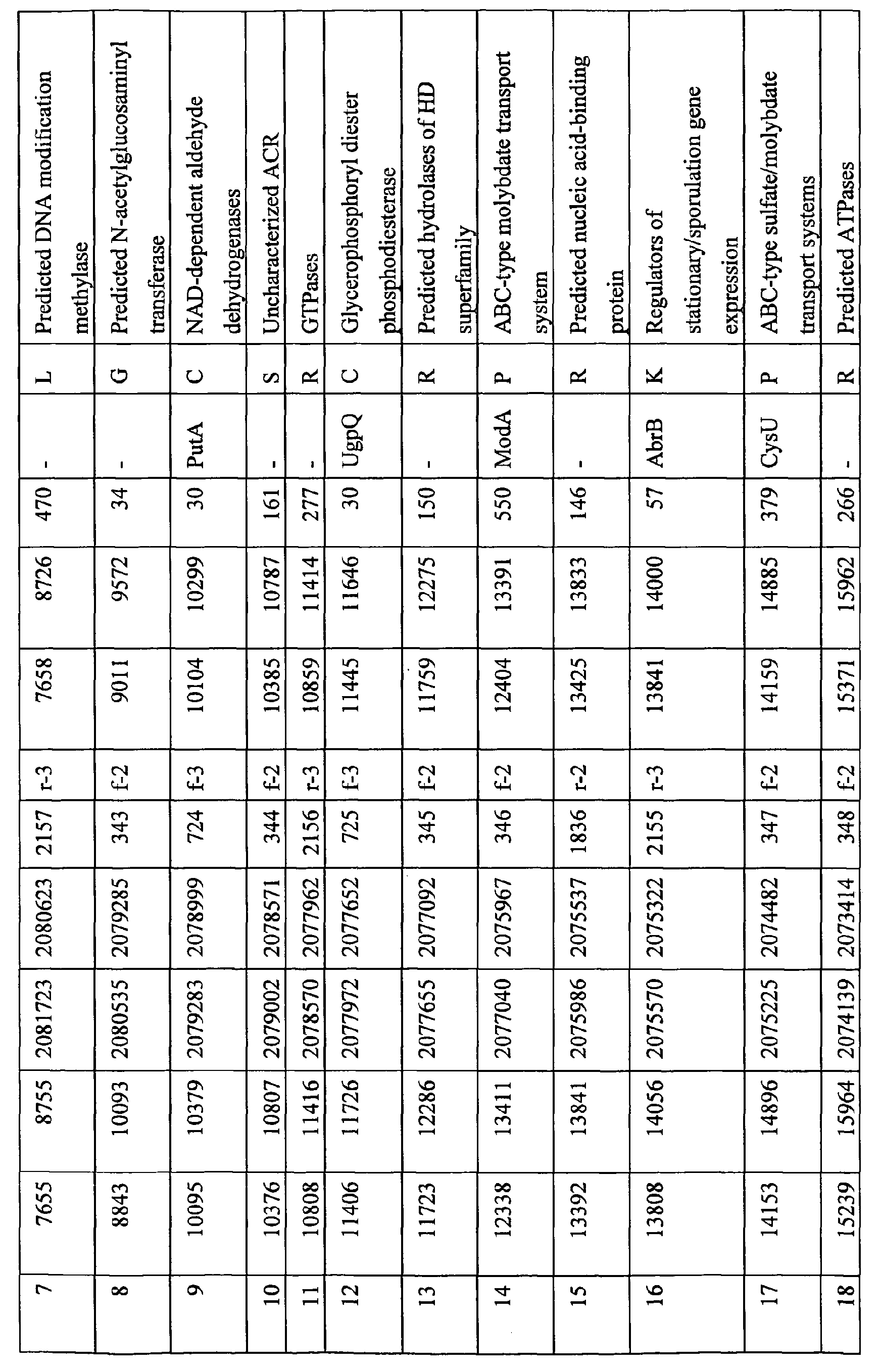

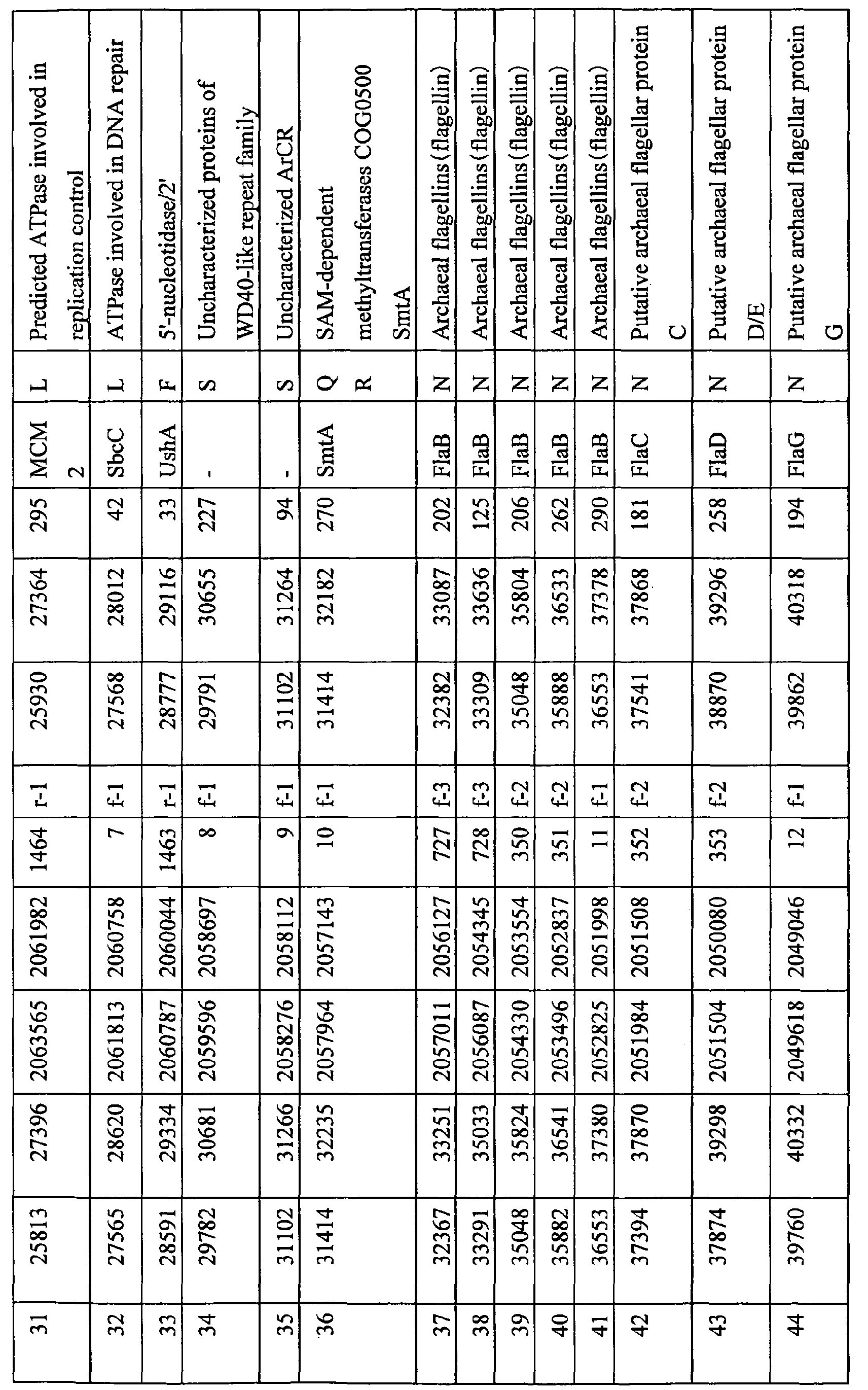


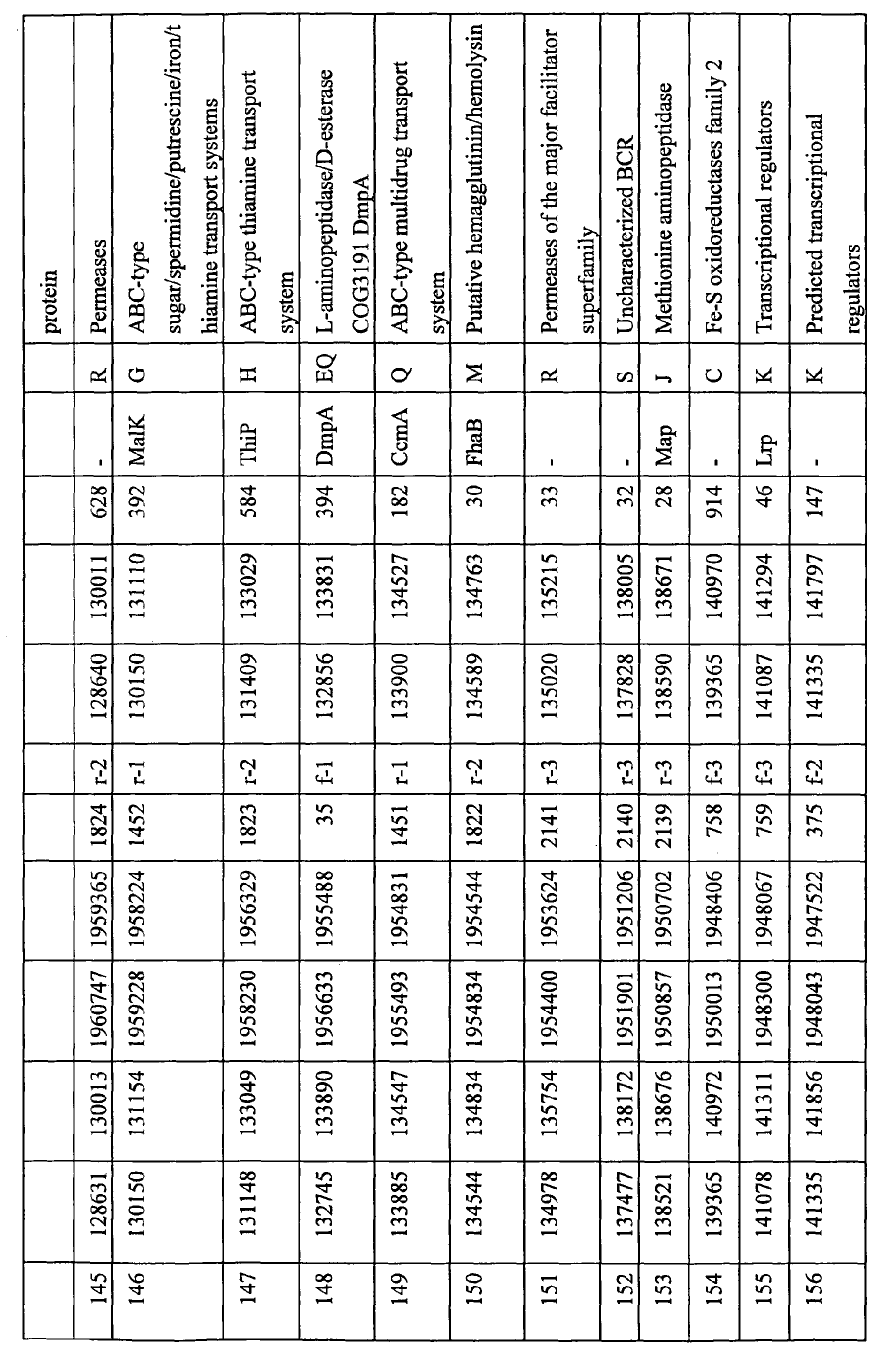


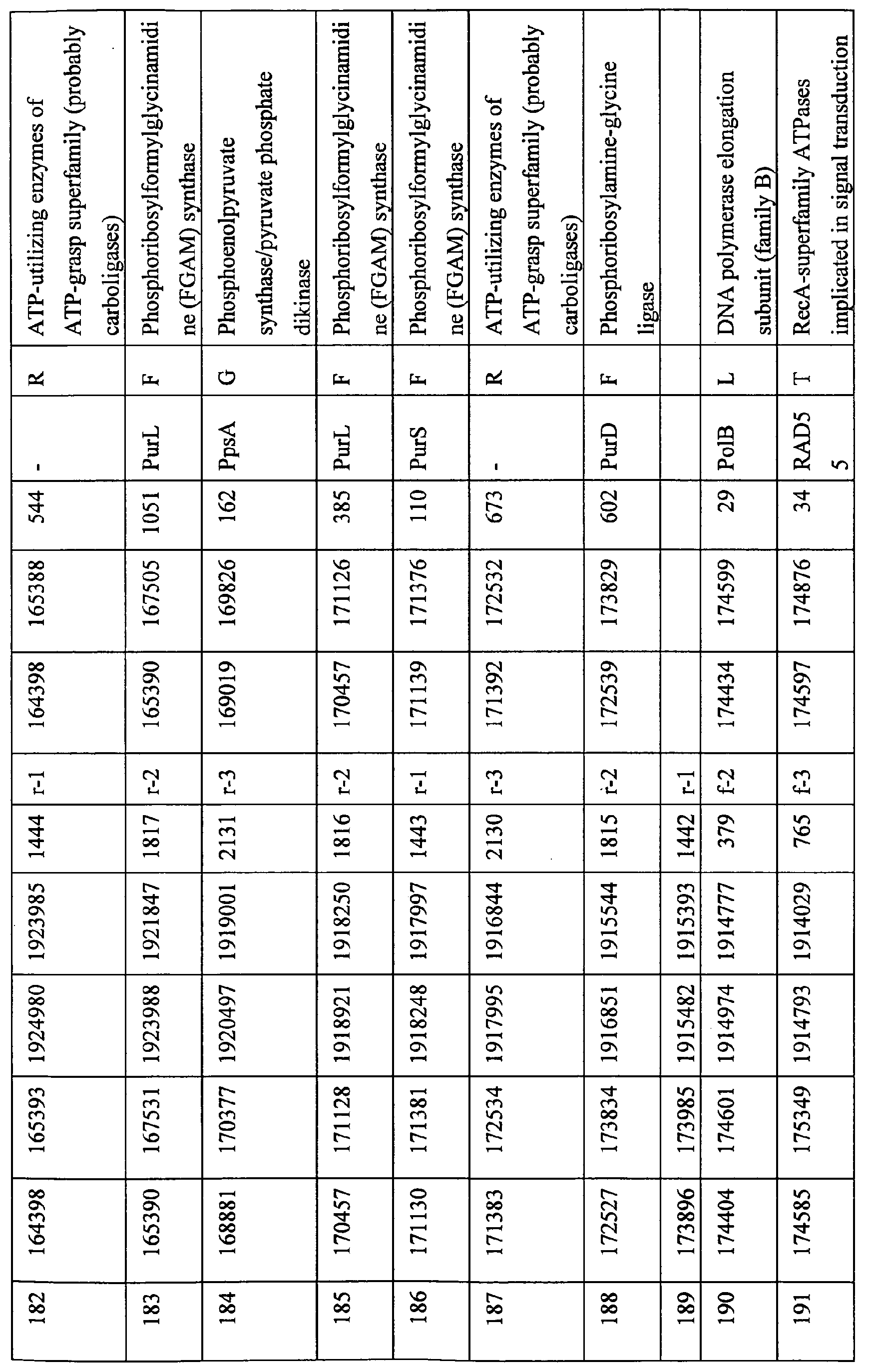
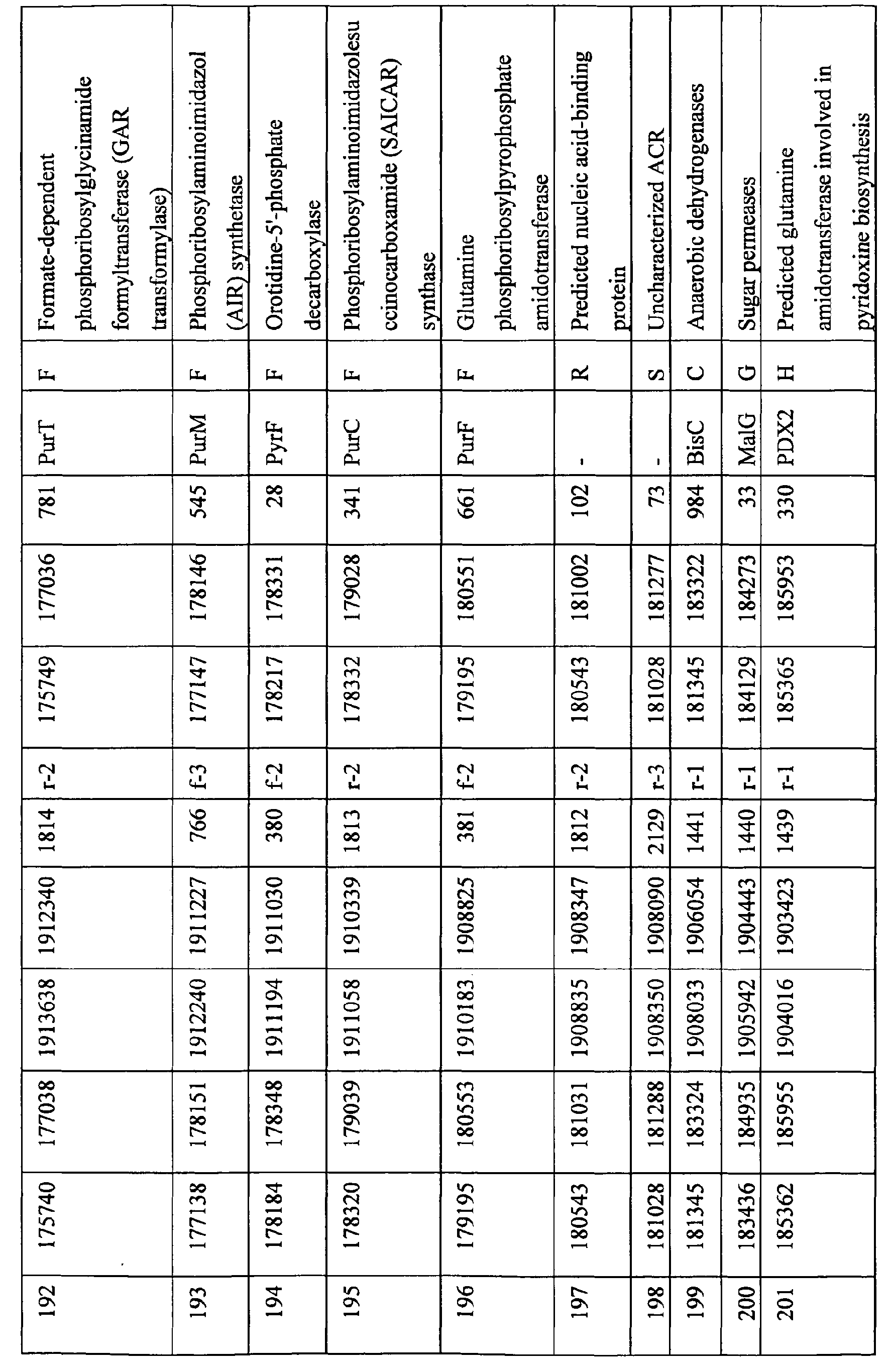
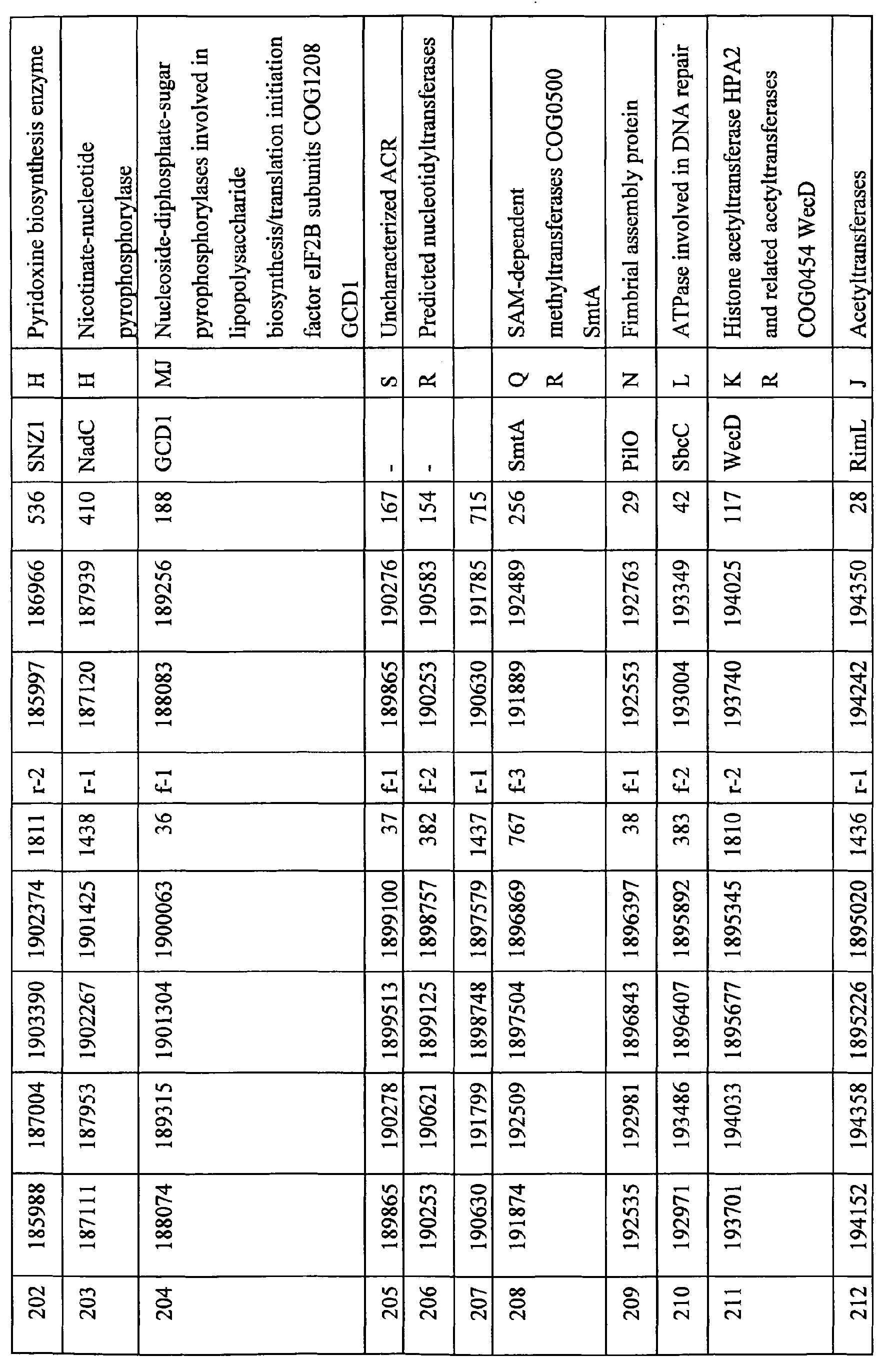
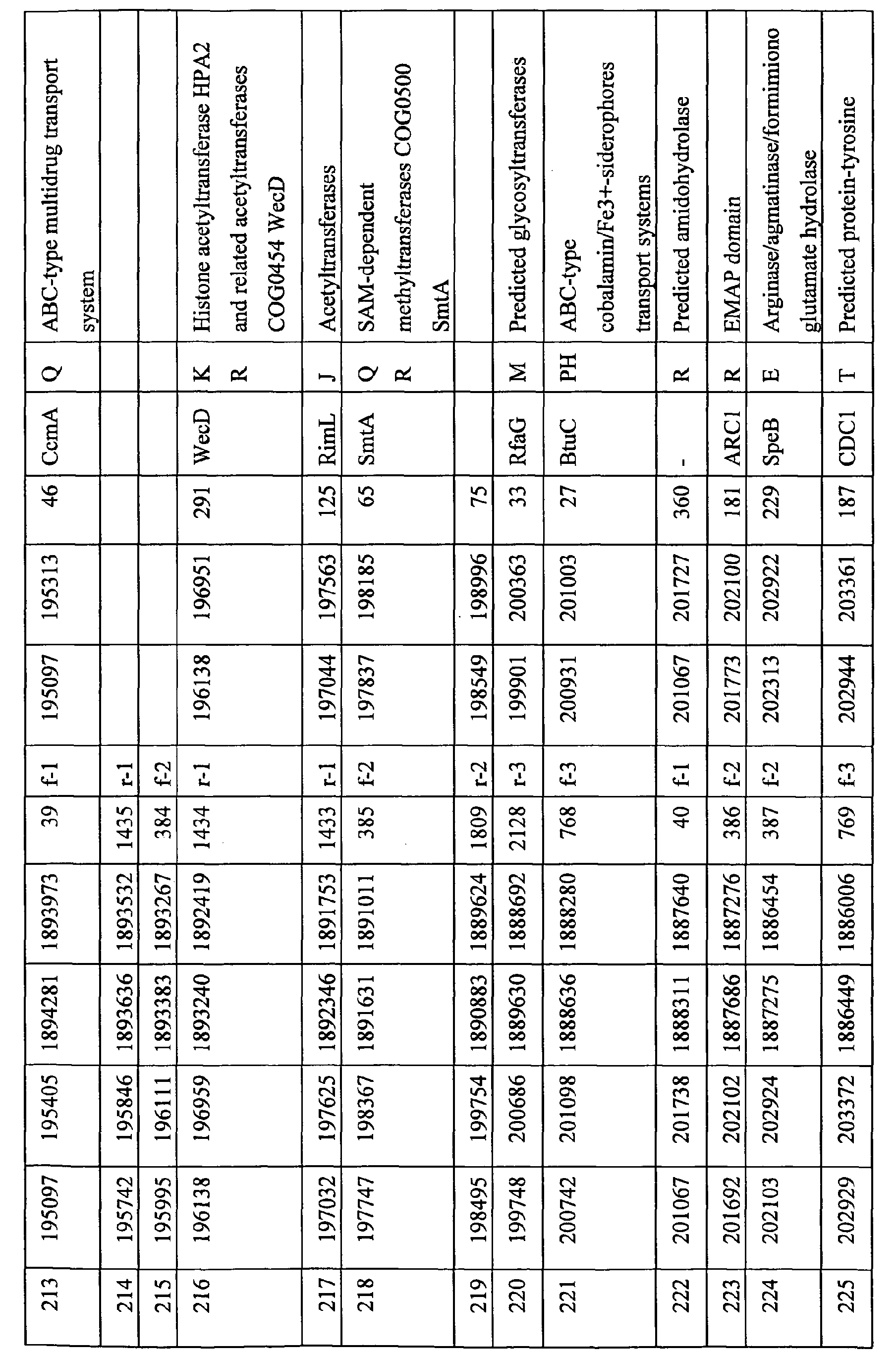
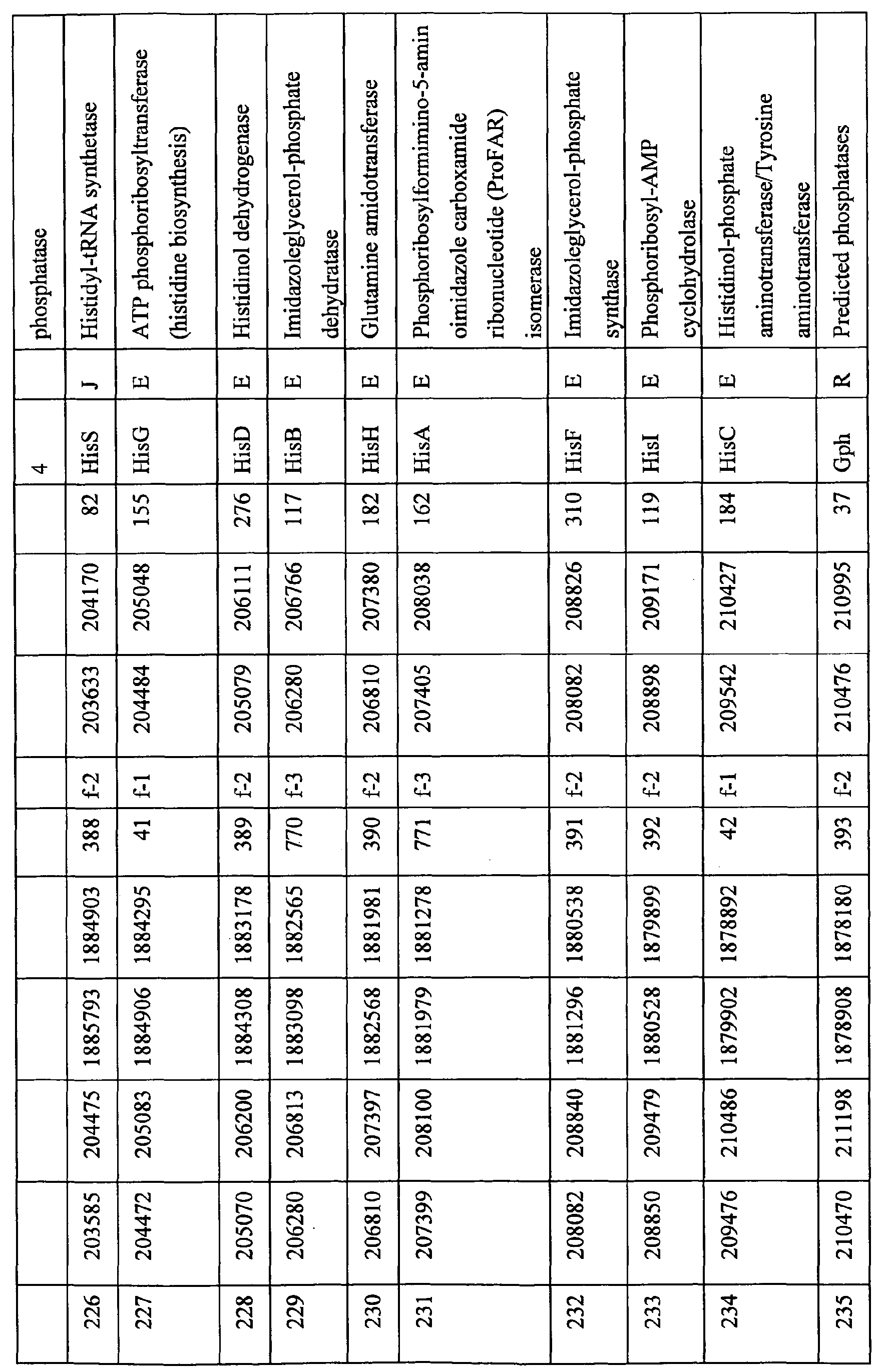
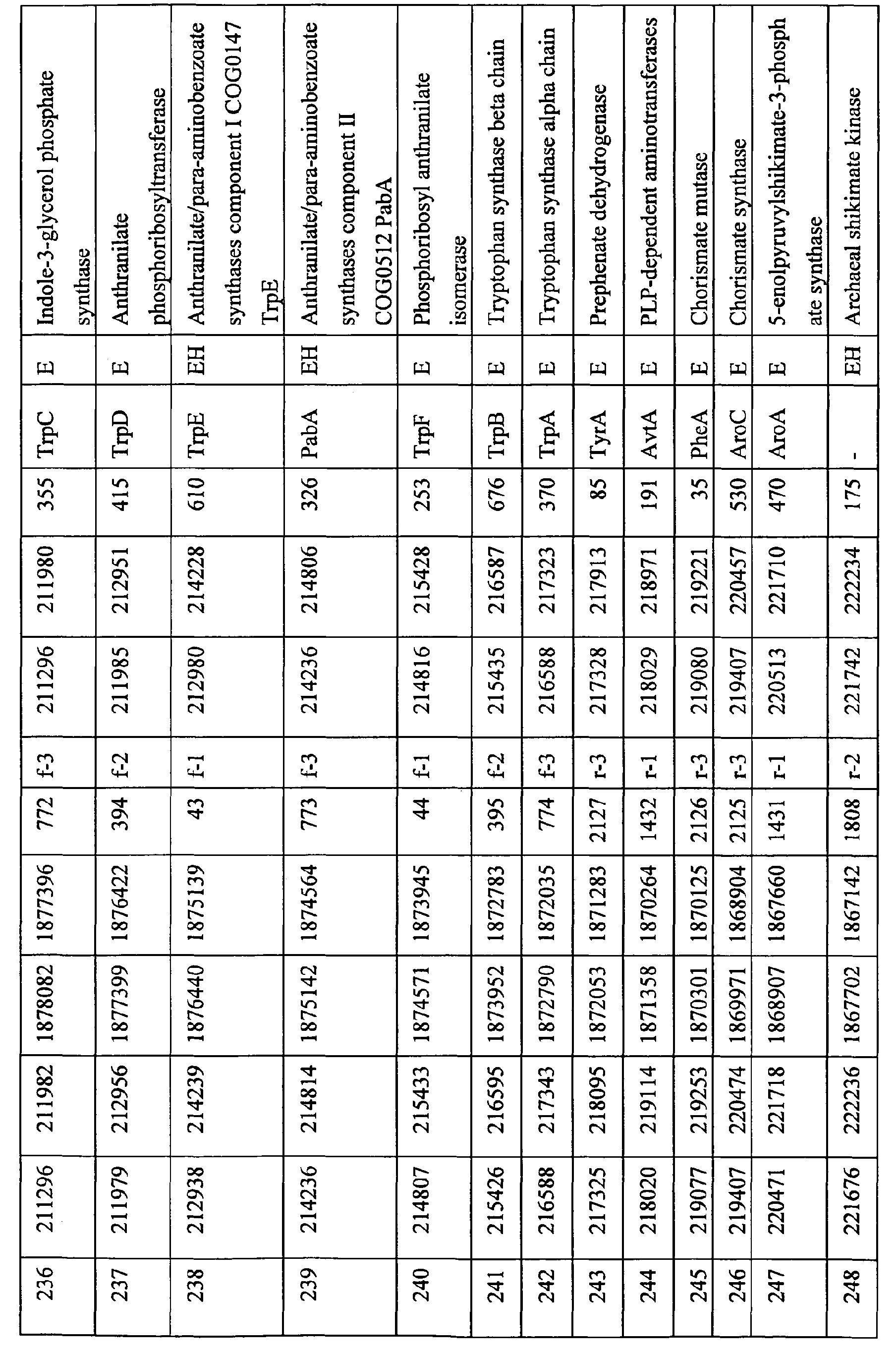

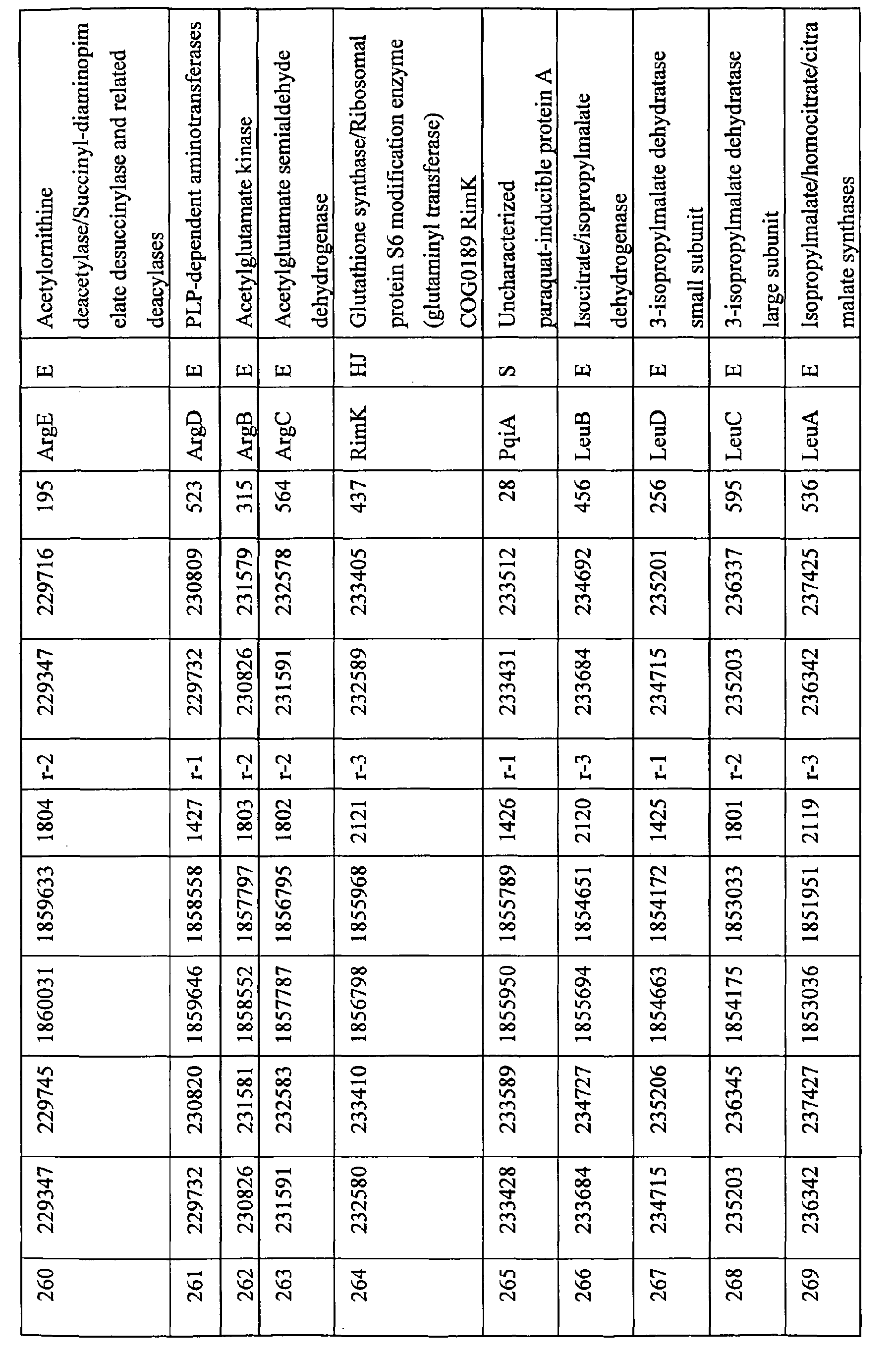
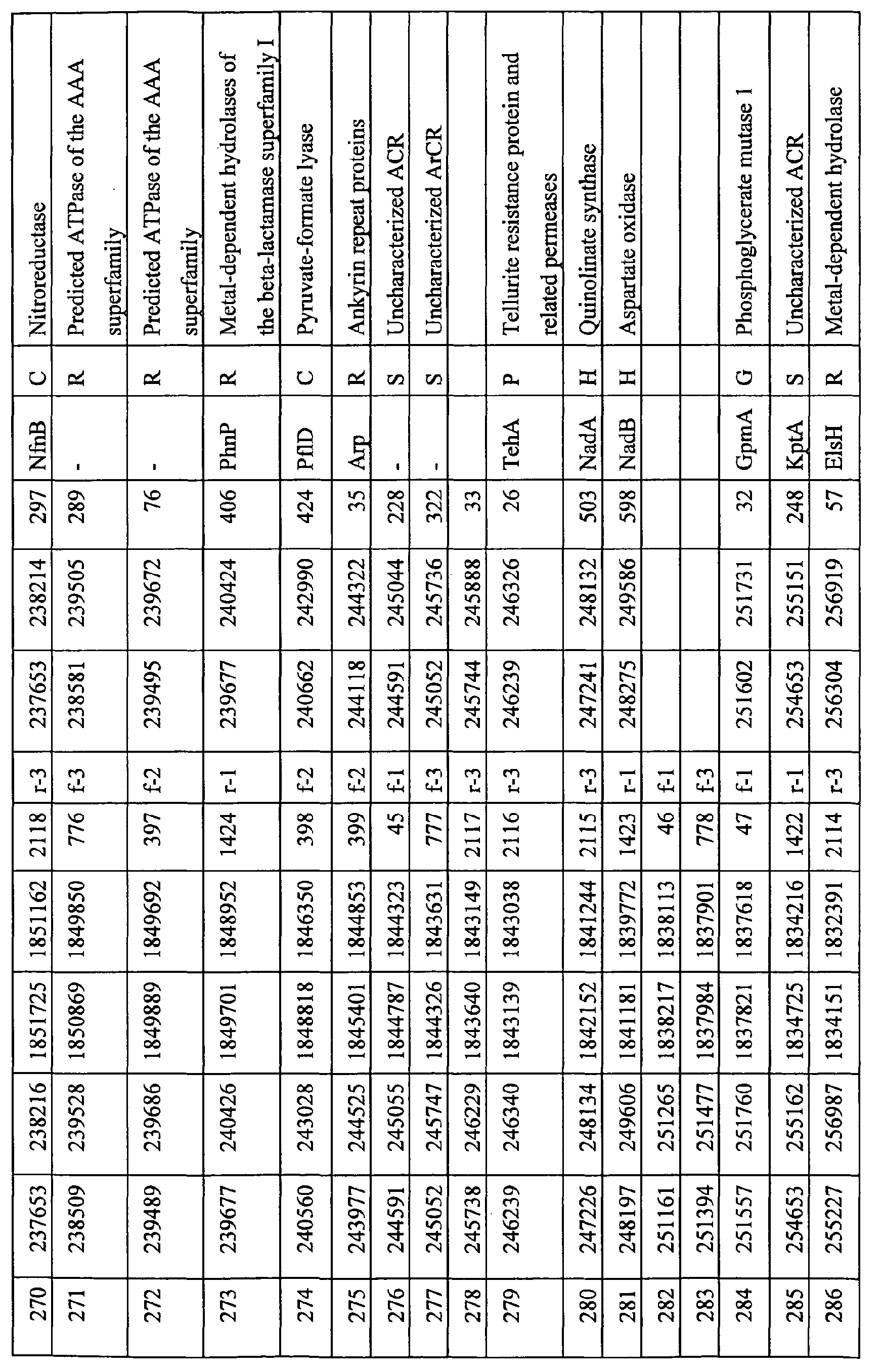

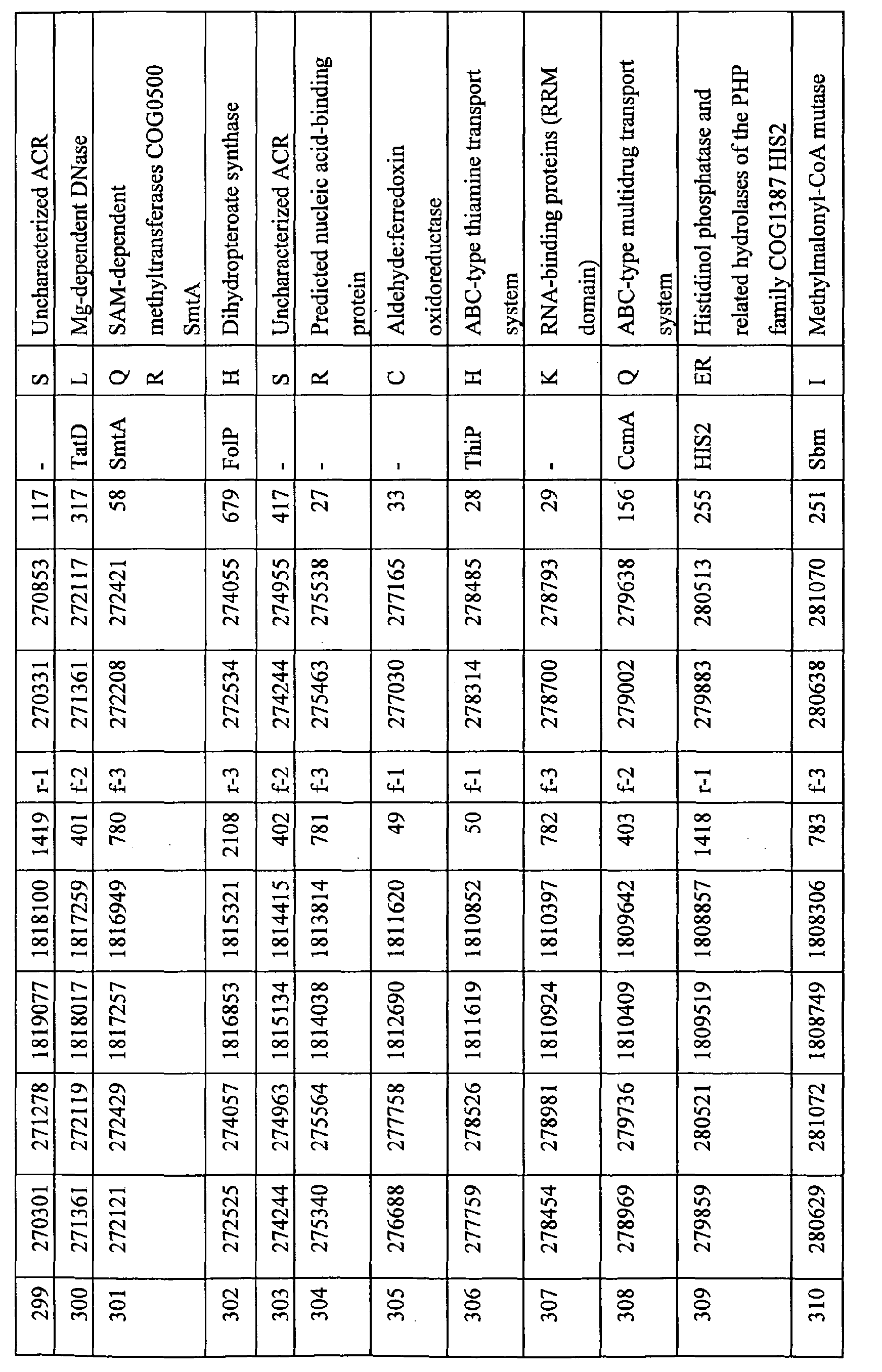


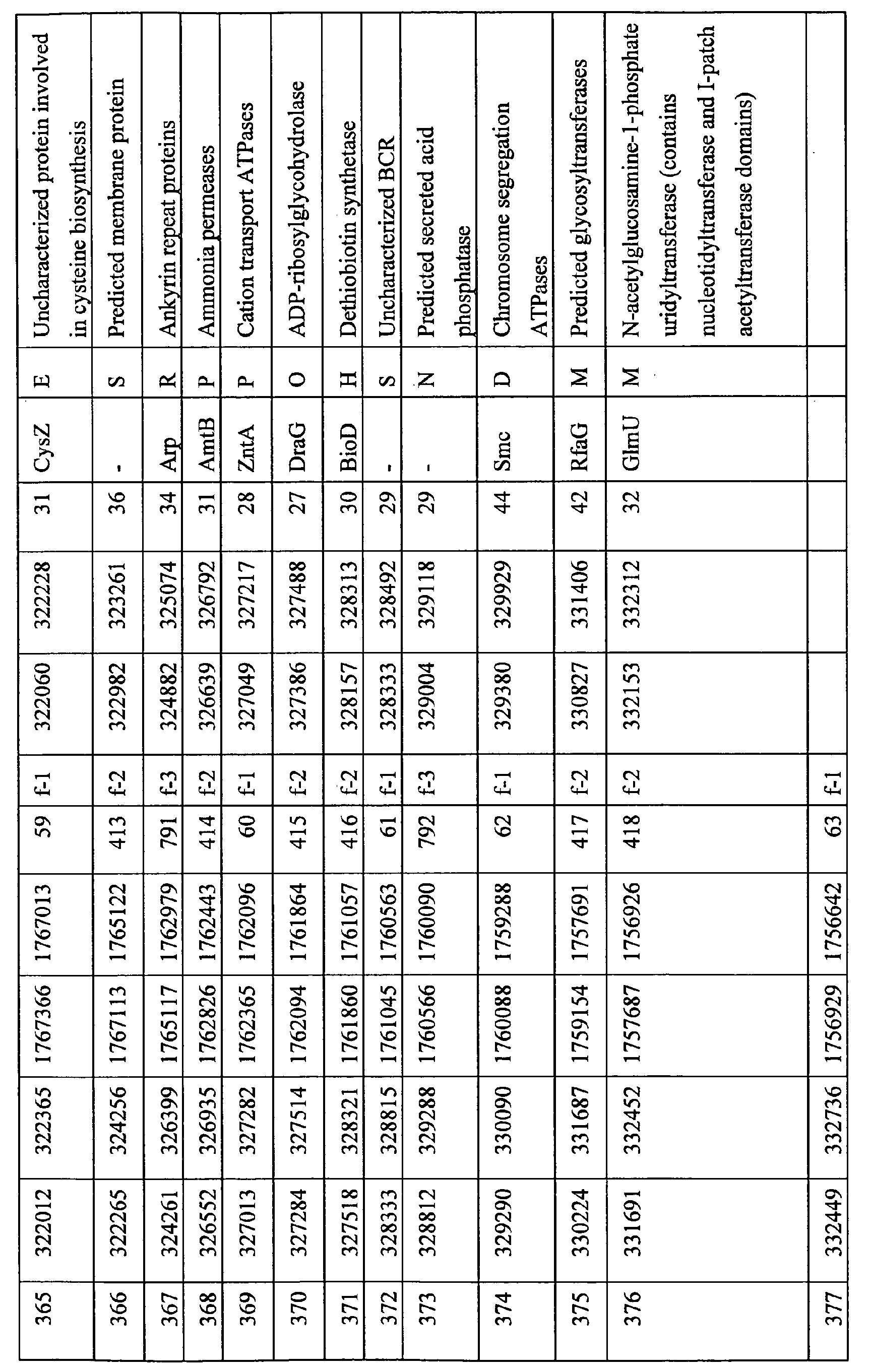
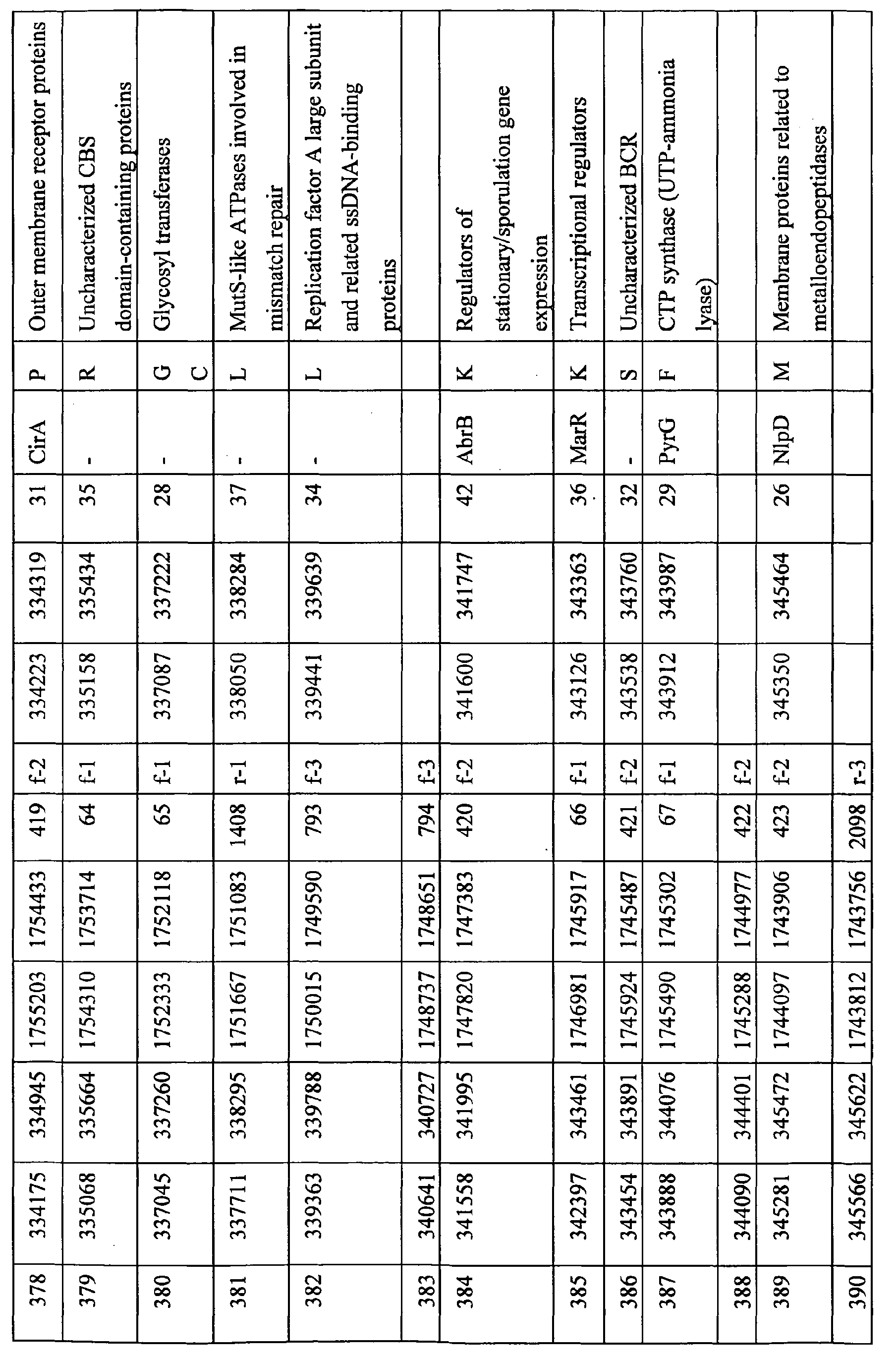

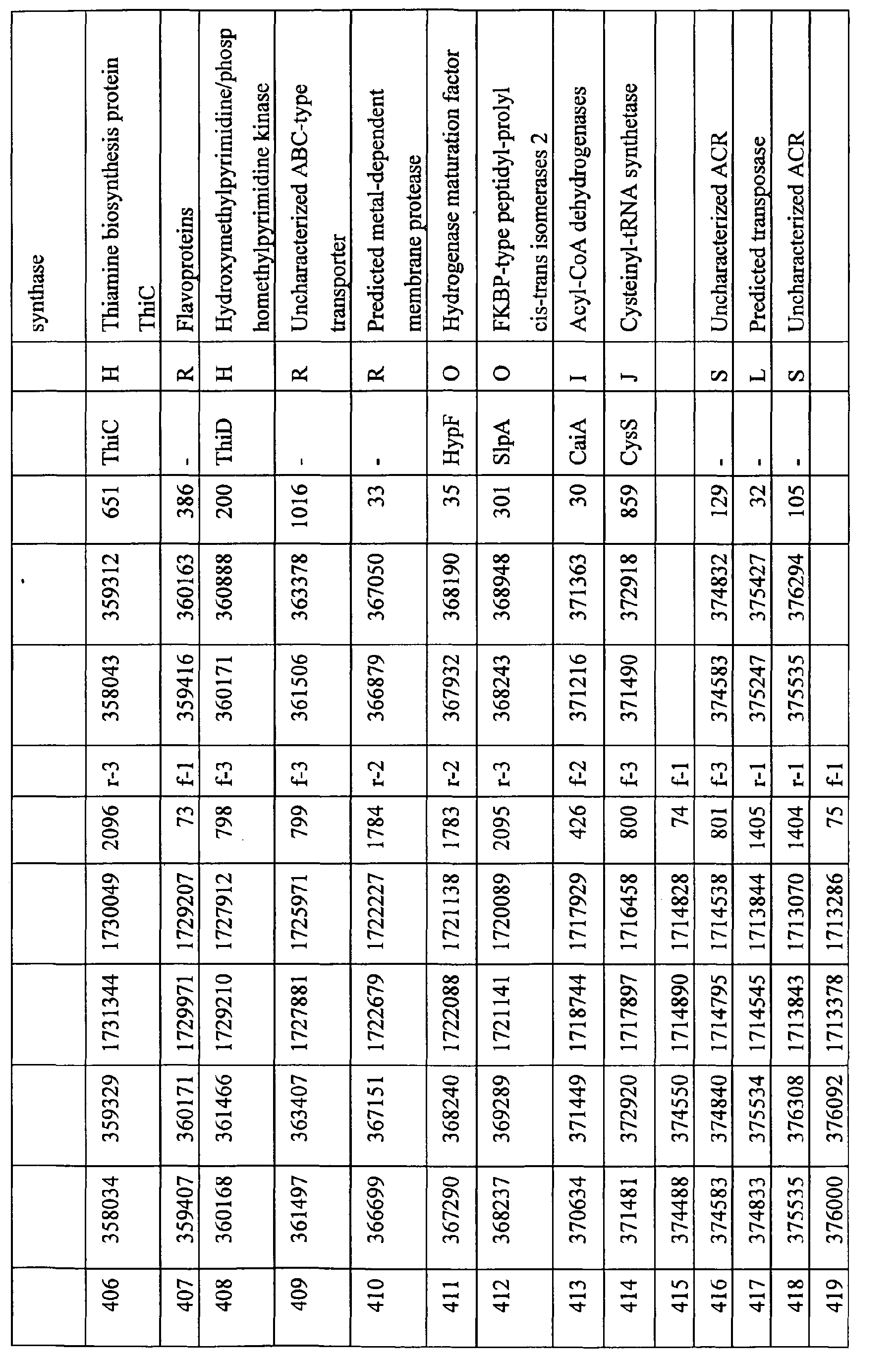

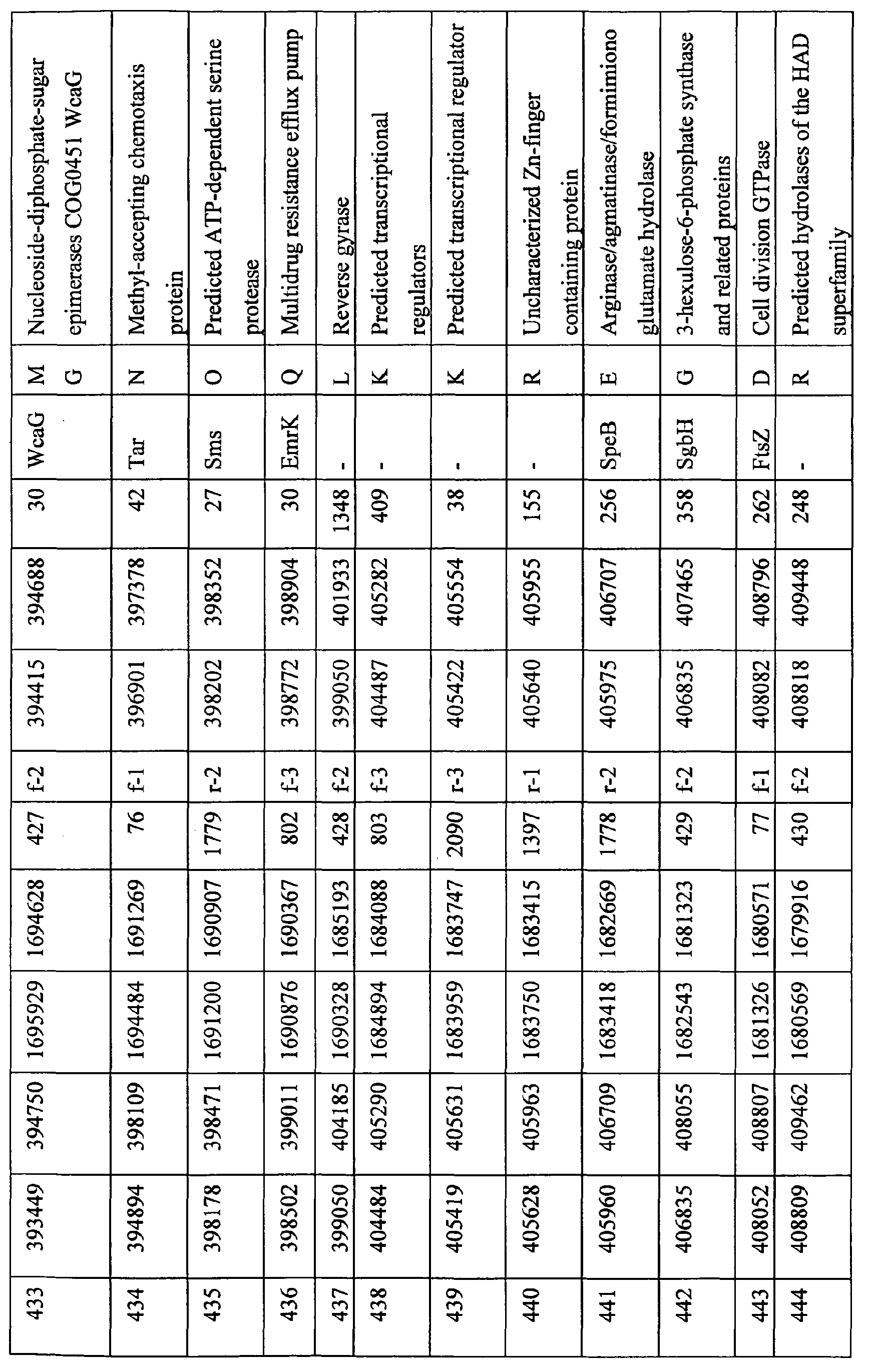
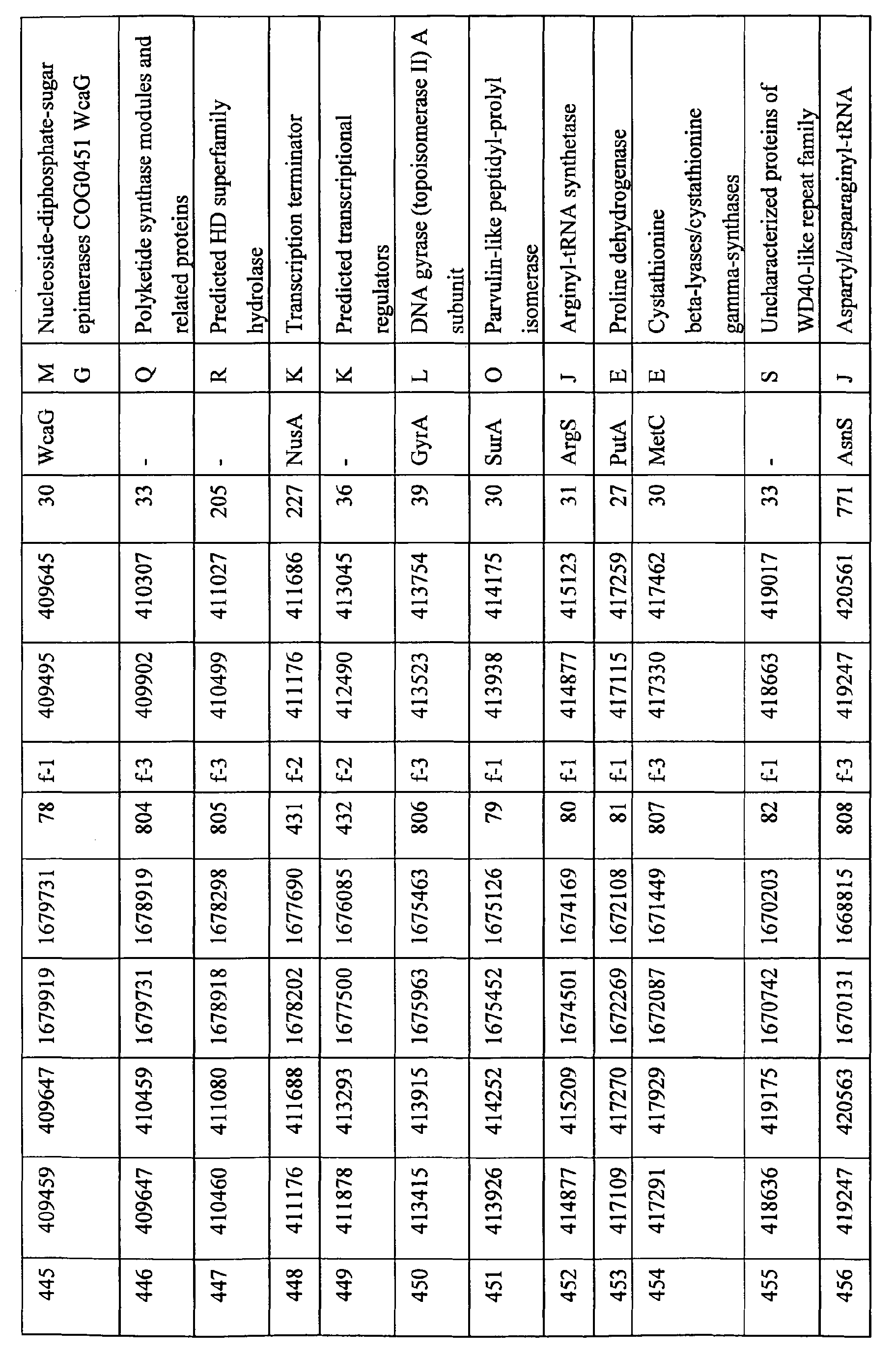


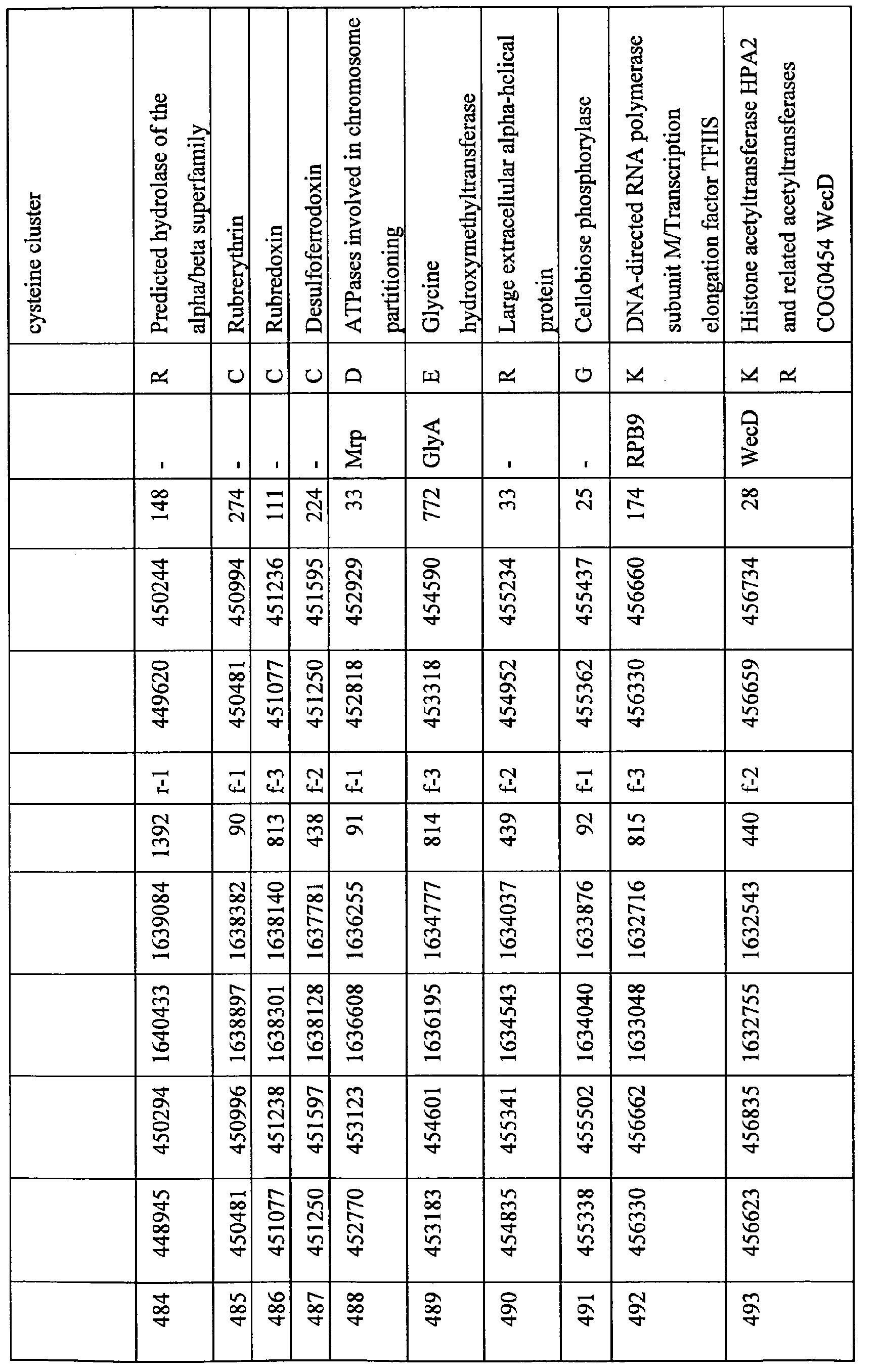
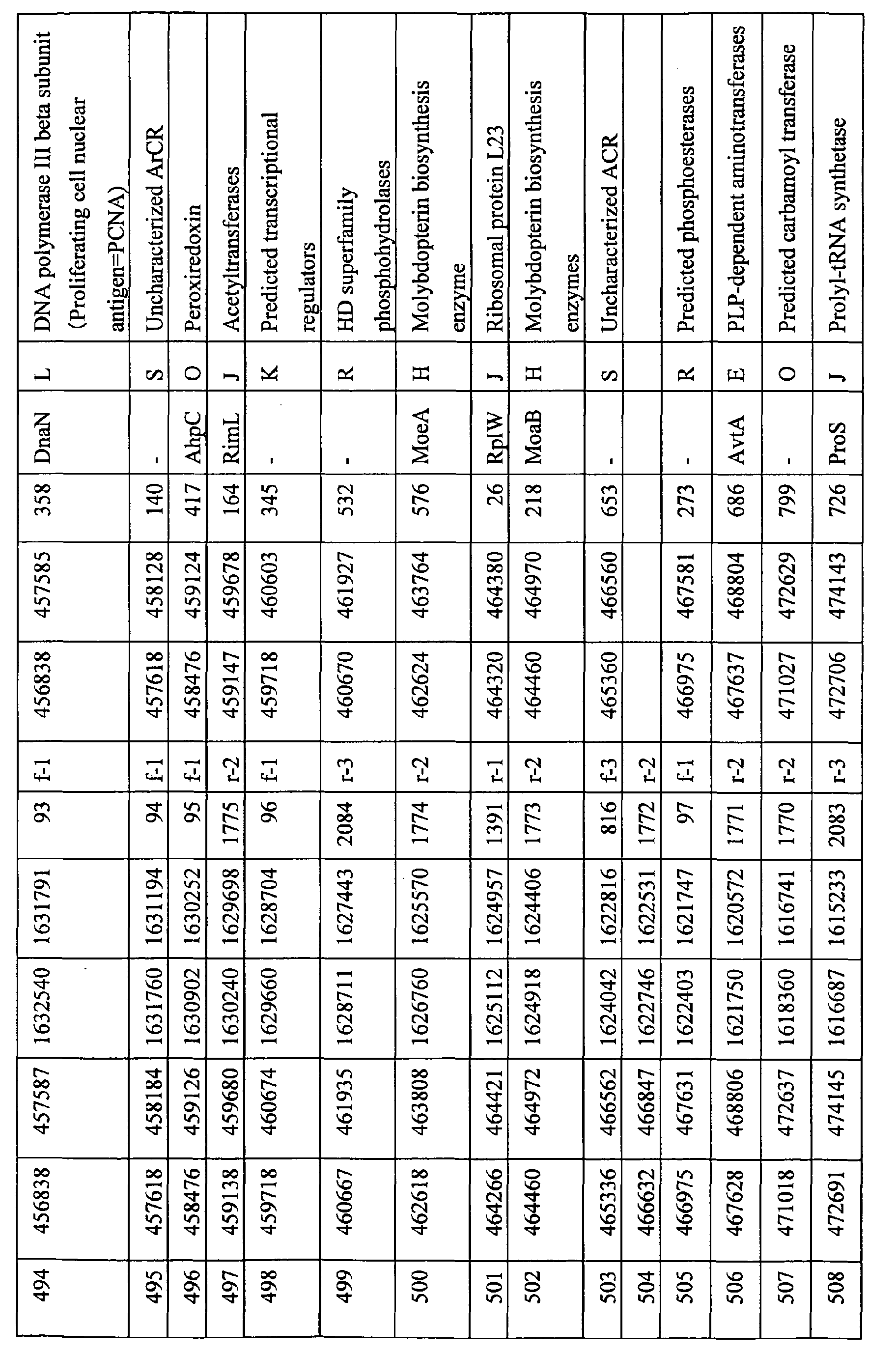
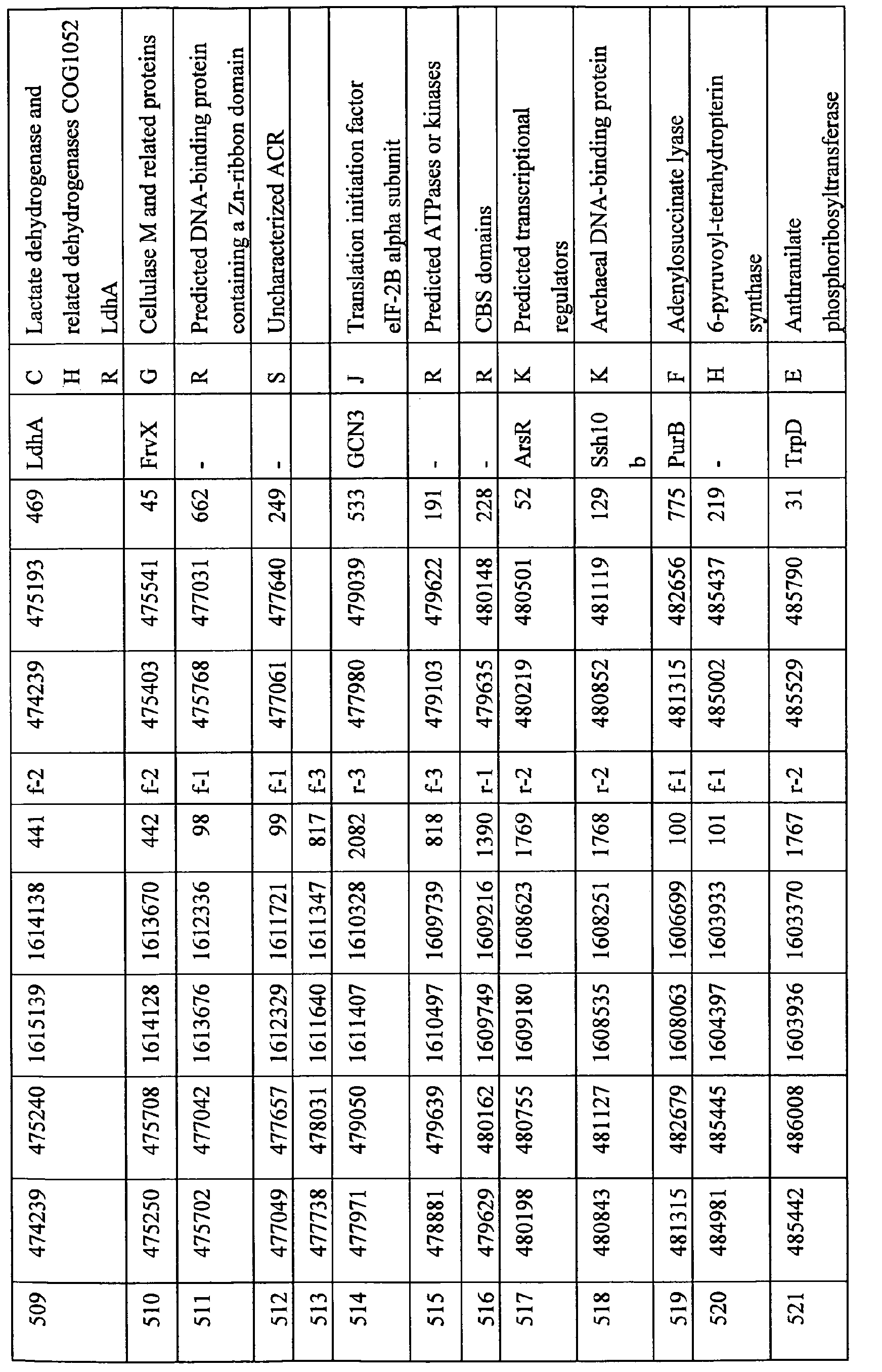


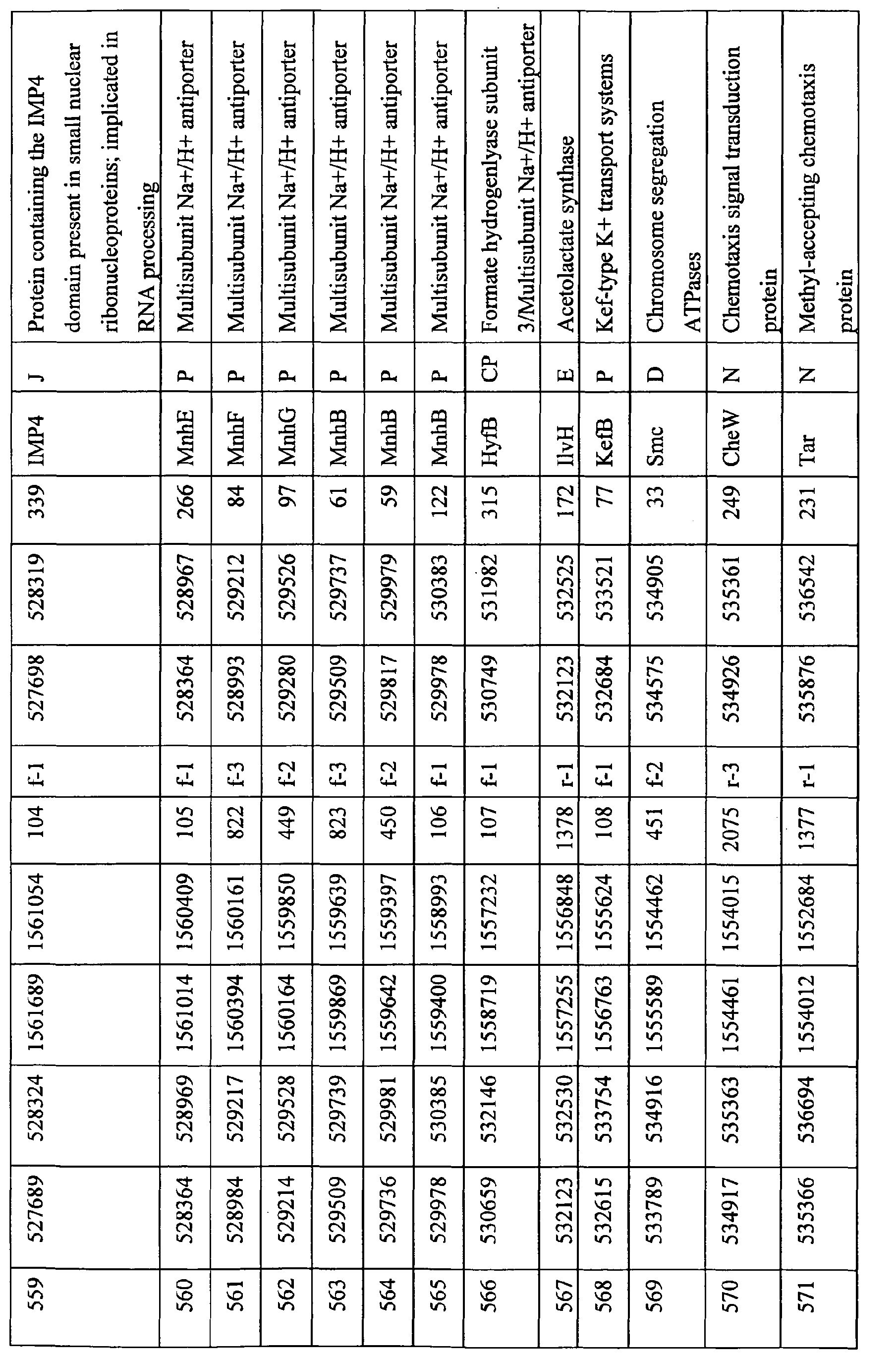
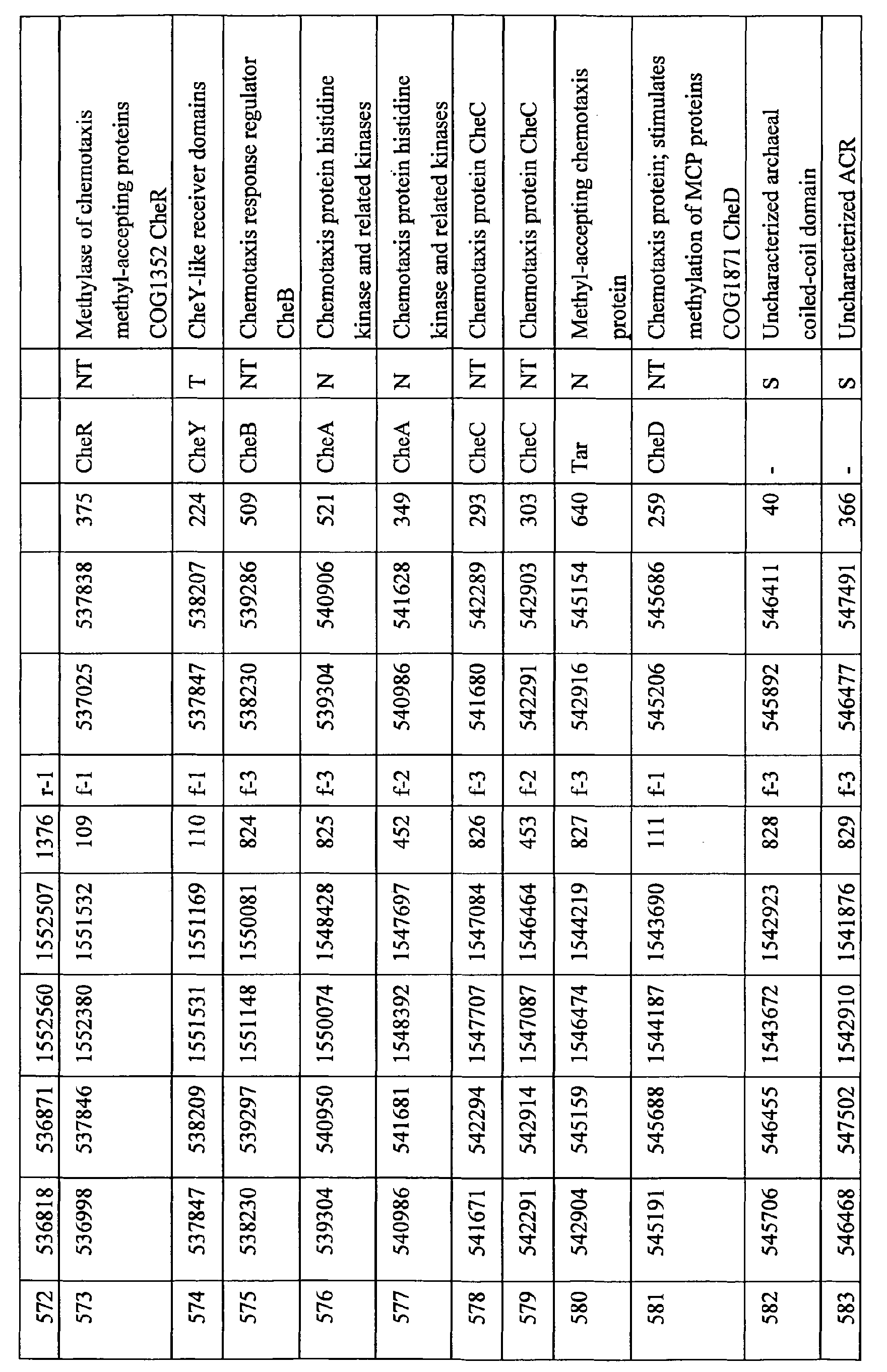
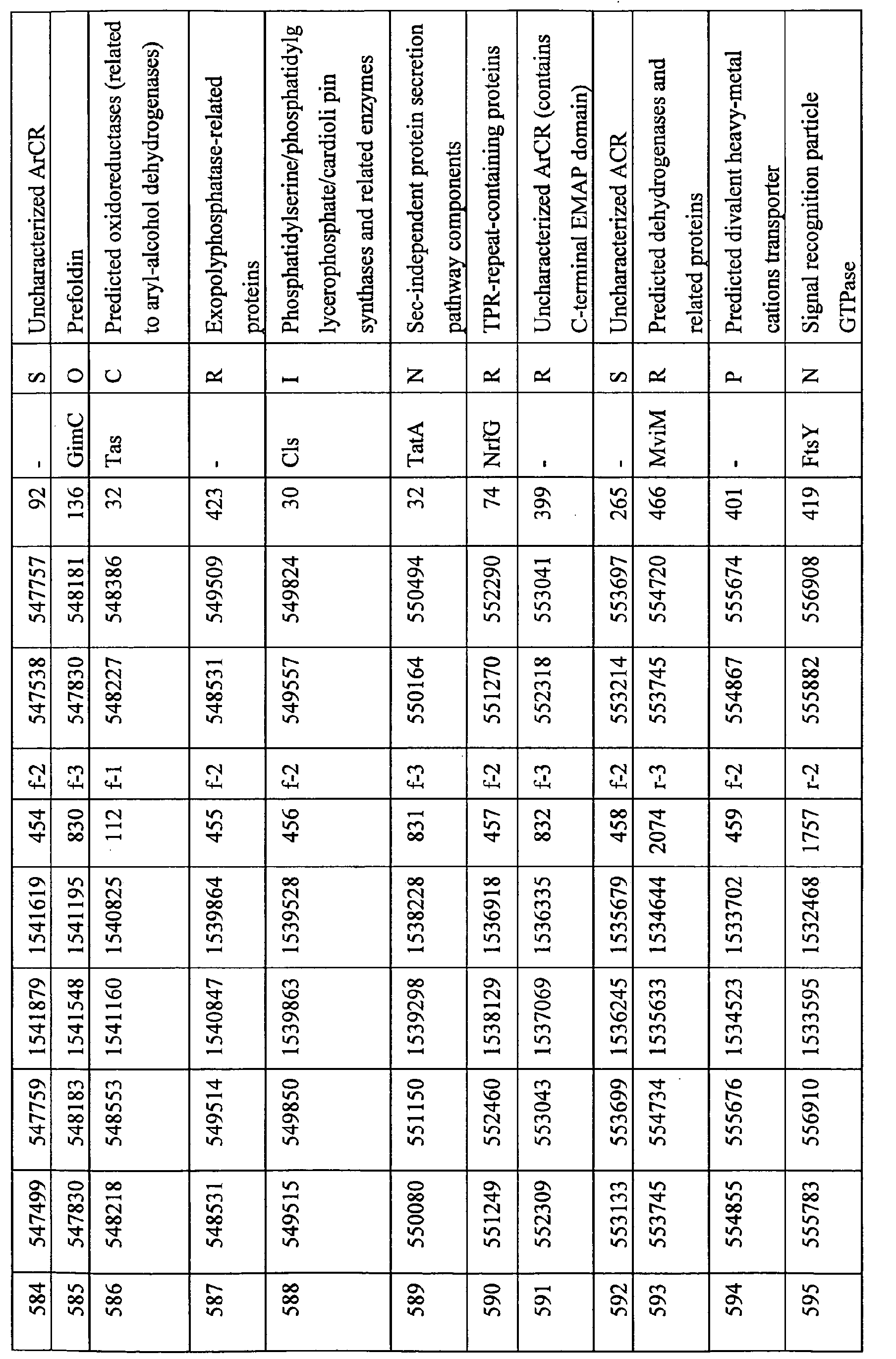
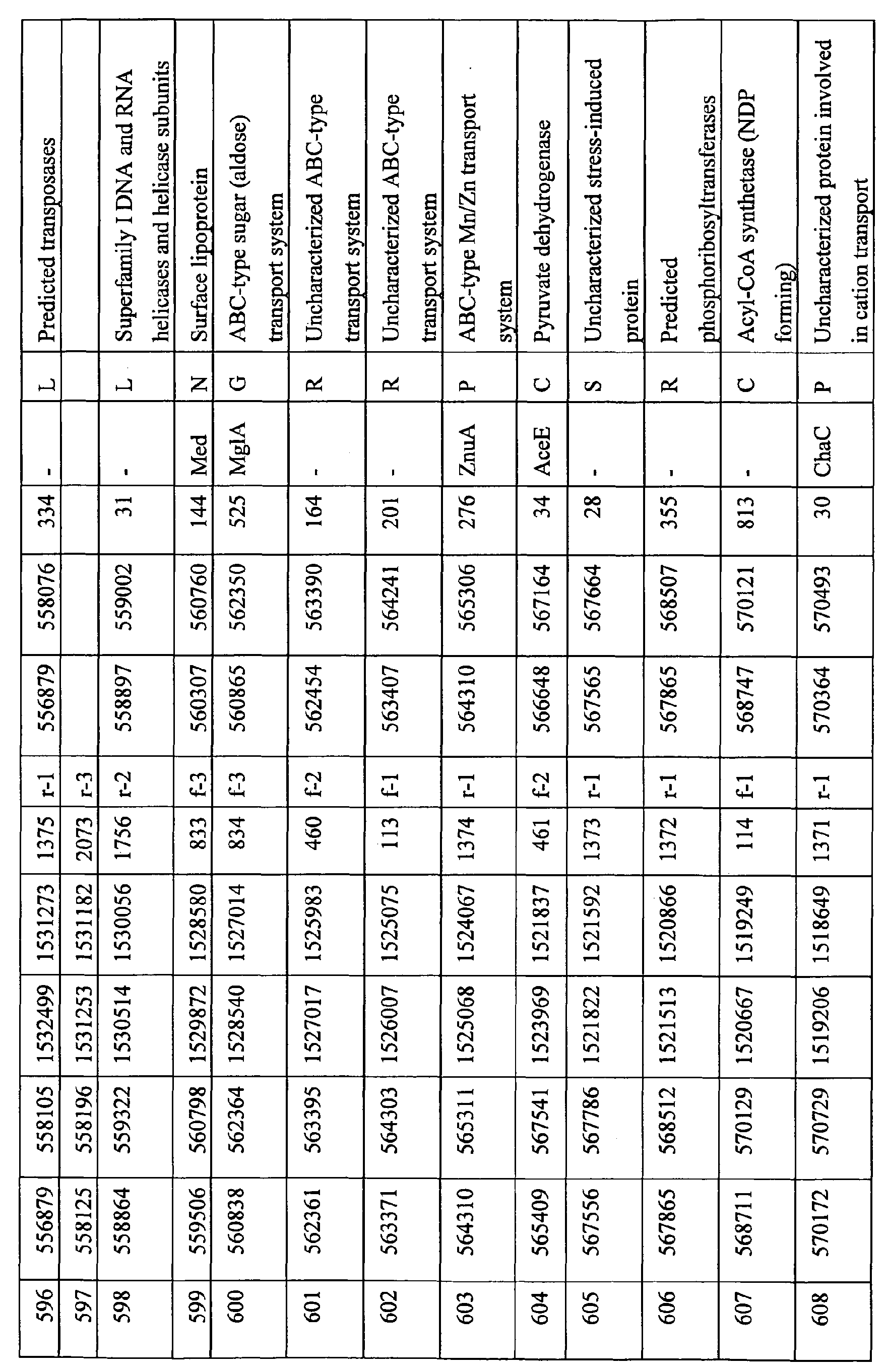
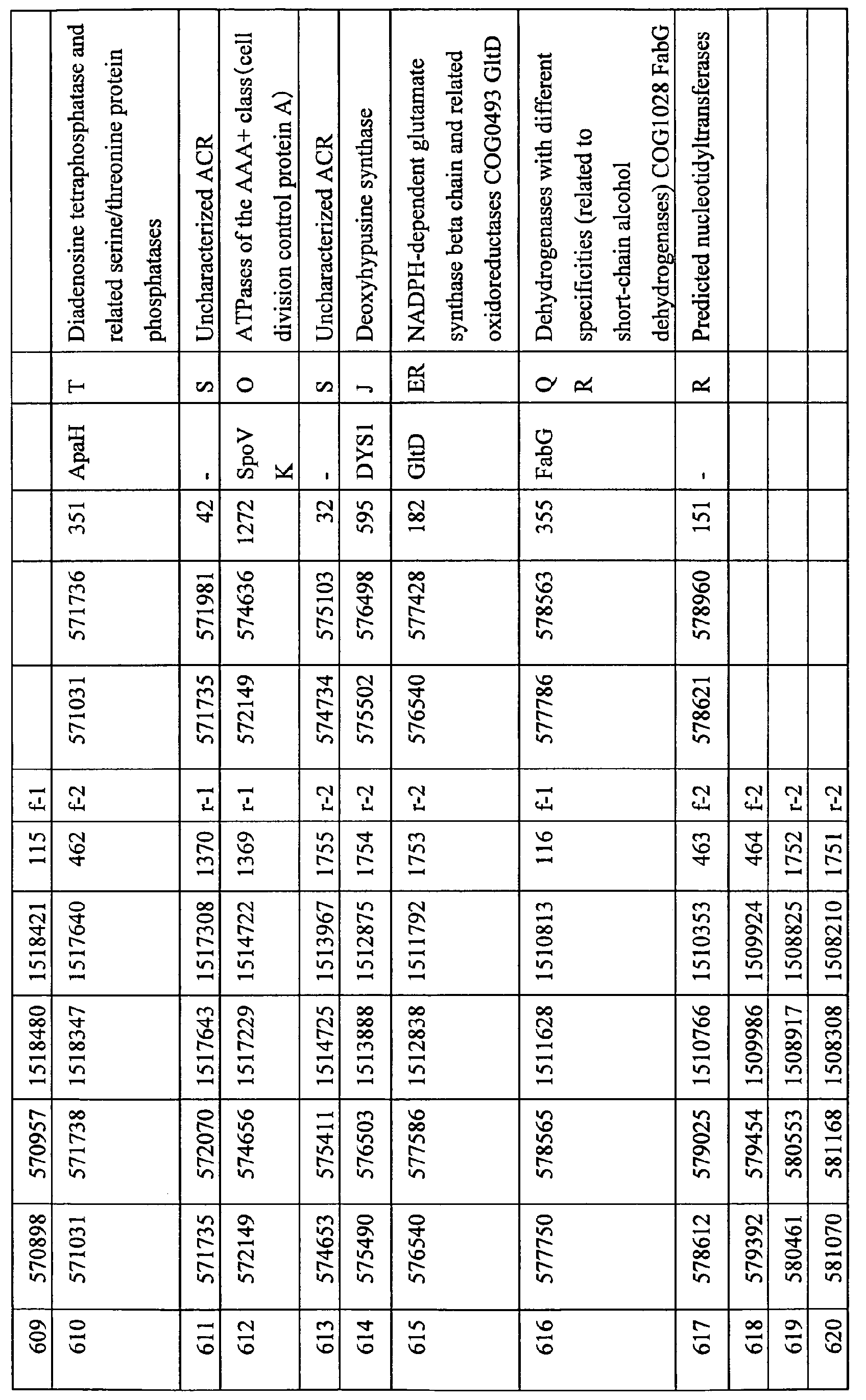
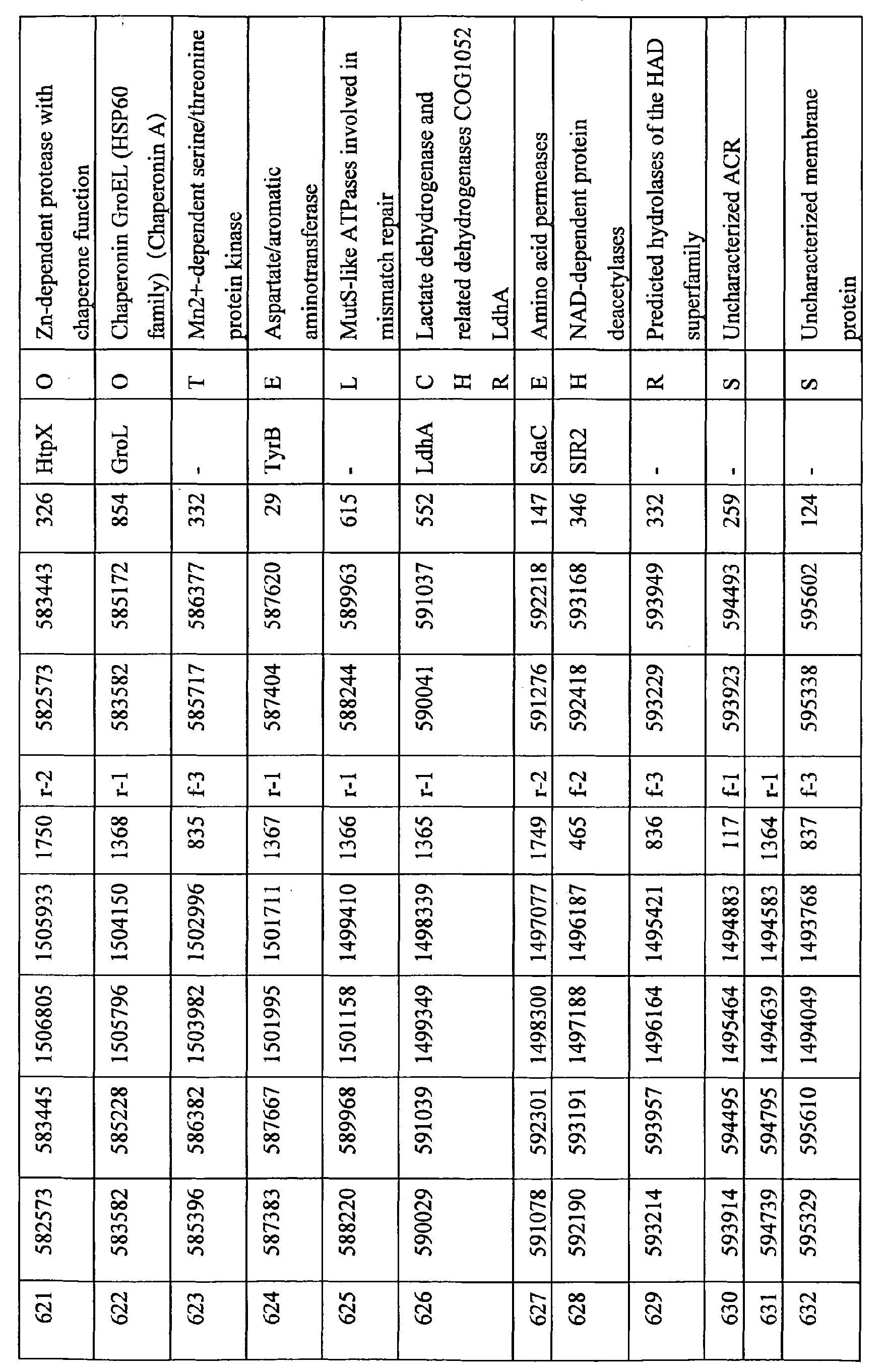

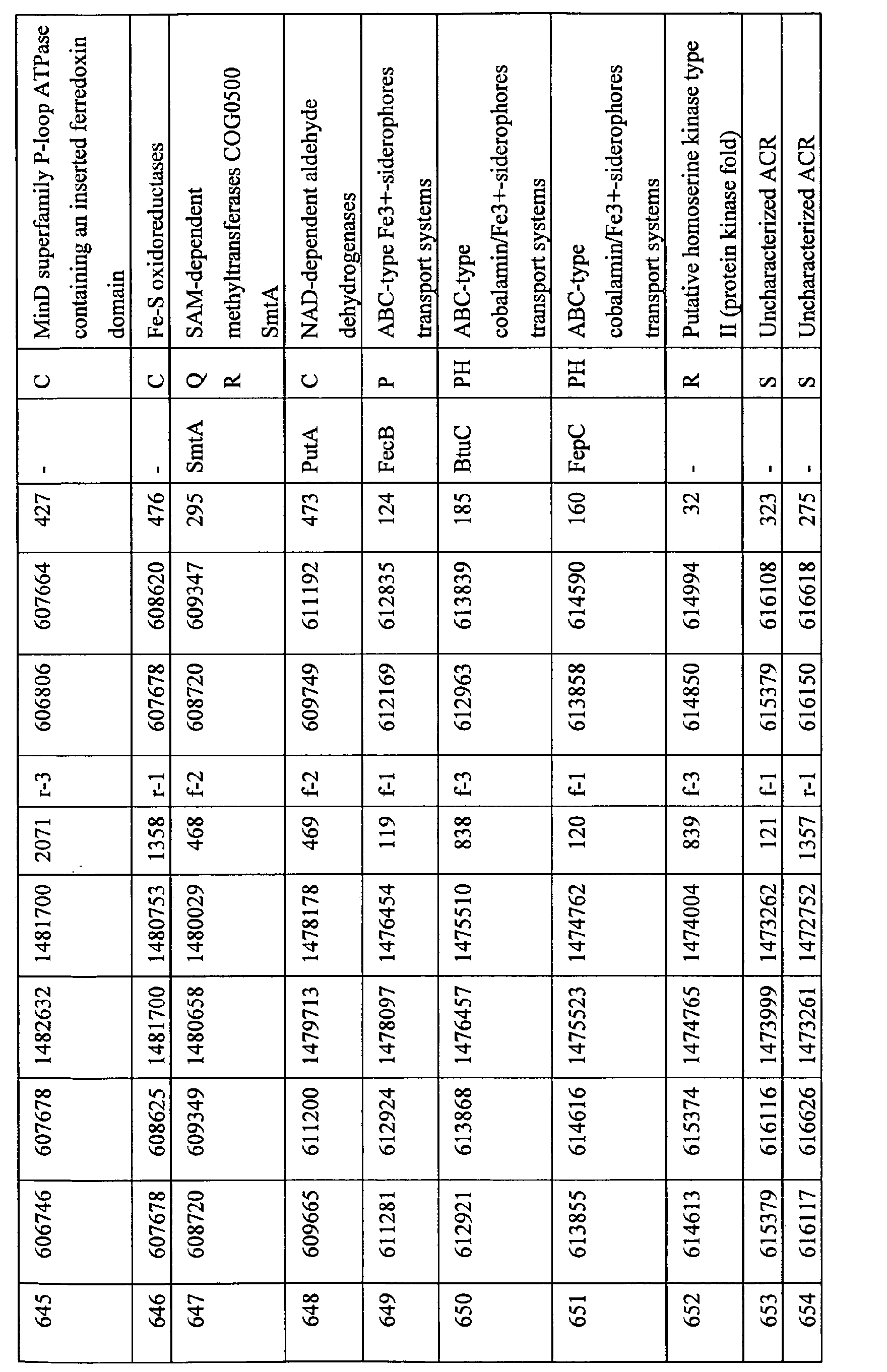

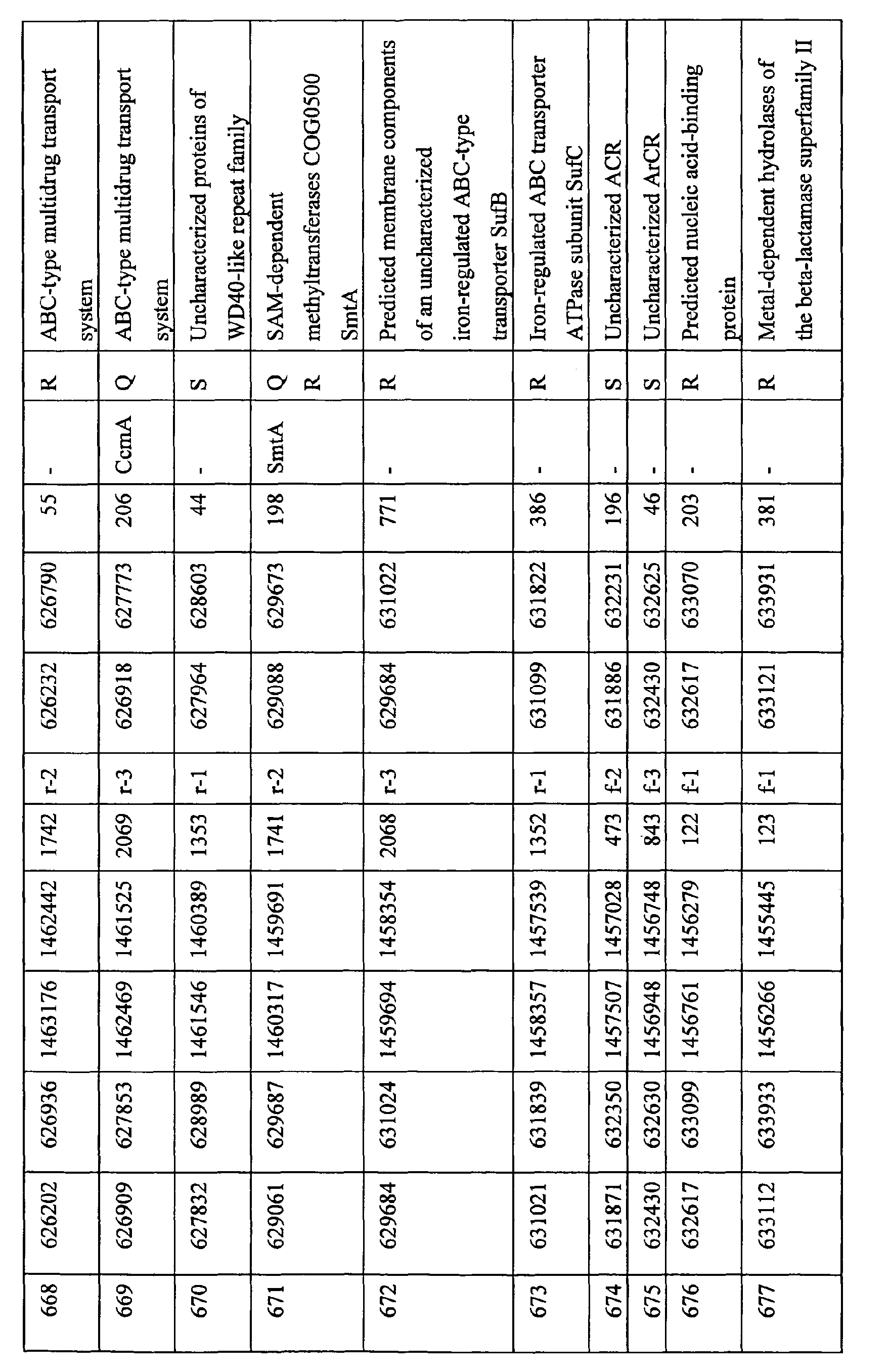
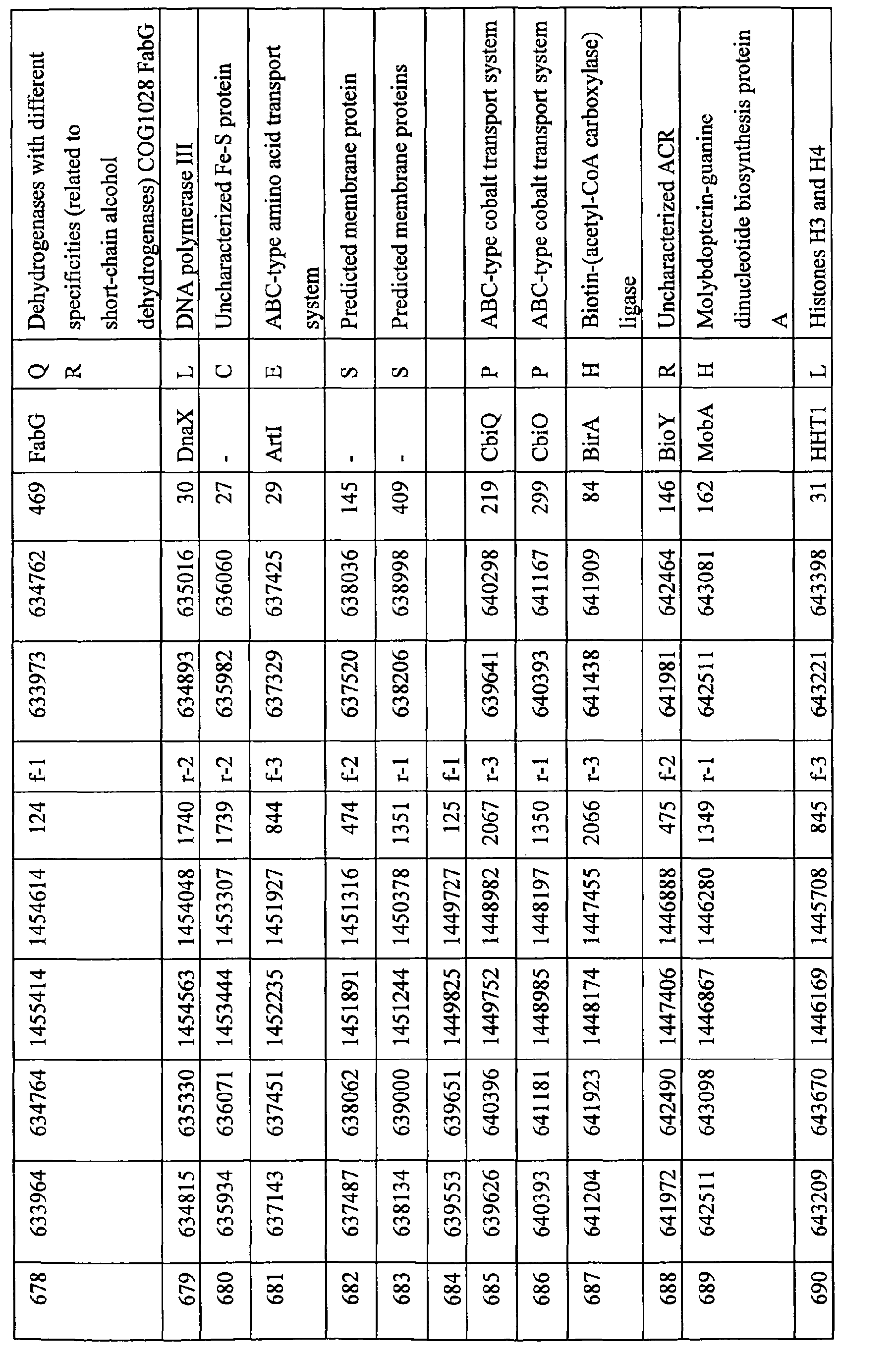
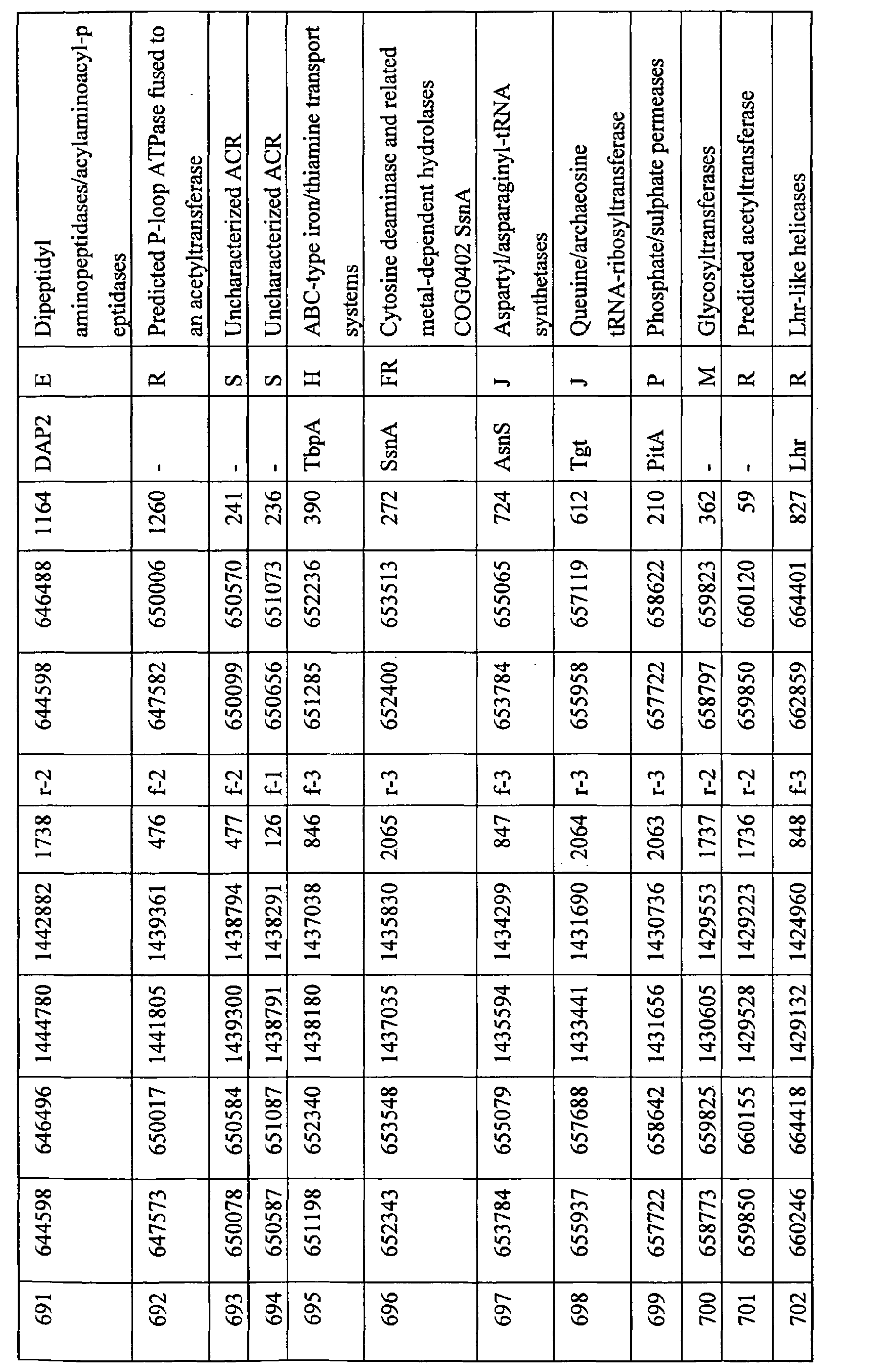

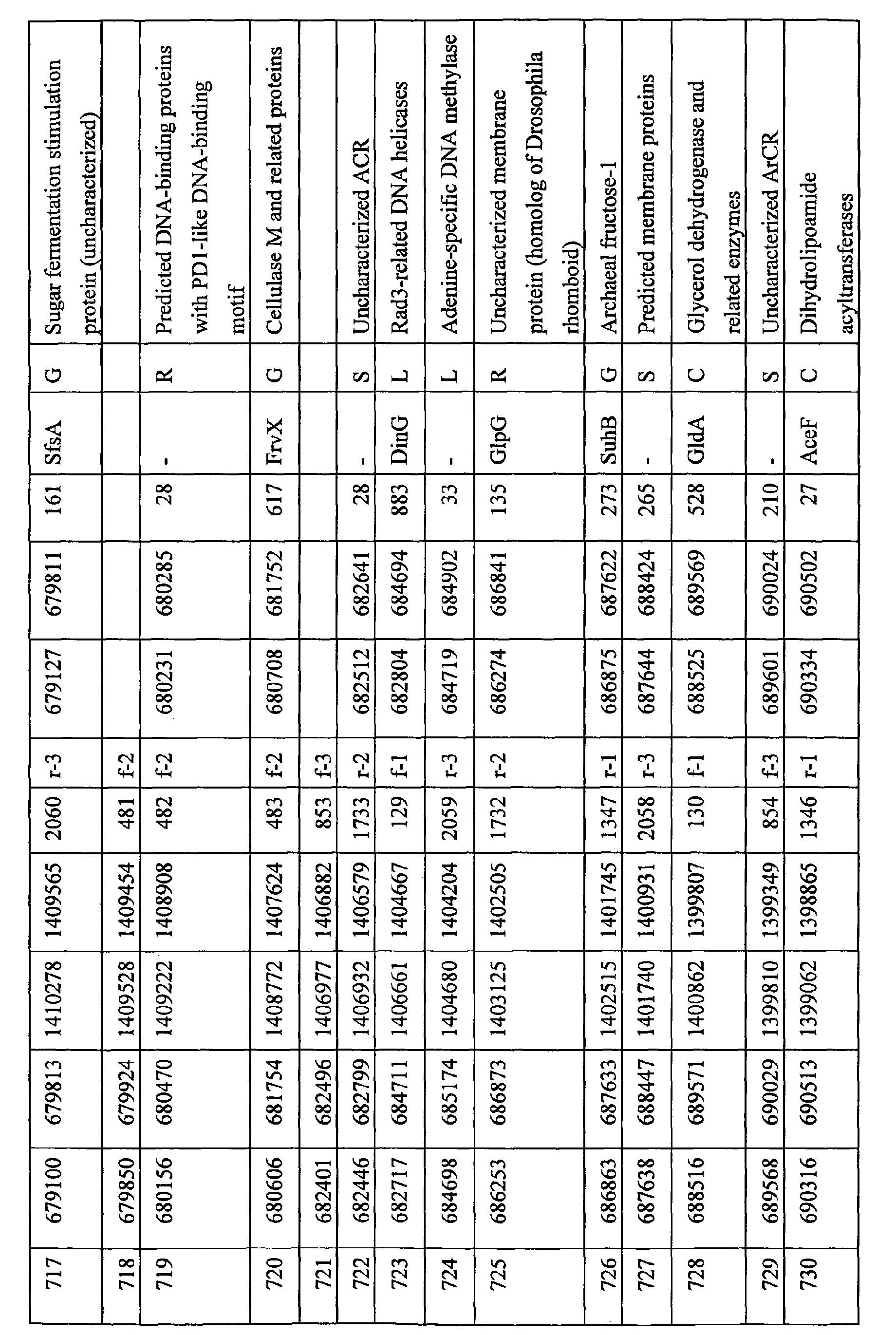
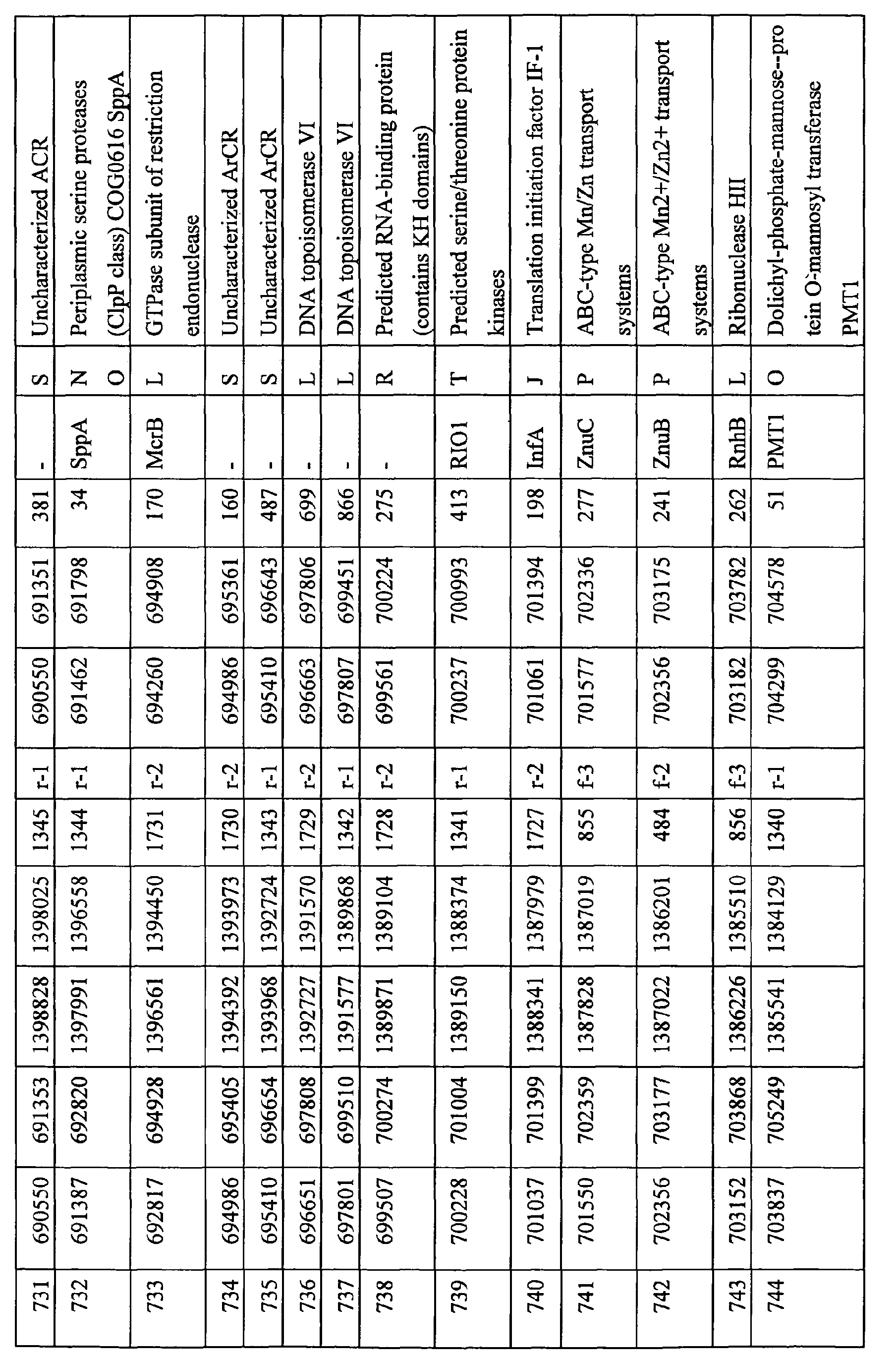
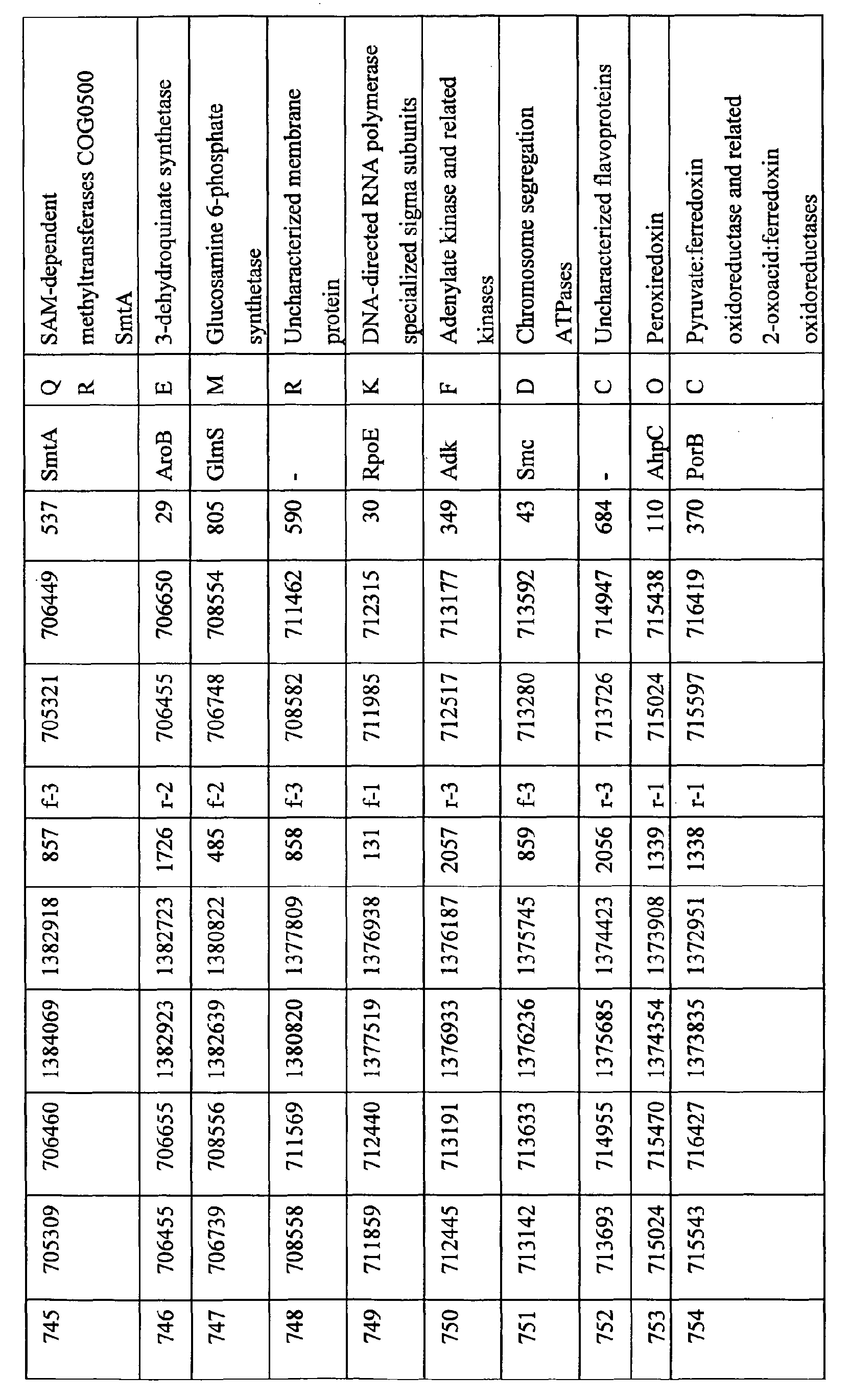


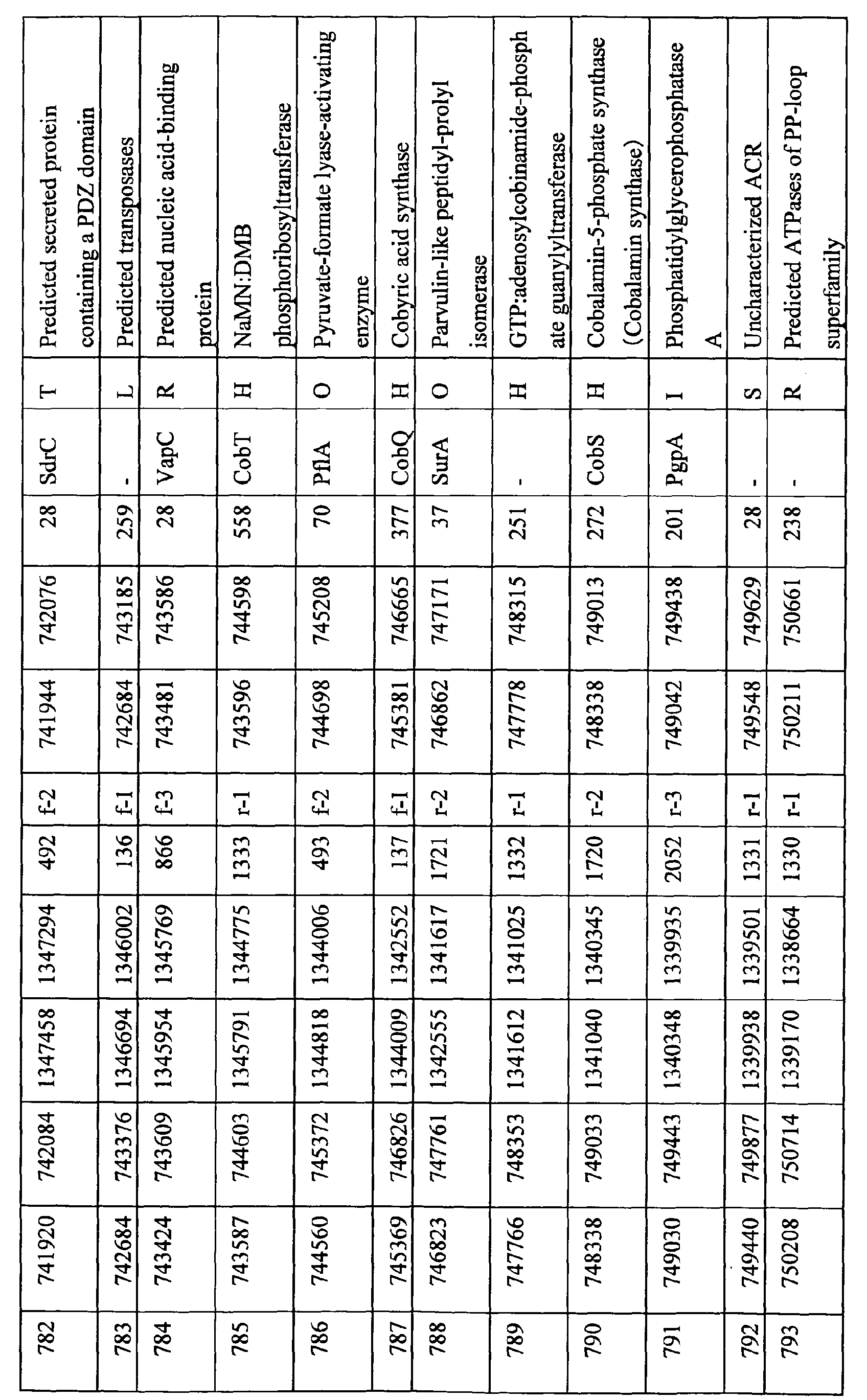
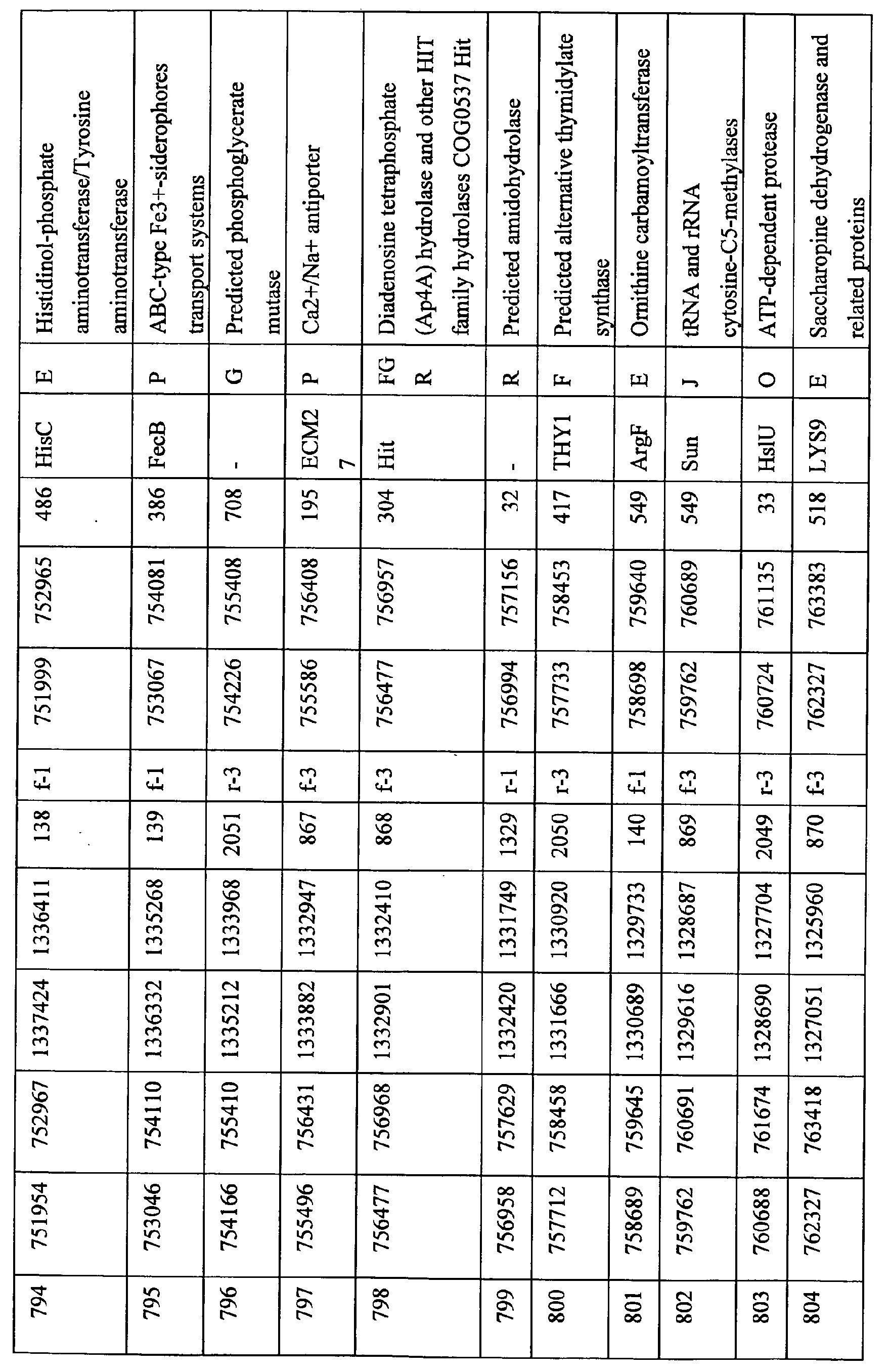
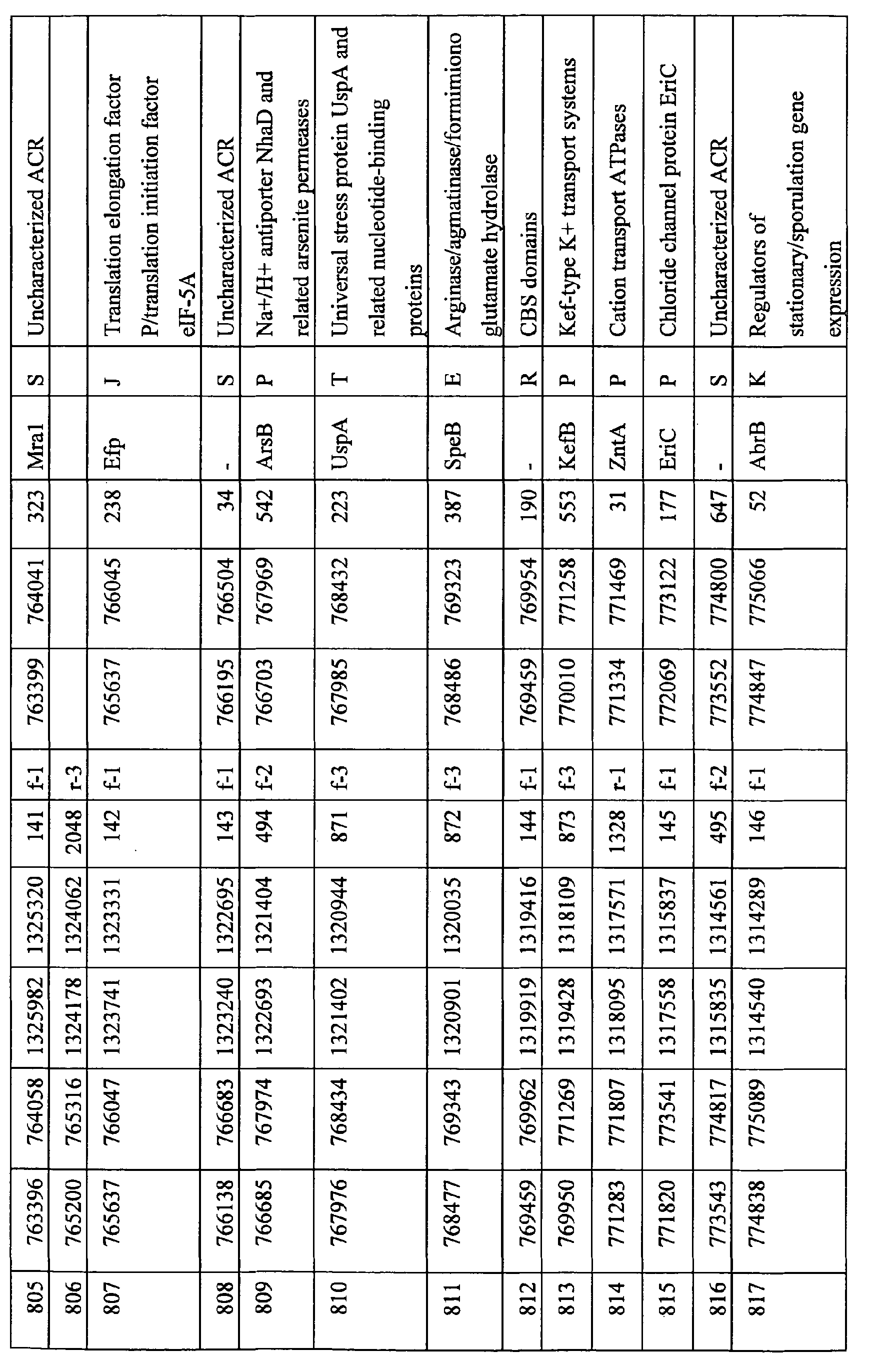
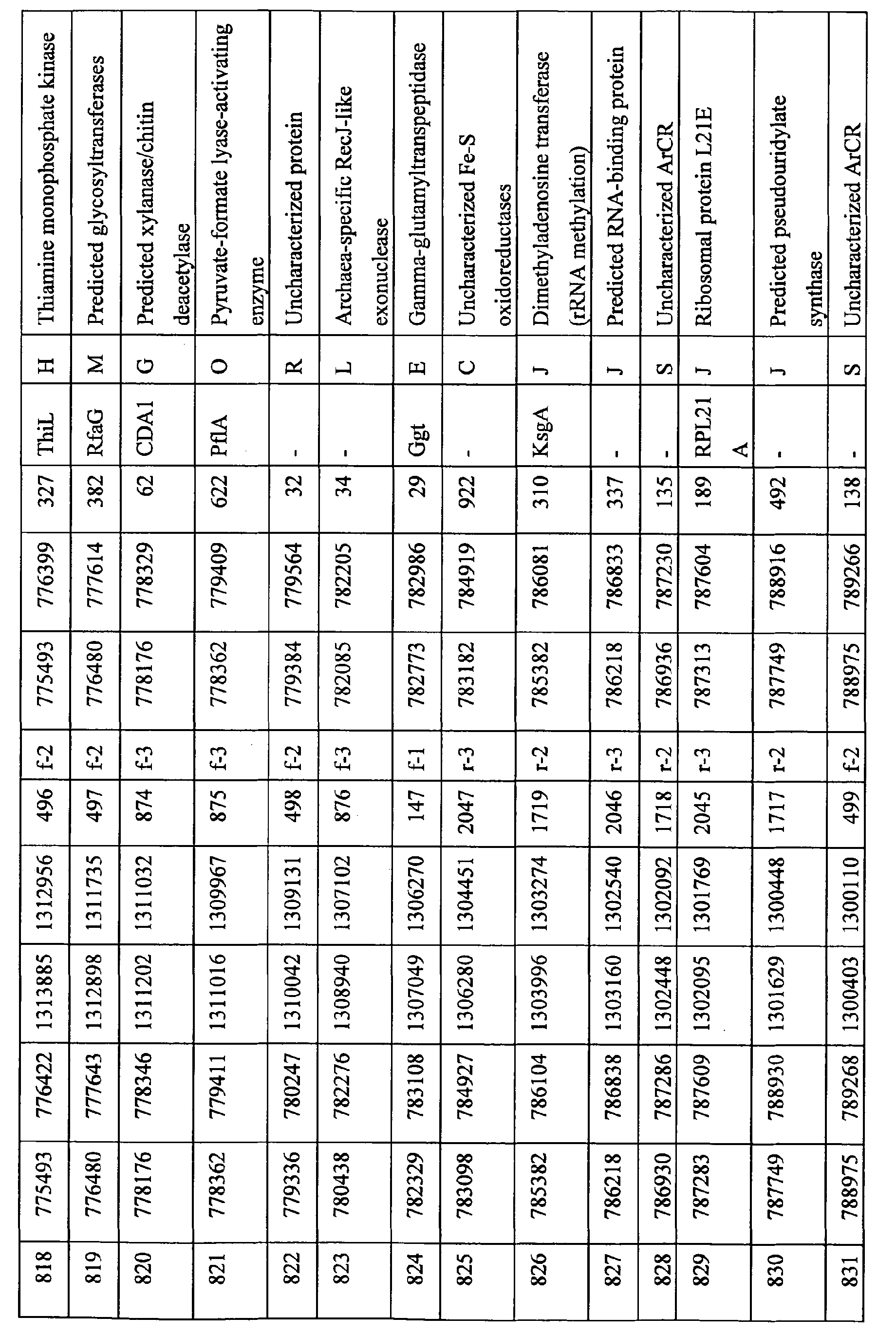

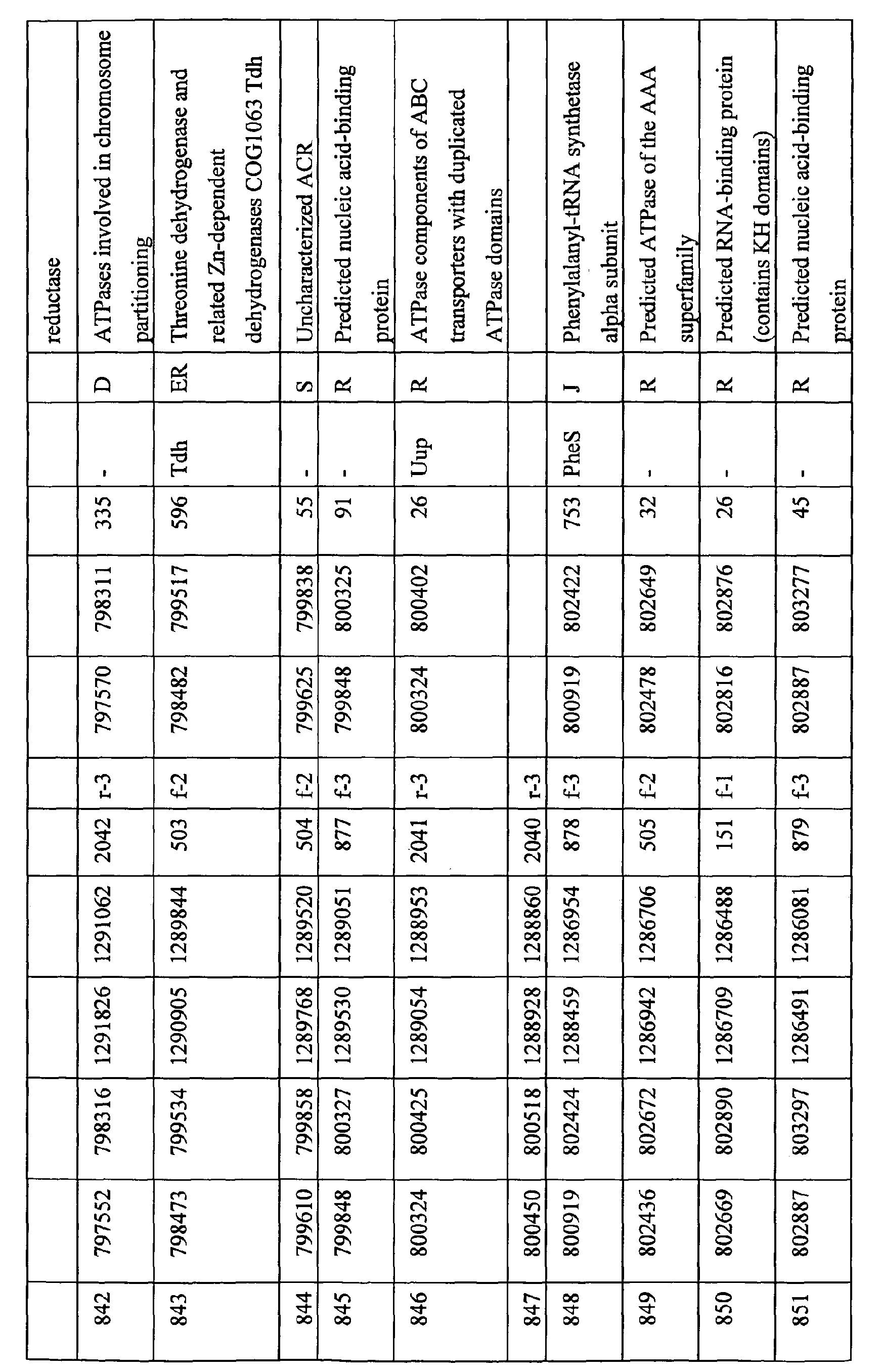
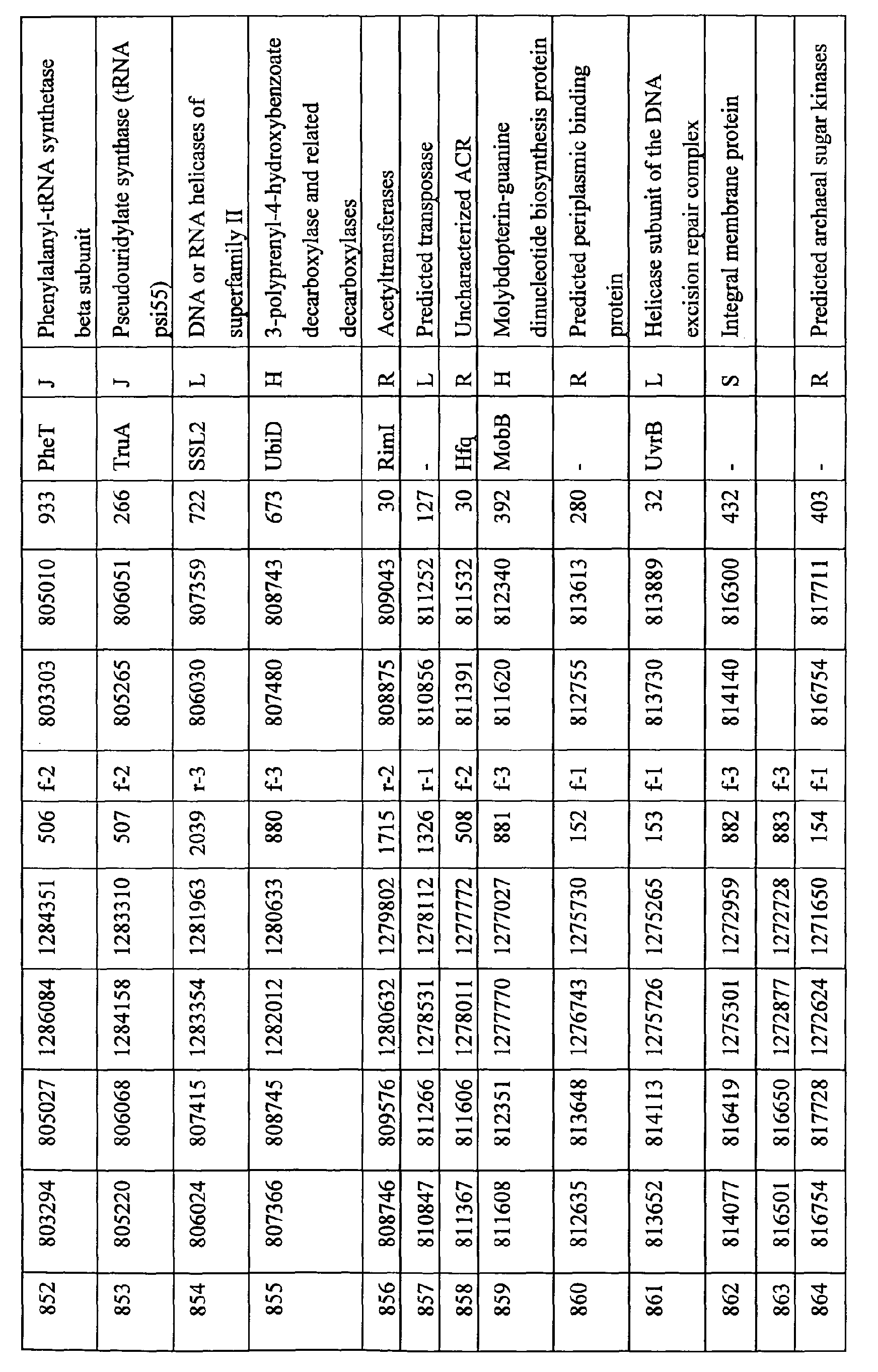
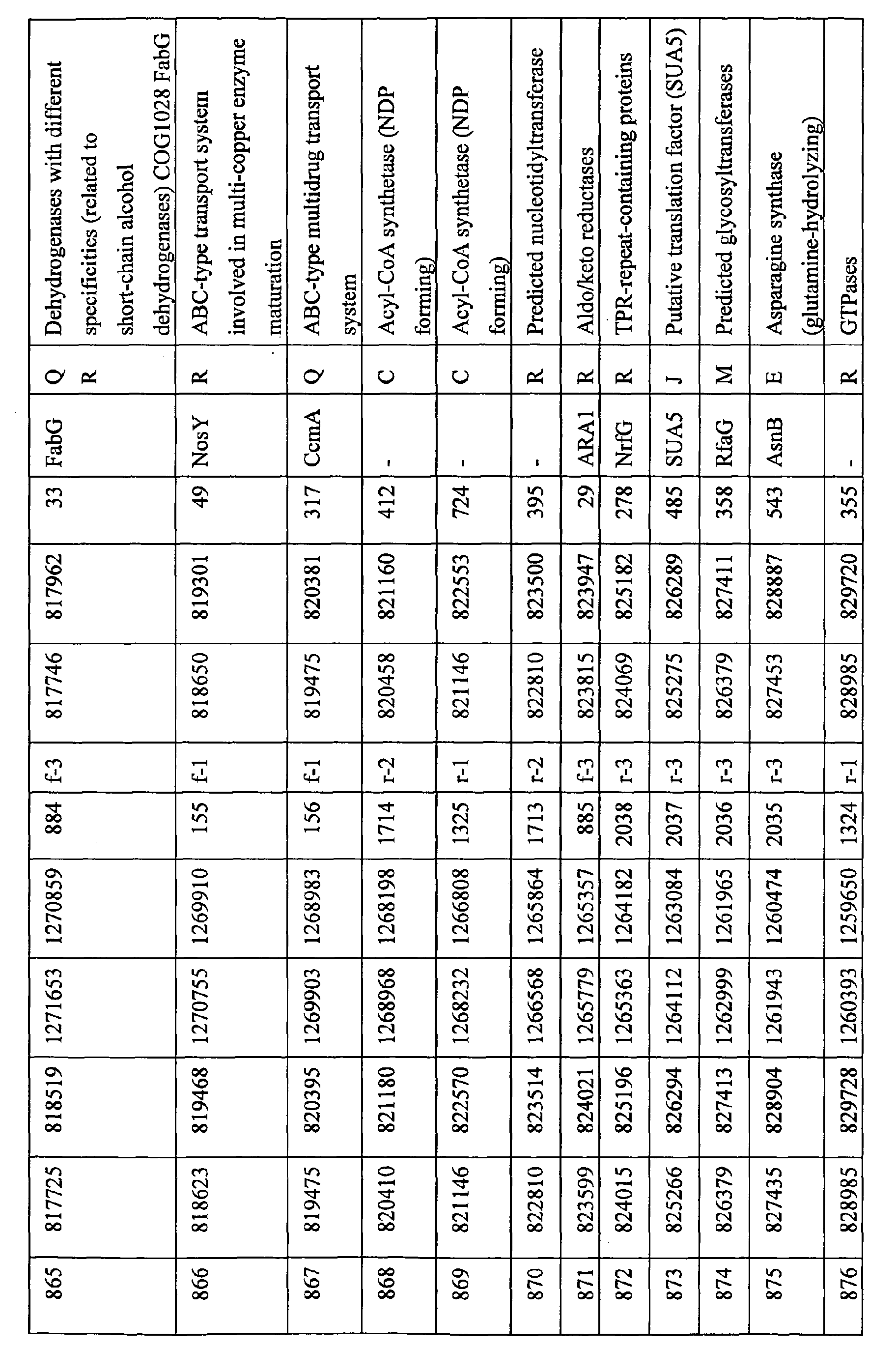
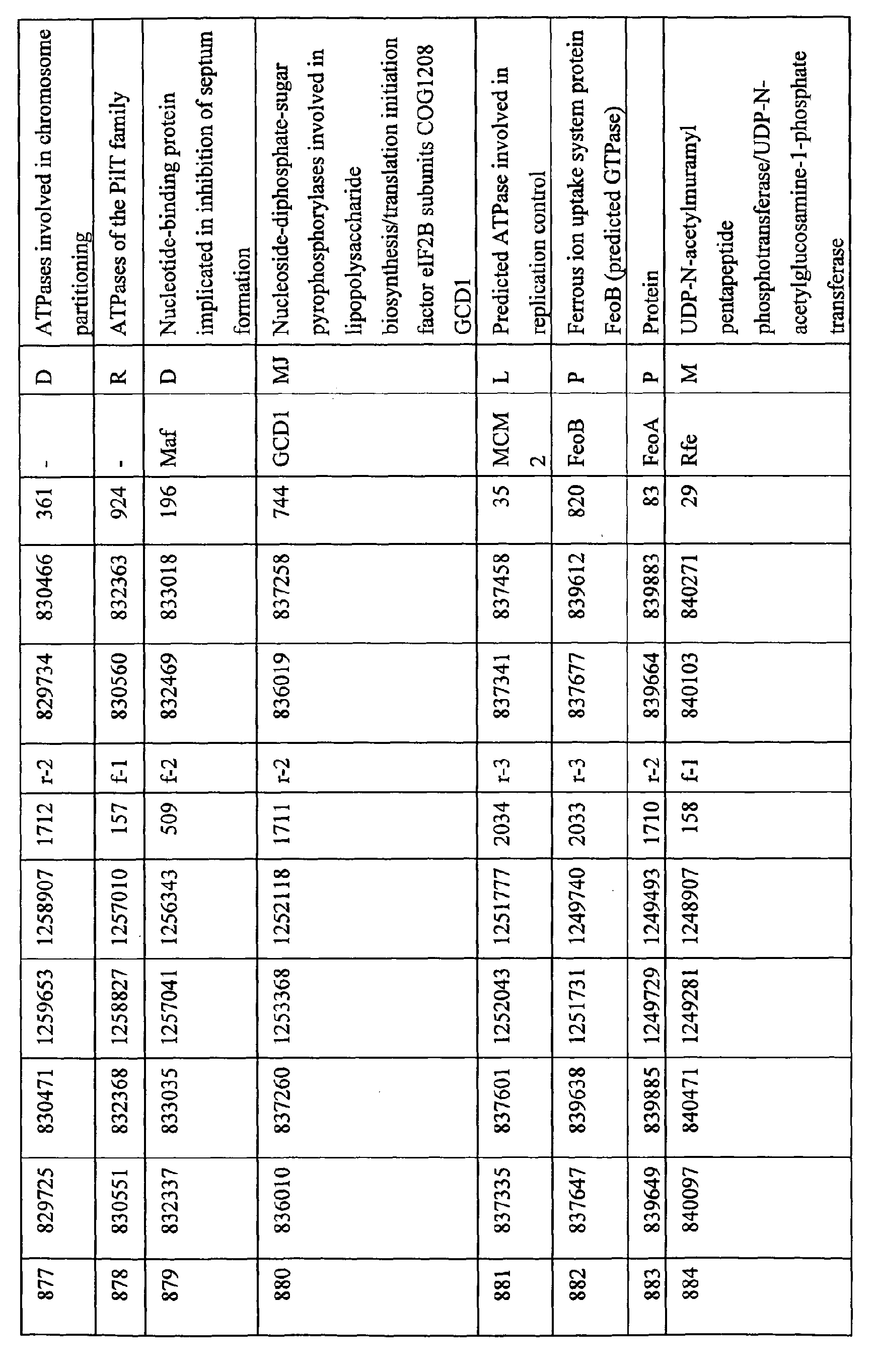
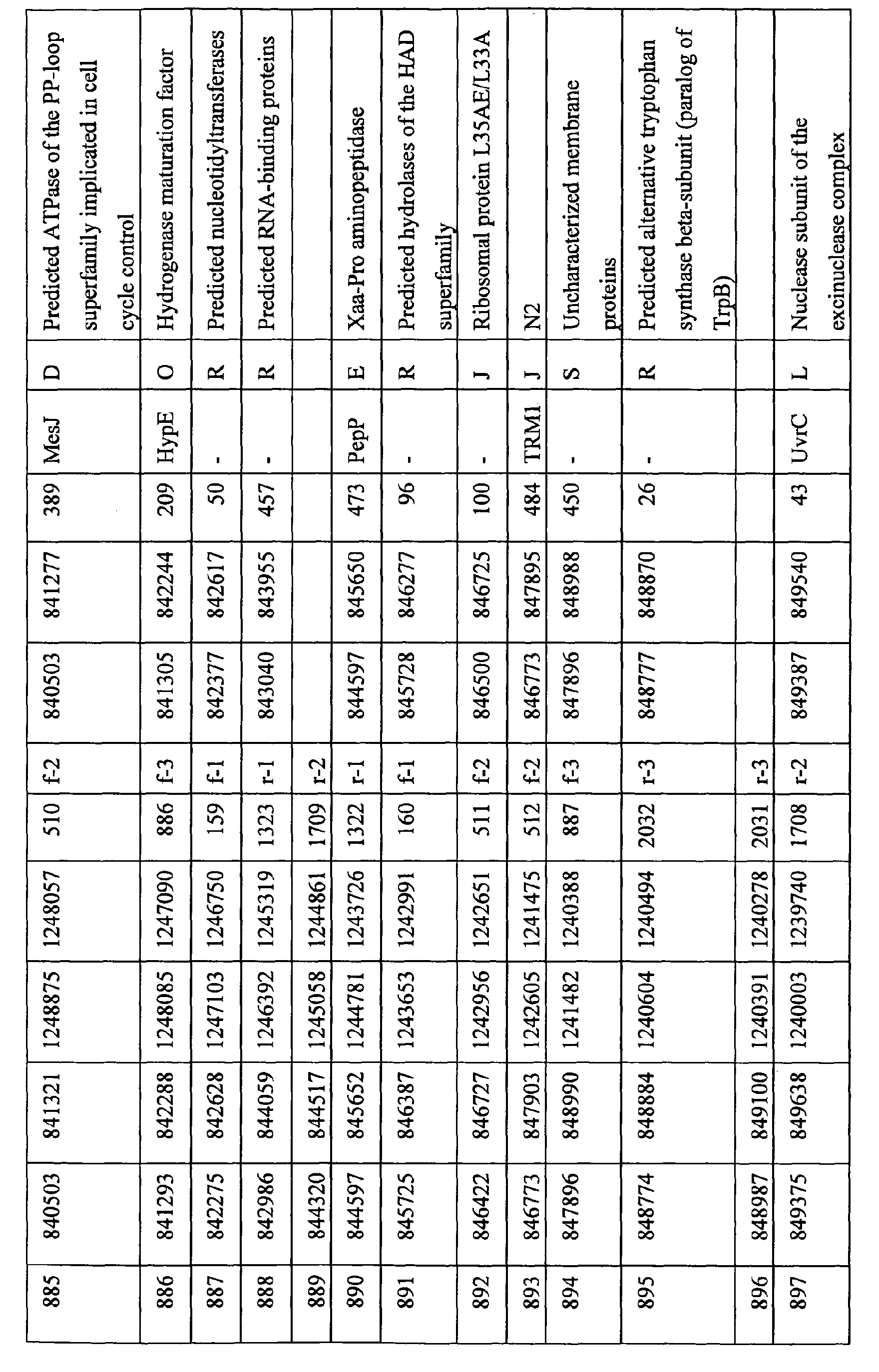

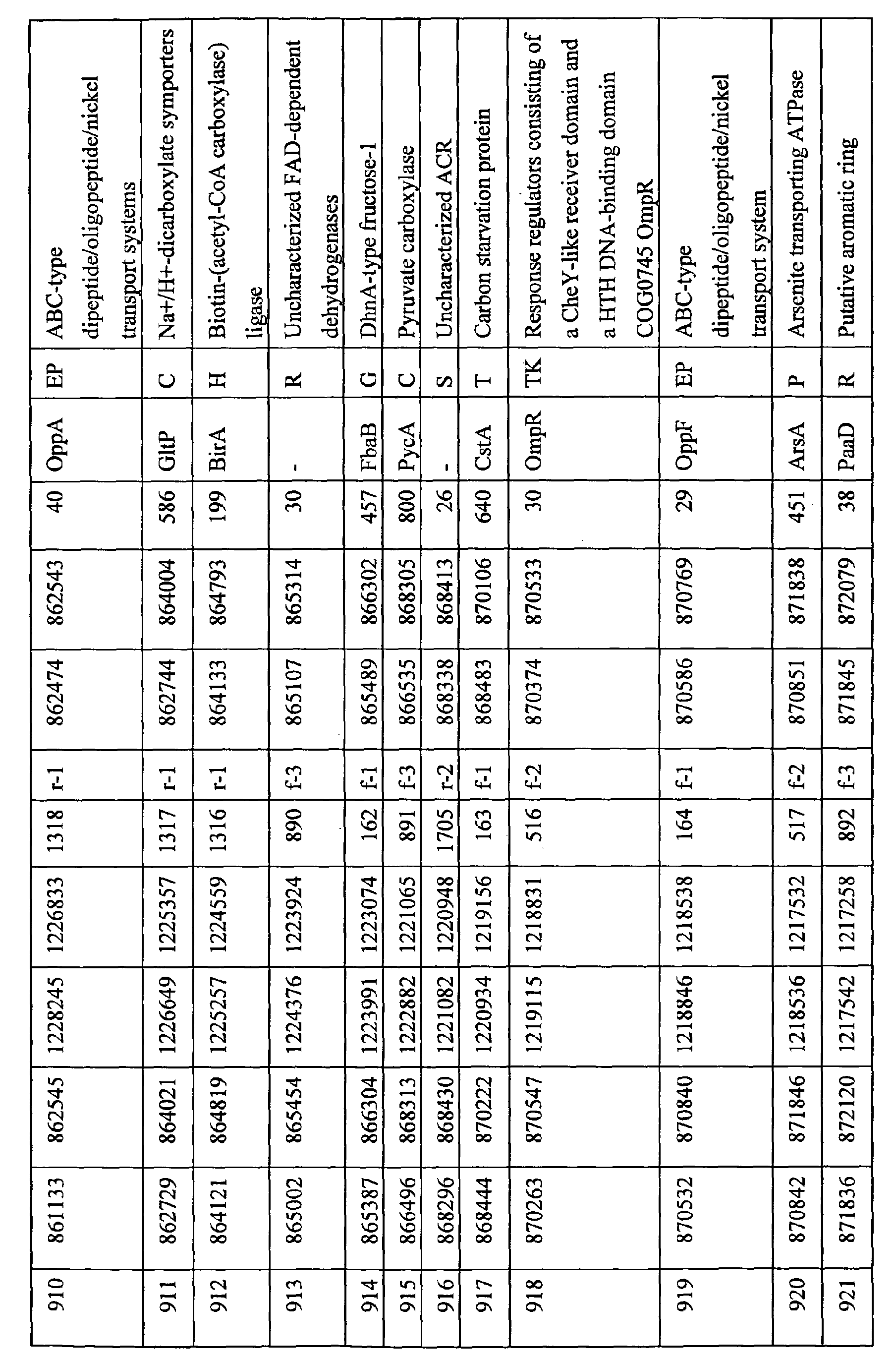
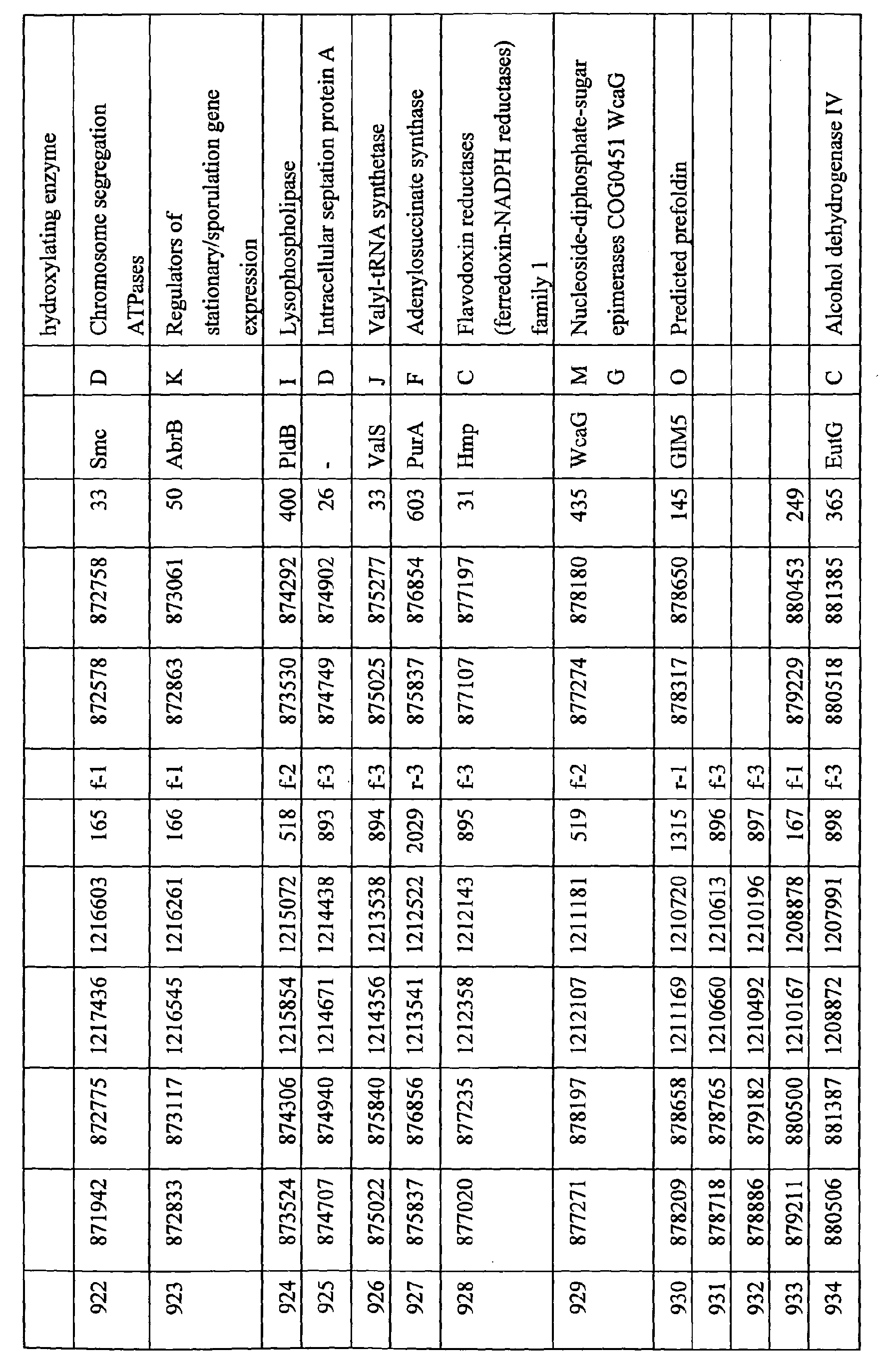
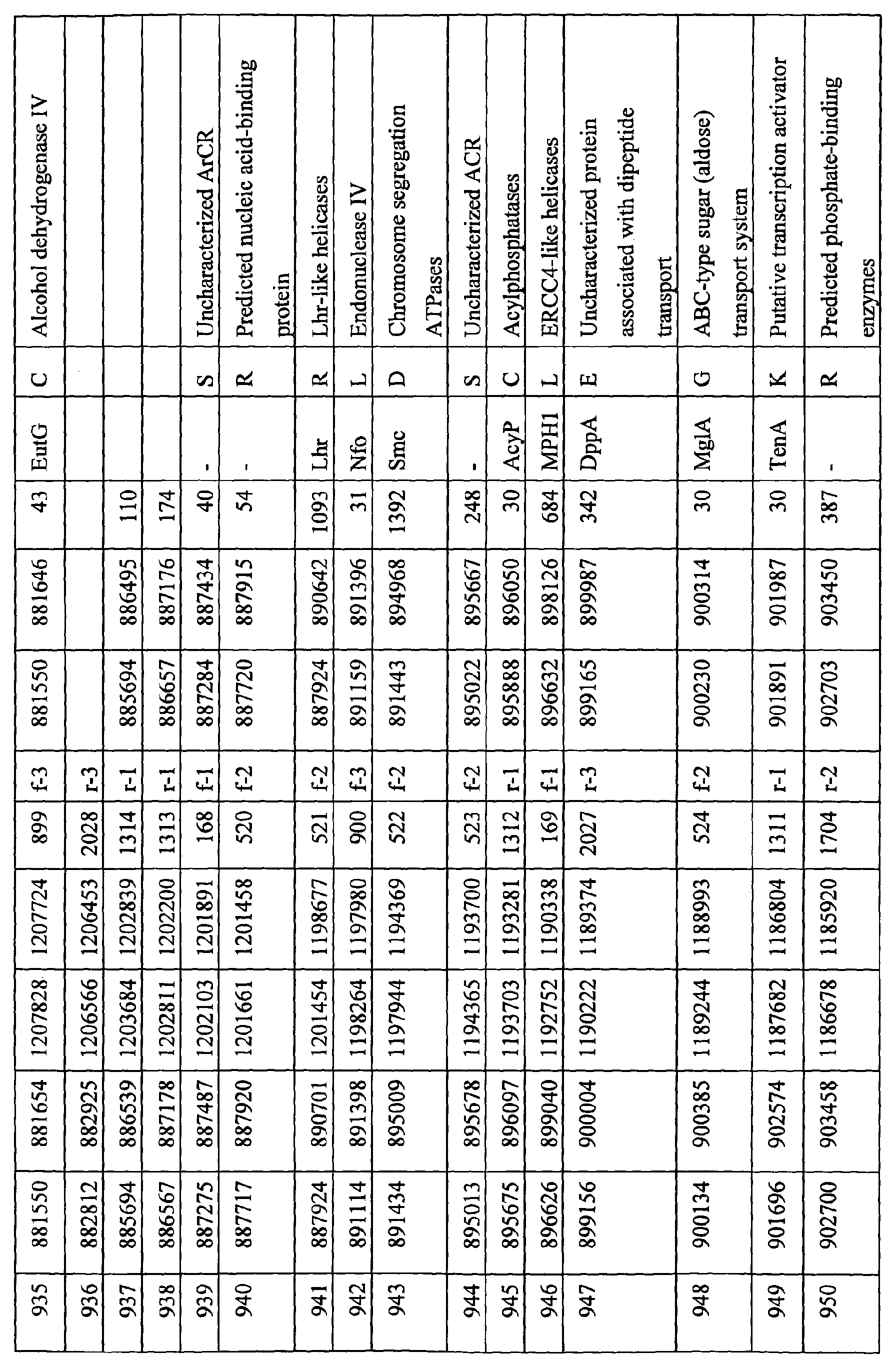

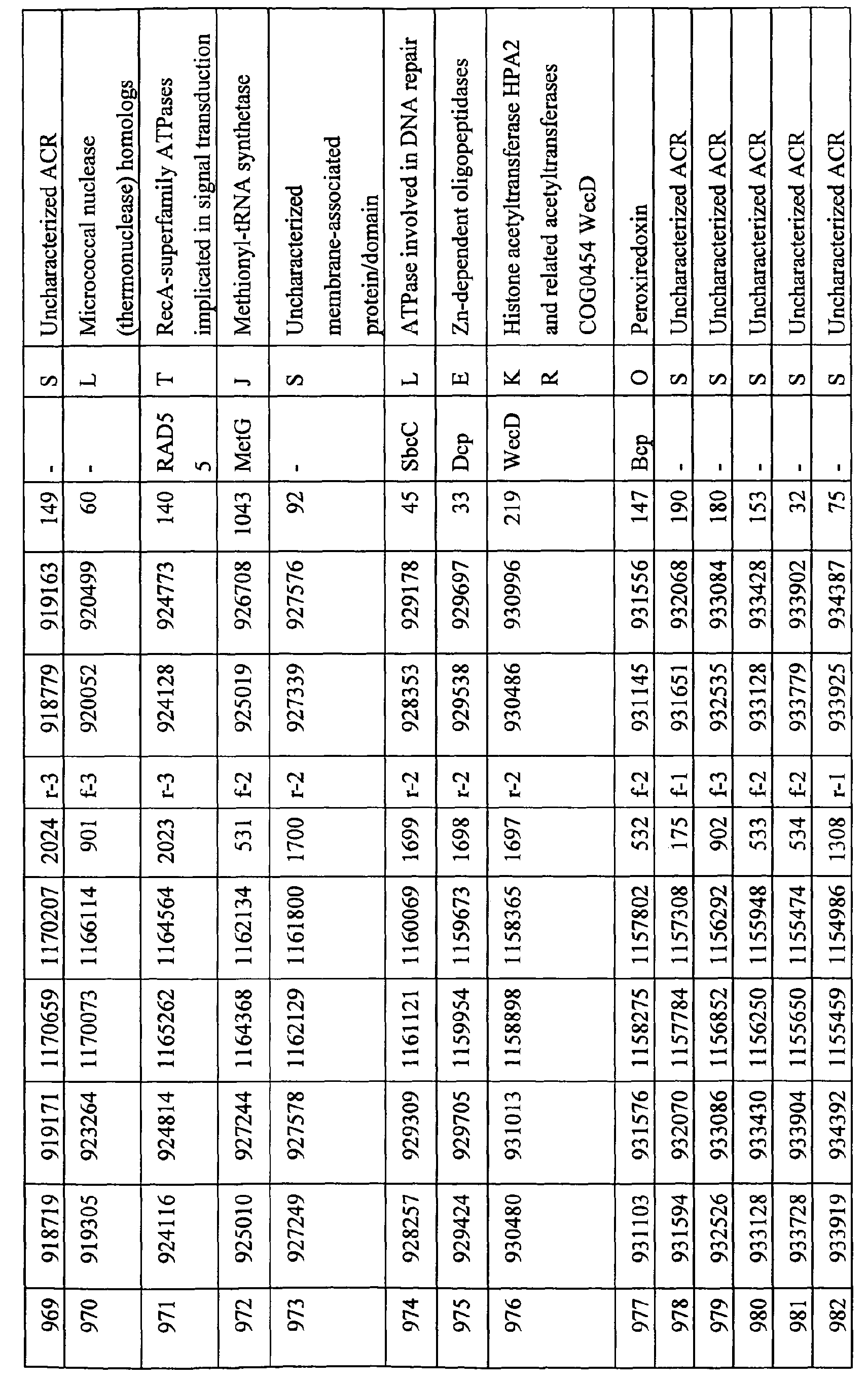
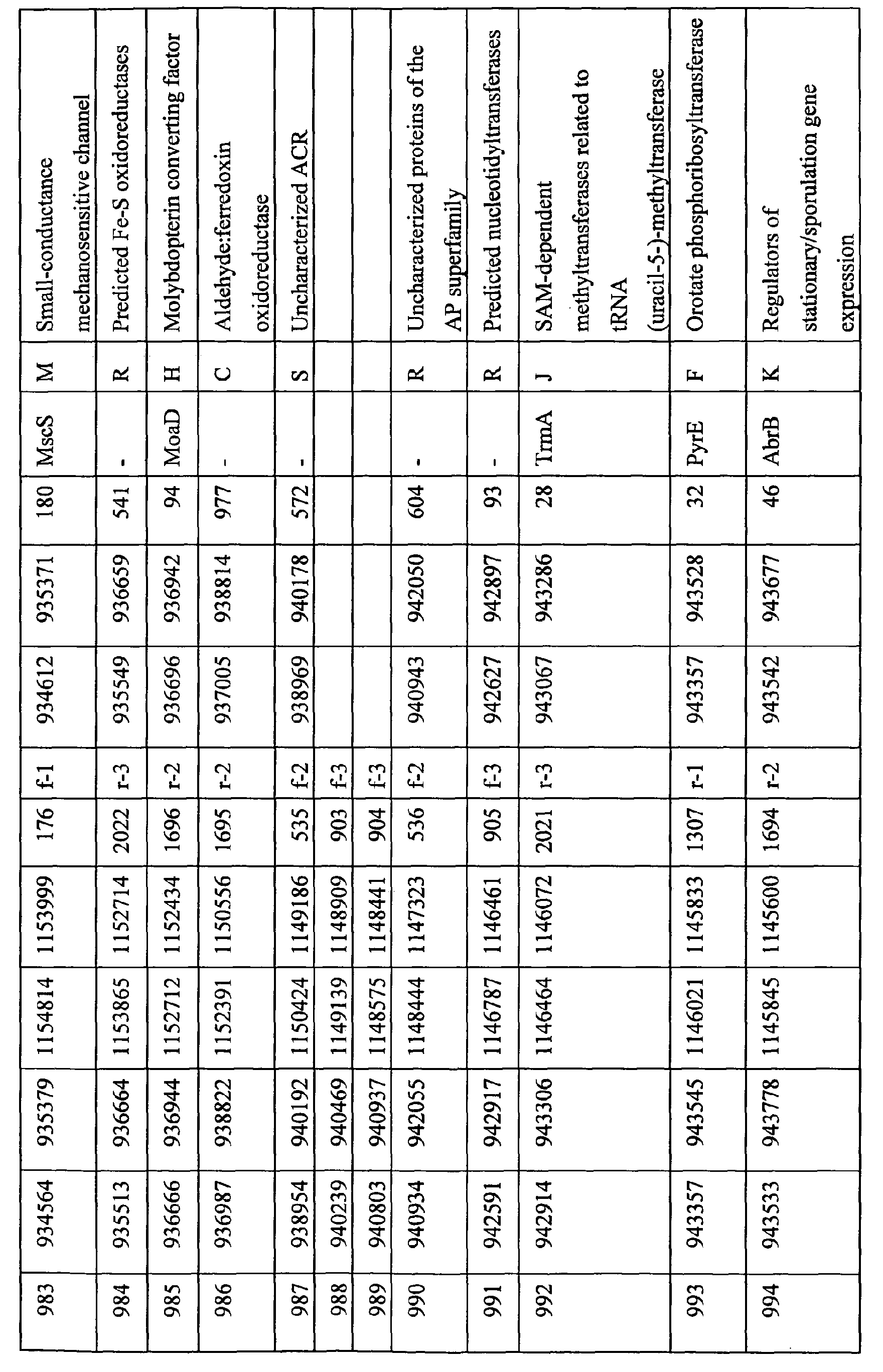
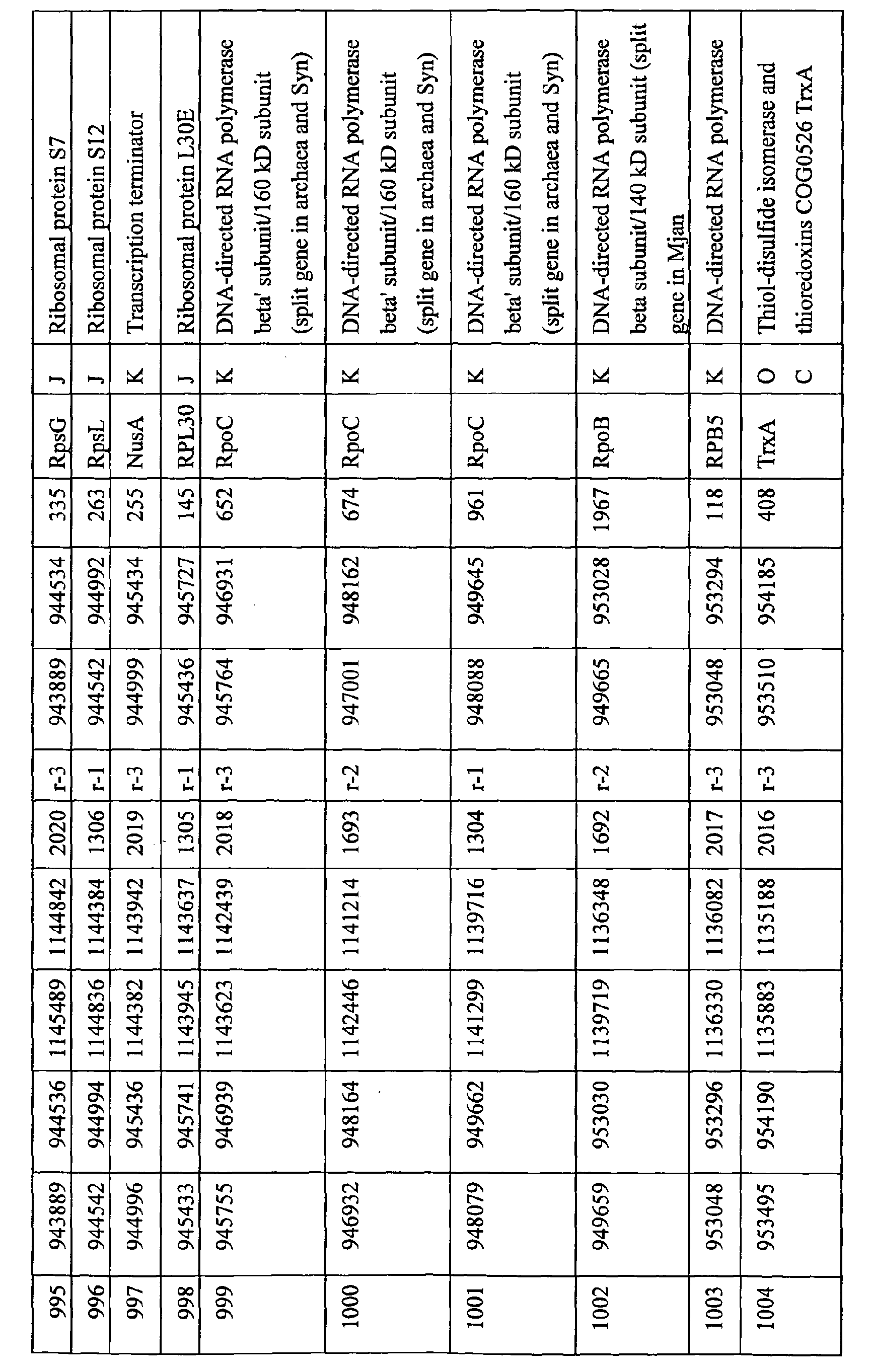

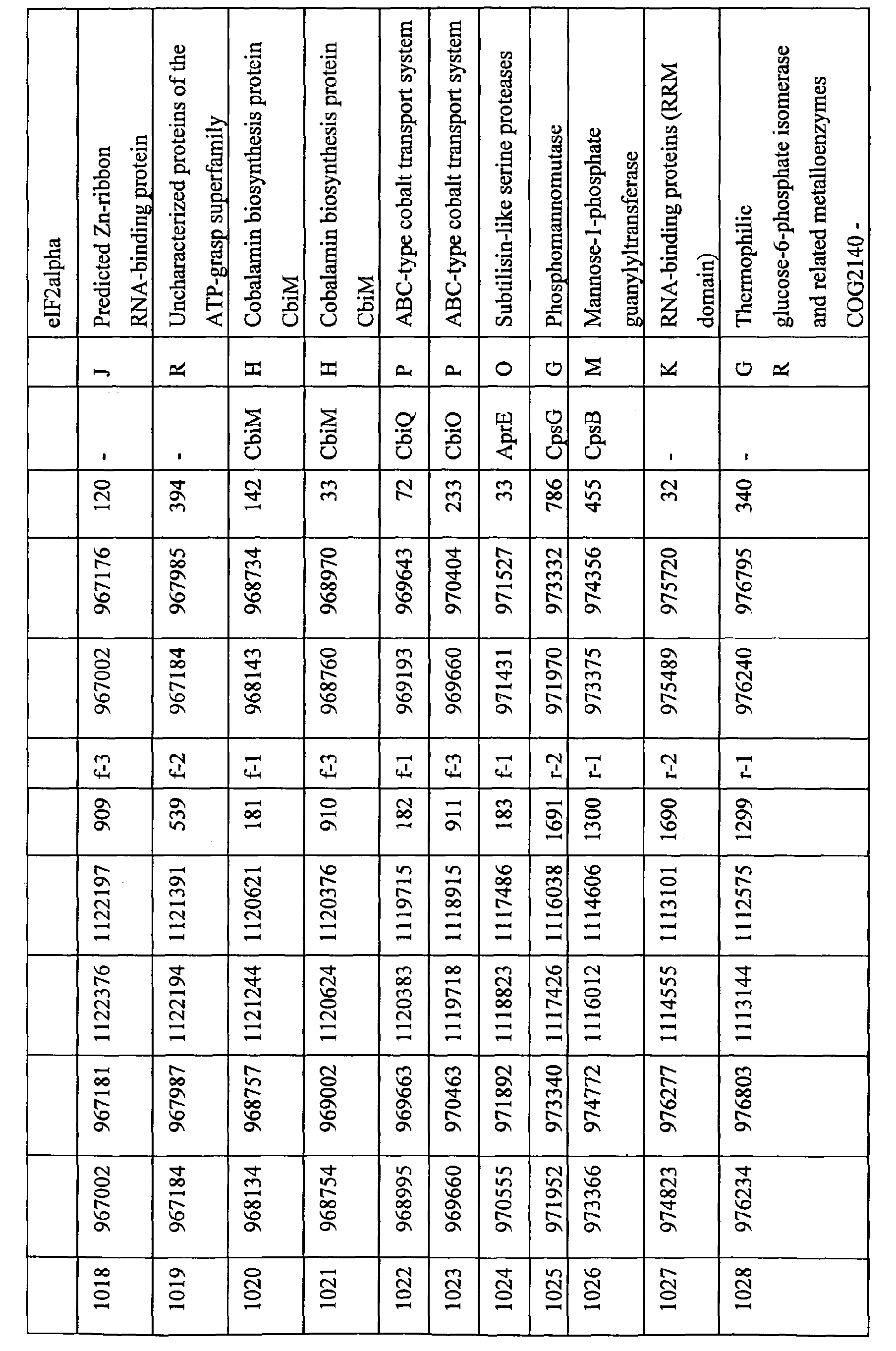
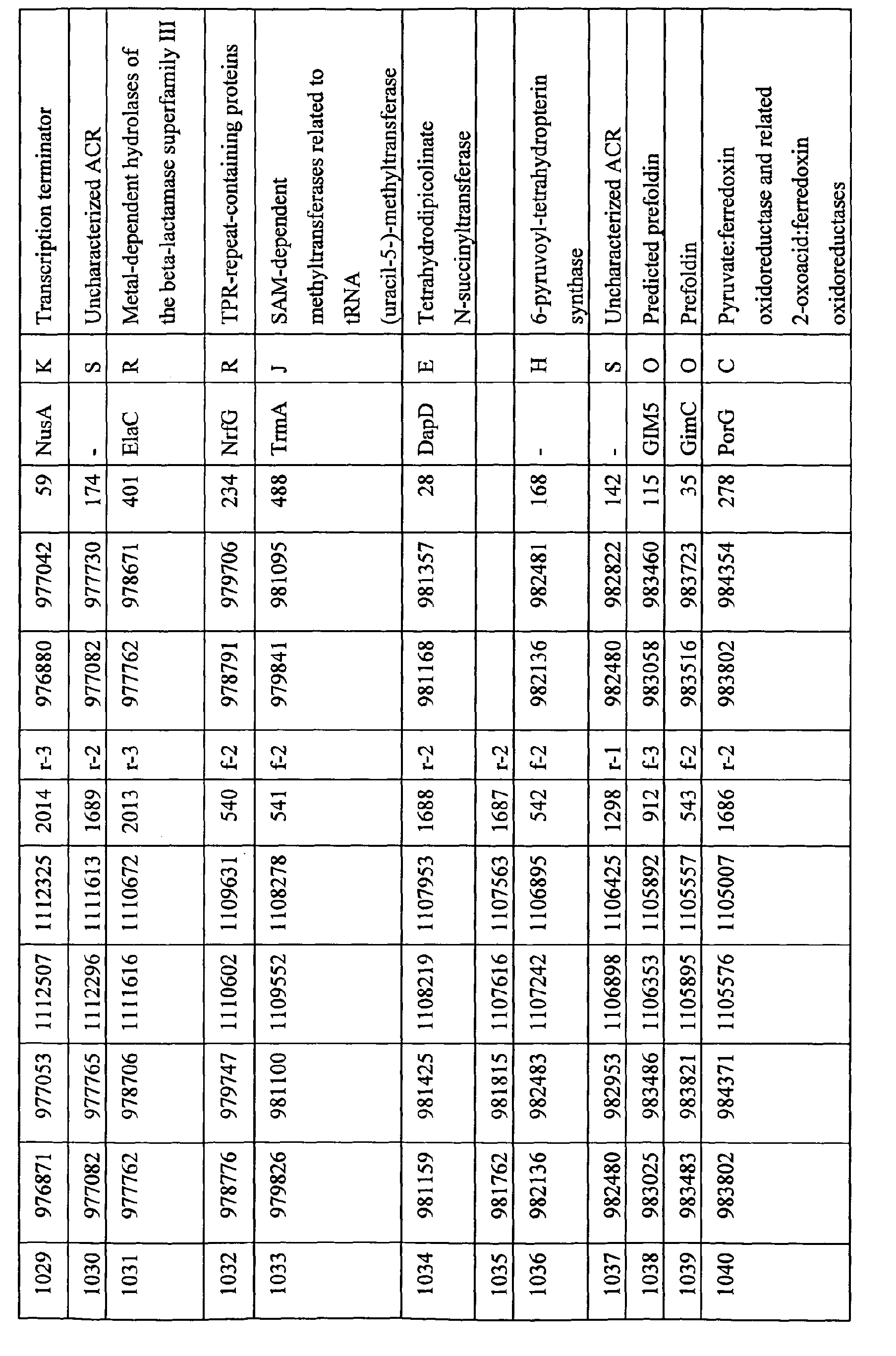
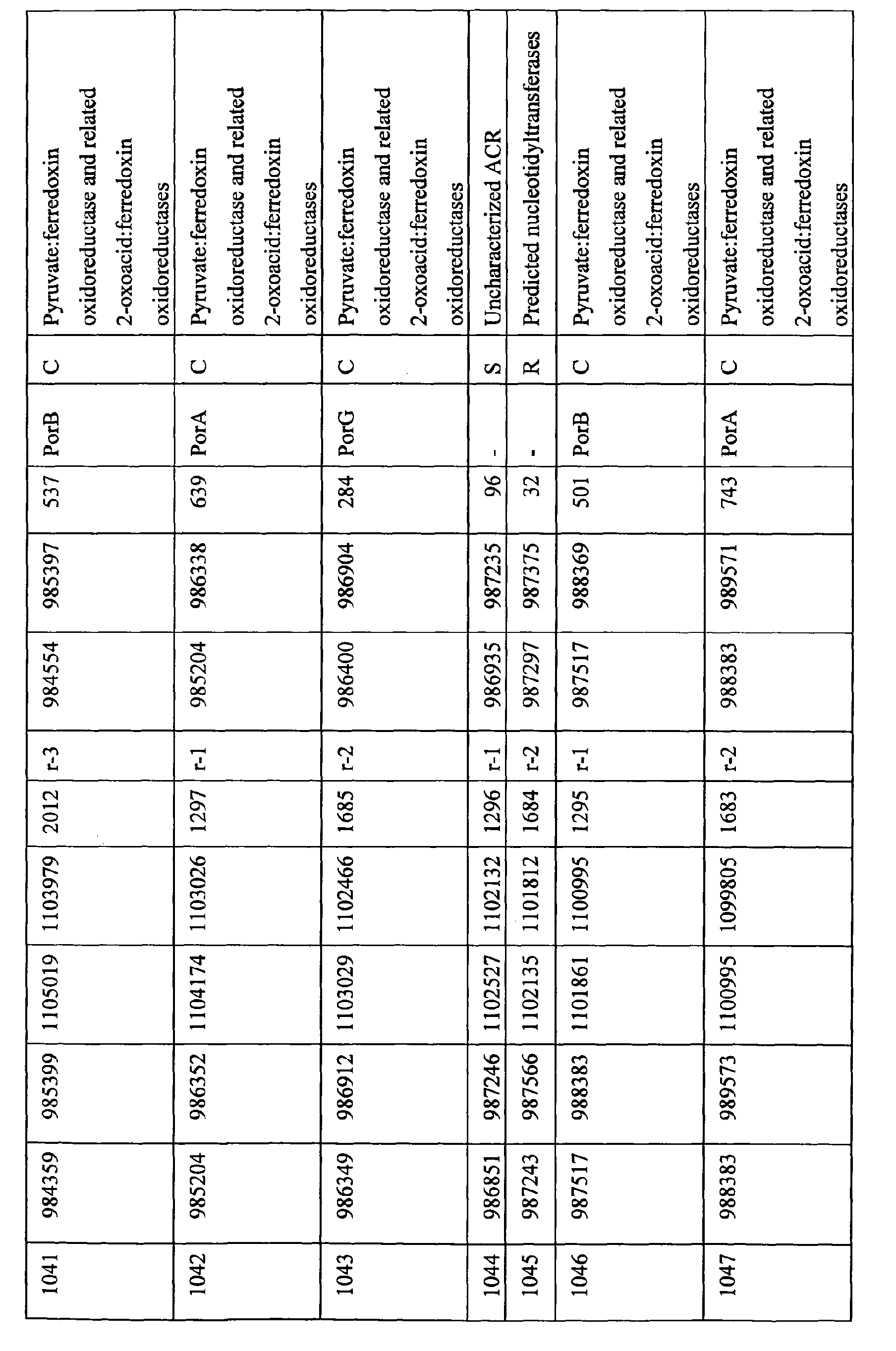
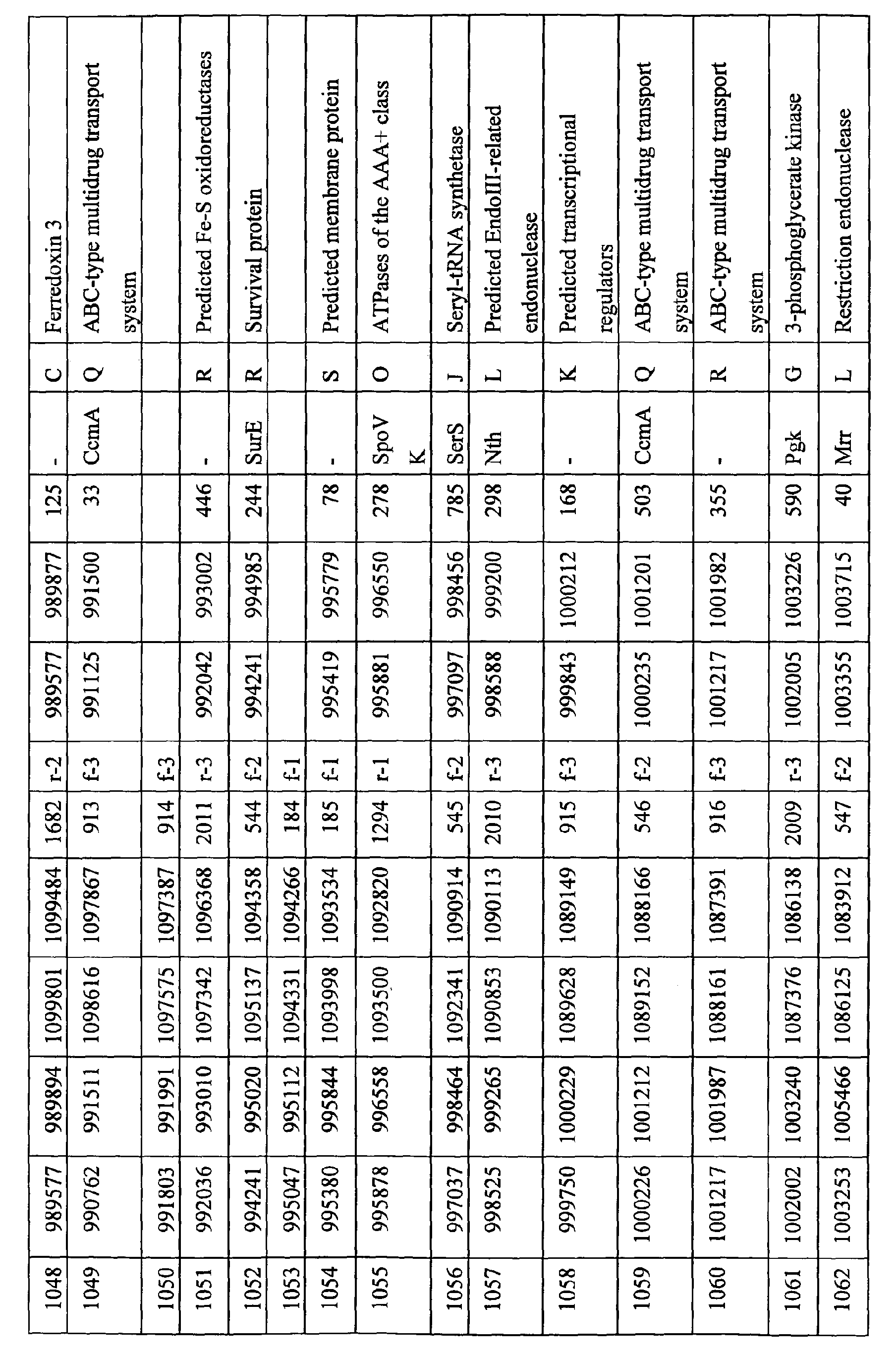


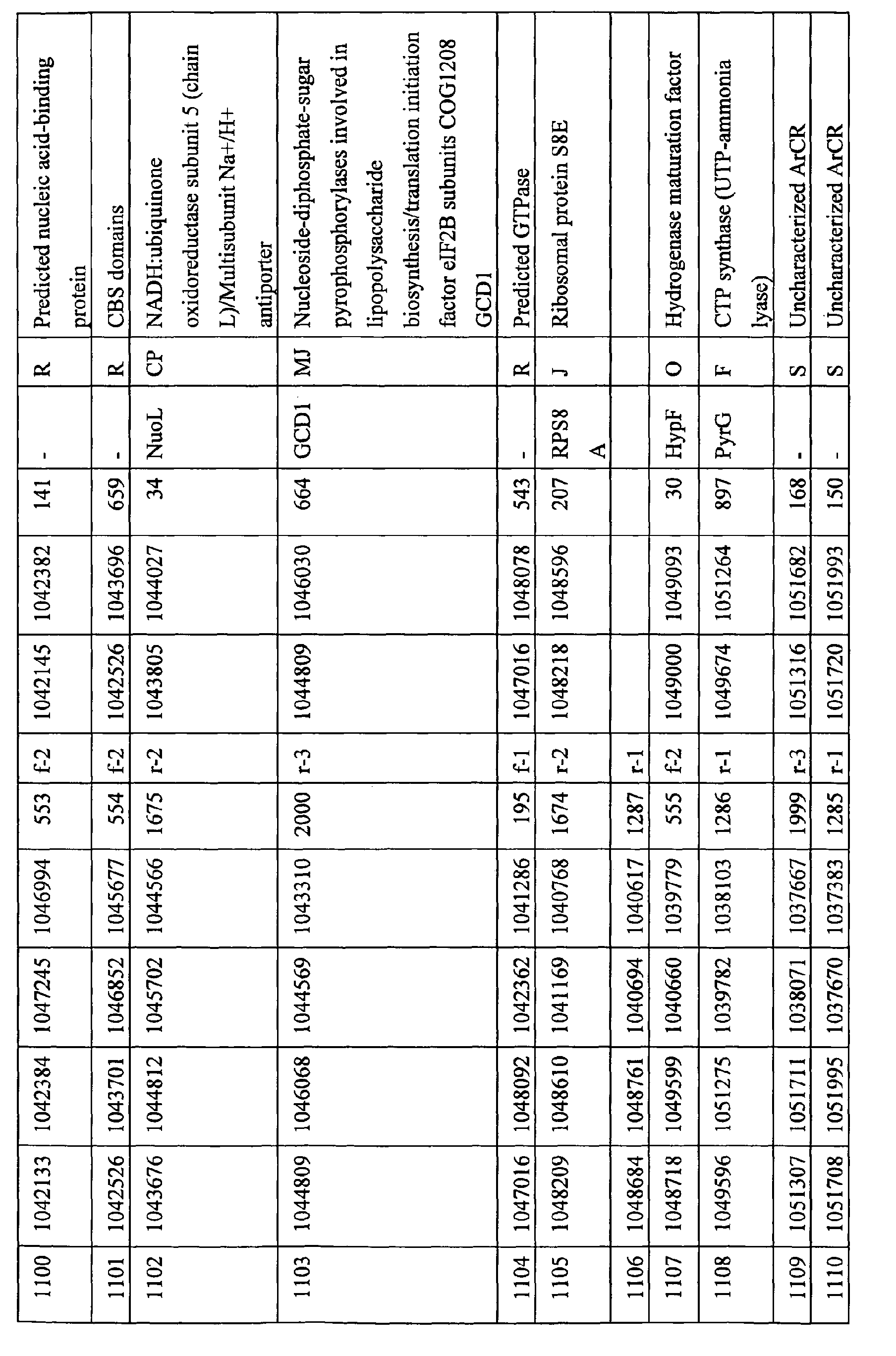
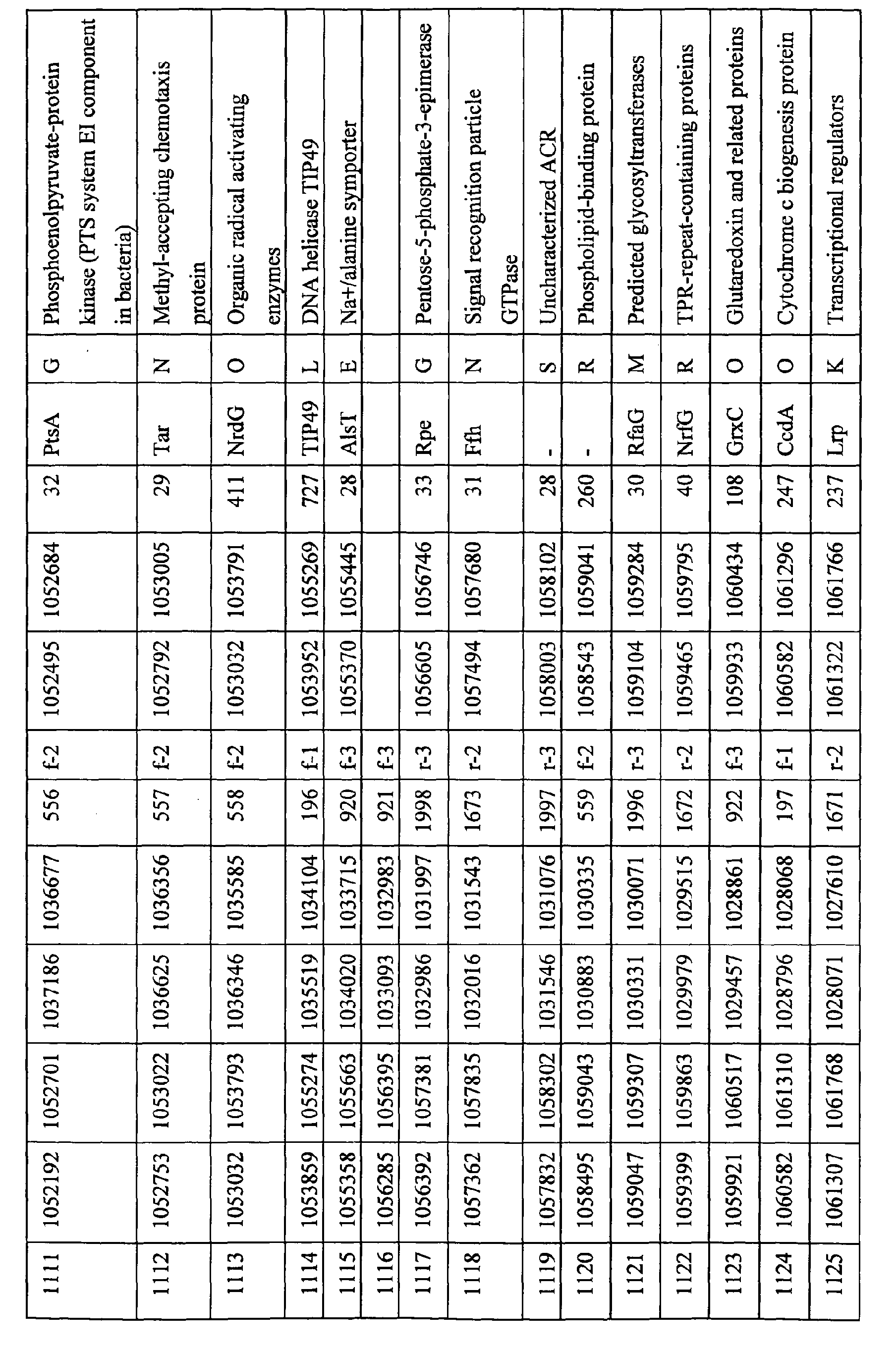
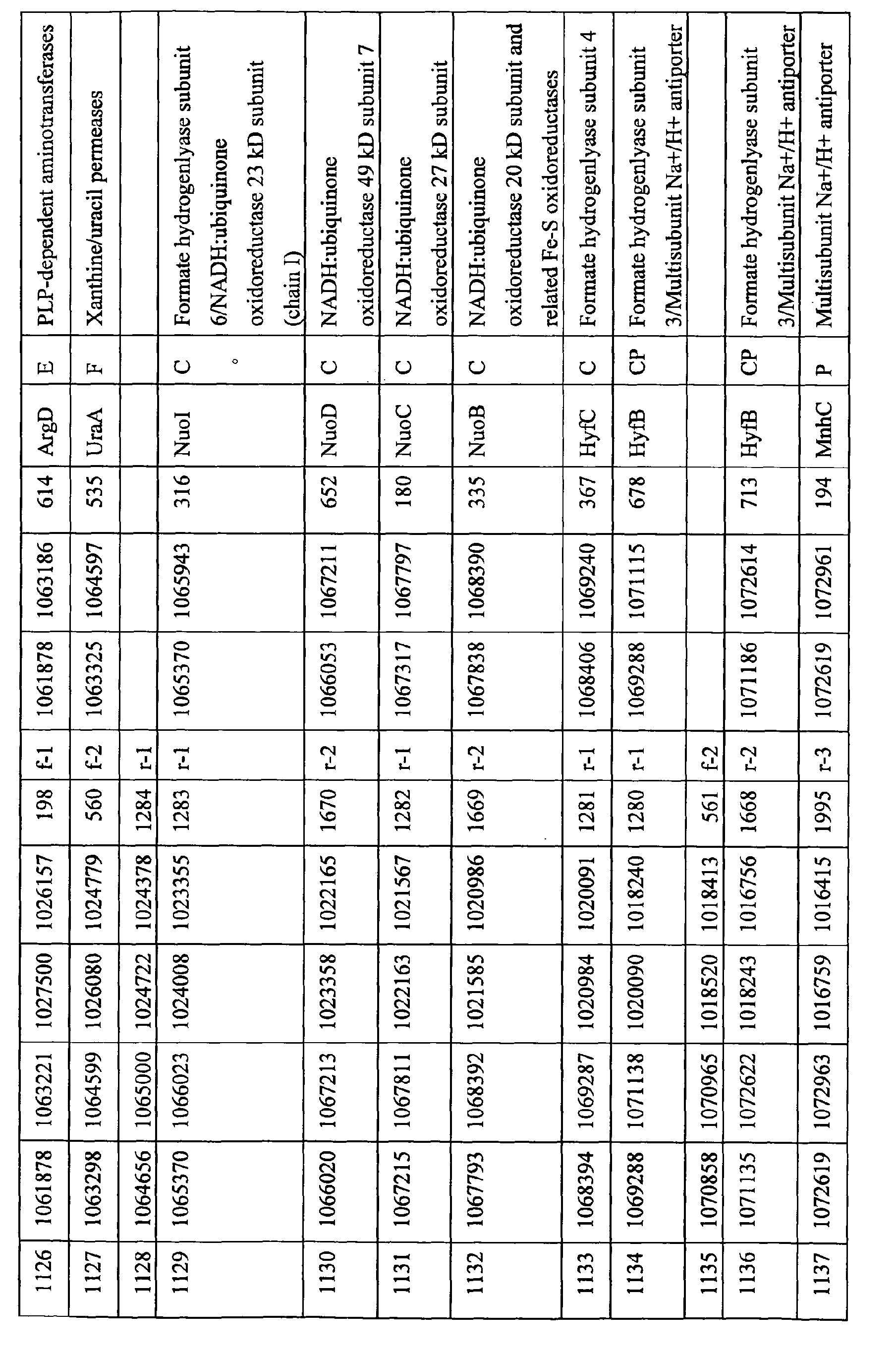
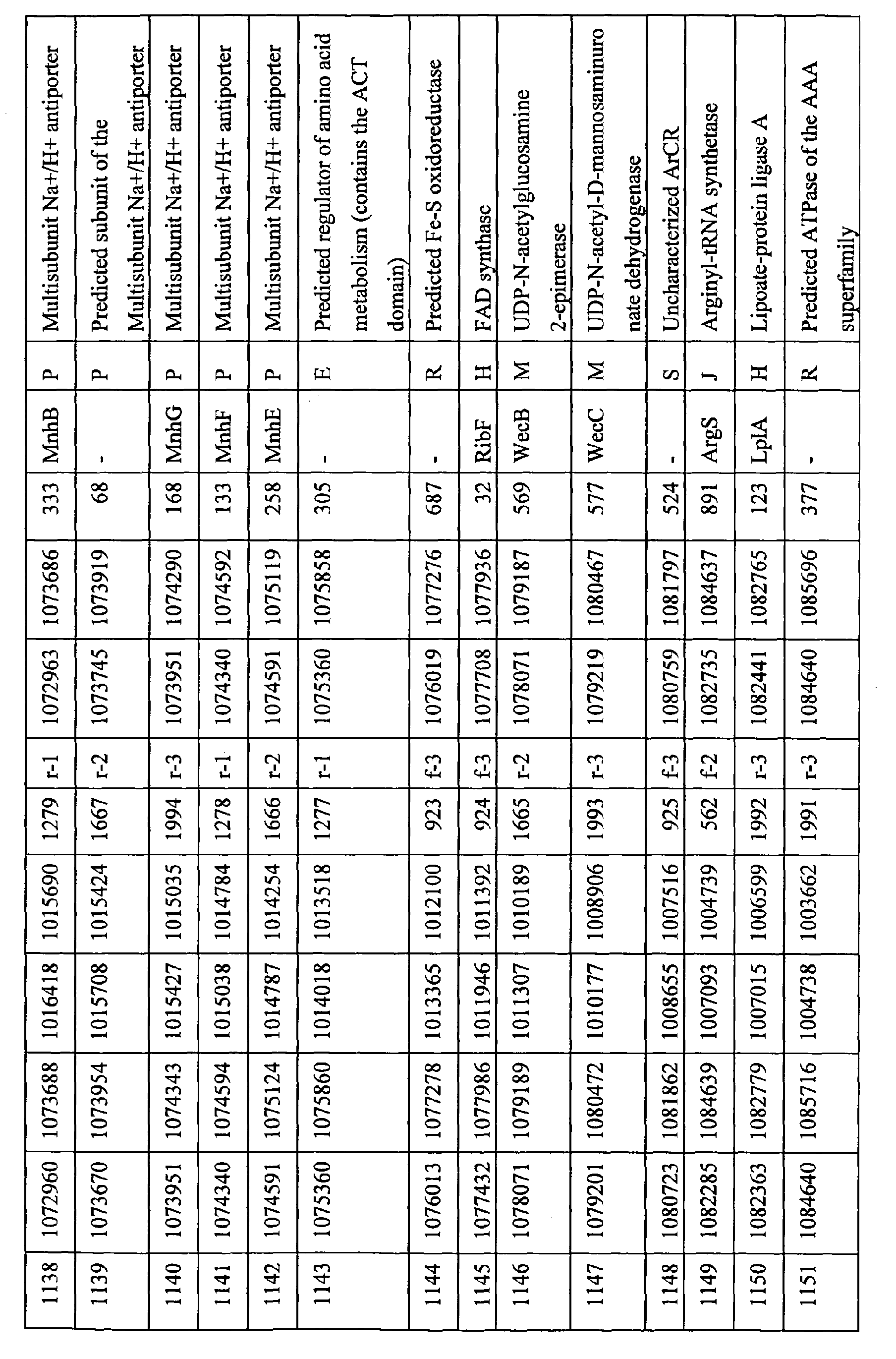


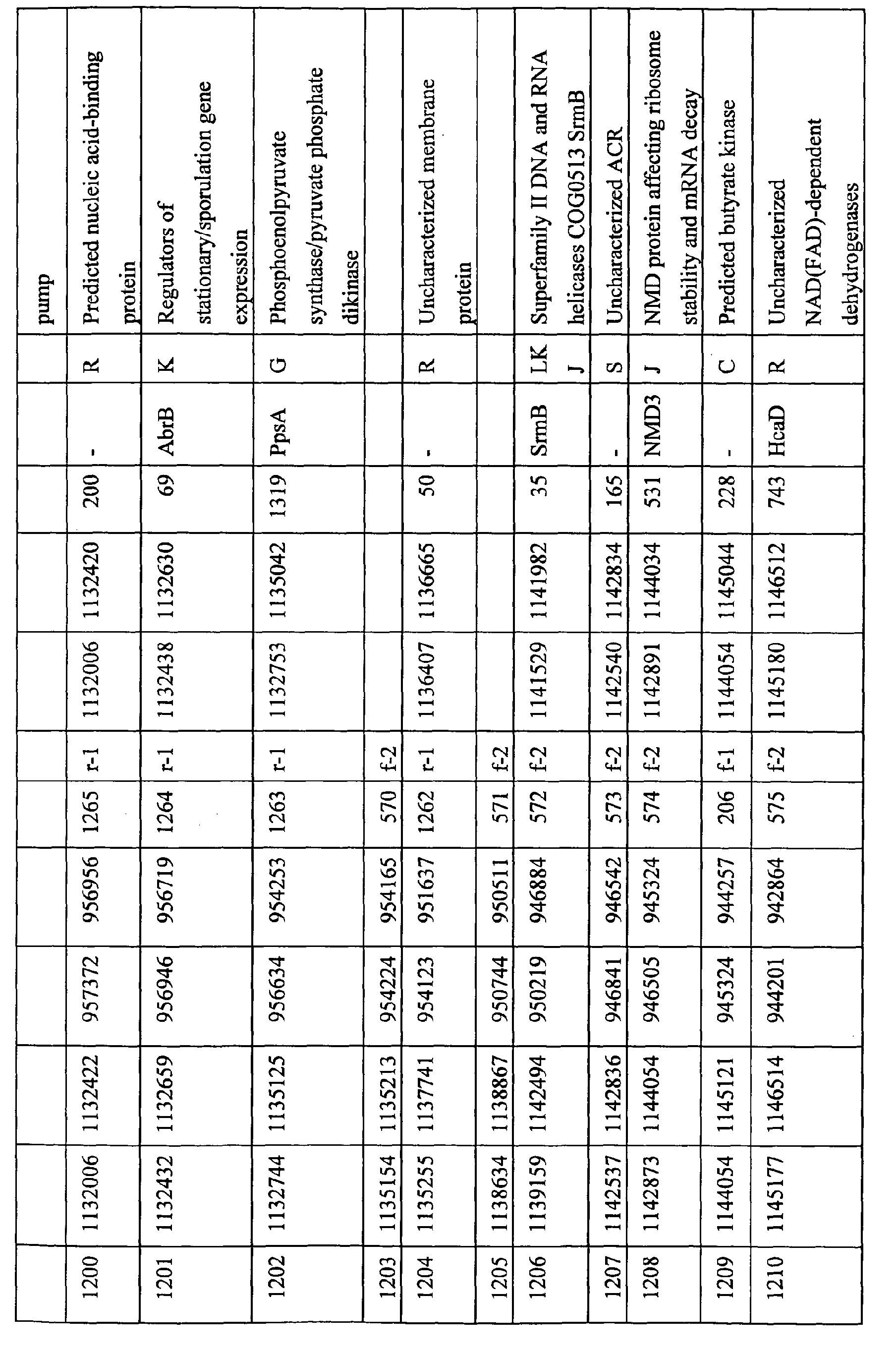
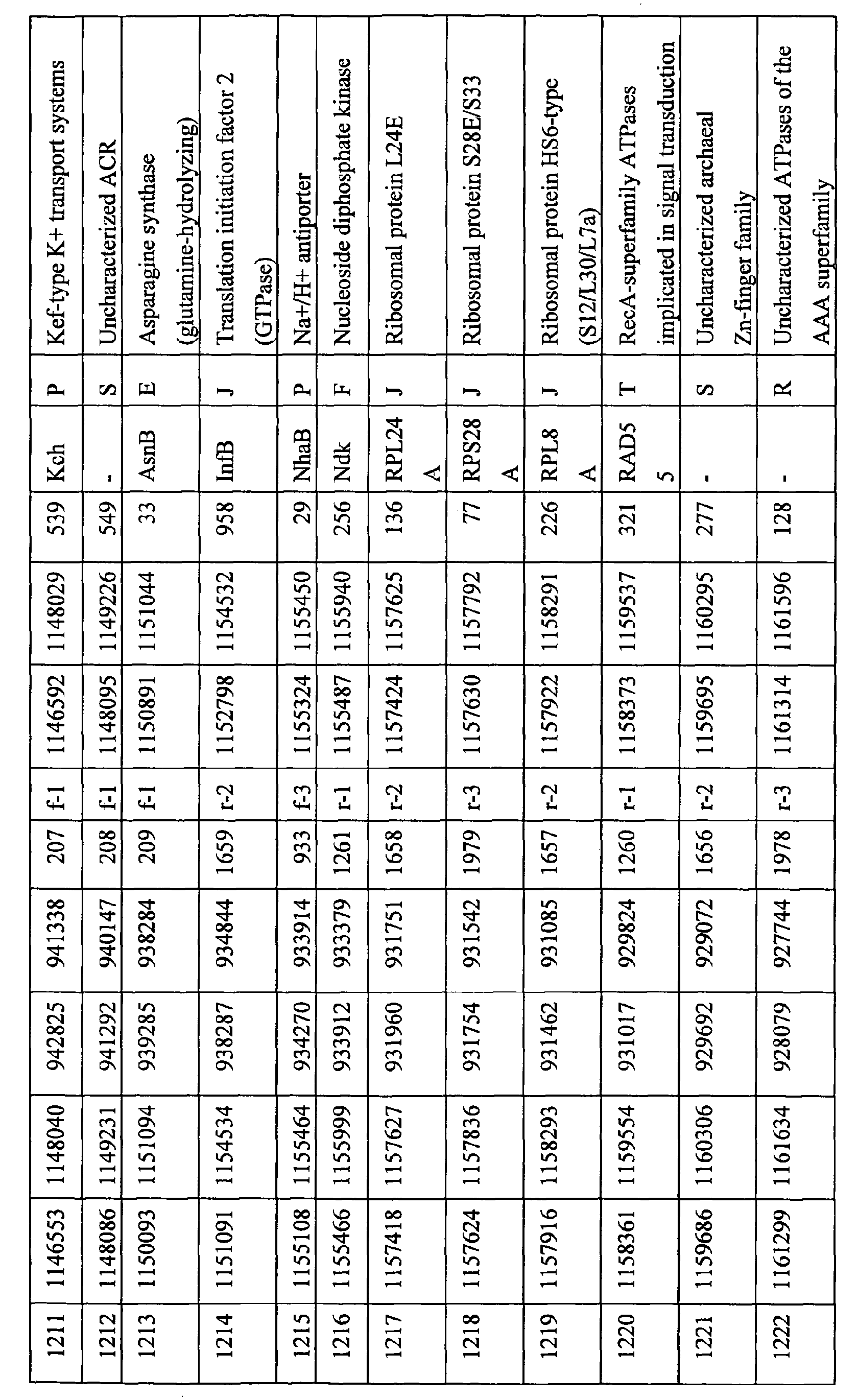
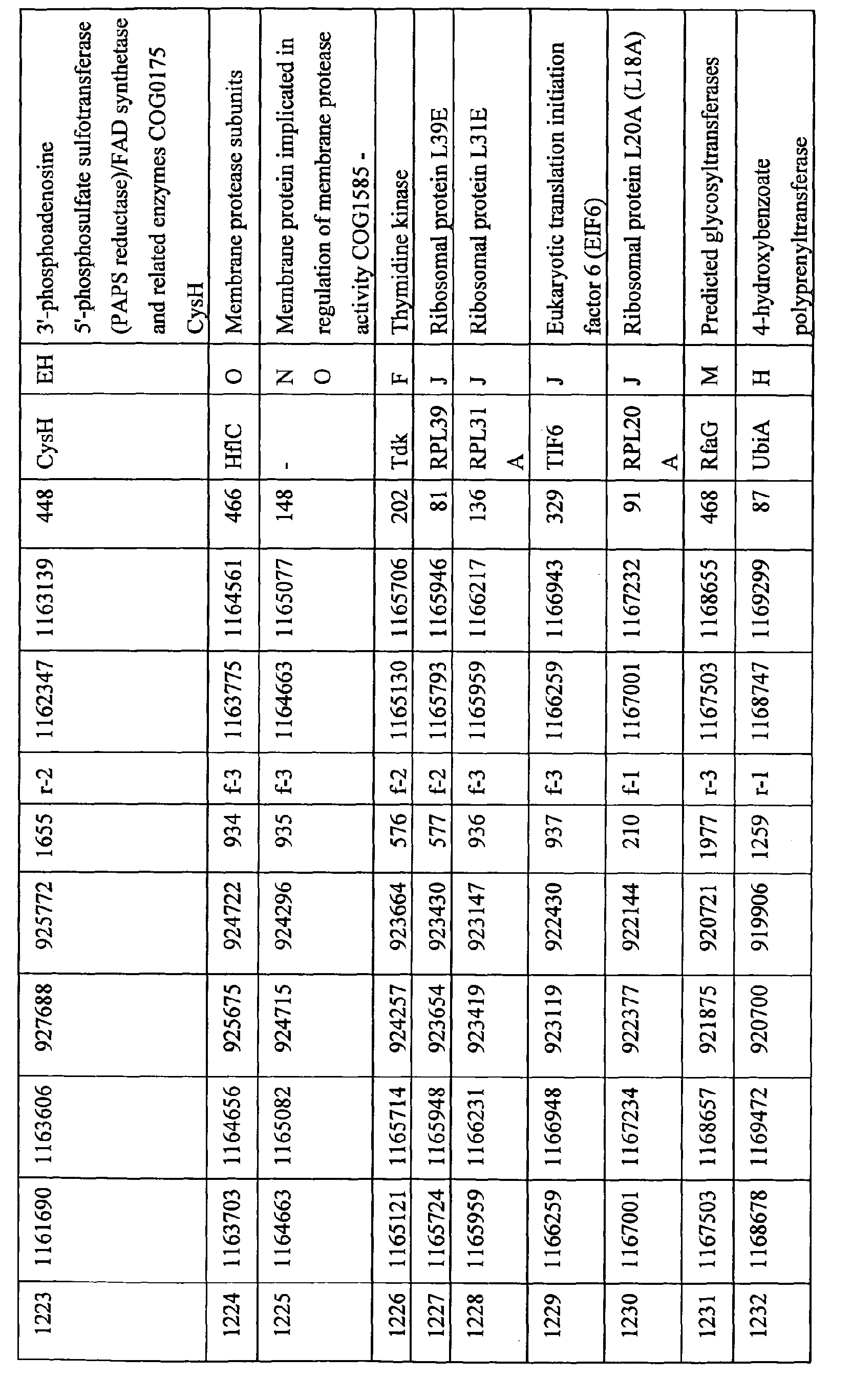
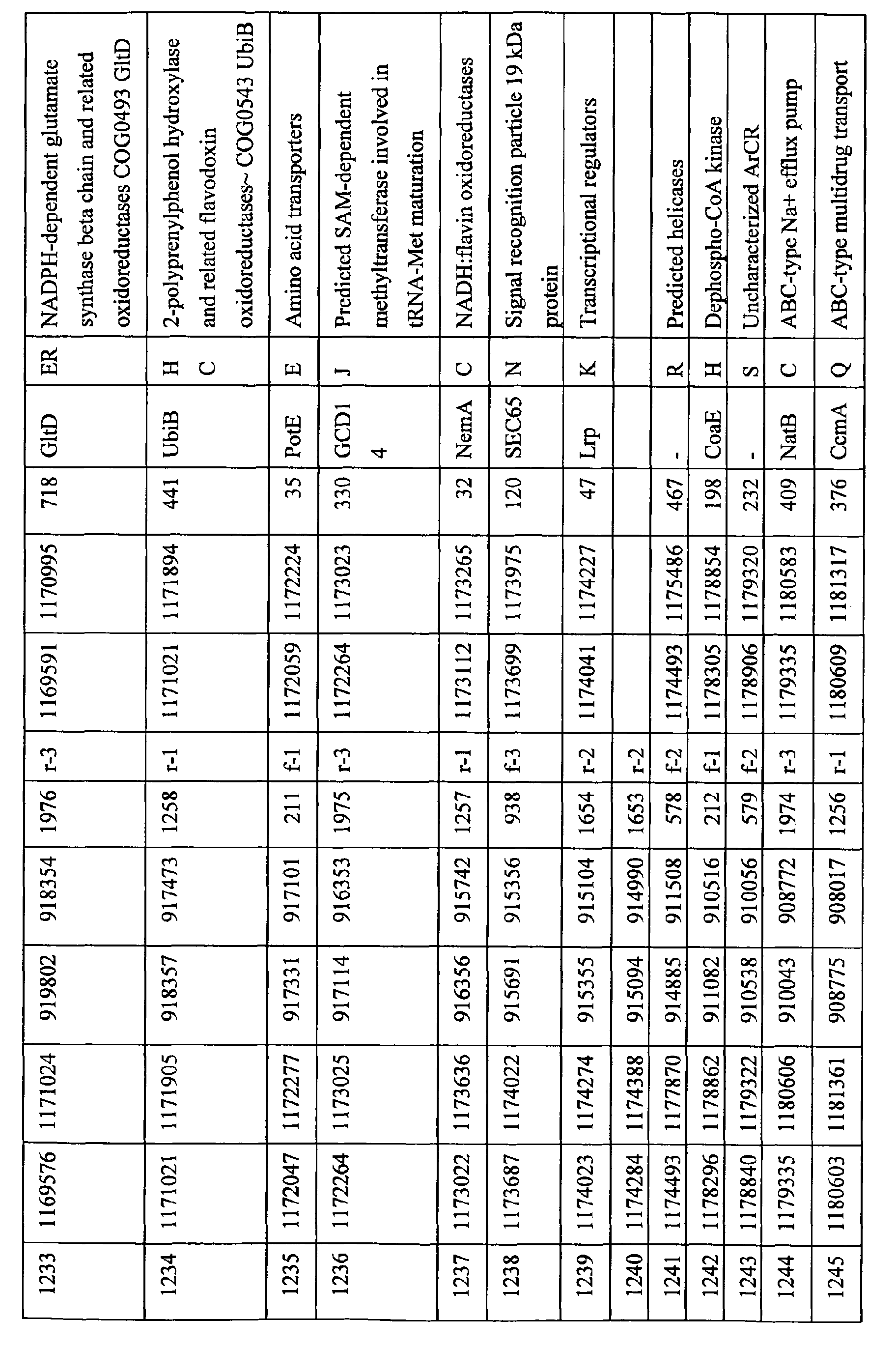
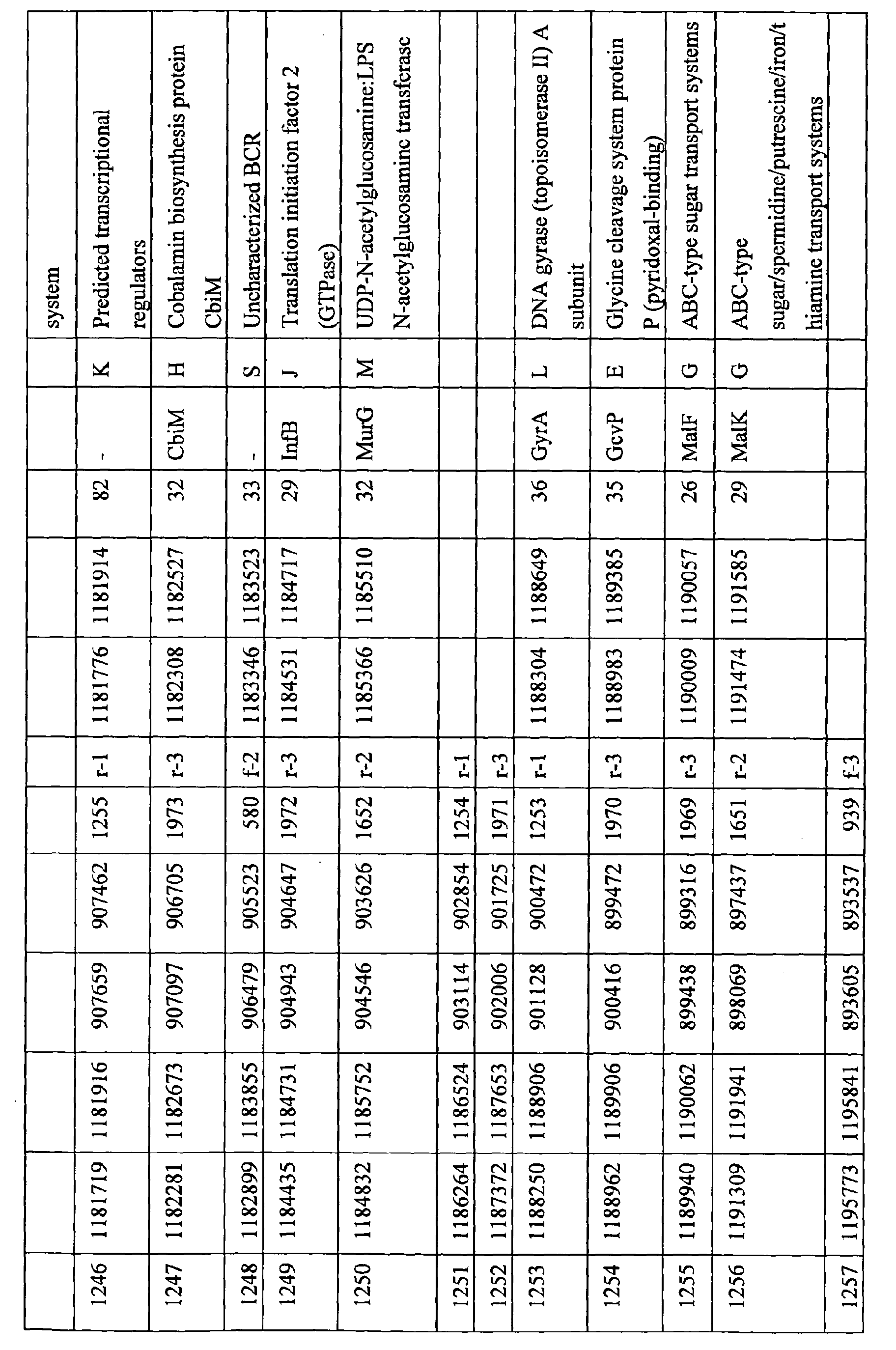
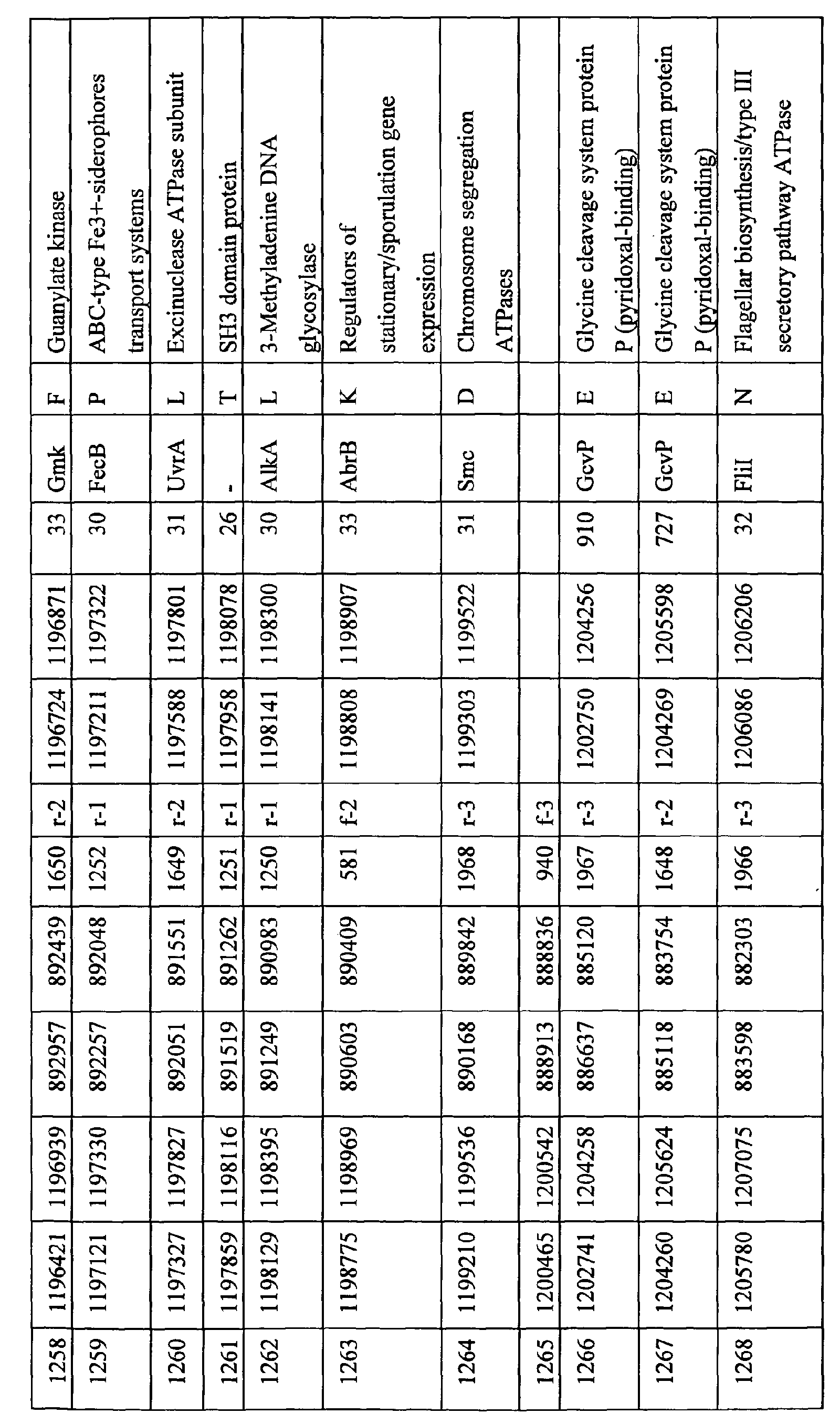


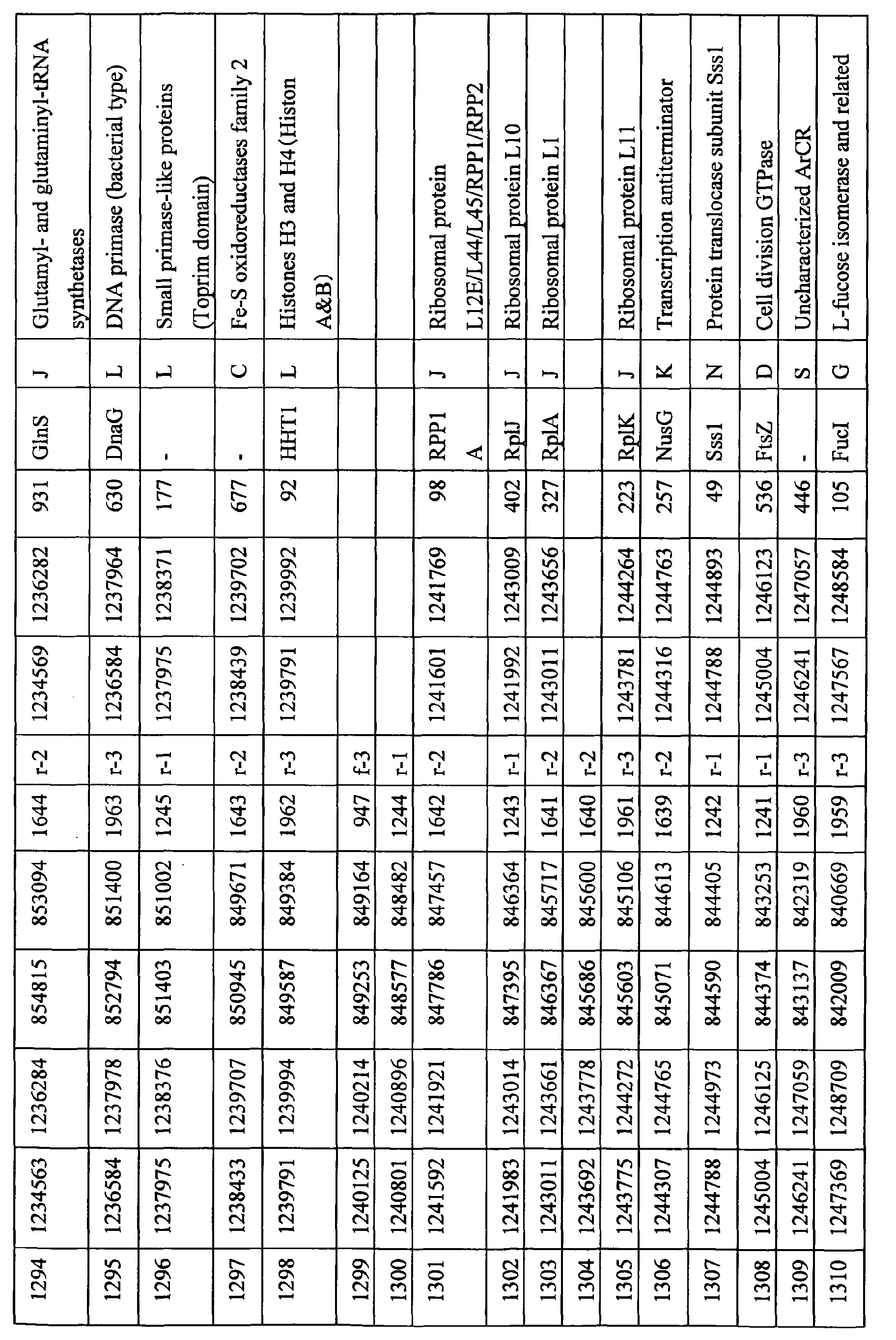
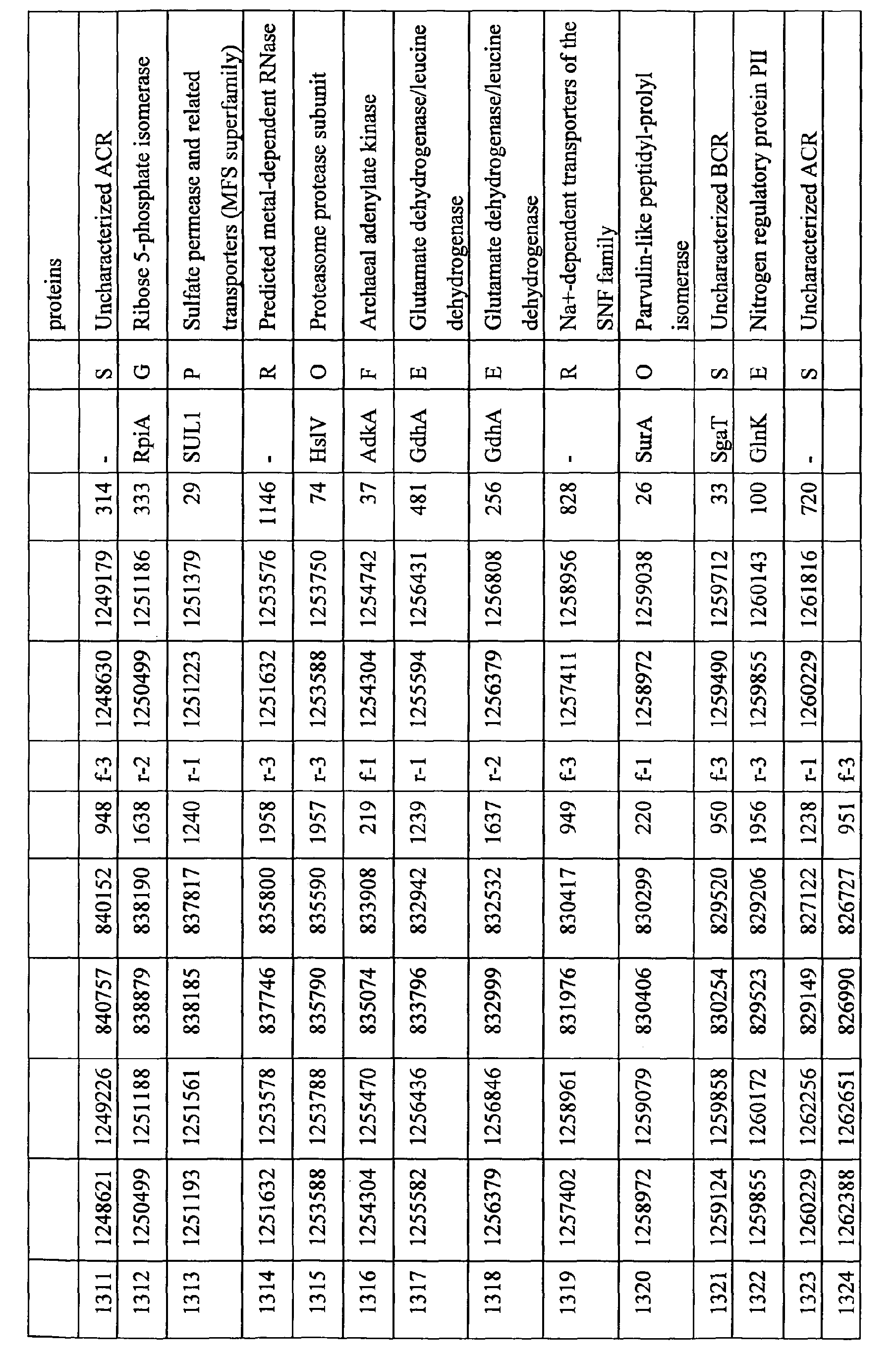
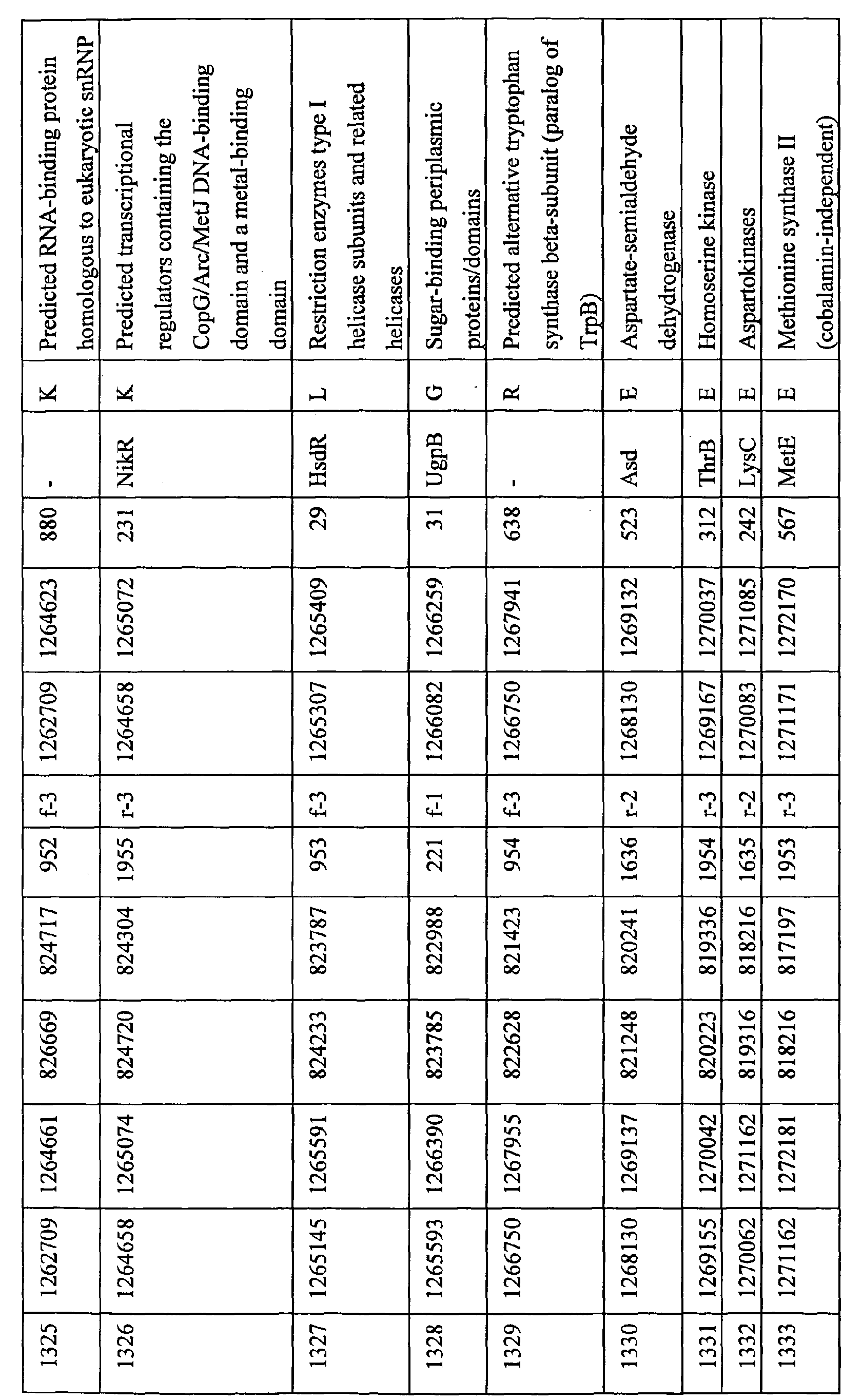
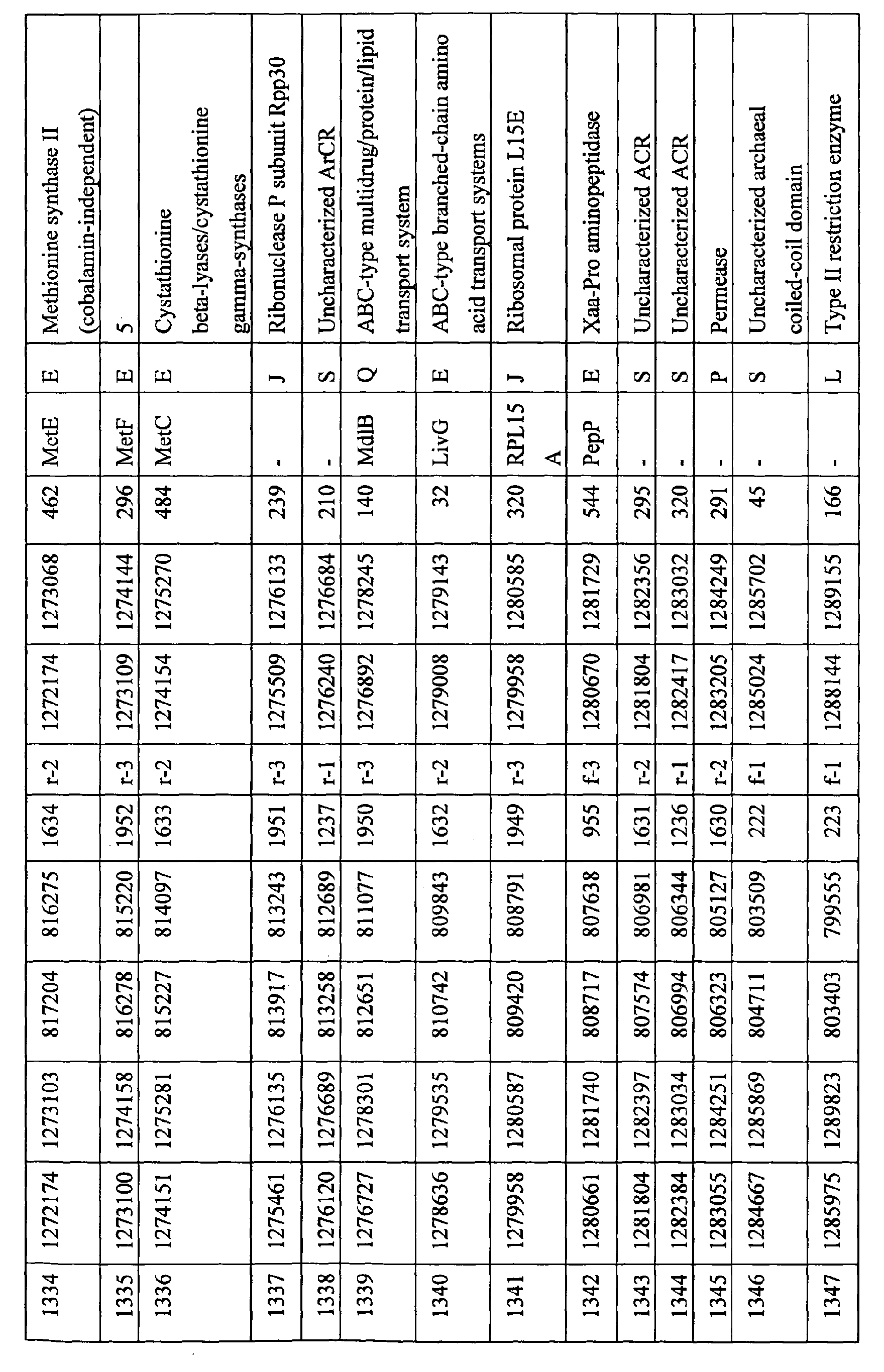


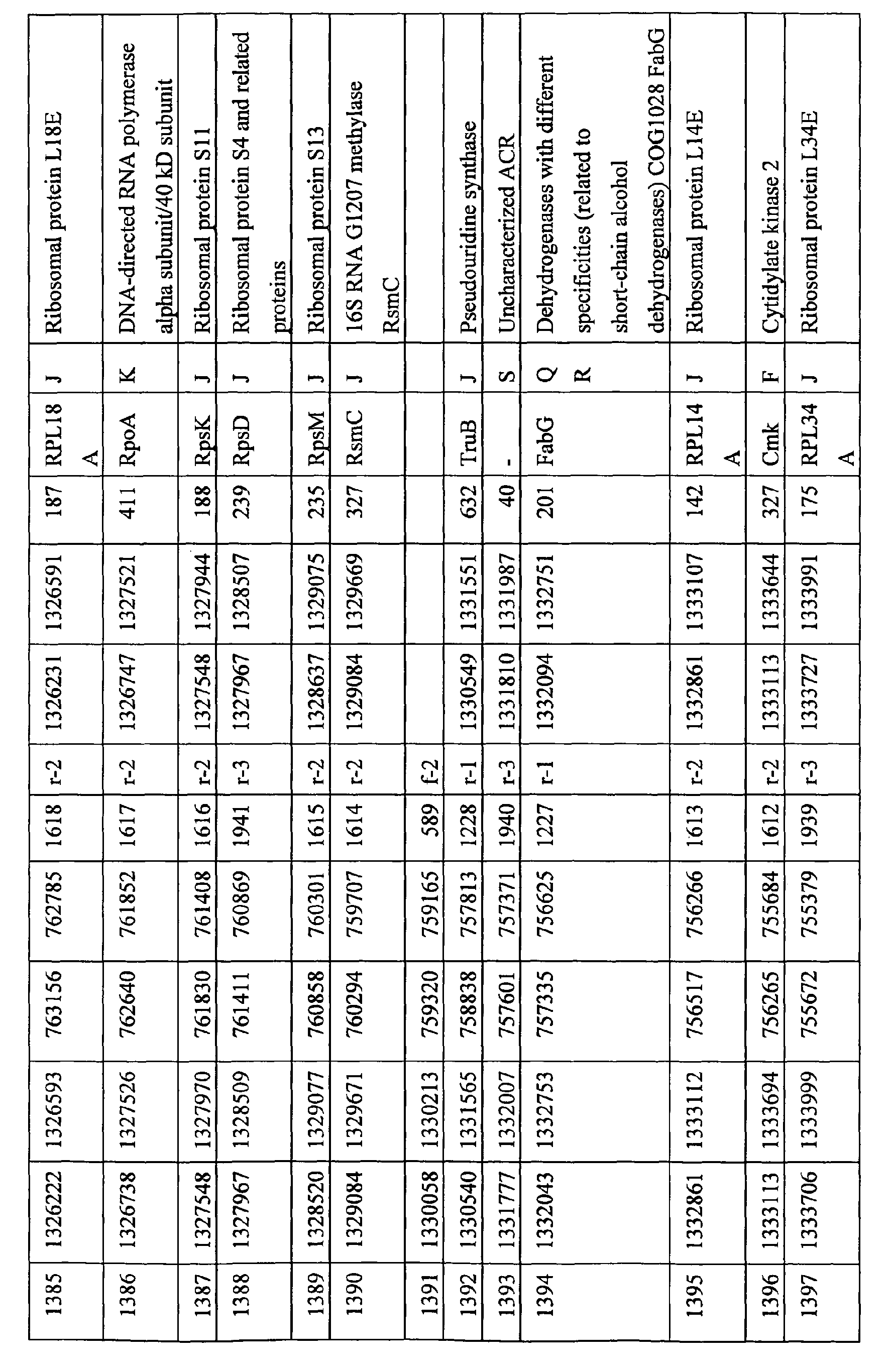


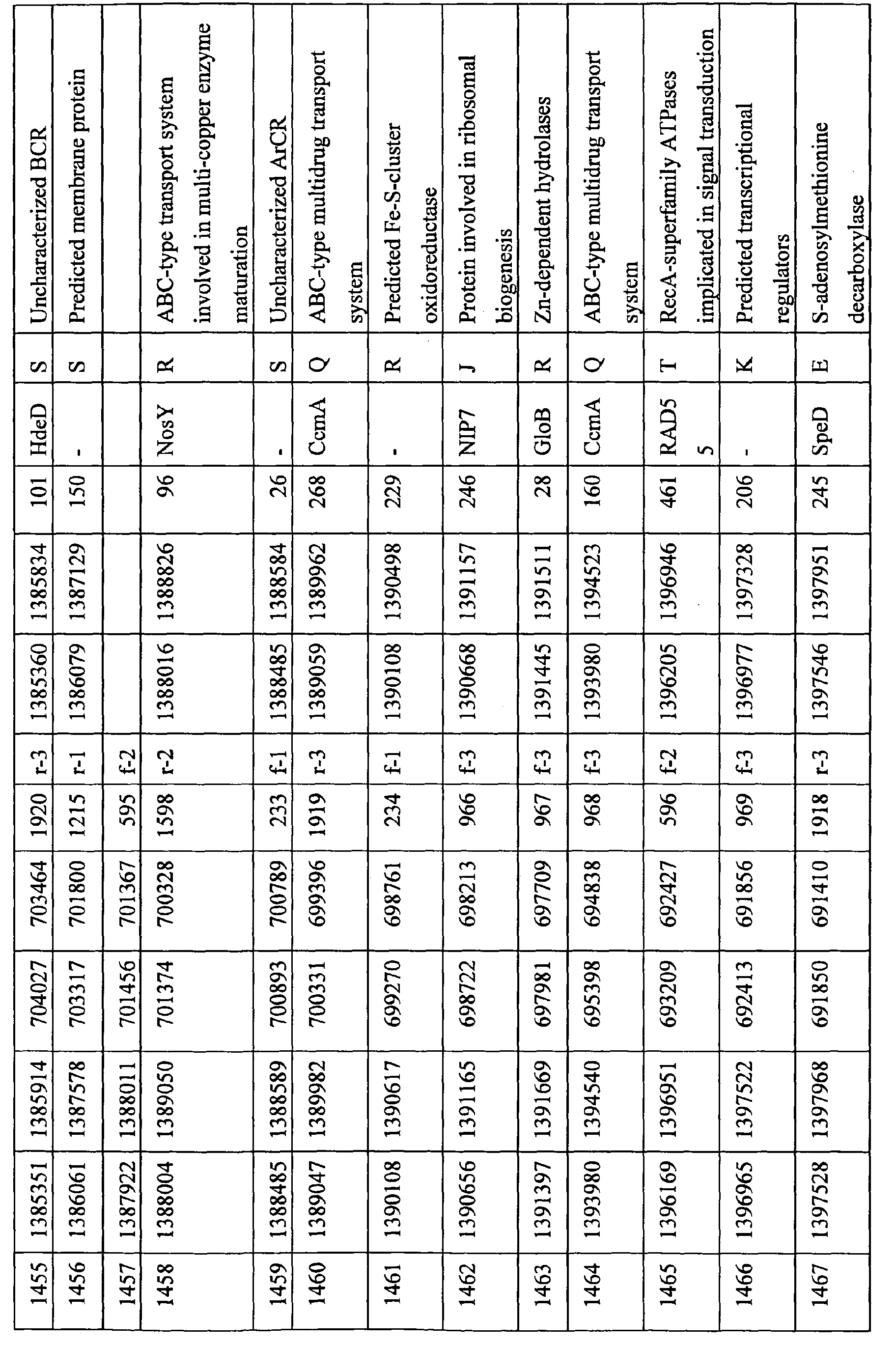
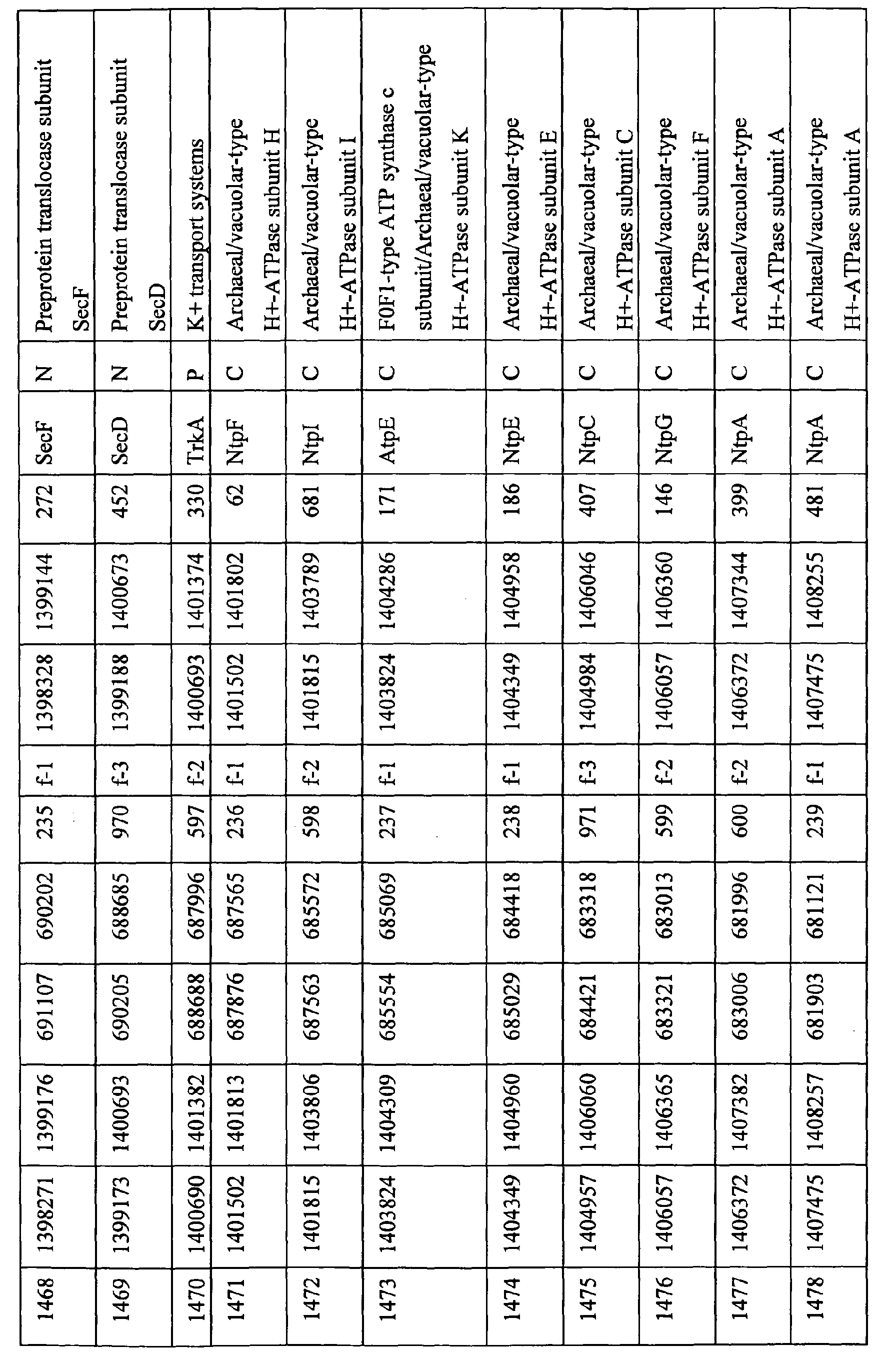

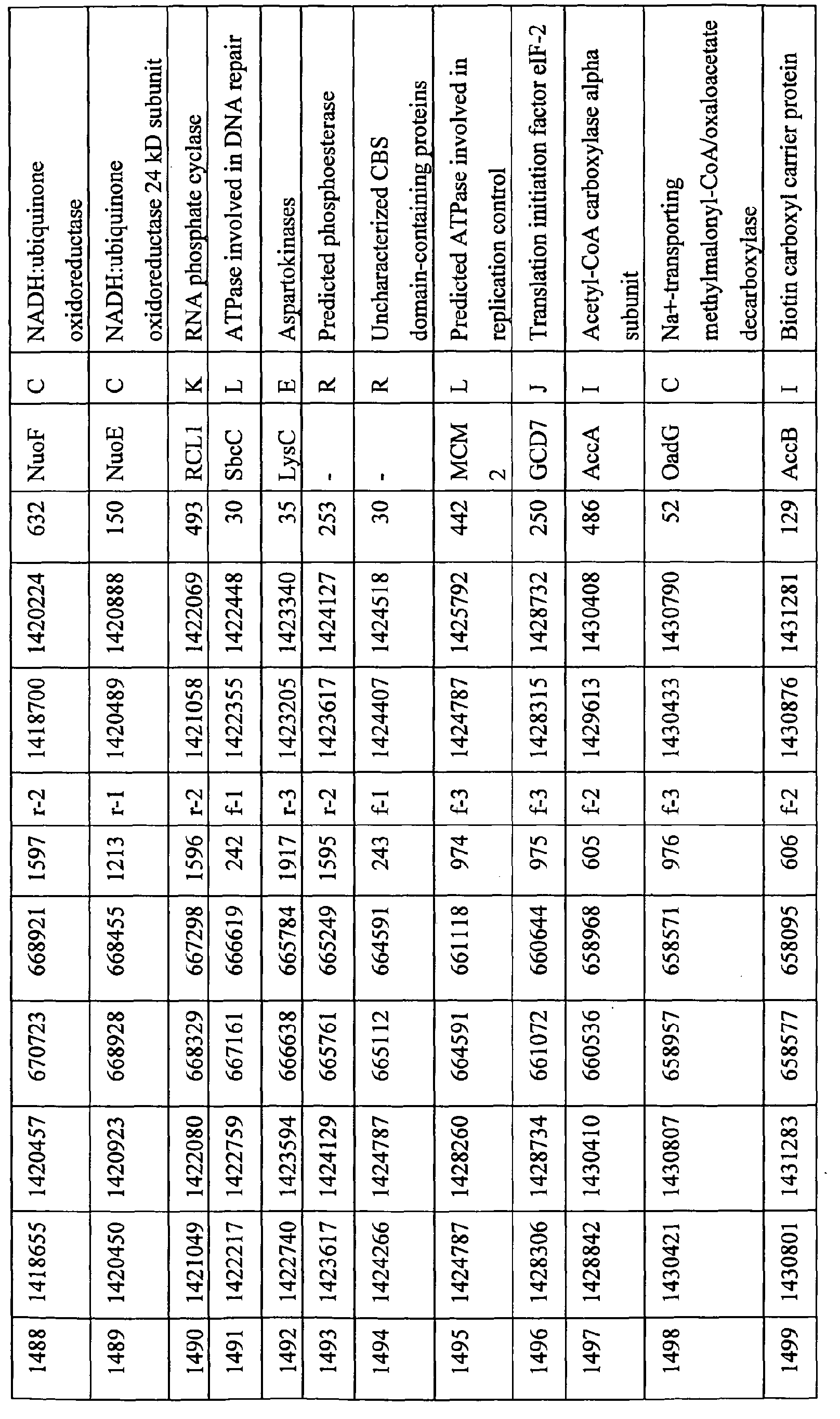
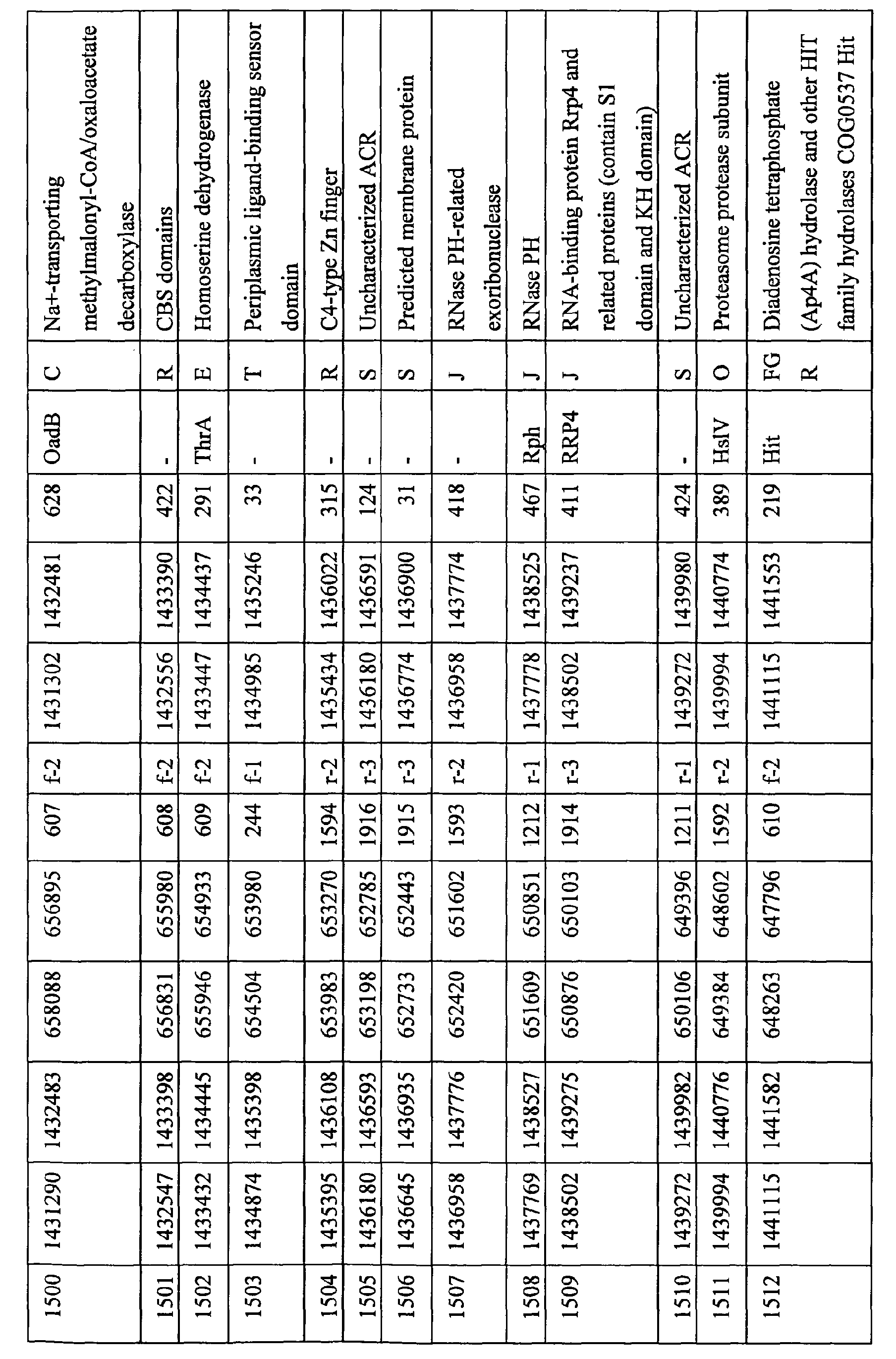
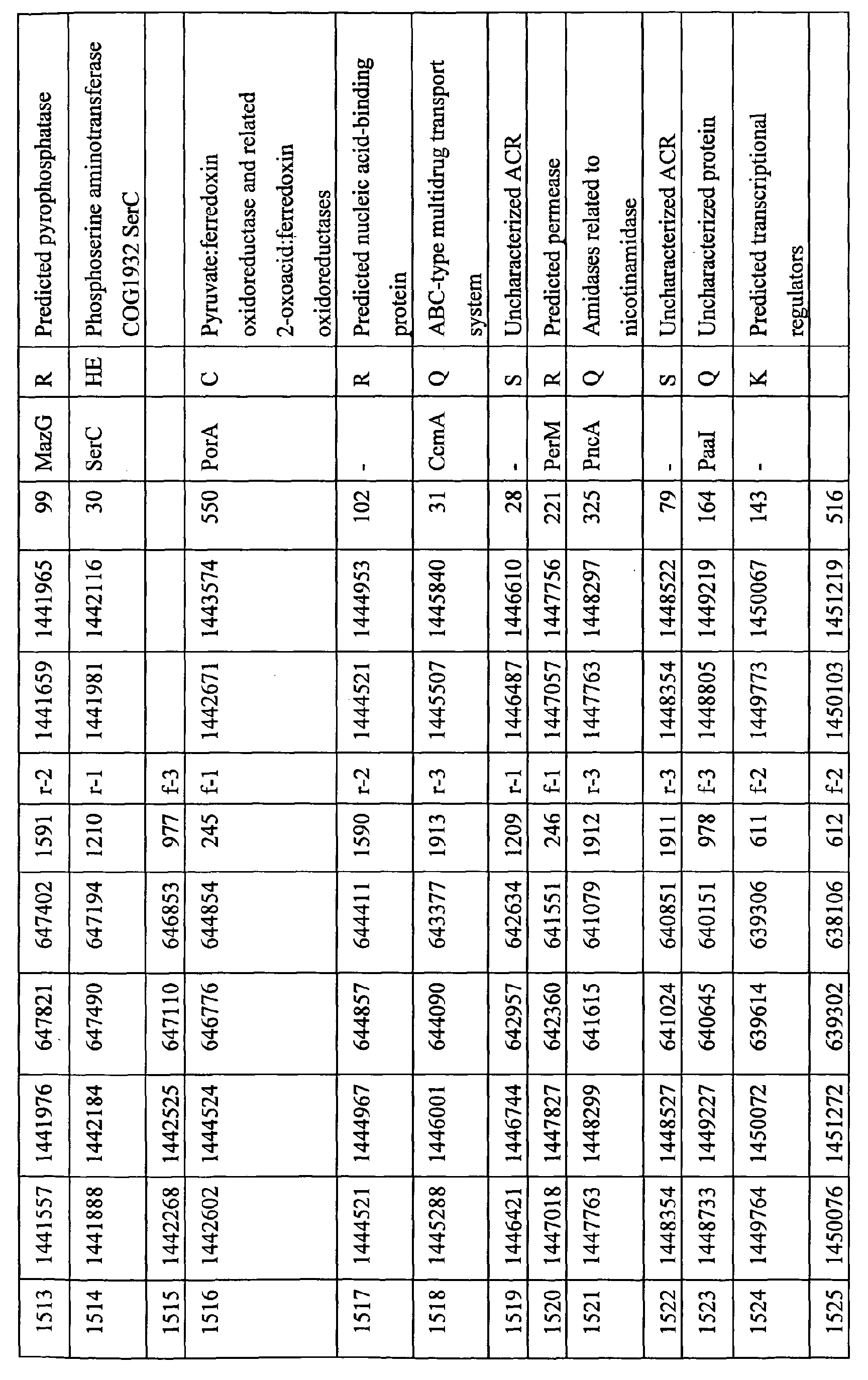


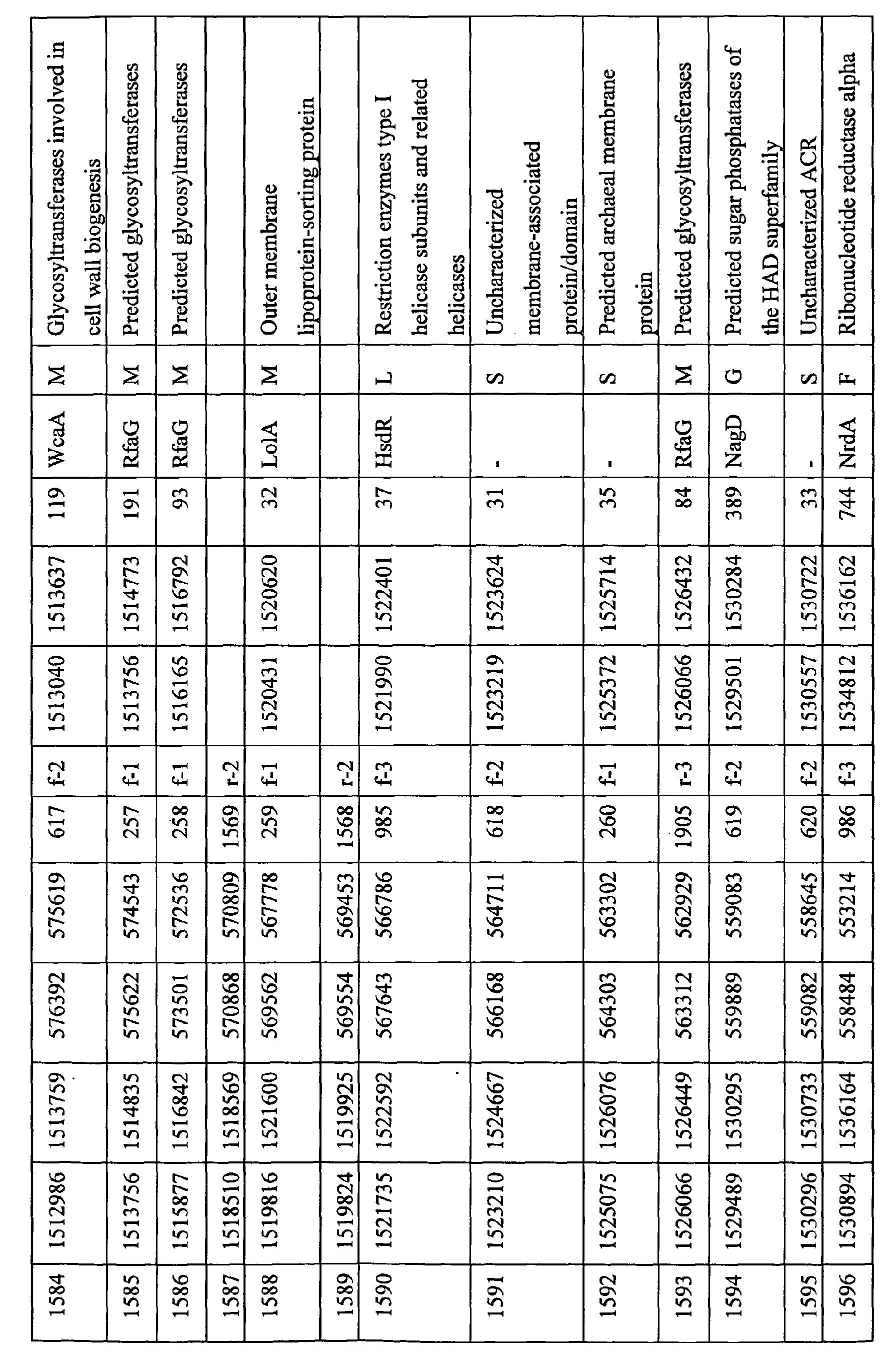
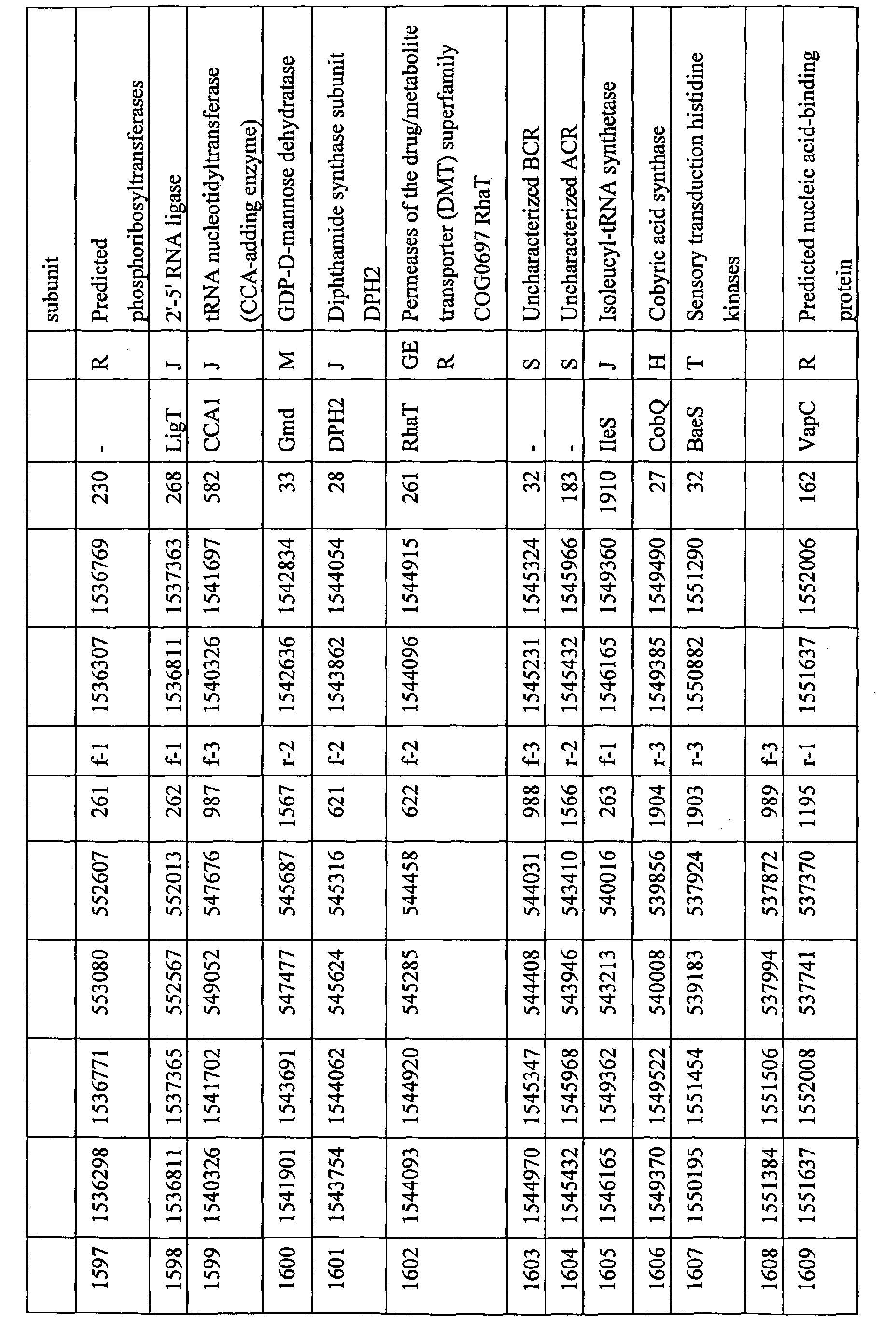
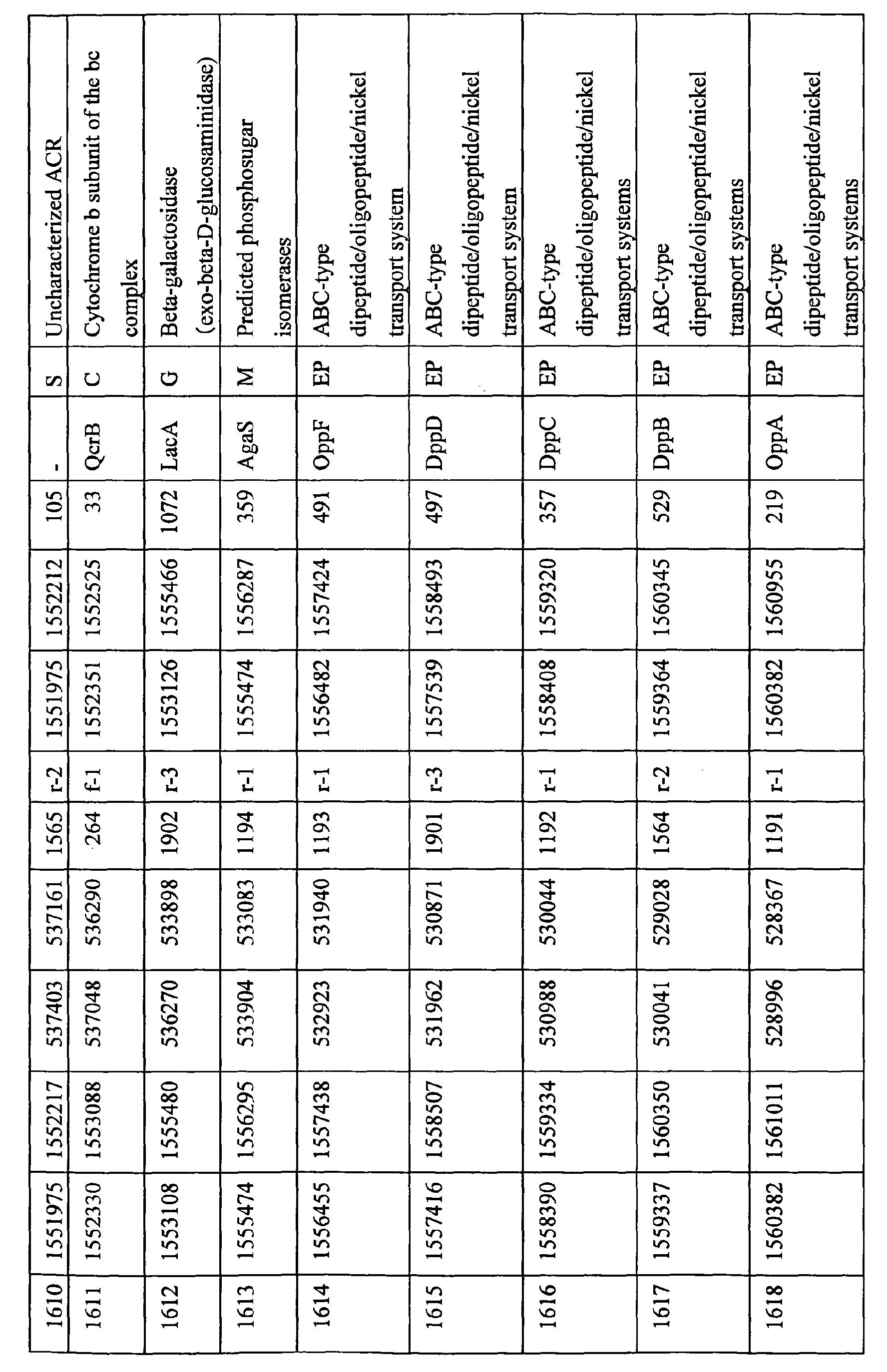
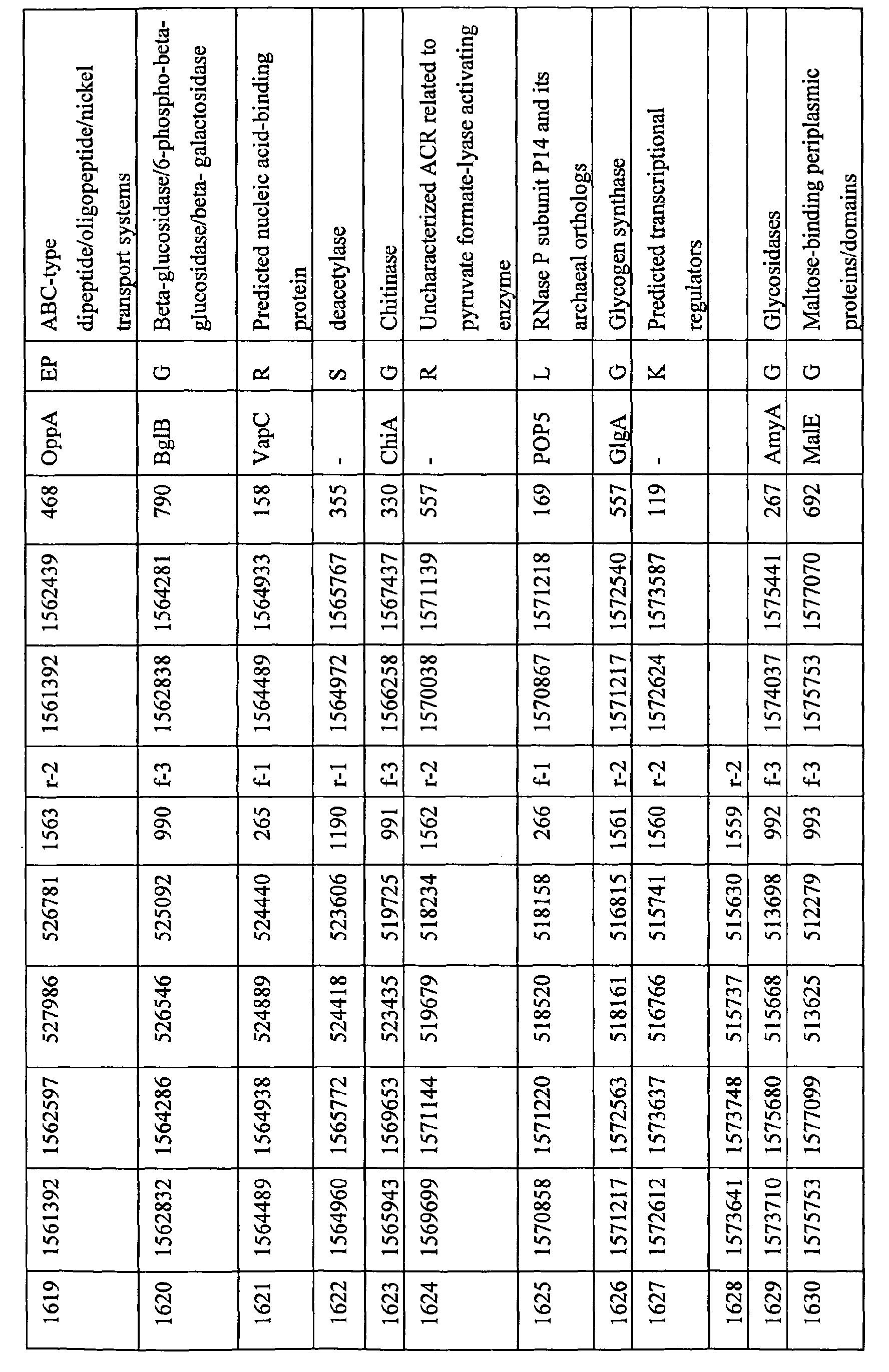
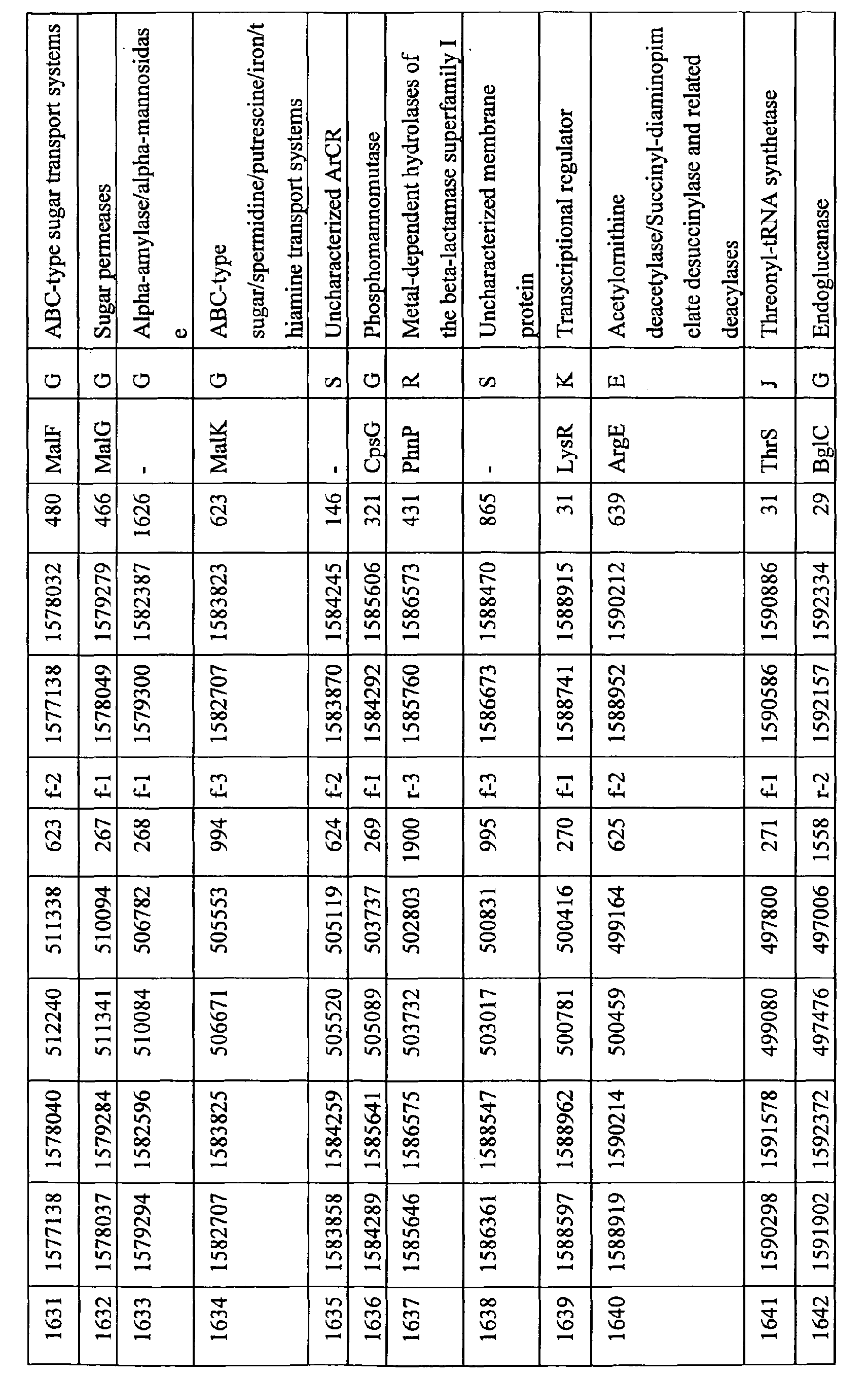
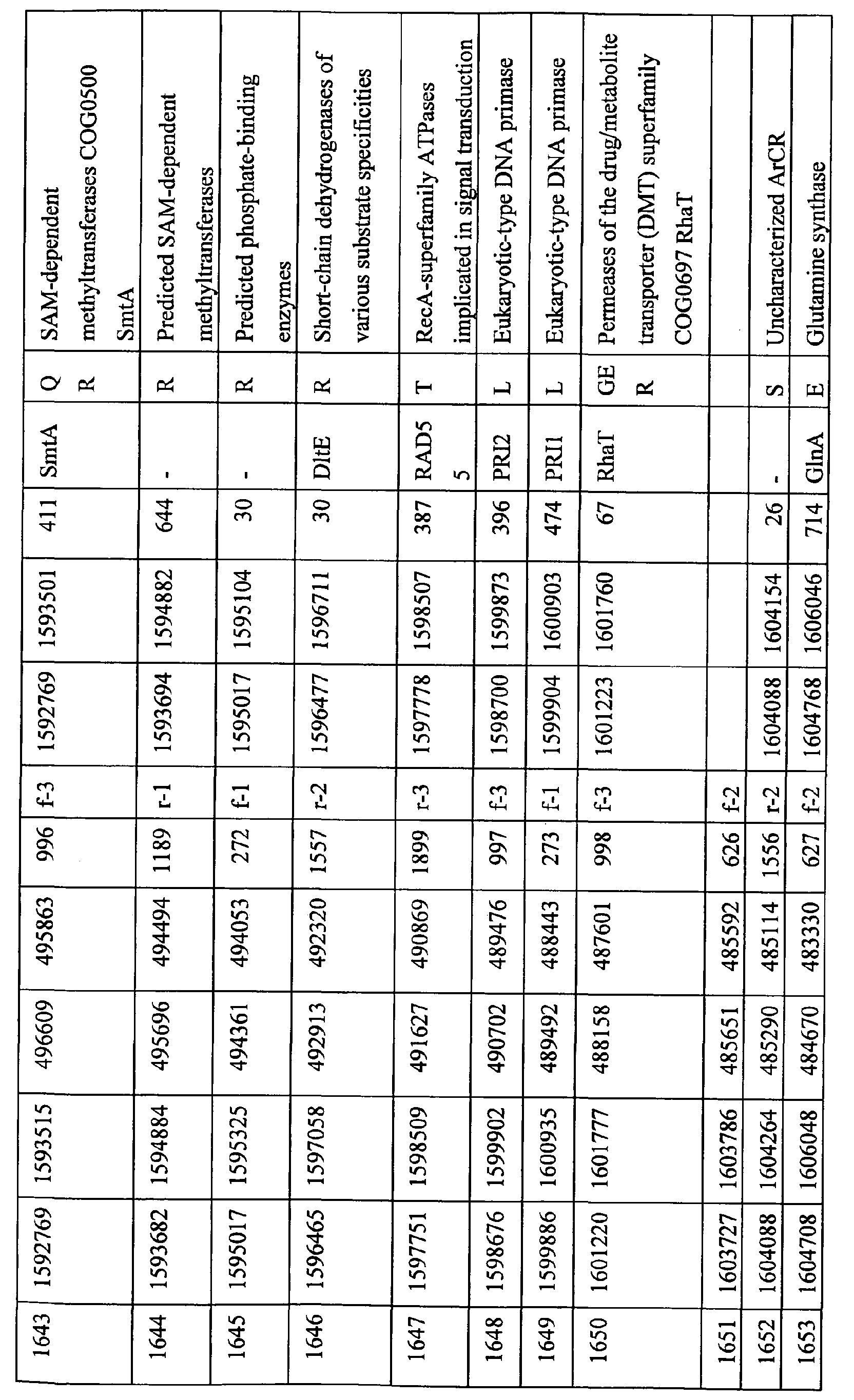
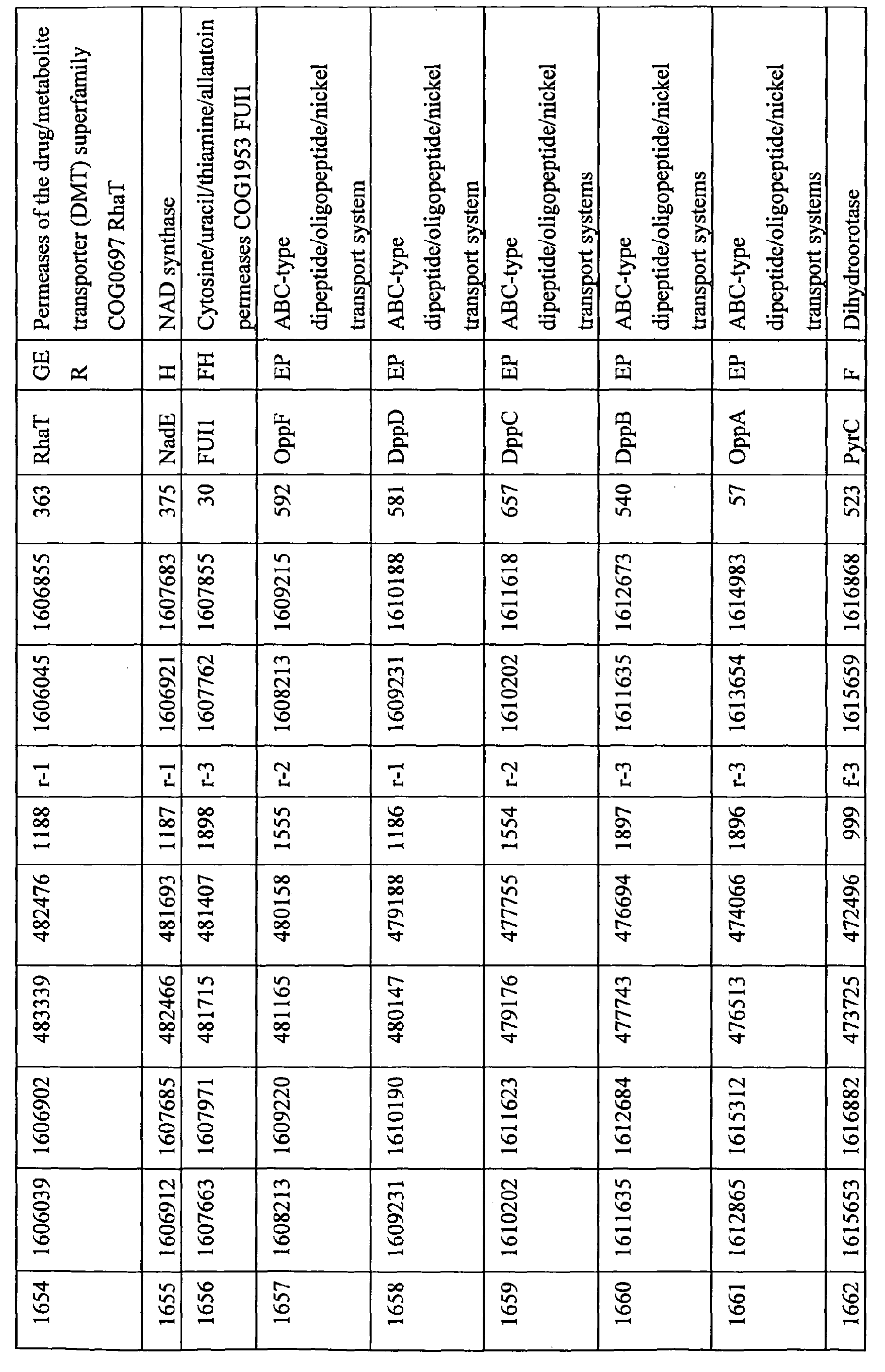

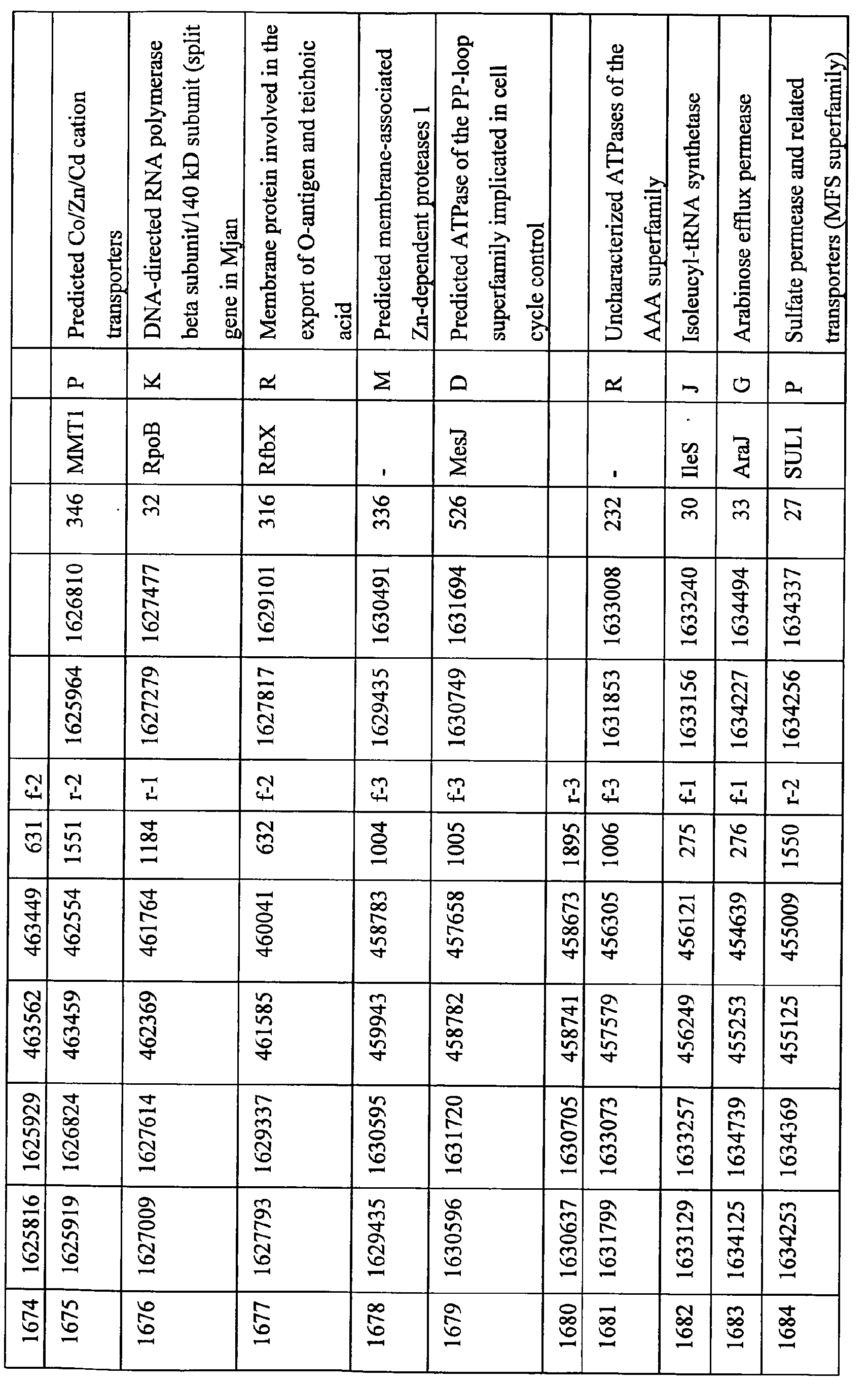


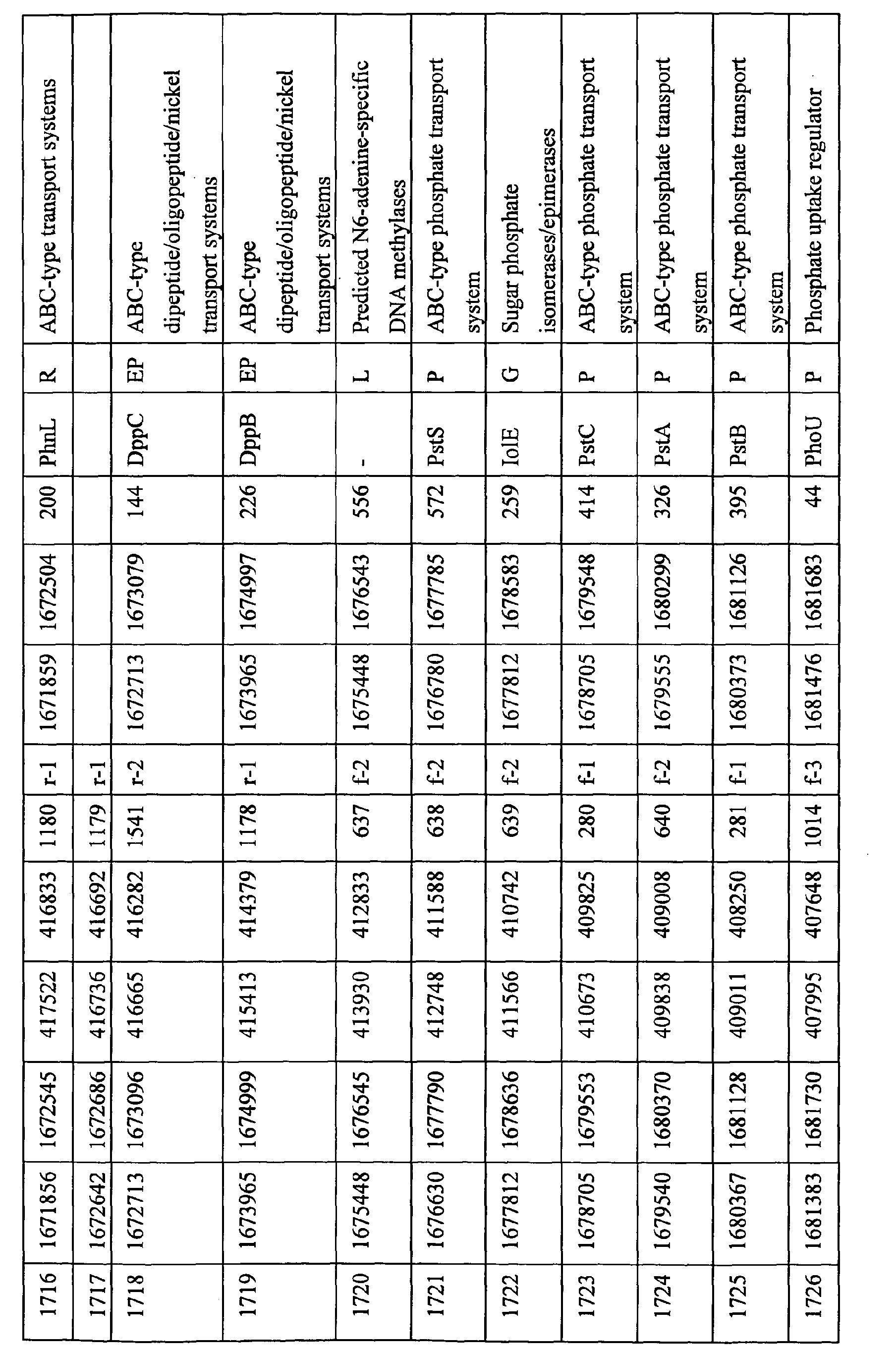


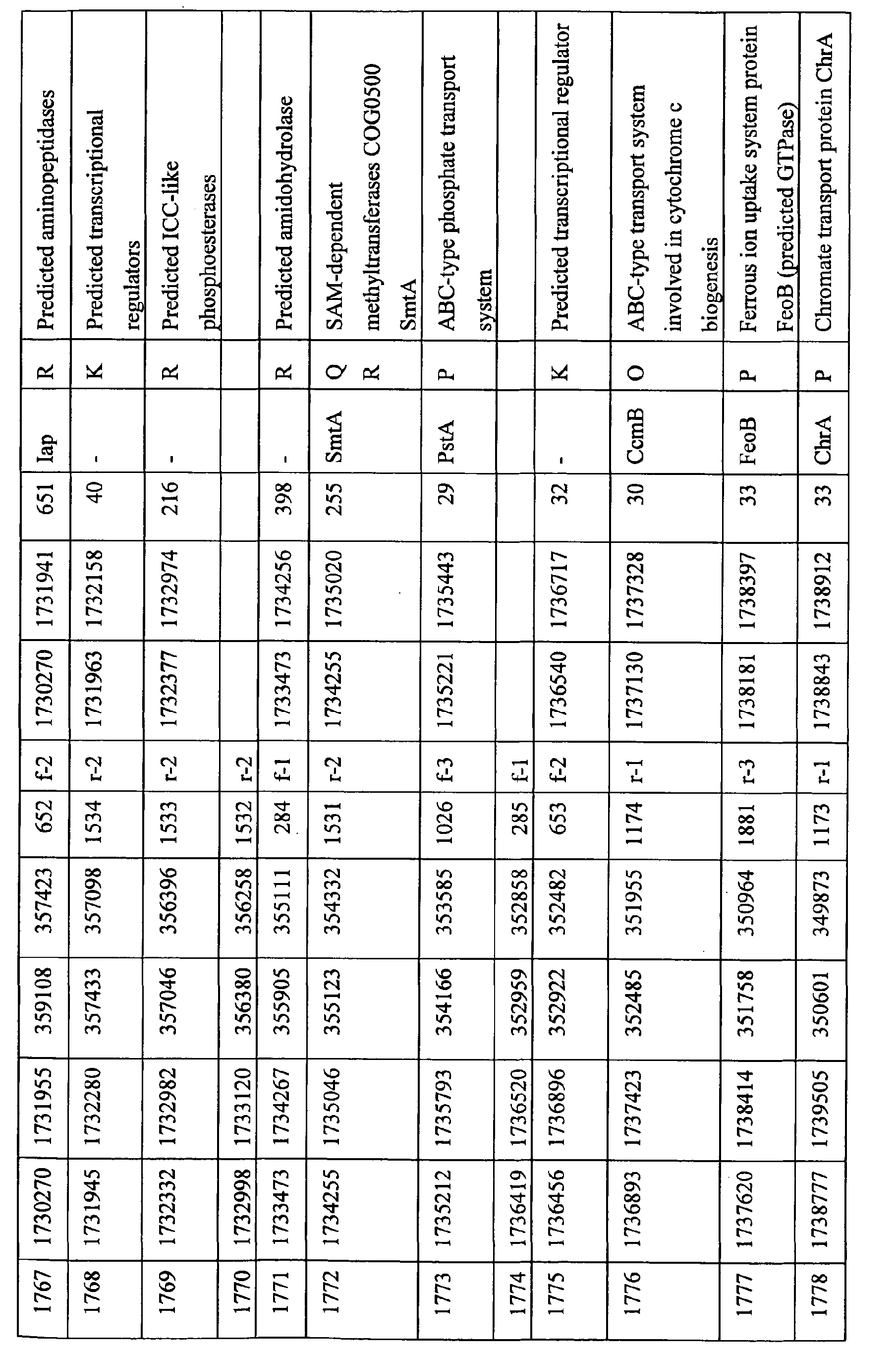


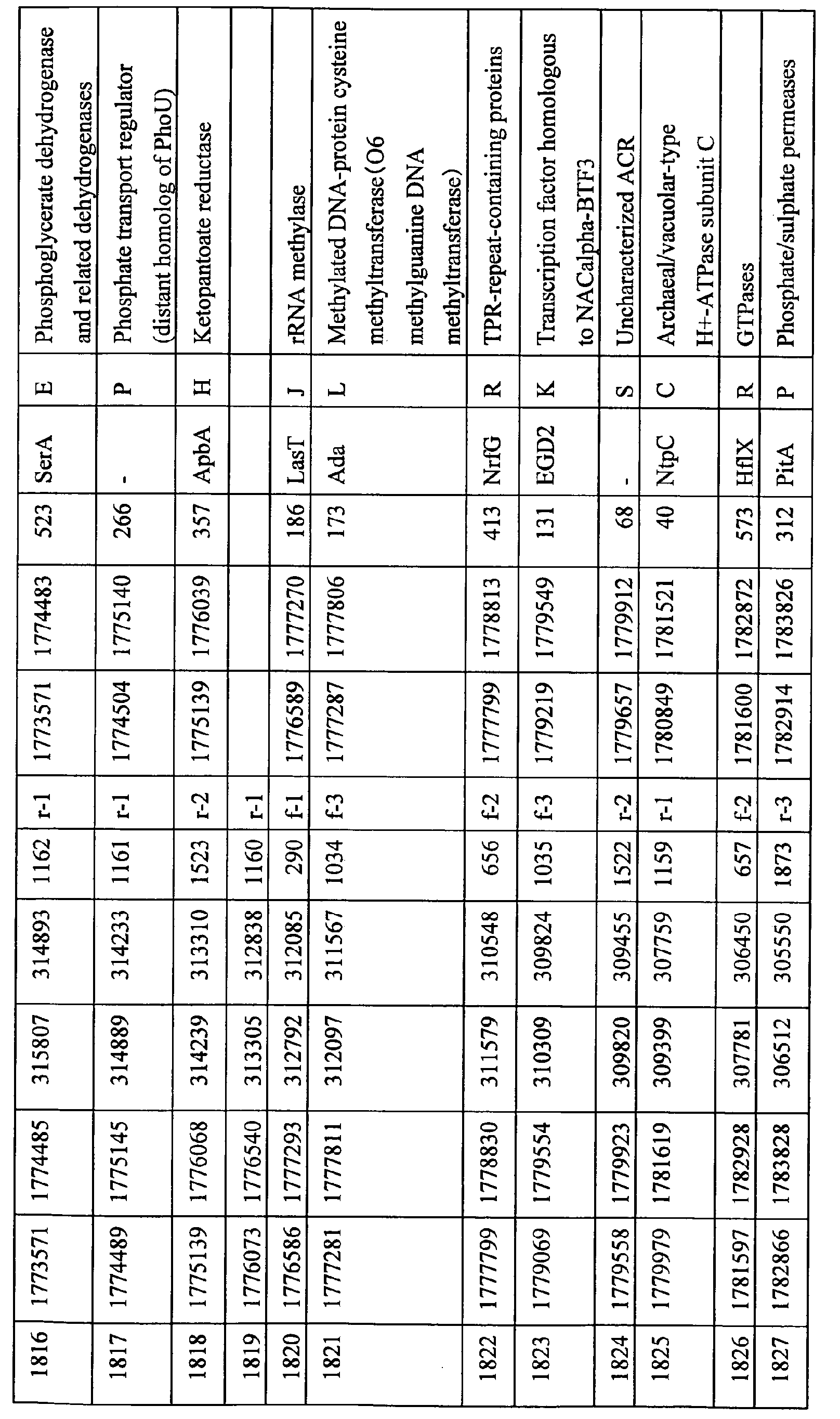


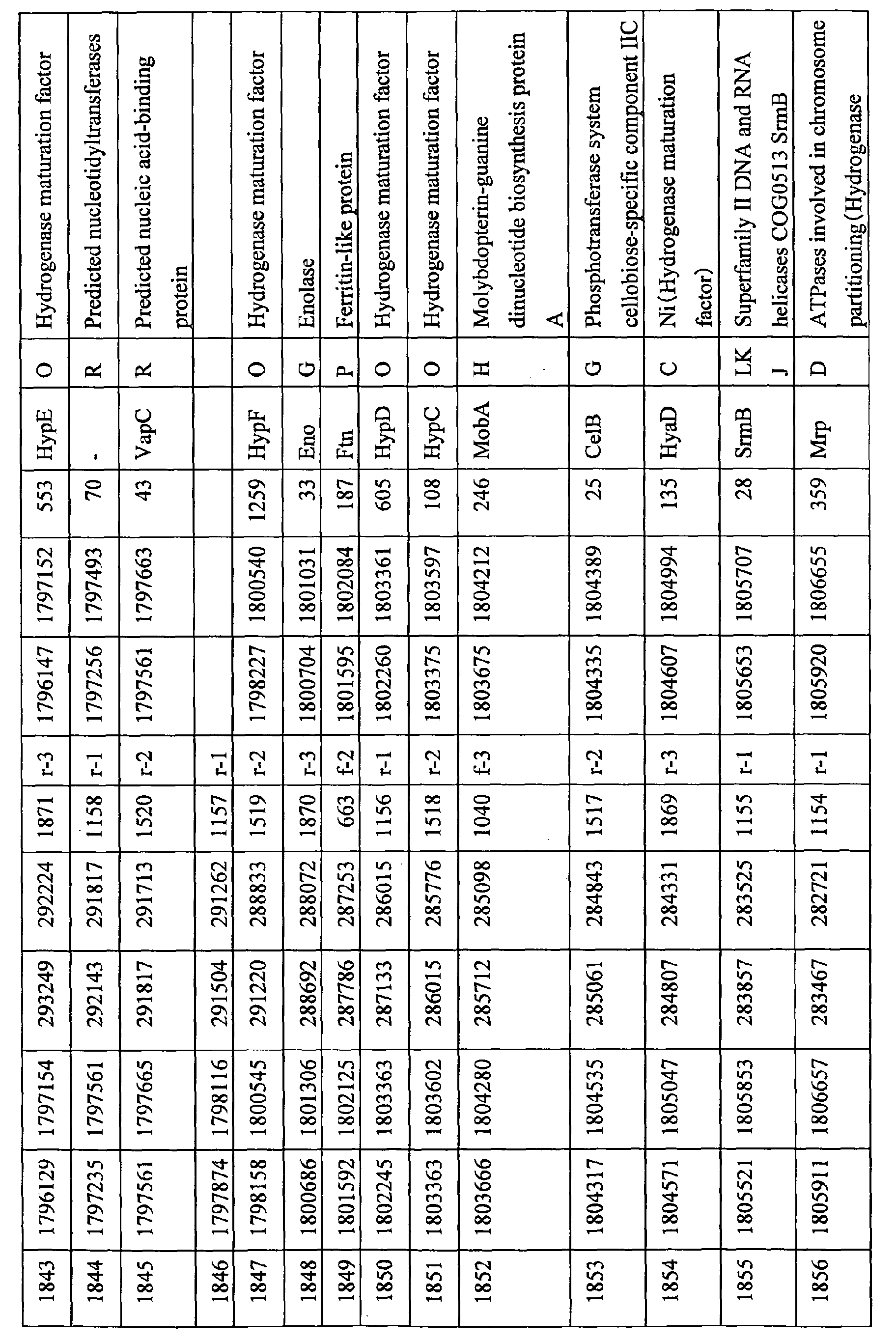
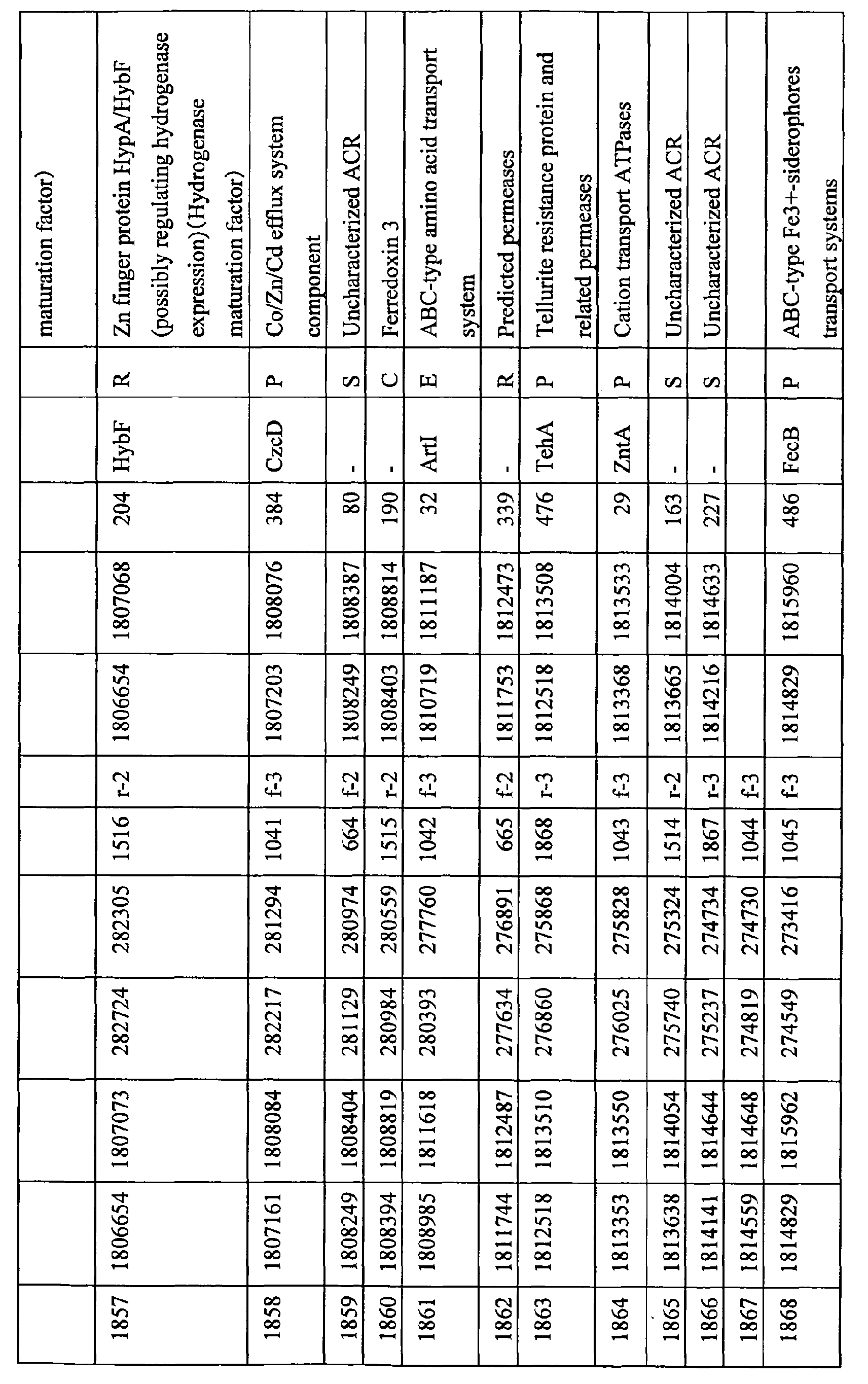


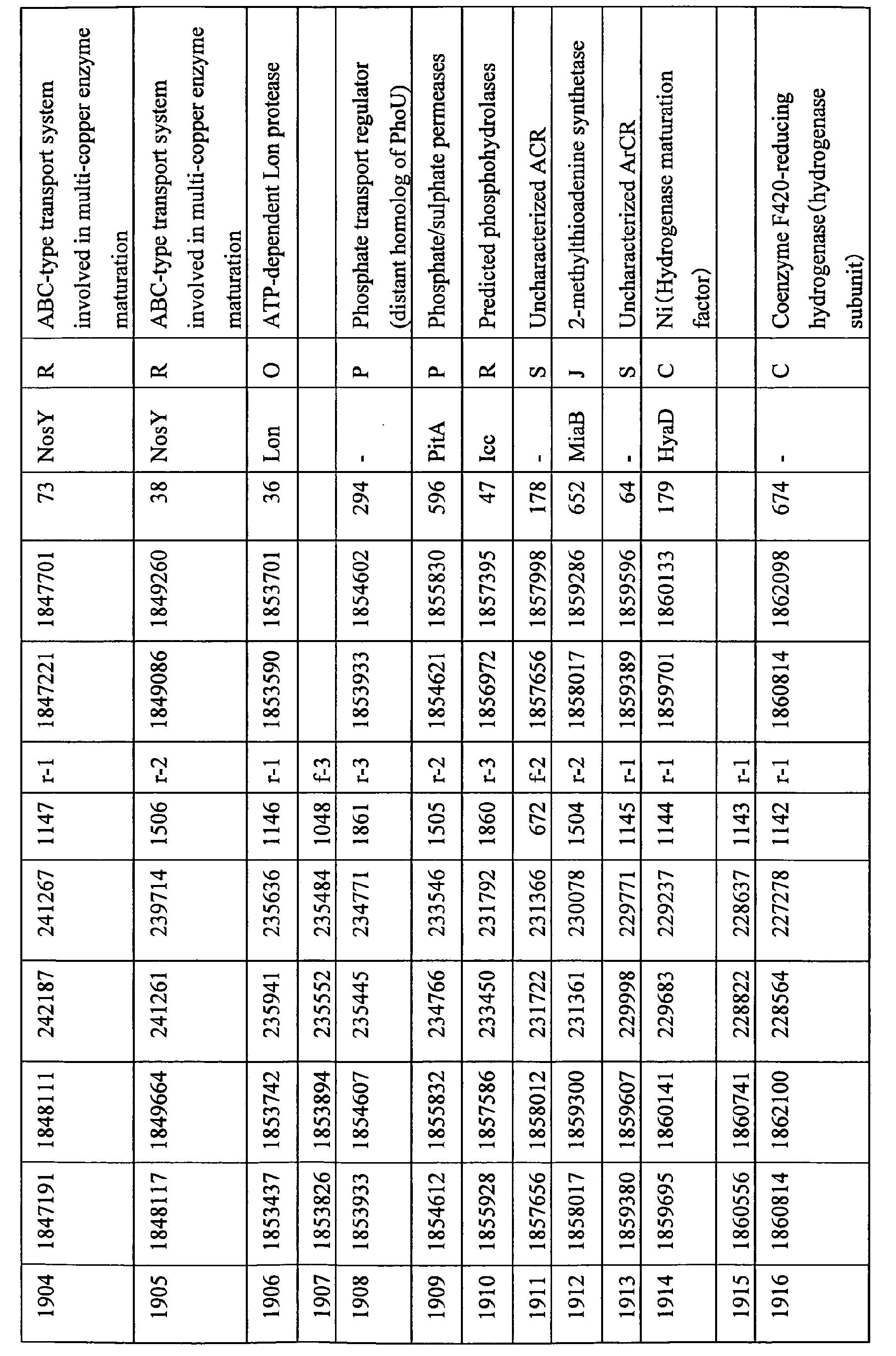
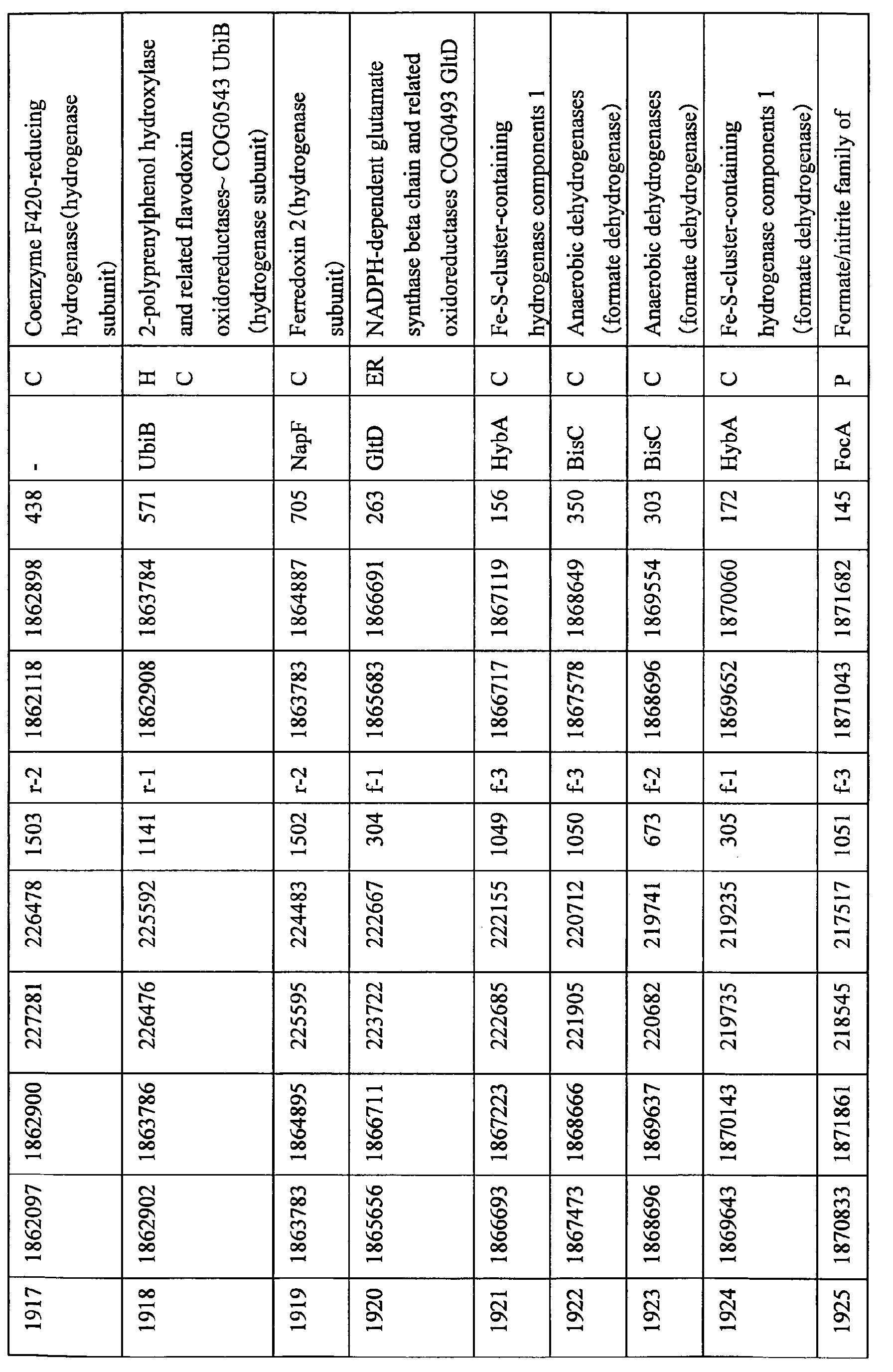
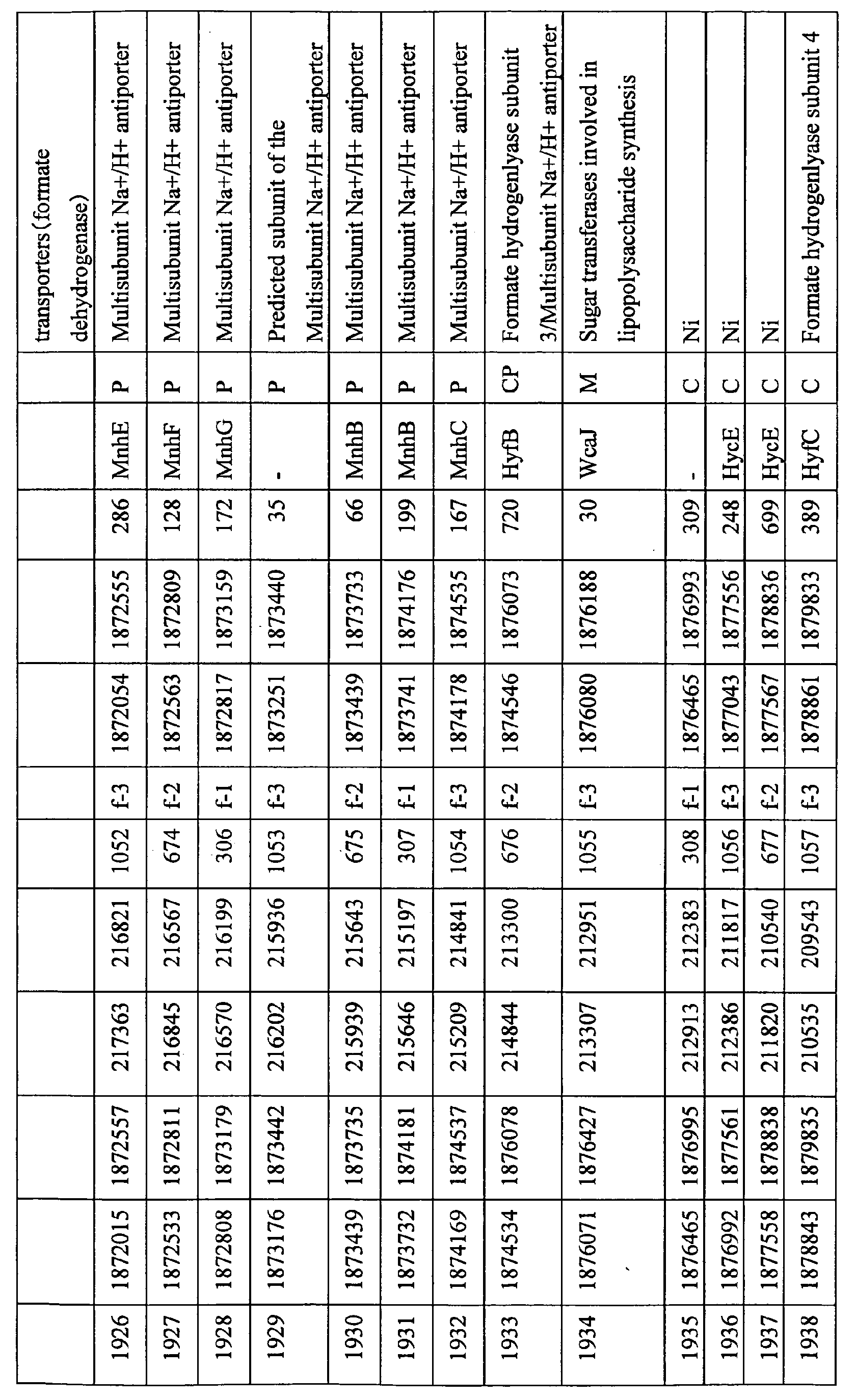

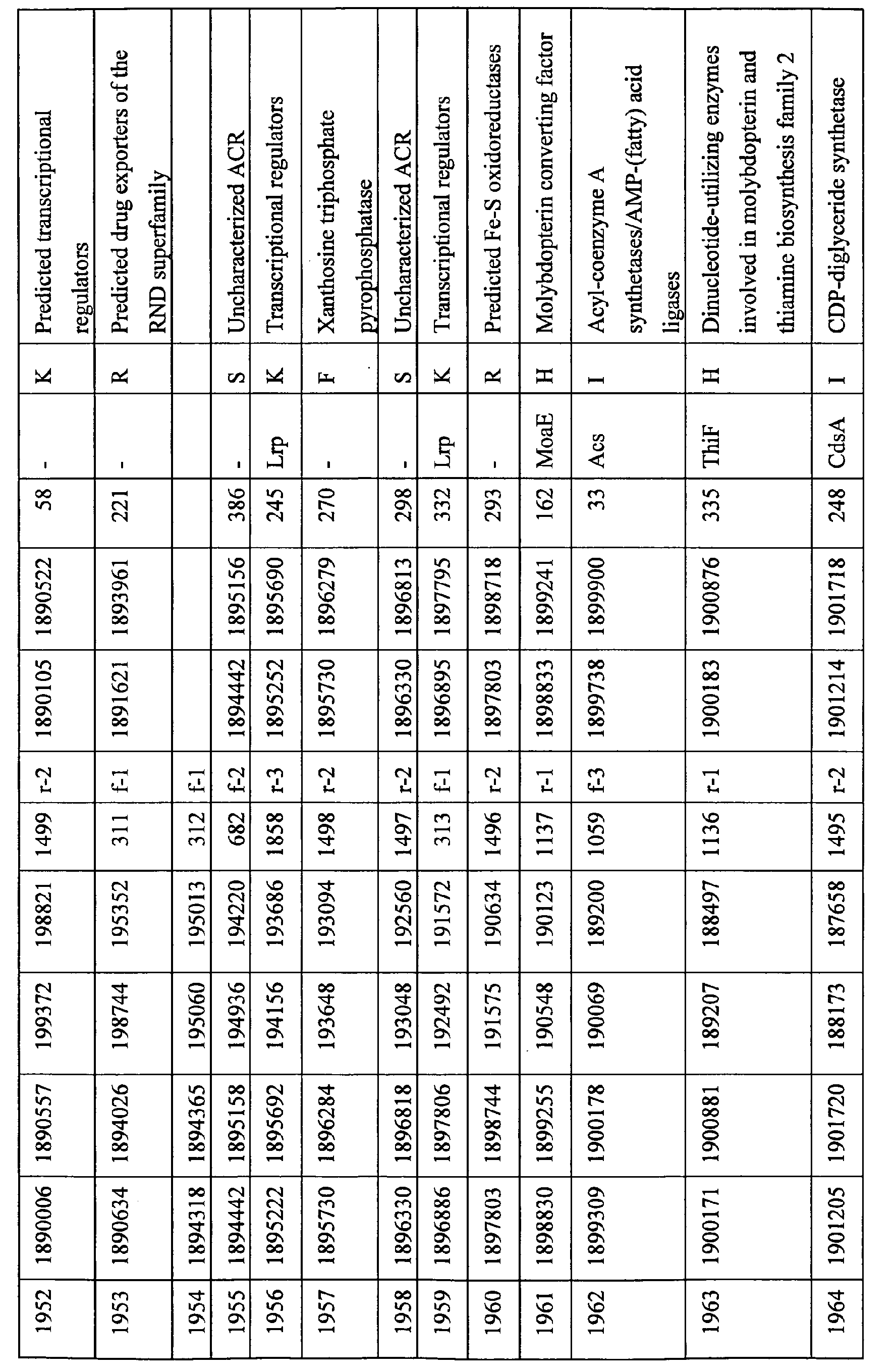
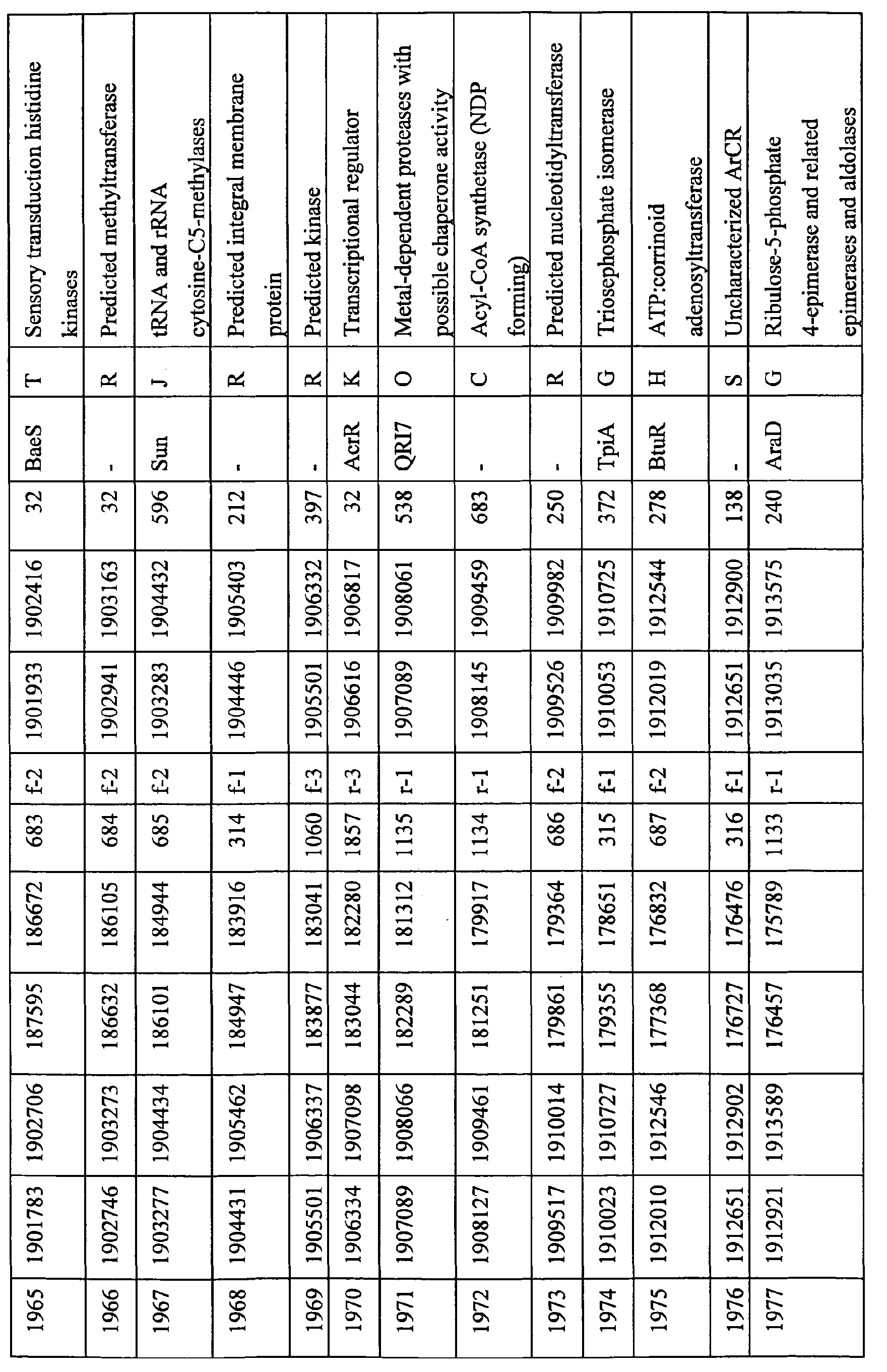
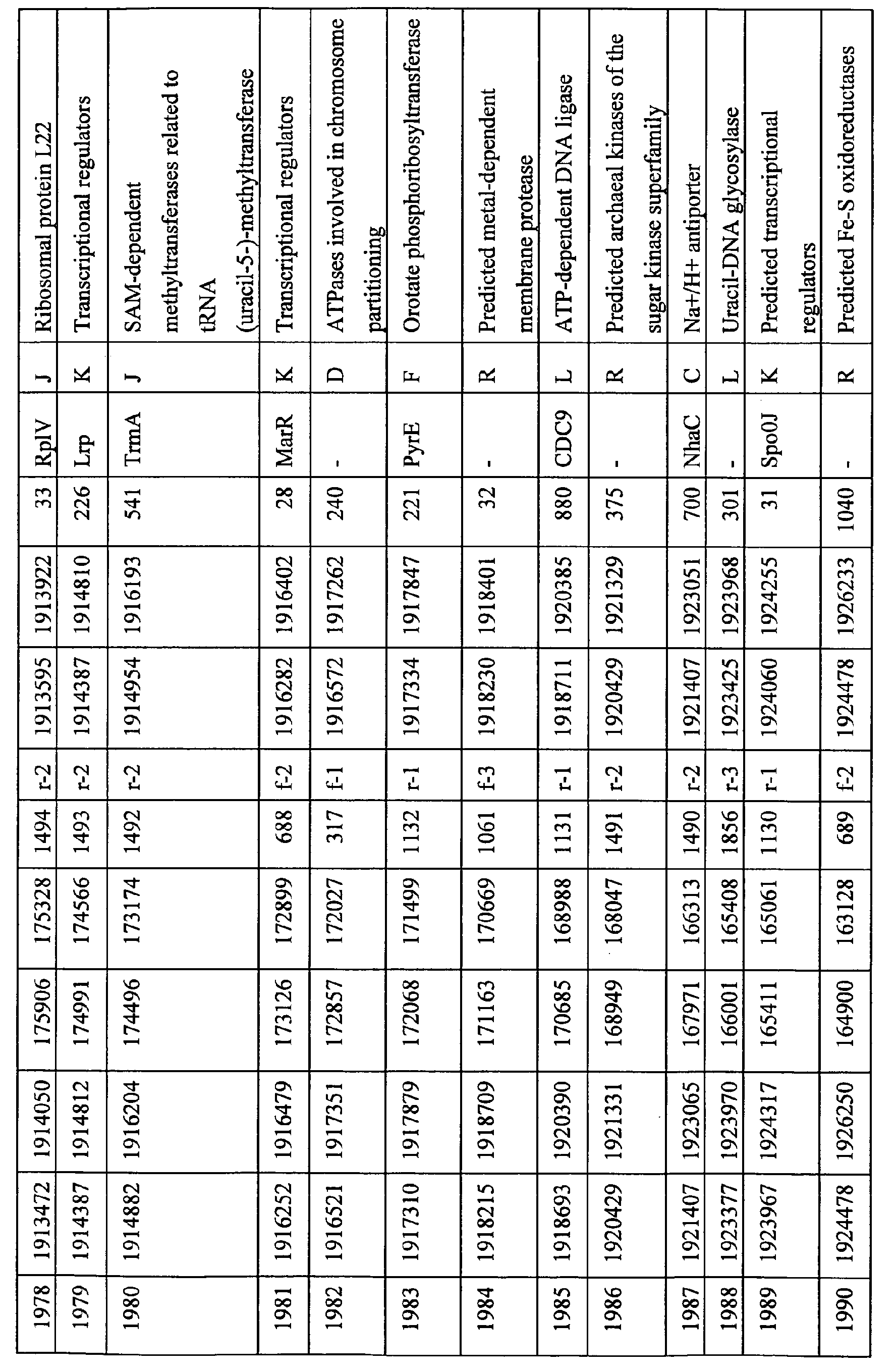
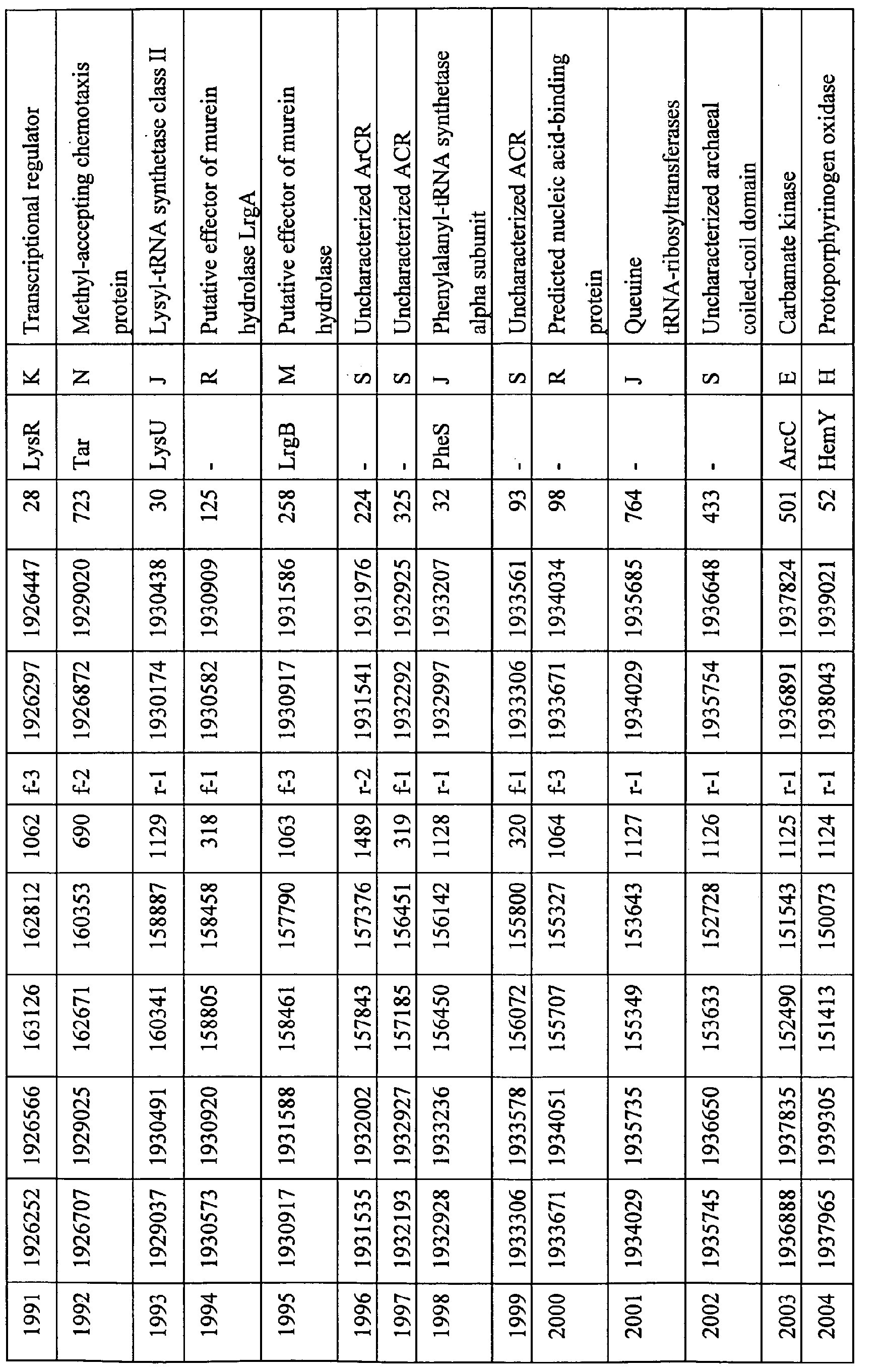

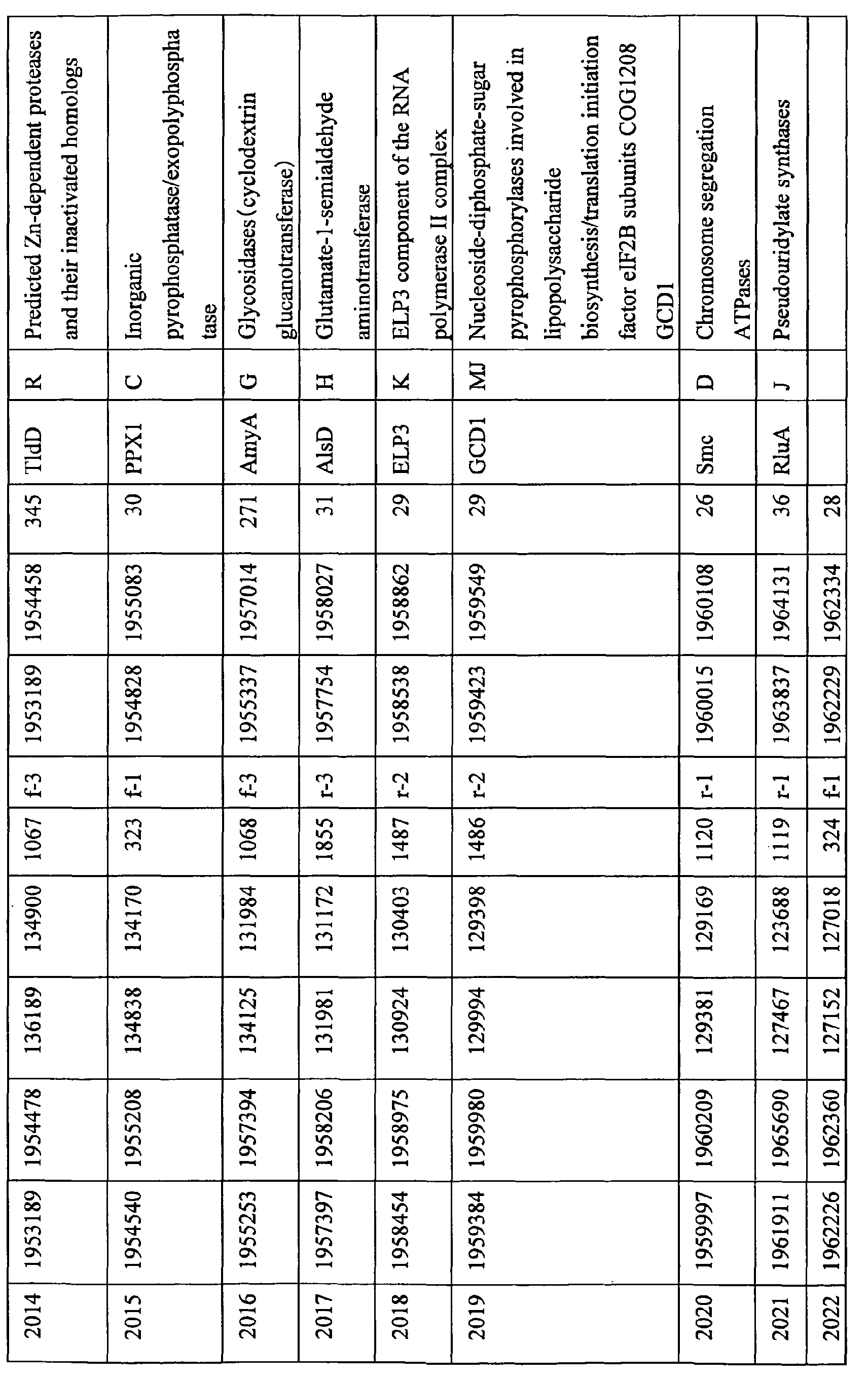


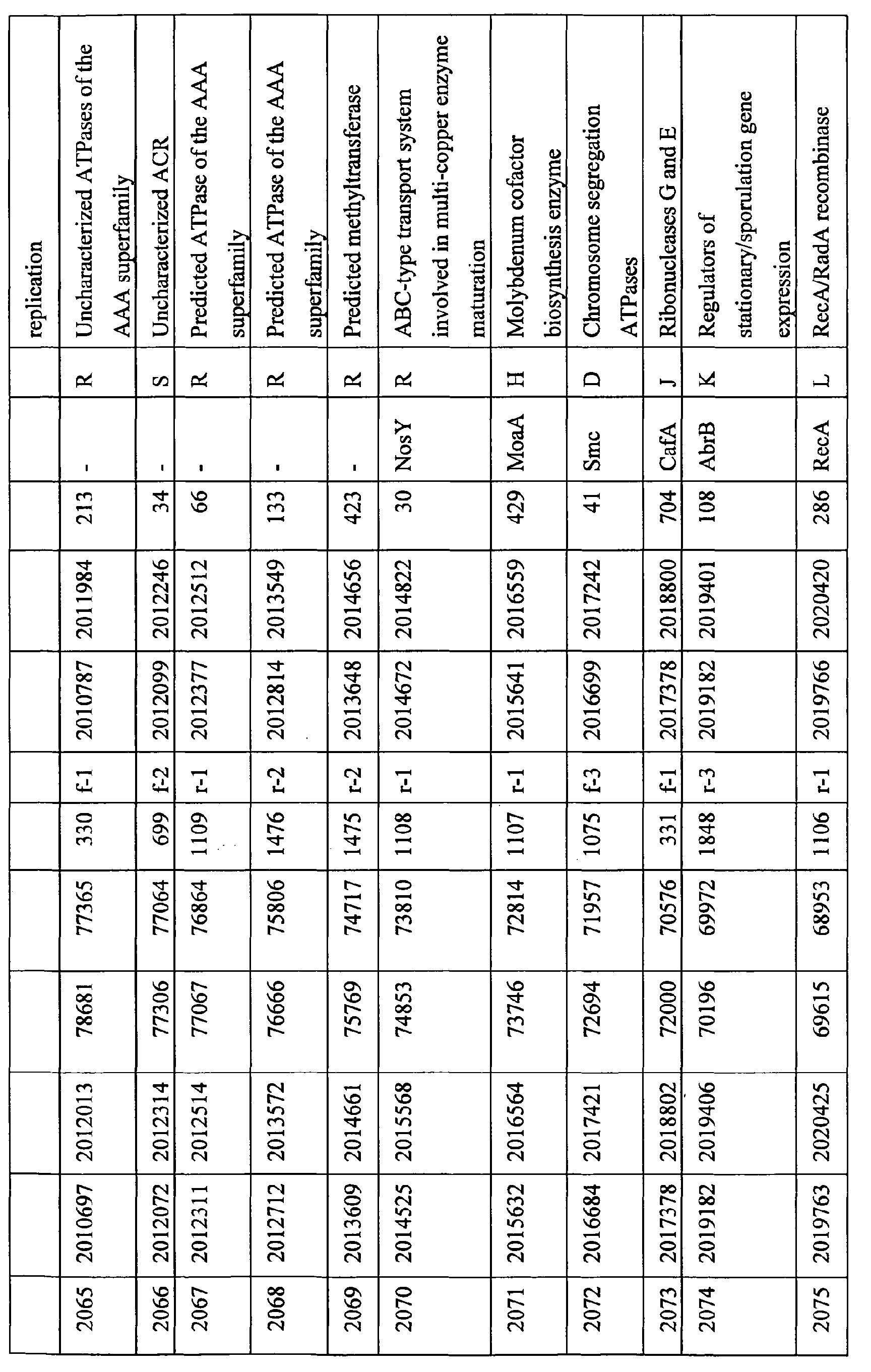

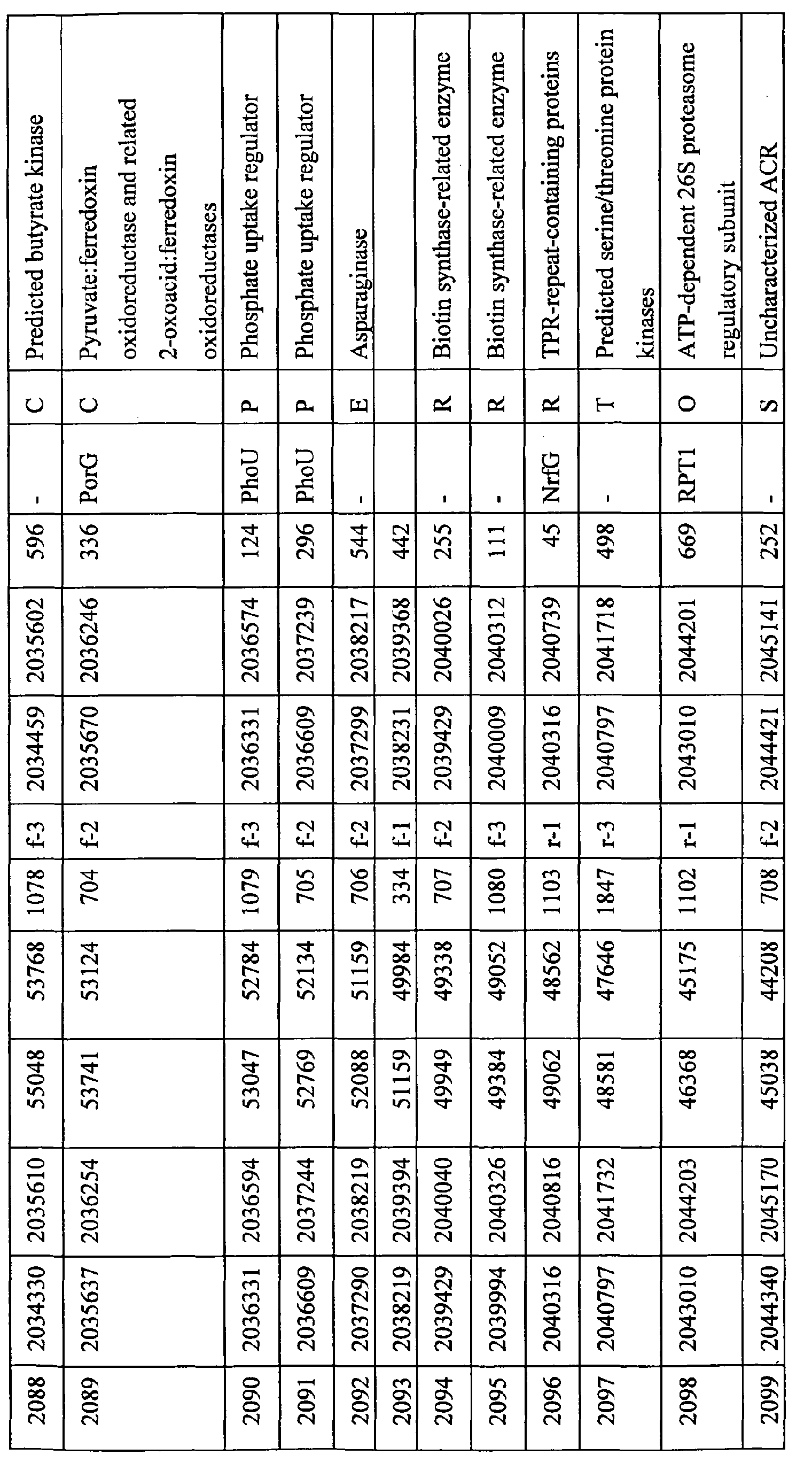
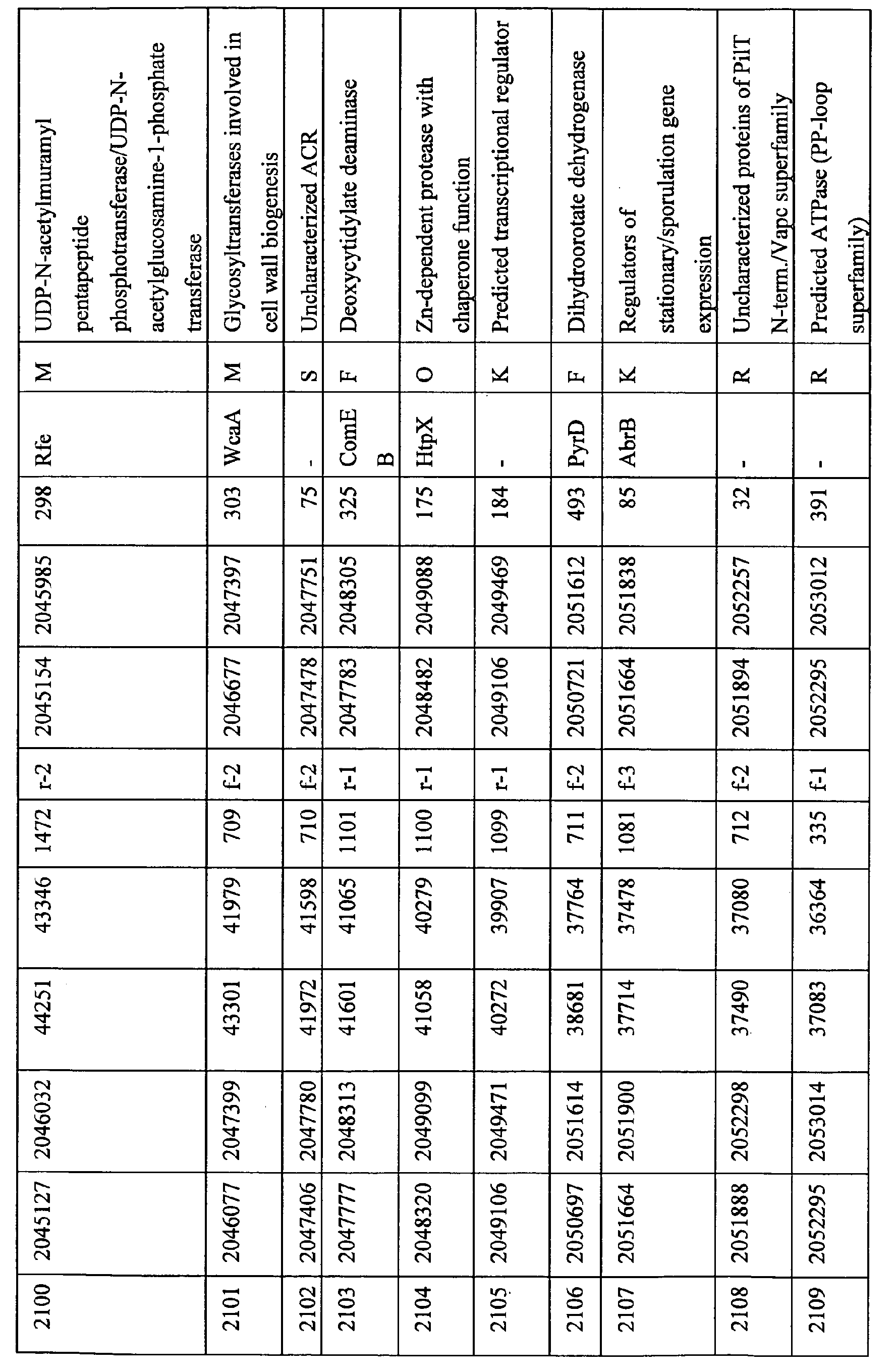
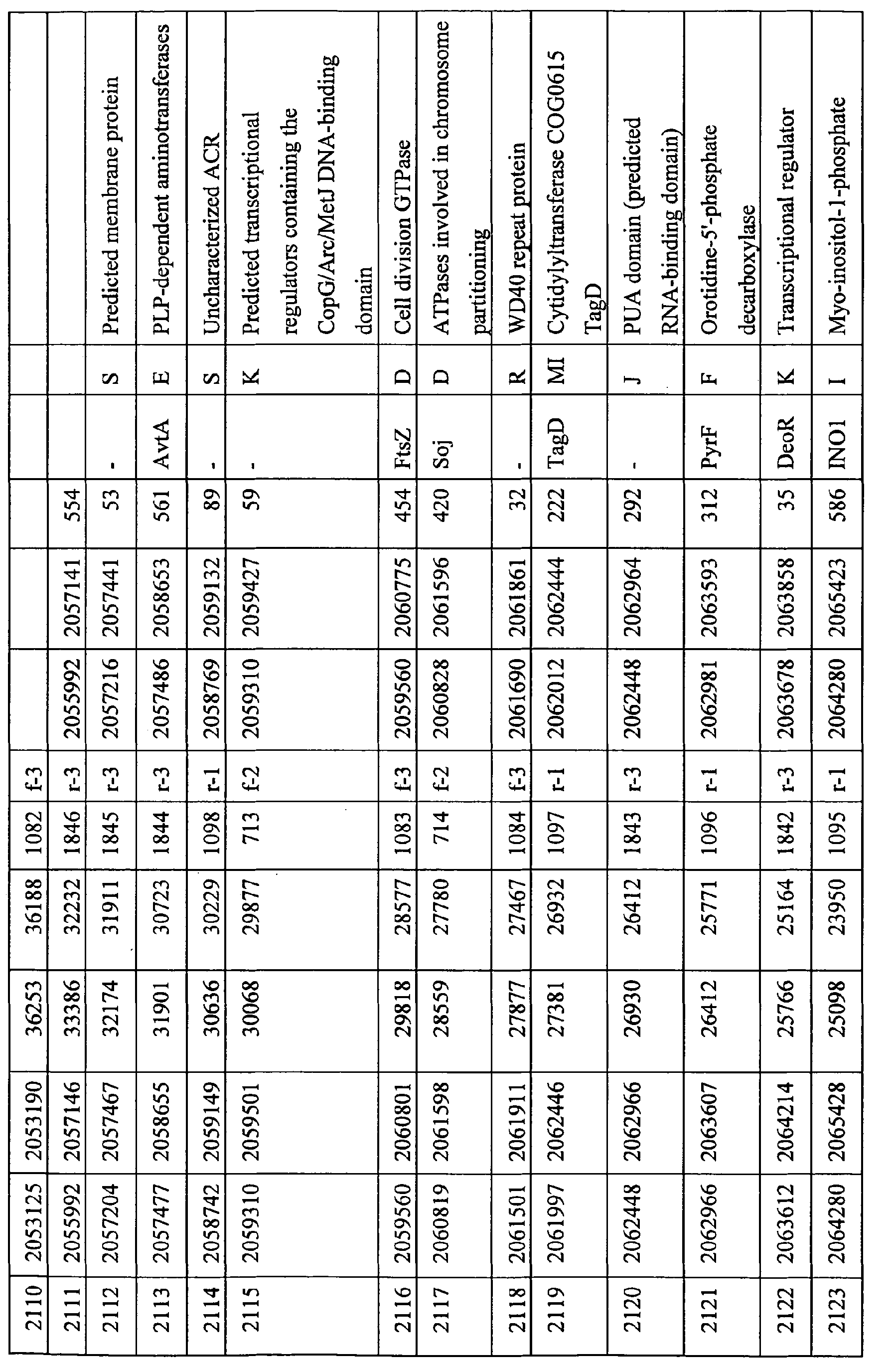


 In Table 2, f-1 through f-3, as described as reading
frames, refers to open reading frames in the sense
strand, and r-1 through r-3 refers to open reading
frames in the antisense strand. In the classification,
J refers to polypeptides relating to translation,
ribosome structure or biological development; K refers
to polypeptides relating to transcription; L refers to
polypeptides relating to DNA replication, recombination
or repair; D refers to polypeptides relating to
chromosomal fractionation; O refers to polypeptides
relating to post-translational events , protein
metabolism turnover or chaperone proteins; M refers to
polypeptides relating to cellular envelope biological
development or outer membranes; N refers to
polypeptides relating to cellular movement or
secretion; P refers to polypeptides relating to
inorganic ion transportation or metabolism; T refers to
polypeptides relating to signaling mechanisms; C refers
to polypeptides relating to energy production and
conversion; G refers to polypeptides relating to
carbohydrate transportation and metabolism; E refers to
polypeptides relating to amino acid transportation and
metabolism; F refers to polypeptides relating to
nucleotide transportation and metabolism; H refers to
polypeptides relating to coenzyme metabolism; I refers
to polypeptides relating to lipid metabolism; Q refers
to polypeptides relating to secondary metabolites
biosynthesis, transportation or catabolism; R refers to
polypeptides predicted to have general function; and S
refers to polypeptides with an unknown function.
Classification is interim, and two or more
classifications may be appropriate, and in such cases,
both letters are described therein.
In Table 2, f-1 through f-3, as described as reading
frames, refers to open reading frames in the sense
strand, and r-1 through r-3 refers to open reading
frames in the antisense strand. In the classification,
J refers to polypeptides relating to translation,
ribosome structure or biological development; K refers
to polypeptides relating to transcription; L refers to
polypeptides relating to DNA replication, recombination
or repair; D refers to polypeptides relating to
chromosomal fractionation; O refers to polypeptides
relating to post-translational events , protein
metabolism turnover or chaperone proteins; M refers to
polypeptides relating to cellular envelope biological
development or outer membranes; N refers to
polypeptides relating to cellular movement or
secretion; P refers to polypeptides relating to
inorganic ion transportation or metabolism; T refers to
polypeptides relating to signaling mechanisms; C refers
to polypeptides relating to energy production and
conversion; G refers to polypeptides relating to
carbohydrate transportation and metabolism; E refers to
polypeptides relating to amino acid transportation and
metabolism; F refers to polypeptides relating to
nucleotide transportation and metabolism; H refers to
polypeptides relating to coenzyme metabolism; I refers
to polypeptides relating to lipid metabolism; Q refers
to polypeptides relating to secondary metabolites
biosynthesis, transportation or catabolism; R refers to
polypeptides predicted to have general function; and S
refers to polypeptides with an unknown function.
Classification is interim, and two or more
classifications may be appropriate, and in such cases,
both letters are described therein.
In another aspect, the present invention provides
a biomolecule chip. The present biomolecule chip
comprises a substrate and at least one nucleic acid
molecule having at least eight contiguous or non-contiguous
nucleotide sequences of the sequence set
forth in SEQ ID NOs: 1, or 1087, or a variant thereof
located therein.
Accordingly, in one embodiment, the present
invention provides a nucleic acid molecule comprising
a) a sequence set forth in SEQ ID NO: 1 or 1087, or a
complementary sequence or fragment thereof; (b) a
polynucleotide encoding a polypeptide consisting of an
amino acid sequence selected from the group consisting
of SEQ ID NO: 2-341, 343-722, 724-1086, 1088-1468,
1470-1837 and 1839-2157, or a fragment thereof; (c) a
polynucleotide encoding a polypeptide having an amino
acid sequence selected from the group consisting of SEQ
ID NO: 2-341, 343-722, 724-1086, 1088-1468, 1470-1837
and 1839-2157, or a variant thereof having at least one
mutation selected from the group consisting of one or
more amino acid substitutions, additions, and
deletions, wherein the variant polypeptide has
biological activity; (d) a polynucleotide capable of
hybridizing to a polynucleotide of any of (a)-(c), and
encoding a polypeptide having an amino acid sequence
having at least 70% identity to any one of the
polypeptides of (a) to (c), wherein the polypeptide has
biological activity.
In one preferred embodiment, the number of
substitutions, additions and deletions described in (c)
above may be limited to, for example, preferably 50 or
less, 40 or less, 30 or less, 20 or less, 15 or less,
10 or less, 9 or less, 8 or less, 7 or less, 6 or less,
5 or less, 4 or less, 3 or less, or 2 or less. The
number of substitutions, additions and deletions is
preferably small, but may be large as long as the
biological activity is maintained (preferably, the
activity is similar to or substantially the same as
that as set forth in Table 2, or an abnormal activity
thereof (for example, inhibition of normal biological
activity).
In other preferable embodiments, the biological
activities possessed by the polypeptides of the present
invention include, but are not limited to, for example,
interactions with specific antibodies against at least
one polypeptide selected from the group consisting of
SEQ ID NOs: 2-341, 343-722, 724-1086, 1088-1468, 1470-1837
and 1839-2157; a biological activity listed in
Table 2, and the like. These may be measured by, for
example, immunological assays, labeling assays and the
like.
In other preferable embodiments, allelic gene
variants as described in (d) above, advantageously have
at least 99 % homology to the nucleic acid sequences
set forth in SEQ ID NO: 1 or 1087, or a portion thereof
(for example, when the reading frame of Table 2 is f-1,
f-2 or f-3, the nucleic acid molecule has a sequence
from the position of nucleic acid number (sense strand,
start) of SEQ ID NO: 1 of Table 2, to the position of
nucleic acid number (sense strand, stop), or when the
reading frame of Table 2 is r-1, r-2 or r-3, the
nucleic acid molecule has a sequence from the position
of nucleic acid number (antisense strand, start) of SEQ
ID NO: 1087 of Table 2, to the position of nucleic acid
number (antisense strand, stop)).
If a gene sequence database for the subject
species is available, the above-mentioned species
homologs may be identified by searching against the
database using a gene sequence of the present invention
as a query sequence. Alternatively, a nucleic acid
sequence of the present invention, or a portion thereof
(for example, when the reading frame of Table 2 is f-1,
f-2 or f-3, the nucleic acid molecule has a sequence
from the position of nucleic acid number (sense strand,
start) of SEQ ID NO: 1 of Table 2, to the position of
nucleic acid number (sense strand, stop), or when the
reading frame of Table 2 is r-1, r-2 or r-3, the
nucleic acid molecule has a sequence from the position
of nucleic acid number (antisense strand, start) of SEQ
ID NO: 1087 of Table 2, to the position of nucleic acid
number (antisense strand, stop)) may be used as a probe
or primer to screen a genetic library of the subject
species for identification thereof. Such
identification methods are well known in the art, and
are also described in references cited herein. Species
homologs have preferably at least 30 % homology to a
nucleic acid sequence set forth in SEQ ID NO: 1 or
1087, or a portion thereof (for example, when the
reading frame of Table 2 is f-1, f-2 or f-3, the
nucleic acid molecule has a sequence from the position
of nucleic acid number (sense strand, start) of SEQ ID
NO: 1 of Table 2, to the position of nucleic acid
number (sense strand, stop), or when the reading frame
of Table 2 is r-1, r-2 or r-3, the nucleic acid
molecule has a sequence from the position of nucleic
acid number (antisense strand, start) of SEQ ID NO:
1087 of Table 2, to the position of nucleic acid number
(antisense strand, stop)). Preferably, the species
homologs of the present invention may have at least
about 40 % homology, at least about 50 % homology, at
least about 60 % homology, at least about 70 %
homology, at least about 80 % homology, at least about
90 % homology, at least about 95 % homology, at least
about 98 % homology with the above-mentioned standard
sequence.
In preferable embodiments, identity against at
least one polynucleotide of the above (a)-(e) or the
complementary sequence thereto, may be at least about
80 %, more preferably at least 90 %, still more
preferably at least about 98 %,most preferably at least
about 99 %. Most preferably, the gene sequence of the
present invention, has a sequence 100 % identical to a
nucleic acid sequence set forth in SEQ ID NO: 1 or
1087, or a portion thereof (for example, when the
reading frame of Table 2 is f-1, f-2 or f-3, the
nucleic acid molecule has a sequence from the position
of nucleic acid number (sense strand, start) of SEQ ID
NO: 1 of Table 2, to the position of nucleic acid
number (sense strand, stop), or when the reading frame
of Table 2 is r-1, r-2 or r-3, the nucleic acid
molecule has a a sequence from the position of nucleic
acid number (antisense strand, start) of SEQ ID NO:
1087 of Table 2, to the position of nucleic acid number
(antisense strand, stop)).
In a preferred embodiment, the nucleic acid
molecule of the present invention encoding the gene of
the present invention may have a length of at least 8
contiguous nucleotides. The appropriate nucleotide
length of the nucleic acid molecule of the present
invention may vary depending on the purpose of use of
the present invention. More preferably, the nucleic
acid molecule of the present invention may have a
length of at least 10 contiguous nucleotides, even more
preferably at least 15 contiguous nucleotides, still
even more preferably at least 20 contiguous
nucleotides, and yet still even more preferably at
least 30 contiguous or non-contiguous nucleotides.
These lower limits of the nucleotide length may be
present between the above-specified numbers (e.g., 9,
11, 12, 13, 14, 16, and the like) or above the above-specified
numbers (e.g., 21, 22, ... 30, and the like).
The upper limit of the length of the polypeptide of the
present invention may be greater than or equal to the
full length of the sequence as set forth in SEQ ID
NO. 1, as long as the polynucleotide can be used for
the intended purpose (e.g. antisense, RNAi, marker,
primer, probe, capable of interacting with a given
agent). Alternatively, when the nucleic acid molecule
of the present invention is used as a primer, the
nucleic acid molecule typically may have a nucleotide
length of at least about 8, preferably a nucleotide
length of about 10. When used as a probe, the nucleic
acid molecule typically may have a nucleotide length of
at least about 15, and preferably a nucleotide length
about 17.
In one embodiment, the nucleic acid molecule
encoding the gene of the present invention comprises
the entire range of the open reading frame of SEQ ID
NO: 1. More preferably, the nucleic acid molecule of
the present invention consists of at least one sequence
set forth in SEQ ID NO: 1 or 1087, or a portion thereof
(for example, when the reading frame of Table 2 is f-1,
f-2 or f-3, the nucleic acid molecule has a sequence
from the position of nucleic acid number (sense strand,
start) of SEQ ID NO: 1 of Table 2, to the position of
nucleic acid number (sense strand, stop), or when the
reading frame of Table 2 is r-1, r-2 or r-3, the
nucleic acid molecule has a sequence from the position
of nucleic acid number (antisense strand, start) of SEQ
ID NO: 1087 of Table 2, to the position of nucleic acid
number (antisense strand, stop)).
Accordingly, the biomolecule chip of the present
invention preferably uses nucleic acid molecules or
variants thereof which encompass the sequence set forth
in SEQ ID NO: 1 or 1087. By using nucleic acid
molecules of such an encompassing nature, it is
possible to analyze functions of the genome in an
exhaustive manner. This was first made possible by
reading the entire sequence of the genome, and thus has
not been attained by prior art technologies, and thus
should present significant effects.
In other embodiments, the nucleic acid molecules,
or variants thereof of the present invention, to be
used in the biomolecule chip, comprise any open reading
frame, as set forth in SEQ ID NO: 1 or 1087. As such,
the effect by which any open reading frame can be
selected on the genome, should be recognized as
significant as this has not been possible using prior
art technology. In particular, it should be noted that
analysis of the entire genome of an organism living in
high temperature environments, such as at 90 °C, is
possible.
In another embodiment, the nucleic acid molecule
or variants thereof, to be used in the biomolecule chip
of the present invention, preferably comprise
substantially all the open reading frames set forth in
SEQ ID NO: 1 or 1087. As used herein the term
"substantially all" refers to a number sufficient for
global genomic needs. Accordingly, the term
"substantially all" is not necessarily all, and
depending on the purpose of interest, those skilled in
the art may select an appropriate number therefor.
Exemplary "substantially all" includes, but is not
limited to, for example, at least about 30 %,
preferably at least about 40 %, more preferably at
least about 50 %, still preferably at least about 80 %,
still more preferably at least about 90 %, yet more
preferably at least about 95 %, at least about 96 %, at
least about 97 %, at least about 98 %, at least about
99 %, and the like, of the total number of entire open
reading frames. In other typical examples of the
present invention, substantially all may be about 900
genes whose function has already been identified in the
present application. The effect by which analysis of
substantially all the open reading frame is allowed, is
not attainable using prior art technologies.
Accordingly, in another preferable embodiment, the
nucleic acid molecule or variants thereof, to be used
in the biomolecule chip of the present invention,
comprises a sequence encoding at least one sequence
selected from the group consisting of SEQ ID NO: 2-341,
343-722, 724-1086, 1088-1468, 1470-1837 and 1839-2157.
In other preferable embodiments, the nucleic acid
molecules or variants thereof comprise substantially
all sequences encoding sequences selected from the
group consisting of SEQ ID NOs: 2-341, 343-722, 724-1086,
1088-1468, 1470-1837 and 1839-2157.
In more preferable embodiments, the nucleic acid
molecule or the variant thereof, to be used as the
biomolecule of the present invention, comprises at
least an eight contiguous nucleotide length of
substantially all the sequences encoding sequences
selected from the group consisting of SEQ ID NOs: 2-341,
343-722, 724-1086, 1088-1468, 1470-1837 and 1839-2157.
As used herein the selection of the sequence may
be determined in consideration of a variety of factors
as described above.
A nulciec acid molecule at least eight contiguous nucleotides in length may comprise a sequence unique to the hyperthermophillic archeabacteria, and thus is advantageous for such analyses.
A nulciec acid molecule at least eight contiguous nucleotides in length may comprise a sequence unique to the hyperthermophillic archeabacteria, and thus is advantageous for such analyses.
In another preferable embodiment, the nucleic acid
molecule or the variant thereof to be used as the
biomolecule of the present invention, comprises at
least a fifteen contiguous nucleotide length of
substantially all the sequences encoding sequences
selected from the group consisting of SEQ ID NOs: 2-341,
343-722, 724-1086, 1088-1468, 1470-1837 and 1839-2157.
A nucleic acid molecule at least fifteen
nucleotides in length allows substantially specific
identification of sequences unique to the
hyperthermophillic archeabacteria, and thus is
advantageous for such analyses.
In another more preferable embodiment, the nucleic
acid molecule or the variant thereof, to be used in the
biomolecule chip of the present invention, comprises at
least a thirty contiguous or non-contiguous nucleotide
length of substantially all the sequences encoding
sequences selected from the group consisting of SEQ ID
NOs: 2-341, 343-722, 724-1086, 1088-1468, 1470-1837 and
1839-2157. A nucleic acid molecule at least thirty
contiguous or non-contiguous nucleotides in length
allows substanitally specific identification of
sequences unique to the hyperthermophillic
archeabacteria, even when used as a probe, and thus is
advantageous for such analyses.
In another more preferable embodiment, the nucleic
acid molecule or the variant thereof to be used in the
biomolecule chip of the present invention, comprises
substantially all the sequences encoding sequences
selected from the group consisting of SEQ ID NOs: 2-341,
343-722, 724-1086, 1088-1468, 1470-1837 and 1839-2157,
or sequences with one or more amino acid
substitution, addition and/or deletion thereto. Such
sequences allow exhaustive analyses of nucleic acid
molecules encoding polypeptides included or suspected
to be included in an archeabacteria, and thus are
advantageous for such analyses.
In another more preferable embodiment, the nucleic
acid molecule or the variant thereof to be used in the
biomolecule chip of the present invention, comprises at
least an eight contiguous nucleotide length of
substantially all the sequences encoding sequences
selected from the group consisting of SEQ ID NOs: 2-341,
343-722, 724-1086, 1088-1468, 1470-1837 and 1839-2157,
or sequences with one or more amino acid
substitution, addition and/or deletion thereto. Chips
containing such sequences may be used for analysis of
the behavior of all genes.
In another more preferable embodiment, the nucleic
acid molecule or the variant thereof to be used in the
biomolecule chip of the present invention, comprises a
molecule where the reading frame of Table 2 is f-1, f-2
or f-3, has a sequence from the position of nucleic
acid number (sense strand, start) of SEQ ID NO: 1 of
Table 2, to the position of nucleic acid number (sense
strand, stop) or a sequence having at least 70 %
homology thereto, or when the reading frame of Table 2
is r-1, r-2 or r-3, the nucleic acid molecule has a
sequence from the position of nucleic acid number
(antisense strand, start) of SEQ ID NO: 1087 of Table
2, to the position of nucleic acid number (antisense
strand, stop) or a sequence having at least 70 %
homology thereto. Such sequences contain open reading
frames actually possessed by hyperthermophillic
archeabacteria and thus provide an accurate assay at
the genomic level. Thus, the present embodiment may be
used for global analysis at such a genomic level.
In another embodiment, the substrate comprising
the biomolecule of the present inventin is addressable.
Giving addresses facilitates the analyses of all of the
nucleic acid molecules. Methods for addressing are
well known in the art.
In another aspect, the present invention provides
a biomolecule chip with a polypeptide or a variant
thereof, having at least an amino acid sequence
selected from the group consisting of SEQ ID NO: 2-341,
343-722, 724-1086, 1088-1468, 1470-1837 and 1839-2157,
or a sequence having at least 70 % homology thereto,
located therein.
Accordingly, in one embodiment, the present
invention provides a polypeptide of (a) a polypeptide
consisting of an amino acid sequence selected from the
group consisting of SEQ ID NO: 2-341, 343-722, 724-1086,
1088-1468, 1470-1837 and 1839-2157, or a fragment
thereof; (b) a polypeptide having an amino acid
sequence selected from the group consisting of SEQ ID
NO: 2-341, 343-722, 724-1086, 1088-1468, 1470-1837 and
1839-2157, or a variant thereof having at least one
mutation selected from the group consisting of one or
more amino acid substitutions, additions, and
deletions, wherein the variant polypeptide has a
biological activity; (c) a polypeptide encoded by a
sequence or splicing variants or allelic variants
thereof, wherein the nucleic acid molecule or the
variant thereof, when the reading frame of Table 2 is
f-1, f-2 or f-3, has a sequence from the position of
nucleic acid number (sense strand, start) of SEQ ID NO:
1 of Table 2, to the position of nucleic acid number
(sense strand, stop), or when the reading frame of
Table 2 is r-1, r-2 or r-3, the nucleic acid molecule
has a sequence from the position of nucleic acid number
(antisense strand, start) of SEQ ID NO: 1087 of Table
2, to the position of nucleic acid number (antisense
strand, stop); (d) a polypeptide of at least one
species homolog of an amino acid sequence selected from
the group consisting of SEQ ID NO: 2-341, 343-722, 724-1086,
1088-1468, 1470-1837 and 1839-2157; or (e) a
polypeptide having an amino acid sequence having at
least 70% identity to any one of the polypeptides of
(a) to (c), wherein the polypeptide has biological
activity.
In one preferred embodiment, the number of
substitutions, additions and deletions described in (b)
above may be limited to, for example, preferably 50 or
less, 40 or less, 30 or less, 20 or less, 15 or less,
10 or less, 9 or less, 8 or less, 7 or less, 6 or less,
5 or less, 4 or less, 3 or less, or 2 or less. The
number of substitutions, additions and deletions is
preferably small, but may be large as long as
biological activity, is maintained (preferably, the
activity is similar to or substantially the same as
that of the biological activity of a normal genetic
type of a polypeptide having an amino acid sequence
selected from the group consisting of SEQ ID NO: 2-341,
343-722, 724-1086, 1088-1468, 1470-1837 and 1839-2157,
or an abnormal activity of a polypeptide having an
amino acid sequence selected from the group consisting
of SEQ ID NO: 2-341, 343-722, 724-1086, 1088-1468,
1470-1837 and 1839-2157).
In another preferred embodiment, the above-described
splicing or allelic variants of the
polypeptides described in (c) above preferably have at
least about 99% homology to a polypeptide having an
amino acid sequence selected from the group consisting
of SEQ ID NO: 2-341, 343-722, 724-1086, 1088-1468,
1470-1837 and 1839-2157.
In another preferable embodiment, the above-mentioned
species homologs preferably have at least
about 30 % homology to a polypeptide having an amino
acid sequence selected from the group consisting of SEQ
ID NO: 2-341, 343-722, 724-1086, 1088-1468, 1470-1837
and 1839-2157. Preferably, the species homologs have
homology to the above standard sequence with at least
about 40 % homology, at least about 50 % homology, at
least about 60 % homology, at least about 70 %
homology, at least about 80 % homology, at least about
90 % homology, at least about 95 % homology, at least
about 98 % homology.
When a genetic sequence database of the species
exists, the above species homologs may be identified by
performing a search against the database using a
polypeptide having an amino acid sequence selected from
the group consisting of SEQ ID NO: 2-341, 343-722, 724-1086,
1088-1468, 1470-1837 and 1839-2157, as a query
sequence. Alternatively, the entire amino acid
sequence of a polypeptide having an amino acid sequence
selected from the group consisting of SEQ ID NO: 2-341,
343-722, 724-1086, 1088-1468, 1470-1837 and 1839-2157,
or a portion thereof, may be used as a probe or primer
for screening a genetic library of the species. Such
methods for identification are well known in the art,
and are described in the references cited herein.
Species homologs have preferably at least about 30 %
homology when the reading frame of Table 2 is f-1, f-2
or f-3, a sequence from the position of nucleic acid
number (sense strand, start) of SEQ ID NO: 1 of Table
2, to the position of nucleic acid number (sense
strand, stop), or when the reading frame of Table 2 is
r-1, r-2 or r-3, a sequence from the position of
nucleic acid number (antisense strand, start) of SEQ ID
NO: 1087 of Table 2, to the position of nucleic acid
number (antisense strand, stop); or an amino acid
sequence selected from the group consisting of SEQ ID
NO: 2-341, 343-722, 724-1086, 1088-1468, 1470-1837 and
1839-2157. Preferably, the species homologs may have
homology to the above standard sequence with at least
about 40 % homology, at least about 50 % homology, at
least about 60 % homology, at least about 70 %
homology, at least about 80 % homology, at least about
90 % homology, at least about 95 % homology, at least
about 98 % homology.
In another preferable embodiment, the biological
activity possessed by the variant polypeptide in (e)
above, includes, but is not limited to, for example,
interaction with an antibody specific to the
polypeptide having an amino acid sequence selected from
the group consisting of SEQ ID NO: 2-341, 343-722, 724-1086,
1088-1468, 1470-1837 and 1839-2157, or a fragment
thereof; an enzymatic function as described in Table 2;
and the like. Such functions may be measured by
enzymatic assays, immunological assays, fluorescence
assays and the like.
In preferable embodiments, the above-described
homology to any one of the polypeptides described in
(a) to (d) above may be at least about 80%, more
preferably at least about 90%, even more preferably at
least about 98%, and most preferably at least about
99%. Most preferably, the genetic product of the
present invention is a sequence consisting of at least
one amino acid sequence selected from the group
consisting of SEQ ID NO: 2-341, 343-722, 724-1086,
1088-1468, 1470-1837 and 1839-2157.
The polypeptide of the present invention
typically has a sequence of at least 3 contiguous amino
acids. The amino acid length of the polypeptide of the
present invention may be short as long as the peptide
is suitable for an intended application, but preferably
a longer sequence may be used. Therefore, the amino
acid length may be preferably at least 4, more
preferably at least 5, at least 6, at least 7, at least
8, at least 9 and at least 10, even more preferably at
least 15, and still even more preferably at least 20.
These lower limits of the amino acid length may be
present between the above-specified numbers (e.g., 11,
12, 13, 14, 16, and the like) or above the above-specified
numbers (e.g., 21, 22, ..., 30, and the like).
The upper limit of the length of the polypeptide of the
present invention may be greater than or equal to the
full length of the sequence as set forth in amino acid
sequence selected from the group consisting of SEQ ID
NO: 2-341, 343-722, 724-1086, 1088-1468, 1470-1837 and
1839-2157 as long as the peptide is capable of
interacting with a given agent. As used herein, more
preferable forms and constitutions with respect to the
sequence to be included, may take any embodiment
described herein above for preferable forms and
constitutions.
The genetic product of the polypeptide form of
the present invention is preferably labeled or may be
capable of being labeled. Such a genetic product which
is labeled or may be capable of being labeled, may be
used to measure the antibody levels against the genetic
product, thereby allowing indirect measurement of the
level of expression of the genetic product.
In another preferable embodiment, the polypeptide
or the variant thereof to be located on to a support of
the biomolecule chip of the present invention has a
length of at least three contiguous amino acids of an
amino acid sequence selected from the group consisting
of SEQ ID NO: 2-341, 343-722, 724-1086, 1088-1468,
1470-1837 and 1839-2157, or a sequence having at least
70 % homology thereto. By having a sequence of at
least three contiguous three amino acids, it is
possible to constitute a specific epitope. As used
herein, preferable forms of the sequence to be used,
takes any form described herein above.
In preferable embodiments, the polypeptide or the
variant thereof to be located on a support of the
biomolecule chip of the present invention, has a length
of at least eight contiguous amino acids of an amino
acid sequence selected from the group consisting of SEQ
ID NO: 2-341, 343-722, 724-1086, 1088-1468, 1470-1837
and 1839-2157, or a sequence having at least 70 %
homology thereto. By having a sequence of at least
eight contiguous amino acids, it is possible to
constitute specific epitopes in a more efficient
manner. As used herein, preferable forms and
constitutions of the sequence to be used, takes any
form described herein above.
In preferable embodiments, the polypeptide or the
variant thereof to be located on a support of the
biomolecule chip of the present invention, has a length
of at least three contiguous or non-contiguous amino
acids of an amino acid sequence selected from the group
consisting of SEQ ID NO: 2-341, 343-722, 724-1086,
1088-1468, 1470-1837 and 1839-2157, or a sequence
having at least 70 % homology thereto, and having a
biological function. As used herein, the biological
activities preferably include a function described in
Table 2. In another embodiment, the biological
activity includes epitope activity. As used herein,
preferable forms and constitutions relating to
preferable sequences may have the advantage of any of
the forms and constitutions described herein above.
In another aspect, the present invention provides
a storage medium having stored therein, information
about a nucleic acid sequence of a nucleic acid
molecule having a sequence of at least eight contiguous
or non-contiguous nucleotides of the sequence set forth
in SEQ ID NOs: 1 or 1087, or a variant thereof. As
used herein, the information about the nucleic acid
sequence includes, in addition to information about the
nucleic acid sequence per se, information relating to
that set forth in a conventional sequence listing.
Such additional information includes, but is not
limited to, for example, coding region, intron region,
specific expression, promoter sequence and activity,
biological function, similar sequences, homologs,
reference information, and the like.
In a preferable embodiments, the nucleic acid
molecule or the variant thereof to be stored in the
storage medium of the present invention, comprises a
sequence of at least eight contiguous nucleotides of
substantially all the sequences encoding sequences
selected from the group consisting of SEQ ID NOs: 2-341,
343-722, 724-1086, 1088-1468, 1470-1837 and 1839-2157,
or sequences with one or more amino acid
substitution, addition and/or deletion thereto. Such
information could not be provided by prior art
technologies, and thus should be recognized to be an
effect attained for the first time by the present
invention .
In other embodiments, the reading frame of Table 2
is f-1, f-2 or f-3, the nucleic acid molecule or the
variant thereof to be recorded in the storage medium of
the present invention, has a sequence from the position
of nucleic acid number (sense strand, start) of SEQ ID
NO: 1 of Table 2, to the position of nucleic acid
number (sense strand, stop) or a sequence having at
least 70 % homology thereto, or when the reading frame
of Table 2 is r-1, r-2 or r-3, the nucleic acid
molecule has a sequence from the position of nucleic
acid number (antisense strand, start) of SEQ ID NO:
1087 of Table 2, to the position of nucleic acid number
(antisense strand, stop) or a sequence having at least
70 % homology thereto. Such storage medium with
information recorded thereon has never been
conventionally provided, and thus the storage medium of
the present invention has an advantageous effect in
allowing analysis of the entire genome. Preferably,
the storage medium of the present invention includes
information about substantially all the open reading
frame sequences. As used herein, preferable forms and
constitutions relating such preferable sequences may
take advantages of any forms and constitutions
described herein above.
In another aspect, the present invention provides
a storage medium, comprising information about a
polypeptide or a variant thereof having at least an
amino acid sequence selected from the group consisting
of SEQ ID NO: 2-341, 343-722, 724-1086, 1088-1468,
1470-1837 and 1839-2157, or a sequence having at least
70 % homology thereto, located therein. As used
herein, preferable forms and constitutions relating
such preferable sequences may take advantage of any
forms and constitutions described herein above.
In another embodiment, the polypeptide or the
variant thereof to be stored in the storage medium of
the present invention with respect to information
thereabout, has a sequence of at least three contiguous
amino acids of at least an amino acid sequence selected
from the group consisting of SEQ ID NO: 2-341, 343-722,
724-1086, 1088-1468, 1470-1837 and 1839-2157, or a
sequence having at least 70 % homology thereto. As
used herein, the referable forms and constitutions of
such preferable sequences may take advantage of any of
the forms and constitutions described herein above.
In another embodiment, the polypeptide or the
variant thereof to be stored in the storage medium of
the present invention with respect to information
thereabout, has a sequence of at least eight contiguous
amino acids of at least an amino acid sequence selected
from the group consisting of SEQ ID NO: 2-341, 343-722,
724-1086, 1088-1468, 1470-1837 and 1839-2157, or a
sequence having at least 70 % homology thereto. As
used herein, the preferable forms and constitutions of
such preferable sequences may take advantages of any of
the forms and constitutions described herein above.
In another embodiment, the polypeptide or the
variant thereof to be stored in the storage medium of
the present invention with respect to information
thereabout, has a sequence of at least three contiguous
or non-contiguous amino acids of an amino acid sequence
selected from the group consisting of SEQ ID NO: 2-341,
343-722, 724-1086, 1088-1468, 1470-1837 and 1839-2157,
or a sequence having at least 70 % homology thereto,
having biological function. As used herein, preferable
forms and constitutions of such preferable sequences
may take advantages of any of the forms and
constitutions described herein above.
In another embodiment, the biological activity to
be included in the storage medium of the present
invention with respect to information thereof,
comprises a function set forth in Table 2. As used
herein, preferable forms and constitutions of such
preferable activities may take advantage of any forms
and constitutions described herein above.
In another aspect, the present invention provides
a biomolecule chip having at least one antibody against
a polypeptide or a variant thereof, located on a
substrate, the polypeptide or the variant thereof
comprises at least one amino acid sequence of sequences
selected from the group consisting of SEQ ID NOs: 2-341,
343-722, 724-1086, 1088-1468, 1470-1837 and 1839-2157,
or a sequence having at least 70 % homology
thereto. As used herein, preferable forms and
constitutions of preferable sequences may take
advantage of any forms and constitutions described
herein above.
In another aspect, the present invention provides
an RNAi molecule having a sequence homologous to a
reading frame sequence wherein, when the reading frame
of Table 2 is f-1, f-2 or f-3, the reading frame
sequence has a sequence from the position of nucleic
acid number (sense strand, start) of SEQ ID NO: 1 of
Table 2, to the position of nucleic acid number (sense
strand, stop) or a sequence having at least 70 %
homology thereto, or when the reading frame of Table 2
is r-1, r-2 or r-3, the reading frame sequence has a a
sequence from the position of nucleic acid number
(antisense strand, start) of SEQ ID NO: 1087 of Table
2, to the position of nucleic acid number (antisense
strand, stop) or a sequence having at least 70 %
homology thereto. As used herein, such an RNAi
molecule may take any form described herein above in
detail, and those skilled in the art may make and use
any appropriate RNAi molecule once the sequence
information of the present invention is given.
In preferable embodiments, the RNAi molecule of
the present invention is an RNA or a variant thereof
comprising double-stranded portion of at least 10
nucleotide length.
In a more preferable embodiment, the RNAi molecule
comprises a 3' overhand.
In another preferable embodiment, the above-3'
overhang terminus has a DNA molecule of two or more
nucleotides in length.
In other preferable embodiments, the 3' overhang
has a DNA molecule of 2-4 nucleotides.
Such RNAi molecules may be used for suppressing
particular functions of hyperthermophillic
archeabacteria. Any RNAi molecules may be used which
were not attainable by the prior art, and thus the
present invention attains significant effects in this
regard.
All patents, patent applications, journal
articles and other references mentioned herein are
incorporated by reference in their entirety.
The present invention is heretofore
described with reference to preferred embodiments to
facilitate understanding of the present invention.
Hereinafter, the present invention will be described by
way of examples. Examples described below are provided
for illustrative purposes only. Accordingly, the scope
of the present invention is limited only by the
appended claims.
Hereinafter, the present invention will be
described in more detail by way of examples. Thus it
should be understood that the present invention is not
limited to the examples below.
The KOD-1 strain was inoculated into 1000 ml of
0.5 X 2216 Marine Broth medium as described in Appl.
Environ. Microbiol. 60 (12), 4559-4566 (1994) (2216
Marine Broth:18.7g/L, PIPES 3.48g/L, CaCl2·H2O 0.725g/L,
0.4 mL 0.2% resazurin, 475mL artificial sea water (NaCl
28.16 g/L, KCl 0.7 g/L, MgCl2·6H2O 5.5 g/L, MgSO4·7H2O
6.9 g/L), distilled water 500 mL, pH7.0) and cultured
using 2 liter fermenter. During culture, nitrogen gas
was introduced into the fermenter, and was maintained
at an internal pressure of 0.1 kg/cm2. Culture was
maintained at the temperature of 85 ± 1°C for fourteen
hours. Further, the culture was carried out by static
culture, and no aeration and agitation was performed
with the nitrogen gas in the culture. After culture,
the bacteria (about 1,000 ml) were recovered by
centrifugation at 10,000 rpm for 10 minutes.
One g of the resulting bacterial pellet was
suspended in 10 ml of Solution A (50 mM Tris-HCl, 50mM
EDTA, pH 8.0), and centrifuged (8,000 rpm, 5 minutes, 4
°C) to pellet the bacteria and suspended in 3 ml of
Solution A containing 15 % sucrose, maintained the
temperature at 37 °C for 30 minutes, and added 3 ml of
Solution A containing 1 % N-lauryl sarcosine thereto.
5.4 g of cesium chloride and 300 µl of10 mg/ml of
ethidium bromide were added to the solution, and
ultracentrifuged at 55,000 rpm, 16 hours, at 18 °C and
chromosomal DNA was fractionated. The resultant
chromosomal DNA fractions were subjected to n-butanol
extraction to remove ethidium bromide, and dialyzed
against TE solution (10 mM Tris-HCl (pH 8.0), 0.1 mM
EDTA) to yield chromosomal DNA.
Determination of the genomic sequence was peformed
according to the bottom-down approach, as generally
performed in the art. In brief, the outline is as
follows: first, isolated DNA was fragmented to clone
into a cloning vector such as pUC. Next, cloned
fragments were sequenced by shot-gun sequencing. These
sequencing reactions were performed at about 15,000 per
1Mbp. The sequences determined for each reaction, were
assembled for clarification in a group of sequences
called "contig". Thereafter, gaps between the contigs
(physical and sequence gaps) were cloned, and the gaps
were sequenced to fill the gaps. Thereafter, the
analysis of base sequence data was performed to
identify open reading frame for performing annotation.
The details are as follows:
The nucleic acid sequences determined as above are
sequences set forth in SEQ ID NO: 1 (SEQ ID NOs: 1,
342, and 723 are plus (sense) strand, and SEQ ID NOs:
1087, 1469 and 1838 are minus (antisense) strand).
Next, the amino acid sequence of each gene was
compared to those known in the art, as registered in
databases such as EMBL, PDB and the like, by using
software such as DNASIS, BLAST, and CLUSTAL W. As a
result, a variety of polypeptides having high homology
with said amino acid sequences were identified, and the
function of each gene inferred therefrom (see Table 2).
T. kodakaraensis KOD1 and derivatives thereof were
cultured under stringent anaerobic conditions at 85 °C
in rich growth medium (ASW-YT) and amino acid-containing
synthetic medium (ASW-AA). ASW-YT medium
contains 5.0 g/L yeast extract, 5.0 g/L trypton and 0.2
g/L sulfur (pH 6.6) in a diluted artificial sea water
to 1.25 fold (ASW x 0.8). The composition of ASW is as
follows: NaCl 20g ; MgCl2·6H2O 3g;MgSO4·7H2O 6g; (NH4)2SO4
1g;NaHCO3 0.2g;CaCl2·2H2O 0.3g;KCl 0.5g;NaBr
0.05g;SrCl2·6H2O 0.02g; and Fe(NH4) citrate 0.01g. ASW-AA
medium is 0.8 x ASW supplemented with 5.0 ml/L
modified Wolfe minor mineral (containing in 1L, 0.5g
MnSO4·2H2O;0.1g CoCl2;0.1g ZnSO4;0.01g CuSO4·5H2O;0.01g
AlK(SO4)2;0.01g H3BO3;and 0.01g NaMoO4·2H2O), 5.0ml/L
vitamin mixture (see the following literature), twenty
amino acids (containing 250mg cystein·HCl;75mg alanine;
125mg arginine·HCl;100mg asparagine·H2O;50mg aspartic
acid;50mg glutamine, 200mg glutamic acid;200mg glycine;
100mg histidine·HCl·H2O;100mg isoleucine;100mg
leucine;100mg lysine·HCl;75mg methionine;75mg
phenylalanine; 125mg proline; 75mg serine; 100mg
threonine; 75mg tryptophane; 100mg tyrosine; and 50mg
valine in 1L) and 0.2g/L sulfur element (pH is adjusted
to 6.9 with NaOH) (Robb,F.T.,and A.R.Place.1995.Media
for Thermophiles,p.167-168.In F.T.Robb and A.R.Place
(ed.) Archea: a laboratory manual-Thermophiles.Cold
Spring Harbor Press,Cold Spring Harbor,N.Y.).
Optionally, 5-FOA (Wako Pure Chemical, Osaka, Japan)
and uracil (Kojin, Tokyo, Japan) were added to ASW-AA
medium at the concentrations described in Robb. In
order to examine tryptophan nutrient requirement,
tryptophan-free ASW-AA, ASW-AAW- were used. In order to
reduce dissolved oxygen in the medium, 5.0%Na2S·9H2O was
added until the color of sodium resazurin salt
(1.0mg/L) disappeared. In the case of plate culture,
1.0%(w/v) Gelrite (Wako Pure Chemical) was added, and
in lieu of the sulphur element 5.0%Na2S·9H2O solution,
2.0ml/L polysulfide solution (10gNa2S·9H2O and 3.0g
sulphur element /15ml) weas used for solidification.
The cells were incubated in anaerobic chamber (Tabai
Espec, Osaka, Japan), at 85 °C.
DH5-alpha, an E. coli used for general DNA
engineering, was routinely cultured on LB medium
(Sambrook, J.,and D. Russel. 2001. Molecular cloning: a
laboratory manual, 3rd edn.Cold Spring Harbor Press,
Cold Spring Harbor,N.Y.) which was supplemented with
50µg/ml ????? as necessary.
T. kodakaraensis KOD1 was cultured in 2.0 L of
ASW-AA liquid medium for 39 hours. Cells within the
stationary phase were recovered by centrifugation
(6,000 x g, 30 minutes). The following procedures were
performed anaerobically in an anaerobic chamber as
follows: cells were resuspended in 60 mL of ASW, and a
portion of the suspension (10 mL) was placed into a
petri dish. The suspension was UV radiated for an
appropriate time (0, 30, 60, 90 and 120 seconds) at a
distance of 20 cm from 15W sterilization lamp, with
agaitation. Aliquots (200 µl) were plated on ASW-AA
plate medium containing 0.75 % 5-FOA, and uracil
nutrition requirement (Pyr-) variants were dominantly
screened. In order to support growth of the resultant
variants, 10µg/ml uracil was included in the growth
media. The cells were incubated at 85 °C for five
days. The number of viable cells was deterimined by
inoculation onto a ASW-AA plate medium free of 5-FOA at
an appropriate dilution ratio, and counting the number
of colonies formed.
5-FOA colonies were separated, and cultured in
ASW-YT liquid medium. The cells were incubated in ASW-AA
liquid medium for two days in order to avoid carry
over of uracil, and passaged into ASW-AA liquid medium
with or without 5 µg/ml uracil to study the nutritional
requirement of the isolates for uracil of isolates.
Cell-free extracts of T. kodakaraensis KOD1 and
variants thereof were prepared as follows: cells were
cultured in ASW-Y liquid medium for twenty hours, and
collected by centrifugaion (6,000 x g, 30 minutes), and
the cells were resuspended in 50 mM Tris-HCl (pH 7.5)
containing 0.1 % v/v Triton X-100. The samples were
vortexed for ten minutes, centrifuged at 3,000 x g for
twenty minutes, and the resultant supernatant retained
as cell-free extract. Protein concentration was
determined using the Bio-Rad Protein Assay System (Bio-Rad,
Hercules, CA, USA) using bovine serum albumin as a
standard.
Orotidine-5'-monophosphate decarboxylase
(OMPdecase, PyrF) activity was determined by
monitoring the reduction in optical density at 285
nm (ODλ285nm), derived from the conversion of
orotidine-5'-monophosphate (OMP) into uridine-5'-monophosphate
(UMP)
(Beckwith, J. R., A. B. Pardee, R. Austrian, and
F. Jacob. 1962. Coordination of the synthesis of
the enzymes in the pyrimidine pathway of
E. coli. J. Mol. Biol. 5: 618-634.). The assay
mixture consists of 100 mM Tris-HCl (pH 8.6), 1.5
mM MgCl2, 0.125 mM OMP and enzyme solution in 1ml
in total. This mixture was preincubated at 85 °C
for 5 minutes in a capped cuvette, and the
reaction was initiated by adding an enzyme
solution and monitored for 10 minutes at the same
temperature.
Orotinate phoshoribosyltransfrase (OPRTase, PyrE)
activity was assayed by spectrometrically measuring
orotinic acid at 295 nm. When measuring enzyme sample
from pyrE+ strain, continuous decarboxylation by
intrinsic OMP decase of the reactant product OMP
should be taken into account. As OMP decase activity
is higher than OPRTase in T. kodakadaensis, OPRTase
activity may be determined at □□295 of 3,670 M - .1cm -.1.
This does not correspond to the conversion from
orotinic acid to UMP via OMP. In the case of the pyrF-
strain, we monitored the conversion of the vstarting
substrate to OMP by means of □□295 of 2,520 M -.1cm-.1.
This reaction was performed in 1 ml mixture comprising
Tris-HCl (pH 8.6), 1.5 mM MgCl2, 0.125 mM orotinic acid,
cell-free extract, and 1.6 mM 5-phosphoribosylpyrophosphate
(PRPP). The same assay
mixture free of PRPP was placed in a capped cuvette,
and preincubated at 85 °C for 10 minutes, and the
reaction was initiated by the addition of PRPP. The
decrease in A295 was measured at the same temperature
for three minutes.
General DNA engineering was performed as described
in Sambrook and Russel (Sambrook,J., and D.Russel.
2001. Molecular cloning: a laboratory manual,3rd edn.
Cold Spring Harbor Press, Cold Spring Harbor, N.Y.).
The genomic DNA of T. kodakaraensis was isolated as
described above. PCR was performed using KOD -Plus-(TOYOBO,
OSAKA , JAPAN) as the DNA polymerase. The
sequence of the primers used for PCR are shown below.
Optionally, DNA fragments amplified by PCR were
phosphorylated by T4 kinase (TOYOBO). Restriction
enzymes and modification enzymes were purchased from
TaKaRa (Kyoto, Japan) or Toyobo. DNA fragments were
collected after agarose gel electrophoresis, and GFX
PCR DNA and a Gel Band Purification Kit (Amersham
Pharmacia Biotech, Uppsala, Sweden) were used for
purification thereof. Plasmid DNA was isolated using
Qiagen Plasmid Kits (Qiagen, Hilden, Germany). DNA
sequencing was performed using ABI PRISM kit and a
Model 3100 capillary sequencer (Applied
Biosystems, Foster City, CA, USA).
Two disruption vectors pUDT1 (SEQ ID NO:
2158) and pUDT2 (SEQ ID NO 2159) were constructed for
respective homologous recombination of single and
double cross-over events in T. kodakaraensis. They
were constructed as follows: a DNA fragment (676bp)
containing Tk-pyrF was amplified from
T. kodakaraensis KOD1 genomic DNA using the following
primers
TK1-DUR/TK1-DUF:
TK1-DUR/TK1-DUF : 5'-GGGCATATGGAGGAGAGCAGGCTCATTCTGGCG-3' (SEQ ID NO; 2160) / 5'-CTGAGGGGGTGTTTGACTTTCAA-3' (SEQ ID NO: 2161), wherein underlined sequences indicate NdeI sites.
TK1-DUR/TK1-DUF : 5'-GGGCATATGGAGGAGAGCAGGCTCATTCTGGCG-3' (SEQ ID NO; 2160) / 5'-CTGAGGGGGTGTTTGACTTTCAA-3' (SEQ ID NO: 2161), wherein underlined sequences indicate NdeI sites.
Deduced promoter region (130 bp) was amplified
from primers TK2-DPR/TK2-DPF:
TK2-DPR/TK2-DPF: 5'-GGGCTGCAGCCGCAACGCGCATTTTGCTCACCCGAA AA-3' (SEQ ID NO: 2162) /5'-GGGCATATGCATCACCTTTTTAACGGCCCTCTCCAAGAG-3' (SEQ ID NO: 2163), wherein underlined sequences indicates PstI and NdeI sites, respectively.
TK2-DPR/TK2-DPF: 5'-GGGCTGCAGCCGCAACGCGCATTTTGCTCACCCGAA AA-3' (SEQ ID NO: 2162) /5'-GGGCATATGCATCACCTTTTTAACGGCCCTCTCCAAGAG-3' (SEQ ID NO: 2163), wherein underlined sequences indicates PstI and NdeI sites, respectively.
Both fragments were subcloned into pUC118 in an
appropriate promoter pyrF direction. The resultant
plasmid was designated as pUD (3,944). A short
fragment (788 bp) of Tk-trpE was amplified using the
following primers TK3-DTR/TK3-DTF:
TK3-DTR/TK3-DTF : 5'-GGGGCATGCGGTGGCTT CGTTGGCTACGTCTCCTACG-3' (SEQ ID NO: 2164) /5'-GGGCTGCAGTTCGGGGCTCCGGTTAGTGTTCCCGCCG-3' (SEQ ID NO: 2165), wherein underlined sequences indicate SphI and PstI sites. Next, this was ligated with pUD at SphtI and PstI sites to yield pUDT1 (4732 bp).
TK3-DTR/TK3-DTF : 5'-GGGGCATGCGGTGGCTT CGTTGGCTACGTCTCCTACG-3' (SEQ ID NO: 2164) /5'-GGGCTGCAGTTCGGGGCTCCGGTTAGTGTTCCCGCCG-3' (SEQ ID NO: 2165), wherein underlined sequences indicate SphI and PstI sites. Next, this was ligated with pUD at SphtI and PstI sites to yield pUDT1 (4732 bp).
In order to construct pUDT2, fragments containing
Tk-trpE and flanking regions (2223 bp) were amplified
using the following primers TK4-DT2R/TK4-DT2F:
TK4-DT2R/TK4-DT2F : 5'-GGGGTCGACCGGG TCTGGCGAGGGCAATGAGGGAC-3' (SEQ ID NO: 2166) /5'-GGGGAATTCGGTTATAGTGTTCGGAACGACCTTCACTC-3' (SEQ ID NO: 21267), wherein underlined sequences indicate SalI and EcoRI sites, respectively)
TK4-DT2R/TK4-DT2F : 5'-GGGGTCGACCGGG TCTGGCGAGGGCAATGAGGGAC-3' (SEQ ID NO: 2166) /5'-GGGGAATTCGGTTATAGTGTTCGGAACGACCTTCACTC-3' (SEQ ID NO: 21267), wherein underlined sequences indicate SalI and EcoRI sites, respectively)
This was subcloned into SalI and EcoRI sites of
pUC119. The resultant plasmid was designated pUT4
(5,340 bp). pUD was digested with PvuII, and the
fragment containing pyrF and the deduced promoter
region (1104 bp) was isolated. pUDT2 (6,012 bp) was
obtained by inserting the isolated fragment in pUT4,
into the blunt ended SacI sites of Tk-trpE.
Linear DNA fragments for homologous recombination
in T. kodakaraensis were prepared by PCR using pUDT2 as
a template, and purified after agarose gel
electrophoresis.
The calcium chloride method for Methanococcus
voltae PS (Bertani,G.,and L.Baresi.1987.Genetic
transformation in the methanogen Methanococcus voltae
PS. J. Bacteriol.169: 2730-2738.) was modified for
transformation of T. kodakaraensis. T.kodakaraensis
KU25 was cultured for twelve hours in ASW-YT liquid
medium, and cells were collected from 3 ml broth during
later log phase (17,000 × g, 5 minutes), and
resuspended in 200 µl transformatinon buffer (in order
to avoid precipitation phenomensa between calcium
cations and phosphate groups, in 80 mM CaCl2 in 0.8
modified ASW free of KH2PO4) (1/15 vol.). This was
maintained on ice for 30 minutes. Next, 3 µg DNA was
dissolved in TE buffer, and added to the suspension.
Further, the cells were incubated on ice for one hour,
followed by heat shock at 85 °C for 45 seconds, and
further incubated on ice for 10 minutes. As control
experiments, an equal volume of TE buffer was added to
the cell in lieu of DNA. Processed cells were screened
for Pyr+ transformant by passaging two generations in
the absence of uracil in 20 ml of ASW-AA liquid medium.
Next, the cells were diffused on an ASW-AA plate, free
of uracil, and incubated for 5-8 days at 85 °C.
Resultant Pyr+ strain was analyzed by Southern
hybridization using colony PCR and DIG-DNA labeling and
detection kit (Boehringer Mannheim, Mannheim,
Germany).
Double targeting disruption was performed using
circular DNA molecules for double cross-over gene
disruption. The exemplary scheme is shown in Figure 1.
The KOD-1 strain was prepared as described above.
As described above, transformed KOD-1 strain was
maintained in ASW-AA. In this instance, KOD-1 strain
growth is sustained by carried-over uracil.
Next, the KOD-1 strain was inoculated into fresh
amino acid liquid medium. PyrF+ is the only strain in
which homologous recombination occurred, and therefore
grows in fresh amino acid liquid medium, this allowed
screening and isolation of strians in which homologous
recombination had occurred.
Next, isolated strains were inoculated into ASW-AA.
Colonies grown on solid medium were confirmed with
colony PCR and Southern blotting analysis. The
procedure therefor is described as follows:
Reaction mixture: 2.5 unit KOD polymerase (TOYOBO)
0.5 µl; 10 x KOD polymerase buffer (TOYOBO) 5.0µl;25mM
MgCl2 4.0µl; dNTP mixture 4.0µl; 20pmol/µl primer 1
0.5µl; 20pmol/µl primer 2 0.5µl; sterilized water
37.0µl; cell suspension 0.5µl.
This reaction mixture was incubated under the
following reaction conditions: 96 °C, 2 minutes, 96 °C,
30 seconds, 55 °C, 3 seconds, 72 °C, 30 seconds, 30
cycles; 72 °C 3 minutes.
Colony PCR and Southern blotting analyses were
performed to yield the following results:
| Double cross-over gene targeted disruption | |||
| Control | Transformant1 | Transformant2 | |
| CaCl2 | + | + | + |
| DNA | TE buffer | pUDT2 | pUDT2 |
| Growth in amino acid liquid medium in the presence of carried-over uracil | No growth | Growth | Growth |
| T/C | not available | 12/12 | 5/12 |
| Total T/C | not available | 17/24 |
T/C refers to the number of clones which were
screened by transformant/colony PCR of interest (i.e.,
PyrF+ strain).
As shown in the above results, it was demonstrated
that targeted double cross-over disruption of genes
using circular molecules proceeds at a very high ratio.
Next, examples of double cross-over using linear
DNA molecules were shown.
Linear DNA was prepared as shown in Figure 2 as a
linear disruption vector. Linear DNA was obtained by
amplification using pUDT2 prepared in Example 2 as a
template using appropriate primers.
The KOD-1 strain was prepared as described in
Example 2.
Prepared KOD-1 strain was transformed using the
calcium chloride method. The transformed KOD-1 strain
was maintained in ASW-AA. In this instance, KOD-1
strain growth is sustained by carried-over uracil.
Next, the KOD-1 strain was inoculated into fresh
amino acid liquid medium. PyrF+ strain is the only
strain in which homologous recombination occurrs, and
therefore grows in fresh amino acid liquid medium,
allowing screening and isolation of strains in which
homologous recombination has occurred.
Next, isolated strains were inoculated into ASW-AA.
Then colonies grown on the solid medium were
confirmed by colony PCR and Southern blotting analysis.
The procedure therefor is described as follows:
Colony PCR and Southern blotting were performed as
described above.
As analyzed above, the following results were
obtained.
| Gene targeted disruption by double cross-over | |||
| Control | Transformant3 | Transformant4 | |
| CaCl2 | + | + | + |
| DNA | TE buffer | Linear DNA | Linear DNA |
| Growth in amino acid liquid medium in the presence of carried-over uracil | No growth | Growth | Growth |
| T/C | not available | 7/12 | 0/12 |
| Total T/C | not available | 7/24 |
T/C refers to the number of clones which were
screened by transformant/colony PCR of interest (i.e.,
PyrF+ strain).
As shown in the above results, it was demonstrated
that targeted double cross-over disruption of genes
using linear molecules proceeds at a sufficiently high
ratio, although lower than those using circular
molecules. It is thought that the reason for lower
ratios than that observed using circular molecules
include digestion of linear molecules by host
nucleases.
Further, in light of the above-mentioned results,
when determining a preferable length for linear DNA, if
there are at least 500 bases at both termini, targeted
disruption progresses at about 5 % or more, and if
there are at least respective 1000 bases at both
termini, targeted disruption progresses at about 20 %
or more. Accordingly, it is understood that targeted
disruption using a linear molecule requires at least
500 bases, and preferably at least 1,000 bases of
nucleic acid sequences at both termini.
A gene other than the above-mentioned genes (for
example, a sequence encoding SEQ ID NO: 395
(Tryptophane synthase)) is selected to perform similar
experiments based on tryptophane nutritional
requirement, and similar targeted disruption was
performed.
Gene targeted disruption was performed using a
circular molecule using a single cross-over dirsuption
system. Schematic drawing is shown in Figure 3. pUDT
(SEQ ID NO: 2158) was prepared as described above.
The KOD-1 strain was prepared as described in
Example 2.
Prepared KOD-1 strain was transformed with the
calcium chloride method. The Transformed KOD-1 strain
was maintained in ASW-AA. In this instance, the KOD-1
strain grows with carried-over uracil.
Next, the KOD-1 strain was inoculated to a fresh
amino acid liquid medium. As PyrF+ strain, in which
homologous recombination occurred, only grows in fresh
amino acid liquid medium, this allows screening and
concentration for those in which homologous
recombination has occurred.
Next, grown strains were inoculated into ASW-AA.
Then colonies grown in the solid medium were confirmed
with colony PCR and Southern blotting analysis. The
procedure therefor is described as follows:
Colony PCR and Southern blotting were performed as
described above.
As analyzed above, the following results were
obtained.
| Gene targeted disruption by single cross-over | |||
| Control | Transformant5 | Transformant6 | |
| CaCl2 | + | + | + |
| DNA | T E buffer | p U D T 1 | |
| Growth in amino acid liquid medium in the presence of carried-over uracil | No growth | Growth | Growth |
| T/C | not available | 1/96 | 2/96 |
| total T/C | not available | 3/192 |
T/C refers to the number of clones which were
reviewed by transformant/colony PCR of interest (i.e.,
PyrF+ strain).
As described above, it is understood that gene
targeted disruption by single cross-over using a
circular molecule progresses at a much lower rate than
the gene targeted disruption by double cross-over. A
reason why efficiency by single cross-over is lower
than that by double cross-over is believed to be the
digestion of pUDT1 by restriction enzymes from the
host.
As such, the present invention is demonstrated to
work in a system using single disruption. Further,
when using a linear molecule, the system using single
disruption works, although at much lower rate.
Genes were disrupted by single cross-over as in
Example 4, and it was demonstrated that disruption was
permissible, although efficiency thereof was not as
good as in Example 5.
In order to express an ATP dependent DNA ligase in
Escherichia coli, the following protocols were used.
Fragments of the phage clone comprising the sequence of
DNA ligase identified in the present invention (for
example, SEQ ID NO: 1131) was used as a template to
yield fragments of two types of DNA ligase coding
regions, which were inserted into pUC18. The sequences
of the inserted fragments were confirmed and the
fragments comprising the DNA ligase from the plasmid
was inserted into the plasmid pET21a (Novagen) to
construct the plasmids. The expression and the
activity were confirmed as follows:
Escherichia coli BL21 (DE3) was transformed with
the plasmid. The resultant ampicillin resistant
transformants were inoculated on to the NZCYM medium (1
% NZ amine, 0.5 % NaCl, 0.5 % yeast extract, 0.1 %
casamino acid, 0.2 % MgSO4·7H2O(pH7)), cultured at 37 °C
until the OD660 reached 0.4. Isopropyl-β-D-thiogalactopyranoside
(IPTG, 0.1mM) was then added
thereto to continue the culture at 37 °C. After
culture, cells were collected by centrifugation, broken
by sonication, and centrifuged to yield a cell extract,
which was disrupted by sonication, and this was again
centrifuged to recover soluble fractions. The
resultant fraction was processed at 70 °C for ten
minutes and the thermostable soluble fraction was
centrifuged again to yield a sample. This sample may
be further purified using a variety of well known
purification methods and a combination thereof.
Enzymatic activities are measured by a method for
observing a change of mobility of DNA fragments after
the obtained samples were digested with lambda phage
DNA Hind III, and the resultant was agarose gel
electrophoresed; or a method for reacting the obtained
sample to an oligo dT labeled with 32P and removing
unreacted 32P with alkaline phosphatase, and then
measuring radioactivity thereof (see Rossi,R et
al,(1997)Nucleic Acids Research,25(11):2106-2113;Odell,M.et
al.,(1996)Virology 221:120-129;Sriskanda,V.et
al,(1998)Nucleic Acids
Research,26(20):4618-4625;Takahashi,M. et al.,(1984)The
Journal of Biological Chemistry,259(16):10041-10047)).
Formic acid dehydrogenase is an enzyme catalyzing
a reaction oxydizing formic ion into CO2. The reaction
thereof is represented by the formula: HCOO-+NAD+CO2+NADH.
As used herein, NAD (nicotine amide
adenine dinucleotide; reductive type is NADH) is one of
the coenzymes relating to the redox reaction.
Formic acid dehydrogenase activity is measured
using, for example, NADP+ (340 nm, ε=6.22×10³), methyl
viologen (600 nm, ε=1.13×10⁴), or benzyl viologen (605
nm, ε =1.47×10⁴) (Andreesen,J.R.et al.,
(1974)J.Bacteriol.,120:6-14).
Known formic dehydrogenases include a homodimer
consisting only of alpha subunits, a heterodimer and
heterotetramer consisting of alpha and beta subunits,
and a dodecamer consisting of alpha, beta and gamma
subunits.
Formic acid dehydrogenases of the present
invention may consist of single or plural subunits.
Preferably, the formic acid dehydrogenases consist of
two or more subunits.
In order to express the formic acid dehydrogenases
(SEQ ID NO: 305, 673, 1050 and 1051) encoded by an open
reading frames obtained by the present invention, in
Escherichia coli, the following operations were
performed: fragments containing the open reading frames
were amplified by PCR technology and inserted in
plasmid pET21a(+) (Novagen) to yield an expression
plasmid. These plasmids were used to transform
Escherichia coli BL1 (DE3) strain.
The resultant ampicillin resistant transformants
were inoculated on to the NZCYM medium (1 % NZ amine,
0.5 % NaCl, 0.5 % yeast extract, 0.1 % casamino acid,
0.2 % MgSO4·7H2O(pH7)), cultured at 37 °C until the
OD660 reached 0.4. Isopropyl-β-D-thiogalactopyranoside
(IPTG, 0.1mM) was then added thereto and the culture
was continued at 37 °C for four hours. After culture,
cells were collected by centrifugation, broken by
sonication, and centrifuged to yield a cell extract.
The resultant cell extract was heated at 80 °C for
fifteen minutes, and then centrifuged to yield the
supernatant thereof, which was used as a crude enzyme
solutions.
The crude enzyme solution was measured for its
formic acid dehydrogenase enzymatic activity according
to routine method (Andreesen, J.R. et al., (1974)
J.Bacteriol.,120: 6-14). Further, the enzyme has an
optimum temperature at 90 °C.
Beta-glycosidases collectively refer to a group of
enzymes hydrolyzing a beta-glycoside bond. Beta
glycosidases include, for example, beta-glucosidase,
beta-galactosidase, beta-mannosidase, beta-fructosidase
and the like.
Beta-galactosidase, a type of beta-glycosidase, is
an enzyme hydrolyzing beta-D-galactoside to yield D-galactose.
Degrading lactose (glucose-beta-D-galactoside)
into glucose and galactose using a
galactosidase is a method for producing low-lactose
milk by processing the lactose in cow milk. For these
purposes, in addition to adding the enzyme into milk,
the use of a fixed enzyme is also considered.
Generally, enzymes used as a fixation enzyme present
preferably high activity at the reaction condition used
(pH, temperature and the like), and is structurally
stable.
As used herein, beta-galactosidase is an enzyme
hydrolyzing beta-D-galactoside to produce D-galactose,
and is systematically called beta-D-galactoside
galactohydrolase. Beta-glycosidase of the present
invention may have beta-glucosidase, beta-mannosidase
and/or beta-xylosidase activities in addition to beta-galactosidase
activity. Beta-glycosidase of the
present invention may have transferring activity in
addition to hydrolyzing activity of oligosaccharides.
Beta-glycosidase (SEQ ID NO: 1122) was expressed
using the same method as described above in the
Examples. The resultant ampicillin resistant
transformants were inoculated on to the NZCYM medium (1
% NZ amine, 0.5 % NaCl, 0.5 % yeast extract, 0.1 %
casamino acid, 0.2 % MgSO4·7H2O(pH7)) containing
amplicillin (50µg/ml), cultured at 37 °C until the
OD660 reached 0.5. Isopropyl-β-D-thiogalactopyranoside
(IPTG, 0.1mM) was then added thereto and the culture
was continued at 37 °C. After culture, cells were
collected by centrifugation, broken by sonication in
100 mM vicine/KOH (pH8.3)/10mM MgCl2, and centrifuged
again to yield a soluble fraction, which was then
heated at 85 °C for thirty minutes. Heat-stable
soluble fractions were centrifuged and concentrated,
and then were subjected to sodium dodecyl sulfate
polyacrylamide electrophoresis (SDS-PAGE) to detect a
expected band of molecular weight, and the band was
seen to increase over time after the induction by IPTG.
The sample was heat treated as above and used for
determining the enzymatic chemical properties of beta-glycosidase
of the present invention. As for methods
of measuring enzymatic activities, see Pisani, F.M. et
al., Eur.J.Biochem., 187, 321-328 (1990). Enzymatic
acitivity of liberalizing 1 µmol p-nitrophenol per
minute was considered 1U.
The optimum pH of beta-glycosidase of the present
invention was examined. The reaction was performed in
a variety of buffers, including 1.5µg/ml of the enzyme
with 2.8 mM pNp beta-glucopyranoside as the substrate
at 75 °C. The buffers used were sodium phosphate
buffer (pH 6-8), citrate buffer (pH 4-6), borate buffer
(pH 8-9), glycine buffer (pH 8.5-10) (data not shown).
These results show that the beta-glycosidase has its
optimum pH at around pH 6.5.
Optimum temperature for beta-glycosidase of the
present invention was also examined. Reactions were
performed in sodium phosphate buffer (pH 6.5) including
1.5µg/ml of the enzyme with 2.8 mM pNp beta-glucopyranoside
as the substrate at a variety of
temperatures (data not shown). As a result, the beta-glycoidase
of the present invention has its optimum
temperature at around 100 °C. Further, Arrhenius
plotting was performed using this result, and it was
demonstrated that the gradient of the line is changed
around 75 °C (1/T*10-3=2.87). The results were applied
to the formula k=Ae-E/RT (wherein k is reaction rate
constant, E is activation energy, R is gas constant, T
is absolute temprature, A is frequency factor), it was
calculated that E=53.4 kJ/mol in the range of 25-75 °C,
and E=17.7 kJ/mol in the range of 75-100 °C.
Thermostability of beta-glycosidase of the present
invention was examined. After the above samples were
incubated for a variety of times at 90 or 100 °C,
enzymatic activity was measured at 80 °C in 50 mM
sodium phosphate buffer (pH 6.5), including 1.5 µg/ml
of the enzyme and using 2.8 mM pNp-beta-glucopyranoside
as a substrate (data not shown). This result indicates
that the beta-glycosidase has about 18 hours and 1 hour
of thermostability at 90 °C and 100 °C, respectively.
Similar experiments were performed at 110 °C, the
enzyme was inactivated after about 15 minutes.
Substrate specificity of beta-glycosidase of the
present invention was examined. Activities against a
variety of substrates at 2.8 mM were measured at 80 °C
in 50 mM sodium phosphate buffer (pH 6.5) containing
1.5 µg/ml of enzyme, and it was demonstrated that the
beta-glycosidase of the present invention has high
beta-glycosidase activity, and further, has beta-mannosidase,
beta-glycosidase and beta-xylosidase
activities.
Reaction rate constants for these four enzymes
were determined by measuring the activity against
substrates by incubating each 2 mM of oligosaccharide
(beta-lactose, cellobiose, cellotriose, cellotetraose
and cellopentaose) with 3.0µg/ml enzyme at the
concentration of 0.28 mM to 5.6 mM, in 50 mM sodium
phosphate buffer (pH 6.5) containing 1.5 µg/ml at 80 °C
for seven hours. Next, the reactant solution was
subjected to thin layer chromatography (TLC) (data not
shown). Spots of glucoses were observed in lanes other
than the beta-lactose lane. Cellotetraose, a
tetrasaccharide, was divided into trisaccharide and
monosaccharide, and cellopentaose, a pentasaccharide,
was divided into tetrasaccharide and monosaccharide,
respectively. These results show that the beta-glycosidase
of the present invention has an exo-type of
hydrolyzing activity.
5 mM solutions of cellobiose, cellotriose,
cellotetraose and cellopentaose in 50 mM sodium
phosphate buffer (pH 6.5) containing 3 µg/ml of enzyme
were incubated at 80 °C for four hours. Cellotetraose
was also incubated for 0, 1, 2, 4 and 7 hours in a
similar reaction system. Next, the reaction solution
was subjected to thin layer chromatography (TLC).
Cellobiose, cellotriose, cellotetraose and
cellopentaose are disaccharides, trisaccharides,
tetrasaccharides and pentasaccharides, respectively,
and larger spots than these saccharides were observed
after reaction. This result demonstrates that the
beta-glycosidase of the present invention has sugar-transferase
activity in addition to an exo-type sugar-degrading
activity In this reaction condition, glucose
and cellobiose were increased over time, and this means
that hydrolyzing activity, rather than transferring
activity, is increased over time. That is, beta-glycosidase
of the present invention can be applied to
the synthesis of oligosaccharides having any
combination of beta linkage such as oligosaccharide in
which cellobiose is linked to mannose, and the like.
Chitin is a type of mucopolysaccharides, and has a
structure of beta-poly-N-acetylglucosamine. Chitinase
is an enzyme present as a cell-wall substance of
arthropods, molluscs, crustaceans, insects, fungi,
bacteria and the like, in an abundant amount, which
hydrolyzes a chitin, and is found in the gastric juice
of snails, exuvial fluid of an insect, fruit skin,
microorganisms and the like. This enzyme produces N-acetylglucosamine
by hydrolysis of beta-1,4 linkage of
a chitin, and has a systematic name of poly(1,4-beta-(2-acetamide-2-deoxy-D-glucoside))
glucanohydrolase.
Chitinase may be industrially useful for the
purpose of decomposing chitin, which is present in an
abundant amount in nature, into forms more available to
microorganisms and the like. Further, chitinase is
also believed to play an important role as a protection
mechanism against pathogens in plants, and thus
attempts have been made to develop a disease-desistant
plant by introducing a gene encoding the subject
enzyme.
As described in the above-mentioned Examples,
hyperthermophillic chitinase (SEQ ID NO: 991) was
expressed. The resultant ampicillin resistant
transformants were inoculated on to the NZCYM medium (1
% NZ amine, 0.5 % NaCl, 0.5 % yeast extract, 0.1 %
casamino acid, 0.2 % MgSO4·7H2O(pH7)), cultured at 37 °C
until the OD660 reached 0.3. Isopropyl-β-D-thiogalactopyranoside
(IPTG, 0.1mM) was then added
thereto and the culture was continued at 37 °C. After
culture, cells were collected by centrifugation, broken
by sonication, and centrifuged to yield a cell extract.
The resultant cell extract was heated at 70 °C for ten
minutes, and then the obtained thermophillic fraction
was centrifuged to yield the supernatant thereof as a
sample, which was subjected to sodium dodecyl sulfate
polyacrylamide gel electrophoresis (SDS-PAGE), and the
expected band was detected at about 130 kDa.
The sample was heat-processsed as above and
purified using ammonium sulfate precipitation (40%
saturation), anionic exchange column (HiTrapQ), gel
filtration column, and anionic exchange column (MonoQ)
so that only single band is observed on an SDS-PAGE.
The enzymatic activities were measured in
accordance with a method "Chitin, Chitosan Experimental
Manual" (Chitin Chitosan Research Ed., Gihodo
Publishing) using colloidal chitin. The amount of
enzyme required to produce a reduced saccharide
corresponding to 1 µmol N-acetylglucosamine per minute
was defined as 1 U.
Colloidal chitin as a substrate was prepared as
follows: 10 g Chitin (Wako Pure Chemical) was
solubilized in 500 ml of 85 % phosphoric acid and
agitated for 24 hours at -4 °C. The viscous liquid was
added to a ten-fold volume of deionized water while
agitating. The precipitate was obtained by
centrifugation, and the resultant was repeatedly washed
by deionized water until the pH thereof was 5.0 or
higher. NaOH was adjusted to pH 7.0, and then washed
with deionized water for one more time. This was
solubilized in a small volume of water and autoclaved.
The optimum temperature of hyperthermostable
chitinase of the present invention was determined by
measuring the activities of the above-mentioned
purified enzymes in 50 mM sodium phosphate (pH 7.0) for
sixty minutes at a variety of temperatures. The
reaction was terminated by cooling on ice (data not
shown). The hyperthermostable chitinase of the present
invention was shown to have an optimum temperature at
about 80 °C.
Optimum pH of the hyperthermostable chitinase of
the present invention was determined by measuring the
activities of the above-mentioned purified enzymes for
sixty minutes at a variety of pH levels using the
following buffers: 50 mM disodium hydrogen citrate-HCl
(pH2.5~4.0); 50mM sodium acetate (pH4.0~5.5); 50mM MES-NaOH
(pH5.5~7.0); 50mM Tris-HCl (pH7.0~9.0); 50mM
glycine-NaOH (pH9.0~10.0). The reaction was terminated
by cooling on ice. The result is shown in Figure 5.
The hyperthermostable chitinase of the present
invention was demonstrated to have an optimum pH at
about 4.0. Further, peaks were observed at about pH
8.0.
The effects of salt on the activity of
hyperthermostable chitinase of the present invention
was studied by measuring the activities of the above-mentioned
purified enzymes in 50 mM sodium phosphate
(pH 7.0) with a variety of concentrations of salt (NaCl
or KCl) added thereto for 120 minutes at 80 °C. The
reaction was terminated by cooling on ice (data not
shown). The activity of the hyperthermostable
chitinase of the present invention was increased by the
addition of the salt, and in particular, the addition
of KCl increased the activity by about two fold.
The hyperthermostable chitinase of the present
invention was studied for the effects thereof on
oligosaccharide and colloidal chitin. Oligosaccharides
used were N―acetyl―D―glucosamine (G1), di-N-acetyl-chitobiose
(G2), tri-N-acetyl-chitotriose (G3),
tetra-N-acetyl-chitotetraose (G4), penta-N-acetyl-chitopentaose
(G5) and hexa-N-acetyl-chitohezaose (G6).
Fifty µl of reaction mixture containing 0.7 mg of each
oligosaccharide, 70 mM sodium acetate buffer (pH 6.0),
200 mM KCl, and purified enzyme (for G1-G3, 0.9 µg, and
for G4-G6, 1.8 µg) was incubated at 80 °C and sampled
at 0, 5, 15, 30, 60 or 120 minutes thereafter. As for
colloidal chitin, 1 ml total reaction mixture
containing 0.16 mg colloidal chitin, 50 mM sodium
acetate buffer (pH 5.0), and 0.6 µg of purified enzyme
was incubated at 80 °C, and sampled at 1.5, 3.0 and 4.5
hours thereafter, and centrifuged to concentrate 20
fold. Next, the samples were subjected to TLC as
follows: sampled solution was spotted on Kieselgel 60
silica gel plate(Merck), and development solution (n-butanol:methanol:25%
ammonia solution:water=5:4:2:1)
was used for the development thereof. After
development, the plates were dried, and developing
reagents (anillin 4 ml, diphenylamine 4 g, acetone 200
mL, 85 % phosphoric acid 30 mL were mixed for
preparation) was atomized and this was heated at 180 °C
for about five minutes for coloring (data not shown).
From this result, it was demonstrated that the
hyperthermophillic chitinase of the present invention
has no degrading action against disaccharides or lower,
and when chitin was used as a substrate, the enzyme
mainly produced chitobiose, a disaccharide, as a main
product.
The hyperthermostable chitinase of the present
invention was also studied for effects on 4-methyl
umbellipherone (4-MU). GlcNAc-4-MU, GlcNAc2-4-MU or
GlcNAc3 -4-MU (0.01mM) 10µl, 100mM acetate buffer
(pH5.0) 990µl, and the purified enzyme 20µl(18ng) were
incubated at 80 °C. At 0, 5, 15, 30, 45, 60, or 180
minutes, 100 µl of the reaction solution was sampled,
and added to 900 µl of ice-cold 100 mM glycine-NaOH (pH
11) to terminate the reaction. The samples were
measured for their excitation at 350 nm and fluorscence
at 440 nm by spectrofluorometer (data not shown). As a
result, reation rates against each substrate were
determined.
It was reported that reaction rates against
disaccharide derivatives and against trisaccharide
derivatives were compared and thus the digestion type
of the enzymes was either endo-type or exo-type
(Robbins, P. W., J. Biol. Chem., 263 (1), 443-447
(1988)). In this case, when the reaction rate against
disaccharide derivative is greater than that of the
other, the enzyme is expected to be exo-type, whereas
when the reaction rate against trisaccharide is greater
than that of the other, the enzyme is expected to be
endo-type. Based on this description, the
hyperthermostable chitinase of the present invention is
determined to be endo-type.
Functions possessed by each domain of the
hyperthermostable chitinase of the present invention
were studied by creating a variety of deletion mutants.
Deletion mutants Pk-ChiAΔ1(containing the first
Bacillus circulans chitinase homologous region and two
cellulose binding domains), Pk-ChiAΔ2(containing the
fourth Streptomyces erythraeus chitinase homologous
region and two cellulose binding domains), Pk-ChiAΔ3(containing
the first Bacillus circulans
chitinase homologous region), and Pk-ChiAΔ4 (containing
the fourth Streptomyces erythraeus chitinase homologous
region), were produced based on the previous reference
(Japanese Laid-Open Publication 11-313688).
From the culture of E. coli transformant strains
possessing each plasmid, crude enzyme solution was
obtained by heat treating at 70 °C for 10 minutes.
This crude enzyme solution was spotted on a colloidal
chitin plate (0.5 % colloidal chitin, 1.5 % agar) and
was incubated to study the activities thereof (data not
shown). Deletion mutants having only the first
chitinase homologous region showed some activity, and
the deletion mutants having the fourth chitinase
homologous region only showed little activity. All of
the deletion mutants having any chitinase homologous
regions and the two cellulose binding domains showed
high activities.
Thirty µl of the crude enzyme solution of
deletion mutants Pk-ChiAΔ2 and Pk-ChiAΔ4
was mixed with 30 µl of 1 % collidal chitin, and
incubated at 70 °C for one hour. Next, the reaction
solution was centrifuged and the supernatant and a
precipitate containing the colloidal chitin was
obtained. The precipitate was washed twice with 50 mM
sodium phosphate (pH 7.0), and was subjected to SDS-PAGE
(data not shown). This result shows that the two
cellulose binding domains are necessary for binding to
a chitin and for chitinase activity.
Ribulose bisphosphate carboxylase is an enzyme
catalyzing photosynthetic reactions and is present in
plant chloroplasts and microorganisms having
photosynthetic ability. Ribulose bisphosphate
carboxylase of higher plants is a macromolecule
consisting of eight large subunits and eight small
subunits (Type I), and is a major soluble protein in
leaves of plants. On the other hand, ribulose
bisphosphate carboxylase of microorganisms such as
bacteria consists of only small subunits (Type II).
Ribulose bisphosphate carboxylase is used as a
marker for plant classification, and for example, as a
cell marker for cell fusion. Further, in view of the
possible improvement of the global environment, it has
been attempted to modify ribulose bisphosphate
carboxylase gene to produce a plant with increased
fixation ability of CO2 in the air. Breeding of
photosynthetic bacteria and device having
photosynthetic ability may be intended for development.
For such purposes, it is useful to have a gene encoding
ribulose bisphosphate carboxylase having increased
enzymatic activity and structural stablility.
As used herein, the term "ribulose bisphosphate
carboxylase refers to an enzyme adding CO2 to ribulose
phosphate to produce two molecules of 3-phosphoglycerinic
acid. Further, ribulose bisphosphate
carboxylase has an activity of adding O2 to ribulose
phosphate to produce 2-phosphoglycolic acid and 3-phosphoglycerinic
acid (oxygenase activity).
According to the method as described in the
Examples above, hyperthermostable ribulose bisphosphate
carboxylase (SEQ ID NO: 338) was expressed using PCR
method. The resultant ampicillin resistant
transformants were inoculated on to the NZCYM medium (1
% NZ amine, 0.5 % NaCl, 0.5 % yeast extract, 0.1 %
casamino acid, 0.2 % MgSO4·7H2O(pH7)) containing
amplicillin (50µg/ml), cultured at 37 °C until the
OD660 reached 0.5. Isopropyl-β-D-thiogalactopyranoside
(IPTG, 0.1mM) was then added thereto and the culture
was continued at 37 °C. After culture, cells were
collected by centrifugation, broken by sonication in
100 mM vicine/KOH (pH8.3)/10mM MgCl2, and centrifuged
again to yield a soluble fraction, which was then
heated at 85 °C for thirty minutes. Heat-stable
soluble fractions were centrifuged and concetrated, and
then were subjected to sodium dodecyl sulfate
polyacrylamide electrophoresis (SDS-PAGE) to detect an
expected band of a particular molecular weight, and the
band was increased over time after the induction of
IPTG (data not shown).
The samples obtained by centrifugation of the
above-mentioned heat-stable soluble fractions were
further purified using anion exchange column Resource Q
(Amersham Pharmacia Biotech, Uppsala, Sweden), and gel
filtration column Superdex 200 HR 10/30 (Amersham
Pharmacia Biotech, Uppsala, Sweden), and confirmed that
the band was single by SDS-PAGE (data not shown).
Purification was performed using AKTA explorer 10S
(Amersham Pharmacia Biotech, Uppsala, Sweden). As for
anionic exchange column, separation was performed by
using gradient of 0-1.0 M NaCl, against buffer of 100
mM vicine/KOH (pH8.3)/10 mM MgCl2. As for gel
filtration, 50 mM sodium phosphate/0.15 M NaCl buffer
was used.
Analysis using gel filtration suggests that the
expressed enzyme forms an octamer consisting of only
large subunits.
The carboxylase activity of samples as purified
above were measured by using D-ribulose 1,5-bisphosphate
(RuBP)(Sigma) as substrate, in accordance
with a method described in Uemura, K.et al., Plant Cell
Physiol., 37(3),325-331 (1996).
First, optimal pH of the hyperthermostable
ribulose bisphosphate carboxylase of the present
invention was studied. Reactions were performed using
a buffer containing citrate buffer (pH5.6), sodium
phosphate buffer(pH6.3), vicine buffer (pH7.3, 7.8, 8.0
or 8.3), or glycine buffer(pH9.1 or 10.1), 10 mM MgCl2,
and 30 mM RuBP as substrate at a variety of
temperatures. One unit of activity was characterized
as fixing 1 µmol CO2 per mg per minute. The results
were expressed as a ratio against activity at pH 8.3.
These results demonstrate that the hyperthermostable
ribulose bisphosphate carboxylase has an optimum pH at
about 8.3.
The hyperthermostable ribulose bisphophate
carboxylase of the present invention was investigated
for its optimum temperature. Reactions were performed
in buffer containing 1 0 0 mM vicine―KOH (pH8. 3)
and 1 0 mM MgCl2, using 3 0 mM RuBP as
substrate at a variety of temperatures (data not
shown). It was demonstrated that the hyperthemostable
ribulose bisphosphate carboxylase of the present
invention has an optimum temperature of about 90 °C.
The thermostablity of hyperthermostable ribulose
bisphosphate carboxylase of the present invention was
studied. The purified enzyme was measured for its
remnant activities after incubation for a variety of
time periods at 80 °C and 100 °C (data not shown). It
was demonstrated that the thermostable ribulose
bisphosphate carboxylase of the present invention has a
half life of about 15 hours at 80 °C.
The carboxylase activity and oxygensase activity
of the hyperthermostable ribulose phosphate carboxylase
of the present invention was measured at 50-90°C.
Further, τvalue, which is carboxy activity/oxigenase
activity, was calculated (see Ezaki et al., J. Biol.
Chem. (J Biol Chem.1999 Feb 19;274(8):5078-82)).
From the increase in carbon dioxide in the air,
environmental problems such as green house effects have
occurred. As a solution thereto, ribulose phosphate
carboxylase catalyzing carbon dioxide fixation is
noted. The ratio of oxygen versus carbon dioxide in
the air is about 20:0.03, and oxygen is much more
abundant than carbon dioxide. Accordingly, for the
purpose of the above, a high specificity against
carboxylase reaction, that is greater τ value, is
required. The enzymes from KOD-1 strain have higher τ
values than those of conventional type II enzymes
(about 30-200X) or those of type I enzymes (about 10X),
and thus are expected to be useful for the application
of more efficient carbon dioxide fixation.
In order to express the fructose 1,6-bisphophate
aldolase (SEQ ID NO: 1275) encoded by an open reading
frame obtained by the present invention in Escherichia
coli, the following operations were performed:
fragments containing the open reading frames was
amplified by PCR technology and inserted to plasmid
pET21a(+) (Novagen) to yield an expression plasmid.
This plasmid was used to transform the Escherichia coli
BL1 (DE3) strain.
The resultant ampicillin resistant transformants
were inoculated on to the NZCYM medium (1 % NZ amine,
0.5 % NaCl, 0.5 % yeast extract, 0.1 % casamino acid,
0.2 % MgSO4·7H2O(pH7)), cultured at 37 °C until the
OD660 reached 0.4. Isopropyl-β-D-thiogalactopyranoside
(IPTG, 0.1mM) was then added thereto and culture was
continued at 37 °C for four hours. After culture,
cells were collected by centrifugation, broken by
sonication, and centrifuged to yield a cell extract.
The resultant cell extract was heated at 80 °C for
fifteen minutes, and then centrifuged to yield the
supernatant thereof, which was used as a crude enzyme
solution.
The crude enzyme solution was measured according
to KOSOGAKU HANDOBUKKU (Enzyme handbook) edited by
Bunji MARUO, and Nobuo TAMIYA, published by Asakura
shoten (1982), to confirm that the crude enzyme
solutions have the fructose 1,6-bisphophate aldolase
activity of interest. Further, the enzyme has an
optimum temperature of 90 °C.
In order to express the glycerol kinase (SEQ ID
NO: 1646) encoded by an open reading frame obtained by
the present invention, in Escherichia coli, the
following operations were performed: fragments
containing the open reading frames was amplified by PCR
technology and inserted into plasmid pET21a(+)
(Novagen) to yield expression plasmids. This plasmid
was used to transform the Escherichia coli BL1 (DE3)
strain.
The resultant ampicillin resistant transformants
were inoculated on to the NZCYM medium (1 % NZ amine,
0.5 % NaCl, 0.5 % yeast extract, 0.1 % casamino acid,
0.2 % MgSO4·7H2O(pH7)), cultured at 37 °C until the
OD660 reached 0.4. Isopropyl-β-D-thiogalactopyranoside
(IPTG, 0.1mM) was then added thereto and the culture
was continued at 37 °C for four hours. After culture,
cells were collected by centrifugation, broken by
sonication, and centrifuged to yield a cell extract.
The resultant cell extract was heated at 80 °C for
fifteen minutes, and then centrifuged to yield the
supernatant thereof, which was used as crude enzyme
solutions.
The crude enzyme solution was measured according
to KOSOGAKU HANDOBUKKU (Enzyme handbook) edited by
Bunji MARUO, and Nobuo TAMIYA, published by Asakura
shoten (1982), to confirm that the crude enzyme
solutions have the enzymatic activity of interest.
Further, the enzyme has an optimum temperature at 90
°C.
In order to express the glutamate dehydeogenases
(SEQ ID NO: 1239 and 1637) encoded by an open reading
frame obtained by the present invention, in Escherichia
coli, the following operations were performed:
fragments containing the open reading frames was
amplified by PCR technology and inserted to plasmid
pET21a(+) (Novagen) to yield expression plasmids.
These plasmids were used to transform the Escherichia
coli BL1 (DE3) strain.
The resultant ampicillin resistant transformants
were inoculated on to the NZCYM medium (1 % NZ amine,
0.5 % NaCl, 0.5 % yeast extract, 0.1 % casamino acid,
0.2 % MgSO4·7H2O(pH7)), cultured at 37 °C until the
OD660 reached 0.4. Isopropyl-β-D-thiogalactopyranoside
(IPTG, 0.1mM) was then added thereto and the culture
was continued at 37 °C for four hours. After culture,
cells were collected by centrifugation, broken by
sonication, and centrifuged to yield a cell extract.
The resultant cell extract was heated at 80 °C for
fifteen minutes, and then centrifuged to yield the
supernatant thereof, which were used as crude enzyme
solutions.
These crude enzyme solutions were measured
according to KOSOGAKU HANDOBUKKU (Enzyme handbook)
edited by Bunji MARUO, and Nobuo TAMIYA, published by
Asakura shoten (1982), to confirm that the crude enzyme
solutions have the enzymatic activity of interest.
Further, these enzymes have an optimum temperature at
90 °C.
In order to express the pyruvate kinase (SEQ ID
NO: 1776) encoded by an open reading frame obtained by
the present invention, in Escherichia coli, the
following operations were performed: a fragment
containing the open reading frame was amplified by PCR
technology and inserted into plasmid pET21a(+)
(Novagen) to yield an expression plasmid. This plasmid
was used to transform the Escherichia coli BL1 (DE3)
strain.
The resultant ampicillin resistant transformant
was inoculated on to the NZCYM medium (1 % NZ amine,
0.5 % NaCl, 0.5 % yeast extract, 0.1 % casamino acid,
0.2 % MgSO4·7H2O(pH7)), cultured at 37 °C until the
OD660 reached 0.4. Isopropyl-β-D-thiogalactopyranoside
(IPTG, 0.1mM) was then added thereto and the culture
was continued at 37 °C for four hours. After culture,
cells were collected by centrifugation, broken by
sonication, and centrifuged to yield a cell extract.
The resultant cell extract was heated at 80 °C for
fifteen minutes, and then centrifuged to yield the
supernatant thereof, which was used as a crude enzyme
solution.
This crude enzyme solution was measured according
to KOSOGAKU HANDOBUKKU (Enzyme handbook) edited by
Bunji MARUO, and Nobuo TAMIYA, published by Asakura
shoten (1982), to confirm that the crude enzyme
solution has the enzymatic activity of interest.
Further, this enzyme has an optimum temperature at 90
°C.
In order to express the enolase (SEQ ID NO:681)
encoded by an open reading frame obtained by the
present invention, in Escherichia coli, the following
operations were performed: a fragment containing the
open reading frame was amplified by PCR technology and
inserted into plasmid pET21a(+) (Novagen) to yield an
expression plasmid. This plasmid was used to transform
the Escherichia coli BL1 (DE3) strain.
The resultant ampicillin resistant transformant
was inoculated on to the NZCYM medium (1 % NZ amine,
0.5 % NaCl, 0.5 % yeast extract, 0.1 % casamino acid,
0.2 % MgSO4·7H2O(pH7)), cultured at 37 °C until the
OD660 reached 0.4. Isopropyl-β-D-thiogalactopyranoside
(IPTG, 0.1mM) was then added thereto and the culture
was continued at 37 °C for four hours. After culture,
cells were collected by centrifugation, broken by
sonication, and centrifuged to yield a cell extract.
The resultant cell extract was heated at 80 °C for
fifteen minutes, and then centrifuged to yield the
supernatant thereof, which was used as a crude enzyme
solution.
This crude enzyme solution was measured according
to KOSOGAKU HANDOBUKKU (Enzyme handbook) edited by
Bunji MARUO, and Nobuo TAMIYA, published by Asakura
shoten (1982), to confirm that the crude enzyme
solution has the enzymatic activity of interest.
Further, this enzyme has an optimum temperature at 90
°C.
In order to express the fructose 1,6-bisphophatase
(SEQ ID NO:1488) encoded by an open reading frame
obtained by the present invention, in Escherichia coli,
the following operations were performed: a fragment
containing the open reading frame was amplified by PCR
technology and inserted into plasmid pET21a(+)
(Novagen) to yield an expression plasmid. This plasmid
was used to transform the Escherichia coli BL1 (DE3)
strain.
The resultant ampicillin resistant transformant
was inoculated on to the NZCYM medium (1 % NZ amine,
0.5 % NaCl, 0.5 % yeast extract, 0.1 % casamino acid,
0.2 % MgSO4·7H2O(pH7)), cultured at 37 °C until the
OD660 reached 0.4. Isopropyl-β-D-thiogalactopyranoside
(IPTG, 0.1mM) was then added thereto and the culture
was continued at 37 °C for four hours. After culture,
cells were collected by centrifugation, broken by
sonication, and centrifuged to yield a cell extract.
The resultant cell extract was heated at 80 °C for
fifteen minutes, and then centrifuged to yield the
supernatant thereof, which was used as a crude enzyme
solution.
This crude enzyme solution was measured according
to KOSOGAKU HANDOBUKKU (Enzyme handbook) edited by
Bunji MARUO, and Nobuo TAMIYA, published by Asakura
shoten (1982), to confirm that the crude enzyme
solution has the enzymatic activity of interest.
Further, this enzyme has an optimum temperature at 90
°C.
In order to express the hydrogenase (each subunits
correspond to SEQ ID NO:1141, 1142, 1502, and 1503)
encoded by an open reading frames obtained by the
present invention, in Escherichia coli, the following
operations were performed: fragments containing the
open reading frames were amplified by PCR technology
and inserted into plasmid pET21a(+) (Novagen) to yield
expression plasmids. These plasmids were used to
transform the Escherichia coli BL1 (DE3) strains.
The resultant ampicillin resistant transformants
were inoculated on to the NZCYM medium (1 % NZ amine,
0.5 % NaCl, 0.5 % yeast extract, 0.1 % casamino acid,
0.2 % MgSO4·7H2O(pH7)), cultured at 37 °C until the OD660
reached 0.4. Isopropyl-β-D-thiogalactopyranoside
(IPTG, 0.1mM) was then added thereto and the culture
was continued at 37 °C for four hours. After culture,
cells were collected by centrifugation, broken by
sonication, and centrifuged to yield a cell extract.
The resultant cell extracts were heated at 80 °C for
fifteen minutes, and then centrifuged to yield the
supernatants thereof, which were used as crude enzyme
solutions.
The crude enzyme solutions were measured according
to KOSOGAKU HANDOBUKKU (Enzyme handbook) edited by
Bunji MARUO, and Nobuo TAMIYA, published by Asakura
shoten (1982), to confirm that the crude enzyme
solution has the enzymatic activity of interest.
Further, this enzyme has an optimum temperature at 90
°C.
In order to express the β-glycosidase (SEQ ID
NO:990) encoded by an open reading frame obtained by
the present invention, in Escherichia coli, the
following operations were performed: a fragment
containing the open reading frame was amplified by PCR
technology and inserted into plasmid pET21a(+)
(Novagen) to yield an expression plasmid. This plasmid
was used to transform the Escherichia coli BL1 (DE3)
strain.
The resultant ampicillin resistant transformant
was inoculated on to the NZCYM medium (1 % NZ amine,
0.5 % NaCl, 0.5 % yeast extract, 0.1 % casamino acid,
0.2 % MgSO4·7H2O(pH7)), cultured at 37 °C until the
OD660 reached 0.4. Isopropyl-β-D-thiogalactopyranoside
(IPTG, 0.1mM) was then added thereto and the culture
was continued at 37 °C for four hours. After culture,
cells were collected by centrifugation, broken by
sonication, and centrifuged to yield a cell extract.
The resultant cell extract was heated at 80 °C for
fifteen minutes, and then centrifuged to yield the
supernatant thereof, which was used as a crude enzyme
solution.
This crude enzyme solution was measured according
to KOSOGAKU HANDOBUKKU (Enzyme handbook) edited by
Bunji MARUO, and Nobuo TAMIYA, published by Asakura
shoten (1982), to confirm that the crude enzyme
solution has the enzymatic activity of interest.
Further, this enzyme has an optimum temperature at 90
°C.
In order to express the α-amylase (SEQ ID NO:268)
encoded by an open reading frame obtained by the
present invention, in Escherichia coli, the following
operations were performed: a fragment containing the
open reading frame was amplified by PCR technology and
inserted into plasmid pET21a(+) (Novagen) to yield an
expression plasmid. This plasmid was used to transform
the Escherichia coli BL1 (DE3) strain.
The resultant ampicillin resistant transformant
was inoculated on to the NZCYM medium (1 % NZ amine,
0.5 % NaCl, 0.5 % yeast extract, 0.1 % casamino acid,
0.2 % MgSO4·7H2O(pH7)), cultured at 37 °C until the
OD660 reached 0.4. Isopropyl-β-D-thiogalactopyranoside
(IPTG, 0.1mM) was then added thereto and the culture
was continued at 37 °C for four hours. After culture,
cells were collected by centrifugation, broken by
sonication, and centrifuged to yield a cell extract.
The resultant cell extract was heated at 80 °C for
fifteen minutes, and then centrifuged to yield the
supernatant thereof, which was used as a crude enzyme
solution.
This crude enzyme solution was measured according
to KOSOGAKU HANDOBUKKU (Enzyme handbook) edited by
Bunji MARUO, and Nobuo TAMIYA, published by Asakura
shoten (1982), to confirm that the crude enzyme
solution has the enzymatic activity of interest.
Further, this enzyme has an optimum temperature at 90
°C.
In order to express the deacetylase (SEQ ID
NO:1190) encoded by an open reading frame obtained by
the present invention, in Escherichia coli, the
following operations were performed: a fragment
containing the open reading frame was amplified by PCR
technology and inserted into plasmid pET21a(+)
(Novagen) to yield an expression plasmid. This plasmid
was used to transform the Escherichia coli BL1 (DE3)
strain.
The resultant ampicillin resistant transformant
was inoculated on to the NZCYM medium (1 % NZ amine,
0.5 % NaCl, 0.5 % yeast extract, 0.1 % casamino acid,
0.2 % MgSO4·7H2O(pH7)), cultured at 37 °C until the
OD660 reached 0.4. Isopropyl-β-D-thiogalactopyranoside
(IPTG, 0.1mM) was then added thereto and the culture
was continued at 37 °C for four hours. After culture,
cells were collected by centrifugation, broken by
sonication, and centrifuged to yield a cell extract.
The resultant cell extract was heated at 80 °C for
fifteen minutes, and then centrifuged to yield the
supernatant thereof, which was used as a crude enzyme
solution.
This crude enzyme solution was measured according
to KOSOGAKU HANDOBUKKU (Enzyme handbook) edited by
Bunji MARUO, and Nobuo TAMIYA, published by Asakura
shoten (1982), to confirm that the crude enzyme
solution has the enzymatic activity of interest.
Further, this enzyme has an optimum temperature at 90
°C.
In order to express the cyclodextrin
glucanotransfrase(SEQ ID NO:1068) encoded by an open
reading frame obtained by the present invention, in
Escherichia coli, the following operations were
performed: a fragment containing the open reading
frame was amplified by PCR technology and inserted into
plasmid pET21a(+) (Novagen) to yield an expression
plasmid. This plasmid was used to transform the
Escherichia coli BL1 (DE3) strain.
The resultant ampicillin resistant transformant
was inoculated on to the NZCYM medium (1 % NZ amine,
0.5 % NaCl, 0.5 % yeast extract, 0.1 % casamino acid,
0.2 % MgSO4·7H2O(pH7)), cultured at 37 °C until the
OD660 reached 0.4. Isopropyl-β-D-thiogalactopyranoside
(IPTG, 0.1mM) was then added thereto and the culture
was continued at 37 °C for four hours. After culture,
cells were collected by centrifugation, broken by
sonication, and centrifuged to yield a cell extract.
The resultant cell extract was heated at 80 °C for
fifteen minutes, and then centrifuged to yield the
supernatant thereof, which was used as a crude enzyme
solution.
This crude enzyme solution was measured according
to KOSOGAKU HANDOBUKKU (Enzyme handbook) edited by
Bunji MARUO, and Nobuo TAMIYA, published by Asakura
shoten (1982), to confirm that the crude enzyme
solution has the enzymatic activity of interest.
Further, this enzyme has an optimum temperature at 90
°C.
In order to express the 4-α-D-glucanotransferase
(SEQ ID NO:1185) encoded by an open reading frame
obtained by the present invention, in Escherichia coli,
the following operations were performed: a fragment
containing the open reading frame was amplified by PCR
technology and inserted into plasmid pET21a(+)
(Novagen) to yield an expression plasmid. This plasmid
was used to transform the Escherichia coli BL1 (DE3)
strain.
The resultant ampicillin resistant transformant
was inoculated on to the NZCYM medium (1 % NZ amine,
0.5 % NaCl, 0.5 % yeast extract, 0.1 % casamino acid,
0.2 % MgSO4·7H2O(pH7)), cultured at 37 °C until the
OD660 reached 0.4. Isopropyl-β-D-thiogalactopyranoside
(IPTG, 0.1mM) was then added thereto and the culture
was continued at 37 °C for four hours. After culture,
cells were collected by centrifugation, broken by
sonication, and centrifuged to yield a cell extract.
The resultant cell extract was heated at 80 °C for
fifteen minutes, and then centrifuged to yield the
supernatant thereof, which was used as a crude enzyme
solution.
This crude enzyme solution was measured according
to KOSOGAKU HANDOBUKKU (Enzyme handbook) edited by
Bunji MARUO, and Nobuo TAMIYA, published by Asakura
shoten (1982), to confirm that the crude enzyme
solution has the enzymatic activity of interest.
Further, this enzyme has an optimum temperature at 90
°C.
In order to express the DNA polymerases (SEQ ID
NO:2, 93, 379, 648, 649, 743, 1386, 1740 and 1830)
encoded by open reading frames obtained by the present
invention, in Escherichia coli, the following
operations were performed: fragments containing the
open reading frames were amplified by PCR technology
and inserted into plasmid pET21a(+) (Novagen) to yield
expression plasmids. These plasmids were used to
transform the Escherichia coli BL1 (DE3) strains.
The resultant ampicillin resistant transformants
were inoculated on to the NZCYM medium (1 % NZ amine,
0.5 % NaCl, 0.5 % yeast extract, 0.1 % casamino acid,
0.2 % MgSO4·7H2O(pH7)), cultured at 37 °C until the
OD660 reached 0.4. Isopropyl-β-D-thiogalactopyranoside
(IPTG, 0.1mM) was then added thereto and culture was
continued at 37 °C for four hours. After culture,
cells were collected by centrifugation, broken by
sonication, and centrifuged to yield a cell extract.
The resultant cell extracts were heated at 80 °C for
fifteen minutes, and then centrifuged to yield the
supernatants thereof, which were used as crude enzyme
solutions.
These crude enzyme solutions were measured
according to KOSOGAKU HANDOBUKKU (Enzyme handbook)
edited by Bunji MARUO, and Nobuo TAMIYA, published by
Asakura shoten (1982), to confirm that the crude enzyme
solution has the enzymatic activity of interest for the
respective sequences. Further, this enzyme has an
optimum temperature at 90 °C for the respective
sequences.
In order to express the homing endonuclease (SEQ
ID NO:2) encoded by an open reading frame obtained by
the present invention, in Escherichia coli, the
following operations were performed: a fragment
containing the open reading frame was amplified by PCR
technology and inserted into plasmid pET21a(+)
(Novagen) to yield an expression plasmid. This plasmid
was used to transform the Escherichia coli BL1 (DE3)
strain.
The resultant ampicillin resistant transformant
was inoculated on to the NZCYM medium (1 % NZ amine,
0.5 % NaCl, 0.5 % yeast extract, 0.1 % casamino acid,
0.2 % MgSO4·7H2O(pH7)), cultured at 37 °C until the
OD660 reached 0.4. Isopropyl-β-D-thiogalactopyranoside
(IPTG, 0.1mM) was then added thereto and culture was
continued at 37 °C for four hours. After culture,
cells were collected by centrifugation, broken by
sonication, and centrifuged to yield a cell extract.
The resultant cell extract was heated at 80 °C for
fifteen minutes, and then centrifuged to yield the
supernatant thereof, which was used as a crude enzyme
solution.
This crude enzyme solution was measured by a
modified method of endonuclease assay according
KOSOGAKU HANDOBUKKU (Enzyme handbook) edited by Bunji
MARUO, and Nobuo TAMIYA, published by Asakura shoten
(1982), to confirm that the crude enzyme solution has
the enzymatic activity of interest. Further, this
enzyme has an optimum temperature at 90 °C.
In order to express the histones (SEQ ID NO:173,
1470 and 1963 and the like) encoded by an open reading
frame obtained by the present invention, in Escherichia
coli, the following operations were performed: a
fragment containing the open reading frame was
amplified by PCR technology and inserted into plasmid
pET21a(+) (Novagen) to yield an expression plasmid.
This plasmid was used to transform the Escherichia coli
BL1 (DE3) strain.
The resultant ampicillin resistant transformant
was inoculated on to the NZCYM medium (1 % NZ amine,
0.5 % NaCl, 0.5 % yeast extract, 0.1 % casamino acid,
0.2 % MgSO4·7H2O(pH7)), cultured at 37 °C until the
OD660 reached 0.4. Isopropyl-β-D-thiogalactopyranoside
(IPTG, 0.1mM) was then added thereto and the culture
was continued at 37 °C for four hours. After culture,
cells were collected by centrifugation, broken by
sonication, and centrifuged to yield a cell extract.
The resultant cell extract was heated at 80 °C for
fifteen minutes, and then centrifuged to yield the
supernatant thereof, which was used as a crude protein
solution.
This crude protein solution was measured by a
method using histone kinase as described in KOSOGAKU
HANDOBUKKU (Enzyme handbook) edited by Bunji MARUO, and
Nobuo TAMIYA, published by Asakura shoten (1982), to
confirm that the crude protein solutions hasve an
activity as a substrate for the activity of interest.
Further, this protein was stable at 90 °C.
In order to express the histones A and B (SEQ ID
NO: 1470 and 1962) encoded by open reading frames
obtained by the present invention, in Escherichia coli,
the following operations were performed: a fragment
containing the open reading frame was amplified by PCR
technology and inserted into plasmid pET21a(+)
(Novagen) to yield an expression plasmid. This plasmid
was used to transform the Escherichia coli BL1 (DE3)
strain.
The resultant ampicillin resistant transformant
was inoculated on to the NZCYM medium (1 % NZ amine,
0.5 % NaCl, 0.5 % yeast extract, 0.1 % casamino acid,
0.2 % MgSO4·7H2O(pH7)), cultured at 37 °C until the
OD660 reached 0.4. Isopropyl-β-D-thiogalactopyranoside
(IPTG, 0.1mM) was then added thereto and the culture
was continued at 37 °C for four hours. After culture,
cells were collected by centrifugation, broken by
sonication, and centrifuged to yield a cell extract.
The resultant cell extract was heated at 80 °C for
fifteen minutes, and then centrifuged to yield the
supernatants thereof, which were used as crude protein
solutions.
These crude protein solutions were measured by a
method using histone kinase as described in KOSOGAKU
HANDOBUKKU (Enzyme handbook) edited by Bunji MARUO, and
Nobuo TAMIYA, published by Asakura shoten (1982), to
confirm that the crude protein solutions have an
activity as a substrate for the activity of interest.
Further, these proteins were stable at 90 °C.
In order to express the Rec protein (SEQ ID
NO:1106) encoded by an open reading frame obtained by
the present invention, in Escherichia coli, the
following operations were performed: a fragment
containing the open reading frame was amplified by PCR
technology and inserted into plasmid pET21a(+)
(Novagen) to yield an expression plasmid. This plasmid
was used to transform the Escherichia coli BL1 (DE3)
strain.
The resultant ampicillin resistant transformant
was inoculated on to the NZCYM medium (1 % NZ amine,
0.5 % NaCl, 0.5 % yeast extract, 0.1 % casamino acid,
0.2 % MgSO4·7H2O(pH7)), cultured at 37 °C until the
OD660 reached 0.4. Isopropyl-β-D-thiogalactopyranoside
(IPTG, 0.1mM) was then added thereto and the culture
was continued at 37 °C for four hours. After culture,
cells were collected by centrifugation, broken by
sonication, and centrifuged to yield a cell extract.
The resultant cell extract was heated at 80 °C for
fifteen minutes, and then centrifuged to yield the
supernatant thereof, which was used as a crude protein
solution.
This crude protein solution was measured according
to Methods in Enzymology 262 (1995) to confirm that the
crude protein solution has an activity of the Rec
protein. Further, this protein was stable at 90 °C.
In order to express the O6-methylguanine DNA
methyl transferase (SEQ ID NO:1034) encoded by an open
reading frame obtained by the present invention, in
Escherichia coli, the following operations were
performed: a fragment containing the open reading
frame was amplified by PCR technology and inserted into
plasmid pET21a(+) (Novagen) to yield an expression
plasmid. This plasmid was used to transform the
Escherichia coli BL1 (DE3) strain.
The resultant ampicillin resistant transformant
was inoculated on to the NZCYM medium (1 % NZ amine,
0.5 % NaCl, 0.5 % yeast extract, 0.1 % casamino acid,
0.2 % MgSO4·7H2O(pH7)), cultured at 37 °C until the
OD660 reached 0.4. Isopropyl-β-D-thiogalactopyranoside
(IPTG, 0.1mM) was then added thereto and the culture
was continued at 37 °C for four hours. After culture,
cells were collected by centrifugation, broken by
sonication, and centrifuged to yield a cell extract.
The resultant cell extract was heated at 80 °C for
fifteen minutes, and then centrifuged to yield the
supernatant thereof, which was used as a crude enzyme
solution.
This crude enzyme solution was measured according
to Methods in Enzymology 262 (1995) to confirm that the
crude enzyme solution has the enzymatic activity of
interest. Further, this enzyme has an optimum
temperature at 90 °C.
In order to express the PCNA (Proliferating Cell
Nuclear Antigen) (SEQ ID NO:93) encoded by an open reading
frame obtained by the present invention, in Escherichia
coli, the following operations were performed: a
fragment containing the open reading frame was
amplified by PCR technology and inserted into plasmid
pET21a(+) (Novagen) to yield an expression plasmid.
This plasmid was used to transform the Escherichia coli
BL1 (DE3) strain.
The resultant ampicillin resistant transformant
was inoculated on to the NZCYM medium (1 % NZ amine,
0.5 % NaCl, 0.5 % yeast extract, 0.1 % casamino acid,
0.2 % MgSO4·7H2O(pH7)), cultured at 37 °C until the
OD660 reached 0.4. Isopropyl-β-D-thiogalactopyranoside
(IPTG, 0.1mM) was then added thereto and the culture
was continued at 37 °C for four hours. After culture,
cells were collected by centrifugation, broken by
sonication, and centrifuged to yield a cell extract.
The resultant cell extract was heated at 80 °C for
fifteen minutes, and then centrifuged to yield the
supernatant thereof, which was used as a crude protein
solution.
This crude protein solution was measured according
to Methods in Enzymology 262 (1995) to confirm that the
crude protein solution has the activity of the PCNA
protein. Further, this protein was stable at 90 °C.
In order to express the indole pyruvate ferredoxin
oxydoreductases (SEQ ID NOs: ) encoded by open reading
frames obtained by the present invention, in
Escherichia coli, the following operations were
performed: fragments containing the open reading
frames were amplified by PCR technology and inserted
into plasmid pET21a(+) (Novagen) to yield expression
plasmids. These plasmids were used to transform
Escherichia coli BL1 (DE3) strains.
The resultant ampicillin resistant transformants
were inoculated on to the NZCYM medium (1 % NZ amine,
0.5 % NaCl, 0.5 % yeast extract, 0.1 % casamino acid,
0.2 % MgSO4·7H2O(pH7)), cultured at 37 °C until the
OD660 reached 0.4. Isopropyl-β-D-thiogalactopyranoside
(IPTG, 0.1mM) was then added thereto and the culture
was continued at 37 °C for four hours. After culture,
cells were collected by centrifugation, broken by
sonication, and centrifuged to yield a cell extract.
The resultant cell extracts were heated at 80 °C for
fifteen minutes, and then centrifuged to yield the
supernatants thereof, which were used as crude enzyme
solutions.
These crude enzyme solutions were measured
according to KOSOGAKU HANDOBUKKU (Enzyme handbook),
edited by Bunji MARUO and Nobuo TAMIYA, published by
Asakura shoten (1982), to confirm that the crude enzyme
solutions have the enzymatic activity of interest for
the respective sequences. Further, these enzymes have
an optimum temperature at 90 °C for the respective
sequences.
In order to express the glutamine synthase (SEQ ID
NO:627) encoded by an open reading frame obtained by
the present invention, in Escherichia coli, the
following operations were performed: a fragment
containing the open reading frame was amplified by PCR
technology and inserted into plasmid pET21a(+)
(Novagen) to yield an expression plasmid. This plasmid
was used to transform the Escherichia coli BL1 (DE3)
strain.
The resultant ampicillin resistant transformant
was inoculated on to the NZCYM medium (1 % NZ amine,
0.5 % NaCl, 0.5 % yeast extract, 0.1 % casamino acid,
0.2 % MgSO4·7H2O(pH7)), cultured at 37 °C until the
OD660 reached 0.4. Isopropyl-β-D-thiogalactopyranoside
(IPTG, 0.1mM) was then added thereto and the culture
was continued at 37 °C for four hours. After culture,
cells were collected by centrifugation, broken by
sonication, and centrifuged to yield a cell extract.
The resultant cell extract was heated at 80 °C for
fifteen minutes, and then centrifuged to yield the
supernatant thereof, which was used as a crude enzyme
solution.
This crude enzyme solution was measured according
to KOSOGAKU HANDOBUKKU (Enzyme handbook) edited by
Bunji MARUO, and Nobuo TAMIYA, published by Asakura
shoten (1982), to confirm that the crude enzyme
solution has the enzymatic activity of interest.
Further, this enzyme has an optimum temperature at 90
°C.
In order to express the anthranilate
phosphoribosyl transferases (SEQ ID NO:394 and 1767)
encoded by an open reading frame obtained by the
present invention, in Escherichia coli, the following
operations were performed: a fragment containing the
open reading frame was amplified by PCR technology and
inserted into plasmid pET21a(+) (Novagen) to yield an
expression plasmid. This plasmid was used to transform
the Escherichia coli BL1 (DE3) strain.
The resultant ampicillin resistant transformant
was inoculated on to the NZCYM medium (1 % NZ amine,
0.5 % NaCl, 0.5 % yeast extract, 0.1 % casamino acid,
0.2 % MgSO4·7H2O(pH7)), cultured at 37 °C until the
OD660 reached 0.4. Isopropyl-β-D-thiogalactopyranoside
(IPTG, 0.1mM) was then added thereto and the culture
was continued at 37 °C for four hours. After culture,
cells were collected by centrifugation, broken by
sonication, and centrifuged to yield a cell extract.
The resultant cell extract was heated at 80 °C for
fifteen minutes, and then centrifuged to yield the
supernatants thereof, which were used as crude enzyme
solutions.
The crude enzyme solutions were measured according
to KOSOGAKU HANDOBUKKU (Enzyme handbook) edited by
Bunji MARUO, and Nobuo TAMIYA, published by Asakura
shoten (1982), to confirm that the crude enzyme
solutions have the enzymatic activity of interest.
Further, this enzyme has an optimum temperature at 90
°C.
In order to express the cobyric acid synthases
(SEQ ID NO:137 and 1904) encoded by an open reading
frame obtained by the present invention, in Escherichia
coli, the following operations were performed: a
fragment containing the open reading frame was
amplified by PCR technology and inserted into plasmid
pET21a(+) (Novagen) to yield an expression plasmid.
This plasmid was used to transform the Escherichia coli
BL1 (DE3) strain.
The resultant ampicillin resistant transformant
was inoculated on to the NZCYM medium (1 % NZ amine,
0.5 % NaCl, 0.5 % yeast extract, 0.1 % casamino acid,
0.2 % MgSO4·7H2O(pH7)), cultured at 37 °C until the
OD660 reached 0.4. Isopropyl-β-D-thiogalactopyranoside
(IPTG, 0.1mM) was then added thereto and the culture
was continued at 37 °C for four hours. After culture,
cells were collected by centrifugation, broken by
sonication, and centrifuged to yield a cell extract.
The resultant cell extract was heated at 80 °C for
fifteen minutes, and then centrifuged to yield the
supernatants thereof, which were used as crude enzyme
solutions.
The crude enzyme solutions were measured according
to Methods in Enzymology,Acadmic Press, to confirm that
the crude enzyme solutions have the enzymatic activity
of interest. Further, this enzyme has an optimum
temperature of 90 °C.
In order to express the phosphoribosyl
anthranilate isomerase (SEQ ID NO:44) encoded by an
open reading frame obtained by the present invention,
in Escherichia coli, the following operations were
performed: a fragment containing the open reading
frame was amplified by PCR technology and inserted into
plasmid pET21a(+) (Novagen) to yield an expression
plasmid. This plasmid was used to transform the
Escherichia coli BL1 (DE3) strain.
The resultant ampicillin resistant transformant
was inoculated on to the NZCYM medium (1 % NZ amine,
0.5 % NaCl, 0.5 % yeast extract, 0.1 % casamino acid,
0.2 % MgSO4·7H2O(pH7)), cultured at 37 °C until the
OD660 reached 0.4. Isopropyl-β-D-thiogalactopyranoside
(IPTG, 0.1mM) was then added thereto and the culture
was continued at 37 °C for four hours. After culture,
cells were collected by centrifugation, broken by
sonication, and centrifuged to yield a cell extract.
The resultant cell extract was heated at 80 °C for
fifteen minutes, and then centrifuged to yield the
supernatant thereof, which was used as a crude enzyme
solution.
This crude enzyme solution was measured according
to KOSOGAKU HANDOBUKKU (Enzyme handbook) edited by
Bunji MARUO, and Nobuo TAMIYA, published by Asakura
shoten (1982), to confirm that the crude enzyme
solution has the enzymatic activity of interest.
Further, this enzyme has an optimum temperature of 90
°C.
In order to express the cobalamin synthase (SEQ ID
NO:181, 910, 1720 and 1973) encoded by open reading
frames obtained by the present invention, in
Escherichia coli, the following operations were
performed: a fragment containing the open reading
frame was amplified by PCR technology and inserted into
plasmid pET21a(+) (Novagen) to yield an expression
plasmid. This plasmid was used to transform the
Escherichia coli BL1 (DE3) strain.
The resultant ampicillin resistant transformants
were inoculated on to the NZCYM medium (1 % NZ amine,
0.5 % NaCl, 0.5 % yeast extract, 0.1 % casamino acid,
0.2 % MgSO4·7H2O(pH7)), cultured at 37 °C until the
OD660 reached 0.4. Isopropyl-β-D-thiogalactopyranoside
(IPTG, 0.1mM) was then added thereto and the culture
was continued at 37 °C for four hours. After culture,
cells were collected by centrifugation, broken by
sonication, and centrifuged to yield a cell extract.
The resultant cell extract was heated at 80 °C for
fifteen minutes, and then centrifuged to yield the
supernatants thereof, which were used as crude enzyme
solutions.
The crude enzyme solutions were measured according
to Methods in Enzymology, Acadmic Press, to confirm
that the crude enzymes solutions have the enzymatic
activity of interest. Further, these enzymes have an
optimum temperature of 90 °C.
In order to express the indole-3-glycerole-phophate
synthase (SEQ ID NO: 772) encoded by an open
reading frame obtained by the present invention, in
Escherichia coli, the following operations were
performed: a fragment containing the open reading
frame was amplified by PCR technology and inserted into
plasmid pET21a(+) (Novagen) to yield an expression
plasmid. This plasmid was used to transform the
Escherichia coli BL1 (DE3) strain.
The resultant ampicillin resistant transformant
was inoculated on to the NZCYM medium (1 % NZ amine,
0.5 % NaCl, 0.5 % yeast extract, 0.1 % casamino acid,
0.2 % MgSO4·7H2O(pH7)), cultured at 37 °C until the
OD660 reached 0.4. Isopropyl-β-D-thiogalactopyranoside
(IPTG, 0.1mM) was then added thereto and the culture
was continued at 37 °C for four hours. After culture,
cells were collected by centrifugation, broken by
sonication, and centrifuged to yield a cell extract.
The resultant cell extract was heated at 80 °C for
fifteen minutes, and then centrifuged to yield the
supernatant thereof, which was used as a crude enzyme
solution.
This crude enzyme solution was measured according
to KOSOGAKU HANDOBUKKU (Enzyme handbook) edited by
Bunji MARUO, and Nobuo TAMIYA, published by Asakura
shoten (1982), to confirm that the crude enzyme
solution has the enzymatic activity of interest.
Further, this enzyme has an optimum temperature of 90
°C.
In order to express the tryptophane synthase (SEQ
ID NO:395, 774, 954 and 2032) encoded by open reading
frames obtained by the present invention, in
Escherichia coli, the following operations were
performed: a fragment containing the open reading
frame was amplified by PCR technology and inserted into
plasmid pET21a(+) (Novagen) to yield an expression
plasmid. This plasmid was used to transform the
Escherichia coli BL1 (DE3) strain.
The resultant ampicillin resistant transformants
were inoculated on to the NZCYM medium (1 % NZ amine,
0.5 % NaCl, 0.5 % yeast extract, 0.1 % casamino acid,
0.2 % MgSO4·7H2O(pH7)), cultured at 37 °C until the
OD660 reached 0.4. Isopropyl-β-D-thiogalactopyranoside
(IPTG, 0.1mM) was then added thereto and the culture
was continued at 37 °C for four hours. After culture,
cells were collected by centrifugation, broken by
sonication, and centrifuged to yield a cell extract.
The resultant cell extract was heated at 80 °C for
fifteen minutes, and then centrifuged to yield the
supernatants thereof, which were used as crude enzyme
solutions.
The crude enzyme solutions were measured according
to KOSOGAKU HANDOBUKKU (Enzyme handbook) edited by
Bunji MARUO, and Nobuo TAMIYA, published by Asakura
shoten (1982), to confirm that the crude enzyme
solutions have the enzymatic activity of interest.
Further, these enzymes have an optimum temperature at
90 °C.
In order to express the ribose phosphate
pyrophosphokinase (SEQ ID NO: 701) encoded by an open
reading frame obtained by the present invention, in
Escherichia coli, the following operations were
performed: a fragment containing the open reading
frame was amplified by PCR technology and inserted into
plasmid pET21a(+) (Novagen) to yield an expression
plasmid. This plasmid was used to transform the
Escherichia coli BL1 (DE3) strain.
The resultant ampicillin resistant transformant
was inoculated on to the NZCYM medium (1 % NZ amine,
0.5 % NaCl, 0.5 % yeast extract, 0.1 % casamino acid,
0.2 % MgSO4·7H2O(pH7)), cultured at 37 °C until the
OD660 reached 0.4. Isopropyl-β-D-thiogalactopyranoside
(IPTG, 0.1mM) was then added thereto and the culture
was continued at 37 °C for four hours. After culture,
cells were collected by centrifugation, broken by
sonication, and centrifuged to yield a cell extract.
The resultant cell extract was heated at 80 °C for
fifteen minutes, and then centrifuged to yield the
supernatant thereof, which was used as a crude enzyme
solution.
This crude enzyme solution was measured according
to KOSOGAKU HANDOBUKKU (Enzyme handbook) edited by
Bunji MARUO, and Nobuo TAMIYA, published by Asakura
shoten (1982), to confirm that the crude enzyme
solution has the enzymatic activity of interest.
Further, this enzyme has an optimum temperature at 90
°C.
In order to express the glutamate synthase (SEQ ID
NO: 1578) encoded by an open reading frame obtained by
the present invention, in Escherichia coli, the
following operations were performed: a fragment
containing the open reading frame was amplified by PCR
technology and inserted into plasmid pET21a(+)
(Novagen) to yield an expression plasmid. This plasmid
was used to transform the Escherichia coli BL1 (DE3)
strain.
The resultant ampicillin resistant transformant
was inoculated on to the NZCYM medium (1 % NZ amine,
0.5 % NaCl, 0.5 % yeast extract, 0.1 % casamino acid,
0.2 % MgSO4·7H2O(pH7)), cultured at 37 °C until the
OD660 reached 0.4. Isopropyl-β-D-thiogalactopyranoside
(IPTG, 0.1mM) was then added thereto and the culture
was continued at 37 °C for four hours. After culture,
cells were collected by centrifugation, broken by
sonication, and centrifuged to yield a cell extract.
The resultant cell extract was heated at 80 °C for
fifteen minutes, and then centrifuged to yield the
supernatant thereof, which was used as a crude enzyme
solution.
This crude enzyme solution was measured according
to KOSOGAKU HANDOBUKKU (Enzyme handbook) edited by
Bunji MARUO, and Nobuo TAMIYA, published by Asakura
shoten (1982), to confirm that the crude enzyme
solution has the enzymatic activity of interest.
Further, this enzyme has an optimum temperature at 90
°C.
In order to express the orotidine-5'-phosphate
decarboxylase (SEQ ID NO: 1096) encoded by an open
reading frame obtained by the present invention, in
Escherichia coli, the following operations were
performed: a fragment containing the open reading
frame was amplified by PCR technology and inserted into
plasmid pET21a(+) (Novagen) to yield an expression
plasmid. This plasmid was used to transform the
Escherichia coli BL1 (DE3) strain.
The resultant ampicillin resistant transformant
was inoculated on to the NZCYM medium (1 % NZ amine,
0.5 % NaCl, 0.5 % yeast extract, 0.1 % casamino acid,
0.2 % MgSO4·7H2O(pH7)), cultured at 37 °C until the
OD660 reached 0.4. Isopropyl-β-D-thiogalactopyranoside
(IPTG, 0.1mM) was then added thereto and the culture
was continued at 37 °C for four hours. After culture,
cells were collected by centrifugation, broken by
sonication, and centrifuged to yield a cell extract.
The resultant cell extract was heated at 80 °C for
fifteen minutes, and then centrifuged to yield the
supernatant thereof, which was used as a crude enzyme
solution.
This crude enzyme solution was measured according
to KOSOGAKU HANDOBUKKU (Enzyme handbook) edited by
Bunji MARUO, and Nobuo TAMIYA, published by Asakura
shoten (1982), to confirm that the crude enzyme
solution has the enzymatic activity of interest.
Further, this enzyme has an optimum temperature at 90
°C.
In order to express the anthranilate synthase (SEQ
ID NO:43 and 773) encoded by open reading frames
obtained by the present invention, in Escherichia coli,
the following operations were performed: a fragment
containing the open reading frame was amplified by PCR
technology and inserted into plasmid pET21a(+)
(Novagen) to yield an expression plasmid. These
plasmids were used to transform the Escherichia coli
BL1 (DE3) strain.
The resultant ampicillin resistant transformants
were inoculated on to the NZCYM medium (1 % NZ amine,
0.5 % NaCl, 0.5 % yeast extract, 0.1 % casamino acid,
0.2 % MgSO4·7H2O(pH7)), cultured at 37 °C until the
OD660 reached 0.4. Isopropyl-β-D-thiogalactopyranoside
(IPTG, 0.1mM) was then added thereto and the culture
was continued at 37 °C for four hours. After culture,
cells were collected by centrifugation, broken by
sonication, and centrifuged to yield a cell extract.
The resultant cell extract was heated at 80 °C for
fifteen minutes, and then centrifuged to yield the
supernatants thereof, which were used as crude enzyme
solutions.
The crude enzyme solutions were measured according
to KOSOGAKU HANDOBUKKU (Enzyme handbook) edited by
Bunji MARUO, and Nobuo TAMIYA, published by Asakura
shoten (1982), to confirm that the crude enzyme
solutions have the enzymatic activity of interest.
Further, these enzymes have an optimum temperature at
90 °C.
In order to express the aspartyl-tRNA synthase
(SEQ ID NO: 808) encoded by an open reading frame
obtained by the present invention, in Escherichia coli,
the following operations were performed: a fragment
containing the open reading frame was amplified by PCR
technology and inserted into plasmid pET21a(+)
(Novagen) to yield an expression plasmid. This plasmid
was used to transform the Escherichia coli BL1 (DE3)
strain.
The resultant ampicillin resistant transformant
was inoculated on to the NZCYM medium (1 % NZ amine,
0.5 % NaCl, 0.5 % yeast extract, 0.1 % casamino acid,
0.2 % MgSO4·7H2O(pH7)), cultured at 37 °C until the
OD660 reached 0.4. Isopropyl-β-D-thiogalactopyranoside
(IPTG, 0.1mM) was then added thereto and the culture
was continued at 37 °C for four hours. After culture,
cells were collected by centrifugation, broken by
sonication, and centrifuged to yield a cell extract.
The resultant cell extract was heated at 80 °C for
fifteen minutes, and then centrifuged to yield the
supernatant thereof, which was used as a crude enzyme
solution.
This crude enzyme solution was measured according
to KOSOGAKU HANDOBUKKU (Enzyme handbook) edited by
Bunji MARUO, and Nobuo TAMIYA, published by Asakura
shoten (1982), to confirm that the crude enzyme
solution has the enzymatic activity of interest.
Further, this enzyme has an optimum temperature at 90
°C.
In order to express the phenylalanyl-tRNA-synthase
(SEQ ID NO:506 and 878) encoded by open reading frames
obtained by the present invention, in Escherichia coli,
the following operations were performed: a fragment
containing the open reading frame was amplified by PCR
technology and inserted into plasmid pET21a(+)
(Novagen) to yield an expression plasmid. These
plasmids were used to transform the Escherichia coli
BL1 (DE3) strain.
The resultant ampicillin resistant transformants
were inoculated on to the NZCYM medium (1 % NZ amine,
0.5 % NaCl, 0.5 % yeast extract, 0.1 % casamino acid,
0.2 % MgSO4·7H2O(pH7)), cultured at 37 °C until the
OD660 reached 0.4. Isopropyl-β-D-thiogalactopyranoside
(IPTG, 0.1mM) was then added thereto and the culture
was continued at 37 °C for four hours. After culture,
cells were collected by centrifugation, broken by
sonication, and centrifuged to yield a cell extract.
The resultant cell extract was heated at 80 °C for
fifteen minutes, and then centrifuged to yield the
supernatants thereof, which were used as crude enzyme
solutions.
The crude enzyme solutions were measured according
to KOSOGAKU HANDOBUKKU (Enzyme handbook) edited by
Bunji MARUO, and Nobuo TAMIYA, published by Asakura
shoten (1982), to confirm that the crude enzyme
solutions have the enzymatic activity of interest.
Further, these enzyme has an optimum temperature at 90
°C.
In order to express the chaperonin A (SEQ ID NO:
1368) and the chaperonin B (SEQ ID NO: 721) encoded by
open reading frames obtained by the present invention,
in Escherichia coli, the following operations were
performed: a fragment containing the open reading
frames were amplified by PCR technology and inserted
into plasmid pET21a(+) (Novagen) to yield an expression
plasmid. These plasmids were used to transform the
Escherichia coli BL1 (DE3) strain.
The resultant ampicillin resistant transformants
were inoculated on to the NZCYM medium (1 % NZ amine,
0.5 % NaCl, 0.5 % yeast extract, 0.1 % casamino acid,
0.2 % MgSO4·7H2O(pH7)), cultured at 37 °C until the
OD660 reached 0.4. Isopropyl-β-D-thiogalactopyranoside
(IPTG, 0.1mM) was then added thereto and the culture
was continued at 37 °C for four hours. After culture,
cells were collected by centrifugation, broken by
sonication, and centrifuged to yield a cell extract.
The resultant cell extract was heated at 80 °C for
fifteen minutes, and then centrifuged to yield the
supernatants thereof, which were used as crude protein
solutions.
These crude protein solutions were measured by a
method described in Frydman,J.et al.(1994) Nature 370,
111., to confirm that the crude protein solutions have
activity as a substrate for the enzyme of interest.
Further, these proteins were stable at 90 °C.
In order to express the TATA binding protein (SEQ
ID NO: 31) encoded by an open reading frame obtained by
the present invention, in Escherichia coli, the
following operations were performed: a fragment
containing the open reading frame was amplified by PCR
technology and inserted into plasmid pET21a(+)
(Novagen) to yield an expression plasmid. This plasmid
was used to transform the Escherichia coli BL1 (DE3)
strain.
The resultant ampicillin resistant transformant
was inoculated on to the NZCYM medium (1 % NZ amine,
0.5 % NaCl, 0.5 % yeast extract, 0.1 % casamino acid,
0.2 % MgSO4·7H2O(pH7)), cultured at 37 °C until the
OD660 reached 0.4. Isopropyl-β-D-thiogalactopyranoside
(IPTG, 0.1mM) was then added thereto and the culture
was continued at 37 °C for four hours. After culture,
cells were collected by centrifugation, broken by
sonication, and centrifuged to yield a cell extract.
The resultant cell extract was heated at 80 °C for
fifteen minutes, and then centrifuged to yield the
supernatant thereof, which was used as a crude protein
solution.
This crude protein solution was measured according
to Methods in Enzymology, Academic Press, to confirm
that the crude protein solution has the activity of the
protein. Further, this protein was stable at 90 °C.
In order to express the TBP-interacting protein
(SEQ ID NO: 1289) encoded by an open reading frame
obtained by the present invention, in Escherichia coli,
the following operations were performed: a fragment
containing the open reading frame was amplified by PCR
technology and inserted into plasmid pET21a(+)
(Novagen) to yield an expression plasmid. This plasmid
was used to transform the Escherichia coli BL1 (DE3)
strain.
The resultant ampicillin resistant transformant
was inoculated on to the NZCYM medium (1 % NZ amine,
0.5 % NaCl, 0.5 % yeast extract, 0.1 % casamino acid,
0.2 % MgSO4·7H2O(pH7)), cultured at 37 °C until the
OD660 reached 0.4. Isopropyl-β-D-thiogalactopyranoside
(IPTG, 0.1mM) was then added thereto and the culture
was continued at 37 °C for four hours. After culture,
cells were collected by centrifugation, broken by
sonication, and centrifuged to yield a cell extract.
The resultant cell extract was heated at 80 °C for
fifteen minutes, and then centrifuged to yield the
supernatant thereof, which was used as a crude protein
solution.
This crude protein solution was measured according
to Methods in Enzymology, Academic Press, to confirm
that the crude protein solution has the activity of the
protein. Further, this protein was stable at 90 °C.
In order to express the RNase HII (SEQ ID NO:856)
encoded by an open reading frame obtained by the
present invention, in Escherichia coli, the following
operations were performed: a fragment containing the
open reading frame was amplified by PCR technology and
inserted into plasmid pET21a(+) (Novagen) to yield an
expression plasmid. This plasmid was used to transform
the Escherichia coli BL1 (DE3) strain.
The resultant ampicillin resistant transformant
was inoculated on to the NZCYM medium (1 % NZ amine,
0.5 % NaCl, 0.5 % yeast extract, 0.1 % casamino acid,
0.2 % MgSO4·7H2O(pH7)), cultured at 37 °C until the
OD660 reached 0.4. Isopropyl-β-D-thiogalactopyranoside
(IPTG, 0.1mM) was then added thereto and the culture
was continued at 37 °C for four hours. After culture,
cells were collected by centrifugation, broken by
sonication, and centrifuged to yield a cell extract.
The resultant cell extract was heated at 80 °C for
fifteen minutes, and then centrifuged to yield the
supernatant thereof, which was used as a crude enzyme
solution.
This crude enzyme solution was measured according
to KOSOGAKU HANDOBUKKU (Enzyme handbook) edited by
Bunji MARUO, and Nobuo TAMIYA, published by Asakura
shoten (1982), to confirm that the crude enzyme
solution has the enzymatic activity of interest.
Further, this enzyme has an optimum temperature at 90
°C.
In order to express the hydrogenase maturation
factors (SEQ ID NO: 1144, 1154, 1156, 1516, 1518, 1519,
1869 and 1871) encoded by open reading frames obtained
by the present invention, in Escherichia coli, the
following operations were performed: a fragment
containing the open reading frames were amplified by
PCR technology and inserted into plasmid pET21a(+)
(Novagen) to yield an expression plasmid. These
plasmids were used to transform the Escherichia coli
BL1 (DE3) strain.
The resultant ampicillin resistant transformants
were inoculated on to the NZCYM medium (1 % NZ amine,
0.5 % NaCl, 0.5 % yeast extract, 0.1 % casamino acid,
0.2 % MgSO4·7H2O(pH7)), cultured at 37 °C until the
OD660 reached 0.4. Isopropyl-β-D-thiogalactopyranoside
(IPTG, 0.1mM) was then added thereto and the culture
was continued at 37 °C for four hours. After culture,
cells were collected by centrifugation, broken by
sonication, and centrifuged to yield a cell extract.
The resultant cell extract was heated at 80 °C for
fifteen minutes, and then centrifuged to yield the
supernatants thereof, which were used as crude protein
solutions.
This crude protein solutions were measured
according to KOSOGAKU HANDOBUKKU (Enzyme handbook)
edited by Bunji MARUO, and Nobuo TAMIYA, published by
Asakura shoten (1982), to confirm that the crude
protein solutions have activity as substrates for the
enzyme of interest. Further, these proteins were
stable at 90 °C.
In order to express the Lon protease (SEQ ID NO:
929) encoded by an open reading frame obtained by the
present invention, in Escherichia coli, the following
operations were performed: a fragment containing the
open reading frame was amplified by PCR technology and
inserted into plasmid pET21a(+) (Novagen) to yield an
expression plasmid. This plasmid was used to transform
the Escherichia coli BL1 (DE3) strain.
The resultant ampicillin resistant transformant
was inoculated on to the NZCYM medium (1 % NZ amine,
0.5 % NaCl, 0.5 % yeast extract, 0.1 % casamino acid,
0.2 % MgSO4·7H2O(pH7)), cultured at 37 °C until the
OD660 reached 0.4. Isopropyl-β-D-thiogalactopyranoside
(IPTG, 0.1mM) was then added thereto and the culture
was continued at 37 °C for four hours. After culture,
cells were collected by centrifugation, broken by
sonication, and centrifuged to yield a cell extract.
The resultant cell extract was heated at 80 °C for
fifteen minutes, and then centrifuged to yield the
supernatant thereof, which was used as a crude enzyme
solution.
This crude enzyme solution was measured according
to KOSOGAKU HANDOBUKKU (Enzyme handbook) edited by
Bunji MARUO, and Nobuo TAMIYA, published by Asakura
shoten (1982), to confirm that the crude enzyme
solution has the enzymatic activity of interest.
Further, this enzyme has an optimum temperature at 90
°C.
In order to express the thiol protease encoded by
an open reading frame obtained by the present
invention, in Escherichia coli, the following
operations were performed: a fragment containing the
open reading frame was amplified by PCR technology and
inserted into plasmid pET21a(+) (Novagen) to yield an
expression plasmid. This plasmid was used to transform
the Escherichia coli BL1 (DE3) strain.
The resultant ampicillin resistant transformant
was inoculated on to the NZCYM medium (1 % NZ amine,
0.5 % NaCl, 0.5 % yeast extract, 0.1 % casamino acid,
0.2 % MgSO4·7H2O(pH7)), cultured at 37 °C until the
OD660 reached 0.4. Isopropyl-β-D-thiogalactopyranoside
(IPTG, 0.1mM) was then added thereto and the culture
was continued at 37 °C for four hours. After culture,
cells were collected by centrifugation, broken by
sonication, and centrifuged to yield a cell extract.
The resultant cell extract was heated at 80 °C for
fifteen minutes, and then centrifuged to yield the
supernatant thereof, which was used as a crude enzyme
solution.
This crude enzyme solution was measured according
to KOSOGAKU HANDOBUKKU (Enzyme handbook) edited by
Bunji MARUO, and Nobuo TAMIYA, published by Asakura
shoten (1982), to confirm that the crude enzyme
solution has the enzymatic activity of interest.
Further, this enzyme has an optimum temperature at 90
°C.
In order to express the fragellins (SEQ ID NO: 11,
350, 351, 727, and 728) encoded by open reading frames
obtained by the present invention, in Escherichia coli,
the following operations were performed: a fragment
containing the open reading frames were amplified by
PCR technology and inserted into plasmid pET21a(+)
(Novagen) to yield an expression plasmid. These
plasmids were used to transform the Escherichia coli
BL1 (DE3) strain.
The resultant ampicillin resistant transformants
were inoculated on to the NZCYM medium (1 % NZ amine,
0.5 % NaCl, 0.5 % yeast extract, 0.1 % casamino acid,
0.2 % MgSO4·7H2O(pH7)), cultured at 37 °C until the
OD660 reached 0.4. Isopropyl-β-D-thiogalactopyranoside
(IPTG, 0.1mM) was then added thereto and the culture
was continued at 37 °C for four hours. After culture,
cells were collected by centrifugation, broken by
sonication, and centrifuged to yield a cell extract.
The resultant cell extract was heated at 80 °C for
fifteen minutes, and then centrifuged to yield the
supernatants thereof, which were used as crude protein
solutions.
This crude protein solutions were measured
according to Aldridge P, Hughes KT.,Curr Opin
Microbiol. 2002 Apr;5(2):160-5 and the references cited
therein, to confirm that the crude protein solutions
have activity as a substrate for the protein of
interest. Further, these proteins were stable at 90
°C.
In order to express the subtilin-like protease
(SEQ ID NO: 979) encoded by an open reading frame
obtained by the present invention, in Escherichia coli,
the following operations were performed: a fragment
containing the open reading frame was amplified by PCR
technology and inserted into plasmid pET21a(+)
(Novagen) to yield an expression plasmid. This plasmid
was used to transform the Escherichia coli BL1 (DE3)
strain.
The resultant ampicillin resistant transformant
was inoculated on to the NZCYM medium (1 % NZ amine,
0.5 % NaCl, 0.5 % yeast extract, 0.1 % casamino acid,
0.2 % MgSO4·7H2O(pH7)), cultured at 37 °C until the
OD660 reached 0.4. Isopropyl-β-D-thiogalactopyranoside
(IPTG, 0.1mM) was then added thereto and the culture
was continued at 37 °C for four hours. After culture,
cells were collected by centrifugation, broken by
sonication, and centrifuged to yield a cell extract.
The resultant cell extract was heated at 80 °C for
fifteen minutes, and then centrifuged to yield the
supernatant thereof, which was used as a crude enzyme
solution.
This crude enzyme solution was measured according
to KOSOGAKU HANDOBUKKU (Enzyme handbook) edited by
Bunji MARUO, and Nobuo TAMIYA, published by Asakura
shoten (1982), to confirm that the crude enzyme
solution has the enzymatic activity of interest.
Further, this enzyme has an optimum temperature at 90
°C.
In order to express the cell division control
protein A (SEQ ID NO: 1369) encoded by an open reading
frame obtained by the present invention, in Escherichia
coli, the following operations were performed: a
fragment containing the open reading frame was
amplified by PCR technology and inserted into plasmid
pET21a(+) (Novagen) to yield an expression plasmid.
This plasmid was used to transform the Escherichia coli
BL1 (DE3) strain.
The resultant ampicillin resistant transformant
was inoculated on to the NZCYM medium (1 % NZ amine,
0.5 % NaCl, 0.5 % yeast extract, 0.1 % casamino acid,
0.2 % MgSO4·7H2O(pH7)), cultured at 37 °C until the
OD660 reached 0.4. Isopropyl-β-D-thiogalactopyranoside
(IPTG, 0.1mM) was then added thereto and the culture
was continued at 37 °C for four hours. After culture,
cells were collected by centrifugation, broken by
sonication, and centrifuged to yield a cell extract.
The resultant cell extract was heated at 80 °C for
fifteen minutes, and then centrifuged to yield the
supernatant thereof, which was used as a crude protein
solution.
This crude protein solution was measured for cell
division controlling activity, to confirm that the
crude protein solution has the activity of the protein
of interest. Further, this protein was stable at 90
°C.
In order to express the endonucleases (SEQ ID NOs:
547, 697, 900, 1450, 1702, 1716, 1731, and 2010)
encoded by open reading frames obtained by the present
invention, in Escherichia coli, the following
operations were performed: fragments containing the
open reading frames were amplified by PCR technology
and inserted into plasmid pET21a(+) (Novagen) to yield
expression plasmids. These plasmids were used to
transform the Escherichia coli BL1 (DE3) strains.
The resultant ampicillin resistant transformants
were inoculated on to the NZCYM medium (1 % NZ amine,
0.5 % NaCl, 0.5 % yeast extract, 0.1 % casamino acid,
0.2 % MgSO4·7H2O(pH7)), cultured at 37 °C until the
OD660 reached 0.4. Isopropyl-β-D-thiogalactopyranoside
(IPTG, 0.1mM) was then added thereto and the culture
was continued at 37 °C for four hours. After culture,
cells were collected by centrifugation, broken by
sonication, and centrifuged to yield a cell extract.
The resultant cell extracts were heated at 80 °C for
fifteen minutes, and then centrifuged to yield the
supernatants thereof, which were used as crude enzyme
solutions.
These crude enzyme solutions were measured
according to KOSOGAKU HANDOBUKKU (Enzyme handbook)
edited by Bunji MARUO, and Nobuo TAMIYA, published by
Asakura shoten (1982), to confirm that the crude enzyme
solutions have the enzymatic activity of interest for
the respective sequences. Further, these enzymes have
an optimum temperature at 90 °C for the respective
sequences.
In order to express the ferredoxin (SEQ ID NO:253)
encoded by an open reading frame obtained by the
present invention, in Escherichia coli, the following
operations were performed: a fragment containing the
open reading frame was amplified by PCR technology and
inserted into plasmid pET21a(+) (Novagen) to yield an
expression plasmid. This plasmid was used to transform
the Escherichia coli BL1 (DE3) strain.
The resultant ampicillin resistant transformant
was inoculated on to the NZCYM medium (1 % NZ amine,
0.5 % NaCl, 0.5 % yeast extract, 0.1 % casamino acid,
0.2 % MgSO4·7H2O(pH7)), cultured at 37 °C until the
OD660 reached 0.4. Isopropyl-β-D-thiogalactopyranoside
(IPTG, 0.1mM) was then added thereto and the culture
was continued at 37 °C for four hours. After culture,
cells were collected by centrifugation, broken by
sonication, and centrifuged to yield a cell extract.
The resultant cell extract was heated at 80 °C for
fifteen minutes, and then centrifuged to yield the
supernatant thereof, which was used as a crude protein
solution.
This crude protein solution was measured according
to KOSOGAKU HANDOBUKKU (Enzyme handbook) edited by
Bunji MARUO, and Nobuo TAMIYA, published by Asakura
shoten (1982), to confirm that the crude protein
solution has the activity of the protein of interest.
Further, this protein was stable at 90 °C.
In order to express the exo-β-D-glucosaminidase
(SEQ ID NO:1902) encoded by an open reading frame
obtained by the present invention, in Escherichia coli,
the following operations were performed: a fragment
containing the open reading frame was amplified by PCR
technology and inserted into plasmid pET21a(+)
(Novagen) to yield an expression plasmid. This plasmid
was used to transform the Escherichia coli BL1 (DE3)
strain.
The resultant ampicillin resistant transformant
was inoculated on to the NZCYM medium (1 % NZ amine,
0.5 % NaCl, 0.5 % yeast extract, 0.1 % casamino acid,
0.2 % MgSO4·7H2O(pH7)), cultured at 37 °C until the
OD660 reached 0.4. Isopropyl-β-D-thiogalactopyranoside
(IPTG, 0.1mM) was then added thereto and the culture
was continued at 37 °C for four hours. After culture,
cells were collected by centrifugation, broken by
sonication, and centrifuged to yield a cell extract.
The resultant cell extract was heated at 80 °C for
fifteen minutes, and then centrifuged to yield the
supernatant thereof, which was used as a crude enzyme
solution.
This crude enzyme solution was measured according
to KOSOGAKU HANDOBUKKU (Enzyme handbook) edited by
Bunji MARUO, and Nobuo TAMIYA, published by Asakura
shoten (1982), to confirm that the crude enzyme
solution has the enzymatic activity of interest.
Further, this enzyme has an optimum temperature at 90
°C.
In order to express the gene products encoded by
open reading frames obtained by the present invention,
in Escherichia coli, the following operations are
performed: fragments containing the open reading
frames are amplified by PCR technology and inserted
into plasmid pET21a(+) (Novagen) to yield expression
plasmids. These plasmids are used to transform the
Escherichia coli BL1 (DE3) strains.
The resultant ampicillin resistant transformants
are inoculated on to the NZCYM medium (1 % NZ amine,
0.5 % NaCl, 0.5 % yeast extract, 0.1 % casamino acid,
0.2 % MgSO4·7H2O(pH7)), cultured at 37 °C until the
OD660 reached 0.4. Isopropyl-β-D-thiogalactopyranoside
(IPTG, 0.1mM) is then added thereto and the culture is
continued at 37 °C for four hours. After culture,
cells are collected by centrifugation, broken by
sonication, and centrifuged to yield a cell extract.
The resultant cell extracts are heated at 80 °C for
fifteen minutes, and then centrifuged to yield the
supernatants thereof, which are used as crude enzyme
solutions.
These crude enzyme solutions are measured
according to KOSOGAKU HANDOBUKKU (Enzyme handbook)
edited by Bunji MARUO, and Nobuo TAMIYA, published by
Asakura shoten (1982), to confirm that the crude enzyme
solution has the activity of interest for the
respective sequences. Further, this enzyme has an
optimum temperature or is stable at 90 °C for the
respective sequences.
Next, an exemplary prepration of a biomolecule
chip is demonstrated. In this Example, methods for
DNAs having different sequences being aligned and
immobilized thereon are described.
Aggregates of DNA fragments having specific
sequences of the present invention are immobilized in a
DNA spot form on a substrate. As a substrate, glass is
usually used but plastic may also be used. Formats for
DNA chips may be rectangular or circular. Each DNA dot
comprises a DNA encoding a different gene of the
present invention, and is immobilized onto the
substrate. The size of the DNA dot is 100-200 µm in
diameter in case of microarrays, and in the case of a
DNA chip, about 10-30 µm.
Next, methods for forming each DNA spot are
described. For example, a DNA solution of interest is
located onto a DNA substrate using pin methods, inkjet
format and the like.
Exemplary preparation of such DNA chips prepared
thereby is shown in Figure 7.
Next, an exemplary preparation of biomolecule
chips is demonstrated. In this Example, methods for
aligning proteins having different sequences on a
substrate and immobilized thereto, are described.
Aggregates of the protein fragments of specific
sequences of the present invention are immobilized on a
substrate in a form of a dot. Glass is usually used as
a substrate, but plastic may also be used. Formats may
be rectangular, as with a DNA chip, or circular. Each
protein dot comprises a protein from a different gene
of the present invention and is immobilized onto the
substrate. The size of the protein dot is 100-200 µm
in diameter in case of microarrays, and in the case of
DNA chip, about 10-30 µm.
Next, methods for forming each protein spot are
described. For example, the protein solution of
interest is located onto a protein substrate using pin
methods, inkjet format and the like.
Exemplary preparation of such protein chips
prepared thereby is shown in Figure 7. Outlooks thereof
are similar to that of DNA chip.
Although certain preferred embodiments have been
described herein, it is not intended that such
embodiments be construed as limitations on the scope of
the invention except as set forth in the appended
claims. Various other modifications and equivalents
will be apparent to and can be readily made by those
skilled in the art, after reading the description
herein, without departing from the scope and spirit of
this invention. All patents, published patent
applications and publications cited herein are
incorporated by reference as if set forth fully herein.
The present invention provides a method and kit
for gene targeting in an efficient and accurate manner
at any position in the genome of an organism. Further,
information of the entire genomic sequence of
Thermococcus kodakaraensis KOD1, and the gene
information contained therein are also provided.
The present invention provides a variety of
hyperthermostable gene products, and thus is useful in
providing a method and kit for gene targeting in an
efficient and accurate manner at any position in the
genome of an organism. Such a variety of
hyperthermostable gene products are applicable to
global analysis of a hyperthermostable organism in
genomic analysis and the like.
Claims (56)
- A method for targeted-disuption of an arbitrary gene in the genome of a living organism, comprising the steps of:A) providing information of the entire sequence of the genome of the living organism;B) selecting at least one arbitrary region of the sequence;C) providing a vector comprising a sequence complementary to the selected region and a marker gene;D) transforming the living organism with the vector; andE) placing the living organism in a condition allowing homologous recombination.
- The method accoding to Claim 1 wherein in step B), the region comprises at least two regions.
- The method accoridng to Claim 1, wherein the vector further comprises a promoter.
- The method according to Claim 1 further comprising the step of detecting an expression product of the marker gene.
- The method according to Claim 5 wherein the marker gene is located in the selected region.
- The method according to Claim 1, wherein the marker is located outside of the selected region.
- The method according to Claim 1, wherein the genome is the genome of Thermococcus kodakaraensis KOD1.
- The method according to Claim 1, wherein the genome has a sequence set forth in SEQ ID NO: 1 or 1087.
- The method according to Claim 1, wherein the region comprises a sequence encoding at least one sequence selected from the group consisting of SEQ ID NOs: 2-341, 343-722, 724-1086, 1088-1468, 1470-1837 and 1839-2157.
- A nucleic acid molecule having a sequence set forth in SEQ ID NO: 1 or 1087.
- A nucleic acid molecule comprising at least eight contiguous nucleic acids of a sequence set forth in SEQ ID NO: 1 or 1087.
- A nucleic acid molecule comprising a sequence encoding an amino acid sequence encoding at least one sequence selected from the group consisting of SEQ ID NOs: 2-341, 343-722, 724-1086, 1088-1468, 1470-1837 and 1839-2157; or a sequence having 70 % homology thereto.
- A nucleic acid molecule wherein when the reading frame of Table 2 is f-1, f-2 or f-3, the nucleic acid molecule has a sequence from the position of nucleic acid number (sense strand, start) of SEQ ID NO: 1 of Table 2, to the position of nucleic acid number (sense strand, stop) or a sequence having at least 70 % homology thereto, or when the reading frame of Table 2 is r-1, r-2 or r-3, the nucleic acid molecule has a sequence from the position of nucleic acid number (antisense strand, start) of SEQ ID NO: 1087 of Table 2, to the position of nucleic acid number (antisense strand, stop) or a sequence having at least 70 % homology thereto.
- A polypeptide comprising at least one amino acid sequence selected from the group consisting of SEQ ID NO: 2-341, 343-722, 724-1086, 1088-1468, 1470-1837 and 1839-2157, or a sequence having at least 70 % homology thereto.
- A polypeptide comprising at least three contiguous amino acids of an amino acid sequence selected from the group consisting of SEQ ID NO: 2-341, 343-722, 724-1086, 1088-1468, 1470-1837 and 1839-2157, or a sequence having at least 70 % homology thereto.
- A polypeptide comprising at least eight contiguous amino acids of an amino acid sequence selected from the group consisting of SEQ ID NO: 2-341, 343-722, 724-1086, 1088-1468, 1470-1837 and 1839-2157, or a sequence having at least 70 % homology thereto.
- A polypeptide comprising at least three contiguous amino acids of an amino acid sequence selected from the group consisting of SEQ ID NO: 2-341, 343-722, 724-1086, 1088-1468, 1470-1837 and 1839-2157, or a sequence having at least 70 % homology thereto, wherein the polypeptide has biological activity.
- The polypeptide according to Claim 17, wherein the biological activity comprises a function set foth in Table 2.
- A method of screening for a heat resistant protein, comprising the steps of:A) providing the entire sequence of the genome of a thermoresistant living organism;B) selecting at least one arbitrary region of the sequence;C) providing a vector comprising a sequence complementary to the selected region and a gene encoding a candidate for the heat resistance protein;D) transforming the living organism with the vector;E) placing the thermoresistant living organism in a condition allowing to cause homologous recombination;F) selecting the thermoresistant living organism in which homologous recombination has occurred; andG) assaying to identify the thermoresistant protein.
- A kit for screening a thermoresistant protein, comprising:A) a thermoresistant living organism; andB) a vector comprising a sequence complementary to the selected region and a gene encoding a candidate for the thermoresistant protein.
- The kit according to Claim 20, further comprising an assay system for identifying the thermoresistant protein.
- The kit according to Claim 20, wherein the thermoresistant living organism is hyperthermophilic bacteria.
- The kit according to Claim 20, wherein the thermoresistant living organism is Thermococcus kodakaraensis KOD1.
- A biomolecule chip having at least one nucleic acid molecule having at least eight contiguous or non-contiguous nucleotides of the sequence set forth in SEQ ID NOs: 1 or 1087, or a variant thereof located therein.
- The biomolecule chip according to Claim 24, wherein the nucleic acid molecule or the variant thereof is located to cover the sequence set forth in SEQ ID NO: 1 or 1087.
- The biomolecule chip according to Claim 24, wherein the nucleic acid molecule or the variant thereof comprises any open reading frame of the sequence set forth in SEQ ID NO: 1 or 1087.
- The biomolecule chip according to Claim 24, wherein the nucleic acid molecule or the variant thereof comprises substantially all open reading frames of the sequence set forth in SEQ ID NO: 1 or 1087.
- The biomolecule chip according to Claim 24, wherein the nucleic acid molecule or the variant thereof comprises a sequence encoding at least one sequence selected from the group consisting of SEQ ID NOs: 2-341, 343-722, 724-1086, 1088-1468, 1470-1837 and 1839-2157.
- The biomolecule chip according to Claim 24, wherein the nucleic acid molecule or the variant thereof comprises substantially all sequences encoding sequences selected from the group consisting of SEQ ID NOs: 2-341, 343-722, 724-1086, 1088-1468, 1470-1837 and 1839-2157.
- The biomolecule chip according to Claim 24, wherein the nucleic acid molecule or the variant thereof comprises at least eight contiguous nucleotide lengths of substantially all sequences encoding sequences selected from the group consisting of SEQ ID NOs: 2-341, 343-722, 724-1086, 1088-1468, 1470-1837 and 1839-2157.
- The biomolecule chip according to Claim 24, wherein the nucleic acid molecule or the variant thereof comprises at least fifteen contiguous nucleotide lengths of substantially all sequences encoding sequences selected from the group consisting of SEQ ID NOs: 2-341, 343-722, 724-1086, 1088-1468, 1470-1837 and 1839-2157.
- The biomolecule chip according to Claim 24, wherein the nucleic acid molecule or the variant thereof comprises at least thirty contiguous nucleotide lengths of substantially all sequences encoding sequences selected from the group consisting of SEQ ID NOs: 2-341, 343-722, 724-1086, 1088-1468, 1470-1837 and 1839-2157.
- The biomolecule chip according to Claim 24, wherein the nucleic acid molecule or the variant thereof, comprises substantially all sequences encoding sequences selected from the group consisting of SEQ ID NOs: 2-341, 343-722, 724-1086, 1088-1468, 1470-1837 and 1839-2157, or sequences with one or more amino acid substitution, addition and/or deletion thereto.
- The biomolecule chip according to Claim 24, wherein the nucleic acid molecule or the variant thereof, comprises at least eight contiguous nucleotide lenghts of substantially all sequences encoding sequences selected from the group consisting of SEQ ID NOs: 2-341, 343-722, 724-1086, 1088-1468, 1470-1837 and 1839-2157, or sequences with one or more amino acid substitution, addition and/or deletion thereto.
- The biomolecule chip according to Claim 24, wherein when the reading frame of Table 2 is f-1, f-2 or f-3, the nucleic acid molecule or the variant thereof, has a sequence from the position of nucleic acid number (sense strand, start) of SEQ ID NO: 1 of Table 2, to the position of nucleic acid number (sense strand, stop) or a sequence having at least 70 % homology thereto, or when the reading frame of Table 2 is r-1, r-2 or r-3, the nucleic acid molecule has a sequence from the position of nucleic acid number (antisense strand, start) of SEQ ID NO: 1087 of Table 2, to the position of nucleic acid number (antisense strand, stop) or a sequence having at least 70 % homology thereto.
- The biomoleculeip to Claim 24, wherein the substrate is addressable.
- A biomolecule chip with a polypeptide or a variant thereof, having at least one amino acid sequence selected from the group consisting of SEQ ID NO: 2-341, 343-722, 724-1086, 1088-1468, 1470-1837 and 1839-2157, or a sequence having at least 70 % homology thereto, located therein.
- The biochip according to Claim 37, wherein the polypeptide or the variant thereof, has at least three contiguous amino acid lengths of at least one amino acid sequence selected from the group consisting of SEQ ID NO: 2-341, 343-722, 724-1086, 1088-1468, 1470-1837 and 1839-2157, or a sequence having at least 70 % homology thereto, located therein.
- The biochip according to Claim 37, wherein the polypeptide or the variant thereof, has at least eight contiguous amino acid lengths of at least one amino acid sequence selected from the group consisting of SEQ ID NO: 2-341, 343-722, 724-1086, 1088-1468, 1470-1837 and 1839-2157, or a sequence having at least 70 % homology thereto, located therein.
- The biochip according to Claim 37, wherein the polypeptide or the variant thereof, as at least three contiguous or non-contiguous amino acid lengths of at least one amino acid sequence selected from the group consisting of SEQ ID NO: 2-341, 343-722, 724-1086, 1088-1468, 1470-1837 and 1839-2157, or a sequence having at least 70 % homology thereto, and having a biological function, located therein.
- The biomolecule chip according to Claim 40, wherein the biological activity comprises a function set forth in Table 2.
- The biomolecule chip according to Claim 40, wherein the biological activity comprises epitope activity.
- A storage medium having stored therein information of a nucleic acid sequence of a nucleic acid molecule having at least eight contiguous or non-contiguous nucleotides of the sequence set forth in SEQ ID NOs: 1 or 1087, or a variant thereof.
- The storage medium according to Claim 43, wherein the nucleic acid molecule or the variant thereof, comprises at least eight contiguous nucleotide lengths of substantially all the sequences encoding sequences selected from the group consisting of SEQ ID NOs: 2-341, 343-722, 724-1086, 1088-1468, 1470-1837 and 1839-2157, or sequences with one or more amino acid substitution, addition and/or deletion thereto.
- The storage medium according to Claim 43, wherein when the reading frame of Table 2 is f-1, f-2 or f-3, the nucleic acid molecule or the variant thereof, has a sequence from the position of nucleic acid number (sense strand, start) of SEQ ID NO: 1 of Table 2, to the position of nucleic acid number (sense strand, stop) or a sequence having at least 70 % homology thereto, or when the reading frame of Table 2 is r-1, r-2 or r-3, the nucleic acid molecule has a sequence from the position of nucleic acid number (antisense strand, start) of SEQ ID NO: 1087 of Table 2, to the position of nucleic acid number (antisense strand, stop) or a sequence having at least 70 % homology thereto.
- A storage medium, comprising information of a polypeptide or a variant thereof having at least one amino acid sequence selected from the group consisting of SEQ ID NO: 2-341, 343-722, 724-1086, 1088-1468, 1470-1837 and 1839-2157, or a sequence having at least 70 % homology thereto, located therein.
- The storage medium according to Claim 46, wherein the polypeptide or the variant thereof, has at least three contiguous amino acid lengths of at least one amino acid sequence selected from the group consisting of SEQ ID NO: 2-341, 343-722, 724-1086, 1088-1468, 1470-1837 and 1839-2157, or a sequence having at least 70 % homology thereto, located therein.
- The storage medium according to Claim 46, wherein the polypeptide or the variant thereof, has at least eight contiguous amino acid lengths of at least one amino acid sequence selected from the group consisting of SEQ ID NO: 2-341, 343-722, 724-1086, 1088-1468, 1470-1837 and 1839-2157, or a sequence having at least 70 % homology thereto, located therein.
- The storage medium according to Claim 46, wherein the polypeptide or the variant thereof, has at least three contiguous or non-contiguous amino acid lengths of at least one amino acid sequence selected from the group consisting of SEQ ID NO: 2-341, 343-722, 724-1086, 1088-1468, 1470-1837 and 1839-2157, or a sequence having at least 70 % homology thereto, and having a biological function, located therein.
- The storage medium according to Claim 49, wherein the biological activity comprises a function set forth in Table 2.
- A biomolecule chip having at least one antibody against a polypeptide or a variant thereof, located on a substrate, the polypeptide or the variant thereof comprises at least one amino acid sequence of sequences selected from the group consisting of SEQ ID NOs: 2-341, 343-722, 724-1086, 1088-1468, 1470-1837 and 1839-2157, or a sequence having at least 70 % homology thereto.
- An RNAi molecule having a sequence homologous to a reading frame sequence wherein, when the reading frame of Table 2 is f-1, f-2 or f-3, the reading frame sequence has a sequence from the position of nucleic acid number (sense strand, start) of SEQ ID NO: 1 of Table 2, to the position of nucleic acid number (sense strand, stop) or a sequence having at least 70 % homology thereto, or when the reading frame of Table 2 is r-1, r-2 or r-3, the reading frame sequence has a a sequence from the position of nucleic acid number (antisense strand, start) of SEQ ID NO: 1087 of Table 2, to the position of nucleic acid number (antisense strand, stop) or a sequence having at least 70 % homology thereto.
- The RNAi molecule according to Claim 52, which is an RNA or a variant thereof comprising a double-stranded portion of at least 10 nucleotide length.
- The RNAi molecule according to Claim 52, comprising a 3' overhang terminus.
- The RNAi molecule according to Claim 54, wherein the 3' overhang terminus is a DNA having at least 2 nucleotides in length.
- The RNAi molecule according to Claim 54, wherein the 3' overhang terminus is a DNA of two to four nucleotides in length.
Priority Applications (1)
| Application Number | Priority Date | Filing Date | Title |
|---|---|---|---|
| EP08002997A EP1923464A1 (en) | 2002-08-30 | 2003-08-29 | Ligase of a hyperthermostable bacterium and chip using the same |
Applications Claiming Priority (3)
| Application Number | Priority Date | Filing Date | Title |
|---|---|---|---|
| JP2002319011 | 2002-08-30 | ||
| JP2002319011 | 2002-08-30 | ||
| PCT/IB2003/003597 WO2004022736A1 (en) | 2002-08-30 | 2003-08-29 | Method of targeted gene disruption, genome of hyperthermostable bacterium and genome chip using the same |
Related Child Applications (1)
| Application Number | Title | Priority Date | Filing Date |
|---|---|---|---|
| EP08002997A Division EP1923464A1 (en) | 2002-08-30 | 2003-08-29 | Ligase of a hyperthermostable bacterium and chip using the same |
Publications (2)
| Publication Number | Publication Date |
|---|---|
| EP1548105A1 true EP1548105A1 (en) | 2005-06-29 |
| EP1548105A4 EP1548105A4 (en) | 2006-03-01 |
Family
ID=31973475
Family Applications (2)
| Application Number | Title | Priority Date | Filing Date |
|---|---|---|---|
| EP08002997A Withdrawn EP1923464A1 (en) | 2002-08-30 | 2003-08-29 | Ligase of a hyperthermostable bacterium and chip using the same |
| EP03793947A Withdrawn EP1548105A4 (en) | 2002-08-30 | 2003-08-29 | TARGETED GENE DISRUPTION METHOD, HYPERTHERMOSTABLE BACTERIUM GENOME AND GENOMIC CHIP USING SUCH A METHOD |
Family Applications Before (1)
| Application Number | Title | Priority Date | Filing Date |
|---|---|---|---|
| EP08002997A Withdrawn EP1923464A1 (en) | 2002-08-30 | 2003-08-29 | Ligase of a hyperthermostable bacterium and chip using the same |
Country Status (6)
| Country | Link |
|---|---|
| US (1) | US20060248617A1 (en) |
| EP (2) | EP1923464A1 (en) |
| JP (1) | JPWO2004022736A1 (en) |
| AU (1) | AU2003252591A1 (en) |
| CA (1) | CA2497338A1 (en) |
| WO (1) | WO2004022736A1 (en) |
Cited By (1)
| Publication number | Priority date | Publication date | Assignee | Title |
|---|---|---|---|---|
| CN102112611A (en) * | 2008-07-31 | 2011-06-29 | 国立大学法人大阪大学 | Novel protease and use thereof |
Families Citing this family (60)
| Publication number | Priority date | Publication date | Assignee | Title |
|---|---|---|---|---|
| WO2007088676A1 (en) * | 2006-02-02 | 2007-08-09 | Kyoto University | Process for producing novel sugar with use of branching enzyme |
| ES2552773T3 (en) | 2009-02-27 | 2015-12-02 | Atyr Pharma, Inc. | Structural reasons for polypeptides associated with cell signaling activity |
| CA2797093C (en) | 2010-04-26 | 2019-10-29 | Atyr Pharma, Inc. | Innovative discovery of therapeutic, diagnostic, and antibody compositions related to protein fragments of cysteinyl-trna synthetase |
| CA2797362C (en) | 2010-04-27 | 2020-12-08 | Atyr Pharma, Inc. | Innovative discovery of therapeutic, diagnostic, and antibody compositions related to protein fragments of isoleucyl trna synthetases |
| CA2797259C (en) | 2010-04-27 | 2020-09-29 | Atyr Pharma, Inc. | Innovative discovery of therapeutic, diagnostic, and antibody compositions related to protein fragments of threonyl trna synthetases |
| WO2011139853A2 (en) | 2010-04-28 | 2011-11-10 | Atyr Pharma, Inc. | Innovative discovery of therapeutic, diagnostic, and antibody compositions related to protein fragments of alanyl trna synthetases |
| US8986680B2 (en) | 2010-04-29 | 2015-03-24 | Atyr Pharma, Inc. | Innovative discovery of therapeutic, diagnostic, and antibody compositions related to protein fragments of Asparaginyl tRNA synthetases |
| EP2563383B1 (en) | 2010-04-29 | 2017-03-01 | Atyr Pharma, Inc. | Innovative discovery of therapeutic, diagnostic, and antibody compositions related to protein fragments of valyl trna synthetases |
| AU2011248357B2 (en) | 2010-05-03 | 2017-02-23 | Pangu Biopharma Limited | Innovative discovery of therapeutic, diagnostic, and antibody compositions related to protein fragments of seryl-tRNA synthetases |
| WO2011139986A2 (en) | 2010-05-03 | 2011-11-10 | Atyr Pharma, Inc. | Innovative discovery of therapeutic, diagnostic, and antibody compositions related to protein fragments of arginyl-trna synthetases |
| CA2797977C (en) | 2010-05-03 | 2019-08-20 | Atyr Pharma, Inc. | Innovative discovery of therapeutic, diagnostic, and antibody compositions related to protein fragments of phenylalanyl-alpha-trna synthetases |
| CN103140233B (en) | 2010-05-03 | 2017-04-05 | Atyr 医药公司 | Treatment, diagnosis and the discovery of antibody compositions related to the protein fragments of methionyl-tRNA synthetase |
| EP2566499B1 (en) | 2010-05-04 | 2017-01-25 | aTyr Pharma, Inc. | Innovative discovery of therapeutic, diagnostic, and antibody compositions related to protein fragments of p38 multi-trna synthetase complex |
| US9062301B2 (en) | 2010-05-04 | 2015-06-23 | Atyr Pharma, Inc. | Innovative discovery of therapeutic, diagnostic, and antibody compositions related to protein fragments of glutamyl-prolyl-tRNA synthetases |
| CA2799197C (en) | 2010-05-14 | 2019-10-29 | Atyr Pharma, Inc. | Innovative discovery of therapeutic, diagnostic, and antibody compositions related to protein fragments of phenylalanyl-beta-trna synthetases |
| US9034598B2 (en) | 2010-05-17 | 2015-05-19 | Atyr Pharma, Inc. | Innovative discovery of therapeutic, diagnostic, and antibody compositions related to protein fragments of leucyl-tRNA synthetases |
| AU2011258106B2 (en) | 2010-05-27 | 2017-02-23 | Pangu Biopharma Limited | Innovative discovery of therapeutic, diagnostic, and antibody compositions related to protein fragments of glutaminyl-tRNA synthetases |
| CN103118694B (en) | 2010-06-01 | 2016-08-03 | Atyr医药公司 | Discovery of therapeutic, diagnostic and antibody compositions related to protein fragments of lysyl-tRNA synthetase |
| AU2011274642B2 (en) * | 2010-07-09 | 2015-05-21 | Cergentis B.V. | 3-d genomic region of interest sequencing strategies |
| EP2593126B1 (en) | 2010-07-12 | 2017-09-20 | aTyr Pharma, Inc. | Innovative discovery of therapeutic, diagnostic, and antibody compositions related to protein fragments of histidyl-trna synthetases |
| CA2804278C (en) | 2010-07-12 | 2021-07-13 | Atyr Pharma, Inc. | Innovative discovery of therapeutic, diagnostic, and antibody compositions related to protein fragments of aspartyl-trna synthetases |
| US8999321B2 (en) | 2010-07-12 | 2015-04-07 | Atyr Pharma, Inc. | Innovative discovery of therapeutic, diagnostic, and antibody compositions related to protein fragments of glycyl-tRNA synthetases |
| JP6116479B2 (en) | 2010-07-12 | 2017-04-19 | エータイアー ファーマ, インコーポレイテッド | Innovative discovery of therapeutic, diagnostic and antibody compositions related to protein fragments of glycyl-tRNA synthetase |
| JP5964304B2 (en) | 2010-08-25 | 2016-08-03 | エータイアー ファーマ, インコーポレイテッド | Innovative discovery of therapeutic, diagnostic and antibody compositions related to protein fragments of tyrosyl-tRNA synthetase |
| CA2812795C (en) | 2010-10-06 | 2021-08-31 | Atyr Pharma, Inc. | Innovative discovery of therapeutic, diagnostic, and antibody compositions related protein fragments of tryptophanyl trna synthetases |
| WO2013022982A2 (en) | 2011-08-09 | 2013-02-14 | Atyr Pharma, Inc. | Pegylated tyrosyl-trna synthetase polypeptides |
| US9816084B2 (en) | 2011-12-06 | 2017-11-14 | Atyr Pharma, Inc. | Aspartyl-tRNA synthetases |
| WO2013086228A1 (en) | 2011-12-06 | 2013-06-13 | Atyr Pharma, Inc. | Pegylated aspartyl-trna synthetase polypeptides |
| CN104220461A (en) | 2011-12-29 | 2014-12-17 | Atyr医药公司 | Aspartyl-trna synthetase-fc conjugates |
| EP2831092A1 (en) | 2012-03-26 | 2015-02-04 | University of Washington through its Center for Commercialization | Binding proteins to the constant region of immunoglobulin g |
| US9534243B2 (en) * | 2013-02-07 | 2017-01-03 | The United States Of America, As Represented By The Secretary Of Commerce | Nucleotide analogs and process for making same enzyme |
| KR102126744B1 (en) | 2013-03-14 | 2020-06-26 | 다카라 바이오 가부시키가이샤 | Method for using heat-resistant mismatch endonuclease |
| CN114717206A (en) | 2013-03-15 | 2022-07-08 | Atyr 医药公司 | Histidyl-TRNA synthetase-FC conjugates |
| EP2995681B1 (en) * | 2013-05-10 | 2019-01-02 | Kyushu University, National University Corporation | Novel dna cleavage enzyme |
| CN103382464B (en) * | 2013-07-22 | 2015-12-23 | 上海交通大学 | Derive from the Ntn hydrolase of the ancient bacterium of hyperthermophilic and encoding gene thereof and application |
| JP2016010338A (en) * | 2014-06-27 | 2016-01-21 | 国立大学法人東北大学 | Nucleic acid detection device |
| EP3192868A4 (en) * | 2014-09-11 | 2018-03-14 | Takara Bio, Inc. | Methods of utilizing thermostable mismatch endonuclease |
| KR20170080579A (en) | 2014-10-01 | 2017-07-10 | 플랜트 헬스 케어, 인코포레이티드 | Elicitor peptides having disrupted hypersensitive response box and use thereof |
| JP2017530197A (en) | 2014-10-01 | 2017-10-12 | プラント ヘルス ケア インコーポレイテッド | Hypersensitive reaction elicitor peptide and use thereof |
| CN106148258B (en) * | 2015-04-20 | 2021-03-26 | 上海市公共卫生临床中心 | Antituberculous recombinant BCG vaccine with mazG gene deletion |
| PL3439682T3 (en) * | 2016-04-06 | 2025-12-01 | Plant Health Care, Inc. | Hypersensitive response elicitor-derived peptides and use thereof |
| WO2017176588A1 (en) | 2016-04-06 | 2017-10-12 | Plant Health Care, Inc. | Beneficial microbes for delivery of effector peptides or proteins and use thereof |
| US12188059B2 (en) | 2016-09-13 | 2025-01-07 | The Broad Institute, Inc. | Proximity-dependent biotinylation and uses thereof |
| ES2994451T3 (en) | 2017-04-20 | 2025-01-24 | Atyr Pharma Inc | Compositions for treating lung inflammation |
| EP3498108A1 (en) * | 2017-12-12 | 2019-06-19 | Centre National De La Recherche Scientifique | Use of combination of exoproteases from extremophile microorganisms for hydrolysing polypeptides |
| CN108486173B (en) * | 2018-03-27 | 2022-04-01 | 河南巨龙生物工程股份有限公司 | Preparation method of alpha-ketoglutaric acid |
| CN110714042A (en) * | 2018-07-13 | 2020-01-21 | 中国科学院天津工业生物技术研究所 | Enzymatic Preparation of Glucosamine |
| CN110414087B (en) * | 2019-07-10 | 2023-01-24 | 北京华安中泰检测技术有限公司 | Electronic product service life evaluation method under multi-stress coupling effect |
| CN110872594B (en) * | 2019-12-09 | 2021-04-06 | 四川农业大学 | Blackberry glycosyltransferase gene and application thereof |
| JP7511832B2 (en) * | 2020-03-13 | 2024-07-08 | 国立大学法人九州大学 | Method for cleaving nucleic acid with a heat-stable mismatch endonuclease |
| CN111778234B (en) * | 2020-07-14 | 2022-02-18 | 杭州师范大学 | Acetylglucosamine hydrolase mutant and its application |
| CN113190984B (en) * | 2021-04-21 | 2022-10-14 | 中国海洋大学 | Underwater sound field model BELLHOP parallel implementation method |
| KR20230087295A (en) * | 2021-12-09 | 2023-06-16 | 삼성전자주식회사 | Polypetide, photoresist composition including the same and method of forming pattern using the same |
| EP4547839A1 (en) * | 2022-06-30 | 2025-05-07 | Kapa Biosystems, Inc. | Controlling for tagmentation sequencing library insert size using archaeal histone-like proteins |
| US12060148B2 (en) | 2022-08-16 | 2024-08-13 | Honeywell International Inc. | Ground resonance detection and warning system and method |
| CN116103160B (en) * | 2022-10-20 | 2025-04-11 | 生物源生物技术(深圳)股份有限公司 | Preparation method of edible fungus mycelium fermentation liquid, fermentation liquid and application thereof |
| CN117214445B (en) * | 2023-11-09 | 2024-01-26 | 山东子峰生物技术有限公司 | Quantum dot fluorescence detection reagent for joint inspection of folic acid, vitamin B12 and ferritin and application thereof |
| WO2025106488A1 (en) * | 2023-11-13 | 2025-05-22 | Sri International | Lung fibroblast-specific molecular guidance system peptides and uses thereof |
| CN119638802B (en) * | 2024-12-11 | 2026-03-17 | 上海交通大学 | An RNA chaperone protein, its encoding gene, a highly stress-resistant recombinant bacterium expressing the RNA chaperone protein, and a method for its preparation. |
| CN121294419B (en) * | 2025-10-31 | 2026-07-24 | 四川艾合智兴生物科技有限公司 | A mutant of inositol-3-phosphate synthase and its application, and a method for preparing inositol. |
Family Cites Families (19)
| Publication number | Priority date | Publication date | Assignee | Title |
|---|---|---|---|---|
| US4554101A (en) | 1981-01-09 | 1985-11-19 | New York Blood Center, Inc. | Identification and preparation of epitopes on antigens and allergens on the basis of hydrophilicity |
| JPS58110600A (en) | 1981-12-25 | 1983-07-01 | Kyowa Hakko Kogyo Co Ltd | Recombinant plasmid containing human beta-interferon gene |
| CA1247080A (en) | 1983-03-08 | 1988-12-20 | Commonwealth Serum Laboratories Commission | Antigenically active amino acid sequences |
| ATE73845T1 (en) | 1984-05-11 | 1992-04-15 | Ciba Geigy Ag | TRANSFORMATION OF PLANT HERITAGE. |
| US4631211A (en) | 1985-03-25 | 1986-12-23 | Scripps Clinic & Research Foundation | Means for sequential solid phase organic synthesis and methods using the same |
| JP2564268B2 (en) | 1985-08-28 | 1996-12-18 | 協和醗酵工業株式会社 | Fusion antigen polypeptide |
| JPS63233798A (en) | 1986-10-09 | 1988-09-29 | Kyowa Hakko Kogyo Co Ltd | Production of 5'-guanylic acid |
| IL84459A (en) | 1986-12-05 | 1993-07-08 | Agracetus | Apparatus and method for the injection of carrier particles carrying genetic material into living cells |
| EP0394827A1 (en) | 1989-04-26 | 1990-10-31 | F. Hoffmann-La Roche Ag | Chimaeric CD4-immunoglobulin polypeptides |
| US5766883A (en) | 1989-04-29 | 1998-06-16 | Delta Biotechnology Limited | Polypeptides |
| JPH0322979A (en) | 1989-06-19 | 1991-01-31 | Kyowa Hakko Kogyo Co Ltd | Novel plasminogen-activation factor |
| FR2650598B1 (en) | 1989-08-03 | 1994-06-03 | Rhone Poulenc Sante | DERIVATIVES OF ALBUMIN WITH THERAPEUTIC FUNCTION |
| US5204253A (en) | 1990-05-29 | 1993-04-20 | E. I. Du Pont De Nemours And Company | Method and apparatus for introducing biological substances into living cells |
| FR2686899B1 (en) | 1992-01-31 | 1995-09-01 | Rhone Poulenc Rorer Sa | NOVEL BIOLOGICALLY ACTIVE POLYPEPTIDES, THEIR PREPARATION AND PHARMACEUTICAL COMPOSITIONS CONTAINING THEM. |
| US5807522A (en) * | 1994-06-17 | 1998-09-15 | The Board Of Trustees Of The Leland Stanford Junior University | Methods for fabricating microarrays of biological samples |
| EP1658772A3 (en) | 1995-01-17 | 2007-01-17 | The Brigham And Women's Hospital, Inc. | Receptor specific transepithelial transport of immunogens |
| JP3112148B2 (en) * | 1995-05-31 | 2000-11-27 | 東洋紡績株式会社 | Nucleic acid amplification method and reagent therefor |
| US6020319A (en) | 1997-07-24 | 2000-02-01 | New York Blood Center | Nucleic acid based immunotherapy of chronic hepatitis B infection |
| US6720139B1 (en) * | 1999-01-27 | 2004-04-13 | Elitra Pharmaceuticals, Inc. | Genes identified as required for proliferation in Escherichia coli |
-
2003
- 2003-08-29 EP EP08002997A patent/EP1923464A1/en not_active Withdrawn
- 2003-08-29 AU AU2003252591A patent/AU2003252591A1/en not_active Abandoned
- 2003-08-29 US US10/526,324 patent/US20060248617A1/en not_active Abandoned
- 2003-08-29 CA CA002497338A patent/CA2497338A1/en not_active Abandoned
- 2003-08-29 JP JP2004533714A patent/JPWO2004022736A1/en active Pending
- 2003-08-29 EP EP03793947A patent/EP1548105A4/en not_active Withdrawn
- 2003-08-29 WO PCT/IB2003/003597 patent/WO2004022736A1/en not_active Ceased
Cited By (3)
| Publication number | Priority date | Publication date | Assignee | Title |
|---|---|---|---|---|
| CN102112611A (en) * | 2008-07-31 | 2011-06-29 | 国立大学法人大阪大学 | Novel protease and use thereof |
| EP2319921A4 (en) * | 2008-07-31 | 2012-05-16 | Univ Osaka | NOVEL PROTEASE AND ITS USE |
| CN102112611B (en) * | 2008-07-31 | 2013-07-24 | 国立大学法人大阪大学 | Novel protease and use thereof |
Also Published As
| Publication number | Publication date |
|---|---|
| JPWO2004022736A1 (en) | 2005-12-22 |
| AU2003252591A1 (en) | 2004-03-29 |
| US20060248617A1 (en) | 2006-11-02 |
| EP1548105A4 (en) | 2006-03-01 |
| EP1923464A1 (en) | 2008-05-21 |
| CA2497338A1 (en) | 2004-03-18 |
| WO2004022736A1 (en) | 2004-03-18 |
Similar Documents
| Publication | Publication Date | Title |
|---|---|---|
| EP1923464A1 (en) | Ligase of a hyperthermostable bacterium and chip using the same | |
| Lawrence et al. | Cloning and expression of the humanN-acetylneuraminic acid phosphate synthase gene with 2-Keto-3-deoxy-d-glycero-d-galacto-nononic acid biosynthetic ability | |
| Mohedano et al. | Evidence that the essential response regulator YycF in Streptococcus pneumoniae modulates expression of fatty acid biosynthesis genes and alters membrane composition | |
| Feng et al. | Converting a β-glycosidase into a β-transglycosidase by directed evolution | |
| US6399337B1 (en) | α1,3-fucosyltransferase | |
| Kim et al. | Expression of a functional Drosophila melanogaster N-acetylneuraminic acid (Neu5Ac) phosphate synthase gene: evidence for endogenous sialic acid biosynthetic ability in insects | |
| JP2000512842A (en) | Endoglucanase | |
| JP2001526526A (en) | FEN-1 endonuclease, mixture, and cleavage method | |
| JP2002515737A (en) | Invasive cleavage of nucleic acids | |
| CA2384978A1 (en) | Udp-n-acetylglucosamine: galactose-.beta.1,3-n-acetylgalactosamine-.alpha.-r/(glcnac to galnac) .beta.1,6-n-acetylglucosaminyltransferase, c2gnt3 | |
| JPH05504480A (en) | Methods and products for the synthesis of oligosaccharide structures on glycoproteins, glycolipids or as free molecules and for the isolation of cloned genetic sequences determining these structures | |
| TWI316964B (en) | ||
| Kleinschmidt et al. | Accurate and efficient 3′ processing of U2 small nuclear RNA precursor in a fractionated cytoplasmic extract | |
| CN101203606B (en) | Novel β-galactoside-α2,3-sialyltransferase, its coding gene and production method | |
| Guimaraes et al. | Molecular cloning and characterization of lysosomal sialic acid O-acetylesterase | |
| US5591839A (en) | Polynucleotides encoding α2-3 neuraminidase | |
| JP2001511004A (en) | GlutRNA-Gln-Amidotransferase-A Novel Essential Translation Component | |
| CN103052710A (en) | Novel enzyme protein, process for production of enzyme protein, and gene encoding enzyme protein | |
| JP6252894B2 (en) | Endoglycosidase derived from Coprinuscinereus | |
| JP4019171B2 (en) | DNA analysis method and operation method using mispair repair system | |
| EP1329503B1 (en) | Sphingolipid ceramide deacylase gene | |
| Simon et al. | Variety of serotypes of Paramecium primaurelia: single epitopes are responsible for immunological differentiation | |
| TWI284675B (en) | Type II restriction endonuclease | |
| WO2004081179A2 (en) | Regulation of rna stability | |
| CN120519532A (en) | A method for enzymatic synthesis of mucin-type O-glycan Core 6 |
Legal Events
| Date | Code | Title | Description |
|---|---|---|---|
| PUAI | Public reference made under article 153(3) epc to a published international application that has entered the european phase |
Free format text: ORIGINAL CODE: 0009012 |
|
| 17P | Request for examination filed |
Effective date: 20050329 |
|
| AK | Designated contracting states |
Kind code of ref document: A1 Designated state(s): AT BE BG CH CY CZ DE DK EE ES FI FR GB GR HU IE IT LI LU MC NL PT RO SE SI SK TR |
|
| AX | Request for extension of the european patent |
Extension state: AL LT LV MK |
|
| DAX | Request for extension of the european patent (deleted) | ||
| RBV | Designated contracting states (corrected) |
Designated state(s): DE FR GB |
|
| A4 | Supplementary search report drawn up and despatched |
Effective date: 20060117 |
|
| STAA | Information on the status of an ep patent application or granted ep patent |
Free format text: STATUS: THE APPLICATION IS DEEMED TO BE WITHDRAWN |
|
| 18D | Application deemed to be withdrawn |
Effective date: 20080301 |