[BACKGROUND OF THE INVENTION]
Field of the Invention
The present invention relates to compounds having TGFβ
inhibitory activity and more particularly to quinoline derivatives
and quinazoline derivatives having TGFβ inhibitory activity. The
present invention also relates to a pharmaceutical composition
useful for the prophylaxis or therapy of diseases for which TGFβ
inhibition is effective therapeutically.
Background Art
TGFβ (transforming growth factor-β) is a cytokine which
is very important to organisms for regulating growth
differentiation of cells and repair and regeneration of cells after
tissue disorder. Disruption of its signal is known to cause onset
and progression of various diseases.
The relationship between TGFβ and fibrosis of organs or
tissues is well known. The fibrosis of an organ or a tissue
takes place as a result of excessive accumulation of
extracellular matrix proteins within the organ for repair or as a
defence mechanism upon damage to the organ or the like by
some cause. The extracellular matrix proteins refer to a
substance surrounding cells of the tissue. For example, fibrotic
proteins such as collagen and elastin, glycoconjugates such as
proteoglycan, and glycoproteins such as fibronectin and laminin
is included as major extracellular matrix proteins.
When the level of fibrosis of an organ is low, the organ
can be recovered to a normal state without leaving any scar.
On the other hand, when the level of lesion of the organ is large
or when the lesion continues, the fibrosis causes damage to the
innate function of the organ. Further, the damage causes new
fibrosis to create a vicious cycle. Ultimately, this causes organ
failure and, in the worst case, sometimes leads to death.
TGFβ is known to play an important role in the
accumulation of the extracellular matrix proteins.
For example, the administration of TGFβ to normal
animals is known to cause fibrosis in various tissues
(International Review of Experimental Pathology, 34B: 43-67,
1993). Further, fibrosis of tissues is also observed in the
TGFβ1- highly expressing transgenic mice, and in the normal
animals transduced TGFβ1 gene locally (Proc. Natl. Acad. Sci.
USA, 92: 2572-2576, 1995; Laboratory Investigation, 74: 991-1003,
1995).
TGFβ is considered to participate in the fibrosis of tissues
through the following mechanism.
TGFβ is known to be mainly involved in the fibrosis of
organs such as kidney, liver, lung, heart, bone marrow, and skin.
For example, the analysis of expression of TGFβ1 clearly
demonstrate an increase in expression of TGFβ1 in diseases
such as human acute renal diseases, chronic renal diseases,
diabetic nephropathy, renal allograft rejection, HIV nephropathy,
hepatic fibrosis, cirrhosis, pulmonary fibrosis, scleroderma, and
keloid (New Engl. J. Med., 331, 1286-1292, 1994), and the
correlation between the TGFb1 expression and the extracellular
matrix protein expression.
Further, in pathologic aminal models, such as renal
failure diseases, diabetic nephropathy, hepatic fibrosis,
pulmonary fibrosis, and scleroderma, it is reported that the
administration of soluble receptor comprising the extracellular
region of type II receptor and TGFβ-neutralizing antibody can
inhibit fibrosis and can improve the pathology (Nature, 346:
371-374, 1990; Journal of the British Thoracic Society, 54: 805-812,
1999; Journal of Immunology, 163: 5693-5699, 1999;
Human Gene Therapy, 11: 33-42, 2000; Proc. Natl. Acad. Sci.
USA., 97: 8015-20, 2000).
These facts show that the inhibition of TGFβ is useful for
the prophylaxis and therapy against all diseases involving
fibrosis including chronic renal diseases.
Further, TGFβ is also involved in restenosis and
arteriosclerosis.
In restenosis model animals, an increase in expression of
TGFβ1 and its receptor is observed in a injured blood vessel,
and TGFβ1 is suggested to be involved in the formation of new
intima after balloon injury is suggested (Clinical and
Experimental Pharmacology and Physiology 23: 193-200, 1996).
In arteriosclerosis, a highly expression of TGFβ1 is
observed in non-foam macrophage infiltrated in an affected
region in which matrix proteins synthesis strongly takes place,
(American Journal of Physiology 146: 1140-1149, 1995),
suggesting that the non-foam macrophage participates in
matrix protein synthesis in an arteriosclerosis affected region
through TGFβ1.
Further, in a cell-migration test, TGFβ1 is also reported to
be a potent stimulating factor for migration of smooth muscle
cells causative of arteriosclerosis and vascular restenosis
(Biochem Biophys Res Commun., 169: 725-729, 1990).
TGFβ1 is also involved in wound repair.
For example, an experiment using a neutralizing antibody
against TGFβ1 demonstrates that the inhibition of TGFβ1
suppresses excessive scar after wound and is useful for
functional recovery. Specifically, it is also known that the
administration of a neutralizing antibody against TGFβ1 or
TGFβ2 to rats can suppress scar and promotes dermal cell
constructionvia a mechanism of the suppression of dermal
fibronectin and collagen deposition and a reduction in the
number of monocytes and macrophages (Journal of Cellular
Science 108: 985-1002, 1995). In other tissues, the
administration of anti-TGFβ neutralizing antibody improves
lesions in a rabbit corneal injury model and a rat gastric ulcer
model (Cornea 16: 177-187, 1997; An international Journal of
gastroenterology & Hepatology 39: 172-175, 1996).
Further, TGFβ1 is also known to be involved in peritoneal
adhesion.
For example, it is suggested that the inhibition of TGFβ is
effective in suppressing peritoneal adhesion and subdermal
fibrotic adhesion after surgery (J. Surg. Res., 65: 135-138,
1996).
A number of articles report that the administration of an
anti-TGFβ neutralizing antibody or a soluble type II TGFβ
receptor to cancer disease model animals has also beneficial
effects on suppression of tumor growth and cancer metastasis
(Journal of Clinical Investigation, 92: 2569-76, 1993; Clinical
Cancer Research 7: 2931-2940, 2001; Cancer Res. 59: 2210-6,
1999; Journal of Clinical Investigation 109: 1551-1559, 2002;
Journal of Clinical Investigation 109: 1607-1615, 2002).
Tumors usually acquire tumor growth capability and
metastatic capability by inducing angiogenesis on host side and
by lowering immunity of the host side through TGFβ produced
by the tumors per se. The suppression mechanism is based on
the evidences that the administration of the anti-TGFβ
neutralizing antibody suppress the tumor growth capability and
metastatic capability. Thus, the inhibition of TGFβ is considered
to be effective in suppressing cancer metastasis and cancer cell
growth.
It is also reported that an anti-TGFβ1 neutralizing
antibody is effective in in-vitro amplification of hematopoietic
stem cells (Experimental Hematology 26: 374-381, 1998).
Further, TGFβ1 has growth inhibitory activity against a large
variety of cells. Accordingly, the inhibition of TGFβ is expected
to be effective in in-vitro amplification of a large variety of cells
including hematopoietic stem cells.
[SUMMARY OF THE INVENTION]
The present inventors have now found that a certain group
of quinoline derivatives and quinazoline derivatives have
inhibitory activity against TGFβ1. The present invention has
been made based on such finding.
It is an object of the present invention to provide a
compound having potent TGFβ inhibitory activity.
According to the present invention, there is provided a
compound represented by formula (I) or a pharmaceutically
acceptable salt or solvate thereof:
wherein
X represents CH or N,
Z represents -O-, -NH-, -S-, or -C(=O)-,
R and R', which may be the same or different, represent
A represents any group selected from the group
consisting of formulae (a) to (c):
R3 to R6, which may be the same or different, represent
a hydrogen atom,
hydroxyl,
a halogen atom,
C1-6 alkyl,
C1-10 alkoxy optionally substituted by a halogen atom or
phenyl,
C2-6 alkenylcarbonyloxy,
C1-4 alkylcarbonyl,
C1-4 alkylthio, or
phenyl optionally substituted by a halogen atom,
R3 and R4, R4 and R5, and R5 and R6 each may combine
with a carbon atom attached thereto to form a saturated or
unsaturated five- or six-membered carbocyclic or heterocyclic
group in which the carbocyclic or heterocyclic group is
optionally substituted by a hydrogen atom, a halogen atom,
hydroxyl, or C1-4 alkyl,
G represents
-C(=O)-R7,
-CH2-N(-R11)R12, or
-C(-R13)(=NR14),
wherein
R7 represents
a hydrogen atom,
C1-8 alkyl optionally substituted by C1-4 alkoxy, an oxygen
atom, or a saturated or unsaturated five- or six-membered
carbocyclic group,
C2-6 alkenyl optionally substituted by a saturated or
unsaturated five- or six-membered carbocyclic group,
a saturated or unsaturated five- or six-membered
carbocyclic group or heterocyclic group in which the carbocyclic
or heterocyclic group is optionally substituted by hydroxyl, C1-4
alkyl, or C1-4 alkoxy, and the C1-4 alkoxy group is optionally
substituted by a halogen atom or a saturated or unsaturated
five- or six-membered heterocyclic group,
group -O-R8, or
group -N(-R9)R10
wherein
R8 represents
C1-10 alkyl optionally substituted by a saturated or
unsaturated five- or six-membered carbocyclic group,
C2-8 alkenyl, or
a saturated or unsaturated five- or six-membered
carbocyclic group in which the carbocyclic group is optionally
substituted by a halogen atom,
R9 and R10, and R11 and R12, which may be the same or
different, each represent
a hydrogen atom,
C1-6 alkyl,
a saturated or unsaturated five- or six-membered
carbocyclic group in which the carbocyclic group is optionally
substituted by a halogen atom, or
naphthyl optionally substituted by a halogen atom,
R9 and R10, or R11 and R12 may combine with a nitrogen
atom attached thereto to form a saturated or unsaturated five-
or six-membered heterocyclic group which may further comprise
one or more heteroatoms and in which the heterocyclic group is
optionally substituted by C1-4 alkyl optionally substituted by
hydroxyl, or a saturated or unsaturated five- or six-membered
heterocyclic group,
R13 represents
a hydrogen atom or
C1-4 alkyl,
R14 represents
a hydrogen atom,
hydroxyl,
C1-4 alkoxy optionally substituted by a saturated or
unsaturated six-membered carbocyclic group,
C2-6 alkenyloxy,
phenyloxy, or
amino optionally substituted by a saturated or
unsaturated six-membered heterocyclic group, (b) a group of formula (b):
wherein
any one of J, L, and M represents a nitrogen atom with
the remaining two representing a carbon atom,
R15 to R19, which may be the same or different, represent
a hydrogen atom,
a halogen atom,
nitro,
cyano,
C1-6 alkyl in which the alkyl group is optionally
substituted by hydroxyl; phenyl; amino optionally substituted
by C1-4 alkyl; C1-4 alkylcarbonyloxy; or a saturated or
unsaturated six-membered heterocyclic group optionally
substituted by C1-4 alkyl,
C1-8 alkoxy,
C1-4 alkylcarbonyl ,
C2-6 alkenyl optionally substituted by a saturated or
unsaturated five- or six-membered carbocyclic group,
C2-6 alkynyl optionally substituted by C1-4 alkylsilyl,
C1-4 alkylthio,
a saturated or unsaturated three- to eight-membered
carbocyclic oxy group,
a saturated or unsaturated six-membered carbocyclic
carbonyl or heterocyclic carbonyl group optionally substituted
by C1-4 alkyl, or
a saturated or unsaturated three- to eight-membered
carbocyclic or heterocyclic group in which the carbocyclic or
heterocyclic group is optionally substituted by hydroxyl; cyano;
a halogen atom; C1-4 alkoxy; phenyloxy; C1-4 alkylcarbonyl;
amino optionally substituted by C1-4 alkyl or C1-4 alkylcarbonyl;
aminocarbonyl optionally substituted by C1-4 alkyl; or C1-4 alkyl
optionally substituted by hydroxyl or a halogen atom,
R15 and R16, R16 and R17, R17 and R18, and R18 and R19
each may combine with a carbon atom attached thereto to
form a saturated or unsaturated five- or six-membered
carbocyclic or heterocyclic group, and the carbocyclic or
heterocyclic group is optionally substituted by C1-4 alkyl,
provided that, among R17 to R19, those in which J, L, or M
attached thereto is a nitrogen atom are absent, and (c) a group of formula (c):
wherein
R20 to R24, which may be the same or different, represent
a hydrogen atom,
a halogen atom,
C1-10 alkyl optionally substituted by hydroxyl, a saturated
or unsaturated five- or six-membered carbocyclic or heterocyclic
group,
C1-8 alkoxy,
C2-6 alkenyl optionally substituted by C1-4 alkyl, C1-4
alkoxy, an oxygen atom or phenyl,
phenylcarbonyl optionally substituted by C1-4 alkyl,
amino optionally substituted by phenyl,
nitro, or
a saturated or unsaturated five- or six-membered
carbocyclic or heterocyclic group in which the carbocyclic or
heterocyclic group is optionally substituted by C1-6 alkyl,
R20 and R21, or R23 and R24 may combine with a carbon
atom attached thereto to form a saturated or unsaturated five-
or six-membered carbocyclic or heterocyclic group, and
R21 and R22, or R22 and R23 may combine with a carbon
atom attached thereto to form a saturated or unsaturated five-
or six-membered carbocyclic or heterocyclic group in which the
carbocyclic or heterocyclic group is optionally substituted by a
halogen atom, C1-4 alkyl, C1-4 alkylcarbonyl, C1-6 alkoxycarbonyl,
or an oxygen atom, and the carbocyclic or heterocyclic group
may condense with another saturated or unsaturated five- or
six-membered carbocyclic or heterocyclic group to form a
tricyclic group together with the six-membered carbocyclic ring
of formula (c).
In a preferred embodiment of the present invention, the
compound according to the present invention is a compound
represented by formula (II), or a pharmaceutically acceptable
salt or solvate thereof:
wherein
X, Z, and A are as defined above,
R
1 and R
2, which may be the same or different, represent
a hydrogen atom, or -(CH
2)m-R
a wherein R
a represents a
hydrogen atom, a halogen atom, hydroxyl, a saturated or
unsaturated three- to six-membered carbocyclic or heterocyclic
group, C
1-4 alkoxy, C
1-4 alkoxycarbonyl, or -NR
bR
c wherein R
b
and R
c, which may be the same or different, represent a
hydrogen atom or C
1-6 alkyl, in which the C
1-6 alkyl group is
optionally substituted by hydroxyl, an oxygen atom, amino, a
nitrogen atom, or C
1-4 alkyl, and R
b and R
c may combine with a
nitrogen atom attached thereto to form a saturated or
unsaturated five- or six-membered heterocyclic group, which
may further comprise one or more heteroatoms, and in which
the heterocyclic group is optionally substituted by C
1-4 alkyl,
optionally substituted by hydroxyl, hydroxyl, an oxygen atom,
aminocarbonyl, C
1-4 alkoxy, C
1-4 alkoxycarbonyl, or a saturated
or unsaturated five- or six-membered heterocyclic group, and
the heterocyclic group may condense with another saturated or
unsaturated five- or six-membered carbocyclic or heterocyclic
group to form a bicyclic group; m is an integer of 1 to 6; and
the alkyl chain part in this group, -(CH
2)m-, is optionally
substituted by hydroxyl, an oxygen atom, -OR
d group, wherein
R
d represents C
1-4 alkyl or C
1-4 alkylcarbonyl, or C
1-4 alkyl
optionally substituted by hydroxyl or a halogen atom.
The compound according to the present invention can be
used for the theraphy or prophylaxis of diseases for which TGFβ
inhibition is effective therapeutically or prophylactically.
Diseases for which TGFβ inhibition is effective
therapeutically or prophylactically include, for example, chronic
renal disease, acute renal disease, hepatic fibrosis, cirrhosis,
fibroid lung, scleroderma, wound healing, arthritis, congestive
cardiac disease, ulcer, ocular disorder, cornea disorder, diabetic
nephropathy, peritoneal sclerosis, arterial sclerosis, peritoneal
adhesion, and subdermal adhesion and, further, malignant
tumors. Accordingly, the compound according to the present
invention is useful for the prophylaxis or therapy of such
diseases. The compound according to the present invention is
also useful for in-vitro amplification of hematopoietic stem cells.
The pharmaceutical composition according to the present
invention comprises as an active ingredient the compound
represented by formula (I) according to the present invention.
The TGFβ inhibitor according to the present invention
comprises the compound according to the present invention.
The method for treating or preventing a disease for which
TGFβ inhibition is effective therapeutically or prophylactically
according to the present invention comprises the step of
administering a therapeutically or prophylactically effective
amount of the compound represented by formula (I) according
to the present invention or a pharmaceutically acceptable salt
or solvate thereof to a patient who should undergo therapy of a
disease for which TGFβ inhibition is effective therapeutically or
prophylactically.
The method for amplifying cells in vitro according to the
present invention comprises the step of administering, to target
cells in vitro, the compound represented by formula (I)
according to the present invention or a pharmaceutically
acceptable salt or solvate thereof in an amount effective for
promoting cell amplification to amplify cells.
[DETAILED DESCRIPTION OF THE INVENTION]
Compound of formula (I)
The terms "alkyl," "alkoxy," "alkenyl," and "alkynyl" as
used herein as a group or a part of a group respectively mean
straight chain or branched chain alkyl, alkoxy, alkenyl, and
alkynyl.
The terms "alkylcarbonyl," "alkylsilyl," "alkylthio,"
"alkoxycarbonyl," "alkenylcarbonyloxy," and "alkenyloxy" as
used herein as a group or a part of a group respectively mean
straight chain or branched chain alkylcarbonyl, alkylsilyl,
alkylthio, alkoxycarbonyl, alkenylcarbonyloxy, and alkenyloxy.
Accordingly, for example, the "C1-10 alkyl" and "C1-10
alkoxy" as used herein as a group or a part of a group
respectively mean straight chain or branched chain alkyl and
alkoxy having 1 to 10 carbon atoms.
"C1-10 alkyl" is preferably C1-8 alkyl, more preferably C1-6
alkyl, still more preferably C1-4 alkyl. "C1-8 alkyl" is preferably
C1-6 alkyl, more preferably C1-4 alkyl. "C1-6 alkyl" is preferably
C1-4 alkyl, more preferably C1-2 alkyl. "C1-4 alkyl" is preferably
C1-2 alkyl.
"C1-10 alkoxy" is preferably C1-8 alkoxy, more preferably
C1-6 alkoxy, still more preferably C1-4 alkoxy. "C1-8 alkoxy" is
preferably C1-6 alkoxy, more preferably C1-4 alkoxy. "C1-4
alkoxy" is preferably C1-2 alkoxy.
"C2-8 alkenyl" is preferably C2-6 alkenyl, more preferably
C2-4 alkenyl. "C2-6 alkenyl" is preferably C2-4 alkenyl. "C2-4
alkenyl" is preferably C2 or C3 alkenyl, more preferably C2
alkenyl.
"C2-6 alkynyl" is preferably C2-4 alkynyl.
"C1-4 alkylcarbonyl" is preferably C1-2 alkylcarbonyl.
"C1-4 alkylsilyl" is preferably C1-2 alkylsilyl.
"C1-4 alkylthio" is preferably C1-2 alkylthio.
"C1-6 alkoxycarbonyl" is preferably C1-4 alkoxycarbonyl,
more preferably C1-2 alkoxycarbonyl.
"C2-6 alkenylcarbonyloxy" is preferably C2-4
alkenylcarbonyloxy.
"C2-6 alkenyloxy" is preferably C2-4 alkenyloxy.
Examples of C1-10 alkyl include methyl, ethyl, n-propyl,
isopropyl, n-butyl, i-butyl, s-butyl, t-butyl, n-pentyl, n-hexyl, n-heptyl,
n-octyl, n-nonyl, and n-decyl.
Examples of C1-10 alkoxy include methoxy, ethoxy, n-propoxy,
i-propoxy, n-butoxy, i-butoxy, s-butoxy, and t-butoxy.
Examples of C2-6 alkenyl include allyl, butenyl, pentenyl,
and hexenyl.
Examples of C2-6 alkynyl include 2-propynyl, butynyl,
pentynyl, and hexynyl.
Examples of C1-4 alkylcarbonyl include aldehyde,
methylcarbonyl, ethylcarbonyl, n-propylcarbonyl,
isopropylcarbonyl, n-butylcarbonyl, i-butylcarbonyl, and s-butylcarbonyl.
Examples of C1-4 alkylsilyl include methylsilyl, ethylsilyl,
n-propylsilyl, isopropylsilyl, n-butylsilyl, i-butylsilyl, and s-butylsilyl.
Examples of C1-4 alkylthio include methylthio, ethylthio,
n-propylthio, isopropylthio, n-butylthio, i-butylthio, and s-butylthio.
Examples of C1-6 alkoxycarbonyl include methoxycarbonyl,
ethoxycarbonyl, n-propoxycarbonyl, i-propoxycarbonyl, n-butoxycarbonyl,
i-butoxycarbonyl, s-butoxycarbonyl, and t-butoxycarbonyl.
Examples of C2-6 alkenylcarbonyloxy include
allylcarbonyloxy, butenylcarbonyloxy, pentenylcarbonyloxy, and
hexenylcarbonyloxy.
Examples of C2-6 alkenyloxy include allyloxy, butenyloxy,
pentenyloxy, and hexenyloxy.
The expression alkyl "optionally substituted by" as used
herein refers to alkyl, in which one or more hydrogen atoms on
the alkyl group have been substituted by one or more
substituents which may be the same or different, and
unsubstituted alkyl. It will be apparent to a person having
ordinary skill in the art that the maximum number of
substituents may be determined depending upon the number of
substitutable hydrogen atoms on the alkyl group. This is true
of groups, which may be substituted, other than the alkyl group,
for example, alkylsilyl, alkyloxycarbonyl, alkoxy, alkenyl, alkynyl,
phenyl, phenylcarbonyl, naphthyl and the like.
The term "halogen atom" as used herein means a
fluorine, chlorine, bromine, or iodine atom.
The terms "unsaturated carbocyclic ring" and
"unsaturated heterocyclic ring" as used herein respectively
mean carbocyclic and heterocyclic rings having one or more
unsaturated bonds such as a double bond.
The "saturated or unsaturated three- to eight-membered
carbocyclic ring" is preferably a four- to seven-membered, more
preferably five- or six-membered, saturated or unsaturated
carbocyclic ring. Examples of saturated or unsaturated three-
to eight-membered carbocyclic rings include phenyl, cyclopropyl,
cyclobutyl, cyclopentyl, cyclohexyl, and cycloheptyl.
The "saturated or unsaturated three- to eight-membered
heterocyclic ring" contains at least one hetero-atom selected
from oxygen, nitrogen, and sulfur atoms. The saturated or
unsaturated three- to eight-membered heterocyclic ring
preferably contains one, two or three hetero-atoms with the
remaining ring-constituting atoms being carbon atoms. The
saturated or unsaturated three- to eight-membered heterocyclic
ring is preferably a saturated or unsaturated four- to seven-membered
heterocyclic ring, more preferably a saturated or
unsaturated five- or six-membered heterocyclic ring. Examples
of saturated or unsaturated three- to eight-membered
heterocyclic groups include thienyl, pyridyl, 1,2,3-triazolyl,
thiazolyl, imidazolyl, isoxazolyl, pyrazolyl, piperazinyl,
piperazino, piperidyl, piperidino, morpholinyl, morpholino,
homopiperazinyl, homopiperazino, thiomorpholinyl,
thiomorpholino, tetrahydropyrrolyl, and azepanyl.
The saturated or unsaturated carboxylic and heterocyclic
groups may condense with another saturated or unsaturated
five- to seven-membered carbocyclic or heterocyclic ring to
form a bicyclic group, preferably a saturated or unsaturated
nine- to twelve-membered bicyclic carbocyclic or heterocyclic
group. Such bicyclic groups include naphthyl, quinolyl,
1,2,3,4-tetrahydroquinolyl, 1,4-benzoxanyl, indanyl, indolyl,
1,2,3,4-tetrahydronaphthyl, and phthalimide.
When the carbocyclic or heterocyclic group is substituted
by two C1-6 alkyl groups, the two alkyl groups may combine
together to form an alkylene chain, preferably a C1-3 alkylene
chain. Carbocyclic or heterocyclic groups having this
crosslinked structure include azabicyclo[2.2.2]octanyl,
bicyclo[2.2.2]octanyl and norbornanyl.
The "saturated or unsaturated five- to six-membered
carbocyclic group" as used herein preferably has a six-membered
saturated or unsaturated carbocyclic ring.
Examples of saturated or unsaturated five- or six-membered
carbocyclic rings include phenyl, cyclopentyl, and cyclohexyl.
The "saturated or unsaturated five- or six-membered
heterocyclic group" as used herein refers to a saturated or
unsaturated five- or six-membered monocyclic heterocyclic
group. That is, the saturated or unsaturated five- or six-membered
heterocyclic ring may be a heterocyclic ring that
contains one to three, preferably one or two hetero-atoms with
the remaining ring-constituting atoms being carbon atoms.
The heterocyclic group contains at least one hetero-atom
selected from oxygen, nitrogen, and sulfur atoms. Examples of
heterocyclic groups include pyridyl, furyl, thienyl, pyrrolyl,
pyridazyl, pyrimidyl, morpholinyl, morpholino, isoxazolyl,
oxazolyl, thiazolyl, imidazoyl, isothiazolyl, and pyrazyl.
This heterocyclic group is optionally substittued by C1-6
alkyl; C1-4 alkyl optionally substituted by hydroxyl; or a
saturated or unsaturated five- or six-membered heterocyclic
group, so far as there is no particular description on the
substituent.
The "saturated or unsaturated six-membered carbocyclic
oxy group" as used herein include phenyloxy and cyclohexyloxy.
The "saturated or unsaturated five- or six-membered
carbocyclic carbonyl group" as used herein preferably has a
saturated or unsaturated six-membered carbocyclic ring.
Examples of saturated or unsaturated five- or six-membered
carbocyclic carbonyl groups include phenylcarbonyl,
cyclopentylcarbonyl, and cyclohexylcarbonyl.
The "saturated or unsaturated five- or six-membered
heterocyclic carbonyl group" as used herein refers to a carbonyl
group containing a saturated or unsaturated five- or six-membered
monocyclic heterocyclic group. That is, the
heterocyclic group part in the saturated or unsaturated five- or
six-membered heterocyclic carbonyl group may be a
heterocyclic ring that contains one to three, preferably one or
two hetero-atoms with the remaining ring-constituting atoms
being carbon atoms. The heterocyclic group contains at least
one hetero-atom selected from oxygen, nitrogen, and sulfur
atoms. Examples of heterocyclic carbonyl groups include
pyridylcarbonyl, furylcarbonyl, thienylcarbonyl, pyrrolylcarbonyl,
pyridazylcarbonyl, pyrimidylcarbonyl, morpholinylcarbonyl,
morpholinocarbonyl, isoxazolylcarbonyl, oxazolylcarbonyl,
thiazolylcarbonyl, imidazoylcarbonyl, isothiazolylcarbonyl, and
pyrazylcarbonyl.
In one preferred embodiment of the present invention, at
least one of R and R' is selected from the group consisting of
In a more preferred embodiment of the present invention,
at least one of R and R' is selected from the group consisting of
a hydrogen atom,
a halogen atom,
C1-4 alkyl optionally substituted by hydroxyl, a halogen
atom, or a saturated or unsaturated five- or six-membered
heterocyclic group,
C2-4 alkenyl optionally substituted by an oxygen atom or
C1-4 alkoxy,
amino in which one or two hydrogen atoms on the amino
group are optionally substituted by C1-4 alkyl, and the C1-4 alkyl
group is optionally substituted by hydroxyl or a saturated or
unsaturated five- or six-membered heterocyclic group,
-C(=O)-NH2, and
a saturated or unsaturated five- or six-membered
heterocyclic group.
In a still more preferred embodiment of the present
invention, R' is selected from the group consisting of
a hydrogen atom,
a halogen atom,
C1-4 alkyl optionally substituted by hydroxyl, a halogen
atom, or a saturated or unsaturated five- or six-membered
heterocyclic group,
C2-4 alkenyl optionally substituted by an oxygen atom or
C1-4 alkoxy,
amino in which one or two hydrogen atoms on the amino
group are optionally substituted by C1-4 alkyl, and the C1-4 alkyl
group is optionally substituted by hydroxyl or a saturated or
unsaturated five- or six-membered heterocyclic group,
-C(=O)-NH2, and
a saturated or unsaturated five- or six-membered
heterocyclic group.
In another more preferred embodiment of the present
invention, at least one of R and R' is selected from the group
consisting of
a hydrogen atom,
a halogen atom,
C1-4 alkyl optionally substituted by hydroxyl, a halogen
atom, or a saturated six-membered heterocyclic group,
C2-4 alkenyl optionally substituted by an oxygen atom or
C1-4 alkoxy,
amino in which one of the hydrogen atoms on the amino
group is optionally substituted by C1-4 alkyl, and the C1-4 alkyl
group is optionally substituted by a saturated six-membered
heterocyclic group, and
an unsaturated six-membered heterocyclic group.
In another preferred embodiment of the present
invention, R is represented by -OR1, and R' is represented by -
OR2. In this case, R1 and R2, which may be the same or
different, represent a hydrogen atom, or -(CH2)m-Ra wherein Ra
represents a hydrogen atom, a halogen atom, hydroxyl, a
saturated or unsaturated three- to six-membered carbocyclic or
heterocyclic group, C1-4 alkoxy, C1-4 alkoxycarbonyl, or -NRbRc
wherein Rb and Rc, which may be the same or different,
represent a hydrogen atom or C1-6 alkyl, in which the C1-6 alkyl
group may be substituted by hydroxyl, an oxygen atom, amino,
a nitrogen atom, or C1-4 alkyl, and Rb and Rc may combine with
a nitrogen atom attached thereto to form a saturated or
unsaturated five- or six-membered heterocyclic group, which
may further comprise one or more heteroatoms, and in which
the heterocyclic group is optionally substituted by C1-4 alkyl
optionally substituted by hydroxyl, hydroxyl, an oxygen atom,
aminocarbonyl, C1-4 alkoxy, C1-4 alkoxycarbonyl, or a saturated
or unsaturated five- or six-membered heterocyclic group, and
the heterocyclic group may condense with another saturated or
unsaturated five- or six-membered carbocyclic or heterocyclic
group to form a bicyclic group; m is an integer of 1 to 6; and
the alkyl chain part in this group, -(CH2)m-, is optionally
substituted by hydroxyl, an oxygen atom, -ORd group, wherein
Rd represents C1-4 alkyl or C1-4 alkylcarbonyl, or C1-4 alkyl
optionally substituted by hydroxyl or a halogen atom.
Specifically, in a preferred embodiment of the present
invention, the compound represented by formula (I) is
represented by formula (II).
In Ra in R", R1 or R2, the "saturated or unsaturated three-
to six-membered carbocyclic group" is preferably a saturated or
unsaturated six-membered carboxyclic group.
In Ra in R", R1 or R2, the "saturated or unsaturated three-
to six-membered heterocyclic group" contains at least one
heteroatom selected from oxygen, nitrogen, and sulfur atoms,
preferably an oxygen or nitrogen atom. Preferably, the
saturated or unsaturated three- to six-membered heterocyclic
group may be a heterocyclic group which contains one or two
heteroatoms with the remaining ring atoms being a carbon
atom.
In still another preferred embodiment of the present
invention, R1 and R2 represent a hydrogen atom, or -(CH2)m-Ra
wherein Ra represents a hydrogen atom, a halogen atom,
hydroxyl, a saturated or unsaturated three- to six-membered
carbocyclic or heterocyclic group, or -NRbRc wherein Rb and Rc,
which may be the same or different, represent a hydrogen atom
or C1-6 alkyl optionally substituted by hydroxyl, and Rb and Rc
may combine with a nitrogen atom attached thereto to form a
saturated or unsaturated five- or six-membered heterocyclic
group, which may further comprise one or more heteroatoms,
and in which the heterocyclic group is optionally substituted by
C1-4 alkyl optionally substituted by hydroxyl, or a saturated or
unsaturated five- or six-membered heterocyclic group; m is an
integer of 1 to 5; and the alkyl chain part in this group, -
(CH2)m-, is optionally substituted by hydroxyl, an oxygen atom,
or -ORd group, wherein Rd represents C1-4 alkyl or C1-4
alkylcarbonyl.
In a preferred embodiment of the present invention, R
1
and R
2, which may be the same or different, represent
any group selected from the group consisting of
a hydrogen atom,
C
1-6 alkyl optionally substituted by phenyl, and
groups of formulae (i) to (vi):
R51 and R52, which may be the same or different,
represent
a hydrogen atom, or
C1-8 alkyl optionally substituted by hydroxyl, an oxygen
atom, amino, or a nitrogen atom,
R51 and R52 may combine with a nitrogen atom attached
thereto to form a saturated or unsaturated five- or six-membered
heterocyclic group which may further comprise one
or more heteroatoms and in which the heterocyclic group is
optionally substituted by C1-4 alkyl optionally substituted by
hydroxyl, hydroxyl, an oxygen atom, aminocarbonyl, C1-4 alkoxy,
C1-4 alkoxycarbonyl, or a saturated or unsaturated five- or six-membered
heterocyclic group, and the heterocyclic group
optionally formed by allowing R51 to combine with R52 may
condense with another saturated or unsaturated five- or six-membered
carbocyclic or heterocyclic group to form a bicyclic
group,
p is an integer of 2 to 4, preferably 2 or 3, and
the alkyl chain part in this group is optionally substituted
by hydroxyl, or -ORe group wherein Re represents C1-4 alkyl or
C1-4 alkylcarbonyl, (ii) a group of formula (ii):
wherein q is an integer of 1 to 4, preferably 1 or 2, (iii) a group of formula (iii):
wherein Hal represents a halogen atom, preferably a fluorine or
chlorine atom, and
r represents an integer of 2 to 4, preferably 2 or 3, (iv) a group of formula (iv):
wherein
R53 and R54, which may be the same or different,
represent
a hydrogen atom, or
C1-6 alkyl optionally substituted by hydroxyl,
R53 and R54 may combine with a nitrogen atom attached
thereto to form a saturated or unsaturated five- or six-membered
heterocyclic group which may further comprise one
or more heteroatoms and in which the heterocyclic group is
optionally substituted by C1-4 alkyl, optionally substituted by
hydroxyl, or a saturated or unsaturated five- or six-membered
heterocyclic group, and the heterocyclic group optionally formed
by allowing R53 to combine with R54 may condense with another
saturated or unsaturated five- or six-membered carbocyclic or
heterocyclic group to form a bicyclic group, and
s is an integer of 0 to 3, preferably 0 to 2, (v) a group of formula (v):
wherein
R55 represents C1-4 alkyl and
t is an integer of 0 (zero) to 3, preferably 0 to 2, and (vi) a group of formula (vi):
wherein
R56, R57 and R58, which may be the same or different,
represent
a hydrogen atom,
C1-4 alkoxycarbonyl, or
C1-4 alkyl optionally substituted by hydroxyl or a halogen
atom, and
u is an integer of 0 (zero) to 4, preferably 0 to 2, more
preferably 0 or 1.
In a more preferred embodiment of the present invention,
formula (i) is represented by formula (i-a):
In a still more preferred embodiment of the present
invention, R1 and R2, which may be the same or different,
represent
any group selected from the group consisting of
a hydrogen atom,
C1-6 alkyl,
benzyl,
groups of formulae (i), (v), and (vi), and
groups of formulae (ii-a), (iii-a), and (iv-a):
- formula (ii-a):
- formula (iii-a):
wherein r1 is an integer of 2 to 4, preferably 2 or 3, and
- formula (iv-a):
In a still more preferred embodiment of the present
invention, one of R1 and R2 is selected from C1-6 alkyl, and the
other substituent is selected from the group consisting of
a hydrogen atom,
benzyl, and
groups of formulae (i), (ii-a), (iii-a), (iv-a), (v), and (vi).
When at least one of R1 and R2 represents a group of
formula (i), R51 and R52, which may be the same or different,
preferably represent
a hydrogen atom, or
C1-4 alkyl optionally substituted by hydroxyl, an oxygen
atom, amino, or a nitrogen atom,
R51 and R52 may combine with a nitrogen atom attached
thereto to form a heterocyclic group such as pyridyl, pyrrolyl,
pyridazyl, 2-piperidyl, piperidino, piperazyl, pyrimidyl,
morpholinyl, morpholino, imidazoyl, or pyrazyl, and the
heterocyclic group is optionally substituted by C1-4 alkyl
optionally substituted by hydroxyl, hydroxyl, an oxygen atom,
aminocarbonyl, C1-4 alkoxy, C1-4 alkoxycarbonyl, or a saturated
five- or six-membered heterocyclic group. Further, the
heterocyclic group formed by allowing R51 to combine with R52
may condense with another saturated or unsaturated five- or
six-membered carbocyclic or heterocyclic group to form a
bicyclic group.
When at least one of R1 and R2 represents a group of
formula (i-a), R51 and R52, which may be the same or different,
preferably represent
a hydrogen atom, or
C1-2 alkyl optionally substituted by hydroxyl, or
R51 and R52 may combine with a nitrogen atom attached
thereto to form a heterocyclic group such as 2-piperidyl,
piperidino, piperazyl, morpholinyl, morpholino, or imidazoyl.
This heterocyclic group is optionally substituted by methyl
optionally substituted by hydroxyl, or is optionally substituted
by pyrrolidyl or piperidino.
When at least one of R1 and R2 represents a group of
formula (iv-a), R53 and R54 preferably combine with a nitrogen
atom attached thereto to form a saturated or unsaturated five-
or six-membered heterocyclic group, in which the heterocyclic
group may further contain one or more heteroatoms, more
preferably form morpholine.
When at least one of R1 and R2 represents a group of
formula (v), R55 preferably represents methyl or ethyl.
When at least one of R1 and R2 represents a group of
formula (vi), R56, R57, and R58, which may be the same or
different, preferably represent a hydrogen atom, C1-2
alkoxycarbonyl, or C1-4 alkyl optionally substituted by hydroxyl.
When any of R56, R57, and R58 represents C1-4 alkyl, the alkyl
group is optionally substituted by one or two hydroxyl groups.
In a preferred embodiment of the present invention, at
least one of R1 and R2 represents C1-6 alkyl. More preferably,
R1 represents C1-6 alkyl.
When at least one of R1 and R2 represents C1-6 alkyl, the
C1-6 alkyl group preferably represents C1-4 alkyl, more
preferably methyl or ethyl, most preferably methyl.
In formula (I), the group of formula (a), which A may
represent, is preferably represented by any group selected from
the group consisting of formulae (a1) to (a3):
R3, R4 and R6, which may be the same or different,
represent
a hydrogen atom,
a halogen atom,
C1-6 alkyl,
C1-10 alkoxy optionally substituted by a halogen atom or
phenyl,
C2-6 alkenylcarbonyloxy,
C1-4 alkylcarbonyl, or
phenyl optionally substituted by a halogen atom,
R5 is as defined in formula (a), that is,
a hydrogen atom,
hydroxyl,
a halogen atom,
C1-6 alkyl,
C1-10 alkoxy optionally substituted by a halogen atom or
phenyl,
C2-6 alkenylcarbonyloxy,
C1-4 alkylcarbonyl,
C1-4 alkylthio, or
phenyl optionally substituted by a halogen atom,
R3 and R4, R4 and R5, and R5 and R6 each may combine
with a carbon atom attached thereto to form a saturated or
unsaturated five- or six-membered carbocyclic or heterocyclic
group,
R7 is as defined in formula (a), (2) a group of formula (a2):
wherein
wherein R3 to R6 are as defined in formula (a1),
R11 and R12 are as defined in formula (a), and (3) a group of formula (a3):
wherein
R3a to R6a, which may be the same or different, represent
a hydrogen atom,
a halogen atom, or
C1-6 alkyl, and
R13 and R14 are as defined in formula (a).
When A represents a group of formula (a1) and R3 and R4,
R4 and R5, or R5 and R6 in formula (a1) form a carbocyclic or
heterocyclic group, a cyclic group may be formed at a position
of any one of a combination of R3 with R4, a combination of R4
with R5, or a combination of R5 with R6. Alternatively, a cyclic
group may be formed at two or more positions of R3 and R4, R4
and R5, and R5 and R6. In this case, A may combine with the
carbocyclic ring of formula (a1) to form a tricyclic group.When A represents the group of formula (a1), R3, R4 and
R6 in formula (a1), which may be the same or different,
preferably represent
a hydrogen atom,
a halogen atom,
C1-4 alkyl, orC1-4 alkoxy optionally substituted by a halogen atom or
phenyl.
R5 in formula (a1) preferably represents
a hydrogen atom,
hydroxyl,
a halogen atom,
C1-4 alkyl,
C1-4 alkoxy optionally substituted by a halogen atom or
phenyl,
C2-4 alkenylcarbonyloxy,
C1-2 alkylcarbonyl,
C1-2 alkylthio, or
phenyl optionally substituted by a halogen atom.In a more preferred embodiment of the present invention,
R5 may be represented by -OR73 wherein R73 represents a
hydrogen atom, or C1-4 alkyl optionally substituted by phenyl.In another preferred embodiment of the present
invention, R5 is selected from groups other than a hydrogen
atom.In one preferred embodiment of the present invention, at
least one of R3 to R6 in formula (a1) is selected from group
other than a hydrogen atom.In another one preferred embodiment of the present
invention, R4 combines with R5 to form phenyl as follows, and
this phenyl combines with phenyl in formula (a1) to form a
bicyclic group.
wherein R74 to R77 represent a hydrogen atom, a halogen atom,
hydroxyl, or C1-4 alkyl, preferably a hydrogen atom.In one preferred embodiment of the present invention, R7
in formula (a1) represents a hydrogen atom, C1-4 alkyl, or
phenyl in which the phenyl group is optionally substituted by
hydroxyl, C1-4 alkyl, or C1-4 alkoxy. More preferably, R7
represents a hydrogen atom, methyl, ethyl, or phenyl, and the
phenyl group is optionally substituted by hydroxyl, C1-4 alkyl, or
C1-4 alkoxy. In this case, more preferably, R5 is selected from
groups other than a hydrogen atom.In another preferred embodiment of the present
invention, R7 in formula (a1) represents group -O-R8 or group -
N(-R9)R10.When R7 in formula (a1) represents group -O-R8, R8
preferably represents unsubstituted C1-8 alkyl; C1-4 alkyl
substituted by phenyl; C2-8 alkenyl; or phenyl optionally
substituted by a halogen atom. More preferably, R8 represents
unsubstituted C1-8 alkyl; methyl substituted by phenyl; C2-8
alkenyl; or phenyl. In this case, more preferably, R5 is selected
from groups other than a hydrogen atom.When R7 in formula (a1) represents group -N(-R9)R10,
preferably, at least one of R9 and R10 represents a hydrogen
atom and the other substituent represents
a hydrogen atom,
C1-6 alkyl,
a saturated or unsaturated five- or six-membered
carbocyclic group in which the carbocyclic group is optionally
substituted by a halogen atom, or
naphthyl optionally substituted by a halogen atom, or
R9 and R10 combine with a nitrogen atom attached
thereto to form a saturated five- or six-membered heterocyclic
group in which the heterocyclic group may further comprise at
least one heteroatom. More preferably, at least one of R9 and
R10 represents a hydrogen atom, and
the other substituent represents a hydrogen atom, C1-4
alkyl, a saturated or unsaturated six-membered carbocyclic
group in which the carbocyclic group is optionally substituted by
a halogen atom, or naphthyl, or
R9 and R10 combine with a nitrogen atom attached
thereto to form a saturated six-membered heterocyclic group in
which the heterocyclic group may further comprise at least one
heteroatom. In this case, more preferably, R5 is selected from
groups other than a hydrogen atom.When A represents the group of formula (a2), preferably,
R11 and R12 in formula (a2) combine with a nitrogen atom
attached thereto to form a saturated or unsaturated five- or six-membered
heterocyclic group in which the heterocyclic group
may further comprise one or more heteroatoms and is
optionally substituted by C1-4 alkyl optionally substituted by
hydroxyl; or a saturated five- or six-membered heterocyclic
group. In this case, preferably, R3, R4, and R6 in formula (a2)
represent a hydrogen atom, hydroxyl, or a halogen atom, and
R5 in formula (a2) represents C1-4 alkyl.More preferably, R11 and R12 combine with a nitrogen
atom attached thereto to form a saturated five- or six-membered
heterocyclic group in which the heterocyclic group
may further comprise one or more heteroatoms. Still more
preferably, R11 and R12 combine with a nitrogen atom attached
thereto to form piperidino, 2-piperidyl, or morpholino. When A represents the group of formula (a3), preferably,
R13 represents C1-4 alkyl, more preferably methyl or ethyl, still
more preferably methyl.R14 in formula (a3) preferably represents hydroxyl; C1-4
alkoxy optionally substituted by phenyl; C2-6 alkenyloxy;
phenyloxy; or amino optionally substituted by a six-membered
unsaturated heterocyclic group. In this case, more preferably,
R13 represents methyl.Preferably, R3a and R6a in formula (a3) represent a
hydrogen atom, and R4a and R5a represent C1-6 alkyl. More
preferably, R3a and R6a represent a hydrogen atom, and R4a and
R5a represent methyl.In formula (I), the group of formula (b), which A may
represent, is preferably any group selected from the group
consisting of formulae (b1) to (b3): (4) a group of formula (b1):
wherein
R25 to R27, which may be the same or different, represent
a hydrogen atom,
a halogen atom,
C1-6 alkyl,
C1-8 alkoxy,
C1-4 alkylcarbonyl ,
C1-4 alkylthio, or
phenylcarbonyl,
R25 and R26, and R26 and R27 each may combine with a
carbon atom attached thereto to form a saturated or
unsaturated five- or six-membered carbocyclic or heterocyclic
group,
R28 represents
a hydrogen atom,
a halogen atom,
nitro,
cyano,
C1-6 alkyl in which the alkyl group is optionally
substituted by hydroxyl; phenyl; amino optionally substituted
by C1-4 alkyl; C1-4 alkylcarbonyloxy; or a saturated or
unsaturated six-membered heterocyclic group optionally
substituted by C1-4 alkyl,
C1-8 alkoxy,
C1-4 alkylcarbonyl,
C2-6 alkenyl optionally substituted by a saturated or
unsaturated six-membered carbocyclic group,
C2-6 alkynyl optionally substituted by C1-2 alkylsilyl,
a saturated or unsaturated three- to eight-membered
carbocyclic oxy group,
a saturated or unsaturated six-membered carbocyclic
carbonyl or heterocyclic carbonyl group optionally substituted
by C1-4 alkyl, or
a saturated or unsaturated three- to eight-membered
carbocyclic or heterocyclic group in which the carbocyclic or
heterocyclic group is optionally substituted by hydroxyl; cyano;
a halogen atom; C1-4 alkoxy; phenyloxy; C1-4 alkylcarbonyl;
amino optionally substituted by C1-4 alkyl or C1-4 alkylcarbonyl;
aminocarbonyl optionally substituted by C1-4 alkyl; or C1-4 alkyl
optionally substituted by hydroxyl or a halogen atom, (5) a group of formula (b2):
wherein
R29 to R32 , which may be the same or different, represent
a hydrogen atom,
a halogen atom, or
C1-6 alkyl optionally substituted by hydroxyl,
R29 and R30, and R31 and R32 each may combine with a
carbon atom attached thereto to form a saturated or
unsaturated five- or six-membered carbocyclic or heterocyclic
group in which the carbocyclic or heterocyclic group is
optionally substituted by a halogen atom or C1-4 alkyl, and (6) a group of formula (b3):
wherein
R33 to R36, which may be the same or different, represent
a hydrogen atom,
a halogen atom, or
C1-6 alkyl optionally substituted by hydroxyl,
R33 and R34, R34 and R35, and R35 and R36 each may
combine with a carbon atom attached thereto to form a
saturated or unsaturated five- or six-membered carbocyclic or
heterocyclic group in which the carbocyclic or heterocyclic group
is optionally substituted by a halogen atom or C1-4 alkyl.
When A represents the group of formula (b1), R25 in
formula (b1) preferably represents a hydrogen atom or a
halogen atom, more preferably a hydrogen atom.
R26 in formula (b1) preferably represents a hydrogen
atom, a halogen atom, or C1-4 alkyl, more preferably a hydrogen
atom, a halogen atom, methyl, or ethyl.
R27 in formula (b1) preferably represents a hydrogen
atom, a halogen atom, C1-4 alkyl, C1-4 alkoxy, or C1-4 alkylthio,
more preferably a halogen atom, methyl, ethyl, or methoxy.
In one more preferred embodiment of the present
invention,
R25 represents a hydrogen atom,
R26 represents a hydrogen atom, a halogen atom, or C1-4
alkyl, and
R27 represents a hydrogen atom, a halogen atom, C1-4
alkyl, C1-4 alkoxy, or C1-4 alkylthio.
In one still more preferred embodiment of the present
invention, R25 represents a hydrogen atom, R26 represents
methyl, and R27 represents methyl.
In another preferred embodiment of the present
invention, R
26 and R
27 combine with a carbon atom attached
thereto to form an unsaturated six-membered carbocyclic or
heterocyclic group. In this case, formula (b1) may be
represented by formula.
wherein R
25 is as defined above,
R
71 represents methyl, ethyl, phenyl, or optionally
substituted 2-pyridyl,
R
86 to R
89 represent a hydrogen atom, a halogen atom, or
C
1-4 alkyl, and, preferably, all of R
86 to R
89 represent a hydrogen
atom, and
all of Es represent a carbon atom, or alternatively, any
one of Es represents a nitrogen atom with the remaining Es
representing a carbon atom.
In the above formula, preferably, all of Es represent a
carbon atom, or alternatively, any of Es connected directly to
R86 or R88 represents a nitrogen atom with the remaining Es
representing a carbon atom.
R28 in formula (b1) preferably represents
a hydrogen atom,
a halogen atom,
nitro,
cyano,
C1-6 alkyl in which the alkyl group is optionally
substituted by hydroxyl; phenyl; amino optionally substituted
by C1-4 alkyl; C1-4 alkylcarbonyloxy; or a saturated or
unsaturated six-membered heterocyclic group optionally
substituted by C1-4 alkyl,
C1-4 alkoxy,
C1-4 alkylcarbonyl,
C2-6 alkenyl optionally substituted by phenyl,
C2-6 alkynyl optionally substituted by C1-2 alkylsilyl,
a saturated or unsaturated three- to eight-membered
carbocyclic oxy group,
an unsaturated six-membered heterocyclic carbonyl
group optionally substituted by C1-4 alkyl,
phenylcarbonyl, or
a saturated or unsaturated three- to eight-membered
carbocyclic or heterocyclic group in which the carbocyclic or
heterocyclic group is optionally substituted by hydroxyl; cyano;
a halogen atom; C1-4 alkoxy; phenyloxy; C1-4 alkylcarbonyl;
amino optionally substituted by C1-4 alkyl or C1-4 alkylcarbonyl;
aminocarbonyl optionally substituted by C1-4 alkyl; or C1-4 alkyl
optionally substituted by hydroxyl or a halogen atom.
Here when R28 represents alkylcarbonyl, carbocyclic
carbonyl, or heterocyclic carbonyl group, R28 may be
represented by -C(=O)R71. In this case, R71 represents methyl,
ethyl, phenyl, or optionally substituted 2-pyridyl.
When R28 represents alkyl substituted by
alkylcarbonyloxy, R28 may be represented by -C(-R71)OR72
wherein R71 is as defined above and R72 represents a hydrogen
atom or methylcarbonyl.
When R28 represents a carbocyclic oxy group, R28 may be
represented by -OR80 wherein R80 preferably represents
cyclopentyl, cyclohexyl, or phenyl.
When R28 represents alkyl substituted by amino, R28 may
be represented by -CH2-N(-R84)R85 wherein R84 and R85
represent C1-4 alkyl, preferably methyl, ethyl, propyl, i-propyl,
butyl, t-butyl, or 1-butyl.
In a more preferred embodiment of the present invention,
R28 represents a saturated or unsaturated three- to eight-membered
carbocyclic or heterocyclic group in which the
carbocyclic or heterocyclic group is optionally substituted by
hydroxyl; cyano; a halogen atom; C1-4 alkoxy; phenyloxy; C1-4
alkylcarbonyl; amino optionally substituted by C1-4 alkyl or C1-4
alkylcarbonyl; aminocarbonyl optionally substituted by C1-4
alkyl; or C1-4 alkyl optionally substituted by hydroxyl or a
halogen atom.
In a more preferred embodiment of the present invention,
R28 represents a saturated or unsaturated four- to seven-membered
carbocyclic or heterocyclic group, still more
preferably a saturated or unsaturated five- or six-membered
carbocyclic or heterocyclic group, particularly preferably pyridyl,
furyl, thienyl, pyrrolyl, pyridazyl, pyrimidyl, isoxazolyl,
isothiazolyl, thiazolyl, or pyrazyl. These rings are optionally
substituted.
In another one more preferred embodiment of the
present invention,
R25 represents a hydrogen atom,
R26 represents a hydrogen atom, a halogen atom, or C1-4
alkyl,
R27 represents a hydrogen atom, a halogen atom, C1-4
alkyl, C1-4 alkoxy, or C1-4 alkylthio,
R26 and R27 may combine with a carbon atom attached
thereto to form an unsaturated six-membered carbocyclic or
heterocyclic group, and, more preferably, in this case,
R28 represents a saturated or unsaturated four- to seven-membered
carbocyclic or heterocyclic group in which the
carbocyclic or heterocyclic group is optionally substituted by
hydroxyl; cyano; a halogen atom; C1-4 alkoxy; phenyloxy; C1-4
alkylcarbonyl; amino optionally substituted by C1-4 alkyl or C1-4
alkylcarbonyl; aminocarbonyl optionally substituted by C1-4
alkyl; or C1-4 alkyl optionally substituted by hydroxyl or a
halogen atom.
When A represents the group of formula (b2), R29 in
formula (b2) preferably represents a hydrogen atom. R30 in
formula (b2) preferably represents a hydrogen atom or C1-4
alkyl.
R31 and R32 in formula (b2) preferably combine with
carbon atom attached thereto to from an unsaturated five- or
six-membered carbocyclic or heterocyclic group in which the
carbocyclic or heterocyclic group is optionally substituted by a
halogen atom or C1-4 alkyl. More preferably, R31 combines with
R32 to form a phenyl ring or a thienyl ring.
When A represents the group of formula (b3), R33 and
R34 in formula (b3) preferably represent a hydrogen atom, a
halogen atom, methyl, or ethyl, more preferably a hydrogen
atom.
R35 and R36 in formula (b3) combine with a carbon atom
attached thereto to preferably form an unsaturated five- or six-membered
carbocyclic or heterocyclic group, more preferably
phenyl.
When A represents the group of formula (c), at least one
of R20 and R24 in formula (c) is preferably selected from a group
other than a hydrogen atom.
In formula (c), preferably, R21 and R22, or R22 and R23
combine with a carbon atom attached thereto to form a
saturated or unsaturated five- or six-membered carbocyclic or
heterocyclic group. The carbocyclic or heterocyclic group is
optionally substituted by a halogen atom, C1-4 alkyl, C1-4
alkylcarbonyl, C1-6 alkoxycarbonyl, or an oxygen atom and may
condense with another saturated or unsaturated five- or six-membered
carbocyclic or heterocyclic group to form, together
with the six-membered carbocyclic ring in formula (c), a
tricyclic group. In this case, preferably, any one of or both R20
and R24 is selected from groups other than a hydrogen atom.
In another preferred embodiment of the present
invention, R22 represents
C1-10 alkyl optionally substituted by hydroxyl or a
saturated or unsaturated six-membered carbocyclic or
heterocyclic group,
C1-8 alkoxy,
amino optionally substituted by phenyl,
nitro, or
a saturated or unsaturated five- or six-membered
carbocyclic or heterocyclic group in which the carbocyclic or
heterocyclic group is optionally substituted by C1-6 alkyl. In
this case, any one of or both R20 and R24 is selected from
groups other than a hydrogen atom.
When R20 or R24 is optionally substituted C2-6 alkenyl,
preferably, R20 or R24 may be represented by -C=C(R61)(R62)
wherein R61 and R62, which may be the same or different,
represent a hydrogen atom, C1-4 alkyl, C1-4 alkoxy, C1-4
alkoxycarbonyl, or phenyl. More preferably, R61 and R62
represent a hydrogen atom, C1-2 alkoxycarbonyl, or phenyl.
When R
20 or R
24 is amino optionally substituted by phenyl,
preferably, R
20 or R
24 is represented by formula
wherein
R
63 to R
67, which may be the same or different, represent
a hydrogen atom, hydroxyl, a halogen atom, or C
1-4 alkyl.
When R21 and R22, or R22 and R23 combine with a carbon
atom attached thereto to form a carbocyclic or heterocyclic
group, the formed ring combines with the carbocyclic ring of
formula (c) to form a bicyclic group. Examples of such bicyclic
groups include groups such as naphthyl, indole, benzimidazole,
quinoline, isoquinoline, and quinazoline.
For example, when the bicyclic group is in the form of an
indole ring, formula (c) may be represented by formula
wherein
R
20 and R
24 are as defined above,
R
68 to R
70, which may be the same or different, represent
a hydrogen atom, a halogen atom, C
1-2 alkylcarbonyl, C
1-2
alkoxycarbonyl, or C
1-4 alkyl, and, preferably, R
69 represents a
hydrogen atom.
When the bicyclic group is in the form of an isoquinoline
ring, formula (c) may be represented by formula
wherein
R
20, R
23 and R
24 are as defined above,
R
90 to R
92, which may be the same or different, represent
a hydrogen atom, a halogen atom, C
1-2 alkylcarbonyl, C
1-2
alkoxycarbonyl, or C
1-4 alkyl.
When the bicyclic group is in the form of a quinazoline
ring, formula (c) may be represented by formula
wherein
R
20, R
23 and R
24 are as defined above,
R
93 represents a hydrogen atom, a halogen atom, C
1-2
alkylcarbonyl, C
1-2 alkoxycarbonyl, or C
1-4 alkyl, and, preferably,
R
93 represents a hydrogen atom.
In a preferred embodiment of the present invention, A is
selected from the group of formula (a) and the group of formula
(b).
In one preferred embodiment of the present invention,
when one of R1 and R2 is selected from C1-6 alkyl with the other
substituent being selected from the group consisting of a
hydrogen atom, benzyl, and groups of formulae (i), (ii-a), (iii-a),
(iv-a), (v), and (vi), A is selected from the group of formula
(a1) or the group of formula (b1). In this case, preferably, X
represents CH and Z represents -O-.
When A represents the group of formula (a1) and R7
represents a hydrogen atom, C1-4 alkyl, or phenyl in which the
phenyl group is optionally substituted by hydroxyl, C1-4 alkyl, or
C1-4 alkoxy, preferably, X represents CH or N and Z represents -
O-.
When A represents the group of formula (a1) with R7
representing group -O-R8, preferably, X represents CH and Z
represents -O-, -S-, or -C(=O)-.
When A represents the group of formula (a1) with R7
representing group -N(-R9)R10, preferably, X represents CH and
Z represents -O-.
When A represents the group of formula (a2) or formula
(a3) with both R1 and R2 being selected from C1-6 alkyl,
preferably, X represents CH and Z represents -O-.
When A represents the group of formula (b1) with both
R1 and R2 being selected from C1-6 alkyl, preferably, X
represents CH and Z represents -O- or -NH-.
When A represents the group of formula (b2) with both
R1 and R2 being selected from C1-6 alkyl, preferably, X
represents CH and Z represents -O-.
When A represents the group of formula (b3) with both
R1 and R2 being selected from C1-6 alkyl, preferably, X
represents CH and Z represents -O- or -S-.
When A represents the group of formula (c), preferably,
R1 and R2, which may be the same or different, are selected
from C1-6 alkyl. In this case, preferably, X represents CH and Z
represents -O-.
In a preferred embodiment of the present invention,
when X represents CH and Z represents -O-, A is selected
from the groups of formulae (a) to (c),
when X represents CH and Z represents -NH-, A
represents the group of formula (a3),
when X represents CH and Z represents -C(=O)-, A
represents the group of formula (a1),
when X represents CH and Z represents -S-, A represents
the group of formula (a1) or formula (b3), or
when X represents N and Z represents -O-, A represents
the group of formula (a1) or formula (b1).
In one preferred embodiment of the present invention,
the compound represented by formula (I) may be a compound
represented by formula (100):
wherein
X represents CH or N,
Z represents -O-, -NH-, -S-, or -C(=O)-,
R
101 and R
102, which may be the same or different,
represent any group selected from the group consisting of
a hydrogen atom,
C
1-6 alkyl,
benzyl, and
groups of formulae (i), (ii-a), (iii-a), (iv-a), (v), and (vi),
R
103, R
104 and R
106, which may be the same or different,
represent
a hydrogen atom,
a halogen atom,
C
1-6 alkyl,
C
1-10 alkoxy optionally substituted by a halogen atom or
phenyl,
C
2-6 alkenylcarbonyloxy,
C
1-4 alkylcarbonyl, or
phenyl optionally substituted by a halogen atom,
R
105 represents
hydroxyl,
a halogen atom,
C
1-6 alkyl,
C
1-10 alkoxy optionally substituted by a halogen atom or
phenyl,
C
2-6 alkenylcarbonyloxy,
C
1-4 alkylcarbonyl,
C
1-4 alkylthio, or
phenyl optionally substituted by a halogen atom,
R
103 and R
104, R
104 and R
105, and R
105 and R
106 each may
combine with a carbon atom attached thereto to form a
saturated or unsaturated five- or six-membered carbocyclic or
heterocyclic group,
R
107 represents
a hydrogen atom,
C
1-4 alkyl, or
phenyl optionally substituted by hydroxyl, C
1-4 alkyl, or
C
1-4 alkoxy.
In one more preferred embodiment of the present
invention, in formula (100),
at least one of R101 and R102 represents methyl, and
R107 represents a hydrogen atom, methyl, ethyl, or
phenyl optionally substituted by hydroxyl, C1-4 alkyl or C1-4
alkoxy. In this case, preferably, Z represents -O-.
Specific examples of compounds represented by formula
(100) include compounds 26 to 76, 118 to 162, 172 to 192, 200,
and 312 to 321.
In one preferred embodiment of the present invention,
the compound represented by formula (I) may be a compound
represented by formula (200):
wherein
X represents CH or N,
Z represents -O-, -NH-, -S-, or -C(=O)-,
R
201 and R
202, which may be the same or different,
represent any group selected from the group consisting of
a hydrogen atom,
C
1-6 alkyl,
benzyl, and
groups of formulae (i), (ii-a), (iii-a), (iv-a), (v), and (vi),
R
203 to R
206, which may be the same or different,
represent
a hydrogen atom,
hydroxyl,
a halogen atom,
C
1-6 alkyl,
C
1-10 alkoxy optionally substituted by a halogen atom or
phenyl,
C
2-6 alkenylcarbonyloxy,
C
1-4 alkylcarbonyl,
C
1-4 alkylthio, or
phenyl optionally substituted by a halogen atom,
R
203 and R
204, R
204 and R
205, and R
205 and R
206 each may
combine with a carbon atom attached thereto to form a
saturated or unsaturated five- or six-membered carbocyclic or
heterocyclic group,
provided that at least one of R
203 to R
206 is selected from
a group other than a hydrogen atom, and
R
208 represents unsubstituted C
1-8 alkyl; C
1-4 alkyl
substituted by phenyl; C
2-8 alkenyl; or phenyl optionally
substituted by a halogen atom.
In one more preferred embodiment of the present
invention, in formula (200),
R208 represents unsubstituted C1-8 alkyl; methyl
substituted by phenyl; C2-8 alkenyl; or phenyl. In this case,
preferably, Z represents -O-, S-, or -C(=O)-.
Specific examples of compounds represented by formula
(200) include compounds 79 to 103, 163, 201, 322 to 327, and
419.
In one preferred embodiment of the present invention,
the compounds represented by formula (I) may be compounds
represented by formula (300):
wherein
X represents CH or N,
Z represents -O-, -NH-, -S-, or -C(=O)-,
R
301 and R
302, which may be the same or different,
represent any group selected from the group consisting of
a hydrogen atom,
C
1-6 alkyl,
benzyl, and
groups of formulae (i), (ii-a), (iii-a), (iv-a), (v), and (vi),
R
303 to R
306, which may be the same or different,
represent
a hydrogen atom,
hydroxyl,
a halogen atom,
C
1-6 alkyl,
C
1-10 alkoxy optionally substituted by a halogen atom or
phenyl,
C
2-6 alkenylcarbonyloxy,
C
1-4 alkylcarbonyl,
C
1-4 alkylthio, or
phenyl optionally substituted by a halogen atom,
R
303 and R
304, R
304 and R
305, and R
305 and R
306 each may
combine with a carbon atom attached thereto to form a
saturated or unsaturated five- or six-membered carbocyclic or
heterocyclic group,
provided that at least one of R
303 to R
306 is selected from
a group other than a hydrogen atom, and
at least one of R
309 and R
310 represents a hydrogen atom
and the other substituent represents
a hydrogen atom,
C
1-6 alkyl,
a saturated or unsaturated five- or six-membered
carbocyclic group in which the carbocyclic group is optionally
substituted by a halogen atom, or
naphthyl optionally substituted by a halogen atom, or
R
309 and R
310 combine with a nitrogen atom attached
thereto to form a saturated five- or six-membered heterocyclic
group which may further comprise one or more heteroatoms.
In one more preferred embodiment of the present
invention, in formula (300),
at least one of R309 and R310 represents a hydrogen atom
and
the other substituent represents a hydrogen atom, C1-4
alkyl, a saturated or unsaturated six-membered carbocyclic
group in which the carbocyclic group is optionally substituted by
a halogen atom, or naphthyl, or
R309 and R310 combine with a nitrogen atom attached
thereto to form a saturated six-membered heterocyclic group
which may further comprise one or more heteroatoms. In this
case, preferably, Z represents -O-.
Specific examples of compounds represented by formula
(300) include compounds 104 to 114.
In one preferred embodiment of the present invention,
the compound represented by formula (I) may be a compound
represented by formula (400):
wherein
X represents CH or N,
Z represents -O-, -NH-, -S-, or -C(=O)-,
R
401 and R
402, which may be the same or different,
represent any group selected from C
1-6 alkyl,
R
403, R
404, and R
406 represent a hydrogen atom, hydroxyl,
or a halogen atom,
R
405 represents C
1-4 alkyl,
R
411 and R
412 combine with a nitrogen atom attached
thereto to form a saturated or unsaturated five- or six-membered
heterocyclic group in which the heterocyclic group
may further comprise one or more heteroatoms and is
optionally substituted by C
1-4 alkyl optionally substituted by
hydroxyl; or a saturated five- or six-membered heterocyclic
group.
In one more preferred embodiment of the present
invention, in formula (400),
R401 and R402 represent methyl,
R411 and R412 combine with a nitrogen atom attached
thereto to form a saturated five- or six-membered heterocyclic
group in which the heterocyclic group may further comprise one
or more heteroatoms. In this case, preferably, Z represents -
O-.
Specific examples of compounds represented by formula
(400) include compound 6.
In one preferred embodiment of the present invention,
the compound represented by formula (I) may be a compound
represented by formula (500):
wherein
X represents CH or N,
Z represents -O-, -NH-, -S-, or -C(=O)-,
R
501 and R
502, which may be the same or different,
represent any group selected from C
1-6 alkyl,
R
503 and R
506 represent a hydrogen atom,
R
504 and R
505 represent C
1-6 alkyl,
R
513 represents C
1-4 alkyl, and
R
514 represents hydroxyl; C
1-4 alkoxy optionally
substituted by phenyl; C
2-6 alkenyloxy; phenyloxy; or amino
optionally substituted by a six-membered unsaturated
heterocyclic group.
In one more preferred embodiment of the present
invention, in formula (500),
R501 and R502 represent methyl,
R503 and R506 represent a hydrogen atom,
R504 and R505 represent methyl, and
R513 represents methyl. In this case, preferably, Z
represents -O-.
Specific examples of compounds represented by formula
(500) include compounds 193 to 199.
In one preferred embodiment of the present invention,
the compound represented by formula (I) may be a compound
represented by formula (600):
wherein
X represents CH or N,
Z represents -O-, -NH-, -S-, or -C(=O)-,
R
601 and R
602, which may be the same or different,
represent any group selected from the group consisting of
a hydrogen atom,
C
1-6 alkyl,
benzyl, and
groups of formulae (i), (ii-a), (iii-a), (iv-a), (v), and (vi),
R
625 represents a hydrogen atom,
R
626 represents a hydrogen atom, a halogen atom, or C
1-4
alkyl,
R
627 represents a hydrogen atom, a halogen atom, C
1-4
alkyl, C
1-4 alkoxy, or C
1-4 alkylthio,
R
626 and R
627 may combine with a carbon atom attached
thereto to form an unsaturated six-membered carbocyclic or
heterocyclic group,
R
628 represents
a hydrogen atom,
a halogen atom,
nitro,
cyano,
C
1-6 alkyl in which the alkyl group is optionally
substituted by hydroxyl; phenyl; amino optionally substituted
by C
1-4 alkyl; C
1-4 alkylcarbonyloxy; or a saturated or
unsaturated six-membered heterocyclic group optionally
substituted by C
1-4 alkyl,
C
1-8 alkoxy,
C
1-4 alkylcarbonyl,
C
2-6 alkenyl optionally substituted by a saturated or
unsaturated six-membered carbocyclic group,
C
2-6 alkynyl optionally substituted by C
1-2 alkylsilyl,
a saturated or unsaturated three- to eight-membered
carbocyclic oxy group,
a saturated or unsaturated six-membered carbocyclic
carbonyl or heterocyclic carbonyl group optionally substituted
by C
1-4 alkyl, or
a saturated or unsaturated three- to eight-membered
carbocyclic or heterocyclic group in which the carbocyclic or
heterocyclic group is optionally substituted by hydroxyl; cyano;
a halogen atom; C
1-4 alkoxy; phenyloxy; C
1-4 alkylcarbonyl;
amino optionally substituted by C
1-4 alkyl or C
1-4 alkylcarbonyl;
aminocarbonyl optionally substituted by C
1-4 alkyl; or C
1-4 alkyl
optionally substituted by hydroxyl or a halogen atom.
In one more preferred embodiment of the present
invention, in formula (600),
R628 represents a saturated or unsaturated four- to
seven-membered carbocyclic or heterocyclic group in which the
carbocyclic or heterocyclic group is optionally substituted by
hydroxyl; cyano; a halogen atom; C1-4 alkoxy; phenyloxy; C1-4
alkylcarbonyl; amino optionally substituted by C1-4 alkyl or C1-4
alkylcarbonyl; aminocarbonyl optionally substituted by C1-4
alkyl; or C1-4 alkyl optionally substituted by hydroxyl or a
halogen atom. In this case, preferably, Z represents -O- or -
NH-.
Specific examples of compounds represented by formula
(600) include compounds 115 to 117, 202 to 292, 310, 311,
328 to 409, 415 to 418, 421 to 424, and 426 to 469.
In one preferred embodiment of the present invention,
the compound represented by formula (I) may be a compound
represented by formula (700):
wherein
X represents CH or N,
Z represents -O-, -NH-, -S-, or -C(=O)-,
R
701 and R
702, which may be the same or different,
represent any group selected from C
1-6 alkyl,
R
729 represents a hydrogen atom,
R
730 represents a hydrogen atom or C
1-4 alkyl, and
R
731 and R
732 combine with a carbon atom attached
thereto to form an unsaturated five- or six-membered
carbocyclic or heterocyclic group in which the carbocyclic or
heterocyclic group is optionally substituted by a halogen atom
or C
1-4 alkyl.
In one more preferred embodiment of the present
invention, in formula (700),
R701 and R702 represent methyl. In this case, preferably,
Z represents -O-.
Specific examples of compounds represented by formula
(700) include compounds 307 to 309.
In one preferred embodiment of the present invention,
the compound represented by formula (I) may be a compound
represented by formula (800):
wherein
X represents CH or N,
Z represents -O-, -NH-, -S-, or -C(=O)-,
R
801 and R
802, which may be the same or different,
represent any group selected from C
1-6 alkyl,
R
833 and R
834 represent a hydrogen atom, and
R
835 and R
836 combine with a carbon atom attached
thereto to form an unsaturated five- or six-membered
carbocyclic or heterocyclic group.
In one more preferred embodiment of the present
invention, in formula (800),
Z represents -O- or -S-,
R801 and R802 represent methyl,
R835 and R836 combine with a carbon atom attached
thereto to form phenyl.
Specific examples of compounds represented by formula
(800) include compound 420.
In one preferred embodiment of the present invention,
the compound represented by formula (I) may be a compound
represented by formula (900):
wherein
X represents CH or N,
Z represents -O-, -NH-, -S-, or -C(=O)-,
R
901 and R
902, which may be the same or different,
represent any group selected from C
1-6 alkyl,
R
920, R
921, R
923, and R
924, which may be the same or
different, represent
a hydrogen atom,
a halogen atom,
C
1-10 alkyl optionally substituted by hydroxyl, a saturated
or unsaturated five- or six-membered carbocyclic or heterocyclic
group,
C
1-8 alkoxy,
C
2-6 alkenyl optionally substituted by C
1-4 alkyl, C
1-4
alkoxy, an oxygen atom or phenyl,
phenylcarbonyl optionally substituted by C
1-4 alkyl,
amino optionally substituted by phenyl,
nitro, or
a saturated or unsaturated five- or six-membered
carbocyclic or heterocyclic group in which the carbocyclic or
heterocyclic group is optionally substituted by C
1-6 alkyl,
provided that at least one of R
920 and R
924 is selected
from a group other than a hydrogen atom,
R
922 represents
C
1-10 alkyl optionally substituted by hydroxyl, a saturated
or unsaturated six-membered carbocyclic or heterocyclic group,
C
1-8 alkoxy,
amino optionally substituted by phenyl,
nitro, or
a saturated or unsaturated five- or six-membered
carbocyclic or heterocyclic group in which the carbocyclic or
heterocyclic group is optionally substituted by C
1-6 alkyl, and
R
921 and R
922, or R
922 and R
923 may combine with a
carbon atom attached thereto to form a saturated or
unsaturated five- or six-membered carbocyclic or heterocyclic
group in which the carbocyclic or heterocyclic group is
optionally substituted by a halogen atom, C
1-4 alkyl, C
1-4
alkylcarbonyl, C
1-6 alkoxycarbonyl, or an oxygen atom, and the
carbocyclic or heterocyclic group may condense with another
saturated or unsaturated five- or six-membered carbocyclic or
heterocyclic group to form a tricyclic group together with the
six-membered carbocyclic ring of formula (c).
In one more preferred embodiment of the present
invention, in formula (900),
at least one of R920 and R924 is selected from a group
other than a hydrogen atom, and
R921 and R922 , or R922 and R923 combine with a carbon
atom attached thereto to form a saturated or unsaturated five-
or six-membered carbocyclic or heterocyclic group in which the
carbocyclic or heterocyclic group is optionally substituted by a
halogen atom, C1-4 alkyl, C1-4 alkylcarbonyl, C1-6 alkoxycarbonyl,
or an oxygen atom. In this case, preferably, Z represents -O-.
Specific examples of compounds represented by formula
(900) include compounds 1 to 5, 7 to 24, 77, 78, 164 to 171,
293 to 306, and 425.
Examples of preferred compounds according to the
present invention include compunds described in the working
examples.
More preferred compounds according to the present
invention include compounds 195, 207, 260, 261, 270 to 274,
276, 278, 303, 305, 310, 311, 339, 346, 369, 384 to 387, 392,
395, 396, 400, 411, 421, 422, 431, 436, 437, 440, 441, 451,
459, 461, and 469 described in the working examples.
Salts or solvates of compounds
The compounds according to the present invention may
form pharmaceutically acceptable salts thereof. Preferred
examples of such salts include: alkali metal or alkaline earth
metal salts such as sodium salts, potassium salts or calcium
salts; hydrohalogenic acid salts such as hydrofluoride salts,
hydrochloride salts, hydrobromide salts, or hydroiodide salts;
inorganic acid salts such as nitric acid salts, perchloric acid salts,
sulfuric acid salts, or phosphoric acid salts; lower alkylsulfonic
acid salts such as methanesulfonic acid salts,
trifluoromethanesulfonic acid salts, or ethanesulfonic acid salts;
arylsulfonic acid salts such as benzenesulfonic acid salts or p-toluenesulfonic
acid salts; organic acid salts such as fumaric
acid salts, succinic acid salts, citric acid salts, tartaric acid salts,
oxalic acid salts, maleic acid salts, acetic acid salts, malic acid
salts, lactic acid salts, or ascorbic acid salts; and amino acid
salts such as glycine salts, phenylalanine salts, glutamic acid
salts, or aspartic acid salts.
The compounds according to the present invention may
form solvates. Such solvates include, for example, hydrates,
alcoholates, for example, methanolates and ethanolates, and
etherates, for example, diethyl etherate.
Production of compounds of formula (I)
Compounds according to the present invention may be
produced, for example, according to schemes 1 to 34. Starting
compounds necessary for the synthesis of the compounds
according to the present invention are commercially available or
alternatively may be easily produced by conventional methods.
In the following scheme, quinolone derivatives as an
intermediate may be synthesized, for example, according to WO
97/17329.
4-Chloroquinoline derivatives may be synthesized by a
conventional method as described, for example, in Org. Synth.
Col. Vol.3, 272 (1955), Acta Chim. Hung., 112, 241 (1983) or
WO 98/47873.
4-Chloroquinazoline derivatives may be synthesized by a
conventional method as described in J. Am. Chem. Soc., 68,
1299 (1946), J. Am. Chem. Soc., 68, 1305 (1946), and Dai
Yuuki Kagaku (Great Organic Chemistry), supervised by Kotake,
Vol. 17, p 150, Asakura Publishing Co., Ltd. (published in 1967).
1 and 2) The compound, which is represented by formula
(I) and in which formula (I) is represented by formula (II) and
A represents a group of formula (c), may be produced, for
example, according to scheme 1 and scheme 2 below.
wherein each substituent is as defined above.
The contemplated 4-phenoxyquinoline derivative, 4-anilinoquinoline
derivative, or corresponding quinazoline
derivative may be synthesized by reacting a phenol derivative
or a corresponding aniline derivative with a 4-chloroquinoline
derivative or a corresponding quinazoline derivative in a
suitable solvent, for example, o-dichlorobenzene, or in the
absence of a solvent, for example, at 120 to 180°C. In scheme
1, phosphoryl chloride may be used as the chlorinating agent.
3) The compound, which is represented by formula (I)
and in which formula (I) is represented by formula (II) and A
represents a group of formulae (a1), (b1) to (b3), and (c),
particularly a compound having a substituent of a ketone at the
o-position of A, may be produced, for example, according to
scheme 3 below.
wherein X' represents a halogen atom; and each other
substituent is as defined above.
In this scheme, the contemplated compound of formula
(I) may be synthesized by any one of the following three routes
(i) to (iii).
4) The compound, which is represented by formula (I)
and in which formula (I) is represented by formula (II) and A
represents a group of formula (a1) (particularly an amide
compound), may be produced, for example, according to
scheme 4 below.
wherein each substituent is as defined above.
The ester-type compound of formula (I) may be produced
by reacting a 4-chloroquinoline derivative or a corresponding
quinazoline derivative with an o-hydroxybenzoic ester derivative
or a corresponding o-aminobenzoic ester derivative in a suitable
solvent, for example, o-dichlorobenzene, or in the absence of a
solvent, for example, at 120 to 180°C (step (1) above). Next,
the contemplated compound of formula (I) may be synthesized
by hydrolyzing the ester-type compound with an alkali (step (2)
above) and reacting the hydrolyzation product with an amine
using a condensing agent, for example, 1-ethyl-3-(3-dimethylaminopropyl)carbodiimide
hydrochloride (step (3)
above).
5) The compound, which is represented by formula (I)
and in which formula (I) is represented by formula (II) and a
desired substituent is present at the 7-position of the quinoline
or quinazoline ring in the compound, may be produced, for
example, according to scheme 5 below.
wherein each substituent is as defined above.
The contemplated compound of formula (I) may be
synthesized by providing a 7-benzyloxy-4-chloroquinoline
derivative or a corresponding quinazoline derivative, reacting
the derivative with a phenol derivative or a corresponding
aniline derivative in a suitable solvent, for example, o-dichlorobenzene,
or in the absence of a solvent, for example, at
120 to 180°C (step (1) above), then deprotecting a benzyl
group in the intermediate 5-1 thus obtained with an acid (step
(2) above), and reacting the intermediate 5-2 thus obtained
with an alkylating agent, for example, 1-bromo-2-chloroethane,
in the presence of a base (step (3) above).
6) The compound, which is represented by formula (I)
and in which formula (I) is represented by formula (II) and Z
represents -C(=O)-, may be produced, for example, according
to scheme 6 below.
wherein each substituent is as defined above.
The contemplated compound of formula (I) may be
produced by reacting a 4-quinolone derivative or a
corresponding quinazolone derivative with a brominating agent,
for example, phosphoryl bromide (step (1) above) and then
subjecting the reaction product at its bromo site to dipole
inversion using a metal base, for example, n-butyllithium, and
reacting the resultant anion with an acid chloride (step (2)
above).
7) The compound, which is represented by formula (I)
and in which formula (I) is represented by formula (II) and in
which A represents a group of formula (c) and R
24 represents
optionally substituted alkenyl, may be produced, for example,
according to scheme 7 below.
wherein each substituent is as defined above.
The contemplated compound of formula (I) may be
synthesized by reacting a 4-chloroquinoline derivative or a
corresponding quinazoline derivative with an o-hydroxybenzaldehyde
derivative or a corresponding o-aminobenzaldehyde
derivative in a suitable solvent, for example,
o-dichlorobenzene, or in the absence of a solvent, for example,
at 120 to 180°C (step (1) above) and then reacting the reaction
product with a Witting reagent or a Horner-Emmons reagent,
for example, phosphorus ylide (step (2) above).
8) The compound, which is represented by formula (I)
and in which formula (I) is represented by formula (II) and A
represents a group of formula (a2), may be produced, for
example, according to scheme 8 below.
wherein each substituent is as defined above.
The contemplated compound of formula (I) may be
synthesized by reacting a 4-chloroquinoline derivative or a
corresponding quinazoline derivative with an o-hydroxybenzaldehyde
derivative or a corresponding o-aminobenzaldehyde
derivative in a suitable solvent, for example,
o-dichlorobenzene, or in the absence of a solvent, for example,
at 120 to 180°C (step (1) above) and then reacting the reaction
product with an amine (R11R12NH) to give an imine which is
then reduced (step (2) above).
9) The compound, which is represented by formula (I)
and in which formula (I) is represented by formula (II), A
represents a group of formula (c) and the group of formula (c)
has an amino group substituted by phenyl, may be produced,
for example, according to scheme 9 below.
wherein each substituent is as defined above.
The contemplated compound of formula (I) may be
synthesized by reacting a 4-chloroquinoline derivative or a
corresponding quinazoline derivative with an o-nitrophenol
derivative or a corresponding o-nitroaniline derivative in a
suitable solvent, for example, o-dichlorobenzene, or in the
absence of a solvent, for example, at 120 to 180°C (step (i)
above), then reducing the nitro group (step (ii) above), and
reacting the reduction product with a phenylboronic acid
derivative (step (iii) above).
10) The compound, which is represented by formula (I)
and in which formula (I) is represented by formula (II), A
represents a group of formula (c) and the group of formula (c)
has a nitrogen-containing five-membered heterocyclic group,
may be produced, for example, according to scheme 10 below.
wherein each substituent is as defined above.
The contemplated compound of formula (I) may be
synthesized by reacting a 4-chloroquinoline derivative or a
corresponding quinazoline derivative with a 5-hydroxyindole
derivative or a corresponding 5-aminoindole derivative in a
suitable solvent, for example, o-dichlorobenzene, or in the
absence of a solvent, for example, at 120 to 180°C (step (i)
above) and then alkylating the amino group with an alkylating
agent, for example, methyl iodide, or acylating the amino group
with an acylating agent, for example, acetyl chloride (step (ii)
above).
11) A given compound, which is represented by formula
(I) and in which formula (I) is represented by formula (II) and
A represents a group of formula (c), for example, compound 23,
may be produced, for example, according to scheme 11 below.
wherein each substituent is as defined above.
The contemplated compound may be synthesized by
reacting a 4-chloroquinoline derivative or a corresponding
quinazoline derivative with 3-hydroxy-6-nitrobenzaldehyde
derivative or a corresponding 5-amino-2-nitrobenzaldehyde
derivative in a suitable solvent, for example, o-dichlorobenzene,
or in the absence of a solvent (step (i) above), then reducing
the formyl group (step (ii) above), then reducing the nitro
group of the resultant compound (step (iii) above), and reacting
the reduction product with a carbonylating agent, for example,
triphosgene (step (iv) above).
12) A given compound, which is represented by formula
(I) and in which formula (I) is represented by formula (II) and
A represents a group of formula (a1), for example, compound
76, and a given compound in which A represents a group of
formula (c), for example, compound 165, may be produced, for
example, according to scheme 12 below.
wherein each substituent is as defined above.
The compound of formula (12-1) may be produced by
reacting an anisole derivative with an acid chloride in the
presence of a Lewis acid (step (i) above) and deprotecting the
methoxy group (step (ii) above).
Alternatively, the compound of formula (12-1) may be
produced by acylating a phenol derivative with an acylating
agent, for example, acetyl chloride or acetic anhydride (step
(iii) above) and then reacting the acylation product with a Lewis
acid, for example, scandium trifluoromethanesulfonate (step
(iv) above).
Next, the contemplated compound, for example,
compound 76, may be synthesized by reacting the compound of
formula (12-1) with the 4-chloroquinoline derivative or a
corresponding quinazoline derivative in a suitable solvent, for
example, o-dichlorobenzene, or in the absence of a solvent, for
example, at 120 to 180°C (step (v) above).
The contemplated compound, for example, compound
165, may also be synthesized by reducing the acyl group in the
resultant compound (step (vi) above).
13) The compound, which is represented by formula (I)
and in which formula (I) is represented by formula (II) and A
represents a pyridine ring, that is, a group of formula (b1), may
be produced, for example, according to scheme 13 below.
wherein each substituent is as defined above.
The contemplated compound may be synthesized by
reacting a 4-chloroquinoline derivative or a corresponding
quinazoline derivative with a 3-hydroxypyridine derivative or a
corresponding 3-aminopyridine derivative in a suitable solvent,
for example, o-dichlorobenzene, in the absence of a solvent, for
example, at 120 to 180°C (step (i) above).
Alternatively, a method may also be adopted in which a
4-chloroquinoline derivative or a corresponding quinazoline
derivative is reacted with a 3-hydroxy-2-pyridinecarbaldehyde
derivative or a corresponding 3-amino-2-pyridinecarbaldehyde
derivative in a suitable solvent, for example, o-dichlorobenzene,
or in the absence of a solvent, for example, at 120 to 180°C
(step (ii) above), and the reaction product is then reacted with
an alkylating agent, for example, methylmagnesium bromide
(step (iii) above).
Next, the contemplated compound, for example,
compound 117, may be synthesized by oxidizing the resultant
alcoholic compound, for example, with manganese dioxide as an
oxidizing agent (step (iv) above).
Alternatively, another contemplated compound, for
example, compound 218, may be synthesized by alkylating the
hydroxyl group in the resultant alcoholic compound with an
alkylating agent, for example, methyl iodide or ethyl iodide, or
by acylating the hydroxyl group in the resultant alcoholic
compound with an acylating agent, for example, acetyl chloride
or acetic anhydride (step (v) above). Further, still another
contemplated compound, for example, compound 214, may be
synthesized by reducing this compound, for example, with
hydrogen gas/ palladium hydroxide as a reducing agent (step
(vi) above).
14) The compound, which is represented by formula (I)
and in which formula (I) is represented by formula (II) and A
represents a group of formula (c), particularly a compound in
which a substituent such as an iodine atom is present at the o-position
of the group of formula (c) represented by A, may be
produced, for example, according to scheme 14 below.
wherein each substituent is as defined above.
The contemplated compound may be produced by
reacting a phenol derivative with iodine (step (i) above), then
reacting the allyliodine with an alkyltin reagent, for example,
tri-n-butyl-(2-pyridyl)-tin, or an alkylboronic acid reagent, for
example, 3-pyridylboronic acid, in the presence of a suitable
transition metal catalyst, for example, tetrakis
triphenylphosphine palladium (step (ii) above), and reacting the
resultant phenol derivative with a 4-chloroquinoline derivative
or a corresponding quinazolone derivative in a suitable solvent,
for example, o-dichlorobenzene, or in the absence of a solvent,
for example, at 120 to 180°C (step (iii) above).
15) The compound, which is represented by formula (I)
and in which formula (I) is represented by formula (II) and A
represents a group of formula (a1), particularly a compound in
which alkoxy is present as a substituent at the 4-position of the
group of formula (a1) represented by A may be produced, for
example, according to scheme 15 below.
wherein each substituent is as defined above.
The contemplated compound may be produced by
reacting a 2,5-dihydroxyphenyl ketone derivative with a
benzylating agent, for example, benzyl bromide (step (i) above),
reacting the resultant monophenol derivative with a 4-chloroquinoline
derivative or a corresponding quinazolone
derivative in a suitable solvent, for example, o-dichlorobenzene,
or in the absence of a solvent, for example, at 120 to 180°C
(step (ii) above), then deprotecting the benzyl group in the
resultant compound with a suitable acid, for example,
methanesulfonic acid/trifluoroacetic acid, or by reduction (step
(iii) above), and alkylating the phenolic hydroxyl group in the
resultant compound with an alkylating agent, for example, ethyl
iodide (step (iv) above).
16) The compound, which is represented by formula (I)
and in which formula (I) is represented by formula (II) and A
represents a group of formula (a1), particularly a compound in
which the group of formula (a1) represented by A has a
naphthalene structure, may be produced, for example,
according to scheme 16 below.
wherein
Q represents, for example, chlorine or N,O-dimethylhydroxyamine
and
each of the other substituents is as defined above.
In this scheme, the contemplated compound may be
synthesized by the following two routes.
17) The compound, which is represented by formula (I)
and in which formula (I) is represented by formula (II) and A
represents a group of formula (b1), particularly a compound in
which alkoxy is present at the o-position of the group of formula
(b1), can be produced, for example, according to scheme 17
below.
wherein each substituent is as defined above.
The contemplated compound may be produced by
reacting a 2-hydroxypyridine derivative with a 4-chloroquinoline
derivative or a corresponding quinazolone derivative in a
suitable solvent, for example, o-dichlorobenzene, or in the
absence of a solvent, for example, at 120 to 180°C (step (i)
above) and alkylating the resultant compound with an alkylating
agent, for example, ethyl iodide (step (ii) above).
18) The compound, which is represented by formula (I)
and in which formula (I) is represented by formula (II) and A
represents a group of formula (b1), particularly a compound in
which alkoxy is present at the p-position of the group of formula
(b1), can be produced, for example, according to scheme 18
below.
wherein
R
81 represents a hydrogen atom or C
1-4 alkyl,
D represents an oxygen atom, a nitrogen atom, or a
sulfur atom, and
each of the other substituents is as defined above.
The contemplated compound may be produced by
reacting a 2-chloropyridine derivative with a 4-chloroquinoline
derivative or a corresponding quinazolone derivative in a
suitable solvent, for example, o-dichlorobenzene, or in the
absence of a solvent, for example, at 120 to 180°C (step (i)
above) and reacting the resultant compound with a nucleophilic
reagent, for example, methanol (step (ii) above).
19) The compound, which is represented by formula (I)
and in which formula (I) is represented by formula (II) and A
represents a group of formula (b1), particularly a compound in
which a substituent such as an iodine atom or phenyl is present
at the o-position of the group of formula (b1), may be produced,
for example, according to scheme 19 below.
wherein each substituent is as defined above.
The contemplated compound may be produced by
reacting a 3-hydroxypyridine derivative with iodine in a suitable
solvent, for example, methanol (step (i) above), reacting the
resultant 2-iodopyridine derivative with a 4-chloroquinoline
derivative or a corresponding quinazolone derivative in a
suitable solvent, for example, o-dichlorobenzene, or in the
absence of a solvent, for example, at 120 to 180°C (step (ii)
above), and then reacting the resultant compound with an
alkyltin reagent, for example, tri-n-butyl-(2-pyridyl)-tin, or an
alkylboronic acid reagent , for example, 3-pyridylboronic acid,
in the presence of a suitable transition metal catalyst, for
example, tetrakis triphenylphosphine palladium (step (iii)
above).
20) The compound, which is represented by formula (I)
and in which formula (I) is represented by formula (II) and A
represents a group of formula (b1), particularly a compound
having a cyano group at the o-position of the group of formula
(b1), may be produced, for example, according to scheme 20
below.
wherein each substituent is as defined above.
Intermediate 20-1 may be produced by reacting the
above starting compound with a suitable oxidizing agent, for
example, manganese dioxide (step (i) above), then reacting the
hydroxyl group, remaining unchanged, in the resultant
compound with a suitable benzylating agent, for example,
benzyl chloride (step (ii) above). Next, a corresponding
cyanopyridine derivative may be produced by reacting
intermediate 20-1 with an alkoxyamine (step (iii) above). The
cyanopyridine derivative thus obtained is deprotected with a
suitable acid, for example, methanesulfonic acid/trifluoroacetic
acid, or a suitable reducing agent, for example, hydrogen
gas/palladium hydroxide (step (iv) above). The contemplated
compound may be produced by reacting the resultant
hydroxypyridine derivative with a 4-chloroquinoline derivative
or a corresponding quinazolone derivative in a suitable solvent,
for example, o-dichlorobenzene, or in the absence of a solvent,
for example, at 120 to 180°C (step (v) above).
21) The compound, which is represented by formula (I)
and in which formula (I) is represented by formula (II) and A
represents a group of formula (b1), particularly a compound
having a specific heterocyclic group at the o-position of the
group of formula (b1), for example, compound 256, may be
produced, for example, according to scheme 21 below.
wherein
R
82 and R
83 represent hydroxyl; cyano; a halogen atom;
C
1-4 alkoxy; phenyloxy; C
1-4 alkylcarbonyl; amino optionally
substituted by C
1-4 alkyl or C
1-4 alkylcarbonyl; aminocarbonyl
optionally substituted by C
1-4 alkyl; or C
1-4 alkyl optionally
substituted by hydroxyl or a halogen atom, and
each of the other substituents is as defined above.
In this scheme, the contemplated compound may be
synthesized by the following two routes.
22) The compound, which is represented by formula (I)
and in which formula (I) is represented by formula (II) and A
represents a group of formula (b1), particularly a compound in
which aminomethyl is present at the o-position of the group of
formula (b1), may be produced, for example, according to
scheme 22 below.
wherein
Qx represents a halogen atom, preferably a chlorine
atom or a bromine atom, and
each substituent is as defined above.
A quinoline derivative may be produced by reacting a 3-hydroxy-2-methylpyridine
derivative with a 4-chloroquinoline
derivative or a corresponding quinazolone derivative in a
suitable solvent, for example, o-dichlorobenzene, or in the
absence of a solvent, for example, at 120 to 180°C (step (i)
above). The contemplated compound may be produced by
reacting the resultant compound with a suitable base, for
example, lithium diisopropylamide to produce a carbanion,
reacting the carbanion with a halogenating agent, for example,
N-bromosuccimide (step (ii) above) and then reacting the
resultant compound with an amine (step (iii) above).
23 to 25) The compound, which is represented by
formula (I) and in which formula (I) is represented by formula
(II) and A represents a group of formula (b1), particularly a
compound in which carbonyl is present at the o-position of the
group of formula (b1), may be produced, for example, by any
one of schemes 23 to 25 below.
wherein at least one of Es represents a heteroatom such as a
nitrogen atom with the remaining Es representing a carbon
atom, or all Es represent a carbon atom; and each of the other
substituents in the scheme is as defined above.
In this scheme, the contemplated compound may be
synthesized by the following two routes.
at least any one of Es represents a heteroatom, for
example, a nitrogen atom, with the remaining other Es
representing a carbon atom, or all Es represent a carbon atom,
T represents a halogen atom, preferably a bromine atom,
and
each of the other substituents in the scheme is as
defined above.
A 2,3-dihydroxyquinoline derivative may be produced by
reacting an aniline derivative with chloroacetyl chloride (step (i)
above) and then reacting the resultant amide derivative with a
suitable base, for example, an aqueous potassium hydroxide
solution (step (ii) above). A 2-hydroxyquinoline derivative may
be produced by reacting the resultant 2,3-dihydroxyquinoline
derivative with a 4-chloroquinoline derivative or a corresponding
quinazolone derivative in a suitable solvent, for example, o-dichlorobenzene,
or in the absence of a solvent, for example, at
120 to 180°C (step (iii) above). A 2-haloquinoline derivative
may be produced by reacting the resultant 2-hydroxyquinoline
derivative with a suitable halogenating agent, for example,
tetrabutylammonium bromide (step (iv) above). The
contemplated compound may be produced by reacting the 2-haloquinoline
derivative with an alkyltin reagent, for example,
tri-n-butyl-(2-pyridyl)-tin, or an alkylboronic acid reagent, for
example, 3-pyridylboronic acid, in the presence of a suitable
transition metal catalyst, for example, tetrakis
triphenylphosphine palladium (step (v) above).

wherein at least any one of Es represents a heteroatom, for
example, a nitrogen atom, with the remaining other Es
representing a carbon atom, or all Es represent a carbon atom,
and each of the other substituents in the scheme is as defined
above.
An amide derivative may be produced by reacting an
aniline derivative with pivaloyl chloride (step (i) above). Next,
an o-acylaniline derivative may be produced by reacting the
resultant amide derivative with a suitable alkyllithium, for
example, n-butyllithium to give an anion, reacting the anion
with an acylating agent, for example, N,N-dimethylformamide
(step (ii) above), then deprotecting the pivaloyl group with a
suitable acid, for example, hydrochloric acid (step (iii) above).
The contemplated compound may be produced by reacting the
o-acylaniline derivative with a methyl ketone derivative (step
(iv) above) to give a 3-hydroxyquinoline derivative and then
reacting the 3-hydroxyquinoline derivative with a 4-chloroquinoline
derivative or a corresponding quinazolone
derivative in a suitable solvent, for example, o-dichlorobenzene,
or in the absence of a solvent, for example, at 120 to 180°C
(step (v) above).
26) The compound, which is represented by formula (I)
and in which formula (I) is represented by formula (II) and A
represents a group of formula (c), for example, compound 297,
may be produced, for example, according to scheme 26 below.
wherein each substituent is as defined above.
The contemplated compound may be produced by
reacting a 6-benzyloxy-4-chloroquinoline derivative with a
suitable reducing agent, for example, hydrogen gas/palladium
hydroxide (step (i) above) to give a 6-hydroxyquinoline
derivative and reacting the 6-hydroxyquinoline derivative with
a 4-chloroquinoline derivative or a corresponding quinazolone
derivative in a suitable solvent, for example, o-dichlorobenzene,
or in the absence of a solvent, for example, at 120 to 180°C
(step (ii) above).
27) The compound, which is represented by formula (I)
and in which formula (I) is represented by formula (II) and A
represents a group of formula (c), for example, compound 299,
may be produced, for example, according to scheme 27 below.
wherein each substituent is as defined above.
A trifluoromethanesulfonate derivative may be produced
by reacting a 7-benzyloxy-4-chloroquinoline derivative with a
suitable reducing agent, for example, hydrogen gas/palladium
hydroxide to give an alcohol (step (i) above) and then reacting
the alcohol with trifluoromethanesulfonic anhydride (step (ii)
above) to give a trifluoromethanesulfonate derivative. A
quinoline derivative may be produced by reacting the
trifluoromethanesulfonate derivative with an alkyltin reagent,
for example, tri-n-butyl-(2-pyridyl)-tin or an alkylboronic acid
reagent, for example, 3-pyridylboronic acid in the presence of a
suitable transition metal catalyst, for example, tetrakis
triphenylphosphine palladium (step (iii) above) and reacting the
resultant compound with a suitable oxidizing agent, for example,
2,3-dichloro-5,6-dicyano-1,4-benzoquinone, to give a quinoline
derivative (step (iv) above). Next, a 6-hydroxyquinoline
derivative may be produced by reacting the quinoline derivative
with a suitable reagent, for example, boron tribromide (step (v)
above). The contemplated compound may be produced by
reacting the 6-hydroxyquinoline derivative with a 4-chloroquinoline
derivative or a corresponding quinazolone
derivative in a suitable solvent, for example, o-dichlorobenzene,
or in the absence of a solvent, for example, at 120 to 180°C
(step (vi) above).
28 and 29) The compound, which is represented by
formula (I) and in which formula (I) is represented by formula
(II) and A represents a group of formula (c), particularly a
compound in which the group of formula (c) has an isoquinoline
structure, may be produced, for example, according to scheme
28 or 29 below.
wherein each substituent is as defined above.
A 6-methoxyisoquinoline derivative may be produced by
reacting a 4-methoxybenzaldehyde derivative with a
dimethoxyalkylamine derivative to give an imine derivative
(step (i) above) and reacting the imine derivative with a
suitable Lewis acid, for example, titanium tetrachloride, to give
a 6-methoxyisoquinoline derivative (step (ii) above). A 6-hydroxyisoquinoline
derivative may be produced by reacting the
6-methoxyisoquinoline derivative with a suitable reagent, for
example, boron tribromide (step (iii) above). Next, the
contemplated compound may be produced by reacting the 6-hydroxyquinoline
derivative with a 4-chloroquinoline derivative
or a corresponding quinazolone derivative in a suitable solvent,
for example, o-dichlorobenzene, or in the absence of a solvent,
for example, at 120 to 180°C (step (iv) above).
wherein each substituent is as defined above.
A 6-methoxyisoquinoline derivative may be produced by
reacting a 3-bromo-4-methoxybenzaldehyde derivative with a
dimethoxyalkylamine derivative to give an imine derivative
(step (i) above) and then reacting the imine derivative with a
suitable Lewis acid, for example, titanium tetrachloride, to give
a 6-methoxyisoquinoline derivative (step (ii) above). A 6-hydroxyisoquinoline
derivative may be produced by reacting the
6-methoxyisoquinoline derivative with a suitable reagent, for
example, boron tribromide (step (iii) above). Next, the 6-hydroxyquinoline
derivative is reacted with a 4-chloroquinoline
derivative or a corresponding quinazolone derivative in a
suitable solvent, for example, o-dichlorobenzene, or in the
absence of a solvent, for example, at 120 to 180°C (step (iv)
above). The contemplated compound may be produced by
reacting the resultant compound with an alkyltin reagent, for
example, tri-n-butyl-(2-pyridyl)-tin, or an alkylboronic acid
reagent, for example, 3-pyridylboronic acid, in the presence of
a suitable transition metal catalyst, for example, tetrakis
triphenylphosphine palladium (step (v) above).
30) The compound, which is represented by formula (I)
and in which formula (I) is represented by formula (II) and A
represents a group of formula (c), for example, compound 305,
may be produced, for example, according to scheme 30 below.
wherein each substituent is as defined above.
An alkyl 3-alkoxybenzoate derivative may be produced by
reacting a 3-hydroxybenzoic acid derivative with an alkylating
agent, for example, methyl iodide, (step (i) above). An aniline
derivative may be produced by reacting the alkyl 3-alkoxybenzoate
derivative with nitric acid in the presence of a
suitable acid, for example, acetic acid (step (ii) above) and then
reducing the resultant nitro group with a suitable reducing
agent, for example, hydrogen gas/palladium hydroxide to give
an aniline derivative (step (iii) above). A 4-chloroquinazoline
derivative may be produced by reacting the amino group in the
aniline derivative with an alkylamide (step (iv) above) and then
reacting the resultant compound with a suitable halogenating
agent, for example, phosphorus oxychloride (step (v) above).
Next, a 6-hydroxyquinazoline derivative may be produced by
reducing the 4-chloroquinazoline derivative with a suitable
reducing agent, for example, hydrogen gas/palladium hydroxide
(step (vi) above) and then reacting the resultant compound
with a suitable reagent, for example, boron tribromide (step
(vii) above). The contemplated compound may be produced by
reacting the 6-hydroxyquinazoline derivative with a 4-chloroquinoline
derivative or a corresponding quinazolone
derivative in a suitable solvent, for example, o-dichlorobenzene,
or in the absence of a solvent, for example, at 120 to 180°C
(step (viii) above).
31) The compound, which is represented by formula (I)
wherein R' represents a group other than -OR", may be
produced, for example, according to scheme 31 below.
wherein each substituent is as defined above.
A trifluoromethanesulfonate derivative may be produced
by reacting a 7-benzyloxy-4-chloroquinoline derivative or a
corresponding quinazolone derivative with a suitable acid, for
example, methanesulfonic acid/trifluoroacetic acid to give an
alcohol (step (i) above) and then reacting the alcohol with
trifluoromethanesulfonic anhydride (step (ii) above). The
trifluoromethanesulfonate derivative is reacted with an amine or
an alkene in the presence of a suitable transition metal catalyst,
for example, tetrakis triphenylphosphine palladium (step (iii)
above). The contemplated compound may be produced by
reacting the resultant compound with a phenol derivative or a
corresponding aniline derivative in a suitable solvent, for
example, o-dichlorobenzene, or in the absence of a solvent, for
example, at 120 to 180°C (step (iv) above).
32) The compound, which is represented by formula (I)
wherein R represents a group other than methoxy, may be
produced, for example, according to scheme 32 below.
wherein each substituent is as defined above.
A 6-benzyloxy-4-chloroquinoline derivative or a
corresponding quinazolone derivative is reacted with a phenol
derivative or a corresponding aniline derivative in a suitable
solvent, for example, o-dichlorobenzene, or in the absence of a
solvent, for example, at 120 to 180°C (step (i) above). Next, a
6-hydroxyquinoline derivative may be produced by reacting the
resultant compound with a suitable acid, for example,
methanesulfonic acid/trifluoroacetic acid (step (ii) above). The
contemplated compound may be produced by reacting the 6-hydroxyquinoline
derivative with an alkylating agent, for
example, 1-bromo-2-chloroethane (step (iii) above).
33) The compound, which is represented by formula (I)
and in which formula (I) is represented by formula (II) and A
represents a group of formula (a3), may be produced, for
example, according to scheme 33 below.
wherein each substituent is as defined above.
The contemplated compound may be produced by
reacting a 4-chloroquinoline derivative or a corresponding
quinazoline derivative with a phenol derivative or a
corresponding aniline derivative in a suitable solvent, for
example, o-dichlorobenzene, or in the absence of a solvent, for
example, at 120 to 180°C (step (i) above) and then reacting the
resultant compound with an amine derivative (step (ii) above).
34) The compound, which is represented by formula (I)
and in which formula (I) is represented by formula (II) and A
represents a group of formula (b1), particularly a compound in
which an aromatic substituent is present at the o-position of the
group of formula (b1) and methyl is present at the m-position
and p-position, may be produced, for example, according to
scheme 34 below.
wherein each substituent is as defined above.
In this scheme, the contemplated compound may be
synthesized by the following two routes.
Use of compounds/pharmaceutical composition
Compounds according to the present invention inhibit the
action of TGFβ on cells in vitro (see Test Example 1).
As described in the section of the background art, the
inhibition of TGFβ has been regarded as useful for the
prophylaxis or therapy of all diseases involving fibrosis including
chronic renal diseases. Examples of references showing a
correlation between TGFβ and these diseases are as described
in the section of the background art.
Further, compounds according to the present invention
actually exhibited anti-fibrosis activity in vivo (see Test
Examples 2 to 4).
Accordingly, the compounds according to the present
invention can be used for the prophylaxis or therapy of diseases
for which the TGFβ inhibitory activity is effective therapeutically.
The term "TGFβ inhibitory activity" as used herein means
that the compound has the activity of inhibition against the
activity of TGFβ, a kind of cytokine, within cells or tissues.
According to the present invention, there is provided a
method for preventing or treating a disease for which TGFβ
inhibition is effective therapeutically, comprising the step of
administering a therapeutically or prophylactically effective
amount of the compound according to the present invention to
a patient. The term "patient" as used herein refers to a patient
who should undergo therapy of a disease for which TGFβ
inhibition is effective therapeutically or prophylactically.
According to the present invention, there is provided use
of the compound according to the present invention, for the
manufacture of a therapeutic or prophylactic agent for a disease
for which TGFβ inhibition is effective therapeutically or
prophylactically.
According to the present invention, there is provided a
pharmaceutical composition comprising the compound according
to the present invention or a pharmaceutically acceptable salt
or solvate thereof. The pharmaceutical composition according
to the present invention can be used for the prophylaxis or
therapy of diseases for which the TGFβ inhibitory activity is
effective therapeutically or prophylactically.
The diseases for which the TGFβ inhibitory activity is
effective therapeutically or prophylactically are preferably
diseases involving fibrosis of an organ or a tissue.
Diseases for which TGFβ inhibition is effective
therapeutically or prophylactically include chronic renal disease,
acute renal disease, hepatic fibrosis, cirrhosis, pulmonary
fibrosis, scleroderma, wound healing, arthritis, congestive
cardiac disease, ulcer, ocular disorder, cornea disorder, diabetic
nephropathy, peritoneal sclerosis, arterial sclerosis, peritoneal
adhesion, and subdermal adhesion.
In another preferred embodiment of the present
invention, the disease for which TGFβ inhibition is effective
therapeutically or prophylactically is a malignant tumor.
In still another preferred embodiment of the present
invention, the compound or pharmaceutical composition
according to the present invention may be used for in vitro
amplification of cells. The cells are preferably hematopoietic
stem cells.
Accordingly, in a further preferred embodiment of the
present invention, there is provided a method for amplifying
cells in vitro, comprising the step of addition of the compound
according to the present invention or a pharmaceutically
acceptable salt or solvate thereof in an amount effective for
promoting cell amplification, into targeted cells.
In a still further embodiment of the present invention,
there is provided an accelator for in vitro amplification of cells,
comprising the compound according to the present invention or
a pharmaceutically acceptable salt or solvate thereof.
In another embodiment of the present invention, there is
provided a TGFβ inhibitor comprising the compound according to
the present invention or a pharmaceutically acceptable salt or
solvate thereof.
The compounds according to the present invention can be
administered to human and non-human animals either orally or
parenterally by administration routes, for example, intravenous
administration, intramuscular administration, subcutaneous
administration, rectal administration, or percutaneous
administration.
Therefore, the pharmaceutical composition comprising
the compound according to the present invention is formulated
into suitable dosage forms according to the administration
routes. Specifically, oral preparations include tablets, capsules,
powders, granules, and syrups, and parental preparations
include injections, suppositories, tapes, and ointments.
These various drug formulations may be prepared by
conventional methods, for example, with pharmaceutically
acceptable carriers, that is, commonly used excipients,
disintegrants, binders, lubricants, colorants, and diluents.
Excipients include, for example, lactose, glucose, corn
starch, sorbit, and crystalline cellulose. Disintegrants include,
for example, starch, sodium alginate, gelatin powder, calcium
carbonate, calcium citrate, and dextrin. Binders include, for
example, dimethylcellulose, polyvinyl alcohol, polyvinyl ether,
methylcellulose, ethylcellulose, gum arabic, gelatin,
hydroxypropylcellulose, and polyvinyl pyrrolidone. Lubricants
include, for example, talc, magnesium stearate, polyethylene
glycol, and hydrogenated vegetable oils.
In preparing the injectable solutions, if necessary, for
example, buffers, pH adjustors, stabilizers, tonicity agents, and
preservatives may be added.
The content of the compound according to the present
invention in the pharmaceutical composition according to the
present invention may vary depending upon the dosage form.
In general, however, the content is 0.5 to 50% by weight,
preferably 1 to 20% by weight, based on the whole composition.
The dose may be appropriately determined in
consideration of, for example, the age, weight, sex, difference
in diseases, and severity of condition of individual patients, for
example, in the range of 0.1 to 100 mg/kg, preferably in the
range of 0.1 to 30 mg/kg. This dose is administered at a time
daily or divided doses of several times daily.
The compound according to the present invention may be
administered in combination with other medicament, for
example, a carcinostatic agent. In this case, the compound
according to the present invention may be administered
simultaneously with or after or before the administration of
other medicament. The type, administration intervals and the
like of the carcinostatic agent may be determined depending
upon the type of cancer and the condition of patients.
When the compound according to the present invention is
used in in-vitro amplification of cells, a proper medium may be
selected or prepared, for example, according to the type of cells.
The amount of the compound according to the present invention
added to the medium may be properly determined depending
upon the type, application and the like of the cells. The
addition amount is preferably 0.01 to 50 µM, more preferably
0.1 to 20 µM.
In another one embodiment of the present invention,
there is provided a method for inhibiting the action of TGFβ on
cells, comprising the step of applying an effective amount of the
compound according to the present invention to cells present in
vitro or in the body.
[EXAMPLES]
The present invention is further illustrated by the
following Examples that are not intended as a limitation of the
invention.
Example 1
In the following Examples, Production Example 1 is
Production Example of intermediate 1 in scheme 3, Production
Example 2 is Production Example of intermediate 2 in scheme 4,
and Production Examples 3 and 4 are respectively Production
Examples of intermediates 3 and 4 in scheme 5.
Production Example 1: 2-[(6,7-Dimethoxy-4-quinolyl)oxy]-5-methylbenzaldehyde
(intermediate 1)
4-Chloro-6,7-dimethoxyquinoline (113 mg), 2-hydroxy-5-methylbenzaldehyde
(344 mg), and 4-dimethylaminopyridine
(313 mg) were suspended in o-dichlorobenzene (5 ml), and the
suspension was stirred at 160°C for 2 hr. The reaction solution
was cooled to room temperature, and the solvent was then
removed therefrom by distillation under the reduced pressure.
Chloroform was added to the residue. The organic layer was
washed with a 1 N aqueous sodium hydroxide solution and
saturated brine and was dried over anhydrous magnesium
sulfate. The solvent was removed therefrom by distillation
under the reduced pressure. The residue was purified by
column chromatography using chloroform to give the title
compound (157 mg, yield 96%).
1H-NMR (CDCl3, 400 MHz): δ 2.46 (s, 3H), 4.06 (s, 3H),
4.06 (s, 3H), 6.44 (d, J = 5.1 Hz, 1H), 7.10 (d, J = 8.3 Hz, 1H),
7.45 (s, 1H), 7.49 (m, 1H), 7.57 (s, 1H), 7.83 (d, J = 1.9 Hz,
1H), 8.51 (d, J = 1.5 Hz, 1H), 10.28 (s, 1H)
Mass spectrometric value (ESI-MS, m/z): 324 (M+1)+
Production Example 2: 2-(6,7-Dimethoxyquinolin-4-yloxy)-5-methoxybenzoic
acid (intermediate 2)
Ethyl 2-(6,7-dimethoxyquinolin-4-yloxy)-5-methoxybenzoate
(143 mg) and lithium hydroxide (78 mg) were
suspended in a mixed solvent composed of ethanol (10 ml) and
water (1 ml), and the suspension was stirred at room
temperature overnight. The solvent was then removed
therefrom by distillation under the reduced pressure. Water
was added to the residue, and the resultant solution was
neutralized with 12N hydrochloric acid. The mixture was then
extracted with chloroform. The chloroform layer was washed
with water and saturated brine and was dried over anhydrous
sodium sulfate. The solvent was removed therefrom by
distillation under the reduced pressure to give the title
compound (140 mg, yield 100%).
1H-NMR (CDCl3-d1, 400 MHz): δ 3.73 (s, 3H), 3.80 (s,
3H), 3.95 (s, 3H), 6.44 (d, J = 5.6 Hz, 1H), 6.91 - 7.19 (m, 3H),
7.34 (s, 1H), 7.46 (s, 1H), 7.60 (s, 1H), 8.10 (d, J = 5.6 Hz,
1H), 13.26 (brs, 1H)
Mass spectrometric value (ESI-MS, m/z): 356 (M++1)
Production Example 3: [2-(7-Benzyloxy-6-methoxyquinolin-4-yloxy)-5-methoxyphenyl]ethanone
(intermediate 3)
7-Benzyloxy-4-chloro-6-methoxyquinoline (3.00 mg), 5-methoxy-2-acetophenone
(6.7 g), and 4-dimethylaminopyridine
(4.9 g) were suspended in o-dichlorobenzene (30 ml), and the
suspension was stirred at 180°C for 2 hr. The reaction solution
was cooled to room temperature. Water was added to the
cooled reaction solution, and the mixture was extracted with
chloroform. The chloroform layer was washed with water and
saturated brine and was dried over anhydrous sodium sulfate.
The solvent was removed therefrom by distillation under the
reduced pressure, and the residue was purified by thin layer
chromatography using acetone-hexane to give the title
compound (2.53 g, yield 59%).
1H-NMR (CDCl3-d1, 400 MHz): δ 2.42 (s, 3H), 3.82 (s,
3H), 3.98 (s, 3H), 5.26 (s, 2H), 6.28 (d, J = 5.6 Hz, 1H), 7.03 -
7.08 (m, 1H), 7.23 - 7.51 (m, 9H), 8.39 (d, J = 5.6 Hz, 1H)
Mass spectrometric value (ESI-MS, m/z): 430 (M++1)
Production Example 4: [2-(7-Hydroxy-6-methoxyquinolin-4-yloxy)-5-methoxyphenyl]ethanone
(intermediate 4)
[2-(7-Benzyloxy-6-methoxyquinolin-4-yloxy)-5-methoxyphenyl]-ethanone
(intermediate 3) (2.52 g) was
suspended in a mixed solution composed of methanesulfonic
acid (3.0 ml) and trifluoroacetic acid (50 ml), and the
suspension was stirred at 70°C for 0.5 hr. The solvent was
removed therefrom by distillation under the reduced pressure.
Water was added to the residue, and the mixture was
neutralized with sodium hydrogencarbonate powder. The
mixture was then extracted with chloroform. The chloroform
layer was then washed with water and saturated brine and was
dried over anhydrous sodium sulfate. The solvent was
removed therefrom by distillation under the reduced pressure.
The residue was purified by column chromatography using
acetone-hexane to give the title compound (1.23 g, yield 62%).
1H-NMR (DMSO-d6, 400 MHz): δ 2.50 (s, 3H), 3.91 (s,
3H), 4.00 (s, 3H), 6.35 (d, J = 5.2 Hz, 1H), 7.34 (m, 3H), 7.42
(s, 1H), 7.61 (s, 1H), 8.44 (d, J = 5.2 Hz, 1H), 10.24 (brs, 1H)
Mass spectrometric value (ESI-MS, m/z): 338 (M+-1)
Example 2
Compounds of formula (I) according to the present
invention were produced as follows.
The compounds thus produced are shown in tables below
in relationship to schemes applied to the production thereof.
| Scheme | Compound |
| 2 | 1 to 5, 12, 13, 15 to 17, 19, 22, 24, 26 to 42, 57, 62 to 72, 74, 75, 77, 78, 161, 162, and 425 |
| 3 | 9 to 11, 18, 43 to 56, 58 to 61, 73, 166, 172, 181, 188 to 192, 293, 306 to 311, and 418 to 420 |
| 4 | 79 to 114 |
| 5 | 118 to 160, 312 to 409, and 440 to 469 |
| 6 | 163 |
| 7 | 7, and 8 |
| 8 | 6 |
| 9 | 14 |
| 10 | 20, and 21 |
| 11 | 23 |
| 12 | 76, 165, 173, 174, and 182 to 187 |
| 13 | 115 to 117, 202, 203, 205, 206, 208 to 210, 214, 215, 217 to 221, 275, and 276 |
| Scheme | Compound |
| 14 | 164, 167 to 171, 294 to 296, 298, and 302 |
| 15 | 175 to 180 |
| 16 | 200, and 201 |
| 17 | 204, 222, and 280 |
| 18 | 207 |
| 19 | 211, 212, 216, 223 to 255, 259, 261 to 267, 291, 434, and 438 |
| 20 | 213 |
| 21 | 256 to 258 |
| 22 | 277 |
| 23 | 278, and 279 |
| 24 | 281, 282, 284, and 287 to 289 |
| 25 | 283, 285, 286, 290, 292, 421 to 424, 426 to 428, 436, and 439 |
| 26 | 297 |
| 27 | 299 |
| 28 | 300 |
| 29 | 301, 303, and 304 |
| 30 | 305 |
| 31 | 410 to 414 |
| 32 | 415 to 417 |
| 33 | 193 to 199 |
| 34 | 260, 268 to 274, 429 to 433, 435, and 437 |
4-Chloro-6,7-dimethoxyquinoline (230 mg) and 2-benzylphenol
(254 mg) were suspended in o-dichlorobenzene (1
ml), and the suspension was stirred at 180°C overnight. The
reaction solution was cooled to room temperature, and water
was added thereto. The mixture was extracted with ethyl
acetate. The ethyl acetate layer was then washed with water
and saturated brine and was dried over anhydrous sodium
sulfate. The solvent was then removed therefrom by
distillation under the reduced pressure, and the residue was
purified by thin layer chromatography using ethyl acetate-hexane
to give the title compound (40 mg, yield 10%).
1H-NMR (CDCl3, 400 MHz): δ 3.90 (s, 2H), 3.96 (s, 3H),
4.05 (s, 3H), 6.31 (d, J = 5.4 Hz, 1H), 7.07 - 7.37 (m, 9H),
7.40 (s, 1H), 7.44 (s, 1H), 8.42 (d, J = 5.1 Hz, 1H)
Mass spectrometric value (ESI-MS, m/z): 372 (M+1)+
Compound 2: 6,7-Dimethoxy-4-[2-(1-propenyl)phenoxy]quinoline
4-Chloro-6,7-dimethoxyquinoline (100 mg), 2-(1-propenyl)phenol(231
µl), and 4-dimethylaminopyridine (220
mg) were suspended in o-dichlorobenzene (1 ml), and the
suspension was stirred at 140°C for 7 hr. The reaction solution
was cooled to room temperature, and the solvent was then
removed therefrom by distillation under the reduced pressure.
Thereafter, water was added to the residue, and the mixture
was extracted with chloroform. The chloroform layer was
washed with water and was dried over anhydrous sodium
sulfate. The solvent was removed therefrom by distillation
under the reduced pressure, and the residue was purified by
column chromatography using acetone-hexane to give the title
compound (137 mg, yield 43%).
1H-NMR (CDCl3, 400 MHz): δ 1.76 - 1.85 (m, 3H), 4.06
(m, 6H), 6.27 - 6.35 (m, 2H), 6.44 - 6.48 (m, 1H), 7.06 - 7.17
(m, 1H), 7.24 - 7.64 (m, 5H), 8.45 (m, 1H)
Mass spectrometric value (ESI-MS, m/z): 322 (M+1)+
Compound 3: 4-(2-Chloro-4-methylphenoxy)-6,7-dimethoxyquinoline
4-Chloro-6,7-dimethoxyquinoline (0.89 g), 2-chloro-4-methylphenol
(1.0 g), and 4-dimethylaminopyridine (1 g) were
suspended in o-dichlorobenzene (10 ml), and the mixture was
stirred at 160°C for 2 hr. The reaction solution was cooled to
room temperature, and water was then added thereto. The
mixture was extracted with ethyl acetate. The ethyl acetate
layer was then washed with water and saturated brine, and was
dried over anhydrous sodium sulfate. The solvent was
removed therefrom by distillation under the reduced pressure,
and the residue was purified by column chromatography using
acetone-chloroform to give the title compound (0.92 g, yield
70%).
1H-NMR (CDCl3, 400 MHz): δ 2.40 (s, 3H), 4.05 (s, 3H),
4.07 (s, 3H), 6.31 (d, J = 5.1 Hz, 1H), 7.13 (d, J = 8.1 Hz, 1H),
7.16 (m, 1H), 7.35 (m, 1H), 7.44 (s, 1H), 7.61 (s, 1H), 8.47 (d,
J = 5.1 Hz, 1H)
Mass spectrometric value (ESI-MS, m/z): 330 (M+1)+
Compound 4: 4-(2-Bromo-4-methylphenoxy)-6,7-dimethoxyquinoline
4-Chloro-6,7-dimethoxyquinoline (1.33 g) and 2-bromo-4-methylphenol
(2.5 ml) were dissolved in o-dichlorobenzene (3
ml), and the solution was stirred at 160°C for 5 hr. The
reaction solution was cooled to room temperature, and water
was then added to the reaction solution. The mixture was
extracted with ethyl acetate. The ethyl acetate layer was then
washed with aqueous sodium hydroxide solution and saturated
brine and was dried over anhydrous sodium sulfate. The
solvent was removed therefrom by distillation under the
reduced pressure, and the residue was purified by column
chromatography on silica gel using acetone-chloroform to give
the title compound (1.83 g, yield 82%).
1H-NMR (CDCl3, 400 MHz): δ 2.38 (s, 3H), 4.03 (s, 3H),
4.04 (s, 3H), 6.28 (d, J = 5.4 Hz, 1H), 7.09 (d, J = 8.0 Hz, 1H),
7.17 (m, 1H), 7.41 (s, 1H), 7.50 (d, J = 1.9 Hz, 1H), 7.58 (s,
1H), 8.45 (d, J = 5.1 Hz, 1H)
Mass spectrometric value (ESI-MS, m/z): 374 (M+1)+
Compound 5: 6,7-Dimethoxy-4-(2,4-dimethylphenoxy)quinoline
hydrochloride
4-Chloro-6,7-dimethoxyquinoline (200 mg) and 2,4-dimethylphenol
(0.267 ml) were suspended in diethylene glycol
dimethyl ether (0.1 ml), and the suspension was stirred at
180°C for 1.5 hr. The reaction solution was cooled to room
temperature, and an aqueous sodium hydroxide solution was
then added to the reaction solution. The mixture was extracted
with chloroform. The chloroform layer was then washed with
saturated brine and was dried over anhydrous sodium sulfate.
The solvent was removed therefrom by distillation under the
reduced pressure. The residue was purified by column
chromatography on silica gel using acetone-chloroform to give
4-(2,4-dimethylphenoxy)-6,7-dimethoxyquinoline (127 mg,
yield 46%).
4-(2,4-Dimethylphenoxy)-6,7-dimethoxyquinoline (99
mg) was dissolved in a 10% hydrochloric acid/methanol solution,
and the solution was stirred at room temperature for 15 min.
The solvent was removed therefrom by distillation under the
reduced pressure, and the residue was washed with ethyl
acetate to give the title compound (94 mg, yield 85%).
1H-NMR (CD3OD, 400 MHz): δ 2.11 (s, 3H), 2.37 (s, 3H),
4.04 (s, 3H), 4.04 (s, 3H), 6.66 (d, J = 6.6 Hz, 1H), 7.21 (m,
1H), 7.23 (m, 1H), 7.31 (m, 1H), 7.63 (s, 1H), 7.78 (s, 1H),
8.75 (d, J = 6.6 Hz, 1H)
Compound 6: 6,7-Dimethoxy-4-[4-methyl-2-(piperidinomethyl)phenoxy]-quinoline
2-[(6,7-Dimethoxy-4-quinolyl)oxy]-5-methylbenzaldehyde
(88.6 mg) was dissolved in methanol (5
ml). Piperidine (250 mg) was then added to the solution, and
the mixture was stirred at room temperature for 10 min.
Further, sodium borohydride (17.5 mg) was added thereto, and
the mixture was stirred at room temperature for 20 min. Ethyl
acetate and water were added to the reaction solution, and the
mixture was extracted with ethyl acetate. The ethyl acetate
layer was then washed with saturated brine and was dried over
anhydrous sodium sulfate. The solvent was removed therefrom
by distillation under the reduced pressure, and the residue was
purified by thin layer chromatography using acetone-hexane to
give the title compound (71 mg, yield 66%).
1H-NMR (CDCl3, 400 MHz): δ 1.25 - 1.49 (m, 6H), 2.30 -
2.38 (m, 4H), 2.40 (s, 3H), 3.39 (s, 2H), 4.06 (s, 6H), 6.30 (d,
J = 5.4 Hz, 1H), 7.01 (d, J = 8.1 Hz, 1H), 7.14 (dd, J = 1.7 Hz,
8.0 Hz, 1H), 7.39 (d, J = 1.4 Hz, 1H), 7.44 (s, 1H), 7.61 (s, 1H),
8.44 (d, J = 5.4 Hz, 1H)
Mass spectrometric value (ESI-MS, m/z): 393 (M+1)+
Compound 7: 6,7-Dimethoxy-4-{4-methoxy-2-[(E)-2-phenyl-1-ethenyl]phenoxy}quinoline
4-Chloro-6,7-dimethoxyquinoline (2.23 g), 2-hydroxy-5-methoxybenzaldehyde
(6.08 g), and 4-dimethylaminopyridine
(4.88 g) were suspended in monochlorobenzene (40 ml), and
the suspension was stirred at 130°C overnight. The reaction
solution was cooled to room temperature, and water was then
added thereto. The mixture was extracted with ethyl acetate.
The ethyl acetate layer was then washed with water and
saturated brine and was dried over anhydrous sodium sulfate.
The solvent was removed therefrom by distillation under the
reduced pressure, and the residue was purified by
chromatography on silica gel using ethyl acetate-hexane for
development to give 2-[(6,7-dimethoxy-4-quinolyl)oxy]-5-methoxybenzaldehyde
(2.72 g).
Sodium hydride (60 wt% oil, 52 mg) was dissolved in
anhydrous tetrahydrofuran (1 ml), and a solution (0.5 ml) of
benzylphosphonic acid (114 mg) in tetrahydrofuran was added
dropwise to the solution at 0°C under an argon atmosphere.
The mixture was stirred at 0°C for 30 min, and a solution (0.5
ml) of 2-[(6,7-dimethoxy-4-quinolyl)oxy]-5-methoxybenzaldehyde
(100 mg) in tetrahydrofuran was then
added dropwise thereto. The reaction mixture was stirred at
room temperature for one hr, and water (1 ml) was then added
dropwise thereto to stop the reaction. The mixture was
extracted with ethyl acetate, and the ethyl acetate layer was
then washed with water and saturated brine and was dried over
anhydrous sodium sulfate. The solvent was removed therefrom
by distillation under the reduced pressure, and the residue was
purified by chromatography on silica gel using ethyl acetate-hexane
for development to give the title compound (100 mg,
yield 80%).
1H-NMR (CDCl3, 400 MHz): δ 3.85 (s, 3H), 4.00 (s, 3H),
4.01 (s, 3H), 6.29 (d, J = 5.4 Hz, 1H), 6.84 (dd, J = 3.2 Hz, 9.0
Hz, 1H), 7.01 (d, J = 8.8 Hz, 1H), 7.06 (d, J = 7.4 Hz, 1H),
7.11 - 7.28 (m, 7H), 7.43 (s, 1H), 7.61 (s, 1H), 8.38 (d, J = 5.4
Hz, 1H)
Mass spectrometric value (ESI-MS, m/z): 414 (M+1)+
Compound 8: Ethyl (E)-3-{2-[(6,7-dimethoxy-4-quinolyl)oxy]-5-methoxyphenyl}-2-methyl-2-propenoate
4-Chloro-6,7-dimethoxyquinoline (2.23 g), 2-hydroxy-5-methoxybenzaldehyde
(6.08 g), and 4-dimethylaminopyridine
(4.88 g) were suspended in monochlorobenzene (40 ml), and
the suspension was stirred at 130°C overnight. The reaction
solution was cooled to room temperature, and water was then
added to the reaction solution. The mixture was extracted with
ethyl acetate. The ethyl acetate layer was then washed with
water and saturated brine and was dried over anhydrous sodium
sulfate. The solvent was removed therefrom by distillation
under the reduced pressure, and the residue was purified by
chromatography on silica gel using ethyl acetate-hexane for
development to give 2-[(6,7-dimethoxy-4-quinolyl)oxy]-5-methoxybenzaldehyde
(2.72 g).
Sodium hydride (60 wt% oil, 52 mg) was dissolved in
anhydrous tetrahydrofuran (1 ml), and a solution (0.5 ml) of
triethyl 2-phosphonopropionate (119 mg) in tetrahydrofuran
was added dropwise thereto under an argon atmosphere at 0°C.
The mixture was stirred at 0°C for 30 min, and a solution (0.5
ml) of 2-[(6,7-dimethoxy-4-quinolyl)oxy]-5-methoxybenzaldehyde
(100 mg) in tetrahydrofuran was then
added dropwise thereto. The reaction mixture was stirred at
room temperature for one hr, and water (1 ml) was then added
dropwise to stop the reaction. The mixture was extracted with
ethyl acetate, and the ethyl acetate layer was then washed with
water and saturated brine and was dried over anhydrous sodium
sulfate. The solvent was removed therefrom by distillation
under the reduced pressure, and the residue was purified by
chromatography on silica gel using ethyl acetate-hexane for
development to give the title compound (64 mg, yield 50%).
1H-NMR (CDCl3, 400 MHz): δ 1.05 (t, J = 7.2 Hz, 3H),
1.99 (s, 3H), 3.80 (s, 3H), 3.98 (s, 6H), 4.00 (q, J = 7.2 Hz,
2H), 6.16 - 6.24 (m, 1H), 6.87 - 6.94 (m, 2H), 7.05 (d, J = 8.5
Hz, 1H), 7.32 - 7.40 (m, 1H), 7.48 (s, 1H), 7.50 (s, 1H), 8.37
(d, J = 5.1 Hz, 1H)
Mass spectrometric value (ESI-MS, m/z): 424 (M+1)+
Compound 9: 1-{2-[(6,7-Dimethoxy-4-quinolyl)oxy]-5-methylphenyl}-1-propanol
Under an argon atmosphere, 2-[(6,7-dimethoxy-4-quinolyl)oxy]-5-methylbenzaldehyde
(intermediate 1) (81.6 mg)
was dissolved in tetrahydrofuran (3 ml), and the solution was
then cooled to -78°C. A 0.96 M tetrahydrofuran solution (0.4
ml) of ethylmagnesium bromide was added dropwise thereto,
and the mixture was stirred at -78°C for 30 min. Water was
added to the reaction solution, and the mixture was extracted
with ethyl acetate. The ethyl acetate layer was then washed
with saturated brine and was dried over anhydrous sodium
sulfate. The solvent was removed therefrom by distillation
under the reduced pressure. The residue was purified by thin
layer chromatography using acetone-hexane to give the title
compound (41 mg, yield 46%).
1H-NMR (CDCl3, 400 MHz): δ 0.92 (t, J = 7.3 Hz, 3H),
1.80 (m, 2H), 2.42 (s, 3H), 3.99 (s, 3H), 4.02 (s, 3H), 4.75 (t,
J = 6.3 Hz, 1H), 6.24 (d, J = 5.4 Hz, 1H), 6.95 (d, J = 8.3 Hz,
1H), 7.14 (dd, J = 2.2 Hz, 8.0 Hz, 1H), 7.32 (s, 1H), 7.53 (s,
1H), 7.54 (d, J = 1.9 Hz, 1H), 8.13 (d, J = 5.4 Hz, 1H)
Mass spectrometric value (ESI-MS, m/z): 354 (M+1)+
Compound 10: 1-{2-[(6,7-Dimethoxy-4-quinolyl)oxy]-5-methylphenyl}-1-pentanol
Under an argon atmosphere, 2-[(6,7-dimethoxy-4-quinolyl)oxy]-5-methylbenzaldehyde
(123.2 mg) was dissolved
in tetrahydrofuran (3 ml), and the solution was then cooled to -
78°C. A 1.56 M n-hexane solution (0.35 ml) of n-butyllithium
was added dropwise thereto, and the mixture was stirred at -
78°C for one hr. A saturated aqueous ammonium chloride
solution was added to the reaction solution, and the mixture
was extracted with ethyl acetate. The ethyl acetate layer was
then washed with saturated brine and was dried over anhydrous
sodium sulfate. The solvent was removed therefrom by
distillation under the reduced pressure, and the residue was
purified by thin layer chromatography using acetone-hexane to
give the title compound (59.5 mg, yield 41%).
1H-NMR (CDCl3, 400 MHz): δ 0.81 (t, J = 7.2 Hz, 3H),
1.20 - 1.47 (m, 4H), 1.74 (m, 2H), 2.42 (s, 3H), 3.99 (s, 3H),
4.01 (s, 3H), 4.80 (dd, J = 5.6 Hz, 7.3 Hz, 1H), 6.20 (d, J = 5.4
Hz, 1H), 6.95 (d, J = 8.3 Hz, 1H), 7.13 (dd, J = 2.2 Hz, 8.3 Hz,
1H), 7.30 (s, 1H), 7.52 (s, 1H), 7.56 (d, J = 2.0 Hz, 1H), 8.06
(d, J = 5.4 Hz, 1H)
Mass spectrometric value (ESI-MS, m/z): 382 (M+1)+
Compound 11: 1-{2-[(6,7-Dimethoxy-4-quinolyl)oxy]-5-methoxyphenyl}-1-propanol
Under an argon atmosphere, 2-[(6,7-dimethoxy-4-quinolyl)oxy]-5-methoxybenzaldehyde
(140 mg) was dissolved
in tetrahydrofuran (2 ml), and the solution was then cooled to -
78°C. A 0.96 M tetrahydrofuran solution (0.7 ml) of
ethylmagnesium bromide was added dropwise thereto, and the
mixture was stirred at -78°C for one hr. A saturated aqueous
ammonium chloride solution was added to the reaction solution,
and the mixture was extracted with ethyl acetate. The ethyl
acetate layer was then washed with saturated brine and was
dried over anhydrous magnesium sulfate. The solvent was
removed therefrom by distillation under the reduced pressure,
and the residue was purified by thin layer chromatography
using acetone-hexane to give the title compound (74.5 mg,
yield 49%).
1H-NMR (CDCl3, 400 MHz): δ 0.90 (t, J = 7.3 Hz, 3H),
1.78 (m, 2H), 3.87 (s, 3H), 4.05 (s, 6H), 4.77 (t, J = 6.1 Hz,
1H), 6.35 (d, J = 5.4 Hz, 1H), 6.89 (dd, J = 3.2 Hz, 8.8 Hz, 1H),
7.03 (d, J = 8.8 Hz, 1H), 7.20 (d, J = 3.2 Hz, 1H), 7.42 (s, 1H),
7.55 (s, 1H), 8.39 (d, J = 5.4 Hz, 1H)
Mass spectrometric value (ESI-MS, m/z): 370 (M+1)+
Compound 12: 5-{2-[6,7-Dimethoxy-4-quinolyl]oxy}-5-methylphenyl}isoxazole
4-Chloro-6,7-dimethoxyquinoline (50 mg) and 2-(5-isoxazoyl)-4-methylphenol
(200 mg) were dissolved in N,N-dimethylformamide
(2 ml) to prepare a solution which was then
stirred at 160°C for 4 hr. The reaction solution was cooled to
room temperature. Water was added thereto, and the mixture
was extracted with ethyl acetate. The ethyl acetate layer was
then washed with water and saturated brine and was dried over
anhydrous sodium sulfate. The solvent was removed therefrom
by distillation under the reduced pressure, and the residue was
purified by thin layer chromatography using acetone-chloroform
to give the title compound (12 mg, yield 15%).
1H-NMR (CDCl3, 400 MHz): δ 2.42 (s, 3H), 3.98 (s, 3H),
3.99 (s, 3H), 6.32 (d, J = 5.1 Hz, 1H), 6.40 (m, 1H), 7.04 (d, J
= 8.5 Hz, 1H), 7.26 (m, 1H), 7.38 (s, 1H), 7.51 (s, 1H), 7.90 (d,
J = 1.7 Hz, 1H), 8.07 (m, 1H), 8.38 (d, J = 5.4 Hz, 1H)
Mass spectrometric value (ESI-MS, m/z): 363 (M+1)+
Compound 13: 6,7-Dimethoxy-4-(4-methyl-2-nitrophenoxy)quinoline
4-Chloro-6,7-dimethoxyquinoline (1.15 g) and 4-methyl-2-nitrophenol
(1.52 g) were suspended in o-dichlorobenzene (7
ml), and the suspension was stirred at 180°C for 23 hr. The
reaction solution was cooled to room temperature. Water was
added to the reaction solution, and the mixture was extracted
with ethyl acetate. The ethyl acetate layer was then washed
with water and saturated brine and was dried over anhydrous
sodium sulfate. The solvent was removed therefrom by
distillation under the reduced pressure, and the residue was
purified by column chromatography using acetone-chloroform to
give the title compound (480 mg, yield 27%).
Mass spectrometric value (ESI-MS, m/z): 341 (M+1)+
Compound 14: N-[2-[(6,7-Dimethoxy-4-quinolyl)oxy]-5-methylphenyl]-N-phenylamine
6,7-Dimethoxy-4-(4-methyl-2-nitrophenoxy)quinoline
(480 mg) was dissolved in triethylamine/N,N-dimethylformamide
(2 ml/10 ml), and palladium hydroxide (1.2
g) was added to the solution. The mixture was stirred at room
temperature in a hydrogen gas atmosphere overnight. The
reaction solution was filtered through Celite, and the solvent
was removed therefrom by distillation under the reduced
pressure. Water was added to the residue, and the mixture
was extracted with ethyl acetate. The ethyl acetate layer was
then washed with water and saturated brine and was dried over
anhydrous sodium sulfate. The solvent was removed therefrom
by distillation under the reduced pressure, and the residue was
purified by column chromatography using acetone-chloroform to
give 4-(2-amino-4-methylphenoxy)-6,7-dimethoxyquinoline
(240 mg, yield 55%).
4-(2-Amino-4-methylphenoxy)-6,7-dimethoxyquinoline
(52 mg) was dissolved in triethylamine/N,N-dimethylformamide
(0.5 ml/2.5 ml), and phenylboronic acid (100 mg) and copper
acetate (250 mg) were added to the solution which was then
stirred at room temperature overnight. The reaction solution
was filtered, and the solvent was removed therefrom by
distillation under the reduced pressure. Water was added to
the residue, and the mixture was extracted with ethyl acetate.
Next, the ethyl acetate layer was then washed with water and
saturated brine and was dried over anhydrous sodium sulfate.
The solvent was removed therefrom by distillation under the
reduced pressure, and the residue was purified by thin layer
chromatography using acetone-chloroform to give the title
compound (50 mg, yield 76%).
1H-NMR (CDCl3, 400 MHz): δ 2.35 (s, 3H), 4.03 (s, 3H),
4.04 (s, 3H), 5.77 (s, 1H), 6.51 (d, J = 5.4 Hz, 1H), 6.76 (m,
1H), 6.96 (m, 1H), 7.01 (d, J = 8.1 Hz, 1H), 7.05 (m, 2H), 7.23
- 7.27 (m, 3H), 7.43 (s, 1H), 7.54 (s, 1H), 8.46 (d, J = 5.1 Hz,
1H)
Mass spectrometric value (ESI-MS, m/z): 387 (M+1)+
Compound 15: 6,7-Dimethoxy-4-(3,4-dimethylphenoxy)quinoline
hydrochloride
4-Chloro-6,7-dimethoxyquinoline (200 mg) and 3,4-dimethylphenol
(274 mg) were suspended in diethylene glycol
dimethyl ether (0.1 ml), and the suspension was stirred at
180°C for 1.5 hr. The reaction solution was cooled to room
temperature, an aqueous sodium hydroxide solution was added
to the reaction solution, and the mixture was extracted with
chloroform. The chloroform layer was then washed with
saturated brine and was dried over anhydrous sodium sulfate.
The solvent was removed therefrom by distillation under the
reduced pressure, and the residue was purified by column
chromatography on silica gel using acetone-chloroform to give
6,7-dimethoxy-4-(3,4-dimethylphenoxy)quinoline (160 mg,
yield 58%).
6,7-Dimethoxy-4-(3,4-dimethylphenoxy)quinoline (122
mg) was dissolved in a 10% hydrochloric acid/methanol solution,
and the solution was stirred at room temperature for 15 min.
The solvent was removed therefrom by distillation under the
reduced pressure. The residue was washed with ethyl acetate
to give the title compound (118 mg, yield 87%).
1H-NMR (CD3OD, 400 MHz): δ 2.30 (s, 3H), 2.30 (s, 3H),
4.03 (s, 3H), 4.04 (s, 3H), 6.80 (d, J = 6.6 Hz, 1H), 7.12 (dd, J
= 2.5 Hz, 8.3 Hz, 1H), 7.20 (d, J = 2.2 Hz, 1H), 7.37 (d, J =
8.3 Hz, 1H), 7.64 (s, 1H), 7.72 (s, 1H), 8.77 (d, J = 6.6 Hz, 1H)
Compound 16: 6,7-Dimethoxy-4-(1-naphthyloxy)quinoline
4-Chloro-6,7-dimethoxyquinoline (100 mg), 1-hydroxy-2-naphthonic
acid (252 mg), and 4-dimethylaminopyridine (164
mg) were suspended in o-dichlorobenzene (3 ml), and the
suspension was stirred at 150°C for 2 hr. The reaction solution
was cooled to room temperature, water was then added thereto,
and the mixture was extracted with ethyl acetate. The ethyl
acetate layer was then washed with water and saturated brine
and was dried over anhydrous sodium sulfate. The solvent was
removed therefrom by distillation under the reduced pressure,
and the residue was purified by column chromatography using
acetone-chloroform to give the title compound (119 mg, yield
80%).
1H-NMR (CDCl3, 400 MHz): δ 3.96 (s, 6H), 6.22 (d, J =
5.2 Hz, 1H), 7.22 (m, 1H), 7.31 - 7.40 (m, 4H), 7.64 (s, 1H),
7.68 (d, J = 8.0 Hz, 1H), 7.82 (t, J = 8.0 Hz, 2H), 8.31 (d, J =
5.2 Hz, 1H)
Mass spectrometric value (ESI-MS, m/z): 332 (M+1)+
Compound 17: 6,7-Dimethoxy-4-(2-naphthyloxy)quinoline
4-Chloro-6,7-dimethoxyquinoline (100 mg), 2-hydroxy-1-naphthonic
acid (252 mg), and 4-dimethylaminopyridine (164
mg) were suspended in o-dichlorobenzene (3 ml), and the
suspension was stirred at 150°C for 2 hr. The reaction solution
was cooled to room temperature, water was then added to the
reaction solution, and the mixture was extracted with ethyl
acetate. The ethyl acetate layer was then washed with water
and saturated brine and was dried over anhydrous sodium
sulfate. The solvent was removed therefrom by distillation
under the reduced pressure, and the residue was purified by
column chromatography using acetone-chloroform to give the
title compound (41 mg, yield 28%).
1H-NMR (DMSO-d6, 400 MHz): δ 3.99 (s, 3H), 4.02 (s,
3H), 6.62 (d, J = 5.2 Hz, 1H), 7.49 - 7.54 (m, 2H), 7.58 - 7.64
(m, 3H), 7.85 (s, 1H), 7.99 (d, J = 7.2 Hz, 1H), 7.07 (d, J = 7.2
Hz, 1H), 8.15 (d, J = 9.2 Hz, 1H), 8.55 (d, J = 5.2 Hz, 1H)
Mass spectrometric value (ESI-MS, m/z): 332 (M+1)+
Compound 18: 4-[(6-Bromo-2-naphthyl)oxy]-6,7-dimethoxyquinoline
4-Chloro-6,7-dimethoxyquinoline (223 mg), 1,6-dibromo-2-naphthol
(910 mg), and 4-dimethylaminopyridine (366 mg)
were suspended in o-dichlorobenzene (3 ml), and the
suspension was stirred at 150°C for 4 hr. The reaction solution
was cooled to room temperature, water was then added to the
reaction solution, and the mixture was extracted with ethyl
acetate. The ethyl acetate layer was then washed with water
and saturated brine and was dried over anhydrous sodium
sulfate. The solvent was removed therefrom by distillation
under the reduced pressure, and the residue was purified by
column chromatography using acetone-chloroform to give 4-[(1,6-dibromo-2-naphthyl)oxy]-6,7-dimethoxyquinoline
(326
mg, yield 67%).
4-[(1,6-Dibromo-2-naphthyl)oxy]-6,7-dimethoxyquinoline
(65 mg) was dissolved in tetrahydrofuran (3
ml) to prepare a solution which was then cooled to -78°C. A
1.59 M n-butyllithium/hexane solution (0.4 ml) was added
thereto, and the mixture was stirred at -78°C for 20 min.
Acetyl chloride (0.2 ml) was added to the reaction solution, and
the mixture was stirred at room temperature overnight.
Further, water was added to the reaction solution, and the
mixture was extracted with ethyl acetate. The ethyl acetate
layer was then washed with water and saturated brine and dried
over anhydrous sodium sulfate. The solvent was removed
therefrom by distillation under the reduced pressure, and the
residue was purified by thin layer chromatography using
acetone-chloroform to give the title compound (28 mg, yield
51%).
1H-NMR (CDCl3, 400 MHz): δ 4.05 (s, 3H), 4.06 (s, 3H),
6.52 (d, J = 5.4 Hz, 1H), 7.27 (s, 1H), 7.50 - 7.97 (m, 6H),
8.06 (m, 1H), 8.53 (d, J = 5.1 Hz, 1H)
Mass spectrometric value (ESI-MS, m/z): 410 (M+1)+
Compound 19: 2-[(6,7-Dimethoxy-4-quinolyl)oxy]fluoren-9-one
4-Chloro-6,7-dimethoxyquinoline (100 mg), 2-hydroxy-9-fluorenone
(269 mg), and 4-dimethylaminopyridine (164 mg)
were suspended in o-dichlorobenzene (6 ml), and the
suspension was stirred at 160°C for 7 hr. The reaction solution
was cooled to room temperature, water was then added to the
reaction solution, and the mixture was extracted with ethyl
acetate. The ethyl acetate layer was then washed with water
and saturated brine and was dried over anhydrous sodium
sulfate. The solvent was removed therefrom by distillation
under the reduced pressure, and the residue was purified by
column chromatography using acetone-chloroform to give the
title compound (58 mg, yield 34%).
1H-NMR (CDCl3, 400 MHz): δ 4.03 (s, 3H), 4.04 (s, 3H),
6.56 (d, J = 5.2 Hz, 1H), 7.27 - 7.29 (m, 2H), 7.44 - 7.67 (m,
7H), 8.51 (d, J = 5.2 Hz, 1H)
Mass spectrometric value (ESI-MS, m/z): 384 (M+1)+
Compound 20: 6,7-Dimethoxy-4-[(1-methyl-5-indolyl)oxy]quinoline
A mixture of 4-chloro-6,7-dimethoxyquinoline (1 g) with
5-hydoroxyindole (1.19 g) was stirred at 150°C for 1.5 hr and
was cooled to room temperature. Water was then added to the
reaction solution, and the mixture was extracted with ethyl
acetate. The ethyl acetate layer was then washed with an
aqueous sodium hydrogencarbonate solution and saturated
brine and was dried over anhydrous sodium sulfate. The
solvent was removed therefrom by distillation under the
reduced pressure, and the residue was purified by column
chromatography using ethyl acetate-hexane to give 6,7-dimethoxy-4-[(1H-5-indolyl)oxy]quinoline
(898 mg, yield 63%).
6,7-Dimethoxy-4-[(1H-5-indolyl)oxy]quinoline (50 mg)
was dissolved in N,N-dimethylformamide (1 ml), and 60%
sodium hydride (7 mg) was added, followed by stirring for 30
min under ice cooling. Methyl iodide (0.0107 ml) was added to
the reaction solution, and the mixture was stirred under ice
cooling for additional one hr. Water was added to the reaction
solution, and the mixture was extracted with ethyl acetate.
The ethyl acetate layer was then washed with water and
saturated brine and was dried over anhydrous sodium sulfate.
The solvent was removed therefrom by distillation under the
reduced pressure, and the residue was purified by thin layer
chromatography using methanol-chloroform to give the title
compound (32 mg, yield 62%).
1H-NMR (CDCl3, 500 MHz): δ 3.86 (s, 3H), 4.06 (s, 3H),
4.08 (s, 3H), 6.39 (d, J = 5.5 Hz, 1H), 6.50 (d, J = 3.1 Hz, 1H),
7.06 (dd, J = 2.4 Hz, 8.6 Hz, 1H), 7.15 (d, J = 3.1 Hz, 1H),
7.39 (d, J = 8.5 Hz, 1H), 7.43 (s, 1H), 7.43 (d, J = 2.4 Hz, 1H),
7.6, 7 (s, 1H), 8.43 (d, J = 5.5 Hz, 1H)
Mass spectrometric value (FD-MS, m/z): 334 (M+)
Compound 21: 6,7-Dimethoxy-4-[(1-acetyl-5-indolyl)oxy]quinoline
6,7-Dimethoxy-4-[(1H-5-indolyl)oxy]quinoline (50 mg)
was dissolved in N,N-dimethylformamide (1 ml), and 60%
sodium hydride (7 mg) was added to the solution, followed by
stirring under ice cooling for 30 min. Acetyl chloride (16.6 µl)
was added to the reaction solution, and the mixture was stirred
under ice cooling for additional one hr. Further, water was
added to the reaction solution, and the mixture was extracted
with ethyl acetate. The ethyl acetate layer was then washed
with water and saturated brine and was dried over anhydrous
sodium sulfate. The solvent was removed therefrom by
distillation under the reduced pressure, and the residue was
purified by thin layer chromatography using methanol-chloroform
to give the title compound (23 mg, yield 41%).
1H-NMR (CDCl3, 400 MHz): δ 2.68 (s, 3H), 4.06 (s, 3H),
4.06 (s, 3H), 6.43 (d, J = 5.5 Hz, 1H), 6.66 (d, J = 4.3 Hz, 1H),
7.20 (dd, J = 2.4 Hz, 8.6 Hz, 1H), 7.37 (d, J = 2.5 Hz, 1H),
7.44 (s, 1H), 7.51 (d, J = 3.7 Hz, 1H), 7.62 (s, 1H), 8.47 (d, J
= 5.5 Hz, 1H), 8.55 (d, J = 9.2 Hz, 1H)
Mass spectrometric value (FD-MS, m/z): 362 (M+)
Compound 22: Ethyl 5-[(6,7-dimethoxy-4-quinolyl)oxy]-1H-2-indolecarboxylate
5-Hydroxy-1H-2-indolecarboxylic acid (328 mg) was
dissolved in ethanol (10 ml) to prepare a solution.
Concentrated sulfuric acid was added to the solution, and the
mixture was heated under reflux for 3 hr. The reaction solution
was cooled to room temperature, an aqueous sodium
hydrogencarbonate solution was then added thereto, and the
mixture was extracted with ethyl acetate. The ethyl acetate
layer was then washed with saturated brine and was dried over
anhydrous magnesium sulfate. The solvent was removed
therefrom by distillation under the reduced pressure, and the
residue was purified by column chromatography on silica gel
using ethyl acetate-hexane to give ethyl 5-hydroxy-1H-2-indolecarboxylate
(336 mg, yield 88%).
4-Chloro-6,7-dimethoxyquinoline (362 mg), ethyl 5-hydroxy-1H-2-indolecarboxylate
(277 mg), and 4-dimethylaminopyridine
(195 mg) were suspended in o-xylene,
and the suspension was heated under reflux overnight. The
reaction solution was cooled to room temperature, water was
then added to the reaction solution, and the mixture was
extracted with ethyl acetate. The ethyl acetate layer was then
washed with saturated brine and was dried over anhydrous
magnesium sulfate. The solvent was removed therefrom by
distillation under the reduced pressure, and the residue was
purified by column chromatography using ethyl acetate-hexane
on silica gel to give the title compound (161 mg, yield 30%).
1H-NMR (CDCl3, 400 MHz): δ 1.43 (t, J = 7.1 Hz, 3H),
4.07 (s, 3H), 4.07 (s, 3H), 4.44 (q, J = 7.1 Hz, 2H), 6.43 (d, J
= 5.4 Hz, 1H), 7.18 (dd, J = 2.2 Hz, 9.0 Hz, 1H), 7.24 (m, 1H),
7.47 (s, 1H), 7.50 - 7.52 (m, 2H), 7.64 (s, 1H), 8.46 (d, J = 5.4
Hz, 1H), 9.05 (s, 1H)
Mass spectrometric value (ESI-MS, m/z): 393 (M+1)+
Compound 23: 6-[(6,7-Dimethoxy-4-quinolyl)oxy]-1,4-dihydro-2H-3,1-benzoxazin-2-one
4-Chloro-6,7-dimethoxyquinoline (200 mg) and 5-hydroxy-2-nitrobenzaldehyde
(299 mg) were suspended in
chlorobenzene (2 ml), and the suspension was heated under
reflux for 8 hr. The reaction solution was cooled to room
temperature, water was then added to the reaction solution,
and the mixture was extracted with ethyl acetate. The ethyl
acetate layer was then washed with water and saturated brine
and was dried over anhydrous sodium sulfate. The solvent was
removed therefrom by distillation under the reduced pressure,
and the residue was purified by thin layer chromatography
using ethyl acetate-hexane to give 3-[(6,7-dimethoxy-4-quinolyl)oxy]-6-nitrobenzaldehyde
(210 mg, yield 66%).
3-[(6,7-Dimethoxy-4-quinolyl)oxy]-6-nitrobenzaldehyde
(201 mg) was dissolved in chloroform/methanol (5 ml/10 ml),
and sodium borohydride (127 mg) was added to the solution
under ice cooling. The mixture was stirred at room
temperature for one hr, water was then added to the reaction
solution, and the mixture was extracted with ethyl acetate.
The ethyl acetate layer was then washed with water and
saturated brine and was dried over anhydrous sodium sulfate.
The solvent was removed therefrom by distillation under the
reduced pressure, and the residue was used in the next reaction
without purification.
The residue was dissolved in ethyl acetate/N,N-dimethylformamide
(5 ml/5 ml) to prepare a solution.
Triethylamine (4 ml) and 20% palladium hydroxide (0.9 g) were
added to the solution, and the mixture was stirred under a
hydrogen gas atmosphere at room temperature overnight. The
reaction solution was filtered through Celite, and the solvent
was removed by distillation under the reduced pressure. Water
was added to the residue, and the mixture was extracted with
ethyl acetate. The ethyl acetate layer was then washed with
water and saturated brine and was dried over anhydrous sodium
sulfate. The solvent was removed therefrom by distillation
under the reduced pressure. The residue was purified by
column chromatography on silica gel using acetone-chloroform
to give {2-amino-5-[(6,7-dimethoxy-4-quinolyl)oxy]phenyl}methanol
(118 mg, yield 64%) (2 steps).
{2-Amino-5-[(6,7-dimethoxy-4-quinolyl)oxy]phenyl}methanol
(63 mg) was dissolved in heated
triethylamine/toluene (1.2 ml/6 ml) to prepare a solution.
Triphosgene (98 mg) was added to the solution and was heated
under reflux for 2 min. The reaction solution was cooled to
room temperature, water was then added to the reaction
solution, and the mixture was extracted with chloroform. The
chloroform layer was then washed with water and saturated
brine and was dried over anhydrous sodium sulfate. The
solvent was removed therefrom by distillation under the
reduced pressure, and the residue was purified by column
chromatography on silica gel using acetone-chloroform to give
the title compound (24 mg, yield 39%).
1H-NMR (CDCl3, 500 MHz): δ 4.06 (s, 3H), 4.09 (s, 3H),
5.36 (s, 2H), 6.47 (d, J = 5.1 Hz, 1H), 7.00 (s, 1H), 7.04 (d, J
= 8.5 Hz, 1H), 7.14 (d, J = 8.3 Hz, 1H), 7.52 (s, 1H), 7.53 (s,
1H), 8.53 (m, 1H), 9.13 (s, 1H)
Mass spectrometric value (FD-MS, m/z): 352 (M+)
Compound 24: 6,7-Dimethoxy-4-(6-quinolyloxy)quinoline
A mixture of 4-chloro-6,7-dimethoxyquinoline (90 mg)
with 6-hydroxyquinoline (176 mg) was stirred at 180°C for 30
min. The reaction solution was cooled to room temperature,
and was then purified by column chromatography on silica gel
using acetone-hexane to give the title compound (62 mg, yield
46%).
1H-NMR (CDCl3, 500 MHz): δ 4.05 (s, 3H), 4.06 (s, 3H),
6.50 (d, J = 5.5 Hz, 1H), 7.44 - 7.62 (m, 5H), 8.13 (d, J = 8.5
Hz, 1H), 8.23 (d, J = 9.2 Hz, 1H), 8.53 (d, J = 4.9 Hz, 1H),
8.94 (d, J = 4.3 Hz, 1H)
Mass spectrometric value (FD-MS, m/z): 332 (M+)
Compound 26: 2-[(6,7-Dimethoxy-4-quinolyl)oxy]-5-methoxybenzaldehyde
4-Chloro-6,7-dimethoxyquinoline (115 mg), 2-hydroxy-5-methoxybenzaldehyde
(385 mg), and 4-dimethylaminopyridine
(321 mg) were suspended in o-dichlorobenzene (5 ml), and the
suspension was stirred at 160°C for 4 hr. The reaction solution
was cooled to room temperature, and the solvent was then
removed therefrom by distillation under the reduced pressure.
Chloroform was added to the residue, and the organic layer was
washed with a 1 N aqueous potassium hydroxide solution and
saturated brine and was dried over anhydrous sodium sulfate.
The solvent was removed therefrom by distillation under the
reduced pressure, and the residue was purified by column
chromatography using chloroform and by thin layer
chromatography using acetone-hexane to quantitatively obtain
180 mg of the title compound.
1H-NMR (CDCl3, 400 MHz): δ 3.91 (s, 3H), 4.07 (s, 3H),
4.07 (s, 3H), 6.39 (d, J = 5.1 Hz, 1H), 7.16 (d, J = 9.0 Hz, 1H),
7.25 (d, J = 3.2 Hz, 1H), 7.45 (s, 1H), 7.49 (d, J = 2.9 Hz, 1H),
7.59 (s, 1H), 8.50 (d, J = 5.1 Hz, 1H), 10.23 (s, 1H)
Mass spectrometric value (ESI-MS, m/z): 340 (M+1)+
Compound 27: 2-[(6,7-Dimethoxy-4-quinolyl)oxy]naphthalene-1-carbaldehyde
4-Chloro-6,7-dimethoxyquinoline (100 mg), 2-hydroxy-1-naphthoaldehyde
(231 mg), and 4-dimethylaminopyridine (164
mg) were suspended in o-dichlorobenzene (6 ml), and the
suspension was stirred at 160°C for 2 hr. The reaction solution
was cooled to room temperature, water was then added to the
reaction solution, and the mixture was extracted with ethyl
acetate. The ethyl acetate layer was then washed with water
and saturated brine and was dried over anhydrous sodium
sulfate. The solvent was removed therefrom by distillation
under the reduced pressure, and the residue was purified by
column chromatography using acetone-chloroform to give the
title compound (24 mg, yield 15%).
1H-NMR (CDCl3, 400 MHz): δ 3.99 (s, 6H), 6.43 (d, J =
5.2 Hz, 1H), 7.19 (m, 1H), 7.42 (s, 1H), 7.51 - 7.55 (m, 2H),
7.66 (t, J = 8.0 Hz, 1H), 7.83 (d, J = 8.4 Hz, 1H), 8.07 (d, J =
8.4 Hz, 1H), 8.45 (d, J = 5.2 Hz, 1H), 9.25 (d, J = 8.0 Hz, 1H),
10.73 (s, 1H)
Mass spectrometric value (ESI-MS, m/z): 360 (M+1)+
Compound 28: 9-[(6,7-Dimethoxy-4-quinolyl)oxy]-2,3,6,7-tetrahydro-1H,5H-pyrido[3,2,1-ij]quinoline-8-carbaldehyde
4-Chloro-6,7-dimethoxyquinoline (100 mg), 8-hydroxydurolysine-9-aldehyde
(291 mg) and 4-dimethylaminopyridine
(164 mg) were suspended in o-dichlorobenzene
(6 ml), and the suspension was stirred at
120°C for 48 hr. The reaction solution was cooled to room
temperature, water was then added to the reaction solution,
and the mixture was extracted with ethyl acetate. The ethyl
acetate layer was then washed with water and saturated brine
and was dried over anhydrous sodium sulfate. The solvent was
removed therefrom by distillation under the reduced pressure,
and the residue was purified by column chromatography using
acetone-hexane to give the title compound (7 mg, yield 4%).
1H-NMR (CDCl3, 400 MHz): δ 1.75 - 1.81 (m, 2H), 1.90 -
1.96 (m, 2H), 2.12 - 2.21 (m, 1H), 2.63 - 2.73 (m, 3H), 3.19 -
3.27 (m, 4H), 3.98 (s, 3H), 4.01 (s, 3H), 6.27 (d, J = 5.2 Hz,
1H), 7.42 (m, 2H), 7.55 (s, 1H), 8.37 (d, J = 5.2 Hz, 1H), 9.69
(s, 1H)
Mass spectrometric value (ESI-MS, m/z): 405 (M+1)+
Compound 29: 1-{2-[(6,7-Dimethoxy-4-quinolyl)oxy]phenyl}-1-ethanone
4-Chloro-6,7-dimethoxyquinoline (58.1 mg), 2'-hydroxyacetophenone
(361 mg), and 4-dimethylaminopyridine
(317 mg) were suspended in o-dichlorobenzene (5 ml), and the
suspension was stirred at 160°C for 11 hr. The reaction
solution was cooled to room temperature, and the solvent was
then removed therefrom by distillation under the reduced
pressure. Chloroform was added to the residue. The organic
layer was washed with a 1 N aqueous potassium hydroxide
solution and saturated brine and was dried over anhydrous
sodium sulfate. The solvent was removed therefrom by
distillation under the reduced pressure, and the residue was
purified by column chromatography using chloroform and by
thin layer chromatography using acetone-hexane to give the
title compound (36 mg, yield 43%).
1H-NMR (CDCl3, 400 MHz): δ 2.54 (s, 3H), 4.05 (s, 3H),
4.06 (s, 3H), 6.45 (d, J = 5.1 Hz, 1H), 7.16 (dd, J = 1.0 Hz, 8.1
Hz, 1H), 7.38 (m, 1H), 7.46 (s, 1H), 7.55 (s, 1H), 7.59 (m, 1H),
7.94 (dd, J = 1.7 Hz, 7.8 Hz, 1H), 8.52 (d, J = 5.4 Hz, 1H)
Mass spectrometric value (ESI-MS, m/z): 324 (M+1)+
Compound 30: 1-{2-[(6,7-Dimethoxy-4-quinolyl)oxy]-3-methoxyphenyl}-1-ethanone
4-Chloro-6,7-dimethoxyquinoline (100 mg), 2-hydroxy-3-methoxyacetophenone
(223 mg), and 4-dimethylaminopyridine
(164 mg) were suspended in o-dichlorobenzene (6 ml), and the
suspension was stirred at 150°C for 2 hr. The reaction solution
was cooled to room temperature, water was then added to the
reaction solution, and the mixture was extracted with ethyl
acetate. The ethyl acetate layer was then washed with water
and saturated brine and was dried over anhydrous sodium
sulfate. The solvent was removed therefrom by distillation
under the reduced pressure, and the residue was purified by
column chromatography using acetone-chloroform to give the
title compound (46 mg, yield 28%).
1H-NMR (CDCl3, 400 MHz): δ 2.41 (s, 3H), 3.85 (s, 3H),
3.98 (s, 3H), 3.99 (s, 3H), 6.52 (d, J = 5.2 Hz, 1H), 6.67 (d, J
= 8.2 Hz, 1H), 6.80 (d, J = 8.2 Hz, 1H), 7.33 (t, J = 8.2 Hz,
1H), 7.38 (s, 1H), 7.43 (s, 1H), 8.47 (d, J = 5.2 Hz, 1H)
Mass spectrometric value (ESI-MS, m/z): 354 (M+1)+
Compound 31: 1-{2-[(6,7-Dimethoxy-4-quinolyl)oxy]-4-methoxyphenyl}-1-ethanone
4-Chloro-6,7-dimethoxyquinoline (112 mg), 2-hydroxy-4-methoxyacetophenone
(873 mg), and 4-dimethylaminopyridine
(619 mg) were suspended in o-dichlorobenzene (5 ml), and the
suspension was stirred at 160°C for 7 hr. The reaction solution
was cooled to room temperature, and the solvent was then
removed therefrom by distillation under the reduced pressure.
Chloroform was added to the residue, and the organic layer
was washed with a 1 N aqueous potassium hydroxide solution
and saturated brine and was dried over anhydrous sodium
sulfate. The solvent was removed therefrom by distillation
under the reduced pressure, and the residue was purified by
column chromatography using chloroform and by thin layer
chromatography using acetone-hexane to give the title
compound (53.9 mg, yield 31%).
1H-NMR (CDCl3, 400 MHz): δ 2.50 (s, 3H), 3.83 (s, 3H),
4.05 (s, 3H), 4.06 (s, 3H), 6.49 (d, J = 5.4 Hz, 1H), 6.62 (d, J
= 2.4 Hz, 1H), 6.89 (dd, J = 2.4 Hz, 8.8 Hz, 1H), 7.46 (s, 1H),
7.55 (s, 1H), 8.00 (d, J = 8.8 Hz, 1H), 8.53 (d, J = 5.1 Hz, 1H)
Mass spectrometric value (ESI-MS, m/z): 354 (M+1)+
Compound 32: 1-{2-[(6,7-Dimethoxy-4-quinolyl)oxy]-4-methylphenyl}-1-ethanone
4-Chloro-6,7-dimethoxyquinoline (116 mg), 2-hydroxy-4-methylacetophenone
(300 mg), and 4-dimethylaminopyridine
(244 mg) were suspended in o-dichlorobenzene (1 ml), and the
suspension was stirred at 120°C overnight. The reaction
solution was cooled to room temperature, and the solvent was
removed by distillation under the reduced pressure. Water was
then added to the residue, and the mixture was extracted with
chloroform. The chloroform layer was washed with water and
was dried over anhydrous sodium sulfate. The solvent was
removed therefrom by distillation under the reduced pressure,
and the residue was purified by column chromatography using
acetone-hexane to give the title compound (37 mg, yield 6%).
1H-NMR (CDCl3, 400 MHz): δ 2.40 (s, 3H), 2.51 (s, 3H),
4.05 (s, 3H), 4.06 (s, 3H), 6.44 (d, J = 5.1 Hz, 1H), 6.95 (s,
1H), 7.17 (d, J = 8.1 Hz, 1H), 7.45 (s, 1H), 7.55 (s, 1H), 7.87
(d, J = 8.1 Hz, 1H), 8.52 (d, J = 5.1 Hz, 1H)
Mass spectrometric value (ESI-MS, m/z): 338 (M+1)+
Compound 33: 1-{2-[(6,7-Dimethoxy-4-quinolyl)oxy]-5-fluorophenyl}-1-ethanone
4-Chloro-6,7-dimethoxyquinoline (58.2 mg), 5-fluoro-2-hydroxyacetophenone
(409 mg), and 4-dimethylaminopyridine
(317 mg) were suspended in o-dichlorobenzene (5 ml), and the
suspension was stirred at 160°C for 8 hr. The reaction solution
was cooled to room temperature, and the solvent was then
removed therefrom by distillation under the reduced pressure.
Chloroform was added to the residue, and the organic layer was
washed with a 1 N aqueous potassium hydroxide solution and
saturated brine and was dried over anhydrous sodium sulfate.
The solvent was removed therefrom by distillation under the
reduced pressure, and the residue was purified by column
chromatography using chloroform and by thin layer
chromatography using acetone-hexane to give the title
compound (63.5 mg, yield 72%).
1H-NMR (CDCl3, 400 MHz): δ 2.53 (s, 3H), 4.06 (s, 3H),
4.06 (s, 3H), 6.41 (d, J = 5.1 Hz, 1H), 7.17 (dd, J = 4.4 Hz, 9.0
Hz, 1H), 7.30 (m, 1H), 7.46 (s, 1H), 7.55 (s, 1H), 7.64 (dd, J =
3.2 Hz, 8.8 Hz, 1H), 8.53 (d, J = 5.1 Hz, 1H)
Mass spectrometric value (ESI-MS, m/z): 342 (M+1)+
Compound 34: 1-{5-Bromo-2-[(6,7-dimethoxy-4-quinolyl)oxy]phenyl}-1-ethanone
4-Chloro-6,7-dimethoxyquinoline (113 mg), 5-bromo-2-hydroxyacetophenone
(550 mg), and 4-dimethylaminopyridine
(311 mg) were suspended in o-dichlorobenzene (5 ml), and the
suspension was stirred at 160°C for 4 hr. The reaction solution
was cooled to room temperature, and the solvent was then
removed therefrom by distillation under the reduced pressure.
Chloroform was added to the residue, and the organic layer was
washed with a 1 N aqueous potassium hydroxide solution and
saturated brine and was dried over anhydrous sodium sulfate.
The solvent was removed therefrom by distillation under the
reduced pressure, and the residue was purified by column
chromatography using chloroform and by thin layer
chromatography using acetone-hexane to give the title
compound (96.2 mg, yield 47%).
1H-NMR (CDCl3, 400 MHz): δ 2.54 (s, 3H), 4.05 (s, 3H),
4.06 (s, 3H), 6.47 (d, J = 5.4 Hz, 1H), 7.05 (d, J = 8.6 Hz, 1H),
7.46 (s, 1H), 7.51 (s, 1H), 7.68 (dd, J = 2.7 Hz, 8.6 Hz, 1H),
8.05 (d, J = 2.7 Hz, 1H), 8.54 (d, J = 5.1 Hz, 1H)
Mass spectrometric value (ESI-MS, m/z): 402 (M+1)+
Compound 35: 1-{2-[(6,7-Dimethoxy-4-quinolyl)oxy]-5-methylphenyl}-1-ethanone
4-Chloro-6,7-dimethoxyquinoline (220 mg) and 2-acetyl-4-methylphenol
(300 mg) were suspended in o-dichlorobenzene
(2 ml), and the suspension was stirred at 170°C for 6 days.
The reaction solution was cooled to room temperature, water
was then added to the reaction solution, and the mixture was
extracted with ethyl acetate. The ethyl acetate layer was then
washed with water and saturated brine and was dried over
anhydrous sodium sulfate. The solvent was removed therefrom
by distillation under the reduced pressure, and the residue was
purified by thin layer chromatography using acetone-chloroform
to give the title compound (12 mg, yield 4%).
1H-NMR (CDCl3, 400 MHz): δ 2.37 (s, 3H), 2.43 (s, 3H),
3.98 (s, 3H), 3.99 (s, 3H), 6.34 (d, J = 5.1 Hz, 1H), 6.98 (d, J
= 8.3 Hz, 1H), 7.32 (dd, J = 2.0 Hz, 8.3 Hz, 1H), 7.38 (s, 1H),
7.48 (s, 1H), 7.66 (d, J = 2.0 Hz, 1H), 8.42 (d, J = 5.4 Hz, 1H)
Mass spectrometric value (ESI-MS, m/z): 338 (M+1)+
Compound 36: 1-{2-[(6,7-Dimethoxy-4-quinolyl)oxy]-5-methoxyphenyl}-1-ethanone
4-Chloro-6,7-dimethoxyquinoline (59.4 mg), 2-hydroxy-5-methoxyacetophenone
(436 mg), and 4-dimethylaminopyridine
(328 mg) were suspended in o-dichlorobenzene
(5 ml), and the suspension was stirred at
160°C for 6 hr. The reaction solution was cooled to room
temperature, and the solvent was then removed therefrom by
distillation under the reduced pressure. Chloroform was added
to the residue, and the organic layer was washed with a 1 N
aqueous potassium hydroxide solution and saturated brine and
was dried over anhydrous sodium sulfate. The solvent was
removed therefrom by distillation under the reduced pressure,
and the residue was purified by column chromatography using
chloroform and by thin layer chromatography using acetone-hexane
to give the title compound (68.6 mg, yield 73%).
1H-NMR (CDCl3, 400 MHz): δ 2.50 (s, 3H), 3.89 (s, 3H),
4.06 (s, 6H), 6.38 (d, J = 5.1 Hz, 1H), 7.11 (d, J = 8.8 Hz, 1H),
7.15 (dd, J = 2.9 Hz, 8.8 Hz, 1H), 7.43 (d, J = 3.0 Hz, 1H),
7.45 (s, 1H), 7.58 (s, 1H), 8.50 (d, J = 5.4 Hz, 1H)
Mass spectrometric value (ESI-MS, m/z): 354 (M+1)+
Compound 37: 1-{5-Chloro-2-[(6,7-dimethoxy-4-quinolyl)oxy]-4-methyrlphenyl}-1-ethanone
4-Chloro-6,7-dimethoxyquinoline (100 mg), 5-chloro-2-hydroxy-4-methylacetophenone
(248 mg), and 4-dimethylaminopyridine
(164 mg) were suspended in o-dichlorobenzene
(6 ml), and the suspension was stirred at
150°C for 2 hr. The reaction solution was cooled to room
temperature, water was then added to the reaction solution,
and the mixture was extracted with ethyl acetate. The ethyl
acetate layer was then washed with water and saturated brine
and was dried over anhydrous sodium sulfate. The solvent was
removed therefrom by distillation under the reduced pressure,
and the residue was purified by column chromatography using
acetone-chloroform to give the title compound (71 mg, yield
45%).
1H-NMR (CDCl3, 400 MHz): δ 2.32 (s, 3H), 2.42 (s, 3H),
3.97 (s, 6H), 6.39 (d, J = 5.2 Hz, 1H), 6.99 (s, 1H), 7.43 (s,
1H), 7.47 (s, 1H), 7.83 (s, 1H), 8.41 (d, J = 5.2 Hz, 1H)
Mass spectrometric value (ESI-MS, m/z): 372 (M+1)+
Compound 38: 1-{2-[(6,7-Dimethoxy-4-quinolyl)oxy]-4,5-dimethylphenyl}-1-ethanone
4-Chloro-6,7-dimethoxyquinoline (100 mg), 4,5-dimethyl-2-hydroxyacetophenone
(220 mg), and 4-dimethylaminopyridine
(164 mg) were suspended in o-dichlorobenzene
(6 ml), and the suspension was stirred at
120°C for 24 hr. The reaction solution was cooled to room
temperature, water was then added to the reaction solution,
and the mixture was extracted with ethyl acetate. The ethyl
acetate layer was then washed with water and saturated brine
and was dried over anhydrous sodium sulfate. The solvent was
removed therefrom by distillation under the reduced pressure,
and the residue was purified by column chromatography using
acetone-hexane to give the title compound (34 mg, yield 22%).
1H-NMR (CDCl3, 400 MHz): δ 2.22 (s, 3H), 2.26 (s, 3H),
2.40 (s, 3H), 3.97 (s, 3H), 3.98 (s, 3H), 6.33 (d, J = 5.4 Hz,
1H), 6.85 (s, 1H), 7.37 (s, 1H), 7.48 (s, 1H), 7.65 (s, 1H), 8.41
(d, J = 5.4 Hz, 1H)
Mass spectrometric value (ESI-MS, m/z): 352 (M+1)+
Compound 39: 1-{4,5-Dimethoxy-2-[(6,7-dimethoxy-4-quinolyl)oxy]-phenyl}-1-ethanone
4-Chloro-6,7-dimethoxyquinoline (56 mg), 2-hydroxy-4,5-dimethoxyacetophenone
(196 mg), and 4-dimethylaminopyridine
(122 mg) were suspended in o-dichlorobenzene
(1 ml), and the suspension was stirred at
120°C overnight. The reaction solution was cooled to room
temperature, and the solvent was removed by distillation under
the reduced pressure. Water was then added to the residue,
and the mixture was extracted with chloroform. The
chloroform layer was washed with water and was dried over
anhydrous sodium sulfate. The solvent was removed therefrom
by distillation under the reduced pressure. The residue was
purified by column chromatography using acetone-hexane to
give the title compound (29 mg, yield 30%).
1H-NMR (CDCl3, 400 MHz): δ 2.47 (s, 3H), 3.87 (s, 3H),
3.99 (s, 3H), 4.07 (s, 6H), 6.40 (d, J = 5.3 Hz, 1H), 6.62 (s,
1H), 7.46 (s, 1H), 7.54 (s, 1H), 7.58 (s, 1H), 8.51 (d, J = 5.3
Hz, 1H)
Mass spectrometric value (ESI-MS, m/z): 384 (M+1)+
Compound 40: 1-{4,6-Dimethoxy-2-[(6,7-dimethoxy-4-quinolyl)oxy]-phenyl}-1-ethanone
4-Chloro-6,7-dimethoxyquinoline (56 mg), 2-hydroxy-4,6-dimethoxyacetophenone
(196 mg), and 4-dimethylaminopyridine
(122 mg) were suspended in o-dichlorobenzene
(1 ml), and the suspension was stirred at
120°C overnight. The reaction solution was cooled to room
temperature, and the solvent was removed by distillation under
the reduced pressure. Water was then added to the residue,
and the mixture was extracted with chloroform. The
chloroform layer was washed with water and was dried over
anhydrous sodium sulfate. The solvent was removed therefrom
by distillation under the reduced pressure. The residue was
purified by column chromatography using acetone-hexane to
give the title compound (25 mg, yield 27%).
1H-NMR (CDCl3, 400 MHz): δ 2.42 (s, 3H), 3.77 (s, 3H),
3.88 (s, 3H), 4.04 (s, 3H), 4.04 (s, 3H), 6.23 (d, J = 2.2 Hz,
1H), 6.39 (d, J = 2.2 Hz, 1H), 6.56 (d, J = 5.1 Hz, 1H), 7.42 (s,
1H), 7.48 (s, 1H), 8.51 (d, J = 5.1 Hz, 1H)
Mass spectrometric value (ESI-MS, m/z): 384 (M+1)+
Compound 41: 1-{1-[(6,7-Dimethoxy-4-quinolyl)oxy]-2-naphthyl}-1-ethanone
4-Chloro-6,7-dimethoxyquinoline (100 mg), 1-hydroxy-2-acetonaphthone
(250 mg), and 4-dimethylaminopyridine (164
mg) were suspended in o-dichlorobenzene (5 ml), and the
suspension was stirred at 160°C for 2 hr. The reaction solution
was cooled to room temperature, water was then added to the
reaction solution, and the mixture was extracted with ethyl
acetate. The ethyl acetate layer was then washed with water
and saturated brine and was dried over anhydrous sodium
sulfate. The solvent was removed therefrom by distillation
under the reduced pressure, and the residue was purified by
column chromatography using acetone-chloroform to give the
title compound (5 mg, yield 3%).
1H-NMR (CDCl3, 400 MHz): δ 2.51 (s, 3H), 4.03 (s, 3H),
4.05 (s, 3H), 6.01 (d, J = 5.2 Hz, 1H), 7.38 (t, J = 8.0 Hz, 1H),
7.51 - 7.60 (m, 2H), 7.76 - 7.93 (m, 5H), 8.29 (d, J = 5.2 Hz,
1H)
Mass spectrometric value (ESI-MS, m/z): 374 (M+1)+
Compound 42: 1-{2-[(6,7-Dimethoxy-4-quinolyl)oxy]-1-naphthyl}-1-ethanone
4-Chloro-6,7-dimethoxyquinoline (100 mg), 2-hydroxy-1-acetonaphthone
(250 mg), and 4-dimethylaminopyridine (164
mg) were suspended in o-dichlorobenzene (6 ml), and the
suspension was stirred at 160°C for 2 hr. The reaction solution
was cooled to room temperature, water was then added to the
reaction solution, and the mixture was extracted with ethyl
acetate. The ethyl acetate layer was then washed with water
and saturated brine and was dried over anhydrous sodium
sulfate. The solvent was removed therefrom by distillation
under the reduced pressure, and the residue was purified by
column chromatography using acetone-chloroform to give the
title compound (100 mg, yield 60%).
1H-NMR (CDCl3, 400 MHz): δ 2.53 (s, 3H), 3.94 (s, 3H),
3.95 (s, 3H), 6.44 (d, J = 5.2 Hz, 1H), 7.44 (d, J = 8.8 Hz, 1H),
7.36 - 7.51 (m, 4H), 7.79 - 7.86 (m, 3H), 8.42 (d, J = 5.2 Hz,
1H)
Mass spectrometric value (ESI-MS, m/z): 374 (M+1)+
Compound 43: 1-{2-[(6,7-Dimethoxy-4-quinolyl)oxy]-3-fluorophenyl}-1-propanone
4-Chloro-6,7-dimethoxyquinoline (111 mg), 3-fluorosalicylaldehyde
(280 mg), and 4-dimethylaminopyridine
(244 mg) were suspended in monochlorobenzene (2 ml), and
the suspension was stirred at 130°C overnight. The reaction
solution was cooled to room temperature, water was then added
to the reaction solution, and the mixture was extracted with
ethyl acetate. The ethyl acetate layer was then washed with
water and saturated brine and was dried over anhydrous sodium
sulfate. The solvent was removed therefrom by distillation
under the reduced pressure, and the residue was purified by
chromatography on silica gel using ethyl acetate-hexane for
development to give 2-[(6,7-dimethoxy-4-quinolyl)oxy]-3-fluorobenzaldehyde.
2-[(6,7-Dimethoxy-4-quinolyl)oxy]-3-fluorobenzaldehyde
was dissolved in anhydrous tetrahydrofuran (1 ml). A 1 M
tetrahydrofuran solution of ethylmagnesium bromide (0.5 ml)
was added thereto at 0°C, and the mixture was stirred at 0°C
for one hr. Water (1 ml) was added dropwise to the reaction
solution to stop the reaction, followed by extraction with ethyl
acetate. The ethyl acetate layer was then washed with water
and saturated brine and was dried over anhydrous sodium
sulfate. The solvent was removed by distillation under the
reduced pressure to give 1-{2-[(6,7-dimethoxy-4-quinolyl)oxy]-3-fluorophenyl}-1-propanol.
1-{2-[(6,7-Dimethoxy-4-quinolyl)oxy]-3-fluorophenyl}-1-propanol
was dissolved in anhydrous dimethylsulfoxide (1 ml).
Sulfur trioxide trimethylamine complex (70 mg) was added to
the solution at 0°C, and the mixture was stirred at room
temperature for 18 hr. Water (1 ml) was added dropwise to
the reaction solution to stop the reaction. The reaction
solution was extracted with ethyl acetate, and the ethyl acetate
layer was then washed with water and saturated brine and was
dried over anhydrous sodium sulfate. The solvent was
removed therefrom by distillation under the reduced pressure,
and the residue was purified by chromatography on silica gel
using ethyl acetate-hexane for development to give the title
compound (2 mg, yield 1%).
1H-NMR (CDCl3, 400 MHz): δ 1.03 (t, J = 7.2 Hz, 3H),
2.84 (q, J = 7.2 Hz, 2H), 4.05 (s, 6H), 6.34 (d, J = 5.4 Hz, 1H),
7.32 - 7.42 (m, 2H), 7.45 (s, 1H), 7.56 (s, 1H), 7.63 - 7.67 (m,
1H), 8.48 (d, J = 5.4 Hz, 1H)
Mass spectrometric value (ESI-MS, m/z): 356 (M+1)+
Compound 44: 1-{2-[(6,7-Dimethoxy-4-quinolyl)oxy]-4-methoxyphenyl}-1-propanone
4-Chloro-6,7-dimethoxyquinoline (111 mg), 2-hydroxy-4-methoxybenzaldehyde
(304 mg), and 4-dimethylaminopyridine
(244 mg) were suspended in monochlorobenzene (2 ml), and
the suspension was stirred at 130°C overnight. The reaction
solution was cooled to room temperature, water was then added
to the reaction solution, and the mixture was extracted with
ethyl acetate. The ethyl acetate layer was then washed with
water and saturated brine and was dried over anhydrous sodium
sulfate. The solvent was removed therefrom by distillation
under the reduced pressure, and the residue was purified by
chromatography on silica gel using ethyl acetate-hexane for
development to give 2-[(6,7-dimethoxy-4-quinolyl)oxy]-4-methoxybenzaldehyde.
2-[(6,7-Dimethoxy-4-quinolyl)oxy]-4-methoxybenzaldehyde
was dissolved in anhydrous
tetrahydrofuran (1 ml), and a 1 M tetrahydrofuran solution of
ethylmagnesium bromide (0.5 ml) was added to the solution at
0°C, and the mixture was stirred at 0°C for one hr. Water (1
ml) was added dropwise to the reaction solution to stop the
reaction. The mixture was extracted with ethyl acetate, and
the ethyl acetate layer was then washed with water and
saturated brine and was dried over anhydrous sodium sulfate.
The solvent was removed by distillation under the reduced
pressure to give 1-{2-[(6,7-dimethoxy-4-quinolyl)oxy]-4-methoxyphenyl}-1-propanol.
1-{2-[(6,7-Dimethoxy-4-quinolyl)oxy]-4-methoxyphenyl}-1-propanol
was dissolved in anhydrous
dimethylsulfoxide (1 ml). A sulfur trioxide trimethylamine
complex (70 mg) was added thereto at 0°C, and the mixture
was stirred at room temperature for 18 hr. Water (1 ml) was
added dropwise to the reaction solution to stop the reaction.
The mixture was extracted with ethyl acetate, and the ethyl
acetate layer was then washed with water and saturated brine
and was dried over anhydrous sodium sulfate. The solvent was
removed therefrom by distillation under the reduced pressure,
and the residue was purified by chromatography on silica gel
using ethyl acetate-hexane for development to give the title
compound (25 mg, yield 14%).
1H-NMR (CDCl3, 400 MHz): δ 1.04 (t, J = 7.2 Hz, 3H),
2.85 (q, J = 7.2 Hz, 2H), 3.80 (s, 3H), 4.02 (s, 3H), 4.04 (s,
3H), 6.46 (d, J = 4.6 Hz, 1H), 6.57 (d, J = 2.4 Hz, 1H), 6.87
(dd, J = 2.4 Hz, 8.8 Hz, 1H), 7.44 (s, 1H), 7.51 (s, 1H), 7.95 (d,
J = 8.8 Hz, 1H), 8.50 (d, J = 5.1 Hz, 1H)
Mass spectrometric value (ESI-MS, m/z): 368 (M+1)+
Compound 45: 1-{4-(Benzyloxy)-2-[(6,7-dimethoxy-4-quinolyl)oxy]-phenyl}-1-propanone
4-Chloro-6,7-dimethoxyquinoline (111 mg), 4-benzyloxy-2-hydroxybenzaldehyde
(456 mg), and 4-dimethylaminopyridine
(244 mg) were suspended in monochlorobenzene (2 ml), and
the suspension was stirred at 130°C overnight. The reaction
solution was cooled to room temperature, water was then added
to the reaction solution, and the mixture was extracted with
ethyl acetate. The ethyl acetate layer was then washed with
water and saturated brine and was dried over anhydrous sodium
sulfate. The solvent was removed therefrom by distillation
under the reduced pressure, and the residue was purified by
chromatography on silica gel using ethyl acetate-hexane for
development to give 4-(benzyloxy)-2-[(6,7-dimethoxy-4-quinolyl)oxy]benzaldehyde.
4-(Benzyloxy)-2-[(6,7-dimethoxy-4-quinolyl)oxy]benzaldehyde
was dissolved in anhydrous
tetrahydrofuran (1 ml). A 1 M tetrahydrofuran solution (0.5
ml) of ethylmagnesium bromide was added thereto at 0°C, and
the mixture was stirred at 0°C for one hr. Water (1 ml) was
added dropwise to the reaction solution to stop the reaction.
The mixture was extracted with ethyl acetate, and the ethyl
acetate layer was then washed with water and saturated brine
and was dried over anhydrous sodium sulfate. The solvent was
removed by distillation under the reduced pressure to give 1-{4-(benzyloxy)-2-[(6,7-dimethoxy-4-quinolyl)oxy]phenyl}-1-propanol.
1-{4-(Benzyloxy)-2-[(6,7-dimethoxy-4-quinolyl)oxy]phenyl}-1-propanol
was dissolved in anhydrous
dimethylsulfoxide (1 ml) to prepare a solution. A sulfur
trioxide trimethylamine complex (70 mg) was added to the
solution at 0°C, and the mixture was stirred at room
temperature for 18 hr. Water (1 ml) was added dropwise to
the reaction solution to stop the reaction. The reaction
solution was extracted with ethyl acetate, and the ethyl acetate
layer was then washed with water and saturated brine and was
dried over anhydrous sodium sulfate. The solvent was
removed therefrom by distillation under the reduced pressure,
and the residue was purified by chromatography on silica gel
using ethyl acetate-hexane for development to give the title
compound (15 mg, yield 7%).
iH-NMR (CDCl3, 400 MHz): δ 0.99 (t, J = 7.2 Hz, 3H),
2.81 (q, J = 7.2 Hz, 2H), 3.96 (s, 3H), 3.99 (s, 3H), 5.00 (s,
2H), 6.37 (d, J = 5.4 Hz, 1H), 6.57 (d, J = 2.7 Hz, 1H), 6.88
(dd, J = 2.4 Hz, 9.0 Hz, 1H), 7.19 (s, 1H), 7.24 - 7.30 (m, 3H),
7.35 (d, J = 5.4 Hz, 1H), 7.38 (s, 1H), 7.43 (s, 1H), 7.89 (d, J
= 8.8 Hz, 1H), 8.42 (d, J = 5.1 Hz, 1H)
Mass spectrometric value (ESI-MS, m/z): 444 (M+1)+
Compound 46: 1-{5-Chloro-2-[(6,7-dimethoxy-4-quinolyl)oxy]phenyl}-1-propanone
4-Chloro-6,7-dimethoxyquinoline (111 mg), 5-chloro-salicylaldehyde
(360 mg), and 4-dimethylaminopyridine (244
mg) were suspended in monochlorobenzene (2 ml), and the
suspension was stirred at 130°C for overnight. The reaction
solution was cooled to room temperature, water was then added
to the reaction solution, and the mixture was extracted with
ethyl acetate. The ethyl acetate layer was then washed with
water and saturated brine and was dried over anhydrous sodium
sulfate. The solvent was removed therefrom by distillation
under the reduced pressure, and the residue was purified by
chromatography on silica gel using ethyl acetate-hexane for
development to give 5-chloro-2-[(6,7-dimethoxy-4-quinolyl)oxy]benzaldehyde.
5-Chloro-2-[(6,7-dimethoxy-4-quinolyl)oxy]benzaldehyde
was dissolved in anhydrous tetrahydrofuran (1 ml) to prepare a
solution. A 1 M tetrahydrofuran solution (0.5 ml) of
ethylmagnesium bromide was added to the solution at 0°C, and
the mixture was stirred at 0°C for one hr. Water (1 ml) was
added dropwise to the reaction solution to stop the reaction.
The mixture was extracted with ethyl acetate, and the ethyl
acetate layer was then washed with water and saturated brine
and was dried over anhydrous sodium sulfate. The solvent was
removed by distillation under the reduced pressure to give 1-{5-chloro-2-[(6,7-dimethoxy-4-quinolyl)oxy]phenyl}-1-propanol.
1-{5-Chloro-2-[(6,7-dimethoxy-4-quinolyl)oxy]phenyl}-1-propanol
was dissolved in anhydrous dimethylsulfoxide (1 ml),
a sulfur trioxide trimethylamine complex (70 mg) was added to
the solution at 0°C, and the mixture was stirred at room
temperature for 18 hr. Water (1 ml) was added dropwise to
the reaction solution to stop the reaction. The mixture was
extracted with ethyl acetate, and the ethyl acetate layer was
then washed with water and saturated brine and was dried over
anhydrous sodium sulfate. The solvent was removed therefrom
by distillation under the reduced pressure, and the residue was
purified by chromatography on silica gel using ethyl acetate-hexane
for development to give the title compound (11 mg,
yield 6%).
1H-NMR (CDCl3, 400 MHz): δ 1.00 (t, J = 7.2 Hz, 3H),
2.83 (q, J = 7.2 Hz, 2H), 4.00 (s, 6H), 6.40 (d, J = 5.4 Hz, 1H),
7.02 (d, J = 8.8 Hz, 1H), 7.40 - 7.45 (m, 3H), 7.78 (d, J = 2.7
Hz, 1H), 8.46 (d, J = 5.2 Hz, 1H)
Mass spectrometric value (ESI-MS, m/z): 372 (M+1)+
Compound 47: 1-{2-[(6,7-Dimethoxy-4-quinolyl)oxy]-5-iodophenyl}-1-propanone
4-Chloro-6,7-dimethoxyquinoline (111 mg), 5-iodosalicylaldehyde
(496 mg), and 4-dimethylaminopyridine
(244 mg) were suspended in monochlorobenzene (2 ml), and
the mixture was stirred at 130°C overnight. The reaction
solution was cooled to room temperature, water was then added
to the reaction solution, and the mixture was extracted with
ethyl acetate. The ethyl acetate layer was then washed with
water and saturated brine and was dried over anhydrous sodium
sulfate. The solvent was removed therefrom by distillation
under the reduced pressure, and the residue was purified by
chromatography on silica gel using ethyl acetate-hexane for
development to give 2-[(6,7-dimethoxy-4-quinolyl)oxy]-5-iodobenzaldehyde.
2-[(6,7-Dimethoxy-4-quinolyl)oxy]-5-iodobenzaldehyde
was dissolved in anhydrous tetrahydrofuran (1 ml) to prepare a
solution. A 1 M tetrahydrofuran solution (0.5 ml) of
ethylmagnesium bromide was added to the solution at 0°C, and
the mixture was stirred at 0°C for one hr. Water (1 ml) was
added dropwise to the reaction solution to stop the reaction.
The mixture was extracted with ethyl acetate, and the ethyl
acetate layer was then washed with water and saturated brine
and was dried over anhydrous sodium sulfate. The solvent was
removed by distillation under the reduced pressure to give 1-{2-[(6,7-dimethoxy-4-quinolyl)oxy]-5-iodophenyl}-1-propanol.
1-{2-[(6,7-Dimethoxy-4-quinolyl)oxy]-5-iodophenyl}-1-propanol
was dissolved in anhydrous dimethylsulfoxide (1 ml) to
prepare a solution. A sulfur trioxide trimethylamine complex
(70 mg) was added to the solution at 0°C, and the mixture was
stirred at room temperature for 18 hr. Water (1 ml) was added
dropwise to the reaction solution to stop the reaction. The
mixture was extracted with ethyl acetate, and the ethyl
acetate layer was then washed with water and saturated brine
and was dried over anhydrous sodium sulfate. The solvent was
removed therefrom by distillation under the reduced pressure,
and the residue was purified by chromatography on silica gel
using ethyl acetate-hexane for development to give the title
compound (9 mg, yield 4%).
1H-NMR (CDCl3, 400 MHz): δ 1.06 (t, J = 7.2 Hz, 3H),
2.89 (q, J = 7.2 Hz, 2H), 4.03 (s, 3H), 4.04 (s, 3H), 6.45 (d, J
= 5.4 Hz, 1H), 7.08 (d, J = 8.8 Hz, 1H), 7.45 (s, 1H), 7.48 (s,
1H), 7.50 (dd, J = 2.7 Hz, 8.3 Hz, 1H), 7.84 (d, J = 2.7 Hz, 1H),
8.52 (d, J = 5.1 Hz, 1H)
Mass spectrometric value (ESI-MS, m/z): 464 (M+1)+
Compound 48: 1-{2-[(6,7-Dimethoxy-4-quinolyl)oxy]-5-methylphenyl}-1-propanone
Under an argon atmosphere, 1-{2-[(6,7-dimethoxy-4-quinolyl)oxy]-5-methylphenyl}-1-propanol
(compound 9) (31.3
mg) was dissolved in methylene chloride (2 ml), and 1,8-diazabicyclo[5.4.0]-7-undecene
(30.7 mg) was then added to
the solution, followed by cooling to -78°C. N-Tert-butylbenzenesulfineimidoyl
chloride (30.4 mg) was dissolved in
methylene chloride to prepare a solution, the solution was
added thereto, and the mixture was stirred at -78°C for 50 min.
Water was added to the reaction solution, and the mixture was
extracted with chloroform. The chloroform layer was then
washed with saturated brine and was dried over anhydrous
magnesium sulfate. The solvent was removed therefrom by
distillation under the reduced pressure, and the residue was
purified by thin layer chromatography using acetone-hexane to
give the title compound (26.2 mg, yield 84%).
1H-NMR (CDCl3, 400 MHz): δ 1.05 (t, J = 7.3 Hz, 3H),
2.43 (s, 3H), 2.88 (q, J = 7.3 Hz, 2H), 4.05 (s, 3H), 4.06 (s,
3H), 6.42 (d, J = 5.1 Hz, 1H), 7.04 (d, J = 8.3 Hz, 1H), 7.36
(dd, J = 2.2 Hz, 8.3 Hz, 1H), 7.45 (s, 1H), 7.55 (s, 1H), 7.67 (d,
J = 2.0 Hz, 1H), 8.49 (d, J = 5.4 Hz, 1H)
Mass spectrometric value (ESI-MS, m/z): 352 (M+1)+
Compound 49: 1-{5-(Tert-butyl)-2-[(6,7-dimethoxy-4-quinolyl)oxy]phenyl}-1-propanone
4-Chloro-6,7-dimethoxyquinoline (111 mg), 5-tert-butyl-2-hydroxybenzaldehyde
(356 mg), and 4-dimethylaminopyridine
(244 mg) were suspended in monochlorobenzene (2 ml), and
the suspension was stirred at 130°C overnight. The reaction
solution was cooled to room temperature, water was then added
to the reaction solution, and the mixture was extracted with
ethyl acetate. The ethyl acetate layer was then washed with
water and saturated brine and was dried over anhydrous sodium
sulfate. The solvent was removed therefrom by distillation
under the reduced pressure, and the residue was purified by
chromatography on silica gel using ethyl acetate-hexane for
development to give 5-(tert-butyl)-2-[(6,7-dimethoxy-4-quinolyl)oxy]benzaldehyde.
5-(Tert-butyl)-2-[(6,7-dimetnoxy-4-quinolyl)oxy]benzaldehyde
was dissolved in anhydrous
tetrahydrofuran (1 ml) to prepare a solution. A 1 M
tetrahydrofuran solution (0.5 ml) of ethylmagnesium bromide
was added to the solution at 0°C, and the mixture was stirred at
0°C for one hr. Water (1 ml) was added dropwise to the
reaction solution to stop the solution. The mixture was
extracted with ethyl acetate, and the ethyl acetate layer was
then washed with water and saturated brine and was dried over
anhydrous sodium sulfate. The solvent was removed by
distillation under the reduced pressure to give 1-{5-(tert-butyl)-2-[(6,7-dimethoxy-4-quinolyl)oxy]phenyl}-1-propanol.
1-{5-(Tert-butyl)-2-[(6,7-dimethoxy-4-quinolyl)oxy]phenyl}-1-propanol
was dissolved in anhydrous
dimethylsulfoxide (1 ml) to prepare a solution. A sulfur
trioxide trimethylamine complex (70 mg) was added to the
solution at 0°C, and the mixture was stirred at room
temperature for 18 hr. Water (1 ml) was added dropwise to
the reaction solution to stop the reaction. The mixture was
extracted with ethyl acetate, and the ethyl acetate layer was
then washed with water and saturated brine and was dried over
anhydrous sodium sulfate. The solvent was removed therefrom
by distillation under the reduced pressure. The residue was
purified by chromatography on silica gel using ethyl acetate-hexane
for development to give the title compound (37 mg,
yield 19%).
1H-NMR (CDCl3, 400 MHz): δ 1.23 (t, J = 7.2 Hz, 3H),
1.36 (s, 9H), 2.88 (q, J = 7.2 Hz, 2H), 4.02 (s, 3H), 4.04 (s,
3H), 6.45 (d, J = 5.4 Hz, 1H), 7.04 (d, J = 8.5 Hz, 1H), 7.44 (s,
1H), 7.52 (s, 1H), 7.56 (dd, J = 2.7 Hz, 8.6 Hz, 1H), 7.86 (d, J
= 2.4 Hz, 1H), 8.49 (d, J = 5.1 Hz, 1H)
Mass spectrometric value (ESI-MS, m/z): 394 (M+1)+
Compound 50: 1-{2-[(6,7-Dimethoxy-4-quinolyl)oxy]-5-methoxyphenyl}-1-propanone
Under an argon atmosphere, 1-{2-[(6,7-dimethoxy-4-quinolyl)oxy]-5-methoxyphenyl}-1-propanol
(compound 11)
(65.9 mg) was dissolved in methylene chloride (2 ml) to
prepare a solution. 1,8-Diazabicyclo[5.4.0]-7-undecene (72
mg) was then added to the solution, and the mixture was
cooled to -78°C. N-Tert-butylbenzenesulfineimidoyl chloride
(71.4 mg) was dissolved in methylene chloride to prepare a
solution, and the solution was added to the reaction solution.
The mixture was stirred at -78°C for 30 min and at 0°C for 30
min. Water was added to the reaction solution, and the
mixture was extracted with chloroform. The chloroform layer
was then washed with saturated brine and was dried over
anhydrous magnesium sulfate. The solvent was removed
therefrom by distillation under the reduced pressure, and the
residue was purified by thin layer chromatography using
acetone-hexane to give the title compound (56.2 mg, yield
86%).
1H-NMR (CDCl3, 400 MHz): δ 1.05 (t, J = 7.3 Hz, 3H),
2.88 (q, J = 7.3 Hz, 2H), 3.89 (s, 3H), 4.06 (s, 6H), 6.39 (d, J
= 5.1 Hz, 1H), 7.07 - 7.15 (m, 2H), 7.39 (d, J = 2.2 Hz, 1H),
7.45 (s, 1H), 7.57 (s, 1H), 8.49 (d, J = 5.1 Hz, 1H)
Mass spectrometric value (ESI-MS, m/z): 368 (M+1)+
Compound 51: 1-[2-(6,7-Dimethoxy-4-quinolyl)oxy]-5-(trifluoromethoxy)phenyl]-1-propanone
4-Chloro-6,7-dimethoxyquinoline (111 mg), 5-trifluoromethoxysalicylaldehyde
(412 mg), and 4-dimethylaminopyridine
(244 mg) were suspended in
monochlorobenzene (2 ml), and the suspension was stirred at
130°C overnight. The reaction solution was cooled to room
temperature, water was then added to the reaction solution,
and the mixture was extracted with ethyl acetate. The ethyl
acetate layer was then washed with water and saturated brine
and was dried over anhydrous sodium sulfate. The solvent was
removed therefrom by distillation under the reduced pressure,
and the residue was purified by chromatography on silica gel
using ethyl acetate-hexane for development to give 2-[(6,7-dimethoxy-4-quinolyl)oxy]-5-trifluoromethoxybenzaldehyde.
2-[(6,7-Dimethoxy-4-quinolyl)oxy]-5-trifluoromethoxybenz-aldehyde
was dissolved in anhydrous
tetrahydrofuran (1 ml) to prepare a solution. A 1 M
tetrahydrofuran solution (0.5 ml) of ethylmagnesium bromide
was added to the solution at 0°C, and the mixture was stirred at
0°C for one hr. Water (1 ml) was added dropwise to the
reaction solution to stop the reaction. The mixture was
extracted with ethyl acetate, and the ethyl acetate layer was
then washed with water and saturated brine and was dried over
anhydrous sodium sulfate. The solvent was removed by
distillation under the reduced pressure to give 1-{2-[(6,7-dimethoxy-4-quinolyl)oxy]-5-(trifluoromethoxy)phenyl}-1-propanol.
1-{2-[(6,7-Dimethoxy-4-quinolyl)oxy]-5-(trifluoromethoxy)phenyl}-1-propanol
was dissolved in
anhydrous dimethylsulfoxide (1 ml) to prepare a solution, a
sulfur trioxide trimethylamine complex (70 mg) was added to
the solution at 0°C, and the mixture was stirred at room
temperature for 18 hr. Water (1 ml) was added dropwise to
the reaction solution to stop the reaction. The mixture was
extracted with ethyl acetate, and the ethyl acetate layer was
then washed with water and saturated brine and was dried over
anhydrous sodium sulfate. The solvent was removed therefrom
by distillation under the reduced pressure, and the residue was
purified by chromatography on silica gel using ethyl acetate-hexane
for development to give the title compound (18 mg,
yield 8%).
1H-NMR (CDCl3, 400 MHz): δ 1.06 (t, J = 7.2 Hz, 3H),
2.91 (q, J = 7.2 Hz, 2H), 4.02 (s, 3H), 4.04 (s, 3H), 6.47 (d, J
= 5.1 Hz, 1H), 7.15 (d, J = 9.0 Hz, 1H), 7.38 (dd, J = 3.0 Hz,
9.0 Hz, 1H), 7.45 (s, 1H), 7.46 (s, 1H), 7.73 (d, J = 2.9 Hz, 1H),
8.52 (d, J = 5.1 Hz, 1H)
Mass spectrometric value (ESI-MS, m/z): 422 (M+1)+
Compound 52: 1-{2-[(6,7-Dimethoxy-4-quinolyl)oxy]-5-methylphenyl}-1-pentanone
Under an argon atmosphere, 1-{2-[(6,7-dimethoxy-4-quinolyl)oxy]-5-methylphenyl}-1-pentanol
(compound 10) (45.7
mg) was dissolved in methylene chloride (2 ml) to prepare a
solution. 1,8-Diazabicyclo[5.4.0]-7-undecene (37 mg) was
then added to the solution, and the mixture was cooled to 0°C.
N-Tert-butylbenzenesulfineimidoyl chloride (43 mg) was
dissolved in methylene chloride to prepare a solution, the
solution was added thereto, and the mixture was stirred at 0°C
for 40 min. Water was added to the reaction solution, and the
mixture was extracted with chloroform. The chloroform layer
was then washed with saturated brine and was dried over
anhydrous sodium sulfate. The solvent was removed therefrom
by distillation under the reduced pressure, and the residue was
purified by thin layer chromatography using acetone-hexane to
give the title compound (27.6 mg, yield 61%).
1H-NMR (CDCl3, 400 MHz): δ 0.75 (t, J = 7.3 Hz, 3H),
1.17 (m, 2H), 1.55 (m, 2H), 2.43 (s, 3H), 2.84 (t, J = 7.5 Hz,
2H), 4.05 (s, 3H), 4.06 (s, 3H), 6.41 (d, J = 5.1 Hz, 1H), 7.05
(d, J = 8.3 Hz, 1H), 7.36 (d, J = 8.3 Hz, 1H), 7.44 (s, 1H), 7.55
(s, 1H), 7.63 (s, 1H), 8.49 (d, J = 5.4 Hz, 1H)
Mass spectrometric value (ESI-MS, m/z): 380 (M+1)+
Compound 53: 1-{2-[(6,7-Dimethoxy-4-quinolyl)oxy]-5-methylphenyl}-2-methyl-1-propanone
Under an argon atmosphere, 2-[(6,7-dimethoxy-4-quinolyl)oxy]-5-methylbenzaldehyde
(105.3 mg) was dissolved
in tetrahydrofuran (3 ml) to prepare a solution, and the solution
was then cooled to -78°C. A 0.68 M tetrahydrofuran solution
(0.6 ml) of isopropylmagnesium bromide was added dropwise
thereto, and the mixture was stirred at -78°C for one hr. A
saturated aqueous ammonium chloride solution was added to
the reaction solution, and the mixture was extracted with ethyl
acetate. The ethyl acetate layer was then washed with
saturated brine and was dried over anhydrous sodium sulfate.
The solvent was removed therefrom by distillation under the
reduced pressure, and the residue was purified by thin layer
chromatography using acetone-hexane to give 1-{2-[(6,7-dimethoxy-4-quinolyl)oxy]-5-methylphenyl}-2-methyl-1-propanol
(11.5 mg, yield 10%).
1-{2-[(6,7-Dimethoxy-4-quinolyl)oxy]-5-methylphenyl}-2-methyl-1-propanol
(9 mg) thus obtained was then dissolved
in 2 ml of methylene chloride under an argon atmosphere to
prepare a solution. 1,8-Diazabicyclo[5.4.0]-7-undecene (54
mg) was then added to the solution, and the mixture was
cooled to -78°C. N-Tert-butylbenzenesulfineimidoyl chloride
(56 mg) was dissolved in methylene chloride, and the solution
was added thereto. The mixture was stirred at -78°C for 3 hr,
at 0°C for one hr, and at room temperature overnight. Water
was added to the reaction solution, and the mixture was
extracted with chloroform. The chloroform layer was then
washed with saturated brine and was dried over anhydrous
magnesium sulfate. The solvent was removed therefrom by
distillation under the reduced pressure. The residue was
purified by thin layer chromatography using acetone-hexane to
give the title compound (7.2 mg, yield 80%).
1H-NMR (CDCl3, 400 MHz): δ 1.07 (d, J = 6.8 Hz, 6H),
2.43 (s, 3H), 3.29 (m, 1H), 4.03 (s, 3H), 4.06 (s, 3H), 6.46 (d,
J = 5.4 Hz, 1H), 7.04 (d, J = 8.3 Hz, 1H), 7.34 (dd, J = 2.2 Hz,
8.3 Hz, 1H), 7.44 (s, 1H), 7.51 (m, 2H), 8.50 (d, J = 5.2 Hz,
1H)
Mass spectrometric value (ESI-MS, m/z): 366 (M+1)+
Compound 54: 1-{2-[(6,7-Dimethoxy-4-quinolyl)oxy]-5-methylphenyl}-2,2-dimethyl-1-propanone
4-(2-Bromo-4-methylphenoxy)-6,7-dimethoxyquinoline
(compound 4) (100 mg) was dissolved in tetrahydrofuran (6 ml)
to prepare a solution which was then cooled to -78°C. A 1.59
M n-butyllithium/hexane solution (0.4 ml) was added thereto,
and the mixture was stirred at -78°C for 20 min. Pivaloyl
chloride (0.2 ml) was added to the reaction solution, and the
mixture was stirred at room temperature overnight. Further,
water was added to the reaction solution, and the mixture was
extracted with ethyl acetate. The ethyl acetate layer was then
washed with water and saturated brine and was dried over
anhydrous sodium sulfate. The solvent was removed therefrom
by distillation under the reduced pressure, and the residue was
purified by thin layer chromatography using acetone-chloroform
to give the title compound (21 mg, yield 21%).
1H-NMR (CDCl3, 400 MHz): δ 1.23 (s, 9H), 2.41 (s, 3H),
4.00 (s, 3H), 4.04 (s, 3H), 6.57 (d, J = 5.1 Hz, 1H), 7.02 (d, J
= 8.3 Hz, 1H), 7.07 (m, 1H), 7.22 (dd, J = 1.5 Hz, 8.3 Hz, 1H),
7.43 (s, 1H), 7.44 (s, 1H), 8.51 (d, J = 5.1 Hz, 1H)
Mass spectrometric value (ESI-MS, m/z): 380 (M+1)+
Compound 55: 1-{2-[(6,7-Dimethoxy-4-quinolyl)oxy]-5-methylphenyl}-3,3-dimethyl-1-butanone
4-(2-Bromo-4-methylphenoxy)-6,7-dimethoxyquinoline
(100 mg) was dissolved in tetrahydrofuran (6 ml) to prepare a
solution which was then cooled to -78°C. A 1.59 M n-butyllithium/hexane
solution (0.4 ml) was added thereto, and
the mixture was stirred at -78°C for 20 min. Tert-butylacetyl
chloride (0.2 ml) was added to the reaction solution, and the
mixture was stirred at room temperature overnight. Further,
water was added to the reaction solution, and the mixture was
extracted with ethyl acetate. The ethyl acetate layer was then
washed with water and saturated brine and was dried over
anhydrous sodium sulfate. The solvent was removed therefrom
by distillation under the reduced pressure, and the residue was
purified by thin layer chromatography using acetone-chloroform
to give the title compound (15 mg, yield 14%).
1H-NMR (CDCl3, 400 MHz): δ 0.92 (s, 9H), 2.43 (s, 3H),
2.77 (s, 2H), 4.04 (s, 3H), 4.06 (s, 3H), 6.41 (d, J = 5.4 Hz,
1H), 7.05 (d, J = 8.3 Hz, 1H), 7.35 (dd, J = 2.2 Hz, 8.8 Hz, 1H),
7.50 (s, 1H), 7.52 (d, J = 2.2 M/Z): 5Hz, 1H), 7.55 (s, 1H),
8.49 (d, J = 4.9 Hz, 1H)
Mass spectrometric value (ESI-MS, m/z): 394 (M+1)+
Compound 56: 3-Cyclopentyl-1-{2-[(6,7-dimethoxy-4-quinolyl)oxy]-5-methylphenyl}-1-propanone
4-(2-Bromo-4-methylphenoxy)-6,7-dimethoxyquinoline
(100 mg) was dissolved in tetrahydrofuran (6 ml) to prepare a
solution which was then cooled to -78°C. A 1.59 M n-butyllithium/hexane
solution (0.4 ml) was added to the cooled
solution, and the mixture was stirred at -78°C for 20 min. 3-Cyclopentylpropionyl
chloride (0.2 ml) was added to the
reaction solution, and the mixture was stirred at room
temperature overnight. Further, water was added to the
reaction solution, and the mixture was extracted with ethyl
acetate. The ethyl acetate layer was then washed with water
and saturated brine and was dried over anhydrous sodium
sulfate. The solvent was removed therefrom by distillation
under the reduced pressure, and the residue was purified by
thin layer chromatography using acetone-chloroform to give the
title compound (9 mg, yield 8%).
1H-NMR (CDCl3, 400 MHz): δ 0.88 - 1.84 (m, 11H), 2.44
(s, 3H), 2.84 (m, 2H), 4.05 (s, 3H), 4.07 (s, 3H), 6.41 (d, J =
5.4 Hz, 1H), 7.05 (d, J = 8.3 Hz, 1H), 7.38 (dd, J = 2.2 Hz, 8.3
Hz, 1H), 7.55 (s, 1H), 7.56 (s, 1H), 7.64 (d, J = 1.7 Hz, 1H),
8.50 (d, J = 5.4 Hz, 1H)
Mass spectrometric value (ESI-MS, m/z): 420 (M+1)+
Compound 57: 1-{2-[(6,7-Dimethoxy-4-quinolyl)oxy]phenyl}-3-phenyl-2-propen-1-one
4-Chloro-6,7-dimethoxyquinoline (100 mg), 2-hydroxychalcone
(300 mg), and 4-dimethylaminopyridine (164
mg) were suspended in o-dichlorobenzene (6 ml), and the
suspension was stirred at 130°C overnight. The reaction
solution was cooled to room temperature, water was then
added to the reaction solution, and the mixture was extracted
with ethyl acetate. The ethyl acetate layer was then washed
with water and saturated brine and was dried over anhydrous
sodium sulfate. The solvent was removed therefrom by
distillation under the reduced pressure, and the residue was
purified by column chromatography using acetone-hexane to
give the title compound (30 mg, yield 16%).
1H-NMR (CDCl3, 400 MHz): δ 3.74 (s, 3H), 3.88 (s, 1H),
3.97 (s, 3H), 4.01 (s, 1H), 6.41 (d, J = 5.4 Hz, 1H), 7.12 - 7.50
(m, 9H), 7.59 (t, J = 8.0 Hz, 1H), 7.80 (d, J = 8.0 Hz, 1H),
8.45 (d, J = 5.4 Hz, 1H)
Mass spectrometric value (ESI-MS, m/z): 412 (M+1)+
Compound 58: (Cyclopentyl){2-[(6,7-dimethoxy-4-quinolyl)oxy]-5-methylphenyl}methanone
4-(2-Bromo-4-methylphenoxy)-6,7-dimethoxyquinoline
(100 mg) was dissolved in tetrahydrofuran (6 ml) to prepare a
solution which was then cooled to -78°C. A 1.59 M n-butyllithium/hexane
solution (0.35 ml) was added to the cooled
solution, and the mixture was stirred at -78°C for 20 min.
Cyclopentanecarbonyl chloride (0.2 ml) was added to the
reaction solution, and the mixture was stirred at room
temperature for 7 hr. Further, water was added to the reaction
solution, and the mixture was extracted with ethyl acetate.
The ethyl acetate layer was then washed with water and
saturated brine and was dried over anhydrous sodium sulfate.
The solvent was removed therefrom by distillation under the
reduced pressure, and the residue was purified by thin layer
chromatography using acetone-chloroform to give the title
compound (14 mg, yield 13%).
1H-NMR (CDCl3, 400 MHz): δ 1.41 - 1.83 (m, 8H), 2.43 (s,
3H), 3.52 (tt, J = 7.1, 8.3 Hz, 1H), 4.03 (s, 3H), 4.06 (s, 3H),
6.45 (d, J = 5.2 Hz, 1H), 7.04 (d, J = 8.1 Hz, 1H), 7.34 (dd, J =
1.7 Hz, 8.3 Hz, 1H), 7.46 (s, 1H), 7.53 (s, 1H), 7.55 (d, J = 2.2
Hz, 1H), 8.49 (d, J = 5.4 Hz, 1H)
Mass spectrometric value (ESI-MS, m/z): 392 (M+1)+
Compound 59: (Cyclohexyl){2-[(6,7-dimethoxy-4-quinolyl)oxy]-5-methyphenyl}methanone
4-(2-Bromo-4-methylphenoxy)-6,7-dimethoxyquinoline
(101 mg) was dissolved in tetrahydrofuran (5 ml) to prepare a
solution which was then cooled to -78°C. A 1.59 M n-butyllithium/hexane
solution (0.4 ml) was added to the cooled
solution, and the mixture was stirred at -78°C for 20 min.
Cyclohexanecarbonyl chloride (0.2 ml) was added to the
reaction solution, and the mixture was stirred at room
temperature for 3 hr. Further, water was added to the reaction
solution, and the mixture was extracted with ethyl acetate.
The ethyl acetate layer was then washed with water and
saturated brine and was dried over anhydrous sodium sulfate.
The solvent was removed therefrom by distillation under the
reduced pressure, and the residue was purified by thin layer
chromatography using acetone-chloroform to give the title
compound (17 mg, yield 16%).
1H-NMR (CDCl3, 400 MHz): δ 0.88 - 1.70 (m, 10H), 2.35
(s, 3H), 2.94 (m, 1H), 3.97 (s, 3H), 3.99 (s, 3H), 6.35 (d, J =
5.4 Hz, 1H), 6.97 (d, J = 8.3 Hz, 1H), 7.27 (dd, J = 2.2 Hz, 8.3
Hz, 1H), 7.39 (s, 1H), 7.42 (d, J = 1.9 Hz, 1H), 7.47 (s, 1H),
8.42 (d, J = 5.1 Hz, 1H)
Mass spectrometric value (ESI-MS, m/z): 406 (M+1)+
Compound 60: {2-[6,7-Dimethoxy-4-quinolylyoxy]-5-methylphenyl}(2-furyl)methanone
4-(2-Bromo-4-methylphenoxy)-6,7-dimethoxyquinoline
(100 mg) was dissolved in tetrahydrofuran (6 ml) to prepare a
solution which was then cooled to -78°C. A 1.59 M n-butyllithium/hexane
solution (0.35 ml) was added to the cooled
solution, and the mixture was stirred at -78°C for 20 min. 2-Furancarbonyl
chloride (0.2 ml) was added to the reaction
solution, and the mixture was stirred at room temperature for 7
hr. Further, water was added to the reaction solution, and the
mixture was extracted with ethyl acetate. The ethyl acetate
layer was then washed with water and saturated brine and was
dried over anhydrous sodium sulfate. The solvent was
removed therefrom by distillation under the reduced pressure,
and the residue was purified by thin layer chromatography
using acetone-chloroform to give the title compound (34 mg,
yield 33%).
1H-NMR (CDCl3, 400 MHz): δ 2.49 (s, 3H), 3.99 (s, 3H),
4.09 (s, 3H), 6.49 - 6.51 (m, 2H), 6.64 (d, J = 6.1 Hz, 1H),
7.18 (d, J = 8.3 Hz, 1H), 7.37 (s, 1H), 7.46 (dd, J = 2.2 Hz, 8.3
Hz, 1H), 7.53 (m, 1H), 7.57 (m, 1H), 7.86 (s, 1H), 8.72 (d, J =
5.9 Hz, 1H)
Mass spectrometric value (ESI-MS, m/z): 390 (M+1)+
Compound 61: {2-[(6,7-Dimethoxy-4-quinolyl)oxy]-5-methylphenyl}(5-isoxazolyl)methanone
4-(2-Bromo-4-methylphenoxy)-6,7-dimethoxyquinoline
(100 mg) was dissolved in tetrahydrofuran (6 ml) to prepare a
solution which was then cooled to -78°C. A 1.59 M n-butyllithium/hexane
solution (0.4 ml) was added to the solution,
and the mixture was stirred at -78°C for 20 min. Isoxazole-5-carbonyl
chloride (0.2 ml) was added to the reaction solution,
and the mixture was stirred at room temperature overnight.
Further, water was added to the reaction solution, and the
mixture was extracted with ethyl acetate. The ethyl acetate
layer was then washed with water and saturated brine and was
dried over anhydrous sodium sulfate. The solvent was
removed therefrom by distillation under the reduced pressure,
and the residue was purified by thin layer chromatography
using acetone-chloroform to give the title compound (27 mg,
yield 26%).
1H-NMR (CDCl3, 400 MHz): δ 2.48 (s, 3H), 4.01 (s, 3H),
4.02 (s, 3H), 6.46 (d, J = 5.4 Hz, 1H), 6.81 (d, J = 1.9 Hz, 1H),
7.13 (d, J = 8.3 Hz, 1H), 7.24 (s, 1H), 7.40 (s, 1H), 7.49 (dd, J
= 1.9, 8.3 Hz, 1H), 7.59 (d, J = 1.7 Hz, 1H), 8.25 (d, J = 1.9
Hz, 1H), 8.46 (d, J = 5.4 Hz, 1H)
Mass spectrometric value (ESI-MS, m/z): 391 (M+1)+
Compound 62: {2-[(6,7-Dimethoxy-4-quinolyl)oxy]-phenyl}(phenyl)-methanone
4-Chloro-6,7-dimethoxyquinoline (58 mg), 2-hydroxybenzophenone
(271 mg), and 4-dimethylaminopyridine
(166 mg) were suspended in o-dichlorobenzene (5 ml), and the
suspension was stirred at 160°C for 4 hr. The reaction solution
was cooled to room temperature, and the solvent was then
removed therefrom by distillation under the reduced pressure.
Chloroform was added to the residue, and the mixture was
washed with a 1 N aqueous potassium hydroxide solution and
saturated brine and was dried over anhydrous sodium sulfate.
The solvent was removed therefrom by distillation under the
reduced pressure, and the residue was purified by column
chromatography using chloroform and by thin layer
chromatography using acetone-hexane to quantitatively give
110.4 mg of the title compound.
1H-NMR (CDCl3, 400 MHz): δ 3.82 (s, 3H), 3.99 (s, 3H),
6.43 (d, J = 5.1 Hz, 1H), 6.93 (s, 1H), 7.26 (d, J = 8.3 Hz, 1H),
7.28 - 7.34 (m, 3H), 7.39 - 7.48 (m, 2H), 7.59 - 7.72 (m, 4H),
8.44 (d, J = 5.4 Hz, 1H)
Mass spectrometric value (ESI-MS, m/z): 386 (M+1)+
Compound 63: {2-[(6,7-Dimethoxy-4-quinolyl)oxy]-phenyl}(phenyl)-methanone
hydrochloride
4-Chloro-6,7-dimethoxyquinoline (0.92 g) and 2-hydroxybenzophenone
(1.64 g) were stirred at 180°C for one
hr, and the reaction solution was cooled to room temperature.
Chloroform was then added to the reaction solution, and
separation was carried out with a 10% aqueous sodium
hydroxide solution. The organic layer was washed with a
saturated aqueous sodium hydrogencarbonate solution and
saturated brine and was dried over anhydrous magnesium
sulfate. The solvent was removed therefrom by distillation
under the reduced pressure, and the residue was purified by
column chromatography on silica gel using hexane-acetone.
Thereafter, 10% hydrochloric acid-methanol (10 ml) was added
to the product, followed by concentration. The concentrate was
suspended in ether. The suspension was filtered to give the
title compound (174 mg, yield 10%).
1H-NMR (CDCl3, 400 MHz): δ 3.92 (s, 3H), 4.13 (s, 3H),
6.66 (d, J = 6.4 Hz, 1H), 7.15 (s, 1H), 7.35 - 7.41 (m, 3H),
7.52 - 7.61 (m, 2H), 7.67 - 7.79 (m, 4H), 8.08 (s, 1H), 8.44
(dd, J = 6.6 Hz, 6.6 Hz, 1H)
Mass spectrometric value (ESI-MS, m/z): 386 (M-HCl+1)+
Compound 64: {2-[(6,7-Dimethoxy-4-quinolyl)oxy]-4-methoxyphenyl}-(phenyl)methanone
4-Chloro-6,7-dimethoxyquinoline (56.5 mg), 2-hydroxy-4-methoxybenzophenone
(286 mg), and 4-dimethylaminopyridine
(163 mg) were suspended in o-dichlorobenzene
(5 ml), and the suspension was stirred at
160°C for 4 hr. The reaction solution was cooled to room
temperature, and the solvent was then removed therefrom by
distillation under the reduced pressure. Chloroform was added
to the residue, and the mixture was washed with a 1 N aqueous
potassium hydroxide solution and saturated brine and was dried
over anhydrous sodium sulfate. The solvent was removed
therefrom by distillation under the reduced pressure, and the
residue was purified by column chromatography using
chloroform and by thin layer chromatography using acetone-hexane
to give the title compound (14.5 mg, yield 14%).
1H-NMR (CDCl3, 400 MHz): δ 3.87 (s, 3H), 3.89 (s, 3H),
3.99 (s, 3H), 6.42 (d, J = 5.4 Hz, 1H), 6.76 (d, J = 2.4 Hz, 1H),
6.92 (s, 1H), 6.96 (dd, J = 2.4 Hz, 8.8 Hz, 1H), 7.24 - 7.33 (m,
3H), 7.41 (m, 1H), 7.61 - 7.66 (m, 2H), 7.69 (d, J = 8.8 Hz,
1H), 8.43 (d, J = 5.1 Hz, 1H)
Mass spectrometric value (ESI-MS, m/z): 416 (M+1)+
Compound 65: {2-[(6,7-Dimethoxy-4-quinolyl)oxy]-4-methoxyphenyl}(4-methylphenyl)methanone
4-Chloro-6,7-dimethoxyquinoline (56 mg), 2-hydroxy-4-methoxy-4'-methylbenzophenone
(242 mg), and 4-dimethylaminopyridine
(122 mg) were suspended in o-dichlorobenzene
(1 ml), and the suspension was stirred at
140°C for 4 hr. The reaction solution was cooled to room
temperature, and the solvent was removed by distillation under
the reduced pressure. Water was then added to the residue,
and the mixture was extracted with chloroform. The
chloroform layer was washed with water and was dried over
anhydrous sodium sulfate. The solvent was removed therefrom
by distillation under the reduced pressure. The residue was
purified by thin layer chromatography using acetone-hexane to
give the title compound (46 mg, yield 43%).
1H-NMR (CDCl3, 400 MHz): δ 2.31 (s, 3H), 3.88 (s, 3H),
3.89 (s, 3H), 4.01 (s, 3H), 6.43 (d, J = 5.3 Hz, 1H), 6.77 (d, J
= 2.4 Hz, 1H), 6.95 (dd, J = 8.5 Hz, 2.4 Hz, 1H), 6.98 (s, 1H),
7.07 (d, J = 8.0 Hz, 2H), 7.35 (s, 1H), 7.54 (d, J = 8.0 Hz, 2H),
7.66 (d, J = 8.5 Hz, 1H), 8.43 (d, J = 5.3 Hz, 1H)
Mass spectrometric value (ESI-MS, m/z): 430 (M+1)+
Compound 66: {2-[(6,7-Dimethoxy-4-quinolyl)oxy]-4-octoxyphenyl}-(phenyl)methanone
4-Chloro-6,7-dimethoxyquinoline (100 mg), 2-hydroxy-4-n-octoxybenzophenone
(652 mg), and 4-dimethylaminopyridine
(244 mg) were suspended in o-dichlorobenzene (1 ml), and the
suspension was stirred at 120°C for 6 hr. The reaction solution
was cooled to room temperature, and the solvent was removed
by distillation under the reduced pressure. Water was then
added to the residue, and the mixture was extracted with
chloroform. The chloroform layer was washed with water and
was dried over anhydrous sodium sulfate. The solvent was
removed therefrom by distillation under the reduced pressure,
and the residue was purified by column chromatography using
acetone-hexane to give the title compound (85 mg, yield 33%).
1H-NMR (CDCl3, 400 MHz): δ 0.89 (t, J = 6.8 Hz, 3H),
1.23 - 1.50 (m, 10H), 1.82 (m, 2H), 3.87 (s, 3H), 3.99 - 4.06
(m, 5H), 6.42 (d, J = 5.3 Hz, 1H), 6.74 (d, J = 2.2 Hz, 1H),
6.92 (s, 1H), 6.94 (dd, J = 2.2 Hz, 8.6 Hz, 1H), 7.27 (m, 2H),
7.30 (s, 1H), 7.39 (m, 1H), 7.63 (m, 2H), 7.67 (d, J = 8.6 Hz,
1H), 8.43 (d, J = 5.3 Hz, 1H)
Mass spectrometric value (ESI-MS, m/z): 514 (M+1)+
Compound 67: 4-Benzoyl-3-[(6,7-dimethoxy-4-quinolyl)oxy]phenyl
2-methylacrylate
4-Chloro-6,7-dimethoxyquinoline (56 mg), 4-methacryloxy-2-hydroxybenzophenone
(282 mg), and 4-dimethylaminopyridine
(122 mg) were suspended in o-dichlorobenzene
(1 ml), and the suspension was stirred at
140°C for 4 hr. The reaction solution was cooled to room
temperature, and the solvent was removed by distillation under
the reduced pressure. Water was then added to the residue,
and the mixture was extracted with chloroform. The
chloroform layer was washed with water and was dried over
anhydrous sodium sulfate. The solvent was removed therefrom
by distillation under the reduced pressure, and the residue was
purified by thin layer chromatography using acetone-hexane to
give the title compound (21 mg, yield 18%).
1H-NMR (CDCl3, 400 MHz): δ 1.78 (s, 3H), 4.04 (s, 3H),
4.06 (s, 3H), 5.52 (m, 1H), 5.82 (m, 1H), 6.75 (d, J = 5.1 Hz,
1H), 7.10 (d, J = 2.0 Hz, 1H), 7.16 (dd, J = 8.6 Hz, 2.2 Hz, 1H),
7.31 - 8.48 (m, 8H), 8.61 (d, J = 5.1 Hz, 1H)
Mass spectrometric value (ESI-MS, m/z): 470 (M+1)+
Compound 68: {5-Chloro-2-[(6,7-dimethoxy-4-quinolyl)oxy]phenyl}-(phenyl)methanone
4-Chloro-6,7-dimethoxyquinoline (57.5 mg), 5-chloro-2-hydroxybenzophenone
(309 mg), and 4-dimethylaminopyridine
(173 mg) were suspended in o-dichlorobenzene (5 ml), and the
suspension was stirred at 160°C for 5 hr. The mixture was
cooled to room temperature, and the solvent was then removed
therefrom by distillation under the reduced pressure, and
chloroform was added to the residue. The mixture was washed
with a 1 N aqueous potassium hydroxide solution and saturated
brine and was dried over anhydrous magnesium sulfate. The
solvent was removed therefrom by distillation under the
reduced pressure, and the residue was purified by column
chromatography using chloroform and by thin layer
chromatography using acetone-hexane to quantitatively give
114 mg of the title compound.
1H-NMR (CDCl3, 400 MHz): δ 3.82 (s, 3H), 3.99 (s, 3H),
6.44 (d, J = 5.1 Hz, 1H), 6.90 (s, 1H), 7.21 (d, J = 8.8 Hz, 1H),
7.31 - 7.37 (m, 3H), 7.46 - 7.51 (m, 1H), 7.58 (dd, J = 2.7 Hz,
8.8 Hz, 1H), 7.63 (d, J = 2.7 Hz, 1H), 7.68 - 7.72 (m, 2H), 8.45
(d, J = 5.4 Hz, 1H)
Mass spectrometric value (ESI-MS, m/z): 420 (M+1)+
Compound 69: {5-Chloro-2-[(6,7-dimethoxy-4-quinolyl)oxy]phenyl}-(phenyl)methanone
hydrochloride
4-Chloro-6,7-dimethoxyquinoline (1.00 g) and 5-chloro-2-hydroxybenzophenone
(1.46 g) were stirred at 170°C for one
hr, and the reaction solution was cooled to room temperature.
Chloroform was then added to the reaction solution, and
separation was carried out with a 10% aqueous sodium
hydroxide solution. The organic layer was washed with a
saturated aqueous sodium hydrogencarbonate solution and
saturated brine and was dried over anhydrous magnesium
sulfate. The solvent was removed therefrom by distillation
under the reduced pressure, and the residue was purified by
column chromatography on silica gel using hexane-acetone.
Thereafter, 10% hydrochloric acid-methanol (10 ml) was added
to the product, followed by concentration. The concentrate was
suspended in ether, and the suspension was filtered to give the
title compound (225 mg, yield 11%).
1H-NMR (CDCl3, 400 MHz): δ 3.91 (s, 3H), 4.12 (s, 3H),
6.68 (d, J = 5.6 Hz, 1H), 7.11 (s, 1H), 7.32 (d, J = 8.5 Hz, 1H),
7.38 - 7.43 (m, 2H), 7.54 - 7.60 (m, 1H), 7.66 - 7.74 (m, 4H),
8.08 (s, 1H), 8.48 (brs, 1H)
Mass spectrometric value (ESI-MS, m/z): 420 (M-HCl+1)+
Compound 70: {5-Bromo-2-[(6,7-dimethoxy-4-quinolyl)oxy]phenyl}-(phenyl)methanone
4-Chloro-6,7-dimethoxyquinoline (56.1 mg), 5-bromo-2-hydroxybenzophenone
(361 mg), and 4-dimethylaminopyridine
(168 mg) were suspended in o-dichlorobenzene (5 ml), and the
suspension was stirred at 160°C for 7 hr. The reaction solution
was cooled to room temperature, and the solvent was then
removed therefrom by distillation under the reduced pressure.
Chloroform was added to the residue, and mixture was washed
with a 1 N aqueous potassium hydroxide solution and saturated
brine and was dried over anhydrous magnesium sulfate. The
solvent was removed therefrom by distillation under the
reduced pressure, and the residue was purified by column
chromatography using chloroform and by thin layer
chromatography using acetone-hexane to give the title
compound (110 mg, yield 94%).
1H-NMR (CDCl3, 400 MHz): δ 3.82 (s, 3H), 3.99 (s, 3H),
6.45 (d, J = 5.4 Hz, 1H), 6.83 (s, 1H), 7.15 (d, J = 8.6 Hz, 1H),
7.31 - 7.37 (m, 3H), 7.46 - 7.51 (m, 1H), 7.67 - 7.75 (m, 3H),
7.78 (d, J = 2.4 Hz, 1H), 8.45 (d, J = 5.4 Hz, 1H)
Mass spectrometric value (ESI-MS, m/z): 465 (M+1)+
Compound 71: {2-[(6,7-Dimethoxy-4-quinolyl)oxy]-5-methylphenyl}-(phenyl)methanone
4-Chloro-6,7-dimethoxyquinoline (58.6 mg), 2-hydroxy-5-methylbenzophenone
(276 mg), and 4-dimethylaminopyridine
(156 mg) were suspended in o-dichlorobenzene (5 ml), and the
suspension was stirred at 160°C for 5 hr. The reaction solution
was cooled to room temperature, and the solvent was then
removed therefrom by distillation under the reduced pressure.
Chloroform was added to the residue, and the mixture was
washed with a 1 N aqueous potassium hydroxide solution and
saturated brine and was dried over anhydrous sodium sulfate.
The solvent was removed therefrom by distillation under the
reduced pressure, and the residue was purified by column
chromatography using chloroform and by thin layer
chromatography using acetone-hexane to give the title
compound (98.9 mg, yield 95%).
1H-NMR (CDCl3, 400 MHz): δ 2.46 (s, 3H), 3.81 (s, 3H),
3.98 (s, 3H), 6.40 (d, J = 5.4 Hz, 1H), 6.89 (s, 1H), 7.16 (d, J
= 8.3 Hz, 1H), 7.27 - 7.33 (m, 3H), 7.40 - 7.48 (m, 3H), 7.67 -
7.71 (m, 2H), 8.42 (d, J = 5.1 Hz, 1H)
Mass spectrometric value (ESI-MS, m/z): 400 (M+1)+
Compound 72: {2-[6,7-Dimethoxy-4-quinolyl)oxy]-5-methylphenyl}-(phenyl)methanone
hydrochloride
4-Chloro-6,7-dimethoxyquinoline (1.00 g) and 2-hydroxy-5-methylbenzophenone
(1.14 g) were stirred at 170°C
for one hr. The reaction solution was cooled to room
temperature. Chloroform was then added to the reaction
solution, and separation was carried out with a 10% aqueous
sodium hydroxide solution. The organic layer was washed with
a saturated aqueous sodium hydrogencarbonate solution and
saturated brine and was dried over anhydrous magnesium
sulfate. The solvent was removed therefrom by distillation
under the reduced pressure, and the residue was purified by
column chromatography on silica gel using hexane-acetone.
Thereafter, 10% hydrochloric acid-methanoi (10 ml) was added
to the product, followed by concentration. The concentrate was
suspended in ether, and the suspension was filtered to give the
title compound (234 mg, yield 12%).
1H-NMR (CDCl3, 400 MHz): δ 2.51 (s, 3H), 3.91 (s, 3H),
4.12 (s, 3H), 6.66 (d, J = 6.4 Hz, 1H), 7.11 (s, 1H), 7.23 (d, J
= 8.3 Hz, 1H), 7.38 (t, J = 7.6 Hz, 1H), 7.50 - 7.57 (m, 4H),
7.65 - 7.70 (m, 2H), 8.06 (s, 1H), 8.43 (brs, 1H)
Mass spectrometric value (ESI-MS, m/z): 400 (M-HCI+1)+
Compound 73: [4-(Tert-butyl)phenyl]{2-[(6,7-dimethoxy-4-quinolyl)oxy]-5-methylphenyl}methanone
4-(2-Bromo-4-methylphenoxy)-6,7-dimethoxyquinoline
(100 mg) was dissolved in tetrahydrofuran (6 ml) to prepare a
solution which was then cooled to -78°C. A 1.59 M n-butyllithium/hexane
solution (0.35 ml) was added to the cooled
solution, and the mixture was stirred at -78°C for 20 min. 4-Tert-butylphenylcarbonyl
chloride (0.15 ml) was added to the
reaction solution, and the mixture was stirred at room
temperature for 30 min. Further, water was added to the
reaction solution, and the mixture was extracted with ethyl
acetate. The ethyl acetate layer was then washed with water
and saturated brine and was dried over anhydrous sodium
sulfate. The solvent was removed therefrom by distillation
under the reduced pressure, and the residue was purified by
thin layer chromatography using acetone-chloroform to give the
title compound (31 mg, yield 25%).
1H-NMR (CDCl3, 400 MHz): δ 1.23 (s, 9H), 2.46 (s, 3H),
3.84 (s, 3H), 3.98 (s, 3H), 6.48 (d, J = 5.1 Hz, 1H), 7.07 (s,
1H), 7.16 (d, J = 8.3 Hz, 1H), 7.28 (d, J = 8.8 Hz, 2H), 7.30 (s,
1H), 7.41 (m, 1H), 7.43 (s, 1H), 7.64 (d, J = 8.6 Hz, 2H), 8.43
(d, J = 4.9 Hz, 1H)
Mass spectrometric value (ESI-MS, m/z): 456 (M+1)+
Compound 74: {2-[(6,7-Dimethoxy-4-quinolyl)oxy]-5-methoxyphenyl}-(phenyl)methanone
A mixture of 4-chloro-6,7-dimethoxyquinoline (93 mg)
with 2-hydroxy-5-methoxybenzophenone (462 mg) was stirred
at 180°C for 9 hr. The reaction solution was cooled to room
temperature and was purified by column chromatography on
silica gel using acetone-hexane to give the title compound (14
mg, yield 8%).
1H-NMR (CDCl3, 500 MHz): δ 3.87 (s, 3H), 3.89 (s, 3H),
4.00 (s, 3H), 6.42 (d, J = 5.5 Hz, 1H), 6.76 (d, J = 2.4 Hz, 1H),
6.92 (s, 1H), 6.96 (dd, J = 2.4 Hz, 8.6 Hz, 1H), 7.26 - 7.29 (m,
3H), 7.31 (s, 1H), 7.41 (t, J = 7.3 Hz, 1H), 7.63 (d, J = 6.7 Hz,
1H), 7.69 (d, J = 8.6 Hz, 1H), 8.43 (d, J = 5.5 Hz, 1H)
Mass spectrometric value (FD-MS, m/z): 415 (M+)
Compound 75: {5-Chloro-2-[(6,7-dimethoxy-4-quinolyl)oxy]-4-methylphenyl}(phenyl)methanone
4-Chloro-6,7-dimethoxyquinoline (100 mg), 5-chloro-2-hydroxy-4-methylbenzophenone
(443 mg), and 4-dimethylaminopyridine
(220 mg) were suspended in o-dichlorobenzene
(1 ml), and the mixture was stirred at 140°C
for 7 hr. The reaction solution was cooled to room temperature,
and the solvent was removed by distillation under the reduced
pressure. Water was then added to the residue, and the
mixture was extracted with chloroform. The chloroform layer
was washed with water and was dried over anhydrous sodium
sulfate. The solvent was removed therefrom by distillation
under the reduced pressure, and the residue was purified by
column chromatography using acetone-hexane to give the title
compound (175 mg, yield 90%).
1H-NMR (CDCl3, 400 MHz): δ 2.48 (s, 3H), 3.84 (s, 3H),
4.00 (s, 3H), 6.43 (d, J = 5.4 Hz, 1H), 6.91 (s, 1H), 7.14 (s,
1H), 7.32 (m, 3H), 7.46 (m, 1H), 7.67 (m, 3H), 7.44 (d, J = 5.4
Hz, 1H)
Mass spectrometric value (ESI-MS, m/z): 434 (M+1)+
Compound 76: {2-[(6,7-Dimethoxy-4-quinolyl)oxy]-4,5-dimethylphenyl}-(phenyl)methanone
hydrochloride
Commercially available 3,4-dimethylanisole (409 mg)
was dissolved in nitromethane (6 ml) to prepare a solution.
Lithium perchlorate (1.9 g) and benzoyl chloride (843 mg) were
added to the solution, scandium trifluoromethanesulfonate (148
mg) was then added thereto, and the mixture was stirred at
room temperature for 3 days. A saturated aqueous sodium
hydrogencarbonate solution was added to the reaction solution,
and the mixture was extracted with chloroform. The organic
layer was washed with saturated brine, was dried over sodium
sulfate and was concentrated. The residue was subjected to
separation and purification by column chromatography on silica
gel using hexane/ethyl acetate as a solvent to give (4,5-dimethyl-2-methoxyphenyl)(phenyl)methanone
(667 mg, yield
93%).
(4,5-Dimethyl-2-methoxyphenyl)(phenyl)methanone
(650 mg) was dissolved in dimethylformamide (10 ml) to
prepare a solution. Sodium thiomethoxide (379 mg) was
added to the solution, and the mixture was stirred while heating
under reflux overnight. The reaction solution was cooled to
room temperature, water was added thereto, and the mixture
was extracted with ethyl acetate. The organic layer was
washed with saturated brine, was dried over sodium sulfate and
was concentrated. The residue was subjected to separation
and purification by column chromatography on silica gel using
hexane/ethyl acetate as a solvent to give (4,5-dimethyl-2-hydroxy-phenyl)(phenyl)methanone.
The (4,5-dimethyl-2-hydroxy-phenyl)(phenyl)methanone
(40 mg) thus obtained and
4-chloro-6,7-dimethoxyquinoline (150 mg) were added to o-dichlorobenzene
(0.2 ml), and the mixture was heated at 180°C
for two days. The reaction solution was concentrated and was
subjected to separation and purification by column
chromatography on silica gel using hexane-ethyl acetate.
Subsequently, a hydrochloric acid-methanol mixed solution was
added thereto, the solvent was removed by distillation, and the
residue was suspended in ethyl acetate. The solid thus
obtained was collected by filtration, was washed with ethyl
acetate, and was then dried to give the title compound (9.2 mg,
yield 11%).
1H-NMR (CDCl3, 400 MHz): δ 2.40 (s, 3H), 2.43 (s, 3H),
3.93 (s, 3H), 4.12 (s, 3H), 6.65 (d, J = 6.6 Hz, 1H), 7.11 (s,
1H), 7.13 (s, 1H), 7.36 (dd, J = 7.6 Hz, 7.6 Hz, 2H), 7.49 (s,
1H), 7.51 (dd, J = 7.3 Hz, 7.3 Hz, 1H), 7.66 (d, J = 7.1 Hz, 2H),
8.06 (s, 1H), 8.42 (dd, J = 6.6 Hz, 6.6 Hz, 1H)
Mass spectrometric value (ESI-MS, m/z): 414 (M-HCI+1)+
Compound 77: {3-[(6,7-Dimethoxy-4-quinolyl)oxy]phenyl}(phenyl)-methanone
4-Chloro-6,7-dimethoxyquinoline (112 mg) and 3-hydroxybenzophenone
(297 mg) were mixed together, and the
mixture was heated at 170°C for 10 min. A saturated aqueous
sodium hydrogencarbonate solution was added thereto, and the
mixture was extracted with ethyl acetate. The organic layer
was washed with saturated brine, was dried over sodium sulfate,
and was then concentrated. The residue was subjected to
separation and purification by column chromatography on silica
gel using hexane-acetone as a solvent to give the title
compound (126 mg, yield 65%).
1H-NMR (CDCl3, 400 MHz): δ 4.05 (s, 3H), 4.07 (s, 3H),
6.53 (d, J = 5.4 Hz, 1H), 7.42 - 7.65 (m, 8H), 7.72 (dd, J = 1.5
Hz, 6.3 Hz, 1H), 7.83 (dd, J = 1.2 Hz, 8.3 Hz, 2H), 8.53 (d, J =
5.1 Hz, 1H)
Mass spectrometric value (FD-MS, m/z): 385 (M+)
Compound 78: Synthesis of {4-[(6,7-dimethoxy-4-quinolyl)oxy]phenyl}(3-methylphenyl)methanone
Commercially available anisole (541 mg) and 3-methylbenzoyl
chloride (773 mg) were dissolved in
nitromethane (5 ml) to prepare a solution. Scandium
trifluoromethanesulfonate (49 mg) was added to the solution,
and the mixture was stirred at 60°C overnight. A saturated
aqueous sodium hydrogencarbonate solution was added thereto,
and the mixture was extracted with chloroform. The organic
layer was washed with saturated brine, was dried over sodium
sulfate, and was then concentrated. The residue was subjected
to separation and purification by column chromatography on
silica gel using hexane-acetone as a solvent to give (4-methoxyphenyl)(3-methylphenyl)methanone
(633 mg, yield
56%).
(4-Methoxyphenyl)(3-methylphenyl)methanone (603 mg)
was dissolved in dichloromethane (3 ml) to prepare a solution.
A boron tribromide-dichloromethane solution (1.0 M) (11 ml)
was added to the solution, and the mixture was stirred at room
temperature for 2 days. The reaction solution was poured into
ice-cooled water, and the mixture was extracted with chloroform.
The organic layer was washed with saturated brine, was dried
over sodium sulfate, and was then concentrated. The residue
was subjected to separation and purification by column
chromatography on silica gel using hexane/ethyl acetate as a
solvent to give (4-hydroxyphenyl)(3-methylphenyl)methanone
(1.50 g, yield 56%).
(4-Hydroxyphenyl)(3-methylphenyl)methanone (307 mg)
was dissolved in xylene to prepare a solution. 4-Dimethylaminopyridine
(194 mg) and 4-chloro-6,7-dimethoxyquinoline
(342 mg) were added to the solution, and
the mixture was heated under reflux for 23 hr. A saturated
aqueous sodium hydrogencarbonate solution was added thereto,
and the mixture was extracted with chloroform. The organic
layer was dried over sodium sulfate and was then concentrated.
The residue was subjected to separation and purification by
column chromatography on silica gel using hexane-ethyl acetate,
chloroform, and hexane-acetone as solvents to give the title
compound (262 mg, yield 45%).
1H-NMR (CDCl3, 400 MHz): δ 2.44 (s, 3H), 4.03 (s, 3H),
4.06 (s, 3H), 6.66 (d, J = 4.9 Hz, 1H), 7.27 (d, J = 8.6 Hz, 2H),
7.38 (t, J = 7.3 Hz, 1H), 7.41 (d, J = 7.3 Hz, 1H), 7.46 (s, 1H),
7.49 (s, 1H), 7.59 (d, J = 7.3 Hz, 1H), 7.64 (s, 1H), 7.93 (d, J
= 8.6 Hz, 2H), 8.57 (d, J = 5.5 Hz, 1H)
Mass spectrometric value (FD-MS, m/z): 399 (M+)
Compound 79: Methyl 3-[(6,7-dimethoxy-4-quinolyl)oxy]naphthalene-2-carboxylate
4-Chloro-6,7-dimethoxyquinoline (100 mg), methyl 2-hydroxy-3-naphthoate
(271 mg), and 4-dimethylaminopyridine
(164 mg) were suspended in o-dichlorobenzene (6 ml), and the
suspension was stirred at 150°C for 2 hr. The reaction solution
was cooled to room temperature, water was then added to the
reaction solution, and the mixture was extracted with ethyl
acetate. The ethyl acetate layer was then washed with water
and saturated brine and was dried over anhydrous sodium
sulfate. The solvent was removed therefrom by distillation
under the reduced pressure, and the residue was purified by
column chromatography using acetone-chloroform to give the
title compound (7 mg, yield 4%).
1H-NMR (CDCl3, 400 MHz): δ 3.57 (s, 3H), 4.01 (s, 6H),
6.28 (d, J = 5.4 Hz, 1H), 7.46 - 7.61 (m, 5H), 7.77 (d, J = 8.0
Hz, 1H), 7.93 (d, J = 8.0 Hz, 1H), 8.37 (d, J = 5.4 Hz, 1H),
8.59 (s, 1H)
Mass spectrometric value (ESI-MS, m/z): 390 (M+1)+
Compound 80: Ethyl 2-[(6,7-dimethoxy-4-quinolyl)oxy]benzoate
4-Chloro-6,7-dimethoxyquinoline (100 mg), ethyl
salicylate (336 mg), and 4-dimethylaminopyridine (244 mg)
were suspended in o-dichlorobenzene (1 ml), and the
suspension was stirred at 120°C overnight. The reaction
solution was cooled to room temperature, and the solvent was
removed by distillation under the reduced pressure. Water was
then added to the residue, and the mixture was extracted with
chloroform. The chloroform layer was washed with water and
was dried over anhydrous sodium sulfate. The solvent was
removed therefrom by distillation under the reduced pressure,
and the residue was purified by column chromatography using
acetone-hexane to give the title compound (100 mg, yield 56%).
1H-NMR (CDCl3, 400 MHz): δ 0.87 (t, 3H), 4.06 (m, 8H),
6.28 (d, J = 5.4 Hz, 1H), 7.23 - 7.42 (m, 3H), 7.64 (m, 2H),
8.07 (dd, J = 7.8 Hz, 1.7 Hz, 1H), 8.45 (d, J = 5.4 Hz, 1H)
Mass spectrometric value (ESI-MS, m/z): 354 (M+1)+
Compound 81: Ethyl 4-chloro-2-[(6,7-dimethoxy-4-quinolyl)oxy]benzoate
4-Chlorosalicylic acid (344 mg), 1-ethyl-3-(3-dimethylaminopropylcarbodiimide
hydrochloride (420 mg), 1-hydroxybenzotriazole
hydrate (337 mg), and ethanol (2 ml)
were dissolved in N,N-dimethylformamide to prepare a solution
which was then stirred at room temperature overnight. Water
was added to the reaction solution, and the mixture was
extracted with ethyl acetate. The ethyl acetate layer was then
washed with water and was dried over anhydrous sodium
sulfate. The solvent was removed therefrom by distillation
under the reduced pressure, and the residue was purified by
column chromatography using acetone-hexane to give ethyl 4-chlorosalicylate
(174 mg, yield 43%).
Ethyl 4-chlorosalicylate (174 mg), 4-chloro-6,7-dimethoxyquinoline
(195 mg), and 4-dimethylaminopyridine
(320 mg) were suspended in o-dichlorobenzene (1 ml), and the
suspension was stirred at 120°C overnight. The reaction
solution was cooled to room temperature, and the solvent was
removed therefrom by distillation under the reduced pressure.
Water was then added to the residue, and the mixture was
extracted with chloroform. The chloroform layer was washed
with water and was dried over anhydrous sodium sulfate. The
solvent was removed therefrom by distillation under the
reduced pressure, and the residue was purified by column
chromatography using acetone-hexane to give the title
compound (26 mg, yield 8%).
1H-NMR (CDCl3, 400 MHz): δ 0.88 (t, J = 7.1 Hz, 3H),
4.06 (m, 8H), 6.31 (d, J = 5.1 Hz, 1H), 7.26 (d, J = 2.0 Hz, 1H),
7.37 (dd, J = 8.4 Hz, 2.0 Hz, 1H), 7.43 (s, 1H), 7.56 (s, 1H),
8.02 (d, J = 8.4 Hz, 1H), 8.48 (d, J = 5.1 Hz, 1H)
Mass spectrometric value (ESI-MS, m/z): 388 (M+1)+
Compound 82: Ethyl 2-[(6,7-dimethoxy-4-quinolyl)oxy]-4-methylbenzoate
4-Methylsalicylic acid (304 mg), 1-ethyl-3-(3-dimethylaminopropylcarbodiimide
hydrochloride (420 mg), 1-hydroxybenzotriazole
hydrate (337 mg), and ethanol (2 ml)
were dissolved in N,N-dimethylformamide to prepare a solution
which was then stirred at room temperature overnight. Water
was added to the reaction solution, and the mixture was
extracted with ethyl acetate. The ethyl acetate layer was then
washed with water and was dried over anhydrous sodium
sulfate. The solvent was removed therefrom by distillation
under the reduced pressure, and the residue was purified by
column chromatography using acetone-hexane to give ethyl 4-methylsalicylate
(175 mg, yield 49%).
Ethyl 4-methylsalicylate (175 mg), 4-chloro-6,7-dimethoxyquinoline
(216 mg), and 4-dimethylaminopyridine
(355 mg) were suspended in o-dichlorobenzene (1 ml), and the
suspension was stirred at 120°C overnight. The reaction
solution was cooled to room temperature, and the solvent was
removed by distillation under the reduced pressure. Water was
then added to the residue, and the mixture was extracted with
chloroform. The chloroform layer was washed with water and
was dried over anhydrous sodium sulfate. The solvent was
removed therefrom by distillation under the reduced pressure,
and the residue was purified by column chromatography using
acetone-hexane to give the title compound (28 mg, yield 9%).
1H-NMR (CDCl3, 400 MHz): δ 0.84 (t, J = 7.1 Hz, 3H),
2.44 (s, 3H), 4.04 (m, 8H), 6.27 (d, J = 5.4 Hz, 1H), 7.05 (s,
1H), 7.19 (d, J = 7.9 Hz, 1H), 7.42 (s, 1H), 7.61 (s, 1H), 7.98
(d, J = 7.9 Hz, 1H), 8.45 (d, J = 5.4 Hz, 1H)
Mass spectrometric value (ESI-MS, m/z): 368 (M+1)+
Compound 83: Ethyl 2-[(6,7-dimethoxy-4-quinolyl)oxy]-5-fluorobenzoate
5-Fluoro-2-hydroxybenzoic acid (344 mg), 1-ethyl-3-(3-dimethylaminopropylcarbodiimide
hydrochloride (420 mg), 1-hydroxybenzotriazole
hydrate (337 mg), and ethanol (2 ml)
were dissolved in N,N-dimethylformamide to prepare a solution
which was then stirred at room temperature overnight. Water
was added to the reaction solution, and the mixture was
extracted with ethyl acetate. The ethyl acetate layer was then
washed with water and was dried over anhydrous sodium
sulfate. The solvent was removed therefrom by distillation
under the reduced pressure, and the residue was purified by
column chromatography using acetone-hexane to give ethyl 5-fluorosalicylate
(191 mg, yield 28%).
Ethyl 5-fluorosalicylate (191 mg), 4-chloro-6,7-dimethoxyquinoline
(125 mg), and 4-dimethylaminopyridine
(205 mg) were suspended in o-dichlorobenzene (1 ml), and the
suspension was stirred at 120°C overnight. The reaction
solution was cooled to room temperature, and the solvent was
removed by distillation under the reduced pressure. Water was
then added to the residue, and the mixture was extracted with
chloroform. The chloroform layer was washed with water and
was dried over anhydrous sodium sulfate. The solvent was
removed therefrom by distillation under the reduced pressure,
and the residue was purified by column chromatography using
acetone-hexane to give the title compound (64 mg, yield 22%).
1H-NMR (CDCl3, 400 MHz): δ 0.87 (t, J = 7.1 Hz, 3H),
4.07 (m, 8H), 6.24 (d, J = 5.3 Hz, 1H), 7.22 - 7.37 (m, 2H),
7.42 (s, 1H), 7.60 (s, 1H), 7.77 (dd, J = 5.8 Hz, 3.2 Hz, 1H),
8.46 (d, J = 5.3 Hz, 1H)
Mass spectrometric value (ESI-MS, m/z): 372 (M+1)+
Compound 84: Ethyl 5-chloro-2-[(6,7-dimethoxy-4-quinolyl)oxy]
benzoate
5-Chlorosalicylic acid (344 mg), 1-ethyl-3-(3-dimethylaminopropylcarbodiimide
hydrochloride (420 mg), 1-hydroxybenzotriazole
hydrate (337 mg), and ethanol (2 ml)
were dissolved in N,N-dimethylformamide to prepare a solution
which was then stirred at room temperature overnight. Water
was added to the reaction solution, and the mixture was
extracted with ethyl acetate. The ethyl acetate layer was then
washed with water and was dried over anhydrous sodium
sulfate. The solvent was removed therefrom by distillation
under the reduced pressure, and the residue was purified by
column chromatography using acetone-hexane to give ethyl 5-chlorosalicylate
(147 mg, yield 37%).
Ethyl 5-chlorosalicylate (147 mg), 4-chloro-6,7-dimethoxyquinoline
(165 mg), and 4-dimethylaminopyridine
(270 mg) were suspended in o-dichlorobenzene (1 ml), and the
suspension was stirred at 120°C overnight. The reaction
solution was cooled to room temperature, and the solvent was
removed by distillation under the reduced pressure. Water was
then added to the residue, and the mixture was extracted with
chloroform. The chloroform layer was washed with water and
was dried over anhydrous sodium sulfate. The solvent was
removed therefrom by distillation under the reduced pressure,
and the residue was purified by column chromatography using
acetone-hexane to give the title compound (41 mg, yield 15%).
1H-NMR (CDCl3, 400 MHz): δ 0.90 (t, J = 7.1 Hz, 3H),
4.08 (m, 8H), 6.28 (d, J = 5.8 Hz, 1H), 7.19 (d, J = 8.6 Hz, 1H),
7.42 (s, 1H), 7.59 (m, 2H), 8.04 (d, J = 2.4 Hz, 1H), 8.46 (d, J
= 5.3 Hz, 1H)
Mass spectrometric value (ESI-MS, m/z): 388 (M+1)+
Compound 85: Ethyl 5-bromo-2-[(6,7-dimethoxy-4-quinolyl)oxy]benzoate
5-Bromosalicylic acid (434 mg), 1-ethyl-3-(3-dimethylaminopropylcarbodiimide
hydrochloride (420 mg), 1-hydroxybenzotriazole
hydrate (337 mg), and ethanol (2 ml)
were dissolved in N,N-dimethylformamide to prepare a solution
which was then stirred at room temperature overnight. Water
was added to the reaction solution, and the mixture was
extracted with ethyl acetate. The ethyl acetate layer was
then washed with water and was dried over anhydrous sodium
sulfate. The solvent was removed therefrom by distillation
under the reduced pressure, and the residue was purified by
column chromatography using acetone-hexane to give ethyl 5-bromosalicylate
(299 mg, yield 61%).
Ethyl 5-bromosalicylate (299 mg), 4-chloro-6,7-dimethoxyquinoline
(270 mg), and 4-dimethylaminopyridine
(440 mg) were suspended in o-dichlorobenzene (1 ml), and the
suspension was stirred at 120°C overnight. The reaction
solution was cooled to room temperature, and the solvent was
removed by distillation under the reduced pressure. Water was
then added to the residue, and the mixture was extracted with
chloroform. The chloroform layer was washed with water and
was dried over anhydrous sodium sulfate. The solvent was
removed therefrom by distillation under the reduced pressure,
and the residue was purified by column chromatography using
acetone-hexane to give the title compound (40 mg, yield 8%).
1H-NMR (CDCl3, 400 MHz): δ 0.91 (t, J = 7.1 Hz, 3H),
4.07 (m, 8H), 6.28 (d, J = 5.3 Hz, 1H), 7.13 (d, J = 8.8 Hz, 1H),
7.43 (s, 1H), 7.57 (s, 1H), 7.73 (dd, J = 8.8 Hz, 2.4 Hz, 1H),
8.19 (d, J = 2.4 Hz, 1H), 8.47 (d, J = 5.3 Hz, 1H)
Mass spectrometric value (ESI-MS, m/z): 432 (M+1)+
Compound 86: Ethyl 2-[(6,7-dimethoxy-4-quinolyl)oxy]-5-iodobenzoate
5-Iodosalicylic acid (528 mg), 1-ethyl-3-(3-dimethylaminopropylcarbodiimide
hydrochloride (420 mg), 1-hydroxybenzotriazole
hydrate (337 mg), and ethanol (2 ml)
were dissolved in N,N-dimethylformamide to prepare a solution
which was then stirred at room temperature overnight. Water
was added to the reaction solution, and the mixture was
extracted with ethyl acetate. The ethyl acetate layer was then
washed with water and was dried over anhydrous sodium
sulfate. The solvent was removed therefrom by distillation
under the reduced pressure, and the residue was purified by
column chromatography using acetone-hexane to give ethyl 5-iodosalicylate
(457 mg, yield 78%).
Ethyl 5-iodosalicylate (457 mg), 4-chloro-6,7-dimethoxyquinoline
(348 mg), and 4-dimethylaminopyridine
(573 mg) were suspended in o-dichlorobenzene (1 ml), and the
suspension was stirred at 120°C overnight. The reaction
solution was cooled to room temperature, and the solvent was
removed by distillation under the reduced pressure. Water was
then added to the reaction solution, and the mixture was
extracted with chloroform. The chloroform layer was washed
with water and was dried over anhydrous sodium sulfate. The
solvent was removed therefrom by distillation under the
reduced pressure, and the residue was purified by column
chromatography using acetone-hexane to give the title
compound (31 mg, yield 4%).
1H-NMR (CDCl3, 400 MHz): δ 0.90 (t, J = 7.1 Hz, 3H),
4.07 (m, 8H), 6.29 (d, J = 5.3 Hz, 1H), 7.00 (d, J = 8.6 Hz, 1H),
7.42 (s, 1H), 7.56 (s, 1H), 7.91 (dd, J = 8.6 Hz, 2.3 Hz, 1H),
8.36 (d, J = 2.3 Hz, 1H), 8.46 (d, J = 5.3 Hz, 1H)
Mass spectrometric value (ESI-MS, m/z): 480 (M+1)+
Compound 87: Ethyl 2-[(6,7-dimethoxy-4-quinolyl)oxy]-5-methylbenzoate
4-Chloro-6,7-dimethoxyquinoline (113 mg), ethyl 5-methylsalicylate
(632 mg), and 4-dimethylaminopyridine (435
mg) were suspended in o-dichlorobenzene (5 ml), and the
suspension was stirred at 160°C overnight. The reaction
solution was cooled to room temperature, and the solvent was
then removed therefrom by distillation under the reduced
pressure. Chloroform was added to the residue, and the
mixture was washed with a 1 N aqueous sodium hydroxide
solution and saturated brine and was dried over anhydrous
magnesium sulfate. The solvent was removed therefrom by
distillation under the reduced pressure, and the residue was
purified by column chromatography using chloroform and by
thin layer chromatography using acetone-hexane to give the
title compound (64.1 mg, yield 35%).
1H-NMR (CDCl3, 400 MHz): δ 0.84 (t, J = 7.1 Hz, 3H),
2.45 (s, 3H), 4.04 (m, 2H), 4.05 (s, 3H), 4.06 (s, 3H), 6.26 (d,
J = 5.4 Hz, 1H), 7.14 (d, J = 8.3 Hz, 1H), 7.42 (s, 1H), 7.41 -
7.44 (m, 1H), 7.63 (s, 1H), 7.87 (d, J = 1.4 Hz, 1H), 8.44 (d, J
= 5.4 Hz, 1H)
Mass spectrometric value (ESI-MS, m/z): 368 (M+1)+
Compound 88: Ethyl 5-acetyl-2-[(6,7-dimethoxy-4-quinolyl)oxy]benzoate
5-Acetylsalicylic acid (200 mg), 1-ethyl-3-(3-dimethylaminopropylcarbodiimide
hydrochloride (382 mg), 1-hydroxybenzotriazole
hydrate (306 mg), and ethanol (2 ml)
were dissolved in N,N-dimethylformamide to prepare a solution
which was then stirred at room temperature overnight. Water
was added to the reaction solution, and the mixture was
extracted with ethyl acetate. The ethyl acetate layer was then
washed with water and was dried over anhydrous sodium
sulfate. The solvent was removed therefrom by distillation
under the reduced pressure, and the residue was purified by
column chromatography using acetone-hexane to give ethyl 5-acetylsalicylate
(211 mg, yield 92%).
Ethyl 5-acetylsalicylate (211 mg), 4-chloro-6,7-dimethoxyquinoline
(111 mg), and 4-dimethylaminopyridine
(183 mg) were suspended in o-dichlorobenzene (1 ml), and the
suspension was stirred at 120°C overnight. The reaction
solution was cooled to room temperature, and the solvent was
removed by distillation under the reduced pressure. Water was
then added to the residue, and the mixture was extracted with
chloroform. The chloroform layer was washed with water and
was dried over anhydrous sodium sulfate. The solvent was
removed therefrom by distillation under the reduced pressure,
and the residue was purified by column chromatography using
acetone-hexane to give the title compound (19 mg, yield 5%).
1H-NMR (CDCl3, 400 MHz): δ 0.97 (t, J = 7.1 Hz, 3H),
2.68 (s, 3H), 4.04 (s, 3H), 4.06 (s, 3H), 4.14 (q, J = 7.1 Hz,
2H), 6.37 (d, J = 5.2 Hz, 1H), 7.28 (d, J = 8.5 Hz, 1H), 7.44 (s,
1H), 7.55 (s, 1H), 8.20 (dd, J = 8.5 Hz, 2.2 Hz, 1H), 8.50 (d, J
= 5.2 Hz, 1H), 8.62 (d, J = 2.2 Hz, 1H)
Mass spectrometric value (ESI-MS, m/z): 396 (M+1)+
Compound 89: Ethyl 2-[(6,7-dimethoxy-4-quinolyl)oxy]-5-(2,4-difluorophenyl)benzoate
Diflunisal (250 mg), 1-ethyl-3-(3-dimethylaminopropylcarbodiimide
hydrochloride (382 mg), 1-hydroxybenzotriazole
hydrate (306 mg), and ethanol (2 ml)
were dissolved in N,N-dimethylformamide to prepare a solution
which was then stirred at room temperature overnight. Water
was added to the reaction solution, and the mixture was
extracted with ethyl acetate. The ethyl acetate layer was then
washed with water and was dried over anhydrous sodium
sulfate. The solvent was removed therefrom by distillation
under the reduced pressure, and the residue was purified by
column chromatography using acetone-hexane to give ethyl 5-(2,4-difluorophenyl)salicylate
(188 mg, yield 34%).
Ethyl 5-(2,4-difluorophenyl)salicylate (188 mg), 4-chloro-6,7-dimethoxyquinoline
(57 mg), and 4-dimethylaminopyridine
(93 mg) were suspended in o-dichlorobenzene
(1 ml), and the suspension was stirred at
120°C overnight. The reaction solution was cooled to room
temperature, and the solvent was removed by distillation under
the reduced pressure. Water was then added to the reaction
solution, and the mixture was extracted with chloroform. The
chloroform layer was washed with water and was dried over
anhydrous sodium sulfate. The solvent was removed therefrom
by distillation under the reduced pressure. The residue was
purified by column chromatography using acetone-hexane to
give the title compound (13 mg, yield 24%).
1H-NMR (CDCl3, 400 MHz): δ 0.89 (t, J = 7.3 Hz, 3H),
4.09 (m, 8H), 6.38 (d, J = 5.3 Hz, 1H), 6.99 (m, 2H), 7.31 (d, J
= 8.6 Hz, 1H), 7.44 - 7.51 (m, 2H), 7.62 (s, 1H), 7.77 (m, 1H),
8.18 (m, 1H), 8.49 (d, J = 5.3 Hz, 1H)
Mass spectrometric value (ESI-MS, m/z): 466 (M+1)+
Compound 90: Ethyl 2-[(6,7-dimethoxy-4-quinolyl)oxy]-5-(pyrrol-1-yl)benzoate
2-Hydroxy-5-(pyrrol-1-yl)benzoic acid (406 mg), 1-ethyl-3-(3-dimethylaminopropylcarbodiimide
hydrochloride (420 mg),
1-hydroxybenzotriazole hydrate (337 mg), and ethanol (2 ml)
were dissolved in N,N-dimethylformamide to prepare a solution
which was then stirred at room temperature overnight. Water
was added to the reaction solution, and the mixture was
extracted with ethyl acetate. The ethyl acetate layer was then
washed with water and was dried over anhydrous sodium
sulfate. The solvent was removed therefrom by distillation
under the reduced pressure, and the residue was purified by
column chromatography using acetone-hexane to give ethyl 5-(pyrrol-1-yl)salicylate
(170 mg, yield 20%).
Ethyl 5-(pyrrol-1-yl)salicylate (170 mg), 4-chloro-6,7-dimethoxyquinoline
(87 mg), and 4-dimethylaminopyridine (143
mg) were suspended in o-dichlorobenzene (1 ml), and the
suspension was stirred at 120°C overnight. The reaction
solution was cooled to room temperature, and the solvent was
removed by distillation under the reduced pressure. Water was
then added to the residue, and the mixture was extracted with
chloroform. The chloroform layer was washed with water and
was dried over anhydrous sodium sulfate. The solvent was
removed therefrom by distillation under the reduced pressure,
and the residue was purified by column chromatography using
acetone-hexane to give the title compound (36 mg, yield 15%).
1H-NMR (CDCl3, 400 MHz): δ 0.87 (t, J = 7.3 Hz, 3H),
4.09 (m, 8H), 6.32 (d, J = 5.4 Hz, 1H), 6.4 (t, J = 2.2 Hz, 2H),
7.15 (t, J = 2.2 Hz, 2H), 7.31 (d, J = 8.7 Hz, 1H), 7.43 (s, 1H),
7.61 (s, 1H), 7.64 (dd, J = 8.7 Hz, 3.0 Hz, 1H), 8.09 (d, J = 3.0
Hz, 1H), 8.47 (d, J = 5.4 Hz, 1H)
Mass spectrometric value (ESI-MS, m/z): 419 (M+1)+
Compound 91: Ethyl 2-[(6,7-dimethoxy-4-quinolyl)oxy]-5-methoxybenzoate
5-Methoxysalicylic acid (2.00 g) was suspended in
ethanol (28 ml), and thionyl chloride (2.11 g) was gradually
added dropwise to the suspension. Thereafter, the mixture was
heated under reflux for 2 hr. The solvent was removed
therefrom by distillation under the reduced pressure. Water
was added to the residue, and the mixture was neutralized with
a 20% aqueous sodium hydroxide solution and was then
extracted with chloroform. The chloroform layer was then
washed with water and saturated brine and was dried over
anhydrous sodium sulfate. The solvent was removed therefrom
by distillation under the reduced pressure, and the residue was
purified by column chromatography using acetone-hexane to
give ethyl 5-methoxysalicylic acid (1.37 g, yield 58%).
4-Chloro-6,7-dimethoxyquinoline (514 mg), ethyl 5-methoxysalicylic
acid (1.35 g), and 4-dimethylaminopyridine
(843 mg) were suspended in o-dichlorobenzene (8 ml), and the
suspension was stirred at 180°C for 4 hr. The reaction solution
was cooled to room temperature, water was then added to the
reaction solution, and the mixture was extracted with ethyl
acetate. The ethyl acetate layer was then washed with water
and saturated brine and was dried over anhydrous sodium
sulfate. The solvent was removed therefrom by distillation
under the reduced pressure, and the residue was purified by
column chromatography using acetone-hexane to give the title
compound (152 mg, yield 17%).
1H-NMR (CDCl3, 400 MHz): δ 0.73 (t, J = 7.2 Hz, 3H),
3.82 (s, 3H), 3.94 - 3.98 (m, 8H), 6.17 (d, J = 5.2 Hz, 1H),
7.10 (m, 2H), 7.38 (s, 1H), 7.49 (s, 1H), 7.54 (s, 1H), 8.36 (d,
J = 5.2 Hz, 1H)
Mass spectrometric value (ESI-MS, m/z): 384 (M+1)+
Compound 92: Ethyl 2-[(6,7-dimethoxy-4-quinolyl)oxy]-6-methylbenzoate
4-Chloro-6,7-dimethoxyquinoline (112 mg), ethyl 6-methylsalicylate
(360 mg), and 4-dimethylaminopyridine (244
mg) were suspended in o-dichlorobenzene (1 ml), and the
suspension was stirred at 120°C overnight and was further
stirred at 140°C for 2 hr. The reaction solution was cooled to
room temperature, and the solvent was removed by distillation
under the reduced pressure. Water was then added to the
residue, and the mixture was extracted with chloroform. The
chloroform layer was washed with water and was dried over
anhydrous sodium sulfate. The solvent was removed therefrom
by distillation under the reduced pressure, and the residue was
purified by column chromatography using acetone-hexane to
give the title compound (168 mg, yield 91%).
1H-NMR (CDCl3, 400 MHz): δ 0.96 (t, J = 7.1 Hz, 3H),
2.44 (s, 3H), 4.03 (s, 3H), 4.05 (s, 3H), 4.10 (q, J = 7.1 Hz,
2H), 6.50 (d, J = 5.2 Hz, 1H), 6.99 (d, J = 7.9 Hz, 1H), 7.15 (d,
J = 7.9 Hz, 1H), 7.37 (t, J = 7.9 Hz, 1H), 7.42 (s, 1H), 7.52 (s,
1H), 8.50 (d, J = 5.2 Hz, 1H)
Mass spectrometric value (ESI-MS, m/z): 368 (M+1)+
Compound 93: Isopropyl 2-[(6,7-dimethoxy-4-quinolyl)oxy]benzoate
4-Chloro-6,7-dimethoxyquinoline (112 mg), isopropyl
salicylate (360 mg), and 4-dimethylaminopyridine (244 mg)
were suspended in o-dichlorobenzene (1 ml), and the
suspension was stirred at 120°C overnight. The reaction
solution was cooled to room temperature, and the solvent was
removed by distillation under the reduced pressure. Water was
then added to the residue, and the mixture was extracted with
chloroform. The chloroform layer was washed with water and
was dried over anhydrous sodium sulfate. The solvent was
removed therefrom by distillation under the reduced pressure,
and the residue was purified by column chromatography using
acetone-hexane to give the title compound (38 mg, yield 21%).
1H-NMR (CDCl3, 400 MHz): δ 0.84 (m, 6H), 4.06 (m, 6H),
5.00 (m, 1H), 6.25 (d, J = 5.4 Hz, 1H), 7.27 (m, 1H), 7.41 (m,
2H), 7.64 (m, 2H), 8.07 (m, 1H), 8.44 (d, J = 5.4 Hz, 1H)
Mass spectrometric value (ESI-MS, m/z): 368 (M+1)+
Compound 94: Propyl 2-[(6,7-dimethoxy-4-quinolyl)oxy]benzoate
4-Chloro-6,7-dimethoxyquinoline (112 mg), n-propyl
salicylate (360 mg), and 4-dimethylaminopyridine (244 mg)
were suspended in o-dichlorobenzene (1 ml), and the
suspension was stirred at 120°C overnight and at 140°C for 2 hr.
The reaction solution was cooled to room temperature, and the
solvent was removed by distillation under the reduced pressure.
Water was then added to the reaction solution, and the mixture
was extracted with chloroform. The chloroform layer was
washed with water and was dried over anhydrous sodium
sulfate. The solvent was removed therefrom by distillation
under the reduced pressure, and the residue was purified by
column chromatography using acetone-hexane to give the title
compound (104 mg, yield 57%).
1H-NMR (CDCl3, 400 MHz): δ 0.67 (t, J = 7.6 Hz, 3H),
1.30 (m, 2H), 4.00 (t, J = 6.6 Hz, 2H), 4.05 (s, 3H), 4.06 (s,
3H), 6.29 (d, J = 5.1 Hz, 1H), 7.23 (dd, J = 8.3 Hz, 1.0 Hz, 1H),
7.39 (td, J = 7.8 Hz, 1.0 Hz, 1H), 7.42 (s, 1H), 7.63 (m, 2H),
8.08 (dd, J = 7.8 Hz, 1.7 Hz, 1H), 8.46 (d, J = 5.1 Hz, 1H)
Mass spectrometric value (ESI-MS, m/z): 368 (M+1)+
Compound 95: Propyl 2-[(6,7-dimethoxy-4-quinolyl)oxy]-5-acetylbenzoate
5-Acetylsalicylic acid (360 mg), 1-ethyl-3-(3-dimethylaminopropylcarbodiimide
hydrochloride (458 mg), 1-hydroxybenzotriazole
hydrate (36.7 mg), and propanol (2 ml)
were dissolved in N,N-dimethylformamide to prepare a solution
which was then stirred at room temperature overnight. Water
was added to the reaction solution, and the mixture was
extracted with ethyl acetate. The ethyl acetate layer was then
washed with water and was dried over anhydrous sodium
sulfate. The solvent was removed therefrom by distillation
under the reduced pressure, and the residue was purified by
column chromatography using acetone-hexane to give propyl 5-acetylsalicylate
(202 mg, yield 45%).
Propyl 5-acetylsalicylate (202 mg), 4-chloro-6,7-dimethoxyquinoline
(101 mg), and 4-dimethylaminopyridine
(164 mg) were suspended in o-dichlorobenzene (1 ml), and the
suspension was stirred at 120°C overnight. The reaction
solution was cooled to room temperature, and the solvent was
removed by distillation under the reduced pressure. Water was
then added to the residue, and the mixture was extracted with
chloroform. The chloroform layer was washed with water and
was dried over anhydrous sodium sulfate. The solvent was
removed therefrom by distillation under the reduced pressure.
The residue was purified by column chromatography using
acetone-hexane to give the title compound (35 mg, yield 9%).
1H-NMR (CDCl3, 400 MHz): δ 0.73 (t, J = 7.3 Hz, 3H),
1.39 (m, 2H), 2.68 (s, 3H), 4.07 (m, 8H), 6.39 (d, J = 5.4 Hz,
1H), 7.26 (d, J = 8.5 Hz, 1H), 7.44 (s, 1H), 7.54 (s, 1H), 8.19
(dd, J = 8.5 Hz, 2.3 Hz, 1H), 8.50 (d, J = 5.4 Hz, 1H), 8.62 (d,
J = 2.3 Hz, 1H)
Mass spectrometric value (ESI-MS, m/z): 410 (M+1)+
Compound 96: Propyl 2-[(6,7-dimethoxy-4-quinolyl)oxy]-5-(2,4-difluorophenyl)benzoate
Diflunisal (500 mg), 1-ethyl-3-(3-dimethylaminopropylcarbodiimide
hydrochloride (458 mg), 1-hydroxybenzotriazole
hydrate (36.7 mg), and propanol (2 ml)
were dissolved in N,N-dimethylformamide to prepare a solution
which was then stirred at room temperature overnight. Water
was added to the reaction solution, and the mixture was
extracted with ethyl acetate. The ethyl acetate layer was then
washed with water and was dried over anhydrous sodium
sulfate. The solvent was removed therefrom by distillation
under the reduced pressure, and the residue was purified by
column chromatography using acetone-hexane to give propyl 5-(2,4-difluorophenyl)salicylate
(179 mg, yield 30%).
Propyl 5-(2,4-difluorophenyl)salicylate (179 mg), 4-chloro-6,7-dimethoxyquinoline
(70 mg), and 4-dimethylaminopyridine
(110 mg) were suspended in o-dichlorobenzene
(1 ml), and the suspension was stirred at
120°C overnight. The reaction solution was cooled to room
temperature, and the solvent was removed by distillation under
the reduced pressure. Water was then added to the residue,
and the mixture was extracted with chloroform. The
chloroform layer was washed with water and was dried over
anhydrous sodium sulfate. The solvent was removed therefrom
by distillation under the reduced pressure, and the residue was
purified by column chromatography using acetone-hexane to
give the title compound (30 mg, yield 10%).
1H-NMR (CDCl3, 400 MHz): δ 0.67 (t, J = 7.3 Hz, 3H),
1.31 (m, 2H), 4.04 (m, 8H), 6.40 (d, J = 5.2 Hz, 1H), 6.99 (m,
2H), 7.30 (d, J = 8.3 Hz, 1H), 7.47 (m, 2H), 7.61 (s, 1H), 7.76
(m, 1H), 8.19 (m, 1H), 8.49 (d, J = 5.2 Hz, 1H)
Mass spectrometric value (ESI-MS, m/z): 480 (M+1)+
Compound 97: Isobutyl 2-[(6,7-dimethoxy-4-quinolyl)oxy]benzoate
4-Chloro-6,7-dimethoxyquinoline (100 mg), isobutyl
salicylate (388 mg), and 4-dimethylaminopyridine (244 mg)
were suspended in o-dichlorobenzene (1 ml), and the
suspension was stirred at 120°C overnight and at 140°C for 3 hr.
The reaction solution was cooled to room temperature, and the
solvent was removed by distillation under the reduced pressure.
Water was then added to the residue, and the mixture was
extracted with chloroform. The chloroform layer was washed
with water and was dried over anhydrous sodium sulfate. The
solvent was removed therefrom by distillation under the
reduced pressure, and the residue was purified by column
chromatography using acetone-hexane to give the title
compound (47 mg, yield 25%).
1H-NMR (CDCl3, 400 MHz): δ 0.67 (m, 6H), 1.59 (m, 1H),
3.83 (m, 2H), 4.02 (m, 6H), 6.28 (m, 1H), 7.14 - 7.64 (m, 5H),
8.05 (m, 1H), 8.43 (m, 1H)
Mass spectrometric value (ESI-MS, m/z): 382 (M+1)+
Compound 98: Butyl 2-[(6,7-dimethoxy-4-quinolyl)oxy]benzoate
4-Chloro-6,7-dimethoxyquinoline (100 mg), butyl
salicylate (388 mg), and 4-dimethylaminopyridine (244 mg)
were suspended in o-dichlorobenzene (1 ml), and the
suspension was stirred at 120°C overnight and at 140°C for 3 hr.
The reaction solution was cooled to room temperature, and the
solvent was removed by distillation under the reduced pressure.
Water was then added to the residue, and the mixture was
extracted with chloroform. The chloroform layer was washed
with water and was dried over anhydrous sodium sulfate. The
solvent was removed therefrom by distillation under the
reduced pressure, and the residue was purified by column
chromatography using acetone-hexane to give the title
compound (106 mg, yield 57%).
1H-NMR (CDCl3, 400 MHz): δ 0.66 (t, J = 7.3 Hz, 3H),
1.06 (m, 2H), 1.24 (m, 2H), 4.03 (m, 8H), 6.28 (d, J = 5.3 Hz,
1H), 7.23 (d, J = 8.0 Hz, 1H), 7.37 - 7.43 (m, 2H), 7.63 (m,
2H), 8.07 (dd, J = 7.8 Hz, 1.4 Hz, 1H), 8.45 (d, J = 5.3 Hz, 1H)
Mass spectrometric value (ESI-MS, m/z): 382 (M+1)+
Compound 99: Isoamyl 2-[(6,7-dimethoxy-4-quinolyl)oxy]benzoate
4-Chloro-6,7-dimethoxyquinoline (100 mg), isoamyl
salicylate (416 mg), and 4-dimethylaminopyridine (244 mg)
were suspended in o-dichlorobenzene (1 ml), and the
suspension was stirred at 120°C overnight and at 140°C for 3 hr.
The reaction solution was cooled to room temperature, and the
solvent was removed by distillation under the reduced pressure.
Water was then added to the residue, and the mixture was
extracted with chloroform. The chloroform layer was washed
with water and was dried over anhydrous sodium sulfate. The
solvent was removed therefrom by distillation under the
reduced pressure, and the residue was purified by column
chromatography using acetone-hexane to give the title
compound (110 mg, yield 56%).
1H-NMR (CDCl3, 400 MHz): δ 0.67 (m, 6H), 1.13 (m, 2H),
1.34 (m, 1H), 4.06 (m, 8H), 6.29 (d, J = 5.2 Hz, 1H), 7.23 (m,
1H), 7.40 (m, 2H), 7.62 (m, 2H), 8.07 (m, 1H), 8.46 (d, J = 5.2
Hz, 1H)
Mass spectrometric value (ESI-MS, m/z): 396 (M+1)+
Compound 100: (Z)-3-Hexenyl 2-[(6,7-dimethoxy-4-quinolyl)oxy]benzoate
4-Chloro-6,7-dimethoxyquinoline (112 mg), (Z)-3-hexenyl
salicylate (440 mg), and 4-dimethylaminopyridine (244
mg) were suspended in o-dichlorobenzene (1 ml), and the
suspension was stirred at 120°C overnight. The reaction
solution was cooled to room temperature, and the solvent was
removed by distillation under the reduced pressure. Water was
then added to the residue, and the mixture was extracted with
chloroform. The chloroform layer was washed with water and
was dried over anhydrous sodium sulfate. The solvent was
removed therefrom by distillation under the reduced pressure,
and the residue was purified by column chromatography using
acetone-hexane to give the title compound (130 mg, yield 64%).
1H-NMR (CDCl3, 400 MHz): δ 0.86 (t, J = 7.6 Hz, 3H),
1.82 (m, 2H), 2.00 (m, 2H), 4.00 (t, J = 7.1 Hz, 2H), 4.05 (s,
3H), 4.06 (s, 3H), 5.03 (m, 1H), 5.30 (m, 1H), 6.28 (d, J = 5.1
Hz, 1H), 7.23 (m, 1H), 7.40 (m, 2H), 7.63 (m, 2H), 8.07 (dd, J
= 7.8 Hz, 1.7 Hz, 1H), 8.45 (d, J = 5.1 Hz, 1H)
Mass spectrometric value (ESI-MS, m/z): 408 (M+1)+
Compound 101: 2-Ethylhexyl 2-[(6,7-dimethoxy-4-quinolyl)oxy]benzoate
4-Chloro-6,7-dimethoxyquinoline (100 mg), 2-ethylhexylsalicylate
(500 mg), and 4-dimethylaminopyridine
(244 mg) were suspended in o-dichlorobenzene (1 ml), and the
suspension was stirred at 120°C overnight and at 140°C for 3 hr.
The reaction solution was cooled to room temperature, and the
solvent was removed by distillation under the reduced pressure.
Water was then added to the residue, and the mixture was
extracted with chloroform. The chloroform layer was washed
with water and was dried over anhydrous sodium sulfate. The
solvent was removed therefrom by distillation under the
reduced pressure, and the residue was purified by column
chromatography using acetone-hexane to give the title
compound (38 mg, yield 18%).
1H-NMR (CDCl3, 400 MHz): δ 0.64 (t, J = 7.3 Hz, 3H),
0.79 (t, J = 6.8 Hz, 3H), 1.07 (m, 8H), 1.25 (m, 1H), 4.02 (s,
8H), 6.31 (d, J = 5.2 Hz, 1H), 7.20 (m, 1H), 7.39 (m, 2H), 7.61
(m, 2H), 8.06 (dd, J = 7.8 Hz, 1.7 Hz, 1H), 8.46 (d, J = 5.2 Hz,
1H)
Mass spectrometric value (ESI-MS, m/z): 438 (M+1)+
Compound 102: Phenyl 3-[(6,7-dimethoxy-4-quinolyl)oxy]naphthalene-2-carboxylate
4-Chloro-6,7-dimethoxyquinoline (100 mg), 3-phenyl 2-hydroxynaphthoate
(354 mg), and 4-dimethylaminopyridine
(164 mg) were suspended in o-dichlorobenzene (5 ml), and the
suspension was stirred at 150°C for 2 hr. The reaction solution
was cooled to room temperature, water was then added to the
reaction solution, and the mixture was extracted with ethyl
acetate. The ethyl acetate layer was then washed with water
and saturated brine and was dried over anhydrous sodium
sulfate. The solvent was removed therefrom by distillation
under the reduced pressure, and the residue was purified by
column chromatography using acetone-chloroform to give the
title compound (45 mg, yield 22%).
1H-NMR (CDCl3, 400 MHz): δ 3.89 (s, 3H), 3.92 (s, 3H),
6.35 (d, J = 5.2 Hz, 1H), 6.73 (d, J = 7.8 Hz, 2H), 7.05 - 7.18
(m, 3H), 7.34 (s, 1H), 7.52 - 7.62 (m, 3H), 7.66 (s, 1H), 7.78
(d, J = 8.0 Hz, 1H), 7.96 (d, J = 8.0 Hz, 1H), 8.40 (d, J = 5.2
Hz, 1H), 8.73 (s, 1H)
Mass spectrometric value (ESI-MS, m/z): 452 (M+1)+
Compound 103: Benzyl 2-[(6,7-dimethoxy-4-quinolyl)oxy]benzoate
4-Chloro-6,7-dimethoxyquinoline (100 mg),
benzylsalicylate (456 mg), and 4-dimethylaminopyridine (244
mg) were suspended in o-dichlorobenzene (1 ml), and the
suspension was stirred at 120°C overnight. The reaction
solution was cooled to room temperature, and the solvent was
removed by distillation under the reduced pressure. Water was
then added to the residue, and the mixture was extracted with
chloroform. The chloroform layer was washed with water and
was dried over anhydrous sodium sulfate. The solvent was
removed therefrom by distillation under the reduced pressure,
and the residue was purified by column chromatography using
acetone-hexane to give the title compound (68 mg, yield 33%).
1H-NMR (CDCl3, 400 MHz): δ 3.93 (s, 3H), 4.09 (s, 3H),
5.02 (s, 2H), 6.28 (d, J = 5.5 Hz, 1H), 6.92 (m, 2H), 7.06 -
7.24 (m, 4H), 7.35 - 7.45 (m, 2H), 7.57 (s, 1H), 7.65 (td, J =
7.6, 1.7 Hz, 1H), 8.14 (dd, J = 7.8 Hz, 1.7 Hz, 1H), 8.47 (d, J =
5.5 Hz, 1H)
Mass spectrometric value (ESI-MS, m/z): 416 (M+1)+
Compound 104: N-Phenyl-2-[(6,7-dimethoxy-4-quinolyl)oxy]benzamide
4-Chloro-6,7-dimethoxyquinoline (56 mg), salicylanilide
(213 mg), and 4-dimethylaminopyridine (122 mg) were
suspended in o-dichlorobenzene (1 ml), and the suspension was
stirred at 140°C for 4 hr. The reaction solution was cooled to
room temperature, and the solvent was removed by distillation
under the reduced pressure. Water was then added to the
residue, and the mixture was extracted with chloroform. The
chloroform layer was washed with water and was dried over
anhydrous sodium sulfate. The solvent was removed therefrom
by distillation under the reduced pressure, and the residue was
purified by thin layer chromatography using acetone-hexane to
give the title compound (86 mg, yield 86%).
1H-NMR (CDCl3, 400 MHz): δ 3.82 (s, 3H), 4.02 (s, 3H),
6.41 (m, 1H), 6.98 (m, 2H), 7.06 (d, J = 4.9 Hz, 1H), 7.09 (s,
1H), 7.18 - 7.28 (m, 4H), 7.33 - 7.38 (m, 2H), 7.45 (s, 1H),
8.66 (d, J = 4.9 Hz, 1H), 10.50 (s, 1H)
Mass spectrometric value (ESI-MS, m/z): 399 (M-1)-
Compound 105: N-Phenyl-5-chloro-2-[(6,7-dimethoxy-4-quinolyl)oxy]-benzamide
4-Chloro-6,7-dimethoxyquinoline (100 mg), 4'-chlorosalicylanilide
(445 mg), and 4-dimethylaminopyridine (220 mg)
were suspended in o-dichlorobenzene (1 ml), and the
suspension was stirred at 140°C for 4 hr. The reaction solution
was cooled to room temperature, and the solvent was removed
by distillation under the reduced pressure. Water was then
added to the residue, and the mixture was extracted with
chloroform. The chloroform layer was washed with water and
was dried over anhydrous sodium sulfate. The solvent was
removed therefrom by distillation under the reduced pressure,
and the residue was purified by column chromatography using
acetone-hexane to give the title compound (38 mg, yield 20%).
1H-NMR (CDCl3, 400 MHz): δ 3.85 (s, 3H), 4.02 (s, 3H),
6.90 - 7.45 (m, 11H), 8.69 (d, J = 4.6 Hz, 1H), 10.46 (s, 1H)
Mass spectrometric value (ESI-MS, m/z): 433 (M-1)-
Compound 106: 5-Chloro-2-[(6,7-dimethoxy-4-quinolyl)oxy]benzamide
4-Chloro-6,7-dimethoxyquinoline (100 mg), 5-chloro-2-hydroxybenzamide
(343 mg), and 4-dimethylaminopyridine
(244 mg) were suspended in o-dichlorobenzene (1 ml), and the
suspension was stirred at 120°C overnight. The reaction
solution was cooled to room temperature, and the solvent was
removed therefrom by distillation under the reduced pressure.
The residue was purified by column chromatography using
acetone-hexane to give the title compound (265 mg, yield
100%).
1H-NMR (CDCl3, 400 MHz): δ 3.68 (s, 3H), 3.86 (s, 3H),
6.22 - 6.61 (m, 1H), 6.97 (d, J = 8.8 Hz, 1H), 7.23 (dd, J = 8.8
Hz, 2.7 Hz, 1H), 7.31 (s, 1H), 7.44 (s, 1H), 8.10 (m, 1H), 8.20
(d, J = 2.7 Hz, 1H), 8.58 - 8.62 (m, 2H)
Mass spectrometric value (ESI-MS, m/z): 359 (M+1)+
Compound 107: N-(3,4-Dichlorophenyl)-5-chloro-2-[(6,7-dimethoxy-4-quinolyl)oxy]benzamide
4-Chloro-6,7-dimethoxyquinoline (116 mg), 3',4',5-trichlorosalicylanilide
(632 mg), and 4-dimethylaminopyridine
(244 mg) were suspended in o-dichlorobenzene (1 ml), and the
suspension was stirred at 120°C overnight. The reaction
solution was cooled to room temperature, and the solvent was
removed by distillation under the reduced pressure. Water was
then added to the residue, and the mixture was extracted with
chloroform. The chloroform layer was washed with water and
was dried over anhydrous sodium sulfate. The solvent was
removed therefrom by distillation under the reduced pressure,
and the residue was purified by column chromatography using
acetone-hexane to give the title compound (14 mg, yield 6%).
1H-NMR (CDCl3, 400 MHz): δ 3.87 (s, 3H), 4.03 (s, 3H),
6.88 - 7.49 (m, 9H), 8.70 (d, J = 4.9 Hz, 1H)
Mass spectrometric value (ESI-MS, m/z): 502 (M-1)-
Compound 108: N-(4-Chlorophenyl)-5-bromo-2-[(6,7-dimethoxy-4-quinolyl)oxy]benzamide
4-Chloro-6,7-dimethoxyquinoline (100 mg), 5-bromo-4'-chlorosalicylanilide
(653 mg), and 4-dimethylaminopyridine
(244 mg) were suspended in o-dichlorobenzene (1 ml), and the
suspension was stirred at 120°C overnight. The reaction
solution was cooled to room temperature, and the solvent was
removed by distillation under the reduced pressure. Water was
then added to the residue, and the mixture was extracted with
chloroform. The chloroform layer was washed with water and
was dried over anhydrous sodium sulfate. The solvent was
removed therefrom by distillation under the reduced pressure,
and the residue was purified by column chromatography using
acetone-hexane to give the title compound (59 mg, yield 23%).
1H-NMR (CDCl3, 400 MHz): δ 3.85 (s, 3H), 4.02 (s, 3H),
6.83 (d, J = 5.1 Hz, 1H), 6.99 - 7.47 (m, 9H), 8.68 (d, J = 4.9
Hz, 1H)
Mass spectrometric value (ESI-MS, m/z): 513 (M-1)-
Compound 109: {2-[(6,7-Dimethoxy-4-quinolyl)oxy]-5-methylphenyl}-(piperidino)methanone
2-[(6,7-Dimethoxy-4-quinolyl)oxy]-5-methylbenzoic acid
(80 mg) was dissolved in a 20% thionyl
chloride/dichloromethane mixed solvent (3 ml), and the solution
was heated under reflux overnight. The solvent was removed
therefrom by distillation under the reduced pressure. 1,4-Dioxane
(3 ml) was added to the residue, a solution of
piperidine (201 mg) in a 2 N aqueous sodium hydroxide solution
(3 ml) was added dropwise thereto, and the mixture was stirred
at room temperature overnight. Water was added to the
reaction solution, and the mixture was extracted with ethyl
acetate. The ethyl acetate layer was then washed with water
and saturated brine and was dried over anhydrous sodium
sulfate. The solvent was removed therefrom by distillation
under the reduced pressure, and the residue was purified by
column chromatography using acetone-hexane to give the title
compound (58 mg, yield 61%).
1H-NMR (CDCl3, 400 MHz): δ 1.27 - 1.50 (m, 6H), 2.35 (s,
3H), 3.18 - 3.43 (m, 4H), 3.94 (s, 3H), 3.96 (s, 3H), 6.48 (d, J
= 5.2 Hz, 1H), 6.96 (d, J = 8.2 Hz, 1H), 7.17 (m, 2H), 7.34 (s,
1H), 7.47 (s, 1H), 8.41 (d, J = 5.2 Hz, 1H)
Mass spectrometric value (ESI-MS, m/z): 429 (M+Na)+
Compound 110: N-Methyl-2-[(6,7-dimethoxy-4-quinolyl)oxy]-5-methoxybenzamide
2-[(6,7-Dimethoxy-4-quinolyl)oxy]-5-methoxybenzoic
acid (intermediate 2) (74 mg) was dissolved in a 20% thionyl
chloride/dichloromethane mixed solvent (3 ml), and the solution
was heated under reflux overnight. The solvent was removed
therefrom by distillation under the reduced pressure. 1,4-Dioxane
(3 ml) was added to the residue, a solution of
monomethyl ammonium chloride (425 mg) in a 2 N aqueous
sodium hydroxide solution (3 ml) was added dropwise thereto,
and the mixture was stirred at room temperature overnight.
Water was added to the reaction solution, and the mixture was
extracted with ethyl acetate. The ethyl acetate layer was then
washed with water and saturated brine and was dried over
anhydrous sodium sulfate. The solvent was removed therefrom
by distillation under the reduced pressure, and the residue was
purified by column chromatography using acetone-hexane to
give the title compound (33 mg, yield 43%).
1H-NMR (CDCl3, 400 MHz): δ 2.78 (s, 3H), 3.81 (s, 3H),
3.97 (s, 3H), 3.98 (s, 3H), 6.38 (d, J = 5.2 Hz, 1H), 6.91 - 7.05
(m, 3H), 7.38 (s, 1H), 7.42 (s, 1H), 7.64 (d, J = 2.8 Hz, 1H),
8.43 (d, J = 5.2 Hz, 1H)
Mass spectrometric value (ESI-MS, m/z): 369 (M+1)+
Compound 111: N-Isopropyl-2-[(6,7-dimethoxy-4-quinolyl)oxy]-5-methoxybenzamide
2-[(6,7-Dimethoxyquinolyl)oxy]-5-methoxybenzoic acid
(74 mg) was dissolved in a 20% thionyl
chloride/dichloromethane mixed solvent (3 ml), and the solution
was heated under reflux overnight. The solvent was removed
therefrom by distillation under the reduced pressure. 1,4-Dioxane
(3 ml) was added to the residue, a solution of isopropyl
ammonium chloride (514 mg) in a 2 N aqueous sodium
hydroxide solution (3 ml) was added dropwise thereto, and the
mixture was stirred at room temperature overnight. Water was
added to the reaction solution, and the mixture was extracted
with ethyl acetate. The ethyl acetate layer was then washed
with water and saturated brine and was dried over anhydrous
sodium sulfate. The solvent was removed therefrom by
distillation under the reduced pressure, and the residue was
purified by column chromatography using acetone-hexane to
give the title compound (57 mg, yield 71%).
1H-NMR (CDCl3, 400 MHz): δ 0.74 (d, J = 6.0 Hz, 6H),
3.82 (s, 3H), 3.98 (m, 7H), 6.28 (d, J = 5.2 Hz, 1H), 6.74 (brs,
1H), 7.01 (s, 1H), 7.41 (s, 1H), 7.49 (s, 1H), 7.63 (s, 1H), 8.41
(d, J = 5.2 Hz, 1H)
Mass spectrometric value (ESI-MS, m/z): 397 (M+1)+
Compound 112: N-Cyclohexyl-2-[(6,7-dimethoxy-4-quinolyl)oxy]-5-methoxybenzamide
2-[(6,7-Dimethoxyquinolyl)oxy]-5-methoxybenzoic acid
(74 mg) was dissolved in a 20% thionyl
chloride/dichloromethane mixed solvent (3 ml), and the solution
was heated under reflux overnight. The solvent was removed
therefrom by distillation under the reduced pressure. 1,4-Dioxane
(3 ml) was added to the residue, a solution of
cyclohexylamine (208 mg) in a 2 N aqueous sodium hydroxide
solution (3 ml) was added dropwise thereto, and the mixture
was stirred at room temperature overnight. Water was added
to the reaction solution, and the mixture was extracted with
ethyl acetate. The ethyl acetate layer was then washed with
water and saturated brine and was dried over anhydrous sodium
sulfate. The solvent was removed therefrom by distillation
under the reduced pressure, and the residue was purified by
column chromatography using acetone-hexane to give the title
compound (27 mg, yield 29%).
1H-NMR (CDCl3, 400 MHz): δ 0.65 - 0.73 (m, 2H), 0.80 -
0.89 (m, 1H), 1.08 - 1.18 (m, 2H), 1.32 - 1.40 (m, 3H), 1.53 -
1.57 (m, 2H), 3.67 - 3.78 (m, 1H), 3.82 (s, 3H), 4.02 (s, 6H),
6.30 (d, J = 5.2 Hz, 1H), 6.85 (brs, 1H), 6.99 (m, 2H), 7.38 (s,
1H), 7.47 (s, 1H), 7.62 (s, 1H), 8.41 (d, J = 5.2 Hz, 1H)
Mass spectrometric value (ESI-MS, m/z): 437 (M+1)+
Compound 113: N-(4-Bromophenyl)-3,5-dibromo-2-[(6,7-
dimethoxy-4-quinolyl)oxy]benzamide
4-Chloro-6,7-dimethoxyquinoline (116 mg), 3,5,4'-tribromosalicylanilide
(900 mg), and 4-dimethylaminopyridine
(244 mg) were suspended in o-dichlorobenzene (1 ml), and the
suspension was stirred at 120°C overnight. The reaction
solution was cooled to room temperature, and the solvent was
removed by distillation under the reduced pressure. Water was
then added to the residue, and the mixture was extracted with
chloroform. The chloroform layer was washed with water and
was dried over anhydrous sodium sulfate. The solvent was
removed therefrom by distillation under the reduced pressure,
and the residue was purified by column chromatography using
acetone-hexane to give the title compound (17 mg, yield 6%).
1H-NMR (CDCl3, 400 MHz): δ 3.86 (s, 3H), 4.03 (s, 3H),
6.98 (s, 1H), 7.06 (m, 4H), 7.48 (m, 3H), 7.60 (d, J = 2.4 Hz,
1H), 8.70 (d, J = 4.9 Hz, 1H)
Mass spectrometric value (ESI-MS, m/z): 636 (M-1)-
Compound 114: N-(1-Naphthalenyl)-3-[(6,7-dimethoxy-4-quinolyl)oxy]-2-naphthamide
4-Chloro-6,7-dimethoxyquinoline (111 mg), naphthol AS-BO
(626 mg), and 4-dimethylaminopyridine (244 mg) were
suspended in monochlorobenzene (2 ml), and the suspension
was stirred at 130°C overnight. The reaction solution was
cooled to room temperature, water was then added to the
reaction solution, and the mixture was extracted with ethyl
acetate. The ethyl acetate layer was then washed with water
and saturated brine and was dried over anhydrous sodium
sulfate. The solvent was removed therefrom by distillation
under the reduced pressure, and the residue was purified by
chromatography on silica gel using ethyl acetate-hexane for
development to give the title compound (43 mg, yield 17%).
Mass spectrometric value (ESI-MS, m/z): 501 (M+1)+
Compound 115: 4-[(6-Methyl-3-pyridyl)oxy]-6,7-dimethoxyquinoline
4-Chloro-6,7-dimethoxyquinoline (229 mg), 3-hydroxy-2-iodo-6-methylpyridine
(486 mg), and 4-dimethylaminopyridine
(390 mg) were suspended in o-dichlorobenzene (5 ml), and the
suspension was stirred at 140°C overnight. The reaction
solution was cooled to room temperature and was then purified
by column chromatography using acetone-chloroform to give
the title compound (186 mg, yield 61%).
1H-NMR (CDCl3, 400 MHz): δ 2.63 (s, 3H), 4.06 (s, 3H),
4.06 (s, 3H), 6.44 (d, J = 5.4 Hz, 1H), 7.26 (d, J = 8.3 Hz, 1H),
7.42 (dd, J = 2.7 Hz, 8.6 Hz, 1H), 7.44 (s, 1H), 7.54 (s, 1H),
8.46 (d, J = 2.7 Hz, 1H), 8.51 (d, J = 5.1 Hz, 1H)
Mass spectrometric value (ESI-MS, m/z): 297 (M+1)+
Compound 116: 4-[(2-Iodo-6-methyl-3-pyridyl)oxy]-6,7-dimethoxy-quinoline
4-Chloro-6,7-dimethoxyquinoline (229 mg), 3-hydroxy-2-iodo-6-methylpyridine
(486 mg), and 4-dimethylaminopyridine
(390 mg) were suspended in o-dichlorobenzene (5 ml), and the
suspension was stirred at 140°C overnight. The reaction
solution was cooled to room temperature and was then purified
by column chromatography using acetone-chloroform to give
the title compound (47 mg, yield 11%).
1H-NMR (CDCl3, 400 MHz): δ 2.62 (s, 3H), 4.06 (s, 3H),
4.07 (s, 3H), 6.35 (d, J = 5.4 Hz, 1H), 7.19 (d, J = 8.1 Hz, 1H),
7.31 (d, J = 8.1 Hz, 1H), 7.46 (s, 1H), 7.58 (s, 1H), 8.51 (d, J
= 5.4 Hz, 1H)
Mass spectrometric value (ESI-MS, m/z): 423 (M+1)+
Compound 117: 1-{[3-(6,7-Dimethoxy-4-quinolyl)oxy]-6-methyl-2-pyridyl}-1-ethanone
2,6-Lutidine-α2,3-diol (0.75 g) was dissolved in
methanol/methylene chloride (5 ml/15 ml) to prepare a solution.
Manganese dioxide (2.78 g) was added to the solution, and the
mixture was stirred at room temperature overnight. The
reaction solution was filtered through Celite, and the solvent
was removed therefrom by distillation under the reduced
pressure. The residue was purified by column chromatography
using acetone-chloroform to give 3-hydroxy-6-methyl-2-pyridinecarbaldehyde
(642 mg, yield 87%).
4-Chloro-6,7-dimethoxyquinoline (330 mg), 3-hydroxy-6-methyl-2-pyridinecarbaldehyde
(200 mg), and 4-dimethylaminopyridine
(360 mg) were suspended in o-dichlorobenzene
(7 ml), and the suspension was stirred at
150°C for 3 hr. The reaction solution was cooled to room
temperature and was then purified by column chromatography
using acetone-chloroform to give 3-[6,7-dimethoxy-4-quinolyl]oxy}-6-methyl-2-pyridinecarbaldehyde
(24 mg, yield
5%).
3-[6,7-Dimethoxy-4-quinolyl]oxy}-6-methyl-2-pyridine-carbaldehyde
(24 mg) was dissolved in tetrahydrofuran (4 ml)
to prepare a solution which was then cooled to 0°C. A 0.94 M
methylmagnesium bromide/tetrahydrofuran solution (0.5 ml)
was added to the cooled solution, and the mixture was stirred
at room temperature for one hr. Water was added to the
reaction solution, and the mixture was extracted with ethyl
acetate. The ethyl acetate layer was then washed with water
and saturated brine and was dried over anhydrous sodium
sulfate. The solvent was removed therefrom by distillation
under the reduced pressure, and the residue was used in the
next reaction without purification.
The residue was dissolved in methylene chloride (4 ml) to
prepare a solution. Manganese dioxide (0.7 g) was added to
the solution, and the mixture was stirred at room temperature
overnight. The reaction solution was filtered through Celite,
and the solvent was removed therefrom by distillation under the
reduced pressure. The residue was purified by column
chromatography using acetone-chloroform to give the title
compound (7 mg, yield 29%) (2 steps).
1H-NMR (CDCl3, 400 MHz): δ 2.63 (s, 3H), 2.67 (s, 3H),
4.05 (s, 3H), 4.05 (s, 3H), 6.28 (d, J = 5.1 Hz, 1H), 7.40 (d, J
= 8.6 Hz, 1H), 7.44 (s, 1H), 7.46 (d, J = 8.3 Hz, 1H), 7.57 (s,
1H), 8.47 (d, J = 5.2 Hz, 1H)
Mass spectrometric value (ESI-MS, m/z): 339 (M+1)+
Compound 118: 4-(2-Acetyl-4-methoxyphenoxy)-6-methoxy-7-quinolyl
4-morpholine carboxylate
1-{2-[(7-Hydroxy-6-methoxy-4-quinolyl)oxy]-5-methoxyphenyl}-1-ethanone
(intermediate 4) (86 mg),
morpholine-4-carbonyl chloride (114 mg), and potassium
carbonate (175 mg) were suspended in N,N-dimethylformamide
(2 ml), and the suspension was stirred at room temperature
overnight. Water was added to the reaction solution, and the
mixture was extracted with ethyl acetate. The ethyl acetate
layer was then washed with water and saturated brine and was
dried over anhydrous sodium sulfate. The solvent was
removed therefrom by distillation under the reduced pressure,
and the residue was purified by thin layer chromatography
using methanol-chloroform to give the title compound (17 mg,
yield 15%).
1H-NMR (CDCl3, 400 MHz): δ 2.42 (s, 3H), 3.29 (m, 4H),
3.60 (m, 4H), 3.82 (s, 3H), 3.95 (s, 3H), 6.32 (d, J = 5.2 Hz,
1H), 7.02 - 7.09 (m, 2H), 7.36 (d, J = 2.8 Hz, 1H), 7.54 (s, 1H),
7.87 (s, 1H), 8.43 (d, J = 5.2 Hz, 1H)
Mass spectrometric value (ESI-MS, m/z): 453 (M+1)+
Compound 119: 1-(2-{[7-(2-Chloroethoxy)-6-methoxy-4-quinolyl]oxy}-5-methoxyphenyl)-1-ethanone
1-{2-[(7-Hydroxy-6-methoxy-4-quinolyl)oxy]-5-methoxyphenyl}-1-ethanone
(100 mg), 1-bromo-2-chloroethane
(127 mg), and potassium carbonate (204 mg)
were suspended in N,N-dimethylformamide (3 ml), and the
mixture was stirred at room temperature overnight. Water was
added to the reaction solution, and the mixture was extracted
with ethyl acetate. The ethyl acetate layer was then washed
with water and saturated brine and was dried over anhydrous
sodium sulfate. The solvent was removed therefrom by
distillation under the reduced pressure, and the residue was
purified by thin layer chromatography using acetone-hexane to
give the title compound (107 mg, yield 30%).
1H-NMR (CDCl3, 400 MHz): δ 2.41 (s, 3H), 3.82 (s, 3H),
3.88 (t, J = 6.4 Hz, 2H), 3.97 (s, 3H), 4.39 (t, J = 6.4 Hz, 2H),
6.31 (d, J = 5.4 Hz, 1H), 7.02 - 7.08 (m, 2H), 7.28 - 7.38 (m,
2H), 7.52 (s, 1H), 8.42 (d, J = 5.4 Hz, 1H)
Mass spectrometric value (ESI-MS, m/z): 402 (M+1)+
Compound 120: 1-(5-Methoxy-2-{[6-methoxy-7-(2-morpholinoethoxy)-4-quinolyl]oxy}phenyl)-1-ethanone
1-(2-{[7-(2-Chloroethoxy)-6-methoxy-4-quinolyl]oxy}-5-methoxyphenyl)-1-ethanone
(compound 119) (89 mg),
morpholine (57 mg), and potassium carbonate (152 mg) were
suspended in N,N-dimethylformamide (2 ml), and the
suspension was stirred at 80°C overnight. The reaction
solution was cooled to room temperature, water was then
added to the reaction solution, and the mixture was extracted
with ethyl acetate. The ethyl acetate layer was then washed
with water and saturated brine and was dried over anhydrous
sodium sulfate. The solvent was removed therefrom by
distillation under the reduced pressure, and the residue was
purified by thin layer chromatography using methanol-chloroform
to give the title compound (24 mg, yield 24%).
1H-NMR (CDCl3, 400 MHz): δ 2.42 (s, 3H), 2.58 (m, 4H),
2.89 (t, J = 5.8 Hz, 2H), 3.68 (m, 4H), 3.81 (s, 3H), 3.95 (s,
3H), 4.28 (t, J = 5.8 Hz, 2H), 6.30 (d, J = 5.2 Hz, 1H), 7.01 -
7.08 (m, 2H), 7.35 (d, J = 2.8 Hz, 1H), 7.37 (s, 1H), 7.49 (s,
1H), 8.41 (d, J = 5.2 Hz, 1H)
Mass spectrometric value (ESI-MS, m/z): 453 (M+1)+
Compound 121: 1-2-{[7-(3-Chloropropoxy)-6-methoxy-4-quinolyl]oxy}-5-methoxyphenyl)-1-ethanone
1-{2-[(7-Hydroxy-6-methoxy-4-quinolyl)oxy]-5-methoxyphenyl}-1-ethanone
(100 mg), 1-bromo-3-chloropropane
(138 mg), and potassium carbonate (204 mg)
were suspended in N,N-dimethylformamide (3 ml), and the
suspension was stirred at room temperature overnight. Water
was added to the reaction solution, and the mixture was
extracted with ethyl acetate. The ethyl acetate layer was then
washed with water and saturated brine and was dried over
anhydrous sodium sulfate. The solvent was removed therefrom
by distillation under the reduced pressure, and the residue was
purified by thin layer chromatography using acetone-hexane to
give the title compound (123 mg, yield 34%).
1H-NMR (CDCl3, 400 MHz): δ 2.32 (m, 2H), 2.41 (s, 3H),
3.72 (t, J = 6.4 Hz, 2H), 3.81 (s, 3H), 3.97 (s, 3H), 4.28 (t, J =
6.4 Hz, 2H), 6.31 (d, J = 5.3 Hz, 1H), 7.01 - 7.08 (m, 2H), 7.29
(d, J = 2.8 Hz, 1H), 7.35 (s, 1H), 7.49 (s, 1H), 8.41 (d, J = 5.3
Hz, 1H)
Mass spectrometric value (ESI-MS, m/z): 416 (M+1)+
Compound 122: 1-(5-Methoxy-2-{[6-methoxy-7-(3-morpholinopropoxy)-4-quinolyl]oxy}phenyl)-1-ethanone
1-(2-{[7-(3-Chloropropoxy)-6-methoxy-4-quinolyl]oxy}-5-methoxyphenyl)-1-ethanone
(compound 121) (100 mg),
morpholine (63 mg), and potassium carbonate (166 mg) were
suspended in N,N-dimethylformamide (2 ml), and the
suspension was stirred at 80°C overnight. The reaction
solution was cooled to room temperature, water was then added
to the reaction solution, and the mixture was extracted with
ethyl acetate. The ethyl acetate layer was then washed with
water and saturated brine and was dried over anhydrous sodium
sulfate. The solvent was removed therefrom by distillation
under the reduced pressure, and the residue was purified by
thin layer chromatography using methanol-chloroform to give
the title compound (55 mg, yield 49%).
1H-NMR (CDCl3, 400 MHz): δ 2.06 (m, 2H), 2.41 (m, 7H),
2.51 (t, J = 6.8 Hz, 2H), 3.65 (m, 4H), 3.80 (s, 3H), 3.95 (s,
3H), 4.20 (t, J = 6.8 Hz, 2H), 6.30 (d, J = 5.2 Hz, 1H), 7.01 -
7.08 (m, 2H), 7.34 (d, J = 2.8 Hz, 1H), 7.37 (s, 1H), 7.45 (s,
1H), 8.40 (d, J = 5.2 Hz, 1H)
Mass spectrometric value (ESI-MS, m/z): 467 (M+1)+
Compound 123: (2-{[7-(2-Chloroethoxy)-6-methoxy-4-quinolyl]oxy}-5-methylphenyl)(phenyl)methanone
{2-[(7-Hydroxy-6-methoxy-4-quinolyl)oxy]-5-methylphenyl}-(phenyl)methanone
(500 mg), 1-bromo-2-chloroethane
(245 mg), and potassium carbonate (897 mg)
were suspended in N,N-dimethylformamide (20 ml), and the
suspension was stirred at room temperature overnight. Water
was added to the reaction solution, and the mixture was
extracted with ethyl acetate. The ethyl acetate layer was then
washed with water and saturated brine and was dried over
anhydrous sodium sulfate. The solvent was removed therefrom
by distillation under the reduced pressure, and the residue was
purified by thin layer chromatography using acetone-hexane to
give the title compound (465 mg, yield 80%).
1H-NMR (CDCl3, 400 MHz): δ 2.41 (s, 3H), 3.75 (s, 3H),
3.85 (t, J = 6.0 Hz, 2H), 4.34 (t, J = 6.0 Hz, 2H), 6.38 (d, J =
5.2 Hz, 1H), 6.88 (s, 1H), 7.10 (d, J = 7.2 Hz, 1H), 7.25 (m,
3H), 7.41 (m, 3H), 7.61 (m, 2H), 8.34 (d, J = 5.2 Hz, 1H)
Mass spectrometric value (ESI-MS, m/z): 448 (M+1)+
Compound 124: {2-[(7-{2-[(2-Hydroxyethyl)amino]ethoxy}-6-methoxy-4-quinolyl)oxy]-5-methylphenyl}(phenyl)methanone
(2-{[7-(2-Chloroethoxy)-6-methoxy-4-quinolyl]oxy}-5-methylphenyl)(phenyl)methanone
(compound 123) (50 mg), 2-aminoethanol
(20 mg), and potassium carbonate (76 mg) were
suspended in N,N-dimethylformamide (3 ml), and the
suspension was stirred at 80°C overnight. The reaction
solution was cooled to room temperature, water was then added
to the reaction solution, and the mixture was extracted with
ethyl acetate. The ethyl acetate layer was then washed with
water and saturated brine and was dried over anhydrous sodium
sulfate. The solvent was removed therefrom by distillation
under the reduced pressure, and the residue was purified by
thin layer chromatography using methanol-chloroform to give
the title compound (23 mg, yield 44%).
1H-NMR (CDCl3, 400 MHz): δ 2.39 (s, 3H), 2.81 (m, 2H),
3.08 (m, 2H), 3.62 (m, 2H), 3.70 (s, 3H), 4.18 (m, 2H), 6.31 (d,
J = 5.4 Hz, 1H), 6.80 (s, 1H), 7.07 (d, J = 7.2 Hz, 1H), 7.22 -
7.26 (m, 3H), 7.34 - 7.39 (m, 3H), 7.62 (m, 2H), 8.32 (d, J =
5.4 Hz, 1H)
Mass spectrometric value (ESI-MS, m/z): 495 (M+Na)+
Compound 125: [2-({7-[2-(Diethylamino)ethoxy]-6-methoxy-4-quinolyl}oxy)-5-methylphenyl](phenyl)methanone
(2-{[7-(2-Chloroethoxy)-6-methoxy-4-quinolyl]oxy}-5-methylphenyl)(phenyl)methanone
(50 mg), diethylamine (24
mg), and potassium carbonate (76 mg) were suspended in N,N-dimethylformamide
(3 ml), and the suspension was stirred at
80°C overnight. The reaction solution was cooled to room
temperature, water was then added to the cooled reaction
solution, and the mixture was extracted with ethyl acetate.
The ethyl acetate layer was then washed with water and
saturated brine and was dried over anhydrous sodium sulfate.
The solvent was removed therefrom by distillation under the
reduced pressure, and the residue was purified by thin layer
chromatography using methanol-chloroform to give the title
compound (7 mg, yield 13%).
1H-NMR (CDCl3, 400 MHz): δ 1.11 - 1.20 (m, 6H), 2.40 (s,
3H), 2.60 - 3.13 (m, 6H), 3.71 (s, 3H), 4.24 (m, 2H), 6.32 (d, J
= 5.4 Hz, 1H), 6.80 (s, 1H), 7.08 (d, J = 7.2 Hz, 1H), 7.22 -
7.26 (m, 3H), 7.34 - 7.39 (m, 3H), 7.61 (m, 2H), 8.34 (d, J =
5.4 Hz, 1H)
Mass spectrometric value (ESI-MS, m/z): 485 (M+1)+
Compound 126: {2-[(7-{2-[4-(Hydroxymethyl)piperidino]ethoxy}-6-methoxy-4-quinolyl)oxy]-5-methylphenyl}(phenyl)methanone
(2-{[7-(2-Chloroethoxy)-6-methoxy-4-quinolyl]oxy}-5-methylphenyl)(phenyl)methanone
(50 mg), 4-piperidine
methanol (38 mg), and potassium carbonate (76 mg) were
suspended in N,N-dimethylformamide (3 ml), and the
suspension was stirred at 80°C overnight. The reaction
solution was cooled to room temperature, water was then added
to the reaction solution, and the mixture was extracted with
ethyl acetate. The ethyl acetate layer was then washed with
water and saturated brine and was dried over anhydrous sodium
sulfate. The solvent was removed therefrom by distillation
under the reduced pressure, and the residue was purified by
thin layer chromatography using methanol-chloroform to give
the title compound (31 mg, yield 54%).
1H-NMR (CDCl3, 400 MHz): δ 1.18 - 1.35 (m, 2H), 1.41 -
1.51 (m, 1H), 1.68 (m, 2H), 2.11 (m, 2H), 2.39 (s, 3H), 2.86 (t,
J = 6.4 Hz, 2H), 2.99 (m, 2H), 3.43 (d, J = 6.2 Hz, 2H), 3.71
(s, 3H), 4.21 (t, J = 6.2 Hz, 2H), 6.31 (d, J = 5.2 Hz, 1H), 6.80
(s, 1H), 7.07 (d, J = 7.2 Hz, 1H), 7.22 - 7.26 (m, 3H), 7.34 -
7.39 (m, 3H), 7.62 (m, 2H), 8.32 (d, J = 5.2 Hz, 1H)
Mass spectrometric value (ESI-MS, m/z): 549 (M+Na)+
Compound 127: [5-Methyl-2-({6-methoxy-7-[2-(4-tetrahydro-1-pyrrolylpiperidino)ethoxy]-4-quinolyl}oxy)phenyl](phenyl)methanone
(2-{[7-(2-Chloroethoxy)-6-methoxy-4-quinolyl]oxy}-5-methylphenyl)(phenyl)methanone
(96 mg), 4-(1-pyrrolidinyl)piperidine
(97 mg), and potassium carbonate (145
mg) were suspended in N,N-dimethylformamide (3 ml), and the
suspension was stirred at 80°C overnight. The reaction
solution was cooled to room temperature, water was then
added to the reaction solution, and the mixture was extracted
with ethyl acetate. The ethyl acetate layer was then washed
with water and saturated brine and was dried over anhydrous
sodium sulfate. The solvent was removed therefrom by
distillation under the reduced pressure, and the residue was
purified by thin layer chromatography using methanol-chloroform
to give the title compound (43 mg, yield 41%).
1H-NMR (CDCl3, 400 MHz): δ 1.47 - 1.57 (m, 2H), 1.69 -
1.82 (m, 6H), 1.98 (m, 1H), 2.10 (m, 2H), 2.38 (s, 3H), 2.51
(m, 4H), 2.82 (t, J = 6.4 Hz, 2H), 2.96 (m, 2H), 3.70 (s, 3H),
4.18 (t, J = 6.4 Hz, 2H), 6.30 (d, J = 5.4 Hz, 1H), 6.79 (s, 1H),
7.07 (d, J = 7.2 Hz, 1H), 7.20 - 7.25 (m, 3H), 7.34 - 7.38 (m,
3H), 7.60 (m, 2H), 8.32 (d, J = 5.4 Hz, 1H)
Mass spectrometric value (ESI-MS, m/z): 566 (M+1)+
Compound 128: [2-({6-Methoxy-7-[2-(1-piperazino)ethoxy]-4-quinolyl}oxy)-5-methylphenyl](phenyl)methanone
(2-{[7-(2-Chloroethoxy)-6-methoxy-4-quinolyl]oxy}-5-methylphenyl)(phenyl)methanone
(50 mg), piperazine (28 mg),
and potassium carbonate (76 mg) were suspended in N,N-dimethylformamide
(3 ml), and the suspension was stirred at
80°C overnight. The reaction solution was cooled to room
temperature, water was then added to the reaction solution,
and the mixture was extracted with ethyl acetate. The ethyl
acetate layer was then washed with water and saturated brine
and was dried over anhydrous sodium sulfate. The solvent was
removed therefrom by distillation under the reduced pressure,
and the residue was purified by thin layer chromatography
using methanol-chloroform to give the title compound (91 mg,
yield 93%).
1H-NMR (CDCl3, 400 MHz): δ 2.39 (s, 3H), 2.51 (m, 4H),
2.84 (m, 6H), 3.71 (s, 3H), 4.18 (t, J = 6.1 Hz, 2H), 6.31 (d, J
= 5.3 Hz, 1H), 6.80 (s, 1H), 7.07 (d, J = 7.2 Hz, 1H), 7.22 -
7.26 (m, 3H), 7.34 - 7.39 (m, 3H), 7.62 (m, 2H), 8.32 (d, J =
5.3 Hz, 1H)
Mass spectrometric value (ESI-MS, m/z): 520 (M+Na)+
Compound 129: [2-({6-Methoxy-7-[2-(4-methylpiperazino)ethoxy]-4-quinolyl}oxy)-5-methylphenyl](phenyl)methanone
(2-{[7-(2-Chloroethoxy)-6-methoxy-4-quinolyl]oxy}-5-methylphenyl)(phenyl)methanone
(50 mg), 4-methylpiperazine
(33 mg), and potassium carbonate (76 mg) were suspended in
N,N-dimethylformamide (3 ml), and the suspension was stirred
at 80°C overnight. The reaction solution was cooled to room
temperature, water was then added to the reaction solution,
and the mixture was extracted with ethyl acetate. The ethyl
acetate layer was then washed with water and saturated brine
and was dried over anhydrous sodium sulfate. The solvent was
removed therefrom by distillation under the reduced pressure,
and the residue was purified by thin layer chromatography
using methanol-chloroform to give the title compound (29 mg,
yield 52%).
1H-NMR (CDCl3, 400 MHz): δ 2.24 (s, 3H), 2.39 - 2.44 (m,
7H), 2.59 (m, 4H), 2.85 (t, J = 6.1 Hz, 2H), 3.70 (s, 3H), 4.20
(t, J = 6.1 Hz, 2H), 6.31 (d, J = 5.2 Hz, 1H), 6.80 (s, 1H), 7.07
(d, J = 7.3 Hz, 1H), 7.22 - 7.26 (m, 3H), 7.34 - 7.39 (m, 3H),
7.62 (m, 2H), 8.33 (d, J = 5.2 Hz, 1H)
Mass spectrometric value (ESI-MS, m/z): 534 (M+Na)+
Compound 130: (5-Methyl-2-{[6-methoxy-7-(2-morpholinoethoxy)-4-quinolyl]oxy}phenyl)(phenyl)methanone
(2-{[7-(2-Chloroethoxy)-6-methoxy-4-quinolyl]oxy}-5-methylphenyl)(phenyl)methanone
(50 mg), morpholine (29 mg),
and potassium carbonate (76 mg) were suspended in N,N-dimethylformamide
(3 ml), and the suspension was stirred at
80°C overnight. The reaction solution was cooled to room
temperature, water was then added to the reaction solution,
and the mixture was extracted with ethyl acetate. The ethyl
acetate layer was then washed with water and saturated brine
and was dried over anhydrous sodium sulfate. The solvent was
removed therefrom by distillation under the reduced pressure,
and the residue was purified by thin layer chromatography
using methanol-chloroform to give the title compound (35 mg,
yield 64%).
1H-NMR (CDCl3, 400 MHz): δ 2.39 (s, 3H), 2.54 (m, 4H),
2.84 (t, J = 6.1 Hz, 2H), 3.65 - 3.71 (m, 7H), 4.16 (t, J = 6.1
Hz, 2H), 6.32 (d, J = 5.3 Hz, 1H), 6.81 (s, 1H), 7.07 (d, J = 7.2
Hz, 1H), 7.22 - 7.26 (m, 3H), 7.34 - 7.39 (m, 3H), 7.62 (m,
2H), 8.33 (d, J = 5.3 Hz, 1H)
Mass spectrometric value (ESI-MS, m/z): 521 (M+Na)+
Compound 131: [2-({7-[2-(1-Imidazoyl)ethoxy]-6-methoxy-4-
quinolyl}-oxy)-5-methylphenyl](phenyl)methanone
(2-{[7-(2-Chloroethoxy)-6-methoxy-4-quinolyl]oxy}-5-methylphenyl)(phenyl)methanone
(50 mg), imidazole (22 mg),
and potassium carbonate (76 mg) were suspended in N,N-dimethylformamide
(3 ml), and the suspension was stirred at
80°C overnight. The reaction solution was cooled to room
temperature, water was then added to the reaction solution,
and the mixture was extracted with ethyl acetate. The ethyl
acetate layer was then washed with water and saturated brine
and was dried over anhydrous sodium sulfate. The solvent was
removed therefrom by distillation under the reduced pressure,
and the residue was purified by thin layer chromatography
using methanol-chloroform to give the title compound (33 mg,
yield 63%).
1H-NMR (CDCl3, 400 MHz): δ 2.39 (s, 3H), 3.71 (s, 3H),
4.25 (m, 2H), 4.33 (m, 2H), 6.32 (d, J = 5.2 Hz, 1H), 6.82 (s,
1H), 6.98 - 7.40 (m, 9H), 7.60 (m, 3H), 8.32 (d, J = 5.2 Hz,
1H)
Mass spectrometric value (ESI-MS, m/z): 502 (M+Na)+
Compound 132: (2-{[7-(3-Chloropropoxy)-6-methoxy-4-quinolyl]oxy}-5-methylphenyl)(phenyl)methanone
{2-[(7-Hydroxy-6-methoxy-4-quinolyl)oxy]-5-methylphenyl}-(phenyl)methanone
(200 mg), 1-bromo-3-chloropropane
(245 mg), and potassium carbonate (358 mg)
were suspended in N,N-dimethylformamide (5 ml), and the
suspension was stirred at room temperature overnight. Water
was added to the reaction solution, and the mixture was
extracted with ethyl acetate. The ethyl acetate layer was then
washed with water and saturated brine and was dried over
anhydrous sodium sulfate. The solvent was removed therefrom
by distillation under the reduced pressure, and the residue was
purified by thin layer chromatography using acetone-hexane to
give the title compound (210 mg, yield 87%).
1H-NMR (CDCl3, 400 MHz): δ 2.25 (m, 2H), 2.38 (s, 3H),
3.69 (m, 5H), 4.18 (t, J = 6.2 Hz, 2H), 6.30 (d, J = 5.3 Hz, 1H),
6.80 (s, 1H), 7.02 (d, J = 7.2 Hz, 1H), 7.23 - 7.26 (m, 3H),
7.31 - 7.37 (m, 3H), 7.59 (m, 2H), 8.31 (d, J = 5.3 Hz, 1H)
Mass spectrometric value (ESI-MS, m/z): 462 (M+1)+
Compound 133: {2-[(7-{3-[(2-Hydroxyethyl)amino]propoxy}-6-methoxy-4-quinolyl)oxy]-5-methylphenyl}(phenyl)methanone
(2-{[7-(3-Chloropropoxy)-6-methoxy-4-quinolyl]oxy}-5-methylphenyl)(phenyl)methanone
(compound 132) (68 mg), 4-aminoethanol
(25 mg), and potassium carbonate (95 mg) were
suspended in N,N-dimethylformamide (3 ml), and the
suspension was stirred at 80°C overnight. The reaction
solution was cooled to room temperature, water was then added
to the reaction solution, and the mixture was extracted with
ethyl acetate. The ethyl acetate layer was then washed with
water and saturated brine and was dried over anhydrous sodium
sulfate. The solvent was removed therefrom by distillation
under the reduced pressure, and the residue was purified by
thin layer chromatography using methanol-chloroform to give
the title compound (36 mg, yield 54%).
1H-NMR (CDCl3, 400 MHz): δ 2.01 (m, 2H), 2.39 (s, 3H),
2.72 - 2.80 (m, 4H), 3.60 (m, 2H), 3.71 (s, 3H), 4.17 (t, J =
6.1 Hz, 2H), 6.31 (d, J = 5.2 Hz, 1H), 6.80 (s, 1H), 7.07 (d, J =
7.2 Hz, 1H), 7.22 - 7.26 (m, 3H), 7.34 - 7.39 (m, 3H), 7.62 (m,
2H), 8.32 (d, J = 5.2 Hz, 1H)
Mass spectrometric value (ESI-MS, m/z): 509 (M+Na)+
Compound 134: [2-({7-[3-(Diethylamino)propoxy]-6-methoxy-4-quinolyl}oxy)-5-methylphenyl](phenyl)methanone
(2-{[7-(3-Chloropropoxy)-6-methoxy-4-quinolyl]oxy}-5-methylphenyl)(phenyl)methanone
(68 mg), diethylamine (30
mg), and potassium carbonate (95 mg) were suspended in N,N-dimethylformamide
(3 ml), and the suspension was stirred at
80°C overnight. The reaction solution was cooled to room
temperature, water was then added to the reaction solution,
and the mixture was extracted with ethyl acetate. The ethyl
acetate layer was then washed with water and saturated brine
and was dried over anhydrous sodium sulfate. The solvent was
removed therefrom by distillation under the reduced pressure,
and the residue was purified by thin layer chromatography
using methanol-chloroform to give the title compound (26 mg,
yield 38%).
1H-NMR (CDCl3, 400 MHz): δ 0.97 (t, J = 7.2 Hz, 6H),
1.99 (m, 2H), 2.39 (s, 3H), 2.49 (m, 4H), 2.56 (t, J = 7.6 Hz,
2H), 3.71 (s, 3H), 4.11 (t, J = 6.8 Hz, 2H), 6.30 (d, J = 5.4 Hz,
1H), 6.79 (s, 1H), 7.07 (d, J = 7.2 Hz, 1H), 7.19 - 7.24 (m, 3H),
7.33 - 7.39 (m, 3H), 7.62 (m, 2H), 8.32 (d, J = 5.4 Hz, 1H)
Mass spectrometric value (ESI-MS, m/z): 499 (M+1)+
Compound 135: {2-[(7-{3-[4-(Hydroxymethyl)piperidino]propoxy}-6-methoxy-4-quinolyl)oxy]-5-methylphenyl}(phenyl)methanone
(2-{[7-(3-Chloropropoxy)-6-methoxy-4-quinolyl]oxy}-5-methylphenyl)(phenyl)methanone
(62 mg), 4-piperidine
ethanol (25 mg), and potassium carbonate (100 mg) were
suspended in N,N-dimethylformamide (4 ml), and the
suspension was stirred at 80°C overnight. The reaction
solution was cooled to room temperature, water was then added
to the reaction solution, and the mixture was extracted with
ethyl acetate. The ethyl acetate layer was then washed with
water and saturated brine and was dried over anhydrous sodium
sulfate. The solvent was removed therefrom by distillation
under the reduced pressure, and the residue was purified by
thin layer chromatography using methanol-chloroform to give
the title compound (55 mg, yield 75%).
1H-NMR (CDCl3, 400 MHz): δ 1.48 (m, 2H), 1.76 (m, 2H),
1.73 (m, 2H), 2.16 - 2.29 (m, 4H), 2.39 (s, 3H), 2.79 (m, 2H),
3.22 (m, 2H), 3.44 (m, 2H), 3.70 (s, 3H), 4.06 (m, 1H), 6.32 (d,
J = 5.4 Hz, 1H), 6.81 (s, 1H), 7.07 (d, J = 7.2 Hz, 1H), 7.20 -
7.26 (m, 3H), 7.34 - 7.40 (m, 3H), 7.62 (m, 2H), 8.32 (d, J =
5.4 Hz, 1H)
Mass spectrometric value (ESI-MS, m/z): 541 (M+1)+
Compound 136: [5-Methyl-2-({6-methoxy-7-[3-(4-tetrahydro-1-pyrrolylpiperidino)propoxy]-4-quinolyl}oxy)phenyl](phenyl)methanone
(2-{[7-(3-Chloropropoxy)-6-methoxy-4-quinolyl]oxy}-5-methylphenyl)(phenyl)methanone
(112 mg), 4-(1-pyrrolidinyl)piperidine
(111 mg), and potassium carbonate (166
mg) were suspended in N,N-dimethylformamide (3 ml), and the
suspension was stirred at 80°C overnight. The reaction
solution was cooled to room temperature, water was then added
to the reaction solution, and the mixture was extracted with
ethyl acetate. The ethyl acetate layer was then washed with
water and saturated brine and was dried over anhydrous
sodium sulfate. The solvent was removed therefrom by
distillation under the reduced pressure, and the residue was
purified by thin layer chromatography using methanol-chloroform
to give the title compound (47 mg, yield 35%).
1H-NMR (CDCl3, 400 MHz): δ 1.44 - 1.54 (m, 2H), 1.69 -
2.22 (m, 11H), 2.38 - 2.50 (m, 9H), 2.85 (m, 2H), 3.70 (s, 3H),
4.10 (t, J = 6.8 Hz, 2H), 6.30 (d, J = 5.4 Hz, 1H), 6.79 (s, 1H),
7.07 (d, J = 7.2 Hz, 1H), 7.20 - 7.25 (m, 3H), 7.34 - 7.38 (m,
3H), 7.61 (m, 2H), 8.31 (d, J = 5.4 Hz, 1H)
Mass spectrometric value (ESI-MS, m/z): 580 (M+1)+
Compound 137: [2-({6-Methoxy-7-[3-(1-piperazino)propoxy]-4-quinolyl}oxy)-5-methylphenyl](phenyl)methanone
(2-{[7-(3-Chloropropoxy)-6-methoxy-4-quinolyl]oxy}-5-methylphenyl)(phenyl)methanone
(68 mg), piperazine (36 mg),
and potassium carbonate (95 mg) were suspended in N,N-dimethylformamide
(3 ml), and the suspension was stirred at
80°C overnight. The reaction solution was cooled to room
temperature, water was then added to the cooled reaction
solution, and the mixture was extracted with ethyl acetate.
The ethyl acetate layer was then washed with water and
saturated brine and was dried over anhydrous sodium sulfate.
The solvent was removed therefrom by distillation under the
reduced pressure, and the residue was purified by thin layer
chromatography using methanol-chloroform to give the title
compound (43 mg, yield 61%).
1H-NMR (CDCl3, 400 MHz): δ 2.01 (m, 2H), 2.39 - 2.47
(m, 9H), 2.82 (m, 4H), 3.73 (s, 3H), 4.12 (t, J = 6.4 Hz, 2H),
6.31 (d, J = 5.2 Hz, 1H), 6.80 (s, 1H), 7.07 (d, J = 7.2 Hz, 1H),
7.22 - 7.26 (m, 3H), 7.34 - 7.39 (m, 3H), 7.62 (m, 2H), 8.32 (d,
J = 5.2 Hz, 1H)
Mass spectrometric value (ESI-MS, m/z): 512 (M+1)+
Compound 138: [2-({6-Methoxy-7-[3-(4-methylpiperazino)propoxy]-4-quinolyl}oxy)-5-methylphenyl](phenyl)methanone
(2-{[7-(3-Chloropropoxy)-6-methoxy-4-quinolyl]oxy}-5-methylphenyl)(phenyl)methanone
(68 mg), 4-methylpiperazine
(42 mg), and potassium carbonate (95 mg) were suspended in
N,N-dimethylformamide (3 ml), and the suspension was stirred
at 80°C overnight. The reaction solution was cooled to room
temperature, water was then added to the reaction solution,
and the mixture was extracted with ethyl acetate. The ethyl
acetate layer was then washed with water and saturated brine
and was dried over anhydrous sodium sulfate. The solvent was
removed therefrom by distillation under the reduced pressure,
and the residue was purified by thin layer chromatography
using methanol-chloroform to give the title compound (54 mg,
yield 75%).
1H-NMR (CDCl3, 400 MHz): δ 2.01 (m, 2H), 2.21 (s, 3H),
2.38 - 2.49 (m, 13H), 3.70 (s, 3H), 4.11 (t, J = 6.4 Hz, 2H),
6.30 (d, J = 5.2 Hz, 1H), 6.79 (s, 1H), 7.07 (d, J = 7.2 Hz, 1H),
7.20 - 7.25 (m, 3H), 7.33 - 7.42 (m, 3H), 7.61 (m, 2H), 8.32 (d,
J = 5.2 Hz, 1H)
Mass spectrometric value (ESI-MS, m/z): 526 (M+1)+
Compound 139: (5-Methyl-2-{[6-methoxy-7-(3-morpholinopropoxy)-4-quinolyl]oxy}phenyl)(phenyl)methanone
(2-{[7-(3-Chloropropoxy)-6-methoxy-4-quinolyl]oxy}-5-methylphenyl)(phenyl)methanone
(62 mg), morpholine (40 mg),
and potassium carbonate (100 mg) were suspended in N,N-dimethylformamide
(4 ml), and the suspension was stirred at
80°C overnight. The reaction solution was cooled to room
temperature, water was then added to the reaction solution,
and the mixture was extracted with ethyl acetate. The ethyl
acetate layer was then washed with water and saturated brine
and was dried over anhydrous sodium sulfate. The solvent was
removed therefrom by distillation under the reduced pressure,
and the residue was purified by thin layer chromatography
using methanol-chloroform to give the title compound (45 mg,
yield 66%).
1H-NMR (CDCl3, 400 MHz): δ 2.02 (m, 2H), 2.39 - 2.54
(m, 9H), 3.63 - 3.71 (m, 7H), 4.04 (m, 2H), 6.31 (d, J = 5.3 Hz,
1H), 6.81 (s, 1H), 7.07 (d, J = 7.2 Hz, 1H), 7.19 - 7.25 (m, 3H),
7.33 - 7.39 (m, 3H), 7.62 (m, 2H), 8.32 (d, J = 5.3 Hz, 1H)
Mass spectrometric value (ESI-MS, m/z): 513 (M+1)+
Compound 140: [2-({7-[3-(1-Imidazoyl)propoxy]-6-methoxy-4-quinolyl}oxy)-5-methylphenyl](phenyl)methanone
(2-{[7-(3-Chloropropoxy)-6-methoxy-4-quinolyl]oxy}-5-methylphenyl)(phenyl)methanone
(68 mg), imidazole (28 mg),
and potassium carbonate (95 mg) were suspended in N,N-dimethylformamide
(3 ml), and the suspension was stirred at
80°C overnight. The reaction solution was cooled to room
temperature, water was then added to the reaction solution,
and the mixture was extracted with ethyl acetate. The ethyl
acetate layer was then washed with water and saturated brine
and was dried over anhydrous sodium sulfate. The solvent was
removed therefrom by distillation under the reduced pressure,
and the residue was purified by thin layer chromatography
using methanol-chloroform to give the title compound (59 mg,
yield 87%).
1H-NMR (CDCl3, 400 MHz): δ 2.23 (m, 2H), 2.38 (s, 3H),
3.73 (s, 3H), 3.99 (t, J = 6.0 Hz, 2H), 4.14 (t, J = 6.8 Hz, 2H),
6.32 (d, J = 5.2 Hz, 1H), 6.84 (m, 2H), 6.96 (s, 1H), 7.07 (d, J
= 7.2 Hz, 1H), 7.17 - 7.26 (m, 3H), 7.33 - 7.41 (m, 4H), 7.61
(m, 2H), 8.32 (d, J = 5.2 Hz, 1H)
Mass spectrometric value (ESI-MS, m/z): 516 (M+Na)+
Compound 141: (2-{[7-(4-Chlorobutoxy)-6-methoxy-4-quinolyl]oxy}-5-methylphenyl)(phenyl)methanone
{2-[(7-Hydroxy-6-methoxy-4-quinolyl)oxy]-5-methylphenyl}-(phenyl)methanone
(500 mg), 1-bromo-3-chlorobutane
(668 mg), and potassium carbonate (896 mg)
were suspended in N,N-dimethylformamide (20 ml), and the
suspension was stirred at room temperature overnight. Water
was added to the reaction solution, and the mixture was
extracted with ethyl acetate. The ethyl acetate layer was then
washed with water and saturated brine and was dried over
anhydrous sodium sulfate. The solvent was removed therefrom
by distillation under the reduced pressure, and the residue was
purified by thin layer chromatography using acetone-hexane to
give the title compound (584 mg, yield 95%).
1H-NMR (CDCl3, 400 MHz): δ 1.95 (m, 4H), 2.40 (s, 3H),
3.57 (t, J = 6.4 Hz, 2H), 3.72 (s, 3H), 4.11 (t, J = 6.4 Hz, 2H),
6.34 (d, J = 5.4 Hz, 1H), 6.83 (s, 1H), 7.09 (d, J = 7.2 Hz, 1H),
7.22 - 7.28 (m, 3H), 7.35 - 7.40 (m, 3H), 7.61 (m, 2H), 8.33 (d,
J = 5.4 Hz, 1H)
Mass spectrometric value (ESI-MS, m/z): 476 (M+1)+
Compound 142: {2-[(7-{4-[(2-Hydroxyethyl)amino]butoxy}-6-methoxy-4-quinolyl)oxy]-5-methylphenyl}(phenyl)methanone
(2-{[7-(4-Chlorobutoxy)-6-methoxy-4-quinolyl]oxy}-5-methylphenyl)(phenyl)methanone
(compound 142) (60 mg), 4-aminoethanol
(24 mg), and potassium carbonate (90 mg) were
suspended in N,N-dimethylformamide (2 ml), and the
suspension was stirred at 80°C overnight. The reaction
solution was cooled to room temperature, water was then added
to the reaction solution, and the mixture was extracted with
ethyl acetate. The ethyl acetate layer was then washed with
water and saturated brine and was dried over anhydrous sodium
sulfate, and the solvent was removed therefrom by distillation
under the reduced pressure. The residue was purified by thin
layer chromatography using methanol-chloroform to give the
title compound (33 mg, yield 51%).
1H-NMR (CDCl3, 400 MHz): δ 1.62 (m, 2H), 1.88 (m, 2H),
2.39 (s, 3H), 2.65 (t, J = 6.8 Hz, 2H), 2.72 (t, J = 5.2 Hz, 2H),
3.59 (t, J = 5.2 Hz, 2H), 3.71 (s, 3H), 4.09 (t, J = 6.8 Hz, 2H),
6.30 (d, J = 5.4 Hz, 1H), 6.80 (s, 1H), 7.07 (d, J = 7.2 Hz, 1H),
7.22 - 7.26 (m, 3H), 7.34 - 7.39 (m, 3H), 7.61 (m, 2H), 8.31 (d,
J = 5.4 Hz, 1H)
Mass spectrometric value (ESI-MS, m/z): 501 (M+1)+
Compound 143: [2-({7-[4-(Diethylamino)butoxy]-6-methoxy-4-quinolyl}oxy)-5-methylphenyl](phenyl)methanone
(2-{[7-(4-Chlorobutoxy)-6-methoxy-4-quinolyl]oxy}-5-methylphenyl)(phenyl)methanone
(60 mg), diethylamine (29
mg), and potassium carbonate (90 mg) were suspended in N,N-dimethylformamide
(2 ml), and the suspension was stirred at
80°C overnight. The reaction solution was cooled to room
temperature, water was then added to the reaction solution,
and the mixture was extracted with ethyl acetate. The ethyl
acetate layer was then washed with water and saturated brine
and was dried over anhydrous sodium sulfate. The solvent was
removed therefrom by distillation under the reduced pressure,
and the residue was purified by thin layer chromatography
using methanol-chloroform to give the title compound (27 mg,
yield 41%).
1H-NMR (CDCl3, 400 MHz): δ 0.96 (t, J = 7.2 Hz, 6H),
1.59 (m, 2H), 1.84 (m, 2H), 2.39 (s, 3H), 2.48 (m, 4H), 2.56 (t,
J = 7.6 Hz, 2H), 3.71 (s, 3H), 4.07 (t, J = 6.8 Hz, 2H), 6.30 (d,
J = 5.4 Hz, 1H), 6.79 (s, 1H), 7.07 (d, J = 7.2 Hz, 1H), 7.19 -
7.24 (m, 3H), 7.33 - 7.39 (m, 3H), 7.61 (m, 2H), 8.32 (d, J =
5.2 Hz, 1H)
Mass spectrometric value (ESI-MS, m/z): 513 (M+1)+
Compound 144: {2-[(7-{4-[4-(Hydroxymethyl)piperidino]butoxy}-6-methoxy-4-quinolyl)oxy]-
5-methylphenyl}(phenyl)methanone
(2-{[7-(4-Chlorobutoxy)-6-methoxy-4-quinolyl]oxy}-5-methylphenyl)(phenyl)methanone
(60 mg), 4-piperidine ethanol
(45 mg), and potassium carbonate (90 mg) were suspended in
N,N-dimethylformamide (2 ml), and the suspension was stirred
at 80°C overnight. The reaction solution was cooled to room
temperature, water was then added to the reaction solution,
and the mixture was extracted with ethyl acetate. The ethyl
acetate layer was then washed with water and saturated brine
and was dried over anhydrous sodium sulfate. The solvent was
removed therefrom by distillation under the reduced pressure,
and the residue was purified by thin layer chromatography
using methanol-chloroform to give the title compound (32 mg,
yield 41%).
1H-NMR (CDCl3, 400 MHz): δ 1.17 - 1.27 (m, 2H), 1.38 -
1.46 (m, 1H), 1.59 - 1.66 (m, 4H), 1.80 - 1.95 (m, 4H), 2.31 -
2.38 (m, 5H), 2.88 (m, 2H), 3.39 (d, J = 6.4 Hz, 2H), 3.70 (s,
3H), 4.05 (t, J = 6.4 Hz, 2H), 6.31 (d, J = 5.2 Hz, 1H), 6.79 (s,
1H), 7.07 (d, J = 7.2 Hz, 1H), 7.22 - 7.26 (m, 3H), 7.34 - 7.39
(m, 3H), 7.60 (m, 2H), 8.31 (d, J = 5.2 Hz, 1H)
Mass spectrometric value (ESI-MS, m/z): 577 (M+Na)+
Compound 145: [5-Methyl-2-({6-methoxy-7-[4-(4-tetrahydro-1-pyrrolylpiperidino)butoxy]-4-quinolyl}oxy)phenyl](phenyl)methanone
(2-{[7-(4-Chlorobutoxy)-6-methoxy-4-quinolyl]oxy}-5-methylphenyl)(phenyl)methanone
(60 mg), 4-(1-pyrrolidinyl)piperidine
(60 mg), and potassium carbonate (90
mg) was suspended in N,N-dimethylformamide (3 ml), and the
suspension was stirred at 80°C overnight. The reaction
solution was cooled to room temperature, water was then added
to the reaction solution, and the mixture was extracted with
ethyl acetate. The ethyl acetate layer was then washed with
water and saturated brine and was dried over anhydrous sodium
sulfate. The solvent was removed therefrom by distillation
under the reduced pressure, and the residue was purified by
thin layer chromatography using methanol-chloroform to give
the title compound (69 mg, yield 90%).
1H-NMR (CDCl3, 400 MHz): δ 1.44 - 1.97 (m, 15H), 2.30
(m, 2H), 2.38 (s, 3H), 2.50 (m, 4H), 2.85 (m, 2H), 3.70 (s, 3H),
4.07 (t, J = 6.8 Hz, 2H), 6.30 (d, J = 5.4 Hz, 1H), 6.78 (s, 1H),
7.07 (d, J = 7.2 Hz, 1H), 7.20 - 7.25 (m, 3H), 7.34 - 7.38 (m,
3H), 7.61 (m, 2H), 8.32 (d, J = 5.4 Hz, 1H)
Mass spectrometric value (ESI-MS, m/z): 594 (M+1)+
Compound 146: [5-Methyl-2-({6-methoxy-7-[4-(4-piperidylpiperidino)-butoxy]-4-quinolyl}oxy)phenyl](phenyl)methanone
(2-{[7-(4-Chlorobutoxy)-6-methoxy-4-quinolyl]oxy}-5-methylphenyl)(phenyl)methanone
(60 mg), 4-piperidinopiperidine
(66 mg), and potassium carbonate (90 mg)
were suspended in N,N-dimethylformamide (2 ml), and the
suspension was stirred at 80°C overnight. The reaction
solution was cooled to room temperature, water was then
added to the reaction solution, and the mixture was extracted
with ethyl acetate. The ethyl acetate layer was then washed
with water and saturated brine and was dried over anhydrous
sodium sulfate. The solvent was removed therefrom by
distillation under the reduced pressure, and the residue was
purified by thin layer chromatography using methanol-chloroform
to give the title compound (34 mg, yield 43%).
1H-NMR (CDCl3, 400 MHz): δ 1.34 - 1.85 (m, 16H), 2.20
(m, 1H), 2.30 (m, 2H), 2.38 - 2.44 (m, 7H), 2.91 (m, 2H), 3.70
(s, 3H), 4.07 (t, J = 6.8 Hz, 2H), 6.30 (d, J = 5.4 Hz, 1H), 6.78
(s, 1H), 7.07 (d, J = 7.2 Hz, 1H), 7.20 - 7.25 (m, 3H), 7.34 -
7.38 (m, 3H), 7.61 (m, 2H), 8.31 (d, J = 5.4 Hz, 1H)
Mass spectrometric value (ESI-MS, m/z): 608 (M+1)+
Compound 147: [2-({6-Methoxy-7-[4-(1-piperazino)butoxy]-4-quinolyl}-oxy)-5-methylphenyl](phenyl)methanone
(2-{[7-(4-Chlorobutoxy)-6-methoxy-4-quinolyl]oxy}-5-methylphenyl)(phenyl)methanone
(60 mg), piperazine (34 mg),
and potassium carbonate (90 mg) were suspended in N,N-dimethylformamide
(2 ml), and the suspensioon was stirred at
80°C overnight. The reaction solution was cooled to room
temperature, water was then added to the reaction solution,
and the mixture was extracted with ethyl acetate. The ethyl
acetate layer was then washed with water and saturated brine
and was dried over anhydrous sodium sulfate, and the solvent
was removed therefrom by distillation under the reduced
pressure. The residue was purified by thin layer
chromatography using methanol-chloroform to give the title
compound (41 mg, yield 60%).
1H-NMR (CDCl3, 400 MHz): δ 1.61 (m, 2H), 1.85 (m, 2H),
2.30 - 2.38 (m, 9H)2.82 (m, 4H), 3.70 (s, 3H), 4.07 (t, J = 6.4
Hz, 2H), 6.30 (d, J = 5.2 Hz, 1H), 6.79 (s, 1H), 7.07 (d, J = 7.2
Hz, 1H), 7.22 - 7.26 (m, 3H), 7.34 - 7.39 (m, 3H), 7.61 (m,
2H), 8.32 (d, J = 5.2 Hz, 1H)
Mass spectrometric value (ESI-MS, m/z): 526 (M+1)+
Compound 148: [2-({6-Methoxy-7-[4-(4-methylpiperazino)butoxy]-4-quinolyl}oxy)-5-methylphenyl](phenyl)methanone
(2-{[7-(4-Chlorobutoxy)-6-methoxy-4-quinolyl]oxy}-5-methylphenyl)(phenyl)methanone
(60 mg), 4-methylpiperazine
(39 mg), and potassium carbonate (90 mg) were suspended in
N,N-dimethylformamide (2 ml), and the suspension was stirred
at 80°C overnight. The reaction solution was cooled to room
temperature, water was then added to the reaction solution,
and the mixture was extracted with ethyl acetate. The ethyl
acetate layer was then washed with water and saturated brine
and was dried over anhydrous sodium sulfate. The solvent was
removed therefrom by distillation under the reduced pressure,
and the residue was purified by thin layer chromatography
using methanol-chloroform to give the title compound (41 mg,
yield 60%).
1H-NMR (CDCl3, 400 MHz): δ 1.61 (m, 2H), 1.85 (m, 2H),
2.21 (s, 3H), 2.29 - 2.38 (m, 13H), 3.70 (s, 3H), 4.05 (t, J =
6.8 Hz, 2H), 6.30 (d, J = 5.2 Hz, 1H), 6.79 (s, 1H), 7.07 (d, J =
7.2 Hz, 1H), 7.20 - 7.25 (m, 3H), 7.33 - 7.42 (m, 3H), 7.61 (m,
2H), 8.31 (d, J = 5.2 Hz, 1H)
Mass spectrometric value (ESI-MS, m/z): 562 (M+Na)+
Compound 149: (5-Methyl-2-{[6-methoxy-7-(4-morpholinobutoxy)-4-quinolyl]oxy}(phenyl)(methanone
(2-{[7-(4-Chlorobutoxy)-6-methoxy-4-quinolyl]oxy}-5-methylphenyl)(phenyl)methanone
(60 mg), morpholine (34 mg),
and potassium carbonate (90 mg) were suspended in N,N-dimethylformamide
(2 ml), and the suspension was stirred at
80°C overnight. The reaction solution was cooled to room
temperature, water was then added to the reaction solution,
and the mixture was extracted with ethyl acetate. The ethyl
acetate layer was then washed with water and saturated brine
and was dried over anhydrous sodium sulfate. The solvent was
removed therefrom by distillation under the reduced pressure,
and the residue was purified by thin layer chromatography
using methanol-chloroform to give the title compound (36 mg,
yield 55%).
1H-NMR (CDCl3, 400 MHz): δ 1.62 (m, 2H), 1.86 (m, 2H),
2.25 - 2.39 (m, 9H), 3.63 (m, 4H), 3.70 (s, 3H), 4.07 (t, J =
7.2 Hz, 2H), 6.30 (d, J = 5.2 Hz, 1H), 6.81 (s, 1H), 7.07 (d, J =
7.4 Hz, 1H), 7.22 - 7.26 (m, 3H), 7.34 - 7.39 (m, 3H), 7.62 (m,
2H), 8.32 (d, J = 5.2 Hz, 1H)
Mass spectrometric value (ESI-MS, m/z): 527 (M+1)+
Compound 150: [2-({7-[4-(1-Imidazoyl)butoxy]-6-methoxy-4-quinolyl}-oxy)-5-methylphenyl](phenyl)methanone
(2-{[7-(4-Chlorobutoxy)-6-methoxy-4-quinolyl]oxy}-5-methylphenyl)(phenyl)methanone
(60 mg), imidazole (27 mg),
and potassium carbonate (90 mg) were suspended in N,N-dimethylformamide
(2 ml), and the suspension was stirred at
80°C overnight. The reaction solution was cooled to room
temperature, water was then added to the reaction solution,
and the mixture was extracted with ethyl acetate. The ethyl
acetate layer was then washed with water and saturated brine
and was dried over anhydrous sodium sulfate. The solvent was
removed therefrom by distillation under the reduced pressure,
and the residue was purified by thin layer chromatography
using methanol-chloroform to give the title compound (16 mg,
yield 24%).
1H-NMR (CDCl3, 400 MHz): δ 1.77 (m, 2H), 1.91 (m, 2H),
2.37 (s, 3H), 3.70 (s, 3H), 3.99 (t, J = 6.8 Hz, 2H), 4.14 (t, J =
6.8 Hz, 2H), 6.30 (d, J = 5.2 Hz, 1H), 6.81 (s, 1H), 6.88 (s, 1H),
6.98 (s, 1H), 7.07 (d, J = 7.2 Hz, 1H), 7.17 - 7.26 (m, 3H),
7.33 - 7.41 (m, 3H), 7.47 (m, 1H), 7.62 (m, 2H), 8.30 (d, J =
5.2 Hz, 1H)
Mass spectrometric value (ESI-MS, m/z): 530 (M+Na)+
Compound 151: (2-{[6-Methoxy-7-(2-oxiranylmethoxy)-4-quinolyl]oxy}-5-methylphenyl)(phenyl)methanone
{2-[(7-Hydroxy-6-methoxy-4-quinolyl)oxy]-5-methylphenyl}-(phenyl)methanone
(200 mg), epibromohydrin
(213 mg), and potassium carbonate (358 mg) were suspended
in N,N-dimethylformamide (5 ml), and the suspension was
stirred at room temperature overnight. Water was added to
the reaction solution, and the mixture was extracted with ethyl
acetate. The ethyl acetate layer was then washed with water
and saturated brine and was dried over anhydrous sodium
sulfate. The solvent was removed therefrom by distillation
under the reduced pressure, and the residue was purified by
thin layer chromatography using acetone-hexane to give the
title compound (176 mg, yield 75%).
1H-NMR (CDCl3, 400 MHz): δ 2.38 (s, 3H), 2.54 - 2.91 (m,
2H), 3.38 (m, 1H), 3.72 (s, 3H), 4.00 - 4.30 (m, 2H), 6.31 (d, J
= 5.3 Hz, 1H), 6.81 (s, 1H), 7.06 (d, J = 7.2 Hz, 1H), 7.19 -
7.24 (m, 3H), 7.33 - 7.38 (m, 3H), 7.59 (m, 2H), 8.33 (d, J =
5.3 Hz, 1H)
Mass spectrometric value (ESI-MS, m/z): 442 (M+1)+
Compound 152: {2-[(7-{2-Hydroxy-3-[(2-
hydroxyethyl)amino]propoxy}-6-methoxy-4-quinolyl)oxy]-5-methylphenyl}(phenyl)methanone
(2-{[6-Methoxy-7-(2-oxiranylmethoxy)-4-quinolyl]oxy}-5-methylphenyl)(phenyl)methanone
(compound 151) (39 mg)
and 4-aminoethanol (16 mg) were suspended in N,N-dimethylformamide
(3 ml), and the suspension was stirred at
80°C overnight. The reaction solution was cooled to room
temperature, water was then added to the reaction solution,
and the mixture was extracted with ethyl acetate. The ethyl
acetate layer was then washed with water and saturated brine
and was dried over anhydrous sodium sulfate. The solvent was
removed therefrom by distillation under the reduced pressure,
and the residue was purified by thin layer chromatography
using methanol-chloroform to give the title compound (29 mg,
yield 66%).
1H-NMR (CDCl3, 400 MHz): δ 2.39 (s, 3H), 2.76 - 2.87 (m,
4H), 3.62 - 3.76 (m, 5H), 4.06 (m, 2H), 4.19 (m, 1H), 6.31 (d,
J = 5.3 Hz, 1H), 6.79 (s, 1H), 7.07 (d, J = 7.2 Hz, 1H), 7.20 -
7.25 (m, 3H), 7.34 - 7.38 (m, 3H), 7.60 (m, 2H), 8.31 (d, J =
5.3 Hz, 1H)
Mass spectrometric value (ESI-MS, m/z): 525 (M+Na)+
Compound 153: [2-({7-[3-(Diethylamino)-2-hyrdroxypropoxy]-6-methoxy-4-quinolyl}oxy)-5-methylphenyl](phenyl)methanone
(2-{[6-Methoxy-7-(2-oxiranylmethoxy)-4-quinolyl]oxy}-5-methylphenyl)(phenyl)methanone
(39 mg) and diethylamine
(19 mg) were suspended in N,N-dimethylformamide (3 ml), and
the suspension was stirred at 80°C overnight. The reaction
solution was cooled to room temperature, water was then added
to the reaction solution, and the mixture was extracted with
ethyl acetate. The ethyl acetate layer was then washed with
water and saturated brine and was dried over anhydrous sodium
sulfate. The solvent was removed therefrom by distillation
under the reduced pressure, and the residue was purified by
thin layer chromatography using methanol-chloroform to give
the title compound (21 mg, yield 46%).
1H-NMR (CDCl3, 400 MHz): δ 1.02 (m, 6H), 2.39 (s, 3H),
2.48 - 2.70 (m, 6H), 3.70 (s, 3H), 4.03 (m, 2H), 4.12 (m, 1H),
6.31 (d, J = 5.4 Hz, 1H), 6.81 (s, 1H), 7.07 (d, J = 7.2 Hz, 1H),
7.20 - 7.26 (m, 3H), 7.34 - 7.40 (m, 3H), 7.61 (m, 2H), 8.32 (d,
J = 5.4 Hz, 1H)
Mass spectrometric value (ESI-MS, m/z): 515 (M+1)+
Compound 154: {2-[(7-{2-Hydroxy-3-[4-(hydroxymethyl)piperidino]-propoxy}-6-methoxy-4-quinolyl)oxy]-5-methylphenyl}(phenyl)methanone
(2-{[6-Methoxy-7-(2-oxiranylmethoxy)-4-quinolyl]oxy}-5-methylphenyl)(phenyl)methanone
(41 mg) and 4-piperidine
ethanol (32 mg) were suspended in N,N-dimethylformamide (4
ml), and the suspension was stirred at 80°C overnight. The
reaction solution was cooled to room temperature, water was
then added to the reaction solution, and the mixture was
extracted with ethyl acetate. The ethyl acetate layer was then
washed with water and saturated brine and was dried over
anhydrous sodium sulfate. The solvent was removed therefrom
by distillation under the reduced pressure, and the residue was
purified by thin layer chromatography using methanol-chloroform
to give the title compound (48 mg, yield 93%).
1H-NMR (CDCl3, 400 MHz): δ 1.68 (m, 2H), 1.99 (m, 2H),
2.25 (m, 1H), 2.39 (s, 3H), 2.50 (m, 2H), 2.85 - 3.02 (m, 4H),
3.39 - 3.43 (m, 2H), 3.69 (s, 3H), 4.02 (m, 2H), 4.17 (m, 1H),
6.31 (d, J = 5.4 Hz, 1H), 6.79 (s, 1H), 7.07 (d, J = 7.3 Hz, 1H),
7.20 - 7.26 (m, 3H), 7.34 - 7.40 (m, 3H), 7.61 (m, 2H), 8.32 (d,
J = 5.4 Hz, 1H)
Mass spectrometric value (ESI-MS, m/z): 557 (M+1)+
Compound 155: [2-({7-[2-Hydroxy-3-(4-tetrahydro-1-pyrrolylpiperidino)-propoxy]-6-methoxy-4-quinolyl}oxy)-5-methylphenyl](phenyl)methanone
(2-{[6-Methoxy-7-(2-oxiranylmethoxy)-4-quinolyl]oxy}-5-methylphenyl)(phenyl)methanone
(39 mg) and 4-(1-pyrrolidinyl)piperidine
(41 mg) were suspended in N,N-dimethylformamide
(3 ml), and the suspension was stirred at
80°C overnight. The reaction solution was cooled to room
temperature, water was then added to the reaction solution,
and the mixture was extracted with ethyl acetate. The ethyl
acetate layer was then washed with water and saturated brine
and was dried over anhydrous sodium sulfate. The solvent was
removed therefrom by distillation under the reduced pressure,
and the residue was purified by thin layer chromatography
using methanol-chloroform to give the title compound (38 mg,
yield 73%).
1H-NMR (CDCl3, 400 MHz): δ 1.46 - 1.59 (m, 2H), 1.72
(m, 4H), 1.82 (m, 2H), 1.97 (m, 2H), 2.26 (m, 1H), 2.39 (s,
3H), 2.42 - 2.52 (m, 6H), 2.78 - 2.96 (m, 2H), 3.69 (s, 3H),
4.03 (m, 2H), 4.11 (m, 1H), 6.30 (d, J = 5.3 Hz, 1H), 6.79 (s,
1H), 7.07 (d, J = 7.2 Hz, 1H), 7.20 - 7.25 (m, 3H), 7.34 - 7.38
(m, 3H), 7.61 (m, 2H), 8.32 (d, J = 5.3 Hz, 1H)
Mass spectrometric value (ESI-MS, m/z): 596 (M+1)+
Compound 156: [2-({7-[2-Hydroxy-3-(4-piperidylpiperidino)propoxy]-6-methoxy-4-quinolyl}oxy)-5-methylphenyl](phenyl)methanone
(2-{[6-Methoxy-7-(2-oxiranylmethoxy)-4-quinolyl]oxy}-5-methylphenyl)(phenyl)methanone
(39 mg) and 4-piperidinopiperidine
(45 mg) were suspended in N,N-dimethylformamide
(3 ml), and the suspension was stirred at
80°C overnight. The reaction solution was cooled to room
temperature, water was then added to the reaction solution,
and the mixture was extracted with ethyl acetate. The ethyl
acetate layer was then washed with water and saturated brine
and was dried over anhydrous sodium sulfate. The solvent was
removed therefrom by distillation under the reduced pressure,
and the residue was purified by thin layer chromatography
using methanol-chloroform to give the title compound (49 mg,
yield 91%).
1H-NMR (CDCl3, 400 MHz): δ 1.36 (m, 2H), 1.45 - 1.54
(m, 6H), 1.74 (m, 2H), 1.93 (m, 1H), 2.21 (m, 2H), 2.39 - 2.50
(m, 9H), 2.83 - 3.00 (m, 2H), 3.69 (s, 3H), 4.02 (m, 2H), 4.11
(m, 1H), 6.30 (d, J = 5.4 Hz, 1H), 6.79 (s, 1H), 7.07 (d, J = 7.2
Hz, 1H), 7.20 - 7.25 (m, 3H), 7.34 - 7.38 (m, 3H), 7.61 (m,
2H), 8.31 (d, J = 5.4 Hz, 1H)
Mass spectrometric value (ESI-MS, m/z): 610 (M+1)+
Compound 157: [2-({7-[2-Hydroxy-3-(1-piperazino)propoxy]-6-methoxy-4-quinolyl}oxy)-5-methylphenyl](phenyl)methanone
(2-{[6-Methoxy-7-(2-oxiranylmethoxy)-4-quinolyl]oxy}-5-methylphenyl)(phenyl)methanone
(39 mg) and piperazine (23
mg) were suspended in N,N-dimethylformamide (3 ml), and the
suspension was stirred at 80°C overnight. The reaction
solution was cooled to room temperature, water was then added
to the reaction solution, and the mixture was extracted with
ethyl acetate. The ethyl acetate layer was then washed with
water and saturated brine and was dried over anhydrous sodium
sulfate. The solvent was removed therefrom by distillation
under the reduced pressure, and the residue was purified by
thin layer chromatography using methanol-chloroform to give
the title compound (22 mg, yield 47%).
1H-NMR (CDCl3, 400 MHz): δ 2.39 - 2.59 (m, 9H), 2.80 -
2.90 (m, 4H), 3.70 (s, 3H), 4.04 (m, 2H), 4.15 (m, 1H), 6.31 (d,
J = 5.4 Hz, 1H), 6.80 (s, 1H), 7.07 (d, J = 7.2 Hz, 1H), 7.20 -
7.25 (m, 3H), 7.34 - 7.38 (m, 3H), 7.62 (m, 2H), 8.32 (d, J =
5.4 Hz, 1H)
Mass spectrometric value (ESI-MS, m/z): 528 (M+1)+
Compound 158: [2-({7-[2-Hydroxy-3-(4-methylpiperazino)propoxyl-6-methoxy-4-quinolyl}oxy)-5-methylphenyl](phenyl)methanone
(2-{[6-Methoxy-7-(2-oxiranylmethoxy)-4-quinolyl]oxy}-5-methylphenyl)(phenyl)methanone
(39 mg) and 4-methylpiperazine
(27 mg) were suspended in N,N-dimethylformamide
(3 ml), and the suspension was stirred at
80°C overnight. The reaction solution was cooled to room
temperature, water was then added to the reaction solution,
and the mixture was extracted with ethyl acetate. The ethyl
acetate layer was then washed with water and saturated brine
and was dried over anhydrous sodium sulfate. The solvent was
removed therefrom by distillation under the reduced pressure,
and the residue was purified by thin layer chromatography
using methanol-chloroform to give the title compound (40 mg,
yield 84%).
1H-NMR (CDCl3, 400 MHz): δ 2.24 (s, 3H), 2.39 - 2.64 (m,
13H), 3.69 (s, 3H), 4.04 (m, 2H), 4.15 (m, 1H), 6.31 (d, J =
5.3 Hz, 1H), 6.79 (s, 1H), 7.09 (d, J = 7.2 Hz, 1H), 7.20 - 7.25
(m, 3H), 7.34 - 7.38 (m, 3H), 7.61 (m, 2H), 8.32 (d, J = 5.3 Hz,
1H)
Mass spectrometric value (ESI-MS, m/z): 564 (M+Na)+
Compound 159: (2-{[7-(2-Hydroxy-3-morpholinopropoxy)-6-methoxy-4-quinolyl]oxy}-5-methylphenyl)(phenyl)methanone
(2-{[6-Methoxy-7-(2-oxiranylmethoxy)-4-quinolyl]oxy}-5-methylphenyl)(phenyl)methanone
(41 mg) and morpholine
(53 mg) were suspended in N,N-dimethylformamide (4 ml), and
the suspension was stirred at 80°C overnight. The reaction
solution was cooled to room temperature, water was then added
to the reaction solution, and the mixture was extracted with
ethyl acetate. The ethyl acetate layer was then washed with
water and saturated brine and was dried over anhydrous sodium
sulfate. The solvent was removed therefrom by distillation
under the reduced pressure, and the residue was purified by
thin layer chromatography using methanol-chloroform to give
the title compound (34 mg, yield 69%).
1H-NMR (CDCl3, 400 MHz): δ 2.39 - 2.62 (m, 9H), 3.62 -
3.70 (m, 7H), 4.05 (m, 2H), 4.17 (m, 1H), 6.32 (d, J = 5.4 Hz,
1H), 6.81 (s, 1H), 7.08 (d, J = 7.3 Hz, 1H), 7.20 - 7.26 (m, 3H),
7.34 - 7.40 (m, 3H), 7.61 (m, 2H), 8.32 (d, J = 5.4 Hz, 1H)
Mass spectrometric value (ESI-MS, m/z): 551 (M+Na)+
Compound 160: [2-({7-[2-Hydroxy-3-(1-imidazoyl)propoxy]-6-methoxy-4-quinolyl}oxy)-5-methylphenyl](phenyl)methanone
(2-{[6-Methoxy-7-(2-oxiranylmethoxy)-4-quinolyl]oxy}-5-methylphenyl)(phenyl)methanone
(39 mg) and imidazole (18
mg) were suspended in N,N-dimethylformamide (3 ml), and the
suspension was stirred at 80°C overnight. The reaction
solution was cooled to room temperature, water was then added
to the reaction solution, and the mixture was extracted with
ethyl acetate. The ethyl acetate layer was then washed with
water and saturated brine and was dried over anhydrous sodium
sulfate. The solvent was removed therefrom by distillation
under the reduced pressure, and the residue was purified by
thin layer chromatography using methanol-chloroform to give
the title compound (36 mg, yield 80%).
1H-NMR (CDCl3, 400 MHz): δ 2.39 (s, 3H), 3.70 (s, 3H),
3.86 (m, 1H), 4.01 - 4.31 (m, 4H), 6.32 (d, J = 5.3 Hz, 1H),
6.84 - 7.69 (m, 13H), 8.31 (d, J = 5.3 Hz, 1H)
Mass spectrometric value (ESI-MS, m/z): 532 (M+Na)+
Compound 161: {2-[(6,7-Dimethoxy-4-quinazolyl)oxy]-5-methylphenyl}-(phenyl)methanone
4-Chloro-6,7-dimethoxyquinazoline (59 mg), 2-hydroxy-5-methylbenzophenone
(279 mg), and 4-dimethylaminopyridine
(168 mg) were suspended in o-dichlorobenzene (5 ml), and the
suspension was stirred at 160°C for 10 min. The reaction
solution was cooled to room temperature, the solvent was then
removed therefrom by distillation under the reduced pressure,
and chloroform was added to the residue. The mixture was
washed with a 1 N aqueous potassium hydroxide solution and
saturated brine and was dried over anhydrous magnesium
sulfate. The solvent was removed therefrom by distillation
under the reduced pressure, and the residue was purified by
column chromatography using chloroform and by thin layer
chromatography using acetone-hexane to give the title
compound (97 mg, yield 92%).
1H-NMR (CDCl3, 400 MHz): δ 2.46 (s, 3H), 3.90 (s, 3H),
4.01 (s, 3H), 7.03 (s, 1H), 7.19 (s, 1H), 7.22 - 7.27 (m, 2H),
7.31 (d, J = 8.6 Hz, 1H), 7.33 - 7.39 (m, 1H), 7.43 - 7.49 (m,
2H), 7.67 - 7.73 (m, 2H), 8.49 (s, 1H)
Mass spectrometric value (ESI-MS, m/z): 401 (M+1)+
Compound 162: 1-{2-[(6,7-Dimethoxy-4-quinazolyl)oxy]-5-methoxyphenyl}-1-ethanone
4-Chloro-6,7-dimethoxyquinazoline (59 mg), 2-hydroxy-5-methoxyacetophenone
(213 mg), and 4-dimethylaminopyridine
(173 mg) were suspended in o-dichlorobenzene
(5 ml), and the suspension was stirred at
160°C for 10 min. The reaction solution was cooled to room
temperature, the solvent was then removed therefrom by
distillation under the reduced pressure, and chloroform was
added to the residue. The mixture was washed with a 1 N
aqueous potassium hydroxide solution and saturated brine and
was dried over anhydrous magnesium sulfate. The solvent was
removed therefrom by distillation under the reduced pressure,
and the residue was purified by column chromatography using
chloroform and by thin layer chromatography using acetone-hexane
to give the title compound (46.5 mg, yield 50%).
1H-NMR (CDCl3, 400 MHz): δ 2.45 (s, 3H), 3.89 (s, 3H),
4.07 (s, 6H), 7.13 - 7.20 (m, 2H), 7.34 (s, 1H), 7.40 (d, J = 2.4
Hz, 1H), 7.56 (s, 1H), 8.60 (s, 1H)
Mass spectrometric value (ESI-MS, m/z): 355 (M+1)+
Compound 163: Ethyl 2-[(6,7-dimethoxy-4-quinolyl)carbonyl]benzoate
6,7-Dimethoxyquinolone (0.79 g) was dissolved in
chlorobenzene (7 ml) to prepare a solution. Phosphorus
oxybromide (3.34 g) was added to the solution, and the mixture
was stirred at 150°C for 6 hr. The reaction solution was cooled
to room temperature, water was then added to the reaction
solution, and the mixture was extracted with ethyl acetate.
The ethyl acetate layer was then washed with water and
saturated brine and was dried over anhydrous sodium sulfate.
The solvent was removed therefrom by distillation under the
reduced pressure, and the residue was purified by column
chromatography on silica gel using acetone-chloroform to give
4-bromo-6,7-dimethoxyquinoline (429 mg, yield 42%).
4-Bromo-6,7-dimethoxyquinoline (138 mg) was dissolved
in tetrahydrofuran (6 ml) to prepare a solution which was then
cooled to -78°C. A 1.59 M n-butyllithium/hexane solution (0.3
ml) was added to the cooled solution, and the mixture was
stirred at -78°C for 20 min. A solution of phthalic anhydride
(250 mg) in tetrahydrofuran (2 ml) was added to the reaction
solution, and the mixture was stirred at room temperature for
one hr. Water was added to the reaction solution, and the
mixture was extracted with ethyl acetate. The ethyl acetate
layer was then washed with water and saturated brine and was
dried over anhydrous sodium sulfate. The solvent was
removed therefrom by distillation under the reduced pressure,
and the residue was used in the next reaction without
purification.
The residue provided by the above reaction was dissolved
in N,N-dimethylformamide (1 ml) to prepare a solution, cesium
carbonate (100 mg) and ethyl iodide (0.05 ml) were added to
the solution, and the mixture was stirred at room temperature
for one hr. Water was added to the reaction solution, and the
mixture was extracted with ethyl acetate. The ethyl acetate
layer was then washed with water and saturated brine and was
dried over anhydrous sodium sulfate. The solvent was
removed therefrom by distillation under the reduced pressure,
and the residue was purified by thin layer chromatography
using acetone-chloroform to give the title compound (3 mg,
yield 2%) (2 steps).
1H-NMR (CDCl3, 400 MHz): δ 1.01 (t, J = 7.1 Hz, 3H),
3.98 (q, J = 7.1 Hz, 2H), 4.07 (s, 3H), 4.07 (s, 3H), 7.07 (d, J
= 4.6 Hz, 1H), 7.51 (s, 1H), 7.53 (dd, J = 1.4 Hz, 7.3 Hz, 1H),
7.64 (m, 1H), 7.66 (m, 1H), 8.02 (m, 1H), 8.33 (s, 1H), 8.69 (d,
J = 4.6 Hz, 1H)
Mass spectrometric value (ESI-MS, m/z): 366 (M+1)+
Compound 164: 4-(2-Iodo-4,5-dimethyl-phenoxy)-6,7-
dimethoxy-quinoline
3,4-Dimethylphenol (0.68 g) and iodine (1.82 g) were
dissolved in methanol/water (10 ml/5 ml), and the mixture was
stirred at room temperature overnight. An aqueous sodium
sulfite solution was added to the reaction solution, and the
mixture was extracted with ethyl acetate. The ethyl acetate
layer was then washed with water and was dried over
anhydrous sodium sulfate. The solvent was removed by
distillation under the reduced pressure. The residue was
purified by column chromatography using ethyl acetate-hexane
to give 2-iodo-4,5-dimethylphenol (833 mg, yield 64%).
2-Iodo-4,5-dimethylphenol (447 mg), 4-chloro-6,7-dimethoxyquinoline
(466 mg), and 4-dimethylaminopyridine
(539 mg) were suspended in o-dichlorobenzene (20 ml), and
the mixture was stirred at 130°C for 4 hr. The reaction solution
was cooled to room temperature, and the solvent was then
removed by distillation under the reduced pressure. Water was
then added to the residue, and the mixture was extracted with
chloroform. The chloroform layer was washed with water and
was dried over anhydrous sodium sulfate. The solvent was
removed by distillation under the reduced pressure. The
residue was purified by column chromatography using acetone-chloroform
to give the title compound (452 mg, yield 50%).
1H-NMR (CDCl3, 400 MHz): δ 2.25 (s, 3H), 2.28 (s, 3H),
4.05 (s, 3H), 4.07 (s, 3H), 6.32 (d, J = 5.4 Hz, 1H), 6.97 (s,
1H), 7.44 (s, 1H), 7.61 (s, 1H), 7.68 (s, 1H), 8.48 (d, J = 5.1
Hz, 1H)
Mass spectrometric value (ESI-MS, m/z): 436 (M+1)+
Compound 165: 1-[2-(6,7-Dimethoxy-quinolin-4-yloxy)-5-methyl-phenyl]-decane-1,10-diol
4-Methylanisole (732 mg) was dissolved in nitromethane
(30 ml) to prepare a solution. Anhydrous lithium perchlorate
(3.8 g), methyl 10-chloro-10-oxodecanoate (2 ml), and
scandium triflate (300 mg) were added to the solution, and the
mixture was stirred at room temperature for 4 hr. Water was
added to the reaction solution, and the mixture was extracted
with ethyl acetate. The ethyl acetate layer was then washed
with water and was dried over anhydrous sodium sulfate. The
solvent was removed by distillation under the reduced pressure,
and the residue was purified by column chromatography using
acetone-hexane to give methyl 10-(2-methoxy-5-methyl-phenyl)-10-oxo-decanoate
(1.6 g, yield 83%).
Methyl 10-(2-methoxy-5-methyl-phenyl)-10-oxo-decanoate
(1.6 g) was dissolved in methylene chloride (30 ml),
1 M boron tribromide (7.5 ml) was added to the solution at -
78°C, and the mixture was stirred at room temperature for 30
min. Water was added to the reaction solution, and the
mixture was extracted with chloroform, and the chloroform
layer was then washed with water and was dried over
anhydrous sodium sulfate. The solvent was removed by
distillation under the reduced pressure, and the residue was
purified by column chromatography using acetone-hexane to
give methyl 10-(2-hydroxy-5-methyl-phenyl)-10-oxo-decanoate
(546 mg, yield 34%).
Methyl 10-(2-hydroxy-5-methyl-phenyl)-10-oxo-decanoate
(546 mg), 4-chloro-6,7-dimethoxyquinoline (397 mg),
and 4-dimethylaminopyridine (434 mg) were suspended in o-dichlorobenzene
(20 ml), and the suspension was stirred at
120°C overnight. The reaction solution was cooled to room
temperature, and the solvent was removed by distillation under
the reduced pressure. Water was then added to the residue,
and the mixture was extracted with chloroform. The
chloroform layer was washed with water and was dried over
anhydrous sodium sulfate, and the solvent was removed by
distillation under the reduced pressure. The residue was
purified by column chromatography using acetone-hexane to
give methyl 10-[2-(6,7-dimethoxy-quinolin-4-yloxy)-5-methyl-phenyl]-10-oxo-decanoate
(90 mg, yield 10%).
Methyl 10-[2-(6,7-dimethoxy-quinolin-4-yloxy)-5-methyl-phenyl]-10-oxo-decanoate
(40 mg) was dissolved in
tetrahydrofuran (3 ml), 0.93 M diisobutylaluminum hydride (1
ml) was added to the solution at 0°C, and the mixture was
stirred at room temperature for 5 hr. Water was added to the
reaction solution, and the mixture was extracted with ethyl
acetate. The ethyl acetate layer was then washed with water
and was dried over anhydrous sodium sulfate. The solvent was
removed by distillation under the reduced pressure, and the
residue was purified by thin layer chromatography using
methanol-chloroform to give the title compound (4.9 mg, yield
13%).
1H-NMR (CDCl3, 400 MHz): δ 1.02 - 1.78 (m, 16H), 2.42
(s, 3H), 3.61 (t, J = 6.6 Hz, 2H), 4.05 (s, 6H), 4.86 (m, 1H),
6.38 (d, J = 5.4 Hz, 1H), 6.98 (d, J = 8.3 Hz, 1H), 7.16 (m, 1H),
7.45 (m, 2H), 7.56 (s, 1H), 8.39 (d, J = 5.4 Hz, 1H)
Mass spectrometric value (ESI-MS, m/z): 468 (M+1)+
Compound 166: 1-[2-(6,7-Dimethoxy-quinolin-4-yloxy)-5-methoxyphenyl]-2-pyridin-2-yl-ethanol
2-Picoline (40 µl) was dissolved in tetrahydrofuran (2 ml),
and the solution was cooled to -78°C under an argon
atmosphere. n-Butyllithium (1.56 M hexane solution) (260 µl)
was added to the cooled solution, and the mixture was stirred
for 2 hr. A solution of 2-(6,7-dimethoxy-quinolin-4-yloxy)-5-methoxy-benzaldehyde
(100 mg) in tetrahydrofuran (2 ml) was
then added to the reaction solution, and the mixture was stirred
at -78°C for one hr. A saturated ammonium chloride solution
was added to the reaction solution, and the mixture was
extracted with ethyl acetate. The ethyl acetate layer was then
washed with water and was dried over anhydrous sodium
sulfate. The solvent was removed by distillation under the
reduced pressure, and the residue was purified by column
chromatography using acetone-hexane to give the title
compound (37 mg, yield 29%).
1H-NMR (CDCl3, 400 MHz): δ 3.01 - 3.14 (m, 2H), 3.86 (s,
3H), 4.02 (s, 3H), 4.05 (s, 3H), 5.28 (m, 1H), 6.08 (brs, 1H),
6.45 (m, 1H), 6.80 (m, 1H), 6.89 (m, 1H), 7.03 (m, 1H), 7.12
(m, 1H), 7.31 (d, J = 3.0 Hz, 1H), 7.43 - 7.53 (m, 2H), 7.57 (m,
1H), 8.46 (m, 2H)
Mass spectrometric value (ESI-MS, m/z): 433 (M+1)+
Compound 167: 6,7-Dimethoxy-4-(4-methyl-2-pyridin-2-yl-phenoxy)-quinoline
N,N-dimethylformamide (1 ml) was added to 4-(2-bromo-4-methyl-phenoxy)-6,7-dimethoxy-quinoline
(compound
4) (50 mg), tetrakistriphenylphosphine palladium (15 mg), tri-n-butyl-(2-pyridyl)-tin
(59 mg), and copper(II) oxide (2.1 mg)
under an argon atmosphere, and the mixture was stirred at
100°C for 4 hr. The reaction solution was cooled to room
temperature, water was then added thereto, and the mixture
was extracted with ethyl acetate. The ethyl acetate layer was
then washed with water and was dried over anhydrous sodium
sulfate. The solvent was removed by distillation under the
reduced pressure, and the residue was purified by thin layer
chromatography using acetone-hexane to give the title
compound (37 mg, yield 75%).
1H-NMR (CDCl3, 400 MHz): δ 2.48 (s, 3H), 4.04 (s, 3H),
4.05 (s, 3H), 6.45 (d, J = 5.6 Hz, 1H), 7.06 - 7.12 (m, 1H),
7.14 (d, J = 8.0 Hz, 1H), 7.32 (dd, J = 2.2, 10.0 Hz, 1H), 7.45
- 7.58 (m, 3H), 7.60 (d, J = 8.0 Hz, 1H), 7.76 (s, 1H), 8.37 (d,
J = 5.6 Hz, 1H), 8.57 (d, J = 4.6 Hz, 1H)
Mass spectrometric value (ESI-MS, m/z): 373 (M+1)+
Compound 168: 6,7-Dimethoxy-4-(4-methyl-2-pyridin-3-yl-phenoxy)-quinoline
N,N-Dimethylformamide (1 ml) and a 2 M aqueous
potassium carbonate solution (1 ml) were added to 4-(2-bromo-4-methyl-phenoxy)-6,7-dimethoxy-quinoline
(compound 4) (50
mg), tetrakistriphenylphosphine palladium (15 mg), and 3-pyridylboronic
acid (33 mg) under an argon atmosphere, and
the mixture was stirred at 70°C for 5 hr. The reaction solution
was cooled to room temperature, water was then added to the
cooled reaction solution, and the mixture was extracted with
ethyl acetate. The ethyl acetate layer was then washed with
water and was dried over anhydrous sodium sulfate. The
solvent was removed therefrom by distillation under the
reduced pressure. The residue was purified by thin layer
chromatography using chloroform-methanol to give the title
compound (24.7 mg, yield 50%).
1H-NMR (CDCl3, 400 MHz): δ 2.47 (s, 3H), 4.01 (s, 3H),
4.01 (s, 3H), 6.37 (d, J = 5.1 Hz, 1H), 7.15 (d, J = 8.1 Hz, 1H),
7.16 (s, 1H), 7.69 (dd, J = 1.5, 8.1 Hz, 1H), 7.34 (s, 1H), 7.36
(s, 1H), 7.43 (s, 1H), 7.76 (d, J = 8.1 Hz, 1H), 8.28 - 8.58 (m,
2H), 8.77 (brs, 1H)
Mass spectrometric value (ESI-MS, m/z): 373 (M+1)+
Compound 169: 4-(4,5-Dimethyl-2-pyridin-2-yl-phenoxy)-6,7-dimethoxy-quinoline
4-(2-Iodo-4,5-dimethyl-phenoxy)-6,7-dimethoxy-quinoline
(compound 164) (95 mg), tri-n-butyl(2-pyridyl)tin
(0.25 ml), and tetrakistriphenylphosphine palladium (64 mg)
were dissolved in N,N-dimethylformamide (7 ml), lithium
chloride (102 mg) was added to the reaction system, and the
mixture was stirred at 100°C for one hr. Water was added to
the reaction solution, and the mixture was extracted with ethyl
acetate. The ethyl acetate layer was then washed with water
and was dried over anhydrous sodium sulfate. The solvent was
removed by distillation under the reduced pressure. The
residue was purified by thin layer chromatography using
acetone-chloroform to give the title compound (3 mg, yield 4%).
1H-NMR (CDCl3, 400 MHz): δ 2.33 (s, 3H), 2.38 (s, 3H),
4.03 (s, 3H), 4.03 (s, 3H), 6.42 (d, J = 5.4 Hz, 1H), 7.00 (s,
1H), 7.07 (dd, J = 4.9, 7.6 Hz, 1H), 7.39 (s, 1H), 7.45 (ddd, J
= 1.7, 7.6, 8.1 Hz, 1H), 7.54 (s, 1H), 7.63 (d, J = 8.1 Hz, 1H),
7.76 (s, 1H), 8.39 (d, J = 5.4 Hz, 1H), 8.60 (d, J = 4.9 Hz, 1H)
Mass spectrometric value (ESI-MS, m/z): 387 (M+1)+
Compound 170: 4-(4,5-Dimethyl-2-pyridin-3-yl-phenoxy)-6,7-dimethoxy-quinoline
4-(2-Iodo-4,5-dimethyl-phenoxy)-6,7-dimethoxy-quinoline
(compound 164) (59 mg), pyridine-3-boronic acid
(33 mg), and tetrakistriphenylphosphine palladium (10 mg)
were dissolved in N,N-dimethylformamide (4 ml), a 2 M
aqueous potassium carbonate solution (0.5 ml) was added to
the reaction system, and the mixture was stirred at 100°C for
30 min. Water was added to the reaction solution, and the
mixture was extracted with ethyl acetate. The ethyl acetate
layer was then washed with water and was dried over
anhydrous sodium sulfate. The solvent was removed therefrom
by distillation under the reduced pressure. The residue was
purified by thin layer chromatography using acetone-chloroform
to give the title compound (13 mg, yield 25%).
1H-NMR (CDCl3, 400 MHz): δ 2.33 (s, 3H), 2.37 (s, 3H),
4.01 (s, 3H), 4.02 (s, 3H), 6.38 (d, J = 5.4 Hz, 1H), 7.04 (s,
1H), 7.13 (dd, J = 4.9, 8.1 Hz, 1H), 7.30 (s, 1H), 7.36 (s, 1H),
7.44 (s, 1H), 7.55 (ddd, J = 2.0, 2.0, 7.8 Hz, 1H), 8.40 - 8.42
(m, 2H), 8.75 (d, J = 2.2 Hz, 1H)
Mass spectrometric value (ESI-MS, m/z): 387 (M+1)+
Compound 171: 4-(4-Imidazol-1-yl-2-iodo-phenoxy)-6,7-dimethoxy-quinoline
4-(Imidazol-1-yl)phenol (500 mg) was dissolved in water
(6 ml), methanol (18 ml), and dichloromethane (6 ml) to
prepare a solution. Iodine (1.58 g) was added to the solution,
and the mixture was stirred at room temperature for 8 days.
An aqueous sodium thiosulfate solution and methanol were
added to the reaction solution, and the mixture was stirred and
was then concentrated. The concentrate was extracted with
chloroform, and the chloroform layer was then washed with
water and saturated brine and was dried over anhydrous sodium
sulfate. The solvent was removed therefrom by distillation
under the reduced pressure, and the residue was purified by
thin layer chromatography using chloroform-methanol to give 4-(imidazol-1-yl)-2-iodophenol
(123 mg, yield 14%).
4-(Imidazol-1-yl)-2-iodophenol (123 mg), 4-chloro-6,7-dimethoxyquinoline
(288 mg), and 4-dimethylaminopyridine
(158 mg) were suspended in o-dichlorobenzene (3 ml), and the
suspension was stirred at 140°C for 7.5 hr. The reaction
solution was cooled to room temperature, water was then added
thereto, and the mixture was extracted with chloroform. The
chloroform layer was washed with saturated brine and was dried
over anhydrous sodium sulfate. The solvent was removed
therefrom by distillation under the reduced pressure. The
residue was purified by thin layer chromatography using
chloroform-methanol to give the title compound (92 mg, yield
45%).
1H-NMR (CDCl3, 400 MHz): δ 4.07 (s, 3H), 4.08 (s, 3H),
6.42 (d, J = 5.4 Hz, 1H), 7.26 - 7.30 (m, 3H), 7.47 - 7.51 (m,
2H), 7.59 (s, 1H), 7.88 (s, 1H), 7.99 (d, J = 2.4 Hz, 1H), 8.53
(dd, J = 0.7 Hz, 5.1 Hz, 1H)
Mass spectrometric value (ESI-MS, m/z): 474 (M+1)+
Compound 172: 1-[2-(6,7-Dimethoxy-quinolin-4-yloxy)-5-ethylphenyl]-ethanone
3-Ethyl-6-hydroxyacetophenone (341 mg), 4-chloro-6,7-dimethoxyquinoline
(154 mg), and 4-dimethylaminopyridine
(254 mg) were suspended in o-dichlorobenzene (6.5 ml), and
the suspension was stirred at 130°C for 8 hr. The reaction
solution was cooled to room temperature, water was then added
to the reaction solution, and the mixture was extracted with
ethyl acetate. The ethyl acetate layer was then washed with
water and saturated brine and was dried over anhydrous
sodium sulfate. The solvent was removed therefrom by
distillation under the reduced pressure, and the residue was
purified by thin layer chromatography using acetone-hexane to
give the title compound (48 mg, yield 20%).
1H-NMR (CDCl3, 400 MHz): δ 1.21 (t, J = 7.6 Hz, 3H),
2.44 (s, 3H), 2.65 (q, J = 7.6 Hz, 2H), 3.96 (s, 3H), 3.97 (s,
3H), 6.35 (d, J = 5.6 Hz, 1H), 7.00 (d, J = 8.0 Hz, 1H), 7.32 -
7.37 (m, 2H), 7.48 (s, 1H), 7.67 (s, 1H), 8.42 (d, J = 5.6 Hz,
1H)
Mass spectrometric value (ESI-MS, m/z): 352 (M+1)+
Compound 173: 1-[2-(6,7-Dimethoxy-quinolin-4-yloxy)-5-propyl-phenyl]-ethanone
4-n-Propylphenol (1.00 g) was dissolved in
dichloromethane (10 ml) to prepare a solution. Pyridine (862
mg) and acetyl chloride (692 mg) were added to the solution,
and the mixture was stirred at room temperature overnight.
The solvent was removed therefrom by distillation under the
reduced pressure. Water was then added to the residue, and
the mixture was extracted with chloroform. The chloroform
layer was washed with water and was dried over anhydrous
magnesium sulfate. The solvent was removed therefrom by
distillation under the reduced pressure, and the residue was
purified by column chromatography using chloroform to give 4-n-propylphenyl
acetate (1.09 g, yield 100%).
4-n-Propylphenyl acetate (1.07 g) and scandium
trifluoromethanesulfonate (345 mg) were suspended in toluene
(10 ml), and the suspension was stirred at 120°C for 7 hr. The
reaction solution was cooled to room temperature, and the
cooled reaction solution was then filtered. The solvent was
removed from the filtrate by distillation under the reduced
pressure. Water was then added to the residue, and the
mixture was extracted with ethyl acetate. The ethyl acetate
layer was then washed with water and saturated brine and was
dried over anhydrous sodium sulfate. The solvent was
removed therefrom by distillation under the reduced pressure,
and the residue was purified by column chromatography using
acetone-hexane to give 2-hydroxy-5-n-propylacetophenone
(276 mg, yield 26%).
2-Hydroxy-5-n-propylacetophenone (276 mg), 4-chloro-6,7-dimethoxyquinoline
(117 mg), and 4-dimethylaminopyridine
(191 mg) were suspended in o-dichlorobenzene (6.5 ml), and
the suspension was stirred at 130°C for 8 hr. The reaction
solution was cooled to room temperature, water was then added
to the reaction solution, and the mixture was extracted with
ethyl acetate. The ethyl acetate layer was then washed with
water and saturated brine and was dried over anhydrous sodium
sulfate. The solvent was removed by distillation under the
reduced pressure. The residue was purified by thin layer
chromatography using acetone-hexane to give the title
compound (50 mg, yield 26%).
1H-NMR (CDCl3, 400 MHz): δ 0.90 (t, J = 7.2 Hz, 3H),
1.61 (qt, J = 7.2 Hz, J = 7.6 Hz, 2H), 2.44 (s, 3H), 2.59 (t, J =
7.6 Hz, 2H), 3.96 (s, 3H), 3.97 (s, 3H), 6.35 (d, J = 5.2 Hz, 1H),
7.00 (d, J = 8.0 Hz, 1H), 7.30 - 7.37 (m, 2H), 7.48 (s, 1H),
7.65 (s, 1H), 8.43 (d, J = 5.2 Hz, 1H)
Mass spectrometric value (ESI-MS, m/z): 366 (M+1)+
Compound 174: 1-[5-Butyl-2-(6,7-dimethoxy-quinolin-4-yloxy)-phenyl]-ethanone
4-n-Butylphenol (1.00 g) was dissolved in
dichloromethane (10 ml) to prepare a solution. Pyridine (783
mg) and acetyl chloride (675 mg) were added to the solution,
and the mixture was stirred at room temperature overnight.
The solvent was removed by distillation under the reduced
pressure. Water was then added to the residue, and the
mixture was extracted with ethyl acetate. The ethyl acetate
layer was then washed with water and was dried over
anhydrous magnesium sulfate. The solvent was removed by
distillation under the reduced pressure. The residue was
purified by column chromatography using chloroform to give 4-n-butylphenyl
acetate (1.03 g, yield 80%).
4-n-Butylphenyl acetate (1.01 g) and scandium
trifluoromethane sulfonate (307 mg) were suspended in toluene
(10 ml) to prepare a suspension which was then stirred at
120°C overnight. The reaction solution was cooled to room
temperature and was then filtered. The solvent was removed
from the filtrate by distillation under the reduced pressure,
water was then added to the residue, and the mixture was
extracted with ethyl acetate. The ethyl acetate layer was then
washed with water and saturated brine and was dried over
anhydrous sodium sulfate. The solvent was removed by
distillation under the reduced pressure. The residue was
purified by column chromatography using acetone-hexane to
give 3-n-butyl-6-hydroxyacetophenone (370 mg, yield 37%).
3-n-Butyl-6-hydroxyacetophenone (370 mg), 4-chloro-6,7-dimethoxyquinoline
(860 mg), and 4-dimethylaminopyridine
(354 mg) were suspended in o-dichlorobenzene (5 ml) to
prepare a suspension which was then stirred at 120°C for 10 hr.
The reaction solution was cooled to room temperature, water
was then added to the reaction solution, and the mixture was
extracted with ethyl acetate. The ethyl acetate layer was then
washed with water and saturated brine and was dried over
anhydrous sodium sulfate. The solvent was removed by
distillation under the reduced pressure. The residue was
purified by thin layer chromatography using acetone-hexane to
give the title compound (31 mg, yield 4%).
1H-NMR (CDCl3, 400 MHz): δ 0.88 (t, J = 7.6 Hz, 3H),
1.31 (qt, J = 7.6 Hz, J = 7.6 Hz, 2H), 1.56 (tt, J = 7.6 Hz, J =
7.6 Hz, 2H), 2.44 (s, 3H), 2.61 (t, J = 7.6 Hz, 2H), 3.96 (s, 3H),
3.98 (s, 3H), 6.35 (d, J = 5.2 Hz, 1H), 6.99 (d, J = 7.8 Hz, 1H),
7.32 (dd, J = 7.8 Hz, J = 2.4 Hz, 1H), 7.37 (s, 1H), 7.48 (s,
1H), 7.66 (d, J = 2.4 Hz, 1H), 8.43 (d, J = 5.2 Hz, 1H)
Mass spectrometric value (ESI-MS, m/z): 380 (M+1)+
Compound 175: 1-[5-Benzyloxy-2-(6,7-dimethoxy-quinolin-4-yloxy)-phenyl]-ethanone
2,5-Dihydroxyacetophenone (3.00 g), benzyl bromide
(2.48 g), and potassium carbonate (8.16 g) were suspended in
acetonitrile (30 ml) to prepare a suspension which was heated
under reflux overnight. The reaction solution was cooled to
room temperature, and the solvent was then removed by
distillation under the reduced pressure. Water was then added
to the residue, and the mixture was extracted with chloroform.
The chloroform layer was washed with water and was dried over
anhydrous magnesium sulfate. The solvent was removed by
distillation under the reduced pressure. The residue was
purified by column chromatography using acetone-hexane to
give 3-benzyloxy-6-hydroxyacetophenone (1.88 g, yield 39%).
3-Benzyloxy-6-hydroxyacetophenone (1.88 g), 4-chloro-6,7-dimethoxyquinoline
(3.43 g), and 4-dimethylaminopyridine
(1.41 g) were suspended in o-dichlorobenzene (20 ml) to
prepare a suspension which was then stirred at 130°C for 10 hr.
The reaction solution was cooled to room temperature, water
was then added to the reaction solution, and the mixture was
extracted with ethyl acetate. The ethyl acetate layer was then
washed with water and saturated brine and was dried over
anhydrous sodium sulfate. The solvent was removed by
distillation under the reduced pressure, and the residue was
purified by column chromatography using acetone-hexane to
give the title compound (188 mg, yield 6%).
1H-NMR (CDCl3, 400 MHz): δ 2.41 (s, 3H), 3.97 (s, 6H),
5.06 (s, 2H), 6.31 (d, J = 5.2 Hz, 1H), 7.02 (d, J = 8.8 Hz, 1H),
7.13 (dd, J = 8.8 Hz, J = 3.2 Hz, 1H), 7.25 - 7.41 (m, 6H), 7.45
(d, J = 3.2 Hz, 1H), 7.49 (s, 1H), 8.41 (d, J = 5.2 Hz, 1H)
Mass spectrometric value (ESI-MS, m/z): 430 (M+1)+
Compound 176: 1-[2-(6,7-Dimethoxy-quinolin-4-yloxy)-5-hydroxy-phenyl]-ethanone
1-[5-Benzyloxy-2-(6,7-dimethoxy-quinolin-4-yloxy)-phenyl]-ethanone
(compound 175) (188 mg) was suspended in
a mixed solution composed of methanesulfonic acid (0.3 ml)
and trifluoroacetic acid (4 ml) to prepare a suspension which
was then stirred at 70°C for 1.5 hr. The solvent was removed
by distillation under the reduced pressure, water was added to
the residue, and the mixture was neutralized with sodium
hydrogencarbonate powder and was then extracted with
chloroform. The chloroform layer was then washed with water
and saturated brine and was dried over anhydrous magnesium
sulfate. The solvent was removed by distillation under the
reduced pressure. The residue was purified by column
chromatography using acetone-hexane to give the title
compound (145 mg, yield 100%).
1H-NMR (CDCl3, 400 MHz): δ 2.42 (s, 3H), 3.99 (s, 3H),
4.00 (s, 3H), 6.41 (d, J = 5.2 Hz, 1H), 7.01 (d, J = 8.8 Hz, 1H),
7.12 (dd, J = 8.8 Hz, J = 2.8 Hz, 1H), 7.24 (s, 1H), 7.42 (m,
2H), 7.58 (s, 1H), 8.46 (d, J = 5.2 Hz, 1H)
Mass spectrometric value (ESI-MS, m/z): 340 (M+1)+
Compound 177: 1-[2-(6,7-Dimethoxy-quinolin-4-yloxy)-5-methoxy-phenyl]-ethanone
hydrochloride
2-Hydroxy-5-methoxyacetophenone (11.1 g), 4-chloro-6,7-dimethoxyquinoline
(5.00 g), and 4-dimethylaminopyridine
(8.10 g) were suspended in o-dichlorobenzene (40 ml) to
prepare a suspension which was then stirred at 120°C for 48 hr.
The reaction solution was cooled to room temperature, and the
solvent was then removed by distillation under the reduced
pressure. Water was added to the residue, and the mixture
was extracted with chloroform. The chloroform layer was then
washed with water and saturated brine and was dried over
anhydrous magnesium sulfate. The solvent was removed by
distillation under the reduced pressure. The residue was
purified by column chromatography using acetone-hexane to
give 1-[2-(6,7-dimethoxy-quinolin-4-yloxy)-5-methoxy-phenyl]-ethanone
(802 mg, yield 10%).
1-[2-(6,7-Dimethoxy-quinolin-4-yloxy)-5-methoxy-phenyl]-ethanone
(802 mg) was dissolved in a hydrochloric
acid-methanol solution (20 ml) to prepare a solution which was
then stirred at room temperature overnight. The solvent was
removed by distillation under the reduced pressure, and the
residue was washed with ethyl acetate and was dried in vacuo
to give the title compound (885 mg, yield 100%).
1H-NMR (CD3OD, 400 MHz): δ 2.52 (s, 3H), 3.93 (s, 3H),
4.06 (s, 3H), 4.12 (s, 3H), 6.78 (d, J = 6.8 Hz, 1H), 7.38 (m,
2H), 7.45 (s, 1H), 7.59 (d, J = 2.8 Hz, 1H), 7.81 (s, 1H), 8.60
(d, J = 6.8 Hz, 1H)
Mass spectrometric value (ESI-MS, m/z): 354 (M+1-HCl)+
Compound 178: 1-[2-(6,7-Dimethoxy-quinolin-4-yloxy)-5-
ethoxy-phenyl]-ethanone
1-[2-(6,7-Dimethoxy-quinolin-4-yloxy)-5-hydroxy-phenyl]-ethanone
(compound 176) (75 mg) was dissolved in
N,N-dimethylformamide (2 ml) to prepare a solution. Ethyl
iodide (103 mg) and potassium carbonate (153 mg) were added
to the solution, and the mixture was stirred at room
temperature overnight. The solvent was removed by
distillation under the reduced pressure, water was then added
to the residue, and the mixture was extracted with ethyl acetate.
The ethyl acetate layer was then washed with water and was
dried over anhydrous magnesium sulfate. The solvent was
removed by distillation under the reduced pressure, and the
residue was purified by thin layer chromatography using
acetone-hexane to give the title compound (50 mg, yield 62%).
1H-NMR (CDCl3, 400 MHz): δ 1.38 (t, J = 6.8 Hz, 3H),
2.41 (s, 3H), 3.98 (s, 6H), 4.04 (q, J = 6.8 Hz, 2H), 6.30 (d, J
= 5.2 Hz, 1H), 7.00 - 7.07 (m, 2H), 7.34 (d, J = 2.8 Hz, 1H),
7.36 (s, 1H), 7.49 (s, 1H), 8.41 (d, J = 5.2 Hz, 1H)
Mass spectrometric value (ESI-MS, m/z): 368 (M+1)+
Compound 179: 1-[2-(6,7-Dimethoxy-quinolin-4-yloxy)-5-propoxy-phenyl]-ethanone
1-[2-(6,7-Dimethoxy-quinolin-4-yloxy)-5-hydroxy-phenyl]-ethanone
(compound 176) (75 mg) was dissolved in
N,N-dimethylformamide (2 ml) to prepare a solution. Propyl
iodide (113 mg) and potassium carbonate (153 mg) were added
to the solution, and the mixture was stirred at room
temperature overnight. The solvent was removed by
distillation under the reduced pressure, water was then added
to the residue, and the mixture was extracted with ethyl acetate.
The ethyl acetate layer was then washed with water and was
dried over anhydrous magnesium sulfate. The solvent was
removed by distillation under the reduced pressure, and the
residue was purified by thin layer chromatography using
acetone-hexane to give the title compound (22 mg, yield 26%).
1H-NMR (CDCl3, 400 MHz): δ 0.99 (t, J = 7.4 Hz, 3H),
1.77 (m, 2H), 2.41 (s, 3H), 3.92 (t, J = 6.4 Hz, 2H), 3.98 (s,
6H), 6.30 (d, J = 5.2 Hz, 1H), 6.99 - 7.08 (m, 2H), 7.34 (d, J =
2.8 Hz, 1H), 7.37 (s, 1H), 7.50 (s, 1H), 8.41 (d, J = 5.2 Hz, 1H)
Mass spectrometric value (ESI-MS, m/z): 382 (M++1)
Compound 180: 1-[5-Butoxy-2-(6,7-dimethoxy-quinolin-4-yloxy)-phenyl]-ethanone
1-[2-(6,7-Dimethoxy-quinolin-4-yloxy)-5-hydroxy-phenyl]-ethanone
(compound 176) (54 mg) was dissolved in
N,N-dimethylformamide (2 ml) to prepare a solution. Butyl
iodide (88 mg) and potassium carbonate (110 mg) were added
to the solution, and the mixture was stirred at room
temperature for 3 hr. The solvent was removed by distillation
under the reduced pressure, water was then added to the
residue, and the mixture was extracted with ethyl acetate.
The ethyl acetate layer was then washed with water and was
dried over anhydrous magnesium sulfate. The solvent was
removed by distillation under the reduced pressure, and the
residue was purified by thin layer chromatography using
acetone-hexane to give the title compound (41 mg, yield 65%).
1H-NMR (CDCl3, 400 MHz): δ 0.92 (t, J = 7.4 Hz, 3H),
1.44 (m, 2H), 1.74 (m, 2H), 2.41 (s, 3H), 3.93 - 4.05 (m, 8H),
6.30 (d, J = 5.2 Hz, 1H), 6.98 - 7.12 (m, 2H), 7.34 (d, J = 3.2
Hz, 1H), 7.37 (s, 1H), 7.49 (s, 1H), 8.41 (d, J = 5.2 Hz, 1H)
Mass spectrometric value (ESI-MS, m/z): 396 (M+1)+
Compound 181: 1-[4-Chloro-2-(6,7-dimethoxy-quinolin-4-yloxy)-phenyl]-ethanone
4-Chloro-2-hydroxyacetophenone (45 mg), 4-chloro-6,7-dimethoxyquinoline
(60 mg), and 4-dimethylaminopyridine (95
mg) are suspended in o-dichlorobenzene (10 ml) to prepare a
suspension which was then stirred at 120°C overnight and then
at 140°C for 5 hr. The reaction solution was cooled to room
temperature, and the solvent was removed by distillation under
the reduced pressure. Water was then added to the residue,
and the mixture was extracted with chloroform. The
chloroform layer was washed with water and was dried over
anhydrous sodium sulfate, and the solvent was removed by
distillation under the reduced pressure, and the residue was
purified by thin layer chromatography using acetone-hexane to
give the title compound (11 mg, yield 12%).
1H-NMR (CDCl3, 400 MHz): δ 2.54 (s, 3H), 4.04 (s, 3H),
4.07 (s, 3H), 6.51 (d, J = 5.4 Hz, 1H), 7.14 (d, J = 2.0 Hz, 1H),
7.35 (dd, J = 2.0 Hz, 8.6 Hz, 1H), 7.48 (m, 2H), 7.91 (d, J =
8.5 Hz, 1H), 8.57 (d, J = 5.4 Hz, 1H)
Mass spectrometric value (ESI-MS, m/z): 358 (M+1)+
Compound 182: 1-[6-(6,7-Dimethoxy-quinolin-4-yloxy)-indan-5-yl]-ethanone
5-Indanol (500 mg) was dissolved in dichloromethane (5
ml) to prepare a solution. Pyridine (439 mg) and acetyl
chloride (349 mg) were added to the solution, and the mixture
was stirred at room temperature for 6 hr. The solvent was
removed by distillation under the reduced pressure, water was
then added to the residue, and the mixture was extracted with
ethyl acetate. The ethyl acetate layer was then washed with
water and was dried over anhydrous magnesium sulfate. The
solvent was removed by distillation under the reduced pressure,
and the residue was purified by column chromatography using
chloroform to give indan-5-yl acetate (599 mg, yield 92%).
Indan-5-yl acetate (599 mg) and scandium
trifluoromethane sulfonate (201 mg) were suspended in toluene
(5 ml), and the suspension was stirred at 140°C overnight. The
reaction solution was cooled to room temperature and was then
filtered. The solvent was removed from the filtrate by
distillation under the reduced pressure, water was then added
to the residue, and the mixture was extracted with ethyl acetate.
The ethyl acetate layer was then washed with water and
saturated brine and was dried over anhydrous sodium sulfate.
The solvent was removed by distillation under the reduced
pressure, and the residue was purified by column
chromatography using acetone-hexane to give 1-(6-hydroxyindan-5-yl)-ethanone
(275 mg, yield 46%).
1-(6-Hydroxyindan-5-yl)-ethanone (275 mg), 4-chloro-6,7-dimethoxyquinoline
(173 mg), and 4-dimethylaminopyridine
(286 mg) were suspended in o-dichlorobenzene (5 ml) to
prepare a suspension which was stirred at 130°C overnight.
The reaction solution was cooled to room temperature, water
was then added to the reaction solution, and the mixture was
extracted with ethyl acetate. The ethyl acetate layer was then
washed with water and saturated brine and was dried over
anhydrous sodium sulfate. The solvent was removed by
distillation under the reduced pressure, and the residue was
purified by thin layer chromatography using acetone-hexane to
give the title compound (37 mg, yield 13%).
1H-NMR (CDCl3, 400 MHz): δ 2.09 (m, 2H), 2.41 (s, 3H),
2.82 - 2.92 (m, 4H), 3.97 (s, 6H), 6.35 (d, J = 5.2 Hz, 1H),
6.91 (s, 1H), 7.37 (s, 1H), 7.48 (s, 1H), 7.70 (s, 1H), 8.42 (d, J
= 5.2 Hz, 1H)
Mass spectrometric value (ESI-MS, m/z): 364 (M+1)+
Compound 183: 1-[2-(6,7-Dimethoxy-quinolin-4-yloxy)-5-isopropyl-4-methyl-phenyl]-ethanone
4-Isopropyl-3-methylphenol (1.00 g) was dissolved in
dichloromethane (10 ml) to prepare a solution. Pyridine (724
mg) and acetyl chloride (615 mg) were added to the solution,
and the mixture was stirred at room temperature overnight.
The solvent was removed by distillation under the reduced
pressure, water was then added to the residue, and the mixture
was extracted with chloroform. The chloroform layer was
washed with water and was dried over anhydrous magnesium
sulfate, and the solvent was removed by distillation under the
reduced pressure. The residue was dried under the reduced
pressure to give 4-isopropyl-3-methylphenyl acetate (1.41 g,
yield 100%).
4-Isopropyl-3-methylphenyl acetate (1.41 g) and
scandium trifluoromethane sulfonate (433 mg) were
suspended in toluene (5 ml) to prepare a suspension which was
then stirred at 140°C overnight. The reaction solution was
cooled to room temperature and was filtered, and the solvent
was then removed from the filtrate by distillation under the
reduced pressure. Water was then added to the residue, and
the mixture was extracted with ethyl acetate. The ethyl
acetate layer was then washed with water and saturated brine
and was dried over anhydrous sodium sulfate. The solvent was
removed by distillation under the reduced pressure, and the
residue was purified by column chromatography using acetone-hexane
to give 1-(2-hydroxy-5-isopropyl-4-methyl-phenyl)-ethanone
(13 mg, yield 1%).
1-(2-Hydroxy-5-isopropyl-4-methyl-phenyl)-ethanone
(13 mg), 4-chloro-6,7-dimethoxyquinoline (30 mg), and 4-dimethylaminopyridine
(25 mg) were suspended in o-dichlorobenzene
(3 ml) to prepare a suspension which was then
stirred at 130°C overnight. The reaction solution was cooled to
room temperature, water was then added to the reaction
solution, and the mixture was extracted with ethyl acetate.
The ethyl acetate layer was then washed with water and
saturated brine and was dried over anhydrous sodium sulfate.
The solvent was removed by distillation under the reduced
pressure, and the residue was purified by thin layer
chromatography using acetone-hexane to give the title
compound (2 mg, yield 7%).
1H-NMR (CDCl3, 400 MHz): δ 1.23 (d, J = 7.2 Hz, 6H),
2.33 (s, 3H), 2.42 (s, 3H), 3.10 (m, 1H), 3.98 (s, 3H), 4.03 (s,
3H), 6.42 (d, J = 5.6 Hz, 1H), 6.88 (s, 1H), 7.19 (s, 1H), 7.47
(s, 1H), 7.77 (s, 1H), 8.41 (d, J = 5.6 Hz, 1H)
Mass spectrometric value (ESI-MS, m/z): 380 (M+1)+
Compound 184: 1-[4-Chloro-2-(6,7-dimethoxy-quinolin-4-yloxy)-5-methyl-phenyl]-ethanone
3-Chloro-4-methylphenol (1.00 g) was dissolved in
dichloromethane (10 ml) to prepare a solution. Pyridine (747
mg) and acetyl chloride (656 mg) were added to the solution,
and the mixture was stirred at room temperature overnight.
The solvent was removed by distillation under the reduced
pressure, water was then added to the residue, and the mixture
was extracted with chloroform. The chloroform layer was
washed with water and was dried over anhydrous magnesium
sulfate, and the solvent was then removed by distillation under
the reduced pressure. The residue was dried under the
reduced pressure. Scandium trifluoromethanesulfonate (414
mg) was added to the compound thus obtained, and the
mixture was suspended in toluene (5 ml) to prepare a
suspension which was then heated under reflux overnight. The
reaction solution was cooled to room temperature, and the
reaction solution was then filtered. The solvent was removed
from the filtrate by distillation under the reduced pressure,
water was then added to the residue, and the mixture was
extracted with ethyl acetate. The ethyl acetate layer was then
washed with water and saturated brine and was dried over
anhydrous sodium sulfate. The solvent was removed by
distillation under the reduced pressure, and the residue was
purified by column chromatography using acetone-hexane to
give 1-(4-chloro-2-hydroxy-5-methyl-phenyl)-ethanone (193
mg, yield 15%).
1-(4-Chloro-2-hydroxy-5-methyl-phenyl)-ethanone (193
mg), 4-chloro-6,7-dimethoxyquinoline (468 mg), and 4-dimethylaminopyridine
(385 mg) were suspended in o-dichlorobenzene
(5 ml) to prepare a suspension which was then
stirred at 140°C for 24 hr. The reaction solution was cooled to
room temperature, water was then added to the reaction
solution, and the mixture was extracted with ethyl acetate.
The ethyl acetate layer was then washed with water and
saturated brine and was dried over anhydrous magnesium
sulfate. The solvent was removed by distillation under the
reduced pressure, and the residue was purified by thin layer
chromatography using acetone-hexane to give the title
compound (39 mg, yield 10%).
1H-NMR (CDCl3, 400 MHz): δ 2.36 (s, 3H), 2.43 (s, 3H),
3.96 (s, 3H), 3.98 (s, 3H), 6.39 (d, J = 5.2 Hz, 1H), 7.09 (s,
1H), 7.39 (s, 1H), 7.43 (s, 1H), 7.75 (s, 1H), 8.46 (d, J = 5.2
Hz, 1H)
Mass spectrometric value (ESI-MS, m/z): 372 (M+1)+
Compound 185: 1-[4-Tert-butyl-2-(6,7-dimethoxy-quinolin-4-yloxy)-5-methoxyphenyl]-ethanone
3-Tert-butyl-4-methoxyphenol (1.00 g) was dissolved in
dichloromethane (10 ml) to prepare a solution. Pyridine (658
mg) and acetyl chloride (599 mg) were added to the solution,
and the mixture was stirred at room temperature overnight.
The solvent was removed by distillation under the reduced
pressure, water was then added to the residue, and the mixture
was extracted with chloroform. The chloroform layer was
washed with water and was dried over anhydrous magnesium
sulfate, and the solvent was then removed by distillation under
the reduced pressure. The residue was dried under the
reduced pressure. Scandium trifluoromethane sulfonate (327
mg) was added to the compound thus obtained, the mixture
was suspended in toluene (5 ml), and the suspension was
heated under reflux overnight. The reaction solution was
cooled to room temperature, and the reaction solution was then
filtered. The solvent was removed from the filtrate by
distillation under the reduced pressure, water was then added
to the residue, and the mixture was extracted with ethyl acetate.
The ethyl acetate layer was then washed with water and
saturated brine and was dried over anhydrous sodium sulfate.
The solvent was removed by distillation under the reduced
pressure, and the residue was purified by column
chromatography using acetone-hexane to give 1-(4-tert-butyl-2-hydroxy-5-methoxy-phenyl)-ethanone
(30 mg, yield 5%).
1-(4-Tert-butyl-2-hydroxy-5-methoxyphenyl)-ethanone
(30 mg), 4-chloro-6,7-dimethoxyquinoline (87 mg), and 4-dimethylaminopyridine
(48 mg) were suspended in o-dichlorobenzene
(4 ml) to prepare a suspension which was then
stirred at 140°C for 24 hr. The reaction solution was cooled to
room temperature, water was then added to the reaction
solution, and the mixture was extracted with ethyl acetate.
The ethyl acetate layer was then washed with water and
saturated brine and was dried over anhydrous magnesium
sulfate. The solvent was removed by distillation under the
reduced pressure, and the residue was purified by thin layer
chromatography using acetone-hexane to give the title
compound (7 mg, yield 13%).
1H-NMR (CDCl3, 400 MHz): δ 1.29 (s, 9H), 2.39 (s, 3H),
3.87 (s, 3H), 3.99 (s, 6H), 6.29 (d, J = 5.6 Hz, 1H), 7.00 (s,
1H), 7.39 (s, 1H), 7.44 (s, 1H), 7.53 (s, 1H), 8.42 (d, J = 5.6
Hz, 1H)
Mass spectrometric value (ESI-MS, m/z): 410 (M+1)+
Compound 186: 1-[2-(6,7-Dimethoxy-quinolin-4-yloxy)-4-methyl-5-methylsulfanyl-phenyl]-ethanone
3-Methyl-4-methylsulfanylphenol (1.00 g) was dissolved
in dichloromethane (10 ml) to prepare a solution. Pyridine
(724 mg) and acetyl chloride (615 mg) were added to the
solution, and the mixture was stirred at room temperature
overnight. The solvent was removed by distillation under the
reduced pressure. Water was then added to the residue, and
the mixture was extracted with chloroform. The chloroform
layer was washed with water and was dried over anhydrous
magnesium sulfate. The solvent was removed by distillation
under the reduced pressure. The residue was purified by
column chromatography using chloroform to give 3-methyl-4-methylsulfanyl-phenyl
acetate (1.00 g, yield 80%).
3-Methyl-4-methylsulfanyl-phenyl acetate (1.00 g) and
scandium trifluoromethane sulfonate (300 mg) were
suspended in toluene (5 ml) to prepare a suspension which was
heated under reflux overnight. The suspension was cooled to
room temperature, and the reaction solution was then filtered.
The solvent was removed from the filtrate by distillation under
the reduced pressure, water was then added to the residue, and
the mixture was extracted with ethyl acetate. The ethyl
acetate layer was then washed with water and saturated brine
and was dried over anhydrous sodium sulfate. The solvent was
removed by distillation under the reduced pressure, and the
residue was purified by thin layer chromatography using
acetone-hexane to give 1-(2-hydroxy-4-methyl-5-methylsulfanyl-phenyl)-ethanone
(150 mg, yield 15%).
1-(2-Hydroxy-4-methyl-5-methylsulfanyl-phenyl)-ethanone
(29 mg), 4-chloro-6,7-dimethoxyquinoline (66 mg),
and 4-dimethylaminopyridine (54 mg) were suspended in o-dichlorobenzene
(2 ml) to prepare a suspension which was then
stirred at 130°C overnight. The reaction solution was cooled to
room temperature, water was then added to the reaction
solution, and the mixture was extracted with ethyl acetate.
The ethyl acetate layer was then washed with water and
saturated brine and was dried over anhydrous magnesium
sulfate. The solvent was removed by distillation under the
reduced pressure, and the residue was purified by thin layer
chromatography using acetone-hexane to give the title
compound (17 mg, yield 30%).
1H-NMR (CDCl3, 400 MHz): δ 2.27 (s, 3H), 2.35 (s, 3H),
2.46 (s, 3H), 3.98 (s, 6H), 6.30 (d, J = 5.6 Hz, 1H), 6.88 (s,
1H), 7.11 (s, 1H), 7.39 (s, 1H), 7.53 (s, 1H), 8.49 (d, J = 5.6
Hz, 1H)
Mass spectrometric value (ESI-MS, m/z): 767 (2M+1)+
Compound 187: Methyl 8-[2-(6,7-dimethoxy-quinolin-4-yloxy)-5-methyl-phenyl]-8-oxo-octanoate
4-Methylanisole (732 mg) was dissolved in nitromethane
(30 ml) to prepare a solution. Anhydrous lithium perchlorate
(3.8 g), methyl 7-chlorocarbonyl-heptanoate (1.28 ml), and
scandium triflate (300 mg) were added to the solution, and the
mixture was stirred at room temperature for 4 hr. Water was
added to the reaction solution, and the mixture was extracted
with ethyl acetate. The ethyl acetate layer was then washed
with water and was dried over anhydrous sodium sulfate. The
solvent was removed by distillation under the reduced pressure,
and the residue was purified by column chromatography using
acetone-hexane to give methyl 8-(2-methoxy-5-methyl-phenyl)-8-oxo-octanoate
(992 mg, yield 57%).
Methyl 8-(2-methoxy-5-methyl-phenyl)-8-oxo-octanoate
(992 mg) was dissolved in methylene chloride (30 ml) to
prepare a solution. 1 M boron tribromide (5.0 ml) was added
at -78°C to the solution, and the mixture was stirred at room
temperature for 30 min. Water was added to the reaction
solution, and the mixture was extracted with chloroform. The
chloroform layer was then washed with water and was dried
over anhydrous sodium sulfate. The solvent was removed by
distillation under the reduced pressure. The residue was
purified by column chromatography using acetone-hexane to
give methyl 8-(2-hydroxy-5-methyl-phenyl)-8-oxo-octanoate
(271 mg, yield 29%).
Methyl 8-(2-hydroxy-5-methyl-phenyl)-8-oxo-octanoate
(271 mg), 4-chloro-6,7-dimethoxyquinoline (220 mg), and 4-dimethylaminopyridine
(237 mg) were suspended in o-dichlorobenzene
(20 ml) to prepare a suspension which was
then stirred at 120°C overnight. The reaction solution was
cooled to room temperature, and the solvent was removed by
distillation under the reduced pressure. Water was then added
to the residue, and the mixture was extracted with chloroform.
The chloroform layer was washed with water and was dried over
anhydrous sodium sulfate. The solvent was removed by
distillation under the reduced pressure, and the residue was
purified by column chromatography using acetone-hexane to
give the title compound (16 mg, yield 3.5%).
1H-NMR (CDCl3, 400 MHz): δ 1.13 (m, 4H), 1.47 (m, 2H),
1.56 (m, 2H), 2.17 (t, J = 7.6 Hz, 2H), 2.44 (s, 3H), 2.83 (t, J
= 7.3 Hz, 2H), 3.63 (s, 3H), 4.05 (s, 3H), 4.06 (s, 3H), 6.40 (d,
J = 5.4 Hz, 1H), 7.05 (d, J = 8.3 Hz, 1H), 7.37 (dd, J = 2.2 Hz,
8.3 Hz, 1H), 7.45 (s, 1H), 7.54 (s, 1H), 7.63 (d, J = 2.0 Hz, 1H),
8.49 (d, J = 5.4 Hz, 1H)
Mass spectrometric value (ESI-MS, m/z): 466 (M+1)+
Compound 188: [2-(6,7-Dimethoxy-quinolin-4-yloxy)-5-methyl-
phenyl]-(4-hydroxy-phenyl)-methanone
4-Bromophenol (1.00 g) was dissolved in N,N-dimethylformamide
(20 ml) to prepare a solution. Imidazole
(0.95 g) and tert-butylchlorodimethylsilane (1.05 g) were added
to the solution, and the mixture was stirred at room
temperature overnight. Water was added to the reaction
solution, and the mixture was extracted with ethyl acetate.
The ethyl acetate layer was then washed with water and
saturated brine and was dried over anhydrous sodium sulfate.
The solvent was removed by distillation under the reduced
pressure, and the residue was purified by column
chromatography using chloroform to give (4-bromo-phenoxy)-tert-butyl-dimethyl-silane
(1.586 g, yield 96%).
2-Hydroxy-5-methyl-benzaldehyde (344 mg), 4-chloro-6,7-dimethoxyquinoline
(113 mg), and 4-dimethylaminopyridine
(313 mg) were suspended in o-dichlorobenzene (5 ml), and the
suspension was stirred at 160°C for 2 hr. The reaction solution
was cooled to room temperature, and the solvent was removed
by distillation under the reduced pressure. Water was then
added to the residue, and the mixture was extracted with
chloroform. The chloroform layer was washed with aqueous
sodium hydroxide solution and saturated brine and was dried
over anhydrous magnesium sulfate. The solvent was removed
by distillation under the reduced pressure, and the residue was
purified by column chromatography using chloroform to give 2-(6,7-dimethoxy-quinolin-4-yloxy)-5-methyl-benzaldehyde
(157
mg, yield 96%).
(4-Bromo-phenoxy)-tert-butyl-dimethyl-silane (175 mg)
was dissolved in tetrahydrofuran (3 ml) to prepare a solution
which was cooled to -78°C. A 1.41 M n-pentane solution (0.86
ml) of tert-butyllithium was added dropwise to the cooled
solution, and the mixture was stirred at -78°C for 20 min. A
solution of 2-(6,7-dimethoxy-quinolin-4-yloxy)-5-methyl-benzaldehyde(164
mg) in tetrahydrofuran was added dropwise
thereto, and the mixture was stirred at -78°C for one hr and
then at 0°C for 30 min. A saturated ammonium chloride
solution was added thereto to stop the reaction, and the
mixture was then extracted with ethyl acetate. The ethyl
acetate layer was then washed with saturated brine and was
dried over anhydrous sodium sulfate. The solvent was
removed by distillation under the reduced pressure, and the
residue as such was used for the next reaction.
The residue (252 mg) of the reaction was dissolved in
methylene chloride (5 ml) to prepare a solution. A solution of
1,8-diazabicyclo[5.4.0]undeca-7-ene (154 mg) in methylene
chloride was added to the solution, and the mixture was cooled
to -78°C. A solution of N-tert-butylbenzenesulfineimidoyl (164
mg) in methylene chloride was added thereto, and the mixture
was stirred at -78°C for one hr. Further, a solution of N-tert-butylbenzenesulfineimidoyl
(55 mg) in methylene chloride was
added thereto, and the mixture was stirred at -78°C for 30 min
and then at 0°C for 20 min. Water was added to the reaction
solution, and the mixture was extracted with chloroform. The
chloroform layer was then washed with saturated brine and was
dried over anhydrous sodium sulfate. The solvent was
removed by distillation under the reduced pressure, and the
residue as such was used for the next reaction.
A part (384 mg) of the residue of the reaction was
dissolved in tetrahydrofuran (5 ml) to prepare a solution which
was cooled to 0°C. A solution (1 ml) of tetrabutylammonium
fluoride in tetrahydrofuran was then added thereto, and the
mixture was stirred for 30 min. Water was added to the
reaction solution, and the mixture was extracted with ethyl
acetate. The ethyl acetate layer was then washed with
saturated brine and was dried over anhydrous magnesium
sulfate. The solvent was removed by distillation under the
reduced pressure, and the residue was purified by column
chromatography using acetone-hexane to give the title
compound (128 mg, yield 61%) (3 steps).
1H-NMR (CDCl3, 400 MHz): δ 2.45 (s, 3H), 3.86 (s, 3H),
3.88 (s, 3H), 6.44 (d, J = 5.4 Hz, 1H), 6.77 (d, J = 8.8 Hz, 2H),
7.07 (s, 1H), 7.14 (d, J = 8.0 Hz, 1H), 7.25 (s, 1H), 7.38 - 7.41
(m, 2H), 7.62 (d, J = 8.8 Hz, 2H), 8.33 (d, J = 5.4 Hz, 1H)
Mass spectrometric value (ESI-MS, m/z): 416 (M+1)+
Compound 189: [4-(2-Chloro-ethoxy)-phenyl]-[2-(6,7-dimethoxy-quinolin-4-yloxy)-5-methyl-phenyl]-methanone
[2-(6,7-Dimethoxy-quinolin-4-yloxy)-5-methyl-phenyl]-(4-hydroxy-phenyl)-methanone
(compound 188) (128 mg) was
dissolved in N,N-dimethylformamide to prepare a solution.
Potassium carbonate (215 mg) and 1-bromo-2-chloroethane
(134 mg) were then added to the solution, and the mixture was
stirred at room temperature overnight. Water was added to
the reaction solution, and the mixture was extracted with ethyl
acetate. The ethyl acetate layer was then washed with water
and saturated brine and was dried over anhydrous sodium
sulfate. The solvent was removed by distillation under the
reduced pressure, and the residue was purified by column
chromatography using acetone-hexane to give the title
compound (99 mg, yield 69%).
1H-NMR (CDCl3, 400 MHz): δ 2.46 (s, 3H), 3.79 (t, J =
5.9 Hz, 2H), 3.84 (s, 3H), 3.99 (s, 3H), 4.19 (t, J = 5.9 Hz, 2H),
6.40 (d, J = 5.4 Hz, 1H), 6.80 (d, J = 8.8 Hz, 2H), 6.94 (s, 1H),
7.16 (d, J = 8.1 Hz, 1H), 7.32 (s, 1H), 7.40 - 7.44 (m, 2H),
7.68 (d, J = 8.8 Hz, 2H), 8.41 (d, J = 5.4 Hz, 1H)
Mass spectrometric value (ESI-MS, m/z): 478 (M+1)+
Compound 190: [2-(6,7-Dimethoxy-quinolin-4-yloxy)-5-methyl-phenyl]-[4-(2-piperidin-1-yl-ethoxy)-phenyl]-methanone
[4-(2-Chloro-ethoxy)-phenyl]-[2-(6,7-dimethoxy-quinolin-4-yloxy)-5-methyl-phenyl]-methanone
(compound 189)
(48 mg) was dissolved in N,N-dimethylformamide to prepare a
solution. Potassium carbonate (86 mg) and piperidine (52 mg)
were then added to the solution, and the mixture was stirred at
80°C overnight. The reaction solution was cooled to room
temperature, and water was then added to the reaction solution,
and the mixture was extracted with ethyl acetate. The ethyl
acetate layer was then washed with water and saturated brine
and was dried over anhydrous sodium sulfate. The solvent was
removed by distillation under the reduced pressure, and the
residue was purified by column chromatography using
chloroform methanol to give the title compound (31 mg, yield
58%).
1H-NMR (CDCl3, 400 MHz): δ 1.40 - 1.73 (m, 6H), 2.46 (s,
3H), 3.33 - 3.48 (m, 4H), 3.83 (s, 3H), 3.99 (s, 3H), 4.17 (t, J
= 4.6 Hz, 2H), 4.41 (t, J = 4.6 Hz, 2H), 6.42 (d, J = 5.4 Hz,
1H), 6.84 (d, J = 8.8 Hz, 2H), 6.98 (s, 1H), 7.15 (d, J = 8.6 Hz,
1H), 7.33 (s, 1H), 7.38 - 7.43 (m, 2H), 7.71 (d, J = 8.8 Hz, 2H),
8.41 (d, J = 5.4 Hz, 1H)
Compound 191: [2-(6,7-Dimethoxy-quinolin-4-yloxy)-5-methyl-phenyl]-[4-(2-morpholin-4-yl-ethoxy)-phenyl]-methanone
[4-(2-Chloro-ethoxy)-phenyl]-[2-(6,7-dimethoxy-quinolin-4-yloxy)-5-methyl-phenyl]-methanone
(compound 189)
(51 mg) was dissolved in N,N-dimethylformamide to prepare a
solution. Potassium carbonate (84 mg) and morpholine (46
mg) were then added to the solution, and the mixture was
stirred at 80°C overnight. The reaction solution was cooled to
room temperature, and water was then added to the reaction
solution, and the mixture was extracted with ethyl acetate.
The ethyl acetate layer was then washed with water and
saturated brine and was dried over anhydrous sodium sulfate.
The solvent was removed by distillation under the reduced
pressure, and the residue was purified by column
chromatography using chloroform-methanol to give the title
compound (38 mg, yield 68%).
1H-NMR (CDCl3, 400 MHz): δ 2.49 (s, 3H), 3.46 (brs, 4H),
3.64 (brs, 4H), 3.84 (s, 3H), 3.99 (s, 3H), 4.16 (t, d = 4.9 Hz,
2H), 4.44 (t, d = 4.9 Hz, 2H), 6.41 (d, J = 5.4 Hz, 1H), 6.82 (d,
J = 8.8 Hz, 2H), 6.98 (s, 1H), 7.15 (d, J = 7.8 Hz, 1H), 7.32 (s,
1H), 7.41 (d, J = 7.8 Hz, 1H), 7.42 (s, 1H), 7.70 (d, J = 8.8 Hz,
2H), 8.41 (d, J = 5.4 Hz, 1H)
Compound 192: [2-(6,7-Dimethoxy-quinolin-4-yloxy)-5-
methoxy-phenyl]-thiazol-2-yl-methanone
Thiazole (30 µl) was dissolved in tetrahydrofuran (1 ml)
to prepare a solution which was cooled under an argon
atmosphere to -78°C. n-Butyllithium (1.56 M hexane solution)
(260 µl) was added to the cooled solution, and the mixture was
stirred for 2 hr. A solution (2 ml) of 2-(6,7-dimethoxy-quinolin-4-yloxy)-5-methoxy-benzaldehyde
(compound 26) (138
mg) in tetrahydrofuran was then added to the reaction solution,
and the mixture was stirred at -78°C for one hr. A saturated
ammonium chloride solution was added to the reaction solution,
and the mixture was extracted with ethyl acetate. The ethyl
acetate layer was then washed with water and was dried over
anhydrous sodium sulfate. The solvent was removed by
distillation under the reduced pressure, and the residue was
purified by column chromatography using acetone-hexane to
give [2-(6,7-dimethoxy-quinolin-4-yloxy)-5-methoxy-phenyl]-thiazol-2-yl-methanol
(90 mg, yield 52%).
[2-(6,7-Dimethoxy-quinolin-4-yloxy)-5-methoxy-phenyl]-thiazol-2-yl-methanol
(90 mg) was dissolved in
methanol/methylene chloride (3 ml/9 ml) to prepare a solution,
manganese dioxide (90 mg) was added to the solution, and the
mixture was stirred at room temperature overnight. The
reaction solution was filtered through Celite, water was added
to the filtrate, and the mixture was extracted with ethyl acetate.
The solvent was removed by distillation under the reduced
pressure, and the residue was purified by column
chromatography using acetone-hexane to give the title
compound (65 mg, yield 74%).
1H-NMR (CDCl3, 400 MHz): δ 3.90 (s, 3H), 3.95 (s, 3H),
4.01 (s, 3H), 6.53 (d, J = 5.4 Hz, 1H), 7.14 - 7.28 (m, 3H),
7.34 (s, 1H), 7.39 (d, J = 2.9 Hz, 1H), 7.56 (d, J = 3.2 Hz, 1H),
7.87 (d, J = 3.2 Hz, 1H), 8.44 (d, J = 5.4 Hz, 1H)
Mass spectrometric value (ESI-MS, m/z): 423 (M+1)+
Compound 193: {1-[2-(6,7-Dimethoxy-quinolin-4-yloxy)-4,5-dimethylphenyl]-ethylidene}-hydrazine
1-[2-(6,7-Dimethoxy-quinolin-4-yloxy)-4,5-dimethylphenyl]-1-ethanone
(compound 38) (50 mg) was
dissolved in ethanol (1.5 ml) to prepare a solution. Hydrazine
monohydrate (20 mg) and triethylamine (45 mg) were added to
the solution, and the mixture was stirred under reflux for 3 hr.
The solvent was removed by distillation under the reduced
pressure, water was added to the residue, and the mixture was
extracted with ethyl acetate. The ethyl acetate layer was then
washed with water and was dried over anhydrous sodium
sulfate. The solvent was removed by distillation under the
reduced pressure. The residue was purified by thin layer
chromatography using hexane-acetone to give the title
compound (36 mg, yield 67%).
1H-NMR (CDCl3, 400 MHz): δ 1.96 (s, 3H), 2.27 (s, 3H),
2.31 (s, 3H), 4.05 (s, 3H), 4.06 (s, 3H), 5.17 (brs, 2H), 6.38 (d,
J = 5.4 Hz, 1H), 6.91 (s, 1H), 7.37 (s, 1H), 7.45 (s, 1H), 7.56
(s, 1H), 8.44 (d, J = 5.4 Hz, 1H)
Mass spectrometric value (ESI-MS, m/z): 388 (M+Na)+
Compound 194: N-{1-[2-(6,7-Dimethoxy-quinolin-4-yloxy)-4,5-dimethyl-phenyl]-ethylidene}-N'-pyridin-2-yl-hydrazine
1-[2-(6,7-Dimethoxy-quinolin-4-yloxy)-4,5-dimethylphenyl]-1-ethanone
(compound 38) (30 mg) was
dissolved in ethanol (1 ml) to prepare a solution. (2-Pyridyl)-hydrazine
(28 mg) was added to the solution, and the mixture
was stirred at 60°C overnight. Ytterbium triflate (1 mg) was
added to the reaction solution, and the mixture was stirred at
60°C for 5 days. The reaction solution was cooled to room
temperature, water was then added to the cooled solution, and
the mixture was extracted with ethyl acetate. The ethyl
acetate layer was then washed with water and was dried over
anhydrous sodium sulfate. The solvent was removed by
distillation under the reduced pressure. The residue was
purified by thin layer chromatography using hexane-acetone to
give the title compound (13 mg, yield 39%).
1H-NMR (CDCl3, 400 MHz): δ 2.08 - 2.16 (m, 3H), 2.28 -
2.59 (m, 6H), 3.99 - 4.07 (m, 6H), 6.38 - 6.40 (m, 1H), 6.67 -
6.75 (m, 1H), 6.92 - 7.57 (m, 6H), 8.01 - 8.09 (m, 2H), 8.41 -
8.49 (m, 1H)
Mass spectrometric value (ESI-MS, m/z): 465 (M+Na)+
Compound 195: 1-[2-(6,7-Dimethoxy-quinolin-4-yloxy)-4,5-dimethyl-phenyl]-ethanone
oxime
1-[2-(6,7-Dimethoxy-quinolin-4-yloxy)-4,5-dimethylphenyl]-1-ethanone
(compound 38) (30 mg) was
dissolved in ethanol (1 ml) to prepare a solution.
Hydroxylamine hydrochloride (12 mg) and triethylamine (27
mg) were added to the solution, and the mixture was stirred at
room temperature overnight. Further, hydroxylamine
hydrochloride (12 mg) and triethylamine (27 mg) were then
added to the reaction solution, and the mixture was stirred at
room temperature for 5 hr. The solvent was removed by
distillation under the reduced pressure, water was added to the
residue, and the mixture was extracted with ethyl acetate. The
ethyl acetate layer was then washed with water and was dried
over anhydrous sodium sulfate. The solvent was removed by
distillation under the reduced pressure, and the residue was
purified by thin layer chromatography using hexane-acetone to
give the title compound (10 mg, yield 31%).
1H-NMR (CDCl3, 400 MHz): δ 2.13 (s, 3H), 2.28 (s, 3H),
2.31 (s, 3H), 4.02 (s, 3H), 4.03 (s, 3H), 6.37 (d, J = 5.4 Hz,
1H), 6.93 (s, 1H), 7.31 (s, 1H), 7.41 (s, 1H), 7.52 (s, 1H), 8.39
(d, J = 5.4 Hz, 1H)
Mass spectrometric value (ESI-MS, m/z): 389 (M+Na)+
Compound 196: 1-[2-(6,7-Dimethoxy-quinolin-4-yloxy)-4,5-dimethyl-phenyl]-ethanone
o-methyl-oxime
1-[2-(6,7-Dimethoxy-quinolin-4-yloxy)-4,5-dimethylphenyl]-1-ethanone
(compound 38) (30 mg) was
dissolved in ethanol (1 ml) to prepare a solution.
Methoxyamine hydrochloride (22 mg) and triethylamine (27 mg)
were added to the solution, and the mixture was stirred at room
temperature for 4 hr. The solvent was removed by distillation
under the reduced pressure, and the residue was purified by
column chromatography using hexane-acetone to give the title
compound (33 mg, yield 98%).
1H-NMR (CDCl3, 400 MHz): δ 2.05 (s, 3H), 2.27 (s, 3H),
2.31 (s, 3H), 3.79 (s, 3H), 4.04 (s, 3H), 4.07 (s, 3H), 6.38 (d, J
= 5.1 Hz, 1H), 6.93 (s, 1H), 7.32 (s, 1H), 7.41 (s, 1H), 7.54 (s,
1H), 8.45 (d, J = 5.4 Hz, 1H)
Mass spectrometric value (ESI-MS, m/z): 403 (M+Na)+
Compound 197: 1-[2-(6,7-Dimethoxy-quinolin-4-yloxy)-4,5-dimethyl-phenyl]-ethanone
o-allyl-oxime
1-[2-(6,7-Dimethoxy-quinolin-4-yloxy)-4,5-dimethylphenyl]-1-ethanone
(compound 38) (30 mg) was
dissolved in ethanol (1 ml) to prepare a solution.
Allyloxyamine hydrochloride (29 mg) and triethylamine (27 mg)
were added to the solution, and the mixture was stirred at room
temperature for 4 hr. The solvent was removed by distillation
under the reduced pressure, and the residue was purified by
column chromatography using hexane-acetone to give the title
compound (32 mg, yield 88%).
1H-NMR (CDCl3, 400 MHz): δ 2.10 (s, 3H), 2.27 (s, 3H),
2.31 (s, 3H), 4.04 (s, 3H), 4.05 (s, 3H), 4.50 (ddd, J = 1.4, 1.4,
5.6 Hz, 2H), 5.04 - 5.16 (m, 2H), 5.79 - 5.91 (m, 1H), 6.38 (d,
J = 5.1 Hz, 1H), 6.93 (s, 1H), 7.31 (s, 1H), 7.41 (s, 1H), 7.54
(s, 1H), 8.45 (d, J = 5.1 Hz, 1H)
Mass spectrometric value (ESI-MS, m/z): 407 (M+1)+
Compound 198: 1-[2-(6,7-Dimethoxy-quinolin-4-yloxy)-4,5-dimethyl-phenyl]-ethanone
o-benzyl-oxime
1-[2-(6,7-Dimethoxy-quinolin-4-yloxy)-4,5-dimethylphenyl]-1-ethanone
(compound 38) (30 mg) was
dissolved in ethanol (1 ml) to prepare a solution.
Benzyloxyamine hydrochloride (43 mg) and triethylamine (27
mg) were added to the solution, and the mixture was stirred at
room temperature for 4 hr. The mixture was then stirred at
50°C for 3 days. The reaction solution was cooled to room
temperature, the solvent was then removed by distillation under
the reduced pressure, and the residue was purified by thin layer
chromatography using hexane-acetone to give the title
compound (38 mg, yield 94%).
1H-NMR (CDCl3, 400 MHz): δ 2.15 (s, 3H), 2.30 (s, 3H),
2.33 (s, 3H), 4.04 (s, 3H), 4.08 (s, 3H), 5.07 (s, 2H), 6.39 (d, J
= 5.4Hz, 1H), 6.95 (s, 1H), 7.19 - 7.31 (m, 5H), 7.33 (s, 1H),
7.45 (s, 1H), 7.55 (s, 1H), 8.46 (d, J = 5.4 Hz, 1H)
Mass spectrometric value (ESI-MS, m/z): 457 (M+1)+
Compound 199: 1-[2-(6,7-Dimethoxy-quinolin-4-yloxy)-4,5-dimethyl-phenyl]-ethanone
o-phenyl-oxime
1-[2-(6,7-Dimethoxy-quinolin-4-yloxy)-4,5-dimethylphenyl]-1-ethanone
(compound 38) (30 mg) was
dissolved in ethanol (1 ml) to prepare a solution.
Phenoxyamine hydrochloride (39 mg) and triethylamine (27 mg)
were added to the solution, and the mixture was stirred at room
temperature for 4 hr. The reaction solution was then stirred at
50°C for 3 days. The reaction solution was cooled to room
temperature, and the solvent was then removed by distillation
under the reduced pressure. The residue was purified by thin
layer chromatography using hexane-acetone to give the title
compound (10 mg, yield 26%).
1H-NMR (CDCl3, 400 MHz): δ 2.30 (s, 6H), 2.34 (s, 3H),
3.99 (s, 3H), 4.04 (s, 3H), 6.45 (d, J = 5.1 Hz, 1H), 6.96 (t, J =
7.3 Hz, 1H), 6.97 (s, 1H), 7.03 (s, 1H), 7.05 (s, 1H), 7.20 (dd,
J = 8.8, 8.8 Hz, 2H), 7.42 (d, J = 4.4 Hz, 2H), 7.53 (s, 1H),
8.46 (d, J = 5.4 Hz, 1H)
Mass spectrometric value (ESI-MS, m/z): 443 (M+1)+
Compound 200: 1-[3-(6,7-Dimethoxy-quinolin-4-yloxy)-naphthalen-2-yl]-ethanone
Dichloromethane (304 ml) and thionyl chloride (76 ml)
were added to 3-hydroxynaphthalene-2-carboxylic acid (5 g),
and the mixture was stirred under reflux for 4 hr. The solvent
was then removed by distillation under the reduced pressure.
Dioxane (200 ml) was added to the residue to prepare a
solution. A solution of O,N-dimethylhydroxylamine
hydrochloride (7.8 g) in a 2 N aqueous sodium hydroxide
solution was added thereto, and the mixture was stirred at
room temperature for one hr. Under ice cooling, the reaction
solution was acidified by the addition of 4 N hydrochloric acid,
and the mixture was extracted with ethyl acetate. The ethyl
acetate layer was then washed with an aqueous potassium
carbonate solution and water and was dried over anhydrous
sodium sulfate. The solvent was removed by distillation under
the reduced pressure to give 3-hydroxynaphthalene-2-carboxylic
acid methoxymethylamide (660 mg, yield 11%).
3-Hydroxynaphthalene-2-carboxylic acid
methoxymethylamide (600 mg) was dissolved in
tetrahydrofuran (36 ml) to prepare a solution. A solution (9.8
ml) of 0.93 M methylmagnesium bromide in tetrahydrofuran
was added thereto at -78°C, temperature of the mixture was
raised to room temperature, and the mixture was stirred for 1.5
hr. A saturated aqueous ammonium chloride solution was
added to stop the reaction, water was added thereto, and the
mixture was extracted with ethyl acetate. The ethyl acetate
layer was then washed with an aqueous potassium carbonate
solution, was washed with water and was dried over anhydrous
sodium sulfate. The solvent was removed by distillation under
the reduced pressure, and the residue was purified by column
chromatography using hexane-ethyl acetate to give 1-(3-hydroxynaphthalen-2-yl)-ethanone
(378 mg, yield 78%).
1-(3-Hydroxynaphthalen-2-yl)-ethanone (249 mg), 4-chloro-6,7-dimethoxyquinoline
(100 mg), and 4-(N,N-dimethylamino)-pyridine
(164 mg) were dissolved in 1,2-dichlorobenzene
(5 ml) to prepare a solution which was then
stirred at 130°C overnight. The reaction solution was cooled to
room temperature, and the solvent was then removed by
distillation under the reduced pressure. Water was added to
the residue, and the mixture was extracted with ethyl acetate.
The ethyl acetate layer was then washed with water and was
dried over anhydrous sodium sulfate. The solvent was
removed by distillation under the reduced pressure. The
residue was purified by thin layer chromatography using
hexane-acetone to give the title compound (27 mg, yield 16%).
1H-NMR (CDCl3, 400 MHz): δ 2.60 (s, 3H), 4.05 (s, 3H),
4.06 (s, 3H), 6.46 (d, J = 5.2 Hz, 1H), 7.46 (s, 1H), 7.51 - 7.62
(m, 4H), 7.77 (d, J = 8 Hz, 1H), 7.99 (d, J = 7.6 Hz, 1H), 8.44
(s, 1H), 8.49 (d, J = 5.6 Hz, 1H)
Mass spectrometric value (ESI-MS, m/z): 374 (M+1)+
Compound 201: Propyl 3-(6,7-dimethoxy-quinolin-4-yloxy)-naphthalene-2-carboxylate
2-Hydroxy-naphthalene-3-carboxylic acid (2 g) was
dissolved in 1-propanol (10 ml) to prepare a solution. The
solution was brought to 0°C, and thionyl chloride (1.16 ml) was
gradually added dropwise. The mixture was stirred at 120°C
for 2 hr. The reaction solution was cooled to room temperature,
and the solvent was removed by distillation under the reduced
pressure. Water was then added to the residue, and the
mixture was extracted with chloroform. The chloroform layer
was washed with saturated brine and was dried over anhydrous
sodium sulfate. The solvent was removed by distillation under
the reduced pressure, and the residue was purified by column
chromatography using chloroform to give propyl 2-hydroxy-3-naphthoate
(2.15 g, yield 88%).
Propyl 2-hydroxy-3-naphthoate (400 mg), 4-chloro-6,7-dimethoxyquinoline
(130 mg), and 4-dimethylaminopyridine
(213 mg) were suspended in o-dichlorobenzene (4 ml), and the
suspension was stirred at 140°C for 12.5 hr. The reaction
solution was cooled to room temperature, water was then added
thereto, and the mixture was extracted with chloroform. The
chloroform layer was washed with saturated brine and was dried
over anhydrous sodium sulfate. The solvent was removed by
distillation under the reduced pressure, and the residue was
purified by thin layer chromatography using chloroform-acetone
to give the title compound (108 mg, yield 44%).
1H-NMR (CDCl3, 400 MHz): δ 0.71 (t, J = 7.6 Hz, 3H),
1.29 - 1.38 (m, 2H), 4.03 (t, J = 6.8 Hz, 2H), 4.08 (s, 3H),
4.08 (s, 3H), 6.35 (d, J = 5.4 Hz, 1H), 7.53 (s, 1H), 7.57 - 7.68
(m, 4H), 7.84 (d, J = 8.3 Hz, 1H), 8.02 (d, J = 8.3 Hz, 1H),
8.44 (d, J = 5.4 Hz, 1H), 8.67 (s, 1H)
Mass spectrometric value (ESI-MS, m/z): 418 (M+1)+
Compound 202: 6,7-Dimethoxy-4-(2-methyl-pyridin-3-yloxy)-quinoline
4-Chloro-6,7-dimethoxyquinoline (245 mg), 2-methyl-3-pyridinol
(227 mg), and 4-dimethylaminopyridine (420 mg)
were suspended in o-dichlorobenzene (13 ml), and the
suspension was stirred at 135°C for 2 days. The reaction
solution was cooled to room temperature. The solvent was
then removed by distillation under the reduced pressure. The
residue was purified by column chromatography using acetone-chloroform
to give the title compound (324 mg, yield 100%).
1H-NMR (CDCl3, 400 MHz): δ 2.48 (s, 3H), 4.07 (s, 3H),
4.07 (s, 3H), 6.28 (d, J = 5.4 Hz, 1H), 7.27 (m, 1H), 7.42 -
7.46 (m, 2H), 7.56 (d, J = 1.7 Hz, 1H), 8.48 - 8.50 (m, 2H)
Mass spectrometric value (ESI-MS, m/z): 297 (M+1)+
Compound 203: 4-(2-Bromo-pyridin-3-yloxy)-6,7-dimethoxyquinoline
4-Chloro-6,7-dimethoxyquinoline (226 mg), 2-bromo-3-pyridinol(250
mg), and 4-dimethylaminopyridine (400 mg) were
suspended in o-dichlorobenzene (10 ml), and the suspension
was stirred at 140°C for 2 hr. The reaction solution was cooled
to room temperature, the solvent was then removed by
distillation under the reduced pressure, and the residue was
purified by column chromatography using acetone-chloroform to
give the title compound (21 mg, yield 6%).
1H-NMR (CDCl3, 400 MHz): δ 4.06 (s, 3H), 4.06 (s, 3H),
6.38 (d, J = 5.4 Hz, 1H), 7.39 (dd, J = 4.6, 7.8 Hz, 1H), 7.46 (s,
1H), 7.53 (dd, J = 1.7, 8.1 Hz, 1H), 7.54 (s, 1H), 8.37 (dd, J =
1.6, 4.6 Hz, 1H), 8.54 (d, J = 5.1 Hz, 1H)
Mass spectrometric value (ESI-MS, m/z): 361 (M+1)+
Compound 204: 4-(2-Cyclopentyloxy-pyridin-3-yloxy)-6,7-dimethoxy-quinoline
4-Chloro-6,7-dimethoxyquinoline (252 mg), 2,3-dihydroxypyridine
(396 mg), and 4-dimethylaminopyridine (400
mg) were suspended in o-dichlorobenzene (13 ml), and the
suspension was stirred at 160°C overnight. The reaction
solution was cooled to room temperature, the solvent was then
removed by distillation under the reduced pressure, and the
residue was purified by column chromatography using acetone-chloroform
to give 6,7-dimethoxy-4-(2-hydroxy-pyridin-3-yloxy)-quinoline
(84 mg, yield 25%).
6,7-Dimethoxy-4-(2-hydroxy-pyridin-3-yloxy)-quinoline
(21 mg) was dissolved in chloroform (7 ml) to prepare a
solution. Potassium carbonate (300 mg) and cyclopentyl
bromide (0.2 ml) were added to the solution. The mixture was
stirred at room temperature overnight, water was added to the
reaction solution, and the mixture was extracted with ethyl
acetate. The organic layer was washed with water and was
dried over anhydrous sodium sulfate. The solvent was removed
by distillation under the reduced pressure, and the residue was
purified by column chromatography using acetone-chloroform to
give the title compound (14 mg, yield 55%).
1H-NMR (CDCl3, 400 MHz): δ 1.23 - 1.81 (m, 8H), 4.06 (s,
3H), 4.06 (s, 3H), 5.43 (m, 1H), 6.31 (d, J = 5.1 Hz, 1H), 6.95
(dd, J = 1.1, 7.6 Hz, 1H), 7.43 (s, 1H), 7.49 (m, 1H), 7.58 (s,
1H), 8.10 (m, 1H), 8.46 (d, J = 5.1 Hz, 1H)
Mass spectrometric value (ESI-MS, m/z): 367 (M+1)+
Compound 205: 4-(6-Fluoro-pyridin-3-yloxy)-6,7-dimethoxy-quinoline
6-Fluoro-3-hydroxypyridine (10 mg), 4-chloro-6,7-dimethoxyquinoline
(59 mg), and 4-dimethylaminopyridine (32
mg) were suspended in o-dichlorobenzene (2 ml), and the
suspension was stirred at 140°C for 3.5 hr. The reaction
solution was cooled to room temperature, water was then added
to the reaction solution, and the mixture was extracted with
ethyl acetate. The ethyl acetate layer was then washed with
water and saturated brine and was dried over anhydrous sodium
sulfate. The solvent was removed by distillation under the
reduced pressure, and the residue was purified by thin layer
chromatography using acetone-chloroform to give the title
compound (20 mg, yield 76%).
1H-NMR (CDCl3, 400 MHz): δ 3.98 (s, 6H), 6.35 (d, J =
5.2 Hz, 1H), 6.99 (dd, J = 8.8 Hz, 3.6 Hz, 1H), 7.36 (s, 1H),
7.44 (s, 1H), 7.56 (m, 1H), 8.09 (s, 1H), 8.46 (d, J = 5.2 Hz,
1H)
Mass spectrometric value (ESI-MS, m/z): 301 (M+1)+
Compound 206: 4-(6-Chloro-pyridin-3-yloxy)-6,7-dimethoxy-quinoline
2-Chloro-5-hydroxypyridine (100 mg), 4-chloro-6,7-dimethoxyquinoline
(861 mg), and 4-dimethylaminopyridine
(283 mg) were suspended in o-dichlorobenzene (5 ml), and the
suspension was stirred at 140°C for 2 hr. The reaction solution
was cooled to room temperature, water was then added to the
reaction solution, and the mixture was extracted with ethyl
acetate. The ethyl acetate layer was then washed with water
and saturated brine and was dried over anhydrous magnesium
sulfate. The solvent was removed by distillation under the
reduced pressure, and the residue was purified by column
chromatography using acetone-hexane to give the title
compound (164 mg, yield 67%).
1H-NMR (CDCl3, 400 MHz): δ 4.00 (s, 3H), 4.02 (s, 3H),
6.45 (d, J = 5.2 Hz, 1H), 7.31 - 7.49 (m, 4H), 8.31 (d, J = 3.2
Hz, 1H), 8.51 (d, J = 5.2 Hz, 1H)
Mass spectrometric value (ESI-MS, m/z): 317 (M+1)+
Compound 207: 6,7-Dimethoxy-4-(6-methoxy-pyridin-3-yloxy)-quinoline
4-(6-Chloro-pyridin-3-yloxy)-6,7-dimethoxy-quinoline
(compound 206) (145 mg) and sodium methoxide (87 mg) were
suspended in toluene (1.2 ml), and the suspension was heated
under reflux for 20 hr. The reaction solution was cooled to
room temperature, water was then added to the reaction
solution, and the mixture was extracted with chloroform. The
chloroform layer was then washed with water and saturated
brine and was dried over anhydrous magnesium sulfate. The
solvent was removed by distillation under the reduced pressure,
and the residue was purified by thin layer chromatography
using acetone-hexane to give the title compound (88 mg, yield
61%).
1H-NMR (CDCl3, 400 MHz): δ 3.89 (s, 3H), 3.96 (s, 3H),
3.97 (s, 3H), 6.31 (d, J = 5.2 Hz, 1H), 6.76 (d, J = 9.2 Hz, 1H),
7.31 - 7.39 (m, 2H), 7.47 (s, 1H), 8.02 (d, J = 2.8 Hz, 1H),
8.41 (d, J = 5.2 Hz, 1H)
Mass spectrometric value (ESI-MS, m/z): 313 (M+1)+
Compound 208: 4-(5-Chloro-pyridin-3-yloxy)-6,7-dimethoxy-quinoline
4-Chloro-6,7-dimethoxyquinoline (245 mg), 3-chloro-5-pyridinol
(277 mg), and 4-dimethylaminopyridine (377 mg)
were suspended in o-dichlorobenzene (13 ml), and the mixture
was stirred at 140°C for 6 hr. Water was added to the reaction
solution, and the mixture was extracted with ethyl acetate.
The organic layer was washed with an aqueous sodium
hydroxide solution and water and was dried over anhydrous
sodium sulfate. The solvent was removed by distillation under
the reduced pressure, and the residue was purified by column
chromatography using acetone-chloroform to give the title
compound (283 mg, yield 81%).
1H-NMR (CDCl3, 400 MHz): δ 4.04 (s, 3H), 4.06 (s, 3H),
6.56 (d, J = 5.1 Hz, 1H), 7.44 (s, 1H), 7.46 (s, 1H), 7.53 (m,
1H), 8.47 (d, J = 2.4 Hz, 1H), 8.51 (d, J = 1.9 Hz, 1H), 8.58 (d,
J = 5.1 Hz, 1H)
Mass spectrometric value (ESI-MS, m/z): 317 (M+1)+
Compound 209: 4-(2,6-Dimethyl-pyrridin-3-yloxy)-6,7-dimethoxy-quinoline
2,6-Dimethylpyridin-3-ol (165 mg), 4-chloro-6,7-dimethoxyquinoline
(100 mg), and 4-(N,N-dimethylamino)-pyridine
(164 mg) were dissolved in 1,2-dichlorobenzene (4.5
ml) to prepare a solution which was then stirred at 130°C
overnight. The reaction solution was cooled to room
temperature, and the solvent was then removed by distillation
under the reduced pressure. Water was added to the residue,
the mixture was extracted with ethyl acetate, and the ethyl
acetate layer was then washed with water and was dried over
anhydrous sodium sulfate. The solvent was removed by
distillation under the reduced pressure, and the residue was
purified by column chromatography using hexane-acetone to
give the title compound (116 mg, yield 83%).
1H-NMR (CDCl3, 400 MHz): δ 2.41 (s, 3H), 2.60 (s, 3H),
4.08 (s, 6H), 6.30 (d, J = 5.6 Hz, 1H), 7.12 (d, J = 8.3 Hz, 1H),
7.33 (d, J = 8.3 Hz, 1H), 7.56 (s, 1H), 7.59 (s, 1H), 8.47 (d, J
= 5.6 Hz, 1H)
Mass spectrometric value (ESI-MS, m/z): 311 (M+1)+
Compound 210: 6,7-Dimethoxy-4-(6-methyl-2-nitro-pyridin-3-yloxy)-quinoline
2-Nitro-6-methylpyridin-3-ol (4.1 g), 4-chloro-6,7-dimethoxyquinoline
(2 g), and 4-(N,N-dimethylamino)-pyridine
(3.3 g) were dissolved in 1,2-dichlorobenzene (90 ml) to
prepare a solution which was then stirred at 130°C overnight.
The reaction solution was cooled to room temperature, and the
solvent was then removed by distillation under the reduced
pressure. A 1 N aqueous sodium hydroxide solution was added
to the residue, the mixture was extracted with ethyl acetate,
and the ethyl acetate layer was then washed with water and
was dried over anhydrous sodium sulfate. The solvent was
removed by distillation under the reduced pressure, and the
residue was purified by column chromatography using hexane-acetone
to give the title compound (732 mg, yield 24%).
1H-NMR (CDCl3, 400 MHz): δ 2.67 (s, 3H), 4.02 (s, 3H),
4.05 (s, 3H), 6.52 (d, J = 5.4 Hz, 1H), 7.43 (s, 1H), 7.44 (s,
1H), 7.49 (d, J = 8.5 Hz, 1H), 7.59 (d, J = 8.5 Hz, 1H), 8.56 (d,
J = 5.1 Hz, 1H)
Mass spectrometric value (ESI-MS, m/z): 364 (M+Na)+
Compound 211: 4-(6-Fluoro-2-iodo-pyridin-3-yloxy)-6,7-dimethoxy-quinoline
6-Fluoro-3-hydroxypyridine (870 mg) and iodine (9.76 g)
were dissolved in a mixed solvent composed of methanol (20
ml) and water (10 ml) to prepare a solution which was then
stirred at room temperature for 120 hr. Thereafter, sodium
sulfite was added until the solution became transparent.
Methanol in the reaction solution was removed under the
reduced pressure, water was added to the residue, and the
mixture was extracted with chloroform. The chloroform layer
was washed with water and saturated brine and was dried over
anhydrous magnesium sulfate. The solvent was removed by
distillation under the reduced pressure, and the residue was
purified by column chromatography using acetone-chloroform to
give 6-fluoro-2-iodo-pyridin-3-ol (350 mg, yield 19%).
6-Fluoro-2-iodo-pyridin-3-ol (20 mg), 4-chloro-6,7-dimethoxyquinoline
(56 mg), and 4-dimethylaminopyridine (31
mg) were suspended in o-dichlorobenzene (2 ml), and the
suspension was stirred at 140°C for 5 hr. The reaction solution
was cooled to room temperature, water was then added to the
reaction solution, and the mixture was extracted with ethyl
acetate. The ethyl acetate layer was then washed with water
and saturated brine and was dried over anhydrous magnesium
sulfate. The solvent was removed by distillation under the
reduced pressure, and the residue was purified by thin layer
chromatography using acetone-chloroform to give the title
compound (2 mg, yield 6%).
1H-NMR (CDCl3, 400 MHz): δ 3.99 (s, 3H), 4.00 (s, 3H),
6.27 (d, J = 5.6 Hz, 1H), 6.95 (dd, J = 8.4 Hz, 3.6 Hz, 1H),
7.37 - 7.50 (m, 3H), 8.47 (d, J = 5.2 Hz, 1H)
Mass spectrometric value (ESI-MS, m/z): 875 (2M+Na)+
Compound 212: 6,7-Dimethoxy-4-(6-methyl-2-trimethylsilanylethynyl-pyridin-3-yloxy)-quinoline
4-[(2-Iodo-6-methyl-3-pyridyl)oxy]-6,7-dimethoxy-quinoline
(compound 116) (84 mg), trimethylsilylacetylene (39
mg), and bis(triphenylphosphine)palladium(II) chloride (14 mg)
were dissolved in tetrahydrofuran (1 ml) to prepare a solution.
Diisopropylethylamine (0.2 ml) and copper iodide (3.8 mg) were
added to the solution, and the mixture was stirred at room
temperature for 18 hr. The reaction solution was filtered, the
solvent was then removed by distillation under the reduced
pressure, and the residue was purified by column
chromatography using chloroform to give the title compound
(45 mg, yield 58%).
1H-NMR (CDCl3, 400 MHz): δ - 0.17 (s, 9H), 2.62 (s, 3H),
4.06 (s, 3H), 4.06 (s, 3H), 6.33 (d, J = 5.6 Hz, 1H), 7.24 (d, J
= 8.4 Hz, 1H), 7.48 (d, J = 8.4 Hz, 1H), 7.50 (s, 1H), 7.60 (s,
1H), 8.51 (d, J = 5.2 Hz, 1H)
Mass spectrometric value (ESI-MS, m/z): 393 (M+1)+
Compound 213: 3-(6,7-Dimethoxy-quinolin-4-yloxy)-6-methyl-pyridin-2-carbonitrile
2-Hydroxymethyl-6-methyl-pyridin-3-ol (1.03 g) was
suspended in dichloromethane (50 ml), manganese dioxide
(5.53 g) was added to the suspension, and the mixture was
stirred at room temperature for 3 days. The reaction solution
was filtered, and the solvent was removed by distillation under
the reduced pressure. The residue was used in the next
reaction without purification.
The residue was dissolved in N,N-dimethylformamide (40
ml) to prepare a solution. Potassium carbonate (2.35 g) and
benzyl chloride (0.8 ml) were added to the solution, and the
mixture was stirred at room temperature overnight. Water was
added to the reaction solution, and the mixture was extracted
with ethyl acetate. The organic layer was washed with water
and was dried over anhydrous sodium sulfate. The solvent was
removed by distillation under the reduced pressure, and the
residue was purified by column chromatography using ethyl
acetate-hexane to give 3-benzyloxy-6-methyl-pyridine-2-carbaldehyde
(881 mg, yield 52%) (2 steps).
3-Benzyloxy-6-methyl-pyridine-2-carbaldehyde (100 mg)
was dissolved in acetonitrile (5 ml) to prepare a solution.
Hydroxylamine hydrochloride (72 mg) and triethylamine (0.25
ml) were added to the solution, and the mixture was stirred at
room temperature for one hr. 4-Nitrophthalic anhydride was
added to the reaction solution, and the mixture was stirred at
100°C overnight. Water was added to the reaction solution,
and the mixture was extracted with ethyl acetate. The organic
layer was washed with water and was dried over anhydrous
sodium sulfate. The solvent was removed by distillation under
the reduced pressure, and the residue was purified by column
chromatography using ethyl acetate-hexane to give 3-benzyloxy-6-methylpyridine-2-carbonitrile
(53 mg, yield 54%).
Trifluoroacetic acid (1.5 ml) and methanesulfonic acid
(0.15 ml) were added to 3-benzyloxy-6-methylpyridine-2-carbonitrile
(50 mg) to prepare a solution which was then
stirred at room temperature for one hr. The solvent was
removed by distillation under the reduced pressure, water was
then added to the reaction solution, and the mixture was
extracted with ethyl acetate. The organic layer was washed
with an aqueous sodium hydrogencarbonate solution and water
and was dried over anhydrous sodium sulfate. The solvent was
removed by distillation under the reduced pressure, and the
residue was used in the next reaction without purification.
The residue, 4-chloro-6,7-dimethoxyquinoline (94 mg),
and 4-dimethylaminopyridine (90 mg) were suspended in o-dichlorobenzene
(4 ml), and the suspension was stirred at
140°C for 6 hr. The reaction solution was cooled to room
temperature, and the solvent was then removed by distillation
under the reduced pressure. The residue was purified by
column chromatography using acetone-chloroform to give the
title compound (12 mg, yield 17%) (2 steps).
1H-NMR (CDCl3, 400 MHz): δ 2.65 (s, 3H), 4.05 (s, 3H),
4.06 (s, 3H), 6.54 (d, J = 5.1 Hz, 1H), 7.41 (d, J = 8.8 Hz, 1H),
7.44 (d, J = 8.8 Hz, 1H), 7.46 (s, 1H), 7.46 (s, 1H), 8.59 (d, J
= 5.1 Hz, 1H)
Mass spectrometric value (ESI-MS, m/z): 344 (M+Na)+
Compound 214: 4-(2-Benzyl-6-methyl-pyridin-3-yloxy)-6,7-dimethoxy-quinoline
[3-(6,7-Dimethoxy-quinolin-4-yloxy)-6-methyl-pyridin-2-yl]-phenyl
methyl acetate (compound 218) (40 mg) was
dissolved in N,N-dimethylformamide (5 ml) to prepare a
solution. Triethylamine (0.3 ml) and 20% palladium hydroxide
(10 mg) were added to the solution, and the mixture was
stirred under hydrogen pressure at room temperature overnight.
The reaction solution was filtered through Celite and was then
washed with chloroform and methanol. The solvent was
removed by distillation under the reduced pressure, and the
residue was purified by thin layer chromatography using
chloroform-acetone to give the title compound (32 mg, yield
92%).
1H-NMR (CDCl3, 400 MHz): δ 2.64 (s, 3H), 3.96 (s, 3H),
4.07 (s, 3H), 4.10 (s, 2H), 6.19 (d, J = 5.6 Hz, 1H), 7.10 - 7.15
(m, 6H), 7.30 (d, J = 8.3 Hz, 1H), 7.36 (s, 1H), 7.51 (s, 1H),
8.38 (d, J = 5.4 Hz, 1H)
Mass spectrometric value (ESI-MS, m/z): 387 (M+1)+
Compound 215: 6,7-Dimethoxy-4-[6-methyl-2-(6-methyl-pyridin-2-ylmethyl)-pyridin-3-yloxy]-quinoline
3-(6,7-Dimethoxy-quinolin-4-yloxy)-6-methyl-pyridin-2-yl]-(6-methyl-pyridin-2-yl)-methyl
acetate (compound 219) (25
mg) was dissolved in N,N-dimethylformamide (1 ml) to prepare
a solution. Triethylamine (0.2 ml) and 20% palladium
hydroxide (14 mg) were added to the solution, and the mixture
was stirred under hydrogen pressure at room temperature
overnight. The reaction solution was filtered through Celite
and was then washed with chloroform and methanol. The
solvent was removed by distillation under the reduced pressure,
and the residue was purified by thin layer chromatography
using chloroform-acetone to give the title compound (13 mg,
yield 59%).
1H-NMR (CDCl3, 400 MHz): δ 2.23 (s, 3H), 2.64 (s, 3H),
3.97 (s, 3H), 4.04 (s, 3H), 4.33 (s, 2H), 6.15 (d, J = 5.4 Hz,
1H), 6.80 (d, J = 7.6 Hz, 1H), 6.85 (d, J = 7.8 Hz, 1H), 7.16 (d,
J = 8.1 Hz, 1H), 7.28 - 7.34 (m, 3H), 7.40 (s, 1H), 8.34 (d, J =
5.1 Hz, 1H)
Mass spectrometric value (ESI-MS, m/z): 402 (M+1)+
Compound 216: 6,7-Dimethoxy-4-(6-methyl-2-styryl-pyridin-3-yloxy)-quinoline
4-[(2-Iodo-6-methyl-3-pyridyl)oxy]-6,7-dimethoxy-quinoline
(compound 116) (84 mg), trans-2-phenylvinylboronic
acid (148 mg), and tetrakistriphenylphosphine palladium (12
mg) were dissolved in toluene (1 ml) to prepare a solution. A
saturated aqueous sodium hydrogencarbonate solution (1 ml)
was added to the solution, and the mixture was stirred at 80°C
for 3 hr. The reaction solution was filtered, and the solvent
was then removed by distillation under the reduced pressure.
The residue was purified by column chromatography using
methanol-chloroform to give the title compound (53 mg, yield
67%).
1H-NMR (CDCl3, 400 MHz): δ 2.64 (s, 3H), 4.05 (s, 3H),
4.06 (s, 3H), 6.33 (d, J = 5.4 Hz, 1H), 7.10 (d, J = 8.3 Hz, 1H),
7.18 - 7.26 (m, 4H), 7.31 (d, J = 8.3 Hz, 1H), 7.40 (m, 2H),
7.45 (s, 1H), 7.62 (s, 1H), 7.88 (d, J = 15.8 Hz, 1H), 8.45 (d, J
= 5.4 Hz, 1H)
Mass spectrometric value (ESI-MS, m/z): 399 (M+1)+
Compound 217: [3-(6,7-Dimethoxy-quinolin-4-yloxy)-6-methyl-pyrridin-2-yl]-phenyl-methanol
[3-(6,7-Dimethoxy-quinolin-4-yloxy)-6-methyl-pyridin-2-yl]-phenyl-methanone
(55 mg) (compound 220) was dissolved
in methanol (3 ml) to prepare a solution. Sodium borohydride
(26 mg) was added to the solution at 0°C, and the mixture was
stirred at room temperature for 2 hr. The solvent was removed
by distillation under the reduced pressure, water was added to
the residue, and the mixture was extracted with ethyl acetate.
The ethyl acetate layer was then washed with saturated brine
and was dried over anhydrous sodium sulfate. The solvent was
removed by distillation under the reduced pressure, and the
residue was purified by thin layer chromatography using
chloroform-acetone to give the title compound (52 mg, yield
92%).
1H-NMR (CDCl3, 400 MHz): δ 2.70 (s, 3H), 3.95 (s, 3H),
4.08 (s, 3H), 5.74 - 5.79 (m, 2H), 6.07 (d, J = 5.4 Hz, 1H),
7.07 - 7.31 (m, 8H), 7.52 (s, 1H), 8.31 (d, J = 5.4 Hz, 1H)
Mass spectrometric value (ESI-MS, m/z): 403 (M+1)+
Compound 218: [3-(6,7-Dimethoxy-quinolin-4-yloxy)-6-methyl-pyridin-2-yl]-phenyl-methyl
acetate
[3-(6,7-Dimethoxy-quinolin-4-yloxy)-6-methyl-pyridin-2-yl]-phenyl-methanol
(47 mg) (compound 217) was dissolved in
chloroform (7 ml) to prepare a solution. Triethylamine (1 ml),
acetic anhydride (0.8 ml), and 4-dimethylaminopyridine (20
mg) were added to the solution, and the mixture was stirred at
room temperature overnight. Water was added to the reaction
solution, and the mixture was extracted with chloroform. The
chloroform layer was washed with saturated brine and was dried
over anhydrous sodium sulfate, and the solvent was removed by
distillation under the reduced pressure. The residue was
purified by thin layer chromatography using chloroform-acetone
to give the title compound (48 mg, yield 89%).
1H-NMR (CDCl3, 400 MHz): δ 2.01 (s, 3H), 2.65 (s, 3H),
3.98 (s, 3H), 4.08 (s, 3H), 6.28 (d, J = 5.4 Hz, 1H), 6.91 (s,
1H), 7.16 - 7.35 (m, 7H), 7.40 (s, 1H), 7.56 (s, 1H), 8.40 (d, J
= 5.4 Hz, 1H)
Mass spectrometric value (ESI-MS, m/z): 445 (M+1)+
Compound 219: [3-(6,7-Dimethoxy-quinolin-4-yloxy)-6-methyl-pyridin-2-yl]-(6-methyl-pyridin-2-yl)-methyl
acetate
4-(2-Iodo-6-methyl-pyridin-3-yloxy)-6,7-dimethoxy-quinoline
(compound 116) (100 mg) was dissolved in
tetrahydrofuran (7 ml) to prepare a solution which was then
brought to -78°C. n-Butyllithium hexane solution (0.22 ml)
was slowly added dropwise thereto, and the mixture was stirred
at -78°C for 20 min. 6-Methyl-2-pyridine-carbaldehyde (57
mg) was dissolved in tetrahydrofuran (7 ml) to prepare a
solution which was then added dropwise to the reaction solution,
followed by stirring at room temperature for 5 hr. Water was
added to the reaction solution, and the mixture was extracted
with ethyl acetate. The ethyl acetate layer was then washed
with saturated brine and was dried over anhydrous sodium
sulfate. The solvent was removed by distillation under the
reduced pressure, and the residue was purified by thin layer
chromatography using chloroform-acetone to give [3-(6,7-dimethoxy-quinolin-4-yloxy)-6-methyl-pyridin-2-yl]-(6-methyl-pyridin-2-yl)-methanol
(73 mg, yield 73%).
[3-(6,7-Dimethoxy-quinolin-4-yloxy)-6-methyl-pyridin-2-yl]-(6-methyl-pyridin-2-yl)-methanol
(43 mg) was dissolved in
chloroform (6 ml) to prepare a solution. Triethylamine (0.9 ml)
and acetic anhydride (0.45 ml) were added to the solution, and
the mixture was stirred at room temperature overnight. Water
was added to the reaction solution, and the mixture was
extracted with chloroform. The chloroform layer was washed
with saturated brine and was dried over anhydrous sodium
sulfate. The solvent was removed by distillation under the
reduced pressure, and the residue was purified by thin layer
chromatography using chloroform-acetone to give the title
compound (28 mg, yield 61%).
1H-NMR (CDCl3, 400 MHz): δ 2.10 (s, 3H), 2.27 (s, 3H),
2.62 (s, 3H), 4.03 (s, 3H), 4.07 (s, 3H), 6.28 (d, J = 5.6 Hz,
1H), 6.91 (d, J = 7.6 Hz, 1H), 7.07 (s, 1H), 7.16 - 7.19 (m, 2H),
7.30 - 7.55 (m, 4H), 8.37 (d, J = 5.4 Hz, 1H)
Mass spectrometric value (ESI-MS, m/z): 460 (M+1)+
Compound 220: [3-(6,7-Dimethoxy-quinolin-4-yloxy)-6-methyl-pyrridin-2-yl]-phenyl-methanone
2,6-Lutidine-α2,3-diol (2.25 g) was dissolved in methanol
(15 ml) and dichloromethane (45 ml) to prepare a solution.
Manganese dioxide (8.34 g) was added to the solution, and the
mixture was stirred at room temperature overnight. The
reaction solution was filtered through Celite and was then
washed with chloroform and methanol. The solvent was
removed by distillation under the reduced pressure, and the
residue was purified by column chromatography using
chloroform-acetone to give 3-hydroxy-6-methyl-pyridine-2-carbaldehyde
(1.88 g, yield 85%).
3-Hydroxy-6-methyl-pyridine-2-carbaldehyde (350 mg)
was dissolved in tetrahydrofuran (13 ml) to prepare a solution
which was brought to -78°C. Phenylmagnesium bromide (7.4
ml) was slowly added dropwise thereto, and the mixture was
stirred at room temperature for one hr. Water was added to
the reaction solution, and the mixture was extracted with ethyl
acetate. The ethyl acetate layer was then washed with
saturated brine and was dried over anhydrous sodium sulfate.
The solvent was removed by distillation under the reduced
pressure, and the residue was purified by thin layer
chromatography using chloroform-acetone to give 2-(hydroxy-phenyl-methyl)-6-methyl-pyridin-3-ol
(553 mg, yield 100%).
2-(Hydroxy-phenyl-methyl)-6-methyl-pyridin-3-ol (553
mg) was dissolved in methanol (3 ml) and dichloromethane (9
ml) to prepare a solution. Manganese dioxide (2.05 g) was
added to the solution, and the mixture was stirred at room
temperature overnight. The reaction solution was filtered
through Celite and was then washed with chloroform and
methanol. The solvent was removed by distillation under the
reduced pressure, and the residue was purified by thin layer
chromatography using chloroform-acetone to give (3-hydroxy-6-methyl-pyridin-2-yl)-phenyl-methanone
(439 mg, yield 80%).
(3-Hydroxy-6-methyl-pyridin-2-yl)-phenyl-methanone
(213 mg), 4-chloro-6,7-dimethoxyquinoline (223 mg), and 4-dimethylaminopyridine
(366 mg) were suspended in o-dichlorobenzene
(3 ml), and the suspension was stirred at
120°C overnight. The reaction solution was cooled to room
temperature, water was then added thereto, and the mixture
was extracted with chloroform. The chloroform layer was
washed with saturated brine and was dried over anhydrous
sodium sulfate. The solvent was removed by distillation under
the reduced pressure, and the residue was purified by thin layer
chromatography using chloroform-acetone to give the title
compound (89 mg, yield 22%).
1H-NMR (CDCl3, 400 MHz): δ 2.68 (s, 3H), 3.89 (s, 3H),
4.03 (s, 3H), 6.52 (d, J = 5.4 Hz, 1H), 7.19 (s, 1H), 7.39 - 7.45
(m, 4H), 7.51 - 7.55 (m, 2H), 7.85 (d, J = 7.1 Hz, 2H), 8.47 (d,
J = 5.6 Hz, 1H)
Mass spectrometric value (ESI-MS, m/z): 401 (M+1)+
Compound 221: [3-(6,7-Dimethoxy-quinolin-4-yloxy)-6-methyl-pvridin-2-yl]-(6-methyl-pyridin-2-yl)-methanone
[3-(6,7-Dimethoxy-quinolin-4-yloxy)-6-methyl-pyridin-2-yl]-(6-methyl-pyridin-2-yl)-methanol
(20 mg) was dissolved in
methanol (0.4 ml) and dichloromethane (1.2 ml) to prepare a
solution. Manganese dioxide (300 mg) was added to the
solution, and the mixture was stirred at room temperature for 6
days. The reaction solution was filtered through Celite and was
then washed with chloroform and methanol. The solvent was
removed by distillation under the reduced pressure, and the
residue was purified by thin layer chromatography using
chloroform-acetone to give the title compound (6 mg, yield
28%).
1H-NMR (CDCl3, 400 MHz): δ 2.28 (s, 3H), 2.70 (s, 3H),
3.89 (s, 3H), 4.01 (s, 3H), 6.77 (d, J = 5.4 Hz, 1H), 7.06 (s,
1H), 7.08 (s, 1H), 7.35 - 7.39 (m, 2H), 7.48 (d, J = 8.3 Hz, 1H),
7.56 (t, J = 7.8 Hz, 1H), 7.82 (d, J = 7.1 Hz, 1H), 8.50 (d, J =
5.4 Hz, 1H)
Mass spectrometric value (ESI-MS, m/z): 438 (M+Na)+
Compound 222: 4-(5-Chloro-2-cyclopentyloxy-pyridin-3-yloxy)-6,7-dimethoxy-quinoline
4-Chloro-6,7-dimethoxyquinoline (226 mg), 3-chloro-5,6-dihydroxypyridine
(290 mg), and 4-dimethylaminopyridine (360
mg) were suspended in o-dichlorobenzene (13 ml), and the
suspension was stirred at 160°C for 3 hr. The reaction solution
was cooled to room temperature, water was then added to the
residue, and the mixture was extracted with chloroform. The
chloroform layer was washed with water and was dried over
anhydrous sodium sulfate. The solvent was removed by
distillation under the reduced pressure, and the residue was
purified by column chromatography using methanol-chloroform
to give 4-(5-chloro-2-hydroxy-pyridin-3-yloxy)-6,7-dimethoxy-quinoline
(83 mg, yield 25%).
4-(5-Chloro-2-hydroxy-pyridin-3-yloxy)-6,7-dimethoxy-quinoline
(39 mg) was suspended in N,N-dimethylformamide (7
ml). Cyclopentyl bromide (0.3 ml) and potassium carbonate
(300 mg) were added to the suspension, and the mixture was
stirred at room temperature for 2 hr. Water was added to the
reaction solution, and the mixture was extracted with ethyl
acetate. The organic layer was washed with an aqueous
sodium hydrogencarbonate solution and water and was dried
over anhydrous sodium sulfate. The solvent was removed by
distillation under the reduced pressure, and the residue was
purified by column chromatography using acetone-chloroform to
give the title compound (29 mg, yield 62%).
1H-NMR (CDCl3, 400 MHz): δ 1.24 - 1.78 (m, 8H), 4.05 (s,
3H), 4.06 (s, 3H), 5.38 (m, 1H), 6.35 (d, J = 5.1 Hz, 1H), 7.44
(s, 1H), 7.51 (m, 2H), 8.05 (m, 1H), 8.50 (d, J = 5.1 Hz, 1H)
Mass spectrometric value (ESI-MS, m/z): 401 (M+1)+
Compound 223: 6,7-Dimethoxy-4-(6-methyl-2-phenyl-pyridin-3-yloxy)-quinoline
4-[(2-Iodo-6-methyl-3-pyridyl)oxy]-6,7-dimethoxy-quinoline
(compound 116) (84 mg), phenylboronic acid (121
mg), and tetrakistriphenylphosphine palladium (23 mg) were
dissolved in toluene (1 ml) to prepare a solution. A saturated
aqueous sodium hydrogencarbonate solution (0.5 ml) was
added to the solution, and the mixture was stirred at 80°C for 3
hr. The reaction solution was filtered, the solvent was then
removed by distillation under the reduced pressure, and the
residue was purified by column chromatography using
methanol-chloroform to give the title compound (74 mg, yield
100%).
1H-NMR (CDCl3, 400 MHz): δ 2.69 (s, 3H), 4.03 (s, 3H),
4.05 (s, 3H), 6.39 (d, J = 5.4 Hz, 1H), 7.22 - 7.59 (m, 5H),
7.65 - 7.70 (m, 2H), 7.81 - 7.84 (m, 2H), 8.42 (dd, J = 2.0, 5.6
Hz, 1H)
Mass spectrometric value (ESI-MS, m/z): 373 (M+1)+
Compound 224: 6,7-Dimethoxy-4-(6-methyl-2-o-tolyl-pyridin-3-yloxy)-quinoline
4-[(2-Iodo-6-methyl-3-pyridyl)oxy]-6,7-dimethoxy-quinoline
(compound 116) (84 mg), 2-methylphenylboronic acid
(136 mg), and tetrakistriphenylphosphine palladium (12 mg)
were dissolved in toluene (1 ml) to prepare a solution. A
saturated aqueous sodium hydrogencarbonate solution (1 ml)
was added to the solution, and the mixture was stirred at 80°C
for 3 hr. The reaction solution was filtered, the solvent was
then removed by distillation under the reduced pressure, and
the residue was purified by column chromatography using
methanol-chloroform to give the title compound (68 mg, yield
89%).
1H-NMR (CDCl3, 400 MHz): δ 2.25 (s, 3H), 2.64 (s, 3H),
3.93 (s, 3H), 3.96 (s, 3H), 6.33 (d, J = 5.4 Hz, 1H), 6.97 - 7.70
(m, 4H), 7.20 - 7.27 (m, 2H), 7.29 (s, 1H), 7.47 (d, J = 8.3 Hz,
1H), 8.38 (d, J = 5.4 Hz, 1H)
Mass spectrometric value (ESI-MS, m/z): 387 (M+1)+
Compound 225: 1-{2-[3-(6,7-Dimethoxy-quinolin-4-yloxy)-6-
methyl-pyridin-2-yl]-phenyl}-ethanone
Toluene (1 ml) and a saturated aqueous sodium
hydrogencarbonate solution (0.5 ml) were added to 4-(2-iodo-6-methyl-pyridin-3-yloxy)-6,7-dimethoxy-quinoline
(compound
116) (50 mg), tetrakistriphenylphosphine palladium (14 mg),
and 2-acetylphenylboronic acid (97 mg) under an argon
atmosphere, and the mixture was stirred at 80°C overnight.
The reaction solution was cooled to room temperature, a 1 N
aqueous sodium hydroxide solution was then added, and the
mixture was extracted with chloroform. The chloroform layer
was then washed with water and was dried over anhydrous
sodium sulfate. The solvent was removed by distillation under
the reduced pressure, and the residue was purified by thin layer
chromatography using chloroform-methanol to give the title
compound (10 mg, yield 20%).
1H-NMR (CDCl3, 400 MHz): δ 2.38 (s, 3H), 2.64 (s, 3H),
4.01 (s, 3H), 4.03 (s, 3H), 6.47 (d, J = 5.4 Hz, 1H), 7.23 (d, J
= 8.3 Hz, 1H), 7.32 - 7.42 (m, 5H), 7.52 - 7.59 (m, 2H), 8.41
(d, J = 5.4 Hz, 1H)
Mass spectrometric value (ESI-MS, m/z): 415 (M+1)+
Compound 226: 2-[3-(6,7-Dimethoxy-quinolin-4-yloxy)-6-methyl-pyridin-2-yl]-phenol
Toluene (1 ml) and a saturated aqueous sodium
hydrogencarbonate solution (0.5 ml) were added to 4-(2-iodo-6-methyl-pyridin-3-yloxy)-6,7-dimethoxy-quinoline
(compound
116) (50 mg), tetrakistriphenylphosphine palladium (14 mg),
and 2-hydroxyphenylboronic acid (81 mg) under an argon
atmosphere, and the mixture was stirred at 80°C overnight.
The reaction solution was cooled to room temperature, water
was then added to the reaction solution, and the mixture was
extracted with chloroform. The chloroform layer was then
washed with water and was dried over anhydrous sodium
sulfate. The solvent was removed by distillation under the
reduced pressure, and the residue was purified by thin layer
chromatography using chloroform-methanol to give the title
compound (45 mg, yield 93%).
1H-NMR (CDCl3, 400 MHz): δ 2.68 (s, 3H), 4.03 (s, 3H),
4.05 (s, 3H), 6.43 (d, J = 5.4 Hz, 1H), 6.56 (dd, J = 8.0, 8.0 Hz,
1H), 6.86 - 7.62 (m, 7H), 8.07 (d, J = 8, 3 Hz, 1H), 8.46 (d, J
= 5.4 Hz, 1H)
Mass spectrometric value (ESI-MS, m/z): 389 (M+1)+
Compound 227: 6,7-Dimethoxy-4-[2-(2-methoxy-phenyl)-6-methyl-pyridin-3-yloxy]-quinoline
4-(2-Iodo-6-methyl-pyridin-3-yloxy)-6,7-dimethoxy-quinoline
(compound 116) (84 mg), 2-methoxyphenylboronic
acid (152 mg), and tetrakistriphenylphosphine palladium (12
mg) were disssolved in toluene (1 ml) to prepare a solution. A
saturated aqueous sodium hydrogencarbonate solution (1 ml)
was added to the solution, and the mixture was stirred at 80°C
for 3 hr. The reaction solution was filtered, the solvent was
then removed by distillation under the reduced pressure, and
the residue was purified by column chromatography using
methanol-chloroform to give the title compound (23 mg, yield
29%).
1H-NMR (CDCl3, 400 MHz): δ 2.65 (s, 3H), 3.32 (s, 3H),
3.87 (s, 3H), 3.99 (s, 3H), 6.57 (d, J = 5.4 Hz, 1H), 6.67 (d, J
= 8.3 Hz, 1H), 6.92 (ddd, J = 1.0, 7.3, 7.6 Hz, 1H), 7.18 - 7.26
(m, 3H), 7.35 (dd, J = 1.7, 7.6 Hz, 1H), 7.36 (s, 1H), 7.46 (d, J
= 8.3 Hz, 1H), 8.45 (d, J = 5.4 Hz, 1H)
Mass spectrometric value (ESI-MS, m/z): 403 (M+1)+
Compound 228: 4-[2-(2-Chloro-phenyl)-6-methyl-pyridin-3-yloxy]-6,7-dimethoxy-quinoline
Toluene (0.7 ml) and a saturated aqueous sodium
hydrogencarbonate solution (0.35 ml) were added to 4-(2-iodo-6-methyl-pyridin-3-yloxy)-6,7-dimethoxy-quinoline
(compound
116) (50 mg), tetrakistriphenylphosphine palladium (14 mg),
and 2-chlorophenyl boronic acid (81 mg) under an argon
atmosphere, and the mixture was stirred at 80°C for 3 days.
The reaction solution was cooled to room temperature, water
was then added to the reaction solution, and the mixture was
extracted with ethyl acetate. The ethyl acetate layer was then
washed with water and was dried over anhydrous sodium
sulfate. The solvent was removed by distillation under the
reduced pressure, and the residue was purified by thin layer
chromatography using chloroform-acetone to give the title
compound (43 mg, yield 90%).
1H-NMR (CDCl3, 400 MHz): δ 2.68 (s, 3H), 4.00 (s, 3H),
4.00 (s, 3H), 6.41 (d, J = 5.4 Hz, 1H), 7.10 - 7.17 (m, 2H),
7.17 - 7.29 (m, 4H), 7.44 (s, 1H), 7.52 (d, J = 5.6 Hz, 1H),
8.42 (d, J = 5.1 Hz, 1H)
Mass spectrometric value (ESI-MS, m/z): 407 (M+1)+
Compound 229: 6,7-Dimethoxy-4-(6-methyl-2-m-tolyl-pyridin-3-yloxy)-quinoline
4-[(2-Iodo-6-methyl-3-pyridyl)oxy]-6,7-dimethoxy-quinoline
(compound 116) (84 mg), 3-methylphenylboronic acid
(136 mg), and tetrakistriphenylphosphine palladium (12 mg)
were dissolved in toluene (1 ml) to prepare a solution. A
saturated aqueous sodium hydrogencarbonate solution (1 ml)
was added to the solution, and the mixture was stirred at 80°C
for 3 hr. The reaction solution was filtered, the solvent was
then removed by distillation under the reduced pressure, and
the residue was purified by column chromatography using
methanol-chloroform to give the title compound (72 mg, yield
94%).
1H-NMR (CDCl3, 400 MHz): δ 2.22 (s, 3H), 2.65 (s, 3H),
4.00 (s, 3H), 4.00 (s, 3H), 6.32 (d, J = 5.4 Hz, 1H), 7.03 (d, J
= 7.6 Hz, 1H), 7.11 (m, 1H), 7.17 (d, J = 8.3 Hz, 1H), 7.36 (s,
1H), 7.41 (d, J = 8.3 Hz, 1H), 7.48 (s, 1H), 7.58 - 7.67 (m, 2H),
8.38 (d, J = 5.1 Hz, 1H)
Mass spectrometric value (ESI-MS, m/z): 387 (M+1)+
Compound 230: 6,7-Dimethoxy-4-[6-methyl-2-(3-trifluoromethyl-phenyl)-pyridin-3-yloxy]-quinoline
N,N-Dimethylformamide (1 ml), ethanol (0.5 ml), and a 2
M aqueous potassium carbonate solution (1 ml) were added to
4-(2-iodo-6-methyl-pyridin-3-yloxy)-6,7-dimethoxy-quinoline
(compound 116) (50 mg), tetrakistriphenylphosphine palladium
(14 mg), and 3-trifluoromethylphenylboronic acid (67 mg)
under an argon atmosphere, and the mixture was stirred at
80°C for 3 hr. The reaction solution was cooled to room
temperature, water was then added to the solution, and the
mixture was extracted with ethyl acetate. The ethyl acetate
layer was then washed with water and was dried over
anhydrous sodium sulfate, the solvent was removed by
distillation under the reduced pressure, and the residue was
purified by thin layer chromatography using chloroform-acetone
to give the title compound (50 mg, yield 95%).
1H-NMR (CDCl3, 400 MHz): δ 2.71 (s, 3H), 4.05 (s, 6H),
6.33 (d, J = 5.4 Hz, 1H), 7.29 (d, J = 8.3 Hz, 1H), 7.38 - 7.60
(m, 5H), 8.04 (d, J = 8.3 Hz, 1H), 8.23 (s, 1H), 8.40 (d, J = 5.1
Hz, 1H)
Mass spectrometric value (ESI-MS, m/z): 441 (M+1)+
Compound 231: {3-[3-(6,7-Dimethoxy-quinolin-4-yloxy)-6-methyl-pyridin-2-yl]-phenyl}-methanol
Toluene (1 ml) and a saturated aqueous sodium
hydrogencarbonate solution (0.5 ml) were added to 4-(2-iodo-6-methyl-pyridin-3-yloxy)-6,7-dimethoxy-quinoline
(compound
116) (50 mg), tetrakis-triphenylphosphine palladium (14 mg),
and (3-hydroxymethyl)-phenylboronic acid (90 mg) under an
argon atmosphere, and the mixture was stirred 80°C overnight.
The reaction solution was cooled to room temperature, a 1 N
aqueous sodium hydroxide solution was then added thereto,
and the mixture was extracted with chloroform. The
chloroform layer was then washed with water and was dried
over anhydrous sodium sulfate. The solvent was removed by
distillation under the reduced pressure, and the residue was
purified by thin layer chromatography using chloroform-methanol
to give the title compound (20 mg, yield 43%).
1H-NMR (CDCl3, 400 MHz): δ 2.69 (s, 3H), 4.03 (s, 3H),
4.03 (s, 3H), 4.63 (s, 2H), 6.35 (d, J = 5.4 Hz, 1H), 7.17 - 7.34
(m, 4H), 7.43 (d, J = 8.3 Hz, 1H), 7.50 (s, 1H), 7.71 - 7.80 (m,
1H), 7.86 (s, 1H), 8.22 (d, J = 5.2 Hz, 1H)
Mass spectrometric value (ESI-MS, m/z): 403 (M+1)+
Compound 232: 1-{3-[3-(6,7-Dimethoxy-quinolin-4-yloxy)-6-methyl-pyridin-2-yl]-phenyl}-ethanone
N,N-dimethylformamide (1 ml) and a 2 M aqueous
potassium carbonate solution (1 ml) were added to 4-(2-iodo-6-methyl-pyridin-3-yloxy)-6,7-dimethoxy-quinoline
(compound
116) (50 mg), tetrakistriphenylphosphine palladium (14 mg),
and 3-acetylphenylboronic acid (67 mg) under an argon
atmosphere, and the mixture was stirred at 70°C overnight.
The reaction solution was cooled to room temperature, water
was then added to the reaction solution, and the mixture was
extracted with ethyl acetate. The ethyl acetate layer was then
washed with water and was dried over anhydrous sodium
sulfate. The solvent was removed by distillation under the
reduced pressure, and the residue was purified by thin layer
chromatography using chloroform-methanol to give the title
compound (49 mg, yield 99%).
1H-NMR (CDCl3, 400 MHz): δ 2.44 (s, 3H), 2.71 (s, 3H),
4.04 (s, 3H), 4.08 (s, 3H), 6.33 (d, J = 5.4 Hz, 1H), 7.28 (d, J
= 7.8 Hz, 1H), 7.37 - 7.58 (m, 4H), 7.85 (d, J = 7.8 Hz, 1H),
8.05 (d, J = 7.8 Hz, 1H), 8.40 (d, J = 5.4 Hz, 1H), 8.51 (s, 1H)
Mass spectrometric value (ESI-MS, m/z): 415 (M+1)+
Compound 233: 3-[3-(6,7-Dimethoxy-quinolin-4-yloxy)-6-methyl-pyridin-2-yl]-benzamide
N,N-Dimethylformamide (1 ml) and a 2 M aqueous
potassium carbonate solution (1 ml) were added to 4-(2-iodo-6-methyl-pyridin-3-yloxy)-6,7-dimethoxy-quinoline
(compound
116) (50 mg), tetrakistriphenylphosphine palladium (14 mg),
and (3-aminocarbonyl)phenylboronic acid (58 mg) under an
argon atmosphere, and the mixture was stirred at 70°C for 5 hr.
The reaction solution was cooled to room temperature, water
was then added thereto, and the mixture was extracted with
ethyl acetate. The ethyl acetate layer was then washed with
water and was dried over anhydrous sodium sulfate. The solvent
was removed by distillation under the reduced pressure, and
the residue was purified by thin layer chromatography using
chloroform-methanol to give the title compound (49 mg, yield
100%).
1H-NMR (CDCl3, 400 MHz): δ 2.70 (s, 3H), 4.03 (s, 3H),
4.07 (s, 3H), 6.34 (d, J = 5.1 Hz, 1H), 7.29 (s, 1H), 7.37 (dd, J
= 7.8, 7.8 Hz, 1H), 7.42 (s, 1H), 7.50 (d, J = 8.0 Hz, 1H), 7.53
(s, 1H), 7.70 (dd, J = 1.4, 8.0 Hz, 1H), 8.01 (d, J = 8.0 Hz, 1H),
8.38 - 8.44 (m, 2H)
Mass spectrometric value (ESI-MS, m/z): 414 (M-1)-
Compound 234: 3-[3-(6,7-Dimethoxy-quinolin-4-yloxy)-6-methyl-pyridin-2-yl]-benzonitrile
N,N-Dimethylformamide (1 ml) and a 2 M aqueous
potassium carbonate solution (1 ml) were added to 4-(2-iodo-6-methyl-pyridin-3-yloxy)-6,7-dimethoxy-quinoline
(compound
116) (50 mg), tetrakistriphenylphosphine palladium (14 mg)
and 3-cyanophenylboronic acid (52 mg) under an argon
atmosphere, and the mixture was stirred at 70°C for 5 hr. The
reaction solution was cooled to room temperature, water was
then added thereto, and the mixture was extracted with ethyl
acetate. The ethyl acetate layer was then washed with water
and was dried over anhydrous sodium sulfate. The solvent was
removed by distillation under the reduced pressure, and the
residue was purified by thin layer chromatography using
chloroform-methanol to give the title compound (43 mg, yield
92%).
1H-NMR (CDCl3, 400 MHz): δ 2.70 (s, 3H), 4.04 (s, 3H),
4.07 (s, 3H), 6.35 (d, J = 5.4 Hz, 1H), 7.30 (d, J = 8.3 Hz, 1H),
7.34 - 7.52 (m, 4H), 7.56 (d, J = 7.6 Hz, 1H), 8.10 (d, J = 8.1
Hz, 1H), 8.30 (s, 1H), 8.43 (d, J = 5.4 Hz, 1H)
Mass spectrometric value (ESI-MS, m/z): 398 (M+1)+
Compound 235: 3-[3-(6,7-Dimethoxy-quinolin-4-yloxy)-6-methyl-pyridin-2-yl]-phenylamine
Toluene (1 ml), N,N-dimethylformamide (0.5 ml), and a
saturated aqueous sodium hydrogencarbonate solution (0.5 ml)
were added to 4-(2-iodo-6-methyl-pyridin-3-yloxy)-6,7-dimethoxy-quinoline
(compound 116) (50 mg),
tetrakistriphenylphosphine palladium (28 mg), and 3-aminophenylboronic
acid (162 mg) under an argon atmosphere,
and the mixture was stirred at 80°C overnight. The reaction
solution was cooled to room temperature, water was then added
to the reaction solution, and the mixture was extracted with
chloroform. The ethyl acetate layer was then washed with
water and was dried over anhydrous magnesium sulfate. The
solvent was removed by distillation under the reduced pressure,
and the residue was purified by thin layer chromatography
using chloroform-methanol to give the title compound (39 mg,
yield 85%).
1H-NMR (CDCl3, 400 MHz): δ 2.69 (s, 3H), 4.04 (s, 3H),
4.05 (s, 3H), 6.39 (d, J = 5.4 Hz, 1H), 6.59 (dd, J = 2.2, 7.8 Hz,
1H), 7.02 (dd, J = 7.8, 7.8 Hz, 1H), 7.14 - 7.25 (m, 3H), 7.44
(d, J = 8.3 Hz, 1H), 7.48 - 7.57 (m, 2H), 8.42 (d, J = 5.4 Hz,
1H)
Mass spectrometric value (ESI-MS, m/z): 388 (M+1)+
Compound 236: N-{3-[3-(6,7-Dimethoxy-quinolin-4-yloxy)-6-methyl-pyridin-2-yl]-phenyl}-acetamide
Toluene (1 ml) and a saturated aqueous sodium
hydrogencarbonate solution (0.5 ml) were added to 4-(2-iodo-6-methyl-pyridin-3-yloxy)-6,7-dimethoxy-quinoline
(compound
116) (50 mg), tetrakistriphenylphosphine palladium (14 mg),
and (3-acetylamino)-phenylboronic acid (97 mg) under an
argon atmosphere, and the mixture was stirred at 80°C
overnight. The reaction solution was cooled to room
temperature, a 1 N aqueous sodium hydroxide solution was
then added thereto, and the mixture was extracted with
chloroform. The chloroform layer was then washed with water
and was dried over anhydrous sodium sulfate. The solvent was
removed by distillation under the reduced pressure, and the
residue was purified by thin layer chromatography using
chloroform-methanol to give the title compound (3.6 mg, yield
7%).
1H-NMR (CDCl3, 400 MHz): δ 2.09 (s, 3H), 2.69 (s, 3H),
4.04 (s, 3H), 4.08 (s, 3H), 6.35 (d, J = 5.4 Hz, 1H), 7.12 - 7.29
(m, 3H), 7.33 (d, J = 7.6 Hz, 1H), 7.46 (d, J = 8.3 Hz, 1H),
7.49 (s, 1H), 7.54 (d, J = 7.6 Hz, 1H), 7.58 (s, 1H), 8.17 (s,
1H), 8.40 (d, J = 5.6 Hz, 1H)
Mass spectrometric value (ESI-MS, m/z): 430 (M+1)+
Compound 237: 3-[3-(6,7-Dimethoxy-quinolin-4-yloxy)-6-methyl-pyridin-2-yl]-phenol
Toluene (1 ml) and a saturated aqueous sodium
hydrogencarbonate solution (0.5 ml) were added to 4-(2-iodo-6-methyl-pyridin-3-yloxy)-6,7-dimethoxy-quinoline
(compound
116) (50 mg), tetrakistriphenylphosphine palladium (14 mg),
and 3-hydroxyphenylboronic acid (81 mg) under an argon
atmosphere, and the mixture was stirred at 80°C overnight.
The reaction solution was cooled to room temperature, water
was then added thereto, and the mixture was extracted with
chloroform. The chloroform layer was then washed with water
and was dried over anhydrous sodium sulfate. The solvent was
removed by distillation under the reduced pressure, and the
residue was purified by thin layer chromatography using
chloroform-methanol to give the title compound (6.8 mg, yield
15%).
1H-NMR (CDCl3, 400 MHz): δ 2.67 (s, 3H), 3.82 (s, 3H),
3.98 (s, 3H), 6.36 (d, J = 5.4 Hz, 1H), 6.92 (dd, J = 1.7, 7.8 Hz,
1H), 6.97 (s, 1H), 7.17 (d, J = 8.3 Hz, 1H), 7.23 - 7.32 (m, 2H),
7.34 (d, J = 7.8 Hz, 1H), 7.37 (s, 1H), 7.44 (s, 1H), 7.48 (d, J
= 7.8 Hz, 1H), 7.94 (d, J = 5.6 Hz, 1H)
Mass spectrometric value (ESI-MS, m/z): 389 (M+1)+
Compound 238: 6,7-Dimethoxy-4-[2-(3-methoxy-phenyl)-6-
methyl-pyridin-3-yloxy]-quinoline
4-[(2-Iodo-6-methyl-3-pyridyl)oxy]-6,7-dimethoxy-quinoline
(compound 116) (84 mg), 3-methoxyphenylboronic
acid (152 mg), and tetrakistriphenylphosphine palladium (12
mg) were dissolved in toluene (1 ml) to prepare a solution. A
saturated aqueous sodium hydrogencarbonate solution (1 ml)
was added to the solution, and the mixture was stirred at 80°C
for 3 hr. The reaction solution was filtered, the solvent was
then removed by distillation under the reduced pressure, and
the residue was purified by column chromatography using
methanol-chloroform to give the title compound (79 mg, yield
99%).
1H-NMR (CDCl3, 400 MHz): δ 2.65 (s, 3H), 3.62 (s, 3H),
3.99 (s, 3H), 4.00 (s, 3H), 6.33 (d, J = 5.4 Hz, 1H), 6.78 (m,
1H), 7.14 - 7.19 (m, 2H), 7.36 - 7.45 (m, 4H), 7.48 (s, 1H),
8.39 (d, J = 5.4 Hz, 1H)
Mass spectrometric value (ESI-MS, m/z): 403 (M+1)+
Compound 239: 4-[2-(3-Ethoxy-phenyl)-6-methyl-pyridin-3-yloxy]-6,7-dimethoxy-quinoline
N,N-Dimethylformamide (1 ml) and a 2 M aqueous
potassium carbonate solution (1 ml) were added to 4-(2-iodo-6-methyl-pyridin-3-yloxy)-6,7-dimethoxy-quinoline
(compound
116) (50 mg), tetrakistriphenylphosphine palladium (14 mg),
and 3-ethoxyphenylboronic acid (59 mg) under an argon
atmosphere, and the mixture was stirred at 70°C for 5 hr. The
reaction solution was cooled to room temperature, water was
then added thereto, and the mixture was extracted with ethyl
acetate. The ethyl acetate layer was then washed with water
and was dried over anhydrous sodium sulfate, the solvent was
removed by distillation under the reduced pressure, and the
residue was purified by thin layer chromatography using
chloroform-methanol to give the title compound (43 mg, yield
87%).
1H-NMR (CDCl3, 400 MHz): δ 1.28 (t, J = 6.8 Hz, 3H),
2.69 (s, 3H), 3.87 (q, J = 6.8 Hz, 2H), 4.04 (s, 3H), 4.05 (s,
3H), 6.36 (d, J = 5.4 Hz, 1H), 6.79 (dd, J = 1.7, 7.1 Hz, 1H),
7.17 (dd, J = 8.3, 8.3 Hz, 1H), 7.16 (d, J = 8.3 Hz, 1H), 7.36 -
7.51 (m, 4H), 7.53 (s, 1H), 8.42 (d, J = 5.4 Hz, 1H)
Mass spectrometric value (ESI-MS, m/z): 439 (M+Na)+
Compound 240: 4-[2-(3-Fluoro-phenyl)-6-methyl-pyridin-3-yloxy]-6,7-dimethoxy-quinoline
N,N-Dimethylformamide (1 ml) and a 2 M aqueous
potassium carbonate solution (1 ml) were added to 4-(2-iodo-6-methyl-pyridin-3-yloxy)-6,7-dimethoxy-quinoline
(compound
116) (50 mg), tetrakistriphenylphosphine palladium (14 mg),
and 3-fluorophenylboronic acid (50 mg) under an argon
atmosphere, and the mixture was stirred at 70°C for 5 hr. The
reaction solution was cooled to room temperature, water was
then added thereto, and the mixture was extracted with ethyl
acetate. The ethyl acetate layer was then washed with water
and was dried over anhydrous sodium sulfate. The solvent was
removed by distillation under the reduced pressure, and the
residue was purified by thin layer chromatography using
chloroform-methanol to give the title compound (43 mg, yield
87%).
1H-NMR (CDCl3, 400 MHz): δ 2.70 (s, 3H), 4.06 (s, 3H),
4.06 (s, 3H), 6.39 (d, J = 5.4 Hz, 1H), 6.94 - 7.00 (m, 1H),
7.20 - 7.32 (m, 2H), 7.44 - 7.72 (m, 5H), 8.44 (d, J = 5.6 Hz,
1H)
Mass spectrometric value (ESI-MS, m/z): 413 (M+Na)+
Compound 241: 4-[2-(3-Chloro-phenyl)-6-methyl-pyridin-3-yloxy]-6,7-dimethoxy-quinoline
4-[(2-Iodo-6-methyl-3-pyridyl)oxy]-6,7-dimethoxy-quinoline
(compound 116) (84 mg), 3-chlorophenylboronic acid
(156 mg), tetrakistriphenylphosphine palladium (12 mg) were
dissolved in toluene (1 ml) to prepare a solution. A saturated
aqueous sodium hydrogencarbonate solution (1 ml) was added
to the solution, and the mixture was stirred at 80°C for 3 hr.
The reaction solution was filtered, and the solvent was then
removed by distillation under the reduced pressure. The
residue was purified by column chromatography using
methanol-chloroform to give the title compound (59 mg, yield
73%).
1H-NMR (CDCl3, 400 MHz): δ 2.65 (s, 3H), 4.01 (s, 3H),
4.02 (s, 3H), 6.30 (d, J = 5.4 Hz, 1H), 7.15 - 7.22 (m, 3H),
7.37 (s, 1H), 7.44 (d, J = 8.3 Hz, 1H), 7.48 (s, 1H), 7.70 (m,
1H), 7.92 (m, 1H), 8.39 (d, J = 5.4 Hz, 1H)
Mass spectrometric value (ESI-MS, m/z): 407 (M+1)+
Compound 242: 6,7-Dimethoxy-4-(6-methyl-2-p-tolyl-pyridin-3-yloxy)-quinoline
4-[(2-Iodo-6-methyl-3-pyridyl)oxy]-6,7-dimethoxy-quinoline
(compound 116) (84 mg), 4-methylphenylboronic acid
(136 mg), and tetrakistriphenylphosphine palladium (12 mg)
were dissolved in toluene (1 ml) to prepare a solution. A
saturated aqueous sodium hydrogencarbonate solution (1 ml)
was added to the solution, and the mixture was stirred at 80°C
for 3 hr. The reaction solution was filtered, then the solvent
was removed by distillation under the reduced pressure, and
the residue was purified by column chromatography using
methanol-chloroform to give the title compound (77 mg, yield
100%).
1H-NMR (CDCl3, 400 MHz): δ 2.24 (s, 3H), 2.64 (s, 3H),
4.00 (s, 3H), 4.01 (s, 3H), 6.33 (d, J = 5.1 Hz, 1H), 7.06 (d, J
= 8.0 Hz, 2H), 7.15 (d, J = 8.3 Hz, 1H), 7.37 (s, 1H), 7.38 (d, J
= 8.1 Hz, 1H), 7.49 (s, 1H), 7.74 (d, J = 8.3 Hz, 2H), 8.39 (d, J
= 5.4 Hz, 1H)
Mass spectrometric value (ESI-MS, m/z): 387 (M+1)+
Compound 243: 4-[2-(4-Isopropyl-phenyl)-6-methyl-pyridin-3-yloxy]-6,7-dimethoxy-quinoline
4-[(2-Iodo-6-methyl-3-pyridyl)oxy]-6,7-dimethoxy-quinoline
(compound 116) (84 mg), 4-isopropylphenylboronic
acid (164 mg), and tetrakistriphenylphosphine palladium (12
mg) were dissolved in toluene (1 ml) to prepare a solution. A
saturated aqueous sodium hydrogencarbonate solution (1 ml)
was added to the solution, and the mixture was stirred at 80°C
for 3 hr. The reaction solution was filtered, the solvent was
then removed by distillation under the reduced pressure, and
the residue was purified by column chromatography using
methanol-chloroform to give the title compound (59 mg, yield
72%).
1H-NMR (CDCl3, 400 MHz): δ 1.10 (d, J = 6.8 Hz, 6H),
2.60 (s, 3H), 2.76 (m, 1H), 3.95 (s, 3H), 3.96 (s, 3H), 6.32 (d,
J = 5.4 Hz, 1H), 7.07 - 7.11 (m, 3H), 7.33 (d, J = 8.3 Hz, 1H),
7.34 (s, 1H), 7.44 (s, 1H), 7.72 (d, J = 8.3 Hz, 2H), 8.36 (d, J
= 5.1 Hz, 1H)
Mass spectrometric value (ESI-MS, m/z): 415 (M+1)+
Compound 244: 4-[2-(4-Butyl-phenyl)-6-methyl-pyridin-3-yloxy]-6,7-dimethoxy-quinoline
4-[(2-Iodo-6-methyl-3-pyridyl)oxy]-6,7-dimethoxy-quinoline
(compound 116) (84 mg), 4-n-butylphenylboronic acid
(178 mg), and tetrakistriphenylphosphine palladium (12 mg)
were dissolved in toluene (1 ml) to prepare a solution. A
saturated aqueous sodium hydrogencarbonate solution (1 ml)
was added to the solution, and the mixture was stirred at 80°C
for 3 hr. The reaction solution was filtered, the solvent was
then removed by distillation under the reduced pressure, and
the residue was purified by column chromatography using
methanol-chloroform to give the title compound (55 mg, yield
64%).
1H-NMR (CDCl3, 400 MHz): δ 0.79 (t, J = 7.3 Hz, 3H),
1.18 (m, 2H), 1.44 (m, 2H), 2.46 (t, J = 7.6 Hz, 2H), 2.60 (s,
3H), 3.95 (s, 3H), 3.96 (s, 3H), 6.30 (d, J = 5.4 Hz, 1H), 7.02
(d, J = 8.1 Hz, 2H), 7.11 (d, J = 8.3 Hz, 1H), 7.34 - 7.35 (m,
2H), 7.44 (s, 1H), 7.70 (d, J = 8.3 Hz, 2H), 8.35 (d, J = 5.4 Hz,
1H)
Mass spectrometric value (ESI-MS, m/z): 429 (M+1)+
Compound 245: {4-[3-(6,7-Dimethoxy-quinolin-4-yloxy)-6-
methyrl-pyridin-2-yl]-phenyl}-methanol
Toluene (1 ml) and a saturated aqueous sodium
hydrogencarbonate solution (0.5 ml) were added to 4-(2-iodo-6-methyl-pyridin-3-yloxy)-6,7-dimethoxy-quinoline
(compound
116) (50 mg), tetrakistriphenylphosphine palladium (14 mg),
and (4-hydroxymethyl)phenylboronic acid (90 mg) under an
argon atmosphere, and the mixture was stirred at 80°C for 5 hr.
The reaction solution was cooled to room temperature, an
aqueous sodium hydroxide solution was then added thereto,
and the mixture was extracted with ethyl acetate. The ethyl
acetate layer was then washed with water and was dried over
anhydrous sodium sulfate. The solvent was removed by
distillation under the reduced pressure, and the residue was
purified by thin layer chromatography using chloroform-methanol
to give the title compound (11 mg, yield 24%).
1H-NMR (CDCl3, 400 MHz): δ 2.69 (s, 3H), 4.03 (s, 3H),
4.03 (s, 3H), 4.63 (s, 2H), 6.35 (d, J = 5.4 Hz, 1H), 7.22 (d, J
= 8.3 Hz, 1H), 7.28 (d, J = 8.6 Hz, 1H), 7.40 - 7.48 (m, 2H),
7.51 (s, 1H), 7.58 (d, J = 8.3 Hz, 1H), 7.85 (d, J = 8.6 Hz, 2H),
8.41 (d, J = 5.4 Hz, 1H)
Mass spectrometric value (ESI-MS, m/z): 403 (M+1)+
Compound 246: 1-{4[3-(6,7-Dimethoxy-quinolin-4-yloxy)-6-methyl-pyridin-2-yl]-phenyl}-ethanone
N,N-Dimethylformamide (1 ml) and a 2 M aqueous
potassium carbonate solution (0.5 ml) were added to 4-(2-iodo-6-methyl-pyridin-3-yloxy)-6,7-dimethoxy-quinoline
(compound
116) (50 mg), tetrakistriphenylphosphine palladium (14 mg),
and 4-acetylphenylboronic acid (97 mg) under an argon
atmosphere, and the mixture was stirred at 70°C overnight.
The reaction solution was cooled to room temperature, water
was then added thereto, and the mixture was extracted with
ethyl acetate. The ethyl acetate layer was then washed with
water and was dried over anhydrous sodium sulfate. The
solvent was removed by distillation under the reduced pressure,
and the residue was purified by thin layer chromatography
using chloroform-methanol to give the title compound (26 mg,
yield 52%).
1H-NMR (CDCl3, 400 MHz): δ 2.55 (s, 3H), 2.71 (s, 3H),
4.05 (s, 3H), 4.06 (s, 3H), 6.38 (d, J = 5.4 Hz, 1H), 7.29 (d, J
= 8.5 Hz, 1H), 7.34 - 7.60 (m, 3H), 7.88 (d, J = 8.3 Hz, 2H),
7.97 (d, J = 8.3 Hz, 2H), 8.42 (d, J = 5.6 Hz, 1H)
Mass spectrometric value (ESI-MS, m/z): 437 (M+Na)+
Compound 247: {4-[3-(6,7-Dimethoxy-quinolin-4-yloxy)-6-methyl-pyridin-2-yl]-phenyl}-dimethyl-amine
Toluene (1 ml), N,N-dimethylformamide (0.5 ml) and a
saturated aqueous sodium hydrogencarbonate solution (0.5 ml)
were added to 4-(2-iodo-6-methyl-pyridin-3-yloxy)-6,7-dimethoxy-quinoline
(compound 116) (50 mg),
tetrakistriphenylphosphine palladium (28 mg), and 4-dimethylaminophenylboronic
acid (196 mg) under an argon
atmosphere, and the mixture was stirred at 80°C overnight.
The reaction solution was cooled to room temperature, water
was then added thereto, and the mixture was extracted with
chloroform. The chloroform layer was then washed with water
and was dried over anhydrous magnesium sulfate. The
solvent was removed by distillation under the reduced pressure,
and the residue was purified by column chromatography using
chloroform-methanol to give the title compound (39 mg, yield
80%).
1H-NMR (CDCl3, 400 MHz): δ 2.66 (s, 3H), 2.91 (s, 6H),
4.05 (s, 6H), 6.37 (d, J = 5.4 Hz, 1H), 6.59 (d, J = 9.0 Hz, 2H),
7.09 (d, J = 8.3 Hz, 1H), 7.38 (d, J = 8.3 Hz, 1H), 7.48 (s, 1H),
7.59 (s, 1H), 7.84 (d, J = 9.0 Hz, 2H), 8.41 (d, J = 5.4 Hz, 1H)
Mass spectrometric value (ESI-MS, m/z): 438 (M+Na)+
Compound 248: {4-[3-(6,7-Dimethoxy-quinolin-4-yloxy)-6-methyl-pyridin-2-yl]-phenol
N,N-Dimethylformamide (1 ml) and a 2 M aqueous
potassium carbonate solution (0.5 ml) were added to 4-(2-iodo-6-methyl-pyridin-3-yloxy)-6,7-dimethoxy-quinoline
(compound
116) (50 mg), tetrakistriphenylphosphine palladium (14 mg),
and 4-hydroxyphenylboronic acid (81 mg) under an argon
atmosphere, and the mixture was stirred at 70°C overnight.
The reaction solution was cooled to room temperature, water
was then added thereto, and the mixture was extracted with
ethyl acetate. The ethyl acetate layer was then washed with
water and was dried over anhydrous sodium sulfate. The
solvent was removed by distillation under the reduced pressure,
and the residue was purified by thin layer chromatography
using chloroform-methanol to give the title compound (34 mg,
yield 75%).
1H-NMR (CDCl3, 400 MHz): δ 2.66 (s, 3H), 3.99 (s, 3H),
4.03 (s, 3H), 6.34 (d, J = 5.6 Hz, 1H), 6.69 (d, J = 8.8 Hz, 2H),
7.17 (d, J = 8.3 Hz, 1H), 7.40 - 7.46 (m, 2H), 7.52 (s, 1H),
7.68 (d, J = 8.8 Hz, 2H), 8.38 (d, J = 5.4 Hz, 1H)
Mass spectrometric value (ESI-MS, m/z): 389 (M+1)+
Compound 249: 6,7-Dimethoxy-4-[2-(4-methoxy-phenyl)-6-methyl-pyridin-3-yloxy]-quinoline
4-[(2-Iodo-6-methyl-3-pyridyl)oxy]-6,7-dimethoxy-quinoline
(compound 116) (84 mg), 4-methoxyphenylboronic
acid (152 mg), and tetrakistriphenylphosphine palladium (12
mg) were dissolved in toluene (1 ml) to prepare a solution. A
saturated aqueous sodium hydrogencarbonate solution (1 ml)
was added to the solution, and the mixture was stirred at 80°C
for 3 hr. The reaction solution was filtered, and the solvent
was then removed by distillation under the reduced pressure.
The residue was purified by column chromatography using
methanol-chloroform to give the title compound (64 mg, yield
80%).
1H-NMR (CDCl3, 400 MHz): δ 2.59 (s, 3H), 3.66 (s, 3H),
3.96 (s, 3H), 3.96 (s, 3H), 6.28 (d, J = 5.1 Hz, 1H), 6.73 (d, J
= 8.8 Hz, 2H), 7.08 (d, J = 8.1 Hz, 1H), 7.31 - 7.34 (m, 2H),
7.46 (s, 1H), 7.77 (d, J = 8.8 Hz, 2H), 8.34 (d, J = 5.4 Hz, 1H)
Mass spectrometric value (ESI-MS, m/z): 403 (M+1)+
Compound 250: 6,7-Dimethoxy-4-[6-methyl-2-(4-phenoxy-phenyl)-pyridin-3-yloxy]-quinoline
Toluene (1 ml) and a saturated aqueous sodium
hydrogencarbonate solution (0.5 ml) were added to 4-(2-iodo-6-methyl-pyridin-3-yloxy)-6,7-dimethoxy-quinoline
(compound
116) (50 mg), tetrakistriphenylphosphine palladium (14 mg),
and 4-phenoxyphenylboronic acid (81 mg) under an argon
atmosphere, and the mixture was stirred at 70°C overnight.
The reaction solution was cooled to room temperature, water
was then added thereto, and the mixture was extracted with
ethyl acetate. The ethyl acetate layer was then washed with
water and was dried over anhydrous sodium sulfate. The
solvent was removed by distillation under the reduced pressure,
and the residue was purified by thin layer chromatography
using chloroform-methanol to give the title compound (53 mg,
yield 96%).
1H-NMR (CDCl3, 400 MHz): δ 2.68 (s, 3H), 4.02 (s, 3H),
4.05 (s, 3H), 6.37 (d, J = 5.1 Hz, 1H), 6.85 - 6.91 (m, 4H),
7.08 (t, J = 7.6 Hz, 1H), 7.20 (d, J = 8.0 Hz, 1H), 7.25 - 7.33
(m, 2H), 7.38 - 7.52 (m, 3H), 7.84 (d, J = 8.8 Hz, 2H), 8.43 (d,
J = 5.4 Hz, 1H)
Mass spectrometric value (ESI-MS, m/z): 465 (M+1)+
Compound 251: 4-[2-(4-Fluoro-phenyl)-6-methyl-pyridin-3-yloxy]-6,7-dimethoxy-quinoline
4-[(2-Iodo-6-methyl-3-pyridyl)oxy]-6,7-dimethoxy-quinoline
(compound 116) (84 mg), 4-fluorophenylboronic acid
(140 mg), and tetrakistriphenylphosphine palladium (12 mg)
were dissolved in toluene (1 ml) to prepare a solution. A
saturated aqueous sodium hydrogencarbonate solution (1 ml)
was added to the solution, and the mixture was stirred at 80°C
for 3 hr. The reaction solution was filtered, the solvent was
then removed by distillation under the reduced pressure, and
the residue was purified by column chromatography using
methanol-chloroform to give the title compound (64 mg, yield
82%).
1H-NMR (CDCl3, 400 MHz): δ 2.60 (s, 3H), 3.95 (s, 3H),
3.96 (s, 3H), 6.28 (d, J = 5.4 Hz, 1H), 6.90 (m, 2H), 7.14 (d, J
= 8.3 Hz, 1H), 7.34 (s, 1H), 7.36 (d, J = 8.0 Hz, 1H), 7.41 (s,
1H), 7.79 (m, 2H), 8.36 (d, J = 5.1 Hz, 1H)
Mass spectrometric value (ESI-MS, m/z): 391 (M+1)+
Compound 252: 4-[2-(4-Chlorophenyl)-6-methyl-pyridin-3-yloxy]-6,7-dimethoxy-quinoline
4-[(2-Iodo-6-methyl-3-pyridyl)oxy]-6,7-dimethoxy-quinoline
(compound 116) (84 mg), 4-chlorophenylboronic acid
(156 mg), and tetrakistriphenylphosphine palladium (12 mg)
were dissolved in toluene (1 ml) to prepare a solution. A
saturated aqueous sodium hydrogencarbonate solution (1 ml)
was added to the solution, and the mixture was stirred at 80°C
for 3 hr. The reaction solution was filtered, the solvent was
then removed by distillation under the reduced pressure, and
the residue was purified by column chromatography using
methanol-chloroform to give the title compound (74 mg, yield
91%).
1H-NMR (CDCl3, 400 MHz): δ 2.60 (s, 3H), 3.95 (s, 3H),
3.96 (s, 3H), 6.27 (d, J = 5.4 Hz, 1H), 7.14 (d, J = 8.3 Hz, 1H),
7.19 (m, 2H), 7.34 - 7.40 (m, 3H), 7.75 (m, 2H), 8.36 (d, J =
5.4 Hz, 1H)
Mass spectrometric value (ESI-MS, m/z): 407 (M+1)+
Compound 253: 4-[2-(2,6-Dichloro-phenyl)-6-methyl-pyridin-3-yloxy]-6,7-dimethoxy-quinoline
4-[(2-Iodo-6-methyl-3-pyridyl)oxy]-6,7-dimethoxy-quinoline
(compound 116) (84 mg), 2,6-dichlorophenylboronic
acid (191 mg), and tetrakistriphenylphosphine palladium (12
mg) were dissolved in toluene (1 ml) to prepare a solution. A
saturated aqueous sodium hydrogencarbonate solution (1 ml)
was added to the solution, and the mixture was stirred at 80°C
for 3 hr. The reaction solution was filtered, the solvent was
then removed by distillation under the reduced pressure, and
the residue was purified by column chromatography using
methanol-chloroform to give the title compound (79 mg, yield
90%).
1H-NMR (CDCl3, 400 MHz): δ 2.64 (s, 3H), 3.97 (s, 3H),
3.97 (s, 3H), 6.38 (d, J = 5.4 Hz, 1H), 7.09 (dd, J = 2.7, 8.6 Hz,
1H), 7.19 (d, J = 8.6 Hz, 1H), 7.28 (d, J = 8.8 Hz, 1H), 7.31 (s,
1H), 7.35 (d, J = 2.7 Hz, 1H), 7.39 (s, 1H), 7.49 (d, J = 8.3 Hz,
1H), 8.41 (d, J = 5.1 Hz, 1H)
Mass spectrometric value (ESI-MS, m/z): 441 (M+1)+
Compound 254: 4-[2-(3,5-Difluoro-phenyl)-6-methyl-pyridin-3-yloxy]-6,7-dimethoxy-quinoline
N,N-Dimethylformamide (1 ml) and a 2 M aqueous
potassium carbonate solution (1 ml) were added to 4-(2-iodo-6-methyl-pyridin-3-yloxy)-6,7-dimethoxy-quinoline
(compound
116) (50 mg), tetrakistriphenylphosphine palladium (14 mg),
and 3,5-difluorophenylboronic acid (56 mg) under an argon
atmosphere, and the mixture was stirred at 70°C for 5 hr. The
reaction solution was cooled to room temperature, water was
then added thereto, and the mixture was extracted with ethyl
acetate. The ethyl acetate layer was then washed with water
and was dried over anhydrous sodium sulfate. The solvent was
removed by distillation under the reduced pressure, and the
residue was purified by thin layer chromatography using
chloroform-methanol to give the title compound (23 mg, yield
47%).
1H-NMR (CDCl3, 400 MHz): δ 2.70 (s, 3H), 4.07 (s, 6H),
6.36 (d, J = 5.6 Hz, 1H), 6.68 - 6.79 (m, 1H), 7.29 (d, J = 8.3
Hz, 1H), 7.41 - 7.63 (m, 5H), 8.43 (d, J = 5.4 Hz, 1H)
Mass spectrometric value (ESI-MS, m/z): 409 (M+1)+
Compound 255: 6,7-Dimethoxy-4-(6-methyl-2-thiophen-3-yl-pyridin-3-yloxy)-quinoline
4-[(2-Iodo-6-methyl-3-pyridyl)oxy]-6,7-dimethoxy-quinoline
(compound 116) (84 mg), 3-thiopheneboronic acid
(128 mg), and tetrakistriphenylphosphine palladium (12 mg)
were dissolved in toluene (1 ml) to prepare a solution. A
saturated aqueous sodium hydrogencarbonate solution (1 ml)
was added to the solution, and the mixture was stirred at 80°C
for 3 hr. The reaction solution was filtered, the solvent was
then removed by distillation under the reduced pressure, and
the residue was purified by column chromatography using
methanol-chloroform to give the title compound (58 mg, yield
77%).
1H-NMR (CDCl3, 400 MHz): δ 2.65 (s, 3H), 4.06 (s, 3H),
4.08 (s, 3H), 6.42 (d, J = 5.6 Hz, 1H), 7.16 (d, J = 8.3 Hz, 1H),
7.23 (m, 1H), 7.24 (s, 1H), 7.39 (d, J = 8.3 Hz, 1H), 7.61 (s,
1H), 7.69 (d, J = 5.1 Hz, 1H), 7.88 (d, J = 2.7 Hz, 1H), 8.41 (d,
J = 5.6 Hz, 1H)
Mass spectrometric value (ESI-MS, m/z): 379 (M+1)+
Compound 256: 4-[2-(1,5-Dimethyl-1H-pyrazol-3-yl)-6-methyl-pyridin-3-yloxy]-6,7-dimethoxy-quinoline
3-Benzyloxy-6-methyl-pyridine-2-carbaldehyde (452 mg)
was dissolved in tetrahydrofuran (15 ml) to prepare a solution.
A 1-propynylmagnesium bromide/0.5 M tetrahydrofuran solution
(6 ml) was added to the solution at -78°C, and the mixture was
stirred at room temperature for 2 hr. Water was added to the
reaction solution, and the mixture was extracted with ethyl
acetate. The ethyl acetate layer was then washed with water
and was dried over anhydrous sodium sulfate, and the solvent
was removed by distillation under the reduced pressure. The
residue was used in the next reaction without purification.
The residue was dissolved in chloroform (15 ml) to
prepare a solution. Manganese dioxide (1.36 g) was added to
the solution, and the mixture was stirred at room temperature
overnight. The reaction solution was filtered, and the solvent
was removed by distillation under the reduced pressure. The
residue (563 mg) was used in the next reaction without
purification.
A part (240 mg) of the residue was dissolved in N,N-dimethylformamide
(7 ml) to prepare a solution. Hydrazine
monohydrate (0.15 ml) was added to the solution, and the
mixture was stirred at room temperature overnight. Water was
added to the reaction solution, and the mixture was extracted
with ethyl acetate. The ethyl acetate layer was then washed
with water and was dried over anhydrous sodium sulfate. The
solvent was removed by distillation under the reduced pressure,
and the residue was used in the next reaction without
purification.
The residue was dissolved in N,N-dimethylformamide (5
ml) to prepare a solution. Potassium carbonate (339 mg) and
methyl iodide (0.15 ml) were added to the solution under ice
cooling, and the mixture was stirred at room temperature
overnight. Water was added to the reaction solution, and the
mixture was extracted with ethyl acetate. The ethyl acetate
layer was then washed with water and was dried over
anhydrous sodium sulfate. The solvent was removed by
distillation under the reduced pressure, and the residue was
used in the next reaction without purification.
Trifluoroacetic acid (3 ml) and methanesulfonic acid (0.3
ml) were added to the residue, and the mixture was stirred at
room temperature overnight. The solvent was removed by
distillation under the reduced pressure. Water was then added
to the reaction solution, and the mixture was extracted with
ethyl acetate. The organic layer was washed with an aqueous
sodium hydrogencarbonate solution and water and was dried
over anhydrous sodium sulfate. The solvent was removed by
distillation under the reduced pressure, and the residue was
purified by column chromatography using acetone-chloroform to
give 2-(1,5-dimethyl-1H-pyrazol-3-yl)-6-methyl-pyridin-3-ol (60
mg, yield 32%) (5 steps).
2-(1,5-Dimethyl-1H-pyrazol-3-yl)-6-methyl-pyridin-3-ol
(111 mg), 4-chloro-6,7-dimethoxyquinoline (218 mg), and 4-dimethylaminopyridine
(130 mg) were suspended in o-dichlorobenzene
(5 ml), and the suspension was stirred at
160°C for 2 days. The reaction solution was cooled to room
temperature, and the solvent was then removed by distillation
under the reduced pressure. The residue was purified by thin
layer chromatography using methanol-chloroform to give the
title compound (9 mg, yield 4%).
1H-NMR (CDCl3, 400 MHz): δ 2.13 (s, 3H), 2.71 (s, 3H),
3.75 (s, 3H), 4.06 (s, 3H), 4.07 (s, 3H), 6.33 (d, J = 5.4 Hz,
1H), 6.41 (s, 1H), 7.17 (d, J = 8.3 Hz, 1H), 7.39 (d, J = 8.0 Hz,
1H), 7.44 (s, 1H), 7.65 (s, 1H), 8.42 (d, J = 5.1 Hz, 1H)
Mass spectrometric value (ESI-MS, m/z): 413 (M+Na)+
Compound 257: 4-[2-(2,5-Dimethyl-2H-pyrazol-3-yl)-6-methyl-pyridin-3-yloxy]-6,7-dimethoxy-quinoline
3-Benzyloxy-6-methyl-pyridine-2-carbaldehyde (452 mg)
was dissolved in tetrahydrofuran (15 ml) to prepare a solution.
A 1-propynylmagnesium bromide/0.5 M tetrahydrofuran solution
(6 ml) was added to the solution at -78°C, and the mixture was
stirred at room temperature for 2 hr. Water was added to the
reaction solution, and the mixture was extracted with ethyl
acetate, and the ethyl acetate layer was then washed with
water and was dried over anhydrous sodium sulfate. The solvent
was removed by distillation under the reduced pressure, and
the residue was used in the next reaction without purification.
The residue was dissolved in chloroform (15 ml) to
prepare a solution. Manganese dioxide (1.36 g) was added to
the solution, and the mixture was stirred at room temperature
overnight. The reaction solution was filtered, and the solvent
was removed by distillation under the reduced pressure. The
residue (563 mg) was used in the next reaction without
purification.
A part (240 mg) of the residue was dissolved in N,N-dimethylformamide
(7 ml) to prepare a solution. Hydrazine
monohydrate (0.15 ml) was added to the solution, and the
mixture was stirred at room temperature overnight. Water was
added to the reaction solution, and the mixture was extracted
with ethyl acetate. The ethyl acetate layer was then washed
with water and was dried over anhydrous sodium sulfate.
The solvent was removed by distillation under the reduced
pressure, and the residue was used in the next reaction without
purification.
The residue was dissolved in N,N-dimethylformamide (5
ml) to prepare a solution. Potassium carbonate (339 mg) and
methyl iodide (0.15 ml) were added to the solution under ice
cooling, and the mixture was stirred at room temperature
overnight. Water was added to the reaction solution, and the
mixture was extracted with ethyl acetate. The ethyl acetate
layer was then washed with water and was dried over
anhydrous sodium sulfate. The solvent was removed by
distillation under the reduced pressure, and the residue was
used in the next reaction without purification.
Trifluoroacetic acid (3 ml) and methanesulfonic acid (0.3
ml) were added to the residue, and the mixture was stirred at
room temperature overnight. The solvent was removed by
distillation under the reduced pressure. Water was then added
to the reaction solution, and the mixture was extracted with
ethyl acetate. The organic layer was washed with an aqueous
sodium hydrogencarbonate solution and was washed with water
and was dried over anhydrous sodium sulfate. The solvent was
removed by distillation under the reduced pressure, and the
residue was purified by column chromatography using acetone-chloroform
to give 2-(2,5-dimethyl-2H-pyrazol-3-yl)-6-methyl-pyridin-3-ol
(38 mg, yield 21%) (5 steps).
2-(2,5-Dimethyl-2H-pyrazol-3-yl)-6-methyl-pyridin-3-ol
(33 mg), 4-chloro-6,7-dimethoxyquinoline (109 mg), and 4-dimethylaminopyridine
(66 mg) were dissolved in dimethyl
sulfoxide (5 ml) to prepare a solution. Cesium carbonate (165
mg) was added to the solution, and the mixture was stirred at
140°C for 4 hr. The reaction solution was cooled to room
temperature, water was then added to the reaction solution,
and the mixture was extracted with ethyl acetate. The ethyl
acetate layer was then washed with water and was dried over
anhydrous sodium sulfate. The solvent was removed by
distillation under the reduced pressure, and the residue was
purified by thin layer chromatography using methanol-chloroform
to give the title compound (15 mg, yield 23%).
1H-NMR (CDCl3, 400 MHz): δ 2.12 (s, 3H), 2.66 (s, 3H),
4.03 (s, 3H), 4.06 (s, 3H), 4.08 (s, 3H), 6.27 (s, 1H), 6.37 (d, J
= 5.4 Hz, 1H), 7.22 (d, J = 8.3 Hz, 1H), 7.43 (d, J = 8.3 Hz,
1H), 7.45 (s, 1H), 7.48 (s, 1H), 8.48 (d, J = 5.1 Hz, 1H)
Mass spectrometric value (ESI-MS, m/z): 413 (M+Na)+
Compound 258: 6,7-Dimethoxy-4-[6-methyl-2-(3-methyl-isoxazol-5-yl)-pyridin-3-yloxy]-quinoline
3-Benzyloxy-6-methyl-pyridine-2-carbaldehyde (452 mg)
was dissolved in tetrahydrofuran (15 ml) to prepare a solution.
A 1-propynylmagnesium bromide/0.5 M tetrahydrofuran solution
(6 ml) was added to the solution at -78°C, and the mixture was
stirred at room temperature for 2 hr. Water was added to the
reaction solution, and the mixture was extracted with ethyl
acetate. The ethyl acetate layer was then washed with water
and was dried over anhydrous sodium sulfate. The solvent was
removed by distillation under the reduced pressure, and the
residue was used in the next reaction without purification.
The residue was dissolved in chloroform (15 ml) to
prepare a solution. Manganese dioxide (1.36 g) was added to
the solution, and the mixture was stirred at room temperature
overnight. The reaction solution was filtered, the solvent was
removed by distillation under the reduced pressure, and the
residue (563 mg) was used in the next reaction without
purification.
A part (117 mg) of the residue was dissolved in N,N-dimethylformamide
(4 ml) to prepare a solution.
Hydroxyamine hydrochloride (298 mg) and triethylamine (0.6
ml) were added to the solution, and the mixture was stirred at
room temperature for 4 hr. Water was added to the reaction
solution, and the mixture was extracted with ethyl acetate.
The ethyl acetate layer was then washed with water and was
dried over anhydrous sodium sulfate. The solvent was
removed by distillation under the reduced pressure, and the
residue was used in the next reaction without purification.
Trifluoroacetic acid (2 ml) and methanesulfonic acid (0.2
ml) were added to the residue, and the mixture was stirred at
room temperature overnight. The solvent was removed by
distillation under the reduced pressure, water was then added
to the reaction solution, and the mixture was extracted with
ethyl acetate. The organic layer was washed with an aqueous
sodium hydrogencarbonate solution and water and was dried
over anhydrous sodium sulfate. The solvent was removed by
distillation under the reduced pressure, and the residue (84 mg)
was used in the next reaction without purification.
A part (56 mg) of the residue, 4-chloro-6,7-dimethoxyquinoline
(200 mg), and 4-dimethylaminopyridine
(158 mg) were dissolved in o-dichlorobenzene (4 ml) to prepare
a solution which was then stirred at 140°C for 5 hr. The
reaction solution was cooled to room temperature, the solvent
was then removed by distillation under the reduced pressure,
and the residue was purified by thin layer chromatography
using methanol-chloroform to give the title compound (16 mg,
yield 10%) (5 steps).
1H-NMR (CDCl3, 400 MHz): δ 2.26 (s, 3H), 2.71 (s, 3H),
4.05 (s, 3H), 4.07 (s, 3H), 6.41 (d, J = 5.4 Hz, 1H), 6.62 (s,
1H), 7.30 (d, J = 8.5 Hz, 1H), 7.45 (d, J = 8.3 Hz, 1H), 7.47 (s,
1H), 7.57 (s, 1H), 8.49 (d, J = 5.4 Hz, 1H)
Mass spectrometric value (ESI-MS, m/z): 400 (M+Na)+
Compound 259: 6,7-Dimethoxy-4-(6-methyl-2-thiazol-2-yl-pyridin-3-yloxy)-quinoline
N,N-Dimethylformamide (1 ml) was added to 4-(2-iodo-6-methyl-pyridin-3-yloxy)-6,7-dimethoxy-quinoline
(compound
116) (50 mg), tetrakistriphenylphosphine palladium (14 mg),
tri-n-butyl-(thiazol-2-yl)-tin (132 mg), and copper(II) oxide
(1.9 mg) under an argon atmosphere, and the mixture was
stirred at 70°C overnight. The reaction solution was cooled to
room temperature, water was then added thereto, and the
mixture was extracted with ethyl acetate. The ethyl acetate
layer was then washed with water and was dried over
anhydrous sodium sulfate. The solvent was removed by
distillation under the reduced pressure, and the residue was
purified by thin layer chromatography using hexane-acetone to
give the title compound (5.2 mg, yield 12%).
1H-NMR (CDCl3, 400 MHz): δ 2.73 (s, 3H), 4.06 (s, 3H),
4.08 (s, 3H), 6.41 (d, J = 5.4 Hz, 1H), 7.31 (d, J = 8.5 Hz, 1H),
7.36 (d, J = 3.2 Hz, 1H), 7.51 (d, J = 8.5 Hz, 1H), 7.53 (s, 1H),
7.70 (s, 1H), 7.79 (d, J = 3.2 Hz, 1H), 8.44 (d, J = 5.4 Hz, 1H)
Mass spectrometric value (ESI-MS, m/z): 380 (M+1)+
Compound 260: 4-[2-(4,5-Dimethylthiazol-2-yl)-5,6-dimethyl-pyridin-3-yloxy]-6,7-dimethoxy-quinoline
4,5-Dimethylthiazole (1.0 g) was dissolved in
tetrahydrofuran (40 ml) under an argon atmosphere to prepare
a solution. A 1.6M hexane solution (5.6 ml) of n-butyllithium
was added dropwise at -78°C, and the mixture was then stirred
at -78°C for 30 min. A solution of 4,5-dimethylfurfural (1 g) in
tetrahydrofuran (20 ml) was added dropwise thereto, and the
temperature of the mixture was raised to room temperature
with stirring. Water was added to the reaction solution to stop
the reaction. The solvent was removed by distillation under
the reduced pressure, water was added to the residue, and the
mixture was extracted with ethyl acetate. The ethyl acetate
layer was then washed with water and was dried over
anhydrous sodium sulfate. The solvent was removed by
distillation under the reduced pressure, and the residue was
purified by column chromatography using hexane-acetone to
give (4,5-dimethylfuran-2-yl)-(4,5-dimethylthiazol-2-yl)-methanol
(945 mg, yield 50%).
(4,5-Dimethylfuran-2-yl)-(4,5-dimethylthiazol-2-yl)-methanol
(945 mg) was dissolved in chloroform (20 ml) to
prepare a solution. Manganese dioxide (3.5 g) was added to
the solution, and the mixture was stirred at room temperature
overnight. The reaction solution was filtered through Celite,
and the solvent was removed from the filtrate by distillation
under the reduced pressure to give (4,5-dimethylfuran-2-yl)-(4,5-dimethylthiazol-2-yl)-methanone
(910 mg, yield 97%).
(4,5-Dimethylfuran-2-yl)-(4,5-dimethylthiazol-2-yl)-methanone
(910 mg), methanol (7 ml), and 8 ml of a 28%
aqueous ammonia solution were placed in a sealed tube, and
the mixture was stirred at 160°C overnight. The reaction
solution was cooled to room temperature, the solvent was then
removed by distillation under the reduced pressure, and the
residue was purified by column chromatography using hexane-ethyl
acetate to give 5,6-dimethyl-2-(4,5-dimethylthiazol-2-yl)-pyridin-3-ol
(782 mg, yield 86%).
Dimethyl sulfoxide (2 ml) was added to 5,6-dimethyl-2-(4,5-dimethylthiazol-2-yl)-pyridin-3-ol
(50 mg), 4-chloro-6,7-dimethoxyquinoline
(143 mg), cesium carbonate (209 mg), and
4-(N,N-dimethylamino)-pyridine (78 mg), and the mixture was
stirred at 140°C overnight. The reaction solution was cooled to
room temperature, water was then added to the cooled solution,
and the mixture was extracted with ethyl acetate. The ethyl
acetate layer was then washed with water and was dried over
anhydrous sodium sulfate. The solvent was removed by
distillation under the reduced pressure, and the residue was
purified by thin layer chromatography using hexane-acetone to
give the title compound (7.7 mg, yield 9%).
1H-NMR (CDCl3, 400 MHz): δ 2.13 (s, 3H), 2.27 (s, 3H),
2.35 (s, 3H), 2.64 (s, 3H), 4.07 (s, 3H), 4.07 (s, 3H), 6.33 (d, J
= 5.1 Hz, 1H), 7.33 (s, 1H), 7.45 (s, 1H), 7.71 (s, 1H), 8.42 (d,
J = 5.4 Hz, 1H)
Mass spectrometric value (ESI-MS, m/z): 444 (M+Na)+
Compound 261: 3-(6,7-Dimethoxy-quinolin-4-yloxy)-6-methyl-[2,2']-bipyridine
N,N-Dimethylformamide (1.2 ml) was added to 4-(2-iodo-6-methyl-pyridin-3-yloxy)-6,7-dimethoxy-quinoline
(compound 116) (50 mg), tetrakistriphenylphosphine palladium
(14 mg), tri-n-butyl-(2-pyridyl)-tin (65 mg), and cesium
fluoride (36 mg) under an argon atmosphere, and the mixture
was stirred at 70°C for three nights. The reaction solution was
cooled to room temperature, water was then added thereto, and
the mixture was extracted with ethyl acetate. The ethyl
acetate layer was then washed with water and was dried over
anhydrous sodium sulfate.
Likewise, N,N-dimethylformamide (1.2 ml) was added to
4-(2-iodo-6-methyl-pyridin-3-yloxy)-6,7-dimethoxy-quinoline
(compound 116) (50 mg), tris(dibenzylideneacetone)
(chloroform)dipalladium(0) (6.1 mg), (±)-2,2'-(diphenylphosphino)-binaphthyl
(3.7 mg), tri-n-butyl-(2-pyridyl)-tin
(65 mg), and cesium fluoride (36 mg) under an
argon atmosphere, and the mixture was stirred at 70°C for 3
nights. The reaction solution was cooled to room temperature,
water was then added thereto, and the mixture was extracted
with ethyl acetate. The ethyl acetate layer was then washed
with water and was dried over anhydrous sodium sulfate.
The above two ethyl acetate layers were combined, and
the solvent was removed by distillation under the reduced
pressure. The residue was purified by thin layer
chromatography using ether-methanol to give the title
compound (14 mg, yield 32%).
1H-NMR (CDCl3, 400 MHz): δ 2.72 (s, 3H), 4.02 (s, 3H),
4.03 (s, 3H), 6.37 (d, J = 5.4 Hz, 1H), 7.13 (dd, J = 4.9, 7.3 Hz,
1H), 7.31 (d, J = 8.5 Hz, 1H), 7.40 (s, 1H), 7.52 (d, J = 8.5 Hz,
1H), 7.53 (s, 1H), 7.55 - 7.63 (m, 1H), 7.79 (d, J = 7.8 Hz, 1H),
8.39 (d, J = 5.4 Hz, 1H), 8.50 (d, J = 4.6 Hz, 1H)
Mass spectrometric value (ESI-MS, m/z): 374 (M+1)+
Compound 262: 3-(6,7-Dimethoxy-quinolin-4-yloxy)-6-methyl-[2,3']bipyridine
N,N-Dimethylformamide (1 ml), ethanol (0.5 ml), and a 2
M aqueous potassium carbonate solution (1 ml) were added to
4-(2-iodo-6-methyl-pyridin-3-yloxy)-6,7-dimethoxy-quinoline
(compound 116) (50 mg), tetrakistriphenylphosphine palladium
(14 mg), and 3-pyridylboronic acid (44 mg) under an argon
atmosphere, and the mixture was stirred at 70°C for 3 hr.
The reaction solution was cooled to room temperature, water
was then added to the reaction solution, and the mixture was
extracted with ethyl acetate. The ethyl acetate layer was then
washed with water and was dried over anhydrous sodium
sulfate. The solvent was removed by distillation under the
reduced pressure, and the residue was purified by thin layer
chromatography using chloroform-methanol to give the title
compound (33 mg, yield 75%).
1H-NMR (CDCl3, 400 MHz): δ 2.71 (s, 3H), 4.05 (s, 3H),
4.06 (s, 3H), 6.40 (d, J = 5.4 Hz, 1H), 7.22 - 7.32 (m, 2H),
7.46 - 7.57 (m, 3H), 8.16 (d, J = 8.0 Hz, 1H), 8.44 (d, J = 5.4
Hz, 1H), 8.52 (dd, J = 3.2, 1.5 Hz, 1H), 9.06 (s, 1H)
Mass spectrometric value (ESI-MS, m/z): 374 (M+1)+
Compound 263: 3-(6,7-Dimethoxy-quinolin-4-yloxy)-6-methyl-[2,4']bipyridine
N,N-Dimethylformamide (1 ml), ethanol (0.5 ml), and a 2
M aqueous potassium carbonate solution (1 ml) were added to
4-(2-iodo-6-methyl-pyridin-3-yloxy)-6,7-dimethoxy-quinoline
(compound 116) (50 mg), tetrakistriphenylphosphine palladium
(14 mg) and 4-pyridylboronic acid (44 mg) under an argon
atmosphere, and the mixture was stirred at 70°C for 3 hr. The
reaction solution was cooled to room temperature, water was
then added to the reaction solution, and the mixture was
extracted with ethyl acetate. The ethyl acetate layer was then
washed with water and was dried over anhydrous sodium
sulfate. The solvent was removed by distillation under the
reduced pressure, and the residue was purified by thin layer
chromatography using chloroform-methanol to give the title
compound (29 mg, yield 66%).
1H-NMR (CDCl3, 400 MHz): δ 2.71 (s, 3H), 4.04 (s, 3H),
4.07 (s, 3H), 6.42 (d, J = 5.4 Hz, 1H), 7.33 (d, J = 8.3 Hz, 1H),
7.49 (d, J = 8.3 Hz, 1H), 7.49 (s, 1H), 7.55 (s, 1H), 7.79 (d, J
= 6.1 Hz, 2H), 8.46 (d, J = 5.4 Hz, 1H), 8.58 (d, J = 6.1 Hz,
2H)
Mass spectrometric value (ESI-MS, m/z): 374 (M+1)+
Compound 264: 3-(6,7-Dimethoxy-quinolin-4-yloxy)-6,6'-
dimethyl-[2,2']bipyridine
2-Bromo-6-methylpyridine (191 mg) was dissolved in
tetrahydrofuran (5 ml) to prepare a solution which was then
cooled to -78°C. A 1.57 M n-butyllithium/hexane solution (1
ml) was added to the reaction solution, and the mixture was
stirred at -78°C for 10 min. Tributyltin chloride (0.4 ml) was
added to the reaction solution, and the mixture was stirred at
room temperature for one hr. Water was then added to the
reaction solution, and the mixture was extracted with ethyl
acetate. The ethyl acetate layer was then washed with water
and was dried over anhydrous sodium sulfate. The solvent was
removed by distillation under the reduced pressure, and the
residue was used in the next reaction without purification.
The residue, 4-(2-iodo-6-methyl-pyridin-3-yloxy)-6,7-dimethoxy-quinoline
(compound 116) (205 mg), and
tetrakistriphenylphosphine palladium (48 mg) were dissolved in
N,N-dimethylformamide (25 ml), copper(II) oxide (28 mg) was
added to the solution, and the mixture was stirred at 100°C
overnight. The reaction solution was cooled to room
temperature, water was then added to the reaction solution,
and the mixture was extracted with ethyl acetate. The ethyl
acetate layer was then washed with water and was dried over
anhydrous sodium sulfate, the solvent was removed by
distillation under the reduced pressure, and the residue was
purified by thin layer chromatography using acetone-chloroform
to give the title compound (11 mg, yield 6%).
1H-NMR (CDCl3, 400 MHz): δ 2.22 (s, 3H), 2.71 (s, 3H),
4.03 (s, 3H), 4.03 (s, 3H), 6.32 (d, J = 5.1 Hz, 1H), 6.95 (d, J
= 7.6 Hz, 1H), 7.31 (d, J = 8.1 Hz, 1H), 7.37 (s, 1H), 7.49 (dd,
J = 7.6, 7.8 Hz, 1H), 7.54 (d, J = 8.3 Hz, 1H), 7.55 (s, 1H),
7.63 (d, J = 7.3 Hz, 1H), 8.36 (d, J = 5.2 Hz, 1H)
Mass spectrometric value (ESI-MS, m/z): 410 (M+Na)+
Compound 265: 6,7-Dimethoxy-4-(6-methyl-2-pyrimidin-5-yl-pyridin-3-xloxy)-quinoline
N,N-Dimethylformamide (1 ml) and a 2 M aqueous
potassium carbonate solution (1 ml) were added to 4-(2-iodo-6-methyl-pyridin-3-yloxy)-6,7-dimethoxy-quinoline
(compound
116) (50 mg), tetrakistriphenylphosphine palladium (14 mg),
and 5-piperidylboronic acid (44 mg) under an argon atmosphere,
and the mixture was stirred at 70°C for 5 hr. The reaction
solution was cooled to room temperature, water was then added
to the reaction solution, and the mixture was extracted with
ethyl acetate. The ethyl acetate layer was then washed with
water and was dried over anhydrous sodium sulfate. The
solvent was removed by distillation under the reduced pressure,
and the residue was purified by thin layer chromatography
using chloroform-methanol to give the title compound (38 mg,
yield 86%).
1H-NMR (CDCl3, 400 MHz): δ 2.70 (s, 3H), 4.03 (s, 3H),
4.05 (s, 3H), 6.39 (d, J = 5.1 Hz, 1H), 7.31 (d, J = 8.3 Hz, 1H),
7.43 (s, 1H), 7.46 (s, 1H), 7.48 (d, J = 8.3 Hz, 1H), 8.47 (d, J
= 5.4 Hz, 1H), 9.14 (s, 1H), 9.30 (s, 2H)
Mass spectrometric value (ESI-MS, m/z): 397 (M+Na)+
Compound 266: 3-(6,7-Dimethoxy-quinolin-4-yloxy)-6-methylsulfanyl-[2,2']bipyridine
6-Fluoro-2-iodo-pyridin-3-ol (50 mg) was dissolved in
acetonitrile (2 ml) to prepare a solution. Methyl iodide (148
mg) and potassium carbonate (87 mg) were added to the
solution, and the mixture was stirred at room temperature
overnight. The solvent was removed by distillation under the
reduced pressure, water was then added to the residue, and the
mixture was extracted with chloroform. The chloroform layer
was washed with water and was dried over anhydrous
magnesium sulfate, the solvent was removed by distillation
under the reduced pressure, and the residue was purified by
thin layer chromatography using chloroform to give 6-fluoro-2-iodo-3-methoxypyridine
(52 mg, yield 100%).
6-Fluoro-2-iodo-3-methoxypyridine (84 mg),
tetrakistriphenylphosphine palladium (0) (38 mg), and
copper(II) oxide (53 mg) were suspended in N,N-dimethylformamide
(2 ml). 2-Tributylstannylpyridine (244 mg)
was added to the suspension, and the mixture was stirred at
100°C overnight. The reaction solution was cooled to room
temperature. The reaction solution was then filtered, the
solvent was removed from the filtrate by distillation under the
reduced pressure. Water was then added to the residue, and
the mixture was extracted with dichloromethane. The
dichloromethane layer was washed with water and saturated
brine and was dried over anhydrous magnesium sulfate. The
solvent was removed by distillation under the reduced pressure,
and the residue was purified by thin layer chromatography
using chloroform-methanol to give 6-fluoro-3-methoxy-[2,2']bipyridine
(12 mg, yield 18%).
6-Fluoro-3-methoxy-[2,2']bipyridine (12 mg) and sodium
thiomethoxide (41 mg) were suspended in N,N-dimethylformamide
(1.5 ml), and the suspension was stirred at
160°C overnight. The reaction solution was cooled to room
temperature, the reaction solution was then filtered, and the
solvent was removed from the filtrate by distillation under the
reduced pressure. The residue was purified by thin layer
chromatography using acetone-chloroform to give 6-methylsulfanyl-[2,2']bipyridin-3-ol
(6 mg, yield 47%).
6-Methylsulfanyl-[2,2']bipyridin-3-ol (6 mg), 4-chloro-6,7-dimethoxyquinoline
(18 mg), 4-dimethylaminopyridine (10
mg), and cesium carbonate (27 mg) were suspended in N,N-dimethyl
sulfoxide (1 ml), and the suspension was stirred at
140°C overnight. The reaction solution was cooled to room
temperature, water was then added to the reaction solution,
and the mixture was extracted with ethyl acetate. The ethyl
acetate layer was then washed with water and saturated brine
and was dried over anhydrous magnesium sulfate. The solvent
was removed by distillation under the reduced pressure, and
the residue was purified by thin layer chromatography using
acetone-hexane to give the title compound (1 mg, yield 8%).
1H-NMR (CDCl3, 400 MHz): δ 2.61 (s, 3H), 3.96 (s, 6H),
6.27 (d, J = 5.6 Hz, 1H), 7.05 (m, 1H), 7.26 (d, J = 8.4 Hz, 1H),
7.31 (s, 1H), 7.41 (d, J = 8.4 Hz, 1H), 7.52 (s, 1H), 7.59 (dd, J
= 8.0, 1.6 Hz, 1H), 7.86 (d, J = 7.6 Hz, 1H), 8.27 (d, J = 7.6
Hz, 1H), 8.31 (d, J = 5.6 Hz, 1H)
Mass spectrometric value (ESI-MS, m/z): 428 (M+Na)+
Compound 267: 3-(6,7-Dimethoxy-quinolin-4-yloxy)-6-methylsulfanyl-[2,3']bipyridine
6-Fluoro-2-iodo-3-methoxypyridine (52 mg),
tetrakistriphenylphosphine palladium(0) (24 mg), and 3-pyridineboronic
acid (76 mg) were suspended in a mixed
solvent composed of N,N-dimethylformamide (0.75 ml) and a 2
N aqueous potassium carbonate solution (0.75 ml), and the
suspension was stirred at 80°C for 4 hr. The reaction solution
was cooled to room temperature, the reaction solution was then
filtered, and the solvent was removed from the filtrate by
distillation under the reduced pressure. Water was then added
to the residue, and the mixture was extracted with
dichloromethane. The dichloromethane layer was washed
with water and saturated brine and was dried over anhydrous
magnesium sulfate. The solvent was removed by distillation
under the reduced pressure, and the residue was purified by
thin layer chromatography using acetone-chloroform to give 6-fluoro-3-methoxy-[2,3']bipyridine
(31 mg, yield 72%).
6-Fluoro-3-methoxy-[2,3']bipyridine (30 mg) and sodium
thiomethoxide (103 mg) were suspended in N,N-dimethylformamide
(1.5 ml), and the suspension was stirred at
160°C for 4 hr. The reaction solution was cooled to room
temperature, the reaction solution was filtered, and the solvent
was removed from the filtrate by distillation under the reduced
pressure. The residue was purified by thin layer
chromatography using chloroform-methanol to give 6-methylsulfanyl-[2,3']bipyridin-3-ol
(13 mg, yield 45%).
6-Methylsulfanyl-[2,3']bipyridin-3-ol (13 mg), 4-chloro-6,7-dimethoxyquinoline
(46 mg), and 4-dimethylaminopyridine
(29 mg) were suspended in o-dichlorobenzene (2 ml), and the
suspension was stirred at 140°C for 4 hr. The reaction solution
was cooled to room temperature, water was then added to the
reaction solution, and the mixture was extracted with ethyl
acetate. The ethyl acetate layer was then washed with water
and saturated brine and was dried over anhydrous magnesium
sulfate. The solvent was removed by distillation under the
reduced pressure, and the residue was purified by thin layer
chromatography using acetone-chloroform to give the title
compound (25 mg, yield 91%).
1H-NMR (CDCl3, 400 MHz): δ 2.61 (s, 3H), 3.96 (s, 6H),
6.32 (d, J = 5.2 Hz, 1H), 7.15 - 7.25 (m, 2H), 7.30 - 7.37 (m,
2H), 7.43 (s, 1H), 8.17 (m, 1H), 8.37 (d, J = 5.2 Hz, 1H), 8.46
(m, 1H), 9.17 (s, 1H)
Mass spectrometric value (ESI-MS, m/z): 428 (M+Na)+
Compound 268: 4-(5,6-Dimethyl-2-phenyl-pyridin-3-yloxy)-6,7-dimethoxy-quinoline
Carbon disulfide (35 ml) was added to benzoyl chloride
(7.3 g) and anhydrous aluminum chloride (7.0 g) under an
argon atmosphere, and a solution of 2,3-dimethylfuran (5.0 g)
in carbon disulfide (35 ml) was added dropwise thereto at 10°C.
The mixture was then stirred for 30 min while raising the
temperature to room temperature. 10% Hydrochloric acid (200
ml) was added to the reaction solution, and the mixture was
extracted with dichloromethane. The dichloromethane layer
was then washed with water and a 5% aqueous sodium
bicarbonate solution and was dried over anhydrous sodium
sulfate. The solvent was removed by distillation under the
reduced pressure, and the residue was purified by column
chromatography using hexane-ethyl acetate to give (4,5-dimethylfuran-2-yl)-phenyl-methanone
(2.5 g, yield 25%).
(4,5-Dimethylfuran-2-yl)-phenyl-methanone (1 g) and
ammonium acetate (910 mg) were placed in a sealed tube, and
the mixture was stirred at 250°C for 10 hr. The reaction
solution was cooled to room temperature, the solvent was then
removed by distillation under the reduced pressure, and the
residue was purified by column chromatography using hexane-ethyl
acetate to give 5,6-dimethyl-2-phenyl-pyridin-3-ol (160 g,
yield 16%).
1,2-Dichlorobenzene (4.5 ml) was added to 5,6-dimethyl-2-phenyl-pyridin-3-ol
(267 mg), 4-chloro-6,7-dimethoxyquinoline
(100 mg), and 4-(N,N-dimethylamino)-pyridine
(164 mg), and the mixture was stirred at 140°C for 8 hr.
The reaction solution was cooled to room temperature, and the
solvent was then removed by distillation under the reduced
pressure. Water was added to the residue, and the mixture
was extracted with chloroform. The chloroform layer was
washed with water and was dried over anhydrous sodium
sulfate. The solvent was removed by distillation under the
reduced pressure, and the residue was purified by thin layer
chromatography using hexane-acetone to give the title
compound (159 mg, yield 92%).
1H-NMR (CDCl3, 400 MHz): δ 2.40 (s, 3H), 2.67 (s, 3H),
4.07 (s, 3H), 4.09 (s, 3H), 6.43 (d, J = 5.1 Hz, 1H), 7.28 - 7.36
(m, 4H), 7.46 (s, 1H), 7.55 (s, 1H), 7.89 (dd, J = 3.2, 6.4 Hz,
2H), 8.41 (d, J = 5.1 Hz, 1H)
Mass spectrometric value (ESI-MS, m/z): 409 (M+Na)+
Compound 269: 3-(6,7-Dimethoxy-quinolin-4-yloxy)-5,6-dimethyl-[2,2']bipyridine
2,3-Dimethylfuran (5 g) was dissolved in diethyl ether
(75 ml) under an argon atmosphere. A 1.6 M hexane solution
(35.7 ml) of n-butyllithium was added dropwise thereto at 0°C,
and the mixture was stirred under reflux for 2.5 hr. Thereafter,
the reaction solution was cooled to -78°C, a solution of 2-cyanopyridine
(6.0 g) in diethyl ether (20 ml) was added
dropwise thereto, and the mixture was stirred at room
temperature for 3 hr. The reaction solution was poured into ice
to stop the reaction. The reaction solution was adjusted to pH
5 by the addition of 2 M hydrochloric acid and was then
extracted with chloroform. The chloroform layer was then
washed with water and was dried over anhydrous sodium
sulfate. The solvent was removed by distillation under the
reduced pressure, and the residue was purified by column
chromatography using hexane-ethyl acetate to give (4,5-dimethylfuran-2-yl)-(2-pyridyl)-methanone
(1.8 g, yield 17%).
(4,5-Dimethylfuran-2-yl)-(2-pyridyl)-methanone (1.6 g),
methanol (15 ml), and a 28% aqueous ammonia solution (15
ml) were placed in a sealed tube, and the mixture was stirred at
160°C overnight. The reaction solution was cooled to room
temperature, the solvent was then removed by distillation under
the reduced pressure, and the residue was purified by column
chromatography using hexane-ethyl acetate to give 5,6-dimethyl-[2,2']-bipyridin-3-ol
(1.2 g, yield 75%).
Dimethyl sulfoxide (1.5 ml) was added to 5,6-dimethyl-[2,2']-bipyridin-3-ol
(30 mg), 4-chloro-6,7-dimethoxyquinoline
(101 mg), and cesium carbonate (147 mg), and the mixture
was stirred at 130°C for 7 hr. The reaction solution was cooled
to room temperature, water was then added to the reaction
solution, and the mixture was extracted with ethyl acetate.
The ethyl acetate layer was then washed with water and was
dried over anhydrous sodium sulfate. The solvent was
removed by distillation under the reduced pressure, and the
residue was purified by thin layer chromatography using
hexane-acetone to give the title compound (12 mg, yield 20%).
1H-NMR (CDCl3, 400 MHz): δ 2.37 (s, 3H), 2.65 (s, 3H),
4.02 (s, 3H), 4.02 (s, 3H), 6.36 (d, J = 5.4 Hz, 1H), 7.10 (dd, J
= 5.6, 7.3 Hz, 1H), 7.35 (s, 1H), 7.37 (s, 1H), 7.53 (s, 1H),
7.57 (ddd, J = 1.7, 1.7, 7.8 Hz, 1H), 7.78 (d, J = 7.8 Hz, 1H),
8.39 (d, J = 5.4 Hz, 1H), 8.51 (d, J = 4.1 Hz, 1H)
Mass spectrometric value (ESI-MS, m/z): 410 (M+Na)+
Compound 270: 3-(6,7-Dimethoxy-quinolin-4-yloxy)-5,6-dimethyl-[2,3']bipyridine
2,3-Dimethylfuran (5 g) was dissolved in diethyl ether
(75 ml) under an argon atmosphere, a 1.6 M hexane solution
(35.7 ml) of n-butyllithium was added dropwise thereto at 0°C,
and the mixture was stirred under reflux for 2.5 hr. Thereafter,
the reaction solution was cooled to -78°C, a solution of 3-cyanopyridine
(6.0 g) in diethyl ether (20 ml) was added
dropwise thereto, and the mixture was stirred at room
temperature for 3 hr. The reaction solution was poured into ice
to stop the reaction solution. The reaction solution was
adjusted to pH 5 by the addition of 2 M hydrochloric acid and
was extracted with chloroform. The chloroform layer was then
washed with water and was dried over anhydrous sodium
sulfate. The solvent was removed by distillation under the
reduced pressure, and the residue was purified by column
chromatography using hexane-ethyl acetate to give (4,5-dimethylfuran-2-yl)-(3-pyridyl)-methanone
(1.9 g, yield 18%).
(4,5-Dimethylfuran-2-yl)-(3-pyridyl)-methanone (1.8 g),
methanol (30 ml), and a 28% aqueous ammonia solution (30
ml) were placed in a sealed tube and were stirred at 160°C
overnight. The reaction solution was cooled to room
temperature, and the solvent was then removed by distillation
under the reduced pressure. The residue was purified by
column chromatography using hexane-ethyl acetate to give 5,6-dimethyl-[2,3']-bipyridin-3-ol
(1.1 g, yield 63%).
5,6-Dimethyl-[2,3']-bipyridin-3-ol (50 mg), 4-chloro-6,7-dimethoxyquinoline
(168 mg), and 4-(N,N-dimethylamino)-pyridine
(92 mg) were dissolved in 1,2-dichlorobenzene (2.5
ml), and the mixture was stirred at 140°C overnight. The
reaction solution was cooled to room temperature, and the
solvent was then removed by distillation under the reduced
pressure. The residue was purified by thin layer
chromatography using hexane-acetone to give the title
compound (81 mg, yield 84%).
1H-NMR (CDCl3, 400 MHz): δ 2.35 (s, 3H), 2.61 (s, 3H),
4.01 (s, 3H), 4.02 (s, 3H), 6.36 (d, J = 5.4 Hz, 1H), 7.22 (dd, J
= 4.6, 7.8 Hz, 1H), 7.30 (s, 1H), 7.39 (s, 1H), 7.47 (s, 1H),
8.16 (ddd, J = 2.0, 2.0, 8.0 Hz, 1H), 8.43 (d, J = 5.1 Hz, 1H),
8.48 (dd, J = 1.5, 4.9 Hz, 1H), 9.13 (d, J = 1.7 Hz, 1H)
Mass spectrometric value (ESI-MS, m/z): 410 (M+Na)+
Compound 271: 3-(6,7-Dimethoxy-quinolin-4-yloxy)-5,6,6'-
trimethyl-[2,2']bipyridine
2-Bromo-6-picoline (1.5 g) was dissolved in
tetrahydrofuran (40 ml) under an argon atmosphere to prepare
a solution. A 1.6 M hexane solution (5.6 ml) of n-butyllithium
was added dropwise to the solution at -78°C, and the mixture
was then stirred at -78°C for 30 min. A solution of 4,5-dimethylfurfural
(1 g) in tetrahydrofuran (20 ml) was added
dropwise thereto, and the temperature of the mixture was
raised to room temperature while stirring. Water was added to
the reaction solution to stop the reaction, and the solvent was
removed by distillation under the reduced pressure. Water was
added to the residue, and the mixture was extracted with ethyl
acetate. The ethyl acetate layer was then washed with water
and was dried over anhydrous sodium sulfate. The solvent was
removed by distillation under the reduced pressure, and the
residue was purified by column chromatography using hexane-acetone
to give (4,5-dimethylfuran-2-yl)-(6-methyl-pyridin-2-yl)-
methanol (1.4 g, yield 74%).
(4,5-Dimethylfuran-2-yl)-(6-methyl-pyridin-2-yl)-methanol
(1.4 g) was dissolved in chloroform (30 ml) to
prepare a solution. Manganese dioxide (5.7 g) was added to
the solution, and the mixture was stirred at room temperature
overnight. Further, manganese dioxide (1.8 g) was then added
thereto, and the mixture was stirred overnight. The reaction
solution was filtered through Celite. The solvent was removed
from the filtrate by distillation under the reduced pressure to
give (4,5-dimethylfuran-2-yl)-(6-methyl-pyridin-2-yl)-methanone
(815 mg, yield 58%).
(4,5-Dimethylfuran-2-yl)-(6-methyl-pyridin-2-yl)-methanone
(810 mg), methanol (7 ml), and a 28% aqueous
ammonia solution (7 ml) were placed in a sealed tube, and the
mixture was stirred at 160°C overnight. The reaction solution
was cooled to room temperature, the solvent was then removed
by distillation under the reduced pressure, and the residue was
purified by column chromatography using hexane-ethyl acetate
to give 5,6,6'-trimethyl-[2,2']bipyridin-3-ol (753 mg, yield
93%).
Dimethyl sulfoxide (2 ml) was added to 5,6,6'-trimethyl-[2,2']bipyridin-3-ol
(50 mg), 4-chloro-6,7-dimethoxyquinoline
(157 mg), cesium carbonate (229 mg), and 4-(N,N-dimethylamino)-pyridine
(86 mg), and the mixture was stirred
at 140°C overnight. The reaction solution was cooled to room
temperature, water was then added to the reaction solution,
and the mixture was extracted with ethyl acetate. The ethyl
acetate layer was then washed with water and was dried over
anhydrous sodium sulfate. The solvent was removed by
distillation under the reduced pressure, and the residue was
purified by thin layer chromatography using hexane-acetone to
give the title compound (17 mg, yield 18%).
1H-NMR (CDCl3, 400 MHz): δ 2.21 (s, 3H), 2.38 (s, 3H),
2.64 (s, 3H), 4.03 (s, 6H), 6.32 (d, J = 5.4 Hz, 1H), 6.93 (d, J
= 7.6 Hz, 1H), 7.38 (s, 2H), 7.47 (t, J = 5.9 Hz, 1H), 7.57 (s,
1H), 7.63 (d, J = 7.8 Hz, 1H), 8.36 (d, J = 5.4 Hz, 1H)
Mass spectrometric value (ESI-MS, m/z): 402 (M+1)+
Compound 272: 3-(6,7-Dimethoxy-quinolin-4-yloxy)-5,6,5'-trimethyl-[2,2']bipyridine
2-Bromo-5-picoline (1.5 g) was dissolved in
tetrahydrofuran (40 ml) under an argon atmosphere to prepare
a solution. A 1.6 M hexane solution (5.6 ml) of n-butyllithium
was added dropwise to the solution at -78°C. The reaction
solution was then stirred at -78°C for 30 min. A solution of
4,5-dimethylfurfural (1 g) in tetrahydrofuran (20 ml) was added
dropwise thereto, and the temperature of the mixture was raise
to room temperature with stirring. Water was added to the
reaction solution to stop the reaction. The solvent was
removed by distillation under the reduced pressure, water was
added to the residue, and the mixture was extracted with ethyl
acetate. The ethyl acetate layer was then washed with water
and was dried over anhydrous sodium sulfate. The solvent was
removed by distillation under the reduced pressure, and the
residue was purified by column chromatography using hexane-ethyl
acetate to give (4,5-dimethylfuran-2-yl)-(5-methyl-pyridin-2-yl)-methanol
(855 mg, yield 44%).
(4,5-Dimethylfuran-2-yl)-(5-methyl-pyridin-2-yl)-methanol
(850 mg) was dissolved in chloroform (40 ml) to
prepare a solution. Manganese dioxide (3.4 g) was added to
the solution, and the mixture was stirred at room temperature
overnight. The reaction solution was filtered through Celite.
The solvent was removed from the filtrate by distillation under
the reduced pressure, and the residue was purified by column
chromatography using hexane-ethyl acetate to give (4,5-dimethylfuran-2-yl)-(5-methyl-pyridin-2-yl)-methanone
(788
mg, yield 93%).
(4,5-Dimethylfuran-2-yl)-(6-methyl-pyridin-2-yl)-methanone
(780 mg), methanol (7 ml), and a 28% aqueous
ammonia solution (7 ml) were placed in a sealed tube and were
stirred at 160°C overnight. The reaction solution was cooled to
room temperature, the solvent was then removed by distillation
under the reduced pressure, and the residue was purified by
column chromatography using hexane-ethyl acetate to give
5,6,5'-trimethyl-[2,2']bipyridin-3-ol (529 mg, yield 68%).
Dimethyl sulfoxide (2.8 ml) was added to 5,6,5'-trimethyl-[2,2']bipyridin-3-ol
(60 mg), 4-chloro-6,7-dimethoxyquinoline
(184 mg), cesium carbonate (274 mg), 4-(N,N-dimethylamino)-pyridine
(51 mg), and cesium fluoride (64
mg) to prepare a solution which was then stirred at 140°C
overnight. The reaction solution was cooled to room
temperature, water was then added to the reaction solution,
and the mixture was extracted with ethyl acetate. The ethyl
acetate layer was then washed with water and was dried over
anhydrous sodium sulfate. The solvent was removed by
distillation under the reduced pressure, and the residue was
purified by thin layer chromatography using chloroform-methanol
to give the title compound (33 mg, yield 29%).
1H-NMR (CDCl3, 400 MHz): δ 2.24 (s, 3H), 2.37 (s, 3H),
2.65 (s, 3H), 4.04 (s, 6H), 6.35 (d, J = 5.4 Hz, 1H), 7.34 (s,
1H), 7.36 - 7.41 (m, 2H), 7.56 (s, 1H), 7.70 (d, J = 8.1 Hz, 1H),
8.36 (d, J = 2.2 Hz, 1H), 8.39 (d, J = 5.1 Hz, 1H)
Mass spectrometric value (ESI-MS, m/z): 424 (M+Na)+
Compound 273: 3-(6,7-Dimethoxy-quinolin-4-yloxy)-5,6,4'-trimethyl-[2,2']bipyridine
2-Bromo-4-picoline (1.5 g) was dissolved in
tetrahydrofuran (40 ml) under an argon atmosphere to prepare
a solution. A 1.6 M hexane solution (5.6 ml) of n-butyllithium
was added dropwise to the solution at -78°C, and the mixture
was then stirred at -78°C for 30 min. A solution of 4,5-dimethylfurfural
(1 g) in tetrahydrofuran (20 ml) was added
dropwise thereto, and the temperature of the mixture was
raised to room temperature with stirring. Water was added to
the reaction solution to stop the reaction. The solvent was
removed by distillation under the reduced pressure. Water was
added to the residue, the mixture was extracted with ethyl
acetate, and the ethyl acetate layer was then washed with
water and was dried over anhydrous sodium sulfate. The
solvent was removed by distillation under the reduced pressure,
and the residue was purified by column chromatography using
hexane-ethyl acetate to give (4,5-dimethylfuran-2-yl)-(4-methyl-pyridin-2-yl)-methanol
(904 mg, yield 47%).
(4,5-Dimethylfuran-2-yl)-(4-methyl-pyridin-2-yl)-methanol
(900 mg) was dissolved in chloroform (20 ml) to
prepare a solution. Manganese dioxide (3.6 g) was added to
the solution, and the mixture was stirred at room temperature
overnight. Further, manganese dioxide (1.8 g) was then added
to the reaction solution, and the mixture was stirred at room
temperature for 5 hr. The reaction solution was filtered
through Celite, and the solvent was removed from the filtrate
by distillation under the reduced pressure, and the residue was
purified by column chromatography using hexane-ethyl acetate
to give (4,5-dimethylfuran-2-yl)-(4-methyl-pyridin-2-yl)-methanone
(690 mg, yield 77%).
(4,5-Dimethylfuran-2-yl)-(6-methyl-pyridin-2-yl)-methanone
(690 mg), methanol (6 ml), and a 28% aqueous
ammonia solution (6 ml) were placed in a sealed tube and were
stirred at 160°C overnight. The reaction solution was cooled to
room temperature, the solvent was then removed by distillation
under the reduced pressure, and the residue was purified by
column chromatography using hexane-ethyl acetate to give
5,6,4'-trimethyl-[2,2']bipyridin-3-ol (611 mg, yield 89%).
Dimethyl sulfoxide (2 ml) was added to 5,6,4'-trimethyl-[2,2']bipyridin-3-ol
(50 mg), 4-chloro-6,7-dimethoxyquinoline
(157 mg), and cesium carbonate (229 mg), and the mixture
was stirred at 130°C overnight. The reaction solution was
cooled to room temperature, water was then added to the
solution, and the mixture was extracted with ethyl acetate.
The ethyl acetate layer was then washed with water and was
dried over anhydrous sodium sulfate. The solvent was
removed by distillation under the reduced pressure, and the
residue was purified by thin layer chromatography using
hexane-acetone to give the title compound (42 mg, yield 45%).
1H-NMR (CDCl3, 400 MHz): δ 2.21 (s, 3H), 2.38 (s, 3H),
2.65 (s, 3H), 4.03 (s, 3H), 4.04 (s, 3H), 6.33 (d, J = 5.4 Hz,
1H), 6.89 - 6.96 (m, 1H), 7.36 (s, 2H), 7.57 (s, 1H), 7.61 -
7.64 (m, 1H), 8.35 (d, J = 5.1 Hz, 1H), 8.37 (d, J = 5.1 Hz, 1H)
Mass spectrometric value (ESI-MS, m/z): 402 (M+1)+
Compound 274: 4-(5,6-Dimethyl-2-pyrimidin-2-yl-pyridin-3-yloxy)-6,7-dimethoxy-quinoline
2,3-Dimethylfuran (1.5 g) was dissolved in diethyl ether
(20 ml) under an argon atmosphere to prepare a solution. A
1.6 M hexane solution (10.9 ml) of n-butyllithium was added
dropwise to the solution at 0°C, and the mixture was stirred
under reflux for 2.5 hr. Thereafter, the reaction solution was
cooled to -78°C, a solution of 2-cyanopyrimidine (1.8 g) in
diethyl ether (8 ml) was added dropwise thereto, and the
mixture was stirred at room temperature overnight. The
reaction solution was poured into ice to stop the reaction. The
mixture was acidified with 1 M hydrochloric acid and was
extracted with ethyl acetate. The ethyl acetate layer was then
washed with water and was dried over anhydrous sodium
sulfate. The solvent was removed by distillation under the
reduced pressure, and the residue was purified by column
chromatography using chloroform-acetone to give (4,5-dimethylfuran-2-yl)-(2-pyrimidyl)-methanone
(226 mg, yield
7%).
(4,5-Dimethylfuran-2-yl)-(2-pyrimidyl)-methanone (220
mg), methanol (2 ml), and a 28% aqueous ammonia solution (2
ml) were placed in a sealed tube, and the mixture was stirred at
160°C overnight. The reaction solution was cooled to room
temperature, the solvent was removed by distillation under the
reduced pressure, and the residue was purified by column
chromatography using hexane-acetone to give 5,6-dimethyl-2-pyrimidin-2-yl-pyridin-3-ol
(129 mg, yield 59%).
Dimethyl sulfoxide (2.5 ml) was added to 5,6-dimethyl-2-pyrimidin-2-yl-pyridin-3-ol
(50 mg), 4-chloro-6,7-dimethoxyquinoline
(167 mg), and cesium carbonate (243 mg),
and the mixture was stirred at 130°C overnight. The reaction
solution was cooled to room temperature, water was then added
to the reaction solution, and the mixture was extracted with
ethyl acetate. The ethyl acetate layer was then washed with
water and was dried over anhydrous sodium sulfate. The
solvent was removed by distillation under the reduced pressure,
and the residue was purified by thin layer chromatography
using hexane-acetone to give the title compound (54 mg, yield
55%).
1H-NMR (CDCl3, 400 MHz): δ 2.41 (s, 3H), 2.68 (s, 3H),
4.02 (s, 3H), 4.03 (s, 3H), 6.40 (d, J = 5.2 Hz, 1H), 7.09 (t, J =
4.9 Hz, 1H), 7.36 (s, 1H), 7.41 (s, 1H), 7.56 (s, 1H), 8.38 (d, J
= 5.4 Hz, 1H), 8.64 (d, J = 4.9 Hz, 2H)
Mass spectrometric value (ESI-MS, m/z): 389 (M+1)+
Compound 275: 6,7-Dimethoxy-4-(quinolin-3-yloxy)-quinoline
4-Chloro-6,7-dimethoxyquinoline (243 mg), 3-hydroxy-quinoline
(100 mg), and 4-dimethylaminopyridine (348 mg)
were dissolved in o-dichlorobenzene (13 ml) to prepare a
solution which was stirred at 140°C overnight. The reaction
solution was cooled to room temperature, water was then added
to the reaction solution, and the mixture was extracted with
ethyl acetate. The ethyl acetate layer was then washed with
water and was dried over anhydrous sodium sulfate, the solvent
was removed by distillation under the reduced pressure, and
the residue was purified by thin layer chromatography using
acetone-chloroform to give the title compound (213 mg, yield
93%).
1H-NMR (CDCl3, 400 MHz): δ 4.06 (s, 3H), 4.08 (s, 3H),
6.54 (d, J = 5.1 Hz, 1H), 7.47 (d, J = 0.9 Hz, 1H), 7.56 (d, J =
1.6 Hz, 1H), 7.61 (m, 1H), 7.74 (m, 1H), 7.80 (d, J = 8.1 Hz,
1H), 7.88 (m, 1H), 8.18 (d, J = 8.7 Hz, 1H), 8.53 (dd, J = 0.7,
5.1 Hz, 1H), 8.89 (d, J = 2.9 Hz, 1H)
Mass spectrometric value (ESI-MS, m/z): 333 (M+1)+
Compound 276: 6,7-Dimethoxy-4-(2-methyl-quinolin-3-yloxy)-quinoline
4-Chloro-6,7-dimethoxyquinoline (240 mg), 3-hydroxy-2-methyl-quinoline-4-carboxylic
acid (232 mg), and 4-dimethylaminopyridine
(372 mg) were dissolved in o-dichlorobenzene
(10 ml) to prepare a solution which was stirred
at 160°C overnight. The reaction solution was cooled to room
temperature, water was then added to the reaction solution,
and the mixture was extracted with ethyl acetate. The ethyl
acetate layer was then washed with water and was dried over
anhydrous sodium sulfate, the solvent was removed by
distillation under the reduced pressure, and the residue was
purified by column chromatography using acetone-chloroform to
give the title compound (37 mg, yield 11%).
1H-NMR (CDCl3, 400 MHz): δ 2.67 (s, 3H), 4.07 (s, 3H),
4.08 (s, 3H), 6.39 (d, J = 5.1 Hz, 1H), 7.48 (s, 1H), 7.54 (m,
1H), 7.59 (d, J = 1.7 Hz, 1H), 7.70 - 7.76 (m, 2H), 7.81 (s, 1H),
8.10 (d, J = 8.5 Hz, 1H), 8.50 (dd, J = 0.7, 5.1 Hz, 1H)
Mass spectrometric value (ESI-MS, m/z): 347 (M+1)+
Compound 277: [3-(6,7-Dimethoxy-quinolin-4-yloxy)-quinolin-2-ylmethyl]-diisopropyl-amine
6,7-Dimethoxy-4-(2-methyl-quinolin-3-yloxy)-quinoline
(compound 276) (108 mg) was dissolved in tetrahydrofuran (5
ml) to prepare a solution. A lithiumdiisopropylamide/1.8 M
heptane-tetrahydrofuran-ethylbenzene solution (0.3 ml) was
added to the solution at -78°C, and the mixture was stirred for
10 min. N-Bromosuccimide (180 mg) was added to the
reaction solution, and the mixture was stirred at room
temperature for 5 hr. Water was added to the reaction solution,
and the mixture was extracted with ethyl acetate. The ethyl
acetate layer was then washed with water and was dried over
anhydrous sodium sulfate. The solvent was removed by
distillation under the reduced pressure, and the residue was
purified by thin layer chromatography using methanol-chloroform
to give the title compound (23 mg, yield 16%).
1H-NMR (CDCl3, 400 MHz): δ 0.91 - 0.95 (m, 12H), 3.06
(m, 2H), 4.05 (s, 3H), 4.06 (s, 3H), 4.10 (s, 2H), 6.48 (d, J =
5.4 Hz, 1H), 7.46 (s, 1H), 7.54 (m, 1H), 7.61 (s, 1H), 7.70 -
7.73 (m, 2H), 7.73 (s, 1H), 8.17 (d, J = 8.5 Hz, 1H), 8.51 (d, J
= 5.4 Hz, 1H)
Mass spectrometric value (ESI-MS, m/z): 446 (M+1)+
Compound 278: 1-[3-(6,7-Dimethoxy-quinolin-4-yloxy)-quinolin-2-yl]-ethanone
A mixture of 2-nitrobenzoyl chloride (500 mg) with 4-trimethylsilanyloxy-pent-3-en-2-one
(540 mg) was stirred at
140°C for 5 min. The reaction solution was cooled to room
temperature and was then purified by column chromatography
using acetone-hexane to give 3-(2-nitro-benzoyl)-pentane-2,4-dione
(143 mg, yield 20%).
3-(2-Nitro-benzoyl)-pentane-2,4-dione (143 mg) was
suspended in a 20% aqueous potassium hydroxide solution (10
ml), and the suspension was heated under reflux for 45 min.
The reaction solution was cooled to room temperature, was then
neutralized with a 1 N aqueous hydrochloric acid solution, and
was extracted with chloroform. The chloroform layer was
washed with water and saturated brine and was dried over
anhydrous magnesium sulfate. The solvent was removed by
distillation under the reduced pressure. The residue was
purified by thin layer chromatography using chloroform to give
2-acetyl-3-quinolinol (22 mg, yield 21%).
2-Acetyl-3-quinolinol (22 mg), 4-chloro-6,7-dimethoxyquinoline
(54 mg), and 4-dimethylaminopyridine (88
mg) were suspended in o-dichlorobenzene (5 ml), and the
suspension was stirred at 130°C overnight. The reaction
solution was cooled to room temperature, water was then added
to the reaction solution, and the mixture was extracted with
ethyl acetate. The ethyl acetate layer was then washed with
water and saturated brine and was dried over anhydrous
magnesium sulfate. The solvent was removed by distillation
under the reduced pressure, and the residue was purified by
thin layer chromatography using acetone-hexane to give the
title compound (6 mg, yield 13%).
1H-NMR (CDCl3, 400 MHz): δ 2.70 (s, 3H), 3.99 (s, 6H),
6.30 (d, J = 5.2 Hz, 1H), 7.42 (s, 1H), 7.53 - 7.66 (m, 2H),
7.76 (m, 2H), 7.90 (s, 1H), 8.16 (d, J = 9.2 Hz, 1H), 8.41 (d, J
= 5.2 Hz, 1H)
Mass spectrometric value (ESI-MS, m/z): 375 (M+1)+
Compound 279: [3-(6,7-Dimethoxy-quinolin-4-yloxy)-quinolin-2-yl]-phenyl-methanone
Ethyl 3-hydroxy-2-methyl-quinoline-4-carboxylate (2.10
g) was suspended in o-dichlorobenzene (50 ml), and the
mixture was stirred at 150°C overnight and was further stirred
at 160°C for one day. The reaction solution was cooled to room
temperature, and the solvent was then removed by distillation
under the reduced pressure. The residue was purified by
column chromatography using methanol-chloroform to give 3-hydroxy-2-methyl-quinoline
(976 mg, yield 60%).
3-Hydroxy-2-methyl-quinoline (0.46 g) was suspended in
xylene (30 ml), zelene dioxide (2.55 g) was added to the
suspension, and the mixture was stirred at 130°C for 30 min.
Water was added to the reaction solution, and the mixture was
extracted with ethyl acetate. The ethyl acetate layer was then
washed with water and was dried over anhydrous sodium
sulfate. The solvent was removed by distillation under the
reduced pressure, and the residue was purified by column
chromatography using acetone-chloroform to give 3-hydroxy-quinoline-2-carbaldehyde
(124 mg, yield 25%).
3-Hydroxy-quinoline-2-carbaldehyde (124 mg) was
dissolved in tetrahydrofuran (20 ml) to prepare a solution. A
phenylmagnesium bromide/1.04 M tetrahydrofuran solution (4
ml) was added to the solution under ice cooling, and the
mixture was stirred at room temperature for one hr. Water was
added to the reaction solution, the mixture was extracted with
ethyl acetate. The ethyl acetate layer was then washed with
water and was dried over anhydrous sodium sulfate. The
solvent was removed by distillation under the reduced pressure,
and the residue was used in the next reaction without
purification.
The residue was dissolved in chloroform (15 ml),
manganese dioxide (2.56 g) was added to the solution, and the
mixture was stirred at room temperature overnight. The
reaction solution was filtered, the solvent was removed by
distillation under the reduced pressure, and the residue was
purified by column chromatography using ethyl acetate-hexane
to give (3-hydroxy-quinolin-2-yl)-phenyl-methanone (28 mg,
yield 16%) (2 steps).
(3-Hydroxy-quinolin-2-yl)-phenyl-methanone (27 mg), 4-chloro-6,7-dimethoxyquinoline
(120 mg), and 4-dimethylaminopyridine
(147 mg) were suspended in o-dichlorobenzene
(5 ml), and the suspension was stirred at
150°C for 2 hr. The reaction solution was cooled to room
temperature, and the solvent was removed by distillation under
the reduced pressure. Water was then added to the residue,
and the mixture was extracted with ethyl acetate. The
organic layer was washed with water and was dried over
anhydrous sodium sulfate, the solvent was removed by
distillation under the reduced pressure, and the residue was
purified by thin layer chromatography using acetone-chloroform
to give the title compound (20 mg, yield 42%).
1H-NMR (CDCl3, 400 MHz): δ 3.89 (s, 3H), 4.03 (s, 3H),
6.67 (d, J = 5.2 Hz, 1H), 7.27 (s, 1H), 7.40 (s, 1H), 7.44 (dd, J
= 7.8, 7.8 Hz, 2H), 7.58 (m, 1H), 7.67 (m, 1H), 7.78 (dd, J =
7.1, 7.1 Hz, 1H), 7.82 (d, J = 8.0 Hz, 1H), 7.92 - 7.94 (m, 3H),
8.22 (d, J = 8.5 Hz, 1H), 8.52 (d, J = 5.1 Hz, 1H)
Mass spectrometric value (ESI-MS, m/z): 437 (M+1)+
Compound 280: 4-(2-Cyclopentyloxy-quinolin-3-yloxy)-6,7-dimethoxy-quinoline
4-Chloro-6,7-dimethoxyquinoline (106 mg), 2,3-dihydroxyquinoline
(50 mg), and 4-dimethylaminopyridine (124
mg) were suspended in o-dichlorobenzene (5 ml), and the
suspension was stirred at 150°C for 8 hr. The reaction solution
was cooled to room temperature, water was then added thereto,
and the mixture was extracted with ethyl acetate. The organic
layer was washed with water and was dried over anhydrous
sodium sulfate. The solvent was removed by distillation under
the reduced pressure, and the residue was purified by column
chromatography using methanol-chloroform to give 6,7-dimethoxy-4-(2-hydroxy-quinolin-3-yloxy)-quinoline
(40 mg,
yield 37%).
6,7-Dimethoxy-4-(2-hydroxy-quinolin-3-yloxy)-quinoline
(19 mg) was dissolved in N,N-dimethylformamide (4 ml) to
prepare a solution. Potassium carbonate (180 mg) and
cyclopentyl bromide (0.1 ml) were added to the solution, and
the mixture was stirred at room temperature overnight. Water
was added to the reaction solution, and the mixture was
extracted with ethyl acetate. The organic layer was washed
with water and was dried over anhydrous sodium sulfate, and
the solvent was removed by distillation under the reduced
pressure. The residue was purified by column chromatography
using acetone-chloroform to give the title compound (14 mg,
yield 60%).
1H-NMR (CDCl3, 400 MHz): δ 1.23 - 1.86 (m, 8H), 4.07 (s,
3H), 4.07 (s, 3H), 5.65 (m, 1H), 6.39 (d, J = 5.4 Hz, 1H), 7.43
(m, 1H), 7.46 (s, 1H), 7.62 (s, 1H), 7.64 (m, 1H), 7.72 (d, J =
7.8 Hz, 1H), 7.85 (s, 1H), 7.88 (d, J = 8.5 Hz, 1H), 8.46 (d, J =
5.4 Hz, 1H)
Mass spectrometric value (ESI-MS, m/z): 417 (M+1)+
Compound 281: 4-(2-Bromo-quinolin-3-yloxy)-6,7-dimethoxy-quinoline
2-Aminobenzaldehyde (650 mg) was dissolved in
dichloromethane (20 ml) to prepare a solution. Chloroacetyl
chloride (728 mg) was added to the solution, and the mixture
was stirred at room temperature overnight. Water was added
thereto, and the mixture was extracted with dichloromethane.
The dichloromethane layer was washed with water and
saturated brine and was dried over anhydrous sodium sulfate.
The solvent was removed by distillation under the reduced
pressure, and the residue was purified by column
chromatography using chloroform to give 2-chloro-N-(2-formylphenyl)-acetamide
(1.05 g, yield 99%).
2-Chloro-N-(2-formyl-phenyl)-acetamide (960 mg) was
dissolved in a mixed solvent composed of water (60 ml) and
methanol (24 ml) at 100°C. A 10% aqueous potassium
hydroxide solution (12 ml) was added dropwise to the solution
and was then heated under reflux for one hr. The reaction
solution was cooled to room temperature, methanol was then
removed under the reduced pressure, and the residue was
neutralized with a 1 N aqueous hydrochloric acid solution. The
precipitate was collected by filtration, was washed with ethyl
acetate, and was dried under the reduced pressure to give 2,3-dihydroxyquinoline
(450 mg, yield 26%).
2,3-Dihydroxyquinoline (450 mg), 4-chloro-6,7-dimethoxyquinoline
(575 mg), and 4-dimethylaminopyridine
(472 mg) were suspended in o-dichlorobenzene (12 ml), and
the mixture was stirred at 135°C for 5.5 hr. The reaction
solution was cooled to room temperature, water was then added
to the reaction solution, and the mixture was extracted with
ethyl acetate. The ethyl acetate layer was then washed with
water and saturated brine and was dried over anhydrous
magnesium sulfate. The solvent was removed by distillation
under the reduced pressure. The residue was purified by
column chromatography using acetone-chloroform to give 3-(6,7-dimethoxy-quinolin-4-yloxy)-quinolin-2-ol
(344 mg, yield
77%).
3-(6,7-Dimethoxy-quinolin-4-yloxy)-quinolin-2-ol (50
mg), diphosphorus pentaoxide (51 mg), and
tetrabutylammonium bromide (69 mg) were suspended in o-dichlorobenzene
(1 ml), and the suspension was stirred at
140°C for 1.5 hr. The reaction solution was cooled to room
temperature. A 10% aqueous sodium hydrogencarbonate
solution was then added to the reaction solution, and the
mixture was extracted with chloroform. The chloroform layer
was then washed with water and saturated brine and was dried
over anhydrous magnesium sulfate. The solvent was removed
by distillation under the reduced pressure, and the residue was
purified by thin layer chromatography using chloroform-methanol
to give the title compound (5 mg, yield 8%).
1H-NMR (CDCl3, 400 MHz): δ 4.05 (s, 6H), 6.44 (d, J =
5.2 Hz, 1H), 7.50 (s, 1H), 7.54 - 7.65 (m, 2H), 7.70 - 7.79 (m,
2H), 7.89 (s, 1H), 8.11 (d, J = 8.4 Hz, 1H), 8.51 (d, J = 5.2 Hz,
1H)
Mass spectrometric value (ESI-MS, m/z): 411 (M+1)+
Compound 282: 4-(2-Iodo-quinolin-3-yloxy)-6,7-dimethoxy-quinoline
3-(6,7-Dimethoxy-quinolin-4-yloxy)-quinolin-2-ol (50
mg), diphosphorus pentaoxide (51 mg), and
tetrabutylammonium iodide (80 mg) were suspended in o-dichlorobenzene
(1 ml), and the mixture was stirred at 140°C
for 3.5 hr. The reaction solution was cooled to room
temperature, a 10% aqueous sodium hydrogencarbonate
solution was then added to the reaction solution, and the
mixture was extracted with chloroform. The chloroform layer
was then washed with water and saturated brine and was dried
over anhydrous magnesium sulfate. The solvent was removed
therefrom by distillation under the reduced pressure, and the
residue was purified by thin layer chromatography using
chloroform-methanol to give the title compound (1 mg, yield
2%).
1H-NMR (CDCl3, 400 MHz): δ 4.03 (s, 6H), 6.43 (d, J =
5.2 Hz, 1H), 7.50 - 7.79 (m, 6H), 8.09 (d, J = 8.8 Hz, 1H), 8.47
(d, J = 5.2 Hz, 1H)
Mass spectrometric value (ESI-MS, m/z): 459 (M+1)+
Compound 283: 6,7-Dimethoxy-4-(2-phenyl-quinolin-3-yloxy)-quinoline
4-Chloro-6,7-dimethoxyquinoline (222 mg), 2-phenylquinolin-3-ol
(107 mg), and 4-dimethylaminopyridine
(340 mg) were suspended in o-dichlorobenzene (11 ml), and
the suspension was stirred at 145°C for 7 hr. The reaction
solution was cooled to room temperature, water was added to
the reaction solution, and the mixture was extracted with ethyl
acetate. The organic layer was washed with water and was
dried over anhydrous sodium sulfate. The solvent was
removed by distillation under the reduced pressure. The
residue was purified by thin layer chromatography using
acetone-chloroform to give the title compound (134 mg, yield
68%).
1H-NMR (CDCl3, 400 MHz): δ 4.02 (s, 3H), 4.05 (s, 3H),
6.47 (d, J = 5.1 Hz, 1H), 7.32 - 7.36 (m, 3H), 7.41 (s, 1H),
7.50 (s, 1H), 7.59 (m, 1H), 7.76 (m, 1H), 7.80 (d, J = 8.1 Hz,
1H), 7.95 - 7.98 (m, 3H), 8.24 (d, J = 8.6 Hz, 1H), 8.45 (d, J =
5.1 Hz, 1H)
Mass spectrometric value (ESI-MS, m/z): 409 (M+1)+
Compound 284: {3-[3(6,7-Dimethoxy-quinolin-4-yloxy)-quinolin-2-yl]-phenyl}-methanol
4-(2-Bromo-quinolin-3-yloxy)-6,7-dimethoxy-quinoline
(compound 281) (50 mg), tetrakistriphenylphosphine
palladium(0) (14 mg), and (3-hydroxymethylphenyl)boranic
acid (55 mg) were suspended in a mixed solvent composed of
N,N-dimethylformamide (1 ml) and a 2 N aqueous potassium
carbonate solution (1 ml), and the suspension was stirred at
80°C for 2.5 hr. The reaction solution was cooled to room
temperature, the reaction solution was then filtered, and the
solvent was removed from the filtrate by distillation under the
reduced pressure. Water was then added to the residue, and
the mixture was extracted with ethyl acetate. The ethyl
acetate layer was then washed with water and saturated brine
and was dried over anhydrous magnesium sulfate. The solvent
was removed by distillation under the reduced pressure, and
the residue was purified by thin layer chromatography using
acetone-hexane to give the title compound (54 mg, yield 97%).
1H-NMR (CDCl3, 400 MHz): δ 3.86 (s, 3H), 3.95 (s, 3H),
4.56 (s, 2H), 6.24 (d, J = 5.2 Hz, 1H), 7.16 - 7.24 (m, 3H),
7.42 (s, 1H), 7.49 (m, 1H), 7.68 (m, 2H), 7.80 (d, J = 5.2 Hz,
1H), 7.84 (s, 1H), 8.01 (s, 1H), 8.12 (m, 2H)
Mass spectrometric value (ESI-MS, m/z): 437 (M-1)-
Compound 285: 4-[2-(4-Fluoro-phenyl)-quinolin-3-yloxy]-6,7-dimethoxy-quinoline
2-Aminobenzaldehyde (118 mg) and 2-bromo-1-(4-fluoro-phenyl)-ethanone
(225 mg) were dissolved in methanol
(5 ml) to prepare a solution. Sodium hydroxide (100 mg) and
water (5 ml) were added to the solution, and the mixture was
stirred at room temperature overnight. Dilute hydrochloric acid
was added to the reaction solution, and the mixture was
extracted with ethyl acetate. The ethyl acetate layer was then
washed with water and was dried over anhydrous sodium
sulfate. The solvent was removed by distillation under the
reduced pressure, and the residue was purified by thin layer
chromatography using ethyl acetate-hexane to give 2-(4-fluoro-phenyl)-quinolin-3-ol
(53 mg, yield 22%).
2-(4-Fluoro-phenyl)-quinolin-3-ol (52 mg), 4-chloro-6,7-dimethoxyquinoline
(145 mg), and 4-dimethylaminopyridine
(214 mg) were suspended in o-dichlorobenzene (6 ml), and the
suspension was stirred at 145°C for 5 hr. The reaction solution
was cooled to room temperature, water was then added to the
reaction solution, and the mixture was extracted with ethyl
acetate. The organic layer was washed with water and was
dried over anhydrous sodium sulfate. The solvent was
removed by distillation under the reduced pressure, and the
residue was purified by thin layer chromatography using
acetone-chloroform to give the title compound (59 mg, yield
64%).
1H-NMR (CDCl3, 400 MHz): δ 4.03 (s, 3H), 4.05 (s, 3H),
6.43 (d, J = 5.1 Hz, 1H), 7.03 (m, 2H), 7.42 (s, 1H), 7.49 (d, J
= 2.2 Hz, 1H), 7.59 (m, 1H), 7.74 - 7.80 (m, 2H), 7.94 (d, J =
2.0 Hz, 1H), 8.00 (m, 2H), 8.21 (d, J = 8.6 Hz, 1H), 8.45 (d, J
= 5.4 Hz, 1H)
Mass spectrometric value (ESI-MS, m/z): 427 (M+1)+
Compound 286: 4-[2-(2,4-Difluoro-phenyl)-quinolin-3-yloxy]-6,7-dimethoxy-quinoline
2-Aminobenzaldehyde (360 mg) and 2-chloro-1-(2,4-difluoro-phenyl)-ethanone
(585 mg) were dissolved in methanol
(15 ml) to prepare a solution. Sodium hydroxide (310 mg) and
water (3 ml) were added to the solution, and the mixture was
stirred at room temperature overnight. A dilute hydrochloric
acid was added to the reaction solution, and the mixture was
extracted with ethyl acetate. The ethyl acetate layer was then
washed with water and was dried over anhydrous sodium
sulfate. The solvent was removed by distillation under the
reduced pressure, and the residue was purified by column
chromatography using ethyl acetate-hexane to give 2-(2,4-difluoro-phenyl)-quinolin-3-ol
(237 mg, yield 41%).
2-(2,4-Difluoro-phenyl)-quinolin-3-ol (220 mg), 4-chloro-6,7-dimethoxyquinoline
(237 mg), and 4-dimethylaminopyridine
(380 mg) were suspended in o-dichlorobenzene (10 ml), and
the suspension was stirred at 145°C for 8 hr. The reaction
solution was cooled to room temperature, water was then added
to the reaction solution, and the mixture was extracted with
ethyl acetate. The organic layer was washed with water and
was dried over anhydrous sodium sulfate. The solvent was
removed by distillation under the reduced pressure. The
residue was purified by thin layer chromatography using
acetone-chloroform to give the title compound (104 mg, yield
27%).
1H-NMR (CDCl3, 400 MHz): δ 4.00 (s, 3H), 4.04 (s, 3H),
6.54 (d, J = 5.4 Hz, 1H), 6.79 (m, 1H), 6.92 (m, 1H), 7.40 (s,
1H), 7.46 (s, 1H), 7.59 - 7.65 (m, 2H), 7.75 (m, 1H), 7.79 (d, J
= 8.3 Hz, 1H), 7.89 (s, 1H), 8.21 (d, J = 8.5 Hz, 1H), 8.49 (d, J
= 5.1 Hz, 1H)
Mass spectrometric value (ESI-MS, m/z): 445 (M+1)+
Compound 287: 6,7-Dimethoxy-4-(2-pyridin-2-yl-quinolin-3-yloxy)-quinoline
N,N-Dimethylformamide (1 ml) was added to 4-(2-bromo-quinolin-3-yloxy)-6,7-dimethoxy-quinoline
(35 mg),
tetrakistriphenylphosphine palladium (9.8 mg), tri-n-butyl-(2-pyridyl)-tin
(63 mg), and copper(II) oxide (14 mg) under an
argon atmosphere, and the mixture was stirred at 100°C
overnight. The reaction solution was cooled to room
temperature, water was then added thereto, and the mixture
was extracted with ethyl acetate. The ethyl acetate layer was
then washed with water and was dried over anhydrous sodium
sulfate. The solvent was removed by distillation under the
reduced pressure, and the residue was purified by column
chromatography using hexane-acetone. The purification
product was then dissolved in methanol, and the solution was
added dropwise to water. The precipitate was collected by
filtration to give the title compound (5.1 mg, yield 15%).
1H-NMR (CDCl3, 400 MHz): δ 4.04 (s, 3H), 4.05 (s, 3H),
6.46 (d, J = 5.4 Hz, 1H), 7.19 (dd, J = 5.9, 5.9 Hz, 1H), 7.43 (s,
1H), 7.60 (s, 1H), 7.60 - 7.77 (m, 2H), 7.78 (dd, J = 8.5, 8.5
Hz, 1H), 7.85 (d, J = 8.6 Hz, 1H), 7.96 (d, J = 7.6 Hz, 1H),
8.05 (s, 1H), 8.30 (d, J = 8.3 Hz, 1H), 8.31 (d, J = 5.4 Hz, 1H),
8.51 (d, J = 4.2 Hz, 1H)
Mass spectrometric value (ESI-MS, m/z): 432 (M+Na)+
Compound 288: 6,7-Dimethoxy-4-(2-pyridin-3-yl-quinolin-3-yloxy)-quinoline
4-(2-Bromo-quinolin-3-yloxy)-6,7-dimethoxy-quinoline
(compound 281) (50 mg), tetrakistriphenylphosphine
palladium(0) (14 mg), and 3-pyridineboronic acid (42 mg) were
suspended in a mixed solvent composed of N,N-dimethylformamide
(1 ml) and a 2 N aqueous potassium
carbonate solution (1 ml), and the mixture was stirred at 80°C
for 3 hr. The reaction solution was cooled to room temperature,
the reaction solution was then filtered, and the solvent was
removed from the filtrate by distillation under the reduced
pressure. Water was then added to the residue, and the
mixture was extracted with ethyl acetate. The ethyl acetate
layer was then washed with water and saturated brine and was
dried over anhydrous magnesium sulfate. The solvent was
removed by distillation under the reduced pressure, and the
residue was purified by thin layer chromatography using
acetone-chloroform to give the title compound (16 mg, yield
33%).
1H-NMR (CDCl3, 400 MHz): δ 3.96 (s, 3H), 3.97 (s, 3H),
6.40 (d, J = 5.2 Hz, 1H), 7.23 (dd, J = 8.0 Hz, 3.2 Hz, 1H),
7.37 (s, 1H), 7.42 (s, 1H), 7.55 (m, 1H), 7.73 (m, 2H), 7.90 (s,
1H), 8.17 (d, J = 8.4 Hz, 1H), 8.23 (d, J = 8.4 Hz, 1H), 8.39 (d,
J = 5.2 Hz, 1H), 8.50 (dd, J = 4.8 Hz, 1.6 Hz, 1H), 9.20 (d, J =
1.6 Hz, 1H)
Mass spectrometric value (ESI-MS, m/z): 410 (M+1)+
Compound 289: 6,7-Dimethoxy-4-(2-pyridin-4-yl-quinolin-3-yloxy)-quinoline
4-(2-Bromo-quinolin-3-yloxy)-6,7-dimethoxy-quinoline
(compound 281) (50 mg), tetrakistriphenylphosphine
palladium(0) (14 mg), and 4-pyridineboronic acid (42 mg) were
suspended in a mixed solvent composed of N,N-dimethylformamide
(1 ml) and a 2 N aqueous potassium
carbonate solution (1 ml), and the suspension was stirred at
80°C for 2.5 hr. The reaction solution was cooled to room
temperature, the reaction solution was then filtered, and the
solvent was removed from the filtrate by distillation under the
reduced pressure. Water was then added to the residue, and
the mixture was extracted with ethyl acetate. The ethyl
acetate layer was then washed with water and saturated brine
and was dried over anhydrous magnesium sulfate. The solvent
was removed by distillation under the reduced pressure, and
the residue was purified by thin layer chromatography using
acetone-chloroform to give the title compound (13 mg, yield
26%).
1H-NMR (CDCl3, 400 MHz): δ 3.95 (s, 3H), 3.98 (s, 3H),
6.41 (d, J = 5.6 Hz, 1H), 7.39 (s, 1H), 7.40 (s, 1H), 7.56 (m,
1H), 7.73 (m, 2H), 7.84 (d, J = 4.8 Hz, 2H), 7.91 (s, 1H), 8.18
(d, J = 8.8 Hz, 1H), 8.41 (d, J = 5.6 Hz, 1H), 8.56 (d, J = 4.8
Hz, 2H)
Mass spectrometric value (ESI-MS, m/z): 432 (M+Na)+
Compound 290: 4-[2-(5-Chloro-4-methyl-thiophen-2-yl)-quinolin-3-yloxy]-6,7-dimethoxy-quinoline
2-Aminobenzaldehyde (184 mg) and 2-bromo-1-(4-bromo-5-chloro-thiophen-2-yl)-ethanone
(442 mg) were
dissolved in methanol (10 ml) to prepare a solution. Sodium
hydroxide (210 mg) and water (5 ml) were added to the
solution, and the mixture was stirred at room temperature for 2
days. Dilute hydrochloric acid was added to the reaction
solution, and the mixture was extracted with chloroform. The
organic layer was then washed with water and was dried over
anhydrous sodium sulfate. The solvent was removed by
distillation under the reduced pressure, and the residue was
used in the next reaction without further purification.
The residue, 4-chloro-6,7-dimethoxyquinoline (174 mg),
and 4-dimethylaminopyridine (102 mg) were suspended in o-dichlorobenzene
(7 ml), and the suspension was stirred at
140°C for 4 hr and further at 160°C for 3 hr. The reaction
solution was cooled to room temperature, and the solvent was
then removed by distillation under the reduced pressure. The
residue was purified by thin layer chromatography using
acetone-chloroform to give 4-[2-(4-bromo-5-chloro-thiophen-2-yl)-quinolin-3-yloxy]-6,7-dimethoxy-quinoline
(32 mg, yield
4%) (2 steps).
4-[2-(4-Bromo-5-chloro-thiophen-2-yl)-quinolin-3-yloxy]-6,7-dimethoxy-quinoline
(20 mg) was dissolved in
dioxane (3 ml) to prepare a solution.
Tetrakistriphenylphosphine palladium (25 mg), methylboronic
acid (0.1 ml), water (0.3 ml), and cesium carbonate (182 mg)
were added to the solution, and the mixture was stirred at
100°C for 4 days. The reaction solution was filtered, and the
solvent was removed by distillation under the reduced pressure.
The residue was purified by thin layer chromatography using
methanol-chloroform to give the title compound (13 mg, yield
76%).
1H-NMR (CDCl3, 400 MHz): δ 2.10 (s, 3H), 4.05 (s, 3H),
4.09 (s, 3H), 6.59 (d, J = 5.1 Hz, 1H), 7.50 (s, 1H), 7.52 (m,
1H), 7.62 (s, 1H), 7.67 - 7.72 (m, 3H), 7.79 (s, 1H), 8.11 (d, J
= 8.5 Hz, 1H), 8.54 (d, J = 5.4 Hz, 1H)
Mass spectrometric value (ESI-MS, m/z): 485 (M+Na)+
Compound 291: 4-(4-Bromo-2-methyl-quinolin-3-yloxy)-6,7-dimethoxy-quinoline
3-Hydroxy-2-methyl-quinoline (76 mg) was dissolved in
chlorobenzene (7 ml) to prepare a solution. N-Bromosuccimide
(180 mg) and 2,2'-azobisisobutyronitrile (23 mg) were added to
the solution, and the mixture was stirred at 80°C for one hr.
Water was added to the reaction solution, and the mixture was
extracted with ethyl acetate. The ethyl acetate layer was then
washed with water and was dried over anhydrous sodium
sulfate. The solvent was removed by distillation under the
reduced pressure, and the residue was purified by thin layer
chromatography using acetone-chloroform to give 4-bromo-3-hydroxy-2-methyl-quinoline
(35 mg, yield 31%).
4-Bromo-3-hydroxy-2-methyl-quinoline (35 mg), 4-chloro-6,7-dimethoxyquinoline
(110 mg), and 4-dimethylaminopyridine
(89 mg) were suspended in o-dichlorobenzene
(5 ml), and the suspension was stirred at
140°C for 5 hr. The reaction solution was cooled to room
temperature, and the solvent was removed by distillation under
the reduced pressure. The residue was purified by thin layer
chromatography using acetone-chloroform to give the title
compound (20 mg, yield 32%).
1H-NMR (CDCl3, 400 MHz): δ 2.64 (s, 3H), 4.08 (s, 3H),
4.12 (s, 3H), 6.18 (d, J = 5.1 Hz, 1H), 7.49 (s, 1H), 7.68 (m,
1H), 7.71 (s, 1H), 7.79 (m, 1H), 8.12 (dd, J = 3.2, 8.3 Hz, 1H),
8.18 (d, J = 9.0 Hz, 1H), 8.46 (d, J = 5.4 Hz, 1H)
Mass spectrometric value (ESI-MS, m/z): 871 (2M+Na)+
Compound 292: 4-(6-Fluoro-2-phenyl-quinolin-3-yloxy)-6,7-dimethoxy-quinoline
5-Fluoro-1H-indole-2,3-dione (1.19 g) and 2-hydroxy-1-phenyl-ethanone
(2.25 g) were dissolved in methanol (70 ml) to
prepare a solution. Sodium hydroxide (4.82 g) and water (30
ml) were added to the solution, and the mixture was stirred at
room temperature overnight. Dilute hydrochloric acid was
added to the reaction solution, and the precipitated crystal was
washed with methanol and water to give 6-fluoro-3-hydroxy-2-phenyl-quinoline-4-carboxylic
acid (427 mg, yield 21%).
6-Fluoro-3-hydroxy-2-phenyl-quinoline-4-carboxylic acid
(118 mg), 4-chloro-6,7-dimethoxyquinoline (330 mg), and 4-dimethylaminopyridine
(310 mg) were suspended in o-dichlorobenzene
(8 ml), and the mixture was stirred at 160°C
for 11 hr. The reaction solution was cooled to room
temperature, water was then added to the reaction solution,
and the mixture was extracted with ethyl acetate. The organic
layer was washed with water and was dried over anhydrous
sodium sulfate. The solvent was removed by distillation under
the reduced pressure, and the residue was purified by thin layer
chromatography using acetone-chloroform to give the title
compound (32 mg, yield 18%).
1H-NMR (CDCl3, 400 MHz): δ 4.01 (s, 3H), 4.05 (s, 3H),
6.48 (d, J = 5.1 Hz, 1H), 7.34 - 7.53 (m, 7H), 7.87 (s, 1H),
7.96 (m, 2H), 8.22 (dd, J = 5.1, 9.3 Hz, 1H), 8.47 (d, J = 5.4
Hz, 1H)
Mass spectrometric value (ESI-MS, m/z): 427 (M+1)+
Compound 293: 4-(1H-Indol-5-yloxy)-6,7-dimethoxy-quinoline
5-Hydoroxyindole (180 mg), 4-chloro-6,7-dimethoxyquinoline
(100 mg), and 4-dimethylaminopyridine
(110 mg) were suspended in o-dichlorobenzene (6 ml), and the
mixture was stirred at 130°C for 8 hr. The reaction solution
was cooled to room temperature, water was then added to the
reaction solution, and the mixture was extracted with ethyl
acetate. The ethyl acetate layer was then washed with water
and saturated brine and was dried over anhydrous sodium
sulfate. The solvent was removed by distillation under the
reduced pressure, and the residue was purified by thin layer
chromatography using acetone-hexane to give the title
compound (10 mg, yield 7%).
1H-NMR (CDCl3, 400 MHz): δ 3.97 (s, 3H), 3.99 (s, 3H),
6.35 (d, J = 5.6 Hz, 1H), 6.51 (s, 1H), 6.96 (dd, J = 8.8 Hz, 2.4
Hz, 1H), 7.25 (m, 1H), 7.38 (m, 3H), 7.59 (s, 1H), 8.36 (d, J =
5.6 Hz, 1H), 8.43 (brs, 1H)
Mass spectrometric value (ESI-MS, m/z): 321 (M+1)+
Compound 294: 4-(7-Iodo-benzothiazol-6-yloxy)-6,7-dimethoxy-quinoline
6-Hydroxy-benzothiazole (0.39 g) and iodine (1.32 g)
were dissolved in methanol/water (15 ml/5 ml) to prepare a
solution which was then stirred at room temperature for 2 days.
An aqueous sodium sulfite solution was added to the reaction
solution, and the mixture was extracted with ethyl acetate.
The ethyl acetate layer was then washed with water and was
dried over anhydrous sodium sulfate. The solvent was
removed by distillation under the reduced pressure, and the
residue was purified by column chromatography using acetone-chloroform
to give 6-hydroxy-7-iodo-benzothiazole (211 mg,
yield 29%).
6-Hydroxy-7-iodo-benzothiazole (210 mg), 4-chloro-6,7-dimethoxyquinoline
(567 mg), and 4-dimethylaminopyridine
(390 mg) were suspended in o-dichlorobenzene (15 ml), and
the suspension was stirred at 140°C for 3 hr. The reaction
solution was cooled to room temperature, and the solvent was
removed by distillation under the reduced pressure. Water was
then added to the residue, and the mixture was extracted with
ethyl acetate. The ethyl acetate layer was then washed with
water and was dried over anhydrous sodium sulfate. The
solvent was removed by distillation under the reduced pressure,
and the residue was purified by column chromatography using
acetone-chloroform to give the title compound (151 mg, yield
43%).
1H-NMR (CDCl3, 400 MHz): δ 4.07 (s, 3H), 4.09 (s, 3H),
6.34 (d, J = 5.1 Hz, 1H), 7.34 (d, J = 8.8 Hz, 1H), 7.47 (s, 1H),
7.64 (s, 1H), 8.18 (d, J = 8.8 Hz, 1H), 8.50 (d, J = 5.1 Hz, 1H),
9.14 (s, 1H)
Mass spectrometric value (ESI-MS, m/z): 465 (M+1)+
Compound 295: 6,7-Dimethoxy-4-(7-phenyl-benzothiazol-6-yloxy)-quinoline
4-(7-Iodo-benzothiazol-6-yloxy)-6,7-dimethoxy-quinoline
(compound 294) (40 mg), phenylboronic acid (40 mg), and
tetrakistriphenylphosphine palladium (20 mg) were dissolved in
N,N-dimethylformamide (5 ml) to prepare a solution. A 2 M
aqueous potassium carbonate solution (0.3 ml) was added to
the reaction system, and the mixture was stirred at 80°C for 20
min. Water was added to the reaction solution, and the
mixture was extracted with ethyl acetate. The ethyl acetate
layer was then washed with water and was dried over
anhydrous sodium sulfate. The solvent was removed by
distillation under the reduced pressure, and the residue was
purified by thin layer chromatography using acetone-chloroform
to give the title compound (35 mg, yield 98%).
1H-NMR (CDCl3, 400 MHz): δ 3.99 (s, 3H), 4.02 (s, 3H),
6.45 (d, J = 5.1 Hz, 1H), 7.28 - 7.33 (m, 3H), 7.40 (s, 1H),
7.40 (s, 1H), 7.45 (d, J = 8.8 Hz, 1H), 7.53 (m, 2H), 8.19 (d, J
= 8.8 Hz, 1H), 8.46 (d, J = 5.4 Hz, 1H), 9.03 (s, 1H)
Mass spectrometric value (ESI-MS, m/z): 415 (M+1)+
Compound 296: 6,7-Dimethoxy-4-(7-methyl-quinolin-6-yloxy)-quinoline
4-Methoxy-3-methylaniline (45.2 g) was dissolved in
isopropanol (100 ml) to prepare a solution. Diethyl
ethoxymethylenemalonate (71.3 g) was added to the solution,
and the mixture was heated under reflux for 5 min. The
reaction solution was cooled, and the solvent was then removed
by distillation under the reduced pressure. The residue was
washed with ether-hexane to give diethyl 2-[(4-methoxy-3-methyl-phenylamino)-methylene]-malonate
(76.9 g, yield 76%).
Diethyl 2-[(4-methoxy-3-methyl-phenylamino)-methylene]-malonate
(73.9 g) was dissolved in diphenyl ether
(200 ml) to prepare a solution which was then stirred at 220°C
for 2 hr. The reaction solution was cooled to room temperature,
hexane was then added to the reaction solution, and the
precipitated crystal was collected by filtration to give ethyl 6-methoxy-7-methyl-4-oxo-1,4-dihydro-quinoline-3-carboxylate
(25.5 g, yield 35%).
Ethyl 6-methoxy-7-methyl-4-oxo-1,4-dihydro-quinoline-3-carboxylate
(25.5 g) was suspended in a 2 M aqueous sodium
hydroxide solution (250 ml), and the mixture was heated under
reflux for 4 hr. The reaction solution was cooled to room
temperature, the aqueous layer was then washed with
chloroform and was neutralized with dilute hydrochloric acid.
The precipitated crystal was collected by filtration and was
washed with water, isopropanol, and hexane in that order to
give 6-methoxy-7-methyl-4-oxo-1,4-dihydro-quinoline-3-carboxylic
acid (22.1 g, yield 98%).
6-Methoxy-7-methyl-4-oxo-1,4-dihydro-quinoline-3-carboxylic
acid (22 g) was suspended in diphenyl ether (200 ml),
and the suspension was heated under reflux overnight. The
reaction solution was cooled to room temperature, hexane was
then added to the reaction solution, and the precipitated crystal
was collected by filtration to give 6-methoxy-7-methyl-1H-quinolin-4-one
(16.6 g, yield 93%).
6-Methoxy-7-methyl-1H-quinolin-4-one (73.9 g) was
added to phosphorus oxychloride (160 ml), and the mixture was
heated under reflux for 2 hr. The reaction solution was cooled
to room temperature, and the solvent was then removed by
distillation under the reduced pressure. Chloroform and water
were added to the reaction solution, and the aqueous layer was
neutralized with an aqueous potassium hydroxide solution. The
organic layer was washed with water and saturated brine and
was dried over anhydrous sodium sulfate. The solvent was
removed by distillation under the reduced pressure, hexane was
added to the residue, and the precipitated crystal was collected
by filtration to give 4-chloro-6-methoxy-7-methyl-quinoline
(12.7 g, yield 71%).
4-Chloro-6-methoxy-7-methyl-quinoline (10.8 g) was
dissolved in diisopropylethylamine/IMS (7.4 g/100 ml), 5%
palladium carbon (0.5 g) was added to the solution, and the
mixture was stirred under a hydrogen gas atmosphere at room
temperature overnight. The reaction solution was filtered, and
the solvent was then removed by distillation under the reduced
pressure to give 6-methoxy-7-methyl-quinoline (3 g, yield 33%).
6-Methoxy-7-methyl-quinoline (3 g) was added to an
aqueous bromic acid solution (30 ml), and the mixture was
heated under reflux for 7 hr. The reaction solution was cooled
to room temperature, the aqueous layer was then neutralized
with an aqueous sodium hydroxide solution and an aqueous
sodium hydrogencarbonate solution. The organic layer was
extracted with ether, the solvent was removed by distillation
under the reduced pressure, and the residue was washed with
cooled ether to give 6-hydroxy-7-methylquinoline (1.3 g, yield
47%).
6-Hydroxy-7-methylquinoline (180 mg), 4-chloro-6,7-dimethoxyquinoline
(126 mg), and 4-dimethylaminopyridine (69
mg) were suspended in o-dichlorobenzene (3 ml), and the
suspension was stirred at 140°C for 3 hr. The reaction solution
was cooled to room temperature, water was then added to the
reaction solution, and the mixture was extracted with ethyl
acetate. The ethyl acetate layer was then washed with water
and saturated brine and was dried over anhydrous sodium
sulfate. The solvent was removed by distillation under the
reduced pressure, and the residue was purified by thin layer
chromatography using acetone-chloroform to give the title
compound (36 mg, yield 60%).
1H-NMR (CDCl3, 400 MHz): δ 2.36 (s, 3H), 3.99 (s, 6H),
6.31 (d, J = 5.2 Hz, 1H), 7.31 (dd, J = 8.4 Hz, 4.0 Hz, 1H),
7.42 (s, 1H), 7.44 (s, 1H), 7.54 (s, 1H), 8.00 (m, 2H), 8.41 (d,
J = 5.2 Hz, 1H), 8.83 (dd, J = 8.4 Hz, 4.0 Hz, 1H)
Mass spectrometric value (ESI-MS, m/z): 347 (M+1)+
Compound 297: 6,7-Dimethoxy-4-(7-methoxy-quinolin-6-yloxy)-quinoline
6-Benzyloxy-4-chloro-7-methoxy-quinoline (525 mg) was
dissolved in triethylamine/N,N-dimethylformamide (5 ml/20 ml)
to prepare a solution. 20% palladium hydroxide (1.52 g) was
added to the solution, and the mixture was stirred at room
temperature under a hydrogen gas atmosphere for 6 hr. The
reaction solution was filtered, and the solvent was then
removed by distillation under the reduced pressure. Water was
added to the residue, the mixture was extracted with
chloroform, and the chloroform layer was then washed with
water and was dried over anhydrous sodium sulfate. The
solvent was removed by distillation under the reduced pressure,
and the residue was purified by column chromatography using
acetone-chloroform to give 6-hydroxy-7-methoxyquinoline (258
mg, yield 84%).
6-Hydroxy-7-methoxyquinoline (65 mg), 4-chloro-6,7-dimethoxyquinoline
(100 mg), and 4-dimethylaminopyridine
(148 mg) were suspended in o-dichlorobenzene (5 ml), and the
suspension was stirred at 155°C overnight. The reaction
solution was cooled to room temperature. Water was then
added thereto, and the mixture was extracted with ethyl acetate.
The ethyl acetate layer was washed with water and was dried
over anhydrous sodium sulfate. The solvent was removed by
distillation under the reduced pressure, and the residue was
purified by column chromatography using acetone-chloroform to
give the title compound (134 mg, yield 100%).
1H-NMR (CDCl3, 400 MHz): δ 3.93 (s, 3H), 4.06 (s, 3H),
4.07 (s, 3H), 6.38 (d, J = 5.1 Hz, 1H), 7.34 (dd, J = 4.4, 8.3 Hz,
1H), 7.45 (s, 1H), 7.56 (s, 1H), 7.63 (s, 1H), 7.63 (s, 1H), 8.05
(d, J = 8.1 Hz, 1H), 8.48 (d, J = 5.1 Hz, 1H), 8.88 (dd, J = 1.4,
4.4 Hz, 1H)
Mass spectrometric value (ESI-MS, m/z): 363 (M+1)+
Compound 298: 4-(5-Chloro-quinolin-6-yloxy)-6,7-dimethoxy-quinoline
6-Hydroxyquinoline (0.5 g) and iodine (1.24 g) were
dissolved in methanol/water (15 ml/7.5 ml) to prepare a
solution which was then stirred at room temperature for 2 hr.
The solvent was removed by distillation under the reduced
pressure, water was added to the residue, and the mixture was
extracted with ethyl acetate. The ethyl acetate layer was then
washed with water and was dried over anhydrous sodium
sulfate. The solvent was removed by distillation under the
reduced pressure, and the residue was washed with ethyl
acetate to give 6-hydroxy-5-iodo-quinoline (419 mg, yield 45%).
6-Hydroxy-5-iodo-quinoline (100 mg), 4-chloro-6,7-dimethoxyquinoline
(215 mg), and 4-dimethylaminopyridine
(367 mg) were suspended in o-dichlorobenzene (12 ml), and
the suspension was stirred at 120°C for 5 hr. The reaction
solution was cooled to room temperature, and the solvent was
removed by distillation under the reduced pressure. Water was
then added to the residue, and the mixture was extracted with
ethyl acetate. The ethyl acetate layer was then washed with
water and was dried over anhydrous sodium sulfate. The
solvent was removed by distillation under the reduced pressure,
and the residue was purified by thin layer chromatography
using acetone-chloroform to give the title compound (20 mg,
yield 12%).
1H-NMR (CDCl3, 400 MHz): δ 4.08 (s, 3H), 4.09 (s, 3H),
6.35 (d, J = 5.4 Hz, 1H), 7.49 (s, 1H), 7.55 - 7.68 (m, 3H),
8.16 (d, J = 9.0 Hz, 1H), 8.49 (d, J = 5.1 Hz, 1H), 8.65 (m, 1H),
9.01 (dd, J = 1.7, 4.1 Hz, 1H)
Mass spectrometric value (ESI-MS, m/z): 367 (M+1)+
Compound 299: 6,7-Dimethoxy-4-(7-phenyl-quinolin-6-yloxy)-quinoline
Trifluoroacetic acid (15 ml) and methanesulfonic acid (1.5
ml) were added to 7-benzyloxy-4-chloro-6-methoxy-quinoline
(1.02 g), and the mixture was stirred at room temperature for
one hr. The solvent was removed by distillation under the
reduced pressure, water was then added to the reaction
solution, and the mixture was extracted with ethyl acetate.
The organic layer was washed with an aqueous sodium
hydrogencarbonate solution and water and was dried over
anhydrous sodium sulfate. The solvent was removed by
distillation under the reduced pressure, and the residue (0.8 g)
was used in the next reaction without purification.
A part (545 g) of the residue was suspended in
triethylamine/dichloromethane (5 ml/20 ml),
trifluoromethanesulfonic anhydride (2 ml) was added to the
suspension under ice cooling, and the mixture was stirred at
room temperature for 2 hr. The solvent was removed by
distillation under the reduced pressure. Water was then added
to the reaction solution, and the mixture was extracted with
ethyl acetate. The organic layer was washed with an aqueous
sodium hydrogencarbonate solution and water and was dried
over anhydrous sodium sulfate. The solvent was removed by
distillation under the reduced pressure, and the residue was
purified by column chromatography using ethyl acetate-hexane
to give 4-chloro-6-methoxy-quinolin-7-yl trifluoro-methanesulfonate
(228 mg, yield 29%) (2 steps).
4-Chloro-6-methoxy-quinolin-7-yl trifluoro-methanesulfonate
(114 mg), phenylboronic acid (150 mg), and
tetrakistriphenylphosphine palladium (25 mg) were dissolved in
N,N-dimethylformamide (3 ml), a 2 M aqueous potassium
carbonate solution (0.3 ml) was added to the reaction system,
and the mixture was stirred at 80°C for one hr. Water was
added to the reaction solution, and the mixture was extracted
with ethyl acetate, and the ethyl acetate layer was then washed
with water and was dried over anhydrous sodium sulfate. The
solvent was removed by distillation under the reduced pressure,
and the residue was used in the next reaction without
purification.
The residue was dissolved in triethylamine/N,N-dimethylformamide
(2 ml/10 ml) to prepare a solution,
palladium hydroxide (0.83 g) was added to the solution, and the
mixture was stirred at room temperature under a hydrogen gas
atmosphere overnight. The reaction solution was filtered, and
the solvent was then removed by distillation under the reduced
pressure. Water was added to the residue, and the mixture
was extracted with ethyl acetate. The ethyl acetate layer was
then washed with water and was dried over anhydrous sodium
sulfate. The solvent was removed by distillation under the
reduced pressure, and the residue was purified by thin layer
chromatography using ethyl acetate-hexane to give 6-methoxy-7-phenyl-1,2,3,4-tetrahydro-quinoline
(63 mg, yield 79%).
6-Methoxy-7-phenyl-1,2,3,4-tetrahydro-quinoline (62
mg) was dissolved in o-dichlorobenzene (20 ml) to prepare a
solution. 2,3-Dichloro-5,6-dicyano-1,4-benzoquinone (227 mg)
was added to the solution, and the mixture was stirred at 120°C
for 30 min. Water was added to the reaction solution, and the
mixture was extracted with ethyl acetate. The ethyl acetate
layer was then washed with water and was dried over
anhydrous sodium sulfate. The solvent was removed by
distillation under the reduced pressure, and the residue was
used in the next reaction without purification.
The residue was dissolved in dichloromethane (3 ml) to
prepare a solution, a boron tribromide/1 M dichloromethane
solution (0.3 ml) was added to the solution under ice cooling,
and the mixture was stirred for 2 days. The solvent was
removed by distillation under the reduced pressure, water was
then added to the residue, and the mixture was extracted with
ethyl acetate. The ethyl acetate layer was washed with water
and was dried over anhydrous sodium sulfate. The solvent was
removed by distillation under the reduced pressure, and the
residue was used in the next reaction without purification.
The residue, 4-chloro-6,7-dimethoxyquinoline (62 mg),
and 4-dimethylaminopyridine (49 mg) were suspended in o-dichlorobenzene
(2 ml), and the suspension was stirred at
150°C for 4 hr. The reaction solution was cooled to room
temperature, and the solvent was removed by distillation under
the reduced pressure. The residue was purified by thin layer
chromatography using acetone-chloroform to give the title
compound (24 mg, yield 23%) (3 steps).
1H-NMR (CDCl3, 400 MHz): δ 4.01 (s, 3H), 4.03 (s, 3H),
6.47 (d, J = 5.4 Hz, 1H), 7.23 - 7.32 (m, 3H), 7.38 (s, 1H),
7.44 - 7.47 (m, 2H), 7.61 - 7.63 (m, 3H), 8.12 (d, J = 7.8 Hz,
1H), 8.30 (s, 1H), 8.43 (d, J = 5.1 Hz, 1H), 8.97 (dd, J = 1.7,
4.2 Hz, 1H)
Mass spectrometric value (ESI-MS, m/z): 409 (M+1)+
Compound 300: 6,7-Dimethoxy-4-(7-methyl-isoquinolin-6-yloxy)-quinoline
4-Methoxy-3-methylbenzaldehyde (3.00 g) was dissolved
in benzene (30 ml) to prepare a solution. 2,2-Dimethoxy-ethylamine
(2.10 g) was added to the solution, and the mixture
was heated under reflux overnight. The solvent was removed
by distillation under the reduced pressure, the residue was then
dissolved in tetrahydrofuran (30 ml), and the mixture was
cooled to -10°C. Ethyl chloroformate (2.17 g) and trimethyl
phosphite (2.97 g) were added thereto, and mixture was stirred
at room temperature overnight. The solvent was removed by
distillation under the reduced pressure, the residue was then
dissolved in dichloromethane (30 ml), titanium tetrachloride
(22.7 g) was added to the solution, and the mixture was heated
under reflux for 36 hr. The reaction solution was cooled to
room temperature, was then neutralized with a 1 N aqueous
sodium hydroxide solution, and was extracted with 3 N
hydrochloric acid. The aqueous layer was made basic by the
addition of a 3 N aqueous sodium hydroxide solution and was
then extracted with dichloromethane. The solvent was
removed by distillation under the reduced pressure to give 6-methoxy-7-methylisoquinoline
(764 mg, yield 22%).
6-Methoxy-7-methylisoquinoline (239 mg) and sodium
thiomethoxide (1.58 g) were suspended in N,N-dimethylformamide
(12 ml), and the suspension was stirred at
160°C for 2 hr. The reaction solution was cooled to room
temperature, the reaction solution was then filtered, and the
solvent was removed from the filtrate by distillation under the
reduced pressure. The residue was purified by thin layer
chromatography using chloroform-methanol to give 6-hydroxy-7-methylisoquinoline
(21 mg, yield 1%).
6-Hydroxy-7-methylisoquinoline (21 mg), 4-chloro-6,7-dimethoxyquinoline
(81 mg), and 4-dimethylaminopyridine (44
mg) were suspended in o-dichlorobenzene (2.5 ml), and the
suspension was stirred at 140°C for 6 hr. The reaction solution
was cooled to room temperature, water was then added to
reaction solution, and the mixture was extracted with ethyl
acetate. The ethyl acetate layer was then washed with water
and saturated brine and was dried over anhydrous sodium
sulfate. The solvent was removed by distillation under the
reduced pressure, and the residue was purified by thin layer
chromatography using acetone-chloroform to give the title
compound (24 mg, yield 58%).
1H-NMR (CDCl3, 400 MHz): δ 2.37 (s, 3H), 3.96 (s, 3H),
3.99 (s, 3H), 6.35 (d, J = 5.2 Hz, 1H), 7.36 (s, 1H), 7.39 (s,
1H), 7.47 (m, 2H), 7.86 (s, 1H), 8.41 (d, J = 5.6 Hz, 1H), 8.44
(d, J = 5.2 Hz, 1H), 9.15 (s, 1H)
Mass spectrometric value (ESI-MS, m/z): 347 (M+1)+
Compound 301: 4-(7-Bromo-isoquinolin-6-yloxy)-6,7-dimethoxy-quinoline
3-Bromo-4-methoxybenzaldehyde (10.0 g) was dissolved
in benzene (100 ml) to prepare a solution. 2,2-Dimethoxy-ethylamine
(4.89 g) was added to the solution, and the mixture
was heated under reflux overnight. The solvent was removed
by distillation under the reduced pressure, and the residue was
then dissolved in tetrahydrofuran (100 ml) to prepare a solution
which was then cooled to -10°C. Ethyl chloroformate (5.05 g)
and trimethyl phosphite (6.92 g) were added thereto, and the
mixture was stirred at room temperature overnight. The
solvent was removed by distillation under the reduced pressure,
the residue was then dissolved in dichloromethane (100 ml) to
prepare a solution. Titanium tetrachloride (53.0 g) was added
to the solution, and the mixture was heated under reflux for 36
hr. The reaction solution was cooled to room temperature, was
then neutralized with a 1 N aqueous sodium hydroxide solution,
and was extracted with 3 N hydrochloric acid. The aqueous
layer was made basic with a 3 N aqueous sodium hydroxide
solution, was then extracted with dichloromethane, and the
solvent was removed by distillation under the reduced pressure
to give 7-bromo-6-methoxyisoquinoline (2.90 g, yield 26%).
7-Bromo-6-methoxyisoquinoline (50 mg) and sodium
thiomethoxide (147 mg) were suspended in N,N-dimethylformamide
(2 ml), and the suspensioin was stirred at
150°C for 2 hr. The reaction solution was cooled to room
temperature, the reaction solution was then filtered, and the
solvent was removed from the filtrate by distillation under the
reduced pressure. The residue was purified by thin layer
chromatography using chloroform-methanol to give 7-bromo-6-hydroxyisoquinoline
(11 mg, yield 22%).
7-Bromo-6-hydroxyisoquinoline (11 mg), 4-chloro-6,7-dimethoxyquinoline
(31 mg), and 4-dimethylaminopyridine (17
mg) were suspended in o-dichlorobenzene (2 ml), and the
mixture was stirred at 140°C for 7 hr. The reaction solution
was cooled to room temperature, water was then added to the
reaction solution, and the mixture was extracted with ethyl
acetate. The ethyl acetate layer was then washed with water
and saturated brine and was dried over anhydrous magnesium
sulfate. The solvent was removed by distillation under the
reduced pressure, and the residue was purified by thin layer
chromatography using chloroform-methanol to give the title
compound (9 mg, yield 48%).
1H-NMR (CDCl3, 400 MHz): δ 3.97 (s, 3H), 3.99 (s, 3H),
6.44 (d, J = 5.2 Hz, 1H), 7.40 (s, 1H), 7.49 (m, 3H), 8.32 (s,
1H), 8.50 (m, 2H), 9.17 (s, 1H)
Mass spectrometric value (ESI-MS, m/z): 412 (M+1)+
Compound 302: 4-(5-Chloro-7-methyl-quinolin-6-yloxy)-6,7-dimethoxy-quinoline
6-Hydroxy-7-methylquinoline (76 mg) was dissolved in
chlorobenzene (7 ml) to prepare a solution. N-Bromosuccimide
(180 mg) and 2,2'-azobisisobutyronitrile (23 mg) were added to
the solution, and the mixture was stirred at 80°C for one hr.
Water was added to the reaction solution, and the mixture was
extracted with ethyl acetate. The ethyl acetate layer was
then washed with water and was dried over anhydrous sodium
sulfate, the solvent was removed by distillation under the
reduced pressure, and the residue was purified by thin layer
chromatography using acetone-chloroform to give 5-bromo-6-hydroxy-7-methyl-quinoline
(111 mg, yield 97%).
5-Bromo-6-hydroxy-7-methyl-quinoline (110 mg), 4-chloro-6,7-dimethoxyquinoline
(330 mg), and 4-dimethylaminopyridine
(240 mg) were suspended in o-dichlorobenzene
(10 ml), and the mixture was stirred at 140°C
for 6 hr. The reaction solution was cooled to room temperature,
and the solvent was removed therefrom by distillation under the
reduced pressure. The residue was purified by thin layer
chromatography using acetone-chloroform to give the title
compound (19 mg, yield 10%).
1H-NMR (CDCl3, 400 MHz): δ 2.42 (s, 3H), 4.08 (s, 3H),
4.12 (s, 3H), 6.18 (d, J = 5.4 Hz, 1H), 7.49 (s, 1H), 7.53 (dd, J
= 4.3, 8.6 Hz, 1H), 7.72 (s, 1H), 8.04 (s, 1H), 8.44 (d, J = 5.1
Hz, 1H), 8.56 (d, J = 8.6 Hz, 1H), 8.98 (dd, J = 1.3, 4.4 Hz,
1H)
Mass spectrometric value (ESI-MS, m/z): 783 (2M+Na)+
Compound 303: 6,7-Dimethoxy-4-(7-pyridin-2-yl-isoquinolin-6-yloxy)-quinoline
7-Bromo-6-methoxyisoquinoline (200 mg),
tetrakistriphenylphosphine palladium(0) (97 mg), and
copper(II) oxide (134 mg) were suspended in N,N-dimethylformamide
(5 ml), tri-n-butyl-(2-pyridyl)-tin (618 mg)
was added to the suspension, and the mixture was stirred at
100°C overnight. The reaction solution was cooled to room
temperature, the reaction solution was then fitlered, and the
solvent was removed from the filtrate by distillation under the
reduced pressure. Water was then added to the residue, and
the mixture was extracted with dichloromethane. The
dichloromethane layer was washed with water and saturated
brine and was dried over anhydrous magnesium sulfate. The
solvent was removed by distillation under the reduced pressure,
and the residue was purified by thin layer chromatography
using chloroform-methanol to give 6-methoxy-7-pyridin-2-yl-isoquinoline
(122 mg, yield 62%).
6-Methoxy-7-pyridin-2-yl-isoquinoline (118 mg) and
sodium thiomethoxide (350 mg) were suspended in N,N-dimethylformamide
(3 ml), and the mixture was stirred at
150°C for 4 hr. The reaction solution was cooled to room
temperature, the reaction solution was then filtered, and the
solvent was removed from the filtrate by distillation under the
reduced pressure. The residue was purified by thin layer
chromatography using chloroform-methanol to give 7-pyridin-2-yl-isoquinolin-6-ol
(30 mg, yield 27%).
7-Pyridin-2-yl-isoquinolin-6-ol (20 mg), 4-chloro-6,7-dimethoxyquinoline
(50 mg), and 4-dimethylaminopyridine (33
mg) were suspended in o-dichlorobenzene (3 ml), and the
mixture was stirred at 140°C for 24 hr. The reaction solution
was cooled to room temperature, water was then added to the
reaction solution, and the mixture was extracted with ethyl
acetate. The ethyl acetate layer was then washed with water
and saturated brine and was dried over anhydrous magnesium
sulfate. The solvent was removed by distillation under the
reduced pressure, and the residue was purified by thin layer
chromatography using chloroform-methanol to give the title
compound (8 mg, yield 22%).
1H-NMR (CDCl3, 400 MHz): δ 3.93 (s, 3H), 3.97 (s, 3H),
6.27 (d, J = 5.2 Hz, 1H), 7.12 (m, 1H), 7.34 (s, 1H), 7.41 (s,
1H), 7.51 (m, 3H), 7.71 (d, J = 7.6 Hz, 1H), 8.40 (d, J = 5.2 Hz,
1H), 8.49 (d, J = 6.0 Hz, 1H), 8.52 (s, 1H), 8.60 (d, J = 4.4 Hz,
1H), 9.31 (s, 1H)
Mass spectrometric value (ESI-MS, m/z): 432 (M+Na)+
Compound 304: 6,7-Dimethoxy-4-(7-pyridin-3-yl-isoquinolin-6-yloxy)-quinoline
7-Bromo-6-methoxyisoquinoline (100 mg),
tetrakistriphenylphosphine palladium(0) (49 mg), and 3-pyridineboronic
acid (155 mg) were suspended in a mixed
solvent composed of N,N-dimethylformamide (1.5 ml) and a 2 N
aqueous potassium carbonate solution (1.5 ml), and the
mixture was stirred at 80°C for 4.5 hr. The reaction was cooled
to room temperature, the reaction solution was then filtered,
and the solvent was removed from the filtrate by distillation
under the reduced pressure. Water was then added to the
residue, and the mixture was extracted with dichloromethane.
The dichloromethane layer was washed with water and
saturated brine and was dried over anhydrous magnesium
sulfate. The solvent was removed by distillation under the
reduced pressure, and the residue was purified by thin layer
chromatography using chloroform-methanol to give 6-methoxy-7-pyridin-3-yl-isoquinoline
(42 mg, yield 85%).
6-Methoxy-7-pyridin-3-yl-isoquinoline (42 mg) and
sodium thiomethoxide (126 mg) were suspended in N,N-dimethylformamide
(1.5 ml), and the mixture was stirred at
160°C for 2 hr. The reaction solution was cooled to room
temperature, the reaction solution was then filtered, and the
solvent was removed from the filtrate by distillation under the
reduced pressure. The residue was purified by thin layer
chromatography using chloroform-methanol to give 7-pyridin-3-yl-isoquinolin-6-ol
(7 mg, yield 17%).
7-Pyridin-3-yl-isoquinolin-6-ol (7 mg), 4-chloro-6,7-dimethoxyquinoline
(21 mg), and 4-dimethylaminopyridine (12
mg) were suspended in o-dichlorobenzene (1.5 ml), and the
suspension was stirred at 140°C for 4 hr. The reaction solution
was cooled to room temperature, water was then added to the
reaction solution, and the mixture was extracted with ethyl
acetate. The ethyl acetate layer was then washed with water
and saturated brine and was dried over anhydrous magnesium
sulfate. The solvent was removed by distillation under the
reduced pressure, and the residue was purified by thin layer
chromatography using chloroform-methanol to give the title
compound (7 mg, yield 55%).
1H-NMR (CDCl3, 400 MHz): δ 3.91 (s, 3H), 3.96 (s, 3H),
6.48 (d, J = 5.2 Hz, 1H), 7.19 (m, 1H), 7.28 (s, 1H), 7.34 (s,
1H), 7.50 (s, 1H), 7.54 (d, J = 5.6 Hz, 1H), 7.85 (d, J = 7.6 Hz,
1H), 8.08 (s, 1H), 8.46 (m, 3H), 8.83 (s, 1H), 9.28 (s, 1H)
Mass spectrometric value (ESI-MS, m/z): 432 (M+Na)+
Compound 305: 6-(6,7-Dimethoxy-quinolin-4-yloxy)-7-methyl-quinazoline
3-Hydroxy-4-methylbenzoic acid (3 g) was dissolved in
N,N-dimethylformamide (60 ml) to prepare a solution.
Potassium carbonate (6.81 g) and methyl iodide (6.14 ml) were
added to the solution, and the mixture was stirred at room
temperature overnight. Water was added to the reaction
solution, and the mixture was extracted with ethyl acetate.
The ethyl acetate layer was then washed with saturated brine
and was dried over anhydrous sodium sulfate. The solvent was
removed by distillation under the reduced pressure, and the
residue was purified by column chromatography using acetone-hexane
to give methyl 3-methoxy-4-methylbenzoate (3.48 g,
yield 98%).
Methyl 3-methoxy-4-methylbenzoate (1 g) was dissolved
in acetic acid (1 ml) to prepare a solution which was then
cooled to 0°C. Fuming nitric acid (1 ml) was added to the
solution in small portions. The mixture was stirred at room
temperature overnight. The reaction solution was added in
small portions to water of 0°C, and the mixture was neutralized
with a 10% aqueous sodium hydroxide solution, followed by
extraction with chloroform. The chloroform layer was then
washed with saturated brine and was dried over anhydrous
sodium sulfate. The solvent was removed by distillation under
the reduced pressure, and the residue was used in the next
reaction without purification.
The residue (1.02 g) was dissolved in N,N-dimethylformamide
(15 ml) to prepare a solution.
Triethylamine (3 ml) and 20% palladium hydroxide (150 mg)
were added to the solution, and the mixture was stirred under
hydrogen pressure at room temperature overnight. The
reaction solution was filtered through Celite and was then
washed with chloroform and methanol. The solvent was
removed by distillation under the reduced pressure, and the
residue was purified by column chromatography using acetone-hexane
to give methyl 2-amino-5-methoxy-4-methylbenzoate
(522 mg, yield 48%).
Methyl 2-amino-5-methoxy-4-methylbenzoate (510 mg)
was suspended in formamide (5 ml), and the suspension was
stirred at 140°C overnight. The precipitated crystal was
washed with ether to give 6-methoxy-7-methyl-1H-quinazolin-4-one
(275 mg, yield 55%).
6-Methoxy-7-methyl-1H-quinazolin-4-one (275 mg) was
suspended in N,N-diisopropylethylamine (3.78 ml), phosphorus
oxychloride (0.3 ml) was added to the suspension, and the
mixture was stirred at 100°C for 6 hr. The reaction solution
was added in small portions to water of 0°C, an aqueous sodium
hydrogencarbonate solution was further added thereto, and the
mixture was extracted with chloroform. The chloroform layer
was then washed with saturated brine and was dried over
anhydrous sodium sulfate. The solvent was removed by
distillation under the reduced pressure, and the residue was
purified by thin layer chromatography using chloroform-methanol
to give 4-chloro-6-methoxy-7-methyl-quinazoline
(199 mg, yield 66%).
4-Chloro-6-methoxy-7-methyl-quinazoline (99 mg) was
dissolved in N,N-dimethylformamide (6 ml) to prepare a
solution. Triethylamine (0.6 ml) and 20% palladium hydroxide
(4 mg) were added to the solution, and the mixture was stirred
under hydrogen pressure at room temperature overnight. The
reaction solution was filtered through Celite and was then
washed with chloroform and methanol, and the solvent was
removed by distillation under the reduced pressure. Water was
added to the residue, and the mixture was extracted with ethyl
acetate. The ethyl acetate layer was then washed with
saturated brine and was dried over anhydrous sodium sulfate.
The solvent was removed by distillation under the reduced
pressure, and the residue was purified by thin layer
chromatography using chloroform-methanol to give 6-methoxy-7-methyl-quinazoline
(76 mg, yield 93%).
6-Methoxy-7-methyl-quinazoline (94 mg) was dissolved
in N,N-dimethylformamide (5 ml) to prepare a solution, sodium
thiomethoxide (376 mg) was added to the solution, and the
mixture was stirred at 140°C for one hr. The solvent was
removed by distillation under the reduced pressure, and the
residue was purified by thin layer chromatography using
chloroform-methanol to give 6-hydroxy-7-methyl-quinazoline
(64 mg, yield 73%).
6-Hydroxy-7-methyl-quinazoline (38 mg), 4-chloro-6,7-dimethoxyquinoline
(159 mg), and 4-dimethylaminopyridine (87
mg) were suspended in o-dichlorobenzene (2 ml), and the
suspension was stirred at 150°C overnight. The reaction
solution was cooled to room temperature, water was then added
to the solution, and the mixture was extracted with chloroform.
The chloroform layer was washed with saturated brine and was
dried over anhydrous sodium sulfate. The solvent was
removed by distillation under the reduced pressure, and the
residue was purified by thin layer chromatography using
chloroform-methanol to give the title compound (71 mg, yield
86%).
1H-NMR (CDCl3, 400 MHz): δ 2.51 (s, 3H), 4.07 (s, 3H),
4.10 (s, 3H), 6.45 (d, J = 5.4 Hz, 1H), 7.57 - 7.59 (m, 3H),
8.06 (s, 1H), 8.53 (d, J = 5.4 Hz, 1H), 9.31 (s, 1H), 9.34 (s,
1H)
Mass spectrometric value (ESI-MS, m/z): 348 (M+1)+
Compound 306: 6-(6,7-Dimethoxy-quinolin-4-yloxy)-4-methyl-chromen-2-one
6-Hydroxy-4-methyl-chromen-2-one (238 mg), 4-chloro-6,7-dimethoxyquinoline
(100 mg), and 4-dimethylaminopyridine
(165 mg) were suspended in o-dichlorobenzene (5 ml), and the
suspension was stirred at 140°C for 3.5 hr. The reaction
solution was cooled to room temperature, water was then added
to the reaction solution, and the mixture was extracted with
ethyl acetate. The ethyl acetate layer was then washed with
water and saturated brine and was dried over anhydrous sodium
sulfate. The solvent was removed by distillation under the
reduced pressure, and the residue was purified by thin layer
chromatography using acetone-chloroform to give the title
compound (24 mg, yield 5%).
1H-NMR (CDCl3, 400 MHz): δ 2.34 (s, 3H), 3.98 (s, 6H),
6.30 (s, 1H), 6.35 (d, J = 5.2 Hz, 1H), 7.28 - 7.42 (m, 4H),
7.48 (s, 1H), 8.43 (d, J = 5.2 Hz, 1H)
Mass spectrometric value (ESI-MS, m/z): 749 (2M+Na)+
Compound 307: 6,7-Dimethoxy-4-(thieno[3,2-b]pyridin-7-yloxy)-quinoline
Thieno[3,2-b]pyridin-7-ol (203 mg), 4-chloro-6,7-dimethoxyquinoline
(100 mg), and 4-dimethylaminopyridine
(110 mg) were suspended in o-dichlorobenzene (6 ml), and the
suspension was stirred at 130°C for 8 hr. The reaction solution
was cooled to room temperature, water was then added to the
reaction solution, and the mixture was extracted with ethyl
acetate. The ethyl acetate layer was then washed with water
and saturated brine and was dried over anhydrous sodium
sulfate. The solvent was removed by distillation under the
reduced pressure, and the residue was purified by thin layer
chromatography using acetone-hexane to give the title
compound (4 mg, yield 1%).
1H-NMR (CDCl3, 400 MHz): δ 3.89 (s, 3H), 4.00 (s, 3H),
6.77 (m, 2H), 7.31 (s, 1H), 7.44 (s, 1H), 7.57 (d, J = 5.6 Hz,
1H), 7.73 (d, J = 5.6 Hz, 1H), 8.57 (m, 2H)
Mass spectrometric value (ESI-MS, m/z): 339 (M+1)+
Compound 308: 6,7-Dimethoxy-4-(6-fluoro-2-methyl-quinolin-4-yloxy)-quinoline
6-Fluoro-2-methyl-quinolin-4-ol (237 mg), 4-chloro-6,7-dimethoxyquinoline
(100 mg), and 4-dimethylaminopyridine
(164 mg) were suspended in o-dichlorobenzene (6 ml), and the
suspension was stirred at 130°C overnight. The reaction
solution was cooled to room temperature, water was then
added to the reaction solution, and the mixture was extracted
with ethyl acetate. The ethyl acetate layer was then washed
with water and saturated brine and was dried over anhydrous
sodium sulfate. The solvent was removed by distillation under
the reduced pressure, and the residue was purified by thin layer
chromatography using acetone-chloroform to give the title
compound (11 mg, yield 7%).
1H-NMR (CDCl3, 400 MHz): δ 2.57 (s, 3H), 3.88 (s, 3H),
4.00 (s, 3H), 6.69 (m, 2H), 7.29 (s, 1H), 7.45 (m, 2H), 7.72
(dd, J = 8.8 Hz, 2.8 Hz, 1H), 8.00 (m, 1H), 8.57 (s, 1H)
Mass spectrometric value (ESI-MS, m/z): 365 (M+1)+
Compound 309: 6,7-Dimethoxy-4-(2-methyl-quinolin-4-yloxy)-quinoline
2-Methyl-quinolin-4-ol (213 mg), 4-chloro-6,7-dimethoxyquinoline
(100 mg), and 4-dimethylaminopyridine
(110 mg) were suspended in o-dichlorobenzene (6 ml), and the
suspension was stirred at 130°C overnight. The reaction
solution was cooled to room temperature, water was then added
to the reaction solution, and the mixture was extracted with
ethyl acetate. The ethyl acetate layer was then washed with
water and saturated brine and was dried over anhydrous sodium
sulfate. The solvent was removed by distillation under the
reduced pressure, and the residue was purified by thin layer
chromatography using acetone-hexane to give the title
compound (7 mg, yield 2%).
1H-NMR (CDCl3, 400 MHz): δ 2.60 (s, 3H), 3.88 (s, 3H),
4.00 (s, 3H), 6.68 (d, J = 5.2 Hz, 1H), 6.70 (s, 1H), 7.34 (s,
1H), 7.45 (m, 2H), 7.70 (m, 1H), 8.02 (d, J = 8.4 Hz, 1H), 8.11
(d, J = 8.4 Hz, 1H), 8.55 (d, J = 5.2 Hz, 1H)
Mass spectrometric value (ESI-MS, m/z): 347 (M+1)+
Compound 310: 3-(6,7-Dimethoxy-quinolin-4-yloxy)-2-methyl-[1,8]naphthyridine
2-Aminopyridine (14.1 g) and triethylamine (19.0 g)
were dissolved in dichloromethane (200 ml) to prepare a
solution which was then cooled at 0°C. A solution of pivaloylic
acid chloride (19.9 g) in dichloromethane (30 ml) was gradually
added dropwise to the solution, and the mixture was stirred at
0°C for 15 min. Thereafter, the mixture was stirred at room
temperature for 4 hr, and the reaction solution was poured into
water (150 ml). The dichloromethane layer was washed with a
dilute aqueous sodium hydrogencarbonate solution and was
dried over anhydrous sodium sulfate. The solvent was
removed by distillation under the reduced pressure. The
residue was purified by column chromatography using
chloroform to give 2,2-dimethyl-N-pyridin-2-yl-propionamide
(25.2 g, yield 95%).
2,2-Dimethyl-N-pyridin-2-yl-propionamide (20.3 g) was
dissolved in tetrahydrofuran (230 ml) to prepare a solution
which was then cooled to -78°C. A 2.44 M n-butyllithium/n-hexane
solution (100 ml) was gradually added dropwise thereto,
and the mixture was stirred at -78°C for 15 min. The reaction
solution was stirred at 0°C for 2 hr and was then again cooled to
-78°C. A solution of N,N-dimethylformamide (25.0 g) in
tetrahydrofuran (25 ml) was gradually added dropwise thereto.
The temperature of the mixture was raised to room temperature.
The reaction solution was then poured into a mixture of ice (50
g) and 6 N hydrochloric acid (150 ml), and the mixture was
stirred at room temperature for 20 min. The aqueous layer
was neutralized with potassium carbonate powder and was
extracted with diethyl ether. The diethyl ether layer was
then washed with water and saturated brine and was dried over
magnesium sulfate. The solvent was removed by distillation
under the reduced pressure, and the residue was purified by
column chromatography using acetone-chloroform to give N-(3-formyl-pyridin-2-yl)-2,2-dimethyl-propionamide
(11.8 g, yield
50%).
N-(3-Formyl-pyridin-2-yl)-2,2-dimethyl-propionamide
(9.68 g) was dissolved in 3 N hydrochloric acid (140 ml) to
prepare a solution which was then stirred under reflux overnight.
The reaction solution was cooled to room temperature, the
reaction solution was washed with diethyl ether, and was
neutralized with potassium carbonate powder. Diethyl ether
was added thereto for extraction. The diethyl ether layer was
dried over potassium carbonate. The solvent was removed by
distillation under the reduced pressure, and the residue was
purified by column chromatography using acetone-chloroform to
give 2-amino-pyridine-3-carbaldehyde (5.03 g, yield 88%).
2-Amino-pyridine-3-carbaldehyde (2.0 g) and
chloroacetone (1.5 g) were suspended in a 5 N aqueous sodium
hydroxide solution (10 ml) and was allowed to stand in a
hermetically sealed state for 3 days. The reaction solution was
neutralized with 10% hydrochloric acid, and the precipitated
crystal was then collected by filtration. Isopropanol was added
to the crystal, and the mixture was heated under reflux. The
reaction solution was cooled to room temperature, and the
solvent was then removed by distillation. Hexane was added to
the residue, and the precipitated crystal was collected by
filtration and was washed with hexane to give 2-methyl-[1,8]naphthyridin-3-ol
(1.05 g, yield 40%).
2-Methyl-[1,8]naphthyridin-3-ol (20 mg), 4-chloro-6,7-dimethoxyquinoline
(84 mg), and 4-dimethylaminopyridine (46
mg) were suspended in o-dichlorobenzene (2 ml), and the
suspension was stirred at 140°C for 3 hr. The reaction solution
was cooled to room temperature, water was then added to the
reaction solution, and the mixture was extracted with ethyl
acetate. The ethyl acetate layer was then washed with water
and saturated brine and was dried over anhydrous sodium
sulfate. The solvent was removed by distillation under the
reduced pressure, and the residue was purified by thin layer
chromatography using chloroform-methanol to give the title
compound (41 mg, yield 100%).
1H-NMR (CDCl3, 400 MHz): δ 2.68 (s, 3H), 3.97 (s, 3H),
3.99 (s, 3H), 6.36 (d, J = 5.2 Hz, 1H), 7.40 (m, 2H), 7.46 (s,
1H), 7.70 (s, 1H), 8.03 (dd, J = 8.4 Hz, 2.0 Hz, 1H), 8.46 (d, J
= 5.2 Hz, 1H), 9.01 (d, J = 2.0 Hz, 1H)
Mass spectrometric value (ESI-MS, m/z): 370 (M+Na)+
Compound 311: 3-(6,7-Dimethoxy-quinolin-4-yloxy)-2-methyl-[1,6]naphthyridine
4-Aminopyridine (4.70 g) and triethylamine (6.31 g)
were dissolved in dichloromethane (75 ml) to prepare a solution
which was cooled to 0°C. A solution of pivaloylic acid chloride
(6.63 g) in dichloromethane (10 ml) was gradually added
dropwise thereto, and the mixture was stirred at 0°C for 15 min.
Thereafter, the mixture was stirred at room temperature
overnight, and the reaction solution was poured into water (50
ml). The dichloromethane layer was washed with a dilute
aqueous sodium hydrogencarbonate solution and was dried over
anhydrous sodium sulfate. The solvent was removed by
distillation under the reduced pressure, and the residue was
purified by column chromatography using chloroform to give
2,2-dimethyl-N-pyridin-4-yl-propionamide (7.70 g, yield 87%).
2,2-Dimethyl-N-pyridin-4-yl-propionamide (5.60 g) was
dissolved in tetrahydrofuran (70 ml) to prepare a solution which
was then cooled to -78°C. A 1.57 M n-butyllithium/n-hexane
solution (62 ml) was gradually added dropwise thereto, and the
mixture was stirred at -78°C for 15 min. The reaction solution
was stirred at 0°C for 4 hr and was then again cooled to -78°C.
A solution of N,N-dimethylformamide (6.69 g) in
tetrahydrofuran (7 ml) was gradually added dropwise thereto.
The temperature of the reaction solution was raised to room
temperature, the reaction solution was then poured into a
mixture composed of ice (10 g) and 6 N hydrochloric acid (30
ml), and the mixture was stirred at room temperature for 15
min. The aqueous layer was neutralized with potassium
carbonate powder and was extracted with diethyl ether. The
diethyl ether layer was then washed with water and saturated
brine and was dried over magnesium sulfate. The solvent was
removed by distillation under the reduced pressure, and the
residue was purified by column chromatography using acetone-chloroform
to give N-(3-formyl-pyridin-4-yl)-2,2-dimethyl-propionamide
(3.35 g, yield 52%).
N-(3-Formyl-pyridin-4-yl)-2,2-dimethyl-propionamide
(3.35 g) was dissolved in 3 N hydrochloric acid (50 ml) to
prepare a solution which was stirred under reflux for 5.5 hr.
The reaction solution was cooled to room temperature, the
reaction solution was then washed with diethyl ether and was
neutralized with potassium carbonate powder. Diethyl ether
was added thereto, and the mixture was extracted. The diethyl
ether layer was dried over potassium carbonate. The solvent
was removed by distillation under the reduced pressure, and
the residue was purified by column chromatography using
acetone-chloroform to give 4-amino-pyridine-3-carbaldehyde
(1.12 g, yield 58%).
4-Amino-pyridine-3-carbaldehyde (1.0 g) and
chloroacetone (0.7 g) were suspended in a 5 N aqueous sodium
hydroxide solution (5 ml), and the suspension was allowed to
stand in a sealed tube for 3 days. The reaction solution was
neutralized with 10% hydrochloric acid, and the precipitated
crystal was then collected by filtration. Isopropanol was added
to the collected crystal, and the mixture was heated under
reflux. The reaction solution was cooled to room temperature,
and the solvent was then removed by distillation. Hexane was
added to the residue, and the precipitated crystal was collected
by filtration and was washed with hexane to give 2-methyl-[1,6]naphthyridin-3-ol
(0.60 g, yield 46%).
2-Methyl-[1,6]naphthyridin-3-ol (20 mg), 4-chloro-6,7-dimethoxyquinoline
(84 mg), and 4-dimethylaminopyridine (46
mg) were suspended in o-dichlorobenzene (2 ml), and the
suspension was stirred at 140°C for 3 hr. The reaction solution
was cooled to room temperature, water was then added to the
reaction solution, and the mixture was extracted with ethyl
acetate. The ethyl acetate layer was then washed with water
and saturated brine and was dried over anhydrous sodium
sulfate. The solvent was removed by distillation under the
reduced pressure, and the residue was purified by thin layer
chromatography using chloroform-methanol to give the title
compound (23 mg, yield 55%).
1H-NMR (CDCl3, 400 MHz): δ 2.67 (s, 3H), 3.98 (s, 3H),
4.00 (s, 3H), 6.37 (d, J = 5.2 Hz, 1H), 7.41 (s, 1H), 7.45 (s,
1H), 7.79 (s, 1H), 7.83 (d, J = 6.0 Hz, 1H), 8.48 (d, J = 5.2 Hz,
1H), 8.68 (d, J = 6.0 Hz, 1H), 9.10 (s, 1H)
Mass spectrometric value (ESI-MS, m/z): 348 (M+1)+
Compound 312: 1-[2-(7-Hyrdroxy-6-methoxy-quinolin-4-yloxy)-5-methoxy-phenyl]-ethanone
2-Hydroxy-5-methoxyacetophenone (3.00 g), 7-benzyloxy-4-chloro-6-methoxyquinoline
(6.65 g), and 4-dimethylaminopyridine
(4.90 g) were suspended in o-dichlorobenzene
(30 ml), and the suspension was stirred at
180°C for 2 hr. The reaction solution was cooled to room
temperature, and the solvent was then removed by distillation
under the reduced pressure. Water was added to the residue,
and the mixture was extracted with chloroform. The
chloroform layer was then washed with water and saturated
brine and was dried over anhydrous magnesium sulfate. The
solvent was removed by distillation under the reduced pressure,
and the residue was purified by column chromatography using
acetone-chloroform to give 1-[2-(7-benzyloxy-6-methoxy-quinolin-4-yloxy)-5-methoxy-phenyl]-ethanone
(2.53 g, yield
59%).
1-[2-(7-Benzyloxy-6-methoxy-quinolin-4-yloxy)-5-methoxy-phenyl]-ethanone
(2.52 g) was suspended in a mixed
solution composed of methanesulfonic acid (3 ml) and
trifluoroacetic acid (50 ml), and the suspension was stirred at
70°C for 30 min. The solvent was removed by distillation under
the reduced pressure, water was added to the residue, and the
mixture was neutralized with sodium hydrogencarbonate powder
and was then extracted with chloroform. The chloroform layer
was then washed with water and saturated brine and was dried
over anhydrous magnesium sulfate, the solvent was removed by
distillation under the reduced pressure, and the residue was
purified by column chromatography using chloroform-methanol
to give the title compound (1.23 g, yield 62%).
1H-NMR (DMSO-d6, 400 MHz): δ 2.50 (s, 3H), 3.91 (s,
3H), 4.00 (s, 3H), 6.35 (d, J = 5.2 Hz, 1H), 7.34 (m, 3H), 7.42
(s, 1H), 7.61 (s, 1H), 8.45 (d, J = 5.2 Hz, 1H), 10.23 (brs, 1H)
Mass spectrometric value (ESI-MS, m/z): 338 (M-1)-
Compound 313: 1-[2-(7-Benzyloxy-6-methoxy-quinolin-4-yloxy)-4,5-dimethyl-phenyl]-ethanone
2-Hydroxy-4,5-dimethylacetophenone (3.63 g), 7-benzyloxy-4-chloro-6-methoxyquinoline
(1.50 g), and 4-dimethylaminopyridine
(2.71 g) were suspended in o-dichlorobenzene
(15 ml), and the suspension was stirred at
130°C overnight. The reaction solution was cooled to room
temperature, and the solvent was then removed by distillation
under the reduced pressure. Water was added to the residue,
and the mixture was extracted with chloroform, and the
chloroform layer was then washed with water and saturated
brine and was dried over anhydrous magnesium sulfate. The
solvent was removed by distillation under the reduced pressure,
and the residue was purified by column chromatography using
acetone-hexane to give the title compound (1.10 g, yield 37%).
1H-NMR (CDCl3, 400 MHz): δ 2.23 (s, 3H), 2.26 (s, 3H),
2.43 (s, 3H), 3.98 (s, 3H), 5.24 (s, 2H), 6.35 (d, J = 5.2 Hz,
1H), 6.87 (s, 1H), 7.22 - 7.36 (m, 3H), 7.47 (m, 3H), 7.54 (s,
1H), 7.68 (s, 1H), 8.42 (d, J = 5.2 Hz, 1H)
Mass spectrometric value (ESI-MS, m/z): 428 (M+1)+
Compound 314: 1-[2-(7-Hydroxy-6-methoxy-quinolin-4-yloxy)-4,5-dimethyl-phenyl]-ethanone
1-[2-(7-Benzyloxy-6-methoxy-quinolin-4-yloxy)-4,5-dimethyl-phenyl]-ethanone
(compound 313) (1.10 g) was
suspended in a mixed solution composed of methanesulfonic
acid (0.8 ml) and trifluoroacetic acid (10 ml), and the mixture
was stirred at 70°C for one hr. The solvent was removed by
distillation under the reduced pressure, water was added to the
residue, and the mixture was neutralized with sodium
hydrogencarbonate powder and was then extracted with
chloroform. Next, the chloroform layer was washed with water
and saturated brine and was dried over anhydrous magnesium
sulfate. The solvent was removed by distillation under the
reduced pressure, and the residue was purified by column
chromatography using chloroform-methanol to give the title
compound (700 mg, yield 83%).
1H-NMR (CDCl3, 400 MHz): δ 2.29 (s, 3H), 2.33 (s, 3H),
2.45 (s, 3H), 3.98 (s, 3H), 6.35 (d, J = 5.2 Hz, 1H), 7.70 (s,
1H), 7.52 (s, 1H), 7.56 (s, 1H), 7.72 (s, 1H), 8.45 (d, J = 5.2
Hz, 1H)
Mass spectrometric value (ESI-MS, m/z): 336 (M-1)-
Compound 315: 1-{2-[7-(2-Chloro-ethoxy)-6-methoxy-quinolin-4-yloxy]-4,5-dimethyl-phenyl}-ethanone
1-[2-(7-Hydroxy-6-methoxy-quinolin-4-yloxy)-4,5-dimethyl-phenyl]-ethanone
(compound 314) (150 mg), 1-bromo-2-chloroethane
(191 mg), and potassium carbonate (307
mg) were suspended in N,N-dimethylformamide (6 ml). The
mixture was stirred at room temperature overnight, water was
added to the reaction solution, and the mixture was extracted
with ethyl acetate. The ethyl acetate layer was then washed
with water and saturated brine and was dried over anhydrous
sodium sulfate. The solvent was removed by distillation under
the reduced pressure, and the residue was purified by column
chromatography using acetone-hexane to give the title
compound (122 mg, 68%).
1H-NMR (CDCl3, 400 MHz): δ 2.22 (s, 3H), 2.25 (s, 3H),
2.39 (s, 3H), 3.88 (t, J = 6.4 Hz, 2H), 3.95 (s, 3H), 4.38 (t, J =
6.4 Hz, 2H), 6.33 (d, J = 5.2 Hz, 1H), 6.85 (s, 1H), 7.35 (s, 1H),
7.50 (s, 1H), 7.64 (s, 1H), 8.42 (d, J = 5.2 Hz, 1H)
Mass spectrometric value (ESI-MS, m/z): 400 (M+1)+
Compound 316: 1-{2-[6-Methoxy-7-(2-morpholin-4-yl-ethoxy)-quinolin-4-yloxy]-4,5-dimethyl-phenyl}-ethanone
1-{2-[7-(2-Chloro-ethoxy)-6-methoxy-quinolin-4-yloxy]-4,5-dimethyl-phenyl}-ethanone
(compound 315) (52 mg),
morpholine (34 mg), and potassium carbonate (90 mg) were
suspended in N,N-dimethylformamide (2 ml), and the
suspension was stirred at 80°C overnight. The reaction
solution was cooled to room temperature, water was then added
to the reaction solution, and the mixture was extracted with
ethyl acetate. The ethyl acetate layer was then washed with
water and saturated brine and was dried over anhydrous sodium
sulfate. The solvent was removed by distillation under the
reduced pressure, and the residue was purified by thin layer
chromatography using chloroform-methanol to give the title
compound (18 mg, 31%).
1H-NMR (CDCl3, 400 MHz): δ 2.22 (s, 3H), 2.26 (s, 3H),
2.40 (s, 3H), 2.57 (m, 4H), 2.88 (t, J = 6.0 Hz, 2H), 3.68 (m,
4H), 3.94 (s, 3H), 4.26 (t, J = 6.0 Hz, 2H), 6.32 (d, J = 5.2 Hz,
1H), 6.85 (s, 1H), 7.36 (s, 1H), 7.49 (s, 1H), 7.65 (s, 1H), 8.41
(d, J = 5.2 Hz, 1H)
Mass spectrometric value (ESI-MS, m/z): 451 (M+1)+
Compound 317: 1-{2-[7-(2-Imidazol-1-yl-ethoxy)-6-methoxy-quinolin-4-yloxy]-4,5-dimethyl-phenyl}-ethanone
1-{2-[7-(2-Chloro-ethoxy)-6-methoxy-quinolin-4-yloxy]-4,5-dimethyl-phenyl}-ethanone
(compound 315) (52 mg),
imidazole (27 mg), and potassium carbonate (90 mg) were
suspended in N,N-dimethylformamide (2 ml), and the
suspension was stirred at 80°C overnight. The reaction
solution was cooled to room temperature, water was then added
to the reaction solution, and the mixture was extracted with
ethyl acetate. The ethyl acetate layer was then washed with
water and saturated brine and was dried over anhydrous sodium
sulfate. The solvent was removed by distillation under the
reduced pressure, and the residue was purified by thin layer
chromatography using chloroform-methanol to give the title
compound (18 mg, 31%).
1H-NMR (CDCl3, 400 MHz): δ 2.22 (s, 3H), 2.25 (s, 3H),
2.39 (s, 3H), 3.95 (s, 3H), 4.34 (m, 2H), 4.40 (m, 2H), 6.32 (d,
J = 5.2 Hz, 1H), 6.85 (s, 1H), 7.00 (s, 1H), 7.07 (s, 1H), 7.29
(s, 1H), 7.49 (s, 1H), 7.64 (m, 2H), 8.40 (d, J = 5.2 Hz, 1H)
Mass spectrometric value (ESI-MS, m/z): 432 (M+1)+
Compound 318: 1-{2-[7-(3-Chloro-propoxy)-6-methoxy-quinolin-4-yloxy]-4,5-dimethyl-phenyl}-ethanone
1-[2-(7-Hydroxy-6-methoxy-quinolin-4-yloxy)-4,5-dimethyl-phenyl]-ethanone
(compound 314) (150 mg), 1-bromo-3-chloropropane
(210 mg), and potassium carbonate
(307 mg) were suspended in N,N-dimethylformamide (6 ml),
and the mixture was stirred at room temperature overnight.
Water was added to the reaction solution, and the mixture was
extracted with ethyl acetate. The ethyl acetate layer was then
washed with water and saturated brine and was dried over
anhydrous sodium sulfate. The solvent was removed by
distillation under the reduced pressure, and the residue was
purified by column chromatography using acetone-hexane to
give the title compound (174 mg, 94%).
1H-NMR (CDCl3, 400 MHz): δ 2.20 (s, 3H), 2.23 (s, 3H),
2.30 (m, 2H), 2.38 (s, 3H), 3.70 (t, J = 6.4 Hz, 2H), 3.92 (s,
3H), 4.25 (t, J = 6.4 Hz, 2H), 6.31 (d, J = 5.2 Hz, 1H), 6.84 (s,
1H), 7.36 (s, 1H), 7.47 (s, 1H), 7.63 (s, 1H), 8.40 (d, J = 5.2
Hz, 1H)
Mass spectrometric value (ESI-MS, m/z): 414 (M+1)+
Compound 319: 1-{2-[6-Methoxy-7-(3-morpholin-4-yl-propoxy)-quinolin-4-yloxy]-4,5-dimethyl-phenyl}-ethanone
1-{2-[7-(3-Chloro-propoxy)-6-methoxy-quinolin-4-yloxy]-4,5-dimethyl-phenyl}-ethanone
(compound 318) (77
mg), morpholine (49 mg), and potassium carbonate (131 mg)
were suspended in N,N-dimethylformamide (2 ml), and the
suspension was stirred at 80°C overnight. The reaction
solution was cooled to room temperature, water was then added
to the reaction solution, and the mixture was extracted with
ethyl acetate. The ethyl acetate layer was then washed with
water and saturated brine and was dried over anhydrous sodium
sulfate. The solvent was removed by distillation under the
reduced pressure, and the residue was purified by column
chromatography using chloroform-methanol to give the title
compound (60 mg, 68%).
1H-NMR (CDCl3, 400 MHz): δ 2.05 (m, 2H), 2.21 (s, 3H),
2.25 (s, 3H), 2.41 (m, 7H), 2.50 (t, J = 7.2 Hz, 2H), 3.64 (m,
4H), 3.94 (s, 3H), 4.22 (t, J = 6.8 Hz, 2H), 6.32 (d, J = 5.2 Hz,
1H), 6.85 (s, 1H), 7.35 (s, 1H), 7.47 (s, 1H), 7.64 (s, 1H), 8.40
(d, J = 5.2 Hz, 1H)
Mass spectrometric value (ESI-MS, m/z): 465 (M+1)+
Compound 320: 1-{2-[6-Methoxy-7-(3-morpholin-4-yl-propoxy)-quinolin-4-yloxy]-4,5-dimethyl-phenyl}-ethanone
hydrochloride
1-{2-[6-Methoxy-7-(3-morpholin-4-yl-propoxy)-quinolin-4-yloxy]-4,5-dimethyl-phenyl}-ethanone
(compound 319) (344
mg) was dissolved in a hydrochloric acid-methanol solution (10
ml), and the solution was stirred at room temperature overnight.
The solvent was removed by distillation under the reduced
pressure, and the residue was washed with ethyl acetate and
was dried under the reduced pressure to give the title
compound (398 mg, yield 100%).
1H-NMR (CD3OD, 400 MHz): δ 2.25 - 2.55 (m, 11H), 3.22
(m, 2H), 3.49 (m, 2H), 3.67 (d, J = 12.0 Hz, 2H), 3.86 (t, J =
12.0 Hz, 2H), 4.02 - 4.18 (m, 5H), 4.47 (m, 2H), 6.76 (d, J =
5.2 Hz, 1H), 7.22 (s, 1H), 7.52 (s, 1H), 7.84 (s, 1H), 7.92 (s,
1H), 8.60 (d, J = 5.2 Hz, 1H)
Mass spectrometric value (ESI-MS, m/z): 465 (M+1-2HCI)+
Compound 321: 1-{2-[7-(3-Imidazol-1-yl-propoxy)-6-methoxy-quinolin-4-yloxy]-4,5-dimethyl-phenyl}-ethanone
1-{2-[7-(3-Chloro-propoxy)-6-methoxy-quinolin-4-yloxy]-4,5-dimethyl-phenyl}-ethanone
(compound 318) (77
mg), imidazole (38 mg), and potassium carbonate (131 mg)
were suspended in N,N-dimethylformamide (2 ml), and the
suspension was stirred at 80°C overnight. The reaction
solution was cooled to room temperature, water was then added
to the reaction solution, and the mixture was extracted with
ethyl acetate. The ethyl acetate layer was then washed with
water and saturated brine and was dried over anhydrous sodium
sulfate. The solvent was removed by distillation under the
reduced pressure, and the residue was purified by thin layer
chromatography using chloroform-methanol to give the title
compound (52 mg, 61%).
1H-NMR (CDCl3, 400 MHz): δ 2.22 (s, 3H), 2.25 (s, 3H),
2.30 (m, 2H), 2.41 (s, 3H), 3.97 (s, 3H), 4.07 (t, J = 6.4 Hz,
2H), 4.21 (t, J = 6.4 Hz, 2H), 6.32 (d, J = 5.2 Hz, 1H), 6.85 (s,
1H), 6.88 (s, 1H), 6.97 (s, 1H), 7.30 (s, 1H), 7.44 (s, 1H), 7.50
(s, 1H), 7.65 (s, 1H), 8.40 (d, J = 5.2 Hz, 1H)
Mass spectrometric value (ESI-MS, m/z): 446 (M+1)+
Compound 322: Propyl 3-[7-(2-chloro-ethoxy)-6-methoxy-quinolin-4-yloxy]-naphthalene-2-carboxylate
3-Hydroxy-naphthalene-2-carboxylic acid (2 g) was
dissolved in 1-propanol (10 ml) to prepare a solution which was
then brought to 0°C. Thionyl chloride (1.16 ml) was gradually
added dropwise to the solution, and the mixture was stirred at
120°C for 2 hr. The reaction solution was cooled to room
temperature, and the solvent was removed by distillation under
the reduced pressure. Water was then added to the residue,
and the mixture was extracted with chloroform. The
chloroform layer was washed with saturated brine and was dried
over anhydrous sodium sulfate. The solvent was removed by
distillation under the reduced pressure, and the residue was
purified by column chromatography using chloroform to give
propyl 3-hydroxy-naphthalene-2-carboxylate (2.15 g, yield
88%).
Propyl 3-hydroxy-naphthalene-2-carboxylate (460 mg),
7-benzyloxy-4-chloro-6-methoxyquinoline (200 mg), and 4-dimethylaminopyridine
(244 mg) were suspended in o-dichlorobenzene
(4 ml), and the mixture was stirred at 120°C
for 5 hr. The reaction solution was cooled to room temperature,
water was then added to the reaction solution, and the mixture
was extracted with chloroform. The chloroform layer was
washed with saturated brine and was dried over anhydrous
sodium sulfate, the solvent was removed by distillation under
the reduced pressure, and the residue was purified by thin layer
chromatography using chloroform-acetone to give propyl 3-(7-benzyloxy-6-methoxy-quinolin-4-yloxy)-naphthalene-2-carboxylate
(165 mg, yield 50%).
Propyl 3-(7-benzyloxy-6-methoxy-quinolin-4-yloxy)-naphthalene-2-carboxylate
(160 mg) was dissolved in
trifluoroacetic acid (1.5 ml) to prepare a solution.
Methanesulfonic acid (0.15 ml) was added to the solution, and
the mixture was stirred at 70°C for one hr. The reaction
solution was cooled to room temperature, and the solvent was
removed by distillation under the reduced pressure. An
aqueous sodium hydrogencarbonate solution was then added to
the residue, and the mixture was extracted with chloroform.
The chloroform layer was washed with saturated brine and was
dried over anhydrous sodium sulfate. The solvent was
removed by distillation under the reduced pressure, and the
residue was purified by thin layer chromatography using
chloroform-acetone to give propyl 3-(7-hydroxy-6-methoxy-quinolin-4-yloxy)-naphthalene-2-carboxylate
(87 mg, yield
68%).
Propyl 3-(7-hydroxy-6-methoxy-quinolin-4-yloxy)-naphthalene-2-carboxylate
(80 mg) and 1-bromo-2-chloroethane
(0.082 ml) were dissolved in N,N-dimethylformamide
(2 ml) to prepare a solution. Potassium
carbonate (274 mg) was added to the solution, and the mixture
was stirred at room temperature overnight. Water was then
added to the reaction solution, and the mixture was extracted
with ethyl acetate. The ethyl acetate layer was then washed
with saturated brine and was dried over anhydrous sodium
sulfate. The solvent was removed by distillation under the
reduced pressure, and the residue was purified by column
chromatography using acetone-chloroform to give the title
compound (85 mg, yield 91%).
1H-NMR (CDCl3, 400 MHz): δ 0.71 (t, J = 7.3 Hz, 3H),
1.26 - 1.38 (m, 2H), 3.97 - 4.05 (m, 4H), 4.07 (s, 3H), 4.50 (t,
J = 6.1 Hz, 2H), 6.37 (d, J = 5.4 Hz, 1H), 7.52 - 7.70 (m, 5H),
7.84 (d, J = 8.3 Hz, 1H), 8.02 (d, J = 8.1 Hz, 1H), 8.44 (d, J =
5.4 Hz, 1H), 8.67 (s, 1H)
Mass spectrometric value (ESI-MS, m/z): 466 (M+1)+
Compound 323: Propyl 3-[6-methoxy-7-(2-morpholin-4-yl-
ethoxy)-quinolin-4-yloxy]-naphthalene-2-carboxylate
Propyl 3-[7-(2-chloro-ethoxy)-6-methoxy-quinolin-4-yloxy]-naphthalene-2-carboxylate
(compound 322) (80 mg) was
dissolved in N,N-dimethylformamide (2 ml) to prepare a
solution. Potassium carbonate (484 mg) and morpholine (0.15
ml) were added to the solution, and the mixture was stirred at
60°C for 2 days. The reaction solution was cooled to room
temperature, water was then added thereto, and the mixture
was extracted with ethyl acetate. The ethyl acetate layer was
then washed with saturated brine and was dried over anhydrous
sodium sulfate. The solvent was removed by distillation under
the reduced pressure, and the residue was purified by thin layer
chromatography using hexane-acetone to give the title
compound (52 mg, yield 59%).
1H-NMR (CDCl3, 400 MHz): δ 0.70 - 0.73 (m, 3H), 1.30 -
1.39 (m, 2H), 2.69 (s, 4H), 2.98 - 3.01 (m, 2H), 3.79 (t, J =
4.6 Hz, 4H), 4.02 - 4.04 (m, 2H), 4.05 (s, 3H), 4.40 (t, J = 5.9
Hz, 2H), 6.36 (d, J = 5.6 Hz, 1H), 7.52 - 7.68 (m, 5H), 7.84 (d,
J = 8.1 Hz, 1H), 8.02 (d, J = 8.3 Hz, 1H), 8.43 (d, J = 5.4 Hz,
1H), 8.67 (s, 1H)
Mass spectrometric value (ESI-MS, m/z): 517 (M+1)+
Compound 324: Propyl 3-[7-(2-imidazol-1-yl-ethoxy)-6-methoxy-quinolin-4-yloxy]-naphthalene-2-carboxylate
Propyl 3-[7-(2-chloro-ethoxy)-6-methoxy-quinolin-4-yloxy]-naphthalene-2-carboxylate
(compound 322) (138 mg)
was dissolved in N,N-dimethylformamide (2 ml) to prepare a
solution. Potassium carbonate (274 mg) and imidazole (101
mg) were added to the solution, and the mixture was stirred at
60°C overnight. Water was added to the reaction solution, and
the mixture was extracted with ethyl acetate. The ethyl
acetate layer was then washed with saturated brine and was
dried over anhydrous sodium sulfate. The solvent was
removed by distillation under the reduced pressure, and the
residue was pufified by thin layer chromatography using
chloroform-methanol to give the title compound (105 mg, yield
70%).
1H-NMR (CDCl3, 400 MHz): δ 0.71 (t, J = 7.6 Hz, 3H),
1.30 - 1.39 (m, 2H), 4.04 (t, J = 6.6 Hz, 2H), 4.07 (s, 3H),
4.45 - 4.51 (m, 4H), 6.37 (d, J = 5.4 Hz, 1H), 7.10 (s, 1H),
7.17 (s, 1H), 7.52 (s, 1H), 7.58 - 7.69 (m, 4H), 7.76 (s, 1H),
7.84 (d, J = 8.1 Hz, 1H), 8.02 (d, J = 8.1 Hz, 1H), 8.42 (d, J =
5.6 Hz, 1H), 8.67 (s, 1H)
Mass spectrometric value (ESI-MS, m/z): 498 (M+1)+
Compound 325: Propyl 3-[7-(3-chloro-propoxy)-6-methoxy-quinolin-4-yloxy]-naphthalene-2-carboxylate
Propyl 3-(7-hydroxy-6-methoxy-quinolin-4-yloxy)-naphthalene-2-carboxylate
(240 mg) was dissolved in N,N-dimethylformamide
(6 ml) to prepare a solution. Potassium
carbonate (822 mg) and 1-bromo-3-chloropropane (0.29 ml)
were added to the solution, and the mixture was stirred at room
temperature overnight. Water was added to the reaction
solution, and the mixture was extracted with ethyl acetate.
The ethyl acetate layer was then washed with saturated brine
and was dried over anhydrous sodium sulfate. The solvent
was removed by distillation under the reduced pressure, and
the residue was purified by thin layer chromatography using
acetone-chloroform to give the title compound (230 mg, yield
81%).
1H-NMR (CDCl3, 400 MHz): δ 0.71 (t, J = 7.3 Hz, 3H),
1.30 - 1.39 (m, 2H), 2.39 - 2.45 (m, 2H), 3.83 (t, J = 6.3 Hz,
2H), 4.02 - 4.04 (m, 2H), 4.05 (s, 3H), 4.39 (t, J = 6.1 Hz, 2H),
6.35 (d, J = 5.6 Hz, 1H), 7.56 - 7.68 (m, 5H), 7.84 (d, J = 8.1
Hz, 1H), 8.02 (d, J = 8.1 Hz, 1H), 8.43 (d, J = 5.4 Hz, 1H),
8.67 (s, 1H)
Mass spectrometric value (ESI-MS, m/z): 480 (M+1)+
Compound 326: Propyl 3-[6-methoxy-7-(3-morpholin-4-yl-propoxy)-quinolin-4-yloxy]-naphthalene-2-carboxylate
Propyl 3-[7-(3-chloro-propoxy)-6-methoxy-quinolin-4-yloxy]-naphthalene-2-carboxylate
(compound 325) (110 mg)
was dissolved in N,N-dimethylformamide (3 ml) to prepare a
solution. Potassium carbonate (317 mg) and morpholine (0.1
ml) were added to the solution, and the mixture was stirred at
60°C overnight. Water was added to the reaction solution, the
mixture was extracted with chloroform, and the chloroform
layer was then washed with saturated brine and was dried over
anhydrous sodium sulfate. The solvent was removed by
distillation under the reduced pressure, and the residue was
pufified by thin layer chromatography using chloroform-methanol
to give the title compound (106 mg, yield 87%).
1H-NMR (CDCl3, 400 MHz): δ 0.70 (t, J = 7.6 Hz, 3H),
1.29 - 1.38 (m, 2H), 2.17 - 2.20 (m, 2H), 2.56 - 2.65 (m, 6H),
3.76 - 3.78 (m, 4H), 4.02 - 4.03 (m, 2H), 4.05 (s, 3H), 4.30 (t,
J = 6.6 Hz, 2H), 6.33 (d, J = 5.4 Hz, 1H), 7.50 (s, 1H), 7.57 -
7.67 (m, 4H), 7.83 (d, J = 7.8 Hz, 1H), 8.02 (d, J = 8.1 Hz, 1H),
8.43 (d, J = 5.4 Hz, 1H), 8.66 (s, 1H)
Mass spectrometric value (ESI-MS, m/z): 531 (M+1)+
Compound 327: Propyl 3-[7-(3-imidazol-1-yl-propoxy)-6-methoxy-quinolin-4-yloxy]-naphthalene-2-carboxylate
Propyl 3-[7-(3-chloro-propoxy)-6-methoxy-quinolin-4-yloxy]-naphthalene-2-carboxylate
(compound 325) (110 mg)
was dissolved in N,N-dimethylformamide (3 ml) to prepare a
solution. Potassium carbonate (317 mg) and imidazole (78
mg) were added to the solution, and the mixture was stirred at
60°C overnight. Water was added to the reaction solution, and
the mixture was extracted with chloroform. The chloroform
layer was then washed with saturated brine and was dried over
anhydrous sodium sulfate. The solvent was removed by
distillation under the reduced pressure, and the residue was
purified by thin layer chromatography using chloroform-methanol
to give the title compound (97 mg, yield 82%).
1H-NMR (CDCl3, 400 MHz): δ 0.73 (t, J = 7.6 Hz, 3H),
1.32 - 1.41 (m, 2H), 2.38 - 2.44 (m, 2H), 4.05 (t, J = 6.6 Hz,
2H), 4.08 (s, 3H), 4.19 (t, J = 5.9 Hz, 2H), 4.29 (t, J = 6.8 Hz,
2H), 6.36 (d, J = 5.6 Hz, 1H), 6.98 (s, 1H), 7.08 (s, 1H), 7.50
(s, 1H), 7.57 - 7.70 (m, 5H), 7.84 (d, J = 8.1 Hz, 1H), 8.02 (d,
J = 8.3 Hz, 1H), 8.43 (d, J = 5.6 Hz, 1H), 8.67 (s, 1H)
Mass spectrometric value (ESI-MS, m/z): 512 (M+1)+
Compound 328: 7-Benzyloxy-6-methoxy-4-(6-methyl-2-thiazol-2-yl-pyridin-3-yloxy)-quinoline
2-Iodo-6-picolin-3-ol (10 g), 4-chloro-7-benzyloxy-6-methoxyquinoline
(6.8 g), and 4-(N,N-dimethylamino)-pyridine
(12.2 g) were dissolved in 1,2-dichlorobenzene (400 ml) to
prepare a solution, and the mixture was stirred at 125°C
overnight. The reaction solution was cooled to room
temperature, and the solvent was then removed by distillation
under the reduced pressure. Water was added to the residue,
the mixture was extracted with chloroform, and the chloroform
layer was then washed with water and was dried over
anhydrous sodium sulfate. The solvent was removed by
distillation under the reduced pressure. The residue was
purified by column chromatography using chloroform-acetone to
give 7-benzyloxy-4-(2-iodo-6-methyl-pyridin-3-yloxy)-6-methoxy-quinoline
(5.2 g, yield 31%).
N,N-Dimethylformamide (2 ml) was added to 7-benzyloxy-4-(2-iodo-6-methyl-pyridin-3-yloxy)-6-methoxy-quinoline
(100 mg), tetrakistriphenylphosphine palladium (23
mg), tri-n-butyl-(thiazol-2-yl)-tin (113 mg), and copper(II)
oxide (32 mg) under an argon atmosphere, and the mixture was
stirred at 100°C overnight. The reaction solution was cooled to
room temperature, water was then added thereto, and the
mixture was extracted with ethyl acetate. The ethyl acetate
layer was then washed with water and was dried over
anhydrous sodium sulfate. The solvent was removed by
distillation under the reduced pressure, and the residue was
purified by column chromatography using hexane-acetone to
give the title compound (43 mg, yield 46%).
1H-NMR (CDCl3, 400 MHz): δ 2.63 (s, 3H), 3.96 (s, 3H),
5.25 (s, 2H), 6.29 (d, J = 5.4 Hz, 1H), 7.17 - 7.48 (m, 9H),
7.62 (s, 1H), 7.74 (d, J = 3.2 Hz, 1H), 8.34 (d, J = 5.4 Hz, 1H)
Mass spectrometric value (ESI-MS, m/z): 478 (M+Na)+
Compound 329: 6-Methoxy-4-(6-methyl-2-thiazol-2-yl-pyridin-3-yloxy)-quinolin-7-ol
Trifluoroacetic acid (1 ml) and methanesulfonic acid (0.1
ml) were added to 7-benzyloxy-6-methoxy-4-(6-methyl-2-thiazol-2-yl-pyridin-3-yloxy)-quinoline
(compound 328) (40 mg),
and the mixture was stirred at 80°C for 1.5 hr. The reaction
solution was cooled to room temperature, and a saturated
aqueous sodium hydrogencarbonate solution was then added to
the reaction solution. The mixture was made alkaline, and the
mixture was then extracted with chloroform. The chloroform
layer was washed with water and was dried over anhydrous
sodium sulfate. The solvent was removed by distillation under
the reduced pressure, and the residue was purified by thin layer
chromatography using chloroform-methanol to give the title
compound (23 mg, yield 70%).
1H-NMR (CDCl3, 400 MHz): δ 2.70 (s, 3H), 4.06 (s, 3H),
6.35 (d, J = 5.4 Hz, 1H), 7.28 (d, J = 8.3 Hz, 1H), 7.34 (d, J =
3.2 Hz, 1H), 7.48 (d, J = 8.3 Hz, 1H), 7.57 (s, 1H), 7.69 (s, 1H),
7.79 (d, J = 3.2 Hz, 1H), 8.43 (d, J = 5.4 Hz, 1H)
Mass spectrometric value (ESI-MS, m/z): 388 (M+Na)+
Compound 330: 2-[6-Methoxy-4-(6-methyl-2-thiazol-2-yl-pyridin-3-yloxy)-quinolin-7-yloxymethyl]-propane-1,3-diol
A solution of 2-methoxypropene (1 g) in N,N-dimethylformamide
(150 ml) was added to 2-(hydroxymethyl)-1,3-propanediol
(500 mg). p-Toluenesulfonic acid (10 mg) was
added thereto, and the mixture was stirred at room
temperature overnight. The solvent was removed by
distillation under the reduced pressure, water was added to the
residue, and the mixture was extracted with n-butanol. The n-butanol
layer was then washed with water and was dried over
anhydrous sodium sulfate. The solvent was removed by
distillation under the reduced pressure, and the residue was
purified by column chromatography using hexane-acetone to
give (2,2-dimethyl[1,3]dioxan-5-yl)-methanol (378 mg, yield
55%).
Toluene (0.4 ml) was added to 6-methoxy-4-(6-methyl-2-thiazol-2-yl-pyridin-3-yloxy)-quinolin-7-ol
(compound 329)
(20 mg) and (2,2-dimethyl[1,3]dioxan-5-yl)-methanol (24 mg).
Triphenylphosphine (43 mg) and a solution of
diethylazocarbodiimide (29 mg) in toluene (0.2 ml) were added
in that order to the mixture, and the mixture was stirred at
room temperature for 4 hr. A 1 N aqueous sulfuric acid
solution (1 ml) was added to the reaction solution, and the
mixture was stirred at room temperature overnight . Water
was added to the reaction solution, the mixture was washed
with ethyl acetate, and the ethyl acetate layer was extracted
with 1 N hydrochloric acid. Aqueous layers were combined, the
combined aqueous layers were made alkaline by the addition of
potassium carbonate, and the mixture was extracted with ethyl
acetate. The ethyl acetate layer was washed with water and
was dried over anhydrous sodium sulfate. The solvent was
removed by distillation under the reduced pressure, and the
residue was purified by thin layer chromatography using
chloroform-methanol to give the title compound (4.7 mg, yield
19%).
1H-NMR (CDCl3, 400 MHz): δ 2.34 - 2.47 (m, 1H), 2.63 (s,
3H), 3.96 - 4.05 (m, 7H), 4.41 (d, J = 5.6 Hz, 2H), 6.38 (d, J =
5.1 Hz, 1H), 7.30 (d, J = 8.3 Hz, 1H), 7.36 (d, J = 3.2 Hz, 1H),
7.47 (s, 1H), 7.50 (d, J = 8.6 Hz, 1H), 7.67 (s, 1H), 7.81 (d, J
= 3.2 Hz, 1H), 8.43 (d, J = 5.1 Hz, 1H)
Mass spectrometric value (ESI-MS, m/z): 454 (M+1)+
Compound 331: 7-Benzyloxy-4-(5,6-dimethyl-2-phenyl-pyridin-3-yloxy)-6-methoxy-quinoline
5,6-Dimethyl-2-phenyl-pyridin-3-ol (400 mg), 7-benzyloxy-4-chloro-6-methoxyquinoline
(1.81 g), and 4-dimethylaminopyridine
(736 mg) were suspended in o-dichlorobenzene
(10 ml), and the suspension was stirred at
140°C for 4 hr. The reaction solution was cooled to room
temperature, water was then added to the reaction solution,
and the mixture was extracted with chloroform. The
chloroform layer was washed with saturated brine and was dried
over anhydrous sodium sulfate. The solvent was removed by
distillation under the reduced pressure, and the residue was
purified by column chromatography using chloroform-methanol
to give the title compound (965 mg, yield 100%).
1H-NMR (CDCl3, 400 MHz): δ 2.35 (s, 3H), 2.62 (s, 3H),
4.02 (s, 3H), 5.31 (s, 2H), 6.37 (d, J = 5.4 Hz, 1H), 7.25 - 7.52
(m, 11H), 7.82 - 7.85 (m, 2H), 8.40 (d, J = 5.4 Hz, 1H)
Mass spectrometric value (ESI-MS, m/z): 463 (M+1)+
Compound 332: 4-(5,6-Dimethyl-2-phenyl-pyridin-3-yloxy)-6-methoxy-quinolin-7-ol
7-Benzyloxy-4-(5,6-dimethyl-2-phenyl-pyridin-3-yloxy)-6-methoxy-quinoline
(compound 331) (958 mg) was dissolved
in trifluoroacetic acid (9.5 ml) to prepare a solution.
Methanesulfonic acid (0.95 ml) was added to the solution, and
the mixture was stirred at 70°C for one hr. The reaction
solution was cooled to room temperature, and the solvent was
removed by distillation under the reduced pressure. An
aqueous sodium hydrogencarbonate solution was then added to
the residue, and the mixture was extracted with chloroform.
The chloroform layer was washed with saturated brine and was
dried over anhydrous sodium sulfate. The solvent was
removed by distillation under the reduced pressure, and the
residue was purified by column chromatography using
chloroform-methanol to give the title compound (848 mg, yield
100%).
1H-NMR (CDCl3, 400 MHz): δ 2.35 (s, 3H), 2.62 (s, 3H),
4.04 (s, 3H), 6.37 (d, J = 5.1 Hz, 1H), 7.25 - 7.31 (m, 4H),
7.52 (d, J = 4.4 Hz, 2H), 7.82 - 7.85 (m, 2H), 8.44 (d, J = 5.1
Hz, 1H)
Mass spectrometric value (ESI-MS, m/z): 373 (M+1)+
Compound 333: 2-[4-(5,6-Dimethyl-2-phenyl-pyridin-3-yloxy)-
6-methoxy-quinolin-7-yloxy]-ethanol
4-(5,6-Dimethyl-2-phenyl-pyridin-3-yloxy)-6-methoxy-quinolin-7-ol
(compound 332) (162 mg) was dissolved in N,N-dimethylformamide
(3 ml) to prepare a solution. Potassium
carbonate (180 mg) and 2-bromoethanol (0.1 ml) were added
to the solution, and the mixture was stirred at 70°C overnight.
The solvent was removed by distillation under the reduced
pressure, water was then added to the residue, and the mixture
was extracted with chloroform. The chloroform layer was
washed with saturated brine and was dried over anhydrous
sodium sulfate. The solvent was removed by distillation under
the reduced pressure, and the residue was purified by thin layer
chromatography using chloroform-acetone to give the title
compound (135 mg, yield 76%).
1H-NMR (CDCl3, 400 MHz): δ 2.36 (s, 3H), 2.63 (s, 3H),
4.00 (s, 3H), 4.09 (t, J = 4.4 Hz, 2H), 4.29 (t, J = 4.9 Hz, 2H),
6.39 (d, J = 5.4 Hz, 1H), 7.24 - 7.29 (m, 4H), 7.44 (s, 1H),
7.51 (s, 1H), 7.82 - 7.85 (m, 2H), 8.42 (d, J = 5.4 Hz, 1H)
Mass spectrometric value (ESI-MS, m/z): 417 (M+1)+
Compound 334: 4-(5,6-Dimethyl-2-phenyl-pyridin-3-yloxy)-6-methoxy-7-oxiranylmethoxy-quinoline
4-(5,6-Dimethyl-2-phenyl-pyridin-3-yloxy)-6-methoxy-quinolin-7-ol
(compound 332) (150 mg) was dissolved in N,N-dimethylformamide
(4 ml) to prepare a solution, potassium
carbonate (167 mg) and epibromohydrin (0.1 ml) were added to
the solution, and the mixture was stirred at room temperature
overnight. Water was added to the reaction solution, and the
mixture was extracted with ethyl acetate. The ethyl acetate
layer was then washed with saturated brine and was dried over
anhydrous sodium sulfate. The solvent was removed by
distillation under the reduced pressure, and the residue was
purified by thin layer chromatography using chloroform-methanol
to give the title compound (140 mg, yield 82%).
1H-NMR (CDCl3, 400 MHz): δ 2.35 (s, 3H), 2.62 (s, 3H),
2.84 (dd, J = 2.7 Hz, 4.9 Hz, 1H), 2.95 - 2.97 (m, 1H), 3.48 -
3.52 (m, 1H), 4.01 (s, 3H), 4.17 (dd, J = 5.6 Hz, 11.2 Hz, 1H),
4.42 (dd, J = 3.2 Hz, 11.2 Hz, 1H), 6.38 (d, J = 5.1 Hz, 1H),
7.22 - 7.30 (m, 4H), 7.41 (s, 1H), 7.51 (s, 1H), 7.82 - 7.85 (m,
2H), 8.42 (d, J = 5.1 Hz, 1H)
Mass spectrometric value (ESI-MS, m/z): 429 (M+1)+
Compound 335: 3-[4-(5,6-Dimethyl-2-phenyl-pyridin-3-yloxy)-6-methoxy-quinolin-7-yloxy]-propane-1,2-diol
4-(5,6-Dimethyl-2-phenyl-pyridin-3-yloxy)-6-methoxy-7-oxiranylmethoxy-quinoline
(compound 334) (130 mg) was
dissolved in methylene chloride (2 ml) to prepare a solution
which was then brought to 0°C. Trifluoroacetic acid (1 ml) was
added to the solution, and the mixture was stirred at 0°C for 30
min and was then stirred at room temperature for 3 hr. The
reaction solution was brought to 0°C, was stirred, and was
made alkaline by the addition of a 10% aqueous sodium
hydroxide solution. Water was added to the reaction solution,
and the mixture was extracted with chloroform. The
chloroform layer was then washed with saturated brine and was
dried over anhydrous sodium sulfate. The solvent was
removed by distillation under the reduced pressure, and the
residue was purified by thin layer chromatography using
chloroform-methanol to give the title compound (89 mg, yield
66%).
1H-NMR (CD3OD, 400 MHz): δ 2.41 (s, 3H), 2.60 (s, 3H),
3.69 - 3.78 (m, 2H), 3.99 (s, 3H), 4.08 - 4.16 (m, 2H), 4.21 -
4.25 (m, 1H), 6.38 (d, J = 5.4 Hz, 1H), 7.24 - 7.31 (m, 4H),
7.56 (d, J = 3.4 Hz, 2H), 7.69 - 7.72 (m, 2H), 8.30 (d, J = 5.4
Hz, 1H)
Mass spectrometric value (ESI-MS, m/z): 447 (M+1)+
Compound 336: 2-[4-(5,6-Dimethyl-2-phenyl-pyridin-3-yloxy)-6-methoxy-quinolin-7-yloxymethyl]-propane-1,3-diol
4-(5,6-Dimethyl-2-phenyl-pyridin-3-yloxy)-6-methoxy-quinolin-7-ol
(compound 332) (85 mg) was dissolved in
tetrahydrofuran (2 ml) to prepare a solution.
Triphenylphosphine (120 mg), (2,2-dimethyl-[1,3]dioxan-5-yl)-methanol
(40 mg), and diethylazodicarboxylic acid (0.083 ml)
were added to the solution, and the mixture was stirred at
room temperature for 4 hr. Further, 1 N sulfuric acid (4 ml)
was added thereto, and the mixture was stirred at room
temperature overnight. The reaction solution was brought to
0°C, was stirred, and was made alkaline by the addition of a
10% aqueous sodium hydroxide solution. Water was added
thereto, and the mixture was extracted with ethyl acetate. The
ethyl acetate layer was then washed with saturated brine and
was dried over anhydrous sodium sulfate. The solvent was
removed by distillation under the reduced pressure, and the
residue was purified by thin layer chromatography using
chloroform-methanol to give the title compound (80 mg, yield
76%).
1H-NMR (CDCl3, 400 MHz): δ 2.35 - 2.40 (m, 4H), 2.63 (s,
3H), 3.94 - 4.02 (m, 7H), 4.38 (d, J = 5.6 Hz, 2H), 6.38 (d, J =
5.4 Hz, 1H), 7.22 - 7.30 (m, 4H), 7.43 (s, 1H), 7.47 (s, 1H),
7.82 - 7.84 (m, 2H), 8.41 (d, J = 5.4 Hz, 1H)
Mass spectrometric value (ESI-MS, m/z): 461 (M+1)+
Compound 337: 3-(7-Benzyloxy-6-methoxy-quinolin-4-yloxy)-5,6-dimethyl-[2,2']bipyridine
5,6-Dimethyl-3-hydroxy-[2,2']bipyridine (241 mg), 7-benzyloxy-4-chloro-6-methoxyquinoline
(1.08 g), 4-dimethylaminopyridine
(441 mg), and cesium carbonate (1.18
g) were suspended in dimethyl sulfoxide (6 ml), and the
mixture was stirred at 130°C overnight. The reaction solution
was cooled to room temperature, water was then added to the
reaction solution, and the mixture was extracted with
chloroform. The chloroform layer was washed with saturated
brine and was dried over anhydrous sodium sulfate. The
solvent was removed by distillation under the reduced pressure,
and the residue was purified by column chromatography using
chloroform-methanol to give the title compound (408 mg, yield
73%).
1H-NMR (CDCl3, 400 MHz): δ 2.38 (s, 3H), 2.66 (s, 3H),
4.02 (s, 3H), 5.31 (s, 2H), 6.37 (d, J = 5.4 Hz, 1H), 7.10 - 7.13
(m, 1H), 7.25 - 7.61 (m, 9H), 7.80 (d, J = 7.8 Hz, 1H), 8.37 (d,
J = 5.4 Hz, 1H), 8.51 (d, J = 4.4 Hz, 1H)
Mass spectrometric value (ESI-MS, m/z): 464 (M+1)+
Compound 338: 4-(5,6-Dimethyl-[2,2']bipyridin-3-yloxy)-6-methoxy-quinolin-7-ol
3-(7-Benzyloxy-6-methoxy-quinolin-4-yloxy)-5,6-dimethyl-[2,2']bipyridine
(compound 337) (497 mg) was
dissolved in trifluoroacetic acid (5 ml) to prepare a solution.
Methanesulfonic acid (0.5 ml) was added to the solution, and
the mixture was stirred at 70°C for 1.5 hr. The reaction
solution was cooled to room temperature, and the solvent was
removed by distillation under the reduced pressure. An
aqueous sodium hydrogencarbonate solution was then added to
the residue, and the mixture was extracted with chloroform.
The chloroform layer was washed with saturated brine and was
dried over anhydrous sodium sulfate. The solvent was
removed by distillation under the reduced pressure, and the
residue was purified by thin layer chromatography using
chloroform-methanol to give the title compound (437 mg, yield
100%).
1H-NMR (CDCl3, 400 MHz): δ 2.38 (s, 3H), 2.65 (s, 3H),
4.05 (s, 3H), 6.36 (d, J = 5.4 Hz, 1H), 7.11 - 7.14 (m, 1H),
7.35 (s, 1H), 7.52 (s, 1H), 7.57 - 7.62 (m, 2H), 7.78 - 7.81 (m,
1H), 8.40 (d, J = 5.4 Hz, 1H), 8.49 - 8.52 (m, 1H)
Mass spectrometric value (ESI-MS, m/z): 374 (M+1)+
Compound 339: 2-[4-(5,6-Dimethyl-[2,2']bipyridin-3-yloxy)-6-methoxy-quinolin-7-yloxy]-ethanol
4-(5,6-Dimethyl-[2,2']bipyridin-3-yloxy)-6-methoxy-quinolin-7-ol
(compound 338) (80 mg) was dissolved in N,N-dimethylformamide
(2 ml) to prepare a solution. Potassium
carbonate (89 mg) and 2-bromoethanol (0.05 ml) were added
to the solution, and the mixture was stirred at 70°C overnight.
The solvent was removed by distillation under the reduced
pressure, water was then added to the residue, and the mixture
was extracted with chloroform. The chloroform layer was
washed with saturated brine and was dried over anhydrous
sodium sulfate, the solvent was removed by distillation under
the reduced pressure, and the residue was purified by thin layer
chromatography using chloroform-methanol to give the title
compound (77 mg, yield 88%).
1H-NMR (CDCl3, 400 MHz): δ 2.39 (s, 3H), 2.66 (s, 3H),
4.00 (s, 3H), 4.08 (t, J = 4.4 Hz, 2H), 4.29 (t, J = 4.6 Hz, 2H),
6.38 (dd, J = 0.5 Hz, 5.4 Hz, 1H), 7.10 - 7.13 (m, 1H), 7.37 (s,
1H), 7.43 (s, 1H), 7.56 (s, 1H), 7.57 - 7.61 (m, 1H), 7.81 (dd,
J = 1.0 Hz, 8.1 Hz, 1H), 8.39 (d, J = 5.4 Hz, 1H), 8.48 - 8.49
(m, 1H)
Mass spectrometric value (ESI-MS, m/z): 418 (M+1)+
Compound 340: 3-[4-(5,6-Dimethyl-[2,2']bipyridin-3-yloxy)-6-methoxy-quinolin-7-yloxy]-propan-1-ol
4-(5,6-Dimethyl-[2,2']bipyridin-3-yloxy)-6-methoxy-quinolin-7-ol
(compound 338) (45 mg) was suspended in N,N-dimethylformamide
(5 ml), potassium carbonate (50 mg) and 3-bromo-1-propanol
(0.03 ml) were added to the suspension, and
the mixture was stirred at room temperature overnight. The
solvent was removed by distillation under the reduced pressure,
water was then added to the residue, and the mixture was
extracted with chloroform. The chloroform layer was washed
with saturated brine and was dried over anhydrous sodium
sulfate. The solvent was removed by distillation under the
reduced pressure, and the residue was purified by thin layer
chromatography using chloroform-acetone to give the title
compound (22 mg, yield 42%).
1H-NMR (CDCl3, 400 MHz): δ 2.16 - 2.22 (m, 2H), 2.39 (s,
3H), 2.66 (s, 3H), 3.93 (t, J = 5.4 Hz, 2H), 4.00 (s, 3H), 4.38 (t,
J = 6.1 Hz, 2H), 6.38 (d, J = 5.4 Hz, 1H), 7.10 - 7.13 (m, 1H),
7.37 (s, 1H), 7.44 (s, 1H), 7.54 (s, 1H), 7.57 - 7.61 (m, 1H),
7.81 (d, J = 7.8 Hz, 1H), 8.38 (d, J = 5.4 Hz, 1H), 8.47 - 8.49
(m, 1H)
Mass spectrometric value (ESI-MS, m/z): 432 (M+1)+
Compound 341: 3-(6-Methoxy-7-oxiranylmethoxy-quinolin-4-yloxy)-5,6-dimethyl-[2,2']bipyridine
4-(5,6-Dimethyl-[2,2']bipyridin-3-yloxy)-6-methoxy-quinolin-7-ol
(compound 338) (97 mg) was dissolved in N,N-dimethylformamide
(4 ml), potassium carbonate (107 mg) and
epibromohydrin (0.07 ml) were added to the solution, and the
mixture was stirred at room temperature overnight. The
solvent was removed by distillation under the reduced pressure,
water was then added to the residue, and the mixture was
extracted with chloroform. The chloroform layer was washed
with saturated brine and was dried over anhydrous sodium
sulfate. The solvent was removed by distillation under the
reduced pressure, and the residue was purified by thin layer
chromatography using chloroform-methanol to give the title
compound (99 mg, yield 89%).
1H-NMR (CDCl3, 400 MHz): δ 2.39 (s, 3H), 2.66 (s, 3H),
2.84 (dd, J = 2.4 Hz, 4.9 Hz, 1H), 2.95 - 2.97 (m, 1H), 3.48 -
3.52 (m, 1H), 4.02 (s, 3H), 4.17 (dd, J = 5.6 Hz, 11.2 Hz, 1H),
4.43 (dd, J = 3.2 Hz, 11.2 Hz, 1H), 6.38 (d, J = 5.1 Hz, 1H),
7.10 - 7.13 (m, 1H), 7.37 (s, 1H), 7.41 (s, 1H), 7.56 (s, 1H),
7.56 - 7.61 (m, 1H), 7.80 (d, J = 8.1 Hz, 1H), 8.39 (d, J = 5.4
Hz, 1H), 8.48 - 8.50 (m, 1H)
Mass spectrometric value (ESI-MS, m/z): 430 (M+1)+
Compound 342: 3-[4-(5,6-Dimethyl-[2,2']bipyridin-3-yloxy)-6-methoxy-quinolin-7-yloxy]-propane-1,2-diol
3-(6-Methoxy-7-oxiranylmethoxy-quinolin-4-yloxy)-5,6-dimethyl-[2,2']bipyridine
(compound 341) (95 mg) was
dissolved in methylene chloride (2 ml) to prepare a solution
which was then brought to 0°C. Trifluoroacetic acid (1 ml) was
added to the solution, the mixture was stirred at 0°C for 30 min,
and the mixture was then stirred at room temperature for 5 hr.
The reaction solution was brought to 0°C, was stirred, and was
made alkaline by the addition of a 10% aqueous sodium
hydroxide solution. Water was added thereto, the mixture was
extracted with chloroform, and the chloroform layer was then
washed with saturated brine and was dried over anhydrous
sodium sulfate. The solvent was removed by distillation under
the reduced pressure, and the residue was purified by thin layer
chromatography using chloroform-methanol to give the title
compound (63 mg, yield 64%).
1H-NMR (CD3OD, 400 MHz): δ 2.45 (s, 3H), 2.63 (s, 3H),
3.69 - 3.77 (m, 2H), 4.02 (s, 3H), 4.06 - 4.15 (m, 2H), 4.20 -
4.24 (m, 1H), 6.36 (d, J = 5.4 Hz, 1H), 7.23 - 7.26 (m, 1H),
7.28 (s, 1H), 7.64 (s, 1H), 7.65 (s, 1H), 7.72 - 7.82 (m, 2H),
8.27 (d, J = 5.4 Hz, 1H), 8.39 (d, J = 4.9 Hz, 1H)
Mass spectrometric value (ESI-MS, m/z): 448 (M+1)+
Compound 343: 2-[4-(5,6-Dimethyl-[2,2']bipyridin-3-yloxy)-6-methoxy-quinolin-7-yloxymethyl]-propane-1,3-diol
4-(5,6-Dimethyl-[2,2']bipyridin-3-yloxy)-6-methoxy-quinolin-7-ol
(compound 338) (80 mg) was dissolved in
tetrahydrofuran (2 ml) to prepare a solution.
Triphenylphosphine (112 mg), (2,2-dimethyl-[1,3]dioxan-5-yl)-methanol
(38 mg), and diethylazodicarboxylate (0.078 ml) were
added to the solution, and the mixture was stirred at room
temperature for 6 hr. Further, 1 N sulfuric acid (4 ml) was
added thereto, the mixture was stirred at room temperature
overnight, and the reaction solution was brought to 0°C and was
stirred. The reaction solution was made alkaline by the
addition of a 10% aqueous sodium hydroxide solution. Water
was added thereto, and the mixture was extracted with ethyl
acetate. The ethyl acetate layer was then washed with
saturated brine and was dried over anhydrous sodium sulfate.
The solvent was removed by distillation under the reduced
pressure, and the residue was purified by thin layer
chromatography using chloroform-methanol to give the title
compound (50 mg, yield 52%).
1H-NMR (CD3OD, 400 MHz): δ 2.25 - 2.28 (m, 1H), 2.45
(s, 3H), 2.63 (s, 3H), 3.80 (d, J = 5.9 Hz, 4H), 4.01 (s, 3H),
4.24 (d, J = 5.9 Hz, 2H), 6.35 (d, J = 5.6 Hz, 1H), 7.23 - 7.27
(m, 1H), 7.29 (s, 1H), 7.64 (s, 2H), 7.73 - 7.81 (m, 2H), 8.26
(d, J = 5.4 Hz, 1H), 8.39 - 8.41 (m, 1H)
Mass spectrometric value (ESI-MS, m/z): 462 (M+1)+
Compound 344: 3-(7-Benzyloxy-6-methoxy-quinolin-4-yloxy)-5,6-dimethyl-[2,3']bipyridine
5,6-Dimethyl-3-hydroxy-[2,3']bipyridine (400 mg), 7-benzyloxy-4-chloro-6-methoxyquinoline
(1.80 g), and 4-dimethylaminopyridine
(732 mg) were suspended in o-dichlorobenzene
(8 ml), and the suspension was stirred at
140°C for 6 hr. The reaction solution was cooled to room
temperature, water was then added to the reaction solution,
and the mixture was extracted with chloroform. The
chloroform layer was washed with saturated brine and was dried
over anhydrous sodium sulfate. The solvent was removed by
distillation under the reduced pressure, and the residue was
purified by column chromatography using chloroform-methanol
to give the title compound (811 mg, yield 88%).
1H-NMR (CDCl3, 400 MHz): δ 2.36 (s, 3H), 2.63 (s, 3H),
4.03 (s, 3H), 5.32 (s, 2H), 6.36 (d, J = 5.4 Hz, 1H), 7.22 - 7.52
(m, 9H), 8.15 - 8.18 (m, 1H), 8.41 (d, J = 5.4 Hz, 1H), 8.50
(dd, J = 1.7 Hz, 4.9 Hz, 1H), 9.13 - 9.16 (m, 1H)
Mass spectrometric value (ESI-MS, m/z): 464 (M+1)+
Compound 345: 4-(5,6-Dimethyl-[2,3']bipyridin-3-yloxy)-6-methoxy-quinolin-7-ol
3-(7-Benzyloxy-6-methoxy-quinolin-4-yloxy)-5,6-dimethyl-[2,3']bipyridine
(compound 344) (804 mg) was
dissolved in trifluoroacetic acid (8 ml) to prepare a solution.
Methanesulfonic acid (0.8 ml) was added to the solution, and
the mixture was stirred at 70°C for 1.5 hr. The reaction
solution was cooled to room temperature, and the solvent was
removed by distillation under the reduced pressure. An
aqueous sodium hydrogencarbonate solution was then added to
the residue, and the mixture was extracted with chloroform.
The chloroform layer was washed with saturated brine and was
dried over anhydrous sodium sulfate. The solvent was
removed by distillation under the reduced pressure, and the
residue was purified by column chromatography using
chloroform-methanol to give the title compound (777 mg, yield
100%).
1H-NMR (CDCl3, 400 MHz): δ 2.37 (s, 3H), 2.64 (s, 3H),
4.01 (s, 3H), 6.34 (d, J = 5.4 Hz, 1H), 7.25 - 7.30 (m, 1H),
7.32 (s, 1H), 7.49 (s, 2H), 8.18 - 8.21 (m, 1H), 8.43 (d, J = 5.4
Hz, 1H), 8.50 (dd, J = 1.5 Hz, 4.6 Hz, 1H), 9.16 (dd, J = 1.0 Hz,
2.2 Hz, 1H)
Mass spectrometric value (ESI-MS, m/z): 374 (M+1)+
Compound 346: 2-[4-(5,6-Dimethyl-[2,3']bipyridin-3-yloxy)-6-methoxy-quinolin-7-yloxy]-ethanol
4-(5,6-Dimethyl-[2,3']bipyridin-3-yloxy)-6-methoxy-quinolin-7-ol
(compound 345) (150 mg) was dissolved in N,N-dimethylformamide
(4 ml) to prepare a solution. Potassium
carbonate (167 mg) and 2-bromoethanol (0.09 ml) were added
to the solution, and the mixture was stirred at 70°C overnight.
The solvent was removed by distillation under the reduced
pressure, water was then added to the residue, and the mixture
was extracted with chloroform. The chloroform layer was
washed with saturated brine and was dried over anhydrous
sodium sulfate. The solvent was removed by distillation under
the reduced pressure, and the residue was purified by thin layer
chromatography using chloroform-acetone to give the title
compound (132 mg, yield 79%).
1H-NMR (CDCl3, 400 MHz): δ 2.37 (s, 3H), 2.64 (s, 3H),
4.01 (s, 3H), 4.09 (t, J = 4.4 Hz, 2H), 4.30 (t, J = 4.9 Hz, 2H),
6.38 (d, J = 5.4 Hz, 1H), 7.22 - 7.25 (m, 1H), 7.32 (s, 1H),
7.45 (s, 1H), 7.49 (s, 1H), 8.15 - 8.18 (m, 1H), 8.44 (d, J = 5.4
Hz, 1H), 8.50 (dd, J = 1.7 Hz, 6.6 Hz, 1H), 9.14 (dd, J = 0.7 Hz,
2.2 Hz, 1H)
Mass spectrometric value (ESI-MS, m/z): 418 (M+1)+
Compound 347: 3-[4-(5,6-Dimethyl-[2,3']bipyridin-3-yloxy)-6-methoxy-quinolin-7-yloxy]-propan-1-ol
4-(5,6-Dimethyl-[2,3']bipyridin-3-yloxy)-6-methoxy-quinolin-7-ol
(compound 345) (45 mg) was dissolved in N,N-dimethylformamide
(2 ml) to prepare a solution, potassium
carbonate (50 mg) and 3-bromo-1-propanol (0.03 ml) were
added to the solution, and the mixture was stirred at room
temperature overnight. The solvent was removed by
distillation under the reduced pressure, water was then added
to the residue, and the mixture was extracted with chloroform.
The chloroform layer was washed with saturated brine and was
dried over anhydrous sodium sulfate. The solvent was
removed by distillation under the reduced pressure, and the
residue was purified by thin layer chromatography using
chloroform-acetone to give the title compound (13 mg, yield
24%).
1H-NMR (CDCl3, 400 MHz): δ 2.16 - 2.22 (m, 2H), 2.37 (s,
3H), 2.64 (s, 3H), 3.93 (t, J = 5.6 Hz, 2H), 4.01 (s, 3H), 4.38 (t,
J = 6.1 Hz, 2H), 6.38 (d, J = 5.4 Hz, 1H), 7.22 - 7.25 (m, 1H),
7.32 (s, 1H), 7.47 (s, 1H), 7.48 (s, 1H), 8.15 - 8.18 (m, 1H),
8.43 (d, J = 5.4 Hz, 1H), 8.50 (dd, J = 1.7 Hz, 4.9 Hz, 1H),
9.13 (d, J = 1.7 Hz, 1H)
Mass spectrometric value (ESI-MS, m/z): 432 (M+1)+
Compound 348: 3-(6-Methoxy-7-oxiranylmethoxy-quinolin-4-yloxy)-5,6-dimethyl-[2,3']bipyridine
4-(5,6-Dimethyl-[2,3']bipyridin-3-yloxy)-6-methoxy-quinolin-7-ol
(compound 345) (146 mg) was dissolved in N,N-dimethylformamide
(4 ml) to prepare a solution, potassium
carbonate (162 mg) and epibromohydrin (0.1 ml) were added to
the solution, and the mixture was stirred at room temperature
overnight. Water was added to the reaction solution, and the
mixture was extracted with ethyl acetate. The ethyl acetate
layer was then washed with saturated brine and was dried over
anhydrous sodium sulfate. The solvent was removed by
distillation under the reduced pressure, and the residue was
purified by thin layer chromatography using chloroform-methanol
to give the title compound (98 mg, yield 59%).
1H-NMR (CDCl3, 400 MHz): δ 2.37 (s, 3H), 2.63 (s, 3H),
2.83 - 2.85 (m, 1H), 2.95 - 2.97 (m, 1H), 3.48 - 3.52 (m, 1H),
4.02 (s, 3H), 4.18 (dd, J = 5.6 Hz, 11.2 Hz, 1H), 4.43 (dd, J =
3.2 Hz, 11.2 Hz, 1H), 6.37 (d, J = 5.1 Hz, 1H), 7.22 - 7.29 (m,
1H), 7.31 (s, 1H), 7.43 (s, 1H), 7.49 (s, 1H), 8.15 - 8.18 (m,
1H), 8.44 (d, J = 5.4 Hz, 1H), 8.50 (dd, J = 1.7 Hz, 4.9 Hz, 1H),
9.14 (d, J = 2.2 Hz, 1H)
Mass spectrometric value (ESI-MS, m/z): 430 (M+1)+
Compound 349: 3-[4-(5,6-Dimethyl-[2,3']bipyridin-3-yloxy)-6-methoxy-quinolin-7-yloxy]-propane-1,2-diol
3-(6-Methoxy-7-oxiranylmethoxy-quinolin-4-yloxy)-5,6-dimethyl-[2,3']bipyridine
(compound 348) (92 mg) was
dissolved in methylene chloride (2 ml) to prepare a solution
which was then brought to 0°C. Trifluoroacetic acid (1 ml) was
added to the solution, and the mixture was stirred at 0°C for 30
min. The mixture was then stirred at room temperature for 5
hr. The reaction solution was brought to 0°C, was stirred, and
was made alkaline by the addition of a 10% aqueous sodium
hydroxide solution. Water was added, and the mixture was
extracted with chloroform. The chloroform layer was then
washed with saturated brine and was dried over anhydrous
sodium sulfate. The solvent was removed by distillation under
the reduced pressure, and the residue was purified by thin layer
chromatography using chloroform-methanol to give the title
compound (34 mg, yield 36%).
1H-NMR (CD3OD, 400 MHz): δ 2.42 (s, 3H), 2.63 (s, 3H),
3.69 - 3.78 (m, 2H), 4.02 (s, 3H), 4.06 - 4.16 (m, 2H), 4.22 -
4.25 (m, 1H), 6.41 (d, J = 5.4 Hz, 1H), 7.33 (s, 1H), 7.35 -
7.38 (m, 1H), 7.60 (s, 1H), 7.62 (s, 1H), 8.24 - 8.27 (m, 1H),
8.33 (d, J = 5.4 Hz, 1H), 8.39 (dd, J = 1.7 Hz, 4.9 Hz, 1H),
8.97 - 8.98 (m, 1H)
Mass spectrometric value (ESI-MS, m/z): 470 (M+Na)+
Compound 350: 2-[4-(5,6-Dimethyl-[2,3']bipyridin-3-yloxy)-6-methoxy-quinolin-7-yloxymethyl]-propane-1,3-diol
4-(5,6-Dimethyl-[2,3']bipyridin-3-yloxy)-6-methoxy-quinolin-7-ol
(compound 345) (80 mg) was dissolved in
tetrahydrofuran (2 ml) to prepare a solution.
Triphenylphosphine (112 mg), (2,2-dimethyl-[1,3]dioxan-5-yl)-methanol
(38 mg), and diethylazodicarboxylate (0.078 ml) were
added to the solution, and the mixture was stirred at room
temperature for 6 hr. Further, 1 N sulfuric acid (4 ml) was
added thereto, and the mixture was stirred at room
temperature overnight. The reaction solution was brought to
0°C, was stirred, and was made alkaline by the addition of a
10% aqueous sodium hydroxide solution. Water was added
thereto, and the mixture was extracted with ethyl acetate. The
ethyl acetate layer was then washed with saturated brine and
was dried over anhydrous sodium sulfate. The solvent was
removed by distillation under the reduced pressure, and the
residue was purified by thin layer chromatography using
chloroform-methanol to give the title compound (54 mg, yield
56%).
1H-NMR (CD3OD, 400 MHz): δ 2.26 - 2.28 (m, 1H), 2.43
(s, 3H), 2.63 (s, 3H), 3.79 (m, 2H), 3.81 (m, 2H), 4.01 (s, 3H),
4.25 (d, J = 5.6 Hz, 2H), 6.40 (d, J = 5.4 Hz, 1H), 7.34 (s, 1H),
7.35 - 7.39 (m, 1H), 7.60 (s, 1H), 7.60 (s, 1H), 8.24 - 8.26 (m,
1H), 8.32 (d, J = 5.4 Hz, 1H), 8.40 (dd, J = 1.7 Hz, 4.9 Hz, 1H),
8.96 (d, J = 2.2 Hz, 1H)
Mass spectrometric value (ESI-MS, m/z): 462 (M+1)+
Compound 351: 7-Benzyloxy-6-methoxy-4-(2-methyl-quinolin-3-yloxy)-quinoline
3-Hydroxy-2-methyl-4-quinoline carboxylic acid (1.5 g),
7-benzyloxy-4-chloro-6-methoxyquinoline (2 g), and 4-(N,N-dimethylamino)-pyridine
(2.4 g) were dissolved in 1,2-dichlorobenzene
(70 ml) to prepare a solution which was then
stirred at 150°C overnight. The reaction solution was cooled to
room temperature, and the solvent was then removed by
distillation under the reduced pressure. Water was added to
the residue, and the mixture was extracted with chloroform and
was dried over anhydrous sodium sulfate. The solvent was
removed by distillation under the reduced pressure. The
residue was purified by column chromatography using hexane-acetone
to give the title compound (2.4 g, yield 85%).
1H-NMR (CDCl3, 400 MHz): δ 2.66 (s, 3H), 4.07 (s, 3H),
5.35 (s, 2H), 6.37 (d, J = 5.1 Hz, 1H), 7.29 - 7.37 (m, 1H),
7.37 - 7.44 (m, 2H), 7.49 - 7.57 (m, 4H), 7.61 (s, 1H), 7.72
(ddd, J = 1.5, 6.8, 8.3 Hz, 1H), 7.75 (d, J = 8.1 Hz, 1H), 7.80
(s, 1H), 8.10 (d, J = 8.6 Hz, 1H), 8.48 (d, J = 5.1 Hz, 1H)
Mass spectrometric value (ESI-MS, m/z): 423 (M+1)+
Compound 352: 6-Methoxy-4-(2-methyl-quinolin-3-yloxy)-quinolin-7-ol
7-Benzyloxy-6-methoxy-4-(2-methyl-quinolin-3-yloxy)-quinoline
(compound 351) (1 g) was dissolved in N,N-dimethylformamide
(15 ml) to prepare a solution. 20%
Palladium hydroxide (100 mg) was added to the solution, and
the mixture was stirred at room temperature under a hydrogen
stream overnight. The reaction solution was filtered through
Celite, and the solvent was removed from the filtrate by
distillation under the reduced pressure. The residue was
purified by column chromatography using chloroform-methanol
to give the title compound (647 mg, yield 85%).
1H-NMR (DMSO-d6, 400 MHz): δ 2.54 (s, 3H), 3.93 (s,
3H), 6.43 (d, J = 5.1 Hz, 1H), 7.31 (s, 1H), 7.52 - 7.62 (m, 2H),
7.73 (dd, J = 7.1, 7.1 Hz, 1H), 7.92 (d, J = 8.1 Hz, 1H), 8.00
(d, J = 8.3 Hz, 1H), 8.13 (s, 1H), 8.40 (d, J = 5.1 Hz, 1H)
Mass spectrometric value (ESI-MS, m/z): 333 (M+1)+
Compound 353: 7-(2-Chloro-ethoxy)-6-methoxy-4-(2-methyl-quinolin-3-yloxy)-quinoline
6-Methoxy-4-(2-methyl-quinolin-3-yloxy)-quinolin-7-ol
(compound 352) (200 mg) was dissolved in N,N-dimethylformamide
(10 ml) to prepare a solution. 1-Bromo-2-chloroethane
(432 mg) and potassium carbonate (416 mg) were
added to the solution, and the mixture was stirred at room
temperature overnight. Water was added to the reaction
solution, and the mixture was extracted with chloroform. The
chloroform layer was washed with water and was then dried
over anhydrous sodium sulfate. The solvent was removed by
distillation under the reduced pressure, and the residue was
purified by thin layer chromatography using chloroform-methanol
to give the title compound (186 mg, yield 78%).
1H-NMR (CDCl3, 400 MHz): δ 2.66 (s, 3H), 3.98 (t, J =
6.1 Hz, 2H), 4.06 (s, 3H), 4.48 (t, J = 6.1 Hz, 2H), 6.39 (d, J =
5.1 Hz, 1H), 7.47 (s, 1H), 7.52 - 7.58 (m, 1H), 7.62 (s, 1H),
7.72 (ddd, J = 1.4, 7.1, 8.5 Hz, 1H), 7.76 (d, J = 8.0 Hz, 1H),
7.82 (s, 1H), 8.11 (d, J = 8.0 Hz, 1H), 8.51 (d, J = 5.1 Hz, 1H)
Mass spectrometric value (ESI-MS, m/z): 395 (M+1)+
Compound 354: 2-[6-Methoxy-4-(2-methyl-quinolin-3-yloxy)-quinolin-7-yloxy]-ethylamine
2-{2-[6-Methoxy-4-(2-methy)-quinolin-3-yloxy)-quinolin-7-yloxy]-ethyl}-isoindole-1,3-dione
(compound 367) (20 mg)
was dissolved in N,N-dimethylformamide (2 ml) to prepare a
solution, hydrazine (13 mg) was added to the solution, and the
mixture was stirred at room temperature for 4 hr. The solvent
was removed by distillation under the reduced pressure, and
the residue was purified by thin layer chromatography using
chloroform-methanol to give the title compound (16 mg, yield
98%).
1H-NMR (CDCl3, 400 MHz): δ 2.65 (s, 3H), 3.20 - 3.34 (m,
2H), 4.03 (s, 3H), 4.23 (t, J = 4.9 Hz, 2H), 6.37 (d, J = 5.2 Hz,
1H), 7.46 (s, 1H), 7.53 (dd, J = 7.6, 7.6 Hz, 1H), 7.58 (s, 1H),
7.66 - 7.78 (m, 2H), 7.80 (s, 1H), 8.09 (d, J = 8.6 Hz, 1H),
8.48 (d, J = 5.4 Hz, 1H)
Mass spectrometric value (ESI-MS, m/z): 376 (M+1)+
Compound 355: {2-[6-Methoxy-4-(2-methyl-quinolin-3-yloxy)-
quinolin-7-yloxy]-ethyl}-dimethyl-amine
N,N-Dimethylformamide (2.5 ml) was added to 7-(2-chloro-ethoxy)-6-methoxy-4-(2-methyl-quinolin-3-yloxy)-quinoline
(compound 353) (100 mg), potassium carbonate (500
mg), sodium iodide (20 mg), and water (0.05 ml), and the
mixture was stirred at 80°C for 3 days. The solvent was
removed by distillation under the reduced pressure, water was
added to the residue, and the mixture was extracted with
chloroform. The chloroform layer was washed with water and
was then dried over anhydrous sodium sulfate. The solvent
was removed by distillation under the reduced pressure, and
the residue was purified by thin layer chromatography using
chloroform-methanol to give the title compound (34.2 mg, yield
33%).
1H-NMR (CDCl3, 400 MHz): δ 2.39 (s, 6H), 2.64 (s, 3H),
2.91 (t, J = 5.6 Hz, 2H), 4.01 (s, 3H), 4.31 (t, J = 5.9 Hz, 2H),
6.35 (d, J = 5.4 Hz, 1H), 7.45 (s, 1H), 7.51 (dd, J = 7.3, 7.3 Hz,
1H), 7.56 (s, 1H), 7.64 - 7.76 (m, 2H), 7.79 (s, 1H), 8.08 (d, J
= 8.3 Hz, 1H), 8.47 (d, J = 5.4 Hz, 1H)
Mass spectrometric value (ESI-MS, m/z): 404 (M+1)+
Compound 356: N-{2-[6-Methoxy-4-(2-methyl-quinolin-3-yloxy)-quinolin-7-yloxy]-ethyl}-guanidine
A solution of 2-[6-methoxy-4-(2-methyl-quinolin-3-yloxy)-quinolin-7-yloxy]-ethylamine
(compound 354) (340 mg)
in dichloromethane (1 ml) and N,N-dimethylformamide (0.5 ml)
were added to 1,3-diboc-2-(trifluoromethylsulfonyl)guanidine
(355 mg), and the mixture was stirred at room temperature for
4 hr. The solvent was removed from the reaction solution
under the reduced pressure, water was added to the residue,
and the mixture was extracted with chloroform. The
chloroform layer was washed with water and was then dried
over anhydrous sodium sulfate. The solvent was removed by
distillation under the reduced pressure, and the residue was
purified by thin layer chromatography using chloroform-methanol
to give N-{2-[6-methoxy-4-(2-methyl-quinolin-3-yloxy)-quinolin-7-yloxy]-ethyl}-N',N"-diboc-guanidine
(223 mg,
yield 33%).
Trifluoroacetic acid (1 ml) was added to N-{2-[6-methoxy-4-(2-methyl-quinolin-3-yloxy)-quinolin-7-yloxy]-ethyl}-N',N"-diboc-guanidine
(222 mg) at 0°C, and the mixture
was then stirred at 0°C for 2 hr. The reaction solution was
made alkaline by the addition of a 1 N aqueous sodium
hydroxide solution and was extracted with n-butanol. The n-butanol
layer was washed with water and was then dried over
anhydrous magnesium sulfate. The solvent was removed by
distillation under the reduced pressure, and the residue was
purified by thin layer chromatography using chloroform-methanol
to give the title compound (150 mg, yield 100%).
1H-NMR (CD3OD, 400 MHz): δ 2.62 (s, 3H), 3.75 (t, J =
5.4 Hz, 2H), 4.08 (s, 3H), 4.34 (t, J = 5.4 Hz, 2H), 6.54 (d, J =
5.2 Hz, 1H), 7.44 (s, 1H), 7.62 (dd, J = 7.6, 7.6 Hz, 1H), 7.72 -
7.82 (m, 2H), 7.91 (d, J = 8.6 Hz, 1H), 8.04 (d, J = 8.3 Hz, 1H),
8.13 (s, 1H), 8.47 (d, J = 5.4 Hz, 1H)
Mass spectrometric value (ESI-MS, m/z): 418 (M+1)+
Compound 357: 4-{2[6-Methoxy-4-(2-methyl-quinolin-3-yloxy)-quinolin-7-yloxy]-ethylcarbamoyl}-3,3-dimethyl-butanoic
acid
N,N-Dimethylformamide (1 ml) was added to 7-(2-chloro-ethoxy)-6-methoxy-4-(2-methyl-quinolin-3-yloxy)-quinoline
(compound 353) (50 mg), potassium carbonate (53
mg), and 4,4-dimethylpiperidine-2,6-dione (54 mg), and the
mixture was stirred at 80°C overnight and then at 100°C for one
day. The reaction solution was cooled to room temperature,
water was added to the reaction solution, and the mixture was
extracted with chloroform. The chloroform layer was washed
with water and was then dried over anhydrous sodium sulfate.
The solvent was removed by distillation under the reduced
pressure, and the residue was purified by thin layer
chromatography using chloroform-methanol to give the title
compound (3.5 mg, yield 5%).
1H-NMR (CDCl3, 400 MHz): δ 1.13 (s, 6H), 2.36 (s, 2H),
2.46 (s, 2H), 2.65 (s, 3H), 3.83 - 3.91 (m, 2H), 4.05 (s, 3H),
4.35 (t, J = 4.9 Hz, 2H), 6.40 (d, J = 5.4 Hz, 1H), 6.80 (brs,
1H), 7.50 - 7.60 (m, 2H), 7.62 (s, 1H), 7.68 - 7.82 (m, 2H),
7.83 (s, 1H), 8.11 (d, J = 8.8 Hz, 1H), 8.49 (d, J = 5.2 Hz, 1H)
Mass spectrometric value (ESI-MS, m/z): 516 (M-1)-
Compound 358: 6-Methoxy-4-(2-methyl-quinolin-3-yloxy)-7-(2-piperidin-1-yl-ethoxy)-quinoline
N,N-Dimethylformamide (1 ml) was added to 7-(2-chloro-ethoxy)-6-methoxy-4-(2-methyl-quinolin-3-yloxy)-quinoline
(compound 353) (35 mg), potassium carbonate (37
mg), and piperidine (23 mg), and the mixture was stirred at
75°C overnight. The reaction solution was cooled to room
temperature, water was added to the reaction solution, and the
mixture was extracted with chloroform. The chloroform layer
was washed with water and was then dried over anhydrous
magnesium sulfate. The solvent was removed by distillation
under the reduced pressure, and the residue was purified by
thin layer chromatography using chloroform-methanol to give
the title compound (35 mg, yield 89%).
1H-NMR (CDCl3, 400 MHz): δ 1.45 (m, 2H), 1.60 - 1.81
(m, 4H), 2.57 - 2.77 (m, 7H), 2.95 - 3.10 (m, 2H), 4.04 (s, 3H),
4.41 (t, J = 6.1 Hz, 2H), 6.38 (d, J = 5.4 Hz, 1H), 7.47 (s, 1H),
7.54 (dd, J = 7.1, 7.1 Hz, 1H), 7.59 (s, 1H), 7.68 - 7.79 (m,
2H), 7.81 (s, 1H), 8.10 (d, J = 8.6 Hz, 1H), 8.50 (d, J = 5.4 Hz,
1H)
Mass spectrometric value (ESI-MS, m/z): 444 (M+1)+
Compound 359: (1-{2-[6-Methoxy-4-(2-methyl-quinolin-3-yloxy)-quinolin-7-yloxy]-ethyl}-piperidin-3-yl)-methanol
N,N-Dimethylformamide (1 ml) was added to 7-(2-chloro-ethoxy)-6-methoxy-4-(2-methyl-quinolin-3-yloxy)-quinoline
(compound 353) (50 mg), potassium carbonate (53
mg), and piperidin-3-yl-methanol (44 mg), and the mixture was
stirred at 80°C overnight. The reaction solution was then
stirred at 100°C for one day, and the reaction solution was
cooled to room temperature. Water was added thereto, and
the mixture was extracted with chloroform. The chloroform
layer was washed with water and was then dried over
anhydrous sodium sulfate. The solvent was removed by
distillation under the reduced pressure. The residue was
purified by thin layer chromatography using chloroform-methanol
to give the title compound (33 mg, yield 55%).
1H-NMR (CDCl3, 400 MHz): δ 1.12 - 1.20 (m, 1H), 1.58 -
1.85 (m, 3H), 1.85 - 1.97 (m, 1H), 2.26 - 2.47 (m, 2H), 2.63 -
2.69 (m, 3H), 2.75 - 2.87 (m, 1H), 2.89 - 3.03 (m, 3H), 3.60 -
3.66 (m, 2H), 4.01 - 4.08 (m, 3H), 4.34 - 4.46 (m, 2H), 6.36 -
6.40 (m, 1H), 7.50 - 7.62 (m, 3H), 7.69 - 7.84 (m, 3H), 8.08 -
8.13 (m, 1H), 8.46 - 8.52 (m, 1H)
Mass spectrometric value (ESI-MS, m/z): 474 (M+1)+
Compound 360: 1-{2-[6-Methoxy-4-(2-methyl-quinolin-3-yloxy)-quinolin-7-yloxy]-ethyl}-piperidine-3-carboylic
acid
amide
N,N-Dimethylformamide (1 ml) was added to 7-(2-chloro-ethoxy)-6-methoxy-4-(2-methyl-quinolin-3-yloxy)-quinoline
(compound 353) (50 mg), potassium carbonate (53
mg), and piperidine-3-carboxamide (49 mg), and the mixture
was stirred at 80°C overnight. The reaction solution was cooled
to room temperature, water was added to the reaction solution,
and the mixture was extracted with chloroform. The
chloroform layer was washed with water and was then dried
over anhydrous sodium sulfate. The solvent was removed by
distillation under the reduced pressure, and the residue was
purified by thin layer chromatography using chloroform-methanol
to give the title compound (45 mg, yield 72%).
1H-NMR (CDCl3, 400 MHz): δ 1.54 - 1.72 (m, 2H), 1.72 -
1.91 (m, 3H), 1.91 - 2.04 (m, 1H), 2.24 - 2.37 (m, 1H), 2.41 -
2.60 (m, 2H), 2.60 - 2.68 (m, 3H), 2.85 - 2.98 (m, 1H), 3.04 -
3.15 (m, 1H), 4.12 - 4.16 (m, 3H), 4.25 - 4.36 (m, 2H), 5.32 -
5.48 (m, 1H), 6.32 - 6.41 (m, 1H), 7.41 - 7.49 (m, 1H), 7.49 -
7.63 (m, 2H), 7.66 - 7.85 (m, 3H), 8.05 - 8.34 (m, 2H), 8.43 -
8.53 (m, 1H)
Mass spectrometric value (ESI-MS, m/z): 487 (M+1)+
Compound 361: Ethyl 1-{2-[6-methoxy-4-(2-methyl-quinolin-3-yloxy)-quinolin-7-yloxy]-ethyl}-piperidine-3-carboxylate
N,N-Dimethylformamide (1 ml) was added to 7-(2-chloro-ethoxy)-6-methoxy-4-(2-methyl-quinolin-3-yloxy)-quinoline
(compound 353) (50 mg), potassium carbonate (53
mg), and ethyl piperidine-3-carboxylate (60 mg), and the
mixture was stirred at 80°C overnight. The reaction solution
was cooled to room temperature, water was added to the
reaction solution, and the mixture was extracted with
chloroform. The chloroform layer was washed with water and
was then dried over anhydrous sodium sulfate, the solvent was
removed by distillation under the reduced pressure, and the
residue was purified by thin layer chromatography using
chloroform-methanol to give the title compound (36 mg, yield
54%).
1H-NMR (CDCl3, 400 MHz): δ 1.22 - 1.29 (m, 3H), 1.41 -
1.54 (m, 1H), 1.58 - 1.71 (m, 1H), 1.71 - 1.82 (m, 1H), 1.92 -
2.04 (m, 1H), 2.15 - 2.27 (m, 1H), 2.32 - 2.44 (m, 1H), 2.57 -
2.70 (m, 4H), 2.90 - 3.04 (m, 3H), 3.10 - 3.21 (m, 1H), 4.00 -
4.07 (m, 3H), 4.07 - 4.19 (m, 2H), 4.31 - 4.39 (m, 2H), 6.34 -
6.41 (m, 1H), 7.41 - 7.49 (m, 1H), 7.49 - 7.61 (m, 2H), 7.68 -
7.85 (m, 3H), 8.07 - 8.14 (m, 1H), 8.46 - 8.54 (m, 1H)
Mass spectrometric value (ESI-MS, m/z): 538 (M+Na)+
Compound 362: 1-{2-[6-Methoxy-4-(2-methyl-quinolin-3-yloxy)-quinolin-7-yloxy]-ethyl}-piperidine
4-carboxylic acid
amide
N,N-Dimethylformamide (1 ml) was added to 7-(2-chloro-ethoxy)-6-methoxy-4-(2-methyl-quinolin-3-yloxy)-quinoline
(compound 353) (50 mg), potassium carbonate (53
mg), and piperidine-4-carboxamide (49 mg), and the mixture
was stirred at 80°C overnight. The reaction solution was cooled
to room temperature, water was added to the reaction solution,
and the mixture was extracted with chloroform. The
chloroform layer was washed with water and was then dried
over anhydrous sodium sulfate. The solvent was removed by
distillation under the reduced pressure, and the residue was
purified by thin layer chromatography using chloroform-methanol
to give the title compound (20 mg, yield 32%).
1H-NMR (CDCl3, 400 MHz): δ 1.74 - 2.32 (m, 7H), 2.61 -
2.70 (m, 3H), 2.92 - 3.04 (m, 2H), 3.06 - 3.19 (m, 2H), 3.97 -
4.10 (m, 3H), 4.29 - 4.41 (m, 2H), 5.37 - 5.73 (m, 2H), 6.32 -
6.43 (m, 1H), 7.43 - 7.63 (m, 3H), 7.66 - 7.85 (m, 3H), 8.07 -
8.15 (m, 1H), 8.45 - 8.55 (m, 1H)
Mass spectrometric value (ESI-MS, m/z): 487 (M+1)+
Compound 363: Ethyl 1-{2-[6-methoxy-4-(2-methyl-quinolin-3-yloxy)-quinolin-7-yloxy]-ethyl}-piperidine-4-carboxylate
N,N-Dimethylformamide (1 ml) was added to 7-(2-chloro-ethoxy)-6-methoxy-4-(2-methyl-quinolin-3-yloxy)-quinoline
(compound 353) (50 mg), potassium carbonate (53
mg), and ethyl piperidine-4-carboxylate (60 mg), and the
mixture was stirred at 80°C overnight. The reaction solution
was cooled to room temperature, water was added to the
reaction solution, and the mixture was extracted with
chloroform. The chloroform layer was washed with water and
was then dried over anhydrous sodium sulfate. The solvent
was removed by distillation under the reduced pressure, and
the residue was purified by thin layer chromatography using
chloroform-methanol to give the title compound (48 mg, yield
73%).
1H-NMR (CDCl3, 400 MHz): δ 1.29 - 2.39 (m, 10H), 2.54
- 2.64 (m, 3H), 2.90 - 3.10 (m, 4H), 4.01 - 4.41 (m, 7H), 6.33
- 6.43 (m, 1H), 7.42 - 7.66 (m, 3H), 7.66 - 7.85 (m, 3H), 8.05
- 8.15 (m, 1H), 8.45 - 8.54 (m, 1H)
Mass spectrometric value (ESI-MS, m/z): 538 (M+Na)+
Compound 364: 1-{2-[6-Methoxy-4-(2-methyl-quinolin-3-
yloxy)-quinolin-7-yloxy]-ethyl}-piperidin-4-ol
N,N-Dimethylformamide (1 ml) was added to 7-(2-chloro-ethoxy)-6-methoxy-4-(2-methyl-quinolin-3-yloxy)-quinoline
(compound 353) (50 mg), potassium carbonate (53
mg), and piperidin-4-ol (38 mg), and the mixture was stirred at
70°C overnight. The reaction solution was cooled to room
temperature, water was added to the reaction solution, and the
mixture was extracted with chloroform. The chloroform layer
was washed with water and was then dried over anhydrous
sodium sulfate. The solvent was removed by distillation under
the reduced pressure, and the residue was purified by thin layer
chromatography using chloroform-methanol to give the title
compound (24 mg, yield 41%).
1H-NMR (CDCl3, 400 MHz): δ 1.57 - 2.20 (m, 5H), 2.40 -
2.73 (m, 4H), 2.93 - 3.18 (m, 4H), 3.71 - 3.93 (m, 1H), 3.99 -
4.09 (m, 3H), 4.34 - 4.51 (m, 2H), 6.34 - 6.41 (m, 1H), 7.44 -
7.62 (m, 3H), 7.66 - 7.85 (m, 3H), 8.07 - 8.15 (m, 1H), 8.46 -
8.55 (m, 1H)
Mass spectrometric value (ESI-MS, m/z): 460 (M+1)+
Compound 365: 6-Methoxy-4-(2-methyl-quinolin-3-yloxy)-7-(2-morpholin-4-yl-ethoxy)-quinoline
N,N-Dimethylformamide (1.5 ml) was added to 7-(2-chloro-ethoxy)-6-methoxy-4-(2-methyl-quinolin-3-yloxy)-quinoline
(compound 353) (50 mg), potassium carbonate (53
mg), and morpholine (33 mg), and the mixture was stirred at
80°C for 3 days. The reaction solution was cooled to room
temperature, water was added to the reaction solution, and the
mixture was extracted with chloroform. The chloroform layer
was washed with water and was then dried over anhydrous
sodium sulfate, the solvent was removed by distillation under
the reduced pressure, and the residue was purified by thin layer
chromatography using chloroform-methanol to give the title
compound (23 mg, yield 41%).
1H-NMR (CDCl3, 400 MHz): δ 2.66 (s, 3H), 3.40 - 3.74 (m,
8H), 4.05 (s, 3H), 4.43 - 4.52 (m, 2H), 4.56 - 4.66 (m, 2H),
6.39 (d, J = 5.1 Hz, 1H), 7.50 (s, 1H), 7.55 (dd, J = 7.6, 7.6 Hz,
1H), 7.61 (s, 1H), 7.69 - 7.79 (m, 2H), 7.82 (s, 1H), 8.11 (d, J
= 8.3 Hz, 1H), 8.50 (d, J = 5.1 Hz, 1H)
Mass spectrometric value (ESI-MS, m/z): 446 (M+1)+
Compound 366: 6-Methoxy-4-(2-methyl-quinolin-3-yloxy)-7-(2-morpholin-4-yl-ethoxy)-quinoline
hydrochloride
A hydrochloric acid/methanol solution (30 ml) was added
to 6-methoxy-4-(2-methyl-quinolin-3-yloxy)-7-(2-morpholin-4-yl-ethoxy)-quinoline
(compound 365) (748 mg), and the
mixture was stirred at room temperature for one hr. The
solvent was removed by distillation under the reduced pressure
to give the title compound (900 mg, yield 59%).
1H-NMR (CD3OD, 400 MHz): δ 2.97 (s, 3H), 3.44 - 3.53
(m, 2H), 3.67 - 4.01 (m, 6H), 4.01 - 4.24 (m, 5H), 4.70 - 5.00
(m, 2H), 7.33 (d, J = 5.6 Hz, 1H), 7.76 (s, 1H), 7.97 (dd, J =
7.8, 7.8 Hz, 1H), 8.03 (s, 1H), 8.18 (dd, J = 7.3, 7.3 Hz, 1H),
8.24 - 8.37 (m, 2H), 8.85 (d, J = 5.6 Hz, 1H), 9.12 (s, 1H)
Mass spectrometric value (ESI-MS, m/z): 446 (M+1-3HCl)+
Compound 367: 2-{2-[6-Methoxy-4-(2-methyl-quinolin-3-yloxy)-quinolin-7-yloxy]-ethyl}-isoindole-1,3-dione
N,N-Dimethylformamide (3 ml) was added to 6-methoxy-4-(2-methyl-quinolin-3-yloxy)-quinolin-7-ol
(compound 352)
(100 mg), 2-(2-bromo-ethyl)-isoindole-1,3-dione (229 mg) and
potassium carbonate (125 mg), and the mixture was stirred at
room temperature overnight. The solvent was removed by
distillation under the reduced pressure, water was added to the
residue, and the mixture was extracted with chloroform. The
chloroform layer was washed with water and was then dried
over anhydrous sodium sulfate. The solvent was removed by
distillation under the reduced pressure, and the residue was
purified by thin layer chromatography using acetone-hexane to
give the title compound (83 mg, yield 55%).
1H-NMR (CDCl3, 400 MHz): δ 2.65 (s, 3H), 3.96 (s, 3H),
4.27 (t, J = 5.9 Hz, 2H), 4.49 (t, J = 5.9 Hz, 2H), 6.39 (d, J =
5.1 Hz, 1H), 7.48 - 7.57 (m, 3H), 7.68 - 7.77 (m, 4H), 7.79 (s,
1H), 7.87 - 7.93 (m, 2H), 8.10 (d, J = 8.6 Hz, 1H), 8.49 (d, J =
5.4 Hz, 1H)
Mass spectrometric value (ESI-MS, m/z): 528 (M+Na)+
Compound 368: 7-(2-Imidazol-1-yl-ethoxy)-6-methoxy-4-(2-methyl-quinolin-3-yloxy)-quinoline
N,N-Dimethylformamide (1.5 ml) was added to 7-(2-chloro-ethoxy)-6-methoxy-4-(2-methyl-quinolin-3-yloxy)-quinoline
(compound 353) (50 mg), potassium carbonate (53
mg), and imidazole (26 mg), and the mixture was stirred at
80°C for 3 days. The reaction solution was cooled to room
temperature, water was added to the reaction solution, and the
mixture was extracted with chloroform. The chloroform layer
was washed with water and was then dried over anhydrous
sodium sulfate. The solvent was removed by distillation under
the reduced pressure, and the residue was purified by thin layer
chromatography using chloroform-methanol to give the title
compound (31 mg, yield 57%).
1H-NMR (CDCl3, 400 MHz): δ 2.65 (s, 3H), 4.06 (s, 3H),
4.41 - 4.54 (m, 4H), 6.38 (d, J = 5.1 Hz, 1H), 7.09 (s, 1H),
7.16 (s, 1H), 7.40 (s, 1H), 7.55 (dd, J = 7.6, 7.6 Hz, 1H), 7.61
(s, 1H), 7.68 - 7.80 (m, 3H), 7.81 (s, 1H), 8.10 (d, J = 8.3 Hz,
1H), 8.49 (d, J = 5.1 Hz, 1H)
Mass spectrometric value (ESI-MS, m/z): 427 (M+1)+
Compound 369: 2-[6-Methoxy-4-(2-methyl-quinolin-3-yloxy)-quinolin-7-yloxy]-ethanol
A solution of 2-bromo-ethanol (226 mg) in N,N-dimethylformamide
(6 ml) was added to 6-methoxy-4-(2-methyl-quinolin-3-yloxy)-quinolin-7-ol
(compound 352) (100
mg) and potassium carbonate (250 mg), and the mixture was
stirred at 70°C overnight. The reaction solution was cooled to
room temperature, water was added to the reaction solution,
and the mixture was extracted with chloroform. The
chloroform layer was washed with water and was then dried
over anhydrous sodium sulfate. The solvent was removed by
distillation under the reduced pressure, and the residue was
purified by thin layer chromatography using chloroform-acetone
to give the title compound (51.3 mg, yield 45%).
1H-NMR (CDCl3, 400 MHz): δ 2.66 (s, 3H), 4.05 (s, 3H),
4.11 (t, J = 4.9 Hz, 2H), 4.33 (t, J = 4.9 Hz, 2H), 6.39 (d, J =
5.1 Hz, 1H), 7.49 (s, 1H), 7.55 (dd, J = 7.1, 7.1 Hz, 1H), 7.61
(s, 1H), 7.67 - 7.79 (m, 2H), 7.82 (s, 1H), 8.10 (d, J = 8.3 Hz,
1H), 8.50 (d, J = 5.1 Hz, 1H)
Mass spectrometric value (ESI-MS, m/z): 377 (M+1)+
Compound 370: 2-[6-Methoxy-4-(2-methyl-quinolin-3-yloxy)-quinolin-7-yloxy]-acetamide
N,N-Dimethylformamide (1.5 ml) was added to 6-methoxy-4-(2-methyl-quinolin-3-yloxy)-quinolin-7-ol
(compound 352) (50 mg), bromoacetamide (62 mg), and
potassium carbonate (62 mg), and the mixture was stirred at
room temperature overnight. Water was added to the reaction
solution, and the mixture was extracted with ethyl acetate.
The ethyl acetate layer was washed with water and was then
dried over anhydrous sodium sulfate. The solvent was
removed by distillation under the reduced pressure, and the
residue was purified by thin layer chromatography using
chloroform-methanol to give the title compound (49 mg, yield
83%).
1H-NMR (CDCl3, 400 MHz): δ 2.65 (s, 3H), 4.09 (s, 3H),
4.76 (s, 2H), 5.72 (bs, 1H), 6.48 (d, J = 5.4 Hz, 1H), 6.85 (bs,
1H), 7.58 (dd, J = 8.0, 8.0 Hz, 1H), 7.68 (s, 1H), 7.72 (s, 1H),
7.73 - 7.81 (m, 2H), 7.87 (s, 1H), 8.13 (d, J = 8.5 Hz, 1H),
8.53 (d, J = 5.4 Hz, 1H)
Mass spectrometric value (ESI-MS, m/z): 412 (M+Na)+
Compound 371: Methyl [6-methoxy-4-(2-methyl-quinolin-3-yloxy)-quinolin-7-yloxy]-acetate
N,N-Dimethylformamide (1.5 ml) was added to 6-methoxy-4-(2-methyl-quinolin-3-yloxy)-quinolin-7-ol
(compound 352) (50 mg), methyl boromoacetate (69 mg), and
potassium carbonate (62 mg), and the mixture was stirred at
room temperature overnight. Water was added to the reaction
solution, and the mixture was extracted with ethyl acetate.
The ethyl acetate layer was washed with water and was then
dried over anhydrous sodium sulfate. The solvent was
removed by distillation under the reduced pressure, and the
residue was purified by thin layer chromatography using
chloroform-methanol to give the title compound (23 mg, yield
38%).
1H-NMR (CDCl3, 400 MHz): δ 2.64 (s, 3H), 3.82 (s, 3H),
4.06 (s, 3H), 4.88 (s, 2H), 6.37 (d, J = 5.2 Hz, 1H), 7.34 (s,
1H), 7.52 (dd, J = 8.3, 8.3 Hz, 1H), 7.62 (s, 1H), 7.69 (d, J =
8.3, 8.3 Hz, 1H), 7.74 (d, J = 8.0 Hz, 1H), 7.80 (s, 1H), 8.08 (d,
J = 8.5 Hz, 1H), 8.47 (d, J = 5.1 Hz, 1H)
Mass spectrometric value (ESI-MS, m/z): 427 (M+Na)+
Compound 372: Ethyl [6-Methoxyr-4-(2-methyl-quinolin-3-yloxy)-quinolin-7-yloxy]-acetate
N,N-Dimethylformamide (1.5 ml) was added to 6-methoxy-4-(2-methyl-quinolin-3-yloxy)-quinolin-7-ol
(compound 352) (50 mg), ethyl bromoacetate (75 mg), and
potassium carbonate (62 mg), and the mixture was stirred at
room temperature overnight. Water was added to the reaction
solution, and the mixture was extracted with ethyl acetate.
The ethyl acetate layer was washed with water and was then
dried over anhydrous sodium sulfate. The solvent was
removed by distillation under the reduced pressure, and the
residue was purified by thin layer chromatography using
chloroform-methanol to give the title compound (31 mg, yield
49%).
1H-NMR (CDCl3, 400 MHz): δ 1.31 (t, J = 7.1 Hz, 3H),
2.64 (s, 3H), 4.06 (s, 3H), 4.29 (q, J = 7.1 Hz, 2H), 4.87 (s,
2H), 6.38 (d, J = 5.4 Hz, 1H), 7.36 (s, 1H), 7.53 (dd, J = 8.3,
8.3 Hz, 1H), 7.62 (s, 1H), 7.70 (d, J = 8.3, 8.3 Hz, 1H), 7.74 (d,
J = 8.1 Hz, 1H), 7.80 (s, 1H), 8.09 (d, J = 8.3 Hz, 1H), 8.48 (d,
J = 5.1 Hz, 1H)
Mass spectrometric value (ESI-MS, m/z): 441 (M+Na)+
Compound 373: Diethyl 2-[6-methoxy-4-(2-methyl-quinolin-3-yloxy)-quinolin-7-yloxy]-malonate
N,N-Dimethylformamide (3 ml) was added to 6-methoxy-4-(2-methyl-quinolin-3-yloxy)-quinolin-7-ol
(compound 352)
(50 mg), diethyl 2-bromo-malonate (75 mg), and potassium
carbonate (62 mg), and the mixture was stirred at room
temperature overnight. Water was added to the reaction
solution, and the mixture was extracted with ethyl acetate.
The ethyl acetate layer was washed with water and was then
dried over anhydrous sodium sulfate. The solvent was removed
by distillation under the reduced pressure, and the residue was
purified by thin layer chromatography using hexane-acetone to
give the title compound (134 mg, yield 88%).
1H-NMR (CDCl3, 400 MHz): δ 1.33 (t, J = 7.1 Hz, 6H),
2.64 (s, 3H), 4.05 (s, 3H), 4.28 - 4.42 (m, 4H), 5.35 (s, 1H),
6.37 (d, J = 5.1 Hz, 1H), 7.43 (s, 1H), 7.53 (dd, J = 7.6, 7.6 Hz,
1H), 7.62 (s, 1H), 7.70 (d, J = 8.3, 8.3 Hz, 1H), 7.74 (d, J =
8.1 Hz, 1H), 7.80 (s, 1H), 8.09 (d, J = 8.3 Hz, 1H), 8.48 (d, J =
5.1 Hz, 1H)
Mass spectrometric value (ESI-MS, m/z): 491 (M+1)+
Compound 374: 2-[6-Methoxy-4-(2-methyl-quinolin-3-yloxy)-quinolin-7-yloxy]-propane-1,3-diol
Diethyl 2-[6-methoxy-4-(2-methyl-quinolin-3-yloxy)-quinolin-7-yloxy]-malonate
(compound 373) (50 mg) was
dissolved in tetrahydrofuran (1 ml) to prepare a solution.
Lithium aluminum hydride (10 mg) was added to the solution at
0°C, and the mixture was stirred at 0°C for 3 hr and then at
room temperature for 2 hr. Water was added to the reaction
solution to stop the reaction. The mixture was filtered through
Celite, water was then added to the filtrate, and the mixture
was extracted with chloroform. The chloroform layer was
washed with water and was then dried over anhydrous sodium
sulfate. The solvent was removed by distillation under the
reduced pressure, and the residue was purified by thin layer
chromatography using chloroform-methanol to give the title
compound (9.1 mg, yield 22%).
1H-NMR (CDCl3, 400 MHz): δ 2.64 (s, 3H), 4.02 (s, 3H),
4.03 - 4.10 (m, 4H), 4.65 - 4.71 (m, 1H), 6.37 (d, J = 5.1 Hz,
1H), 7.55 (dd, J = 7.6, 7.6 Hz, 1H), 7.61 (s, 1H), 7.67 - 7.79
(m, 3H), 7.82 (s, 1H), 8.10 (d, J = 8.3 Hz, 1H), 8.47 (d, J = 5.4
Hz, 1H)
Mass spectrometric value (ESI-MS, m/z): 407 (M+1)+
Compound 375: 7-(3-Chloro-propoxy)-6-methoxy-4-(2-methyl-quinolin-3-yloxy)-quinoline
6-Methoxy-4-(2-methyl-quinolin-3-yloxy)-quinolin-7-ol
(compound 352) (200 mg) was dissolved in N,N-dimethylformamide
(10 ml) to prepare a solution. 1-Bromo-3-chloropropane
(474 mg) and potassium carbonate (416 mg)
were added to the solution, and the mixture was stirred at room
temperature overnight. Water was added to the reaction
solution, and the mixture was extracted with chloroform. The
chloroform layer was washed with water and was then dried
over anhydrous sodium sulfate. The solvent was removed by
distillation under the reduced pressure, and the residue was
purified by thin layer chromatography using chloroform-methanol
to give the title compound (203 mg, yield 83%).
1H-NMR (CDCl3, 400 MHz): δ 2.36 - 2.46 (m, 2H), 2.66 (s,
3H), 3.83 (t, J = 6.4 Hz, 2H), 4.04 (s, 3H), 4.38 (t, J = 6.1 Hz,
2H), 6.38 (d, J = 5.1 Hz, 1H), 7.49 (s, 1H), 7.52 - 7.58 (m, 1H),
7.59 (s, 1H), 7.72 (ddd, J = 1.5, 7.1, 8.6 Hz, 1H), 7.76 (d, J =
8.1 Hz, 1H), 7.81 (s, 1H), 8.11 (d, J = 8.5 Hz, 1H), 8.50 (d, J =
5.4 Hz, 1H)
Mass spectrometric value (ESI-MS, m/z): 409 (M+1)+
Compound 376: 3-[6-Methoxy-4-(2-methyl-quinolin-3-yloxy)-quinolin-7-yloxy]-propylamine
2-{3-[6-Methoxy-4-(2-methyl-quinolin-3-yloxy)-quinolin-7-yloxy]-propyl}-isoindole-1,3-dione
(compound 380) (21 mg)
was dissolved in N,N-dimethylformamide (2 ml) to prepare a
solution. Hydrazine (13 mg) was added to the solution, and
the mixture was stirred at room temperature for 4 hr. The
solvent was removed by distillation under the reduced pressure.
The residue was purified by thin layer chromatography using
chloroform-methanol to give the title compound (15 mg, yield
100%).
1H-NMR (CDCl3, 400 MHz): δ 2.03 - 2.16 (m, 2H), 2.65 (s,
3H), 2.98 (t, J = 6.6 Hz, 2H), 4.03 (s, 3H), 4.31 (t, J = 6.6 Hz,
2H), 6.36 (d, J = 5.4 Hz, 1H), 7.46 (s, 1H), 7.53 (dd, J = 8.0,
8.0 Hz, 1H), 7.57 (s, 1H), 7.66 - 7.78 (m, 2H), 7.80 (s, 1H),
8.09 (d, J = 8.5 Hz, 1H), 8.48 (d, J = 5.4 Hz, 1H)
Mass spectrometric value (ESI-MS, m/z): 390 (M+1)+
Compound 377: N-{3-[6-Methoxy-4-(2-methyl-quinolin-3-yloxy)-quinolin-7-yloxy]-propyl}-guanidine
N,N-Dimethylformamide (1 ml) was added to 7-(3-chloro-propoxy)-6-methoxy-4-(2-methyl-quinolin-3-yloxy)-quinoline
(compound 375) (40 mg), potassium carbonate (41
mg), and guanidine hydrochloride (28 mg). Sodium hydride
(39 mg) was added to the mixture, and the mixture was stirred
at room temperature overnight. Water was added to the
reaction solution, and the mixture was extracted with n-butanol.
The n-butanol layer was washed with water and was then dried
over anhydrous magnesium sulfate. The solvent was removed
by distillation under the reduced pressure, and the residue was
purified by thin layer chromatography using chloroform-methanol
to give the title compound (7 mg, yield 17%).
1H-NMR (CD3OD, 400 MHz): δ 2.17 - 2.30 (m, 2H), 2.63
(s, 3H), 3.50 (t, J = 6.8 Hz, 2H), 4.05 (s, 3H), 4.31 (t, J = 5.9
Hz, 2H), 6.53 (dd, J = 2.2, 5.4 Hz, 1H), 7.42 (d, J = 3.2 Hz,
1H), 7.61 (dd, J = 7.1, 7.1 Hz, 1H), 7.73 (d, J = 3.4 Hz, 1H),
7.78 (dd, J = 7.3, 7.3 Hz, 1H), 7.92 (d, J = 8.3 Hz, 1H), 8.05
(d, J = 8.5 Hz, 1H), 8.13 (s, 1H), 8.46 (d, J = 5.1 Hz, 1H)
Mass spectrometric value (ESI-MS, m/z): 432 (M+1)+
Compound 378: 6-Methoxy-4-(2-methyl-quinolin-3-yloxy)-7-(3-piperidin-1-yl-propoxy)-quinoline
N,N-Dimethylformamide (1 ml) was added to 7-(3-chloro-propoxy)-6-methoxy-4-(2-methyl-quinolin-3-yloxy)-quinoline
(compound 375) (40 mg), potassium carbonate (41
mg), and piperidine (25 mg), and the mixture was stirred at
75°C overnight. The reaction solution was cooled to room
temperature, water was added to the reaction solution, and the
mixture was extracted with chloroform. The chloroform layer
was washed with water and was then dried over anhydrous
magnesium sulfate. The solvent was removed by distillation
under the reduced pressure, and the residue was purified by
thin layer chromatography using chloroform-methanol to give
the title compound (32 mg, yield 72%).
1H-NMR (CDCl3, 400 MHz): δ 1.43 - 2.22 (m, 6H), 2.32 -
2.50 (m, 2H), 2.60 - 3.10 (m, 9H), 4.03 (s, 3H), 4.29 (t, J =
6.1 Hz, 2H), 6.38 (d, J = 5.4 Hz, 1H), 7.45 (s, 1H), 7.52 - 7.58
(m, 1H), 7.58 (s, 1H), 7.72 (ddd, J = 1.4, 6.8, 8.3 Hz, 1H),
7.76 (d, J = 8.0 Hz, 1H), 7.81 (s, 1H), 8.10 (d, J = 7.8 Hz, 1H),
8.50 (d, J = 5.4 Hz, 1H)
Mass spectrometric value (ESI-MS, m/z): 458 (M+1)+
Compound 379: 6-Methoxy-4-(2-methyl-quinolin-3-yloxy)-7-(3-morpholin-4-yl-propoxy)-quinoline
N,N-Dimethylformamide (1.5 ml) was added to 7-(3-chloro-propoxy)-6-methoxy-4-(2-methyl-quinolin-3-yloxy)-quinoline
(compound 375) (52 mg), potassium carbonate (53
mg), and morpholine (33 mg), and the mixture was stirred at
80°C for 3 days. The reaction solution was cooled to room
temperature, water was added to the reaction solution, and the
mixture was extracted with chloroform. The chloroform layer
was washed with water and was then dried over anhydrous
sodium sulfate. The solvent was removed by distillation under
the reduced pressure, and the residue was purified by thin layer
chromatography using chloroform-methanol to give the title
compound (31 mg, yield 53%).
1H-NMR (CDCl3, 400 MHz): δ 2.11 - 2.20 (m, 2H), 2.41 -
2.55 (m, 4H), 2.60 (t, J = 7.1 Hz, 2H), 2.66 (s, 3H), 3.71 -
3.77 (m, 4H), 4.05 (s, 3H), 4.30 (t, J = 6.6 Hz, 2H), 6.38 (d, J
= 5.4 Hz, 1H), 7.48 (s, 1H), 7.52 - 7.58 (m, 1H), 7.58 (s, 1H),
7.72 (ddd, J = 1.5, 7.1, 8.6 Hz, 1H), 7.75 (d, J = 8.0 Hz, 1H),
7.81 (s, 1H), 8.10 (d, J = 8.6 Hz, 1H), 8.50 (d, J = 5.4 Hz, 1H)
Mass spectrometric value (ESI-MS, m/z): 460 (M+1)+
Compound 380: 2-{3-[6-Methoxy-4-(2-methyl-quinolin-3-yloxy)-quinolin-7-yloxy]-propy}-isoindole-1,3-dione
N,N-Dimethylformamide (3 ml) was added to 6-methoxy-4-(2-methyl-quinolin-3-yloxy)-quinolin-7-ol
(compound 352)
(100 mg), 2-(3-bromo-propyl)-isoindole-1,3-dione (242 mg),
and potassium carbonate (125 mg), and the mixture was stirred
at room temperature overnight. The solvent was removed by
distillation under the reduced pressure, water was added to the
residue, and the mixture was extracted with chloroform. The
chloroform layer was washed with water and was then dried
over anhydrous sodium sulfate. The solvent was removed by
distillation under the reduced pressure, and the residue was
purified by thin layer chromatography using acetone-hexane to
give the title compound (108 mg, yield 69%).
1H-NMR (CDCl3, 400 MHz): δ 2.29 - 2.43 (m, 2H), 2.66 (s,
3H), 3.80 (s, 3H), 3.99 (t, J = 6.6 Hz, 2H), 4.29 (t, J = 6.1 Hz,
2H), 6.37 (d, J = 5.4 Hz, 1H), 7.41 (s, 1H), 7.49 (s, 1H), 7.52
(dd, J = 7.1, 7.1 Hz, 1H), 7.65 - 7.78 (m, 4H), 7.79 (s, 1H),
7.81 - 7.88 (m, 2H), 8.10 (d, J = 8.6 Hz, 1H), 8.48 (d, J = 5.2
Hz, 1H)
Mass spectrometric value (ESI-MS, m/z): 542 (M+Na)+
Compound 381: 7-(3-Imidazol-1-yl-propoxy)-6-methoxy-4-(2-methyl-quinolin-3-yloxy)-quinoline
N,N-Dimethylformamide (1.5 ml) was added to 7-(3-chloro-propoxy)-6-methoxy-4-(2-methyl-quinolin-3-yloxy)-quinoline
(compound 375) (52 mg), potassium carbonate (53
mg), and imidazole (26 mg), and the mixture was stirred at
80°C for 3 days. The reaction solution was cooled to room
temperature, water was added to the reaction solution, and the
mixture was extracted with chloroform. The chloroform layer
was washed with water and was then dried over anhydrous
sodium sulfate. The solvent was removed by distillation under
the reduced pressure, and the residue was purified by thin layer
chromatography using chloroform-methanol to give the title
compound (31 mg, yield 81%).
1H-NMR (CDCl3, 400 MHz): δ 2.36 - 2.43 (m, 2H), 2.67 (s,
3H), 4.07 (s, 3H), 4.17 (t, J = 5.0 Hz, 2H), 4.29 (t, J = 6.8 Hz,
2H), 6.39 (d, J = 5.4 Hz, 1H), 6.97 (s, 1H), 7.07 (s, 1H), 7.41
(s, 1H), 7.53 (s, 1H), 7.59 (dd, J = 8.3, 8.3 Hz, 1H), 7.62 (s,
1H), 7.69 - 7.77 (m, 1H), 7.76 (d, J = 8.1 Hz, 1H), 7.82 (s, 1H),
8.11 (d, J = 8.5 Hz, 1H), 8.50 (d, J = 5.4 Hz, 1H)
Mass spectrometric value (ESI-MS, m/z): 463 (M+Na)+
Compound 382: 3-[6-Methoxy-4-(2-methyl-quinolin-3-yloxy)-quinolin-7-yloxy]-propan-1-ol
N,N-Dimethylformamide (2 ml) was added to 7-(3-chloro-propoxy)-6-methoxy-4-(2-methyl-quinolin-3-yloxy)-quinoline
(compound 375) (69 mg), potassium carbonate (70
mg), and water (10 mg), and the mixture was stirred at 80°C
for 3 days. The reaction solution was cooled to room
temperature, water was added to the reaction solution, and the
mixture was extracted with chloroform. The chloroform layer
was washed with water and was then dried over anhydrous
sodium sulfate. The solvent was removed by distillation under
the reduced pressure, and the residue was purified by thin layer
chromatography using chloroform-methanol to give the title
compound (40 mg, yield 61%).
1H-NMR (CDCl3, 400 MHz): δ 2.15 - 2.25 (m, 2H), 2.65 (s,
3H), 2.95 (t, J = 5.4 Hz, 2H), 4.04 (s, 3H), 4.41 (t, J = 6.1 Hz,
2H), 6.38 (d, J = 5.4 Hz, 1H), 7.51 (s, 1H), 7.54 (dd, J = 7.3,
7.3 Hz, 1H), 7.58 (s, 1H), 7.68 - 7.78 (m, 2H), 7.82 (s, 1H),
8.10 (d, J = 8.5 Hz, 1H), 8.49 (d, J = 5.1 Hz, 1H)
Mass spectrometric value (ESI-MS, m/z): 391 (M+1)+
Compound 383: 6-Methoxy-4-(2-methyl-quinolin-3-yloxy)-7-oxiranylmethoxy-quinoline
N,N-Dimethylformamide (3 ml) was added to 6-methoxy-4-(2-methyl-quinolin-3-yloxy)-quinolin-7-ol
(compound 352)
(100 mg), potassium carbonate (125 mg), and epibromohydrin
(124 mg), and the mixture was stirred at 80°C overnight. The
reaction solution was cooled to room temperature, water was
added to the reaction solution, and the mixture was extracted
with chloroform. The chloroform layer was washed with water
and was then dried over anhydrous sodium sulfate. The
solvent was removed by distillation under the reduced pressure,
and the residue was purified by thin layer chromatography
using chloroform-methanol to give the title compound (62 mg,
yield 53%).
1H-NMR (CDCl3, 400 MHz): δ 2.66 (s, 3H), 2.83 - 2.89 (m,
1H), 2.94 - 3.01 (m, 1H), 3.49 - 3.57 (m, 1H), 4.06 (s, 3H),
4.21 (dd, J = 5.6, 11.2 Hz, 1H), 4.46 (dd, J = 3.4, 11.5 Hz, 1H),
6.38 (d, J = 5.4 Hz, 1H), 7.48 (s, 1H), 7.55 (dd, J = 7.8, 7.8 Hz,
1H), 7.60 (s, 1H), 7.69 - 7.80 (m, 2H), 7.82 (s, 1H), 8.10 (d, J
= 8.6 Hz, 1H), 8.50 (d, J = 5.2 Hz, 1H)
Mass spectrometric value (ESI-MS, m/z): 389 (M+1)+
Compound 384: 3-[6-Methoxy-4-(2-methyl-quinolin-3-yloxy)-quinolin-7-yloxy]-propane-1,2-diol
6-Methoxy-4-(2-methyl-quinolin-3-yloxy)-7-oxiranylmethoxy-quinoline
(compound 383) (30 mg) was
dissolved in dichloromethane (1.5 ml) to prepare a solution.
Trifluoroacetic acid (1 ml) was added to the solution at 0°C, and
the mixture was then stirred at 0°C for 2 hr. The reaction
solution was made alkaline by the addition of a 1 N aqueous
sodium hydroxide solution, and the mixture was extracted with
chloroform. The chloroform layer was washed with water and
was then dried over anhydrous sodium sulfate. The solvent was
removed by distillation under the reduced pressure, and the
residue was purified by thin layer chromatography using
chloroform-methanol to give the title compound (21 mg, yield
67%).
1H-NMR (CDCl3, 400 MHz): δ 2.65 (s, 3H), 3.86 - 3.97 (m,
2H), 4.04 (s, 3H), 4.22 - 4.35 (m, 2H), 4.39 (dd, J = 3.9, 9.8
Hz, 1H), 6.41 (d, J = 5.4 Hz, 1H), 7.55 (dd, J = 7.6, 7.6 Hz,
1H), 7.57 (s, 1H), 7.60 (s, 1H), 7.72 (d, J = 7.1 Hz, 1H), 7.76
(d, J = 8.5 Hz, 1H), 7.83 (s, 1H), 8.11 (d, J = 8.6 Hz, 1H), 8.50
(d, J = 5.4 Hz, 1H)
Mass spectrometric value (ESI-MS, m/z): 407 (M+1)+
Compound 385: (S)-3-[6-Methoxy-4-(2-methyl-quinolin-3-yloxy)-quinolin-7-yloxy]-propane-1,2-diol
N,N-Dimethylformamide (2 ml) was added to 6-methoxy-4-(2-methyl-quinolin-3-yloxy)-quinolin-7-ol
(compound 352)
(50 mg), potassium carbonate (62 mg), and (S)-epichlorohydrin
(42 mg), and the mixture was stirred at 90°C overnight. The
reaction solution was cooled to room temperature, water was
added to the reaction solution, and the mixture was extracted
with ethyl acetate. The ethyl acetate layer was washed with
water and was then dried over anhydrous sodium sulfate. The
solvent was removed by distillation under the reduced pressure,
and the residue was purified by thin layer chromatography
using hexane-acetone to give (S)-6-methoxy-4-(2-methyl-quinolin-3-yloxy)-7-oxiranylmethoxy-quinoline
(33 mg, yield
54%).
(S)-6-Methoxy-4-(2-methyl-quinolin-3-yloxy)-7-oxiranylmethoxy-quinoline
(30 mg) was dissolved in
dichloromethane (1 ml) to prepare a solution. Trifluoroacetic
acid (1 ml) was added dropwise to the solution at 0°C. The
mixture was then stirred at room temperature for 3 hr. The
reaction solution was made alkaline by the addition of a
saturated aqueous sodium hydrogencarbonate solution and was
extracted with ethyl acetate. The ethyl acetate layer was
washed with water and was then dried over anhydrous sodium
sulfate. The solvent was removed by distillation under the
reduced pressure, and the residue was purified by thin layer
chromatography using chloroform-methanol to give the title
compound (24 mg, yield 76%).
1H-NMR (CDCl3, 400 MHz): δ 2.65 (s, 3H), 3.86 - 3.97 (m,
2H), 4.04 (s, 3H), 4.22 - 4.35 (m, 2H), 4.39 (dd, J = 3.9, 9.8
Hz, 1H), 6.41 (d, J = 5.4 Hz, 1H), 7.55 (dd, J = 7.6, 7.6 Hz,
1H), 7.57 (s, 1H), 7.60 (s, 1H), 7.72 (d, J = 7.1 Hz, 1H), 7.76
(d, J = 8.5 Hz, 1H), 7.83 (s, 1H), 8.11 (d, J = 8.6 Hz, 1H), 8.50
(d, J = 5.4 Hz, 1H)
Mass spectrometric value (ESI-MS, m/z): 407 (M+1)+
Compound 386: (R)-3-[6-Methoxy-4-(2-methyl-quinolin-3-yloxy)-quinolin-7-yloxy]-propane-1,2-diol
N,N-Dimethylformamide (3 ml) was added to 6-methoxy-4-(2-methyl-quinolin-3-yloxy)-quinolin-7-ol
(compound 352)
(100 mg), potassium carbonate (125 mg), and (R)-epichlorohydrin
(124 mg), and the mixture was stirred at 70°C
overnight. The reaction solution was cooled to room
temperature, water was added to the reaction solution, and the
mixture was extracted with ethyl acetate. The ethyl acetate
layer was washed with water and was then dried over
anhydrous sodium sulfate, and the solvent was removed by
distillation under the reduced pressure. The residue was
dissolved in dichloromethane (3 ml), trifluoroacetic acid (3 ml)
was added dropwise to the solution at 0°C, and the mixture
was then stirred at room temperature for 3 hr. The reaction
solution was made alkaline by the addition of a 1 N aqueous
sodium hydroxide solution, and the mixture was extracted with
chloroform. The chloroform layer was washed with water and
was then dried over anhydrous sodium sulfate. The solvent was
removed by distillation under the reduced pressure, and the
residue was purified by thin layer chromatography using
chloroform-methanol to give the title compound (24 mg, yield
76%).
1H-NMR (CDCl3, 400 MHz): δ 2.65 (s, 3H), 3.86 - 3.97 (m,
2H), 4.04 (s, 3H), 4.22 - 4.35 (m, 2H), 4.39 (dd, J = 3.9, 9.8
Hz, 1H), 6.41 (d, J = 5.4 Hz, 1H), 7.55 (dd, J = 7.6, 7.6 Hz,
1H), 7.57 (s, 1H), 7.60 (s, 1H), 7.72 (d, J = 7.1 Hz, 1H), 7.76
(d, J = 8.5 Hz, 1H), 7.83 (s, 1H), 8.11 (d, J = 8.6 Hz, 1H), 8.50
(d, J = 5.4 Hz, 1H)
Mass spectrometric value (ESI-MS, m/z): 407 (M+1)+
Compound 387: 2-[6-Methoxy-4-(2-methyl-quinolin-3-yloxy)-quinolin-7-yloxymethyl]-propane-1,3-diol
6-Methoxy-4-(2-methyl-quinolin-3-yloxy)-quinolin-7-ol
(compound 352) (50 mg) and triphenylphosphine (158 mg)
were dissolved in tetrahydrofuran (1 ml) to prepare a solution.
A solution of diethylazocarbodiimide (105 mg) in (2,2-dimethyl[1,3]dioxan-5-yl)-methanol
(27 mg) and
tetrahydrofuran (0.2 ml) was added to the solution, and the
mixture was stirred at room temperature for 5 hr. A 1 N
aqueous sulfuric acid solution (1 ml) was then added to the
reaction solution, and the mixture was stirred at room
temperature overnight. The reaction solution was made
alkaline by the addition of 1 N sodium hydroxide, and the
mixture was extracted with ethyl acetate. The ethyl acetate
layer was washed with water and was dried over anhydrous
sodium sulfate. The solvent was removed by distillation under
the reduced pressure, and the residue was purified by thin layer
chromatography using chloroform-methanol to give the title
compound (29 mg, yield 45%).
1H-NMR (CDCl3, 400 MHz): δ 2.34 - 2.46 (m, 1H), 2.65 (s,
3H), 3.95 - 4.05 (m, 4H), 4.05 (s, 3H), 4.46 (d, J = 5.6 Hz, 2H),
6.44 (dd, J = 2.2, 5.6 Hz, 1H), 7.57 (dd, J = 7.1, 7.1 Hz, 1H),
7.61 (s, 1H), 7.67 - 7.81 (m, 3H), 7.86 (s, 1H), 8.11 (d, J = 8.5
Hz, 1H), 8.49 (d, J = 5.6 Hz, 1H)
Mass spectrometric value (ESI-MS, m/z): 443 (M+Na)+
Compound 388: 2,2-Bis-hydroxymethyl-3-[6-methoxy-4-(2-methyl-quinolin-3-xloxy)-quinolin-7-yrloxy]-propan-1-ol
N,N-Dimethylformamide (1.5 ml) was added to 6-methoxy-4-(2-methyl-quinolin-3-yloxy)-quinolin-7-ol
(compound 352) (50 mg), potassium carbonate (62 mg), and 2-bromomethyl-2-hydroxymethyl-propane-1,3-diol
(90 mg), and
the mixture was stirred at 80°C overnight. The reaction
solution was cooled to room temperature, water was added to
the reaction solution, and the mixture was extracted with ethyl
acetate. The ethyl acetate layer was washed with water and
was then dried over anhydrous sodium sulfate. The solvent
was removed by distillation under the reduced pressure, and
the residue was dissolved in dichloromethane (3 ml) to prepare
a solution. Trifluoroacetic acid (3 ml) was added dropwise to
the solution at 0°C, and the mixture was then stirred at room
temperature for 3 hr. The reaction solution was made alkaline
by the addition of a 1 N aqueous sodium hydroxide solution and
was extracted with chloroform. The chloroform layer was
washed with water and was then dried over anhydrous sodium
sulfate. The solvent was removed by distillation under the
reduced pressure, and the residue was purified by thin layer
chromatography using chloroform-methanol to give the title
compound (14 mg, yield 21%).
1H-NMR (CDCl3, 400 MHz): δ 2.64 (s, 3H), 3.91 (s, 6H),
4.00 (s, 3H), 4.35 (s, 2H), 6.37 (d, J = 5.1 Hz, 1H), 7.50 (s,
1H), 7.51 - 7.59 (m, 2H), 7.68 - 7.80 (m, 2H), 7.82 (s, 1H),
8.10 (d, J = 8.3 Hz, 1H), 8.47 (d, J = 5.1 Hz, 1H)
Mass spectrometric value (ESI-MS, m/z): 473 (M+Na)+
Compound 389: 2-Bromomethyl-2-[6-methoxy-4-(2-methyl-quinolin-3-yloxy)-quinolin-7-yloxymethyl]-propane-1,3-diol
N,N-Dimethylformamide (9 ml) was added to 6-methoxy-4-(2-methyl-quinolin-3-yloxy)-quinolin-7-ol
(compound 352)
(300 mg), potassium carbonate (375 mg), and 2-bis-(bromomethyl)-propane-1,3-diol
(710 mg), and the mixture
was stirred at 45°C for 3 days. The reaction solution was
cooled to room temperature, and the solvent was removed by
distillation under the reduced pressure. Water was added to
the residue, and the mixture was extracted with ethyl acetate.
The ethyl acetate layer was washed with water and was then
dried over anhydrous sodium sulfate. The solvent was
removed by distillation under the reduced pressure, and the
residue was purified by thin layer chromatography using
chloroform-methanol to give the title compound (132 mg, yield
28%).
1H-NMR (CDCl3, 400 MHz): δ 2.58 (s, 3H), 3.70 (s, 3H),
4.08 (s, 2H), 4.47 (s, 2H), 4.57 (d, J = 6.6 Hz, 2H), 4.59 (d, J
= 6.4 Hz, 2H), 6.32 (d, J = 5.4 Hz, 1H), 7.43 (s, 1H), 7.45 -
7.51 (m, 1H), 7.51 (s, 1H), 7.63 - 7.72 (m, 2H), 7.76 (s, 1H),
8.03 (d, J = 8.3 Hz, 1H), 8.42 (d, J = 5.4 Hz, 1H)
Mass spectrometric value (ESI-MS, m/z): 535 (M+Na)+
Compound 390: 1-[3-(7-Hydroxy-6-methoxy-quinolin-4-yloxy)-quinolin-2-yl]-ethanone
3-Hydroxy-quinoline-2-carbaldehyde (1.7 g) was
dissolved in tetrahydrofuran (50 ml) to prepare a solution which
was then cooled to -78°C. Methylmagnesium bromide (32 ml)
was gradually added dropwise to the solution, and the mixture
was stirred at room temperature overnight. Water was added
to the reaction solution, and the mixture was neutralized with
10% hydrochloric acid and was extracted with chloroform. The
chloroform layer was washed with saturated brine and was dried
over anhydrous sodium sulfate. The solvent was removed by
distillation under the reduced pressure, and the residue was
used in the next reaction without purification.
The residue (1.73 g) was dissolved in methanol (8 ml)
and dichloromethane (24 ml) to prepare a solution.
Manganese dioxide (19.5 g) was added to the solution, and the
mixture was stirred at room temperature for 2 days. The
reaction solution was filtered through Celite and was then
washed with chloroform and methanol. The solvent was
removed by distillation under the reduced pressure, and the
residue was purified by column chromatography using hexane-acetone
to give (3-hydroxy-quinolin-2-yl)-ethanone (878 mg,
yield 54%).
(3-Hydroxy-quinolin-2-yl)-ethanone (878 mg), 7-benzyloxy-4-chloro-6-methoxyquinoline
(7.03 g), and 4-dimethylaminopyridine
(3.44g) were suspended in o-dichlorobenzene
(20 ml), and the mixture was stirred at 130°C
overnight. The reaction solution was cooled to room
temperature, water was then added thereto, and the mixture
was extracted with chloroform. The chloroform layer was
washed with saturated brine and was dried over anhydrous
sodium sulfate. The solvent was removed by distillation under
the reduced pressure, and the residue was purified by column
chromatography using chloroform-acetone to give 1-[3-(7-benzyloxy-6-methoxy-quinolin-4-yloxy)-quinolin-2-yl]-ethanone
(758 mg, yield 36%).
1-[3-(7-Benzyloxy-6-methoxy-quinolin-4-yloxy)-quinolin-2-yl]-ethanone
(758 mg) was dissolved in trifluoroacetic acid (6
ml) to prepare a solution, methanesulfonic acid (0.6 ml) was
added to the solution, and the mixture was stirred at 70°C for
1.5 hr. The reaction solution was cooled to room temperature,
and the solvent was removed by distillation under the reduced
pressure. An aqueous sodium hydrogencarbonate solution was
then added to the residue, and the mixture was extracted with
chloroform. The chloroform layer was washed with saturated
brine and was dried over anhydrous sodium sulfate, the solvent
was removed by distillation under the reduced pressure, and
the residue was purified by column chromatography using
chloroform-methanol to give the title compound (609 mg, yield
100%).
1H-NMR (CDCl3, 400 MHz): δ 2.77 (s, 3H), 4.10 (s, 3H),
6.36 (d, J = 5.4 Hz, 1H), 7.63 (s, 1H), 7.67 (s, 1H), 7.68 - 7.72
(m, 1H), 7.79 - 7.85 (m, 2H), 7.98 (s, 1H), 8.24 (d, J = 8.5 Hz,
1H), 8.49 (d, J = 5.4 Hz, 1H)
Mass spectrometric value (ESI-MS, m/z): 361 (M+1)+
Compound 391: 1-{3-[6-Methoxy-7-(2-morpholin-4-yl-ethoxy)-quinolin-4-yloxy]-quinolin-2-yl}-ethanone
1-[3-(7-Hydroxy-6-methoxy-quinolin-4-yloxy)-quinolin-2-yl]-ethanone
(compound 390) (86 mg) was dissolved in N,N-dimethylformamide
(2 ml) to prepare a solution. Potassium
carbonate (330 mg) and 1-bromo-2-chloroethane (1 ml) were
added to the solution, and the mixture was stirred at room
temperature overnight. Water was added to the reaction
solution, and the mixture was extracted with ethyl acetate.
The ethyl acetate layer was then washed with saturated brine
and was dried over anhydrous sodium sulfate. The solvent was
removed by distillation under the reduced pressure, and the
residue was purified by thin layer chromatography using
acetone-chloroform to give 1-{3-[7-(2-chloro-ethoxy)-6-methoxy-quinolin-4-yloxy]-quinolin-2-yl}-ethanone
(75 mg,
yield 74%).
1-{3-[7-(2-Chloro-ethoxy)-6-methoxy-quinolin-4-yloxy]-quinolin-2-yl}-ethanone
(37 mg) was dissolved in N,N-dimethylformamide
(1 ml) to prepare a solution. Potassium
carbonate (242 mg) and morpholine (0.1 ml) were added to the
solution, and the mixture was stirred at 60°C for 2 days. Water
was added to the reaction solution and was extracted with ethyl
acetate. The ethyl acetate layer was then washed with
saturated brine and was dried over anhydrous sodium sulfate.
The solvent was removed by distillation under the reduced
pressure, and the residue was purified by thin layer
chromatography using chloroform-methanol to give the title
compound (11 mg, yield 27%).
1H-NMR (CDCl3, 400 MHz): δ 2.69 (s, 4H), 2.77 (s, 3H),
2.97 - 3.02 (m, 2H), 3.77 - 3.79 (m, 4H), 4.04 (s, 3H), 4.37 -
4.40 (m, 2H), 6.37 (d, J = 5.4 Hz, 1H), 7.51 (s, 1H), 7.63 (s,
1H), 7.68 - 7.71 (m, 1H), 7.80 - 7.84 (m, 2H), 7.97 (s, 1H),
8.24 (d, J = 8.5 Hz, 1H), 8.47 (d, J = 5.4 Hz, 1H)
Mass spectrometric value (ESI-MS, m/z): 474 (M+1)+
Compound 392: 1-{3-[7-(2-Hydroxy-ethoxy)-6-methoxy-quinolin-4-yloxy]-quinolin-2-yl}-ethanone
1-{3-[7-(2-Chloro-ethoxy)-6-methoxy-quinolin-4-yloxy]-quinolin-2-yl}-ethanone
(37 mg) was dissolved in N,N-dimethylformamide
(1 ml) to prepare a solution. Potassium
carbonate (363 mg) and water (0.1 ml) were added to the
solution, and the mixture was stirred at 60°C for 5 days. Water
was added to the reaction solution, and the mixture was
extracted with ethyl acetate. The ethyl acetate layer was then
washed with saturated brine and was dried over anhydrous
sodium sulfate. The solvent was removed by distillation under
the reduced pressure, and the residue was purified by thin
layer chromatography using chloroform-methanol to give the
title compound (2 mg, yield 6%).
1H-NMR (CDCl3, 400 MHz): δ 2.78 (s, 3H), 4.05 (s, 3H),
4.09 - 4.11 (m, 2H), 4.32 - 4.35 (m, 2H), 6.38 (d, J = 5.4 Hz,
1H), 7.56 (s, 1H), 7.65 (s, 1H), 7.68 - 7.72 (m, 1H), 7.80 -
7.85 (m, 2H), 7.99 (s, 1H), 8.25 (d, J = 8.3 Hz, 1H), 8.45 (d, J
= 5.4 Hz, 1H)
Mass spectrometric value (ESI-MS, m/z): 405 (M+1)+
Compound 393: 1-(3-{7-[2-(3-Hydroxy-piperidin-1-yl)-ethoxy]-6-methoxy-quinolin-4-yloxy}-quinolin-2-yl)-ethanone
1-{3-[7-(2-Chloro-ethoxy)-6-methoxy-quinolin-4-yloxy]-quinolin-2-yl}-ethanone
(46 mg) was dissolved in N,N-dimethylformamide
(1 ml) to prepare a solution. Potassium
carbonate (45 mg) and 3-hydroxypiperidine (33 mg) were
added to the solution, and the mixture was stirred at 80°C
overnight. Water was added to the reaction solution, and the
mixture was extracted with ethyl acetate. The ethyl acetate
layer was then washed with saturated brine and was dried over
anhydrous sodium sulfate. The solvent was removed by
distillation under the reduced pressure, and the residue was
purified by thin layer chromatography using chloroform-methanol
to give the title compound (37 mg, yield 70%).
1H-NMR (CDCl3, 400 MHz): δ 1.63 - 2.77 (m, 8H), 2.77 (s,
3H), 3.04 - 3.06 (m, 2H), 3.92 (s, 1H), 4.04 (s, 3H), 4.39 (t, J
= 5.6 Hz, 2H), 6.36 (d, J = 5.4 Hz, 1H), 7.47 (s, 1H), 7.63 (s,
1H), 7.67 - 7.71 (m, 1H), 7.79 - 8.32 (m, 2H), 7.96 (s, 1H),
8.24 (d, J = 8.5 Hz, 1H), 8.48 (d, J = 5.4 Hz, 1H)
Mass spectrometric value (ESI-MS, m/z): 488 (M+1)+
Compound 394: 1-[3-(6-Methoxy-7-oxiranylmethoxy-quinolin-4-yloxy)-quinolin-2-yl]-ethanone
1-[3-(7-Hydroxy-6-methoxy-quinolin-4-yloxy)-quinolin-2-yl]-ethanone
(compound 390) (200 mg) was dissolved in N,N-dimethylformamide
(6 ml) to prepare a solution. Potassium
carbonate (230 mg) and epibromohydrin (0.1 ml) were added to
the solution, and the mixture was stirred at room temperature
overnight. Water was added to the reaction solution, and the
mixture was extracted with ethyl acetate. The ethyl acetate
layer was then washed with saturated brine and was dried over
anhydrous sodium sulfate. The solvent was removed by
distillation under the reduced pressure, and the residue was
purified by thin layer chromatography using chloroform-methanol
to give the title compound (152 mg, yield 66%).
1H-NMR (CDCl3, 400 MHz): δ 2.78 (s, 3H), 2.85 - 2.88 (m,
1H), 2.96 - 2.99 (m, 1H), 3.50 - 3.54 (m, 1H), 4.06 (s, 3H),
4.21 (dd, J = 5.9 Hz, 11.5 Hz, 1H), 4.48 (dd, J = 3.2 Hz, 11.2
Hz, 1H), 6.38 (d, J = 5.4 Hz, 1H), 7.57 (s, 1H), 7.65 (s, 1H),
7.69 - 7.73 (m, 1H), 7.80 - 7.85 (m, 2H), 7.99 (s, 1H), 8.25 (d,
J = 9.0 Hz, 1H), 8.47 (d, J = 5.6 Hz, 1H)
Mass spectrometric value (ESI-MS, m/z): 417 (M+1)+
Compound 395: 1-{3-[7-(2,3-Dihydroxy-propoxy)-6-methoxy-quinolin-4-yloxy]-quinolin-2-yl}-ethanone
1-[3-(6-Methoxy-7-oxiranylmethoxy-quinolin-4-yloxy)-quinolin-2-yl]-ethanone
(compound 394) (150 mg) was
dissolved in methylene chloride (2 ml) to prepare a solution
which was brought to 0°C. Trifluoroacetic acid (1 ml) was
added to the solution, and the mixture was stirred at 0°C for 30
min. The mixture was then stirred at room temperature for 4
hr. The reaction solution was brought to 0°C and was stirred.
The reaction solution was made alkaline by the addition of a
10% aqueous sodium hydroxide solution. Water was added
thereto, and the mixture was extracted with ethyl acetate. The
ethyl acetate layer was then washed with saturated brine and
was dried over anhydrous sodium sulfate. The solvent was
removed by distillation under the reduced pressure, and the
residue was purified by thin layer chromatography using
chloroform-methanol to give the title compound (140 mg, yield
90%).
1H-NMR (CDCl3/CD3OD, 400 MHz): δ 2.78 (s, 3H), 3.82 -
3.84 (m, 2H), 4.07 (s, 3H), 4.19 - 4.29 (m, 2H), 4.34 - 4.37 (m,
1H), 6.39 (d, J = 5.6 Hz, 1H), 7.57 (s, 1H), 7.67 (s, 1H), 7.71 -
7.75 (m, 1H), 7.82 - 7.87 (m, 2H), 8.03 (s, 1H), 8.26 (d, J =
9.3 Hz, 1H), 8.44 (d, J = 5.6 Hz, 1H)
Mass spectrometric value (ESI-MS, m/z): 435 (M+1)
Compound 396: 1-{3[7-(3-Hydroxy-2-hydroxymethyl-propoxy)-6-methoxy-quinolin-4-yloxy]-quinolin-2-yl}-ethanone
1-[3-(7-Hydroxy-6-methoxy-quinolin-4-yloxy)-quinolin-2-yl]-ethanone
(compound 390) (50 mg) was dissolved in
tetrahydrofuran (1 ml) to prepare a solution.
Triphenylphosphine (73 mg), (2,2-dimethyl-[1,3]dioxan-5-yl)-methanol
(24 mg), and diethylazodicarboxylate (0.05 ml) were
added to the solution, and the mixture was stirred at room
temperature for 4 hr. Further, 1 N sulfuric acid (3 ml) was
added thereto, and the mixture was stirred at room
temperature overnight. The reaction solution was brought to
0°C and was stirred. The reaction solution was made alkaline
by the addition of a 10% aqueous sodium hydroxide solution.
Water was added to the reaction solution, and the mixture was
extracted with ethyl acetate. The ethyl acetate layer was then
washed with saturated brine and was dried over anhydrous
sodium sulfate. The solvent was removed by distillation under
the reduced pressure, and the residue was purified by thin layer
chromatography using chloroform-methanol to give the title
compound (47 mg, yield 75%).
1H-NMR (CDCl3/CD3OD, 400 MHz): δ 2.35 - 2.41 (m, 1H),
2.78 (s, 3H), 3.90 (s, 2H), 3.91 (s, 2H), 4.04 (s, 3H), 4.38 (d, J
= 6.3 Hz, 2H), 6.38 (d, J = 5.4 Hz, 1H), 7.51 (s, 1H), 7.65 (s,
1H), 7.71 - 7.74 (m, 1H), 7.82 - 7.88 (m, 2H), 8.03 (s, 1H),
8.26 (d, J = 8.5 Hz, 1H), 8.42 (d, J = 5.6 Hz, 1H)
Mass spectrometric value (ESI-MS, m/z): 449 (M+1)+
Compound 397: 3-(7-Benzyloxy-6-methoxy-quinolin-4-yloxy)-2-methyl-[1,8]naphthyridine
3-Hydroxy-2-methyl-[1,8]naphthyridine (400 mg), 7-benzyloxy-4-chloro-6-methoxyquinoline
(2.25 g), and 4-dimethylaminopyridine
(915 mg) were suspended in o-dichlorobenzene
(8 ml), and the mixture was stirred at 140°C
for 4 hr. The reaction solution was cooled to room temperature,
water was then added to the reaction solution, and the mixture
was extracted with chloroform. The chloroform layer was
washed with saturated brine and was dried over anhydrous
sodium sulfate. The solvent was removed by distillation under
the reduced pressure, and the residue was purified by column
chromatography using chloroform-methanol to give the title
compound (736 mg, yield 70%).
1H-NMR (CDCl3, 400 MHz): δ 2.76 (s, 3H), 4.05 (s, 3H),
5.36 (s, 2H), 6.43 (d, J = 5.1 Hz, 1H), 7.32 - 7.36 (m, 1H),
7.39 - 7.43 (m, 2H), 7.47 - 7.55 (m, 5H), 7.77 (s, 1H), 8.11
(dd, J = 2.0 Hz, 8.3 Hz, 1H), 8.52 (d, J = 5.1 Hz, 1H), 9.11 (dd,
J = 2.0 Hz, 4.1 Hz, 1H)
Mass spectrometric value (ESI-MS, m/z): 424 (M+1)+
Compound 398: 3-[7-(2-Chloro-ethoxy)-6-methoxy-quinolin-4-yloxy]-2-methyl-[1,8]naphthyridine
3-(7-Benzyloxy-6-methoxy-quinolin-4-yloxy)-2-methyl-[1,8]naphthyridine
(compound 397) (730 mg) was dissolved in
trifluoroacetic acid (7 ml) to prepare a solution.
Methanesulfonic acid (0.7 ml) was added to the solution, and
the mixture was stirred at 70°C for one hr. The reaction
solution was cooled to room temperature, and the solvent was
removed by distillation under the reduced pressure. An
aqueous sodium hydrogencarbonate solution was then added to
the residue, and the mixture was extracted with chloroform.
The chloroform layer was washed with saturated brine and was
dried over anhydrous sodium sulfate. The solvent was
removed by distillation under the reduced pressure, and the
residue was purified by thin layer chromatography using
chloroform-methanol to give 3-[7-hydroxy-6-methoxy-quinolin-4-yloxy]-2-methyl-[1,8]naphthyridine
(604 mg, yield 100%).
3-[7-Hydroxy-6-methoxy-quinolin-4-yloxy]-2-methyl-[1,8]naphthyridine
(45 mg) was dissolved in N,N-dimethylformamide
(2 ml) to prepare a solution. Potassium
carbonate (187 mg) and 1-bromo-2-chloroethane (0.06 ml)
were added to the solution, and the mixture was stirred at
room temperature overnight. Water was added to the reaction
solution, and the mixture was extracted with ethyl acetate.
The ethyl acetate layer was then washed with saturated brine
and was dried over anhydrous sodium sulfate. The solvent was
removed by distillation under the reduced pressure, and the
residue was purified by thin layer chromatography using
chloroform-methanol to give the title compound (46 mg, yield
90%).
1H-NMR (CDCl3, 400 MHz): δ 2.76 (s, 3H), 3.98 (t, J =
6.1 Hz, 2H), 4.05 (s, 3H), 4.49 (t, J = 6.1 Hz, 2H), 6.45 (d, J =
5.4 Hz, 1H), 7.48 - 7.51 (m, 2H), 7.57 (s, 1H), 7.79 (s, 1H),
8.12 (dd, J = 1.7 Hz, 8.1 Hz, 1H), 8.55 (d, J = 5.4 Hz, 1H),
9.12 (dd, J = 2.0 Hz, 4.4 Hz, 1H)
Mass spectrometric value (ESI-MS, m/z): 396 (M+1)+
Compound 399: 1-{2-[6-Methoxy-4-(2-methyl-[1,8]naphthyridin-3-yloxy)-quinolin-7-yloxy]-ethyl}-piperidin-3-ol
3-[7-(2-Chloro-ethoxy)-6-methoxy-quinolin-4-yloxy]-2-methyl-[1,8]naphthyridine
(compound 398) (42 mg) was
dissolved in N,N-dimethylformamide (2 ml) to prepare a
solution. Potassium carbonate (44 mg) and 3-hydroxypiperidine
(32 mg) were added to the solution, and the
mixture was stirred at 80°C overnight. The reaction solution
was cooled to room temperature, and the solvent was removed
by distillation under the reduced pressure. Water was then
added to the residue, and the mixture was extracted with
chloroform. The chloroform layer was washed with saturated
brine and was dried over anhydrous sodium sulfate. The
solvent was removed by distillation under the reduced pressure,
and the residue was purified by thin layer chromatography
using chloroform-methanol to give the title compound (29 mg,
yield 56%).
1H-NMR (CDCl3, 400 MHz): δ 1.62 - 2.71 (m, 8H), 2.77 (s,
3H), 2.97 - 3.04 (m, 2H), 3.89 (s, 1H), 4.03 (s, 3H), 4.37 (t, J
= 5.9 Hz, 2H), 6.44 (d, J = 5.1 Hz, 1H), 7.47 - 7.50 (m, 2H),
7.53 (s, 1H), 7.77 (s, 1H), 8.11 (dd, J = 2.0 Hz, 8.3 Hz, 1H),
8.54 (d, J = 5.4 Hz, 1H), 9.11 (dd, J = 2.0 Hz, 4.1 Hz, 1H)
Mass spectrometric value (ESI-MS, m/z): 461 (M+1)+
Compound 400: 2-[6-Methoxy-4-(2-methyl-[1,8]naphthyridin-3-yloxy)-quinolin-7-yloxy]-ethanol
3-[7-Hydroxy-6-methoxy-quinolin-4-yloxy]-2-methyl-[1,8]naphthyridine
(162 mg) was dissolved in N,N-dimethylformamide
(5 ml) to prepare a solution. Potassium
carbonate (202 mg) and 2-bromoethanol (0.1 ml) were added
to the solution, and the mixture was stirred at 70°C overnight.
The solvent was removed by distillation under the reduced
pressure, water was then added to the residue, and the mixture
was extracted with chloroform. The chloroform layer was
washed with saturated brine and was dried over anhydrous
sodium sulfate. The solvent was removed by distillation under
the reduced pressure, and the residue was purified by thin layer
chromatography using chloroform-acetone to give the title
compound (130 mg, yield 70%).
1H-NMR (CDCl3, 400 MHz): δ 2.77 (s, 3H), 4.04 (s, 3H),
4.10 - 4.14 (m, 2H), 4.34 (t, J = 4.6 Hz, 2H), 6.45 (d, J = 5.4
Hz, 1H), 7.48 - 7.51 (m, 1H), 7.53 (s, 1H), 7.55 (s, 1H), 7.79
(s, 1H), 8.12 (dd, J = 2.0 Hz, 8.1 Hz, 1H), 8.54 (d, J = 5.1 Hz,
1H), 9.11 (dd, J = 2.0 Hz, 4.4 Hz, 1H)
Mass spectrometric value (ESI-MS, m/z): 378 (M+1)+
Compound 401: 3-(6-Methoxy-7-oxiranylmethoxy-quinolin-4-yloxy)-2-methyl-[1,8]naphthyridine
3-[7-Hydroxy-6-methoxy-quinolin-4-yloxy]-2-methyl-[1,8]naphthyridine
(130 mg) was dissolved in N,N-dimethylformamide
(4 ml) to prepare a solution. Potassium
carbonate (162 mg) and epibromohydrin (0.1 ml) were added to
the solution, and the mixture was stirred at room temperature
overnight. Water was added to the reaction solution, and the
mixture was extracted with ethyl acetate. The ethyl acetate
layer was then washed with saturated brine and was dried over
anhydrous sodium sulfate. The solvent was removed by
distillation under the reduced pressure, and the residue was
purified by thin layer chromatography using chloroform-methanol
to give the title compound (83 mg, yield 55%).
1H-NMR (CDCl3, 400 MHz): δ 2.77 (s, 3H), 2.85 - 2.87 (m,
1H), 2.96 - 2.99 (m, 1H), 3.50 - 3.54 (m, 1H), 4.05 (s, 3H),
4.21 (dd, J = 5.9 Hz, 11.5 Hz, 1H), 4.48 (dd, J = 3.4 Hz, 11.5
Hz, 1H), 6.45 (d, J = 5.1 Hz, 1H), 7.48 - 7.52 (m, 2H), 7.55 (s,
1H), 7.78 (s, 1H), 8.12 (dd, J = 2.0 Hz, 8.1 Hz, 1H), 8.54 (d, J
= 5.4 Hz, 1H), 9.11 (dd, J = 2.0 Hz, 4.4 Hz, 1H)
Mass spectrometric value (ESI-MS, m/z): 390 (M+1)+
Compound 402: 3-[6-Methoxy-4-(2-methyl-[1,8]naphthyridin-3-yloxy)-quinolin-7-yloxy]-propan-1-ol
3-[7-Hydroxy-6-methoxy-quinolin-4-yloxy]-2-methyl-[1,8]naphthyridine
(45 mg) was dissolved in N,N-dimethylformamide
(2 ml) to prepare a solution. Potassium
carbonate (56 mg) and 3-bromo-1-propanol (0.04 ml) were
added to the solution, and the mixture was stirred at room
temperature overnight. The solvent was removed by
distillation under the reduced pressure. Water was then added
to the residue, and the mixture was extracted with chloroform.
The chloroform layer was washed with saturated brine and was
dried over anhydrous sodium sulfate. The solvent was
removed by distillation under the reduced pressure, and the
residue was purified by thin layer chromatography using
chloroform-acetone to give the title compound (36 mg, yield
71%).
1H-NMR (CDCl3, 400 MHz): δ 2.19 - 2.24 (m, 2H), 2.76 (s,
3H), 3.95 (t, J = 5.4 Hz, 2H), 4.03 (s, 3H), 4.42 (t, J = 5.9 Hz,
2H), 6.45 (d, J = 5.4 Hz, 1H), 7.48 - 7.52 (m, 1H), 7.54 (s, 1H),
7.55 (s, 1H), 7.79 (s, 1H), 8.12 (dd, J = 2.0 Hz, 8.1 Hz, 1H),
8.54 (d, J = 5.4 Hz, 1H), 9.12 (dd, J = 2.0 Hz, 4.4 Hz, 1H)
Mass spectrometric value (ESI-MS, m/z): 392 (M+1)+
Compound 403: 3-[6-Methoxy-4-(2-methyl-[1,8]naphthyridin-3-yloxy)-quinolin-7-yloxy]-propane-1,2-diol
3-(6-Methoxy-7-oxiranylmethoxy-quinolin-4-yloxy)-2-methyl-[1,8]naphthyridine
(compound 401) (76 mg) was
dissolved in methylene chloride (2 ml) to prepare a solution
which was then brought to 0°C. Trifluoroacetic acid (0.5 ml)
was added to the solution, and the mixture was stirred at 0°C
for 30 min and then at room temperature for 3 hr. The
reaction solution was brought to 0°C, was stirred, and was
made alkaline by the addition of a 10% aqueous sodium
hydroxide solution. Water was added thereto, and the mixture
was extracted with chloroform. The chloroform layer was then
washed with saturated brine and was dried over anhydrous
sodium sulfate. The solvent was removed by distillation under
the reduced pressure, and the residue was purified by thin layer
chromatography using chloroform-methanol to give the title
compound (46 mg, yield 56%).
1H-NMR (CDCl3/CD3OD, 400 MHz): δ 2.75 (s, 3H), 3.39 -
3.82 (m, 2H), 4.06 (s, 3H), 4.22 - 4.33 (m, 3H), 6.47 (d, J =
5.4 Hz, 1H), 7.48 (s, 1H), 7.53 - 7.58 (m, 2H), 7.86 (s, 1H),
8.19 (d, J = 6.6 Hz, 1H), 8.20 - 8.50 (m, 1H), 9.09 (s, 1H)
Mass spectrometric value (ESI-MS, m/z): 408 (M+1)
Compound 404: 2-[6-Methoxy-4-(2-methyl-[1,8]naphthyridin-3-yloxy)-quinolin-7-yloxymethyl]-propane-1,3-diol
3-[7-Hydroxy-6-methoxy-quinolin-4-yloxy]-2-methyl-[1,8]naphthyridine
(85 mg) was dissolved in tetrahydrofuran (2
ml) to prepare a solution. Triphenylphosphine (134 mg), (2,2-dimethyl-[1,3]dioxan-5-yl)-methanol
(45 mg), and
diethylazodicarboxylic acid (0.1 ml) were added to the solution,
and the mixture was stirred at room temperature for 4 hr.
Further, 1 N sulfuric acid (4 ml) was added thereto, and the
mixture was stirred at room temperature overnight. The
reaction solution was brought to 0°C, was stirred, and was
made alkaline by the addition of a 10% aqueous sodium
hydroxide solution. Water was added thereto, and the mixture
was extracted with ethyl acetate. The ethyl acetate layer was
then washed with saturated brine and was dried over anhydrous
sodium sulfate. The solvent was removed by distillation under
the reduced pressure, and the residue was purified by thin layer
chromatography using chloroform-methanol to give the title
compound (41 mg, yield 39%).
1H-NMR (CDCl3, 400 MHz): δ 2.38 - 2.43 (m, 1H), 2.76 (s,
3H), 4.00 - 4.01 (m, 4H), 4.02 (s, 3H), 4.43 (d, J = 5.9 Hz, 2H),
6.45 (d, J = 5.1 Hz, 1H), 7.48 - 7.51 (m, 1H), 7.53 (s, 1H),
7.54 (s, 1H), 7.79 (s, 1H), 8.12 (dd, J = 2.0 Hz, 8.3 Hz, 1H),
8.53 (d, J = 5.4 Hz, 1H), 9.11 (dd, J = 2.0 Hz, 4.4 Hz, 1H)
Mass spectrometric value (ESI-MS, m/z): 422 (M+1)+
Compound 405: 4-[6-Methoxy-4-(2-methyl-[1,8]naphthyridin-3-yloxy)-quinolin-7-yloxy]-butan-1-ol
3-[7-Hydroxy-6-methoxy-quinolin-4-yloxy]-2-methyl-[1,8]naphthyridine
(45 mg) was dissolved in N,N-dimethylformamide
(2 ml) to prepare a solution. Potassium
carbonate (56 mg) and 4-bromo-1-butanol (62 mg) were added
to the solution, and the mixture was stirred at room
temperature overnight. The solvent was removed by
distillation under the reduced pressure. Water was then added
to the residue, and the mixture was extracted with chloroform.
The chloroform layer was washed with saturated brine and was
dried over anhydrous sodium sulfate. The solvent was
removed by distillation under the reduced pressure, and the
residue was purified by thin layer chromatography using
chloroform-acetone to give the title compound (19 mg, yield
35%).
1H-NMR (CDCl3, 400 MHz): δ 1.81 - 1.88 (m, 2H), 2.05 -
2.12 (m, 2H), 2.76 (s, 3H), 3.78 (t, J = 6.1 Hz, 2H), 4.03 (s,
3H), 4.28 (t, J = 6.1 Hz, 2H), 6.44 (d, J = 5.1 Hz, 1H), 7.48 -
7.51 (m, 2H), 7.53 (s, 1H), 7.78 (s, 1H), 8.12 (dd, J = 2.0 Hz,
8.1 Hz, 1H), 8.53 (d, J = 5.4 Hz, 1H), 9.11 (dd, J = 2.0 Hz, 4.4
Hz, 1H)
Mass spectrometric value (ESI-MS, m/z): 404 (M-1)-
Compound 406: 3-(7-Benzyloxy-6-methoxy-quinolin-4-yloxy)-2-methyl-[1,6]naphthyridine
3-Hydroxy-2-methyl-[1,6]naphthyridine (400 mg), 7-benzyloxy-4-chloro-6-methoxyquinoline
(2.25 g), and 4-dimethylaminopyridine
(915 mg) were suspended in o-dichlorobenzene
(8 ml), and the suspension was stirred at
140°C for 4 hr. The reaction solution was cooled to room
temperature, water was then added to the reaction solution,
and the mixture was extracted with chloroform. The
chloroform layer was washed with saturated brine and was dried
over anhydrous sodium sulfate. The solvent was removed by
distillation under the reduced pressure, and the residue was
purified by column chromatography using chloroform-methanol
to give the title compound (597 mg, yield 56%).
1H-NMR (CDCl3, 400 MHz): δ 2.75 (s, 3H), 4.05 (s, 3H),
5.36 (s, 2H), 6.44 (d, J = 5.1 Hz, 1H), 7.32 - 7.36 (m, 1H),
7.39 - 7.43 (m, 2H), 7.52 (s, 2H), 7.54 (s, 2H), 7.85 (s, 1H),
7.91 (d, J = 6.1 Hz, 1H), 8.53 (d, J = 5.4 Hz, 1H), 8.76 (d, J =
6.1 Hz, 1H), 9.18 (d, J = 1.0 Hz, 1H)
Mass spectrometric value (ESI-MS, m/z): 424 (M+1)+
Compound 407: 2-[6-Methoxy-4-(2-methy)-[1,6]naphthyridin-3-yloxy)-quinolin-7-yloxy]-ethanol
3-(7-Benzyloxy-6-methoxy-quinolin-4-yloxy)-2-methyl-[1,6]naphthyridine
(compound 406) (590 mg) was dissolved in
trifluoroacetic acid (6 ml) to preapre a solution.
Methanesulfonic acid (0.6 ml) was added to the solution, and
the mixture was stirred at 70°C for one hr. The reaction
solution was cooled to room temperature, and the solvent was
removed by distillation under the reduced pressure. An
aqueous sodium hydrogencarbonate solution was then added to
the residue, and the mixture was extracted with chloroform.
The chloroform layer was washed with saturated brine and was
dried over anhydrous sodium sulfate. The solvent was
removed by distillation under the reduced pressure, and the
residue was purified by thin layer chromatography using
chloroform-methanol to give 3-(7-hydroxy-6-methoxy-quinolin-4-yloxy)-2-methyl-[1,6]naphthyridine
(456 mg, yield 98%).
3-(7-Hydroxy-6-methoxy-quinolin-4-yloxy)-2-methyl-[1,6]naphthyridine
(157 mg) was dissolved in N,N-dimethylformamide
(8 ml) to prepare a solution. Potassium
carbonate (195 mg) and 2-bromoethanol (0.1 ml) were added
to the solution, and the mixture was stirred at 70°C overnight.
The solvent was removed by distillation under the reduced
pressure. Water was then added to the residue, and the
mixture was extracted with chloroform. The chloroform layer
was washed with saturated brine and was dried over anhydrous
sodium sulfate. The solvent was removed by distillation under
the reduced pressure, and the residue was purified by thin layer
chromatography using chloroform-acetone to give the title
compound (147 mg, yield 83%).
1H-NMR (CDCl3, 400 MHz): δ 2.75 (s, 3H), 4.04 (s, 3H),
4.12 (t, J = 4.4 Hz, 2H), 4.34 (t, J = 4.9 Hz, 2H), 6.46 (d, J =
5.4 Hz, 1H), 7.54 (d, J = 1.5 Hz, 2H), 7.88 (s, 1H), 7.91 (d, J =
6.1 Hz, 1H), 8.55 (d, J = 5.1 Hz, 1H), 8.77 (d, J = 5.9 Hz, 1H),
9.19 (s, 1H)
Mass spectrometric value (ESI-MS, m/z): 378 (M+1)+
Compound 408: 3-[6-Methoxy-4-(2-methyl-[1,6]naphthyridin-3-yloxy)-quinolin-7-yloxy]-propane-1,2-diol
3-(7-Hydroxy-6-methoxy-quinolin-4-yloxy)-2-methyl-[1,6]naphthyridine
(126 mg) was dissolved in N,N-dimethylformamide
(8 ml) to prepare a solution. Potassium
carbonate (156 mg) and epibromohydrin (0.1 ml) were added to
the solution, and the mixture was stirred at room temperature
overnight. Water was added to the reaction solution, and
the mixture was extracted with ethyl acetate. The ethyl
acetate layer was then washed with saturated brine and was
dried over anhydrous sodium sulfate. The solvent was
removed by distillation under the reduced pressure, and the
residue was purified by thin layer chromatography using
chloroform-methanol to give 3-(6-methoxy-7-oxiranylmethoxy-quinolin-4-yloxy)-2-methyl-[1,6]naphthyridine
(48 mg, yield
33%).
3-(6-Methoxy-7-oxiranylmethoxy-quinolin-4-yloxy)-2-methyl-[1,6]naphthyridine
(44 mg) was dissolved in methylene
chloride (2 ml) to prepare a solution which was brought to 0°C.
Trifluoroacetic acid (0.4 ml) was added thereto, and the mixture
was stirred at 0°C for 30 min and then at room temperature for
4 hr. The reaction solution was brought to 0°C, was stirred,
and was made alkaline by the addition of a 10% aqueous
sodium hydroxide solution. Water was added thereto, and the
mixture was extracted with chloroform. The chloroform layer
was then washed with saturated brine and was dried over
anhydrous sodium sulfate. The solvent was removed by
distillation under the reduced pressure, and the residue was
purified by thin layer chromatography using chloroform-methanol
to give the title compound (7 mg, yield 15%).
1H-NMR (CD3OD, 400 MHz): δ 2.74 (s, 3H), 3.71 - 3.80
(m, 2H), 4.03 (s, 3H), 4.11 - 4.31 (m, 3H), 6.66 (d, J = 5.4 Hz,
1H), 7.45 (s, 1H), 7.68 (s, 1H), 7.96 (d, J = 6.1 Hz, 1H), 8.26
(s, 1H), 8.49 (d, J = 5.4 Hz, 1H), 8.70 (d, J = 6.1 Hz, 1H), 9.26
(s, 1H)
Mass spectrometric value (ESI-MS, m/z): 408 (M+1)+
Compound 409: 2-[6-Methoxy-4-(2-methy)-[1,6]naphthyridin-3-yloxy)-quinolin-7-yloxymethyl]-propane-1,3-diol
3-(7-Hydroxy-6-methoxy-quinolin-4-yloxy)-2-methyl-[1,6]naphthyridine
(85 mg) was dissolved in tetrahydrofuran (2
ml) to prepare a solution. Triphenylphosphine (134 mg), (2,2-dimethyl-[1,3]dioxan-5-yl)-methanol
(45 mg), and
diethylazodicarboxylic acid (0.1 ml) were added to the solution,
and the mixture was stirred at room temperature for 4 hr.
Further, 1 N sulfuric acid (4 ml) was added thereto, and the
mixture was stirred at room temperature overnight. The
reaction solution was brought to 0°C, was stirred, and was
made alkaline by the addition of a 10% aqueous sodium
hydroxide solution. Water was added thereto, and the mixture
was extracted with ethyl acetate. The ethyl acetate layer was
then washed with saturated brine and was dried over anhydrous
sodium sulfate. The solvent was removed by distillation under
the reduced pressure, and the residue was purified by thin layer
chromatography using chloroform-methanol to give the title
compound (66 mg, yield 63%).
1H-NMR (CDCl3, 400 MHz): δ 2.38 - 2.43 (m, 1H), 2.74 (s,
3H), 4.00 - 4.01 (m, 4H), 4.02 (s, 3H), 4.43 (d, J = 5.6 Hz, 2H),
6.46 (d, J = 5.1 Hz, 1H), 7.52 (s, 1H), 7.55 (s, 1H), 7.87 (s,
1H), 7.91 (d, J = 5.9 Hz, 1H), 8.55 (d, J = 5.1 Hz, 1H), 8.77 (d,
J = 5.9 Hz, 1H), 9.19 (s, 1H)
Mass spectrometric value (ESI-MS, m/z): 422 (M+1)+
Compound 410: [6-Methoxy-4-(2-methyl-quinolin-3-yloxy)-quinolin-7-yl]-(2-morpholin-4
yl-ethyl)-amine
Palladium acetate (62 mg) and 2,2'-bis(diphenylphosphino)-1,1'-binaphthyl
(170 mg) were
dissolved in toluene (16 ml) to prepare a solution which was
then stirred at room temperature for 5 min. 4-Chloro-6-methoxy-quinolin-7-yl
trifluoro-methanesulfonate (400 mg) and
2-morpholin-4-yl-ethylamine (1.12 ml) were added thereto, and
the mixture was further stirred at room temperature for 5 min.
Cesium carbonate (1.97 g) was added to the reaction solution,
and the mixture was stirred at 90°C overnight. Water was
added to the reaction solution, and the mixture was extracted
with chloroform. The chloroform layer was then washed with
water and was dried over anhydrous sodium sulfate. The
solvent was removed by distillation under the reduced pressure,
and the residue was purified by thin layer chromatography
using methanol chloroform to give (4-chloro-6-methoxy-quinolin-7-yl)-(2-morpholin-4-yl-ethyl)-amine
(53 mg, yield
14%).
(4-Chloro-6-methoxy-quinolin-7-yl)-(2-morpholin-4-yl-ethyl)-amine
(53 mg), 3-hydroxy-2-methyl-quinolin-4-carboxylic
acid (126 mg), and 4-dimethylaminopyridine (200
mg) were suspended in o-dichlorobenzene (8 ml). The
suspension was stirred at 140°C overnight. The reaction
solution was cooled to room temperature, and the solvent was
removed by distillation under the reduced pressure. Water was
then added to the residue, and the mixture was extracted with
ethyl acetate. The ethyl acetate layer was washed with water
and was dried over anhydrous sodium sulfate. The solvent was
removed by distillation under the reduced pressure, and the
residue was purified by column chromatography using
methanol-chloroform to give the title compound (12 mg, yield
16%).
1H-NMR (CDCl3, 400 MHz): δ 2.53 (s, 3H), 2.68 (s, 3H),
2.76 (m, 2H), 3.38 (m, 2H), 3.76 (m, 4H), 4.04 (s, 3H), 5.41
(m, 1H), 6.28 (d, J = 5.4 Hz, 1H), 7.08 (s, 1H), 7.44 (s, 1H),
7.53 (m, 1H), 7.68 - 7.74 (m, 2H), 7.76 (s, 1H), 8.09 (d, J =
8.6 Hz, 1H), 8.42 (d, J = 5.4 Hz, 1H)
Mass spectrometric value (ESI-MS, m/z): 445 (M+1)+
Compound 411: 3-[6-Methoxy-4-(2-methyl-quinolin-3-yloxy)-quinolin-7-yl]-propan-1-ol
Ethyl 3-[6-methoxy-4-(2-methyl-quinolin-3-yloxy)-quinolin-7-yl]-acrylate
(compound 413) (310 mg) was dissolved
in triethylamine/N,N-dimethylformamide (2.5 ml/13 ml) to
prepare a solution. 20% palladium hydroxide (1.27 g) was
added to the solution, and the mixture was stirred under a
hydrogen gas atmosphere at room temperature overnight. The
reaction solution was filtered, and the solvent was then
removed by distillation under the reduced pressure. Water was
added to the residue, and the mixture was extracted with ethyl
acetate. The ethyl acetate layer was then washed with water
and was dried over anhydrous sodium sulfate. The solvent was
removed by distillation under the reduced pressure, and the
residue was purified by thin layer chromatography using
acetone-chloroform to give ethyl 3-[6-methoxy-4-(2-methyl-quinolin-3-yloxy)-quinolin-7-yl]-propionate
(80 mg, yield 26%).
Ethyl 3-[6-methoxy-4-(2-methyl-quinolin-3-yloxy)-quinolin-7-yl]-propionate
(80 mg) was dissolved in
tetrahydrofuran (5 ml) to prepare a solution. A
diisobutylaluminum hydride/0.93 M hexane solution (1 ml) was
added to the solution under ice cooling, and the mixture was
stirred at room temperature for 3 hr. Water was added to the
reaction solution, and the mixture was extracted with ethyl
acetate. The ethyl acetate layer was then washed with water
and was dried over anhydrous sodium sulfate. The solvent was
removed by distillation under the reduced pressure, and the
residue was purified by column chromatography using acetone-chloroform
to give the title compound (50 mg, yield 69%).
1H-NMR (CDCl3, 400 MHz): δ 2.02 (m, 2H), 2.67 (s, 3H),
2.96 (t, J = 7.3 Hz, 2H), 3.74 (t, J = 6.4 Hz, 2H), 4.02 (s, 3H),
6.42 (d, J = 5.1 Hz, 1H), 7.55 (m, 1H), 7.58 (s, 1H), 7.70 -
7.77 (m, 2H), 7.81 (s, 1H), 7.91 (s, 1H), 8.10 (d, J = 8.3 Hz,
1H), 8.53 (d, J = 5.4 Hz, 1H)
Mass spectrometric value (ESI-MS, m/z): 375 (M+1)+
Compound 412: 6-Methoxy-4-(2-methyl-quinolin-3-yloxy)-7-(3-morpholin-4-yl-propyl)-quinoline
3-[6-Methoxy-4-(2-methyl-quinolin-3-yloxy)-quinolin-7-yl]-propan-1-ol
(compound 411) (23 mg) was dissolved in
triethylamine/dichloromethane (1 ml/4 ml) to prepare a solution.
Methanesulfonyl chloride (0.2 ml) was added to the solution,
and the mixture was stirred at room temperature for 5 min.
The solvent was removed by distillation under the reduced
pressure, and the residue was used in the next reaction without
purification.
The residue was dissolved in N,N-dimethylformamide (4
ml) to prepare a solution. Potassium carbonate (230 mg) and
morpholine (0.2 ml) were added to the solution, and the
mixture was stirred at 70°C for 3 days. Water was added to
the reaction solution, and the mixture was extracted with ethyl
acetate. The ethyl acetate layer was then washed with water
and was dried over anhydrous sodium sulfate. The solvent was
removed by distillation under the reduced pressure, and the
residue was purified by thin layer chromatography using
acetone-chloroform to give the title compound (17 mg, yield
63%).
1H-NMR (CDCl3, 400 MHz): δ 1.93 (m, 2H), 2.45 - 2.49
(m, 6H), 2.67 (s, 3H), 2.88 (t, J = 7.6 Hz, 2H), 3.74 (m, 4H),
4.00 (s, 3H), 6.42 (d, J = 5.1 Hz, 1H), 7.52 - 7.56 (m, 2H),
7.70 - 7.76 (m, 2H), 7.81 (s, 1H), 7.88 (s, 1H), 8.10 (d, J = 8.6
Hz, 1H), 8.52 (d, J = 4.9 Hz, 1H)
Mass spectrometric value (ESI-MS, m/z): 444 (M+1)+
Compound 413: Ethyl 3-[6-methoxy-4-(2-methyl-quinolin-3-yloxy)-quinolin-7-yl]-acrylate
Palladium acetate (28 mg), 2,2'-bis(diphenylphosphino)-1,1'-binaphthyl
(80 mg) was dissolved in N,N-dimethylformamide
(2 ml) to prepare a solution, and the
mixture was stirred at room temperature for 5 min. 4-Chloro-6-methoxy-quinolin-7-yl
trifluoro-methanesulfonate (100 mg)
and ethyl acrylate (0.08 ml) were added thereto, and the
mixture was further stirred at room temperature for 5 min.
Triethylamine (0.12 ml) was added to the reaction solution, and
the mixture was stirred at 80°C for 6 hr. Water was added to
the reaction solution, and the mixture was extracted with
ethyl acetate. The ethyl acetate layer was then washed with
water and was dried over anhydrous sodium sulfate. The solvent
was removed by distillation under the reduced pressure, and
the residue was used in the next reaction without purification.
The residue, 3-hydroxy-2-methyl-quinoline (63 mg), and
4-dimethylaminopyridine (175 mg) were suspended in o-dichlorobenzene
(3 ml), and the mixture was stirred at 130°C
for 2 days. The reaction solution was cooled to room
temperature, and the solvent was removed by distillation under
the reduced pressure. Water was then added to the residue,
and the mixture was extracted with ethyl acetate. The ethyl
acetate layer was washed with water and was dried over
anhydrous sodium sulfate. The solvent was removed by
distillation under the reduced pressure, and the residue was
purified by thin layer chromatography using acetone-chloroform
to give the title compound (28 mg, yield 23%) (2 steps).
1H-NMR (CDCl3, 400 MHz): δ 1.38 (t, J = 6.1 Hz, 3H),
2.66 (s, 3H), 4.07 (s, 3H), 4.32 (q, J = 7.1 Hz, 2H), 6.44 (d, J
= 5.1 Hz, 1H), 6.77 (d, J = 16.4 Hz, 1H), 7.56 (m, 1H), 7.65 (s,
1H), 7.71 - 7.78 (m, 3H), 7.84 (s, 1H), 8.14 (d, J = 16.1 Hz,
1H), 8.29 (s, 1H), 8.57 (d, J = 4.9 Hz, 1H)
Mass spectrometric value (ESI-MS, m/z): 415 (M+1)+
Compound 414: 6-Methoxy-4-(2-methyl-quinolin-3-yloxy)-7-pyridin-4-yl-quinoline
4-Chloro-6-methoxy-quinolin-7-yl trifluoro-methanesulfonate
(114 mg), 4-pyridine boranic acid (55 mg),
and tetrakistriphenylphosphine palladium (30 mg) were
dissolved in N,N-dimethylformamide (4 ml) to prepare a
solution. A 2 M aqueous potassium carbonate solution (0.3 ml)
was added to the reaction system, and the mixture was stirred
at 80°C for 2 hr. Water was added to the reaction solution, and
the mixture was extracted with ethyl acetate. The ethyl
acetate layer was then washed with water and was dried over
anhydrous sodium sulfate. The solvent was removed by
distillation under the reduced pressure, and the residue (84
mg) was used in the next reaction without purification.
A part (58 mg) of the residue, 3-hydroxy-2-methyl-quinoline-4-carboxylic
acid (124 mg), and 4-dimethylaminopyridine
(120 mg) were dissolved in o-dichlorobenzene
(5 ml), and the solution was stirred at 130°C
overnight and further at 160°C for 4 hr. The reaction solution
was cooled to room temperature, water was then added to the
reaction solution, and the mixture was extracted with ethyl
acetate. The ethyl acetate layer was then washed with water
and was dried over anhydrous sodium sulfate. The solvent was
removed by distillation under the reduced pressure, and the
residue was purified by thin layer chromatography using
acetone-chloroform to give the title compound (14 mg, yield
16%) (2 steps).
1H-NMR (CDCl3, 400 MHz): δ 2.68 (s, 3H), 4.03 (s, 3H),
6.49 (d, J = 5.1 Hz, 1H), 7.55 - 7.62 (m, 3H), 7.73 - 7.81 (m,
3H), 7.87 (s, 1H), 8.12 (s, 1H), 8.13 (m, 1H), 8.60 (d, J = 5.1
Hz, 1H), 8.72 (d, J = 5.9 Hz, 2H)
Mass spectrometric value (ESI-MS, m/z): 394 (M+1)+
Compound 415: 6-Benzyloxy-7-methoxy-4-(2-methyl-quinolin-3-yloxy)-quinoline
3-Hydroxy-2-methyl-4-quinoline carboxylic acid (549 mg),
6-benzyloxy-4-chloro-7-methoxyquinoline (810 mg), and 4-(N,N-dimethylamino)-pyridine
(990 mg) were dissolved in 1,2-dichlorobenzene
(40 ml) to prepare a solution. The mixture
was stirred at 150°C overnight. The reaction solution was
cooled to room temperature, and the solvent was then removed
by distillation under the reduced pressure. Water was added to
the residue, and the mixture was extracted with chloroform.
The chloroform layer was washed with water and was then dried
over anhydrous sodium sulfate. The solvent was removed by
distillation under the reduced pressure, and the residue was
purified by column chromatography using hexane-acetone to
give the title compound (718 mg, yield 63%).
1H-NMR (CDCl3, 400 MHz): δ 2.61 (s, 3H), 4.06 (s, 3H),
5.32 (s, 2H), 6.41 (d, J = 5.1 Hz, 1H), 7.22 - 7.40 (m, 3H),
7.44 - 7.58 (m, 4H), 7.61 (s, 1H), 7.67 - 7.76 (m, 3H), 8.09 (d,
J = 8.3 Hz, 1H), 8.51 (d, J = 5.1 Hz, 1H)
Mass spectrometric value (ESI-MS, m/z): 423 (M+1)+
Compound 416: 6-(2-Imidazol-1-yl-ethoxy)-7-methoxy-4-(2-methyl-quinolin-3-yloxy)-quinoline
Trifluoroacetic acid (5 ml) and methanesulfonic acid (0.2
ml) were added to 6-benzyloxy-7-methoxy-4-(2-methyl-quinolin-3-yloxy)-quinoline
(compound 415) (700 mg), and the
mixture was stirred at 100°C for 2 hr. The reaction solution
was cooled to room temperature, and the solvent was then
removed by distillation under the reduced pressure. A
saturated aqueous sodium hydrogencarbonate solution was
added to the residue, and the mixture was extracted with
chloroform. The chloroform layer was washed with a
saturated aqueous sodium hydrogencarbonate solution and
water and was then dried over anhydrous magnesium sulfate.
The solvent was removed by distillation under the reduced
pressure, and the residue was purified by column
chromatography using chloroform-methanol to give 7-methoxy-4-(2-methyl-quinolin-3-yloxy)-quinolin-6-ol
(26 mg, yield 5%).
7-Methoxy-4-(2-methyl-quinolin-3-yloxy)-quinolin-6-ol
(25 mg) was dissolved in N,N-dimethylformamide (1 ml) to
prepare a solution. 1-Bromo-2-chloroethane (54 mg) and
potassium carbonate (52 mg) were added to the solution, and
the mixture was stirred at room temperature overnight. Water
was added to the reaction solution, and the mixture was
extracted with chloroform. The chloroform layer was washed
with water and was then dried over anhydrous magnesium
sulfate. The solvent was removed by distillation under the
reduced pressure. The residue was purified by thin layer
chromatography using chloroform-methanol to give 6-(2-chloro-ethoxy)-7-methoxy-4-(2-methyl-quinolin-3-yloxy)-quinoline
(24
mg, yield 79%).
N,N-Dimethylformamide (3 ml) was added to 6-(2-chloro-ethoxy)-7-methoxy-4-(2-methyl-quinolin-3-yloxy)-quinoline
(24 mg), potassium carbonate (25 mg), imidazole (12
mg), and sodium iodide (1.8 mg), and the mixture was stirred
at 75°C overnight. The reaction solution was cooled to room
temperature, and the solvent was removed by distillation under
the reduced pressure. Water was added to the residue, and
the mixture was extracted with chloroform. The chloroform
layer was washed with water and was then dried over
anhydrous sodium sulfate. The solvent was removed by
distillation under the reduced pressure. The residue was
purified by thin layer chromatography using chloroform-methanol
to give the title compound (9.2 mg, yield 36%).
1H-NMR (CDCl3, 400 MHz): δ 2.62 (s, 3H), 4.06 (s, 3H),
4.39 - 4.54 (m, 4H), 6.36 (d, J = 5.2 Hz, 1H), 7.08 (s, 1H),
7.15 (s, 1H), 7.48 (s, 1H), 7.50 - 7.59 (m, 2H), 7.68 - 7.78 (m,
3H), 7.79 (s, 1H), 8.10 (d, J = 8.1 Hz, 1H), 8.51 (d, J = 5.4 Hz,
1H)
Mass spectrometric value (ESI-MS, m/z): 449 (M+Na)+
Compound 417: 3-[7-Methoxy-4-(2-methyl-quinolin-3-yloxy)-quinolin-6-yloxy]propane-1,2-diol
N,N-Dimethylformamide (6 ml) was added to 7-methoxy-4-(2-methyl-quinolin-3-yloxy)-quinolin-6-ol
(189 mg),
potassium carbonate (236 mg), and epibromohydrin (234 mg),
and the mixture was stirred at room temperature overnight.
Water was added to the reaction solution, and the mixture was
extracted with ethyl acetate. The ethyl acetate layer was
washed with water and was then dried over anhydrous sodium
sulfate. The solvent was removed by distillation under the
reduced pressure, and the residue was purified by thin layer
chromatography using hexane-acetone to give 7-methoxy-4-(2-methyl-quinolin-3-yloxy)-6-oxiranylmethoxy-quinoline
(59 mg,
yield 27%).
7-Methoxy-4-(2-methyl-quinolin-3-yloxy)-6-oxiranylmethoxy-quinoline
(59 mg) was dissolved in
dichloromethane (2 ml) to prepare a solution. Trifluoroacetic
acid (2 ml) was added dropwise to the solution at 0°C, and the
mixture was then stirred at room temperature for 4 hr. The
reaction solution was made alkaline by the addition of 1 N
sodium hydroxide, and the mixture was extracted with
chloroform. The chloroform layer was washed with water and
was then dried over anhydrous sodium sulfate. The solvent
was removed by distillation under the reduced pressure, and
the residue was purified by thin layer chromatography using
chloroform-methanol to give the title compound (18 mg, yield
29%).
1H-NMR (CDCl3, 400 MHz): δ 2.64 (s, 3H), 3.85 - 3.95 (m,
2H), 4.04 (s, 3H), 4.19 - 4.32 (m, 2H), 4.35 (dd, J = 3.6, 9.3
Hz, 1H), 6.37 (d, J = 5.4 Hz, 1H), 7.50 (s, 1H), 4.55 (dd, J =
7.8, 7.8 Hz, 1H), 7.64 (s, 1H), 7.72 (dd, J = 1.2, 8.3 Hz, 1H),
7.76 (d, J = 8.5 Hz, 1H), 7.81 (s, 1H), 8.11 (d, J = 8.3 Hz, 1H),
8.51 (d, J = 5.2 Hz, 1H)
Mass spectrometric value (ESI-MS, m/z): 429 (M+Na)+
Compound 418: (6,7-Dimethoxy-quinolin-4-yl)-quinolin-3-yl-amine
4-Chloro-6,7-dimethoxyquinoline (88 mg) and 3-aminoquinoline
(72 mg) were dissolved in dimethylacetamide (1
ml) to prepare a solution. 60% sodium hydride (46 mg) was
added to the solution under ice cooling. The mixture was
stirred at 80°C for 2 hr. Water was then added to the reaction
solution, and the mixture was extracted with ethyl acetate.
The ethyl acetate layer was dried over anhydrous sodium
sulfate. The solvent was removed by distillation under the
reduced pressure, and the residue was purified by column
chromatography using methanol-chloroform to give the title
compound (37 mg, yield 28%).
1H-NMR (CDCl3, 400 MHz): δ 3.98 (s, 3H), 3.99 (s, 3H),
6.96 (d, J = 5.4 Hz, 1H), 7.24 (s, 1H), 7.39 (s, 1H), 7.54 (m,
1H), 7.64 (m, 1H), 7.73 (d, J = 8.0 Hz, 1H), 7.96 (d, J = 2.5 Hz,
1H), 8.08 (d, J = 5.4 Hz, 1H), 8.43 (d, J = 5.4 Hz, 1H), 8.90 (d,
J = 2.7 Hz, 1H)
Mass spectrometric value (ESI-MS, m/z): 332 (M+1)+
Compound 419: Ethyl 2-(6,7-dimethoxy-quinolin-4-ylsulfanyl)-5-fluoro-benzoate
5-Fluoro-2-mercaptobenzoic acid (278 mg) and 4-chloro-6,7-dimethoxyquinoline
(300 mg) were suspended in
acetonitrile (6 ml), and the suspension was stirred at room
temperature overnight. The solvent was removed by
distillation under the reduced pressure. Water was added to
the residue, the mixture was neutralized with sodium
hydrogencarbonate and was then extracted with chloroform.
The chloroform layer was washed with water and saturated
brine and was dried over anhydrous magnesium sulfate. The
solvent was removed by distillation under the reduced pressure,
and the residue was purified by column chromatography using
chloroform-methanol to give 2-(6,7-dimethoxy-quinolin-4-ylsulfanyl)-5-fluoro-benzoic
acid (152 mg, yield 31%).
2-(6,7-Dimethoxy-quinolin-4-ylsulfanyl)-5-fluoro-benzoic
acid (76 mg) was suspended in ethanol (387 mg), and the
suspension was cooled at 0°C. Thionyl chloride (50 mg) was
gradually added dropwise thereto, and the mixture was then
heated under reflux for 20 min. The solvent was removed by
distillation under the reduced pressure, water was added to the
residue, and the mixture was neutralized with a 20% aqueous
sodium hydroxide solution and was then extracted with ethyl
acetate. Next, the ethyl acetate layer was washed with water
and saturated brine and was dried over anhydrous sodium
sulfate. The solvent was removed by distillation under the
reduced pressure, and the residue was purified by column
chromatography using acetone-hexane to give the title
compound (68 mg, 84%).
1H-NMR (CDCl3, 400 MHz): δ 1.25 (t, J = 7.2 Hz, 3H),
3.82 (s, 3H), 3.95 (s, 3H), 4.30 (q, J = 7.2 Hz, 2H), 6.81 - 6.95
(m, 2H), 7.15 (d, J = 4.8 Hz, 1H), 7.31 (s, 1H), 7.36 (s, 1H),
7.60 (dd, J = 8.8 Hz, 3.2 Hz, 1H), 8.52 (d, J = 4.8 Hz, 1H)
Mass spectrometric value (ESI-MS, m/z): 388 (M+1)+
Compound 420: 6,7-Dimethoxy-4-(quinolin-2-ylsulfanyl)-quinoline
2-Quinolinethiol (87 mg) and 4-chloro-6,7-dimethoxyquinoline
(100 mg) were suspended in acetonitrile (3
ml), and the suspension was stirred at room temperature
overnight. The solvent was removed by distillation under the
reduced pressure. Water was added to the residue, and the
mixture was neutralized with sodium hydrogencarbonate and
was then extracted with chloroform. The chloroform layer was
washed with water and saturated brine and was dried over
anhydrous magnesium sulfate. The solvent was removed by
distillation under the reduced pressure, and the residue was
purified by column chromatography using acetone-chloroform to
give the title compound (15 mg, yield 10%).
1H-NMR (CDCl3, 400 MHz): δ 3.77 (s, 3H), 3.99 (s, 3H),
6.92 (d, J = 8.8 Hz, 1H), 7.38 - 7.48 (m, 3H), 7.52 (d, J = 4.8
Hz, 1H), 7.59 - 7.69 (m, 2H), 7.84 (d, J = 8.4 Hz, 1H), 7.90 (d,
J = 8.4 Hz, 1H), 8.63 (d, J = 4.8 Hz, 1H)
Mass spectrometric value (ESI-MS, m/z): 349 (M+1)+
Compound 421: 3-(6,7-Dimethoxy-quinolin-4-yloxy)-2-pyridin-2-yl-[1,8]naphthyridine
2-Aminopyridine (14.1 g) and triethylamine (19.0 g)
were dissolved in dichloromethane (200 ml) to prepare a
solution which was cooled to 0°C. A solution of pivaloyl
chloride (19.9 g) in dichloromethane (30 ml) was gradually
added dropwise thereto, and the mixture was stirred at 0°C for
15 min. Thereafter, the reaction solution was stirred at room
temperature for 4 hr. The reaction solution was poured into
water (150 ml), and the dichloromethane layer was washed with
a dilute aqueous sodium hydrogencarbonate solution and was
dried over anhydrous sodium sulfate. The solvent was
removed by distillation under the reduced pressure, and the
residue was purified by column chromatography using
chloroform to give 2,2-dimethyl-N-pyridin-2-yl-propionamide
(25.2 g, yield 95%).
2,2-Dimethyl-N-pyridin-2-yl-propionamide (20.3 g) was
dissolved in tetrahydrofuran (230 ml) to prepare a solution
which was cooled to -78°C. A 2.44 M n-butyllithium/n-hexane
solution (100 ml) was gradually added dropwise thereto, and
the mixture was stirred at -78°C for 15 min. The reaction
solution was stirred at 0°C for 2 hr and was then again cooled to
-78°C. A solution of N,N-dimethylformamide (25.0 g) in
tetrahydrofuran (25 ml) was gradually added dropwise thereto.
The temperature of the reaction solution was raised to room
temperature. The reaction solution was then poured into a
mixture of ice (50 g) with 6 N hydrochloric acid (150 ml), and
the mixture was stirred at room temperature for 20 min. The
aqueous layer was neutralized with potassium carbonate powder
and was extracted with diethyl ether, and the diethyl ether layer
was then washed with water and saturated brine and was dried
over magnesium sulfate. The solvent was removed by
distillation under the reduced pressure, and the residue was
purified by column chromatography using acetone-chloroform to
give N-(3-formyl-pyridin-2-yl)-2,2-dimethyl-propionamide (11.8
g, yield 50%).
N-(3-Formyl-pyridin-2-yl)-2,2-dimethyl-propionamide
(9.68 g) was dissolved in 3 N hydrochloric acid (140 ml), and
the solution was stirred under reflux overnight. The reaction
solution was cooled to room temperature, was then washed with
diethyl ether, and was neutralized with potassium carbonate
powder. Diethyl ether was added thereto, and the mixture was
extracted. The diethyl ether layer was dried over potassium
carbonate, and the solvent was removed by distillation under
the reduced pressure. The residue was purified by column
chromatography using acetone-chloroform to give 2-amino-pyridine-3-carbaldehyde
(5.03 g, yield 88%).
2-Amino-pyridine-3-carbaldehyde (200 mg) and 2-(bromoacetyl)pyridine
hydrobromide (506 mg) were
suspended in a 5 N aqueous sodium hydroxide solution (1 ml),
and the suspension was hermetically sealed and, in this state,
was allowed to stand for 2 days. The reaction solution was
neutralized with 10% hydrochloric acid, dichloromethane was
then added thereto, and the mixture was extracted. The
dichloromethane layer was washed with water and saturated
brine and was dried over magnesium sulfate. The solvent was
removed by distillation under the reduced pressure, and the
residue was purified by column chromatography using
chloroform-methanol to give 2-pyridin-2-yl-[1,8]naphthyridin-3-ol
(48 mg, yield 13%).
2-Pyridin-2-yl-[1,8]naphthyridin-3-ol (9 mg), 4-chloro-6,7-dimethoxyquinoline
(27 mg), and 4-dimethylaminopyridine
(16 mg) were suspended in o-dichlorobenzene (1.5 ml), and the
mixture was stirred at 140°C for 48 hr. The reaction solution
was cooled to room temperature, water was then added to the
reaction solution, and the mixture was extracted with
chloroform. The chloroform layer was then washed with water
and saturated brine and was dried over anhydrous magnesium
sulfate. The solvent was removed by distillation under the
reduced pressure, and the residue was purified by thin layer
chromatography using chloroform-methanol to give the title
compound (2 mg, yield 12%).
1H-NMR (CDCl3, 400 MHz): δ 3.97 (s, 3H), 3.98 (s, 3H),
6.39 (d, J = 5.2 Hz, 1H), 7.12 (m, 1H), 7.35 (s, 1H), 7.50 (dd,
J = 8.0, 4.0 Hz, 1H), 7.61 (s, 1H), 7.69 (ddd, J = 9.6, 8.0, 1.6
Hz, 1H), 7.98 (s, 1H), 8.14 (m, 2H), 8.29 (d, J = 4.4 Hz, 1H),
8.36 (d, J = 5.2 Hz, 1H), 9.12 (dd, J = 4.0, 2.0 Hz, 1H)
Mass spectrometric value (ESI-MS, m/z): 433 (M+Na)+
Compound 422: 3-(6,7-Dimethoxy-quinolin-4-yloxy)-2-phenyl-[1,8]naphthyridine
2-Amino-pyridine-3-carbaldehyde (100 mg) and 2-chloro-1-phenyl-ethanone
(127 mg) were suspended in a 5 N aqueous
sodium hydroxide solution (0.6 ml), and the suspension was
hermetically sealed and, in this state, was allowed to stand for
3 days. The reaction solution was neutralized with 10%
hydrochloric acid. Dichloromethane was then added thereto,
and the mixture was extracted. The dichloromethane layer was
washed with water and saturated brine and was dried over
magnesium sulfate. The solvent was removed by distillation
under the reduced pressure, and the residue was purified by
column chromatography using chloroform-methanol to give 2-phenyl-[1,8]naphthyridin-3-ol
(23 mg, yield 13%).
2-Phenyl-[1,8]naphthyridin-3-ol (23 mg), 4-chloro-6,7-dimethoxyquinoline
(69 mg), and 4-dimethylaminopyridine (38
mg) were suspended in o-dichlorobenzene (2 ml), and the
mixture was stirred at 140°C for 5.5 hr. The reaction solution
was cooled to room temperature. Water was then added to
the reaction solution, and the mixture was extracted with
chloroform. The chloroform layer was then washed with water
and saturated brine and was dried over anhydrous magnesium
sulfate. The solvent was removed by distillation under the
reduced pressure, and the residue was purified by thin layer
chromatography using chloroform-methanol to give the title
compound (29 mg, yield 71%).
1H-NMR (CDCl3, 400 MHz): δ 3.93 (s, 3H), 3.97 (s, 3H),
6.44 (d, J = 5.2 Hz, 1H), 7.29 (m, 3H), 7.37 (s, 1H), 7.40 (s,
1H), 7.50 (dd, J = 8.0, 3.6 Hz, 1H), 7.85 (s, 1H), 8.08 (m, 3H),
8.41 (d, J = 5.2 Hz, 1H), 9.08 (dd, J = 4.0, 1.6 Hz, 1H)
Mass spectrometric value (ESI-MS, m/z): 410 (M+1)+
Compound 423: 3-(6,7-Dimethoxy-quinolin-4-yloxy)-2-ethyl-[1,8]naphthyridine
2-Amino-pyridine-3-carbaldehyde (100 mg) and 1-bromo-butan-2-one
(124 mg) were suspended in a 5 N aqueous
sodium hydroxide solution (0.6 ml), and the suspension was
hermetically sealed and, in this state, was allowed to stand for
3 days. The reaction solution was neutralized with 10%
hydrochloric acid, and the precipitate was then filtered. The
residue was washed with water and chloroform. The powder as
the residue was dried under the reduced pressure to give 2-ethyl-[1,8]naphthyridin-3-ol
(106 mg, yield 74%).
2-Ethyl-[1,8]naphthyridin-3-ol (30 mg), 4-chloro-6,7-dimethoxyquinoline
(115 mg), and 4-dimethylaminopyridine (63
mg) were suspended in o-dichlorobenzene (2 ml), and the
suspension was stirred at 140°C for 2 hr. The reaction solution
was cooled to room temperature, water was then added to the
reaction solution, and the mixture was extracted with
chloroform. The chloroform layer was then washed with water
and saturated brine and was dried over anhydrous magnesium
sulfate. The solvent was removed by distillation under the
reduced pressure, and the residue was purified by thin layer
chromatography using chloroform-methanol to give the title
compound (35 mg, yield 57%).
1H-NMR (CDCl3, 400 MHz): δ 1.43 (t, J = 7.2 Hz, 3H),
3.07 (q, J = 7.2 Hz, 2H), 4.02 (s, 3H), 4.05 (s, 3H), 6.45 (d, J
= 5.2 Hz, 1H), 7.45 (m, 1H), 7.47 (s, 1H), 7.51 (s, 1H), 7.73 (s,
1H), 8.08 (dd, J = 8.4, 2.0 Hz, 1H), 8.52 (d, J = 5.2 Hz, 1H),
9.07 (dd, J = 4.4, 2.0 Hz, 1H)
Mass spectrometric value (ESI-MS, m/z): 384 (M+Na)+
Compound 424: 3-(6,7-Dimethoxy-quinolin-4-yloxy)-2-ethyl-[1,6]naphthyridine
4-Aminopyridine (4.70 g) and triethylamine (6.31 g)
were dissolved in dichloromethane (75 ml) to prepare a solution
which was then cooled to 0°C. A solution of pivaloyl chloride
(6.63 g) in dichloromethane (10 ml) was gradually added
dropwise thereto, and the mixture was stirred at 0°C for 15 min.
Thereafter, the reaction solution was stirred at room
temperature overnight. The reaction solution was poured into
water (50 ml). The dichloromethane layer was washed with a
dilute aqueous sodium hydrogencarbonate solution and was
dried over anhydrous sodium sulfate. The solvent was
removed by distillation under the reduced pressure, and the
residue was purified by column chromatography using
chloroform to give 2,2-dimethyl-N-pyridin-4-yl-propionamide
(7.70 g, yield 87%).
2,2-Dimethyl-N-pyridin-4-yl-propionamide (5.60 g) was
dissolved in tetrahydrofuran (70 ml) to prepare a solution which
was cooled to -78°C. A 1.57 M n-butyllithium/n-hexane
solution (62 ml) was gradually added dropwise thereto, and the
mixture was stirred at -78°C for 15 min. The reaction solution
was stirred at 0°C for 4 hr and was then again cooled to -78°C.
A solution of N,N-dimethylformamide (6.69 g) in
tetrahydrofuran (7 ml) was gradually added dropwise thereto.
The temperature was raised to room temperature. The
reaction solution was then poured into a mixture of ice (10 g)
with 6 N hydrochloric acid (30 ml), and the mixture was stirred
for 15 min. The aqueous layer was neutralized with potassium
carbonate powder and was extracted with diethyl ether. The
diethyl ether layer was then washed with water and saturated
brine and was dried over magnesium sulfate. The solvent was
removed by distillation under the reduced pressure, and the
residue was purified by column chromatography using acetone-chloroform
to give N-(3-formyl-pyridin-4-yl)-2,2-dimethyl-propionamide
(3.35 g, yield 52%).
N-(3-Formyl-pyridin-4-yl)-2,2-dimethyl-propionamide
(3.35 g) was dissolved in 3 N hydrochloric acid (50 ml) to
prepare a solution which was stirred under reflux for 5.5 hr.
The reaction solution was cooled to room temperature, and the
reaction solution was then washed with diethyl ether and was
neutralized with potassium carbonate powder. Diethyl ether
was added thereto, the mixture was extracted, and the diethyl
ether layer was dried over potassium carbonate. The solvent
was removed by distillation under the reduced pressure, and
the residue was purified by column chromatography using
acetone-chloroform to give 4-amino-pyridine-3-carbaldehyde
(1.12 g, yield 58%).
4-Amino-pyridine-3-carbaldehyde (100 mg) and 1-bromo-butan-2-one
(124 mg) were suspended in a 5 N aqueous
sodium hydroxide solution (0.6 ml), and the suspension was
hermetically sealed and, in this state, was allowed to stand for
3 days. The reaction solution was neutralized with 10%
hydrochloric acid, the precipitate was then filtered, and the
residue was washed with water and chloroform. The powder as
the residue was dried under the reduced pressure to give 2-ethyl-[1,6]naphthyridin-3-ol
(69 mg, yield 48%).
2-Ethyl-[1,6]naphthyridin-3-ol (69 mg), 4-chloro-6,7-dimethoxyquinoline
(265 mg), and 4-dimethylaminopyridine
(145 mg) were suspended in o-dichlorobenzene (3 ml), and the
mixture was stirred at 140°C for 4 hr. The reaction solution
was cooled to room temperature, water was then added to the
reaction solution, and the mixture was extracted with
chloroform. The chloroform layer was then washed with water
and saturated brine and was dried over anhydrous magnesium
sulfate. The solvent was removed by distillation under the
reduced pressure, and the residue was purified by thin layer
chromatography using chloroform-methanol to give the title
compound (9 mg, yield 6%).
1H-NMR (CDCl3, 400 MHz): δ 1.40 (t, J = 7.6 Hz, 3H),
3.06 (q, J = 7.6 Hz, 2H), 4.02 (s, 3H), 4.06 (s, 3H), 6.48 (d, J
= 5.2 Hz, 1H), 7.49 (s, 1H), 7.50 (s, 1H), 7.84 (s, 1H), 7.92 (d,
J = 6.0 Hz, 1H), 8.54 (d, J = 5.2 Hz, 1H), 8.74 (d, J = 6.0 Hz,
1H), 9.15 (s, 1H)
Mass spectrometric value (ESI-MS, m/z): 360 (M-1)-
Compound 425: 3-(6,7-Dimethoxy-quinolin-4-yloxy)-naphthalen-2-ol
Naphthalene-2,3-diol (1.00 g), 4-chloro-6,7-dimethoxyquinoline
(691 mg), and 4-dimethylaminopyridine
(1.14 g) were suspended in o-dichlorobenzene (20 ml), and the
mixture was stirred at 130°C for one hr. The reaction solution
was cooled to room temperature, water was then added to the
reaction solution, and the mixture was extracted with
chloroform. The chloroform layer was then washed with water
and saturated brine and was dried over anhydrous magnesium
sulfate. The solvent was removed by distillation under the
reduced pressure, and the residue was purified by column
chromatography using chloroform-methanol to give the title
compound (627 mg, yield 58%).
1H-NMR (CD3OD, 400 MHz): δ 4.02 (s, 6H), 6.46 (d, J =
5.2 Hz, 1H), 7.28 - 7.37 (m, 3H), 7.41 (m, 1H), 7.63 (s, 1H),
7.73 (m, 3H), 8.37 (d, J = 5.2 Hz, 1H)
Mass spectrometric value (ESI-MS, m/z): 346 (M-1)-
Compound 426: 2-Tert-butyl-3-(6,7-dimethoxy-quinolin-4-yloxy)-[1,8]naphthyridine
2-Amino-pyridine-3-carbaldehyde (100 mg) and 1-bromo-3,3-dimethyl-butan-2-one
(147 mg) were suspended in
a 5 N aqueous sodium hydroxide solution (0.6 ml), and the
suspension was hermtically sealed and, in this state, was
allowed to stand for 3 days. The reaction solution was
neutralized with 10% hydrochloric acid, and the resultant
precipitate was then collected by filtration and was washed with
water and chloroform. The powder as the residue was dried
under the reduced pressure to give 2-tert-butyl-[1,8]naphthyridin-3-ol
(40 mg, yield 24%).
2-Tert-butyl-[1,8]naphthyridin-3-ol (40 mg), 4-chloro-6,7-dimethoxyquinoline
(132 mg), and 4-dimethylaminopyridine
(72 mg) were suspended in o-dichlorobenzene (3 ml), and the
suspension was stirred at 140°C for 5.5 hr. The reaction
solution was cooled to room temperature, water was then added
to the reaction solution, and the mixture was extracted with
chloroform. The chloroform layer was then washed with water
and saturated brine and was dried over anhydrous magnesium
sulfate. The solvent was removed by distillation under the
reduced pressure, and the residue was purified by column
chromatography using chloroform-methanol to give the title
compound (7 mg, yield 9%).
1H-NMR (CDCl3, 400 MHz): δ 1.61 (s, 9H), 3.99 (s, 3H),
4.06 (s, 3H), 6.64 (d, J = 5.2 Hz, 1H), 7.44 (dd, J = 8.4, 4.4 Hz,
1H), 7.49 (s, 1H), 7.52 (s, 1H), 7.64 (s, 1H), 8.01 (dd, J = 8.4,
2.0 Hz, 1H), 8.58 (d, J = 5.2 Hz, 1H), 9.07 (dd, J = 4.4, 2.0 Hz,
1H)
Mass spectrometric value (ESI-MS, m/z): 412 (M+Na)+
Compound 427: 3-(6,7-Dimethoxy-quinolin-4-yloxy)-[1,8]naphthyridine
2-Amino-pyridine-3-carbaldehyde (100 mg), 3-bromo-1,1,1-trifluoro-propan-2-one
(157 mg) were suspended in a 5 N
aqueous sodium hydroxide solution (0.6 ml), and the
suspension was hermetically sealed and, in this state, was
allowed to stand for 3 days. The reaction solution was
neutralized with 10% hydrochloric acid, and the resultant
precipitate was then collected by filtration and was washed with
water and chloroform. The powder as the residue was dried
under the reduced pressure to give 3-hydroxy-[1,8]naphthyridine-2-carboxylic
acid (16 mg, yield 9%).
3-Hydroxy-[1,8]naphthyridine-2-carboxylic acid (15 mg),
4-chloro-6,7-dimethoxyquinoline (47 mg), and 4-dimethylaminopyridine
(26 mg) were suspended in o-dichlorobenzene
(1 ml), and the suspension was stirred at
140°C for 24 hr. The reaction solution was cooled to room
temperature, water was then added to the reaction solution,
and the mixture was extracted with chloroform. The
chloroform layer was then washed with water and saturated
brine and was dried over anhydrous magnesium sulfate. The
solvent was removed by distillation under the reduced pressure,
and the residue was purified by column chromatography using
chloroform-methanol to give the title compound (6 mg, yield
26%).
1H-NMR (CDCl3, 400 MHz): δ 4.02 (s, 3H), 4.05 (s, 3H),
6.59 (d, J = 5.2 Hz, 1H), 7.48 - 7.58 (m, 3H), 7.85 (d, J = 3.2
Hz, 1H), 8.15 (dd, J = 8.4, 2.0 Hz, 1H), 8.55 (d, J = 5.2 Hz,
1H), 9.10 (d, J = 3.2 Hz, 1H), 9.13 (dd, J = 4.0, 2.0 Hz, 1H)
Mass spectrometric value (ESI-MS, m/z): 356 (M+Na)+
Compound 428: 3-(6,7-Dimethoxy-quinolin-4-yloxy)-2-p-tolyl-[1,8]naphthyridine
2-Amino-pyridine-3-carbaldehyde (100 mg) and 2-bromo-1-p-tolyl-ethanone
(174 mg) were suspended in a 5 N
aqueous sodium hydroxide solution (0.6 ml), and the
suspension was hermetically sealed and, in this state, was
allowed to stand for 3 days. The reaction solution was
neutralized with 10% hydrochloric acid, and the resultant
precipitate was then collected by filtration and was washed with
water and chloroform. The powder as the residue was dried
under the reduced pressure to give 2-p-toluyl-[1,8]naphthyridin-3-ol
(2 mg, yield 1%).
2-p-Toluyl-[1,8]naphthyridin-3-ol (2 mg), 4-chloro-6,7-dimethoxyquinoline
(6 mg), and 4-dimethylaminopyridine (3
mg) were suspended in o-dichlorobenzene (1 ml), and the
suspension was stirred at 130°C for 14.5 hr. The reaction
solution was cooled to room temperature, water was then added
to the reaction solution, and the mixture was extracted with
chloroform. The chloroform layer was then washed with water
and saturated brine and was dried over anhydrous magnesium
sulfate. The solvent was removed by distillation under the
reduced pressure, and the residue was purified by column
chromatography using chloroform-methanol to give the title
compound (0.7 mg, yield 20%).
1H-NMR (CDCl3, 400 MHz): δ 2.28 (s, 3H), 4.11 (s, 3H),
4.12 (s, 3H), 6.47 (d, J = 5.2 Hz, 1H), 7.10 (m, 2H), 7.50 (s,
1H), 7.58 (m, 1H), 7.62 (s, 1H), 7.29 (m, 2H), 8.08 (s, 1H),
8.23 (m, 1H), 8.35 (d, J = 5.2 Hz, 1H), 9.20 (m, 1H)
Mass spectrometric value (ESI-MS, m/z): 446 (M+Na)+
Compound 429: 3-(6,7-Dimethoxy-quinolin-4-yloxy)-5,6,3'-trimethyl-[2,2']bipyridine
2-Bromo-3-methylpyridine (1.53 g) was dissolved in
tetrahydrofuran (40 ml) under an argon atmosphere to prepare
a solution. A 1.6M n-butyllithium/n-hexane solution (5.7 ml)
was added dropwise to the solution at -78°C, and the mixture
was then stirred at -78°C for 30 min. A solution of 4,5-dimethylfurfural
(1.00 g) in tetrahydrofuran (20 ml) was added
dropwise thereto, and the temperature of the mixture was
raised to room temperature while stirring. Water was added to
the reaction solution to stop the reaction. The solvent was
removed by distillation under the reduced pressure, water was
added to the residue, and the mixture was extracted with ethyl
acetate. The ethyl acetate layer was then washed with water
and was dried over anhydrous sodium sulfate. The solvent was
removed by distillation under the reduced pressure, and the
residue was purified by column chromatography using hexane-ethyl
acetate to give (4,5-dimethylfuran-2-yl)-(3-methylpyridin-2-yl)-methanol
(1.17 g, yield 61%).
(4,5-Dimethylfuran-2-yl)-(3-methylpyridin-2-yl)-methanol
(1.17 g) was dissolved in chloroform (30 ml) to
prepare a solution. Manganese dioxide (4.69 g) was added to
the solution, and the mixture was stirred at room temperature
overnight. The reaction solution was filtered through Celite,
and the solvent was removed from the filtrate by distillation
under the reduced pressure to give (4,5-dimethylfuran-2-yl)-(3-methylpyridin-2-yl)-methanone
(940 mg, yield 81%).
(4,5-Dimethylfuran-2-yl)-(3-methylpyridin-2-yl)-methanone
(930 mg), methanol (7.5 ml), and a 28% aqueous
ammonia solution (9 ml) were placed in a sealed tube and was
stirred at 160°C overnight. The reaction solution was cooled to
room temperature, and the solvent was then removed by
distillation under the reduced pressure, and the residue was
purified by column chromatography using hexane-ethyl acetate
to give 5,6,3'-trimethyl-[2,2']bipyridin-3-ol (109 mg, yield
86%).
Dimethyl sulfoxide (1.4 ml) was added to 5,6,3'-trimethyl-[2,2']bipyridin-3-ol
(30 mg), 4-chloro-6,7-dimethoxyquinoline
(94 mg), cesium carbonate (137 mg), and
4-(N,N-dimethylamino)-pyridine (51 mg), and the mixture was
stirred at 140°C overnight. The reaction solution was cooled to
room temperature, water was then added to the reaction
solution, and the mixture was extracted with ethyl acetate.
The ethyl acetate layer was washed with water and was dried
over anhydrous sodium sulfate. The solvent was removed by
distillation under the reduced pressure, and the residue was
purified by thin layer chromatography using hexane-acetone to
give the title compound (29 mg, yield 52%).
1H-NMR (CDCl3, 400 MHz): δ 2.30 (s, 3H), 2.39 (s, 3H),
2.62 (s, 3H), 3.99 (s, 3H), 4.00 (s, 3H), 6.46 (d, J = 5.4 Hz,
1H), 7.01 (dd, J = 4.6, 7.8 Hz, 1H), 7.33 (s, 1H), 7.36 - 7.42
(m, 3H), 8.31 - 8.37 (m, 1H), 8.40 (d, J = 5.4 Hz, 1H)
Mass spectrometric value (ESI-MS, m/z): 424 (M+Na)+
Compound 430: 3-(6,7-Methoxyquinolin-4-yloxy)-6'-hydroxy-5,6-dimethyl-[2,3']bipyridine
3-Bromo-6-methoxypyridine (1.67 g) was dissolved in
tetrahydrofuran (40 ml) under an argon atmosphere to prepare
a solution. A 1.6 M n-butyllithium/hexane solution (5.7 ml)
was added dropwise to the solution at -78°C, and the mixture
was then stirred at -78°C for 30 min. A solution of 4,5-dimethylfurfural
(1.00 g) in tetrahydrofuran (20 ml) was added
dropwise thereto, and the temperature of the mixture was
raised to room temperature while stirring. Water was added to
the reaction solution to stop the reaction, and the solvent was
removed by distillation under the reduced pressure. Water was
added to the residue, and the mixture was extracted with ethyl
acetate. The ethyl acetate layer was then washed with water
and was dried over anhydrous sodium sulfate. The solvent
was removed by distillation under the reduced pressure, and
the residue was purified by column chromatography using
hexane-ethyl acetate to give (4,5-dimethylfuran-2-yl)-(6-methoxypyridin-3-yl)-methanol
(1.24 g, yield 60%).
(4,5-Dimethylfuran-2-yl)-(6-methoxypyridin-3-yl)-methanol
(1.24 g) was dissolved in chloroform (30 ml) to
prepare a solution. Manganese dioxide (4.63 g) was added to
the solution, and the mixture was stirred at room temperature
overnight. Manganese dioxide (4.63 g) was then added to the
reaction solution, and the mixture was stirred for 6 hr. The
reaction solution was filtered through Celite, and the solvent
was removed from the filtrate by distillation under the reduced
pressure to give (4,5-dimethylfuran-2-yl)-(6-methoxypyridin-3-yl)-methanone
(655 mg, yield 53%).
(4,5-Dimethylfuran-2-yl)-(6-methoxypyridin-3-yl)-methanone
(650 mg), methanol (6 ml), and a 28% aqueous
ammonia solution (6 ml) were placed in a sealed tube and was
stirred at 160°C overnight. The reaction solution was cooled to
room temperature, the solvent was then removed by distillation
under the reduced pressure, and the residue was purified by
column chromatography using hexane-ethyl acetate to give 6'-methoxy-5,6-dimethyl-[2,3']bipyridin-3-ol
(109 mg, yield 86%).
1,2-Dichlorobenzene (1.3 ml) was added to 6'-methoxy-5,6-dimethyl-[2,3']bipyridin-3-ol
(30 mg), 4-chloro-6,7-dimethoxyquinoline
(88 mg), and 4-(N,N-dimethylamino)-pyridine
(48 mg), and the mixture was stirred at 140°C
overnight. The reaction solution was cooled to room
temperature, water was then added to the reaction solution,
and the mixture was extracted with ethyl acetate. The ethyl
acetate layer was washed with water and was dried over
anhydrous sodium sulfate. The solvent was removed by
distillation under the reduced pressure, and the residue was
purified by thin layer chromatography using chloroform-methanol
to give the title compound (12 mg, yield 23%).
1H-NMR (CDCl3, 400 MHz): δ 2.30 (s, 3H), 2.56 (s, 3H),
4.03 (s, 3H), 4.04 (s, 3H), 6.37 (d, J = 5.4 Hz, 1H), 6.49 (d, J
= 9.5 Hz, 1H), 7.19 (s, 1H), 7.42 (s, 1H), 7.46 (s, 1H), 8.10 -
8.20 (m, 2H), 8.46 (d, J = 5.1 Hz, 1H)
Mass spectrometric value (ESI-MS, m/z): 402 (M-1)-
Compound 431: 5,6,5-Trimethyl-3-(quinolin-4-yloxy)-[2,2']-bipyridine
Dimethyl sulfoxide (2 ml) was added to 5,6,5'-trimethyl-[2,2']bipyridin-3-ol
(50 mg), 4-chloroquinoline (115 mg), and
cesium carbonate (228 mg), and the mixture was stirred at
140°C for 5 hr. The reaction solution was cooled to room
temperature, water was then added to the reaction solution,
and the mixture was extracted with ethyl acetate. The ethyl
acetate layer was washed with water and was dried over
anhydrous sodium sulfate. The solvent was removed by
distillation under the reduced pressure, and the residue was
purified by thin layer chromatography using chloroform-methanol
to give the title compound (57 mg, yield 72%).
1H-NMR (CDCl3, 400 MHz): δ 2.22 (s, 3H), 2.38 (s, 3H),
2.66 (s, 3H), 6.42 (d, J = 5.1 Hz, 1H), 7.34 - 7.39 (m, 2H),
7.54 - 7.60 (m, 1H), 7.72 (d, J = 7.8 Hz, 1H), 7.74 (ddd, J =
8.6, 7.1, 1.5 Hz, 1H), 8.05 (d, J = 8.5 Hz, 1H), 8.32 - 8.39 (m,
2H), 8.56 (d, J = 5.4 Hz, 1H)
Mass spectrometric value (ESI-MS, m/z): 342 (M+1)+
Compound 432: 3-(7-Chloroquinolin-4-yloxy)-5,6,5'-trimethyl-[2
,2']-bipyridine
Dimethyl sulfoxide (2 ml) was added to 5,6,5'-trimethyl-[2,2']bipyridin-3-ol
(50 mg), 4,7-dichloroquinoline (139 mg),
and cesium carbonate (228 mg), and the mixture was stirred at
140°C for 5 hr. The reaction solution was cooled to room
temperature, water was then added to the reaction solution,
and the mixture was extracted with ethyl acetate. The ethyl
acetate layer was washed with water and was dried over
anhydrous sodium sulfate. The solvent was removed by
distillation under the reduced pressure, and the residue was
purified by thin layer chromatography using chloroform-methanol
to give the title compound (77 mg, yield 94%).
1H-NMR (CDCl3, 400 MHz): δ 2.22 (s, 3H), 2.39 (s, 3H),
2.65 (s, 3H), 6.39 (d, J = 5.4 Hz, 1H), 7.34 - 7.40 (m, 2H),
7.52 (dd, J = 2.0, 8.8 Hz, 1H), 7.72 (d, J = 8.0 Hz, 1H), 8.04
(d, J = 2.2 Hz, 1H), 8.26 - 8.29 (m, 1H), 8.30 (d, J = 9.0 Hz,
1H), 8.54 (d, J = 5.4 Hz, 1H)
Mass spectrometric value (ESI-MS, m/z): 398 (M+Na)+
Compound 433: 5,6,5'-Trimethyl-3-(7-trifluoromethylquinolin-4-yloxy)-[2,2']-bipyridine
Dimethyl sulfoxide (2 ml) was added to 5,6,5'-trimethyl-[2,2']bipyridin-3-ol
(50 mg), 4-chloro-7-trifluoromethylquinoline
(162 mg), and cesium carbonate (228 mg), and the mixture
was stirred at 140°C for 5 hr. The reaction solution was cooled
to room temperature, water was then added to the reaction
solution, and the mixture was extracted with ethyl acetate.
The ethyl acetate layer was washed with water and was dried
over anhydrous sodium sulfate. The solvent was removed by
distillation under the reduced pressure, and the residue was
purified by thin layer chromatography using hexane-acetone to
give the title compound (72 mg, yield 75%).
1H-NMR (CDCl3, 400 MHz): δ 2.21 (s, 3H), 2.39 (s, 3H),
2.65 (s, 3H), 6.50 (d, J = 5.4 Hz, 1H), 7.36 - 7.42 (m, 2H),
7.72 - 7.79 (m, 2H), 8.22 - 8.27 (m, 1H), 8.35 (s, 1H), 8.50 (d,
J = 8.8 Hz, 1H), 8.64 (d, J = 5.1 Hz, 1H)
Mass spectrometric value (ESI-MS, m/z): 432 (M+Na)+
Compound 434: 6,7-Dimethoxy-4-[6-methyl-2-(1H-pyrazol-4-yl)-pyridin-3-yloxy]-quinoline
N,N-Dimethylformamide (1.2 ml) and a 2 M aqueous
potassium carbonate solution (1 ml) were added to 4-[(2-iodo-6-methyl-3-pyridyl)oxy]-6,7-dimethoxy-quinoline
(compound
116) (50 mg), tetrakistriphenylphosphine palladium (70 mg),
and 4-(4,4,5,5-tetramethyl-[1,3]dioxolan-2-ylboranyl)-1H-pyrazole
(34 mg) under an argon atmosphere, and the mixture
was stirred at 70°C for 4 hr. The reaction solution was cooled
to room temperature and was then filtered through Celite. The
solvent was removed from the filtrate by distillation under the
reduced pressure. Water was added to the residue, and the
mixture was extracted with ethyl acetate. The ethyl acetate
layer was then washed with water. The ethyl acetate layer was
extracted with 1 N hydrochloric acid. The aqueous layer was
then made alkaline by the addition of a 1 N aqueous sodium
hydroxide solution and was extracted with ethyl acetate. The
ethyl acetate layer was washed with water and was dried over
anhydrous sodium sulfate. The solvent was removed by
distillation under the reduced pressure, and the residue was
purified by thin layer chromatography using hexane-acetone to
give the title compound (19 mg, yield 44%).
1H-NMR (CDCl3, 400 MHz): δ 2.64 (s, 3H), 4.04 (s, 6H),
6.36 (d, J = 5.4 Hz, 1H), 7.10 (d, J = 8.3 Hz, 1H), 7.37 (d, J =
8.3 Hz, 1H), 7.45 (s, 1H), 7.62 (s, 1H), 8.13 (s, 2H), 8.44 (d, J
= 5.4 Hz, 1H)
Mass spectrometric value (ESI-MS, m/z): 363 (M+1)+
Compound 435: 3-(6,7-Methoxyquinolin-4-yloxy)-5,6,4'-trimethyl-[2,3']bipyridine
3-Bromo-4-methylpyridine (500 mg) was dissolved in
tetrahydrofuran (15 ml) under an argon atmosphere to prepare
a solution. A 1.6 M n-butyllithium/hexane solution (2 ml) was
added dropwise to the solution at -78°C, and the mixture was
then stirred at -78°C for 30 min. A solution of 4,5-dimethylfurfural
(350 mg) in tetrahydrofuran (2 ml) was added
dropwise thereto, and the temperature of the reaction solution
was raised to room temperature while stirring. Water was
added to the reaction solution to stop the reaction, and the
solvent was removed by distillation under the reduced pressure.
Water was added to the residue, and the mixture was extracted
with ethyl acetate. The ethyl acetate layer was then washed
with water and was dried over anhydrous sodium sulfate. The
solvent was removed by distillation under the reduced pressure,
and the residue was purified by column chromatography using
hexane-ethyl acetate to give (4,5-dimethylfuran-2-yl)-(4-methylpyridin-3-yl)-methanol
(174 mg, yield 28%).
(4,5-Dimethylfuran-2-yl)-(4-methylpyridin-3-yl)-methanol
(174 mg) was dissolved in chloroform (5 ml) to
prepare a solution. Manganese dioxide (1.05 g) was added to
the solution, and the mixture was stirred at room temperature
overnight. The reaction solution was then filtered through
Celite. The solvent was removed from the filtrate by distillation
under the reduced pressure. The residue was purified by
column chromatography using hexane-ethyl acetate to give
(4,5-dimethylfuran-2-yl)-(4-methylpyridin-3-yl)-methanone
(151 mg, yield 88%).
(4,5-Dimethylfuran-2-yl)-(4-methylpyridin-3-yl)-methanone
(150 mg), methanol (2 ml), and a 28% aqueous
ammonia solution (2 ml) were placed in a sealed tube and was
stirred at 160°C overnight. The reaction solution was cooled to
room temperature, and the solvent was then removed by
distillation under the reduced pressure, and the residue was
purified by thin layer chromatography using hexane-acetone to
give 5,6,4'-trimethyl-[2,3']bipyridin-3-ol (30 mg, yield 20%).
1,2-Dichlorobenzene (1.3 ml) was added to 5,6,4'-trimethyl-[2,3']bipyridin-3-ol
(27 mg), 4-chloro-6,7-dimethoxyquinoline
(85 mg), and 4-(N,N-dimethylamino)-pyridine
(46 mg), and the mixture was stirred at 130°C
overnight. The reaction solution was cooled to room
temperature, and the solvent was then removed by distillation
under the reduced pressure. The residue was purified by thin
layer chromatography using chloroform-methanol to give the
title compound (44 mg, yield 87%).
1H-NMR (CDCl3, 400 MHz): δ 2.31 (s, 3H), 2.40 (s, 3H),
2.61 (s, 3H), 3.99 (s, 3H), 4.00 (s, 3H), 6.36 (d, J = 5.1 Hz,
1H), 7.04 (d, J = 5.1 Hz, 1H), 7.30 (s, 1H), 7.34 (s, 1H), 7.39
(s, 1H), 8.30 (d, J = 5.1 Hz, 1H), 8.42 (d, J = 5.4 Hz, 1H), 8.33
(s, 1H)
Mass spectrometric value (ESI-MS, m/z): 402 (M+1)+
Compound 436: 6,7-Dimethoxy-4-(2-phenyl-[1,8]naphthyridin-3-yloxy-quinazoline
1,2-Dichlorobenzene (1 ml) was added to 2-phenyl-[1,8]naphthyridin-3-ol
(10 mg), 4-chloro-6,7-dimethoxyquinazoline
(30 mg), and 4-(N,N-dimethylamino)-pyridine
(17 mg), and the mixture was stirred at 120°C
overnight. The reaction solution was cooled to room
temperature, water was then added to the reaction solution,
and the mixture was extracted with chloroform. The
chloroform layer was washed with water and was dried over
anhydrous sodium sulfate. The solvent was removed by
distillation under the reduced pressure, and the residue was
purified by thin layer chromatography using hexane-acetone to
give the title compound (18 mg, yield 97%).
1H-NMR (CDCl3, 400 MHz): δ 4.04 (s, 3H), 4.06 (s, 3H),
7.30 - 7.34 (m, 4H), 7.46 (s, 1H), 7.54 (dd, J = 4.2, 8.0 Hz,
1H), 7.97 - 8.03 (m, 2H), 8.26 (dd, J = 2.0, 8.3 Hz, 1H), 8.32
(s, 1H), 8.52 (s, 1H), 9.17 (dd, J = 2.0, 4.2 Hz, 1H)
Mass spectrometric value (ESI-MS, m/z): 433 (M+Na)+
Compound 437: 6,7-Dimethoxy-4-(5,6,5'-trimethyl-[2,2']bipyridin-3-yloxy)-quinazoline
Dimethyl sulfoxide (1.4 ml) was added to 5,6,5'-trimethyl-[2,2']bipyridin-3-ol
(30 mg), 4-chloro-6,7-dimethoxyquinazoline
(94 mg), and cesium carbonate (137 mg),
and the mixture was stirred at 130°C for 4 hr. The reaction
solution was cooled to room temperature, water was then added
to the reaction solution, the mixture was filtered, and the
residue was washed with chloroform/methanol. The solvent
was removed from the filtrate by distillation under the reduced
pressure, water was added to the residue, and the mixture was
extracted with chloroform. The chloroform layer was washed
with water and was then dried over anhydrous sodium sulfate.
The solvent was removed by distillation under the reduced
pressure, and the residue was purified by thin layer
chromatography using hexane-acetone to give the title
compound (51 mg, yield 91%).
1H-NMR (CDCl3, 400 MHz): δ 2.20 (s, 3H), 2.39 (s, 3H),
2.62 (s, 3H), 4.04 (s, 3H), 4.05 (s, 3H), 7.27 - 7.30 (m, 1H),
7.40 - 7.45 (m, 1H), 7.47 (s, 1H), 7.57 (s, 1H), 7.80 (d, J = 8.0
Hz, 1H), 8.08 - 8.12 (m, 1H), 8.48 (s, 1H)
Mass spectrometric value (ESI-MS, m/z): 425 (M+Na)+
Compound 438: 6,7-Dimethoxy-4-[6-methyl-2-(1-methyl-1H-pyrazol-4-yl)-pyridin-3-yloxy]-quinoline
6,7-Dimethoxy-4-[6-methyl-2-(1H-pyrazol-4-yl)-pyridin-3-yloxy]-quinoline
(compound 434) (30 mg) was suspended in
N,N-dimethylformamide (1 ml), 60% sodium hydride (9.9 mg)
was added to the suspension, and the mixture was then stirred
for 30 min. Methyl iodide (18 mg) was added to the reaction
solution, and the mixture was stirred for one hr. Water was
added to the reaction solution to stop the reaction, and the
mixture was extracted with ethyl acetate. The ethyl acetate
layer was washed with water and was then dried over
anhydrous sodium sulfate. The solvent was removed by
distillation under the reduced pressure. The residue was
purified by thin layer chromatography using hexane-acetone to
give the title compound (23 mg, yield 73%).
1H-NMR (CDCl3, 400 MHz): δ 2.63 (s, 3H), 3.82 (s, 3H),
4.06 (s, 3H), 4.07 (s, 3H), 6.37 (d, J = 5.4 Hz, 1H), 7.07 (d, J
= 8.3 Hz, 1H), 7.34 (d, J = 8.3 Hz, 1H), 7.46 (s, 1H), 7.63 (s,
1H), 7.91 (s, 1H), 8.02 (s, 1H), 8.45 (d, J = 5.1 Hz, 1H)
Mass spectrometric value (ESI-MS, m/z): 377 (M+1)+
Compound 439: 6,7-Dimethoxy-4-[2-(3-methyl-butyl)-quinolin-3-yloxy]-quinoline
4-[2-(5-Chloro-4-methyl-thiophen-2-yl)-quinolin-3-yloxy]-6,7-dimethoxy-quinoline
(compound 290) (7 mg) was
dissolved in triethylamine/N,N-dimethylformamide (0.5 ml/1.5
ml) to prepare a solution, 20% palladium hydroxide (68 mg)
was added to the solution, and the mixture was stirred under a
hydrogen gas atmosphere at room temperature overnight. The
reaction solution was filtered, and the solvent was then
removed by distillation under the reduced pressure. Water was
added to the residue, and the mixture was extracted with ethyl
acetate. The ethyl acetate layer was then washed with water
and was dried over anhydrous sodium sulfate. The solvent was
removed by distillation under the reduced pressure, and the
residue was purified by thin layer chromatography using
acetone-chloroform to give the title compound (3.6 mg, yield
56%).
1H-NMR (CDCl3, 400 MHz): δ 0.85 (d, J = 6.6 Hz, 6H),
1.46 - 1.84 (m, 3H), 2.96 (m, 2H), 4.06 (s, 3H), 4.08 (s, 3H),
6.45 (d, J = 5.4 Hz, 1H), 7.48 (s, 1H), 7.53 (m, 1H), 7.59 (s,
1H), 7.69 - 7.75 (m, 2H), 7.79 (s, 1H), 8.12 (d, J = 8.6 Hz, 1H),
8.52 (d, J = 5.1 Hz, 1H)
Mass spectrometric value (ESI-MS, m/z): 403 (M+1)+
Compound 440: 3-[6-Methoxy-7-(2-piperidin-1-yl-ethoxy)-quinolin-4-yloxy]-2-methyl-[1,8]naphthyridine
3-[7-Hydroxy-6-methoxy-quinolin-4-yloxy]-2-methyl-[1,8]naphthyridine
(67 mg) was dissolved in N,N-dimethylformamide
(5 ml) to prepare a solution. Potassium
carbonate (225 mg) and 1-bromo-2-chloroethane (0.15 ml)
were added to the solution, and the mixture was stirred at room
temperature overnight. Potassium carbonate (300 mg) and
piperidine (0.5 ml) were added to the reaction solution, and the
mixture was further stirred at 70°C overnight. The reaction
solution was cooled to room temperature, water was then
added to the reaction solution, and the mixture was extracted
with chloroform. The chloroform layer was washed with
saturated brine and was dried over anhydrous sodium sulfate.
The solvent was removed by distillation under the reduced
pressure, and the residue was purified by thin layer
chromatography using chloroform-methanol to give the title
compound (69 mg, yield 78%) (2 steps).
1H-NMR (CDCl3, 400 MHz): δ 1.49 (m, 2H), 1.62 - 1.68
(m, 4H), 2.59 (m, 4H), 2.77 (s, 3H), 2.95 (t, J = 6.1 Hz, 2H),
4.03 (s, 3H), 4.36 (t, J = 6.1 Hz, 2H), 6.44 (d, J = 5.1 Hz, 1H),
7.48 (s, 1H), 7.49 (m, 1H), 7.52 (s, 1H), 7.77 (s, 1H), 8.11 (dd,
J = 1.9 Hz, 8.0 Hz, 1H), 8.54 (d, J = 5.1 Hz, 1H), 9.10 (dd, J =
1.9 Hz, 4.2 Hz, 1H)
Mass spectrometric value (ESI-MS, m/z): 467 (M+Na)+
Compound 441: 3-[6-Methoxy-7-(2-morpholin-4-yl-ethoxy)-quinolin-4-yloxy]-2-methyl-[1,8]naphthyridine
3-[7-Hydroxy-6-methoxy-quinolin-4-yloxy]-2-methyl-[1,8]naphthyridine
(67 mg) was dissolved in N,N-dimethylformamide
(5 ml) to prepare a solution. Potassium
carbonate (225 mg) and 1-bromo-2-chloroethane (0.15 ml)
were added to the solution, and the mixture was stirred at room
temperature overnight. Morpholine (0.3 ml) was added to the
reaction solution, and the mixture was further stirred overnight
at 70°C. Potassium carbonate (354 mg) and morpholine (0.2
ml) were further added to the reaction solution, and the mixture
was stirred at 70°C overnight. The reaction solution was cooled
to room temperature, water was then added to the reaction
solution, and the mixture was extracted with chloroform. The
chloroform layer was washed with saturated brine and was dried
over anhydrous sodium sulfate. The solvent was removed by
distillation under the reduced pressure, and the residue was
purified by thin layer chromatography using chloroform-methanol
to give the title compound (11 mg, yield 12%) (2
steps).
1H-NMR (CDCl3, 400 MHz): δ 2.65 (m, 4H), 2.76 (s, 3H),
2.97 (t, J = 5.9 Hz, 2H), 3.76 (m, 4H), 4.03 (s, 3H), 4.36 (t, J
= 6.1 Hz, 2H), 6.44 (d, J = 5.2 Hz, 1H), 7.48 (s, 1H), 7.49 (m,
1H), 7.53 (s, 1H), 7.77 (s, 1H), 8.11 (dd, J = 1.7 Hz, 8.1 Hz,
1H), 8.54 (d, J = 5.1 Hz, 1H), 9.11 (dd, J = 2.0 Hz, 4.4 Hz, 1H)
Mass spectrometric value (ESI-MS, m/z): 469 (M+Na)+
Compound 442: 3-(7-Benzyloxy-6-methoxy-quinolin-4-yloxy)-5,6,6'-trimethyl-[2,2']bipyridine
5,6,6'-Trimethyl-[2,2']bipyridin-3-ol (300 mg), 7-benzyloxy-4-chloro-6-methoxyquinoline
(1.26 g), 4-dimethylaminopyridine
(513 mg), and cesium carbonate (1.37
g) were suspended in dimethyl sulfoxide (6 ml), and the
suspension was stirred at 130°C overnight. The reaction
solution was cooled to room temperature, water was then added
to the reaction solution, and the mixture was extracted with
chloroform. The chloroform layer was washed with saturated
brine and was dried over anhydrous sodium sulfate. The
solvent was removed by distillation under the reduced pressure,
and the residue was purified by column chromatography using
chloroform-methanol to give the title compound (483 mg, yield
72%).
1H-NMR (CDCl3, 400 MHz): δ 2.19 (s, 3H), 2.38 (s, 3H),
2.64 (s, 3H), 4.03 (s, 3H), 5.31 (s, 2H), 6.31 (d, J = 5.4 Hz,
1H), 6.93 (d, J = 7.3 Hz, 1H), 7.30 - 7.65 (m, 10H), 8.33 (d, J
= 5.4 Hz, 1H)
Mass spectrometric value (ESI-MS, m/z): 478 (M+1)+
Compound 443: 6-Methoxy-4-(5,6,6'-trimethyl-[2,2']bipyridin-
3-yloxy)-quinolin-7-ol
3-(7-Benzyloxy-6-methoxy-quinolin-4-yloxy)-5,6,6'-trimethyl-[2,2']bipyridine
(compound 442) (475 mg) was
dissolved in trifluoroacetic acid (4.7 ml) to prepare a solution.
Methanesulfonic acid (0.47 ml) was added to the solution, and
the mixture was stirred at 70°C for one hr. The reaction
solution was cooled to room temperature, and the solvent was
removed by distillation under the reduced pressure. An
aqueous sodium hydrogencarbonate solution was then added to
the residue, and the mixture was extracted with chloroform.
The chloroform layer was washed with saturated brine and was
dried over anhydrous sodium sulfate. The solvent was
removed by distillation under the reduced pressure, and the
residue was purified by column chromatography using
chloroform-methanol to give the title compound (433 mg, yield
100%).
1H-NMR (CDCl3, 400 MHz): δ 2.17 (s, 3H), 2.39 (s, 3H),
2.64 (s, 3H), 4.06 (s, 3H), 6.31 (d, J = 5.4 Hz, 1H), 6.93 (d, J
= 7.6 Hz, 1H), 7.38 (s, 1H), 7.47 - 7.66 (m, 4H), 8.36 (d, J =
5.4 Hz, 1H)
Mass spectrometric value (ESI-MS, m/z): 388 (M+1)+
Compound 444: 4-[4-(5,6-Dimethyl-[2,3']bipyridin-3-yloxy)-6-methoxy-quinolin-7-yloxy]-butan-1-ol
4-(5,6-Dimethyl-[2,3']bipyridin-3-yloxy)-6-methoxy-quinolin-7-ol
(compound 345) (45 mg) was dissolved in N,N-dimethylformamide
(2 ml) to prepare a solution. Potassium
carbonate (50 mg) and 4-bromo-1-butanol (55 mg) were added
to the solution, and the mixture was stirred at room
temperature overnight. Water was added to the reaction
solution, the mixture was extracted with ethyl acetate, and the
ethyl acetate layer was then washed with saturated brine and
was dried over anhydrous sodium sulfate. The solvent was
removed by distillation under the reduced pressure, and the
residue was purified by thin layer chromatography using
chloroform-acetone to give the title compound (19 mg, yield
35%).
1H-NMR (CDCl3, 400 MHz): δ 1.79 - 1.85 (m, 2H), 2.03 -
2.09 (m, 2H), 2.37 (s, 3H), 2.63 (s, 3H), 3.77 (t, J = 6.1 Hz,
2H), 4.01 (s, 3H), 4.25 (t, J = 6.3 Hz, 2H), 6.37 (d, J = 5.1 Hz,
1H), 7.21 - 7.25 (m, 1H), 7.31 (s, 1H), 7.44 (s, 1H), 7.46 -
7.48 (m, 1H), 8.16 (d, J = 7.8 Hz, 1H), 8.43 (d, J = 5.4 Hz, 1H),
8.49 (d, J = 4.9 Hz, 1H), 9.13 - 9.14 (m, 1H)
Mass spectrometric value (ESI-MS, m/z): 446 (M+1)+
Compound 445: 4-[4-(5,6-Dimethyl-[2,2']bipyridin-3-yloxy)-6-methoxy-quinolin-7-yloxy]-butan-1-ol
4-(5,6-Dimethyl-[2,2']bipyridin-3-yloxy)-6-methoxy-quinolin-7-ol
(compound 338) (45 mg) was suspended in N,N-dimethylformamide
(4 ml). Potassium carbonate (50 mg) and
4-bromo-1-butanol (55 mg) were added to the suspension, and
the mixture was stirred at room temperature overnight. Water
was added to the reaction solution, and the mixture was
extracted with ethyl acetate. The ethyl acetate layer was then
washed with saturated brine and was dried over anhydrous
sodium sulfate. The solvent was removed by distillation under
the reduced pressure, and the residue was purified by thin layer
chromatography using chloroform-acetone to give the title
compound (26 mg, yield 48%).
1H-NMR (CDCl3, 400 MHz): δ 1.78 - 1.85 (m, 2H), 2.03 -
2.09 (m, 2H), 2.39 (s, 3H), 2.66 (s, 3H), 3.77 (t, J = 6.1 Hz,
2H), 4.01 (s, 3H), 4.25 (t, J = 6.3 Hz, 2H), 6.38 (d, J = 5.4 Hz,
1H), 7.10 - 7.13 (m, 1H), 7.37 (s, 1H), 7.42 - 7.61 (m, 3H),
7.79 - 7.83 (m, 1H), 8.38 (d, J = 5.4 Hz, 1H), 8.48 - 8.51 (m,
1H)
Mass spectrometric value (ESI-MS, m/z): 446 (M+1)+
Compound 446: 3-(6-Methoxy-7-oxiranylmethoxy-quinolin-4-yloxy)-5,6,6'-trimethyl-[2,2']bipyridine
6-Methoxy-4-(5,6,6'-trimethyl-[2,2']bipyridin-3-yloxy)-quinolin-7-ol
(compound 443) (87 mg) was dissolved in N,N-dimethylformamide
(4 ml) to prepare a solution, and potassium
carbonate (93 mg) and epibromohydrin (0.06 ml) were added to
the solution. The mixture was stirred at room temperature
overnight. Water was added to the reaction solution, and the
mixture was extracted with ethyl acetate. The ethyl acetate
layer was then washed with saturated brine and was dried over
anhydrous sodium sulfate. The solvent was removed by
distillation under the reduced pressure, and the residue was
purified by thin layer chromatography using chloroform-methanol
to give the title compound (97 mg, yield 99%).
1H-NMR (CDCl3, 400 MHz): δ 2.17 (s, 3H), 2.39 (s, 3H),
2.64 (s, 3H), 2.83 - 2.85 (m, 1H), 2.95 - 2.97 (m, 1H), 3.49 -
3.53 (m, 1H), 4.02 (s, 3H), 4.14 - 4.20 (m, 1H), 4.43 (dd, J =
3.4 Hz, 11.5 Hz, 1H), 6.32 (d, J = 5.4 Hz, 1H), 6.93 (d, J = 7.8
Hz, 1H), 7.38 - 7.67 (m, 5H), 8.35 (d, J = 5.4 Hz, 1H)
Mass spectrometric value (ESI-MS, m/z): 444 (M+1)+
Compound 447: 3-[6-Methoxy-4-(5,6,6'-trimethyl-[2,2']bipyridin-3-yloxy)-quinolin-7-yloxy]-propan-1-ol
6-Methoxy-4-(5,6,6'-trimethyl-[2,2']bipyridin-3-yloxy)-quinolin-7-ol
(compound 443) (50 mg) was dissolved in N,N-dimethylformamide
(2 ml) to prepare a solution. Potassium
carbonate (54 mg) and 3-bromo-1-propanol (0.03 ml) were
added to the solution, and the mixture was stirred at room
temperature overnight. The solvent was removed by
distillation under the reduced pressure. Water was then added
to the residue, and the mixture was extracted with chloroform.
The chloroform layer was washed with saturated brine and was
dried over anhydrous sodium sulfate. The solvent was
removed by distillation under the reduced pressure, and the
residue was purified by thin layer chromatography using
chloroform-acetone to give the title compound (36 mg, yield
62%).
1H-NMR (CDCl3, 400 MHz): δ 2.16 - 2.22 (m, 2H), 2.18 (s,
3H), 2.39 (s, 3H), 2.64 (s, 3H), 3.92 - 3.94 (m, 2H), 4.00 (s,
3H), 4.37 (t, J = 6.1 Hz, 2H), 6.33 (d, J = 5.4 Hz, 1H), 6.93 (d,
J = 7.6 Hz, 1H), 7.38 (s, 1H), 7.43 (s, 1H), 7.48 (t, J = 7.8 Hz,
1H), 7.57 (s, 1H), 7.65 - 7.67 (m, 1H), 8.35 (d, J = 5.4 Hz, 1H)
Mass spectrometric value (ESI-MS, m/z): 446 (M+1)+
Compound 448: 2-[6-Methoxy-4-(5,6,6'-trimethyl-[2,2']bipyridin-3-yloxy)-quinolin-7-yloxymethyl]-propane-1,3-diol
6-Methoxy-4-(5,6,6'-trimethyl-[2,2']bipyridin-3-yloxy)-quinolin-7-ol
(compound 443) (75 mg) was dissolved in
tetrahydrofuran (2 ml) to prepare a solution.
Triphenylphosphine (102 mg), (2,2-dimethyl-[1,3]dioxan-5-yl)-methanol
(34 mg), and diethylazodicarboxylate (0.07 ml) were
added to the solution, and the mixture was stirred at room
temperature for 7 hr. Further, 1N-sulfuric acid (4 ml) was
added to the reaction solution, and the mixture was stirred at
room temperature overnight. The reaction solution was
brought to 0°C, was stirred, and was made alkaline by the
addition of a 10% aqueous sodium hydroxide solution. Water
was added thereto, and the mixture was extracted with ethyl
acetate. The ethyl acetate layer was then washed with
saturated brine and was dried over anhydrous sodium sulfate.
The solvent was removed by distillation under the reduced
pressure, and the residue was purified by thin layer
chromatography using chloroform-methanol to give the title
compound (56 mg, yield 62%).
1H-NMR (CD3OD, 400 MHz): δ 2.19 (s, 3H), 2.23 - 2.29
(m, 1H), 2.45 (s, 3H), 2.63 (s, 3H), 3.80 (d, J = 5.9 Hz, 4H),
4.00 (s, 3H), 4.24 (d, J = 5.6 Hz, 2H), 6.32 (d, J = 5.4 Hz, 1H),
7.04 - 7.06 (m, 1H), 7.30 (s, 1H), 7.57 - 7.65 (m, 4H), 8.24 (d,
J = 5.4 Hz, 1H)
Mass spectrometric value (ESI-MS, m/z): 476 (M+1)+
Compound 449: 3-[6-Methoxy-4-(5,6,6'-trimethyl-[2,2']bipyridin-3-yloxy)-quinolin-7-yloxy]-propane-1,2-diol
3-(6-Methoxy-7-oxiranylmethoxy-quinolin-4-yloxy)-5,6,6'-trimethyl-[2,2']bipyridine
(compound 446) (75 mg) was
dissolved in methylene chloride (2 ml) to prepare a solution.
The solution was brought to 0°C, trifluoroacetic acid (1 ml) was
added thereto, and the mixture was stirred at 0°C for 30 min
and then at room temperature for 4 hr. The reaction solution
was brought to 0°C, was stirred and was made alkaline by the
addition of a 10% aqueous sodium hydroxide solution. Water
was added thereto, and the mixture was extracted with
chloroform. The chloroform layer was then washed with
saturated brine and was dried over anhydrous sodium sulfate.
The solvent was removed by distillation under the reduced
pressure, and the residue was purified by thin layer
chromatography using chloroform-methanol to give the title
compound (48 mg, yield 61%).
1H-NMR (CD3OD, 400 MHz): δ 2.18 (s, 3H), 2.45 (s, 3H),
2.63 (s, 3H), 3.69 - 3.78 (m, 2H), 4.01 (s, 3H), 4.07 - 4.15 (m,
2H), 4.21 - 4.24 (m, 1H), 6.33 (d, J = 5.4 Hz, 1H), 7.03 - 7.06
(m, 1H), 7.29 (s, 1H), 7.58 - 7.65 (m, 4H), 8.25 (d, J = 5.6 Hz,
1H)
Mass spectrometric value (ESI-MS, m/z): 462 (M+1)+
Compound 450: 2-[6-Methoxy-4-(5,6,6'-trimethyl-[2,2']bipyridin-3-yloxy)-quinolin-7-yloxy]-ethanol
6-Methoxy-4-(5,6,6'-trimethyl-[2,2']bipyridin-3-yloxy)-quinolin-7-ol
(compound 443) (50 mg) was dissolved in N,N-dimethylformamide
(2 ml) to prepare a solution. Potassium
carbonate (54 mg) and 2-bromoethanol (0.03 ml) were added
to the solution, and the mixture was stirred at 70°C overnight.
The solvent was removed by distillation under the reduced
pressure, water was then added to the residue, and the mixture
was extracted with chloroform. The chloroform layer was
washed with saturated brine and was dried over anhydrous
sodium sulfate. The solvent was removed by distillation under
the reduced pressure, and the residue was purified by thin layer
chromatography using chloroform-acetone to give the title
compound (29 mg, yield 51%).
1H-NMR (CDCl3, 400 MHz): δ 2.17 (s, 3H), 2.39 (s, 3H),
2.64 (s, 3H), 4.01 (s, 3H), 4.09 (t, J = 4.1 Hz, 2H), 4.29 (t, J =
4.9 Hz, 2H), 6.33 (d, J = 5.4 Hz, 1H), 6.93 (d, J = 8.1 Hz, 1H),
7.39 (s, 1H), 7.43 (s, 1H), 7.46 - 7.50 (m, 1H), 7.58 (s, 1H),
7.65 - 7.67 (m, 1H), 8.35 (d, J = 5.4 Hz, 1H)
Mass spectrometric value (ESI-MS, m/z): 432 (M+1)+
Compound 451: 1-{2-[6-Methoxy-4-(2-methyl-[1,8]naphthyridin-3-yloxy)-quinolin-7-yloxy]-ethyl}-piperidine
4-ol
3-[7-(2-Chloro-ethoxy)-6-methoxy-quinolin-4-yloxy]-2-methyl-[1,8]naphthyridine
(compound 398) (32 mg) was
suspended in N,N-dimethylformamide (2 ml). Potassium
carbonate (34 mg) and 4-hydroxypiperidine (25 mg) were
added to the suspension, and the mixture was stirred at 80°C
overnight. The solvent was removed by distillation under the
reduced pressure, water was then added to the residue, and the
mixture was extracted with chloroform. The chloroform layer
was washed with saturated brine and was dried over anhydrous
sodium sulfate. The solvent was removed by distillation under
the reduced pressure, and the residue was purified by thin layer
chromatography using chloroform-methanol to give the title
compound (22 mg, yield 60%).
1H-NMR (CDCl3, 400 MHz): δ 1.25 - 2.48 (m, 8H), 2.77 (s,
3H), 3.03 (s, 2H), 3.80 (s, 1H), 4.02 (s, 3H), 4.40 (s, 2H), 6.44
(d, J = 5.1 Hz, 1H), 7.47 - 7.51 (m, 2H), 7.53 (s, 1H), 7.77 (s,
1H), 8.11 (dd, J = 2.0 Hz, 8.3 Hz, 1H), 8.54 (d, J = 5.1 Hz, 1H),
9.11 (dd, J = 2.0 Hz, 4.4 Hz, 1H)
Mass spectrometric value (ESI-MS, m/z): 461 (M+1)+
Compound 452: 3-(7-Benzyloxy-6-methoxy-quinolin-4-yloxy)-5,6,5'-trimethyl-[2,2']bipyridine
5,6,5'-Trimethyl-[2,2']bipyridin-3-ol (300 mg), 7-benzyloxy-4-chloro-6-methoxyquinoline
(1.26 g), 4-dimethylaminopyridine
(513 mg), and cesium carbonate (1.37
g) were suspended in dimethyl sulfoxide (6 ml), and the
suspension was stirred at 130°C overnight. The reaction
solution was cooled to room temperature, water was then added
to the reaction solution, and the mixture was extracted with
chloroform. The chloroform layer was then washed with
saturated brine and was dried over anhydrous sodium sulfate.
The solvent was removed by distillation under the reduced
pressure, and the residue was purified by column
chromatography using chloroform-methanol to give the title
compound (504 mg, yield 75%).
1H-NMR (CDCl3, 400 MHz): δ 2.24 (s, 3H), 2.37 (s, 3H),
2.65 (s, 3H), 4.04 (s, 3H), 5.32 (s, 2H), 6.35 (d, J = 5.4 Hz,
1H), 7.31 - 7.53 (m, 8H), 7.58 (s, 1H), 7.72 (d, J = 7.8 Hz, 1H),
8.33 (s, 1H), 8.35 (d, J = 5.4 Hz, 1H)
Mass spectrometric value (ESI-MS, m/z): 478 (M+1)+
Compound 453: 6-Methoxy-4-(5,6,5'-trimethyl-[2,2']bipyridin-3-yloxy)-quinolin-7-ol
3-(7-Benzyloxy-6-methoxy-quinolin-4-yloxy)-5,6,5'-trimethyl-[2,2']bipyridine
(compound 452) (500 mg) was
dissolved in trifluoroacetic acid (5 ml) to prepare a solution.
Methanesulfonic acid (0.5 ml) was added to the solution, and
the mixture was stirred at 70°C for 1.5 hr. The reaction
solution was cooled to room temperature, and the solvent was
removed by distillation under the reduced pressure. An
aqueous sodium hydrogencarbonate solution was then added to
the residue, and the mixture was extracted with chloroform.
The chloroform layer was washed with saturated brine and was
dried over anhydrous sodium sulfate. The solvent was
removed by distillation under the reduced pressure, and the
residue was purified by thin layer chromatography using
chloroform-methanol to give the title compound (358 mg, yield
88%).
1H-NMR (CDCl3, 400 MHz): δ 2.24 (s, 3H), 2.37 (s, 3H),
2.65 (s, 3H), 4.06 (s, 3H), 6.33 (d, J = 5.4 Hz, 1H), 7.34 (s,
1H), 7.38 - 7.41 (m, 1H), 7.55 (s, 1H), 7.59 (s, 1H), 7.70 -
7.72 (m, 1H), 8.33 (s, 1H), 8.39 (d, J = 5.4 Hz, 1H)
Mass spectrometric value (ESI-MS, m/z): 388 (M+1)+
Compound 454: 7-Benzyloxy-4-[2-(4,5-dimethyl-thiazol-2-yl)-5,6-dimethyl-pyridin-3-yloxy]-6-methoxy-quinoline
2-(4,5-Dimethyl-thiazol-2-yl)-5,6-dimethyl-pyridin-3-ol
(200 mg), 7-benzyloxy-4-chloro-6-methoxyquinoline (768 mg),
4-dimethylaminopyridine (313 mg), and cesium carbonate (313
mg) were suspended in dimethyl sulfoxide (4 ml), and the
mixture was stirred at 130°C for 9 hr. The reaction solution
was cooled to room temperature, water was then added to the
reaction solution, and the mixture was extracted with
chloroform. The chloroform layer was washed with saturated
brine and was dried over anhydrous sodium sulfate. The
solvent was removed by distillation under the reduced pressure,
and the residue was purified by column chromatography using
chloroform-methanol to give the title compound (94 mg, yield
22%).
1H-NMR (CDCl3, 400 MHz): δ 2.10 (s, 3H), 2.27 (d, J =
0.7 Hz, 3H), 2.35 (s, 3H), 2.63 (s, 3H), 4.07 (s, 3H), 5.35 (s,
2H), 6.32 (d, J = 5.4 Hz, 1H), 7.32 - 7.35 (m, 2H), 7.39 - 7.42
(m, 2H), 7.53 - 7.55 (m, 3H), 7.72 (s, 1H), 8.39 (d, J = 5.4 Hz,
1H)
Mass spectrometric value (ESI-MS, m/z): 498 (M+1)+
Compound 455: 4-[2-(4,5-Dimethyl-thiazol-2-yl)-5,6-dimethyl-pyridin-3-yloxy]-6-methoxy-quinolin-7-ol
7-Benzyloxy-4-[2-(4,5-dimethyl-thiazol-2-yl)-5,6-dimethyl-pyridin-3-yloxy]-6-methoxy-quinoline
(compound 454)
(254 mg) was dissolved in trifluoroacetic acid (3 ml) to prepare
a solution. Methanesulfonic acid (0.3 ml) was added to the
solution, and the mixture was stirred at 70°C for one hr. The
reaction solution was cooled to room temperature, and the
solvent was removed by distillation under the reduced pressure.
An aqueous sodium hydrogencarbonate solution was then added
to the residue, and the mixture was extracted with chloroform.
The chloroform layer was washed with saturated brine and was
dried over anhydrous sodium sulfate. The solvent was
removed by distillation under the reduced pressure, and the
residue was purified by thin layer chromatography using
chloroform-methanol to give the title compound (189 mg, yield
91%).
1H-NMR (CDCl3, 400 MHz): δ 2.10 (s, 3H), 2.27 (s, 3H),
2.36 (s, 3H), 2.63 (s, 3H), 4.10 (s, 3H), 6.31 (d, J = 5.4 Hz,
1H), 7.33 (s, 1H), 7.61 (s, 1H), 7.73 (s, 1H), 8.42 (d, J = 5.4
Hz, 1H)
Mass spectrometric value (ESI-MS, m/z): 408 (M+1)+
Compound 456: 1-{3-[7-(3-Hydroxy-propoxy)-6-methoxy-quinolin-4-yloxy]-quinolin-2-yl}-ethanone
1-[3-(7-Hydroxy-6-methoxy-quinolin-4-yloxy)-quinolin-2-yl]-ethanone
(compound 390) (50 mg) was dissolved in N,N-dimethylformamide
(2 ml) to prepare a solution. Potassium
carbonate (58 mg) and 3-bromo-1-propanol (0.03 ml) were
added to the solution, and the mixture was stirred at room
temperature overnight. The solvent was removed by
distillation under the reduced pressure, water was then added
to the residue, and the mixture was extracted with chloroform.
The chloroform layer was washed with saturated brine and was
dried over anhydrous sodium sulfate. The solvent was
removed by distillation under the reduced pressure, and the
residue was purified by thin layer chromatography using
chloroform-acetone to give the title compound (44 mg, yield
74%).
1H-NMR (CDCl3, 400 MHz): δ 2.18 - 2.23 (m, 2H), 2.77 (s,
3H), 3.94 (t, J = 5.4 Hz, 2H), 4.04 (s, 3H), 4.41 (t, J = 5.8 Hz,
2H), 6.37 (d, J = 5.4 Hz, 1H), 7.52 (s, 1H), 7.63 (s, 1H), 7.68 -
7.72 (m, 1H), 7.79 - 7.84 (m, 2H), 7.98 (s, 1H), 8.24 (d, J =
8.5 Hz, 1H), 8.47 (d, J = 5.4 Hz, 1H)
Mass spectrometric value (ESI-MS, m/z): 419 (M+1)+
Compound 457: 3-(6-Methoxy-7-oxiranylmethoxy-quinolin-4-yloxy)-5,6,5'-trimethyl-[2,2']bipyridine
6-Methoxy-4-(5,6,5'-trimethyl-[2,2']bipyridin-3-yloxy)-quinolin-7-ol
(compound 453) (50 mg) was suspended in N,N-dimethylformamide
(2 ml). Potassium carbonate (54 mg) and
epibromohydrin (0.03 ml) were added to the suspension, and
the mixture was stirred at room temperature overnight. The
solvent was removed by distillation under the reduced pressure,
water was then added to the residue, and the mixture was
extracted with chloroform. The chloroform layer was washed
with saturated brine and was dried over anhydrous sodium
sulfate. The solvent was removed by distillation under the
reduced pressure, and the residue was purified by thin layer
chromatography using chloroform-methanol to give the title
compound (58 mg, yield 100%).
1H-NMR (CDCl3, 400 MHz): δ 2.24 (s, 3H), 2.38 (s, 3H),
2.65 (s, 3H), 2.84 - 2.85 (m, 1H), 2.95 - 2.98 (m, 1H), 3.48 -
3.52 (m, 1H), 4.03 (s, 3H), 4.14 - 4.19 (m, 1H), 4.45 (dd, J =
3.2 Hz, 11.5 Hz, 1H), 6.36 (d, J = 5.4 Hz, 1H), 7.35 (s, 1H),
7.38 - 7.40 (m, 1H), 7.45 (s, 1H), 7.58 (s, 1H), 7.73 (d, J = 8.1
Hz, 1H), 8.30 (s, 1H), 8.37 (d, J = 5.4 Hz, 1H)
Mass spectrometric value (ESI-MS, m/z): 444 (M+1)+
Compound 458: 4-[2-(4,5-Dimethyl-thiazol-2-yl)-5,6-dimethyl-pyridin-3-yloxy]-6-methoxy-7-oxiranylmethoxy-quinoline
4-[2-(4,5-Dimethyl-thiazol-2-yl)-5,6-dimethyl-pyridin-3-yloxy]-6-methoxy-quinolin-7-ol
(compound 455) (41 mg) was
suspended in N,N-dimethylformamide (2 ml). Potassium
carbonate (42 mg) and epibromohydrin (0.03 ml) were added to
the supension, and the mixture was stirred at room
temperature overnight. The solvent was removed by
distillation under the reduced pressure, water was then added
to the residue, and the mixture was extracted with chloroform.
The chloroform layer was washed with saturated brine and was
dried over anhydrous sodium sulfate. The solvent was
removed by distillation under the reduced pressure, and the
residue was purified by thin layer chromatography using
chloroform-methanol to give the title compound (44 mg, yield
94%).
1H-NMR (CDCl3, 400 MHz): δ 2.08 (s, 3H), 2.27 (s, 3H),
2.36 (s, 3H), 2.64 (s, 3H), 2.85 - 2.87 (m, 1H), 2.97 - 2.99 (m,
1H), 3.51 - 3.55 (m, 1H), 4.06 (s, 3H), 4.17 - 4.22 (m, 1H),
4.48 (dd, J = 3.2 Hz, 11.2 Hz, 1H), 6.33 (d, J = 5.4 Hz, 1H),
7.34 (s, 1H), 7.50 (s, 1H), 7.72 (s, 1H), 8.40 (d, J = 5.4 Hz,
1H)
Mass spectrometric value (ESI-MS, m/z): 486 (M+Na)+
Compound 459: 2-[6-Methoxy-4-(5,6,5'-trimethyl-[2,2']
bipyridin-3-yloxy)-quinolin-7-yloxy]-ethanol
6-Methoxy-4-(5,6,5'-trimethyl-[2,2']bipyridin-3-yloxy)-quinolin-7-ol
(compound 453) (50 mg) was suspended in N,N-dimethylformamide
(2 ml). Potassium carbonate (54 mg) and
2-bromoethanol (0.03 ml) were added to the suspension, and
the mixture was stirred at 70°C overnight. The solvent was
removed by distillation under the reduced pressure, water was
then added to the residue, and the mixture was extracted with
chloroform. The chloroform layer was washed with saturated
brine and was dried over anhydrous sodium sulfate. The
solvent was removed by distillation under the reduced pressure,
and the residue was purified by thin layer chromatography
using chloroform-acetone to give the title compound (34 mg,
yield 61%).
1H-NMR (CDCl3, 400 MHz): δ 2.24 (s, 3H), 2.38 (s, 3H),
2.65 (s, 3H), 4.02 (s, 3H), 4.09 - 4.10 (m, 2H), 4.30 (t, J = 4.6
Hz, 2H), 6.36 (d, J = 5.4 Hz, 1H), 7.35 (s, 1H), 7.37 - 7.40 (m,
1H), 7.44 (s, 1H), 7.58 (s, 1H), 7.72 (d, J = 8.1 Hz, 1H), 8.32
(s, 1H), 8.38 (d, J = 5.1 Hz, 1H)
Mass spectrometric value (ESI-MS, m/z): 432 (M+1)+
Compound 460: 3-[6-Methoxy-4-(5,6,5'-trimethyl-[2,2']bipyridin-3-yloxy)-quinolin-7-yloxy]-propan-1-ol
6-Methoxy-4-(5,6,5'-trimethyl-[2,2']bipyridin-3-yloxy)-quinolin-7-ol
(compound 453) (50 mg) was suspended in N,N-dimethylformamide
(2 ml). Potassium carbonate (54 mg) and
3-bromo-1-propanol (0.03 ml) were added to the suspension,
and the mixture was stirred at room temperature overnight.
The solvent was removed by distillation under the reduced
pressure, water was then added to the residue, and the mixture
was extracted with chloroform. The chloroform layer was
washed with saturated brine and was dried over anhydrous
sodium sulfate. The solvent was removed by distillation under
the reduced pressure, and the residue was purified by thin
layer chromatography using chloroform-acetone to give the title
compound (26 mg, yield 46%).
1H-NMR (CDCl3, 400 MHz): δ 2.16 - 2.22 (m, 2H), 2.24 (s,
3H), 2.38 (s, 3H), 2.65 (s, 3H), 3.93 (s, 2H), 4.01 (s, 3H), 4.38
(t, J = 5.9 Hz, 2H), 6.36 (d, J = 5.4 Hz, 1H), 7.35 (s, 1H), 7.38
- 7.44 (m, 2H), 7.56 (s, 1H), 7.72 (d, J = 8.1 Hz, 1H), 8.32 (s,
1H), 8.37 (d, J = 5.4 Hz, 1H)
Mass spectrometric value (ESI-MS, m/z): 446 (M+1)+
Compound 461: 2-{4-[2-(4,5-Dimethyl-thiazol-2-yl)-5,6-dimethyl-pyrridin-3-yloxy]-6-methoxy-quinolin-7-yloxy}-ethanol
4-[2-(4,5-Dimethyl-thiazol-2-yl)-5,6-dimethyl-pyridin-3-yloxy]-6-methoxy-quinolin-7-ol
(compound 455) (41 mg) was
suspended in N,N-dimethylformamide (2 ml). Potassium
carbonate (42 mg) and 2-bromoethanol (0.02 ml) were added
to the suspension, and the mixture was stirred at 70°C
overnight. The solvent was removed by distillation under the
reduced pressure, water was then added to the residue, and the
mixture was extracted with chloroform. The chloroform layer
was washed with saturated brine and was dried over anhydrous
sodium sulfate. The solvent was removed by distillation under
the reduced pressure, and the residue was purified by thin layer
chromatography using chloroform-acetone to give the title
compound (47 mg, yield 100%).
1H-NMR (CDCl3, 400 MHz): δ 2.08 (s, 3H), 2.27 (s, 3H),
2.36 (s, 3H), 2.64 (s, 3H), 4.05 (s, 3H), 4.11 (t, J = 4.4 Hz,
2H), 4.33 (t, J = 4.4 Hz, 2H), 6.34 (d, J = 5.4 Hz, 1H), 7.34 (s,
1H), 7.52 (s, 1H), 7.72 (s, 1H), 8.41 (d, J = 5.4 Hz, 1H)
Mass spectrometric value (ESI-MS, m/z): 452 (M+1)+
Compound 462: 3-{4-[2-(4,5-Dimethyl-thiazol-2-yl)-5,6-dimethyl-pyridin-3-yloxy]-6-methoxy-quinolin-7-yloxy}-propan-1-ol
4-[2-(4,5-Dimethyl-thiazol-2-yl)-5,6-dimethyl-pyridin-3-yloxy]-6-methoxy-quinolin-7-ol
(compound 455) (41 mg) was
suspended in N,N-dimethylformamide (2 ml). Potassium
carbonate (42 mg) and 3-bromo-1-propanol (0.03 ml) were
added to the supension, and the mixture was stirred at room
temperature overnight. The solvent was removed by
distillation under the reduced pressure, water was then added
to the residue, and the mixture was extracted with chloroform.
The chloroform layer was washed with saturated brine and was
dried over anhydrous sodium sulfate. The solvent was
removed by distillation under the reduced pressure, and the
residue was purified by thin layer chromatography using
chloroform-acetone to give the title compound (32 mg, yield
68%).
1H-NMR (CDCl3, 400 MHz): δ 2.09 (s, 3H), 2.18 - 2.24 (m,
2H), 2.27 (s, 3H), 2.36 (s, 3H), 2.64 (s, 3H), 3.94 - 3.95 (m,
2H), 4.04 (s, 3H), 4.41 (t, J = 5.9 Hz, 2H), 6.34 (d, J = 5.4 Hz,
1H), 7.34 (s, 1H), 7.51 (s, 1H), 7.70 (s, 1H), 8.40 (d, J = 5.4
Hz, 1H)
Mass spectrometric value (ESI-MS, m/z): 466 (M+1)+
Compound 463: 3-[6-Methoxy-4-(5,6,5'-trimethyl-[2,2']bipyridin-3-yloxy)quinolin-7-yloxy]-propane-1,2-diol
3-(6-Methoxy-7-oxiranylmethoxy-quinolin-4-yloxy)-5,6,5'-trimethyl-[2,2']bipyridine
(compound 457) (54 mg) was
dissolved in methylene chloride (2 ml) to prepare a solution
which was then brought to 0°C. Trifluoroacetic acid (1 ml) was
added thereto, and the mixture was stirred at 0°C for 30 min
and then at room temperature for 5 hr. The reaction solution
was brought to 0°C, was stirred and was made alkaline by the
addition of a 10% aqueous sodium hydroxide solution. Water
was added to the reaction solution, the mixture was extracted
with chloroform, and the chloroform layer was then washed with
saturated brine and was dried over anhydrous sodium sulfate.
The solvent was removed by distillation under the reduced
pressure, and the residue was purified by thin layer
chromatography using chloroform-methanol to give the title
compound (35 mg, yield 63%).
1H-NMR (CD3OD, 400 MHz): δ 2.24 (s, 3H), 2.44 (s, 3H),
2.62 (s, 3H), 3.69 - 3.78 (m, 2H), 4.02 (s, 3H), 4.06 - 4.15 (m,
2H), 4.21 - 4.24 (m, 1H), 6.34 (d, J = 5.4 Hz, 1H), 7.29 (s, 1H),
7.56 - 7.58 (m, 1H), 7.61 (s, 1H), 7.66 (s, 1H), 7.69 - 7.71 (m,
1H), 8.24 (s, 1H), 8.27 (d, J = 5.4 Hz, 1H)
Mass spectrometric value (ESI-MS, m/z): 484 (M+Na)+
Compound 464: 3-{4-[2-(4,5-Dimethyl-thiazol-2-yl)-5, 6-dimethyl-pyridin-3-yloxy]-6-methoxy-quinolin-7-yloxy}-propane-1,2-diol
4-[2-(4,5-Dimethyl-thiazol-2-yl)-5,6-dimethyl-pyridin-3-yloxy]-6-methoxy-7-oxiranylmethoxy-quinoline
(compound 458)
(40 mg) was dissolved in methylene chloride (2 ml) to prepare
a solution which was then brought to 0°C. Trifluoroacetic acid
(0.4 ml) was added thereto, the mixture was stirred at 0°C for
30 min, and the mixture was then stirred at room temperature
for 5 hr. The reaction solution was brought to 0°C, was stirred,
and was made alkaline by the addition of a 10% aqueous
sodium hydroxide solution. Water was added to the reaction
solution, the mixture was extracted with chloroform, and the
chloroform layer was then washed with saturated brine and was
dried over anhydrous sodium sulfate. The solvent was
removed by distillation under the reduced pressure, and the
residue was purified by thin layer chromatography using
chloroform-methanol to give the title compound (41 mg, yield
100%).
1H-NMR (CD3OD, 400 MHz): δ 1.98 (s, 3H), 2.27 (s, 3H),
2.40 (s, 3H), 2.60 (s, 3H), 3.71 - 3.80 (m, 2H), 4.04 (s, 3H),
4.10 - 4.19 (m, 2H), 4.25 - 4.28 (m, 1H), 6.34 (d, J = 5.4 Hz,
1H), 7.37 (s, 1H), 7.56 (s, 1H), 7.81 (s, 1H), 8.31 (d, J = 5.4
Hz, 1H)
Mass spectrometric value (ESI-MS, m/z): 504 (M+Na)
Compound 465: 3-[7-(2-Chloro-ethoxy)-6-methoxy-quinolin-4-yloxy]-5,6,6'-trimethyl-[2,2']bipyridine
6-Methoxy-4-(5,6,6'-trimethyl-[2,2']bipyridin-3-yloxy)-quinolin-7-ol
(compound 443) (30 mg) was dissolved in N,N-dimethylformamide
(2 ml) to prepare a solution. Potassium
carbonate (107 mg) and 1-bromo-2-chloroethane (0.03 ml)
were added to the solution, and the mixture was stirred at room
temperature overnight. The solvent was removed by
distillation under the reduced pressure, water was then added
to the residue, and the mixture was extracted with chloroform.
The chloroform layer was washed with saturated brine and was
dried over anhydrous sodium sulfate. The solvent was
removed by distillation under the reduced pressure, and the
residue was purified by thin layer chromatography using
chloroform-methanol to give the title compound (37 mg, yield
100%).
1H-NMR (CDCl3, 400 MHz): δ 2.14 (s, 3H), 2.39 (s, 3H),
2.65 (s, 3H), 3.96 (t, J = 6.1 Hz, 2H), 4.03 (s, 3H), 4.45 (t, J =
5.9 Hz, 2H), 6.35 (d, J = 5.4 Hz, 1H), 6.93 (d, J = 7.3 Hz, 1H),
7.39 (s, 1H), 7.46 - 7.52 (m, 2H), 7.60 (s, 1H), 7.68 (d, J = 7.8
Hz, 1H), 8.35 (d, J = 5.6 Hz, 1H)
Mass spectrometric value (ESI-MS, m/z): 472 (M+Na)+
Compound 466: 3-[7-(2-Chloro-ethoxy)-6-methoxy-quinolin-4-yloxy]-5,6,5'-trimethyl-[2,2']bipyridine
6-Methoxy-4-(5,6,5'-trimethyl-[2,2']bipyridin-3-yloxy)-quinolin-7-ol
(compound 453) (30 mg) was suspended in N,N-dimethylformamide
(2 ml). Potassium carbonate (107 mg) and
1-bromo-2-chloroethane (0.03 ml) were added to the
suspension, and the mixture was stirred at room temperature
overnight. The solvent was removed by distillation under the
reduced pressure, water was then added to the residue, and the
mixture was extracted with chloroform. The chloroform layer
was washed with saturated brine and was dried over anhydrous
sodium sulfate. The solvent was removed by distillation under
the reduced pressure, and the residue was purified by thin layer
chromatography using chloroform-methanol to give the title
compound (36 mg, yield 100%).
1H-NMR (CDCl3, 400 MHz): δ 2.24 (s, 3H), 2.38 (s, 3H),
2.65 (s, 3H), 3.96 (t, J = 6.1 Hz, 2H), 4.03 (s, 3H), 4.45 (t, J =
6.1 Hz, 2H), 6.37 (d, J = 5.4 Hz, 1H), 7.35 (s, 1H), 7.38 - 7.40
(m, 1H), 7.44 (s, 1H), 7.59 (s, 1H), 7.73 (d, J = 7.8 Hz, 1H),
8.30 (s, 1H), 8.38 (d, J = 5.6 Hz, 1H)
Mass spectrometric value (ESI-MS, m/z): 472 (M+Na)+
Compound 467: 1-{3-[6-Methoxy-7-(2-piperiqin-1-yl-ethoxy)-quinolin-4-yloxy]-quinolin-2-yl}-ethanone
1-{3-[7-(2-Chloro-ethoxy)-6-methoxy-quinolin-4-yloxy]-quinolin-2-yl}-ethanone
(41 mg) was dissolved in N,N-dimethylformamide
(2 ml) to prepare a solution. Potassium
carbonate (268 mg) and piperidine (0.1 ml) were added to the
solution, and the mixture was stirred at 80°C for 2 days. The
solvent was removed by distillation under the reduced pressure,
water was then added to the residue, and the mixture was
extracted with chloroform. The chloroform layer was washed
with saturated brine and was dried over anhydrous sodium
sulfate. The solvent was removed by distillation under the
reduced pressure, and the residue was purified by thin layer
chromatography using chloroform-methanol to give the title
compound (24 mg, yield 53%).
1H-NMR (CDCl3, 400 MHz): δ 1.23 - 2.64 (m, 10H), 2.77
(s, 3H), 3.01 (s, 2H), 4.03 (s, 3H), 4.39 (s, 2H), 6.36 (d, J =
5.1 Hz, 1H), 7.45 (s, 1H), 7.62 (s, 1H), 7.66 - 7.70 (m, 1H),
7.78 - 7.82 (m, 2H), 7.95 (s, 1H), 8.24 (d, J = 8.5 Hz, 1H),
8.48 (d, J = 5.1 Hz, 1H)
Mass spectrometric value (ESI-MS, m/z): 472 (M+1)+
Compound 468: 2-{2-[6-Methoxy-4-(5,6,6'-trimethyl-[2,2']bipyridin-3-yloxy)-quinolin-7-yloxy]-ethylamino}-ethanol
3-[7-(2-Chloro-ethoxy)-6-methoxy-quinolin-4-yloxy]-5,6,6'-trimethyl-[2,2']bipyridine
(compound 465) (35 mg) was
dissolved in N,N-dimethylformamide (2 ml) to prepare a
solution. Potassium carbonate (108 mg) and 2-aminoethanol
(0.14 ml) were added to the solution, and the mixture was
stirred at 70°C overnight. The solvent was removed by
distillation under the reduced pressure, water was then added
to the residue, and the mixture was extracted with chloroform.
The chloroform layer was washed with saturated brine and was
dried over anhydrous sodium sulfate. The solvent was
removed by distillation under the reduced pressure, and the
residue was purified by thin layer chromatography using
chloroform-methanol to give the title compound (24 mg, yield
64%).
1H-NMR (CDCl3, 400 MHz): δ 2.20 (s, 3H), 2.39 (s, 3H),
2.64 (s, 3H), 2.95 (t, J = 5.9 Hz, 2H), 3.22 (t, J = 5.1 Hz, 2H),
3.73 (t, J = 5.6 Hz, 2H), 4.00 (s, 3H), 4.31 (t, J = 5.1 Hz, 2H),
6.31 (d, J = 5.1 Hz, 1H), 6.93 (d, J = 7.6 Hz, 1H), 7.38 (d, J =
4.6 Hz, 2H), 7.48 (t, J = 7.6 Hz, 1H), 7.57 (s, 1H), 7.64 (d, J =
7.8 Hz, 1H), 8.35 (d, J = 5.1 Hz, 1H)
Mass spectrometric value (ESI-MS, m/z): 475 (M+1)+
Compound 469: 2-{2-[6-Methoxy-4-(5,6,5'-trimethyl-[2,2']bipyridin-3-yloxy)-quinolin-7-yloxy]-ethylamino}-ethanol
3-[7-(2-Chloro-ethoxy)-6-methoxy-quinolin-4-yloxy]-5,6,5'-trimethyl-[2,2']bipyridine
(compound 466) (33 mg) was
dissolved in N,N-dimethylformamide (2 ml) to prepare a
solution. Potassium carbonate (101 mg) and 2-aminoethanol
(0.13 ml) were added to the solution, and the mixture was
stirred at 70°C overnight. The solvent was removed by
distillation under the reduced pressure, water was then added
to the residue, and the mixture was extracted with chloroform.
The chloroform layer was washed with saturated brine and was
dried over anhydrous sodium sulfate. The solvent was
removed by distillation under the reduced pressure, and the
residue was purified by thin layer chromatography using
chloroform-methanol to give the title compound (25 mg, yield
71%).
1H-NMR (CDCl3, 400 MHz): δ 2.24 (s, 3H), 2.37 (s, 3H),
2.65 (s, 3H), 2.95 (t, J = 5.1 Hz, 2H), 3.22 (t, J = 5.1 Hz, 2H),
3.73 (t, J = 5.1 Hz, 2H), 4.01 (s, 3H), 4.32 (t, J = 5.4 Hz, 2H),
6.34 (d, J = 5.1 Hz, 1H), 7.34 (s, 1H), 7.37 - 7.40 (m, 2H),
7.56 (s, 1H), 7.70 (d, J = 8.1 Hz, 1H), 8.35 - 8.36 (m, 1H),
8.38 (d, J = 5.4 Hz, 1H)
Mass spectrometric value (ESI-MS, m/z): 475 (M+1)+
Evaluation tests
Test Example 1: TGFβ signal inhibitory activity (in vitro
test)
The TGFβ signal inhibitory activity of compounds
according to the present invention was evaluated according to
the method described in J. Boil .Chem., 273, 21145-21152
(1998).
Specifically, a luciferase gene driving by four tandem
binding sequences of Smad2/3, which are TGFβ signal transfer
factors was used as a reporter gene ((SBE)4-Luc). This
reporter gene was introduced into human lung cancer epithelial
cells (A549) (available from ATCC) to establish a stable cell line
expressing its gene.
A test compound and TGFβ-1 (2 ng/ml) were added to
the cells, and the mixture was cultured for 4 hr. Compounds
according to the present invention synthesized in the above
working examples were used as the test compound. After the
culture, the luciferase activity of cells was measured by a
chemiluminescence method (Steady Glo (trademark) luciferase
assay system available from Promega).
Likewise, the luciferase activity was measured for control
cells, that is, cells which had been cultured with the addition of
TGFβ only, and cells which had been cultured without the
addition of TGFβ and the test compound.
The TGFβ inhibition rate (%) was calculated based on the
results of measurement according to the following equation:
TGFβ inhibition rate (%) = (A - B)/(A - C) × 100
wherein A, B and C have the following respective meanings:
The test was carried out for each of a test compound
concentration of 3 µM and a test compound concentration of 10
µM. For given test compounds, the test was further carried out
for a test compound concentration of 1 µM.
The results were as shown in Table 1.
The results show that the compounds according to the
present invention have activity which counteracts the action of
TGFβ.
The fibrotic inhibitory activity of a compound according to
the present invention was evaluated using a mouse unilateral
ureteral obstruction (UUO) model which is a renal fibrosis model.
Compound 384 prepared in the working example was used as
the test compound.
Seven-week-old male BALB/c mice (available from
Charles River Japan, Inc.) were purchased and were pre-raised
before use in experiments. Regarding diets and drinking water,
pellets CE-2 (available from CLEA JAPAN INC.) and sterile tap
water were freely fed.
The mice underwent laparotomy under pentobarbital
anesthesia, and the left renal urinary duct was ligated.
Thereafter, the mice underwent suturing operation and were
divided into a vehicle administration group (n = 7) and a test
compound administration group (n = 7) using the weight as an
index.
The test compound was weighed, and then one drop of 1
N HCl was added to the test compound to prepare a solution.
The solution was then suspended in 0.5%
carboxymethylcellulose (solvent). The suspension was forcibly
orally administered twice a day with an oral sonde from the day
of urinary duct ligation (5, 15, or 50 mg/kg). The solvent was
administered to the vehicle administration group in the same
manner as described just above.
After administration for 4 days, the mouse left kidney
was excised, and the hydroxyproline content as an index of
organ fibrosis was measured by the following method.
Renal pieces were placed in 6 N HCI, were homogenized,
and were then heated on a heat block at 130°C for 3 hr to
hydrolyze protein. Thereafter, the suspension of renal pieces
was neutralized by the addition of an appropriate amount of 4 N
NaOH. The neutralized suspension was centrifuged (1000 rpm,
5 min, room temperature) to obtain the supernatant as a kidney
extract. A chloramine T liquid, a perchloric acid solution (a
solution prepared by adding distilled water to 31.5 ml of 60%
perchloric acid to bring the total volume to 100 ml), and a p-dimethylaminobenzaldehyde
solution (a solution prepared by
adding methylcellulose to 20 g of p-dimethylaminobenzaldehyde
to bring the total volume to 100 ml) were added to the kidney
extract, and a reaction was allowed to proceed at 60°C for 20
min. The absorbance at 557 nm was then measured. The
content of hydroxyproline was determined from the measured
data based on a calibration curve for hydroxyproline prepared
using control. Further, the content of hydroxyproline thus
determined was corrected according to the weight of the
homogenized kidney.
The results were as shown in Table 2. The values in the
table are average of data on 7 mice for each group ± standard
deviation.
As a result, it was found that, as compared with the
kidney of normal mice, for the mouse kidney for which the left
renal urinary duct had been ligated, the content of
hydroxyproline was increased and extracellular substrate
accumulated within the kidney. As compared with the solvent
administration group, for the group to which the compound
according to the present invention had been administered, the
content of hydroxyproline was lowered, indicating that the
compound according to the present invention could suppress
the accumulation of extracellular matrix poteins in the kidney.
| Administration group | Hydroxyproline content (mg/g) |
| Normal mice | 392.9 ± 10.8 |
| UUO treatment + solvent | 549.4 ± 15.2 ### |
| UUO treatment + compound 384 (5 mg/kg) | 514.4 ± 20.8 |
| UUO treatment + compound 384 (15 mg/kg) | 487.7 ± 10.9 ** |
| UUO treatment + compound 384 (50 mg/kg) | 425.7 ± 14.2 *** |
| [In the table, ### indicates that p < 0.001 in Student's t-test against the normal mouse group, and ** and *** respectively indicate that p < 0.01 and p < 0.001 in Student's t-test against UUO treatment + solvent group. |
The fibrotic inhibitory activity of a compound according to
the present invention was evaluated using the same model as
used in Test Example 2. Compound 320 prepared in the
working example was used as the test compound.
The experiment method and evaluation method were the
same as those in Test Example 2, except that the compound
administration was carried out by feeding a diet mixed with the
compound for 10 days and the correction of hydroxyproline
content was changed to the content of protein in the kidney
extract.
The results were as shown in Table 3. The values in the
table are average of data on five mice for each group ± standard
deviation.
As a result, it was found that, as compared with the
solvent administration group, for the group to which the
compound according to the present invention had been
administered, the content of hydroxyproline was significantly
lowered, indicating that the compound according to the present
invention could suppress the accumulation of extracellular
matrix proteins in the kidney.
| Administration group | Hydroxyproline content |
| | (mg/g protein) |
| Normal mice | 6.7 ± 1.26 |
| UUO treatment + solvent | 12.7 ± 1.14 # |
| UUO treatment + compound 320 (0.1% mixed diet) | 9.44 ± 0.53 * |
| UUO treatment + compound 320 (0.3% mixed diet) | 9.19 ± 0.38 * |
| [In the table, # indicates that p < 0.05 in Student's t-test against the normal mouse group, and ** indicates that p < 0.05 in Student's t-test against UUO treatment + solvent group. |
The fibrotic inhibitory activity of a compound according to
the present invention was evaluated using a mouse DMN
hepatic fibrosis model as a liver fibrosis model. Compound 384
prepared in the working example was used as the test
compound.
Six-week-old male BALB/c mice (available from Charles
River Japan, Inc.) were purchased and were pre-raised before
use in experiments.
The mice were divided into a vehicle administration group
(n = 6) and a test compound administration group (n = 7) using
the weight as an index. Thereafter, dimethylnitrosoamine
(DMN) diluted with physiological saline was intraperitoneally
administered at 15 mg/kg three times per week for 3 weeks to
induce hepatic fibrosis.
The administration of the test compound was carried out
from the first day of the DMN administration. The test
compound was mixed in amounts of 0.015, 0.03, and 0.06% in
powder diet CE-2 (available from CLEA JAPAN INC.), and the
mixtures were fed as a diet to each mouse group.
After 21 days, the mice underwent laparotomy under
ether anesthesia, and blood was collected from the heart,
followed by measurement of the level of hyaluronic acid in blood
as an index of hepatic fibrosis with a hyaluronic acid plate
(Chugai Pharmaceutical Co., Ltd.).
The results were as shown in Table 3. The values in the
table are average of data on 6 mice for each group ± standard
deviation.
As a result, it was found that, as compared with the liver
of normal mice, for the mouse liver to which DMN had been
administered, the hyaluronic acid level of blood was increased
and extracellular matrix proteins accumulated within the liver.
As compared with the solvent administration group, for the
group to which the compound according to the present
invention had been administered, the hyaluronic acid level of
blood was lowered, indicating that the compound according to
the present invention could suppress the accumulation of
extracellular matrix proteins in the liver.
| Administration group | Hyaluronic acid level of blood (ng/ml) |
| Normal mice | 113.8 ± 14.9 |
| DMN administration + solvent | 326.4 ± 47.1 ## |
| DMN administration + compound 384 (0.015% mixed diet) | 167.8 + 25.0 * |
| DMN administration + compound 384 (0.03% mixed diet) | 108.5 ± 9.0 ** |
| DMN administration + compound 384 (0.06% mixed diet) | 97.2 ± 11.0** |
| [In the table, ## indicates that p < 0.01 in Student's t-test against the normal mouse group, and * and ** respectively indicate that p < 0.05 and p < 0.01 in Student's t-test against UUO treatment + solvent group. |
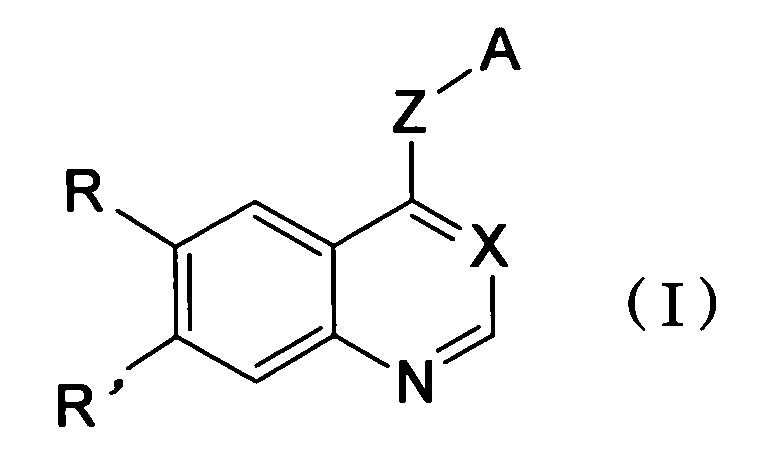


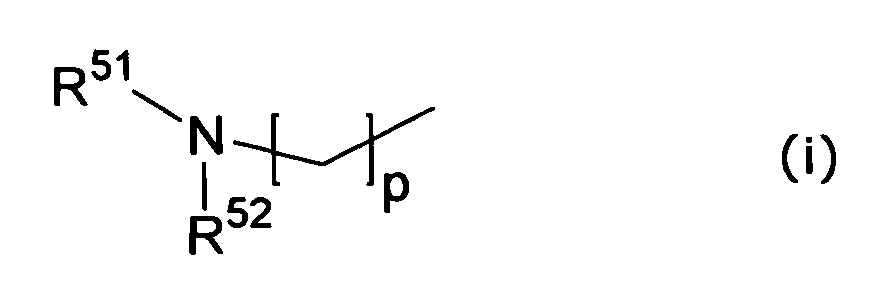


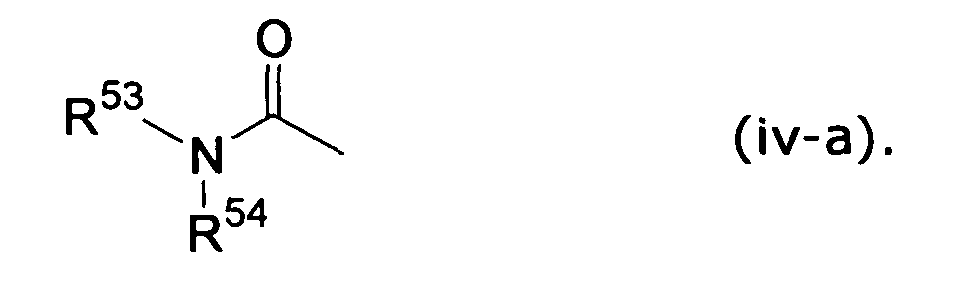


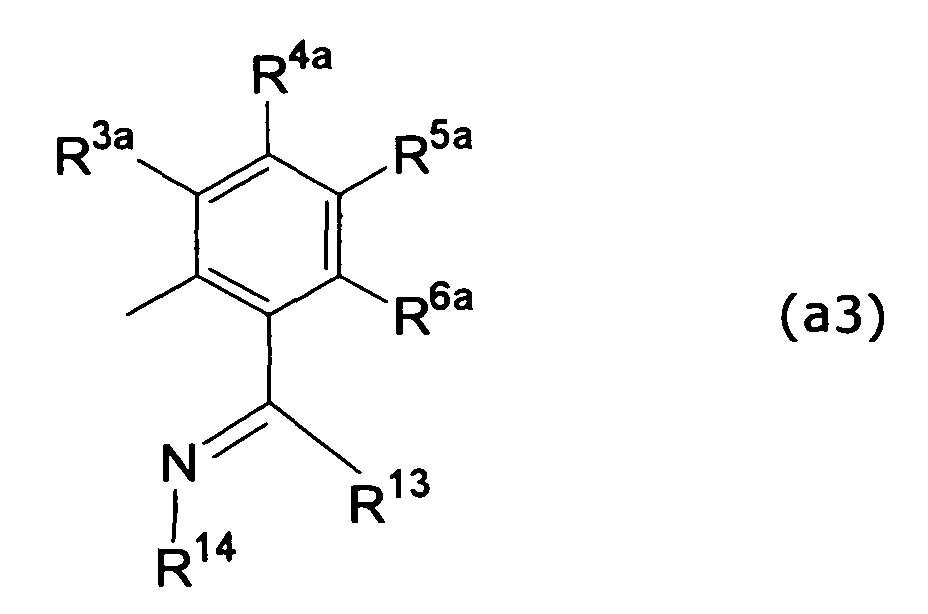
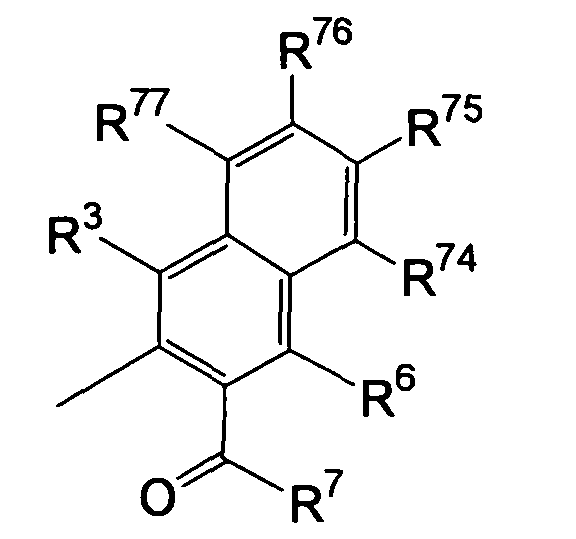
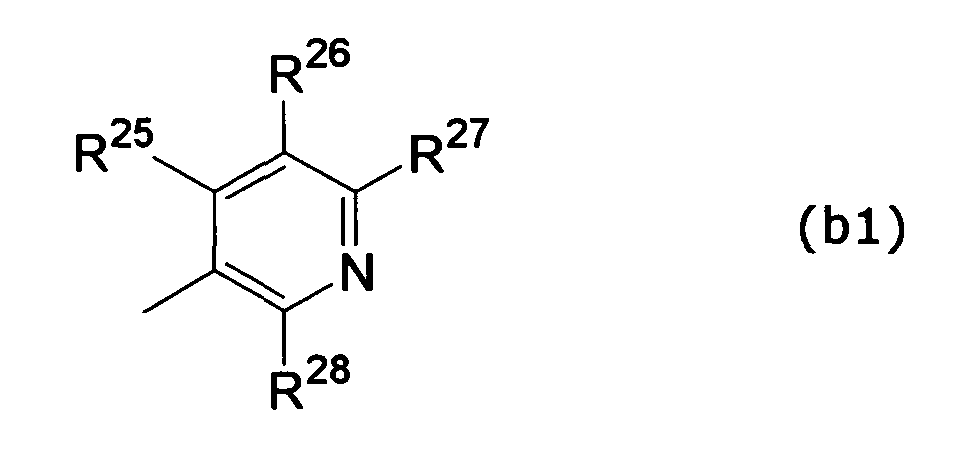
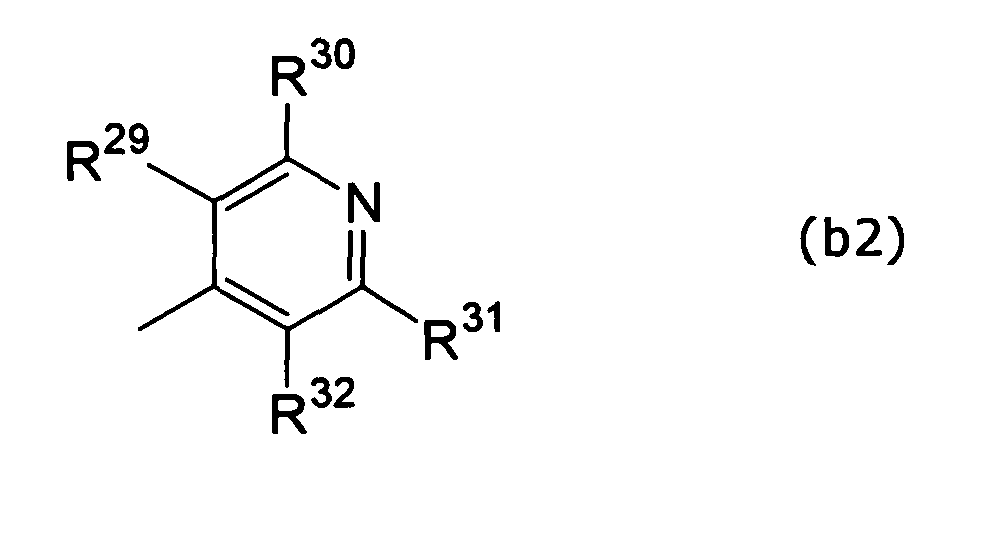
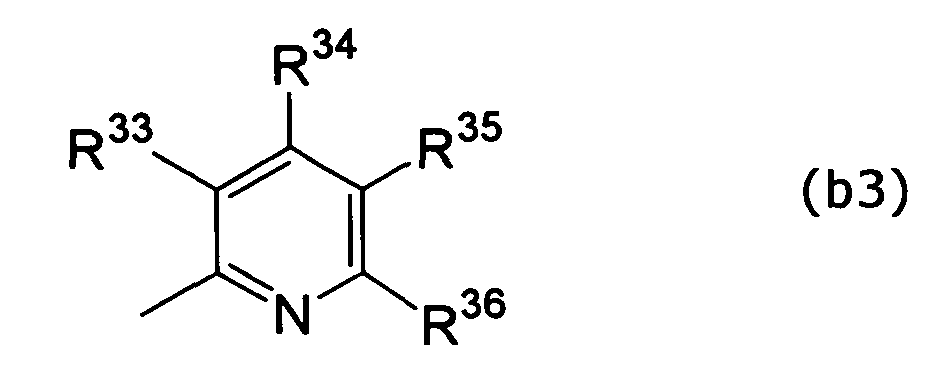
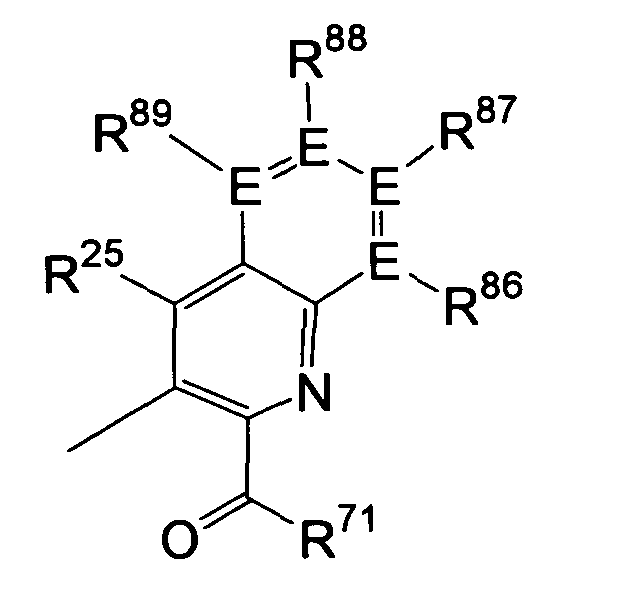


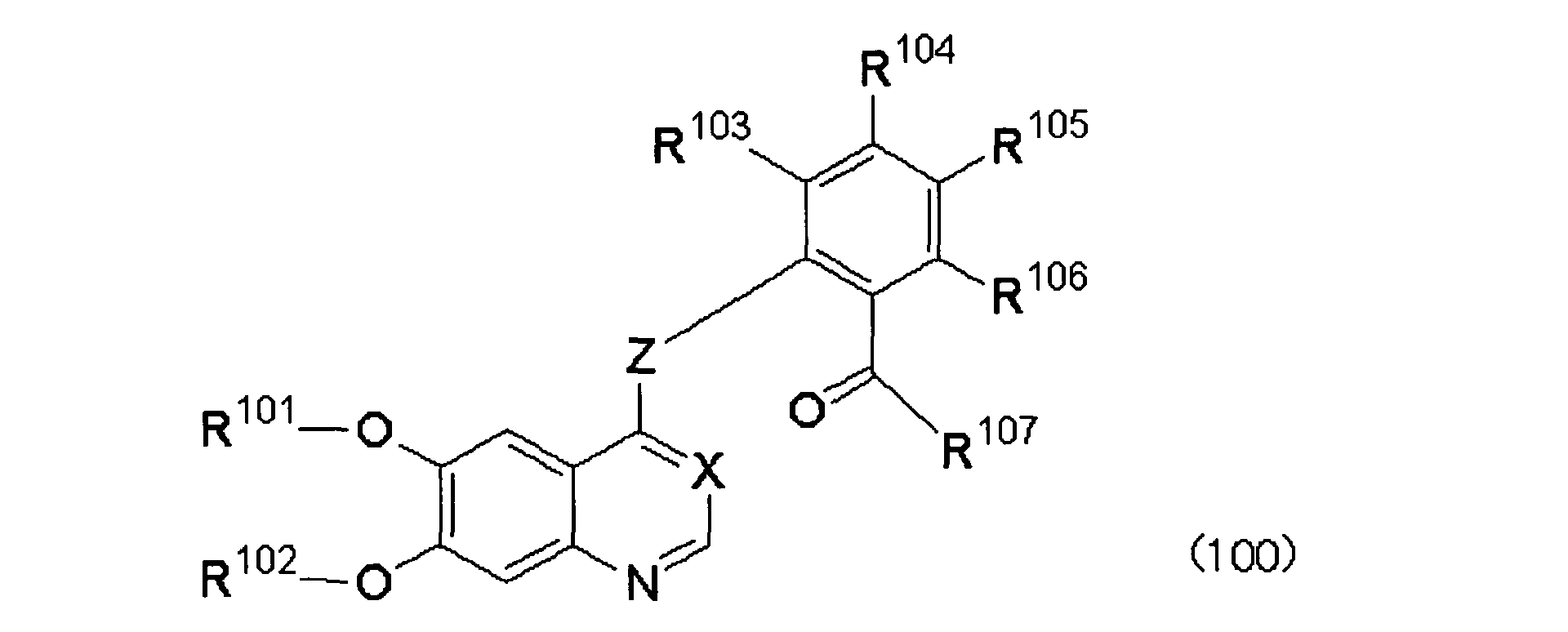

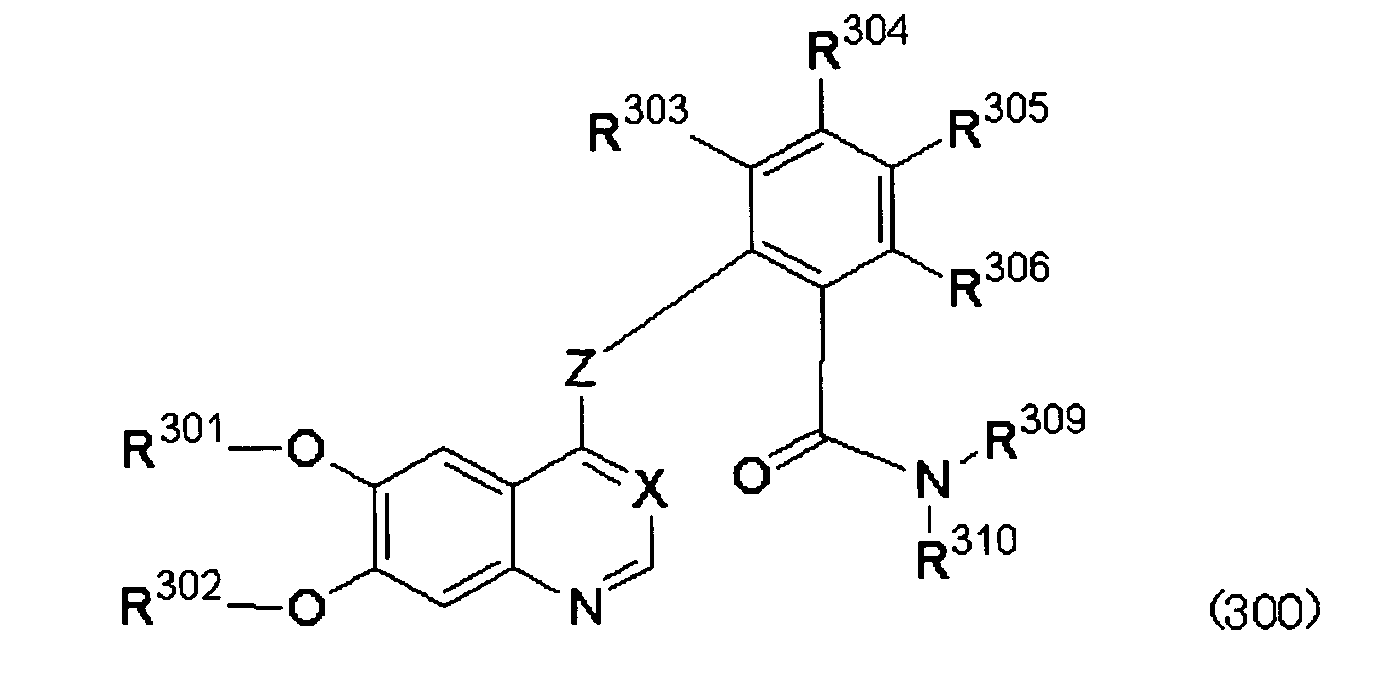

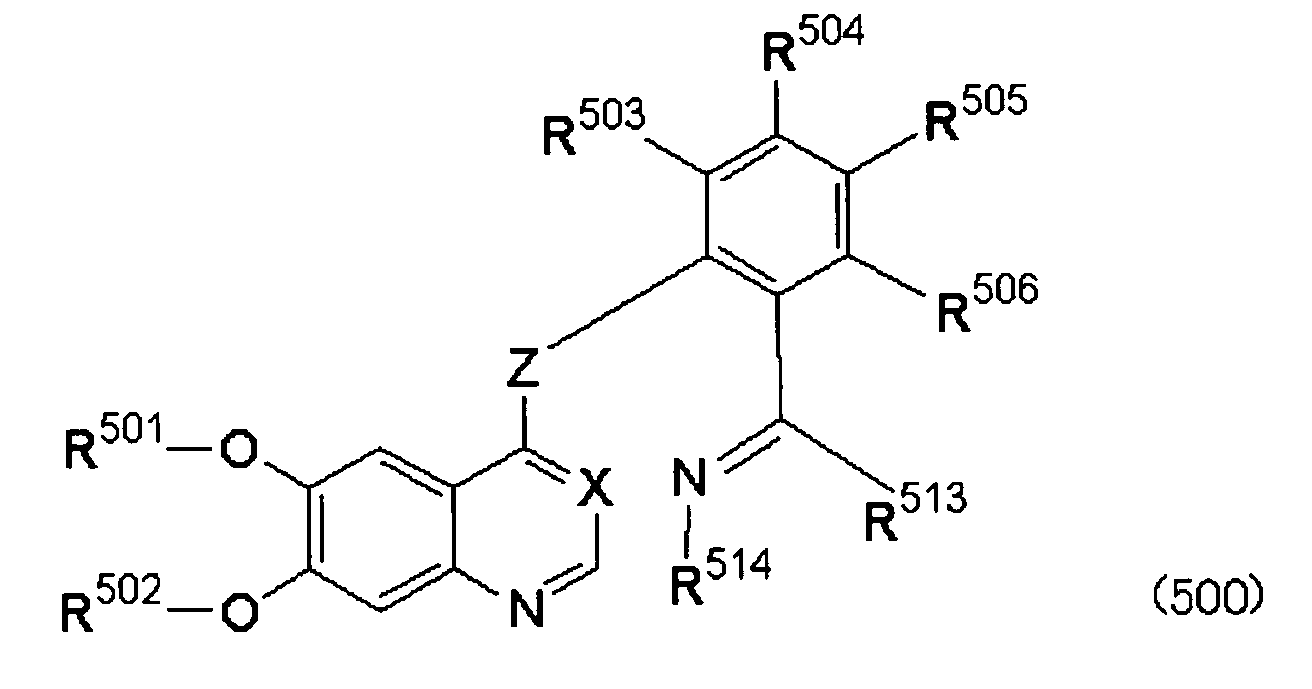

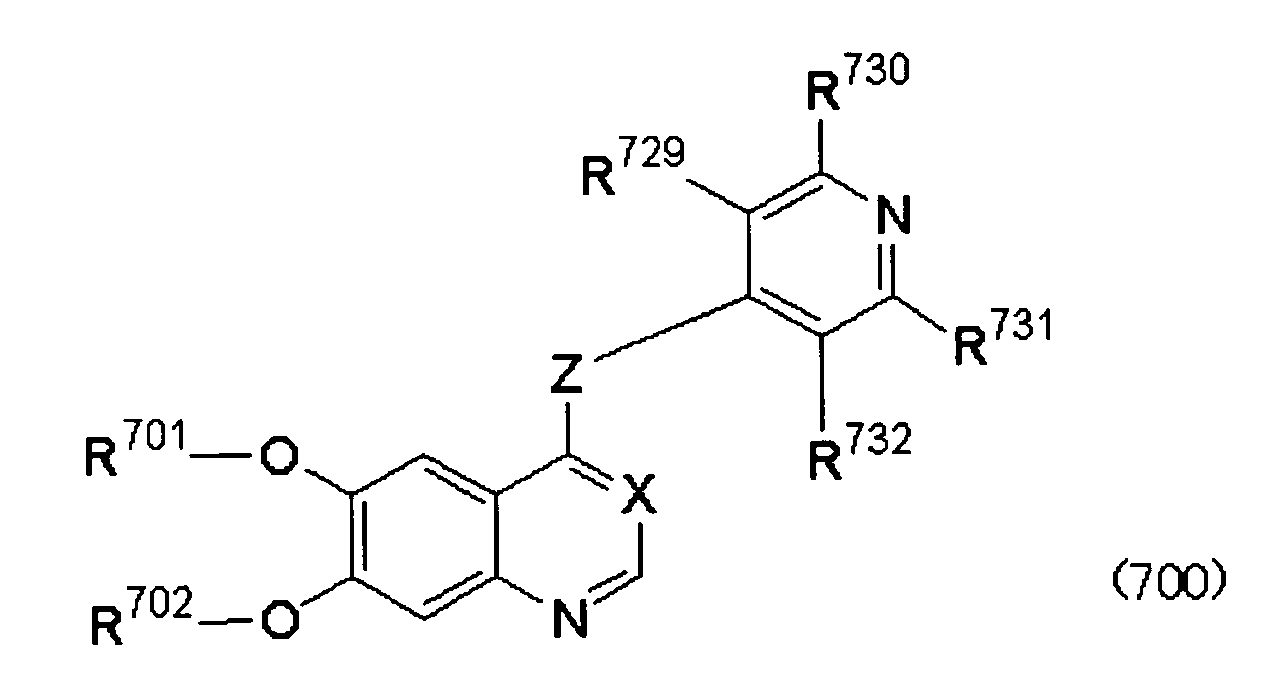
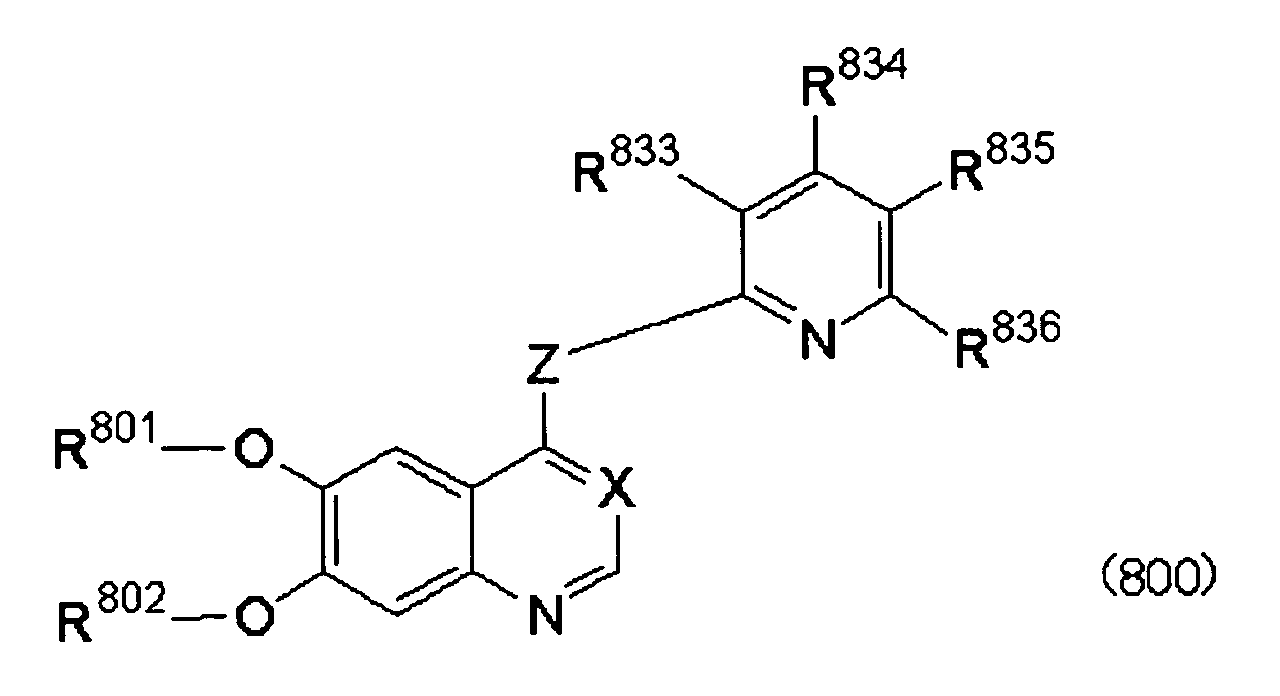
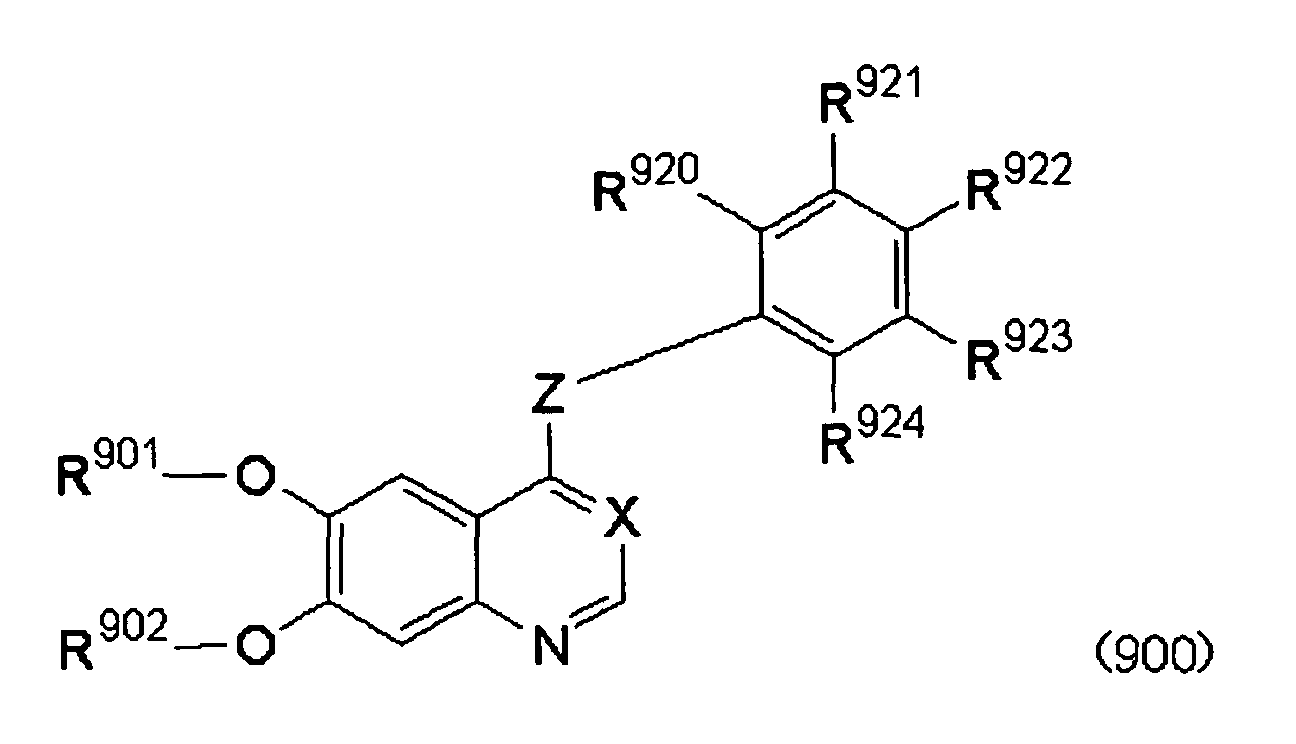

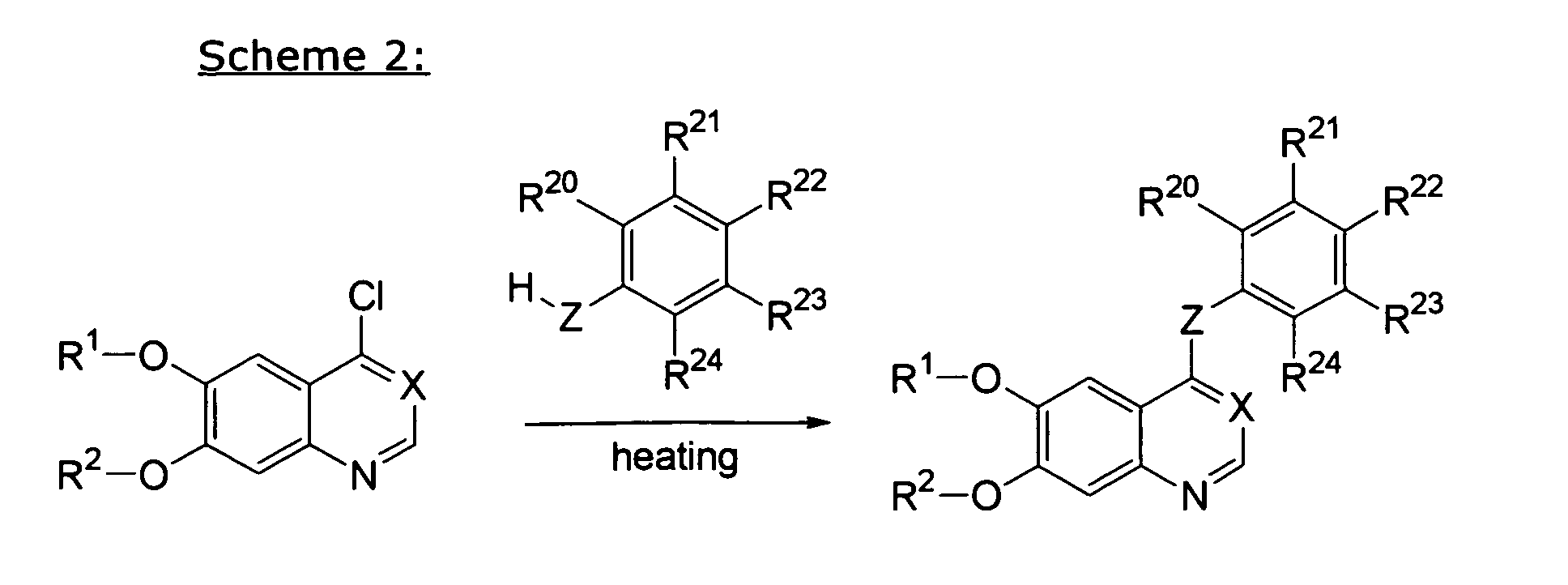
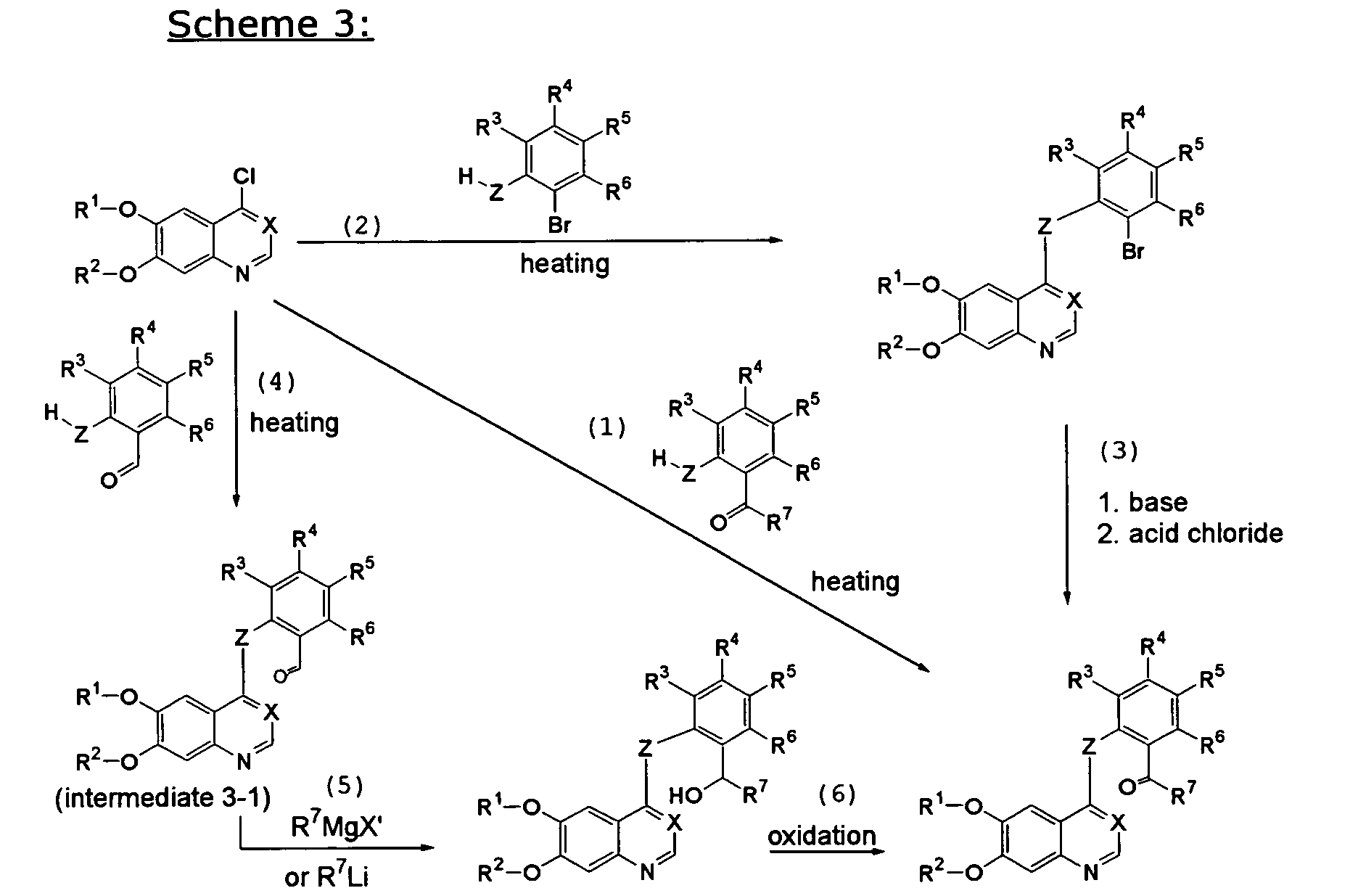



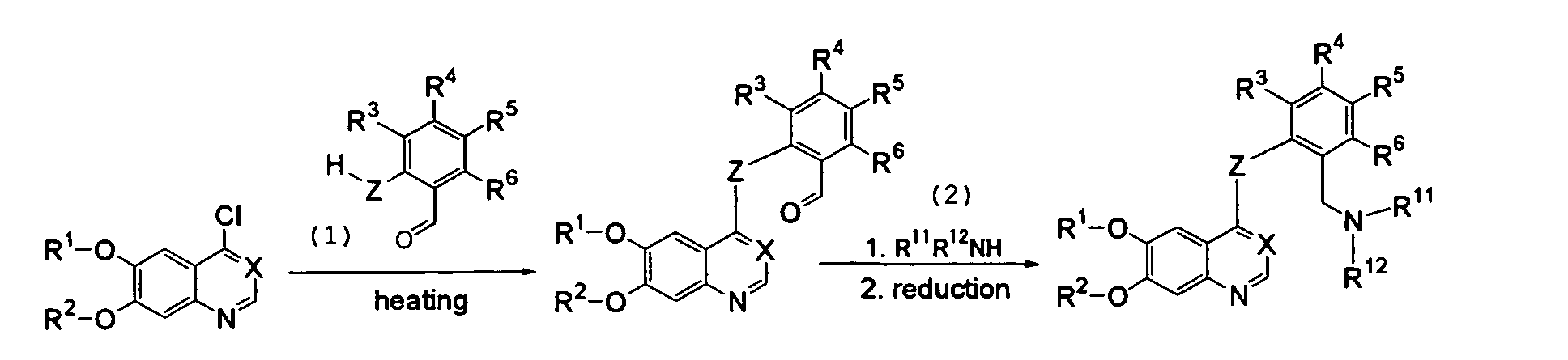

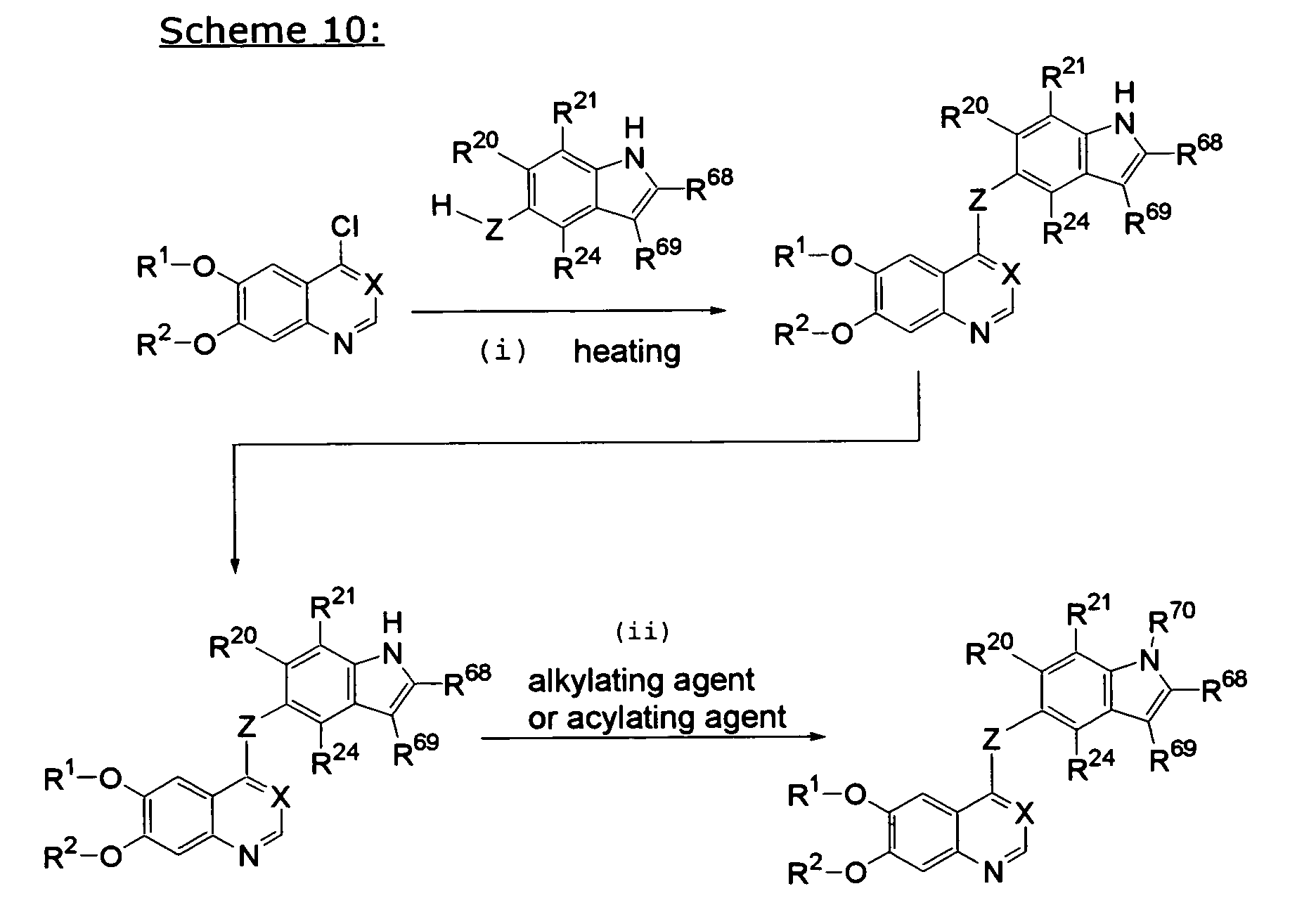
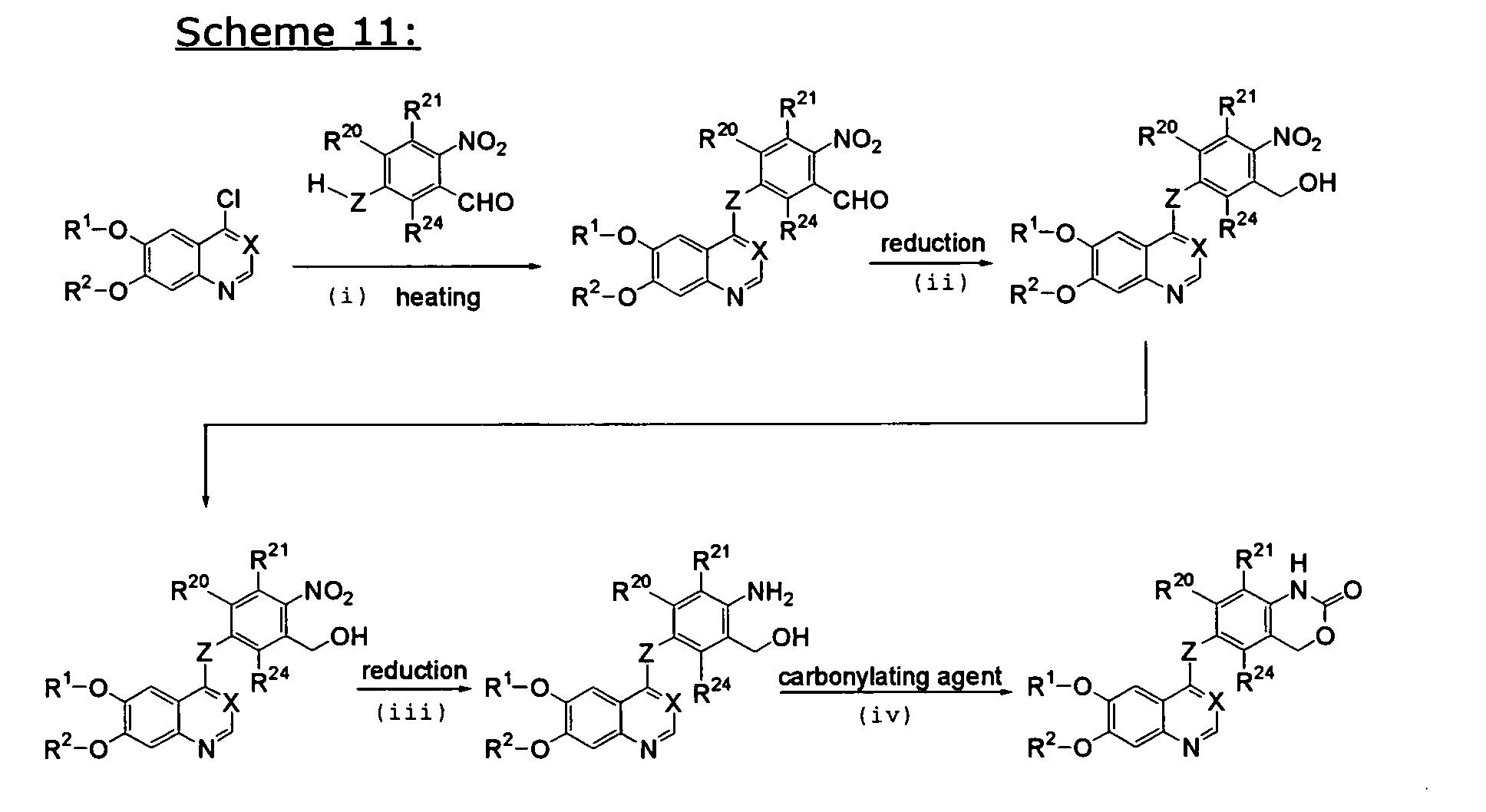
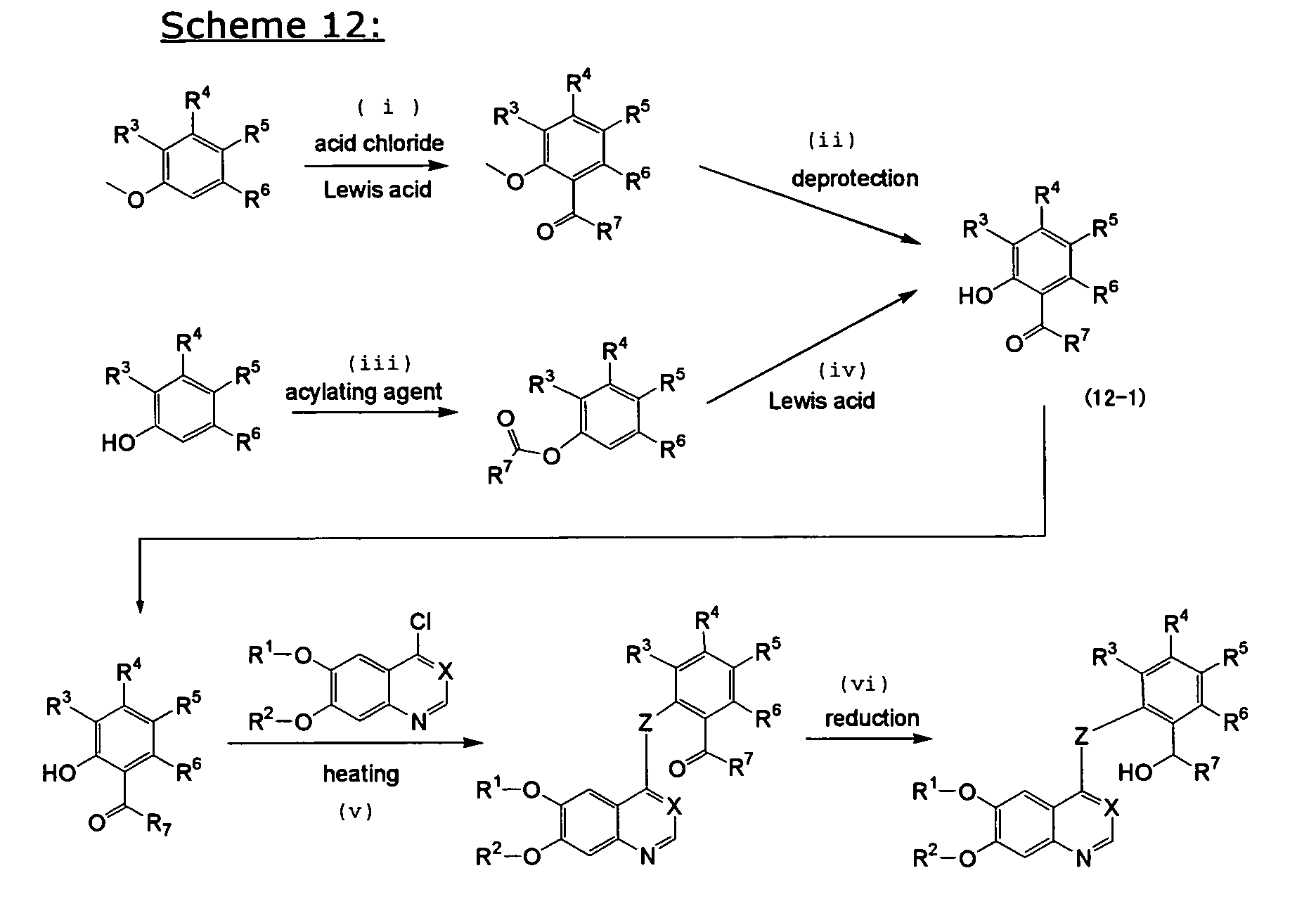

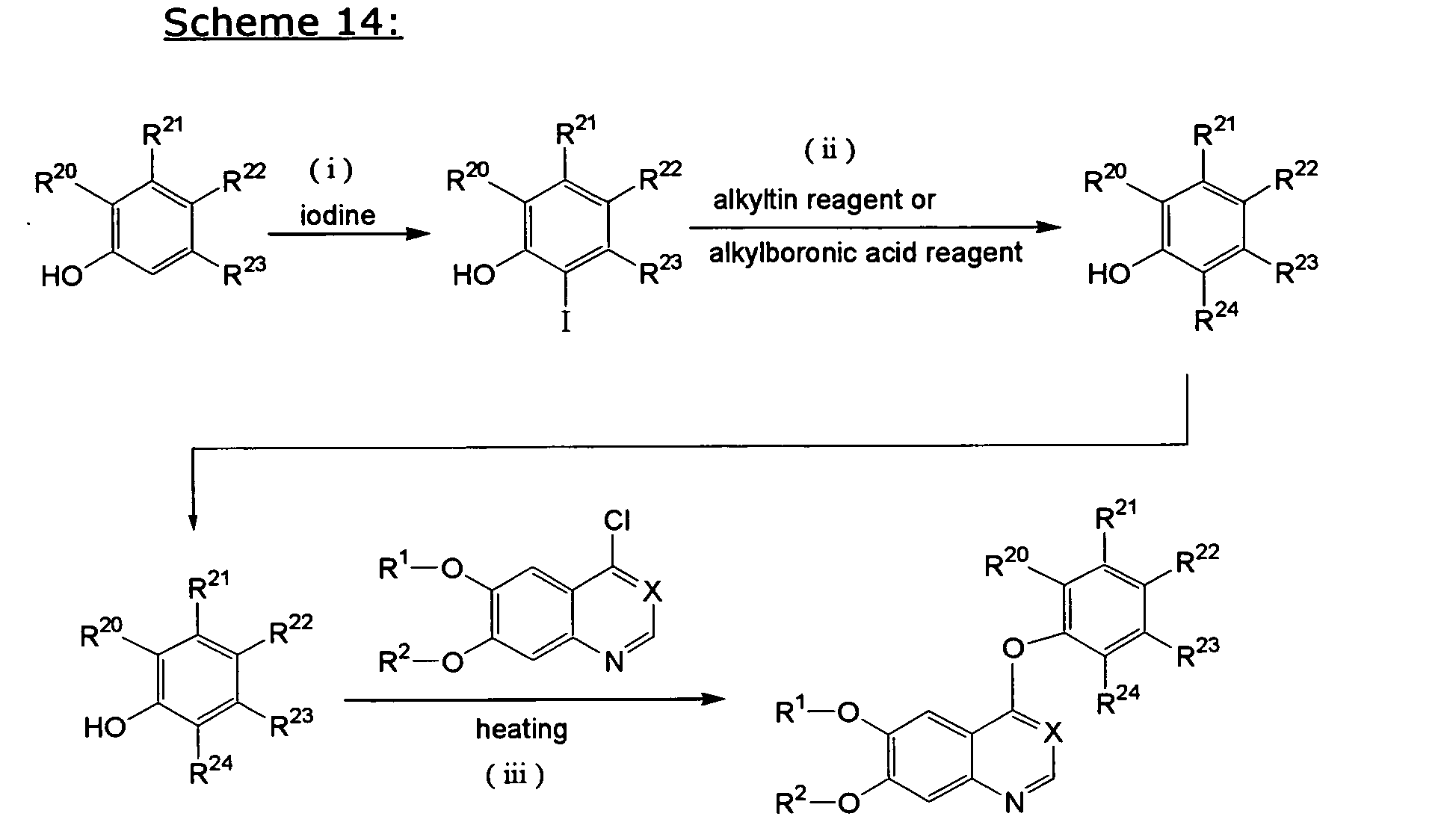

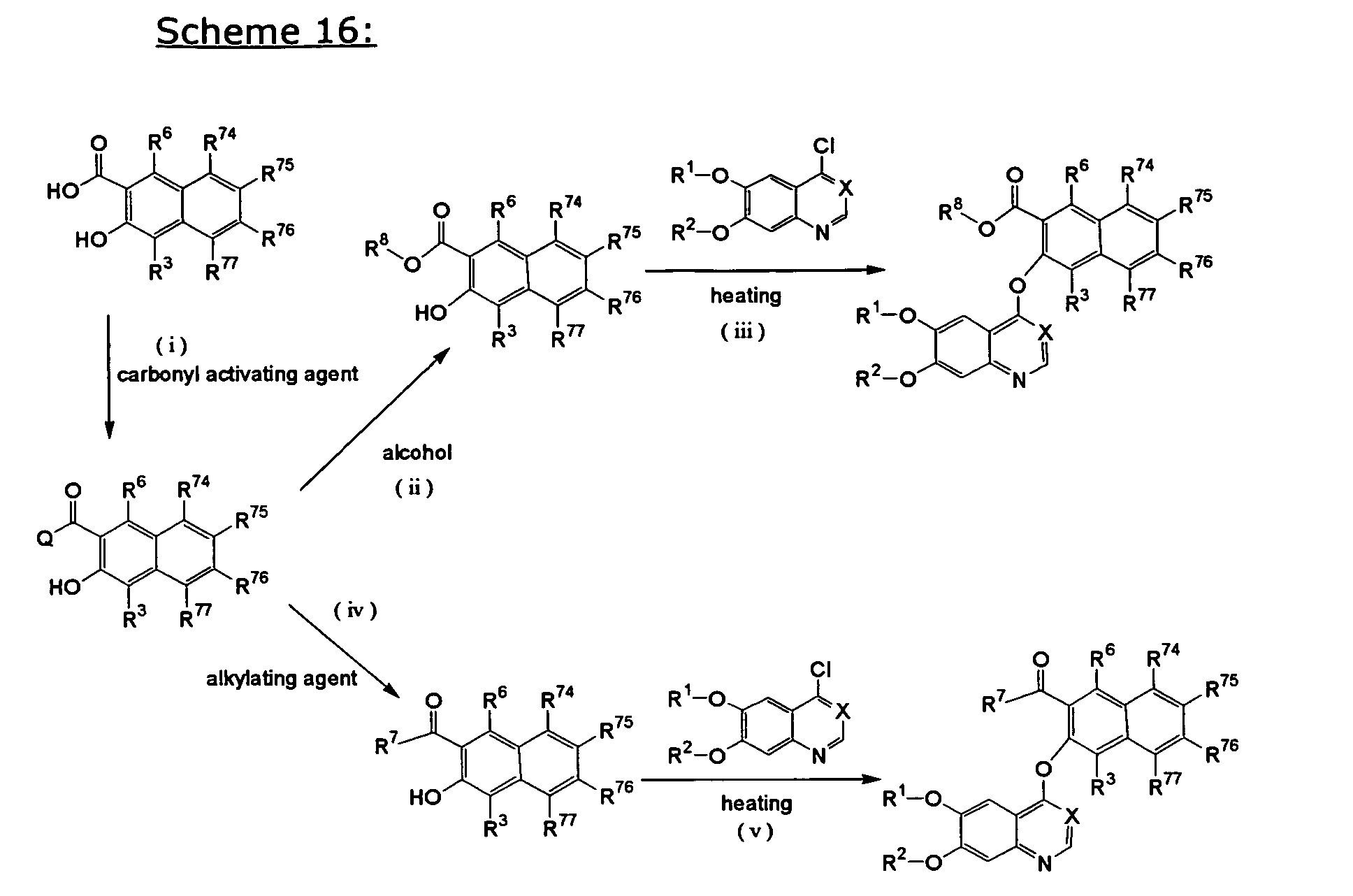

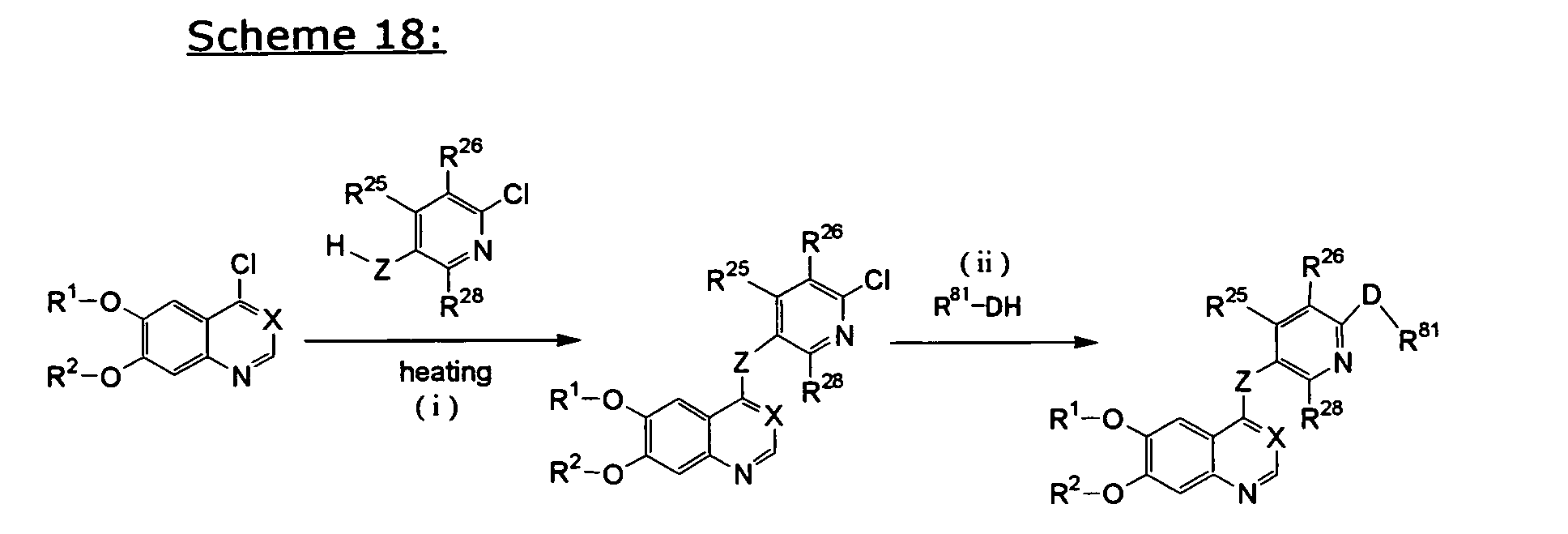





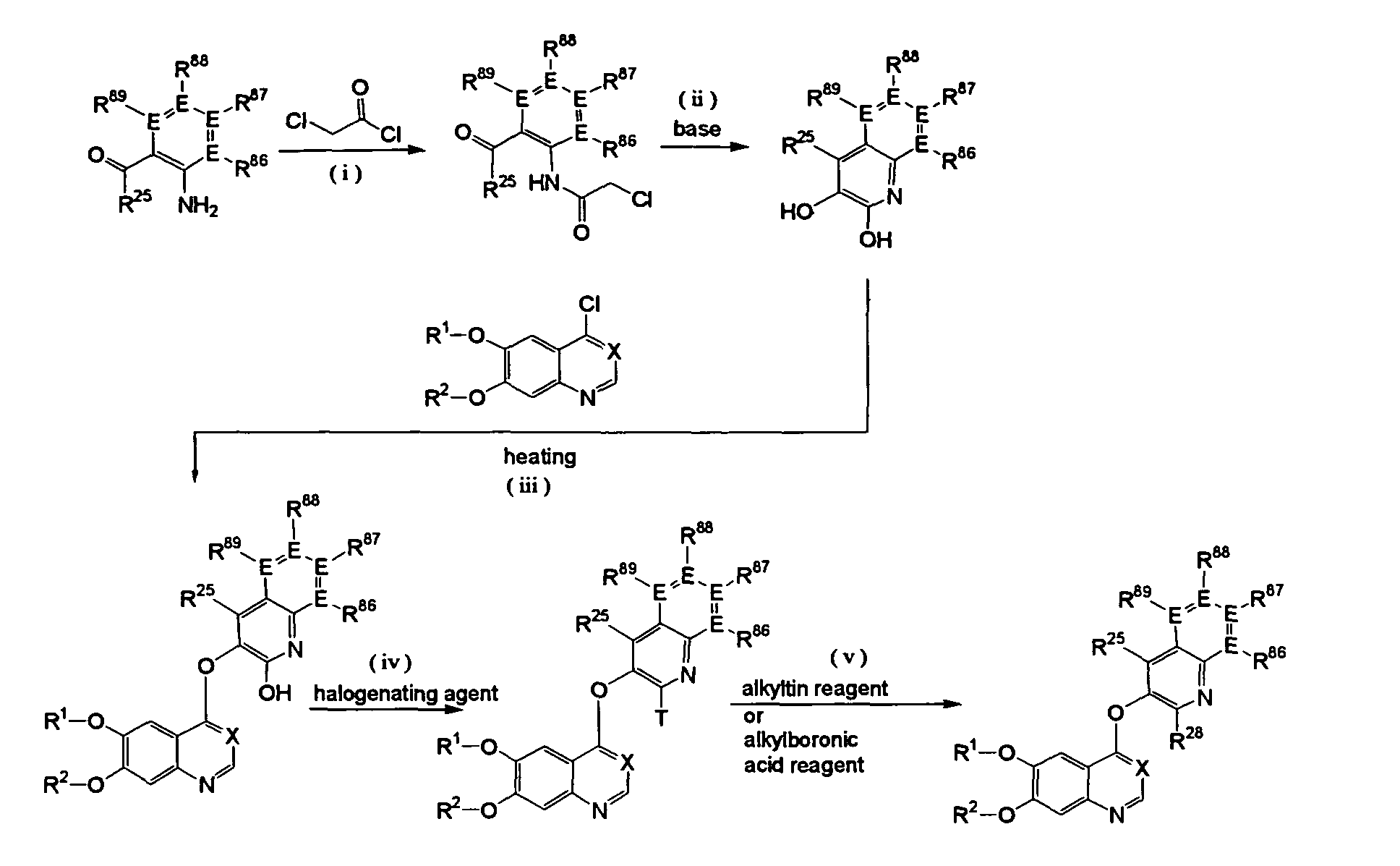



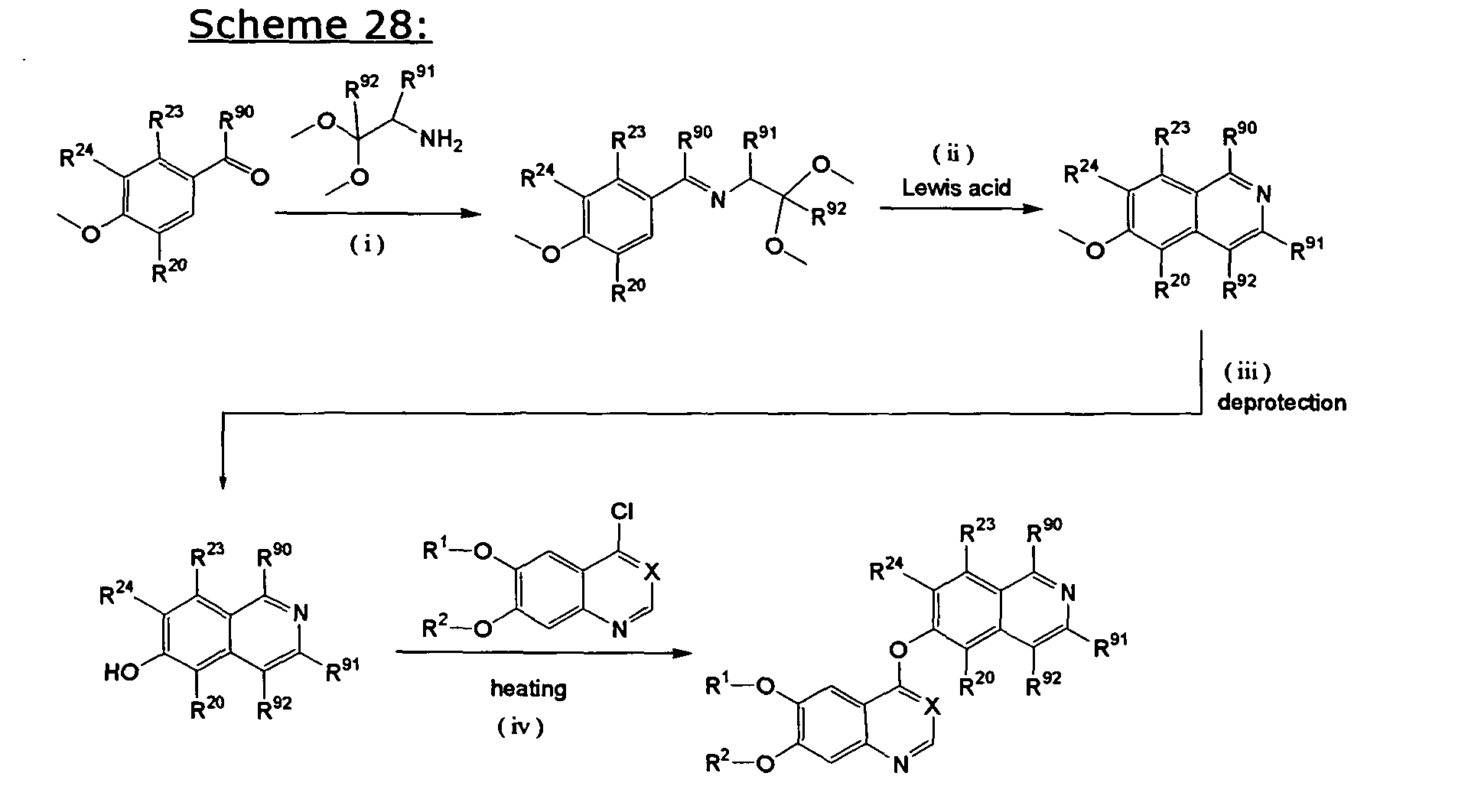

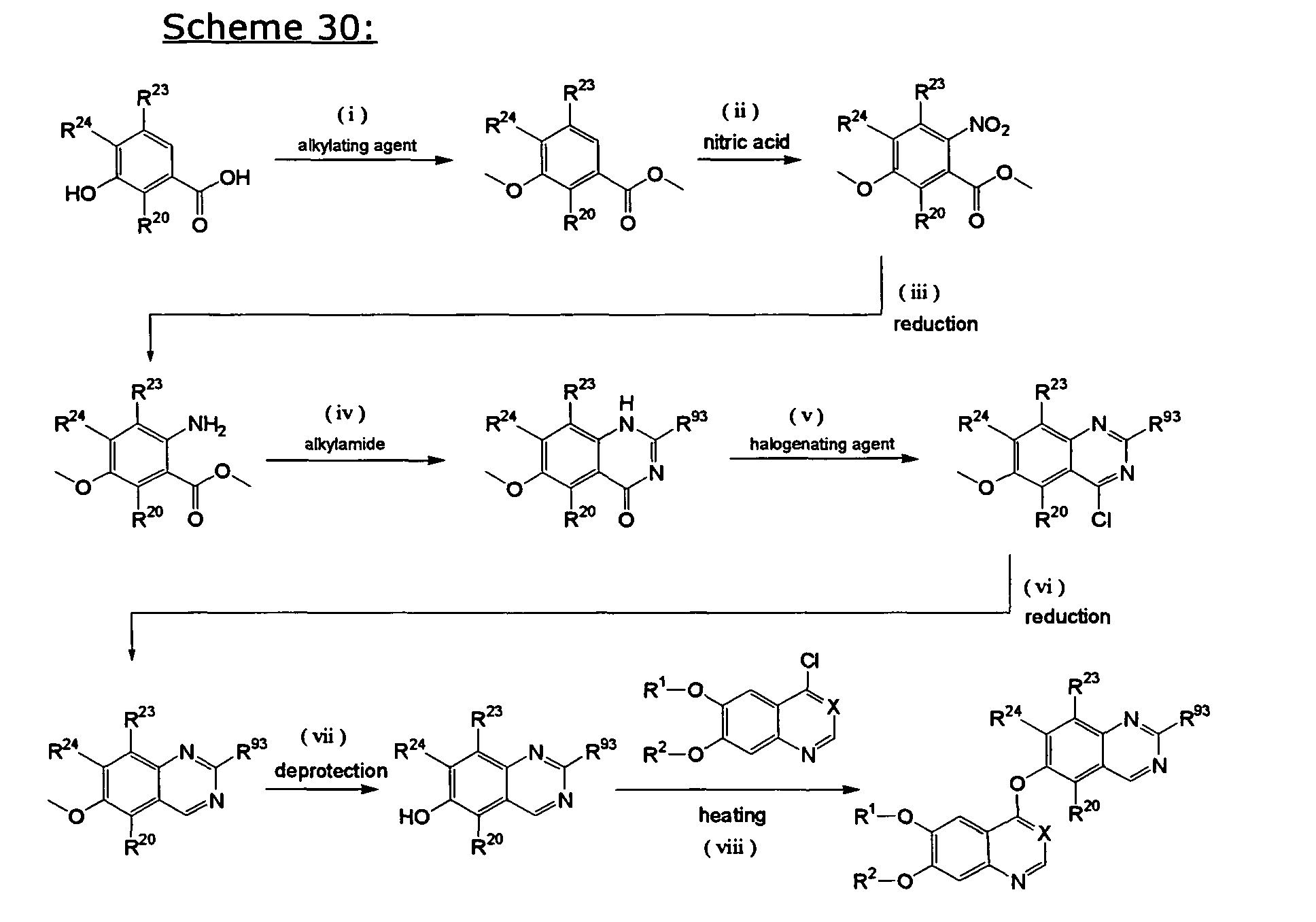

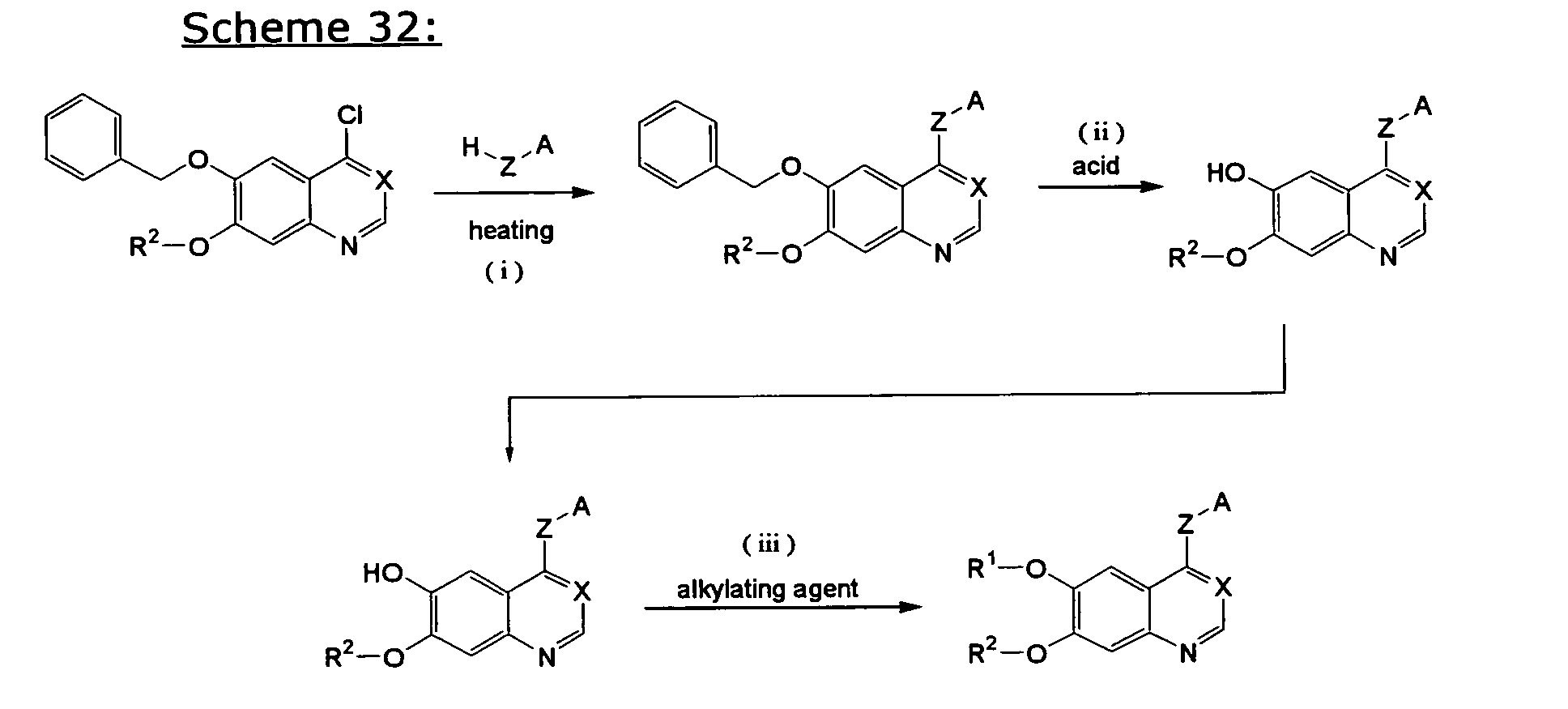



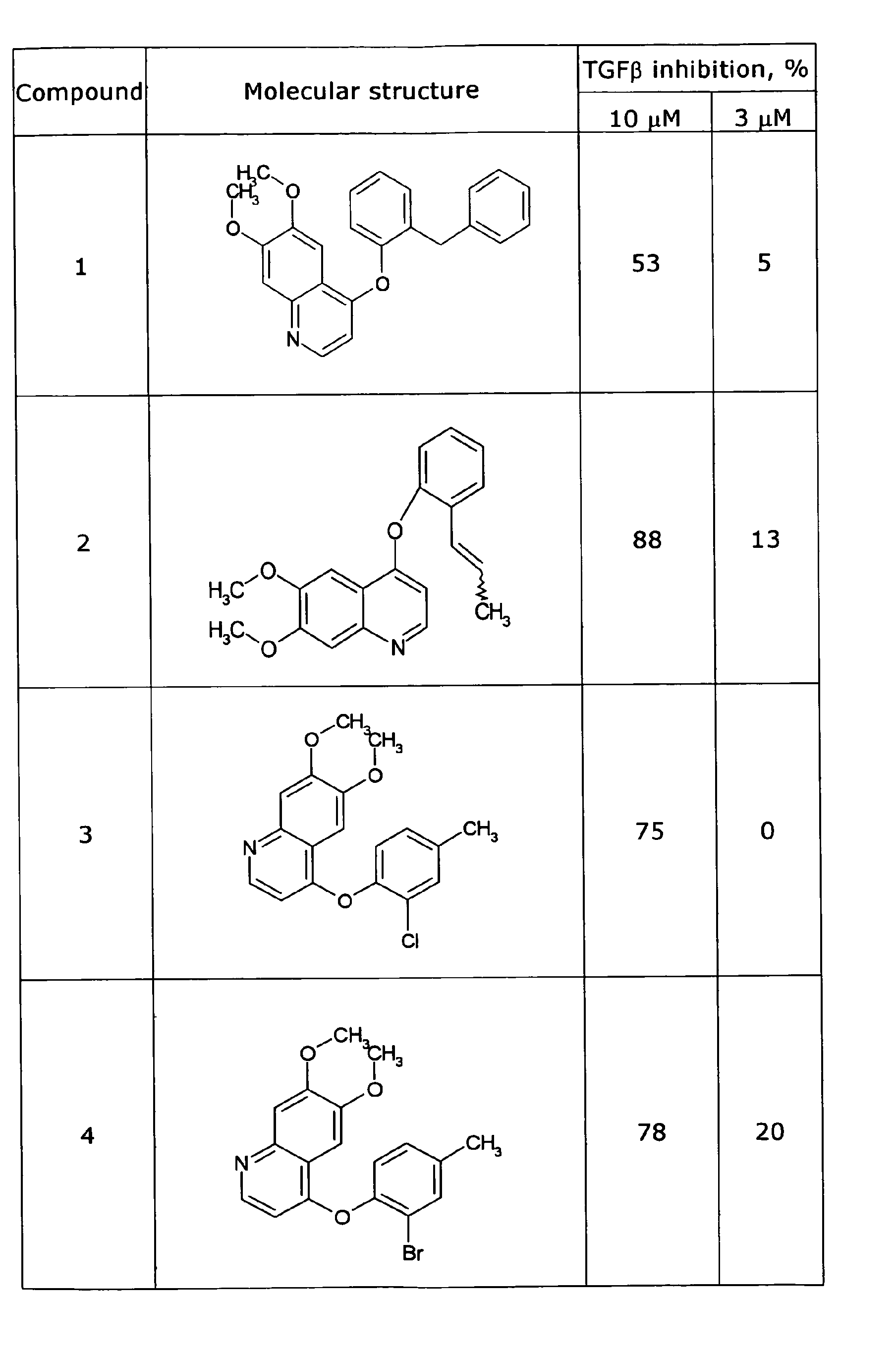
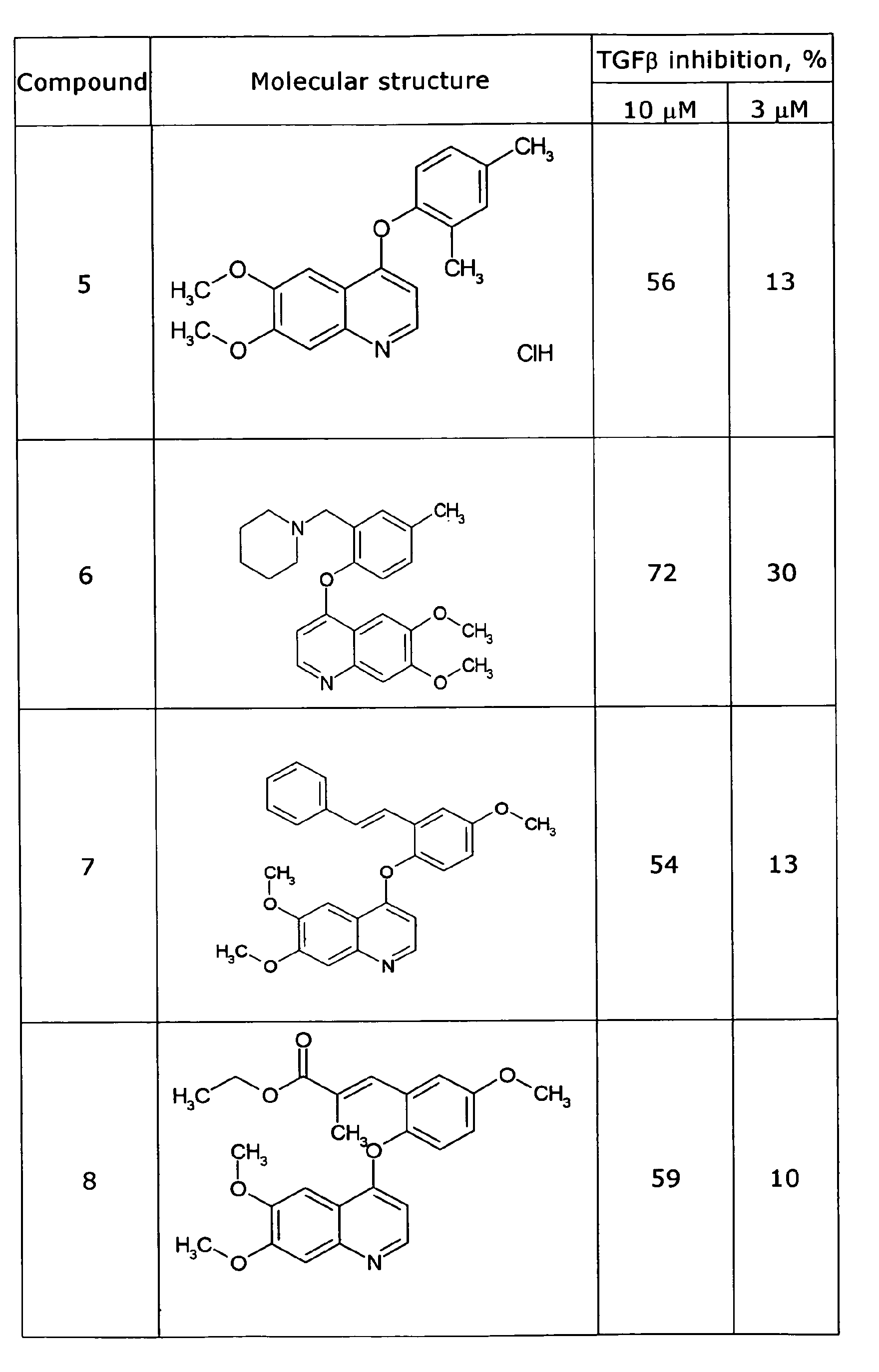
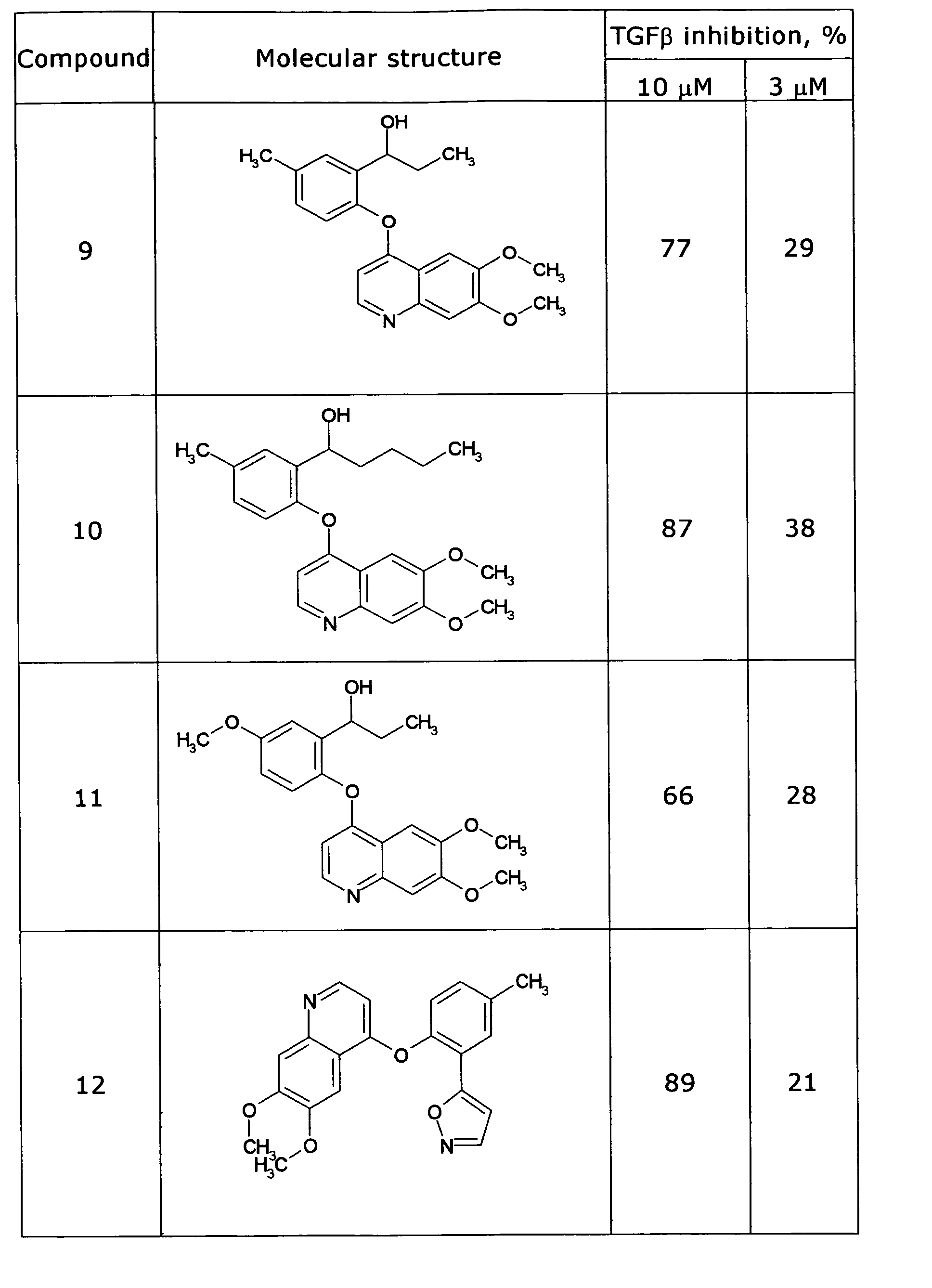

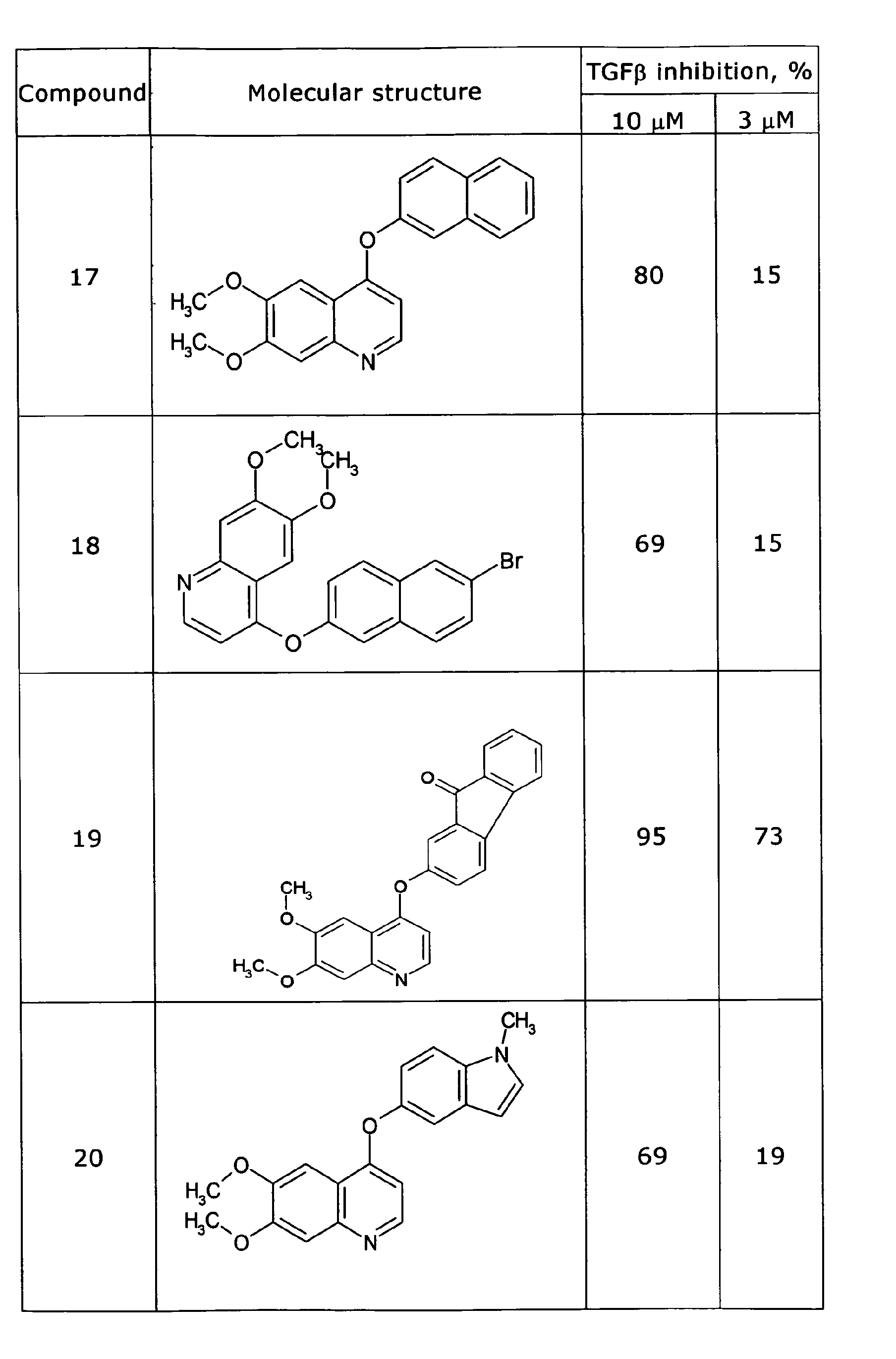

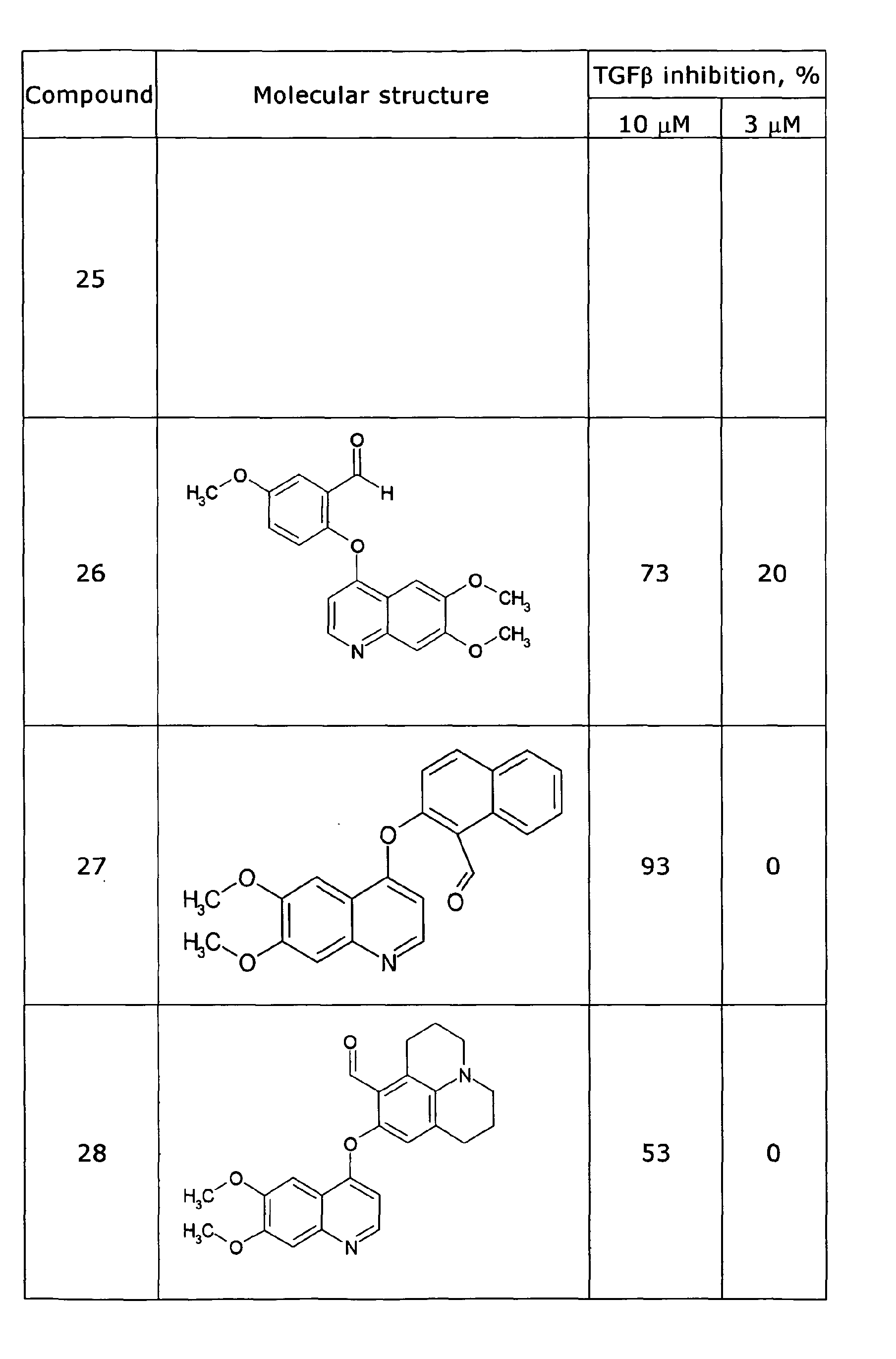
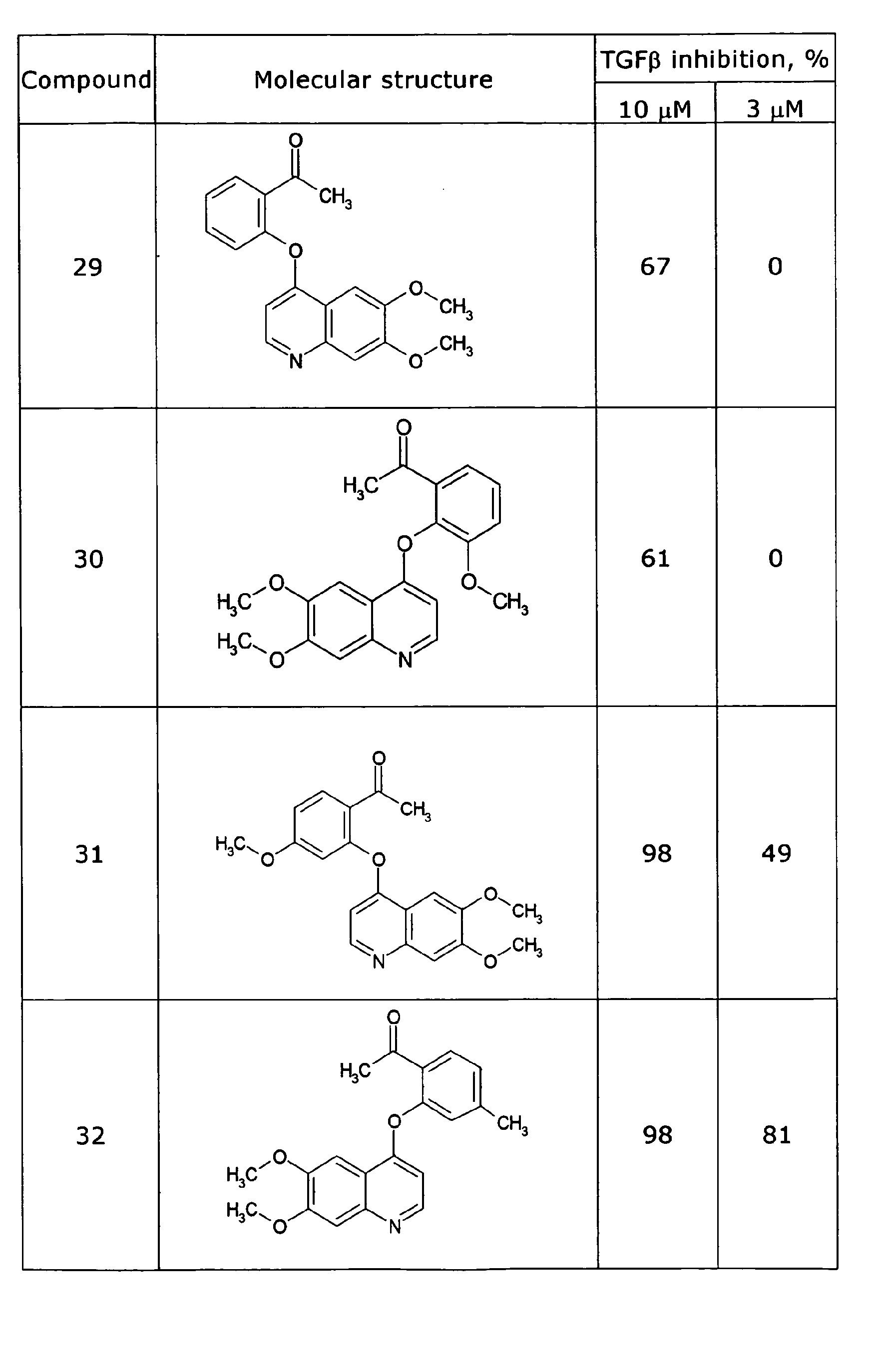
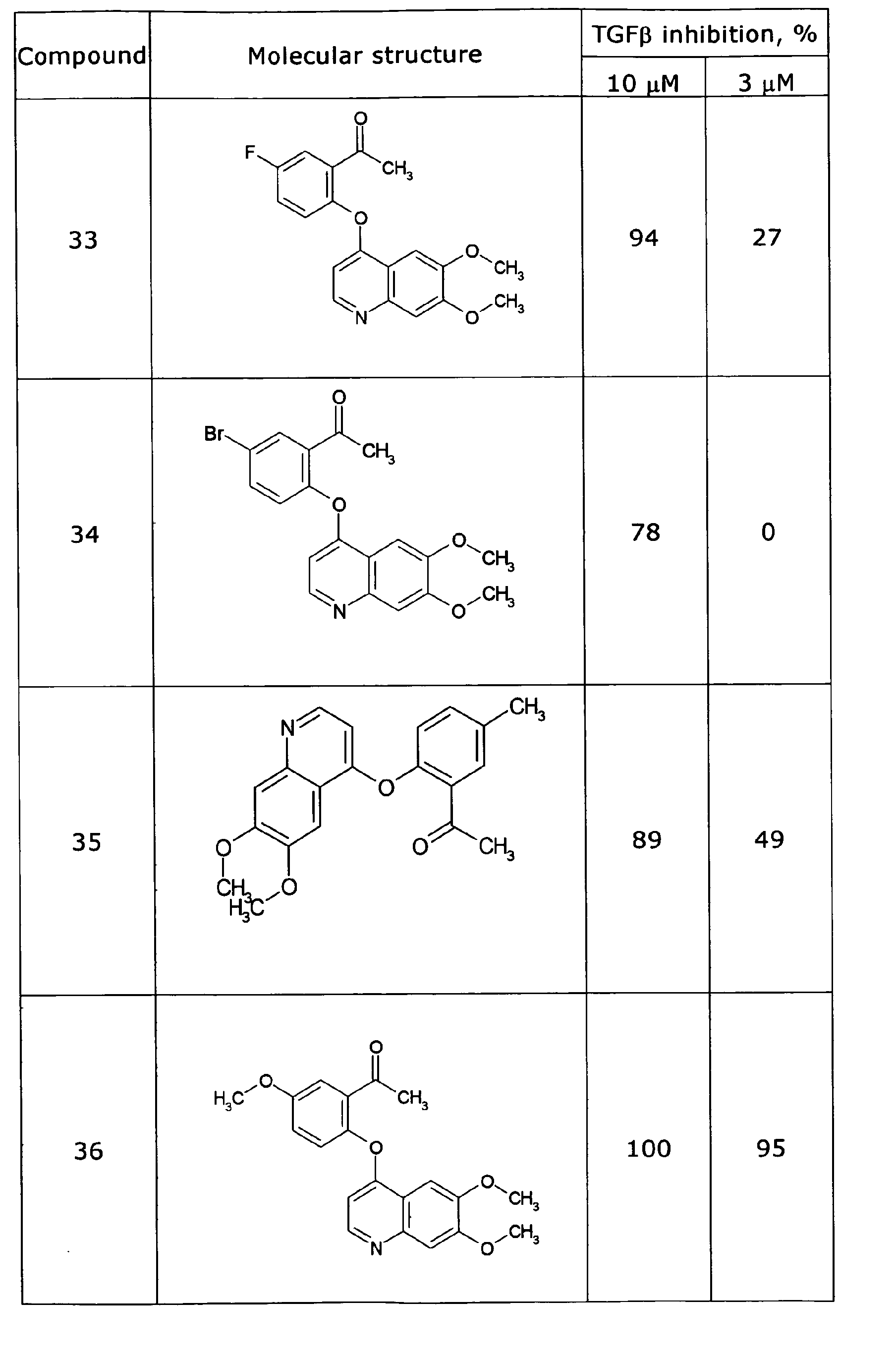
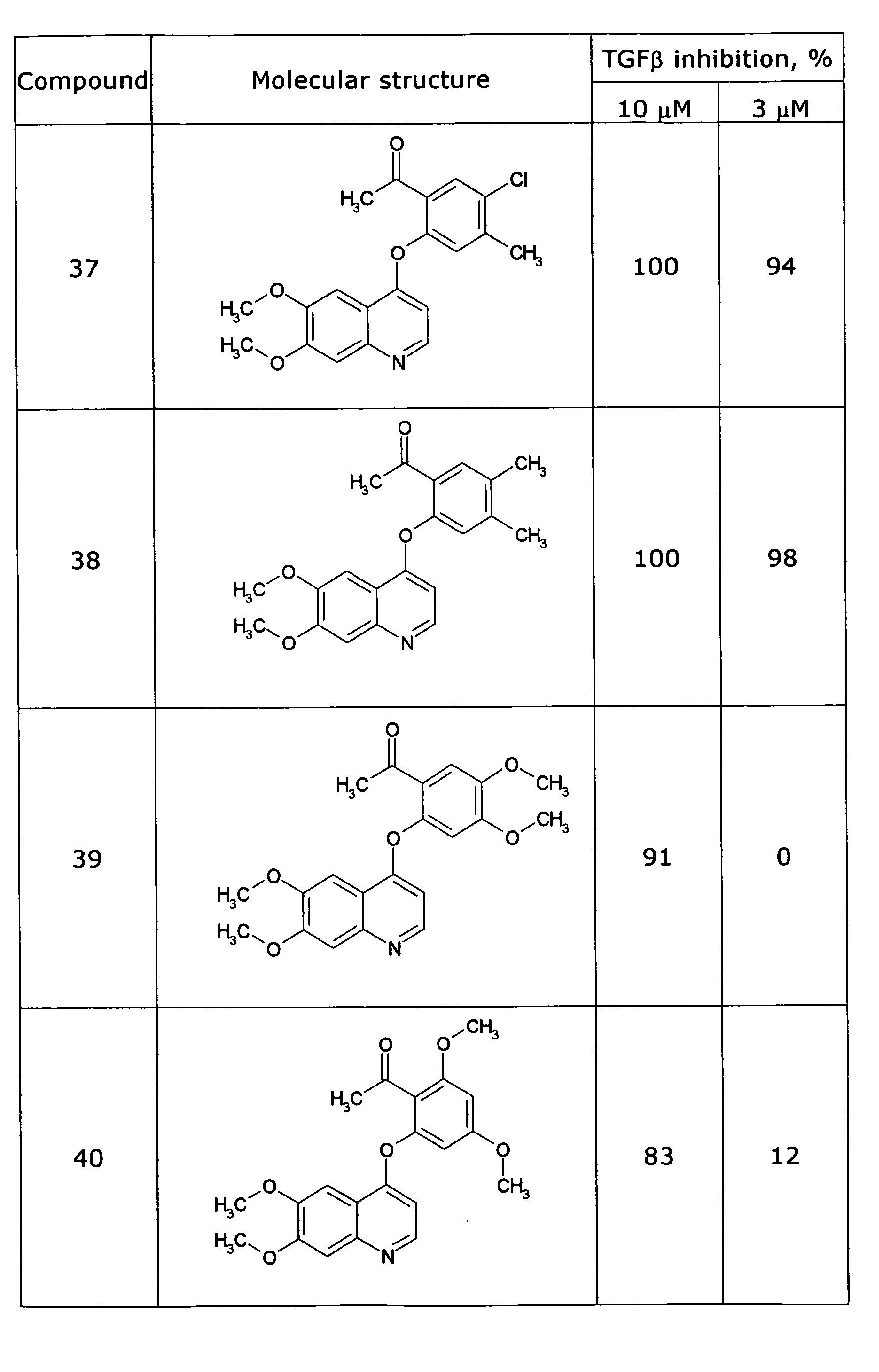


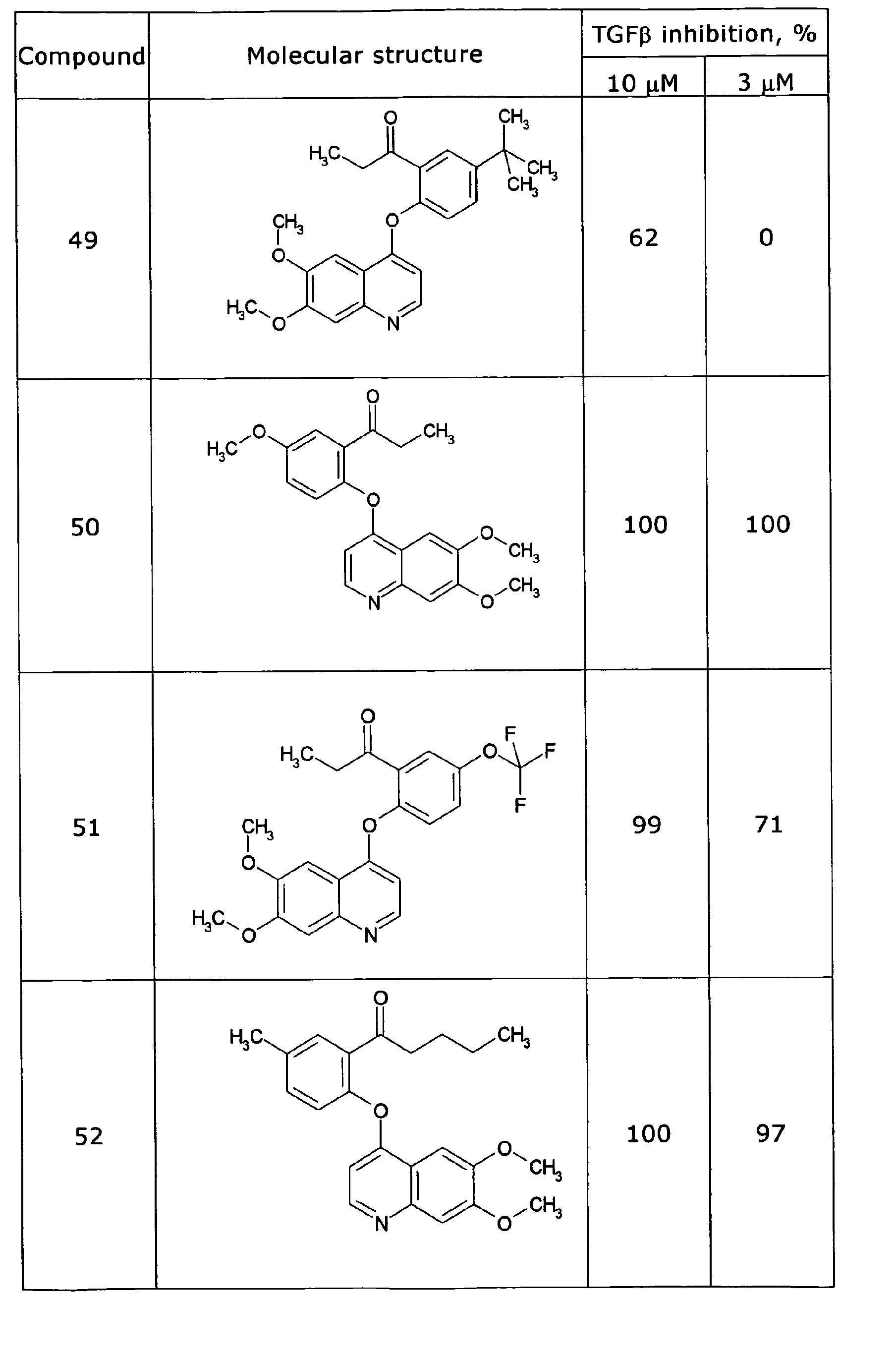
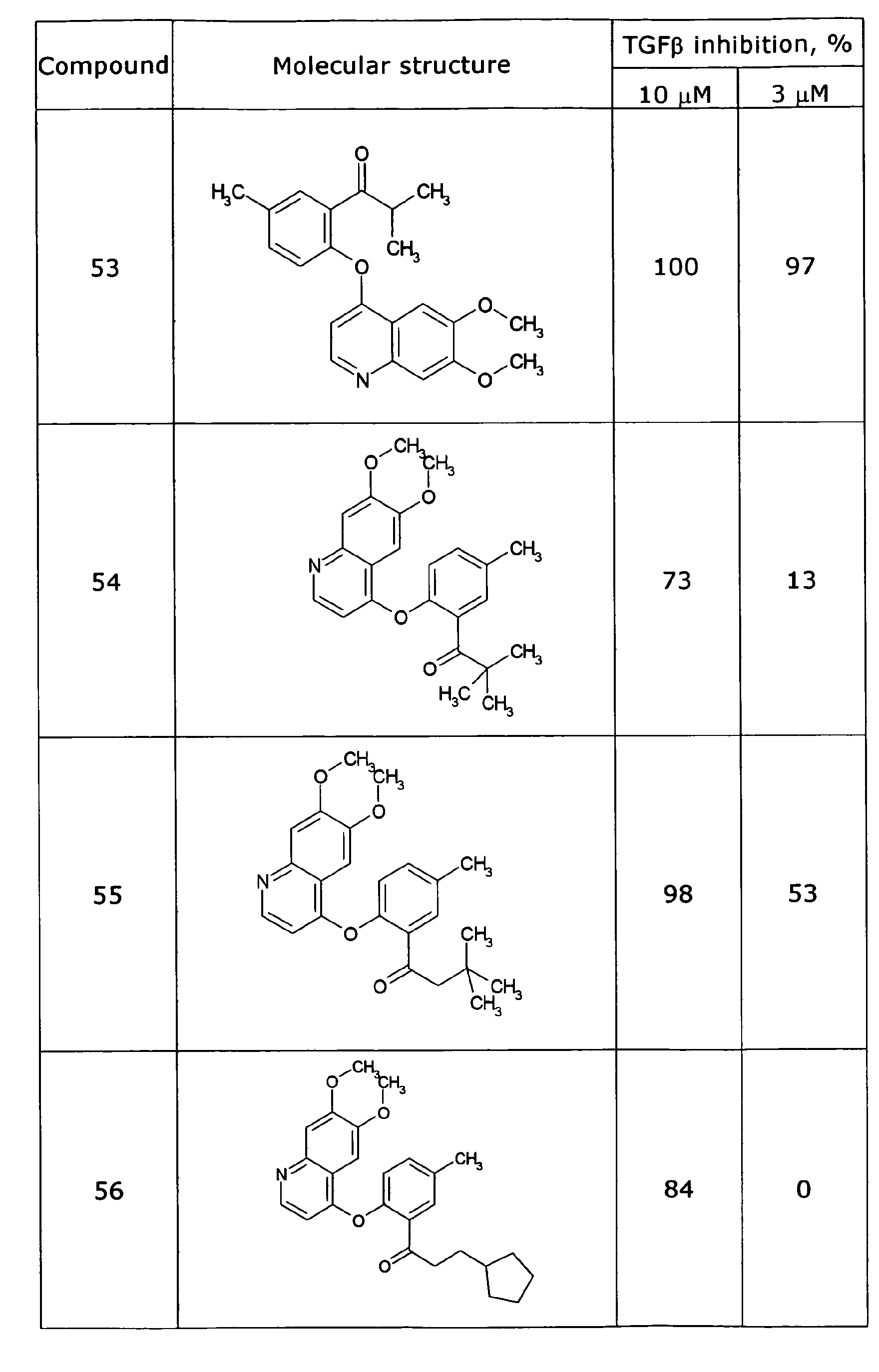
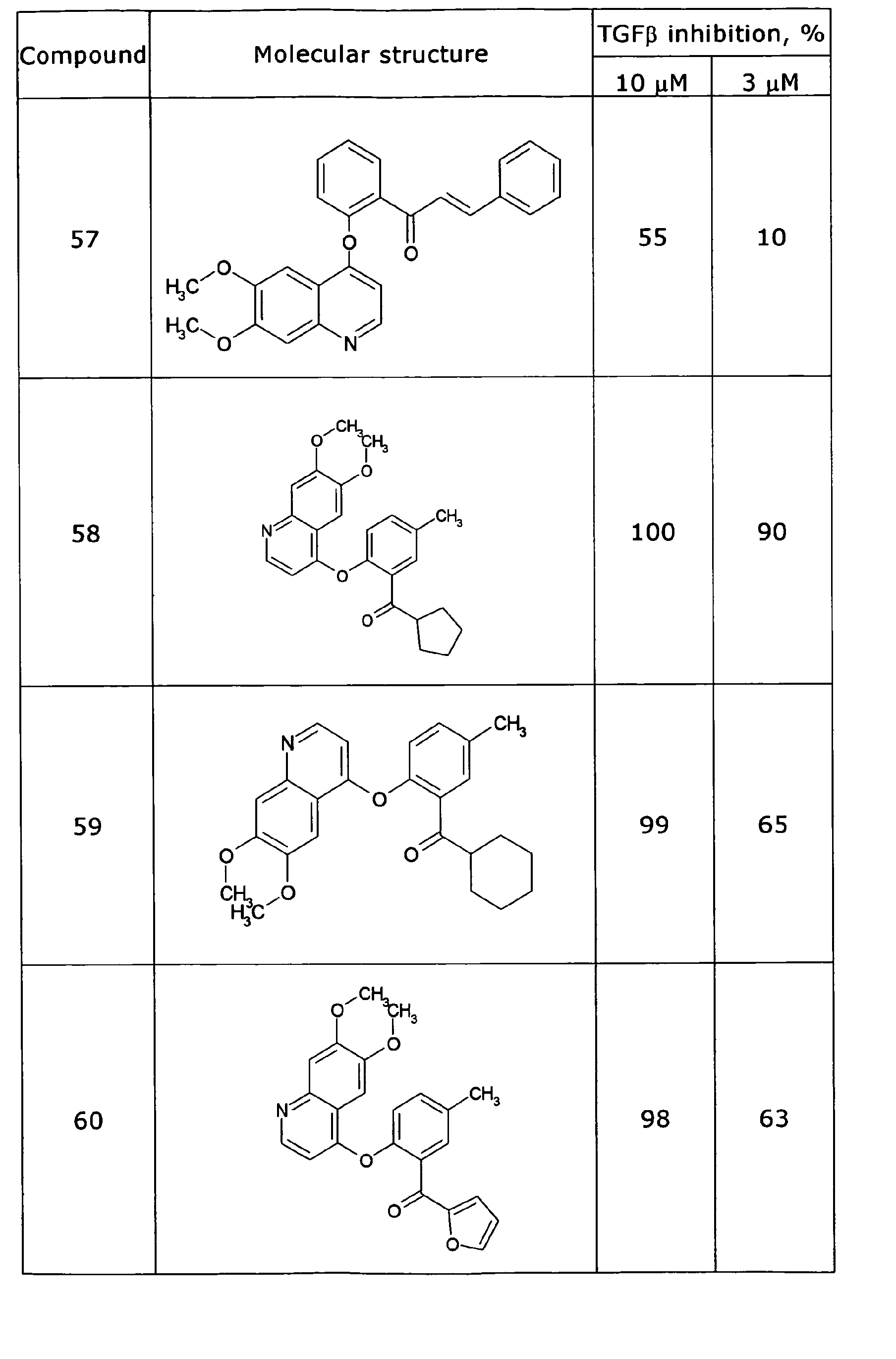
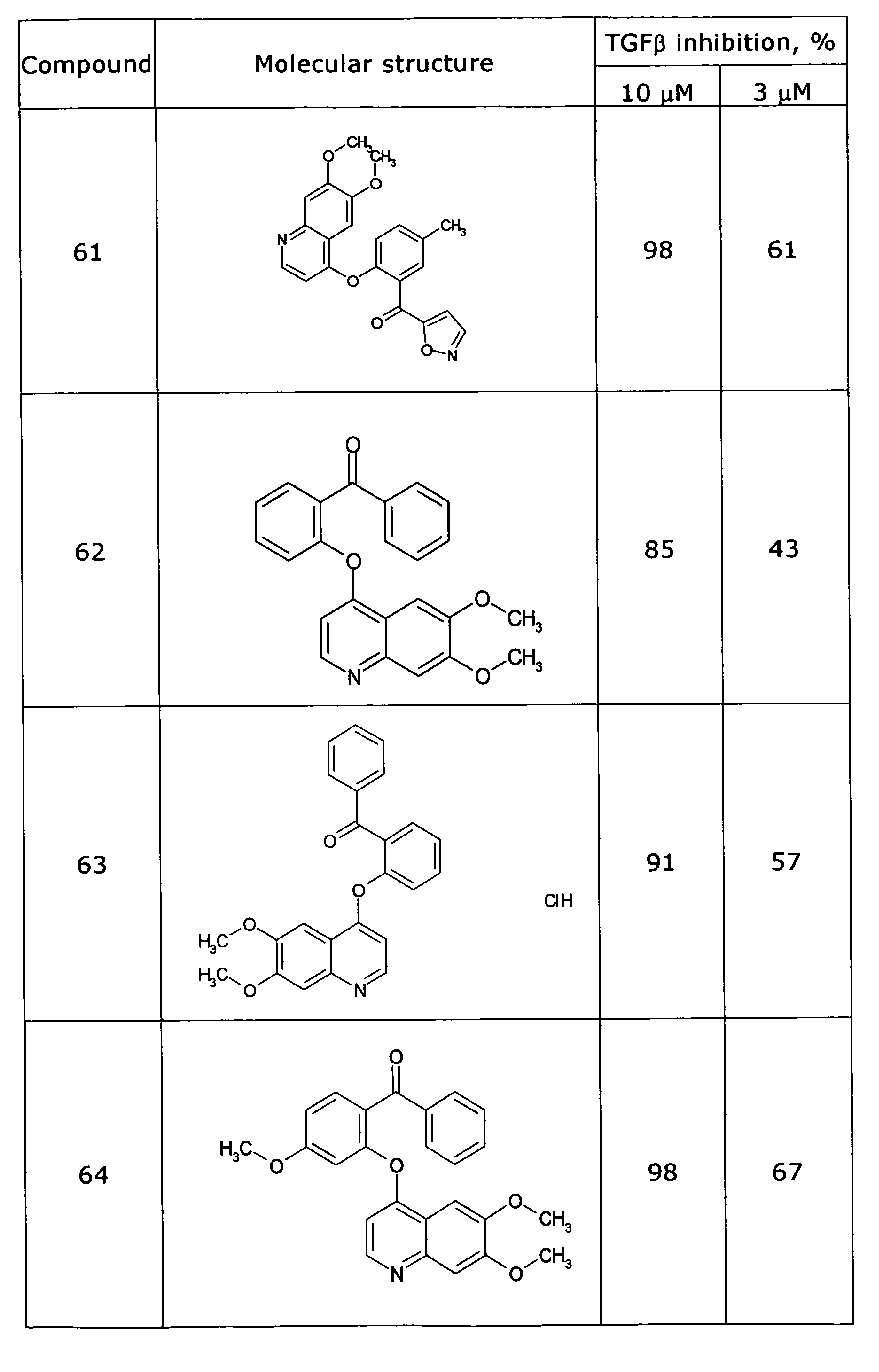


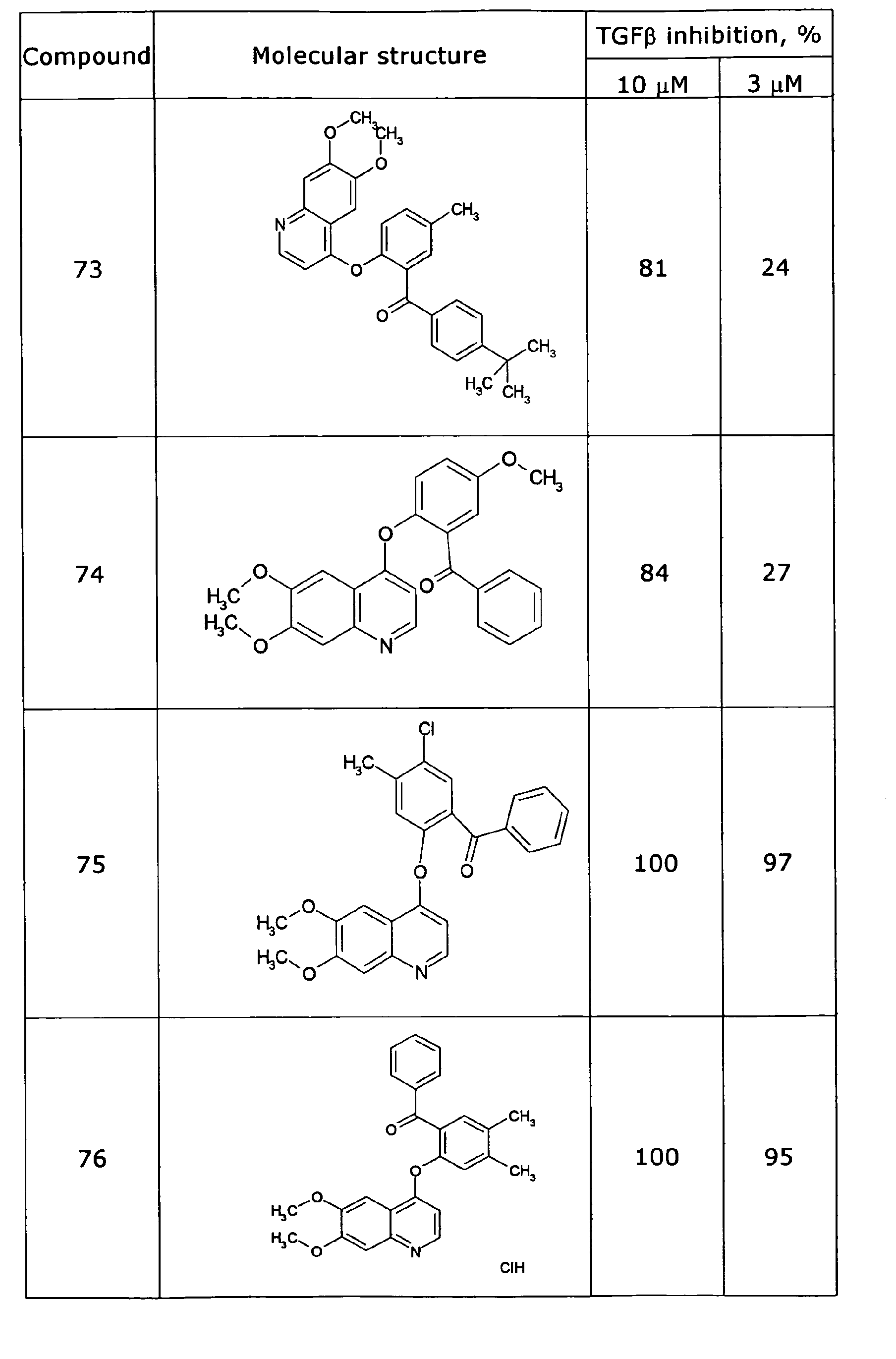


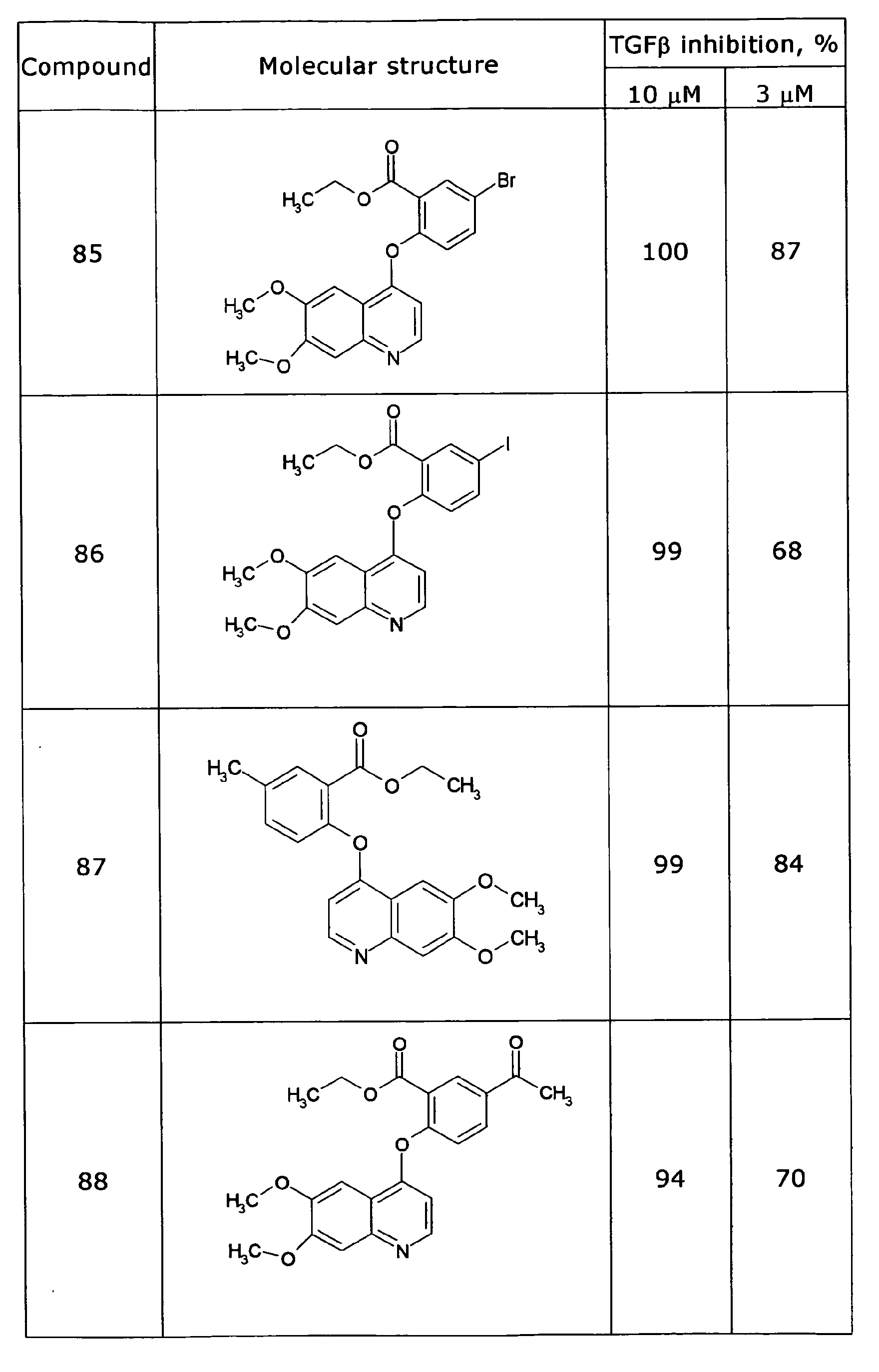


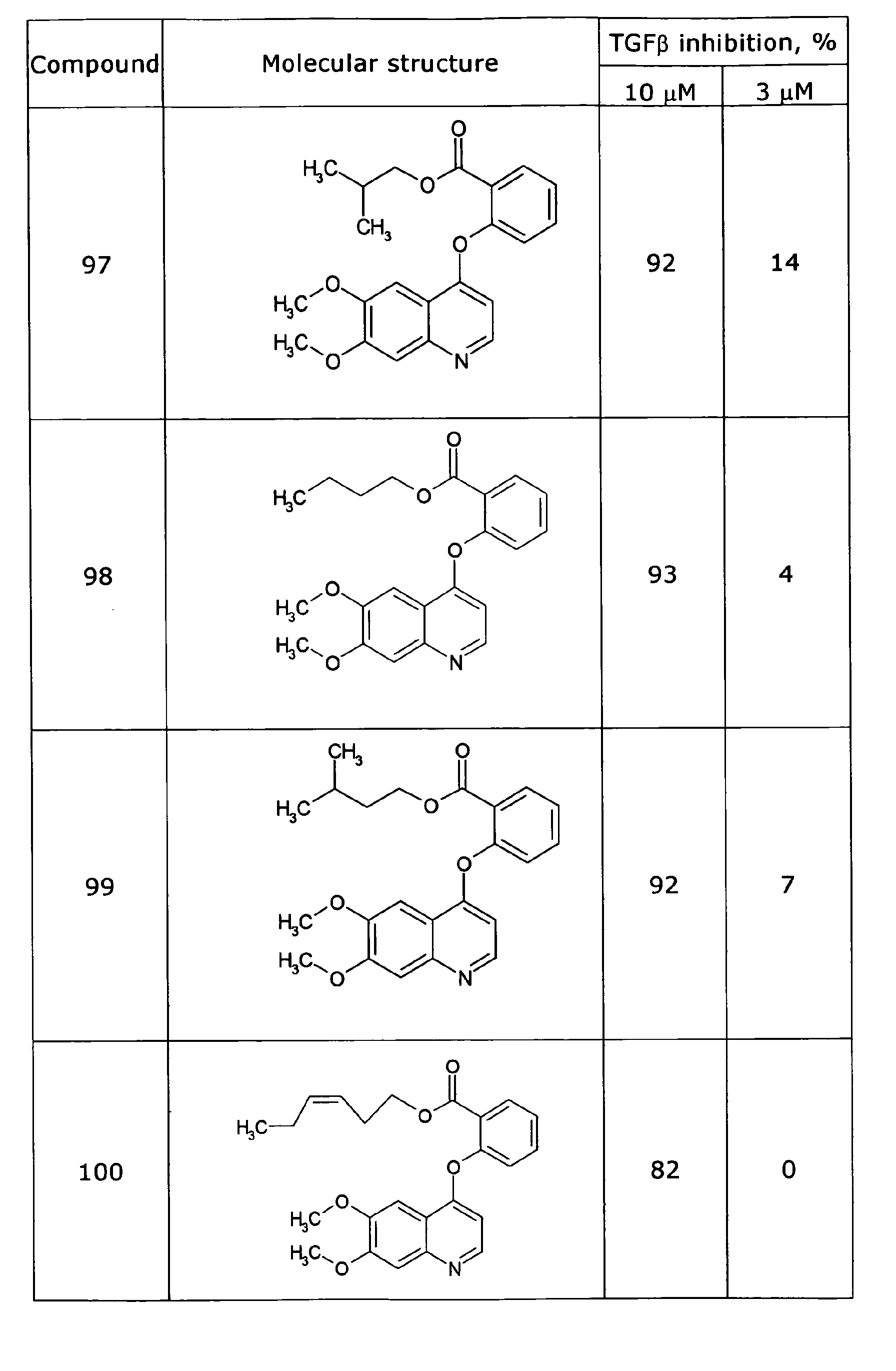


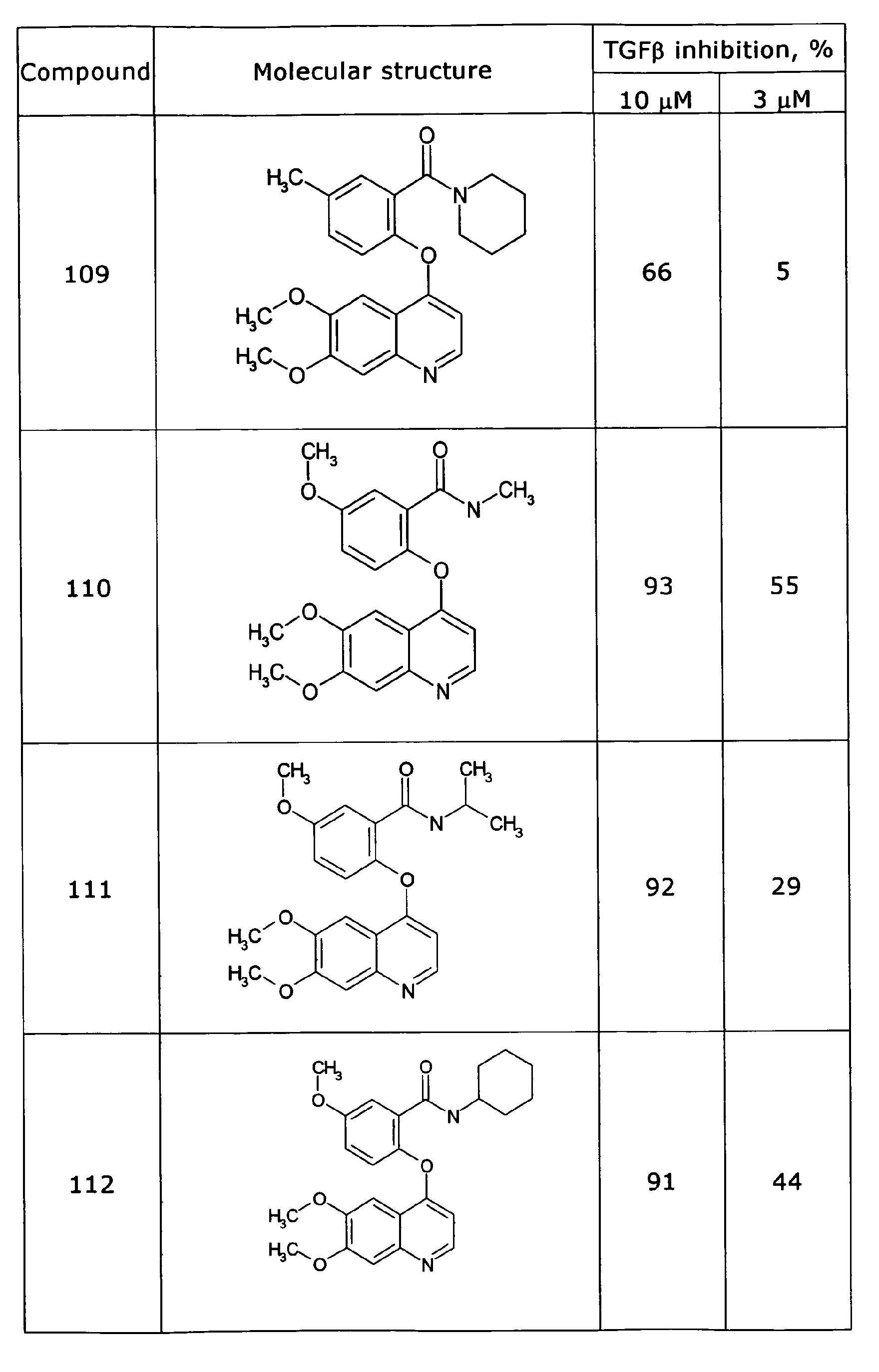
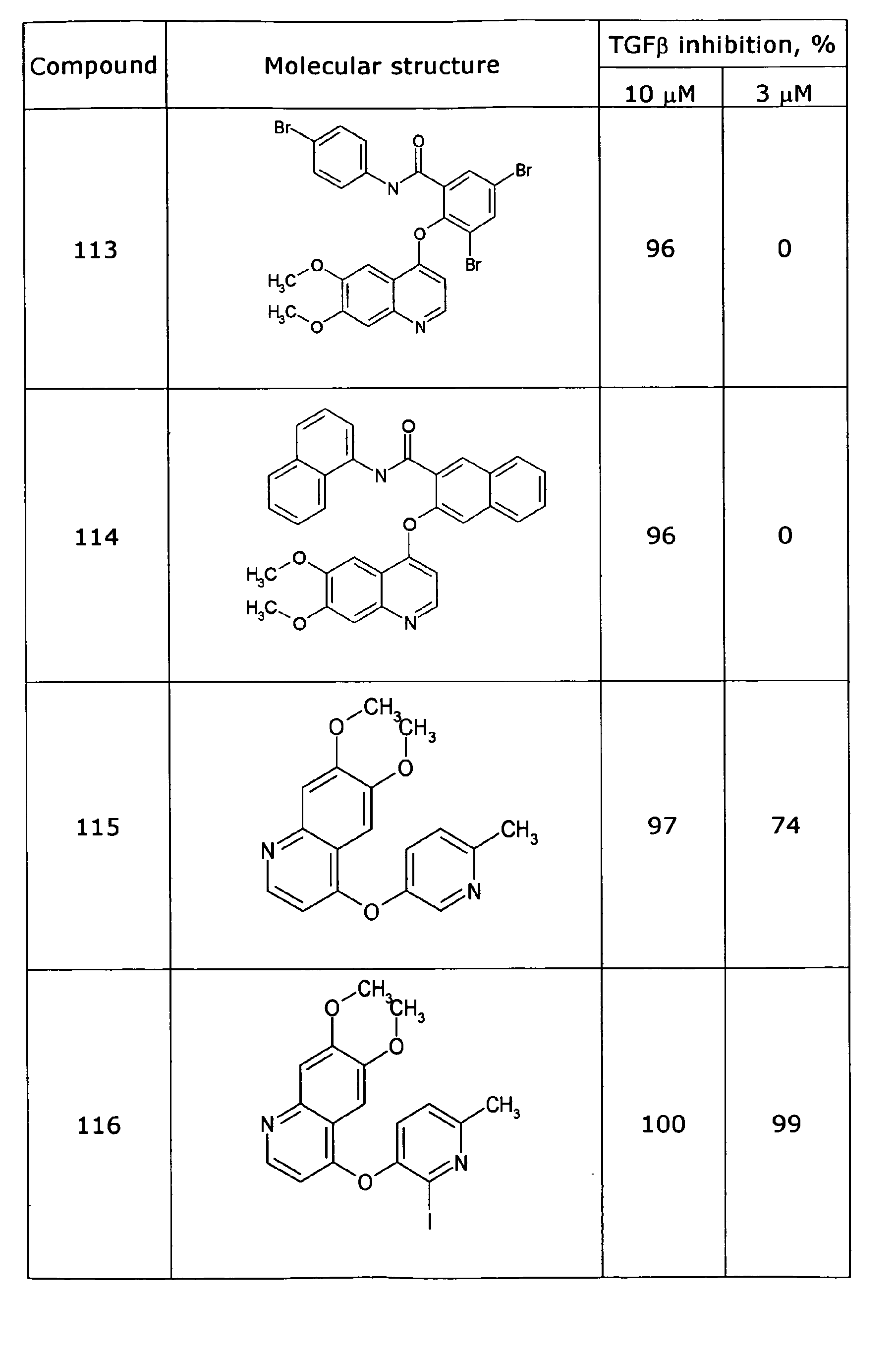
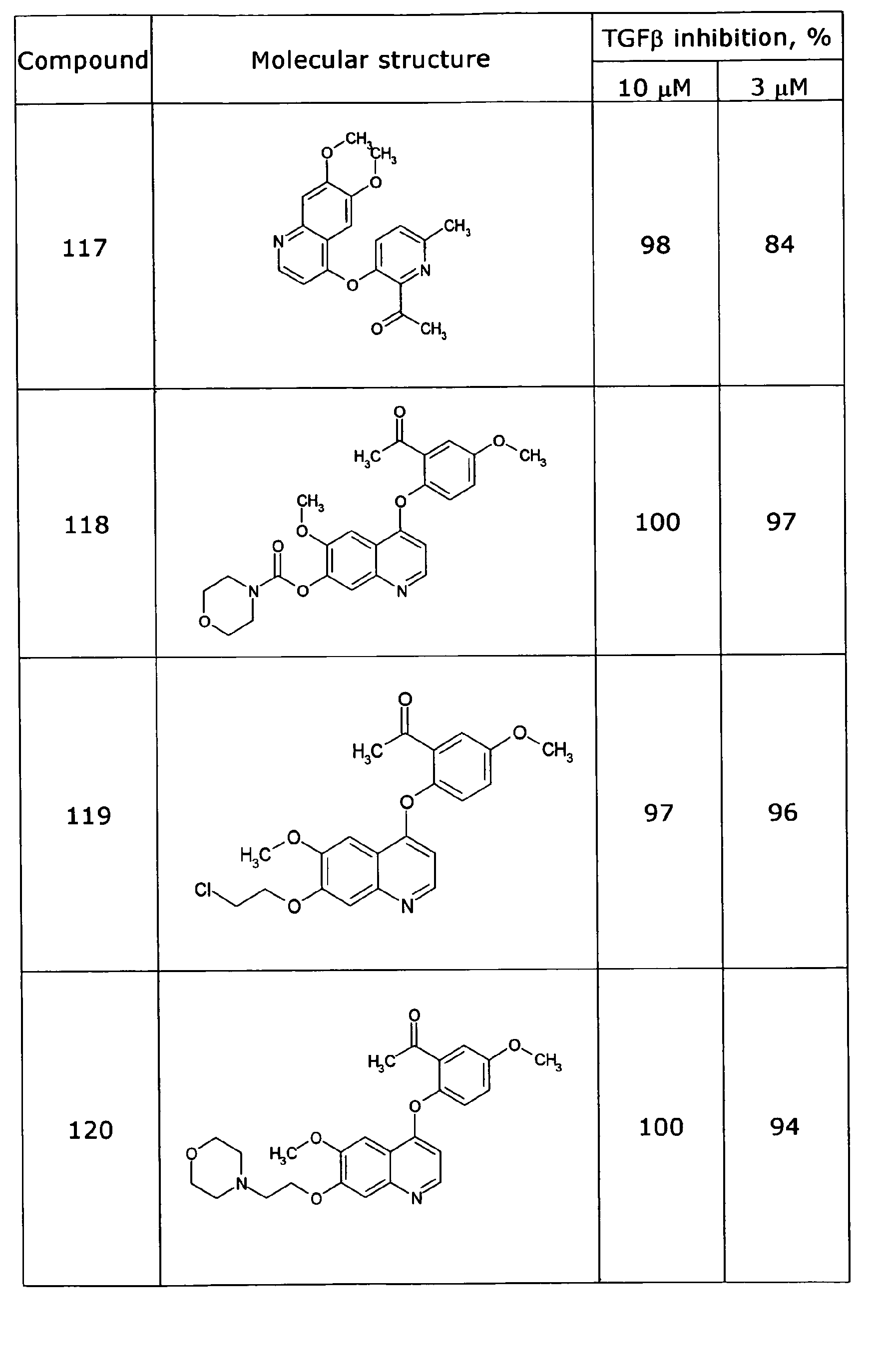
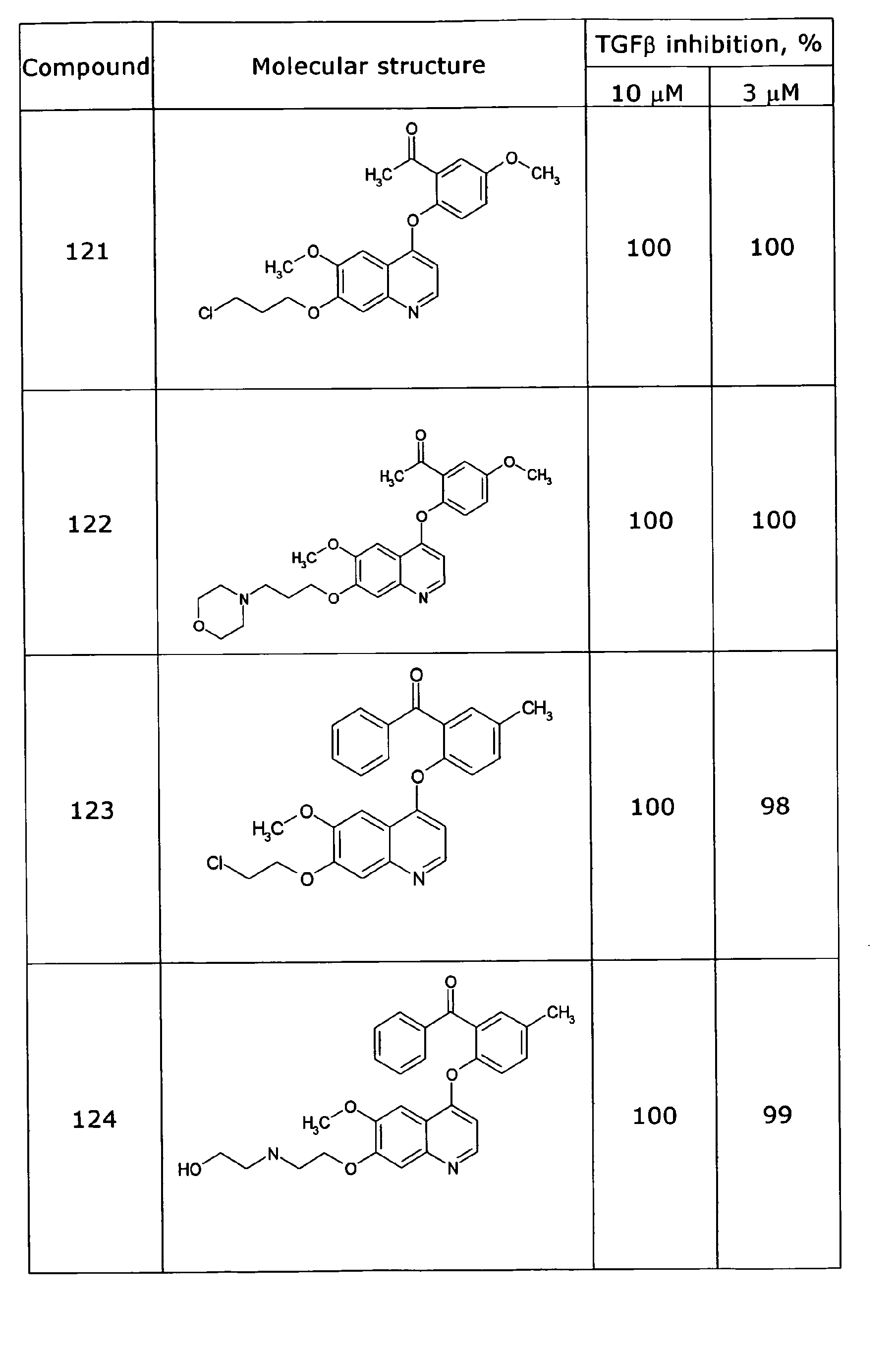

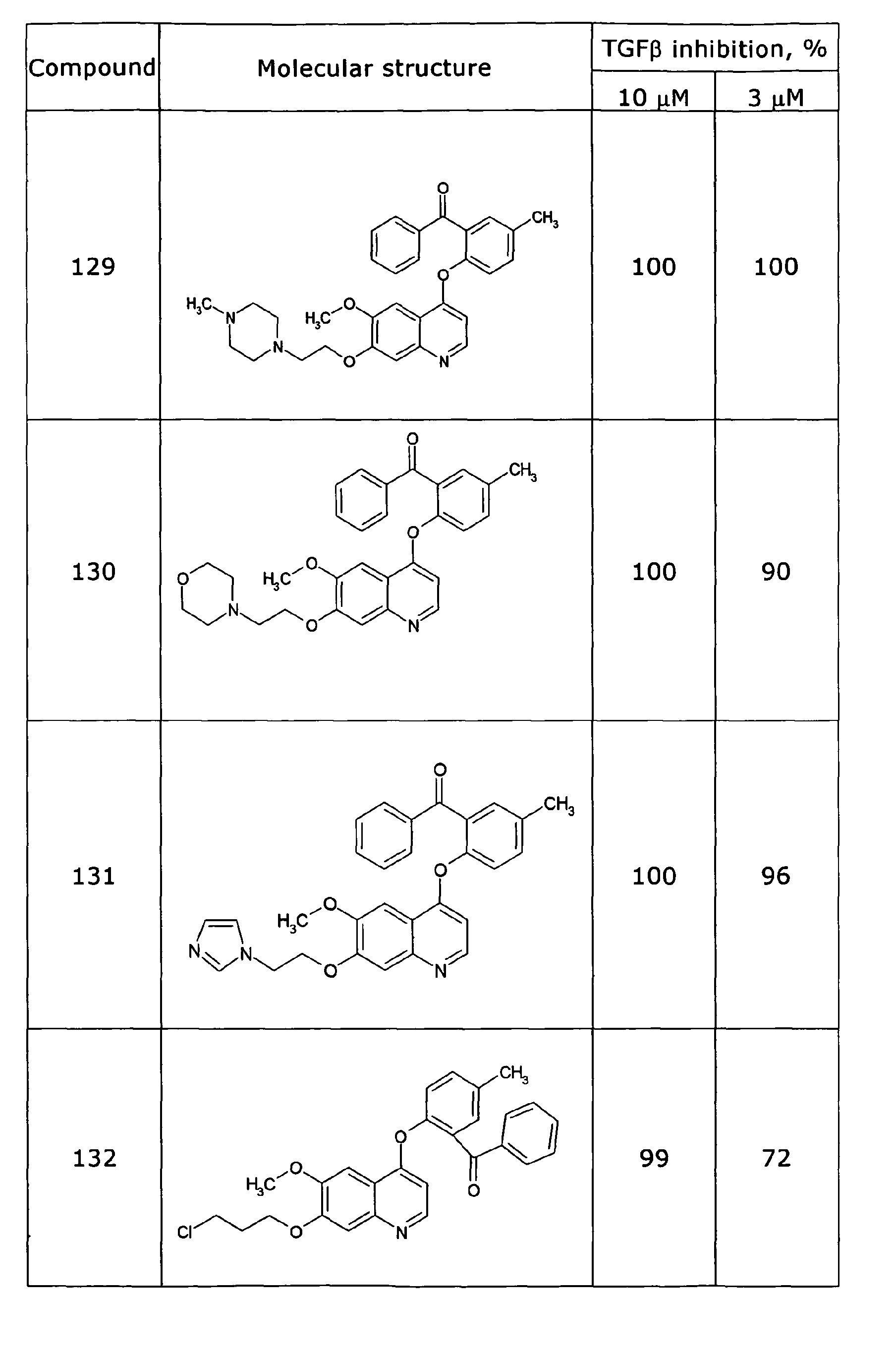

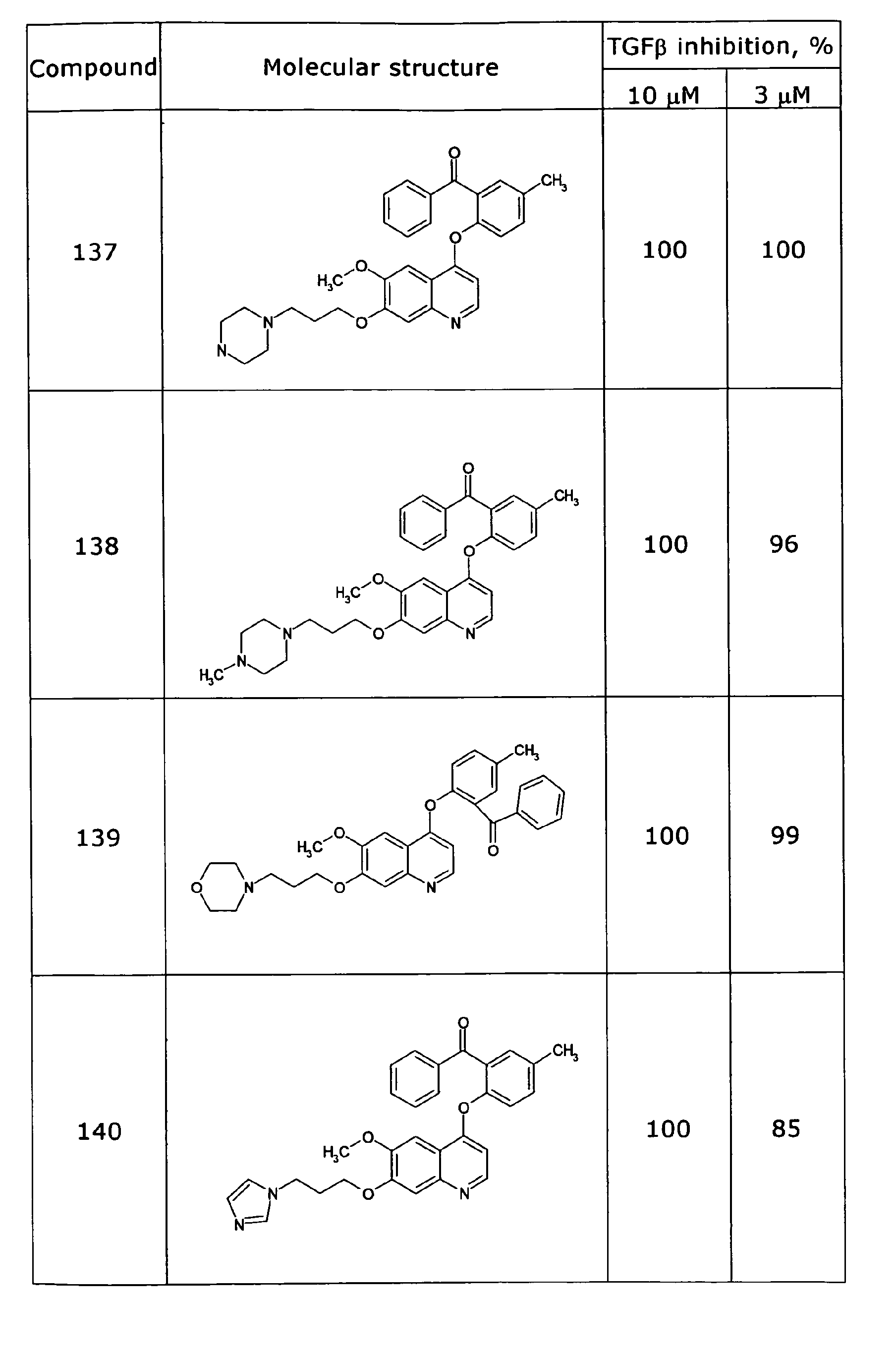

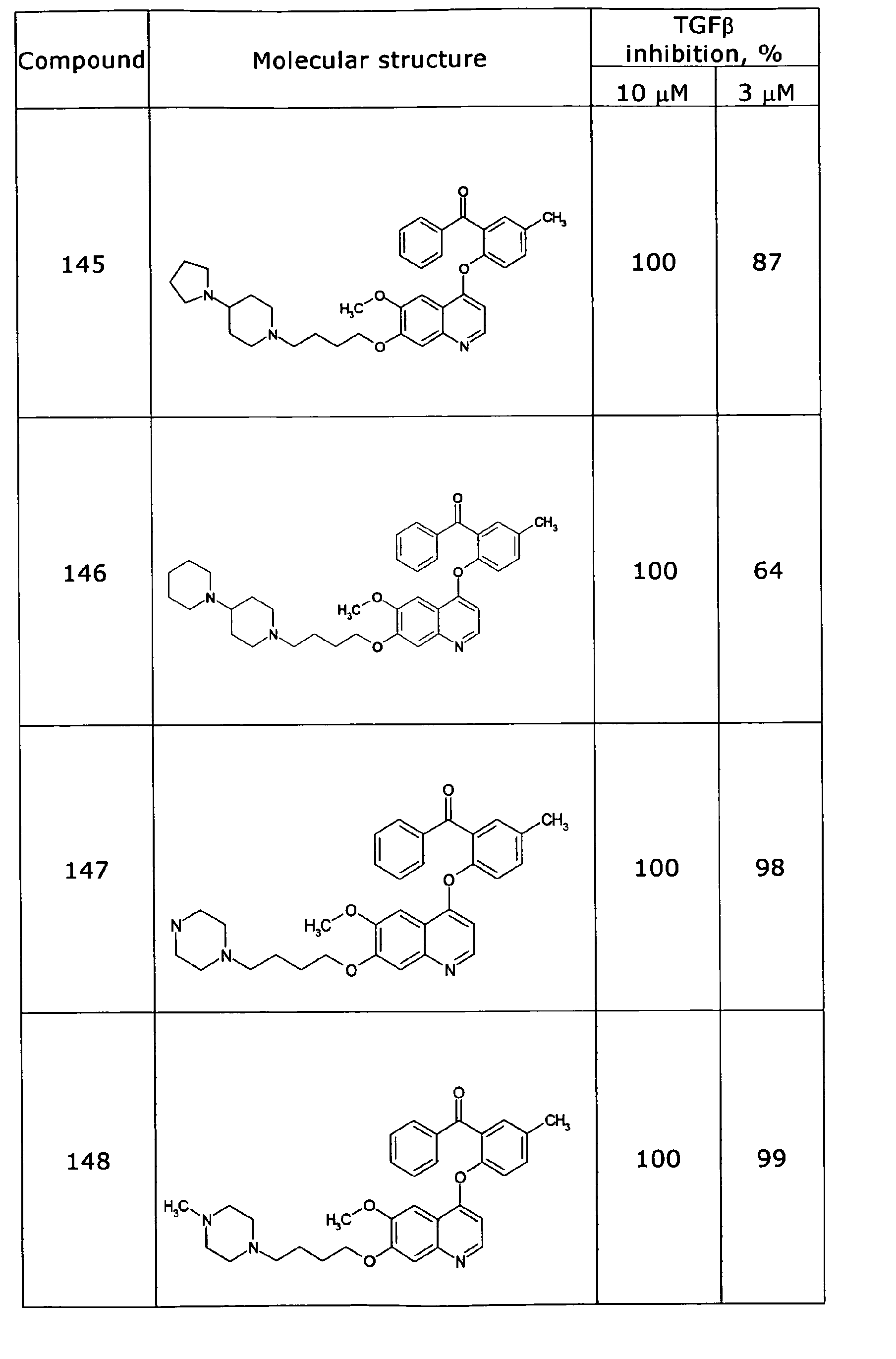

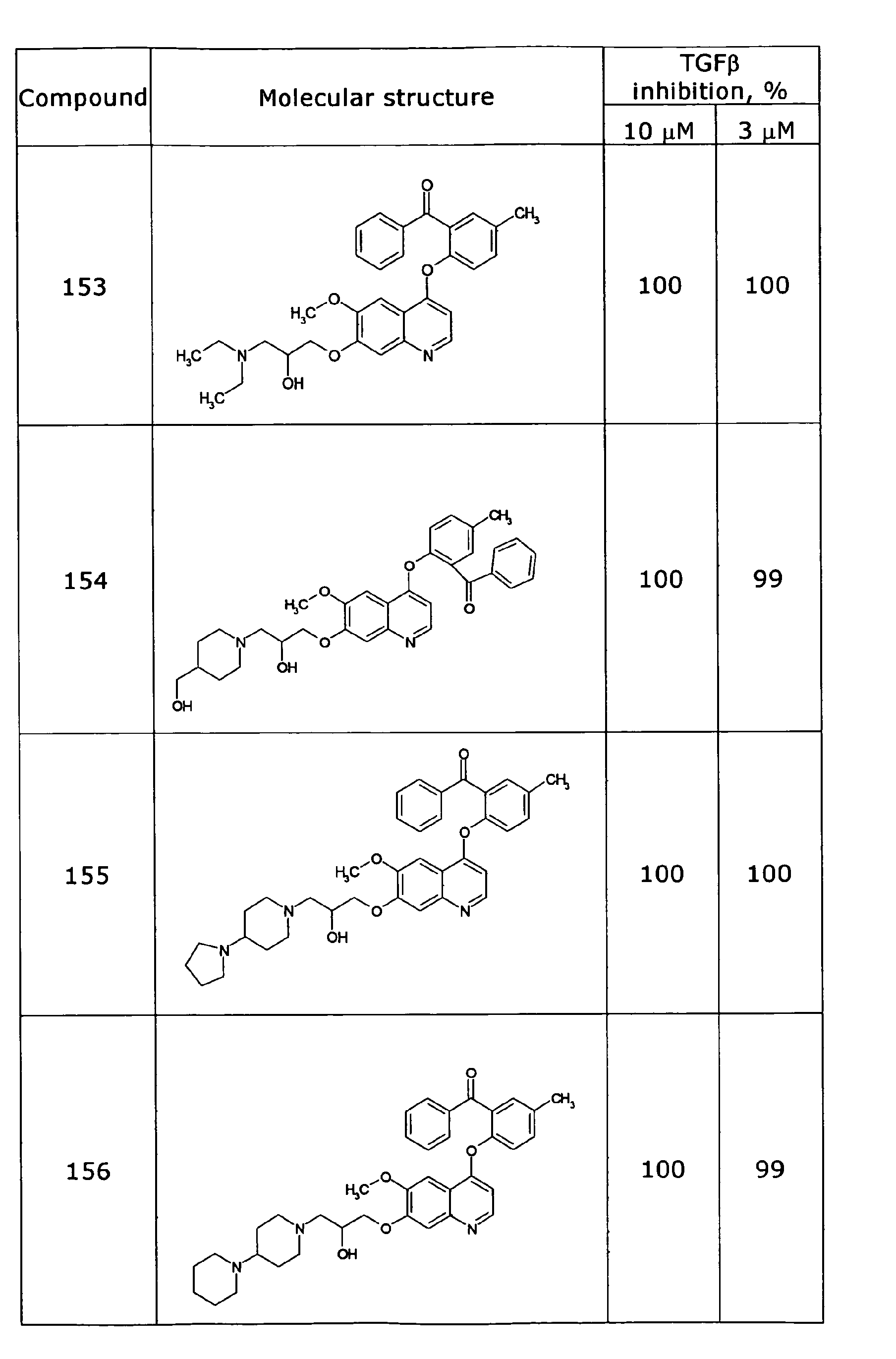

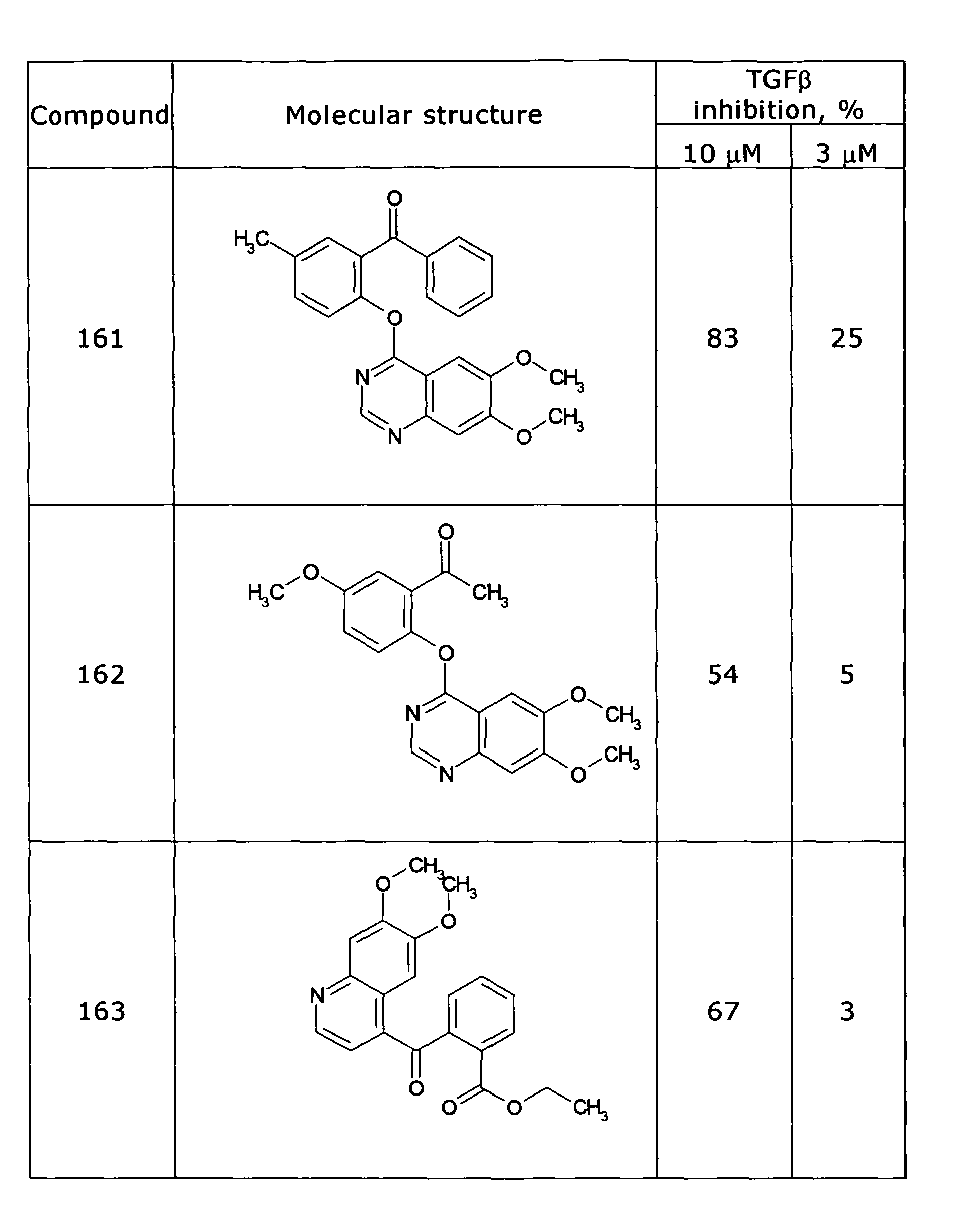

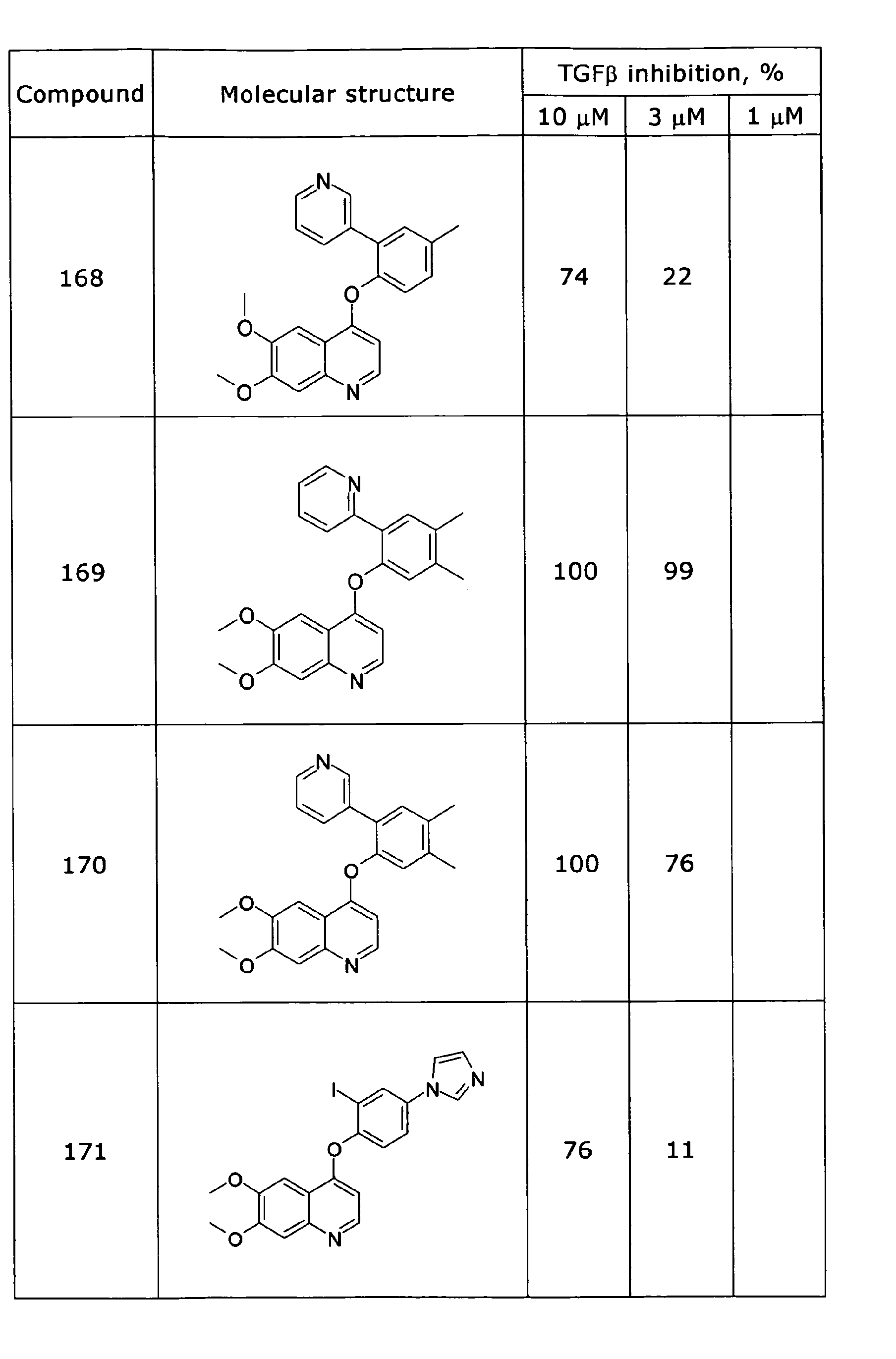


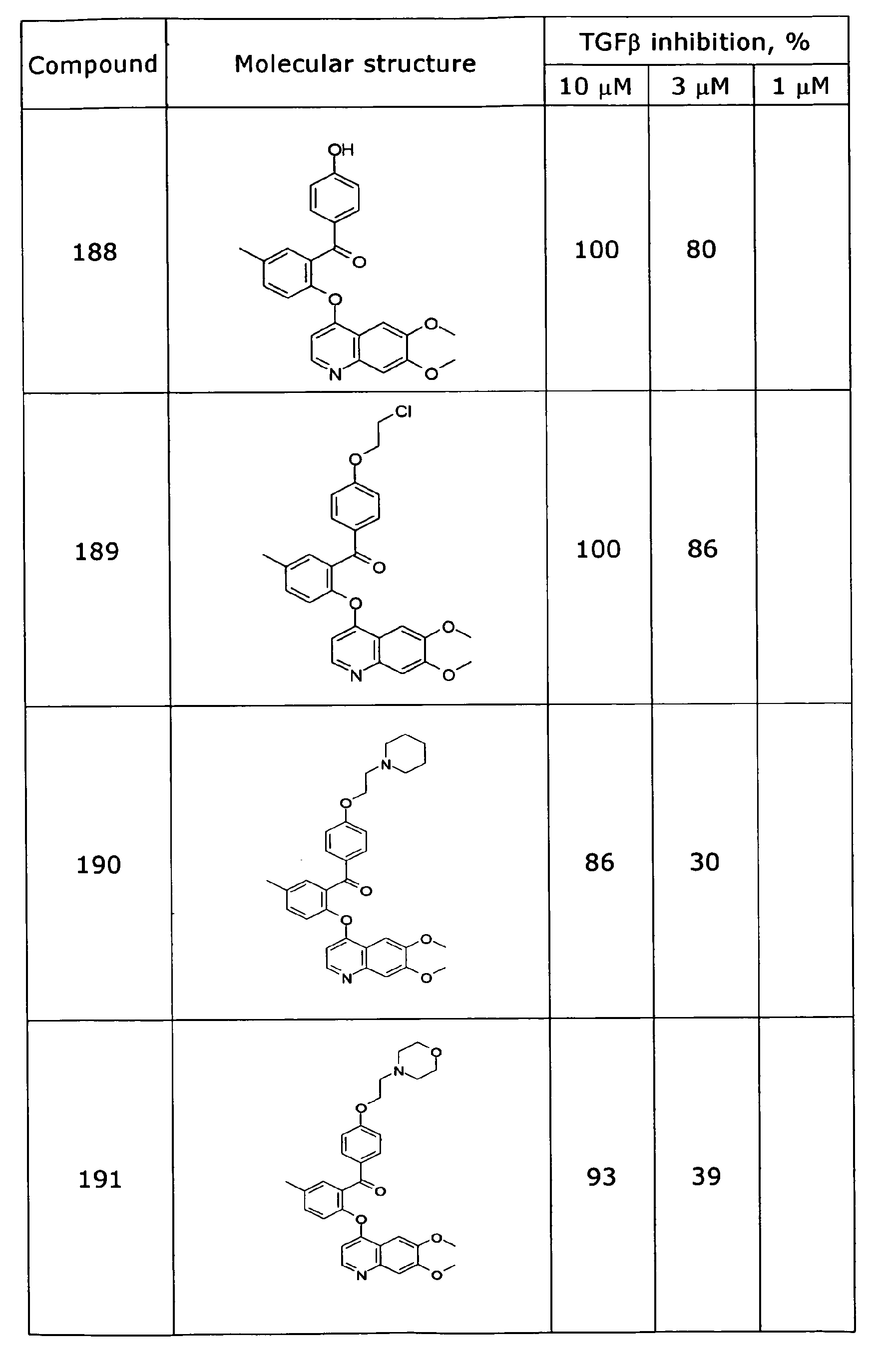
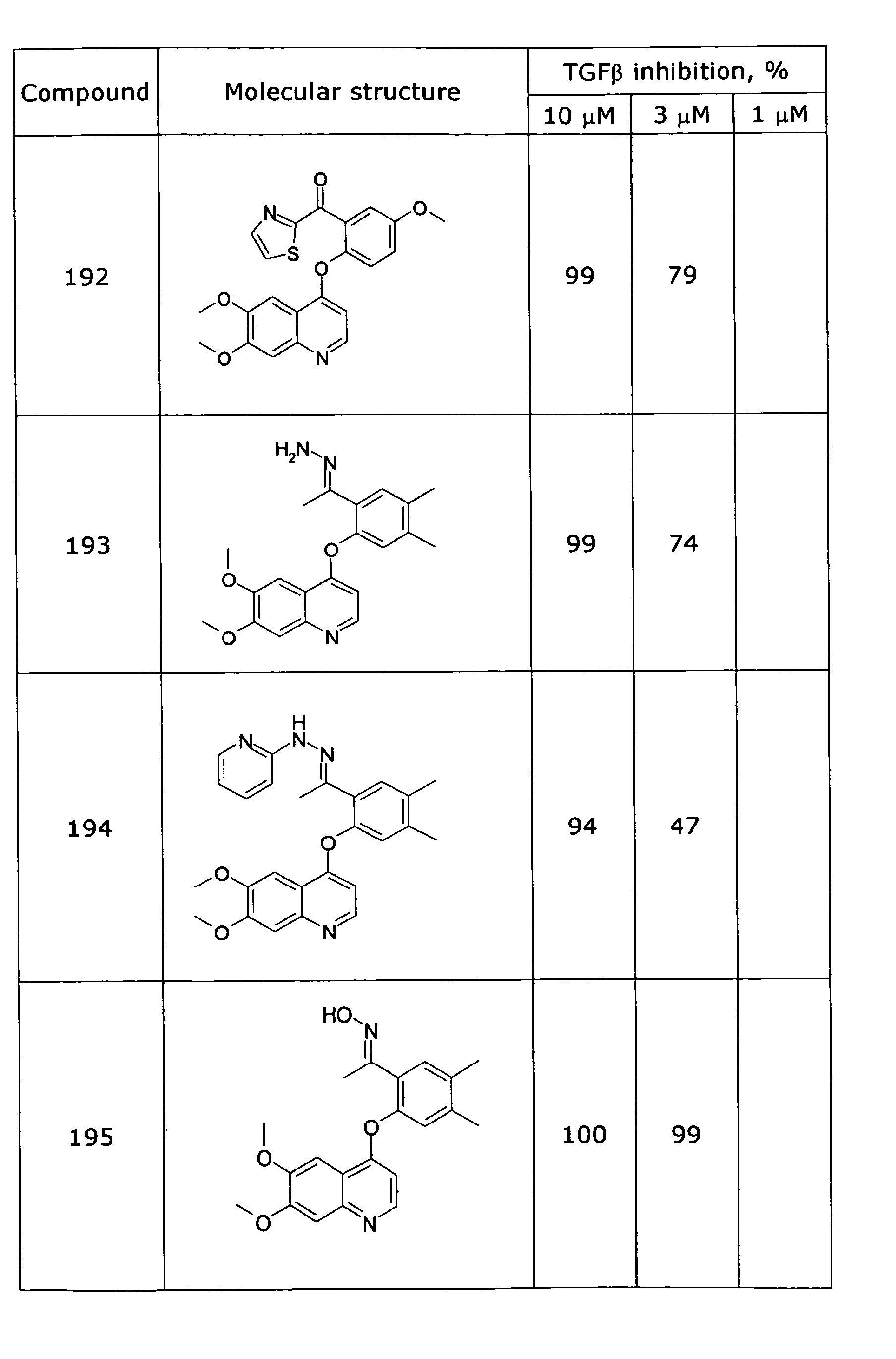


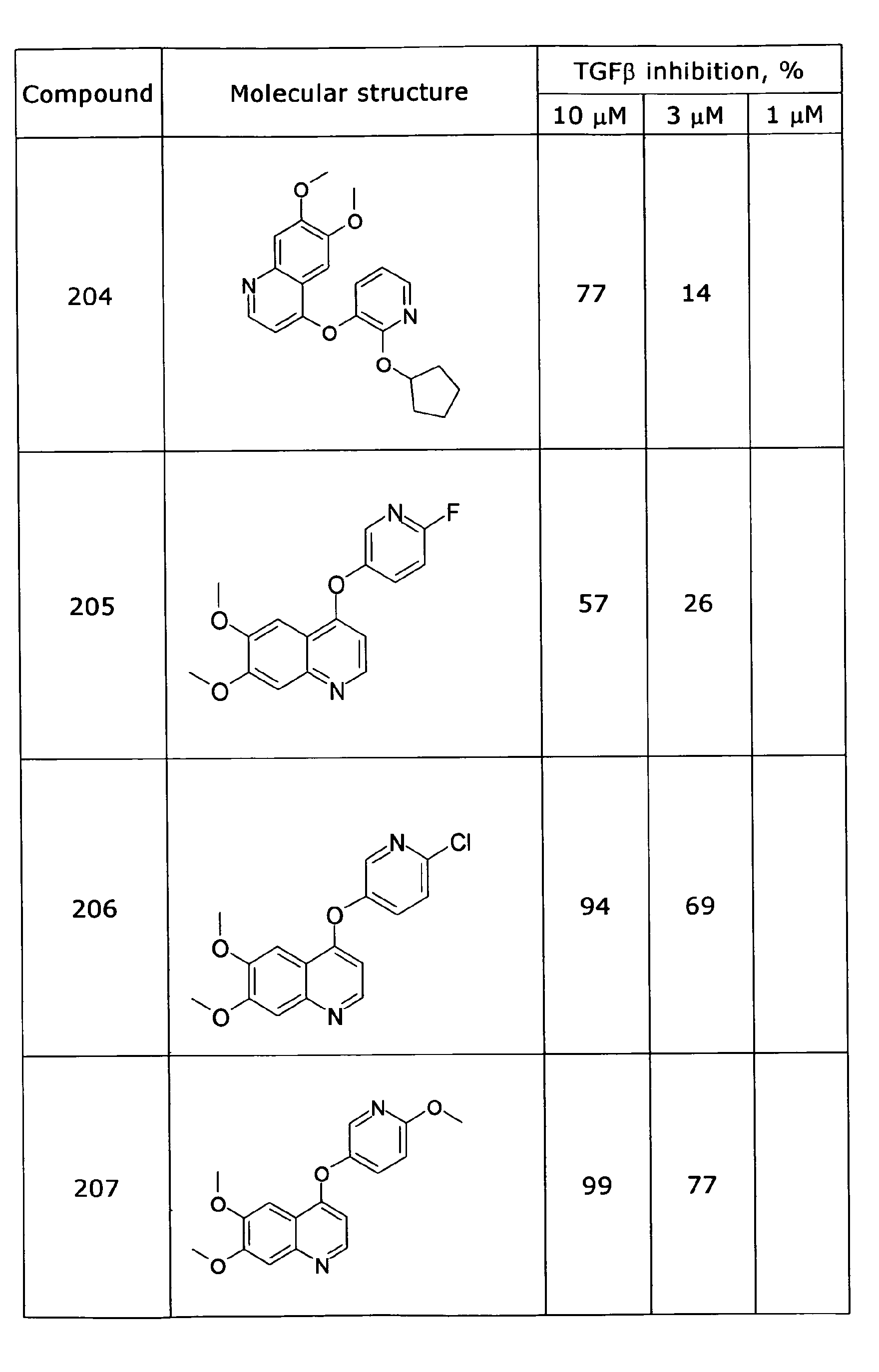
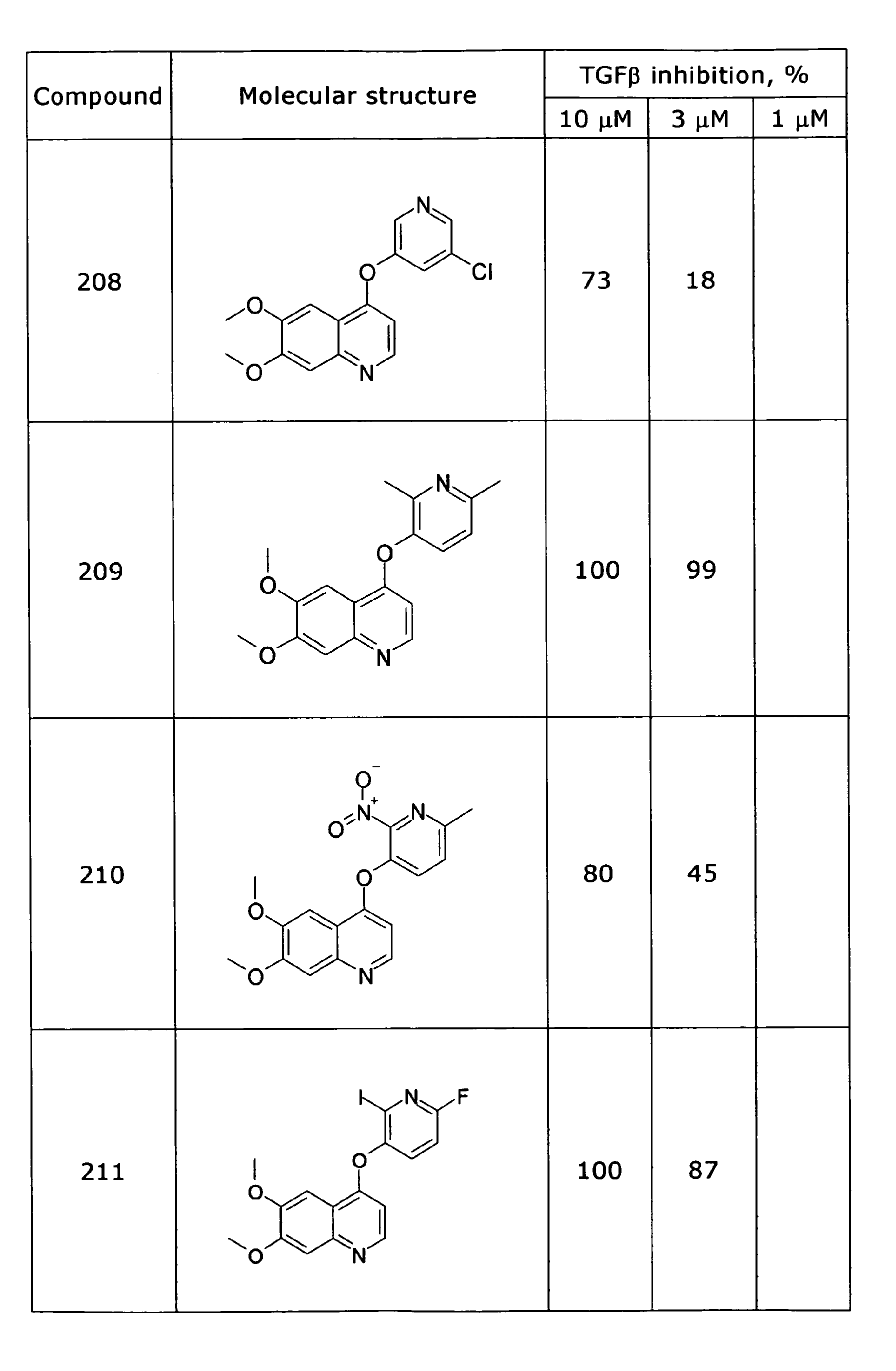

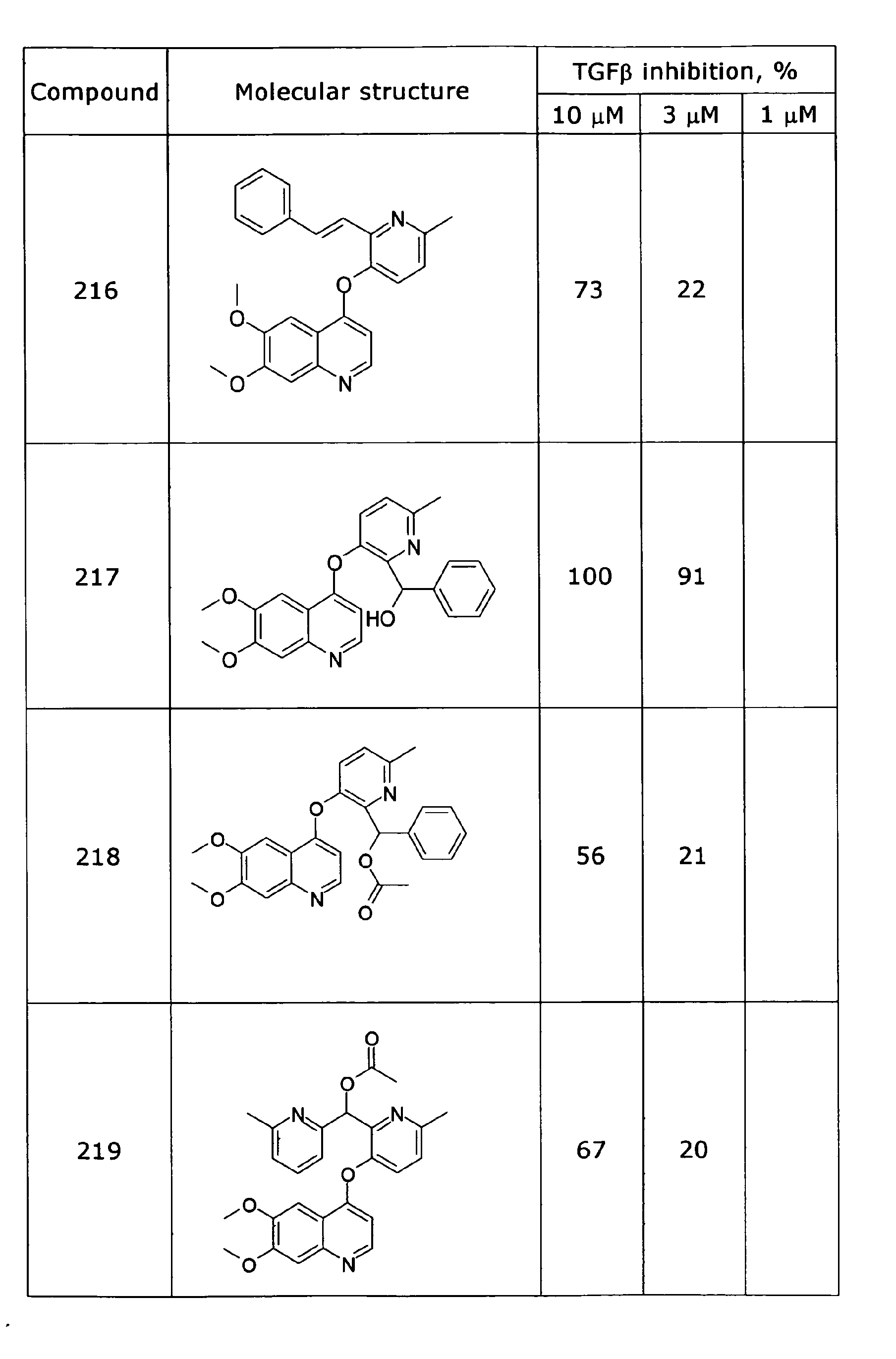

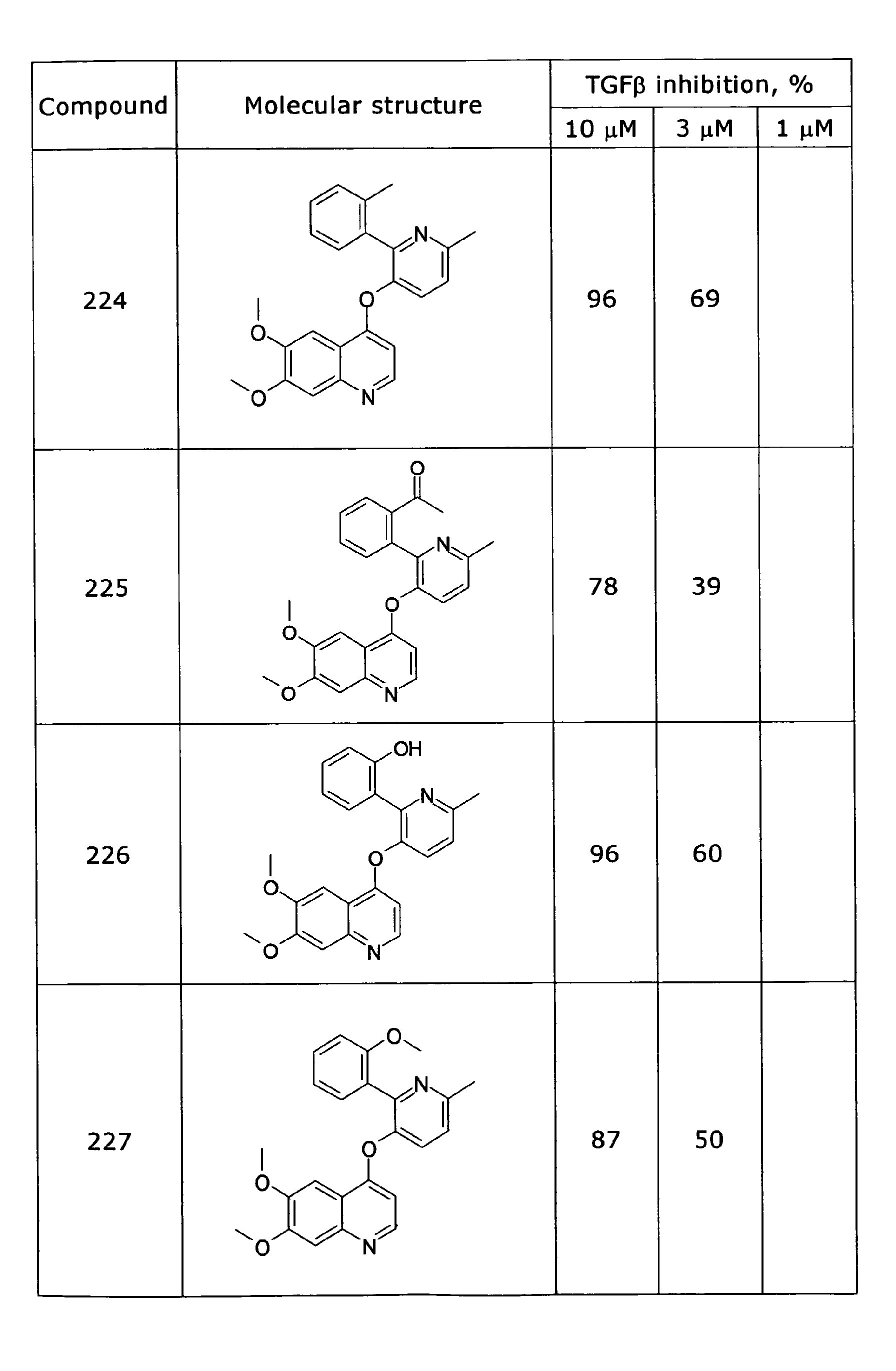


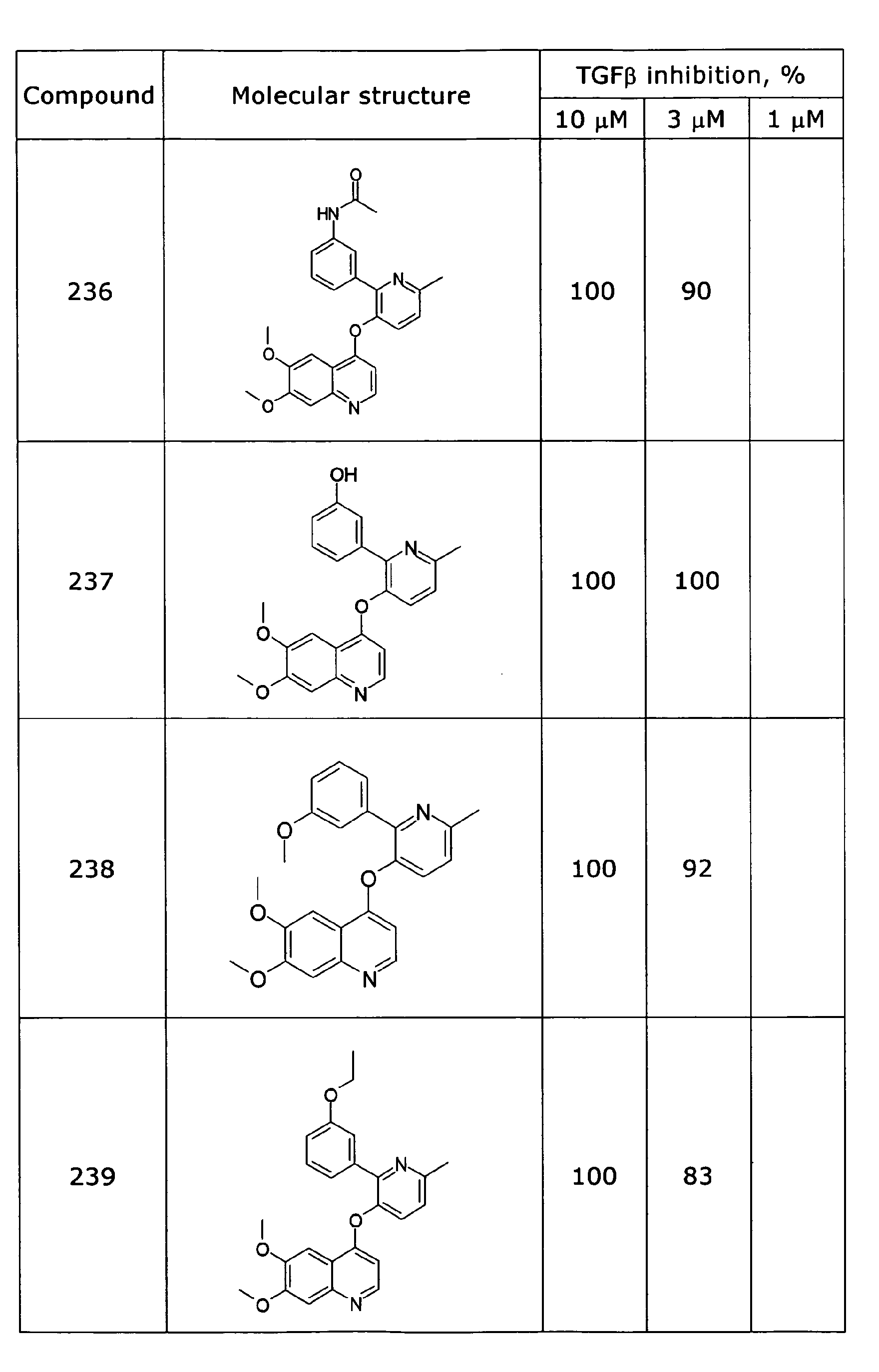
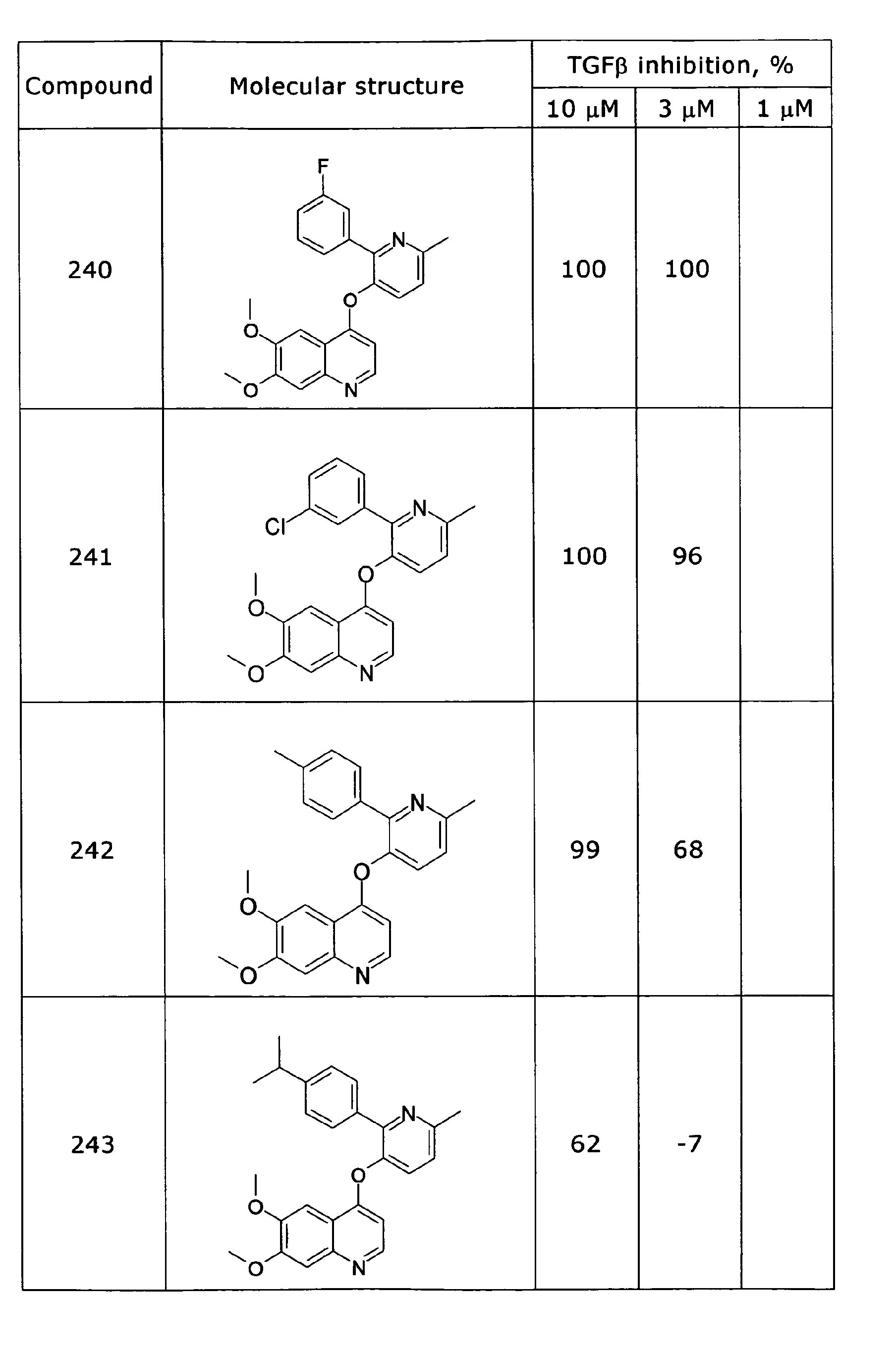

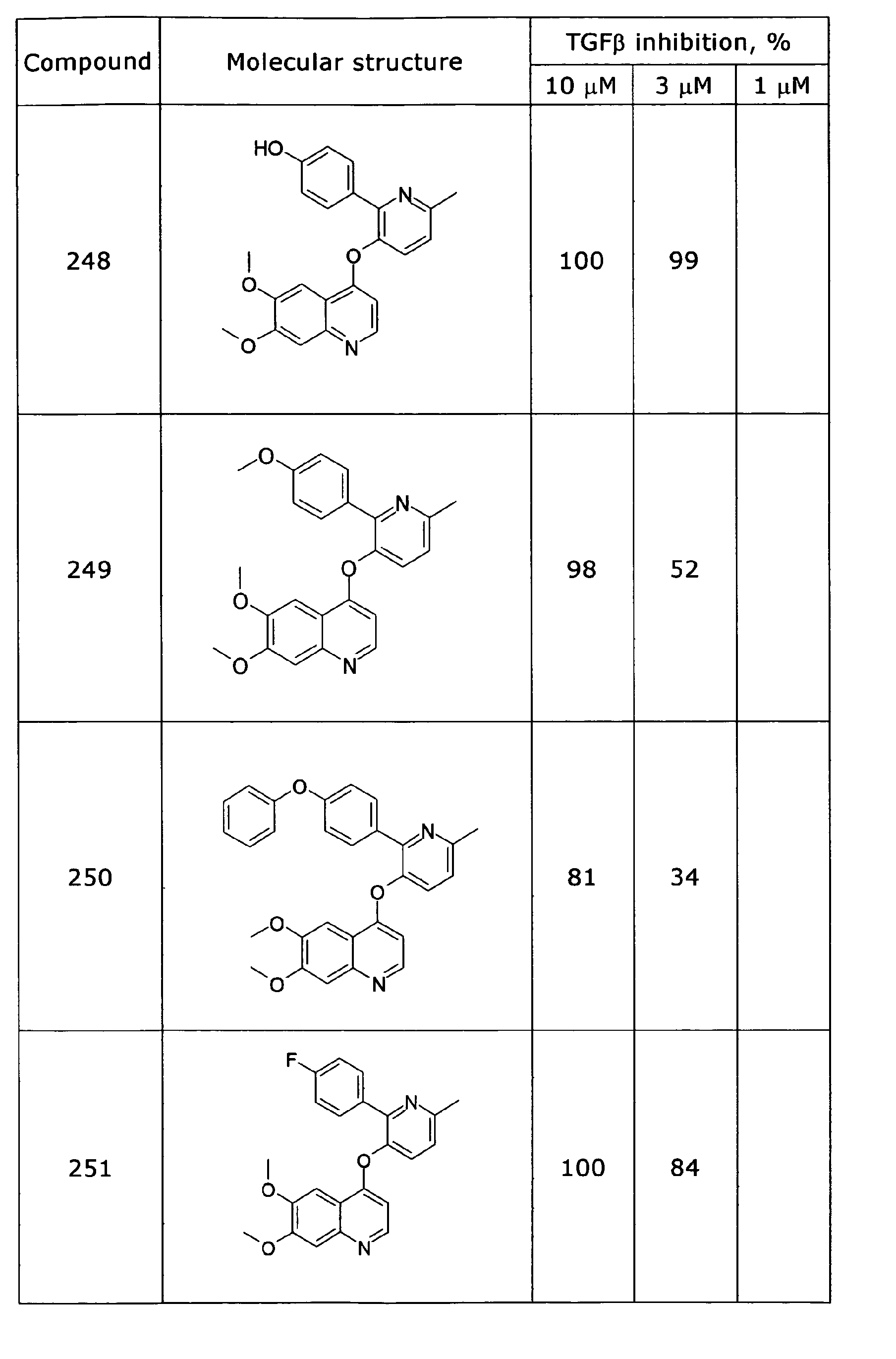


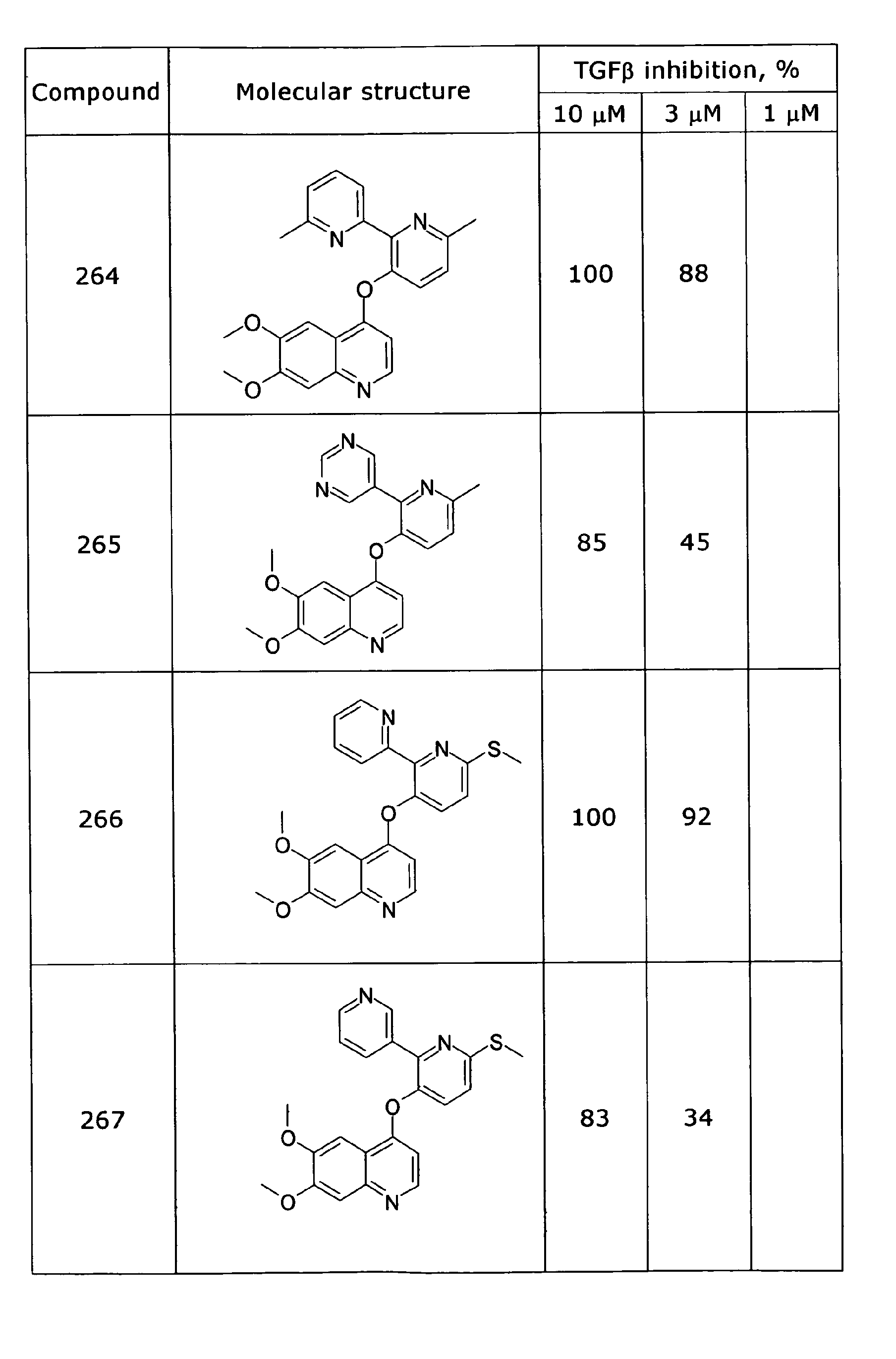
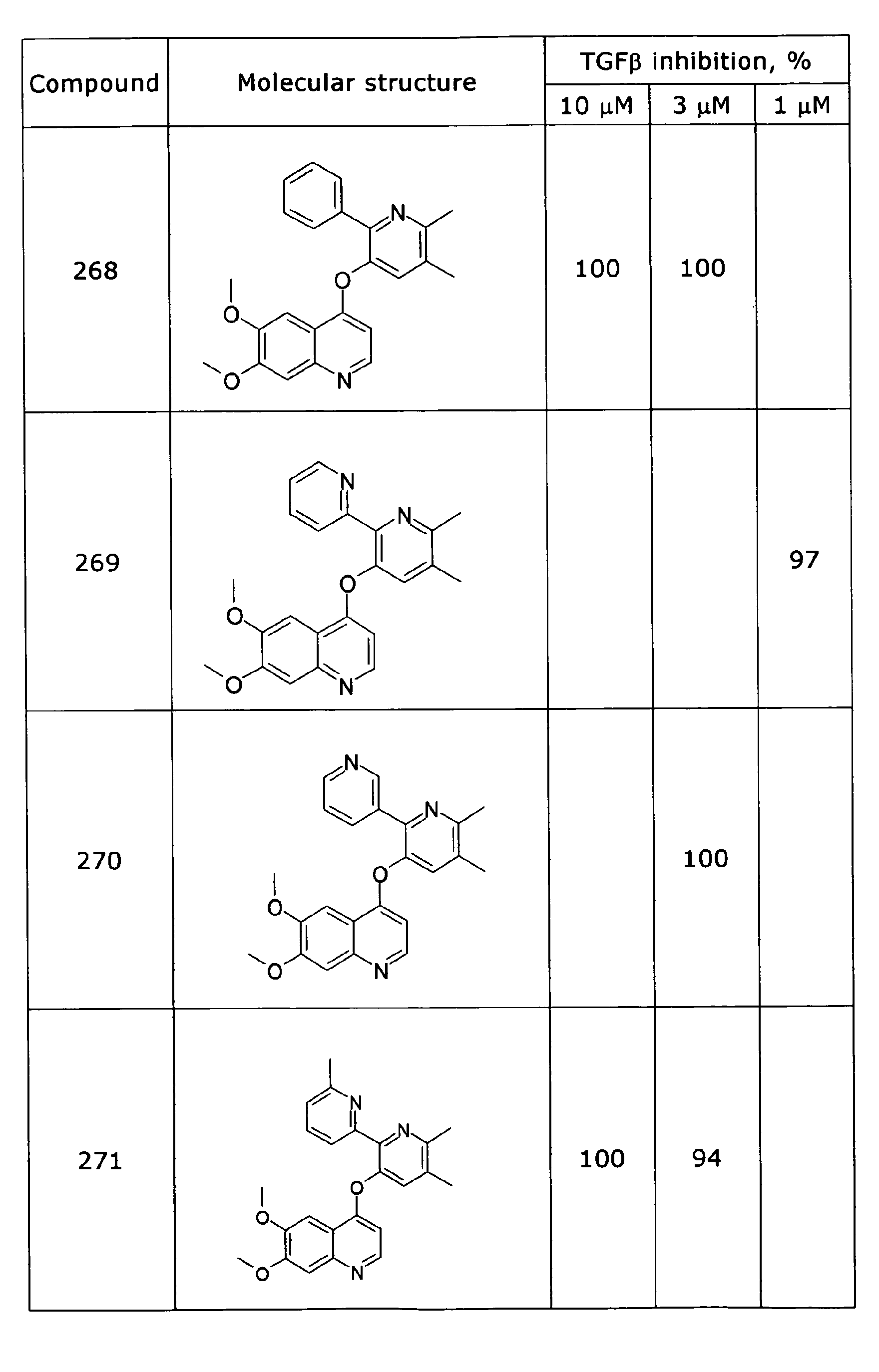


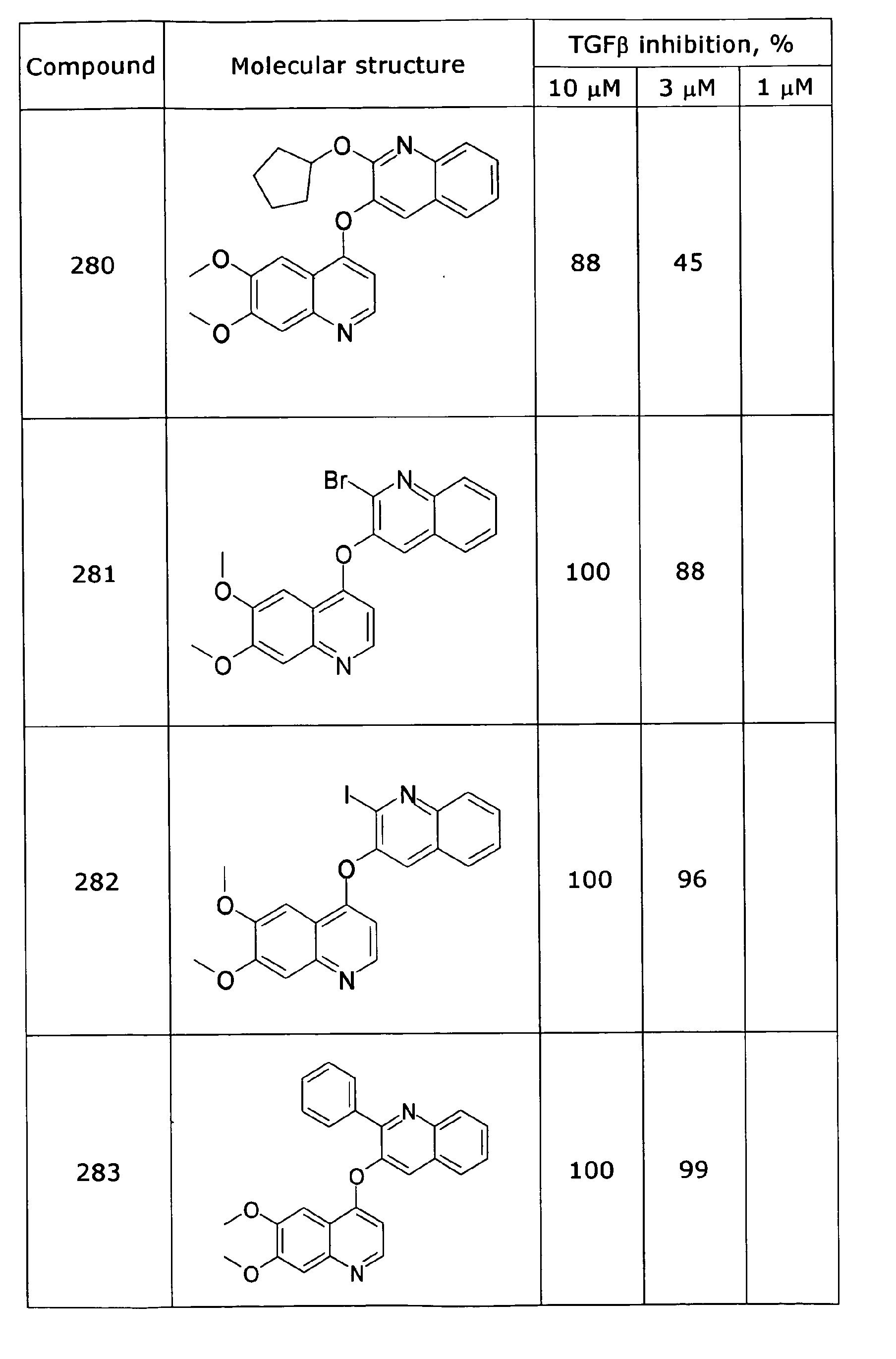


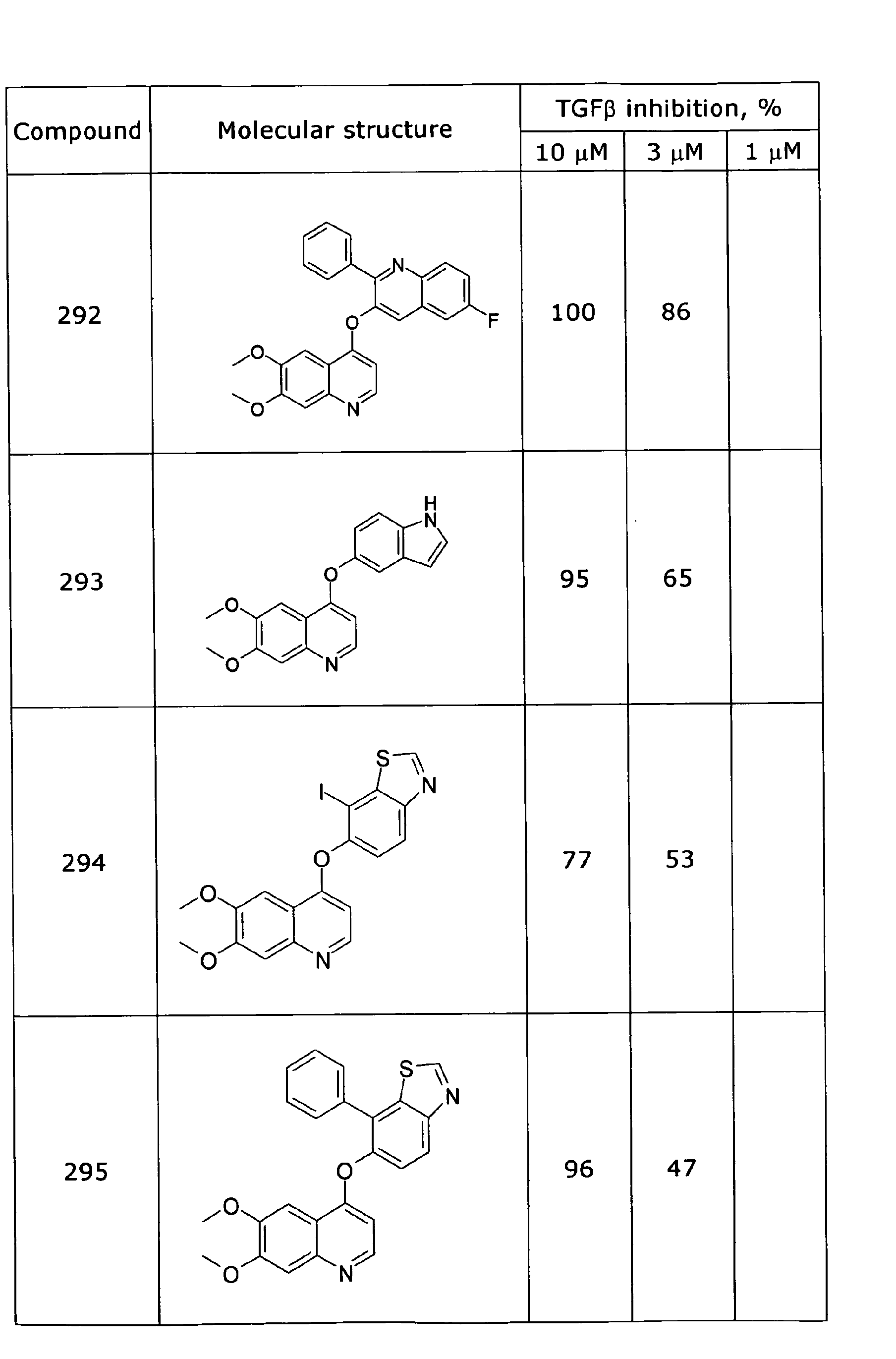
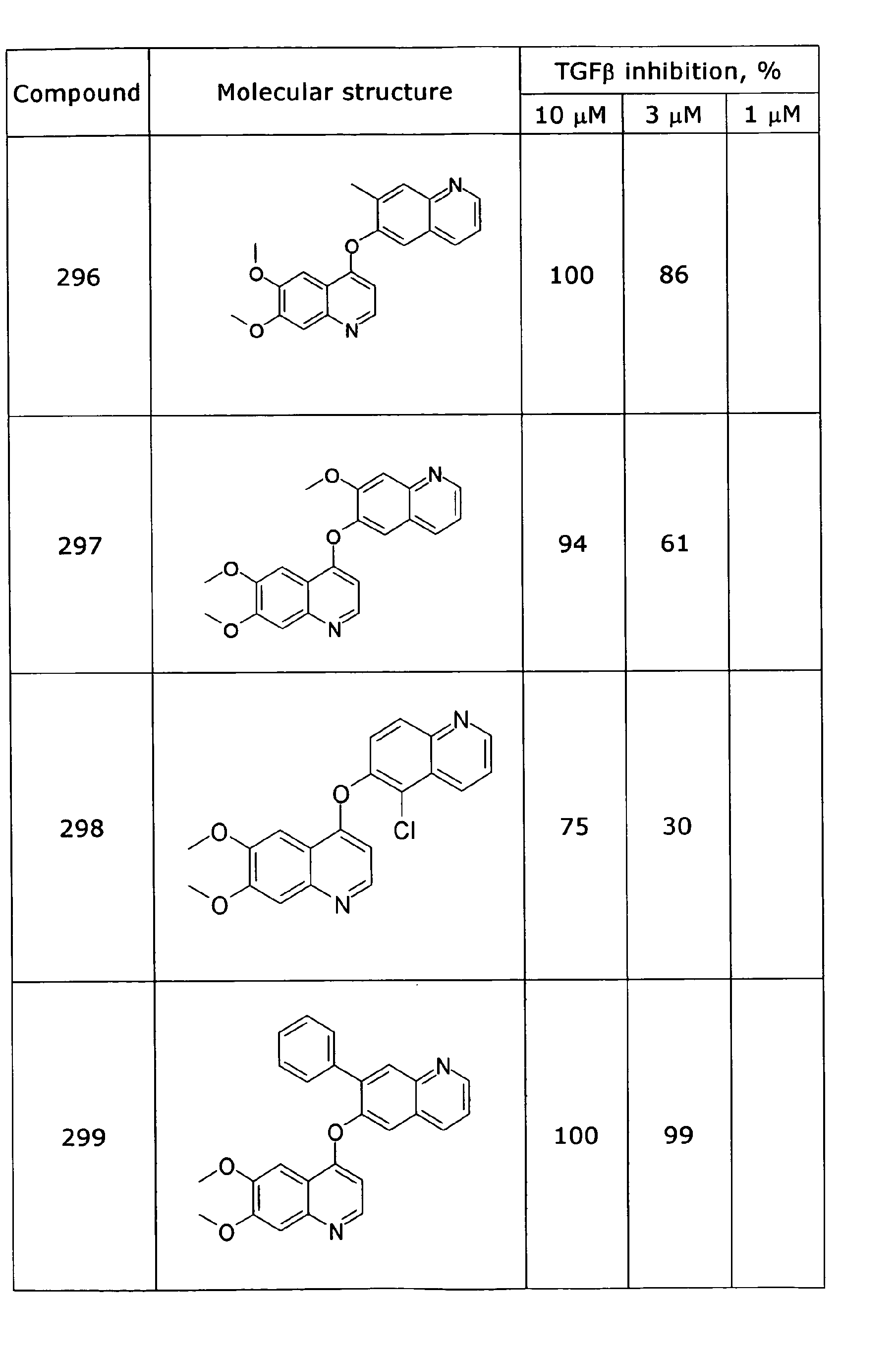
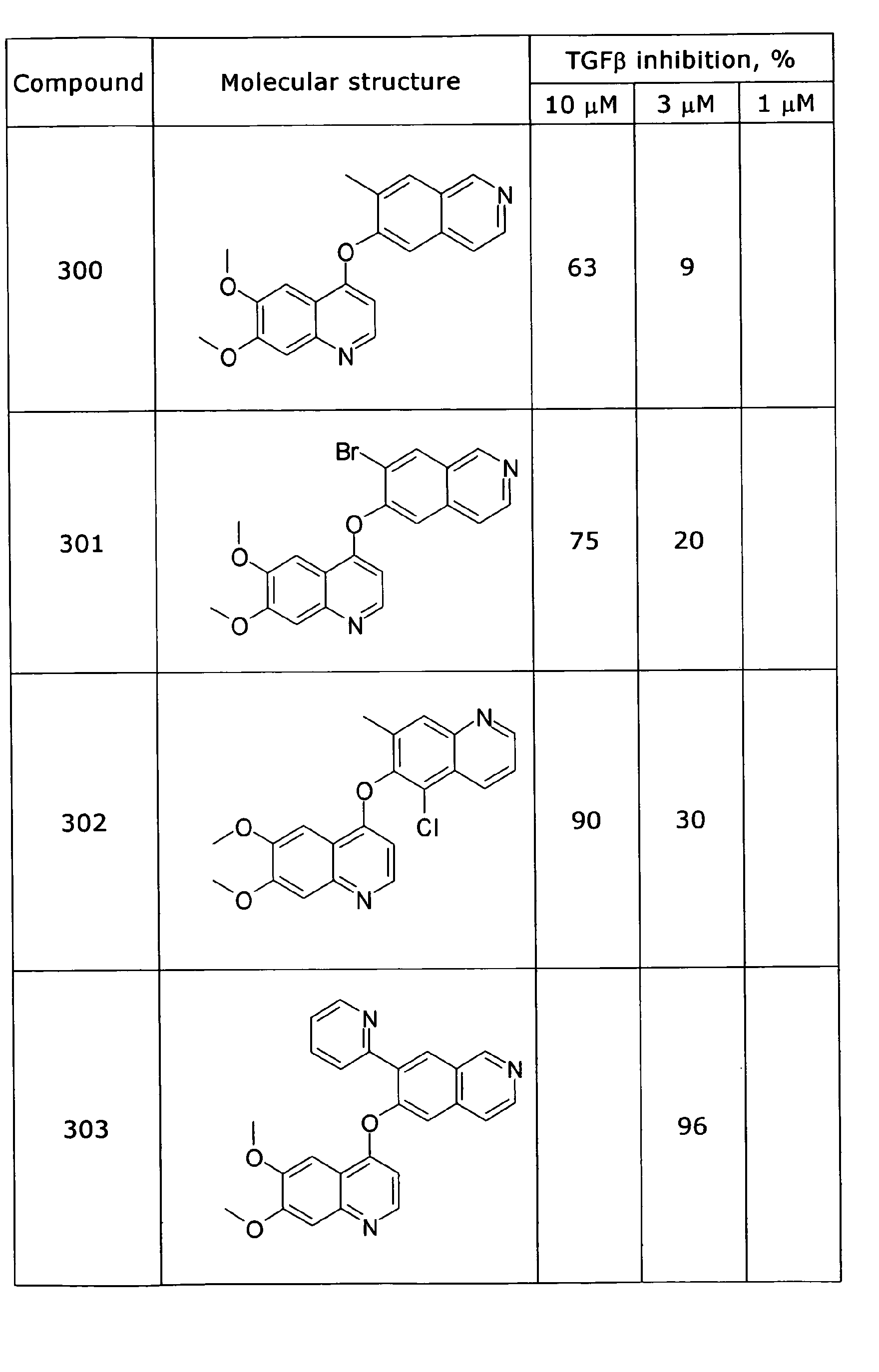


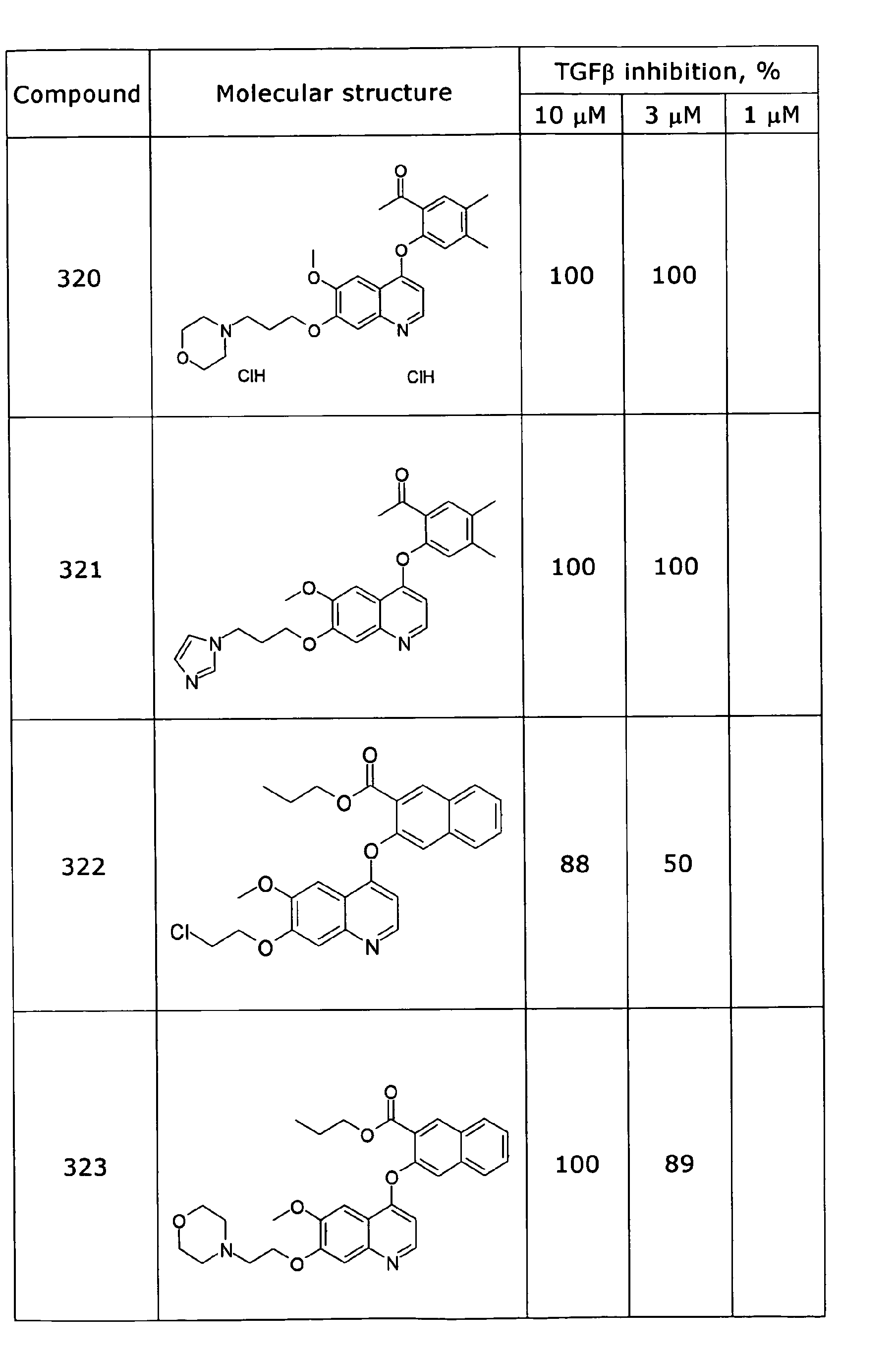


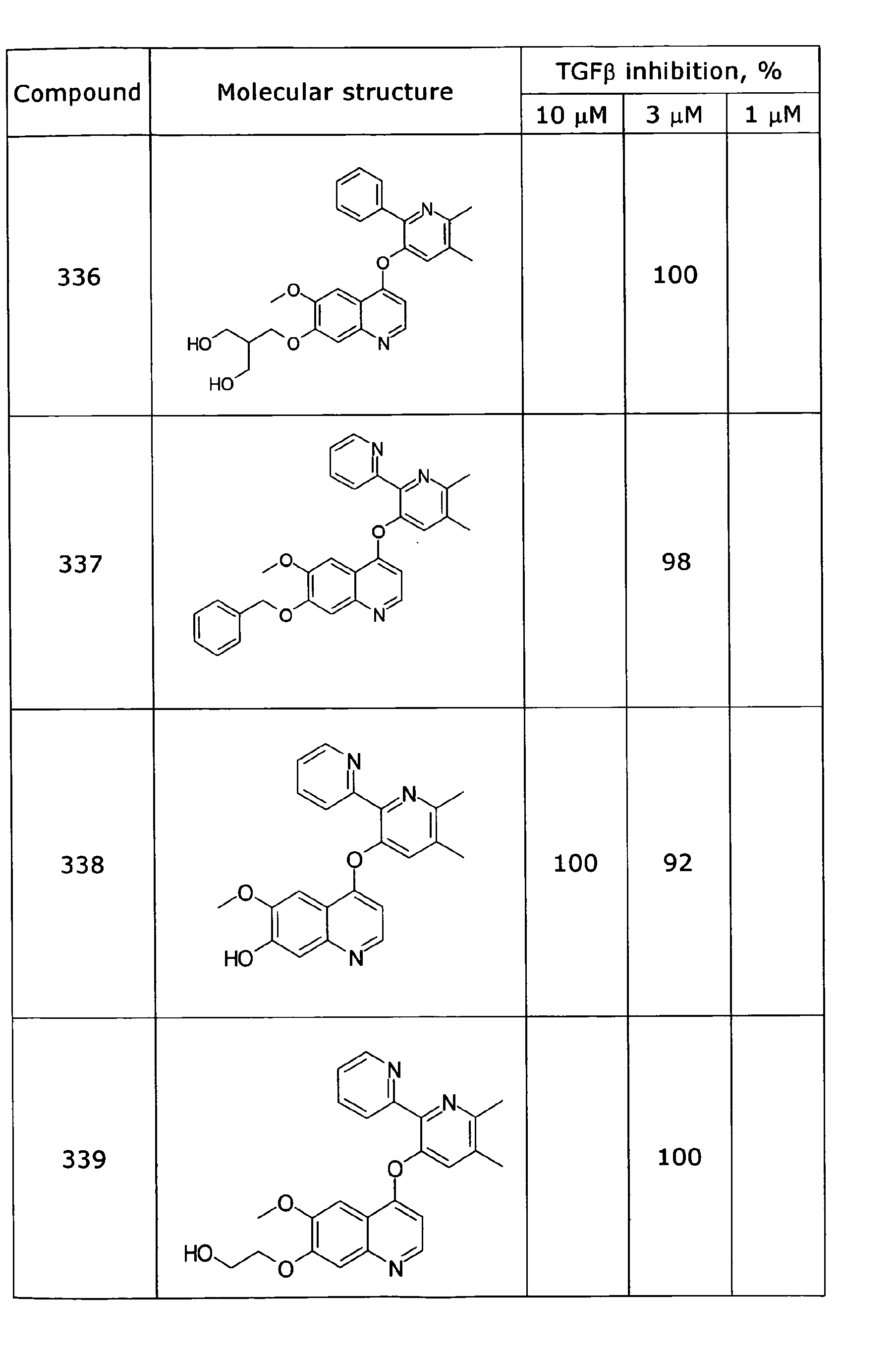
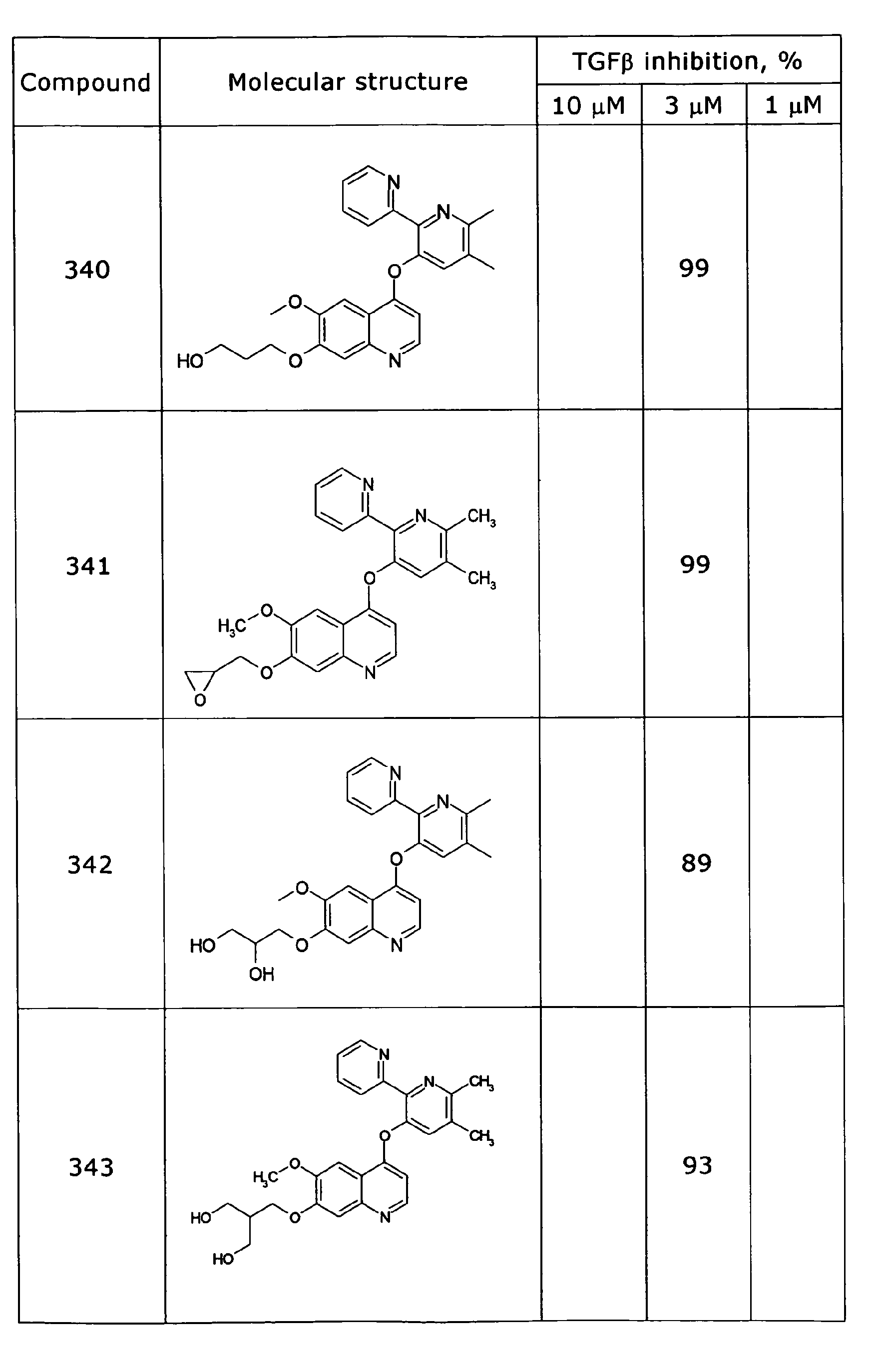


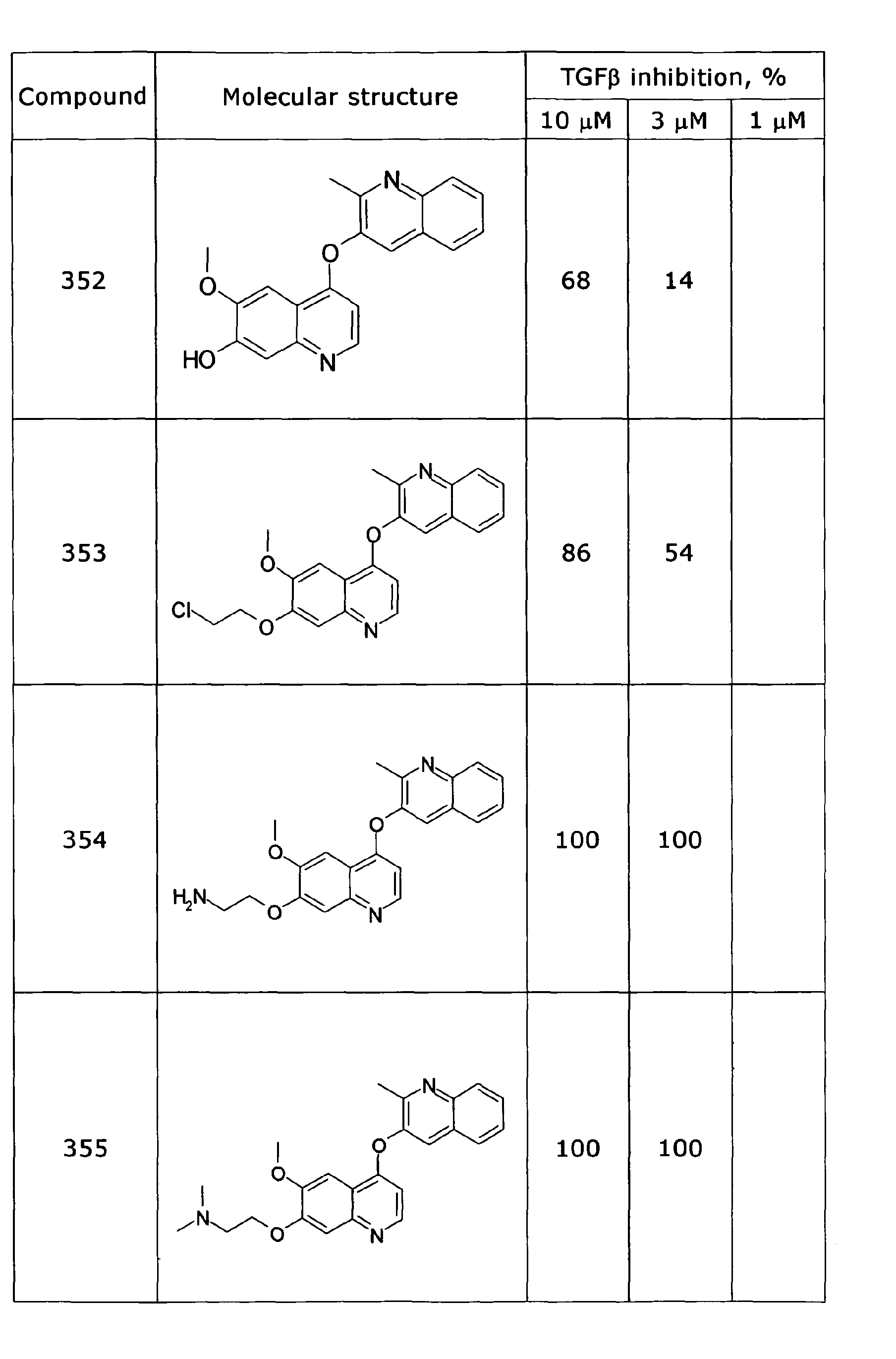


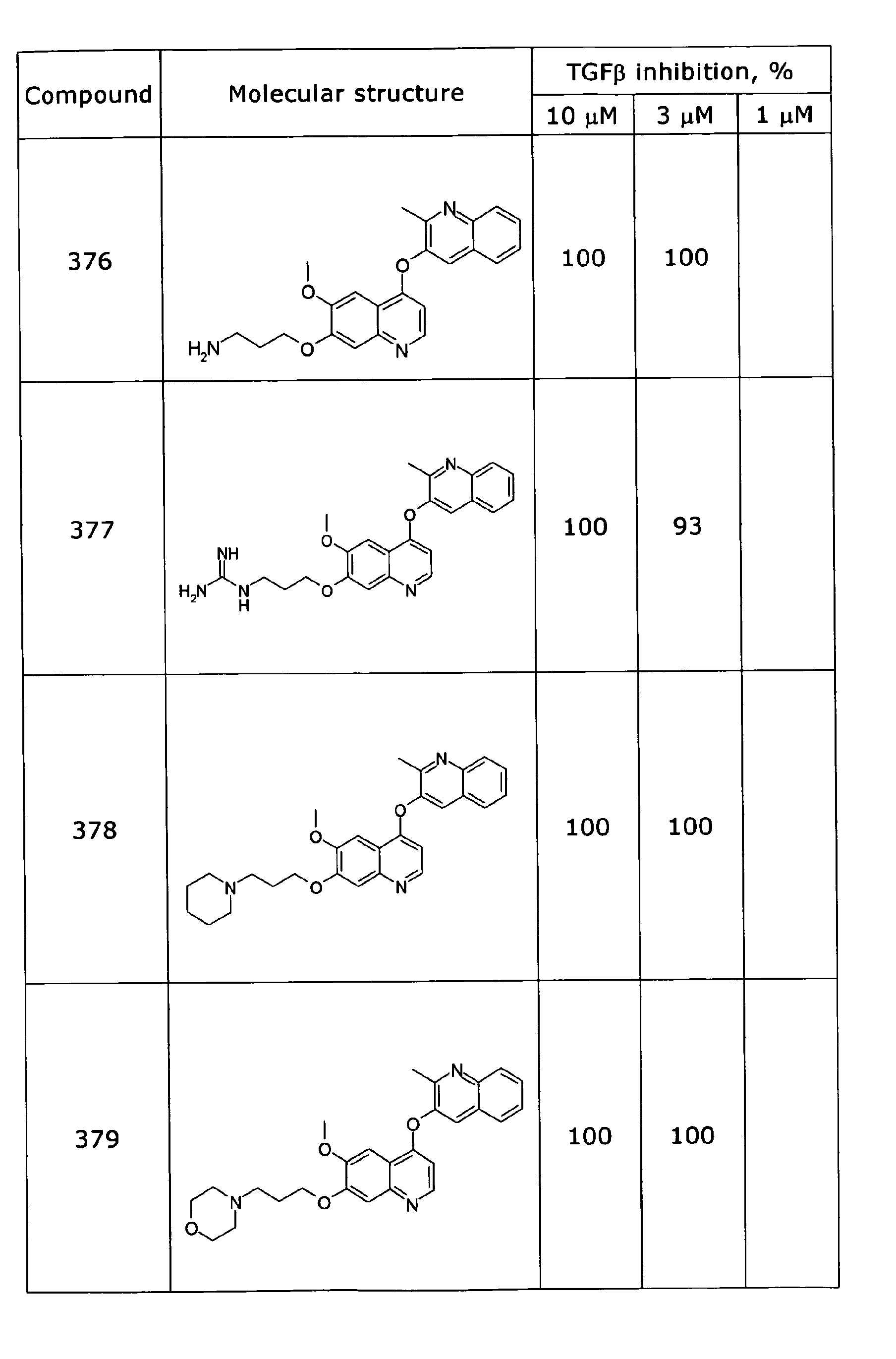


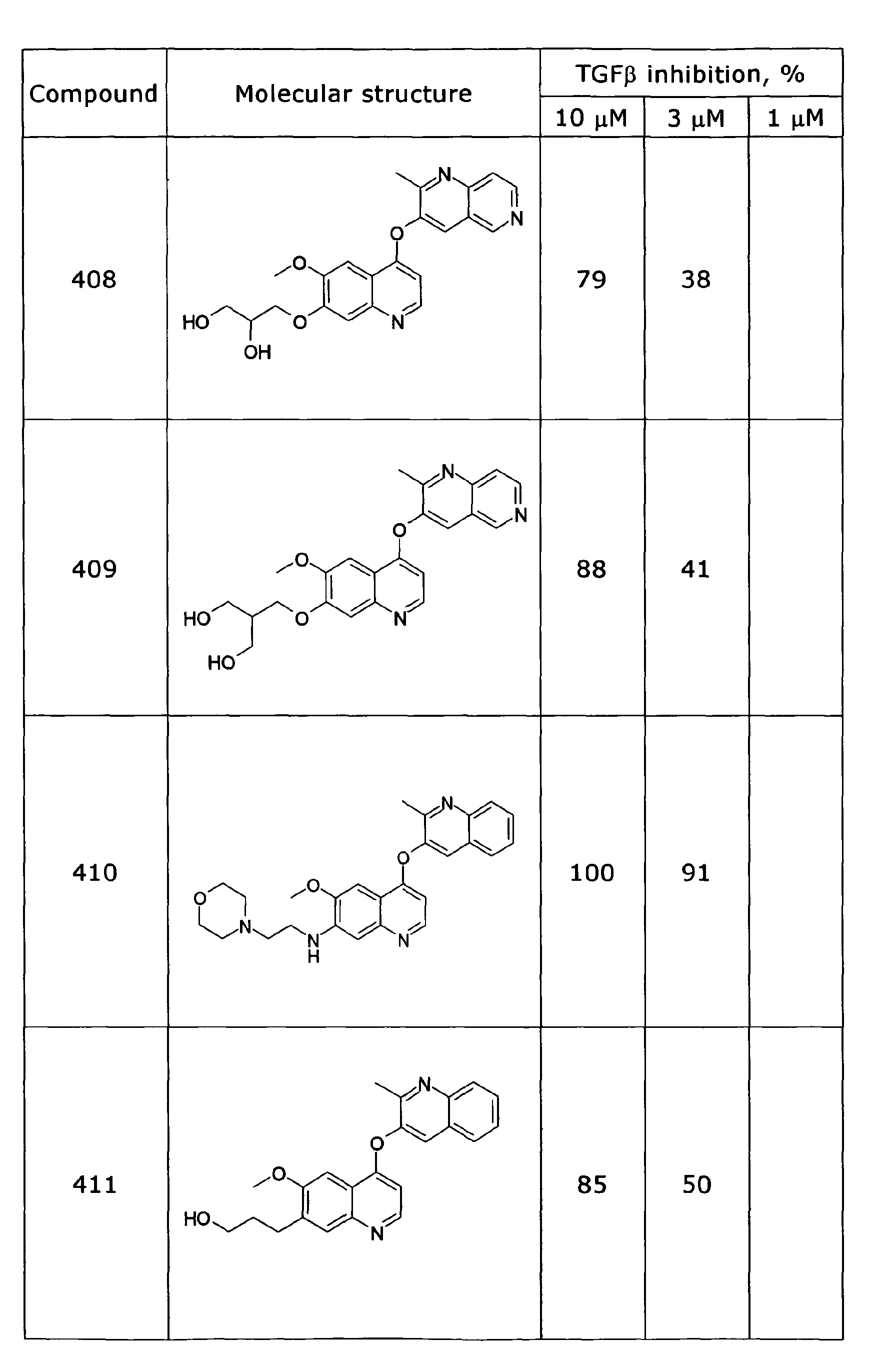
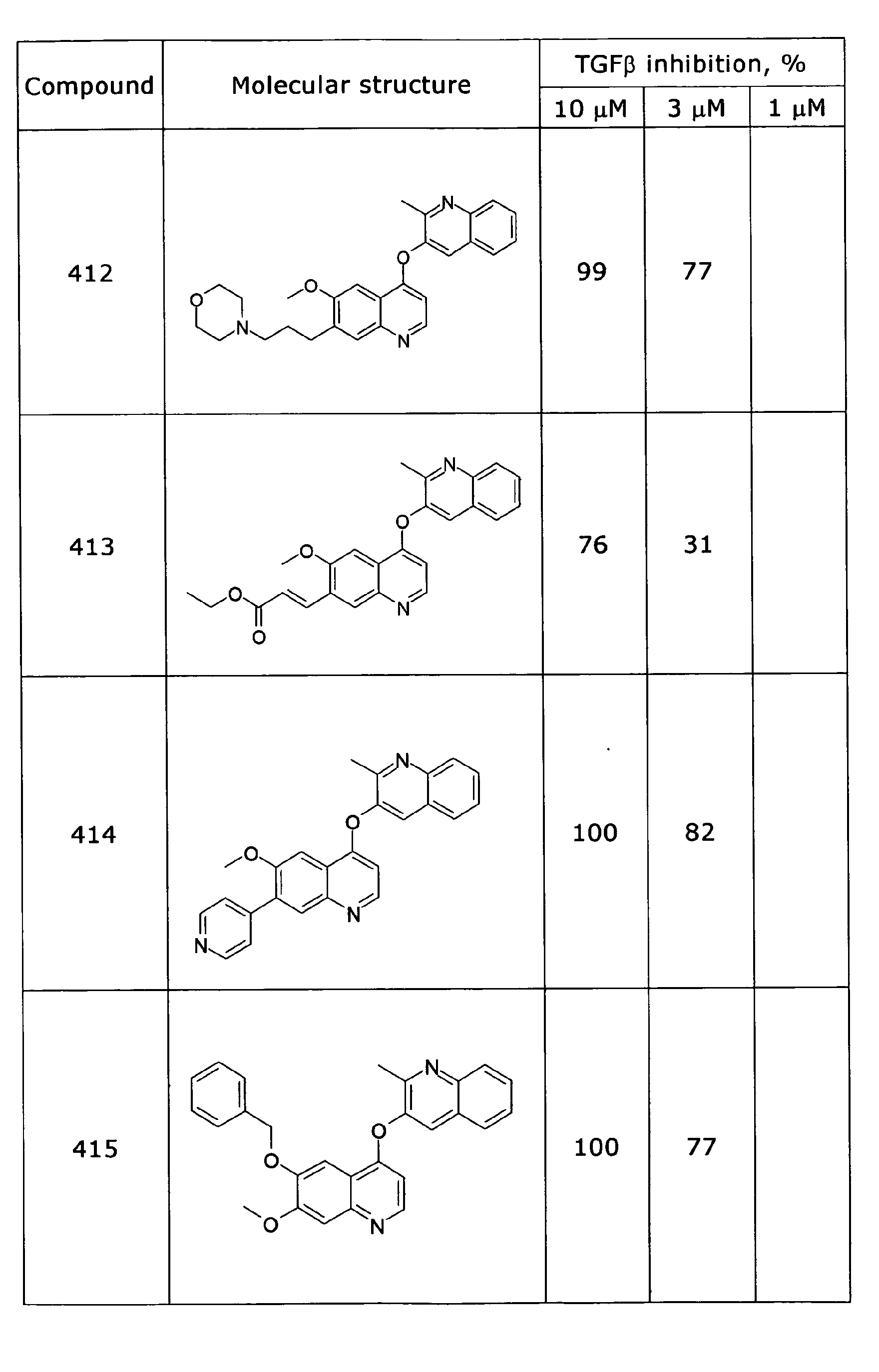

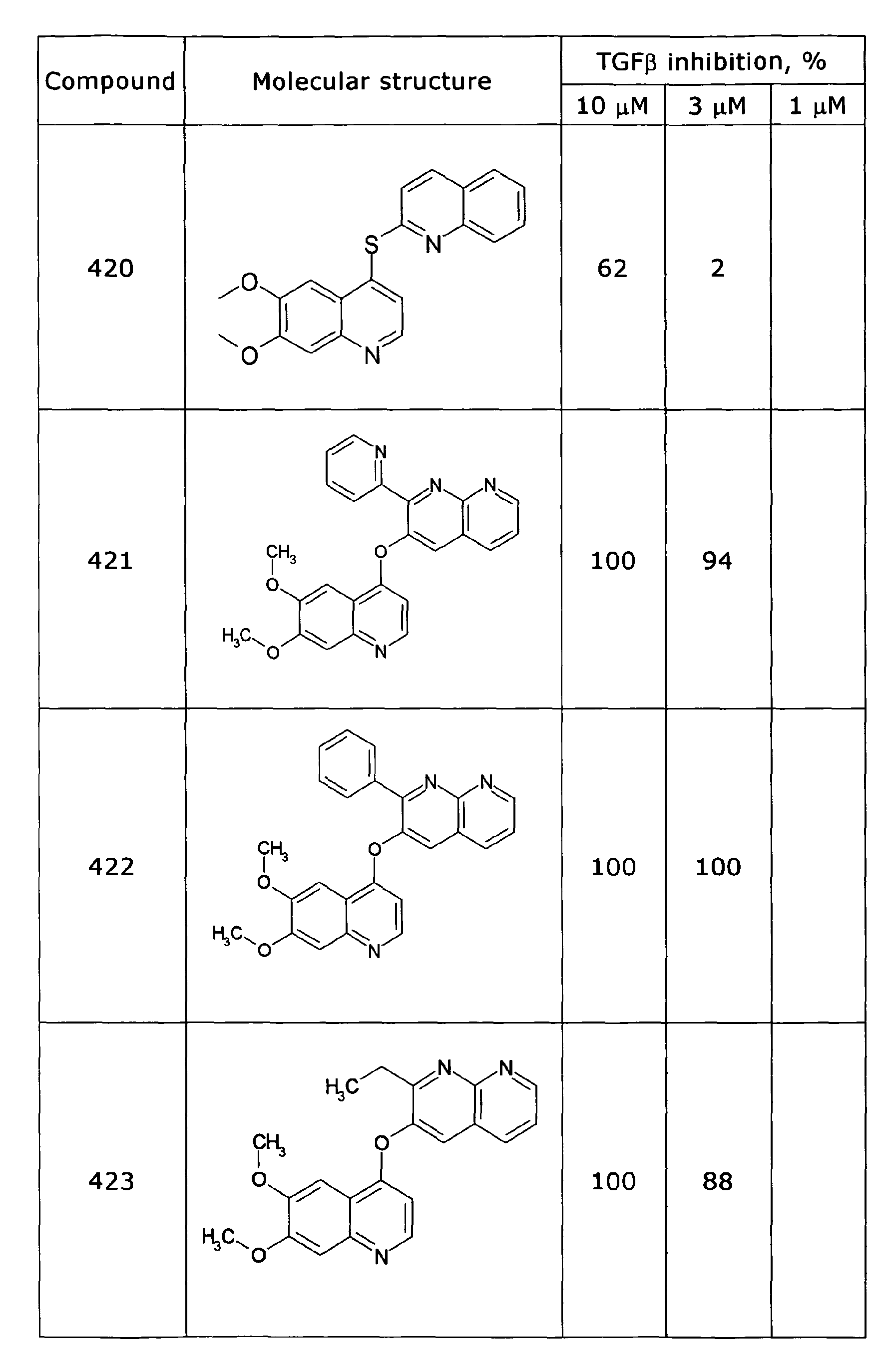

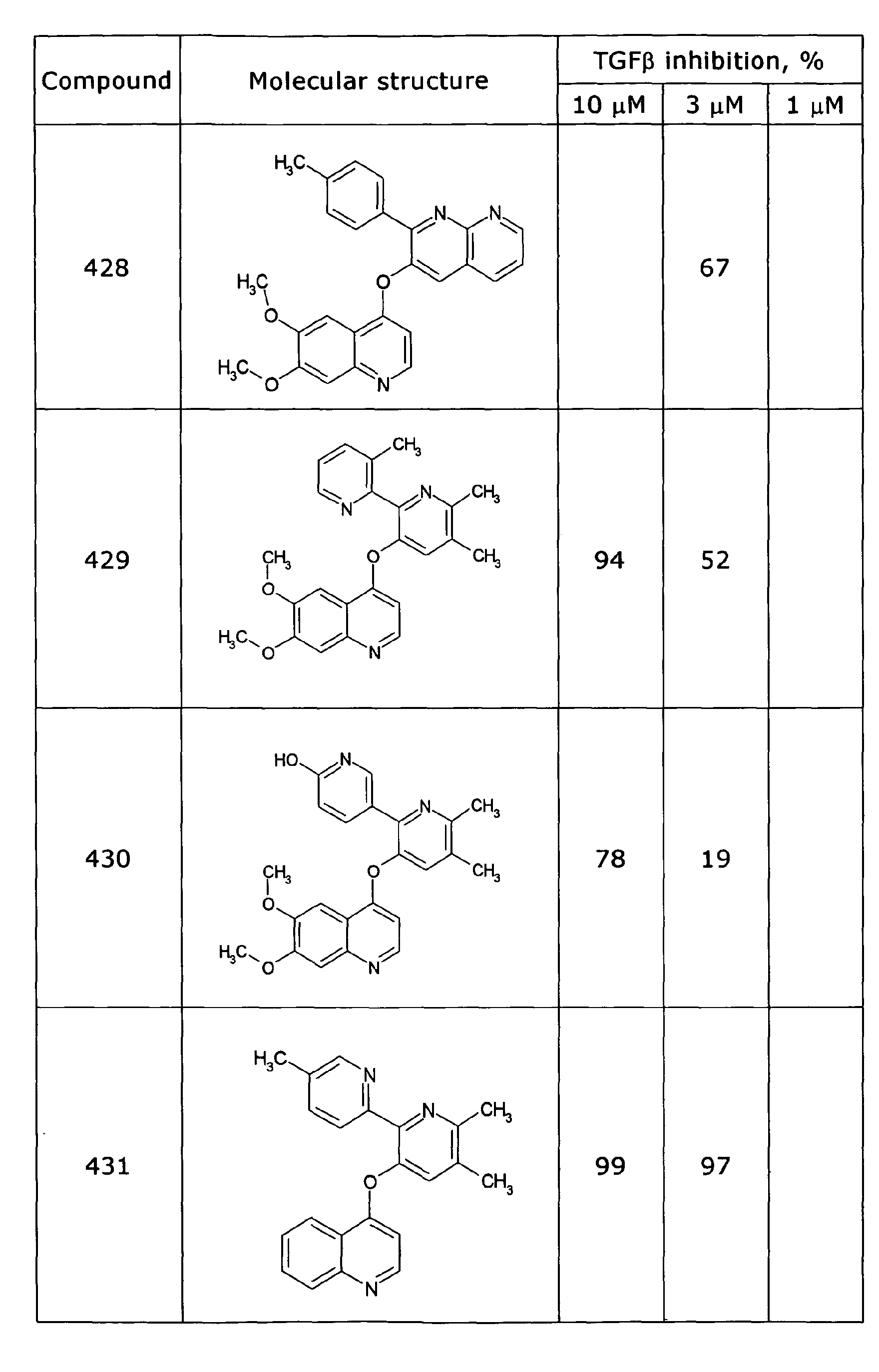


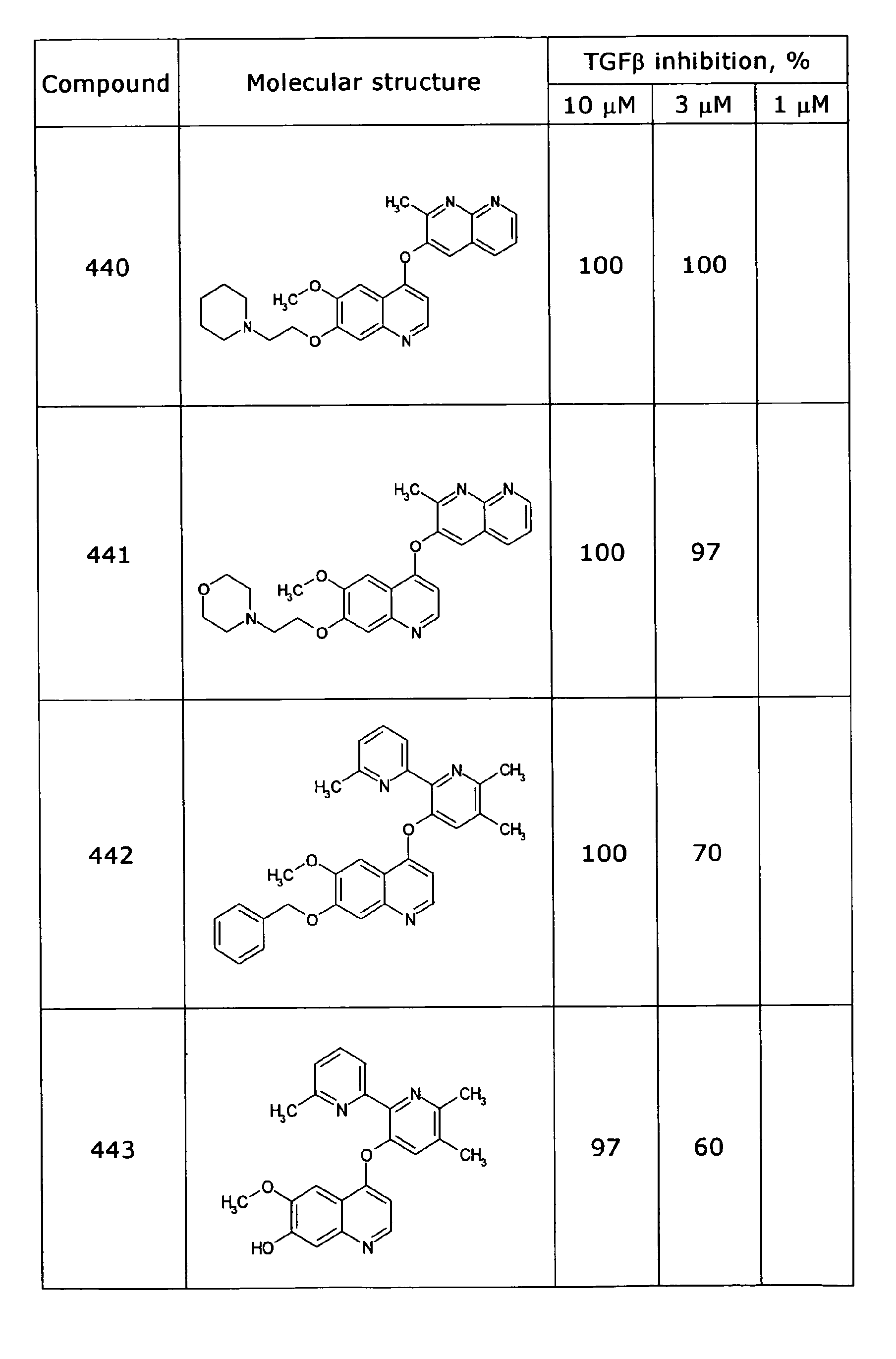

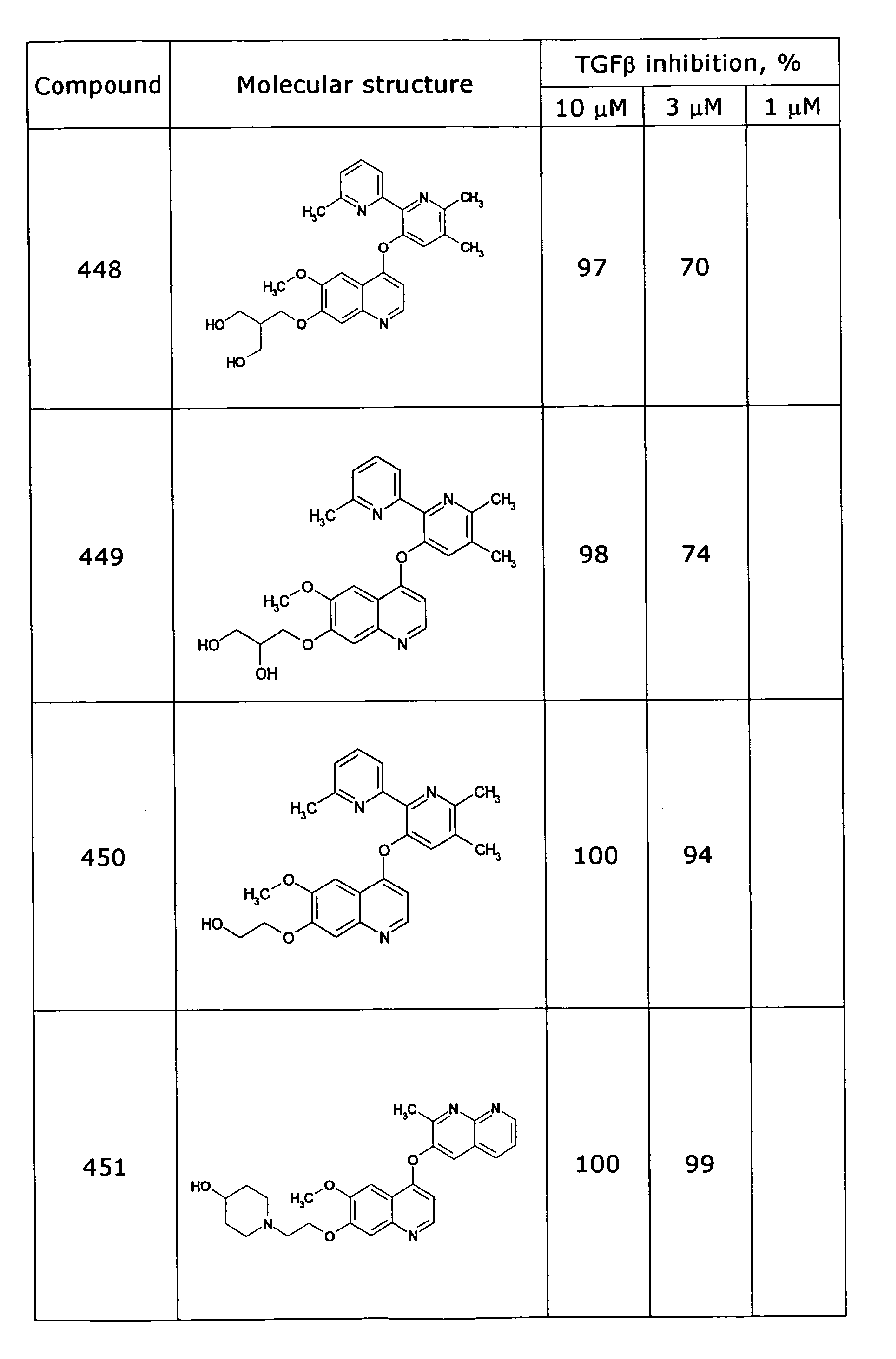
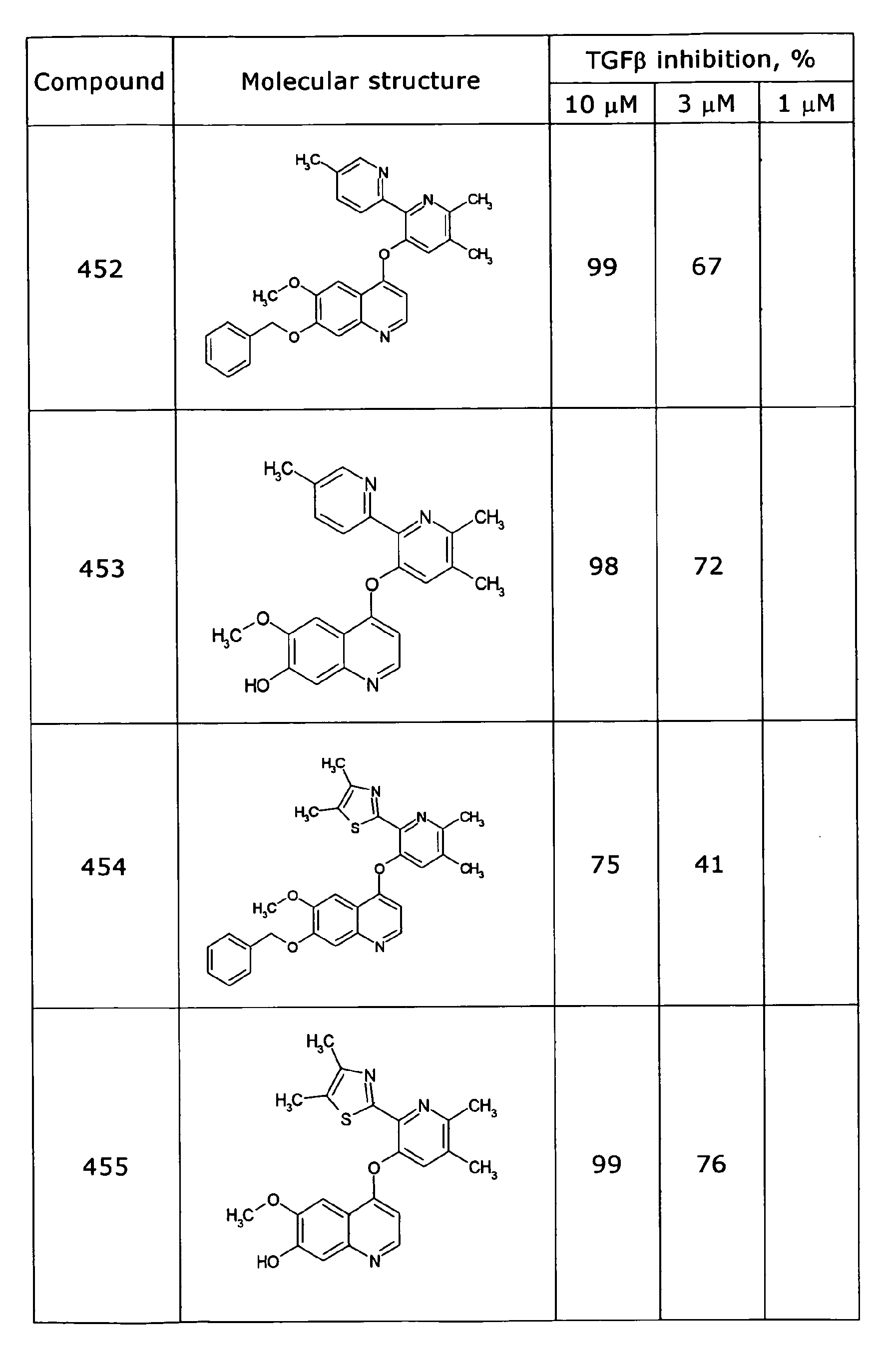
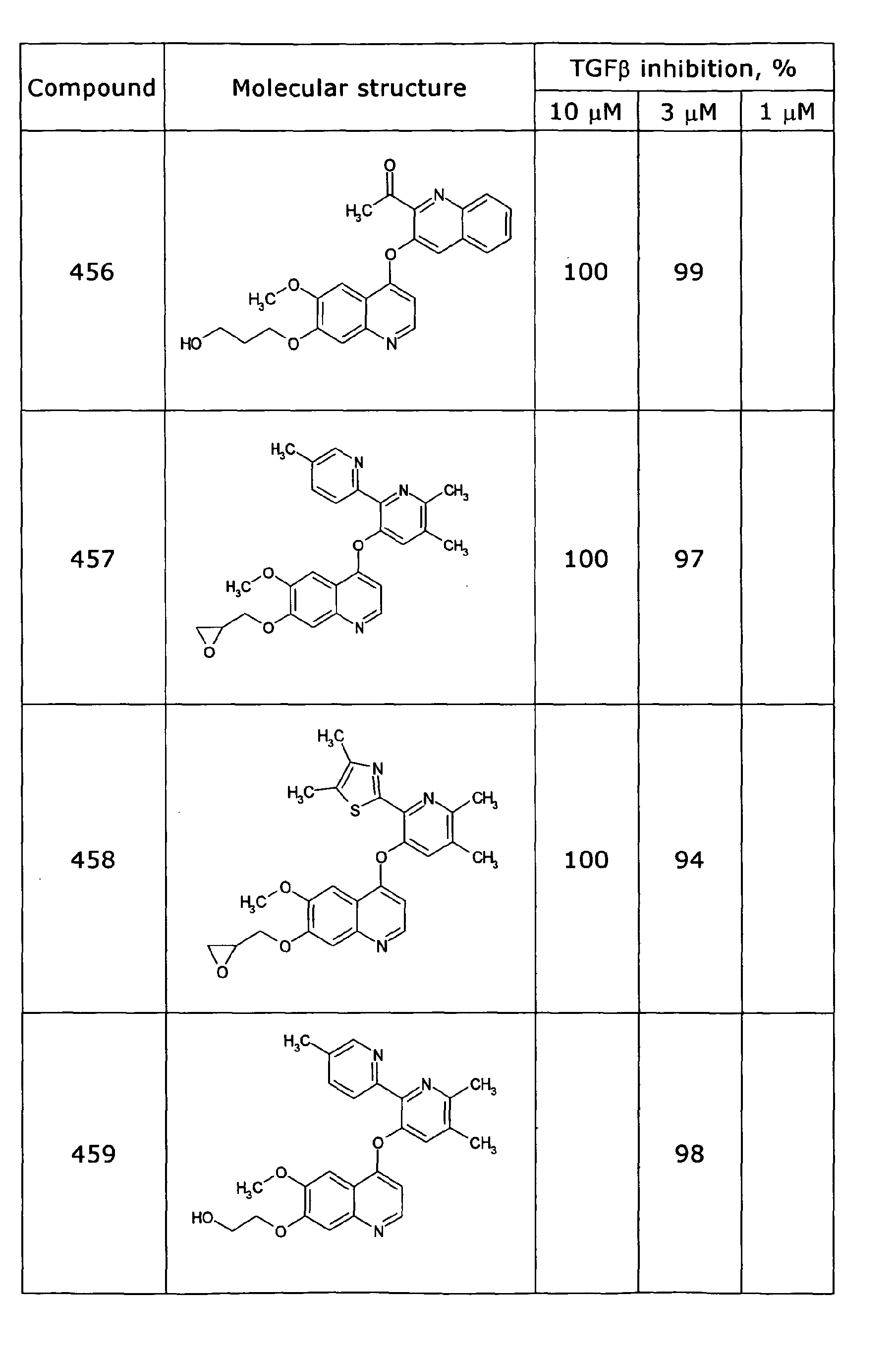
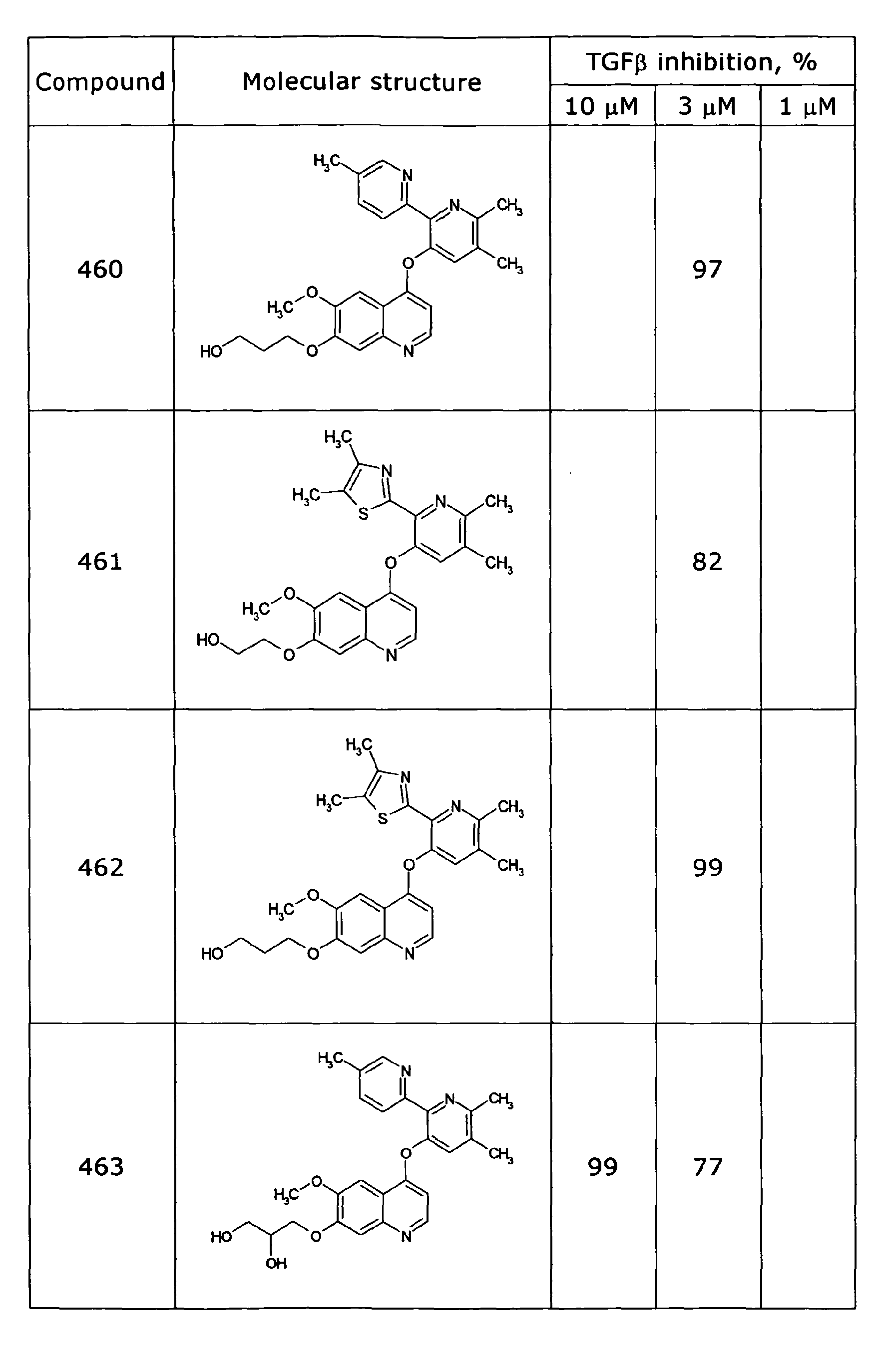
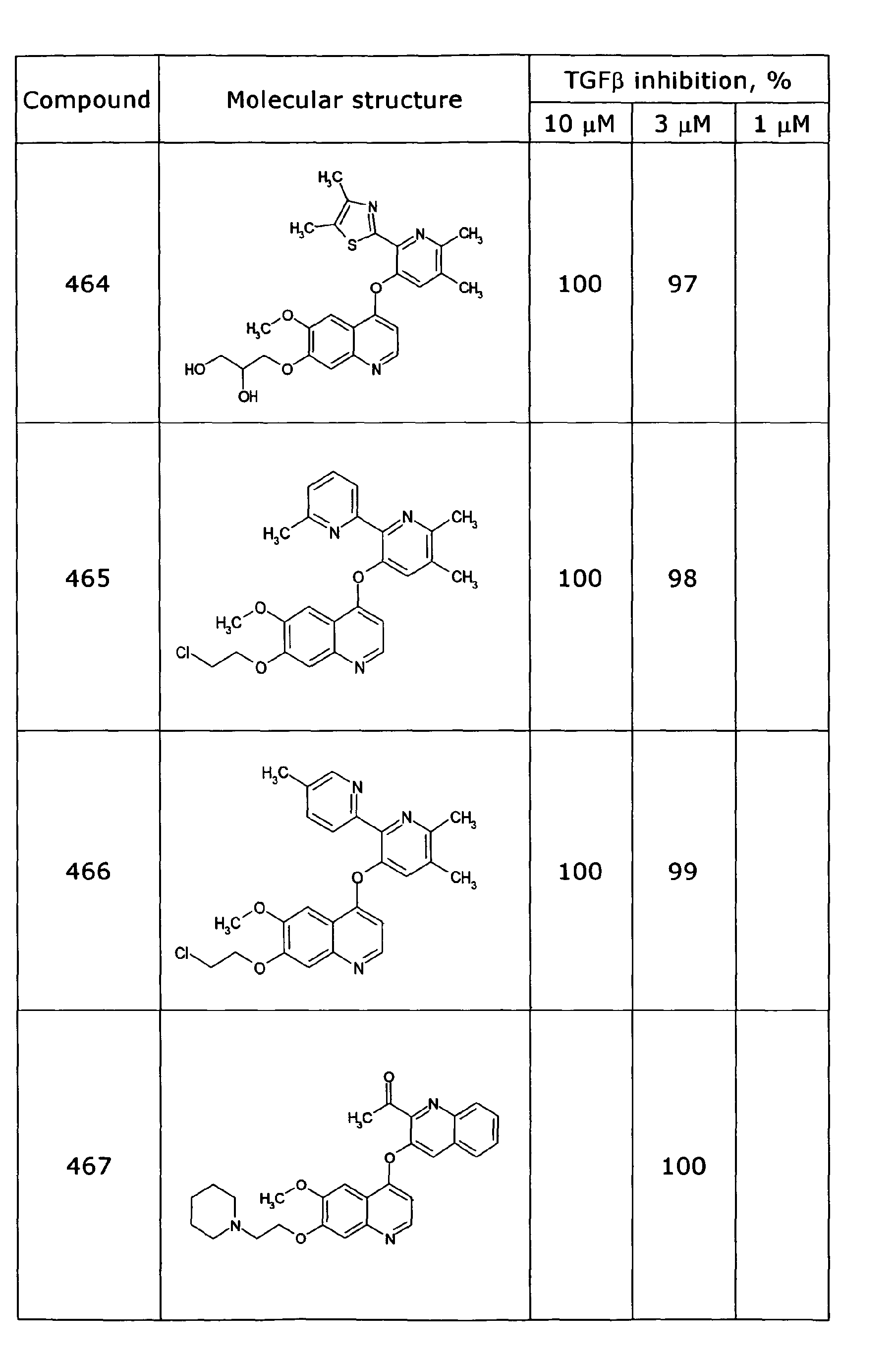

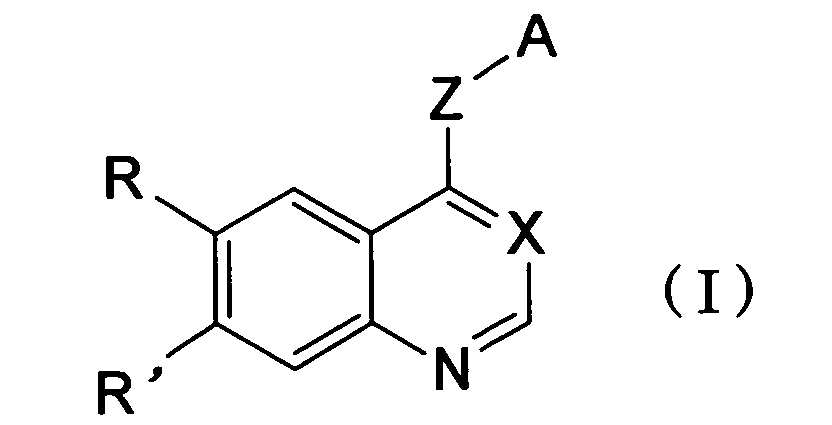


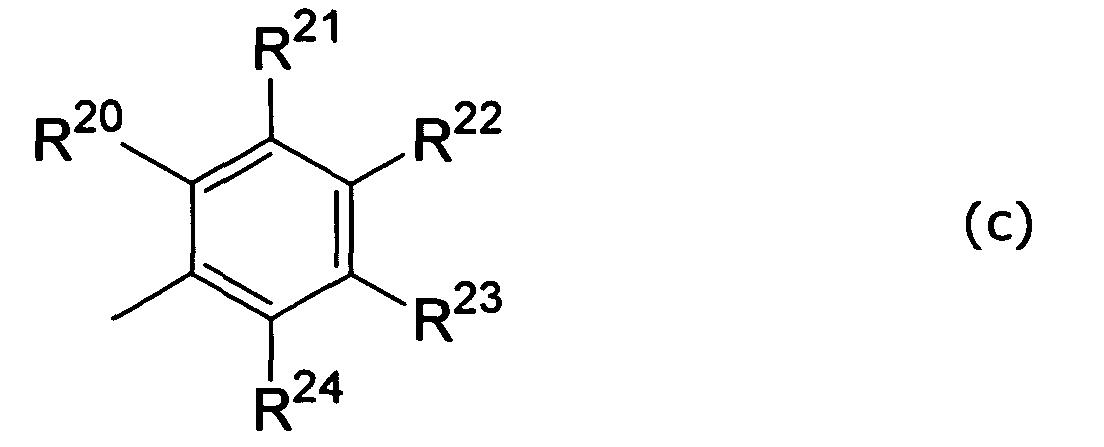
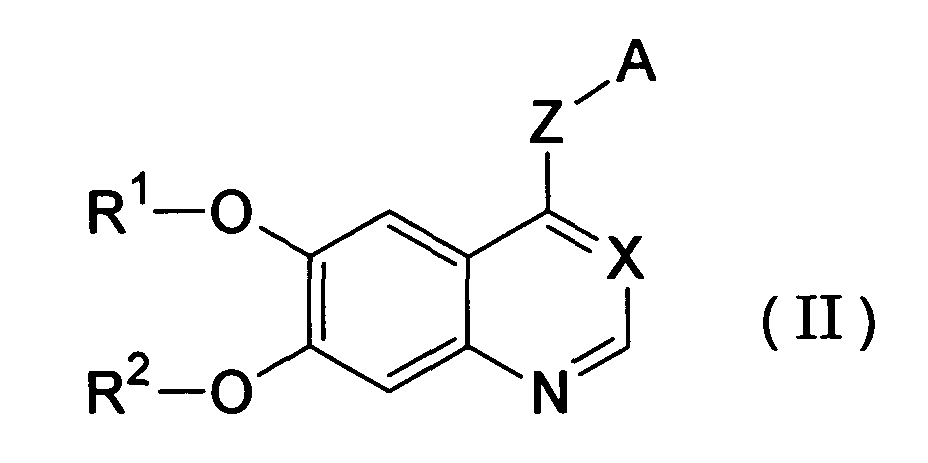
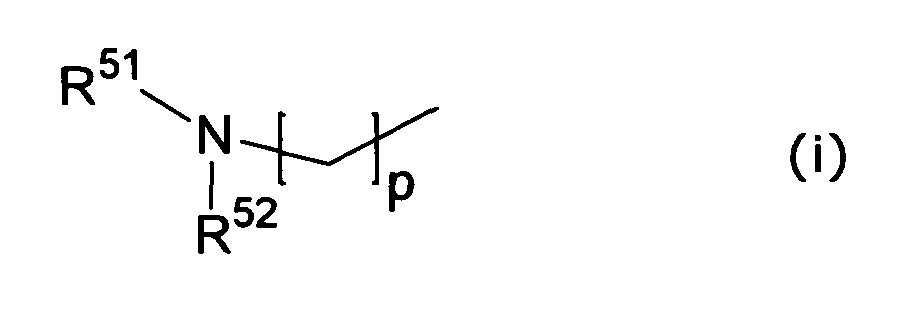
 (iii) a group of formula (iii):wherein Hal represents a halogen atom, and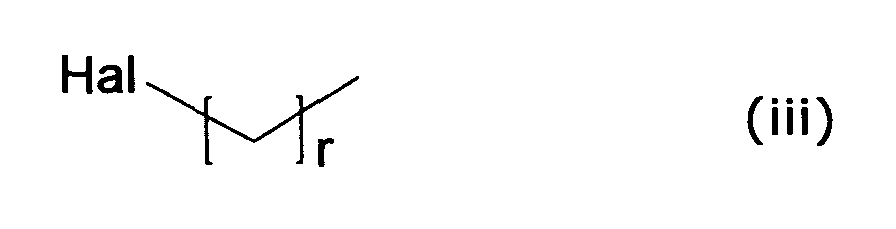


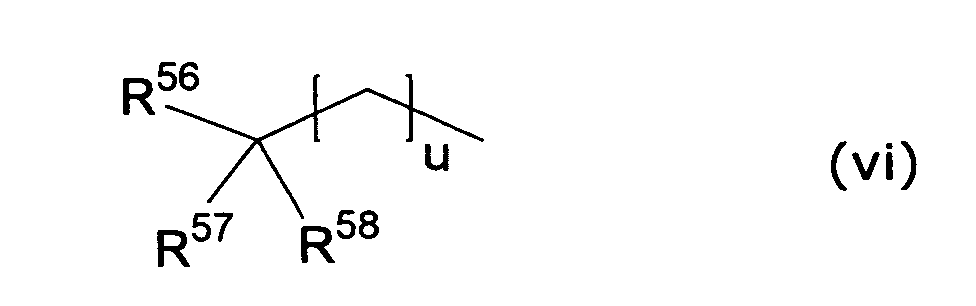

 formula (iii-a):wherein r1 is an integer of 2 to 4, and
 formula (iv-a):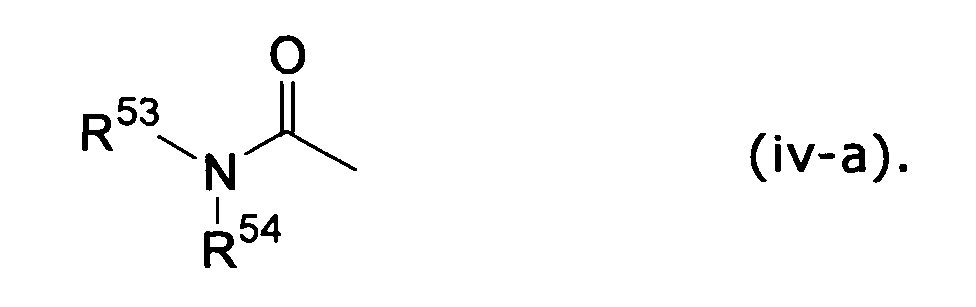


 (iii) a group of formula (iii-a):wherein r1 represents an integer of 2 to 4,
 (iv) a group of formula (iv-a):wherein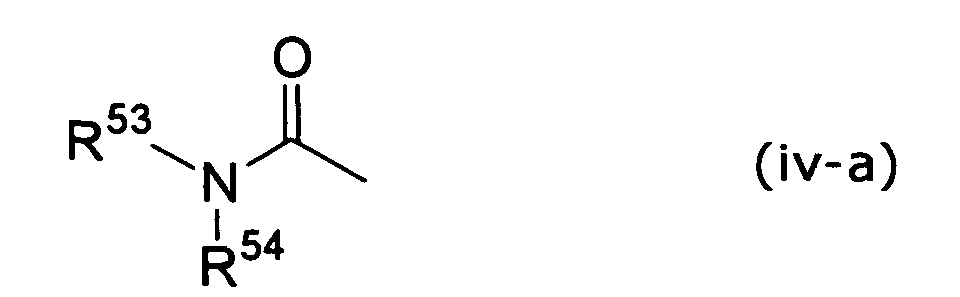

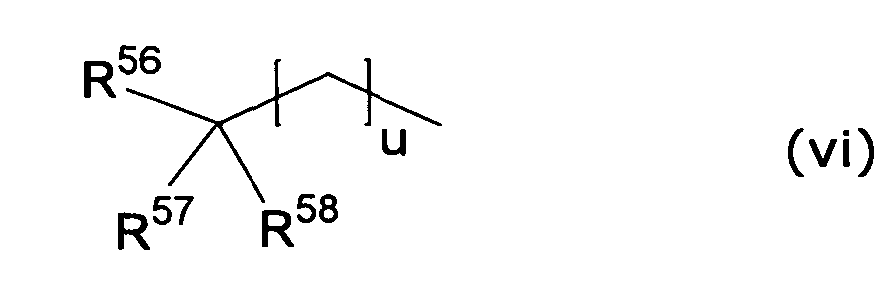
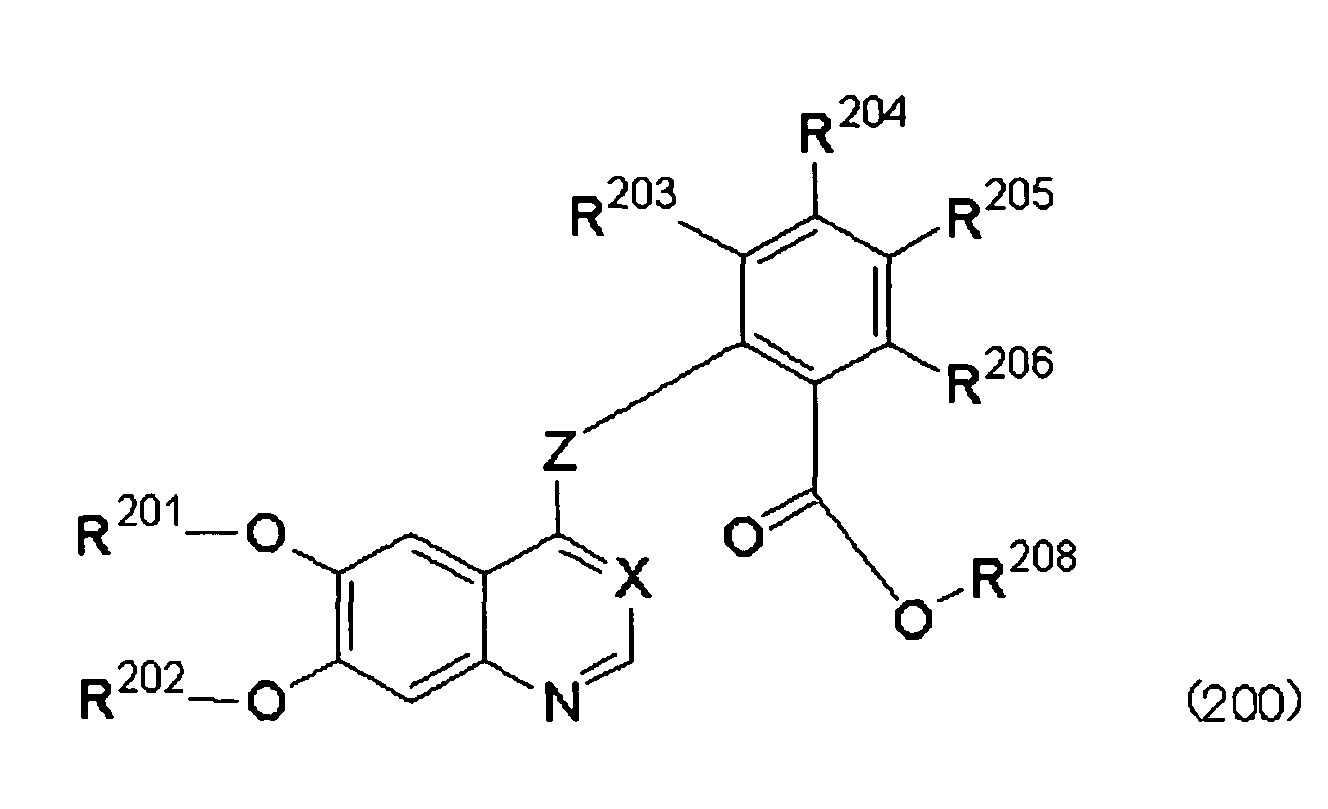

 (iii) a group of formula (iii-a):wherein r1 represents an integer of 2 to 4,
 (iv) a group of formula (iv-a):wherein
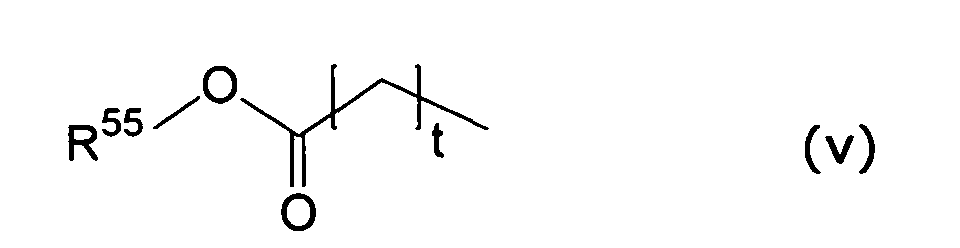

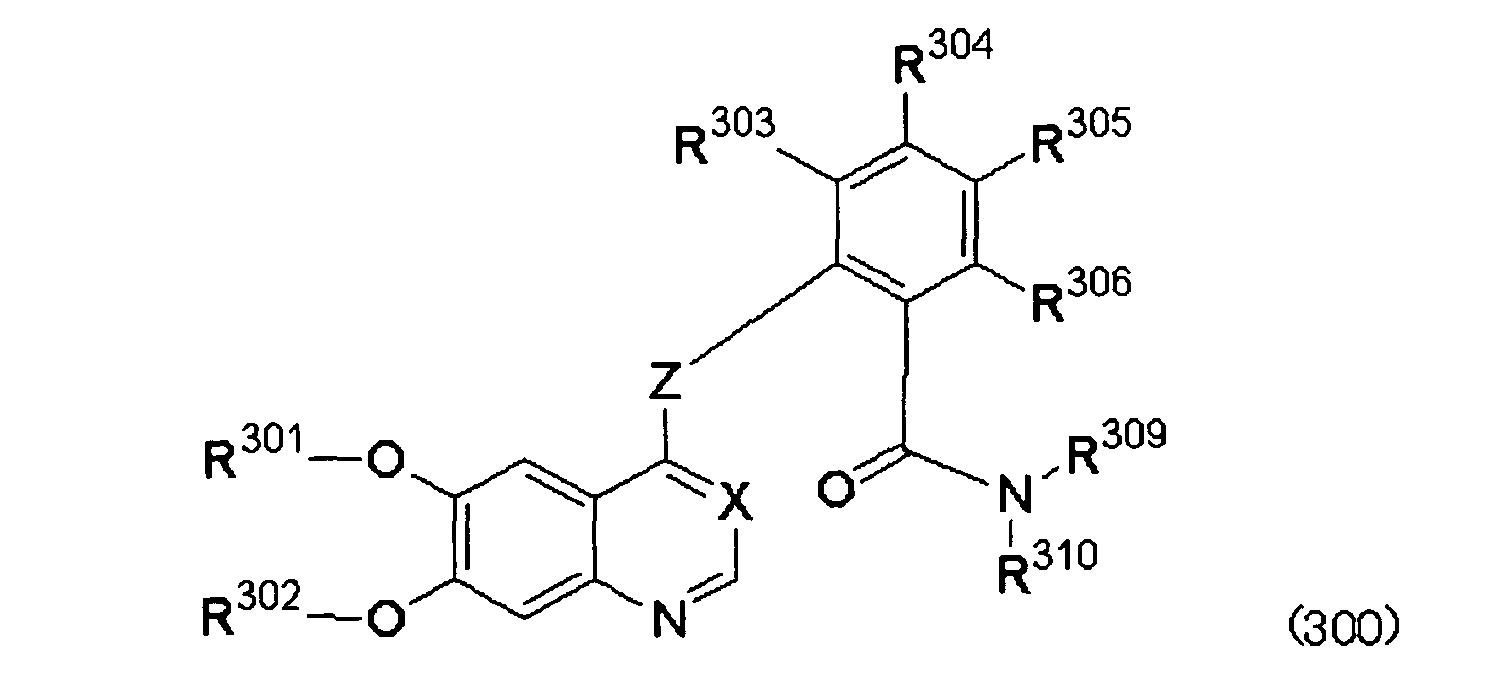

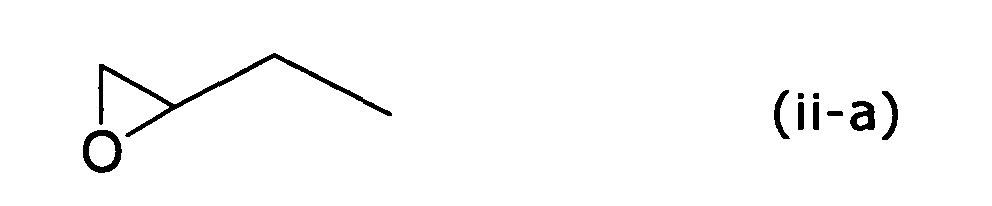 (iii) a group of formula (iii-a):wherein r1 represents an integer of 2 to 4,
 (iv) a group of formula (iv-a):wherein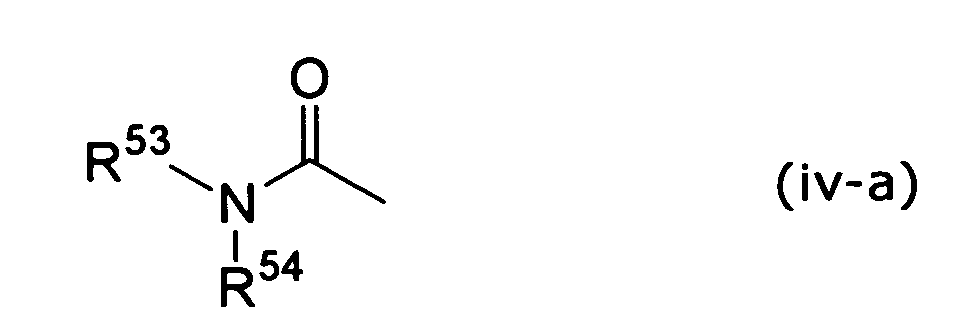
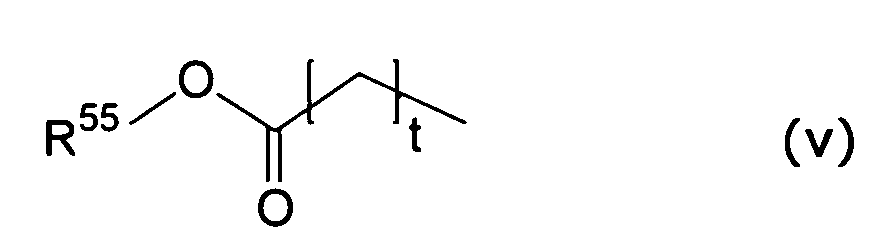
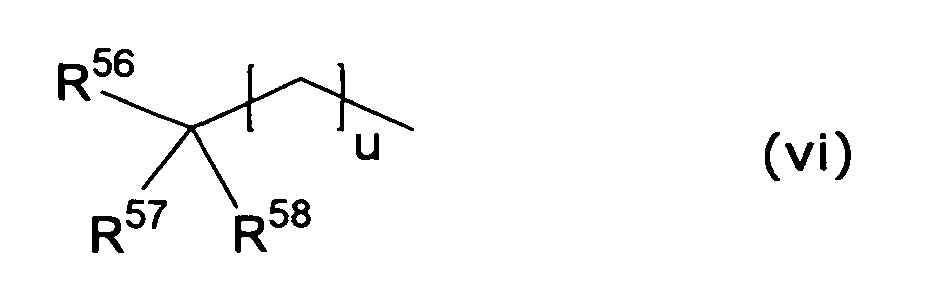
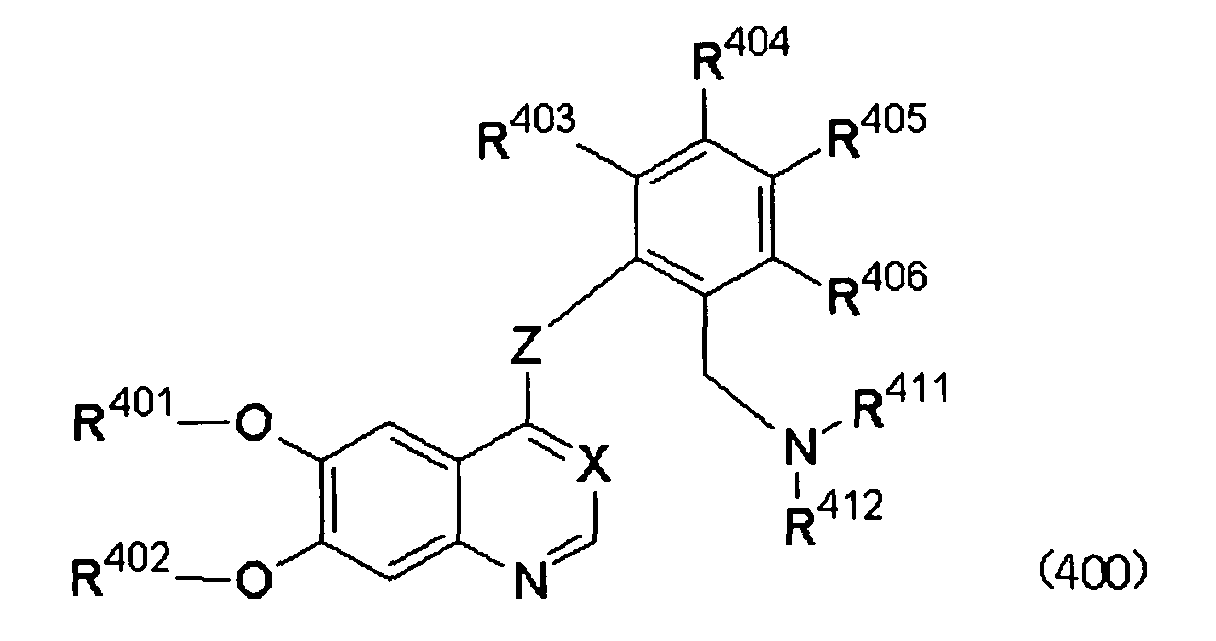
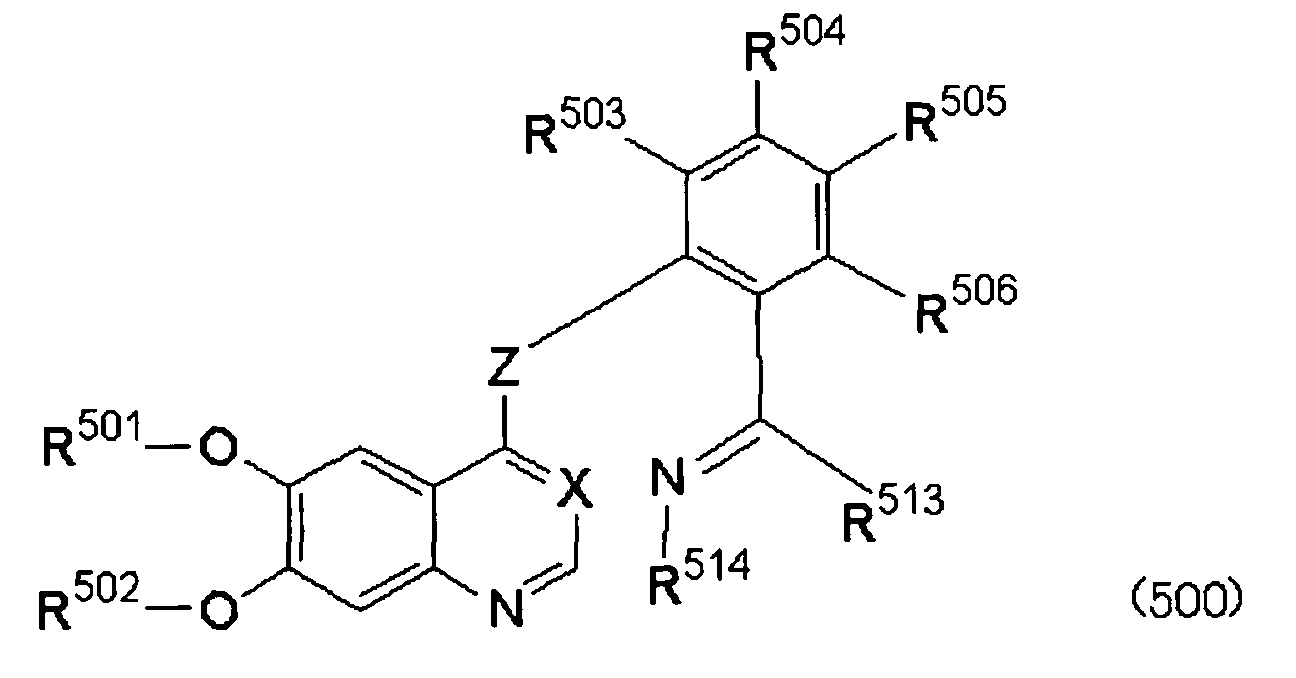

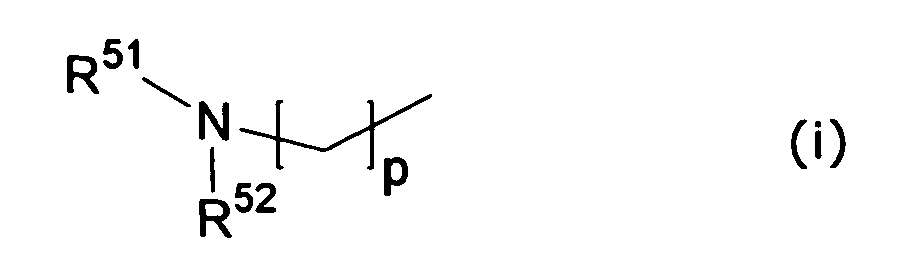
 (iii) a group of formula (iii-a):wherein r1 represents an integer of 2 to 4,
 (iv) a group of formula (iv-a):wherein


