EP1547973A1 - Carbon fine powder coated with metal oxide, metal nitride or metal carbide, process for producing the same, and supercapacitor and secondary battery using the carbon fine powder - Google Patents
Carbon fine powder coated with metal oxide, metal nitride or metal carbide, process for producing the same, and supercapacitor and secondary battery using the carbon fine powder Download PDFInfo
- Publication number
- EP1547973A1 EP1547973A1 EP03794201A EP03794201A EP1547973A1 EP 1547973 A1 EP1547973 A1 EP 1547973A1 EP 03794201 A EP03794201 A EP 03794201A EP 03794201 A EP03794201 A EP 03794201A EP 1547973 A1 EP1547973 A1 EP 1547973A1
- Authority
- EP
- European Patent Office
- Prior art keywords
- metal
- carbon fine
- fine powder
- metal oxide
- supercapacitor
- Prior art date
- Legal status (The legal status is an assumption and is not a legal conclusion. Google has not performed a legal analysis and makes no representation as to the accuracy of the status listed.)
- Withdrawn
Links
Images



Classifications
-
- C—CHEMISTRY; METALLURGY
- C09—DYES; PAINTS; POLISHES; NATURAL RESINS; ADHESIVES; COMPOSITIONS NOT OTHERWISE PROVIDED FOR; APPLICATIONS OF MATERIALS NOT OTHERWISE PROVIDED FOR
- C09C—TREATMENT OF INORGANIC MATERIALS, OTHER THAN FIBROUS FILLERS, TO ENHANCE THEIR PIGMENTING OR FILLING PROPERTIES ; PREPARATION OF CARBON BLACK ; PREPARATION OF INORGANIC MATERIALS WHICH ARE NO SINGLE CHEMICAL COMPOUNDS AND WHICH ARE MAINLY USED AS PIGMENTS OR FILLERS
- C09C1/00—Treatment of specific inorganic materials other than fibrous fillers; Preparation of carbon black
- C09C1/44—Carbon
- C09C1/48—Carbon black
- C09C1/56—Treatment of carbon black ; Purification
-
- C—CHEMISTRY; METALLURGY
- C01—INORGANIC CHEMISTRY
- C01B—NON-METALLIC ELEMENTS; COMPOUNDS THEREOF; METALLOIDS OR COMPOUNDS THEREOF NOT COVERED BY SUBCLASS C01C
- C01B32/00—Carbon; Compounds thereof
- C01B32/05—Preparation or purification of carbon not covered by groups C01B32/15, C01B32/20, C01B32/25, C01B32/30
-
- H—ELECTRICITY
- H01—ELECTRIC ELEMENTS
- H01G—CAPACITORS; CAPACITORS, RECTIFIERS, DETECTORS, SWITCHING DEVICES, LIGHT-SENSITIVE OR TEMPERATURE-SENSITIVE DEVICES OF THE ELECTROLYTIC TYPE
- H01G11/00—Hybrid capacitors, i.e. capacitors having different positive and negative electrodes; Electric double-layer [EDL] capacitors; Processes for the manufacture thereof or of parts thereof
- H01G11/22—Electrodes
-
- H—ELECTRICITY
- H01—ELECTRIC ELEMENTS
- H01G—CAPACITORS; CAPACITORS, RECTIFIERS, DETECTORS, SWITCHING DEVICES, LIGHT-SENSITIVE OR TEMPERATURE-SENSITIVE DEVICES OF THE ELECTROLYTIC TYPE
- H01G11/00—Hybrid capacitors, i.e. capacitors having different positive and negative electrodes; Electric double-layer [EDL] capacitors; Processes for the manufacture thereof or of parts thereof
- H01G11/22—Electrodes
- H01G11/30—Electrodes characterised by their material
- H01G11/32—Carbon-based
-
- H—ELECTRICITY
- H01—ELECTRIC ELEMENTS
- H01G—CAPACITORS; CAPACITORS, RECTIFIERS, DETECTORS, SWITCHING DEVICES, LIGHT-SENSITIVE OR TEMPERATURE-SENSITIVE DEVICES OF THE ELECTROLYTIC TYPE
- H01G11/00—Hybrid capacitors, i.e. capacitors having different positive and negative electrodes; Electric double-layer [EDL] capacitors; Processes for the manufacture thereof or of parts thereof
- H01G11/22—Electrodes
- H01G11/30—Electrodes characterised by their material
- H01G11/32—Carbon-based
- H01G11/38—Carbon pastes or blends; Binders or additives therein
-
- H—ELECTRICITY
- H01—ELECTRIC ELEMENTS
- H01G—CAPACITORS; CAPACITORS, RECTIFIERS, DETECTORS, SWITCHING DEVICES, LIGHT-SENSITIVE OR TEMPERATURE-SENSITIVE DEVICES OF THE ELECTROLYTIC TYPE
- H01G11/00—Hybrid capacitors, i.e. capacitors having different positive and negative electrodes; Electric double-layer [EDL] capacitors; Processes for the manufacture thereof or of parts thereof
- H01G11/22—Electrodes
- H01G11/30—Electrodes characterised by their material
- H01G11/32—Carbon-based
- H01G11/42—Powders or particles, e.g. composition thereof
-
- H—ELECTRICITY
- H01—ELECTRIC ELEMENTS
- H01G—CAPACITORS; CAPACITORS, RECTIFIERS, DETECTORS, SWITCHING DEVICES, LIGHT-SENSITIVE OR TEMPERATURE-SENSITIVE DEVICES OF THE ELECTROLYTIC TYPE
- H01G11/00—Hybrid capacitors, i.e. capacitors having different positive and negative electrodes; Electric double-layer [EDL] capacitors; Processes for the manufacture thereof or of parts thereof
- H01G11/22—Electrodes
- H01G11/30—Electrodes characterised by their material
- H01G11/46—Metal oxides
-
- H—ELECTRICITY
- H01—ELECTRIC ELEMENTS
- H01G—CAPACITORS; CAPACITORS, RECTIFIERS, DETECTORS, SWITCHING DEVICES, LIGHT-SENSITIVE OR TEMPERATURE-SENSITIVE DEVICES OF THE ELECTROLYTIC TYPE
- H01G11/00—Hybrid capacitors, i.e. capacitors having different positive and negative electrodes; Electric double-layer [EDL] capacitors; Processes for the manufacture thereof or of parts thereof
- H01G11/22—Electrodes
- H01G11/30—Electrodes characterised by their material
- H01G11/50—Electrodes characterised by their material specially adapted for lithium-ion capacitors, e.g. for lithium-doping or for intercalation
-
- H—ELECTRICITY
- H01—ELECTRIC ELEMENTS
- H01G—CAPACITORS; CAPACITORS, RECTIFIERS, DETECTORS, SWITCHING DEVICES, LIGHT-SENSITIVE OR TEMPERATURE-SENSITIVE DEVICES OF THE ELECTROLYTIC TYPE
- H01G11/00—Hybrid capacitors, i.e. capacitors having different positive and negative electrodes; Electric double-layer [EDL] capacitors; Processes for the manufacture thereof or of parts thereof
- H01G11/54—Electrolytes
- H01G11/58—Liquid electrolytes
- H01G11/62—Liquid electrolytes characterised by the solute, e.g. salts, anions or cations therein
-
- H—ELECTRICITY
- H01—ELECTRIC ELEMENTS
- H01M—PROCESSES OR MEANS, e.g. BATTERIES, FOR THE DIRECT CONVERSION OF CHEMICAL ENERGY INTO ELECTRICAL ENERGY
- H01M10/00—Secondary cells; Manufacture thereof
- H01M10/05—Accumulators with non-aqueous electrolyte
- H01M10/052—Li-accumulators
-
- H—ELECTRICITY
- H01—ELECTRIC ELEMENTS
- H01M—PROCESSES OR MEANS, e.g. BATTERIES, FOR THE DIRECT CONVERSION OF CHEMICAL ENERGY INTO ELECTRICAL ENERGY
- H01M4/00—Electrodes
- H01M4/02—Electrodes composed of, or comprising, active material
- H01M4/13—Electrodes for accumulators with non-aqueous electrolyte, e.g. for lithium-accumulators; Processes of manufacture thereof
-
- H—ELECTRICITY
- H01—ELECTRIC ELEMENTS
- H01M—PROCESSES OR MEANS, e.g. BATTERIES, FOR THE DIRECT CONVERSION OF CHEMICAL ENERGY INTO ELECTRICAL ENERGY
- H01M4/00—Electrodes
- H01M4/02—Electrodes composed of, or comprising, active material
- H01M4/13—Electrodes for accumulators with non-aqueous electrolyte, e.g. for lithium-accumulators; Processes of manufacture thereof
- H01M4/139—Processes of manufacture
-
- H—ELECTRICITY
- H01—ELECTRIC ELEMENTS
- H01M—PROCESSES OR MEANS, e.g. BATTERIES, FOR THE DIRECT CONVERSION OF CHEMICAL ENERGY INTO ELECTRICAL ENERGY
- H01M4/00—Electrodes
- H01M4/02—Electrodes composed of, or comprising, active material
- H01M4/13—Electrodes for accumulators with non-aqueous electrolyte, e.g. for lithium-accumulators; Processes of manufacture thereof
- H01M4/139—Processes of manufacture
- H01M4/1391—Processes of manufacture of electrodes based on mixed oxides or hydroxides, or on mixtures of oxides or hydroxides, e.g. LiCoOx
-
- H—ELECTRICITY
- H01—ELECTRIC ELEMENTS
- H01M—PROCESSES OR MEANS, e.g. BATTERIES, FOR THE DIRECT CONVERSION OF CHEMICAL ENERGY INTO ELECTRICAL ENERGY
- H01M4/00—Electrodes
- H01M4/02—Electrodes composed of, or comprising, active material
- H01M4/36—Selection of substances as active materials, active masses, active liquids
- H01M4/48—Selection of substances as active materials, active masses, active liquids of inorganic oxides or hydroxides
- H01M4/50—Selection of substances as active materials, active masses, active liquids of inorganic oxides or hydroxides of manganese
- H01M4/505—Selection of substances as active materials, active masses, active liquids of inorganic oxides or hydroxides of manganese of mixed oxides or hydroxides containing manganese for inserting or intercalating light metals, e.g. LiMn2O4 or LiMn2OxFy
-
- H—ELECTRICITY
- H01—ELECTRIC ELEMENTS
- H01M—PROCESSES OR MEANS, e.g. BATTERIES, FOR THE DIRECT CONVERSION OF CHEMICAL ENERGY INTO ELECTRICAL ENERGY
- H01M4/00—Electrodes
- H01M4/02—Electrodes composed of, or comprising, active material
- H01M4/62—Selection of inactive substances as ingredients for active masses, e.g. binders, fillers
- H01M4/624—Electric conductive fillers
- H01M4/625—Carbon or graphite
-
- C—CHEMISTRY; METALLURGY
- C01—INORGANIC CHEMISTRY
- C01P—INDEXING SCHEME RELATING TO STRUCTURAL AND PHYSICAL ASPECTS OF SOLID INORGANIC COMPOUNDS
- C01P2002/00—Crystal-structural characteristics
- C01P2002/70—Crystal-structural characteristics defined by measured X-ray, neutron or electron diffraction data
- C01P2002/72—Crystal-structural characteristics defined by measured X-ray, neutron or electron diffraction data by d-values or two theta-values, e.g. as X-ray diagram
-
- C—CHEMISTRY; METALLURGY
- C01—INORGANIC CHEMISTRY
- C01P—INDEXING SCHEME RELATING TO STRUCTURAL AND PHYSICAL ASPECTS OF SOLID INORGANIC COMPOUNDS
- C01P2004/00—Particle morphology
- C01P2004/01—Particle morphology depicted by an image
- C01P2004/04—Particle morphology depicted by an image obtained by TEM, STEM, STM or AFM
-
- C—CHEMISTRY; METALLURGY
- C01—INORGANIC CHEMISTRY
- C01P—INDEXING SCHEME RELATING TO STRUCTURAL AND PHYSICAL ASPECTS OF SOLID INORGANIC COMPOUNDS
- C01P2004/00—Particle morphology
- C01P2004/80—Particles consisting of a mixture of two or more inorganic phases
-
- C—CHEMISTRY; METALLURGY
- C01—INORGANIC CHEMISTRY
- C01P—INDEXING SCHEME RELATING TO STRUCTURAL AND PHYSICAL ASPECTS OF SOLID INORGANIC COMPOUNDS
- C01P2006/00—Physical properties of inorganic compounds
- C01P2006/12—Surface area
-
- C—CHEMISTRY; METALLURGY
- C01—INORGANIC CHEMISTRY
- C01P—INDEXING SCHEME RELATING TO STRUCTURAL AND PHYSICAL ASPECTS OF SOLID INORGANIC COMPOUNDS
- C01P2006/00—Physical properties of inorganic compounds
- C01P2006/40—Electric properties
-
- Y—GENERAL TAGGING OF NEW TECHNOLOGICAL DEVELOPMENTS; GENERAL TAGGING OF CROSS-SECTIONAL TECHNOLOGIES SPANNING OVER SEVERAL SECTIONS OF THE IPC; TECHNICAL SUBJECTS COVERED BY FORMER USPC CROSS-REFERENCE ART COLLECTIONS [XRACs] AND DIGESTS
- Y02—TECHNOLOGIES OR APPLICATIONS FOR MITIGATION OR ADAPTATION AGAINST CLIMATE CHANGE
- Y02E—REDUCTION OF GREENHOUSE GAS [GHG] EMISSIONS, RELATED TO ENERGY GENERATION, TRANSMISSION OR DISTRIBUTION
- Y02E60/00—Enabling technologies; Technologies with a potential or indirect contribution to GHG emissions mitigation
- Y02E60/10—Energy storage using batteries
-
- Y—GENERAL TAGGING OF NEW TECHNOLOGICAL DEVELOPMENTS; GENERAL TAGGING OF CROSS-SECTIONAL TECHNOLOGIES SPANNING OVER SEVERAL SECTIONS OF THE IPC; TECHNICAL SUBJECTS COVERED BY FORMER USPC CROSS-REFERENCE ART COLLECTIONS [XRACs] AND DIGESTS
- Y02—TECHNOLOGIES OR APPLICATIONS FOR MITIGATION OR ADAPTATION AGAINST CLIMATE CHANGE
- Y02E—REDUCTION OF GREENHOUSE GAS [GHG] EMISSIONS, RELATED TO ENERGY GENERATION, TRANSMISSION OR DISTRIBUTION
- Y02E60/00—Enabling technologies; Technologies with a potential or indirect contribution to GHG emissions mitigation
- Y02E60/13—Energy storage using capacitors
-
- Y—GENERAL TAGGING OF NEW TECHNOLOGICAL DEVELOPMENTS; GENERAL TAGGING OF CROSS-SECTIONAL TECHNOLOGIES SPANNING OVER SEVERAL SECTIONS OF THE IPC; TECHNICAL SUBJECTS COVERED BY FORMER USPC CROSS-REFERENCE ART COLLECTIONS [XRACs] AND DIGESTS
- Y10—TECHNICAL SUBJECTS COVERED BY FORMER USPC
- Y10T—TECHNICAL SUBJECTS COVERED BY FORMER US CLASSIFICATION
- Y10T428/00—Stock material or miscellaneous articles
- Y10T428/29—Coated or structually defined flake, particle, cell, strand, strand portion, rod, filament, macroscopic fiber or mass thereof
- Y10T428/2982—Particulate matter [e.g., sphere, flake, etc.]
- Y10T428/2991—Coated
Definitions
- the present invention relates to a carbon fine powder coated with a metal oxide, a metal nitride or a metal carbide applicable to electrochemical devices such as secondary batteries and capacitors and a process for producing the same. More specifically, the present invention provides a carbon fine powder having an electrochemically active layer uniformly coated in a nanometer level, a process for producing the same, and a supercapacitor and a secondary battery using the carbon fine powder.
- An electric double layer capacitor (EDLC) using a carbon fiber electrode has been already commercialized as a high-power electrical storage device. However, it has a large charge and discharge rate but the energy density is extremely low. Thus, the energy density and output density are only about 1 Wh/kg and 1 kW/kg, respectively and hence uses thereof are limited to watches, power supplies for memory backup, and the like. On the other hand, in the case of assumed applications to electric power system such as load leveling, energy regeneration in electric cars, and the like, about one-order improvement of the energy density and output density is required.
- the pseudo-capacitance present on the surface of an electrochemically active material is an electric dual layer capacitance involving a faradaic process, i.e., an electrochemical double layer, it is an characteristic feature that the capacitance has not only a fast charge and discharge rate and also a huge energy storage capacity.
- the concept of a supercapacitor is a secondary battery capable of ultrahigh-speed charge and discharge utilizing a huge pseudo-capacitance mechanism generated by a faradaic process of the surface of an active material and theoretically, a battery possessing both of a high energy density and a high power density are realized. They are called electrochemical capacitors or pseudo-capacitors, which are storage devices having an intermediate performance between a secondary battery and a condenser.
- the performance of a large capacity-type capacitor called a supercapacitor or an electrochemical capacitor using a carbon fine powder coated with a metal oxide, a metal nitride or a metal carbide which is a novel material of the present invention aims at performance located in an unprecedented region as shown in a ragon plot in Fig. 1.
- these storage devices have a high power as compared with the currently mainstream lithium secondary batteries and have a high energy density as compared with condensers and carbon-based capacitors.
- a large capacity-type capacitor possessing both of an energy density of about 30 Wh/kg and a power density of about 3 kW/kg.
- the capacitor cannot be used in industrial applications unless it realizes a high-speed charge and discharge with a good cycle life performance.
- Conventional storage batteries or recently mainstream lithium secondary batteries realize a high energy density by generating an electromotive reaction through intercalation of lithium ions into the solid of an active material and using the oxidation-reduction capacity of an active material-constituting element.
- irreversible changes such as a change in the crystalline structure of the active material and increase in various lattice defects are generated by the increase of lithium ion concentration in the active material and may cause deterioration of various cycle life performances, such as capacitance decrease and potential effect in the charge and discharge cycle and increase in internal resistance.
- an electric double layer capacitor using no intercalation mechanism can achieve electrical storage by adsorbing ions onto the surface of a polarizable electrode having a large specific surface area, e.g., a carbon having a high specific surface area to form an electrostatic electric double layer at a solid-liquid interface.
- a storage capacity only by the ion adsorption is small and is, for example, one hundredth or less of that of a secondary battery.
- the secondary battery as a storage device of a high energy density type for about 1,000 cycles and the capacitor as a storage device of a high power density type for 100,000 cycles or more.
- the present inventors have found a novel carbon fine powder having a thin film of an active material on the surface, i.e., a carbon fine powder coated with a metal oxide, a metal nitride or a metal carbide.
- a carbon fine powder coated with a metal oxide, a metal nitride or a metal carbide is obtained by using a pseudo-capacitance mechanism derived from a faradaic process of the surface of an electrode active material having a high specific surface area, the powder being capable of providing a supercapacitor and a secondary battery possessing both of a high energy density and a high power density.
- Such a carbon fine powder having a thin film of an electrode active material on the surface is obtained by a process of uniformly coating the surface of a carbon with a fine film layer of the battery active material using a sonochemical reaction.
- the composite material wherein the surface is uniformly coated with the active material not only is used as a material for secondary batteries and a material for capacitors but also may possibly used in various uses such as fuel cell electrodes, hydrogen absorbing materials, hydrogen producing electrodes, electrodes for electrolysis, anticorrosive materials, and various catalyst materials.
- the present invention provides a composite material wherein a thin film layer of a metal oxide, a metal nitride or a metal carbide is uniformly coated on the surface of a carbon fine powder using a sonochemical reaction, a process for producing the same, and a supercapacitor and a secondary battery using the carbon fine powder.
- the present invention is a carbon fine powder coated with a metal oxide, a metal nitride or a metal carbide, wherein a thin film layer of the metal oxide, the metal nitride or the metal carbide is uniformly coated on the surface of a carbon fine powder having a large specific surface area.
- Such a carbon fine powder coated with a metal oxide, a metal nitride or a metal carbide can be produced by uniformly coating a thin film layer of metal fine particles on the surface of carbon fine particles by causing heterogeneous nucleus generation and growth on the surface of carbon fine particles through irradiating a dispersion composed of particles of the metal oxide, the metal nitride or the metal carbide or a metal ion, a metal complex, or a precursor molecule, the carbon fine particles, and a solvent with an ultrasonic wave.
- ultrahigh temperature and high pressure conditions such as 5,000°C or higher and 1,000 atm or higher are generated at the time when a hot spot formed by ultrasonic irradiation is imploded.
- water is decomposed and activated to form a hydrogen radical (H) and a hydroxyl radical (OH) in the vicinity of the hot spot.
- the hydroxyl radical is a reductive active species and reduces a permanganate ion (MnO 7 - ) present in the aqueous solution to form manganese oxide particles uniformly in the solution.
- the hydroxyl radical and the other active species are adsorbed on the surface of the carbon having a large specific surface area prior to the induction of uniform reactions and act as active sites for heterogeneous reactions.
- these active species formed in the solution on the carbon surface, they activate the carbon atoms on the surface and these activated carbon atoms act as starting points of forming a thin-film coating layer of amorphous manganese oxide, whereby the carbon surface is uniformly coated with the thin-film layer.
- the surface of the carbon fine particles are coated with a uniform film as shown in electron microscopic photographs in Fig. 4 and Fig. 5.
- the inventors have confirmed that the carbon fine powder coated with a metal oxide, a metal nitride or a metal carbide, which is uniformly coated with a thin film layer of the metal oxide, the metal nitride or the metal carbide, shows useful properties as a material constituting a supercapacitor and a secondary battery.
- the metal oxide, the metal nitride or the metal carbide for use in the present invention use can be made of one or at least two of metal oxides, metal nitrides or metal carbides selected from the groups consisting of manganese, vanadium, molybdenum, tungsten, titanium, iron, copper, silver, nickel, chromium, aluminum, tin, lead, silicon, germanium, gallium, indium, zinc, cobalt, niobium and tantalum.
- manganese oxide has satisfactory electrochemical properties.
- the crystal structure of the metal oxide, the metal nitride or the metal carbide for use in the present invention may be a crystalline phase, a amorphous phase, or a microcrystalline phase.
- the intensity of the ultrasonic wave is in the range of 1 mW/cm 3 to 1 kW/cm 3
- the frequency is in the range of 1 kHz to 1 MHz
- the size of a reaction vessel is in the range of 1 cm 3 to 1 m 3 .
- solvent for use in the present invention use can be made of one or at least two selected from the group consisting of water, alcohol, ketone, ether, ester, organic acid, amine and amino alcohol.
- water and alcohols are preferably used.
- the alcohols use can be made of methyl alcohol, ethyl alcohol, isopropyl alcohol, butyl alcohol, and the like.
- the pH of the dispersion composed of the metal oxide fine particles, metal nitride fine particles or metal carbide fine particles, the carbon fine particles, and a solvent can be regulated using a known pH regulator.
- the supercapacitor of the present invention use can be made of an electrode obtained by applying and drying a resin composition containing a carbon fine powder coated with a metal oxide, a metal nitride or a metal carbide on a reticulate mesh of an electrode metal.
- a resin composition containing a carbon fine powder coated with a metal oxide, a metal nitride or a metal carbide on a reticulate mesh of an electrode metal.
- the resin constituting the resin composition any one of polytetrafluoroethylene (PTFE), polyethylene, and polypropylene can be used.
- the resin can preferably further contain fine particles of a conductive material.
- the conductive material use can be made of one or at least two of carbon, sold, silver, copper, nickel and palladium.
- the supercapacitor of the present invention can use such an electrode as at least one of a cathode and an anode of the supercapacitor.
- the carbon fine powder coated with a metal oxide, a metal nitride or a metal carbide of the present invention can be used as an interelectrode material between a cathode and an anode.
- the electrolyte of the supercapacitor may be an aqueous electrolyte or a nonaqueous electrolyte.
- an electrolyte ion use can be made of one or at least two selected from a proton, a lithium ion, a magnesium ion, a potassium ion, a sodium ion, a calcium ion, a barium ion, a yttrium ion, a lanthanum ion, an ammonium ion and an organoammonium ion.
- the carbon fine powder coated with a metal oxide, a metal nitride or a metal carbide of the present invention can be used as a charge-accumulating and -releasing material.
- an electrode obtained by molding a resin composition containing the carbon fine powder coated with a metal oxide, a metal nitride or a metal carbide of the present invention can be used.
- use can be made of an electrode obtained by applying and drying a resin composition containing a carbon fine powder coated with a metal oxide, a metal nitride or a metal carbide on a reticulate mesh of an electrode metal.
- the resin constituting the resin composition any one of polytetrafluoroethylene (PTFE), polyethylene, and polypropylene can be used.
- the resin can preferably further contain fine particles of a conductive material.
- the conductive material use can be made of one or at least two of carbon, gold, silver, copper, nickel and palladium. Such an electrode can be used as a cathode or an anode in the present invention.
- the carbon fine powder coated with a metal oxide, a metal nitride or a metal carbide of the present invention can be also used as an interelectrode material between a cathode and an anode.
- Carbon fine particles were produced in accordance with the procedure shown in Fig. 3.
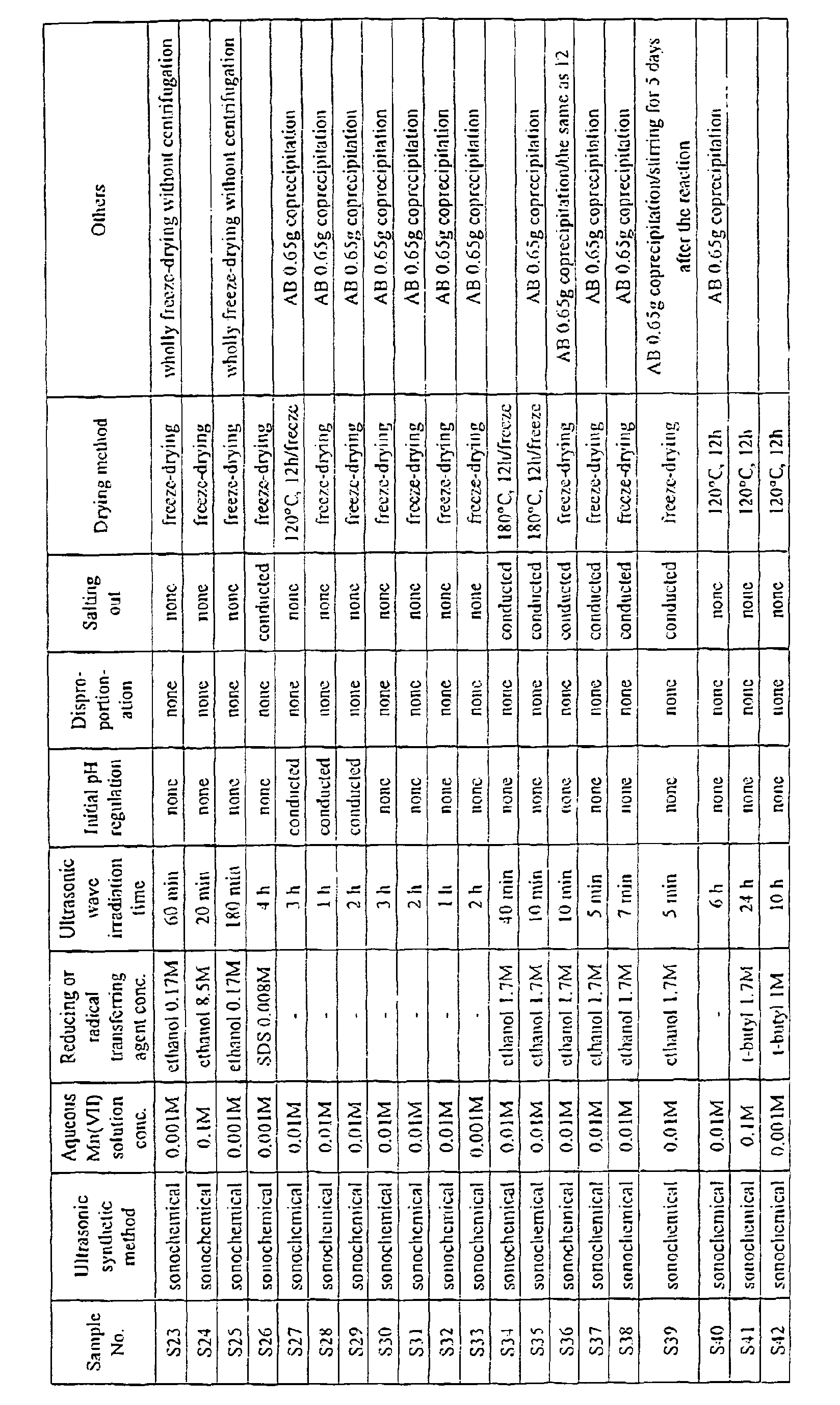
- Potassium permanganate (KMnO 7 ) containing a heptavalent manganese ion was dissolved in water to form an aqueous potassium permanganate solution having a manganese ion concentration of 0.001M to 0.1M.
- the aqueous solution was mixed with an acetylene black having a high specific surface area (60 m 2 /g, measured by BET) to form a dispersion solution of both materials.
- the mixed solution was irradiated with an ultrasonic wave to reduce potassium permanganate (KMnO 7 ) in the solution, whereby particles wherein the surface of the acetylene black was coated with a thin film layer of amorphous manganese oxide were obtained.
- the intensity of the ultrasonic wave was changed within the range of 1 mW/cm 3 to 1 kW/cm 3 and the irradiation time of the ultrasonic wave was changed within the range of I minute to 24 hours.
- the aqueous potassium permanganate solution was prepared at a concentration of 0.01M and was directly subjected to ultrasonic treatment at 100 kHz and 600W for 6 hours without regulation of the initial pH to synthesize particles coated with a thin film layer of amorphous manganese oxide in the aqueous solution.
- These synthesized particles can be obtained as a composite powder via drying and dehydration treatment at 120°C for about 12 hours.
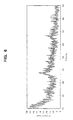
- Fig. 6 shows a result of X-ray diffraction analysis of the particles coated with a thin film layer of amorphous manganese oxide synthesized in the present Examples.
- the pH was changed within the range of 0 to 9.
- Table 1 describes synthetic conditions carried out in the present invention.
- the sonochemical reaction in the present invention is assumed to be a novel coating mechanism as shown in the lower drawing in Fig. 2. Namely, it is considered that permanganate ions are adsorbed on the carbon surface activated with the ultrasonic irradiation and cause surface reactions to form an coating layer of amorphous oxide and to cover the carbon surface with the layer, whereby the carbon fine particles coated with the thin film layer of amorphous manganese oxide are obtained.
- Fig. 4 shows a transmission electron microscopic photograph of the composite electrode produced by the sonochemical reaction of Example 40. It is understood that the surface of an acetylene black (AB) having a diameter of about 50 nm is uniformly coated with an amorphous manganese oxide layer.
- AB acetylene black
- Fig. 5 shows an enlarged view of the transmission electron microscopic photograph. It was found that the carbon surface was coated with an amorphous manganese oxide layer having a thickness of about 3 nm. It was found that the coating layer covered evenly the surface of the carbon particles and carbon fine particles coated with a uniform and dense active material layer were produced.
- Fig. 6 shows a result of X-ray diffraction analysis of the composite electrode. It was found that no definite diffraction peak derived from a crystalline structure was observed and the formed coating layer was an amorphous structure. It was also found that the coating layer was composed of manganese and oxygen based on the composition analysis carried out at the same time. Thus, it is considered that the coating layer of the active material thin film produced by the sonochemical reaction which is the present invention is a manganese oxide having an amorphous structure.
- Carbon fine particles coated with a thin film layer of a silicon carbide layer was produced in the same manner as in Example I except that an alkoxy silane was used instead of potassium permanganate (KMnO 7 ).
- the ultrasonic irradiation conditions were 100 kHz, 600W, and 1 hour.
- the carbon fine particles coated with a thin film layer of a silicon carbide layer dispersed in the solution were separated and isolated as a solid precipitate by centrifugation. It was washed with distilled water several times to remove impurity ions (potassium ions, unreacted permanganate ions, and other common impurity ions) by washing and was subjected to a drying and dehydration treatment at 120°C for about 12 hours to obtain carbon fine particles coated with a thin film layer of a silicon carbide layer.
- metal oxide, metal nitride or metal carbide such as chromium oxide, aluminum oxide, silver oxide, copper oxide, nickel oxide, manganese nitride, tungsten nitride, titanium nitride, iron nitride, silver nitride, titanium nitride, iron carbide, copper carbide, manganese carbide, or aluminum carbide.
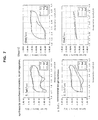
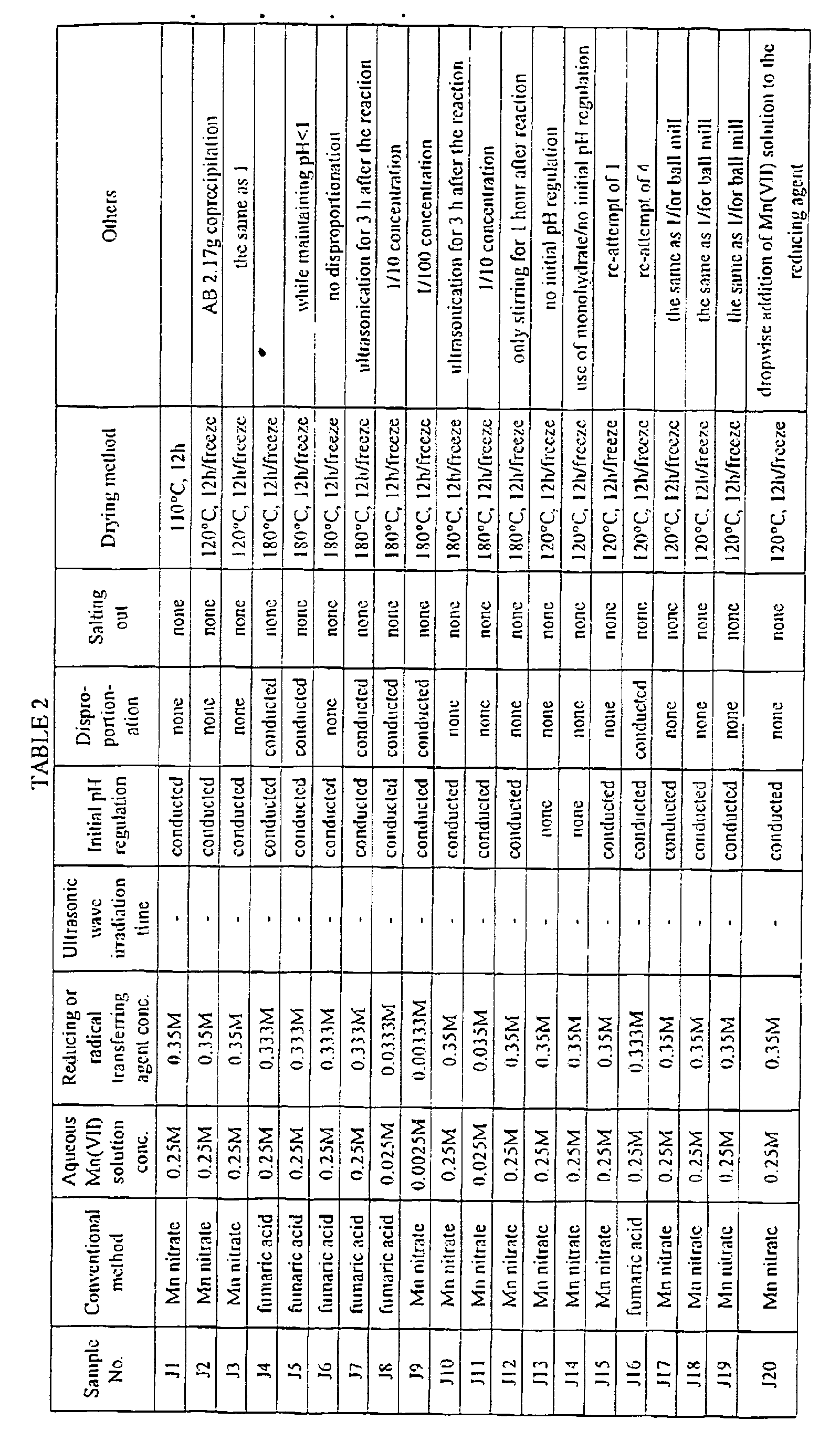
- Fig. 7 shows electrochemical properties of an electrode coated with a manganese dioxide thin-film coating layer produced by the sonochemical reaction obtained in Example 1 and an electrode coated with a manganese dioxide thin-film coating layer produced by a conventional method. Results of electrochemical measurements of the electrodes in a triode cell are shown in Fig. 7. A lithium electrode was used as a counter electrode, a lithium electrode was also used as a reference electrode, and a mixture of EC+DEC with LiClO 4 was used as an electrolyte.
- a peak of the cyclic volutammogram derived from the oxidation and reduction of manganese was observed and a capacitor-like response similar to almost rectangular wave was observed in the case of a large scan rate. Since they have a large capacity, they can be considered to be supercapacitor electrodes.
- Fig. 8 shows a relationship between the capacity (mAh/g) and the scan rate (V/sec) standardized by net weight of pure manganese oxide in the coating layer determined by subtracting the weight of the acetylene black used as a collector.
- the capacity per the coated active material of the composite electrode produced by the sonochemical reaction was 197 mAh/g at a scan rate of 1 mV/sec but it was 106 mAh/g even at a scan rate of 500 mV/sec.
- the energy density and power density calculated from the capacity at 500 mV/sec were about 290 Wh/kg and about 210 kW/kg, respectively and thus it was found that it can be utilized as a supercapacitor possessing both of a large energy density and a high power density.
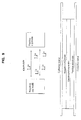
- An electrode for a supercapacitor is produced by mixing the acetylene black coated with the coating layer of manganese dioxide thin film further with a carbon powder and a binder polymer and applying the mixture onto a nickel reticulate mesh, followed by drying.
- a supercapacitor shown in Fig. 9 can be produced as one example.
- a liquid electrolyte As an electrolyte of the above supercapacitor battery, a liquid electrolyte, a gel electrolyte, a polymer electrolyte, and a solid electrolyte can be used.
- the liquid electrolyte use can be made of LiPF 6 , LiClO 4 , LiSCN, LiAlCl 4 , LiBF 4 , LiN(CF 3 SO 2 ) 2 , LiCF 3 SO 3 , LiAsF 6 , and LiSbF 6 .
- Fig. 7 shows electrochemical properties of an electrode coated with a manganese dioxide thin-film coating layer produced by the sonochemical reaction obtained in Production Example 1 and an electrode coated with a manganese dioxide thin-film coating layer produced by a conventional method. Results of electrochemical measurements of the electrodes in a triode cell are shown in Fig. 7. A lithium electrode was used as a counter electrode, a lithium electrode was also used as a reference electrode, and a mixture ofEC+DEC with LiClO4 wa.s used as an electrolyte.
- a peak of the cyclic volutammogram derived from the oxidation and reduction of manganese was observed and a capacitor-like response close to almost rectangular wave was observed in the case of a large scan rate. Since they have a large capacitance, they can be considered to be supercapacitor electrodes.
- Fig. 8 shows a relationship between the capacity (mAh/g) and the scan rate (V/sec) standardized by net weight of pure manganese oxide in the coating layer determined by subtracting the weight of the acetylene black used as a collector.
- the capacity per the coated active material of the composite electrode produced by the sonochemical reaction was 197 mAh/g at a scan rate of 1 mV/sec but it was 106 mAh/g even at a scan rate of 500 mV/sec.
- the energy density and power density calculated from the capacity at 500 mV/sec were about 290 Wh/kg and about 210 kW/kg, respectively and thus it was found that it can be utilized as a supercapacitor possessing both of a large energy density and a high power density..
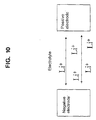
- the electrode is produced by mixing the acetylene black coated with the coating layer of manganese dioxide thin film further with a carbon powder and a binder polymer and applying the mixture onto a nickel reticulate mesh, followed by drying.
- a high-performance secondary battery shown in Fig. 10 can be produced.
- the present invention can provide carbon fine particles uniformly coated with a thin film layer of a metal oxide, a metal nitride or a metal carbide as shown in Fig. 4 and Fig. 5, which are novel materials.
- the carbon fine particles have properties shown in Fig. 7 and Fig. 8.
- Manganese oxide-coated carbon fine particles as a typical example are enormously excellent in performance when used as a supercapacitor and thus are promising as an electrode material capable of achieving rapid charge and rapid discharge.
Landscapes
- Engineering & Computer Science (AREA)
- Chemical & Material Sciences (AREA)
- Power Engineering (AREA)
- Materials Engineering (AREA)
- Microelectronics & Electronic Packaging (AREA)
- Electrochemistry (AREA)
- Chemical Kinetics & Catalysis (AREA)
- General Chemical & Material Sciences (AREA)
- Organic Chemistry (AREA)
- Manufacturing & Machinery (AREA)
- Inorganic Chemistry (AREA)
- Battery Electrode And Active Subsutance (AREA)
- Electric Double-Layer Capacitors Or The Like (AREA)
Abstract
Description

Claims (26)
- A carbon fine powder coated with a metal oxide, a metal nitride or a metal carbide, in which a thin film layer of the metal oxide, the metal nitride or the metal carbide is uniformly coated on the surface of the carbon fine powder having a large specific surface area.
- The carbon fine powder coated with a metal oxide, a metal nitride or a metal carbide according to claim 1, wherein the thin film layer of the metal oxide, the metal nitride or the metal carbide to be coated has a thickness of from 1 nm to 1,000 nm.
- The carbon fine powder coated with a metal oxide, a metal nitride or a metal carbide according to claim 1, wherein the metal oxide, the metal nitride or the metal carbide is one or at least two of metal oxides, metal nitrides or metal carbides selected from the groups consisting of manganese, vanadium, molybdenum, tungsten, titanium, iron, copper, silver, nickel, chromium, aluminum, tin, lead, silicon, germanium, gallium, indium, zinc, cobalt, niobium and tantalum.
- The carbon fine powder coated with a metal oxide, a metal nitride or a metal carbide according to claim 1, wherein the specific surface area of the carbon fine powder is from 50 m2/g to 3,500 m2/g.
- The carbon fine powder coated with a metal oxide, a metal nitride or a metal carbide according to claim 1, wherein the metal oxide, the metal nitride or the metal carbide in the thin film layer has a crystal structure of a crystalline phase, an amorphous phase or a microcrystalline phase.
- A process for producing a carbon fine powder coated with a metal oxide, a metal nitride or a. metal carbide, which comprises irradiating an ultrasonic wave on a dispersion comprising a metal oxide fine particle, a metal nitride or metal carbide, a carbon fine particle and a solvent to cause a sonochemical reaction on the surface of the carbon fine particle to thereby uniformly forming a thin film layer of the metal fine particle on the surface of the carbon fine particle.
- The process for producing a carbon fine powder coated with a metal oxide, a metal nitride or a metal carbide according to claim 6, wherein the ultrasonic wave has a frequency of from 1 kHz to 1 MHz, and the irradiated ultrasonic wave in the solution has an energy density of from 1 mW/cm3 to 1 kW/cm3.
- The process for producing a carbon fine powder coated with a metal oxide, a metal nitride or a metal carbide according to claim 6 or 7, wherein the solvent is one or at least two selected from the group consisting of water, alcohol, ketone, ether, ester, organic acid, amine and amino alcohol.
- A supercapacitor which uses the carbon fine powder coated with a metal oxide, a metal nitride or a metal carbide according to any one of claims 1 to 5 as a charge-accumulating and -releasing material.
- The supercapacitor according to claim 9, which uses an electrode in which a resin composition comprising the carbon fine powder coated with a metal oxide, a metal nitride or a metal carbide according to any one of claims 1 to 5 is molded.
- The supercapacitor according to claim 9, which uses an electrode in which a reticulate mesh of an electrode metal is coated with a resin composition comprising the carbon fine powder coated with a metal oxide, a metal nitride or a metal carbide and is dried.
- The supercapacitor using the electrode according to claim 10, wherein the resin is any one of polytetrafluoroethylene (PTFE), polyethylene and polypropylene.
- The supercapacitor using the electrode according to claim 10, wherein the resin further comprises a conductive material fine particle.
- The supercapacitor using the electrode according to claim 10, wherein the conductive material is one or at least two of carbon, gold, silver, copper, nickel and palladium.
- A supercapacitor which uses the electrode for a supercapacitor according to claim 10 as at least one of a cathode and an anode of the supcrcapacitor.
- A supercapacitor which uses the carbon fine powder coated with a metal oxide, a metal nitride or a metal carbide according to any one of claims 1 to 5 as an interelectrode material between a cathode and an anode.
- The supercapacitor according to claim 9, wherein an electrolyte is an aqueous electrolyte or a nonaqueous electrolyte.
- The supercapacitor according to claim 17, which uses one or at least two selected from a proton, a lithium ion, a magnesium ion, a potassium ion, a sodium ion, a calcium ion, a barium ion, a yttrium ion, a lanthanum ion, an ammonium ion and an organoammonium ion as an electrolyte ion.
- A high-performance secondary battery which uses the carbon fine powder coated with a metal oxide, a metal nitride or a metal carbide according to any one of claims I to 5 as a charge-accumulating and -releasing material.
- A high-performance secondary battery which uses an electrode in which a resin composition comprising the carbon fine powder coated with a metal oxide, a metal nitride or a metal carbide according to any one of claims 1 to 5 is molded.
- The high-performance secondary battery according to claim 20, which uses an electrode in which a reticulate mesh of an electrode metal is coated with a resin composition comprising a carbon fine powder coated with a metal oxide, a metal nitride or a metal carbide and is dried.
- The high-performance secondary battery using the electrode according to claim 20, wherein the resin is any one of polyrtetrafluoroethylene (PTFE), polyethylene and polypropylene.
- The high-performance secondary battery using the electrode according to claim 20, wherein the resin further comprises a conductive material fine particle.
- The high-performance secondary battery using the electrode according to claim 23, wherein the conductive material is one or at least two of carbon, gold, silver, copper, nickel and palladium.
- A high-performance secondary battery, which uses the electrode according to claim 19 or 20 as a cathode or an anode.
- A high-performance secondary battery, wherein uses the carbon fine powder coated with a metal oxide, a metal nitride or a metal carbide according to any one of claims 1 to 5 as an interelectrode between a cathode and an anode.
Applications Claiming Priority (7)
| Application Number | Priority Date | Filing Date | Title |
|---|---|---|---|
| JP2002260677 | 2002-09-05 | ||
| JP2002260674 | 2002-09-05 | ||
| JP2002260674A JP4168134B2 (en) | 2002-09-05 | 2002-09-05 | Metal oxide coated carbon fine powder and method for producing the same |
| JP2002260671 | 2002-09-05 | ||
| JP2002260671A JP2004103669A (en) | 2002-09-05 | 2002-09-05 | Super capacitor |
| JP2002260677A JP2004103304A (en) | 2002-09-05 | 2002-09-05 | High performance secondary battery |
| PCT/JP2003/011252 WO2004022484A1 (en) | 2002-09-05 | 2003-09-03 | Carbon fine powder coated with metal oxide, metal nitride or metal carbide, process for producing the same, and supercapacitor and secondary battery using the carbon fine powder |
Publications (2)
| Publication Number | Publication Date |
|---|---|
| EP1547973A1 true EP1547973A1 (en) | 2005-06-29 |
| EP1547973A4 EP1547973A4 (en) | 2008-07-30 |
Family
ID=31982138
Family Applications (1)
| Application Number | Title | Priority Date | Filing Date |
|---|---|---|---|
| EP03794201A Withdrawn EP1547973A4 (en) | 2002-09-05 | 2003-09-03 | CARBON FINE POWDER COATED WITH METAL OXIDE, METAL NITRIDE OR METALLIC CARBIDE, CORRESPONDING PRODUCTION PROCESS AND SUPERCAPSULATOR AND ACCUMULATOR USING THE CARBON FINE POWDER |
Country Status (5)
| Country | Link |
|---|---|
| US (1) | US20060154071A1 (en) |
| EP (1) | EP1547973A4 (en) |
| KR (1) | KR20050057237A (en) |
| AU (1) | AU2003261909A1 (en) |
| WO (1) | WO2004022484A1 (en) |
Cited By (5)
| Publication number | Priority date | Publication date | Assignee | Title |
|---|---|---|---|---|
| WO2009144543A1 (en) * | 2008-05-29 | 2009-12-03 | Toyota Jidosha Kabushiki Kaisha | Electrode plate, secondary battery, and method for producing the electrode plate |
| FR2941875A1 (en) * | 2009-02-11 | 2010-08-13 | Commissariat Energie Atomique | PROCESS FOR PREPARING A MIXTURE OF A POWDER OF AN ELECTRODE ACTIVE COMPOUND AND A POWDER OF AN ELECTRONIC CONDUCTING COMPOUND, MIXTURE OBTAINED THEREBY, ELECTRODE, CELL AND ACCUMULATOR |
| CN103219169A (en) * | 2013-03-29 | 2013-07-24 | 东华大学 | Preparation method for carbon-coated nickel oxide NiO/C as supercapacitor electrode material |
| EP3975213A1 (en) | 2020-09-28 | 2022-03-30 | Jozef Stefan Institute | Method for manufacturing hybrid binder-free electrodes for electrochemical supercapacitors |
| WO2024097452A3 (en) * | 2022-10-10 | 2024-10-17 | Ppg Industries Ohio, Inc. | Supercapacitor electrode coating materials including active composite particles and conductive carbon-containing particles |
Families Citing this family (64)
| Publication number | Priority date | Publication date | Assignee | Title |
|---|---|---|---|---|
| GB2395059B (en) | 2002-11-05 | 2005-03-16 | Imp College Innovations Ltd | Structured silicon anode |
| EP1788040B1 (en) * | 2004-08-06 | 2012-06-06 | Mitsubishi Gas Chemical Company, Inc. | Insulated ultrafine powder and high dielectric constant resin composite material |
| CN102497172A (en) * | 2004-10-29 | 2012-06-13 | 北电网络有限公司 | Band reject filters |
| KR100622737B1 (en) * | 2004-11-08 | 2006-09-19 | 현대자동차주식회사 | Synthesis of Manganese Oxide-Carbon Nanocomposites for Manufacturing High Capacity Supercapacitor Electrodes |
| GB0601318D0 (en) | 2006-01-23 | 2006-03-01 | Imp Innovations Ltd | Method of etching a silicon-based material |
| GB0601319D0 (en) | 2006-01-23 | 2006-03-01 | Imp Innovations Ltd | A method of fabricating pillars composed of silicon-based material |
| KR100765615B1 (en) * | 2006-05-26 | 2007-10-09 | 현대자동차주식회사 | Manufacturing method of pseudo capacitor using composite material |
| US8080335B2 (en) | 2006-06-09 | 2011-12-20 | Canon Kabushiki Kaisha | Powder material, electrode structure using the powder material, and energy storage device having the electrode structure |
| JP5186830B2 (en) * | 2006-09-21 | 2013-04-24 | 日産自動車株式会社 | Capacitor electrode and manufacturing method thereof |
| US7881042B2 (en) | 2006-10-26 | 2011-02-01 | Axion Power International, Inc. | Cell assembly for an energy storage device with activated carbon electrodes |
| EP2132756B1 (en) | 2007-03-15 | 2016-11-09 | Yazaki Corporation | Capacitor electrodes comprising carbon nanotubes filled with one or more non-carbon materials |
| GB0709165D0 (en) | 2007-05-11 | 2007-06-20 | Nexeon Ltd | A silicon anode for a rechargeable battery |
| GB0713896D0 (en) * | 2007-07-17 | 2007-08-29 | Nexeon Ltd | Method |
| GB0713898D0 (en) | 2007-07-17 | 2007-08-29 | Nexeon Ltd | A method of fabricating structured particles composed of silcon or a silicon-based material and their use in lithium rechargeable batteries |
| GB0713895D0 (en) * | 2007-07-17 | 2007-08-29 | Nexeon Ltd | Production |
| EP2204867A4 (en) | 2007-09-06 | 2012-06-06 | Canon Kk | Method for producing lithium ion storage/release material, lithium ion storage/release material, electrode structure using the material, and electricity storage device |
| KR100971372B1 (en) * | 2007-11-20 | 2010-07-20 | 주식회사 대유신소재 | Manufacturing method of carbon material and aluminum composite by agglomeration method |
| KR101693602B1 (en) | 2008-04-07 | 2017-01-06 | 카네기 멜론 유니버시티 | Sodium ion based aqueous electrolyte electrochemical secondary energy storage device |
| US8257867B2 (en) | 2008-07-28 | 2012-09-04 | Battelle Memorial Institute | Nanocomposite of graphene and metal oxide materials |
| US8450014B2 (en) * | 2008-07-28 | 2013-05-28 | Battelle Memorial Institute | Lithium ion batteries with titania/graphene anodes |
| KR20100028384A (en) * | 2008-09-04 | 2010-03-12 | 삼성전기주식회사 | Composite and manufacturing method thereof |
| US9346680B2 (en) | 2008-09-09 | 2016-05-24 | Battelle Memorial Institute | Mesoporous metal oxide graphene nanocomposite materials |
| GB2464157B (en) | 2008-10-10 | 2010-09-01 | Nexeon Ltd | A method of fabricating structured particles composed of silicon or a silicon-based material |
| GB2464158B (en) | 2008-10-10 | 2011-04-20 | Nexeon Ltd | A method of fabricating structured particles composed of silicon or a silicon-based material and their use in lithium rechargeable batteries |
| US9589098B2 (en) * | 2008-12-12 | 2017-03-07 | Eocell Ltd. | Simulated X-ray diffraction spectra for analysis of crystalline materials |
| US10177398B2 (en) | 2010-11-23 | 2019-01-08 | Eocell Ltd | Li-ion battery capacity and voltage prediction using quantum simulations |
| JP5136804B2 (en) | 2009-04-24 | 2013-02-06 | 大日本印刷株式会社 | Non-aqueous electrolyte secondary battery electrode plate, non-aqueous electrolyte secondary battery electrode plate manufacturing method, and non-aqueous electrolyte secondary battery |
| JP4930733B2 (en) * | 2009-04-24 | 2012-05-16 | 大日本印刷株式会社 | Non-aqueous electrolyte secondary battery negative electrode plate, non-aqueous electrolyte secondary battery negative electrode manufacturing method, and non-aqueous electrolyte secondary battery |
| JP4924852B2 (en) | 2009-04-24 | 2012-04-25 | 大日本印刷株式会社 | Method for producing electrode plate for non-aqueous electrolyte secondary battery |
| JP5212394B2 (en) | 2009-04-24 | 2013-06-19 | 大日本印刷株式会社 | Method for producing electrode plate for non-aqueous electrolyte secondary battery |
| JP5196197B2 (en) | 2009-04-24 | 2013-05-15 | 大日本印刷株式会社 | Method for producing electrode plate for non-aqueous electrolyte secondary battery |
| GB2470056B (en) | 2009-05-07 | 2013-09-11 | Nexeon Ltd | A method of making silicon anode material for rechargeable cells |
| GB2470190B (en) | 2009-05-11 | 2011-07-13 | Nexeon Ltd | A binder for lithium ion rechargeable battery cells |
| US9853292B2 (en) | 2009-05-11 | 2017-12-26 | Nexeon Limited | Electrode composition for a secondary battery cell |
| CN102471091B (en) * | 2009-07-17 | 2015-05-20 | 株式会社杰士汤浅国际 | Cobalt cerium compound, alkaline storage battery, and method for producing cobalt cerium compound |
| JP5644130B2 (en) * | 2009-07-28 | 2014-12-24 | 三菱瓦斯化学株式会社 | Insulated ultrafine powder, method for producing the same, and high dielectric constant resin composite material |
| US9017867B2 (en) * | 2009-08-10 | 2015-04-28 | Battelle Memorial Institute | Self assembled multi-layer nanocomposite of graphene and metal oxide materials |
| US8835046B2 (en) * | 2009-08-10 | 2014-09-16 | Battelle Memorial Institute | Self assembled multi-layer nanocomposite of graphene and metal oxide materials |
| JP5667823B2 (en) * | 2009-09-30 | 2015-02-12 | 株式会社半導体エネルギー研究所 | Power storage device |
| KR101045563B1 (en) * | 2009-12-01 | 2011-07-01 | 한국과학기술연구원 | Electrode comprising a metal oxide coated carbon particles, an electrochemical capacitor having the same and a method of manufacturing the same |
| WO2011068391A2 (en) * | 2009-12-04 | 2011-06-09 | 주식회사 루트제이제이 | Anode active material precursor and active material for a rechargeable lithium battery comprising hollow nanofibrous carbon, and a production method therefor |
| US20110229767A1 (en) * | 2010-03-19 | 2011-09-22 | Dai Nippon Printing Co., Ltd. | Electrode for non-aqueous electrolyte secondary battery, method for producing the same, and non-aqueous electrolyte secondary battery |
| GB201005979D0 (en) | 2010-04-09 | 2010-05-26 | Nexeon Ltd | A method of fabricating structured particles composed of silicon or a silicon-based material and their use in lithium rechargeable batteries |
| GB201009519D0 (en) | 2010-06-07 | 2010-07-21 | Nexeon Ltd | An additive for lithium ion rechargeable battery cells |
| GB201014706D0 (en) | 2010-09-03 | 2010-10-20 | Nexeon Ltd | Porous electroactive material |
| GB201014707D0 (en) | 2010-09-03 | 2010-10-20 | Nexeon Ltd | Electroactive material |
| US8557441B2 (en) | 2010-10-09 | 2013-10-15 | Battelle Memorial Institute | Titania-graphene anode electrode paper |
| JP4800440B1 (en) * | 2010-12-22 | 2011-10-26 | 富久代 市村 | Solid-state secondary battery using silicon compound and method for manufacturing the same |
| WO2012148569A2 (en) | 2011-03-01 | 2012-11-01 | Aquion Energy Inc. | Profile responsive electrode ensemble |
| US8298701B2 (en) | 2011-03-09 | 2012-10-30 | Aquion Energy Inc. | Aqueous electrolyte energy storage device |
| US8137830B2 (en) | 2011-07-19 | 2012-03-20 | Aquion Energy, Inc. | High voltage battery composed of anode limited electrochemical cells |
| US8945751B2 (en) | 2011-07-19 | 2015-02-03 | Aquion Energy, Inc. | High voltage battery composed of anode limited electrochemical cells |
| US8652672B2 (en) | 2012-03-15 | 2014-02-18 | Aquion Energy, Inc. | Large format electrochemical energy storage device housing and module |
| US9580322B2 (en) | 2012-08-28 | 2017-02-28 | Knu-Industry Cooperation Foundation | Method of preparing negative active material for rechargeable lithium battery, and negative active material and rechargeable lithium battery prepared from the same |
| US9368792B2 (en) | 2012-08-28 | 2016-06-14 | Kangwon National University University-Industry Cooperation Foundation | Negative active material for rechargeable lithium battery, method of preparing the same, and rechargeable lithium battery including the same |
| US8945756B2 (en) | 2012-12-12 | 2015-02-03 | Aquion Energy Inc. | Composite anode structure for aqueous electrolyte energy storage and device containing same |
| JP6270059B2 (en) | 2015-08-04 | 2018-01-31 | トヨタ自動車株式会社 | Performance degradation recovery method for lithium ion secondary battery |
| KR102459619B1 (en) | 2015-09-18 | 2022-10-27 | 삼성에스디아이 주식회사 | Composite anode active material, lithium battery including the same, and method of preparing the composite anode active material |
| WO2017083117A1 (en) | 2015-11-10 | 2017-05-18 | Elc Management Llc | Indium tin oxide coated particles and compositions |
| WO2017087185A1 (en) * | 2015-11-20 | 2017-05-26 | Elc Management Llc | Indium nitride coated particles and compositions |
| CN107275109B (en) * | 2017-06-21 | 2018-08-21 | 太原理工大学 | The preparation method of manganese dioxide composite material electrode for ultracapacitor |
| TWI869595B (en) * | 2020-05-29 | 2025-01-11 | 財團法人工業技術研究院 | Lithium ion battery, electrode of lithium ion battery, and electrode material |
| CN116941027A (en) | 2021-02-08 | 2023-10-24 | 麦克德米德乐思公司 | Method and wet chemistry for diffusion barrier formation |
| CN113371688A (en) * | 2021-06-07 | 2021-09-10 | 南阳师范学院 | Preparation method of novel iron nitride and porous carbon composite anode material |
Family Cites Families (8)
| Publication number | Priority date | Publication date | Assignee | Title |
|---|---|---|---|---|
| JPH0628719B2 (en) * | 1990-06-13 | 1994-04-20 | 工業技術院長 | Method of coating fine particle surface |
| US5079674A (en) * | 1990-12-24 | 1992-01-07 | Motorola, Inc. | Supercapacitor electrode and method of fabrication thereof |
| EP0935265A3 (en) * | 1998-02-09 | 2002-06-12 | Wilson Greatbatch Ltd. | Thermal spray coated substrate for use in an electrical energy storage device and method |
| JP2000012404A (en) * | 1998-06-22 | 2000-01-14 | Nichicon Corp | Electric double-layer capacitor |
| JP2000219507A (en) * | 1999-01-29 | 2000-08-08 | Nippon Carbon Co Ltd | Hydrophilic activated carbon |
| US6339528B1 (en) * | 1999-09-16 | 2002-01-15 | Ness Capacitor Co., Ltd. | Metal oxide electrode for supercapacitor and manufacturing method thereof |
| EP1347523A4 (en) * | 2000-09-06 | 2007-07-04 | Hitachi Maxell | ELECTRODE MATERIAL FOR ELECTROCHEMICAL ELEMENT AND PROCESS FOR PRODUCING THE SAME, AND ELECTROCHEMICAL ELEMENT |
| JP2002217071A (en) * | 2001-01-19 | 2002-08-02 | Hitachi Maxell Ltd | Electric double layer capacitor |
-
2003
- 2003-09-03 US US10/526,669 patent/US20060154071A1/en not_active Abandoned
- 2003-09-03 KR KR1020057003876A patent/KR20050057237A/en not_active Ceased
- 2003-09-03 EP EP03794201A patent/EP1547973A4/en not_active Withdrawn
- 2003-09-03 AU AU2003261909A patent/AU2003261909A1/en not_active Abandoned
- 2003-09-03 WO PCT/JP2003/011252 patent/WO2004022484A1/en not_active Ceased
Cited By (8)
| Publication number | Priority date | Publication date | Assignee | Title |
|---|---|---|---|---|
| WO2009144543A1 (en) * | 2008-05-29 | 2009-12-03 | Toyota Jidosha Kabushiki Kaisha | Electrode plate, secondary battery, and method for producing the electrode plate |
| FR2941875A1 (en) * | 2009-02-11 | 2010-08-13 | Commissariat Energie Atomique | PROCESS FOR PREPARING A MIXTURE OF A POWDER OF AN ELECTRODE ACTIVE COMPOUND AND A POWDER OF AN ELECTRONIC CONDUCTING COMPOUND, MIXTURE OBTAINED THEREBY, ELECTRODE, CELL AND ACCUMULATOR |
| WO2010092044A1 (en) * | 2009-02-11 | 2010-08-19 | Commissariat A L'energie Atomique Et Aux Energies Alternativesmique | Method for preparing a mixture of an electrode active compound powder and an electronic conductor compound powder, resulting mixture, electrode, cell and battery |
| US9537138B2 (en) | 2009-02-11 | 2017-01-03 | Commissariat à l'énergie atomique et aux energies alternatives | Method for preparing a mixture of an electrode active compound powder and an electronic conductor compound powder, resulting mixture, electrode, cell and battery |
| CN103219169A (en) * | 2013-03-29 | 2013-07-24 | 东华大学 | Preparation method for carbon-coated nickel oxide NiO/C as supercapacitor electrode material |
| CN103219169B (en) * | 2013-03-29 | 2016-08-10 | 东华大学 | A kind of preparation method of electrode material for super capacitor carbon cladding nickel oxide NiO/C |
| EP3975213A1 (en) | 2020-09-28 | 2022-03-30 | Jozef Stefan Institute | Method for manufacturing hybrid binder-free electrodes for electrochemical supercapacitors |
| WO2024097452A3 (en) * | 2022-10-10 | 2024-10-17 | Ppg Industries Ohio, Inc. | Supercapacitor electrode coating materials including active composite particles and conductive carbon-containing particles |
Also Published As
| Publication number | Publication date |
|---|---|
| US20060154071A1 (en) | 2006-07-13 |
| WO2004022484A1 (en) | 2004-03-18 |
| EP1547973A4 (en) | 2008-07-30 |
| AU2003261909A1 (en) | 2004-03-29 |
| KR20050057237A (en) | 2005-06-16 |
Similar Documents
| Publication | Publication Date | Title |
|---|---|---|
| US20060154071A1 (en) | Carbon fine powder coated with metal oxide, metal nitride or metal carbide, process for producing the sdame, and supercapacitor and secondary battery carbon fine powder | |
| Pazhamalai et al. | Two-dimensional molybdenum diselenide nanosheets as a novel electrode material for symmetric supercapacitors using organic electrolyte | |
| Gao et al. | Effect of different templating agents on cobalt ferrite (CoFe2O4) nanomaterials for high-performance supercapacitor | |
| Zhang et al. | A facile strategy for the synthesis of three-dimensional heterostructure self-assembled MoSe 2 nanosheets and their application as an anode for high-energy lithium-ion hybrid capacitors | |
| Wang et al. | Double-shelled tremella-like NiO@ Co3O4@ MnO2 as a high-performance cathode material for alkaline supercapacitors | |
| Zhang et al. | Hierarchical hollow microspheres assembled from N-doped carbon coated Li 4 Ti 5 O 12 nanosheets with enhanced lithium storage properties | |
| Ke et al. | 3D TiO2@ Ni (OH) 2 core-shell arrays with tunable nanostructure for hybrid supercapacitor application | |
| Hwang et al. | Crystalline maricite NaFePO4 as a positive electrode material for sodium secondary batteries operating at intermediate temperature | |
| Zhao et al. | Cobalt carbonate dumbbells for high-capacity lithium storage: a slight doping of ascorbic acid and an enhancement in electrochemical performances | |
| CN103987660B (en) | Silicon oxide and preparation method thereof | |
| US8865102B2 (en) | Carbon material and method for producing same | |
| Ma et al. | Al2O3 coated single-crystalline hexagonal nanosheets of LiNi0. 6Co0. 2Mn0. 2O2 cathode materials for the high-performance lithium-ion batteries | |
| Chen et al. | MOF-derived Fe 3 O 4/carbon octahedral nanostructures with enhanced performance as anode materials for lithium-ion batteries | |
| Barkhordari et al. | Facile synthesis of ZnMn2O4 nanosheets via cathodic electrodeposition: characterization and supercapacitor behavior studies | |
| You et al. | Synthesis of homogeneous CaMoO4 microspheres with nanopits for high-capacity anode material in Li-ion battery | |
| Sanad et al. | Chemical activation of nanocrystalline LiNbO3 anode for improved storage capacity in lithium-ion batteries | |
| Yang et al. | Flower-like Bi2O3 with enhanced rate capability and cycling stability for supercapacitors | |
| Vasanthi et al. | Olivine-type nanoparticle for hybrid supercapacitors | |
| Zhang et al. | Synthesis of spherical Al-doping LiMn2O4 via a high-pressure spray-drying method as cathode materials for lithium-ion batteries | |
| Jin et al. | Facile synthesis of monodispersed α-Fe2O3 cubes as a high-performance anode material for lithium-ion batteries | |
| KR101993443B1 (en) | Preparation method of conductive metal oxide nanoparticle with large surface area via simple synthetic procedure | |
| Dang et al. | ZnNi‐MnCo2O4@ CNT porous double heterojunction cage‐like structure with three‐dimensional network for superior lithium‐ion batteries and capacitors | |
| Li et al. | In situ electrochemical rapid growth NiCo-LDH as a high-performance electrode material for all-solid-state flexible hybrid supercapacitors | |
| Liu et al. | One-pot synthesis of soft carbon-combined Li2TiSiO5 composites with oxygen vacancies as long life and high rate anodes for lithium-ion batteries | |
| JP2018199617A (en) | Titanium oxide crystal and electrode for electricity storage devices that comprises titanium oxide crystal |
Legal Events
| Date | Code | Title | Description |
|---|---|---|---|
| PUAI | Public reference made under article 153(3) epc to a published international application that has entered the european phase |
Free format text: ORIGINAL CODE: 0009012 |
|
| 17P | Request for examination filed |
Effective date: 20050405 |
|
| AK | Designated contracting states |
Kind code of ref document: A1 Designated state(s): AT BE BG CH CY CZ DE DK EE ES FI FR GB GR HU IE IT LI LU MC NL PT RO SE SI SK TR |
|
| AX | Request for extension of the european patent |
Extension state: AL LT LV MK |
|
| DAX | Request for extension of the european patent (deleted) | ||
| RBV | Designated contracting states (corrected) |
Designated state(s): DE |
|
| A4 | Supplementary search report drawn up and despatched |
Effective date: 20080702 |
|
| 17Q | First examination report despatched |
Effective date: 20090703 |
|
| STAA | Information on the status of an ep patent application or granted ep patent |
Free format text: STATUS: THE APPLICATION IS DEEMED TO BE WITHDRAWN |
|
| 18D | Application deemed to be withdrawn |
Effective date: 20120403 |