EP1541549A1 - Tricyclic hydroxamate and benzaminde derivatives, compositions and methods - Google Patents
Tricyclic hydroxamate and benzaminde derivatives, compositions and methods Download PDFInfo
- Publication number
- EP1541549A1 EP1541549A1 EP03293143A EP03293143A EP1541549A1 EP 1541549 A1 EP1541549 A1 EP 1541549A1 EP 03293143 A EP03293143 A EP 03293143A EP 03293143 A EP03293143 A EP 03293143A EP 1541549 A1 EP1541549 A1 EP 1541549A1
- Authority
- EP
- European Patent Office
- Prior art keywords
- group
- tetrahydro
- atom
- arh
- tetramethylnaphthalen
- Prior art date
- Legal status (The legal status is an assumption and is not a legal conclusion. Google has not performed a legal analysis and makes no representation as to the accuracy of the status listed.)
- Withdrawn
Links
- 239000000203 mixture Substances 0.000 title claims abstract description 86
- 238000000034 method Methods 0.000 title abstract description 45
- 150000001875 compounds Chemical class 0.000 claims abstract description 96
- 102000003964 Histone deacetylase Human genes 0.000 claims abstract description 41
- 108090000353 Histone deacetylase Proteins 0.000 claims abstract description 41
- 206010028980 Neoplasm Diseases 0.000 claims abstract description 23
- 238000011282 treatment Methods 0.000 claims abstract description 22
- 201000004681 Psoriasis Diseases 0.000 claims abstract description 10
- 208000015114 central nervous system disease Diseases 0.000 claims abstract description 9
- 239000008194 pharmaceutical composition Substances 0.000 claims abstract description 9
- 201000011510 cancer Diseases 0.000 claims abstract description 8
- 230000001404 mediated effect Effects 0.000 claims abstract description 7
- 239000002253 acid Substances 0.000 claims description 29
- 125000004429 atom Chemical group 0.000 claims description 26
- -1 2-aminophenyl group Chemical group 0.000 claims description 23
- 125000004169 (C1-C6) alkyl group Chemical group 0.000 claims description 21
- IJGRMHOSHXDMSA-UHFFFAOYSA-N Atomic nitrogen Chemical group N#N IJGRMHOSHXDMSA-UHFFFAOYSA-N 0.000 claims description 20
- 125000003118 aryl group Chemical group 0.000 claims description 20
- 150000003839 salts Chemical class 0.000 claims description 19
- UUDNSDNAIVCCCU-UHFFFAOYSA-N n-[4-(hydroxycarbamoyl)phenyl]-5,5,8,8-tetramethyl-6,7-dihydronaphthalene-2-carboxamide Chemical compound C=1C=C2C(C)(C)CCC(C)(C)C2=CC=1C(=O)NC1=CC=C(C(=O)NO)C=C1 UUDNSDNAIVCCCU-UHFFFAOYSA-N 0.000 claims description 17
- VJTDTUAJOYEFTR-UHFFFAOYSA-N 4-[[[2,2-difluoro-2-(5,5,8,8-tetramethyl-6,7-dihydronaphthalen-2-yl)acetyl]amino]methyl]-n-hydroxybenzamide Chemical compound C=1C=C2C(C)(C)CCC(C)(C)C2=CC=1C(F)(F)C(=O)NCC1=CC=C(C(=O)NO)C=C1 VJTDTUAJOYEFTR-UHFFFAOYSA-N 0.000 claims description 16
- 125000004435 hydrogen atom Chemical group [H]* 0.000 claims description 16
- 201000010099 disease Diseases 0.000 claims description 15
- 208000037265 diseases, disorders, signs and symptoms Diseases 0.000 claims description 15
- 229910052760 oxygen Inorganic materials 0.000 claims description 15
- 125000004432 carbon atom Chemical group C* 0.000 claims description 14
- WBNREPILWJMGHE-UHFFFAOYSA-N n-[4-(hydroxycarbamoyl)phenyl]-n'-(5,5,8,8-tetramethyl-6,7-dihydronaphthalen-2-yl)oxamide Chemical compound C=1C=C2C(C)(C)CCC(C)(C)C2=CC=1NC(=O)C(=O)NC1=CC=C(C(=O)NO)C=C1 WBNREPILWJMGHE-UHFFFAOYSA-N 0.000 claims description 14
- 125000005843 halogen group Chemical group 0.000 claims description 13
- RMAHGGZEFBZALC-WAYWQWQTSA-N n-hydroxy-4-[(z)-2-(5,5,8,8-tetramethyl-6,7-dihydronaphthalen-2-yl)ethenyl]benzamide Chemical compound C=1C=C2C(C)(C)CCC(C)(C)C2=CC=1\C=C/C1=CC=C(C(=O)NO)C=C1 RMAHGGZEFBZALC-WAYWQWQTSA-N 0.000 claims description 13
- QVGXLLKOCUKJST-UHFFFAOYSA-N atomic oxygen Chemical group [O] QVGXLLKOCUKJST-UHFFFAOYSA-N 0.000 claims description 12
- 125000000956 methoxy group Chemical group [H]C([H])([H])O* 0.000 claims description 12
- 229910052757 nitrogen Inorganic materials 0.000 claims description 12
- 239000001301 oxygen Chemical group 0.000 claims description 12
- 229910052739 hydrogen Inorganic materials 0.000 claims description 10
- 239000001257 hydrogen Substances 0.000 claims description 10
- 125000002496 methyl group Chemical group [H]C([H])([H])* 0.000 claims description 10
- 230000004663 cell proliferation Effects 0.000 claims description 9
- 150000002148 esters Chemical class 0.000 claims description 9
- 125000001997 phenyl group Chemical group [H]C1=C([H])C([H])=C(*)C([H])=C1[H] 0.000 claims description 9
- NINIDFKCEFEMDL-UHFFFAOYSA-N Sulfur Chemical group [S] NINIDFKCEFEMDL-UHFFFAOYSA-N 0.000 claims description 8
- 125000000217 alkyl group Chemical group 0.000 claims description 8
- 125000003710 aryl alkyl group Chemical group 0.000 claims description 8
- 208000023105 Huntington disease Diseases 0.000 claims description 7
- 230000002159 abnormal effect Effects 0.000 claims description 7
- 125000004122 cyclic group Chemical group 0.000 claims description 7
- 239000003814 drug Substances 0.000 claims description 7
- 125000001153 fluoro group Chemical group F* 0.000 claims description 7
- 125000001544 thienyl group Chemical group 0.000 claims description 7
- UFHFLCQGNIYNRP-UHFFFAOYSA-N Hydrogen Chemical compound [H][H] UFHFLCQGNIYNRP-UHFFFAOYSA-N 0.000 claims description 6
- 239000005864 Sulphur Substances 0.000 claims description 6
- 206010002026 amyotrophic lateral sclerosis Diseases 0.000 claims description 6
- 229910052799 carbon Inorganic materials 0.000 claims description 6
- 229910052731 fluorine Inorganic materials 0.000 claims description 6
- 208000032839 leukemia Diseases 0.000 claims description 6
- 230000004770 neurodegeneration Effects 0.000 claims description 6
- 208000015122 neurodegenerative disease Diseases 0.000 claims description 6
- 208000027232 peripheral nervous system disease Diseases 0.000 claims description 6
- 125000003342 alkenyl group Chemical group 0.000 claims description 5
- 230000003492 excitotoxic effect Effects 0.000 claims description 5
- 231100000063 excitotoxicity Toxicity 0.000 claims description 5
- 125000000842 isoxazolyl group Chemical group 0.000 claims description 5
- 125000002950 monocyclic group Chemical group 0.000 claims description 5
- 125000003367 polycyclic group Polymers 0.000 claims description 5
- 125000004076 pyridyl group Chemical group 0.000 claims description 5
- 125000002023 trifluoromethyl group Chemical group FC(F)(F)* 0.000 claims description 5
- NEAQRZUHTPSBBM-UHFFFAOYSA-N 2-hydroxy-3,3-dimethyl-7-nitro-4h-isoquinolin-1-one Chemical group C1=C([N+]([O-])=O)C=C2C(=O)N(O)C(C)(C)CC2=C1 NEAQRZUHTPSBBM-UHFFFAOYSA-N 0.000 claims description 4
- OKTJSMMVPCPJKN-UHFFFAOYSA-N Carbon Chemical group [C] OKTJSMMVPCPJKN-UHFFFAOYSA-N 0.000 claims description 4
- 206010016654 Fibrosis Diseases 0.000 claims description 4
- 230000002378 acidificating effect Effects 0.000 claims description 4
- 150000007513 acids Chemical class 0.000 claims description 4
- 150000001345 alkine derivatives Chemical class 0.000 claims description 4
- 208000019425 cirrhosis of liver Diseases 0.000 claims description 4
- 230000004761 fibrosis Effects 0.000 claims description 4
- 125000002541 furyl group Chemical group 0.000 claims description 4
- 125000002887 hydroxy group Chemical group [H]O* 0.000 claims description 4
- 210000004185 liver Anatomy 0.000 claims description 4
- 108010040003 polyglutamine Proteins 0.000 claims description 4
- 229920000155 polyglutamine Polymers 0.000 claims description 4
- 125000000714 pyrimidinyl group Chemical group 0.000 claims description 4
- 208000024827 Alzheimer disease Diseases 0.000 claims description 3
- 208000018737 Parkinson disease Diseases 0.000 claims description 3
- 125000000738 acetamido group Chemical group [H]C([H])([H])C(=O)N([H])[*] 0.000 claims description 3
- 150000001335 aliphatic alkanes Chemical class 0.000 claims description 3
- 150000001336 alkenes Chemical class 0.000 claims description 3
- 125000004453 alkoxycarbonyl group Chemical group 0.000 claims description 3
- 125000005129 aryl carbonyl group Chemical group 0.000 claims description 3
- 230000009702 cancer cell proliferation Effects 0.000 claims description 3
- 125000001495 ethyl group Chemical group [H]C([H])([H])C([H])([H])* 0.000 claims description 3
- 125000002883 imidazolyl group Chemical group 0.000 claims description 3
- 208000028867 ischemia Diseases 0.000 claims description 3
- 125000001786 isothiazolyl group Chemical group 0.000 claims description 3
- 201000006417 multiple sclerosis Diseases 0.000 claims description 3
- 230000001537 neural effect Effects 0.000 claims description 3
- 230000003287 optical effect Effects 0.000 claims description 3
- 125000003226 pyrazolyl group Chemical group 0.000 claims description 3
- 229920006395 saturated elastomer Polymers 0.000 claims description 3
- 125000000335 thiazolyl group Chemical group 0.000 claims description 3
- 125000004306 triazinyl group Chemical group 0.000 claims description 3
- 125000000027 (C1-C10) alkoxy group Chemical group 0.000 claims description 2
- 125000000008 (C1-C10) alkyl group Chemical group 0.000 claims description 2
- ZYHQGITXIJDDKC-UHFFFAOYSA-N 2-[2-(2-aminophenyl)ethyl]aniline Chemical group NC1=CC=CC=C1CCC1=CC=CC=C1N ZYHQGITXIJDDKC-UHFFFAOYSA-N 0.000 claims description 2
- 206010005003 Bladder cancer Diseases 0.000 claims description 2
- 206010006187 Breast cancer Diseases 0.000 claims description 2
- 208000026310 Breast neoplasm Diseases 0.000 claims description 2
- 206010009944 Colon cancer Diseases 0.000 claims description 2
- 206010058467 Lung neoplasm malignant Diseases 0.000 claims description 2
- 208000015914 Non-Hodgkin lymphomas Diseases 0.000 claims description 2
- 206010033128 Ovarian cancer Diseases 0.000 claims description 2
- 206010061535 Ovarian neoplasm Diseases 0.000 claims description 2
- 206010061902 Pancreatic neoplasm Diseases 0.000 claims description 2
- 206010060862 Prostate cancer Diseases 0.000 claims description 2
- 208000000236 Prostatic Neoplasms Diseases 0.000 claims description 2
- 208000007097 Urinary Bladder Neoplasms Diseases 0.000 claims description 2
- 150000001721 carbon Chemical group 0.000 claims description 2
- 208000029742 colonic neoplasm Diseases 0.000 claims description 2
- 125000003709 fluoroalkyl group Chemical group 0.000 claims description 2
- 201000010536 head and neck cancer Diseases 0.000 claims description 2
- 208000014829 head and neck neoplasm Diseases 0.000 claims description 2
- 150000004677 hydrates Chemical class 0.000 claims description 2
- 150000002576 ketones Chemical class 0.000 claims description 2
- 125000005647 linker group Chemical group 0.000 claims description 2
- 201000007270 liver cancer Diseases 0.000 claims description 2
- 208000014018 liver neoplasm Diseases 0.000 claims description 2
- 201000005202 lung cancer Diseases 0.000 claims description 2
- 208000020816 lung neoplasm Diseases 0.000 claims description 2
- 208000015486 malignant pancreatic neoplasm Diseases 0.000 claims description 2
- 201000001441 melanoma Diseases 0.000 claims description 2
- 125000000250 methylamino group Chemical group [H]N(*)C([H])([H])[H] 0.000 claims description 2
- 150000002790 naphthalenes Chemical class 0.000 claims description 2
- 125000004433 nitrogen atom Chemical group N* 0.000 claims description 2
- 208000008443 pancreatic carcinoma Diseases 0.000 claims description 2
- 125000002924 primary amino group Chemical group [H]N([H])* 0.000 claims description 2
- 125000001424 substituent group Chemical group 0.000 claims description 2
- 125000001174 sulfone group Chemical group 0.000 claims description 2
- 150000003462 sulfoxides Chemical class 0.000 claims description 2
- 201000005112 urinary bladder cancer Diseases 0.000 claims description 2
- 150000004799 α-ketoamides Chemical class 0.000 claims description 2
- ICILKEHLBDJJKL-UHFFFAOYSA-N 4-[[2,2-difluoro-2-(5,5,8,8-tetramethyl-6,7-dihydronaphthalen-2-yl)acetyl]amino]-N-hydroxybenzamide 4-N-hydroxy-1-N-(5,5,8,8-tetramethyl-6,7-dihydronaphthalen-2-yl)benzene-1,4-dicarboxamide Chemical compound CC1(CCC(C2=CC(=CC=C12)NC(C1=CC=C(C(=O)NO)C=C1)=O)(C)C)C.FC(C(=O)NC1=CC=C(C(=O)NO)C=C1)(C1=CC=C2C(CCC(C2=C1)(C)C)(C)C)F ICILKEHLBDJJKL-UHFFFAOYSA-N 0.000 claims 1
- BMCHCKCDKNUQPP-IPZCTEOASA-N CC1(CCC(C2=CC(=CC=C12)/C=C/C1=CC=C(C(=O)NO)C=C1)(C)C)C.CC1(CCC(C2=CC(=CC=C12)NC(C1=CC=C(C(=O)NO)C=C1)=O)(C)C)C Chemical compound CC1(CCC(C2=CC(=CC=C12)/C=C/C1=CC=C(C(=O)NO)C=C1)(C)C)C.CC1(CCC(C2=CC(=CC=C12)NC(C1=CC=C(C(=O)NO)C=C1)=O)(C)C)C BMCHCKCDKNUQPP-IPZCTEOASA-N 0.000 claims 1
- QXSWGNHIDNVKNV-UHFFFAOYSA-N NC1=C(C=CC=C1)NC(=O)C1=CC=C(C=C1)NC(=O)C1=CC=2C(CCC(C2C=C1)(C)C)(C)C.ONC(=O)C1=CC=C(C=C1)NC(=O)C1=CC=2C(CCC(C2C=C1)(C)C)(C)C Chemical compound NC1=C(C=CC=C1)NC(=O)C1=CC=C(C=C1)NC(=O)C1=CC=2C(CCC(C2C=C1)(C)C)(C)C.ONC(=O)C1=CC=C(C=C1)NC(=O)C1=CC=2C(CCC(C2C=C1)(C)C)(C)C QXSWGNHIDNVKNV-UHFFFAOYSA-N 0.000 claims 1
- 125000001183 hydrocarbyl group Chemical group 0.000 claims 1
- 230000002255 enzymatic effect Effects 0.000 abstract description 8
- 230000002401 inhibitory effect Effects 0.000 abstract description 7
- 238000000338 in vitro Methods 0.000 abstract description 4
- 230000002062 proliferating effect Effects 0.000 abstract description 4
- 238000001727 in vivo Methods 0.000 abstract description 2
- 230000008569 process Effects 0.000 abstract description 2
- OKKJLVBELUTLKV-UHFFFAOYSA-N Methanol Chemical compound OC OKKJLVBELUTLKV-UHFFFAOYSA-N 0.000 description 183
- XEKOWRVHYACXOJ-UHFFFAOYSA-N Ethyl acetate Chemical compound CCOC(C)=O XEKOWRVHYACXOJ-UHFFFAOYSA-N 0.000 description 98
- YMWUJEATGCHHMB-UHFFFAOYSA-N Dichloromethane Chemical compound ClCCl YMWUJEATGCHHMB-UHFFFAOYSA-N 0.000 description 90
- 239000000243 solution Substances 0.000 description 73
- 239000007787 solid Substances 0.000 description 72
- HEDRZPFGACZZDS-MICDWDOJSA-N Trichloro(2H)methane Chemical compound [2H]C(Cl)(Cl)Cl HEDRZPFGACZZDS-MICDWDOJSA-N 0.000 description 56
- RTZKZFJDLAIYFH-UHFFFAOYSA-N Diethyl ether Chemical compound CCOCC RTZKZFJDLAIYFH-UHFFFAOYSA-N 0.000 description 50
- XLYOFNOQVPJJNP-UHFFFAOYSA-N water Chemical compound O XLYOFNOQVPJJNP-UHFFFAOYSA-N 0.000 description 50
- ZMANZCXQSJIPKH-UHFFFAOYSA-N Triethylamine Chemical compound CCN(CC)CC ZMANZCXQSJIPKH-UHFFFAOYSA-N 0.000 description 49
- 235000019439 ethyl acetate Nutrition 0.000 description 47
- CSNNHWWHGAXBCP-UHFFFAOYSA-L Magnesium sulfate Chemical compound [Mg+2].[O-][S+2]([O-])([O-])[O-] CSNNHWWHGAXBCP-UHFFFAOYSA-L 0.000 description 44
- FYSNRJHAOHDILO-UHFFFAOYSA-N thionyl chloride Chemical compound ClS(Cl)=O FYSNRJHAOHDILO-UHFFFAOYSA-N 0.000 description 44
- 238000005160 1H NMR spectroscopy Methods 0.000 description 36
- WYURNTSHIVDZCO-UHFFFAOYSA-N Tetrahydrofuran Chemical compound C1CCOC1 WYURNTSHIVDZCO-UHFFFAOYSA-N 0.000 description 30
- XDTMQSROBMDMFD-UHFFFAOYSA-N Cyclohexane Chemical compound C1CCCCC1 XDTMQSROBMDMFD-UHFFFAOYSA-N 0.000 description 29
- IAZDPXIOMUYVGZ-UHFFFAOYSA-N Dimethylsulphoxide Chemical compound CS(C)=O IAZDPXIOMUYVGZ-UHFFFAOYSA-N 0.000 description 27
- 238000004128 high performance liquid chromatography Methods 0.000 description 27
- 238000001514 detection method Methods 0.000 description 25
- 239000012044 organic layer Substances 0.000 description 25
- 229910052943 magnesium sulfate Inorganic materials 0.000 description 22
- HEMHJVSKTPXQMS-UHFFFAOYSA-M Sodium hydroxide Chemical compound [OH-].[Na+] HEMHJVSKTPXQMS-UHFFFAOYSA-M 0.000 description 21
- 239000012043 crude product Substances 0.000 description 21
- KWYUFKZDYYNOTN-UHFFFAOYSA-M potassium hydroxide Substances [OH-].[K+] KWYUFKZDYYNOTN-UHFFFAOYSA-M 0.000 description 21
- WAEXFXRVDQXREF-UHFFFAOYSA-N vorinostat Chemical compound ONC(=O)CCCCCCC(=O)NC1=CC=CC=C1 WAEXFXRVDQXREF-UHFFFAOYSA-N 0.000 description 21
- 239000011541 reaction mixture Substances 0.000 description 20
- VEXZGXHMUGYJMC-UHFFFAOYSA-N Hydrochloric acid Chemical compound Cl VEXZGXHMUGYJMC-UHFFFAOYSA-N 0.000 description 19
- AVXURJPOCDRRFD-UHFFFAOYSA-N Hydroxylamine Chemical compound ON AVXURJPOCDRRFD-UHFFFAOYSA-N 0.000 description 19
- WTDHULULXKLSOZ-UHFFFAOYSA-N Hydroxylamine hydrochloride Chemical compound Cl.ON WTDHULULXKLSOZ-UHFFFAOYSA-N 0.000 description 19
- 235000002639 sodium chloride Nutrition 0.000 description 19
- 229960000237 vorinostat Drugs 0.000 description 18
- WSHCLQVEVLKKKX-UHFFFAOYSA-N 4-n-hydroxy-1-n-(5,5,8,8-tetramethyl-6,7-dihydronaphthalen-2-yl)benzene-1,4-dicarboxamide Chemical compound C=1C=C2C(C)(C)CCC(C)(C)C2=CC=1NC(=O)C1=CC=C(C(=O)NO)C=C1 WSHCLQVEVLKKKX-UHFFFAOYSA-N 0.000 description 17
- 229910006124 SOCl2 Inorganic materials 0.000 description 17
- 239000003480 eluent Substances 0.000 description 17
- NGNBDVOYPDDBFK-UHFFFAOYSA-N 2-[2,4-di(pentan-2-yl)phenoxy]acetyl chloride Chemical compound CCCC(C)C1=CC=C(OCC(Cl)=O)C(C(C)CCC)=C1 NGNBDVOYPDDBFK-UHFFFAOYSA-N 0.000 description 16
- VHYFNPMBLIVWCW-UHFFFAOYSA-N 4-Dimethylaminopyridine Chemical compound CN(C)C1=CC=NC=C1 VHYFNPMBLIVWCW-UHFFFAOYSA-N 0.000 description 16
- OOEDMVOQICMWAR-UHFFFAOYSA-N 4-[[2,2-difluoro-2-(5,5,8,8-tetramethyl-6,7-dihydronaphthalen-2-yl)acetyl]amino]-n-hydroxybenzamide Chemical compound C=1C=C2C(C)(C)CCC(C)(C)C2=CC=1C(F)(F)C(=O)NC1=CC=C(C(=O)NO)C=C1 OOEDMVOQICMWAR-UHFFFAOYSA-N 0.000 description 16
- WEVYAHXRMPXWCK-UHFFFAOYSA-N Acetonitrile Chemical compound CC#N WEVYAHXRMPXWCK-UHFFFAOYSA-N 0.000 description 16
- 230000015572 biosynthetic process Effects 0.000 description 15
- 239000012267 brine Substances 0.000 description 15
- 230000000694 effects Effects 0.000 description 15
- HPALAKNZSZLMCH-UHFFFAOYSA-M sodium;chloride;hydrate Chemical compound O.[Na+].[Cl-] HPALAKNZSZLMCH-UHFFFAOYSA-M 0.000 description 15
- SOHLWOFYYLTMIH-UHFFFAOYSA-N 2,2-difluoro-2-(5,5,8,8-tetramethyl-6,7-dihydronaphthalen-2-yl)acetic acid Chemical compound OC(=O)C(F)(F)C1=CC=C2C(C)(C)CCC(C)(C)C2=C1 SOHLWOFYYLTMIH-UHFFFAOYSA-N 0.000 description 14
- AMDKYPNODLTUMY-UHFFFAOYSA-N 5,5,8,8-tetramethyl-6,7-dihydronaphthalen-2-amine Chemical compound NC1=CC=C2C(C)(C)CCC(C)(C)C2=C1 AMDKYPNODLTUMY-UHFFFAOYSA-N 0.000 description 14
- KSEZYZSBKCPEKP-UHFFFAOYSA-N 5,5,8,8-tetramethyl-6,7-dihydronaphthalene-2-carboxylic acid Chemical compound OC(=O)C1=CC=C2C(C)(C)CCC(C)(C)C2=C1 KSEZYZSBKCPEKP-UHFFFAOYSA-N 0.000 description 14
- JUJWROOIHBZHMG-UHFFFAOYSA-N Pyridine Chemical compound C1=CC=NC=C1 JUJWROOIHBZHMG-UHFFFAOYSA-N 0.000 description 14
- UIIMBOGNXHQVGW-UHFFFAOYSA-M Sodium bicarbonate Chemical class [Na+].OC([O-])=O UIIMBOGNXHQVGW-UHFFFAOYSA-M 0.000 description 14
- 239000003921 oil Substances 0.000 description 14
- VYPSYNLAJGMNEJ-UHFFFAOYSA-N Silicium dioxide Chemical compound O=[Si]=O VYPSYNLAJGMNEJ-UHFFFAOYSA-N 0.000 description 13
- OIYSGIJUEYNKSW-UHFFFAOYSA-N n-[4-[(2-aminophenyl)carbamoyl]phenyl]-5,5,8,8-tetramethyl-6,7-dihydronaphthalene-2-carboxamide Chemical compound C=1C=C2C(C)(C)CCC(C)(C)C2=CC=1C(=O)NC(C=C1)=CC=C1C(=O)NC1=CC=CC=C1N OIYSGIJUEYNKSW-UHFFFAOYSA-N 0.000 description 13
- RMAHGGZEFBZALC-AATRIKPKSA-N n-hydroxy-4-[(e)-2-(5,5,8,8-tetramethyl-6,7-dihydronaphthalen-2-yl)ethenyl]benzamide Chemical compound C=1C=C2C(C)(C)CCC(C)(C)C2=CC=1\C=C\C1=CC=C(C(=O)NO)C=C1 RMAHGGZEFBZALC-AATRIKPKSA-N 0.000 description 13
- AISXBZVAYNUAKB-UHFFFAOYSA-N 1,1,4,4,6-pentamethyl-2,3-dihydronaphthalene Chemical compound CC1(C)CCC(C)(C)C=2C1=CC(C)=CC=2 AISXBZVAYNUAKB-UHFFFAOYSA-N 0.000 description 12
- OKKJLVBELUTLKV-MZCSYVLQSA-N Deuterated methanol Chemical compound [2H]OC([2H])([2H])[2H] OKKJLVBELUTLKV-MZCSYVLQSA-N 0.000 description 12
- 239000003276 histone deacetylase inhibitor Substances 0.000 description 12
- KJWYFWCOKMUGTL-UHFFFAOYSA-N n-[4-[1,1-difluoro-2-(hydroxyamino)-2-oxoethyl]phenyl]-5,5,8,8-tetramethyl-6,7-dihydronaphthalene-2-carboxamide Chemical compound C=1C=C2C(C)(C)CCC(C)(C)C2=CC=1C(=O)NC1=CC=C(C(F)(F)C(=O)NO)C=C1 KJWYFWCOKMUGTL-UHFFFAOYSA-N 0.000 description 12
- RERVMJUCDMGHNT-UHFFFAOYSA-N 3-[[2,2-difluoro-2-(5,5,8,8-tetramethyl-6,7-dihydronaphthalen-2-yl)acetyl]amino]-n-hydroxybenzamide Chemical compound C=1C=C2C(C)(C)CCC(C)(C)C2=CC=1C(F)(F)C(=O)NC1=CC=CC(C(=O)NO)=C1 RERVMJUCDMGHNT-UHFFFAOYSA-N 0.000 description 11
- SEVVMRGYRRMLPU-VOTSOKGWSA-N methyl 4-[(e)-2-(5,5,8,8-tetramethyl-6,7-dihydronaphthalen-2-yl)ethenyl]benzoate Chemical compound C1=CC(C(=O)OC)=CC=C1\C=C\C1=CC=C2C(C)(C)CCC(C)(C)C2=C1 SEVVMRGYRRMLPU-VOTSOKGWSA-N 0.000 description 11
- SEVVMRGYRRMLPU-SREVYHEPSA-N methyl 4-[(z)-2-(5,5,8,8-tetramethyl-6,7-dihydronaphthalen-2-yl)ethenyl]benzoate Chemical compound C1=CC(C(=O)OC)=CC=C1\C=C/C1=CC=C2C(C)(C)CCC(C)(C)C2=C1 SEVVMRGYRRMLPU-SREVYHEPSA-N 0.000 description 11
- 239000000047 product Substances 0.000 description 11
- 239000002904 solvent Substances 0.000 description 11
- 238000003786 synthesis reaction Methods 0.000 description 11
- CBBXAIYXFKPCMD-UHFFFAOYSA-N methyl 4-[(5,5,8,8-tetramethyl-6,7-dihydronaphthalen-2-yl)carbamoyl]benzoate Chemical compound C1=CC(C(=O)OC)=CC=C1C(=O)NC1=CC=C2C(C)(C)CCC(C)(C)C2=C1 CBBXAIYXFKPCMD-UHFFFAOYSA-N 0.000 description 10
- 150000003254 radicals Chemical class 0.000 description 10
- QTBSBXVTEAMEQO-UHFFFAOYSA-N Acetic acid Chemical compound CC(O)=O QTBSBXVTEAMEQO-UHFFFAOYSA-N 0.000 description 9
- DVZQTDIIBXTLEA-UHFFFAOYSA-N methyl 4-[(5,5,8,8-tetramethyl-6,7-dihydronaphthalene-2-carbonyl)amino]benzoate Chemical compound C1=CC(C(=O)OC)=CC=C1NC(=O)C1=CC=C2C(C)(C)CCC(C)(C)C2=C1 DVZQTDIIBXTLEA-UHFFFAOYSA-N 0.000 description 9
- GWVHXFQKMPNWPN-UHFFFAOYSA-M methyl-diphenyl-[2-(5,5,8,8-tetramethyl-6,7-dihydronaphthalen-2-yl)phenyl]phosphanium;bromide Chemical compound [Br-].C=1C=C2C(C)(C)CCC(C)(C)C2=CC=1C1=CC=CC=C1[P+](C)(C=1C=CC=CC=1)C1=CC=CC=C1 GWVHXFQKMPNWPN-UHFFFAOYSA-M 0.000 description 9
- 239000000758 substrate Substances 0.000 description 9
- CCQKWSZYTOCEIB-UHFFFAOYSA-N 1,1,4,4-tetramethyl-2,3-dihydronaphthalene Chemical compound C1=CC=C2C(C)(C)CCC(C)(C)C2=C1 CCQKWSZYTOCEIB-UHFFFAOYSA-N 0.000 description 8
- LSDJEMOBDDQEHD-UHFFFAOYSA-N 2-oxo-2-[(5,5,8,8-tetramethyl-6,7-dihydronaphthalen-2-yl)amino]acetic acid Chemical compound OC(=O)C(=O)NC1=CC=C2C(C)(C)CCC(C)(C)C2=C1 LSDJEMOBDDQEHD-UHFFFAOYSA-N 0.000 description 8
- CJUQBOJIPOEBAZ-UHFFFAOYSA-N 3-[[2,2-difluoro-2-(5,5,8,8-tetramethyl-6,7-dihydronaphthalen-2-yl)acetyl]amino]benzoic acid Chemical compound C=1C=C2C(C)(C)CCC(C)(C)C2=CC=1C(F)(F)C(=O)NC1=CC=CC(C(O)=O)=C1 CJUQBOJIPOEBAZ-UHFFFAOYSA-N 0.000 description 8
- 229960000549 4-dimethylaminophenol Drugs 0.000 description 8
- YRSSLQXZDTXEBD-UHFFFAOYSA-N 6-(bromomethyl)-1,1,4,4-tetramethyl-2,3-dihydronaphthalene Chemical compound BrCC1=CC=C2C(C)(C)CCC(C)(C)C2=C1 YRSSLQXZDTXEBD-UHFFFAOYSA-N 0.000 description 8
- 108010033040 Histones Proteins 0.000 description 8
- 238000003556 assay Methods 0.000 description 8
- 230000003197 catalytic effect Effects 0.000 description 8
- 238000004440 column chromatography Methods 0.000 description 8
- IITZVAGHMTVNGE-UHFFFAOYSA-N ethyl 2,2-difluoro-2-[4-[(5,5,8,8-tetramethyl-6,7-dihydronaphthalene-2-carbonyl)amino]phenyl]acetate Chemical compound C1=CC(C(F)(F)C(=O)OCC)=CC=C1NC(=O)C1=CC=C2C(C)(C)CCC(C)(C)C2=C1 IITZVAGHMTVNGE-UHFFFAOYSA-N 0.000 description 8
- 238000001704 evaporation Methods 0.000 description 8
- 230000008020 evaporation Effects 0.000 description 8
- CJNFVMGYRCSESE-UHFFFAOYSA-N methyl 3-[[2,2-difluoro-2-(5,5,8,8-tetramethyl-6,7-dihydronaphthalen-2-yl)acetyl]amino]benzoate Chemical compound COC(=O)C1=CC=CC(NC(=O)C(F)(F)C=2C=C3C(C(CCC3(C)C)(C)C)=CC=2)=C1 CJNFVMGYRCSESE-UHFFFAOYSA-N 0.000 description 8
- 150000004702 methyl esters Chemical class 0.000 description 8
- 238000002360 preparation method Methods 0.000 description 8
- 238000010992 reflux Methods 0.000 description 8
- 238000010898 silica gel chromatography Methods 0.000 description 8
- 238000003756 stirring Methods 0.000 description 8
- RTKIYFITIVXBLE-QEQCGCAPSA-N trichostatin A Chemical compound ONC(=O)/C=C/C(/C)=C/[C@@H](C)C(=O)C1=CC=C(N(C)C)C=C1 RTKIYFITIVXBLE-QEQCGCAPSA-N 0.000 description 8
- KXJOGQVGIGUXDY-WAYWQWQTSA-N 4-[(z)-2-(5,5,8,8-tetramethyl-6,7-dihydronaphthalen-2-yl)ethenyl]benzoic acid Chemical compound C=1C=C2C(C)(C)CCC(C)(C)C2=CC=1\C=C/C1=CC=C(C(O)=O)C=C1 KXJOGQVGIGUXDY-WAYWQWQTSA-N 0.000 description 7
- VMOWOBDUOIDTMT-UHFFFAOYSA-N methyl 2-oxo-2-(5,5,8,8-tetramethyl-6,7-dihydronaphthalen-2-yl)acetate Chemical compound CC1(C)CCC(C)(C)C=2C1=CC(C(=O)C(=O)OC)=CC=2 VMOWOBDUOIDTMT-UHFFFAOYSA-N 0.000 description 7
- MIAWJCLJMUAXBF-UHFFFAOYSA-N methyl 2-oxo-2-[(5,5,8,8-tetramethyl-6,7-dihydronaphthalen-2-yl)amino]acetate Chemical compound CC1(C)CCC(C)(C)C=2C1=CC(NC(=O)C(=O)OC)=CC=2 MIAWJCLJMUAXBF-UHFFFAOYSA-N 0.000 description 7
- CIKJDWJDXCQKKF-UHFFFAOYSA-N methyl 4-[[2,2-difluoro-2-(5,5,8,8-tetramethyl-6,7-dihydronaphthalen-2-yl)acetyl]amino]benzoate Chemical compound C1=CC(C(=O)OC)=CC=C1NC(=O)C(F)(F)C1=CC=C2C(C)(C)CCC(C)(C)C2=C1 CIKJDWJDXCQKKF-UHFFFAOYSA-N 0.000 description 7
- WAAHJZVPEJQXSC-UHFFFAOYSA-N methyl 4-[[[2,2-difluoro-2-(5,5,8,8-tetramethyl-6,7-dihydronaphthalen-2-yl)acetyl]amino]methyl]benzoate Chemical compound C1=CC(C(=O)OC)=CC=C1CNC(=O)C(F)(F)C1=CC=C2C(C)(C)CCC(C)(C)C2=C1 WAAHJZVPEJQXSC-UHFFFAOYSA-N 0.000 description 7
- LZXXNPOYQCLXRS-UHFFFAOYSA-N methyl 4-aminobenzoate Chemical compound COC(=O)C1=CC=C(N)C=C1 LZXXNPOYQCLXRS-UHFFFAOYSA-N 0.000 description 7
- LSFMVGGIXFYBFJ-UHFFFAOYSA-N n-(4-iodophenyl)-5,5,8,8-tetramethyl-6,7-dihydronaphthalene-2-carboxamide Chemical compound C=1C=C2C(C)(C)CCC(C)(C)C2=CC=1C(=O)NC1=CC=C(I)C=C1 LSFMVGGIXFYBFJ-UHFFFAOYSA-N 0.000 description 7
- UMJSCPRVCHMLSP-UHFFFAOYSA-N pyridine Natural products COC1=CC=CN=C1 UMJSCPRVCHMLSP-UHFFFAOYSA-N 0.000 description 7
- KXJOGQVGIGUXDY-AATRIKPKSA-N 4-[(e)-2-(5,5,8,8-tetramethyl-6,7-dihydronaphthalen-2-yl)ethenyl]benzoic acid Chemical compound C=1C=C2C(C)(C)CCC(C)(C)C2=CC=1\C=C\C1=CC=C(C(O)=O)C=C1 KXJOGQVGIGUXDY-AATRIKPKSA-N 0.000 description 6
- RULGTSIIAQTYBW-UHFFFAOYSA-N 4-[[2,2-difluoro-2-(5,5,8,8-tetramethyl-6,7-dihydronaphthalen-2-yl)acetyl]amino]benzoic acid Chemical compound C=1C=C2C(C)(C)CCC(C)(C)C2=CC=1C(F)(F)C(=O)NC1=CC=C(C(O)=O)C=C1 RULGTSIIAQTYBW-UHFFFAOYSA-N 0.000 description 6
- SZWKGOZKRMMLAJ-UHFFFAOYSA-N 4-{[(5,5,8,8-tetramethyl-5,6,7,8-tetrahydronaphthalen-2-yl)carbonyl]amino}benzoic acid Chemical compound C=1C=C2C(C)(C)CCC(C)(C)C2=CC=1C(=O)NC1=CC=C(C(O)=O)C=C1 SZWKGOZKRMMLAJ-UHFFFAOYSA-N 0.000 description 6
- NLXLAEXVIDQMFP-UHFFFAOYSA-N Ammonia chloride Chemical compound [NH4+].[Cl-] NLXLAEXVIDQMFP-UHFFFAOYSA-N 0.000 description 6
- 229910017912 NH2OH Inorganic materials 0.000 description 6
- 239000007832 Na2SO4 Substances 0.000 description 6
- PMZURENOXWZQFD-UHFFFAOYSA-L Sodium Sulfate Chemical compound [Na+].[Na+].[O-]S([O-])(=O)=O PMZURENOXWZQFD-UHFFFAOYSA-L 0.000 description 6
- FAPWRFPIFSIZLT-UHFFFAOYSA-M Sodium chloride Chemical compound [Na+].[Cl-] FAPWRFPIFSIZLT-UHFFFAOYSA-M 0.000 description 6
- WPYMKLBDIGXBTP-UHFFFAOYSA-N benzoic acid group Chemical group C(C1=CC=CC=C1)(=O)O WPYMKLBDIGXBTP-UHFFFAOYSA-N 0.000 description 6
- CSJLBAMHHLJAAS-UHFFFAOYSA-N diethylaminosulfur trifluoride Chemical compound CCN(CC)S(F)(F)F CSJLBAMHHLJAAS-UHFFFAOYSA-N 0.000 description 6
- 238000001035 drying Methods 0.000 description 6
- 239000000706 filtrate Substances 0.000 description 6
- 150000002430 hydrocarbons Chemical group 0.000 description 6
- 238000002347 injection Methods 0.000 description 6
- 239000007924 injection Substances 0.000 description 6
- 239000002244 precipitate Substances 0.000 description 6
- 239000000377 silicon dioxide Substances 0.000 description 6
- 229910000030 sodium bicarbonate Inorganic materials 0.000 description 6
- 229910052938 sodium sulfate Inorganic materials 0.000 description 6
- 239000000725 suspension Substances 0.000 description 6
- RTKIYFITIVXBLE-UHFFFAOYSA-N Trichostatin A Natural products ONC(=O)C=CC(C)=CC(C)C(=O)C1=CC=C(N(C)C)C=C1 RTKIYFITIVXBLE-UHFFFAOYSA-N 0.000 description 5
- 150000001408 amides Chemical class 0.000 description 5
- 125000003178 carboxy group Chemical group [H]OC(*)=O 0.000 description 5
- 210000004027 cell Anatomy 0.000 description 5
- 238000001816 cooling Methods 0.000 description 5
- 238000005859 coupling reaction Methods 0.000 description 5
- 239000010410 layer Substances 0.000 description 5
- BLMXOBLEBVZJAI-UHFFFAOYSA-N methyl 2,2-difluoro-2-(5,5,8,8-tetramethyl-6,7-dihydronaphthalen-2-yl)acetate Chemical compound CC1(C)CCC(C)(C)C=2C1=CC(C(F)(F)C(=O)OC)=CC=2 BLMXOBLEBVZJAI-UHFFFAOYSA-N 0.000 description 5
- NSSUMJIFWLSUBP-UHFFFAOYSA-N 2,5,5,8,8-pentamethyl-1,6,7,8a-tetrahydronaphthalene Chemical compound CC1(C)CCC(C)(C)C=2C1CC(C)=CC=2 NSSUMJIFWLSUBP-UHFFFAOYSA-N 0.000 description 4
- REIDAMBAPLIATC-UHFFFAOYSA-N 4-methoxycarbonylbenzoic acid Chemical compound COC(=O)C1=CC=C(C(O)=O)C=C1 REIDAMBAPLIATC-UHFFFAOYSA-N 0.000 description 4
- SVSKFWBYXKPKOX-UHFFFAOYSA-N 5,5,8,8-tetramethyl-1,6,7,8a-tetrahydronaphthalene Chemical compound C1=CCC2C(C)(C)CCC(C)(C)C2=C1 SVSKFWBYXKPKOX-UHFFFAOYSA-N 0.000 description 4
- PAXDAFSGJPGLGR-UHFFFAOYSA-N 8-anilino-8-oxooctanoic acid Chemical compound OC(=O)CCCCCCC(=O)NC1=CC=CC=C1 PAXDAFSGJPGLGR-UHFFFAOYSA-N 0.000 description 4
- 102000004190 Enzymes Human genes 0.000 description 4
- 108090000790 Enzymes Proteins 0.000 description 4
- ZRALSGWEFCBTJO-UHFFFAOYSA-N Guanidine Chemical compound NC(N)=N ZRALSGWEFCBTJO-UHFFFAOYSA-N 0.000 description 4
- PCLIMKBDDGJMGD-UHFFFAOYSA-N N-bromosuccinimide Chemical compound BrN1C(=O)CCC1=O PCLIMKBDDGJMGD-UHFFFAOYSA-N 0.000 description 4
- GRYLNZFGIOXLOG-UHFFFAOYSA-N Nitric acid Chemical class O[N+]([O-])=O GRYLNZFGIOXLOG-UHFFFAOYSA-N 0.000 description 4
- QAOWNCQODCNURD-UHFFFAOYSA-N Sulfuric acid Chemical compound OS(O)(=O)=O QAOWNCQODCNURD-UHFFFAOYSA-N 0.000 description 4
- 229960000583 acetic acid Drugs 0.000 description 4
- OSGAYBCDTDRGGQ-UHFFFAOYSA-L calcium sulfate Chemical compound [Ca+2].[O-]S([O-])(=O)=O OSGAYBCDTDRGGQ-UHFFFAOYSA-L 0.000 description 4
- 238000006243 chemical reaction Methods 0.000 description 4
- 238000004587 chromatography analysis Methods 0.000 description 4
- 239000000284 extract Substances 0.000 description 4
- 238000001914 filtration Methods 0.000 description 4
- 229940121372 histone deacetylase inhibitor Drugs 0.000 description 4
- 239000003112 inhibitor Substances 0.000 description 4
- 125000003588 lysine group Chemical group [H]N([H])C([H])([H])C([H])([H])C([H])([H])C([H])([H])C([H])(N([H])[H])C(*)=O 0.000 description 4
- 238000003760 magnetic stirring Methods 0.000 description 4
- AQBJGAUQEJFPKZ-UHFFFAOYSA-N methyl 4-(aminomethyl)benzoate Chemical compound COC(=O)C1=CC=C(CN)C=C1 AQBJGAUQEJFPKZ-UHFFFAOYSA-N 0.000 description 4
- 239000012286 potassium permanganate Substances 0.000 description 4
- 108090000765 processed proteins & peptides Proteins 0.000 description 4
- 238000000746 purification Methods 0.000 description 4
- VZGDMQKNWNREIO-UHFFFAOYSA-N tetrachloromethane Chemical compound ClC(Cl)(Cl)Cl VZGDMQKNWNREIO-UHFFFAOYSA-N 0.000 description 4
- RIOQSEWOXXDEQQ-UHFFFAOYSA-N triphenylphosphine Chemical compound C1=CC=CC=C1P(C=1C=CC=CC=1)C1=CC=CC=C1 RIOQSEWOXXDEQQ-UHFFFAOYSA-N 0.000 description 4
- RYHBNJHYFVUHQT-UHFFFAOYSA-N 1,4-Dioxane Chemical compound C1COCCO1 RYHBNJHYFVUHQT-UHFFFAOYSA-N 0.000 description 3
- WFDIJRYMOXRFFG-UHFFFAOYSA-N Acetic anhydride Chemical compound CC(=O)OC(C)=O WFDIJRYMOXRFFG-UHFFFAOYSA-N 0.000 description 3
- CSCPPACGZOOCGX-UHFFFAOYSA-N Acetone Chemical compound CC(C)=O CSCPPACGZOOCGX-UHFFFAOYSA-N 0.000 description 3
- GUBGYTABKSRVRQ-XLOQQCSPSA-N Alpha-Lactose Chemical compound O[C@@H]1[C@@H](O)[C@@H](O)[C@@H](CO)O[C@H]1O[C@@H]1[C@@H](CO)O[C@H](O)[C@H](O)[C@H]1O GUBGYTABKSRVRQ-XLOQQCSPSA-N 0.000 description 3
- QGZKDVFQNNGYKY-UHFFFAOYSA-O Ammonium Chemical compound [NH4+] QGZKDVFQNNGYKY-UHFFFAOYSA-O 0.000 description 3
- LFQSCWFLJHTTHZ-UHFFFAOYSA-N Ethanol Chemical compound CCO LFQSCWFLJHTTHZ-UHFFFAOYSA-N 0.000 description 3
- 102000006947 Histones Human genes 0.000 description 3
- GUBGYTABKSRVRQ-QKKXKWKRSA-N Lactose Natural products OC[C@H]1O[C@@H](O[C@H]2[C@H](O)[C@@H](O)C(O)O[C@@H]2CO)[C@H](O)[C@@H](O)[C@H]1O GUBGYTABKSRVRQ-QKKXKWKRSA-N 0.000 description 3
- ZLMJMSJWJFRBEC-UHFFFAOYSA-N Potassium Chemical compound [K] ZLMJMSJWJFRBEC-UHFFFAOYSA-N 0.000 description 3
- DNIAPMSPPWPWGF-UHFFFAOYSA-N Propylene glycol Chemical compound CC(O)CO DNIAPMSPPWPWGF-UHFFFAOYSA-N 0.000 description 3
- RWRDLPDLKQPQOW-UHFFFAOYSA-N Pyrrolidine Chemical compound C1CCNC1 RWRDLPDLKQPQOW-UHFFFAOYSA-N 0.000 description 3
- 229920002472 Starch Polymers 0.000 description 3
- 125000002777 acetyl group Chemical group [H]C([H])([H])C(*)=O 0.000 description 3
- 239000013543 active substance Substances 0.000 description 3
- 125000000304 alkynyl group Chemical group 0.000 description 3
- KRKNYBCHXYNGOX-UHFFFAOYSA-N citric acid Chemical compound OC(=O)CC(O)(C(O)=O)CC(O)=O KRKNYBCHXYNGOX-UHFFFAOYSA-N 0.000 description 3
- 238000006911 enzymatic reaction Methods 0.000 description 3
- RIFGWPKJUGCATF-UHFFFAOYSA-N ethyl chloroformate Chemical compound CCOC(Cl)=O RIFGWPKJUGCATF-UHFFFAOYSA-N 0.000 description 3
- 125000005842 heteroatom Chemical group 0.000 description 3
- 125000000623 heterocyclic group Chemical group 0.000 description 3
- 230000005764 inhibitory process Effects 0.000 description 3
- 239000008101 lactose Substances 0.000 description 3
- 238000005259 measurement Methods 0.000 description 3
- ZXUQEPZWVQIOJE-UHFFFAOYSA-N methyl 2-chloro-2-oxoacetate Chemical compound COC(=O)C(Cl)=O ZXUQEPZWVQIOJE-UHFFFAOYSA-N 0.000 description 3
- 150000007522 mineralic acids Chemical class 0.000 description 3
- VLKZOEOYAKHREP-UHFFFAOYSA-N n-Hexane Chemical compound CCCCCC VLKZOEOYAKHREP-UHFFFAOYSA-N 0.000 description 3
- 229910017604 nitric acid Inorganic materials 0.000 description 3
- 239000012299 nitrogen atmosphere Substances 0.000 description 3
- 150000007524 organic acids Chemical class 0.000 description 3
- 150000002912 oxalic acid derivatives Chemical class 0.000 description 3
- RMIBXGXWMDCYEK-UHFFFAOYSA-N oxonane-2,9-dione Chemical compound O=C1CCCCCCC(=O)O1 RMIBXGXWMDCYEK-UHFFFAOYSA-N 0.000 description 3
- IPCSVZSSVZVIGE-UHFFFAOYSA-N palmitic acid group Chemical group C(CCCCCCCCCCCCCCC)(=O)O IPCSVZSSVZVIGE-UHFFFAOYSA-N 0.000 description 3
- 239000003208 petroleum Substances 0.000 description 3
- 229910052698 phosphorus Inorganic materials 0.000 description 3
- 239000013641 positive control Substances 0.000 description 3
- 239000011591 potassium Substances 0.000 description 3
- 229910052700 potassium Inorganic materials 0.000 description 3
- 239000000843 powder Substances 0.000 description 3
- 230000009467 reduction Effects 0.000 description 3
- 238000007127 saponification reaction Methods 0.000 description 3
- 239000011734 sodium Substances 0.000 description 3
- 239000011780 sodium chloride Substances 0.000 description 3
- 229910000104 sodium hydride Inorganic materials 0.000 description 3
- 239000008107 starch Substances 0.000 description 3
- 235000019698 starch Nutrition 0.000 description 3
- 239000000126 substance Substances 0.000 description 3
- 229910052717 sulfur Inorganic materials 0.000 description 3
- 239000003643 water by type Substances 0.000 description 3
- GLGNXYJARSMNGJ-VKTIVEEGSA-N (1s,2s,3r,4r)-3-[[5-chloro-2-[(1-ethyl-6-methoxy-2-oxo-4,5-dihydro-3h-1-benzazepin-7-yl)amino]pyrimidin-4-yl]amino]bicyclo[2.2.1]hept-5-ene-2-carboxamide Chemical class CCN1C(=O)CCCC2=C(OC)C(NC=3N=C(C(=CN=3)Cl)N[C@H]3[C@H]([C@@]4([H])C[C@@]3(C=C4)[H])C(N)=O)=CC=C21 GLGNXYJARSMNGJ-VKTIVEEGSA-N 0.000 description 2
- ZABFOFGWNHHHOO-UHFFFAOYSA-N 1,1,4,4-tetramethyl-6-nitro-2,3-dihydronaphthalene Chemical compound [O-][N+](=O)C1=CC=C2C(C)(C)CCC(C)(C)C2=C1 ZABFOFGWNHHHOO-UHFFFAOYSA-N 0.000 description 2
- GEYOCULIXLDCMW-UHFFFAOYSA-N 1,2-phenylenediamine Chemical compound NC1=CC=CC=C1N GEYOCULIXLDCMW-UHFFFAOYSA-N 0.000 description 2
- 238000001644 13C nuclear magnetic resonance spectroscopy Methods 0.000 description 2
- UPHOPMSGKZNELG-UHFFFAOYSA-N 2-hydroxynaphthalene-1-carboxylic acid Chemical class C1=CC=C2C(C(=O)O)=C(O)C=CC2=C1 UPHOPMSGKZNELG-UHFFFAOYSA-N 0.000 description 2
- VLVCDUSVTXIWGW-UHFFFAOYSA-N 4-iodoaniline Chemical compound NC1=CC=C(I)C=C1 VLVCDUSVTXIWGW-UHFFFAOYSA-N 0.000 description 2
- PAYRUJLWNCNPSJ-UHFFFAOYSA-N Aniline Chemical compound NC1=CC=CC=C1 PAYRUJLWNCNPSJ-UHFFFAOYSA-N 0.000 description 2
- 239000004475 Arginine Substances 0.000 description 2
- 239000005711 Benzoic acid Substances 0.000 description 2
- 239000004342 Benzoyl peroxide Substances 0.000 description 2
- OMPJBNCRMGITSC-UHFFFAOYSA-N Benzoylperoxide Chemical compound C=1C=CC=CC=1C(=O)OOC(=O)C1=CC=CC=C1 OMPJBNCRMGITSC-UHFFFAOYSA-N 0.000 description 2
- RYGMFSIKBFXOCR-UHFFFAOYSA-N Copper Chemical compound [Cu] RYGMFSIKBFXOCR-UHFFFAOYSA-N 0.000 description 2
- 235000019739 Dicalciumphosphate Nutrition 0.000 description 2
- ROSDSFDQCJNGOL-UHFFFAOYSA-N Dimethylamine Chemical compound CNC ROSDSFDQCJNGOL-UHFFFAOYSA-N 0.000 description 2
- LYCAIKOWRPUZTN-UHFFFAOYSA-N Ethylene glycol Chemical compound OCCO LYCAIKOWRPUZTN-UHFFFAOYSA-N 0.000 description 2
- 108010010803 Gelatin Proteins 0.000 description 2
- WQZGKKKJIJFFOK-GASJEMHNSA-N Glucose Natural products OC[C@H]1OC(O)[C@H](O)[C@@H](O)[C@@H]1O WQZGKKKJIJFFOK-GASJEMHNSA-N 0.000 description 2
- XEEYBQQBJWHFJM-UHFFFAOYSA-N Iron Chemical compound [Fe] XEEYBQQBJWHFJM-UHFFFAOYSA-N 0.000 description 2
- KFZMGEQAYNKOFK-UHFFFAOYSA-N Isopropanol Chemical compound CC(C)O KFZMGEQAYNKOFK-UHFFFAOYSA-N 0.000 description 2
- ODKSFYDXXFIFQN-BYPYZUCNSA-P L-argininium(2+) Chemical compound NC(=[NH2+])NCCC[C@H]([NH3+])C(O)=O ODKSFYDXXFIFQN-BYPYZUCNSA-P 0.000 description 2
- KDXKERNSBIXSRK-YFKPBYRVSA-N L-lysine Chemical compound NCCCC[C@H](N)C(O)=O KDXKERNSBIXSRK-YFKPBYRVSA-N 0.000 description 2
- KDXKERNSBIXSRK-UHFFFAOYSA-N Lysine Natural products NCCCCC(N)C(O)=O KDXKERNSBIXSRK-UHFFFAOYSA-N 0.000 description 2
- 239000004472 Lysine Substances 0.000 description 2
- TWRXJAOTZQYOKJ-UHFFFAOYSA-L Magnesium chloride Chemical compound [Mg+2].[Cl-].[Cl-] TWRXJAOTZQYOKJ-UHFFFAOYSA-L 0.000 description 2
- AFVFQIVMOAPDHO-UHFFFAOYSA-N Methanesulfonic acid Chemical compound CS(O)(=O)=O AFVFQIVMOAPDHO-UHFFFAOYSA-N 0.000 description 2
- YNAVUWVOSKDBBP-UHFFFAOYSA-N Morpholine Chemical compound C1COCCN1 YNAVUWVOSKDBBP-UHFFFAOYSA-N 0.000 description 2
- 241000699670 Mus sp. Species 0.000 description 2
- CHJJGSNFBQVOTG-UHFFFAOYSA-N N-methyl-guanidine Natural products CNC(N)=N CHJJGSNFBQVOTG-UHFFFAOYSA-N 0.000 description 2
- NBIIXXVUZAFLBC-UHFFFAOYSA-N Phosphoric acid Chemical compound OP(O)(O)=O NBIIXXVUZAFLBC-UHFFFAOYSA-N 0.000 description 2
- NQRYJNQNLNOLGT-UHFFFAOYSA-N Piperidine Chemical compound C1CCNCC1 NQRYJNQNLNOLGT-UHFFFAOYSA-N 0.000 description 2
- 240000004808 Saccharomyces cerevisiae Species 0.000 description 2
- WQDUMFSSJAZKTM-UHFFFAOYSA-N Sodium methoxide Chemical compound [Na+].[O-]C WQDUMFSSJAZKTM-UHFFFAOYSA-N 0.000 description 2
- CZMRCDWAGMRECN-UGDNZRGBSA-N Sucrose Chemical compound O[C@H]1[C@H](O)[C@@H](CO)O[C@@]1(CO)O[C@@H]1[C@H](O)[C@@H](O)[C@H](O)[C@@H](CO)O1 CZMRCDWAGMRECN-UGDNZRGBSA-N 0.000 description 2
- 229930006000 Sucrose Natural products 0.000 description 2
- DKGAVHZHDRPRBM-UHFFFAOYSA-N Tert-Butanol Chemical compound CC(C)(C)O DKGAVHZHDRPRBM-UHFFFAOYSA-N 0.000 description 2
- 239000000443 aerosol Substances 0.000 description 2
- 125000003545 alkoxy group Chemical group 0.000 description 2
- VSCWAEJMTAWNJL-UHFFFAOYSA-K aluminium trichloride Chemical compound Cl[Al](Cl)Cl VSCWAEJMTAWNJL-UHFFFAOYSA-K 0.000 description 2
- 150000003863 ammonium salts Chemical class 0.000 description 2
- 230000000259 anti-tumor effect Effects 0.000 description 2
- 239000007864 aqueous solution Substances 0.000 description 2
- ODKSFYDXXFIFQN-UHFFFAOYSA-N arginine Natural products OC(=O)C(N)CCCNC(N)=N ODKSFYDXXFIFQN-UHFFFAOYSA-N 0.000 description 2
- 235000010233 benzoic acid Nutrition 0.000 description 2
- 235000019400 benzoyl peroxide Nutrition 0.000 description 2
- WQZGKKKJIJFFOK-VFUOTHLCSA-N beta-D-glucose Chemical compound OC[C@H]1O[C@@H](O)[C@H](O)[C@@H](O)[C@@H]1O WQZGKKKJIJFFOK-VFUOTHLCSA-N 0.000 description 2
- 239000011230 binding agent Substances 0.000 description 2
- 230000004071 biological effect Effects 0.000 description 2
- 230000008499 blood brain barrier function Effects 0.000 description 2
- 210000001218 blood-brain barrier Anatomy 0.000 description 2
- 230000037396 body weight Effects 0.000 description 2
- 239000001506 calcium phosphate Substances 0.000 description 2
- 235000011132 calcium sulphate Nutrition 0.000 description 2
- 125000002915 carbonyl group Chemical group [*:2]C([*:1])=O 0.000 description 2
- 230000011712 cell development Effects 0.000 description 2
- 230000010261 cell growth Effects 0.000 description 2
- 210000003169 central nervous system Anatomy 0.000 description 2
- OEYIOHPDSNJKLS-UHFFFAOYSA-N choline Chemical compound C[N+](C)(C)CCO OEYIOHPDSNJKLS-UHFFFAOYSA-N 0.000 description 2
- 229960001231 choline Drugs 0.000 description 2
- 229940125904 compound 1 Drugs 0.000 description 2
- 239000010949 copper Substances 0.000 description 2
- 239000010779 crude oil Substances 0.000 description 2
- 125000000113 cyclohexyl group Chemical group [H]C1([H])C([H])([H])C([H])([H])C([H])(*)C([H])([H])C1([H])[H] 0.000 description 2
- NEFBYIFKOOEVPA-UHFFFAOYSA-K dicalcium phosphate Chemical compound [Ca+2].[Ca+2].[O-]P([O-])([O-])=O NEFBYIFKOOEVPA-UHFFFAOYSA-K 0.000 description 2
- 229910000390 dicalcium phosphate Inorganic materials 0.000 description 2
- 229940038472 dicalcium phosphate Drugs 0.000 description 2
- ZBCBWPMODOFKDW-UHFFFAOYSA-N diethanolamine Chemical compound OCCNCCO ZBCBWPMODOFKDW-UHFFFAOYSA-N 0.000 description 2
- 239000003085 diluting agent Substances 0.000 description 2
- SWSQBOPZIKWTGO-UHFFFAOYSA-N dimethylaminoamidine Natural products CN(C)C(N)=N SWSQBOPZIKWTGO-UHFFFAOYSA-N 0.000 description 2
- 229940079593 drug Drugs 0.000 description 2
- 238000007876 drug discovery Methods 0.000 description 2
- IRSJDVYTJUCXRV-UHFFFAOYSA-N ethyl 2-bromo-2,2-difluoroacetate Chemical compound CCOC(=O)C(F)(F)Br IRSJDVYTJUCXRV-UHFFFAOYSA-N 0.000 description 2
- 239000000945 filler Substances 0.000 description 2
- 239000000499 gel Substances 0.000 description 2
- 239000008273 gelatin Substances 0.000 description 2
- 229920000159 gelatin Polymers 0.000 description 2
- 235000019322 gelatine Nutrition 0.000 description 2
- 235000011852 gelatine desserts Nutrition 0.000 description 2
- 229940093915 gynecological organic acid Drugs 0.000 description 2
- 229920003088 hydroxypropyl methyl cellulose Polymers 0.000 description 2
- 239000005457 ice water Substances 0.000 description 2
- 238000007918 intramuscular administration Methods 0.000 description 2
- 238000001990 intravenous administration Methods 0.000 description 2
- 125000002346 iodo group Chemical group I* 0.000 description 2
- 125000001449 isopropyl group Chemical group [H]C([H])([H])C([H])(*)C([H])([H])[H] 0.000 description 2
- HQKMJHAJHXVSDF-UHFFFAOYSA-L magnesium stearate Chemical compound [Mg+2].CCCCCCCCCCCCCCCCCC([O-])=O.CCCCCCCCCCCCCCCCCC([O-])=O HQKMJHAJHXVSDF-UHFFFAOYSA-L 0.000 description 2
- 238000004519 manufacturing process Methods 0.000 description 2
- 238000002844 melting Methods 0.000 description 2
- 230000008018 melting Effects 0.000 description 2
- 229910052751 metal Inorganic materials 0.000 description 2
- 239000002184 metal Substances 0.000 description 2
- 208000037819 metastatic cancer Diseases 0.000 description 2
- 208000011575 metastatic malignant neoplasm Diseases 0.000 description 2
- VZDNXXPBYLGWOS-UHFFFAOYSA-N methyl 3-aminobenzoate Chemical compound COC(=O)C1=CC=CC(N)=C1 VZDNXXPBYLGWOS-UHFFFAOYSA-N 0.000 description 2
- FEIOASZZURHTHB-UHFFFAOYSA-N methyl 4-formylbenzoate Chemical compound COC(=O)C1=CC=C(C=O)C=C1 FEIOASZZURHTHB-UHFFFAOYSA-N 0.000 description 2
- 210000004940 nucleus Anatomy 0.000 description 2
- 235000005985 organic acids Nutrition 0.000 description 2
- 150000007530 organic bases Chemical class 0.000 description 2
- 230000003647 oxidation Effects 0.000 description 2
- 238000007254 oxidation reaction Methods 0.000 description 2
- SEVSMVUOKAMPDO-UHFFFAOYSA-N para-Acetoxybenzaldehyde Natural products CC(=O)OC1=CC=C(C=O)C=C1 SEVSMVUOKAMPDO-UHFFFAOYSA-N 0.000 description 2
- 239000000546 pharmaceutical excipient Substances 0.000 description 2
- 150000004714 phosphonium salts Chemical class 0.000 description 2
- BWHMMNNQKKPAPP-UHFFFAOYSA-L potassium carbonate Chemical compound [K+].[K+].[O-]C([O-])=O BWHMMNNQKKPAPP-UHFFFAOYSA-L 0.000 description 2
- 102000004196 processed proteins & peptides Human genes 0.000 description 2
- 125000000168 pyrrolyl group Chemical group 0.000 description 2
- 238000001953 recrystallisation Methods 0.000 description 2
- YGSDEFSMJLZEOE-UHFFFAOYSA-N salicylic acid Chemical compound OC(=O)C1=CC=CC=C1O YGSDEFSMJLZEOE-UHFFFAOYSA-N 0.000 description 2
- 238000012216 screening Methods 0.000 description 2
- 239000003381 stabilizer Substances 0.000 description 2
- TYFQFVWCELRYAO-UHFFFAOYSA-N suberic acid Chemical compound OC(=O)CCCCCCC(O)=O TYFQFVWCELRYAO-UHFFFAOYSA-N 0.000 description 2
- KZNICNPSHKQLFF-UHFFFAOYSA-N succinimide Chemical compound O=C1CCC(=O)N1 KZNICNPSHKQLFF-UHFFFAOYSA-N 0.000 description 2
- 239000005720 sucrose Substances 0.000 description 2
- 239000006188 syrup Substances 0.000 description 2
- 235000020357 syrup Nutrition 0.000 description 2
- 239000003826 tablet Substances 0.000 description 2
- 238000012360 testing method Methods 0.000 description 2
- 230000001225 therapeutic effect Effects 0.000 description 2
- 125000000391 vinyl group Chemical group [H]C([*])=C([H])[H] 0.000 description 2
- 229920002554 vinyl polymer Polymers 0.000 description 2
- 239000003039 volatile agent Substances 0.000 description 2
- SCYULBFZEHDVBN-UHFFFAOYSA-N 1,1-Dichloroethane Chemical compound CC(Cl)Cl SCYULBFZEHDVBN-UHFFFAOYSA-N 0.000 description 1
- WSLDOOZREJYCGB-UHFFFAOYSA-N 1,2-Dichloroethane Chemical compound ClCCCl WSLDOOZREJYCGB-UHFFFAOYSA-N 0.000 description 1
- 125000004973 1-butenyl group Chemical group C(=CCC)* 0.000 description 1
- 125000004972 1-butynyl group Chemical group [H]C([H])([H])C([H])([H])C#C* 0.000 description 1
- 125000006039 1-hexenyl group Chemical group 0.000 description 1
- IXPNQXFRVYWDDI-UHFFFAOYSA-N 1-methyl-2,4-dioxo-1,3-diazinane-5-carboximidamide Chemical compound CN1CC(C(N)=N)C(=O)NC1=O IXPNQXFRVYWDDI-UHFFFAOYSA-N 0.000 description 1
- 125000006023 1-pentenyl group Chemical group 0.000 description 1
- 125000006017 1-propenyl group Chemical group 0.000 description 1
- 125000000530 1-propynyl group Chemical group [H]C([H])([H])C#C* 0.000 description 1
- HZAXFHJVJLSVMW-UHFFFAOYSA-N 2-Aminoethan-1-ol Chemical compound NCCO HZAXFHJVJLSVMW-UHFFFAOYSA-N 0.000 description 1
- 125000004974 2-butenyl group Chemical group C(C=CC)* 0.000 description 1
- 125000000069 2-butynyl group Chemical group [H]C([H])([H])C#CC([H])([H])* 0.000 description 1
- FZZMTSNZRBFGGU-UHFFFAOYSA-N 2-chloro-7-fluoroquinazolin-4-amine Chemical compound FC1=CC=C2C(N)=NC(Cl)=NC2=C1 FZZMTSNZRBFGGU-UHFFFAOYSA-N 0.000 description 1
- 125000006040 2-hexenyl group Chemical group 0.000 description 1
- 125000004493 2-methylbut-1-yl group Chemical group CC(C*)CC 0.000 description 1
- 125000005916 2-methylpentyl group Chemical group 0.000 description 1
- KPGXRSRHYNQIFN-UHFFFAOYSA-N 2-oxoglutaric acid Chemical class OC(=O)CCC(=O)C(O)=O KPGXRSRHYNQIFN-UHFFFAOYSA-N 0.000 description 1
- 125000006024 2-pentenyl group Chemical group 0.000 description 1
- 125000000094 2-phenylethyl group Chemical group [H]C1=C([H])C([H])=C(C([H])=C1[H])C([H])([H])C([H])([H])* 0.000 description 1
- 125000003903 2-propenyl group Chemical group [H]C([*])([H])C([H])=C([H])[H] 0.000 description 1
- 125000001494 2-propynyl group Chemical group [H]C#CC([H])([H])* 0.000 description 1
- MGADZUXDNSDTHW-UHFFFAOYSA-N 2H-pyran Chemical compound C1OC=CC=C1 MGADZUXDNSDTHW-UHFFFAOYSA-N 0.000 description 1
- BMYNFMYTOJXKLE-UHFFFAOYSA-N 3-azaniumyl-2-hydroxypropanoate Chemical compound NCC(O)C(O)=O BMYNFMYTOJXKLE-UHFFFAOYSA-N 0.000 description 1
- 125000004975 3-butenyl group Chemical group C(CC=C)* 0.000 description 1
- 125000000474 3-butynyl group Chemical group [H]C#CC([H])([H])C([H])([H])* 0.000 description 1
- 125000006041 3-hexenyl group Chemical group 0.000 description 1
- 125000004042 4-aminobutyl group Chemical group [H]C([*])([H])C([H])([H])C([H])([H])C([H])([H])N([H])[H] 0.000 description 1
- 125000006042 4-hexenyl group Chemical group 0.000 description 1
- NYZMKJHGHNWMNX-UHFFFAOYSA-N 4-methyl-2-oxochromene-7-carboxamide Chemical compound C1=C(C(N)=O)C=CC2=C1OC(=O)C=C2C NYZMKJHGHNWMNX-UHFFFAOYSA-N 0.000 description 1
- 125000006043 5-hexenyl group Chemical group 0.000 description 1
- PVFOHMXILQEIHX-UHFFFAOYSA-N 8-[(6-bromo-1,3-benzodioxol-5-yl)sulfanyl]-9-[2-(2-bromophenyl)ethyl]purin-6-amine Chemical compound C=1C=2OCOC=2C=C(Br)C=1SC1=NC=2C(N)=NC=NC=2N1CCC1=CC=CC=C1Br PVFOHMXILQEIHX-UHFFFAOYSA-N 0.000 description 1
- QTBSBXVTEAMEQO-UHFFFAOYSA-M Acetate Chemical compound CC([O-])=O QTBSBXVTEAMEQO-UHFFFAOYSA-M 0.000 description 1
- NIXOWILDQLNWCW-UHFFFAOYSA-N Acrylic acid Chemical compound OC(=O)C=C NIXOWILDQLNWCW-UHFFFAOYSA-N 0.000 description 1
- 229920001817 Agar Polymers 0.000 description 1
- 239000005995 Aluminium silicate Substances 0.000 description 1
- 101100123574 Arabidopsis thaliana HDA19 gene Proteins 0.000 description 1
- CIWBSHSKHKDKBQ-JLAZNSOCSA-N Ascorbic acid Natural products OC[C@H](O)[C@H]1OC(=O)C(O)=C1O CIWBSHSKHKDKBQ-JLAZNSOCSA-N 0.000 description 1
- 241000416162 Astragalus gummifer Species 0.000 description 1
- COVZYZSDYWQREU-UHFFFAOYSA-N Busulfan Chemical compound CS(=O)(=O)OCCCCOS(C)(=O)=O COVZYZSDYWQREU-UHFFFAOYSA-N 0.000 description 1
- BLVHWSKLPCSFRP-UHFFFAOYSA-N CC(C)(CCC(C)(C)c1c2)c1ccc2NC(C(Nc(cc1)ccc1C(OC)=O)=O)=O Chemical compound CC(C)(CCC(C)(C)c1c2)c1ccc2NC(C(Nc(cc1)ccc1C(OC)=O)=O)=O BLVHWSKLPCSFRP-UHFFFAOYSA-N 0.000 description 1
- 239000004215 Carbon black (E152) Substances 0.000 description 1
- 229920002134 Carboxymethyl cellulose Polymers 0.000 description 1
- 206010008342 Cervix carcinoma Diseases 0.000 description 1
- 229920002101 Chitin Polymers 0.000 description 1
- 108010077544 Chromatin Proteins 0.000 description 1
- 241000557626 Corvus corax Species 0.000 description 1
- FBPFZTCFMRRESA-KVTDHHQDSA-N D-Mannitol Chemical compound OC[C@@H](O)[C@@H](O)[C@H](O)[C@H](O)CO FBPFZTCFMRRESA-KVTDHHQDSA-N 0.000 description 1
- FEWJPZIEWOKRBE-JCYAYHJZSA-N Dextrotartaric acid Chemical compound OC(=O)[C@H](O)[C@@H](O)C(O)=O FEWJPZIEWOKRBE-JCYAYHJZSA-N 0.000 description 1
- KCXVZYZYPLLWCC-UHFFFAOYSA-N EDTA Chemical compound OC(=O)CN(CC(O)=O)CCN(CC(O)=O)CC(O)=O KCXVZYZYPLLWCC-UHFFFAOYSA-N 0.000 description 1
- 238000005727 Friedel-Crafts reaction Methods 0.000 description 1
- 108010058643 Fungal Proteins Proteins 0.000 description 1
- 229920002907 Guar gum Polymers 0.000 description 1
- 101150083200 HDA1 gene Proteins 0.000 description 1
- 102100039869 Histone H2B type F-S Human genes 0.000 description 1
- 102100021454 Histone deacetylase 4 Human genes 0.000 description 1
- 101001035372 Homo sapiens Histone H2B type F-S Proteins 0.000 description 1
- 101000899259 Homo sapiens Histone deacetylase 4 Proteins 0.000 description 1
- DGAQECJNVWCQMB-PUAWFVPOSA-M Ilexoside XXIX Chemical compound C[C@@H]1CC[C@@]2(CC[C@@]3(C(=CC[C@H]4[C@]3(CC[C@@H]5[C@@]4(CC[C@@H](C5(C)C)OS(=O)(=O)[O-])C)C)[C@@H]2[C@]1(C)O)C)C(=O)O[C@H]6[C@@H]([C@H]([C@@H]([C@H](O6)CO)O)O)O.[Na+] DGAQECJNVWCQMB-PUAWFVPOSA-M 0.000 description 1
- 240000007472 Leucaena leucocephala Species 0.000 description 1
- 235000010643 Leucaena leucocephala Nutrition 0.000 description 1
- WHXSMMKQMYFTQS-UHFFFAOYSA-N Lithium Chemical compound [Li] WHXSMMKQMYFTQS-UHFFFAOYSA-N 0.000 description 1
- 229930195725 Mannitol Natural products 0.000 description 1
- 206010027476 Metastases Diseases 0.000 description 1
- 241001465754 Metazoa Species 0.000 description 1
- BAVYZALUXZFZLV-UHFFFAOYSA-O Methylammonium ion Chemical compound [NH3+]C BAVYZALUXZFZLV-UHFFFAOYSA-O 0.000 description 1
- 229920000168 Microcrystalline cellulose Polymers 0.000 description 1
- 101000654471 Mus musculus NAD-dependent protein deacetylase sirtuin-1 Proteins 0.000 description 1
- 206010061309 Neoplasm progression Diseases 0.000 description 1
- 229910019142 PO4 Inorganic materials 0.000 description 1
- 235000021314 Palmitic acid Nutrition 0.000 description 1
- OFOBLEOULBTSOW-UHFFFAOYSA-N Propanedioic acid Natural products OC(=O)CC(O)=O OFOBLEOULBTSOW-UHFFFAOYSA-N 0.000 description 1
- 101100297422 Schizosaccharomyces pombe (strain 972 / ATCC 24843) phd1 gene Proteins 0.000 description 1
- KEAYESYHFKHZAL-UHFFFAOYSA-N Sodium Chemical compound [Na] KEAYESYHFKHZAL-UHFFFAOYSA-N 0.000 description 1
- 229920002125 Sokalan® Polymers 0.000 description 1
- 241000187391 Streptomyces hygroscopicus Species 0.000 description 1
- KDYFGRWQOYBRFD-UHFFFAOYSA-N Succinic acid Natural products OC(=O)CCC(O)=O KDYFGRWQOYBRFD-UHFFFAOYSA-N 0.000 description 1
- FEWJPZIEWOKRBE-UHFFFAOYSA-N Tartaric acid Natural products [H+].[H+].[O-]C(=O)C(O)C(O)C([O-])=O FEWJPZIEWOKRBE-UHFFFAOYSA-N 0.000 description 1
- 229920001615 Tragacanth Polymers 0.000 description 1
- 239000007983 Tris buffer Substances 0.000 description 1
- 102000004142 Trypsin Human genes 0.000 description 1
- 108090000631 Trypsin Proteins 0.000 description 1
- 208000006105 Uterine Cervical Neoplasms Diseases 0.000 description 1
- 238000007239 Wittig reaction Methods 0.000 description 1
- HCHKCACWOHOZIP-UHFFFAOYSA-N Zinc Chemical compound [Zn] HCHKCACWOHOZIP-UHFFFAOYSA-N 0.000 description 1
- LNUFLCYMSVYYNW-ZPJMAFJPSA-N [(2r,3r,4s,5r,6r)-2-[(2r,3r,4s,5r,6r)-6-[(2r,3r,4s,5r,6r)-6-[(2r,3r,4s,5r,6r)-6-[[(3s,5s,8r,9s,10s,13r,14s,17r)-10,13-dimethyl-17-[(2r)-6-methylheptan-2-yl]-2,3,4,5,6,7,8,9,11,12,14,15,16,17-tetradecahydro-1h-cyclopenta[a]phenanthren-3-yl]oxy]-4,5-disulfo Chemical compound O([C@@H]1[C@@H](COS(O)(=O)=O)O[C@@H]([C@@H]([C@H]1OS(O)(=O)=O)OS(O)(=O)=O)O[C@@H]1[C@@H](COS(O)(=O)=O)O[C@@H]([C@@H]([C@H]1OS(O)(=O)=O)OS(O)(=O)=O)O[C@@H]1[C@@H](COS(O)(=O)=O)O[C@H]([C@@H]([C@H]1OS(O)(=O)=O)OS(O)(=O)=O)O[C@@H]1C[C@@H]2CC[C@H]3[C@@H]4CC[C@@H]([C@]4(CC[C@@H]3[C@@]2(C)CC1)C)[C@H](C)CCCC(C)C)[C@H]1O[C@H](COS(O)(=O)=O)[C@@H](OS(O)(=O)=O)[C@H](OS(O)(=O)=O)[C@H]1OS(O)(=O)=O LNUFLCYMSVYYNW-ZPJMAFJPSA-N 0.000 description 1
- 238000009825 accumulation Methods 0.000 description 1
- 150000001242 acetic acid derivatives Chemical class 0.000 description 1
- 125000002252 acyl group Chemical group 0.000 description 1
- 230000010933 acylation Effects 0.000 description 1
- 238000005917 acylation reaction Methods 0.000 description 1
- 125000003670 adamantan-2-yl group Chemical group [H]C1([H])C(C2([H])[H])([H])C([H])([H])C3([H])C([*])([H])C1([H])C([H])([H])C2([H])C3([H])[H] 0.000 description 1
- 239000008272 agar Substances 0.000 description 1
- 229940023476 agar Drugs 0.000 description 1
- 235000010419 agar Nutrition 0.000 description 1
- 150000001298 alcohols Chemical class 0.000 description 1
- 235000010443 alginic acid Nutrition 0.000 description 1
- 239000000783 alginic acid Substances 0.000 description 1
- 229920000615 alginic acid Polymers 0.000 description 1
- 229960001126 alginic acid Drugs 0.000 description 1
- 150000004781 alginic acids Chemical class 0.000 description 1
- 125000003275 alpha amino acid group Chemical group 0.000 description 1
- HSFWRNGVRCDJHI-UHFFFAOYSA-N alpha-acetylene Natural products C#C HSFWRNGVRCDJHI-UHFFFAOYSA-N 0.000 description 1
- 229910000147 aluminium phosphate Inorganic materials 0.000 description 1
- 235000012211 aluminium silicate Nutrition 0.000 description 1
- 150000001412 amines Chemical class 0.000 description 1
- QCTBMLYLENLHLA-UHFFFAOYSA-N aminomethylbenzoic acid Chemical compound NCC1=CC=C(C(O)=O)C=C1 QCTBMLYLENLHLA-UHFFFAOYSA-N 0.000 description 1
- 229960003375 aminomethylbenzoic acid Drugs 0.000 description 1
- 238000004458 analytical method Methods 0.000 description 1
- 239000000420 anogeissus latifolia wall. gum Substances 0.000 description 1
- 230000001093 anti-cancer Effects 0.000 description 1
- 239000002246 antineoplastic agent Substances 0.000 description 1
- 229940030999 antipsoriatics Drugs 0.000 description 1
- 229960005070 ascorbic acid Drugs 0.000 description 1
- 235000010323 ascorbic acid Nutrition 0.000 description 1
- 239000011668 ascorbic acid Substances 0.000 description 1
- 239000012131 assay buffer Substances 0.000 description 1
- 239000003855 balanced salt solution Substances 0.000 description 1
- SRSXLGNVWSONIS-UHFFFAOYSA-N benzenesulfonic acid Chemical compound OS(=O)(=O)C1=CC=CC=C1 SRSXLGNVWSONIS-UHFFFAOYSA-N 0.000 description 1
- 229940092714 benzenesulfonic acid Drugs 0.000 description 1
- 125000004618 benzofuryl group Chemical group O1C(=CC2=C1C=CC=C2)* 0.000 description 1
- 150000001558 benzoic acid derivatives Chemical class 0.000 description 1
- 125000001797 benzyl group Chemical group [H]C1=C([H])C([H])=C(C([H])=C1[H])C([H])([H])* 0.000 description 1
- 150000001642 boronic acid derivatives Chemical class 0.000 description 1
- 210000004556 brain Anatomy 0.000 description 1
- 125000001246 bromo group Chemical group Br* 0.000 description 1
- KDYFGRWQOYBRFD-NUQCWPJISA-N butanedioic acid Chemical compound O[14C](=O)CC[14C](O)=O KDYFGRWQOYBRFD-NUQCWPJISA-N 0.000 description 1
- HQABUPZFAYXKJW-UHFFFAOYSA-O butylazanium Chemical compound CCCC[NH3+] HQABUPZFAYXKJW-UHFFFAOYSA-O 0.000 description 1
- 210000004899 c-terminal region Anatomy 0.000 description 1
- AXCZMVOFGPJBDE-UHFFFAOYSA-L calcium dihydroxide Chemical compound [OH-].[OH-].[Ca+2] AXCZMVOFGPJBDE-UHFFFAOYSA-L 0.000 description 1
- 239000000920 calcium hydroxide Substances 0.000 description 1
- 229910001861 calcium hydroxide Inorganic materials 0.000 description 1
- 239000001175 calcium sulphate Substances 0.000 description 1
- 229960001631 carbomer Drugs 0.000 description 1
- 239000001768 carboxy methyl cellulose Substances 0.000 description 1
- 235000010948 carboxy methyl cellulose Nutrition 0.000 description 1
- 125000002057 carboxymethyl group Chemical group [H]OC(=O)C([H])([H])[*] 0.000 description 1
- 239000008112 carboxymethyl-cellulose Substances 0.000 description 1
- 238000004113 cell culture Methods 0.000 description 1
- 230000006369 cell cycle progression Effects 0.000 description 1
- 230000024245 cell differentiation Effects 0.000 description 1
- 229920002678 cellulose Polymers 0.000 description 1
- 239000001913 cellulose Substances 0.000 description 1
- 235000010980 cellulose Nutrition 0.000 description 1
- 229920003086 cellulose ether Polymers 0.000 description 1
- 201000010881 cervical cancer Diseases 0.000 description 1
- 239000002738 chelating agent Substances 0.000 description 1
- 239000007795 chemical reaction product Substances 0.000 description 1
- 239000003795 chemical substances by application Substances 0.000 description 1
- 238000002512 chemotherapy Methods 0.000 description 1
- 125000001309 chloro group Chemical group Cl* 0.000 description 1
- 210000003483 chromatin Anatomy 0.000 description 1
- 229960004106 citric acid Drugs 0.000 description 1
- 238000003776 cleavage reaction Methods 0.000 description 1
- 229940125758 compound 15 Drugs 0.000 description 1
- 229940125898 compound 5 Drugs 0.000 description 1
- 229910052802 copper Inorganic materials 0.000 description 1
- 239000007822 coupling agent Substances 0.000 description 1
- WZHCOOQXZCIUNC-UHFFFAOYSA-N cyclandelate Chemical compound C1C(C)(C)CC(C)CC1OC(=O)C(O)C1=CC=CC=C1 WZHCOOQXZCIUNC-UHFFFAOYSA-N 0.000 description 1
- 125000000392 cycloalkenyl group Chemical group 0.000 description 1
- 125000000753 cycloalkyl group Chemical group 0.000 description 1
- 125000000582 cycloheptyl group Chemical group [H]C1([H])C([H])([H])C([H])([H])C([H])([H])C([H])(*)C([H])([H])C1([H])[H] 0.000 description 1
- 125000001511 cyclopentyl group Chemical group [H]C1([H])C([H])([H])C([H])([H])C([H])(*)C1([H])[H] 0.000 description 1
- 125000001559 cyclopropyl group Chemical group [H]C1([H])C([H])([H])C1([H])* 0.000 description 1
- 210000000805 cytoplasm Anatomy 0.000 description 1
- 230000006378 damage Effects 0.000 description 1
- 230000006196 deacetylation Effects 0.000 description 1
- 238000003381 deacetylation reaction Methods 0.000 description 1
- 125000002704 decyl group Chemical group [H]C([H])([H])C([H])([H])C([H])([H])C([H])([H])C([H])([H])C([H])([H])C([H])([H])C([H])([H])C([H])([H])C([H])([H])* 0.000 description 1
- 230000006735 deficit Effects 0.000 description 1
- 230000001419 dependent effect Effects 0.000 description 1
- 230000003831 deregulation Effects 0.000 description 1
- 239000008121 dextrose Substances 0.000 description 1
- HPNMFZURTQLUMO-UHFFFAOYSA-O diethylammonium Chemical compound CC[NH2+]CC HPNMFZURTQLUMO-UHFFFAOYSA-O 0.000 description 1
- 125000006001 difluoroethyl group Chemical group 0.000 description 1
- LOKCTEFSRHRXRJ-UHFFFAOYSA-I dipotassium trisodium dihydrogen phosphate hydrogen phosphate dichloride Chemical compound P(=O)(O)(O)[O-].[K+].P(=O)(O)([O-])[O-].[Na+].[Na+].[Cl-].[K+].[Cl-].[Na+] LOKCTEFSRHRXRJ-UHFFFAOYSA-I 0.000 description 1
- 239000006185 dispersion Substances 0.000 description 1
- 239000012153 distilled water Substances 0.000 description 1
- 239000002552 dosage form Substances 0.000 description 1
- 231100000673 dose–response relationship Toxicity 0.000 description 1
- 239000008298 dragée Substances 0.000 description 1
- 239000000839 emulsion Substances 0.000 description 1
- QUSNBJAOOMFDIB-UHFFFAOYSA-O ethylaminium Chemical compound CC[NH3+] QUSNBJAOOMFDIB-UHFFFAOYSA-O 0.000 description 1
- 125000002534 ethynyl group Chemical group [H]C#C* 0.000 description 1
- 230000005284 excitation Effects 0.000 description 1
- 238000000605 extraction Methods 0.000 description 1
- 238000003818 flash chromatography Methods 0.000 description 1
- 239000012530 fluid Substances 0.000 description 1
- 125000003983 fluorenyl group Chemical group C1(=CC=CC=2C3=CC=CC=C3CC12)* 0.000 description 1
- 238000003682 fluorination reaction Methods 0.000 description 1
- 238000009472 formulation Methods 0.000 description 1
- 230000002538 fungal effect Effects 0.000 description 1
- 239000012362 glacial acetic acid Substances 0.000 description 1
- 239000008103 glucose Substances 0.000 description 1
- 150000002315 glycerophosphates Chemical class 0.000 description 1
- 239000008187 granular material Substances 0.000 description 1
- 230000012010 growth Effects 0.000 description 1
- 239000000665 guar gum Substances 0.000 description 1
- 235000010417 guar gum Nutrition 0.000 description 1
- 229960002154 guar gum Drugs 0.000 description 1
- 235000019314 gum ghatti Nutrition 0.000 description 1
- 125000003187 heptyl group Chemical group [H]C([*])([H])C([H])([H])C([H])([H])C([H])([H])C([H])([H])C([H])([H])C([H])([H])[H] 0.000 description 1
- 125000001072 heteroaryl group Chemical group 0.000 description 1
- 125000004051 hexyl group Chemical group [H]C([H])([H])C([H])([H])C([H])([H])C([H])([H])C([H])([H])C([H])([H])* 0.000 description 1
- 238000013537 high throughput screening Methods 0.000 description 1
- 150000004678 hydrides Chemical class 0.000 description 1
- 229930195733 hydrocarbon Natural products 0.000 description 1
- WGCNASOHLSPBMP-UHFFFAOYSA-N hydroxyacetaldehyde Natural products OCC=O WGCNASOHLSPBMP-UHFFFAOYSA-N 0.000 description 1
- 235000010979 hydroxypropyl methyl cellulose Nutrition 0.000 description 1
- 125000001041 indolyl group Chemical group 0.000 description 1
- 230000002601 intratumoral effect Effects 0.000 description 1
- 125000000959 isobutyl group Chemical group [H]C([H])([H])C([H])(C([H])([H])[H])C([H])([H])* 0.000 description 1
- 230000000155 isotopic effect Effects 0.000 description 1
- NLYAJNPCOHFWQQ-UHFFFAOYSA-N kaolin Chemical compound O.O.O=[Al]O[Si](=O)O[Si](=O)O[Al]=O NLYAJNPCOHFWQQ-UHFFFAOYSA-N 0.000 description 1
- TYQCGQRIZGCHNB-JLAZNSOCSA-N l-ascorbic acid Chemical compound OC[C@H](O)[C@H]1OC(O)=C(O)C1=O TYQCGQRIZGCHNB-JLAZNSOCSA-N 0.000 description 1
- 239000007788 liquid Substances 0.000 description 1
- 229910052744 lithium Inorganic materials 0.000 description 1
- 239000000314 lubricant Substances 0.000 description 1
- 208000019420 lymphoid neoplasm Diseases 0.000 description 1
- 229910001629 magnesium chloride Inorganic materials 0.000 description 1
- VTHJTEIRLNZDEV-UHFFFAOYSA-L magnesium dihydroxide Chemical compound [OH-].[OH-].[Mg+2] VTHJTEIRLNZDEV-UHFFFAOYSA-L 0.000 description 1
- 239000000347 magnesium hydroxide Substances 0.000 description 1
- 229910001862 magnesium hydroxide Inorganic materials 0.000 description 1
- 159000000003 magnesium salts Chemical class 0.000 description 1
- 235000019359 magnesium stearate Nutrition 0.000 description 1
- VZCYOOQTPOCHFL-UPHRSURJSA-N maleic acid Chemical compound OC(=O)\C=C/C(O)=O VZCYOOQTPOCHFL-UPHRSURJSA-N 0.000 description 1
- 239000011976 maleic acid Substances 0.000 description 1
- 229940098895 maleic acid Drugs 0.000 description 1
- 239000000594 mannitol Substances 0.000 description 1
- 235000010355 mannitol Nutrition 0.000 description 1
- 230000002503 metabolic effect Effects 0.000 description 1
- 230000009401 metastasis Effects 0.000 description 1
- 229940098779 methanesulfonic acid Drugs 0.000 description 1
- SEVVMRGYRRMLPU-UHFFFAOYSA-N methyl 4-[2-(5,5,8,8-tetramethyl-6,7-dihydronaphthalen-2-yl)ethenyl]benzoate Chemical compound C1=CC(C(=O)OC)=CC=C1C=CC1=CC=C2C(C)(C)CCC(C)(C)C2=C1 SEVVMRGYRRMLPU-UHFFFAOYSA-N 0.000 description 1
- 229920000609 methyl cellulose Polymers 0.000 description 1
- 239000001923 methylcellulose Substances 0.000 description 1
- 235000010981 methylcellulose Nutrition 0.000 description 1
- 229940016286 microcrystalline cellulose Drugs 0.000 description 1
- 235000019813 microcrystalline cellulose Nutrition 0.000 description 1
- 239000008108 microcrystalline cellulose Substances 0.000 description 1
- 230000004048 modification Effects 0.000 description 1
- 238000012986 modification Methods 0.000 description 1
- 238000010172 mouse model Methods 0.000 description 1
- VJMRKWPMFQGIPI-UHFFFAOYSA-N n-(2-hydroxyethyl)-5-(hydroxymethyl)-3-methyl-1-[2-[[3-(trifluoromethyl)phenyl]methyl]-1-benzothiophen-7-yl]pyrazole-4-carboxamide Chemical compound OCC1=C(C(=O)NCCO)C(C)=NN1C1=CC=CC2=C1SC(CC=1C=C(C=CC=1)C(F)(F)F)=C2 VJMRKWPMFQGIPI-UHFFFAOYSA-N 0.000 description 1
- WQEPLUUGTLDZJY-UHFFFAOYSA-N n-Pentadecanoic acid Natural products CCCCCCCCCCCCCCC(O)=O WQEPLUUGTLDZJY-UHFFFAOYSA-N 0.000 description 1
- 125000004108 n-butyl group Chemical group [H]C([H])([H])C([H])([H])C([H])([H])C([H])([H])* 0.000 description 1
- 125000004123 n-propyl group Chemical group [H]C([H])([H])C([H])([H])C([H])([H])* 0.000 description 1
- 229930014626 natural product Natural products 0.000 description 1
- 150000002823 nitrates Chemical class 0.000 description 1
- 231100000957 no side effect Toxicity 0.000 description 1
- 125000001400 nonyl group Chemical group [H]C([*])([H])C([H])([H])C([H])([H])C([H])([H])C([H])([H])C([H])([H])C([H])([H])C([H])([H])C([H])([H])[H] 0.000 description 1
- 125000002347 octyl group Chemical group [H]C([*])([H])C([H])([H])C([H])([H])C([H])([H])C([H])([H])C([H])([H])C([H])([H])C([H])([H])[H] 0.000 description 1
- 125000005489 p-toluenesulfonic acid group Chemical class 0.000 description 1
- FJKROLUGYXJWQN-UHFFFAOYSA-N papa-hydroxy-benzoic acid Natural products OC(=O)C1=CC=C(O)C=C1 FJKROLUGYXJWQN-UHFFFAOYSA-N 0.000 description 1
- 125000001147 pentyl group Chemical group C(CCCC)* 0.000 description 1
- VLTRZXGMWDSKGL-UHFFFAOYSA-N perchloric acid Chemical class OCl(=O)(=O)=O VLTRZXGMWDSKGL-UHFFFAOYSA-N 0.000 description 1
- 230000010412 perfusion Effects 0.000 description 1
- 230000000144 pharmacologic effect Effects 0.000 description 1
- 235000021317 phosphate Nutrition 0.000 description 1
- 239000002953 phosphate buffered saline Substances 0.000 description 1
- 150000003013 phosphoric acid derivatives Chemical class 0.000 description 1
- 230000001766 physiological effect Effects 0.000 description 1
- 239000006187 pill Substances 0.000 description 1
- 229920001282 polysaccharide Polymers 0.000 description 1
- 239000005017 polysaccharide Substances 0.000 description 1
- 150000004804 polysaccharides Chemical class 0.000 description 1
- 239000001267 polyvinylpyrrolidone Substances 0.000 description 1
- 229920000036 polyvinylpyrrolidone Polymers 0.000 description 1
- 235000013855 polyvinylpyrrolidone Nutrition 0.000 description 1
- 229910000027 potassium carbonate Inorganic materials 0.000 description 1
- LPNYRYFBWFDTMA-UHFFFAOYSA-N potassium tert-butoxide Chemical compound [K+].CC(C)(C)[O-] LPNYRYFBWFDTMA-UHFFFAOYSA-N 0.000 description 1
- 230000002035 prolonged effect Effects 0.000 description 1
- 238000011321 prophylaxis Methods 0.000 description 1
- 108090000623 proteins and genes Proteins 0.000 description 1
- 102000004169 proteins and genes Human genes 0.000 description 1
- 238000000425 proton nuclear magnetic resonance spectrum Methods 0.000 description 1
- 125000005493 quinolyl group Chemical group 0.000 description 1
- 229920005989 resin Polymers 0.000 description 1
- 239000011347 resin Substances 0.000 description 1
- 238000004007 reversed phase HPLC Methods 0.000 description 1
- 229960004889 salicylic acid Drugs 0.000 description 1
- 238000003345 scintillation counting Methods 0.000 description 1
- 230000007017 scission Effects 0.000 description 1
- 238000007423 screening assay Methods 0.000 description 1
- 239000000741 silica gel Substances 0.000 description 1
- 229910002027 silica gel Inorganic materials 0.000 description 1
- 150000003384 small molecules Chemical class 0.000 description 1
- 229910052708 sodium Inorganic materials 0.000 description 1
- 235000010413 sodium alginate Nutrition 0.000 description 1
- 239000000661 sodium alginate Substances 0.000 description 1
- 229940005550 sodium alginate Drugs 0.000 description 1
- AJPJDKMHJJGVTQ-UHFFFAOYSA-M sodium dihydrogen phosphate Chemical compound [Na+].OP(O)([O-])=O AJPJDKMHJJGVTQ-UHFFFAOYSA-M 0.000 description 1
- 239000012312 sodium hydride Substances 0.000 description 1
- 229910000162 sodium phosphate Inorganic materials 0.000 description 1
- 238000000935 solvent evaporation Methods 0.000 description 1
- 241000894007 species Species 0.000 description 1
- 238000007920 subcutaneous administration Methods 0.000 description 1
- 229960002317 succinimide Drugs 0.000 description 1
- 150000003467 sulfuric acid derivatives Chemical class 0.000 description 1
- 229920001059 synthetic polymer Polymers 0.000 description 1
- 230000009885 systemic effect Effects 0.000 description 1
- 235000002906 tartaric acid Nutrition 0.000 description 1
- 239000011975 tartaric acid Substances 0.000 description 1
- 125000000999 tert-butyl group Chemical group [H]C([H])([H])C(*)(C([H])([H])[H])C([H])([H])[H] 0.000 description 1
- YLQBMQCUIZJEEH-UHFFFAOYSA-N tetrahydrofuran Natural products C=1C=COC=1 YLQBMQCUIZJEEH-UHFFFAOYSA-N 0.000 description 1
- RAOIDOHSFRTOEL-UHFFFAOYSA-N tetrahydrothiophene Chemical compound C1CCSC1 RAOIDOHSFRTOEL-UHFFFAOYSA-N 0.000 description 1
- QEMXHQIAXOOASZ-UHFFFAOYSA-N tetramethylammonium Chemical class C[N+](C)(C)C QEMXHQIAXOOASZ-UHFFFAOYSA-N 0.000 description 1
- JOXIMZWYDAKGHI-UHFFFAOYSA-N toluene-4-sulfonic acid Chemical compound CC1=CC=C(S(O)(=O)=O)C=C1 JOXIMZWYDAKGHI-UHFFFAOYSA-N 0.000 description 1
- 235000010487 tragacanth Nutrition 0.000 description 1
- 239000000196 tragacanth Substances 0.000 description 1
- 229940116362 tragacanth Drugs 0.000 description 1
- VZCYOOQTPOCHFL-UHFFFAOYSA-N trans-butenedioic acid Natural products OC(=O)C=CC(O)=O VZCYOOQTPOCHFL-UHFFFAOYSA-N 0.000 description 1
- 238000013518 transcription Methods 0.000 description 1
- 230000035897 transcription Effects 0.000 description 1
- 108091006105 transcriptional corepressors Proteins 0.000 description 1
- GETQZCLCWQTVFV-UHFFFAOYSA-N trimethylamine Chemical compound CN(C)C GETQZCLCWQTVFV-UHFFFAOYSA-N 0.000 description 1
- 239000012588 trypsin Substances 0.000 description 1
- 210000004881 tumor cell Anatomy 0.000 description 1
- 230000005751 tumor progression Effects 0.000 description 1
- 230000005760 tumorsuppression Effects 0.000 description 1
- 239000011701 zinc Substances 0.000 description 1
- 229910052725 zinc Inorganic materials 0.000 description 1
Images


Classifications
-
- C—CHEMISTRY; METALLURGY
- C07—ORGANIC CHEMISTRY
- C07C—ACYCLIC OR CARBOCYCLIC COMPOUNDS
- C07C259/00—Compounds containing carboxyl groups, an oxygen atom of a carboxyl group being replaced by a nitrogen atom, this nitrogen atom being further bound to an oxygen atom and not being part of nitro or nitroso groups
- C07C259/04—Compounds containing carboxyl groups, an oxygen atom of a carboxyl group being replaced by a nitrogen atom, this nitrogen atom being further bound to an oxygen atom and not being part of nitro or nitroso groups without replacement of the other oxygen atom of the carboxyl group, e.g. hydroxamic acids
- C07C259/10—Compounds containing carboxyl groups, an oxygen atom of a carboxyl group being replaced by a nitrogen atom, this nitrogen atom being further bound to an oxygen atom and not being part of nitro or nitroso groups without replacement of the other oxygen atom of the carboxyl group, e.g. hydroxamic acids having carbon atoms of hydroxamic groups bound to carbon atoms of six-membered aromatic rings
-
- A—HUMAN NECESSITIES
- A61—MEDICAL OR VETERINARY SCIENCE; HYGIENE
- A61P—SPECIFIC THERAPEUTIC ACTIVITY OF CHEMICAL COMPOUNDS OR MEDICINAL PREPARATIONS
- A61P35/00—Antineoplastic agents
-
- C—CHEMISTRY; METALLURGY
- C07—ORGANIC CHEMISTRY
- C07C—ACYCLIC OR CARBOCYCLIC COMPOUNDS
- C07C233/00—Carboxylic acid amides
- C07C233/64—Carboxylic acid amides having carbon atoms of carboxamide groups bound to carbon atoms of six-membered aromatic rings
- C07C233/77—Carboxylic acid amides having carbon atoms of carboxamide groups bound to carbon atoms of six-membered aromatic rings having the nitrogen atom of at least one of the carboxamide groups bound to a carbon atom of a hydrocarbon radical substituted by amino groups
- C07C233/80—Carboxylic acid amides having carbon atoms of carboxamide groups bound to carbon atoms of six-membered aromatic rings having the nitrogen atom of at least one of the carboxamide groups bound to a carbon atom of a hydrocarbon radical substituted by amino groups with the substituted hydrocarbon radical bound to the nitrogen atom of the carboxamide group by a carbon atom of a six-membered aromatic ring
-
- C—CHEMISTRY; METALLURGY
- C07—ORGANIC CHEMISTRY
- C07C—ACYCLIC OR CARBOCYCLIC COMPOUNDS
- C07C259/00—Compounds containing carboxyl groups, an oxygen atom of a carboxyl group being replaced by a nitrogen atom, this nitrogen atom being further bound to an oxygen atom and not being part of nitro or nitroso groups
- C07C259/04—Compounds containing carboxyl groups, an oxygen atom of a carboxyl group being replaced by a nitrogen atom, this nitrogen atom being further bound to an oxygen atom and not being part of nitro or nitroso groups without replacement of the other oxygen atom of the carboxyl group, e.g. hydroxamic acids
- C07C259/06—Compounds containing carboxyl groups, an oxygen atom of a carboxyl group being replaced by a nitrogen atom, this nitrogen atom being further bound to an oxygen atom and not being part of nitro or nitroso groups without replacement of the other oxygen atom of the carboxyl group, e.g. hydroxamic acids having carbon atoms of hydroxamic groups bound to hydrogen atoms or to acyclic carbon atoms
-
- C—CHEMISTRY; METALLURGY
- C07—ORGANIC CHEMISTRY
- C07C—ACYCLIC OR CARBOCYCLIC COMPOUNDS
- C07C2602/00—Systems containing two condensed rings
- C07C2602/02—Systems containing two condensed rings the rings having only two atoms in common
- C07C2602/04—One of the condensed rings being a six-membered aromatic ring
- C07C2602/10—One of the condensed rings being a six-membered aromatic ring the other ring being six-membered, e.g. tetraline
Definitions
- the invention relates to compounds and their uses, particularly in the pharmaceutical industry. More particularly, the invention relates to compounds and methods for inhibiting histone deacetylase enzymatic activity.
- the present invention also pertains to pharmaceutical compositions comprising such compounds, and the use of such compounds and compositions, both in vitro and in vivo, to inhibit histone deacetylases (HDACs), and in the treatment of conditions mediated by HDAC, cancer, proliferative conditions, psoriasis, and also central and peripheral nervous system diseases. It further deals with processes for preparing said compounds.
- HDACs histone deacetylases
- HDACs catalyze the removing of the acetyl group from lysine residues in the N-terminal tails of nucleosomal core histones resulting in a more compact chromatin structure, a configuration that is generally associated with repression of transcription (Davie J. R. et al., J. Cell. Biochem. suppl. 30-31, 203-213, 1998).
- HDACs are involved in cell-cycle progression and differentiation, and their deregulation is associated with several cancers.
- HDAC inhibitors such as trichostatin A (TSA) and suberoylanilide hydroxamic acid (SAHA), have antitumour effects, as they can inhibit cell growth, induce terminal differentiation and prevent the formation of tumours in mice models, and they are effective in the treatment of promyelocytic leukaemia (Finnin M.S. et al., Nature, 401, 188-193, 1999 and references therein).
- Trichostatin A has also been reported to be useful in the treatment of fibrosis, e.g. liver fibrosis and liver chirrhosis. (European Patent Application EP 0 827 742, published 11 March, 1998). Recent evidences have been found than certain HDAC inhibitor (e.g.
- SAHA can cross the blood brain barrier to inhibit HDAC activity causing the accumulation of acetylated histones in the brain (WO 03032921).
- SAHA has been shown to dramatically improve the motor impairment in R6/2 mice, clearly validating the pursuit of this class of compounds as Huntington's disease (HD) therapeutics.
- HDAC inhibitors could be useful for treating diseases of the central nervous system (CNS) in particular neurodegenerative diseases inherited such as polyglutamine expansion diseases (e.g. HD, Steffan J.et al., Nature, 413, 739-744, 2001 and Hockly E. et al., PNAS 100(4), 2041-2046, 2003).
- HDAC 1, 2, 3 and 8 belong to the human Class that has homology to the yeast protein rpd3. They are located in the nucleus, and are found in complexes associated with transcriptional corepressors.
- the class II enzyme has six representatives so far (HDAC 4-6 and 7-10) and they all show homology to the related yeast enzyme HDA1 and are found in both the nucleus and cytoplasm. Both class and II HDACs are inhibited by SAHA and related hydroxamic acid-based HDAC inhibitors.
- Class III HDACs form a structurally distant class of NAD-dependent enzymes that are related to the yeast SIR2 proteins and are not inhibited by hydroxamic acid-based HDAC inhibitors (Proc. Natl. Acad. Sci. USA, Vol. 99, Issue 18, 11700-11705, September 3, 2002)
- Some of the compounds of the present invention have also been designed to be able to cross the blood brain barrier as they have low molecular weight and a calculated polar surface area (PSA) ⁇ 90 A 2 .
- novel compounds of the present invention solve the above-described problem.
- the compounds differ from the prior art in structure.
- the compounds of the present invention show good in vitro histone deacetylase inhibiting enzymatic activity.
- one aspect of the invention is to provide a compound having a general formula (I): wherein:
- the compounds of the present invention may have one or more asymmetric centers and it is intended that stereoisomers (optical isomers), as separated, pure or partially purified stereoisomers or racemic mixtures thereof are included in the scope of the invention.
- the present invention more particularly deals with the compounds of the present invention for use as a medicine.
- the present invention also relates to pharmaceutical compositions comprising at least one compound as defined above in a pharmaceutically acceptable support, optionally in association with another active agent.
- the pharmaceutical composition is more particularly intended to treat conditions mediated by HDAC, such as cancers, in particular promyelocytic leukaemia, other diseases associated with abnormal cell proliferation, such as psoriasis, and also central and peripheral nervous system diseases and neurodegenerative diseases associated with an excitotoxicity, such as Huntington's disease, such as polyglutamine expansion diseases, Alzheimer disease, Parkinson disease, multiple sclerosis, neuronal ischemia and amyotrophic lateral sclerosis (ALS).
- HDAC HDAC
- cancers in particular promyelocytic leukaemia
- other diseases associated with abnormal cell proliferation such as psoriasis
- central and peripheral nervous system diseases and neurodegenerative diseases associated with an excitotoxicity such as Huntington's disease, such as polyglutamine expansion diseases, Alzheimer disease, Parkinson disease, multiple sclerosis, neuronal ischemia and amyotrophic lateral sclerosis (ALS).
- ALS amyotrophic lateral sclerosis
- the pharmaceutical composition is also more particularly useful in
- the present invention also relates to the use of a compound as defined above, for the manufacture of a medicament for the treatment of conditions mediated by HDAC, such as cancers, in particular promyelocytic leukaemia, other diseases associated with abnormal cell proliferation, such as psoriasis, and also central and peripheral nervous system diseases and neurodegenerative diseases associated with an excitotoxicity, such as Huntington's disease, such as polyglutamine expansion diseases, Alzheimer disease, Parkinson disease, multiple sclerosis, neuronal ischemia and amyotrophic lateral sclerosis (ALS). It also deals with the use of a compound as defined above, for the manufacture of a medicament for the treatment of fibrosis, e.g. liver fibrosis and liver chirrhosis.
- HDAC HDAC
- cancers in particular promyelocytic leukaemia
- other diseases associated with abnormal cell proliferation such as psoriasis
- central and peripheral nervous system diseases and neurodegenerative diseases associated with an excitotoxicity such as Huntington's
- the present invention also includes methods of conditions mediated by HDAC, such as cancers, other diseases associated with abnormal cell proliferation, such as psoriasis, and also central and peripheral nervous system diseases and neurodegenerative diseases associated with an excitotoxicity as identified above, comprising the administration to a subject in need thereof of an effective amount of a compound as defined above.
- the compounds according to this invention have strong HDAC inhibitory activity and are effective at reducing or arresting growth of proliferating cells such as tumour cells.
- alkyl denotes linear or branched saturated groups containing from 1 to 10 carbon atoms, preferably from 1 to 6 carbon atoms.
- alkyl groups having from 1 to 10 carbon atoms inclusive are methyl, ethyl, n-propyl, isopropyl, t-butyl, n-butyl, pentyl, hexyl, heptyl, octyl, nonyl, decyl, 1-methylethyl, 2-methylpropyl, 2-ethylhexyl, 2-methylbutyl, 2-methylpentyl, 1-methylhexyl, 3-methylheptyl and the other isomeric forms thereof.
- alkenyl denotes for hydrocarbon groups that have at least one double bond between carbon atoms.
- the alkenyl groups may be linear or branched.
- Examples of alkenyl containing from 2 to 6 carbon atoms are 1-propenyl, 2-propenyl, 1-butenyl, 2-butenyl, 3-butenyl, 1-pentenyl, 2-pentenyl, 3-pentenyl, 4-pentenyl, 1-hexenyl, 2-hexenyl, 3-hexenyl, 4-hexenyl, 5-hexenyl and the isomeric forms thereof (both geometric isomers, cis and/or trans forms).
- alkynyl denotes for hydrocarbon groups that have at least one triple bond between carbon atoms.
- the alkynyl groups may be linear or branched.
- Examples of alkynyl containing from 2 to 6 carbon atoms are 1-propynyl, 2-propynyl, 1-butynyl, 2-butynyl, 3-butynyl, 1-pentynyl, 2-pentynyl, 3-pentynyl, 4-pentynyl, 1-hexynyl, 2-hexynyl.
- the simplest alkyne is ethyme (acetylene).
- aryl includes any aromatic group comprising preferably from 5 to 14 carbon atoms, preferably from 6 to 14 carbon atoms, optionally interrupted by one or several heteroatoms selected from N, O, S or P. Most preferred aryl groups are mono- or bi-cyclic and comprises from 6 to 14 carbon atoms, such as phenyl, ⁇ -naphtyl, ⁇ -naphtyl, antracenyl, or fluorenyl group.
- the heteroaryl groups include, but are not limited to, pyrrolyl, furyl, thienyl, pyridyl, pyrimidyl, or quinolyl.
- aralkyl group generally stands for an aryl group attached to an alkyl group as defined above, such as benzyl or phenethyl.
- the bivalent radical is a radical derived by removal of two hydrogen atoms from the mononuclear parent hydrides, such as an alkane, alkene, or alkyne; the bivalent radicals can also be named as alkanediyl, alkenediyl, or alkynediyl.
- the bivalent radical may also correspond to an aromatic or not, cyclic containing hydrocarbon group having from 1 to 12 carbon atoms.
- the aromatic or not, cyclic containing hydrocarbon group includes aryl groups as defined above (in particular phenyl, pyridyl, indolyl, benzofuryl or pyrrolyl) and cyclo-alkyl or - alkenyl groups, (in particular cyclopropyl or cyclohexyl groups).
- the aromatic or not, cyclic containing hydrocarbon group can optionally be interrupted by one or several heteroatoms selected from N, O, S or P (also named heterocyclic ring).
- the bivalent radical L can also be a mixture of at least two bivalent radicals as defined above.
- the groups identified above can be substituted with at least one substituent, which may be selected from the group consisting in : a hydrogen atom, a halogen atom (preferably F, Cl, or Br), a hydroxyl group, a C 1-10 alkyl group, an alkenyl group, an C 1-10 alkanoyl group, a (C 1 -C 10 )alkoxy group, a (C 1 -C 10 )alkoxycarbonyl group, an aryl group, an aralkyl group, an arylcarbonyl group, a mono- or poly-cyclic hydrocarbon group, a - NHCO(C 1 -C 6 )alkyl group, -NO 2 , -CN, a -Nrr' group or a trifluoro(C 1 -C 6 )alkyl group, r and r', which are identical or different, represent a hydrogen atom, a lower alkyl group, an aryl
- An alkanoyl group is a -CO-alkyl group, the alkyl group being as defined above.
- arylcarbonyl group generally stands for an aryl group attached to a carbonyl group, the aryl group being as defined above.
- alkoxycarbonyl group generally stands for an alkoxy group attached to a carbonyl group, the alkoxy group being a -O-alkyl group (alkyl is as defined above).
- mono- or poly-cyclic hydrocarbon group is understood to refer to hydrocarbon cyclic group having from 1 to 20 carbon atoms, optionally interrupted with one or more heteroatoms selected in the group N, O , S and P.
- mono- or poly-cyclic hydrocarbon groups cyclopentyl, cyclohexyl, cycloheptyl, 1- or 2-adamantyl groups, pyran, piperidine, pyrrolidine, morpholine, dioxan, tetrahydrothiophene, and tetrahydrofuran can be cited.
- the mono- or poly-cyclic hydrocarbon group may form with the phenyl group it is attached an aryl group, such as a ⁇ -naphtyl, ⁇ -naphtyl, or antracenyl group.
- halo is generic to fluoro, chloro, bromo and iodo.
- the trifiuoro(C 1 -C 6 )alkyl group is preferably the trifluoromethyl group.
- histone deacetylase inhibitor or “inhibitor of histone deacetylase” is used to identify a compound, which is capable of interacting with a histone deacetylase and inhibiting its activity, more particularly its enzymatic activity.
- histone is meant to refer to any histone protein, including HI, H2A, H2B, H3, H4, and H5, from any species.
- Human HDAC proteins or gene products include, but are not limited to, HDAC-1, HDAC-2, HDAC-3, HDAC-4, HDAC-5, HDAC-6, HDAC-7, HDAC-8, HDAC-9 and HDAC-10.
- the histone deacetylase can also be derived from a protozoal or fungal source. Inhibiting histone deacetylase enzymatic activity means reducing the ability of a histone deacetylase to remove an acetyl group from a histone. Preferably, such inhibition is specific, i.e. the histone deacetylase inhibitor reduces the ability of a histone deacetylase to remove an acetyl group from a histone at a concentration that is lower than the concentration of the inhibitor that is required to produce some other, unrelated biological effect.
- another Zn-chelating group refers to a group, which is capable of interacting with a Zn-ion, which can be present at an enzymatic binding site.
- the compounds according to the invention correspond to general formula (I) wherein R is in para position or meta position of C1, R is preferably in para position of C1.
- the compounds of the invention correspond to general formula (I) wherein R 3 is an hydrogen atom, OR 6 , in particular methoxy, or a C 1-6 alkyl group, in particular methyl.
- R 3 is advantageously on position 2 of the substituted naphthalene derivative.
- the compounds according to the invention correspond to general formula (I) wherein the ring carrying X 1 is selected from :
- retinoids also called retinobenzoic acids, arotinoids heteroarotinoids, or more recently rexinoids
- retinoids-Biology, Chemistry and Medicine Spom M. B. et al.; Eds.; Raven Press: New York, 1994 and The Retinoids; Spom, M. B. et al.; Eds.; Academic Press: Orlando, 1984. See also Waugh, K. M. et al., J. Med. Chem.
- the compounds according to the invention correspond to general formula (I) wherein the ring carrying X 2 , X 3 and X 4 is selected from phenyl, pyridinyl, pyrimidinyl, isoxazolyl, thiophenyl, furanyl, pyrollyl, pyrazolyl, imidazolyl, isothiazolyl, thiazolyl, thienyl, thienooxazolyl and triazinyl rings. More preferably, said ring is phenyl, optionally substituted by a halogen atom, more particularly a fluorine atom, a C 1-6 alkyl group, a group of formula -OH, or OR 6 .
- isosteres and bioisosteres of phenyl ring are also well known by the man in the art.
- One of ordinary skill in the art can readily substitute isosteres and bioisosteres of phenyl ring to a phenyl ring.
- Such isosteres or bioisoteres are, for instance, pyridinyl, pyrimidinyl, isoxazolyl, thiophenyl, furanyl, pyrollyl, pyrazolyl, imidazolyl, isothiazolyl, thiazolyl, thienyl, thienooxazolyl and triazinyl rings.
- salts include pharmaceutically acceptable acid addition salts, pharmaceutically acceptable base addition salts, pharmaceutically acceptable metal salts, ammonium and alkylated ammonium salts.
- Acid addition salts include salts of inorganic acids as well as organic acids. Representative examples of suitable inorganic acids include hydrochloric, hydrobromic, hydroiodic, phosphoric, sulfuric, nitric acids and the like.
- suitable organic acids include formic, acetic, trichloroacetic, trifluoroacetic, propionic, benzoic, cinnamic, citric, fumaric, glycolic, lactic, maleic, malic, malonic, mandelic, oxalic, picric, pyruvic, salicylic, succinic, methanesulfonic, ethanesulfonic, tartaric, ascorbic, pamoic, bismethylene salicylic, ethanedisulfonic, gluconic, citraconic, aspartic, stearic, palmitic, EDTA, glycolic, p-aminobenzoic, glutamic, benzenesulfonic, p-toluenesulfonic acids, sulphates, nitrates, phosphates, perchlorates, borates, acetates, benzoates, hydroxynaphthoates, glycerophosphate
- compositions include the pharmaceutically acceptable salts listed in J. Pharm. Sci. 1977, 66, 2, which is incorporated herein by reference.
- metal salts include lithium, sodium, potassium, magnesium salts and the like.
- ammonium and alkylated ammonium salts include ammonium, methylammonium, dimethylammonium, trimethylammonium, ethylammonium, hydroxyethylammonium, diethylammonium, butylammonium, tetramethylammonium salts and the like.
- organic bases include lysine, arginine, guanidine, diethanolamine, choline and the like.
- the pharmaceutically acceptable salts are prepared by reacting the compound of formula I with 1 to 4 equivalents of a base such as sodium hydroxide, sodium methoxide, sodium hydride, potassium t-butoxide, calcium hydroxide, magnesium hydroxide and the like, in solvents like ether, THF, methanol, t-butanol, dioxane, isopropanol, ethanol, etc. Mixture of solvents may be used. Organic bases like lysine, arginine, diethanolamine, choline, guanidine and their derivatives etc. may also be used.
- a base such as sodium hydroxide, sodium methoxide, sodium hydride, potassium t-butoxide, calcium hydroxide, magnesium hydroxide and the like
- solvents like ether, THF, methanol, t-butanol, dioxane, isopropanol, ethanol, etc. Mixture of solvents may be used.
- Organic bases like lysine,
- acid addition salts wherever applicable are prepared by treatment with acids such as hydrochloric acid, hydrobromic acid, nitric acid, sulfuric acid, phosphoric acid, p-toluenesulphonic acid, methanesulfonic acid, fonic acid, acetic acid, citric acid, maleic acid, salicylic acid, hydroxynaphthoic acid, ascorbic acid, palmitic acid, succinic acid, benzoic acid, benzenesulfonic acid, tartaric acid and the like in solvents like ethyl acetate, ether, alcohols, acetone, THF, dioxane, etc. Mixture of solvents may also be used.
- acids such as hydrochloric acid, hydrobromic acid, nitric acid, sulfuric acid, phosphoric acid, p-toluenesulphonic acid, methanesulfonic acid, fonic acid, acetic acid, citric acid, maleic acid, salicylic acid,
- the preferred compounds of the invention are:
- the compounds according to the present invention may be prepared by various methods known to those skilled in the art. More specifically, the following chemical routes have been carried out.
- the reference compound SAHA or EHT 0648 ( Figure 1) was prepared in three steps following the route described by A. Mai et al., OPPI Briefs, vol.33, No 4, 391-394, 2001.
- EHT 3741 and EHT 1800 were prepared in three steps from commercial 1,1,4,4,6-pentamethyltetrahydronaphtalene 1 ( Figure 2). Oxidation with potassium permanganate in presence of NaOH in pyridine at 95°C for 16 h afforded to the corresponding acid 2 in 57 % yield.
- the acid 2 was coupled to methyl 4-aminobenzoate in dichloromethane, using triethylamine as base, via its acid chloride formation in SOCl 2 in presence of a catalytic amount of DMF.
- the obtained methyl ester derivative 3 was reacted for 2 hours at room temperature with a solution of NH 2 OH 1.76 M in MeOH to afford to EHT 3741 in pure form after recrystallization in acetonitrile ( Figure 2).
- EHT 7706 were prepared from commercial 1,1,4,4-tetramethyltetrahydronaphtalene 5 (Figure 3).
- Compound 5 was nitrated and reduced reacting successively with HNO 3 /H 2 SO 4 in 76 % yield then with iron powder in acetic acid to led to the amino derivative 6 in 46 % yield (previously described by Kagechika, H et al, J. Med. Chem., 31, 2182-2192, 1988).
- Coupling reaction in pyridine with the acid chloride of terephthalic acid monomethyl ester (generated with thionyl chloride with a catalytic amount of DMF) afforded to methyl ester 7 in 88 %.
- Methyl ester 7 was reacted with a solution of NH 2 OH 1.76 M in MeOH for 2 hours at room temperature. Recrystallisation in acetonitrile led to EHT 7706 in 35 % yield ( Figure 3).
- EHT 9899 and EHT 7786 were prepared from 1,1,4,4,6-pentamethyltetrahydronaphtalene 1 ( Figure 4).
- Compound 1 was brominated reacting with N -bromosuccinimide and a catalytic amount of benzoyl peroxide in carbon tetrachloride at reflux to give compound 8 in 84 % yield.
- the bromo derivative 8 reacted with triphenylphosphine in dichloromethane 16 h at room temperature to afford the corresponding phosphonium salt 9 in good yield.
- EHT 9299 was prepared in six steps from commercial 1,1,4,4-tetramethyltetrahydronaphtalene 5 (Figure 5). Friedel-Craft acylation at 0°C of 1,1,4,4-tetramethyltetrahydronaphtalene 5 with methyl oxalyl chloride in dichloromethane in presence of aluminium trichloride afforded to a-keto methylester 14. Fluorination of a-keto methylester 14 using 7 equivalents of diethylamino-sulphur trifluoride (DAST) in 1,2-dichloroethane at reflux led to the difluorinated compound 15 in 87 % yield.
- DAST diethylamino-sulphur trifluoride
- EHT 7800 was prepared from acid 16 ( Figure 7). Coupling reaction between acid 16 and methyl 4-(aminomethyl)benzoate using the acid chloride method afforded to the amide derivative 21 in 58 % yield. The methyl ester amide 21 reacted with a solution of NH 2 OH 1.76 M in MeOH to give to EHT 7800 in 5 % yield after purification ( Figure 7).
- EHT 4996 was prepared in four steps from commercial 1,1,4,4,6-pentamethyltetrahydronaphtalene 1 (Figure 8). Oxidation of compound 1 with potassium permanganate in presence of NaOH in pyridine at 95°C for 16 h afforded the corresponding acid 2 in 67 % yield. The acid 2 was coupled to 4-iodo-aniline in dichloromethane, using triethylamine as base and a catalytic amount of DMAP, via its acid chloride formation in SOCl 2 in presence of a catalytic amount of DMF, to yield to the iodo derivative 22.
- EHT 0933 was prepared in four steps from 5,6,7,8-tetrahydro-5,5,8,8-tetramethylnaphthalen-2-amine 6 (Figure 9).
- 5,6,7,8-Tetrahydro-5,5,8,8-tetramethylnaphthalen-2-amine 6 was treated for 2 hours at room temperature with methoxyoxalylchloride in dichloromethane in presence of triethylamine as base to obtain the methyl ester 24.
- a further object of this invention relates to a pharmaceutical composition
- a pharmaceutical composition comprising at least one compound of formula (I), as defined above, and a pharmaceutically acceptable vehicle or support.
- the compounds may be formulated in various forms, including solid and liquid forms, such as tablets, gel, syrup, powder, aerosol, etc.
- the compositions of this invention may contain physiologically acceptable diluents, fillers, lubricants, excipients, solvents, binders, stabilizers, and the like.
- Diluents that may be used in the compositions include but are not limited to dicalcium phosphate, calcium sulphate, lactose, cellulose, kaolin, mannitol, sodium chloride, dry starch, powdered sugar and for prolonged release tablet-hydroxy propyl methyl cellulose (HPMC).
- the binders that may be used in the compositions include but are not limited to starch, gelatin and fillers such as sucrose, glucose, dextrose and lactose.
- Natural and synthetic gums that may be used in the compositions include but are not limited to sodium alginate, ghatti gum, carboxymethyl cellulose, methyl cellulose, polyvinyl pyrrolidone and veegum.
- Excipients that may be used in the compositions include but are not limited to microcrystalline cellulose, calcium sulfate, dicalcium phosphate, starch, magnesium stearate, lactose, and sucrose.
- Stabilizers that may be used include but are not limited to polysaccharides such as acacia, agar, alginic acid, guar gum and tragacanth, amphotsics such as gelatin and synthetic and semi-synthetic polymers such as carbomer resins, cellulose ethers and carboxymethyl chitin.
- Solvents that may be used include but are not limited to Ringers solution, water, distilled water, dimethyl sulfoxide to 50% in water, propylene glycol (neat or in water), phosphate buffered saline, balanced salt solution, glycol and other conventional fluids.
- the dosages and dosage regimen in which the compounds of formula (I) are administered will vary according to the dosage form, mode of administration, the condition being treated and particulars of the patient being treated. Accordingly, optimal therapeutic concentrations will be best determined at the time and place through routine experimentation.
- the compounds according to the invention can also be used enterally.
- the compounds according to the invention are suitable administered at the rate of 100 ⁇ g to 100 mg per day per kg of body weight.
- the required dose can be administered in one or more portions.
- suitable forms are, for example, tablets, gel, aerosols, pills, dragees, syrups, suspensions, emulsions, solutions, powders and granules; a preferred method of administration consists in using a suitable form containing from 1 mg to about 500 mg of active substance.
- the compounds according to the invention can also be administered parenterally in the form of solutions or suspensions for intravenous or intramuscular perfusions or injections.
- the compounds according to the invention are generally administered at the rate of about 10 ⁇ g to 10 mg per day per kg of body weight; a preferred method of administration consists of using solutions or suspensions containing approximately from 0.01 mg to 1 mg of active substance per ml.
- the compounds of formula (I) can be used in a substantially similar manner to other known anti-cancer agents for treating (both chemo preventively and therapeutically) various cancers or to other known agents for treating other diseases associated with abnormal cell proliferation, such as psoriasis, and also for treating central nervous system diseases, as specified above.
- the dose to be administered will of course vary with the particular compound employed because of the varying potency of the compound, the chosen route of administration, the size of the recipient, the type of disease (cancer, and in such a case optionally the type of tumours) and the nature of the patient's condition.
- the dosage to be administered is not subject to definite bounds, but it will usually be an effective amount, or the equivalent on a molar basis of the pharmacologically active free form produced from a dosage formulation upon the metabolic release of the active drug to achieve its desired pharmacological and physiological effects.
- the present invention relates to a method for the treatment of a disease associated with abnormal cell proliferation, and also central and peripheral nervous system diseases and neurodegenerative diseases associated with an excitotoxicity as identified above, comprising administering to a patient in need of such treatment an effective amount of at least one compound of general formula (I) as described above.
- Preferred compounds for use according to the invention include any sub-group as defined above, and, as specific examples, the following compounds:
- a further object of this invention is the use of an effective amount of at least one compound of formula (I) as defined above for the preparation of pharmaceutical composition for the treatment of conditions mediated by HDACas identified above.
- the compounds of this invention are suitable for treating a variety of diseases in a variety of conditions.
- treatment includes both therapeutic and prophylactic treatments. Accordingly, the compounds may be used at very early stages of a disease, or before early onset, or after significant progression, including metastasis.
- treatment designates in particular a reduction of the burden in a patient, such as a reduction in cell proliferation rate, a destruction of diseased proliferative cells, an inhibition of the formation of vessel or vessel-like structure, a reduction of tumor mass or tumor size, a delaying of tumor progression, as well as a complete tumor suppression.
- Typical examples of diseases associated with abnormal cell proliferation include cancers and psoriasis, for instance.
- the compounds of this invention are particularly suited for the treatment of cancers, such as solid tumors or lymphoid tumors.
- cancers such as solid tumors or lymphoid tumors.
- Specific examples include promyelocytic leukaemia, prostate cancer, ovarian cancer, pancreas cancer, lung cancer, breast cancer, liver cancer, head and neck cancer, colon cancer, bladder cancer, non-Hodgkin 's lymphoma cancer and melanoma.
- the compounds may be administered according to various routes, typically by injection, such as local or systemic injection(s). Intratumoral injections are preferred for treating existing cancers. However, other administration routes may be used as well, such as intramuscular, intravenous, intradermic, subcutaneous, etc. Furthermore, repeated injections may be performed, if needed, although it is believed that limited injections will be needed in view of the efficacy of the compounds.
- routes typically by injection, such as local or systemic injection(s).
- Intratumoral injections are preferred for treating existing cancers.
- other administration routes may be used as well, such as intramuscular, intravenous, intradermic, subcutaneous, etc.
- repeated injections may be performed, if needed, although it is believed that limited injections will be needed in view of the efficacy of the compounds.
- a further object of this invention is a composition for reducing cancer cell proliferation by administering in a subject having cancer an effective amount of compound of formula (I) as defined above.
- a further object of this invention is a composition for treating metastatic cancers by administering in a subject in need of such treatment an effective amount of compound of formula (I) as defined above.
- a further object of this invention is a composition for treating psoriasis by administering, preferably orally or topically (onto the skin), in a subject in need of such treatment an effective amount of compound of formula (I) as defined above.
- a further object of this invention is a composition for treating Huntington's disease by administering in a subject in need of such treatment an effective amount of compound of formula (I) as defined above.
- a further object of this invention is the use of a compound as defined above for the preparation of a pharmaceutical composition for treating metastatic cancers or for reducing cancer cell proliferation.
- 6-(Bromomethyl)-1,2,3,4-tetrahydro-1,1,4,4-tetramethylnaphthalene 8 (2.01 g, 72.5 % yield) was obtained as a colourless oil. MW: 281.23; Yield: 72.5 %; Colourless Oil.
- BLE 04046B 1 H NMR analysis of BLE 04046B revealed a mixture E:Z about 85:15 of methyl 4-(2-(1,2,3,4-tetrahydro-1,1,4,4-tetramethylnaphthalen-6-yl)vinyl)benzoate.
- BLE 04046B was recrystallized in hexane with a few drop of EtOAc to afford after filtration and drying pure methyl 4-(( E )-2-(1,2,3,4-tetrahydro-1,1,4,4-tetramethylnaphthalen-6-yl)vinyl)benzoate 10 (0.308 g, % yield) as a white solid.
- 1,1,4,4-Tetramethyl-1,2,3,4-tetrahydro-naphthalene 5 (2.0 g, 10.6 mmol) was dissolved in dichloromethane (4 mL). The solution was frozen at 0°C, and aluminium trichloride (1.56 g, 11.7 mmol) was added. The mixture was stirred at 0°C under nitrogen atmosphere. Methyl oxalyl chloride (1.08 mL, 11.7 mmol) was added via syringe. The black mixture was stirred at 0 °C for 2 h. While stirring at room temperature, ice (20 g) was added then slowly concentrated HCl (2 mL). The product was extracted with CH 2 Cl 2 (5 x 50 mL).
- Methyl 2-(1,2,3,4-tetrahydro-1,1,4,4-tetramethylnaphthalen-6-yl)-2-oxoacetate 14 (1.47 g, 5.36 mmol) was dissolved in dichloroethane (22.05 mL). Diethylamino-sulfur trifluoride (DAST, 3.51 mL, 26.79 mmol) was added via syringe at RT. The black mixture was stirred at 85°C for 4 h. DAST (1.3 mL, 10.72 mmol) was added via syringe. The mixture was stirred at 85°C for 5.5 h. The mixture was evaporated in vacuo.
- DAST Diethylamino-sulfur trifluoride
- 4-(2,2-Difluoro-2-(1,2,3,4-tetrahydro-1,1,4,4-tetramethylnaphthalen-6-yl)acetamido)benzoic acid 18 was obtained (169 mg, 35 % yield) as a beige solid. MW: 401.46; Yield: 35 %; Beige Solid.
- the aqueous layer was extracted with ether (2 x 100 mL), dried over MgSO 4 , filtered and evaporated.
- This example discloses the screening assay used to illustrate the biological activity of the different compounds.
- the classical assay uses radiolabeled histone from animal or cell culture, or peptides derived from histone peptide sequences as substrates. Deacetylation is then monitored by extraction of the liberated [ 3 H]-acetic acid via scintillation counting.
- this assay is incompatible for high throughput screening for drug discovery.
- This assay is a two step enzymatic reaction.
- the substrate used is a peptidic substrate with a ⁇ -acetylated lysyl moiety followed by a 4-methylcoumarin-7-amide (AMC) moiety at their carboxy terminus.
- AMC 4-methylcoumarin-7-amide
- HDACs acetate is released from ⁇ -acetylated lysine residue.
- the deacetylated peptides are recognized as substrate by trypsin, which cleaves the deacetylated peptide after the lysine residue. This cleavage releases the AMC and the fluorescence is monitored by a fluorometer.
- the HDAC Fluorescent Activity Assay/Drug Discovery Kit® developed by Biomol and based on the two step enzymatic reaction described above was used with modifications.
- the substrate of the Biomol assay called Fluor de LysTM, comprises an acetylated lysine side chain with an AMC moiety.
- TSA Trichostatin A
- SAHA suberoylanilide hydroxamic acid
- diluted positive controls or diluted test inhibitors 11 concentrations ranging from 0 nM to 50 ⁇ M
- Hela human cervical cancer cell line
- IC 50 were calculated using the HDAC activity assay as described in the method.
Landscapes
- Chemical & Material Sciences (AREA)
- Organic Chemistry (AREA)
- Health & Medical Sciences (AREA)
- Life Sciences & Earth Sciences (AREA)
- General Health & Medical Sciences (AREA)
- Medicinal Chemistry (AREA)
- Nuclear Medicine, Radiotherapy & Molecular Imaging (AREA)
- Pharmacology & Pharmacy (AREA)
- Chemical Kinetics & Catalysis (AREA)
- Animal Behavior & Ethology (AREA)
- General Chemical & Material Sciences (AREA)
- Public Health (AREA)
- Veterinary Medicine (AREA)
- Pharmaceuticals Containing Other Organic And Inorganic Compounds (AREA)
- Organic Low-Molecular-Weight Compounds And Preparation Thereof (AREA)
- Heterocyclic Carbon Compounds Containing A Hetero Ring Having Nitrogen And Oxygen As The Only Ring Hetero Atoms (AREA)
- Nitrogen And Oxygen Or Sulfur-Condensed Heterocyclic Ring Systems (AREA)
- Nitrogen Condensed Heterocyclic Rings (AREA)
- Acyclic And Carbocyclic Compounds In Medicinal Compositions (AREA)
Abstract
The present invention relates to compounds and methods for inhibiting histone
deacetylase enzymatic activity. The present invention also pertains to
pharmaceutical compositions comprising such compounds, and the use of such
compounds and compositions, both in vitro and in vivo, to inhibit histone
deacetylases (HDACs), and in the treatment of conditions mediated by HDAC,
cancer, proliferative conditions, psoriasis, and also central nervous system
diseases. It further deals with processes for preparing said compounds.
Description
- The invention relates to compounds and their uses, particularly in the pharmaceutical industry. More particularly, the invention relates to compounds and methods for inhibiting histone deacetylase enzymatic activity. The present invention also pertains to pharmaceutical compositions comprising such compounds, and the use of such compounds and compositions, both in vitro and in vivo, to inhibit histone deacetylases (HDACs), and in the treatment of conditions mediated by HDAC, cancer, proliferative conditions, psoriasis, and also central and peripheral nervous system diseases. It further deals with processes for preparing said compounds.
- Compounds which inhibit HDACs catalyze the removing of the acetyl group from lysine residues in the N-terminal tails of nucleosomal core histones resulting in a more compact chromatin structure, a configuration that is generally associated with repression of transcription (Davie J. R. et al., J. Cell. Biochem. suppl. 30-31, 203-213, 1998). HDACs are involved in cell-cycle progression and differentiation, and their deregulation is associated with several cancers. HDAC inhibitors, such as trichostatin A (TSA) and suberoylanilide hydroxamic acid (SAHA), have antitumour effects, as they can inhibit cell growth, induce terminal differentiation and prevent the formation of tumours in mice models, and they are effective in the treatment of promyelocytic leukaemia (Finnin M.S. et al., Nature, 401, 188-193, 1999 and references therein). Trichostatin A has also been reported to be useful in the treatment of fibrosis, e.g. liver fibrosis and liver chirrhosis. (European
Patent Application EP 0 827 742, published 11 March, 1998). Recent evidences have been found than certain HDAC inhibitor (e.g. SAHA) can cross the blood brain barrier to inhibit HDAC activity causing the accumulation of acetylated histones in the brain (WO 03032921). SAHA has been shown to dramatically improve the motor impairment in R6/2 mice, clearly validating the pursuit of this class of compounds as Huntington's disease (HD) therapeutics. More generally HDAC inhibitors could be useful for treating diseases of the central nervous system (CNS) in particular neurodegenerative diseases inherited such as polyglutamine expansion diseases (e.g. HD, Steffan J.et al., Nature, 413, 739-744, 2001 and Hockly E. et al., PNAS 100(4), 2041-2046, 2003). - Nine human HDAC have been characterized and two inferred; these members fall into two related classes (Class I and Class II).
HDAC Issue 18, 11700-11705, September 3, 2002) - A very few of small molecules are known that selectively target either the two classes (class I or II) or individual members (HDAC1-10) of this family (Stenson S. et al., Org. Lett., 26(3), 4239-4242, 2001).
- Some of the compounds of the present invention have also been designed to be able to cross the blood brain barrier as they have low molecular weight and a calculated polar surface area (PSA)< 90 A2.
- There is still a need for high enzymatic activity and more selective HDAC inhibitors with little or no side effects.
- The novel compounds of the present invention solve the above-described problem. The compounds differ from the prior art in structure. The compounds of the present invention show good in vitro histone deacetylase inhibiting enzymatic activity.
- Accordingly, one aspect of the invention is to provide a compound having a general formula (I):wherein:

- R is -C(O)NR7R8, -(CXY)tC(O)NR7R8, -C(O)C(O)NHMe, -(C=C)C(O) NR8R9, - C(O)CF3, or another Zn-chelating- group, with the proviso that R is not an acidic group or an ester derivative, -COOR9 or salt thereof,; R7 is a group of formula - OH, -OR9, 2-aminophenyl and R8 is selected from hydrogen, C1-6alkyl; R9 is independently selected from hydrogen or C1-6alkyl ; t is 1, 2 or 3 (preferably 1), X and Y, which are identical or different, represent an hydrogen or halogen atom (preferably F),
- X1 represents a carbon, oxygen, nitrogen or sulphur atom,
- R1 and R2 represent independently or form together:
- a C1-6alkyl group, in particular methyl or ethyl groups, when X1 is an atom of carbon,
- nothing, when X1 is an atom of oxygen or an atom of sulphur,
- one or two atoms of oxygen, when X1 is an atom of sulphur (the case of a sulfoxide -SO- or a sulphone -SO2-), or
- one atom of hydrogen, an alkyl, aryl or aralkyl group, when X1 is an atom of nitrogen (the case of an amino -NH, -an N-alkyl, N-aryl or N-aralkyl group);
- X2 and X3, which are identical or different, represent CH, an atom of oxygen or an atom of nitrogen, or X2=X3 may be a single atom of sulphur, oxygen or nitrogen, or in the case where X2 is an atom of oxygen and X3 an atom of nitrogen, C1 and X4 represent a single one and same carbon atom, so that the ring carrying X2 and X3 can be an isoxazole ring,
- X4 can be CH or a nitrogen atom,
- R4 and R5, which are identical or different, represent a hydrogen atom, a halogen atom, more particularly a fluorine atom, a C1-6alkyl group, a group of formula - OH, -NH2, -NHR6, -OR6, -SR6, -(CF2)nCF3, where n is an integer from 0 to 10, and whenever possible their salts with physiologically tolerated acids,
- R6 represents a hydrogen atom, a C1-6alkyl group, a fluoroalkyl group having from 1 to 6 carbons atoms and from 3 to 7 fluorine atoms, an aryl group or an aralkyl group;
- R3 has the same definition as R4 and R5;
- L is a linker and represents a bivalent radical either linear or cyclic, either saturated or unsaturated, more particularly L represents a bivalent radical derived from an alkane, alkene, alkyne or, aromatic or not, cyclic containing hydrocarbon group having from 1 to 12 carbon atoms, another bivalent radical of the following formula -O-, -CO-, -CO-NH-, -NH-CO-, -NH-CO-NH-, -CF2-CO-NH-, -C(XY)-CO-NH-CH2-, -NH-CO-CO-NH-, -SO2NH-, -NHSO2-, -SO2NCH3-, - NCH3SO2-, -NR6-, -C(=NOH)-, or a mixture thereof; R6 being as defined above, optionally the bivalent radical is substituted, in particular by at least one C1-6alkyl group. X and Y, which are identical or different, represent an hydrogen or halogen atom (preferably F); its tautomers, optical and geometrical isomers, racemates, salts, hydrates and mixtures thereof.
-
- The compounds of the present invention may have one or more asymmetric centers and it is intended that stereoisomers (optical isomers), as separated, pure or partially purified stereoisomers or racemic mixtures thereof are included in the scope of the invention.
- The present invention more particularly deals with the compounds of the present invention for use as a medicine.
- The present invention also relates to pharmaceutical compositions comprising at least one compound as defined above in a pharmaceutically acceptable support, optionally in association with another active agent.
- The pharmaceutical composition is more particularly intended to treat conditions mediated by HDAC, such as cancers, in particular promyelocytic leukaemia, other diseases associated with abnormal cell proliferation, such as psoriasis, and also central and peripheral nervous system diseases and neurodegenerative diseases associated with an excitotoxicity, such as Huntington's disease, such as polyglutamine expansion diseases, Alzheimer disease, Parkinson disease, multiple sclerosis, neuronal ischemia and amyotrophic lateral sclerosis (ALS). The pharmaceutical composition is also more particularly useful in the treatment of fibrosis, e.g. liver fibrosis and liver chirrhosis.
- The present invention also relates to the use of a compound as defined above, for the manufacture of a medicament for the treatment of conditions mediated by HDAC, such as cancers, in particular promyelocytic leukaemia, other diseases associated with abnormal cell proliferation, such as psoriasis, and also central and peripheral nervous system diseases and neurodegenerative diseases associated with an excitotoxicity, such as Huntington's disease, such as polyglutamine expansion diseases, Alzheimer disease, Parkinson disease, multiple sclerosis, neuronal ischemia and amyotrophic lateral sclerosis (ALS). It also deals with the use of a compound as defined above, for the manufacture of a medicament for the treatment of fibrosis, e.g. liver fibrosis and liver chirrhosis.
- The present invention also includes methods of conditions mediated by HDAC, such as cancers, other diseases associated with abnormal cell proliferation, such as psoriasis, and also central and peripheral nervous system diseases and neurodegenerative diseases associated with an excitotoxicity as identified above, comprising the administration to a subject in need thereof of an effective amount of a compound as defined above.
- As will be further disclosed in this application, the compounds according to this invention have strong HDAC inhibitory activity and are effective at reducing or arresting growth of proliferating cells such as tumour cells.
- Within the context of the present application, the term alkyl denotes linear or branched saturated groups containing from 1 to 10 carbon atoms, preferably from 1 to 6 carbon atoms. Examples of alkyl groups having from 1 to 10 carbon atoms inclusive are methyl, ethyl, n-propyl, isopropyl, t-butyl, n-butyl, pentyl, hexyl, heptyl, octyl, nonyl, decyl, 1-methylethyl, 2-methylpropyl, 2-ethylhexyl, 2-methylbutyl, 2-methylpentyl, 1-methylhexyl, 3-methylheptyl and the other isomeric forms thereof.
- The term alkenyl denotes for hydrocarbon groups that have at least one double bond between carbon atoms. The alkenyl groups may be linear or branched. Examples of alkenyl containing from 2 to 6 carbon atoms are 1-propenyl, 2-propenyl, 1-butenyl, 2-butenyl, 3-butenyl, 1-pentenyl, 2-pentenyl, 3-pentenyl, 4-pentenyl, 1-hexenyl, 2-hexenyl, 3-hexenyl, 4-hexenyl, 5-hexenyl and the isomeric forms thereof (both geometric isomers, cis and/or trans forms).
- The term alkynyl denotes for hydrocarbon groups that have at least one triple bond between carbon atoms. The alkynyl groups may be linear or branched. Examples of alkynyl containing from 2 to 6 carbon atoms are 1-propynyl, 2-propynyl, 1-butynyl, 2-butynyl, 3-butynyl, 1-pentynyl, 2-pentynyl, 3-pentynyl, 4-pentynyl, 1-hexynyl, 2-hexynyl. The simplest alkyne is ethyme (acetylene).
- The term aryl includes any aromatic group comprising preferably from 5 to 14 carbon atoms, preferably from 6 to 14 carbon atoms, optionally interrupted by one or several heteroatoms selected from N, O, S or P. Most preferred aryl groups are mono- or bi-cyclic and comprises from 6 to 14 carbon atoms, such as phenyl, α-naphtyl, β-naphtyl, antracenyl, or fluorenyl group. The heteroaryl groups include, but are not limited to, pyrrolyl, furyl, thienyl, pyridyl, pyrimidyl, or quinolyl.
- The term aralkyl group generally stands for an aryl group attached to an alkyl group as defined above, such as benzyl or phenethyl.
- The bivalent radical is a radical derived by removal of two hydrogen atoms from the mononuclear parent hydrides, such as an alkane, alkene, or alkyne; the bivalent radicals can also be named as alkanediyl, alkenediyl, or alkynediyl. The bivalent radical may also correspond to an aromatic or not, cyclic containing hydrocarbon group having from 1 to 12 carbon atoms. The aromatic or not, cyclic containing hydrocarbon group includes aryl groups as defined above (in particular phenyl, pyridyl, indolyl, benzofuryl or pyrrolyl) and cyclo-alkyl or - alkenyl groups, (in particular cyclopropyl or cyclohexyl groups). The aromatic or not, cyclic containing hydrocarbon group can optionally be interrupted by one or several heteroatoms selected from N, O, S or P (also named heterocyclic ring). The bivalent radical L can also be a mixture of at least two bivalent radicals as defined above.
- According to a particular embodiment, the groups identified above can be substituted with at least one substituent, which may be selected from the group consisting in : a hydrogen atom, a halogen atom (preferably F, Cl, or Br), a hydroxyl group, a C1-10alkyl group, an alkenyl group, an C1-10alkanoyl group, a (C1-C10)alkoxy group, a (C1-C10)alkoxycarbonyl group, an aryl group, an aralkyl group, an arylcarbonyl group, a mono- or poly-cyclic hydrocarbon group, a - NHCO(C1-C6)alkyl group, -NO2, -CN, a -Nrr' group or a trifluoro(C1-C6)alkyl group, r and r', which are identical or different, represent a hydrogen atom, a lower alkyl group, an aryl or aralkyl group, an α-aminoacid group, a sugar group or a heterocyclic group, or in which r and r' taken together form a heterocyclic ring.
- An alkanoyl group is a -CO-alkyl group, the alkyl group being as defined above.
- The term arylcarbonyl group generally stands for an aryl group attached to a carbonyl group, the aryl group being as defined above.
- The term alkoxycarbonyl group generally stands for an alkoxy group attached to a carbonyl group, the alkoxy group being a -O-alkyl group (alkyl is as defined above).
- The term mono- or poly-cyclic hydrocarbon group is understood to refer to hydrocarbon cyclic group having from 1 to 20 carbon atoms, optionally interrupted with one or more heteroatoms selected in the group N, O , S and P. Among such mono- or poly-cyclic hydrocarbon groups, cyclopentyl, cyclohexyl, cycloheptyl, 1- or 2-adamantyl groups, pyran, piperidine, pyrrolidine, morpholine, dioxan, tetrahydrothiophene, and tetrahydrofuran can be cited. The mono- or poly-cyclic hydrocarbon group may form with the phenyl group it is attached an aryl group, such as a α-naphtyl, β-naphtyl, or antracenyl group.
- As used in the foregoing definitions and hereinafter, halo is generic to fluoro, chloro, bromo and iodo. The trifiuoro(C1-C6)alkyl group is preferably the trifluoromethyl group.
- The term "histone deacetylase inhibitor" or "inhibitor of histone deacetylase" is used to identify a compound, which is capable of interacting with a histone deacetylase and inhibiting its activity, more particularly its enzymatic activity. Unless otherwise indicated by context, the term "histone" is meant to refer to any histone protein, including HI, H2A, H2B, H3, H4, and H5, from any species. Human HDAC proteins or gene products, include, but are not limited to, HDAC-1, HDAC-2, HDAC-3, HDAC-4, HDAC-5, HDAC-6, HDAC-7, HDAC-8, HDAC-9 and HDAC-10. The histone deacetylase can also be derived from a protozoal or fungal source. Inhibiting histone deacetylase enzymatic activity means reducing the ability of a histone deacetylase to remove an acetyl group from a histone. Preferably, such inhibition is specific, i.e. the histone deacetylase inhibitor reduces the ability of a histone deacetylase to remove an acetyl group from a histone at a concentration that is lower than the concentration of the inhibitor that is required to produce some other, unrelated biological effect.
- The term "another Zn-chelating group" refers to a group, which is capable of interacting with a Zn-ion, which can be present at an enzymatic binding site.
- According to preferred embodiments, the compounds according to the invention correspond to general formula (I) wherein R is in para position or meta position of C1, R is preferably in para position of C1.
- According to preferred embodiments, the compounds according to the invention correspond to general formula (I) wherein R is -C(O)NR7R8 or - (CXY)tC(O)NR7R8, in particular wherein R8 is an hydrogen atom and R7 is an hydroxyl group or a 2-aminophenyl group, preferably with X and Y are both halogen atoms and t is 1. More preferably, R is an hydroxamic acid group (-(C=O)-NH-OH), a 2,2-difluoro-N-hydroxyacetamido group (-CF2-(C=O)-NH-OH), a N-(2-aminophenyl)acetamido group.
- In another embodiment, R is another zinc chelator group, in particular electrophilic ketones, such as -(C=O)-CF3 or α-ketoamides, for instance -(C=O)-(C=O)-NHMe.
- According to preferred embodiments, the compounds according to the invention correspond to general formula (I) wherein L represents -CO-NH-, -NH-CO-, - CH=CH- (cis or trans forms), -CF2-CO-NH-, -CF2-CO-NH-CH2-, or -NH-CO-CO-NH-.
- According to preferred embodiments, the compounds of the invention correspond to general formula (I) wherein R3 is an hydrogen atom, OR6, in particular methoxy, or a C1-6alkyl group, in particular methyl. R3 is advantageously on
position 2 of the substituted naphthalene derivative. - According to preferred embodiments, the compounds according to the invention correspond to general formula (I) wherein the ring carrying X1 is selected from :


- Chemical variations around this lipophilic head called 1,1,4,4-tetramethyltetrahydronaphtalene have been developed in the last twenty years for synthetic retinoids (also called retinobenzoic acids, arotinoids heteroarotinoids, or more recently rexinoids) and are well described and known by the man of the art: The Retinoids-Biology, Chemistry and Medicine; Spom M. B. et al.; Eds.; Raven Press: New York, 1994 and The Retinoids; Spom, M. B. et al.; Eds.; Academic Press: Orlando, 1984. See also Waugh, K. M. et al., J. Med. Chem. 27, 116-124, 1985; Spruce L.W. et al., J. Med. Chem., 34, 430-439, 1991; Spruce L.W. et al., J. Med. Chem., 30, 1474-1482, 1987; Benbrook et al., J. Med. Chem., 40, 3567-3583, 1997; Benbrook et al., J. Med. Chem., 41, 3753-3757, 1998; Dhar, A. et al., J. Med. Chem., 42, 3602-3614, 1999; Zacheis D. Et al., J. Med. Chem., 42, 4434-4445, 1999; Leblond B. et al. US6265423 and references therein.
- According to preferred embodiments, the compounds according to the invention correspond to general formula (I) wherein the ring carrying X2, X3 and X4 is selected from phenyl, pyridinyl, pyrimidinyl, isoxazolyl, thiophenyl, furanyl, pyrollyl, pyrazolyl, imidazolyl, isothiazolyl, thiazolyl, thienyl, thienooxazolyl and triazinyl rings. More preferably, said ring is phenyl, optionally substituted by a halogen atom, more particularly a fluorine atom, a C1-6alkyl group, a group of formula -OH, or OR6.
- Said chemical variations around this second ring moiety are also well known by the man in the art. One of ordinary skill in the art can readily substitute isosteres and bioisosteres of phenyl ring to a phenyl ring. Such isosteres or bioisoteres are, for instance, pyridinyl, pyrimidinyl, isoxazolyl, thiophenyl, furanyl, pyrollyl, pyrazolyl, imidazolyl, isothiazolyl, thiazolyl, thienyl, thienooxazolyl and triazinyl rings.
- When the compounds according to the invention are in the forms of salts, they are preferably pharmaceutically acceptable salts. Such salts include pharmaceutically acceptable acid addition salts, pharmaceutically acceptable base addition salts, pharmaceutically acceptable metal salts, ammonium and alkylated ammonium salts. Acid addition salts include salts of inorganic acids as well as organic acids. Representative examples of suitable inorganic acids include hydrochloric, hydrobromic, hydroiodic, phosphoric, sulfuric, nitric acids and the like. Representative examples of suitable organic acids include formic, acetic, trichloroacetic, trifluoroacetic, propionic, benzoic, cinnamic, citric, fumaric, glycolic, lactic, maleic, malic, malonic, mandelic, oxalic, picric, pyruvic, salicylic, succinic, methanesulfonic, ethanesulfonic, tartaric, ascorbic, pamoic, bismethylene salicylic, ethanedisulfonic, gluconic, citraconic, aspartic, stearic, palmitic, EDTA, glycolic, p-aminobenzoic, glutamic, benzenesulfonic, p-toluenesulfonic acids, sulphates, nitrates, phosphates, perchlorates, borates, acetates, benzoates, hydroxynaphthoates, glycerophosphates, ketoglutarates and the like. Further examples of pharmaceutically acceptable inorganic or organic acid addition salts include the pharmaceutically acceptable salts listed in J. Pharm. Sci. 1977, 66, 2, which is incorporated herein by reference. Examples of metal salts include lithium, sodium, potassium, magnesium salts and the like. Examples of ammonium and alkylated ammonium salts include ammonium, methylammonium, dimethylammonium, trimethylammonium, ethylammonium, hydroxyethylammonium, diethylammonium, butylammonium, tetramethylammonium salts and the like. Examples of organic bases include lysine, arginine, guanidine, diethanolamine, choline and the like.
- The pharmaceutically acceptable salts are prepared by reacting the compound of formula I with 1 to 4 equivalents of a base such as sodium hydroxide, sodium methoxide, sodium hydride, potassium t-butoxide, calcium hydroxide, magnesium hydroxide and the like, in solvents like ether, THF, methanol, t-butanol, dioxane, isopropanol, ethanol, etc. Mixture of solvents may be used. Organic bases like lysine, arginine, diethanolamine, choline, guanidine and their derivatives etc. may also be used. Alternatively, acid addition salts wherever applicable are prepared by treatment with acids such as hydrochloric acid, hydrobromic acid, nitric acid, sulfuric acid, phosphoric acid, p-toluenesulphonic acid, methanesulfonic acid, fonic acid, acetic acid, citric acid, maleic acid, salicylic acid, hydroxynaphthoic acid, ascorbic acid, palmitic acid, succinic acid, benzoic acid, benzenesulfonic acid, tartaric acid and the like in solvents like ethyl acetate, ether, alcohols, acetone, THF, dioxane, etc. Mixture of solvents may also be used.
- Specific examples of compounds of formula (I) which fall within the scope of the present invention include the following compounds:
- N-(4-(Hydroxycarbamoyl)phenyl)-5,6,7,8-tetrahydro-5,5,8,8-tetramethylnaphthalene-2-
carboxamide EHT 3741 - N-(4-(2-Aminophenylcarbamoyl)phenyl)-5,6,7,8-tetrahydro-5,5,8,8-tetramethyl-naphthalene-2-
carboxamide EHT 1800 - N-(1,2,3,4-Tetrahydro-1 ,1,4,4-tetramethylnaphthalen-6-yl)-N'-
hydroxyterephthalamide EHT 7706 - 4-((E)-2-(1,2,3,4-tetrahydro-1,1,4,4-tetramethylnaphthalen-6-yl)vinyl)-N-
hydroxybenzamide EHT 9899 - 4-((Z)-2-(1,2,3,4-tetrahydro-1,,1,4,4-tetramethytnaphthaten-6-yl)vinyl)-N-
hydroxybenzamide EHT 7786 - 4-(2,2-difluoro-2-(1,2,3,4-tetrahydro-1,1,4,4-tetramethylnaphthalen-7-yl)acetamido)-N-
hydroxybenzamide EHT 9299 - 3-(2,2-difluoro-2-(1,2,3,4-tetrahydro-1,1,4,4-tetramethylnaphthaten-7-yl)acetamido)-N-
hydroxybenzamide EHT 9710 - 4-((2,2-difluoro-2-(1,2,3,4-tetrahydro-1,1,4,4-tetramethylnaphthalen-7-yl)acetamido)methyl)-N-
hydroxybenzamide EHT 7800 - N-(4-((hydroxycarbamoyl)difluoromethyl)phenyl)-5,6,7,8-tetrahydro-5,5,8,8-tetramethylnaphthalene-2-
carboxamide EHT 4996 - N-(4-Hydroxycarbamoyl-phenyl)-N'-(5,5,8,8-tetramethyl-5,6,7,8-tetrahydro-naphthalen-2-yl)-
oxalamide EHT 0933 -
- The preferred compounds of the invention are:
- 4-(2,2-Difluoro-2-(1,2,3,4-tetrahydro-1,1,4,4-tetramethylnaphthalen-7-yl)acetamido)-N-
hydroxybenzamide EHT 9299 - N-(1,2,3,4-Tetrahydro-1 ,1,4,4-tetramethylnaphthalen-6-yl)-N'-
hydroxyterephthalamide EHT 7706 - 4-((2,2-Difluoro-2-(1,2,3,4-tetrahydro-1 ,1,4,4-tetramethylnaphthalen-7-yl)acetamido)methyl)-N-
hydroxybenzamide EHT 7800 - N-(4-(Hydroxycarbamoyl)phenyl)-5,6,7,8-tetrahydro-5,5,8,8-tetramethylnaphthalene-2-
carboxamide EHT 3741 -
- The compounds according to the present invention may be prepared by various methods known to those skilled in the art. More specifically, the following chemical routes have been carried out.
The reference compound SAHA or EHT 0648 (Figure 1) was prepared in three steps following the route described by A. Mai et al., OPPI Briefs, vol.33,No 4, 391-394, 2001. -
EHT 3741 andEHT 1800 were prepared in three steps from commercial 1,1,4,4,6-pentamethyltetrahydronaphtalene 1 (Figure 2). Oxidation with potassium permanganate in presence of NaOH in pyridine at 95°C for 16 h afforded to thecorresponding acid 2 in 57 % yield. Theacid 2 was coupled to methyl 4-aminobenzoate in dichloromethane, using triethylamine as base, via its acid chloride formation in SOCl2 in presence of a catalytic amount of DMF. Finally, the obtainedmethyl ester derivative 3 was reacted for 2 hours at room temperature with a solution of NH2OH 1.76 M in MeOH to afford toEHT 3741 in pure form after recrystallization in acetonitrile (Figure 2). - For preparation of
EHT 1800,methyl ester 3 was saponified at 70°C using KOH in MeOH:H2O = 10:1 to yield to theacid derivative 4. Coupling reaction for 1 hour at room temperature in DMF betweenacid 4 and phenylenediamine using BOP as coupling agent gave afterpurification EHT 1800 in 4% yield (Figure 2). -
EHT 7706 were prepared from commercial 1,1,4,4-tetramethyltetrahydronaphtalene 5 (Figure 3).Compound 5 was nitrated and reduced reacting successively with HNO3/H2SO4 in 76 % yield then with iron powder in acetic acid to led to theamino derivative 6 in 46 % yield (previously described by Kagechika, H et al, J. Med. Chem., 31, 2182-2192, 1988). Coupling reaction in pyridine with the acid chloride of terephthalic acid monomethyl ester (generated with thionyl chloride with a catalytic amount of DMF) afforded tomethyl ester 7 in 88 %.Methyl ester 7 was reacted with a solution of NH2OH 1.76 M in MeOH for 2 hours at room temperature. Recrystallisation in acetonitrile led toEHT 7706 in 35 % yield (Figure 3). -
EHT 9899 andEHT 7786 were prepared from 1,1,4,4,6-pentamethyltetrahydronaphtalene 1 (Figure 4).Compound 1 was brominated reacting with N-bromosuccinimide and a catalytic amount of benzoyl peroxide in carbon tetrachloride at reflux to give compound 8 in 84 % yield.
The bromo derivative 8 reacted with triphenylphosphine indichloromethane 16 h at room temperature to afford the corresponding phosphonium salt 9 in good yield. A Wittig reaction performed at room temperature in dimethylsulfoxyde between the phosphonium salt 9 and methyl-4-formylbenzoate, using NaH as base, afforded to a mixture of 2 isomers E and Z in 82 % crude yield. After purification by column chromatographypure isomer E 10 is obtained in a 24 % yield.Isomer Z 11 was obtained in pure form after two columns chromatography in 12.5 % yield.
Pure isomer E 10 was saponified at 70°C using KOH in MeOH:H2O = 10:1 to yield to the acid derivative 12 (previously described by Kagechika, H. et al., J. Med.Chem., 32, 5, 1989, 1098-1108) which was reacted with ethyl chloroformate in THF at 0°C in presence of triethylamine followed by addition of a solution of hydroxylamine in methanol to give to EHT 9899 (Figure 4).
Pure isomer Z 11 was saponified at 70°C using KOH in MeOH:H2O = 10:1 to yield to the acid derivative 13 (previously described by Kagechika, H. et al., J. Med.Chem., 32, 5, 1989, 1098-1108) which was reacted at 0°C with thionyl chloride in presence of a catalytic amount of DMF to give the acid chloride intermediate which reacted at room temperature with a solution of hydroxylamine in THF:H2O = 5:1 to yield to EHT 7786 (Figure 4). -
EHT 9299 was prepared in six steps from commercial 1,1,4,4-tetramethyltetrahydronaphtalene 5 (Figure 5). Friedel-Craft acylation at 0°C of 1,1,4,4-tetramethyltetrahydronaphtalene 5 with methyl oxalyl chloride in dichloromethane in presence of aluminium trichloride afforded toa-keto methylester 14. Fluorination of a-keto methylester 14 using 7 equivalents of diethylamino-sulphur trifluoride (DAST) in 1,2-dichloroethane at reflux led to thedifluorinated compound 15 in 87 % yield. Saponification ofcompound 15 at 70°C using KOH in MeOH:H2O = 10:1 gave to theacid derivative 16. Coupling reaction betweenacid 16 and methyl-4-aminobenzoate using the acid chloride method afforded to theamide derivative 17 in 65 % yield. Saponification ofamide 17 at 70°C using KOH in MeOH:H2O = 10:1 yielded to theacid derivative 18.Compound 18 reacted at 0°C with thionyl chloride in presence of a catalytic amount of DMF to give the acid chloride intermediate which reacted at 0°C with a solution of hydroxylamine in THF:H2O = 5:1 to yield to EHT 9299 (Figure 5). - Similarly to
EHT 9299,EHT 9710 was prepared in 3 steps starting from acid 16 (Figure 6). Coupling reaction betweenacid 16 and methyl-3-aminobenzoate using the acid chloride method afforded to theamide derivative 19 in 70 % yield. Saponification ofamide 19 at 70°C using KOH in MeOH:H2O = 10:1 yielded to theacid derivative 20.Acid 20 reacted at 0°C with thionyl chloride in presence of a catalytic amount of DMF to give the acid chloride intermediate which reacted at 0°C with a solution of hydroxylamine in THF:H2O = 5:1 to yield to EHT 9710 (Figure 6). - Similarly to
EHT 9299,EHT 7800 was prepared from acid 16 (Figure 7). Coupling reaction betweenacid 16 and methyl 4-(aminomethyl)benzoate using the acid chloride method afforded to theamide derivative 21 in 58 % yield. Themethyl ester amide 21 reacted with a solution of NH2OH 1.76 M in MeOH to give toEHT 7800 in 5 % yield after purification (Figure 7). -
EHT 4996 was prepared in four steps from commercial 1,1,4,4,6-pentamethyltetrahydronaphtalene 1 (Figure 8). Oxidation ofcompound 1 with potassium permanganate in presence of NaOH in pyridine at 95°C for 16 h afforded thecorresponding acid 2 in 67 % yield. Theacid 2 was coupled to 4-iodo-aniline in dichloromethane, using triethylamine as base and a catalytic amount of DMAP, via its acid chloride formation in SOCl2 in presence of a catalytic amount of DMF, to yield to the iodo derivative 22. lodo derivative 22 was reacted with ethylbromodifluoroacetate in presence of copper powder at 58 °C in DMSO to led to thedifluoro ethyl ester 23 in 75% yield.Ester 23 was treated with a solution of NH2OH 1.76 M in MeOH at room temperature to lead toEHT 7706 in 35% yield (Figure 8). -
EHT 0933 was prepared in four steps from 5,6,7,8-tetrahydro-5,5,8,8-tetramethylnaphthalen-2-amine 6 (Figure 9). 5,6,7,8-Tetrahydro-5,5,8,8-tetramethylnaphthalen-2-amine 6 was treated for 2 hours at room temperature with methoxyoxalylchloride in dichloromethane in presence of triethylamine as base to obtain themethyl ester 24.Methyl ester 24 was saponified for 3 hours at 70°C using KOH in MeOH:H2O = 10:1 to yield to theoxalic acid derivative 25. The corresponding acid chloride of theoxalic acid derivative 25 was coupled for 2 hours at room temperature with methyl 4-aminobenzoate in dichloromethane in presence of triethylamine as base to give tomethyl ester 26 in 27 % yield. Finallyester 26 was treated with a solution of NH2OH 1.76 M in MeOH for 3 hours at room temperature to lead toEHT 0933 in 30 % yield (Figure 9). - These methods for preparing compounds of formula (I) represent further objects of the present application.
- It should be understood that other ways of producing these compounds may be designed by the skilled person, based on common general knowledge and following guidance contained in this application.
- As indicated above, a further object of this invention relates to a pharmaceutical composition comprising at least one compound of formula (I), as defined above, and a pharmaceutically acceptable vehicle or support.
- The compounds may be formulated in various forms, including solid and liquid forms, such as tablets, gel, syrup, powder, aerosol, etc.
The compositions of this invention may contain physiologically acceptable diluents, fillers, lubricants, excipients, solvents, binders, stabilizers, and the like. Diluents that may be used in the compositions include but are not limited to dicalcium phosphate, calcium sulphate, lactose, cellulose, kaolin, mannitol, sodium chloride, dry starch, powdered sugar and for prolonged release tablet-hydroxy propyl methyl cellulose (HPMC). The binders that may be used in the compositions include but are not limited to starch, gelatin and fillers such as sucrose, glucose, dextrose and lactose.
Natural and synthetic gums that may be used in the compositions include but are not limited to sodium alginate, ghatti gum, carboxymethyl cellulose, methyl cellulose, polyvinyl pyrrolidone and veegum. Excipients that may be used in the compositions include but are not limited to microcrystalline cellulose, calcium sulfate, dicalcium phosphate, starch, magnesium stearate, lactose, and sucrose. Stabilizers that may be used include but are not limited to polysaccharides such as acacia, agar, alginic acid, guar gum and tragacanth, amphotsics such as gelatin and synthetic and semi-synthetic polymers such as carbomer resins, cellulose ethers and carboxymethyl chitin.
Solvents that may be used include but are not limited to Ringers solution, water, distilled water, dimethyl sulfoxide to 50% in water, propylene glycol (neat or in water), phosphate buffered saline, balanced salt solution, glycol and other conventional fluids. - The dosages and dosage regimen in which the compounds of formula (I) are administered will vary according to the dosage form, mode of administration, the condition being treated and particulars of the patient being treated. Accordingly, optimal therapeutic concentrations will be best determined at the time and place through routine experimentation.
- The compounds according to the invention can also be used enterally. Orally, the compounds according to the invention are suitable administered at the rate of 100 µg to 100 mg per day per kg of body weight. The required dose can be administered in one or more portions. For oral administration, suitable forms are, for example, tablets, gel, aerosols, pills, dragees, syrups, suspensions, emulsions, solutions, powders and granules; a preferred method of administration consists in using a suitable form containing from 1 mg to about 500 mg of active substance.
The compounds according to the invention can also be administered parenterally in the form of solutions or suspensions for intravenous or intramuscular perfusions or injections. In that case, the compounds according to the invention are generally administered at the rate of about 10 µg to 10 mg per day per kg of body weight; a preferred method of administration consists of using solutions or suspensions containing approximately from 0.01 mg to 1 mg of active substance per ml.
The compounds of formula (I) can be used in a substantially similar manner to other known anti-cancer agents for treating (both chemo preventively and therapeutically) various cancers or to other known agents for treating other diseases associated with abnormal cell proliferation, such as psoriasis, and also for treating central nervous system diseases, as specified above. - For the compounds of this invention, the dose to be administered, whether a single dose, multiple dose, or a daily dose, will of course vary with the particular compound employed because of the varying potency of the compound, the chosen route of administration, the size of the recipient, the type of disease (cancer, and in such a case optionally the type of tumours) and the nature of the patient's condition. The dosage to be administered is not subject to definite bounds, but it will usually be an effective amount, or the equivalent on a molar basis of the pharmacologically active free form produced from a dosage formulation upon the metabolic release of the active drug to achieve its desired pharmacological and physiological effects. An oncologist skilled in the art of cancer treatment or a doctor skilled in the art for psoriasis, or central nervous system diseases treatment will be able to ascertain, without undue experimentation, appropriate protocols for the effective administration of the compounds of this present invention, such as by referring to the earlier published studies on compounds found to have, for instance, anti-cancer, anti-tumor, anti-psoriasis properties.
- According to another aspect, the present invention relates to a method for the treatment of a disease associated with abnormal cell proliferation, and also central and peripheral nervous system diseases and neurodegenerative diseases associated with an excitotoxicity as identified above, comprising administering to a patient in need of such treatment an effective amount of at least one compound of general formula (I) as described above.
- Preferred compounds for use according to the invention include any sub-group as defined above, and, as specific examples, the following compounds:
- N-(4-(Hydroxycarbamoyl)phenyl)-5,6,7,8-tetrahydro-5,5,8,8-tetramethylnaphthalene-2-
carboxamide EHT 3741 - N-(4-(2-Aminophenylcarbamoyl)phenyl)-5,6,7,8-tetrahydro-5,5,8,8-tetramethyl-naphthalene-2-
carboxamide EHT 1800 - N-(1,2,3,4-Tetrahydro-1 ,1,4,4-tetramethylnaphthalen-6-yl)-N'-
hydroxyterephthalamide EHT 7706 - 4-((E)-2-(1,2,3,4-tetrahydro-1,1,4,4-tetramethylnaphthalen-6-yl)vinyl)-N-
hydroxybenzamide EHT 9899 - 4-((Z)-2-(1,2,3,4-tetrahydro-1,1,4,4-tetramethylnaphthalen-6-yl)vinyl)-N-
hydroxybenzamide EHT 7786 - 4-(2,2-difluoro-2-(1,2,3,4-tetrahydro-1, ,1,4,4-tetramethylnaphthalen-7-yl)acetamido)-N-
hydroxybenzamide EHT 9299 - 3-(2,2-difluoro-2-(1,2,3,4-tetrahydro-1,1,4,4-tetramethylnaphthalen-7-yl)acetamido)-N-
hydroxybenzamide EHT 9710 - 4-((2,2-difluoro-2-(1,2,3,4-tetrahydro-1 ,1,4,4-tetramethylnaphthalen-7-yl)acetamido)methyl)-N-
hydroxybenzamide EHT 7800 - N-(4-((hydroxycarbamoyl)difluoromethyl)phenyl)-5,6,7,8-tetrahydro-5,5,8,8-tetramethylnaphthalene-2-
carboxamide EHT 4996 - N-(4-Hydroxycarbamoyl-phenyl)-N'-(5,5,8,8-tetramethyl-5,6,7,8-tetrahydro-naphthalen-2-yl)-
oxalamide EHT 0933 -
- A further object of this invention is the use of an effective amount of at least one compound of formula (I) as defined above for the preparation of pharmaceutical composition for the treatment of conditions mediated by HDACas identified above.
- Because of their cell proliferation inhibitory activity, the compounds of this invention are suitable for treating a variety of diseases in a variety of conditions.
- In this regard, "treatment" or "treating" includes both therapeutic and prophylactic treatments. Accordingly, the compounds may be used at very early stages of a disease, or before early onset, or after significant progression, including metastasis. The term "treatment" or "treating" designates in particular a reduction of the burden in a patient, such as a reduction in cell proliferation rate, a destruction of diseased proliferative cells, an inhibition of the formation of vessel or vessel-like structure, a reduction of tumor mass or tumor size, a delaying of tumor progression, as well as a complete tumor suppression.
- Typical examples of diseases associated with abnormal cell proliferation include cancers and psoriasis, for instance. The compounds of this invention are particularly suited for the treatment of cancers, such as solid tumors or lymphoid tumors. Specific examples include promyelocytic leukaemia, prostate cancer, ovarian cancer, pancreas cancer, lung cancer, breast cancer, liver cancer, head and neck cancer, colon cancer, bladder cancer, non-Hodgkin 's lymphoma cancer and melanoma.
- The compounds may be administered according to various routes, typically by injection, such as local or systemic injection(s). Intratumoral injections are preferred for treating existing cancers. However, other administration routes may be used as well, such as intramuscular, intravenous, intradermic, subcutaneous, etc. Furthermore, repeated injections may be performed, if needed, although it is believed that limited injections will be needed in view of the efficacy of the compounds.
- A further object of this invention is a composition for reducing cancer cell proliferation by administering in a subject having cancer an effective amount of compound of formula (I) as defined above.
- A further object of this invention is a composition for treating metastatic cancers by administering in a subject in need of such treatment an effective amount of compound of formula (I) as defined above.
- A further object of this invention is a composition for treating psoriasis by administering, preferably orally or topically (onto the skin), in a subject in need of such treatment an effective amount of compound of formula (I) as defined above.
- A further object of this invention is a composition for treating Huntington's disease by administering in a subject in need of such treatment an effective amount of compound of formula (I) as defined above.
- A further object of this invention is the use of a compound as defined above for the preparation of a pharmaceutical composition for treating metastatic cancers or for reducing cancer cell proliferation.
- Without further elaboration, one skilled in the art can, based on the description herein, easily utilize the present described invention to its fullest extend. The following specific examples, which describe syntheses and biological testing of various compounds of the invention, are therefore, to be construed as merely illustrative, and not limitative of the remainder of the disclosure in any way whatsoever. All publications recited herein, including patents, are hereby incorporated by reference in their entirety.
-
- Figure 1: Synthesis of SAHA EHT 0648 (reference compound)
- Figure 2: Synthesis of
EHT 3741 andEHT 1800 - Figure 3: Synthesis of
EHT 7706 - Figure 4: Synthesis of
EHT 9899 andEHT 7786 - Figure 5: Synthesis of
EHT 9299 - Figure 6: Synthesis of
EHT 9710 - Figure 7: Synthesis of
EHT 7800 - Figure 8: Synthesis of EHT 4996 ((a) KMnO4, Pyridine, H2O;67% (b) 1. SOCl2, DMF, O°C; 2. 4-iodo-aniline, TEA, DMAP; 56%. (c) BrF2CO2Et, Cu, DMSO; 75%, (d) NH2OH.HCl, KOH, MeOH; 97%).
- Figure 9: Synthesis of EHT 0933 ((a) Methyl oxalyl chloride, Et3N, CH2Cl2; 90%, (b) KOH, MeOH, 3h at 70°C; 85% (c) i. SOCl2, DMF cat., 0°C, ii. Methyl 4-aminobenzoate, Et3N, CH2Cl2, 2h at RT; 27% (d) NH2OH.HCl, KOH, MeOH, 3h at RT; 30%).
- Figure 10: IC50 measurements for the positive controls HDAC inhibitor using Hela nuclear extract and the Fluor de Lys™substrate. Fig.10a, Trichostatin A (TSA). Fig. 10b, Suberoylanilide hydroxamic acid (SAHA).
- Figure 11: IC50 measurements for
EHT 9299 using Hela nuclear extract and the Fluor de Lys™ substrate. -
- The following are examples provided solely to illustrate the present invention and are not intended to limit the scope of the invention, as described herein.
- 1H NMR spectra were recorded at ambient temperature with an Avance 300 (Bruker) spectrometer. The compounds were analyzed by reverse phase high performance liquid chromatography (HPLC) using a Waters Autopurification System equipped with a Waters 2525 Pump, a Waters 2696 photodiode array detector, and a XTerra column (Part. No. 186000482, 5 µm, C18, 4.5 × 50 mm).The HPLC method used was a gradient of 5% solvent B to 100% in 7 min. Solvent A was H2O with 0.05% TFA and solvent B was CH3CN with 0.05% TFA (Method A). Melting points were measured with a Büchi B-545 melting point apparatus and are uncorrected. To isolate reaction products the solvent were removed by evaporation using a vacuum rotatory evaporator, the water bath temperature not exceeding 40 °C.
- A solution of suberic acid (5.0 g, 28.7 mmol) in acetic anhydride (10 mL) was heated at reflux for 1 h. After cooling to RT, the solvent was removed in vacuo. The pale yellow residue was recrystallized from acetonitrile. After filtration and drying to the vacuum pump, the oxonane-2,9-dione was obtained as a white solid (2.26 g, 50.4 % yield).MW = 156.18; Yield: 50.4%; White Solid; Mp (°C) = 51-52 (Litt. 69.4)
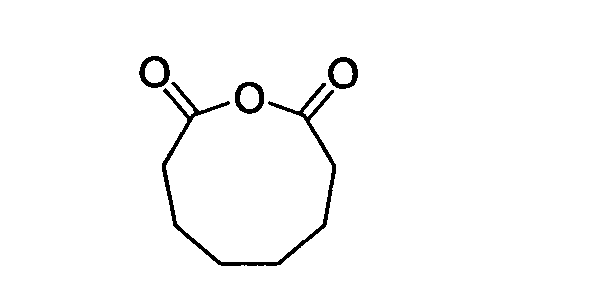
- Aniline (0.6 g, 6.4 mmol) was added at room temperature to a stirred solution of oxonane-2,9-dione (1.0 g, 6.4 mmol) in THF anhydrous. After stirring at RT for 0.5 h, the resulting mixture was diluted with water (100 mL). The formed white solid was filtered and collected. Purification by silica gel column chromatography using as eluent EtOAc:cyclohexane = 80:20 to 100:0 afforded 7-(phenylcarbamoyl)heptanoic acid as a white solid (174 mg, 11 % yield).
- MW: 249.31; Yield: 11 %; White Solid; Mp (°C) = 120 (Litt. 122-123).
- To a solution of suberanilic acid (0.167 g, 0.67 mmol) in anhydrous THF (5 mL) were added successively via syringe at 0°C ethyl chloroformate (85.2 □L, 0.89 mmol) and triethylamine (135.5 µl, 0.97 mmol) and the mixture was stirred at 0°C for 10 min. The solid was filtered off and the filtrate was added to a freshly prepared hydroxylamine solution in MeOH (3.53 mL). Preparation of hydroxylamine solution in MeOH: A solution of hydroxylamine hydrochloride (0.22 g, 3.15 mmol) in MeOH (5 mL) was added to a stirred solution of KOH (0.18 g, 3.15 mmol) in MeOH (5 mL) at 0°C. After stirring for 0.25 h, the precipitate was removed and the 3.53 mL of filtrate was used as such. The resulting mixture was stirred at RT for 0.25 h and evaporated in vacuo. The residue was recrystallized twice from acetonitrile to obtain after drying (0.099 g, 56 % yield) a white solid EHT 0648 N hydroxy-N'-phenyloctanediamide (SAHA).MW: 264.32; Yield: 56 %; White Solid; Mp (°C) = 161.4 (lift. 159-160.5°C).
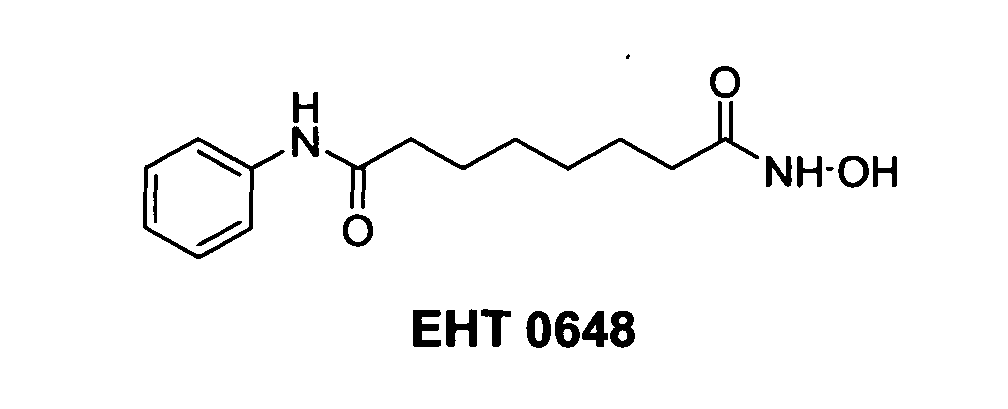
- A three neck round bottom flask (250 ml) equipped with a magnetic stirrer was charged with pyridine (37.5 mL), H2O (12.5 ml) and NaOH (0.39 g, 9.8 mmol). 1,1,4,4,6-Pentamethyltetrahydronaphtalene 1 (1.00 g, 4.9 mmol) and KMnO4 (3.12 g, 19.8 mmol) were added successively. The reaction mixture was stirred and heated at 95 °C for 16 h and cooled to 1 °C using an ice-water bath. HCl (6 N, 100 mL) was added to acidify to pH = 1 and the product was extracted with EtOAc ( 5 x 100 mL), dried over Na2S04, filtered to give after
evaporation MW: 232.32;
Yield 57 %; White Solid; Mp (°C): 196.2.
Rf 0.4 (EtOAC:cyclohexane = 25:75).
1H NMR (CDCl3, δ): 1.30 (s, 6H, 2xCH3), 1.32 (s, 6H, 2xCH3), 1.71 (s, 4H, 2xCH2), 7.49 (d, 1H, J = 8 Hz, ArH), 7.83 (dd, 1H, J = 2 Hz, J = 8 Hz, ArH), 8.08 (d, 1H, J = 2 Hz, ArH), COOH not seen.
MS-ESI: m/z (rel. int.) 232.9 ([MH]+, 100).
HPLC: Method A, detection 254 nm, RT = 6.5 min, Peak area 99.0 %. - 5,5,8,8-Tetramethyl-5,6,7,8-tetrahydro-naphthalene-2-carboxylic acid 2 (0.20 g, 0.86 mmol) was dissolved in SOCl2 (4.3 mL) at 0°C. A drop of DMF was added and the mixture was stirred for 0.5 h. The SOCl2 was removed under vacuum and the crude acid chloride was dissolved in pyridine (10 mL). Methyl 4-aminobenzoate (0.143 g, 0.947 mmol) and DMAP (0.010 mg, 0.086 mmol) were added and the mixture was heated at 60 °C for 2 h with stirring. The mixture was poured into H2O and the product was extracted with EtOAc; The organic layer was washed successively with HCl (2M), saturated NaHCO3, saturated NaCl, dried over MgSO4, filtrated to give after evaporation methyl 4-(5,6,7,8-tetrahydro-5,5,8,8-tetramethylnaphthalene-2-carboxamido)benzoate 3 (0.23 g, 73 % yield) as a white solid.MW: 365.47;
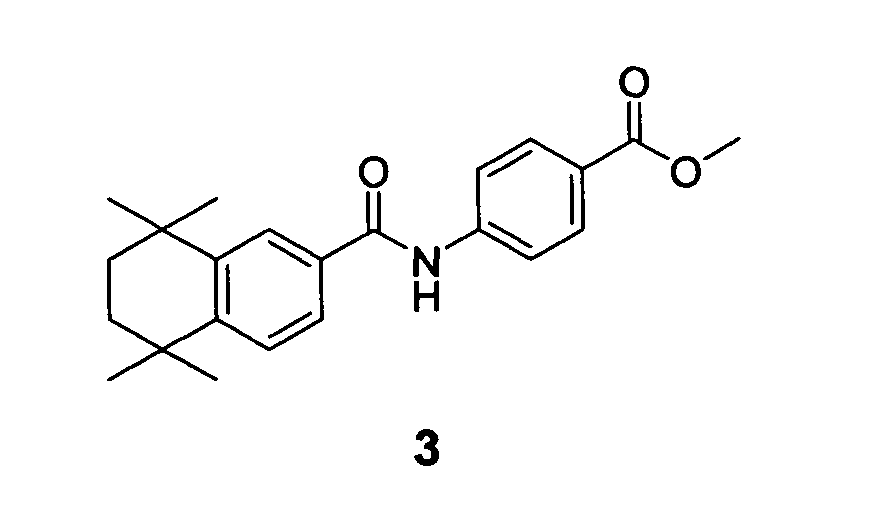
Yield 73 %; White Solid; Mp (°C): 206.
1H NMR (CDCl3, δ): 1.28 (s, 6H, 2xCH3), 1.31 (s, 6H, 2xCH3), 1.71 (s, 4H, 2xCH2), 3.91 (s, 3H, OCH3), 7.41 (d, 1H, J = 8.2 Hz, ArH), 7.56 (dd, 1H, J = 8.2 Hz, J = 2.0 Hz, ArH), 7.74 (dd, 2H, J = 7.0 Hz, J = 1.7 Hz, ArH), 7.86 (d, 1H, J = 2.0 Hz, ArH), 7.95 (s, 1H, NH), 8.05 (dd, 2H, J = 6.9 Hz, J = 1.7 Hz, ArH).
MS-ESI: m/z (rel. int.) 366.0 ([MH]+, 100).
HPLC: Method A, detection 254 nm, RT = 7.41 min, peak area 88.0 %. - To a solution of methyl 4-(5,6,7,8-tetrahydro-5,5,8,8-tetramethylnaphthalene-2-carboxamido)benzoate 3 (0.200 g, 0.5 mmol) in MeOH (2 mL) was added an hydroxylamine solution (1.76 M, 2 mL) in MeOH and the reaction mixture was stirred 1 h at RT under magnetic stirring. The reaction mixture was adjusted to pH = 5, concentrated and the residue was partitioned between EtOAc and H2O. The organic layer was dried with Na2SO4 and the product was crystallized by dissolving the mixture at 80°C in CH3CN to give N-(4-(hydroxycarbamoyl)phenyl)-5,6,7,8-tetrahydro-5,5,8,8-tetramethylnaphthalene-2-carboxamide EHT 3741 (0.070 g, 35% yield) as a pale red solid.
- Preparation of hydroxylamine solution (1.76 M) in MeOH: A solution of hydroxylamine hydrochloride (2.34 g, 33.7 mmol) in hot MeOH (12 mL) was added to a stirred solution of KOH (1.89 g, 33.7 mmol) in MeOH (7 mL). After stirring for 0.25 h the solution was cooled at 0°C and the precipitate was removed by filtration.MW: 366.50; Yield: 35%; Pale Red Solid; Mp (°C): 240.5.

Rf 0.35 (MeOH:CH2Cl2 = 5:95).
1H-NMR (DMSO, δ): 1.27 (s, 6H, 2xCH3), 1.30 (s, 6H, 2xCH3), 1.67 (s, 4H, 2xCH2), 7.48 (d, 1H, J = 8.2 Hz, ArH), 7.65-7.90 (m, 6H, ArH), 8.98 (s, 1H, ArH), 10.29 (s, 1H, OH), 11.15 (s, 1H, NH).
MS-ESI m/z (rel. int.): 367.0 ([MH]+, 100).
HPLC: Method A, detection UV 254 nm,EHT 3741 RT = 6.1 min, peak area 98.7 %. - A 25 mL round bottom flask equipped with a reflux condenser was charged with methyl methyl 4-(5,6,7,8-tetrahydro-5,5,8,8-tetramethylnaphthalene-2-carboxamido)benzoate 3 (0.200 g, 0.547 mmol), MeOH (10 mL) and KOH (0.122 g, 2.18 mmol). The reaction mixture was stirred for 16 h at reflux, evaporated to dryness and partitioned between EtOAc and H2O. 6N HCl was added until pH became acidic and the organic layer was separated, washed with water, brine, dried with Na2SO4, filtered and concentrated on a rotary evaporator to give 4-(5,6,7,8-tetrahydro-5,5,8,8-tetramethylnaphthalene-2-carboxamido)
benzoic acid 4 as a white solid (0.151 g, 78 %).MW: 351.43;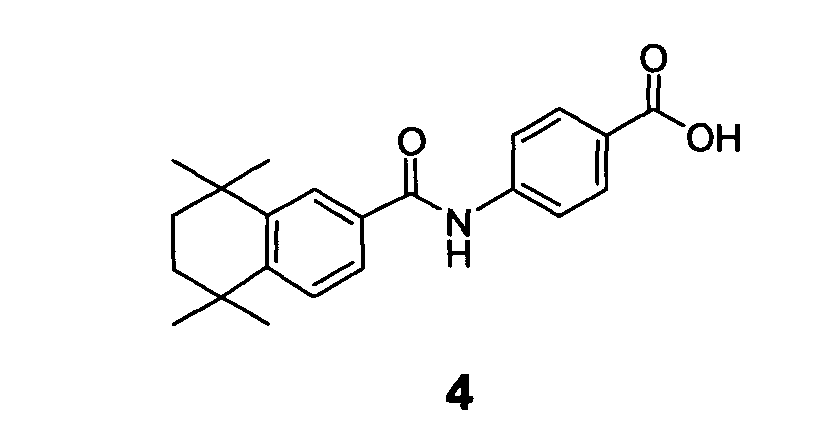
Yield 78 %; white solid; Mp (°C): 265.
Rf. 0.3 (EtOAc:Cyclohexane = 50:50).
1H NMR (CDCl3, δ): 1.32 (s, 6H, 2xCH3), 1.34 (s, 6H, 2xCH3), 1.73 (s, 4H, 2xCH2), 7.43 (d, 1H, J = 8.53, ArH), 7.57 (d, 1H, J = 8.25, J = 1.98, ArH), 7.78 (d, 2H, J = 8.74, ArH), 7.88 (d, 1H, J = 8.74, ArH), 7.92 (s, 1H, NH), 8.13 (d, 2H, J = 8.70, ArH), CO2H not seen.
MS-ESI: m/z (rel. int.) 352.1 ([MH]+, 100).
HPLC: Method A, detection 254 nm, RT = 6.66 min, Peak area = 96.3%. - To a solution of 4-(5,6,7,8-tetrahydro-5,5,8,8-tetramethylnaphthalene-2-carboxamido)benzoic acid 4 (151 mg) in
DMF 2 mL was added BOP (0.266 g), triethylamine (0.238 mL, 0.60 mmol) and phenylenediamine (0.093 g, 0.86 mmol). The reaction mixture was stirred 1 h at RT and diluted in EtOAc (25 mL), washed with NaH2PO4 (1M, 2 x 25 mL), brine (1M, 2 x 25 mL), NaHCO3 (1M, 2 x 25 mL), brine (1M, 2 x 25 mL), dried over Na2SO4, filtered and concentrated to give an oil that was purified using silica gel chromatography with 40% [v/v] EtOAc in cyclohexane to give N-(4-(2-aminophenylcarbamoyl)phenyl)-5,6,7,8-tetrahydro-5,5,8,8-tetramethylnaphthalene-2-carboxamide EHT 1800 (8 mg, 4% yield) as a white solid.MW: 441.36; Yield: 4%; White Solid; Mp (°C): 215.9.
Rf. 0.55 (EtOAc:Cyclohexane = 50:50).
1H-NMR (DMSO, δ): 1.18 (s, 6H, 2xCH3), 1.22 (s, 6H, 2xCH3), 1.59 (s, 4H, 2xCH2), 4.80 (s, 2H, NH2), 6.50 (t, 1H, J = 7.5 Hz, ArH), 6.69 (d, 1H, J = 8.08 Hz, ArH), 6.87 (t, 1H, J = 7.5 Hz, ArH), 7.07 (d, 1H, J = 7.5 Hz, ArH), 7.40 (d, 1H, J = 8.2 Hz, ArH), 7.63 6.50 (d, 1H, J = 8.2 Hz, ArH), 7.79-7.81 (m, 3H, ArH), 7.90 (d, 2H, J = 7.5 Hz, ArH), 9.51 (s, 1H, NH), 10.24 (s, 1H, NH).
MS-ESI m/z (rel. int.): 442.1 ([MH]+, 40); 334.1 (100).
HPLC: Method A, detection UV 254 nm,EHT 1800 RT = 5.83 min, peak area 97%. - A mixture of HNO3 [63%] (0.94 mL) and H2SO4 (1.5 mL) was added to 1,1,4,4-tetramethyl-1,2,3,4-tetrahydro-naphthalene 5 (2.0 g, 10.6 mmol) at -10°C and the reaction mixture was stirred for 1 h. The reaction mixture was poured into ice:water and the product was extracted with CH2Cl2. The organic layer was washed with NaOH (1N), H2O, brine, dried over MgSO4 to give after
solvent evaporation MW: 203.32; Yield: 35 %; Brown Solid; Mp (°C): 67.
1H NMR (CDCl3, δ): 1.23 (s, 6H, 2xCH3), 1.25 (s, 6H, 2xCH3), 1.64 (s, 4H, 2xCH2), 3.50 (s, 2H, NH2), 6.52 (dd, 1H, J = 8.32 Hz, J = 2.53 Hz, ArH), 6.63 (d, 1H, J = 2.52 Hz, ArH), 7.10 (d, 1H, J = 8.33 Hz, ArH).
MS-ESI: m/z (rel. int.) 204.0 ([MH]+, 100).
HPLC: Method A, detection 254 nm, RT = 4.8 min,Peak area 90 %. - Terephthalic acid monomethyl ester (194 mg, 1.08 mmol) was dissolved in SOCl2 (5.39 mL) at 0°C. A drop of DMF was added and the mixture was stirred for 30 min. The SOCl2 was removed under vacuum and the crude acid chloride was dissolved in pyridine (12.5 mL). 5,5,8,8-Tetramethyl-5,6,7,8-tetrahydro-naphthalen-2-ylamine 6 (200 g, 0.98 mmol) and DMAP (12 mg, 0.1 mmol) was added and the mixture was heated at 60 °C for 2 h with stirring. The mixture was poured into H2O and the product was extracted with EtOAc. Them organic layer was washed successively with HCl 2M, saturated NaHCO3, saturated NaCl, dried over MgSO4 and filtrated to give after evaporation N-(5,5,8,8-tetramethyl-5,6,7,8-tetrahydro-naphthalen-2-yl)-terephthalamic acid methyl ester 7 (316 mg, 88 % yield) as a white solid.MW: 365.47;
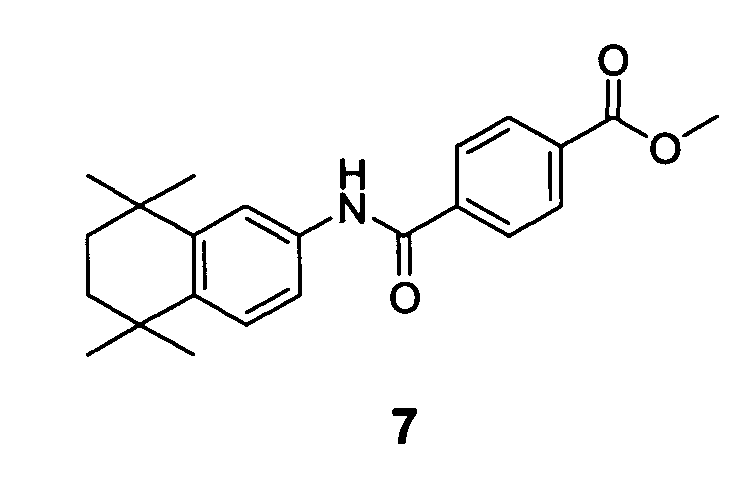
Yield 88 %; White Solid; Mp: 211°C.
Rf. 0.9 (EtOAc:Cyclohexane = 50:50).
1H NMR (CDCl3, δ): 1.28 (s, 6H, 2xCH3), 1.30 (s, 6H, 2xCH3), 1.70 (s, 4H, 2xCH2), 3.96 (s, 3H, OCH3), 7.32 (d, 1H, J = 8.50 Hz, ArH), 7.45 (d, 1H, J = 8.28 Hz, ArH), 7.53 (s, 1H, ArH), 7.80 (s, 1H, ArH), 7.92 (d, 2H, J = 8.15 Hz, ArH), 8.14 (d, 2H, J = 8.12 Hz, ArH).
MS-ESI: m/z (rel. int.) 366.0 ([MH]+, 100).
HPLC: Method A, detection 254 nm, RT = 7.5 min, Peak area 90.6 %. - To a solution of N-(5,5,8,8-tetramethyl-5,6,7,8-tetrahydro-naphthalen-2-yl)-terephthalamic acid methyl ester 7 (0.20 g, 0.55 mmol) in MeOH (2 mL) was added an hydroxylamine solution (1.76 M, 2 mL) in MeOH and the reaction mixture was stirred 1 h at room temperature under magnetic stirring. The reaction mixture was adjusted to pH = 5, concentrated and the residue was partitioned between EtOAc and H2O. The organic layer was dried with Na2SO4 and the product was crystallized by dissolving the mixture at 80°C in CH3CN to give N-(1,2,3,4-tetrahydro-1,1,4,4-tetramethylnaphthalen-6-yl)-N'-hydroxyterephthalamide EHT 7706 (0.05 g, 25% yield) as a white solid.
- Preparation of hydroxylamine solution (1.76 M) in MeOH: A solution of hydroxylamine hydrochloride (2.34 g, 33.7 mmol) in hot MeOH (12 mL) was added to a stirred solution of KOH (1.89 g, 33.7 mmol) in MeOH (7 mL). After stirring for 0.25 h the solution was cooled at 0°C and the precipitate was removed and the precipitate was removed by filtration.MW: 366.50; Yield: 25%; White Solid; Mp (°C): 230.2.
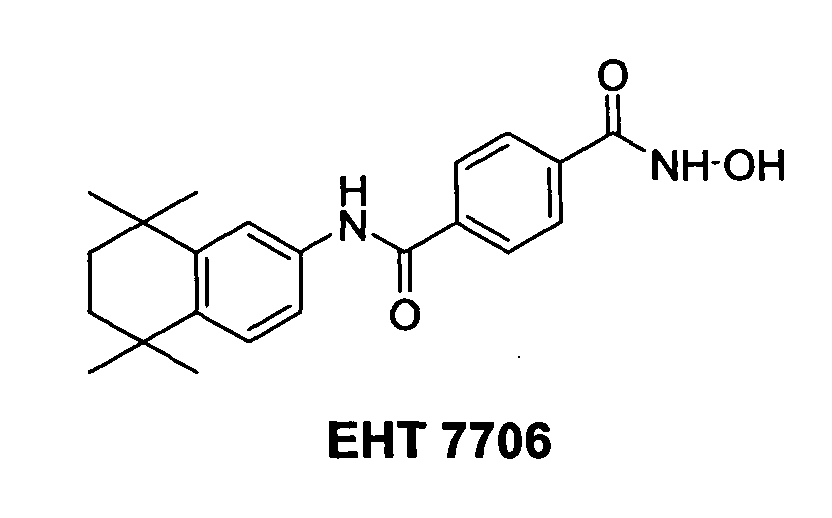
Rf :0.4 (MeOH:CH2Cl2 = 5:95).
1H-NMR (DMSO, δ): 1.14 (s, 6H, 2xCH3), 1.15 (s, 6H, 2xCH3), 1.55 (s, 4H, 2xCH2), 7.19 (d, 1H, J = 4.6Hz, ArH), 7.49 (d, 1H, J = 8.54, ArH), 7.58 (s, 1H, ArH), 7.78 (d, 2H, J = 7.13, ArH), 7.91 (d, 2H, J = 7.96 Hz, ArH), 9.08 (s, 1H, NH), 10.09 (s, 1H, OH), 11.29 (s, 1H, NH).
MS-ESI m/z (rel. int.): 367.0 ([MH]+, 100).
HPLC: Method A, detection UV 254 nm,EHT 7706 RT = 6.1 min, peak area 99 %. - A solution of 1,2,3,4-tetrahydro-1,1,4,4,6-pentamethylnaphthalene 1 (2.00 g, 9.88 mmol), N-bromosuccinimide (1.85 mmol, 10.37 mmol), benzoyl peroxide (91 mg, 0.28 mmol) in 35 mL of CCl4 was heated at reflux (84°C, oil bath) for 2.5 h. After cooling top room temperature, the solution was concentrated in vacuo. Diethyl ether (100 mL) was added and the solution was filtered (to remove the succinimide formed) and concentrated to give a crude oil. The crude oil was purified by silica gel column chromatography using as eluent petroleum ether. 6-(Bromomethyl)-1,2,3,4-tetrahydro-1,1,4,4-tetramethylnaphthalene 8 (2.01 g, 72.5 % yield) was obtained as a colourless oil.MW: 281.23; Yield: 72.5 %; Colourless Oil.
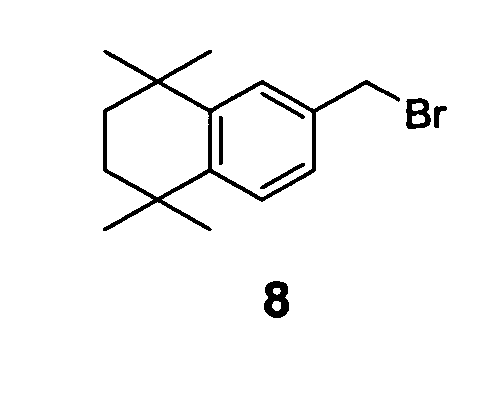
1H NMR (CDCl3, δ): 1.27 (s, 6H, 2xCH3), 1.28 (s, 6H, 2xCH3), 1.67 (s, 4H, 2xCH2), 3.77 (s, 2H, -CH2Br), 7.16 (dd, 1H, J = 8.1 Hz, J = 2.0 Hz, ArH), 7.27 (d, 1H, J = 8.1 Hz, ArH), 7.30 (d, 1H, J = 2.0 Hz, ArH). - In a 250 mL round bottom flask was charged 6-(bromomethyl)-1,2,3,4-tetrahydro-1,1,4,4-tetramethylnaphthalene 8 (2.00 g, 7.11 mmol) in solution in 11 mL of dichloromethane. Triphenylphosphine (2.15 g, 8.18 mmol) was added via spatula at room temperature. The reaction mixture was stirred overnight at RT (16 h). Diethyl ether (200 mL) was added and the white precipitate formed was filtered and washed copiously with diethyl ether and dried in vacuo over P2O5. (5,6,7,8-tetrahydro-5,5,8,8-tetramethyl-2-naphtalenyl)-methyl-triphenylphosphonium bromide 9 (3.40 g, 88% yield) was obtained as a white solid.MW: 543.52; Yield: 88%; White Solid; Mp (°C): 275.4.
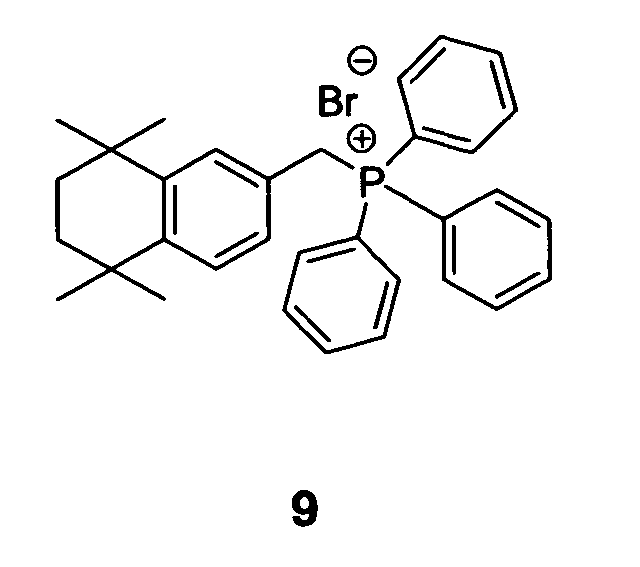
1H NMR (CDCl3, δ): 1.29 (s, 6H, 2xCH3), 1.33 (s, 6H, 2xCH3), 1.70 (s, 4H, 2xCH2), 3.92 (s, 3H, -OCH3), 7.06 (d, 1H, J = 16.3 Hz, HC=CH), 7.20 (d, 1H, J = 16.3 Hz, HC=CH), 7.28-7.39 (m, 2H, ArH), 7.42 (s, 1H, ArH), 7.56 (d, 1H, J = 8.4 Hz, ArH), 8.01 (d, 1H, J = 8.4 Hz, ArH). - In a 50 mL round bottom flask under nitrogen atmosphere equipped with a magnetic stirrer was charged (5,6,7,8-tetrahydro-5,5,8,8-tetramethyl-2-naphtalenyl)-methyl-triphenylphosphonium bromide 9 (2.00 g, 3.68 mmol) in 10 mL of DMSO. NaH (60 % dispersion in oil, 155 mg, 3.86 mmol) was added portion wise at room temperature and the solution (became red) abandoned for 30 min. A solution of methyl-4-formylbenzoate (0.82 g, 5.00 mmol) in 7 mL of DMSO was added via syringe. The reaction which became pale yellow was abandoned for 5 h at room temperature. The reaction mixture is poured on ice water, a solution of HCl 1 N (10 mL) was added and the solution was extracted with diethyl ether (3 x 150 mL). The organic layer was washed with brine (3 x 100 mL), dried over MgSO4, filtered and evaporated to dryness. The crude product was incorporated on silica and purified by silica gel column chromatography using as eluent petroleum ether:EtOAc = 100:0 to 99:1 to obtain BLE 04046A (0.444 g) which crystallized under vacuum and a white solid BLE 04046B (0.607 g). 1H NMR analysis of BLE 04046B revealed a mixture E:Z about 85:15 of methyl 4-(2-(1,2,3,4-tetrahydro-1,1,4,4-tetramethylnaphthalen-6-yl)vinyl)benzoate. BLE 04046B was recrystallized in hexane with a few drop of EtOAc to afford after filtration and drying pure methyl 4-((E)-2-(1,2,3,4-tetrahydro-1,1,4,4-tetramethylnaphthalen-6-yl)vinyl)benzoate 10 (0.308 g, % yield) as a white solid. BLE 04046A (0.444 g) was purified by silica gel column chromatography using as eluent petroleum ether:EtOAc = 100:0 to 99:1 to obtain, after evaporation and drying, pure methyl 4-((Z)-2-(1,2,3,4-tetrahydro-1,1,4,4-tetramethylnaphthalen-6-yl)vinyl)benzoate 11 (0.161 g, 12.5 % yield) as a colourless oil.
- MW: 348.48;

Yield 24 %; White Solid; Mp (°C): 166.5.
1H NMR (CDCl3, δ): 1.29 (s, 6H, 2xCH3), 1.33 (s, 6H, 2xCH3), 1.70 (s, 4H, 2xCH2), 3.92 (s, 3H, -OCH3), 7.06 (d, 1H, J = 16.3 Hz, HC=CH), 7.20 (d, 1H, J = 16.3 Hz, HC=CH), 7.28-7.39 (m, 2H, ArH), 7.42 (s, 1H, ArH), 7.56 (d, 2H, J = 8.4 Hz, ArH), 8.01 (d, 2H, J = 8.4 Hz, ArH). - MW: 348.48; Yield 12.5 %; Colourless Oil.

1H NMR (CDCl3, d): 1.09 (s, 6H, 2xCH3), 1.25 (s, 6H, 2xCH3), 1.63 (s, 4H, 2xCH2), 3.90 (s, 3H, -OCH3), 6.54 (d, 1H, = 12.3 Hz, HC=CH), 6.65 (d, 1H, = 12.3 Hz, HC=CH), 6.99 (dd, 1H, J = 8.2 Hz, J = 1.7 Hz, ArH), 7.14-7.21 (m, 2H, ArH), 7.36 (d, 2H, J = 8.2 Hz, ArH), 7.90 (d, 2H, J = 8.2 Hz, ArH). - In a 50 mL round bottom flask was charged methyl 4-((E)-2-(1,2,3,4-tetrahydro-1,1,4,4-tetramethylnaphthalen-6-yl)vinyl)benzoate 10 (0.30 g, 0.86 mmol) in 20 mL and water (2 mL) and KOH was added (193 mg, 3.44 mmol). The suspension was heated for 6 h at 70°C. Methanol was removed in vacuo, water (20 mL) was added and the solution washed with diethyl ether (2 x 30 mL). The aqueous solution was carefully acidified to pH = 1 using a solution of HCl 1N and extracted with diethyl ether (3 x 100 ml). The organic layer was dried over MgSO4, filtered and evaporated to yield to 4-((E)-2-(1,2,3,4-tetrahydro-1,1,4,4-tetramethylnaphthalen-6-yl)vinyl)benzoic acid 12 (0.26 g, 90 % yield) as a white solid.MW: 334.45;

Yield 90 %; White Solid; Mp (°C): 273 (litt. 274-276).
1H NMR (CDCl3, δ): 1.24 (s, 6H, 2xCH3), 1.29 (s, 6H, 2xCH3), 1.65 (s, 4H, 2xCH2), 7.20-7.45 (m, 4H, HC=CH and 2xArH), 7.55 (s, 1H, ArH), 7.69 (d, 2H, J = 8.2 Hz, ArH), 7.92 (d, 2H, J = 8.2 Hz, ArH), -OH not seen. - To a solution of 4-((E)-2-(1,2,3,4-tetrahydro-1,1,4,4-tetramethylnaphthaten-7-yl)vinyl)benzoic acid 12 (0.16 g, 0.48 mmol) in anhydrous THF at 0°C were added successively via syringe ethyl chloroformate (60.8 µL, 0.64 mmol) and triethylamine (96.3 µL, 0.69 mmol). The resulting mixture was stirred for 10 min at 0°C. The solid was filtered off and the filtrate was added to a freshly prepared solution of 2.5 mL of hydroxylamine in MeOH. Preparation of the hydroxylamine solution in MeOH: A solution of hydroxylamine hydrochloride (0.22 g, 3.15 mmol) in MeOH (5 mL) was added to a stirred solution of KOH (0.18 g, 3.15 mmol) in MeOH (5 mL) at 0°C. After stirring for 15 min, the precipitate was removed and 2.5 mL of filtrate was used as such. The resulting mixture was stirred at RT for 1.25 h and evaporated in vacuo. The crude product was incorporated on silica and purify by silica gel column chromatography using as eluent CH2Cl2:MeOH = 99:1 to 99:2). After evaporation and drying to the vacuum pump a brown pale solid 4-((E)-2-(1,2,3,4-tetrahydro-1,1,4,4-tetramethylnaphthalen-6-yl)vinyl)-N-
hydroxybenzamide EHT 9899 was obtained (0.06 g, 36% yield).MW: 349.47; Yield: 36 %; Brown Pale Solid; Mp (°C): 91.2.
1H NMR (CDCl3, δ): 1.29 (s, 6H, 2xCH3), 1.32 (s, 6H, 2xCH3), 1.70 (s, 4H, 2xCH2), 7.13-7.45 (m, 3H, HC=CH and -NH-), 7.32 (s, 2H, ArH), 7.41 (s, 1H, ArH), 7.56 (d, 2H, J = 5.2 Hz, ArH), 7.72 (s broad, 2H, ArH), 9.3 (s broad, 1H, OH).
MS-ESI m/z (rel. int.): 350.1 ([MH]+, 100).
HPLC: Method A, detection UV 254 nm,EHT 9899 RT = 6.90 min, peak area 98.5%. - In a 50 mL round bottom flask was charged methyl 4-((Z)-2-(1,2,3,4-tetrahydro-1,1,4,4-tetramethylnaphthalen-6-yl)vinyl)benzoate 11 (0.16 g, 0.46 mmol) in 15 mL and water (1.5 mL) and KOH was added (103 mg, 1.84 mmol). The suspension was heated for 6 h at 70 °C. Methanol was removed in vacuo, water (20 mL) was added and the solution washed with diethyl ether (2 x 50 mL). The aqueous solution was carefully acidified to pH = 1 using a solution of HCl 1N and extracted with diethyl ether (3 x 50 ml). The organic layer was dried over MgSO4, filtered and evaporated to yield to 4-((Z)-2-(1,2,3,4-tetrahydro-1,1,4,4-tetramethylnaphthalen-6-yl)vinyl)benzoic acid 13 (0.151 g, 98 % yield) as a white solid.MW: 334.45;
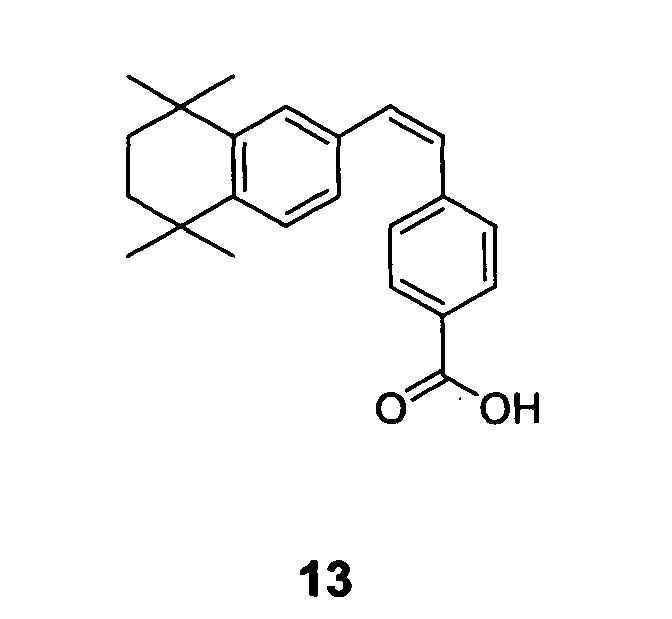
Yield 98 %; White Solid.
1H NMR (CDCl3, δ): 1.08 (s, 6H, 2xCH3), 1.25 (s, 6H, 2xCH3), 1.63 (s, 4H,
2xCH2), 6.54 (d, 1H, J = 12.3 Hz, HC=CH), 6.65 (d, 1H, J = 12.3 Hz, HC=CH), 6.99 (dd, 1H, J = 8.1 Hz, J = 1.7 Hz, ArH), 7.15-7.20 (m, 2H, ArH), 7.38 (d, 2H, J = 8.1 Hz, ArH), 7.97 (d, 2H, J = 8.1 Hz, ArH), COOH not seen.
MS-ESI: m/z (rel. int.) 335.1 ([MH] +, 100).
HPLC: Method A, detection 254 nm, RT = 7.79 min, peak area = 99.0 %. - To a solution of 4-((Z)-2-(1,2,3,4-tetrahydro-1,1,4,4-tetramethylnaphthalen-7-yl)vinyl)benzoic acid 13 (0.15 g, 0.45 mmol) in thionyl chloride (2.5 mL) was added at 0°C two drops of DMF and the reaction mixture was abandoned 1 h at 0°C under magnetic stirring. This solution was evaporated in vacuo, CH2Cl2 was added (10 mL) and the solution was again evaporated. To a solution of H2NOH.HCl (1.38 g, 20 mmol) in 17.24 mL of THF and 3.45 mL of water (THF:H2O = 5:1) was added at 0°C Et3N (3.45 mL, excess). This mixture was kept 1 h at 0°C. The acid chloride formed was dissolved in CH2Cl2 (7.14 mL) and added slowly drop wise to the freshly prepared solution of NH2OH in THF:H2O at 0°C. The reaction mixture was stirred at room temperature overnight and evaporated to dryness. The crude product was incorporated on silica and purify by silica gel column chromatography using as eluent CH2Cl2:MeOH = 99:1 to 99:2). After evaporation and drying to the vacuum pump a brown pale solid 4-((Z)-2-(1,2,3,4-tetrahydro-1,1,4,4-tetramethylnaphthalen-6-yl)vinyl)-N-
hydroxybenzamide EHT 7786 was obtained (0.10 g, 64 % yield).MW: 349.47; Yield: 64 %; Brown Pale Solid; Mp (°C): 112.9.
1H-NMR (CDCl3, δ): 1.08 (s, 6H, 2xCH3); 1.24 (s, 6H, 2xCH3); 1.62 (s, 4H, 2xCH2); 6.47 (d, 1H, J = 12.3 Hz, -HC=CH-); 6.60 (d, 1H, J = 12.3 Hz, -HC=CH-); 6.96 (dd, 1H, J = 7.9 Hz, J = 1.5 Hz, ArH); 7.14 (d, 1H, J = 1.5 Hz, ArH); 7.15 (d, 1H, J = 7.8 Hz, ArH); 7.31 (d, 2H, J = 5.7 Hz, ArH); 7.58 (d, 2H, J = 5.7 Hz, ArH); OH and NH not seen.
MS-ESI m/z (rel. int.): 350.1 ([MH]+, 100).
HPLC: Method A, detection UV 254 nm,EHT 7786 RT = 6.83 min, peak area 99.0 %. - 1,1,4,4-Tetramethyl-1,2,3,4-tetrahydro-naphthalene 5 (2.0 g, 10.6 mmol) was dissolved in dichloromethane (4 mL). The solution was frozen at 0°C, and aluminium trichloride (1.56 g, 11.7 mmol) was added. The mixture was stirred at 0°C under nitrogen atmosphere. Methyl oxalyl chloride (1.08 mL, 11.7 mmol) was added via syringe. The black mixture was stirred at 0 °C for 2 h. While stirring at room temperature, ice (20 g) was added then slowly concentrated HCl (2 mL). The product was extracted with CH2Cl2 (5 x 50 mL). The organic layer was washed with brine (3 x 20 mL), dried over MgSO4, filtered and evaporated in vacuo. The crude product was purified by chromatography on silica using as eluent cyclohexane:EtOAc = 98:02. Methyl 2-(1,2,3,4-tetrahydro-1,1,4,4-tetramethylnaphthalen-6-yl)-2-oxoacetate 14 (2.05 g, 71 % yield) was obtained as a yellow oil.MW: 274.35; Yield: 71 %; Yellow Oil.

Rf : 0.35 (cyclohexane:EtOAc = 98:02).
1H-NMR (CDCl3, δ): 1.30 (s, 6H, 2xCH3), 1.31 (s, 6H, 2xCH3), 1.71 (s, 4H, 2xCH2), 3.97 (s, 3H, OMe), 7.43 (d, 1H, J = 8.3 Hz, ArH), 7.71 ( dd, 1H, J = 8.3 Hz, J = 1.9 Hz, ArH), 8.00 (d, 1H, J = 1.9 Hz, ArH)
13C-NMR (CDCl3, δ): 183.70, 162.12, 151.00, 143.71, 127.64, 126.30, 125.01, 124.99, 50.27, 32.70, 32.41, 32.31, 32.19, 29.44.
MS-ESI m/z (rel. int.): 297 ([M+Na]+, 5), 215 (100).
HPLC: Method A, detection UV 254 nm, RT = 7.45 min, peak area 93.78 %. - Methyl 2-(1,2,3,4-tetrahydro-1,1,4,4-tetramethylnaphthalen-6-yl)-2-oxoacetate 14 (1.47 g, 5.36 mmol) was dissolved in dichloroethane (22.05 mL). Diethylamino-sulfur trifluoride (DAST, 3.51 mL, 26.79 mmol) was added via syringe at RT. The black mixture was stirred at 85°C for 4 h. DAST (1.3 mL, 10.72 mmol) was added via syringe. The mixture was stirred at 85°C for 5.5 h. The mixture was evaporated in vacuo. The crude product was purified by chromatography on silica using as eluent cyclohexane:EtOAc = 98:02.
Methyl 2,2-difluoro-2-(1,2,3,4-tetrahydro-1,1,4,4-tetramethylnaphthalen-6-yl)acetate 15 was obtained (1.38 g, 86.8 % yield) as a yellow oil.MW: 296.35; Yield: 86.8 %; Yellow Oil.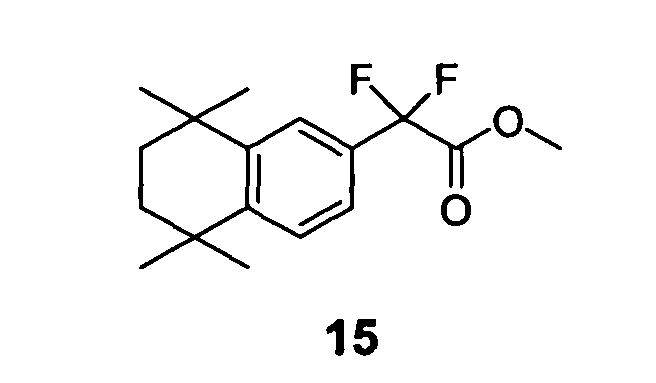
Rf: 0.45 (cyclohexane:EtOAc = 98:02).
1H-NMR (CDCl3, δ): 1.27 (s, 6H, 2xCH3), 1.28 (s, 6H, 2xCH3), 1.69 (s, 4H, 2xCH2), 3.79 (s, 3H, OMe), 7.30-7.40 (m, 2H, ArH), 7.54 (s, 1H, ArH). -
Methyl 2,2-difluoro-2-(1,2,3,4-tetrahydro-1 ,1,4,4-tetramethylnaphthalen-6-yl)acetate 15 (1.38 g, 4.65 mmol) was dissolved in methanol (129 mL). Water (12.9 mL) and NaOH (1.04 g, 18.57 mmol) were successively added at RT. The mixture was stirred at 70°C for 1 h. The mixture was evaporated in vacuo. The crude product was dissolved in water and extracted with diethyl ether (2x50 mL). The aqueous layer was acidified by HCl (1M) to about pH = 1 and extracted with diethyl ether (3x100 mL). The organic layer was dried over MgSO4, filtered and evaporated to obtain 2,2-difluoro-2-(1,2,3,4-tetrahydro-1,1,4,4-tetramethylnaphthalen-6-yl)acetic acid 16 (1.27 g, 96.5 % yield) as an orange solid.MW: 282.35; Yield: 96.5 %; Orange Solid; Mp (°C): 136.8.
1H-NMR (CDCl3, δ): 1.27 (s, 6H, 2xCH3), 1.28 (s, 6H, 2xCH3), 1.68 (s, 4H, 2xCH2), 7.30-7.40 (m, 2H, ArH), 7.55 (s, 1H, ArH), 8.75 (s, 1H, COOH). - 2,2-Difluoro-2-(1,2,3,4-tetrahydro-1,1,4,4-tetramethylnaphthalen-6-yl)acetic acid 16 (0.70 g, 2.48 mmol) was dissolved in SOCl2 and two drops of DMF were added at 0°C. This mixture was stirred at 0°C for 30 min and evaporated in vacuo. The resulting acid chloride was dissolved in CH2Cl2 (5 mL). Methyl-4-aminobenzoate (0.38 g, 2.48 mmol) and DMAP (30 mg, 0.25 mmol) were dissolved in CH2Cl2 (5 mL) and Et3N (2.9 mL) was added at 0°C. The solution of the acid chloride in CH2Cl2 was added and this mixture stirred for 10 min at 0°C and then abandoned to RT for 1 h. A solution of aqueous NH4Cl 5% was added (200 mL) and the mixture was extracted with EtOAc (3x100 mL). The organic layer was washed with
aqueous NaHCO 3 5% (2x20 mL), brine (2x20 mL), dried over MgSO4, filtered and evaporated in vacuo. The crude product was purified by chromatography on silica using as eluent cyclohexane:EtOAc = 9:1. After evaporation, methyl 4-(2,2-difluoro-2-(1,2,3,4-tetrahydro-1, 1,4,4-tetramethylnaphthalen-6-yl)acetamido)benzoate 17 (0.67 g, 65 % yield) was obtained as a beige solid.MW: 415.47; Yield: 65 %; Beige Solid; Mp (°C): 108 (dec.).
Rf: 0.40 (cyclohexane:EtOAc = 90:10).
1H-NMR (CDCl3, δ): 1.21 (s, 6H, 2xCH3), 1.26 (s, 6H, 2xCH3), 1.66 (s, 4H, 2xCH2), 3.86 (s, 3H, OMe), 7.30-7.40 (m, 2H, ArH), 7.61 (d, 1H, J = 2.0 Hz, ArH), 7.71 (d, 2H, J = 9.0 Hz, ArH), 7.71 (d, 2H, J = 9.0 Hz, ArH), 8.93 (s, 1H, NH).
MS-ESI m/z (rel. int.): 416.1 ([MH]+, 65), 396.1 (90), 150.0 (100).
HPLC: Method A, detection UV 254 nm, RT = 7.75 min, peak area 97 %. - 4-[2,2-Difluoro-2-(5,5,8,8-tetramethyl-5,6,7,8-tetrahydro-naphthalen-2-yl)-acetylamino]-benzoic acid methyl ester 17 (500 mg, 1.20 mmol) was dissolved in methanol (33.5 mL). Water (3.35 mL) and NaOH (270 mg, 4.81 mmol) were successively added at RT. The mixture was stirred at 70°C for 1 h. The mixture was evaporated in vacuo and dissolved in water (100 ml) and extracted with diethyl ether (2x50 mL). The aqueous layer was acidified by HCl (1M) to about pH = 1 and extracted with diethyl ether (2x100 mL), the organic layer was dried over MgSO4, filtered and evaporated. 4-(2,2-Difluoro-2-(1,2,3,4-tetrahydro-1,1,4,4-tetramethylnaphthalen-6-yl)acetamido)
benzoic acid 18 was obtained (169 mg, 35 % yield) as a beige solid.MW: 401.46; Yield: 35 %; Beige Solid.
1H-NMR (CD3OD, δ): 1.29 (s, 6H, 2xCH3), 1.30 (s, 6H, 2xCH3), 1.73 (s, 4H, 2xCH2), 7.37-7.50 (m, 2H, ArH), 7.65 (s, 1H, ArH), 7.75 (d, 2H, J = 8.3 Hz, ArH), 8.00 (d, 2H, J = 8.3 Hz, ArH), OH and NH exchanged. -
- A) 4-[2,2-Difluoro-2-(5,5,8,8-tetramethyl-5,6,7,8-tetrahydro-naphthalen-2-yl)-acetylamino]-benzoic
acid 18 (170 mg, 0.425 mmol) was dissolved in SOCl2 (2.4
mL) and two drops of DMF were added at 0°C. The mixture was stirred at 0°C for
1 h and evaporated and the crude product was dissolved in CH2Cl2 (5 mL). B)
Hydroxylamine hydrochloride (1.38 g, 20 mmol) was dissolved in THF (17.2 mL)
and water (3.45 mL) and Et3N (3.45 mL) at 0°C, the mixture was stirred at 0°C
for 1h. A was added in B at 0°C and this mixture was stirred at 0°C for 10 min
and at RT for 17.75 h. The mixture was evaporated and water was added (50 ml)
before to be extracted with CH2Cl2 (3 x 50 mL). The organic layer was washed
with brine (2 x 20 mL) and dried with MgSO4, filtered and evaporated. The crude
product was purified by column chromatography using as eluent
cyclohexane:AcOEt = 99:1. 4-(2,2-Difluoro-2-(1,2,3,4-tetrahydro-1,1,4,4-tetramethylnaphthalen-7-yl)acetamido)-N-
hydroxybenzamide EHT 9299 was obtained (58.3 mg, 33.4 % yield) as a pink solid.MW: 416.46; Yield: 33%; Pink Solid; Mp (°C): 120.4 (dec.). Rf: 0.15 (cyclohexane:EtOAc = 99:1).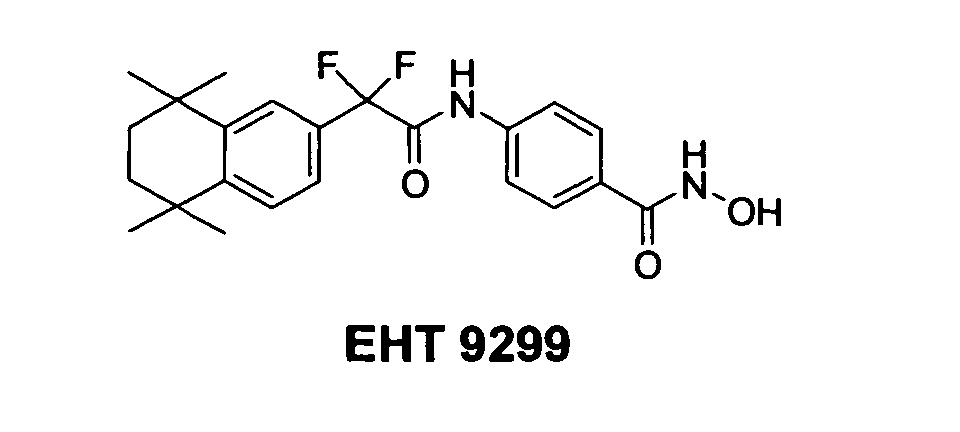
1H-NMR (CD3OD, δ): 1.19 (s, 6H, 2CH3), 1.20 (s, 6H, 2CH3), 1.62 (s, 4H, 2CH2), 7.32-7.37 (dd, 2H, J = 8.2 Hz, J = 8.4 Hz, ArH), 7.54 (s, 1H, ArH), 7.65 (s, 4H, ArH), 2xNH and OH exchanged.
MS-ESI m/z (%rel. int.): 417 (47.28, [MH]+).
HPLC: Method A, detection UV 254 nm,EHT 9299 RT = 6.30 min, peak area 95.39 %. -
-
- A) 2,2-Difluoro-2-(1,2,3,4-tetrahydro-1,1,4,4-tetramethylnaphthalen-6-yl)acetic
acid 16 (0.53 g, 1.88 mmol) was dissolved in SOCl2 and two drops of DMF were
added at 0°C. The mixture was stirred at 0°C for 0.5 h, evaporated and the crude
product was dissolved in CH2Cl2 (5 mL). B) Methyl-3-aminobenzoate (284 mg,
1.88 mmol) and DMAP (23 mg, 0.19 mmol) were dissolved in CH2Cl2 (5 mL) and
Et3N (2.6 mL) was added at 0°C. A) was added in B) at 0°C and this mixture was
stirred at 0°C for 10 min and abandoned at RT for 1h. The mixture was poured in
aqueous NH4Cl 5% (100 mL) and extracted with EtOAc (3 x 50 mL). The organic
layer was washed with NaHCO3 (2 x 100 mL), brine (2 x 100 mL), dried with
MgSO4, filtered and evaporated. The crude product was purified by column
chromatography using as eluent cyclohexane:EtOAc = 90:10. Methyl 3-(2,2-difluoro-2-(1,2,3,4-tetrahydro-1,1,4,4-tetramethylnaphthalen-6-yl)acetamido)
benzoate 19 was obtained (0.55 g, 70 % yield) as a yellow oil.MW: 415.47; Yield: 69.9 %; Yellow Oil.
Rf: 0.40 (cyclohexane:EtOAC = 90:10).
1H-NMR (CDCl3, δ): 1.27 (s, 6H, 2xCH3), 1.29 (s, 6H, 2xCH3), 1.69 (s, 4H, 2xCH2), 3.91 (s, 3H, CH3), 7.39 (s, 2H, ArH), 7.43 (t, 1H, J = 8.0 Hz, ArH), 7.60 (s, 1H, ArH), 7.85 (dd, 1H, J = 1.0 Hz, J = 8.1 Hz, ArH), 7.95 (d, 1H, J = 8.1 Hz, ArH), 8.14 (d, 1H, J = 1.3 Hz, ArH), 8.30 (s, 1H, NH).
MS-ESI m/z (rel. int.): 416 ([MH]+, 100).
HPLC: Method A, detection UV 254 nm, RT = 7.73 min, peak area 97.1 %. -
- Methyl 3-(2,2-difluoro-2-(1,2,3,4-tetrahydro-1,1,4,4-tetramethylnaphthalen-6-yl)acetamido)benzoate 19 (0.50 g, 1.20 mmol) was dissolved in methanol (33.5 mL). Water (3.35 mL) was added via syringe at RT and KOH (0.27 g, 4.81 mmol) was added. The reaction mixture was heated at 70°C for 2 h. After cooling to RT the mixture was evaporated in vacuo. The crude product was dissolved in water (30 mL) and extracted with ether (2 x 50 mL). The aqueous layer was acidified by a solution of HCl 1 M to about pH = 1. The aqueous layer was extracted with ether (2 x 100 mL), dried over MgSO4, filtered and evaporated. The crude product was purified by column chromatography using as eluent cyclohexane:EtOAc = 98:02. 3-(2,2-Difluoro-2-(1,2,3,4-tetrahydro-1,1,4,4-tetramethylnaphthalen-6-yl)acetamido)
benzoic acid 20 was obtained (0.41 g, 84 % yield) as an orange solid.
MW: 401.44; Yield: 84.4 %; Orange Solid; Mp (°C): 103.9 (dec.).
Rf: 0.45 (cyclohexane:EtOAc = 98:02).
1H-NMR (CDCl3, δ): 1.27 (s, 6H, 2xCH3), 1.29 (s, 6H, 2xCH3), 1.68 (s, 4H, 2xCH2), 7.39 (s, 1H, ArH), 7.44 (t, 1H, J = 8.0 Hz, ArH), 7.57 (s, 1H, ArH), 7.61 (s, 1H, ArH), 7.88 (d, 1H, J = 8.2 Hz, ArH), 8.02 (d, 1H, J = 8.1 Hz, ArH), 8.14 (s, 1H, ArH), 8.34 (s, 1H, NH), 10.1 (s, 1H, OH).
MS-ESI m/z (rel. int.): 401.9 ([MH]+, 100).
HPLC: Method A, detection UV 254 nm, RT = 6.92 min, peak area 96.31%. -
- A) 3-(2,2-Difluoro-2-(1,2,3,4-tetrahydro-1 ,1,4,4-tetramethylnaphthalen-6-yl)acetamido)benzoic
acid 20 (407 mg, 1.02 mmol) was dissolved in SOCl2 (5.7
mL) and two drops of DMF were added at 0°C. This mixture was stirred at 0°C
for 1 h then evaporated under vacuum and the crude product was dissolved in
CH2Cl2 (5 mL). B) Hydroxylamine hydrochloride (3.18 g, 45.7 mmol) was
dissolved in THF (41.17 mL) and water (8.25 mL) and Et3N (8.25 mL) at 0°C, the
mixture was stirred at 0°C for 1 h. Solution A) was added at 0°C via syringe in B)
and the mixture was stirred at 0°C for 10 min and abandoned at RT for 19 h. The
mixture was evaporated and the residue obtained was extracted with CH2Cl2 (3 x
50 mL) and washed with water (50 mL). The organic layer was washed with
brine (2 x 50 mL), dried over MgSO4, filtered and evaporated. The crude product
was purified by column chromatography eluent (cyclohexane:EtOAc = 98:02). 3-(2,2-Difluoro-2-(1,2,3,4-tetrahydro-1,1,4,4-tetramethylnaphthalen-7-yl)acetamido)-N-
hydroxybenzamide EHT 9710 was obtained (40 mg, 10 % yield) as an orange solid.MW: 416.46; Yield: 10 %; Orange Solid; Mp (°C): 119.2 (dec.).
Rf: 0.15 (cyclohexane :EtOAc = 98:2).
1H-NMR (CD3OD, 8): 1.10 (s, 6H, 2xCH3), 1.12 (s, 6H, 2xCH3), 1.54 (s, 4H, 2xCH2), 7.20-7.40 (m, 3H, ArH), 7.46 (d, 1H, J = 5.9 Hz, ArH), 7.60 (d, 1H, J = 6.5 Hz, ArH), 7.81 (d, 1H, J = 4.3 Hz, ArH), 2x-NH- and OH exchanged.
MS-ESI m/z (rel. int.): 417.1 ([MH]+, 100).
HPLC: Method A, detection UV 254 nm,EHT 9710 RT = 6.45 min, peak area 98.2 %. -
- 4-aminomethyl benzoic acid (6.69 g, 44.09 mmol) was dissolved methanol (200 mL). SOCl2 (12 mL) was added via syringe. The mixture was stirred at 70°C for 3.5 h. After cooling, the reaction mixture was evaporated and the crude product was dissolved in CH2Cl2 (500 mL). The organic layer was washed with aqueous K2CO3 10% (300 mL), dried with MgSO4, filtered and evaporated. Methyl 4-(aminomethyl)benzoate was obtained (5.78 g, 79 %) as a white solid.MW: 165.19; Yield: 79 %; White Solid; Mp (°C): 73.3.
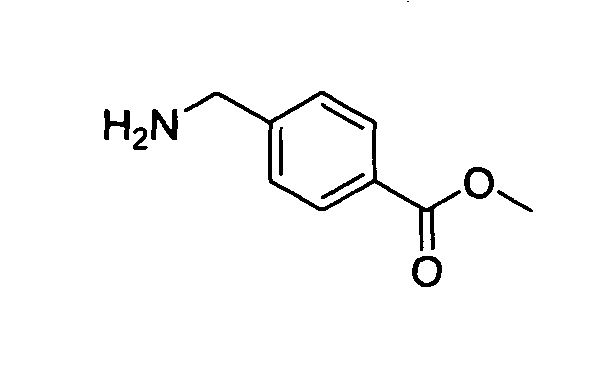
1H-NMR (CDCl3, δ): 1.53 (s, 2H, NH2), 3.94 (s, 1H, CH3), 3.96 (s, 2H, N-CH2), 7.39 (d, 2H, J = 8.4 Hz, ArH), 8.02 (d, 2H, J = 8.4 Hz, ArH). -
- A) Difluoro-(5,5,8,8-tetramethyl-5,6,7,8-tetrahydro-naphthalen-2-yl)-acetic acid
16 (306 mg, 1.08 mmol) was dissolved in SOCl2 and two drops of DMF were
added at 0°C. The mixture was stirred at 0°C for 30 min then evaporated and the
product was dissolved in CH2Cl2 (7 mL). B) Methyl 4-(aminomethyl)benzoate
SLA 07006 (179 mg, 1.08 mmol) and DMAP (14 mg, 0.11 mmol) were dissolved
in CH2Cl2 (7 mL) and Et3N (1.5 mL) at 0°C. A) was added at 0°C via syringe in B)
and the resulting mixture was stirred at 0°C for 10 min and abandoned at RT for
1 h. Aqueous NH4Cl 5% (100 mL) was added and the mixture extracted with
EtOAc (3 x 50 mL). The organic layer was washed with
NaHCO 3 5% (3 x 100 mL) and brine (3 x 100 mL), dried over MgSO4, filtered and evaporated in vacuo. The crude product was purified by flash chromatography using as eluent cyclohexane:EtOAc = 9:1. Methyl 4-((2,2-difluoro-2-(1,2,3,4-tetrahydro-1,1,4,4-tetramethylnaphthalen-6-yl)acetamido)methyl)-benzoate 21 was obtained (0.27 g, 58 % yield) as a beige solid.MW: 429.50; Yield: 58 %; Beige Solid; Mp (°C): 125.5.
Rf: 0.30 (cyclohexane:EtOAc = 90:10).
1H-NMR (CDCl3, δ): 1.27 (s, 6H, 2xCH3), 1.28 (s, 6H, 2xCH3), 1.69 (s, 4H, 2xCH2), 3.92 (s, 1H, CH3), 4.57 (d, 2H, J = 6.0 Hz, N-CH2), 6.81 (s, 1H, NH), 7.29-7.41 (m, 4H, ArH), 7.52 ( s, 1H, ArH), 8.00 (d, 2H, J = 8.2 Hz, ArH). -
-
- A) Hydroxylamine hydrochloride (4.70 g, 67.6 mmol) was dissolved in methanol
(25 mL) at 45°C for 10 min in
flask 100 mL. B] Potassium hydroxyde (5.64 g, 100.5 mmol) was dissolved in methanol (15 mL) at 45°C for 10 min inflask 50 mL. Solution B) was added in A) at 45°C. The mixture was stirred at 45 °C for 10 min and cooled. The mixture was filtered and 10 mL of the filtrate was added at RT via syringe to a solution of 3-(2,2-Difluoro-2-(1,2,3,4-tetrahydro-1,1,4,4-tetramethylnaphthalen-6-yl)acetamido)benzoic acid 21 (263 mg, 0.61 mmol) in methanol (10 mL). The resulting mixture was stirred for 2 h at RT and a solution of HCl 1 M was added to pH = 5. The product was extracted with ethyl acetate (3 x 50 ML) and the organic layer was dried over MgSO4, filtered and evaporated in vacuo. The crude product was purified by column chromatography using as eluent CH2Cl2:MeOH = 95:5. 4-((2,2-Difluoro-2-(1,2,3,4-tetrahydro-1,1,4,4-tetramethylnaphthalen-7-yl)acetamido)methyl)-N-hydroxybenzamide EHT 7800 was obtained (12.5 mg, 5% yield) as a yellow solid.MW: 430.49; Yield: 5%; Yellow Solid; Mp (°C): 141.2 (dec.).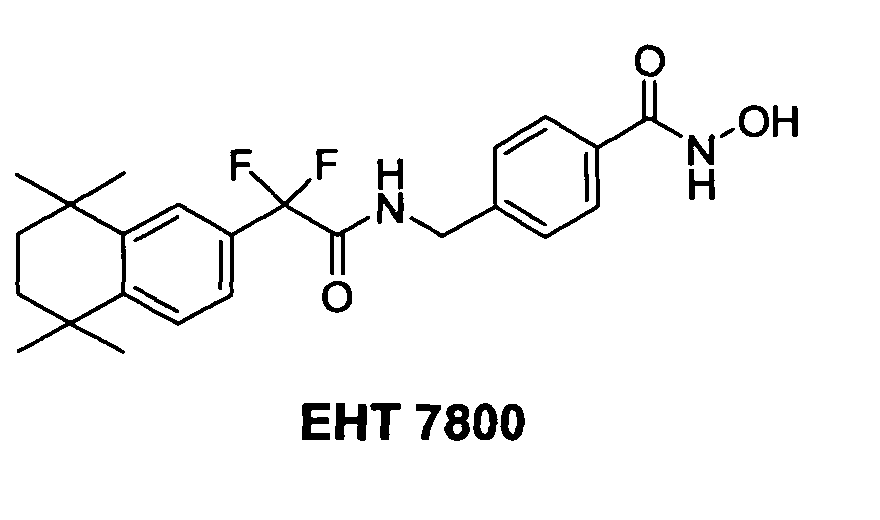
Rf: 0.35 (CH2Cl2:MeOH) = 95:5.
1H-NMR (CD3OD, δ): 1.09 (s, 3H, 2xCH3), 1.14 (s, 3H, 2xCH3) 1.62 (s, 4H, 2xCH2), 4.37 (s, 2H, -CH2N), 7.18-7.28 (m, 3H, ArH), 7.33 (d, 1H, J = 8.3 Hz, ArH), 7.41 (s, 1H, ArH ), 7.57 (d, 2H, J = 8.0 Hz, ArH).
MS-ESI m/z (rel. int.): 431.1 ([MH] +, 100).
HPLC: Method A, detection UV 254 nm,EHT 7800 RT = 6.24 min, peak area 96.1 %. -
-
- A) 5,5,8,8-Tetramethyl-5,6,7,8-tetrahydro-naphthalene-2-carboxylic acid 2 (1.38
g, 5.94 mmol) was dissolved in SOCl2 and two drops of DMF were added at
0°C.The mixture was stirred at 0°C for 30 min and it was evaporated and this
crude product was dissolved in CH2Cl2 (5 mL). B) 4-lodophenylamine (1.30 g,
5.94 mmol) and DMAP (73 mg, 0.59 mmol) were dissolved in CH2Cl2 (10 mL)
and Et3N (8.4 mL) was added at 0°C. The Mixture A) was added in B) at 0°C via
syringe and the resulting mixture was stirred at 0°C for 10 min and abandoned at
RT for 2.5 h. A solution of aqueous NH4Cl 5% (50 mL) was added and the
resulting mixture was extracted with EtOAc (3 x 150 mL). The organic layer was
washed with NaHCO3 (2 x 100 mL) and brine (3 x 100 mL) and dried with
MgSO4, filtered and evaporated. The crude product was purified by column
chromatography using as eluent cyclohexane:EtOAc = 90:10. 5,6,7,8-Tetrahydro-N-(4-iodophenyl)-5,5,8,8-tetramethylnaphthalene-2-carboxamide
22
was obtained (1.43 g, 56 % yield) as a white solid.
MW: 433.32; Yield: 56 %; White Solid; Mp: 224.2 °C.

Rf: 0.60 (cyclohexane:EtOAc = 90:10).
1H-NMR (CDCl3, δ): 1.28 (s, 6H, 2xCH3), 1.30 (s, 6H, 2xCH3), 1.66 (s, 4H, 2xCH2), 7.46 (d, 1H, J = 8.3 Hz, ArH), 7.55-7.75 (m, 5H, ArH), 7.86 (d, 1H, J = 1.6 Hz, ArH), 10.18 (s, 1H, NH).
13C-NMR (CDCl3, δ): 165.7, 148.3, 144.5, 139.1, 137.2 (2xC), 131.9, 126.5, 125.7, 124.8, 122.6 (2xC), 87.1, 34.4, 34.3, 34.1, 34.0, 31.5 (2xC), 31.3 (2xC).
MS-ESI m/z (rel. int.): 433.9 ([MH]+, 100).
HPLC: Method A, detection UV 254 nm, RT = 8.09 min,peak area 90 %. -
- Under a nitrogen atmosphere ethylbromodifluoroacetate (0.244 mL, 1.90 mmol) was added to a suspension of 5,6,7,8-tetrahydro-N-(4-iodophenyl)-5,5,8,8-tetramethylnaphthalene-2-carboxamide 22 (826 mg, 1.90 mmol), powder copper (99.999%, 588 mg) in anhydrous DMSO (16.7 mL). The reaction mixture was stirred at 58°C for 18 h. After cooling, the mixture was poured in aqueous NH4Cl 5% (150 mL). This mixture was extracted with EtOAc (5 x 150 mL). The organic layer was washed with aqueous NH4Cl 5% (3 x 100 mL), brine (3 x 100 mL), dried over MgSO4, filtered and evaporated. The crude product was purified by column chromatography using as eluent cyclohexane:EtOAc = 95:5. Ethyl 2-(4-(5,6,7,8-tetrahydro-5,5,8,8-tetramethylnaphthalene-2-carboxamido)phenyl)-2,2-
difluoroacetate 23 was obtained (0.61 g, 74.6 % yield) as a white solid.MW: 429.49; Yield: 74.6%; White Solid; Mp: 183.1 °C.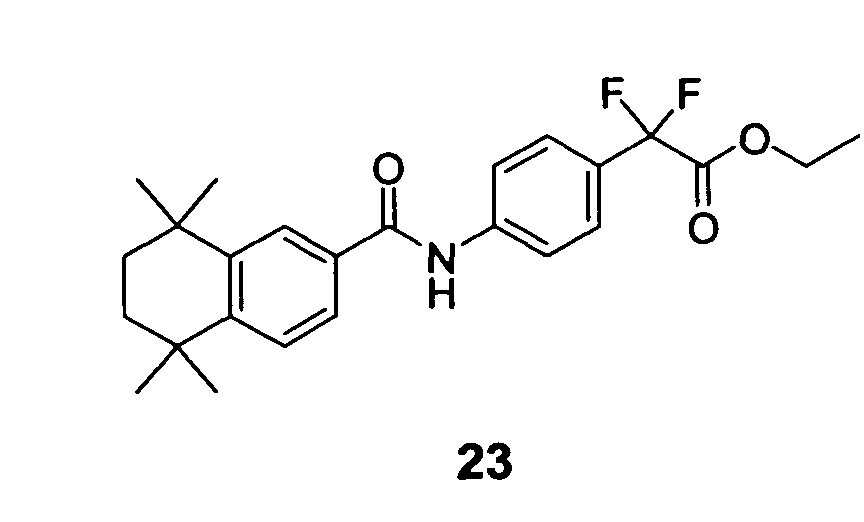
Rf: 0.35 (cyclohexane:EtOAc = 90:10).
1H-NMR (CDCl3, δ): 1.31 (t, 3H, J = 7.1 Hz, CH3), 1.31 (s, 6H, 2xCH3), 1.33 (s, 6H, 2xCH3), 1.72 (s, 4H, 2xCH2), 4.30 (q, O-CH2, J = 7.1 Hz), 7.41 (d, 1H, J = 8.3 Hz, ArH), 7.55 (dd, 1H, J = 2.0 Hz, J = 8.3 Hz, ArH), 7.61 (d, 2H, J = 8.7 Hz, ArH), 7.75 (d, 2H, J = 8.7 Hz, ArH), 7.86 (s, 1H, J = 2.0 Hz, ArH), 7.89 (s, 1H, NH).
MS-ESI m/z (rel. int.): 430.2 ([MH] +, 100).
HPLC: Method A, detection UV 254 nm, RT = 7.87 min, peak area 97 %. -
- A) Hydroxylamine hydrochloride (2.34 g, 33.7 mmol) was dissolved in methanol
(12 mL) at 45°C for 10 min in a 50 mL round bottom flask. B) Potassium
hydroxyde (2.81 g, 50.0 mmol) was dissolved in methanol (7 mL) at 45°C for 10
min in 25 mL round bottom flask. The solution B) was added in A) at 45°C. This
mixture was stirred at 45 °C for 10 min and cooled to RT. The mixture was
filtered and 5 mL of the filtrate were added at RT via syringe to a solution of ethyl
2-(4-(5,6,7,8-tetrahydro-5,5,8,8-tetramethylnaphthalene-2-carboxamido)phenyl)-2,2-difluoroacetate
23 (0.10 g, 0.23 mmol) in methanol (4 mL). This mixture was
stirred for 16 h at RT. A solution of HCl 1M was added to about pH = 5. The
aqueous layer was extracted with ethyl acetate (3 x 50 mL). The organic layer
was dried over MgSO4, filtered and evaporated in vacuo. N-(4-((Hydroxycarbamoyl)difluoromethyl)phenyl)-5,6,7,8-tetrahydro-5,5,8,8-tetramethylnaphthalene-2-
carboxamide EHT 4996 was obtained (123 mg, 97 % yield) as an orange solid.MW: 416.46; Yield: 97%; Orange Solid; Mp (°C): 179.3.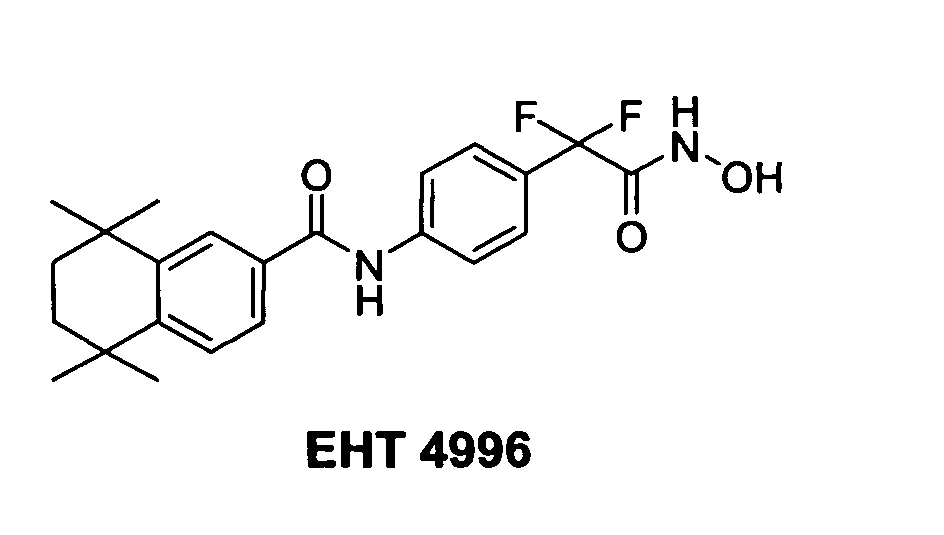
Rf: 0.35 (CH2Cl2:MeOH = 95:5).
1H-NMR (CD3OD, δ): 1.40 (s, 6H, 2xCH3), 1.43 (s, 6H, 2xCH3), 1.83 (s, 4H, 2xCH2), 7.55 (d, 1H, J = 8.3 Hz, ArH), 7.68 (d, 2H, J = 8.6 Hz, ArH), 7.77 ( dd, J = 1.7 Hz, J = 8.3 Hz, 1H, ArH), 7.93 (d, J = 8.6 Hz, 2H, ArH), 8.02 (d, 1H, J = 1.7 Hz, ArH), 2xNH and OH exchanged.
MS-ESI m/z (rel. int.): 417.2 ([MH] +, 100).
HPLC: Method A, detection UV 254 nm,EHT 4996 RT = 6.49 min, peak area 96.0 %. -
- To a solution of 5,6,7,8-tetrahydro-5,5,8,8-tetramethylnaphthalen-2-
amine 6 in CH2Cl2 (20 mL) was added Et3N (0.684 mL), and methoxyoxalylchloride (0.452 ml). The solution was stirred at 60 °C for 3 h and all the volatiles were evaporated to obtain a white solid that was purified using silica gel chromatography with EtOAc:Cyclohexane = 15:85 to yield to methyl (1,2,3,4-tetrahydro-1,1,4,4-tetramethylnaphthalen-7-ylcarbamoyl)formate 24 (0.637 g, 90% yield).MW: 289.37; Yield: 90%; White Solid; Mp (°C): 216.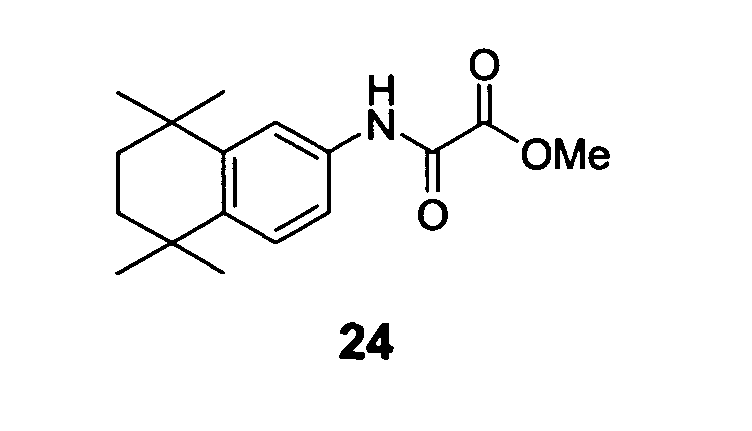
Rf: 0.20 (EtOAc:Cyclohexane = 15:85).
1H-NMR (CDCl3, δ): 1.27 (s, 6H, 2xCH3), 1.28 (s, 6H, 2xCH3), 1.68 (s, 4H, 2xCH2), 3.96 (s, 3H, OCH3), 7.31 (d, 1H, J = 8.46 Hz, ArH), 7.46 (dd, 1H, J = 8.46 Hz, J = 2.36 Hz, ArH), 7.51 (d, 1H, J = 2.26 Hz, ArH), 8.83 (s, 1H, NH). MS-ESI m/z (rel. int.): 290.1 ([MH]+, 100).
HPLC: Method A, detection UV 254 nm, RT = 6.80 min, peak area 99.0 %. - A 25 mL round bottom flask equipped with a reflux condenser was charged with methyl (1,2,3,4-tetrahydro-1,1,4,4-tetramethylnaphthalen-7-ylcarbamoyl)formate 24 (0.200 g, 0.691 mmol), MeOH (10 mL) and KOH (0.078 g, 1.382 mmol). The reaction mixture was stirred for 3 h at reflux, evaporated to dryness and partitioned between EtOAc and H2O. 6N HCl was added to reach acidic pH and the organic layer was separated, washed with water, brine, dried with Na2SO4, filtered and concentrated on a rotary evaporator to give (1,2,3,4-tetrahydro-1,1,4,4-tetramethylnaphthalen-7-ylcarbamoyl)formic acid as a white solid 25 (0.157 g, 83 % yield).MW: 275.34; Yield: 83%; White Solid; Mp (°C): 176.4.
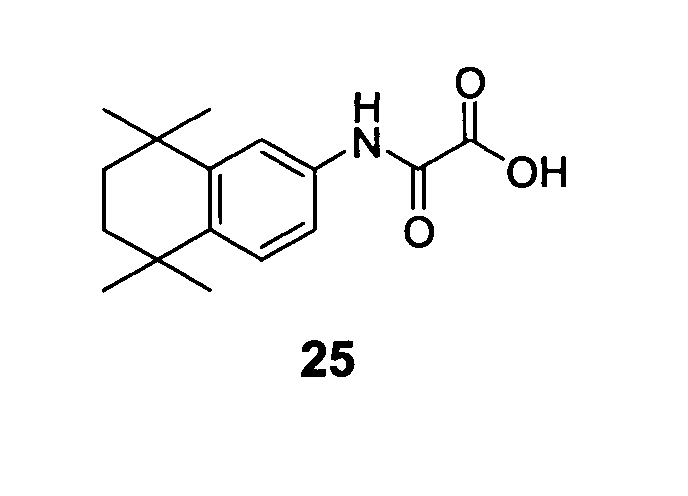
Rf: 0.2 (MeOH:CH2Cl2 = 5:95).
1H-NMR (CDCl3, δ): 1.27 (s, 2xCH3), 1.29 (s, 6H, 2xCH3), 1.69 (s, 4H, 2xCH2), 7.34 (d, 1H, J = 8.53 Hz, ArH), 7.43 (dd, 1H, J = 8.53 Hz, J = 2.35 Hz, ArH), 7.49 (d, 1H, J = 2.31 Hz, ArH), 8.92 (s, 1H, NH), CO2H not seen.
MS-ESI m/z (rel. int.): 276.2 ([MH]+, 40), 192.1 (100).
HPLC: Method A, detection UV 254 nm, RT = 6.55 min, peak area 98.9%. - (1,2,3,4-Tetrahydro-1,1,4,4-tetramethylnaphthalen-7-ylcarbamoyl)formic acid 25 ( 0.10 g, 0.36 mmol) was dissolved in SOCl2 (5 mL) at 0°C. A drop of DMF was added and the mixture was stirred for 0.5 h. The SOCl2 was removed under vacuum and the crude acid chloride was dissolved in CH2Cl2 (5 mL). Methyl 4-aminobenzoate (0.06 g, 0.40 mmol) and triethylamine (0.04 mg, 0.40 mmol) were added and the mixture was stirred at 25 °C for 2 h. The mixture was poured into H2O and the product was extracted with CH2Cl2. The organic layer was washed successively with HCl (2M), NaHCO3(sat), NaCl(sat), dried over MgSO4, filtrated and evaporated to give a white crude solid that was purified using silica gel with 10% [v/v] EtOAc in cyclohexane. 4-[(5,5,8,8-Tetramethyl-5,6,7,8-tetrahydro-naphthalen-2-ylaminooxalyl)-amino]-benzoic acid methyl ester 26 (0.040 g, 27 % yield) was obtained as a white solid.MW: 408.49; Yield: 27%; White Solid; Mp (°C) 202.

Rf: 0.3 (MeOH:CH2Cl2 = 5:95).
1H-NMR (CDCl3, δ): 1.28 (s, 6H, 2xCH3), 1.29 (s, 6H, 2xCH3), 1.70 (s, 4H, 2xCH2), 3.92 (s, 3H, OCH3), 7.33 (d, 1H, J = 8.5 Hz, ArH), 7.47 (dd, 1H, J = 8. 5 Hz, 2.3, ArH), 7.56 (d, 1H, J = 2.3 Hz, ArH), 7.76 (d, 2H, J = 8.7 Hz, ArH), 8.07 (d, 2H, J = 8.7 Hz, ArH), 9.27 (s, 1H, NH), 9.61 (s, 1H, NH).
MS-ESI m/z (rel. int.): 409.1 ([MH]+, 100).
HPLC: Method A, detection UV 254 nm, RT = 7.80 min, peak area 96.7 %. - To a solution of 4-[(5,5,8,8-tetramethyl-5,6,7,8-tetrahydro-naphthalen-2-ylaminooxalyl)-amino]-benzoic acid methyl ester 26 (0.040 g, 0.098 mmol) in MeOH (1 mL) was added an hydroxylamine solution (1.76 M, 2 mL) in MeOH and the reaction mixture was stirred 3 h at room temperature under magnetic stirring. The reaction mixture was adjusted to
pH 5 with HCl 1M, concentrated and the residue was partitioned between EtOAc and H2O. The organic layer was dried with Na2SO4 and the product was precipitated in CH3CN to give N-(4-hydroxycarbamoyl-phenyl)-N'-(5,5,8,8-tetramethyl-5,6,7,8-tetrahydro-naphthalen-2-yl)-oxalamide EHT 0933 (0.012 g, 30% yield) as beige solid. MW: 409.48; Yield: 30%; White Solid; Mp (°C): 244.3. Rf : 0.30 (MeOH:CH2Cl2 = 5:95).
1H-NMR (CD3OD, δ):1.16 (s, 6H, 2xCH3), 1.18 ( s, 6H, 2xCH3), 1.59 (s, 4H, 2xCH2), 7.20 ( d, 1H, J = 8.58, ArH), 7.40 ( d, 1H, J = 8.49, ArH), 7.59 (s, 1H, ArH), 7.66 (d, 2H, J = 8.64 Hz, ArH), 7.78 (d, 2H, J = 8.51 Hz, ArH), 3xNH and OH exchanged.
MS-ESI m/z (rel. int.): 410.1 ([MH]+, 100).
HPLC: Method A, detection UV 254 nm,EHT 0933 RT = 6.50 min, peak area 95.9 %. - This example discloses the screening assay used to illustrate the biological activity of the different compounds.
- The discovery of novel HDAC inhibitors, through in vitro screening, involves the use of a convenient and sensitive assay for the measurement of inhibition of HDAC activity.
- The classical assay uses radiolabeled histone from animal or cell culture, or peptides derived from histone peptide sequences as substrates. Deacetylation is then monitored by extraction of the liberated [3H]-acetic acid via scintillation counting. However, due to the involvement of radioactivity and the problem of standardization of radiolabeled histones preparation, this assay is incompatible for high throughput screening for drug discovery.
- Therefore, a fast, non isotopic method has been chosen that relies on a fluorescent HDAC substrate. This assay is a two step enzymatic reaction. The substrate used is a peptidic substrate with a ε-acetylated lysyl moiety followed by a 4-methylcoumarin-7-amide (AMC) moiety at their carboxy terminus. In the first reaction catalysed by HDACs, acetate is released from ε-acetylated lysine residue. In the second reaction, the deacetylated peptides are recognized as substrate by trypsin, which cleaves the deacetylated peptide after the lysine residue. This cleavage releases the AMC and the fluorescence is monitored by a fluorometer.
- In order to evaluate the effect of one compound on HDAC activity, the HDAC Fluorescent Activity Assay/Drug Discovery Kit® developed by Biomol and based on the two step enzymatic reaction described above was used with modifications. The substrate of the Biomol assay, called Fluor de Lys™, comprises an acetylated lysine side chain with an AMC moiety.
- Two well-known HDAC inhibitors have been used as positive controls: Trichostatin A (TSA), a natural product isolated from Streptomyces hygroscopicus, and suberoylanilide hydroxamic acid (SAHA), a synthetic compound. It has been demonstrated that HDAC activity is inhibited by both TSA (1.4-2.6 nM) and SAHA (127-259 nM) depending of the HDAC activity assay used. TSA and SAHA have been reported to inhibit cell growth, induce terminal differentiation, and prevent the formation of tumours in mice.
- Briefly, assay buffer (25 mM tris/HCl pH = 8, 137 mM NaCl, 2.7 mM KCI, 1 mM MgCl2), diluted positive controls or diluted test inhibitors (11 concentrations ranging from 0 nM to 50 µM) are mixed into a 96 microtiter plate. Then, 5 µg of Hela (human cervical cancer cell line) cells nuclear extract is added in each well. The enzymatic reaction is initiated by the addition of the diluted Fluor de Lys™ substrate and the microplate is incubated at room temperature (e.g. 25°C) for 0.5 h. In order to stop the reaction and to produce the fluorophore release, 50µl of the Fluor de Lys™ Developer solution is added in each well and the microplate is incubated at room temperature (e.g. 25°C) for 0.25 h. Finally, the fluorescence is measured by a fluorimeter (Fluoroskan Ascent FL, Thermolabsystem) at excitation wavelength of 360 nm and emission wavelength of 460 nm. Data was analysed using the GraphPad Prism® software and IC50 (dose of compound leading to 50% of HDAC activity) was calculated from the dose-response curve.
- In order to determine the capacity of the compounds of this invention to affect HDAC activity, IC50 were calculated using the HDAC activity assay as described in the method.
- In parallel, the two reference compounds, TSA and SAHA, were tested in order to validate that the method is well suited to screening applications to identify novel HDAC inhibitors. As presented in Figure 10, semi logarithmic plots analysed by GraphPad Prism® software indicate IC50 of 1.4 +/- 0.5 nM for TSA (Fig. 10a) and 20 nM for SAHA (Fig. 10b) which are in the range of the IC50 values reported recently for the same enzyme/inhibitor combination and a similar fluorescent substrate.
- In our model, 4 compounds have been shown to have activity under 5 µM. The compound showing the highest effect on HDAC activity is EHT 9299 (IC50 = 424 +/- 22 nM), followed by EHT 7706 (IC50 = 1.18 +/- 0.37 µM), EHT 7800 (IC50 = 4.1 µM) and finally EHT 3741 (IC50 = 5.13 +/- 0.67 µM).
- These results illustrate the ability and the efficiency of the compounds of this invention (especially EHT 9299) to affect specifically HDAC enzymatic activity.
Claims (21)
- A compound having a general formula (I) :wherein:

R is -C(O)NR7R8, -(CXY)tC(O)NR7R8, -C(O)C(O)NHMe, -(C=C)C(O) NR8R9,-C(O)CF3, or another Zn-chelating- group, with the proviso that R is not an acidic group or an ester derivative, -COOR9 or salt thereof,; R7 is a group of formula - OH, -OR9, 2-aminophenyl and R8 is selected from hydrogen, C1-6alkyl; R9 is independently selected from hydrogen or C1-6alkyl ; t is 1, 2 or 3 (preferably 1), X and Y, which are identical or different, represent an hydrogen or halogen atom (preferably F),
X1 represents a carbon, oxygen, nitrogen or sulphur atom,
R1 and R2 represent independently or form together:X2 and X3, which are identical or different, represent CH, an atom of oxygen or an atom of nitrogen, or X2=X3 may be a single atom of sulphur, oxygen or nitrogen, or in the case where X2 is an atom of oxygen and X3 an atom of nitrogen, C1 and X4 represent a single one and same carbon atom, so that the ring carrying X2 and X3 can be an isoxazole ring,a C1-6alkyl group, in particular methyl or ethyl groups, when X1 is an atom of carbon,nothing, when X1 is an atom of oxygen or an atom of sulphur,one or two atoms of oxygen, when X1 is an atom of sulphur (the case of a sulfoxide -SO- or a sulphone -SO2-), orone atom of hydrogen, an alkyl, aryl or aralkyl group, when X1 is an atom of nitrogen (the case of an amino -NH, -an N-alkyl, N-aryl or N-aralkyl group);
X4 can be CH or a nitrogen atom,
R4 and R5, which are identical or different, represent a hydrogen atom, a halogen atom, more particularly a fluorine atom, a C1-6alkyl group, a group of formula - OH, -NH2, -NHR6, -OR6, -SR6, -(CF2)nCF3, where n is an integer from 0 to 10, and whenever possible their salts with physiologically tolerated acids;
R6 represents a hydrogen atom, a C1-6alkyl group, a fluoroalkyl group having from 1 to 6 carbons atoms and from 3 to 7 fluorine atoms, an aryl group or an aralkyl group;
R3 has the same definition as R4 and R5;
L is a linker and represents a bivalent radical either linear or cyclic, either saturated or unsaturated, more particularly L represents a bivalent radical derived from an alkane, alkene, alkyne or, aromatic or not, cyclic containing hydrocarbon group having from 1 to 12 carbon atoms, another bivalent radical of the following formula -O-, -CO-, -CO-NH-, -NH-CO-, -NH-CO-NH-, -CF2-CO-NH-, -C(XY)-CO-NH-CH2-, -NH-CO-CO-NH-, -SO2NH-, -NHSO2-, -SO2NCH3-, - NCH3SO2-, -NR6-, -C(=NOH)-, or a mixture thereof; R6 being as defined above, optionally the bivalent radical is substituted, in particular by at least one C1-6alkyl group. X and Y, which are identical or different, represent an hydrogen or halogen atom (preferably F),
its tautomers, optical and geometrical isomers, racemates, salts, hydrates and mixtures thereof. - A compound according to claim 1, wherein the groups identified in claim 1 are substituted with at least one substituent, which may be selected from the group consisting in : a hydrogen atom, a halogen atom (preferably F, Cl, or Br), a hydroxyl group, a C1-10alkyl group, an alkenyl group, an C1-10alkanoyl group, a (C1-C10)alkoxy group, a (C1-C10)alkoxycarbonyl group, an aryl group, an aralkyl group, an arylcarbonyl group, a mono- or poly-cyclic hydrocarbon group, a - NHCO(C1-C6)alkyl group, -NO2, -CN, a -Nrr' group or a trifluoro(C1-C6)alkyl group, r and r', which are identical or different, are as defined in claim 1.
- A compound according to claim 1 or 2, wherein R is -C(O)NR7R8 or - (CXY)tC(O)NR7R8, in particular wherein R8 is an hydrogen atom and R7 is an hydroxyl group or a 2-aminophenyl group, preferably with X and Y are both halogen atoms and t is 1.
- A compound according to claim 3, wherein R is an hydroxamic acid group (-(C=O)-NH-OH), a 2,2-difluoro-N-hydroxyacetamido group (-CF2-(C=O)-NH-OH), a N-(2-aminophenyl)acetamido group.
- A compound according to claim 4, wherein R is an electrophilic ketone, in particular -(C=O)-CF3 or α-ketoamides, for instance -(C=O)-(C=O)-NHMe.
- A compound according to claim 4, wherein R is in para position or meta position of C1, R is preferably in para position of C1.
- A compound according to one of the preceding claims, wherein L represents - CO-NH-, -NH-CO-, -CH=CH- (cis or trans forms), -CF2-CO-NH-, -CF2-CO-NH-CH2-, or -NH-CO-CO-NH-.
- A compound according to any one of the preceding claims, wherein R3 is an hydrogen atom, OR6, in particular methoxy, or a C1-6alkyl group, in particular methyl.
- A compound according to any one of the preceding claims, wherein R3 is on position 2 of the substituted naphthalene derivative.
- A compound according to any one of the preceding claims, wherein the ring carrying X1 is selected from :



- A compound according to one of the preceding claims, wherein the ring carrying X2, X3 and X4 is selected from phenyl, pyridinyl, pyrimidinyl, isoxazolyl, thiophenyl, furanyl, pyrollyl, pyrazolyl, imidazolyl, isothiazolyl, thiazolyl, thienyl, thienooxazolyl and triazinyl rings.
- A compound according to one of the preceding claims, wherein the ring carrying X2, X3 and X4 is phenyl, optionally substituted by a halogen atom, more particularly a fluorine atom, a C1-6alkyl group, a group of formula -OH, or OR6.
- A compound, which is selected from the group consisting of :N-(4-(Hydroxycarbamoyl)phenyl)-5,6,7,8-tetrahydro-5,5,8,8-tetramethylnaphthalene-2-carboxamideN-(4-(2-Aminophenylcarbamoyl)phenyl)-5,6,7,8-tetrahydro-5,5,8,8-tetramethyl-naphthalene-2-carboxamideN-(1,2,3,4-Tetrahydro-1,1,4,4-tetramethylnaphthalen-6-yl)-N'-hydroxyterephthalamide4-((E)-2-(1,2,3,4-tetrahydro-1,1,4,4-tetramethylnaphthalen-6-yl)vinyl)-N-hydroxybenzamide4-((Z)-2-(1,2,3,4-tetrahydro-1,1,4,4-tetramethylnaphthalen-6-yl)vinyl)-N-hydroxybenzamide4-(2,2-difluoro-2-(1,2,3,4-tetrahydro-1, ,1,4,4-tetramethylnaphthalen-7-yl)acetamido)-N-hydroxybenzamide3-(2,2-difluoro-2-(1,2,3,4-tetrahydro-1,1,4,4-tetramethylnaphthalen-7-yl)acetamido)-N-hydroxybenzamide4-((2,2-difluoro-2-(1,2,3,4-tetrahydro-1,1,4,4-tetramethylnaphthalen-7-yl)acetamido)methyl)-N hydroxybenzamideN-(4-((hydroxycarbamoyl)difluoromethyl)phenyl)-5,6,7,8-tetrahydro-5,5,8,8-tetramethylnaphthalene-2-carboxamideN-(4-Hydroxycarbamoyl-phenyl)-N'-(5,5,8,8-tetramethyl-5,6,7,8-tetrahydro-naphthalen-2-yl)-oxalamide
- A compound, which is selected from the group consisting of :4-(2,2-Difluoro-2-(1,2,3,4-tetrahydro-1 ,1,4,4-tetramethylnaphthalen-7-yl)acetamido)-N-hydroxybenzamideN-(1,2,3,4-Tetrahydro-1 ,1,4,4-tetramethylnaphthalen-6-yl)-N'-hydroxyterephthalamide4-((2,2-Difluoro-2-(1,2,3,4-tetrahydro-1 ,1,4,4-tetramethylnaphthalen-7-yl)acetamido)methyl)-N-hydroxybenzamideN-(4-(Hydroxycarbamoyl)phenyl)-5,6,7,8-tetrahydro-5,5,8,8-tetramethylnaphthalene-2-carboxamide
- A compound according to any one of the preceding claims for use as a medicine.
- A pharmaceutical composition comprising at least one compound according to any one of the preceding claims 1-14 and a pharmaceutically acceptable vehicle or support.
- A composition according to the preceding claim, for the treatment of conditions mediated by HDAC, such as cancers, in particular promyelocytic leukaemia, other diseases associated with abnormal cell proliferation, such as psoriasis.
- A composition according to the preceding claim 16, for the treatment of central and peripheral nervous system diseases and neurodegenerative diseases associated with an excitotoxicity, such as Huntington's disease, such as polyglutamine expansion diseases, Alzheimer disease, Parkinson disease, multiple sclerosis, neuronal ischemia and amyotrophic lateral sclerosis (ALS).
- A composition according to the preceding claim 16, for the treatment of fibrosis, e.g. liver fibrosis and liver chirrhosis.
- A composition according to claim 17, wherein the cancer is selected from promyelocytic leukaemia, prostate cancer, ovarian cancer, pancreas cancer, lung cancer, breast cancer, liver cancer, head and neck cancer, colon cancer, bladder cancer, non-Hodgkin 's lymphoma cancer and melanoma.
- A composition according to claim 16, for reducing cancer cell proliferation.
Priority Applications (9)
| Application Number | Priority Date | Filing Date | Title |
|---|---|---|---|
| EP03293143A EP1541549A1 (en) | 2003-12-12 | 2003-12-12 | Tricyclic hydroxamate and benzaminde derivatives, compositions and methods |
| DE602004022974T DE602004022974D1 (en) | 2003-12-12 | 2004-12-10 | TRICYCLIC HYDROXAMATE AND BENZAMIDE DERIVATIVES, COMPOSITIONS AND METHODS |
| DK04806498T DK1692097T3 (en) | 2003-12-12 | 2004-12-10 | Tricyclic hydroxamate and benzamide derivatives, compositions and methods |
| ES04806498T ES2330749T3 (en) | 2003-12-12 | 2004-12-10 | TRICICLIC DERIVATIVES OF HYDROXAMATE AND BENZAMIDE, COMPOSITIONS AND PROCEDURES. |
| US10/581,947 US7923579B2 (en) | 2003-12-12 | 2004-12-10 | Tricyclic hydroxamate and benzamide derivatives, compositions and methods |
| EP04806498A EP1692097B1 (en) | 2003-12-12 | 2004-12-10 | Tricyclic hydroxamate and benzamide derivatives, compositions and methods |
| PT04806498T PT1692097E (en) | 2003-12-12 | 2004-12-10 | Tricyclic hydroxamate and benzamide derivatives, compositions and methods |
| PCT/IB2004/004334 WO2005058803A1 (en) | 2003-12-12 | 2004-12-10 | Tricyclic hydroxamate and benzamide derivatives, compositions and methods |
| AT04806498T ATE441628T1 (en) | 2003-12-12 | 2004-12-10 | TRICYCLIC HYDROXAMAT AND BENZAMIDE DERIVATIVES, COMPOSITIONS AND METHODS |
Applications Claiming Priority (1)
| Application Number | Priority Date | Filing Date | Title |
|---|---|---|---|
| EP03293143A EP1541549A1 (en) | 2003-12-12 | 2003-12-12 | Tricyclic hydroxamate and benzaminde derivatives, compositions and methods |
Publications (1)
| Publication Number | Publication Date |
|---|---|
| EP1541549A1 true EP1541549A1 (en) | 2005-06-15 |
Family
ID=34486463
Family Applications (2)
| Application Number | Title | Priority Date | Filing Date |
|---|---|---|---|
| EP03293143A Withdrawn EP1541549A1 (en) | 2003-12-12 | 2003-12-12 | Tricyclic hydroxamate and benzaminde derivatives, compositions and methods |
| EP04806498A Expired - Lifetime EP1692097B1 (en) | 2003-12-12 | 2004-12-10 | Tricyclic hydroxamate and benzamide derivatives, compositions and methods |
Family Applications After (1)
| Application Number | Title | Priority Date | Filing Date |
|---|---|---|---|
| EP04806498A Expired - Lifetime EP1692097B1 (en) | 2003-12-12 | 2004-12-10 | Tricyclic hydroxamate and benzamide derivatives, compositions and methods |
Country Status (8)
| Country | Link |
|---|---|
| US (1) | US7923579B2 (en) |
| EP (2) | EP1541549A1 (en) |
| AT (1) | ATE441628T1 (en) |
| DE (1) | DE602004022974D1 (en) |
| DK (1) | DK1692097T3 (en) |
| ES (1) | ES2330749T3 (en) |
| PT (1) | PT1692097E (en) |
| WO (1) | WO2005058803A1 (en) |
Cited By (12)
| Publication number | Priority date | Publication date | Assignee | Title |
|---|---|---|---|---|
| WO2006017214A3 (en) * | 2004-07-12 | 2006-06-01 | Merck & Co Inc | Inhibitors of histone deacetylase |
| WO2009098515A1 (en) | 2008-02-07 | 2009-08-13 | Generics [Uk] Limited | Novel process for the preparation of vorinostat |
| JP2010513326A (en) * | 2006-12-19 | 2010-04-30 | メシルジーン インコーポレイテッド | Inhibitors of histone deacetylase and prodrugs thereof |
| CN102329246A (en) * | 2011-07-04 | 2012-01-25 | 潍坊博创国际生物医药研究院 | Multiple-target-point tamibarotene derivatives, preparation method and purposes thereof |
| WO2012019772A1 (en) * | 2010-08-12 | 2012-02-16 | Institut De Recherche Pour Le Developpement (I.R.D) | Method for treating protozoan parasitic diseases |
| EP2486923A1 (en) * | 2011-02-11 | 2012-08-15 | Dr. Felix Jäger und Dr. Stefan Drinkuth Laborgemeinschaft OHG | Histone deacetylase (HDAC) inhibiting compounds and method of making same |
| US8754129B2 (en) | 2008-11-26 | 2014-06-17 | Generics [Uk] Limited | Crystalline vorinostat form VI |
| US8796330B2 (en) | 2006-12-19 | 2014-08-05 | Methylgene Inc. | Inhibitors of histone deacetylase and prodrugs thereof |
| US8883851B2 (en) | 2008-10-15 | 2014-11-11 | Generics [Uk] Limited | Process for the preparation of vorinostat |
| CN106187818A (en) * | 2016-06-27 | 2016-12-07 | 青岛云天生物技术有限公司 | A kind of method preparing cancer therapy drug Vorinostat |
| US10752591B2 (en) | 2014-06-04 | 2020-08-25 | Haro Pharmaceuticals Inc. | 18-20 member bi-polycyclic compounds |
| CN112479918A (en) * | 2020-12-11 | 2021-03-12 | 成都大学 | Synthetic method of retinoid derivative Am580 |
Families Citing this family (26)
| Publication number | Priority date | Publication date | Assignee | Title |
|---|---|---|---|---|
| US20030129724A1 (en) | 2000-03-03 | 2003-07-10 | Grozinger Christina M. | Class II human histone deacetylases, and uses related thereto |
| US7154002B1 (en) | 2002-10-08 | 2006-12-26 | Takeda San Diego, Inc. | Histone deacetylase inhibitors |
| US7250514B1 (en) | 2002-10-21 | 2007-07-31 | Takeda San Diego, Inc. | Histone deacetylase inhibitors |
| KR20050122210A (en) | 2003-03-17 | 2005-12-28 | 다케다 샌디에고, 인코포레이티드 | Histone deacetylase inhibitors |
| JP2008524246A (en) | 2004-12-16 | 2008-07-10 | タケダ サン ディエゴ インコーポレイテッド | Histone deacetylase inhibitor |
| US8999289B2 (en) | 2005-03-22 | 2015-04-07 | President And Fellows Of Harvard College | Treatment of protein degradation disorders |
| WO2006122319A2 (en) | 2005-05-11 | 2006-11-16 | Takeda San Diego, Inc. | Histone deacetylase inhibitors |
| ZA200800901B (en) | 2005-07-14 | 2010-05-26 | Takeda San Diego Inc | Histone deacetylase inhibitors |
| WO2009018344A1 (en) * | 2007-07-30 | 2009-02-05 | Regents Of The University Of Minnesota | Anticancer agents |
| WO2009117808A1 (en) * | 2008-03-25 | 2009-10-01 | Methylgene Inc. | Inhibitors of histone deacetylase |
| US8440716B2 (en) | 2008-07-23 | 2013-05-14 | President And Fellows Of Harvard College | Deacetylase inhibitors and uses thereof |
| AU2009289649B2 (en) | 2008-09-03 | 2016-05-05 | Biomarin Pharmaceutical Inc. | Compositions including 6-aminohexanoic acid derivatives as HDAC inhibitors |
| US8716344B2 (en) | 2009-08-11 | 2014-05-06 | President And Fellows Of Harvard College | Class- and isoform-specific HDAC inhibitors and uses thereof |
| US20130040998A1 (en) * | 2010-01-08 | 2013-02-14 | Dana-Farber Cancer Institute, Inc. | Fluorinated hdac inhibitors and uses thereof |
| US8957066B2 (en) | 2011-02-28 | 2015-02-17 | Biomarin Pharmaceutical Inc. | Histone deacetylase inhibitors |
| JP6250403B2 (en) | 2011-02-28 | 2017-12-20 | バイオマリン ファーマシューティカル インク | Histone deacetylase inhibitor |
| US10059723B2 (en) | 2011-02-28 | 2018-08-28 | Biomarin Pharmaceutical Inc. | Histone deacetylase inhibitors |
| EP2910549A1 (en) | 2011-09-15 | 2015-08-26 | Arizona Board of Regents, a Body Corporate of the State of Arizona acting for and on behalf of Arizona State University | 1,2,3,4-tetrahydro-1,1,4,4-tetramethylnaphthalene derivatives useful as rxr modulators for treating alzheimer's disease and cancer |
| CN103664680A (en) * | 2012-09-26 | 2014-03-26 | 山东鲁北药业有限公司 | New process for synthesizing tamibarotene |
| PT2970139T (en) | 2013-03-15 | 2018-08-01 | Biomarin Pharm Inc | Hdac inhibitors |
| US10328040B2 (en) | 2014-01-17 | 2019-06-25 | Arizona Board Of Regents On Behalf Of Arizona State University | Therapeutic methods |
| CN107304172B (en) * | 2016-04-20 | 2020-04-03 | 沈阳药科大学 | Octahydroanthracene compound and preparation method and use thereof |
| US10231947B2 (en) | 2017-01-23 | 2019-03-19 | Arizona Board Of Regents On Behalf Of Arizona State University | Isochroman compounds and methods of use thereof |
| US10238655B2 (en) | 2017-01-23 | 2019-03-26 | Arizona Board Of Regents On Behalf Of Arizona State University | Dihydroindene and tetrahydronaphthalene compounds |
| US10238626B2 (en) | 2017-01-23 | 2019-03-26 | Arizona Board Of Regents On Behalf Of Arizona State University | Therapeutic compounds |
| US20230096380A1 (en) * | 2020-02-06 | 2023-03-30 | Children's Hospital Medical Center | Compounds, compositions, methods for treating diseases and nerve damage, and methods for preparing compounds |
Citations (5)
| Publication number | Priority date | Publication date | Assignee | Title |
|---|---|---|---|---|
| EP0382076A1 (en) * | 1989-02-10 | 1990-08-16 | BASF Aktiengesellschaft | Phenylhydrazones, their preparation and medicaments and cosmetics manufactured therefrom |
| WO1997033856A1 (en) * | 1996-03-14 | 1997-09-18 | Centre International De Recherches Dermatologiques Galderma (C.I.R.D. Galderma) | Diaromatic propynyl or dienyl compounds |
| WO2001038322A1 (en) * | 1999-11-23 | 2001-05-31 | Methylgene, Inc. | Inhibitors of histone deacetylase |
| WO2002022577A2 (en) * | 2000-09-01 | 2002-03-21 | Novartis Ag | Hydroxamate derivatives useful as deacetylase inhibitors |
| WO2002098363A2 (en) * | 2001-06-06 | 2002-12-12 | Agouron Pharmaceuticals, Inc. | NON-PEPTIDE GnRH AGENTS, PHARMACEUTICAL COMPOSITIONS AND METHODS FOR THEIR USES, AND PROCESSES FOR PREPARING THEM |
Family Cites Families (3)
| Publication number | Priority date | Publication date | Assignee | Title |
|---|---|---|---|---|
| LU86351A1 (en) * | 1986-03-12 | 1987-11-11 | Oreal | BENZOPYRANNYL AND BENZOTHIOPYRANNYL BENZOIC COMPOUNDS, PROCESS FOR THEIR PREPARATION AND THEIR USE IN COSMETICS AND HUMAN AND VETERINARY MEDICINE |
| LU87821A1 (en) * | 1990-10-12 | 1992-05-25 | Cird Galderma | BI-AROMATIC COMPOUNDS, AND THEIR USE IN HUMAN AND VETERINARY MEDICINE AND IN COSMETICS |
| US6376548B1 (en) * | 2000-01-28 | 2002-04-23 | Rohm And Haas Company | Enhanced propertied pesticides |
-
2003
- 2003-12-12 EP EP03293143A patent/EP1541549A1/en not_active Withdrawn
-
2004
- 2004-12-10 DE DE602004022974T patent/DE602004022974D1/en not_active Expired - Lifetime
- 2004-12-10 PT PT04806498T patent/PT1692097E/en unknown
- 2004-12-10 EP EP04806498A patent/EP1692097B1/en not_active Expired - Lifetime
- 2004-12-10 DK DK04806498T patent/DK1692097T3/en active
- 2004-12-10 WO PCT/IB2004/004334 patent/WO2005058803A1/en not_active Ceased
- 2004-12-10 AT AT04806498T patent/ATE441628T1/en active
- 2004-12-10 US US10/581,947 patent/US7923579B2/en not_active Expired - Fee Related
- 2004-12-10 ES ES04806498T patent/ES2330749T3/en not_active Expired - Lifetime
Patent Citations (5)
| Publication number | Priority date | Publication date | Assignee | Title |
|---|---|---|---|---|
| EP0382076A1 (en) * | 1989-02-10 | 1990-08-16 | BASF Aktiengesellschaft | Phenylhydrazones, their preparation and medicaments and cosmetics manufactured therefrom |
| WO1997033856A1 (en) * | 1996-03-14 | 1997-09-18 | Centre International De Recherches Dermatologiques Galderma (C.I.R.D. Galderma) | Diaromatic propynyl or dienyl compounds |
| WO2001038322A1 (en) * | 1999-11-23 | 2001-05-31 | Methylgene, Inc. | Inhibitors of histone deacetylase |
| WO2002022577A2 (en) * | 2000-09-01 | 2002-03-21 | Novartis Ag | Hydroxamate derivatives useful as deacetylase inhibitors |
| WO2002098363A2 (en) * | 2001-06-06 | 2002-12-12 | Agouron Pharmaceuticals, Inc. | NON-PEPTIDE GnRH AGENTS, PHARMACEUTICAL COMPOSITIONS AND METHODS FOR THEIR USES, AND PROCESSES FOR PREPARING THEM |
Non-Patent Citations (2)
| Title |
|---|
| LAVOIE R ET AL: "Design and synthesis of a novel class of histone deacetylase inhibitors", BIOORGANIC & MEDICINAL CHEMISTRY LETTERS, OXFORD, GB, vol. 11, no. 21, 2001, pages 2847 - 2850, XP002954135, ISSN: 0960-894X * |
| ZACHEIS, D. ET AL.: "Heteroarotinoids Inhibit Head and Neck Cancer Cell Lines ...", J. MED. CHEM., vol. 42, 1999, pages 4434 - 4445, XP002278654 * |
Cited By (20)
| Publication number | Priority date | Publication date | Assignee | Title |
|---|---|---|---|---|
| WO2006017214A3 (en) * | 2004-07-12 | 2006-06-01 | Merck & Co Inc | Inhibitors of histone deacetylase |
| JP2014111615A (en) * | 2006-12-19 | 2014-06-19 | Methylgene Inc | Inhibitors of histone deacetylase and prodrugs thereof |
| JP2010513326A (en) * | 2006-12-19 | 2010-04-30 | メシルジーン インコーポレイテッド | Inhibitors of histone deacetylase and prodrugs thereof |
| US8796330B2 (en) | 2006-12-19 | 2014-08-05 | Methylgene Inc. | Inhibitors of histone deacetylase and prodrugs thereof |
| WO2009098515A1 (en) | 2008-02-07 | 2009-08-13 | Generics [Uk] Limited | Novel process for the preparation of vorinostat |
| US9162974B2 (en) | 2008-10-15 | 2015-10-20 | Generics (Uk) Limited | Process for the preparation of vorinostat |
| US8883851B2 (en) | 2008-10-15 | 2014-11-11 | Generics [Uk] Limited | Process for the preparation of vorinostat |
| US8754129B2 (en) | 2008-11-26 | 2014-06-17 | Generics [Uk] Limited | Crystalline vorinostat form VI |
| WO2012019772A1 (en) * | 2010-08-12 | 2012-02-16 | Institut De Recherche Pour Le Developpement (I.R.D) | Method for treating protozoan parasitic diseases |
| EP2486923A1 (en) * | 2011-02-11 | 2012-08-15 | Dr. Felix Jäger und Dr. Stefan Drinkuth Laborgemeinschaft OHG | Histone deacetylase (HDAC) inhibiting compounds and method of making same |
| WO2012107304A1 (en) * | 2011-02-11 | 2012-08-16 | Dr. Felix Jäger und Dr. Stefan Drinkuth Laborgemeinschaft OHG | Histone deacetylase (hdac) inhibiting compounds and method of making same |
| CN102329246B (en) * | 2011-07-04 | 2013-11-20 | 潍坊博创国际生物医药研究院 | Multiple-target-point tamibarotene derivatives, preparation method and purposes thereof |
| CN102329246A (en) * | 2011-07-04 | 2012-01-25 | 潍坊博创国际生物医药研究院 | Multiple-target-point tamibarotene derivatives, preparation method and purposes thereof |
| US10752591B2 (en) | 2014-06-04 | 2020-08-25 | Haro Pharmaceuticals Inc. | 18-20 member bi-polycyclic compounds |
| US10954194B2 (en) | 2014-06-04 | 2021-03-23 | Haro Pharmaceuticals Inc. | 18-20 member bi-polycyclic compounds |
| EP3152190B1 (en) * | 2014-06-04 | 2024-07-31 | Haro Pharmaceutical Inc. | 18-20 member bi-polycyclic compounds |
| CN106187818A (en) * | 2016-06-27 | 2016-12-07 | 青岛云天生物技术有限公司 | A kind of method preparing cancer therapy drug Vorinostat |
| CN106187818B (en) * | 2016-06-27 | 2017-12-08 | 刘美新 | A kind of method for preparing cancer therapy drug Vorinostat |
| CN112479918A (en) * | 2020-12-11 | 2021-03-12 | 成都大学 | Synthetic method of retinoid derivative Am580 |
| CN112479918B (en) * | 2020-12-11 | 2023-07-14 | 成都大学 | A kind of synthetic method of retinoic acid derivative Am580 |
Also Published As
| Publication number | Publication date |
|---|---|
| PT1692097E (en) | 2009-10-30 |
| ES2330749T3 (en) | 2009-12-15 |
| EP1692097B1 (en) | 2009-09-02 |
| WO2005058803A1 (en) | 2005-06-30 |
| ATE441628T1 (en) | 2009-09-15 |
| DK1692097T3 (en) | 2009-12-07 |
| DE602004022974D1 (en) | 2009-10-15 |
| US20070129368A1 (en) | 2007-06-07 |
| US7923579B2 (en) | 2011-04-12 |
| EP1692097A1 (en) | 2006-08-23 |
Similar Documents
| Publication | Publication Date | Title |
|---|---|---|
| EP1692097B1 (en) | Tricyclic hydroxamate and benzamide derivatives, compositions and methods | |
| CA2033190C (en) | N-phenylalkyl substituted alpha-amino carboxamide derivatives and process for their preparation | |
| RU2280025C9 (en) | New derivatives of aminodicarboxylic acids possessing pharmaceutical properties | |
| JP4748338B2 (en) | Benzene derivatives and their pharmaceutical uses | |
| CA2513408A1 (en) | Mono-acylated o-phenylendiamines derivatives and their use against cancer | |
| JP2006524255A (en) | Benzamide 2-hydroxy-3-diaminoalkane | |
| Chen et al. | Design, synthesis and biological evaluation of quinoline derivatives as HDAC class I inhibitors | |
| PT2057115E (en) | 4-substituted phenoxyphenylacetic acid derivatives | |
| KR20120006027A (en) | Plasminogen activator inhibitor-1 inhibitor | |
| SK8512003A3 (en) | Tetralone derivatives as antitumor agents | |
| EP1565443A2 (en) | Acetyl 2-hydroxy-1,3 diaminoalkanes | |
| JP2011500783A (en) | Histone deacetylase inhibitor | |
| CA2838703C (en) | Indanone derivatives, pharmaceutically acceptable salts or optical isomers thereof, preparation method for same, and pharmaceutical compositions containing same as active ingredient for preventing or treating viral diseases | |
| JP2011508787A (en) | 2-Phenylphenoxyacetic acid useful for treating inflammatory diseases | |
| JP2014144947A (en) | Novel histone deacetylase inhibitor | |
| JP5732408B2 (en) | Enzyme inhibitor | |
| JP2007530583A (en) | 2-Amino- and 2-thio substituted 1,3-diaminopropane | |
| US7259187B2 (en) | Tropolone derivatives | |
| Leblond et al. | LLLGGG GGGGGGG GGG LLL GGGG | |
| CN100384824C (en) | Acetyl 2-hydroxy-1,3-diaminoalkane | |
| US5629321A (en) | Bicyclic compound and platelet aggregation inhibitor containing the same | |
| CA2608889A1 (en) | Dibenzocycloheptane compounds and pharmaceuticals containing these compounds | |
| JP2005272419A (en) | Histon deacetylase inhibitor | |
| KR100519010B1 (en) | Benzhydroxyamide derivatives having inhibitory activity against histone deacetylase and preparation thereof | |
| CN114591202A (en) | Ferulic acid derivative, preparation method and application |
Legal Events
| Date | Code | Title | Description |
|---|---|---|---|
| PUAI | Public reference made under article 153(3) epc to a published international application that has entered the european phase |
Free format text: ORIGINAL CODE: 0009012 |
|
| AK | Designated contracting states |
Kind code of ref document: A1 Designated state(s): AT BE BG CH CY CZ DE DK EE ES FI FR GB GR HU IE IT LI LU MC NL PT RO SE SI SK TR |
|
| AX | Request for extension of the european patent |
Extension state: AL LT LV MK |
|
| AKX | Designation fees paid | ||
| REG | Reference to a national code |
Ref country code: DE Ref legal event code: 8566 |
|
| STAA | Information on the status of an ep patent application or granted ep patent |
Free format text: STATUS: THE APPLICATION IS DEEMED TO BE WITHDRAWN |
|
| 18D | Application deemed to be withdrawn |
Effective date: 20051216 |