EP1536844B1 - Preparation of m(co)3-complexes by solid phase techniques via metal assisted cleavage from the solid support - Google Patents
Preparation of m(co)3-complexes by solid phase techniques via metal assisted cleavage from the solid support Download PDFInfo
- Publication number
- EP1536844B1 EP1536844B1 EP03749396A EP03749396A EP1536844B1 EP 1536844 B1 EP1536844 B1 EP 1536844B1 EP 03749396 A EP03749396 A EP 03749396A EP 03749396 A EP03749396 A EP 03749396A EP 1536844 B1 EP1536844 B1 EP 1536844B1
- Authority
- EP
- European Patent Office
- Prior art keywords
- group
- solid phase
- aliphatic
- metal
- resin
- Prior art date
- Legal status (The legal status is an assumption and is not a legal conclusion. Google has not performed a legal analysis and makes no representation as to the accuracy of the status listed.)
- Expired - Lifetime
Links
- 229910052751 metal Inorganic materials 0.000 title claims abstract description 45
- 239000002184 metal Substances 0.000 title claims abstract description 43
- 238000000034 method Methods 0.000 title claims abstract description 40
- 239000007790 solid phase Substances 0.000 title claims abstract description 40
- 238000002360 preparation method Methods 0.000 title claims description 19
- 239000007787 solid Substances 0.000 title description 30
- 238000003776 cleavage reaction Methods 0.000 title description 23
- 230000007017 scission Effects 0.000 title description 17
- 230000008569 process Effects 0.000 claims abstract description 28
- 239000003795 chemical substances by application Substances 0.000 claims abstract description 8
- 229910052757 nitrogen Inorganic materials 0.000 claims abstract description 4
- 229920005989 resin Polymers 0.000 claims description 84
- 239000011347 resin Substances 0.000 claims description 84
- 238000006243 chemical reaction Methods 0.000 claims description 24
- 125000001931 aliphatic group Chemical group 0.000 claims description 19
- 238000001914 filtration Methods 0.000 claims description 12
- 125000005647 linker group Chemical group 0.000 claims description 9
- 125000000962 organic group Chemical group 0.000 claims description 9
- 108090000765 processed proteins & peptides Proteins 0.000 claims description 9
- 239000002202 Polyethylene glycol Substances 0.000 claims description 8
- 125000001570 methylene group Chemical group [H]C([H])([*:1])[*:2] 0.000 claims description 8
- 229920001223 polyethylene glycol Polymers 0.000 claims description 8
- BASFCYQUMIYNBI-UHFFFAOYSA-N platinum Chemical compound [Pt] BASFCYQUMIYNBI-UHFFFAOYSA-N 0.000 claims description 7
- 102000004196 processed proteins & peptides Human genes 0.000 claims description 6
- 229910052702 rhenium Inorganic materials 0.000 claims description 6
- 229910052713 technetium Inorganic materials 0.000 claims description 6
- 239000010949 copper Substances 0.000 claims description 5
- 239000010948 rhodium Substances 0.000 claims description 5
- 230000001225 therapeutic effect Effects 0.000 claims description 5
- WUAPFZMCVAUBPE-NJFSPNSNSA-N 188Re Chemical compound [188Re] WUAPFZMCVAUBPE-NJFSPNSNSA-N 0.000 claims description 4
- 239000004793 Polystyrene Substances 0.000 claims description 4
- 239000003153 chemical reaction reagent Substances 0.000 claims description 4
- 229910052739 hydrogen Inorganic materials 0.000 claims description 4
- 229920002223 polystyrene Polymers 0.000 claims description 4
- 125000001424 substituent group Chemical group 0.000 claims description 4
- 108091034117 Oligonucleotide Proteins 0.000 claims description 3
- JLCPHMBAVCMARE-UHFFFAOYSA-N [3-[[3-[[3-[[3-[[3-[[3-[[3-[[3-[[3-[[3-[[3-[[5-(2-amino-6-oxo-1H-purin-9-yl)-3-[[3-[[3-[[3-[[3-[[3-[[5-(2-amino-6-oxo-1H-purin-9-yl)-3-[[5-(2-amino-6-oxo-1H-purin-9-yl)-3-hydroxyoxolan-2-yl]methoxy-hydroxyphosphoryl]oxyoxolan-2-yl]methoxy-hydroxyphosphoryl]oxy-5-(5-methyl-2,4-dioxopyrimidin-1-yl)oxolan-2-yl]methoxy-hydroxyphosphoryl]oxy-5-(6-aminopurin-9-yl)oxolan-2-yl]methoxy-hydroxyphosphoryl]oxy-5-(6-aminopurin-9-yl)oxolan-2-yl]methoxy-hydroxyphosphoryl]oxy-5-(6-aminopurin-9-yl)oxolan-2-yl]methoxy-hydroxyphosphoryl]oxy-5-(6-aminopurin-9-yl)oxolan-2-yl]methoxy-hydroxyphosphoryl]oxyoxolan-2-yl]methoxy-hydroxyphosphoryl]oxy-5-(5-methyl-2,4-dioxopyrimidin-1-yl)oxolan-2-yl]methoxy-hydroxyphosphoryl]oxy-5-(4-amino-2-oxopyrimidin-1-yl)oxolan-2-yl]methoxy-hydroxyphosphoryl]oxy-5-(5-methyl-2,4-dioxopyrimidin-1-yl)oxolan-2-yl]methoxy-hydroxyphosphoryl]oxy-5-(5-methyl-2,4-dioxopyrimidin-1-yl)oxolan-2-yl]methoxy-hydroxyphosphoryl]oxy-5-(6-aminopurin-9-yl)oxolan-2-yl]methoxy-hydroxyphosphoryl]oxy-5-(6-aminopurin-9-yl)oxolan-2-yl]methoxy-hydroxyphosphoryl]oxy-5-(4-amino-2-oxopyrimidin-1-yl)oxolan-2-yl]methoxy-hydroxyphosphoryl]oxy-5-(4-amino-2-oxopyrimidin-1-yl)oxolan-2-yl]methoxy-hydroxyphosphoryl]oxy-5-(4-amino-2-oxopyrimidin-1-yl)oxolan-2-yl]methoxy-hydroxyphosphoryl]oxy-5-(6-aminopurin-9-yl)oxolan-2-yl]methoxy-hydroxyphosphoryl]oxy-5-(4-amino-2-oxopyrimidin-1-yl)oxolan-2-yl]methyl [5-(6-aminopurin-9-yl)-2-(hydroxymethyl)oxolan-3-yl] hydrogen phosphate Polymers Cc1cn(C2CC(OP(O)(=O)OCC3OC(CC3OP(O)(=O)OCC3OC(CC3O)n3cnc4c3nc(N)[nH]c4=O)n3cnc4c3nc(N)[nH]c4=O)C(COP(O)(=O)OC3CC(OC3COP(O)(=O)OC3CC(OC3COP(O)(=O)OC3CC(OC3COP(O)(=O)OC3CC(OC3COP(O)(=O)OC3CC(OC3COP(O)(=O)OC3CC(OC3COP(O)(=O)OC3CC(OC3COP(O)(=O)OC3CC(OC3COP(O)(=O)OC3CC(OC3COP(O)(=O)OC3CC(OC3COP(O)(=O)OC3CC(OC3COP(O)(=O)OC3CC(OC3COP(O)(=O)OC3CC(OC3COP(O)(=O)OC3CC(OC3COP(O)(=O)OC3CC(OC3COP(O)(=O)OC3CC(OC3COP(O)(=O)OC3CC(OC3CO)n3cnc4c(N)ncnc34)n3ccc(N)nc3=O)n3cnc4c(N)ncnc34)n3ccc(N)nc3=O)n3ccc(N)nc3=O)n3ccc(N)nc3=O)n3cnc4c(N)ncnc34)n3cnc4c(N)ncnc34)n3cc(C)c(=O)[nH]c3=O)n3cc(C)c(=O)[nH]c3=O)n3ccc(N)nc3=O)n3cc(C)c(=O)[nH]c3=O)n3cnc4c3nc(N)[nH]c4=O)n3cnc4c(N)ncnc34)n3cnc4c(N)ncnc34)n3cnc4c(N)ncnc34)n3cnc4c(N)ncnc34)O2)c(=O)[nH]c1=O JLCPHMBAVCMARE-UHFFFAOYSA-N 0.000 claims description 3
- 150000001413 amino acids Chemical class 0.000 claims description 3
- 150000001720 carbohydrates Chemical class 0.000 claims description 3
- 235000014633 carbohydrates Nutrition 0.000 claims description 3
- 229910052802 copper Inorganic materials 0.000 claims description 3
- 150000004676 glycans Chemical class 0.000 claims description 3
- 229910052741 iridium Inorganic materials 0.000 claims description 3
- 150000002632 lipids Chemical class 0.000 claims description 3
- 239000002777 nucleoside Substances 0.000 claims description 3
- 125000003835 nucleoside group Chemical group 0.000 claims description 3
- 239000002773 nucleotide Substances 0.000 claims description 3
- 125000003729 nucleotide group Chemical group 0.000 claims description 3
- 229920001542 oligosaccharide Polymers 0.000 claims description 3
- 150000002482 oligosaccharides Chemical class 0.000 claims description 3
- 239000008194 pharmaceutical composition Substances 0.000 claims description 3
- 229910052697 platinum Inorganic materials 0.000 claims description 3
- 108091033319 polynucleotide Proteins 0.000 claims description 3
- 102000040430 polynucleotide Human genes 0.000 claims description 3
- 239000002157 polynucleotide Substances 0.000 claims description 3
- 229920001282 polysaccharide Polymers 0.000 claims description 3
- 239000005017 polysaccharide Substances 0.000 claims description 3
- 102000004169 proteins and genes Human genes 0.000 claims description 3
- 108090000623 proteins and genes Proteins 0.000 claims description 3
- WUAPFZMCVAUBPE-UHFFFAOYSA-N rhenium atom Chemical compound [Re] WUAPFZMCVAUBPE-UHFFFAOYSA-N 0.000 claims description 3
- WUAPFZMCVAUBPE-IGMARMGPSA-N rhenium-186 Chemical compound [186Re] WUAPFZMCVAUBPE-IGMARMGPSA-N 0.000 claims description 3
- 229910052703 rhodium Inorganic materials 0.000 claims description 3
- 229910052707 ruthenium Inorganic materials 0.000 claims description 3
- 150000003384 small molecules Chemical class 0.000 claims description 3
- 150000003431 steroids Chemical class 0.000 claims description 3
- GKLVYJBZJHMRIY-UHFFFAOYSA-N technetium atom Chemical compound [Tc] GKLVYJBZJHMRIY-UHFFFAOYSA-N 0.000 claims description 3
- 125000000391 vinyl group Chemical group [H]C([*])=C([H])[H] 0.000 claims description 3
- 229920002554 vinyl polymer Polymers 0.000 claims description 3
- RYGMFSIKBFXOCR-UHFFFAOYSA-N Copper Chemical compound [Cu] RYGMFSIKBFXOCR-UHFFFAOYSA-N 0.000 claims description 2
- KJTLSVCANCCWHF-UHFFFAOYSA-N Ruthenium Chemical compound [Ru] KJTLSVCANCCWHF-UHFFFAOYSA-N 0.000 claims description 2
- 125000006575 electron-withdrawing group Chemical group 0.000 claims description 2
- GKOZUEZYRPOHIO-UHFFFAOYSA-N iridium atom Chemical compound [Ir] GKOZUEZYRPOHIO-UHFFFAOYSA-N 0.000 claims description 2
- MHOVAHRLVXNVSD-UHFFFAOYSA-N rhodium atom Chemical compound [Rh] MHOVAHRLVXNVSD-UHFFFAOYSA-N 0.000 claims description 2
- 125000002947 alkylene group Chemical group 0.000 claims 1
- 125000000732 arylene group Chemical group 0.000 claims 1
- 125000000843 phenylene group Chemical group C1(=C(C=CC=C1)*)* 0.000 claims 1
- MWWATHDPGQKSAR-UHFFFAOYSA-N propyne Chemical group CC#C MWWATHDPGQKSAR-UHFFFAOYSA-N 0.000 claims 1
- XLYOFNOQVPJJNP-UHFFFAOYSA-N water Substances O XLYOFNOQVPJJNP-UHFFFAOYSA-N 0.000 abstract description 53
- 230000015572 biosynthetic process Effects 0.000 abstract description 17
- 239000003446 ligand Substances 0.000 description 62
- OKKJLVBELUTLKV-UHFFFAOYSA-N Methanol Chemical compound OC OKKJLVBELUTLKV-UHFFFAOYSA-N 0.000 description 51
- 239000000243 solution Substances 0.000 description 41
- RTZKZFJDLAIYFH-UHFFFAOYSA-N Diethyl ether Chemical compound CCOCC RTZKZFJDLAIYFH-UHFFFAOYSA-N 0.000 description 27
- 239000002738 chelating agent Substances 0.000 description 23
- 239000000203 mixture Substances 0.000 description 23
- HEMHJVSKTPXQMS-UHFFFAOYSA-M Sodium hydroxide Chemical compound [OH-].[Na+] HEMHJVSKTPXQMS-UHFFFAOYSA-M 0.000 description 18
- 238000010186 staining Methods 0.000 description 17
- NHJVRSWLHSJWIN-UHFFFAOYSA-N 2,4,6-trinitrobenzenesulfonic acid Chemical compound OS(=O)(=O)C1=C([N+]([O-])=O)C=C([N+]([O-])=O)C=C1[N+]([O-])=O NHJVRSWLHSJWIN-UHFFFAOYSA-N 0.000 description 16
- JGFZNNIVVJXRND-UHFFFAOYSA-N N,N-Diisopropylethylamine (DIPEA) Chemical compound CCN(C(C)C)C(C)C JGFZNNIVVJXRND-UHFFFAOYSA-N 0.000 description 16
- 239000000047 product Substances 0.000 description 15
- 238000003756 stirring Methods 0.000 description 15
- YMWUJEATGCHHMB-UHFFFAOYSA-N Dichloromethane Chemical compound ClCCl YMWUJEATGCHHMB-UHFFFAOYSA-N 0.000 description 14
- 150000001875 compounds Chemical class 0.000 description 13
- 238000005859 coupling reaction Methods 0.000 description 13
- UDSAIICHUKSCKT-UHFFFAOYSA-N bromophenol blue Chemical compound C1=C(Br)C(O)=C(Br)C=C1C1(C=2C=C(Br)C(O)=C(Br)C=2)C2=CC=CC=C2S(=O)(=O)O1 UDSAIICHUKSCKT-UHFFFAOYSA-N 0.000 description 12
- 230000008878 coupling Effects 0.000 description 12
- 238000010168 coupling process Methods 0.000 description 12
- 238000003786 synthesis reaction Methods 0.000 description 12
- 238000002372 labelling Methods 0.000 description 11
- 125000006239 protecting group Chemical group 0.000 description 11
- LFQSCWFLJHTTHZ-UHFFFAOYSA-N Ethanol Chemical compound CCO LFQSCWFLJHTTHZ-UHFFFAOYSA-N 0.000 description 10
- 239000011541 reaction mixture Substances 0.000 description 10
- 230000009918 complex formation Effects 0.000 description 9
- 238000005406 washing Methods 0.000 description 8
- 230000000694 effects Effects 0.000 description 7
- 239000012071 phase Substances 0.000 description 7
- XEKOWRVHYACXOJ-UHFFFAOYSA-N Ethyl acetate Chemical compound CCOC(C)=O XEKOWRVHYACXOJ-UHFFFAOYSA-N 0.000 description 6
- ZMANZCXQSJIPKH-UHFFFAOYSA-N Triethylamine Chemical compound CCN(CC)CC ZMANZCXQSJIPKH-UHFFFAOYSA-N 0.000 description 6
- 239000002904 solvent Substances 0.000 description 6
- DTQVDTLACAAQTR-UHFFFAOYSA-N trifluoroacetic acid Substances OC(=O)C(F)(F)F DTQVDTLACAAQTR-UHFFFAOYSA-N 0.000 description 6
- YBJHBAHKTGYVGT-ZKWXMUAHSA-N (+)-Biotin Chemical compound N1C(=O)N[C@@H]2[C@H](CCCCC(=O)O)SC[C@@H]21 YBJHBAHKTGYVGT-ZKWXMUAHSA-N 0.000 description 5
- 239000002253 acid Substances 0.000 description 5
- 238000004873 anchoring Methods 0.000 description 5
- 125000003118 aryl group Chemical group 0.000 description 5
- 125000004429 atom Chemical group 0.000 description 5
- 230000000269 nucleophilic effect Effects 0.000 description 5
- 239000002243 precursor Substances 0.000 description 5
- 150000003512 tertiary amines Chemical group 0.000 description 5
- WVDDGKGOMKODPV-UHFFFAOYSA-N Benzyl alcohol Chemical compound OCC1=CC=CC=C1 WVDDGKGOMKODPV-UHFFFAOYSA-N 0.000 description 4
- -1 Boc group Chemical group 0.000 description 4
- UIIMBOGNXHQVGW-UHFFFAOYSA-M Sodium bicarbonate Chemical compound [Na+].OC([O-])=O UIIMBOGNXHQVGW-UHFFFAOYSA-M 0.000 description 4
- 238000004949 mass spectrometry Methods 0.000 description 4
- 125000002524 organometallic group Chemical group 0.000 description 4
- 239000012217 radiopharmaceutical Substances 0.000 description 4
- 229940121896 radiopharmaceutical Drugs 0.000 description 4
- 230000002799 radiopharmaceutical effect Effects 0.000 description 4
- PJKZBACQEQMQMP-UHFFFAOYSA-N 2-[1-[2-[2-[1-(4,4-dimethyl-2,6-dioxocyclohexylidene)ethylamino]ethylamino]ethylamino]ethylidene]-5,5-dimethylcyclohexane-1,3-dione Chemical compound O=C1CC(C)(C)CC(=O)C1=C(C)NCCNCCNC(C)=C1C(=O)CC(C)(C)CC1=O PJKZBACQEQMQMP-UHFFFAOYSA-N 0.000 description 3
- RPNUMPOLZDHAAY-UHFFFAOYSA-N Diethylenetriamine Chemical compound NCCNCCN RPNUMPOLZDHAAY-UHFFFAOYSA-N 0.000 description 3
- 230000003213 activating effect Effects 0.000 description 3
- 238000004458 analytical method Methods 0.000 description 3
- 230000000975 bioactive effect Effects 0.000 description 3
- 238000010504 bond cleavage reaction Methods 0.000 description 3
- 238000010668 complexation reaction Methods 0.000 description 3
- 238000001035 drying Methods 0.000 description 3
- 125000004494 ethyl ester group Chemical group 0.000 description 3
- 125000002887 hydroxy group Chemical group [H]O* 0.000 description 3
- 125000001997 phenyl group Chemical group [H]C1=C([H])C([H])=C(*)C([H])=C1[H] 0.000 description 3
- 102000005962 receptors Human genes 0.000 description 3
- 108020003175 receptors Proteins 0.000 description 3
- 238000006268 reductive amination reaction Methods 0.000 description 3
- 241000894007 species Species 0.000 description 3
- 239000007858 starting material Substances 0.000 description 3
- 125000001302 tertiary amino group Chemical group 0.000 description 3
- NWZSZGALRFJKBT-KNIFDHDWSA-N (2s)-2,6-diaminohexanoic acid;(2s)-2-hydroxybutanedioic acid Chemical compound OC(=O)[C@@H](O)CC(O)=O.NCCCC[C@H](N)C(O)=O NWZSZGALRFJKBT-KNIFDHDWSA-N 0.000 description 2
- ITSKWKZDPHAQNK-UHFFFAOYSA-N 2-acetyl-5,5-dimethylcyclohexane-1,3-dione Chemical compound CC(=O)C1C(=O)CC(C)(C)CC1=O ITSKWKZDPHAQNK-UHFFFAOYSA-N 0.000 description 2
- IJGRMHOSHXDMSA-UHFFFAOYSA-N Atomic nitrogen Chemical compound N#N IJGRMHOSHXDMSA-UHFFFAOYSA-N 0.000 description 2
- CPELXLSAUQHCOX-UHFFFAOYSA-M Bromide Chemical compound [Br-] CPELXLSAUQHCOX-UHFFFAOYSA-M 0.000 description 2
- QOSSAOTZNIDXMA-UHFFFAOYSA-N Dicylcohexylcarbodiimide Chemical compound C1CCCCC1N=C=NC1CCCCC1 QOSSAOTZNIDXMA-UHFFFAOYSA-N 0.000 description 2
- VEXZGXHMUGYJMC-UHFFFAOYSA-N Hydrochloric acid Chemical compound Cl VEXZGXHMUGYJMC-UHFFFAOYSA-N 0.000 description 2
- KFZMGEQAYNKOFK-UHFFFAOYSA-N Isopropanol Chemical compound CC(C)O KFZMGEQAYNKOFK-UHFFFAOYSA-N 0.000 description 2
- CSNNHWWHGAXBCP-UHFFFAOYSA-L Magnesium sulfate Chemical compound [Mg+2].[O-][S+2]([O-])([O-])[O-] CSNNHWWHGAXBCP-UHFFFAOYSA-L 0.000 description 2
- VYPSYNLAJGMNEJ-UHFFFAOYSA-N Silicium dioxide Chemical compound O=[Si]=O VYPSYNLAJGMNEJ-UHFFFAOYSA-N 0.000 description 2
- CDBYLPFSWZWCQE-UHFFFAOYSA-L Sodium Carbonate Chemical compound [Na+].[Na+].[O-]C([O-])=O CDBYLPFSWZWCQE-UHFFFAOYSA-L 0.000 description 2
- GKLVYJBZJHMRIY-OUBTZVSYSA-N Technetium-99 Chemical compound [99Tc] GKLVYJBZJHMRIY-OUBTZVSYSA-N 0.000 description 2
- 230000004913 activation Effects 0.000 description 2
- 125000003277 amino group Chemical group 0.000 description 2
- 125000001797 benzyl group Chemical group [H]C1=C([H])C([H])=C(C([H])=C1[H])C([H])([H])* 0.000 description 2
- 239000012267 brine Substances 0.000 description 2
- 125000002915 carbonyl group Chemical group [*:2]C([*:1])=O 0.000 description 2
- 239000012043 crude product Substances 0.000 description 2
- 238000000354 decomposition reaction Methods 0.000 description 2
- 238000003745 diagnosis Methods 0.000 description 2
- PQJJJMRNHATNKG-UHFFFAOYSA-N ethyl bromoacetate Chemical compound CCOC(=O)CBr PQJJJMRNHATNKG-UHFFFAOYSA-N 0.000 description 2
- 238000004128 high performance liquid chromatography Methods 0.000 description 2
- IKDUDTNKRLTJSI-UHFFFAOYSA-N hydrazine monohydrate Substances O.NN IKDUDTNKRLTJSI-UHFFFAOYSA-N 0.000 description 2
- 230000003301 hydrolyzing effect Effects 0.000 description 2
- IIWYYIACSUPJCN-UHFFFAOYSA-N hydron;methyl 2-[(2-methoxy-2-oxoethyl)amino]acetate;chloride Chemical compound Cl.COC(=O)CNCC(=O)OC IIWYYIACSUPJCN-UHFFFAOYSA-N 0.000 description 2
- 230000007246 mechanism Effects 0.000 description 2
- 150000003141 primary amines Chemical group 0.000 description 2
- 230000002035 prolonged effect Effects 0.000 description 2
- 238000000746 purification Methods 0.000 description 2
- 230000009257 reactivity Effects 0.000 description 2
- 150000003281 rhenium Chemical class 0.000 description 2
- 229910000030 sodium bicarbonate Inorganic materials 0.000 description 2
- 239000012321 sodium triacetoxyborohydride Substances 0.000 description 2
- HPALAKNZSZLMCH-UHFFFAOYSA-M sodium;chloride;hydrate Chemical compound O.[Na+].[Cl-] HPALAKNZSZLMCH-UHFFFAOYSA-M 0.000 description 2
- VILCJCGEZXAXTO-UHFFFAOYSA-N 2,2,2-tetramine Chemical compound NCCNCCNCCN VILCJCGEZXAXTO-UHFFFAOYSA-N 0.000 description 1
- PIINGYXNCHTJTF-UHFFFAOYSA-N 2-(2-azaniumylethylamino)acetate Chemical compound NCCNCC(O)=O PIINGYXNCHTJTF-UHFFFAOYSA-N 0.000 description 1
- MJRWXIQFTMLYFG-LBPRGKRZSA-N 2-[[(2s)-2-[(2-methylpropan-2-yl)oxycarbonylamino]-3-phenylpropanoyl]amino]acetic acid Chemical compound CC(C)(C)OC(=O)N[C@H](C(=O)NCC(O)=O)CC1=CC=CC=C1 MJRWXIQFTMLYFG-LBPRGKRZSA-N 0.000 description 1
- DIJDAMFZOHSRID-UHFFFAOYSA-N 2-acetyl-3-hydroxy-5,5-dimethylcyclohex-2-en-1-one Chemical compound CC(=O)C1=C(O)CC(C)(C)CC1=O DIJDAMFZOHSRID-UHFFFAOYSA-N 0.000 description 1
- CSDSSGBPEUDDEE-UHFFFAOYSA-N 2-formylpyridine Chemical compound O=CC1=CC=CC=N1 CSDSSGBPEUDDEE-UHFFFAOYSA-N 0.000 description 1
- QXZBMSIDSOZZHK-DOPDSADYSA-N 31362-50-2 Chemical class C([C@@H](C(=O)N[C@@H](CC(C)C)C(=O)N[C@@H](CCSC)C(N)=O)NC(=O)CNC(=O)[C@@H](NC(=O)[C@H](C)NC(=O)[C@H](CC=1C2=CC=CC=C2NC=1)NC(=O)[C@H](CCC(N)=O)NC(=O)[C@H](CC(N)=O)NC(=O)CNC(=O)[C@H](CC(C)C)NC(=O)[C@H](CCCNC(N)=N)NC(=O)[C@H](CCC(N)=O)NC(=O)[C@H]1NC(=O)CC1)C(C)C)C1=CNC=N1 QXZBMSIDSOZZHK-DOPDSADYSA-N 0.000 description 1
- VEXZGXHMUGYJMC-UHFFFAOYSA-M Chloride anion Chemical compound [Cl-] VEXZGXHMUGYJMC-UHFFFAOYSA-M 0.000 description 1
- 108020004414 DNA Proteins 0.000 description 1
- 102000053602 DNA Human genes 0.000 description 1
- 108010016626 Dipeptides Proteins 0.000 description 1
- 102000004190 Enzymes Human genes 0.000 description 1
- 108090000790 Enzymes Proteins 0.000 description 1
- NQTADLQHYWFPDB-UHFFFAOYSA-N N-Hydroxysuccinimide Chemical compound ON1C(=O)CCC1=O NQTADLQHYWFPDB-UHFFFAOYSA-N 0.000 description 1
- OAICVXFJPJFONN-UHFFFAOYSA-N Phosphorus Chemical compound [P] OAICVXFJPJFONN-UHFFFAOYSA-N 0.000 description 1
- 101710172711 Structural protein Proteins 0.000 description 1
- NINIDFKCEFEMDL-UHFFFAOYSA-N Sulfur Chemical compound [S] NINIDFKCEFEMDL-UHFFFAOYSA-N 0.000 description 1
- STSCVKRWJPWALQ-UHFFFAOYSA-N TRIFLUOROACETIC ACID ETHYL ESTER Chemical compound CCOC(=O)C(F)(F)F STSCVKRWJPWALQ-UHFFFAOYSA-N 0.000 description 1
- 229930003756 Vitamin B7 Natural products 0.000 description 1
- QTBSBXVTEAMEQO-UHFFFAOYSA-N acetic acid Substances CC(O)=O QTBSBXVTEAMEQO-UHFFFAOYSA-N 0.000 description 1
- 150000001299 aldehydes Chemical class 0.000 description 1
- 125000000217 alkyl group Chemical group 0.000 description 1
- 150000001350 alkyl halides Chemical class 0.000 description 1
- 230000029936 alkylation Effects 0.000 description 1
- 150000001412 amines Chemical class 0.000 description 1
- 229920003180 amino resin Polymers 0.000 description 1
- 125000004202 aminomethyl group Chemical group [H]N([H])C([H])([H])* 0.000 description 1
- 150000003927 aminopyridines Chemical class 0.000 description 1
- 150000004982 aromatic amines Chemical class 0.000 description 1
- 230000004888 barrier function Effects 0.000 description 1
- 235000019445 benzyl alcohol Nutrition 0.000 description 1
- 230000001588 bifunctional effect Effects 0.000 description 1
- 230000005540 biological transmission Effects 0.000 description 1
- 229960002685 biotin Drugs 0.000 description 1
- 235000020958 biotin Nutrition 0.000 description 1
- 239000011616 biotin Substances 0.000 description 1
- 229910052799 carbon Inorganic materials 0.000 description 1
- 125000004432 carbon atom Chemical group C* 0.000 description 1
- 150000007942 carboxylates Chemical class 0.000 description 1
- 125000002091 cationic group Chemical group 0.000 description 1
- 210000003169 central nervous system Anatomy 0.000 description 1
- 239000007795 chemical reaction product Substances 0.000 description 1
- 239000003638 chemical reducing agent Substances 0.000 description 1
- 238000004440 column chromatography Methods 0.000 description 1
- 150000004696 coordination complex Chemical class 0.000 description 1
- 238000010511 deprotection reaction Methods 0.000 description 1
- 230000005595 deprotonation Effects 0.000 description 1
- 238000010537 deprotonation reaction Methods 0.000 description 1
- 238000001212 derivatisation Methods 0.000 description 1
- 238000001514 detection method Methods 0.000 description 1
- RAABOESOVLLHRU-UHFFFAOYSA-N diazene Chemical compound N=N RAABOESOVLLHRU-UHFFFAOYSA-N 0.000 description 1
- 229910000071 diazene Inorganic materials 0.000 description 1
- 238000009792 diffusion process Methods 0.000 description 1
- 150000002148 esters Chemical class 0.000 description 1
- IKACCBULWMUPLO-UHFFFAOYSA-N ethyl acetate pyridin-2-ylmethanamine Chemical compound CCOC(C)=O.NCC1=CC=CC=N1 IKACCBULWMUPLO-UHFFFAOYSA-N 0.000 description 1
- PCHJSUWPFVWCPO-UHFFFAOYSA-N gold Chemical compound [Au] PCHJSUWPFVWCPO-UHFFFAOYSA-N 0.000 description 1
- 229910052737 gold Inorganic materials 0.000 description 1
- 239000010931 gold Substances 0.000 description 1
- 238000010438 heat treatment Methods 0.000 description 1
- HNDVDQJCIGZPNO-UHFFFAOYSA-N histidine Natural products OC(=O)C(N)CC1=CN=CN1 HNDVDQJCIGZPNO-UHFFFAOYSA-N 0.000 description 1
- XLYOFNOQVPJJNP-UHFFFAOYSA-M hydroxide Chemical compound [OH-] XLYOFNOQVPJJNP-UHFFFAOYSA-M 0.000 description 1
- 239000012216 imaging agent Substances 0.000 description 1
- NBZBKCUXIYYUSX-UHFFFAOYSA-N iminodiacetic acid Chemical compound OC(=O)CNCC(O)=O NBZBKCUXIYYUSX-UHFFFAOYSA-N 0.000 description 1
- 238000001727 in vivo Methods 0.000 description 1
- 238000005567 liquid scintillation counting Methods 0.000 description 1
- 230000007774 longterm Effects 0.000 description 1
- 229910052943 magnesium sulfate Inorganic materials 0.000 description 1
- 239000000463 material Substances 0.000 description 1
- 230000001404 mediated effect Effects 0.000 description 1
- 229910044991 metal oxide Inorganic materials 0.000 description 1
- 150000004706 metal oxides Chemical class 0.000 description 1
- 150000002739 metals Chemical class 0.000 description 1
- 229940087646 methanolamine Drugs 0.000 description 1
- 125000000956 methoxy group Chemical group [H]C([H])([H])O* 0.000 description 1
- UHTTXIKHNRFADB-UHFFFAOYSA-N n'-(2-aminoethyl)ethane-1,2-diamine;pyrene Chemical class NCCNCCN.C1=CC=C2C=CC3=CC=CC4=CC=C1C2=C43 UHTTXIKHNRFADB-UHFFFAOYSA-N 0.000 description 1
- KVKFRMCSXWQSNT-UHFFFAOYSA-N n,n'-dimethylethane-1,2-diamine Chemical compound CNCCNC KVKFRMCSXWQSNT-UHFFFAOYSA-N 0.000 description 1
- URPYMXQQVHTUDU-OFGSCBOVSA-N nucleopeptide y Chemical class C([C@@H](C(=O)N[C@@H]([C@@H](C)CC)C(=O)N[C@@H](CC(N)=O)C(=O)N[C@@H](CC(C)C)C(=O)N[C@@H]([C@@H](C)CC)C(=O)N[C@@H]([C@@H](C)O)C(=O)N[C@@H](CCCNC(N)=N)C(=O)N[C@@H](CCC(N)=O)C(=O)N[C@@H](CCCNC(N)=N)C(=O)N[C@@H](CC=1C=CC(O)=CC=1)C(N)=O)NC(=O)[C@H](CC=1NC=NC=1)NC(=O)[C@H](CCCNC(N)=N)NC(=O)[C@H](CC(C)C)NC(=O)[C@H](C)NC(=O)[C@H](CO)NC(=O)[C@H](CC=1C=CC(O)=CC=1)NC(=O)[C@H](CC=1C=CC(O)=CC=1)NC(=O)[C@H](CCCNC(N)=N)NC(=O)[C@H](C)NC(=O)[C@H](CC(C)C)NC(=O)[C@H](CC(O)=O)NC(=O)[C@H](CCC(O)=O)NC(=O)[C@H](C)NC(=O)[C@H]1N(CCC1)C(=O)[C@H](C)NC(=O)[C@H](CC(O)=O)NC(=O)[C@H](CCC(O)=O)NC(=O)CNC(=O)[C@H]1N(CCC1)C(=O)[C@H](CC(N)=O)NC(=O)[C@H](CC(O)=O)NC(=O)[C@H]1N(CCC1)C(=O)[C@H](CCCCN)NC(=O)[C@H](CO)NC(=O)[C@H]1N(CCC1)C(=O)[C@@H](N)CC=1C=CC(O)=CC=1)C1=CC=C(O)C=C1 URPYMXQQVHTUDU-OFGSCBOVSA-N 0.000 description 1
- 239000012038 nucleophile Substances 0.000 description 1
- 238000005580 one pot reaction Methods 0.000 description 1
- 239000012074 organic phase Substances 0.000 description 1
- 230000003647 oxidation Effects 0.000 description 1
- 238000007254 oxidation reaction Methods 0.000 description 1
- 230000005298 paramagnetic effect Effects 0.000 description 1
- 239000002245 particle Substances 0.000 description 1
- 239000008363 phosphate buffer Substances 0.000 description 1
- 229910052698 phosphorus Inorganic materials 0.000 description 1
- 239000011574 phosphorus Substances 0.000 description 1
- 229920000768 polyamine Polymers 0.000 description 1
- 229920000642 polymer Polymers 0.000 description 1
- 229920005990 polystyrene resin Polymers 0.000 description 1
- 239000000843 powder Substances 0.000 description 1
- 125000002924 primary amino group Chemical group [H]N([H])* 0.000 description 1
- 125000005581 pyrene group Chemical group 0.000 description 1
- RCYFOPUXRMOLQM-UHFFFAOYSA-N pyrene-1-carbaldehyde Chemical compound C1=C2C(C=O)=CC=C(C=C3)C2=C2C3=CC=CC2=C1 RCYFOPUXRMOLQM-UHFFFAOYSA-N 0.000 description 1
- 150000003220 pyrenes Chemical class 0.000 description 1
- 230000002285 radioactive effect Effects 0.000 description 1
- 238000000163 radioactive labelling Methods 0.000 description 1
- 239000000700 radioactive tracer Substances 0.000 description 1
- 230000035484 reaction time Effects 0.000 description 1
- 238000005932 reductive alkylation reaction Methods 0.000 description 1
- 238000011309 routine diagnosis Methods 0.000 description 1
- 238000011300 routine therapy Methods 0.000 description 1
- 150000003335 secondary amines Chemical class 0.000 description 1
- 125000000467 secondary amino group Chemical group [H]N([*:1])[*:2] 0.000 description 1
- 238000000926 separation method Methods 0.000 description 1
- 239000000377 silicon dioxide Substances 0.000 description 1
- 229910000029 sodium carbonate Inorganic materials 0.000 description 1
- 238000010530 solution phase reaction Methods 0.000 description 1
- 125000006850 spacer group Chemical group 0.000 description 1
- 239000000126 substance Substances 0.000 description 1
- 229910052717 sulfur Inorganic materials 0.000 description 1
- 239000011593 sulfur Substances 0.000 description 1
- 239000000725 suspension Substances 0.000 description 1
- 230000008685 targeting Effects 0.000 description 1
- 229940056501 technetium 99m Drugs 0.000 description 1
- VXSDXYXDXUOXIM-UHFFFAOYSA-N tert-butyl n-(2-aminoethyl)-n-[2-[(2-methylpropan-2-yl)oxycarbonyl-[2-[(2-methylpropan-2-yl)oxycarbonylamino]ethyl]amino]ethyl]carbamate Chemical compound CC(C)(C)OC(=O)NCCN(C(=O)OC(C)(C)C)CCN(CCN)C(=O)OC(C)(C)C VXSDXYXDXUOXIM-UHFFFAOYSA-N 0.000 description 1
- KIPYDNRJLVDXJX-MHZLTWQESA-N tert-butyl n-[2-[(2-methylpropan-2-yl)oxycarbonylamino]ethyl]-n-[2-[(2-methylpropan-2-yl)oxycarbonyl-[2-[[2-[[(2s)-2-[(2-methylpropan-2-yl)oxycarbonylamino]-3-phenylpropanoyl]amino]acetyl]amino]ethyl]amino]ethyl]carbamate Chemical compound CC(C)(C)OC(=O)NCCN(C(=O)OC(C)(C)C)CCN(C(=O)OC(C)(C)C)CCNC(=O)CNC(=O)[C@@H](NC(=O)OC(C)(C)C)CC1=CC=CC=C1 KIPYDNRJLVDXJX-MHZLTWQESA-N 0.000 description 1
- 238000002560 therapeutic procedure Methods 0.000 description 1
- 150000003573 thiols Chemical class 0.000 description 1
- 231100000331 toxic Toxicity 0.000 description 1
- 230000002588 toxic effect Effects 0.000 description 1
- 229910052723 transition metal Inorganic materials 0.000 description 1
- 150000003624 transition metals Chemical class 0.000 description 1
- 239000011735 vitamin B7 Substances 0.000 description 1
- 235000011912 vitamin B7 Nutrition 0.000 description 1
Images



Classifications
-
- C—CHEMISTRY; METALLURGY
- C07—ORGANIC CHEMISTRY
- C07F—ACYCLIC, CARBOCYCLIC OR HETEROCYCLIC COMPOUNDS CONTAINING ELEMENTS OTHER THAN CARBON, HYDROGEN, HALOGEN, OXYGEN, NITROGEN, SULFUR, SELENIUM OR TELLURIUM
- C07F13/00—Compounds containing elements of Groups 7 or 17 of the Periodic Table
- C07F13/005—Compounds without a metal-carbon linkage
-
- A—HUMAN NECESSITIES
- A61—MEDICAL OR VETERINARY SCIENCE; HYGIENE
- A61K—PREPARATIONS FOR MEDICAL, DENTAL OR TOILETRY PURPOSES
- A61K51/00—Preparations containing radioactive substances for use in therapy or testing in vivo
- A61K51/02—Preparations containing radioactive substances for use in therapy or testing in vivo characterised by the carrier, i.e. characterised by the agent or material covalently linked or complexing the radioactive nucleus
- A61K51/025—Preparations containing radioactive substances for use in therapy or testing in vivo characterised by the carrier, i.e. characterised by the agent or material covalently linked or complexing the radioactive nucleus inorganic Tc complexes or compounds
-
- C—CHEMISTRY; METALLURGY
- C07—ORGANIC CHEMISTRY
- C07B—GENERAL METHODS OF ORGANIC CHEMISTRY; APPARATUS THEREFOR
- C07B2200/00—Indexing scheme relating to specific properties of organic compounds
- C07B2200/11—Compounds covalently bound to a solid support
Definitions
- the invention relates to the field of radiopharmaceuticals.
- the invention relates to a process for the preparation of a metal complexed agent via metal assisted cleavage from a solid support.
- the invention relates to new solid phase bound conjugates of a ligand and a biomolecule.
- the invention relates to new metal complexed ligand-biomolecule conjugates, compositions comprising these new complexes and their use.
- the invention relates to a kit for the preparation of a diagnostic or therapeutic pharmaceutical composition.
- radiolabeled bioactive molecules such as i.e. peptides
- binding of large amounts of unlabeled biomolecules to the receptors spoils the possibility of getting clear images (scintigrams) and, thus, often disables a clear diagnosis.
- a convenient way of a physically separating 'cold' from 'hot' compound is by attaching the ligand-biomolecule conjugate to a solid phase material and cleave it from there concomitantly with the complex formation. Examples for such metal assisted cleavage from solid phases are rare.
- Schibli et al. (Bioconjugate Chem. 11,3445 (2000 )) describe the synthesis in solution of a number of multidentate complexes using [ 99m Tc (OH 2 ) 3 (CO) 3 ] + .
- Schibli et al (Bioconjugate Chem. 13,750(2002 )) describe the solution phase synthesis of multidentate complexes using [ 188 Re(H 2 O) 3 (CO) 3 ] + .
- Seifert et al. (Inorg. Chim. Acta 322,79(2001 )) disclose the solution phase synthesis of Tc(I) thioether carbonyl complexes and the solution phase ligand exchange reaction thereof with histidine.
- WO01/00637 discloses the solution phase syntheses of a number of Group (VII) transition metal complexes using the [M(CO) 3 (OH) 2 ) 3 ] + precursor, together with a kit for carrying out the syntheses. Similar subject matter is disclosed in WO01/89586 . Tc(CO) 3 and Re(CO) 3 complexes, prepared from solution, are also disclosed in EP1013642 .
- the invention relates to a new process for generating a metal complexed agent, comprising contacting (I) a solid phase bound organic conjugate represented by the formula wherein:
- the linker may or may not be present. It may be already present in the available solid support or can be introduced later. When it is present it is preferably a good activating group for nucleophilic attack at C and selected from the group consisting of phenyl, vinyl, aryl and other non-aliphatic or aliphatic groups.
- the phenyl, vinyl, aryl, other non-aliphatic or aliphatic group may be substituted, and if they are they are preferably substituted with an electron withdrawing group selected from OR, R, NR 2 , wherein R is an aliphatic or an arylic group.
- the linker is as shown in formula II: wherein X1 is O and each X2 is H or an electron withdrawing substituent, provided that at least one X2 group is an electron withdrawing substituent, and preferably a -OCH 3 group.
- R1 and R2 or one of R1 and R2 are non-coordinating organic groups they may be selected from alkyl, phenyl or benzyl or derivatives thereof.
- R1 and/or R2 are selected from the group consisting of R3-NH 2 wherein R3 is an aliphatic chain containing between 1 and 3 carbons.
- the metal M is selected from the group consisting of Tc, Re, Ru, Rh, Ir, Cu and Pt.
- the metal is most preferably 99m Tc, 186 Re or 188 Re.
- the metal is suitable for use as an imaging agent, e.g. by transmission of high-energy particles or paramagnetic characteristics, or as a radionuclide.
- [M(H 2 O) 3 (CO) 3 ] n+ can be generated by any suitable means known in the art. Suitable means for generating [M(H 2 O) 3 (CO) 3 ] n+ are for example from the permetallate form as disclosed by Alberto et al. (J. Am. Chem. Soc. 123, 3135-3136 (2001 )) or in WO98/48848 (Alberto et al. ).
- the molecule according to formula I without the solid support is called herein the ligand.
- the ligand can be in particular a tridentate ligand if R1 and R2 are selected from the group consisting of R3-NH 2 but also a bidentate chelator if R1 and R2 or one of both are an aliphatic or aromatic non-coordinating group.
- the ligands used according to the invention in combination with [M(H 2 O) 3 (CO) 3 ] n+ can be a diversity of tridentate ligands, the main requirement being the presence of a tertiary amine group as the central part of the ligand, which forms the C-N bond that is coupled with the solid support and cleaved upon complex formation.
- the ligands used are those based on aliphatic or aromatic amines or carboxylates and combinations thereof as donors.
- the ligand can also be a bidentate chelator if R1 and R2 but not both is a non-coordinating aliphatic or aromatic group. This is shown in Example 10.
- diethylene triamine, picolylamine- N- acetic acid, N -(2-aminoethyl)-glycine or imino-diacetic acid can be used as ligands in the invention.
- the ligand can be covalently linked to the solid support by first forming a halogenated resin e.g. by the methods described by Ngu and Patel (Tet. Lett. 38, 973 - 976 (1997 ). This halogenated resin can subsequently be reacted with a protected ligand. After deprotection, the ligand bound resin is obtained. If the ligand is attached to the solid phase by this method the covalent bond attaching it to the solid support will be a C-N bond.
- the ligand can also be synthesized on the solid support starting from an amino resin, e.g. by reductive amination and/or alkylation with alkyl halides as described in examples 5, 6, 8 and 9. Preparation of a loaded resin is discussed in more detail in examples 1-9.
- ligand refers to a compound comprising at least one metal coordinating atom capable of forming a coordinating bond with a metal to form a stable metal-ligand complex.
- a ligand comprising more than one metal coordinating atom may be referred to as a chelator or a multidentate ligand.
- Bidentate ligands are ligands with two metal-coordinating atoms
- tridentate ligands are ligands with three metal-coordinating atoms
- tetradentate ligands are ligands with four metal coordinating atoms.
- the biologically active molecule (also called herein "biomolecule") that may be coupled to the ligand can be any molecule that is active in diagnosis or therapy.
- the molecule can be coupled at any position except at the nitrogen linked to the solid support. It may be a targeting molecule for directing the radioactive product to the site that needs to be diagnosed or treated or it may have a therapeutic activity that is independent from the radiolabel.
- the biologically active molecule may be selected from the group consisting of amino acids; steroids; proteins, in particular structural proteins, enzymes or antibodies; carbohydrates; polysaccharides and oligosaccharides; nucleosides, nucleotides, oligonucleotides and polynucleotides; lipids, peptides and pharmaceutically active small molecules such as central nervous system receptor binding compounds.
- the biomolecule can be linked to the ligand with any suitable means known in the art e.g. by reductive amination of an aldehyde to a primary amine group of the ligand or by introducing a binding site at the arylic system.
- the biomolecule can be linked to the ligand prior to or after binding the ligand to the solid support.
- the solid support has to be able to swell in water, it has to be stable at reaction conditions, and it must not contain metal coordinating units. This is in particular the case when the solid support is a polyethylene glycol resin, or a hybrid of polyethylene glycol and polystyrene, e.g. a polystyrene resin with polyethylene glycol spacers with a benzyl alcohol anchoring group.
- the process of the invention may further comprise the step of collecting the metal complexed agent (i.e. the radiopharmaceutical) for further use.
- the metal complexed agent i.e. the radiopharmaceutical
- the solid phase polymer After preparation of n.c.a. 99m Tc radiopharmaceutical, the solid phase polymer can be collected, washed and reused.
- the process is performed at a pH that is in the range of about 6.0-11.0, preferably in the range of about 7.5-9.5.
- Suitable temperatures for performing the reaction are within the range of about 40-100°C. Preferably the reaction is performed in the range of about 70-82°C.
- the invention relates to the solid phase bound organic conjugate: of formula I, and compositions comprising such a compound.
- these compositions are in a form, which can be stored during prolonged time periods under pharmaceutically acceptable conditions.
- metal complexed ligand-biomolecule conjugates can be obtained with a high specific activity by filtration without further post-labeling purification.
- the conjugates obtainable with the process according to the invention are comprised in a composition which is the result of the process of the invention, and which is characterized in that it is essentially free of uncomplexed ligand-biomolecule conjugate e.g. the level of uncomplexed ligand-biomolecule conjugate in the composition containing them is in the 10 -7 M range.
- labeling of ligand-biomolecule conjugates just prior to their use can be important for the specific activity of the complexed conjugate.
- the amount of decayed complex in a freshly labeled composition will be lower compared to the situation when the conjugate was complexed a substantial amount of time prior to its use.
- the invention relates to a kit for the preparation of a diagnostic or therapeutic pharmaceutical composition, comprising a container with the molecule of formula (I), in which the reaction with a solution of [M(H 2 O) 3 (CO) 3 ] n+ take place.
- the container can be a vessel or column.
- the solution of [M(H 2 O) 3 (CO) 3 ] n+ is introduced into the vessel or column to start the reaction.
- the solution can be part of the kit or provided by other means.
- the reagents for the preparation of the metal carbonyl [M(H 2 O) 3 (CO) 3 ] n+ are comprised in the kit.
- the kit may comprise a facility for filtration.
- kit further provides flexibility to the metal complex that can be formed since a selection of a suitable metal can be made just prior to the complexation reaction.
- FIG. 1 A tridentate ligand e.g. diethylene triamine is bound via a linker, here a benzyl derivative, to a solid phase via a tertiary amine.
- a linker here a benzyl derivative
- a biomolecule is attached, thus forming a ligand-biomolecule conjugate.
- [Tc(H 2 O) 3 (CO) 3 ] + complex formation occurs and the tridentate ligand replaces two aqua ligands.
- the main species with reactivity towards the tertiary amine atom of the solid phase bound biomolecule-ligand conjugate is [M (OH) (H 2 O) 2 (CO) 3 ].
- [M(OH)(H 2 O) 2 (CO) 3 ] is in equilibrium with the conjugate in the form of [M(H 2 O) 3 (CO) 3 ] n+ and further dissociated forms, depending on the pH of the solution. It will be understood that, depending on the pH, [M(OH)(H 2 O) 2 (CO) 3 ] is at least partially interchangeable with these species due to the equilibrium.
- a model ligand was covalently attached to an appropriate solid phase resin.
- the solid phase resin has to swell in water to allow diffusion of the Tc-species, and the anchoring group to which the ligand is coupled has to be an activating group for nucleophilic attack.
- the polystyrene/polyethylene glycol resin TentaGel S AC fulfills these requirements. Its active site, a benzyl alcohol derivative, was converted into the corresponding bromide 1 ( Ngu and Patel, Tet. Lett. 38, 973 - 976 (1997 )).
- N , N ''-Bis(1-(4,4-dimethyl-2,6-dioxocyclohexyliden) ethyl)diethylenetriamine (2) (101.8 mg, 235.9 ⁇ mol) was dissolved in DMF (5 ml), resin 1 (196.6 mg, 47.2 mol) was added, and the mixture was gently stirred at room temperature for 22 hours. The reaction mixture was filtered, and the resin was washed with DMF (3 times), DMF and methanol (3 times alternating), and DMF (5 times). The protecting groups were removed by washing the resin 10 times with a solution of hydrazine hydrate, 2% in DMF (1 ml) for 5 minutes.
- reaction mixture was filtered, and the resin was washed with DMF (3 times), DMF and methanol (5 times alternating), DMF (3 times), and diethyl ether (3 times).
- the resin was dried at high vacuum to give product 3 in a yield of 192.3 mg (97.8%; capacity 0.236 mmol/g, coupling efficiency 100%).
- the protecting groups were removed by gently stirring the resin in a mixture of water (5 ml) and sodium hydroxide 1M (0.30 ml) for 28 hours. Filtration of the resin, washing with DMF (3 times), DMF and methanol (3 times alternating), DMF (3 times), and diethyl ether (3 times) and drying at high vacuum gave product 4 in a yield of 268 mg (96%; capacity 0.209 mmol/g, coupling efficiency 87.1%). Resin 4 was negative on all of the staining reactions.
- the protecting groups were removed rinsing the resin with aqueous NaOH (0.1M for 3 hours, then 0.01M for 12 hours). Filtration of the resin, washing with NaOH 0.1M (2 times), water (5 times), water and methanol (3 times alternating), methanol (3 times), and diethyl ether (3 times) and drying at high vacuum gave product 5 in an yield of 35 mg (100%; capacity 4 mmol/g, coupling efficiency 18%). Resin 5 was negative on all of the staining reactions.
- N 5 -tert-butyloxycarbonyl)-5-amino-3-azapentane acid ethyl ester(74 mg, 280 ⁇ mol) was dissolved in DMF (3 ml) and resin 1 (300 mg, 72 ⁇ mol) was added. The mixture was gently stirred at room temperature for 15 hours, the reaction mixture was filtered, and the resin was washed with DMF (3 times), DMF and methanol (3 times alternating), and diethyl ether (3 times). The protected intermediate was positive on bromophenol blue and negative on TNBS staining. The ethyl ester group was removed by gently stirring the resin in a mixture of water (5 ml) and sodium hydroxide 1M (1.40 ml) for 28 hours.
- NovaSyn TG resin has an aliphatic amino anchoring group.
- the synthesis of the chelator picolylamineacetic acid on the solid support is described.
- NovaSyn TGT resin has a hydroxytrityl anchoring group.
- the hydroxy group was converted to the chloride as described ( J.M.J Frechert et al., Tetrahedron Lett. 1975, 3055 ).
- NovaSyn TGR resin has an aminomethyl anchoring group with two aryl substituents on the methylene group.
- Resin 11 was prepared analogous to the synthesis of 8 described in Example 5.
- Resin 12 was prepared analogous to the synthesis of 9 described in Example 6.
- a bidentate chelator is attached to Tentagel S AC bromide 1.
- N,N'-Dimethylethylenediamine (110 ⁇ l, 1040 ⁇ mol) was dissolved in DMF (1 ml), resin 1 (108.6 mg, 26 ⁇ mol) was added, and the mixture was gently stirred at room temperature for 24 hours.
- the reaction mixture was filtered, and the resin was washed with DMF (3 times), DMF and methanol (3 times alternating), water (3 times), DMF and isopropanol (3 times alternating), water (3 times, iospropanol (3 times), and diethyl ether (3 times).
- the resin was dried at high vacuum to give product 13 in a yield of 101.6 mg (98.1%; capacity 0.24 mmol/g, coupling efficiency 100%).
- Resin 13 was positive on bromophenol blue and negative on TNBS staining.
- N -Boc- N ''-Dde protected diethylene triamine was coupled to 1 as described in the preparation of 3.
- the bis-protected intermediate was positive on bromophenol blue and negative on TNBS staining.
- the Dde protecting group was removed by stirring the resin in hydrazine hydrate (1.5 ml, 2% in DMF) five times for 10 minutes, followed by filtration. Positive staining with TNBS confirmed the removal of the Dde protecting group.
- the pyrene group was introduced by reductive amination.
- 1-Pyrenaldehyde (28.5 mg, 120 ⁇ mol) and methanol (4 ml) were added to the mono-deprotected resin (103 mg, 24 ⁇ mol), and the mixture was stirred at room temperature for 20 hours.
- biotin (Vitamin H) is attached to the chelating unit.
- the chelator/biomolecule-conjugate is synthesized prior to the binding to the solid support.
- Triethylenetetramine (0.150 ml, 1.00 mmol) was dissolved in THF (30 ml), and the solution was cooled to -78°C.
- a solution of ethyl trifluoroacetate (0.109 ml, 1.00 mmol) in THF (5 ml) was added within 30 min at -78°C, and the solution was stirred at that temperature for 4 hours. Then it was warmed up to 0°C.
- (+)-Biotin (244 mg, 1.00 mmol) in DMF (8 ml) was heated to 80°C to give a colorless solution.
- N,N'-Dicyclohexylcarbodiimide (216 mg, 1.05 mmol) and N-hydroxysuccinimide (121 mg, 1.05 mmol) was added to the hot solution. The mixture was allowed to slowly cool down to room temperature. A white powder precipitated. Stirring was continued for 4 hours.
- N-Biotinyl-N'''-trifluoroacetyl-triethyltetramine (40.3 mg, 86 ⁇ mol), triethylamine (1.8 ⁇ l, 17 ⁇ mol) and resin 1 (71.7 mg, 17 ⁇ mol) were reacted as described in example 1.
- the TFA-resin was dried at high vacuum to give product 14 in an yield of 67 mg (85%, capacity 3 mmol/g, coupling efficiency 13%).
- Resin 14 was positive on bromophenol blue and negative on TNBS staining. Attempts to remove the TFA protecting group with sodium carbonate (10 % in water) failed according to negative results upon TNBS staining.
- a protected dipeptide with a free carboxylic end group was coupled to a partially protected polyamine. All of the protecting groups were removed, and Dde protection was introduced to selectively block the primary amino groups at the peptide and the chelator. This allowed to selectively bind the conjugate to a solid support via formation of a tertiary amino group from one of the unprotected secondary amino groups of the chelator.
- N , N ', N ''-tri(tert-butyloxycarbonyl)triethylenetetramine (103.3 mg, 234.5 ⁇ mol)
- Boc-Phe-Gly-OH (75.6 mg, 234.5 ⁇ mol)
- PyBOP 183 mg, 352 ⁇ mol
- diisopropyl ethylamine (20 ⁇ l, 117 ⁇ mol) were dissolved in dichloromethane (2.5 ml). The solution was stirred at room temperature for 4 hours. Periodically, diisopropylethylamine (20 ⁇ l, 117 ⁇ mol) was added to keep the pH >7.
- Boc protecting groups were removed by stirring the product (162.2 mg, 0.169 mmol) in HCl in ethyl acetate (ca. 1 M, 3 ml). After stirring at room temperature for 9 hours, the solvent was removed in vacuo. The residue was dissolved in water and stirred for 1 hour (pH was 2-3), then NaOH (1 M, 313 mmol) was added to neutralize the solution, and the solvent was evaporated in vacuo to give H-Phe-Gly-NH-C 2 H 4 -NH-C 2 H 4 -NH-C 2 H 4 -NH 2 in quantitative yield. The structure was confirmed by mass spectroscopy and NMR.
- Resins 3 and 4 were also labeled in a one pot procedure, combining the formation of [ 99m Tc(H 2 O) 3 (CO) 3 ] + and the cleavage reaction.
- 1 mg of solid-phase bound chelators (0.2 mmole) was added to a boroncarbonate kit (Mallinckrodt Medical, Petten, the Netherlands; Alberto et al., J. Am. Chem. Soc. 123, 3135-3136 (2001 )).
- NaTcO 4 as eluted from a generator was added to the vial, and the mixture was kept at 78°C to 82°C for 20 to 60 minutes. The pH was 11. Cleavage yield was between 8 and 32%, conversion of pertechnetate between 40 and 54%.
- reaction conditions such as pH value and reaction temperature were varied to find optimal reaction conditions.
- complete conversion of the starting material [ 99m Tc(H 2 O) 3 (CO) 3 ] + and formation of one single product is required.
- a reaction temperature of 70°C to 82°C is preferred for resin 4.
- Table 1 solid-phase bound chelator (resin) cleaved 99m Tc-complex cleavage yield conditions 3 (TentaGel) 27% 1 hour 82°C 4 (TentaGel) 52% 1 hour 82°C 28% 2 hours 56°C 5 (TentaGel) 20% 1 hour 82°C 6 (TentaGel) 22% 1 hour 82°C 7 (TentaGel) 5% 1 hour 82°C 8 (NovaSyn TG) 8% 1 hour 82°C 9 (NovaSyn TG) 11% 1 hour 82°C 4% 3 hours 56°C 10 (NovaSyn TGT) 93% 1 hour 82°C 79% 3 hours 56°C 11 (NovaSyn TGR) 53% 1 hour 82°C 15% 3 hours 56°C 12 (NovaSyn TGR) 83% 1 hour 82°C 78%
Landscapes
- Chemical & Material Sciences (AREA)
- Health & Medical Sciences (AREA)
- Organic Chemistry (AREA)
- Public Health (AREA)
- Animal Behavior & Ethology (AREA)
- Medicinal Chemistry (AREA)
- Optics & Photonics (AREA)
- Pharmacology & Pharmacy (AREA)
- Epidemiology (AREA)
- Life Sciences & Earth Sciences (AREA)
- Physics & Mathematics (AREA)
- General Health & Medical Sciences (AREA)
- Inorganic Chemistry (AREA)
- Veterinary Medicine (AREA)
- Medicines Containing Antibodies Or Antigens For Use As Internal Diagnostic Agents (AREA)
- Organic Low-Molecular-Weight Compounds And Preparation Thereof (AREA)
- Pyridine Compounds (AREA)
- Solid-Sorbent Or Filter-Aiding Compositions (AREA)
- Pharmaceuticals Containing Other Organic And Inorganic Compounds (AREA)
- Investigating Or Analysing Biological Materials (AREA)
- Saccharide Compounds (AREA)
- Medicinal Preparation (AREA)
- Medicines That Contain Protein Lipid Enzymes And Other Medicines (AREA)
- Heterocyclic Carbon Compounds Containing A Hetero Ring Having Oxygen Or Sulfur (AREA)
- Catalysts (AREA)
Abstract
Description
- The invention relates to the field of radiopharmaceuticals. In particular the invention relates to a process for the preparation of a metal complexed agent via metal assisted cleavage from a solid support.
- In a further aspect the invention relates to new solid phase bound conjugates of a ligand and a biomolecule.
- In yet a further aspect the invention relates to new metal complexed ligand-biomolecule conjugates, compositions comprising these new complexes and their use.
- In still a further aspect the invention relates to a kit for the preparation of a diagnostic or therapeutic pharmaceutical composition.
- For the application of radiolabeled bioactive molecules such as i.e. peptides in clinical routine diagnosis or therapy it is highly desirable that only labeled compounds are injected to avoid saturation of the corresponding receptors in vivo or toxic side effects from "cold", unlabeled compounds. Furthermore, binding of large amounts of unlabeled biomolecules to the receptors spoils the possibility of getting clear images (scintigrams) and, thus, often disables a clear diagnosis.
- According to the state of the art, high specific activity in a normal homogenous labeling procedure can only be achieved by using the lowest possible amount (concentration) of derivatized biomolecules (or ligand for 99mTc which is coupled to the biomolecule) which still results in quantitative labeling. Depending on the ligand and the complex precursor, these amounts often have to be relatively high since at low concentrations the rate of complexation is governed by a second order kinetic and, thus, labeling is too slow and accompanied by decomposition of ligand or 99mTc precursor. The lowest concentration limit is often not convenient in routine use, since slightly changed conditions (temperature, time) at such a concentration do not end up with quantitative labeling yield. Correspondingly, side- and decomposition products as well as starting materials are still present in the final solution.
- A convenient way of a physically separating 'cold' from 'hot' compound is by attaching the ligand-biomolecule conjugate to a solid phase material and cleave it from there concomitantly with the complex formation. Examples for such metal assisted cleavage from solid phases are rare.
- American patent
US-5,789,555 (Pollak et al. ) describes a process for labeling peptides with technetium-99m, rhenium-186 or rhenium-188. The process comprising the steps of covalently coupling the peptides to a solid support, by means of a thioether bond with a maleimide linker. By introducing pertechnetate to the support, a 99mTcV(=O)-peptide complex is formed. Upon complex formation, 99mTcV(=O) catalyzes cleavage of the peptide from the support, by breaking the C-S bond, thus releasing the 99mTcV(=O)-peptide complex from the support. - It is known from literature, that protected thiols release the protecting group by coordination to a Tc=O center. Based on these findings Pollak et. al. (J. Am. Chem. Soc. 121, 11593-11594 (1999) bound a tetradentate chelator via a thioether bond to a gold surface. Upon coordination of Tc(V) to this ligand the 99mTc-complex was selectively released into solution by breaking the S-Au-bond as the sulfur coordinated to the Tc.
- More recently, Dunn-Dufault, et. al. (Nucl. Med. Biol. 27, 803-807 (2000)) described a variant of this method by covalently binding the chelator to an organic polymeric support.
- The above mentioned processes for producing Tc and Re labeled organic complexes all depend on cleavage of a C-S or Au-S bond. This C-S and Au-S bond, with which the ligand is covalently bound to the solid support, is sensitive to oxidation. Therefore, it is necessary to store solid supports comprising ligands covalently linked via a C-S bond under reducing conditions. This is especially true for long term storage. The necessity of storage under reducing conditions requires additional measures to be taken for storage. Moreover, if the supports are to be used for the generation of compounds suitable for pharmaceutical applications, the presence of reducing agents is highly undesirable from the standpoint of pharmaceutical safety. Therefore, there will be certain restrictions for use of the known solid bound ligands for such application.
- Additionally, the use of these metal oxide species is accompanied by restrictions to the ligands that are available for use therewith i.e. tetradentates. Hence the sole disclosure in the prior art of peptidic ligands for use with a 99mTcV(=O) center.
- Schibli et al. (Bioconjugate Chem. 11,3445 (2000)) describe the synthesis in solution of a number of multidentate complexes using [99mTc (OH2)3(CO) 3]+. Schibli et al (Bioconjugate Chem. 13,750(2002)) describe the solution phase synthesis of multidentate complexes using [188Re(H2O)3(CO)3]+. Seifert et al. (Inorg. Chim. Acta 322,79(2001)) disclose the solution phase synthesis of Tc(I) thioether carbonyl complexes and the solution phase ligand exchange reaction thereof with histidine. La Bella et al. (Bioconjugate Chem. 13,599 (2002)) describe the preparation of a bombesin analogue which is labelled, in solution, using [99mTc(OH2)3(CO)3]+. Jang et al. (J. Korean Nucl. Soc. 34, 146 (2002)) describe the radiolabelling of a number of biomolecules, in solution, using [99mTc(OH2)3(CO)3]+. Langer et al. (Bioconjugate Chem. 12,1028 (2001)) have disclosed a similar approach to the preparation, in solution, of radiolabelled derivatives of neuropeptide Y. Synthesis of rhenium tricarbonyl complexes in solution using the precursor (NEt4)2[ReBr3(CO)3] is described by Correia et al. (Inorg. Chem. 40,5147 (2001)). Labelled sugar derivatives prepared in solution using [M(H2O)3(CO)3]+ (M=Tc,Re) have been described by Petrig et al. (Chem. Eur. J. 7,1868 (2001)). Preparation of rhenium complexes with phosphorus-containing tridentate ligands using Re(CO)5 Br in solution is described by Faller et al. (J. Organometallic Chem. 626,181 (2001)). Solution phase reaction of [99mTc(OH2)3(CO)3]+ with a bifunctional tridentate ligand is also disclosed in Alberto et al. (J. Am. Chem. Soc. 120, 7987 (1998)). The solution phase syntheses of a series of Re(CO)3 diimine-containing complexes is described by Stor et al. (Organometallics 14,1115 (1995)). Solution phase syntheses of Tc(CO)3 - containing complexes are also disclosed in Alberto et al. (Radiochimica Acta 63,153 (1993)). Solution phase preparation of complexes using a precursor based on Ru(CO)3 is disclosed by van Wijnkoop et al. (Organometallics 11,3607 (1992)).
-
WO01/00637 WO01/89586 EP1013642 . - The solid phase derivatisation of a biomolecule is described in Kheyong et al. (Tetrahedron Lett. 38,973 (1997)). However, the cleavage of the biomolecule from the solid support does not involve a metal and is a non-specific step requiring merely the presence of acid.
- Thus there is a need for new processes for preparing metal labeled complexes by solid phase techniques via metal assisted cleavage from the solid support which employ solid phase bound biomolecule-ligand conjugates which are more stable under pharmaceutically acceptable conditions than the prior art conjugates.
- Additionally, the availability of more ligands that can be used in the formation of metal complexed ligand-biomolecule conjugates by means of solid phase techniques via metal assisted cleavage will be advantageous, since this will provide a more flexible use of this technique. It is the object of the present invention to provide improved techniques for the preparation of labeled diagnostic and therapeutic compounds.
- In the research that led to the present invention, it was found that some organic molecules (ligands) that are able to coordinate to a metal and bound to a solid support via a tertiary amine group, in the presence of [Tc(H2O)3(CO)3]+, cleave from the solid support upon formation of [Tc(CO)3-Ligand]-complexes. The selective hydrolytic C-N bond cleavage is clearly mediated by the low valent carbonyl [Tc(H2O)(CO)3]+ center, formed during complex formation, and does not occur under the same reaction conditions in the absence of [99mTc(H2O)3(CO)3]+. After release from the solid support, the former tertiary amine is present as a coordinated secondary amine.
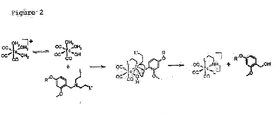
- The mechanism for this [Tc(CO)3-Ligand]-complex is proposed to be as follows. As the tertiary amino group of the solid-bound chelator (the so-called ligand) coordinates to the cationic metal center of [M(H2O)3(CO)3]n+, it becomes partially positive and the adjacent carbon atom is therefore activated for nucleophilic attack. A remaining hydroxy group attacks the methylene group of the chelator and induces C-N bond cleavage (
Figure 2 ). The third donor site of the chelator coordinates to the metal center, and the product complex is released into solution. Uncomplexed chelator and uncleaved complex remain bound to the solid phase. - It was found that labeled compounds obtained by hydrolytic cleavage of the ligand from the solid support with [99mTc(H2O)3(CO)3]+ as described above had a very high specific activity i.e. there was little uncomplexed ligand in solution. The amount of uncomplexed ligand in solution was in the order of 10-7 M. Therefore, this specific cleavage reaction can be attractively exploited for the preparation of so-called "no carrier added" (n.c.a.) complexes of technetium and other metals with a similar chemical reactivity.
- Thus the invention relates to a new process for generating a metal complexed agent, comprising contacting (I) a solid phase bound organic conjugate represented by the formula

- the sphere is the solid phase;
- C is a methylene group; R4 and R5 are independently selected from the group consisting of H, aliphatic or aromatic substituents, RO, RS and R2N, wherein R is an aliphatic or arylic group;
- L is a linker or a single bond, the linker, when present, being coupled to the solid support and having activating properties towards nucleophilic attack to the C group; and
- R1 and R2 are the same or different and are a metal coordinating group or a non-coordinating organic group,
- a metal coordinating group derivatized with a biologically active molecule, or a non-coordinating organic group derivatized with a biologically active molecule,
- with (II) [M(H2O)3(CO)3]n+,
- The linker may or may not be present. It may be already present in the available solid support or can be introduced later. When it is present it is preferably a good activating group for nucleophilic attack at C and selected from the group consisting of phenyl, vinyl, aryl and other non-aliphatic or aliphatic groups. The phenyl, vinyl, aryl, other non-aliphatic or aliphatic group may be substituted, and if they are they are preferably substituted with an electron withdrawing group selected from OR, R, NR2, wherein R is an aliphatic or an arylic group.
- In a preferred embodiment the linker is as shown in formula II:

- When R1 and R2 or one of R1 and R2 are non-coordinating organic groups they may be selected from alkyl, phenyl or benzyl or derivatives thereof.
- Preferably, R1 and/or R2 are selected from the group consisting of

R3-NH2
wherein R3 is an aliphatic chain containing between 1 and 3 carbons. - The metal M is selected from the group consisting of Tc, Re, Ru, Rh, Ir, Cu and Pt. The metal is most preferably 99mTc, 186Re or 188Re.
- Preferably the metal is suitable for use as an imaging agent, e.g. by transmission of high-energy particles or paramagnetic characteristics, or as a radionuclide.
- [M(H2O)3(CO)3]n+ can be generated by any suitable means known in the art. Suitable means for generating [M(H2O)3(CO)3]n+ are for example from the permetallate form as disclosed by Alberto et al. (J. Am. Chem. Soc. 123, 3135-3136 (2001)) or in
WO98/48848 (Alberto et al. - The molecule according to formula I without the solid support is called herein the ligand. The ligand can be in particular a tridentate ligand if R1 and R2 are selected from the group consisting of

R3-NH2
but also a bidentate chelator if R1 and R2 or one of both are an aliphatic or aromatic non-coordinating group. - The ligands used according to the invention in combination with [M(H2O)3(CO)3]n+ can be a diversity of tridentate ligands, the main requirement being the presence of a tertiary amine group as the central part of the ligand, which forms the C-N bond that is coupled with the solid support and cleaved upon complex formation. Preferably the ligands used are those based on aliphatic or aromatic amines or carboxylates and combinations thereof as donors. The ligand can also be a bidentate chelator if R1 and R2 but not both is a non-coordinating aliphatic or aromatic group. This is shown in Example 10.
- In particular diethylene triamine, picolylamine-N-acetic acid, N-(2-aminoethyl)-glycine or imino-diacetic acid can be used as ligands in the invention.
- The ligand can be covalently linked to the solid support by first forming a halogenated resin e.g. by the methods described by Ngu and Patel (Tet. Lett. 38, 973 - 976 (1997). This halogenated resin can subsequently be reacted with a protected ligand. After deprotection, the ligand bound resin is obtained. If the ligand is attached to the solid phase by this method the covalent bond attaching it to the solid support will be a C-N bond. The ligand can also be synthesized on the solid support starting from an amino resin, e.g. by reductive amination and/or alkylation with alkyl halides as described in examples 5, 6, 8 and 9. Preparation of a loaded resin is discussed in more detail in examples 1-9.
- In this specification the term ligand refers to a compound comprising at least one metal coordinating atom capable of forming a coordinating bond with a metal to form a stable metal-ligand complex. A ligand comprising more than one metal coordinating atom may be referred to as a chelator or a multidentate ligand. Bidentate ligands are ligands with two metal-coordinating atoms, tridentate ligands are ligands with three metal-coordinating atoms and tetradentate ligands are ligands with four metal coordinating atoms.
- The biologically active molecule (also called herein "biomolecule") that may be coupled to the ligand can be any molecule that is active in diagnosis or therapy. The molecule can be coupled at any position except at the nitrogen linked to the solid support. It may be a targeting molecule for directing the radioactive product to the site that needs to be diagnosed or treated or it may have a therapeutic activity that is independent from the radiolabel. The biologically active molecule may be selected from the group consisting of amino acids; steroids; proteins, in particular structural proteins, enzymes or antibodies; carbohydrates; polysaccharides and oligosaccharides; nucleosides, nucleotides, oligonucleotides and polynucleotides; lipids, peptides and pharmaceutically active small molecules such as central nervous system receptor binding compounds.
- The biomolecule can be linked to the ligand with any suitable means known in the art e.g. by reductive amination of an aldehyde to a primary amine group of the ligand or by introducing a binding site at the arylic system. The biomolecule can be linked to the ligand prior to or after binding the ligand to the solid support.
- It was found that the choice of the solid support may further improve the efficiency of the process of the invention. The solid support has to be able to swell in water, it has to be stable at reaction conditions, and it must not contain metal coordinating units. This is in particular the case when the solid support is a polyethylene glycol resin, or a hybrid of polyethylene glycol and polystyrene, e.g. a polystyrene resin with polyethylene glycol spacers with a benzyl alcohol anchoring group.
- The process of the invention may further comprise the step of collecting the metal complexed agent (i.e. the radiopharmaceutical) for further use.
- After preparation of n.c.a. 99mTc radiopharmaceutical, the solid phase polymer can be collected, washed and reused.
- Preferably, the process is performed at a pH that is in the range of about 6.0-11.0, preferably in the range of about 7.5-9.5.
- Suitable temperatures for performing the reaction are within the range of about 40-100°C. Preferably the reaction is performed in the range of about 70-82°C.
- According to a further aspect thereof the invention relates to the solid phase bound organic conjugate: of formula I, and compositions comprising such a compound. Preferably these compositions are in a form, which can be stored during prolonged time periods under pharmaceutically acceptable conditions.
- With the process according to the invention metal complexed ligand-biomolecule conjugates can be obtained with a high specific activity by filtration without further post-labeling purification.
- Usually the conjugates obtainable with the process according to the invention are comprised in a composition which is the result of the process of the invention, and which is characterized in that it is essentially free of uncomplexed ligand-biomolecule conjugate e.g. the level of uncomplexed ligand-biomolecule conjugate in the composition containing them is in the 10-7 M range.
- Due to the short half-life of some isotopes used in radiopharmaceuticals, e.g. 99mTc, labeling of ligand-biomolecule conjugates just prior to their use can be important for the specific activity of the complexed conjugate. The amount of decayed complex in a freshly labeled composition will be lower compared to the situation when the conjugate was complexed a substantial amount of time prior to its use.
- Therefore, in yet a further aspect the invention relates to a kit for the preparation of a diagnostic or therapeutic pharmaceutical composition, comprising a container with the molecule of formula (I), in which the reaction with a solution of [M(H2O)3(CO)3]n+ take place. The container can be a vessel or column. The solution of [M(H2O)3(CO)3]n+ is introduced into the vessel or column to start the reaction. The solution can be part of the kit or provided by other means. In an alternative embodiment, the reagents for the preparation of the metal carbonyl [M(H2O)3(CO)3]n+ are comprised in the kit. In addition, the kit may comprise a facility for filtration.
- The use of a kit further provides flexibility to the metal complex that can be formed since a selection of a suitable metal can be made just prior to the complexation reaction.
- The principle of the preparation of no carrier added (n.c.a.) metal complexed compounds according to the invention is explained in
Figure 1 . A tridentate ligand e.g. diethylene triamine is bound via a linker, here a benzyl derivative, to a solid phase via a tertiary amine. To the chelator (ligand) a biomolecule, is attached, thus forming a ligand-biomolecule conjugate. Upon introduction of [Tc(H2O)3(CO)3]+, complex formation occurs and the tridentate ligand replaces two aqua ligands. The remaining hydroxy ligand on [Tc(H2O)2(OH)(CO)3]+ can now attack the activated methylene group to induce C-N-bond cleavage. Activation of the methylene group occurs by complexation of the tertiary amino group to the technetium center, which withdraws electron density from the chelator and make it susceptible for nucleophilic attack. - The main species with reactivity towards the tertiary amine atom of the solid phase bound biomolecule-ligand conjugate is [M (OH) (H2O)2(CO)3]. In solution [M(OH)(H2O)2(CO)3] is in equilibrium with the conjugate in the form of [M(H2O)3(CO)3]n+ and further dissociated forms, depending on the pH of the solution. It will be understood that, depending on the pH, [M(OH)(H2O)2(CO)3] is at least partially interchangeable with these species due to the equilibrium.
- The invention is further explained with the following non-restrictive examples. In the Examples reference is made to the following figures:
-
Figure 1 : The principle of the preparation of no carrier added (n.c.a.) metal complexed compounds according to the invention. -
Figure 2 : Mechanism of complex formation. -
Figure 3 : pH dependence of the cleavage reaction. -
Figure 4 : Temperature dependency of cleavage yield. -
Figure 5 : Reaction schemes of Examples 1, 2, 3, 4 and 10. -
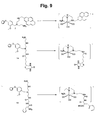
Figure 6 : Reaction schemes of Examples 5, 6, 7, 8 and 9. -
Figure 7 : Reaction schemes of Examples 11, 12 and 13. -
Figure 8 : Structural formulas of the compounds of Example 14 and Table 1. -
Figure 9 : Structural formulas of the compounds with biologically active molecules. - A model ligand was covalently attached to an appropriate solid phase resin. The solid phase resin has to swell in water to allow diffusion of the Tc-species, and the anchoring group to which the ligand is coupled has to be an activating group for nucleophilic attack. The polystyrene/polyethylene glycol resin TentaGel S AC (Rapp Polymere GmbH, Tübingen, Germany) fulfills these requirements. Its active site, a benzyl alcohol derivative, was converted into the corresponding bromide 1 (Ngu and Patel, Tet. Lett. 38, 973 - 976 (1997)).
- N,N''-Bis(1-(4,4-dimethyl-2,6-dioxocyclohexyliden) ethyl)diethylenetriamine (2) (101.8 mg, 235.9 µmol) was dissolved in DMF (5 ml), resin 1 (196.6 mg, 47.2 mol) was added, and the mixture was gently stirred at room temperature for 22 hours. The reaction mixture was filtered, and the resin was washed with DMF (3 times), DMF and methanol (3 times alternating), and DMF (5 times). The protecting groups were removed by washing the
resin 10 times with a solution of hydrazine hydrate, 2% in DMF (1 ml) for 5 minutes. The reaction mixture was filtered, and the resin was washed with DMF (3 times), DMF and methanol (5 times alternating), DMF (3 times), and diethyl ether (3 times). The resin was dried at high vacuum to giveproduct 3 in a yield of 192.3 mg (97.8%; capacity 0.236 mmol/g, coupling efficiency 100%). - Free amino groups on the solid phase resins were visualized by color tests: bromophenol blue solution in water for alkaline resins and trinitrotoluenesulfonic acid (TNBS) in DMF/diisopropylethylamine 10:1 exclusively for primary amines.
Resin 3 was positive in both tests, whereas the protected intermediate was negative on TNBS staining. The capacity of the resins (in mmol of bound chelator per gram) and the efficiency for the coupling of the chelators to the solid supports were calculated from the N-content of the resins as determined by elementary analyses. - The chelating capacity of
resin 3 was verified by stirring it in a 1mM solution of [99Tc(H2O)3(CO)3]+ (7 equivalents) at room temperature. Analyzing of the filtrated solution by β-liquid scintillation counting showed a decrease of activity of 14%, which is consistent with quantitative complex formation on the resin. HPLC analyses exhibited only peaks of the starting material, indicating that no cleavage from the solid phase occurred under these mild conditions. The once formed 99Tc-complex turned out to be stable under the conditions used for labeling. Even prolonged heating at 80°C for 5 hours in phosphate buffer pH 7.5, yielded only 3% beta-activity in the solution, at least one order of magnitude lower than expected. - An other tridentate ligand, yielding non charged complexes, was attached to the same resin as in Example 1. N-Picolylamine acetic acid ethyl ester (54 mg, 280 µmol) was dissolved in DMF (3 ml) and resin 1 (280 mg, 67 µmol) was added. The mixture was gently stirred at room temperature for 15 hours, the reaction mixture was filtered, and the resin was washed with DMF (3 times), DMF and methanol (3 times alternating), and diethyl ether (3 times). The protected intermediate was positive on bromophenol blue and negative on TNBS staining. The protecting groups were removed by gently stirring the resin in a mixture of water (5 ml) and sodium hydroxide 1M (0.30 ml) for 28 hours. Filtration of the resin, washing with DMF (3 times), DMF and methanol (3 times alternating), DMF (3 times), and diethyl ether (3 times) and drying at high vacuum gave
product 4 in a yield of 268 mg (96%; capacity 0.209 mmol/g, coupling efficiency 87.1%).Resin 4 was negative on all of the staining reactions. - An other tridentate ligand, yielding negatively charged complexes, was attached to the same resin as in example 1. Dimethylimino diacetate hydrochloride (6.4 mg, 33 µmol) and diisopropylethylamine (11.2 µl, 66 µmol) were dissolved in DMF (0.5 ml) and resin 1 (280 mg, 67 µmol) was added. The mixture was gently stirred at room temperature for 24 hours, the reaction mixture was filtered, and the resin was washed with DMF (3 times), DMF and methanol (3 times alternating), methanol and water (3 times alternating). The protected intermediate was positive on bromophenol blue and negative on TNBS staining. The protecting groups were removed rinsing the resin with aqueous NaOH (0.1M for 3 hours, then 0.01M for 12 hours). Filtration of the resin, washing with NaOH 0.1M (2 times), water (5 times), water and methanol (3 times alternating), methanol (3 times), and diethyl ether (3 times) and drying at high vacuum gave
product 5 in an yield of 35 mg (100%;capacity 4 mmol/g, coupling efficiency 18%).Resin 5 was negative on all of the staining reactions. - Another tridentate ligand, yielding non-charged complexes, was attached to the same resin as in example 1.
- N5-tert-butyloxycarbonyl)-5-amino-3-azapentane acid ethyl ester(74 mg, 280 µmol) was dissolved in DMF (3 ml) and resin 1 (300 mg, 72 µmol) was added. The mixture was gently stirred at room temperature for 15 hours, the reaction mixture was filtered, and the resin was washed with DMF (3 times), DMF and methanol (3 times alternating), and diethyl ether (3 times). The protected intermediate was positive on bromophenol blue and negative on TNBS staining. The ethyl ester group was removed by gently stirring the resin in a mixture of water (5 ml) and sodium hydroxide 1M (1.40 ml) for 28 hours. Filtration of the resin, washing with DMF (3 times), DMF and methanol (3 times alternating), DMF (3 times), and diethyl ether (3 times) and drying at high vacuum gave the Boc protected acid. The Boc group was removed by stirring the resin in a mixture of TFA and DCM (1:1) for 5 minutes, filtration, and by stirring the resin in a mixture of TFA and DCM (1:1) again, now for 10 minutes. Washing as described above gave
product 6 in a yield of 72 mg (96%, capacity 22 mmol/g, coupling efficiency 94%).Resin 6 was positive on TNBS staining. - NovaSyn TG resin has an aliphatic amino anchoring group. In this example, the synthesis of the chelator picolylamineacetic acid on the solid support is described.
- NovaSyn TG resin (100 mg, 30 umol)and pyridine-2-carbaldehyde (14.3 µl, 150 µmol) were stirred in methanol (3 ml) at room temperature for 20 hours. The reaction mixture was filtered, and the resin was washed with DMF (3 times), and DMF and methanol (3 times alternating). Sodium triacetoxy- borohydride (31.8 mg, 150 µmol) in DMF (2 ml) was added to the resin. After stirring at room temperature for 5 hours, the reaction mixture was filtered, and the resin was washed with DMF (4 times) and methanol (3 times). NaHCO3 (10% in water) was added to the resin. After 3 hours, the resin was washed with DMF (3 times), water (3 times), ethanol (3 times), and diethyl ether (3 times) and dried to give the aminopyridine intermediate which was positive on bromophenol blue and slightly positive on TNBS staining.
- A mixture of bromoacetic acid ethyl ester (16.6 µl, 150 µmol) and diisopropyl ethylamine (5.1 µl, 30 µmol) in ethanol (2.5 ml) was added to the resin. After stirring at room temperature for 24 hours, the reaction mixture was filtered, and the resin was washed with ethanol (5 times) and dried. NaOH (1 M) was added to the resin to remove the ethyl ester protecting group. After one day stirring at room temperature, the reaction mixture was filtered, and the resin was washed with water (5 times), ethanol (3 times) and diethyl ether (2 times) and dried to give 8 in a yield of 86.4 mg (83.7%; capacity 0.10 mmol/g, coupling efficiency 43%).
- NovaSyn TG resin (100 mg, 30 µmol), ethyl bromoacetate (33.2 µl, 300 µmol) and diisopropylethylamine (12.9 µl, 75 µmol) were reacted as described in the second part of example 5 to give 9 in a yield of 96.2 mg (93%).
- NovaSyn TGT resin has a hydroxytrityl anchoring group. The hydroxy group was converted to the chloride as described (J.M.J Frechert et al., Tetrahedron Lett. 1975, 3055).
- Dimethyliminodiacetate hydrochloride (16.2 mg, 82 µmol) and diisopropylethylamine (21 µl, 123 µmol) were dissolved in DMF (2 ml). Chlorinated Novasyn TGT resin (41 µmol) was added. The coupling reaction as well as the ester hydrolyses were done as described in example 3 with the exception that diisopropylethylamine (14 µl, 82 µmol) was added after 3 hours reaction time.
Product 10 was obtained in a yield of 132 mg (81%; capacity 0.015 mmol/g,coupling efficiency 6%). - NovaSyn TGR resin has an aminomethyl anchoring group with two aryl substituents on the methylene group.
Resin 11 was prepared analogous to the synthesis of 8 described in Example 5. - NovaSyn TGR resin (166 mg, 30 µmol) was reacted with the same amount of reagents as in example 5 to give 11 in a yield of 153 mg (90 %; capacity 0.08 mmol/g, coupling efficiency 44%).
-
Resin 12 was prepared analogous to the synthesis of 9 described in Example 6. - NovaSyn TGR resin (166 mg, 30 µmol) was reacted with the same amount of reagents as in example 6 to give 12 in a yield of 142.2 mg (84%).
- In this example, a bidentate chelator is attached to Tentagel
S AC bromide 1. - N,N'-Dimethylethylenediamine (110 µl, 1040 µmol) was dissolved in DMF (1 ml), resin 1 (108.6 mg, 26 µmol) was added, and the mixture was gently stirred at room temperature for 24 hours. The reaction mixture was filtered, and the resin was washed with DMF (3 times), DMF and methanol (3 times alternating), water (3 times), DMF and isopropanol (3 times alternating), water (3 times, iospropanol (3 times), and diethyl ether (3 times). The resin was dried at high vacuum to give
product 13 in a yield of 101.6 mg (98.1%; capacity 0.24 mmol/g, coupling efficiency 100%).Resin 13 was positive on bromophenol blue and negative on TNBS staining. - In this example, the synthesis of a conjugate yielding a bioactive complex, which intercalates into double stranded DNA is described. The bioactive unit, a pyrene derivative, is attached to the chelating unit on the solid support.
- N-Boc-N''-Dde protected diethylene triamine was coupled to 1 as described in the preparation of 3. The bis-protected intermediate was positive on bromophenol blue and negative on TNBS staining. The Dde protecting group was removed by stirring the resin in hydrazine hydrate (1.5 ml, 2% in DMF) five times for 10 minutes, followed by filtration. Positive staining with TNBS confirmed the removal of the Dde protecting group. The pyrene group was introduced by reductive amination. 1-Pyrenaldehyde (28.5 mg, 120 µmol) and methanol (4 ml) were added to the mono-deprotected resin (103 mg, 24 µmol), and the mixture was stirred at room temperature for 20 hours. After filtration and washing with DMF, sodium triacetoxyborohydride (25 mg, 120 µmol) in DMF (5 ml) was added, and the mixture was stirred for 24 hours at room temperature. Washing with DMF and methanol (as above) gave the Boc-protected resin bound pyrene diethylenetriamine derivative which was positive on bromophenol blue and negative on TNBS staining. Finally, the Boc protecting group was removed by stirring the resin in trifluoroacetic acid (50% in CH2Cl2) for 5 minutes, followed by filtration and another treatment with trifluoroacetic acid (50% in CH2Cl2) for 10 minutes. Washing (as described above) gave product 7 (capacity 0.18 mmol/g, coupling efficiency 82%).
Resin 7 was positive on bromophenol blue and on TNBS staining. - In this example, biotin (Vitamin H) is attached to the chelating unit. In contrast to example 11, the chelator/biomolecule-conjugate is synthesized prior to the binding to the solid support.
- Triethylenetetramine (0.150 ml, 1.00 mmol) was dissolved in THF (30 ml), and the solution was cooled to -78°C. A solution of ethyl trifluoroacetate (0.109 ml, 1.00 mmol) in THF (5 ml) was added within 30 min at -78°C, and the solution was stirred at that temperature for 4 hours. Then it was warmed up to 0°C.
- In the meantime, (+)-Biotin (244 mg, 1.00 mmol) in DMF (8 ml) was heated to 80°C to give a colorless solution. N,N'-Dicyclohexylcarbodiimide (216 mg, 1.05 mmol) and N-hydroxysuccinimide (121 mg, 1.05 mmol) was added to the hot solution. The mixture was allowed to slowly cool down to room temperature. A white powder precipitated. Stirring was continued for 4 hours.
- The two mixtures were mixed at 0°C and stirred for 30 minutes to give a white gel. The THF was evaporated to give a white suspension. After stirring at room temperature for 18 hours, the solvent was removed in vacuo and water was added to the residue. The pH was adjusted to 3-4. The mixture was filtered, the eluate was neutralized and the water was removed in vacuo. The crude product was purified by column chromatography (silica, dichloromethane/methanol/triethylamine 5:1:0.1) to give N-biotinyl-N'''-trifluoroacetyl-triethyltetramine in a yield of 60.5 mg (0.129 mmol, 12.9%). The structure was confirmed by mass spectroscopy and NMR.
- N-Biotinyl-N'''-trifluoroacetyl-triethyltetramine (40.3 mg, 86 µmol), triethylamine (1.8 µl, 17 µmol) and resin 1 (71.7 mg, 17 µmol) were reacted as described in example 1. The TFA-resin was dried at high vacuum to give
product 14 in an yield of 67 mg (85%,capacity 3 mmol/g,coupling efficiency 13%).Resin 14 was positive on bromophenol blue and negative on TNBS staining. Attempts to remove the TFA protecting group with sodium carbonate (10 % in water) failed according to negative results upon TNBS staining. - In this example, a method for the preparation of labeled peptide derivatives is described. A protected dipeptide with a free carboxylic end group was coupled to a partially protected polyamine. All of the protecting groups were removed, and Dde protection was introduced to selectively block the primary amino groups at the peptide and the chelator. This allowed to selectively bind the conjugate to a solid support via formation of a tertiary amino group from one of the unprotected secondary amino groups of the chelator.
- N,N',N''-tri(tert-butyloxycarbonyl)triethylenetetramine (103.3 mg, 234.5 µmol), Boc-Phe-Gly-OH (75.6 mg, 234.5 µmol), PyBOP (183 mg, 352 µmol) and diisopropyl ethylamine (20 µl, 117 µmol) were dissolved in dichloromethane (2.5 ml). The solution was stirred at room temperature for 4 hours. Periodically, diisopropylethylamine (20 µl, 117 µmol) was added to keep the pH >7. The solvent was removed in vacuo, the residue was dissolved in ethyl acetate and washed in brine (3 times), cold HCl 0.5M (3 times),
NaHCO 3 10% (2 times), and brine (3 times). The organic phase was dried over MgSO4, and the solvent was removed in vacuo to give N-(tert-butyloxycarbonyl-phenylalanyl-glycyl)-N',N'',N'''-tri(tert-butyloxycarbonyl)-triethylenetetramine in an yield of 175.2 mg (231.6 µmol, 98.8%). The structure was confirmed by mass spectroscopy and NMR. - The Boc protecting groups were removed by stirring the product (162.2 mg, 0.169 mmol) in HCl in ethyl acetate (ca. 1 M, 3 ml). After stirring at room temperature for 9 hours, the solvent was removed in vacuo. The residue was dissolved in water and stirred for 1 hour (pH was 2-3), then NaOH (1 M, 313 mmol) was added to neutralize the solution, and the solvent was evaporated in vacuo to give H-Phe-Gly-NH-C2H4-NH-C2H4-NH-C2H4-NH2 in quantitative yield. The structure was confirmed by mass spectroscopy and NMR.
- H-Phe-Gly-NH-C2H4-NH-C2H4-NH-C2H4-NH2 (113 mg, 0.152 mmol) and 2-Acetyldimedone (Dde-OH) (70.0 mg, 0.335 mmol) were dissolved in ethanol (4 ml). After stirring at room temperature for 20 hours, analysis by TLC exhibited full conversion of the amine to a single product. The solvent was removed to give Dde-Phe-Gly-NH-C2H4-NH-C2H4-NH-C2H4-NH-Dde. The structure was confirmed by mass spectroscopy. The crude product was used without separation from the surplus of 2-acetyldimedone.
- Dde-Phe-Gly-NH-C2H4-NH-C2H4-NH-C2H4-NH-Dde (76 µmol) and resin 1 (79.2 mg, 19 µmol) were reacted as described in example 1. The protected intermediate was positive on bromophenol blue and negative on TNBS staining. The Dde protecting groups were removed as well as described in example 1, to give
product 15.Resin 15 was positive on bromophenol blue and on TNBS staining. - Labeling conditions: [99mTc (H2O)3(CO)3]+ was prepared out of [99TcO4]- using a boroncarbonate kit (Alberto et al, J. Am. Chem. Soc. 123, 3135-3136 (2001)). 1 mg of the solid-phase bound chelators (0.2 mmole) were given to the [99mTc(H2O)3(CO)3]+-solution (1 ml), the mixtures were shortly sonificated and then heated to 82°C for 30 minutes. The solutions were separated from the solid phase resin by filtration and analyzed by HPLC with gamma-detection.
- With all of the solid phase bound chelators, formation of soluble complexes was observed. The yield varied on chelator type and reaction conditions between 5 to 50% (Table 1).
-
Resins - For the labeling reactions on
resin 4, reaction conditions such as pH value and reaction temperature were varied to find optimal reaction conditions. For use as a radiotracer, complete conversion of the starting material [99mTc(H2O)3(CO)3]+ and formation of one single product is required. Purification steps after the labeling procedure have to be avoided because of the radioactivity of the samples and their rapid decay (t1/2 = 6.2 hours). High cleavage yields are desirable to get solutions of high radioactivity. - pH dependence of the cleavage reaction is shown in
Figure 3 . Cleavage yield increases frompH 6 with a maximum at pH 8.5. This is in consistence with deprotonation of [99mTc(H2O)3(CO)3]+ to [99mTc(OH)(H2O)2(CO)3] (pKs for the Rhenium analog: 7.5; Egli et al, Organometallics 16, 1833-1840 (1997)) and, therefore, with the theory that a Tc-coordinated hydroxy ion is the nucleophile which attacks the CH2-group to cleave the C-N bond. Increasing the pH to 11 reduces the cleavage yield again. This could be due to formation of the negatively charged species [99mTc(OH)2(H2O)(CO)3]- which reduces the electrophilicity of a coordinated amino group. - Temperature dependence of the reaction of
resin 4 with [99mTc(H2O)3(CO)3]+ was studied by analyzing the reaction products after full conversion of [99mTc(H2O)3(CO)3]+. At room temperature, only complex formation at the resin occurred, the solution after filtration from the solid phase exhibited no radioactivity. At 43°C, cleavage yield was observable but low. Then, it increased with increasing temperature (Figure 4 ). This clearly shows that there is a competition between complex formation at the resin and the cleavage reaction, with the cleavage reaction having the higher activation energy barrier. However, very high temperatures could be a disadvantage in view of the stability of the solid phase resin and of attached biomolecules. A reaction temperature of 70°C to 82°C is preferred forresin 4.Table 1 solid-phase bound chelator (resin) cleaved 99mTc-complex cleavage yield conditions 3 (TentaGel) 
27% 1 hour 82°C 4 (TentaGel) 
52% 1 hour 82°C 28% 2 hours 56°C 5 (TentaGel) 
20% 1 hour 82°C 6 (TentaGel) 
22% 1 hour 82°C 7 (TentaGel) 
5% 1 hour 82°C 8 (NovaSyn TG) 
8% 1 hour 82°C 9 (NovaSyn TG) 
11% 1 hour 82° C 4% 3 hours 56°C 10 (NovaSyn TGT) 
93% 1 hour 82°C 79% 3 hours 56°C 11 (NovaSyn TGR) 
53% 1 hour 82° C 15% 3 hours 56°C 12 (NovaSyn TGR) 
83% 1 hour 82°C 78% 3 hours 56°C 13 (TentaGel) 
10% 1 hour 82°C 14 (TentaGel) 
14% 1 hour 82°C 14 (TentaGel) 
13% 2 hours 82°C
Claims (20)
- Process for generating a metal complexed agent, comprising:contacting a solid phase bound organic conjugate represented by formula (I) with [M(H2O)3(CO)3]n+,wherein:
 the sphere is a solid phase support;C is a methylene group;R4 and R5 are independently selected from the group consisting of H, aliphatic substituents, aromatic substituents, RO, RS and (R)2N, wherein R is an aliphatic or arylic group;L is a linker or a single bond; andeach of R1 and R2 is independently a metal coordinating group, a non-coordinating organic group, a metal coordinating group derivatized with a biologically active molecule, or a non-coordinating organic group derivatized with a biologically active molecule,wherein M is selected from the group consisting of technetium (Tc), rhenium (Re), rhodium (Rh), platinum (Pt), iridium (Ir), ruthenium (Ru), and copper (Cu); and
n is 1, 2 or 3. - Process according to claim 1, wherein L is a linker selected from the group consisting of phenylene, vinyl, alkylene, allylene, arylene, and other non-aliphatic and aliphatic groups.
- Process according to claim 1 or 2, wherein L is substituted with an electron withdrawing group selected from OR, R and (R)2N, wherein R is an aliphatic or arylic group.
- Process according to any one of the claims 1-3,
wherein L is:
- Process according to any one of the claims 1-4,
wherein at least one of R1 and R2 is selected from the group consisting of
R3-NH2
wherein R3 is an aliphatic chain containing 1, 2 or 3 carbons. - Process according to any one of the claims 1-5,
wherein at least one of R1 and R2 is an aliphatic or aromatic substituent. - Process according to any one of the claims 1-6, further comprising forming a coordinate bond between [M(H2O)3(CO)3]n+ and a tertiary amine nitrogen atom of the solid phase bound organic conjugate, and releasing a metal complexed agent thus formed.
- Process according to any one of the claims 1-7,
wherein M is selected from the group consisting of 99mTc, 186Re and 188Re. - Process according to any one of the claims 1-8,
wherein the biologically active molecule is selected from the group consisting of amino acids, steroids, peptides, proteins, carbohydrates, polysaccharides, oligosaccharides, nucleosides, nucleotides, oligonucleotides, polynucleotides, lipids, and pharmaceutically active small molecules. - Process according to any one of the claims 1-9,
wherein the solid phase support is a polyethylene glycol resin or a hybrid of polyethylene glycol and polystyrene. - Process according to any one of the claims 1-10,
wherein the process is performed at a pH that is in the range of about 6.0-11.0. - Process according to any one of the claims 1-11,
wherein the process is performed at a temperature in the range of about 40-100°C. - A solid phase bound organic conjugate represented by formula (I)

C is a methylene group;
R4 and R5 are independently selected from the group consisting of H, aliphatic substituents, aromatic substituents, RO, RS and (R)2N, wherein R is an aliphatic or arylic group;
L is a linker or a single bond; and
each of R1 and R2 is independently a metal coordinating group, a non-coordinating organic group, a metal coordinating group derivatized with a biologically active molecule, or a non-coordinating organic group derivatized with a biologically active molecule. - A solid phase bound organic conjugate according to claim 13, wherein the biologically active molecule is selected from the group consisting of amino acids, steroids, peptides, proteins, carbohydrates, polysaccharides, oligosaccharides, nucleosides, nucleotides, oligonucleotides, polynucleotides, lipids, and pharmaceutically active small molecules.
- A solid phase bound organic conjugate according to claim 13 or 14, wherein the solid phase support is a polyethylene glycol resin or a hybrid of polyethylene glycol and polystyrene.
- A kit for the preparation of a diagnostic or therapeutic pharmaceutical composition, the kit comprising:a container; anda molecule of formula (I),wherein the sphere is a solid phase;

C is a methylene group;
R4 and R5 are independently selected from the group consisting of H, aliphatic substituents, aromatic substituents, RO, RS and (R)2N, wherein R is an aliphatic or arylic group;
L is a linker or a single bond; and
each of R1 and R2 is independently a metal coordinating group, a non-coordinating organic group, a metal coordinating group derivatized with a biologically active molecule, or a non-coordinating organic group derivatized with a biologically active molecule,
in which the reaction with a solution of [M(H2O)3(CO)3]n+ can take place. - Kit as claimed in claim 16, wherein the container is a vessel or column.
- Kit as claimed in claim 16 or 17, further comprising a solution of [M(H2O)3(CO)3]n+, wherein M is a metal, and n is 1, 2 or 3.
- Kit as claimed in any one of the claims 16-18, further comprising reagents for preparation of [M(H2O)3(CO)3]n+,
wherein M is a metal, and n is 1, 2 or 3. - Kit as claimed in any one of the claims 16-19, further comprising a facility for filtration.
Priority Applications (1)
| Application Number | Priority Date | Filing Date | Title |
|---|---|---|---|
| EP03749396A EP1536844B1 (en) | 2002-09-03 | 2003-09-02 | Preparation of m(co)3-complexes by solid phase techniques via metal assisted cleavage from the solid support |
Applications Claiming Priority (4)
| Application Number | Priority Date | Filing Date | Title |
|---|---|---|---|
| EP02078743 | 2002-09-03 | ||
| EP02078743 | 2002-09-03 | ||
| PCT/US2003/027665 WO2004022105A2 (en) | 2002-09-03 | 2003-09-02 | Preparation of m(co)3-complexes by solid phase techniques via metal assisted cleavage from the solid support |
| EP03749396A EP1536844B1 (en) | 2002-09-03 | 2003-09-02 | Preparation of m(co)3-complexes by solid phase techniques via metal assisted cleavage from the solid support |
Publications (2)
| Publication Number | Publication Date |
|---|---|
| EP1536844A2 EP1536844A2 (en) | 2005-06-08 |
| EP1536844B1 true EP1536844B1 (en) | 2009-03-04 |
Family
ID=31970414
Family Applications (1)
| Application Number | Title | Priority Date | Filing Date |
|---|---|---|---|
| EP03749396A Expired - Lifetime EP1536844B1 (en) | 2002-09-03 | 2003-09-02 | Preparation of m(co)3-complexes by solid phase techniques via metal assisted cleavage from the solid support |
Country Status (13)
| Country | Link |
|---|---|
| US (1) | US20060165594A1 (en) |
| EP (1) | EP1536844B1 (en) |
| JP (1) | JP2006514612A (en) |
| KR (1) | KR20050086412A (en) |
| CN (1) | CN100366297C (en) |
| AT (1) | ATE424222T1 (en) |
| AU (1) | AU2003268431B2 (en) |
| CA (1) | CA2497548A1 (en) |
| DE (1) | DE60326465D1 (en) |
| ES (1) | ES2323364T3 (en) |
| NO (1) | NO20051573L (en) |
| PL (1) | PL375530A1 (en) |
| WO (1) | WO2004022105A2 (en) |
Families Citing this family (2)
| Publication number | Priority date | Publication date | Assignee | Title |
|---|---|---|---|---|
| CA2542898C (en) * | 2003-10-20 | 2013-10-08 | Roger Alberto | Use of metal tricarbonyl complexes as radiotherapeutic chemotoxic agents |
| ATE443070T1 (en) * | 2004-01-08 | 2009-10-15 | Univ Zuerich | METAL COMPLEXES WITH VITAMIN B12 AS A LIGAND |
Family Cites Families (8)
| Publication number | Priority date | Publication date | Assignee | Title |
|---|---|---|---|---|
| US3899472A (en) * | 1973-11-21 | 1975-08-12 | Toray Industries | Chelating resin and process for preparing the same |
| US6022966A (en) * | 1993-11-22 | 2000-02-08 | Neorx Corporation | Pretargeting methods and compounds |
| CA2175557A1 (en) * | 1993-11-16 | 1995-05-26 | Alfred Pollak | Immobilized labelling method |
| EP0879606A1 (en) * | 1997-04-25 | 1998-11-25 | Paul Scherrer Institut | Method for the preparation of facial metal tricarbonyl compounds and their use in the labelling of biologically active substrates |
| DE19860289C2 (en) * | 1998-12-21 | 2003-11-13 | Schering Ag | New chelators and their tricarbonyl complexes with technetium and rhenium |
| CA2377018A1 (en) * | 1999-06-29 | 2001-01-04 | Mary M. Dyszlewski | Group (vii) transition-metal complexes with multidentate aminopolycarboxylate ligands and a kit for producing them |
| HU226659B1 (en) * | 1999-10-05 | 2009-06-29 | Mallinckrodt Inc | Carbon monoxide source for preparation of transition-metal-carbonyl-complexes |
| US6359119B1 (en) * | 2000-05-24 | 2002-03-19 | Mallinckrodt Inc. | Formulation of Tc and Re carbonyl complexes using stannous ion as the reductant for pertechnetate and perrhenate |
-
2003
- 2003-09-02 AT AT03749396T patent/ATE424222T1/en not_active IP Right Cessation
- 2003-09-02 US US10/525,152 patent/US20060165594A1/en not_active Abandoned
- 2003-09-02 KR KR1020057003647A patent/KR20050086412A/en not_active Ceased
- 2003-09-02 PL PL03375530A patent/PL375530A1/en not_active Application Discontinuation
- 2003-09-02 WO PCT/US2003/027665 patent/WO2004022105A2/en not_active Ceased
- 2003-09-02 JP JP2004534549A patent/JP2006514612A/en active Pending
- 2003-09-02 EP EP03749396A patent/EP1536844B1/en not_active Expired - Lifetime
- 2003-09-02 CA CA002497548A patent/CA2497548A1/en not_active Abandoned
- 2003-09-02 AU AU2003268431A patent/AU2003268431B2/en not_active Ceased
- 2003-09-02 CN CNB038207893A patent/CN100366297C/en not_active Expired - Fee Related
- 2003-09-02 DE DE60326465T patent/DE60326465D1/en not_active Expired - Lifetime
- 2003-09-02 ES ES03749396T patent/ES2323364T3/en not_active Expired - Lifetime
-
2005
- 2005-03-29 NO NO20051573A patent/NO20051573L/en not_active Application Discontinuation
Also Published As
| Publication number | Publication date |
|---|---|
| US20060165594A1 (en) | 2006-07-27 |
| ATE424222T1 (en) | 2009-03-15 |
| KR20050086412A (en) | 2005-08-30 |
| WO2004022105A3 (en) | 2004-04-22 |
| CN1703249A (en) | 2005-11-30 |
| ES2323364T3 (en) | 2009-07-14 |
| AU2003268431A1 (en) | 2004-03-29 |
| WO2004022105A2 (en) | 2004-03-18 |
| AU2003268431B2 (en) | 2008-12-04 |
| CN100366297C (en) | 2008-02-06 |
| DE60326465D1 (en) | 2009-04-16 |
| NO20051573L (en) | 2005-03-29 |
| PL375530A1 (en) | 2005-11-28 |
| JP2006514612A (en) | 2006-05-11 |
| EP1536844A2 (en) | 2005-06-08 |
| CA2497548A1 (en) | 2004-03-18 |
Similar Documents
| Publication | Publication Date | Title |
|---|---|---|
| Van Staveren et al. | Conjugation of a novel histidine derivative to biomolecules and labelling with [99m Tc (OH 2) 3 (CO) 3]+ | |
| EP0975374B1 (en) | Radiometal-binding peptide analogues | |
| KR20240019301A (en) | Trislinker-conjugated dimer labeled precursor and radioactive tracer derived therefrom | |
| Van Staveren et al. | S‐Functionalized Cysteine: Powerful Ligands for the Labelling of Bioactive Molecules with Triaquatricarbonyltechnetium‐99m (1+)([99mTc (OH2) 3 (CO) 3]+) | |
| AU7141398A (en) | Method for the preparation of facial metal tricarbonyl compounds and their use in the labelling of biologically active substrates | |
| WO2003086476A1 (en) | Technetium-labeled rotenone derivatives, and methods of use thereof | |
| JP2007523902A (en) | Technetium-bis (heteroaryl) and rhenium-bis (heteroaryl) complexes and methods of use thereof | |
| US5618513A (en) | Method for preparing radiolabeled peptides | |
| AU2003268431B2 (en) | Preparation of M(CO)3-complexes by solid phase techniques via metal assisted cleavage from the solid support | |
| US6488909B1 (en) | Chelating agents as well as their tricarbonyl complexes with technetium and rhenium | |
| US20060093552A1 (en) | Technetium-and rhenium-bis(heteroaryl) complexes, and methods of use thereof | |
| US5736120A (en) | Method for preparing radiolabeled peptides | |
| US20060034758A1 (en) | Technetium- and rhenium-bis(heteroaryl) complexes, and methods of use thereof | |
| US20090176968A1 (en) | Preparation of Triazole Containing Metal Chelating Agents | |
| EP1797106A1 (en) | Synthesis of radiolabeled sugar metal complexes | |
| EP2537834A2 (en) | Polyazamacrocyclic compound, and a production method and a biomedical use therefor | |
| CN1972718B (en) | Technetium- and rhenium-bis(heteroaryl) complexes, and methods of use thereof | |
| Schirrmacher et al. | Synthesis of a technetium‐99m labelled l‐tyrosine derivative with the fac‐99mTc (I)(CO) 3‐core using a simple kit‐procedure | |
| Okarvi et al. | Synthesis and biological characteristics of the Technetium‐99m triamide derivatives of mercaptoacetyltriglycine (MAG3) | |
| WO1995027701A1 (en) | Metal-containing steroid mimics and ligands useful in the preparation thereof | |
| KR20100022987A (en) | Labelling methods | |
| Spingler et al. | T hisjournalis© T he R oyal S ocietyof C hemistry 2 0 0 4 2 5 9 3O rg. B iomol. C hem., 2 0 0 4, 2, 2 5 9 3–2 6 0 3 | |
| Green | The Synthesis and Characterization of Carborane and Metallocarborane-Carbohydrate Conjugates |
Legal Events
| Date | Code | Title | Description |
|---|---|---|---|
| PUAI | Public reference made under article 153(3) epc to a published international application that has entered the european phase |
Free format text: ORIGINAL CODE: 0009012 |
|
| 17P | Request for examination filed |
Effective date: 20041221 |
|
| AK | Designated contracting states |
Kind code of ref document: A2 Designated state(s): AT BE BG CH CY CZ DE DK EE ES FI FR GB GR HU IE IT LI LU MC NL PT RO SE SI SK TR |
|
| AX | Request for extension of the european patent |
Extension state: AL LT LV MK |
|
| DAX | Request for extension of the european patent (deleted) | ||
| RIN1 | Information on inventor provided before grant (corrected) |
Inventor name: MUNDWILER, STEFAN Inventor name: ALBERTO, ROGER |
|
| GRAP | Despatch of communication of intention to grant a patent |
Free format text: ORIGINAL CODE: EPIDOSNIGR1 |
|
| GRAS | Grant fee paid |
Free format text: ORIGINAL CODE: EPIDOSNIGR3 |
|
| GRAA | (expected) grant |
Free format text: ORIGINAL CODE: 0009210 |
|
| AK | Designated contracting states |
Kind code of ref document: B1 Designated state(s): AT BE BG CH CY CZ DE DK EE ES FI FR GB GR HU IE IT LI LU MC NL PT RO SE SI SK TR |
|
| REG | Reference to a national code |
Ref country code: GB Ref legal event code: FG4D |
|
| REG | Reference to a national code |
Ref country code: CH Ref legal event code: EP |
|
| REG | Reference to a national code |
Ref country code: IE Ref legal event code: FG4D |
|
| REF | Corresponds to: |
Ref document number: 60326465 Country of ref document: DE Date of ref document: 20090416 Kind code of ref document: P |
|
| REG | Reference to a national code |
Ref country code: CH Ref legal event code: NV Representative=s name: AMMANN PATENTANWAELTE AG BERN |
|
| REG | Reference to a national code |
Ref country code: GR Ref legal event code: EP Ref document number: 20090401441 Country of ref document: GR |
|
| REG | Reference to a national code |
Ref country code: ES Ref legal event code: FG2A Ref document number: 2323364 Country of ref document: ES Kind code of ref document: T3 |
|
| PG25 | Lapsed in a contracting state [announced via postgrant information from national office to epo] |
Ref country code: SI Free format text: LAPSE BECAUSE OF FAILURE TO SUBMIT A TRANSLATION OF THE DESCRIPTION OR TO PAY THE FEE WITHIN THE PRESCRIBED TIME-LIMIT Effective date: 20090304 Ref country code: FI Free format text: LAPSE BECAUSE OF FAILURE TO SUBMIT A TRANSLATION OF THE DESCRIPTION OR TO PAY THE FEE WITHIN THE PRESCRIBED TIME-LIMIT Effective date: 20090304 |
|
| PG25 | Lapsed in a contracting state [announced via postgrant information from national office to epo] |
Ref country code: SE Free format text: LAPSE BECAUSE OF FAILURE TO SUBMIT A TRANSLATION OF THE DESCRIPTION OR TO PAY THE FEE WITHIN THE PRESCRIBED TIME-LIMIT Effective date: 20090604 Ref country code: AT Free format text: LAPSE BECAUSE OF FAILURE TO SUBMIT A TRANSLATION OF THE DESCRIPTION OR TO PAY THE FEE WITHIN THE PRESCRIBED TIME-LIMIT Effective date: 20090304 |
|
| REG | Reference to a national code |
Ref country code: HU Ref legal event code: AG4A Ref document number: E005756 Country of ref document: HU |
|
| PG25 | Lapsed in a contracting state [announced via postgrant information from national office to epo] |
Ref country code: CZ Free format text: LAPSE BECAUSE OF FAILURE TO SUBMIT A TRANSLATION OF THE DESCRIPTION OR TO PAY THE FEE WITHIN THE PRESCRIBED TIME-LIMIT Effective date: 20090304 Ref country code: EE Free format text: LAPSE BECAUSE OF FAILURE TO SUBMIT A TRANSLATION OF THE DESCRIPTION OR TO PAY THE FEE WITHIN THE PRESCRIBED TIME-LIMIT Effective date: 20090304 Ref country code: PT Free format text: LAPSE BECAUSE OF FAILURE TO SUBMIT A TRANSLATION OF THE DESCRIPTION OR TO PAY THE FEE WITHIN THE PRESCRIBED TIME-LIMIT Effective date: 20090819 |
|
| PGFP | Annual fee paid to national office [announced via postgrant information from national office to epo] |
Ref country code: ES Payment date: 20090928 Year of fee payment: 7 |
|
| PG25 | Lapsed in a contracting state [announced via postgrant information from national office to epo] |
Ref country code: SK Free format text: LAPSE BECAUSE OF FAILURE TO SUBMIT A TRANSLATION OF THE DESCRIPTION OR TO PAY THE FEE WITHIN THE PRESCRIBED TIME-LIMIT Effective date: 20090304 Ref country code: RO Free format text: LAPSE BECAUSE OF FAILURE TO SUBMIT A TRANSLATION OF THE DESCRIPTION OR TO PAY THE FEE WITHIN THE PRESCRIBED TIME-LIMIT Effective date: 20090304 |
|
| PGFP | Annual fee paid to national office [announced via postgrant information from national office to epo] |
Ref country code: CH Payment date: 20090925 Year of fee payment: 7 Ref country code: GB Payment date: 20090929 Year of fee payment: 7 Ref country code: HU Payment date: 20090831 Year of fee payment: 7 Ref country code: NL Payment date: 20090924 Year of fee payment: 7 |
|
| PLBE | No opposition filed within time limit |
Free format text: ORIGINAL CODE: 0009261 |
|
| STAA | Information on the status of an ep patent application or granted ep patent |
Free format text: STATUS: NO OPPOSITION FILED WITHIN TIME LIMIT |
|
| PG25 | Lapsed in a contracting state [announced via postgrant information from national office to epo] |
Ref country code: DK Free format text: LAPSE BECAUSE OF FAILURE TO SUBMIT A TRANSLATION OF THE DESCRIPTION OR TO PAY THE FEE WITHIN THE PRESCRIBED TIME-LIMIT Effective date: 20090304 Ref country code: BG Free format text: LAPSE BECAUSE OF FAILURE TO SUBMIT A TRANSLATION OF THE DESCRIPTION OR TO PAY THE FEE WITHIN THE PRESCRIBED TIME-LIMIT Effective date: 20090604 |
|
| PGFP | Annual fee paid to national office [announced via postgrant information from national office to epo] |
Ref country code: DE Payment date: 20090929 Year of fee payment: 7 |
|
| 26N | No opposition filed |
Effective date: 20091207 |
|
| PG25 | Lapsed in a contracting state [announced via postgrant information from national office to epo] |
Ref country code: MC Free format text: LAPSE BECAUSE OF NON-PAYMENT OF DUE FEES Effective date: 20090930 |
|
| PGFP | Annual fee paid to national office [announced via postgrant information from national office to epo] |
Ref country code: IT Payment date: 20090925 Year of fee payment: 7 |
|
| PGFP | Annual fee paid to national office [announced via postgrant information from national office to epo] |
Ref country code: BE Payment date: 20091026 Year of fee payment: 7 Ref country code: GR Payment date: 20090929 Year of fee payment: 7 |
|
| REG | Reference to a national code |
Ref country code: IE Ref legal event code: MM4A |
|
| PG25 | Lapsed in a contracting state [announced via postgrant information from national office to epo] |
Ref country code: IE Free format text: LAPSE BECAUSE OF NON-PAYMENT OF DUE FEES Effective date: 20090902 |
|
| BERE | Be: lapsed |
Owner name: UNIVERSITY OF ZURICH Effective date: 20100930 |
|
| REG | Reference to a national code |
Ref country code: NL Ref legal event code: V1 Effective date: 20110401 |
|
| PG25 | Lapsed in a contracting state [announced via postgrant information from national office to epo] |
Ref country code: LU Free format text: LAPSE BECAUSE OF NON-PAYMENT OF DUE FEES Effective date: 20090902 |
|
| REG | Reference to a national code |
Ref country code: CH Ref legal event code: PL |
|
| GBPC | Gb: european patent ceased through non-payment of renewal fee |
Effective date: 20100902 |
|
| PG25 | Lapsed in a contracting state [announced via postgrant information from national office to epo] |
Ref country code: IT Free format text: LAPSE BECAUSE OF NON-PAYMENT OF DUE FEES Effective date: 20100902 |
|
| REG | Reference to a national code |
Ref country code: FR Ref legal event code: ST Effective date: 20110531 |
|
| REG | Reference to a national code |
Ref country code: DE Ref legal event code: R119 Ref document number: 60326465 Country of ref document: DE Effective date: 20110401 |
|
| PG25 | Lapsed in a contracting state [announced via postgrant information from national office to epo] |
Ref country code: GR Free format text: LAPSE BECAUSE OF NON-PAYMENT OF DUE FEES Effective date: 20110404 Ref country code: LI Free format text: LAPSE BECAUSE OF NON-PAYMENT OF DUE FEES Effective date: 20100930 Ref country code: DE Free format text: LAPSE BECAUSE OF NON-PAYMENT OF DUE FEES Effective date: 20110401 Ref country code: BE Free format text: LAPSE BECAUSE OF NON-PAYMENT OF DUE FEES Effective date: 20100930 Ref country code: CH Free format text: LAPSE BECAUSE OF NON-PAYMENT OF DUE FEES Effective date: 20100930 Ref country code: FR Free format text: LAPSE BECAUSE OF NON-PAYMENT OF DUE FEES Effective date: 20100930 Ref country code: HU Free format text: LAPSE BECAUSE OF NON-PAYMENT OF DUE FEES Effective date: 20100903 |
|
| PG25 | Lapsed in a contracting state [announced via postgrant information from national office to epo] |
Ref country code: GB Free format text: LAPSE BECAUSE OF NON-PAYMENT OF DUE FEES Effective date: 20100902 Ref country code: TR Free format text: LAPSE BECAUSE OF FAILURE TO SUBMIT A TRANSLATION OF THE DESCRIPTION OR TO PAY THE FEE WITHIN THE PRESCRIBED TIME-LIMIT Effective date: 20090304 Ref country code: NL Free format text: LAPSE BECAUSE OF NON-PAYMENT OF DUE FEES Effective date: 20110401 |
|
| PG25 | Lapsed in a contracting state [announced via postgrant information from national office to epo] |
Ref country code: CY Free format text: LAPSE BECAUSE OF FAILURE TO SUBMIT A TRANSLATION OF THE DESCRIPTION OR TO PAY THE FEE WITHIN THE PRESCRIBED TIME-LIMIT Effective date: 20090304 |
|
| PGFP | Annual fee paid to national office [announced via postgrant information from national office to epo] |
Ref country code: FR Payment date: 20091006 Year of fee payment: 7 |
|
| REG | Reference to a national code |
Ref country code: ES Ref legal event code: FD2A Effective date: 20111019 |
|
| PG25 | Lapsed in a contracting state [announced via postgrant information from national office to epo] |
Ref country code: ES Free format text: LAPSE BECAUSE OF NON-PAYMENT OF DUE FEES Effective date: 20100903 |